window.__IS_SSR__=true
window.__INITIAL_STATE__={
"attachmentsReducer": {
"audio_0": {
"type": "attachments",
"id": "audio_0",
"imgSizes": {
"kqedFullSize": {
"file": "https://ww2.kqed.org/news/wp-content/themes/KQED-unified/img/audio_bgs/background0.jpg"
}
}
},
"audio_1": {
"type": "attachments",
"id": "audio_1",
"imgSizes": {
"kqedFullSize": {
"file": "https://ww2.kqed.org/news/wp-content/themes/KQED-unified/img/audio_bgs/background1.jpg"
}
}
},
"audio_2": {
"type": "attachments",
"id": "audio_2",
"imgSizes": {
"kqedFullSize": {
"file": "https://ww2.kqed.org/news/wp-content/themes/KQED-unified/img/audio_bgs/background2.jpg"
}
}
},
"audio_3": {
"type": "attachments",
"id": "audio_3",
"imgSizes": {
"kqedFullSize": {
"file": "https://ww2.kqed.org/news/wp-content/themes/KQED-unified/img/audio_bgs/background3.jpg"
}
}
},
"audio_4": {
"type": "attachments",
"id": "audio_4",
"imgSizes": {
"kqedFullSize": {
"file": "https://ww2.kqed.org/news/wp-content/themes/KQED-unified/img/audio_bgs/background4.jpg"
}
}
},
"placeholder": {
"type": "attachments",
"id": "placeholder",
"imgSizes": {
"thumbnail": {
"file": "https://cdn.kqed.org/wp-content/uploads/2024/12/KQED-Default-Image-816638274-2000x1333-1-160x107.jpg",
"width": 160,
"height": 107,
"mimeType": "image/jpeg"
},
"medium": {
"file": "https://cdn.kqed.org/wp-content/uploads/2024/12/KQED-Default-Image-816638274-2000x1333-1-800x533.jpg",
"width": 800,
"height": 533,
"mimeType": "image/jpeg"
},
"medium_large": {
"file": "https://cdn.kqed.org/wp-content/uploads/2024/12/KQED-Default-Image-816638274-2000x1333-1-768x512.jpg",
"width": 768,
"height": 512,
"mimeType": "image/jpeg"
},
"large": {
"file": "https://cdn.kqed.org/wp-content/uploads/2024/12/KQED-Default-Image-816638274-2000x1333-1-1020x680.jpg",
"width": 1020,
"height": 680,
"mimeType": "image/jpeg"
},
"1536x1536": {
"file": "https://cdn.kqed.org/wp-content/uploads/2024/12/KQED-Default-Image-816638274-2000x1333-1-1536x1024.jpg",
"width": 1536,
"height": 1024,
"mimeType": "image/jpeg"
},
"fd-lrg": {
"file": "https://cdn.kqed.org/wp-content/uploads/2024/12/KQED-Default-Image-816638274-2000x1333-1-1536x1024.jpg",
"width": 1536,
"height": 1024,
"mimeType": "image/jpeg"
},
"fd-med": {
"file": "https://cdn.kqed.org/wp-content/uploads/2024/12/KQED-Default-Image-816638274-2000x1333-1-1020x680.jpg",
"width": 1020,
"height": 680,
"mimeType": "image/jpeg"
},
"fd-sm": {
"file": "https://cdn.kqed.org/wp-content/uploads/2024/12/KQED-Default-Image-816638274-2000x1333-1-800x533.jpg",
"width": 800,
"height": 533,
"mimeType": "image/jpeg"
},
"post-thumbnail": {
"file": "https://cdn.kqed.org/wp-content/uploads/2024/12/KQED-Default-Image-816638274-2000x1333-1-672x372.jpg",
"width": 672,
"height": 372,
"mimeType": "image/jpeg"
},
"twentyfourteen-full-width": {
"file": "https://cdn.kqed.org/wp-content/uploads/2024/12/KQED-Default-Image-816638274-2000x1333-1-1038x576.jpg",
"width": 1038,
"height": 576,
"mimeType": "image/jpeg"
},
"xxsmall": {
"file": "https://cdn.kqed.org/wp-content/uploads/2024/12/KQED-Default-Image-816638274-2000x1333-1-160x107.jpg",
"width": 160,
"height": 107,
"mimeType": "image/jpeg"
},
"xsmall": {
"file": "https://cdn.kqed.org/wp-content/uploads/2024/12/KQED-Default-Image-816638274-2000x1333-1-672x372.jpg",
"width": 672,
"height": 372,
"mimeType": "image/jpeg"
},
"small": {
"file": "https://cdn.kqed.org/wp-content/uploads/2024/12/KQED-Default-Image-816638274-2000x1333-1-672x372.jpg",
"width": 672,
"height": 372,
"mimeType": "image/jpeg"
},
"xlarge": {
"file": "https://cdn.kqed.org/wp-content/uploads/2024/12/KQED-Default-Image-816638274-2000x1333-1-1020x680.jpg",
"width": 1020,
"height": 680,
"mimeType": "image/jpeg"
},
"full-width": {
"file": "https://cdn.kqed.org/wp-content/uploads/2024/12/KQED-Default-Image-816638274-2000x1333-1-1920x1280.jpg",
"width": 1920,
"height": 1280,
"mimeType": "image/jpeg"
},
"guest-author-32": {
"file": "https://cdn.kqed.org/wp-content/uploads/2025/01/KQED-Default-Image-816638274-1333x1333-1-160x160.jpg",
"width": 32,
"height": 32,
"mimeType": "image/jpeg"
},
"guest-author-50": {
"file": "https://cdn.kqed.org/wp-content/uploads/2025/01/KQED-Default-Image-816638274-1333x1333-1-160x160.jpg",
"width": 50,
"height": 50,
"mimeType": "image/jpeg"
},
"guest-author-64": {
"file": "https://cdn.kqed.org/wp-content/uploads/2025/01/KQED-Default-Image-816638274-1333x1333-1-160x160.jpg",
"width": 64,
"height": 64,
"mimeType": "image/jpeg"
},
"guest-author-96": {
"file": "https://cdn.kqed.org/wp-content/uploads/2025/01/KQED-Default-Image-816638274-1333x1333-1-160x160.jpg",
"width": 96,
"height": 96,
"mimeType": "image/jpeg"
},
"guest-author-128": {
"file": "https://cdn.kqed.org/wp-content/uploads/2025/01/KQED-Default-Image-816638274-1333x1333-1-160x160.jpg",
"width": 128,
"height": 128,
"mimeType": "image/jpeg"
},
"detail": {
"file": "https://cdn.kqed.org/wp-content/uploads/2025/01/KQED-Default-Image-816638274-1333x1333-1-160x160.jpg",
"width": 160,
"height": 160,
"mimeType": "image/jpeg"
},
"kqedFullSize": {
"file": "https://cdn.kqed.org/wp-content/uploads/2024/12/KQED-Default-Image-816638274-2000x1333-1.jpg",
"width": 2000,
"height": 1333
}
}
},
"news_11883468": {
"type": "attachments",
"id": "news_11883468",
"meta": {
"index": "attachments_1716263798",
"site": "news",
"id": "11883468",
"found": true
},
"parent": 11883396,
"imgSizes": {
"twentyfourteen-full-width": {
"file": "https://ww2.kqed.org/app/uploads/sites/10/2021/08/RS50522_003_SanFrancisco_OverdoseHungerStrike_08012021-qut-1038x576.jpg",
"width": 1038,
"mimeType": "image/jpeg",
"height": 576
},
"thumbnail": {
"file": "https://ww2.kqed.org/app/uploads/sites/10/2021/08/RS50522_003_SanFrancisco_OverdoseHungerStrike_08012021-qut-160x107.jpg",
"width": 160,
"mimeType": "image/jpeg",
"height": 107
},
"post-thumbnail": {
"file": "https://ww2.kqed.org/app/uploads/sites/10/2021/08/RS50522_003_SanFrancisco_OverdoseHungerStrike_08012021-qut-672x372.jpg",
"width": 672,
"mimeType": "image/jpeg",
"height": 372
},
"kqedFullSize": {
"file": "https://ww2.kqed.org/app/uploads/sites/10/2021/08/RS50522_003_SanFrancisco_OverdoseHungerStrike_08012021-qut.jpg",
"width": 1920,
"height": 1280
},
"large": {
"file": "https://ww2.kqed.org/app/uploads/sites/10/2021/08/RS50522_003_SanFrancisco_OverdoseHungerStrike_08012021-qut-1020x680.jpg",
"width": 1020,
"mimeType": "image/jpeg",
"height": 680
},
"1536x1536": {
"file": "https://ww2.kqed.org/app/uploads/sites/10/2021/08/RS50522_003_SanFrancisco_OverdoseHungerStrike_08012021-qut-1536x1024.jpg",
"width": 1536,
"mimeType": "image/jpeg",
"height": 1024
},
"medium": {
"file": "https://ww2.kqed.org/app/uploads/sites/10/2021/08/RS50522_003_SanFrancisco_OverdoseHungerStrike_08012021-qut-800x533.jpg",
"width": 800,
"mimeType": "image/jpeg",
"height": 533
}
},
"publishDate": 1627946566,
"modified": 1628039332,
"caption": "Gary McCoy sits outside of City Hall in San Francisco on Aug. 1, 2021, during a hunger strike calling for San Francisco to put funds toward the overdose crisis and implement safe consumption services.",
"description": "Gary McCoy sits outside of City Hall in San Francisco on Aug. 1, 2021, during a hunger strike calling for San Francisco to put funds toward the overdose crisis and implement safe consumption services.",
"title": "RS50522_003_SanFrancisco_OverdoseHungerStrike_08012021-qut",
"credit": "Beth LaBerge/KQED",
"status": "inherit",
"altTag": "Gary McCoy sits outside of City Hall in San Francisco on Aug. 1, 2021, during a hunger strike calling for San Francisco to put funds toward the overdose crisis and implement safe consumption services.",
"isLoading": false,
"fetchFailed": false
},
"news_11881289": {
"type": "attachments",
"id": "news_11881289",
"meta": {
"index": "attachments_1716263798",
"site": "news",
"id": "11881289",
"found": true
},
"parent": 11881276,
"imgSizes": {
"twentyfourteen-full-width": {
"file": "https://ww2.kqed.org/app/uploads/sites/10/2021/07/GettyImages-1231366608-1038x576.jpg",
"width": 1038,
"mimeType": "image/jpeg",
"height": 576
},
"thumbnail": {
"file": "https://ww2.kqed.org/app/uploads/sites/10/2021/07/GettyImages-1231366608-160x107.jpg",
"width": 160,
"mimeType": "image/jpeg",
"height": 107
},
"post-thumbnail": {
"file": "https://ww2.kqed.org/app/uploads/sites/10/2021/07/GettyImages-1231366608-672x372.jpg",
"width": 672,
"mimeType": "image/jpeg",
"height": 372
},
"kqedFullSize": {
"file": "https://ww2.kqed.org/app/uploads/sites/10/2021/07/GettyImages-1231366608.jpg",
"width": 1920,
"height": 1280
},
"large": {
"file": "https://ww2.kqed.org/app/uploads/sites/10/2021/07/GettyImages-1231366608-1020x680.jpg",
"width": 1020,
"mimeType": "image/jpeg",
"height": 680
},
"1536x1536": {
"file": "https://ww2.kqed.org/app/uploads/sites/10/2021/07/GettyImages-1231366608-1536x1024.jpg",
"width": 1536,
"mimeType": "image/jpeg",
"height": 1024
},
"medium": {
"file": "https://ww2.kqed.org/app/uploads/sites/10/2021/07/GettyImages-1231366608-800x533.jpg",
"width": 800,
"mimeType": "image/jpeg",
"height": 533
}
},
"publishDate": 1626376470,
"modified": 1626376587,
"caption": "Steve Filson carries a photo of his daughter Jessica Filson, who died in January 2020 of opioids, during a news conference on opioid deaths on February 24, 2021 in Los Angeles, California.",
"description": "Steve Filson carries a photo of his daughter Jessica Filson, who died in January 2020 of opioids, during a news conference on opioid deaths on February 24, 2021 in Los Angeles, California.",
"title": "US-VIRUS-HEALTH-DRUGS-OPIOID",
"credit": "Patrick T. FALLON/AFP via Getty Images",
"status": "inherit",
"altTag": null,
"isLoading": false,
"fetchFailed": false
},
"news_11874657": {
"type": "attachments",
"id": "news_11874657",
"meta": {
"index": "attachments_1716263798",
"site": "news",
"id": "11874657",
"found": true
},
"parent": 11874651,
"imgSizes": {
"twentyfourteen-full-width": {
"file": "https://ww2.kqed.org/app/uploads/sites/10/2021/05/RS48996_006_MountainView_RobinDosskey_05122021-qut-1038x576.jpg",
"width": 1038,
"mimeType": "image/jpeg",
"height": 576
},
"thumbnail": {
"file": "https://ww2.kqed.org/app/uploads/sites/10/2021/05/RS48996_006_MountainView_RobinDosskey_05122021-qut-160x107.jpg",
"width": 160,
"mimeType": "image/jpeg",
"height": 107
},
"post-thumbnail": {
"file": "https://ww2.kqed.org/app/uploads/sites/10/2021/05/RS48996_006_MountainView_RobinDosskey_05122021-qut-672x372.jpg",
"width": 672,
"mimeType": "image/jpeg",
"height": 372
},
"kqedFullSize": {
"file": "https://ww2.kqed.org/app/uploads/sites/10/2021/05/RS48996_006_MountainView_RobinDosskey_05122021-qut.jpg",
"width": 1920,
"height": 1280
},
"large": {
"file": "https://ww2.kqed.org/app/uploads/sites/10/2021/05/RS48996_006_MountainView_RobinDosskey_05122021-qut-1020x680.jpg",
"width": 1020,
"mimeType": "image/jpeg",
"height": 680
},
"1536x1536": {
"file": "https://ww2.kqed.org/app/uploads/sites/10/2021/05/RS48996_006_MountainView_RobinDosskey_05122021-qut-1536x1024.jpg",
"width": 1536,
"mimeType": "image/jpeg",
"height": 1024
},
"medium": {
"file": "https://ww2.kqed.org/app/uploads/sites/10/2021/05/RS48996_006_MountainView_RobinDosskey_05122021-qut-800x533.jpg",
"width": 800,
"mimeType": "image/jpeg",
"height": 533
}
},
"publishDate": 1621618663,
"modified": 1621631509,
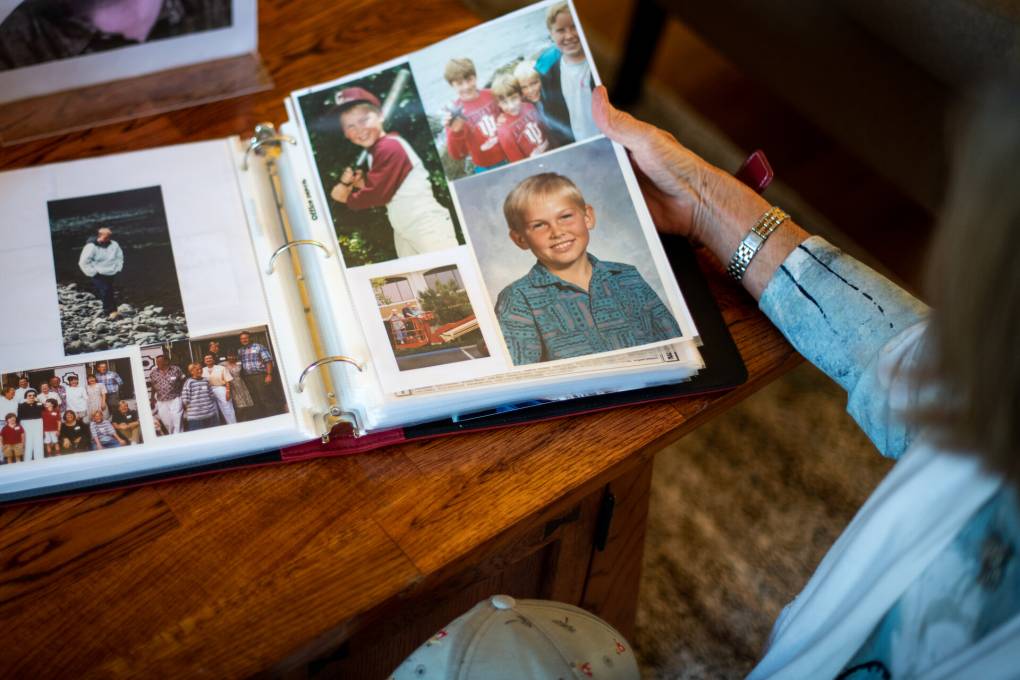
"caption": "Robin Dosskey looks through childhood photos of her son Kyle at her home in Mountain View on May 12, 2021. Kyle died in 2019 due to a fatal dose of fentanyl.",
"description": null,
"title": "RS48996_006_MountainView_RobinDosskey_05122021-qut",
"credit": "Beth LaBerge/KQED",
"status": "inherit",
"altTag": null,
"isLoading": false,
"fetchFailed": false
},
"news_11874760": {
"type": "attachments",
"id": "news_11874760",
"meta": {
"index": "attachments_1716263798",
"site": "news",
"id": "11874760",
"found": true
},
"parent": 11874753,
"imgSizes": {
"twentyfourteen-full-width": {
"file": "https://ww2.kqed.org/app/uploads/sites/10/2021/05/RS49245_GettyImages-1231366688-qut-1038x576.jpg",
"width": 1038,
"mimeType": "image/jpeg",
"height": 576
},
"thumbnail": {
"file": "https://ww2.kqed.org/app/uploads/sites/10/2021/05/RS49245_GettyImages-1231366688-qut-160x107.jpg",
"width": 160,
"mimeType": "image/jpeg",
"height": 107
},
"post-thumbnail": {
"file": "https://ww2.kqed.org/app/uploads/sites/10/2021/05/RS49245_GettyImages-1231366688-qut-672x372.jpg",
"width": 672,
"mimeType": "image/jpeg",
"height": 372
},
"kqedFullSize": {
"file": "https://ww2.kqed.org/app/uploads/sites/10/2021/05/RS49245_GettyImages-1231366688-qut.jpg",
"width": 1920,
"height": 1280
},
"large": {
"file": "https://ww2.kqed.org/app/uploads/sites/10/2021/05/RS49245_GettyImages-1231366688-qut-1020x680.jpg",
"width": 1020,
"mimeType": "image/jpeg",
"height": 680
},
"1536x1536": {
"file": "https://ww2.kqed.org/app/uploads/sites/10/2021/05/RS49245_GettyImages-1231366688-qut-1536x1024.jpg",
"width": 1536,
"mimeType": "image/jpeg",
"height": 1024
},
"medium": {
"file": "https://ww2.kqed.org/app/uploads/sites/10/2021/05/RS49245_GettyImages-1231366688-qut-800x533.jpg",
"width": 800,
"mimeType": "image/jpeg",
"height": 533
}
},
"publishDate": 1621627969,
"modified": 1621641599,
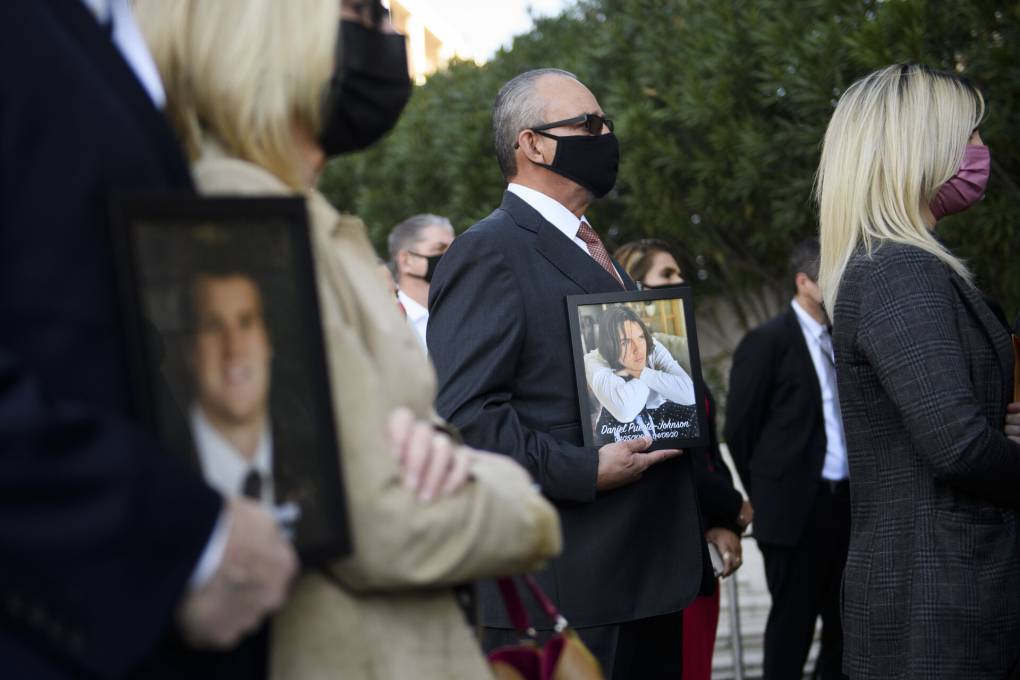
"caption": "Jaime Puerta (C), holds a portrait of his son Daniel Puerta-Johnson, who died in April 2020 at the age of 16 from a pill containing fentanyl, during a news conference outside the Roybal Federal Building on February 24, 2021 in Los Angeles.",
"description": null,
"title": "US-VIRUS-HEALTH-DRUGS-OPIOID",
"credit": "Patrick T. Fallon/AFP/Getty Images",
"status": "inherit",
"altTag": null,
"isLoading": false,
"fetchFailed": false
},
"news_11771398": {
"type": "attachments",
"id": "news_11771398",
"meta": {
"index": "attachments_1716263798",
"site": "news",
"id": "11771398",
"found": true
},
"parent": 11771395,
"imgSizes": {
"apple_news_ca_landscape_5_5": {
"file": "https://ww2.kqed.org/app/uploads/sites/10/2019/08/GettyImages-609942782-1044x783.jpg",
"width": 1044,
"mimeType": "image/jpeg",
"height": 783
},
"apple_news_ca_square_4_0": {
"file": "https://ww2.kqed.org/app/uploads/sites/10/2019/08/GettyImages-609942782-470x470.jpg",
"width": 470,
"mimeType": "image/jpeg",
"height": 470
},
"twentyfourteen-full-width": {
"file": "https://ww2.kqed.org/app/uploads/sites/10/2019/08/GettyImages-609942782-1038x576.jpg",
"width": 1038,
"mimeType": "image/jpeg",
"height": 576
},
"thumbnail": {
"file": "https://ww2.kqed.org/app/uploads/sites/10/2019/08/GettyImages-609942782-160x107.jpg",
"width": 160,
"mimeType": "image/jpeg",
"height": 107
},
"post-thumbnail": {
"file": "https://ww2.kqed.org/app/uploads/sites/10/2019/08/GettyImages-609942782-672x372.jpg",
"width": 672,
"mimeType": "image/jpeg",
"height": 372
},
"kqedFullSize": {
"file": "https://ww2.kqed.org/app/uploads/sites/10/2019/08/GettyImages-609942782.jpg",
"width": 2048,
"height": 1365
},
"apple_news_ca_landscape_4_7": {
"file": "https://ww2.kqed.org/app/uploads/sites/10/2019/08/GettyImages-609942782-632x474.jpg",
"width": 632,
"mimeType": "image/jpeg",
"height": 474
},
"large": {
"file": "https://ww2.kqed.org/app/uploads/sites/10/2019/08/GettyImages-609942782-1020x680.jpg",
"width": 1020,
"mimeType": "image/jpeg",
"height": 680
},
"complete_open_graph": {
"file": "https://ww2.kqed.org/app/uploads/sites/10/2019/08/GettyImages-609942782-1200x800.jpg",
"width": 1200,
"mimeType": "image/jpeg",
"height": 800
},
"apple_news_ca_landscape_4_0": {
"file": "https://ww2.kqed.org/app/uploads/sites/10/2019/08/GettyImages-609942782-536x402.jpg",
"width": 536,
"mimeType": "image/jpeg",
"height": 402
},
"apple_news_ca_portrait_12_9": {
"file": "https://ww2.kqed.org/app/uploads/sites/10/2019/08/GettyImages-609942782-1122x1496.jpg",
"width": 1122,
"mimeType": "image/jpeg",
"height": 1496
},
"medium": {
"file": "https://ww2.kqed.org/app/uploads/sites/10/2019/08/GettyImages-609942782-800x533.jpg",
"width": 800,
"mimeType": "image/jpeg",
"height": 533
},
"apple_news_ca_portrait_4_0": {
"file": "https://ww2.kqed.org/app/uploads/sites/10/2019/08/GettyImages-609942782-354x472.jpg",
"width": 354,
"mimeType": "image/jpeg",
"height": 472
},
"apple_news_ca_portrait_9_7": {
"file": "https://ww2.kqed.org/app/uploads/sites/10/2019/08/GettyImages-609942782-840x1120.jpg",
"width": 840,
"mimeType": "image/jpeg",
"height": 1120
},
"apple_news_ca_landscape_12_9": {
"file": "https://ww2.kqed.org/app/uploads/sites/10/2019/08/GettyImages-609942782-1832x1374.jpg",
"width": 1832,
"mimeType": "image/jpeg",
"height": 1374
},
"apple_news_ca_square_9_7": {
"file": "https://ww2.kqed.org/app/uploads/sites/10/2019/08/GettyImages-609942782-1104x1104.jpg",
"width": 1104,
"mimeType": "image/jpeg",
"height": 1104
},
"apple_news_ca_portrait_4_7": {
"file": "https://ww2.kqed.org/app/uploads/sites/10/2019/08/GettyImages-609942782-414x552.jpg",
"width": 414,
"mimeType": "image/jpeg",
"height": 552
},
"apple_news_ca_square_12_9": {
"file": "https://ww2.kqed.org/app/uploads/sites/10/2019/08/GettyImages-609942782-1472x1472.jpg",
"width": 1472,
"mimeType": "image/jpeg",
"height": 1472
},
"apple_news_ca_portrait_5_5": {
"file": "https://ww2.kqed.org/app/uploads/sites/10/2019/08/GettyImages-609942782-687x916.jpg",
"width": 687,
"mimeType": "image/jpeg",
"height": 916
},
"full-width": {
"file": "https://ww2.kqed.org/app/uploads/sites/10/2019/08/GettyImages-609942782-1920x1280.jpg",
"width": 1920,
"mimeType": "image/jpeg",
"height": 1280
},
"apple_news_ca_square_4_7": {
"file": "https://ww2.kqed.org/app/uploads/sites/10/2019/08/GettyImages-609942782-550x550.jpg",
"width": 550,
"mimeType": "image/jpeg",
"height": 550
},
"apple_news_ca_landscape_9_7": {
"file": "https://ww2.kqed.org/app/uploads/sites/10/2019/08/GettyImages-609942782-1376x1032.jpg",
"width": 1376,
"mimeType": "image/jpeg",
"height": 1032
},
"apple_news_ca_square_5_5": {
"file": "https://ww2.kqed.org/app/uploads/sites/10/2019/08/GettyImages-609942782-912x912.jpg",
"width": 912,
"mimeType": "image/jpeg",
"height": 912
}
},
"publishDate": 1567195123,
"modified": 1567195197,
"caption": "Bags of heroin, some laced with fentanyl, are displayed before a press conference regarding a major drug bust. ",
"description": "Bags of heroin, some laced with fentanyl, are displayed before a press conference regarding a major drug bust. ",
"title": "fentanyl-exposure-opioid-overdose",
"credit": "Drew Angerer/Getty Image",
"status": "inherit",
"isLoading": false,
"fetchFailed": false
},
"news_11766203": {
"type": "attachments",
"id": "news_11766203",
"meta": {
"index": "attachments_1716263798",
"site": "news",
"id": "11766203",
"found": true
},
"parent": 0,
"imgSizes": {
"apple_news_ca_landscape_5_5": {
"file": "https://ww2.kqed.org/app/uploads/sites/10/2019/08/IMG_8478-1044x783.jpg",
"width": 1044,
"mimeType": "image/jpeg",
"height": 783
},
"apple_news_ca_square_4_0": {
"file": "https://ww2.kqed.org/app/uploads/sites/10/2019/08/IMG_8478-470x470.jpg",
"width": 470,
"mimeType": "image/jpeg",
"height": 470
},
"twentyfourteen-full-width": {
"file": "https://ww2.kqed.org/app/uploads/sites/10/2019/08/IMG_8478-1038x576.jpg",
"width": 1038,
"mimeType": "image/jpeg",
"height": 576
},
"thumbnail": {
"file": "https://ww2.kqed.org/app/uploads/sites/10/2019/08/IMG_8478-160x120.jpg",
"width": 160,
"mimeType": "image/jpeg",
"height": 120
},
"post-thumbnail": {
"file": "https://ww2.kqed.org/app/uploads/sites/10/2019/08/IMG_8478-672x372.jpg",
"width": 672,
"mimeType": "image/jpeg",
"height": 372
},
"kqedFullSize": {
"file": "https://ww2.kqed.org/app/uploads/sites/10/2019/08/IMG_8478.jpg",
"width": 2048,
"height": 1536
},
"apple_news_ca_landscape_4_7": {
"file": "https://ww2.kqed.org/app/uploads/sites/10/2019/08/IMG_8478-632x474.jpg",
"width": 632,
"mimeType": "image/jpeg",
"height": 474
},
"large": {
"file": "https://ww2.kqed.org/app/uploads/sites/10/2019/08/IMG_8478-1020x765.jpg",
"width": 1020,
"mimeType": "image/jpeg",
"height": 765
},
"complete_open_graph": {
"file": "https://ww2.kqed.org/app/uploads/sites/10/2019/08/IMG_8478-1200x900.jpg",
"width": 1200,
"mimeType": "image/jpeg",
"height": 900
},
"apple_news_ca_landscape_4_0": {
"file": "https://ww2.kqed.org/app/uploads/sites/10/2019/08/IMG_8478-536x402.jpg",
"width": 536,
"mimeType": "image/jpeg",
"height": 402
},
"apple_news_ca_portrait_12_9": {
"file": "https://ww2.kqed.org/app/uploads/sites/10/2019/08/IMG_8478-1122x1496.jpg",
"width": 1122,
"mimeType": "image/jpeg",
"height": 1496
},
"medium": {
"file": "https://ww2.kqed.org/app/uploads/sites/10/2019/08/IMG_8478-800x600.jpg",
"width": 800,
"mimeType": "image/jpeg",
"height": 600
},
"apple_news_ca_portrait_4_0": {
"file": "https://ww2.kqed.org/app/uploads/sites/10/2019/08/IMG_8478-354x472.jpg",
"width": 354,
"mimeType": "image/jpeg",
"height": 472
},
"apple_news_ca_portrait_9_7": {
"file": "https://ww2.kqed.org/app/uploads/sites/10/2019/08/IMG_8478-840x1120.jpg",
"width": 840,
"mimeType": "image/jpeg",
"height": 1120
},
"apple_news_ca_landscape_12_9": {
"file": "https://ww2.kqed.org/app/uploads/sites/10/2019/08/IMG_8478-1832x1374.jpg",
"width": 1832,
"mimeType": "image/jpeg",
"height": 1374
},
"apple_news_ca_square_9_7": {
"file": "https://ww2.kqed.org/app/uploads/sites/10/2019/08/IMG_8478-1104x1104.jpg",
"width": 1104,
"mimeType": "image/jpeg",
"height": 1104
},
"apple_news_ca_portrait_4_7": {
"file": "https://ww2.kqed.org/app/uploads/sites/10/2019/08/IMG_8478-414x552.jpg",
"width": 414,
"mimeType": "image/jpeg",
"height": 552
},
"apple_news_ca_square_12_9": {
"file": "https://ww2.kqed.org/app/uploads/sites/10/2019/08/IMG_8478-1472x1472.jpg",
"width": 1472,
"mimeType": "image/jpeg",
"height": 1472
},
"apple_news_ca_portrait_5_5": {
"file": "https://ww2.kqed.org/app/uploads/sites/10/2019/08/IMG_8478-687x916.jpg",
"width": 687,
"mimeType": "image/jpeg",
"height": 916
},
"full-width": {
"file": "https://ww2.kqed.org/app/uploads/sites/10/2019/08/IMG_8478-1920x1440.jpg",
"width": 1920,
"mimeType": "image/jpeg",
"height": 1440
},
"apple_news_ca_square_4_7": {
"file": "https://ww2.kqed.org/app/uploads/sites/10/2019/08/IMG_8478-550x550.jpg",
"width": 550,
"mimeType": "image/jpeg",
"height": 550
},
"apple_news_ca_landscape_9_7": {
"file": "https://ww2.kqed.org/app/uploads/sites/10/2019/08/IMG_8478-1376x1032.jpg",
"width": 1376,
"mimeType": "image/jpeg",
"height": 1032
},
"apple_news_ca_square_5_5": {
"file": "https://ww2.kqed.org/app/uploads/sites/10/2019/08/IMG_8478-912x912.jpg",
"width": 912,
"mimeType": "image/jpeg",
"height": 912
}
},
"publishDate": 1565206611,
"modified": 1565207185,
"caption": "A staff member at San Francisco's 6th Street Harm Reduction Center demonstrates how to test a drug for the presence of fentanyl using a fentanyl test strip.",
"description": "A staff member at San Francisco's 6th Street Harm Reduction Center demonstrates how to test a drug for the presence of fentanyl using a fentanyl test strip.",
"title": "Staff at San Francisco's 6th Street Harm Reduction Center demonstrates how to test a drug for the presence of fentanyl with a fentanyl test strip.",
"credit": "Laura Klivans/KQED",
"status": "inherit",
"isLoading": false,
"fetchFailed": false
},
"news_11671192": {
"type": "attachments",
"id": "news_11671192",
"meta": {
"index": "attachments_1716263798",
"site": "news",
"id": "11671192",
"found": true
},
"parent": 11669671,
"imgSizes": {
"small": {
"file": "https://ww2.kqed.org/app/uploads/sites/10/2018/05/RS8531_alt_730-520x351.jpg",
"width": 520,
"mimeType": "image/jpeg",
"height": 351
},
"twentyfourteen-full-width": {
"file": "https://ww2.kqed.org/app/uploads/sites/10/2018/05/RS8531_alt_730-1038x576.jpg",
"width": 1038,
"mimeType": "image/jpeg",
"height": 576
},
"thumbnail": {
"file": "https://ww2.kqed.org/app/uploads/sites/10/2018/05/RS8531_alt_730-160x108.jpg",
"width": 160,
"mimeType": "image/jpeg",
"height": 108
},
"fd-sm": {
"file": "https://ww2.kqed.org/app/uploads/sites/10/2018/05/RS8531_alt_730-960x649.jpg",
"width": 960,
"mimeType": "image/jpeg",
"height": 649
},
"post-thumbnail": {
"file": "https://ww2.kqed.org/app/uploads/sites/10/2018/05/RS8531_alt_730-672x372.jpg",
"width": 672,
"mimeType": "image/jpeg",
"height": 372
},
"xsmall": {
"file": "https://ww2.kqed.org/app/uploads/sites/10/2018/05/RS8531_alt_730-375x253.jpg",
"width": 375,
"mimeType": "image/jpeg",
"height": 253
},
"kqedFullSize": {
"file": "https://ww2.kqed.org/app/uploads/sites/10/2018/05/RS8531_alt_730.jpg",
"width": 1920,
"height": 1297
},
"large": {
"file": "https://ww2.kqed.org/app/uploads/sites/10/2018/05/RS8531_alt_730-1020x689.jpg",
"width": 1020,
"mimeType": "image/jpeg",
"height": 689
},
"xlarge": {
"file": "https://ww2.kqed.org/app/uploads/sites/10/2018/05/RS8531_alt_730-1180x797.jpg",
"width": 1180,
"mimeType": "image/jpeg",
"height": 797
},
"complete_open_graph": {
"file": "https://ww2.kqed.org/app/uploads/sites/10/2018/05/RS8531_alt_730-1200x811.jpg",
"width": 1200,
"mimeType": "image/jpeg",
"height": 811
},
"guest-author-50": {
"file": "https://ww2.kqed.org/app/uploads/sites/10/2018/05/RS8531_alt_730-50x50.jpg",
"width": 50,
"mimeType": "image/jpeg",
"height": 50
},
"guest-author-96": {
"file": "https://ww2.kqed.org/app/uploads/sites/10/2018/05/RS8531_alt_730-96x96.jpg",
"width": 96,
"mimeType": "image/jpeg",
"height": 96
},
"medium": {
"file": "https://ww2.kqed.org/app/uploads/sites/10/2018/05/RS8531_alt_730-800x540.jpg",
"width": 800,
"mimeType": "image/jpeg",
"height": 540
},
"guest-author-64": {
"file": "https://ww2.kqed.org/app/uploads/sites/10/2018/05/RS8531_alt_730-64x64.jpg",
"width": 64,
"mimeType": "image/jpeg",
"height": 64
},
"guest-author-32": {
"file": "https://ww2.kqed.org/app/uploads/sites/10/2018/05/RS8531_alt_730-32x32.jpg",
"width": 32,
"mimeType": "image/jpeg",
"height": 32
},
"fd-lrg": {
"file": "https://ww2.kqed.org/app/uploads/sites/10/2018/05/RS8531_alt_730-1920x1297.jpg",
"width": 1920,
"mimeType": "image/jpeg",
"height": 1297
},
"fd-med": {
"file": "https://ww2.kqed.org/app/uploads/sites/10/2018/05/RS8531_alt_730-1180x797.jpg",
"width": 1180,
"mimeType": "image/jpeg",
"height": 797
},
"full-width": {
"file": "https://ww2.kqed.org/app/uploads/sites/10/2018/05/RS8531_alt_730-1920x1297.jpg",
"width": 1920,
"mimeType": "image/jpeg",
"height": 1297
},
"detail": {
"file": "https://ww2.kqed.org/app/uploads/sites/10/2018/05/RS8531_alt_730-150x150.jpg",
"width": 150,
"mimeType": "image/jpeg",
"height": 150
},
"guest-author-128": {
"file": "https://ww2.kqed.org/app/uploads/sites/10/2018/05/RS8531_alt_730-128x128.jpg",
"width": 128,
"mimeType": "image/jpeg",
"height": 128
},
"xxsmall": {
"file": "https://ww2.kqed.org/app/uploads/sites/10/2018/05/RS8531_alt_730-240x162.jpg",
"width": 240,
"mimeType": "image/jpeg",
"height": 162
}
},
"publishDate": 1527535095,
"modified": 1579138896,
"caption": "A California Department of Corrections officer looks on as inmates at Chino State Prison exercise in the yard.",
"description": null,
"title": "Supreme Court To Rule On California's Overcrowded Prisons",
"credit": "Kevork Djansezian/Getty Images",
"status": "inherit",
"isLoading": false,
"fetchFailed": false
},
"stateofhealth_363684": {
"type": "attachments",
"id": "stateofhealth_363684",
"meta": {
"index": "attachments_1716263798",
"site": "stateofhealth",
"id": "363684",
"found": true
},
"parent": 363681,
"imgSizes": {
"small": {
"file": "https://ww2.kqed.org/app/uploads/sites/27/2018/05/RS3641_hand-pills-520x346.jpg",
"width": 520,
"mimeType": "image/jpeg",
"height": 346
},
"thumbnail": {
"file": "https://ww2.kqed.org/app/uploads/sites/27/2018/05/RS3641_hand-pills-160x106.jpg",
"width": 160,
"mimeType": "image/jpeg",
"height": 106
},
"xsmall": {
"file": "https://ww2.kqed.org/app/uploads/sites/27/2018/05/RS3641_hand-pills-375x250.jpg",
"width": 375,
"mimeType": "image/jpeg",
"height": 250
},
"kqedFullSize": {
"file": "https://ww2.kqed.org/app/uploads/sites/27/2018/05/RS3641_hand-pills.jpg",
"width": 550,
"height": 366
},
"guest-author-50": {
"file": "https://ww2.kqed.org/app/uploads/sites/27/2018/05/RS3641_hand-pills-50x50.jpg",
"width": 50,
"mimeType": "image/jpeg",
"height": 50
},
"guest-author-96": {
"file": "https://ww2.kqed.org/app/uploads/sites/27/2018/05/RS3641_hand-pills-96x96.jpg",
"width": 96,
"mimeType": "image/jpeg",
"height": 96
},
"guest-author-64": {
"file": "https://ww2.kqed.org/app/uploads/sites/27/2018/05/RS3641_hand-pills-64x64.jpg",
"width": 64,
"mimeType": "image/jpeg",
"height": 64
},
"detail": {
"file": "https://ww2.kqed.org/app/uploads/sites/27/2018/05/RS3641_hand-pills-150x150.jpg",
"width": 150,
"mimeType": "image/jpeg",
"height": 150
},
"guest-author-32": {
"file": "https://ww2.kqed.org/app/uploads/sites/27/2018/05/RS3641_hand-pills-32x32.jpg",
"width": 32,
"mimeType": "image/jpeg",
"height": 32
},
"guest-author-128": {
"file": "https://ww2.kqed.org/app/uploads/sites/27/2018/05/RS3641_hand-pills-128x128.jpg",
"width": 128,
"mimeType": "image/jpeg",
"height": 128
},
"xxsmall": {
"file": "https://ww2.kqed.org/app/uploads/sites/27/2018/05/RS3641_hand-pills-240x160.jpg",
"width": 240,
"mimeType": "image/jpeg",
"height": 160
}
},
"publishDate": 1527288581,
"modified": 1527288663,
"caption": "Deaths from fentanyl, which can be added to other drugs such as pills, tripled in 2017 in California.",
"description": "Deaths from fentanyl, which can be added to other drugs such as pills, tripled in 2017 in California.",
"title": "RS3641_hand-pills",
"credit": "Air Rabbit/Getty Images",
"status": "inherit",
"isLoading": false,
"fetchFailed": false
},
"news_147534": {
"type": "attachments",
"id": "news_147534",
"meta": {
"index": "attachments_1716263798",
"site": "news",
"id": "147534",
"found": true
},
"parent": 147512,
"imgSizes": {
"wide-featured-image": {
"file": "https://ww2.kqed.org/app/uploads/sites/10/2014/09/RS3937_IMG_4329-lpr-600x300.jpg",
"width": 600,
"mimeType": "image/jpeg",
"height": 300
},
"featured-page": {
"file": "https://ww2.kqed.org/app/uploads/sites/10/2014/09/RS3937_IMG_4329-lpr-315x145.jpg",
"width": 315,
"mimeType": "image/jpeg",
"height": 145
},
"thumbnail": {
"file": "https://ww2.kqed.org/app/uploads/sites/10/2014/09/RS3937_IMG_4329-lpr-300x300.jpg",
"width": 300,
"mimeType": "image/jpeg",
"height": 300
},
"kqedFullSize": {
"file": "https://ww2.kqed.org/app/uploads/sites/10/2014/09/RS3937_IMG_4329-lpr-e1440781349947.jpg",
"width": 1920,
"height": 1440
},
"large": {
"file": "https://ww2.kqed.org/app/uploads/sites/10/2014/09/RS3937_IMG_4329-lpr-1028x771.jpg",
"width": 1028,
"mimeType": "image/jpeg",
"height": 771
},
"wide-featured-image-full": {
"file": "https://ww2.kqed.org/app/uploads/sites/10/2014/09/RS3937_IMG_4329-lpr-960x300.jpg",
"width": 960,
"mimeType": "image/jpeg",
"height": 300
},
"guest-author-96": {
"file": "https://ww2.kqed.org/app/uploads/sites/10/2014/09/RS3937_IMG_4329-lpr-96x96.jpg",
"width": 96,
"mimeType": "image/jpeg",
"height": 96
},
"medium": {
"file": "https://ww2.kqed.org/app/uploads/sites/10/2014/09/RS3937_IMG_4329-lpr-640x480.jpg",
"width": 640,
"mimeType": "image/jpeg",
"height": 480
},
"guest-author-64": {
"file": "https://ww2.kqed.org/app/uploads/sites/10/2014/09/RS3937_IMG_4329-lpr-64x64.jpg",
"width": 64,
"mimeType": "image/jpeg",
"height": 64
},
"guest-author-32": {
"file": "https://ww2.kqed.org/app/uploads/sites/10/2014/09/RS3937_IMG_4329-lpr-32x32.jpg",
"width": 32,
"mimeType": "image/jpeg",
"height": 32
},
"narrow-featured-image": {
"file": "https://ww2.kqed.org/app/uploads/sites/10/2014/09/RS3937_IMG_4329-lpr-400x300.jpg",
"width": 400,
"mimeType": "image/jpeg",
"height": 300
},
"narrow-featured-image-full": {
"file": "https://ww2.kqed.org/app/uploads/sites/10/2014/09/RS3937_IMG_4329-lpr-640x360.jpg",
"width": 640,
"mimeType": "image/jpeg",
"height": 360
},
"detail": {
"file": "https://ww2.kqed.org/app/uploads/sites/10/2014/09/RS3937_IMG_4329-lpr-75x75.jpg",
"width": 75,
"mimeType": "image/jpeg",
"height": 75
},
"guest-author-128": {
"file": "https://ww2.kqed.org/app/uploads/sites/10/2014/09/RS3937_IMG_4329-lpr-128x128.jpg",
"width": 128,
"mimeType": "image/jpeg",
"height": 128
}
},
"publishDate": 1410551705,
"modified": 1544225913,
"caption": "San Quentin State Prison",
"description": "San Quentin Prison.",
"title": "San Quentin",
"credit": "Molly Samuel/KQED",
"status": "inherit",
"isLoading": false,
"fetchFailed": false
},
"news_11664034": {
"type": "attachments",
"id": "news_11664034",
"meta": {
"index": "attachments_1716263798",
"site": "news",
"id": "11664034",
"found": true
},
"parent": 11644796,
"imgSizes": {
"small": {
"file": "https://ww2.kqed.org/app/uploads/sites/10/2018/04/RS30260_Kristen-Marshall-qut-520x390.jpg",
"width": 520,
"mimeType": "image/jpeg",
"height": 390
},
"twentyfourteen-full-width": {
"file": "https://ww2.kqed.org/app/uploads/sites/10/2018/04/RS30260_Kristen-Marshall-qut-1038x576.jpg",
"width": 1038,
"mimeType": "image/jpeg",
"height": 576
},
"thumbnail": {
"file": "https://ww2.kqed.org/app/uploads/sites/10/2018/04/RS30260_Kristen-Marshall-qut-160x120.jpg",
"width": 160,
"mimeType": "image/jpeg",
"height": 120
},
"fd-sm": {
"file": "https://ww2.kqed.org/app/uploads/sites/10/2018/04/RS30260_Kristen-Marshall-qut-960x720.jpg",
"width": 960,
"mimeType": "image/jpeg",
"height": 720
},
"post-thumbnail": {
"file": "https://ww2.kqed.org/app/uploads/sites/10/2018/04/RS30260_Kristen-Marshall-qut-672x372.jpg",
"width": 672,
"mimeType": "image/jpeg",
"height": 372
},
"xsmall": {
"file": "https://ww2.kqed.org/app/uploads/sites/10/2018/04/RS30260_Kristen-Marshall-qut-375x281.jpg",
"width": 375,
"mimeType": "image/jpeg",
"height": 281
},
"kqedFullSize": {
"file": "https://ww2.kqed.org/app/uploads/sites/10/2018/04/RS30260_Kristen-Marshall-qut.jpg",
"width": 1920,
"height": 1440
},
"large": {
"file": "https://ww2.kqed.org/app/uploads/sites/10/2018/04/RS30260_Kristen-Marshall-qut-1020x765.jpg",
"width": 1020,
"mimeType": "image/jpeg",
"height": 765
},
"xlarge": {
"file": "https://ww2.kqed.org/app/uploads/sites/10/2018/04/RS30260_Kristen-Marshall-qut-1180x885.jpg",
"width": 1180,
"mimeType": "image/jpeg",
"height": 885
},
"complete_open_graph": {
"file": "https://ww2.kqed.org/app/uploads/sites/10/2018/04/RS30260_Kristen-Marshall-qut-1200x900.jpg",
"width": 1200,
"mimeType": "image/jpeg",
"height": 900
},
"guest-author-50": {
"file": "https://ww2.kqed.org/app/uploads/sites/10/2018/04/RS30260_Kristen-Marshall-qut-50x50.jpg",
"width": 50,
"mimeType": "image/jpeg",
"height": 50
},
"guest-author-96": {
"file": "https://ww2.kqed.org/app/uploads/sites/10/2018/04/RS30260_Kristen-Marshall-qut-96x96.jpg",
"width": 96,
"mimeType": "image/jpeg",
"height": 96
},
"medium": {
"file": "https://ww2.kqed.org/app/uploads/sites/10/2018/04/RS30260_Kristen-Marshall-qut-800x600.jpg",
"width": 800,
"mimeType": "image/jpeg",
"height": 600
},
"guest-author-64": {
"file": "https://ww2.kqed.org/app/uploads/sites/10/2018/04/RS30260_Kristen-Marshall-qut-64x64.jpg",
"width": 64,
"mimeType": "image/jpeg",
"height": 64
},
"guest-author-32": {
"file": "https://ww2.kqed.org/app/uploads/sites/10/2018/04/RS30260_Kristen-Marshall-qut-32x32.jpg",
"width": 32,
"mimeType": "image/jpeg",
"height": 32
},
"fd-lrg": {
"file": "https://ww2.kqed.org/app/uploads/sites/10/2018/04/RS30260_Kristen-Marshall-qut-1920x1440.jpg",
"width": 1920,
"mimeType": "image/jpeg",
"height": 1440
},
"fd-med": {
"file": "https://ww2.kqed.org/app/uploads/sites/10/2018/04/RS30260_Kristen-Marshall-qut-1180x885.jpg",
"width": 1180,
"mimeType": "image/jpeg",
"height": 885
},
"full-width": {
"file": "https://ww2.kqed.org/app/uploads/sites/10/2018/04/RS30260_Kristen-Marshall-qut-1920x1440.jpg",
"width": 1920,
"mimeType": "image/jpeg",
"height": 1440
},
"detail": {
"file": "https://ww2.kqed.org/app/uploads/sites/10/2018/04/RS30260_Kristen-Marshall-qut-150x150.jpg",
"width": 150,
"mimeType": "image/jpeg",
"height": 150
},
"guest-author-128": {
"file": "https://ww2.kqed.org/app/uploads/sites/10/2018/04/RS30260_Kristen-Marshall-qut-128x128.jpg",
"width": 128,
"mimeType": "image/jpeg",
"height": 128
},
"xxsmall": {
"file": "https://ww2.kqed.org/app/uploads/sites/10/2018/04/RS30260_Kristen-Marshall-qut-240x180.jpg",
"width": 240,
"mimeType": "image/jpeg",
"height": 180
}
},
"publishDate": 1524416209,
"modified": 1524416225,
"caption": "Kristen Marshall leads overdose prevention and education for San Francisco's Department of Public Health. She stands outside the 6th Street Harm Reduction Center.",
"description": "Kristen Marshall leads overdose prevention and education for San Francisco's Department of Public Health. She stands outside the 6th Street Harm Reduction Center.",
"title": "RS30260_Kristen-Marshall-qut",
"credit": "Laura Klivans/KQED",
"status": "inherit",
"isLoading": false,
"fetchFailed": false
}
},
"audioPlayerReducer": {
"postId": "stream_live",
"isPaused": true,
"isPlaying": false,
"pfsActive": false,
"pledgeModalIsOpen": true,
"playerDrawerIsOpen": false,
"liveAudioPlayStartedAt": 0,
"liveAudioPlayContext": ""
},
"authorsReducer": {
"byline_news_11881276": {
"type": "authors",
"id": "byline_news_11881276",
"meta": {
"override": true
},
"slug": "byline_news_11881276",
"name": "\u003ca href=\"https://www.npr.org/people/14562108/bill-chappell\">Bill Chappell\u003c/a>",
"isLoading": false
},
"byline_news_11874651": {
"type": "authors",
"id": "byline_news_11874651",
"meta": {
"override": true
},
"slug": "byline_news_11874651",
"name": "Julie Small and Mohar Chatterjee",
"isLoading": false
},
"byline_news_11874753": {
"type": "authors",
"id": "byline_news_11874753",
"meta": {
"override": true
},
"slug": "byline_news_11874753",
"name": "Mohar Chatterjee and Julie Small",
"isLoading": false
},
"byline_news_11771395": {
"type": "authors",
"id": "byline_news_11771395",
"meta": {
"override": true
},
"slug": "byline_news_11771395",
"name": "\u003ca href=\"https://twitter.com/annikascline\">Annika Cline\u003c/a>",
"isLoading": false
},
"tgoldberg": {
"type": "authors",
"id": "258",
"meta": {
"index": "authors_1716337520",
"id": "258",
"found": true
},
"name": "Ted Goldberg",
"firstName": "Ted",
"lastName": "Goldberg",
"slug": "tgoldberg",
"email": "tgoldberg@kqed.org",
"display_author_email": true,
"staff_mastheads": [
"news"
],
"title": "KQED Managing Editor, News and Newscasts",
"bio": "Ted Goldberg is Managing Editor of News and Newscasts at KQED. His main reporting beat is the Bay Area's oil refining industry.\r\n\r\nPrior to joining KQED in 2014, Ted worked at CBS News and WCBS AM in New York and Bay City News and KCBS Radio in San Francisco. He graduated from Oberlin College in Ohio in 1998.",
"avatar": "https://secure.gravatar.com/avatar/30ce2e4fe89135e104f89be2394d16225b9d36c121b5b3cb7651ce642978b96f?s=600&d=blank&r=g",
"twitter": "TedrickG",
"bluesky": null,
"facebook": null,
"instagram": null,
"linkedin": null,
"sites": [
{
"site": "news",
"roles": [
"editor"
]
},
{
"site": "science",
"roles": [
"editor"
]
}
],
"headData": {
"title": "Ted Goldberg | KQED",
"description": "KQED Managing Editor, News and Newscasts",
"ogImgSrc": "https://secure.gravatar.com/avatar/30ce2e4fe89135e104f89be2394d16225b9d36c121b5b3cb7651ce642978b96f?s=600&d=blank&r=g",
"twImgSrc": "https://secure.gravatar.com/avatar/30ce2e4fe89135e104f89be2394d16225b9d36c121b5b3cb7651ce642978b96f?s=600&d=blank&r=g"
},
"isLoading": false,
"link": "/author/tgoldberg"
},
"shossaini": {
"type": "authors",
"id": "3214",
"meta": {
"index": "authors_1716337520",
"id": "3214",
"found": true
},
"name": "Sara Hossaini",
"firstName": "Sara",
"lastName": "Hossaini",
"slug": "shossaini",
"email": "shossaini@kqed.org",
"display_author_email": true,
"staff_mastheads": [
"news"
],
"title": "KQED Reporter",
"bio": "Sara Hossaini came to general assignment reporting at KQED in 2013 after two winters reporting at Wyoming Public Radio. She holds a bachelor's degree in broadcast journalism from the University of Nebraska-Lincoln. Her radio romance began after a bitter breakup with documentary film (Ok, maybe it's still complicated). Her first simultaneous jobs in San Francisco were as Associate Producer on a PBS film series through the Center for Asian American Media and as a butler. She likes to trot, plot and make things with her hands.",
"avatar": "https://secure.gravatar.com/avatar/060e9f56b9554e17942e89f413242774?s=600&d=blank&r=g",
"twitter": "mshossaini",
"facebook": null,
"instagram": null,
"linkedin": null,
"sites": [
{
"site": "news",
"roles": [
"author"
]
},
{
"site": "stateofhealth",
"roles": [
"author"
]
}
],
"headData": {
"title": "Sara Hossaini | KQED",
"description": "KQED Reporter",
"ogImgSrc": "https://secure.gravatar.com/avatar/060e9f56b9554e17942e89f413242774?s=600&d=blank&r=g",
"twImgSrc": "https://secure.gravatar.com/avatar/060e9f56b9554e17942e89f413242774?s=600&d=blank&r=g"
},
"isLoading": false,
"link": "/author/shossaini"
},
"lklivans": {
"type": "authors",
"id": "8648",
"meta": {
"index": "authors_1716337520",
"id": "8648",
"found": true
},
"name": "Laura Klivans",
"firstName": "Laura",
"lastName": "Klivans",
"slug": "lklivans",
"email": "lklivans@kqed.org",
"display_author_email": true,
"staff_mastheads": [
"news",
"science"
],
"title": "Reporter",
"bio": "Laura Klivans is an award-winning science reporter for KQED News, where she covers climate change with an eye on both groundbreaking progress and gaps in action. She is the former host of KQED's blockbuster video series about tiny, amazing animals, \u003cem>Deep Look\u003c/em>. Her work reaches national audiences through NPR, \u003cem>Here & Now, \u003c/em>PRI, and other major outlets. \r\n\r\nLaura’s won five Northern California Area Emmy Awards for Deep Look and First Place in the Greater Bay Area Journalism Awards for a podcast exploring how one Oakland neighborhood teamed up to reduce planet-heating pollution.\r\n\r\nBeyond her reporting, she hosts and moderates events. In the past, she taught audio storytelling at the UC Berkeley Graduate School of Journalism, led international education programs, worked with immigrants and refugees along the Thai-Burmese border, taught high schoolers sex ed, and was an actress. \r\n\r\nShe's a former UC Berkeley Human Rights Fellow, USC Center for Health Journalism's California Fellow and Coro Fellow in Public Affairs. Laura has a master’s in journalism from UC Berkeley, a master’s in education from Harvard, and an undergraduate degree from Northwestern University.\r\n\r\nShe loves trying to riddle the meaning out of vanity license plates.",
"avatar": "https://secure.gravatar.com/avatar/2d2ecd1550a494cc10ad4a503406965585902124739e775a9b3817eebf1d88be?s=600&d=blank&r=g",
"twitter": "lauraklivans",
"bluesky": null,
"facebook": null,
"instagram": null,
"linkedin": null,
"sites": [
{
"site": "news",
"roles": [
"editor"
]
},
{
"site": "stateofhealth",
"roles": [
"contributor",
"editor"
]
},
{
"site": "science",
"roles": [
"editor"
]
},
{
"site": "forum",
"roles": [
"editor"
]
}
],
"headData": {
"title": "Laura Klivans | KQED",
"description": "Reporter",
"ogImgSrc": "https://secure.gravatar.com/avatar/2d2ecd1550a494cc10ad4a503406965585902124739e775a9b3817eebf1d88be?s=600&d=blank&r=g",
"twImgSrc": "https://secure.gravatar.com/avatar/2d2ecd1550a494cc10ad4a503406965585902124739e775a9b3817eebf1d88be?s=600&d=blank&r=g"
},
"isLoading": false,
"link": "/author/lklivans"
},
"rlevi": {
"type": "authors",
"id": "11260",
"meta": {
"index": "authors_1716337520",
"id": "11260",
"found": true
},
"name": "Ryan Levi",
"firstName": "Ryan",
"lastName": "Levi",
"slug": "rlevi",
"email": "rlevi@KQED.org",
"display_author_email": false,
"staff_mastheads": [],
"title": "KQED Contributor",
"bio": "Ryan Levi was a reporter and podcast producer at KQED News from 2016-2019. He worked on \u003ca href=\"https://www.kqed.org/news/series/baycurious\">Bay Curious\u003c/a>, \u003ca href=\"https://www.kqed.org/news/tag/the-bay/\">The Bay, \u003c/a>and \u003ca href=\"https://podcasts.apple.com/us/podcast/the-california-report-magazine/id1314750545\">The California Report Magazine\u003c/a>, as well as hosting and producing the weekly \u003ca href=\"https://www.kqed.org/news/program/qedup/\">Q'ed Up podcast. \u003c/a>He also helped inaugurate KQED's weekend news coverage in 2017 as one of two original digital producers. Ryan holds degrees in multimedia journalism and Spanish from the University of Missouri.",
"avatar": "https://secure.gravatar.com/avatar/4cb2ddd028ac8807d1adf09609c5555d?s=600&d=blank&r=g",
"twitter": "ryan_levi",
"facebook": null,
"instagram": null,
"linkedin": null,
"sites": [
{
"site": "arts",
"roles": [
"editor"
]
},
{
"site": "news",
"roles": [
"subscriber"
]
},
{
"site": "stateofhealth",
"roles": [
"editor"
]
},
{
"site": "science",
"roles": [
"editor"
]
},
{
"site": "forum",
"roles": [
"administrator"
]
},
{
"site": "perspectives",
"roles": [
"administrator"
]
}
],
"headData": {
"title": "Ryan Levi | KQED",
"description": "KQED Contributor",
"ogImgSrc": "https://secure.gravatar.com/avatar/4cb2ddd028ac8807d1adf09609c5555d?s=600&d=blank&r=g",
"twImgSrc": "https://secure.gravatar.com/avatar/4cb2ddd028ac8807d1adf09609c5555d?s=600&d=blank&r=g"
},
"isLoading": false,
"link": "/author/rlevi"
},
"jrodriguez": {
"type": "authors",
"id": "11690",
"meta": {
"index": "authors_1716337520",
"id": "11690",
"found": true
},
"name": "Joe Fitzgerald Rodriguez",
"firstName": "Joe",
"lastName": "Fitzgerald Rodriguez",
"slug": "jrodriguez",
"email": "jrodriguez@kqed.org",
"display_author_email": true,
"staff_mastheads": [
"news"
],
"title": "Reporter and Producer",
"bio": "Joe Fitzgerald Rodriguez is a reporter and digital producer for KQED covering politics. Joe most recently wrote for the \u003cem>San Francisco Examiner\u003c/em> as a political columnist covering The City. He was raised in San Francisco and has spent his reporting career in his beloved, foggy, city by the bay. Joe was 12-years-old when he conducted his first interview in journalism, grilling former San Francisco Mayor Willie Brown for the Marina Middle School newspaper, \u003cem>The Penguin Press, \u003c/em>and he continues to report on the San Francisco Bay Area to this day.",
"avatar": "https://secure.gravatar.com/avatar/2247beb0564c1e9c62228d5649d2edac?s=600&d=blank&r=g",
"twitter": "FitztheReporter",
"facebook": null,
"instagram": "https://www.instagram.com/fitzthereporter/",
"linkedin": null,
"sites": [
{
"site": "",
"roles": [
"editor"
]
},
{
"site": "arts",
"roles": [
"editor"
]
},
{
"site": "news",
"roles": [
"editor"
]
},
{
"site": "science",
"roles": [
"editor"
]
},
{
"site": "elections",
"roles": [
"editor"
]
},
{
"site": "liveblog",
"roles": [
"editor"
]
}
],
"headData": {
"title": "Joe Fitzgerald Rodriguez | KQED",
"description": "Reporter and Producer",
"ogImgSrc": "https://secure.gravatar.com/avatar/2247beb0564c1e9c62228d5649d2edac?s=600&d=blank&r=g",
"twImgSrc": "https://secure.gravatar.com/avatar/2247beb0564c1e9c62228d5649d2edac?s=600&d=blank&r=g"
},
"isLoading": false,
"link": "/author/jrodriguez"
}
},
"pagesReducer": {
"news_tag_fentanyl": {
"type": "terms",
"id": "news_23051",
"meta": {
"index": "terms_1716263798",
"site": "news",
"id": "23051",
"score": 9.304576
},
"featImg": null,
"name": "fentanyl",
"description": null,
"taxonomy": "tag",
"headData": {
"twImgId": null,
"twTitle": null,
"ogTitle": null,
"ogImgId": null,
"twDescription": null,
"description": null,
"title": "fentanyl Archives | KQED News",
"ogDescription": null
},
"ttid": 23068,
"slug": "fentanyl",
"isLoading": false,
"title": "fentanyl",
"pageMeta": {
"site": "news",
"WpPageTemplate": "page-topic-editorial",
"currentPage": 6
},
"blocks": [
{
"blockName": "kqed/post-list",
"attrs": {
"layout": "cardArticle2",
"query": "posts/news?tag=fentanyl",
"seeMore": false,
"paginated": true,
"page": 6
}
},
{
"blockName": "kqed/ad"
}
]
}
},
"pfsSessionReducer": {},
"postsReducer": {
"stream_live": {
"type": "live",
"id": "stream_live",
"audioUrl": "https://streams.kqed.org/kqedradio",
"title": "Live Stream",
"excerpt": "Live Stream information currently unavailable.",
"link": "/radio",
"featImg": "",
"label": {
"name": "KQED Live",
"link": "/"
}
},
"stream_kqedNewscast": {
"type": "posts",
"id": "stream_kqedNewscast",
"audioUrl": "https://www.kqed.org/.stream/anon/radio/RDnews/newscast.mp3?_=1",
"title": "KQED Newscast",
"featImg": "",
"label": {
"name": "88.5 FM",
"link": "/"
}
},
"news_11883396": {
"type": "posts",
"id": "news_11883396",
"meta": {
"index": "posts_1716263798",
"site": "news",
"id": "11883396",
"score": null,
"sort": [
1628039357000
]
},
"guestAuthors": [],
"slug": "former-political-aide-to-end-hunger-strike-as-sf-officials-back-more-action-on-overdoses",
"title": "Former SF Political Aide Announces End to Hunger Strike After City Leaders Pledge More Action on Drug Overdose Crisis",
"publishDate": 1628039357,
"format": "standard",
"headTitle": "Former SF Political Aide Announces End to Hunger Strike After City Leaders Pledge More Action on Drug Overdose Crisis | KQED",
"labelTerm": {
"site": "news"
},
"content": "\u003cp>Gary McCoy once lived on the streets of San Francisco, where he experienced substance use disorder and witnessed drug overdose deaths firsthand.\u003c/p>\n\u003cp>Years later, he rose to the upper echelons of San Francisco’s City Hall. On Sunday, McCoy began a round-the-clock hunger strike on its steps, urging the city to take action to prevent opioid-related overdose deaths.\u003c/p>\n\u003cp>On Tuesday, McCoy ended his strike at 60 hours after receiving support from the majority of the San Francisco Board of Supervisors. McCoy said officials will introduce a resolution urging the mayor to declare a state of emergency and authorize the use of safe consumption services.\u003c/p>\n\u003cp>https://twitter.com/rgarymccoy/status/1422642909858328581\u003c/p>\n\u003cp>McCoy’s \u003ca href=\"https://www.sfchronicle.com/local/heatherknight/article/He-was-high-homeless-and-in-and-out-of-jail-in-16143241.php\">journey from homelessness to San Francisco’s gold-painted rotunda\u003c/a> made him popular within San Francisco political circles: He’s been a congressional aide to House Speaker Nancy Pelosi and has worked for both state Sen. Scott Wiener and Mayor London Breed.\u003c/p>\n\u003cp>San Francisco saw \u003ca href=\"https://www.capradio.org/articles/2021/04/29/fact-check-did-san-francisco-have-twice-as-many-drug-overdose-deaths-as-covid-deaths-in-2020/\">nearly 700 fatal opioid overdoses last year\u003c/a>, nearly twice the number of people who died from COVID-19.\u003c/p>\n\u003cp>An \u003ca href=\"https://www.kqed.org/news/11874651/fentanyl-is-killing-more-people-in-the-pandemic-in-santa-clara-county-victims-are-getting-younger\">analysis by KQED and Documenting COVID-19\u003c/a>, the latter a project started at Columbia University’s Brown Institute for Media Innovation, found that the number of fentanyl overdoses rose sharply from 2019 to 2020 in three Bay Area counties: 170% in Santa Clara County, 68% in San Francisco and 29% in Alameda County.\u003c/p>\n\u003cp>McCoy, 43, believes he narrowly escaped that fate. He feels the city isn’t doing enough to address the crisis and wants the mayor to implement\u003ca href=\"https://www.npr.org/sections/health-shots/2018/09/07/645609248/whats-the-evidence-that-supervised-drug-injection-sites-save-lives\"> safe consumption sites\u003c/a> where people can use drugs with safety monitoring by staffers to prevent death.\u003c/p>\n\u003cp>The matter is legally thorny, and efforts at the state level to implement them has been met with setbacks; Wiener’s effort to pass SB 57, to allow some safe consumption sites, \u003ca href=\"https://sanfrancisco.cbslocal.com/2021/07/06/supervised-drug-sites-state-sen-scott-wiener-proposal-delayed-next-year/\">won’t be heard next among state lawmakers until 2022\u003c/a>. Breed’s office said they want to create safe consumption sites but there are legal concerns. Meanwhile, a special city team that will provide resources to overdose survivors begins its work Monday.\u003c/p>\n\u003cp>McCoy is director of policy and public affairs with HealthRIGHT 360, a health services provider.\u003c/p>\n\u003cp>\u003cem>This interview has been edited for length and clarity. \u003c/em>\u003c/p>\n\u003cp>\u003cstrong>KQED’s Sara Hossaini: So tell us about what you’re doing out in front of City Hall.\u003c/strong>\u003c/p>\n\u003cp>Gary McCoy: I set up my chair and have a couple of books with me and a couple of jugs of water. And I am committed to sitting out here day and night and not eating solid foods, drinking water and herbal teas for as long as it takes until we can get a commitment from our city leaders to declare a state of emergency for the overdose crisis and authorize, fund and implement safe consumption services.\u003c/p>\n\u003cp>\u003cstrong>That’s a big commitment. And you’re no stranger to this place, right?\u003c/strong>\u003c/p>\n\u003cp>No, I’m no stranger to the building. I’ve worked in this building under three different supervisors in different capacities over the last decade or so and then across the street with the San Francisco Recreation and Parks Department for several years. And so I’m very familiar with the area. I used to live right over here, except this time I won’t have as ready access to a restroom and, you know, indoor living.\u003c/p>\n\u003cp>\u003cstrong>Why is this issue so important to you?\u003c/strong>\u003c/p>\n\u003cp>I was born and raised in Norfolk, Virginia. It was very, very conservative. For me being gay, I don’t know that I was in the closet, but I certainly wasn’t shouting from the rooftops that I was gay when I was younger. \u003c/p>\n\u003cp>I moved here when I was in my very early 20s, and within a matter of months I was on the streets. I had once again picked up my substance use disorder. This time it was meth. Before I moved here in my teens, it was heroin. And my life got pretty dark, pretty quick.\u003c/p>\n\u003cfigure id=\"attachment_11883467\" class=\"wp-caption alignnone\" style=\"max-width: 1920px\">\u003cimg loading=\"lazy\" decoding=\"async\" class=\"size-full wp-image-11883467\" src=\"https://ww2.kqed.org/app/uploads/sites/10/2021/08/RS50528_009_SanFrancisco_OverdoseHungerStrike_08012021-qut.jpg\" alt=\"\" width=\"1920\" height=\"1280\" srcset=\"https://cdn.kqed.org/wp-content/uploads/sites/10/2021/08/RS50528_009_SanFrancisco_OverdoseHungerStrike_08012021-qut.jpg 1920w, https://cdn.kqed.org/wp-content/uploads/sites/10/2021/08/RS50528_009_SanFrancisco_OverdoseHungerStrike_08012021-qut-800x533.jpg 800w, https://cdn.kqed.org/wp-content/uploads/sites/10/2021/08/RS50528_009_SanFrancisco_OverdoseHungerStrike_08012021-qut-1020x680.jpg 1020w, https://cdn.kqed.org/wp-content/uploads/sites/10/2021/08/RS50528_009_SanFrancisco_OverdoseHungerStrike_08012021-qut-160x107.jpg 160w, https://cdn.kqed.org/wp-content/uploads/sites/10/2021/08/RS50528_009_SanFrancisco_OverdoseHungerStrike_08012021-qut-1536x1024.jpg 1536w\" sizes=\"auto, (max-width: 1920px) 100vw, 1920px\">\u003cfigcaption class=\"wp-caption-text\">Gary McCoy reads a book outside City Hall in San Francisco on August 1, 2021, during a hunger strike calling for San Francisco to put funds toward the overdose crisis and implement safe consumption services. \u003ccite>(Beth LaBerge/KQED)\u003c/cite>\u003c/figcaption>\u003c/figure>\n\u003cp>And I don’t know how I’m here today, but I vowed that because I’m here today, I will certainly do everything I can to try to at least help other people have the same opportunities.\u003c/p>\n\u003cp>I have a great life today. I have a husband that is very supportive of me, and we have a dog and we live in a market-rate-rent apartment and I’m working full time. And I’ve worked for some incredible people up until now. And while I’ve been abstinent from drugs and alcohol for a little over a decade now, I wouldn’t have had that opportunity … if it weren’t for harm reduction [practices and policies] that got me there. I was a tough case for sure.\u003c/p>\n\u003cp>\u003cstrong>So when you were homeless, do you remember people dying of overdoses?\u003c/strong>\u003c/p>\n\u003cp>There were people around me that died of overdoses when I was using, but it was very few and far between. But with fentanyl now, people just don’t know what they’re using, and it’s unsafe.\u003c/p>\n\u003cp>I think in 2017 we had something like 222 overdose deaths that year, and now we’re well over 700 and counting.\u003c/p>\n\u003cp>I know the city has had to sort of struggle with the onset of the pandemic. And, you know, it’s hard to prioritize things. I know that they’ve done a lot of work in prioritizing this issue. But again, it’s time to open a safe consumption site.\u003c/p>\n\u003cp>\u003cstrong>Why do you consider safe consumption sites to be the answer?\u003c/strong>\u003c/p>\n\u003cp>I don’t think they’re the end-all, be-all. But they’re a much-needed approach to connect to the harder-to-reach population who use drugs. And if you can start building that reputation and trust with somebody that’s coming in to use in a supervised setting, then you sort of open up the dialogue to maybe gently nudge them to be seen by a clinician and take care of health issues.\u003c/p>\n\u003cp>[aside postID=\"news_11881276\" label=\"More on overdose deaths\"]\u003c/p>\n\u003cp>\u003cstrong>How is it for you to be so open about all of this? What’s it like to choose this moment to share all of this?\u003c/strong>\u003c/p>\n\u003cp>I think the more folks that can see that change is possible, I think the better. And so I’ve always been more than happy to put everything out there that I’ve experienced. And I’ve had no problems with it.\u003c/p>\n\u003cp>\u003cstrong>It strikes me that you’re putting your body at risk again, but for a totally different reason.\u003c/strong>\u003c/p>\n\u003cp>I’ve been thinking a lot about this for the last couple of days, and my husband is — how do I put this? My husband has no issue reminding me that what I’m doing can be dangerous.\u003c/p>\n\u003cp>There was a lot of PTSD around me being on the streets and the things that I experienced, and I have been housed for over a decade now. And so I imagine there’s going to be some things that come up while I’m out here. And, I think, I’m just ready to handle that mentally.\u003c/p>\n\u003cp>I think the bigger purpose for me being out here is to bring more attention to this issue and to make sure that the city can act rather than sort of us sitting in limbo for the next six months at least.\u003c/p>\n\u003cp>[ad fullwidth]\u003c/p>\n\u003cp>[ad floatright]\u003c/p>\n",
"blocks": [],
"excerpt": "On Tuesday, McCoy said he will end his hunger strike at 60 hours after receiving support from the majority of the San Francisco Board of Supervisors. McCoy said officials will introduce a resolution urging the mayor to declare a state of emergency and authorize the use of safe consumption services. ",
"status": "publish",
"parent": 0,
"modified": 1738095747,
"stats": {
"hasAudio": false,
"hasVideo": false,
"hasChartOrMap": false,
"iframeSrcs": [],
"hasGoogleForm": false,
"hasGallery": false,
"hasHearkenModule": false,
"hasPolis": false,
"paragraphCount": 34,
"wordCount": 1332
},
"headData": {
"title": "Former SF Political Aide Announces End to Hunger Strike After City Leaders Pledge More Action on Drug Overdose Crisis | KQED",
"description": "On Tuesday, McCoy said he will end his hunger strike at 60 hours after receiving support from the majority of the San Francisco Board of Supervisors. McCoy said officials will introduce a resolution urging the mayor to declare a state of emergency and authorize the use of safe consumption services. ",
"ogTitle": "",
"ogDescription": "",
"ogImgId": "",
"twTitle": "",
"twDescription": "",
"twImgId": "",
"schema": {
"@context": "https://schema.org",
"@type": "NewsArticle",
"headline": "Former SF Political Aide Announces End to Hunger Strike After City Leaders Pledge More Action on Drug Overdose Crisis",
"datePublished": "2021-08-03T18:09:17-07:00",
"dateModified": "2025-01-28T12:22:27-08:00",
"image": "https://cdn.kqed.org/wp-content/uploads/2020/02/KQED-OG-Image@1x.png",
"isAccessibleForFree": "True",
"publisher": {
"@type": "NewsMediaOrganization",
"@id": "https://www.kqed.org/#organization",
"name": "KQED",
"logo": "https://cdn.kqed.org/wp-content/uploads/2020/02/KQED-OG-Image@1x.png",
"url": "https://www.kqed.org",
"sameAs": [
"https://www.facebook.com/KQED",
"https://twitter.com/KQED",
"https://www.instagram.com/kqed/",
"https://www.tiktok.com/@kqedofficial",
"https://www.linkedin.com/company/kqed",
"https://www.youtube.com/channel/UCeC0IOo7i1P_61zVUWbJ4nw"
]
}
}
},
"sticky": false,
"path": "/news/11883396/former-political-aide-to-end-hunger-strike-as-sf-officials-back-more-action-on-overdoses",
"audioTrackLength": null,
"parsedContent": [
{
"type": "contentString",
"content": "\u003cdiv class=\"post-body\">\u003cp>\u003cp>Gary McCoy once lived on the streets of San Francisco, where he experienced substance use disorder and witnessed drug overdose deaths firsthand.\u003c/p>\n\u003cp>Years later, he rose to the upper echelons of San Francisco’s City Hall. On Sunday, McCoy began a round-the-clock hunger strike on its steps, urging the city to take action to prevent opioid-related overdose deaths.\u003c/p>\n\u003cp>On Tuesday, McCoy ended his strike at 60 hours after receiving support from the majority of the San Francisco Board of Supervisors. McCoy said officials will introduce a resolution urging the mayor to declare a state of emergency and authorize the use of safe consumption services.\u003c/p>\u003c/p>\u003c/div>",
"attributes": {
"named": {},
"numeric": []
}
},
{
"type": "component",
"content": "",
"name": "singleTwitterStatus",
"attributes": {
"named": {
"id": "1422642909858328581"
},
"numeric": []
}
},
{
"type": "contentString",
"content": "\u003cdiv class=\"post-body\">\u003cp>\n\u003cp>McCoy’s \u003ca href=\"https://www.sfchronicle.com/local/heatherknight/article/He-was-high-homeless-and-in-and-out-of-jail-in-16143241.php\">journey from homelessness to San Francisco’s gold-painted rotunda\u003c/a> made him popular within San Francisco political circles: He’s been a congressional aide to House Speaker Nancy Pelosi and has worked for both state Sen. Scott Wiener and Mayor London Breed.\u003c/p>\n\u003cp>San Francisco saw \u003ca href=\"https://www.capradio.org/articles/2021/04/29/fact-check-did-san-francisco-have-twice-as-many-drug-overdose-deaths-as-covid-deaths-in-2020/\">nearly 700 fatal opioid overdoses last year\u003c/a>, nearly twice the number of people who died from COVID-19.\u003c/p>\n\u003cp>An \u003ca href=\"https://www.kqed.org/news/11874651/fentanyl-is-killing-more-people-in-the-pandemic-in-santa-clara-county-victims-are-getting-younger\">analysis by KQED and Documenting COVID-19\u003c/a>, the latter a project started at Columbia University’s Brown Institute for Media Innovation, found that the number of fentanyl overdoses rose sharply from 2019 to 2020 in three Bay Area counties: 170% in Santa Clara County, 68% in San Francisco and 29% in Alameda County.\u003c/p>\n\u003cp>McCoy, 43, believes he narrowly escaped that fate. He feels the city isn’t doing enough to address the crisis and wants the mayor to implement\u003ca href=\"https://www.npr.org/sections/health-shots/2018/09/07/645609248/whats-the-evidence-that-supervised-drug-injection-sites-save-lives\"> safe consumption sites\u003c/a> where people can use drugs with safety monitoring by staffers to prevent death.\u003c/p>\n\u003cp>The matter is legally thorny, and efforts at the state level to implement them has been met with setbacks; Wiener’s effort to pass SB 57, to allow some safe consumption sites, \u003ca href=\"https://sanfrancisco.cbslocal.com/2021/07/06/supervised-drug-sites-state-sen-scott-wiener-proposal-delayed-next-year/\">won’t be heard next among state lawmakers until 2022\u003c/a>. Breed’s office said they want to create safe consumption sites but there are legal concerns. Meanwhile, a special city team that will provide resources to overdose survivors begins its work Monday.\u003c/p>\n\u003cp>McCoy is director of policy and public affairs with HealthRIGHT 360, a health services provider.\u003c/p>\n\u003cp>\u003cem>This interview has been edited for length and clarity. \u003c/em>\u003c/p>\n\u003cp>\u003cstrong>KQED’s Sara Hossaini: So tell us about what you’re doing out in front of City Hall.\u003c/strong>\u003c/p>\n\u003cp>Gary McCoy: I set up my chair and have a couple of books with me and a couple of jugs of water. And I am committed to sitting out here day and night and not eating solid foods, drinking water and herbal teas for as long as it takes until we can get a commitment from our city leaders to declare a state of emergency for the overdose crisis and authorize, fund and implement safe consumption services.\u003c/p>\n\u003cp>\u003cstrong>That’s a big commitment. And you’re no stranger to this place, right?\u003c/strong>\u003c/p>\n\u003cp>No, I’m no stranger to the building. I’ve worked in this building under three different supervisors in different capacities over the last decade or so and then across the street with the San Francisco Recreation and Parks Department for several years. And so I’m very familiar with the area. I used to live right over here, except this time I won’t have as ready access to a restroom and, you know, indoor living.\u003c/p>\n\u003cp>\u003cstrong>Why is this issue so important to you?\u003c/strong>\u003c/p>\n\u003cp>I was born and raised in Norfolk, Virginia. It was very, very conservative. For me being gay, I don’t know that I was in the closet, but I certainly wasn’t shouting from the rooftops that I was gay when I was younger. \u003c/p>\n\u003cp>I moved here when I was in my very early 20s, and within a matter of months I was on the streets. I had once again picked up my substance use disorder. This time it was meth. Before I moved here in my teens, it was heroin. And my life got pretty dark, pretty quick.\u003c/p>\n\u003cfigure id=\"attachment_11883467\" class=\"wp-caption alignnone\" style=\"max-width: 1920px\">\u003cimg loading=\"lazy\" decoding=\"async\" class=\"size-full wp-image-11883467\" src=\"https://ww2.kqed.org/app/uploads/sites/10/2021/08/RS50528_009_SanFrancisco_OverdoseHungerStrike_08012021-qut.jpg\" alt=\"\" width=\"1920\" height=\"1280\" srcset=\"https://cdn.kqed.org/wp-content/uploads/sites/10/2021/08/RS50528_009_SanFrancisco_OverdoseHungerStrike_08012021-qut.jpg 1920w, https://cdn.kqed.org/wp-content/uploads/sites/10/2021/08/RS50528_009_SanFrancisco_OverdoseHungerStrike_08012021-qut-800x533.jpg 800w, https://cdn.kqed.org/wp-content/uploads/sites/10/2021/08/RS50528_009_SanFrancisco_OverdoseHungerStrike_08012021-qut-1020x680.jpg 1020w, https://cdn.kqed.org/wp-content/uploads/sites/10/2021/08/RS50528_009_SanFrancisco_OverdoseHungerStrike_08012021-qut-160x107.jpg 160w, https://cdn.kqed.org/wp-content/uploads/sites/10/2021/08/RS50528_009_SanFrancisco_OverdoseHungerStrike_08012021-qut-1536x1024.jpg 1536w\" sizes=\"auto, (max-width: 1920px) 100vw, 1920px\">\u003cfigcaption class=\"wp-caption-text\">Gary McCoy reads a book outside City Hall in San Francisco on August 1, 2021, during a hunger strike calling for San Francisco to put funds toward the overdose crisis and implement safe consumption services. \u003ccite>(Beth LaBerge/KQED)\u003c/cite>\u003c/figcaption>\u003c/figure>\n\u003cp>And I don’t know how I’m here today, but I vowed that because I’m here today, I will certainly do everything I can to try to at least help other people have the same opportunities.\u003c/p>\n\u003cp>I have a great life today. I have a husband that is very supportive of me, and we have a dog and we live in a market-rate-rent apartment and I’m working full time. And I’ve worked for some incredible people up until now. And while I’ve been abstinent from drugs and alcohol for a little over a decade now, I wouldn’t have had that opportunity … if it weren’t for harm reduction [practices and policies] that got me there. I was a tough case for sure.\u003c/p>\n\u003cp>\u003cstrong>So when you were homeless, do you remember people dying of overdoses?\u003c/strong>\u003c/p>\n\u003cp>There were people around me that died of overdoses when I was using, but it was very few and far between. But with fentanyl now, people just don’t know what they’re using, and it’s unsafe.\u003c/p>\n\u003cp>I think in 2017 we had something like 222 overdose deaths that year, and now we’re well over 700 and counting.\u003c/p>\n\u003cp>I know the city has had to sort of struggle with the onset of the pandemic. And, you know, it’s hard to prioritize things. I know that they’ve done a lot of work in prioritizing this issue. But again, it’s time to open a safe consumption site.\u003c/p>\n\u003cp>\u003cstrong>Why do you consider safe consumption sites to be the answer?\u003c/strong>\u003c/p>\n\u003cp>I don’t think they’re the end-all, be-all. But they’re a much-needed approach to connect to the harder-to-reach population who use drugs. And if you can start building that reputation and trust with somebody that’s coming in to use in a supervised setting, then you sort of open up the dialogue to maybe gently nudge them to be seen by a clinician and take care of health issues.\u003c/p>\n\u003cp>\u003c/p>\u003c/div>",
"attributes": {
"named": {},
"numeric": []
}
},
{
"type": "component",
"content": "",
"name": "aside",
"attributes": {
"named": {
"postid": "news_11881276",
"label": "More on overdose deaths "
},
"numeric": []
}
},
{
"type": "contentString",
"content": "\u003cdiv class=\"post-body\">\u003cp>\u003c/p>\n\u003cp>\u003cstrong>How is it for you to be so open about all of this? What’s it like to choose this moment to share all of this?\u003c/strong>\u003c/p>\n\u003cp>I think the more folks that can see that change is possible, I think the better. And so I’ve always been more than happy to put everything out there that I’ve experienced. And I’ve had no problems with it.\u003c/p>\n\u003cp>\u003cstrong>It strikes me that you’re putting your body at risk again, but for a totally different reason.\u003c/strong>\u003c/p>\n\u003cp>I’ve been thinking a lot about this for the last couple of days, and my husband is — how do I put this? My husband has no issue reminding me that what I’m doing can be dangerous.\u003c/p>\n\u003cp>There was a lot of PTSD around me being on the streets and the things that I experienced, and I have been housed for over a decade now. And so I imagine there’s going to be some things that come up while I’m out here. And, I think, I’m just ready to handle that mentally.\u003c/p>\n\u003cp>I think the bigger purpose for me being out here is to bring more attention to this issue and to make sure that the city can act rather than sort of us sitting in limbo for the next six months at least.\u003c/p>\n\u003cp>\u003c/p>\u003c/div>",
"attributes": {
"named": {},
"numeric": []
}
},
{
"type": "component",
"content": "",
"name": "ad",
"attributes": {
"named": {
"label": "fullwidth"
},
"numeric": [
"fullwidth"
]
}
},
{
"type": "contentString",
"content": "\u003cdiv class=\"post-body\">\u003cp>\u003c/p>\n\u003cp>\u003c/p>\u003c/div>",
"attributes": {
"named": {},
"numeric": []
}
},
{
"type": "component",
"content": "",
"name": "ad",
"attributes": {
"named": {
"label": "floatright"
},
"numeric": [
"floatright"
]
}
},
{
"type": "contentString",
"content": "\u003cdiv class=\"post-body\">\u003cp>\u003c/p>\n\u003c/div>\u003c/p>",
"attributes": {
"named": {},
"numeric": []
}
}
],
"link": "/news/11883396/former-political-aide-to-end-hunger-strike-as-sf-officials-back-more-action-on-overdoses",
"authors": [
"11690",
"3214"
],
"categories": [
"news_457",
"news_8"
],
"tags": [
"news_23051",
"news_18543",
"news_6931",
"news_22774",
"news_29747",
"news_38",
"news_1217"
],
"featImg": "news_11883468",
"label": "news"
},
"news_11881276": {
"type": "posts",
"id": "news_11881276",
"meta": {
"index": "posts_1716263798",
"site": "news",
"id": "11881276",
"score": null,
"sort": [
1626376788000
]
},
"parent": 0,
"labelTerm": {},
"blocks": [],
"publishDate": 1626376788,
"format": "standard",
"disqusTitle": "A Record Number of People Died From Drug Overdoses in the U.S. During the First Year of COVID-19",
"title": "A Record Number of People Died From Drug Overdoses in the U.S. During the First Year of COVID-19",
"headTitle": "KQED News",
"content": "\u003cp>More than 93,000 people died of a drug overdose in the U.S. last year — a record number that reflects a rise of nearly 30% from 2019, according to new data released by the Centers for Disease Control and Prevention. Officials said the increase was driven by \u003ca href=\"https://www.npr.org/sections/health-shots/2021/04/22/989833102/overdose-deaths-surged-in-pandemic-as-more-drugs-were-laced-with-fentanyl\" target=\"_blank\" rel=\"noopener noreferrer\">the lethal prevalence of fentanyl\u003c/a> as well as pandemic-related stressors and problems in accessing care.\u003c/p>\n\u003cp>\"This is the highest number of overdose deaths ever recorded in a 12-month period, and the largest increase since at least 1999,\" Dr. Nora Volkow, director of the National Institute on Drug Abuse, told NPR.\u003c/p>\n\u003cp>[pullquote size=\"medium\" align=\"right\" citation=\"Dr. Nora Volkow, director of the National Institute on Drug Abuse\"]'This is the highest number of overdose deaths ever recorded in a 12-month period, and the largest increase since at least 1999.'[/pullquote]An \u003ca href=\"https://www.kqed.org/news/11874651/fentanyl-is-killing-more-people-in-the-pandemic-in-santa-clara-county-victims-are-getting-younger\" target=\"_blank\" rel=\"noopener noreferrer\">analysis by KQED\u003c/a> and \u003ca href=\"https://documentingcovid19.io/home\" target=\"_blank\" rel=\"noopener noreferrer\">Documenting COVID-19\u003c/a>, a project run by Columbia University’s Brown Institute for Media Innovation, found that the number of fentanyl overdoses rose sharply from 2019 to 2020 in three Bay Area counties: 170% in Santa Clara County, 68% in San Francisco and 29% in Alameda County.\u003c/p>\n\u003cp>The national data is provisional as states are still reporting their tallies to the CDC's \u003ca href=\"https://www.cdc.gov/nchs/nvss/vsrr/drug-overdose-data.htm\" target=\"_blank\" rel=\"noopener noreferrer\">National Center for Health Statistics\u003c/a>. But even with some data not yet complete, the numbers tell a dire story.\u003c/p>\n\u003cp>Ten states are predicted to have at least a 40% rise in drug overdose deaths from the previous 12-month span, according to the CDC: Vermont, Kentucky, South Carolina, West Virginia, Louisiana, California, Tennessee, Nebraska, Arkansas and Virginia.\u003c/p>\n\u003cp>Volkow, whose agency is part of the National Institutes of Health, calls the data \"chilling.\" It's another sign, she said, that both the COVID-19 pandemic and the opioid crisis are whipsawing the country with deadly effects.\u003c/p>\n\u003cp>\"This has been an incredibly uncertain and stressful time for many people, and we are seeing an increase in drug consumption, difficulty in accessing lifesaving treatments for substance use disorders and a tragic rise in overdose deaths,\" Volkow said.\u003c/p>\n\u003cp>She added that people between the ages of 35 and 44 accounted for the highest number of deaths.\u003c/p>\n\u003cp>While the provisional data doesn't provide a breakdown by race and ethnicity, other recent studies suggest that at least \u003ca href=\"https://www.npr.org/2021/03/03/970964576/drug-overdose-deaths-surge-among-black-americans-during-pandemic\" target=\"_blank\" rel=\"noopener noreferrer\">in Philadelphia and California\u003c/a>, the sharpest rise in overdose fatalities last year was among Black residents. And other studies have shown that even before the pandemic, overdose rates in Black communities were rising much faster than among white Americans.\u003c/p>\n\u003cp>Drug overdoses accounted for roughly one-quarter as many deaths as COVID-19 did in 2020, using the CDC's number of \u003ca href=\"https://www.cdc.gov/mmwr/volumes/70/wr/mm7014e1.htm\" target=\"_blank\" rel=\"noopener noreferrer\">375,000 pandemic deaths\u003c/a> last year.\u003c/p>\n\u003cp>The provisional 93,331 U.S. drug overdose deaths are a sharp increase from the 72,151 deaths estimated in 2019. Deaths in 2020 from opioids alone — 69,710 — nearly eclipsed the total number of fatal overdoses in the previous year, although deaths involving other drugs such as methamphetamine and cocaine also contributed to the increase.\u003c/p>\n\u003cp>[ad fullwidth]\u003c/p>\n\u003cp>It's urgent, Volkow said, for governments and agencies to widen access to treatment for people who are suffering from substance use disorders.\u003c/p>\n\u003cp>As NPR's Brian Mann \u003ca href=\"https://www.npr.org/2021/06/19/1006891729/overdose-deaths-rose-during-the-war-on-drugs-but-efforts-to-reduce-them-face-bac\" target=\"_blank\" rel=\"noopener noreferrer\">reported last month\u003c/a>, \"If current trends continue, illicit drugs will soon kill more Americans every day than COVID-19.\"\u003c/p>\n\u003cp>Before 2016, more Americans died from heroin overdoses annually than from powerful synthetic opioids such as fentanyl, according to the CDC. But the number of lives lost to overdoses from synthetic opioids has soared since then.\u003c/p>\n\u003cp>Roughly 57,000 people died from synthetic opioids (predominantly fentanyl) last year, compared with around 13,000 people who died from heroin overdoses.\u003c/p>\n\u003cp>[aside label=\"Related Stories\" postID=news_11874651,news_11874753,forum_2010101883209]Fentanyl's properties are similar to morphine — but it's \"50 to 100 times more potent,\" \u003ca href=\"https://www.drugabuse.gov/drug-topics/fentanyl\" target=\"_blank\" rel=\"noopener noreferrer\">according to the National Institute on Drug Abuse\u003c/a>. It is also frequently cut into other illegal drugs, including cocaine. That dangerous trend has triggered outreach efforts to \u003ca href=\"https://www.npr.org/2021/07/05/1013203805/party-drugs-are-being-increasingly-laced-with-fentanyl\" target=\"_blank\" rel=\"noopener noreferrer\">train people in using naloxone\u003c/a>, which can reverse an opioid overdose.\u003c/p>\n\u003cp>The federal government has been taking steps to address drug addiction and overdoses, said Chuck Ingoglia, President and CEO of the National Council for Mental Wellbeing.\u003c/p>\n\u003cp>\"Congress recently has appropriated lots of new dollars to try to address this,\" he said. \"And it's been interesting to see that the Biden-Harris administration is really prioritizing the full continuum of interventions, everything from harm reduction to increased treatment capacity.\"\u003c/p>\n\u003cp>He said \u003ca href=\"https://appropriations.house.gov/news/press-releases/appropriations-committee-releases-fiscal-year-2021-labor-hhs-education-funding\" target=\"_blank\" rel=\"noopener noreferrer\">the House appropriations bill\u003c/a> also includes funding for \u003ca href=\"https://www.npr.org/2021/06/17/1007805678/needle-exchanges-access-to-safer-narcotics-could-save-lives-but-its-a-tough-sell\" target=\"_blank\" rel=\"noopener noreferrer\">syringe exchange programs\u003c/a>, which he said is the first time the federal government has explicitly called for this \"vital component of harm reduction interventions.\" But unless there is long-term funding to create a system to address drug addiction, Ingoglia said, it may be hard to prevent overdoses in the long run.\u003c/p>\n\u003cp>\u003cem>NPR health correspondent Rhitu Chatterjee contributed to this report.\u003c/em>\u003c/p>\n\u003cdiv class=\"fullattribution\">Copyright 2021 NPR. To see more, visit https://www.npr.org.\u003cimg src=\"https://www.google-analytics.com/__utm.gif?utmac=UA-5828686-4&utmdt=Drug+Overdoses+Killed+A+Record+Number+Of+Americans+In+2020%2C+Jumping+By+Nearly+30%25&utme=8(APIKey)9(MDAxOTAwOTE4MDEyMTkxMDAzNjczZDljZA004)\">\u003c/div>\n\u003cp>\u003c/p>\n",
"disqusIdentifier": "11881276 https://ww2.kqed.org/news/?p=11881276",
"disqusUrl": "https://ww2.kqed.org/news/2021/07/15/a-record-number-of-people-died-from-drug-overdoses-in-the-u-s-during-the-first-year-of-covid-19/",
"stats": {
"hasVideo": false,
"hasChartOrMap": false,
"hasAudio": false,
"hasPolis": false,
"wordCount": 830,
"hasGoogleForm": false,
"hasGallery": false,
"hasHearkenModule": false,
"iframeSrcs": [],
"paragraphCount": 22
},
"modified": 1626376788,
"excerpt": "More than 93,000 people died of a drug overdose in the U.S. last year, according to new CDC data. Fentanyl and other synthetic opioids accounted primarily for the rise, which the pandemic exacerbated.",
"headData": {
"twImgId": "",
"twTitle": "",
"ogTitle": "",
"ogImgId": "",
"twDescription": "",
"description": "More than 93,000 people died of a drug overdose in the U.S. last year, according to new CDC data. Fentanyl and other synthetic opioids accounted primarily for the rise, which the pandemic exacerbated.",
"title": "A Record Number of People Died From Drug Overdoses in the U.S. During the First Year of COVID-19 | KQED",
"ogDescription": "",
"schema": {
"@context": "https://schema.org",
"@type": "NewsArticle",
"headline": "A Record Number of People Died From Drug Overdoses in the U.S. During the First Year of COVID-19",
"datePublished": "2021-07-15T12:19:48-07:00",
"dateModified": "2021-07-15T12:19:48-07:00",
"image": "https://cdn.kqed.org/wp-content/uploads/2020/02/KQED-OG-Image@1x.png",
"isAccessibleForFree": "True",
"publisher": {
"@type": "NewsMediaOrganization",
"@id": "https://www.kqed.org/#organization",
"name": "KQED",
"logo": "https://cdn.kqed.org/wp-content/uploads/2020/02/KQED-OG-Image@1x.png",
"url": "https://www.kqed.org",
"sameAs": [
"https://www.facebook.com/KQED",
"https://twitter.com/KQED",
"https://www.instagram.com/kqed/",
"https://www.tiktok.com/@kqedofficial",
"https://www.linkedin.com/company/kqed",
"https://www.youtube.com/channel/UCeC0IOo7i1P_61zVUWbJ4nw"
]
}
}
},
"guestAuthors": [],
"slug": "a-record-number-of-people-died-from-drug-overdoses-in-the-u-s-during-the-first-year-of-covid-19",
"status": "publish",
"sourceUrl": "https://www.npr.org/",
"nprApiLink": "http://api.npr.org/query?id=1016029270&apiKey=MDAxOTAwOTE4MDEyMTkxMDAzNjczZDljZA004",
"nprByline": "\u003ca href=\"https://www.npr.org/people/14562108/bill-chappell\">Bill Chappell\u003c/a>",
"nprStoryDate": "Wed, 14 Jul 2021 16:14:24 -0400",
"nprLastModifiedDate": "Wed, 14 Jul 2021 19:39:21 -0400",
"nprHtmlLink": "https://www.npr.org/2021/07/14/1016029270/drug-overdoses-killed-a-record-number-of-americans-in-2020-jumping-by-nearly-30?ft=nprml&f=1016029270",
"nprImageAgency": "AP",
"nprImageCredit": "Kathy Willens",
"source": "NPR",
"nprStoryId": "1016029270",
"nprRetrievedStory": "1",
"nprPubDate": "Wed, 14 Jul 2021 19:39:00 -0400",
"path": "/news/11881276/a-record-number-of-people-died-from-drug-overdoses-in-the-u-s-during-the-first-year-of-covid-19",
"audioTrackLength": null,
"parsedContent": [
{
"type": "contentString",
"content": "\u003cdiv class=\"post-body\">\u003cp>\u003cp>More than 93,000 people died of a drug overdose in the U.S. last year — a record number that reflects a rise of nearly 30% from 2019, according to new data released by the Centers for Disease Control and Prevention. Officials said the increase was driven by \u003ca href=\"https://www.npr.org/sections/health-shots/2021/04/22/989833102/overdose-deaths-surged-in-pandemic-as-more-drugs-were-laced-with-fentanyl\" target=\"_blank\" rel=\"noopener noreferrer\">the lethal prevalence of fentanyl\u003c/a> as well as pandemic-related stressors and problems in accessing care.\u003c/p>\n\u003cp>\"This is the highest number of overdose deaths ever recorded in a 12-month period, and the largest increase since at least 1999,\" Dr. Nora Volkow, director of the National Institute on Drug Abuse, told NPR.\u003c/p>\n\u003cp>\u003c/p>\u003c/div>",
"attributes": {
"named": {},
"numeric": []
}
},
{
"type": "component",
"content": "'This is the highest number of overdose deaths ever recorded in a 12-month period, and the largest increase since at least 1999.'",
"name": "pullquote",
"attributes": {
"named": {
"size": "medium",
"align": "right",
"citation": "Dr. Nora Volkow, director of the National Institute on Drug Abuse",
"label": ""
},
"numeric": []
}
},
{
"type": "contentString",
"content": "\u003cdiv class=\"post-body\">\u003cp>An \u003ca href=\"https://www.kqed.org/news/11874651/fentanyl-is-killing-more-people-in-the-pandemic-in-santa-clara-county-victims-are-getting-younger\" target=\"_blank\" rel=\"noopener noreferrer\">analysis by KQED\u003c/a> and \u003ca href=\"https://documentingcovid19.io/home\" target=\"_blank\" rel=\"noopener noreferrer\">Documenting COVID-19\u003c/a>, a project run by Columbia University’s Brown Institute for Media Innovation, found that the number of fentanyl overdoses rose sharply from 2019 to 2020 in three Bay Area counties: 170% in Santa Clara County, 68% in San Francisco and 29% in Alameda County.\u003c/p>\n\u003cp>The national data is provisional as states are still reporting their tallies to the CDC's \u003ca href=\"https://www.cdc.gov/nchs/nvss/vsrr/drug-overdose-data.htm\" target=\"_blank\" rel=\"noopener noreferrer\">National Center for Health Statistics\u003c/a>. But even with some data not yet complete, the numbers tell a dire story.\u003c/p>\n\u003cp>Ten states are predicted to have at least a 40% rise in drug overdose deaths from the previous 12-month span, according to the CDC: Vermont, Kentucky, South Carolina, West Virginia, Louisiana, California, Tennessee, Nebraska, Arkansas and Virginia.\u003c/p>\n\u003cp>Volkow, whose agency is part of the National Institutes of Health, calls the data \"chilling.\" It's another sign, she said, that both the COVID-19 pandemic and the opioid crisis are whipsawing the country with deadly effects.\u003c/p>\n\u003cp>\"This has been an incredibly uncertain and stressful time for many people, and we are seeing an increase in drug consumption, difficulty in accessing lifesaving treatments for substance use disorders and a tragic rise in overdose deaths,\" Volkow said.\u003c/p>\n\u003cp>She added that people between the ages of 35 and 44 accounted for the highest number of deaths.\u003c/p>\n\u003cp>While the provisional data doesn't provide a breakdown by race and ethnicity, other recent studies suggest that at least \u003ca href=\"https://www.npr.org/2021/03/03/970964576/drug-overdose-deaths-surge-among-black-americans-during-pandemic\" target=\"_blank\" rel=\"noopener noreferrer\">in Philadelphia and California\u003c/a>, the sharpest rise in overdose fatalities last year was among Black residents. And other studies have shown that even before the pandemic, overdose rates in Black communities were rising much faster than among white Americans.\u003c/p>\n\u003cp>Drug overdoses accounted for roughly one-quarter as many deaths as COVID-19 did in 2020, using the CDC's number of \u003ca href=\"https://www.cdc.gov/mmwr/volumes/70/wr/mm7014e1.htm\" target=\"_blank\" rel=\"noopener noreferrer\">375,000 pandemic deaths\u003c/a> last year.\u003c/p>\n\u003cp>The provisional 93,331 U.S. drug overdose deaths are a sharp increase from the 72,151 deaths estimated in 2019. Deaths in 2020 from opioids alone — 69,710 — nearly eclipsed the total number of fatal overdoses in the previous year, although deaths involving other drugs such as methamphetamine and cocaine also contributed to the increase.\u003c/p>\n\u003cp>\u003c/p>\u003c/div>",
"attributes": {
"named": {},
"numeric": []
}
},
{
"type": "component",
"content": "",
"name": "ad",
"attributes": {
"named": {
"label": "fullwidth"
},
"numeric": [
"fullwidth"
]
}
},
{
"type": "contentString",
"content": "\u003cdiv class=\"post-body\">\u003cp>\u003c/p>\n\u003cp>It's urgent, Volkow said, for governments and agencies to widen access to treatment for people who are suffering from substance use disorders.\u003c/p>\n\u003cp>As NPR's Brian Mann \u003ca href=\"https://www.npr.org/2021/06/19/1006891729/overdose-deaths-rose-during-the-war-on-drugs-but-efforts-to-reduce-them-face-bac\" target=\"_blank\" rel=\"noopener noreferrer\">reported last month\u003c/a>, \"If current trends continue, illicit drugs will soon kill more Americans every day than COVID-19.\"\u003c/p>\n\u003cp>Before 2016, more Americans died from heroin overdoses annually than from powerful synthetic opioids such as fentanyl, according to the CDC. But the number of lives lost to overdoses from synthetic opioids has soared since then.\u003c/p>\n\u003cp>Roughly 57,000 people died from synthetic opioids (predominantly fentanyl) last year, compared with around 13,000 people who died from heroin overdoses.\u003c/p>\n\u003cp>\u003c/p>\u003c/div>",
"attributes": {
"named": {},
"numeric": []
}
},
{
"type": "component",
"content": "",
"name": "aside",
"attributes": {
"named": {
"label": "Related Stories ",
"postid": "news_11874651,news_11874753,forum_2010101883209"
},
"numeric": []
}
},
{
"type": "contentString",
"content": "\u003cdiv class=\"post-body\">\u003cp>Fentanyl's properties are similar to morphine — but it's \"50 to 100 times more potent,\" \u003ca href=\"https://www.drugabuse.gov/drug-topics/fentanyl\" target=\"_blank\" rel=\"noopener noreferrer\">according to the National Institute on Drug Abuse\u003c/a>. It is also frequently cut into other illegal drugs, including cocaine. That dangerous trend has triggered outreach efforts to \u003ca href=\"https://www.npr.org/2021/07/05/1013203805/party-drugs-are-being-increasingly-laced-with-fentanyl\" target=\"_blank\" rel=\"noopener noreferrer\">train people in using naloxone\u003c/a>, which can reverse an opioid overdose.\u003c/p>\n\u003cp>The federal government has been taking steps to address drug addiction and overdoses, said Chuck Ingoglia, President and CEO of the National Council for Mental Wellbeing.\u003c/p>\n\u003cp>\"Congress recently has appropriated lots of new dollars to try to address this,\" he said. \"And it's been interesting to see that the Biden-Harris administration is really prioritizing the full continuum of interventions, everything from harm reduction to increased treatment capacity.\"\u003c/p>\n\u003cp>He said \u003ca href=\"https://appropriations.house.gov/news/press-releases/appropriations-committee-releases-fiscal-year-2021-labor-hhs-education-funding\" target=\"_blank\" rel=\"noopener noreferrer\">the House appropriations bill\u003c/a> also includes funding for \u003ca href=\"https://www.npr.org/2021/06/17/1007805678/needle-exchanges-access-to-safer-narcotics-could-save-lives-but-its-a-tough-sell\" target=\"_blank\" rel=\"noopener noreferrer\">syringe exchange programs\u003c/a>, which he said is the first time the federal government has explicitly called for this \"vital component of harm reduction interventions.\" But unless there is long-term funding to create a system to address drug addiction, Ingoglia said, it may be hard to prevent overdoses in the long run.\u003c/p>\n\u003cp>\u003cem>NPR health correspondent Rhitu Chatterjee contributed to this report.\u003c/em>\u003c/p>\n\u003cdiv class=\"fullattribution\">Copyright 2021 NPR. To see more, visit https://www.npr.org.\u003cimg src=\"https://www.google-analytics.com/__utm.gif?utmac=UA-5828686-4&utmdt=Drug+Overdoses+Killed+A+Record+Number+Of+Americans+In+2020%2C+Jumping+By+Nearly+30%25&utme=8(APIKey)9(MDAxOTAwOTE4MDEyMTkxMDAzNjczZDljZA004)\">\u003c/div>\n\u003cp>\u003c/p>\n\u003c/div>\u003c/p>",
"attributes": {
"named": {},
"numeric": []
}
}
],
"link": "/news/11881276/a-record-number-of-people-died-from-drug-overdoses-in-the-u-s-during-the-first-year-of-covid-19",
"authors": [
"byline_news_11881276"
],
"categories": [
"news_457",
"news_8"
],
"tags": [
"news_21434",
"news_260",
"news_25968",
"news_26003",
"news_23051",
"news_22774",
"news_38",
"news_18188"
],
"featImg": "news_11881289",
"label": "source_news_11881276"
},
"news_11874651": {
"type": "posts",
"id": "news_11874651",
"meta": {
"index": "posts_1716263798",
"site": "news",
"id": "11874651",
"score": null,
"sort": [
1621857908000
]
},
"parent": 0,
"labelTerm": {
"site": "news"
},
"blocks": [],
"publishDate": 1621857908,
"format": "image",
"disqusTitle": "Fentanyl Is Killing More People During the Pandemic. In Santa Clara County, Victims Are Getting Younger",
"title": "Fentanyl Is Killing More People During the Pandemic. In Santa Clara County, Victims Are Getting Younger",
"headTitle": "KQED News",
"content": "\u003cp>\u003cem>Go to resources:\u003c/em>\u003c/p>\n\u003cul>\n\u003cli>\u003cstrong>\u003ca href=\"#prevention\">How to spot and prevent a fentanyl overdose\u003c/a>\u003c/strong>\u003c/li>\n\u003cli>\u003cstrong>\u003ca href=\"#help\">Where to find help for addiction in the Bay Area\u003c/a>\u003c/strong>\u003c/li>\n\u003c/ul>\n\u003cp>\u003cspan style=\"font-size: 4.6875em; float: left; line-height: 0.733em; padding: 0.05em 0.1em 0 0; font-family: times, serif, georgia;\">H\u003c/span>oward’s son loved everything about the natural world, but especially the Earth’s soil.\u003c/p>\n\u003cp>“He grew vegetables in our backyard, experimented with different soils. That's what he was super passionate about,” said Howard, describing his 18-year-old son, who had been accepted to a California state university to study soil science.\u003c/p>\n\u003cp>Looking out on the lush garden from the living room of his Silicon Valley home, Howard recounted why that never happened.\u003c/p>\n\u003cp>Last fall, because of the COVID-19 pandemic, the teenager chose to defer for a semester, with the hope that in-person instruction would resume. During the wait, he went to stay with a friend in another state. Then, the day before Thanksgiving, Howard got a call from that friend’s family.\u003c/p>\n\u003cp>[ad fullwidth]\u003c/p>\n\u003cp>“They were to go snowboarding,” Howard said. “They went to wake him and he had passed.”\u003c/p>\n\u003cp>Howard’s son died Nov. 25, 2020 from a single pill of what he thought was Percocet — a commonly prescribed painkiller that contains acetaminophen and the opioid medication oxycodone. A friend in Santa Clara County sent it to him.\u003c/p>\n\u003cp>A toxicology report later showed that the pill actually contained fentanyl, a synthetic opioid so strong that just 2 milligrams can kill a person in a matter of minutes.\u003c/p>\n\u003cp>Howard, a technology company executive, spoke to KQED on the condition that we not use his full name or identify his son, in order to preserve the privacy of his younger child. He said he’s also concerned about protecting an ongoing criminal investigation into his son’s death, but agreed to an interview because he wants to warn other parents and teenagers.\u003c/p>\n\u003cp>“We didn't know,” Howard said. “You read about fentanyl as if it's in some far-off place. ... It's not.”\u003c/p>\n\u003cp>The teenager’s death was part of a dramatic rise in deadly, fentanyl-related overdoses in Santa Clara County during the pandemic, particularly among school-aged children and young adults. In 2020, the number of fentanyl deaths in the county more than doubled, and the victims were younger, on average, than in the previous two years, according to an analysis by KQED and the \u003ca href=\"https://documentingcovid19.io/home\">Documenting COVID-19 project\u003c/a> at Columbia University’s Brown Institute for Media Innovation.\u003c/p>\n\u003cp>The Documenting COVID-19 project and KQED obtained data from the county medical examiner that showed 11 people died from a fentanyl overdose in 2018. That number grew to 27 people in 2019 and then shot up to 73 people in 2020.\u003c/p>\n\u003cp>\u003c!-- iframe plugin v.4.3 wordpress.org/plugins/iframe/ -->\u003cbr>\n\u003ciframe title=\"Total Number of Fentanyl-Related Overdoses By Year In 3 Counties \" aria-label=\"Interactive line chart\" id=\"datawrapper-chart-n2ut2\" src=\"https://datawrapper.dwcdn.net/n2ut2/1/\" scrolling=\"no\" frameborder=\"0\" style=\"width: 0; min-width: 100%; border: none;\" height=\"438\" width=\"100%\" class=\"iframe-class\">\u003c/iframe>\u003cbr>\n[datawrapper]\u003c/p>\n\u003cp>The increase mirrors a surge in drug overdoses in California and around the country during the pandemic. What’s notable about the victims in Santa Clara County is their youth. One was a 12-year-old girl.\u003c/p>\n\u003cp>According to county data available so far, the median age of those that died from fentanyl overdoses last year is just 26 years old, though authorities have not yet completed investigations of every case.\u003c/p>\n\u003cp>\u003c!-- iframe plugin v.4.3 wordpress.org/plugins/iframe/ -->\u003cbr>\n\u003ciframe title=\"Median Age of People Who Died From Fentanyl Overdoses \" aria-label=\"Interactive line chart\" id=\"datawrapper-chart-GHVSI\" src=\"https://datawrapper.dwcdn.net/GHVSI/1/\" scrolling=\"no\" frameborder=\"0\" style=\"width: 0; min-width: 100%; border: none;\" height=\"400\" width=\"100%\" class=\"iframe-class\">\u003c/iframe>\u003cbr>\n[datawrapper]\u003c/p>\n\u003cp>Overall, more than 20% more people died last year in Santa Clara County than in 2018 or 2019, according to the California Department of Public Health. The pandemic played a role but, strikingly, most of those deaths were not due to COVID-19. Of the 2,109 so-called excess deaths in the county, 932 have been attributed to the coronavirus, while more than half — 1,177 people — died from other causes, including drug overdoses.\u003c/p>\n\u003cp>Though they died from too much fentanyl, many people, including Howard’s son, thought that they were taking far less potent drugs, according to county officials.\u003c/p>\n\u003cp>That has led some families of the victims to say that “overdose” is the wrong word for what happened. Instead, they say their loved ones suffered poisoning, and their deaths should be prosecuted as such.\u003c/p>\n\u003ch3>Fentanyl Deaths Increased During Shelter in Place\u003c/h3>\n\u003cp>Fentanyl fatalities in Santa Clara County had already started to increase in 2019, but county officials believe the pandemic accelerated that trend.\u003c/p>\n\u003cp>Mira Parwiz Shamel, who directs addiction medical services for Santa Clara County, said the pandemic has increased younger people’s exposure to the drug.\u003c/p>\n\u003cp>“Because the schools were closed, kids at home had more access to the internet,” Shamel said. “A lot of these drug deals are happening through social media sites.”\u003c/p>\n\u003cp>Illicitly manufactured pills have been purchased on Snapchat, Instagram and WhatsApp, according to law enforcement.\u003c/p>\n\u003cp>The drugs cost as little as $20, roughly the price of a pizza — and just like a pizza are delivered to the home. “A cheap drug that gets you high very quickly is popular, however, unfortunately it's also very deadly in a small amount,” said Shamel.\u003c/p>\n\u003cp>Tragedy can happen fast: Fentanyl is 50 times stronger than heroin and 100 times stronger than morphine, according to the \u003ca href=\"https://www.cdc.gov/drugoverdose/data/fentanyl.html\">Centers for Disease Control and Prevention.\u003c/a>\u003c/p>\n\u003cfigure id=\"attachment_11874736\" class=\"wp-caption aligncenter\" style=\"max-width: 640px\">\u003ca href=\"https://ww2.kqed.org/app/uploads/sites/10/2021/05/M30-1.jpg\">\u003cimg class=\"size-full wp-image-11874736\" src=\"https://ww2.kqed.org/app/uploads/sites/10/2021/05/M30-1.jpg\" alt=\"\" width=\"640\" height=\"480\" srcset=\"https://ww2.kqed.org/app/uploads/sites/10/2021/05/M30-1.jpg 640w, https://ww2.kqed.org/app/uploads/sites/10/2021/05/M30-1-160x120.jpg 160w\" sizes=\"(max-width: 640px) 100vw, 640px\">\u003c/a>\u003cfigcaption class=\"wp-caption-text\">Fentanyl can be found in pill form. Santa Clara County officials say that many people who die from fentanyl thought they were taking far less potent drugs. \u003ccite>(Courtesy Santa Clara County)\u003c/cite>\u003c/figcaption>\u003c/figure>\n\u003ch3>Pandemic Thwarted Access to Addiction Treatment\u003c/h3>\n\u003cp>The loss of access to treatment programs and other support for people addicted to opioids and other substances was another contributor to the increase in deaths. In Santa Clara County, and around the country, most of the patient therapy for people struggling with mental illness or addiction moved online last year.\u003c/p>\n\u003cp>“The pandemic has been hard for all of us,” Shamel said. “But those who also experienced more loneliness and depression and job losses — all of that has played a role to bring this to a higher level than usual.”\u003c/p>\n\u003cp>Another Silicon Valley tech professional who lost a teenage son to drugs last year sees a direct line from the pandemic to his 17-year-old’s death.\u003c/p>\n\u003cp>“COVID happened and it affected this whole globe,” said the father, who asked to be identified only by his middle name, Otto, and not to name his son, in order to protect the privacy of younger siblings and the ongoing criminal investigation. “It affected everyone on this planet, including him. I think it compounded his situation and I think that partially is to blame.”\u003c/p>\n\u003cp>Otto described his son as a charismatic and gifted high school athlete who made friends easily. But he said that during the pandemic he felt the teenager had too much time on his hands. He changed.\u003c/p>\n\u003cp>“I think there were pills that these kids got introduced to in parties and things like that. And I think he did start to develop issues in the last year,” Otto said, adding that by last June his son had become dependent on opioids.\u003c/p>\n\u003cp>Otto said he and his wife got their son into a 30-day inpatient treatment program for addiction, but he relapsed a few days after completing the program. The parents tried to send their son back, but the treatment center lacked the space to take him right away, and due to \u003cspan class=\"c-mrkdwn__highlight\">COVID-19\u003c/span>, local outpatient treatment options had an admission backlog of several weeks. As the family struggled to find another facility, their boy started disappearing for days at a time. When he returned home on July 22, he appeared stable to Otto.\u003c/p>\n\u003cp>“I talked to him a couple of hours before, and he seemed to be sober,” the father said.\u003c/p>\n\u003cp>But when Otto went to check on his son a couple of hours later, he found him dead in his bedroom. Otto said the memory of that moment haunts him.\u003c/p>\n\u003cp>“He took a pill that he assumed was a prescription pill or opioid,” Otto said. “It's very unlikely that he knew it contained fentanyl.”\u003c/p>\n\u003cp>[aside postID=\"arts_13893843,news_11837358,arts_13881725\" label=\"Find Help\"]Otto said that had he and his wife known about fentanyl poisoning they might have checked sooner or more often, or learned how to use naloxone, a drug that temporarily reverses an overdose.\u003c/p>\n\u003cp>Two days after his son’s death, staff from the drug treatment facility called to say they had a space available, he said.\u003c/p>\n\u003cp>Otto told KQED that he was reluctant to discuss his son’s struggles with addiction because that’s not how the family wants to remember him.\u003c/p>\n\u003cp>“That's such a small part of his life and we think of all these other things and all the richness and the greatness that he had in his life,” Otto said. “That last year is not what defines him at all.”\u003c/p>\n\u003ch3>Fentanyl Killing Across Bay Area Counties\u003c/h3>\n\u003cp>While the 170% increase in fentanyl deaths in Santa Clara County in 2020 was the most dramatic increase, fentanyl deaths were also rising in other Bay Area counties.\u003c/p>\n\u003cp>In San Francisco, at least 396 people died from the opioid in 2020, which is nearly 68% more than in 2019.\u003c/p>\n\u003cp>The actual number of deaths is likely much higher, per county officials.\u003c/p>\n\u003cp>In Alameda County, deaths rose 29% in 2020 to 62 people, according to data that the Documenting COVID-19 project and KQED obtained from county officials.\u003c/p>\n\u003cfigure id=\"attachment_11874732\" class=\"wp-caption alignright\" style=\"max-width: 240px\">\u003ca href=\"https://ww2.kqed.org/app/uploads/sites/10/2021/05/2019-Charlie-Ternan-age-21-with-Mom-Mary-IMG_3389.jpeg\">\u003cimg class=\"size-full wp-image-11874732\" src=\"https://ww2.kqed.org/app/uploads/sites/10/2021/05/2019-Charlie-Ternan-age-21-with-Mom-Mary-IMG_3389.jpeg\" alt=\"\" width=\"240\" height=\"320\" srcset=\"https://ww2.kqed.org/app/uploads/sites/10/2021/05/2019-Charlie-Ternan-age-21-with-Mom-Mary-IMG_3389.jpeg 240w, https://ww2.kqed.org/app/uploads/sites/10/2021/05/2019-Charlie-Ternan-age-21-with-Mom-Mary-IMG_3389-160x213.jpeg 160w\" sizes=\"(max-width: 240px) 100vw, 240px\">\u003c/a>\u003cfigcaption class=\"wp-caption-text\">Charlie Ternan, with his mother when he was 21. \u003ccite>(Courtesy of Ternan Family)\u003c/cite>\u003c/figcaption>\u003c/figure>\n\u003cp>But the victims in each of those counties were older. Based on available data, the median age of people who died from fentanyl overdose in Alameda was 33.5 and in San Francisco was 43, compared to Santa Clara County where the median age was 26.\u003c/p>\n\u003cp>Initial data from the three counties suggest that fentanyl deaths did not affect any one race or ethnicity disproportionately, but those county authorities are still completing death investigations for 2020, so the conclusions are preliminary.\u003c/p>\n\u003cp>Law enforcement officials say that fentanyl illegally manufactured in China and Mexico has flooded into the U.S. in recent years because it’s cheaper to produce and cannot be detected by sight or smell. Drug trafficking organizations initially used fentanyl to augment more expensive drugs, but now they are manufacturing pills that only contain fentanyl and disguising them as common prescription drugs like Percocet and Xanax, the brand name for the anti-anxiety drug alprazolam, which is also popular with teens.\u003c/p>\n\u003ch3>Hard to Prosecute\u003c/h3>\n\u003cp>The Santa Clara County District Attorney’s Office has created a special unit to combat the sale of illicitly manufactured opioids.\u003c/p>\n\u003cp>Brian Buckelew, a supervising deputy district attorney in the narcotics unit, said that the profile of fentanyl dealers in his county differs from dealers of methamphetamine, who are frequently users as well.\u003c/p>\n\u003cp>“Here, what we're seeing is young people aged 15 to 25, largely, they are the dealers,” Buckelew said. “They are not addicts. They are profiteering. They're selling small amounts to a lot of people and making money off of it.”\u003cbr>\n[aside postID=\"news_11771395,news_11766169\" label=\"Fentanyl\"]\u003c/p>\n\u003cp>In April, the Santa Clara County District Attorney’s Office filed murder charges against one of those alleged dealers for selling fake pills that killed an 18-year-old woman.\u003c/p>\n\u003cp>Grace Bhardwaj and her 17-year-old boyfriend had purchased what they thought were Percocet pills on Snapchat on April 5, according to the county's \u003ca href=\"https://www.santaclaraca.gov/Home/Components/News/News/40174/95?npage=15&arch=1\">District Attorney’s Office.\u003c/a>.\u003c/p>\n\u003cp>What the couple got instead, officials said, are known on the street as M-30s, little blue pills with an M inside a box on one side and the number 30 printed on the other side, fake oxycodone tablets that were actually laced with fentanyl.\u003c/p>\n\u003cp>After taking the drug that evening the boyfriend overdosed, paramedics were called to the scene and revived him using naloxone.\u003c/p>\n\u003cp>Bhardwaj, though, was found dead later that night in an upper bedroom of the house.\u003c/p>\n\u003cp>The alleged dealer, Anthony Minjares, 22, is in custody awaiting trial. If convicted, he faces 15 years to life imprisonment.\u003c/p>\n\u003cp>Murder charges against fentanyl dealers are rarely filed, though, according to Buckelew.\u003c/p>\n\u003cp>It’s difficult to prove that the dealer knowingly or intentionally poisoned a buyer, Buckelew said, referring to the legal threshold for charging murder. “This case is different because the defendant knew of the deadly properties of fentanyl. He knew that his drugs contained fentanyl and he did not share that information with the purchaser.”\u003c/p>\n\u003cp>The U.S. Attorney's Office for the Northern District of California recently filed indictments against alleged members of drug trafficking organizations selling fentanyl out of San Mateo County to dealers all over the Bay Area. Similar indictments were filed against dealers in the East Bay and Monterey County.\u003c/p>\n\u003ch3>Warning the Public\u003c/h3>\n\u003cp>While the families interviewed for this story want changes in the law to strengthen prosecutors’ ability to put dealers in prison, they say the best way to prevent more deaths in the short term is to raise public awareness about the substances dealers are actually selling.\u003c/p>\n\u003cp>“They're very good at pushing their products out in ways that make them look safe, with colorful menus and price lists,” said Ed Ternan, a financial adviser who worked in sales and marketing for most of his life.\u003c/p>\n\u003cp>Ternan said his son, Charlie, fell prey to that ruse, just three weeks before he was to graduate from Santa Clara University last spring.\u003c/p>\n\u003cp>In the early months of the pandemic, the campus shut down, so Charlie sheltered at home with his parents in Pasadena, Ternan said, but the 22-year-old returned to Santa Clara in early May because he wanted to spend time with his friends before graduating.\u003c/p>\n\u003cp>A week later, on May 14, Ternan said, he learned that Charlie had died in his room at his fraternity house from fentanyl poisoning.\u003c/p>\n\u003cp>At the time the family was baffled.\u003c/p>\n\u003cp>“Charlie was happy, he was not suicidal, he was not depressed. He didn't have a substance-use disorder,” Ternan said.\u003c/p>\n\u003cp>But as Ternan and his wife met other families whose children had died after trying drugs for the first time or using them occasionally, they saw a pattern.\u003c/p>\n\u003cp>“These are kids who are experimenting. They're not addicted yet,” said Ternan. “In the old days, you would experiment and you drink too much tequila and you'd say, ‘I'll never drink that much tequila again because I got really sick and hung over. I learned my lesson.’ These days, if you experiment with what you think are prescription pills, you don't get to learn a lesson. You die.”\u003c/p>\n\u003cp>Ternan and his wife, Mary, formed a nonprofit organization, \u003ca href=\"https://www.songforcharlie.org/\">Song for Charlie\u003c/a>, to get the word out to parents like themselves who had no idea that poison is being marketed and sold in the guise of prescription medication.\u003c/p>\n\u003cp>Ternan said parents need to recognize that their children’s generation grew up experimenting with prescription medications and that it’s common for friends to share them. They say parents should tell their kids: \"All these pills are likely fake. They're made with a deadly, powerful synthetic, and you need to tell all your friends.”\u003c/p>\n\u003ch3>Seek Treatment Early\u003c/h3>\n\u003cp>The fact that fentanyl is so widespread and so lethal makes it more urgent to intervene swiftly when someone is struggling with addiction, family members say.\u003c/p>\n\u003cp>Robin Dosskey told the story of her son Kyle, 38, who had recently lost his job at a law firm and was struggling to find treatment for his heroin addiction.\u003c/p>\n\u003cp>Dosskey said she had finally found Kyle a spot in a medication-assisted recovery program, but on Nov. 18, 2019 — the night before they were going to sign him up — he took heroin he did not know was laced with fentanyl in her Mountain View home.\u003c/p>\n\u003cfigure id=\"attachment_11874744\" class=\"wp-caption aligncenter\" style=\"max-width: 800px\">\u003ca href=\"https://ww2.kqed.org/app/uploads/sites/10/2021/05/RS48992_002_MountainView_RobinDosskey_05122021-qut.jpg\">\u003cimg class=\"size-medium wp-image-11874744\" src=\"https://ww2.kqed.org/app/uploads/sites/10/2021/05/RS48992_002_MountainView_RobinDosskey_05122021-qut-800x533.jpg\" alt=\"\" width=\"800\" height=\"533\" srcset=\"https://ww2.kqed.org/app/uploads/sites/10/2021/05/RS48992_002_MountainView_RobinDosskey_05122021-qut-800x533.jpg 800w, https://ww2.kqed.org/app/uploads/sites/10/2021/05/RS48992_002_MountainView_RobinDosskey_05122021-qut-1020x680.jpg 1020w, https://ww2.kqed.org/app/uploads/sites/10/2021/05/RS48992_002_MountainView_RobinDosskey_05122021-qut-160x107.jpg 160w, https://ww2.kqed.org/app/uploads/sites/10/2021/05/RS48992_002_MountainView_RobinDosskey_05122021-qut-1536x1024.jpg 1536w, https://ww2.kqed.org/app/uploads/sites/10/2021/05/RS48992_002_MountainView_RobinDosskey_05122021-qut.jpg 1920w\" sizes=\"(max-width: 800px) 100vw, 800px\">\u003c/a>\u003cfigcaption class=\"wp-caption-text\">Robin Dosskey holds a hat that belonged to her son Kyle while surrounded by his photos at her home in Mountain View on May 12, 2021. Kyle died in 2019 due to a fatal dose of fentanyl. \u003ccite>(Beth LaBerge/KQED)\u003c/cite>\u003c/figcaption>\u003c/figure>\n\u003cp>Kyle’s death was one of a cluster of fentanyl deaths Santa Clara County officials warned about in late 2019.\u003c/p>\n\u003cp>Dosskey said the toxicity of fentanyl means people like Kyle are dying before they can conquer addiction.\u003c/p>\n\u003cp>“He struggled with this addiction problem for a long time, whether it was alcohol or opioids. It is not something he was lazy about,” Dosskey said. “I want people to know it can happen to anyone's child — I don't care about their race, their gender, their economic status. It happens and it begins in high school.”\u003c/p>\n\u003cp>Dosskey, who is a retired teacher, wishes she had done more, early on, to help her son. And she wishes she had known more about where to get help.\u003c/p>\n\u003cp>“One of the things that happens is that you try to hide it and cover it up so that you take care of it yourself. Well, that doesn't work,” said Dosskey. “It's going to take a whole team of people to help a child that needs treatment.”\u003c/p>\n\u003cp>She’s part of a new support group in Santa Clara County called Moms Alliance that will help defendants referred from the drug courts and their families get connected with therapy and other services.\u003c/p>\n\u003ch3>Post-Pandemic Hopes\u003c/h3>\n\u003cp>The opioid crisis began well before the COVID-19 pandemic, and it’s not going away.\u003c/p>\n\u003cp>Howard and Otto, who met in a support group for bereaved families, say they hope that as COVID-19 vaccination rates rise and coronavirus deaths decrease more resources can be focused on the fentanyl crisis.\u003c/p>\n\u003cp>“A lot of the attention, of course, globally has been on the COVID pandemic,” said Otto, “while at the same time there is this silent killer that people haven't really necessarily known about.”\u003c/p>\n\u003cp>“It's hard to get resources and attention when there's clearly another, you know, raging epidemic globally,” Howard said. “I do hope with this (Biden) administration that we see a renewed focus on this.”\u003c/p>\n\u003ch3>\u003cb>FAQs About Fentanyl Addiction\u003c/b>\u003c/h3>\n\u003cp>\u003ca id=\"prevention\">\u003c/a>\u003cstrong>How Can Overdoses Be Prevented?\u003c/strong>\u003c/p>\n\u003cp>You can \u003ca href=\"https://www.facebook.com/SCCOverdosePrevention/\">prevent\u003c/a> a fatal opioid overdose using a drug called \u003ca href=\"https://www.drugabuse.gov/publications/drugfacts/naloxone\">naloxone\u003c/a> (also known by the brand name Narcan), which temporarily “attaches to opioid receptors and reverses and blocks the effects of other opioids.” According to the \u003ca href=\"https://www.nih.gov/\">National Institutes of Health\u003c/a>, naloxone does not cause any serious side effects.\u003c/p>\n\u003cp>You can get free \u003ca href=\"https://bhsd.sccgov.org/information-resources/opioid-overdose-prevention-project/rescue-and-training\">naloxone/Narcan training and kits\u003c/a> from Santa Clara County clinics, and staff will train you how to use it.\u003c/p>\n\u003cp>In San Francisco, the Drug Overdose Prevention and Education Project trains people how to recognize signs of an overdose, and refers people to the CVS pharmacy in downtown San Francisco for free naloxone kits.\u003c/p>\n\u003cp>Pharmacists are permitted to prescribe naloxone to you without a doctor’s prescription. Contact your local pharmacy to confirm if they have naloxone available.\u003c/p>\n\u003cp>\u003cstrong>What Are Common Signs of an Overdose?\u003c/strong>\u003c/p>\n\u003cp>Someone may be overdosing if they are groggy, lethargic or barely able to stand. The pupils in the person’s eyes may be constricted to the smallest point. These “pinpoint pupils” will not expand when exposed to light. The person’s breathing may become slow, become irregular or even stop.\u003c/p>\n\u003cp>\u003ca id=\"help\">\u003c/a>\u003cstrong>Where Can a Person Get Help With Addiction in the Bay Area?\u003c/strong>\u003c/p>\n\u003cp>\u003ca href=\"https://bhsd.sccgov.org/information-resources/substance-use-resources-information\">Santa Clara County Behavioral Health Services\u003c/a> treats people struggling with stress and substance use issues, including fentanyl use, through a program called \u003ca href=\"https://bhsd.sccgov.org/get-help\">Gateway\u003c/a>. 1-800-488-9919\u003c/p>\n\u003cp>Youth Substance Use Treatment \u003ca href=\"https://bhsd.sccgov.org/information-resources/youth-substance-use-treatment-services\">Services\u003c/a> within Santa Clara County Behavioral Health Services provides medication-assisted treatment, case management, confidential counseling and mentoring. 408-272-6518 (Monday-Friday, 9 a.m. to 9 p.m.)\u003c/p>\n\u003cp>The Santa Clara County Suicide and Crisis Hotline at 1-855-278-4204 is open 24 hours a day/seven days a week. You can also text the word \"renew\" to 741741 (24 hours per day/seven days per week).\u003c/p>\n\u003cp>Mental Health Services can be accessed by calling 1-800-704-0900.\u003c/p>\n\u003cp>Elsewhere in the Bay Area, \u003ca href=\"https://sf-goso.org/health-treatment/health-care/san-francisco-behavioral-health-access-center-bhac-health-treatment/\">\u003cb>San Francisco County \u003c/b>offers behavioral health care\u003c/a> and \u003ca href=\"https://www.sfdph.org/dph/comupg/oservices/mentalHlth/SubstanceAbuse/default.asp\">services for addiction and substance abuse treatment\u003c/a>. \u003ca href=\"http://www.acbhcs.org/substance-use-treatment/\">\u003cb>Alameda County \u003c/b>offers similar services \u003c/a>\u003cb> \u003c/b>to people struggling with addiction.\u003c/p>\n\u003cp>You don't have to have an overdose to get \u003cb>medication-assisted treatment for opioid addiction\u003c/b>. Emergency medicine doctors can prescribe FDA-approved \u003ca href=\"https://www.fda.gov/drugs/information-drug-class/information-about-medication-assisted-treatment-mat\">drugs that treat opioid dependence \u003c/a>and arrange for the patient to follow up with an outpatient center. \u003cb>Santa Clara County clinics and hospitals \u003c/b>also have these medical treatments available and coordinate outpatient care. You or your loved ones can begin treatment while in county jail and receive outpatient care upon release.\u003c/p>\n\u003ch3>\u003cb>How We Did It\u003c/b>\u003c/h3>\n\u003cp>For more than a year, reporters from KQED and the Documenting COVID-19 project at Columbia University's Brown Institute for Media Innovation have been requesting and analyzing mortality data from Bay Area counties to better understand who has died, and why.\u003c/p>\n\u003cp>Our analysis revealed a 2020 spike in deaths across these counties that could not be explained by COVID-19 alone. We found an increase in deaths from natural causes, such as Alzheimer’s disease, diabetes and hypertension. But we also found an increase in drug overdoses.\u003c/p>\n\u003cp>For this report, we requested death records through the state’s Public Records Act and analyzed the local mortality data from the Santa Clara County Office of the Medical Examiner-Coroner, the San Francisco Office of the Chief Medical Examiner and the Alameda County Sheriff's Office Coroner’s Bureau for 2018, 2019 and 2020. These records include only deaths that were deemed “unnatural” — sudden, unexpected, violent or from contagious diseases, including COVID-19.\u003c/p>\n\u003cp>We compared the counties’ death records and data with statewide data collected and released by the California Department of Public Health, and cross referenced our data with an analysis of California Health and Human Services’ \u003ca href=\"https://data.chhs.ca.gov/dataset/statewide-death-profiles/resource/f8bb67bf-923d-4d74-8714-dc2bcf5609b7\">death \u003c/a>statistics for 2018, 2019 and 2020.\u003c/p>\n\u003cp>We focused our analysis on Santa Clara County because the data revealed a striking rise in deaths from fentanyl poisoning both in 2019 and, even more sharply, in 2020, and the age of the victims trended notably younger — the youngest among them a 12-year-old girl — indicating that the trend was not necessarily born of the pandemic, but might have been exacerbated by it.\u003c/p>\n\u003cp>Under California law, county medical examiner and coroner’s offices are responsible for investigating all sudden, violent and unnatural deaths, such as accidents including overdose, suicides and homicides. Thousands more deaths that occurred at home are not part of this data set, but those deaths are represented in state data.\u003c/p>\n\u003cp>While reporting on infectious disease deaths is normally considered the purview of the medical examiner or coroner, most counties in California assigned the tracking and reporting of COVID-19-related deaths to local health departments.\u003c/p>\n\u003cp>You can \u003ca href=\"http://kqed.org/news/11874753/\">learn more about our analysis\u003c/a>.\u003c/p>\n\u003cp>[ad floatright]\u003c/p>\n\u003cp>\u003cem>Kyra Senese and Eric Fan of the \u003ca href=\"https://documentingcovid19.io/home\">Documenting COVID-19 project\u003c/a> contributed to this report.\u003c/em>\u003c/p>\n\n",
"disqusIdentifier": "11874651 https://ww2.kqed.org/news/?p=11874651",
"disqusUrl": "https://ww2.kqed.org/news/2021/05/24/fentanyl-is-killing-more-people-in-the-pandemic-in-santa-clara-county-victims-are-getting-younger/",
"stats": {
"hasVideo": false,
"hasChartOrMap": true,
"hasAudio": false,
"hasPolis": false,
"wordCount": 3874,
"hasGoogleForm": false,
"hasGallery": false,
"hasHearkenModule": false,
"iframeSrcs": [
"https://datawrapper.dwcdn.net/n2ut2/1/",
"https://datawrapper.dwcdn.net/GHVSI/1/"
],
"paragraphCount": 107
},
"modified": 1622830999,
"excerpt": "Deaths from fentanyl have soared in Santa Clara County, while the ages of victims have dropped.",
"headData": {
"twImgId": "",
"twTitle": "",
"ogTitle": "",
"ogImgId": "",
"twDescription": "",
"description": "Deaths from fentanyl have soared in Santa Clara County, while the ages of victims have dropped.",
"title": "Fentanyl Is Killing More People During the Pandemic. In Santa Clara County, Victims Are Getting Younger | KQED",
"ogDescription": "",
"schema": {
"@context": "https://schema.org",
"@type": "NewsArticle",
"headline": "Fentanyl Is Killing More People During the Pandemic. In Santa Clara County, Victims Are Getting Younger",
"datePublished": "2021-05-24T05:05:08-07:00",
"dateModified": "2021-06-04T11:23:19-07:00",
"image": "https://cdn.kqed.org/wp-content/uploads/2020/02/KQED-OG-Image@1x.png",
"isAccessibleForFree": "True",
"publisher": {
"@type": "NewsMediaOrganization",
"@id": "https://www.kqed.org/#organization",
"name": "KQED",
"logo": "https://cdn.kqed.org/wp-content/uploads/2020/02/KQED-OG-Image@1x.png",
"url": "https://www.kqed.org",
"sameAs": [
"https://www.facebook.com/KQED",
"https://twitter.com/KQED",
"https://www.instagram.com/kqed/",
"https://www.tiktok.com/@kqedofficial",
"https://www.linkedin.com/company/kqed",
"https://www.youtube.com/channel/UCeC0IOo7i1P_61zVUWbJ4nw"
]
}
}
},
"guestAuthors": [],
"slug": "fentanyl-is-killing-more-people-in-the-pandemic-in-santa-clara-county-victims-are-getting-younger",
"status": "publish",
"templateType": "standard",
"audioUrl": "https://traffic.omny.fm/d/clips/0af137ef-751e-4b19-a055-aaef00d2d578/ffca7e9f-6831-41c5-bcaf-aaef00f5a073/98ba17e5-bf54-440a-b68d-ad3d01230de5/audio.mp3",
"nprByline": "Julie Small and Mohar Chatterjee",
"featuredImageType": "standard",
"path": "/news/11874651/fentanyl-is-killing-more-people-in-the-pandemic-in-santa-clara-county-victims-are-getting-younger",
"audioDuration": 432000,
"audioTrackLength": null,
"parsedContent": [
{
"type": "contentString",
"content": "\u003cdiv class=\"post-body\">\u003cp>\u003cp>\u003cem>Go to resources:\u003c/em>\u003c/p>\n\u003cul>\n\u003cli>\u003cstrong>\u003ca href=\"#prevention\">How to spot and prevent a fentanyl overdose\u003c/a>\u003c/strong>\u003c/li>\n\u003cli>\u003cstrong>\u003ca href=\"#help\">Where to find help for addiction in the Bay Area\u003c/a>\u003c/strong>\u003c/li>\n\u003c/ul>\n\u003cp>\u003cspan style=\"font-size: 4.6875em; float: left; line-height: 0.733em; padding: 0.05em 0.1em 0 0; font-family: times, serif, georgia;\">H\u003c/span>oward’s son loved everything about the natural world, but especially the Earth’s soil.\u003c/p>\n\u003cp>“He grew vegetables in our backyard, experimented with different soils. That's what he was super passionate about,” said Howard, describing his 18-year-old son, who had been accepted to a California state university to study soil science.\u003c/p>\n\u003cp>Looking out on the lush garden from the living room of his Silicon Valley home, Howard recounted why that never happened.\u003c/p>\n\u003cp>Last fall, because of the COVID-19 pandemic, the teenager chose to defer for a semester, with the hope that in-person instruction would resume. During the wait, he went to stay with a friend in another state. Then, the day before Thanksgiving, Howard got a call from that friend’s family.\u003c/p>\n\u003cp>\u003c/p>\u003c/div>",
"attributes": {
"named": {},
"numeric": []
}
},
{
"type": "component",
"content": "",
"name": "ad",
"attributes": {
"named": {
"label": "fullwidth"
},
"numeric": [
"fullwidth"
]
}
},
{
"type": "contentString",
"content": "\u003cdiv class=\"post-body\">\u003cp>\u003c/p>\n\u003cp>“They were to go snowboarding,” Howard said. “They went to wake him and he had passed.”\u003c/p>\n\u003cp>Howard’s son died Nov. 25, 2020 from a single pill of what he thought was Percocet — a commonly prescribed painkiller that contains acetaminophen and the opioid medication oxycodone. A friend in Santa Clara County sent it to him.\u003c/p>\n\u003cp>A toxicology report later showed that the pill actually contained fentanyl, a synthetic opioid so strong that just 2 milligrams can kill a person in a matter of minutes.\u003c/p>\n\u003cp>Howard, a technology company executive, spoke to KQED on the condition that we not use his full name or identify his son, in order to preserve the privacy of his younger child. He said he’s also concerned about protecting an ongoing criminal investigation into his son’s death, but agreed to an interview because he wants to warn other parents and teenagers.\u003c/p>\n\u003cp>“We didn't know,” Howard said. “You read about fentanyl as if it's in some far-off place. ... It's not.”\u003c/p>\n\u003cp>The teenager’s death was part of a dramatic rise in deadly, fentanyl-related overdoses in Santa Clara County during the pandemic, particularly among school-aged children and young adults. In 2020, the number of fentanyl deaths in the county more than doubled, and the victims were younger, on average, than in the previous two years, according to an analysis by KQED and the \u003ca href=\"https://documentingcovid19.io/home\">Documenting COVID-19 project\u003c/a> at Columbia University’s Brown Institute for Media Innovation.\u003c/p>\n\u003cp>The Documenting COVID-19 project and KQED obtained data from the county medical examiner that showed 11 people died from a fentanyl overdose in 2018. That number grew to 27 people in 2019 and then shot up to 73 people in 2020.\u003c/p>\n\u003cp>\u003c!-- iframe plugin v.4.3 wordpress.org/plugins/iframe/ -->\u003cbr>\n\u003ciframe title=\"Total Number of Fentanyl-Related Overdoses By Year In 3 Counties \" aria-label=\"Interactive line chart\" id=\"datawrapper-chart-n2ut2\" src=\"https://datawrapper.dwcdn.net/n2ut2/1/\" scrolling=\"no\" frameborder=\"0\" style=\"width: 0; min-width: 100%; border: none;\" height=\"438\" width=\"100%\" class=\"iframe-class\">\u003c/iframe>\u003cbr>\n\u003c/p>\u003c/div>",
"attributes": {
"named": {},
"numeric": []
}
},
{
"type": "component",
"content": "",
"name": "datawrapper",
"attributes": {
"named": {
"label": ""
},
"numeric": []
}
},
{
"type": "contentString",
"content": "\u003cdiv class=\"post-body\">\u003cp>\u003c/p>\n\u003cp>The increase mirrors a surge in drug overdoses in California and around the country during the pandemic. What’s notable about the victims in Santa Clara County is their youth. One was a 12-year-old girl.\u003c/p>\n\u003cp>According to county data available so far, the median age of those that died from fentanyl overdoses last year is just 26 years old, though authorities have not yet completed investigations of every case.\u003c/p>\n\u003cp>\u003c!-- iframe plugin v.4.3 wordpress.org/plugins/iframe/ -->\u003cbr>\n\u003ciframe title=\"Median Age of People Who Died From Fentanyl Overdoses \" aria-label=\"Interactive line chart\" id=\"datawrapper-chart-GHVSI\" src=\"https://datawrapper.dwcdn.net/GHVSI/1/\" scrolling=\"no\" frameborder=\"0\" style=\"width: 0; min-width: 100%; border: none;\" height=\"400\" width=\"100%\" class=\"iframe-class\">\u003c/iframe>\u003cbr>\n\u003c/p>\u003c/div>",
"attributes": {
"named": {},
"numeric": []
}
},
{
"type": "component",
"content": "",
"name": "datawrapper",
"attributes": {
"named": {
"label": ""
},
"numeric": []
}
},
{
"type": "contentString",
"content": "\u003cdiv class=\"post-body\">\u003cp>\u003c/p>\n\u003cp>Overall, more than 20% more people died last year in Santa Clara County than in 2018 or 2019, according to the California Department of Public Health. The pandemic played a role but, strikingly, most of those deaths were not due to COVID-19. Of the 2,109 so-called excess deaths in the county, 932 have been attributed to the coronavirus, while more than half — 1,177 people — died from other causes, including drug overdoses.\u003c/p>\n\u003cp>Though they died from too much fentanyl, many people, including Howard’s son, thought that they were taking far less potent drugs, according to county officials.\u003c/p>\n\u003cp>That has led some families of the victims to say that “overdose” is the wrong word for what happened. Instead, they say their loved ones suffered poisoning, and their deaths should be prosecuted as such.\u003c/p>\n\u003ch3>Fentanyl Deaths Increased During Shelter in Place\u003c/h3>\n\u003cp>Fentanyl fatalities in Santa Clara County had already started to increase in 2019, but county officials believe the pandemic accelerated that trend.\u003c/p>\n\u003cp>Mira Parwiz Shamel, who directs addiction medical services for Santa Clara County, said the pandemic has increased younger people’s exposure to the drug.\u003c/p>\n\u003cp>“Because the schools were closed, kids at home had more access to the internet,” Shamel said. “A lot of these drug deals are happening through social media sites.”\u003c/p>\n\u003cp>Illicitly manufactured pills have been purchased on Snapchat, Instagram and WhatsApp, according to law enforcement.\u003c/p>\n\u003cp>The drugs cost as little as $20, roughly the price of a pizza — and just like a pizza are delivered to the home. “A cheap drug that gets you high very quickly is popular, however, unfortunately it's also very deadly in a small amount,” said Shamel.\u003c/p>\n\u003cp>Tragedy can happen fast: Fentanyl is 50 times stronger than heroin and 100 times stronger than morphine, according to the \u003ca href=\"https://www.cdc.gov/drugoverdose/data/fentanyl.html\">Centers for Disease Control and Prevention.\u003c/a>\u003c/p>\n\u003cfigure id=\"attachment_11874736\" class=\"wp-caption aligncenter\" style=\"max-width: 640px\">\u003ca href=\"https://ww2.kqed.org/app/uploads/sites/10/2021/05/M30-1.jpg\">\u003cimg class=\"size-full wp-image-11874736\" src=\"https://ww2.kqed.org/app/uploads/sites/10/2021/05/M30-1.jpg\" alt=\"\" width=\"640\" height=\"480\" srcset=\"https://ww2.kqed.org/app/uploads/sites/10/2021/05/M30-1.jpg 640w, https://ww2.kqed.org/app/uploads/sites/10/2021/05/M30-1-160x120.jpg 160w\" sizes=\"(max-width: 640px) 100vw, 640px\">\u003c/a>\u003cfigcaption class=\"wp-caption-text\">Fentanyl can be found in pill form. Santa Clara County officials say that many people who die from fentanyl thought they were taking far less potent drugs. \u003ccite>(Courtesy Santa Clara County)\u003c/cite>\u003c/figcaption>\u003c/figure>\n\u003ch3>Pandemic Thwarted Access to Addiction Treatment\u003c/h3>\n\u003cp>The loss of access to treatment programs and other support for people addicted to opioids and other substances was another contributor to the increase in deaths. In Santa Clara County, and around the country, most of the patient therapy for people struggling with mental illness or addiction moved online last year.\u003c/p>\n\u003cp>“The pandemic has been hard for all of us,” Shamel said. “But those who also experienced more loneliness and depression and job losses — all of that has played a role to bring this to a higher level than usual.”\u003c/p>\n\u003cp>Another Silicon Valley tech professional who lost a teenage son to drugs last year sees a direct line from the pandemic to his 17-year-old’s death.\u003c/p>\n\u003cp>“COVID happened and it affected this whole globe,” said the father, who asked to be identified only by his middle name, Otto, and not to name his son, in order to protect the privacy of younger siblings and the ongoing criminal investigation. “It affected everyone on this planet, including him. I think it compounded his situation and I think that partially is to blame.”\u003c/p>\n\u003cp>Otto described his son as a charismatic and gifted high school athlete who made friends easily. But he said that during the pandemic he felt the teenager had too much time on his hands. He changed.\u003c/p>\n\u003cp>“I think there were pills that these kids got introduced to in parties and things like that. And I think he did start to develop issues in the last year,” Otto said, adding that by last June his son had become dependent on opioids.\u003c/p>\n\u003cp>Otto said he and his wife got their son into a 30-day inpatient treatment program for addiction, but he relapsed a few days after completing the program. The parents tried to send their son back, but the treatment center lacked the space to take him right away, and due to \u003cspan class=\"c-mrkdwn__highlight\">COVID-19\u003c/span>, local outpatient treatment options had an admission backlog of several weeks. As the family struggled to find another facility, their boy started disappearing for days at a time. When he returned home on July 22, he appeared stable to Otto.\u003c/p>\n\u003cp>“I talked to him a couple of hours before, and he seemed to be sober,” the father said.\u003c/p>\n\u003cp>But when Otto went to check on his son a couple of hours later, he found him dead in his bedroom. Otto said the memory of that moment haunts him.\u003c/p>\n\u003cp>“He took a pill that he assumed was a prescription pill or opioid,” Otto said. “It's very unlikely that he knew it contained fentanyl.”\u003c/p>\n\u003cp>\u003c/p>\u003c/div>",
"attributes": {
"named": {},
"numeric": []
}
},
{
"type": "component",
"content": "",
"name": "aside",
"attributes": {
"named": {
"postid": "arts_13893843,news_11837358,arts_13881725",
"label": "Find Help "
},
"numeric": []
}
},
{
"type": "contentString",
"content": "\u003cdiv class=\"post-body\">\u003cp>Otto said that had he and his wife known about fentanyl poisoning they might have checked sooner or more often, or learned how to use naloxone, a drug that temporarily reverses an overdose.\u003c/p>\n\u003cp>Two days after his son’s death, staff from the drug treatment facility called to say they had a space available, he said.\u003c/p>\n\u003cp>Otto told KQED that he was reluctant to discuss his son’s struggles with addiction because that’s not how the family wants to remember him.\u003c/p>\n\u003cp>“That's such a small part of his life and we think of all these other things and all the richness and the greatness that he had in his life,” Otto said. “That last year is not what defines him at all.”\u003c/p>\n\u003ch3>Fentanyl Killing Across Bay Area Counties\u003c/h3>\n\u003cp>While the 170% increase in fentanyl deaths in Santa Clara County in 2020 was the most dramatic increase, fentanyl deaths were also rising in other Bay Area counties.\u003c/p>\n\u003cp>In San Francisco, at least 396 people died from the opioid in 2020, which is nearly 68% more than in 2019.\u003c/p>\n\u003cp>The actual number of deaths is likely much higher, per county officials.\u003c/p>\n\u003cp>In Alameda County, deaths rose 29% in 2020 to 62 people, according to data that the Documenting COVID-19 project and KQED obtained from county officials.\u003c/p>\n\u003cfigure id=\"attachment_11874732\" class=\"wp-caption alignright\" style=\"max-width: 240px\">\u003ca href=\"https://ww2.kqed.org/app/uploads/sites/10/2021/05/2019-Charlie-Ternan-age-21-with-Mom-Mary-IMG_3389.jpeg\">\u003cimg class=\"size-full wp-image-11874732\" src=\"https://ww2.kqed.org/app/uploads/sites/10/2021/05/2019-Charlie-Ternan-age-21-with-Mom-Mary-IMG_3389.jpeg\" alt=\"\" width=\"240\" height=\"320\" srcset=\"https://ww2.kqed.org/app/uploads/sites/10/2021/05/2019-Charlie-Ternan-age-21-with-Mom-Mary-IMG_3389.jpeg 240w, https://ww2.kqed.org/app/uploads/sites/10/2021/05/2019-Charlie-Ternan-age-21-with-Mom-Mary-IMG_3389-160x213.jpeg 160w\" sizes=\"(max-width: 240px) 100vw, 240px\">\u003c/a>\u003cfigcaption class=\"wp-caption-text\">Charlie Ternan, with his mother when he was 21. \u003ccite>(Courtesy of Ternan Family)\u003c/cite>\u003c/figcaption>\u003c/figure>\n\u003cp>But the victims in each of those counties were older. Based on available data, the median age of people who died from fentanyl overdose in Alameda was 33.5 and in San Francisco was 43, compared to Santa Clara County where the median age was 26.\u003c/p>\n\u003cp>Initial data from the three counties suggest that fentanyl deaths did not affect any one race or ethnicity disproportionately, but those county authorities are still completing death investigations for 2020, so the conclusions are preliminary.\u003c/p>\n\u003cp>Law enforcement officials say that fentanyl illegally manufactured in China and Mexico has flooded into the U.S. in recent years because it’s cheaper to produce and cannot be detected by sight or smell. Drug trafficking organizations initially used fentanyl to augment more expensive drugs, but now they are manufacturing pills that only contain fentanyl and disguising them as common prescription drugs like Percocet and Xanax, the brand name for the anti-anxiety drug alprazolam, which is also popular with teens.\u003c/p>\n\u003ch3>Hard to Prosecute\u003c/h3>\n\u003cp>The Santa Clara County District Attorney’s Office has created a special unit to combat the sale of illicitly manufactured opioids.\u003c/p>\n\u003cp>Brian Buckelew, a supervising deputy district attorney in the narcotics unit, said that the profile of fentanyl dealers in his county differs from dealers of methamphetamine, who are frequently users as well.\u003c/p>\n\u003cp>“Here, what we're seeing is young people aged 15 to 25, largely, they are the dealers,” Buckelew said. “They are not addicts. They are profiteering. They're selling small amounts to a lot of people and making money off of it.”\u003cbr>\n\u003c/p>\u003c/div>",
"attributes": {
"named": {},
"numeric": []
}
},
{
"type": "component",
"content": "",
"name": "aside",
"attributes": {
"named": {
"postid": "news_11771395,news_11766169",
"label": "Fentanyl "
},
"numeric": []
}
},
{
"type": "contentString",
"content": "\u003cdiv class=\"post-body\">\u003cp>\u003c/p>\n\u003cp>In April, the Santa Clara County District Attorney’s Office filed murder charges against one of those alleged dealers for selling fake pills that killed an 18-year-old woman.\u003c/p>\n\u003cp>Grace Bhardwaj and her 17-year-old boyfriend had purchased what they thought were Percocet pills on Snapchat on April 5, according to the county's \u003ca href=\"https://www.santaclaraca.gov/Home/Components/News/News/40174/95?npage=15&arch=1\">District Attorney’s Office.\u003c/a>.\u003c/p>\n\u003cp>What the couple got instead, officials said, are known on the street as M-30s, little blue pills with an M inside a box on one side and the number 30 printed on the other side, fake oxycodone tablets that were actually laced with fentanyl.\u003c/p>\n\u003cp>After taking the drug that evening the boyfriend overdosed, paramedics were called to the scene and revived him using naloxone.\u003c/p>\n\u003cp>Bhardwaj, though, was found dead later that night in an upper bedroom of the house.\u003c/p>\n\u003cp>The alleged dealer, Anthony Minjares, 22, is in custody awaiting trial. If convicted, he faces 15 years to life imprisonment.\u003c/p>\n\u003cp>Murder charges against fentanyl dealers are rarely filed, though, according to Buckelew.\u003c/p>\n\u003cp>It’s difficult to prove that the dealer knowingly or intentionally poisoned a buyer, Buckelew said, referring to the legal threshold for charging murder. “This case is different because the defendant knew of the deadly properties of fentanyl. He knew that his drugs contained fentanyl and he did not share that information with the purchaser.”\u003c/p>\n\u003cp>The U.S. Attorney's Office for the Northern District of California recently filed indictments against alleged members of drug trafficking organizations selling fentanyl out of San Mateo County to dealers all over the Bay Area. Similar indictments were filed against dealers in the East Bay and Monterey County.\u003c/p>\n\u003ch3>Warning the Public\u003c/h3>\n\u003cp>While the families interviewed for this story want changes in the law to strengthen prosecutors’ ability to put dealers in prison, they say the best way to prevent more deaths in the short term is to raise public awareness about the substances dealers are actually selling.\u003c/p>\n\u003cp>“They're very good at pushing their products out in ways that make them look safe, with colorful menus and price lists,” said Ed Ternan, a financial adviser who worked in sales and marketing for most of his life.\u003c/p>\n\u003cp>Ternan said his son, Charlie, fell prey to that ruse, just three weeks before he was to graduate from Santa Clara University last spring.\u003c/p>\n\u003cp>In the early months of the pandemic, the campus shut down, so Charlie sheltered at home with his parents in Pasadena, Ternan said, but the 22-year-old returned to Santa Clara in early May because he wanted to spend time with his friends before graduating.\u003c/p>\n\u003cp>A week later, on May 14, Ternan said, he learned that Charlie had died in his room at his fraternity house from fentanyl poisoning.\u003c/p>\n\u003cp>At the time the family was baffled.\u003c/p>\n\u003cp>“Charlie was happy, he was not suicidal, he was not depressed. He didn't have a substance-use disorder,” Ternan said.\u003c/p>\n\u003cp>But as Ternan and his wife met other families whose children had died after trying drugs for the first time or using them occasionally, they saw a pattern.\u003c/p>\n\u003cp>“These are kids who are experimenting. They're not addicted yet,” said Ternan. “In the old days, you would experiment and you drink too much tequila and you'd say, ‘I'll never drink that much tequila again because I got really sick and hung over. I learned my lesson.’ These days, if you experiment with what you think are prescription pills, you don't get to learn a lesson. You die.”\u003c/p>\n\u003cp>Ternan and his wife, Mary, formed a nonprofit organization, \u003ca href=\"https://www.songforcharlie.org/\">Song for Charlie\u003c/a>, to get the word out to parents like themselves who had no idea that poison is being marketed and sold in the guise of prescription medication.\u003c/p>\n\u003cp>Ternan said parents need to recognize that their children’s generation grew up experimenting with prescription medications and that it’s common for friends to share them. They say parents should tell their kids: \"All these pills are likely fake. They're made with a deadly, powerful synthetic, and you need to tell all your friends.”\u003c/p>\n\u003ch3>Seek Treatment Early\u003c/h3>\n\u003cp>The fact that fentanyl is so widespread and so lethal makes it more urgent to intervene swiftly when someone is struggling with addiction, family members say.\u003c/p>\n\u003cp>Robin Dosskey told the story of her son Kyle, 38, who had recently lost his job at a law firm and was struggling to find treatment for his heroin addiction.\u003c/p>\n\u003cp>Dosskey said she had finally found Kyle a spot in a medication-assisted recovery program, but on Nov. 18, 2019 — the night before they were going to sign him up — he took heroin he did not know was laced with fentanyl in her Mountain View home.\u003c/p>\n\u003cfigure id=\"attachment_11874744\" class=\"wp-caption aligncenter\" style=\"max-width: 800px\">\u003ca href=\"https://ww2.kqed.org/app/uploads/sites/10/2021/05/RS48992_002_MountainView_RobinDosskey_05122021-qut.jpg\">\u003cimg class=\"size-medium wp-image-11874744\" src=\"https://ww2.kqed.org/app/uploads/sites/10/2021/05/RS48992_002_MountainView_RobinDosskey_05122021-qut-800x533.jpg\" alt=\"\" width=\"800\" height=\"533\" srcset=\"https://ww2.kqed.org/app/uploads/sites/10/2021/05/RS48992_002_MountainView_RobinDosskey_05122021-qut-800x533.jpg 800w, https://ww2.kqed.org/app/uploads/sites/10/2021/05/RS48992_002_MountainView_RobinDosskey_05122021-qut-1020x680.jpg 1020w, https://ww2.kqed.org/app/uploads/sites/10/2021/05/RS48992_002_MountainView_RobinDosskey_05122021-qut-160x107.jpg 160w, https://ww2.kqed.org/app/uploads/sites/10/2021/05/RS48992_002_MountainView_RobinDosskey_05122021-qut-1536x1024.jpg 1536w, https://ww2.kqed.org/app/uploads/sites/10/2021/05/RS48992_002_MountainView_RobinDosskey_05122021-qut.jpg 1920w\" sizes=\"(max-width: 800px) 100vw, 800px\">\u003c/a>\u003cfigcaption class=\"wp-caption-text\">Robin Dosskey holds a hat that belonged to her son Kyle while surrounded by his photos at her home in Mountain View on May 12, 2021. Kyle died in 2019 due to a fatal dose of fentanyl. \u003ccite>(Beth LaBerge/KQED)\u003c/cite>\u003c/figcaption>\u003c/figure>\n\u003cp>Kyle’s death was one of a cluster of fentanyl deaths Santa Clara County officials warned about in late 2019.\u003c/p>\n\u003cp>Dosskey said the toxicity of fentanyl means people like Kyle are dying before they can conquer addiction.\u003c/p>\n\u003cp>“He struggled with this addiction problem for a long time, whether it was alcohol or opioids. It is not something he was lazy about,” Dosskey said. “I want people to know it can happen to anyone's child — I don't care about their race, their gender, their economic status. It happens and it begins in high school.”\u003c/p>\n\u003cp>Dosskey, who is a retired teacher, wishes she had done more, early on, to help her son. And she wishes she had known more about where to get help.\u003c/p>\n\u003cp>“One of the things that happens is that you try to hide it and cover it up so that you take care of it yourself. Well, that doesn't work,” said Dosskey. “It's going to take a whole team of people to help a child that needs treatment.”\u003c/p>\n\u003cp>She’s part of a new support group in Santa Clara County called Moms Alliance that will help defendants referred from the drug courts and their families get connected with therapy and other services.\u003c/p>\n\u003ch3>Post-Pandemic Hopes\u003c/h3>\n\u003cp>The opioid crisis began well before the COVID-19 pandemic, and it’s not going away.\u003c/p>\n\u003cp>Howard and Otto, who met in a support group for bereaved families, say they hope that as COVID-19 vaccination rates rise and coronavirus deaths decrease more resources can be focused on the fentanyl crisis.\u003c/p>\n\u003cp>“A lot of the attention, of course, globally has been on the COVID pandemic,” said Otto, “while at the same time there is this silent killer that people haven't really necessarily known about.”\u003c/p>\n\u003cp>“It's hard to get resources and attention when there's clearly another, you know, raging epidemic globally,” Howard said. “I do hope with this (Biden) administration that we see a renewed focus on this.”\u003c/p>\n\u003ch3>\u003cb>FAQs About Fentanyl Addiction\u003c/b>\u003c/h3>\n\u003cp>\u003ca id=\"prevention\">\u003c/a>\u003cstrong>How Can Overdoses Be Prevented?\u003c/strong>\u003c/p>\n\u003cp>You can \u003ca href=\"https://www.facebook.com/SCCOverdosePrevention/\">prevent\u003c/a> a fatal opioid overdose using a drug called \u003ca href=\"https://www.drugabuse.gov/publications/drugfacts/naloxone\">naloxone\u003c/a> (also known by the brand name Narcan), which temporarily “attaches to opioid receptors and reverses and blocks the effects of other opioids.” According to the \u003ca href=\"https://www.nih.gov/\">National Institutes of Health\u003c/a>, naloxone does not cause any serious side effects.\u003c/p>\n\u003cp>You can get free \u003ca href=\"https://bhsd.sccgov.org/information-resources/opioid-overdose-prevention-project/rescue-and-training\">naloxone/Narcan training and kits\u003c/a> from Santa Clara County clinics, and staff will train you how to use it.\u003c/p>\n\u003cp>In San Francisco, the Drug Overdose Prevention and Education Project trains people how to recognize signs of an overdose, and refers people to the CVS pharmacy in downtown San Francisco for free naloxone kits.\u003c/p>\n\u003cp>Pharmacists are permitted to prescribe naloxone to you without a doctor’s prescription. Contact your local pharmacy to confirm if they have naloxone available.\u003c/p>\n\u003cp>\u003cstrong>What Are Common Signs of an Overdose?\u003c/strong>\u003c/p>\n\u003cp>Someone may be overdosing if they are groggy, lethargic or barely able to stand. The pupils in the person’s eyes may be constricted to the smallest point. These “pinpoint pupils” will not expand when exposed to light. The person’s breathing may become slow, become irregular or even stop.\u003c/p>\n\u003cp>\u003ca id=\"help\">\u003c/a>\u003cstrong>Where Can a Person Get Help With Addiction in the Bay Area?\u003c/strong>\u003c/p>\n\u003cp>\u003ca href=\"https://bhsd.sccgov.org/information-resources/substance-use-resources-information\">Santa Clara County Behavioral Health Services\u003c/a> treats people struggling with stress and substance use issues, including fentanyl use, through a program called \u003ca href=\"https://bhsd.sccgov.org/get-help\">Gateway\u003c/a>. 1-800-488-9919\u003c/p>\n\u003cp>Youth Substance Use Treatment \u003ca href=\"https://bhsd.sccgov.org/information-resources/youth-substance-use-treatment-services\">Services\u003c/a> within Santa Clara County Behavioral Health Services provides medication-assisted treatment, case management, confidential counseling and mentoring. 408-272-6518 (Monday-Friday, 9 a.m. to 9 p.m.)\u003c/p>\n\u003cp>The Santa Clara County Suicide and Crisis Hotline at 1-855-278-4204 is open 24 hours a day/seven days a week. You can also text the word \"renew\" to 741741 (24 hours per day/seven days per week).\u003c/p>\n\u003cp>Mental Health Services can be accessed by calling 1-800-704-0900.\u003c/p>\n\u003cp>Elsewhere in the Bay Area, \u003ca href=\"https://sf-goso.org/health-treatment/health-care/san-francisco-behavioral-health-access-center-bhac-health-treatment/\">\u003cb>San Francisco County \u003c/b>offers behavioral health care\u003c/a> and \u003ca href=\"https://www.sfdph.org/dph/comupg/oservices/mentalHlth/SubstanceAbuse/default.asp\">services for addiction and substance abuse treatment\u003c/a>. \u003ca href=\"http://www.acbhcs.org/substance-use-treatment/\">\u003cb>Alameda County \u003c/b>offers similar services \u003c/a>\u003cb> \u003c/b>to people struggling with addiction.\u003c/p>\n\u003cp>You don't have to have an overdose to get \u003cb>medication-assisted treatment for opioid addiction\u003c/b>. Emergency medicine doctors can prescribe FDA-approved \u003ca href=\"https://www.fda.gov/drugs/information-drug-class/information-about-medication-assisted-treatment-mat\">drugs that treat opioid dependence \u003c/a>and arrange for the patient to follow up with an outpatient center. \u003cb>Santa Clara County clinics and hospitals \u003c/b>also have these medical treatments available and coordinate outpatient care. You or your loved ones can begin treatment while in county jail and receive outpatient care upon release.\u003c/p>\n\u003ch3>\u003cb>How We Did It\u003c/b>\u003c/h3>\n\u003cp>For more than a year, reporters from KQED and the Documenting COVID-19 project at Columbia University's Brown Institute for Media Innovation have been requesting and analyzing mortality data from Bay Area counties to better understand who has died, and why.\u003c/p>\n\u003cp>Our analysis revealed a 2020 spike in deaths across these counties that could not be explained by COVID-19 alone. We found an increase in deaths from natural causes, such as Alzheimer’s disease, diabetes and hypertension. But we also found an increase in drug overdoses.\u003c/p>\n\u003cp>For this report, we requested death records through the state’s Public Records Act and analyzed the local mortality data from the Santa Clara County Office of the Medical Examiner-Coroner, the San Francisco Office of the Chief Medical Examiner and the Alameda County Sheriff's Office Coroner’s Bureau for 2018, 2019 and 2020. These records include only deaths that were deemed “unnatural” — sudden, unexpected, violent or from contagious diseases, including COVID-19.\u003c/p>\n\u003cp>We compared the counties’ death records and data with statewide data collected and released by the California Department of Public Health, and cross referenced our data with an analysis of California Health and Human Services’ \u003ca href=\"https://data.chhs.ca.gov/dataset/statewide-death-profiles/resource/f8bb67bf-923d-4d74-8714-dc2bcf5609b7\">death \u003c/a>statistics for 2018, 2019 and 2020.\u003c/p>\n\u003cp>We focused our analysis on Santa Clara County because the data revealed a striking rise in deaths from fentanyl poisoning both in 2019 and, even more sharply, in 2020, and the age of the victims trended notably younger — the youngest among them a 12-year-old girl — indicating that the trend was not necessarily born of the pandemic, but might have been exacerbated by it.\u003c/p>\n\u003cp>Under California law, county medical examiner and coroner’s offices are responsible for investigating all sudden, violent and unnatural deaths, such as accidents including overdose, suicides and homicides. Thousands more deaths that occurred at home are not part of this data set, but those deaths are represented in state data.\u003c/p>\n\u003cp>While reporting on infectious disease deaths is normally considered the purview of the medical examiner or coroner, most counties in California assigned the tracking and reporting of COVID-19-related deaths to local health departments.\u003c/p>\n\u003cp>You can \u003ca href=\"http://kqed.org/news/11874753/\">learn more about our analysis\u003c/a>.\u003c/p>\n\u003cp>\u003c/p>\u003c/div>",
"attributes": {
"named": {},
"numeric": []
}
},
{
"type": "component",
"content": "",
"name": "ad",
"attributes": {
"named": {
"label": "floatright"
},
"numeric": [
"floatright"
]
}
},
{
"type": "contentString",
"content": "\u003cdiv class=\"post-body\">\u003cp>\u003c/p>\n\u003cp>\u003cem>Kyra Senese and Eric Fan of the \u003ca href=\"https://documentingcovid19.io/home\">Documenting COVID-19 project\u003c/a> contributed to this report.\u003c/em>\u003c/p>\n\n\u003c/div>\u003c/p>",
"attributes": {
"named": {},
"numeric": []
}
}
],
"link": "/news/11874651/fentanyl-is-killing-more-people-in-the-pandemic-in-santa-clara-county-victims-are-getting-younger",
"authors": [
"byline_news_11874651"
],
"categories": [
"news_457",
"news_8"
],
"tags": [
"news_28005",
"news_27626",
"news_23051",
"news_18188"
],
"featImg": "news_11874657",
"label": "news"
},
"news_11874753": {
"type": "posts",
"id": "news_11874753",
"meta": {
"index": "posts_1716263798",
"site": "news",
"id": "11874753",
"score": null,
"sort": [
1621857625000
]
},
"parent": 0,
"labelTerm": {
"site": "news"
},
"blocks": [],
"publishDate": 1621857625,
"format": "standard",
"disqusTitle": "How We Analyzed Death Records and Found Overdoses Rising",
"title": "How We Analyzed Death Records and Found Overdoses Rising",
"headTitle": "KQED News",
"content": "\u003cp>For more than a year, reporters from KQED and the \u003ca href=\"https://documentingcovid19.io/home\">Documenting COVID-19 project\u003c/a> have been requesting and analyzing mortality data from Bay Area counties to better understand who has died, and why.\u003c/p>\n\u003cp>While examining the data we realized that the increasing number of people who died in 2020 could not be explained by COVID-19 alone.\u003c/p>\n\u003cp>We found that since 2018, \u003ca href=\"https://www.kqed.org/news/1187465/\">an increasing number of people had been dying as a result of drug overdoses\u003c/a>. We identified a spike in drug overdose deaths in both 2019 and 2020 — indicating that this was not necessarily a trend born of the pandemic, but certainly one that might have been exacerbated by it.\u003c/p>\n\u003cp>For this report, we analyzed local mortality data from Santa Clara County Office of the Medical Examiner-Coroner, the San Francisco Office of the Chief Medical Examiner and the Alameda County Sheriff's Office Coroner’s Bureau from 2018, 2019 and 2020.\u003c/p>\n\u003cp>Under California law, these offices are responsible for investigating all sudden, violent and unnatural deaths, such as accidents including overdoses, suicides and homicides. Thousands more deaths that occurred at home are not part of this data set — but those deaths are represented in state data from the California Department of Public Health.\u003c/p>\n\u003cp>[ad fullwidth]\u003c/p>\n\u003cp>While reporting on infectious disease deaths is normally considered the purview of the medical examiner or coroner, most counties in California assigned the tracking and reporting of COVID-19-related deaths to local health departments.\u003c/p>\n\u003cp>In Santa Clara County, all COVID-19 deaths were reported to, and reviewed by, the Medical Examiner-Coroner’s Office, regardless of whether an individual lived in the county or elsewhere. This included deaths occurring at home, and in hospitals, long-term care facilities, nursing homes, jails and psychiatric care facilities.\u003c/p>\n\u003cp>County practices for testing for COVID-19 after a person dies vary widely:\u003c/p>\n\u003cul>\n\u003cli>Santa Clara County’s medical examiner performs post-mortem COVID-19 tests on decedents received by that office and suspected of having the virus.\u003c/li>\n\u003cli>Alameda County’s sheriff-coroner tests all decedents brought to the county morgue for COVID-19.\u003c/li>\n\u003cli>The San Francisco County Department of Public Health began requiring post-mortem testing of all people who died in the county since June 2020.\u003c/li>\n\u003c/ul>\n\u003cp>Also, mortality data is a snapshot in time in which there’s always a portion of cases where the cause of death is pending test results or investigation. For instance, counties withhold data if a person’s death is being investigated as a crime. During the pandemic, many agencies have also been backlogged.\u003c/p>\n\u003ch3>How We Analyzed the Data\u003c/h3>\n\u003cp>\u003cstrong>Santa Clara:\u003c/strong> Since December 2020, members of the Documenting COVID-19 project have filed multiple Public Records Act requests with the Santa Clara County Medical Examiner-Coroner's Office for data of all deaths in Santa Clara County between Jan. 1, 2018 through March 1, 2021.\u003c/p>\n\u003cp>We flagged any death records that mentioned the case-insensitive words \"fentanyl\" or \"tox\" in any field, since variations of the word \"toxicity\" are commonly mentioned in deaths attributed to drug overdose.\u003c/p>\n\u003cp>Upon plotting the counts of \"fentanyl\" and \"tox\" deaths over time, we found spikes in 2019 and the first half of 2020, but a rather anomalous drop in the second half of 2020. This drop could be due to incomplete mortality data, for instance due to cases that the medical examiner's officer is still investigating. County offices often take months to close pending cases and record the cause of death accurately.\u003c/p>\n\u003cp>We also found that the median age of people who died from the powerful opioid fentanyl had declined each year. Subsequently, we expanded our analysis to two neighboring counties to look for indications of a similar trend.\u003c/p>\n\u003cp>The unusual drop in fentanyl fatalities in the second half of 2020 was also echoed in data from Alameda and San Francisco counties. So we reached back out to the Medical Examiner-Coroner's Office in Santa Clara County to ask for a refreshed pull of death records, specifically asking for all fentanyl-related deaths and the ages of the decedents. This new records request was fulfilled on April 29, 2021. Upon plotting the raw count of fentanyl fatalities over time, we no longer saw a sharp drop off in deaths in the second half of 2020, lending us greater confidence that our data more accurately reflected the real number of people who were dying of fentanyl overdoses in Santa Clara County. We used this updated data to corroborate our previous findings about the decreasing trends in the median age of fentanyl decedents.\u003c/p>\n\u003cp>We found 920 COVID-related deaths in the Santa Clara County death records in 2020. A newer dataset of COVID deaths by county, compiled by California Department of Public Health, revealed that there were 932 total COVID-related deaths found in Santa Clara County. These two tallies are similar, which underscores the accuracy of fentanyl death records for 2018, 2019 and 2020 obtained from the Santa Clara County Medical Examiner-Coroner’s Office in late April 2021.\u003c/p>\n\u003cp>View the data on deaths in Santa Clara County from \u003ca href=\"https://documentingcovid19.io/record/300\">2020\u003c/a>, \u003ca href=\"https://documentingcovid19.io/record/299\">2019\u003c/a> and \u003ca href=\"https://documentingcovid19.io/record/298\">2018\u003c/a>.\u003c/p>\n\u003cp>\u003cstrong>Alameda County:\u003c/strong> Similar to Santa Clara, the Documenting COVID-19 team received all mortality data from Jan. 1, 2018 through Feb. 27, 2020 from the Alameda County Sheriff's Office Coroner's Bureau before beginning the investigative process for this story. We realized that in order to characterize trends in the death records accurately — especially those related to fentanyl overdose — we needed to get updated data. The Alameda County Sheriff’s Office Coroner's Bureau filled our latest request on May 3, 2021. We found that the newest data showed six fewer people died of a fentanyl overdose in the second half of 2020 than previous datasets of the same time period.\u003c/p>\n\u003cp>View \u003ca href=\"https://documentingcovid19.io/record/297\">Alameda County death data\u003c/a>.\u003c/p>\n\u003cp>\u003cstrong>San Francisco:\u003c/strong> Through record requests to the San Francisco Office of the Chief Medical Examiner, the Documenting COVID-19 team had previously received death records from Jan. 1, 2018 through November 2020. In March, we found that of the 1,365 total death records in this date range, 490 (35.9%) had cause of death listed as “pending” or “unknown,” indicating the Chief Medical Examiner’s Office had not closed these case investigations. However, the Accidental Overdose Reports published on the office's website showed that their office had estimated more than twice the number of people who died of a fentanyl overdose in 2020 compared to the records we were provided. We requested updated fentanyl mortality data for Jan. 1, 2018 through March 31, 2021. The Medical Examiner’s Office fulfilled our request on April 29, 2021. These latest records show 396 fentanyl fatalities in 2020. However, the office indicates in a separate report that 515 people died from a fentanyl overdose — an indication that our data, while much more complete than before, still did not reflect all the people who died of fentanyl overdoses in San Francisco. Additionally, their provided records did not show any fentanyl overdoses from January 2018 to July 2018. We are seeking further clarification on this potential data gap and have excluded this time range in our analysis.\u003c/p>\n\u003cp>View \u003ca href=\"https://documentingcovid19.io/record/175\">San Francisco County death data\u003c/a>.\u003c/p>\n\u003cp>\u003cstrong>State Data:\u003c/strong>\u003cbr>\nWe cross-reference our data with an analysis of \u003ca href=\"https://data.chhs.ca.gov/dataset/statewide-death-profiles/resource/f8bb67bf-923d-4d74-8714-dc2bcf5609b7\">California Health and Human Services’ death profiles\u003c/a> for 2018, 2019 and 2020.\u003c/p>\n\u003cp>This analysis showed statewide deaths increased 30.3% (from 2018 and 2019 to 2020). The state includes data on deaths in the county where the person lived, not in the county where they died.\u003c/p>\n\u003cp>[ad floatright]\u003c/p>\n\u003cp>\u003cem>Kyra Senese and Eric Fan of the \u003ca href=\"https://documentingcovid19.io/home\">Documenting COVID-19 project\u003c/a> also contributed to this report.\u003c/em>\u003c/p>\n\n",
"disqusIdentifier": "11874753 https://ww2.kqed.org/news/?p=11874753",
"disqusUrl": "https://ww2.kqed.org/news/2021/05/24/how-we-analyzed-death-records-to-find-increasing-overdoses/",
"stats": {
"hasVideo": false,
"hasChartOrMap": false,
"hasAudio": false,
"hasPolis": false,
"wordCount": 1291,
"hasGoogleForm": false,
"hasGallery": false,
"hasHearkenModule": false,
"iframeSrcs": [],
"paragraphCount": 25
},
"modified": 1621797158,
"excerpt": "For more than a year, reporters from KQED and the Documenting COVID-19 project have been analyzing mortality data from Bay Area counties to better understand who has died, and why.",
"headData": {
"twImgId": "",
"twTitle": "",
"ogTitle": "",
"ogImgId": "",
"twDescription": "",
"description": "For more than a year, reporters from KQED and the Documenting COVID-19 project have been analyzing mortality data from Bay Area counties to better understand who has died, and why.",
"title": "How We Analyzed Death Records and Found Overdoses Rising | KQED",
"ogDescription": "",
"schema": {
"@context": "https://schema.org",
"@type": "NewsArticle",
"headline": "How We Analyzed Death Records and Found Overdoses Rising",
"datePublished": "2021-05-24T05:00:25-07:00",
"dateModified": "2021-05-23T12:12:38-07:00",
"image": "https://cdn.kqed.org/wp-content/uploads/2020/02/KQED-OG-Image@1x.png",
"isAccessibleForFree": "True",
"publisher": {
"@type": "NewsMediaOrganization",
"@id": "https://www.kqed.org/#organization",
"name": "KQED",
"logo": "https://cdn.kqed.org/wp-content/uploads/2020/02/KQED-OG-Image@1x.png",
"url": "https://www.kqed.org",
"sameAs": [
"https://www.facebook.com/KQED",
"https://twitter.com/KQED",
"https://www.instagram.com/kqed/",
"https://www.tiktok.com/@kqedofficial",
"https://www.linkedin.com/company/kqed",
"https://www.youtube.com/channel/UCeC0IOo7i1P_61zVUWbJ4nw"
]
}
}
},
"guestAuthors": [],
"slug": "how-we-analyzed-death-records-to-find-increasing-overdoses",
"status": "publish",
"nprByline": "Mohar Chatterjee and Julie Small",
"path": "/news/11874753/how-we-analyzed-death-records-to-find-increasing-overdoses",
"audioTrackLength": null,
"parsedContent": [
{
"type": "contentString",
"content": "\u003cdiv class=\"post-body\">\u003cp>\u003cp>For more than a year, reporters from KQED and the \u003ca href=\"https://documentingcovid19.io/home\">Documenting COVID-19 project\u003c/a> have been requesting and analyzing mortality data from Bay Area counties to better understand who has died, and why.\u003c/p>\n\u003cp>While examining the data we realized that the increasing number of people who died in 2020 could not be explained by COVID-19 alone.\u003c/p>\n\u003cp>We found that since 2018, \u003ca href=\"https://www.kqed.org/news/1187465/\">an increasing number of people had been dying as a result of drug overdoses\u003c/a>. We identified a spike in drug overdose deaths in both 2019 and 2020 — indicating that this was not necessarily a trend born of the pandemic, but certainly one that might have been exacerbated by it.\u003c/p>\n\u003cp>For this report, we analyzed local mortality data from Santa Clara County Office of the Medical Examiner-Coroner, the San Francisco Office of the Chief Medical Examiner and the Alameda County Sheriff's Office Coroner’s Bureau from 2018, 2019 and 2020.\u003c/p>\n\u003cp>Under California law, these offices are responsible for investigating all sudden, violent and unnatural deaths, such as accidents including overdoses, suicides and homicides. Thousands more deaths that occurred at home are not part of this data set — but those deaths are represented in state data from the California Department of Public Health.\u003c/p>\n\u003cp>\u003c/p>\u003c/div>",
"attributes": {
"named": {},
"numeric": []
}
},
{
"type": "component",
"content": "",
"name": "ad",
"attributes": {
"named": {
"label": "fullwidth"
},
"numeric": [
"fullwidth"
]
}
},
{
"type": "contentString",
"content": "\u003cdiv class=\"post-body\">\u003cp>\u003c/p>\n\u003cp>While reporting on infectious disease deaths is normally considered the purview of the medical examiner or coroner, most counties in California assigned the tracking and reporting of COVID-19-related deaths to local health departments.\u003c/p>\n\u003cp>In Santa Clara County, all COVID-19 deaths were reported to, and reviewed by, the Medical Examiner-Coroner’s Office, regardless of whether an individual lived in the county or elsewhere. This included deaths occurring at home, and in hospitals, long-term care facilities, nursing homes, jails and psychiatric care facilities.\u003c/p>\n\u003cp>County practices for testing for COVID-19 after a person dies vary widely:\u003c/p>\n\u003cul>\n\u003cli>Santa Clara County’s medical examiner performs post-mortem COVID-19 tests on decedents received by that office and suspected of having the virus.\u003c/li>\n\u003cli>Alameda County’s sheriff-coroner tests all decedents brought to the county morgue for COVID-19.\u003c/li>\n\u003cli>The San Francisco County Department of Public Health began requiring post-mortem testing of all people who died in the county since June 2020.\u003c/li>\n\u003c/ul>\n\u003cp>Also, mortality data is a snapshot in time in which there’s always a portion of cases where the cause of death is pending test results or investigation. For instance, counties withhold data if a person’s death is being investigated as a crime. During the pandemic, many agencies have also been backlogged.\u003c/p>\n\u003ch3>How We Analyzed the Data\u003c/h3>\n\u003cp>\u003cstrong>Santa Clara:\u003c/strong> Since December 2020, members of the Documenting COVID-19 project have filed multiple Public Records Act requests with the Santa Clara County Medical Examiner-Coroner's Office for data of all deaths in Santa Clara County between Jan. 1, 2018 through March 1, 2021.\u003c/p>\n\u003cp>We flagged any death records that mentioned the case-insensitive words \"fentanyl\" or \"tox\" in any field, since variations of the word \"toxicity\" are commonly mentioned in deaths attributed to drug overdose.\u003c/p>\n\u003cp>Upon plotting the counts of \"fentanyl\" and \"tox\" deaths over time, we found spikes in 2019 and the first half of 2020, but a rather anomalous drop in the second half of 2020. This drop could be due to incomplete mortality data, for instance due to cases that the medical examiner's officer is still investigating. County offices often take months to close pending cases and record the cause of death accurately.\u003c/p>\n\u003cp>We also found that the median age of people who died from the powerful opioid fentanyl had declined each year. Subsequently, we expanded our analysis to two neighboring counties to look for indications of a similar trend.\u003c/p>\n\u003cp>The unusual drop in fentanyl fatalities in the second half of 2020 was also echoed in data from Alameda and San Francisco counties. So we reached back out to the Medical Examiner-Coroner's Office in Santa Clara County to ask for a refreshed pull of death records, specifically asking for all fentanyl-related deaths and the ages of the decedents. This new records request was fulfilled on April 29, 2021. Upon plotting the raw count of fentanyl fatalities over time, we no longer saw a sharp drop off in deaths in the second half of 2020, lending us greater confidence that our data more accurately reflected the real number of people who were dying of fentanyl overdoses in Santa Clara County. We used this updated data to corroborate our previous findings about the decreasing trends in the median age of fentanyl decedents.\u003c/p>\n\u003cp>We found 920 COVID-related deaths in the Santa Clara County death records in 2020. A newer dataset of COVID deaths by county, compiled by California Department of Public Health, revealed that there were 932 total COVID-related deaths found in Santa Clara County. These two tallies are similar, which underscores the accuracy of fentanyl death records for 2018, 2019 and 2020 obtained from the Santa Clara County Medical Examiner-Coroner’s Office in late April 2021.\u003c/p>\n\u003cp>View the data on deaths in Santa Clara County from \u003ca href=\"https://documentingcovid19.io/record/300\">2020\u003c/a>, \u003ca href=\"https://documentingcovid19.io/record/299\">2019\u003c/a> and \u003ca href=\"https://documentingcovid19.io/record/298\">2018\u003c/a>.\u003c/p>\n\u003cp>\u003cstrong>Alameda County:\u003c/strong> Similar to Santa Clara, the Documenting COVID-19 team received all mortality data from Jan. 1, 2018 through Feb. 27, 2020 from the Alameda County Sheriff's Office Coroner's Bureau before beginning the investigative process for this story. We realized that in order to characterize trends in the death records accurately — especially those related to fentanyl overdose — we needed to get updated data. The Alameda County Sheriff’s Office Coroner's Bureau filled our latest request on May 3, 2021. We found that the newest data showed six fewer people died of a fentanyl overdose in the second half of 2020 than previous datasets of the same time period.\u003c/p>\n\u003cp>View \u003ca href=\"https://documentingcovid19.io/record/297\">Alameda County death data\u003c/a>.\u003c/p>\n\u003cp>\u003cstrong>San Francisco:\u003c/strong> Through record requests to the San Francisco Office of the Chief Medical Examiner, the Documenting COVID-19 team had previously received death records from Jan. 1, 2018 through November 2020. In March, we found that of the 1,365 total death records in this date range, 490 (35.9%) had cause of death listed as “pending” or “unknown,” indicating the Chief Medical Examiner’s Office had not closed these case investigations. However, the Accidental Overdose Reports published on the office's website showed that their office had estimated more than twice the number of people who died of a fentanyl overdose in 2020 compared to the records we were provided. We requested updated fentanyl mortality data for Jan. 1, 2018 through March 31, 2021. The Medical Examiner’s Office fulfilled our request on April 29, 2021. These latest records show 396 fentanyl fatalities in 2020. However, the office indicates in a separate report that 515 people died from a fentanyl overdose — an indication that our data, while much more complete than before, still did not reflect all the people who died of fentanyl overdoses in San Francisco. Additionally, their provided records did not show any fentanyl overdoses from January 2018 to July 2018. We are seeking further clarification on this potential data gap and have excluded this time range in our analysis.\u003c/p>\n\u003cp>View \u003ca href=\"https://documentingcovid19.io/record/175\">San Francisco County death data\u003c/a>.\u003c/p>\n\u003cp>\u003cstrong>State Data:\u003c/strong>\u003cbr>\nWe cross-reference our data with an analysis of \u003ca href=\"https://data.chhs.ca.gov/dataset/statewide-death-profiles/resource/f8bb67bf-923d-4d74-8714-dc2bcf5609b7\">California Health and Human Services’ death profiles\u003c/a> for 2018, 2019 and 2020.\u003c/p>\n\u003cp>This analysis showed statewide deaths increased 30.3% (from 2018 and 2019 to 2020). The state includes data on deaths in the county where the person lived, not in the county where they died.\u003c/p>\n\u003cp>\u003c/p>\u003c/div>",
"attributes": {
"named": {},
"numeric": []
}
},
{
"type": "component",
"content": "",
"name": "ad",
"attributes": {
"named": {
"label": "floatright"
},
"numeric": [
"floatright"
]
}
},
{
"type": "contentString",
"content": "\u003cdiv class=\"post-body\">\u003cp>\u003c/p>\n\u003cp>\u003cem>Kyra Senese and Eric Fan of the \u003ca href=\"https://documentingcovid19.io/home\">Documenting COVID-19 project\u003c/a> also contributed to this report.\u003c/em>\u003c/p>\n\n\u003c/div>\u003c/p>",
"attributes": {
"named": {},
"numeric": []
}
}
],
"link": "/news/11874753/how-we-analyzed-death-records-to-find-increasing-overdoses",
"authors": [
"byline_news_11874753"
],
"categories": [
"news_8"
],
"tags": [
"news_21593",
"news_23051"
],
"featImg": "news_11874760",
"label": "news"
},
"news_11771395": {
"type": "posts",
"id": "news_11771395",
"meta": {
"index": "posts_1716263798",
"site": "news",
"id": "11771395",
"score": null,
"sort": [
1567195482000
]
},
"guestAuthors": [],
"slug": "risk-of-fentanyl-exposure-for-emergency-responders-extremely-low-public-health-officials-say",
"title": "Risk of Fentanyl Exposure for Emergency Responders ‘Extremely Low’ Public Health Officials Say",
"publishDate": 1567195482,
"format": "standard",
"headTitle": "Risk of Fentanyl Exposure for Emergency Responders ‘Extremely Low’ Public Health Officials Say | KQED",
"labelTerm": {
"site": "news"
},
"content": "\u003cp>Even as first responders are increasingly likely to encounter the powerful opioid fentanyl on the job, they are highly unlikely to be exposed to toxic levels of the drug, according to a \u003ca href=\"https://www.cdph.ca.gov/Documents/FentOverdose4FirstResponders_08.26.19_ADA_Final.pdf\">statement \u003c/a>released this week by the California Department of Public Health.\u003c/p>\n\u003cp>[aside label=\"related coverage\" tag=\"fentanyl\"]\u003c/p>\n\u003cp>CDPH released the information in an effort to address the safety concerns of first responders who might come into close contact with fentanyl while helping overdose victims or during the course of searches and arrests.\u003c/p>\n\u003cp>According to CDPH, there were 743 deaths related to fentanyl overdoses in 2018, an increase of 72% from the year before. As overdose deaths have climbed, so have reports of officers experiencing serious symptoms, like dizziness and blurry vision, after coming into contact with the drug on the job.\u003c/p>\n\u003cp>Sgt. Ray Kelly, an Alameda County Sheriff’s Office spokesman, said he knew of four or five department officers who administered the overdose medication naloxone to fellow officers who were in distress.\u003c/p>\n\u003cp>[ad fullwidth]\u003c/p>\n\u003cp>“There is a big difference between medical-grade opioids that are administered every day to patients and then the illicit fentanyl that we know is coming from overseas,” Kelly said.\u003c/p>\n\u003cp>But in its fact sheet, CDPH said, “The risk of clinically significant exposure to emergency responders is extremely low.”\u003c/p>\n\u003cp>The department recommends that officers wear nitrile gloves, and if they do get fentanyl on their hands, to simply wash with soap and water. The fact sheet also says drug particles are airborne only in rare cases, and an N95 respirator should provide sufficient protection.\u003c/p>\n\u003cp>UCSF Fresno emergency physician and medical toxicologist Patil Armenian is glad to see CDPH taking this step, because she’s concerned that first responders might hesitate to help an overdose victim if they’re afraid.\u003c/p>\n\u003cp>“When it comes to an opioid overdose, time is oxygen. They stop breathing and that’s how they die,” Armenian said. “The faster we can administer the antidote naloxone, then the better chance they’re going to have for survival.”\u003c/p>\n\u003cp>She said there’s no evidence that passive exposure to fentanyl by touching or breathing in a small amount is toxic.\u003c/p>\n\u003cp>\u003c/p>\n\u003cp>“For someone to actually get sick from either fentanyl or a fentanyl analog would actually take a fair amount of fentanyl to be absorbed. And that’s actually pretty hard to do,” Armenian said.\u003c/p>\n\n",
"blocks": [],
"excerpt": "Incidental skin exposure is unlikely to cause toxicity, according to the California Department of Public Health\r\n",
"status": "publish",
"parent": 0,
"modified": 1737658244,
"stats": {
"hasAudio": false,
"hasVideo": false,
"hasChartOrMap": false,
"iframeSrcs": [],
"hasGoogleForm": false,
"hasGallery": false,
"hasHearkenModule": false,
"hasPolis": false,
"paragraphCount": 14,
"wordCount": 408
},
"headData": {
"title": "Risk of Fentanyl Exposure for Emergency Responders ‘Extremely Low’ Public Health Officials Say | KQED",
"description": "Incidental skin exposure is unlikely to cause toxicity, according to the California Department of Public Health\r\n",
"ogTitle": "",
"ogDescription": "",
"ogImgId": "",
"twTitle": "",
"twDescription": "",
"twImgId": "",
"schema": {
"@context": "https://schema.org",
"@type": "NewsArticle",
"headline": "Risk of Fentanyl Exposure for Emergency Responders ‘Extremely Low’ Public Health Officials Say",
"datePublished": "2019-08-30T13:04:42-07:00",
"dateModified": "2025-01-23T10:50:44-08:00",
"image": "https://cdn.kqed.org/wp-content/uploads/2020/02/KQED-OG-Image@1x.png",
"isAccessibleForFree": "True",
"publisher": {
"@type": "NewsMediaOrganization",
"@id": "https://www.kqed.org/#organization",
"name": "KQED",
"logo": "https://cdn.kqed.org/wp-content/uploads/2020/02/KQED-OG-Image@1x.png",
"url": "https://www.kqed.org",
"sameAs": [
"https://www.facebook.com/KQED",
"https://twitter.com/KQED",
"https://www.instagram.com/kqed/",
"https://www.tiktok.com/@kqedofficial",
"https://www.linkedin.com/company/kqed",
"https://www.youtube.com/channel/UCeC0IOo7i1P_61zVUWbJ4nw"
]
}
}
},
"sticky": false,
"nprByline": "\u003ca href=\"https://twitter.com/annikascline\">Annika Cline\u003c/a>",
"path": "/news/11771395/risk-of-fentanyl-exposure-for-emergency-responders-extremely-low-public-health-officials-say",
"audioTrackLength": null,
"parsedContent": [
{
"type": "contentString",
"content": "\u003cdiv class=\"post-body\">\u003cp>\u003cp>Even as first responders are increasingly likely to encounter the powerful opioid fentanyl on the job, they are highly unlikely to be exposed to toxic levels of the drug, according to a \u003ca href=\"https://www.cdph.ca.gov/Documents/FentOverdose4FirstResponders_08.26.19_ADA_Final.pdf\">statement \u003c/a>released this week by the California Department of Public Health.\u003c/p>\n\u003cp>\u003c/p>\u003c/div>",
"attributes": {
"named": {},
"numeric": []
}
},
{
"type": "component",
"content": "",
"name": "aside",
"attributes": {
"named": {
"label": "related coverage ",
"tag": "fentanyl"
},
"numeric": []
}
},
{
"type": "contentString",
"content": "\u003cdiv class=\"post-body\">\u003cp>\u003c/p>\n\u003cp>CDPH released the information in an effort to address the safety concerns of first responders who might come into close contact with fentanyl while helping overdose victims or during the course of searches and arrests.\u003c/p>\n\u003cp>According to CDPH, there were 743 deaths related to fentanyl overdoses in 2018, an increase of 72% from the year before. As overdose deaths have climbed, so have reports of officers experiencing serious symptoms, like dizziness and blurry vision, after coming into contact with the drug on the job.\u003c/p>\n\u003cp>Sgt. Ray Kelly, an Alameda County Sheriff’s Office spokesman, said he knew of four or five department officers who administered the overdose medication naloxone to fellow officers who were in distress.\u003c/p>\n\u003cp>\u003c/p>\u003c/div>",
"attributes": {
"named": {},
"numeric": []
}
},
{
"type": "component",
"content": "",
"name": "ad",
"attributes": {
"named": {
"label": "fullwidth"
},
"numeric": [
"fullwidth"
]
}
},
{
"type": "contentString",
"content": "\u003cdiv class=\"post-body\">\u003cp>\u003c/p>\n\u003cp>“There is a big difference between medical-grade opioids that are administered every day to patients and then the illicit fentanyl that we know is coming from overseas,” Kelly said.\u003c/p>\n\u003cp>But in its fact sheet, CDPH said, “The risk of clinically significant exposure to emergency responders is extremely low.”\u003c/p>\n\u003cp>The department recommends that officers wear nitrile gloves, and if they do get fentanyl on their hands, to simply wash with soap and water. The fact sheet also says drug particles are airborne only in rare cases, and an N95 respirator should provide sufficient protection.\u003c/p>\n\u003cp>UCSF Fresno emergency physician and medical toxicologist Patil Armenian is glad to see CDPH taking this step, because she’s concerned that first responders might hesitate to help an overdose victim if they’re afraid.\u003c/p>\n\u003cp>“When it comes to an opioid overdose, time is oxygen. They stop breathing and that’s how they die,” Armenian said. “The faster we can administer the antidote naloxone, then the better chance they’re going to have for survival.”\u003c/p>\n\u003cp>She said there’s no evidence that passive exposure to fentanyl by touching or breathing in a small amount is toxic.\u003c/p>\n\u003cp>\u003c/p>\n\u003cp>“For someone to actually get sick from either fentanyl or a fentanyl analog would actually take a fair amount of fentanyl to be absorbed. And that’s actually pretty hard to do,” Armenian said.\u003c/p>\n\n\u003c/div>\u003c/p>",
"attributes": {
"named": {},
"numeric": []
}
}
],
"link": "/news/11771395/risk-of-fentanyl-exposure-for-emergency-responders-extremely-low-public-health-officials-say",
"authors": [
"byline_news_11771395"
],
"categories": [
"news_457",
"news_8"
],
"tags": [
"news_23051",
"news_22774"
],
"featImg": "news_11771398",
"label": "news"
},
"news_11766169": {
"type": "posts",
"id": "news_11766169",
"meta": {
"index": "posts_1716263798",
"site": "news",
"id": "11766169",
"score": null,
"sort": [
1565217940000
]
},
"parent": 0,
"labelTerm": {
"site": "news"
},
"blocks": [],
"publishDate": 1565217940,
"format": "standard",
"disqusTitle": "San Francisco Fentanyl Deaths Up Almost 150%",
"title": "San Francisco Fentanyl Deaths Up Almost 150%",
"headTitle": "KQED News",
"content": "\u003cp>Deaths from the powerful synthetic opioid fentanyl skyrocketed in San Francisco in 2018, increasing by 147% since the previous year.\u003c/p>\n\u003cp>[aside label=\"Related Coverage\" tag=\"opioids\"]\u003c/p>\n\u003cp>That's according to the San Francisco Department of Public Health, which released data this week showing that 89 people died from accidental overdoses of fentanyl last year, compared to 36 fentanyl-related deaths in 2017.\u003c/p>\n\u003cp>Fentanyl is up to 50 times more powerful than heroin and can be 100 times more potent than morphine. It's often added to other street drugs, and can overwhelm and kill someone with limited tolerance to opioids.\u003c/p>\n\u003cp>For years, fentanyl had not infiltrated California to the degree it did in the eastern U.S., where the drug has long been responsible for staggering rates of opioid deaths. These new figures, however, show a stark rise in deaths from fentanyl, the largest the city has ever seen.\u003c/p>\n\u003cp>[ad fullwidth]\u003c/p>\n\u003cp>UCSF Professor of Family and Community Medicine \u003ca href=\"https://profiles.ucsf.edu/daniel.ciccarone\" target=\"_blank\" rel=\"noopener\">Dr. Daniel Ciccarone\u003c/a> said the U.S. opioid epidemic has unfolded in \"three waves.\"\u003c/p>\n\u003cp>\"Wave one: pills. Wave two: heroin. Wave three: fentanyl,\" he said.\u003c/p>\n\u003cp>\u003ca href=\"https://cfar.ucsf.edu/people/phillip-coffin\" target=\"_blank\" rel=\"noopener\">Dr. Phillip Coffin\u003c/a>, Director of Substance Use Research at SFDPH, said that the increase is most likely due to supply and cost: More people are choosing fentanyl because it costs less than heroin, and the available fentanyl may be of a higher quality than available heroin.\u003c/p>\n\u003cp>\u003cb>\u003c/b>\"Fentanyl started entering San Francisco in 2015, and we managed to avoid significant increases in mortality really until this year,\" he said. \"We all expected that this other shoe would drop. We're of course disappointed but not surprised to see the increase in mortality with the increased prevalence of fentanyl use in the city.\"\u003c/p>\n\u003cp>Coffin attributed part of the initial delay in fentanyl overdose deaths to what he described as San Francisco's \"culture of overdose prevention\" among people who use drugs. \"They're the ones who are reversing overdoses. They're the ones who are saving each other's lives,\" he said.\u003cb>\u003c/b>\u003c/p>\n\u003cp>There were 259 overdose deaths in San Francisco last year resulting from all street drugs, including opioids, cocaine and methamphetamine, a 17% increase over 2017, and the highest number recorded since 2006, when the department began tracking data through its current system.\u003c/p>\n\u003cp>Methamphetamine-related deaths also jumped significantly, from 99 in 2017 to 126 in 2018, the data show.\u003c/p>\n\u003cp>\u003c/p>\n\u003cp>The city is employing several measures to combat opioid overdoses, including overdose education, treatment for opioid addiction, use of \u003ca href=\"https://www.kqed.org/stateofhealth/363143/san-franciscos-newest-tool-to-prevent-opioid-overdoses-tests-drugs-starts-conversations\" target=\"_blank\" rel=\"noopener\">fentanyl test strips,\u003c/a> and distribution of naloxone, a drug used to reverse opioid overdoses.\u003c/p>\n\n",
"disqusIdentifier": "11766169 https://ww2.kqed.org/news/?p=11766169",
"disqusUrl": "https://ww2.kqed.org/news/2019/08/07/san-francisco-fentanyl-deaths-up-almost-150/",
"stats": {
"hasVideo": false,
"hasChartOrMap": false,
"hasAudio": false,
"hasPolis": false,
"wordCount": 428,
"hasGoogleForm": false,
"hasGallery": false,
"hasHearkenModule": false,
"iframeSrcs": [],
"paragraphCount": 15
},
"modified": 1565290855,
"excerpt": "The Department of Public Health counted 89 people who died in 2018 from fentanyl overdoses.",
"headData": {
"twImgId": "",
"twTitle": "",
"ogTitle": "",
"ogImgId": "",
"twDescription": "",
"description": "The Department of Public Health counted 89 people who died in 2018 from fentanyl overdoses.",
"title": "San Francisco Fentanyl Deaths Up Almost 150% | KQED",
"ogDescription": "",
"schema": {
"@context": "https://schema.org",
"@type": "NewsArticle",
"headline": "San Francisco Fentanyl Deaths Up Almost 150%",
"datePublished": "2019-08-07T15:45:40-07:00",
"dateModified": "2019-08-08T12:00:55-07:00",
"image": "https://cdn.kqed.org/wp-content/uploads/2020/02/KQED-OG-Image@1x.png",
"isAccessibleForFree": "True",
"publisher": {
"@type": "NewsMediaOrganization",
"@id": "https://www.kqed.org/#organization",
"name": "KQED",
"logo": "https://cdn.kqed.org/wp-content/uploads/2020/02/KQED-OG-Image@1x.png",
"url": "https://www.kqed.org",
"sameAs": [
"https://www.facebook.com/KQED",
"https://twitter.com/KQED",
"https://www.instagram.com/kqed/",
"https://www.tiktok.com/@kqedofficial",
"https://www.linkedin.com/company/kqed",
"https://www.youtube.com/channel/UCeC0IOo7i1P_61zVUWbJ4nw"
]
}
}
},
"guestAuthors": [],
"slug": "san-francisco-fentanyl-deaths-up-almost-150",
"status": "publish",
"path": "/news/11766169/san-francisco-fentanyl-deaths-up-almost-150",
"audioTrackLength": null,
"parsedContent": [
{
"type": "contentString",
"content": "\u003cdiv class=\"post-body\">\u003cp>\u003cp>Deaths from the powerful synthetic opioid fentanyl skyrocketed in San Francisco in 2018, increasing by 147% since the previous year.\u003c/p>\n\u003cp>\u003c/p>\u003c/div>",
"attributes": {
"named": {},
"numeric": []
}
},
{
"type": "component",
"content": "",
"name": "aside",
"attributes": {
"named": {
"label": "Related Coverage ",
"tag": "opioids"
},
"numeric": []
}
},
{
"type": "contentString",
"content": "\u003cdiv class=\"post-body\">\u003cp>\u003c/p>\n\u003cp>That's according to the San Francisco Department of Public Health, which released data this week showing that 89 people died from accidental overdoses of fentanyl last year, compared to 36 fentanyl-related deaths in 2017.\u003c/p>\n\u003cp>Fentanyl is up to 50 times more powerful than heroin and can be 100 times more potent than morphine. It's often added to other street drugs, and can overwhelm and kill someone with limited tolerance to opioids.\u003c/p>\n\u003cp>For years, fentanyl had not infiltrated California to the degree it did in the eastern U.S., where the drug has long been responsible for staggering rates of opioid deaths. These new figures, however, show a stark rise in deaths from fentanyl, the largest the city has ever seen.\u003c/p>\n\u003cp>\u003c/p>\u003c/div>",
"attributes": {
"named": {},
"numeric": []
}
},
{
"type": "component",
"content": "",
"name": "ad",
"attributes": {
"named": {
"label": "fullwidth"
},
"numeric": [
"fullwidth"
]
}
},
{
"type": "contentString",
"content": "\u003cdiv class=\"post-body\">\u003cp>\u003c/p>\n\u003cp>UCSF Professor of Family and Community Medicine \u003ca href=\"https://profiles.ucsf.edu/daniel.ciccarone\" target=\"_blank\" rel=\"noopener\">Dr. Daniel Ciccarone\u003c/a> said the U.S. opioid epidemic has unfolded in \"three waves.\"\u003c/p>\n\u003cp>\"Wave one: pills. Wave two: heroin. Wave three: fentanyl,\" he said.\u003c/p>\n\u003cp>\u003ca href=\"https://cfar.ucsf.edu/people/phillip-coffin\" target=\"_blank\" rel=\"noopener\">Dr. Phillip Coffin\u003c/a>, Director of Substance Use Research at SFDPH, said that the increase is most likely due to supply and cost: More people are choosing fentanyl because it costs less than heroin, and the available fentanyl may be of a higher quality than available heroin.\u003c/p>\n\u003cp>\u003cb>\u003c/b>\"Fentanyl started entering San Francisco in 2015, and we managed to avoid significant increases in mortality really until this year,\" he said. \"We all expected that this other shoe would drop. We're of course disappointed but not surprised to see the increase in mortality with the increased prevalence of fentanyl use in the city.\"\u003c/p>\n\u003cp>Coffin attributed part of the initial delay in fentanyl overdose deaths to what he described as San Francisco's \"culture of overdose prevention\" among people who use drugs. \"They're the ones who are reversing overdoses. They're the ones who are saving each other's lives,\" he said.\u003cb>\u003c/b>\u003c/p>\n\u003cp>There were 259 overdose deaths in San Francisco last year resulting from all street drugs, including opioids, cocaine and methamphetamine, a 17% increase over 2017, and the highest number recorded since 2006, when the department began tracking data through its current system.\u003c/p>\n\u003cp>Methamphetamine-related deaths also jumped significantly, from 99 in 2017 to 126 in 2018, the data show.\u003c/p>\n\u003cp>\u003c/p>\n\u003cp>The city is employing several measures to combat opioid overdoses, including overdose education, treatment for opioid addiction, use of \u003ca href=\"https://www.kqed.org/stateofhealth/363143/san-franciscos-newest-tool-to-prevent-opioid-overdoses-tests-drugs-starts-conversations\" target=\"_blank\" rel=\"noopener\">fentanyl test strips,\u003c/a> and distribution of naloxone, a drug used to reverse opioid overdoses.\u003c/p>\n\n\u003c/div>\u003c/p>",
"attributes": {
"named": {},
"numeric": []
}
}
],
"link": "/news/11766169/san-francisco-fentanyl-deaths-up-almost-150",
"authors": [
"8648"
],
"categories": [
"news_457",
"news_8"
],
"tags": [
"news_21434",
"news_25968",
"news_26003",
"news_19542",
"news_23051",
"news_22774",
"news_38"
],
"featImg": "news_11766203",
"label": "news"
},
"news_11669671": {
"type": "posts",
"id": "news_11669671",
"meta": {
"index": "posts_1716263798",
"site": "news",
"id": "11669671",
"score": null,
"sort": [
1527577303000
]
},
"parent": 0,
"labelTerm": {
"site": "news",
"term": 72
},
"blocks": [],
"publishDate": 1527577303,
"format": "standard",
"disqusTitle": "Governor's Plan for Stepped-Up Searches Aims to Stem Flow of Drugs Into Prisons",
"title": "Governor's Plan for Stepped-Up Searches Aims to Stem Flow of Drugs Into Prisons",
"headTitle": "The California Report | KQED News",
"content": "\u003cp>Gov. Jerry Brown's administration is pushing a new strategy to reduce the amount of illegal drugs streaming into state prisons after an increase in inmates dying from overdoses in recent years.\u003c/p>\n\u003cp>Brown's revised budget, unveiled earlier this month, includes a $13.8 million proposal to search everyone who enters and exits a Central Valley state prison all day, every day for the next two years, plus $3.6 million for an addiction treatment program.\u003c/p>\n\u003cp>Corrections officials say if the plan works at the California Substance Abuse Treatment Facility and State Prison at Corcoran (Kings County), they would expand it to other state lockups.\u003c/p>\n\u003cp>The proposal is moving quickly through the state Legislature despite criticism from some lawmakers and a leading inmate advocate that the plan is too narrow and includes far too little funding for addiction treatment.\u003c/p>\n\u003cp>A key prison official has acknowledged that the situation has become a crisis. At least 135 state inmates have died from drug overdoses in the last six years, according to the California Department of Corrections and Rehabilitation.\u003c/p>\n\u003cp>[ad fullwidth]\u003c/p>\n\u003cp>The number of fatal inmate overdoses has been increasing since 2014, when 15 prisoners died.\u003c/p>\n\u003cp>Last year, at least 38 inmates died and at least 750 prisoners overdosed but survived after medical intervention, according to CDCR. So far this year, 10 inmates have died after a suspected overdose.\u003c/p>\n\u003caside class=\"alignright\">\n\u003ch4>Fentanyl Blamed for Apparent Overdoses That Killed California Prisoner, Sickened Others\u003c/h4>\n\u003cfigure>\u003ca href=\"https://www.kqed.org/news/11665693/fentanyl-blamed-for-apparent-overdoses-that-killed-california-prisoner-sickened-others\" target=\"_blank\" rel=\"noopener\">\u003cimg src=\"https://ww2.kqed.org/news/wp-content/uploads/sites/10/2018/05/MCSP-General-Population-Housing-Unit0013-1180x787.jpg\" alt=\"\">\u003c/a>\u003c/figure>\n\u003c/aside>\n\u003cp>Drug problems in state prisons gained more attention in April when one inmate died and a dozen others were sickened at Mule Creek State Prison in Amador County after they were believed to have \u003ca href=\"https://www.kqed.org/news/11665693/fentanyl-blamed-for-apparent-overdoses-that-killed-california-prisoner-sickened-others\" target=\"_blank\" rel=\"noopener\">overdosed on fentanyl\u003c/a>.\u003c/p>\n\u003cp>In a span of one week earlier this month, two more inmates died from fentanyl-suspected overdoses, said Connie Gipson, CDCR deputy director of adult institutions.\u003c/p>\n\u003cp>\"The opioid epidemic is real and it has not spared our prison population,\" Gipson told lawmakers at a budget subcommittee \u003ca href=\"http://senate.ca.gov/media/senate-budget-subcommittee-5-20180515/video\" target=\"_blank\" rel=\"noopener\">hearing\u003c/a> on May 15. \"Inmates are overdosing and inmates are dying.\"\u003c/p>\n\u003cp>\u003cstrong>Governor's Proposal\u003c/strong>\u003c/p>\n\u003cp>Under the proposed pilot program, staff, volunteers and visitors would be searched or body-scanned before entering the Corcoran prison 24 hours a day, seven days a week.\u003c/p>\n\u003cp>Currently, state prison officials say, they don't search every person who enters corrections facilities.\u003c/p>\n\u003cp>The funding would pay for close to 50 positions to do \"drug interdiction\" work and would include body, baggage and parcel scanners, more drug-sniffing dogs and vehicle searches.\u003c/p>\n\u003cp>Prison officials say the proposal is a response to the increasingly aggressive ways illegal drugs are getting into state lockups.\u003c/p>\n\u003cp>They say drugs enter the prison system a variety of ways, via guards and visitors as well as in vehicles and the mail -- and even drones.\u003c/p>\n\u003cp>Since July 31, 2017, CDCR has documented 51 incidents involving drones that may have dropped drugs, cellphones and other contraband into a state corrections facilities, according to CDCR spokeswoman Vicky Waters.\u003c/p>\n\u003cp>The new pilot project would include a $3.6 million expansion of substance abuse treatment work at the Corcoran facility that uses medications to help inmates suffering from opioid addiction.\u003c/p>\n\u003cp>In 2014 the agency put in place a two-year, $10.4 million pilot program that aimed to reduce drug flows in 11 state facilities. That work included body scanning machines, K-9 search teams and random drug testing. Funding for the pilot expired last year and was discontinued.\u003c/p>\n\u003cp>Prison officials say that previous work was less effective because it was not staffed all day, every day.\u003c/p>\n\u003cp>\"When it's used in a limited basis, something's going to not work,\" Waters said in an interview.\u003c/p>\n\u003cp>\u003cstrong>Lawmakers' Skepticism\u003c/strong>\u003c/p>\n\u003cp>State Sen. Nancy Skinner, D-Berkeley, who chairs the Senate's Public Safety Committee, told KQED recently that CDCR officials needed to \u003ca href=\"https://www.kqed.org/news/11666434/top-state-lawmaker-california-prisons-must-do-more-to-reduce-inmate-drug-overdoses\" target=\"_blank\" rel=\"noopener\">find new ways to prevent illegal opioids\u003c/a> from entering the prison system.\u003c/p>\n\u003cp>Skinner has expressed skepticism about the governor's proposal in particular because it focuses on only one prison.\u003c/p>\n\u003caside class=\"alignright\">\n\u003ch4>Top State Lawmaker: California Prisons Must Do More to Reduce Inmate Drug Overdoses\u003c/h4>\n\u003cfigure>\u003ca href=\"https://www.kqed.org/news/11666434/top-state-lawmaker-california-prisons-must-do-more-to-reduce-inmate-drug-overdoses\" target=\"_blank\" rel=\"noopener\">\u003cimg src=\"https://ww2.kqed.org/news/wp-content/uploads/sites/10/2014/09/RS3937_IMG_4329-lpr-1028x771.jpg\" alt=\"\">\u003c/a>\u003c/figure>\n\u003c/aside>\n\u003cp>During a budget subcommittee hearing on the governor's proposal, she pointed out that the Corcoran prison might not be seeing as many inmate overdoses as other state lockups.\u003c/p>\n\u003cp>State Senator Jim Beall, D-San Jose, who also sits on the budget subcommittee that oversees prison spending, questioned why CDCR wants to spend so much more on preventing drugs from getting through the prison walls than on drug treatment.\u003c/p>\n\u003cp>\"We have to do something to hit the demand side,\" Beall said.\u003c/p>\n\u003cp>The pilot program aims to provide drug addiction treatment that includes medication for 50 people per year at the Corcoran state prison.\u003c/p>\n\u003cp>\"That's almost next to nothing,\" Beall said. \"I have a hard time voting for such an imbalanced proposal.\"\u003c/p>\n\u003cp>The prison system has started \"medication-assisted treatment programs\" at two other state prisons, according to CDCR, which each treat about 50 inmates per year.\u003c/p>\n\u003cp>State prison officials say they are considering a new proposal to increase their drug treatment work.\u003c/p>\n\u003cp>Despite the concerns from Skinner and Beall, the Assembly and State Senate budget subcommittees on public safety both approved the proposal unanimously.\u003c/p>\n\u003cp>Representatives for Skinner and Beall did not respond to a request for comment on why they voted for the proposal.\u003c/p>\n\u003cp>\u003cstrong>Inmate Advocate Calls for More Funding for Treatment\u003c/strong>\u003c/p>\n\u003cp>\"I'm not sure that the Legislature is taking the crisis that seriously,\" said Don Specter, executive director of the Berkeley-based Prison Law Office, in an interview.\u003c/p>\n\u003cp>Like Beall, Specter says the plan does not call for nearly enough funding for drug treatment work.\u003c/p>\n\u003cp>\"That's a drop in the bucket or a grain in the sand on the beach in relation to the problem that the state is facing,\" Specter said.\u003c/p>\n\u003cp>The Prison Law Office has filed lawsuits that have led to a series of major reforms on issues like overcrowding, medical care and mental health care services at CDCR.\u003c/p>\n\u003cp>Specter says if the department doesn't move aggressively enough to deal with the prison drug crisis, his organization will consider legal action.\u003c/p>\n\u003cp>\u003c/p>\n\u003cp>\"The state has a moral, legal, constitutional and statutory obligation to keep the people in their custody safe. And at this point, they're not doing that,\" Specter said.\u003c/p>\n\n",
"disqusIdentifier": "11669671 https://ww2.kqed.org/news/?p=11669671",
"disqusUrl": "https://ww2.kqed.org/news/2018/05/29/governors-plan-for-stepped-up-searches-aims-to-stem-flow-of-drugs-into-prisons/",
"stats": {
"hasVideo": false,
"hasChartOrMap": false,
"hasAudio": false,
"hasPolis": false,
"wordCount": 1041,
"hasGoogleForm": false,
"hasGallery": false,
"hasHearkenModule": false,
"iframeSrcs": [],
"paragraphCount": 42
},
"modified": 1527632799,
"excerpt": "'Inmates are overdosing and inmates are dying,' said Connie Gipson, deputy director of adult institutions for the state prison system.",
"headData": {
"twImgId": "",
"twTitle": "",
"ogTitle": "",
"ogImgId": "",
"twDescription": "",
"description": "'Inmates are overdosing and inmates are dying,' said Connie Gipson, deputy director of adult institutions for the state prison system.",
"title": "Governor's Plan for Stepped-Up Searches Aims to Stem Flow of Drugs Into Prisons | KQED",
"ogDescription": "",
"schema": {
"@context": "https://schema.org",
"@type": "NewsArticle",
"headline": "Governor's Plan for Stepped-Up Searches Aims to Stem Flow of Drugs Into Prisons",
"datePublished": "2018-05-29T00:01:43-07:00",
"dateModified": "2018-05-29T15:26:39-07:00",
"image": "https://cdn.kqed.org/wp-content/uploads/2020/02/KQED-OG-Image@1x.png",
"isAccessibleForFree": "True",
"publisher": {
"@type": "NewsMediaOrganization",
"@id": "https://www.kqed.org/#organization",
"name": "KQED",
"logo": "https://cdn.kqed.org/wp-content/uploads/2020/02/KQED-OG-Image@1x.png",
"url": "https://www.kqed.org",
"sameAs": [
"https://www.facebook.com/KQED",
"https://twitter.com/KQED",
"https://www.instagram.com/kqed/",
"https://www.tiktok.com/@kqedofficial",
"https://www.linkedin.com/company/kqed",
"https://www.youtube.com/channel/UCeC0IOo7i1P_61zVUWbJ4nw"
]
}
}
},
"guestAuthors": [],
"slug": "governors-plan-for-stepped-up-searches-aims-to-stem-flow-of-drugs-into-prisons",
"status": "publish",
"path": "/news/11669671/governors-plan-for-stepped-up-searches-aims-to-stem-flow-of-drugs-into-prisons",
"audioTrackLength": null,
"parsedContent": [
{
"type": "contentString",
"content": "\u003cdiv class=\"post-body\">\u003cp>\u003cp>Gov. Jerry Brown's administration is pushing a new strategy to reduce the amount of illegal drugs streaming into state prisons after an increase in inmates dying from overdoses in recent years.\u003c/p>\n\u003cp>Brown's revised budget, unveiled earlier this month, includes a $13.8 million proposal to search everyone who enters and exits a Central Valley state prison all day, every day for the next two years, plus $3.6 million for an addiction treatment program.\u003c/p>\n\u003cp>Corrections officials say if the plan works at the California Substance Abuse Treatment Facility and State Prison at Corcoran (Kings County), they would expand it to other state lockups.\u003c/p>\n\u003cp>The proposal is moving quickly through the state Legislature despite criticism from some lawmakers and a leading inmate advocate that the plan is too narrow and includes far too little funding for addiction treatment.\u003c/p>\n\u003cp>A key prison official has acknowledged that the situation has become a crisis. At least 135 state inmates have died from drug overdoses in the last six years, according to the California Department of Corrections and Rehabilitation.\u003c/p>\n\u003cp>\u003c/p>\u003c/div>",
"attributes": {
"named": {},
"numeric": []
}
},
{
"type": "component",
"content": "",
"name": "ad",
"attributes": {
"named": {
"label": "fullwidth"
},
"numeric": [
"fullwidth"
]
}
},
{
"type": "contentString",
"content": "\u003cdiv class=\"post-body\">\u003cp>\u003c/p>\n\u003cp>The number of fatal inmate overdoses has been increasing since 2014, when 15 prisoners died.\u003c/p>\n\u003cp>Last year, at least 38 inmates died and at least 750 prisoners overdosed but survived after medical intervention, according to CDCR. So far this year, 10 inmates have died after a suspected overdose.\u003c/p>\n\u003caside class=\"alignright\">\n\u003ch4>Fentanyl Blamed for Apparent Overdoses That Killed California Prisoner, Sickened Others\u003c/h4>\n\u003cfigure>\u003ca href=\"https://www.kqed.org/news/11665693/fentanyl-blamed-for-apparent-overdoses-that-killed-california-prisoner-sickened-others\" target=\"_blank\" rel=\"noopener\">\u003cimg src=\"https://ww2.kqed.org/news/wp-content/uploads/sites/10/2018/05/MCSP-General-Population-Housing-Unit0013-1180x787.jpg\" alt=\"\">\u003c/a>\u003c/figure>\n\u003c/aside>\n\u003cp>Drug problems in state prisons gained more attention in April when one inmate died and a dozen others were sickened at Mule Creek State Prison in Amador County after they were believed to have \u003ca href=\"https://www.kqed.org/news/11665693/fentanyl-blamed-for-apparent-overdoses-that-killed-california-prisoner-sickened-others\" target=\"_blank\" rel=\"noopener\">overdosed on fentanyl\u003c/a>.\u003c/p>\n\u003cp>In a span of one week earlier this month, two more inmates died from fentanyl-suspected overdoses, said Connie Gipson, CDCR deputy director of adult institutions.\u003c/p>\n\u003cp>\"The opioid epidemic is real and it has not spared our prison population,\" Gipson told lawmakers at a budget subcommittee \u003ca href=\"http://senate.ca.gov/media/senate-budget-subcommittee-5-20180515/video\" target=\"_blank\" rel=\"noopener\">hearing\u003c/a> on May 15. \"Inmates are overdosing and inmates are dying.\"\u003c/p>\n\u003cp>\u003cstrong>Governor's Proposal\u003c/strong>\u003c/p>\n\u003cp>Under the proposed pilot program, staff, volunteers and visitors would be searched or body-scanned before entering the Corcoran prison 24 hours a day, seven days a week.\u003c/p>\n\u003cp>Currently, state prison officials say, they don't search every person who enters corrections facilities.\u003c/p>\n\u003cp>The funding would pay for close to 50 positions to do \"drug interdiction\" work and would include body, baggage and parcel scanners, more drug-sniffing dogs and vehicle searches.\u003c/p>\n\u003cp>Prison officials say the proposal is a response to the increasingly aggressive ways illegal drugs are getting into state lockups.\u003c/p>\n\u003cp>They say drugs enter the prison system a variety of ways, via guards and visitors as well as in vehicles and the mail -- and even drones.\u003c/p>\n\u003cp>Since July 31, 2017, CDCR has documented 51 incidents involving drones that may have dropped drugs, cellphones and other contraband into a state corrections facilities, according to CDCR spokeswoman Vicky Waters.\u003c/p>\n\u003cp>The new pilot project would include a $3.6 million expansion of substance abuse treatment work at the Corcoran facility that uses medications to help inmates suffering from opioid addiction.\u003c/p>\n\u003cp>In 2014 the agency put in place a two-year, $10.4 million pilot program that aimed to reduce drug flows in 11 state facilities. That work included body scanning machines, K-9 search teams and random drug testing. Funding for the pilot expired last year and was discontinued.\u003c/p>\n\u003cp>Prison officials say that previous work was less effective because it was not staffed all day, every day.\u003c/p>\n\u003cp>\"When it's used in a limited basis, something's going to not work,\" Waters said in an interview.\u003c/p>\n\u003cp>\u003cstrong>Lawmakers' Skepticism\u003c/strong>\u003c/p>\n\u003cp>State Sen. Nancy Skinner, D-Berkeley, who chairs the Senate's Public Safety Committee, told KQED recently that CDCR officials needed to \u003ca href=\"https://www.kqed.org/news/11666434/top-state-lawmaker-california-prisons-must-do-more-to-reduce-inmate-drug-overdoses\" target=\"_blank\" rel=\"noopener\">find new ways to prevent illegal opioids\u003c/a> from entering the prison system.\u003c/p>\n\u003cp>Skinner has expressed skepticism about the governor's proposal in particular because it focuses on only one prison.\u003c/p>\n\u003caside class=\"alignright\">\n\u003ch4>Top State Lawmaker: California Prisons Must Do More to Reduce Inmate Drug Overdoses\u003c/h4>\n\u003cfigure>\u003ca href=\"https://www.kqed.org/news/11666434/top-state-lawmaker-california-prisons-must-do-more-to-reduce-inmate-drug-overdoses\" target=\"_blank\" rel=\"noopener\">\u003cimg src=\"https://ww2.kqed.org/news/wp-content/uploads/sites/10/2014/09/RS3937_IMG_4329-lpr-1028x771.jpg\" alt=\"\">\u003c/a>\u003c/figure>\n\u003c/aside>\n\u003cp>During a budget subcommittee hearing on the governor's proposal, she pointed out that the Corcoran prison might not be seeing as many inmate overdoses as other state lockups.\u003c/p>\n\u003cp>State Senator Jim Beall, D-San Jose, who also sits on the budget subcommittee that oversees prison spending, questioned why CDCR wants to spend so much more on preventing drugs from getting through the prison walls than on drug treatment.\u003c/p>\n\u003cp>\"We have to do something to hit the demand side,\" Beall said.\u003c/p>\n\u003cp>The pilot program aims to provide drug addiction treatment that includes medication for 50 people per year at the Corcoran state prison.\u003c/p>\n\u003cp>\"That's almost next to nothing,\" Beall said. \"I have a hard time voting for such an imbalanced proposal.\"\u003c/p>\n\u003cp>The prison system has started \"medication-assisted treatment programs\" at two other state prisons, according to CDCR, which each treat about 50 inmates per year.\u003c/p>\n\u003cp>State prison officials say they are considering a new proposal to increase their drug treatment work.\u003c/p>\n\u003cp>Despite the concerns from Skinner and Beall, the Assembly and State Senate budget subcommittees on public safety both approved the proposal unanimously.\u003c/p>\n\u003cp>Representatives for Skinner and Beall did not respond to a request for comment on why they voted for the proposal.\u003c/p>\n\u003cp>\u003cstrong>Inmate Advocate Calls for More Funding for Treatment\u003c/strong>\u003c/p>\n\u003cp>\"I'm not sure that the Legislature is taking the crisis that seriously,\" said Don Specter, executive director of the Berkeley-based Prison Law Office, in an interview.\u003c/p>\n\u003cp>Like Beall, Specter says the plan does not call for nearly enough funding for drug treatment work.\u003c/p>\n\u003cp>\"That's a drop in the bucket or a grain in the sand on the beach in relation to the problem that the state is facing,\" Specter said.\u003c/p>\n\u003cp>The Prison Law Office has filed lawsuits that have led to a series of major reforms on issues like overcrowding, medical care and mental health care services at CDCR.\u003c/p>\n\u003cp>Specter says if the department doesn't move aggressively enough to deal with the prison drug crisis, his organization will consider legal action.\u003c/p>\n\u003cp>\u003c/p>\n\u003cp>\"The state has a moral, legal, constitutional and statutory obligation to keep the people in their custody safe. And at this point, they're not doing that,\" Specter said.\u003c/p>\n\n\u003c/div>\u003c/p>",
"attributes": {
"named": {},
"numeric": []
}
}
],
"link": "/news/11669671/governors-plan-for-stepped-up-searches-aims-to-stem-flow-of-drugs-into-prisons",
"authors": [
"258"
],
"programs": [
"news_72"
],
"categories": [
"news_6188",
"news_8"
],
"tags": [
"news_1628",
"news_616",
"news_23051",
"news_22774",
"news_17041"
],
"featImg": "news_11671192",
"label": "news_72"
},
"stateofhealth_363681": {
"type": "posts",
"id": "stateofhealth_363681",
"meta": {
"index": "posts_1716263798",
"site": "stateofhealth",
"id": "363681",
"score": null,
"sort": [
1527293376000
]
},
"parent": 0,
"labelTerm": {
"site": "stateofhealth"
},
"blocks": [],
"publishDate": 1527293376,
"format": "audio",
"disqusTitle": "California Deaths From Powerful Opioid Fentanyl Rise in 2017",
"title": "California Deaths From Powerful Opioid Fentanyl Rise in 2017",
"headTitle": "State of Health | KQED News",
"content": "\u003cp>\u003cem>Updated June 18.\u003c/em>\u003c/p>\n\u003cp>Preliminary numbers show California's overdose deaths from the synthetic opioid fentanyl increased by 57% in 2017, according to the state's \u003ca href=\"https://discovery.cdph.ca.gov/CDIC/ODdash/\" target=\"_blank\" rel=\"noopener\">Opioid Overdose Surveillance Dashboard\u003c/a>.\u003c/p>\n\u003cp>Fentanyl overdoses claimed 373 Californians, according to the Dashboard, an online tool that gathers data from the \u003ca href=\"https://www.cdph.ca.gov/\" target=\"_blank\" rel=\"noopener\">California Department of Public Health\u003c/a>, the \u003ca href=\"https://www.oshpd.ca.gov/\" target=\"_blank\" rel=\"noopener\">Office of Statewide Health Planning and Development\u003c/a>, and the \u003ca href=\"https://oag.ca.gov/cures\" target=\"_blank\" rel=\"noopener\">Controlled Substance Utilization Review and Evaluation System\u003c/a>.\u003c/p>\n\u003cp>Fentanyl is up to 50 times more powerful than heroin and can be 100 times more potent than morphine. It's often added to other street drugs, and can overwhelm and kill someone who has no tolerance.\u003c/p>\n\u003cp>The number of overdose deaths last year could rise, however, according to \u003ca href=\"http://cfar.ucsf.edu/people/phillip-coffin\" target=\"_blank\" rel=\"noopener\">Dr. Phillip Coffin\u003c/a> of the \u003ca href=\"https://www.sfdph.org/dph/default.asp\" target=\"_blank\" rel=\"noopener\">San Francisco Department of Public Health\u003c/a>. He said determinations on causes of death are still being closed in some 2017 cases.\u003c/p>\n\u003cp>[ad fullwidth]\u003c/p>\n\u003cp>Fentanyl has long been behind high rates of opioid deaths in the eastern U.S., but the potent drug has not brought the same crisis to the West, including California, Coffin said. But that's changing.\u003c/p>\n\u003cp>\"We're definitely seeing a change in the market. We definitely are seeing fentanyl sold as fentanyl on the street. And that's new over the last couple of years,\" Coffin said.\u003c/p>\n\u003cp>The number of total opioid deaths -- including from heroin, prescription pain medication, morphine and fentanyl -- is down slightly from 2016.\u003c/p>\n\u003cp>Coffin attributes this to prevention efforts across the state, which include distribution of naloxone, a drug that reverses opioid overdoses, \u003ca href=\"https://www.kqed.org/stateofhealth/363143/san-franciscos-newest-tool-to-prevent-opioid-overdoses-tests-drugs-starts-conversations\" target=\"_blank\" rel=\"noopener\">fentanyl test strips\u003c/a>, and safer prescribing practices by doctors.\u003c/p>\n\u003cp>\u003c/p>\n\u003cp>\u003cem>The number of overdose deaths from fentanyl has been changed to reflect the latest information released from the California Department of Public Health. Their original numbers erroneously stated that 746 people had died from fentanyl overdoses. The actual number is 373. \u003c/em>\u003c/p>\n\n",
"disqusIdentifier": "363681 https://ww2.kqed.org/stateofhealth/?p=363681",
"disqusUrl": "https://ww2.kqed.org/stateofhealth/2018/05/25/california-deaths-from-powerful-opioid-fentanyl-triple-in-2017/",
"stats": {
"hasVideo": false,
"hasChartOrMap": false,
"hasAudio": false,
"hasPolis": false,
"wordCount": 306,
"hasGoogleForm": false,
"hasGallery": false,
"hasHearkenModule": false,
"iframeSrcs": [],
"paragraphCount": 12
},
"modified": 1529372315,
"excerpt": "While overall opioid deaths are holding steady, one dangerous drug is cause for concern.",
"headData": {
"twImgId": "",
"twTitle": "",
"ogTitle": "",
"ogImgId": "",
"twDescription": "",
"description": "While overall opioid deaths are holding steady, one dangerous drug is cause for concern.",
"title": "California Deaths From Powerful Opioid Fentanyl Rise in 2017 | KQED",
"ogDescription": "",
"schema": {
"@context": "https://schema.org",
"@type": "Article",
"headline": "California Deaths From Powerful Opioid Fentanyl Rise in 2017",
"datePublished": "2018-05-25T17:09:36-07:00",
"dateModified": "2018-06-18T18:38:35-07:00",
"image": "https://cdn.kqed.org/wp-content/uploads/2020/02/KQED-OG-Image@1x.png"
}
},
"guestAuthors": [],
"slug": "california-deaths-from-powerful-opioid-fentanyl-triple-in-2017",
"status": "publish",
"audioUrl": "https://www.kqed.org/.stream/anon/radio/RDnews/2018/05/2wayFentanylOverdosesRise.mp3",
"path": "/stateofhealth/363681/california-deaths-from-powerful-opioid-fentanyl-triple-in-2017",
"audioDuration": null,
"audioTrackLength": null,
"parsedContent": [
{
"type": "contentString",
"content": "\u003cdiv class=\"post-body\">\u003cp>\u003cp>\u003cem>Updated June 18.\u003c/em>\u003c/p>\n\u003cp>Preliminary numbers show California's overdose deaths from the synthetic opioid fentanyl increased by 57% in 2017, according to the state's \u003ca href=\"https://discovery.cdph.ca.gov/CDIC/ODdash/\" target=\"_blank\" rel=\"noopener\">Opioid Overdose Surveillance Dashboard\u003c/a>.\u003c/p>\n\u003cp>Fentanyl overdoses claimed 373 Californians, according to the Dashboard, an online tool that gathers data from the \u003ca href=\"https://www.cdph.ca.gov/\" target=\"_blank\" rel=\"noopener\">California Department of Public Health\u003c/a>, the \u003ca href=\"https://www.oshpd.ca.gov/\" target=\"_blank\" rel=\"noopener\">Office of Statewide Health Planning and Development\u003c/a>, and the \u003ca href=\"https://oag.ca.gov/cures\" target=\"_blank\" rel=\"noopener\">Controlled Substance Utilization Review and Evaluation System\u003c/a>.\u003c/p>\n\u003cp>Fentanyl is up to 50 times more powerful than heroin and can be 100 times more potent than morphine. It's often added to other street drugs, and can overwhelm and kill someone who has no tolerance.\u003c/p>\n\u003cp>The number of overdose deaths last year could rise, however, according to \u003ca href=\"http://cfar.ucsf.edu/people/phillip-coffin\" target=\"_blank\" rel=\"noopener\">Dr. Phillip Coffin\u003c/a> of the \u003ca href=\"https://www.sfdph.org/dph/default.asp\" target=\"_blank\" rel=\"noopener\">San Francisco Department of Public Health\u003c/a>. He said determinations on causes of death are still being closed in some 2017 cases.\u003c/p>\n\u003cp>\u003c/p>\u003c/div>",
"attributes": {
"named": {},
"numeric": []
}
},
{
"type": "component",
"content": "",
"name": "ad",
"attributes": {
"named": {
"label": "fullwidth"
},
"numeric": [
"fullwidth"
]
}
},
{
"type": "contentString",
"content": "\u003cdiv class=\"post-body\">\u003cp>\u003c/p>\n\u003cp>Fentanyl has long been behind high rates of opioid deaths in the eastern U.S., but the potent drug has not brought the same crisis to the West, including California, Coffin said. But that's changing.\u003c/p>\n\u003cp>\"We're definitely seeing a change in the market. We definitely are seeing fentanyl sold as fentanyl on the street. And that's new over the last couple of years,\" Coffin said.\u003c/p>\n\u003cp>The number of total opioid deaths -- including from heroin, prescription pain medication, morphine and fentanyl -- is down slightly from 2016.\u003c/p>\n\u003cp>Coffin attributes this to prevention efforts across the state, which include distribution of naloxone, a drug that reverses opioid overdoses, \u003ca href=\"https://www.kqed.org/stateofhealth/363143/san-franciscos-newest-tool-to-prevent-opioid-overdoses-tests-drugs-starts-conversations\" target=\"_blank\" rel=\"noopener\">fentanyl test strips\u003c/a>, and safer prescribing practices by doctors.\u003c/p>\n\u003cp>\u003c/p>\n\u003cp>\u003cem>The number of overdose deaths from fentanyl has been changed to reflect the latest information released from the California Department of Public Health. Their original numbers erroneously stated that 746 people had died from fentanyl overdoses. The actual number is 373. \u003c/em>\u003c/p>\n\n\u003c/div>\u003c/p>",
"attributes": {
"named": {},
"numeric": []
}
}
],
"link": "/stateofhealth/363681/california-deaths-from-powerful-opioid-fentanyl-triple-in-2017",
"authors": [
"8648"
],
"categories": [
"stateofhealth_11",
"stateofhealth_2746"
],
"tags": [
"stateofhealth_2808",
"stateofhealth_3237",
"stateofhealth_2519",
"stateofhealth_2656"
],
"featImg": "stateofhealth_363684",
"label": "stateofhealth"
},
"news_11666434": {
"type": "posts",
"id": "news_11666434",
"meta": {
"index": "posts_1716263798",
"site": "news",
"id": "11666434",
"score": null,
"sort": [
1525997955000
]
},
"parent": 0,
"labelTerm": {
"site": "news",
"term": 72
},
"blocks": [],
"publishDate": 1525997955,
"format": "standard",
"disqusTitle": "Top State Lawmaker: California Prisons Must Do More to Reduce Inmate Drug Overdoses",
"title": "Top State Lawmaker: California Prisons Must Do More to Reduce Inmate Drug Overdoses",
"headTitle": "The California Report | KQED News",
"content": "\u003cp>California prison officials need to find new ways to prevent illegal opioid drugs from entering the prison system, according to the lawmaker who runs the state legislative committee that oversees the state's correctional system.\u003c/p>\n\u003cp>State Sen. Nancy Skinner (D-Berkeley), who chairs the Senate's Public Safety Committee, says she wants the California Department of Corrections and Rehabilitation (CDCR) to explain what it's doing to reduce inmate overdoses.\u003c/p>\n\u003cp>Skinner said she's concerned that new programs and extra funding have failed to address the problem of illegal drugs in state lockups.\u003c/p>\n\u003cp>\"Visitors, guards, drones -- all are potential sources of bringing in drugs,\" Skinner said in an interview.\u003c/p>\n\u003cp>Skinner's comments follow suspected \u003ca href=\"https://www.kqed.org/news/11665693/fentanyl-blamed-for-apparent-overdoses-that-killed-california-prisoner-sickened-others\" target=\"_blank\" rel=\"noopener\">overdoses\u003c/a> last month at Mule Creek State Prison in Amador County. One inmate died and 12 got sick. Of those, 10 were treated at local hospitals.\u003c/p>\n\u003cp>[ad fullwidth]\u003c/p>\n\u003cp>State tests determined that fentanyl is the prime suspect in the apparent overdoses that occurred on April 21 and 22.\u003c/p>\n\u003cp>\"Clearly, when you have something like fentanyl, even a search could potentially not discover it, since such minute amounts are all that's needed\" for a user to overdose on the highly potent synthetic cousin of heroin, Skinner said.\u003c/p>\n\u003cp>The Centers for Disease Control and Prevention said fentanyl is \u003ca href=\"http://www.cdc.gov/drugoverdose/opioids/fentanyl.html\" target=\"_blank\" rel=\"noopener\">up to 100 times more potent\u003c/a> than morphine and many times stronger than heroin.\u003c/p>\n\u003ch2>Treating Addiction in Prison\u003c/h2>\n\u003cp>The state senator said she wants prison officials to consider different strategies to curb the demand for drugs behind bars.\u003c/p>\n\u003cp>\"We just do not use the medical treatments for addiction,\" Skinner said.\u003c/p>\n\u003cp>She believes drugs like naltrexone and buprenorphine, which are used to treat opioid addiction along with methadone, are underutilized in the prison system, she said.\u003c/p>\n\u003cp>The medical community supports using the two drugs in the criminal justice system, according to Dan Ciccarone, a professor of family and community medicine at UCSF.\u003c/p>\n\u003cp>\"I think the monthly buprenorphine injection will be a game changer for treatment of opioid use disorder in prison settings,\" Ciccarone said in an email.\u003c/p>\n\u003cp>CDCR spokeswoman Vicky Waters said the agency has begun a pilot program using naltrexone for inmates at the California Institution for Women in Corona and the California Institution for Men in Chino.\u003c/p>\n\u003cp>State prison officials say they treat substance abuse with \"detoxification\" and \"therapeutic rehabilitation.\"\u003c/p>\n\u003cp>The CDCR does not use buprenorphine, according to Waters.\u003c/p>\n\u003ch2>What Prisons Do Now to Combat Drugs\u003c/h2>\n\u003cp>Skinner plans to ask officials from the CDCR and the Office of Inspector General (OIG), which oversees the department, to speak to the state Senate's Public Safety Committee in the coming weeks and explain what they've done to cut down on opiates entering the prison system.\u003c/p>\n\u003cp>The corrections department uses baggage and parcel scanners and metal detectors to prevent drugs from getting inside prison walls, Waters said.\u003c/p>\n\u003cp>In recent years, the state has spent millions of dollars on drug-sniffing dogs, inmate body scans, visitor searches and restricting drones.\u003c/p>\n\u003cp>In 2014, the state Legislature approved a two-year, $10.4 million pilot program at 11 prisons to intensify some of those efforts. That funding expired last June.\u003c/p>\n\u003cp>In the last budget cycle, the CDCR received $6.7 million to expand its drug K-9 program.\u003c/p>\n\u003ch2>Drugs Still Flow In, Deadly Inmate Overdoses Increase\u003c/h2>\n\u003cp>\"Methods of introduction are getting more sophisticated,\" Waters said.\u003c/p>\n\u003cp>In 2016, 29 inmates died of drug overdoses in California's prisons, according to the CDCR. That year marked the highest rate of drug overdose deaths at state lockups since 2006. Of those cases, 27 were attributed to opioids or methamphetamine.\u003c/p>\n\u003cp>Between September 2015 and July 2016, seven state inmates died from fentanyl overdoses inside CDCR facilities, according to reports compiled by the OIG.\u003c/p>\n\u003cp>Donna Strugar-Fritsch, a correctional health consultant with Health Management Associates, said there are several theories that could explain the rise in overdose deaths among California inmates.\u003c/p>\n\u003cp>It could be that more drugs are entering the prison system, or that the drugs getting into state lockups are stronger, like fentanyl, or that more inmates entering California correctional facilities from county jails may be already addicted, Strugar-Fritsch said.\u003c/p>\n\u003ch2>San Quentin Overdoses\u003c/h2>\n\u003cp>Two inmates at San Quentin State Prison died from \"multiple drug intoxication\" in 2017 and two died from drug overdoses so far this year, according to Marin County Sheriff's Capt. David Augustus.\u003c/p>\n\u003cp>Of the four inmate deaths, two involved fentanyl, Augustus said.\u003c/p>\n\u003cp>This year at least five San Quentin prisoners have experienced suspected opioid overdoses, said Matt Willis, Marin County's public health officer.\u003c/p>\n\u003cp>\"The demand for opioids is present in every community, whether it's San Quentin or in the hills of Tiburon,\" Willis said in an interview.\u003c/p>\n\u003cp>\u003c/p>\n\u003cp>\"We are seeing, unfortunately, some fentanyl-related overdoses both within the inmate community and in the larger community,\" Willis said. \"That's a trend that's increasing and concerning because fentanyl is a very high-potency opioid and more frequently leads to fatal overdoses.\"\u003c/p>\n\n",
"disqusIdentifier": "11666434 https://ww2.kqed.org/news/?p=11666434",
"disqusUrl": "https://ww2.kqed.org/news/2018/05/10/top-state-lawmaker-california-prisons-must-do-more-to-reduce-inmate-drug-overdoses/",
"stats": {
"hasVideo": false,
"hasChartOrMap": false,
"hasAudio": false,
"hasPolis": false,
"wordCount": 838,
"hasGoogleForm": false,
"hasGallery": false,
"hasHearkenModule": false,
"iframeSrcs": [],
"paragraphCount": 33
},
"modified": 1525997955,
"excerpt": "Sen. Nancy Skinner's comments follow suspected overdoses last month at Mule Creek State Prison, where one inmate died and 12 got sick.",
"headData": {
"twImgId": "",
"twTitle": "",
"ogTitle": "",
"ogImgId": "",
"twDescription": "",
"description": "Sen. Nancy Skinner's comments follow suspected overdoses last month at Mule Creek State Prison, where one inmate died and 12 got sick.",
"title": "Top State Lawmaker: California Prisons Must Do More to Reduce Inmate Drug Overdoses | KQED",
"ogDescription": "",
"schema": {
"@context": "https://schema.org",
"@type": "NewsArticle",
"headline": "Top State Lawmaker: California Prisons Must Do More to Reduce Inmate Drug Overdoses",
"datePublished": "2018-05-10T17:19:15-07:00",
"dateModified": "2018-05-10T17:19:15-07:00",
"image": "https://cdn.kqed.org/wp-content/uploads/2020/02/KQED-OG-Image@1x.png",
"isAccessibleForFree": "True",
"publisher": {
"@type": "NewsMediaOrganization",
"@id": "https://www.kqed.org/#organization",
"name": "KQED",
"logo": "https://cdn.kqed.org/wp-content/uploads/2020/02/KQED-OG-Image@1x.png",
"url": "https://www.kqed.org",
"sameAs": [
"https://www.facebook.com/KQED",
"https://twitter.com/KQED",
"https://www.instagram.com/kqed/",
"https://www.tiktok.com/@kqedofficial",
"https://www.linkedin.com/company/kqed",
"https://www.youtube.com/channel/UCeC0IOo7i1P_61zVUWbJ4nw"
]
}
}
},
"guestAuthors": [],
"slug": "top-state-lawmaker-california-prisons-must-do-more-to-reduce-inmate-drug-overdoses",
"status": "publish",
"path": "/news/11666434/top-state-lawmaker-california-prisons-must-do-more-to-reduce-inmate-drug-overdoses",
"audioTrackLength": null,
"parsedContent": [
{
"type": "contentString",
"content": "\u003cdiv class=\"post-body\">\u003cp>\u003cp>California prison officials need to find new ways to prevent illegal opioid drugs from entering the prison system, according to the lawmaker who runs the state legislative committee that oversees the state's correctional system.\u003c/p>\n\u003cp>State Sen. Nancy Skinner (D-Berkeley), who chairs the Senate's Public Safety Committee, says she wants the California Department of Corrections and Rehabilitation (CDCR) to explain what it's doing to reduce inmate overdoses.\u003c/p>\n\u003cp>Skinner said she's concerned that new programs and extra funding have failed to address the problem of illegal drugs in state lockups.\u003c/p>\n\u003cp>\"Visitors, guards, drones -- all are potential sources of bringing in drugs,\" Skinner said in an interview.\u003c/p>\n\u003cp>Skinner's comments follow suspected \u003ca href=\"https://www.kqed.org/news/11665693/fentanyl-blamed-for-apparent-overdoses-that-killed-california-prisoner-sickened-others\" target=\"_blank\" rel=\"noopener\">overdoses\u003c/a> last month at Mule Creek State Prison in Amador County. One inmate died and 12 got sick. Of those, 10 were treated at local hospitals.\u003c/p>\n\u003cp>\u003c/p>\u003c/div>",
"attributes": {
"named": {},
"numeric": []
}
},
{
"type": "component",
"content": "",
"name": "ad",
"attributes": {
"named": {
"label": "fullwidth"
},
"numeric": [
"fullwidth"
]
}
},
{
"type": "contentString",
"content": "\u003cdiv class=\"post-body\">\u003cp>\u003c/p>\n\u003cp>State tests determined that fentanyl is the prime suspect in the apparent overdoses that occurred on April 21 and 22.\u003c/p>\n\u003cp>\"Clearly, when you have something like fentanyl, even a search could potentially not discover it, since such minute amounts are all that's needed\" for a user to overdose on the highly potent synthetic cousin of heroin, Skinner said.\u003c/p>\n\u003cp>The Centers for Disease Control and Prevention said fentanyl is \u003ca href=\"http://www.cdc.gov/drugoverdose/opioids/fentanyl.html\" target=\"_blank\" rel=\"noopener\">up to 100 times more potent\u003c/a> than morphine and many times stronger than heroin.\u003c/p>\n\u003ch2>Treating Addiction in Prison\u003c/h2>\n\u003cp>The state senator said she wants prison officials to consider different strategies to curb the demand for drugs behind bars.\u003c/p>\n\u003cp>\"We just do not use the medical treatments for addiction,\" Skinner said.\u003c/p>\n\u003cp>She believes drugs like naltrexone and buprenorphine, which are used to treat opioid addiction along with methadone, are underutilized in the prison system, she said.\u003c/p>\n\u003cp>The medical community supports using the two drugs in the criminal justice system, according to Dan Ciccarone, a professor of family and community medicine at UCSF.\u003c/p>\n\u003cp>\"I think the monthly buprenorphine injection will be a game changer for treatment of opioid use disorder in prison settings,\" Ciccarone said in an email.\u003c/p>\n\u003cp>CDCR spokeswoman Vicky Waters said the agency has begun a pilot program using naltrexone for inmates at the California Institution for Women in Corona and the California Institution for Men in Chino.\u003c/p>\n\u003cp>State prison officials say they treat substance abuse with \"detoxification\" and \"therapeutic rehabilitation.\"\u003c/p>\n\u003cp>The CDCR does not use buprenorphine, according to Waters.\u003c/p>\n\u003ch2>What Prisons Do Now to Combat Drugs\u003c/h2>\n\u003cp>Skinner plans to ask officials from the CDCR and the Office of Inspector General (OIG), which oversees the department, to speak to the state Senate's Public Safety Committee in the coming weeks and explain what they've done to cut down on opiates entering the prison system.\u003c/p>\n\u003cp>The corrections department uses baggage and parcel scanners and metal detectors to prevent drugs from getting inside prison walls, Waters said.\u003c/p>\n\u003cp>In recent years, the state has spent millions of dollars on drug-sniffing dogs, inmate body scans, visitor searches and restricting drones.\u003c/p>\n\u003cp>In 2014, the state Legislature approved a two-year, $10.4 million pilot program at 11 prisons to intensify some of those efforts. That funding expired last June.\u003c/p>\n\u003cp>In the last budget cycle, the CDCR received $6.7 million to expand its drug K-9 program.\u003c/p>\n\u003ch2>Drugs Still Flow In, Deadly Inmate Overdoses Increase\u003c/h2>\n\u003cp>\"Methods of introduction are getting more sophisticated,\" Waters said.\u003c/p>\n\u003cp>In 2016, 29 inmates died of drug overdoses in California's prisons, according to the CDCR. That year marked the highest rate of drug overdose deaths at state lockups since 2006. Of those cases, 27 were attributed to opioids or methamphetamine.\u003c/p>\n\u003cp>Between September 2015 and July 2016, seven state inmates died from fentanyl overdoses inside CDCR facilities, according to reports compiled by the OIG.\u003c/p>\n\u003cp>Donna Strugar-Fritsch, a correctional health consultant with Health Management Associates, said there are several theories that could explain the rise in overdose deaths among California inmates.\u003c/p>\n\u003cp>It could be that more drugs are entering the prison system, or that the drugs getting into state lockups are stronger, like fentanyl, or that more inmates entering California correctional facilities from county jails may be already addicted, Strugar-Fritsch said.\u003c/p>\n\u003ch2>San Quentin Overdoses\u003c/h2>\n\u003cp>Two inmates at San Quentin State Prison died from \"multiple drug intoxication\" in 2017 and two died from drug overdoses so far this year, according to Marin County Sheriff's Capt. David Augustus.\u003c/p>\n\u003cp>Of the four inmate deaths, two involved fentanyl, Augustus said.\u003c/p>\n\u003cp>This year at least five San Quentin prisoners have experienced suspected opioid overdoses, said Matt Willis, Marin County's public health officer.\u003c/p>\n\u003cp>\"The demand for opioids is present in every community, whether it's San Quentin or in the hills of Tiburon,\" Willis said in an interview.\u003c/p>\n\u003cp>\u003c/p>\n\u003cp>\"We are seeing, unfortunately, some fentanyl-related overdoses both within the inmate community and in the larger community,\" Willis said. \"That's a trend that's increasing and concerning because fentanyl is a very high-potency opioid and more frequently leads to fatal overdoses.\"\u003c/p>\n\n\u003c/div>\u003c/p>",
"attributes": {
"named": {},
"numeric": []
}
}
],
"link": "/news/11666434/top-state-lawmaker-california-prisons-must-do-more-to-reduce-inmate-drug-overdoses",
"authors": [
"258"
],
"programs": [
"news_72"
],
"categories": [
"news_457",
"news_6188",
"news_8",
"news_13"
],
"tags": [
"news_21434",
"news_616",
"news_2587",
"news_23051",
"news_3673",
"news_22774",
"news_22661"
],
"featImg": "news_147534",
"label": "news_72"
},
"news_11644796": {
"type": "posts",
"id": "news_11644796",
"meta": {
"index": "posts_1716263798",
"site": "news",
"id": "11644796",
"score": null,
"sort": [
1524434407000
]
},
"parent": 0,
"labelTerm": {},
"blocks": [],
"publishDate": 1524434407,
"format": "audio",
"disqusTitle": "The Newest Weapon in San Francisco's Fight Against Opioids",
"title": "The Newest Weapon in San Francisco's Fight Against Opioids",
"headTitle": "Q’ed Up | KQED News",
"content": "\u003cp>\u003cem>Stay caught up with the best of KQED's reporting each week by subscribing to the \u003ca href=\"https://itunes.apple.com/us/podcast/qed-up/id1197721799?mt=2\" target=\"_blank\" rel=\"noopener\">Q'ed Up podcast\u003c/a>.\u003c/em>\u003c/p>\n\u003cp>Here's what's happening in our neck of the woods.\u003c/p>\n\u003ch2>1. \u003ca href=\"https://www.kqed.org/stateofhealth/363143/san-franciscos-newest-tool-to-prevent-opioid-overdoses-tests-drugs-starts-conversations\" rel=\"noopener\" target=\"_blank\">Testing drugs and starting conversations\u003c/a>\u003c/h2>\n\u003cfigure id=\"attachment_11663039\" class=\"wp-caption aligncenter\" style=\"max-width: 800px\">\u003cimg src=\"https://ww2.kqed.org/news/wp-content/uploads/sites/10/2018/04/ww2.kqed_.orgRS30262_IMG_8484-qut-800x-5d01785e5c39f4500e1712e9aea579ca64361960-800x600.jpg\" alt=\"Terry Morris, director of the 6th Street Harm Reduction Center, demonstrates how to test a drug for the presence of fentanyl with a fentanyl test strip.\" width=\"800\" height=\"600\" class=\"size-medium wp-image-11663039\" srcset=\"https://ww2.kqed.org/app/uploads/sites/10/2018/04/ww2.kqed_.orgRS30262_IMG_8484-qut-800x-5d01785e5c39f4500e1712e9aea579ca64361960.jpg 800w, https://ww2.kqed.org/app/uploads/sites/10/2018/04/ww2.kqed_.orgRS30262_IMG_8484-qut-800x-5d01785e5c39f4500e1712e9aea579ca64361960-160x120.jpg 160w, https://ww2.kqed.org/app/uploads/sites/10/2018/04/ww2.kqed_.orgRS30262_IMG_8484-qut-800x-5d01785e5c39f4500e1712e9aea579ca64361960-240x180.jpg 240w, https://ww2.kqed.org/app/uploads/sites/10/2018/04/ww2.kqed_.orgRS30262_IMG_8484-qut-800x-5d01785e5c39f4500e1712e9aea579ca64361960-375x281.jpg 375w, https://ww2.kqed.org/app/uploads/sites/10/2018/04/ww2.kqed_.orgRS30262_IMG_8484-qut-800x-5d01785e5c39f4500e1712e9aea579ca64361960-520x390.jpg 520w\" sizes=\"(max-width: 800px) 100vw, 800px\">\u003cfigcaption class=\"wp-caption-text\">Terry Morris, director of the 6th Street Harm Reduction Center, demonstrates how to test a drug for the presence of fentanyl with a fentanyl test strip. \u003ccite>(Laura Klivans/KQED)\u003c/cite>\u003c/figcaption>\u003c/figure>\n\u003cp>It would be hard not to know that there's an opioid epidemic in our country. One of the most deadly opioids is fentanyl, a synthetic opioid that is often mixed with other drugs, killing unsuspecting users.\u003c/p>\n\u003cp>KQED’s Laura Klivans has been doing a lot of reporting on fentanyl in San Francisco, and her \u003ca href=\"https://www.kqed.org/stateofhealth/363143/san-franciscos-newest-tool-to-prevent-opioid-overdoses-tests-drugs-starts-conversations\" rel=\"noopener\" target=\"_blank\">most recent story\u003c/a> looks at a new tool being used to fight the drug -- a simple test people can do at a needle exchange to see if their drugs are laced with fentanyl.\u003c/p>\n\u003cp>But it's not just about testing drugs. Its also an opportunity for the people using the drugs to talk to professionals and just maybe make some changes in their lives.\u003c/p>\n\u003ch2>2. \u003ca href=\"https://www.kqed.org/news/11663617/would-kevin-mccarthy-make-a-good-house-speaker-his-constituents-weigh-in\" rel=\"noopener\" target=\"_blank\">Bakersfield sounds off on a potential \"Speaker Kevin McCarthy\"\u003c/a>\u003c/h2>\n\u003cfigure id=\"attachment_11663669\" class=\"wp-caption aligncenter\" style=\"max-width: 800px\">\u003cimg src=\"https://ww2.kqed.org/news/wp-content/uploads/sites/10/2018/04/RyanAndMcCarthy-800x535.jpg\" alt=\"House Speaker Paul Ryan (L) and House Majority Leader Kevin McCarthy talk to reporters following the weekly House Republican Conference meeting at the U.S. Capitol April 17, 2018. Last week, Ryan endorsed McCarthy to be his successor.\" width=\"800\" height=\"535\" class=\"size-medium wp-image-11663669\" srcset=\"https://ww2.kqed.org/app/uploads/sites/10/2018/04/RyanAndMcCarthy-800x535.jpg 800w, https://ww2.kqed.org/app/uploads/sites/10/2018/04/RyanAndMcCarthy-160x107.jpg 160w, https://ww2.kqed.org/app/uploads/sites/10/2018/04/RyanAndMcCarthy-1020x683.jpg 1020w, https://ww2.kqed.org/app/uploads/sites/10/2018/04/RyanAndMcCarthy-1200x803.jpg 1200w, https://ww2.kqed.org/app/uploads/sites/10/2018/04/RyanAndMcCarthy.jpg 1920w, https://ww2.kqed.org/app/uploads/sites/10/2018/04/RyanAndMcCarthy-1180x790.jpg 1180w, https://ww2.kqed.org/app/uploads/sites/10/2018/04/RyanAndMcCarthy-960x643.jpg 960w, https://ww2.kqed.org/app/uploads/sites/10/2018/04/RyanAndMcCarthy-240x161.jpg 240w, https://ww2.kqed.org/app/uploads/sites/10/2018/04/RyanAndMcCarthy-375x251.jpg 375w, https://ww2.kqed.org/app/uploads/sites/10/2018/04/RyanAndMcCarthy-520x348.jpg 520w\" sizes=\"(max-width: 800px) 100vw, 800px\">\u003cfigcaption class=\"wp-caption-text\">House Speaker Paul Ryan (L) and House Majority Leader Kevin McCarthy talk to reporters following the weekly House Republican Conference meeting at the U.S. Capitol April 17, 2018. \u003ccite>(Chip Somodevilla/Getty Images)\u003c/cite>\u003c/figcaption>\u003c/figure>\n\u003cp>California's most famous current politicians are mostly Democrats -- our governor, both our U.S. senators and most of our representatives in Congress, including former Speaker of the House Nancy Pelosi.\u003c/p>\n\u003cp>[ad fullwidth]\u003c/p>\n\u003cp>But the next Speaker of the House could be a California Republican. Kevin McCarthy is the odds-on favorite to take over the job from Paul Ryan if the Republicans hold onto a majority, and that's music to the ears of many of McCarthy's Bakersfield constituents. \u003c/p>\n\u003cp>KQED's Alex Hall went to a Little League game in Bakersfield to \u003ca href=\"https://www.kqed.org/news/11663617/would-kevin-mccarthy-make-a-good-house-speaker-his-constituents-weigh-in\" rel=\"noopener\" target=\"_blank\">talk to voters\u003c/a> who are just giddy at the thought of Speaker McCarthy. \u003c/p>\n\u003ch2>3. \u003ca href=\"https://www.kqed.org/news/11663153/420-started-in-the-bay-area-meet-the-guys-who-invented-it\" rel=\"noopener\" target=\"_blank\">Of course 420 started in the Bay Area\u003c/a>\u003c/h2>\n\u003cfigure id=\"attachment_11663202\" class=\"wp-caption aligncenter\" style=\"max-width: 800px\">\u003cimg src=\"https://ww2.kqed.org/news/wp-content/uploads/sites/10/2018/04/GettyImages-670837286-800x533.jpg\" alt=\"A guy holding a 420 sign\" width=\"800\" height=\"533\" class=\"size-medium wp-image-11663202\">\u003cfigcaption class=\"wp-caption-text\">A guy holding a 420 sign. \u003ccite>(LARS HAGBERG/AFP/Getty Images)\u003c/cite>\u003c/figcaption>\u003c/figure>\n\u003cp>I can't remember the first time I heard 420 in connection with marijuana. It's one of those things that feels like it's always been one-in-the-same.\u003c/p>\n\u003cp>But someone had to invent it, and it turns out, those someones were a group of friends at San Rafael High School back in the early 1970s. This newest Bay Curious episode goes into the weeds on the \u003ca href=\"https://www.kqed.org/news/11663153/420-started-in-the-bay-area-meet-the-guys-who-invented-it\" rel=\"noopener\" target=\"_blank\">Bay Area roots of 420\u003c/a> (see what I did there?).\u003c/p>\n\u003ch2>4. \u003ca href=\"https://www.kqed.org/news/11663565/fire-survivors-last-resort-how-a-dilapidated-hotel-became-a-haven-for-the-displaced\" rel=\"noopener\" target=\"_blank\">A literal last resort for fire survivors\u003c/a>\u003c/h2>\n\u003cfigure id=\"attachment_11663575\" class=\"wp-caption aligncenter\" style=\"max-width: 800px\">\u003cimg src=\"https://ww2.kqed.org/news/wp-content/uploads/sites/10/2018/04/IMG_0017-800x600.jpg\" alt=\"Bart Levenson will soon been checking out of room 432 at the defunct Konocti Harbor Resort and Spa where she's been staying since her home burned down in the 2015 Valley Fire.\" width=\"800\" height=\"600\" class=\"size-medium wp-image-11663575\">\u003cfigcaption class=\"wp-caption-text\">Bart Levenson will soon be checking out of Room 432 at the defunct Konocti Harbor Resort and Spa, where she has been staying since her home burned down in the 2015 Valley Fire. \u003ccite>(Sukey Lewis/KQED)\u003c/cite>\u003c/figcaption>\u003c/figure>\n\u003cp>We've all read so many stories about the survivors of wildfires -- that are happening more often and more viciously than ever before -- that it can be easy for them to lose their ability to make us stop and listen. But \u003ca href=\"https://www.kqed.org/news/11663565/fire-survivors-last-resort-how-a-dilapidated-hotel-became-a-haven-for-the-displaced\" rel=\"noopener\" target=\"_blank\">this story\u003c/a> from KQED's Sukey Lewis did just that.\u003c/p>\n\u003cp>The Konocti Harbor Resort in Lake County had been shuttered for years when the devastating Valley Fire hit the area in 2015. The fire wiped out 1,280 homes, and all those people needed somewhere to go. \u003c/p>\n\u003cp>The old resort opened its doors to fire survivors and has continued to house people as new fires have hit the region year after year, leaving more and more people in need of a place to start over.\u003c/p>\n\u003ch2>5. \u003ca href=\"https://www.kqed.org/arts/13829590/grace-cathedral-in-san-francisco-to-host-beyonce-mass\" rel=\"noopener\" target=\"_blank\">It was only a matter of time before someone held a Beyoncé mass...\u003c/a>\u003c/h2>\n\u003cfigure id=\"attachment_11662458\" class=\"wp-caption aligncenter\" style=\"max-width: 800px\">\u003cimg src=\"https://ww2.kqed.org/news/wp-content/uploads/sites/10/2018/04/GettyImages-946417964-800x522.jpg\" alt=\"Beyonce's entrance as the headliner at Coachella 2018's first weekend. Her performance had been delayed for a year because of pregnancy.\" width=\"800\" height=\"522\" class=\"size-medium wp-image-11662458\" srcset=\"https://ww2.kqed.org/app/uploads/sites/10/2018/04/GettyImages-946417964-800x522.jpg 800w, https://ww2.kqed.org/app/uploads/sites/10/2018/04/GettyImages-946417964-160x104.jpg 160w, https://ww2.kqed.org/app/uploads/sites/10/2018/04/GettyImages-946417964-1020x666.jpg 1020w, https://ww2.kqed.org/app/uploads/sites/10/2018/04/GettyImages-946417964-1200x784.jpg 1200w, https://ww2.kqed.org/app/uploads/sites/10/2018/04/GettyImages-946417964-1920x1254.jpg 1920w, https://ww2.kqed.org/app/uploads/sites/10/2018/04/GettyImages-946417964-1180x771.jpg 1180w, https://ww2.kqed.org/app/uploads/sites/10/2018/04/GettyImages-946417964-960x627.jpg 960w, https://ww2.kqed.org/app/uploads/sites/10/2018/04/GettyImages-946417964-240x157.jpg 240w, https://ww2.kqed.org/app/uploads/sites/10/2018/04/GettyImages-946417964-375x245.jpg 375w, https://ww2.kqed.org/app/uploads/sites/10/2018/04/GettyImages-946417964-520x340.jpg 520w\" sizes=\"(max-width: 800px) 100vw, 800px\">\u003cfigcaption class=\"wp-caption-text\">Beyonce's entrance as the headliner at Coachella 2018's first weekend. Her performance had been delayed for a year because of pregnancy. \u003ccite>(Larry Busacca/Getty Images)\u003c/cite>\u003c/figcaption>\u003c/figure>\n\u003cp>Yup, you read that right. There's a Beyoncé mass coming to San Francisco this week.\u003c/p>\n\u003cp>The mass on Wednesday at Grace Cathedral was already in the works before Beyoncé's \u003ca href=\"https://www.kqed.org/news/11662453/photos-beyonce-turns-coachella-into-beychella\" rel=\"noopener\" target=\"_blank\">mesmerizing performance\u003c/a> at Coachella last weekend, but the timing sure doesn't hurt.\u003c/p>\n\u003cp>The mass is the brainchild of Reverend Yolanda Norton, a professor at the San Francisco Theological Seminary, who teaches a weekly class called \"Beyoncé and the Hebrew Bible.\" Norton says it's not about turning Beyoncé into a god, but rather taking lessons about self-love and body positivity that Beyoncé preaches in her songs.\u003c/p>\n\u003cp>\u003c/p>\n\u003cp>\"She is someone who holds her head up high, who loves herself,\" Norton says. \"And those are things that we are given agency and license to do when we understand our connection with God.\" \u003c/p>\n\n",
"disqusIdentifier": "11644796 https://ww2.kqed.org/news/?p=11644796",
"disqusUrl": "https://ww2.kqed.org/news/2018/04/22/the-newest-weapon-in-san-franciscos-fight-against-fentanyl/",
"stats": {
"hasVideo": false,
"hasChartOrMap": false,
"hasAudio": false,
"hasPolis": false,
"wordCount": 785,
"hasGoogleForm": false,
"hasGallery": false,
"hasHearkenModule": false,
"iframeSrcs": [],
"paragraphCount": 19
},
"modified": 1524453961,
"excerpt": "It's like a home pregnancy test for fentanyl. It could save lives and just maybe help convince people to stop using all together.\r\n\r\n",
"headData": {
"twImgId": "",
"twTitle": "",
"ogTitle": "",
"ogImgId": "",
"twDescription": "",
"description": "It's like a home pregnancy test for fentanyl. It could save lives and just maybe help convince people to stop using all together.\r\n\r\n",
"title": "The Newest Weapon in San Francisco's Fight Against Opioids | KQED",
"ogDescription": "",
"schema": {
"@context": "https://schema.org",
"@type": "NewsArticle",
"headline": "The Newest Weapon in San Francisco's Fight Against Opioids",
"datePublished": "2018-04-22T15:00:07-07:00",
"dateModified": "2018-04-22T20:26:01-07:00",
"image": "https://cdn.kqed.org/wp-content/uploads/2020/02/KQED-OG-Image@1x.png",
"isAccessibleForFree": "True",
"publisher": {
"@type": "NewsMediaOrganization",
"@id": "https://www.kqed.org/#organization",
"name": "KQED",
"logo": "https://cdn.kqed.org/wp-content/uploads/2020/02/KQED-OG-Image@1x.png",
"url": "https://www.kqed.org",
"sameAs": [
"https://www.facebook.com/KQED",
"https://twitter.com/KQED",
"https://www.instagram.com/kqed/",
"https://www.tiktok.com/@kqedofficial",
"https://www.linkedin.com/company/kqed",
"https://www.youtube.com/channel/UCeC0IOo7i1P_61zVUWbJ4nw"
]
}
}
},
"guestAuthors": [],
"slug": "the-newest-weapon-in-san-franciscos-fight-against-fentanyl",
"status": "publish",
"sourceUrl": "https://www.kqed.org/news/program/qedup/",
"audioUrl": "https://www.kqed.org/.stream/anon/radio/qed-up/2018/04/QEDUP180422FINAL.mp3",
"source": "Q'ed Up",
"path": "/news/11644796/the-newest-weapon-in-san-franciscos-fight-against-fentanyl",
"audioDuration": 660000,
"audioTrackLength": null,
"parsedContent": [
{
"type": "contentString",
"content": "\u003cdiv class=\"post-body\">\u003cp>\u003cp>\u003cem>Stay caught up with the best of KQED's reporting each week by subscribing to the \u003ca href=\"https://itunes.apple.com/us/podcast/qed-up/id1197721799?mt=2\" target=\"_blank\" rel=\"noopener\">Q'ed Up podcast\u003c/a>.\u003c/em>\u003c/p>\n\u003cp>Here's what's happening in our neck of the woods.\u003c/p>\n\u003ch2>1. \u003ca href=\"https://www.kqed.org/stateofhealth/363143/san-franciscos-newest-tool-to-prevent-opioid-overdoses-tests-drugs-starts-conversations\" rel=\"noopener\" target=\"_blank\">Testing drugs and starting conversations\u003c/a>\u003c/h2>\n\u003cfigure id=\"attachment_11663039\" class=\"wp-caption aligncenter\" style=\"max-width: 800px\">\u003cimg src=\"https://ww2.kqed.org/news/wp-content/uploads/sites/10/2018/04/ww2.kqed_.orgRS30262_IMG_8484-qut-800x-5d01785e5c39f4500e1712e9aea579ca64361960-800x600.jpg\" alt=\"Terry Morris, director of the 6th Street Harm Reduction Center, demonstrates how to test a drug for the presence of fentanyl with a fentanyl test strip.\" width=\"800\" height=\"600\" class=\"size-medium wp-image-11663039\" srcset=\"https://ww2.kqed.org/app/uploads/sites/10/2018/04/ww2.kqed_.orgRS30262_IMG_8484-qut-800x-5d01785e5c39f4500e1712e9aea579ca64361960.jpg 800w, https://ww2.kqed.org/app/uploads/sites/10/2018/04/ww2.kqed_.orgRS30262_IMG_8484-qut-800x-5d01785e5c39f4500e1712e9aea579ca64361960-160x120.jpg 160w, https://ww2.kqed.org/app/uploads/sites/10/2018/04/ww2.kqed_.orgRS30262_IMG_8484-qut-800x-5d01785e5c39f4500e1712e9aea579ca64361960-240x180.jpg 240w, https://ww2.kqed.org/app/uploads/sites/10/2018/04/ww2.kqed_.orgRS30262_IMG_8484-qut-800x-5d01785e5c39f4500e1712e9aea579ca64361960-375x281.jpg 375w, https://ww2.kqed.org/app/uploads/sites/10/2018/04/ww2.kqed_.orgRS30262_IMG_8484-qut-800x-5d01785e5c39f4500e1712e9aea579ca64361960-520x390.jpg 520w\" sizes=\"(max-width: 800px) 100vw, 800px\">\u003cfigcaption class=\"wp-caption-text\">Terry Morris, director of the 6th Street Harm Reduction Center, demonstrates how to test a drug for the presence of fentanyl with a fentanyl test strip. \u003ccite>(Laura Klivans/KQED)\u003c/cite>\u003c/figcaption>\u003c/figure>\n\u003cp>It would be hard not to know that there's an opioid epidemic in our country. One of the most deadly opioids is fentanyl, a synthetic opioid that is often mixed with other drugs, killing unsuspecting users.\u003c/p>\n\u003cp>KQED’s Laura Klivans has been doing a lot of reporting on fentanyl in San Francisco, and her \u003ca href=\"https://www.kqed.org/stateofhealth/363143/san-franciscos-newest-tool-to-prevent-opioid-overdoses-tests-drugs-starts-conversations\" rel=\"noopener\" target=\"_blank\">most recent story\u003c/a> looks at a new tool being used to fight the drug -- a simple test people can do at a needle exchange to see if their drugs are laced with fentanyl.\u003c/p>\n\u003cp>But it's not just about testing drugs. Its also an opportunity for the people using the drugs to talk to professionals and just maybe make some changes in their lives.\u003c/p>\n\u003ch2>2. \u003ca href=\"https://www.kqed.org/news/11663617/would-kevin-mccarthy-make-a-good-house-speaker-his-constituents-weigh-in\" rel=\"noopener\" target=\"_blank\">Bakersfield sounds off on a potential \"Speaker Kevin McCarthy\"\u003c/a>\u003c/h2>\n\u003cfigure id=\"attachment_11663669\" class=\"wp-caption aligncenter\" style=\"max-width: 800px\">\u003cimg src=\"https://ww2.kqed.org/news/wp-content/uploads/sites/10/2018/04/RyanAndMcCarthy-800x535.jpg\" alt=\"House Speaker Paul Ryan (L) and House Majority Leader Kevin McCarthy talk to reporters following the weekly House Republican Conference meeting at the U.S. Capitol April 17, 2018. Last week, Ryan endorsed McCarthy to be his successor.\" width=\"800\" height=\"535\" class=\"size-medium wp-image-11663669\" srcset=\"https://ww2.kqed.org/app/uploads/sites/10/2018/04/RyanAndMcCarthy-800x535.jpg 800w, https://ww2.kqed.org/app/uploads/sites/10/2018/04/RyanAndMcCarthy-160x107.jpg 160w, https://ww2.kqed.org/app/uploads/sites/10/2018/04/RyanAndMcCarthy-1020x683.jpg 1020w, https://ww2.kqed.org/app/uploads/sites/10/2018/04/RyanAndMcCarthy-1200x803.jpg 1200w, https://ww2.kqed.org/app/uploads/sites/10/2018/04/RyanAndMcCarthy.jpg 1920w, https://ww2.kqed.org/app/uploads/sites/10/2018/04/RyanAndMcCarthy-1180x790.jpg 1180w, https://ww2.kqed.org/app/uploads/sites/10/2018/04/RyanAndMcCarthy-960x643.jpg 960w, https://ww2.kqed.org/app/uploads/sites/10/2018/04/RyanAndMcCarthy-240x161.jpg 240w, https://ww2.kqed.org/app/uploads/sites/10/2018/04/RyanAndMcCarthy-375x251.jpg 375w, https://ww2.kqed.org/app/uploads/sites/10/2018/04/RyanAndMcCarthy-520x348.jpg 520w\" sizes=\"(max-width: 800px) 100vw, 800px\">\u003cfigcaption class=\"wp-caption-text\">House Speaker Paul Ryan (L) and House Majority Leader Kevin McCarthy talk to reporters following the weekly House Republican Conference meeting at the U.S. Capitol April 17, 2018. \u003ccite>(Chip Somodevilla/Getty Images)\u003c/cite>\u003c/figcaption>\u003c/figure>\n\u003cp>California's most famous current politicians are mostly Democrats -- our governor, both our U.S. senators and most of our representatives in Congress, including former Speaker of the House Nancy Pelosi.\u003c/p>\n\u003cp>\u003c/p>\u003c/div>",
"attributes": {
"named": {},
"numeric": []
}
},
{
"type": "component",
"content": "",
"name": "ad",
"attributes": {
"named": {
"label": "fullwidth"
},
"numeric": [
"fullwidth"
]
}
},
{
"type": "contentString",
"content": "\u003cdiv class=\"post-body\">\u003cp>\u003c/p>\n\u003cp>But the next Speaker of the House could be a California Republican. Kevin McCarthy is the odds-on favorite to take over the job from Paul Ryan if the Republicans hold onto a majority, and that's music to the ears of many of McCarthy's Bakersfield constituents. \u003c/p>\n\u003cp>KQED's Alex Hall went to a Little League game in Bakersfield to \u003ca href=\"https://www.kqed.org/news/11663617/would-kevin-mccarthy-make-a-good-house-speaker-his-constituents-weigh-in\" rel=\"noopener\" target=\"_blank\">talk to voters\u003c/a> who are just giddy at the thought of Speaker McCarthy. \u003c/p>\n\u003ch2>3. \u003ca href=\"https://www.kqed.org/news/11663153/420-started-in-the-bay-area-meet-the-guys-who-invented-it\" rel=\"noopener\" target=\"_blank\">Of course 420 started in the Bay Area\u003c/a>\u003c/h2>\n\u003cfigure id=\"attachment_11663202\" class=\"wp-caption aligncenter\" style=\"max-width: 800px\">\u003cimg src=\"https://ww2.kqed.org/news/wp-content/uploads/sites/10/2018/04/GettyImages-670837286-800x533.jpg\" alt=\"A guy holding a 420 sign\" width=\"800\" height=\"533\" class=\"size-medium wp-image-11663202\">\u003cfigcaption class=\"wp-caption-text\">A guy holding a 420 sign. \u003ccite>(LARS HAGBERG/AFP/Getty Images)\u003c/cite>\u003c/figcaption>\u003c/figure>\n\u003cp>I can't remember the first time I heard 420 in connection with marijuana. It's one of those things that feels like it's always been one-in-the-same.\u003c/p>\n\u003cp>But someone had to invent it, and it turns out, those someones were a group of friends at San Rafael High School back in the early 1970s. This newest Bay Curious episode goes into the weeds on the \u003ca href=\"https://www.kqed.org/news/11663153/420-started-in-the-bay-area-meet-the-guys-who-invented-it\" rel=\"noopener\" target=\"_blank\">Bay Area roots of 420\u003c/a> (see what I did there?).\u003c/p>\n\u003ch2>4. \u003ca href=\"https://www.kqed.org/news/11663565/fire-survivors-last-resort-how-a-dilapidated-hotel-became-a-haven-for-the-displaced\" rel=\"noopener\" target=\"_blank\">A literal last resort for fire survivors\u003c/a>\u003c/h2>\n\u003cfigure id=\"attachment_11663575\" class=\"wp-caption aligncenter\" style=\"max-width: 800px\">\u003cimg src=\"https://ww2.kqed.org/news/wp-content/uploads/sites/10/2018/04/IMG_0017-800x600.jpg\" alt=\"Bart Levenson will soon been checking out of room 432 at the defunct Konocti Harbor Resort and Spa where she's been staying since her home burned down in the 2015 Valley Fire.\" width=\"800\" height=\"600\" class=\"size-medium wp-image-11663575\">\u003cfigcaption class=\"wp-caption-text\">Bart Levenson will soon be checking out of Room 432 at the defunct Konocti Harbor Resort and Spa, where she has been staying since her home burned down in the 2015 Valley Fire. \u003ccite>(Sukey Lewis/KQED)\u003c/cite>\u003c/figcaption>\u003c/figure>\n\u003cp>We've all read so many stories about the survivors of wildfires -- that are happening more often and more viciously than ever before -- that it can be easy for them to lose their ability to make us stop and listen. But \u003ca href=\"https://www.kqed.org/news/11663565/fire-survivors-last-resort-how-a-dilapidated-hotel-became-a-haven-for-the-displaced\" rel=\"noopener\" target=\"_blank\">this story\u003c/a> from KQED's Sukey Lewis did just that.\u003c/p>\n\u003cp>The Konocti Harbor Resort in Lake County had been shuttered for years when the devastating Valley Fire hit the area in 2015. The fire wiped out 1,280 homes, and all those people needed somewhere to go. \u003c/p>\n\u003cp>The old resort opened its doors to fire survivors and has continued to house people as new fires have hit the region year after year, leaving more and more people in need of a place to start over.\u003c/p>\n\u003ch2>5. \u003ca href=\"https://www.kqed.org/arts/13829590/grace-cathedral-in-san-francisco-to-host-beyonce-mass\" rel=\"noopener\" target=\"_blank\">It was only a matter of time before someone held a Beyoncé mass...\u003c/a>\u003c/h2>\n\u003cfigure id=\"attachment_11662458\" class=\"wp-caption aligncenter\" style=\"max-width: 800px\">\u003cimg src=\"https://ww2.kqed.org/news/wp-content/uploads/sites/10/2018/04/GettyImages-946417964-800x522.jpg\" alt=\"Beyonce's entrance as the headliner at Coachella 2018's first weekend. Her performance had been delayed for a year because of pregnancy.\" width=\"800\" height=\"522\" class=\"size-medium wp-image-11662458\" srcset=\"https://ww2.kqed.org/app/uploads/sites/10/2018/04/GettyImages-946417964-800x522.jpg 800w, https://ww2.kqed.org/app/uploads/sites/10/2018/04/GettyImages-946417964-160x104.jpg 160w, https://ww2.kqed.org/app/uploads/sites/10/2018/04/GettyImages-946417964-1020x666.jpg 1020w, https://ww2.kqed.org/app/uploads/sites/10/2018/04/GettyImages-946417964-1200x784.jpg 1200w, https://ww2.kqed.org/app/uploads/sites/10/2018/04/GettyImages-946417964-1920x1254.jpg 1920w, https://ww2.kqed.org/app/uploads/sites/10/2018/04/GettyImages-946417964-1180x771.jpg 1180w, https://ww2.kqed.org/app/uploads/sites/10/2018/04/GettyImages-946417964-960x627.jpg 960w, https://ww2.kqed.org/app/uploads/sites/10/2018/04/GettyImages-946417964-240x157.jpg 240w, https://ww2.kqed.org/app/uploads/sites/10/2018/04/GettyImages-946417964-375x245.jpg 375w, https://ww2.kqed.org/app/uploads/sites/10/2018/04/GettyImages-946417964-520x340.jpg 520w\" sizes=\"(max-width: 800px) 100vw, 800px\">\u003cfigcaption class=\"wp-caption-text\">Beyonce's entrance as the headliner at Coachella 2018's first weekend. Her performance had been delayed for a year because of pregnancy. \u003ccite>(Larry Busacca/Getty Images)\u003c/cite>\u003c/figcaption>\u003c/figure>\n\u003cp>Yup, you read that right. There's a Beyoncé mass coming to San Francisco this week.\u003c/p>\n\u003cp>The mass on Wednesday at Grace Cathedral was already in the works before Beyoncé's \u003ca href=\"https://www.kqed.org/news/11662453/photos-beyonce-turns-coachella-into-beychella\" rel=\"noopener\" target=\"_blank\">mesmerizing performance\u003c/a> at Coachella last weekend, but the timing sure doesn't hurt.\u003c/p>\n\u003cp>The mass is the brainchild of Reverend Yolanda Norton, a professor at the San Francisco Theological Seminary, who teaches a weekly class called \"Beyoncé and the Hebrew Bible.\" Norton says it's not about turning Beyoncé into a god, but rather taking lessons about self-love and body positivity that Beyoncé preaches in her songs.\u003c/p>\n\u003cp>\u003c/p>\n\u003cp>\"She is someone who holds her head up high, who loves herself,\" Norton says. \"And those are things that we are given agency and license to do when we understand our connection with God.\" \u003c/p>\n\n\u003c/div>\u003c/p>",
"attributes": {
"named": {},
"numeric": []
}
}
],
"link": "/news/11644796/the-newest-weapon-in-san-franciscos-fight-against-fentanyl",
"authors": [
"11260"
],
"programs": [
"news_20407"
],
"categories": [
"news_457",
"news_8",
"news_356"
],
"tags": [
"news_19542",
"news_23051",
"news_20564"
],
"featImg": "news_11664034",
"label": "source_news_11644796"
}
},
"podcastsReducer": {
"isFetching": false,
"fetchFailed": false,
"hasFetched": false,
"podcasts": {}
},
"radioProgramsReducer": {
"isFetching": false,
"fetchFailed": false,
"hasFetched": false,
"radioPrograms": {}
},
"radioSearchSegmentsReducer": {},
"programsReducer": {
"all-things-considered": {
"id": "all-things-considered",
"title": "All Things Considered",
"info": "Every weekday, \u003cem>All Things Considered\u003c/em> hosts Robert Siegel, Audie Cornish, Ari Shapiro, and Kelly McEvers present the program's trademark mix of news, interviews, commentaries, reviews, and offbeat features. Michel Martin hosts on the weekends.",
"airtime": "MON-FRI 1pm-2pm, 4:30pm-6:30pm\u003cbr />SAT-SUN 5pm-6pm",
"imageSrc": "https://cdn.kqed.org/wp-content/uploads/2024/04/All-Things-Considered-Podcast-Tile-360x360-1.jpg",
"officialWebsiteLink": "https://www.npr.org/programs/all-things-considered/",
"meta": {
"site": "news",
"source": "npr"
},
"link": "/radio/program/all-things-considered"
},
"american-suburb-podcast": {
"id": "american-suburb-podcast",
"title": "American Suburb: The Podcast",
"tagline": "The flip side of gentrification, told through one town",
"info": "Gentrification is changing cities across America, forcing people from neighborhoods they have long called home. Call them the displaced. Now those priced out of the Bay Area are looking for a better life in an unlikely place. American Suburb follows this migration to one California town along the Delta, 45 miles from San Francisco. But is this once sleepy suburb ready for them?",
"imageSrc": "https://cdn.kqed.org/wp-content/uploads/2024/04/American-Suburb-Podcast-Tile-703x703-1.jpg",
"officialWebsiteLink": "/news/series/american-suburb-podcast",
"meta": {
"site": "news",
"source": "kqed",
"order": 19
},
"link": "/news/series/american-suburb-podcast/",
"subscribe": {
"npr": "https://rpb3r.app.goo.gl/RBrW",
"apple": "https://itunes.apple.com/WebObjects/MZStore.woa/wa/viewPodcast?mt=2&id=1287748328",
"tuneIn": "https://tunein.com/radio/American-Suburb-p1086805/",
"rss": "https://ww2.kqed.org/news/series/american-suburb-podcast/feed/podcast",
"google": "https://podcasts.google.com/feed/aHR0cHM6Ly9mZWVkcy5tZWdhcGhvbmUuZm0vS1FJTkMzMDExODgxNjA5"
}
},
"baycurious": {
"id": "baycurious",
"title": "Bay Curious",
"tagline": "Exploring the Bay Area, one question at a time",
"info": "KQED’s new podcast, Bay Curious, gets to the bottom of the mysteries — both profound and peculiar — that give the Bay Area its unique identity. And we’ll do it with your help! You ask the questions. You decide what Bay Curious investigates. And you join us on the journey to find the answers.",
"imageSrc": "https://cdn.kqed.org/wp-content/uploads/2024/04/Bay-Curious-Podcast-Tile-703x703-1.jpg",
"imageAlt": "KQED Bay Curious",
"officialWebsiteLink": "/news/series/baycurious",
"meta": {
"site": "news",
"source": "kqed",
"order": 3
},
"link": "/podcasts/baycurious",
"subscribe": {
"apple": "https://podcasts.apple.com/us/podcast/bay-curious/id1172473406",
"npr": "https://www.npr.org/podcasts/500557090/bay-curious",
"rss": "https://ww2.kqed.org/news/category/bay-curious-podcast/feed/podcast",
"amazon": "https://music.amazon.com/podcasts/9a90d476-aa04-455d-9a4c-0871ed6216d4/bay-curious",
"stitcher": "https://www.stitcher.com/podcast/kqed/bay-curious",
"spotify": "https://open.spotify.com/show/6O76IdmhixfijmhTZLIJ8k"
}
},
"bbc-world-service": {
"id": "bbc-world-service",
"title": "BBC World Service",
"info": "The day's top stories from BBC News compiled twice daily in the week, once at weekends.",
"airtime": "MON-FRI 9pm-10pm, TUE-FRI 1am-2am",
"imageSrc": "https://cdn.kqed.org/wp-content/uploads/2024/04/BBC-World-Service-Podcast-Tile-360x360-1.jpg",
"officialWebsiteLink": "https://www.bbc.co.uk/sounds/play/live:bbc_world_service",
"meta": {
"site": "news",
"source": "BBC World Service"
},
"link": "/radio/program/bbc-world-service",
"subscribe": {
"apple": "https://itunes.apple.com/us/podcast/global-news-podcast/id135067274?mt=2",
"tuneIn": "https://tunein.com/radio/BBC-World-Service-p455581/",
"rss": "https://podcasts.files.bbci.co.uk/p02nq0gn.rss"
}
},
"californiareport": {
"id": "californiareport",
"title": "The California Report",
"tagline": "California, day by day",
"info": "KQED’s statewide radio news program providing daily coverage of issues, trends and public policy decisions.",
"imageSrc": "https://cdn.kqed.org/wp-content/uploads/2024/04/The-California-Report-Podcast-Tile-703x703-1.jpg",
"imageAlt": "KQED The California Report",
"officialWebsiteLink": "/californiareport",
"meta": {
"site": "news",
"source": "kqed",
"order": 8
},
"link": "/californiareport",
"subscribe": {
"apple": "https://podcasts.apple.com/us/podcast/kqeds-the-california-report/id79681292",
"amazon": "https://music.amazon.com/podcasts/26099305-72af-4542-9dde-ac1807fe36d5/kqed-s-the-california-report",
"npr": "https://www.npr.org/podcasts/432285393/the-california-report",
"stitcher": "https://www.stitcher.com/podcast/kqedfm-kqeds-the-california-report-podcast-8838",
"rss": "https://ww2.kqed.org/news/tag/tcram/feed/podcast"
}
},
"californiareportmagazine": {
"id": "californiareportmagazine",
"title": "The California Report Magazine",
"tagline": "Your state, your stories",
"info": "Every week, The California Report Magazine takes you on a road trip for the ears: to visit the places and meet the people who make California unique. The in-depth storytelling podcast from the California Report.",
"airtime": "FRI 4:30pm-5pm, 6:30pm-7pm, 11pm-11:30pm",
"imageSrc": "https://cdn.kqed.org/wp-content/uploads/2024/04/The-California-Report-Magazine-Podcast-Tile-703x703-1.jpg",
"imageAlt": "KQED The California Report Magazine",
"officialWebsiteLink": "/californiareportmagazine",
"meta": {
"site": "news",
"source": "kqed",
"order": 10
},
"link": "/californiareportmagazine",
"subscribe": {
"apple": "https://podcasts.apple.com/us/podcast/the-california-report-magazine/id1314750545",
"google": "https://podcasts.google.com/feed/aHR0cHM6Ly9mZWVkcy5tZWdhcGhvbmUuZm0vS1FJTkM3NjkwNjk1OTAz",
"npr": "https://www.npr.org/podcasts/564733126/the-california-report-magazine",
"stitcher": "https://www.stitcher.com/podcast/kqed/the-california-report-magazine",
"rss": "https://ww2.kqed.org/news/tag/tcrmag/feed/podcast"
}
},
"city-arts": {
"id": "city-arts",
"title": "City Arts & Lectures",
"info": "A one-hour radio program to hear celebrated writers, artists and thinkers address contemporary ideas and values, often discussing the creative process. Please note: tapes or transcripts are not available",
"imageSrc": "https://ww2.kqed.org/radio/wp-content/uploads/sites/50/2018/05/cityartsandlecture-300x300.jpg",
"officialWebsiteLink": "https://www.cityarts.net/",
"airtime": "SUN 1pm-2pm, TUE 10pm, WED 1am",
"meta": {
"site": "news",
"source": "City Arts & Lectures"
},
"link": "https://www.cityarts.net",
"subscribe": {
"tuneIn": "https://tunein.com/radio/City-Arts-and-Lectures-p692/",
"rss": "https://www.cityarts.net/feed/"
}
},
"closealltabs": {
"id": "closealltabs",
"title": "Close All Tabs",
"tagline": "Your irreverent guide to the trends redefining our world",
"info": "Close All Tabs breaks down how digital culture shapes our world through thoughtful insights and irreverent humor.",
"imageSrc": "https://cdn.kqed.org/wp-content/uploads/2025/02/CAT_2_Tile-scaled.jpg",
"imageAlt": "KQED Close All Tabs",
"officialWebsiteLink": "/podcasts/closealltabs",
"meta": {
"site": "news",
"source": "kqed",
"order": 1
},
"link": "/podcasts/closealltabs",
"subscribe": {
"apple": "https://podcasts.apple.com/us/podcast/close-all-tabs/id214663465",
"rss": "https://feeds.megaphone.fm/KQINC6993880386",
"amazon": "https://music.amazon.com/podcasts/92d9d4ac-67a3-4eed-b10a-fb45d45b1ef2/close-all-tabs",
"spotify": "https://open.spotify.com/show/6LAJFHnGK1pYXYzv6SIol6?si=deb0cae19813417c"
}
},
"code-switch-life-kit": {
"id": "code-switch-life-kit",
"title": "Code Switch / Life Kit",
"info": "\u003cem>Code Switch\u003c/em>, which listeners will hear in the first part of the hour, has fearless and much-needed conversations about race. Hosted by journalists of color, the show tackles the subject of race head-on, exploring how it impacts every part of society — from politics and pop culture to history, sports and more.\u003cbr />\u003cbr />\u003cem>Life Kit\u003c/em>, which will be in the second part of the hour, guides you through spaces and feelings no one prepares you for — from finances to mental health, from workplace microaggressions to imposter syndrome, from relationships to parenting. The show features experts with real world experience and shares their knowledge. Because everyone needs a little help being human.\u003cbr />\u003cbr />\u003ca href=\"https://www.npr.org/podcasts/510312/codeswitch\">\u003cem>Code Switch\u003c/em> offical site and podcast\u003c/a>\u003cbr />\u003ca href=\"https://www.npr.org/lifekit\">\u003cem>Life Kit\u003c/em> offical site and podcast\u003c/a>\u003cbr />",
"airtime": "SUN 9pm-10pm",
"imageSrc": "https://cdn.kqed.org/wp-content/uploads/2024/04/Code-Switch-Life-Kit-Podcast-Tile-360x360-1.jpg",
"meta": {
"site": "radio",
"source": "npr"
},
"link": "/radio/program/code-switch-life-kit",
"subscribe": {
"apple": "https://podcasts.apple.com/podcast/1112190608?mt=2&at=11l79Y&ct=nprdirectory",
"google": "https://podcasts.google.com/feed/aHR0cHM6Ly93d3cubnByLm9yZy9yc3MvcG9kY2FzdC5waHA_aWQ9NTEwMzEy",
"spotify": "https://open.spotify.com/show/3bExJ9JQpkwNhoHvaIIuyV",
"rss": "https://feeds.npr.org/510312/podcast.xml"
}
},
"commonwealth-club": {
"id": "commonwealth-club",
"title": "Commonwealth Club of California Podcast",
"info": "The Commonwealth Club of California is the nation's oldest and largest public affairs forum. As a non-partisan forum, The Club brings to the public airwaves diverse viewpoints on important topics. The Club's weekly radio broadcast - the oldest in the U.S., dating back to 1924 - is carried across the nation on public radio stations and is now podcasting. Our website archive features audio of our recent programs, as well as selected speeches from our long and distinguished history. This podcast feed is usually updated twice a week and is always un-edited.",
"airtime": "THU 10pm, FRI 1am",
"imageSrc": "https://cdn.kqed.org/wp-content/uploads/2024/04/Commonwealth-Club-Podcast-Tile-360x360-1.jpg",
"officialWebsiteLink": "https://www.commonwealthclub.org/podcasts",
"meta": {
"site": "news",
"source": "Commonwealth Club of California"
},
"link": "/radio/program/commonwealth-club",
"subscribe": {
"apple": "https://itunes.apple.com/us/podcast/commonwealth-club-of-california-podcast/id976334034?mt=2",
"google": "https://podcasts.google.com/feed/aHR0cDovL3d3dy5jb21tb253ZWFsdGhjbHViLm9yZy9hdWRpby9wb2RjYXN0L3dlZWtseS54bWw",
"tuneIn": "https://tunein.com/radio/Commonwealth-Club-of-California-p1060/"
}
},
"forum": {
"id": "forum",
"title": "Forum",
"tagline": "The conversation starts here",
"info": "KQED’s live call-in program discussing local, state, national and international issues, as well as in-depth interviews.",
"airtime": "MON-FRI 9am-11am, 10pm-11pm",
"imageSrc": "https://cdn.kqed.org/wp-content/uploads/2024/04/Forum-Podcast-Tile-703x703-1.jpg",
"imageAlt": "KQED Forum with Mina Kim and Alexis Madrigal",
"officialWebsiteLink": "/forum",
"meta": {
"site": "news",
"source": "kqed",
"order": 9
},
"link": "/forum",
"subscribe": {
"apple": "https://podcasts.apple.com/us/podcast/kqeds-forum/id73329719",
"google": "https://podcasts.google.com/feed/aHR0cHM6Ly9mZWVkcy5tZWdhcGhvbmUuZm0vS1FJTkM5NTU3MzgxNjMz",
"npr": "https://www.npr.org/podcasts/432307980/forum",
"stitcher": "https://www.stitcher.com/podcast/kqedfm-kqeds-forum-podcast",
"rss": "https://feeds.megaphone.fm/KQINC9557381633"
}
},
"freakonomics-radio": {
"id": "freakonomics-radio",
"title": "Freakonomics Radio",
"info": "Freakonomics Radio is a one-hour award-winning podcast and public-radio project hosted by Stephen Dubner, with co-author Steve Levitt as a regular guest. It is produced in partnership with WNYC.",
"imageSrc": "https://ww2.kqed.org/news/wp-content/uploads/sites/10/2018/05/freakonomicsRadio.png",
"officialWebsiteLink": "http://freakonomics.com/",
"airtime": "SUN 1am-2am, SAT 3pm-4pm",
"meta": {
"site": "radio",
"source": "WNYC"
},
"link": "/radio/program/freakonomics-radio",
"subscribe": {
"npr": "https://rpb3r.app.goo.gl/4s8b",
"apple": "https://itunes.apple.com/us/podcast/freakonomics-radio/id354668519",
"tuneIn": "https://tunein.com/podcasts/WNYC-Podcasts/Freakonomics-Radio-p272293/",
"rss": "https://feeds.feedburner.com/freakonomicsradio"
}
},
"fresh-air": {
"id": "fresh-air",
"title": "Fresh Air",
"info": "Hosted by Terry Gross, \u003cem>Fresh Air from WHYY\u003c/em> is the Peabody Award-winning weekday magazine of contemporary arts and issues. One of public radio's most popular programs, Fresh Air features intimate conversations with today's biggest luminaries.",
"airtime": "MON-FRI 7pm-8pm",
"imageSrc": "https://cdn.kqed.org/wp-content/uploads/2024/04/Fresh-Air-Podcast-Tile-360x360-1.jpg",
"officialWebsiteLink": "https://www.npr.org/programs/fresh-air/",
"meta": {
"site": "radio",
"source": "npr"
},
"link": "/radio/program/fresh-air",
"subscribe": {
"npr": "https://rpb3r.app.goo.gl/4s8b",
"apple": "https://itunes.apple.com/WebObjects/MZStore.woa/wa/viewPodcast?s=143441&mt=2&id=214089682&at=11l79Y&ct=nprdirectory",
"tuneIn": "https://tunein.com/radio/Fresh-Air-p17/",
"rss": "https://feeds.npr.org/381444908/podcast.xml"
}
},
"here-and-now": {
"id": "here-and-now",
"title": "Here & Now",
"info": "A live production of NPR and WBUR Boston, in collaboration with stations across the country, Here & Now reflects the fluid world of news as it's happening in the middle of the day, with timely, in-depth news, interviews and conversation. Hosted by Robin Young, Jeremy Hobson and Tonya Mosley.",
"airtime": "MON-THU 11am-12pm",
"imageSrc": "https://cdn.kqed.org/wp-content/uploads/2024/04/Here-And-Now-Podcast-Tile-360x360-1.jpg",
"officialWebsiteLink": "http://www.wbur.org/hereandnow",
"meta": {
"site": "news",
"source": "npr"
},
"link": "/radio/program/here-and-now",
"subsdcribe": {
"apple": "https://itunes.apple.com/WebObjects/MZStore.woa/wa/viewPodcast?mt=2&id=426698661",
"tuneIn": "https://tunein.com/radio/Here--Now-p211/",
"rss": "https://feeds.npr.org/510051/podcast.xml"
}
},
"hidden-brain": {
"id": "hidden-brain",
"title": "Hidden Brain",
"info": "Shankar Vedantam uses science and storytelling to reveal the unconscious patterns that drive human behavior, shape our choices and direct our relationships.",
"imageSrc": "https://ww2.kqed.org/radio/wp-content/uploads/sites/50/2018/05/hiddenbrain.jpg",
"officialWebsiteLink": "https://www.npr.org/series/423302056/hidden-brain",
"airtime": "SUN 7pm-8pm",
"meta": {
"site": "news",
"source": "NPR"
},
"link": "/radio/program/hidden-brain",
"subscribe": {
"apple": "https://itunes.apple.com/us/podcast/hidden-brain/id1028908750?mt=2",
"tuneIn": "https://tunein.com/podcasts/Science-Podcasts/Hidden-Brain-p787503/",
"rss": "https://feeds.npr.org/510308/podcast.xml"
}
},
"how-i-built-this": {
"id": "how-i-built-this",
"title": "How I Built This with Guy Raz",
"info": "Guy Raz dives into the stories behind some of the world's best known companies. How I Built This weaves a narrative journey about innovators, entrepreneurs and idealists—and the movements they built.",
"imageSrc": "https://ww2.kqed.org/news/wp-content/uploads/sites/10/2018/05/howIBuiltThis.png",
"officialWebsiteLink": "https://www.npr.org/podcasts/510313/how-i-built-this",
"airtime": "SUN 7:30pm-8pm",
"meta": {
"site": "news",
"source": "npr"
},
"link": "/radio/program/how-i-built-this",
"subscribe": {
"npr": "https://rpb3r.app.goo.gl/3zxy",
"apple": "https://itunes.apple.com/us/podcast/how-i-built-this-with-guy-raz/id1150510297?mt=2",
"tuneIn": "https://tunein.com/podcasts/Arts--Culture-Podcasts/How-I-Built-This-p910896/",
"rss": "https://feeds.npr.org/510313/podcast.xml"
}
},
"hyphenacion": {
"id": "hyphenacion",
"title": "Hyphenación",
"tagline": "Where conversation and cultura meet",
"info": "What kind of no sabo word is Hyphenación? For us, it’s about living within a hyphenation. Like being a third-gen Mexican-American from the Texas border now living that Bay Area Chicano life. Like Xorje! Each week we bring together a couple of hyphenated Latinos to talk all about personal life choices: family, careers, relationships, belonging … everything is on the table. ",
"imageSrc": "https://cdn.kqed.org/wp-content/uploads/2025/03/Hyphenacion_FinalAssets_PodcastTile.png",
"imageAlt": "KQED Hyphenación",
"officialWebsiteLink": "/podcasts/hyphenacion",
"meta": {
"site": "news",
"source": "kqed",
"order": 15
},
"link": "/podcasts/hyphenacion",
"subscribe": {
"apple": "https://podcasts.apple.com/us/podcast/hyphenaci%C3%B3n/id1191591838",
"spotify": "https://open.spotify.com/show/2p3Fifq96nw9BPcmFdIq0o?si=39209f7b25774f38",
"youtube": "https://www.youtube.com/c/kqedarts",
"amazon": "https://music.amazon.com/podcasts/6c3dd23c-93fb-4aab-97ba-1725fa6315f1/hyphenaci%C3%B3n",
"rss": "https://feeds.megaphone.fm/KQINC2275451163"
}
},
"jerrybrown": {
"id": "jerrybrown",
"title": "The Political Mind of Jerry Brown",
"tagline": "Lessons from a lifetime in politics",
"info": "The Political Mind of Jerry Brown brings listeners the wisdom of the former Governor, Mayor, and presidential candidate. Scott Shafer interviewed Brown for more than 40 hours, covering the former governor's life and half-century in the political game – and Brown has some lessons he'd like to share. ",
"imageSrc": "https://cdn.kqed.org/wp-content/uploads/2024/04/The-Political-Mind-of-Jerry-Brown-Podcast-Tile-703x703-1.jpg",
"imageAlt": "KQED The Political Mind of Jerry Brown",
"officialWebsiteLink": "/podcasts/jerrybrown",
"meta": {
"site": "news",
"source": "kqed",
"order": 18
},
"link": "/podcasts/jerrybrown",
"subscribe": {
"npr": "https://www.npr.org/podcasts/790253322/the-political-mind-of-jerry-brown",
"apple": "https://itunes.apple.com/us/podcast/id1492194549",
"rss": "https://ww2.kqed.org/news/series/jerrybrown/feed/podcast/",
"tuneIn": "http://tun.in/pjGcK",
"stitcher": "https://www.stitcher.com/podcast/kqed/the-political-mind-of-jerry-brown",
"spotify": "https://open.spotify.com/show/54C1dmuyFyKMFttY6X2j6r?si=K8SgRCoISNK6ZbjpXrX5-w",
"amazon": "https://music.amazon.com/podcasts/44420f75-3b0e-4301-ab3b-16da6b09e543/the-political-mind-of-jerry-brown"
}
},
"latino-usa": {
"id": "latino-usa",
"title": "Latino USA",
"airtime": "MON 1am-2am, SUN 6pm-7pm",
"info": "Latino USA, the radio journal of news and culture, is the only national, English-language radio program produced from a Latino perspective.",
"imageSrc": "https://ww2.kqed.org/radio/wp-content/uploads/sites/50/2018/04/latinoUsa.jpg",
"officialWebsiteLink": "http://latinousa.org/",
"meta": {
"site": "news",
"source": "npr"
},
"link": "/radio/program/latino-usa",
"subscribe": {
"npr": "https://rpb3r.app.goo.gl/xtTd",
"apple": "https://itunes.apple.com/WebObjects/MZStore.woa/wa/viewPodcast?s=143441&mt=2&id=79681317&at=11l79Y&ct=nprdirectory",
"tuneIn": "https://tunein.com/radio/Latino-USA-p621/",
"rss": "https://feeds.npr.org/510016/podcast.xml"
}
},
"marketplace": {
"id": "marketplace",
"title": "Marketplace",
"info": "Our flagship program, helmed by Kai Ryssdal, examines what the day in money delivered, through stories, conversations, newsworthy numbers and more. Updated Monday through Friday at about 3:30 p.m. PT.",
"airtime": "MON-FRI 4pm-4:30pm, MON-WED 6:30pm-7pm",
"imageSrc": "https://cdn.kqed.org/wp-content/uploads/2024/04/Marketplace-Podcast-Tile-360x360-1.jpg",
"officialWebsiteLink": "https://www.marketplace.org/",
"meta": {
"site": "news",
"source": "American Public Media"
},
"link": "/radio/program/marketplace",
"subscribe": {
"apple": "https://itunes.apple.com/WebObjects/MZStore.woa/wa/viewPodcast?s=143441&mt=2&id=201853034&at=11l79Y&ct=nprdirectory",
"tuneIn": "https://tunein.com/radio/APM-Marketplace-p88/",
"rss": "https://feeds.publicradio.org/public_feeds/marketplace-pm/rss/rss"
}
},
"masters-of-scale": {
"id": "masters-of-scale",
"title": "Masters of Scale",
"info": "Masters of Scale is an original podcast in which LinkedIn co-founder and Greylock Partner Reid Hoffman sets out to describe and prove theories that explain how great entrepreneurs take their companies from zero to a gazillion in ingenious fashion.",
"airtime": "Every other Wednesday June 12 through October 16 at 8pm (repeats Thursdays at 2am)",
"imageSrc": "https://cdn.kqed.org/wp-content/uploads/2024/04/Masters-of-Scale-Podcast-Tile-360x360-1.jpg",
"officialWebsiteLink": "https://mastersofscale.com/",
"meta": {
"site": "radio",
"source": "WaitWhat"
},
"link": "/radio/program/masters-of-scale",
"subscribe": {
"apple": "http://mastersofscale.app.link/",
"rss": "https://rss.art19.com/masters-of-scale"
}
},
"mindshift": {
"id": "mindshift",
"title": "MindShift",
"tagline": "A podcast about the future of learning and how we raise our kids",
"info": "The MindShift podcast explores the innovations in education that are shaping how kids learn. Hosts Ki Sung and Katrina Schwartz introduce listeners to educators, researchers, parents and students who are developing effective ways to improve how kids learn. We cover topics like how fed-up administrators are developing surprising tactics to deal with classroom disruptions; how listening to podcasts are helping kids develop reading skills; the consequences of overparenting; and why interdisciplinary learning can engage students on all ends of the traditional achievement spectrum. This podcast is part of the MindShift education site, a division of KQED News. KQED is an NPR/PBS member station based in San Francisco. You can also visit the MindShift website for episodes and supplemental blog posts or tweet us \u003ca href=\"https://twitter.com/MindShiftKQED\">@MindShiftKQED\u003c/a> or visit us at \u003ca href=\"/mindshift\">MindShift.KQED.org\u003c/a>",
"imageSrc": "https://cdn.kqed.org/wp-content/uploads/2024/04/Mindshift-Podcast-Tile-703x703-1.jpg",
"imageAlt": "KQED MindShift: How We Will Learn",
"officialWebsiteLink": "/mindshift/",
"meta": {
"site": "news",
"source": "kqed",
"order": 12
},
"link": "/podcasts/mindshift",
"subscribe": {
"apple": "https://podcasts.apple.com/us/podcast/mindshift-podcast/id1078765985",
"google": "https://podcasts.google.com/feed/aHR0cHM6Ly9mZWVkcy5tZWdhcGhvbmUuZm0vS1FJTkM1NzY0NjAwNDI5",
"npr": "https://www.npr.org/podcasts/464615685/mind-shift-podcast",
"stitcher": "https://www.stitcher.com/podcast/kqed/stories-teachers-share",
"spotify": "https://open.spotify.com/show/0MxSpNYZKNprFLCl7eEtyx"
}
},
"morning-edition": {
"id": "morning-edition",
"title": "Morning Edition",
"info": "\u003cem>Morning Edition\u003c/em> takes listeners around the country and the world with multi-faceted stories and commentaries every weekday. Hosts Steve Inskeep, David Greene and Rachel Martin bring you the latest breaking news and features to prepare you for the day.",
"airtime": "MON-FRI 3am-9am",
"imageSrc": "https://cdn.kqed.org/wp-content/uploads/2024/04/Morning-Edition-Podcast-Tile-360x360-1.jpg",
"officialWebsiteLink": "https://www.npr.org/programs/morning-edition/",
"meta": {
"site": "news",
"source": "npr"
},
"link": "/radio/program/morning-edition"
},
"onourwatch": {
"id": "onourwatch",
"title": "On Our Watch",
"tagline": "Deeply-reported investigative journalism",
"info": "For decades, the process for how police police themselves has been inconsistent – if not opaque. In some states, like California, these proceedings were completely hidden. After a new police transparency law unsealed scores of internal affairs files, our reporters set out to examine these cases and the shadow world of police discipline. On Our Watch brings listeners into the rooms where officers are questioned and witnesses are interrogated to find out who this system is really protecting. Is it the officers, or the public they've sworn to serve?",
"imageSrc": "https://cdn.kqed.org/wp-content/uploads/2024/04/On-Our-Watch-Podcast-Tile-703x703-1.jpg",
"imageAlt": "On Our Watch from NPR and KQED",
"officialWebsiteLink": "/podcasts/onourwatch",
"meta": {
"site": "news",
"source": "kqed",
"order": 11
},
"link": "/podcasts/onourwatch",
"subscribe": {
"apple": "https://podcasts.apple.com/podcast/id1567098962",
"google": "https://podcasts.google.com/feed/aHR0cHM6Ly9mZWVkcy5ucHIub3JnLzUxMDM2MC9wb2RjYXN0LnhtbD9zYz1nb29nbGVwb2RjYXN0cw",
"npr": "https://rpb3r.app.goo.gl/onourwatch",
"spotify": "https://open.spotify.com/show/0OLWoyizopu6tY1XiuX70x",
"tuneIn": "https://tunein.com/radio/On-Our-Watch-p1436229/",
"stitcher": "https://www.stitcher.com/show/on-our-watch",
"rss": "https://feeds.npr.org/510360/podcast.xml"
}
},
"on-the-media": {
"id": "on-the-media",
"title": "On The Media",
"info": "Our weekly podcast explores how the media 'sausage' is made, casts an incisive eye on fluctuations in the marketplace of ideas, and examines threats to the freedom of information and expression in America and abroad. For one hour a week, the show tries to lift the veil from the process of \"making media,\" especially news media, because it's through that lens that we see the world and the world sees us",
"airtime": "SUN 2pm-3pm, MON 12am-1am",
"imageSrc": "https://ww2.kqed.org/radio/wp-content/uploads/sites/50/2018/04/onTheMedia.png",
"officialWebsiteLink": "https://www.wnycstudios.org/shows/otm",
"meta": {
"site": "news",
"source": "wnyc"
},
"link": "/radio/program/on-the-media",
"subscribe": {
"apple": "https://itunes.apple.com/us/podcast/on-the-media/id73330715?mt=2",
"tuneIn": "https://tunein.com/radio/On-the-Media-p69/",
"rss": "http://feeds.wnyc.org/onthemedia"
}
},
"pbs-newshour": {
"id": "pbs-newshour",
"title": "PBS NewsHour",
"info": "Analysis, background reports and updates from the PBS NewsHour putting today's news in context.",
"airtime": "MON-FRI 3pm-4pm",
"imageSrc": "https://cdn.kqed.org/wp-content/uploads/2024/04/PBS-News-Hour-Podcast-Tile-360x360-1.jpg",
"officialWebsiteLink": "https://www.pbs.org/newshour/",
"meta": {
"site": "news",
"source": "pbs"
},
"link": "/radio/program/pbs-newshour",
"subscribe": {
"apple": "https://itunes.apple.com/us/podcast/pbs-newshour-full-show/id394432287?mt=2",
"tuneIn": "https://tunein.com/radio/PBS-NewsHour---Full-Show-p425698/",
"rss": "https://www.pbs.org/newshour/feeds/rss/podcasts/show"
}
},
"perspectives": {
"id": "perspectives",
"title": "Perspectives",
"tagline": "KQED's series of daily listener commentaries since 1991",
"info": "KQED's series of daily listener commentaries since 1991.",
"imageSrc": "https://cdn.kqed.org/wp-content/uploads/2025/01/Perspectives_Tile_Final.jpg",
"imageAlt": "KQED Perspectives",
"officialWebsiteLink": "/perspectives/",
"meta": {
"site": "radio",
"source": "kqed",
"order": 14
},
"link": "/perspectives",
"subscribe": {
"apple": "https://podcasts.apple.com/us/podcast/id73801135",
"npr": "https://www.npr.org/podcasts/432309616/perspectives",
"rss": "https://ww2.kqed.org/perspectives/category/perspectives/feed/",
"google": "https://podcasts.google.com/feed/aHR0cHM6Ly93dzIua3FlZC5vcmcvcGVyc3BlY3RpdmVzL2NhdGVnb3J5L3BlcnNwZWN0aXZlcy9mZWVkLw"
}
},
"planet-money": {
"id": "planet-money",
"title": "Planet Money",
"info": "The economy explained. Imagine you could call up a friend and say, Meet me at the bar and tell me what's going on with the economy. Now imagine that's actually a fun evening.",
"airtime": "SUN 3pm-4pm",
"imageSrc": "https://ww2.kqed.org/radio/wp-content/uploads/sites/50/2018/04/planetmoney.jpg",
"officialWebsiteLink": "https://www.npr.org/sections/money/",
"meta": {
"site": "news",
"source": "npr"
},
"link": "/radio/program/planet-money",
"subscribe": {
"npr": "https://rpb3r.app.goo.gl/M4f5",
"apple": "https://itunes.apple.com/us/podcast/planet-money/id290783428?mt=2",
"tuneIn": "https://tunein.com/podcasts/Business--Economics-Podcasts/Planet-Money-p164680/",
"rss": "https://feeds.npr.org/510289/podcast.xml"
}
},
"politicalbreakdown": {
"id": "politicalbreakdown",
"title": "Political Breakdown",
"tagline": "Politics from a personal perspective",
"info": "Political Breakdown is a new series that explores the political intersection of California and the nation. Each week hosts Scott Shafer and Marisa Lagos are joined with a new special guest to unpack politics -- with personality — and offer an insider’s glimpse at how politics happens.",
"airtime": "THU 6:30pm-7pm",
"imageSrc": "https://cdn.kqed.org/wp-content/uploads/2024/04/Political-Breakdown-2024-Podcast-Tile-703x703-1.jpg",
"imageAlt": "KQED Political Breakdown",
"officialWebsiteLink": "/podcasts/politicalbreakdown",
"meta": {
"site": "radio",
"source": "kqed",
"order": 5
},
"link": "/podcasts/politicalbreakdown",
"subscribe": {
"apple": "https://podcasts.apple.com/us/podcast/political-breakdown/id1327641087",
"amazon": "https://music.amazon.com/podcasts/e0c2d153-ad36-4c8d-901d-f1da6a724824/political-breakdown",
"npr": "https://www.npr.org/podcasts/572155894/political-breakdown",
"stitcher": "https://www.stitcher.com/podcast/kqed/political-breakdown",
"spotify": "https://open.spotify.com/show/07RVyIjIdk2WDuVehvBMoN",
"rss": "https://ww2.kqed.org/news/tag/political-breakdown/feed/podcast"
}
},
"possible": {
"id": "possible",
"title": "Possible",
"info": "Possible is hosted by entrepreneur Reid Hoffman and writer Aria Finger. Together in Possible, Hoffman and Finger lead enlightening discussions about building a brighter collective future. The show features interviews with visionary guests like Trevor Noah, Sam Altman and Janette Sadik-Khan. Possible paints an optimistic portrait of the world we can create through science, policy, business, art and our shared humanity. It asks: What if everything goes right for once? How can we get there? Each episode also includes a short fiction story generated by advanced AI GPT-4, serving as a thought-provoking springboard to speculate how humanity could leverage technology for good.",
"airtime": "SUN 2pm",
"imageSrc": "https://cdn.kqed.org/wp-content/uploads/2024/04/Possible-Podcast-Tile-360x360-1.jpg",
"officialWebsiteLink": "https://www.possible.fm/",
"meta": {
"site": "news",
"source": "Possible"
},
"link": "/radio/program/possible",
"subscribe": {
"apple": "https://podcasts.apple.com/us/podcast/possible/id1677184070",
"spotify": "https://open.spotify.com/show/730YpdUSNlMyPQwNnyjp4k"
}
},
"pri-the-world": {
"id": "pri-the-world",
"title": "PRI's The World: Latest Edition",
"info": "Each weekday, host Marco Werman and his team of producers bring you the world's most interesting stories in an hour of radio that reminds us just how small our planet really is.",
"airtime": "MON-FRI 2pm-3pm",
"imageSrc": "https://cdn.kqed.org/wp-content/uploads/2024/04/The-World-Podcast-Tile-360x360-1.jpg",
"officialWebsiteLink": "https://www.pri.org/programs/the-world",
"meta": {
"site": "news",
"source": "PRI"
},
"link": "/radio/program/pri-the-world",
"subscribe": {
"apple": "https://itunes.apple.com/us/podcast/pris-the-world-latest-edition/id278196007?mt=2",
"tuneIn": "https://tunein.com/podcasts/News--Politics-Podcasts/PRIs-The-World-p24/",
"rss": "http://feeds.feedburner.com/pri/theworld"
}
},
"radiolab": {
"id": "radiolab",
"title": "Radiolab",
"info": "A two-time Peabody Award-winner, Radiolab is an investigation told through sounds and stories, and centered around one big idea. In the Radiolab world, information sounds like music and science and culture collide. Hosted by Jad Abumrad and Robert Krulwich, the show is designed for listeners who demand skepticism, but appreciate wonder. WNYC Studios is the producer of other leading podcasts including Freakonomics Radio, Death, Sex & Money, On the Media and many more.",
"airtime": "SUN 12am-1am, SAT 2pm-3pm",
"imageSrc": "https://ww2.kqed.org/radio/wp-content/uploads/sites/50/2018/04/radiolab1400.png",
"officialWebsiteLink": "https://www.wnycstudios.org/shows/radiolab/",
"meta": {
"site": "science",
"source": "WNYC"
},
"link": "/radio/program/radiolab",
"subscribe": {
"apple": "https://itunes.apple.com/us/podcast/radiolab/id152249110?mt=2",
"tuneIn": "https://tunein.com/radio/RadioLab-p68032/",
"rss": "https://feeds.wnyc.org/radiolab"
}
},
"reveal": {
"id": "reveal",
"title": "Reveal",
"info": "Created by The Center for Investigative Reporting and PRX, Reveal is public radios first one-hour weekly radio show and podcast dedicated to investigative reporting. Credible, fact based and without a partisan agenda, Reveal combines the power and artistry of driveway moment storytelling with data-rich reporting on critically important issues. The result is stories that inform and inspire, arming our listeners with information to right injustices, hold the powerful accountable and improve lives.Reveal is hosted by Al Letson and showcases the award-winning work of CIR and newsrooms large and small across the nation. In a radio and podcast market crowded with choices, Reveal focuses on important and often surprising stories that illuminate the world for our listeners.",
"airtime": "SAT 4pm-5pm",
"imageSrc": "https://ww2.kqed.org/radio/wp-content/uploads/sites/50/2018/04/reveal300px.png",
"officialWebsiteLink": "https://www.revealnews.org/episodes/",
"meta": {
"site": "news",
"source": "npr"
},
"link": "/radio/program/reveal",
"subscribe": {
"apple": "https://itunes.apple.com/us/podcast/reveal/id886009669",
"tuneIn": "https://tunein.com/radio/Reveal-p679597/",
"rss": "http://feeds.revealradio.org/revealpodcast"
}
},
"rightnowish": {
"id": "rightnowish",
"title": "Rightnowish",
"tagline": "Art is where you find it",
"info": "Rightnowish digs into life in the Bay Area right now… ish. Journalist Pendarvis Harshaw takes us to galleries painted on the sides of liquor stores in West Oakland. We'll dance in warehouses in the Bayview, make smoothies with kids in South Berkeley, and listen to classical music in a 1984 Cutlass Supreme in Richmond. Every week, Pen talks to movers and shakers about how the Bay Area shapes what they create, and how they shape the place we call home.",
"imageSrc": "https://cdn.kqed.org/wp-content/uploads/2024/04/Rightnowish-Podcast-Tile-500x500-1.jpg",
"imageAlt": "KQED Rightnowish with Pendarvis Harshaw",
"officialWebsiteLink": "/podcasts/rightnowish",
"meta": {
"site": "arts",
"source": "kqed",
"order": 16
},
"link": "/podcasts/rightnowish",
"subscribe": {
"npr": "https://www.npr.org/podcasts/721590300/rightnowish",
"rss": "https://ww2.kqed.org/arts/programs/rightnowish/feed/podcast",
"apple": "https://podcasts.apple.com/us/podcast/rightnowish/id1482187648",
"stitcher": "https://www.stitcher.com/podcast/kqed/rightnowish",
"google": "https://podcasts.google.com/feed/aHR0cHM6Ly9mZWVkcy5tZWdhcGhvbmUuZm0vS1FJTkMxMjU5MTY3NDc4",
"spotify": "https://open.spotify.com/show/7kEJuafTzTVan7B78ttz1I"
}
},
"science-friday": {
"id": "science-friday",
"title": "Science Friday",
"info": "Science Friday is a weekly science talk show, broadcast live over public radio stations nationwide. Each week, the show focuses on science topics that are in the news and tries to bring an educated, balanced discussion to bear on the scientific issues at hand. Panels of expert guests join host Ira Flatow, a veteran science journalist, to discuss science and to take questions from listeners during the call-in portion of the program.",
"airtime": "FRI 11am-1pm",
"imageSrc": "https://cdn.kqed.org/wp-content/uploads/2024/04/Science-Friday-Podcast-Tile-360x360-1.jpg",
"officialWebsiteLink": "https://www.wnycstudios.org/shows/science-friday",
"meta": {
"site": "news",
"source": "npr"
},
"link": "/radio/program/science-friday",
"subscribe": {
"apple": "https://itunes.apple.com/WebObjects/MZStore.woa/wa/viewPodcast?s=143441&mt=2&id=73329284&at=11l79Y&ct=nprdirectory",
"tuneIn": "https://tunein.com/radio/Science-Friday-p394/",
"rss": "http://feeds.wnyc.org/science-friday"
}
},
"snap-judgment": {
"id": "snap-judgment",
"title": "Snap Judgment",
"tagline": "Real stories with killer beats",
"info": "The Snap Judgment radio show and podcast mixes real stories with killer beats to produce cinematic, dramatic radio. Snap's musical brand of storytelling dares listeners to see the world through the eyes of another. This is storytelling... with a BEAT!! Snap first aired on public radio stations nationwide in July 2010. Today, Snap Judgment airs on over 450 public radio stations and is brought to the airwaves by KQED & PRX.",
"airtime": "SAT 1pm-2pm, 9pm-10pm",
"imageSrc": "https://cdn.kqed.org/wp-content/uploads/2024/05/Snap-Judgment-Podcast-Tile-703x703-1.jpg",
"imageAlt": "KQED Snap Judgment",
"officialWebsiteLink": "https://snapjudgment.org",
"meta": {
"site": "arts",
"source": "kqed",
"order": 4
},
"link": "https://snapjudgment.org",
"subscribe": {
"apple": "https://podcasts.apple.com/us/podcast/snap-judgment/id283657561",
"npr": "https://www.npr.org/podcasts/449018144/snap-judgment",
"stitcher": "https://www.pandora.com/podcast/snap-judgment/PC:241?source=stitcher-sunset",
"spotify": "https://open.spotify.com/show/3Cct7ZWmxHNAtLgBTqjC5v",
"rss": "https://snap.feed.snapjudgment.org/"
}
},
"soldout": {
"id": "soldout",
"title": "SOLD OUT: Rethinking Housing in America",
"tagline": "A new future for housing",
"info": "Sold Out: Rethinking Housing in America",
"imageSrc": "https://cdn.kqed.org/wp-content/uploads/2024/04/Sold-Out-Podcast-Tile-703x703-1.jpg",
"imageAlt": "KQED Sold Out: Rethinking Housing in America",
"officialWebsiteLink": "/podcasts/soldout",
"meta": {
"site": "news",
"source": "kqed",
"order": 13
},
"link": "/podcasts/soldout",
"subscribe": {
"npr": "https://www.npr.org/podcasts/911586047/s-o-l-d-o-u-t-a-new-future-for-housing",
"apple": "https://podcasts.apple.com/us/podcast/introducing-sold-out-rethinking-housing-in-america/id1531354937",
"rss": "https://feeds.megaphone.fm/soldout",
"spotify": "https://open.spotify.com/show/38dTBSk2ISFoPiyYNoKn1X",
"stitcher": "https://www.stitcher.com/podcast/kqed/sold-out-rethinking-housing-in-america",
"tunein": "https://tunein.com/radio/SOLD-OUT-Rethinking-Housing-in-America-p1365871/"
}
},
"spooked": {
"id": "spooked",
"title": "Spooked",
"tagline": "True-life supernatural stories",
"info": "",
"imageSrc": "https://cdn.kqed.org/wp-content/uploads/2024/10/Spooked-Podcast-Tile-703x703-1.jpg",
"imageAlt": "KQED Spooked",
"officialWebsiteLink": "https://spookedpodcast.org/",
"meta": {
"site": "news",
"source": "kqed",
"order": 7
},
"link": "https://spookedpodcast.org/",
"subscribe": {
"apple": "https://podcasts.apple.com/us/podcast/spooked/id1279361017",
"npr": "https://www.npr.org/podcasts/549547848/snap-judgment-presents-spooked",
"spotify": "https://open.spotify.com/show/76571Rfl3m7PLJQZKQIGCT",
"rss": "https://feeds.simplecast.com/TBotaapn"
}
},
"tech-nation": {
"id": "tech-nation",
"title": "Tech Nation Radio Podcast",
"info": "Tech Nation is a weekly public radio program, hosted by Dr. Moira Gunn. Founded in 1993, it has grown from a simple interview show to a multi-faceted production, featuring conversations with noted technology and science leaders, and a weekly science and technology-related commentary.",
"airtime": "FRI 10pm",
"imageSrc": "https://cdn.kqed.org/wp-content/uploads/2024/04/Tech-Nation-Radio-Podcast-Tile-360x360-1.jpg",
"officialWebsiteLink": "http://technation.podomatic.com/",
"meta": {
"site": "science",
"source": "Tech Nation Media"
},
"link": "/radio/program/tech-nation",
"subscribe": {
"rss": "https://technation.podomatic.com/rss2.xml"
}
},
"ted-radio-hour": {
"id": "ted-radio-hour",
"title": "TED Radio Hour",
"info": "The TED Radio Hour is a journey through fascinating ideas, astonishing inventions, fresh approaches to old problems, and new ways to think and create.",
"airtime": "SUN 3pm-4pm, SAT 10pm-11pm",
"imageSrc": "https://ww2.kqed.org/radio/wp-content/uploads/sites/50/2018/04/tedRadioHour.jpg",
"officialWebsiteLink": "https://www.npr.org/programs/ted-radio-hour/?showDate=2018-06-22",
"meta": {
"site": "news",
"source": "npr"
},
"link": "/radio/program/ted-radio-hour",
"subscribe": {
"npr": "https://rpb3r.app.goo.gl/8vsS",
"apple": "https://itunes.apple.com/WebObjects/MZStore.woa/wa/viewPodcast?s=143441&mt=2&id=523121474&at=11l79Y&ct=nprdirectory",
"tuneIn": "https://tunein.com/radio/TED-Radio-Hour-p418021/",
"rss": "https://feeds.npr.org/510298/podcast.xml"
}
},
"thebay": {
"id": "thebay",
"title": "The Bay",
"tagline": "Local news to keep you rooted",
"info": "Host Devin Katayama walks you through the biggest story of the day with reporters and newsmakers.",
"imageSrc": "https://cdn.kqed.org/wp-content/uploads/2024/04/The-Bay-Podcast-Tile-703x703-1.jpg",
"imageAlt": "KQED The Bay",
"officialWebsiteLink": "/podcasts/thebay",
"meta": {
"site": "radio",
"source": "kqed",
"order": 2
},
"link": "/podcasts/thebay",
"subscribe": {
"apple": "https://podcasts.apple.com/us/podcast/the-bay/id1350043452",
"amazon": "https://music.amazon.com/podcasts/d800ea4c-7a2c-42f2-b861-edaf78a5db0b/the-bay",
"npr": "https://www.npr.org/podcasts/586725995/the-bay",
"stitcher": "https://www.stitcher.com/podcast/kqed/the-bay",
"spotify": "https://open.spotify.com/show/4BIKBKIujizLHlIlBNaAqQ",
"rss": "https://feeds.megaphone.fm/KQINC8259786327"
}
},
"thelatest": {
"id": "thelatest",
"title": "The Latest",
"tagline": "Trusted local news in real time",
"info": "",
"imageSrc": "https://cdn.kqed.org/wp-content/uploads/2025/05/The-Latest-2025-Podcast-Tile-703x703-1.jpg",
"imageAlt": "KQED The Latest",
"officialWebsiteLink": "/thelatest",
"meta": {
"site": "news",
"source": "kqed",
"order": 6
},
"link": "/thelatest",
"subscribe": {
"apple": "https://podcasts.apple.com/us/podcast/the-latest-from-kqed/id1197721799",
"npr": "https://www.npr.org/podcasts/1257949365/the-latest-from-k-q-e-d",
"spotify": "https://open.spotify.com/show/5KIIXMgM9GTi5AepwOYvIZ?si=bd3053fec7244dba",
"rss": "https://feeds.megaphone.fm/KQINC9137121918"
}
},
"theleap": {
"id": "theleap",
"title": "The Leap",
"tagline": "What if you closed your eyes, and jumped?",
"info": "Stories about people making dramatic, risky changes, told by award-winning public radio reporter Judy Campbell.",
"imageSrc": "https://cdn.kqed.org/wp-content/uploads/2024/04/The-Leap-Podcast-Tile-703x703-1.jpg",
"imageAlt": "KQED The Leap",
"officialWebsiteLink": "/podcasts/theleap",
"meta": {
"site": "news",
"source": "kqed",
"order": 17
},
"link": "/podcasts/theleap",
"subscribe": {
"apple": "https://podcasts.apple.com/us/podcast/the-leap/id1046668171",
"npr": "https://www.npr.org/podcasts/447248267/the-leap",
"stitcher": "https://www.stitcher.com/podcast/kqed/the-leap",
"spotify": "https://open.spotify.com/show/3sSlVHHzU0ytLwuGs1SD1U",
"rss": "https://ww2.kqed.org/news/programs/the-leap/feed/podcast"
}
},
"the-moth-radio-hour": {
"id": "the-moth-radio-hour",
"title": "The Moth Radio Hour",
"info": "Since its launch in 1997, The Moth has presented thousands of true stories, told live and without notes, to standing-room-only crowds worldwide. Moth storytellers stand alone, under a spotlight, with only a microphone and a roomful of strangers. The storyteller and the audience embark on a high-wire act of shared experience which is both terrifying and exhilarating. Since 2008, The Moth podcast has featured many of our favorite stories told live on Moth stages around the country. For information on all of our programs and live events, visit themoth.org.",
"airtime": "SAT 8pm-9pm and SUN 11am-12pm",
"imageSrc": "https://ww2.kqed.org/radio/wp-content/uploads/sites/50/2018/04/theMoth.jpg",
"officialWebsiteLink": "https://themoth.org/",
"meta": {
"site": "arts",
"source": "prx"
},
"link": "/radio/program/the-moth-radio-hour",
"subscribe": {
"apple": "https://itunes.apple.com/us/podcast/the-moth-podcast/id275699983?mt=2",
"tuneIn": "https://tunein.com/radio/The-Moth-p273888/",
"rss": "http://feeds.themoth.org/themothpodcast"
}
},
"the-new-yorker-radio-hour": {
"id": "the-new-yorker-radio-hour",
"title": "The New Yorker Radio Hour",
"info": "The New Yorker Radio Hour is a weekly program presented by the magazine's editor, David Remnick, and produced by WNYC Studios and The New Yorker. Each episode features a diverse mix of interviews, profiles, storytelling, and an occasional burst of humor inspired by the magazine, and shaped by its writers, artists, and editors. This isn't a radio version of a magazine, but something all its own, reflecting the rich possibilities of audio storytelling and conversation. Theme music for the show was composed and performed by Merrill Garbus of tUnE-YArDs.",
"airtime": "SAT 10am-11am",
"imageSrc": "https://cdn.kqed.org/wp-content/uploads/2024/04/The-New-Yorker-Podcast-Tile-360x360-1.jpg",
"officialWebsiteLink": "https://www.wnycstudios.org/shows/tnyradiohour",
"meta": {
"site": "arts",
"source": "WNYC"
},
"link": "/radio/program/the-new-yorker-radio-hour",
"subscribe": {
"apple": "https://itunes.apple.com/us/podcast/id1050430296",
"tuneIn": "https://tunein.com/podcasts/WNYC-Podcasts/New-Yorker-Radio-Hour-p803804/",
"rss": "https://feeds.feedburner.com/newyorkerradiohour"
}
},
"the-sam-sanders-show": {
"id": "the-sam-sanders-show",
"title": "The Sam Sanders Show",
"info": "One of public radio's most dynamic voices, Sam Sanders helped launch The NPR Politics Podcast and hosted NPR's hit show It's Been A Minute. Now, the award-winning host returns with something brand new, The Sam Sanders Show. Every week, Sam Sanders and friends dig into the culture that shapes our lives: what's driving the biggest trends, how artists really think, and even the memes you can't stop scrolling past. Sam is beloved for his way of unpacking the world and bringing you up close to fresh currents and engaging conversations. The Sam Sanders Show is smart, funny and always a good time.",
"airtime": "FRI 12-1pm AND SAT 11am-12pm",
"imageSrc": "https://cdn.kqed.org/wp-content/uploads/2025/11/The-Sam-Sanders-Show-Podcast-Tile-400x400-1.jpg",
"officialWebsiteLink": "https://www.kcrw.com/shows/the-sam-sanders-show/latest",
"meta": {
"site": "arts",
"source": "KCRW"
},
"link": "https://www.kcrw.com/shows/the-sam-sanders-show/latest",
"subscribe": {
"rss": "https://feed.cdnstream1.com/zjb/feed/download/ac/28/59/ac28594c-e1d0-4231-8728-61865cdc80e8.xml"
}
},
"the-splendid-table": {
"id": "the-splendid-table",
"title": "The Splendid Table",
"info": "\u003cem>The Splendid Table\u003c/em> hosts our nation's conversations about cooking, sustainability and food culture.",
"imageSrc": "https://cdn.kqed.org/wp-content/uploads/2024/04/The-Splendid-Table-Podcast-Tile-360x360-1.jpg",
"officialWebsiteLink": "https://www.splendidtable.org/",
"airtime": "SUN 10-11 pm",
"meta": {
"site": "radio",
"source": "npr"
},
"link": "/radio/program/the-splendid-table"
},
"this-american-life": {
"id": "this-american-life",
"title": "This American Life",
"info": "This American Life is a weekly public radio show, heard by 2.2 million people on more than 500 stations. Another 2.5 million people download the weekly podcast. It is hosted by Ira Glass, produced in collaboration with Chicago Public Media, delivered to stations by PRX The Public Radio Exchange, and has won all of the major broadcasting awards.",
"airtime": "SAT 12pm-1pm, 7pm-8pm",
"imageSrc": "https://ww2.kqed.org/radio/wp-content/uploads/sites/50/2018/04/thisAmericanLife.png",
"officialWebsiteLink": "https://www.thisamericanlife.org/",
"meta": {
"site": "news",
"source": "wbez"
},
"link": "/radio/program/this-american-life",
"subscribe": {
"apple": "https://itunes.apple.com/WebObjects/MZStore.woa/wa/viewPodcast?s=143441&mt=2&id=201671138&at=11l79Y&ct=nprdirectory",
"rss": "https://www.thisamericanlife.org/podcast/rss.xml"
}
},
"tinydeskradio": {
"id": "tinydeskradio",
"title": "Tiny Desk Radio",
"info": "We're bringing the best of Tiny Desk to the airwaves, only on public radio.",
"airtime": "SUN 8pm and SAT 9pm",
"imageSrc": "https://cdn.kqed.org/wp-content/uploads/2025/04/300x300-For-Member-Station-Logo-Tiny-Desk-Radio-@2x.png",
"officialWebsiteLink": "https://www.npr.org/series/g-s1-52030/tiny-desk-radio",
"meta": {
"site": "news",
"source": "npr"
},
"link": "/radio/program/tinydeskradio",
"subscribe": {
"rss": "https://feeds.npr.org/g-s1-52030/rss.xml"
}
},
"wait-wait-dont-tell-me": {
"id": "wait-wait-dont-tell-me",
"title": "Wait Wait... Don't Tell Me!",
"info": "Peter Sagal and Bill Kurtis host the weekly NPR News quiz show alongside some of the best and brightest news and entertainment personalities.",
"airtime": "SUN 10am-11am, SAT 11am-12pm, SAT 6pm-7pm",
"imageSrc": "https://cdn.kqed.org/wp-content/uploads/2024/04/Wait-Wait-Podcast-Tile-300x300-1.jpg",
"officialWebsiteLink": "https://www.npr.org/programs/wait-wait-dont-tell-me/",
"meta": {
"site": "news",
"source": "npr"
},
"link": "/radio/program/wait-wait-dont-tell-me",
"subscribe": {
"npr": "https://rpb3r.app.goo.gl/Xogv",
"apple": "https://itunes.apple.com/WebObjects/MZStore.woa/wa/viewPodcast?s=143441&mt=2&id=121493804&at=11l79Y&ct=nprdirectory",
"tuneIn": "https://tunein.com/radio/Wait-Wait-Dont-Tell-Me-p46/",
"rss": "https://feeds.npr.org/344098539/podcast.xml"
}
},
"weekend-edition-saturday": {
"id": "weekend-edition-saturday",
"title": "Weekend Edition Saturday",
"info": "Weekend Edition Saturday wraps up the week's news and offers a mix of analysis and features on a wide range of topics, including arts, sports, entertainment, and human interest stories. The two-hour program is hosted by NPR's Peabody Award-winning Scott Simon.",
"airtime": "SAT 5am-10am",
"imageSrc": "https://cdn.kqed.org/wp-content/uploads/2024/04/Weekend-Edition-Podcast-Tile-360x360-1.jpg",
"officialWebsiteLink": "https://www.npr.org/programs/weekend-edition-saturday/",
"meta": {
"site": "news",
"source": "npr"
},
"link": "/radio/program/weekend-edition-saturday"
},
"weekend-edition-sunday": {
"id": "weekend-edition-sunday",
"title": "Weekend Edition Sunday",
"info": "Weekend Edition Sunday features interviews with newsmakers, artists, scientists, politicians, musicians, writers, theologians and historians. The program has covered news events from Nelson Mandela's 1990 release from a South African prison to the capture of Saddam Hussein.",
"airtime": "SUN 5am-10am",
"imageSrc": "https://cdn.kqed.org/wp-content/uploads/2024/04/Weekend-Edition-Podcast-Tile-360x360-1.jpg",
"officialWebsiteLink": "https://www.npr.org/programs/weekend-edition-sunday/",
"meta": {
"site": "news",
"source": "npr"
},
"link": "/radio/program/weekend-edition-sunday"
}
},
"racesReducer": {},
"racesGenElectionReducer": {},
"racesGenElection2026Reducer": {},
"radioSchedulesReducer": {},
"listsReducer": {
"posts/news?tag=fentanyl": {
"isFetching": false,
"latestQuery": {
"from": 60,
"size": 12
},
"vitalsOnly": false,
"totalRequested": 10,
"isLoading": false,
"isLoadingMore": true,
"total": {
"value": 70,
"relation": "eq"
},
"items": [
"news_11883396",
"news_11881276",
"news_11874651",
"news_11874753",
"news_11771395",
"news_11766169",
"news_11669671",
"stateofhealth_363681",
"news_11666434",
"news_11644796"
],
"complete": true
}
},
"recallGuideReducer": {
"intros": {},
"policy": {},
"candidates": {}
},
"savedArticleReducer": {
"articles": [],
"status": {}
},
"newslettersReducer": {
"isFetching": false,
"fetchFailed": false,
"hasFetched": false,
"newsletters": {},
"isSubscribing": false,
"isUnsubscribing": false,
"subscribedNewsletters": {}
},
"termsReducer": {
"about": {
"name": "About",
"type": "terms",
"id": "about",
"slug": "about",
"link": "/about",
"taxonomy": "site"
},
"arts": {
"name": "Arts & Culture",
"grouping": [
"arts",
"pop",
"trulyca"
],
"description": "KQED Arts provides daily in-depth coverage of the Bay Area's music, art, film, performing arts, literature and arts news, as well as cultural commentary and criticism.",
"type": "terms",
"id": "arts",
"slug": "arts",
"link": "/arts",
"taxonomy": "site"
},
"artschool": {
"name": "Art School",
"parent": "arts",
"type": "terms",
"id": "artschool",
"slug": "artschool",
"link": "/artschool",
"taxonomy": "site"
},
"bayareabites": {
"name": "KQED food",
"grouping": [
"food",
"bayareabites",
"checkplease"
],
"parent": "food",
"type": "terms",
"id": "bayareabites",
"slug": "bayareabites",
"link": "/food",
"taxonomy": "site"
},
"bayareahiphop": {
"name": "Bay Area Hiphop",
"type": "terms",
"id": "bayareahiphop",
"slug": "bayareahiphop",
"link": "/bayareahiphop",
"taxonomy": "site"
},
"campaign21": {
"name": "Campaign 21",
"type": "terms",
"id": "campaign21",
"slug": "campaign21",
"link": "/campaign21",
"taxonomy": "site"
},
"careers": {
"name": "Careers",
"type": "terms",
"id": "careers",
"slug": "careers",
"link": "/careers",
"taxonomy": "site"
},
"checkplease": {
"name": "KQED food",
"grouping": [
"food",
"bayareabites",
"checkplease"
],
"parent": "food",
"type": "terms",
"id": "checkplease",
"slug": "checkplease",
"link": "/food",
"taxonomy": "site"
},
"education": {
"name": "Education",
"grouping": [
"education"
],
"type": "terms",
"id": "education",
"slug": "education",
"link": "/education",
"taxonomy": "site"
},
"elections": {
"name": "Elections",
"type": "terms",
"id": "elections",
"slug": "elections",
"link": "/elections",
"taxonomy": "site"
},
"events": {
"name": "Events",
"type": "terms",
"id": "events",
"slug": "events",
"link": "/events",
"taxonomy": "site"
},
"event": {
"name": "Event",
"alias": "events",
"type": "terms",
"id": "event",
"slug": "event",
"link": "/event",
"taxonomy": "site"
},
"filmschoolshorts": {
"name": "Film School Shorts",
"type": "terms",
"id": "filmschoolshorts",
"slug": "filmschoolshorts",
"link": "/filmschoolshorts",
"taxonomy": "site"
},
"food": {
"name": "KQED food",
"grouping": [
"food",
"bayareabites",
"checkplease"
],
"type": "terms",
"id": "food",
"slug": "food",
"link": "/food",
"taxonomy": "site"
},
"forum": {
"name": "Forum",
"relatedContentQuery": "posts/forum?",
"parent": "news",
"type": "terms",
"id": "forum",
"slug": "forum",
"link": "/forum",
"taxonomy": "site"
},
"futureofyou": {
"name": "Future of You",
"grouping": [
"science",
"futureofyou"
],
"parent": "science",
"type": "terms",
"id": "futureofyou",
"slug": "futureofyou",
"link": "/futureofyou",
"taxonomy": "site"
},
"jpepinheart": {
"name": "KQED food",
"relatedContentQuery": "posts/food,bayareabites,checkplease",
"parent": "food",
"type": "terms",
"id": "jpepinheart",
"slug": "jpepinheart",
"link": "/food",
"taxonomy": "site"
},
"liveblog": {
"name": "Live Blog",
"type": "terms",
"id": "liveblog",
"slug": "liveblog",
"link": "/liveblog",
"taxonomy": "site"
},
"livetv": {
"name": "Live TV",
"parent": "tv",
"type": "terms",
"id": "livetv",
"slug": "livetv",
"link": "/livetv",
"taxonomy": "site"
},
"lowdown": {
"name": "The Lowdown",
"relatedContentQuery": "posts/lowdown?",
"parent": "news",
"type": "terms",
"id": "lowdown",
"slug": "lowdown",
"link": "/lowdown",
"taxonomy": "site"
},
"mindshift": {
"name": "Mindshift",
"parent": "news",
"description": "MindShift explores the future of education by highlighting the innovative – and sometimes counterintuitive – ways educators and parents are helping all children succeed.",
"type": "terms",
"id": "mindshift",
"slug": "mindshift",
"link": "/mindshift",
"taxonomy": "site"
},
"news": {
"name": "News",
"grouping": [
"news",
"forum"
],
"type": "terms",
"id": "news",
"slug": "news",
"link": "/news",
"taxonomy": "site"
},
"newsletters": {
"name": "newsletters",
"type": "terms",
"id": "newsletters",
"slug": "newsletters",
"link": "/newsletters",
"taxonomy": "site"
},
"perspectives": {
"name": "Perspectives",
"parent": "radio",
"type": "terms",
"id": "perspectives",
"slug": "perspectives",
"link": "/perspectives",
"taxonomy": "site"
},
"podcasts": {
"name": "Podcasts",
"type": "terms",
"id": "podcasts",
"slug": "podcasts",
"link": "/podcasts",
"taxonomy": "site"
},
"pop": {
"name": "Pop",
"parent": "arts",
"type": "terms",
"id": "pop",
"slug": "pop",
"link": "/pop",
"taxonomy": "site"
},
"pressroom": {
"name": "Pressroom",
"type": "terms",
"id": "pressroom",
"slug": "pressroom",
"link": "/pressroom",
"taxonomy": "site"
},
"quest": {
"name": "Quest",
"parent": "science",
"type": "terms",
"id": "quest",
"slug": "quest",
"link": "/quest",
"taxonomy": "site"
},
"radio": {
"name": "Radio",
"grouping": [
"forum",
"perspectives"
],
"description": "Listen to KQED Public Radio – home of Forum and The California Report – on 88.5 FM in San Francisco, 89.3 FM in Sacramento, 88.3 FM in Santa Rosa and 88.1 FM in Martinez.",
"type": "terms",
"id": "radio",
"slug": "radio",
"link": "/radio",
"taxonomy": "site"
},
"root": {
"name": "KQED",
"image": "https://ww2.kqed.org/app/uploads/2020/02/KQED-OG-Image@1x.png",
"imageWidth": 1200,
"imageHeight": 630,
"headData": {
"title": "KQED | News, Radio, Podcasts, TV | Public Media for Northern California",
"description": "KQED provides public radio, television, and independent reporting on issues that matter to the Bay Area. We’re the NPR and PBS member station for Northern California."
},
"type": "terms",
"id": "root",
"slug": "root",
"link": "/root",
"taxonomy": "site"
},
"science": {
"name": "Science",
"grouping": [
"science",
"futureofyou"
],
"description": "KQED Science brings you award-winning science and environment coverage from the Bay Area and beyond.",
"type": "terms",
"id": "science",
"slug": "science",
"link": "/science",
"taxonomy": "site"
},
"stateofhealth": {
"name": "State of Health",
"parent": "science",
"type": "terms",
"id": "stateofhealth",
"slug": "stateofhealth",
"link": "/stateofhealth",
"taxonomy": "site"
},
"support": {
"name": "Support",
"type": "terms",
"id": "support",
"slug": "support",
"link": "/support",
"taxonomy": "site"
},
"thedolist": {
"name": "The Do List",
"parent": "arts",
"type": "terms",
"id": "thedolist",
"slug": "thedolist",
"link": "/thedolist",
"taxonomy": "site"
},
"trulyca": {
"name": "Truly CA",
"grouping": [
"arts",
"pop",
"trulyca"
],
"parent": "arts",
"type": "terms",
"id": "trulyca",
"slug": "trulyca",
"link": "/trulyca",
"taxonomy": "site"
},
"tv": {
"name": "TV",
"type": "terms",
"id": "tv",
"slug": "tv",
"link": "/tv",
"taxonomy": "site"
},
"voterguide": {
"name": "Voter Guide",
"parent": "elections",
"alias": "elections",
"type": "terms",
"id": "voterguide",
"slug": "voterguide",
"link": "/voterguide",
"taxonomy": "site"
},
"guiaelectoral": {
"name": "Guia Electoral",
"parent": "elections",
"alias": "elections",
"type": "terms",
"id": "guiaelectoral",
"slug": "guiaelectoral",
"link": "/guiaelectoral",
"taxonomy": "site"
},
"news_tag_fentanyl": {
"isLoading": true
},
"news_23051": {
"type": "terms",
"id": "news_23051",
"meta": {
"index": "terms_1716263798",
"site": "news",
"id": "23051",
"found": true
},
"relationships": {},
"featImg": null,
"name": "fentanyl",
"description": null,
"taxonomy": "tag",
"headData": {
"twImgId": null,
"twTitle": null,
"ogTitle": null,
"ogImgId": null,
"twDescription": null,
"description": null,
"title": "fentanyl Archives | KQED News",
"ogDescription": null
},
"ttid": 23068,
"slug": "fentanyl",
"isLoading": false,
"link": "/news/tag/fentanyl"
},
"source_news_11881276": {
"type": "terms",
"id": "source_news_11881276",
"meta": {
"override": true
},
"name": "NPR",
"link": "https://www.npr.org/",
"isLoading": false
},
"source_news_11644796": {
"type": "terms",
"id": "source_news_11644796",
"meta": {
"override": true
},
"name": "Q'ed Up",
"link": "https://www.kqed.org/news/program/qedup/",
"isLoading": false
},
"news_457": {
"type": "terms",
"id": "news_457",
"meta": {
"index": "terms_1716263798",
"site": "news",
"id": "457",
"found": true
},
"relationships": {},
"featImg": null,
"name": "Health",
"description": null,
"taxonomy": "category",
"headData": {
"twImgId": null,
"twTitle": null,
"ogTitle": null,
"ogImgId": null,
"twDescription": null,
"description": null,
"title": "Health Archives | KQED News",
"ogDescription": null
},
"ttid": 16998,
"slug": "health",
"isLoading": false,
"link": "/news/category/health"
},
"news_8": {
"type": "terms",
"id": "news_8",
"meta": {
"index": "terms_1716263798",
"site": "news",
"id": "8",
"found": true
},
"relationships": {},
"featImg": null,
"name": "News",
"description": null,
"taxonomy": "category",
"headData": {
"twImgId": null,
"twTitle": null,
"ogTitle": null,
"ogImgId": null,
"twDescription": null,
"description": null,
"title": "News Archives | KQED News",
"ogDescription": null
},
"ttid": 8,
"slug": "news",
"isLoading": false,
"link": "/news/category/news"
},
"news_18543": {
"type": "terms",
"id": "news_18543",
"meta": {
"index": "terms_1716263798",
"site": "news",
"id": "18543",
"found": true
},
"relationships": {},
"featImg": null,
"name": "Health",
"description": null,
"taxonomy": "tag",
"headData": {
"twImgId": null,
"twTitle": null,
"ogTitle": null,
"ogImgId": null,
"twDescription": null,
"description": null,
"title": "Health Archives | KQED News",
"ogDescription": null
},
"ttid": 466,
"slug": "health",
"isLoading": false,
"link": "/news/tag/health"
},
"news_6931": {
"type": "terms",
"id": "news_6931",
"meta": {
"index": "terms_1716263798",
"site": "news",
"id": "6931",
"found": true
},
"relationships": {},
"featImg": null,
"name": "London Breed",
"description": null,
"taxonomy": "tag",
"headData": {
"twImgId": null,
"twTitle": null,
"ogTitle": null,
"ogImgId": null,
"twDescription": null,
"description": null,
"title": "London Breed Archives | KQED News",
"ogDescription": null
},
"ttid": 6955,
"slug": "london-breed",
"isLoading": false,
"link": "/news/tag/london-breed"
},
"news_22774": {
"type": "terms",
"id": "news_22774",
"meta": {
"index": "terms_1716263798",
"site": "news",
"id": "22774",
"found": true
},
"relationships": {},
"featImg": null,
"name": "opioids",
"description": null,
"taxonomy": "tag",
"headData": {
"twImgId": null,
"twTitle": null,
"ogTitle": null,
"ogImgId": null,
"twDescription": null,
"description": null,
"title": "opioids Archives | KQED News",
"ogDescription": null
},
"ttid": 22791,
"slug": "opioids",
"isLoading": false,
"link": "/news/tag/opioids"
},
"news_29747": {
"type": "terms",
"id": "news_29747",
"meta": {
"index": "terms_1716263798",
"site": "news",
"id": "29747",
"found": true
},
"relationships": {},
"featImg": null,
"name": "overdose deaths",
"description": null,
"taxonomy": "tag",
"headData": {
"twImgId": null,
"twTitle": null,
"ogTitle": null,
"ogImgId": null,
"twDescription": null,
"description": null,
"title": "overdose deaths Archives | KQED News",
"ogDescription": null
},
"ttid": 29764,
"slug": "overdose-deaths",
"isLoading": false,
"link": "/news/tag/overdose-deaths"
},
"news_38": {
"type": "terms",
"id": "news_38",
"meta": {
"index": "terms_1716263798",
"site": "news",
"id": "38",
"found": true
},
"relationships": {},
"featImg": null,
"name": "San Francisco",
"description": null,
"taxonomy": "tag",
"headData": {
"twImgId": null,
"twTitle": null,
"ogTitle": null,
"ogImgId": null,
"twDescription": null,
"description": null,
"title": "San Francisco Archives | KQED News",
"ogDescription": null
},
"ttid": 58,
"slug": "san-francisco",
"isLoading": false,
"link": "/news/tag/san-francisco"
},
"news_1217": {
"type": "terms",
"id": "news_1217",
"meta": {
"index": "terms_1716263798",
"site": "news",
"id": "1217",
"found": true
},
"relationships": {},
"featImg": null,
"name": "Scott Wiener",
"description": null,
"taxonomy": "tag",
"headData": {
"twImgId": null,
"twTitle": null,
"ogTitle": null,
"ogImgId": null,
"twDescription": null,
"description": null,
"title": "Scott Wiener Archives | KQED News",
"ogDescription": null
},
"ttid": 1229,
"slug": "scott-wiener",
"isLoading": false,
"link": "/news/tag/scott-wiener"
},
"news_21434": {
"type": "terms",
"id": "news_21434",
"meta": {
"index": "terms_1716263798",
"site": "news",
"id": "21434",
"found": true
},
"relationships": {},
"featImg": null,
"name": "addiction",
"description": null,
"taxonomy": "tag",
"headData": {
"twImgId": null,
"twTitle": null,
"ogTitle": null,
"ogImgId": null,
"twDescription": null,
"description": null,
"title": "addiction Archives | KQED News",
"ogDescription": null
},
"ttid": 21451,
"slug": "addiction",
"isLoading": false,
"link": "/news/tag/addiction"
},
"news_260": {
"type": "terms",
"id": "news_260",
"meta": {
"index": "terms_1716263798",
"site": "news",
"id": "260",
"found": true
},
"relationships": {},
"featImg": null,
"name": "Alameda County",
"description": null,
"taxonomy": "tag",
"headData": {
"twImgId": null,
"twTitle": null,
"ogTitle": null,
"ogImgId": null,
"twDescription": null,
"description": null,
"title": "Alameda County Archives | KQED News",
"ogDescription": null
},
"ttid": 268,
"slug": "alameda-county",
"isLoading": false,
"link": "/news/tag/alameda-county"
},
"news_25968": {
"type": "terms",
"id": "news_25968",
"meta": {
"index": "terms_1716263798",
"site": "news",
"id": "25968",
"found": true
},
"relationships": {},
"featImg": null,
"name": "drug addiction",
"description": null,
"taxonomy": "tag",
"headData": {
"twImgId": null,
"twTitle": null,
"ogTitle": null,
"ogImgId": null,
"twDescription": null,
"description": null,
"title": "drug addiction Archives | KQED News",
"ogDescription": null
},
"ttid": 25985,
"slug": "drug-addiction",
"isLoading": false,
"link": "/news/tag/drug-addiction"
},
"news_26003": {
"type": "terms",
"id": "news_26003",
"meta": {
"index": "terms_1716263798",
"site": "news",
"id": "26003",
"found": true
},
"relationships": {},
"featImg": null,
"name": "drug overdose",
"description": null,
"taxonomy": "tag",
"headData": {
"twImgId": null,
"twTitle": null,
"ogTitle": null,
"ogImgId": null,
"twDescription": null,
"description": null,
"title": "drug overdose Archives | KQED News",
"ogDescription": null
},
"ttid": 26020,
"slug": "drug-overdose",
"isLoading": false,
"link": "/news/tag/drug-overdose"
},
"news_18188": {
"type": "terms",
"id": "news_18188",
"meta": {
"index": "terms_1716263798",
"site": "news",
"id": "18188",
"found": true
},
"relationships": {},
"featImg": null,
"name": "Santa Clara County",
"description": null,
"taxonomy": "tag",
"headData": {
"twImgId": null,
"twTitle": null,
"ogTitle": null,
"ogImgId": null,
"twDescription": null,
"description": null,
"title": "Santa Clara County Archives | KQED News",
"ogDescription": null
},
"ttid": 18222,
"slug": "santa-clara-county",
"isLoading": false,
"link": "/news/tag/santa-clara-county"
},
"news_28005": {
"type": "terms",
"id": "news_28005",
"meta": {
"index": "terms_1716263798",
"site": "news",
"id": "28005",
"found": true
},
"relationships": {},
"featImg": null,
"name": "covid-19 deaths",
"description": null,
"taxonomy": "tag",
"headData": {
"twImgId": null,
"twTitle": null,
"ogTitle": null,
"ogImgId": null,
"twDescription": null,
"description": null,
"title": "covid-19 deaths Archives | KQED News",
"ogDescription": null
},
"ttid": 28022,
"slug": "covid-19-deaths",
"isLoading": false,
"link": "/news/tag/covid-19-deaths"
},
"news_27626": {
"type": "terms",
"id": "news_27626",
"meta": {
"index": "terms_1716263798",
"site": "news",
"id": "27626",
"found": true
},
"relationships": {},
"featImg": null,
"name": "featured-news",
"description": null,
"taxonomy": "tag",
"headData": {
"twImgId": null,
"twTitle": null,
"ogTitle": null,
"ogImgId": null,
"twDescription": null,
"description": null,
"title": "featured-news Archives | KQED News",
"ogDescription": null
},
"ttid": 27643,
"slug": "featured-news",
"isLoading": false,
"link": "/news/tag/featured-news"
},
"news_21593": {
"type": "terms",
"id": "news_21593",
"meta": {
"index": "terms_1716263798",
"site": "news",
"id": "21593",
"found": true
},
"relationships": {},
"featImg": null,
"name": "data",
"description": null,
"taxonomy": "tag",
"headData": {
"twImgId": null,
"twTitle": null,
"ogTitle": null,
"ogImgId": null,
"twDescription": null,
"description": null,
"title": "data Archives | KQED News",
"ogDescription": null
},
"ttid": 21610,
"slug": "data",
"isLoading": false,
"link": "/news/tag/data"
},
"news_19542": {
"type": "terms",
"id": "news_19542",
"meta": {
"index": "terms_1716263798",
"site": "news",
"id": "19542",
"found": true
},
"relationships": {},
"featImg": null,
"name": "featured",
"description": null,
"taxonomy": "tag",
"headData": {
"twImgId": null,
"twTitle": null,
"ogTitle": null,
"ogImgId": null,
"twDescription": null,
"description": null,
"title": "featured Archives | KQED News",
"ogDescription": null
},
"ttid": 19559,
"slug": "featured",
"isLoading": false,
"link": "/news/tag/featured"
},
"news_72": {
"type": "terms",
"id": "news_72",
"meta": {
"index": "terms_1716263798",
"site": "news",
"id": "72",
"found": true
},
"relationships": {},
"featImg": "https://ww2.kqed.org/app/uploads/sites/10/2014/10/TCR-2-Logo-Web-Banners-03.png",
"name": "The California Report",
"description": null,
"taxonomy": "program",
"headData": {
"twImgId": null,
"twTitle": null,
"ogTitle": null,
"ogImgId": null,
"twDescription": null,
"description": null,
"title": "The California Report Archives | KQED News",
"ogDescription": null
},
"ttid": 6969,
"slug": "the-california-report",
"isLoading": false,
"link": "/news/program/the-california-report"
},
"news_6188": {
"type": "terms",
"id": "news_6188",
"meta": {
"index": "terms_1716263798",
"site": "news",
"id": "6188",
"found": true
},
"relationships": {},
"featImg": null,
"name": "Law and Justice",
"description": null,
"taxonomy": "category",
"headData": {
"twImgId": null,
"twTitle": null,
"ogTitle": null,
"ogImgId": null,
"twDescription": null,
"description": null,
"title": "Law and Justice Archives | KQED News",
"ogDescription": null
},
"ttid": 6212,
"slug": "law-and-justice",
"isLoading": false,
"link": "/news/category/law-and-justice"
},
"news_1628": {
"type": "terms",
"id": "news_1628",
"meta": {
"index": "terms_1716263798",
"site": "news",
"id": "1628",
"found": true
},
"relationships": {},
"featImg": null,
"name": "California Department of Corrections and Rehabilitation",
"description": null,
"taxonomy": "tag",
"headData": {
"twImgId": null,
"twTitle": null,
"ogTitle": null,
"ogImgId": null,
"twDescription": null,
"description": null,
"title": "California Department of Corrections and Rehabilitation Archives | KQED News",
"ogDescription": null
},
"ttid": 1640,
"slug": "california-department-of-corrections-and-rehabilitation",
"isLoading": false,
"link": "/news/tag/california-department-of-corrections-and-rehabilitation"
},
"news_616": {
"type": "terms",
"id": "news_616",
"meta": {
"index": "terms_1716263798",
"site": "news",
"id": "616",
"found": true
},
"relationships": {},
"featImg": null,
"name": "California prisons",
"description": null,
"taxonomy": "tag",
"headData": {
"twImgId": null,
"twTitle": null,
"ogTitle": null,
"ogImgId": null,
"twDescription": null,
"description": null,
"title": "California prisons Archives | KQED News",
"ogDescription": null
},
"ttid": 625,
"slug": "california-prisons",
"isLoading": false,
"link": "/news/tag/california-prisons"
},
"news_17041": {
"type": "terms",
"id": "news_17041",
"meta": {
"index": "terms_1716263798",
"site": "news",
"id": "17041",
"found": true
},
"relationships": {},
"featImg": null,
"name": "the-california-report-featured",
"description": null,
"taxonomy": "tag",
"headData": {
"twImgId": null,
"twTitle": null,
"ogTitle": null,
"ogImgId": null,
"twDescription": null,
"description": null,
"title": "the-california-report-featured Archives | KQED News",
"ogDescription": null
},
"ttid": 17067,
"slug": "the-california-report-featured",
"isLoading": false,
"link": "/news/tag/the-california-report-featured"
},
"stateofhealth_11": {
"type": "terms",
"id": "stateofhealth_11",
"meta": {
"index": "terms_1716263798",
"site": "stateofhealth",
"id": "11",
"found": true
},
"relationships": {},
"featImg": null,
"name": "Community Health",
"description": "\r\n\r\nFrom rural California to urban neighborhoods, where you live affects your health",
"taxonomy": "category",
"headData": {
"twImgId": null,
"twTitle": null,
"ogTitle": null,
"ogImgId": null,
"twDescription": null,
"description": "From rural California to urban neighborhoods, where you live affects your health",
"title": "Community Health Archives | KQED Arts",
"ogDescription": null
},
"ttid": 11,
"slug": "place-matters",
"isLoading": false,
"link": "/stateofhealth/category/place-matters"
},
"stateofhealth_2746": {
"type": "terms",
"id": "stateofhealth_2746",
"meta": {
"index": "terms_1716263798",
"site": "stateofhealth",
"id": "2746",
"found": true
},
"relationships": {},
"featImg": null,
"name": "Public Health",
"description": null,
"taxonomy": "category",
"headData": {
"twImgId": null,
"twTitle": null,
"ogTitle": null,
"ogImgId": null,
"twDescription": null,
"description": null,
"title": "Public Health Archives | KQED Arts",
"ogDescription": null
},
"ttid": 2755,
"slug": "public-health",
"isLoading": false,
"link": "/stateofhealth/category/public-health"
},
"stateofhealth_2808": {
"type": "terms",
"id": "stateofhealth_2808",
"meta": {
"index": "terms_1716263798",
"site": "stateofhealth",
"id": "2808",
"found": true
},
"relationships": {},
"featImg": null,
"name": "featured",
"description": null,
"taxonomy": "tag",
"headData": {
"twImgId": null,
"twTitle": null,
"ogTitle": null,
"ogImgId": null,
"twDescription": null,
"description": null,
"title": "featured Archives | KQED Arts",
"ogDescription": null
},
"ttid": 2817,
"slug": "featured",
"isLoading": false,
"link": "/stateofhealth/tag/featured"
},
"stateofhealth_3237": {
"type": "terms",
"id": "stateofhealth_3237",
"meta": {
"index": "terms_1716263798",
"site": "stateofhealth",
"id": "3237",
"found": true
},
"relationships": {},
"featImg": null,
"name": "fentanyl",
"description": null,
"taxonomy": "tag",
"headData": {
"twImgId": null,
"twTitle": null,
"ogTitle": null,
"ogImgId": null,
"twDescription": null,
"description": null,
"title": "fentanyl Archives | KQED Arts",
"ogDescription": null
},
"ttid": 3246,
"slug": "fentanyl",
"isLoading": false,
"link": "/stateofhealth/tag/fentanyl"
},
"stateofhealth_2519": {
"type": "terms",
"id": "stateofhealth_2519",
"meta": {
"index": "terms_1716263798",
"site": "stateofhealth",
"id": "2519",
"found": true
},
"relationships": {},
"featImg": null,
"name": "News",
"description": null,
"taxonomy": "tag",
"headData": {
"twImgId": null,
"twTitle": null,
"ogTitle": null,
"ogImgId": null,
"twDescription": null,
"description": null,
"title": "News Archives | KQED Arts",
"ogDescription": null
},
"ttid": 2528,
"slug": "news",
"isLoading": false,
"link": "/stateofhealth/tag/news"
},
"stateofhealth_2656": {
"type": "terms",
"id": "stateofhealth_2656",
"meta": {
"index": "terms_1716263798",
"site": "stateofhealth",
"id": "2656",
"found": true
},
"relationships": {},
"featImg": null,
"name": "Opioids",
"description": null,
"taxonomy": "tag",
"headData": {
"twImgId": null,
"twTitle": null,
"ogTitle": null,
"ogImgId": null,
"twDescription": null,
"description": null,
"title": "Opioids Archives | KQED Arts",
"ogDescription": null
},
"ttid": 2665,
"slug": "opioids",
"isLoading": false,
"link": "/stateofhealth/tag/opioids"
},
"news_13": {
"type": "terms",
"id": "news_13",
"meta": {
"index": "terms_1716263798",
"site": "news",
"id": "13",
"found": true
},
"relationships": {},
"name": "Politics",
"slug": "politics",
"taxonomy": "category",
"description": null,
"featImg": null,
"headData": {
"title": "Politics | KQED News",
"description": null,
"ogTitle": null,
"ogDescription": null,
"ogImgId": null,
"twTitle": null,
"twDescription": null,
"twImgId": null
},
"ttid": 13,
"isLoading": false,
"link": "/news/category/politics"
},
"news_2587": {
"type": "terms",
"id": "news_2587",
"meta": {
"index": "terms_1716263798",
"site": "news",
"id": "2587",
"found": true
},
"relationships": {},
"featImg": null,
"name": "drugs",
"description": null,
"taxonomy": "tag",
"headData": {
"twImgId": null,
"twTitle": null,
"ogTitle": null,
"ogImgId": null,
"twDescription": null,
"description": null,
"title": "drugs Archives | KQED News",
"ogDescription": null
},
"ttid": 2603,
"slug": "drugs",
"isLoading": false,
"link": "/news/tag/drugs"
},
"news_3673": {
"type": "terms",
"id": "news_3673",
"meta": {
"index": "terms_1716263798",
"site": "news",
"id": "3673",
"found": true
},
"relationships": {},
"featImg": null,
"name": "Nancy Skinner",
"description": null,
"taxonomy": "tag",
"headData": {
"twImgId": null,
"twTitle": null,
"ogTitle": null,
"ogImgId": null,
"twDescription": null,
"description": null,
"title": "Nancy Skinner Archives | KQED News",
"ogDescription": null
},
"ttid": 3691,
"slug": "nancy-skinner",
"isLoading": false,
"link": "/news/tag/nancy-skinner"
},
"news_22661": {
"type": "terms",
"id": "news_22661",
"meta": {
"index": "terms_1716263798",
"site": "news",
"id": "22661",
"found": true
},
"relationships": {},
"featImg": null,
"name": "overdose",
"description": null,
"taxonomy": "tag",
"headData": {
"twImgId": null,
"twTitle": null,
"ogTitle": null,
"ogImgId": null,
"twDescription": null,
"description": null,
"title": "overdose Archives | KQED News",
"ogDescription": null
},
"ttid": 22678,
"slug": "overdose",
"isLoading": false,
"link": "/news/tag/overdose"
},
"news_20407": {
"type": "terms",
"id": "news_20407",
"meta": {
"index": "terms_1716263798",
"site": "news",
"id": "20407",
"found": true
},
"relationships": {},
"featImg": "https://ww2.kqed.org/app/uploads/sites/10/2017/01/QedUp_HorizontalEdit_014.png",
"name": "Q'ed Up",
"description": "\u003caside>\r\n\u003cdiv style=\"width: 100%;padding-right: 20px\">\r\n\r\nQ’ed Up is a weekly podcast that delivers the best local news stories from KQED News directly to your ears. There’s a lot of news happening, and it can be easy to tune out or miss what’s going on outside of Washington D.C. Make sure you don’t miss the voices and stories that are important to your community by listening to Q’ed Up every week.\r\n\r\n\u003cspan class=\"alignleft\">\u003ca href=\"https://itunes.apple.com/us/podcast/id1197721799\">\u003cimg src=\"https://ww2.kqed.org/news/wp-content/uploads/sites/10/2016/11/DownloadOniTunes_100x100.png\" width=\"75px\" />\u003c/a> \u003ca href=\"https://play.google.com/music/m/Izrkn6uu75zcpstnzechu2pnqzu?t=Qed_Up\">\u003cimg src=\"https://ww2.kqed.org/news/wp-content/uploads/sites/10/2016/11/Google_Play_100x100.png\" width=\"75px\" />\u003c/a>\u003c/span>\r\n\r\n\u003c/div>\r\n\u003c/aside>",
"taxonomy": "program",
"headData": {
"twImgId": null,
"twTitle": null,
"ogTitle": null,
"ogImgId": null,
"twDescription": null,
"description": "Q'ed Up is a weekly podcast that delivers a comprehensive look at the week's local news and provides insights to break down what's happening in your community.",
"title": "Q'ed Up - Bay Area's Most Important Issues | KQED",
"ogDescription": null
},
"ttid": 20424,
"slug": "qedup",
"isLoading": false,
"link": "/news/program/qedup"
},
"news_356": {
"type": "terms",
"id": "news_356",
"meta": {
"index": "terms_1716263798",
"site": "news",
"id": "356",
"found": true
},
"relationships": {},
"featImg": null,
"name": "Science",
"description": null,
"taxonomy": "category",
"headData": {
"twImgId": null,
"twTitle": null,
"ogTitle": null,
"ogImgId": null,
"twDescription": null,
"description": null,
"title": "Science Archives | KQED News",
"ogDescription": null
},
"ttid": 364,
"slug": "science",
"isLoading": false,
"link": "/news/category/science"
},
"news_20564": {
"type": "terms",
"id": "news_20564",
"meta": {
"index": "terms_1716263798",
"site": "news",
"id": "20564",
"found": true
},
"relationships": {},
"featImg": null,
"name": "Q'ed Up",
"description": null,
"taxonomy": "tag",
"headData": {
"twImgId": null,
"twTitle": null,
"ogTitle": null,
"ogImgId": null,
"twDescription": null,
"description": null,
"title": "Q'ed Up Archives | KQED News",
"ogDescription": null
},
"ttid": 20581,
"slug": "qed-up",
"isLoading": false,
"link": "/news/tag/qed-up"
}
},
"userPermissionsReducer": {
"wpLoggedIn": false
},
"eventsReducer": {},
"fssReducer": {},
"tvDailyScheduleReducer": {},
"tvWeeklyScheduleReducer": {},
"tvPrimetimeScheduleReducer": {},
"tvMonthlyScheduleReducer": {},
"userAccountReducer": {
"user": {
"email": null,
"emailStatus": "EMAIL_UNVALIDATED",
"loggedStatus": "LOGGED_OUT",
"loggingChecked": false,
"articles": [],
"firstName": null,
"lastName": null,
"phoneNumber": null,
"fetchingMembership": false,
"membershipError": false,
"memberships": [
{
"id": null,
"startDate": null,
"firstName": null,
"lastName": null,
"familyNumber": null,
"memberNumber": null,
"memberSince": null,
"expirationDate": null,
"pfsEligible": false,
"isSustaining": false,
"membershipLevel": "Prospect",
"membershipStatus": "Non Member",
"lastGiftDate": null,
"renewalDate": null,
"lastDonationAmount": null
}
]
},
"authModal": {
"isOpen": false,
"view": "LANDING_VIEW"
},
"error": null
},
"youthMediaReducer": {},
"checkPleaseReducer": {
"filterData": {
"region": {
"key": "Restaurant Region",
"filters": [
"Any Region"
]
},
"cuisine": {
"key": "Restaurant Cuisine",
"filters": [
"Any Cuisine"
]
}
},
"restaurantDataById": {},
"restaurantIdsSorted": [],
"error": null
},
"userAgentReducer": {
"userAgent": "Mozilla/5.0 AppleWebKit/537.36 (KHTML, like Gecko; compatible; ClaudeBot/1.0; +claudebot@anthropic.com)",
"isBot": true
},
"requestOutcomesReducer": {
"notFound": []
}
}