window.__IS_SSR__=true
window.__INITIAL_STATE__={
"attachmentsReducer": {
"audio_0": {
"type": "attachments",
"id": "audio_0",
"imgSizes": {
"kqedFullSize": {
"file": "https://ww2.kqed.org/news/wp-content/themes/KQED-unified/img/audio_bgs/background0.jpg"
}
}
},
"audio_1": {
"type": "attachments",
"id": "audio_1",
"imgSizes": {
"kqedFullSize": {
"file": "https://ww2.kqed.org/news/wp-content/themes/KQED-unified/img/audio_bgs/background1.jpg"
}
}
},
"audio_2": {
"type": "attachments",
"id": "audio_2",
"imgSizes": {
"kqedFullSize": {
"file": "https://ww2.kqed.org/news/wp-content/themes/KQED-unified/img/audio_bgs/background2.jpg"
}
}
},
"audio_3": {
"type": "attachments",
"id": "audio_3",
"imgSizes": {
"kqedFullSize": {
"file": "https://ww2.kqed.org/news/wp-content/themes/KQED-unified/img/audio_bgs/background3.jpg"
}
}
},
"audio_4": {
"type": "attachments",
"id": "audio_4",
"imgSizes": {
"kqedFullSize": {
"file": "https://ww2.kqed.org/news/wp-content/themes/KQED-unified/img/audio_bgs/background4.jpg"
}
}
},
"placeholder": {
"type": "attachments",
"id": "placeholder",
"imgSizes": {
"thumbnail": {
"file": "https://cdn.kqed.org/wp-content/uploads/2024/12/KQED-Default-Image-816638274-2000x1333-1-160x107.jpg",
"width": 160,
"height": 107,
"mimeType": "image/jpeg"
},
"medium": {
"file": "https://cdn.kqed.org/wp-content/uploads/2024/12/KQED-Default-Image-816638274-2000x1333-1-800x533.jpg",
"width": 800,
"height": 533,
"mimeType": "image/jpeg"
},
"medium_large": {
"file": "https://cdn.kqed.org/wp-content/uploads/2024/12/KQED-Default-Image-816638274-2000x1333-1-768x512.jpg",
"width": 768,
"height": 512,
"mimeType": "image/jpeg"
},
"large": {
"file": "https://cdn.kqed.org/wp-content/uploads/2024/12/KQED-Default-Image-816638274-2000x1333-1-1020x680.jpg",
"width": 1020,
"height": 680,
"mimeType": "image/jpeg"
},
"1536x1536": {
"file": "https://cdn.kqed.org/wp-content/uploads/2024/12/KQED-Default-Image-816638274-2000x1333-1-1536x1024.jpg",
"width": 1536,
"height": 1024,
"mimeType": "image/jpeg"
},
"fd-lrg": {
"file": "https://cdn.kqed.org/wp-content/uploads/2024/12/KQED-Default-Image-816638274-2000x1333-1-1536x1024.jpg",
"width": 1536,
"height": 1024,
"mimeType": "image/jpeg"
},
"fd-med": {
"file": "https://cdn.kqed.org/wp-content/uploads/2024/12/KQED-Default-Image-816638274-2000x1333-1-1020x680.jpg",
"width": 1020,
"height": 680,
"mimeType": "image/jpeg"
},
"fd-sm": {
"file": "https://cdn.kqed.org/wp-content/uploads/2024/12/KQED-Default-Image-816638274-2000x1333-1-800x533.jpg",
"width": 800,
"height": 533,
"mimeType": "image/jpeg"
},
"post-thumbnail": {
"file": "https://cdn.kqed.org/wp-content/uploads/2024/12/KQED-Default-Image-816638274-2000x1333-1-672x372.jpg",
"width": 672,
"height": 372,
"mimeType": "image/jpeg"
},
"twentyfourteen-full-width": {
"file": "https://cdn.kqed.org/wp-content/uploads/2024/12/KQED-Default-Image-816638274-2000x1333-1-1038x576.jpg",
"width": 1038,
"height": 576,
"mimeType": "image/jpeg"
},
"xxsmall": {
"file": "https://cdn.kqed.org/wp-content/uploads/2024/12/KQED-Default-Image-816638274-2000x1333-1-160x107.jpg",
"width": 160,
"height": 107,
"mimeType": "image/jpeg"
},
"xsmall": {
"file": "https://cdn.kqed.org/wp-content/uploads/2024/12/KQED-Default-Image-816638274-2000x1333-1-672x372.jpg",
"width": 672,
"height": 372,
"mimeType": "image/jpeg"
},
"small": {
"file": "https://cdn.kqed.org/wp-content/uploads/2024/12/KQED-Default-Image-816638274-2000x1333-1-672x372.jpg",
"width": 672,
"height": 372,
"mimeType": "image/jpeg"
},
"xlarge": {
"file": "https://cdn.kqed.org/wp-content/uploads/2024/12/KQED-Default-Image-816638274-2000x1333-1-1020x680.jpg",
"width": 1020,
"height": 680,
"mimeType": "image/jpeg"
},
"full-width": {
"file": "https://cdn.kqed.org/wp-content/uploads/2024/12/KQED-Default-Image-816638274-2000x1333-1-1920x1280.jpg",
"width": 1920,
"height": 1280,
"mimeType": "image/jpeg"
},
"guest-author-32": {
"file": "https://cdn.kqed.org/wp-content/uploads/2025/01/KQED-Default-Image-816638274-1333x1333-1-160x160.jpg",
"width": 32,
"height": 32,
"mimeType": "image/jpeg"
},
"guest-author-50": {
"file": "https://cdn.kqed.org/wp-content/uploads/2025/01/KQED-Default-Image-816638274-1333x1333-1-160x160.jpg",
"width": 50,
"height": 50,
"mimeType": "image/jpeg"
},
"guest-author-64": {
"file": "https://cdn.kqed.org/wp-content/uploads/2025/01/KQED-Default-Image-816638274-1333x1333-1-160x160.jpg",
"width": 64,
"height": 64,
"mimeType": "image/jpeg"
},
"guest-author-96": {
"file": "https://cdn.kqed.org/wp-content/uploads/2025/01/KQED-Default-Image-816638274-1333x1333-1-160x160.jpg",
"width": 96,
"height": 96,
"mimeType": "image/jpeg"
},
"guest-author-128": {
"file": "https://cdn.kqed.org/wp-content/uploads/2025/01/KQED-Default-Image-816638274-1333x1333-1-160x160.jpg",
"width": 128,
"height": 128,
"mimeType": "image/jpeg"
},
"detail": {
"file": "https://cdn.kqed.org/wp-content/uploads/2025/01/KQED-Default-Image-816638274-1333x1333-1-160x160.jpg",
"width": 160,
"height": 160,
"mimeType": "image/jpeg"
},
"kqedFullSize": {
"file": "https://cdn.kqed.org/wp-content/uploads/2024/12/KQED-Default-Image-816638274-2000x1333-1.jpg",
"width": 2000,
"height": 1333
}
}
},
"news_11785197": {
"type": "attachments",
"id": "news_11785197",
"meta": {
"index": "attachments_1716263798",
"site": "news",
"id": "11785197",
"found": true
},
"parent": 11785144,
"imgSizes": {
"apple_news_ca_landscape_5_5": {
"file": "https://ww2.kqed.org/app/uploads/sites/10/2019/11/RS40112__M6A1787-qut-1044x783.jpg",
"width": 1044,
"mimeType": "image/jpeg",
"height": 783
},
"apple_news_ca_square_4_0": {
"file": "https://ww2.kqed.org/app/uploads/sites/10/2019/11/RS40112__M6A1787-qut-470x470.jpg",
"width": 470,
"mimeType": "image/jpeg",
"height": 470
},
"twentyfourteen-full-width": {
"file": "https://ww2.kqed.org/app/uploads/sites/10/2019/11/RS40112__M6A1787-qut-1038x576.jpg",
"width": 1038,
"mimeType": "image/jpeg",
"height": 576
},
"thumbnail": {
"file": "https://ww2.kqed.org/app/uploads/sites/10/2019/11/RS40112__M6A1787-qut-160x107.jpg",
"width": 160,
"mimeType": "image/jpeg",
"height": 107
},
"post-thumbnail": {
"file": "https://ww2.kqed.org/app/uploads/sites/10/2019/11/RS40112__M6A1787-qut-672x372.jpg",
"width": 672,
"mimeType": "image/jpeg",
"height": 372
},
"kqedFullSize": {
"file": "https://ww2.kqed.org/app/uploads/sites/10/2019/11/RS40112__M6A1787-qut.jpg",
"width": 1920,
"height": 1280
},
"apple_news_ca_landscape_4_7": {
"file": "https://ww2.kqed.org/app/uploads/sites/10/2019/11/RS40112__M6A1787-qut-632x474.jpg",
"width": 632,
"mimeType": "image/jpeg",
"height": 474
},
"large": {
"file": "https://ww2.kqed.org/app/uploads/sites/10/2019/11/RS40112__M6A1787-qut-1020x680.jpg",
"width": 1020,
"mimeType": "image/jpeg",
"height": 680
},
"complete_open_graph": {
"file": "https://ww2.kqed.org/app/uploads/sites/10/2019/11/RS40112__M6A1787-qut-1200x800.jpg",
"width": 1200,
"mimeType": "image/jpeg",
"height": 800
},
"apple_news_ca_landscape_4_0": {
"file": "https://ww2.kqed.org/app/uploads/sites/10/2019/11/RS40112__M6A1787-qut-536x402.jpg",
"width": 536,
"mimeType": "image/jpeg",
"height": 402
},
"apple_news_ca_portrait_12_9": {
"file": "https://ww2.kqed.org/app/uploads/sites/10/2019/11/RS40112__M6A1787-qut-1122x1280.jpg",
"width": 1122,
"mimeType": "image/jpeg",
"height": 1280
},
"medium": {
"file": "https://ww2.kqed.org/app/uploads/sites/10/2019/11/RS40112__M6A1787-qut-800x533.jpg",
"width": 800,
"mimeType": "image/jpeg",
"height": 533
},
"apple_news_ca_portrait_4_0": {
"file": "https://ww2.kqed.org/app/uploads/sites/10/2019/11/RS40112__M6A1787-qut-354x472.jpg",
"width": 354,
"mimeType": "image/jpeg",
"height": 472
},
"apple_news_ca_portrait_9_7": {
"file": "https://ww2.kqed.org/app/uploads/sites/10/2019/11/RS40112__M6A1787-qut-840x1120.jpg",
"width": 840,
"mimeType": "image/jpeg",
"height": 1120
},
"apple_news_ca_landscape_12_9": {
"file": "https://ww2.kqed.org/app/uploads/sites/10/2019/11/RS40112__M6A1787-qut-1832x1280.jpg",
"width": 1832,
"mimeType": "image/jpeg",
"height": 1280
},
"apple_news_ca_square_9_7": {
"file": "https://ww2.kqed.org/app/uploads/sites/10/2019/11/RS40112__M6A1787-qut-1104x1104.jpg",
"width": 1104,
"mimeType": "image/jpeg",
"height": 1104
},
"apple_news_ca_portrait_4_7": {
"file": "https://ww2.kqed.org/app/uploads/sites/10/2019/11/RS40112__M6A1787-qut-414x552.jpg",
"width": 414,
"mimeType": "image/jpeg",
"height": 552
},
"apple_news_ca_square_12_9": {
"file": "https://ww2.kqed.org/app/uploads/sites/10/2019/11/RS40112__M6A1787-qut-1472x1280.jpg",
"width": 1472,
"mimeType": "image/jpeg",
"height": 1280
},
"apple_news_ca_portrait_5_5": {
"file": "https://ww2.kqed.org/app/uploads/sites/10/2019/11/RS40112__M6A1787-qut-687x916.jpg",
"width": 687,
"mimeType": "image/jpeg",
"height": 916
},
"full-width": {
"file": "https://ww2.kqed.org/app/uploads/sites/10/2019/11/RS40112__M6A1787-qut-1920x1280.jpg",
"width": 1920,
"mimeType": "image/jpeg",
"height": 1280
},
"apple_news_ca_square_4_7": {
"file": "https://ww2.kqed.org/app/uploads/sites/10/2019/11/RS40112__M6A1787-qut-550x550.jpg",
"width": 550,
"mimeType": "image/jpeg",
"height": 550
},
"apple_news_ca_landscape_9_7": {
"file": "https://ww2.kqed.org/app/uploads/sites/10/2019/11/RS40112__M6A1787-qut-1376x1032.jpg",
"width": 1376,
"mimeType": "image/jpeg",
"height": 1032
},
"apple_news_ca_square_5_5": {
"file": "https://ww2.kqed.org/app/uploads/sites/10/2019/11/RS40112__M6A1787-qut-912x912.jpg",
"width": 912,
"mimeType": "image/jpeg",
"height": 912
}
},
"publishDate": 1573027922,
"modified": 1578858960,
"caption": "On Friday, San Francisco District Attorney Chesa Boudin fired seven attorneys within his office.",
"description": "On Friday, San Francisco District Attorney Chesa Boudin fired seven attorneys within his office.",
"title": "RS40112__M6A1787-qut",
"credit": "Stephanie Lister/KQED",
"status": "inherit",
"isLoading": false,
"fetchFailed": false
},
"news_11769132": {
"type": "attachments",
"id": "news_11769132",
"meta": {
"index": "attachments_1716263798",
"site": "news",
"id": "11769132",
"found": true
},
"parent": 0,
"imgSizes": {
"apple_news_ca_landscape_5_5": {
"file": "https://ww2.kqed.org/app/uploads/sites/10/2019/08/Vapin-1044x783.jpg",
"width": 1044,
"mimeType": "image/jpeg",
"height": 783
},
"apple_news_ca_square_4_0": {
"file": "https://ww2.kqed.org/app/uploads/sites/10/2019/08/Vapin-470x470.jpg",
"width": 470,
"mimeType": "image/jpeg",
"height": 470
},
"twentyfourteen-full-width": {
"file": "https://ww2.kqed.org/app/uploads/sites/10/2019/08/Vapin-1038x576.jpg",
"width": 1038,
"mimeType": "image/jpeg",
"height": 576
},
"thumbnail": {
"file": "https://ww2.kqed.org/app/uploads/sites/10/2019/08/Vapin-160x107.jpg",
"width": 160,
"mimeType": "image/jpeg",
"height": 107
},
"post-thumbnail": {
"file": "https://ww2.kqed.org/app/uploads/sites/10/2019/08/Vapin-672x372.jpg",
"width": 672,
"mimeType": "image/jpeg",
"height": 372
},
"kqedFullSize": {
"file": "https://ww2.kqed.org/app/uploads/sites/10/2019/08/Vapin.jpg",
"width": 1920,
"height": 1280
},
"apple_news_ca_landscape_4_7": {
"file": "https://ww2.kqed.org/app/uploads/sites/10/2019/08/Vapin-632x474.jpg",
"width": 632,
"mimeType": "image/jpeg",
"height": 474
},
"large": {
"file": "https://ww2.kqed.org/app/uploads/sites/10/2019/08/Vapin-1020x680.jpg",
"width": 1020,
"mimeType": "image/jpeg",
"height": 680
},
"complete_open_graph": {
"file": "https://ww2.kqed.org/app/uploads/sites/10/2019/08/Vapin-1200x800.jpg",
"width": 1200,
"mimeType": "image/jpeg",
"height": 800
},
"apple_news_ca_landscape_4_0": {
"file": "https://ww2.kqed.org/app/uploads/sites/10/2019/08/Vapin-536x402.jpg",
"width": 536,
"mimeType": "image/jpeg",
"height": 402
},
"apple_news_ca_portrait_12_9": {
"file": "https://ww2.kqed.org/app/uploads/sites/10/2019/08/Vapin-1122x1280.jpg",
"width": 1122,
"mimeType": "image/jpeg",
"height": 1280
},
"medium": {
"file": "https://ww2.kqed.org/app/uploads/sites/10/2019/08/Vapin-800x533.jpg",
"width": 800,
"mimeType": "image/jpeg",
"height": 533
},
"apple_news_ca_portrait_4_0": {
"file": "https://ww2.kqed.org/app/uploads/sites/10/2019/08/Vapin-354x472.jpg",
"width": 354,
"mimeType": "image/jpeg",
"height": 472
},
"apple_news_ca_portrait_9_7": {
"file": "https://ww2.kqed.org/app/uploads/sites/10/2019/08/Vapin-840x1120.jpg",
"width": 840,
"mimeType": "image/jpeg",
"height": 1120
},
"apple_news_ca_landscape_12_9": {
"file": "https://ww2.kqed.org/app/uploads/sites/10/2019/08/Vapin-1832x1280.jpg",
"width": 1832,
"mimeType": "image/jpeg",
"height": 1280
},
"apple_news_ca_square_9_7": {
"file": "https://ww2.kqed.org/app/uploads/sites/10/2019/08/Vapin-1104x1104.jpg",
"width": 1104,
"mimeType": "image/jpeg",
"height": 1104
},
"apple_news_ca_portrait_4_7": {
"file": "https://ww2.kqed.org/app/uploads/sites/10/2019/08/Vapin-414x552.jpg",
"width": 414,
"mimeType": "image/jpeg",
"height": 552
},
"apple_news_ca_square_12_9": {
"file": "https://ww2.kqed.org/app/uploads/sites/10/2019/08/Vapin-1472x1280.jpg",
"width": 1472,
"mimeType": "image/jpeg",
"height": 1280
},
"apple_news_ca_portrait_5_5": {
"file": "https://ww2.kqed.org/app/uploads/sites/10/2019/08/Vapin-687x916.jpg",
"width": 687,
"mimeType": "image/jpeg",
"height": 916
},
"full-width": {
"file": "https://ww2.kqed.org/app/uploads/sites/10/2019/08/Vapin-1920x1280.jpg",
"width": 1920,
"mimeType": "image/jpeg",
"height": 1280
},
"apple_news_ca_square_4_7": {
"file": "https://ww2.kqed.org/app/uploads/sites/10/2019/08/Vapin-550x550.jpg",
"width": 550,
"mimeType": "image/jpeg",
"height": 550
},
"apple_news_ca_landscape_9_7": {
"file": "https://ww2.kqed.org/app/uploads/sites/10/2019/08/Vapin-1376x1032.jpg",
"width": 1376,
"mimeType": "image/jpeg",
"height": 1032
},
"apple_news_ca_square_5_5": {
"file": "https://ww2.kqed.org/app/uploads/sites/10/2019/08/Vapin-912x912.jpg",
"width": 912,
"mimeType": "image/jpeg",
"height": 912
}
},
"publishDate": 1566434727,
"modified": 1566434859,
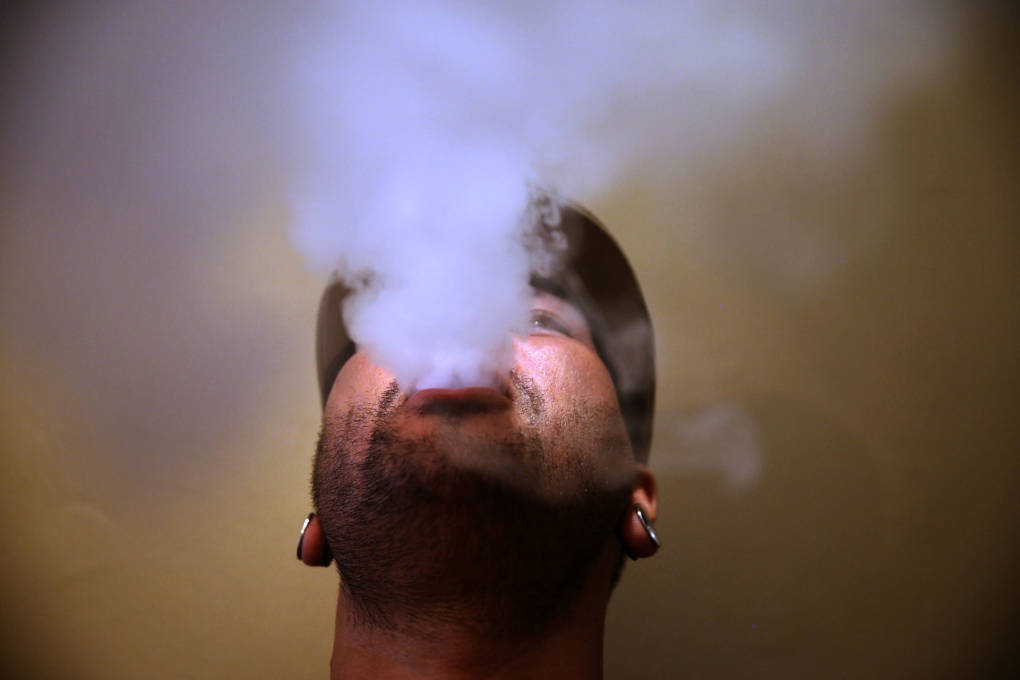
"caption": "A man blows vapor from an e-cigarette at a vape lounge in San Francisco.",
"description": "A man blows vapor from an e-cigarette at a vape lounge in San Francisco.",
"title": "Vaping-E-Cigarette-Vape Lounge",
"credit": "Justin Sullivan/Getty Images",
"status": "inherit",
"isLoading": false,
"fetchFailed": false
},
"news_11785173": {
"type": "attachments",
"id": "news_11785173",
"meta": {
"index": "attachments_1716263798",
"site": "news",
"id": "11785173",
"found": true
},
"parent": 11784760,
"imgSizes": {
"apple_news_ca_landscape_5_5": {
"file": "https://ww2.kqed.org/app/uploads/sites/10/2019/11/Image-from-iOS-1-1-1044x783.jpg",
"width": 1044,
"mimeType": "image/jpeg",
"height": 783
},
"apple_news_ca_square_4_0": {
"file": "https://ww2.kqed.org/app/uploads/sites/10/2019/11/Image-from-iOS-1-1-470x470.jpg",
"width": 470,
"mimeType": "image/jpeg",
"height": 470
},
"twentyfourteen-full-width": {
"file": "https://ww2.kqed.org/app/uploads/sites/10/2019/11/Image-from-iOS-1-1-1038x576.jpg",
"width": 1038,
"mimeType": "image/jpeg",
"height": 576
},
"thumbnail": {
"file": "https://ww2.kqed.org/app/uploads/sites/10/2019/11/Image-from-iOS-1-1-160x107.jpg",
"width": 160,
"mimeType": "image/jpeg",
"height": 107
},
"post-thumbnail": {
"file": "https://ww2.kqed.org/app/uploads/sites/10/2019/11/Image-from-iOS-1-1-672x372.jpg",
"width": 672,
"mimeType": "image/jpeg",
"height": 372
},
"kqedFullSize": {
"file": "https://ww2.kqed.org/app/uploads/sites/10/2019/11/Image-from-iOS-1-1.jpg",
"width": 1366,
"height": 911
},
"apple_news_ca_landscape_4_7": {
"file": "https://ww2.kqed.org/app/uploads/sites/10/2019/11/Image-from-iOS-1-1-632x474.jpg",
"width": 632,
"mimeType": "image/jpeg",
"height": 474
},
"large": {
"file": "https://ww2.kqed.org/app/uploads/sites/10/2019/11/Image-from-iOS-1-1-1020x680.jpg",
"width": 1020,
"mimeType": "image/jpeg",
"height": 680
},
"complete_open_graph": {
"file": "https://ww2.kqed.org/app/uploads/sites/10/2019/11/Image-from-iOS-1-1-1200x800.jpg",
"width": 1200,
"mimeType": "image/jpeg",
"height": 800
},
"apple_news_ca_landscape_4_0": {
"file": "https://ww2.kqed.org/app/uploads/sites/10/2019/11/Image-from-iOS-1-1-536x402.jpg",
"width": 536,
"mimeType": "image/jpeg",
"height": 402
},
"apple_news_ca_portrait_12_9": {
"file": "https://ww2.kqed.org/app/uploads/sites/10/2019/11/Image-from-iOS-1-1-1122x911.jpg",
"width": 1122,
"mimeType": "image/jpeg",
"height": 911
},
"medium": {
"file": "https://ww2.kqed.org/app/uploads/sites/10/2019/11/Image-from-iOS-1-1-800x534.jpg",
"width": 800,
"mimeType": "image/jpeg",
"height": 534
},
"apple_news_ca_portrait_4_0": {
"file": "https://ww2.kqed.org/app/uploads/sites/10/2019/11/Image-from-iOS-1-1-354x472.jpg",
"width": 354,
"mimeType": "image/jpeg",
"height": 472
},
"apple_news_ca_portrait_9_7": {
"file": "https://ww2.kqed.org/app/uploads/sites/10/2019/11/Image-from-iOS-1-1-840x911.jpg",
"width": 840,
"mimeType": "image/jpeg",
"height": 911
},
"apple_news_ca_square_9_7": {
"file": "https://ww2.kqed.org/app/uploads/sites/10/2019/11/Image-from-iOS-1-1-1104x911.jpg",
"width": 1104,
"mimeType": "image/jpeg",
"height": 911
},
"apple_news_ca_portrait_4_7": {
"file": "https://ww2.kqed.org/app/uploads/sites/10/2019/11/Image-from-iOS-1-1-414x552.jpg",
"width": 414,
"mimeType": "image/jpeg",
"height": 552
},
"apple_news_ca_portrait_5_5": {
"file": "https://ww2.kqed.org/app/uploads/sites/10/2019/11/Image-from-iOS-1-1-687x911.jpg",
"width": 687,
"mimeType": "image/jpeg",
"height": 911
},
"apple_news_ca_square_4_7": {
"file": "https://ww2.kqed.org/app/uploads/sites/10/2019/11/Image-from-iOS-1-1-550x550.jpg",
"width": 550,
"mimeType": "image/jpeg",
"height": 550
},
"apple_news_ca_square_5_5": {
"file": "https://ww2.kqed.org/app/uploads/sites/10/2019/11/Image-from-iOS-1-1-912x911.jpg",
"width": 912,
"mimeType": "image/jpeg",
"height": 911
}
},
"publishDate": 1573020386,
"modified": 1573020447,
"caption": "Mayor London Breed celebrates her re-election with Supervisor Norman Yee. ",
"description": null,
"title": "Image-from-iOS-1-1",
"credit": "Stephanie Lister/KQED News",
"status": "inherit",
"isLoading": false,
"fetchFailed": false
},
"news_11683169": {
"type": "attachments",
"id": "news_11683169",
"meta": {
"index": "attachments_1716263798",
"site": "news",
"id": "11683169",
"found": true
},
"parent": 11682907,
"imgSizes": {
"small": {
"file": "https://ww2.kqed.org/app/uploads/sites/10/2018/07/ShipyardConstruct-520x329.jpg",
"width": 520,
"mimeType": "image/jpeg",
"height": 329
},
"twentyfourteen-full-width": {
"file": "https://ww2.kqed.org/app/uploads/sites/10/2018/07/ShipyardConstruct-1038x576.jpg",
"width": 1038,
"mimeType": "image/jpeg",
"height": 576
},
"thumbnail": {
"file": "https://ww2.kqed.org/app/uploads/sites/10/2018/07/ShipyardConstruct-160x101.jpg",
"width": 160,
"mimeType": "image/jpeg",
"height": 101
},
"fd-sm": {
"file": "https://ww2.kqed.org/app/uploads/sites/10/2018/07/ShipyardConstruct-960x607.jpg",
"width": 960,
"mimeType": "image/jpeg",
"height": 607
},
"post-thumbnail": {
"file": "https://ww2.kqed.org/app/uploads/sites/10/2018/07/ShipyardConstruct-672x372.jpg",
"width": 672,
"mimeType": "image/jpeg",
"height": 372
},
"xsmall": {
"file": "https://ww2.kqed.org/app/uploads/sites/10/2018/07/ShipyardConstruct-375x237.jpg",
"width": 375,
"mimeType": "image/jpeg",
"height": 237
},
"kqedFullSize": {
"file": "https://ww2.kqed.org/app/uploads/sites/10/2018/07/ShipyardConstruct.jpg",
"width": 1920,
"height": 1214
},
"large": {
"file": "https://ww2.kqed.org/app/uploads/sites/10/2018/07/ShipyardConstruct-1020x645.jpg",
"width": 1020,
"mimeType": "image/jpeg",
"height": 645
},
"xlarge": {
"file": "https://ww2.kqed.org/app/uploads/sites/10/2018/07/ShipyardConstruct-1180x746.jpg",
"width": 1180,
"mimeType": "image/jpeg",
"height": 746
},
"complete_open_graph": {
"file": "https://ww2.kqed.org/app/uploads/sites/10/2018/07/ShipyardConstruct-1200x759.jpg",
"width": 1200,
"mimeType": "image/jpeg",
"height": 759
},
"guest-author-50": {
"file": "https://ww2.kqed.org/app/uploads/sites/10/2018/07/ShipyardConstruct-50x50.jpg",
"width": 50,
"mimeType": "image/jpeg",
"height": 50
},
"guest-author-96": {
"file": "https://ww2.kqed.org/app/uploads/sites/10/2018/07/ShipyardConstruct-96x96.jpg",
"width": 96,
"mimeType": "image/jpeg",
"height": 96
},
"medium": {
"file": "https://ww2.kqed.org/app/uploads/sites/10/2018/07/ShipyardConstruct-800x506.jpg",
"width": 800,
"mimeType": "image/jpeg",
"height": 506
},
"guest-author-64": {
"file": "https://ww2.kqed.org/app/uploads/sites/10/2018/07/ShipyardConstruct-64x64.jpg",
"width": 64,
"mimeType": "image/jpeg",
"height": 64
},
"guest-author-32": {
"file": "https://ww2.kqed.org/app/uploads/sites/10/2018/07/ShipyardConstruct-32x32.jpg",
"width": 32,
"mimeType": "image/jpeg",
"height": 32
},
"fd-lrg": {
"file": "https://ww2.kqed.org/app/uploads/sites/10/2018/07/ShipyardConstruct-1920x1214.jpg",
"width": 1920,
"mimeType": "image/jpeg",
"height": 1214
},
"fd-med": {
"file": "https://ww2.kqed.org/app/uploads/sites/10/2018/07/ShipyardConstruct-1180x746.jpg",
"width": 1180,
"mimeType": "image/jpeg",
"height": 746
},
"full-width": {
"file": "https://ww2.kqed.org/app/uploads/sites/10/2018/07/ShipyardConstruct-1920x1214.jpg",
"width": 1920,
"mimeType": "image/jpeg",
"height": 1214
},
"detail": {
"file": "https://ww2.kqed.org/app/uploads/sites/10/2018/07/ShipyardConstruct-150x150.jpg",
"width": 150,
"mimeType": "image/jpeg",
"height": 150
},
"guest-author-128": {
"file": "https://ww2.kqed.org/app/uploads/sites/10/2018/07/ShipyardConstruct-128x128.jpg",
"width": 128,
"mimeType": "image/jpeg",
"height": 128
},
"xxsmall": {
"file": "https://ww2.kqed.org/app/uploads/sites/10/2018/07/ShipyardConstruct-240x152.jpg",
"width": 240,
"mimeType": "image/jpeg",
"height": 152
}
},
"publishDate": 1532720795,
"modified": 1532720865,
"caption": "Construction workers outside new apartment buildings in the San Francisco Shipyard development at Hunters Point, in July, 2016.",
"description": "Construction workers outside new apartment buildings in the San Francisco Shipyard development at Hunters Point, in July, 2016.",
"title": "ShipyardConstruct",
"credit": "Brittany Hosea-Small/KQED",
"status": "inherit",
"isLoading": false,
"fetchFailed": false
},
"news_11782182": {
"type": "attachments",
"id": "news_11782182",
"meta": {
"index": "attachments_1716263798",
"site": "news",
"id": "11782182",
"found": true
},
"parent": 11782173,
"imgSizes": {
"apple_news_ca_landscape_5_5": {
"file": "https://ww2.kqed.org/app/uploads/sites/10/2019/10/freespeech_102319_final-1044x783.jpg",
"width": 1044,
"mimeType": "image/jpeg",
"height": 783
},
"apple_news_ca_square_4_0": {
"file": "https://ww2.kqed.org/app/uploads/sites/10/2019/10/freespeech_102319_final-470x470.jpg",
"width": 470,
"mimeType": "image/jpeg",
"height": 470
},
"twentyfourteen-full-width": {
"file": "https://ww2.kqed.org/app/uploads/sites/10/2019/10/freespeech_102319_final-1038x576.jpg",
"width": 1038,
"mimeType": "image/jpeg",
"height": 576
},
"thumbnail": {
"file": "https://ww2.kqed.org/app/uploads/sites/10/2019/10/freespeech_102319_final-160x118.jpg",
"width": 160,
"mimeType": "image/jpeg",
"height": 118
},
"post-thumbnail": {
"file": "https://ww2.kqed.org/app/uploads/sites/10/2019/10/freespeech_102319_final-672x372.jpg",
"width": 672,
"mimeType": "image/jpeg",
"height": 372
},
"kqedFullSize": {
"file": "https://ww2.kqed.org/app/uploads/sites/10/2019/10/freespeech_102319_final.jpg",
"width": 1920,
"height": 1417
},
"apple_news_ca_landscape_4_7": {
"file": "https://ww2.kqed.org/app/uploads/sites/10/2019/10/freespeech_102319_final-632x474.jpg",
"width": 632,
"mimeType": "image/jpeg",
"height": 474
},
"large": {
"file": "https://ww2.kqed.org/app/uploads/sites/10/2019/10/freespeech_102319_final-1020x753.jpg",
"width": 1020,
"mimeType": "image/jpeg",
"height": 753
},
"complete_open_graph": {
"file": "https://ww2.kqed.org/app/uploads/sites/10/2019/10/freespeech_102319_final-1200x886.jpg",
"width": 1200,
"mimeType": "image/jpeg",
"height": 886
},
"apple_news_ca_landscape_4_0": {
"file": "https://ww2.kqed.org/app/uploads/sites/10/2019/10/freespeech_102319_final-536x402.jpg",
"width": 536,
"mimeType": "image/jpeg",
"height": 402
},
"apple_news_ca_portrait_12_9": {
"file": "https://ww2.kqed.org/app/uploads/sites/10/2019/10/freespeech_102319_final-1122x1417.jpg",
"width": 1122,
"mimeType": "image/jpeg",
"height": 1417
},
"medium": {
"file": "https://ww2.kqed.org/app/uploads/sites/10/2019/10/freespeech_102319_final-800x590.jpg",
"width": 800,
"mimeType": "image/jpeg",
"height": 590
},
"apple_news_ca_portrait_4_0": {
"file": "https://ww2.kqed.org/app/uploads/sites/10/2019/10/freespeech_102319_final-354x472.jpg",
"width": 354,
"mimeType": "image/jpeg",
"height": 472
},
"apple_news_ca_portrait_9_7": {
"file": "https://ww2.kqed.org/app/uploads/sites/10/2019/10/freespeech_102319_final-840x1120.jpg",
"width": 840,
"mimeType": "image/jpeg",
"height": 1120
},
"apple_news_ca_landscape_12_9": {
"file": "https://ww2.kqed.org/app/uploads/sites/10/2019/10/freespeech_102319_final-1832x1374.jpg",
"width": 1832,
"mimeType": "image/jpeg",
"height": 1374
},
"apple_news_ca_square_9_7": {
"file": "https://ww2.kqed.org/app/uploads/sites/10/2019/10/freespeech_102319_final-1104x1104.jpg",
"width": 1104,
"mimeType": "image/jpeg",
"height": 1104
},
"apple_news_ca_portrait_4_7": {
"file": "https://ww2.kqed.org/app/uploads/sites/10/2019/10/freespeech_102319_final-414x552.jpg",
"width": 414,
"mimeType": "image/jpeg",
"height": 552
},
"apple_news_ca_square_12_9": {
"file": "https://ww2.kqed.org/app/uploads/sites/10/2019/10/freespeech_102319_final-1472x1417.jpg",
"width": 1472,
"mimeType": "image/jpeg",
"height": 1417
},
"apple_news_ca_portrait_5_5": {
"file": "https://ww2.kqed.org/app/uploads/sites/10/2019/10/freespeech_102319_final-687x916.jpg",
"width": 687,
"mimeType": "image/jpeg",
"height": 916
},
"full-width": {
"file": "https://ww2.kqed.org/app/uploads/sites/10/2019/10/freespeech_102319_final-1920x1417.jpg",
"width": 1920,
"mimeType": "image/jpeg",
"height": 1417
},
"apple_news_ca_square_4_7": {
"file": "https://ww2.kqed.org/app/uploads/sites/10/2019/10/freespeech_102319_final-550x550.jpg",
"width": 550,
"mimeType": "image/jpeg",
"height": 550
},
"apple_news_ca_landscape_9_7": {
"file": "https://ww2.kqed.org/app/uploads/sites/10/2019/10/freespeech_102319_final-1376x1032.jpg",
"width": 1376,
"mimeType": "image/jpeg",
"height": 1032
},
"apple_news_ca_square_5_5": {
"file": "https://ww2.kqed.org/app/uploads/sites/10/2019/10/freespeech_102319_final-912x912.jpg",
"width": 912,
"mimeType": "image/jpeg",
"height": 912
}
},
"publishDate": 1571872428,
"modified": 1571872452,
"caption": null,
"description": null,
"title": "freespeech_102319_final",
"credit": null,
"status": "inherit",
"isLoading": false,
"fetchFailed": false
},
"news_11782020": {
"type": "attachments",
"id": "news_11782020",
"meta": {
"index": "attachments_1716263798",
"site": "news",
"id": "11782020",
"found": true
},
"parent": 11782019,
"imgSizes": {
"apple_news_ca_landscape_5_5": {
"file": "https://ww2.kqed.org/app/uploads/sites/10/2019/10/gettyimages-1177729963_wide-24bb05f751e2e5f9cdf86da436bb6bf1eb2ab45a-1044x783.jpg",
"width": 1044,
"mimeType": "image/jpeg",
"height": 783
},
"apple_news_ca_square_4_0": {
"file": "https://ww2.kqed.org/app/uploads/sites/10/2019/10/gettyimages-1177729963_wide-24bb05f751e2e5f9cdf86da436bb6bf1eb2ab45a-470x470.jpg",
"width": 470,
"mimeType": "image/jpeg",
"height": 470
},
"twentyfourteen-full-width": {
"file": "https://ww2.kqed.org/app/uploads/sites/10/2019/10/gettyimages-1177729963_wide-24bb05f751e2e5f9cdf86da436bb6bf1eb2ab45a-1038x576.jpg",
"width": 1038,
"mimeType": "image/jpeg",
"height": 576
},
"thumbnail": {
"file": "https://ww2.kqed.org/app/uploads/sites/10/2019/10/gettyimages-1177729963_wide-24bb05f751e2e5f9cdf86da436bb6bf1eb2ab45a-160x90.jpg",
"width": 160,
"mimeType": "image/jpeg",
"height": 90
},
"post-thumbnail": {
"file": "https://ww2.kqed.org/app/uploads/sites/10/2019/10/gettyimages-1177729963_wide-24bb05f751e2e5f9cdf86da436bb6bf1eb2ab45a-672x372.jpg",
"width": 672,
"mimeType": "image/jpeg",
"height": 372
},
"kqedFullSize": {
"file": "https://ww2.kqed.org/app/uploads/sites/10/2019/10/gettyimages-1177729963_wide-24bb05f751e2e5f9cdf86da436bb6bf1eb2ab45a-e1571860406407.jpg",
"width": 1920,
"height": 1080
},
"apple_news_ca_landscape_4_7": {
"file": "https://ww2.kqed.org/app/uploads/sites/10/2019/10/gettyimages-1177729963_wide-24bb05f751e2e5f9cdf86da436bb6bf1eb2ab45a-632x474.jpg",
"width": 632,
"mimeType": "image/jpeg",
"height": 474
},
"large": {
"file": "https://ww2.kqed.org/app/uploads/sites/10/2019/10/gettyimages-1177729963_wide-24bb05f751e2e5f9cdf86da436bb6bf1eb2ab45a-1020x574.jpg",
"width": 1020,
"mimeType": "image/jpeg",
"height": 574
},
"complete_open_graph": {
"file": "https://ww2.kqed.org/app/uploads/sites/10/2019/10/gettyimages-1177729963_wide-24bb05f751e2e5f9cdf86da436bb6bf1eb2ab45a-1200x675.jpg",
"width": 1200,
"mimeType": "image/jpeg",
"height": 675
},
"apple_news_ca_landscape_4_0": {
"file": "https://ww2.kqed.org/app/uploads/sites/10/2019/10/gettyimages-1177729963_wide-24bb05f751e2e5f9cdf86da436bb6bf1eb2ab45a-536x402.jpg",
"width": 536,
"mimeType": "image/jpeg",
"height": 402
},
"apple_news_ca_portrait_12_9": {
"file": "https://ww2.kqed.org/app/uploads/sites/10/2019/10/gettyimages-1177729963_wide-24bb05f751e2e5f9cdf86da436bb6bf1eb2ab45a-1122x1496.jpg",
"width": 1122,
"mimeType": "image/jpeg",
"height": 1496
},
"medium": {
"file": "https://ww2.kqed.org/app/uploads/sites/10/2019/10/gettyimages-1177729963_wide-24bb05f751e2e5f9cdf86da436bb6bf1eb2ab45a-800x450.jpg",
"width": 800,
"mimeType": "image/jpeg",
"height": 450
},
"apple_news_ca_portrait_4_0": {
"file": "https://ww2.kqed.org/app/uploads/sites/10/2019/10/gettyimages-1177729963_wide-24bb05f751e2e5f9cdf86da436bb6bf1eb2ab45a-354x472.jpg",
"width": 354,
"mimeType": "image/jpeg",
"height": 472
},
"apple_news_ca_portrait_9_7": {
"file": "https://ww2.kqed.org/app/uploads/sites/10/2019/10/gettyimages-1177729963_wide-24bb05f751e2e5f9cdf86da436bb6bf1eb2ab45a-840x1120.jpg",
"width": 840,
"mimeType": "image/jpeg",
"height": 1120
},
"apple_news_ca_landscape_12_9": {
"file": "https://ww2.kqed.org/app/uploads/sites/10/2019/10/gettyimages-1177729963_wide-24bb05f751e2e5f9cdf86da436bb6bf1eb2ab45a-1832x1374.jpg",
"width": 1832,
"mimeType": "image/jpeg",
"height": 1374
},
"apple_news_ca_square_9_7": {
"file": "https://ww2.kqed.org/app/uploads/sites/10/2019/10/gettyimages-1177729963_wide-24bb05f751e2e5f9cdf86da436bb6bf1eb2ab45a-1104x1104.jpg",
"width": 1104,
"mimeType": "image/jpeg",
"height": 1104
},
"apple_news_ca_portrait_4_7": {
"file": "https://ww2.kqed.org/app/uploads/sites/10/2019/10/gettyimages-1177729963_wide-24bb05f751e2e5f9cdf86da436bb6bf1eb2ab45a-414x552.jpg",
"width": 414,
"mimeType": "image/jpeg",
"height": 552
},
"apple_news_ca_square_12_9": {
"file": "https://ww2.kqed.org/app/uploads/sites/10/2019/10/gettyimages-1177729963_wide-24bb05f751e2e5f9cdf86da436bb6bf1eb2ab45a-1472x1472.jpg",
"width": 1472,
"mimeType": "image/jpeg",
"height": 1472
},
"apple_news_ca_portrait_5_5": {
"file": "https://ww2.kqed.org/app/uploads/sites/10/2019/10/gettyimages-1177729963_wide-24bb05f751e2e5f9cdf86da436bb6bf1eb2ab45a-687x916.jpg",
"width": 687,
"mimeType": "image/jpeg",
"height": 916
},
"full-width": {
"file": "https://ww2.kqed.org/app/uploads/sites/10/2019/10/gettyimages-1177729963_wide-24bb05f751e2e5f9cdf86da436bb6bf1eb2ab45a-1920x1080.jpg",
"width": 1920,
"mimeType": "image/jpeg",
"height": 1080
},
"apple_news_ca_square_4_7": {
"file": "https://ww2.kqed.org/app/uploads/sites/10/2019/10/gettyimages-1177729963_wide-24bb05f751e2e5f9cdf86da436bb6bf1eb2ab45a-550x550.jpg",
"width": 550,
"mimeType": "image/jpeg",
"height": 550
},
"apple_news_ca_landscape_9_7": {
"file": "https://ww2.kqed.org/app/uploads/sites/10/2019/10/gettyimages-1177729963_wide-24bb05f751e2e5f9cdf86da436bb6bf1eb2ab45a-1376x1032.jpg",
"width": 1376,
"mimeType": "image/jpeg",
"height": 1032
},
"apple_news_ca_square_5_5": {
"file": "https://ww2.kqed.org/app/uploads/sites/10/2019/10/gettyimages-1177729963_wide-24bb05f751e2e5f9cdf86da436bb6bf1eb2ab45a-912x912.jpg",
"width": 912,
"mimeType": "image/jpeg",
"height": 912
}
},
"publishDate": 1571855669,
"modified": 1571863186,
"caption": "Facebook CEO Mark Zuckerberg appears before the House Financial Services Committee on Oct. 23, 2019. He faces questions about the company's influence.",
"description": "Facebook CEO Mark Zuckerberg appears before the House Financial Services Committee on Oct. 23, 2019. He faces questions about the company's influence.",
"title": "Facebook CEO Mark Zuckerberg appears before the House Financial Services Committee on Wednesday. He faces questions about the company's influence.",
"credit": "Mandel Ngan/Getty Images",
"status": "inherit",
"isLoading": false,
"fetchFailed": false
},
"news_11781652": {
"type": "attachments",
"id": "news_11781652",
"meta": {
"index": "attachments_1716263798",
"site": "news",
"id": "11781652",
"found": true
},
"parent": 11781440,
"imgSizes": {
"apple_news_ca_square_4_0": {
"file": "https://ww2.kqed.org/app/uploads/sites/10/2019/10/GettyImages-1057716992-470x470.jpg",
"width": 470,
"mimeType": "image/jpeg",
"height": 470
},
"twentyfourteen-full-width": {
"file": "https://ww2.kqed.org/app/uploads/sites/10/2019/10/GettyImages-1057716992-1024x576.jpg",
"width": 1024,
"mimeType": "image/jpeg",
"height": 576
},
"thumbnail": {
"file": "https://ww2.kqed.org/app/uploads/sites/10/2019/10/GettyImages-1057716992-160x107.jpg",
"width": 160,
"mimeType": "image/jpeg",
"height": 107
},
"post-thumbnail": {
"file": "https://ww2.kqed.org/app/uploads/sites/10/2019/10/GettyImages-1057716992-672x372.jpg",
"width": 672,
"mimeType": "image/jpeg",
"height": 372
},
"kqedFullSize": {
"file": "https://ww2.kqed.org/app/uploads/sites/10/2019/10/GettyImages-1057716992.jpg",
"width": 1024,
"height": 683
},
"apple_news_ca_landscape_4_7": {
"file": "https://ww2.kqed.org/app/uploads/sites/10/2019/10/GettyImages-1057716992-632x474.jpg",
"width": 632,
"mimeType": "image/jpeg",
"height": 474
},
"large": {
"file": "https://ww2.kqed.org/app/uploads/sites/10/2019/10/GettyImages-1057716992-1020x680.jpg",
"width": 1020,
"mimeType": "image/jpeg",
"height": 680
},
"apple_news_ca_landscape_4_0": {
"file": "https://ww2.kqed.org/app/uploads/sites/10/2019/10/GettyImages-1057716992-536x402.jpg",
"width": 536,
"mimeType": "image/jpeg",
"height": 402
},
"medium": {
"file": "https://ww2.kqed.org/app/uploads/sites/10/2019/10/GettyImages-1057716992-800x534.jpg",
"width": 800,
"mimeType": "image/jpeg",
"height": 534
},
"apple_news_ca_portrait_4_0": {
"file": "https://ww2.kqed.org/app/uploads/sites/10/2019/10/GettyImages-1057716992-354x472.jpg",
"width": 354,
"mimeType": "image/jpeg",
"height": 472
},
"apple_news_ca_portrait_9_7": {
"file": "https://ww2.kqed.org/app/uploads/sites/10/2019/10/GettyImages-1057716992-840x683.jpg",
"width": 840,
"mimeType": "image/jpeg",
"height": 683
},
"apple_news_ca_portrait_4_7": {
"file": "https://ww2.kqed.org/app/uploads/sites/10/2019/10/GettyImages-1057716992-414x552.jpg",
"width": 414,
"mimeType": "image/jpeg",
"height": 552
},
"apple_news_ca_portrait_5_5": {
"file": "https://ww2.kqed.org/app/uploads/sites/10/2019/10/GettyImages-1057716992-687x683.jpg",
"width": 687,
"mimeType": "image/jpeg",
"height": 683
},
"apple_news_ca_square_4_7": {
"file": "https://ww2.kqed.org/app/uploads/sites/10/2019/10/GettyImages-1057716992-550x550.jpg",
"width": 550,
"mimeType": "image/jpeg",
"height": 550
},
"apple_news_ca_square_5_5": {
"file": "https://ww2.kqed.org/app/uploads/sites/10/2019/10/GettyImages-1057716992-912x683.jpg",
"width": 912,
"mimeType": "image/jpeg",
"height": 683
}
},
"publishDate": 1571715561,
"modified": 1571780846,
"caption": "Democratic Rep. Josh Harder, then a candidate for California's 10th Congressional District, speaks with supporters at a campaign event on November 5, 2018, in Manteca. Harder defeated incumbent Republican Jeff Denham, and will face a new Republican challenger next year.",
"description": null,
"title": "CA Congressional Candidate Josh Harder Campaigns One Day Before Midterm Elections",
"credit": "Alex Edelman/Getty Images",
"status": "inherit",
"isLoading": false,
"fetchFailed": false
},
"news_11780946": {
"type": "attachments",
"id": "news_11780946",
"meta": {
"index": "attachments_1716263798",
"site": "news",
"id": "11780946",
"found": true
},
"parent": 11780944,
"imgSizes": {
"apple_news_ca_landscape_5_5": {
"file": "https://ww2.kqed.org/app/uploads/sites/10/2019/10/katie-porter-1044x783.jpg",
"width": 1044,
"mimeType": "image/jpeg",
"height": 783
},
"apple_news_ca_square_4_0": {
"file": "https://ww2.kqed.org/app/uploads/sites/10/2019/10/katie-porter-470x470.jpg",
"width": 470,
"mimeType": "image/jpeg",
"height": 470
},
"twentyfourteen-full-width": {
"file": "https://ww2.kqed.org/app/uploads/sites/10/2019/10/katie-porter-1038x576.jpg",
"width": 1038,
"mimeType": "image/jpeg",
"height": 576
},
"thumbnail": {
"file": "https://ww2.kqed.org/app/uploads/sites/10/2019/10/katie-porter-160x120.jpg",
"width": 160,
"mimeType": "image/jpeg",
"height": 120
},
"post-thumbnail": {
"file": "https://ww2.kqed.org/app/uploads/sites/10/2019/10/katie-porter-672x372.jpg",
"width": 672,
"mimeType": "image/jpeg",
"height": 372
},
"kqedFullSize": {
"file": "https://ww2.kqed.org/app/uploads/sites/10/2019/10/katie-porter.jpg",
"width": 3662,
"height": 2744
},
"apple_news_ca_landscape_4_7": {
"file": "https://ww2.kqed.org/app/uploads/sites/10/2019/10/katie-porter-632x474.jpg",
"width": 632,
"mimeType": "image/jpeg",
"height": 474
},
"large": {
"file": "https://ww2.kqed.org/app/uploads/sites/10/2019/10/katie-porter-1020x764.jpg",
"width": 1020,
"mimeType": "image/jpeg",
"height": 764
},
"complete_open_graph": {
"file": "https://ww2.kqed.org/app/uploads/sites/10/2019/10/katie-porter-1200x899.jpg",
"width": 1200,
"mimeType": "image/jpeg",
"height": 899
},
"apple_news_ca_landscape_4_0": {
"file": "https://ww2.kqed.org/app/uploads/sites/10/2019/10/katie-porter-536x402.jpg",
"width": 536,
"mimeType": "image/jpeg",
"height": 402
},
"apple_news_ca_portrait_12_9": {
"file": "https://ww2.kqed.org/app/uploads/sites/10/2019/10/katie-porter-1122x1496.jpg",
"width": 1122,
"mimeType": "image/jpeg",
"height": 1496
},
"medium": {
"file": "https://ww2.kqed.org/app/uploads/sites/10/2019/10/katie-porter-800x599.jpg",
"width": 800,
"mimeType": "image/jpeg",
"height": 599
},
"apple_news_ca_portrait_4_0": {
"file": "https://ww2.kqed.org/app/uploads/sites/10/2019/10/katie-porter-354x472.jpg",
"width": 354,
"mimeType": "image/jpeg",
"height": 472
},
"apple_news_ca_portrait_9_7": {
"file": "https://ww2.kqed.org/app/uploads/sites/10/2019/10/katie-porter-840x1120.jpg",
"width": 840,
"mimeType": "image/jpeg",
"height": 1120
},
"apple_news_ca_landscape_12_9": {
"file": "https://ww2.kqed.org/app/uploads/sites/10/2019/10/katie-porter-1832x1374.jpg",
"width": 1832,
"mimeType": "image/jpeg",
"height": 1374
},
"apple_news_ca_square_9_7": {
"file": "https://ww2.kqed.org/app/uploads/sites/10/2019/10/katie-porter-1104x1104.jpg",
"width": 1104,
"mimeType": "image/jpeg",
"height": 1104
},
"apple_news_ca_portrait_4_7": {
"file": "https://ww2.kqed.org/app/uploads/sites/10/2019/10/katie-porter-414x552.jpg",
"width": 414,
"mimeType": "image/jpeg",
"height": 552
},
"apple_news_ca_square_12_9": {
"file": "https://ww2.kqed.org/app/uploads/sites/10/2019/10/katie-porter-1472x1472.jpg",
"width": 1472,
"mimeType": "image/jpeg",
"height": 1472
},
"apple_news_ca_portrait_5_5": {
"file": "https://ww2.kqed.org/app/uploads/sites/10/2019/10/katie-porter-687x916.jpg",
"width": 687,
"mimeType": "image/jpeg",
"height": 916
},
"full-width": {
"file": "https://ww2.kqed.org/app/uploads/sites/10/2019/10/katie-porter-1920x1439.jpg",
"width": 1920,
"mimeType": "image/jpeg",
"height": 1439
},
"apple_news_ca_square_4_7": {
"file": "https://ww2.kqed.org/app/uploads/sites/10/2019/10/katie-porter-550x550.jpg",
"width": 550,
"mimeType": "image/jpeg",
"height": 550
},
"apple_news_ca_landscape_9_7": {
"file": "https://ww2.kqed.org/app/uploads/sites/10/2019/10/katie-porter-1376x1032.jpg",
"width": 1376,
"mimeType": "image/jpeg",
"height": 1032
},
"apple_news_ca_square_5_5": {
"file": "https://ww2.kqed.org/app/uploads/sites/10/2019/10/katie-porter-912x912.jpg",
"width": 912,
"mimeType": "image/jpeg",
"height": 912
}
},
"publishDate": 1571370832,
"modified": 1571370964,
"caption": "Congresswoman Katie Porter (D-Irvine) with Political Breakdown hosts Marisa Lagos and Scott Shafer. ",
"description": null,
"title": "katie porter",
"credit": null,
"status": "inherit",
"isLoading": false,
"fetchFailed": false
},
"news_11771683": {
"type": "attachments",
"id": "news_11771683",
"meta": {
"index": "attachments_1716263798",
"site": "news",
"id": "11771683",
"found": true
},
"parent": 11771682,
"imgSizes": {
"apple_news_ca_landscape_5_5": {
"file": "https://ww2.kqed.org/app/uploads/sites/10/2019/08/npr-politics-1-01-marcus-marritt-elections2020_custom-8766d38b7b3dc50708ffab355c7474bdf419c826-1044x783.png",
"width": 1044,
"mimeType": "image/png",
"height": 783
},
"apple_news_ca_square_4_0": {
"file": "https://ww2.kqed.org/app/uploads/sites/10/2019/08/npr-politics-1-01-marcus-marritt-elections2020_custom-8766d38b7b3dc50708ffab355c7474bdf419c826-470x470.png",
"width": 470,
"mimeType": "image/png",
"height": 470
},
"twentyfourteen-full-width": {
"file": "https://ww2.kqed.org/app/uploads/sites/10/2019/08/npr-politics-1-01-marcus-marritt-elections2020_custom-8766d38b7b3dc50708ffab355c7474bdf419c826-1038x576.png",
"width": 1038,
"mimeType": "image/png",
"height": 576
},
"thumbnail": {
"file": "https://ww2.kqed.org/app/uploads/sites/10/2019/08/npr-politics-1-01-marcus-marritt-elections2020_custom-8766d38b7b3dc50708ffab355c7474bdf419c826-160x90.png",
"width": 160,
"mimeType": "image/png",
"height": 90
},
"post-thumbnail": {
"file": "https://ww2.kqed.org/app/uploads/sites/10/2019/08/npr-politics-1-01-marcus-marritt-elections2020_custom-8766d38b7b3dc50708ffab355c7474bdf419c826-672x372.png",
"width": 672,
"mimeType": "image/png",
"height": 372
},
"kqedFullSize": {
"file": "https://ww2.kqed.org/app/uploads/sites/10/2019/08/npr-politics-1-01-marcus-marritt-elections2020_custom-8766d38b7b3dc50708ffab355c7474bdf419c826-e1567356535908.png",
"width": 1920,
"height": 1080
},
"apple_news_ca_landscape_4_7": {
"file": "https://ww2.kqed.org/app/uploads/sites/10/2019/08/npr-politics-1-01-marcus-marritt-elections2020_custom-8766d38b7b3dc50708ffab355c7474bdf419c826-632x474.png",
"width": 632,
"mimeType": "image/png",
"height": 474
},
"large": {
"file": "https://ww2.kqed.org/app/uploads/sites/10/2019/08/npr-politics-1-01-marcus-marritt-elections2020_custom-8766d38b7b3dc50708ffab355c7474bdf419c826-1020x574.png",
"width": 1020,
"mimeType": "image/png",
"height": 574
},
"complete_open_graph": {
"file": "https://ww2.kqed.org/app/uploads/sites/10/2019/08/npr-politics-1-01-marcus-marritt-elections2020_custom-8766d38b7b3dc50708ffab355c7474bdf419c826-1200x675.png",
"width": 1200,
"mimeType": "image/png",
"height": 675
},
"apple_news_ca_landscape_4_0": {
"file": "https://ww2.kqed.org/app/uploads/sites/10/2019/08/npr-politics-1-01-marcus-marritt-elections2020_custom-8766d38b7b3dc50708ffab355c7474bdf419c826-536x402.png",
"width": 536,
"mimeType": "image/png",
"height": 402
},
"apple_news_ca_portrait_12_9": {
"file": "https://ww2.kqed.org/app/uploads/sites/10/2019/08/npr-politics-1-01-marcus-marritt-elections2020_custom-8766d38b7b3dc50708ffab355c7474bdf419c826-1122x1496.png",
"width": 1122,
"mimeType": "image/png",
"height": 1496
},
"medium": {
"file": "https://ww2.kqed.org/app/uploads/sites/10/2019/08/npr-politics-1-01-marcus-marritt-elections2020_custom-8766d38b7b3dc50708ffab355c7474bdf419c826-800x450.png",
"width": 800,
"mimeType": "image/png",
"height": 450
},
"apple_news_ca_portrait_4_0": {
"file": "https://ww2.kqed.org/app/uploads/sites/10/2019/08/npr-politics-1-01-marcus-marritt-elections2020_custom-8766d38b7b3dc50708ffab355c7474bdf419c826-354x472.png",
"width": 354,
"mimeType": "image/png",
"height": 472
},
"apple_news_ca_portrait_9_7": {
"file": "https://ww2.kqed.org/app/uploads/sites/10/2019/08/npr-politics-1-01-marcus-marritt-elections2020_custom-8766d38b7b3dc50708ffab355c7474bdf419c826-840x1120.png",
"width": 840,
"mimeType": "image/png",
"height": 1120
},
"apple_news_ca_landscape_12_9": {
"file": "https://ww2.kqed.org/app/uploads/sites/10/2019/08/npr-politics-1-01-marcus-marritt-elections2020_custom-8766d38b7b3dc50708ffab355c7474bdf419c826-1832x1374.png",
"width": 1832,
"mimeType": "image/png",
"height": 1374
},
"apple_news_ca_square_9_7": {
"file": "https://ww2.kqed.org/app/uploads/sites/10/2019/08/npr-politics-1-01-marcus-marritt-elections2020_custom-8766d38b7b3dc50708ffab355c7474bdf419c826-1104x1104.png",
"width": 1104,
"mimeType": "image/png",
"height": 1104
},
"apple_news_ca_portrait_4_7": {
"file": "https://ww2.kqed.org/app/uploads/sites/10/2019/08/npr-politics-1-01-marcus-marritt-elections2020_custom-8766d38b7b3dc50708ffab355c7474bdf419c826-414x552.png",
"width": 414,
"mimeType": "image/png",
"height": 552
},
"apple_news_ca_square_12_9": {
"file": "https://ww2.kqed.org/app/uploads/sites/10/2019/08/npr-politics-1-01-marcus-marritt-elections2020_custom-8766d38b7b3dc50708ffab355c7474bdf419c826-1472x1472.png",
"width": 1472,
"mimeType": "image/png",
"height": 1472
},
"apple_news_ca_portrait_5_5": {
"file": "https://ww2.kqed.org/app/uploads/sites/10/2019/08/npr-politics-1-01-marcus-marritt-elections2020_custom-8766d38b7b3dc50708ffab355c7474bdf419c826-687x916.png",
"width": 687,
"mimeType": "image/png",
"height": 916
},
"full-width": {
"file": "https://ww2.kqed.org/app/uploads/sites/10/2019/08/npr-politics-1-01-marcus-marritt-elections2020_custom-8766d38b7b3dc50708ffab355c7474bdf419c826-1920x1080.png",
"width": 1920,
"mimeType": "image/png",
"height": 1080
},
"apple_news_ca_square_4_7": {
"file": "https://ww2.kqed.org/app/uploads/sites/10/2019/08/npr-politics-1-01-marcus-marritt-elections2020_custom-8766d38b7b3dc50708ffab355c7474bdf419c826-550x550.png",
"width": 550,
"mimeType": "image/png",
"height": 550
},
"apple_news_ca_landscape_9_7": {
"file": "https://ww2.kqed.org/app/uploads/sites/10/2019/08/npr-politics-1-01-marcus-marritt-elections2020_custom-8766d38b7b3dc50708ffab355c7474bdf419c826-1376x1032.png",
"width": 1376,
"mimeType": "image/png",
"height": 1032
},
"apple_news_ca_square_5_5": {
"file": "https://ww2.kqed.org/app/uploads/sites/10/2019/08/npr-politics-1-01-marcus-marritt-elections2020_custom-8766d38b7b3dc50708ffab355c7474bdf419c826-912x912.png",
"width": 912,
"mimeType": "image/png",
"height": 912
}
},
"publishDate": 1567353213,
"modified": 1567356529,
"caption": "Much of the fleet of electronic voting machines in the United States was designed without security in mind, in response to the last big national flap over an election in 2000.",
"description": null,
"title": "Much of the fleet of electronic voting machines in the United States was designed without security in mind, in response to the last big national flap over an election in 2000.",
"credit": "Marcus Marritt/NPR",
"status": "inherit",
"isLoading": false,
"fetchFailed": false
},
"news_11763401": {
"type": "attachments",
"id": "news_11763401",
"meta": {
"index": "attachments_1716263798",
"site": "news",
"id": "11763401",
"found": true
},
"parent": 11763398,
"imgSizes": {
"apple_news_ca_landscape_5_5": {
"file": "https://ww2.kqed.org/app/uploads/sites/10/2019/07/lawsuit_california_independent_voter_political-1044x783.jpg",
"width": 1044,
"mimeType": "image/jpeg",
"height": 783
},
"apple_news_ca_square_4_0": {
"file": "https://ww2.kqed.org/app/uploads/sites/10/2019/07/lawsuit_california_independent_voter_political-470x470.jpg",
"width": 470,
"mimeType": "image/jpeg",
"height": 470
},
"twentyfourteen-full-width": {
"file": "https://ww2.kqed.org/app/uploads/sites/10/2019/07/lawsuit_california_independent_voter_political-1038x576.jpg",
"width": 1038,
"mimeType": "image/jpeg",
"height": 576
},
"thumbnail": {
"file": "https://ww2.kqed.org/app/uploads/sites/10/2019/07/lawsuit_california_independent_voter_political-160x107.jpg",
"width": 160,
"mimeType": "image/jpeg",
"height": 107
},
"post-thumbnail": {
"file": "https://ww2.kqed.org/app/uploads/sites/10/2019/07/lawsuit_california_independent_voter_political-672x372.jpg",
"width": 672,
"mimeType": "image/jpeg",
"height": 372
},
"kqedFullSize": {
"file": "https://ww2.kqed.org/app/uploads/sites/10/2019/07/lawsuit_california_independent_voter_political-e1564077108653.jpg",
"width": 800,
"height": 533
},
"apple_news_ca_landscape_4_7": {
"file": "https://ww2.kqed.org/app/uploads/sites/10/2019/07/lawsuit_california_independent_voter_political-632x474.jpg",
"width": 632,
"mimeType": "image/jpeg",
"height": 474
},
"large": {
"file": "https://ww2.kqed.org/app/uploads/sites/10/2019/07/lawsuit_california_independent_voter_political-1020x680.jpg",
"width": 1020,
"mimeType": "image/jpeg",
"height": 680
},
"complete_open_graph": {
"file": "https://ww2.kqed.org/app/uploads/sites/10/2019/07/lawsuit_california_independent_voter_political-1200x800.jpg",
"width": 1200,
"mimeType": "image/jpeg",
"height": 800
},
"apple_news_ca_landscape_4_0": {
"file": "https://ww2.kqed.org/app/uploads/sites/10/2019/07/lawsuit_california_independent_voter_political-536x402.jpg",
"width": 536,
"mimeType": "image/jpeg",
"height": 402
},
"apple_news_ca_portrait_12_9": {
"file": "https://ww2.kqed.org/app/uploads/sites/10/2019/07/lawsuit_california_independent_voter_political-1122x836.jpg",
"width": 1122,
"mimeType": "image/jpeg",
"height": 836
},
"medium": {
"file": "https://ww2.kqed.org/app/uploads/sites/10/2019/07/lawsuit_california_independent_voter_political-800x533.jpg",
"width": 800,
"mimeType": "image/jpeg",
"height": 533
},
"apple_news_ca_portrait_4_0": {
"file": "https://ww2.kqed.org/app/uploads/sites/10/2019/07/lawsuit_california_independent_voter_political-354x472.jpg",
"width": 354,
"mimeType": "image/jpeg",
"height": 472
},
"apple_news_ca_portrait_9_7": {
"file": "https://ww2.kqed.org/app/uploads/sites/10/2019/07/lawsuit_california_independent_voter_political-840x836.jpg",
"width": 840,
"mimeType": "image/jpeg",
"height": 836
},
"apple_news_ca_square_9_7": {
"file": "https://ww2.kqed.org/app/uploads/sites/10/2019/07/lawsuit_california_independent_voter_political-1104x836.jpg",
"width": 1104,
"mimeType": "image/jpeg",
"height": 836
},
"apple_news_ca_portrait_4_7": {
"file": "https://ww2.kqed.org/app/uploads/sites/10/2019/07/lawsuit_california_independent_voter_political-414x552.jpg",
"width": 414,
"mimeType": "image/jpeg",
"height": 552
},
"apple_news_ca_portrait_5_5": {
"file": "https://ww2.kqed.org/app/uploads/sites/10/2019/07/lawsuit_california_independent_voter_political-687x836.jpg",
"width": 687,
"mimeType": "image/jpeg",
"height": 836
},
"apple_news_ca_square_4_7": {
"file": "https://ww2.kqed.org/app/uploads/sites/10/2019/07/lawsuit_california_independent_voter_political-550x550.jpg",
"width": 550,
"mimeType": "image/jpeg",
"height": 550
},
"apple_news_ca_square_5_5": {
"file": "https://ww2.kqed.org/app/uploads/sites/10/2019/07/lawsuit_california_independent_voter_political-912x836.jpg",
"width": 912,
"mimeType": "image/jpeg",
"height": 836
}
},
"publishDate": 1564077071,
"modified": 1564080162,
"caption": null,
"description": null,
"title": "Close Up Of Blindfolded Lady Of Justice",
"credit": null,
"status": "inherit",
"isLoading": false,
"fetchFailed": false
},
"news_11762495": {
"type": "attachments",
"id": "news_11762495",
"meta": {
"index": "attachments_1716263798",
"site": "news",
"id": "11762495",
"found": true
},
"parent": 11762469,
"imgSizes": {
"apple_news_ca_square_4_0": {
"file": "https://ww2.kqed.org/app/uploads/sites/10/2019/07/Screen-Shot-2019-07-19-at-1.38.28-PM-470x470.png",
"width": 470,
"mimeType": "image/png",
"height": 470
},
"thumbnail": {
"file": "https://ww2.kqed.org/app/uploads/sites/10/2019/07/Screen-Shot-2019-07-19-at-1.38.28-PM-160x82.png",
"width": 160,
"mimeType": "image/png",
"height": 82
},
"post-thumbnail": {
"file": "https://ww2.kqed.org/app/uploads/sites/10/2019/07/Screen-Shot-2019-07-19-at-1.38.28-PM-672x372.png",
"width": 672,
"mimeType": "image/png",
"height": 372
},
"kqedFullSize": {
"file": "https://ww2.kqed.org/app/uploads/sites/10/2019/07/Screen-Shot-2019-07-19-at-1.38.28-PM.png",
"width": 971,
"height": 497
},
"apple_news_ca_landscape_4_7": {
"file": "https://ww2.kqed.org/app/uploads/sites/10/2019/07/Screen-Shot-2019-07-19-at-1.38.28-PM-632x474.png",
"width": 632,
"mimeType": "image/png",
"height": 474
},
"apple_news_ca_landscape_4_0": {
"file": "https://ww2.kqed.org/app/uploads/sites/10/2019/07/Screen-Shot-2019-07-19-at-1.38.28-PM-536x402.png",
"width": 536,
"mimeType": "image/png",
"height": 402
},
"medium": {
"file": "https://ww2.kqed.org/app/uploads/sites/10/2019/07/Screen-Shot-2019-07-19-at-1.38.28-PM-800x409.png",
"width": 800,
"mimeType": "image/png",
"height": 409
},
"apple_news_ca_portrait_4_0": {
"file": "https://ww2.kqed.org/app/uploads/sites/10/2019/07/Screen-Shot-2019-07-19-at-1.38.28-PM-354x472.png",
"width": 354,
"mimeType": "image/png",
"height": 472
},
"apple_news_ca_portrait_9_7": {
"file": "https://ww2.kqed.org/app/uploads/sites/10/2019/07/Screen-Shot-2019-07-19-at-1.38.28-PM-840x497.png",
"width": 840,
"mimeType": "image/png",
"height": 497
},
"apple_news_ca_portrait_4_7": {
"file": "https://ww2.kqed.org/app/uploads/sites/10/2019/07/Screen-Shot-2019-07-19-at-1.38.28-PM-414x497.png",
"width": 414,
"mimeType": "image/png",
"height": 497
},
"apple_news_ca_portrait_5_5": {
"file": "https://ww2.kqed.org/app/uploads/sites/10/2019/07/Screen-Shot-2019-07-19-at-1.38.28-PM-687x497.png",
"width": 687,
"mimeType": "image/png",
"height": 497
},
"apple_news_ca_square_4_7": {
"file": "https://ww2.kqed.org/app/uploads/sites/10/2019/07/Screen-Shot-2019-07-19-at-1.38.28-PM-550x497.png",
"width": 550,
"mimeType": "image/png",
"height": 497
},
"apple_news_ca_square_5_5": {
"file": "https://ww2.kqed.org/app/uploads/sites/10/2019/07/Screen-Shot-2019-07-19-at-1.38.28-PM-912x497.png",
"width": 912,
"mimeType": "image/png",
"height": 497
}
},
"publishDate": 1563568759,
"modified": 1563569108,
"caption": "A fabricated Trump video posted on the Facebook page of \"Paul Lee Ticks,\" among a growing group of social media users who make popular \"dumbfake\" political videos. ",
"description": null,
"title": "Screen Shot 2019-07-19 at 1.38.28 PM",
"credit": "Courtesy of Facebook",
"status": "inherit",
"isLoading": false,
"fetchFailed": false
},
"news_11750937": {
"type": "attachments",
"id": "news_11750937",
"meta": {
"index": "attachments_1716263798",
"site": "news",
"id": "11750937",
"found": true
},
"parent": 11750925,
"imgSizes": {
"apple_news_ca_landscape_5_5": {
"file": "https://ww2.kqed.org/app/uploads/sites/10/2019/05/platform_052919_final-1044x783.jpg",
"width": 1044,
"mimeType": "image/jpeg",
"height": 783
},
"apple_news_ca_square_4_0": {
"file": "https://ww2.kqed.org/app/uploads/sites/10/2019/05/platform_052919_final-470x470.jpg",
"width": 470,
"mimeType": "image/jpeg",
"height": 470
},
"twentyfourteen-full-width": {
"file": "https://ww2.kqed.org/app/uploads/sites/10/2019/05/platform_052919_final-1038x576.jpg",
"width": 1038,
"mimeType": "image/jpeg",
"height": 576
},
"thumbnail": {
"file": "https://ww2.kqed.org/app/uploads/sites/10/2019/05/platform_052919_final-160x120.jpg",
"width": 160,
"mimeType": "image/jpeg",
"height": 120
},
"post-thumbnail": {
"file": "https://ww2.kqed.org/app/uploads/sites/10/2019/05/platform_052919_final-672x372.jpg",
"width": 672,
"mimeType": "image/jpeg",
"height": 372
},
"kqedFullSize": {
"file": "https://ww2.kqed.org/app/uploads/sites/10/2019/05/platform_052919_final.jpg",
"width": 1920,
"height": 1435
},
"apple_news_ca_landscape_4_7": {
"file": "https://ww2.kqed.org/app/uploads/sites/10/2019/05/platform_052919_final-632x474.jpg",
"width": 632,
"mimeType": "image/jpeg",
"height": 474
},
"large": {
"file": "https://ww2.kqed.org/app/uploads/sites/10/2019/05/platform_052919_final-1020x762.jpg",
"width": 1020,
"mimeType": "image/jpeg",
"height": 762
},
"complete_open_graph": {
"file": "https://ww2.kqed.org/app/uploads/sites/10/2019/05/platform_052919_final-1200x897.jpg",
"width": 1200,
"mimeType": "image/jpeg",
"height": 897
},
"apple_news_ca_landscape_4_0": {
"file": "https://ww2.kqed.org/app/uploads/sites/10/2019/05/platform_052919_final-536x402.jpg",
"width": 536,
"mimeType": "image/jpeg",
"height": 402
},
"apple_news_ca_portrait_12_9": {
"file": "https://ww2.kqed.org/app/uploads/sites/10/2019/05/platform_052919_final-1122x1435.jpg",
"width": 1122,
"mimeType": "image/jpeg",
"height": 1435
},
"medium": {
"file": "https://ww2.kqed.org/app/uploads/sites/10/2019/05/platform_052919_final-800x598.jpg",
"width": 800,
"mimeType": "image/jpeg",
"height": 598
},
"apple_news_ca_portrait_4_0": {
"file": "https://ww2.kqed.org/app/uploads/sites/10/2019/05/platform_052919_final-354x472.jpg",
"width": 354,
"mimeType": "image/jpeg",
"height": 472
},
"apple_news_ca_portrait_9_7": {
"file": "https://ww2.kqed.org/app/uploads/sites/10/2019/05/platform_052919_final-840x1120.jpg",
"width": 840,
"mimeType": "image/jpeg",
"height": 1120
},
"apple_news_ca_landscape_12_9": {
"file": "https://ww2.kqed.org/app/uploads/sites/10/2019/05/platform_052919_final-1832x1374.jpg",
"width": 1832,
"mimeType": "image/jpeg",
"height": 1374
},
"apple_news_ca_square_9_7": {
"file": "https://ww2.kqed.org/app/uploads/sites/10/2019/05/platform_052919_final-1104x1104.jpg",
"width": 1104,
"mimeType": "image/jpeg",
"height": 1104
},
"apple_news_ca_portrait_4_7": {
"file": "https://ww2.kqed.org/app/uploads/sites/10/2019/05/platform_052919_final-414x552.jpg",
"width": 414,
"mimeType": "image/jpeg",
"height": 552
},
"apple_news_ca_square_12_9": {
"file": "https://ww2.kqed.org/app/uploads/sites/10/2019/05/platform_052919_final-1472x1435.jpg",
"width": 1472,
"mimeType": "image/jpeg",
"height": 1435
},
"apple_news_ca_portrait_5_5": {
"file": "https://ww2.kqed.org/app/uploads/sites/10/2019/05/platform_052919_final-687x916.jpg",
"width": 687,
"mimeType": "image/jpeg",
"height": 916
},
"full-width": {
"file": "https://ww2.kqed.org/app/uploads/sites/10/2019/05/platform_052919_final-1920x1435.jpg",
"width": 1920,
"mimeType": "image/jpeg",
"height": 1435
},
"apple_news_ca_square_4_7": {
"file": "https://ww2.kqed.org/app/uploads/sites/10/2019/05/platform_052919_final-550x550.jpg",
"width": 550,
"mimeType": "image/jpeg",
"height": 550
},
"apple_news_ca_landscape_9_7": {
"file": "https://ww2.kqed.org/app/uploads/sites/10/2019/05/platform_052919_final-1376x1032.jpg",
"width": 1376,
"mimeType": "image/jpeg",
"height": 1032
},
"apple_news_ca_square_5_5": {
"file": "https://ww2.kqed.org/app/uploads/sites/10/2019/05/platform_052919_final-912x912.jpg",
"width": 912,
"mimeType": "image/jpeg",
"height": 912
}
},
"publishDate": 1559164576,
"modified": 1559164601,
"caption": null,
"description": null,
"title": "platform_052919_final",
"credit": null,
"status": "inherit",
"isLoading": false,
"fetchFailed": false
}
},
"audioPlayerReducer": {
"postId": "stream_live",
"isPaused": true,
"isPlaying": false,
"pfsActive": false,
"pledgeModalIsOpen": true,
"playerDrawerIsOpen": false,
"liveAudioPlayStartedAt": 0,
"liveAudioPlayContext": ""
},
"authorsReducer": {
"byline_news_11782019": {
"type": "authors",
"id": "byline_news_11782019",
"meta": {
"override": true
},
"slug": "byline_news_11782019",
"name": "\u003ca href= \"https://www.npr.org/people/763523701/shannon-bond\"> Shannon Bond",
"isLoading": false
},
"byline_news_11771682": {
"type": "authors",
"id": "byline_news_11771682",
"meta": {
"override": true
},
"slug": "byline_news_11771682",
"name": "\u003ca href= \"https://www.npr.org/people/542834285/philip-ewing\"> Philip Ewing \u003ca/> \u003cbr>NPR",
"isLoading": false
},
"byline_news_11763398": {
"type": "authors",
"id": "byline_news_11763398",
"meta": {
"override": true
},
"slug": "byline_news_11763398",
"name": "\u003cstrong>\u003ca href=\"https://calmatters.org/author/ben-christopher/\">Ben Christopher\u003cbr />CalMatters\u003c/strong>",
"isLoading": false
},
"byline_news_11762469": {
"type": "authors",
"id": "byline_news_11762469",
"meta": {
"override": true
},
"slug": "byline_news_11762469",
"name": "Beatrice Dupuy and Barbara Ortutay\u003cbr>Associated Press",
"isLoading": false
},
"gmarzorati": {
"type": "authors",
"id": "227",
"meta": {
"index": "authors_1716337520",
"id": "227",
"found": true
},
"name": "Guy Marzorati",
"firstName": "Guy",
"lastName": "Marzorati",
"slug": "gmarzorati",
"email": "gmarzorati@KQED.org",
"display_author_email": true,
"staff_mastheads": [
"news"
],
"title": "Correspondent",
"bio": "Guy Marzorati is a correspondent on KQED's California Politics and Government Desk, based in San Jose. A graduate of Santa Clara University, Guy joined KQED in 2013. He reports on state and local politics and produces KQED's digital voter guide.",
"avatar": "https://secure.gravatar.com/avatar/771cddf45ce3a8ed533d82dcc214e9ef925d76d2af5794a33da1ce439eb54a32?s=600&d=blank&r=g",
"twitter": "guymarzorati",
"bluesky": null,
"facebook": null,
"instagram": null,
"linkedin": null,
"sites": [
{
"site": "",
"roles": [
"editor"
]
},
{
"site": "news",
"roles": [
"editor"
]
},
{
"site": "science",
"roles": [
"editor"
]
},
{
"site": "forum",
"roles": [
"editor"
]
},
{
"site": "elections",
"roles": [
"editor"
]
},
{
"site": "liveblog",
"roles": [
"editor"
]
}
],
"headData": {
"title": "Guy Marzorati | KQED",
"description": "Correspondent",
"ogImgSrc": "https://secure.gravatar.com/avatar/771cddf45ce3a8ed533d82dcc214e9ef925d76d2af5794a33da1ce439eb54a32?s=600&d=blank&r=g",
"twImgSrc": "https://secure.gravatar.com/avatar/771cddf45ce3a8ed533d82dcc214e9ef925d76d2af5794a33da1ce439eb54a32?s=600&d=blank&r=g"
},
"isLoading": false,
"link": "/author/gmarzorati"
},
"scottshafer": {
"type": "authors",
"id": "255",
"meta": {
"index": "authors_1716337520",
"id": "255",
"found": true
},
"name": "Scott Shafer",
"firstName": "Scott",
"lastName": "Shafer",
"slug": "scottshafer",
"email": "sshafer@kqed.org",
"display_author_email": false,
"staff_mastheads": [
"news"
],
"title": "KQED Contributor",
"bio": "Scott Shafer is the senior politics correspondent with the KQED Politics and Government desk. He is co-host of \u003cem>Political Breakdown\u003c/em>, the award-winning radio show and podcast with a personal take on the world of politics. Scott came to KQED in 1998 to host the statewide \u003cem>California Report\u003c/em>. Prior to that he had extended stints in politics and government. He uses that inside experience at KQED in his, reporting, hosting and analysis for the politics desk. Scott recently completed a 5-part podcast titled \u003cem>The Speaker\u003c/em>, examining Rep. Nancy Pelosi's life and legacy. Previously he collaborated on \u003cem>Political Breakdown\u003c/em> and on \u003cem>The Political Mind of Jerry Brown\u003c/em>, an eight-part series about the life and extraordinary political career of the former governor. For fun, he plays water polo and swims with the San Francisco Tsunami.",
"avatar": "https://secure.gravatar.com/avatar/a269f2db8e99b39bacd3dfb517e1aea56c8d9706cde1d375abfd9fba57eede2c?s=600&d=blank&r=g",
"twitter": "scottshafer",
"bluesky": null,
"facebook": null,
"instagram": null,
"linkedin": null,
"sites": [
{
"site": "news",
"roles": [
"editor"
]
},
{
"site": "stateofhealth",
"roles": [
"author"
]
},
{
"site": "science",
"roles": [
"author"
]
},
{
"site": "forum",
"roles": [
"subscriber"
]
},
{
"site": "liveblog",
"roles": [
"author"
]
}
],
"headData": {
"title": "Scott Shafer | KQED",
"description": "KQED Contributor",
"ogImgSrc": "https://secure.gravatar.com/avatar/a269f2db8e99b39bacd3dfb517e1aea56c8d9706cde1d375abfd9fba57eede2c?s=600&d=blank&r=g",
"twImgSrc": "https://secure.gravatar.com/avatar/a269f2db8e99b39bacd3dfb517e1aea56c8d9706cde1d375abfd9fba57eede2c?s=600&d=blank&r=g"
},
"isLoading": false,
"link": "/author/scottshafer"
},
"markfiore": {
"type": "authors",
"id": "3236",
"meta": {
"index": "authors_1716337520",
"id": "3236",
"found": true
},
"name": "Mark Fiore",
"firstName": "Mark",
"lastName": "Fiore",
"slug": "markfiore",
"email": "mark@markfiore.com",
"display_author_email": false,
"staff_mastheads": [
"news"
],
"title": "KQED News Cartoonist",
"bio": "\u003ca href=\"http://www.MarkFiore.com\">MarkFiore.com\u003c/a> | \u003ca href=\"https://twitter.com/markfiore\">Follow on Twitter\u003c/a> | \u003ca href=\"https://www.facebook.com/pages/Mark-Fiore-Animated-Political-Cartoons/94451707396?ref=bookmarks\">Facebook\u003c/a> | \u003ca href=\"mailto:mark@markfiore.com\">email\u003c/a>\r\n\r\nPulitzer Prize-winner, Mark Fiore, who the Wall Street Journal has called “the undisputed guru of the form,” creates animated political cartoons in San Francisco, where his work has been featured regularly on the San Francisco Chronicle’s web site, SFGate.com. His work has appeared on Newsweek.com, Slate.com, CBSNews.com, MotherJones.com, DailyKos.com and NPR’s web site. Fiore’s political animation has appeared on CNN, Frontline, Bill Moyers Journal, Salon.com and cable and broadcast outlets across the globe.\r\n\r\nBeginning his professional life by drawing traditional political cartoons for newspapers, Fiore’s work appeared in publications ranging from the Washington Post to the Los Angeles Times. In the late 1990s, he began to experiment with animating political cartoons and, after a short stint at the San Jose Mercury News as their staff cartoonist, Fiore devoted all his energies to animation.\r\nGrowing up in California, Fiore also spent a good portion of his life in the backwoods of Idaho. It was this combination that shaped him politically. Mark majored in political science at Colorado College, where, in a perfect send-off for a cartoonist, he received his diploma in 1991 as commencement speaker Dick Cheney smiled approvingly.\r\nMark Fiore was awarded the Pulitzer Prize for political cartooning in 2010, a Robert F. Kennedy Journalism Award in 2004 and has twice received an Online Journalism Award for commentary from the Online News Association (2002, 2008). Fiore has received two awards for his work in new media from the National Cartoonists Society (2001, 2002), and in 2006 received The James Madison Freedom of Information Award from The Society of Professional Journalists.",
"avatar": "https://secure.gravatar.com/avatar/fc4e2a612b15b67bad0c6f0e1db4ca9b?s=600&d=blank&r=g",
"twitter": "MarkFiore",
"facebook": null,
"instagram": "https://www.instagram.com/markfiore/?hl=en",
"linkedin": null,
"sites": [
{
"site": "arts",
"roles": [
"contributor"
]
},
{
"site": "news",
"roles": [
"editor"
]
},
{
"site": "futureofyou",
"roles": [
"editor"
]
},
{
"site": "science",
"roles": [
"editor"
]
}
],
"headData": {
"title": "Mark Fiore | KQED",
"description": "KQED News Cartoonist",
"ogImgSrc": "https://secure.gravatar.com/avatar/fc4e2a612b15b67bad0c6f0e1db4ca9b?s=600&d=blank&r=g",
"twImgSrc": "https://secure.gravatar.com/avatar/fc4e2a612b15b67bad0c6f0e1db4ca9b?s=600&d=blank&r=g"
},
"isLoading": false,
"link": "/author/markfiore"
},
"mlagos": {
"type": "authors",
"id": "3239",
"meta": {
"index": "authors_1716337520",
"id": "3239",
"found": true
},
"name": "Marisa Lagos",
"firstName": "Marisa",
"lastName": "Lagos",
"slug": "mlagos",
"email": "mlagos@kqed.org",
"display_author_email": false,
"staff_mastheads": [
"news"
],
"title": "KQED Contributor",
"bio": "Marisa Lagos is a correspondent for KQED’s California Politics and Government Desk and co-hosts the award-winning show and podcast, Political Breakdown. At KQED, Lagos also conducts reporting, analysis and investigations into state, local and national politics for radio, TV, online and onstage. In 2022, she and co-host, Scott Shafer, moderated the only gubernatorial debate in California. In 2020, the \u003ci>Washington Post\u003c/i> named her one of the top political journalists in California; she was nominated for a Peabody and won several other awards for her work investigating the 2017 California wildfires. She has worked at the \u003ci>San Francisco Chronicle\u003c/i>, \u003ci>San Francisco Examiner\u003c/i> and \u003ci>Los Angeles Times\u003c/i>. A UC Santa Barbara graduate, she lives in San Francisco with her two sons and husband.",
"avatar": "https://secure.gravatar.com/avatar/a261a0d3696fc066871ef96b85b5e7d2?s=600&d=blank&r=g",
"twitter": "@mlagos",
"facebook": null,
"instagram": null,
"linkedin": null,
"sites": [
{
"site": "arts",
"roles": [
"author"
]
},
{
"site": "news",
"roles": [
"editor"
]
},
{
"site": "science",
"roles": [
"editor"
]
},
{
"site": "forum",
"roles": [
"author"
]
},
{
"site": "liveblog",
"roles": [
"author"
]
}
],
"headData": {
"title": "Marisa Lagos | KQED",
"description": "KQED Contributor",
"ogImgSrc": "https://secure.gravatar.com/avatar/a261a0d3696fc066871ef96b85b5e7d2?s=600&d=blank&r=g",
"twImgSrc": "https://secure.gravatar.com/avatar/a261a0d3696fc066871ef96b85b5e7d2?s=600&d=blank&r=g"
},
"isLoading": false,
"link": "/author/mlagos"
},
"lklivans": {
"type": "authors",
"id": "8648",
"meta": {
"index": "authors_1716337520",
"id": "8648",
"found": true
},
"name": "Laura Klivans",
"firstName": "Laura",
"lastName": "Klivans",
"slug": "lklivans",
"email": "lklivans@kqed.org",
"display_author_email": true,
"staff_mastheads": [
"news",
"science"
],
"title": "Reporter",
"bio": "Laura Klivans is an award-winning science reporter for KQED News, where she covers climate change with an eye on both groundbreaking progress and gaps in action. She is the former host of KQED's blockbuster video series about tiny, amazing animals, \u003cem>Deep Look\u003c/em>. Her work reaches national audiences through NPR, \u003cem>Here & Now, \u003c/em>PRI, and other major outlets. \r\n\r\nLaura’s won five Northern California Area Emmy Awards for Deep Look and First Place in the Greater Bay Area Journalism Awards for a podcast exploring how one Oakland neighborhood teamed up to reduce planet-heating pollution.\r\n\r\nBeyond her reporting, she hosts and moderates events. In the past, she taught audio storytelling at the UC Berkeley Graduate School of Journalism, led international education programs, worked with immigrants and refugees along the Thai-Burmese border, taught high schoolers sex ed, and was an actress. \r\n\r\nShe's a former UC Berkeley Human Rights Fellow, USC Center for Health Journalism's California Fellow and Coro Fellow in Public Affairs. Laura has a master’s in journalism from UC Berkeley, a master’s in education from Harvard, and an undergraduate degree from Northwestern University.\r\n\r\nShe loves trying to riddle the meaning out of vanity license plates.",
"avatar": "https://secure.gravatar.com/avatar/2d2ecd1550a494cc10ad4a503406965585902124739e775a9b3817eebf1d88be?s=600&d=blank&r=g",
"twitter": "lauraklivans",
"bluesky": null,
"facebook": null,
"instagram": null,
"linkedin": null,
"sites": [
{
"site": "news",
"roles": [
"editor"
]
},
{
"site": "stateofhealth",
"roles": [
"contributor",
"editor"
]
},
{
"site": "science",
"roles": [
"editor"
]
},
{
"site": "forum",
"roles": [
"editor"
]
}
],
"headData": {
"title": "Laura Klivans | KQED",
"description": "Reporter",
"ogImgSrc": "https://secure.gravatar.com/avatar/2d2ecd1550a494cc10ad4a503406965585902124739e775a9b3817eebf1d88be?s=600&d=blank&r=g",
"twImgSrc": "https://secure.gravatar.com/avatar/2d2ecd1550a494cc10ad4a503406965585902124739e775a9b3817eebf1d88be?s=600&d=blank&r=g"
},
"isLoading": false,
"link": "/author/lklivans"
},
"eaguilar": {
"type": "authors",
"id": "11382",
"meta": {
"index": "authors_1716337520",
"id": "11382",
"found": true
},
"name": "Erika Aguilar",
"firstName": "Erika",
"lastName": "Aguilar",
"slug": "eaguilar",
"email": "eaa712@gmail.com",
"display_author_email": false,
"staff_mastheads": [],
"title": "KQED Contributor",
"bio": "Erika Aguilar was the director of podcasts at KQED. She was in charge of KQED's portfolio of original podcasts and teams, and sets strategic plans for production and engagement.\r\n\r\nErika helped establish KQED's new housing affordability desk as senior editor. She was also a producer and editor for KQED's local news podcast called \u003cem>The Bay, \u003c/em>and wrote stories about housing in the Bay Area as a reporter for KQED News.\r\n\r\nErika joined KQED in 2017 after producing independent audio projects and podcasts in Southern California. She spent more than a dozen years reporting stories about law enforcement, breaking news, homelessness, government and the environment for KPCC in Los Angeles and KUT in Austin. She also volunteers as an editor and mentor for various journalism training programs.\r\n\r\nErika Aguilar is a proud Tejana from San Antonio. She believes in compromise, optimism and Selena.",
"avatar": "https://secure.gravatar.com/avatar/85bf7bb8dd9af4136525d94cef00f026?s=600&d=blank&r=g",
"twitter": "erikaaaguilar",
"facebook": null,
"instagram": null,
"linkedin": null,
"sites": [
{
"site": "",
"roles": [
"editor"
]
},
{
"site": "news",
"roles": [
"subscriber"
]
},
{
"site": "podcasts",
"roles": [
"editor"
]
}
],
"headData": {
"title": "Erika Aguilar | KQED",
"description": "KQED Contributor",
"ogImgSrc": "https://secure.gravatar.com/avatar/85bf7bb8dd9af4136525d94cef00f026?s=600&d=blank&r=g",
"twImgSrc": "https://secure.gravatar.com/avatar/85bf7bb8dd9af4136525d94cef00f026?s=600&d=blank&r=g"
},
"isLoading": false,
"link": "/author/eaguilar"
},
"katewolffe": {
"type": "authors",
"id": "11523",
"meta": {
"index": "authors_1716337520",
"id": "11523",
"found": true
},
"name": "Kate Wolffe",
"firstName": "Kate",
"lastName": "Wolffe",
"slug": "katewolffe",
"email": "kwolffe@kqed.org",
"display_author_email": true,
"staff_mastheads": [
"news"
],
"title": "KQED Reporter + Weekend Host",
"bio": "Kate Wolffe reports on local Bay Area happenings for KQED, and hosts the news on weekend afternoons. She joined KQED in 2018 as an intern on the Forum team, before moving to cover topics ranging from politics to criminal justice to homelessness. A Bay Area native and UC Berkeley graduate, Kate loves to discover new corners of the region.",
"avatar": "https://secure.gravatar.com/avatar/22455f14db824a03ee252f73052fe939?s=600&d=blank&r=g",
"twitter": "katewolffe",
"facebook": null,
"instagram": null,
"linkedin": null,
"sites": [
{
"site": "arts",
"roles": [
"editor"
]
},
{
"site": "news",
"roles": [
"author",
"edit_others_posts"
]
},
{
"site": "forum",
"roles": [
"editor"
]
}
],
"headData": {
"title": "Kate Wolffe | KQED",
"description": "KQED Reporter + Weekend Host",
"ogImgSrc": "https://secure.gravatar.com/avatar/22455f14db824a03ee252f73052fe939?s=600&d=blank&r=g",
"twImgSrc": "https://secure.gravatar.com/avatar/22455f14db824a03ee252f73052fe939?s=600&d=blank&r=g"
},
"isLoading": false,
"link": "/author/katewolffe"
}
},
"pagesReducer": {
"news_tag_elections": {
"type": "terms",
"id": "news_23394",
"meta": {
"index": "terms_1716263798",
"site": "news",
"id": "23394",
"score": 9.107809
},
"featImg": null,
"name": "elections",
"description": null,
"taxonomy": "tag",
"headData": {
"twImgId": null,
"twTitle": null,
"ogTitle": null,
"ogImgId": null,
"twDescription": null,
"description": null,
"title": "elections Archives | KQED News",
"ogDescription": null
},
"ttid": 23411,
"slug": "elections",
"isLoading": false,
"title": "elections",
"pageMeta": {
"site": "news",
"WpPageTemplate": "page-topic-editorial",
"currentPage": 10
},
"blocks": [
{
"blockName": "kqed/post-list",
"attrs": {
"layout": "cardArticle2",
"query": "posts/news?tag=elections",
"seeMore": false,
"paginated": true,
"page": 10
}
},
{
"blockName": "kqed/ad"
}
]
}
},
"pfsSessionReducer": {},
"postsReducer": {
"stream_live": {
"type": "live",
"id": "stream_live",
"audioUrl": "https://hls.kqed.org/hls/kqed_app/playlist.m3u8",
"title": "Live Stream",
"excerpt": "Live Stream information currently unavailable.",
"link": "/radio",
"featImg": "",
"label": {
"name": "KQED Live",
"link": "/"
}
},
"stream_kqedNewscast": {
"type": "posts",
"id": "stream_kqedNewscast",
"audioUrl": "https://www.kqed.org/.stream/anon/radio/RDnews/newscast.mp3?_=1",
"title": "KQED Newscast",
"featImg": "",
"label": {
"name": "88.5 FM",
"link": "/"
}
},
"news_11785144": {
"type": "posts",
"id": "news_11785144",
"meta": {
"index": "posts_1716263798",
"site": "news",
"id": "11785144",
"score": null,
"sort": [
1573026554000
]
},
"guestAuthors": [],
"slug": "its-between-suzy-loftus-and-chesa-boudin-for-sf-district-attorney",
"title": "Boudin Grabs Small Lead Over Loftus in the S.F. District Attorney Race",
"publishDate": 1573026554,
"format": "standard",
"headTitle": "Boudin Grabs Small Lead Over Loftus in the S.F. District Attorney Race | KQED",
"labelTerm": {
"site": "news"
},
"content": "\u003cp>\u003cstrong>\u003cem>Updated Friday, Nov. 8, 6:00 p.m.\u003c/em>\u003c/strong>\u003c/p>\n\u003cp>Chesa Boudin, a deputy public defender promising an emphasis on reform over incarceration, has taken a small lead over interim District Attorney Suzy Loftus in the race to be San Francisco’s next district attorney.\u003c/p>\n\u003cp>The latest results from the San Francisco Department of Elections gave Boudin a lead of just 156 votes, erasing a margin of 879 votes by which Loftus led on Thursday.\u003c/p>\n\u003cp>Under the city’s ranked-choice voting system, the second- and third-place votes from the lower-place finishers — Alameda County Deputy District Attorney Nancy Tung and Deputy Attorney General Leif Dautch — are redistributed to the top two candidates.\u003c/p>\n\u003cp>The department still has approximately 15,500 ballot left to process. Of those, 13,500 are provisional ballots received from polling places, 500 are conditional ballots from voters who registered on election day and another 785 are vote-by-mail ballots that arrived in the mail Friday and were postmarked by Tuesday.\u003c/p>\n\u003cp>The race is too close to call, but if Boudin were to ultimately prevail, it would be a stunning rebuke to the city establishment that endorsed Loftus, including Mayor London Breed, U.S. Senators Dianne Feinstein and Kamala Harris and Gov. Gavin Newsom.\u003c/p>\n\u003cp>In the city’s District 5 supervisorial race, challenger Dean Preston remains ahead of incumbent Supervisor Vallie Brown by a scant 35 votes. Brown was appointed to the seat by Mayor Breed, who easily won reelection Tuesday, but can’t afford to lose Brown’s vote at the Board of Supervisors, where the more centrist mayor has struggled to get a six-vote majority from that left-leaning body.\u003c/p>\n\u003cp>The race between Loftus, a former prosecutor and police commissioner who most recently worked as legal counsel to San Francisco County Sheriff Vicki Hennessy, and Boudin, a progressive, attracted national attention.\u003c/p>\n\u003cp>The San Francisco Police Officers Association (POA) on Wednesday sent a sharply worded \u003ca href=\"https://www.documentcloud.org/documents/6541518-Letter-to-Supervisor-Sandra-Fewer-11-6-19.html\" target=\"_blank\" rel=\"noopener\">letter\u003c/a> to Supervisor Sandra Lee Fewer, who led chants of “Fuck the POA” at the election night party for Boudin. Supervisors Hillary Ronen and Matt Haney, along with other members of the city’s progressive community watched and showed no sign of disapproval at the chants. Boudin was not present at the time.\u003c/p>\n\u003cp>The POA spent $650,000 on campaign ads attacking Boudin and has a long history of animosity toward the city’s liberal leadership.\u003c/p>\n\u003cp>https://twitter.com/EmEffHarvin/status/1191967345557852160\u003c/p>\n\u003cp>The letter from POA president Tony Montoya described Fewer’s actions as “unhinged,” adding that it would “stoke anger” against the city’s police officers. The letter asked for an apology from Fewer and encouraged her to take “a 40-hour implicit bias training to better understand your apparent hatred of police officers.”\u003c/p>\n\u003cp>Supervisor Fewer issued a public letter, saying “I would like to issue an apology to the 2,000 officers of the San Francisco Police Department; I am sorry for any offense that my comments may have caused.”\u003c/p>\n\u003cp>[ad fullwidth]\u003c/p>\n\u003cp>Both Boudin and Loftus struck optimistic notes Tuesday night.\u003c/p>\n\u003cp>“There is a broad recognition across the country, and we know voters in San Francisco are on the same page, that the status quo ‘tough on crime; war on drugs’ approach is not working for anybody,” Boudin said.\u003c/p>\n\u003cfigure id=\"attachment_11785438\" class=\"wp-caption aligncenter\" style=\"max-width: 800px\">\u003cimg loading=\"lazy\" decoding=\"async\" src=\"https://ww2.kqed.org/news/wp-content/uploads/sites/10/2019/11/Suzy-Loftus-800x533.jpg\" alt=\"Interim San Francisco District Attorney Suzy Loftus at her election night party on Tuesday.\" width=\"800\" height=\"533\" class=\"size-medium wp-image-11785438\" srcset=\"https://cdn.kqed.org/wp-content/uploads/sites/10/2019/11/Suzy-Loftus-800x533.jpg 800w, https://cdn.kqed.org/wp-content/uploads/sites/10/2019/11/Suzy-Loftus-160x107.jpg 160w, https://cdn.kqed.org/wp-content/uploads/sites/10/2019/11/Suzy-Loftus-1020x680.jpg 1020w, https://cdn.kqed.org/wp-content/uploads/sites/10/2019/11/Suzy-Loftus-1200x800.jpg 1200w, https://cdn.kqed.org/wp-content/uploads/sites/10/2019/11/Suzy-Loftus.jpg 1920w\" sizes=\"(max-width: 800px) 100vw, 800px\">\u003cfigcaption class=\"wp-caption-text\">Interim San Francisco District Attorney Suzy Loftus at her election night party on Tuesday. \u003ccite>(Stephanie Lister/KQED)\u003c/cite>\u003c/figcaption>\u003c/figure>\n\u003cp>Loftus has been acting as the interim district attorney for a month, following the unexpected resignation of George Gascón in October. Even before Gascón’s surprise decision to quit his post early, the race was the most hotly contested in this off-year election.\u003c/p>\n\u003cp>[aside label=\"Election 2019\" tag=\"election-2019\"]It would have been the first time in a century that there wasn’t an incumbent running for the top prosecutor spot in San Francisco. But instead of waiting until voters weighed in, Mayor London Breed immediately appointed Loftus to serve out Gascón’s term — a move that drew sharp criticism from Boudin’s supporters.\u003c/p>\n\u003cp>Boudin had already been embraced by national reform-minded activists throughout the campaign — and, following Loftus’ appointment, won the endorsement of Democratic presidential candidate Bernie Sanders. Boudin, the child of incarcerated radical activists, ran on a platform of overhauling the current criminal justice system.\u003c/p>\n\u003cp>Loftus, part of the city’s political establishment, spent the past few weeks as interim district attorney expanding programs and making policy announcements at a furious pace. That pace angered other candidates, who saw it as an attempt to get her name in the public’s eye as much as possible. Candidates have also accused her of poaching their campaign promises — ideas the four candidates have chewed over during the more than 30 debates they’ve participated in during the run-up to the election.\u003c/p>\n\u003cp>The race was a contentious one. For weeks, the four San Franciscans running for the office attended dozens of debates and tried to differentiate themselves from one another.\u003c/p>\n\u003cp>At the center of the debate were competing pushes: liberal San Franciscans’ desire to overhaul the criminal justice system and reduce incarceration, versus their desire for the improvement of quality of life issues in the city: open air drug dealing, car break-ins and property theft.\u003c/p>\n\u003cp>\u003cem>KQED’s Mary Franklin Harvin contributed to this story.\u003c/em>\u003c/p>\n\u003cp>\u003c/p>\n",
"blocks": [],
"excerpt": "The latest results from the San Francisco Department of Elections gave Chesa Boudin a lead of just 156 votes, erasing a margin of 879 votes by which Suzy Loftus led on Thursday.\r\n",
"status": "publish",
"parent": 0,
"modified": 1721123635,
"stats": {
"hasAudio": false,
"hasVideo": false,
"hasChartOrMap": false,
"iframeSrcs": [],
"hasGoogleForm": false,
"hasGallery": false,
"hasHearkenModule": false,
"hasPolis": false,
"paragraphCount": 23,
"wordCount": 926
},
"headData": {
"title": "Boudin Grabs Small Lead Over Loftus in the S.F. District Attorney Race | KQED",
"description": "The latest results from the San Francisco Department of Elections gave Chesa Boudin a lead of just 156 votes, erasing a margin of 879 votes by which Suzy Loftus led on Thursday.\r\n",
"ogTitle": "",
"ogDescription": "",
"ogImgId": "",
"twTitle": "",
"twDescription": "",
"twImgId": "",
"schema": {
"@context": "https://schema.org",
"@type": "NewsArticle",
"headline": "Boudin Grabs Small Lead Over Loftus in the S.F. District Attorney Race",
"datePublished": "2019-11-05T23:49:14-08:00",
"dateModified": "2024-07-16T02:53:55-07:00",
"image": "https://cdn.kqed.org/wp-content/uploads/2020/02/KQED-OG-Image@1x.png",
"isAccessibleForFree": "True",
"publisher": {
"@type": "NewsMediaOrganization",
"@id": "https://www.kqed.org/#organization",
"name": "KQED",
"logo": "https://cdn.kqed.org/wp-content/uploads/2020/02/KQED-OG-Image@1x.png",
"url": "https://www.kqed.org",
"sameAs": [
"https://www.facebook.com/KQED",
"https://twitter.com/KQED",
"https://www.instagram.com/kqed/",
"https://www.tiktok.com/@kqedofficial",
"https://www.linkedin.com/company/kqed",
"https://www.youtube.com/channel/UCeC0IOo7i1P_61zVUWbJ4nw"
]
}
}
},
"sticky": false,
"path": "/news/11785144/its-between-suzy-loftus-and-chesa-boudin-for-sf-district-attorney",
"audioTrackLength": null,
"parsedContent": [
{
"type": "contentString",
"content": "\u003cdiv class=\"post-body\">\u003cp>\u003cp>\u003cstrong>\u003cem>Updated Friday, Nov. 8, 6:00 p.m.\u003c/em>\u003c/strong>\u003c/p>\n\u003cp>Chesa Boudin, a deputy public defender promising an emphasis on reform over incarceration, has taken a small lead over interim District Attorney Suzy Loftus in the race to be San Francisco’s next district attorney.\u003c/p>\n\u003cp>The latest results from the San Francisco Department of Elections gave Boudin a lead of just 156 votes, erasing a margin of 879 votes by which Loftus led on Thursday.\u003c/p>\n\u003cp>Under the city’s ranked-choice voting system, the second- and third-place votes from the lower-place finishers — Alameda County Deputy District Attorney Nancy Tung and Deputy Attorney General Leif Dautch — are redistributed to the top two candidates.\u003c/p>\n\u003cp>The department still has approximately 15,500 ballot left to process. Of those, 13,500 are provisional ballots received from polling places, 500 are conditional ballots from voters who registered on election day and another 785 are vote-by-mail ballots that arrived in the mail Friday and were postmarked by Tuesday.\u003c/p>\n\u003cp>The race is too close to call, but if Boudin were to ultimately prevail, it would be a stunning rebuke to the city establishment that endorsed Loftus, including Mayor London Breed, U.S. Senators Dianne Feinstein and Kamala Harris and Gov. Gavin Newsom.\u003c/p>\n\u003cp>In the city’s District 5 supervisorial race, challenger Dean Preston remains ahead of incumbent Supervisor Vallie Brown by a scant 35 votes. Brown was appointed to the seat by Mayor Breed, who easily won reelection Tuesday, but can’t afford to lose Brown’s vote at the Board of Supervisors, where the more centrist mayor has struggled to get a six-vote majority from that left-leaning body.\u003c/p>\n\u003cp>The race between Loftus, a former prosecutor and police commissioner who most recently worked as legal counsel to San Francisco County Sheriff Vicki Hennessy, and Boudin, a progressive, attracted national attention.\u003c/p>\n\u003cp>The San Francisco Police Officers Association (POA) on Wednesday sent a sharply worded \u003ca href=\"https://www.documentcloud.org/documents/6541518-Letter-to-Supervisor-Sandra-Fewer-11-6-19.html\" target=\"_blank\" rel=\"noopener\">letter\u003c/a> to Supervisor Sandra Lee Fewer, who led chants of “Fuck the POA” at the election night party for Boudin. Supervisors Hillary Ronen and Matt Haney, along with other members of the city’s progressive community watched and showed no sign of disapproval at the chants. Boudin was not present at the time.\u003c/p>\n\u003cp>The POA spent $650,000 on campaign ads attacking Boudin and has a long history of animosity toward the city’s liberal leadership.\u003c/p>\u003c/p>\u003c/div>",
"attributes": {
"named": {},
"numeric": []
}
},
{
"type": "component",
"content": "",
"name": "singleTwitterStatus",
"attributes": {
"named": {
"id": "1191967345557852160"
},
"numeric": []
}
},
{
"type": "contentString",
"content": "\u003cdiv class=\"post-body\">\u003cp>\n\u003cp>The letter from POA president Tony Montoya described Fewer’s actions as “unhinged,” adding that it would “stoke anger” against the city’s police officers. The letter asked for an apology from Fewer and encouraged her to take “a 40-hour implicit bias training to better understand your apparent hatred of police officers.”\u003c/p>\n\u003cp>Supervisor Fewer issued a public letter, saying “I would like to issue an apology to the 2,000 officers of the San Francisco Police Department; I am sorry for any offense that my comments may have caused.”\u003c/p>\n\u003cp>\u003c/p>\u003c/div>",
"attributes": {
"named": {},
"numeric": []
}
},
{
"type": "component",
"content": "",
"name": "ad",
"attributes": {
"named": {
"label": "fullwidth"
},
"numeric": [
"fullwidth"
]
}
},
{
"type": "contentString",
"content": "\u003cdiv class=\"post-body\">\u003cp>\u003c/p>\n\u003cp>Both Boudin and Loftus struck optimistic notes Tuesday night.\u003c/p>\n\u003cp>“There is a broad recognition across the country, and we know voters in San Francisco are on the same page, that the status quo ‘tough on crime; war on drugs’ approach is not working for anybody,” Boudin said.\u003c/p>\n\u003cfigure id=\"attachment_11785438\" class=\"wp-caption aligncenter\" style=\"max-width: 800px\">\u003cimg loading=\"lazy\" decoding=\"async\" src=\"https://ww2.kqed.org/news/wp-content/uploads/sites/10/2019/11/Suzy-Loftus-800x533.jpg\" alt=\"Interim San Francisco District Attorney Suzy Loftus at her election night party on Tuesday.\" width=\"800\" height=\"533\" class=\"size-medium wp-image-11785438\" srcset=\"https://cdn.kqed.org/wp-content/uploads/sites/10/2019/11/Suzy-Loftus-800x533.jpg 800w, https://cdn.kqed.org/wp-content/uploads/sites/10/2019/11/Suzy-Loftus-160x107.jpg 160w, https://cdn.kqed.org/wp-content/uploads/sites/10/2019/11/Suzy-Loftus-1020x680.jpg 1020w, https://cdn.kqed.org/wp-content/uploads/sites/10/2019/11/Suzy-Loftus-1200x800.jpg 1200w, https://cdn.kqed.org/wp-content/uploads/sites/10/2019/11/Suzy-Loftus.jpg 1920w\" sizes=\"(max-width: 800px) 100vw, 800px\">\u003cfigcaption class=\"wp-caption-text\">Interim San Francisco District Attorney Suzy Loftus at her election night party on Tuesday. \u003ccite>(Stephanie Lister/KQED)\u003c/cite>\u003c/figcaption>\u003c/figure>\n\u003cp>Loftus has been acting as the interim district attorney for a month, following the unexpected resignation of George Gascón in October. Even before Gascón’s surprise decision to quit his post early, the race was the most hotly contested in this off-year election.\u003c/p>\n\u003cp>\u003c/p>\u003c/div>",
"attributes": {
"named": {},
"numeric": []
}
},
{
"type": "component",
"content": "",
"name": "aside",
"attributes": {
"named": {
"label": "Election 2019 ",
"tag": "election-2019"
},
"numeric": []
}
},
{
"type": "contentString",
"content": "\u003cdiv class=\"post-body\">\u003cp>It would have been the first time in a century that there wasn’t an incumbent running for the top prosecutor spot in San Francisco. But instead of waiting until voters weighed in, Mayor London Breed immediately appointed Loftus to serve out Gascón’s term — a move that drew sharp criticism from Boudin’s supporters.\u003c/p>\n\u003cp>Boudin had already been embraced by national reform-minded activists throughout the campaign — and, following Loftus’ appointment, won the endorsement of Democratic presidential candidate Bernie Sanders. Boudin, the child of incarcerated radical activists, ran on a platform of overhauling the current criminal justice system.\u003c/p>\n\u003cp>Loftus, part of the city’s political establishment, spent the past few weeks as interim district attorney expanding programs and making policy announcements at a furious pace. That pace angered other candidates, who saw it as an attempt to get her name in the public’s eye as much as possible. Candidates have also accused her of poaching their campaign promises — ideas the four candidates have chewed over during the more than 30 debates they’ve participated in during the run-up to the election.\u003c/p>\n\u003cp>The race was a contentious one. For weeks, the four San Franciscans running for the office attended dozens of debates and tried to differentiate themselves from one another.\u003c/p>\n\u003cp>At the center of the debate were competing pushes: liberal San Franciscans’ desire to overhaul the criminal justice system and reduce incarceration, versus their desire for the improvement of quality of life issues in the city: open air drug dealing, car break-ins and property theft.\u003c/p>\n\u003cp>\u003cem>KQED’s Mary Franklin Harvin contributed to this story.\u003c/em>\u003c/p>\n\u003cp>\u003c/p>\n\u003c/div>\u003c/p>",
"attributes": {
"named": {},
"numeric": []
}
}
],
"link": "/news/11785144/its-between-suzy-loftus-and-chesa-boudin-for-sf-district-attorney",
"authors": [
"11523",
"255"
],
"categories": [
"news_6188",
"news_8",
"news_13"
],
"tags": [
"news_24162",
"news_26970",
"news_23394",
"news_19542",
"news_559",
"news_22739"
],
"featImg": "news_11785197",
"label": "news"
},
"news_11784856": {
"type": "posts",
"id": "news_11784856",
"meta": {
"index": "posts_1716263798",
"site": "news",
"id": "11784856",
"score": null,
"sort": [
1573022719000
]
},
"guestAuthors": [],
"slug": "san-francisco-voters-uphold-ban-on-e-cigarette-sales-rejecting-juul-funded-proposition-c",
"title": "San Francisco Voters Uphold Ban on E-Cigarette Sales, Rejecting Juul-Funded Proposition C",
"publishDate": 1573022719,
"format": "standard",
"headTitle": "San Francisco Voters Uphold Ban on E-Cigarette Sales, Rejecting Juul-Funded Proposition C | KQED",
"labelTerm": {
"site": "news"
},
"content": "\u003cp>San Franciscans on Tuesday voted down Proposition C, a ballot measure backed by e-cigarette maker Juul Labs that would have overturned a ban on the sale and distribution of e-cigarettes in the city.\u003c/p>\n\u003cp>Voters overwhelmingly rejected the referendum, with the “no” side pulling into a strong position just after polls closed Tuesday night and only strengthening its margin of victory as the evening progressed.\u003c/p>\n\u003cp>Supervisor Shamann Walton, who co-authored San Francisco’s ban on the sale and distribution of e-cigarettes, celebrated Tuesday night.\u003c/p>\n\u003cp>“Other municipalities across the country will be able to look to San Francisco and say we beat Juul, we beat Big Tobacco, and we can do it together,” Walton said.\u003c/p>\n\u003cp>The San Francisco Board of Supervisors, led by Walton, voted unanimously in June to \u003ca href=\"https://www.kqed.org/news/11757125/san-francisco-approves-ban-on-e-cigarette-sales-distribution\" target=\"_blank\" rel=\"noopener\">ban the sale and distribution of e-cigarettes\u003c/a> in the city until the products are reviewed by the Food and Drug Administration.\u003c/p>\n\u003cp>[ad fullwidth]\u003c/p>\n\u003cp>“San Francisco voters are too smart to be fooled by Juul,” City Attorney Dennis Herrera said in a written statement. “Juul is Big Tobacco, and it’s using a classic ploy from the Big Tobacco playbook to try and hook another generation of kids on nicotine.”\u003c/p>\n\u003cp>City supervisors cited the surge in youth vaping as the impetus to act.\u003c/p>\n\u003cp>In a recent survey, \u003ca href=\"https://www.nejm.org/doi/full/10.1056/NEJMc1910739\" target=\"_blank\" rel=\"noopener\">one in four high school seniors\u003c/a> reported vaping in the past month. That’s more than double the number from just two years ago. Even eighth-graders are vaping in record numbers.\u003c/p>\n\u003cp>The ban, which\u003ca href=\"https://sfgov.legistar.com/View.ashx?M=F&ID=7111897&GUID=7C3912E3-BB56-420D-896E-6FEA1391287D\" target=\"_blank\" rel=\"noopener\"> bars the sale\u003c/a> of e-cigarettes in brick-and-mortar stores and prohibits the delivery of online e-cigarette purchases to San Francisco addresses, is slated to go into effect on Jan. 1, 2020.\u003c/p>\n\u003cp>[aside label=\"Election 2019\" tag=\"election-2019\"]But San Francisco-based Juul Labs didn’t want to see the company’s products banned in its hometown without a fight. In July, a coalition funded mainly by Juul gathered signatures and filed the ballot measure to overturn the city’s ban. The measure called for new regulations on the sale of e-cigarettes, which supporters argued would help prevent youth from getting e-cigarettes, while still allowing adults to buy them.\u003c/p>\n\u003cp>Juul contributed more than $18 million to the Yes on C campaign, and almost $15 million of it had been spent.\u003c/p>\n\u003cp>At the end of September, however, Juul abruptly ended its support for the measure. Juul’s new CEO, K.C. Crosthwaite, said at the time, “We must strive to work with regulators, policymakers and other stakeholders, and earn the trust of the societies in which we operate. That includes inviting an open dialogue, listening to others and being responsive to their concerns.”\u003c/p>\n\u003cp>He added that the company remains committed to the city: “San Francisco is not only the home of our company’s founding, but is also the home of many of our talented employees.”\u003c/p>\n\u003cp>This came after a leadership change, after critics said the company targeted youth in its marketing and following hundreds of vaping-related illnesses nationwide. There have been\u003ca href=\"https://www.cdph.ca.gov/Programs/CCDPHP/Pages/Vaping-Health-Advisory.aspx\" target=\"_blank\" rel=\"noopener\"> 150 cases of vaping-related illness and three deaths\u003c/a> in California. So far, none of these deaths or illnesses has been linked to Juul products.\u003c/p>\n\u003cp>\u003c/p>\n\u003cp>The No on C side spent roughly $9 million, $6.6 million of which came from businessman and former New York City Mayor Michael Bloomberg.\u003c/p>\n\n",
"blocks": [],
"excerpt": "San Francisco becomes the first major U.S. city to ban the sale and distribution of all e-cigarettes. The ban takes effect Jan. 1, 2020.",
"status": "publish",
"parent": 0,
"modified": 1721123641,
"stats": {
"hasAudio": false,
"hasVideo": false,
"hasChartOrMap": false,
"iframeSrcs": [],
"hasGoogleForm": false,
"hasGallery": false,
"hasHearkenModule": false,
"hasPolis": false,
"paragraphCount": 17,
"wordCount": 590
},
"headData": {
"title": "San Francisco Voters Uphold Ban on E-Cigarette Sales, Rejecting Juul-Funded Proposition C | KQED",
"description": "San Francisco becomes the first major U.S. city to ban the sale and distribution of all e-cigarettes. The ban takes effect Jan. 1, 2020.",
"ogTitle": "",
"ogDescription": "",
"ogImgId": "",
"twTitle": "",
"twDescription": "",
"twImgId": "",
"schema": {
"@context": "https://schema.org",
"@type": "NewsArticle",
"headline": "San Francisco Voters Uphold Ban on E-Cigarette Sales, Rejecting Juul-Funded Proposition C",
"datePublished": "2019-11-05T22:45:19-08:00",
"dateModified": "2024-07-16T02:54:01-07:00",
"image": "https://cdn.kqed.org/wp-content/uploads/2020/02/KQED-OG-Image@1x.png",
"isAccessibleForFree": "True",
"publisher": {
"@type": "NewsMediaOrganization",
"@id": "https://www.kqed.org/#organization",
"name": "KQED",
"logo": "https://cdn.kqed.org/wp-content/uploads/2020/02/KQED-OG-Image@1x.png",
"url": "https://www.kqed.org",
"sameAs": [
"https://www.facebook.com/KQED",
"https://twitter.com/KQED",
"https://www.instagram.com/kqed/",
"https://www.tiktok.com/@kqedofficial",
"https://www.linkedin.com/company/kqed",
"https://www.youtube.com/channel/UCeC0IOo7i1P_61zVUWbJ4nw"
]
}
}
},
"sticky": false,
"path": "/news/11784856/san-francisco-voters-uphold-ban-on-e-cigarette-sales-rejecting-juul-funded-proposition-c",
"audioTrackLength": null,
"parsedContent": [
{
"type": "contentString",
"content": "\u003cdiv class=\"post-body\">\u003cp>\u003cp>San Franciscans on Tuesday voted down Proposition C, a ballot measure backed by e-cigarette maker Juul Labs that would have overturned a ban on the sale and distribution of e-cigarettes in the city.\u003c/p>\n\u003cp>Voters overwhelmingly rejected the referendum, with the “no” side pulling into a strong position just after polls closed Tuesday night and only strengthening its margin of victory as the evening progressed.\u003c/p>\n\u003cp>Supervisor Shamann Walton, who co-authored San Francisco’s ban on the sale and distribution of e-cigarettes, celebrated Tuesday night.\u003c/p>\n\u003cp>“Other municipalities across the country will be able to look to San Francisco and say we beat Juul, we beat Big Tobacco, and we can do it together,” Walton said.\u003c/p>\n\u003cp>The San Francisco Board of Supervisors, led by Walton, voted unanimously in June to \u003ca href=\"https://www.kqed.org/news/11757125/san-francisco-approves-ban-on-e-cigarette-sales-distribution\" target=\"_blank\" rel=\"noopener\">ban the sale and distribution of e-cigarettes\u003c/a> in the city until the products are reviewed by the Food and Drug Administration.\u003c/p>\n\u003cp>\u003c/p>\u003c/div>",
"attributes": {
"named": {},
"numeric": []
}
},
{
"type": "component",
"content": "",
"name": "ad",
"attributes": {
"named": {
"label": "fullwidth"
},
"numeric": [
"fullwidth"
]
}
},
{
"type": "contentString",
"content": "\u003cdiv class=\"post-body\">\u003cp>\u003c/p>\n\u003cp>“San Francisco voters are too smart to be fooled by Juul,” City Attorney Dennis Herrera said in a written statement. “Juul is Big Tobacco, and it’s using a classic ploy from the Big Tobacco playbook to try and hook another generation of kids on nicotine.”\u003c/p>\n\u003cp>City supervisors cited the surge in youth vaping as the impetus to act.\u003c/p>\n\u003cp>In a recent survey, \u003ca href=\"https://www.nejm.org/doi/full/10.1056/NEJMc1910739\" target=\"_blank\" rel=\"noopener\">one in four high school seniors\u003c/a> reported vaping in the past month. That’s more than double the number from just two years ago. Even eighth-graders are vaping in record numbers.\u003c/p>\n\u003cp>The ban, which\u003ca href=\"https://sfgov.legistar.com/View.ashx?M=F&ID=7111897&GUID=7C3912E3-BB56-420D-896E-6FEA1391287D\" target=\"_blank\" rel=\"noopener\"> bars the sale\u003c/a> of e-cigarettes in brick-and-mortar stores and prohibits the delivery of online e-cigarette purchases to San Francisco addresses, is slated to go into effect on Jan. 1, 2020.\u003c/p>\n\u003cp>\u003c/p>\u003c/div>",
"attributes": {
"named": {},
"numeric": []
}
},
{
"type": "component",
"content": "",
"name": "aside",
"attributes": {
"named": {
"label": "Election 2019 ",
"tag": "election-2019"
},
"numeric": []
}
},
{
"type": "contentString",
"content": "\u003cdiv class=\"post-body\">\u003cp>But San Francisco-based Juul Labs didn’t want to see the company’s products banned in its hometown without a fight. In July, a coalition funded mainly by Juul gathered signatures and filed the ballot measure to overturn the city’s ban. The measure called for new regulations on the sale of e-cigarettes, which supporters argued would help prevent youth from getting e-cigarettes, while still allowing adults to buy them.\u003c/p>\n\u003cp>Juul contributed more than $18 million to the Yes on C campaign, and almost $15 million of it had been spent.\u003c/p>\n\u003cp>At the end of September, however, Juul abruptly ended its support for the measure. Juul’s new CEO, K.C. Crosthwaite, said at the time, “We must strive to work with regulators, policymakers and other stakeholders, and earn the trust of the societies in which we operate. That includes inviting an open dialogue, listening to others and being responsive to their concerns.”\u003c/p>\n\u003cp>He added that the company remains committed to the city: “San Francisco is not only the home of our company’s founding, but is also the home of many of our talented employees.”\u003c/p>\n\u003cp>This came after a leadership change, after critics said the company targeted youth in its marketing and following hundreds of vaping-related illnesses nationwide. There have been\u003ca href=\"https://www.cdph.ca.gov/Programs/CCDPHP/Pages/Vaping-Health-Advisory.aspx\" target=\"_blank\" rel=\"noopener\"> 150 cases of vaping-related illness and three deaths\u003c/a> in California. So far, none of these deaths or illnesses has been linked to Juul products.\u003c/p>\n\u003cp>\u003c/p>\n\u003cp>The No on C side spent roughly $9 million, $6.6 million of which came from businessman and former New York City Mayor Michael Bloomberg.\u003c/p>\n\n\u003c/div>\u003c/p>",
"attributes": {
"named": {},
"numeric": []
}
}
],
"link": "/news/11784856/san-francisco-voters-uphold-ban-on-e-cigarette-sales-rejecting-juul-funded-proposition-c",
"authors": [
"8648"
],
"categories": [
"news_457",
"news_8",
"news_13"
],
"tags": [
"news_26970",
"news_23394",
"news_26064",
"news_20164",
"news_38"
],
"featImg": "news_11769132",
"label": "news"
},
"news_11784760": {
"type": "posts",
"id": "news_11784760",
"meta": {
"index": "posts_1716263798",
"site": "news",
"id": "11784760",
"score": null,
"sort": [
1573019664000
]
},
"guestAuthors": [],
"slug": "san-francisco-mayor-london-breed-easily-wins-full-term",
"title": "London Breed Breezes to Victory — Elected to First Full Term as Mayor of SF",
"publishDate": 1573019664,
"format": "standard",
"headTitle": "London Breed Breezes to Victory — Elected to First Full Term as Mayor of SF | KQED",
"labelTerm": {
"site": "news"
},
"content": "\u003cp>San Francisco Mayor London Breed cruised to reelection on Tuesday, winning her first full term against a field of little-known opponents.\u003c/p>\n\u003cp>Breed, who won a special election in 2018 to serve the remainder of late Mayor Ed Lee’s term, declared victory less than 90 minutes after the polls closed Tuesday evening. She finished the night with more than two-thirds of first-place votes.\u003c/p>\n\u003cp>“Thank you for honoring me with four more years as mayor!” she told a cheering crowd at her election party. “Every single day that I get up, I’m thinking, ‘What are we going to do to make San Francisco better now and for generations to come?’ I grew up in this city and in poverty and I never thought that in my life that I would have the opportunity to serve in this capacity, and I don’t take it lightly.”\u003c/p>\n\u003cp>With no strong progressive candidate stepping forward to challenge her, Breed’s reelection was never really in doubt. Instead, the ultimate success of her night — and the real referendum on her performance as mayor thus far — will be determined by the margin of her victory and the results of a handful of local races and ballot measures that she supported.\u003c/p>\n\u003cp>Breed took office in July 2018, after winning a bitterly fought campaign against former state Sen. Mark Leno and Supervisor Jane Kim.\u003c/p>\n\u003cp>[ad fullwidth]\u003c/p>\n\u003cp>Less than a year and a half later, no established progressive candidate challenged Breed for reelection. The other candidates were largely unknown to city voters.\u003c/p>\n\u003cp>Ellen Lee Zhou, a behavioral health clinician and Breed’s most conservative opponent, appeared headed for a distant second place finish. Zhou received some attention for purchasing a billboard that was \u003ca href=\"https://www.sfchronicle.com/bayarea/article/Racist-and-sexist-billboard-attacking-SF-14553919.php\">removed by its owner for an “offensive” depiction of Breed.\u003c/a>\u003c/p>\n\u003cp>As of early Wednesday morning, more San Franciscans left the mayoral ballot blank than voted for one of Breed’s four other opponents.\u003c/p>\n\u003cp>Those challengers are Joel Ventresca, a former county commissioner and previous mayoral candidate; Paul Ybarra Robertson, a former school district employee; Wilma Pang, founder of a Chinatown organization that promotes local tourism; and Robert L. Jordan Jr., a street minister.\u003c/p>\n\u003cp>With Breed’s victory secured in the first round of ballot results, attention turned to the races in which the mayor has a vested political interest.\u003c/p>\n\u003cp>Proposition A, a $600 million affordable housing bond that the mayor championed along with the entire Board of Supervisors, \u003ca href=\"https://www.kqed.org/news/11784844/voters-say-yes-to-educator-housing-in-san-francisco-600-million-affordable-housing-bond-likely-to-pass\" target=\"_blank\" rel=\"noopener\">appears headed to victory\u003c/a>.\u003c/p>\n\u003cp>The fate of two other races that Breed invested political capital in are far from certain.\u003c/p>\n\u003cp>The closely watched race for \u003ca href=\"https://www.kqed.org/news/11785144/its-between-suzy-loftus-and-chesa-boudin-for-sf-district-attorney\" target=\"_blank\" rel=\"noopener\">district attorney\u003c/a> is too close to call, as interim District Attorney Suzy Loftus is neck in neck with progressive candidate Chesa Boudin.\u003c/p>\n\u003cp>In October, Breed\u003ca href=\"https://www.kqed.org/news/11778248/s-f-mayor-breed-picks-suzy-loftus-as-interim-da-to-replace-gascon-one-month-before-election\"> appointed Loftus to the post\u003c/a>, after incumbent George Gascón resigned just weeks before the election, a move critics saw as the city’s power brokers attempting to tilt the political scales toward Loftus.\u003c/p>\n\u003cp>Loftus, a former prosecutor, is more aligned with Breed than is Boudin, a public defender who has questioned the effectiveness of Breed’s priorities, like drug bust operations and efforts to expand the city’s conservatorship program, which forces certain mentally ill people into treatment.\u003c/p>\n\u003cp>Another proxy for Breed’s support is a race for the District 5 seat on the Board of Supervisors, where her appointee, Vallie Brown, is defending her seat against Dean Preston, a vocal critic of the mayor.\u003c/p>\n\u003cp>A loosely aligned progressive majority already holds power on the board, and a Preston victory could further complicate Breed’s ability to carry out her agenda.\u003c/p>\n\u003cp>\u003c/p>\n\u003cp>The result in that race will also be determined in the days to come.\u003c/p>\n\n",
"blocks": [],
"excerpt": "San Francisco Mayor London Breed won her first full term in an election with no serious challengers. ",
"status": "publish",
"parent": 0,
"modified": 1721123645,
"stats": {
"hasAudio": false,
"hasVideo": false,
"hasChartOrMap": false,
"iframeSrcs": [],
"hasGoogleForm": false,
"hasGallery": false,
"hasHearkenModule": false,
"hasPolis": false,
"paragraphCount": 20,
"wordCount": 640
},
"headData": {
"title": "London Breed Breezes to Victory — Elected to First Full Term as Mayor of SF | KQED",
"description": "San Francisco Mayor London Breed won her first full term in an election with no serious challengers. ",
"ogTitle": "",
"ogDescription": "",
"ogImgId": "",
"twTitle": "",
"twDescription": "",
"twImgId": "",
"schema": {
"@context": "https://schema.org",
"@type": "NewsArticle",
"headline": "London Breed Breezes to Victory — Elected to First Full Term as Mayor of SF",
"datePublished": "2019-11-05T21:54:24-08:00",
"dateModified": "2024-07-16T02:54:05-07:00",
"image": "https://cdn.kqed.org/wp-content/uploads/2020/02/KQED-OG-Image@1x.png",
"isAccessibleForFree": "True",
"publisher": {
"@type": "NewsMediaOrganization",
"@id": "https://www.kqed.org/#organization",
"name": "KQED",
"logo": "https://cdn.kqed.org/wp-content/uploads/2020/02/KQED-OG-Image@1x.png",
"url": "https://www.kqed.org",
"sameAs": [
"https://www.facebook.com/KQED",
"https://twitter.com/KQED",
"https://www.instagram.com/kqed/",
"https://www.tiktok.com/@kqedofficial",
"https://www.linkedin.com/company/kqed",
"https://www.youtube.com/channel/UCeC0IOo7i1P_61zVUWbJ4nw"
]
}
}
},
"sticky": false,
"path": "/news/11784760/san-francisco-mayor-london-breed-easily-wins-full-term",
"audioTrackLength": null,
"parsedContent": [
{
"type": "contentString",
"content": "\u003cdiv class=\"post-body\">\u003cp>\u003cp>San Francisco Mayor London Breed cruised to reelection on Tuesday, winning her first full term against a field of little-known opponents.\u003c/p>\n\u003cp>Breed, who won a special election in 2018 to serve the remainder of late Mayor Ed Lee’s term, declared victory less than 90 minutes after the polls closed Tuesday evening. She finished the night with more than two-thirds of first-place votes.\u003c/p>\n\u003cp>“Thank you for honoring me with four more years as mayor!” she told a cheering crowd at her election party. “Every single day that I get up, I’m thinking, ‘What are we going to do to make San Francisco better now and for generations to come?’ I grew up in this city and in poverty and I never thought that in my life that I would have the opportunity to serve in this capacity, and I don’t take it lightly.”\u003c/p>\n\u003cp>With no strong progressive candidate stepping forward to challenge her, Breed’s reelection was never really in doubt. Instead, the ultimate success of her night — and the real referendum on her performance as mayor thus far — will be determined by the margin of her victory and the results of a handful of local races and ballot measures that she supported.\u003c/p>\n\u003cp>Breed took office in July 2018, after winning a bitterly fought campaign against former state Sen. Mark Leno and Supervisor Jane Kim.\u003c/p>\n\u003cp>\u003c/p>\u003c/div>",
"attributes": {
"named": {},
"numeric": []
}
},
{
"type": "component",
"content": "",
"name": "ad",
"attributes": {
"named": {
"label": "fullwidth"
},
"numeric": [
"fullwidth"
]
}
},
{
"type": "contentString",
"content": "\u003cdiv class=\"post-body\">\u003cp>\u003c/p>\n\u003cp>Less than a year and a half later, no established progressive candidate challenged Breed for reelection. The other candidates were largely unknown to city voters.\u003c/p>\n\u003cp>Ellen Lee Zhou, a behavioral health clinician and Breed’s most conservative opponent, appeared headed for a distant second place finish. Zhou received some attention for purchasing a billboard that was \u003ca href=\"https://www.sfchronicle.com/bayarea/article/Racist-and-sexist-billboard-attacking-SF-14553919.php\">removed by its owner for an “offensive” depiction of Breed.\u003c/a>\u003c/p>\n\u003cp>As of early Wednesday morning, more San Franciscans left the mayoral ballot blank than voted for one of Breed’s four other opponents.\u003c/p>\n\u003cp>Those challengers are Joel Ventresca, a former county commissioner and previous mayoral candidate; Paul Ybarra Robertson, a former school district employee; Wilma Pang, founder of a Chinatown organization that promotes local tourism; and Robert L. Jordan Jr., a street minister.\u003c/p>\n\u003cp>With Breed’s victory secured in the first round of ballot results, attention turned to the races in which the mayor has a vested political interest.\u003c/p>\n\u003cp>Proposition A, a $600 million affordable housing bond that the mayor championed along with the entire Board of Supervisors, \u003ca href=\"https://www.kqed.org/news/11784844/voters-say-yes-to-educator-housing-in-san-francisco-600-million-affordable-housing-bond-likely-to-pass\" target=\"_blank\" rel=\"noopener\">appears headed to victory\u003c/a>.\u003c/p>\n\u003cp>The fate of two other races that Breed invested political capital in are far from certain.\u003c/p>\n\u003cp>The closely watched race for \u003ca href=\"https://www.kqed.org/news/11785144/its-between-suzy-loftus-and-chesa-boudin-for-sf-district-attorney\" target=\"_blank\" rel=\"noopener\">district attorney\u003c/a> is too close to call, as interim District Attorney Suzy Loftus is neck in neck with progressive candidate Chesa Boudin.\u003c/p>\n\u003cp>In October, Breed\u003ca href=\"https://www.kqed.org/news/11778248/s-f-mayor-breed-picks-suzy-loftus-as-interim-da-to-replace-gascon-one-month-before-election\"> appointed Loftus to the post\u003c/a>, after incumbent George Gascón resigned just weeks before the election, a move critics saw as the city’s power brokers attempting to tilt the political scales toward Loftus.\u003c/p>\n\u003cp>Loftus, a former prosecutor, is more aligned with Breed than is Boudin, a public defender who has questioned the effectiveness of Breed’s priorities, like drug bust operations and efforts to expand the city’s conservatorship program, which forces certain mentally ill people into treatment.\u003c/p>\n\u003cp>Another proxy for Breed’s support is a race for the District 5 seat on the Board of Supervisors, where her appointee, Vallie Brown, is defending her seat against Dean Preston, a vocal critic of the mayor.\u003c/p>\n\u003cp>A loosely aligned progressive majority already holds power on the board, and a Preston victory could further complicate Breed’s ability to carry out her agenda.\u003c/p>\n\u003cp>\u003c/p>\n\u003cp>The result in that race will also be determined in the days to come.\u003c/p>\n\n\u003c/div>\u003c/p>",
"attributes": {
"named": {},
"numeric": []
}
}
],
"link": "/news/11784760/san-francisco-mayor-london-breed-easily-wins-full-term",
"authors": [
"227"
],
"categories": [
"news_8",
"news_13"
],
"tags": [
"news_26970",
"news_23394",
"news_19542",
"news_6931"
],
"featImg": "news_11785173",
"label": "news"
},
"news_11782256": {
"type": "posts",
"id": "news_11782256",
"meta": {
"index": "posts_1716263798",
"site": "news",
"id": "11782256",
"score": null,
"sort": [
1572305766000
]
},
"guestAuthors": [],
"slug": "san-francisco-puts-2-big-affordable-housing-measures-to-voters-heres-what-theyd-do",
"title": "San Francisco Puts 2 Big Affordable Housing Measures to Voters. Here’s What They’d Do",
"publishDate": 1572305766,
"format": "standard",
"headTitle": "San Francisco Puts 2 Big Affordable Housing Measures to Voters. Here’s What They’d Do | KQED",
"labelTerm": {
"site": "news"
},
"content": "\u003cp>Housing is expensive. It’s expensive to buy. It’s expensive to build.\u003c/p>\n\u003cp>In fact, San Francisco’s mayor’s office estimates it costs $700,000 to build one unit of affordable housing, which can take about five years. So, it’s no big surprise that voters are being asked to decide on the largest affordable housing bond in the city’s history this November.\u003c/p>\n\u003cp>[aside label=\"Affordable Housing\" tag=\"affordable-housing\"]\u003c/p>\n\u003cp>San Francisco voters face two big, but separate measures that could provide $600 million for affordable housing, and help build housing for teachers and other educators that work for San Francisco schools.\u003c/p>\n\u003cp>To help you prepare, here are the basics for those measures, Proposition A and Proposition E.\u003c/p>\n\u003ch3>Proposition A\u003c/h3>\n\u003cp>Proposition A is a $600 million bond that would pay for the acquisition, rehabilitation and production of approximately 2,800 affordable housing units over the next five years. The money would be \u003ca href=\"https://sfelections.sfgov.org/sites/default/files/Documents/candidates/Nov2019_AffordableHousingBond_Legislative%20Digest.pdf\">committed in these ways\u003c/a>:\u003c/p>\n\u003cul>\n\u003cli>$220 million to buy, rehabilitate and build low-income housing\u003c/li>\n\u003cli>$150 million for repairing and rebuilding public housing\u003c/li>\n\u003cli>$150 million to buy and build senior housing\u003c/li>\n\u003cli>$60 million to buy, rehabilitate and preserve middle-income housing\u003c/li>\n\u003cli>$20 million to support educator housing\u003c/li>\n\u003c/ul>\n\u003cp>This bond is nearly double the size of the 2015 low-and-middle income housing bond measure backed by then-Mayor Ed Lee. \u003ca href=\"https://sfelections.org/results/20151103/\">Voters green-lit\u003c/a> that $310 million bond, which has created about 1,500 units, according to Malcom Yeung, campaign committee co-chair for this year’s Proposition A.\u003c/p>\n\u003cp>Before that, San Francisco hadn’t passed an affordable housing bond since 1996, when former mayor Willie Brown pushed for a \u003ca href=\"https://www.spur.org/publications/spur-report/2002-08-02/san-francisco-s-affordable-housing-bond\">$100 million measure\u003c/a>. Out of that money, $15 million was earmarked for down payment assistance loans for first-time home buyers; the rest was for the renovation and construction of very-low-income housing.\u003c/p>\n\u003cp>“For years, the city never really considered affordable housing to be infrastructure and as a result never regularly programmed it into the capital planning cycle,” Yeung said. “Hopefully by having a housing bond every five years or so, we are going to be regularly addressing the affordability needs, as opposed to waiting 20 years.”\u003c/p>\n\u003cp>Proposition A has support from Mayor London Breed and the Board of Supervisors as well as some state politicians. Salesforce and the Facebook-affiliated Chan Zuckerberg Initiative have helped financed the bond campaign. There’s no major opposition.\u003c/p>\n\u003cp>Proposition A needs two-thirds to pass.\u003c/p>\n\u003cp>[ad fullwidth]\u003c/p>\n\u003ch3>Proposition E\u003c/h3>\n\u003cp>Proposition E, meanwhile, needs a simple majority to pass. And if you’re having trouble keeping the two straight, remember that the “E” stands for educator housing.\u003c/p>\n\u003cp>A ‘yes’ vote on Proposition E would change the city’s planning code to allow housing projects, specifically for educators, to be built on publicly-owned land. It would also relax some zoning requirements and expedite the city’s approval process for those projects. Park land is not included, and lots must be 10,000 square feet or bigger to qualify.\u003c/p>\n\u003cp>Educators working for San Francisco Unified School District — including teachers, staff, teaching assistants and aides — as well as City College educators would be eligible for the new housing.\u003c/p>\n\u003cp>The onus ultimately falls on San Francisco Unified and City College to provide funding for the construction of new educator housing. If Proposition A passes, the city would chip in $20 million.\u003c/p>\n\u003cp>[aside postID=news_11768639,news_11740509 label='Hanging on to Teachers']Susan Solomon, president of the United Educators of San Francisco, said teachers here face unprecedented affordability challenges that make it hard to stay in the city.\u003c/p>\n\u003cp>“For many of them, especially newer teachers, they are also paying off their student loans,” she said. “So, what it means for them is that they are living with many roommates, or tiny apartments or commuting from very far away.”\u003c/p>\n\u003cp>The profession has a national attrition rate of about 8 percent annually, \u003ca href=\"https://learningpolicyinstitute.org/sites/default/files/product-files/Teacher_Turnover_REPORT.pdf\">according to 2017 study by the Learning Policy Institute\u003c/a>. \u003c/p>\n\u003cp>San Francisco Unified has a 10 percent attrition rate, \u003ca href=\"https://archive.sfusd.edu/en/assets/sfusd-staff/RFQ%20Educator%20Housing%20Development%20Final%203.1.2019.pdf\">according to a school district memo\u003c/a> from April that sought pitches from developers for potential housing projects.\u003c/p>\n\u003cp>The school district has identified a few lots that would be eligible for Proposition E development if it passes: One in the Inner Sunset, another in Laurel Heights and one in the Bayview neighborhood.\u003c/p>\n\u003cp>The district has already started working with the Mayor’s Office of Housing and Community Development on \u003ca href=\"https://sfmohcd.org/francis-scott-key-annex\">a housing project planned for the Francis Scott Key Annex\u003c/a> in the Outer Sunset. It is expected to have more than 100 new one-to-three bedroom apartments for teachers and classroom aides.\u003c/p>\n\u003cp>But the potential impacts could reach further because Proposition E would expedite and relax zoning rules for housing built on publicly-owned land if it is 100-percent affordable and meets the 10,000-square foot requirement.\u003c/p>\n\u003cp>That could be a big deal for building anywhere in the city, said Peter Cohen, co-director of the Council of Community Housing Organizations, which is a big supporter of both ballot measures. Of course, the city would have to first acquire the land.\u003c/p>\n\u003cp>“We say that Prop. A and E are complementary measures,” Cohen said. “They both address affordable housing developers’ two biggest obstacles: the funding and the land.”\u003c/p>\n\u003cp>\u003c/p>\n",
"blocks": [],
"excerpt": "Proposition A, the largest measure of its kind in San Francisco history, would provide $600 million for affordable housing. Proposition E would allow housing projects for educators to be built on public land.",
"status": "publish",
"parent": 0,
"modified": 1721123555,
"stats": {
"hasAudio": false,
"hasVideo": false,
"hasChartOrMap": false,
"iframeSrcs": [],
"hasGoogleForm": false,
"hasGallery": false,
"hasHearkenModule": false,
"hasPolis": false,
"paragraphCount": 26,
"wordCount": 904
},
"headData": {
"title": "San Francisco Puts 2 Big Affordable Housing Measures to Voters. Here’s What They’d Do | KQED",
"description": "Proposition A, the largest measure of its kind in San Francisco history, would provide $600 million for affordable housing. Proposition E would allow housing projects for educators to be built on public land.",
"ogTitle": "",
"ogDescription": "",
"ogImgId": "",
"twTitle": "",
"twDescription": "",
"twImgId": "",
"schema": {
"@context": "https://schema.org",
"@type": "NewsArticle",
"headline": "San Francisco Puts 2 Big Affordable Housing Measures to Voters. Here’s What They’d Do",
"datePublished": "2019-10-28T16:36:06-07:00",
"dateModified": "2024-07-16T02:52:35-07:00",
"image": "https://cdn.kqed.org/wp-content/uploads/2020/02/KQED-OG-Image@1x.png",
"isAccessibleForFree": "True",
"publisher": {
"@type": "NewsMediaOrganization",
"@id": "https://www.kqed.org/#organization",
"name": "KQED",
"logo": "https://cdn.kqed.org/wp-content/uploads/2020/02/KQED-OG-Image@1x.png",
"url": "https://www.kqed.org",
"sameAs": [
"https://www.facebook.com/KQED",
"https://twitter.com/KQED",
"https://www.instagram.com/kqed/",
"https://www.tiktok.com/@kqedofficial",
"https://www.linkedin.com/company/kqed",
"https://www.youtube.com/channel/UCeC0IOo7i1P_61zVUWbJ4nw"
]
}
}
},
"sticky": false,
"path": "/news/11782256/san-francisco-puts-2-big-affordable-housing-measures-to-voters-heres-what-theyd-do",
"audioTrackLength": null,
"parsedContent": [
{
"type": "contentString",
"content": "\u003cdiv class=\"post-body\">\u003cp>\u003cp>Housing is expensive. It’s expensive to buy. It’s expensive to build.\u003c/p>\n\u003cp>In fact, San Francisco’s mayor’s office estimates it costs $700,000 to build one unit of affordable housing, which can take about five years. So, it’s no big surprise that voters are being asked to decide on the largest affordable housing bond in the city’s history this November.\u003c/p>\n\u003cp>\u003c/p>\u003c/div>",
"attributes": {
"named": {},
"numeric": []
}
},
{
"type": "component",
"content": "",
"name": "aside",
"attributes": {
"named": {
"label": "Affordable Housing ",
"tag": "affordable-housing"
},
"numeric": []
}
},
{
"type": "contentString",
"content": "\u003cdiv class=\"post-body\">\u003cp>\u003c/p>\n\u003cp>San Francisco voters face two big, but separate measures that could provide $600 million for affordable housing, and help build housing for teachers and other educators that work for San Francisco schools.\u003c/p>\n\u003cp>To help you prepare, here are the basics for those measures, Proposition A and Proposition E.\u003c/p>\n\u003ch3>Proposition A\u003c/h3>\n\u003cp>Proposition A is a $600 million bond that would pay for the acquisition, rehabilitation and production of approximately 2,800 affordable housing units over the next five years. The money would be \u003ca href=\"https://sfelections.sfgov.org/sites/default/files/Documents/candidates/Nov2019_AffordableHousingBond_Legislative%20Digest.pdf\">committed in these ways\u003c/a>:\u003c/p>\n\u003cul>\n\u003cli>$220 million to buy, rehabilitate and build low-income housing\u003c/li>\n\u003cli>$150 million for repairing and rebuilding public housing\u003c/li>\n\u003cli>$150 million to buy and build senior housing\u003c/li>\n\u003cli>$60 million to buy, rehabilitate and preserve middle-income housing\u003c/li>\n\u003cli>$20 million to support educator housing\u003c/li>\n\u003c/ul>\n\u003cp>This bond is nearly double the size of the 2015 low-and-middle income housing bond measure backed by then-Mayor Ed Lee. \u003ca href=\"https://sfelections.org/results/20151103/\">Voters green-lit\u003c/a> that $310 million bond, which has created about 1,500 units, according to Malcom Yeung, campaign committee co-chair for this year’s Proposition A.\u003c/p>\n\u003cp>Before that, San Francisco hadn’t passed an affordable housing bond since 1996, when former mayor Willie Brown pushed for a \u003ca href=\"https://www.spur.org/publications/spur-report/2002-08-02/san-francisco-s-affordable-housing-bond\">$100 million measure\u003c/a>. Out of that money, $15 million was earmarked for down payment assistance loans for first-time home buyers; the rest was for the renovation and construction of very-low-income housing.\u003c/p>\n\u003cp>“For years, the city never really considered affordable housing to be infrastructure and as a result never regularly programmed it into the capital planning cycle,” Yeung said. “Hopefully by having a housing bond every five years or so, we are going to be regularly addressing the affordability needs, as opposed to waiting 20 years.”\u003c/p>\n\u003cp>Proposition A has support from Mayor London Breed and the Board of Supervisors as well as some state politicians. Salesforce and the Facebook-affiliated Chan Zuckerberg Initiative have helped financed the bond campaign. There’s no major opposition.\u003c/p>\n\u003cp>Proposition A needs two-thirds to pass.\u003c/p>\n\u003cp>\u003c/p>\u003c/div>",
"attributes": {
"named": {},
"numeric": []
}
},
{
"type": "component",
"content": "",
"name": "ad",
"attributes": {
"named": {
"label": "fullwidth"
},
"numeric": [
"fullwidth"
]
}
},
{
"type": "contentString",
"content": "\u003cdiv class=\"post-body\">\u003cp>\u003c/p>\n\u003ch3>Proposition E\u003c/h3>\n\u003cp>Proposition E, meanwhile, needs a simple majority to pass. And if you’re having trouble keeping the two straight, remember that the “E” stands for educator housing.\u003c/p>\n\u003cp>A ‘yes’ vote on Proposition E would change the city’s planning code to allow housing projects, specifically for educators, to be built on publicly-owned land. It would also relax some zoning requirements and expedite the city’s approval process for those projects. Park land is not included, and lots must be 10,000 square feet or bigger to qualify.\u003c/p>\n\u003cp>Educators working for San Francisco Unified School District — including teachers, staff, teaching assistants and aides — as well as City College educators would be eligible for the new housing.\u003c/p>\n\u003cp>The onus ultimately falls on San Francisco Unified and City College to provide funding for the construction of new educator housing. If Proposition A passes, the city would chip in $20 million.\u003c/p>\n\u003cp>\u003c/p>\u003c/div>",
"attributes": {
"named": {},
"numeric": []
}
},
{
"type": "component",
"content": "",
"name": "aside",
"attributes": {
"named": {
"postid": "news_11768639,news_11740509",
"label": "Hanging on to Teachers "
},
"numeric": []
}
},
{
"type": "contentString",
"content": "\u003cdiv class=\"post-body\">\u003cp>Susan Solomon, president of the United Educators of San Francisco, said teachers here face unprecedented affordability challenges that make it hard to stay in the city.\u003c/p>\n\u003cp>“For many of them, especially newer teachers, they are also paying off their student loans,” she said. “So, what it means for them is that they are living with many roommates, or tiny apartments or commuting from very far away.”\u003c/p>\n\u003cp>The profession has a national attrition rate of about 8 percent annually, \u003ca href=\"https://learningpolicyinstitute.org/sites/default/files/product-files/Teacher_Turnover_REPORT.pdf\">according to 2017 study by the Learning Policy Institute\u003c/a>. \u003c/p>\n\u003cp>San Francisco Unified has a 10 percent attrition rate, \u003ca href=\"https://archive.sfusd.edu/en/assets/sfusd-staff/RFQ%20Educator%20Housing%20Development%20Final%203.1.2019.pdf\">according to a school district memo\u003c/a> from April that sought pitches from developers for potential housing projects.\u003c/p>\n\u003cp>The school district has identified a few lots that would be eligible for Proposition E development if it passes: One in the Inner Sunset, another in Laurel Heights and one in the Bayview neighborhood.\u003c/p>\n\u003cp>The district has already started working with the Mayor’s Office of Housing and Community Development on \u003ca href=\"https://sfmohcd.org/francis-scott-key-annex\">a housing project planned for the Francis Scott Key Annex\u003c/a> in the Outer Sunset. It is expected to have more than 100 new one-to-three bedroom apartments for teachers and classroom aides.\u003c/p>\n\u003cp>But the potential impacts could reach further because Proposition E would expedite and relax zoning rules for housing built on publicly-owned land if it is 100-percent affordable and meets the 10,000-square foot requirement.\u003c/p>\n\u003cp>That could be a big deal for building anywhere in the city, said Peter Cohen, co-director of the Council of Community Housing Organizations, which is a big supporter of both ballot measures. Of course, the city would have to first acquire the land.\u003c/p>\n\u003cp>“We say that Prop. A and E are complementary measures,” Cohen said. “They both address affordable housing developers’ two biggest obstacles: the funding and the land.”\u003c/p>\n\u003cp>\u003c/p>\n\u003c/div>\u003c/p>",
"attributes": {
"named": {},
"numeric": []
}
}
],
"link": "/news/11782256/san-francisco-puts-2-big-affordable-housing-measures-to-voters-heres-what-theyd-do",
"authors": [
"11382"
],
"categories": [
"news_18540",
"news_6266",
"news_8",
"news_13"
],
"tags": [
"news_3921",
"news_2863",
"news_26970",
"news_23394",
"news_1775",
"news_17968",
"news_23246",
"news_38",
"news_3946"
],
"featImg": "news_11683169",
"label": "news"
},
"news_11782173": {
"type": "posts",
"id": "news_11782173",
"meta": {
"index": "posts_1716263798",
"site": "news",
"id": "11782173",
"score": null,
"sort": [
1571874949000
]
},
"guestAuthors": [],
"slug": "not-the-ideal-messenger-delivers-messages-to-congress",
"title": "'Not the Ideal Messenger' Delivers Messages to Congress",
"publishDate": 1571874949,
"format": "standard",
"headTitle": "‘Not the Ideal Messenger’ Delivers Messages to Congress | KQED",
"labelTerm": {
"term": 18515,
"site": "news"
},
"content": "\u003cp>Mark Zuckerberg faced another \u003ca href=\"http://bit.ly/fiorezuckerbergcongress\" target=\"_blank\" rel=\"noopener\">grilling before Congress Wednesday\u003c/a>, with Rep. Maxine Waters (D-Calif.) challenging the CEO about profiting from political ads that contain lies.\u003c/p>\n\u003cp>The tech billionaire appeared before the House Financial Services Committee, where he faced questions on everything from the planned Libra cryptocurrency to discrimination in advertising.\u003c/p>\n\u003cp>Oh, then there’s that little matter of trying to prevent bad actors from subverting the U.S. electoral system again.\u003c/p>\n\u003cp>Amid responses that touted the wonders of unfettered Facebook free speech, Zuckerberg said election security “is one of my top priorities for the company.”\u003c/p>\n\u003cp>Let’s hope so.\u003c/p>\n\u003cp>[ad fullwidth]\u003c/p>\n\u003cp>\u003c/p>\n",
"blocks": [],
"excerpt": "Mark Zuckerberg faced another grilling before Congress Wednesday, with Rep. Maxine Waters (D-Calif.) challenging the CEO about profiting from political ads that contain lies. ",
"status": "publish",
"parent": 0,
"modified": 1721122767,
"stats": {
"hasAudio": false,
"hasVideo": false,
"hasChartOrMap": false,
"iframeSrcs": [],
"hasGoogleForm": false,
"hasGallery": false,
"hasHearkenModule": false,
"hasPolis": false,
"paragraphCount": 7,
"wordCount": 105
},
"headData": {
"title": "'Not the Ideal Messenger' Delivers Messages to Congress | KQED",
"description": "Mark Zuckerberg faced another grilling before Congress Wednesday, with Rep. Maxine Waters (D-Calif.) challenging the CEO about profiting from political ads that contain lies. ",
"ogTitle": "",
"ogDescription": "",
"ogImgId": "",
"twTitle": "",
"twDescription": "",
"twImgId": "",
"schema": {
"@context": "https://schema.org",
"@type": "NewsArticle",
"headline": "'Not the Ideal Messenger' Delivers Messages to Congress",
"datePublished": "2019-10-23T16:55:49-07:00",
"dateModified": "2024-07-16T02:39:27-07:00",
"image": "https://cdn.kqed.org/wp-content/uploads/2020/02/KQED-OG-Image@1x.png",
"isAccessibleForFree": "True",
"publisher": {
"@type": "NewsMediaOrganization",
"@id": "https://www.kqed.org/#organization",
"name": "KQED",
"logo": "https://cdn.kqed.org/wp-content/uploads/2020/02/KQED-OG-Image@1x.png",
"url": "https://www.kqed.org",
"sameAs": [
"https://www.facebook.com/KQED",
"https://twitter.com/KQED",
"https://www.instagram.com/kqed/",
"https://www.tiktok.com/@kqedofficial",
"https://www.linkedin.com/company/kqed",
"https://www.youtube.com/channel/UCeC0IOo7i1P_61zVUWbJ4nw"
]
}
}
},
"sticky": false,
"path": "/news/11782173/not-the-ideal-messenger-delivers-messages-to-congress",
"audioTrackLength": null,
"parsedContent": [
{
"type": "contentString",
"content": "\u003cdiv class=\"post-body\">\u003cp>\u003cp>Mark Zuckerberg faced another \u003ca href=\"http://bit.ly/fiorezuckerbergcongress\" target=\"_blank\" rel=\"noopener\">grilling before Congress Wednesday\u003c/a>, with Rep. Maxine Waters (D-Calif.) challenging the CEO about profiting from political ads that contain lies.\u003c/p>\n\u003cp>The tech billionaire appeared before the House Financial Services Committee, where he faced questions on everything from the planned Libra cryptocurrency to discrimination in advertising.\u003c/p>\n\u003cp>Oh, then there’s that little matter of trying to prevent bad actors from subverting the U.S. electoral system again.\u003c/p>\n\u003cp>Amid responses that touted the wonders of unfettered Facebook free speech, Zuckerberg said election security “is one of my top priorities for the company.”\u003c/p>\n\u003cp>Let’s hope so.\u003c/p>\n\u003cp>\u003c/p>\u003c/div>",
"attributes": {
"named": {},
"numeric": []
}
},
{
"type": "component",
"content": "",
"name": "ad",
"attributes": {
"named": {
"label": "fullwidth"
},
"numeric": [
"fullwidth"
]
}
},
{
"type": "contentString",
"content": "\u003cdiv class=\"post-body\">\u003cp>\u003c/p>\n\u003cp>\u003c/p>\n\u003c/div>\u003c/p>",
"attributes": {
"named": {},
"numeric": []
}
}
],
"link": "/news/11782173/not-the-ideal-messenger-delivers-messages-to-congress",
"authors": [
"3236"
],
"series": [
"news_18515"
],
"categories": [
"news_6188",
"news_8",
"news_13",
"news_248"
],
"tags": [
"news_23394",
"news_249",
"news_20261",
"news_18797",
"news_250",
"news_20949",
"news_20110",
"news_17968"
],
"featImg": "news_11782182",
"label": "news_18515"
},
"news_11782019": {
"type": "posts",
"id": "news_11782019",
"meta": {
"index": "posts_1716263798",
"site": "news",
"id": "11782019",
"score": null,
"sort": [
1571863155000
]
},
"guestAuthors": [],
"slug": "mark-zuckerberg-offers-a-choice-the-facebook-way-or-the-china-way",
"title": "Mark Zuckerberg Offers a Choice: The Facebook Way or the China Way",
"publishDate": 1571863155,
"format": "standard",
"headTitle": "Mark Zuckerberg Offers a Choice: The Facebook Way or the China Way | KQED",
"labelTerm": {},
"content": "\u003cp>Facing increased questions over whether Facebook can be trusted to protect its users, CEO Mark Zuckerberg told lawmakers Wednesday that the company will pull out of its controversial digital currency project if U.S. regulators don’t approve it.\u003c/p>\n\u003cp>Zuckerberg said the social network would leave the nonprofit body governing the new currency, Libra, if other members decided to go ahead without regulatory approval.\u003c/p>\n\u003cp>However, Zuckerberg defended the merits of the project at a contentious Capitol Hill hearing that ranged across a broad range of issues facing the world’s largest social network.\u003c/p>\n\u003cp>[youtube https://www.youtube.com/watch?v=B1a5h5KncNM]\u003c/p>\n\u003cp>Much of the criticism of Facebook centers on whether the company is trustworthy, given problems with privacy, hate speech, disinformation, and other threats that have grown along with the scope of its products and user base.\u003c/p>\n\u003cp>“Do you understand why this record makes us concerned with Facebook entering the cryptocurrency space? Do you realize that you and Facebook have a credibility issue here?” asked Rep. Nydia Velázquez, D-N.Y.\u003c/p>\n\u003cp>Rep. Maxine Waters, the chairwoman of the House Financial Services Committee, which is holding hearing, told Zuckerberg: “Perhaps you believe you are above the law, and it appears that you are aggressively increasing the size of your company, and are willing to step over anyone, including your competitors, women, people of color, your own users, and even our democracy to get what you want.”\u003c/p>\n\u003cp>The California Democrat repeated her call for Facebook to stop working on Libra until it fixes its other problems, from election interference on its platform to its policies about political speech.\u003c/p>\n\u003cp>But Zuckerberg says it’s Facebook’s way — or China’s way.\u003c/p>\n\u003cp>He told lawmakers that Libra is essential to projecting American financial leadership around the world.\u003c/p>\n\u003cp>He warned that any delay risks losing that leadership to China.\u003c/p>\n\u003cp>“China is moving quickly to launch a similar idea in the coming months,” Zuckerberg said. “We can’t sit here and assume that because America is today the leader that it will always get to be the leader if we don’t innovate.”\u003c/p>\n\u003cp>He frequently invokes China as a rival to American technology supremacy, and American values.\u003c/p>\n\u003cp>Committee members seized the opportunity of Wednesday’s hearing to grill the Facebook founder about a whole host of topics.\u003c/p>\n\u003cp>Here are five questions raised in the hearing room.\u003cbr>\n[ad fullwidth]\u003c/p>\n\u003ch3>Is Facebook Really Going to Launch a Currency?\u003c/h3>\n\u003cp>Thee future of Libra has been thrown into doubt in recent weeks as several of the project’s initial partners backed away, including the credit card companies Visa and MasterCard and the digital payment firms PayPal and Stripe.\u003c/p>\n\u003cp>[aside tag=\"cryptocurrency\" label=\"More on Libra\"]\u003c/p>\n\u003cp>Asked why the partners had dropped out, Zuckerberg gave a blunt response: “Because it’s a risky project and there’s been a lot of scrutiny.”\u003c/p>\n\u003cp>Regulators around the world have taken a dim view of the project, sounding fears that it could pose a threat to financial stability and be used to fund terrorism and other illegal activities.\u003c/p>\n\u003cp>Facebook says Libra would let users around the world — especially those without traditional bank accounts — send money as easily as sending a text message.\u003c/p>\n\u003cp>Zuckerberg said he was still in favor of the project. But he acknowledged the criticism of Libra and Facebook’s role. “I’m not the ideal messenger right now. We’ve faced a lot of issues over the past few years, and I’m sure people wish it were anyone but Facebook helping to propose this.”\u003c/p>\n\u003ch3>Has Facebook Done Enough to Stop Discrimination in Advertising?\u003c/h3>\n\u003cp>Housing was the other headline subject of Wednesday’s hearing. Facebook has been hit with \u003ca href=\"https://www.npr.org/2019/03/28/707614254/hud-slaps-facebook-with-housing-discrimination-charge\" target=\"_blank\" rel=\"noopener\">a federal lawsuit\u003c/a> by the Department of Housing and Urban Development for allegedly enabling housing discrimination.\u003c/p>\n\u003cp>The allegations stem from Facebook’s ad targeting tools. The company lets advertisers select who can and cannot see ads, based on a range of different categories.\u003c/p>\n\u003cp>“Facebook is discriminating against people based upon who they are and where they live,” in violation of the Fair Housing Act, HUD Secretary Ben Carson said when the suit was filed in March.\u003c/p>\n\u003cp>The company has also been accused of allowing age and gender discrimination in job ads.\u003c/p>\n\u003cp>[pullquote size=\"medium\" align=\"right\" citation=\"Nicol Turner Lee, fellow at the Brookings Institution's Center for Technology Innovation\"]‘We have to ask ourselves, are companies like Facebook clear about the guardrails that are protecting human and civil rights, and the extent to which they’re building products and services that comply with those laws?’[/pullquote]\u003c/p>\n\u003cp>Facebook \u003ca href=\"https://www.npr.org/2019/03/19/704831866/after-lawsuits-facebook-announces-changes-to-alleged-discriminatory-ad-targeting\" target=\"_blank\" rel=\"noopener\">has stopped\u003c/a> letting advertisers target ads for housing, jobs and credit to people based on their ethnic group, gender, age or zip code.\u003c/p>\n\u003cp>On Tuesday, it pledged \u003ca href=\"https://newsroom.fb.com/news/2019/10/facebook-commits-1-billion-to-address-housing-affordability/\" target=\"_blank\" rel=\"noopener\">$1 billion\u003c/a> toward affordable housing in California.\u003c/p>\n\u003cp>Zuckerberg told the committee that “people shouldn’t be discriminated against on any of our services.”\u003c/p>\n\u003cp>Nicol Turner Lee, a fellow at the \u003ca href=\"https://www.brookings.edu/center/center-for-technology-innovation/\" target=\"_blank\" rel=\"noopener\">Brookings Institution’s Center for Technology Innovation\u003c/a> who studies access to technology, said Facebook may not have intended its advertising tools to be used this way.\u003c/p>\n\u003cp>But she said Internet platforms need to take more care to consider the consequences of the technologies they build.\u003c/p>\n\u003cp>“We have to ask ourselves, are companies like Facebook clear about the guardrails that are protecting human and civil rights, and the extent to which they’re building products and services that comply with those laws?” she said.\u003c/p>\n\u003ch3>\u003cstrong>Why Won’t Facebook Stop Politicians From Lying?\u003c/strong>\u003c/h3>\n\u003cp>Facebook’s latest firestorm is also about advertising.\u003c/p>\n\u003cp>Critics are furious about the social network’s policy of allowing politicians to publish misleading or downright untrue posts and ads on its platform.\u003c/p>\n\u003cp>“How does this new policy benefit you?” Waters asked Zuckerberg. “It seems that a policy that allows politicians to lie, mislead and deceive would allow Facebook to sell more ads, thus making the company more money.”\u003c/p>\n\u003cp>Facebook says its policy flows from its commitment to free speech. It says it does not want to judge whether political speech is true or not, and that users should be free to hear from politicians and make up their own minds.\u003c/p>\n\u003cp>But that has not satisfied critics.\u003c/p>\n\u003cp>“The impact of this will be a massive voter suppression effort that will move at the speed of a click,” Waters said. “Your claim to promote free speech does not ring true.”\u003c/p>\n\u003cp>Democratic presidential candidate Sen. Elizabeth Warren of Massachusetts ran her own \u003ca href=\"https://www.npr.org/2019/10/13/769946841/troll-watch-elizabeth-warrens-facebook-ad\" target=\"_blank\" rel=\"noopener\">deliberately false Facebook ad\u003c/a> to protest the policy. In it, she incorrectly claimed Facebook and Zuckerberg had endorsed President Trump.\u003c/p>\n\u003cp>Zuckerberg said he had considered dropping political advertising altogether — noting that it contributes just a tiny fraction of Facebook’s billions of dollars in annual sales. But he argued that could have the effect of favoring incumbents and candidates favored by the media.\u003c/p>\n\u003ch3>\u003cstrong>What is Facebook Doing to Prevent the 2020 Election From Being a Repeat of 2016?\u003c/strong>\u003c/h3>\n\u003cp>With U.S. intelligence agencies warning that foreign governments may try to influence American politics leading up to next year’s election, lawmakers want to know how Facebook is defending its platform from manipulation.\u003c/p>\n\u003cp>“Facebook has been found at the scene of the crime” when it comes to false information spreading in many places around the world, said Rep. Gregory Meeks, D-N.Y.\u003c/p>\n\u003cp>[aside postID=\"news_11770683,news_11750792,news_11619331\" label=\"Facebook and Election Security\"]Zuckerberg gave an update about Facebook’s \u003ca href=\"https://www.npr.org/2019/10/21/772035601/we-have-a-big-responsibility-facebook-rolls-out-new-election-security-measures\" target=\"_blank\" rel=\"noopener\">election security\u003c/a> efforts on Monday. That included a number of new features and updates to existing policies to provide more transparency about who is posting on Facebook.\u003c/p>\n\u003cp>For example, the site will now be labeling content from media outlets it considers to be “state-controlled,” which Facebook defines as “wholly or partially under the editorial control of their government.”\u003c/p>\n\u003cp>But the scope of the problem Facebook must confront was also highlighted on Monday when the company said it had taken down four more networks of fake accounts. Facebook said it has removed more than 50 such networks, which could attempt to manipulate its users, in the past year.\u003c/p>\n\u003cp>Three of the newly disabled networks were tied to Iran, while the fourth originated in Russia and showed some links to the Internet Research Agency, the Kremlin-backed troll farm involved in political interference in 2016, Facebook said.\u003c/p>\n\u003cp>Zuckerberg told reporters on Monday that election security “is one of my top priorities for the company” and that Facebook is no longer “on our back foot” when it comes to identifying fake accounts.\u003c/p>\n\u003ch3>\u003cstrong>Is Facebook too Powerful?\u003c/strong>\u003c/h3>\n\u003cp>Congress is not the only branch of government asking tough questions about Facebook. The Federal Trade Commission, the Department of Justice and a group of 47 state attorneys general are all investigating Facebook for potential antitrust violations.\u003c/p>\n\u003cp>“You have opened up a serious discussion about whether Facebook should be broken up,” Waters told Zuckerberg on Wednesday.\u003c/p>\n\u003cp>[aside tag=\"mark-zuckerberg\" label=\"Related coverage\"]The state prosecutors are “concerned that Facebook may have put consumer data at risk, reduced the quality of consumers’ choices, and increased the price of advertising,” New York Attorney General Letitia James said Tuesday.\u003c/p>\n\u003cp>Some critics are calling for the company to be broken up, or for its acquisitions of Instagram and WhatsApp to be unwound. Warren has made the breakup of Facebook — along with Google and Amazon — a key part of her campaign platform.\u003c/p>\n\u003cp>Some tech veterans agree. Marc Benioff, the CEO of software company Salesforce, \u003ca href=\"https://www.cnn.com/2019/10/16/tech/salesforce-marc-benioff-break-up-facebook-boss-files/index.html\" target=\"_blank\" rel=\"noopener\">told CNN\u003c/a> that Facebook is “addictive” and has too much control of users’ data — and therefore should be broken up. “They’re having an undue influence as the largest social media platform on the planet,” he said.\u003c/p>\n\u003cp>And even a Facebook co-founder has turned on the company. Chris Hughes, who was one of Zuckerberg’s roommates at Harvard, launched a $10 million anti-monopoly fund to support policy, academic research and organizing to take on corporate power in tech and other industries.\u003c/p>\n\u003cp>Zuckerberg bristles at the idea of breaking up his company. In leaked audio from staff meetings this summer, obtained by the website \u003ca href=\"https://www.theverge.com/2019/10/1/20756701/mark-zuckerberg-facebook-leak-audio-ftc-antitrust-elizabeth-warren-tiktok-comments\" target=\"_blank\" rel=\"noopener\">The Verge\u003c/a>, the CEO said Facebook would “fight” any effort to do so and expected to win any legal challenge.\u003c/p>\n\u003cp>At Georgetown last week, Zuckerberg acknowledged criticism of big tech — but deflected the argument.\u003c/p>\n\u003cp>“I understand the concerns that people have about how tech platforms have centralized power. But I actually believe the much bigger story is how much these platforms have decentralized power by putting it directly into people’s hands,” he said.\u003c/p>\n\u003cp>\u003cstrong>\u003cem>Editor’s note:\u003c/em>\u003c/strong>\u003cem> Facebook is among NPR’s financial supporters.\u003c/em>\u003c/p>\n\u003cdiv class=\"fullattribution\">\u003cem>Copyright 2019 NPR. To see more, visit \u003ca href=\"https://www.npr.org.\" target=\"_blank\" rel=\"noopener\">https://www.npr.org.\u003c/a>\u003cimg decoding=\"async\" src=\"https://www.google-analytics.com/__utm.gif?utmac=UA-5828686-4&utmdt=Mark+Zuckerberg+Offers+A+Choice%3A+The+Facebook+Way+Or+The+China+Way&utme=8(APIKey)9(MDAxOTAwOTE4MDEyMTkxMDAzNjczZDljZA004)\">\u003c/em>\u003c/div>\n\u003cp>[ad floatright]\u003c/p>\n",
"blocks": [],
"excerpt": "At a congressional hearing, the CEO acknowledged he is not \"the ideal messenger\" for Facebook's digital currency plan, but said innovation is essential to American financial leadership.",
"status": "publish",
"parent": 0,
"modified": 1721154873,
"stats": {
"hasAudio": false,
"hasVideo": true,
"hasChartOrMap": false,
"iframeSrcs": [],
"hasGoogleForm": false,
"hasGallery": false,
"hasHearkenModule": false,
"hasPolis": false,
"paragraphCount": 58,
"wordCount": 1852
},
"headData": {
"title": "Mark Zuckerberg Offers a Choice: The Facebook Way or the China Way | KQED",
"description": "At a congressional hearing, the CEO acknowledged he is not "the ideal messenger" for Facebook's digital currency plan, but said innovation is essential to American financial leadership.",
"ogTitle": "",
"ogDescription": "",
"ogImgId": "",
"twTitle": "",
"twDescription": "",
"twImgId": "",
"schema": {
"@context": "https://schema.org",
"@type": "NewsArticle",
"headline": "Mark Zuckerberg Offers a Choice: The Facebook Way or the China Way",
"datePublished": "2019-10-23T13:39:15-07:00",
"dateModified": "2024-07-16T11:34:33-07:00",
"image": "https://cdn.kqed.org/wp-content/uploads/2020/02/KQED-OG-Image@1x.png",
"isAccessibleForFree": "True",
"publisher": {
"@type": "NewsMediaOrganization",
"@id": "https://www.kqed.org/#organization",
"name": "KQED",
"logo": "https://cdn.kqed.org/wp-content/uploads/2020/02/KQED-OG-Image@1x.png",
"url": "https://www.kqed.org",
"sameAs": [
"https://www.facebook.com/KQED",
"https://twitter.com/KQED",
"https://www.instagram.com/kqed/",
"https://www.tiktok.com/@kqedofficial",
"https://www.linkedin.com/company/kqed",
"https://www.youtube.com/channel/UCeC0IOo7i1P_61zVUWbJ4nw"
]
}
}
},
"source": "NPR",
"sourceUrl": "https://www.npr.org",
"sticky": false,
"nprImageCredit": "Mandel Ngan",
"nprByline": "\u003ca href= \"https://www.npr.org/people/763523701/shannon-bond\"> Shannon Bond",
"nprImageAgency": "AFP via Getty Images",
"nprStoryId": "772075523",
"nprApiLink": "http://api.npr.org/query?id=772075523&apiKey=MDAxOTAwOTE4MDEyMTkxMDAzNjczZDljZA004",
"nprHtmlLink": "https://www.npr.org/2019/10/23/772075523/mark-zuckerberg-offers-a-choice-the-facebook-way-or-the-china-way?ft=nprml&f=772075523",
"nprRetrievedStory": "1",
"nprPubDate": "Wed, 23 Oct 2019 14:10:00 -0400",
"nprStoryDate": "Wed, 23 Oct 2019 00:02:00 -0400",
"nprLastModifiedDate": "Wed, 23 Oct 2019 14:10:20 -0400",
"nprAudio": "https://ondemand.npr.org/anon.npr-mp3/npr/me/2019/10/20191023_me_zuckerberg_hearing_preview.mp3?orgId=1&topicId=1019&d=228&p=3&story=772075523&ft=nprml&f=772075523",
"nprAudioM3u": "http://api.npr.org/m3u/1772587224-737515.m3u?orgId=1&topicId=1019&d=228&p=3&story=772075523&ft=nprml&f=772075523",
"audioTrackLength": 228,
"path": "/news/11782019/mark-zuckerberg-offers-a-choice-the-facebook-way-or-the-china-way",
"audioUrl": "https://ondemand.npr.org/anon.npr-mp3/npr/me/2019/10/20191023_me_zuckerberg_hearing_preview.mp3?orgId=1&topicId=1019&d=228&p=3&story=772075523&ft=nprml&f=772075523",
"parsedContent": [
{
"type": "contentString",
"content": "\u003cdiv class=\"post-body\">\u003cp>\u003cp>Facing increased questions over whether Facebook can be trusted to protect its users, CEO Mark Zuckerberg told lawmakers Wednesday that the company will pull out of its controversial digital currency project if U.S. regulators don’t approve it.\u003c/p>\n\u003cp>Zuckerberg said the social network would leave the nonprofit body governing the new currency, Libra, if other members decided to go ahead without regulatory approval.\u003c/p>\n\u003cp>However, Zuckerberg defended the merits of the project at a contentious Capitol Hill hearing that ranged across a broad range of issues facing the world’s largest social network.\u003c/p>\n\u003cp>\u003c/p>\u003cp>\u003cspan class='utils-parseShortcode-shortcodes-__youtubeShortcode__embedYoutube'>\n \u003cspan class='utils-parseShortcode-shortcodes-__youtubeShortcode__embedYoutubeInside'>\n \u003ciframe\n loading='lazy'\n class='utils-parseShortcode-shortcodes-__youtubeShortcode__youtubePlayer'\n type='text/html'\n src='//www.youtube.com/embed/B1a5h5KncNM'\n title='//www.youtube.com/embed/B1a5h5KncNM'\n allowfullscreen='true'\n style='border:0;'>\u003c/iframe>\n \u003c/span>\n \u003c/span>\u003c/p>\u003cp>\u003c/p>\n\u003cp>Much of the criticism of Facebook centers on whether the company is trustworthy, given problems with privacy, hate speech, disinformation, and other threats that have grown along with the scope of its products and user base.\u003c/p>\n\u003cp>“Do you understand why this record makes us concerned with Facebook entering the cryptocurrency space? Do you realize that you and Facebook have a credibility issue here?” asked Rep. Nydia Velázquez, D-N.Y.\u003c/p>\n\u003cp>Rep. Maxine Waters, the chairwoman of the House Financial Services Committee, which is holding hearing, told Zuckerberg: “Perhaps you believe you are above the law, and it appears that you are aggressively increasing the size of your company, and are willing to step over anyone, including your competitors, women, people of color, your own users, and even our democracy to get what you want.”\u003c/p>\n\u003cp>The California Democrat repeated her call for Facebook to stop working on Libra until it fixes its other problems, from election interference on its platform to its policies about political speech.\u003c/p>\n\u003cp>But Zuckerberg says it’s Facebook’s way — or China’s way.\u003c/p>\n\u003cp>He told lawmakers that Libra is essential to projecting American financial leadership around the world.\u003c/p>\n\u003cp>He warned that any delay risks losing that leadership to China.\u003c/p>\n\u003cp>“China is moving quickly to launch a similar idea in the coming months,” Zuckerberg said. “We can’t sit here and assume that because America is today the leader that it will always get to be the leader if we don’t innovate.”\u003c/p>\n\u003cp>He frequently invokes China as a rival to American technology supremacy, and American values.\u003c/p>\n\u003cp>Committee members seized the opportunity of Wednesday’s hearing to grill the Facebook founder about a whole host of topics.\u003c/p>\n\u003cp>Here are five questions raised in the hearing room.\u003cbr>\n\u003c/p>\u003c/div>",
"attributes": {
"named": {},
"numeric": []
}
},
{
"type": "component",
"content": "",
"name": "ad",
"attributes": {
"named": {
"label": "fullwidth"
},
"numeric": [
"fullwidth"
]
}
},
{
"type": "contentString",
"content": "\u003cdiv class=\"post-body\">\u003cp>\u003c/p>\n\u003ch3>Is Facebook Really Going to Launch a Currency?\u003c/h3>\n\u003cp>Thee future of Libra has been thrown into doubt in recent weeks as several of the project’s initial partners backed away, including the credit card companies Visa and MasterCard and the digital payment firms PayPal and Stripe.\u003c/p>\n\u003cp>\u003c/p>\u003c/div>",
"attributes": {
"named": {},
"numeric": []
}
},
{
"type": "component",
"content": "",
"name": "aside",
"attributes": {
"named": {
"tag": "cryptocurrency",
"label": "More on Libra "
},
"numeric": []
}
},
{
"type": "contentString",
"content": "\u003cdiv class=\"post-body\">\u003cp>\u003c/p>\n\u003cp>Asked why the partners had dropped out, Zuckerberg gave a blunt response: “Because it’s a risky project and there’s been a lot of scrutiny.”\u003c/p>\n\u003cp>Regulators around the world have taken a dim view of the project, sounding fears that it could pose a threat to financial stability and be used to fund terrorism and other illegal activities.\u003c/p>\n\u003cp>Facebook says Libra would let users around the world — especially those without traditional bank accounts — send money as easily as sending a text message.\u003c/p>\n\u003cp>Zuckerberg said he was still in favor of the project. But he acknowledged the criticism of Libra and Facebook’s role. “I’m not the ideal messenger right now. We’ve faced a lot of issues over the past few years, and I’m sure people wish it were anyone but Facebook helping to propose this.”\u003c/p>\n\u003ch3>Has Facebook Done Enough to Stop Discrimination in Advertising?\u003c/h3>\n\u003cp>Housing was the other headline subject of Wednesday’s hearing. Facebook has been hit with \u003ca href=\"https://www.npr.org/2019/03/28/707614254/hud-slaps-facebook-with-housing-discrimination-charge\" target=\"_blank\" rel=\"noopener\">a federal lawsuit\u003c/a> by the Department of Housing and Urban Development for allegedly enabling housing discrimination.\u003c/p>\n\u003cp>The allegations stem from Facebook’s ad targeting tools. The company lets advertisers select who can and cannot see ads, based on a range of different categories.\u003c/p>\n\u003cp>“Facebook is discriminating against people based upon who they are and where they live,” in violation of the Fair Housing Act, HUD Secretary Ben Carson said when the suit was filed in March.\u003c/p>\n\u003cp>The company has also been accused of allowing age and gender discrimination in job ads.\u003c/p>\n\u003cp>\u003c/p>\u003c/div>",
"attributes": {
"named": {},
"numeric": []
}
},
{
"type": "component",
"content": "‘We have to ask ourselves, are companies like Facebook clear about the guardrails that are protecting human and civil rights, and the extent to which they’re building products and services that comply with those laws?’",
"name": "pullquote",
"attributes": {
"named": {
"size": "medium",
"align": "right",
"citation": "Nicol Turner Lee, fellow at the Brookings Institution's Center for Technology Innovation",
"label": ""
},
"numeric": []
}
},
{
"type": "contentString",
"content": "\u003cdiv class=\"post-body\">\u003cp>\u003c/p>\n\u003cp>Facebook \u003ca href=\"https://www.npr.org/2019/03/19/704831866/after-lawsuits-facebook-announces-changes-to-alleged-discriminatory-ad-targeting\" target=\"_blank\" rel=\"noopener\">has stopped\u003c/a> letting advertisers target ads for housing, jobs and credit to people based on their ethnic group, gender, age or zip code.\u003c/p>\n\u003cp>On Tuesday, it pledged \u003ca href=\"https://newsroom.fb.com/news/2019/10/facebook-commits-1-billion-to-address-housing-affordability/\" target=\"_blank\" rel=\"noopener\">$1 billion\u003c/a> toward affordable housing in California.\u003c/p>\n\u003cp>Zuckerberg told the committee that “people shouldn’t be discriminated against on any of our services.”\u003c/p>\n\u003cp>Nicol Turner Lee, a fellow at the \u003ca href=\"https://www.brookings.edu/center/center-for-technology-innovation/\" target=\"_blank\" rel=\"noopener\">Brookings Institution’s Center for Technology Innovation\u003c/a> who studies access to technology, said Facebook may not have intended its advertising tools to be used this way.\u003c/p>\n\u003cp>But she said Internet platforms need to take more care to consider the consequences of the technologies they build.\u003c/p>\n\u003cp>“We have to ask ourselves, are companies like Facebook clear about the guardrails that are protecting human and civil rights, and the extent to which they’re building products and services that comply with those laws?” she said.\u003c/p>\n\u003ch3>\u003cstrong>Why Won’t Facebook Stop Politicians From Lying?\u003c/strong>\u003c/h3>\n\u003cp>Facebook’s latest firestorm is also about advertising.\u003c/p>\n\u003cp>Critics are furious about the social network’s policy of allowing politicians to publish misleading or downright untrue posts and ads on its platform.\u003c/p>\n\u003cp>“How does this new policy benefit you?” Waters asked Zuckerberg. “It seems that a policy that allows politicians to lie, mislead and deceive would allow Facebook to sell more ads, thus making the company more money.”\u003c/p>\n\u003cp>Facebook says its policy flows from its commitment to free speech. It says it does not want to judge whether political speech is true or not, and that users should be free to hear from politicians and make up their own minds.\u003c/p>\n\u003cp>But that has not satisfied critics.\u003c/p>\n\u003cp>“The impact of this will be a massive voter suppression effort that will move at the speed of a click,” Waters said. “Your claim to promote free speech does not ring true.”\u003c/p>\n\u003cp>Democratic presidential candidate Sen. Elizabeth Warren of Massachusetts ran her own \u003ca href=\"https://www.npr.org/2019/10/13/769946841/troll-watch-elizabeth-warrens-facebook-ad\" target=\"_blank\" rel=\"noopener\">deliberately false Facebook ad\u003c/a> to protest the policy. In it, she incorrectly claimed Facebook and Zuckerberg had endorsed President Trump.\u003c/p>\n\u003cp>Zuckerberg said he had considered dropping political advertising altogether — noting that it contributes just a tiny fraction of Facebook’s billions of dollars in annual sales. But he argued that could have the effect of favoring incumbents and candidates favored by the media.\u003c/p>\n\u003ch3>\u003cstrong>What is Facebook Doing to Prevent the 2020 Election From Being a Repeat of 2016?\u003c/strong>\u003c/h3>\n\u003cp>With U.S. intelligence agencies warning that foreign governments may try to influence American politics leading up to next year’s election, lawmakers want to know how Facebook is defending its platform from manipulation.\u003c/p>\n\u003cp>“Facebook has been found at the scene of the crime” when it comes to false information spreading in many places around the world, said Rep. Gregory Meeks, D-N.Y.\u003c/p>\n\u003cp>\u003c/p>\u003c/div>",
"attributes": {
"named": {},
"numeric": []
}
},
{
"type": "component",
"content": "",
"name": "aside",
"attributes": {
"named": {
"postid": "news_11770683,news_11750792,news_11619331",
"label": "Facebook and Election Security "
},
"numeric": []
}
},
{
"type": "contentString",
"content": "\u003cdiv class=\"post-body\">\u003cp>Zuckerberg gave an update about Facebook’s \u003ca href=\"https://www.npr.org/2019/10/21/772035601/we-have-a-big-responsibility-facebook-rolls-out-new-election-security-measures\" target=\"_blank\" rel=\"noopener\">election security\u003c/a> efforts on Monday. That included a number of new features and updates to existing policies to provide more transparency about who is posting on Facebook.\u003c/p>\n\u003cp>For example, the site will now be labeling content from media outlets it considers to be “state-controlled,” which Facebook defines as “wholly or partially under the editorial control of their government.”\u003c/p>\n\u003cp>But the scope of the problem Facebook must confront was also highlighted on Monday when the company said it had taken down four more networks of fake accounts. Facebook said it has removed more than 50 such networks, which could attempt to manipulate its users, in the past year.\u003c/p>\n\u003cp>Three of the newly disabled networks were tied to Iran, while the fourth originated in Russia and showed some links to the Internet Research Agency, the Kremlin-backed troll farm involved in political interference in 2016, Facebook said.\u003c/p>\n\u003cp>Zuckerberg told reporters on Monday that election security “is one of my top priorities for the company” and that Facebook is no longer “on our back foot” when it comes to identifying fake accounts.\u003c/p>\n\u003ch3>\u003cstrong>Is Facebook too Powerful?\u003c/strong>\u003c/h3>\n\u003cp>Congress is not the only branch of government asking tough questions about Facebook. The Federal Trade Commission, the Department of Justice and a group of 47 state attorneys general are all investigating Facebook for potential antitrust violations.\u003c/p>\n\u003cp>“You have opened up a serious discussion about whether Facebook should be broken up,” Waters told Zuckerberg on Wednesday.\u003c/p>\n\u003cp>\u003c/p>\u003c/div>",
"attributes": {
"named": {},
"numeric": []
}
},
{
"type": "component",
"content": "",
"name": "aside",
"attributes": {
"named": {
"tag": "mark-zuckerberg",
"label": "Related coverage "
},
"numeric": []
}
},
{
"type": "contentString",
"content": "\u003cdiv class=\"post-body\">\u003cp>The state prosecutors are “concerned that Facebook may have put consumer data at risk, reduced the quality of consumers’ choices, and increased the price of advertising,” New York Attorney General Letitia James said Tuesday.\u003c/p>\n\u003cp>Some critics are calling for the company to be broken up, or for its acquisitions of Instagram and WhatsApp to be unwound. Warren has made the breakup of Facebook — along with Google and Amazon — a key part of her campaign platform.\u003c/p>\n\u003cp>Some tech veterans agree. Marc Benioff, the CEO of software company Salesforce, \u003ca href=\"https://www.cnn.com/2019/10/16/tech/salesforce-marc-benioff-break-up-facebook-boss-files/index.html\" target=\"_blank\" rel=\"noopener\">told CNN\u003c/a> that Facebook is “addictive” and has too much control of users’ data — and therefore should be broken up. “They’re having an undue influence as the largest social media platform on the planet,” he said.\u003c/p>\n\u003cp>And even a Facebook co-founder has turned on the company. Chris Hughes, who was one of Zuckerberg’s roommates at Harvard, launched a $10 million anti-monopoly fund to support policy, academic research and organizing to take on corporate power in tech and other industries.\u003c/p>\n\u003cp>Zuckerberg bristles at the idea of breaking up his company. In leaked audio from staff meetings this summer, obtained by the website \u003ca href=\"https://www.theverge.com/2019/10/1/20756701/mark-zuckerberg-facebook-leak-audio-ftc-antitrust-elizabeth-warren-tiktok-comments\" target=\"_blank\" rel=\"noopener\">The Verge\u003c/a>, the CEO said Facebook would “fight” any effort to do so and expected to win any legal challenge.\u003c/p>\n\u003cp>At Georgetown last week, Zuckerberg acknowledged criticism of big tech — but deflected the argument.\u003c/p>\n\u003cp>“I understand the concerns that people have about how tech platforms have centralized power. But I actually believe the much bigger story is how much these platforms have decentralized power by putting it directly into people’s hands,” he said.\u003c/p>\n\u003cp>\u003cstrong>\u003cem>Editor’s note:\u003c/em>\u003c/strong>\u003cem> Facebook is among NPR’s financial supporters.\u003c/em>\u003c/p>\n\u003cdiv class=\"fullattribution\">\u003cem>Copyright 2019 NPR. To see more, visit \u003ca href=\"https://www.npr.org.\" target=\"_blank\" rel=\"noopener\">https://www.npr.org.\u003c/a>\u003cimg decoding=\"async\" src=\"https://www.google-analytics.com/__utm.gif?utmac=UA-5828686-4&utmdt=Mark+Zuckerberg+Offers+A+Choice%3A+The+Facebook+Way+Or+The+China+Way&utme=8(APIKey)9(MDAxOTAwOTE4MDEyMTkxMDAzNjczZDljZA004)\">\u003c/em>\u003c/div>\n\u003cp>\u003c/p>\u003c/div>",
"attributes": {
"named": {},
"numeric": []
}
},
{
"type": "component",
"content": "",
"name": "ad",
"attributes": {
"named": {
"label": "floatright"
},
"numeric": [
"floatright"
]
}
},
{
"type": "contentString",
"content": "\u003cdiv class=\"post-body\">\u003cp>\u003c/p>\n\u003c/div>\u003c/p>",
"attributes": {
"named": {},
"numeric": []
}
}
],
"link": "/news/11782019/mark-zuckerberg-offers-a-choice-the-facebook-way-or-the-china-way",
"authors": [
"byline_news_11782019"
],
"categories": [
"news_1758",
"news_8",
"news_248"
],
"tags": [
"news_22757",
"news_23394",
"news_24972",
"news_249",
"news_250"
],
"affiliates": [
"news_253"
],
"featImg": "news_11782020",
"label": "source_news_11782019"
},
"news_11781440": {
"type": "posts",
"id": "news_11781440",
"meta": {
"index": "posts_1716263798",
"site": "news",
"id": "11781440",
"score": null,
"sort": [
1571727673000
]
},
"guestAuthors": [],
"slug": "californias-democratic-freshman-reps-flush-with-cash-heading-into-2020-race",
"title": "California's Democratic Freshman Reps Flush With Cash Heading Into 2020 Race",
"publishDate": 1571727673,
"format": "standard",
"headTitle": "California’s Democratic Freshman Reps Flush With Cash Heading Into 2020 Race | KQED",
"labelTerm": {
"term": 72,
"site": "news"
},
"content": "\u003cp>If the Republican road to winning back control of the House of Representatives goes through California, the GOP may want to use Google Maps to find an alternate route.\u003c/p>\n\u003cp>According to third-quarter fundraising totals filed with the \u003ca href=\"https://www.fec.gov/data/elections/?cycle=2020&state=CA\" target=\"_blank\" rel=\"noopener\">Federal Election Commission\u003c/a>, the seven Democratic incumbents who flipped Republican districts in 2018 have more than twice as much cash on hand as their top Republican challengers.\u003c/p>\n\u003cp>[pullquote size='medium' align='right' citation=\"Andy Orellana, DCCC spokesman\"]‘We’re staying focused on California. We’re not taking anything for granted whatsoever. We feel confident, but we’re also not sleeping.’[/pullquote]\u003c/p>\n\u003cp>Orange County Democrat Katie Porter has emerged as a fundraising star in the freshmen class, raising $2.5 million for her reelection, the most of any freshman in a competitive district. Porter, who defeated Republican Mimi Walters in 2018, has become a social media celebrity following her intense grilling of JP Morgan Chase CEO \u003ca href=\"https://www.youtube.com/watch?v=2WLuuCM6Ej0\" target=\"_blank\" rel=\"noopener\">Jamie Dimon\u003c/a> and HUD Secretary \u003ca href=\"https://www.c-span.org/video/?c4798832/katie-porter-grills-ben-carson\" target=\"_blank\" rel=\"noopener\">Ben Carson\u003c/a> during congressional hearings earlier this year.\u003c/p>\n\u003cp>According to \u003ca href=\"https://www.opensecrets.org/races/summary?cycle=2020&id=CA45\" target=\"_blank\" rel=\"noopener\">OpenSecrets.org\u003c/a>, which tracks campaign contributions, about 55% of Porter’s contributions came from large donors, while 26% were $200 or less. More than a third of her contributions came from out of state.\u003c/p>\n\u003cp>Also showing especially strong fundraising prowess is Modesto Democrat Josh Harder, who defeated Republican Jeff Denham last year. Harder has so far banked $2 million for his 2020 campaign, with more than twice as much cash on hand (COH) as his top two Republican challengers combined.\u003c/p>\n\u003cp>\u003c!-- iframe plugin v.4.3 wordpress.org/plugins/iframe/ -->\u003cbr>\n\u003ciframe loading=\"lazy\" src=\"https://e.infogram.com/3fb54414-cf5e-40f2-8c14-828f1a891bb6?src=embed\" title=\"Fundraising Data Test 1\" width=\"900\" height=\"615\" scrolling=\"no\" frameborder=\"0\" style=\"border:none;\" allowfullscreen=\"allowfullscreen\" class=\"iframe-class\">\u003c/iframe>\u003c/p>\n\u003cp>When it comes to fundraising, “it’s good to be an incumbent,” said Claremont McKenna College government professor Jack Pitney. “And it’s especially good to be an incumbent of a majority party. Interest groups want to give to incumbents of the majority party, so advantage Democrat.”\u003c/p>\n\u003cp>But there are some warning signs for Democrats.\u003c/p>\n\u003cp>In California’s very competitive 21st Congressional District, incumbent Democrat T.J. Cox is facing a rematch against David Valadao, who he narrowly defeated in 2018. Valadao currently has a $200,000 fundraising advantage, even as Cox still has slightly more cash in the bank. The Central Valley district includes parts of Fresno, Kern, Kings and Tulare counties.\u003c/p>\n\u003cp>As a recent congressman, Valadao still has ties to the district, including major donors who may prefer him over Cox. It remains to be seen whether Valadao’s strong fundraising continues, or if it represents a financial high watermark for him.\u003c/p>\n\u003cp>“Cox has had some personal problems,” notes Pitney, referring to revelations that Cox failed to disclose several business interests, including his \u003ca href=\"https://www.fresnobee.com/news/politics-government/article228487214.html\" target=\"_blank\" rel=\"noopener\">involvement with a Canadian mining company\u003c/a>.\u003c/p>\n\u003cp>“Valadao was very strong up to his defeat, and as a former incumbent he has almost universal name ID,” Pitney said. “If you had to take one of the seats that could be retaken by the Republicans, that would be high on the list.”\u003c/p>\n\u003cp>Valadao has had his own financial entanglements, however, after he reportedly walked away from an agreement to pay $325,000 in back wages and overtime owed to workers at his family dairy, which declared bankruptcy.\u003c/p>\n\u003cp>Further south, in Orange County, Republican Young Kim is off to a fast fundraising start, outraising Democratic incumbent Gil Cisneros by more than $100,000 in the race for the 39th District.\u003c/p>\n\u003cp>Cisneros, who last month joined six other freshmen Democratic representatives in \u003ca href=\"https://www.washingtonpost.com/opinions/2019/09/24/seven-freshman-democrats-these-allegations-are-threat-all-we-have-sworn-protect/\" target=\"_blank\" rel=\"noopener\">writing an op-ed\u003c/a> in the Washington Post calling for an impeachment inquiry into President Trump, is independently wealthy and can write his campaign a large check at any time. In 2018 he chipped in \u003ca href=\"https://www.fec.gov/data/candidate/H8CA39174/?cycle=2018\" target=\"_blank\" rel=\"noopener\">$9.2 million\u003c/a> to underwrite his campaign.\u003c/p>\n\u003cp>\u003c!-- iframe plugin v.4.3 wordpress.org/plugins/iframe/ -->\u003cbr>\n\u003ciframe loading=\"lazy\" src=\"https://e.infogram.com/846c7f9c-79e2-4dbb-b66c-84728028f350?src=embed\" title=\"California races\" width=\"800\" height=\"540\" scrolling=\"no\" frameborder=\"0\" style=\"border:none;\" allowfullscreen=\"allowfullscreen\" class=\"iframe-class\">\u003c/iframe>\u003c/p>\n\u003cp>Meanwhile, in the nearby 48th District, freshman Democrat Harley Rouda holds a slight cash on hand advantage over Orange County Supervisor Michelle Steel: $1.5 to $1.1 million. However $300,000 of that is cash Steel plowed into her own campaign. In a statement, the Democratic Congressional Campaign Committee (DCCC) called Steel “a paper tiger” whose fundraising numbers are inflated by her own money. Nonetheless, that money can be used to buy ads in the expensive Los Angeles TV market.\u003c/p>\n\u003cp>Republicans are hoping that Democrats’ embrace of the impeachment inquiry will be punished by voters in these districts. But there’s little evidence any backlash is underway at this time.\u003c/p>\n\u003cp>[ad fullwidth]\u003c/p>\n\u003cp>“We understand that this majority we have is pretty fragile,” said DCCC Western Press Secretary Andy Orellana. Most of the 40 seats Democrats picked up in 2018 to take back the House, he added, are all from “traditional Republican or very swing seats, and California is very much the firewall of that. We’re staying focused on California. We’re not taking anything for granted whatsoever. We feel confident, but we’re also not sleeping.”[aside label=\"related coverage\" tag=\"congressional-races\"]\u003c/p>\n\u003cp>On the Republican side, there is a fierce intraparty challenge to oust embattled incumbent Duncan Hunter, who was hit with a \u003ca href=\"https://www.nytimes.com/2018/08/22/us/politics/duncan-hunter-indictment.html\" target=\"_blank\" rel=\"noopener\">60-count indictment\u003c/a> on charges of illegally using campaign donations for personal benefit. Hunter is facing a trial in January, setting up a potential battle between two well-known Republicans. Former San Diego City Councilman Carl DeMaio has raised $1.6 million, including a $250,000 loan. Hunter has just $289,487 in the bank.\u003c/p>\n\u003cp>And Democrat Ammar Campa-Najjar, who ran a surprisingly close race against Hunter last time, is running again, with more than $850,000 in the bank.\u003c/p>\n\u003cp>“The 2020 election is going to favor Democrats in California,” said Pitney. “Most of these seats are very likely holds for Democrats. Republicans might have a shot at picking up one or two. But one of the safest bets you can make is that Democrats are going to have a very strong majority of seats from California.”\u003c/p>\n\u003cp>\u003cem>Graphics by KQED’s Matthew Green\u003c/em>\u003c/p>\n\u003cp>\u003c/p>\n",
"blocks": [],
"excerpt": "Most of the freshmen Democrats in competitive districts have far outraised their Republican challengers.",
"status": "publish",
"parent": 0,
"modified": 1721118267,
"stats": {
"hasAudio": false,
"hasVideo": false,
"hasChartOrMap": true,
"iframeSrcs": [
"https://e.infogram.com/3fb54414-cf5e-40f2-8c14-828f1a891bb6",
"https://e.infogram.com/846c7f9c-79e2-4dbb-b66c-84728028f350"
],
"hasGoogleForm": false,
"hasGallery": false,
"hasHearkenModule": false,
"hasPolis": false,
"paragraphCount": 26,
"wordCount": 989
},
"headData": {
"title": "California's Democratic Freshman Reps Flush With Cash Heading Into 2020 Race | KQED",
"description": "Most of the freshmen Democrats in competitive districts have far outraised their Republican challengers.",
"ogTitle": "",
"ogDescription": "",
"ogImgId": "",
"twTitle": "",
"twDescription": "",
"twImgId": "",
"schema": {
"@context": "https://schema.org",
"@type": "NewsArticle",
"headline": "California's Democratic Freshman Reps Flush With Cash Heading Into 2020 Race",
"datePublished": "2019-10-22T00:01:13-07:00",
"dateModified": "2024-07-16T01:24:27-07:00",
"image": "https://cdn.kqed.org/wp-content/uploads/2020/02/KQED-OG-Image@1x.png",
"isAccessibleForFree": "True",
"publisher": {
"@type": "NewsMediaOrganization",
"@id": "https://www.kqed.org/#organization",
"name": "KQED",
"logo": "https://cdn.kqed.org/wp-content/uploads/2020/02/KQED-OG-Image@1x.png",
"url": "https://www.kqed.org",
"sameAs": [
"https://www.facebook.com/KQED",
"https://twitter.com/KQED",
"https://www.instagram.com/kqed/",
"https://www.tiktok.com/@kqedofficial",
"https://www.linkedin.com/company/kqed",
"https://www.youtube.com/channel/UCeC0IOo7i1P_61zVUWbJ4nw"
]
}
}
},
"sticky": false,
"path": "/news/11781440/californias-democratic-freshman-reps-flush-with-cash-heading-into-2020-race",
"audioTrackLength": null,
"parsedContent": [
{
"type": "contentString",
"content": "\u003cdiv class=\"post-body\">\u003cp>\u003cp>If the Republican road to winning back control of the House of Representatives goes through California, the GOP may want to use Google Maps to find an alternate route.\u003c/p>\n\u003cp>According to third-quarter fundraising totals filed with the \u003ca href=\"https://www.fec.gov/data/elections/?cycle=2020&state=CA\" target=\"_blank\" rel=\"noopener\">Federal Election Commission\u003c/a>, the seven Democratic incumbents who flipped Republican districts in 2018 have more than twice as much cash on hand as their top Republican challengers.\u003c/p>\n\u003cp>\u003c/p>\u003c/div>",
"attributes": {
"named": {},
"numeric": []
}
},
{
"type": "component",
"content": "‘We’re staying focused on California. We’re not taking anything for granted whatsoever. We feel confident, but we’re also not sleeping.’",
"name": "pullquote",
"attributes": {
"named": {
"size": "medium",
"align": "right",
"citation": "Andy Orellana, DCCC spokesman",
"label": ""
},
"numeric": []
}
},
{
"type": "contentString",
"content": "\u003cdiv class=\"post-body\">\u003cp>\u003c/p>\n\u003cp>Orange County Democrat Katie Porter has emerged as a fundraising star in the freshmen class, raising $2.5 million for her reelection, the most of any freshman in a competitive district. Porter, who defeated Republican Mimi Walters in 2018, has become a social media celebrity following her intense grilling of JP Morgan Chase CEO \u003ca href=\"https://www.youtube.com/watch?v=2WLuuCM6Ej0\" target=\"_blank\" rel=\"noopener\">Jamie Dimon\u003c/a> and HUD Secretary \u003ca href=\"https://www.c-span.org/video/?c4798832/katie-porter-grills-ben-carson\" target=\"_blank\" rel=\"noopener\">Ben Carson\u003c/a> during congressional hearings earlier this year.\u003c/p>\n\u003cp>According to \u003ca href=\"https://www.opensecrets.org/races/summary?cycle=2020&id=CA45\" target=\"_blank\" rel=\"noopener\">OpenSecrets.org\u003c/a>, which tracks campaign contributions, about 55% of Porter’s contributions came from large donors, while 26% were $200 or less. More than a third of her contributions came from out of state.\u003c/p>\n\u003cp>Also showing especially strong fundraising prowess is Modesto Democrat Josh Harder, who defeated Republican Jeff Denham last year. Harder has so far banked $2 million for his 2020 campaign, with more than twice as much cash on hand (COH) as his top two Republican challengers combined.\u003c/p>\n\u003cp>\u003c!-- iframe plugin v.4.3 wordpress.org/plugins/iframe/ -->\u003cbr>\n\u003ciframe loading=\"lazy\" src=\"https://e.infogram.com/3fb54414-cf5e-40f2-8c14-828f1a891bb6?src=embed\" title=\"Fundraising Data Test 1\" width=\"900\" height=\"615\" scrolling=\"no\" frameborder=\"0\" style=\"border:none;\" allowfullscreen=\"allowfullscreen\" class=\"iframe-class\">\u003c/iframe>\u003c/p>\n\u003cp>When it comes to fundraising, “it’s good to be an incumbent,” said Claremont McKenna College government professor Jack Pitney. “And it’s especially good to be an incumbent of a majority party. Interest groups want to give to incumbents of the majority party, so advantage Democrat.”\u003c/p>\n\u003cp>But there are some warning signs for Democrats.\u003c/p>\n\u003cp>In California’s very competitive 21st Congressional District, incumbent Democrat T.J. Cox is facing a rematch against David Valadao, who he narrowly defeated in 2018. Valadao currently has a $200,000 fundraising advantage, even as Cox still has slightly more cash in the bank. The Central Valley district includes parts of Fresno, Kern, Kings and Tulare counties.\u003c/p>\n\u003cp>As a recent congressman, Valadao still has ties to the district, including major donors who may prefer him over Cox. It remains to be seen whether Valadao’s strong fundraising continues, or if it represents a financial high watermark for him.\u003c/p>\n\u003cp>“Cox has had some personal problems,” notes Pitney, referring to revelations that Cox failed to disclose several business interests, including his \u003ca href=\"https://www.fresnobee.com/news/politics-government/article228487214.html\" target=\"_blank\" rel=\"noopener\">involvement with a Canadian mining company\u003c/a>.\u003c/p>\n\u003cp>“Valadao was very strong up to his defeat, and as a former incumbent he has almost universal name ID,” Pitney said. “If you had to take one of the seats that could be retaken by the Republicans, that would be high on the list.”\u003c/p>\n\u003cp>Valadao has had his own financial entanglements, however, after he reportedly walked away from an agreement to pay $325,000 in back wages and overtime owed to workers at his family dairy, which declared bankruptcy.\u003c/p>\n\u003cp>Further south, in Orange County, Republican Young Kim is off to a fast fundraising start, outraising Democratic incumbent Gil Cisneros by more than $100,000 in the race for the 39th District.\u003c/p>\n\u003cp>Cisneros, who last month joined six other freshmen Democratic representatives in \u003ca href=\"https://www.washingtonpost.com/opinions/2019/09/24/seven-freshman-democrats-these-allegations-are-threat-all-we-have-sworn-protect/\" target=\"_blank\" rel=\"noopener\">writing an op-ed\u003c/a> in the Washington Post calling for an impeachment inquiry into President Trump, is independently wealthy and can write his campaign a large check at any time. In 2018 he chipped in \u003ca href=\"https://www.fec.gov/data/candidate/H8CA39174/?cycle=2018\" target=\"_blank\" rel=\"noopener\">$9.2 million\u003c/a> to underwrite his campaign.\u003c/p>\n\u003cp>\u003c!-- iframe plugin v.4.3 wordpress.org/plugins/iframe/ -->\u003cbr>\n\u003ciframe loading=\"lazy\" src=\"https://e.infogram.com/846c7f9c-79e2-4dbb-b66c-84728028f350?src=embed\" title=\"California races\" width=\"800\" height=\"540\" scrolling=\"no\" frameborder=\"0\" style=\"border:none;\" allowfullscreen=\"allowfullscreen\" class=\"iframe-class\">\u003c/iframe>\u003c/p>\n\u003cp>Meanwhile, in the nearby 48th District, freshman Democrat Harley Rouda holds a slight cash on hand advantage over Orange County Supervisor Michelle Steel: $1.5 to $1.1 million. However $300,000 of that is cash Steel plowed into her own campaign. In a statement, the Democratic Congressional Campaign Committee (DCCC) called Steel “a paper tiger” whose fundraising numbers are inflated by her own money. Nonetheless, that money can be used to buy ads in the expensive Los Angeles TV market.\u003c/p>\n\u003cp>Republicans are hoping that Democrats’ embrace of the impeachment inquiry will be punished by voters in these districts. But there’s little evidence any backlash is underway at this time.\u003c/p>\n\u003cp>\u003c/p>\u003c/div>",
"attributes": {
"named": {},
"numeric": []
}
},
{
"type": "component",
"content": "",
"name": "ad",
"attributes": {
"named": {
"label": "fullwidth"
},
"numeric": [
"fullwidth"
]
}
},
{
"type": "contentString",
"content": "\u003cdiv class=\"post-body\">\u003cp>\u003c/p>\n\u003cp>“We understand that this majority we have is pretty fragile,” said DCCC Western Press Secretary Andy Orellana. Most of the 40 seats Democrats picked up in 2018 to take back the House, he added, are all from “traditional Republican or very swing seats, and California is very much the firewall of that. We’re staying focused on California. We’re not taking anything for granted whatsoever. We feel confident, but we’re also not sleeping.”\u003c/p>\u003c/div>",
"attributes": {
"named": {},
"numeric": []
}
},
{
"type": "component",
"content": "",
"name": "aside",
"attributes": {
"named": {
"label": "related coverage ",
"tag": "congressional-races"
},
"numeric": []
}
},
{
"type": "contentString",
"content": "\u003cdiv class=\"post-body\">\u003cp>\u003c/p>\n\u003cp>On the Republican side, there is a fierce intraparty challenge to oust embattled incumbent Duncan Hunter, who was hit with a \u003ca href=\"https://www.nytimes.com/2018/08/22/us/politics/duncan-hunter-indictment.html\" target=\"_blank\" rel=\"noopener\">60-count indictment\u003c/a> on charges of illegally using campaign donations for personal benefit. Hunter is facing a trial in January, setting up a potential battle between two well-known Republicans. Former San Diego City Councilman Carl DeMaio has raised $1.6 million, including a $250,000 loan. Hunter has just $289,487 in the bank.\u003c/p>\n\u003cp>And Democrat Ammar Campa-Najjar, who ran a surprisingly close race against Hunter last time, is running again, with more than $850,000 in the bank.\u003c/p>\n\u003cp>“The 2020 election is going to favor Democrats in California,” said Pitney. “Most of these seats are very likely holds for Democrats. Republicans might have a shot at picking up one or two. But one of the safest bets you can make is that Democrats are going to have a very strong majority of seats from California.”\u003c/p>\n\u003cp>\u003cem>Graphics by KQED’s Matthew Green\u003c/em>\u003c/p>\n\u003cp>\u003c/p>\n\u003c/div>\u003c/p>",
"attributes": {
"named": {},
"numeric": []
}
}
],
"link": "/news/11781440/californias-democratic-freshman-reps-flush-with-cash-heading-into-2020-race",
"authors": [
"255"
],
"programs": [
"news_72"
],
"categories": [
"news_8",
"news_13"
],
"tags": [
"news_26256",
"news_23728",
"news_20717",
"news_23394",
"news_24188",
"news_24206",
"news_17968",
"news_17041",
"news_24198"
],
"featImg": "news_11781652",
"label": "news_72"
},
"news_11780944": {
"type": "posts",
"id": "news_11780944",
"meta": {
"index": "posts_1716263798",
"site": "news",
"id": "11780944",
"score": null,
"sort": [
1571377943000
]
},
"guestAuthors": [],
"slug": "katie-porter-on-congressional-hearings-class-with-elizabeth-warren-and-learning-to-surf",
"title": "Katie Porter on Congressional Hearings, Class With Elizabeth Warren and Learning to Surf",
"publishDate": 1571377943,
"format": "audio",
"headTitle": "Katie Porter on Congressional Hearings, Class With Elizabeth Warren and Learning to Surf | KQED",
"labelTerm": {},
"content": "\u003cp>Scott and Marisa check in with NPR’s Scott Detrow for an update on the presidential campaigns of Californians Kamala Harris and Tom Steyer. Then, Orange County Rep. Katie Porter joins the show to talk about her first year in Congress, her Iowa roots, learning from then-professor Elizabeth Warren (her daughter’s namesake), grilling witnesses in the House Financial Services Committee and learning to surf.\u003c/p>\n\u003cp>[ad fullwidth]\u003c/p>\u003cp>\u003c/p>\n",
"blocks": [],
"excerpt": null,
"status": "publish",
"parent": 0,
"modified": 1721118314,
"stats": {
"hasAudio": false,
"hasVideo": false,
"hasChartOrMap": false,
"iframeSrcs": [],
"hasGoogleForm": false,
"hasGallery": false,
"hasHearkenModule": false,
"hasPolis": false,
"paragraphCount": 3,
"wordCount": 70
},
"headData": {
"title": "Katie Porter on Congressional Hearings, Class With Elizabeth Warren and Learning to Surf | KQED",
"description": "Scott and Marisa check in with NPR’s Scott Detrow for an update on the presidential campaigns of Californians Kamala Harris and Tom Steyer. Then, Orange County Rep. Katie Porter joins the show to talk about her first year in Congress, her Iowa roots, learning from then-professor Elizabeth Warren (her daughter’s namesake), grilling witnesses in the",
"ogTitle": "",
"ogDescription": "",
"ogImgId": "",
"twTitle": "",
"twDescription": "",
"twImgId": "",
"schema": {
"@context": "https://schema.org",
"@type": "NewsArticle",
"headline": "Katie Porter on Congressional Hearings, Class With Elizabeth Warren and Learning to Surf",
"datePublished": "2019-10-17T22:52:23-07:00",
"dateModified": "2024-07-16T01:25:14-07:00",
"image": "https://cdn.kqed.org/wp-content/uploads/2020/02/KQED-OG-Image@1x.png",
"isAccessibleForFree": "True",
"publisher": {
"@type": "NewsMediaOrganization",
"@id": "https://www.kqed.org/#organization",
"name": "KQED",
"logo": "https://cdn.kqed.org/wp-content/uploads/2020/02/KQED-OG-Image@1x.png",
"url": "https://www.kqed.org",
"sameAs": [
"https://www.facebook.com/KQED",
"https://twitter.com/KQED",
"https://www.instagram.com/kqed/",
"https://www.tiktok.com/@kqedofficial",
"https://www.linkedin.com/company/kqed",
"https://www.youtube.com/channel/UCeC0IOo7i1P_61zVUWbJ4nw"
]
}
}
},
"source": "Political Breakdown",
"audioUrl": "https://www.kqed.org/.stream/anon/radio/politicalbreakdown/2019/10/PoliticalBreakdown1017.mp3",
"sticky": false,
"audioTrackLength": 1737,
"path": "/news/11780944/katie-porter-on-congressional-hearings-class-with-elizabeth-warren-and-learning-to-surf",
"audioDuration": 1741000,
"parsedContent": [
{
"type": "contentString",
"content": "\u003cdiv class=\"post-body\">\u003cp>\u003cp>Scott and Marisa check in with NPR’s Scott Detrow for an update on the presidential campaigns of Californians Kamala Harris and Tom Steyer. Then, Orange County Rep. Katie Porter joins the show to talk about her first year in Congress, her Iowa roots, learning from then-professor Elizabeth Warren (her daughter’s namesake), grilling witnesses in the House Financial Services Committee and learning to surf.\u003c/p>\n\u003cp>\u003c/p>\u003c/div>",
"attributes": {
"named": {},
"numeric": []
}
},
{
"type": "component",
"content": "",
"name": "ad",
"attributes": {
"named": {
"label": "fullwidth"
},
"numeric": [
"fullwidth"
]
}
},
{
"type": "contentString",
"content": "\u003cdiv class=\"post-body\">\u003cp>\u003c/p>\u003cp>\u003c/p>\n\u003c/div>\u003c/p>",
"attributes": {
"named": {},
"numeric": []
}
}
],
"link": "/news/11780944/katie-porter-on-congressional-hearings-class-with-elizabeth-warren-and-learning-to-surf",
"authors": [
"3239",
"255"
],
"programs": [
"news_33544"
],
"categories": [
"news_8",
"news_33520",
"news_13"
],
"tags": [
"news_23394",
"news_24206",
"news_22235"
],
"featImg": "news_11780946",
"label": "source_news_11780944"
},
"news_11771682": {
"type": "posts",
"id": "news_11771682",
"meta": {
"index": "posts_1716263798",
"site": "news",
"id": "11771682",
"score": null,
"sort": [
1567357166000
]
},
"guestAuthors": [],
"slug": "what-you-need-to-know-about-u-s-election-security-and-voting-machines",
"title": "What You Need To Know About U.S. Election Security And Voting Machines",
"publishDate": 1567357166,
"format": "standard",
"headTitle": "What You Need To Know About U.S. Election Security And Voting Machines | KQED",
"labelTerm": {},
"content": "\u003cp>Voting systems in the United States have come a long way since the hanging chads of the 2000 \u003ca href=\"https://www.npr.org/2018/11/12/666812854/the-florida-recount-of-2000-a-nightmare-that-goes-on-haunting\" target=\"_blank\" rel=\"noopener noreferrer\">recount\u003c/a> in Florida — but now cybersecurity is as big a concern as ballot fidelity.\u003c/p>\n\u003cp>Here’s what you need to know.\u003c/p>\n\u003cp>\u003cstrong>The good news\u003c/strong>\u003c/p>\n\u003cp>There are about 3,200 counties or their equivalents across the United States and its territories, ranging in size from Los Angeles County with around 10 million residents to Kalawao County, Hawaii, with fewer than 100. Most counties — more than 70% — have populations under about 50,000, \u003ca href=\"https://web.archive.org/web/20130417063950/http://www.naco.org/Counties/Pages/Overview.aspx\" target=\"_blank\" rel=\"noopener noreferrer\">says\u003c/a> the National Association of Counties.\u003c/p>\n\u003cp>That huge breadth and diversity means that most elections truly are local and it would be nearly impossible for a foreign adversary to touch them all with a single effort.\u003c/p>\n\u003cp>[ad fullwidth]\u003c/p>\n\u003cp>Elections in the United States remain, as then-FBI Director James Comey famously told Congress, “a bit of a hairball.”\u003c/p>\n\u003cp>\u003cstrong>The bad news\u003c/strong>\u003c/p>\n\u003cp>A huge breadth and diversity of counties means a huge breadth and diversity of security capabilities.\u003c/p>\n\u003cp>Also, every jurisdiction that runs elections in the United States doesn’t present the same kind of appeal to a foreign interference campaign. The results of a close election can depend on turnout in only a few key states or other locations, meaning some locations are under much more pressure than others.\u003c/p>\n\u003cp>At the same time, evidence about successful interference in an election system anywhere in the United States would raise questions about the integrity of elections everywhere. Russian cyberattackers have been able to gain access to voter databases and other systems around country, but U.S. officials say they believe no votes have been changed.\u003c/p>\n\u003cp>\u003cstrong>Risk of compromised votes\u003c/strong>\u003c/p>\n\u003cp>A worst-case fear is that a cyber-compromise could allow a foreign adversary to change Americans’ votes and throw results in key places.\u003c/p>\n\u003cp>Twelve states include jurisdictions that use paperless voting machines, according to a \u003ca href=\"https://www.brennancenter.org/analysis/voting-machines-risk-where-we-stand-today\" target=\"_blank\" rel=\"noopener noreferrer\">report\u003c/a> by the Brennan Center — although efforts are underway across the country to upgrade machines by Election Day 2020.\u003c/p>\n\u003cp>Some experts fear that without a paper record for a person’s ballot, there’s no way to audit an election after the fact and verify the total. But there are other worries about cybervulnerabilities, including the systems used to check voters in on Election Day — called \u003ca href=\"https://www.npr.org/2019/05/30/727529802/technology-has-made-voting-lines-move-faster-but-also-made-elections-less-secure\" target=\"_blank\" rel=\"noopener noreferrer\">e-pollbooks\u003c/a> — and databases of voter data used by officials or vendors that the public doesn’t see.\u003c/p>\n\u003cp>Russian cyberattackers accessed those kinds of databases in some places in their attack on the 2016 election, according to the findings of Justice Department special counsel Robert Mueller.\u003c/p>\n\u003cp>\u003cstrong>Risk of spreading false information\u003c/strong>\u003c/p>\n\u003cp>Foreign election interference in recent years has mostly been about influencing the information environment within the United States.\u003c/p>\n\u003cp>That could be a way in which voters’ behavior is affected without a compromise to elections systems. Imagine a highly convincing fake video that went viral on social networks just hours before a key milestone in an election.\u003c/p>\n\u003cp>There are other, older types of mischief that could influence people: emails circulating ahead of Election Day that offered people a link to “vote online” — tricking someone into thinking they’d cast a ballot and staying home on the real Election Day. Or a text message that said, “Republicans vote on Tuesday. Democrats’ day to vote is Wednesday.”\u003c/p>\n\u003cp>This chicanery often takes place in elections but it’s getting new attention following the Russian interference in 2016.\u003c/p>\n\u003cp>\u003cstrong>Vulnerable voting machines\u003c/strong>\u003c/p>\n\u003cp>Voting machines are like any other computer — the older they get, the less current they remain. Much of the fleet of electronic voting machines in the United States was designed without security in mind, in response to the last big national flap over an election in 2000.\u003c/p>\n\u003cp>The last big national focus on voting machines was about making it as easy as possible for voters to understand and record their intentions, and ease-of-use remains a major priority. The \u003ca href=\"https://www.npr.org/2019/08/30/755819116/dnc-recommends-scrapping-plans-for-virtual-iowa-caucuses-over-security-concerns\" target=\"_blank\" rel=\"noopener noreferrer\">tension\u003c/a> between accessibility and security could remain a big theme ahead of the big vote in 2020.\u003c/p>\n\u003cp>\u003cstrong>High cost of replacing voting machines\u003c/strong>\u003c/p>\n\u003cp>The Brennan Center \u003ca href=\"https://www.brennancenter.org/sites/default/files/publications/Americas_Voting_Machines_At_Risk.pdf\" target=\"_blank\" rel=\"noopener noreferrer\">estimates\u003c/a> that it might cost somewhere between $580 million and $3.5 billion to replace all the voting machines in the United States, although there are no official estimates from the government.\u003c/p>\n\u003cp>There also isn’t legislation that would authorize the spending of that kind of money and there probably isn’t time, even if Congress supported doing so, to recapitalize all voting equipment before Election Day. About 16 million Americans will use p\u003ca href=\"https://www.npr.org/2019/08/30/756007555/states-upgrade-election-equipment-wary-of-a-race-without-a-finish-line?live=1\" target=\"_blank\" rel=\"noopener noreferrer\">aperless voting machines\u003c/a> in the 2020 election.\u003c/p>\n\u003cp>\u003cstrong>Congress may not act before Election Day\u003c/strong>\u003c/p>\n\u003cp>Congress has authorized about $380 million to upgrade voting machines around the United States. Law enforcement and intelligence agencies say they’re working to help safeguard against foreign interference and strengthen cybersecurity.\u003c/p>\n\u003cp>Lawmakers also have discussed mandating a paper ballot backup for every vote; increasing restrictions and disclosure for social media platforms; and requiring U.S. campaigns to report to the FBI when they make contact with foreign government agents.\u003c/p>\n\u003cp>\u003c/p>\n\u003cp>There’s no consensus about the details, however, and it isn’t clear whether any bill could take effect before Election Day.\u003c/p>\n\u003cdiv class=\"fullattribution\">Copyright 2019 NPR. To see more, visit https://www.npr.org.\u003cimg decoding=\"async\" src=\"https://www.google-analytics.com/__utm.gif?utmac=UA-5828686-4&utmdt=What+You+Need+To+Know+About+U.S.+Election+Security+And+Voting+Machines+&utme=8(APIKey)9(MDAxOTAwOTE4MDEyMTkxMDAzNjczZDljZA004)\">\u003c/div>\n\n",
"blocks": [],
"excerpt": "Because most elections truly are local, it would be nearly impossible for a foreign adversary to touch them all with a single effort. But that diversity also comes with security challenges.",
"status": "publish",
"parent": 0,
"modified": 1721122776,
"stats": {
"hasAudio": false,
"hasVideo": false,
"hasChartOrMap": false,
"iframeSrcs": [],
"hasGoogleForm": false,
"hasGallery": false,
"hasHearkenModule": false,
"hasPolis": false,
"paragraphCount": 32,
"wordCount": 890
},
"headData": {
"title": "What You Need To Know About U.S. Election Security And Voting Machines | KQED",
"description": "Because most elections truly are local, it would be nearly impossible for a foreign adversary to touch them all with a single effort. But that diversity also comes with security challenges.",
"ogTitle": "",
"ogDescription": "",
"ogImgId": "",
"twTitle": "",
"twDescription": "",
"twImgId": "",
"schema": {
"@context": "https://schema.org",
"@type": "NewsArticle",
"headline": "What You Need To Know About U.S. Election Security And Voting Machines",
"datePublished": "2019-09-01T09:59:26-07:00",
"dateModified": "2024-07-16T02:39:36-07:00",
"image": "https://cdn.kqed.org/wp-content/uploads/2020/02/KQED-OG-Image@1x.png",
"isAccessibleForFree": "True",
"publisher": {
"@type": "NewsMediaOrganization",
"@id": "https://www.kqed.org/#organization",
"name": "KQED",
"logo": "https://cdn.kqed.org/wp-content/uploads/2020/02/KQED-OG-Image@1x.png",
"url": "https://www.kqed.org",
"sameAs": [
"https://www.facebook.com/KQED",
"https://twitter.com/KQED",
"https://www.instagram.com/kqed/",
"https://www.tiktok.com/@kqedofficial",
"https://www.linkedin.com/company/kqed",
"https://www.youtube.com/channel/UCeC0IOo7i1P_61zVUWbJ4nw"
]
}
}
},
"source": "NPR",
"sourceUrl": "WWW.NPR.ORG",
"sticky": false,
"nprByline": "\u003ca href= \"https://www.npr.org/people/542834285/philip-ewing\"> Philip Ewing \u003ca/> \u003cbr>NPR",
"nprImageAgency": "Marcus Marritt for NPR",
"nprStoryId": "754412132",
"nprApiLink": "http://api.npr.org/query?id=754412132&apiKey=MDAxOTAwOTE4MDEyMTkxMDAzNjczZDljZA004",
"nprHtmlLink": "https://www.npr.org/2019/08/31/754412132/what-you-need-to-know-about-u-s-election-security-and-voting-machines?ft=nprml&f=754412132",
"nprRetrievedStory": "1",
"nprPubDate": "Sun, 01 Sep 2019 02:06:00 -0400",
"nprStoryDate": "Sat, 31 Aug 2019 07:00:17 -0400",
"nprLastModifiedDate": "Sun, 01 Sep 2019 02:06:48 -0400",
"path": "/news/11771682/what-you-need-to-know-about-u-s-election-security-and-voting-machines",
"audioTrackLength": null,
"parsedContent": [
{
"type": "contentString",
"content": "\u003cdiv class=\"post-body\">\u003cp>\u003cp>Voting systems in the United States have come a long way since the hanging chads of the 2000 \u003ca href=\"https://www.npr.org/2018/11/12/666812854/the-florida-recount-of-2000-a-nightmare-that-goes-on-haunting\" target=\"_blank\" rel=\"noopener noreferrer\">recount\u003c/a> in Florida — but now cybersecurity is as big a concern as ballot fidelity.\u003c/p>\n\u003cp>Here’s what you need to know.\u003c/p>\n\u003cp>\u003cstrong>The good news\u003c/strong>\u003c/p>\n\u003cp>There are about 3,200 counties or their equivalents across the United States and its territories, ranging in size from Los Angeles County with around 10 million residents to Kalawao County, Hawaii, with fewer than 100. Most counties — more than 70% — have populations under about 50,000, \u003ca href=\"https://web.archive.org/web/20130417063950/http://www.naco.org/Counties/Pages/Overview.aspx\" target=\"_blank\" rel=\"noopener noreferrer\">says\u003c/a> the National Association of Counties.\u003c/p>\n\u003cp>That huge breadth and diversity means that most elections truly are local and it would be nearly impossible for a foreign adversary to touch them all with a single effort.\u003c/p>\n\u003cp>\u003c/p>\u003c/div>",
"attributes": {
"named": {},
"numeric": []
}
},
{
"type": "component",
"content": "",
"name": "ad",
"attributes": {
"named": {
"label": "fullwidth"
},
"numeric": [
"fullwidth"
]
}
},
{
"type": "contentString",
"content": "\u003cdiv class=\"post-body\">\u003cp>\u003c/p>\n\u003cp>Elections in the United States remain, as then-FBI Director James Comey famously told Congress, “a bit of a hairball.”\u003c/p>\n\u003cp>\u003cstrong>The bad news\u003c/strong>\u003c/p>\n\u003cp>A huge breadth and diversity of counties means a huge breadth and diversity of security capabilities.\u003c/p>\n\u003cp>Also, every jurisdiction that runs elections in the United States doesn’t present the same kind of appeal to a foreign interference campaign. The results of a close election can depend on turnout in only a few key states or other locations, meaning some locations are under much more pressure than others.\u003c/p>\n\u003cp>At the same time, evidence about successful interference in an election system anywhere in the United States would raise questions about the integrity of elections everywhere. Russian cyberattackers have been able to gain access to voter databases and other systems around country, but U.S. officials say they believe no votes have been changed.\u003c/p>\n\u003cp>\u003cstrong>Risk of compromised votes\u003c/strong>\u003c/p>\n\u003cp>A worst-case fear is that a cyber-compromise could allow a foreign adversary to change Americans’ votes and throw results in key places.\u003c/p>\n\u003cp>Twelve states include jurisdictions that use paperless voting machines, according to a \u003ca href=\"https://www.brennancenter.org/analysis/voting-machines-risk-where-we-stand-today\" target=\"_blank\" rel=\"noopener noreferrer\">report\u003c/a> by the Brennan Center — although efforts are underway across the country to upgrade machines by Election Day 2020.\u003c/p>\n\u003cp>Some experts fear that without a paper record for a person’s ballot, there’s no way to audit an election after the fact and verify the total. But there are other worries about cybervulnerabilities, including the systems used to check voters in on Election Day — called \u003ca href=\"https://www.npr.org/2019/05/30/727529802/technology-has-made-voting-lines-move-faster-but-also-made-elections-less-secure\" target=\"_blank\" rel=\"noopener noreferrer\">e-pollbooks\u003c/a> — and databases of voter data used by officials or vendors that the public doesn’t see.\u003c/p>\n\u003cp>Russian cyberattackers accessed those kinds of databases in some places in their attack on the 2016 election, according to the findings of Justice Department special counsel Robert Mueller.\u003c/p>\n\u003cp>\u003cstrong>Risk of spreading false information\u003c/strong>\u003c/p>\n\u003cp>Foreign election interference in recent years has mostly been about influencing the information environment within the United States.\u003c/p>\n\u003cp>That could be a way in which voters’ behavior is affected without a compromise to elections systems. Imagine a highly convincing fake video that went viral on social networks just hours before a key milestone in an election.\u003c/p>\n\u003cp>There are other, older types of mischief that could influence people: emails circulating ahead of Election Day that offered people a link to “vote online” — tricking someone into thinking they’d cast a ballot and staying home on the real Election Day. Or a text message that said, “Republicans vote on Tuesday. Democrats’ day to vote is Wednesday.”\u003c/p>\n\u003cp>This chicanery often takes place in elections but it’s getting new attention following the Russian interference in 2016.\u003c/p>\n\u003cp>\u003cstrong>Vulnerable voting machines\u003c/strong>\u003c/p>\n\u003cp>Voting machines are like any other computer — the older they get, the less current they remain. Much of the fleet of electronic voting machines in the United States was designed without security in mind, in response to the last big national flap over an election in 2000.\u003c/p>\n\u003cp>The last big national focus on voting machines was about making it as easy as possible for voters to understand and record their intentions, and ease-of-use remains a major priority. The \u003ca href=\"https://www.npr.org/2019/08/30/755819116/dnc-recommends-scrapping-plans-for-virtual-iowa-caucuses-over-security-concerns\" target=\"_blank\" rel=\"noopener noreferrer\">tension\u003c/a> between accessibility and security could remain a big theme ahead of the big vote in 2020.\u003c/p>\n\u003cp>\u003cstrong>High cost of replacing voting machines\u003c/strong>\u003c/p>\n\u003cp>The Brennan Center \u003ca href=\"https://www.brennancenter.org/sites/default/files/publications/Americas_Voting_Machines_At_Risk.pdf\" target=\"_blank\" rel=\"noopener noreferrer\">estimates\u003c/a> that it might cost somewhere between $580 million and $3.5 billion to replace all the voting machines in the United States, although there are no official estimates from the government.\u003c/p>\n\u003cp>There also isn’t legislation that would authorize the spending of that kind of money and there probably isn’t time, even if Congress supported doing so, to recapitalize all voting equipment before Election Day. About 16 million Americans will use p\u003ca href=\"https://www.npr.org/2019/08/30/756007555/states-upgrade-election-equipment-wary-of-a-race-without-a-finish-line?live=1\" target=\"_blank\" rel=\"noopener noreferrer\">aperless voting machines\u003c/a> in the 2020 election.\u003c/p>\n\u003cp>\u003cstrong>Congress may not act before Election Day\u003c/strong>\u003c/p>\n\u003cp>Congress has authorized about $380 million to upgrade voting machines around the United States. Law enforcement and intelligence agencies say they’re working to help safeguard against foreign interference and strengthen cybersecurity.\u003c/p>\n\u003cp>Lawmakers also have discussed mandating a paper ballot backup for every vote; increasing restrictions and disclosure for social media platforms; and requiring U.S. campaigns to report to the FBI when they make contact with foreign government agents.\u003c/p>\n\u003cp>\u003c/p>\n\u003cp>There’s no consensus about the details, however, and it isn’t clear whether any bill could take effect before Election Day.\u003c/p>\n\u003cdiv class=\"fullattribution\">Copyright 2019 NPR. To see more, visit https://www.npr.org.\u003cimg decoding=\"async\" src=\"https://www.google-analytics.com/__utm.gif?utmac=UA-5828686-4&utmdt=What+You+Need+To+Know+About+U.S.+Election+Security+And+Voting+Machines+&utme=8(APIKey)9(MDAxOTAwOTE4MDEyMTkxMDAzNjczZDljZA004)\">\u003c/div>\n\n\u003c/div>\u003c/p>",
"attributes": {
"named": {},
"numeric": []
}
}
],
"link": "/news/11771682/what-you-need-to-know-about-u-s-election-security-and-voting-machines",
"authors": [
"byline_news_11771682"
],
"categories": [
"news_8",
"news_248"
],
"tags": [
"news_17619",
"news_28756",
"news_23394"
],
"featImg": "news_11771683",
"label": "source_news_11771682"
},
"news_11763398": {
"type": "posts",
"id": "news_11763398",
"meta": {
"index": "posts_1716263798",
"site": "news",
"id": "11763398",
"score": null,
"sort": [
1564080176000
]
},
"guestAuthors": [],
"slug": "lawsuit-california-should-open-its-presidential-primary-to-independents",
"title": "Lawsuit: California Should Open Its Presidential Primary to Independents",
"publishDate": 1564080176,
"format": "standard",
"headTitle": "Lawsuit: California Should Open Its Presidential Primary to Independents | KQED",
"labelTerm": {},
"content": "\u003cp>The way California holds its presidential primary violates the constitutional rights of political independents and misuses taxpayer dollars to “benefit wholly private political parties,” a nonpartisan election group argues in a lawsuit it filed against the state this week.\u003c/p>\n\u003cp>A \u003ca href=\"https://www.documentcloud.org/documents/6213217-Lawsuit-California-Independent-Voter-Political.html\" target=\"_blank\" rel=\"noopener noreferrer\">filing by the Independent Voter Project\u003c/a> argues that Secretary of State Alex Padilla, who administers elections, is ignoring a state constitutional requirement to hold an “open” presidential primary, in which anyone — regardless of political party — can participate.\u003c/p>\n\u003cp>Currently, each political party decides who gets to vote in its primary, forcing political independents who want to participate to jump through additional administrative hoops, or to join a party outright.\u003c/p>\n\u003cp>“The State of California can’t create a process that includes some voters and excludes others,” said Chad Peace, the Independent Voter Project’s legal counsel.\u003c/p>\n\u003cp>A spokesperson for the Secretary of State’s Office declined to comment.\u003c/p>\n\u003cp>[ad fullwidth]\u003c/p>\n\u003cp>In the past, the Democratic Party has allowed political independents without a party preference to cast a vote in its primary — but those voting by mail have been forced to request the ballot ahead of time. That rule isn’t likely to change in 2020.\u003c/p>\n\u003cp>Right-leaning independents have had an even tougher time of it. State GOP rules typically require voters to re-register as Republicans if they want to vote in the party’s primary.\u003c/p>\n\u003cp>But independents and absentee voters — who also are disproportionately young and people of color — make up a growing share of the California electorate. As we reported last month, the current system could confuse a large portion of would-be voters, perhaps as many as a million Californians, and lock them out of the process.\u003c/p>\n\u003cp>Plaintiffs in the suit will include six political independents in California, including the Independent Voter Project’s executive director, Dan Howle.\u003c/p>\n\u003cp>The filing, slated for state Superior Court in San Bernardino County, argues that the state’s current primary process violates the California constitution, which requires the state to hold an “open primary.” That term isn’t precisely defined in state law, but Peace argues that it means “open to voters without conditions.”\u003c/p>\n\u003cp>This may be the first time this argument will be presented in a California court, but federal judges have weighed in elsewhere — and they have not been convinced, said Christopher Elmendorf, a law professor at UC Davis.\u003c/p>\n\u003cp>“The federal courts have said that parties have the right to keep non-members from voting for their candidates, as a general rule,” he said. “This sounds like an effort to relitigate under the state constitution a type of claim that the federal courts have not simply just rejected, but have said itself is violative of the rights of the party.”\u003c/p>\n\u003cp>In its filing, the Independent Voter Project also argues:\u003c/p>\n\u003cul>\n\u003cli>State spending on a process that benefits private political parties violates the California constitution\u003c/li>\n\u003cli>Putting additional restrictions on the electoral choices of political independents violates their due process and equal protection rights as guaranteed by both state and federal constitution\u003c/li>\n\u003cli>Requiring a political independent to register with a particular party or request its ballot as a condition to vote for a specific candidate violates their right of association (or, in this case, non-association), which is guaranteed by the First Amendment of the U.S. Constitution\u003c/li>\n\u003c/ul>\n\u003cp>Among the plaintiffs are both Democratic- and Republican-leaning voters who, the filing states, would like to vote for a presidential candidate running in the primaries of those two parties “without being forced to associate” with that party.\u003c/p>\n\u003cp>“Would you say to somebody, ‘Well, you have the freedom of religion, but you have to go to a Catholic Church in order to practice it?’ ” Peace said. “Then you also can’t say, ‘You have freedom of political expression and the freedom of vote, but you have to go to the Democratic Party’s private nomination process in order to exercise it.’ It’s the same argument.”\u003c/p>\n\u003cp>The Independent Voter Project has advocated for a “public ballot” for nonpartisan voters, allowing them to pick from a list of all the major party candidates — though parties would not be obligated to count those votes.\u003c/p>\n\u003cp>The group has lobbied state legislators to create such a ballot in the past, unsuccessfully.\u003c/p>\n\u003cp>\u003c/p>\n\u003cp>[documentcloud url=\"https://www.documentcloud.org/documents/6213217-Lawsuit-California-Independent-Voter-Political\" notes=\"true\" text=\"true\" search=\"true\" sidebar=\"true\" pdf=\"true\" responsive=\"true\" page=\"1\"]\u003c/p>\n\n",
"blocks": [],
"excerpt": "California independent voters can't always vote for the presidential candidate of their choice. Is that merely annoying for nonpartisan voters? Or, as a new lawsuit argues, is it unconstitutional?",
"status": "publish",
"parent": 0,
"modified": 1721110905,
"stats": {
"hasAudio": false,
"hasVideo": false,
"hasChartOrMap": false,
"iframeSrcs": [],
"hasGoogleForm": false,
"hasGallery": false,
"hasHearkenModule": false,
"hasPolis": false,
"paragraphCount": 20,
"wordCount": 773
},
"headData": {
"title": "Lawsuit: California Should Open Its Presidential Primary to Independents | KQED",
"description": "California independent voters can't always vote for the presidential candidate of their choice. Is that merely annoying for nonpartisan voters? Or, as a new lawsuit argues, is it unconstitutional?",
"ogTitle": "",
"ogDescription": "",
"ogImgId": "",
"twTitle": "",
"twDescription": "",
"twImgId": "",
"schema": {
"@context": "https://schema.org",
"@type": "NewsArticle",
"headline": "Lawsuit: California Should Open Its Presidential Primary to Independents",
"datePublished": "2019-07-25T11:42:56-07:00",
"dateModified": "2024-07-15T23:21:45-07:00",
"image": "https://cdn.kqed.org/wp-content/uploads/2020/02/KQED-OG-Image@1x.png",
"isAccessibleForFree": "True",
"publisher": {
"@type": "NewsMediaOrganization",
"@id": "https://www.kqed.org/#organization",
"name": "KQED",
"logo": "https://cdn.kqed.org/wp-content/uploads/2020/02/KQED-OG-Image@1x.png",
"url": "https://www.kqed.org",
"sameAs": [
"https://www.facebook.com/KQED",
"https://twitter.com/KQED",
"https://www.instagram.com/kqed/",
"https://www.tiktok.com/@kqedofficial",
"https://www.linkedin.com/company/kqed",
"https://www.youtube.com/channel/UCeC0IOo7i1P_61zVUWbJ4nw"
]
}
}
},
"source": "CalMatters",
"sourceUrl": "https://calmatters.org/",
"sticky": false,
"nprByline": "\u003cstrong>\u003ca href=\"https://calmatters.org/author/ben-christopher/\">Ben Christopher\u003cbr />CalMatters\u003c/strong>",
"templateType": "standard",
"featuredImageType": "standard",
"path": "/news/11763398/lawsuit-california-should-open-its-presidential-primary-to-independents",
"audioTrackLength": null,
"parsedContent": [
{
"type": "contentString",
"content": "\u003cdiv class=\"post-body\">\u003cp>\u003cp>The way California holds its presidential primary violates the constitutional rights of political independents and misuses taxpayer dollars to “benefit wholly private political parties,” a nonpartisan election group argues in a lawsuit it filed against the state this week.\u003c/p>\n\u003cp>A \u003ca href=\"https://www.documentcloud.org/documents/6213217-Lawsuit-California-Independent-Voter-Political.html\" target=\"_blank\" rel=\"noopener noreferrer\">filing by the Independent Voter Project\u003c/a> argues that Secretary of State Alex Padilla, who administers elections, is ignoring a state constitutional requirement to hold an “open” presidential primary, in which anyone — regardless of political party — can participate.\u003c/p>\n\u003cp>Currently, each political party decides who gets to vote in its primary, forcing political independents who want to participate to jump through additional administrative hoops, or to join a party outright.\u003c/p>\n\u003cp>“The State of California can’t create a process that includes some voters and excludes others,” said Chad Peace, the Independent Voter Project’s legal counsel.\u003c/p>\n\u003cp>A spokesperson for the Secretary of State’s Office declined to comment.\u003c/p>\n\u003cp>\u003c/p>\u003c/div>",
"attributes": {
"named": {},
"numeric": []
}
},
{
"type": "component",
"content": "",
"name": "ad",
"attributes": {
"named": {
"label": "fullwidth"
},
"numeric": [
"fullwidth"
]
}
},
{
"type": "contentString",
"content": "\u003cdiv class=\"post-body\">\u003cp>\u003c/p>\n\u003cp>In the past, the Democratic Party has allowed political independents without a party preference to cast a vote in its primary — but those voting by mail have been forced to request the ballot ahead of time. That rule isn’t likely to change in 2020.\u003c/p>\n\u003cp>Right-leaning independents have had an even tougher time of it. State GOP rules typically require voters to re-register as Republicans if they want to vote in the party’s primary.\u003c/p>\n\u003cp>But independents and absentee voters — who also are disproportionately young and people of color — make up a growing share of the California electorate. As we reported last month, the current system could confuse a large portion of would-be voters, perhaps as many as a million Californians, and lock them out of the process.\u003c/p>\n\u003cp>Plaintiffs in the suit will include six political independents in California, including the Independent Voter Project’s executive director, Dan Howle.\u003c/p>\n\u003cp>The filing, slated for state Superior Court in San Bernardino County, argues that the state’s current primary process violates the California constitution, which requires the state to hold an “open primary.” That term isn’t precisely defined in state law, but Peace argues that it means “open to voters without conditions.”\u003c/p>\n\u003cp>This may be the first time this argument will be presented in a California court, but federal judges have weighed in elsewhere — and they have not been convinced, said Christopher Elmendorf, a law professor at UC Davis.\u003c/p>\n\u003cp>“The federal courts have said that parties have the right to keep non-members from voting for their candidates, as a general rule,” he said. “This sounds like an effort to relitigate under the state constitution a type of claim that the federal courts have not simply just rejected, but have said itself is violative of the rights of the party.”\u003c/p>\n\u003cp>In its filing, the Independent Voter Project also argues:\u003c/p>\n\u003cul>\n\u003cli>State spending on a process that benefits private political parties violates the California constitution\u003c/li>\n\u003cli>Putting additional restrictions on the electoral choices of political independents violates their due process and equal protection rights as guaranteed by both state and federal constitution\u003c/li>\n\u003cli>Requiring a political independent to register with a particular party or request its ballot as a condition to vote for a specific candidate violates their right of association (or, in this case, non-association), which is guaranteed by the First Amendment of the U.S. Constitution\u003c/li>\n\u003c/ul>\n\u003cp>Among the plaintiffs are both Democratic- and Republican-leaning voters who, the filing states, would like to vote for a presidential candidate running in the primaries of those two parties “without being forced to associate” with that party.\u003c/p>\n\u003cp>“Would you say to somebody, ‘Well, you have the freedom of religion, but you have to go to a Catholic Church in order to practice it?’ ” Peace said. “Then you also can’t say, ‘You have freedom of political expression and the freedom of vote, but you have to go to the Democratic Party’s private nomination process in order to exercise it.’ It’s the same argument.”\u003c/p>\n\u003cp>The Independent Voter Project has advocated for a “public ballot” for nonpartisan voters, allowing them to pick from a list of all the major party candidates — though parties would not be obligated to count those votes.\u003c/p>\n\u003cp>The group has lobbied state legislators to create such a ballot in the past, unsuccessfully.\u003c/p>\n\u003cp>\u003c/p>\n\u003cp>\u003c/p>\u003c/div>",
"attributes": {
"named": {},
"numeric": []
}
},
{
"type": "component",
"content": "",
"name": "documentcloud",
"attributes": {
"named": {
"url": "https://www.documentcloud.org/documents/6213217-Lawsuit-California-Independent-Voter-Political",
"notes": "true",
"text": "true",
"search": "true",
"sidebar": "true",
"pdf": "true",
"responsive": "true",
"page": "1",
"label": ""
},
"numeric": []
}
},
{
"type": "contentString",
"content": "\u003cdiv class=\"post-body\">\u003cp>\u003c/p>\n\n\u003c/div>\u003c/p>",
"attributes": {
"named": {},
"numeric": []
}
}
],
"link": "/news/11763398/lawsuit-california-should-open-its-presidential-primary-to-independents",
"authors": [
"byline_news_11763398"
],
"categories": [
"news_8",
"news_13"
],
"tags": [
"news_19112",
"news_23394",
"news_17968"
],
"affiliates": [
"news_18481"
],
"featImg": "news_11763401",
"label": "source_news_11763398"
},
"news_11762469": {
"type": "posts",
"id": "news_11762469",
"meta": {
"index": "posts_1716263798",
"site": "news",
"id": "11762469",
"score": null,
"sort": [
1563569112000
]
},
"guestAuthors": [],
"slug": "deepfake-videos-pose-a-threat-but-dumbfakes-may-be-worse",
"title": "Deepfake Videos Pose a Threat, But 'Dumbfakes' May Be Worse",
"publishDate": 1563569112,
"format": "standard",
"headTitle": "Deepfake Videos Pose a Threat, But ‘Dumbfakes’ May Be Worse | KQED",
"labelTerm": {
"site": "news"
},
"content": "\u003cp>Sophisticated phony videos called \u003ca href=\"https://apnews.com/21fa207a1254401197fd1e0d7ecd14cb\" target=\"_blank\" rel=\"noopener\">deepfakes\u003c/a> have attracted plenty of attention as a possible threat to election integrity. But a bigger problem for the 2020 U.S. presidential contest may be “dumbfakes” — simpler and more easily unmasked bogus videos that are easy and often cheap to produce.\u003c/p>\n\u003cp>Unlike deepfakes, which require sophisticated artificial intelligence, audio manipulation and facial mapping technology, dumbfakes can be made simply by varying the speed of video or selective editing. They are easier to create and can be convincing to an unsuspecting viewer, which makes them a much more immediate worry.\u003c/p>\n\u003cp>A slowed-down \u003ca href=\"https://www.apnews.com/4841d0ebcc704524a38b1c8e213764d0\" target=\"_blank\" rel=\"noopener\">video\u003c/a> of House Speaker Nancy Pelosi that made her appear impaired garnered more than 2 million views on Facebook in May. In November, then-White House Press Secretary Sarah Sanders tweeted a sped-up \u003ca href=\"https://www.apnews.com/c575bd1cc3b1456cb3057ef670c7fe2a\" target=\"_blank\" rel=\"noopener\">video\u003c/a> of CNN reporter Jim Acosta that made him look more aggressive than he was during an exchange with an intern. Her post received thousands of retweets.\u003c/p>\n\u003caside class=\"pullquote alignright\">‘If we can’t get it right, I mean the public and Facebook, where are we going to be when we have more complex fakes?’\u003ccite>Hany Farid, UC Berkeley digital forensics expert\u003c/cite>\u003c/aside>\n\u003cp>The fact that these videos are made so easily and then widely shared across social media platforms does not bode well for 2020, said Hany Farid, a digital forensics expert at UC Berkeley.\u003c/p>\n\u003cp>“The clock is ticking,” Farid said. “The Nancy Pelosi video was a canary in a coal mine.”\u003c/p>\n\u003cp>Social media companies don’t have clear-cut policies banning fake videos, in part because they don’t want to be in the position of deciding whether something is satire or intended to mislead people — or both. Doing so could also open them to charges of censorship or political bias.\u003c/p>\n\u003cp>Facebook, however, will “downrank” false or misleading posts — including videos — so that fewer people will see them. Such material will also be paired with fact checks produced by outside organizations, including The Associated Press.\u003c/p>\n\u003cp>https://twitter.com/brianstelter/status/1131909191101288450\u003c/p>\n\u003cp>There are also vast gray areas depending on political affiliation or one’s sense of humor.\u003c/p>\n\u003cp>One social media user who calls himself Paul Lee Ticks— a play on the word “politics”— often makes fabricated videos, mostly of President Donald Trump. In one of his most recent video edits, he added a “concentration camps” sign to the Trump International Hotel & Tower in Chicago.\u003c/p>\n\u003cp>Another social media user, who goes by the handle Carpe Donktum, makes edited videos in support of the president. Following Trump’s June comments that Joe Biden appeared slow, Carpe Donktum slowed down video footage of Biden and spliced two clips, making the former vice president appear to say something he did not.\u003c/p>\n\u003cp>Trump often retweets Carpe Donktum and last week met him in person during the \u003ca href=\"https://apnews.com/6bffba9456e5419190a5478117b30607\" target=\"_blank\" rel=\"noopener\">White House’s “social media summit”\u003c/a> featuring well-known conservative online personalities. Carpe Donktum says he makes parody videos and disputes the notion that his videos are “doctored,” arguing that their intent is satirical and the manipulations obvious.\u003c/p>\n\u003cp>“These are memes and have been on the Internet since the Internet’s inception,” he said.\u003c/p>\n\u003cp>Both Paul Lee Ticks and Carpe Donktum, who spoke to the AP on the condition of anonymity due to fear of threats and harassment, started off making videos that were more simplistic and comical. But their products have become more sophisticated, convincingly blurring the line between what is real and fake for an audience that is unsuspecting or unfamiliar with their comedic style.\u003c/p>\n\u003cp>Concern about these videos is growing among experts, politicians and the general public.\u003c/p>\n\u003cp>During a House Intelligence Committee hearing on June 13, Rep. Adam Schiff, a California Democrat, said the Pelosi video represents the scale of the problem ahead. According to a June \u003ca href=\"https://www.journalism.org/2019/06/05/many-americans-say-made-up-news-is-a-critical-problem-that-needs-to-be-fixed/\" target=\"_blank\" rel=\"noopener\">Pew Research Center study\u003c/a>, 63% of Americans surveyed about made-up news and information said that videos and images altered to mislead the public create a great deal of confusion around the facts of current issues.\u003c/p>\n\u003cp>[aside label=\"related stories\" tag=\"fake-news\"]\u003c/p>\n\u003cp>Other manipulations are equally crude, yet more subtle. Some fake videos, for instance, mislabel authentic historical footage of public unrest or police activity with incorrect dates or locations to falsely suggest they depict breaking news.\u003c/p>\n\u003cp>“Disinformation is so powerful in our levels of political polarization,” said Ohio State University professor Erik Nisbet, who co-authored a study in 2018 that found fake news may have contributed to Trump’s 2016 win. “People are angry, worried and anxious. They are more vulnerable to misinformation and disinformation that validates their feelings.”\u003c/p>\n\u003cp>Demographics also play a role. Cliff Lampe, a professor at the University of Michigan, said older generations that were raised on mass media “tend to trust video more.” A \u003ca href=\"https://www.apnews.com/c2e7517984a64c6a922e84d550e1e041\" target=\"_blank\" rel=\"noopener\">study\u003c/a> published in the Science Advances journal in January found that people over 65 and ultra-conservatives were more likely to share false information.\u003c/p>\n\u003cp>Edward Delp, director of the Video and Imaging Processing Laboratory at Purdue University, and his team were able to develop an algorithm to detect deepfakes. Finding ways to protect and authenticate videos, he said, could help minimize the impact of manipulated video.\u003c/p>\n\u003cp>However, video authentication may do little to change people’s views. With the manipulated Pelosi video, for instance, users could easily find the original clips of the House speaker online but were still willing to believe the false video was real, said Farid, the UC Berkeley professor.\u003c/p>\n\u003cp>“If we can’t get it right, I mean the public and Facebook, where are we going to be when we have more complex fakes?” he said.\u003c/p>\n\u003cp>[ad fullwidth]\u003c/p>\n\u003cp>\u003c/p>\n",
"blocks": [],
"excerpt": "\"Dumbfakes\" — simple, often obviously bogus videos that are easy to produce — may pose a serious threat to the integrity of the 2020 U.S. presidential contest.\r\n",
"status": "publish",
"parent": 0,
"modified": 1721119278,
"stats": {
"hasAudio": false,
"hasVideo": false,
"hasChartOrMap": false,
"iframeSrcs": [],
"hasGoogleForm": false,
"hasGallery": false,
"hasHearkenModule": false,
"hasPolis": false,
"paragraphCount": 24,
"wordCount": 979
},
"headData": {
"title": "Deepfake Videos Pose a Threat, But 'Dumbfakes' May Be Worse | KQED",
"description": ""Dumbfakes" — simple, often obviously bogus videos that are easy to produce — may pose a serious threat to the integrity of the 2020 U.S. presidential contest.\r\n",
"ogTitle": "",
"ogDescription": "",
"ogImgId": "",
"twTitle": "",
"twDescription": "",
"twImgId": "",
"schema": {
"@context": "https://schema.org",
"@type": "NewsArticle",
"headline": "Deepfake Videos Pose a Threat, But 'Dumbfakes' May Be Worse",
"datePublished": "2019-07-19T13:45:12-07:00",
"dateModified": "2024-07-16T01:41:18-07:00",
"image": "https://cdn.kqed.org/wp-content/uploads/2020/02/KQED-OG-Image@1x.png",
"isAccessibleForFree": "True",
"publisher": {
"@type": "NewsMediaOrganization",
"@id": "https://www.kqed.org/#organization",
"name": "KQED",
"logo": "https://cdn.kqed.org/wp-content/uploads/2020/02/KQED-OG-Image@1x.png",
"url": "https://www.kqed.org",
"sameAs": [
"https://www.facebook.com/KQED",
"https://twitter.com/KQED",
"https://www.instagram.com/kqed/",
"https://www.tiktok.com/@kqedofficial",
"https://www.linkedin.com/company/kqed",
"https://www.youtube.com/channel/UCeC0IOo7i1P_61zVUWbJ4nw"
]
}
}
},
"sticky": false,
"nprByline": "Beatrice Dupuy and Barbara Ortutay\u003cbr>Associated Press",
"path": "/news/11762469/deepfake-videos-pose-a-threat-but-dumbfakes-may-be-worse",
"audioTrackLength": null,
"parsedContent": [
{
"type": "contentString",
"content": "\u003cdiv class=\"post-body\">\u003cp>\u003cp>Sophisticated phony videos called \u003ca href=\"https://apnews.com/21fa207a1254401197fd1e0d7ecd14cb\" target=\"_blank\" rel=\"noopener\">deepfakes\u003c/a> have attracted plenty of attention as a possible threat to election integrity. But a bigger problem for the 2020 U.S. presidential contest may be “dumbfakes” — simpler and more easily unmasked bogus videos that are easy and often cheap to produce.\u003c/p>\n\u003cp>Unlike deepfakes, which require sophisticated artificial intelligence, audio manipulation and facial mapping technology, dumbfakes can be made simply by varying the speed of video or selective editing. They are easier to create and can be convincing to an unsuspecting viewer, which makes them a much more immediate worry.\u003c/p>\n\u003cp>A slowed-down \u003ca href=\"https://www.apnews.com/4841d0ebcc704524a38b1c8e213764d0\" target=\"_blank\" rel=\"noopener\">video\u003c/a> of House Speaker Nancy Pelosi that made her appear impaired garnered more than 2 million views on Facebook in May. In November, then-White House Press Secretary Sarah Sanders tweeted a sped-up \u003ca href=\"https://www.apnews.com/c575bd1cc3b1456cb3057ef670c7fe2a\" target=\"_blank\" rel=\"noopener\">video\u003c/a> of CNN reporter Jim Acosta that made him look more aggressive than he was during an exchange with an intern. Her post received thousands of retweets.\u003c/p>\n\u003caside class=\"pullquote alignright\">‘If we can’t get it right, I mean the public and Facebook, where are we going to be when we have more complex fakes?’\u003ccite>Hany Farid, UC Berkeley digital forensics expert\u003c/cite>\u003c/aside>\n\u003cp>The fact that these videos are made so easily and then widely shared across social media platforms does not bode well for 2020, said Hany Farid, a digital forensics expert at UC Berkeley.\u003c/p>\n\u003cp>“The clock is ticking,” Farid said. “The Nancy Pelosi video was a canary in a coal mine.”\u003c/p>\n\u003cp>Social media companies don’t have clear-cut policies banning fake videos, in part because they don’t want to be in the position of deciding whether something is satire or intended to mislead people — or both. Doing so could also open them to charges of censorship or political bias.\u003c/p>\n\u003cp>Facebook, however, will “downrank” false or misleading posts — including videos — so that fewer people will see them. Such material will also be paired with fact checks produced by outside organizations, including The Associated Press.\u003c/p>\u003c/p>\u003c/div>",
"attributes": {
"named": {},
"numeric": []
}
},
{
"type": "component",
"content": "",
"name": "singleTwitterStatus",
"attributes": {
"named": {
"id": "1131909191101288450"
},
"numeric": []
}
},
{
"type": "contentString",
"content": "\u003cdiv class=\"post-body\">\u003cp>\n\u003cp>There are also vast gray areas depending on political affiliation or one’s sense of humor.\u003c/p>\n\u003cp>One social media user who calls himself Paul Lee Ticks— a play on the word “politics”— often makes fabricated videos, mostly of President Donald Trump. In one of his most recent video edits, he added a “concentration camps” sign to the Trump International Hotel & Tower in Chicago.\u003c/p>\n\u003cp>Another social media user, who goes by the handle Carpe Donktum, makes edited videos in support of the president. Following Trump’s June comments that Joe Biden appeared slow, Carpe Donktum slowed down video footage of Biden and spliced two clips, making the former vice president appear to say something he did not.\u003c/p>\n\u003cp>Trump often retweets Carpe Donktum and last week met him in person during the \u003ca href=\"https://apnews.com/6bffba9456e5419190a5478117b30607\" target=\"_blank\" rel=\"noopener\">White House’s “social media summit”\u003c/a> featuring well-known conservative online personalities. Carpe Donktum says he makes parody videos and disputes the notion that his videos are “doctored,” arguing that their intent is satirical and the manipulations obvious.\u003c/p>\n\u003cp>“These are memes and have been on the Internet since the Internet’s inception,” he said.\u003c/p>\n\u003cp>Both Paul Lee Ticks and Carpe Donktum, who spoke to the AP on the condition of anonymity due to fear of threats and harassment, started off making videos that were more simplistic and comical. But their products have become more sophisticated, convincingly blurring the line between what is real and fake for an audience that is unsuspecting or unfamiliar with their comedic style.\u003c/p>\n\u003cp>Concern about these videos is growing among experts, politicians and the general public.\u003c/p>\n\u003cp>During a House Intelligence Committee hearing on June 13, Rep. Adam Schiff, a California Democrat, said the Pelosi video represents the scale of the problem ahead. According to a June \u003ca href=\"https://www.journalism.org/2019/06/05/many-americans-say-made-up-news-is-a-critical-problem-that-needs-to-be-fixed/\" target=\"_blank\" rel=\"noopener\">Pew Research Center study\u003c/a>, 63% of Americans surveyed about made-up news and information said that videos and images altered to mislead the public create a great deal of confusion around the facts of current issues.\u003c/p>\n\u003cp>\u003c/p>\u003c/div>",
"attributes": {
"named": {},
"numeric": []
}
},
{
"type": "component",
"content": "",
"name": "aside",
"attributes": {
"named": {
"label": "related stories ",
"tag": "fake-news"
},
"numeric": []
}
},
{
"type": "contentString",
"content": "\u003cdiv class=\"post-body\">\u003cp>\u003c/p>\n\u003cp>Other manipulations are equally crude, yet more subtle. Some fake videos, for instance, mislabel authentic historical footage of public unrest or police activity with incorrect dates or locations to falsely suggest they depict breaking news.\u003c/p>\n\u003cp>“Disinformation is so powerful in our levels of political polarization,” said Ohio State University professor Erik Nisbet, who co-authored a study in 2018 that found fake news may have contributed to Trump’s 2016 win. “People are angry, worried and anxious. They are more vulnerable to misinformation and disinformation that validates their feelings.”\u003c/p>\n\u003cp>Demographics also play a role. Cliff Lampe, a professor at the University of Michigan, said older generations that were raised on mass media “tend to trust video more.” A \u003ca href=\"https://www.apnews.com/c2e7517984a64c6a922e84d550e1e041\" target=\"_blank\" rel=\"noopener\">study\u003c/a> published in the Science Advances journal in January found that people over 65 and ultra-conservatives were more likely to share false information.\u003c/p>\n\u003cp>Edward Delp, director of the Video and Imaging Processing Laboratory at Purdue University, and his team were able to develop an algorithm to detect deepfakes. Finding ways to protect and authenticate videos, he said, could help minimize the impact of manipulated video.\u003c/p>\n\u003cp>However, video authentication may do little to change people’s views. With the manipulated Pelosi video, for instance, users could easily find the original clips of the House speaker online but were still willing to believe the false video was real, said Farid, the UC Berkeley professor.\u003c/p>\n\u003cp>“If we can’t get it right, I mean the public and Facebook, where are we going to be when we have more complex fakes?” he said.\u003c/p>\n\u003cp>\u003c/p>\u003c/div>",
"attributes": {
"named": {},
"numeric": []
}
},
{
"type": "component",
"content": "",
"name": "ad",
"attributes": {
"named": {
"label": "fullwidth"
},
"numeric": [
"fullwidth"
]
}
},
{
"type": "contentString",
"content": "\u003cdiv class=\"post-body\">\u003cp>\u003c/p>\n\u003cp>\u003c/p>\n\u003c/div>\u003c/p>",
"attributes": {
"named": {},
"numeric": []
}
}
],
"link": "/news/11762469/deepfake-videos-pose-a-threat-but-dumbfakes-may-be-worse",
"authors": [
"byline_news_11762469"
],
"categories": [
"news_8",
"news_13",
"news_248"
],
"tags": [
"news_23394",
"news_20261",
"news_205",
"news_26264",
"news_1089"
],
"featImg": "news_11762495",
"label": "news"
},
"news_11750925": {
"type": "posts",
"id": "news_11750925",
"meta": {
"index": "posts_1716263798",
"site": "news",
"id": "11750925",
"score": null,
"sort": [
1559167716000
]
},
"guestAuthors": [],
"slug": "facebook-might-not-like-what-nancy-pelosi-is-sharing",
"title": "Facebook Might Not Like What Nancy Pelosi Is Sharing",
"publishDate": 1559167716,
"format": "standard",
"headTitle": "Facebook Might Not Like What Nancy Pelosi Is Sharing | KQED",
"labelTerm": {
"term": 18515,
"site": "news"
},
"content": "\u003cp>Facebook is in the hot seat once again, with House Speaker Nancy Pelosi saying, “\u003ca href=\"http://bit.ly/fiorepelosifacebook\" target=\"_blank\" rel=\"noopener\">They were willing enablers of the Russian interference in our election\u003c/a>.”\u003c/p>\n\u003cp>In addition to calling out Facebook’s role in Russian interference in the 2016 election, Pelosi has been playing a starring role in the battle over misinformation on the social network after a doctored video of her went viral.\u003c/p>\n\u003cp>I’d wager that the speaker is more preoccupied with House \u003ca href=\"https://www.kqed.org/news/11750701/special-counsel-mueller-to-deliver-statement-on-russia-investigation\" target=\"_blank\" rel=\"noopener\">Democrats clamoring for impeachment\u003c/a> than with an amateur video that attempts to make her look impaired.\u003c/p>\n\u003cp>[ad fullwidth]\u003c/p>\u003cp>\u003c/p>\n",
"blocks": [],
"excerpt": "Facebook is in the hot seat once again, with House Speaker Nancy Pelosi saying, \"They were willing enablers of the Russian interference in our election.\"",
"status": "publish",
"parent": 0,
"modified": 1721119283,
"stats": {
"hasAudio": false,
"hasVideo": false,
"hasChartOrMap": false,
"iframeSrcs": [],
"hasGoogleForm": false,
"hasGallery": false,
"hasHearkenModule": false,
"hasPolis": false,
"paragraphCount": 5,
"wordCount": 97
},
"headData": {
"title": "Facebook Might Not Like What Nancy Pelosi Is Sharing | KQED",
"description": "Facebook is in the hot seat once again, with House Speaker Nancy Pelosi saying, "They were willing enablers of the Russian interference in our election."",
"ogTitle": "",
"ogDescription": "",
"ogImgId": "",
"twTitle": "",
"twDescription": "",
"twImgId": "",
"schema": {
"@context": "https://schema.org",
"@type": "NewsArticle",
"headline": "Facebook Might Not Like What Nancy Pelosi Is Sharing",
"datePublished": "2019-05-29T15:08:36-07:00",
"dateModified": "2024-07-16T01:41:23-07:00",
"image": "https://cdn.kqed.org/wp-content/uploads/2020/02/KQED-OG-Image@1x.png",
"isAccessibleForFree": "True",
"publisher": {
"@type": "NewsMediaOrganization",
"@id": "https://www.kqed.org/#organization",
"name": "KQED",
"logo": "https://cdn.kqed.org/wp-content/uploads/2020/02/KQED-OG-Image@1x.png",
"url": "https://www.kqed.org",
"sameAs": [
"https://www.facebook.com/KQED",
"https://twitter.com/KQED",
"https://www.instagram.com/kqed/",
"https://www.tiktok.com/@kqedofficial",
"https://www.linkedin.com/company/kqed",
"https://www.youtube.com/channel/UCeC0IOo7i1P_61zVUWbJ4nw"
]
}
}
},
"sticky": false,
"path": "/news/11750925/facebook-might-not-like-what-nancy-pelosi-is-sharing",
"audioTrackLength": null,
"parsedContent": [
{
"type": "contentString",
"content": "\u003cdiv class=\"post-body\">\u003cp>\u003cp>Facebook is in the hot seat once again, with House Speaker Nancy Pelosi saying, “\u003ca href=\"http://bit.ly/fiorepelosifacebook\" target=\"_blank\" rel=\"noopener\">They were willing enablers of the Russian interference in our election\u003c/a>.”\u003c/p>\n\u003cp>In addition to calling out Facebook’s role in Russian interference in the 2016 election, Pelosi has been playing a starring role in the battle over misinformation on the social network after a doctored video of her went viral.\u003c/p>\n\u003cp>I’d wager that the speaker is more preoccupied with House \u003ca href=\"https://www.kqed.org/news/11750701/special-counsel-mueller-to-deliver-statement-on-russia-investigation\" target=\"_blank\" rel=\"noopener\">Democrats clamoring for impeachment\u003c/a> than with an amateur video that attempts to make her look impaired.\u003c/p>\n\u003cp>\u003c/p>\u003c/div>",
"attributes": {
"named": {},
"numeric": []
}
},
{
"type": "component",
"content": "",
"name": "ad",
"attributes": {
"named": {
"label": "fullwidth"
},
"numeric": [
"fullwidth"
]
}
},
{
"type": "contentString",
"content": "\u003cdiv class=\"post-body\">\u003cp>\u003c/p>\u003cp>\u003c/p>\n\u003c/div>\u003c/p>",
"attributes": {
"named": {},
"numeric": []
}
}
],
"link": "/news/11750925/facebook-might-not-like-what-nancy-pelosi-is-sharing",
"authors": [
"3236"
],
"series": [
"news_18515"
],
"categories": [
"news_6188",
"news_8",
"news_13"
],
"tags": [
"news_23394",
"news_249",
"news_20949",
"news_25297",
"news_177",
"news_20963"
],
"featImg": "news_11750937",
"label": "news_18515"
}
},
"podcastsReducer": {
"isFetching": false,
"fetchFailed": false,
"hasFetched": false,
"podcasts": {}
},
"radioProgramsReducer": {
"isFetching": false,
"fetchFailed": false,
"hasFetched": false,
"radioPrograms": {}
},
"radioSearchSegmentsReducer": {},
"programsReducer": {
"all-things-considered": {
"id": "all-things-considered",
"title": "All Things Considered",
"info": "Every weekday, \u003cem>All Things Considered\u003c/em> hosts Robert Siegel, Audie Cornish, Ari Shapiro, and Kelly McEvers present the program's trademark mix of news, interviews, commentaries, reviews, and offbeat features. Michel Martin hosts on the weekends.",
"airtime": "MON-FRI 1pm-2pm, 4:30pm-6:30pm\u003cbr />SAT-SUN 5pm-6pm",
"imageSrc": "https://cdn.kqed.org/wp-content/uploads/2024/04/All-Things-Considered-Podcast-Tile-360x360-1.jpg",
"officialWebsiteLink": "https://www.npr.org/programs/all-things-considered/",
"meta": {
"site": "news",
"source": "npr"
},
"link": "/radio/program/all-things-considered"
},
"american-suburb-podcast": {
"id": "american-suburb-podcast",
"title": "American Suburb: The Podcast",
"tagline": "The flip side of gentrification, told through one town",
"info": "Gentrification is changing cities across America, forcing people from neighborhoods they have long called home. Call them the displaced. Now those priced out of the Bay Area are looking for a better life in an unlikely place. American Suburb follows this migration to one California town along the Delta, 45 miles from San Francisco. But is this once sleepy suburb ready for them?",
"imageSrc": "https://cdn.kqed.org/wp-content/uploads/2024/04/American-Suburb-Podcast-Tile-703x703-1.jpg",
"officialWebsiteLink": "/news/series/american-suburb-podcast",
"meta": {
"site": "news",
"source": "kqed",
"order": 19
},
"link": "/news/series/american-suburb-podcast/",
"subscribe": {
"npr": "https://rpb3r.app.goo.gl/RBrW",
"apple": "https://itunes.apple.com/WebObjects/MZStore.woa/wa/viewPodcast?mt=2&id=1287748328",
"tuneIn": "https://tunein.com/radio/American-Suburb-p1086805/",
"rss": "https://ww2.kqed.org/news/series/american-suburb-podcast/feed/podcast",
"google": "https://podcasts.google.com/feed/aHR0cHM6Ly9mZWVkcy5tZWdhcGhvbmUuZm0vS1FJTkMzMDExODgxNjA5"
}
},
"baycurious": {
"id": "baycurious",
"title": "Bay Curious",
"tagline": "Exploring the Bay Area, one question at a time",
"info": "KQED’s new podcast, Bay Curious, gets to the bottom of the mysteries — both profound and peculiar — that give the Bay Area its unique identity. And we’ll do it with your help! You ask the questions. You decide what Bay Curious investigates. And you join us on the journey to find the answers.",
"imageSrc": "https://cdn.kqed.org/wp-content/uploads/2024/04/Bay-Curious-Podcast-Tile-703x703-1.jpg",
"imageAlt": "KQED Bay Curious",
"officialWebsiteLink": "/news/series/baycurious",
"meta": {
"site": "news",
"source": "kqed",
"order": 3
},
"link": "/podcasts/baycurious",
"subscribe": {
"apple": "https://podcasts.apple.com/us/podcast/bay-curious/id1172473406",
"npr": "https://www.npr.org/podcasts/500557090/bay-curious",
"rss": "https://ww2.kqed.org/news/category/bay-curious-podcast/feed/podcast",
"amazon": "https://music.amazon.com/podcasts/9a90d476-aa04-455d-9a4c-0871ed6216d4/bay-curious",
"stitcher": "https://www.stitcher.com/podcast/kqed/bay-curious",
"spotify": "https://open.spotify.com/show/6O76IdmhixfijmhTZLIJ8k"
}
},
"bbc-world-service": {
"id": "bbc-world-service",
"title": "BBC World Service",
"info": "The day's top stories from BBC News compiled twice daily in the week, once at weekends.",
"airtime": "MON-FRI 9pm-10pm, TUE-FRI 1am-2am",
"imageSrc": "https://cdn.kqed.org/wp-content/uploads/2024/04/BBC-World-Service-Podcast-Tile-360x360-1.jpg",
"officialWebsiteLink": "https://www.bbc.co.uk/sounds/play/live:bbc_world_service",
"meta": {
"site": "news",
"source": "BBC World Service"
},
"link": "/radio/program/bbc-world-service",
"subscribe": {
"apple": "https://itunes.apple.com/us/podcast/global-news-podcast/id135067274?mt=2",
"tuneIn": "https://tunein.com/radio/BBC-World-Service-p455581/",
"rss": "https://podcasts.files.bbci.co.uk/p02nq0gn.rss"
}
},
"californiareport": {
"id": "californiareport",
"title": "The California Report",
"tagline": "California, day by day",
"info": "KQED’s statewide radio news program providing daily coverage of issues, trends and public policy decisions.",
"imageSrc": "https://cdn.kqed.org/wp-content/uploads/2024/04/The-California-Report-Podcast-Tile-703x703-1.jpg",
"imageAlt": "KQED The California Report",
"officialWebsiteLink": "/californiareport",
"meta": {
"site": "news",
"source": "kqed",
"order": 8
},
"link": "/californiareport",
"subscribe": {
"apple": "https://podcasts.apple.com/us/podcast/kqeds-the-california-report/id79681292",
"amazon": "https://music.amazon.com/podcasts/26099305-72af-4542-9dde-ac1807fe36d5/kqed-s-the-california-report",
"npr": "https://www.npr.org/podcasts/432285393/the-california-report",
"stitcher": "https://www.stitcher.com/podcast/kqedfm-kqeds-the-california-report-podcast-8838",
"rss": "https://ww2.kqed.org/news/tag/tcram/feed/podcast"
}
},
"californiareportmagazine": {
"id": "californiareportmagazine",
"title": "The California Report Magazine",
"tagline": "Your state, your stories",
"info": "Every week, The California Report Magazine takes you on a road trip for the ears: to visit the places and meet the people who make California unique. The in-depth storytelling podcast from the California Report.",
"airtime": "FRI 4:30pm-5pm, 6:30pm-7pm, 11pm-11:30pm",
"imageSrc": "https://cdn.kqed.org/wp-content/uploads/2024/04/The-California-Report-Magazine-Podcast-Tile-703x703-1.jpg",
"imageAlt": "KQED The California Report Magazine",
"officialWebsiteLink": "/californiareportmagazine",
"meta": {
"site": "news",
"source": "kqed",
"order": 10
},
"link": "/californiareportmagazine",
"subscribe": {
"apple": "https://podcasts.apple.com/us/podcast/the-california-report-magazine/id1314750545",
"google": "https://podcasts.google.com/feed/aHR0cHM6Ly9mZWVkcy5tZWdhcGhvbmUuZm0vS1FJTkM3NjkwNjk1OTAz",
"npr": "https://www.npr.org/podcasts/564733126/the-california-report-magazine",
"stitcher": "https://www.stitcher.com/podcast/kqed/the-california-report-magazine",
"rss": "https://ww2.kqed.org/news/tag/tcrmag/feed/podcast"
}
},
"city-arts": {
"id": "city-arts",
"title": "City Arts & Lectures",
"info": "A one-hour radio program to hear celebrated writers, artists and thinkers address contemporary ideas and values, often discussing the creative process. Please note: tapes or transcripts are not available",
"imageSrc": "https://ww2.kqed.org/radio/wp-content/uploads/sites/50/2018/05/cityartsandlecture-300x300.jpg",
"officialWebsiteLink": "https://www.cityarts.net/",
"airtime": "SUN 1pm-2pm, TUE 10pm, WED 1am",
"meta": {
"site": "news",
"source": "City Arts & Lectures"
},
"link": "https://www.cityarts.net",
"subscribe": {
"tuneIn": "https://tunein.com/radio/City-Arts-and-Lectures-p692/",
"rss": "https://www.cityarts.net/feed/"
}
},
"closealltabs": {
"id": "closealltabs",
"title": "Close All Tabs",
"tagline": "Your irreverent guide to the trends redefining our world",
"info": "Close All Tabs breaks down how digital culture shapes our world through thoughtful insights and irreverent humor.",
"imageSrc": "https://cdn.kqed.org/wp-content/uploads/2025/02/CAT_2_Tile-scaled.jpg",
"imageAlt": "KQED Close All Tabs",
"officialWebsiteLink": "/podcasts/closealltabs",
"meta": {
"site": "news",
"source": "kqed",
"order": 1
},
"link": "/podcasts/closealltabs",
"subscribe": {
"apple": "https://podcasts.apple.com/us/podcast/close-all-tabs/id214663465",
"rss": "https://feeds.megaphone.fm/KQINC6993880386",
"amazon": "https://music.amazon.com/podcasts/92d9d4ac-67a3-4eed-b10a-fb45d45b1ef2/close-all-tabs",
"spotify": "https://open.spotify.com/show/6LAJFHnGK1pYXYzv6SIol6?si=deb0cae19813417c"
}
},
"code-switch-life-kit": {
"id": "code-switch-life-kit",
"title": "Code Switch / Life Kit",
"info": "\u003cem>Code Switch\u003c/em>, which listeners will hear in the first part of the hour, has fearless and much-needed conversations about race. Hosted by journalists of color, the show tackles the subject of race head-on, exploring how it impacts every part of society — from politics and pop culture to history, sports and more.\u003cbr />\u003cbr />\u003cem>Life Kit\u003c/em>, which will be in the second part of the hour, guides you through spaces and feelings no one prepares you for — from finances to mental health, from workplace microaggressions to imposter syndrome, from relationships to parenting. The show features experts with real world experience and shares their knowledge. Because everyone needs a little help being human.\u003cbr />\u003cbr />\u003ca href=\"https://www.npr.org/podcasts/510312/codeswitch\">\u003cem>Code Switch\u003c/em> offical site and podcast\u003c/a>\u003cbr />\u003ca href=\"https://www.npr.org/lifekit\">\u003cem>Life Kit\u003c/em> offical site and podcast\u003c/a>\u003cbr />",
"airtime": "SUN 9pm-10pm",
"imageSrc": "https://cdn.kqed.org/wp-content/uploads/2024/04/Code-Switch-Life-Kit-Podcast-Tile-360x360-1.jpg",
"meta": {
"site": "radio",
"source": "npr"
},
"link": "/radio/program/code-switch-life-kit",
"subscribe": {
"apple": "https://podcasts.apple.com/podcast/1112190608?mt=2&at=11l79Y&ct=nprdirectory",
"google": "https://podcasts.google.com/feed/aHR0cHM6Ly93d3cubnByLm9yZy9yc3MvcG9kY2FzdC5waHA_aWQ9NTEwMzEy",
"spotify": "https://open.spotify.com/show/3bExJ9JQpkwNhoHvaIIuyV",
"rss": "https://feeds.npr.org/510312/podcast.xml"
}
},
"commonwealth-club": {
"id": "commonwealth-club",
"title": "Commonwealth Club of California Podcast",
"info": "The Commonwealth Club of California is the nation's oldest and largest public affairs forum. As a non-partisan forum, The Club brings to the public airwaves diverse viewpoints on important topics. The Club's weekly radio broadcast - the oldest in the U.S., dating back to 1924 - is carried across the nation on public radio stations and is now podcasting. Our website archive features audio of our recent programs, as well as selected speeches from our long and distinguished history. This podcast feed is usually updated twice a week and is always un-edited.",
"airtime": "THU 10pm, FRI 1am",
"imageSrc": "https://cdn.kqed.org/wp-content/uploads/2024/04/Commonwealth-Club-Podcast-Tile-360x360-1.jpg",
"officialWebsiteLink": "https://www.commonwealthclub.org/podcasts",
"meta": {
"site": "news",
"source": "Commonwealth Club of California"
},
"link": "/radio/program/commonwealth-club",
"subscribe": {
"apple": "https://itunes.apple.com/us/podcast/commonwealth-club-of-california-podcast/id976334034?mt=2",
"google": "https://podcasts.google.com/feed/aHR0cDovL3d3dy5jb21tb253ZWFsdGhjbHViLm9yZy9hdWRpby9wb2RjYXN0L3dlZWtseS54bWw",
"tuneIn": "https://tunein.com/radio/Commonwealth-Club-of-California-p1060/"
}
},
"forum": {
"id": "forum",
"title": "Forum",
"tagline": "The conversation starts here",
"info": "KQED’s live call-in program discussing local, state, national and international issues, as well as in-depth interviews.",
"airtime": "MON-FRI 9am-11am, 10pm-11pm",
"imageSrc": "https://cdn.kqed.org/wp-content/uploads/2024/04/Forum-Podcast-Tile-703x703-1.jpg",
"imageAlt": "KQED Forum with Mina Kim and Alexis Madrigal",
"officialWebsiteLink": "/forum",
"meta": {
"site": "news",
"source": "kqed",
"order": 9
},
"link": "/forum",
"subscribe": {
"apple": "https://podcasts.apple.com/us/podcast/kqeds-forum/id73329719",
"google": "https://podcasts.google.com/feed/aHR0cHM6Ly9mZWVkcy5tZWdhcGhvbmUuZm0vS1FJTkM5NTU3MzgxNjMz",
"npr": "https://www.npr.org/podcasts/432307980/forum",
"stitcher": "https://www.stitcher.com/podcast/kqedfm-kqeds-forum-podcast",
"rss": "https://feeds.megaphone.fm/KQINC9557381633"
}
},
"freakonomics-radio": {
"id": "freakonomics-radio",
"title": "Freakonomics Radio",
"info": "Freakonomics Radio is a one-hour award-winning podcast and public-radio project hosted by Stephen Dubner, with co-author Steve Levitt as a regular guest. It is produced in partnership with WNYC.",
"imageSrc": "https://ww2.kqed.org/news/wp-content/uploads/sites/10/2018/05/freakonomicsRadio.png",
"officialWebsiteLink": "http://freakonomics.com/",
"airtime": "SUN 1am-2am, SAT 3pm-4pm",
"meta": {
"site": "radio",
"source": "WNYC"
},
"link": "/radio/program/freakonomics-radio",
"subscribe": {
"npr": "https://rpb3r.app.goo.gl/4s8b",
"apple": "https://itunes.apple.com/us/podcast/freakonomics-radio/id354668519",
"tuneIn": "https://tunein.com/podcasts/WNYC-Podcasts/Freakonomics-Radio-p272293/",
"rss": "https://feeds.feedburner.com/freakonomicsradio"
}
},
"fresh-air": {
"id": "fresh-air",
"title": "Fresh Air",
"info": "Hosted by Terry Gross, \u003cem>Fresh Air from WHYY\u003c/em> is the Peabody Award-winning weekday magazine of contemporary arts and issues. One of public radio's most popular programs, Fresh Air features intimate conversations with today's biggest luminaries.",
"airtime": "MON-FRI 7pm-8pm",
"imageSrc": "https://cdn.kqed.org/wp-content/uploads/2024/04/Fresh-Air-Podcast-Tile-360x360-1.jpg",
"officialWebsiteLink": "https://www.npr.org/programs/fresh-air/",
"meta": {
"site": "radio",
"source": "npr"
},
"link": "/radio/program/fresh-air",
"subscribe": {
"npr": "https://rpb3r.app.goo.gl/4s8b",
"apple": "https://itunes.apple.com/WebObjects/MZStore.woa/wa/viewPodcast?s=143441&mt=2&id=214089682&at=11l79Y&ct=nprdirectory",
"tuneIn": "https://tunein.com/radio/Fresh-Air-p17/",
"rss": "https://feeds.npr.org/381444908/podcast.xml"
}
},
"here-and-now": {
"id": "here-and-now",
"title": "Here & Now",
"info": "A live production of NPR and WBUR Boston, in collaboration with stations across the country, Here & Now reflects the fluid world of news as it's happening in the middle of the day, with timely, in-depth news, interviews and conversation. Hosted by Robin Young, Jeremy Hobson and Tonya Mosley.",
"airtime": "MON-THU 11am-12pm",
"imageSrc": "https://cdn.kqed.org/wp-content/uploads/2024/04/Here-And-Now-Podcast-Tile-360x360-1.jpg",
"officialWebsiteLink": "http://www.wbur.org/hereandnow",
"meta": {
"site": "news",
"source": "npr"
},
"link": "/radio/program/here-and-now",
"subsdcribe": {
"apple": "https://itunes.apple.com/WebObjects/MZStore.woa/wa/viewPodcast?mt=2&id=426698661",
"tuneIn": "https://tunein.com/radio/Here--Now-p211/",
"rss": "https://feeds.npr.org/510051/podcast.xml"
}
},
"hidden-brain": {
"id": "hidden-brain",
"title": "Hidden Brain",
"info": "Shankar Vedantam uses science and storytelling to reveal the unconscious patterns that drive human behavior, shape our choices and direct our relationships.",
"imageSrc": "https://ww2.kqed.org/radio/wp-content/uploads/sites/50/2018/05/hiddenbrain.jpg",
"officialWebsiteLink": "https://www.npr.org/series/423302056/hidden-brain",
"airtime": "SUN 7pm-8pm",
"meta": {
"site": "news",
"source": "NPR"
},
"link": "/radio/program/hidden-brain",
"subscribe": {
"apple": "https://itunes.apple.com/us/podcast/hidden-brain/id1028908750?mt=2",
"tuneIn": "https://tunein.com/podcasts/Science-Podcasts/Hidden-Brain-p787503/",
"rss": "https://feeds.npr.org/510308/podcast.xml"
}
},
"how-i-built-this": {
"id": "how-i-built-this",
"title": "How I Built This with Guy Raz",
"info": "Guy Raz dives into the stories behind some of the world's best known companies. How I Built This weaves a narrative journey about innovators, entrepreneurs and idealists—and the movements they built.",
"imageSrc": "https://ww2.kqed.org/news/wp-content/uploads/sites/10/2018/05/howIBuiltThis.png",
"officialWebsiteLink": "https://www.npr.org/podcasts/510313/how-i-built-this",
"airtime": "SUN 7:30pm-8pm",
"meta": {
"site": "news",
"source": "npr"
},
"link": "/radio/program/how-i-built-this",
"subscribe": {
"npr": "https://rpb3r.app.goo.gl/3zxy",
"apple": "https://itunes.apple.com/us/podcast/how-i-built-this-with-guy-raz/id1150510297?mt=2",
"tuneIn": "https://tunein.com/podcasts/Arts--Culture-Podcasts/How-I-Built-This-p910896/",
"rss": "https://feeds.npr.org/510313/podcast.xml"
}
},
"hyphenacion": {
"id": "hyphenacion",
"title": "Hyphenación",
"tagline": "Where conversation and cultura meet",
"info": "What kind of no sabo word is Hyphenación? For us, it’s about living within a hyphenation. Like being a third-gen Mexican-American from the Texas border now living that Bay Area Chicano life. Like Xorje! Each week we bring together a couple of hyphenated Latinos to talk all about personal life choices: family, careers, relationships, belonging … everything is on the table. ",
"imageSrc": "https://cdn.kqed.org/wp-content/uploads/2025/03/Hyphenacion_FinalAssets_PodcastTile.png",
"imageAlt": "KQED Hyphenación",
"officialWebsiteLink": "/podcasts/hyphenacion",
"meta": {
"site": "news",
"source": "kqed",
"order": 15
},
"link": "/podcasts/hyphenacion",
"subscribe": {
"apple": "https://podcasts.apple.com/us/podcast/hyphenaci%C3%B3n/id1191591838",
"spotify": "https://open.spotify.com/show/2p3Fifq96nw9BPcmFdIq0o?si=39209f7b25774f38",
"youtube": "https://www.youtube.com/c/kqedarts",
"amazon": "https://music.amazon.com/podcasts/6c3dd23c-93fb-4aab-97ba-1725fa6315f1/hyphenaci%C3%B3n",
"rss": "https://feeds.megaphone.fm/KQINC2275451163"
}
},
"jerrybrown": {
"id": "jerrybrown",
"title": "The Political Mind of Jerry Brown",
"tagline": "Lessons from a lifetime in politics",
"info": "The Political Mind of Jerry Brown brings listeners the wisdom of the former Governor, Mayor, and presidential candidate. Scott Shafer interviewed Brown for more than 40 hours, covering the former governor's life and half-century in the political game – and Brown has some lessons he'd like to share. ",
"imageSrc": "https://cdn.kqed.org/wp-content/uploads/2024/04/The-Political-Mind-of-Jerry-Brown-Podcast-Tile-703x703-1.jpg",
"imageAlt": "KQED The Political Mind of Jerry Brown",
"officialWebsiteLink": "/podcasts/jerrybrown",
"meta": {
"site": "news",
"source": "kqed",
"order": 18
},
"link": "/podcasts/jerrybrown",
"subscribe": {
"npr": "https://www.npr.org/podcasts/790253322/the-political-mind-of-jerry-brown",
"apple": "https://itunes.apple.com/us/podcast/id1492194549",
"rss": "https://ww2.kqed.org/news/series/jerrybrown/feed/podcast/",
"tuneIn": "http://tun.in/pjGcK",
"stitcher": "https://www.stitcher.com/podcast/kqed/the-political-mind-of-jerry-brown",
"spotify": "https://open.spotify.com/show/54C1dmuyFyKMFttY6X2j6r?si=K8SgRCoISNK6ZbjpXrX5-w",
"amazon": "https://music.amazon.com/podcasts/44420f75-3b0e-4301-ab3b-16da6b09e543/the-political-mind-of-jerry-brown"
}
},
"latino-usa": {
"id": "latino-usa",
"title": "Latino USA",
"airtime": "MON 1am-2am, SUN 6pm-7pm",
"info": "Latino USA, the radio journal of news and culture, is the only national, English-language radio program produced from a Latino perspective.",
"imageSrc": "https://ww2.kqed.org/radio/wp-content/uploads/sites/50/2018/04/latinoUsa.jpg",
"officialWebsiteLink": "http://latinousa.org/",
"meta": {
"site": "news",
"source": "npr"
},
"link": "/radio/program/latino-usa",
"subscribe": {
"npr": "https://rpb3r.app.goo.gl/xtTd",
"apple": "https://itunes.apple.com/WebObjects/MZStore.woa/wa/viewPodcast?s=143441&mt=2&id=79681317&at=11l79Y&ct=nprdirectory",
"tuneIn": "https://tunein.com/radio/Latino-USA-p621/",
"rss": "https://feeds.npr.org/510016/podcast.xml"
}
},
"marketplace": {
"id": "marketplace",
"title": "Marketplace",
"info": "Our flagship program, helmed by Kai Ryssdal, examines what the day in money delivered, through stories, conversations, newsworthy numbers and more. Updated Monday through Friday at about 3:30 p.m. PT.",
"airtime": "MON-FRI 4pm-4:30pm, MON-WED 6:30pm-7pm",
"imageSrc": "https://cdn.kqed.org/wp-content/uploads/2024/04/Marketplace-Podcast-Tile-360x360-1.jpg",
"officialWebsiteLink": "https://www.marketplace.org/",
"meta": {
"site": "news",
"source": "American Public Media"
},
"link": "/radio/program/marketplace",
"subscribe": {
"apple": "https://itunes.apple.com/WebObjects/MZStore.woa/wa/viewPodcast?s=143441&mt=2&id=201853034&at=11l79Y&ct=nprdirectory",
"tuneIn": "https://tunein.com/radio/APM-Marketplace-p88/",
"rss": "https://feeds.publicradio.org/public_feeds/marketplace-pm/rss/rss"
}
},
"masters-of-scale": {
"id": "masters-of-scale",
"title": "Masters of Scale",
"info": "Masters of Scale is an original podcast in which LinkedIn co-founder and Greylock Partner Reid Hoffman sets out to describe and prove theories that explain how great entrepreneurs take their companies from zero to a gazillion in ingenious fashion.",
"airtime": "Every other Wednesday June 12 through October 16 at 8pm (repeats Thursdays at 2am)",
"imageSrc": "https://cdn.kqed.org/wp-content/uploads/2024/04/Masters-of-Scale-Podcast-Tile-360x360-1.jpg",
"officialWebsiteLink": "https://mastersofscale.com/",
"meta": {
"site": "radio",
"source": "WaitWhat"
},
"link": "/radio/program/masters-of-scale",
"subscribe": {
"apple": "http://mastersofscale.app.link/",
"rss": "https://rss.art19.com/masters-of-scale"
}
},
"mindshift": {
"id": "mindshift",
"title": "MindShift",
"tagline": "A podcast about the future of learning and how we raise our kids",
"info": "The MindShift podcast explores the innovations in education that are shaping how kids learn. Hosts Ki Sung and Katrina Schwartz introduce listeners to educators, researchers, parents and students who are developing effective ways to improve how kids learn. We cover topics like how fed-up administrators are developing surprising tactics to deal with classroom disruptions; how listening to podcasts are helping kids develop reading skills; the consequences of overparenting; and why interdisciplinary learning can engage students on all ends of the traditional achievement spectrum. This podcast is part of the MindShift education site, a division of KQED News. KQED is an NPR/PBS member station based in San Francisco. You can also visit the MindShift website for episodes and supplemental blog posts or tweet us \u003ca href=\"https://twitter.com/MindShiftKQED\">@MindShiftKQED\u003c/a> or visit us at \u003ca href=\"/mindshift\">MindShift.KQED.org\u003c/a>",
"imageSrc": "https://cdn.kqed.org/wp-content/uploads/2024/04/Mindshift-Podcast-Tile-703x703-1.jpg",
"imageAlt": "KQED MindShift: How We Will Learn",
"officialWebsiteLink": "/mindshift/",
"meta": {
"site": "news",
"source": "kqed",
"order": 12
},
"link": "/podcasts/mindshift",
"subscribe": {
"apple": "https://podcasts.apple.com/us/podcast/mindshift-podcast/id1078765985",
"google": "https://podcasts.google.com/feed/aHR0cHM6Ly9mZWVkcy5tZWdhcGhvbmUuZm0vS1FJTkM1NzY0NjAwNDI5",
"npr": "https://www.npr.org/podcasts/464615685/mind-shift-podcast",
"stitcher": "https://www.stitcher.com/podcast/kqed/stories-teachers-share",
"spotify": "https://open.spotify.com/show/0MxSpNYZKNprFLCl7eEtyx"
}
},
"morning-edition": {
"id": "morning-edition",
"title": "Morning Edition",
"info": "\u003cem>Morning Edition\u003c/em> takes listeners around the country and the world with multi-faceted stories and commentaries every weekday. Hosts Steve Inskeep, David Greene and Rachel Martin bring you the latest breaking news and features to prepare you for the day.",
"airtime": "MON-FRI 3am-9am",
"imageSrc": "https://cdn.kqed.org/wp-content/uploads/2024/04/Morning-Edition-Podcast-Tile-360x360-1.jpg",
"officialWebsiteLink": "https://www.npr.org/programs/morning-edition/",
"meta": {
"site": "news",
"source": "npr"
},
"link": "/radio/program/morning-edition"
},
"onourwatch": {
"id": "onourwatch",
"title": "On Our Watch",
"tagline": "Deeply-reported investigative journalism",
"info": "For decades, the process for how police police themselves has been inconsistent – if not opaque. In some states, like California, these proceedings were completely hidden. After a new police transparency law unsealed scores of internal affairs files, our reporters set out to examine these cases and the shadow world of police discipline. On Our Watch brings listeners into the rooms where officers are questioned and witnesses are interrogated to find out who this system is really protecting. Is it the officers, or the public they've sworn to serve?",
"imageSrc": "https://cdn.kqed.org/wp-content/uploads/2024/04/On-Our-Watch-Podcast-Tile-703x703-1.jpg",
"imageAlt": "On Our Watch from NPR and KQED",
"officialWebsiteLink": "/podcasts/onourwatch",
"meta": {
"site": "news",
"source": "kqed",
"order": 11
},
"link": "/podcasts/onourwatch",
"subscribe": {
"apple": "https://podcasts.apple.com/podcast/id1567098962",
"google": "https://podcasts.google.com/feed/aHR0cHM6Ly9mZWVkcy5ucHIub3JnLzUxMDM2MC9wb2RjYXN0LnhtbD9zYz1nb29nbGVwb2RjYXN0cw",
"npr": "https://rpb3r.app.goo.gl/onourwatch",
"spotify": "https://open.spotify.com/show/0OLWoyizopu6tY1XiuX70x",
"tuneIn": "https://tunein.com/radio/On-Our-Watch-p1436229/",
"stitcher": "https://www.stitcher.com/show/on-our-watch",
"rss": "https://feeds.npr.org/510360/podcast.xml"
}
},
"on-the-media": {
"id": "on-the-media",
"title": "On The Media",
"info": "Our weekly podcast explores how the media 'sausage' is made, casts an incisive eye on fluctuations in the marketplace of ideas, and examines threats to the freedom of information and expression in America and abroad. For one hour a week, the show tries to lift the veil from the process of \"making media,\" especially news media, because it's through that lens that we see the world and the world sees us",
"airtime": "SUN 2pm-3pm, MON 12am-1am",
"imageSrc": "https://ww2.kqed.org/radio/wp-content/uploads/sites/50/2018/04/onTheMedia.png",
"officialWebsiteLink": "https://www.wnycstudios.org/shows/otm",
"meta": {
"site": "news",
"source": "wnyc"
},
"link": "/radio/program/on-the-media",
"subscribe": {
"apple": "https://itunes.apple.com/us/podcast/on-the-media/id73330715?mt=2",
"tuneIn": "https://tunein.com/radio/On-the-Media-p69/",
"rss": "http://feeds.wnyc.org/onthemedia"
}
},
"pbs-newshour": {
"id": "pbs-newshour",
"title": "PBS NewsHour",
"info": "Analysis, background reports and updates from the PBS NewsHour putting today's news in context.",
"airtime": "MON-FRI 3pm-4pm",
"imageSrc": "https://cdn.kqed.org/wp-content/uploads/2024/04/PBS-News-Hour-Podcast-Tile-360x360-1.jpg",
"officialWebsiteLink": "https://www.pbs.org/newshour/",
"meta": {
"site": "news",
"source": "pbs"
},
"link": "/radio/program/pbs-newshour",
"subscribe": {
"apple": "https://itunes.apple.com/us/podcast/pbs-newshour-full-show/id394432287?mt=2",
"tuneIn": "https://tunein.com/radio/PBS-NewsHour---Full-Show-p425698/",
"rss": "https://www.pbs.org/newshour/feeds/rss/podcasts/show"
}
},
"perspectives": {
"id": "perspectives",
"title": "Perspectives",
"tagline": "KQED's series of daily listener commentaries since 1991",
"info": "KQED's series of daily listener commentaries since 1991.",
"imageSrc": "https://cdn.kqed.org/wp-content/uploads/2025/01/Perspectives_Tile_Final.jpg",
"imageAlt": "KQED Perspectives",
"officialWebsiteLink": "/perspectives/",
"meta": {
"site": "radio",
"source": "kqed",
"order": 14
},
"link": "/perspectives",
"subscribe": {
"apple": "https://podcasts.apple.com/us/podcast/id73801135",
"npr": "https://www.npr.org/podcasts/432309616/perspectives",
"rss": "https://ww2.kqed.org/perspectives/category/perspectives/feed/",
"google": "https://podcasts.google.com/feed/aHR0cHM6Ly93dzIua3FlZC5vcmcvcGVyc3BlY3RpdmVzL2NhdGVnb3J5L3BlcnNwZWN0aXZlcy9mZWVkLw"
}
},
"planet-money": {
"id": "planet-money",
"title": "Planet Money",
"info": "The economy explained. Imagine you could call up a friend and say, Meet me at the bar and tell me what's going on with the economy. Now imagine that's actually a fun evening.",
"airtime": "SUN 3pm-4pm",
"imageSrc": "https://ww2.kqed.org/radio/wp-content/uploads/sites/50/2018/04/planetmoney.jpg",
"officialWebsiteLink": "https://www.npr.org/sections/money/",
"meta": {
"site": "news",
"source": "npr"
},
"link": "/radio/program/planet-money",
"subscribe": {
"npr": "https://rpb3r.app.goo.gl/M4f5",
"apple": "https://itunes.apple.com/us/podcast/planet-money/id290783428?mt=2",
"tuneIn": "https://tunein.com/podcasts/Business--Economics-Podcasts/Planet-Money-p164680/",
"rss": "https://feeds.npr.org/510289/podcast.xml"
}
},
"politicalbreakdown": {
"id": "politicalbreakdown",
"title": "Political Breakdown",
"tagline": "Politics from a personal perspective",
"info": "Political Breakdown is a new series that explores the political intersection of California and the nation. Each week hosts Scott Shafer and Marisa Lagos are joined with a new special guest to unpack politics -- with personality — and offer an insider’s glimpse at how politics happens.",
"airtime": "THU 6:30pm-7pm",
"imageSrc": "https://cdn.kqed.org/wp-content/uploads/2024/04/Political-Breakdown-2024-Podcast-Tile-703x703-1.jpg",
"imageAlt": "KQED Political Breakdown",
"officialWebsiteLink": "/podcasts/politicalbreakdown",
"meta": {
"site": "radio",
"source": "kqed",
"order": 5
},
"link": "/podcasts/politicalbreakdown",
"subscribe": {
"apple": "https://podcasts.apple.com/us/podcast/political-breakdown/id1327641087",
"amazon": "https://music.amazon.com/podcasts/e0c2d153-ad36-4c8d-901d-f1da6a724824/political-breakdown",
"npr": "https://www.npr.org/podcasts/572155894/political-breakdown",
"stitcher": "https://www.stitcher.com/podcast/kqed/political-breakdown",
"spotify": "https://open.spotify.com/show/07RVyIjIdk2WDuVehvBMoN",
"rss": "https://ww2.kqed.org/news/tag/political-breakdown/feed/podcast"
}
},
"possible": {
"id": "possible",
"title": "Possible",
"info": "Possible is hosted by entrepreneur Reid Hoffman and writer Aria Finger. Together in Possible, Hoffman and Finger lead enlightening discussions about building a brighter collective future. The show features interviews with visionary guests like Trevor Noah, Sam Altman and Janette Sadik-Khan. Possible paints an optimistic portrait of the world we can create through science, policy, business, art and our shared humanity. It asks: What if everything goes right for once? How can we get there? Each episode also includes a short fiction story generated by advanced AI GPT-4, serving as a thought-provoking springboard to speculate how humanity could leverage technology for good.",
"airtime": "SUN 2pm",
"imageSrc": "https://cdn.kqed.org/wp-content/uploads/2024/04/Possible-Podcast-Tile-360x360-1.jpg",
"officialWebsiteLink": "https://www.possible.fm/",
"meta": {
"site": "news",
"source": "Possible"
},
"link": "/radio/program/possible",
"subscribe": {
"apple": "https://podcasts.apple.com/us/podcast/possible/id1677184070",
"spotify": "https://open.spotify.com/show/730YpdUSNlMyPQwNnyjp4k"
}
},
"pri-the-world": {
"id": "pri-the-world",
"title": "PRI's The World: Latest Edition",
"info": "Each weekday, host Marco Werman and his team of producers bring you the world's most interesting stories in an hour of radio that reminds us just how small our planet really is.",
"airtime": "MON-FRI 2pm-3pm",
"imageSrc": "https://cdn.kqed.org/wp-content/uploads/2024/04/The-World-Podcast-Tile-360x360-1.jpg",
"officialWebsiteLink": "https://www.pri.org/programs/the-world",
"meta": {
"site": "news",
"source": "PRI"
},
"link": "/radio/program/pri-the-world",
"subscribe": {
"apple": "https://itunes.apple.com/us/podcast/pris-the-world-latest-edition/id278196007?mt=2",
"tuneIn": "https://tunein.com/podcasts/News--Politics-Podcasts/PRIs-The-World-p24/",
"rss": "http://feeds.feedburner.com/pri/theworld"
}
},
"radiolab": {
"id": "radiolab",
"title": "Radiolab",
"info": "A two-time Peabody Award-winner, Radiolab is an investigation told through sounds and stories, and centered around one big idea. In the Radiolab world, information sounds like music and science and culture collide. Hosted by Jad Abumrad and Robert Krulwich, the show is designed for listeners who demand skepticism, but appreciate wonder. WNYC Studios is the producer of other leading podcasts including Freakonomics Radio, Death, Sex & Money, On the Media and many more.",
"airtime": "SUN 12am-1am, SAT 2pm-3pm",
"imageSrc": "https://ww2.kqed.org/radio/wp-content/uploads/sites/50/2018/04/radiolab1400.png",
"officialWebsiteLink": "https://www.wnycstudios.org/shows/radiolab/",
"meta": {
"site": "science",
"source": "WNYC"
},
"link": "/radio/program/radiolab",
"subscribe": {
"apple": "https://itunes.apple.com/us/podcast/radiolab/id152249110?mt=2",
"tuneIn": "https://tunein.com/radio/RadioLab-p68032/",
"rss": "https://feeds.wnyc.org/radiolab"
}
},
"reveal": {
"id": "reveal",
"title": "Reveal",
"info": "Created by The Center for Investigative Reporting and PRX, Reveal is public radios first one-hour weekly radio show and podcast dedicated to investigative reporting. Credible, fact based and without a partisan agenda, Reveal combines the power and artistry of driveway moment storytelling with data-rich reporting on critically important issues. The result is stories that inform and inspire, arming our listeners with information to right injustices, hold the powerful accountable and improve lives.Reveal is hosted by Al Letson and showcases the award-winning work of CIR and newsrooms large and small across the nation. In a radio and podcast market crowded with choices, Reveal focuses on important and often surprising stories that illuminate the world for our listeners.",
"airtime": "SAT 4pm-5pm",
"imageSrc": "https://ww2.kqed.org/radio/wp-content/uploads/sites/50/2018/04/reveal300px.png",
"officialWebsiteLink": "https://www.revealnews.org/episodes/",
"meta": {
"site": "news",
"source": "npr"
},
"link": "/radio/program/reveal",
"subscribe": {
"apple": "https://itunes.apple.com/us/podcast/reveal/id886009669",
"tuneIn": "https://tunein.com/radio/Reveal-p679597/",
"rss": "http://feeds.revealradio.org/revealpodcast"
}
},
"rightnowish": {
"id": "rightnowish",
"title": "Rightnowish",
"tagline": "Art is where you find it",
"info": "Rightnowish digs into life in the Bay Area right now… ish. Journalist Pendarvis Harshaw takes us to galleries painted on the sides of liquor stores in West Oakland. We'll dance in warehouses in the Bayview, make smoothies with kids in South Berkeley, and listen to classical music in a 1984 Cutlass Supreme in Richmond. Every week, Pen talks to movers and shakers about how the Bay Area shapes what they create, and how they shape the place we call home.",
"imageSrc": "https://cdn.kqed.org/wp-content/uploads/2024/04/Rightnowish-Podcast-Tile-500x500-1.jpg",
"imageAlt": "KQED Rightnowish with Pendarvis Harshaw",
"officialWebsiteLink": "/podcasts/rightnowish",
"meta": {
"site": "arts",
"source": "kqed",
"order": 16
},
"link": "/podcasts/rightnowish",
"subscribe": {
"npr": "https://www.npr.org/podcasts/721590300/rightnowish",
"rss": "https://ww2.kqed.org/arts/programs/rightnowish/feed/podcast",
"apple": "https://podcasts.apple.com/us/podcast/rightnowish/id1482187648",
"stitcher": "https://www.stitcher.com/podcast/kqed/rightnowish",
"google": "https://podcasts.google.com/feed/aHR0cHM6Ly9mZWVkcy5tZWdhcGhvbmUuZm0vS1FJTkMxMjU5MTY3NDc4",
"spotify": "https://open.spotify.com/show/7kEJuafTzTVan7B78ttz1I"
}
},
"science-friday": {
"id": "science-friday",
"title": "Science Friday",
"info": "Science Friday is a weekly science talk show, broadcast live over public radio stations nationwide. Each week, the show focuses on science topics that are in the news and tries to bring an educated, balanced discussion to bear on the scientific issues at hand. Panels of expert guests join host Ira Flatow, a veteran science journalist, to discuss science and to take questions from listeners during the call-in portion of the program.",
"airtime": "FRI 11am-1pm",
"imageSrc": "https://cdn.kqed.org/wp-content/uploads/2024/04/Science-Friday-Podcast-Tile-360x360-1.jpg",
"officialWebsiteLink": "https://www.wnycstudios.org/shows/science-friday",
"meta": {
"site": "news",
"source": "npr"
},
"link": "/radio/program/science-friday",
"subscribe": {
"apple": "https://itunes.apple.com/WebObjects/MZStore.woa/wa/viewPodcast?s=143441&mt=2&id=73329284&at=11l79Y&ct=nprdirectory",
"tuneIn": "https://tunein.com/radio/Science-Friday-p394/",
"rss": "http://feeds.wnyc.org/science-friday"
}
},
"snap-judgment": {
"id": "snap-judgment",
"title": "Snap Judgment",
"tagline": "Real stories with killer beats",
"info": "The Snap Judgment radio show and podcast mixes real stories with killer beats to produce cinematic, dramatic radio. Snap's musical brand of storytelling dares listeners to see the world through the eyes of another. This is storytelling... with a BEAT!! Snap first aired on public radio stations nationwide in July 2010. Today, Snap Judgment airs on over 450 public radio stations and is brought to the airwaves by KQED & PRX.",
"airtime": "SAT 1pm-2pm, 9pm-10pm",
"imageSrc": "https://cdn.kqed.org/wp-content/uploads/2024/05/Snap-Judgment-Podcast-Tile-703x703-1.jpg",
"imageAlt": "KQED Snap Judgment",
"officialWebsiteLink": "https://snapjudgment.org",
"meta": {
"site": "arts",
"source": "kqed",
"order": 4
},
"link": "https://snapjudgment.org",
"subscribe": {
"apple": "https://podcasts.apple.com/us/podcast/snap-judgment/id283657561",
"npr": "https://www.npr.org/podcasts/449018144/snap-judgment",
"stitcher": "https://www.pandora.com/podcast/snap-judgment/PC:241?source=stitcher-sunset",
"spotify": "https://open.spotify.com/show/3Cct7ZWmxHNAtLgBTqjC5v",
"rss": "https://snap.feed.snapjudgment.org/"
}
},
"soldout": {
"id": "soldout",
"title": "SOLD OUT: Rethinking Housing in America",
"tagline": "A new future for housing",
"info": "Sold Out: Rethinking Housing in America",
"imageSrc": "https://cdn.kqed.org/wp-content/uploads/2024/04/Sold-Out-Podcast-Tile-703x703-1.jpg",
"imageAlt": "KQED Sold Out: Rethinking Housing in America",
"officialWebsiteLink": "/podcasts/soldout",
"meta": {
"site": "news",
"source": "kqed",
"order": 13
},
"link": "/podcasts/soldout",
"subscribe": {
"npr": "https://www.npr.org/podcasts/911586047/s-o-l-d-o-u-t-a-new-future-for-housing",
"apple": "https://podcasts.apple.com/us/podcast/introducing-sold-out-rethinking-housing-in-america/id1531354937",
"rss": "https://feeds.megaphone.fm/soldout",
"spotify": "https://open.spotify.com/show/38dTBSk2ISFoPiyYNoKn1X",
"stitcher": "https://www.stitcher.com/podcast/kqed/sold-out-rethinking-housing-in-america",
"tunein": "https://tunein.com/radio/SOLD-OUT-Rethinking-Housing-in-America-p1365871/"
}
},
"spooked": {
"id": "spooked",
"title": "Spooked",
"tagline": "True-life supernatural stories",
"info": "",
"imageSrc": "https://cdn.kqed.org/wp-content/uploads/2024/10/Spooked-Podcast-Tile-703x703-1.jpg",
"imageAlt": "KQED Spooked",
"officialWebsiteLink": "https://spookedpodcast.org/",
"meta": {
"site": "news",
"source": "kqed",
"order": 7
},
"link": "https://spookedpodcast.org/",
"subscribe": {
"apple": "https://podcasts.apple.com/us/podcast/spooked/id1279361017",
"npr": "https://www.npr.org/podcasts/549547848/snap-judgment-presents-spooked",
"spotify": "https://open.spotify.com/show/76571Rfl3m7PLJQZKQIGCT",
"rss": "https://feeds.simplecast.com/TBotaapn"
}
},
"tech-nation": {
"id": "tech-nation",
"title": "Tech Nation Radio Podcast",
"info": "Tech Nation is a weekly public radio program, hosted by Dr. Moira Gunn. Founded in 1993, it has grown from a simple interview show to a multi-faceted production, featuring conversations with noted technology and science leaders, and a weekly science and technology-related commentary.",
"airtime": "FRI 10pm",
"imageSrc": "https://cdn.kqed.org/wp-content/uploads/2024/04/Tech-Nation-Radio-Podcast-Tile-360x360-1.jpg",
"officialWebsiteLink": "http://technation.podomatic.com/",
"meta": {
"site": "science",
"source": "Tech Nation Media"
},
"link": "/radio/program/tech-nation",
"subscribe": {
"rss": "https://technation.podomatic.com/rss2.xml"
}
},
"ted-radio-hour": {
"id": "ted-radio-hour",
"title": "TED Radio Hour",
"info": "The TED Radio Hour is a journey through fascinating ideas, astonishing inventions, fresh approaches to old problems, and new ways to think and create.",
"airtime": "SUN 3pm-4pm, SAT 10pm-11pm",
"imageSrc": "https://ww2.kqed.org/radio/wp-content/uploads/sites/50/2018/04/tedRadioHour.jpg",
"officialWebsiteLink": "https://www.npr.org/programs/ted-radio-hour/?showDate=2018-06-22",
"meta": {
"site": "news",
"source": "npr"
},
"link": "/radio/program/ted-radio-hour",
"subscribe": {
"npr": "https://rpb3r.app.goo.gl/8vsS",
"apple": "https://itunes.apple.com/WebObjects/MZStore.woa/wa/viewPodcast?s=143441&mt=2&id=523121474&at=11l79Y&ct=nprdirectory",
"tuneIn": "https://tunein.com/radio/TED-Radio-Hour-p418021/",
"rss": "https://feeds.npr.org/510298/podcast.xml"
}
},
"thebay": {
"id": "thebay",
"title": "The Bay",
"tagline": "Local news to keep you rooted",
"info": "Host Devin Katayama walks you through the biggest story of the day with reporters and newsmakers.",
"imageSrc": "https://cdn.kqed.org/wp-content/uploads/2024/04/The-Bay-Podcast-Tile-703x703-1.jpg",
"imageAlt": "KQED The Bay",
"officialWebsiteLink": "/podcasts/thebay",
"meta": {
"site": "radio",
"source": "kqed",
"order": 2
},
"link": "/podcasts/thebay",
"subscribe": {
"apple": "https://podcasts.apple.com/us/podcast/the-bay/id1350043452",
"amazon": "https://music.amazon.com/podcasts/d800ea4c-7a2c-42f2-b861-edaf78a5db0b/the-bay",
"npr": "https://www.npr.org/podcasts/586725995/the-bay",
"stitcher": "https://www.stitcher.com/podcast/kqed/the-bay",
"spotify": "https://open.spotify.com/show/4BIKBKIujizLHlIlBNaAqQ",
"rss": "https://feeds.megaphone.fm/KQINC8259786327"
}
},
"thelatest": {
"id": "thelatest",
"title": "The Latest",
"tagline": "Trusted local news in real time",
"info": "",
"imageSrc": "https://cdn.kqed.org/wp-content/uploads/2025/05/The-Latest-2025-Podcast-Tile-703x703-1.jpg",
"imageAlt": "KQED The Latest",
"officialWebsiteLink": "/thelatest",
"meta": {
"site": "news",
"source": "kqed",
"order": 6
},
"link": "/thelatest",
"subscribe": {
"apple": "https://podcasts.apple.com/us/podcast/the-latest-from-kqed/id1197721799",
"npr": "https://www.npr.org/podcasts/1257949365/the-latest-from-k-q-e-d",
"spotify": "https://open.spotify.com/show/5KIIXMgM9GTi5AepwOYvIZ?si=bd3053fec7244dba",
"rss": "https://feeds.megaphone.fm/KQINC9137121918"
}
},
"theleap": {
"id": "theleap",
"title": "The Leap",
"tagline": "What if you closed your eyes, and jumped?",
"info": "Stories about people making dramatic, risky changes, told by award-winning public radio reporter Judy Campbell.",
"imageSrc": "https://cdn.kqed.org/wp-content/uploads/2024/04/The-Leap-Podcast-Tile-703x703-1.jpg",
"imageAlt": "KQED The Leap",
"officialWebsiteLink": "/podcasts/theleap",
"meta": {
"site": "news",
"source": "kqed",
"order": 17
},
"link": "/podcasts/theleap",
"subscribe": {
"apple": "https://podcasts.apple.com/us/podcast/the-leap/id1046668171",
"npr": "https://www.npr.org/podcasts/447248267/the-leap",
"stitcher": "https://www.stitcher.com/podcast/kqed/the-leap",
"spotify": "https://open.spotify.com/show/3sSlVHHzU0ytLwuGs1SD1U",
"rss": "https://ww2.kqed.org/news/programs/the-leap/feed/podcast"
}
},
"the-moth-radio-hour": {
"id": "the-moth-radio-hour",
"title": "The Moth Radio Hour",
"info": "Since its launch in 1997, The Moth has presented thousands of true stories, told live and without notes, to standing-room-only crowds worldwide. Moth storytellers stand alone, under a spotlight, with only a microphone and a roomful of strangers. The storyteller and the audience embark on a high-wire act of shared experience which is both terrifying and exhilarating. Since 2008, The Moth podcast has featured many of our favorite stories told live on Moth stages around the country. For information on all of our programs and live events, visit themoth.org.",
"airtime": "SAT 8pm-9pm and SUN 11am-12pm",
"imageSrc": "https://ww2.kqed.org/radio/wp-content/uploads/sites/50/2018/04/theMoth.jpg",
"officialWebsiteLink": "https://themoth.org/",
"meta": {
"site": "arts",
"source": "prx"
},
"link": "/radio/program/the-moth-radio-hour",
"subscribe": {
"apple": "https://itunes.apple.com/us/podcast/the-moth-podcast/id275699983?mt=2",
"tuneIn": "https://tunein.com/radio/The-Moth-p273888/",
"rss": "http://feeds.themoth.org/themothpodcast"
}
},
"the-new-yorker-radio-hour": {
"id": "the-new-yorker-radio-hour",
"title": "The New Yorker Radio Hour",
"info": "The New Yorker Radio Hour is a weekly program presented by the magazine's editor, David Remnick, and produced by WNYC Studios and The New Yorker. Each episode features a diverse mix of interviews, profiles, storytelling, and an occasional burst of humor inspired by the magazine, and shaped by its writers, artists, and editors. This isn't a radio version of a magazine, but something all its own, reflecting the rich possibilities of audio storytelling and conversation. Theme music for the show was composed and performed by Merrill Garbus of tUnE-YArDs.",
"airtime": "SAT 10am-11am",
"imageSrc": "https://cdn.kqed.org/wp-content/uploads/2024/04/The-New-Yorker-Podcast-Tile-360x360-1.jpg",
"officialWebsiteLink": "https://www.wnycstudios.org/shows/tnyradiohour",
"meta": {
"site": "arts",
"source": "WNYC"
},
"link": "/radio/program/the-new-yorker-radio-hour",
"subscribe": {
"apple": "https://itunes.apple.com/us/podcast/id1050430296",
"tuneIn": "https://tunein.com/podcasts/WNYC-Podcasts/New-Yorker-Radio-Hour-p803804/",
"rss": "https://feeds.feedburner.com/newyorkerradiohour"
}
},
"the-sam-sanders-show": {
"id": "the-sam-sanders-show",
"title": "The Sam Sanders Show",
"info": "One of public radio's most dynamic voices, Sam Sanders helped launch The NPR Politics Podcast and hosted NPR's hit show It's Been A Minute. Now, the award-winning host returns with something brand new, The Sam Sanders Show. Every week, Sam Sanders and friends dig into the culture that shapes our lives: what's driving the biggest trends, how artists really think, and even the memes you can't stop scrolling past. Sam is beloved for his way of unpacking the world and bringing you up close to fresh currents and engaging conversations. The Sam Sanders Show is smart, funny and always a good time.",
"airtime": "FRI 12-1pm AND SAT 11am-12pm",
"imageSrc": "https://cdn.kqed.org/wp-content/uploads/2025/11/The-Sam-Sanders-Show-Podcast-Tile-400x400-1.jpg",
"officialWebsiteLink": "https://www.kcrw.com/shows/the-sam-sanders-show/latest",
"meta": {
"site": "arts",
"source": "KCRW"
},
"link": "https://www.kcrw.com/shows/the-sam-sanders-show/latest",
"subscribe": {
"rss": "https://feed.cdnstream1.com/zjb/feed/download/ac/28/59/ac28594c-e1d0-4231-8728-61865cdc80e8.xml"
}
},
"the-splendid-table": {
"id": "the-splendid-table",
"title": "The Splendid Table",
"info": "\u003cem>The Splendid Table\u003c/em> hosts our nation's conversations about cooking, sustainability and food culture.",
"imageSrc": "https://cdn.kqed.org/wp-content/uploads/2024/04/The-Splendid-Table-Podcast-Tile-360x360-1.jpg",
"officialWebsiteLink": "https://www.splendidtable.org/",
"airtime": "SUN 10-11 pm",
"meta": {
"site": "radio",
"source": "npr"
},
"link": "/radio/program/the-splendid-table"
},
"this-american-life": {
"id": "this-american-life",
"title": "This American Life",
"info": "This American Life is a weekly public radio show, heard by 2.2 million people on more than 500 stations. Another 2.5 million people download the weekly podcast. It is hosted by Ira Glass, produced in collaboration with Chicago Public Media, delivered to stations by PRX The Public Radio Exchange, and has won all of the major broadcasting awards.",
"airtime": "SAT 12pm-1pm, 7pm-8pm",
"imageSrc": "https://ww2.kqed.org/radio/wp-content/uploads/sites/50/2018/04/thisAmericanLife.png",
"officialWebsiteLink": "https://www.thisamericanlife.org/",
"meta": {
"site": "news",
"source": "wbez"
},
"link": "/radio/program/this-american-life",
"subscribe": {
"apple": "https://itunes.apple.com/WebObjects/MZStore.woa/wa/viewPodcast?s=143441&mt=2&id=201671138&at=11l79Y&ct=nprdirectory",
"rss": "https://www.thisamericanlife.org/podcast/rss.xml"
}
},
"tinydeskradio": {
"id": "tinydeskradio",
"title": "Tiny Desk Radio",
"info": "We're bringing the best of Tiny Desk to the airwaves, only on public radio.",
"airtime": "SUN 8pm and SAT 9pm",
"imageSrc": "https://cdn.kqed.org/wp-content/uploads/2025/04/300x300-For-Member-Station-Logo-Tiny-Desk-Radio-@2x.png",
"officialWebsiteLink": "https://www.npr.org/series/g-s1-52030/tiny-desk-radio",
"meta": {
"site": "news",
"source": "npr"
},
"link": "/radio/program/tinydeskradio",
"subscribe": {
"rss": "https://feeds.npr.org/g-s1-52030/rss.xml"
}
},
"wait-wait-dont-tell-me": {
"id": "wait-wait-dont-tell-me",
"title": "Wait Wait... Don't Tell Me!",
"info": "Peter Sagal and Bill Kurtis host the weekly NPR News quiz show alongside some of the best and brightest news and entertainment personalities.",
"airtime": "SUN 10am-11am, SAT 11am-12pm, SAT 6pm-7pm",
"imageSrc": "https://cdn.kqed.org/wp-content/uploads/2024/04/Wait-Wait-Podcast-Tile-300x300-1.jpg",
"officialWebsiteLink": "https://www.npr.org/programs/wait-wait-dont-tell-me/",
"meta": {
"site": "news",
"source": "npr"
},
"link": "/radio/program/wait-wait-dont-tell-me",
"subscribe": {
"npr": "https://rpb3r.app.goo.gl/Xogv",
"apple": "https://itunes.apple.com/WebObjects/MZStore.woa/wa/viewPodcast?s=143441&mt=2&id=121493804&at=11l79Y&ct=nprdirectory",
"tuneIn": "https://tunein.com/radio/Wait-Wait-Dont-Tell-Me-p46/",
"rss": "https://feeds.npr.org/344098539/podcast.xml"
}
},
"weekend-edition-saturday": {
"id": "weekend-edition-saturday",
"title": "Weekend Edition Saturday",
"info": "Weekend Edition Saturday wraps up the week's news and offers a mix of analysis and features on a wide range of topics, including arts, sports, entertainment, and human interest stories. The two-hour program is hosted by NPR's Peabody Award-winning Scott Simon.",
"airtime": "SAT 5am-10am",
"imageSrc": "https://cdn.kqed.org/wp-content/uploads/2024/04/Weekend-Edition-Podcast-Tile-360x360-1.jpg",
"officialWebsiteLink": "https://www.npr.org/programs/weekend-edition-saturday/",
"meta": {
"site": "news",
"source": "npr"
},
"link": "/radio/program/weekend-edition-saturday"
},
"weekend-edition-sunday": {
"id": "weekend-edition-sunday",
"title": "Weekend Edition Sunday",
"info": "Weekend Edition Sunday features interviews with newsmakers, artists, scientists, politicians, musicians, writers, theologians and historians. The program has covered news events from Nelson Mandela's 1990 release from a South African prison to the capture of Saddam Hussein.",
"airtime": "SUN 5am-10am",
"imageSrc": "https://cdn.kqed.org/wp-content/uploads/2024/04/Weekend-Edition-Podcast-Tile-360x360-1.jpg",
"officialWebsiteLink": "https://www.npr.org/programs/weekend-edition-sunday/",
"meta": {
"site": "news",
"source": "npr"
},
"link": "/radio/program/weekend-edition-sunday"
}
},
"racesReducer": {},
"racesGenElectionReducer": {},
"racesGenElection2026Reducer": {},
"racesGenElection2026PresidentialReducer": {},
"radioSchedulesReducer": {},
"listsReducer": {
"posts/news?tag=elections": {
"isFetching": false,
"latestQuery": {
"from": 108,
"size": 12
},
"vitalsOnly": false,
"totalRequested": 12,
"isLoading": false,
"isLoadingMore": true,
"total": {
"value": 207,
"relation": "eq"
},
"items": [
"news_11785144",
"news_11784856",
"news_11784760",
"news_11782256",
"news_11782173",
"news_11782019",
"news_11781440",
"news_11780944",
"news_11771682",
"news_11763398",
"news_11762469",
"news_11750925"
],
"complete": true
}
},
"recallGuideReducer": {
"intros": {},
"policy": {},
"candidates": {}
},
"savedArticleReducer": {
"articles": [],
"status": {}
},
"newslettersReducer": {
"isFetching": false,
"fetchFailed": false,
"hasFetched": false,
"newsletters": {},
"isSubscribing": false,
"isUnsubscribing": false,
"subscribedNewsletters": {}
},
"termsReducer": {
"about": {
"name": "About",
"type": "terms",
"id": "about",
"slug": "about",
"link": "/about",
"taxonomy": "site"
},
"arts": {
"name": "Arts & Culture",
"grouping": [
"arts",
"pop",
"trulyca"
],
"description": "KQED Arts provides daily in-depth coverage of the Bay Area's music, art, film, performing arts, literature and arts news, as well as cultural commentary and criticism.",
"type": "terms",
"id": "arts",
"slug": "arts",
"link": "/arts",
"taxonomy": "site"
},
"artschool": {
"name": "Art School",
"parent": "arts",
"type": "terms",
"id": "artschool",
"slug": "artschool",
"link": "/artschool",
"taxonomy": "site"
},
"bayareabites": {
"name": "KQED food",
"grouping": [
"food",
"bayareabites",
"checkplease"
],
"parent": "food",
"type": "terms",
"id": "bayareabites",
"slug": "bayareabites",
"link": "/food",
"taxonomy": "site"
},
"bayareahiphop": {
"name": "Bay Area Hiphop",
"type": "terms",
"id": "bayareahiphop",
"slug": "bayareahiphop",
"link": "/bayareahiphop",
"taxonomy": "site"
},
"campaign21": {
"name": "Campaign 21",
"type": "terms",
"id": "campaign21",
"slug": "campaign21",
"link": "/campaign21",
"taxonomy": "site"
},
"careers": {
"name": "Careers",
"type": "terms",
"id": "careers",
"slug": "careers",
"link": "/careers",
"taxonomy": "site"
},
"checkplease": {
"name": "KQED food",
"grouping": [
"food",
"bayareabites",
"checkplease"
],
"parent": "food",
"type": "terms",
"id": "checkplease",
"slug": "checkplease",
"link": "/food",
"taxonomy": "site"
},
"education": {
"name": "Education",
"grouping": [
"education"
],
"type": "terms",
"id": "education",
"slug": "education",
"link": "/education",
"taxonomy": "site"
},
"elections": {
"name": "Elections",
"type": "terms",
"id": "elections",
"slug": "elections",
"link": "/elections",
"taxonomy": "site"
},
"events": {
"name": "Events",
"type": "terms",
"id": "events",
"slug": "events",
"link": "/events",
"taxonomy": "site"
},
"event": {
"name": "Event",
"alias": "events",
"type": "terms",
"id": "event",
"slug": "event",
"link": "/event",
"taxonomy": "site"
},
"filmschoolshorts": {
"name": "Film School Shorts",
"type": "terms",
"id": "filmschoolshorts",
"slug": "filmschoolshorts",
"link": "/filmschoolshorts",
"taxonomy": "site"
},
"food": {
"name": "KQED food",
"grouping": [
"food",
"bayareabites",
"checkplease"
],
"type": "terms",
"id": "food",
"slug": "food",
"link": "/food",
"taxonomy": "site"
},
"forum": {
"name": "Forum",
"relatedContentQuery": "posts/forum?",
"parent": "news",
"type": "terms",
"id": "forum",
"slug": "forum",
"link": "/forum",
"taxonomy": "site"
},
"futureofyou": {
"name": "Future of You",
"grouping": [
"science",
"futureofyou"
],
"parent": "science",
"type": "terms",
"id": "futureofyou",
"slug": "futureofyou",
"link": "/futureofyou",
"taxonomy": "site"
},
"jpepinheart": {
"name": "KQED food",
"relatedContentQuery": "posts/food,bayareabites,checkplease",
"parent": "food",
"type": "terms",
"id": "jpepinheart",
"slug": "jpepinheart",
"link": "/food",
"taxonomy": "site"
},
"liveblog": {
"name": "Live Blog",
"type": "terms",
"id": "liveblog",
"slug": "liveblog",
"link": "/liveblog",
"taxonomy": "site"
},
"livetv": {
"name": "Live TV",
"parent": "tv",
"type": "terms",
"id": "livetv",
"slug": "livetv",
"link": "/livetv",
"taxonomy": "site"
},
"lowdown": {
"name": "The Lowdown",
"relatedContentQuery": "posts/lowdown?",
"parent": "news",
"type": "terms",
"id": "lowdown",
"slug": "lowdown",
"link": "/lowdown",
"taxonomy": "site"
},
"mindshift": {
"name": "Mindshift",
"parent": "news",
"description": "MindShift explores the future of education by highlighting the innovative – and sometimes counterintuitive – ways educators and parents are helping all children succeed.",
"type": "terms",
"id": "mindshift",
"slug": "mindshift",
"link": "/mindshift",
"taxonomy": "site"
},
"news": {
"name": "News",
"grouping": [
"news",
"forum"
],
"type": "terms",
"id": "news",
"slug": "news",
"link": "/news",
"taxonomy": "site"
},
"newsletters": {
"name": "newsletters",
"type": "terms",
"id": "newsletters",
"slug": "newsletters",
"link": "/newsletters",
"taxonomy": "site"
},
"perspectives": {
"name": "Perspectives",
"parent": "radio",
"type": "terms",
"id": "perspectives",
"slug": "perspectives",
"link": "/perspectives",
"taxonomy": "site"
},
"podcasts": {
"name": "Podcasts",
"type": "terms",
"id": "podcasts",
"slug": "podcasts",
"link": "/podcasts",
"taxonomy": "site"
},
"pop": {
"name": "Pop",
"parent": "arts",
"type": "terms",
"id": "pop",
"slug": "pop",
"link": "/pop",
"taxonomy": "site"
},
"pressroom": {
"name": "Pressroom",
"type": "terms",
"id": "pressroom",
"slug": "pressroom",
"link": "/pressroom",
"taxonomy": "site"
},
"quest": {
"name": "Quest",
"parent": "science",
"type": "terms",
"id": "quest",
"slug": "quest",
"link": "/quest",
"taxonomy": "site"
},
"radio": {
"name": "Radio",
"grouping": [
"forum",
"perspectives"
],
"description": "Listen to KQED Public Radio – home of Forum and The California Report – on 88.5 FM in San Francisco, 89.3 FM in Sacramento, 88.3 FM in Santa Rosa and 88.1 FM in Martinez.",
"type": "terms",
"id": "radio",
"slug": "radio",
"link": "/radio",
"taxonomy": "site"
},
"root": {
"name": "KQED",
"image": "https://ww2.kqed.org/app/uploads/2020/02/KQED-OG-Image@1x.png",
"imageWidth": 1200,
"imageHeight": 630,
"headData": {
"title": "KQED | News, Radio, Podcasts, TV | Public Media for Northern California",
"description": "KQED provides public radio, television, and independent reporting on issues that matter to the Bay Area. We’re the NPR and PBS member station for Northern California."
},
"type": "terms",
"id": "root",
"slug": "root",
"link": "/root",
"taxonomy": "site"
},
"science": {
"name": "Science",
"grouping": [
"science",
"futureofyou"
],
"description": "KQED Science brings you award-winning science and environment coverage from the Bay Area and beyond.",
"type": "terms",
"id": "science",
"slug": "science",
"link": "/science",
"taxonomy": "site"
},
"stateofhealth": {
"name": "State of Health",
"parent": "science",
"type": "terms",
"id": "stateofhealth",
"slug": "stateofhealth",
"link": "/stateofhealth",
"taxonomy": "site"
},
"support": {
"name": "Support",
"type": "terms",
"id": "support",
"slug": "support",
"link": "/support",
"taxonomy": "site"
},
"thedolist": {
"name": "The Do List",
"parent": "arts",
"type": "terms",
"id": "thedolist",
"slug": "thedolist",
"link": "/thedolist",
"taxonomy": "site"
},
"trulyca": {
"name": "Truly CA",
"grouping": [
"arts",
"pop",
"trulyca"
],
"parent": "arts",
"type": "terms",
"id": "trulyca",
"slug": "trulyca",
"link": "/trulyca",
"taxonomy": "site"
},
"tv": {
"name": "TV",
"type": "terms",
"id": "tv",
"slug": "tv",
"link": "/tv",
"taxonomy": "site"
},
"voterguide": {
"name": "Voter Guide",
"parent": "elections",
"alias": "elections",
"type": "terms",
"id": "voterguide",
"slug": "voterguide",
"link": "/voterguide",
"taxonomy": "site"
},
"guiaelectoral": {
"name": "Guia Electoral",
"parent": "elections",
"alias": "elections",
"type": "terms",
"id": "guiaelectoral",
"slug": "guiaelectoral",
"link": "/guiaelectoral",
"taxonomy": "site"
},
"news_tag_elections": {
"isLoading": true
},
"news_23394": {
"type": "terms",
"id": "news_23394",
"meta": {
"index": "terms_1716263798",
"site": "news",
"id": "23394",
"found": true
},
"relationships": {},
"featImg": null,
"name": "elections",
"description": null,
"taxonomy": "tag",
"headData": {
"twImgId": null,
"twTitle": null,
"ogTitle": null,
"ogImgId": null,
"twDescription": null,
"description": null,
"title": "elections Archives | KQED News",
"ogDescription": null
},
"ttid": 23411,
"slug": "elections",
"isLoading": false,
"link": "/news/tag/elections"
},
"source_news_11782019": {
"type": "terms",
"id": "source_news_11782019",
"meta": {
"override": true
},
"name": "NPR",
"link": "https://www.npr.org",
"isLoading": false
},
"source_news_11780944": {
"type": "terms",
"id": "source_news_11780944",
"meta": {
"override": true
},
"name": "Political Breakdown",
"isLoading": false
},
"source_news_11771682": {
"type": "terms",
"id": "source_news_11771682",
"meta": {
"override": true
},
"name": "NPR",
"link": "WWW.NPR.ORG",
"isLoading": false
},
"source_news_11763398": {
"type": "terms",
"id": "source_news_11763398",
"meta": {
"override": true
},
"name": "CalMatters",
"link": "https://calmatters.org/",
"isLoading": false
},
"news_6188": {
"type": "terms",
"id": "news_6188",
"meta": {
"index": "terms_1716263798",
"site": "news",
"id": "6188",
"found": true
},
"relationships": {},
"featImg": null,
"name": "Law and Justice",
"description": null,
"taxonomy": "category",
"headData": {
"twImgId": null,
"twTitle": null,
"ogTitle": null,
"ogImgId": null,
"twDescription": null,
"description": null,
"title": "Law and Justice Archives | KQED News",
"ogDescription": null
},
"ttid": 6212,
"slug": "law-and-justice",
"isLoading": false,
"link": "/news/category/law-and-justice"
},
"news_8": {
"type": "terms",
"id": "news_8",
"meta": {
"index": "terms_1716263798",
"site": "news",
"id": "8",
"found": true
},
"relationships": {},
"featImg": null,
"name": "News",
"description": null,
"taxonomy": "category",
"headData": {
"twImgId": null,
"twTitle": null,
"ogTitle": null,
"ogImgId": null,
"twDescription": null,
"description": null,
"title": "News Archives | KQED News",
"ogDescription": null
},
"ttid": 8,
"slug": "news",
"isLoading": false,
"link": "/news/category/news"
},
"news_13": {
"type": "terms",
"id": "news_13",
"meta": {
"index": "terms_1716263798",
"site": "news",
"id": "13",
"found": true
},
"relationships": {},
"name": "Politics",
"slug": "politics",
"taxonomy": "category",
"description": null,
"featImg": null,
"headData": {
"title": "Politics | KQED News",
"description": null,
"ogTitle": null,
"ogDescription": null,
"ogImgId": null,
"twTitle": null,
"twDescription": null,
"twImgId": null
},
"ttid": 13,
"isLoading": false,
"link": "/news/category/politics"
},
"news_24162": {
"type": "terms",
"id": "news_24162",
"meta": {
"index": "terms_1716263798",
"site": "news",
"id": "24162",
"found": true
},
"relationships": {},
"featImg": null,
"name": "Chesa Boudin",
"description": null,
"taxonomy": "tag",
"headData": {
"twImgId": null,
"twTitle": null,
"ogTitle": null,
"ogImgId": null,
"twDescription": null,
"description": null,
"title": "Chesa Boudin Archives | KQED News",
"ogDescription": null
},
"ttid": 24179,
"slug": "chesa-boudin",
"isLoading": false,
"link": "/news/tag/chesa-boudin"
},
"news_26970": {
"type": "terms",
"id": "news_26970",
"meta": {
"index": "terms_1716263798",
"site": "news",
"id": "26970",
"found": true
},
"relationships": {},
"featImg": null,
"name": "election 2019",
"description": null,
"taxonomy": "tag",
"headData": {
"twImgId": null,
"twTitle": null,
"ogTitle": null,
"ogImgId": null,
"twDescription": null,
"description": null,
"title": "election 2019 Archives | KQED News",
"ogDescription": null
},
"ttid": 26987,
"slug": "election-2019",
"isLoading": false,
"link": "/news/tag/election-2019"
},
"news_19542": {
"type": "terms",
"id": "news_19542",
"meta": {
"index": "terms_1716263798",
"site": "news",
"id": "19542",
"found": true
},
"relationships": {},
"featImg": null,
"name": "featured",
"description": null,
"taxonomy": "tag",
"headData": {
"twImgId": null,
"twTitle": null,
"ogTitle": null,
"ogImgId": null,
"twDescription": null,
"description": null,
"title": "featured Archives | KQED News",
"ogDescription": null
},
"ttid": 19559,
"slug": "featured",
"isLoading": false,
"link": "/news/tag/featured"
},
"news_559": {
"type": "terms",
"id": "news_559",
"meta": {
"index": "terms_1716263798",
"site": "news",
"id": "559",
"found": true
},
"relationships": {},
"featImg": null,
"name": "San Francisco District Attorney",
"description": null,
"taxonomy": "tag",
"headData": {
"twImgId": null,
"twTitle": null,
"ogTitle": null,
"ogImgId": null,
"twDescription": null,
"description": null,
"title": "San Francisco District Attorney Archives | KQED News",
"ogDescription": null
},
"ttid": 568,
"slug": "san-francisco-district-attorney",
"isLoading": false,
"link": "/news/tag/san-francisco-district-attorney"
},
"news_22739": {
"type": "terms",
"id": "news_22739",
"meta": {
"index": "terms_1716263798",
"site": "news",
"id": "22739",
"found": true
},
"relationships": {},
"featImg": null,
"name": "Suzy Loftus",
"description": null,
"taxonomy": "tag",
"headData": {
"twImgId": null,
"twTitle": null,
"ogTitle": null,
"ogImgId": null,
"twDescription": null,
"description": null,
"title": "Suzy Loftus Archives | KQED News",
"ogDescription": null
},
"ttid": 22756,
"slug": "suzy-loftus",
"isLoading": false,
"link": "/news/tag/suzy-loftus"
},
"news_457": {
"type": "terms",
"id": "news_457",
"meta": {
"index": "terms_1716263798",
"site": "news",
"id": "457",
"found": true
},
"relationships": {},
"featImg": null,
"name": "Health",
"description": null,
"taxonomy": "category",
"headData": {
"twImgId": null,
"twTitle": null,
"ogTitle": null,
"ogImgId": null,
"twDescription": null,
"description": null,
"title": "Health Archives | KQED News",
"ogDescription": null
},
"ttid": 16998,
"slug": "health",
"isLoading": false,
"link": "/news/category/health"
},
"news_26064": {
"type": "terms",
"id": "news_26064",
"meta": {
"index": "terms_1716263798",
"site": "news",
"id": "26064",
"found": true
},
"relationships": {},
"featImg": null,
"name": "Juul Labs",
"description": null,
"taxonomy": "tag",
"headData": {
"twImgId": null,
"twTitle": null,
"ogTitle": null,
"ogImgId": null,
"twDescription": null,
"description": null,
"title": "Juul Labs Archives | KQED News",
"ogDescription": null
},
"ttid": 26081,
"slug": "juul-labs",
"isLoading": false,
"link": "/news/tag/juul-labs"
},
"news_20164": {
"type": "terms",
"id": "news_20164",
"meta": {
"index": "terms_1716263798",
"site": "news",
"id": "20164",
"found": true
},
"relationships": {},
"featImg": null,
"name": "Proposition C",
"description": null,
"taxonomy": "tag",
"headData": {
"twImgId": null,
"twTitle": null,
"ogTitle": null,
"ogImgId": null,
"twDescription": null,
"description": null,
"title": "Proposition C Archives | KQED News",
"ogDescription": null
},
"ttid": 20181,
"slug": "proposition-c",
"isLoading": false,
"link": "/news/tag/proposition-c"
},
"news_38": {
"type": "terms",
"id": "news_38",
"meta": {
"index": "terms_1716263798",
"site": "news",
"id": "38",
"found": true
},
"relationships": {},
"featImg": null,
"name": "San Francisco",
"description": null,
"taxonomy": "tag",
"headData": {
"twImgId": null,
"twTitle": null,
"ogTitle": null,
"ogImgId": null,
"twDescription": null,
"description": null,
"title": "San Francisco Archives | KQED News",
"ogDescription": null
},
"ttid": 58,
"slug": "san-francisco",
"isLoading": false,
"link": "/news/tag/san-francisco"
},
"news_6931": {
"type": "terms",
"id": "news_6931",
"meta": {
"index": "terms_1716263798",
"site": "news",
"id": "6931",
"found": true
},
"relationships": {},
"featImg": null,
"name": "London Breed",
"description": null,
"taxonomy": "tag",
"headData": {
"twImgId": null,
"twTitle": null,
"ogTitle": null,
"ogImgId": null,
"twDescription": null,
"description": null,
"title": "London Breed Archives | KQED News",
"ogDescription": null
},
"ttid": 6955,
"slug": "london-breed",
"isLoading": false,
"link": "/news/tag/london-breed"
},
"news_18540": {
"type": "terms",
"id": "news_18540",
"meta": {
"index": "terms_1716263798",
"site": "news",
"id": "18540",
"found": true
},
"relationships": {},
"featImg": null,
"name": "Education",
"description": null,
"taxonomy": "category",
"headData": {
"twImgId": null,
"twTitle": null,
"ogTitle": null,
"ogImgId": null,
"twDescription": null,
"description": null,
"title": "Education Archives | KQED News",
"ogDescription": null
},
"ttid": 2595,
"slug": "education",
"isLoading": false,
"link": "/news/category/education"
},
"news_6266": {
"type": "terms",
"id": "news_6266",
"meta": {
"index": "terms_1716263798",
"site": "news",
"id": "6266",
"found": true
},
"relationships": {},
"featImg": null,
"name": "Housing",
"description": null,
"taxonomy": "category",
"headData": {
"twImgId": null,
"twTitle": null,
"ogTitle": null,
"ogImgId": null,
"twDescription": null,
"description": null,
"title": "Housing Archives | KQED News",
"ogDescription": null
},
"ttid": 6290,
"slug": "housing",
"isLoading": false,
"link": "/news/category/housing"
},
"news_3921": {
"type": "terms",
"id": "news_3921",
"meta": {
"index": "terms_1716263798",
"site": "news",
"id": "3921",
"found": true
},
"relationships": {},
"featImg": null,
"name": "affordable housing",
"description": null,
"taxonomy": "tag",
"headData": {
"twImgId": null,
"twTitle": null,
"ogTitle": null,
"ogImgId": null,
"twDescription": null,
"description": null,
"title": "affordable housing Archives | KQED News",
"ogDescription": null
},
"ttid": 3940,
"slug": "affordable-housing",
"isLoading": false,
"link": "/news/tag/affordable-housing"
},
"news_2863": {
"type": "terms",
"id": "news_2863",
"meta": {
"index": "terms_1716263798",
"site": "news",
"id": "2863",
"found": true
},
"relationships": {},
"featImg": null,
"name": "City College of San Francisco",
"description": null,
"taxonomy": "tag",
"headData": {
"twImgId": null,
"twTitle": null,
"ogTitle": null,
"ogImgId": null,
"twDescription": null,
"description": null,
"title": "City College of San Francisco Archives | KQED News",
"ogDescription": null
},
"ttid": 2881,
"slug": "city-college-of-san-francisco",
"isLoading": false,
"link": "/news/tag/city-college-of-san-francisco"
},
"news_1775": {
"type": "terms",
"id": "news_1775",
"meta": {
"index": "terms_1716263798",
"site": "news",
"id": "1775",
"found": true
},
"relationships": {},
"featImg": null,
"name": "housing",
"description": null,
"taxonomy": "tag",
"headData": {
"twImgId": null,
"twTitle": null,
"ogTitle": null,
"ogImgId": null,
"twDescription": null,
"description": null,
"title": "housing Archives | KQED News",
"ogDescription": null
},
"ttid": 1790,
"slug": "housing",
"isLoading": false,
"link": "/news/tag/housing"
},
"news_17968": {
"type": "terms",
"id": "news_17968",
"meta": {
"index": "terms_1716263798",
"site": "news",
"id": "17968",
"found": true
},
"relationships": {},
"name": "Politics",
"slug": "politics",
"taxonomy": "tag",
"description": null,
"featImg": null,
"headData": {
"title": "Politics | KQED News",
"description": null,
"ogTitle": null,
"ogDescription": null,
"ogImgId": null,
"twTitle": null,
"twDescription": null,
"twImgId": null
},
"ttid": 18002,
"isLoading": false,
"link": "/news/tag/politics"
},
"news_23246": {
"type": "terms",
"id": "news_23246",
"meta": {
"index": "terms_1716263798",
"site": "news",
"id": "23246",
"found": true
},
"relationships": {},
"featImg": null,
"name": "Proposition E",
"description": null,
"taxonomy": "tag",
"headData": {
"twImgId": null,
"twTitle": null,
"ogTitle": null,
"ogImgId": null,
"twDescription": null,
"description": null,
"title": "Proposition E Archives | KQED News",
"ogDescription": null
},
"ttid": 23263,
"slug": "proposition-e",
"isLoading": false,
"link": "/news/tag/proposition-e"
},
"news_3946": {
"type": "terms",
"id": "news_3946",
"meta": {
"index": "terms_1716263798",
"site": "news",
"id": "3946",
"found": true
},
"relationships": {},
"featImg": null,
"name": "San Francisco Unified School District",
"description": null,
"taxonomy": "tag",
"headData": {
"twImgId": null,
"twTitle": null,
"ogTitle": null,
"ogImgId": null,
"twDescription": null,
"description": null,
"title": "San Francisco Unified School District Archives | KQED News",
"ogDescription": null
},
"ttid": 3965,
"slug": "san-francisco-unified-school-district",
"isLoading": false,
"link": "/news/tag/san-francisco-unified-school-district"
},
"news_18515": {
"type": "terms",
"id": "news_18515",
"meta": {
"index": "terms_1716263798",
"site": "news",
"id": "18515",
"found": true
},
"relationships": {},
"featImg": "https://ww2.kqed.org/app/uploads/sites/10/2015/09/DrawnBayHeader.jpg",
"name": "Mark Fiore: Drawn to the Bay",
"description": "\"Mark Fiore: Drawn to the Bay\" is a look at the Bay Area through the eyes of a longtime local cartoonist. Sometimes current, sometimes quirky, always interesting and engaging, you can find Drawn to the Bay here and on KQED’s Facebook, Twitter and Instagram feeds Monday through Friday. Mark Fiore is a Pulitzer Prize-winning political animator and cartoonist who hatched in California before the Intertubes were even invented.\r\n",
"taxonomy": "series",
"headData": {
"twImgId": null,
"twTitle": null,
"ogTitle": null,
"ogImgId": null,
"twDescription": null,
"description": "\"Mark Fiore: Drawn to the Bay\" is a look at the Bay Area through the eyes of a longtime local cartoonist. Sometimes current, sometimes quirky, always interesting and engaging, you can find Drawn to the Bay here and on KQED’s Facebook, Twitter and Instagram feeds Monday through Friday. Mark Fiore is a Pulitzer Prize-winning political animator and cartoonist who hatched in California before the Intertubes were even invented.",
"title": "Mark Fiore: Drawn to the Bay Archives | KQED News",
"ogDescription": null
},
"ttid": 18549,
"slug": "mark-fiore-drawn-to-the-bay",
"isLoading": false,
"link": "/news/series/mark-fiore-drawn-to-the-bay"
},
"news_248": {
"type": "terms",
"id": "news_248",
"meta": {
"index": "terms_1716263798",
"site": "news",
"id": "248",
"found": true
},
"relationships": {},
"featImg": null,
"name": "Technology",
"description": null,
"taxonomy": "category",
"headData": {
"twImgId": null,
"twTitle": null,
"ogTitle": null,
"ogImgId": null,
"twDescription": null,
"description": null,
"title": "Technology Archives | KQED News",
"ogDescription": null
},
"ttid": 256,
"slug": "technology",
"isLoading": false,
"link": "/news/category/technology"
},
"news_249": {
"type": "terms",
"id": "news_249",
"meta": {
"index": "terms_1716263798",
"site": "news",
"id": "249",
"found": true
},
"relationships": {},
"featImg": null,
"name": "Facebook",
"description": null,
"taxonomy": "tag",
"headData": {
"twImgId": null,
"twTitle": null,
"ogTitle": null,
"ogImgId": null,
"twDescription": null,
"description": null,
"title": "Facebook Archives | KQED News",
"ogDescription": null
},
"ttid": 257,
"slug": "facebook",
"isLoading": false,
"link": "/news/tag/facebook"
},
"news_20261": {
"type": "terms",
"id": "news_20261",
"meta": {
"index": "terms_1716263798",
"site": "news",
"id": "20261",
"found": true
},
"relationships": {},
"featImg": null,
"name": "fake news",
"description": null,
"taxonomy": "tag",
"headData": {
"twImgId": null,
"twTitle": null,
"ogTitle": null,
"ogImgId": null,
"twDescription": null,
"description": null,
"title": "fake news Archives | KQED News",
"ogDescription": null
},
"ttid": 20278,
"slug": "fake-news",
"isLoading": false,
"link": "/news/tag/fake-news"
},
"news_18797": {
"type": "terms",
"id": "news_18797",
"meta": {
"index": "terms_1716263798",
"site": "news",
"id": "18797",
"found": true
},
"relationships": {},
"featImg": null,
"name": "free speech",
"description": null,
"taxonomy": "tag",
"headData": {
"twImgId": null,
"twTitle": null,
"ogTitle": null,
"ogImgId": null,
"twDescription": null,
"description": null,
"title": "free speech Archives | KQED News",
"ogDescription": null
},
"ttid": 18814,
"slug": "free-speech",
"isLoading": false,
"link": "/news/tag/free-speech"
},
"news_250": {
"type": "terms",
"id": "news_250",
"meta": {
"index": "terms_1716263798",
"site": "news",
"id": "250",
"found": true
},
"relationships": {},
"featImg": null,
"name": "Mark Zuckerberg",
"description": null,
"taxonomy": "tag",
"headData": {
"twImgId": null,
"twTitle": null,
"ogTitle": null,
"ogImgId": null,
"twDescription": null,
"description": null,
"title": "Mark Zuckerberg Archives | KQED News",
"ogDescription": null
},
"ttid": 258,
"slug": "mark-zuckerberg",
"isLoading": false,
"link": "/news/tag/mark-zuckerberg"
},
"news_20949": {
"type": "terms",
"id": "news_20949",
"meta": {
"index": "terms_1716263798",
"site": "news",
"id": "20949",
"found": true
},
"relationships": {},
"featImg": null,
"name": "mark-fiore-drawn-to-the-bay-featured",
"description": null,
"taxonomy": "tag",
"headData": {
"twImgId": null,
"twTitle": null,
"ogTitle": null,
"ogImgId": null,
"twDescription": null,
"description": null,
"title": "mark-fiore-drawn-to-the-bay-featured Archives | KQED News",
"ogDescription": null
},
"ttid": 20966,
"slug": "mark-fiore-drawn-to-the-bay-featured",
"isLoading": false,
"link": "/news/tag/mark-fiore-drawn-to-the-bay-featured"
},
"news_20110": {
"type": "terms",
"id": "news_20110",
"meta": {
"index": "terms_1716263798",
"site": "news",
"id": "20110",
"found": true
},
"relationships": {},
"featImg": null,
"name": "political ads",
"description": null,
"taxonomy": "tag",
"headData": {
"twImgId": null,
"twTitle": null,
"ogTitle": null,
"ogImgId": null,
"twDescription": null,
"description": null,
"title": "political ads Archives | KQED News",
"ogDescription": null
},
"ttid": 20127,
"slug": "political-ads",
"isLoading": false,
"link": "/news/tag/political-ads"
},
"news_1758": {
"type": "terms",
"id": "news_1758",
"meta": {
"index": "terms_1716263798",
"site": "news",
"id": "1758",
"found": true
},
"relationships": {},
"featImg": null,
"name": "Economy",
"description": null,
"taxonomy": "category",
"headData": {
"twImgId": null,
"twTitle": null,
"ogTitle": null,
"ogImgId": null,
"twDescription": null,
"description": "Full coverage of the economy",
"title": "Economy Archives | KQED News",
"ogDescription": null
},
"ttid": 2648,
"slug": "economy",
"isLoading": false,
"link": "/news/category/economy"
},
"news_22757": {
"type": "terms",
"id": "news_22757",
"meta": {
"index": "terms_1716263798",
"site": "news",
"id": "22757",
"found": true
},
"relationships": {},
"featImg": null,
"name": "cryptocurrency",
"description": null,
"taxonomy": "tag",
"headData": {
"twImgId": null,
"twTitle": null,
"ogTitle": null,
"ogImgId": null,
"twDescription": null,
"description": null,
"title": "cryptocurrency Archives | KQED News",
"ogDescription": null
},
"ttid": 22774,
"slug": "cryptocurrency",
"isLoading": false,
"link": "/news/tag/cryptocurrency"
},
"news_24972": {
"type": "terms",
"id": "news_24972",
"meta": {
"index": "terms_1716263798",
"site": "news",
"id": "24972",
"found": true
},
"relationships": {},
"featImg": null,
"name": "Elizabeth Warren",
"description": null,
"taxonomy": "tag",
"headData": {
"twImgId": null,
"twTitle": null,
"ogTitle": null,
"ogImgId": null,
"twDescription": null,
"description": null,
"title": "Elizabeth Warren Archives | KQED News",
"ogDescription": null
},
"ttid": 24989,
"slug": "elizabeth-warren",
"isLoading": false,
"link": "/news/tag/elizabeth-warren"
},
"news_253": {
"type": "terms",
"id": "news_253",
"meta": {
"index": "terms_1716263798",
"site": "news",
"id": "253",
"found": true
},
"relationships": {},
"featImg": null,
"name": "NPR",
"description": null,
"taxonomy": "affiliate",
"headData": {
"twImgId": null,
"twTitle": null,
"ogTitle": null,
"ogImgId": null,
"twDescription": null,
"description": "KQED is the NPR station for the Bay Area, providing award-winning news, programming, and community engagement.",
"title": "NPR Archives - Get the Latest News and Reports from California | KQED",
"ogDescription": null
},
"ttid": 7083,
"slug": "npr",
"isLoading": false,
"link": "/news/affiliate/npr"
},
"news_72": {
"type": "terms",
"id": "news_72",
"meta": {
"index": "terms_1716263798",
"site": "news",
"id": "72",
"found": true
},
"relationships": {},
"featImg": "https://ww2.kqed.org/app/uploads/sites/10/2014/10/TCR-2-Logo-Web-Banners-03.png",
"name": "The California Report",
"description": null,
"taxonomy": "program",
"headData": {
"twImgId": null,
"twTitle": null,
"ogTitle": null,
"ogImgId": null,
"twDescription": null,
"description": null,
"title": "The California Report Archives | KQED News",
"ogDescription": null
},
"ttid": 6969,
"slug": "the-california-report",
"isLoading": false,
"link": "/news/program/the-california-report"
},
"news_26256": {
"type": "terms",
"id": "news_26256",
"meta": {
"index": "terms_1716263798",
"site": "news",
"id": "26256",
"found": true
},
"relationships": {},
"featImg": null,
"name": "campaign fundraising",
"description": null,
"taxonomy": "tag",
"headData": {
"twImgId": null,
"twTitle": null,
"ogTitle": null,
"ogImgId": null,
"twDescription": null,
"description": null,
"title": "campaign fundraising Archives | KQED News",
"ogDescription": null
},
"ttid": 26273,
"slug": "campaign-fundraising",
"isLoading": false,
"link": "/news/tag/campaign-fundraising"
},
"news_23728": {
"type": "terms",
"id": "news_23728",
"meta": {
"index": "terms_1716263798",
"site": "news",
"id": "23728",
"found": true
},
"relationships": {},
"featImg": null,
"name": "Congressional races",
"description": null,
"taxonomy": "tag",
"headData": {
"twImgId": null,
"twTitle": null,
"ogTitle": null,
"ogImgId": null,
"twDescription": null,
"description": null,
"title": "Congressional races Archives | KQED News",
"ogDescription": null
},
"ttid": 23745,
"slug": "congressional-races",
"isLoading": false,
"link": "/news/tag/congressional-races"
},
"news_20717": {
"type": "terms",
"id": "news_20717",
"meta": {
"index": "terms_1716263798",
"site": "news",
"id": "20717",
"found": true
},
"relationships": {},
"featImg": null,
"name": "David Valadao",
"description": null,
"taxonomy": "tag",
"headData": {
"twImgId": null,
"twTitle": null,
"ogTitle": null,
"ogImgId": null,
"twDescription": null,
"description": null,
"title": "David Valadao Archives | KQED News",
"ogDescription": null
},
"ttid": 20734,
"slug": "david-valadao",
"isLoading": false,
"link": "/news/tag/david-valadao"
},
"news_24188": {
"type": "terms",
"id": "news_24188",
"meta": {
"index": "terms_1716263798",
"site": "news",
"id": "24188",
"found": true
},
"relationships": {},
"featImg": null,
"name": "Josh Harder",
"description": null,
"taxonomy": "tag",
"headData": {
"twImgId": null,
"twTitle": null,
"ogTitle": null,
"ogImgId": null,
"twDescription": null,
"description": null,
"title": "Josh Harder Archives | KQED News",
"ogDescription": null
},
"ttid": 24205,
"slug": "josh-harder",
"isLoading": false,
"link": "/news/tag/josh-harder"
},
"news_24206": {
"type": "terms",
"id": "news_24206",
"meta": {
"index": "terms_1716263798",
"site": "news",
"id": "24206",
"found": true
},
"relationships": {},
"featImg": null,
"name": "Katie Porter",
"description": null,
"taxonomy": "tag",
"headData": {
"twImgId": null,
"twTitle": null,
"ogTitle": null,
"ogImgId": null,
"twDescription": null,
"description": null,
"title": "Katie Porter Archives | KQED News",
"ogDescription": null
},
"ttid": 24223,
"slug": "katie-porter",
"isLoading": false,
"link": "/news/tag/katie-porter"
},
"news_17041": {
"type": "terms",
"id": "news_17041",
"meta": {
"index": "terms_1716263798",
"site": "news",
"id": "17041",
"found": true
},
"relationships": {},
"featImg": null,
"name": "the-california-report-featured",
"description": null,
"taxonomy": "tag",
"headData": {
"twImgId": null,
"twTitle": null,
"ogTitle": null,
"ogImgId": null,
"twDescription": null,
"description": null,
"title": "the-california-report-featured Archives | KQED News",
"ogDescription": null
},
"ttid": 17067,
"slug": "the-california-report-featured",
"isLoading": false,
"link": "/news/tag/the-california-report-featured"
},
"news_24198": {
"type": "terms",
"id": "news_24198",
"meta": {
"index": "terms_1716263798",
"site": "news",
"id": "24198",
"found": true
},
"relationships": {},
"featImg": null,
"name": "Young Kim",
"description": null,
"taxonomy": "tag",
"headData": {
"twImgId": null,
"twTitle": null,
"ogTitle": null,
"ogImgId": null,
"twDescription": null,
"description": null,
"title": "Young Kim Archives | KQED News",
"ogDescription": null
},
"ttid": 24215,
"slug": "young-kim",
"isLoading": false,
"link": "/news/tag/young-kim"
},
"news_33544": {
"type": "terms",
"id": "news_33544",
"meta": {
"index": "terms_1716263798",
"site": "news",
"id": "33544",
"found": true
},
"relationships": {},
"featImg": null,
"name": "Political Breakdown",
"description": null,
"taxonomy": "program",
"headData": {
"twImgId": null,
"twTitle": null,
"ogTitle": null,
"ogImgId": null,
"twDescription": null,
"description": null,
"title": "Political Breakdown Archives | KQED News",
"ogDescription": null
},
"ttid": 33561,
"slug": "political-breakdown",
"isLoading": false,
"link": "/news/program/political-breakdown"
},
"news_33520": {
"type": "terms",
"id": "news_33520",
"meta": {
"index": "terms_1716263798",
"site": "news",
"id": "33520",
"found": true
},
"relationships": {},
"featImg": null,
"name": "Podcast",
"description": null,
"taxonomy": "category",
"headData": {
"twImgId": null,
"twTitle": null,
"ogTitle": null,
"ogImgId": null,
"twDescription": null,
"description": null,
"title": "Podcast Archives | KQED News",
"ogDescription": null
},
"ttid": 33537,
"slug": "podcast",
"isLoading": false,
"link": "/news/category/podcast"
},
"news_22235": {
"type": "terms",
"id": "news_22235",
"meta": {
"index": "terms_1716263798",
"site": "news",
"id": "22235",
"found": true
},
"relationships": {},
"featImg": null,
"name": "Political Breakdown",
"description": "\u003cimg class=\"alignnone size-medium wp-image-11638190\" src=\"https://ww2.kqed.org/news/wp-content/uploads/sites/10/2018/01/PB-for-FB-links.png\" alt=\"\" />\r\n\r\nJoin hosts\u003cstrong> Scott Shafer\u003c/strong> and \u003cstrong>Marisa Lagos\u003c/strong> as they unpack the week in politics with a California perspective. Featuring interviews with reporters and other insiders involved in the craft of politics—including elected officials, candidates, pollsters, campaign managers, fundraisers, and other political players—\u003ci>Political Breakdown \u003c/i>pulls back the curtain to offer an insider’s glimpse at how politics works today.\r\n\r\n\u003ca href=\"https://itunes.apple.com/us/podcast/political-breakdown/id1327641087?mt=2\">\u003cimg src=\"https://ww2.kqed.org/news/wp-content/uploads/sites/10/2018/01/Listen_on_Apple_Podcasts_sRGB_US-e1515635079510.png\" />\u003c/a>",
"taxonomy": "tag",
"headData": {
"twImgId": null,
"twTitle": null,
"ogTitle": null,
"ogImgId": null,
"twDescription": null,
"description": "Join hosts Scott Shafer and Marisa Lagos as they unpack the week in politics with a California perspective. Featuring interviews with reporters and other insiders involved in the craft of politics—including elected officials, candidates, pollsters, campaign managers, fundraisers, and other political players—Political Breakdown pulls back the curtain to offer an insider’s glimpse at how politics works today.",
"title": "Political Breakdown Archives | KQED News",
"ogDescription": null
},
"ttid": 22252,
"slug": "political-breakdown",
"isLoading": false,
"link": "/news/tag/political-breakdown"
},
"news_17619": {
"type": "terms",
"id": "news_17619",
"meta": {
"index": "terms_1716263798",
"site": "news",
"id": "17619",
"found": true
},
"relationships": {},
"featImg": null,
"name": "cybersecurity",
"description": null,
"taxonomy": "tag",
"headData": {
"twImgId": null,
"twTitle": null,
"ogTitle": null,
"ogImgId": null,
"twDescription": null,
"description": null,
"title": "cybersecurity Archives | KQED News",
"ogDescription": null
},
"ttid": 17653,
"slug": "cybersecurity",
"isLoading": false,
"link": "/news/tag/cybersecurity"
},
"news_28756": {
"type": "terms",
"id": "news_28756",
"meta": {
"index": "terms_1716263798",
"site": "news",
"id": "28756",
"found": true
},
"relationships": {},
"name": "Election 2020",
"slug": "election-2020",
"taxonomy": "tag",
"description": null,
"featImg": null,
"headData": {
"title": "Election 2020 | KQED News",
"description": null,
"ogTitle": null,
"ogDescription": null,
"ogImgId": null,
"twTitle": null,
"twDescription": null,
"twImgId": null
},
"ttid": 28773,
"isLoading": false,
"link": "/news/tag/election-2020"
},
"news_19112": {
"type": "terms",
"id": "news_19112",
"meta": {
"index": "terms_1716263798",
"site": "news",
"id": "19112",
"found": true
},
"relationships": {},
"featImg": null,
"name": "Alex Padilla",
"description": null,
"taxonomy": "tag",
"headData": {
"twImgId": null,
"twTitle": null,
"ogTitle": null,
"ogImgId": null,
"twDescription": null,
"description": null,
"title": "Alex Padilla Archives | KQED News",
"ogDescription": null
},
"ttid": 19129,
"slug": "alex-padilla",
"isLoading": false,
"link": "/news/tag/alex-padilla"
},
"news_18481": {
"type": "terms",
"id": "news_18481",
"meta": {
"index": "terms_1716263798",
"site": "news",
"id": "18481",
"found": true
},
"relationships": {},
"featImg": null,
"name": "CALmatters",
"description": null,
"taxonomy": "affiliate",
"headData": {
"twImgId": null,
"twTitle": null,
"ogTitle": null,
"ogImgId": null,
"twDescription": null,
"description": null,
"title": "CALmatters Archives | KQED Arts",
"ogDescription": null
},
"ttid": 18515,
"slug": "calmatters",
"isLoading": false,
"link": "/news/affiliate/calmatters"
},
"news_205": {
"type": "terms",
"id": "news_205",
"meta": {
"index": "terms_1716263798",
"site": "news",
"id": "205",
"found": true
},
"relationships": {},
"featImg": null,
"name": "Media",
"description": null,
"taxonomy": "tag",
"headData": {
"twImgId": null,
"twTitle": null,
"ogTitle": null,
"ogImgId": null,
"twDescription": null,
"description": null,
"title": "Media Archives | KQED News",
"ogDescription": null
},
"ttid": 213,
"slug": "media",
"isLoading": false,
"link": "/news/tag/media"
},
"news_26264": {
"type": "terms",
"id": "news_26264",
"meta": {
"index": "terms_1716263798",
"site": "news",
"id": "26264",
"found": true
},
"relationships": {},
"featImg": null,
"name": "misinformation",
"description": null,
"taxonomy": "tag",
"headData": {
"twImgId": null,
"twTitle": null,
"ogTitle": null,
"ogImgId": null,
"twDescription": null,
"description": null,
"title": "misinformation Archives | KQED News",
"ogDescription": null
},
"ttid": 26281,
"slug": "misinformation",
"isLoading": false,
"link": "/news/tag/misinformation"
},
"news_1089": {
"type": "terms",
"id": "news_1089",
"meta": {
"index": "terms_1716263798",
"site": "news",
"id": "1089",
"found": true
},
"relationships": {},
"featImg": null,
"name": "social media",
"description": null,
"taxonomy": "tag",
"headData": {
"twImgId": null,
"twTitle": null,
"ogTitle": null,
"ogImgId": null,
"twDescription": null,
"description": null,
"title": "social media Archives | KQED News",
"ogDescription": null
},
"ttid": 1100,
"slug": "social-media",
"isLoading": false,
"link": "/news/tag/social-media"
},
"news_25297": {
"type": "terms",
"id": "news_25297",
"meta": {
"index": "terms_1716263798",
"site": "news",
"id": "25297",
"found": true
},
"relationships": {},
"featImg": null,
"name": "mueller report",
"description": null,
"taxonomy": "tag",
"headData": {
"twImgId": null,
"twTitle": null,
"ogTitle": null,
"ogImgId": null,
"twDescription": null,
"description": null,
"title": "mueller report Archives | KQED News",
"ogDescription": null
},
"ttid": 25314,
"slug": "mueller-report",
"isLoading": false,
"link": "/news/tag/mueller-report"
},
"news_177": {
"type": "terms",
"id": "news_177",
"meta": {
"index": "terms_1716263798",
"site": "news",
"id": "177",
"found": true
},
"relationships": {},
"featImg": null,
"name": "Nancy Pelosi",
"description": null,
"taxonomy": "tag",
"headData": {
"twImgId": null,
"twTitle": null,
"ogTitle": null,
"ogImgId": null,
"twDescription": null,
"description": null,
"title": "Nancy Pelosi Archives | KQED News",
"ogDescription": null
},
"ttid": 184,
"slug": "nancy-pelosi",
"isLoading": false,
"link": "/news/tag/nancy-pelosi"
},
"news_20963": {
"type": "terms",
"id": "news_20963",
"meta": {
"index": "terms_1716263798",
"site": "news",
"id": "20963",
"found": true
},
"relationships": {},
"featImg": null,
"name": "Robert Mueller",
"description": null,
"taxonomy": "tag",
"headData": {
"twImgId": null,
"twTitle": null,
"ogTitle": null,
"ogImgId": null,
"twDescription": null,
"description": null,
"title": "Robert Mueller Archives | KQED News",
"ogDescription": null
},
"ttid": 20980,
"slug": "robert-mueller",
"isLoading": false,
"link": "/news/tag/robert-mueller"
}
},
"userPermissionsReducer": {
"wpLoggedIn": false
},
"eventsReducer": {},
"fssReducer": {},
"tvDailyScheduleReducer": {},
"tvWeeklyScheduleReducer": {},
"tvPrimetimeScheduleReducer": {},
"tvMonthlyScheduleReducer": {},
"userAccountReducer": {
"user": {
"email": null,
"emailStatus": "EMAIL_UNVALIDATED",
"loggedStatus": "LOGGED_OUT",
"loggingChecked": false,
"articles": [],
"firstName": null,
"lastName": null,
"phoneNumber": null,
"fetchingMembership": false,
"membershipError": false,
"memberships": [
{
"id": null,
"startDate": null,
"firstName": null,
"lastName": null,
"familyNumber": null,
"memberNumber": null,
"memberSince": null,
"expirationDate": null,
"pfsEligible": false,
"isSustaining": false,
"membershipLevel": "Prospect",
"membershipStatus": "Non Member",
"lastGiftDate": null,
"renewalDate": null,
"lastDonationAmount": null
}
]
},
"authModal": {
"isOpen": false,
"view": "LANDING_VIEW"
},
"error": null
},
"youthMediaReducer": {},
"checkPleaseReducer": {
"filterData": {
"region": {
"key": "Restaurant Region",
"filters": [
"Any Region"
]
},
"cuisine": {
"key": "Restaurant Cuisine",
"filters": [
"Any Cuisine"
]
}
},
"restaurantDataById": {},
"restaurantIdsSorted": [],
"error": null
},
"userAgentReducer": {
"userAgent": "Mozilla/5.0 AppleWebKit/537.36 (KHTML, like Gecko; compatible; ClaudeBot/1.0; +claudebot@anthropic.com)",
"isBot": true
},
"requestOutcomesReducer": {
"notFound": []
},
"navPromosReducer": {
"isFetching": false,
"fetchFailed": false,
"hasFetched": true,
"promos": {
"news": {
"name": "2026 Voter Guide",
"link": "/voterguide",
"imageURL": "https://cdn.kqed.org/wp-content/uploads/2026/10/Nav-News-Nov2026ElectionCoverage@2x-7bd4aad4.png",
"description": "Get informed in minutes with our Voter Guide for California’s November 3 election."
},
"podcasts-radio": {},
"video-tv": {},
"events": {},
"support": {}
}
}
}