window.__IS_SSR__=true
window.__INITIAL_STATE__={
"attachmentsReducer": {
"audio_0": {
"type": "attachments",
"id": "audio_0",
"imgSizes": {
"kqedFullSize": {
"file": "https://ww2.kqed.org/news/wp-content/themes/KQED-unified/img/audio_bgs/background0.jpg"
}
}
},
"audio_1": {
"type": "attachments",
"id": "audio_1",
"imgSizes": {
"kqedFullSize": {
"file": "https://ww2.kqed.org/news/wp-content/themes/KQED-unified/img/audio_bgs/background1.jpg"
}
}
},
"audio_2": {
"type": "attachments",
"id": "audio_2",
"imgSizes": {
"kqedFullSize": {
"file": "https://ww2.kqed.org/news/wp-content/themes/KQED-unified/img/audio_bgs/background2.jpg"
}
}
},
"audio_3": {
"type": "attachments",
"id": "audio_3",
"imgSizes": {
"kqedFullSize": {
"file": "https://ww2.kqed.org/news/wp-content/themes/KQED-unified/img/audio_bgs/background3.jpg"
}
}
},
"audio_4": {
"type": "attachments",
"id": "audio_4",
"imgSizes": {
"kqedFullSize": {
"file": "https://ww2.kqed.org/news/wp-content/themes/KQED-unified/img/audio_bgs/background4.jpg"
}
}
},
"placeholder": {
"type": "attachments",
"id": "placeholder",
"imgSizes": {
"thumbnail": {
"file": "https://cdn.kqed.org/wp-content/uploads/2024/12/KQED-Default-Image-816638274-2000x1333-1-160x107.jpg",
"width": 160,
"height": 107,
"mimeType": "image/jpeg"
},
"medium": {
"file": "https://cdn.kqed.org/wp-content/uploads/2024/12/KQED-Default-Image-816638274-2000x1333-1-800x533.jpg",
"width": 800,
"height": 533,
"mimeType": "image/jpeg"
},
"medium_large": {
"file": "https://cdn.kqed.org/wp-content/uploads/2024/12/KQED-Default-Image-816638274-2000x1333-1-768x512.jpg",
"width": 768,
"height": 512,
"mimeType": "image/jpeg"
},
"large": {
"file": "https://cdn.kqed.org/wp-content/uploads/2024/12/KQED-Default-Image-816638274-2000x1333-1-1020x680.jpg",
"width": 1020,
"height": 680,
"mimeType": "image/jpeg"
},
"1536x1536": {
"file": "https://cdn.kqed.org/wp-content/uploads/2024/12/KQED-Default-Image-816638274-2000x1333-1-1536x1024.jpg",
"width": 1536,
"height": 1024,
"mimeType": "image/jpeg"
},
"fd-lrg": {
"file": "https://cdn.kqed.org/wp-content/uploads/2024/12/KQED-Default-Image-816638274-2000x1333-1-1536x1024.jpg",
"width": 1536,
"height": 1024,
"mimeType": "image/jpeg"
},
"fd-med": {
"file": "https://cdn.kqed.org/wp-content/uploads/2024/12/KQED-Default-Image-816638274-2000x1333-1-1020x680.jpg",
"width": 1020,
"height": 680,
"mimeType": "image/jpeg"
},
"fd-sm": {
"file": "https://cdn.kqed.org/wp-content/uploads/2024/12/KQED-Default-Image-816638274-2000x1333-1-800x533.jpg",
"width": 800,
"height": 533,
"mimeType": "image/jpeg"
},
"post-thumbnail": {
"file": "https://cdn.kqed.org/wp-content/uploads/2024/12/KQED-Default-Image-816638274-2000x1333-1-672x372.jpg",
"width": 672,
"height": 372,
"mimeType": "image/jpeg"
},
"twentyfourteen-full-width": {
"file": "https://cdn.kqed.org/wp-content/uploads/2024/12/KQED-Default-Image-816638274-2000x1333-1-1038x576.jpg",
"width": 1038,
"height": 576,
"mimeType": "image/jpeg"
},
"xxsmall": {
"file": "https://cdn.kqed.org/wp-content/uploads/2024/12/KQED-Default-Image-816638274-2000x1333-1-160x107.jpg",
"width": 160,
"height": 107,
"mimeType": "image/jpeg"
},
"xsmall": {
"file": "https://cdn.kqed.org/wp-content/uploads/2024/12/KQED-Default-Image-816638274-2000x1333-1-672x372.jpg",
"width": 672,
"height": 372,
"mimeType": "image/jpeg"
},
"small": {
"file": "https://cdn.kqed.org/wp-content/uploads/2024/12/KQED-Default-Image-816638274-2000x1333-1-672x372.jpg",
"width": 672,
"height": 372,
"mimeType": "image/jpeg"
},
"xlarge": {
"file": "https://cdn.kqed.org/wp-content/uploads/2024/12/KQED-Default-Image-816638274-2000x1333-1-1020x680.jpg",
"width": 1020,
"height": 680,
"mimeType": "image/jpeg"
},
"full-width": {
"file": "https://cdn.kqed.org/wp-content/uploads/2024/12/KQED-Default-Image-816638274-2000x1333-1-1920x1280.jpg",
"width": 1920,
"height": 1280,
"mimeType": "image/jpeg"
},
"guest-author-32": {
"file": "https://cdn.kqed.org/wp-content/uploads/2025/01/KQED-Default-Image-816638274-1333x1333-1-160x160.jpg",
"width": 32,
"height": 32,
"mimeType": "image/jpeg"
},
"guest-author-50": {
"file": "https://cdn.kqed.org/wp-content/uploads/2025/01/KQED-Default-Image-816638274-1333x1333-1-160x160.jpg",
"width": 50,
"height": 50,
"mimeType": "image/jpeg"
},
"guest-author-64": {
"file": "https://cdn.kqed.org/wp-content/uploads/2025/01/KQED-Default-Image-816638274-1333x1333-1-160x160.jpg",
"width": 64,
"height": 64,
"mimeType": "image/jpeg"
},
"guest-author-96": {
"file": "https://cdn.kqed.org/wp-content/uploads/2025/01/KQED-Default-Image-816638274-1333x1333-1-160x160.jpg",
"width": 96,
"height": 96,
"mimeType": "image/jpeg"
},
"guest-author-128": {
"file": "https://cdn.kqed.org/wp-content/uploads/2025/01/KQED-Default-Image-816638274-1333x1333-1-160x160.jpg",
"width": 128,
"height": 128,
"mimeType": "image/jpeg"
},
"detail": {
"file": "https://cdn.kqed.org/wp-content/uploads/2025/01/KQED-Default-Image-816638274-1333x1333-1-160x160.jpg",
"width": 160,
"height": 160,
"mimeType": "image/jpeg"
},
"kqedFullSize": {
"file": "https://cdn.kqed.org/wp-content/uploads/2024/12/KQED-Default-Image-816638274-2000x1333-1.jpg",
"width": 2000,
"height": 1333
}
}
},
"news_11890060": {
"type": "attachments",
"id": "news_11890060",
"meta": {
"index": "attachments_1716263798",
"site": "news",
"id": "11890060",
"found": true
},
"title": "US-POLITICS-IMMIGRATION-COURT",
"publishDate": 1632779004,
"status": "inherit",
"parent": 11890039,
"modified": 1779125894,
"caption": "People hold signs during a rally in support of the Supreme Court's ruling in favor of the Deferred Action for Childhood Arrivals (DACA) program in San Diego, California, June 18, 2020.",
"credit": "Sandy Huffaker/AFP via Getty Images",
"altTag": "Protesters hold signs saying, \"We are here to stay!\" \"Black Lives Matter\" and \"Education, Not Deportation.\"",
"description": "People hold signs during a rally in support of the Supreme Court's ruling in favor of the Deferred Action for Childhood Arrivals (DACA) program, in San Diego, California June 18, 2020.",
"imgSizes": {
"medium": {
"file": "https://cdn.kqed.org/wp-content/uploads/sites/10/2021/09/GettyImages-1221069312-800x534.jpg",
"width": 800,
"height": 534,
"mimeType": "image/jpeg"
},
"large": {
"file": "https://cdn.kqed.org/wp-content/uploads/sites/10/2021/09/GettyImages-1221069312-1020x680.jpg",
"width": 1020,
"height": 680,
"mimeType": "image/jpeg"
},
"thumbnail": {
"file": "https://cdn.kqed.org/wp-content/uploads/sites/10/2021/09/GettyImages-1221069312-160x107.jpg",
"width": 160,
"height": 107,
"mimeType": "image/jpeg"
},
"1536x1536": {
"file": "https://cdn.kqed.org/wp-content/uploads/sites/10/2021/09/GettyImages-1221069312-1536x1025.jpg",
"width": 1536,
"height": 1025,
"mimeType": "image/jpeg"
},
"2048x2048": {
"file": "https://cdn.kqed.org/wp-content/uploads/sites/10/2021/09/GettyImages-1221069312-2048x1366.jpg",
"width": 2048,
"height": 1366,
"mimeType": "image/jpeg"
},
"post-thumbnail": {
"file": "https://cdn.kqed.org/wp-content/uploads/sites/10/2021/09/GettyImages-1221069312-672x372.jpg",
"width": 672,
"height": 372,
"mimeType": "image/jpeg"
},
"twentyfourteen-full-width": {
"file": "https://cdn.kqed.org/wp-content/uploads/sites/10/2021/09/GettyImages-1221069312-1038x576.jpg",
"width": 1038,
"height": 576,
"mimeType": "image/jpeg"
},
"full-width": {
"file": "https://cdn.kqed.org/wp-content/uploads/sites/10/2021/09/GettyImages-1221069312-1920x1281.jpg",
"width": 1920,
"height": 1281,
"mimeType": "image/jpeg"
},
"kqedFullSize": {
"file": "https://cdn.kqed.org/wp-content/uploads/sites/10/2021/09/GettyImages-1221069312-scaled-e1740595603543.jpg",
"width": 2000,
"height": 1334
}
},
"isLoading": false,
"fetchFailed": false
},
"news_11883148": {
"type": "attachments",
"id": "news_11883148",
"meta": {
"index": "attachments_1716263798",
"site": "news",
"id": "11883148",
"found": true
},
"parent": 11883013,
"imgSizes": {
"twentyfourteen-full-width": {
"file": "https://ww2.kqed.org/app/uploads/sites/10/2021/07/d0b2231f-687b-4f47-9415-d2623ab798d2-Luis_Grijalva_2-980x576.jpeg",
"width": 980,
"mimeType": "image/jpeg",
"height": 576
},
"thumbnail": {
"file": "https://ww2.kqed.org/app/uploads/sites/10/2021/07/d0b2231f-687b-4f47-9415-d2623ab798d2-Luis_Grijalva_2-160x104.jpeg",
"width": 160,
"mimeType": "image/jpeg",
"height": 104
},
"post-thumbnail": {
"file": "https://ww2.kqed.org/app/uploads/sites/10/2021/07/d0b2231f-687b-4f47-9415-d2623ab798d2-Luis_Grijalva_2-672x372.jpeg",
"width": 672,
"mimeType": "image/jpeg",
"height": 372
},
"kqedFullSize": {
"file": "https://ww2.kqed.org/app/uploads/sites/10/2021/07/d0b2231f-687b-4f47-9415-d2623ab798d2-Luis_Grijalva_2.jpeg",
"width": 980,
"height": 640
},
"medium": {
"file": "https://ww2.kqed.org/app/uploads/sites/10/2021/07/d0b2231f-687b-4f47-9415-d2623ab798d2-Luis_Grijalva_2-800x522.jpeg",
"width": 800,
"mimeType": "image/jpeg",
"height": 522
}
},
"publishDate": 1627672006,
"modified": 1627672518,
"caption": "Luis Grijalva, a senior at Northern Arizona University, leading the pack in a recent track race.",
"description": null,
"title": "d0b2231f-687b-4f47-9415-d2623ab798d2-Luis_Grijalva_2",
"credit": "Courtesy Northern Arizona University Athletics",
"status": "inherit",
"altTag": null,
"isLoading": false,
"fetchFailed": false
},
"news_11882831": {
"type": "attachments",
"id": "news_11882831",
"meta": {
"index": "attachments_1716263798",
"site": "news",
"id": "11882831",
"found": true
},
"parent": 11882829,
"imgSizes": {
"twentyfourteen-full-width": {
"file": "https://ww2.kqed.org/app/uploads/sites/10/2021/07/gettyimages-1316117823-9785a1244672d5f43cda9117af525aa5bf6a225e-1-1038x576.jpg",
"width": 1038,
"mimeType": "image/jpeg",
"height": 576
},
"thumbnail": {
"file": "https://ww2.kqed.org/app/uploads/sites/10/2021/07/gettyimages-1316117823-9785a1244672d5f43cda9117af525aa5bf6a225e-1-160x120.jpg",
"width": 160,
"mimeType": "image/jpeg",
"height": 120
},
"post-thumbnail": {
"file": "https://ww2.kqed.org/app/uploads/sites/10/2021/07/gettyimages-1316117823-9785a1244672d5f43cda9117af525aa5bf6a225e-1-672x372.jpg",
"width": 672,
"mimeType": "image/jpeg",
"height": 372
},
"kqedFullSize": {
"file": "https://ww2.kqed.org/app/uploads/sites/10/2021/07/gettyimages-1316117823-9785a1244672d5f43cda9117af525aa5bf6a225e-1-scaled.jpg",
"width": 2560,
"height": 1920
},
"2048x2048": {
"file": "https://ww2.kqed.org/app/uploads/sites/10/2021/07/gettyimages-1316117823-9785a1244672d5f43cda9117af525aa5bf6a225e-1-2048x1536.jpg",
"width": 2048,
"mimeType": "image/jpeg",
"height": 1536
},
"large": {
"file": "https://ww2.kqed.org/app/uploads/sites/10/2021/07/gettyimages-1316117823-9785a1244672d5f43cda9117af525aa5bf6a225e-1-1020x765.jpg",
"width": 1020,
"mimeType": "image/jpeg",
"height": 765
},
"1536x1536": {
"file": "https://ww2.kqed.org/app/uploads/sites/10/2021/07/gettyimages-1316117823-9785a1244672d5f43cda9117af525aa5bf6a225e-1-1536x1152.jpg",
"width": 1536,
"mimeType": "image/jpeg",
"height": 1152
},
"full-width": {
"file": "https://ww2.kqed.org/app/uploads/sites/10/2021/07/gettyimages-1316117823-9785a1244672d5f43cda9117af525aa5bf6a225e-1-1920x1440.jpg",
"width": 1920,
"mimeType": "image/jpeg",
"height": 1440
},
"medium": {
"file": "https://ww2.kqed.org/app/uploads/sites/10/2021/07/gettyimages-1316117823-9785a1244672d5f43cda9117af525aa5bf6a225e-1-800x600.jpg",
"width": 800,
"mimeType": "image/jpeg",
"height": 600
}
},
"publishDate": 1627508481,
"modified": 1627511225,
"caption": "Luis Grijalva of the Northern Arizona Lumberjacks finishes in ninth place during the Division I Men's and Women's Cross Country Championships held at the OSU Cross Country Course on March 15, 2021 in Stillwater, Oklahoma.",
"description": "STILLWATER, OK - MARCH 15: Luis Grijalva of the Northern Arizona Lumberjacks finishes in ninth place during the Division I Men's and Women's Cross Country Championships held at the OSU Cross Country Course on March 15, 2021 in Stillwater, Oklahoma. (Photo by Shane Bevel/NCAA Photos via Getty Images)",
"title": "Luis Grijalva, a student at Northern Arizona University, has qualified to compete at the Tokyo Olympics and represent his home country of Guatemala. But as a DACA recipient he couldn't leave the United States without special permission.",
"credit": "Shane Bevel/NCAA Photos via Getty Images",
"status": "inherit",
"altTag": null,
"isLoading": false,
"fetchFailed": false
},
"news_11881919": {
"type": "attachments",
"id": "news_11881919",
"meta": {
"index": "attachments_1716263798",
"site": "news",
"id": "11881919",
"found": true
},
"parent": 11881855,
"imgSizes": {
"twentyfourteen-full-width": {
"file": "https://ww2.kqed.org/app/uploads/sites/10/2021/07/RS50311_005_JuHong_A59A8788-qut-1038x576.jpg",
"width": 1038,
"mimeType": "image/jpeg",
"height": 576
},
"thumbnail": {
"file": "https://ww2.kqed.org/app/uploads/sites/10/2021/07/RS50311_005_JuHong_A59A8788-qut-160x107.jpg",
"width": 160,
"mimeType": "image/jpeg",
"height": 107
},
"post-thumbnail": {
"file": "https://ww2.kqed.org/app/uploads/sites/10/2021/07/RS50311_005_JuHong_A59A8788-qut-672x372.jpg",
"width": 672,
"mimeType": "image/jpeg",
"height": 372
},
"kqedFullSize": {
"file": "https://ww2.kqed.org/app/uploads/sites/10/2021/07/RS50311_005_JuHong_A59A8788-qut.jpg",
"width": 1279,
"height": 853
},
"large": {
"file": "https://ww2.kqed.org/app/uploads/sites/10/2021/07/RS50311_005_JuHong_A59A8788-qut-1020x680.jpg",
"width": 1020,
"mimeType": "image/jpeg",
"height": 680
},
"medium": {
"file": "https://ww2.kqed.org/app/uploads/sites/10/2021/07/RS50311_005_JuHong_A59A8788-qut-800x534.jpg",
"width": 800,
"mimeType": "image/jpeg",
"height": 534
}
},
"publishDate": 1626888053,
"modified": 1626888090,
"caption": "Ju Hong, 31, who has been able to lawfully work for years under Deferred Action for Childhood Arrivals, saw his permit expire after the federal government failed to renew it on time. ",
"description": null,
"title": "RS50311_005_JuHong_A59A8788-qut",
"credit": "Courtesy of Ju Hong",
"status": "inherit",
"altTag": "Ju Hong smiles for the camera",
"isLoading": false,
"fetchFailed": false
},
"news_11881807": {
"type": "attachments",
"id": "news_11881807",
"meta": {
"index": "attachments_1716263798",
"site": "news",
"id": "11881807",
"found": true
},
"parent": 11881668,
"imgSizes": {
"twentyfourteen-full-width": {
"file": "https://ww2.kqed.org/app/uploads/sites/10/2021/07/GettyImages-1329563989-1038x576.jpg",
"width": 1038,
"mimeType": "image/jpeg",
"height": 576
},
"thumbnail": {
"file": "https://ww2.kqed.org/app/uploads/sites/10/2021/07/GettyImages-1329563989-160x107.jpg",
"width": 160,
"mimeType": "image/jpeg",
"height": 107
},
"post-thumbnail": {
"file": "https://ww2.kqed.org/app/uploads/sites/10/2021/07/GettyImages-1329563989-672x372.jpg",
"width": 672,
"mimeType": "image/jpeg",
"height": 372
},
"kqedFullSize": {
"file": "https://ww2.kqed.org/app/uploads/sites/10/2021/07/GettyImages-1329563989-scaled.jpg",
"width": 2560,
"height": 1706
},
"2048x2048": {
"file": "https://ww2.kqed.org/app/uploads/sites/10/2021/07/GettyImages-1329563989-2048x1365.jpg",
"width": 2048,
"mimeType": "image/jpeg",
"height": 1365
},
"large": {
"file": "https://ww2.kqed.org/app/uploads/sites/10/2021/07/GettyImages-1329563989-1020x680.jpg",
"width": 1020,
"mimeType": "image/jpeg",
"height": 680
},
"1536x1536": {
"file": "https://ww2.kqed.org/app/uploads/sites/10/2021/07/GettyImages-1329563989-1536x1024.jpg",
"width": 1536,
"mimeType": "image/jpeg",
"height": 1024
},
"full-width": {
"file": "https://ww2.kqed.org/app/uploads/sites/10/2021/07/GettyImages-1329563989-1920x1280.jpg",
"width": 1920,
"mimeType": "image/jpeg",
"height": 1280
},
"medium": {
"file": "https://ww2.kqed.org/app/uploads/sites/10/2021/07/GettyImages-1329563989-800x533.jpg",
"width": 800,
"mimeType": "image/jpeg",
"height": 533
}
},
"publishDate": 1626817968,
"modified": 1626818150,
"caption": "Members of the United We Dream organization participate in a demonstration outside of the U.S. District Courthouse on July 19, 2021 in Houston, Texas. The demonstration was held in response to Texas District Judge Andrew Hanen's ordering of the U.S. government to block new Deferred Action for Childhood Arrivals (DACA) applicants. Hanen issued the ruling stating that the Obama administration did not have legal authority in 2012 to create the program. ",
"description": "Members of the United We Dream organization participate in a demonstration outside of the U.S. District Courthouse on July 19, 2021 in Houston, Texas. The demonstration was held in response to Texas District Judge Andrew Hanen's ordering of the U.S. government to block new Deferred Action for Childhood Arrivals (DACA) applicants. Hanen issued the ruling stating that the Obama administration did not have legal authority in 2012 to create the program. ",
"title": "Rally Held At U.S. District Court In Support Of DACA Applicants",
"credit": " Brandon Bell/Getty Images",
"status": "inherit",
"altTag": "A group of youth wearing orange shirts and facemasks hold up several signs that read 'Immigrant rights are human rights.'",
"isLoading": false,
"fetchFailed": false
},
"news_11878241": {
"type": "attachments",
"id": "news_11878241",
"meta": {
"index": "attachments_1716263798",
"site": "news",
"id": "11878241",
"found": true
},
"parent": 11878192,
"imgSizes": {
"twentyfourteen-full-width": {
"file": "https://ww2.kqed.org/app/uploads/sites/10/2021/06/GettyImages-1232609803-1024x576.jpg",
"width": 1024,
"mimeType": "image/jpeg",
"height": 576
},
"thumbnail": {
"file": "https://ww2.kqed.org/app/uploads/sites/10/2021/06/GettyImages-1232609803-160x107.jpg",
"width": 160,
"mimeType": "image/jpeg",
"height": 107
},
"post-thumbnail": {
"file": "https://ww2.kqed.org/app/uploads/sites/10/2021/06/GettyImages-1232609803-672x372.jpg",
"width": 672,
"mimeType": "image/jpeg",
"height": 372
},
"kqedFullSize": {
"file": "https://ww2.kqed.org/app/uploads/sites/10/2021/06/GettyImages-1232609803.jpg",
"width": 1024,
"height": 683
},
"large": {
"file": "https://ww2.kqed.org/app/uploads/sites/10/2021/06/GettyImages-1232609803-1020x680.jpg",
"width": 1020,
"mimeType": "image/jpeg",
"height": 680
},
"medium": {
"file": "https://ww2.kqed.org/app/uploads/sites/10/2021/06/GettyImages-1232609803-800x534.jpg",
"width": 800,
"mimeType": "image/jpeg",
"height": 534
}
},
"publishDate": 1623872044,
"modified": 1623883880,
"caption": "Activists from migrant advocate groups Cosecha (Harvest) and TPS Alliance march near the White House on April 30, 2021, to demand President Biden push the Senate to approve legislation giving a path to citizenship to recipients of Temporary Protected Status and Deferred Action for Childhood Arrivals.",
"description": null,
"title": "US-POLITICS-IMMIGRATION-PROTEST",
"credit": "Nicholas Kamm/AFP via Getty Images",
"status": "inherit",
"altTag": null,
"isLoading": false,
"fetchFailed": false
},
"news_11852564": {
"type": "attachments",
"id": "news_11852564",
"meta": {
"index": "attachments_1716263798",
"site": "news",
"id": "11852564",
"found": true
},
"parent": 11852562,
"imgSizes": {
"apple_news_ca_square_4_0": {
"file": "https://ww2.kqed.org/app/uploads/sites/10/2020/12/1920_GettyImages-1220880247-1020x574-1-470x470.jpg",
"width": 470,
"mimeType": "image/jpeg",
"height": 470
},
"thumbnail": {
"file": "https://ww2.kqed.org/app/uploads/sites/10/2020/12/1920_GettyImages-1220880247-1020x574-1-160x90.jpg",
"width": 160,
"mimeType": "image/jpeg",
"height": 90
},
"post-thumbnail": {
"file": "https://ww2.kqed.org/app/uploads/sites/10/2020/12/1920_GettyImages-1220880247-1020x574-1-672x372.jpg",
"width": 672,
"mimeType": "image/jpeg",
"height": 372
},
"kqedFullSize": {
"file": "https://ww2.kqed.org/app/uploads/sites/10/2020/12/1920_GettyImages-1220880247-1020x574-1.jpg",
"width": 1020,
"height": 574
},
"apple_news_ca_landscape_4_7": {
"file": "https://ww2.kqed.org/app/uploads/sites/10/2020/12/1920_GettyImages-1220880247-1020x574-1-632x474.jpg",
"width": 632,
"mimeType": "image/jpeg",
"height": 474
},
"apple_news_ca_landscape_4_0": {
"file": "https://ww2.kqed.org/app/uploads/sites/10/2020/12/1920_GettyImages-1220880247-1020x574-1-536x402.jpg",
"width": 536,
"mimeType": "image/jpeg",
"height": 402
},
"medium": {
"file": "https://ww2.kqed.org/app/uploads/sites/10/2020/12/1920_GettyImages-1220880247-1020x574-1-800x450.jpg",
"width": 800,
"mimeType": "image/jpeg",
"height": 450
},
"apple_news_ca_portrait_4_0": {
"file": "https://ww2.kqed.org/app/uploads/sites/10/2020/12/1920_GettyImages-1220880247-1020x574-1-354x472.jpg",
"width": 354,
"mimeType": "image/jpeg",
"height": 472
},
"apple_news_ca_portrait_9_7": {
"file": "https://ww2.kqed.org/app/uploads/sites/10/2020/12/1920_GettyImages-1220880247-1020x574-1-840x574.jpg",
"width": 840,
"mimeType": "image/jpeg",
"height": 574
},
"apple_news_ca_portrait_4_7": {
"file": "https://ww2.kqed.org/app/uploads/sites/10/2020/12/1920_GettyImages-1220880247-1020x574-1-414x552.jpg",
"width": 414,
"mimeType": "image/jpeg",
"height": 552
},
"apple_news_ca_portrait_5_5": {
"file": "https://ww2.kqed.org/app/uploads/sites/10/2020/12/1920_GettyImages-1220880247-1020x574-1-687x574.jpg",
"width": 687,
"mimeType": "image/jpeg",
"height": 574
},
"apple_news_ca_square_4_7": {
"file": "https://ww2.kqed.org/app/uploads/sites/10/2020/12/1920_GettyImages-1220880247-1020x574-1-550x550.jpg",
"width": 550,
"mimeType": "image/jpeg",
"height": 550
},
"apple_news_ca_square_5_5": {
"file": "https://ww2.kqed.org/app/uploads/sites/10/2020/12/1920_GettyImages-1220880247-1020x574-1-912x574.jpg",
"width": 912,
"mimeType": "image/jpeg",
"height": 574
}
},
"publishDate": 1608741014,
"modified": 1608745263,
"caption": "Activistas sostienen una pancarta enfrente de la Corte Suprema en Washington, D.C. el 18 de junio del 2020. La Corte Suprema rechazó el argumento del gobierno de Trump para terminar el programa de DACA, el cual ofrece un amparo legal a alrededor de 700 mil inmigrantes indocumentados que llegaron al País como niños.",
"description": "Activistas sostienen una pancarta enfrente de la Corte Suprema en Washington, D.C. el 18 de junio del 2020. La Corte Suprema rechazó el argumento del gobierno de Trump para terminar el programa de DACA, el cual ofrece un amparo legal a alrededor de 700 mil inmigrantes indocumentados que llegaron al País como niños.",
"title": "1920_GettyImages-1220880247-1020x574",
"credit": "Nicholas Kam/Getty Images",
"status": "inherit",
"altTag": "\"\"",
"isLoading": false,
"fetchFailed": false
},
"news_11851775": {
"type": "attachments",
"id": "news_11851775",
"meta": {
"index": "attachments_1716263798",
"site": "news",
"id": "11851775",
"found": true
},
"parent": 11851615,
"imgSizes": {
"apple_news_ca_landscape_5_5": {
"file": "https://ww2.kqed.org/app/uploads/sites/10/2020/12/1920_GettyImages-1220880247-1044x783.jpg",
"width": 1044,
"mimeType": "image/jpeg",
"height": 783
},
"apple_news_ca_square_4_0": {
"file": "https://ww2.kqed.org/app/uploads/sites/10/2020/12/1920_GettyImages-1220880247-470x470.jpg",
"width": 470,
"mimeType": "image/jpeg",
"height": 470
},
"twentyfourteen-full-width": {
"file": "https://ww2.kqed.org/app/uploads/sites/10/2020/12/1920_GettyImages-1220880247-1038x576.jpg",
"width": 1038,
"mimeType": "image/jpeg",
"height": 576
},
"thumbnail": {
"file": "https://ww2.kqed.org/app/uploads/sites/10/2020/12/1920_GettyImages-1220880247-160x90.jpg",
"width": 160,
"mimeType": "image/jpeg",
"height": 90
},
"post-thumbnail": {
"file": "https://ww2.kqed.org/app/uploads/sites/10/2020/12/1920_GettyImages-1220880247-672x372.jpg",
"width": 672,
"mimeType": "image/jpeg",
"height": 372
},
"kqedFullSize": {
"file": "https://ww2.kqed.org/app/uploads/sites/10/2020/12/1920_GettyImages-1220880247-scaled.jpg",
"width": 2560,
"height": 1440
},
"2048x2048": {
"file": "https://ww2.kqed.org/app/uploads/sites/10/2020/12/1920_GettyImages-1220880247-2048x1152.jpg",
"width": 2048,
"mimeType": "image/jpeg",
"height": 1152
},
"apple_news_ca_landscape_4_7": {
"file": "https://ww2.kqed.org/app/uploads/sites/10/2020/12/1920_GettyImages-1220880247-632x474.jpg",
"width": 632,
"mimeType": "image/jpeg",
"height": 474
},
"large": {
"file": "https://ww2.kqed.org/app/uploads/sites/10/2020/12/1920_GettyImages-1220880247-1020x574.jpg",
"width": 1020,
"mimeType": "image/jpeg",
"height": 574
},
"apple_news_ca_landscape_4_0": {
"file": "https://ww2.kqed.org/app/uploads/sites/10/2020/12/1920_GettyImages-1220880247-536x402.jpg",
"width": 536,
"mimeType": "image/jpeg",
"height": 402
},
"apple_news_ca_portrait_12_9": {
"file": "https://ww2.kqed.org/app/uploads/sites/10/2020/12/1920_GettyImages-1220880247-1122x1496.jpg",
"width": 1122,
"mimeType": "image/jpeg",
"height": 1496
},
"medium": {
"file": "https://ww2.kqed.org/app/uploads/sites/10/2020/12/1920_GettyImages-1220880247-800x450.jpg",
"width": 800,
"mimeType": "image/jpeg",
"height": 450
},
"apple_news_ca_portrait_4_0": {
"file": "https://ww2.kqed.org/app/uploads/sites/10/2020/12/1920_GettyImages-1220880247-354x472.jpg",
"width": 354,
"mimeType": "image/jpeg",
"height": 472
},
"apple_news_ca_portrait_9_7": {
"file": "https://ww2.kqed.org/app/uploads/sites/10/2020/12/1920_GettyImages-1220880247-840x1120.jpg",
"width": 840,
"mimeType": "image/jpeg",
"height": 1120
},
"apple_news_ca_landscape_12_9": {
"file": "https://ww2.kqed.org/app/uploads/sites/10/2020/12/1920_GettyImages-1220880247-1832x1374.jpg",
"width": 1832,
"mimeType": "image/jpeg",
"height": 1374
},
"apple_news_ca_square_9_7": {
"file": "https://ww2.kqed.org/app/uploads/sites/10/2020/12/1920_GettyImages-1220880247-1104x1104.jpg",
"width": 1104,
"mimeType": "image/jpeg",
"height": 1104
},
"1536x1536": {
"file": "https://ww2.kqed.org/app/uploads/sites/10/2020/12/1920_GettyImages-1220880247-1536x864.jpg",
"width": 1536,
"mimeType": "image/jpeg",
"height": 864
},
"apple_news_ca_portrait_4_7": {
"file": "https://ww2.kqed.org/app/uploads/sites/10/2020/12/1920_GettyImages-1220880247-414x552.jpg",
"width": 414,
"mimeType": "image/jpeg",
"height": 552
},
"apple_news_ca_square_12_9": {
"file": "https://ww2.kqed.org/app/uploads/sites/10/2020/12/1920_GettyImages-1220880247-1472x1472.jpg",
"width": 1472,
"mimeType": "image/jpeg",
"height": 1472
},
"apple_news_ca_portrait_5_5": {
"file": "https://ww2.kqed.org/app/uploads/sites/10/2020/12/1920_GettyImages-1220880247-687x916.jpg",
"width": 687,
"mimeType": "image/jpeg",
"height": 916
},
"full-width": {
"file": "https://ww2.kqed.org/app/uploads/sites/10/2020/12/1920_GettyImages-1220880247-1920x1080.jpg",
"width": 1920,
"mimeType": "image/jpeg",
"height": 1080
},
"apple_news_ca_square_4_7": {
"file": "https://ww2.kqed.org/app/uploads/sites/10/2020/12/1920_GettyImages-1220880247-550x550.jpg",
"width": 550,
"mimeType": "image/jpeg",
"height": 550
},
"apple_news_ca_landscape_9_7": {
"file": "https://ww2.kqed.org/app/uploads/sites/10/2020/12/1920_GettyImages-1220880247-1376x1032.jpg",
"width": 1376,
"mimeType": "image/jpeg",
"height": 1032
},
"apple_news_ca_square_5_5": {
"file": "https://ww2.kqed.org/app/uploads/sites/10/2020/12/1920_GettyImages-1220880247-912x912.jpg",
"width": 912,
"mimeType": "image/jpeg",
"height": 912
}
},
"publishDate": 1608254419,
"modified": 1608673021,
"caption": "Activists hold a banner in front of the U.S. Supreme Court in Washington, DC, on June 18, 2020. The U.S. Supreme Court rejected President Trump's move to rescind the DACA program that offers protections to 700,000 undocumented migrants brought to the U.S. as children. ",
"description": null,
"title": "us-court-politics-immigration",
"credit": "Nicholas Kam/Getty Images",
"status": "inherit",
"altTag": null,
"isLoading": false,
"fetchFailed": false
},
"news_11850032": {
"type": "attachments",
"id": "news_11850032",
"meta": {
"index": "attachments_1716263798",
"site": "news",
"id": "11850032",
"found": true
},
"parent": 11850031,
"imgSizes": {
"apple_news_ca_landscape_5_5": {
"file": "https://ww2.kqed.org/app/uploads/sites/10/2020/12/ap_20170856843469-7efc3c9ec5974f09d913bbcfe2958db16ac4c07b-1044x783.jpg",
"width": 1044,
"mimeType": "image/jpeg",
"height": 783
},
"apple_news_ca_square_4_0": {
"file": "https://ww2.kqed.org/app/uploads/sites/10/2020/12/ap_20170856843469-7efc3c9ec5974f09d913bbcfe2958db16ac4c07b-470x470.jpg",
"width": 470,
"mimeType": "image/jpeg",
"height": 470
},
"twentyfourteen-full-width": {
"file": "https://ww2.kqed.org/app/uploads/sites/10/2020/12/ap_20170856843469-7efc3c9ec5974f09d913bbcfe2958db16ac4c07b-1038x576.jpg",
"width": 1038,
"mimeType": "image/jpeg",
"height": 576
},
"thumbnail": {
"file": "https://ww2.kqed.org/app/uploads/sites/10/2020/12/ap_20170856843469-7efc3c9ec5974f09d913bbcfe2958db16ac4c07b-160x120.jpg",
"width": 160,
"mimeType": "image/jpeg",
"height": 120
},
"post-thumbnail": {
"file": "https://ww2.kqed.org/app/uploads/sites/10/2020/12/ap_20170856843469-7efc3c9ec5974f09d913bbcfe2958db16ac4c07b-672x372.jpg",
"width": 672,
"mimeType": "image/jpeg",
"height": 372
},
"kqedFullSize": {
"file": "https://ww2.kqed.org/app/uploads/sites/10/2020/12/ap_20170856843469-7efc3c9ec5974f09d913bbcfe2958db16ac4c07b-e1607368548461.jpg",
"width": 1920,
"height": 1440
},
"2048x2048": {
"file": "https://ww2.kqed.org/app/uploads/sites/10/2020/12/ap_20170856843469-7efc3c9ec5974f09d913bbcfe2958db16ac4c07b-2048x1536.jpg",
"width": 2048,
"mimeType": "image/jpeg",
"height": 1536
},
"apple_news_ca_landscape_4_7": {
"file": "https://ww2.kqed.org/app/uploads/sites/10/2020/12/ap_20170856843469-7efc3c9ec5974f09d913bbcfe2958db16ac4c07b-632x474.jpg",
"width": 632,
"mimeType": "image/jpeg",
"height": 474
},
"large": {
"file": "https://ww2.kqed.org/app/uploads/sites/10/2020/12/ap_20170856843469-7efc3c9ec5974f09d913bbcfe2958db16ac4c07b-1020x765.jpg",
"width": 1020,
"mimeType": "image/jpeg",
"height": 765
},
"apple_news_ca_landscape_4_0": {
"file": "https://ww2.kqed.org/app/uploads/sites/10/2020/12/ap_20170856843469-7efc3c9ec5974f09d913bbcfe2958db16ac4c07b-536x402.jpg",
"width": 536,
"mimeType": "image/jpeg",
"height": 402
},
"apple_news_ca_portrait_12_9": {
"file": "https://ww2.kqed.org/app/uploads/sites/10/2020/12/ap_20170856843469-7efc3c9ec5974f09d913bbcfe2958db16ac4c07b-1122x1496.jpg",
"width": 1122,
"mimeType": "image/jpeg",
"height": 1496
},
"medium": {
"file": "https://ww2.kqed.org/app/uploads/sites/10/2020/12/ap_20170856843469-7efc3c9ec5974f09d913bbcfe2958db16ac4c07b-800x600.jpg",
"width": 800,
"mimeType": "image/jpeg",
"height": 600
},
"apple_news_ca_portrait_4_0": {
"file": "https://ww2.kqed.org/app/uploads/sites/10/2020/12/ap_20170856843469-7efc3c9ec5974f09d913bbcfe2958db16ac4c07b-354x472.jpg",
"width": 354,
"mimeType": "image/jpeg",
"height": 472
},
"apple_news_ca_portrait_9_7": {
"file": "https://ww2.kqed.org/app/uploads/sites/10/2020/12/ap_20170856843469-7efc3c9ec5974f09d913bbcfe2958db16ac4c07b-840x1120.jpg",
"width": 840,
"mimeType": "image/jpeg",
"height": 1120
},
"apple_news_ca_landscape_12_9": {
"file": "https://ww2.kqed.org/app/uploads/sites/10/2020/12/ap_20170856843469-7efc3c9ec5974f09d913bbcfe2958db16ac4c07b-1832x1374.jpg",
"width": 1832,
"mimeType": "image/jpeg",
"height": 1374
},
"apple_news_ca_square_9_7": {
"file": "https://ww2.kqed.org/app/uploads/sites/10/2020/12/ap_20170856843469-7efc3c9ec5974f09d913bbcfe2958db16ac4c07b-1104x1104.jpg",
"width": 1104,
"mimeType": "image/jpeg",
"height": 1104
},
"1536x1536": {
"file": "https://ww2.kqed.org/app/uploads/sites/10/2020/12/ap_20170856843469-7efc3c9ec5974f09d913bbcfe2958db16ac4c07b-1536x1152.jpg",
"width": 1536,
"mimeType": "image/jpeg",
"height": 1152
},
"apple_news_ca_portrait_4_7": {
"file": "https://ww2.kqed.org/app/uploads/sites/10/2020/12/ap_20170856843469-7efc3c9ec5974f09d913bbcfe2958db16ac4c07b-414x552.jpg",
"width": 414,
"mimeType": "image/jpeg",
"height": 552
},
"apple_news_ca_square_12_9": {
"file": "https://ww2.kqed.org/app/uploads/sites/10/2020/12/ap_20170856843469-7efc3c9ec5974f09d913bbcfe2958db16ac4c07b-1472x1472.jpg",
"width": 1472,
"mimeType": "image/jpeg",
"height": 1472
},
"apple_news_ca_portrait_5_5": {
"file": "https://ww2.kqed.org/app/uploads/sites/10/2020/12/ap_20170856843469-7efc3c9ec5974f09d913bbcfe2958db16ac4c07b-687x916.jpg",
"width": 687,
"mimeType": "image/jpeg",
"height": 916
},
"full-width": {
"file": "https://ww2.kqed.org/app/uploads/sites/10/2020/12/ap_20170856843469-7efc3c9ec5974f09d913bbcfe2958db16ac4c07b-1920x1440.jpg",
"width": 1920,
"mimeType": "image/jpeg",
"height": 1440
},
"apple_news_ca_square_4_7": {
"file": "https://ww2.kqed.org/app/uploads/sites/10/2020/12/ap_20170856843469-7efc3c9ec5974f09d913bbcfe2958db16ac4c07b-550x550.jpg",
"width": 550,
"mimeType": "image/jpeg",
"height": 550
},
"apple_news_ca_landscape_9_7": {
"file": "https://ww2.kqed.org/app/uploads/sites/10/2020/12/ap_20170856843469-7efc3c9ec5974f09d913bbcfe2958db16ac4c07b-1376x1032.jpg",
"width": 1376,
"mimeType": "image/jpeg",
"height": 1032
},
"apple_news_ca_square_5_5": {
"file": "https://ww2.kqed.org/app/uploads/sites/10/2020/12/ap_20170856843469-7efc3c9ec5974f09d913bbcfe2958db16ac4c07b-912x912.jpg",
"width": 912,
"mimeType": "image/jpeg",
"height": 912
}
},
"publishDate": 1607368273,
"modified": 1607370852,
"caption": "An immigrant family joins members of Coalition for Humane Immigrant Rights of Los Angeles, CHIRLA, on a vehicle caravan rally to support the Deferred Action for Childhood Arrivals Program (DACA), around MacArthur Park in Los Angeles on June 18, 2020. ",
"description": "An immigrant family joins members of Coalition for Humane Immigrant Rights of Los Angeles, CHIRLA, on a vehicle caravan rally to support the Deferred Action for Childhood Arrivals Program (DACA), around MacArthur Park in Los Angeles, Thursday, June 18, 2020. ",
"title": null,
"credit": "AP Photo/Damian Dovarganes",
"status": "inherit",
"altTag": "A family in a car holds signs that read 'Defend DACA,' 'Never Stop Dreaming' and '#where are the children\"",
"isLoading": false,
"fetchFailed": false
},
"news_11849021": {
"type": "attachments",
"id": "news_11849021",
"meta": {
"index": "attachments_1716263798",
"site": "news",
"id": "11849021",
"found": true
},
"parent": 11849020,
"imgSizes": {
"apple_news_ca_square_4_0": {
"file": "https://ww2.kqed.org/app/uploads/sites/10/2020/11/RS46075_010_KQED_Oakland_TPSPort_11182020-qut-1020x680-1-470x470.jpg",
"width": 470,
"mimeType": "image/jpeg",
"height": 470
},
"twentyfourteen-full-width": {
"file": "https://ww2.kqed.org/app/uploads/sites/10/2020/11/RS46075_010_KQED_Oakland_TPSPort_11182020-qut-1020x680-1-1020x576.jpg",
"width": 1020,
"mimeType": "image/jpeg",
"height": 576
},
"thumbnail": {
"file": "https://ww2.kqed.org/app/uploads/sites/10/2020/11/RS46075_010_KQED_Oakland_TPSPort_11182020-qut-1020x680-1-160x107.jpg",
"width": 160,
"mimeType": "image/jpeg",
"height": 107
},
"post-thumbnail": {
"file": "https://ww2.kqed.org/app/uploads/sites/10/2020/11/RS46075_010_KQED_Oakland_TPSPort_11182020-qut-1020x680-1-672x372.jpg",
"width": 672,
"mimeType": "image/jpeg",
"height": 372
},
"kqedFullSize": {
"file": "https://ww2.kqed.org/app/uploads/sites/10/2020/11/RS46075_010_KQED_Oakland_TPSPort_11182020-qut-1020x680-1.jpg",
"width": 1020,
"height": 680
},
"apple_news_ca_landscape_4_7": {
"file": "https://ww2.kqed.org/app/uploads/sites/10/2020/11/RS46075_010_KQED_Oakland_TPSPort_11182020-qut-1020x680-1-632x474.jpg",
"width": 632,
"mimeType": "image/jpeg",
"height": 474
},
"apple_news_ca_landscape_4_0": {
"file": "https://ww2.kqed.org/app/uploads/sites/10/2020/11/RS46075_010_KQED_Oakland_TPSPort_11182020-qut-1020x680-1-536x402.jpg",
"width": 536,
"mimeType": "image/jpeg",
"height": 402
},
"medium": {
"file": "https://ww2.kqed.org/app/uploads/sites/10/2020/11/RS46075_010_KQED_Oakland_TPSPort_11182020-qut-1020x680-1-800x533.jpg",
"width": 800,
"mimeType": "image/jpeg",
"height": 533
},
"apple_news_ca_portrait_4_0": {
"file": "https://ww2.kqed.org/app/uploads/sites/10/2020/11/RS46075_010_KQED_Oakland_TPSPort_11182020-qut-1020x680-1-354x472.jpg",
"width": 354,
"mimeType": "image/jpeg",
"height": 472
},
"apple_news_ca_portrait_9_7": {
"file": "https://ww2.kqed.org/app/uploads/sites/10/2020/11/RS46075_010_KQED_Oakland_TPSPort_11182020-qut-1020x680-1-840x680.jpg",
"width": 840,
"mimeType": "image/jpeg",
"height": 680
},
"apple_news_ca_portrait_4_7": {
"file": "https://ww2.kqed.org/app/uploads/sites/10/2020/11/RS46075_010_KQED_Oakland_TPSPort_11182020-qut-1020x680-1-414x552.jpg",
"width": 414,
"mimeType": "image/jpeg",
"height": 552
},
"apple_news_ca_portrait_5_5": {
"file": "https://ww2.kqed.org/app/uploads/sites/10/2020/11/RS46075_010_KQED_Oakland_TPSPort_11182020-qut-1020x680-1-687x680.jpg",
"width": 687,
"mimeType": "image/jpeg",
"height": 680
},
"apple_news_ca_square_4_7": {
"file": "https://ww2.kqed.org/app/uploads/sites/10/2020/11/RS46075_010_KQED_Oakland_TPSPort_11182020-qut-1020x680-1-550x550.jpg",
"width": 550,
"mimeType": "image/jpeg",
"height": 550
},
"apple_news_ca_square_5_5": {
"file": "https://ww2.kqed.org/app/uploads/sites/10/2020/11/RS46075_010_KQED_Oakland_TPSPort_11182020-qut-1020x680-1-912x680.jpg",
"width": 912,
"mimeType": "image/jpeg",
"height": 680
}
},
"publishDate": 1606761905,
"modified": 1606764975,
"caption": "Jesús Perlera en su camión en el puerto de Oakland el 18 de noviembre del 2020. Él es un beneficiario del programa de Estatus de Protección Temporal (TPS por sus siglas en inglés), el cual le ha permitido trabajar en Estados Unidos por 19 años.",
"description": null,
"title": "RS46075_010_KQED_Oakland_TPSPort_11182020-qut-1020x680",
"credit": "Beth LaBerge/KQED",
"status": "inherit",
"isLoading": false,
"fetchFailed": false
},
"news_11848708": {
"type": "attachments",
"id": "news_11848708",
"meta": {
"index": "attachments_1716263798",
"site": "news",
"id": "11848708",
"found": true
},
"parent": 11848695,
"imgSizes": {
"apple_news_ca_landscape_5_5": {
"file": "https://ww2.kqed.org/app/uploads/sites/10/2020/11/RS46075_010_KQED_Oakland_TPSPort_11182020-qut-1044x783.jpg",
"width": 1044,
"mimeType": "image/jpeg",
"height": 783
},
"apple_news_ca_square_4_0": {
"file": "https://ww2.kqed.org/app/uploads/sites/10/2020/11/RS46075_010_KQED_Oakland_TPSPort_11182020-qut-470x470.jpg",
"width": 470,
"mimeType": "image/jpeg",
"height": 470
},
"twentyfourteen-full-width": {
"file": "https://ww2.kqed.org/app/uploads/sites/10/2020/11/RS46075_010_KQED_Oakland_TPSPort_11182020-qut-1038x576.jpg",
"width": 1038,
"mimeType": "image/jpeg",
"height": 576
},
"thumbnail": {
"file": "https://ww2.kqed.org/app/uploads/sites/10/2020/11/RS46075_010_KQED_Oakland_TPSPort_11182020-qut-160x107.jpg",
"width": 160,
"mimeType": "image/jpeg",
"height": 107
},
"post-thumbnail": {
"file": "https://ww2.kqed.org/app/uploads/sites/10/2020/11/RS46075_010_KQED_Oakland_TPSPort_11182020-qut-672x372.jpg",
"width": 672,
"mimeType": "image/jpeg",
"height": 372
},
"kqedFullSize": {
"file": "https://ww2.kqed.org/app/uploads/sites/10/2020/11/RS46075_010_KQED_Oakland_TPSPort_11182020-qut.jpg",
"width": 1920,
"height": 1280
},
"apple_news_ca_landscape_4_7": {
"file": "https://ww2.kqed.org/app/uploads/sites/10/2020/11/RS46075_010_KQED_Oakland_TPSPort_11182020-qut-632x474.jpg",
"width": 632,
"mimeType": "image/jpeg",
"height": 474
},
"large": {
"file": "https://ww2.kqed.org/app/uploads/sites/10/2020/11/RS46075_010_KQED_Oakland_TPSPort_11182020-qut-1020x680.jpg",
"width": 1020,
"mimeType": "image/jpeg",
"height": 680
},
"apple_news_ca_landscape_4_0": {
"file": "https://ww2.kqed.org/app/uploads/sites/10/2020/11/RS46075_010_KQED_Oakland_TPSPort_11182020-qut-536x402.jpg",
"width": 536,
"mimeType": "image/jpeg",
"height": 402
},
"apple_news_ca_portrait_12_9": {
"file": "https://ww2.kqed.org/app/uploads/sites/10/2020/11/RS46075_010_KQED_Oakland_TPSPort_11182020-qut-1122x1280.jpg",
"width": 1122,
"mimeType": "image/jpeg",
"height": 1280
},
"medium": {
"file": "https://ww2.kqed.org/app/uploads/sites/10/2020/11/RS46075_010_KQED_Oakland_TPSPort_11182020-qut-800x533.jpg",
"width": 800,
"mimeType": "image/jpeg",
"height": 533
},
"apple_news_ca_portrait_4_0": {
"file": "https://ww2.kqed.org/app/uploads/sites/10/2020/11/RS46075_010_KQED_Oakland_TPSPort_11182020-qut-354x472.jpg",
"width": 354,
"mimeType": "image/jpeg",
"height": 472
},
"apple_news_ca_portrait_9_7": {
"file": "https://ww2.kqed.org/app/uploads/sites/10/2020/11/RS46075_010_KQED_Oakland_TPSPort_11182020-qut-840x1120.jpg",
"width": 840,
"mimeType": "image/jpeg",
"height": 1120
},
"apple_news_ca_landscape_12_9": {
"file": "https://ww2.kqed.org/app/uploads/sites/10/2020/11/RS46075_010_KQED_Oakland_TPSPort_11182020-qut-1832x1280.jpg",
"width": 1832,
"mimeType": "image/jpeg",
"height": 1280
},
"apple_news_ca_square_9_7": {
"file": "https://ww2.kqed.org/app/uploads/sites/10/2020/11/RS46075_010_KQED_Oakland_TPSPort_11182020-qut-1104x1104.jpg",
"width": 1104,
"mimeType": "image/jpeg",
"height": 1104
},
"1536x1536": {
"file": "https://ww2.kqed.org/app/uploads/sites/10/2020/11/RS46075_010_KQED_Oakland_TPSPort_11182020-qut-1536x1024.jpg",
"width": 1536,
"mimeType": "image/jpeg",
"height": 1024
},
"apple_news_ca_portrait_4_7": {
"file": "https://ww2.kqed.org/app/uploads/sites/10/2020/11/RS46075_010_KQED_Oakland_TPSPort_11182020-qut-414x552.jpg",
"width": 414,
"mimeType": "image/jpeg",
"height": 552
},
"apple_news_ca_square_12_9": {
"file": "https://ww2.kqed.org/app/uploads/sites/10/2020/11/RS46075_010_KQED_Oakland_TPSPort_11182020-qut-1472x1280.jpg",
"width": 1472,
"mimeType": "image/jpeg",
"height": 1280
},
"apple_news_ca_portrait_5_5": {
"file": "https://ww2.kqed.org/app/uploads/sites/10/2020/11/RS46075_010_KQED_Oakland_TPSPort_11182020-qut-687x916.jpg",
"width": 687,
"mimeType": "image/jpeg",
"height": 916
},
"apple_news_ca_square_4_7": {
"file": "https://ww2.kqed.org/app/uploads/sites/10/2020/11/RS46075_010_KQED_Oakland_TPSPort_11182020-qut-550x550.jpg",
"width": 550,
"mimeType": "image/jpeg",
"height": 550
},
"apple_news_ca_landscape_9_7": {
"file": "https://ww2.kqed.org/app/uploads/sites/10/2020/11/RS46075_010_KQED_Oakland_TPSPort_11182020-qut-1376x1032.jpg",
"width": 1376,
"mimeType": "image/jpeg",
"height": 1032
},
"apple_news_ca_square_5_5": {
"file": "https://ww2.kqed.org/app/uploads/sites/10/2020/11/RS46075_010_KQED_Oakland_TPSPort_11182020-qut-912x912.jpg",
"width": 912,
"mimeType": "image/jpeg",
"height": 912
}
},
"publishDate": 1606261900,
"modified": 1606342440,
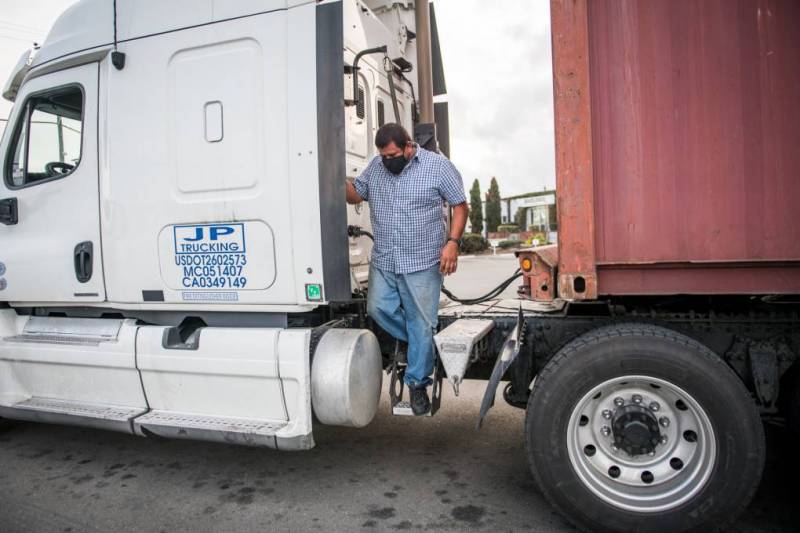
"caption": "Jesus Perlera on his truck at the Port of Oakland on Nov. 18, 2020. He has temporary protected status, which has allowed him to legally work in the U.S. for the past 19 years.",
"description": null,
"title": "RS46075_010_KQED_Oakland_TPSPort_11182020-qut",
"credit": "Beth LaBerge/KQED",
"status": "inherit",
"isLoading": false,
"fetchFailed": false
},
"news_11830884": {
"type": "attachments",
"id": "news_11830884",
"meta": {
"index": "attachments_1716263798",
"site": "news",
"id": "11830884",
"found": true
},
"parent": 11830879,
"imgSizes": {
"apple_news_ca_landscape_5_5": {
"file": "https://ww2.kqed.org/app/uploads/sites/10/2020/07/DACA_SCOTUS-1044x783.jpg",
"width": 1044,
"mimeType": "image/jpeg",
"height": 783
},
"apple_news_ca_square_4_0": {
"file": "https://ww2.kqed.org/app/uploads/sites/10/2020/07/DACA_SCOTUS-470x470.jpg",
"width": 470,
"mimeType": "image/jpeg",
"height": 470
},
"twentyfourteen-full-width": {
"file": "https://ww2.kqed.org/app/uploads/sites/10/2020/07/DACA_SCOTUS-1038x576.jpg",
"width": 1038,
"mimeType": "image/jpeg",
"height": 576
},
"thumbnail": {
"file": "https://ww2.kqed.org/app/uploads/sites/10/2020/07/DACA_SCOTUS-160x107.jpg",
"width": 160,
"mimeType": "image/jpeg",
"height": 107
},
"post-thumbnail": {
"file": "https://ww2.kqed.org/app/uploads/sites/10/2020/07/DACA_SCOTUS-672x372.jpg",
"width": 672,
"mimeType": "image/jpeg",
"height": 372
},
"kqedFullSize": {
"file": "https://ww2.kqed.org/app/uploads/sites/10/2020/07/DACA_SCOTUS.jpg",
"width": 1920,
"height": 1280
},
"apple_news_ca_landscape_4_7": {
"file": "https://ww2.kqed.org/app/uploads/sites/10/2020/07/DACA_SCOTUS-632x474.jpg",
"width": 632,
"mimeType": "image/jpeg",
"height": 474
},
"large": {
"file": "https://ww2.kqed.org/app/uploads/sites/10/2020/07/DACA_SCOTUS-1020x680.jpg",
"width": 1020,
"mimeType": "image/jpeg",
"height": 680
},
"apple_news_ca_landscape_4_0": {
"file": "https://ww2.kqed.org/app/uploads/sites/10/2020/07/DACA_SCOTUS-536x402.jpg",
"width": 536,
"mimeType": "image/jpeg",
"height": 402
},
"apple_news_ca_portrait_12_9": {
"file": "https://ww2.kqed.org/app/uploads/sites/10/2020/07/DACA_SCOTUS-1122x1280.jpg",
"width": 1122,
"mimeType": "image/jpeg",
"height": 1280
},
"medium": {
"file": "https://ww2.kqed.org/app/uploads/sites/10/2020/07/DACA_SCOTUS-800x533.jpg",
"width": 800,
"mimeType": "image/jpeg",
"height": 533
},
"apple_news_ca_portrait_4_0": {
"file": "https://ww2.kqed.org/app/uploads/sites/10/2020/07/DACA_SCOTUS-354x472.jpg",
"width": 354,
"mimeType": "image/jpeg",
"height": 472
},
"apple_news_ca_portrait_9_7": {
"file": "https://ww2.kqed.org/app/uploads/sites/10/2020/07/DACA_SCOTUS-840x1120.jpg",
"width": 840,
"mimeType": "image/jpeg",
"height": 1120
},
"apple_news_ca_landscape_12_9": {
"file": "https://ww2.kqed.org/app/uploads/sites/10/2020/07/DACA_SCOTUS-1832x1280.jpg",
"width": 1832,
"mimeType": "image/jpeg",
"height": 1280
},
"apple_news_ca_square_9_7": {
"file": "https://ww2.kqed.org/app/uploads/sites/10/2020/07/DACA_SCOTUS-1104x1104.jpg",
"width": 1104,
"mimeType": "image/jpeg",
"height": 1104
},
"1536x1536": {
"file": "https://ww2.kqed.org/app/uploads/sites/10/2020/07/DACA_SCOTUS-1536x1024.jpg",
"width": 1536,
"mimeType": "image/jpeg",
"height": 1024
},
"apple_news_ca_portrait_4_7": {
"file": "https://ww2.kqed.org/app/uploads/sites/10/2020/07/DACA_SCOTUS-414x552.jpg",
"width": 414,
"mimeType": "image/jpeg",
"height": 552
},
"apple_news_ca_square_12_9": {
"file": "https://ww2.kqed.org/app/uploads/sites/10/2020/07/DACA_SCOTUS-1472x1280.jpg",
"width": 1472,
"mimeType": "image/jpeg",
"height": 1280
},
"apple_news_ca_portrait_5_5": {
"file": "https://ww2.kqed.org/app/uploads/sites/10/2020/07/DACA_SCOTUS-687x916.jpg",
"width": 687,
"mimeType": "image/jpeg",
"height": 916
},
"apple_news_ca_square_4_7": {
"file": "https://ww2.kqed.org/app/uploads/sites/10/2020/07/DACA_SCOTUS-550x550.jpg",
"width": 550,
"mimeType": "image/jpeg",
"height": 550
},
"apple_news_ca_landscape_9_7": {
"file": "https://ww2.kqed.org/app/uploads/sites/10/2020/07/DACA_SCOTUS-1376x1032.jpg",
"width": 1376,
"mimeType": "image/jpeg",
"height": 1032
},
"apple_news_ca_square_5_5": {
"file": "https://ww2.kqed.org/app/uploads/sites/10/2020/07/DACA_SCOTUS-912x912.jpg",
"width": 912,
"mimeType": "image/jpeg",
"height": 912
}
},
"publishDate": 1595977826,
"modified": 1595977955,
"caption": "DACA recipients and their supporters rally outside the U.S. Supreme Court on June 18, 2020 in Washington, DC. The court, in a 5-4 decision, denied the Trump administration's attempt to end DACA, the Deferred Action for Childhood Arrivals program. The Trump administration is refusing to accept new applicants, anyway.",
"description": "DACA recipients and their supporters rally outside the U.S. Supreme Court on June 18, 2020 in Washington, DC. The court, in a 5-4 decision, denied the Trump administration's attempt to end DACA, the Deferred Action for Childhood Arrivals program. The Trump administration is refusing to accept new applicants, anyway.",
"title": "DACA_SCOTUS",
"credit": "Drew Angerer/Getty Images",
"status": "inherit",
"isLoading": false,
"fetchFailed": false
}
},
"audioPlayerReducer": {
"postId": "stream_live",
"isPaused": true,
"isPlaying": false,
"pfsActive": false,
"pledgeModalIsOpen": true,
"playerDrawerIsOpen": false,
"liveAudioPlayStartedAt": 0,
"liveAudioPlayContext": ""
},
"authorsReducer": {
"byline_news_11890039": {
"type": "authors",
"id": "byline_news_11890039",
"meta": {
"override": true
},
"slug": "byline_news_11890039",
"name": "Elliot Spagat, Mark Sherman \u003cbr> The Associated Press",
"isLoading": false
},
"byline_news_11882829": {
"type": "authors",
"id": "byline_news_11882829",
"meta": {
"override": true
},
"slug": "byline_news_11882829",
"name": "Deepa Shivaram\u003cbr>NPR",
"isLoading": false
},
"byline_news_11850031": {
"type": "authors",
"id": "byline_news_11850031",
"meta": {
"override": true
},
"slug": "byline_news_11850031",
"name": "\u003ca href=\"https://www.npr.org/2020/12/04/943355234/judge-orders-trump-administration-to-restore-daca-as-it-existed-under-obama\">Vanessa Romo\u003c/a>",
"isLoading": false
},
"byline_news_11830879": {
"type": "authors",
"id": "byline_news_11830879",
"meta": {
"override": true
},
"slug": "byline_news_11830879",
"name": "Joel Rose",
"isLoading": false
},
"minakim": {
"type": "authors",
"id": "243",
"meta": {
"index": "authors_1716337520",
"id": "243",
"found": true
},
"name": "Mina Kim",
"firstName": "Mina",
"lastName": "Kim",
"slug": "minakim",
"email": "mkim@kqed.org",
"display_author_email": false,
"staff_mastheads": [
"news"
],
"title": "Host, Forum",
"bio": "Mina Kim is host of the 10 a.m. statewide hour of Forum; a live daily talk show for curious Californians on issues that matter to the state and nation, with a particular emphasis on race and equity.\r\n\r\nBefore joining the Forum team, Mina was KQED’s evening news anchor, and health reporter for The California Report. Her award-winning work has included natural disasters in Napa and gun violence in Oakland. Mina grew up in St. John’s, Newfoundland.",
"avatar": "https://secure.gravatar.com/avatar/145ce657a2d08cb86d93686beb958982?s=600&d=blank&r=g",
"twitter": "mkimreporter",
"facebook": null,
"instagram": null,
"linkedin": null,
"sites": [
{
"site": "news",
"roles": [
"contributor"
]
},
{
"site": "stateofhealth",
"roles": [
"author"
]
},
{
"site": "forum",
"roles": [
"editor"
]
}
],
"headData": {
"title": "Mina Kim | KQED",
"description": "Host, Forum",
"ogImgSrc": "https://secure.gravatar.com/avatar/145ce657a2d08cb86d93686beb958982?s=600&d=blank&r=g",
"twImgSrc": "https://secure.gravatar.com/avatar/145ce657a2d08cb86d93686beb958982?s=600&d=blank&r=g"
},
"isLoading": false,
"link": "/author/minakim"
},
"fjhabvala": {
"type": "authors",
"id": "8659",
"meta": {
"index": "authors_1716337520",
"id": "8659",
"found": true
},
"name": "Farida Jhabvala Romero",
"firstName": "Farida",
"lastName": "Jhabvala Romero",
"slug": "fjhabvala",
"email": "fjhabvala@kqed.org",
"display_author_email": true,
"staff_mastheads": [
"news"
],
"title": "KQED Contributor",
"bio": "Farida Jhabvala Romero is a Labor Correspondent for KQED. She previously covered immigration. Farida was \u003ca href=\"https://www.ccnma.org/2022-most-influential-latina-journalists\">named\u003c/a> one of the 10 Most Influential Latina Journalists in California in 2022 by the California Chicano News Media Association. Her work has won awards from the Society of Professional Journalists (Northern California), as well as a national and regional Edward M. Murrow Award for the collaborative reporting projects “Dangerous Air” and “Graying California.” Before joining KQED, Farida worked as a producer at Radio Bilingüe, a national public radio network. Farida earned her master’s degree in journalism from Stanford University.",
"avatar": "https://secure.gravatar.com/avatar/f9f022d4e2609741874222a1e9d41f48fea74011aa7c615eef91d9a50c944ebe?s=600&d=blank&r=g",
"twitter": "FaridaJhabvala",
"bluesky": null,
"facebook": null,
"instagram": null,
"linkedin": "https://www.linkedin.com/in/faridajhabvala/",
"sites": [
{
"site": "news",
"roles": [
"editor"
]
},
{
"site": "stateofhealth",
"roles": [
"author"
]
},
{
"site": "liveblog",
"roles": [
"author"
]
}
],
"headData": {
"title": "Farida Jhabvala Romero | KQED",
"description": "KQED Contributor",
"ogImgSrc": "https://secure.gravatar.com/avatar/f9f022d4e2609741874222a1e9d41f48fea74011aa7c615eef91d9a50c944ebe?s=600&d=blank&r=g",
"twImgSrc": "https://secure.gravatar.com/avatar/f9f022d4e2609741874222a1e9d41f48fea74011aa7c615eef91d9a50c944ebe?s=600&d=blank&r=g"
},
"isLoading": false,
"link": "/author/fjhabvala"
},
"lsarah": {
"type": "authors",
"id": "11626",
"meta": {
"index": "authors_1716337520",
"id": "11626",
"found": true
},
"name": "Lakshmi Sarah",
"firstName": "Lakshmi",
"lastName": "Sarah",
"slug": "lsarah",
"email": "lsarah@kqed.org",
"display_author_email": false,
"staff_mastheads": [],
"title": "Digital Producer",
"bio": "Lakshmi Sarah is an educator, author and journalist with a focus on innovative storytelling. She has worked with newspapers, radio and magazines from Ahmedabad, India to Los Angeles, California. She has written and produced for Die Zeit, Global Voices, AJ+, KQED, Fusion Media Group and the New York Times.",
"avatar": "https://secure.gravatar.com/avatar/652dcaecd8b28826fc17a8b2d6bb4e93?s=600&d=blank&r=g",
"twitter": "lakitalki",
"facebook": null,
"instagram": "https://www.instagram.com/laki.talki/",
"linkedin": "https://www.linkedin.com/in/lakisarah/",
"sites": [
{
"site": "arts",
"roles": []
},
{
"site": "news",
"roles": []
},
{
"site": "bayareabites",
"roles": []
},
{
"site": "science",
"roles": []
}
],
"headData": {
"title": "Lakshmi Sarah | KQED",
"description": "Digital Producer",
"ogImgSrc": "https://secure.gravatar.com/avatar/652dcaecd8b28826fc17a8b2d6bb4e93?s=600&d=blank&r=g",
"twImgSrc": "https://secure.gravatar.com/avatar/652dcaecd8b28826fc17a8b2d6bb4e93?s=600&d=blank&r=g"
},
"isLoading": false,
"link": "/author/lsarah"
},
"amorga": {
"type": "authors",
"id": "11629",
"meta": {
"index": "authors_1716337520",
"id": "11629",
"found": true
},
"name": "Adriana Morga",
"firstName": "Adriana",
"lastName": "Morga",
"slug": "amorga",
"email": "amorga@kqed.org",
"display_author_email": false,
"staff_mastheads": [],
"title": "KQED Contributor",
"bio": "Adriana Morga is an on-call Digital Producer for KQED en Español. She is also completing her journalism degree at San Francisco State University. She has experience working in print and radio. Morga, who was born in Tijuana, Mexico, has spent her developing career covering the Latino community for English and Spanish-language publications including KALW and El Tecolote.",
"avatar": "https://secure.gravatar.com/avatar/9ef1c5a7ff2f2ae1ab05809325f43d03?s=600&d=blank&r=g",
"twitter": null,
"facebook": null,
"instagram": null,
"linkedin": null,
"sites": [
{
"site": "arts",
"roles": []
},
{
"site": "news",
"roles": [
"author"
]
},
{
"site": "science",
"roles": [
"editor"
]
}
],
"headData": {
"title": "Adriana Morga | KQED",
"description": "KQED Contributor",
"ogImgSrc": "https://secure.gravatar.com/avatar/9ef1c5a7ff2f2ae1ab05809325f43d03?s=600&d=blank&r=g",
"twImgSrc": "https://secure.gravatar.com/avatar/9ef1c5a7ff2f2ae1ab05809325f43d03?s=600&d=blank&r=g"
},
"isLoading": false,
"link": "/author/amorga"
},
"ccabreralomeli": {
"type": "authors",
"id": "11708",
"meta": {
"index": "authors_1716337520",
"id": "11708",
"found": true
},
"name": "Carlos Cabrera-Lomelí",
"firstName": "Carlos",
"lastName": "Cabrera-Lomelí",
"slug": "ccabreralomeli",
"email": "ccabreralomeli@KQED.org",
"display_author_email": true,
"staff_mastheads": [
"news"
],
"title": "Community Reporter",
"bio": "Carlos Cabrera-Lomelí is a community reporter with KQED's digital engagement team. He also reports and co-produces for KQED's bilingual news hub KQED en Español. He grew up in San Francisco's Mission District and has previously worked with Univision, 48 Hills and REFORMA in Mexico City.",
"avatar": "https://secure.gravatar.com/avatar/c309be9665e484f887b818c89e273ecc673004f426f36b24d00a4d813a2e0518?s=600&d=blank&r=g",
"twitter": "@LomeliCabrera",
"bluesky": null,
"facebook": null,
"instagram": null,
"linkedin": null,
"sites": [
{
"site": "arts",
"roles": [
"editor"
]
},
{
"site": "news",
"roles": [
"editor"
]
},
{
"site": "about",
"roles": [
"editor"
]
},
{
"site": "science",
"roles": [
"editor"
]
},
{
"site": "perspectives",
"roles": [
"editor"
]
},
{
"site": "elections",
"roles": [
"editor"
]
},
{
"site": "liveblog",
"roles": [
"contributor"
]
}
],
"headData": {
"title": "Carlos Cabrera-Lomelí | KQED",
"description": "Community Reporter",
"ogImgSrc": "https://secure.gravatar.com/avatar/c309be9665e484f887b818c89e273ecc673004f426f36b24d00a4d813a2e0518?s=600&d=blank&r=g",
"twImgSrc": "https://secure.gravatar.com/avatar/c309be9665e484f887b818c89e273ecc673004f426f36b24d00a4d813a2e0518?s=600&d=blank&r=g"
},
"isLoading": false,
"link": "/author/ccabreralomeli"
}
},
"pagesReducer": {
"news_tag_daca": {
"type": "terms",
"id": "news_20226",
"meta": {
"index": "terms_1716263798",
"site": "news",
"id": "20226",
"score": 8.795391
},
"featImg": null,
"name": "DACA",
"description": null,
"taxonomy": "tag",
"headData": {
"twImgId": null,
"twTitle": null,
"ogTitle": null,
"ogImgId": null,
"twDescription": null,
"description": null,
"title": "DACA Archives | KQED News",
"ogDescription": null
},
"ttid": 20243,
"slug": "daca",
"isLoading": false,
"title": "DACA",
"pageMeta": {
"site": "news",
"WpPageTemplate": "page-topic-editorial",
"currentPage": 3
},
"blocks": [
{
"blockName": "kqed/post-list",
"attrs": {
"layout": "cardArticle2",
"query": "posts/news?tag=daca",
"seeMore": false,
"paginated": true,
"page": 3
}
},
{
"blockName": "kqed/ad"
}
]
}
},
"pfsSessionReducer": {},
"postsReducer": {
"stream_live": {
"type": "live",
"id": "stream_live",
"audioUrl": "https://streams.kqed.org/kqedradio",
"title": "Live Stream",
"excerpt": "Live Stream information currently unavailable.",
"link": "/radio",
"featImg": "",
"label": {
"name": "KQED Live",
"link": "/"
}
},
"stream_kqedNewscast": {
"type": "posts",
"id": "stream_kqedNewscast",
"audioUrl": "https://www.kqed.org/.stream/anon/radio/RDnews/newscast.mp3?_=1",
"title": "KQED Newscast",
"featImg": "",
"label": {
"name": "88.5 FM",
"link": "/"
}
},
"news_11890039": {
"type": "posts",
"id": "news_11890039",
"meta": {
"index": "posts_1716263798",
"site": "news",
"id": "11890039",
"score": null,
"sort": [
1632783370000
]
},
"guestAuthors": [],
"slug": "biden-administration-renews-efforts-to-reopen-daca-enrollment",
"title": "Biden Administration Renews Efforts to Reopen DACA Enrollment",
"publishDate": 1632783370,
"format": "standard",
"headTitle": "Biden Administration Renews Efforts to Reopen DACA Enrollment | KQED",
"labelTerm": {
"site": "news"
},
"content": "\u003cp>The Biden administration on Monday resumed efforts to shield hundreds of thousands of immigrants who came to the United States as young children from deportation, the latest maneuver in a long-running drama over the policy’s legality.\u003c/p>\n\u003cp>The administration proposed a rule that attempts to satisfy concerns of a federal judge in Houston who ruled in July that the Deferred Action for Childhood Arrivals program was illegal, largely because the Obama administration bypassed procedural requirements when it took effect in 2012. The new rule mirrors the Obama-era initiative, recreating the 2012 policy and seeking to put it on firmer ground by going through the federal regulatory process.\u003c/p>\n\u003cp>U.S. District Judge Andrew Hanen, an appointee of President George W. Bush, said the Obama administration overstepped its authority and did not properly seek public feedback. He allowed for renewals to continue but prohibited new enrollments. The Biden administration is appealing.\u003cbr>\n[ad fullwidth]\u003cbr>\nThe \u003ca href=\"https://www.federalregister.gov/public-inspection/2021-20898/deferred-action-for-childhood-arrivals\">205-page proposal solicits public feedback to address Hanen’s concern\u003c/a>, though it is unclear if that would be enough. The proposed regulation will be published Tuesday in the Federal Register, triggering a 60-day comment period and ensuring that it is unlikely to take effect for several months.\u003c/p>\n\u003cp>The office of Texas Attorney General Ken Paxton, who challenged DACA with eight other states before Hanen, did not immediately respond to a request for comment.\u003c/p>\n\u003cp>[aside postID=\"news_11887630\" hero=\"https://ww2.kqed.org/app/uploads/sites/10/2021/09/RS51406_021_Fremont_MaiwandMarket_08272021-qut-1020x680.jpg\"]The Obama administration created DACA with a memo issued by then-Homeland Security Secretary Janet Napolitano. It was intended as a stopgap measure until Congress legislated a permanent solution, which never occurred.\u003c/p>\n\u003cp>And because DACA isn’t the product of legislation, it falls into a category of policies that can more easily be changed from one administration to the next. President Donald Trump tried to rescind the DACA memo and end the program, but the Supreme Court concluded he did not go about it properly.\u003c/p>\n\u003cp>In attempting to shore up DACA through a formal rule — which is a more rigorous process than the original memo, though still not legislation — the Biden administration hopes to gain a legal stamp of approval from the courts.\u003c/p>\n\u003cp>It seems possible, if not likely, that the Supreme Court will once again be called upon to weigh in, unless Congress acts first.\u003c/p>\n\u003cp>The Biden administration’s move comes as congressional Democrats struggle to include immigration provisions in their 10-year, $3.5 trillion package of social and environment initiatives. Language in that bill helping millions of immigrants remain permanently in the U.S. has been a top goal of progressive and pro-immigration lawmakers, and Democrats cannot afford to lose many votes.\u003c/p>\n\u003cp>[pullquote align=\"right\" size=\"medium\" citation=\"Ali Noorani, National Immigration Forum\"]‘A more formalized version of DACA will stabilize the lives of DACA-eligible Dreamers, but legislative action is still needed to fully solidify DACA recipients’ contributions.’[/pullquote]But the Senate’s nonpartisan parliamentarian said earlier this month the immigration provisions couldn’t remain in the sweeping bill because it violated the chamber’s budget rules.\u003c/p>\n\u003cp>Homeland Security Secretary Alejandro Mayorkas called again on Monday for Congress to act swiftly to provide “the legal status they need and deserve.”\u003c/p>\n\u003cp>“The Biden-Harris administration continues to take action to protect Dreamers and recognize their contributions to this country,” said Mayorkas, using a commonly used term for immigrants who came to the U.S. with their parents as young children. “This notice of proposed rulemaking is an important step to achieve that goal.”\u003c/p>\n\u003cp>Some pro-immigration advocates echoed Mayorkas’s view that the onus is on Congress.\u003c/p>\n\u003cp>“A more formalized version of DACA will stabilize the lives of DACA-eligible Dreamers, but legislative action is still needed to fully solidify DACA recipients’ contributions, expand protections to other Dreamers and build a pathway to permanent legal status,” said Ali Noorani, president of the \u003ca href=\"https://immigrationforum.org/\">National Immigration Forum\u003c/a>.\u003c/p>\n\u003cp>“Formalizing DACA is a positive step,” he added, “but it’s not a permanent fix.”\u003c/p>\n\u003cp>The Democratic-run House passed legislation earlier this year creating a way for Dreamers to become legal permanent residents, but the bill has gone nowhere in the Senate, where Republicans have blocked it and bipartisan talks have stalled.\u003c/p>\n\u003cp>[aside label ='Related Coverage' tag='immigration']The Senate parliamentarian’s ruling further dampened legislative prospects. Advocates have said they would present alternative immigration provisions in hopes they would be permitted in the bill, but it’s not clear that would succeed.\u003c/p>\n\u003cp>Stephen Yale-Loehr, a professor of immigration law practice at Cornell Law School, said the administration’s proposal carries no major changes and “is an effort to bulletproof the existing program from litigation challenges.”\u003c/p>\n\u003cp>The proposal adheres to the same criteria, which include arriving in the country before age 16, continuously residing in the United States since arrival and being in the country on June 15, 2012.\u003c/p>\n\u003cp>Since 2012, more than 825,000 immigrants have enrolled in DACA.\u003cbr>\n[ad fullwidth]\u003c/p>\n\u003cp>\u003c/p>\n",
"blocks": [],
"excerpt": "The White House proposed a rule Tuesday that could satisfy concerns of federal judge Andrew Hanen, who ruled that DACA was illegal because it did not follow certain procedures when it was created in 2012.",
"status": "publish",
"parent": 0,
"modified": 1721157736,
"stats": {
"hasAudio": false,
"hasVideo": false,
"hasChartOrMap": false,
"iframeSrcs": [],
"hasGoogleForm": false,
"hasGallery": false,
"hasHearkenModule": false,
"hasPolis": false,
"paragraphCount": 21,
"wordCount": 862
},
"headData": {
"title": "Biden Administration Renews Efforts to Reopen DACA Enrollment | KQED",
"description": "The White House proposed a rule Tuesday that could satisfy concerns of federal judge Andrew Hanen, who ruled that DACA was illegal because it did not follow certain procedures when it was created in 2012.",
"ogTitle": "",
"ogDescription": "",
"ogImgId": "",
"twTitle": "",
"twDescription": "",
"twImgId": "",
"schema": {
"@context": "https://schema.org",
"@type": "NewsArticle",
"headline": "Biden Administration Renews Efforts to Reopen DACA Enrollment",
"datePublished": "2021-09-27T15:56:10-07:00",
"dateModified": "2024-07-16T12:22:16-07:00",
"image": "https://cdn.kqed.org/wp-content/uploads/2020/02/KQED-OG-Image@1x.png",
"isAccessibleForFree": "True",
"publisher": {
"@type": "NewsMediaOrganization",
"@id": "https://www.kqed.org/#organization",
"name": "KQED",
"logo": "https://cdn.kqed.org/wp-content/uploads/2020/02/KQED-OG-Image@1x.png",
"url": "https://www.kqed.org",
"sameAs": [
"https://www.facebook.com/KQED",
"https://twitter.com/KQED",
"https://www.instagram.com/kqed/",
"https://www.tiktok.com/@kqedofficial",
"https://www.linkedin.com/company/kqed",
"https://www.youtube.com/channel/UCeC0IOo7i1P_61zVUWbJ4nw"
]
}
}
},
"sticky": false,
"nprByline": "Elliot Spagat, Mark Sherman \u003cbr> The Associated Press",
"path": "/news/11890039/biden-administration-renews-efforts-to-reopen-daca-enrollment",
"audioTrackLength": null,
"parsedContent": [
{
"type": "contentString",
"content": "\u003cdiv class=\"post-body\">\u003cp>\u003cp>The Biden administration on Monday resumed efforts to shield hundreds of thousands of immigrants who came to the United States as young children from deportation, the latest maneuver in a long-running drama over the policy’s legality.\u003c/p>\n\u003cp>The administration proposed a rule that attempts to satisfy concerns of a federal judge in Houston who ruled in July that the Deferred Action for Childhood Arrivals program was illegal, largely because the Obama administration bypassed procedural requirements when it took effect in 2012. The new rule mirrors the Obama-era initiative, recreating the 2012 policy and seeking to put it on firmer ground by going through the federal regulatory process.\u003c/p>\n\u003cp>U.S. District Judge Andrew Hanen, an appointee of President George W. Bush, said the Obama administration overstepped its authority and did not properly seek public feedback. He allowed for renewals to continue but prohibited new enrollments. The Biden administration is appealing.\u003cbr>\n\u003c/p>\u003c/div>",
"attributes": {
"named": {},
"numeric": []
}
},
{
"type": "component",
"content": "",
"name": "ad",
"attributes": {
"named": {
"label": "fullwidth"
},
"numeric": [
"fullwidth"
]
}
},
{
"type": "contentString",
"content": "\u003cdiv class=\"post-body\">\u003cp>\u003cbr>\nThe \u003ca href=\"https://www.federalregister.gov/public-inspection/2021-20898/deferred-action-for-childhood-arrivals\">205-page proposal solicits public feedback to address Hanen’s concern\u003c/a>, though it is unclear if that would be enough. The proposed regulation will be published Tuesday in the Federal Register, triggering a 60-day comment period and ensuring that it is unlikely to take effect for several months.\u003c/p>\n\u003cp>The office of Texas Attorney General Ken Paxton, who challenged DACA with eight other states before Hanen, did not immediately respond to a request for comment.\u003c/p>\n\u003cp>\u003c/p>\u003c/div>",
"attributes": {
"named": {},
"numeric": []
}
},
{
"type": "component",
"content": "",
"name": "aside",
"attributes": {
"named": {
"postid": "news_11887630",
"hero": "https://ww2.kqed.org/app/uploads/sites/10/2021/09/RS51406_021_Fremont_MaiwandMarket_08272021-qut-1020x680.jpg",
"label": ""
},
"numeric": []
}
},
{
"type": "contentString",
"content": "\u003cdiv class=\"post-body\">\u003cp>The Obama administration created DACA with a memo issued by then-Homeland Security Secretary Janet Napolitano. It was intended as a stopgap measure until Congress legislated a permanent solution, which never occurred.\u003c/p>\n\u003cp>And because DACA isn’t the product of legislation, it falls into a category of policies that can more easily be changed from one administration to the next. President Donald Trump tried to rescind the DACA memo and end the program, but the Supreme Court concluded he did not go about it properly.\u003c/p>\n\u003cp>In attempting to shore up DACA through a formal rule — which is a more rigorous process than the original memo, though still not legislation — the Biden administration hopes to gain a legal stamp of approval from the courts.\u003c/p>\n\u003cp>It seems possible, if not likely, that the Supreme Court will once again be called upon to weigh in, unless Congress acts first.\u003c/p>\n\u003cp>The Biden administration’s move comes as congressional Democrats struggle to include immigration provisions in their 10-year, $3.5 trillion package of social and environment initiatives. Language in that bill helping millions of immigrants remain permanently in the U.S. has been a top goal of progressive and pro-immigration lawmakers, and Democrats cannot afford to lose many votes.\u003c/p>\n\u003cp>\u003c/p>\u003c/div>",
"attributes": {
"named": {},
"numeric": []
}
},
{
"type": "component",
"content": "‘A more formalized version of DACA will stabilize the lives of DACA-eligible Dreamers, but legislative action is still needed to fully solidify DACA recipients’ contributions.’",
"name": "pullquote",
"attributes": {
"named": {
"align": "right",
"size": "medium",
"citation": "Ali Noorani, National Immigration Forum",
"label": ""
},
"numeric": []
}
},
{
"type": "contentString",
"content": "\u003cdiv class=\"post-body\">\u003cp>But the Senate’s nonpartisan parliamentarian said earlier this month the immigration provisions couldn’t remain in the sweeping bill because it violated the chamber’s budget rules.\u003c/p>\n\u003cp>Homeland Security Secretary Alejandro Mayorkas called again on Monday for Congress to act swiftly to provide “the legal status they need and deserve.”\u003c/p>\n\u003cp>“The Biden-Harris administration continues to take action to protect Dreamers and recognize their contributions to this country,” said Mayorkas, using a commonly used term for immigrants who came to the U.S. with their parents as young children. “This notice of proposed rulemaking is an important step to achieve that goal.”\u003c/p>\n\u003cp>Some pro-immigration advocates echoed Mayorkas’s view that the onus is on Congress.\u003c/p>\n\u003cp>“A more formalized version of DACA will stabilize the lives of DACA-eligible Dreamers, but legislative action is still needed to fully solidify DACA recipients’ contributions, expand protections to other Dreamers and build a pathway to permanent legal status,” said Ali Noorani, president of the \u003ca href=\"https://immigrationforum.org/\">National Immigration Forum\u003c/a>.\u003c/p>\n\u003cp>“Formalizing DACA is a positive step,” he added, “but it’s not a permanent fix.”\u003c/p>\n\u003cp>The Democratic-run House passed legislation earlier this year creating a way for Dreamers to become legal permanent residents, but the bill has gone nowhere in the Senate, where Republicans have blocked it and bipartisan talks have stalled.\u003c/p>\n\u003cp>\u003c/p>\u003c/div>",
"attributes": {
"named": {},
"numeric": []
}
},
{
"type": "component",
"content": "",
"name": "aside",
"attributes": {
"named": {
"label": "Related Coverage ",
"tag": "immigration"
},
"numeric": []
}
},
{
"type": "contentString",
"content": "\u003cdiv class=\"post-body\">\u003cp>The Senate parliamentarian’s ruling further dampened legislative prospects. Advocates have said they would present alternative immigration provisions in hopes they would be permitted in the bill, but it’s not clear that would succeed.\u003c/p>\n\u003cp>Stephen Yale-Loehr, a professor of immigration law practice at Cornell Law School, said the administration’s proposal carries no major changes and “is an effort to bulletproof the existing program from litigation challenges.”\u003c/p>\n\u003cp>The proposal adheres to the same criteria, which include arriving in the country before age 16, continuously residing in the United States since arrival and being in the country on June 15, 2012.\u003c/p>\n\u003cp>Since 2012, more than 825,000 immigrants have enrolled in DACA.\u003cbr>\n\u003c/p>\u003c/div>",
"attributes": {
"named": {},
"numeric": []
}
},
{
"type": "component",
"content": "",
"name": "ad",
"attributes": {
"named": {
"label": "fullwidth"
},
"numeric": [
"fullwidth"
]
}
},
{
"type": "contentString",
"content": "\u003cdiv class=\"post-body\">\u003cp>\u003c/p>\n\u003cp>\u003c/p>\n\u003c/div>\u003c/p>",
"attributes": {
"named": {},
"numeric": []
}
}
],
"link": "/news/11890039/biden-administration-renews-efforts-to-reopen-daca-enrollment",
"authors": [
"byline_news_11890039"
],
"categories": [
"news_1169",
"news_8"
],
"tags": [
"news_29052",
"news_20226",
"news_21021",
"news_20415",
"news_717",
"news_932"
],
"featImg": "news_11890060",
"label": "news"
},
"news_11883013": {
"type": "posts",
"id": "news_11883013",
"meta": {
"index": "posts_1716263798",
"site": "news",
"id": "11883013",
"score": null,
"sort": [
1627687653000
]
},
"parent": 0,
"labelTerm": {
"site": "news"
},
"blocks": [],
"publishDate": 1627687653,
"format": "audio",
"disqusTitle": "‘An Important Day for Dreamers’: DACA Recipient Luis Grijalva Heads to the Olympics",
"title": "‘An Important Day for Dreamers’: DACA Recipient Luis Grijalva Heads to the Olympics",
"headTitle": "KQED News",
"content": "\u003cp>Luis Grijalva — the first known DACA recipient to qualify for the Olympics — headed to Tokyo Friday to compete in next week's 5,000 meter-race, representing Guatemala.\u003c/p>\n\u003cp>At this time last week, the \u003ca href=\"https://nauathletics.com/sports/cross-country/roster/luis-grijalva/4953\">Northern Arizona University track star\u003c/a> wasn’t sure if U.S. immigration authorities would grant him permission to travel, despite qualifying for the race last month at the NCAA Outdoor Track and Field Championships, where \u003ca href=\"https://nauathletics.com/news/2021/6/11/track-field-grijalva-grabs-second-garners-first-team-all-american-honors-in-ncaa-mens-5k.aspx\">he ran\u003c/a> an impressive 13:13.14. Only on Monday was Grijalva granted emergency permission to leave the country, after showing up in person with his attorney at the U.S. Immigration and Customs Enforcement office in Phoenix. [pullquote size=\"medium\" align=\"right\" citation=\"Luis Grijalva, student at Northern Arizona University\"]'My advice to people who are in similar situations as I am, is to keep believing. Keep fighting, because even though it might seem like a big step forward ... keep working hard and believing in yourself.’[/pullquote]\u003c/p>\n\u003cp>“Being able to represent Guatemala and where I was born and started — and to represent my family and generations of families born in Guatemala is pretty awesome,” said Grijalva, who came to the United States with his family when he was still a baby.\u003c/p>\n\u003cp>Grijalva lived in New York before moving to Fairfield, California at age three. He has fond memories of running throughout the Bay Area as a member of the track team at Armijo High School, and has dreamed of competing in the Olympics ever since joining the team his freshman year, in 2013.\u003c/p>\n\u003cp>“Palo Alto, Stanford, Cal Berkeley — all these different places as a high schooler. It’s awesome, just thinking about it,” Grijalva told KQED this week.\u003c/p>\n\u003cp>Growing up in the Bay Area was “pretty special,” he said. Currently a senior at Northern Arizona University, he plans to eventually move back to the Bay Area.\u003c/p>\n\u003cp>The dilemma: As a DACA recipient, Grijalva would technically be considered as self-deporting if he were to leave the U.S. without a special permit, and would likely not be allowed to come back. But the process of obtaining the necessary permissions, known as advance parole, can take months.\u003c/p>\n\u003cp>News of Grijalva’s situation was first reported last week by the \u003ca href=\"https://www.visaliatimesdelta.com/story/news/2021/07/23/why-luis-grijalva-may-not-make-olympics-despite-qualifying/8065828002/\">Visalia Times Delta\u003c/a>.\u003c/p>\n\u003cfigure id=\"attachment_11882831\" class=\"wp-caption aligncenter\" style=\"max-width: 2560px\">\u003ca href=\"https://ww2.kqed.org/app/uploads/sites/10/2021/07/gettyimages-1316117823-9785a1244672d5f43cda9117af525aa5bf6a225e-1-scaled.jpg\">\u003cimg class=\"size-full wp-image-11882831\" src=\"https://ww2.kqed.org/app/uploads/sites/10/2021/07/gettyimages-1316117823-9785a1244672d5f43cda9117af525aa5bf6a225e-1-scaled.jpg\" alt=\"\" width=\"2560\" height=\"1920\" srcset=\"https://ww2.kqed.org/app/uploads/sites/10/2021/07/gettyimages-1316117823-9785a1244672d5f43cda9117af525aa5bf6a225e-1-scaled.jpg 2560w, https://ww2.kqed.org/app/uploads/sites/10/2021/07/gettyimages-1316117823-9785a1244672d5f43cda9117af525aa5bf6a225e-1-800x600.jpg 800w, https://ww2.kqed.org/app/uploads/sites/10/2021/07/gettyimages-1316117823-9785a1244672d5f43cda9117af525aa5bf6a225e-1-1020x765.jpg 1020w, https://ww2.kqed.org/app/uploads/sites/10/2021/07/gettyimages-1316117823-9785a1244672d5f43cda9117af525aa5bf6a225e-1-160x120.jpg 160w, https://ww2.kqed.org/app/uploads/sites/10/2021/07/gettyimages-1316117823-9785a1244672d5f43cda9117af525aa5bf6a225e-1-1536x1152.jpg 1536w, https://ww2.kqed.org/app/uploads/sites/10/2021/07/gettyimages-1316117823-9785a1244672d5f43cda9117af525aa5bf6a225e-1-2048x1536.jpg 2048w, https://ww2.kqed.org/app/uploads/sites/10/2021/07/gettyimages-1316117823-9785a1244672d5f43cda9117af525aa5bf6a225e-1-1920x1440.jpg 1920w\" sizes=\"(max-width: 2560px) 100vw, 2560px\">\u003c/a>\u003cfigcaption class=\"wp-caption-text\">Luis Grijalva of the Northern Arizona Lumberjacks finishes in ninth place during the Division I Men's and Women's Cross Country Championships held at the OSU Cross Country Course on March 15, 2021 in Stillwater, Oklahoma. \u003ccite>(Shane Bevel/NCAA Photos via Getty Images)\u003c/cite>\u003c/figcaption>\u003c/figure>\n\u003cp>Jessica Smith Bobadilla, Grijalva’s Fresno-based attorney, helped make his Olympic trip possible.\u003c/p>\n\u003cp>Bobadilla, who has been representing immigrants and refugees for over 20 years, said Grijalva came to her for help in June.\u003c/p>\n\u003cp>“We quickly filed as soon as we had the paperwork from his coaches and from the delegation,” she said, noting the emergency process they needed to go through to expedite his application.\u003c/p>\n\u003cp>But when they hadn’t heard anything by late June, Bobadilla decided she needed to do everything she could to push his application forward. Even though they didn’t have an appointment, she flew to Phoenix to show up in person at the immigration office in an effort to ensure Grijalva could make it to Tokyo in time for his qualifying race on August 3.\u003c/p>\n\u003cp>“We almost were not allowed in,” Bobadilla said. But after contacting the offices of U.S. Sen. Mark Kelly and Rep. Tom O’Halleran — both Arizona Democrats — for help, Bobadilla said she and Grijalva were eventually able to enter the building, and after several hours, were granted the advance parole.\u003c/p>\n\u003cp>The future of DACA was once again put in jeopardy after a federal district judge in Texas earlier this month \u003ca href=\"https://www.kqed.org/news/11881668/after-texas-court-ruling-whats-the-future-for-young-immigrants-and-daca-recipients\" target=\"_blank\" rel=\"noopener noreferrer\">ruled the program \u003c/a>unlawful.\u003c/p>\n\u003cp>https://www.instagram.com/p/CRzgof2nI8P/\u003c/p>\n\u003cp>There are currently \u003ca href=\"https://www.migrationpolicy.org/programs/data-hub/deferred-action-childhood-arrivals-daca-profiles\">more than 650,000\u003c/a> DACA recipients in the U.S.\u003c/p>\n\u003cp>“My advice to people who are in similar situations as I am, is to keep believing,” Grijalva said. “Keep fighting, because even though it might seem like a big step forward ... keep working hard and believing in yourself.”\u003c/p>\n\u003cp>[aside tag=\"olympics, daca\" label=\"Related Stories\"]Grijalva hopes the Biden administration will be able to secure a pathway to citizenship or legal residency, allowing those in his situation to travel freely in and out of the country.\u003c/p>\n\u003cp>“I'm only 22 years old. I still see myself running at the next games in Paris and then after that in L.A. in 2028,” he told KQED earlier this week. “It's special and I have a lot of gratitude towards everyone who helped me get here in this process.”\u003c/p>\n\u003cp>Grijalva already been sponsored by Hoka One, a sneaker brand, and has received an outpouring of support on social media.\u003c/p>\n\u003cp>For Bobadilla, who has been enmeshed in the DACA struggle since the program was first established by the Obama administration in 2012, Grijalva’s case underscores the urgent need for immigration reform, particularly as it applies to Dreamers.\u003c/p>\n\u003cp>“This is a really important day for DACA and for Dreamers and also an illustration, and maybe yet another reason why Congress has to act on this issue effectively,” she said. “We're missing out on future Olympians and scientists and exceptional people in so many ways.”\u003cbr>\n[ad fullwidth]\u003c/p>\n\u003cp>\u003c/p>\n",
"disqusIdentifier": "11883013 https://ww2.kqed.org/news/?p=11883013",
"disqusUrl": "https://ww2.kqed.org/news/2021/07/30/an-important-day-for-dreamers-daca-recipient-luis-grijalva-heads-to-the-olympics/",
"stats": {
"hasVideo": false,
"hasChartOrMap": false,
"hasAudio": false,
"hasPolis": false,
"wordCount": 913,
"hasGoogleForm": false,
"hasGallery": false,
"hasHearkenModule": false,
"iframeSrcs": [],
"paragraphCount": 22
},
"modified": 1627937365,
"excerpt": "'I'm only 22 years old. I still see myself running at the next games in Paris and then after that in LA in 2028,' the track star told KQED this week. Born in Guatemala, Grijalva grew up and fell in love with running in Fairfield, California.",
"headData": {
"twImgId": "",
"twTitle": "",
"ogTitle": "",
"ogImgId": "",
"twDescription": "",
"description": "'I'm only 22 years old. I still see myself running at the next games in Paris and then after that in LA in 2028,' the track star told KQED this week. Born in Guatemala, Grijalva grew up and fell in love with running in Fairfield, California.",
"title": "‘An Important Day for Dreamers’: DACA Recipient Luis Grijalva Heads to the Olympics | KQED",
"ogDescription": "",
"schema": {
"@context": "https://schema.org",
"@type": "NewsArticle",
"headline": "‘An Important Day for Dreamers’: DACA Recipient Luis Grijalva Heads to the Olympics",
"datePublished": "2021-07-30T16:27:33-07:00",
"dateModified": "2021-08-02T13:49:25-07:00",
"image": "https://cdn.kqed.org/wp-content/uploads/2020/02/KQED-OG-Image@1x.png",
"isAccessibleForFree": "True",
"publisher": {
"@type": "NewsMediaOrganization",
"@id": "https://www.kqed.org/#organization",
"name": "KQED",
"logo": "https://cdn.kqed.org/wp-content/uploads/2020/02/KQED-OG-Image@1x.png",
"url": "https://www.kqed.org",
"sameAs": [
"https://www.facebook.com/KQED",
"https://twitter.com/KQED",
"https://www.instagram.com/kqed/",
"https://www.tiktok.com/@kqedofficial",
"https://www.linkedin.com/company/kqed",
"https://www.youtube.com/channel/UCeC0IOo7i1P_61zVUWbJ4nw"
]
}
}
},
"guestAuthors": [],
"slug": "an-important-day-for-dreamers-daca-recipient-luis-grijalva-heads-to-the-olympics",
"status": "publish",
"audioUrl": "https://www.kqed.org/.stream/anon/radio/RDnews/2021/08/DACARunnerSarah.mp3",
"path": "/news/11883013/an-important-day-for-dreamers-daca-recipient-luis-grijalva-heads-to-the-olympics",
"audioTrackLength": null,
"parsedContent": [
{
"type": "contentString",
"content": "\u003cdiv class=\"post-body\">\u003cp>\u003cp>Luis Grijalva — the first known DACA recipient to qualify for the Olympics — headed to Tokyo Friday to compete in next week's 5,000 meter-race, representing Guatemala.\u003c/p>\n\u003cp>At this time last week, the \u003ca href=\"https://nauathletics.com/sports/cross-country/roster/luis-grijalva/4953\">Northern Arizona University track star\u003c/a> wasn’t sure if U.S. immigration authorities would grant him permission to travel, despite qualifying for the race last month at the NCAA Outdoor Track and Field Championships, where \u003ca href=\"https://nauathletics.com/news/2021/6/11/track-field-grijalva-grabs-second-garners-first-team-all-american-honors-in-ncaa-mens-5k.aspx\">he ran\u003c/a> an impressive 13:13.14. Only on Monday was Grijalva granted emergency permission to leave the country, after showing up in person with his attorney at the U.S. Immigration and Customs Enforcement office in Phoenix. \u003c/p>\u003c/div>",
"attributes": {
"named": {},
"numeric": []
}
},
{
"type": "component",
"content": "'My advice to people who are in similar situations as I am, is to keep believing. Keep fighting, because even though it might seem like a big step forward ... keep working hard and believing in yourself.’",
"name": "pullquote",
"attributes": {
"named": {
"size": "medium",
"align": "right",
"citation": "Luis Grijalva, student at Northern Arizona University",
"label": ""
},
"numeric": []
}
},
{
"type": "contentString",
"content": "\u003cdiv class=\"post-body\">\u003cp>\u003c/p>\n\u003cp>“Being able to represent Guatemala and where I was born and started — and to represent my family and generations of families born in Guatemala is pretty awesome,” said Grijalva, who came to the United States with his family when he was still a baby.\u003c/p>\n\u003cp>Grijalva lived in New York before moving to Fairfield, California at age three. He has fond memories of running throughout the Bay Area as a member of the track team at Armijo High School, and has dreamed of competing in the Olympics ever since joining the team his freshman year, in 2013.\u003c/p>\n\u003cp>“Palo Alto, Stanford, Cal Berkeley — all these different places as a high schooler. It’s awesome, just thinking about it,” Grijalva told KQED this week.\u003c/p>\n\u003cp>Growing up in the Bay Area was “pretty special,” he said. Currently a senior at Northern Arizona University, he plans to eventually move back to the Bay Area.\u003c/p>\n\u003cp>The dilemma: As a DACA recipient, Grijalva would technically be considered as self-deporting if he were to leave the U.S. without a special permit, and would likely not be allowed to come back. But the process of obtaining the necessary permissions, known as advance parole, can take months.\u003c/p>\n\u003cp>News of Grijalva’s situation was first reported last week by the \u003ca href=\"https://www.visaliatimesdelta.com/story/news/2021/07/23/why-luis-grijalva-may-not-make-olympics-despite-qualifying/8065828002/\">Visalia Times Delta\u003c/a>.\u003c/p>\n\u003cfigure id=\"attachment_11882831\" class=\"wp-caption aligncenter\" style=\"max-width: 2560px\">\u003ca href=\"https://ww2.kqed.org/app/uploads/sites/10/2021/07/gettyimages-1316117823-9785a1244672d5f43cda9117af525aa5bf6a225e-1-scaled.jpg\">\u003cimg class=\"size-full wp-image-11882831\" src=\"https://ww2.kqed.org/app/uploads/sites/10/2021/07/gettyimages-1316117823-9785a1244672d5f43cda9117af525aa5bf6a225e-1-scaled.jpg\" alt=\"\" width=\"2560\" height=\"1920\" srcset=\"https://ww2.kqed.org/app/uploads/sites/10/2021/07/gettyimages-1316117823-9785a1244672d5f43cda9117af525aa5bf6a225e-1-scaled.jpg 2560w, https://ww2.kqed.org/app/uploads/sites/10/2021/07/gettyimages-1316117823-9785a1244672d5f43cda9117af525aa5bf6a225e-1-800x600.jpg 800w, https://ww2.kqed.org/app/uploads/sites/10/2021/07/gettyimages-1316117823-9785a1244672d5f43cda9117af525aa5bf6a225e-1-1020x765.jpg 1020w, https://ww2.kqed.org/app/uploads/sites/10/2021/07/gettyimages-1316117823-9785a1244672d5f43cda9117af525aa5bf6a225e-1-160x120.jpg 160w, https://ww2.kqed.org/app/uploads/sites/10/2021/07/gettyimages-1316117823-9785a1244672d5f43cda9117af525aa5bf6a225e-1-1536x1152.jpg 1536w, https://ww2.kqed.org/app/uploads/sites/10/2021/07/gettyimages-1316117823-9785a1244672d5f43cda9117af525aa5bf6a225e-1-2048x1536.jpg 2048w, https://ww2.kqed.org/app/uploads/sites/10/2021/07/gettyimages-1316117823-9785a1244672d5f43cda9117af525aa5bf6a225e-1-1920x1440.jpg 1920w\" sizes=\"(max-width: 2560px) 100vw, 2560px\">\u003c/a>\u003cfigcaption class=\"wp-caption-text\">Luis Grijalva of the Northern Arizona Lumberjacks finishes in ninth place during the Division I Men's and Women's Cross Country Championships held at the OSU Cross Country Course on March 15, 2021 in Stillwater, Oklahoma. \u003ccite>(Shane Bevel/NCAA Photos via Getty Images)\u003c/cite>\u003c/figcaption>\u003c/figure>\n\u003cp>Jessica Smith Bobadilla, Grijalva’s Fresno-based attorney, helped make his Olympic trip possible.\u003c/p>\n\u003cp>Bobadilla, who has been representing immigrants and refugees for over 20 years, said Grijalva came to her for help in June.\u003c/p>\n\u003cp>“We quickly filed as soon as we had the paperwork from his coaches and from the delegation,” she said, noting the emergency process they needed to go through to expedite his application.\u003c/p>\n\u003cp>But when they hadn’t heard anything by late June, Bobadilla decided she needed to do everything she could to push his application forward. Even though they didn’t have an appointment, she flew to Phoenix to show up in person at the immigration office in an effort to ensure Grijalva could make it to Tokyo in time for his qualifying race on August 3.\u003c/p>\n\u003cp>“We almost were not allowed in,” Bobadilla said. But after contacting the offices of U.S. Sen. Mark Kelly and Rep. Tom O’Halleran — both Arizona Democrats — for help, Bobadilla said she and Grijalva were eventually able to enter the building, and after several hours, were granted the advance parole.\u003c/p>\n\u003cp>The future of DACA was once again put in jeopardy after a federal district judge in Texas earlier this month \u003ca href=\"https://www.kqed.org/news/11881668/after-texas-court-ruling-whats-the-future-for-young-immigrants-and-daca-recipients\" target=\"_blank\" rel=\"noopener noreferrer\">ruled the program \u003c/a>unlawful.\u003c/p>\u003c/p>\u003c/div>",
"attributes": {
"named": {},
"numeric": []
}
},
{
"type": "component",
"content": "",
"name": "instagramLink",
"attributes": {
"named": {
"instagramUrl": "https://www.instagram.com/p/CRzgof2nI8P/"
},
"numeric": []
}
},
{
"type": "contentString",
"content": "\u003cdiv class=\"post-body\">\u003cp>\u003cp>There are currently \u003ca href=\"https://www.migrationpolicy.org/programs/data-hub/deferred-action-childhood-arrivals-daca-profiles\">more than 650,000\u003c/a> DACA recipients in the U.S.\u003c/p>\n\u003cp>“My advice to people who are in similar situations as I am, is to keep believing,” Grijalva said. “Keep fighting, because even though it might seem like a big step forward ... keep working hard and believing in yourself.”\u003c/p>\n\u003cp>\u003c/p>\u003c/div>",
"attributes": {
"named": {},
"numeric": []
}
},
{
"type": "component",
"content": "",
"name": "aside",
"attributes": {
"named": {
"tag": "olympics, daca",
"label": "Related Stories "
},
"numeric": []
}
},
{
"type": "contentString",
"content": "\u003cdiv class=\"post-body\">\u003cp>Grijalva hopes the Biden administration will be able to secure a pathway to citizenship or legal residency, allowing those in his situation to travel freely in and out of the country.\u003c/p>\n\u003cp>“I'm only 22 years old. I still see myself running at the next games in Paris and then after that in L.A. in 2028,” he told KQED earlier this week. “It's special and I have a lot of gratitude towards everyone who helped me get here in this process.”\u003c/p>\n\u003cp>Grijalva already been sponsored by Hoka One, a sneaker brand, and has received an outpouring of support on social media.\u003c/p>\n\u003cp>For Bobadilla, who has been enmeshed in the DACA struggle since the program was first established by the Obama administration in 2012, Grijalva’s case underscores the urgent need for immigration reform, particularly as it applies to Dreamers.\u003c/p>\n\u003cp>“This is a really important day for DACA and for Dreamers and also an illustration, and maybe yet another reason why Congress has to act on this issue effectively,” she said. “We're missing out on future Olympians and scientists and exceptional people in so many ways.”\u003cbr>\n\u003c/p>\u003c/div>",
"attributes": {
"named": {},
"numeric": []
}
},
{
"type": "component",
"content": "",
"name": "ad",
"attributes": {
"named": {
"label": "fullwidth"
},
"numeric": [
"fullwidth"
]
}
},
{
"type": "contentString",
"content": "\u003cdiv class=\"post-body\">\u003cp>\u003c/p>\n\u003cp>\u003c/p>\n\u003c/div>\u003c/p>",
"attributes": {
"named": {},
"numeric": []
}
}
],
"link": "/news/11883013/an-important-day-for-dreamers-daca-recipient-luis-grijalva-heads-to-the-olympics",
"authors": [
"11626"
],
"categories": [
"news_1169",
"news_6188",
"news_28250",
"news_8",
"news_10"
],
"tags": [
"news_20226",
"news_27626",
"news_20202",
"news_29726",
"news_29725",
"news_2808"
],
"featImg": "news_11883148",
"label": "news"
},
"news_11882829": {
"type": "posts",
"id": "news_11882829",
"meta": {
"index": "posts_1716263798",
"site": "news",
"id": "11882829",
"score": null,
"sort": [
1627511348000
]
},
"parent": 0,
"labelTerm": {},
"blocks": [],
"publishDate": 1627511348,
"format": "standard",
"disqusTitle": "His DACA Status Almost Dashed His Olympic Hopes. He Just Got The All-Clear",
"title": "His DACA Status Almost Dashed His Olympic Hopes. He Just Got The All-Clear",
"headTitle": "KQED News",
"content": "\u003cp>Luis Grijalva was running against the clock — but this time it wasn't on a track.\u003c/p>\n\u003cp>The Northern Arizona University track star qualified in June to run at the Tokyo Olympics representing his home country of Guatemala. But leaving the United States to compete abroad wasn't an option.\u003c/p>\n\u003cp>If he left the U.S. without a special permit from U.S. Citizenship and Immigration Services, he would technically be self-deporting and would not be allowed back. But the process of obtaining a permit, known as advance parole, can take months.\u003c/p>\n\u003cp>Grijalva is a recipient of DACA, or Deferred Action for Childhood Arrivals. He was born in Guatemala but came to the U.S. at the age of 1. He first settled in New York with his parents and two brothers before moving to Fairfield, California, when he was 3 years old, he told \u003ca href=\"https://www.nytimes.com/2021/07/26/sports/luis-grijalva-runner-guatemala-daca-olympics.html?partner=slack&smid=sl-share\" target=\"_blank\" rel=\"noopener noreferrer\">the New York Times\u003c/a>.\u003c/p>\n\u003cfigure id=\"attachment_11882850\" class=\"wp-caption aligncenter\" style=\"max-width: 800px\">\u003ca href=\"https://ww2.kqed.org/app/uploads/sites/10/2021/07/gettyimages-1231737777-b5aeabef2cd7b24b6022d82b555d943f4bf464a1-s800-c85.jpg\">\u003cimg class=\"size-full wp-image-11882850\" src=\"https://ww2.kqed.org/app/uploads/sites/10/2021/07/gettyimages-1231737777-b5aeabef2cd7b24b6022d82b555d943f4bf464a1-s800-c85.jpg\" alt=\"\" width=\"800\" height=\"599\" srcset=\"https://ww2.kqed.org/app/uploads/sites/10/2021/07/gettyimages-1231737777-b5aeabef2cd7b24b6022d82b555d943f4bf464a1-s800-c85.jpg 800w, https://ww2.kqed.org/app/uploads/sites/10/2021/07/gettyimages-1231737777-b5aeabef2cd7b24b6022d82b555d943f4bf464a1-s800-c85-160x120.jpg 160w\" sizes=\"(max-width: 800px) 100vw, 800px\">\u003c/a>\u003cfigcaption class=\"wp-caption-text\">Luis Grijalva relaxes with his Northern Arizona University teammates after winning the team championship at the Division I Men's and Women's Cross Country Championships on March 15, 2021 in Stillwater, Oklahoma. \u003ccite>(Shane Bevel/NCAA Photos via Getty Images)\u003c/cite>\u003c/figcaption>\u003c/figure>\n\u003cp>It was there that he fell in love with running, and began competing in school. He eventually earned a full scholarship to Northern Arizona University, where the senior has now won three NCAA cross-country championships.\u003c/p>\n\u003cp>[ad fullwidth]\u003c/p>\n\u003cp>News of Grijalva’s dilemma was first reported last week by the \u003ca href=\"https://www.visaliatimesdelta.com/story/news/2021/07/23/why-luis-grijalva-may-not-make-olympics-despite-qualifying/8065828002/\">Visalia Times Delta\u003c/a>.\u003c/p>\n\u003cp>\"Even though my roots started in Guatemala in some ways I feel as American as anybody else who was born here,\" \u003ca href=\"https://www.instagram.com/p/CRxyyYWnZyB/\">he posted\u003c/a> on Instagram. \"DACA takes away my freedom of ever leaving the country and be able to come back in.\"\u003c/p>\n\u003cp>\"It would be an honor and a privilege to represent my home country but also be able to be a voice and represent over 600,000 Dreamers like me,\" Grijalva added.\u003c/p>\n\u003cp>https://www.instagram.com/p/CRxyyYWnZyB/?utm_source=ig_web_copy_link\u003c/p>\n\u003cp>He also said he was making one last effort to get the USCIS office in Phoenix to grant him advance parole.\u003c/p>\n\u003cp>On Monday, Grijalva and his immigration lawyer Jessica Smith Bobadilla were successful.\u003c/p>\n\u003cp>[aside label=\"related coverage\" tag=\"daca\"]\"I just couldn't believe it just because we've been working so hard at it,\" Grijalva told\u003ca href=\"https://www.wbur.org/hereandnow/2021/07/27/luis-grijalva-daca-olympics\"> NPR's \u003cem>Here & Now.\u003c/em>\u003c/a> \"It seemed like a small dream a couple of months ago, but it actually became a reality.\"\u003c/p>\n\u003cp>Now, he heads to Tokyo.\u003c/p>\n\u003cp>\u003c/p>\n\u003cp>\"It feels awesome ... to be able to represent my mom, dad, family and generations of [my] family in Guatemala,\" Grijalva said. \"So [it's] pretty special, representing 15 million people of Guatemala. It's an honor and a privilege to run for Guatemala and just run for my people.\"\u003c/p>\n\u003cdiv class=\"fullattribution\">Copyright 2021 NPR. To see more, visit https://www.npr.org.\u003cimg src=\"https://www.google-analytics.com/__utm.gif?utmac=UA-5828686-4&utmdt=His+DACA+Status+Almost+Dashed+His+Olympic+Hopes.+He+Just+Got+The+All-Clear+&utme=8(APIKey)9(MDAxOTAwOTE4MDEyMTkxMDAzNjczZDljZA004)\">\u003c/div>\n\n",
"disqusIdentifier": "11882829 https://ww2.kqed.org/news/?p=11882829",
"disqusUrl": "https://ww2.kqed.org/news/2021/07/28/his-daca-status-almost-dashed-his-olympic-hopes-he-just-got-the-all-clear/",
"stats": {
"hasVideo": false,
"hasChartOrMap": false,
"hasAudio": false,
"hasPolis": false,
"wordCount": 470,
"hasGoogleForm": false,
"hasGallery": false,
"hasHearkenModule": false,
"iframeSrcs": [],
"paragraphCount": 15
},
"modified": 1627513884,
"excerpt": "Luis Grijalva qualified to run track for his home country of Guatemala. But, being a DACA recipient, the college student who grew up in Fairfield needed a special permit to leave the United States in order to return.",
"headData": {
"twImgId": "",
"twTitle": "",
"ogTitle": "",
"ogImgId": "",
"twDescription": "",
"description": "Luis Grijalva qualified to run track for his home country of Guatemala. But, being a DACA recipient, the college student who grew up in Fairfield needed a special permit to leave the United States in order to return.",
"title": "His DACA Status Almost Dashed His Olympic Hopes. He Just Got The All-Clear | KQED",
"ogDescription": "",
"schema": {
"@context": "https://schema.org",
"@type": "NewsArticle",
"headline": "His DACA Status Almost Dashed His Olympic Hopes. He Just Got The All-Clear",
"datePublished": "2021-07-28T15:29:08-07:00",
"dateModified": "2021-07-28T16:11:24-07:00",
"image": "https://cdn.kqed.org/wp-content/uploads/2020/02/KQED-OG-Image@1x.png",
"isAccessibleForFree": "True",
"publisher": {
"@type": "NewsMediaOrganization",
"@id": "https://www.kqed.org/#organization",
"name": "KQED",
"logo": "https://cdn.kqed.org/wp-content/uploads/2020/02/KQED-OG-Image@1x.png",
"url": "https://www.kqed.org",
"sameAs": [
"https://www.facebook.com/KQED",
"https://twitter.com/KQED",
"https://www.instagram.com/kqed/",
"https://www.tiktok.com/@kqedofficial",
"https://www.linkedin.com/company/kqed",
"https://www.youtube.com/channel/UCeC0IOo7i1P_61zVUWbJ4nw"
]
}
}
},
"guestAuthors": [],
"slug": "his-daca-status-almost-dashed-his-olympic-hopes-he-just-got-the-all-clear",
"status": "publish",
"sourceUrl": "https://www.npr.org",
"nprApiLink": "http://api.npr.org/query?id=1021794835&apiKey=MDAxOTAwOTE4MDEyMTkxMDAzNjczZDljZA004",
"nprByline": "Deepa Shivaram\u003cbr>NPR",
"nprStoryDate": "Wed, 28 Jul 2021 15:13:04 -0400",
"nprLastModifiedDate": "Wed, 28 Jul 2021 15:42:49 -0400",
"nprHtmlLink": "https://www.npr.org/sections/tokyo-olympics-live-updates/2021/07/28/1021794835/tokyo-olympics-daca-runner-luis-grijalva-guatemala?ft=nprml&f=1021794835",
"nprImageAgency": "NCAA Photos via Getty Images",
"nprImageCredit": "Shane Bevel",
"source": "NPR",
"nprStoryId": "1021794835",
"nprRetrievedStory": "1",
"nprPubDate": "Wed, 28 Jul 2021 15:42:00 -0400",
"path": "/news/11882829/his-daca-status-almost-dashed-his-olympic-hopes-he-just-got-the-all-clear",
"audioTrackLength": null,
"parsedContent": [
{
"type": "contentString",
"content": "\u003cdiv class=\"post-body\">\u003cp>\u003cp>Luis Grijalva was running against the clock — but this time it wasn't on a track.\u003c/p>\n\u003cp>The Northern Arizona University track star qualified in June to run at the Tokyo Olympics representing his home country of Guatemala. But leaving the United States to compete abroad wasn't an option.\u003c/p>\n\u003cp>If he left the U.S. without a special permit from U.S. Citizenship and Immigration Services, he would technically be self-deporting and would not be allowed back. But the process of obtaining a permit, known as advance parole, can take months.\u003c/p>\n\u003cp>Grijalva is a recipient of DACA, or Deferred Action for Childhood Arrivals. He was born in Guatemala but came to the U.S. at the age of 1. He first settled in New York with his parents and two brothers before moving to Fairfield, California, when he was 3 years old, he told \u003ca href=\"https://www.nytimes.com/2021/07/26/sports/luis-grijalva-runner-guatemala-daca-olympics.html?partner=slack&smid=sl-share\" target=\"_blank\" rel=\"noopener noreferrer\">the New York Times\u003c/a>.\u003c/p>\n\u003cfigure id=\"attachment_11882850\" class=\"wp-caption aligncenter\" style=\"max-width: 800px\">\u003ca href=\"https://ww2.kqed.org/app/uploads/sites/10/2021/07/gettyimages-1231737777-b5aeabef2cd7b24b6022d82b555d943f4bf464a1-s800-c85.jpg\">\u003cimg class=\"size-full wp-image-11882850\" src=\"https://ww2.kqed.org/app/uploads/sites/10/2021/07/gettyimages-1231737777-b5aeabef2cd7b24b6022d82b555d943f4bf464a1-s800-c85.jpg\" alt=\"\" width=\"800\" height=\"599\" srcset=\"https://ww2.kqed.org/app/uploads/sites/10/2021/07/gettyimages-1231737777-b5aeabef2cd7b24b6022d82b555d943f4bf464a1-s800-c85.jpg 800w, https://ww2.kqed.org/app/uploads/sites/10/2021/07/gettyimages-1231737777-b5aeabef2cd7b24b6022d82b555d943f4bf464a1-s800-c85-160x120.jpg 160w\" sizes=\"(max-width: 800px) 100vw, 800px\">\u003c/a>\u003cfigcaption class=\"wp-caption-text\">Luis Grijalva relaxes with his Northern Arizona University teammates after winning the team championship at the Division I Men's and Women's Cross Country Championships on March 15, 2021 in Stillwater, Oklahoma. \u003ccite>(Shane Bevel/NCAA Photos via Getty Images)\u003c/cite>\u003c/figcaption>\u003c/figure>\n\u003cp>It was there that he fell in love with running, and began competing in school. He eventually earned a full scholarship to Northern Arizona University, where the senior has now won three NCAA cross-country championships.\u003c/p>\n\u003cp>\u003c/p>\u003c/div>",
"attributes": {
"named": {},
"numeric": []
}
},
{
"type": "component",
"content": "",
"name": "ad",
"attributes": {
"named": {
"label": "fullwidth"
},
"numeric": [
"fullwidth"
]
}
},
{
"type": "contentString",
"content": "\u003cdiv class=\"post-body\">\u003cp>\u003c/p>\n\u003cp>News of Grijalva’s dilemma was first reported last week by the \u003ca href=\"https://www.visaliatimesdelta.com/story/news/2021/07/23/why-luis-grijalva-may-not-make-olympics-despite-qualifying/8065828002/\">Visalia Times Delta\u003c/a>.\u003c/p>\n\u003cp>\"Even though my roots started in Guatemala in some ways I feel as American as anybody else who was born here,\" \u003ca href=\"https://www.instagram.com/p/CRxyyYWnZyB/\">he posted\u003c/a> on Instagram. \"DACA takes away my freedom of ever leaving the country and be able to come back in.\"\u003c/p>\n\u003cp>\"It would be an honor and a privilege to represent my home country but also be able to be a voice and represent over 600,000 Dreamers like me,\" Grijalva added.\u003c/p>\u003c/p>\u003c/div>",
"attributes": {
"named": {},
"numeric": []
}
},
{
"type": "component",
"content": "",
"name": "instagramLink",
"attributes": {
"named": {
"instagramUrl": "https://www.instagram.com/p/CRxyyYWnZyB/?utm_source=ig_web_copy_link"
},
"numeric": []
}
},
{
"type": "contentString",
"content": "\u003cdiv class=\"post-body\">\u003cp>\u003cp>He also said he was making one last effort to get the USCIS office in Phoenix to grant him advance parole.\u003c/p>\n\u003cp>On Monday, Grijalva and his immigration lawyer Jessica Smith Bobadilla were successful.\u003c/p>\n\u003cp>\u003c/p>\u003c/div>",
"attributes": {
"named": {},
"numeric": []
}
},
{
"type": "component",
"content": "",
"name": "aside",
"attributes": {
"named": {
"label": "related coverage ",
"tag": "daca"
},
"numeric": []
}
},
{
"type": "contentString",
"content": "\u003cdiv class=\"post-body\">\u003cp>\"I just couldn't believe it just because we've been working so hard at it,\" Grijalva told\u003ca href=\"https://www.wbur.org/hereandnow/2021/07/27/luis-grijalva-daca-olympics\"> NPR's \u003cem>Here & Now.\u003c/em>\u003c/a> \"It seemed like a small dream a couple of months ago, but it actually became a reality.\"\u003c/p>\n\u003cp>Now, he heads to Tokyo.\u003c/p>\n\u003cp>\u003c/p>\n\u003cp>\"It feels awesome ... to be able to represent my mom, dad, family and generations of [my] family in Guatemala,\" Grijalva said. \"So [it's] pretty special, representing 15 million people of Guatemala. It's an honor and a privilege to run for Guatemala and just run for my people.\"\u003c/p>\n\u003cdiv class=\"fullattribution\">Copyright 2021 NPR. To see more, visit https://www.npr.org.\u003cimg src=\"https://www.google-analytics.com/__utm.gif?utmac=UA-5828686-4&utmdt=His+DACA+Status+Almost+Dashed+His+Olympic+Hopes.+He+Just+Got+The+All-Clear+&utme=8(APIKey)9(MDAxOTAwOTE4MDEyMTkxMDAzNjczZDljZA004)\">\u003c/div>\n\n\u003c/div>\u003c/p>",
"attributes": {
"named": {},
"numeric": []
}
}
],
"link": "/news/11882829/his-daca-status-almost-dashed-his-olympic-hopes-he-just-got-the-all-clear",
"authors": [
"byline_news_11882829"
],
"categories": [
"news_1169",
"news_8"
],
"tags": [
"news_20226",
"news_20202",
"news_2808"
],
"featImg": "news_11882831",
"label": "source_news_11882829"
},
"news_11881855": {
"type": "posts",
"id": "news_11881855",
"meta": {
"index": "posts_1716263798",
"site": "news",
"id": "11881855",
"score": null,
"sort": [
1626897646000
]
},
"parent": 0,
"labelTerm": {
"site": "news"
},
"blocks": [],
"publishDate": 1626897646,
"format": "standard",
"disqusTitle": "'Tired of Living in This Limbo': DACA Application Backlog Puts Immigrant Lives On Hold",
"title": "'Tired of Living in This Limbo': DACA Application Backlog Puts Immigrant Lives On Hold",
"headTitle": "KQED News",
"content": "\u003cp>Overnight, Ju Hong found himself with no job, no health insurance and a rising panic over the fact that he was basically undocumented again.\u003c/p>\n\u003cp>The Hayward resident had applied more than four months before to renew the two-year permit that protects him — and hundreds of thousands of other immigrants who first arrived in the U.S. as children — from deportation and allows them to lawfully work.\u003c/p>\n\u003cp>But unlike in previous years, the federal agency in charge of processing requests for Deferred Action for Childhood Arrivals, or DACA, failed to renew Hong’s employment authorization by the time it expired on July 7. The next day, Hong lost his job as a contracts administrator for Alameda County.\u003c/p>\n\u003cp>\"I’m really worried and concerned, and desperately asking for help,\" said Hong, 31.\u003c/p>\n\u003cp>In contrast to former President Donald Trump, who tried to end DACA, the Biden administration has pledged to \u003ca href=\"https://www.whitehouse.gov/briefing-room/presidential-actions/2021/01/20/preserving-and-fortifying-deferred-action-for-childhood-arrivals-daca/\">strengthen\u003c/a> the program. But in recent months, processing delays at U.S. Citizenship and Immigration Services have caused a crisis for people who've lapsed out of the protections through no fault of their own, according to advocates in California and other states.\u003c/p>\n\u003cp>The backlog has become so severe that a group of U.S. Senators, including California’s Sen. Alex Padilla, wrote to USCIS last month to demand a fix for what they called an \"unacceptable slow rate\" of processing that hurts not only impacted individuals but their employers and families as well.\u003c/p>\n\u003cp>The delays also mean that tens of thousands of first-time applicants — who had been prevented from applying previously by a Trump administration policy — are now shut out of the program. That’s because their applications were still pending last week when a \u003ca href=\"https://www.kqed.org/news/11881668/after-texas-court-ruling-whats-the-future-for-young-immigrants-and-daca-recipients\">federal judge in Texas issued an order blocking USCIS from granting the protections to new applicants\u003c/a>.\u003c/p>\n\u003cp>\"Thousands of new applications have once more to be put on hold, and livelihoods put on hold,\" said DACA recipient Dulce Garcia, a San Diego immigration attorney. \"DACA allowed so many of us to apply for opportunities we never even imagined … and I want the younger folks to have that.\"\u003c/p>\n\u003cp>[pullquote size='medium' align='right' citation=\"Dulce Garcia, DACA recipient and San Diego immigration attorney\"]'Thousands of new applications have once more to be put on hold, and livelihoods put on hold.'[/pullquote]\u003c/p>\n\u003cp>In his ruling Friday, U.S. District Judge Andrew Hanen declared DACA unlawful, but he stopped short of terminating the program immediately, a recognition that hundreds of thousands of individuals have relied on the program for almost a decade.\u003c/p>\n\u003cp>While Hanen’s \u003ca href=\"https://www.maldef.org/2021/07/maldef-statement-on-texas-federal-court-daca-ruling/\">order\u003c/a> does not currently impact the roughly 616,000 people enrolled in the program, it bars the federal government from granting the protections to anyone else.\u003c/p>\n\u003cfigure id=\"attachment_11881926\" class=\"wp-caption aligncenter\" style=\"max-width: 937px\">\u003cimg class=\"size-full wp-image-11881926\" src=\"https://ww2.kqed.org/app/uploads/sites/10/2021/07/RS50309_003_JuHong_10417514_10204589555832315_5276461009059970377_n-qut.jpg\" alt=\"Ju Hong talking with a participant at an immigration rally.\" width=\"937\" height=\"621\" srcset=\"https://ww2.kqed.org/app/uploads/sites/10/2021/07/RS50309_003_JuHong_10417514_10204589555832315_5276461009059970377_n-qut.jpg 937w, https://ww2.kqed.org/app/uploads/sites/10/2021/07/RS50309_003_JuHong_10417514_10204589555832315_5276461009059970377_n-qut-800x530.jpg 800w, https://ww2.kqed.org/app/uploads/sites/10/2021/07/RS50309_003_JuHong_10417514_10204589555832315_5276461009059970377_n-qut-160x106.jpg 160w\" sizes=\"(max-width: 937px) 100vw, 937px\">\u003cfigcaption class=\"wp-caption-text\">Ju Hong speaks with attendees at an immigration protest rally. \u003ccite>(Diego Lozano)\u003c/cite>\u003c/figcaption>\u003c/figure>\n\u003cp>Nearly 100,000 people had DACA requests pending by the end of March, including 55,500 first-time applicants, according to USCIS \u003ca href=\"https://www.uscis.gov/sites/default/files/document/reports/DACA_performancedata_fy2021_qtr2.pdf\">figures\u003c/a>.\u003c/p>\n\u003cp>As of May 31, the agency had received more than 62,600 initial requests, but adjudicated only over 1,900, according to USCIS Acting Director Tracy Renaud, who responded to a \u003ca href=\"https://www.cortezmasto.senate.gov/news/press-releases/on-9th-anniversary-of-daca-cortez-masto-leads-call-to-fix-daca-program-address-delays\">letter\u003c/a> by U.S. Senators concerned about the delays.\u003c/p>\n\u003cp>She added that while the agency’s goal is to decide renewal applications within 120 days, 13,000 of those requests had been pending longer than that as of late last month.\u003c/p>\n\u003cp>[aside label=\"Related Stories\" tag=\"daca\"]\u003c/p>\n\u003cp>The agency was working diligently to ensure a swift resolution for the applications that had been pending for more than four months, Renaud told the Senators. But she acknowledged USCIS had had to deal with a technical problem and had shifted resources to address a staffing shortage.\u003c/p>\n\u003cp>An agency spokeswoman told KQED that an additional challenge was the much higher demand from first-time DACA applicants. After a three-year hiatus, the agency resumed accepting those requests last December under orders from another federal judge.\u003c/p>\n\u003cp>\"USCIS knows that policies and procedures have a direct impact on the lives of DACA recipients and we are committed to minimizing processing delays to help facilitate access to benefits and restore confidence in the system,\" said spokeswoman Sharon Rummery, in a statement.\u003c/p>\n\u003cp>Ju Hong, a Hayward resident, signed up for DACA in 2012 when the program first started.\u003c/p>\n\u003cp>\"It changed my life,\" said Hong, who was born in South Korea and grew up undocumented since age 11 in the city of Alameda.\u003c/p>\n\u003cp>Hong earned a master’s degree in public administration at San Francisco State University and achieved his life-long dream of a career in government. At his latest job at the Alameda County Public Health Department, Hong oversaw contracts with nonprofit organizations providing mental health and substance abuse treatment services.\u003c/p>\n\u003cfigure id=\"attachment_11881924\" class=\"wp-caption aligncenter\" style=\"max-width: 1920px\">\u003cimg class=\"size-full wp-image-11881924\" src=\"https://ww2.kqed.org/app/uploads/sites/10/2021/07/RS50307_001_JuHong_IMG_0119-qut.jpg\" alt=\"A photo ID for Ju Hong\" width=\"1920\" height=\"1440\" srcset=\"https://ww2.kqed.org/app/uploads/sites/10/2021/07/RS50307_001_JuHong_IMG_0119-qut.jpg 1920w, https://ww2.kqed.org/app/uploads/sites/10/2021/07/RS50307_001_JuHong_IMG_0119-qut-800x600.jpg 800w, https://ww2.kqed.org/app/uploads/sites/10/2021/07/RS50307_001_JuHong_IMG_0119-qut-1020x765.jpg 1020w, https://ww2.kqed.org/app/uploads/sites/10/2021/07/RS50307_001_JuHong_IMG_0119-qut-160x120.jpg 160w, https://ww2.kqed.org/app/uploads/sites/10/2021/07/RS50307_001_JuHong_IMG_0119-qut-1536x1152.jpg 1536w\" sizes=\"(max-width: 1920px) 100vw, 1920px\">\u003cfigcaption class=\"wp-caption-text\">A card identifies Ju Hong as an employee of the Alameda County Health Care Services Agency, which includes the Public Health Department. \u003ccite>(Courtesy of Ju Hong)\u003c/cite>\u003c/figcaption>\u003c/figure>\n\u003cp>He had never had any problems renewing the two-year DACA permit, he said, until this month. After losing his job and health coverage, Hong said he felt anguished over how to cover his mortgage payments and the expensive medical treatment he needs for an auto-immune disease.\u003c/p>\n\u003cp>He was so frustrated, he said, that he went public with his story and contacted elected representatives, including Sen. Padilla’s office, for help to speed up his request. In the process, he heard from other immigrants in a similar situation as his, who feared losing their jobs and facing the risk of deportation, he said.\u003c/p>\n\u003cp>\"Going back to completely out of status, it’s a scary thing. You're going back to square one,\" said Hong, who also serves on the leadership council at the nonprofit Immigrants Rising. \"I’m really tired of living in this limbo.\"\u003c/p>\n\u003cp>[pullquote size='medium' align='right' citation=\"Ju Hong, DACA recipient\"]'I’m really tired of living in this limbo.'[/pullquote]\u003c/p>\n\u003cp>On July 14, Hong said he got a call from USCIS that his permit was finally approved, and relief washed over him. He said his employer told him he can have his job back, but not until Hong holds the actual work permit in hand, which he expects in the mail this week.\u003c/p>\n\u003cp>\"Very excited and thankful [that] because of the community work and organizing this actually happened,\" said Hong. \"But I shouldn't even have to go through this, and no one's life should depend on the USCIS backlog, it is affecting a lot of people.\"\u003c/p>\n\u003cp>Hong and advocates said that Hanen’s ruling, along with the current delays at USCIS, point to the need for more permanent protections for DACA recipients and other so-called Dreamers. They are pinning their hopes on Democrats including a pathway to citizenship for them as part of a \u003ca href=\"https://www.kqed.org/news/11881322/can-democrats-immigration-reform-plan-succeed-through-budget-reconciliation\">budget reconciliation plan\u003c/a> in the Senate.\u003c/p>\n\u003cp>[ad fullwidth]\u003c/p>\n\u003cp>[ad floatright]\u003c/p>\n",
"disqusIdentifier": "11881855 https://ww2.kqed.org/news/?p=11881855",
"disqusUrl": "https://ww2.kqed.org/news/2021/07/21/tired-of-living-in-limbo-daca-application-backlog-puts-immigrant-lives-on-hold/",
"stats": {
"hasVideo": false,
"hasChartOrMap": false,
"hasAudio": false,
"hasPolis": false,
"wordCount": 1150,
"hasGoogleForm": false,
"hasGallery": false,
"hasHearkenModule": false,
"iframeSrcs": [],
"paragraphCount": 30
},
"modified": 1662486685,
"excerpt": "In recent months, processing delays at U.S. Citizenship and Immigration Services have caused a crisis for people who’ve lapsed out of the protections through no fault of their own, according to advocates in California and other states.",
"headData": {
"twImgId": "",
"twTitle": "",
"ogTitle": "",
"ogImgId": "",
"twDescription": "",
"description": "In recent months, processing delays at U.S. Citizenship and Immigration Services have caused a crisis for people who’ve lapsed out of the protections through no fault of their own, according to advocates in California and other states.",
"title": "'Tired of Living in This Limbo': DACA Application Backlog Puts Immigrant Lives On Hold | KQED",
"ogDescription": "",
"schema": {
"@context": "https://schema.org",
"@type": "NewsArticle",
"headline": "'Tired of Living in This Limbo': DACA Application Backlog Puts Immigrant Lives On Hold",
"datePublished": "2021-07-21T13:00:46-07:00",
"dateModified": "2022-09-06T10:51:25-07:00",
"image": "https://cdn.kqed.org/wp-content/uploads/2020/02/KQED-OG-Image@1x.png",
"isAccessibleForFree": "True",
"publisher": {
"@type": "NewsMediaOrganization",
"@id": "https://www.kqed.org/#organization",
"name": "KQED",
"logo": "https://cdn.kqed.org/wp-content/uploads/2020/02/KQED-OG-Image@1x.png",
"url": "https://www.kqed.org",
"sameAs": [
"https://www.facebook.com/KQED",
"https://twitter.com/KQED",
"https://www.instagram.com/kqed/",
"https://www.tiktok.com/@kqedofficial",
"https://www.linkedin.com/company/kqed",
"https://www.youtube.com/channel/UCeC0IOo7i1P_61zVUWbJ4nw"
]
}
}
},
"guestAuthors": [],
"slug": "tired-of-living-in-limbo-daca-application-backlog-puts-immigrant-lives-on-hold",
"status": "publish",
"audioUrl": "https://traffic.omny.fm/d/clips/0af137ef-751e-4b19-a055-aaef00d2d578/ffca7e9f-6831-4[…]f-aaef00f5a073/dc45bb05-a1bc-49ec-ab54-ad6b0137473d/audio.mp3",
"path": "/news/11881855/tired-of-living-in-limbo-daca-application-backlog-puts-immigrant-lives-on-hold",
"audioTrackLength": null,
"parsedContent": [
{
"type": "contentString",
"content": "\u003cdiv class=\"post-body\">\u003cp>\u003cp>Overnight, Ju Hong found himself with no job, no health insurance and a rising panic over the fact that he was basically undocumented again.\u003c/p>\n\u003cp>The Hayward resident had applied more than four months before to renew the two-year permit that protects him — and hundreds of thousands of other immigrants who first arrived in the U.S. as children — from deportation and allows them to lawfully work.\u003c/p>\n\u003cp>But unlike in previous years, the federal agency in charge of processing requests for Deferred Action for Childhood Arrivals, or DACA, failed to renew Hong’s employment authorization by the time it expired on July 7. The next day, Hong lost his job as a contracts administrator for Alameda County.\u003c/p>\n\u003cp>\"I’m really worried and concerned, and desperately asking for help,\" said Hong, 31.\u003c/p>\n\u003cp>In contrast to former President Donald Trump, who tried to end DACA, the Biden administration has pledged to \u003ca href=\"https://www.whitehouse.gov/briefing-room/presidential-actions/2021/01/20/preserving-and-fortifying-deferred-action-for-childhood-arrivals-daca/\">strengthen\u003c/a> the program. But in recent months, processing delays at U.S. Citizenship and Immigration Services have caused a crisis for people who've lapsed out of the protections through no fault of their own, according to advocates in California and other states.\u003c/p>\n\u003cp>The backlog has become so severe that a group of U.S. Senators, including California’s Sen. Alex Padilla, wrote to USCIS last month to demand a fix for what they called an \"unacceptable slow rate\" of processing that hurts not only impacted individuals but their employers and families as well.\u003c/p>\n\u003cp>The delays also mean that tens of thousands of first-time applicants — who had been prevented from applying previously by a Trump administration policy — are now shut out of the program. That’s because their applications were still pending last week when a \u003ca href=\"https://www.kqed.org/news/11881668/after-texas-court-ruling-whats-the-future-for-young-immigrants-and-daca-recipients\">federal judge in Texas issued an order blocking USCIS from granting the protections to new applicants\u003c/a>.\u003c/p>\n\u003cp>\"Thousands of new applications have once more to be put on hold, and livelihoods put on hold,\" said DACA recipient Dulce Garcia, a San Diego immigration attorney. \"DACA allowed so many of us to apply for opportunities we never even imagined … and I want the younger folks to have that.\"\u003c/p>\n\u003cp>\u003c/p>\u003c/div>",
"attributes": {
"named": {},
"numeric": []
}
},
{
"type": "component",
"content": "'Thousands of new applications have once more to be put on hold, and livelihoods put on hold.'",
"name": "pullquote",
"attributes": {
"named": {
"size": "medium",
"align": "right",
"citation": "Dulce Garcia, DACA recipient and San Diego immigration attorney",
"label": ""
},
"numeric": []
}
},
{
"type": "contentString",
"content": "\u003cdiv class=\"post-body\">\u003cp>\u003c/p>\n\u003cp>In his ruling Friday, U.S. District Judge Andrew Hanen declared DACA unlawful, but he stopped short of terminating the program immediately, a recognition that hundreds of thousands of individuals have relied on the program for almost a decade.\u003c/p>\n\u003cp>While Hanen’s \u003ca href=\"https://www.maldef.org/2021/07/maldef-statement-on-texas-federal-court-daca-ruling/\">order\u003c/a> does not currently impact the roughly 616,000 people enrolled in the program, it bars the federal government from granting the protections to anyone else.\u003c/p>\n\u003cfigure id=\"attachment_11881926\" class=\"wp-caption aligncenter\" style=\"max-width: 937px\">\u003cimg class=\"size-full wp-image-11881926\" src=\"https://ww2.kqed.org/app/uploads/sites/10/2021/07/RS50309_003_JuHong_10417514_10204589555832315_5276461009059970377_n-qut.jpg\" alt=\"Ju Hong talking with a participant at an immigration rally.\" width=\"937\" height=\"621\" srcset=\"https://ww2.kqed.org/app/uploads/sites/10/2021/07/RS50309_003_JuHong_10417514_10204589555832315_5276461009059970377_n-qut.jpg 937w, https://ww2.kqed.org/app/uploads/sites/10/2021/07/RS50309_003_JuHong_10417514_10204589555832315_5276461009059970377_n-qut-800x530.jpg 800w, https://ww2.kqed.org/app/uploads/sites/10/2021/07/RS50309_003_JuHong_10417514_10204589555832315_5276461009059970377_n-qut-160x106.jpg 160w\" sizes=\"(max-width: 937px) 100vw, 937px\">\u003cfigcaption class=\"wp-caption-text\">Ju Hong speaks with attendees at an immigration protest rally. \u003ccite>(Diego Lozano)\u003c/cite>\u003c/figcaption>\u003c/figure>\n\u003cp>Nearly 100,000 people had DACA requests pending by the end of March, including 55,500 first-time applicants, according to USCIS \u003ca href=\"https://www.uscis.gov/sites/default/files/document/reports/DACA_performancedata_fy2021_qtr2.pdf\">figures\u003c/a>.\u003c/p>\n\u003cp>As of May 31, the agency had received more than 62,600 initial requests, but adjudicated only over 1,900, according to USCIS Acting Director Tracy Renaud, who responded to a \u003ca href=\"https://www.cortezmasto.senate.gov/news/press-releases/on-9th-anniversary-of-daca-cortez-masto-leads-call-to-fix-daca-program-address-delays\">letter\u003c/a> by U.S. Senators concerned about the delays.\u003c/p>\n\u003cp>She added that while the agency’s goal is to decide renewal applications within 120 days, 13,000 of those requests had been pending longer than that as of late last month.\u003c/p>\n\u003cp>\u003c/p>\u003c/div>",
"attributes": {
"named": {},
"numeric": []
}
},
{
"type": "component",
"content": "",
"name": "aside",
"attributes": {
"named": {
"label": "Related Stories ",
"tag": "daca"
},
"numeric": []
}
},
{
"type": "contentString",
"content": "\u003cdiv class=\"post-body\">\u003cp>\u003c/p>\n\u003cp>The agency was working diligently to ensure a swift resolution for the applications that had been pending for more than four months, Renaud told the Senators. But she acknowledged USCIS had had to deal with a technical problem and had shifted resources to address a staffing shortage.\u003c/p>\n\u003cp>An agency spokeswoman told KQED that an additional challenge was the much higher demand from first-time DACA applicants. After a three-year hiatus, the agency resumed accepting those requests last December under orders from another federal judge.\u003c/p>\n\u003cp>\"USCIS knows that policies and procedures have a direct impact on the lives of DACA recipients and we are committed to minimizing processing delays to help facilitate access to benefits and restore confidence in the system,\" said spokeswoman Sharon Rummery, in a statement.\u003c/p>\n\u003cp>Ju Hong, a Hayward resident, signed up for DACA in 2012 when the program first started.\u003c/p>\n\u003cp>\"It changed my life,\" said Hong, who was born in South Korea and grew up undocumented since age 11 in the city of Alameda.\u003c/p>\n\u003cp>Hong earned a master’s degree in public administration at San Francisco State University and achieved his life-long dream of a career in government. At his latest job at the Alameda County Public Health Department, Hong oversaw contracts with nonprofit organizations providing mental health and substance abuse treatment services.\u003c/p>\n\u003cfigure id=\"attachment_11881924\" class=\"wp-caption aligncenter\" style=\"max-width: 1920px\">\u003cimg class=\"size-full wp-image-11881924\" src=\"https://ww2.kqed.org/app/uploads/sites/10/2021/07/RS50307_001_JuHong_IMG_0119-qut.jpg\" alt=\"A photo ID for Ju Hong\" width=\"1920\" height=\"1440\" srcset=\"https://ww2.kqed.org/app/uploads/sites/10/2021/07/RS50307_001_JuHong_IMG_0119-qut.jpg 1920w, https://ww2.kqed.org/app/uploads/sites/10/2021/07/RS50307_001_JuHong_IMG_0119-qut-800x600.jpg 800w, https://ww2.kqed.org/app/uploads/sites/10/2021/07/RS50307_001_JuHong_IMG_0119-qut-1020x765.jpg 1020w, https://ww2.kqed.org/app/uploads/sites/10/2021/07/RS50307_001_JuHong_IMG_0119-qut-160x120.jpg 160w, https://ww2.kqed.org/app/uploads/sites/10/2021/07/RS50307_001_JuHong_IMG_0119-qut-1536x1152.jpg 1536w\" sizes=\"(max-width: 1920px) 100vw, 1920px\">\u003cfigcaption class=\"wp-caption-text\">A card identifies Ju Hong as an employee of the Alameda County Health Care Services Agency, which includes the Public Health Department. \u003ccite>(Courtesy of Ju Hong)\u003c/cite>\u003c/figcaption>\u003c/figure>\n\u003cp>He had never had any problems renewing the two-year DACA permit, he said, until this month. After losing his job and health coverage, Hong said he felt anguished over how to cover his mortgage payments and the expensive medical treatment he needs for an auto-immune disease.\u003c/p>\n\u003cp>He was so frustrated, he said, that he went public with his story and contacted elected representatives, including Sen. Padilla’s office, for help to speed up his request. In the process, he heard from other immigrants in a similar situation as his, who feared losing their jobs and facing the risk of deportation, he said.\u003c/p>\n\u003cp>\"Going back to completely out of status, it’s a scary thing. You're going back to square one,\" said Hong, who also serves on the leadership council at the nonprofit Immigrants Rising. \"I’m really tired of living in this limbo.\"\u003c/p>\n\u003cp>\u003c/p>\u003c/div>",
"attributes": {
"named": {},
"numeric": []
}
},
{
"type": "component",
"content": "'I’m really tired of living in this limbo.'",
"name": "pullquote",
"attributes": {
"named": {
"size": "medium",
"align": "right",
"citation": "Ju Hong, DACA recipient",
"label": ""
},
"numeric": []
}
},
{
"type": "contentString",
"content": "\u003cdiv class=\"post-body\">\u003cp>\u003c/p>\n\u003cp>On July 14, Hong said he got a call from USCIS that his permit was finally approved, and relief washed over him. He said his employer told him he can have his job back, but not until Hong holds the actual work permit in hand, which he expects in the mail this week.\u003c/p>\n\u003cp>\"Very excited and thankful [that] because of the community work and organizing this actually happened,\" said Hong. \"But I shouldn't even have to go through this, and no one's life should depend on the USCIS backlog, it is affecting a lot of people.\"\u003c/p>\n\u003cp>Hong and advocates said that Hanen’s ruling, along with the current delays at USCIS, point to the need for more permanent protections for DACA recipients and other so-called Dreamers. They are pinning their hopes on Democrats including a pathway to citizenship for them as part of a \u003ca href=\"https://www.kqed.org/news/11881322/can-democrats-immigration-reform-plan-succeed-through-budget-reconciliation\">budget reconciliation plan\u003c/a> in the Senate.\u003c/p>\n\u003cp>\u003c/p>\u003c/div>",
"attributes": {
"named": {},
"numeric": []
}
},
{
"type": "component",
"content": "",
"name": "ad",
"attributes": {
"named": {
"label": "fullwidth"
},
"numeric": [
"fullwidth"
]
}
},
{
"type": "contentString",
"content": "\u003cdiv class=\"post-body\">\u003cp>\u003c/p>\n\u003cp>\u003c/p>\u003c/div>",
"attributes": {
"named": {},
"numeric": []
}
},
{
"type": "component",
"content": "",
"name": "ad",
"attributes": {
"named": {
"label": "floatright"
},
"numeric": [
"floatright"
]
}
},
{
"type": "contentString",
"content": "\u003cdiv class=\"post-body\">\u003cp>\u003c/p>\n\u003c/div>\u003c/p>",
"attributes": {
"named": {},
"numeric": []
}
}
],
"link": "/news/11881855/tired-of-living-in-limbo-daca-application-backlog-puts-immigrant-lives-on-hold",
"authors": [
"8659"
],
"categories": [
"news_1169",
"news_8"
],
"tags": [
"news_20226",
"news_20202",
"news_25409",
"news_26537"
],
"featImg": "news_11881919",
"label": "news"
},
"news_11881668": {
"type": "posts",
"id": "news_11881668",
"meta": {
"index": "posts_1716263798",
"site": "news",
"id": "11881668",
"score": null,
"sort": [
1626884144000
]
},
"parent": 0,
"labelTerm": {
"site": "news"
},
"blocks": [],
"publishDate": 1626884144,
"format": "audio",
"disqusTitle": "After Texas Court Ruling, What’s the Future for Young Immigrants and DACA Recipients?",
"title": "After Texas Court Ruling, What’s the Future for Young Immigrants and DACA Recipients?",
"headTitle": "KQED News",
"content": "\u003cp>Hundreds of thousands of immigrants in the U.S. are in limbo, after U.S. District Judge Andrew Hanen ruled last Friday against the Deferred Action for Childhood Arrivals (DACA) program launched in 2012 by former President Barack Obama. The program provides temporary protection from deportation, and work authorization, to undocumented immigrants who came to the U.S. as children. Hanen, based in Texas, argued that DACA was created illegally.\u003c/p>\n\u003cp>The decision does not end legal protections for the roughly 616,000 current DACA participants. However, the legal decision does suspend approvals of new applications and leaves the door open for DACA to be terminated in the future.\u003c/p>\n\u003cp>President Biden has \u003ca href=\"https://www.whitehouse.gov/briefing-room/statements-releases/2021/07/17/statement-by-president-joe-biden-on-daca-and-legislation-for-dreamers/\" target=\"_blank\" rel=\"noopener noreferrer\">pledged to appeal the ruling\u003c/a> and called on Congress to protect so-called Dreamers and create a path to citizenship for millions of people who lack legal status in the United States.\u003c/p>\n\u003cp>On July 19, KQED Forum host Mina Kim spoke with the following guests to get an overview of the legal decision and what happens next, and also to hear from immigrants who could be affected:\u003c/p>\n\u003cul>\n\u003cli>\u003cstrong>\u003ca href=\"https://polisci.ucsd.edu/people/faculty/faculty-directory/currently-active-faculty/wong-profile.html\">Tom K. Wong\u003c/a>, \u003c/strong>associate professor of political science and founding director of the U.S. Immigration Policy Center at UC San Diego.\u003c/li>\n\u003cli>\u003cstrong>\u003ca href=\"https://www.borderangels.org/dulce-garcia.html\">Dulce García\u003c/a>, \u003c/strong>immigration attorney, executive director of Border Angels and a DACA recipient.\u003c/li>\n\u003cli>\u003cstrong>\u003ca href=\"https://immigrantsrising.org/story/denea-joseph-i-am-my-grandmothers-child/\">Denea Joseph\u003c/a>, \u003c/strong>immigrants rights advocate and DACA recipient.\u003c/li>\n\u003cli>\u003cstrong>\u003ca href=\"https://immigrantsrising.org/leadership-council/ju-hong/\">Ju Hong\u003c/a>, \u003c/strong>DACA recipient and member of Immigrants Rising, an organization that helps undocumented young people achieve educational and career goals.\u003c/li>\n\u003c/ul>\n\u003cp>\u003cem>The following interview has been edited for length and clarity.\u003c/em>\u003c/p>\n\u003ch3>Understanding the Ruling\u003c/h3>\n\u003cp>\u003cem>What was the basis Judge Andrew Hanen used in ruling that the creation of DACA was unlawful?\u003c/em>\u003c/p>\n\u003cp>\u003cstrong>Tom K. Wong\u003c/strong>: Judge Hanen ruled that DACA is unlawful because the creation of DACA violated the Administrative Procedure Act (APA), which requires public comment before changing policy.\u003c/p>\n\u003cp>The ruling by Hanen based on the APA is a bit ironic because the last several years of the battle over DACA in the courts saw DACA being preserved mostly because of the APA as well. The Trump administration tried to end (DACA). DACA advocates [then] made a legal argument that the way that the Trump administration tried to end DACA violated the APA. Therefore, district courts all the way up to the Supreme Court said that DACA should stay. And now we have Judge Hanen relying on the same Administrative Procedure Act to essentially rule that DACA is illegal.\u003c/p>\n\u003cp>\u003cem>What is the immediate impact of this decision?\u003c/em>\u003c/p>\n\u003cp>\u003cstrong>Tom K. Wong\u003c/strong>: The immediate impact is already being felt. Those who are first-time applicants, they should have received text notification from USCIS saying that biometrics appointments are now canceled. So part of applying for DACA not only includes a paper application, but once that's received by U.S. Citizenship and Immigration Services (USCIS), then individuals go in for biometrics, for example, to provide their fingerprints. So those appointments are already being canceled.\u003c/p>\n\u003cp>For the approximately 600,000 active DACA recipients, this means more uncertainty and more limbo. We essentially had four years of uncertainty over DACA under the Trump administration. And this particular ruling — although it does not say that current active DACA recipients will lose their status — adds to the sort of uncertainty that the recipients are living with on a day to day [basis] and makes more vivid the importance of a permanent legislative solution for not just DACA recipients, but for undocumented immigrants more generally.\u003cbr>\n[ad fullwidth]\u003c/p>\n\u003ch3>The Experiences of DACA Recipients\u003c/h3>\n\u003cp>\u003cem>What was your reaction to the ruling?\u003c/em>\u003c/p>\n\u003cp>[pullquote align=\"right\" size=\"medium\" citation=\"Ju Hong, DACA recipient and member of Immigrants Rising\"]'I'm really tired and I cannot live like this anymore with this fear ... I'm 31 years old and I want to have peace of mind.'[/pullquote]\u003cstrong>Ju Hong: \u003c/strong> When I heard the news, I was devastated and frustrated and honestly, I was sick and tired. I was tired of hearing this news all over again. I just had to let out the frustration with other DACA recipients who are applying for it, and they all felt frustrated and angry, and this gave another affirmation that DACA is temporary and we cannot live in this limbo every two years.\u003c/p>\n\u003cp>Honestly, I'm really tired and I cannot live like this anymore with this fear and this anxiety and the stress, I think enough is enough. I've had DACA since 2012. I've been undocumented since 2001. And I'm 31 years old and I want to have peace of mind and live a normal life.\u003c/p>\n\u003cp>\u003cstrong>Dulce García:\u003c/strong> Sad, tired, frustrated and exhausted. All of these attacks in our communities have taken a toll on us physically and emotionally. The last few years have been very difficult. We were physically at the steps of the Supreme Court and we celebrated a victory last year when we received the opinion of the Supreme Court.\u003c/p>\n\u003cp>We thought with the change of administration, perhaps there was new hope renewed. This takes us back. It's unbelievable that we're in this place yet again where our livelihoods are compromised, where the uncertainty is still there and our lives are still very much in limbo.\u003c/p>\n\u003cp>DACA allowed so many of us to apply for opportunities we never even imagined. As an attorney, I'm able to step into ... immigration courts and represent clients.\u003c/p>\n\u003cp>\u003cem>What are the impacts that are often less known on DACA recipients?\u003c/em>\u003c/p>\n\u003cp>\u003cstrong>Dulce García:\u003c/strong> The emotional toll that we have every time that we have to send our application, and hope that it gets processed in time before we lose our jobs, is a big one. When I applied in 2014, I was hesitant. I didn't trust the government. I wasn't sure whether it would be approved and we would be turning over all of our information, that on its own is a little bit scary to apply for the first time.\u003c/p>\n\u003cp>I understand why some folks hesitated to apply. Once you apply, we know that the program can be destroyed at any moment, as it was during the Trump administration.\u003c/p>\n\u003cp>When I applied in 2014, they told me it would be political suicide for anyone to attack the program. Yet here we are. Where not only the prior administration attacked it and we had to step up and sue the federal government ourselves, but now the state of Texas is doing its own lawsuit and we don't know what's going to happen with the program yet.\u003c/p>\n\u003cfigure id=\"attachment_11881810\" class=\"wp-caption alignnone\" style=\"max-width: 2560px\">\u003cimg class=\"size-full wp-image-11881810\" src=\"https://ww2.kqed.org/app/uploads/sites/10/2021/07/GettyImages-1329566422-scaled.jpg\" alt=\"Two people wearing facemasks hold up signs that say, 'Immigrant rights are human rights!' and 'No human is illegal. Protect DACA.'\" width=\"2560\" height=\"1707\" srcset=\"https://ww2.kqed.org/app/uploads/sites/10/2021/07/GettyImages-1329566422-scaled.jpg 2560w, https://ww2.kqed.org/app/uploads/sites/10/2021/07/GettyImages-1329566422-800x533.jpg 800w, https://ww2.kqed.org/app/uploads/sites/10/2021/07/GettyImages-1329566422-1020x680.jpg 1020w, https://ww2.kqed.org/app/uploads/sites/10/2021/07/GettyImages-1329566422-160x107.jpg 160w, https://ww2.kqed.org/app/uploads/sites/10/2021/07/GettyImages-1329566422-1536x1024.jpg 1536w, https://ww2.kqed.org/app/uploads/sites/10/2021/07/GettyImages-1329566422-2048x1365.jpg 2048w, https://ww2.kqed.org/app/uploads/sites/10/2021/07/GettyImages-1329566422-1920x1280.jpg 1920w\" sizes=\"(max-width: 2560px) 100vw, 2560px\">\u003cfigcaption class=\"wp-caption-text\">Jasmine Parish Moreno, 20, and Fiama Vilagrana-Ocasio, 20, participate in a demonstration outside of the U.S. District Courthouse on July 19, 2021 in Houston, Texas. \u003ccite>(Brandon Bell/Getty Images)\u003c/cite>\u003c/figcaption>\u003c/figure>\n\u003ch3>Possible Paths Forward\u003c/h3>\n\u003cp>\u003cem>Why was DACA was established the way it was in 2012?\u003c/em>\u003c/p>\n\u003cp>\u003cstrong>Tom K. Wong:\u003c/strong> If folks think back to 2010, the DREAM Act was in Congress. It narrowly failed, not because of Republicans who typically are opposed to legal status for undocumented immigrants, but because the Democratic caucus couldn't hold the line. And so the failure of the DREAM Act in 2010, followed by a looming reelection of President Obama in early 2012, combined with potential Republican DREAM Act legislation being introduced by then-Republican presidential hopeful Marco Rubio. That was the political backdrop for the announcement of DACA.\u003c/p>\n\u003cp>[aside label ='Related Coverage' tag='immigration'][Budget reconciliation] seems to be the most viable path forward right now. We know that there are 50 Democrats in the Senate and 50 Republicans. With Vice President (Kamala) Harris being the tiebreaker. The filibuster makes it difficult to imagine getting 60 votes, which is needed to invoke cloture, which ends a filibuster. So it's hard to imagine 60 votes for something like legal status, even for undocumented young people.\u003c/p>\n\u003cp>If we're going to see any action from Congress on immigration, [we should look for] something before the end of summer, before August recess, or if there is some kind of continuing resolution which kind of punts the ball a few months down the road, then the next opportunity would be in fall.\u003c/p>\n\u003cp>\u003cem>To get something into a budget reconciliation bill, you're required to show that DACA has more than incidental budgetary impact. What's the status of that? Is there a strong argument there?\u003c/em>\u003c/p>\n\u003cp>[pullquote align=\"right\" size=\"medium\" citation=\"Tom K. Wong, U.S. Immigration Policy Center at UC San Diego\"]'DACA recipients are in fact, exceptional ... What we see in the data, DACA recipients are using their education to make tremendous contributions to the economy.'[/pullquote]\u003cstrong>Tom K. Wong:\u003c/strong> My colleagues and I at the Center for American Progress, the National Immigration Law Center and United We Dream, have been surveying recipients like Dulce and Ju — sometimes with the help of Dulce and Ju — since the inception of DACA. What we've been able to show are DACA's fiscal and economic impacts and they are overwhelmingly positive.\u003c/p>\n\u003cp>We have asked DACA recipients to be exceptional based on the requirements for receiving DACA in the first place. And our survey data show that DACA recipients are, in fact, exceptional. Part of what we are seeing is that DACA recipients are among the most educated subgroup of the population in the United States, and part of DACA requires at least a high school diploma, GED or equivalent.\u003c/p>\n\u003cp>What we see in the data, DACA recipients are using their education to make tremendous contributions to the economy. We see that 63% have moved to a job with a better pay post-DACA, that 53% have moved to jobs with better working conditions.\u003c/p>\n\u003cp>Similar percentages report moving to jobs that better fit their education and training and their long-term career goals. We have seen 110% in our latest 2020 survey increase in hourly wages because of DACA. With those hourly wages, we're seeing increased tax contributions both at federal, state and local levels.\u003c/p>\n\u003ch3>The Experiences of Black Dreamers\u003c/h3>\n\u003cp>\u003cem>Some advocates point out that Dreamers are not often seen as Black or Asian. Why is it important for Black Dreamers to be more visible?\u003c/em>\u003c/p>\n\u003cp>[pullquote align=\"right\" size=\"medium\" citation=\"Denea Joseph, Immigrants rights advocate and DACA recipient\"]'It's important that we highlight the intersectionality of being both Black and undocumented.'[/pullquote]\u003cstrong>Denea Joseph:\u003c/strong> Black undocumented people in the United States of America, out of the 11.5 million undocumented people that exist in this country, only 619,000 that we know of are actually undocumented and Black. And the reason that that number matters is it might not completely be accurate.\u003c/p>\n\u003cp>In order for you to be counted, you must first have a seat at the table. And for many Black immigrants, [they] tend not to want to share their stories because of a fear of what might happen if we do share our stories. It took me more than a decade in order to share my own.\u003c/p>\n\u003cp>It's important that we highlight the intersectionality of being both Black and undocumented because of the way in which Black immigrants are disproportionately impacted by this immigration system.\u003c/p>\n\u003cp>By a \u003ca href=\"https://www.raicestexas.org/2020/07/22/black-immigrant-lives-are-under-attack/\">RAICES count\u003c/a>, Black immigrants tend to have a 50% higher bond when placed in detention centers, not to mention more susceptible to deportation as a result of their status. We saw a letter come out of the T. Don Hutto (Detention Center) around last year by Cameroonian women in which they spoke about the \u003ca href=\"https://www.texasobserver.org/following-a-protest-ice-transfers-dozens-of-asylum-seekers-to-an-isolated-laredo-facility/\">horrid conditions they were facing\u003c/a> at the hands of people who were detaining them. So they're more susceptible to violence as a result, not only of status, but as a result of our race and our ethnicities.\u003c/p>\n\u003ch3>Supporting Dreamers\u003c/h3>\n\u003cp>\u003cem>How can someone help individuals directly affected by the ruling?\u003c/em>\u003c/p>\n\u003cp>\u003cstrong>Denea Joseph:\u003c/strong> I would say check out organizations like the \u003ca href=\"https://baji.org/\">Black Alliance for Just Immigration\u003c/a>, \u003ca href=\"https://haitianbridge.org/\">Haitian Bridge Alliance\u003c/a>, Inc, \u003ca href=\"https://immigrantsrising.org/\">Immigrants Rising\u003c/a> and the incredible work that they're doing in order to support undocumented entrepreneurs who might not now be given the opportunity to work by way of their employment authorization cards.\u003c/p>\n\u003cp>In the decision to support organizations, I think it's crucial if you see a way for you to support monetarily by way of giving to the mutual aid funds that you might have within your community.\u003c/p>\n\u003cp>\u003cem>Listen to \u003ca href=\"https://www.kqed.org/forum/2010101884494/after-texas-court-ruling-whats-the-future-for-young-immigrants-and-daca-recipients\">KQED Forum\u003c/a> to hear the full episode.\u003c/em>\u003c/p>\n\u003cp>[ad floatright]\u003c/p>\n",
"disqusIdentifier": "11881668 https://ww2.kqed.org/news/?p=11881668",
"disqusUrl": "https://ww2.kqed.org/news/2021/07/21/after-texas-court-ruling-whats-the-future-for-young-immigrants-and-daca-recipients/",
"stats": {
"hasVideo": false,
"hasChartOrMap": false,
"hasAudio": false,
"hasPolis": false,
"wordCount": 2066,
"hasGoogleForm": false,
"hasGallery": false,
"hasHearkenModule": false,
"iframeSrcs": [],
"paragraphCount": 40
},
"modified": 1626898953,
"excerpt": "A court ruling against DACA does not end legal protections for current DACA participants. But it does suspend approvals of new applications and leaves the door open for DACA to be terminated in the future.",
"headData": {
"twImgId": "",
"twTitle": "",
"ogTitle": "",
"ogImgId": "",
"twDescription": "",
"description": "A court ruling against DACA does not end legal protections for current DACA participants. But it does suspend approvals of new applications and leaves the door open for DACA to be terminated in the future.",
"title": "After Texas Court Ruling, What’s the Future for Young Immigrants and DACA Recipients? | KQED",
"ogDescription": "",
"schema": {
"@context": "https://schema.org",
"@type": "NewsArticle",
"headline": "After Texas Court Ruling, What’s the Future for Young Immigrants and DACA Recipients?",
"datePublished": "2021-07-21T09:15:44-07:00",
"dateModified": "2021-07-21T13:22:33-07:00",
"image": "https://cdn.kqed.org/wp-content/uploads/2020/02/KQED-OG-Image@1x.png",
"isAccessibleForFree": "True",
"publisher": {
"@type": "NewsMediaOrganization",
"@id": "https://www.kqed.org/#organization",
"name": "KQED",
"logo": "https://cdn.kqed.org/wp-content/uploads/2020/02/KQED-OG-Image@1x.png",
"url": "https://www.kqed.org",
"sameAs": [
"https://www.facebook.com/KQED",
"https://twitter.com/KQED",
"https://www.instagram.com/kqed/",
"https://www.tiktok.com/@kqedofficial",
"https://www.linkedin.com/company/kqed",
"https://www.youtube.com/channel/UCeC0IOo7i1P_61zVUWbJ4nw"
]
}
}
},
"guestAuthors": [],
"slug": "after-texas-court-ruling-whats-the-future-for-young-immigrants-and-daca-recipients",
"status": "publish",
"audioUrl": "https://www.podtrac.com/pts/redirect.mp3/traffic.megaphone.fm/KQINC5153126894.mp3",
"path": "/news/11881668/after-texas-court-ruling-whats-the-future-for-young-immigrants-and-daca-recipients",
"audioTrackLength": null,
"parsedContent": [
{
"type": "contentString",
"content": "\u003cdiv class=\"post-body\">\u003cp>\u003cp>Hundreds of thousands of immigrants in the U.S. are in limbo, after U.S. District Judge Andrew Hanen ruled last Friday against the Deferred Action for Childhood Arrivals (DACA) program launched in 2012 by former President Barack Obama. The program provides temporary protection from deportation, and work authorization, to undocumented immigrants who came to the U.S. as children. Hanen, based in Texas, argued that DACA was created illegally.\u003c/p>\n\u003cp>The decision does not end legal protections for the roughly 616,000 current DACA participants. However, the legal decision does suspend approvals of new applications and leaves the door open for DACA to be terminated in the future.\u003c/p>\n\u003cp>President Biden has \u003ca href=\"https://www.whitehouse.gov/briefing-room/statements-releases/2021/07/17/statement-by-president-joe-biden-on-daca-and-legislation-for-dreamers/\" target=\"_blank\" rel=\"noopener noreferrer\">pledged to appeal the ruling\u003c/a> and called on Congress to protect so-called Dreamers and create a path to citizenship for millions of people who lack legal status in the United States.\u003c/p>\n\u003cp>On July 19, KQED Forum host Mina Kim spoke with the following guests to get an overview of the legal decision and what happens next, and also to hear from immigrants who could be affected:\u003c/p>\n\u003cul>\n\u003cli>\u003cstrong>\u003ca href=\"https://polisci.ucsd.edu/people/faculty/faculty-directory/currently-active-faculty/wong-profile.html\">Tom K. Wong\u003c/a>, \u003c/strong>associate professor of political science and founding director of the U.S. Immigration Policy Center at UC San Diego.\u003c/li>\n\u003cli>\u003cstrong>\u003ca href=\"https://www.borderangels.org/dulce-garcia.html\">Dulce García\u003c/a>, \u003c/strong>immigration attorney, executive director of Border Angels and a DACA recipient.\u003c/li>\n\u003cli>\u003cstrong>\u003ca href=\"https://immigrantsrising.org/story/denea-joseph-i-am-my-grandmothers-child/\">Denea Joseph\u003c/a>, \u003c/strong>immigrants rights advocate and DACA recipient.\u003c/li>\n\u003cli>\u003cstrong>\u003ca href=\"https://immigrantsrising.org/leadership-council/ju-hong/\">Ju Hong\u003c/a>, \u003c/strong>DACA recipient and member of Immigrants Rising, an organization that helps undocumented young people achieve educational and career goals.\u003c/li>\n\u003c/ul>\n\u003cp>\u003cem>The following interview has been edited for length and clarity.\u003c/em>\u003c/p>\n\u003ch3>Understanding the Ruling\u003c/h3>\n\u003cp>\u003cem>What was the basis Judge Andrew Hanen used in ruling that the creation of DACA was unlawful?\u003c/em>\u003c/p>\n\u003cp>\u003cstrong>Tom K. Wong\u003c/strong>: Judge Hanen ruled that DACA is unlawful because the creation of DACA violated the Administrative Procedure Act (APA), which requires public comment before changing policy.\u003c/p>\n\u003cp>The ruling by Hanen based on the APA is a bit ironic because the last several years of the battle over DACA in the courts saw DACA being preserved mostly because of the APA as well. The Trump administration tried to end (DACA). DACA advocates [then] made a legal argument that the way that the Trump administration tried to end DACA violated the APA. Therefore, district courts all the way up to the Supreme Court said that DACA should stay. And now we have Judge Hanen relying on the same Administrative Procedure Act to essentially rule that DACA is illegal.\u003c/p>\n\u003cp>\u003cem>What is the immediate impact of this decision?\u003c/em>\u003c/p>\n\u003cp>\u003cstrong>Tom K. Wong\u003c/strong>: The immediate impact is already being felt. Those who are first-time applicants, they should have received text notification from USCIS saying that biometrics appointments are now canceled. So part of applying for DACA not only includes a paper application, but once that's received by U.S. Citizenship and Immigration Services (USCIS), then individuals go in for biometrics, for example, to provide their fingerprints. So those appointments are already being canceled.\u003c/p>\n\u003cp>For the approximately 600,000 active DACA recipients, this means more uncertainty and more limbo. We essentially had four years of uncertainty over DACA under the Trump administration. And this particular ruling — although it does not say that current active DACA recipients will lose their status — adds to the sort of uncertainty that the recipients are living with on a day to day [basis] and makes more vivid the importance of a permanent legislative solution for not just DACA recipients, but for undocumented immigrants more generally.\u003cbr>\n\u003c/p>\u003c/div>",
"attributes": {
"named": {},
"numeric": []
}
},
{
"type": "component",
"content": "",
"name": "ad",
"attributes": {
"named": {
"label": "fullwidth"
},
"numeric": [
"fullwidth"
]
}
},
{
"type": "contentString",
"content": "\u003cdiv class=\"post-body\">\u003cp>\u003c/p>\n\u003ch3>The Experiences of DACA Recipients\u003c/h3>\n\u003cp>\u003cem>What was your reaction to the ruling?\u003c/em>\u003c/p>\n\u003cp>\u003c/p>\u003c/div>",
"attributes": {
"named": {},
"numeric": []
}
},
{
"type": "component",
"content": "'I'm really tired and I cannot live like this anymore with this fear ... I'm 31 years old and I want to have peace of mind.'",
"name": "pullquote",
"attributes": {
"named": {
"align": "right",
"size": "medium",
"citation": "Ju Hong, DACA recipient and member of Immigrants Rising",
"label": ""
},
"numeric": []
}
},
{
"type": "contentString",
"content": "\u003cdiv class=\"post-body\">\u003cp>\u003cstrong>Ju Hong: \u003c/strong> When I heard the news, I was devastated and frustrated and honestly, I was sick and tired. I was tired of hearing this news all over again. I just had to let out the frustration with other DACA recipients who are applying for it, and they all felt frustrated and angry, and this gave another affirmation that DACA is temporary and we cannot live in this limbo every two years.\u003c/p>\n\u003cp>Honestly, I'm really tired and I cannot live like this anymore with this fear and this anxiety and the stress, I think enough is enough. I've had DACA since 2012. I've been undocumented since 2001. And I'm 31 years old and I want to have peace of mind and live a normal life.\u003c/p>\n\u003cp>\u003cstrong>Dulce García:\u003c/strong> Sad, tired, frustrated and exhausted. All of these attacks in our communities have taken a toll on us physically and emotionally. The last few years have been very difficult. We were physically at the steps of the Supreme Court and we celebrated a victory last year when we received the opinion of the Supreme Court.\u003c/p>\n\u003cp>We thought with the change of administration, perhaps there was new hope renewed. This takes us back. It's unbelievable that we're in this place yet again where our livelihoods are compromised, where the uncertainty is still there and our lives are still very much in limbo.\u003c/p>\n\u003cp>DACA allowed so many of us to apply for opportunities we never even imagined. As an attorney, I'm able to step into ... immigration courts and represent clients.\u003c/p>\n\u003cp>\u003cem>What are the impacts that are often less known on DACA recipients?\u003c/em>\u003c/p>\n\u003cp>\u003cstrong>Dulce García:\u003c/strong> The emotional toll that we have every time that we have to send our application, and hope that it gets processed in time before we lose our jobs, is a big one. When I applied in 2014, I was hesitant. I didn't trust the government. I wasn't sure whether it would be approved and we would be turning over all of our information, that on its own is a little bit scary to apply for the first time.\u003c/p>\n\u003cp>I understand why some folks hesitated to apply. Once you apply, we know that the program can be destroyed at any moment, as it was during the Trump administration.\u003c/p>\n\u003cp>When I applied in 2014, they told me it would be political suicide for anyone to attack the program. Yet here we are. Where not only the prior administration attacked it and we had to step up and sue the federal government ourselves, but now the state of Texas is doing its own lawsuit and we don't know what's going to happen with the program yet.\u003c/p>\n\u003cfigure id=\"attachment_11881810\" class=\"wp-caption alignnone\" style=\"max-width: 2560px\">\u003cimg class=\"size-full wp-image-11881810\" src=\"https://ww2.kqed.org/app/uploads/sites/10/2021/07/GettyImages-1329566422-scaled.jpg\" alt=\"Two people wearing facemasks hold up signs that say, 'Immigrant rights are human rights!' and 'No human is illegal. Protect DACA.'\" width=\"2560\" height=\"1707\" srcset=\"https://ww2.kqed.org/app/uploads/sites/10/2021/07/GettyImages-1329566422-scaled.jpg 2560w, https://ww2.kqed.org/app/uploads/sites/10/2021/07/GettyImages-1329566422-800x533.jpg 800w, https://ww2.kqed.org/app/uploads/sites/10/2021/07/GettyImages-1329566422-1020x680.jpg 1020w, https://ww2.kqed.org/app/uploads/sites/10/2021/07/GettyImages-1329566422-160x107.jpg 160w, https://ww2.kqed.org/app/uploads/sites/10/2021/07/GettyImages-1329566422-1536x1024.jpg 1536w, https://ww2.kqed.org/app/uploads/sites/10/2021/07/GettyImages-1329566422-2048x1365.jpg 2048w, https://ww2.kqed.org/app/uploads/sites/10/2021/07/GettyImages-1329566422-1920x1280.jpg 1920w\" sizes=\"(max-width: 2560px) 100vw, 2560px\">\u003cfigcaption class=\"wp-caption-text\">Jasmine Parish Moreno, 20, and Fiama Vilagrana-Ocasio, 20, participate in a demonstration outside of the U.S. District Courthouse on July 19, 2021 in Houston, Texas. \u003ccite>(Brandon Bell/Getty Images)\u003c/cite>\u003c/figcaption>\u003c/figure>\n\u003ch3>Possible Paths Forward\u003c/h3>\n\u003cp>\u003cem>Why was DACA was established the way it was in 2012?\u003c/em>\u003c/p>\n\u003cp>\u003cstrong>Tom K. Wong:\u003c/strong> If folks think back to 2010, the DREAM Act was in Congress. It narrowly failed, not because of Republicans who typically are opposed to legal status for undocumented immigrants, but because the Democratic caucus couldn't hold the line. And so the failure of the DREAM Act in 2010, followed by a looming reelection of President Obama in early 2012, combined with potential Republican DREAM Act legislation being introduced by then-Republican presidential hopeful Marco Rubio. That was the political backdrop for the announcement of DACA.\u003c/p>\n\u003cp>\u003c/p>\u003c/div>",
"attributes": {
"named": {},
"numeric": []
}
},
{
"type": "component",
"content": "",
"name": "aside",
"attributes": {
"named": {
"label": "Related Coverage ",
"tag": "immigration"
},
"numeric": []
}
},
{
"type": "contentString",
"content": "\u003cdiv class=\"post-body\">\u003cp>[Budget reconciliation] seems to be the most viable path forward right now. We know that there are 50 Democrats in the Senate and 50 Republicans. With Vice President (Kamala) Harris being the tiebreaker. The filibuster makes it difficult to imagine getting 60 votes, which is needed to invoke cloture, which ends a filibuster. So it's hard to imagine 60 votes for something like legal status, even for undocumented young people.\u003c/p>\n\u003cp>If we're going to see any action from Congress on immigration, [we should look for] something before the end of summer, before August recess, or if there is some kind of continuing resolution which kind of punts the ball a few months down the road, then the next opportunity would be in fall.\u003c/p>\n\u003cp>\u003cem>To get something into a budget reconciliation bill, you're required to show that DACA has more than incidental budgetary impact. What's the status of that? Is there a strong argument there?\u003c/em>\u003c/p>\n\u003cp>\u003c/p>\u003c/div>",
"attributes": {
"named": {},
"numeric": []
}
},
{
"type": "component",
"content": "'DACA recipients are in fact, exceptional ... What we see in the data, DACA recipients are using their education to make tremendous contributions to the economy.'",
"name": "pullquote",
"attributes": {
"named": {
"align": "right",
"size": "medium",
"citation": "Tom K. Wong, U.S. Immigration Policy Center at UC San Diego",
"label": ""
},
"numeric": []
}
},
{
"type": "contentString",
"content": "\u003cdiv class=\"post-body\">\u003cp>\u003cstrong>Tom K. Wong:\u003c/strong> My colleagues and I at the Center for American Progress, the National Immigration Law Center and United We Dream, have been surveying recipients like Dulce and Ju — sometimes with the help of Dulce and Ju — since the inception of DACA. What we've been able to show are DACA's fiscal and economic impacts and they are overwhelmingly positive.\u003c/p>\n\u003cp>We have asked DACA recipients to be exceptional based on the requirements for receiving DACA in the first place. And our survey data show that DACA recipients are, in fact, exceptional. Part of what we are seeing is that DACA recipients are among the most educated subgroup of the population in the United States, and part of DACA requires at least a high school diploma, GED or equivalent.\u003c/p>\n\u003cp>What we see in the data, DACA recipients are using their education to make tremendous contributions to the economy. We see that 63% have moved to a job with a better pay post-DACA, that 53% have moved to jobs with better working conditions.\u003c/p>\n\u003cp>Similar percentages report moving to jobs that better fit their education and training and their long-term career goals. We have seen 110% in our latest 2020 survey increase in hourly wages because of DACA. With those hourly wages, we're seeing increased tax contributions both at federal, state and local levels.\u003c/p>\n\u003ch3>The Experiences of Black Dreamers\u003c/h3>\n\u003cp>\u003cem>Some advocates point out that Dreamers are not often seen as Black or Asian. Why is it important for Black Dreamers to be more visible?\u003c/em>\u003c/p>\n\u003cp>\u003c/p>\u003c/div>",
"attributes": {
"named": {},
"numeric": []
}
},
{
"type": "component",
"content": "'It's important that we highlight the intersectionality of being both Black and undocumented.'",
"name": "pullquote",
"attributes": {
"named": {
"align": "right",
"size": "medium",
"citation": "Denea Joseph, Immigrants rights advocate and DACA recipient",
"label": ""
},
"numeric": []
}
},
{
"type": "contentString",
"content": "\u003cdiv class=\"post-body\">\u003cp>\u003cstrong>Denea Joseph:\u003c/strong> Black undocumented people in the United States of America, out of the 11.5 million undocumented people that exist in this country, only 619,000 that we know of are actually undocumented and Black. And the reason that that number matters is it might not completely be accurate.\u003c/p>\n\u003cp>In order for you to be counted, you must first have a seat at the table. And for many Black immigrants, [they] tend not to want to share their stories because of a fear of what might happen if we do share our stories. It took me more than a decade in order to share my own.\u003c/p>\n\u003cp>It's important that we highlight the intersectionality of being both Black and undocumented because of the way in which Black immigrants are disproportionately impacted by this immigration system.\u003c/p>\n\u003cp>By a \u003ca href=\"https://www.raicestexas.org/2020/07/22/black-immigrant-lives-are-under-attack/\">RAICES count\u003c/a>, Black immigrants tend to have a 50% higher bond when placed in detention centers, not to mention more susceptible to deportation as a result of their status. We saw a letter come out of the T. Don Hutto (Detention Center) around last year by Cameroonian women in which they spoke about the \u003ca href=\"https://www.texasobserver.org/following-a-protest-ice-transfers-dozens-of-asylum-seekers-to-an-isolated-laredo-facility/\">horrid conditions they were facing\u003c/a> at the hands of people who were detaining them. So they're more susceptible to violence as a result, not only of status, but as a result of our race and our ethnicities.\u003c/p>\n\u003ch3>Supporting Dreamers\u003c/h3>\n\u003cp>\u003cem>How can someone help individuals directly affected by the ruling?\u003c/em>\u003c/p>\n\u003cp>\u003cstrong>Denea Joseph:\u003c/strong> I would say check out organizations like the \u003ca href=\"https://baji.org/\">Black Alliance for Just Immigration\u003c/a>, \u003ca href=\"https://haitianbridge.org/\">Haitian Bridge Alliance\u003c/a>, Inc, \u003ca href=\"https://immigrantsrising.org/\">Immigrants Rising\u003c/a> and the incredible work that they're doing in order to support undocumented entrepreneurs who might not now be given the opportunity to work by way of their employment authorization cards.\u003c/p>\n\u003cp>In the decision to support organizations, I think it's crucial if you see a way for you to support monetarily by way of giving to the mutual aid funds that you might have within your community.\u003c/p>\n\u003cp>\u003cem>Listen to \u003ca href=\"https://www.kqed.org/forum/2010101884494/after-texas-court-ruling-whats-the-future-for-young-immigrants-and-daca-recipients\">KQED Forum\u003c/a> to hear the full episode.\u003c/em>\u003c/p>\n\u003cp>\u003c/p>\u003c/div>",
"attributes": {
"named": {},
"numeric": []
}
},
{
"type": "component",
"content": "",
"name": "ad",
"attributes": {
"named": {
"label": "floatright"
},
"numeric": [
"floatright"
]
}
},
{
"type": "contentString",
"content": "\u003cdiv class=\"post-body\">\u003cp>\u003c/p>\n\u003c/div>\u003c/p>",
"attributes": {
"named": {},
"numeric": []
}
}
],
"link": "/news/11881668/after-texas-court-ruling-whats-the-future-for-young-immigrants-and-daca-recipients",
"authors": [
"243",
"11626",
"11708"
],
"categories": [
"news_1758",
"news_1169",
"news_6188",
"news_8",
"news_13"
],
"tags": [
"news_18538",
"news_20226",
"news_21021",
"news_15",
"news_20202",
"news_25296",
"news_932",
"news_21540"
],
"featImg": "news_11881807",
"label": "news"
},
"news_11878192": {
"type": "posts",
"id": "news_11878192",
"meta": {
"index": "posts_1716263798",
"site": "news",
"id": "11878192",
"score": null,
"sort": [
1623876596000
]
},
"parent": 0,
"labelTerm": {
"site": "news",
"term": 72
},
"blocks": [],
"publishDate": 1623876596,
"format": "standard",
"disqusTitle": "Senate Democrats Rally for 'Dreamers' Bill, Facing Stiff GOP Opposition",
"title": "Senate Democrats Rally for 'Dreamers' Bill, Facing Stiff GOP Opposition",
"headTitle": "The California Report | KQED News",
"content": "\u003cp>A bill that would offer a pathway to citizenship to millions of so-called Dreamers and other immigrants with temporary protections was widely opposed by Republican senators during a hearing at the U.S. Capitol Tuesday, many of whom staunchly advocated instead for stronger border security.\u003c/p>\n\u003cp>The hearing, held on the ninth anniversary of the Deferred Action for Childhood Arrivals program (DACA), which has protected nearly \u003ca href=\"https://www.uscis.gov/sites/default/files/document/data/DACA_performancedata_fy2021_qtr1.pdf\">830,000\u003c/a> immigrants brought to the U.S. as children from being deported, highlighted the steep hurdles this legislation — and other efforts to offer legal status to undocumented immigrants — faces in a sharply divided Senate.\u003c/p>\n\u003cp>[pullquote align=\"right\" size=\"medium\" citation=\"California Sen. Alex Padilla\"]'These immigrants have put their own health and their family's health on the line to keep America running.'[/pullquote]Under the \u003ca href=\"https://www.congress.gov/bill/117th-congress/house-bill/6\">American Dream and Promise Act\u003c/a>, which the U.S. House passed in March, 2.7 million Dreamers and nearly 400,000 people eligible for Temporary Protected Status (TPS) and other humanitarian protections could apply for permanent residency, \u003ca href=\"https://www.migrationpolicy.org/content/american-dream-and-promise-act-2021-eligibility\">according to a study\u003c/a> by the Migration Policy Institute (MPI). About 24% of them live in California.\u003c/p>\n\u003cp>“No state has more at stake in passing a solution for these individuals than California,” said Sen. Alex Padilla, D-California, chair of the Senate Immigration Subcommittee, who co-led Tuesday's Judiciary Committee hearing.\u003c/p>\n\u003cp>Padilla and other Democrats at the hearing strove to highlight the economic and social contributions of the immigrants who would benefit from the proposed legislation.\u003c/p>\n\u003cp>[ad fullwidth]\u003c/p>\n\u003cp>An estimated 40,000 health care workers with DACA or TPS status risked their lives during the COVID-19 pandemic but don't have the certainty of permanent residency in the U.S. and could still be deported, Padilla said.\u003c/p>\n\u003cp>“These immigrants have put their own health and their family's health on the line to keep America running,” he added.\u003c/p>\n\u003cp>Two immigrants who have cared for COVID-19 patients testified at the hearing: Rony Ponthieux, a TPS holder who works as a nurse in Miami and is the father of a U.S.-born son in the Army; and Manuel Bernal Mejia, a DACA recipient who is an emergency room physician in Chicago.\u003c/p>\n\u003cp>“I'm honored to serve my community during this pandemic and to help save lives when our country has collectively experienced great loss, even as I face my own uncertain future,” said Bernal Mejia, who grew up in Tennessee. “And while it is true that most Dreamers are not doctors, we all contribute to this country in our own special way. America is our home.”\u003c/p>\n\u003cp>The Judiciary Committee has not yet scheduled a vote on the American Dream and Promise Act yet, an aide to Padilla said.\u003c/p>\n\u003cp>Congress created \u003ca href=\"https://www.uscis.gov/humanitarian/temporary-protected-status\">TPS\u003c/a> in 1990 to provide relief to immigrants in the U.S. who could not return safely to their home countries because of natural disasters, armed conflict or other conditions.\u003c/p>\n\u003cp>DACA recipients must apply to renew their permits to live and work in the U.S. every two years, while TPS permits typically last \u003ca href=\"https://www.uscis.gov/humanitarian/temporary-protected-status\">six to 18 months\u003c/a>, before the Department of Homeland Security decides whether to extend them. Immigrants from El Salvador and Nicaragua have been eligible for TPS more than 15 years.\u003c/p>\n\u003cp>The Trump administration took multiple steps to terminate \u003ca href=\"https://www.kqed.org/news/11823165/weight-back-on-my-shoulders-young-daca-doctor-awaits-supreme-court-ruling\">DACA\u003c/a>, as well as \u003ca href=\"https://www.kqed.org/news/11714388/california-teen-leads-suit-to-keep-hundreds-of-thousands-of-immigrants-in-u-s\">TPS for most holders\u003c/a>, but was halted by the courts. A case challenging DACA's legality is still pending in a Texas district court, injecting more uncertainty into the future of current recipients.\u003c/p>\n\u003cp>Over the last 20 years, several versions of the DREAM Act failed to get the 60 votes needed to pass in the Senate. Meanwhile, public support for immigrants brought to the U.S. illegally as children has grown, with about \u003ca href=\"https://www.pewresearch.org/fact-tank/2020/06/17/americans-broadly-support-legal-status-for-immigrants-brought-to-the-u-s-illegally-as-children/\">three-quarters\u003c/a> of Americans in favor of granting permanent legal status to Dreamers, according to the Pew Research Center.\u003c/p>\n\u003cp>At Tuesday's three-hour hearing, some Republican senators expressed sympathy, especially for DACA holders, but seemed unwilling to move forward on a deal without beefing up border security measures and narrowing the scope of who would be eligible for legalization.\u003c/p>\n\u003cp>[aside label=\"related coverage\" tag=\"immigration\"]“If we want to provide legal status for Dreamers, we must secure our border so that we don't find ourselves in the same situation again 20 or 30 years from now,” said Sen. Chuck Grassley, R-Iowa, the ranking member of the Judiciary Committee.\u003c/p>\n\u003cp>Several GOP lawmakers also criticized the bill as a broad “amnesty,” that they believed would incentivize illegal immigration at a time when unlawful border crossing efforts have spiked.\u003c/p>\n\u003cp>In May, U.S. Customs and Border Protection encountered more than \u003ca href=\"https://www.cbp.gov/newsroom/stats/southwest-land-border-encounters\">180,000\u003c/a> immigrants along the southern border, 56% more than in January when President Biden took office. Republican senators linked that increase to the Biden administration's decisions to halt Trump-era restrictive policies such as the \u003ca href=\"https://www.dhs.gov/sites/default/files/publications/21_0601_termination_of_mpp_program.pdf\">Migrant Protection Protocols\u003c/a> and construction of the border wall.\u003c/p>\n\u003cp>But immigration experts say extreme violence and poverty in Central America are the main factors pushing migrants to flee north, not U.S. immigration policies. During the Trump administration, they note, CBP arrests at the southern border nearly tripled, from 304,000 in 2017 to 851,000 in 2019, according to agency \u003ca href=\"https://www.cbp.gov/sites/default/files/assets/documents/2020-Jan/U.S.%20Border%20Patrol%20Fiscal%20Year%20Southwest%20Border%20Sector%20Apprehensions%20%28FY%201960%20-%20FY%202019%29_0.pdf\">data\u003c/a>.\u003c/p>\n\u003cp>Senate Judiciary Committee Chair Dick Durbin, D-Illinois, added that immigration authorities under Biden have expelled 74% of undocumented migrants arrested at the southern border.\u003c/p>\n\u003cp>“So the Biden administration is up against large numbers, but they are clearly not welcoming and opening the door to everyone,” he said.\u003c/p>\n\u003cp>Durbin, who introduced the first DREAM Act in the Senate two decades ago, said he would continue bipartisan discussions on legislation to offer Dreamers and TPS holders U.S. citizenship, as well as come up with a border security bill.\u003c/p>\n\u003cp>“I think we can find justice for people who are eligible under TPS and the DREAM Act without suggesting that the door is open and anyone can come to this country without any kind of scrutiny whatsoever,” he said. “And I can assure you that the battle will continue.”\u003c/p>\n\u003cp>\u003c/p>\n\u003cp>Another bill that aims to offer legal status to undocumented farmworkers, the \u003ca href=\"https://www.kqed.org/news/11866519/nearly-half-a-million-california-farmworkers-could-gain-legal-status-under-new-bill\">Farm Workforce Modernization Act\u003c/a>, was also passed by the House in March but is still awaiting a hearing in the Senate.\u003c/p>\n\n",
"disqusIdentifier": "11878192 https://ww2.kqed.org/news/?p=11878192",
"disqusUrl": "https://ww2.kqed.org/news/2021/06/16/senate-democrats-rally-for-dreamers-bill-facing-stiff-gop-opposition/",
"stats": {
"hasVideo": false,
"hasChartOrMap": false,
"hasAudio": false,
"hasPolis": false,
"wordCount": 1061,
"hasGoogleForm": false,
"hasGallery": false,
"hasHearkenModule": false,
"iframeSrcs": [],
"paragraphCount": 26
},
"modified": 1623883982,
"excerpt": "'No state has more at stake in passing a solution for these individuals than California,' said California Sen. Alex Padilla, who co-led the Judiciary Committee hearing Tuesday on a bill that would offer a path to citizenship to more than 3 million immigrants.",
"headData": {
"twImgId": "",
"twTitle": "",
"ogTitle": "",
"ogImgId": "",
"twDescription": "",
"description": "'No state has more at stake in passing a solution for these individuals than California,' said California Sen. Alex Padilla, who co-led the Judiciary Committee hearing Tuesday on a bill that would offer a path to citizenship to more than 3 million immigrants.",
"title": "Senate Democrats Rally for 'Dreamers' Bill, Facing Stiff GOP Opposition | KQED",
"ogDescription": "",
"schema": {
"@context": "https://schema.org",
"@type": "NewsArticle",
"headline": "Senate Democrats Rally for 'Dreamers' Bill, Facing Stiff GOP Opposition",
"datePublished": "2021-06-16T13:49:56-07:00",
"dateModified": "2021-06-16T15:53:02-07:00",
"image": "https://cdn.kqed.org/wp-content/uploads/2020/02/KQED-OG-Image@1x.png",
"isAccessibleForFree": "True",
"publisher": {
"@type": "NewsMediaOrganization",
"@id": "https://www.kqed.org/#organization",
"name": "KQED",
"logo": "https://cdn.kqed.org/wp-content/uploads/2020/02/KQED-OG-Image@1x.png",
"url": "https://www.kqed.org",
"sameAs": [
"https://www.facebook.com/KQED",
"https://twitter.com/KQED",
"https://www.instagram.com/kqed/",
"https://www.tiktok.com/@kqedofficial",
"https://www.linkedin.com/company/kqed",
"https://www.youtube.com/channel/UCeC0IOo7i1P_61zVUWbJ4nw"
]
}
}
},
"guestAuthors": [],
"slug": "senate-democrats-rally-for-dreamers-bill-facing-stiff-gop-opposition",
"status": "publish",
"audioUrl": "https://traffic.omny.fm/d/clips/0af137ef-751e-4b19-a055-aaef00d2d578/ffca7e9f-6831-4[…]f-aaef00f5a073/95402523-ecdf-4f23-a9fa-ad49011390a2/audio.mp3",
"path": "/news/11878192/senate-democrats-rally-for-dreamers-bill-facing-stiff-gop-opposition",
"audioTrackLength": null,
"parsedContent": [
{
"type": "contentString",
"content": "\u003cdiv class=\"post-body\">\u003cp>\u003cp>A bill that would offer a pathway to citizenship to millions of so-called Dreamers and other immigrants with temporary protections was widely opposed by Republican senators during a hearing at the U.S. Capitol Tuesday, many of whom staunchly advocated instead for stronger border security.\u003c/p>\n\u003cp>The hearing, held on the ninth anniversary of the Deferred Action for Childhood Arrivals program (DACA), which has protected nearly \u003ca href=\"https://www.uscis.gov/sites/default/files/document/data/DACA_performancedata_fy2021_qtr1.pdf\">830,000\u003c/a> immigrants brought to the U.S. as children from being deported, highlighted the steep hurdles this legislation — and other efforts to offer legal status to undocumented immigrants — faces in a sharply divided Senate.\u003c/p>\n\u003cp>\u003c/p>\u003c/div>",
"attributes": {
"named": {},
"numeric": []
}
},
{
"type": "component",
"content": "'These immigrants have put their own health and their family's health on the line to keep America running.'",
"name": "pullquote",
"attributes": {
"named": {
"align": "right",
"size": "medium",
"citation": "California Sen. Alex Padilla",
"label": ""
},
"numeric": []
}
},
{
"type": "contentString",
"content": "\u003cdiv class=\"post-body\">\u003cp>Under the \u003ca href=\"https://www.congress.gov/bill/117th-congress/house-bill/6\">American Dream and Promise Act\u003c/a>, which the U.S. House passed in March, 2.7 million Dreamers and nearly 400,000 people eligible for Temporary Protected Status (TPS) and other humanitarian protections could apply for permanent residency, \u003ca href=\"https://www.migrationpolicy.org/content/american-dream-and-promise-act-2021-eligibility\">according to a study\u003c/a> by the Migration Policy Institute (MPI). About 24% of them live in California.\u003c/p>\n\u003cp>“No state has more at stake in passing a solution for these individuals than California,” said Sen. Alex Padilla, D-California, chair of the Senate Immigration Subcommittee, who co-led Tuesday's Judiciary Committee hearing.\u003c/p>\n\u003cp>Padilla and other Democrats at the hearing strove to highlight the economic and social contributions of the immigrants who would benefit from the proposed legislation.\u003c/p>\n\u003cp>\u003c/p>\u003c/div>",
"attributes": {
"named": {},
"numeric": []
}
},
{
"type": "component",
"content": "",
"name": "ad",
"attributes": {
"named": {
"label": "fullwidth"
},
"numeric": [
"fullwidth"
]
}
},
{
"type": "contentString",
"content": "\u003cdiv class=\"post-body\">\u003cp>\u003c/p>\n\u003cp>An estimated 40,000 health care workers with DACA or TPS status risked their lives during the COVID-19 pandemic but don't have the certainty of permanent residency in the U.S. and could still be deported, Padilla said.\u003c/p>\n\u003cp>“These immigrants have put their own health and their family's health on the line to keep America running,” he added.\u003c/p>\n\u003cp>Two immigrants who have cared for COVID-19 patients testified at the hearing: Rony Ponthieux, a TPS holder who works as a nurse in Miami and is the father of a U.S.-born son in the Army; and Manuel Bernal Mejia, a DACA recipient who is an emergency room physician in Chicago.\u003c/p>\n\u003cp>“I'm honored to serve my community during this pandemic and to help save lives when our country has collectively experienced great loss, even as I face my own uncertain future,” said Bernal Mejia, who grew up in Tennessee. “And while it is true that most Dreamers are not doctors, we all contribute to this country in our own special way. America is our home.”\u003c/p>\n\u003cp>The Judiciary Committee has not yet scheduled a vote on the American Dream and Promise Act yet, an aide to Padilla said.\u003c/p>\n\u003cp>Congress created \u003ca href=\"https://www.uscis.gov/humanitarian/temporary-protected-status\">TPS\u003c/a> in 1990 to provide relief to immigrants in the U.S. who could not return safely to their home countries because of natural disasters, armed conflict or other conditions.\u003c/p>\n\u003cp>DACA recipients must apply to renew their permits to live and work in the U.S. every two years, while TPS permits typically last \u003ca href=\"https://www.uscis.gov/humanitarian/temporary-protected-status\">six to 18 months\u003c/a>, before the Department of Homeland Security decides whether to extend them. Immigrants from El Salvador and Nicaragua have been eligible for TPS more than 15 years.\u003c/p>\n\u003cp>The Trump administration took multiple steps to terminate \u003ca href=\"https://www.kqed.org/news/11823165/weight-back-on-my-shoulders-young-daca-doctor-awaits-supreme-court-ruling\">DACA\u003c/a>, as well as \u003ca href=\"https://www.kqed.org/news/11714388/california-teen-leads-suit-to-keep-hundreds-of-thousands-of-immigrants-in-u-s\">TPS for most holders\u003c/a>, but was halted by the courts. A case challenging DACA's legality is still pending in a Texas district court, injecting more uncertainty into the future of current recipients.\u003c/p>\n\u003cp>Over the last 20 years, several versions of the DREAM Act failed to get the 60 votes needed to pass in the Senate. Meanwhile, public support for immigrants brought to the U.S. illegally as children has grown, with about \u003ca href=\"https://www.pewresearch.org/fact-tank/2020/06/17/americans-broadly-support-legal-status-for-immigrants-brought-to-the-u-s-illegally-as-children/\">three-quarters\u003c/a> of Americans in favor of granting permanent legal status to Dreamers, according to the Pew Research Center.\u003c/p>\n\u003cp>At Tuesday's three-hour hearing, some Republican senators expressed sympathy, especially for DACA holders, but seemed unwilling to move forward on a deal without beefing up border security measures and narrowing the scope of who would be eligible for legalization.\u003c/p>\n\u003cp>\u003c/p>\u003c/div>",
"attributes": {
"named": {},
"numeric": []
}
},
{
"type": "component",
"content": "",
"name": "aside",
"attributes": {
"named": {
"label": "related coverage ",
"tag": "immigration"
},
"numeric": []
}
},
{
"type": "contentString",
"content": "\u003cdiv class=\"post-body\">\u003cp>“If we want to provide legal status for Dreamers, we must secure our border so that we don't find ourselves in the same situation again 20 or 30 years from now,” said Sen. Chuck Grassley, R-Iowa, the ranking member of the Judiciary Committee.\u003c/p>\n\u003cp>Several GOP lawmakers also criticized the bill as a broad “amnesty,” that they believed would incentivize illegal immigration at a time when unlawful border crossing efforts have spiked.\u003c/p>\n\u003cp>In May, U.S. Customs and Border Protection encountered more than \u003ca href=\"https://www.cbp.gov/newsroom/stats/southwest-land-border-encounters\">180,000\u003c/a> immigrants along the southern border, 56% more than in January when President Biden took office. Republican senators linked that increase to the Biden administration's decisions to halt Trump-era restrictive policies such as the \u003ca href=\"https://www.dhs.gov/sites/default/files/publications/21_0601_termination_of_mpp_program.pdf\">Migrant Protection Protocols\u003c/a> and construction of the border wall.\u003c/p>\n\u003cp>But immigration experts say extreme violence and poverty in Central America are the main factors pushing migrants to flee north, not U.S. immigration policies. During the Trump administration, they note, CBP arrests at the southern border nearly tripled, from 304,000 in 2017 to 851,000 in 2019, according to agency \u003ca href=\"https://www.cbp.gov/sites/default/files/assets/documents/2020-Jan/U.S.%20Border%20Patrol%20Fiscal%20Year%20Southwest%20Border%20Sector%20Apprehensions%20%28FY%201960%20-%20FY%202019%29_0.pdf\">data\u003c/a>.\u003c/p>\n\u003cp>Senate Judiciary Committee Chair Dick Durbin, D-Illinois, added that immigration authorities under Biden have expelled 74% of undocumented migrants arrested at the southern border.\u003c/p>\n\u003cp>“So the Biden administration is up against large numbers, but they are clearly not welcoming and opening the door to everyone,” he said.\u003c/p>\n\u003cp>Durbin, who introduced the first DREAM Act in the Senate two decades ago, said he would continue bipartisan discussions on legislation to offer Dreamers and TPS holders U.S. citizenship, as well as come up with a border security bill.\u003c/p>\n\u003cp>“I think we can find justice for people who are eligible under TPS and the DREAM Act without suggesting that the door is open and anyone can come to this country without any kind of scrutiny whatsoever,” he said. “And I can assure you that the battle will continue.”\u003c/p>\n\u003cp>\u003c/p>\n\u003cp>Another bill that aims to offer legal status to undocumented farmworkers, the \u003ca href=\"https://www.kqed.org/news/11866519/nearly-half-a-million-california-farmworkers-could-gain-legal-status-under-new-bill\">Farm Workforce Modernization Act\u003c/a>, was also passed by the House in March but is still awaiting a hearing in the Senate.\u003c/p>\n\n\u003c/div>\u003c/p>",
"attributes": {
"named": {},
"numeric": []
}
}
],
"link": "/news/11878192/senate-democrats-rally-for-dreamers-bill-facing-stiff-gop-opposition",
"authors": [
"8659"
],
"programs": [
"news_72"
],
"categories": [
"news_1169",
"news_8"
],
"tags": [
"news_19112",
"news_18538",
"news_20226",
"news_278",
"news_20415",
"news_20202",
"news_21246",
"news_24242",
"news_20529"
],
"featImg": "news_11878241",
"label": "news_72"
},
"news_11852562": {
"type": "posts",
"id": "news_11852562",
"meta": {
"index": "posts_1716263798",
"site": "news",
"id": "11852562",
"score": null,
"sort": [
1608745771000
]
},
"parent": 0,
"labelTerm": {
"site": "news"
},
"blocks": [],
"publishDate": 1608745771,
"format": "standard",
"disqusTitle": "Qué debe saber sobre el trámite para aplicar a DACA, según las personas que ya lo han hecho",
"title": "Qué debe saber sobre el trámite para aplicar a DACA, según las personas que ya lo han hecho",
"headTitle": "KQED News",
"content": "\u003cp>\u003ca href=\"https://www.kqed.org/news/11851893/what-to-know-about-applying-for-daca-from-people-who-have-done-it\">\u003cem>Leer en inglés\u003c/em>\u003c/a>\u003c/p>\n\u003cp>\u003cem>Puede pasar a una sección específica del artículo\u003c/em>\u003c/p>\n\u003cul>\n\u003cli>\u003cstrong>\u003ca href=\"#aplique\">Aplique lo más antes posible\u003c/a>\u003c/strong>\u003c/li>\n\u003cli>\u003cstrong>\u003ca href=\"#revise\">Consulte con una organización comunitaria o un abogado\u003c/a>\u003c/strong>\u003c/li>\n\u003cli>\u003cstrong>\u003ca href=\"#organizar\">Mantenga todo organizado\u003c/a>\u003c/strong>\u003c/li>\n\u003cli>\u003cstrong>\u003ca href=\"#solicitud\">Revise su aplicación antes de mandarla\u003c/a>\u003c/strong>\u003c/li>\n\u003c/ul>\n\u003cp>A principios de diciembre, un juez federal \u003ca href=\"https://www.kqed.org/news/11850031/judge-orders-trump-administration-to-restore-daca-as-it-existed-under-obama\">falló en contra\u003c/a> del gobierno del presidente Donald Trump y ordenó que este restaure completamente el programa de Acción Diferida para los Llegados en la Infancia (DACA, por sus siglas en inglés).\u003c/p>\n\u003cp>Este programa es el resultado de una acción ejecutiva ordenada por el entonces presidente Barack Obama en el 2012, con el propósito de proveer un amparo legal a jóvenes que llegaron a Estados Unidos como niños. Las personas que califican para DACA reciben dos beneficios: un permiso de trabajo y protección de una posible deportación.\u003c/p>\n\u003cp>Entonces, ¿qué implica esta decisión jurídica? Significa que quienes califican pueden aplicar de nuevo para recibir este amparo, sin importar si es su primera vez o están renovando su estatus. Es la primera vez desde el 2017 que el programa aceptará nuevas solicitudes.\u003c/p>\n\u003cp>[pullquote size=\"medium\" align=\"right\" citation=\"Prerna Lal, abogade de inmigración\"]'El programa existe a causa de los sacrificios, trabajo duro y esfuerzos para defenderlo…quiero que la gente pueda beneficiarse de esto.'[/pullquote]\u003c/p>\n\u003cp>\"El programa existe a causa de los sacrificios, trabajo duro y esfuerzos para defenderlo por parte de tanta gente\", dijo Prerna Lal, quien formó parte del movimiento en favor de DACA. \"Es increíble que haya resistido cuatro años de un gobierno bastante antiinmigrante…quiero que la gente pueda beneficiarse de esto\", agregó.\u003c/p>\n\u003cp>DACA protege a alrededor de 640 mil jóvenes inmigrantes indocumentados. Alrededor de \u003ca href=\"https://www.kqed.org/news/11850031/judge-orders-trump-administration-to-restore-daca-as-it-existed-under-obama\">300 mil jóvenes son elegibles para el programa\u003c/a> y según datos del pasado julio, 55 mil inmigrantes han cumplido la edad mínima para calificar a lo largo de los tres años pasados.\u003c/p>\n\u003cp>Yoseline Méndez, de 26 años, y su marido Manolo De León, de 27 años, ambos solicitaron y recibieron DACA en el 2012, cuando el programa comenzó. Desde entonces han renovado su amparo cada dos años. Méndez y De León nacieron en Guatemala y ambos llegaron a EE.UU. cuando eran pequeños. Se casaron hace dos años y ahora viven en San Rafael, donde Méndez trabaja como maestra de una preescolar Montessori y su marido trabaja como gerente de distrito de una compañía telefónica. Tienen algunas sugerencias para quienes están considerando aplicar luego de haber renovado su estatus varias veces.\u003c/p>\n\u003cp>\u003ca href=\"https://prernalal.com/\">Prerna Lal\u003c/a> es une abogade y defensore de migrantes y derechos humanos basade en Berkeley, y también ofrece algunas recomendaciones. Lal describe que el proceso requiere bastante documentación. \"No puedes esperar que tan sólo con presentar tu pasaporte se termine el proceso\", dijo elle. Un reto adicional es juntar todos los documentos y organizarlos durante la pandemia, agregó Lal.\u003c/p>\n\u003cp>Aquí hay una lista de consejos para quienes pretenden aplicar a DACA, todos de personas que conocen bien el proceso.[ad fullwidth]\u003c/p>\n\u003ch3>\u003ca id=\"aplique\">\u003c/a>Aplique lo más antes posible\u003c/h3>\n\u003cp>Pese a que la restauración de DACA representa una victoria para la comunidad indocumentada, el miedo y la desconfianza aún persisten. Además, todavía es incierto el destino del programa.\u003c/p>\n\u003cp>Andrew Hanen, juez federal del sur de Texas, inició el 22 de diciembre \u003ca href=\"https://www.texastribune.org/2020/12/18/texas-daca-challenge/\">un nuevo juicio\u003c/a> para decidir la legalidad del caso DACA. Cabe mencionar que en 2015, Hanen detuvo una expansión del programa pero dos años después, \u003ca href=\"https://www.npr.org/2018/08/31/643814735/texas-judge-says-daca-is-probably-illegal-but-leaves-it-in-place\">se negó a fallar en contra\u003c/a> del beneficio.\u003c/p>\n\u003cp>Según Lal, quien ha vigilado atentamente el proceso jurídico, el futuro de DACA será decidido por un juez que podría tener una opinión desfavorable del programa. \"Entonces, yo diría que apliquen lo más antes posible porque en verdad no sabemos…qué pasará\", dijo Lal.\u003c/p>\n\u003cp>También agregó que si alguien aplica de manera inmediata, habrá una mayor posibilidad que el trámite siga vigente incluso si un tribunal ordena el cierre del periodo para aplicar.\u003c/p>\n\u003cp>Por consecuencia de los varios intentos para eliminar a DACA por parte de la administración de Trump, muchos se preguntan por cuánto más durará el programa.\u003c/p>\n\u003cp>\"Se me prendió el foco y me di cuenta que no hay que dar por hecho a DACA\", dijo De León.\u003c/p>\n\u003cp>\"Aún así, cuando sea, pueden quitarlo y uno no puede hacer nada al respecto\", dijo él, mientras consideraba los beneficios que DACA ha dado no sólo a él, sino a tantos otros inmigrantes.\u003c/p>\n\u003cfigure id=\"attachment_11852565\" class=\"wp-caption alignnone\" style=\"max-width: 800px\">\u003cimg class=\"size-medium wp-image-11852565\" src=\"https://ww2.kqed.org/app/uploads/sites/10/2020/12/RS29491_IMG_1387-qut-1020x680-1-800x533.jpg\" alt=\"\" width=\"800\" height=\"533\" srcset=\"https://ww2.kqed.org/app/uploads/sites/10/2020/12/RS29491_IMG_1387-qut-1020x680-1-800x533.jpg 800w, https://ww2.kqed.org/app/uploads/sites/10/2020/12/RS29491_IMG_1387-qut-1020x680-1-160x107.jpg 160w, https://ww2.kqed.org/app/uploads/sites/10/2020/12/RS29491_IMG_1387-qut-1020x680-1.jpg 1020w\" sizes=\"(max-width: 800px) 100vw, 800px\">\u003cfigcaption class=\"wp-caption-text\">Varios paquetes de solicitudes esperan ser revisados por abogados de la organización 'SIREN' ('Services, Immigrant Rights, and Education Network' en inglés), esto en San José, el 7 de febrero del 2018. En 2018, esta organización ofreció ayuda financiera a quienes aplicaban a DACA pero que no podían pagar el costo de $495 para renovar el amparo. \u003ccite>(Farida Jhabvala Romero/KQED)\u003c/cite>\u003c/figcaption>\u003c/figure>\n\u003ch3>\u003ca id=\"revise\">\u003c/a>Consulte con una organización comunitaria o un abogado\u003c/h3>\n\u003cp>Para este tipo de trámite, quienes están considerando aplicar pueden contactar a una organización comunitaria para recibir algo de guía durante el proceso. Méndez y De León pudieron contar con el apoyo de \u003ca href=\"https://canalalliance.org/?lang=es\">Canal Alliance\u003c/a>, una organización comunitaria en el Condado de Marín, la cual les otorgó bastante ayuda la primera vez que aplicaron.\u003c/p>\n\u003cp>\"Necesitas a alguien en quien confiar\", dijo Méndez. \"Te beneficia porque puedes ver lo que le pasó a otros de la comunidad que completaron el trámite y esto te anima\".\u003c/p>\n\u003cp>Por su parte, Lal recomienda revisar la Red de defensores migratorios (\u003ca href=\"https://www.immigrationadvocates.org/\">Immigration Advocates Network\u003c/a> en inglés) para encontrar un servicio legal y local. Afirmó que algunas organizaciones hasta cuentan con fondos para pagar el costo que conlleva presentar la aplicación de DACA.\u003c/p>\n\u003cp>Por último, Lal sugiere tener una conversación con un abogado para asegurar que la persona interesada en verdad califique para DACA y no para otros tipos de visa o caminos a la ciudadanía. Lal dijo que al menos 20 a 30% de las personas que buscan el amparo de DACA son elegibles para otros mecanismos legales que pueden resultar en la ciudadanía, como la visa U, el estatus migratorio juvenil especial u otro amparo.\u003c/p>\n\u003cp>https://twitter.com/prernaplal/status/1336849853419286529\u003c/p>\n\u003cp>\u003cem>Prerna Lal publicó a través de su cuenta en Twitter una guía con consejos adicionales y una gráfica que demuestra algunos de los requisitos para ser elegible a DACA: tener la edad adecuada; haber vivido en Estados Unidos de manera continua desde 15 de enero del 2007; poder comprobar que estuvo presente sin estatus legal en el País el día 15 de junio del 2012; no haber cometido ningún delito; y comprobar que está estudiando actualmente, completó la preparatoria o sirvió en el ejército. \u003c/em>\u003c/p>\n\u003ch3>\u003ca id=\"organizar\">\u003c/a>Mantenga todo organizado\u003c/h3>\n\u003cp>Como en cualquier otro procedimiento que requiere una gran cantidad de documentos, un consejo clave es mantener en un solo lugar todo el papeleo. \"Guarda todo en un archivo y organiza todo\", dijo Méndez. \"De esta manera, siempre puedes acudir al mismo sitio. Y si algo pasa, tendrás pruebas que sí tienes el documento y que está todo en una carpeta\".\u003c/p>\n\u003cp>[aside label ='Historias Relacionadas' tag='kqed-en-espanol']\u003c/p>\n\u003cp>Tanto Méndez como De León afirman que el trámite tarda más la primera vez que uno aplica. Sin embargo, el proceso para renovar el amparo es bastante fácil — aún más si ya tiene todos los documentos requeridos en orden.\u003c/p>\n\u003cp>\"Haz copias de todo. Asegurate que no haya sólo una copia de cualquier documento. En verdad ayuda el proceso de revisión cuando lo único que tienes que hacer es copiar y pegar información\", dijo De León.\u003c/p>\n\u003cp>Lal recalca que hay un requisito que podría ser complicado cumplir: \"la prueba de presencia física en 15 de junio del 2012. Tienes que comprobar que estuviste presente en los Estados Unidos en esa fecha. Si no tienes algo que verifique esa fecha exacta, puedes entregar un documento que marque una fecha previa o posterior\", dijo Lal.\u003c/p>\n\u003ch3>\u003ca id=\"solicitud\">\u003c/a>Revise su aplicación antes de mandarla\u003c/h3>\n\u003cp>De León insiste en que los solicitantes deben de revisar toda su aplicación dos o tres veces antes de enviarla a las autoridades migratorias para evitar cualquier tipo de error en las formas, ya que esto puede retrasar el trámite.\u003c/p>\n\u003cp>https://twitter.com/_NestorRuiz/status/1337881634780160015\u003c/p>\n\u003cp>\u003cem>Nestor, usuario de Twitter, comparte unas gráficas bilingües que explican a mayor detalle el reciente fallo a favor de DACA y lo que significa esto para los jóvenes inmigrantes que planean aplicar para este programa. La guía también está disponible en creole, coreano, tagalo, chino y vietnamita.\u003c/em>\u003c/p>\n\u003ch3>Recursos adicionales:\u003c/h3>\n\u003cul>\n\u003cli>\u003ca href=\"https://immigrantsrising.org/resource/steps-to-apply-for-daca-for-the-first-time/#\">Guía de la organización 'Immigrants Rising'\u003c/a> que incluye instrucciones paso por paso\u003c/li>\n\u003cli>Página web del \u003ca href=\"https://www.uscis.gov/es/programas-humanitarios/permiso-humanitario-o-de-beneficio-publico-significativo-para-personas-que-estan-fuera-de-los/consideracion-de-accion-diferida-para-los-llegados-en-la-infancia-daca\">Servicio de Ciudadanía e Inmigración de los Estados Unidos\u003c/a>\u003c/li>\n\u003cli>\u003ca href=\"https://www.nilc.org/issues/daca/\">Centro Nacional del Derecho Migratorio\u003c/a>\u003c/li>\n\u003cli>\u003ca href=\"https://undocu.berkeley.edu/legal-support-overview/what-is-daca/\">Programa para estudiantes indocumentados\u003c/a> de la Universidad de California, Berkeley\u003c/li>\n\u003c/ul>\n\u003cp>\u003cem>Este artículo fue traducido por el periodista, \u003ca>Carlos Cabrera-Lomelí\u003c/a>. \u003c/em>[ad fullwidth]\u003c/p>\n\u003cp>[ad floatright]\u003c/p>\n",
"disqusIdentifier": "11852562 https://ww2.kqed.org/news/?p=11852562",
"disqusUrl": "https://ww2.kqed.org/news/2020/12/23/que-debe-saber-sobre-el-tramite-para-aplicar-a-daca-segun-las-personas-que-ya-lo-han-hecho/",
"stats": {
"hasVideo": false,
"hasChartOrMap": false,
"hasAudio": false,
"hasPolis": false,
"wordCount": 1714,
"hasGoogleForm": false,
"hasGallery": false,
"hasHearkenModule": false,
"iframeSrcs": [],
"paragraphCount": 32
},
"modified": 1608745771,
"excerpt": "Hablamos con personas que ya han pasado por el trámite de aplicar a DACA y nos comparten consejos para el proceso, si es su primera vez o intenta renovar su estatus.",
"headData": {
"twImgId": "",
"twTitle": "",
"ogTitle": "",
"ogImgId": "",
"twDescription": "",
"description": "Hablamos con personas que ya han pasado por el trámite de aplicar a DACA y nos comparten consejos para el proceso, si es su primera vez o intenta renovar su estatus.",
"title": "Qué debe saber sobre el trámite para aplicar a DACA, según las personas que ya lo han hecho | KQED",
"ogDescription": "",
"schema": {
"@context": "https://schema.org",
"@type": "NewsArticle",
"headline": "Qué debe saber sobre el trámite para aplicar a DACA, según las personas que ya lo han hecho",
"datePublished": "2020-12-23T09:49:31-08:00",
"dateModified": "2020-12-23T09:49:31-08:00",
"image": "https://cdn.kqed.org/wp-content/uploads/2020/02/KQED-OG-Image@1x.png",
"isAccessibleForFree": "True",
"publisher": {
"@type": "NewsMediaOrganization",
"@id": "https://www.kqed.org/#organization",
"name": "KQED",
"logo": "https://cdn.kqed.org/wp-content/uploads/2020/02/KQED-OG-Image@1x.png",
"url": "https://www.kqed.org",
"sameAs": [
"https://www.facebook.com/KQED",
"https://twitter.com/KQED",
"https://www.instagram.com/kqed/",
"https://www.tiktok.com/@kqedofficial",
"https://www.linkedin.com/company/kqed",
"https://www.youtube.com/channel/UCeC0IOo7i1P_61zVUWbJ4nw"
]
}
}
},
"guestAuthors": [],
"slug": "que-debe-saber-sobre-el-tramite-para-aplicar-a-daca-segun-las-personas-que-ya-lo-han-hecho",
"status": "publish",
"path": "/news/11852562/que-debe-saber-sobre-el-tramite-para-aplicar-a-daca-segun-las-personas-que-ya-lo-han-hecho",
"audioTrackLength": null,
"parsedContent": [
{
"type": "contentString",
"content": "\u003cdiv class=\"post-body\">\u003cp>\u003cp>\u003ca href=\"https://www.kqed.org/news/11851893/what-to-know-about-applying-for-daca-from-people-who-have-done-it\">\u003cem>Leer en inglés\u003c/em>\u003c/a>\u003c/p>\n\u003cp>\u003cem>Puede pasar a una sección específica del artículo\u003c/em>\u003c/p>\n\u003cul>\n\u003cli>\u003cstrong>\u003ca href=\"#aplique\">Aplique lo más antes posible\u003c/a>\u003c/strong>\u003c/li>\n\u003cli>\u003cstrong>\u003ca href=\"#revise\">Consulte con una organización comunitaria o un abogado\u003c/a>\u003c/strong>\u003c/li>\n\u003cli>\u003cstrong>\u003ca href=\"#organizar\">Mantenga todo organizado\u003c/a>\u003c/strong>\u003c/li>\n\u003cli>\u003cstrong>\u003ca href=\"#solicitud\">Revise su aplicación antes de mandarla\u003c/a>\u003c/strong>\u003c/li>\n\u003c/ul>\n\u003cp>A principios de diciembre, un juez federal \u003ca href=\"https://www.kqed.org/news/11850031/judge-orders-trump-administration-to-restore-daca-as-it-existed-under-obama\">falló en contra\u003c/a> del gobierno del presidente Donald Trump y ordenó que este restaure completamente el programa de Acción Diferida para los Llegados en la Infancia (DACA, por sus siglas en inglés).\u003c/p>\n\u003cp>Este programa es el resultado de una acción ejecutiva ordenada por el entonces presidente Barack Obama en el 2012, con el propósito de proveer un amparo legal a jóvenes que llegaron a Estados Unidos como niños. Las personas que califican para DACA reciben dos beneficios: un permiso de trabajo y protección de una posible deportación.\u003c/p>\n\u003cp>Entonces, ¿qué implica esta decisión jurídica? Significa que quienes califican pueden aplicar de nuevo para recibir este amparo, sin importar si es su primera vez o están renovando su estatus. Es la primera vez desde el 2017 que el programa aceptará nuevas solicitudes.\u003c/p>\n\u003cp>\u003c/p>\u003c/div>",
"attributes": {
"named": {},
"numeric": []
}
},
{
"type": "component",
"content": "'El programa existe a causa de los sacrificios, trabajo duro y esfuerzos para defenderlo…quiero que la gente pueda beneficiarse de esto.'",
"name": "pullquote",
"attributes": {
"named": {
"size": "medium",
"align": "right",
"citation": "Prerna Lal, abogade de inmigración",
"label": ""
},
"numeric": []
}
},
{
"type": "contentString",
"content": "\u003cdiv class=\"post-body\">\u003cp>\u003c/p>\n\u003cp>\"El programa existe a causa de los sacrificios, trabajo duro y esfuerzos para defenderlo por parte de tanta gente\", dijo Prerna Lal, quien formó parte del movimiento en favor de DACA. \"Es increíble que haya resistido cuatro años de un gobierno bastante antiinmigrante…quiero que la gente pueda beneficiarse de esto\", agregó.\u003c/p>\n\u003cp>DACA protege a alrededor de 640 mil jóvenes inmigrantes indocumentados. Alrededor de \u003ca href=\"https://www.kqed.org/news/11850031/judge-orders-trump-administration-to-restore-daca-as-it-existed-under-obama\">300 mil jóvenes son elegibles para el programa\u003c/a> y según datos del pasado julio, 55 mil inmigrantes han cumplido la edad mínima para calificar a lo largo de los tres años pasados.\u003c/p>\n\u003cp>Yoseline Méndez, de 26 años, y su marido Manolo De León, de 27 años, ambos solicitaron y recibieron DACA en el 2012, cuando el programa comenzó. Desde entonces han renovado su amparo cada dos años. Méndez y De León nacieron en Guatemala y ambos llegaron a EE.UU. cuando eran pequeños. Se casaron hace dos años y ahora viven en San Rafael, donde Méndez trabaja como maestra de una preescolar Montessori y su marido trabaja como gerente de distrito de una compañía telefónica. Tienen algunas sugerencias para quienes están considerando aplicar luego de haber renovado su estatus varias veces.\u003c/p>\n\u003cp>\u003ca href=\"https://prernalal.com/\">Prerna Lal\u003c/a> es une abogade y defensore de migrantes y derechos humanos basade en Berkeley, y también ofrece algunas recomendaciones. Lal describe que el proceso requiere bastante documentación. \"No puedes esperar que tan sólo con presentar tu pasaporte se termine el proceso\", dijo elle. Un reto adicional es juntar todos los documentos y organizarlos durante la pandemia, agregó Lal.\u003c/p>\n\u003cp>Aquí hay una lista de consejos para quienes pretenden aplicar a DACA, todos de personas que conocen bien el proceso.\u003c/p>\u003c/div>",
"attributes": {
"named": {},
"numeric": []
}
},
{
"type": "component",
"content": "",
"name": "ad",
"attributes": {
"named": {
"label": "fullwidth"
},
"numeric": [
"fullwidth"
]
}
},
{
"type": "contentString",
"content": "\u003cdiv class=\"post-body\">\u003cp>\u003c/p>\n\u003ch3>\u003ca id=\"aplique\">\u003c/a>Aplique lo más antes posible\u003c/h3>\n\u003cp>Pese a que la restauración de DACA representa una victoria para la comunidad indocumentada, el miedo y la desconfianza aún persisten. Además, todavía es incierto el destino del programa.\u003c/p>\n\u003cp>Andrew Hanen, juez federal del sur de Texas, inició el 22 de diciembre \u003ca href=\"https://www.texastribune.org/2020/12/18/texas-daca-challenge/\">un nuevo juicio\u003c/a> para decidir la legalidad del caso DACA. Cabe mencionar que en 2015, Hanen detuvo una expansión del programa pero dos años después, \u003ca href=\"https://www.npr.org/2018/08/31/643814735/texas-judge-says-daca-is-probably-illegal-but-leaves-it-in-place\">se negó a fallar en contra\u003c/a> del beneficio.\u003c/p>\n\u003cp>Según Lal, quien ha vigilado atentamente el proceso jurídico, el futuro de DACA será decidido por un juez que podría tener una opinión desfavorable del programa. \"Entonces, yo diría que apliquen lo más antes posible porque en verdad no sabemos…qué pasará\", dijo Lal.\u003c/p>\n\u003cp>También agregó que si alguien aplica de manera inmediata, habrá una mayor posibilidad que el trámite siga vigente incluso si un tribunal ordena el cierre del periodo para aplicar.\u003c/p>\n\u003cp>Por consecuencia de los varios intentos para eliminar a DACA por parte de la administración de Trump, muchos se preguntan por cuánto más durará el programa.\u003c/p>\n\u003cp>\"Se me prendió el foco y me di cuenta que no hay que dar por hecho a DACA\", dijo De León.\u003c/p>\n\u003cp>\"Aún así, cuando sea, pueden quitarlo y uno no puede hacer nada al respecto\", dijo él, mientras consideraba los beneficios que DACA ha dado no sólo a él, sino a tantos otros inmigrantes.\u003c/p>\n\u003cfigure id=\"attachment_11852565\" class=\"wp-caption alignnone\" style=\"max-width: 800px\">\u003cimg class=\"size-medium wp-image-11852565\" src=\"https://ww2.kqed.org/app/uploads/sites/10/2020/12/RS29491_IMG_1387-qut-1020x680-1-800x533.jpg\" alt=\"\" width=\"800\" height=\"533\" srcset=\"https://ww2.kqed.org/app/uploads/sites/10/2020/12/RS29491_IMG_1387-qut-1020x680-1-800x533.jpg 800w, https://ww2.kqed.org/app/uploads/sites/10/2020/12/RS29491_IMG_1387-qut-1020x680-1-160x107.jpg 160w, https://ww2.kqed.org/app/uploads/sites/10/2020/12/RS29491_IMG_1387-qut-1020x680-1.jpg 1020w\" sizes=\"(max-width: 800px) 100vw, 800px\">\u003cfigcaption class=\"wp-caption-text\">Varios paquetes de solicitudes esperan ser revisados por abogados de la organización 'SIREN' ('Services, Immigrant Rights, and Education Network' en inglés), esto en San José, el 7 de febrero del 2018. En 2018, esta organización ofreció ayuda financiera a quienes aplicaban a DACA pero que no podían pagar el costo de $495 para renovar el amparo. \u003ccite>(Farida Jhabvala Romero/KQED)\u003c/cite>\u003c/figcaption>\u003c/figure>\n\u003ch3>\u003ca id=\"revise\">\u003c/a>Consulte con una organización comunitaria o un abogado\u003c/h3>\n\u003cp>Para este tipo de trámite, quienes están considerando aplicar pueden contactar a una organización comunitaria para recibir algo de guía durante el proceso. Méndez y De León pudieron contar con el apoyo de \u003ca href=\"https://canalalliance.org/?lang=es\">Canal Alliance\u003c/a>, una organización comunitaria en el Condado de Marín, la cual les otorgó bastante ayuda la primera vez que aplicaron.\u003c/p>\n\u003cp>\"Necesitas a alguien en quien confiar\", dijo Méndez. \"Te beneficia porque puedes ver lo que le pasó a otros de la comunidad que completaron el trámite y esto te anima\".\u003c/p>\n\u003cp>Por su parte, Lal recomienda revisar la Red de defensores migratorios (\u003ca href=\"https://www.immigrationadvocates.org/\">Immigration Advocates Network\u003c/a> en inglés) para encontrar un servicio legal y local. Afirmó que algunas organizaciones hasta cuentan con fondos para pagar el costo que conlleva presentar la aplicación de DACA.\u003c/p>\n\u003cp>Por último, Lal sugiere tener una conversación con un abogado para asegurar que la persona interesada en verdad califique para DACA y no para otros tipos de visa o caminos a la ciudadanía. Lal dijo que al menos 20 a 30% de las personas que buscan el amparo de DACA son elegibles para otros mecanismos legales que pueden resultar en la ciudadanía, como la visa U, el estatus migratorio juvenil especial u otro amparo.\u003c/p>\u003c/p>\u003c/div>",
"attributes": {
"named": {},
"numeric": []
}
},
{
"type": "component",
"content": "",
"name": "singleTwitterStatus",
"attributes": {
"named": {
"id": "1336849853419286529"
},
"numeric": []
}
},
{
"type": "contentString",
"content": "\u003cdiv class=\"post-body\">\u003cp>\n\u003cp>\u003cem>Prerna Lal publicó a través de su cuenta en Twitter una guía con consejos adicionales y una gráfica que demuestra algunos de los requisitos para ser elegible a DACA: tener la edad adecuada; haber vivido en Estados Unidos de manera continua desde 15 de enero del 2007; poder comprobar que estuvo presente sin estatus legal en el País el día 15 de junio del 2012; no haber cometido ningún delito; y comprobar que está estudiando actualmente, completó la preparatoria o sirvió en el ejército. \u003c/em>\u003c/p>\n\u003ch3>\u003ca id=\"organizar\">\u003c/a>Mantenga todo organizado\u003c/h3>\n\u003cp>Como en cualquier otro procedimiento que requiere una gran cantidad de documentos, un consejo clave es mantener en un solo lugar todo el papeleo. \"Guarda todo en un archivo y organiza todo\", dijo Méndez. \"De esta manera, siempre puedes acudir al mismo sitio. Y si algo pasa, tendrás pruebas que sí tienes el documento y que está todo en una carpeta\".\u003c/p>\n\u003cp>\u003c/p>\u003c/div>",
"attributes": {
"named": {},
"numeric": []
}
},
{
"type": "component",
"content": "",
"name": "aside",
"attributes": {
"named": {
"label": "Historias Relacionadas ",
"tag": "kqed-en-espanol"
},
"numeric": []
}
},
{
"type": "contentString",
"content": "\u003cdiv class=\"post-body\">\u003cp>\u003c/p>\n\u003cp>Tanto Méndez como De León afirman que el trámite tarda más la primera vez que uno aplica. Sin embargo, el proceso para renovar el amparo es bastante fácil — aún más si ya tiene todos los documentos requeridos en orden.\u003c/p>\n\u003cp>\"Haz copias de todo. Asegurate que no haya sólo una copia de cualquier documento. En verdad ayuda el proceso de revisión cuando lo único que tienes que hacer es copiar y pegar información\", dijo De León.\u003c/p>\n\u003cp>Lal recalca que hay un requisito que podría ser complicado cumplir: \"la prueba de presencia física en 15 de junio del 2012. Tienes que comprobar que estuviste presente en los Estados Unidos en esa fecha. Si no tienes algo que verifique esa fecha exacta, puedes entregar un documento que marque una fecha previa o posterior\", dijo Lal.\u003c/p>\n\u003ch3>\u003ca id=\"solicitud\">\u003c/a>Revise su aplicación antes de mandarla\u003c/h3>\n\u003cp>De León insiste en que los solicitantes deben de revisar toda su aplicación dos o tres veces antes de enviarla a las autoridades migratorias para evitar cualquier tipo de error en las formas, ya que esto puede retrasar el trámite.\u003c/p>\u003c/p>\u003c/div>",
"attributes": {
"named": {},
"numeric": []
}
},
{
"type": "component",
"content": "",
"name": "singleTwitterStatus",
"attributes": {
"named": {
"id": "1337881634780160015"
},
"numeric": []
}
},
{
"type": "contentString",
"content": "\u003cdiv class=\"post-body\">\u003cp>\n\u003cp>\u003cem>Nestor, usuario de Twitter, comparte unas gráficas bilingües que explican a mayor detalle el reciente fallo a favor de DACA y lo que significa esto para los jóvenes inmigrantes que planean aplicar para este programa. La guía también está disponible en creole, coreano, tagalo, chino y vietnamita.\u003c/em>\u003c/p>\n\u003ch3>Recursos adicionales:\u003c/h3>\n\u003cul>\n\u003cli>\u003ca href=\"https://immigrantsrising.org/resource/steps-to-apply-for-daca-for-the-first-time/#\">Guía de la organización 'Immigrants Rising'\u003c/a> que incluye instrucciones paso por paso\u003c/li>\n\u003cli>Página web del \u003ca href=\"https://www.uscis.gov/es/programas-humanitarios/permiso-humanitario-o-de-beneficio-publico-significativo-para-personas-que-estan-fuera-de-los/consideracion-de-accion-diferida-para-los-llegados-en-la-infancia-daca\">Servicio de Ciudadanía e Inmigración de los Estados Unidos\u003c/a>\u003c/li>\n\u003cli>\u003ca href=\"https://www.nilc.org/issues/daca/\">Centro Nacional del Derecho Migratorio\u003c/a>\u003c/li>\n\u003cli>\u003ca href=\"https://undocu.berkeley.edu/legal-support-overview/what-is-daca/\">Programa para estudiantes indocumentados\u003c/a> de la Universidad de California, Berkeley\u003c/li>\n\u003c/ul>\n\u003cp>\u003cem>Este artículo fue traducido por el periodista, \u003ca>Carlos Cabrera-Lomelí\u003c/a>. \u003c/em>\u003c/p>\u003c/div>",
"attributes": {
"named": {},
"numeric": []
}
},
{
"type": "component",
"content": "",
"name": "ad",
"attributes": {
"named": {
"label": "fullwidth"
},
"numeric": [
"fullwidth"
]
}
},
{
"type": "contentString",
"content": "\u003cdiv class=\"post-body\">\u003cp>\u003c/p>\n\u003cp>\u003c/p>\u003c/div>",
"attributes": {
"named": {},
"numeric": []
}
},
{
"type": "component",
"content": "",
"name": "ad",
"attributes": {
"named": {
"label": "floatright"
},
"numeric": [
"floatright"
]
}
},
{
"type": "contentString",
"content": "\u003cdiv class=\"post-body\">\u003cp>\u003c/p>\n\u003c/div>\u003c/p>",
"attributes": {
"named": {},
"numeric": []
}
}
],
"link": "/news/11852562/que-debe-saber-sobre-el-tramite-para-aplicar-a-daca-segun-las-personas-que-ya-lo-han-hecho",
"authors": [
"11629",
"11626"
],
"categories": [
"news_28523"
],
"tags": [
"news_20226",
"news_20415",
"news_28586",
"news_28535",
"news_27775",
"news_28444"
],
"featImg": "news_11852564",
"label": "news"
},
"news_11851893": {
"type": "posts",
"id": "news_11851893",
"meta": {
"index": "posts_1716263798",
"site": "news",
"id": "11851893",
"score": null,
"sort": [
1608494510000
]
},
"guestAuthors": [],
"slug": "what-to-know-about-applying-for-daca-from-people-who-have-done-it",
"title": "What to Know About Applying for DACA From People Who Have Done It",
"publishDate": 1608494510,
"format": "standard",
"headTitle": "What to Know About Applying for DACA From People Who Have Done It | KQED",
"labelTerm": {
"site": "news"
},
"content": "\u003cp>\u003ca href=\"https://www.kqed.org/news/11852562/que-debe-saber-sobre-el-tramite-para-aplicar-a-daca-segun-las-personas-que-ya-lo-han-hecho\">\u003cem>Leer en español\u003c/em>\u003c/a>\u003c/p>\n\u003cp>\u003cem>Updated March 13, 2021\u003c/em>\u003c/p>\n\u003cp>Despite national efforts for comprehensive immigration reform and increasing hope of a path to citizenship for undocumented Americans in the U.S., advocates still recommend those who qualify for Deferred Action for Childhood Arrivals (DACA) to apply.\u003c/p>\n\u003cp>Some organizations, such as \u003ca href=\"https://www.immigrationhelp.org/\" target=\"_blank\" rel=\"noopener noreferrer\">ImmigrationHelp.org\u003c/a>, are providing services free of cost.\u003c/p>\n\u003cp>\u003cstrong>Skip straight to: \u003c/strong>\u003c/p>\n\u003cul>\n\u003cli>\u003cstrong>\u003ca href=\"#apply\">Apply\u003c/a>\u003c/strong>\u003c/li>\n\u003cli>\u003cstrong>\u003ca href=\"#check\">Check with a local community organization or lawyer\u003c/a>\u003c/strong>\u003c/li>\n\u003cli>\u003cstrong>\u003ca href=\"#organized\">Keep everything organized\u003c/a>\u003c/strong>\u003c/li>\n\u003cli>\u003cstrong>\u003ca href=\"#application\">Check your application before sending\u003c/a>\u003c/strong>\u003c/li>\n\u003c/ul>\n\u003cp>At the beginning of December, a federal judge \u003ca href=\"https://www.kqed.org/news/11850031/judge-orders-trump-administration-to-restore-daca-as-it-existed-under-obama\" target=\"_blank\" rel=\"noopener noreferrer\">reversed the Trump administration’s rules\u003c/a> placing further limits on Deferred Action for Childhood Arrivals (DACA).\u003c/p>\n\u003cp>This Obama-era program is an executive branch memorandum passed in 2012 in an effort to protect youth who came to the U.S. as children. DACA helps undocumented people in two main ways — granting both protection from deportation and a permit to work.\u003c/p>\n\u003cp>So what does the new judicial decision mean? It means those eligible can now apply or renew their application for DACA for the first time since 2017.[pullquote size=\"medium\" align=\"right\" citation=\"Prerna Lal, immigration lawyer \"]‘The program exists because of people’s sacrifice and hard work and advocacy efforts … I want people to be able to benefit from this.’[/pullquote]\u003c/p>\n\u003cp>“The program exists because of people’s sacrifice and hard work and advocacy efforts,” said Prerna Lal, who did organizing work to get it passed. “It’s amazing that it has withstood four years of a very anti-immigrant administration … And I want people to be able to benefit from this.”\u003c/p>\n\u003cp>DACA protects about 640,000 undocumented young immigrants. An estimated \u003ca href=\"https://www.kqed.org/news/11850031/judge-orders-trump-administration-to-restore-daca-as-it-existed-under-obama\" target=\"_blank\" rel=\"noopener noreferrer\">300,000 young people are eligible for the program\u003c/a> and, as of July, there were estimated to be over 55,000 who have aged into eligibility over the last three years. [aside tag=\"immigration\" label=\"more coverage\"]\u003c/p>\n\u003cp>Yoseline Mendez, 26, and her husband Manolo De León, 27, applied for and received DACA in 2012 when the program began — and they have renewed it every two years since. Mendez and De León were both born in Guatemala and moved to the United States when they were young children. They married two years ago and now live in San Rafael where she works as a Montessori preschool teacher and he works as a district manager for a cellphone company. After applying, and then renewing for the past several years, they have a few suggestions for those looking to apply.\u003c/p>\n\u003cp>\u003ca href=\"https://prernalal.com/\" target=\"_blank\" rel=\"noopener noreferrer\">Prerna Lal\u003c/a> who is a human rights and immigration lawyer and advocate based in Berkeley, also has some tips. Lal describes how the process requires quite a bit of documentation, “You can’t just give me your passport and expect this process to be done,” they said. An added challenge is assembling all the documents together and organized during a pandemic, Lal said.\u003c/p>\n\u003cp>Here are some tips for those looking to apply for DACA — from people who have done it before.\u003c/p>\n\u003ch3>\u003ca id=\"apply\">\u003c/a>Apply as soon as possible\u003c/h3>\n\u003cp>While the announcement that DACA can now be renewed is a win for undocumented communities, fear and mistrust still linger, and the future is uncertain.\u003c/p>\n\u003cp>U.S. District Judge Andrew Hanen, a Republican appointee in Southern Texas, has \u003ca href=\"https://www.texastribune.org/2020/12/18/texas-daca-challenge/\">scheduled a hearing\u003c/a> on the case for Dec. 22, 2020. Hanen notably blocked an expansion of DACA in 2015 but also \u003ca href=\"https://www.npr.org/2018/08/31/643814735/texas-judge-says-daca-is-probably-illegal-but-leaves-it-in-place\">declined to issue a preliminary injunction\u003c/a> on it in 2018.\u003c/p>\n\u003cp>For Lal, who has been keeping a close eye on the court proceedings, said the next step is that DACA will be in front of what could be an unfavorable judge. “So, I would say to apply as soon as possible because, we don’t really know … what will happen,” Lal said.\u003c/p>\n\u003cp>As Lal notes, if you apply right away, you will likely still be able to move forward even if the program is struck down for others in the future.\u003c/p>\n\u003cp>After the Trump administration threatened to take away DACA and fought it all the way to the Supreme Court, many people still wonder if it will last.\u003c/p>\n\u003cp>“It turned on the switch in my head that [DACA] is not a sure thing,” De León said.\u003c/p>\n\u003cp>“Still, at any time, they can take it away and you have no control of it,” he said, while reflecting on the benefits that DACA has brought to him and many other immigrants.\u003c/p>\n\u003cfigure id=\"attachment_11852141\" class=\"wp-caption alignnone\" style=\"max-width: 800px\">\u003cimg loading=\"lazy\" decoding=\"async\" class=\"size-medium wp-image-11852141\" src=\"https://ww2.kqed.org/app/uploads/sites/10/2020/12/RS29491_IMG_1387-qut-800x533.jpg\" alt=\"\" width=\"800\" height=\"533\" srcset=\"https://cdn.kqed.org/wp-content/uploads/sites/10/2020/12/RS29491_IMG_1387-qut-800x533.jpg 800w, https://cdn.kqed.org/wp-content/uploads/sites/10/2020/12/RS29491_IMG_1387-qut-1020x680.jpg 1020w, https://cdn.kqed.org/wp-content/uploads/sites/10/2020/12/RS29491_IMG_1387-qut-160x107.jpg 160w, https://cdn.kqed.org/wp-content/uploads/sites/10/2020/12/RS29491_IMG_1387-qut-1536x1024.jpg 1536w, https://cdn.kqed.org/wp-content/uploads/sites/10/2020/12/RS29491_IMG_1387-qut.jpg 1920w\" sizes=\"auto, (max-width: 800px) 100vw, 800px\">\u003cfigcaption class=\"wp-caption-text\">A stack of completed applications await review by attorneys at Services, Immigrant Rights, and Education Network (SIREN) in San Jose on Feb. 7, 2018. In 2018, the nonprofit offered financial aid to DACA applicants unable to afford the $495 renewal fee. \u003ccite>(Farida Jhabvala Romero/KQED)\u003c/cite>\u003c/figcaption>\u003c/figure>\n\u003ch3>\u003ca id=\"check\">\u003c/a>Check with a local community organization or lawyer\u003c/h3>\n\u003cp>In applications like these, people can also rely on community organizations to guide them through the process. For Mendez and De León, \u003ca href=\"https://canalalliance.org/\" target=\"_blank\" rel=\"noopener noreferrer\">Canal Alliance\u003c/a> — a community organization in Marin County — was of great help when they first applied.\u003c/p>\n\u003cp>“You need to have someone to rely on,” Mendez said. “It benefits people because you see others go through that program from the community and it is seen as an encouragement.”\u003c/p>\n\u003cp>Lal also recommends checking the \u003ca href=\"https://www.immigrationadvocates.org/\" target=\"_blank\" rel=\"noopener noreferrer\">Immigration Advocates Network\u003c/a> to find a local legal service. Some organizations, they said, even have funding to pay the DACA application fee.\u003c/p>\n\u003cp>Lastly, Lal also suggests having a conversation with a lawyer to make sure the applicant is not eligible for a different kind of visa or path to citizenship. Lal said that at least 20-30% of people who seek assistance with DACA are eligible for another legal mechanism toward citizenship — such as a U-Visa, special immigrant juvenile status or something else.\u003c/p>\n\u003cp>https://twitter.com/prernaplal/status/1336849853419286529\u003c/p>\n\u003ch3>\u003ca id=\"organized\">\u003c/a>Keep Everything Organized\u003c/h3>\n\u003cp>Like any application process requiring you to assemble a variety of papers, a key tip is simply keeping everything together so you easily find it. “Keep everything in file, have everything organized,” Mendez said. “That way you could always look back and, if anything happens, you have evidence that you have it and it’s all in one folder.”\u003c/p>\n\u003cp>Mendez and De León both agreed that the process takes the longest the first time you apply. However, the renewal process is way simpler — even moreso if you have all of your documents on hand.\u003c/p>\n\u003cp>“Make copies of everything. Make sure you don’t have one single copy of it. It definitely helps your review process to literally copy and paste,” De León said.\u003c/p>\n\u003cp>Lal notes that the one requirement people may be ignoring, or may be a challenge, is the “proof of physical presence on June 15, 2012 — that you have to show that you were present in the U.S. on that date — if you don’t have the exact date you can show something before, something after.”\u003c/p>\n\u003cp>[ad fullwidth]\u003cbr>\nNow that this date is so long ago, it could be hard to show that from a documentation standpoint.\u003c/p>\n\u003cp>“I think people should consult a lawyer, or at least consult with a nonprofit,” Lal said. “It is not as straight-forward as before.”\u003c/p>\n\u003ch3>\u003ca id=\"application\">\u003c/a>Check Your Application Before Sending\u003c/h3>\n\u003cp>De León also says people should double and triple check your application before sending it to avoid any type of mistake in the forms, since this can prolong the process.\u003c/p>\n\u003cp>https://twitter.com/_NestorRuiz/status/1337881634780160015\u003c/p>\n\u003ch3>Additional Resources:\u003c/h3>\n\u003cul>\n\u003cli>\u003ca href=\"https://www.immigrationhelp.org/\" target=\"_blank\" rel=\"noopener noreferrer\">Immigration Help\u003c/a> offers free assistance\u003c/li>\n\u003cli>\u003ca href=\"https://immigrantsrising.org/resource/steps-to-apply-for-daca-for-the-first-time/#\" target=\"_blank\" rel=\"noopener noreferrer\">Step-by-step guide from Immigrants Rising\u003c/a>\u003c/li>\n\u003cli>Official \u003ca href=\"https://www.uscis.gov/humanitarian/humanitarian-parole/consideration-of-deferred-action-for-childhood-arrivals-daca\" target=\"_blank\" rel=\"noopener noreferrer\">U.S. Citizenship and Immigration Services\u003c/a> (USCIS) website\u003c/li>\n\u003cli>\u003ca href=\"https://www.nilc.org/issues/daca/\" target=\"_blank\" rel=\"noopener noreferrer\">National Immigration Law Center\u003c/a>\u003c/li>\n\u003cli>UC Berkeley \u003ca href=\"https://undocu.berkeley.edu/legal-support-overview/what-is-daca/\" target=\"_blank\" rel=\"noopener noreferrer\">Undocumented Students Program\u003c/a>\u003c/li>\n\u003c/ul>\n\u003cp>[ad floatright]\u003c/p>\n",
"blocks": [],
"excerpt": "Tips for applying or renewing your DACA application from those who have gone through the process before. ",
"status": "publish",
"parent": 0,
"modified": 1739493770,
"stats": {
"hasAudio": false,
"hasVideo": false,
"hasChartOrMap": false,
"iframeSrcs": [],
"hasGoogleForm": false,
"hasGallery": false,
"hasHearkenModule": false,
"hasPolis": false,
"paragraphCount": 32,
"wordCount": 1311
},
"headData": {
"title": "What to Know About Applying for DACA From People Who Have Done It | KQED",
"description": "Tips for applying or renewing your DACA application from those who have gone through the process before. ",
"ogTitle": "",
"ogDescription": "",
"ogImgId": "",
"twTitle": "",
"twDescription": "",
"twImgId": "",
"schema": {
"@context": "https://schema.org",
"@type": "NewsArticle",
"headline": "What to Know About Applying for DACA From People Who Have Done It",
"datePublished": "2020-12-20T12:01:50-08:00",
"dateModified": "2025-02-13T16:42:50-08:00",
"image": "https://cdn.kqed.org/wp-content/uploads/2020/02/KQED-OG-Image@1x.png",
"isAccessibleForFree": "True",
"publisher": {
"@type": "NewsMediaOrganization",
"@id": "https://www.kqed.org/#organization",
"name": "KQED",
"logo": "https://cdn.kqed.org/wp-content/uploads/2020/02/KQED-OG-Image@1x.png",
"url": "https://www.kqed.org",
"sameAs": [
"https://www.facebook.com/KQED",
"https://twitter.com/KQED",
"https://www.instagram.com/kqed/",
"https://www.tiktok.com/@kqedofficial",
"https://www.linkedin.com/company/kqed",
"https://www.youtube.com/channel/UCeC0IOo7i1P_61zVUWbJ4nw"
]
}
}
},
"sticky": false,
"path": "/news/11851893/what-to-know-about-applying-for-daca-from-people-who-have-done-it",
"audioTrackLength": null,
"parsedContent": [
{
"type": "contentString",
"content": "\u003cdiv class=\"post-body\">\u003cp>\u003cp>\u003ca href=\"https://www.kqed.org/news/11852562/que-debe-saber-sobre-el-tramite-para-aplicar-a-daca-segun-las-personas-que-ya-lo-han-hecho\">\u003cem>Leer en español\u003c/em>\u003c/a>\u003c/p>\n\u003cp>\u003cem>Updated March 13, 2021\u003c/em>\u003c/p>\n\u003cp>Despite national efforts for comprehensive immigration reform and increasing hope of a path to citizenship for undocumented Americans in the U.S., advocates still recommend those who qualify for Deferred Action for Childhood Arrivals (DACA) to apply.\u003c/p>\n\u003cp>Some organizations, such as \u003ca href=\"https://www.immigrationhelp.org/\" target=\"_blank\" rel=\"noopener noreferrer\">ImmigrationHelp.org\u003c/a>, are providing services free of cost.\u003c/p>\n\u003cp>\u003cstrong>Skip straight to: \u003c/strong>\u003c/p>\n\u003cul>\n\u003cli>\u003cstrong>\u003ca href=\"#apply\">Apply\u003c/a>\u003c/strong>\u003c/li>\n\u003cli>\u003cstrong>\u003ca href=\"#check\">Check with a local community organization or lawyer\u003c/a>\u003c/strong>\u003c/li>\n\u003cli>\u003cstrong>\u003ca href=\"#organized\">Keep everything organized\u003c/a>\u003c/strong>\u003c/li>\n\u003cli>\u003cstrong>\u003ca href=\"#application\">Check your application before sending\u003c/a>\u003c/strong>\u003c/li>\n\u003c/ul>\n\u003cp>At the beginning of December, a federal judge \u003ca href=\"https://www.kqed.org/news/11850031/judge-orders-trump-administration-to-restore-daca-as-it-existed-under-obama\" target=\"_blank\" rel=\"noopener noreferrer\">reversed the Trump administration’s rules\u003c/a> placing further limits on Deferred Action for Childhood Arrivals (DACA).\u003c/p>\n\u003cp>This Obama-era program is an executive branch memorandum passed in 2012 in an effort to protect youth who came to the U.S. as children. DACA helps undocumented people in two main ways — granting both protection from deportation and a permit to work.\u003c/p>\n\u003cp>So what does the new judicial decision mean? It means those eligible can now apply or renew their application for DACA for the first time since 2017.\u003c/p>\u003c/div>",
"attributes": {
"named": {},
"numeric": []
}
},
{
"type": "component",
"content": "‘The program exists because of people’s sacrifice and hard work and advocacy efforts … I want people to be able to benefit from this.’",
"name": "pullquote",
"attributes": {
"named": {
"size": "medium",
"align": "right",
"citation": "Prerna Lal, immigration lawyer ",
"label": ""
},
"numeric": []
}
},
{
"type": "contentString",
"content": "\u003cdiv class=\"post-body\">\u003cp>\u003c/p>\n\u003cp>“The program exists because of people’s sacrifice and hard work and advocacy efforts,” said Prerna Lal, who did organizing work to get it passed. “It’s amazing that it has withstood four years of a very anti-immigrant administration … And I want people to be able to benefit from this.”\u003c/p>\n\u003cp>DACA protects about 640,000 undocumented young immigrants. An estimated \u003ca href=\"https://www.kqed.org/news/11850031/judge-orders-trump-administration-to-restore-daca-as-it-existed-under-obama\" target=\"_blank\" rel=\"noopener noreferrer\">300,000 young people are eligible for the program\u003c/a> and, as of July, there were estimated to be over 55,000 who have aged into eligibility over the last three years. \u003c/p>\u003c/div>",
"attributes": {
"named": {},
"numeric": []
}
},
{
"type": "component",
"content": "",
"name": "aside",
"attributes": {
"named": {
"tag": "immigration",
"label": "more coverage "
},
"numeric": []
}
},
{
"type": "contentString",
"content": "\u003cdiv class=\"post-body\">\u003cp>\u003c/p>\n\u003cp>Yoseline Mendez, 26, and her husband Manolo De León, 27, applied for and received DACA in 2012 when the program began — and they have renewed it every two years since. Mendez and De León were both born in Guatemala and moved to the United States when they were young children. They married two years ago and now live in San Rafael where she works as a Montessori preschool teacher and he works as a district manager for a cellphone company. After applying, and then renewing for the past several years, they have a few suggestions for those looking to apply.\u003c/p>\n\u003cp>\u003ca href=\"https://prernalal.com/\" target=\"_blank\" rel=\"noopener noreferrer\">Prerna Lal\u003c/a> who is a human rights and immigration lawyer and advocate based in Berkeley, also has some tips. Lal describes how the process requires quite a bit of documentation, “You can’t just give me your passport and expect this process to be done,” they said. An added challenge is assembling all the documents together and organized during a pandemic, Lal said.\u003c/p>\n\u003cp>Here are some tips for those looking to apply for DACA — from people who have done it before.\u003c/p>\n\u003ch3>\u003ca id=\"apply\">\u003c/a>Apply as soon as possible\u003c/h3>\n\u003cp>While the announcement that DACA can now be renewed is a win for undocumented communities, fear and mistrust still linger, and the future is uncertain.\u003c/p>\n\u003cp>U.S. District Judge Andrew Hanen, a Republican appointee in Southern Texas, has \u003ca href=\"https://www.texastribune.org/2020/12/18/texas-daca-challenge/\">scheduled a hearing\u003c/a> on the case for Dec. 22, 2020. Hanen notably blocked an expansion of DACA in 2015 but also \u003ca href=\"https://www.npr.org/2018/08/31/643814735/texas-judge-says-daca-is-probably-illegal-but-leaves-it-in-place\">declined to issue a preliminary injunction\u003c/a> on it in 2018.\u003c/p>\n\u003cp>For Lal, who has been keeping a close eye on the court proceedings, said the next step is that DACA will be in front of what could be an unfavorable judge. “So, I would say to apply as soon as possible because, we don’t really know … what will happen,” Lal said.\u003c/p>\n\u003cp>As Lal notes, if you apply right away, you will likely still be able to move forward even if the program is struck down for others in the future.\u003c/p>\n\u003cp>After the Trump administration threatened to take away DACA and fought it all the way to the Supreme Court, many people still wonder if it will last.\u003c/p>\n\u003cp>“It turned on the switch in my head that [DACA] is not a sure thing,” De León said.\u003c/p>\n\u003cp>“Still, at any time, they can take it away and you have no control of it,” he said, while reflecting on the benefits that DACA has brought to him and many other immigrants.\u003c/p>\n\u003cfigure id=\"attachment_11852141\" class=\"wp-caption alignnone\" style=\"max-width: 800px\">\u003cimg loading=\"lazy\" decoding=\"async\" class=\"size-medium wp-image-11852141\" src=\"https://ww2.kqed.org/app/uploads/sites/10/2020/12/RS29491_IMG_1387-qut-800x533.jpg\" alt=\"\" width=\"800\" height=\"533\" srcset=\"https://cdn.kqed.org/wp-content/uploads/sites/10/2020/12/RS29491_IMG_1387-qut-800x533.jpg 800w, https://cdn.kqed.org/wp-content/uploads/sites/10/2020/12/RS29491_IMG_1387-qut-1020x680.jpg 1020w, https://cdn.kqed.org/wp-content/uploads/sites/10/2020/12/RS29491_IMG_1387-qut-160x107.jpg 160w, https://cdn.kqed.org/wp-content/uploads/sites/10/2020/12/RS29491_IMG_1387-qut-1536x1024.jpg 1536w, https://cdn.kqed.org/wp-content/uploads/sites/10/2020/12/RS29491_IMG_1387-qut.jpg 1920w\" sizes=\"auto, (max-width: 800px) 100vw, 800px\">\u003cfigcaption class=\"wp-caption-text\">A stack of completed applications await review by attorneys at Services, Immigrant Rights, and Education Network (SIREN) in San Jose on Feb. 7, 2018. In 2018, the nonprofit offered financial aid to DACA applicants unable to afford the $495 renewal fee. \u003ccite>(Farida Jhabvala Romero/KQED)\u003c/cite>\u003c/figcaption>\u003c/figure>\n\u003ch3>\u003ca id=\"check\">\u003c/a>Check with a local community organization or lawyer\u003c/h3>\n\u003cp>In applications like these, people can also rely on community organizations to guide them through the process. For Mendez and De León, \u003ca href=\"https://canalalliance.org/\" target=\"_blank\" rel=\"noopener noreferrer\">Canal Alliance\u003c/a> — a community organization in Marin County — was of great help when they first applied.\u003c/p>\n\u003cp>“You need to have someone to rely on,” Mendez said. “It benefits people because you see others go through that program from the community and it is seen as an encouragement.”\u003c/p>\n\u003cp>Lal also recommends checking the \u003ca href=\"https://www.immigrationadvocates.org/\" target=\"_blank\" rel=\"noopener noreferrer\">Immigration Advocates Network\u003c/a> to find a local legal service. Some organizations, they said, even have funding to pay the DACA application fee.\u003c/p>\n\u003cp>Lastly, Lal also suggests having a conversation with a lawyer to make sure the applicant is not eligible for a different kind of visa or path to citizenship. Lal said that at least 20-30% of people who seek assistance with DACA are eligible for another legal mechanism toward citizenship — such as a U-Visa, special immigrant juvenile status or something else.\u003c/p>\u003c/p>\u003c/div>",
"attributes": {
"named": {},
"numeric": []
}
},
{
"type": "component",
"content": "",
"name": "singleTwitterStatus",
"attributes": {
"named": {
"id": "1336849853419286529"
},
"numeric": []
}
},
{
"type": "contentString",
"content": "\u003cdiv class=\"post-body\">\u003cp>\n\u003ch3>\u003ca id=\"organized\">\u003c/a>Keep Everything Organized\u003c/h3>\n\u003cp>Like any application process requiring you to assemble a variety of papers, a key tip is simply keeping everything together so you easily find it. “Keep everything in file, have everything organized,” Mendez said. “That way you could always look back and, if anything happens, you have evidence that you have it and it’s all in one folder.”\u003c/p>\n\u003cp>Mendez and De León both agreed that the process takes the longest the first time you apply. However, the renewal process is way simpler — even moreso if you have all of your documents on hand.\u003c/p>\n\u003cp>“Make copies of everything. Make sure you don’t have one single copy of it. It definitely helps your review process to literally copy and paste,” De León said.\u003c/p>\n\u003cp>Lal notes that the one requirement people may be ignoring, or may be a challenge, is the “proof of physical presence on June 15, 2012 — that you have to show that you were present in the U.S. on that date — if you don’t have the exact date you can show something before, something after.”\u003c/p>\n\u003cp>\u003c/p>\u003c/div>",
"attributes": {
"named": {},
"numeric": []
}
},
{
"type": "component",
"content": "",
"name": "ad",
"attributes": {
"named": {
"label": "fullwidth"
},
"numeric": [
"fullwidth"
]
}
},
{
"type": "contentString",
"content": "\u003cdiv class=\"post-body\">\u003cp>\u003cbr>\nNow that this date is so long ago, it could be hard to show that from a documentation standpoint.\u003c/p>\n\u003cp>“I think people should consult a lawyer, or at least consult with a nonprofit,” Lal said. “It is not as straight-forward as before.”\u003c/p>\n\u003ch3>\u003ca id=\"application\">\u003c/a>Check Your Application Before Sending\u003c/h3>\n\u003cp>De León also says people should double and triple check your application before sending it to avoid any type of mistake in the forms, since this can prolong the process.\u003c/p>\u003c/p>\u003c/div>",
"attributes": {
"named": {},
"numeric": []
}
},
{
"type": "component",
"content": "",
"name": "singleTwitterStatus",
"attributes": {
"named": {
"id": "1337881634780160015"
},
"numeric": []
}
},
{
"type": "contentString",
"content": "\u003cdiv class=\"post-body\">\u003cp>\n\u003ch3>Additional Resources:\u003c/h3>\n\u003cul>\n\u003cli>\u003ca href=\"https://www.immigrationhelp.org/\" target=\"_blank\" rel=\"noopener noreferrer\">Immigration Help\u003c/a> offers free assistance\u003c/li>\n\u003cli>\u003ca href=\"https://immigrantsrising.org/resource/steps-to-apply-for-daca-for-the-first-time/#\" target=\"_blank\" rel=\"noopener noreferrer\">Step-by-step guide from Immigrants Rising\u003c/a>\u003c/li>\n\u003cli>Official \u003ca href=\"https://www.uscis.gov/humanitarian/humanitarian-parole/consideration-of-deferred-action-for-childhood-arrivals-daca\" target=\"_blank\" rel=\"noopener noreferrer\">U.S. Citizenship and Immigration Services\u003c/a> (USCIS) website\u003c/li>\n\u003cli>\u003ca href=\"https://www.nilc.org/issues/daca/\" target=\"_blank\" rel=\"noopener noreferrer\">National Immigration Law Center\u003c/a>\u003c/li>\n\u003cli>UC Berkeley \u003ca href=\"https://undocu.berkeley.edu/legal-support-overview/what-is-daca/\" target=\"_blank\" rel=\"noopener noreferrer\">Undocumented Students Program\u003c/a>\u003c/li>\n\u003c/ul>\n\u003cp>\u003c/p>\u003c/div>",
"attributes": {
"named": {},
"numeric": []
}
},
{
"type": "component",
"content": "",
"name": "ad",
"attributes": {
"named": {
"label": "floatright"
},
"numeric": [
"floatright"
]
}
},
{
"type": "contentString",
"content": "\u003cdiv class=\"post-body\">\u003cp>\u003c/p>\n\u003c/div>\u003c/p>",
"attributes": {
"named": {},
"numeric": []
}
}
],
"link": "/news/11851893/what-to-know-about-applying-for-daca-from-people-who-have-done-it",
"authors": [
"11629",
"11626"
],
"categories": [
"news_1169",
"news_8"
],
"tags": [
"news_20226",
"news_21021",
"news_20202",
"news_25296",
"news_244"
],
"featImg": "news_11851775",
"label": "news"
},
"news_11850031": {
"type": "posts",
"id": "news_11850031",
"meta": {
"index": "posts_1716263798",
"site": "news",
"id": "11850031",
"score": null,
"sort": [
1607369240000
]
},
"parent": 0,
"labelTerm": {},
"blocks": [],
"publishDate": 1607369240,
"format": "standard",
"disqusTitle": "Judge Orders Trump Administration to Restore DACA as It Existed Under Obama",
"title": "Judge Orders Trump Administration to Restore DACA as It Existed Under Obama",
"headTitle": "KQED News",
"content": "\u003cp>A federal judge has reversed the Trump administration's latest round of rules placing further limits on the Obama-era program that shields undocumented immigrants who came to the country as children from deportation.\u003c/p>\n\u003cp>Under the order filed Friday, Judge Nicholas Garaufis of the U.S. District Court in Brooklyn instructed the Department of Homeland Security to begin accepting new applications for the Deferred Action for Childhood Arrivals program as soon as Monday.\u003c/p>\n\u003cp>[aside tag=\"daca, immigration\" label=\"more coverage\"]\u003c/p>\n\u003cp>In his ruling, Garaufis said the terms of the federal program must be immediately restored to what they were \"prior to the attempted rescission of September 2017\" when the White House began a series of maneuvers to dismantle the program.\u003c/p>\n\u003cp>The judge also instructed officials to reinstate two-year permits for qualifying applicants. Over the summer, the administration had begun issuing one-year permits.\u003c/p>\n\u003cp>DACA currently protects about 640,000 undocumented young immigrants. As of July, an \u003ca href=\"https://www.americanprogress.org/issues/immigration/news/2020/07/13/487514/trump-administration-must-immediately-resume-processing-new-daca-applications/\">estimated 300,000 young people \u003c/a>living in the U.S. are eligible for the program and still waiting for a chance to apply. That includes 55,000 who have aged into eligibility over the last three years.\u003c/p>\n\u003cp>\"The ruling is a huge victory for people who have been waiting to apply for DACA for the first time,\" Veronica Garcia, staff attorney at the Immigrant Legal Resource Center, said in a statement.\u003c/p>\n\u003cp>She added that acting DHS Secretary Chad Wolf's \"decision to suspend the program was just another attempt by the Trump administration to wield its extremely racist and anti-immigrant views and policies.\" [ad fullwidth]\u003c/p>\n\u003cp>Garaufis' decision is the latest court ruling against the administration.\u003c/p>\n\u003cp>In June, the Supreme Court blocked the Trump administration's 2017 attempt to end DACA, saying the administration's reasoning was \"\u003ca href=\"https://www.npr.org/2020/06/18/829858289/supreme-court-upholds-daca-in-blow-to-trump-administration\">arbitrary and capricious\u003c/a>.\" In July, a federal court in Maryland also ordered the administration to \u003ca href=\"https://www.npr.org/2020/07/17/892413311/federal-court-orders-trump-administration-to-accept-new-daca-applications\">start accepting new applicants\u003c/a>.\u003c/p>\n\u003cp>But 11 days later, Wolf issued a memorandum cutting renewal permits from two years to one and blocking all new applications.\u003c/p>\n\u003cp>[pullquote size='medium' align='right' citation='Veronica Garcia, staff attorney at the Immigrant Legal Resource Center']'The ruling is a huge victory for people who have been waiting to apply for DACA for the first time'[/pullquote]\u003c/p>\n\u003cp>That prompted a \u003ca href=\"https://www.npr.org/2020/11/14/935053651/judge-rules-acting-dhs-secretary-did-not-have-authority-to-suspend-daca-program\">November ruling\u003c/a> by Garaufis saying that Wolf was not lawfully serving as DHS acting secretary when he issued the changes \"because the Department of Homeland Security failed to follow its order of succession, as it was lawfully designated under the Homeland Security Act.\"\u003c/p>\n\u003cp>As a result, Garaufis vacated the changes initiated by Wolf.\u003c/p>\n\u003cp>Wolf has been serving as acting secretary since November 2019; he has not been confirmed by the Senate. Kirstjen Nielsen, who resigned in April 2019, was the last DHS secretary to be confirmed by the Senate.\u003c/p>\n\u003cp>Court documents said that DHS has until Monday to post a public notice \"displayed prominently on its website and on the websites of all other relevant agencies, that it is accepting first-time requests for consideration of deferred action under DACA.\"\u003c/p>\n\u003cdiv class=\"fullattribution\">Copyright 2020 NPR. To see more, visit https://www.npr.org.\u003cimg src=\"https://www.google-analytics.com/__utm.gif?utmac=UA-5828686-4&utmdt=Judge+Orders+Trump+Administration+To+Restore+DACA+As+It+Existed+Under+Obama&utme=8(APIKey)9(MDAxOTAwOTE4MDEyMTkxMDAzNjczZDljZA004)\">\u003c/div>\n\u003cp>\u003c/p>\n",
"disqusIdentifier": "11850031 https://ww2.kqed.org/news/?p=11850031",
"disqusUrl": "https://ww2.kqed.org/news/2020/12/07/judge-orders-trump-administration-to-restore-daca-as-it-existed-under-obama/",
"stats": {
"hasVideo": false,
"hasChartOrMap": false,
"hasAudio": false,
"hasPolis": false,
"wordCount": 515,
"hasGoogleForm": false,
"hasGallery": false,
"hasHearkenModule": false,
"iframeSrcs": [],
"paragraphCount": 17
},
"modified": 1607370866,
"excerpt": "Federal Judge Nicholas Garaufis instructed the Department of Homeland Security to begin accepting new applications for the Deferred Action for Childhood Arrivals program as soon as Monday. ",
"headData": {
"twImgId": "",
"twTitle": "",
"ogTitle": "",
"ogImgId": "",
"twDescription": "",
"description": "Federal Judge Nicholas Garaufis instructed the Department of Homeland Security to begin accepting new applications for the Deferred Action for Childhood Arrivals program as soon as Monday. ",
"title": "Judge Orders Trump Administration to Restore DACA as It Existed Under Obama | KQED",
"ogDescription": "",
"schema": {
"@context": "https://schema.org",
"@type": "NewsArticle",
"headline": "Judge Orders Trump Administration to Restore DACA as It Existed Under Obama",
"datePublished": "2020-12-07T11:27:20-08:00",
"dateModified": "2020-12-07T11:54:26-08:00",
"image": "https://cdn.kqed.org/wp-content/uploads/2020/02/KQED-OG-Image@1x.png",
"isAccessibleForFree": "True",
"publisher": {
"@type": "NewsMediaOrganization",
"@id": "https://www.kqed.org/#organization",
"name": "KQED",
"logo": "https://cdn.kqed.org/wp-content/uploads/2020/02/KQED-OG-Image@1x.png",
"url": "https://www.kqed.org",
"sameAs": [
"https://www.facebook.com/KQED",
"https://twitter.com/KQED",
"https://www.instagram.com/kqed/",
"https://www.tiktok.com/@kqedofficial",
"https://www.linkedin.com/company/kqed",
"https://www.youtube.com/channel/UCeC0IOo7i1P_61zVUWbJ4nw"
]
}
}
},
"guestAuthors": [],
"slug": "judge-orders-trump-administration-to-restore-daca-as-it-existed-under-obama",
"status": "publish",
"sourceUrl": "https://www.npr.org",
"nprApiLink": "http://api.npr.org/query?id=943355234&apiKey=MDAxOTAwOTE4MDEyMTkxMDAzNjczZDljZA004",
"nprByline": "\u003ca href=\"https://www.npr.org/2020/12/04/943355234/judge-orders-trump-administration-to-restore-daca-as-it-existed-under-obama\">Vanessa Romo\u003c/a>",
"nprStoryDate": "Fri, 04 Dec 2020 20:13:44 -0500",
"nprLastModifiedDate": "Sat, 05 Dec 2020 08:18:36 -0500",
"nprHtmlLink": "https://www.npr.org/2020/12/04/943355234/judge-orders-trump-administration-to-restore-daca-as-it-existed-under-obama?ft=nprml&f=943355234",
"nprImageAgency": "AP",
"nprImageCredit": "Damian Dovarganes",
"source": "NPR",
"nprStoryId": "943355234",
"nprRetrievedStory": "1",
"nprPubDate": "Sat, 05 Dec 2020 08:18:00 -0500",
"path": "/news/11850031/judge-orders-trump-administration-to-restore-daca-as-it-existed-under-obama",
"audioTrackLength": null,
"parsedContent": [
{
"type": "contentString",
"content": "\u003cdiv class=\"post-body\">\u003cp>\u003cp>A federal judge has reversed the Trump administration's latest round of rules placing further limits on the Obama-era program that shields undocumented immigrants who came to the country as children from deportation.\u003c/p>\n\u003cp>Under the order filed Friday, Judge Nicholas Garaufis of the U.S. District Court in Brooklyn instructed the Department of Homeland Security to begin accepting new applications for the Deferred Action for Childhood Arrivals program as soon as Monday.\u003c/p>\n\u003cp>\u003c/p>\u003c/div>",
"attributes": {
"named": {},
"numeric": []
}
},
{
"type": "component",
"content": "",
"name": "aside",
"attributes": {
"named": {
"tag": "daca, immigration",
"label": "more coverage "
},
"numeric": []
}
},
{
"type": "contentString",
"content": "\u003cdiv class=\"post-body\">\u003cp>\u003c/p>\n\u003cp>In his ruling, Garaufis said the terms of the federal program must be immediately restored to what they were \"prior to the attempted rescission of September 2017\" when the White House began a series of maneuvers to dismantle the program.\u003c/p>\n\u003cp>The judge also instructed officials to reinstate two-year permits for qualifying applicants. Over the summer, the administration had begun issuing one-year permits.\u003c/p>\n\u003cp>DACA currently protects about 640,000 undocumented young immigrants. As of July, an \u003ca href=\"https://www.americanprogress.org/issues/immigration/news/2020/07/13/487514/trump-administration-must-immediately-resume-processing-new-daca-applications/\">estimated 300,000 young people \u003c/a>living in the U.S. are eligible for the program and still waiting for a chance to apply. That includes 55,000 who have aged into eligibility over the last three years.\u003c/p>\n\u003cp>\"The ruling is a huge victory for people who have been waiting to apply for DACA for the first time,\" Veronica Garcia, staff attorney at the Immigrant Legal Resource Center, said in a statement.\u003c/p>\n\u003cp>She added that acting DHS Secretary Chad Wolf's \"decision to suspend the program was just another attempt by the Trump administration to wield its extremely racist and anti-immigrant views and policies.\" \u003c/p>\u003c/div>",
"attributes": {
"named": {},
"numeric": []
}
},
{
"type": "component",
"content": "",
"name": "ad",
"attributes": {
"named": {
"label": "fullwidth"
},
"numeric": [
"fullwidth"
]
}
},
{
"type": "contentString",
"content": "\u003cdiv class=\"post-body\">\u003cp>\u003c/p>\n\u003cp>Garaufis' decision is the latest court ruling against the administration.\u003c/p>\n\u003cp>In June, the Supreme Court blocked the Trump administration's 2017 attempt to end DACA, saying the administration's reasoning was \"\u003ca href=\"https://www.npr.org/2020/06/18/829858289/supreme-court-upholds-daca-in-blow-to-trump-administration\">arbitrary and capricious\u003c/a>.\" In July, a federal court in Maryland also ordered the administration to \u003ca href=\"https://www.npr.org/2020/07/17/892413311/federal-court-orders-trump-administration-to-accept-new-daca-applications\">start accepting new applicants\u003c/a>.\u003c/p>\n\u003cp>But 11 days later, Wolf issued a memorandum cutting renewal permits from two years to one and blocking all new applications.\u003c/p>\n\u003cp>\u003c/p>\u003c/div>",
"attributes": {
"named": {},
"numeric": []
}
},
{
"type": "component",
"content": "'The ruling is a huge victory for people who have been waiting to apply for DACA for the first time'",
"name": "pullquote",
"attributes": {
"named": {
"size": "medium",
"align": "right",
"citation": "Veronica Garcia, staff attorney at the Immigrant Legal Resource Center",
"label": ""
},
"numeric": []
}
},
{
"type": "contentString",
"content": "\u003cdiv class=\"post-body\">\u003cp>\u003c/p>\n\u003cp>That prompted a \u003ca href=\"https://www.npr.org/2020/11/14/935053651/judge-rules-acting-dhs-secretary-did-not-have-authority-to-suspend-daca-program\">November ruling\u003c/a> by Garaufis saying that Wolf was not lawfully serving as DHS acting secretary when he issued the changes \"because the Department of Homeland Security failed to follow its order of succession, as it was lawfully designated under the Homeland Security Act.\"\u003c/p>\n\u003cp>As a result, Garaufis vacated the changes initiated by Wolf.\u003c/p>\n\u003cp>Wolf has been serving as acting secretary since November 2019; he has not been confirmed by the Senate. Kirstjen Nielsen, who resigned in April 2019, was the last DHS secretary to be confirmed by the Senate.\u003c/p>\n\u003cp>Court documents said that DHS has until Monday to post a public notice \"displayed prominently on its website and on the websites of all other relevant agencies, that it is accepting first-time requests for consideration of deferred action under DACA.\"\u003c/p>\n\u003cdiv class=\"fullattribution\">Copyright 2020 NPR. To see more, visit https://www.npr.org.\u003cimg src=\"https://www.google-analytics.com/__utm.gif?utmac=UA-5828686-4&utmdt=Judge+Orders+Trump+Administration+To+Restore+DACA+As+It+Existed+Under+Obama&utme=8(APIKey)9(MDAxOTAwOTE4MDEyMTkxMDAzNjczZDljZA004)\">\u003c/div>\n\u003cp>\u003c/p>\n\u003c/div>\u003c/p>",
"attributes": {
"named": {},
"numeric": []
}
}
],
"link": "/news/11850031/judge-orders-trump-administration-to-restore-daca-as-it-existed-under-obama",
"authors": [
"byline_news_11850031"
],
"categories": [
"news_1169",
"news_8"
],
"tags": [
"news_20226",
"news_20202"
],
"featImg": "news_11850032",
"label": "source_news_11850031"
},
"news_11849020": {
"type": "posts",
"id": "news_11849020",
"meta": {
"index": "posts_1716263798",
"site": "news",
"id": "11849020",
"score": null,
"sort": [
1606765159000
]
},
"parent": 0,
"labelTerm": {
"site": "news"
},
"blocks": [],
"publishDate": 1606765159,
"format": "standard",
"disqusTitle": "'Hemos estado aquí por tanto tiempo': Inmigrantes con estatus temporal esperan un camino a la ciudadanía bajo el gobierno de Biden",
"title": "'Hemos estado aquí por tanto tiempo': Inmigrantes con estatus temporal esperan un camino a la ciudadanía bajo el gobierno de Biden",
"headTitle": "KQED News",
"content": "\u003cp>\u003ca href=\"https://www.kqed.org/news/11848695/weve-been-here-for-so-long-immigrants-with-temporary-protections-hope-for-pathway-to-citizenship-under-biden\">\u003cem>Read in English\u003c/em>\u003c/a>\u003c/p>\n\u003cp>Jesús Perlera, camionero de 39 años trabaja cada día transportando productos del puerto de Oakland a supermercados y almacenes, una labor considerada como esencial durante la pandemia del coronavirus.\u003c/p>\n\u003cp>Perlera, quien emigró de El Salvador, ha trabajado en los Estados Unidos por más de dos décadas. Pero su derecho a permanecer y trabajar en este país depende de un amparo humanitario conocido como Estatus de Protección Temporal (o TPS por sus siglas en inglés), un programa que se ha convertido en un blanco de ataque del presidente Donald Trump. El mandatario ha intentado varias veces eliminar la parte del programa que beneficia a personas originarias de El Salvador y cinco otros países.\u003c/p>\n\u003cp>A lo largo del mandato de Trump, Perlera ha pasado muchas noches en su casa de Concord sin poder dormir. Se preocupa que si termina el programa de TPS, podría perder su negocio y ser separado de sus dos hijos estadounidenses.\u003c/p>\n\u003cp>Entonces cuando Joe Biden ganó las elecciones presidenciales a principios de noviembre, Perlera sintió un gran alivio al saber que un cambio radical en la política migratoria del país sería posible.\u003c/p>\n\u003cp>\"Sentí una gran paz\", dijo Perlera en español. \"Me siento mucho más relajado y tranquilo. Ahora espero que este nuevo gobierno de Biden cumpla lo que nos ha prometido\".\u003c/p>\n\u003cp>[ad fullwidth]\u003c/p>\n\u003cp>Perlera es tan sólo uno de los casi 250 mil trabajadores en California quienes tienen un estatus temporal, el cual podría recibir protección de la administración de Biden. Cabe mencionar que 85 mil de estos obreros son considerados como esenciales. Se espera que el Presidente electo use su poder ejecutivo para revertir muchas de las órdenes de Trump para limitar la inmigración, entre las cuales se incluyen intentos para terminar con el TPS y la Acción Diferida para los Llegados en la Infancia (DACA por sus siglas en inglés). DACA beneficia a cientos de miles de jóvenes indocumentados conocidos como DREAMers o soñadores.\u003c/p>\n\u003cp>Biden por su parte ha prometido lograr una reforma migratoria que provea a los más de 11 millones de inmigrantes indocumentados en los Estados Unidos un camino a la ciudadanía, entre ellos los beneficiarios de DACA y TPS. Cumplir con esta promesa podría resultar ser mucho más difícil.\u003c/p>\n\u003cp>Uno de los primeros obstáculos para Biden es recibir el apoyo de una mayoría del Senado, algo que no está garantizado. Pero el nuevo Presidente también tendrá que responder a situaciones más urgentes al inicio de su mandato, dijo Muzaffar Chishti, miembro principal del Instituto de política migratoria en Washington, D.C.\u003c/p>\n\u003cp>\"La pandemia va a dominar en las conversaciones políticas por al menos un año más\", dijo Chishti. \"El poder ejecutivo tendrá muy poco tiempo libre para enfocarse en otros temas que no estén relacionados con la salud o la economía\".\u003c/p>\n\u003cp>Presidentes anteriores como George W. Bush y Barack Obama iniciaron sus gobiernos respectivos contando con apoyo suficiente para realizar una reforma migratoria, Chishti señaló, pero emergencias como los ataques del 9/11 durante el primer año de Bush y la Gran Recesión durante el primer mandato de Obama ocuparon más atención y energía de la Casa Blanca.\u003c/p>\n\u003cp>\"Biden está heredando muy mala suerte. Imagínate, con una tasa de desempleo tan alta, ¿cómo puedes pedirla al Congreso que legalice a 11 millones de personas?\" dijo Chishti. \"Es algo muy difícil de vender y por consecuencia, creo que a corto plazo, una reforma migratoria a gran escala sería muy difícil de realizar\".\u003c/p>\n\u003cfigure id=\"attachment_11849022\" class=\"wp-caption alignnone\" style=\"max-width: 800px\">\u003cimg class=\"size-medium wp-image-11849022\" src=\"https://ww2.kqed.org/app/uploads/sites/10/2020/11/RS46071_006_KQED_Oakland_TPSPort_11182020-qut-1-800x533.jpg\" alt=\"\" width=\"800\" height=\"533\" srcset=\"https://ww2.kqed.org/app/uploads/sites/10/2020/11/RS46071_006_KQED_Oakland_TPSPort_11182020-qut-1-800x533.jpg 800w, https://ww2.kqed.org/app/uploads/sites/10/2020/11/RS46071_006_KQED_Oakland_TPSPort_11182020-qut-1-1020x680.jpg 1020w, https://ww2.kqed.org/app/uploads/sites/10/2020/11/RS46071_006_KQED_Oakland_TPSPort_11182020-qut-1-160x107.jpg 160w, https://ww2.kqed.org/app/uploads/sites/10/2020/11/RS46071_006_KQED_Oakland_TPSPort_11182020-qut-1-1536x1024.jpg 1536w, https://ww2.kqed.org/app/uploads/sites/10/2020/11/RS46071_006_KQED_Oakland_TPSPort_11182020-qut-1.jpg 1920w\" sizes=\"(max-width: 800px) 100vw, 800px\">\u003cfigcaption class=\"wp-caption-text\">Jesús Perlera maneja su camión en el puerto de Oakland el 18 de noviembre del 2020. Perlera dice que ha trabajado sin cesar desde que inició la pandemia. \u003ccite>(Beth LaBerge/KQED)\u003c/cite>\u003c/figcaption>\u003c/figure>\n\u003cp>Pero defensores de inmigrantes insisten que seguirán presionando a Biden para que este haga disponible a beneficiarios de DACA y TPS la residencia permanente, lo que representa un camino a la ciudadanía. Asimismo, muchos recipientes de TPS (\"tepesianos\") y DACA ya han formado fuertes lazos en los Estados Unidos.\u003c/p>\n\u003cp>Lariza Digan-Cuadra, quien dirige el Centro de Recursos Centroamericanos en San Francisco, dijo que simplemente no será suficiente que el próximo Presidente restaure las protecciones temporales como existían antes de que Trump intentara eliminarlas.\u003c/p>\n\u003cp>Según la ley, el amparo que provee el TPS dura de 6 a 18 meses. Beneficiarios de DACA deben de aplicar de nuevo cada dos años.\u003c/p>\n\u003cp>\"Como eran las cosas antes será una buena línea de partida\", dijo Dugan-Cuadra. \"Consideramos eso solamente como un plan de corto plazo, pero no aceptaremos algo que no sea una reforma legislativa para proveer un estatus permanente a los DREAMers y tepesianos\".\u003c/p>\n\u003cp>Varias cortes federales han atrasado las acciones de Trump para acabar con el estatus de TPS para más de 400 mil personas provenientes de El Salvador, Haití, Honduras, Nepal, Nicaragua y Sudán. Pero este otoño pasado, un panel de tres jueces de la corte de apelaciones del 9o circuito falló en favor de Trump y declaró que el Presidente sí podía terminar con estos programas.\u003c/p>\n\u003cp>Los demandantes de ese caso, un grupo de tepesianos y sus hijos estadounidenses, planean solicitar una segunda revisión del caso por la corte del 9o circuito. La fecha más temprana en que oficiales de inmigracion podrían anular los permisos de trabajos de personas provenientes de El Salvador es a principios de noviembre del 2021. Inmigrantes de otros países podrían perder su amparo tan pronto como el próximo marzo, dijo Ahilan Arulanantham, abogado de la Unión estadounidense por las libertades civiles, quien representa a los demandantes en este caso.\u003c/p>\n\u003cp>Por otro lado, las cortes se han pronunciado en favor de preservar a DACA para los casi 650 mil DREAMers que tienen este estatus. Sin embargo, el gobierno de Trump ya no acepta solicitudes para este amparo luego de que intentó anular este programa en 2017.\u003c/p>\n\u003cp>A principios de este año, la Corte Suprema falló en contra el gobierno federal y decidió que este no siguió la ley cuando trató de terminar DACA. Desde entonces, la administración de Trump se rehusa aceptar nuevas aplicaciones, lo que va en contra de fallos de tribunales inferiores.\u003c/p>\n\u003cp>El Instituto de política migratoria estima que más de 685 mil otros jóvenes son elegibles para aplicar para este programa, aparte de los recipientes actuales de DACA.\u003c/p>\n\u003cp>[aside label ='Historias Relacionadas' tag='kqed-en-espanol']Según cálculos de la organización bipartidista de investigación y abogacía \"New American Economy\", casi todos los beneficiarios de DACA y TPS trabajan y pagan alrededor de $5.5 mil millones de dólares en impuestos cada año. Muchos trabajan en sectores considerados esenciales durante la pandemia, como el cuidado de salud, la educación, cuidado de personas mayores, la construcción y la producción y distribución de comida.\u003c/p>\n\u003cp>En California, alrededor de 27 mil 700 tepesianos y 56 mil 900 recipientes de DACA laboran en posiciones de primera línea, o sea que conllevan más riesgo de ser contagiados, afirma el Centro para el progreso estadounidense.\u003c/p>\n\u003cp>De manera similar a Jesús Perlera, Karla López también es una trabajadora esencial. DACA ha permitido que López, de 27 años y residente de San José, trabaje como asistente de enfermería y estudie en un programa de enfermería de una universidad comunitaria.\u003c/p>\n\u003cp>La Junta directiva de enfermería de California requiere que todos los estudiantes de esa carrera posean un número de seguro social, algo que López no tenía hasta que aplicó a DACA en 2012, el año en que Obama creó el programa.\u003c/p>\n\u003cp>\"DACA me ayudó tanto al aplicar a todos los trabajos que he tenido\", dijo López, cuyo padre la trajo a Estados Unidos desde México cuando ella tenía tan solo 10 años. Ella ahora está criando a sus dos hijos. \"Me ha abierto muchas puertas\".\u003c/p>\n\u003cp>López trabaja en un asilo y cuida a personas mayores. Ella dice que no ha parado de trabajar durante la pandemia, incluso cuando estaba embarazada. Ella corre el riesgo de contagiarse y llevar el virus a su casa, donde se encuentra su hijo de 4 años.\u003c/p>\n\u003cp>\"Era algo muy espantoso\", dijo López, quien actualmente está bajo licencia de maternidad luego de dar a luz a su segundo hijo. \"¿Pero sabes qué? Es mi trabajo. Esta es la responsabilidad que yo escogí\".\u003c/p>\n\u003cp>López dijo que el triunfo de Biden la hizo sentir como si perteneciera de nuevo dentro de los Estados Unidos, después de temer por su futuro durante los cuatro años del gobierno de Trump. Ella espera que los recipientes de DACA y todos los otros inmigrantes indocumentados se conviertan un día en ciudadanos de Estados Unidos.\u003c/p>\n\u003cp>\"Hemos vivido aquí por tanto tiempo\", dijo ella. \"Esto se ha hecho mi hogar, es donde he vivido casi toda mi vida\".\u003c/p>\n\u003cfigure id=\"attachment_11849023\" class=\"wp-caption alignnone\" style=\"max-width: 800px\">\u003cimg class=\"size-medium wp-image-11849023\" src=\"https://ww2.kqed.org/app/uploads/sites/10/2020/11/RS46081_016_KQED_Oakland_TPSPort_11182020-qut-1-800x533.jpg\" alt=\"\" width=\"800\" height=\"533\" srcset=\"https://ww2.kqed.org/app/uploads/sites/10/2020/11/RS46081_016_KQED_Oakland_TPSPort_11182020-qut-1-800x533.jpg 800w, https://ww2.kqed.org/app/uploads/sites/10/2020/11/RS46081_016_KQED_Oakland_TPSPort_11182020-qut-1-1020x680.jpg 1020w, https://ww2.kqed.org/app/uploads/sites/10/2020/11/RS46081_016_KQED_Oakland_TPSPort_11182020-qut-1-160x107.jpg 160w, https://ww2.kqed.org/app/uploads/sites/10/2020/11/RS46081_016_KQED_Oakland_TPSPort_11182020-qut-1-1536x1024.jpg 1536w, https://ww2.kqed.org/app/uploads/sites/10/2020/11/RS46081_016_KQED_Oakland_TPSPort_11182020-qut-1.jpg 1920w\" sizes=\"(max-width: 800px) 100vw, 800px\">\u003cfigcaption class=\"wp-caption-text\">Jesús Perlera cierra la puerta del remolque de su camión el pasado 18 de noviembre del 2020. \u003ccite>(Beth LaBerge/KQED)\u003c/cite>\u003c/figcaption>\u003c/figure>\n\u003cp>Perlera, quien ha trabajado en los Estados Unidos desde los 18 años, quiere que las contribuciones de los inmigrantes sean reconocidas y que resulten en amparos más permanentes.\u003c/p>\n\u003cp>\"Le agradezco a este país por darme estas oportunidades\", dice Perlera, quien de niño soñó convertirse en camionero. \"En mi país de El Salvador, no hay tantas oportunidades como aquí\".\u003c/p>\n\u003cp>Estos tres años pasados, Perlera enfrentó la posibilidad de la deportación y decidió que no iba a regresar con sus hijos a El Salvador, en donde la violencia de la pandilla y la pobreza siguen creciendo\".\u003c/p>\n\u003cp>\"Quiero que mis hijos tengan una buena vida, no como la vida que a mí me tocó\", dijo él. \"Mi juventud era muy difícil\".\u003c/p>\n\u003cp>Perlera explicó que uno de sus siete hermanos todavía era pequeño cuando su padre murió, lo que forzó a ese hermano comenzar a trabajar en los campos de café, arroz, y otros cultivos a los 7 años. Ni llegó al sexto año de la primera, dijo él.\u003c/p>\n\u003cp>Ahora, Perlera está orgulloso de ser el dueño de su propio negocio y acaba de pagar su camión de línea Freightliner de un valor de 80 mil dólares. Luego de tantos años en este país, le gustaría tener la estabilidad que acompaña ser un residente permanente.\u003c/p>\n\u003cp>\"No sabemos qué va pasar en cuatro años\", dijo él. \"¿Qué pasa si viene otro presidente repblicano y volvemos a la misma situación en donde enfrentamos de nuevo el riesgo de ser deportados?\"\u003c/p>\n\u003cp>\u003cem>Este artículo fue traducido por el periodista, \u003ca href=\"https://www.kqed.org/author/ccabreralomel%C3%AD\" target=\"_blank\" rel=\"noopener noreferrer\">Carlos Cabrera-Lomelí\u003c/a>.\u003c/em>\u003c/p>\n\u003cp>[ad fullwidth]\u003c/p>\n\u003cp>[ad floatright]\u003c/p>\n",
"disqusIdentifier": "11849020 https://ww2.kqed.org/news/?p=11849020",
"disqusUrl": "https://ww2.kqed.org/news/2020/11/30/hemos-estado-aqui-por-tanto-tiempo-inmigrantes-con-estatus-temporal-esperan-un-camino-a-la-ciudadania-bajo-el-gobierno-de-biden/",
"stats": {
"hasVideo": false,
"hasChartOrMap": false,
"hasAudio": false,
"hasPolis": false,
"wordCount": 2028,
"hasGoogleForm": false,
"hasGallery": false,
"hasHearkenModule": false,
"iframeSrcs": [],
"paragraphCount": 41
},
"modified": 1606766727,
"excerpt": "El presidente electo se ha comprometido a proteger los programas de DACA y TPS, lo que podría beneficiar a casi un cuarto de millón de inmigrantes en California, entre ellos 85.000 trabajadores esenciales. Pero, ¿podrá Biden darles un camino hacia la ciudadanía estadounidense?",
"headData": {
"twImgId": "",
"twTitle": "",
"ogTitle": "",
"ogImgId": "",
"twDescription": "",
"description": "El presidente electo se ha comprometido a proteger los programas de DACA y TPS, lo que podría beneficiar a casi un cuarto de millón de inmigrantes en California, entre ellos 85.000 trabajadores esenciales. Pero, ¿podrá Biden darles un camino hacia la ciudadanía estadounidense?",
"title": "'Hemos estado aquí por tanto tiempo': Inmigrantes con estatus temporal esperan un camino a la ciudadanía bajo el gobierno de Biden | KQED",
"ogDescription": "",
"schema": {
"@context": "https://schema.org",
"@type": "NewsArticle",
"headline": "'Hemos estado aquí por tanto tiempo': Inmigrantes con estatus temporal esperan un camino a la ciudadanía bajo el gobierno de Biden",
"datePublished": "2020-11-30T11:39:19-08:00",
"dateModified": "2020-11-30T12:05:27-08:00",
"image": "https://cdn.kqed.org/wp-content/uploads/2020/02/KQED-OG-Image@1x.png",
"isAccessibleForFree": "True",
"publisher": {
"@type": "NewsMediaOrganization",
"@id": "https://www.kqed.org/#organization",
"name": "KQED",
"logo": "https://cdn.kqed.org/wp-content/uploads/2020/02/KQED-OG-Image@1x.png",
"url": "https://www.kqed.org",
"sameAs": [
"https://www.facebook.com/KQED",
"https://twitter.com/KQED",
"https://www.instagram.com/kqed/",
"https://www.tiktok.com/@kqedofficial",
"https://www.linkedin.com/company/kqed",
"https://www.youtube.com/channel/UCeC0IOo7i1P_61zVUWbJ4nw"
]
}
}
},
"guestAuthors": [],
"slug": "hemos-estado-aqui-por-tanto-tiempo-inmigrantes-con-estatus-temporal-esperan-un-camino-a-la-ciudadania-bajo-el-gobierno-de-biden",
"status": "publish",
"path": "/news/11849020/hemos-estado-aqui-por-tanto-tiempo-inmigrantes-con-estatus-temporal-esperan-un-camino-a-la-ciudadania-bajo-el-gobierno-de-biden",
"audioTrackLength": null,
"parsedContent": [
{
"type": "contentString",
"content": "\u003cdiv class=\"post-body\">\u003cp>\u003cp>\u003ca href=\"https://www.kqed.org/news/11848695/weve-been-here-for-so-long-immigrants-with-temporary-protections-hope-for-pathway-to-citizenship-under-biden\">\u003cem>Read in English\u003c/em>\u003c/a>\u003c/p>\n\u003cp>Jesús Perlera, camionero de 39 años trabaja cada día transportando productos del puerto de Oakland a supermercados y almacenes, una labor considerada como esencial durante la pandemia del coronavirus.\u003c/p>\n\u003cp>Perlera, quien emigró de El Salvador, ha trabajado en los Estados Unidos por más de dos décadas. Pero su derecho a permanecer y trabajar en este país depende de un amparo humanitario conocido como Estatus de Protección Temporal (o TPS por sus siglas en inglés), un programa que se ha convertido en un blanco de ataque del presidente Donald Trump. El mandatario ha intentado varias veces eliminar la parte del programa que beneficia a personas originarias de El Salvador y cinco otros países.\u003c/p>\n\u003cp>A lo largo del mandato de Trump, Perlera ha pasado muchas noches en su casa de Concord sin poder dormir. Se preocupa que si termina el programa de TPS, podría perder su negocio y ser separado de sus dos hijos estadounidenses.\u003c/p>\n\u003cp>Entonces cuando Joe Biden ganó las elecciones presidenciales a principios de noviembre, Perlera sintió un gran alivio al saber que un cambio radical en la política migratoria del país sería posible.\u003c/p>\n\u003cp>\"Sentí una gran paz\", dijo Perlera en español. \"Me siento mucho más relajado y tranquilo. Ahora espero que este nuevo gobierno de Biden cumpla lo que nos ha prometido\".\u003c/p>\n\u003cp>\u003c/p>\u003c/div>",
"attributes": {
"named": {},
"numeric": []
}
},
{
"type": "component",
"content": "",
"name": "ad",
"attributes": {
"named": {
"label": "fullwidth"
},
"numeric": [
"fullwidth"
]
}
},
{
"type": "contentString",
"content": "\u003cdiv class=\"post-body\">\u003cp>\u003c/p>\n\u003cp>Perlera es tan sólo uno de los casi 250 mil trabajadores en California quienes tienen un estatus temporal, el cual podría recibir protección de la administración de Biden. Cabe mencionar que 85 mil de estos obreros son considerados como esenciales. Se espera que el Presidente electo use su poder ejecutivo para revertir muchas de las órdenes de Trump para limitar la inmigración, entre las cuales se incluyen intentos para terminar con el TPS y la Acción Diferida para los Llegados en la Infancia (DACA por sus siglas en inglés). DACA beneficia a cientos de miles de jóvenes indocumentados conocidos como DREAMers o soñadores.\u003c/p>\n\u003cp>Biden por su parte ha prometido lograr una reforma migratoria que provea a los más de 11 millones de inmigrantes indocumentados en los Estados Unidos un camino a la ciudadanía, entre ellos los beneficiarios de DACA y TPS. Cumplir con esta promesa podría resultar ser mucho más difícil.\u003c/p>\n\u003cp>Uno de los primeros obstáculos para Biden es recibir el apoyo de una mayoría del Senado, algo que no está garantizado. Pero el nuevo Presidente también tendrá que responder a situaciones más urgentes al inicio de su mandato, dijo Muzaffar Chishti, miembro principal del Instituto de política migratoria en Washington, D.C.\u003c/p>\n\u003cp>\"La pandemia va a dominar en las conversaciones políticas por al menos un año más\", dijo Chishti. \"El poder ejecutivo tendrá muy poco tiempo libre para enfocarse en otros temas que no estén relacionados con la salud o la economía\".\u003c/p>\n\u003cp>Presidentes anteriores como George W. Bush y Barack Obama iniciaron sus gobiernos respectivos contando con apoyo suficiente para realizar una reforma migratoria, Chishti señaló, pero emergencias como los ataques del 9/11 durante el primer año de Bush y la Gran Recesión durante el primer mandato de Obama ocuparon más atención y energía de la Casa Blanca.\u003c/p>\n\u003cp>\"Biden está heredando muy mala suerte. Imagínate, con una tasa de desempleo tan alta, ¿cómo puedes pedirla al Congreso que legalice a 11 millones de personas?\" dijo Chishti. \"Es algo muy difícil de vender y por consecuencia, creo que a corto plazo, una reforma migratoria a gran escala sería muy difícil de realizar\".\u003c/p>\n\u003cfigure id=\"attachment_11849022\" class=\"wp-caption alignnone\" style=\"max-width: 800px\">\u003cimg class=\"size-medium wp-image-11849022\" src=\"https://ww2.kqed.org/app/uploads/sites/10/2020/11/RS46071_006_KQED_Oakland_TPSPort_11182020-qut-1-800x533.jpg\" alt=\"\" width=\"800\" height=\"533\" srcset=\"https://ww2.kqed.org/app/uploads/sites/10/2020/11/RS46071_006_KQED_Oakland_TPSPort_11182020-qut-1-800x533.jpg 800w, https://ww2.kqed.org/app/uploads/sites/10/2020/11/RS46071_006_KQED_Oakland_TPSPort_11182020-qut-1-1020x680.jpg 1020w, https://ww2.kqed.org/app/uploads/sites/10/2020/11/RS46071_006_KQED_Oakland_TPSPort_11182020-qut-1-160x107.jpg 160w, https://ww2.kqed.org/app/uploads/sites/10/2020/11/RS46071_006_KQED_Oakland_TPSPort_11182020-qut-1-1536x1024.jpg 1536w, https://ww2.kqed.org/app/uploads/sites/10/2020/11/RS46071_006_KQED_Oakland_TPSPort_11182020-qut-1.jpg 1920w\" sizes=\"(max-width: 800px) 100vw, 800px\">\u003cfigcaption class=\"wp-caption-text\">Jesús Perlera maneja su camión en el puerto de Oakland el 18 de noviembre del 2020. Perlera dice que ha trabajado sin cesar desde que inició la pandemia. \u003ccite>(Beth LaBerge/KQED)\u003c/cite>\u003c/figcaption>\u003c/figure>\n\u003cp>Pero defensores de inmigrantes insisten que seguirán presionando a Biden para que este haga disponible a beneficiarios de DACA y TPS la residencia permanente, lo que representa un camino a la ciudadanía. Asimismo, muchos recipientes de TPS (\"tepesianos\") y DACA ya han formado fuertes lazos en los Estados Unidos.\u003c/p>\n\u003cp>Lariza Digan-Cuadra, quien dirige el Centro de Recursos Centroamericanos en San Francisco, dijo que simplemente no será suficiente que el próximo Presidente restaure las protecciones temporales como existían antes de que Trump intentara eliminarlas.\u003c/p>\n\u003cp>Según la ley, el amparo que provee el TPS dura de 6 a 18 meses. Beneficiarios de DACA deben de aplicar de nuevo cada dos años.\u003c/p>\n\u003cp>\"Como eran las cosas antes será una buena línea de partida\", dijo Dugan-Cuadra. \"Consideramos eso solamente como un plan de corto plazo, pero no aceptaremos algo que no sea una reforma legislativa para proveer un estatus permanente a los DREAMers y tepesianos\".\u003c/p>\n\u003cp>Varias cortes federales han atrasado las acciones de Trump para acabar con el estatus de TPS para más de 400 mil personas provenientes de El Salvador, Haití, Honduras, Nepal, Nicaragua y Sudán. Pero este otoño pasado, un panel de tres jueces de la corte de apelaciones del 9o circuito falló en favor de Trump y declaró que el Presidente sí podía terminar con estos programas.\u003c/p>\n\u003cp>Los demandantes de ese caso, un grupo de tepesianos y sus hijos estadounidenses, planean solicitar una segunda revisión del caso por la corte del 9o circuito. La fecha más temprana en que oficiales de inmigracion podrían anular los permisos de trabajos de personas provenientes de El Salvador es a principios de noviembre del 2021. Inmigrantes de otros países podrían perder su amparo tan pronto como el próximo marzo, dijo Ahilan Arulanantham, abogado de la Unión estadounidense por las libertades civiles, quien representa a los demandantes en este caso.\u003c/p>\n\u003cp>Por otro lado, las cortes se han pronunciado en favor de preservar a DACA para los casi 650 mil DREAMers que tienen este estatus. Sin embargo, el gobierno de Trump ya no acepta solicitudes para este amparo luego de que intentó anular este programa en 2017.\u003c/p>\n\u003cp>A principios de este año, la Corte Suprema falló en contra el gobierno federal y decidió que este no siguió la ley cuando trató de terminar DACA. Desde entonces, la administración de Trump se rehusa aceptar nuevas aplicaciones, lo que va en contra de fallos de tribunales inferiores.\u003c/p>\n\u003cp>El Instituto de política migratoria estima que más de 685 mil otros jóvenes son elegibles para aplicar para este programa, aparte de los recipientes actuales de DACA.\u003c/p>\n\u003cp>\u003c/p>\u003c/div>",
"attributes": {
"named": {},
"numeric": []
}
},
{
"type": "component",
"content": "",
"name": "aside",
"attributes": {
"named": {
"label": "Historias Relacionadas ",
"tag": "kqed-en-espanol"
},
"numeric": []
}
},
{
"type": "contentString",
"content": "\u003cdiv class=\"post-body\">\u003cp>Según cálculos de la organización bipartidista de investigación y abogacía \"New American Economy\", casi todos los beneficiarios de DACA y TPS trabajan y pagan alrededor de $5.5 mil millones de dólares en impuestos cada año. Muchos trabajan en sectores considerados esenciales durante la pandemia, como el cuidado de salud, la educación, cuidado de personas mayores, la construcción y la producción y distribución de comida.\u003c/p>\n\u003cp>En California, alrededor de 27 mil 700 tepesianos y 56 mil 900 recipientes de DACA laboran en posiciones de primera línea, o sea que conllevan más riesgo de ser contagiados, afirma el Centro para el progreso estadounidense.\u003c/p>\n\u003cp>De manera similar a Jesús Perlera, Karla López también es una trabajadora esencial. DACA ha permitido que López, de 27 años y residente de San José, trabaje como asistente de enfermería y estudie en un programa de enfermería de una universidad comunitaria.\u003c/p>\n\u003cp>La Junta directiva de enfermería de California requiere que todos los estudiantes de esa carrera posean un número de seguro social, algo que López no tenía hasta que aplicó a DACA en 2012, el año en que Obama creó el programa.\u003c/p>\n\u003cp>\"DACA me ayudó tanto al aplicar a todos los trabajos que he tenido\", dijo López, cuyo padre la trajo a Estados Unidos desde México cuando ella tenía tan solo 10 años. Ella ahora está criando a sus dos hijos. \"Me ha abierto muchas puertas\".\u003c/p>\n\u003cp>López trabaja en un asilo y cuida a personas mayores. Ella dice que no ha parado de trabajar durante la pandemia, incluso cuando estaba embarazada. Ella corre el riesgo de contagiarse y llevar el virus a su casa, donde se encuentra su hijo de 4 años.\u003c/p>\n\u003cp>\"Era algo muy espantoso\", dijo López, quien actualmente está bajo licencia de maternidad luego de dar a luz a su segundo hijo. \"¿Pero sabes qué? Es mi trabajo. Esta es la responsabilidad que yo escogí\".\u003c/p>\n\u003cp>López dijo que el triunfo de Biden la hizo sentir como si perteneciera de nuevo dentro de los Estados Unidos, después de temer por su futuro durante los cuatro años del gobierno de Trump. Ella espera que los recipientes de DACA y todos los otros inmigrantes indocumentados se conviertan un día en ciudadanos de Estados Unidos.\u003c/p>\n\u003cp>\"Hemos vivido aquí por tanto tiempo\", dijo ella. \"Esto se ha hecho mi hogar, es donde he vivido casi toda mi vida\".\u003c/p>\n\u003cfigure id=\"attachment_11849023\" class=\"wp-caption alignnone\" style=\"max-width: 800px\">\u003cimg class=\"size-medium wp-image-11849023\" src=\"https://ww2.kqed.org/app/uploads/sites/10/2020/11/RS46081_016_KQED_Oakland_TPSPort_11182020-qut-1-800x533.jpg\" alt=\"\" width=\"800\" height=\"533\" srcset=\"https://ww2.kqed.org/app/uploads/sites/10/2020/11/RS46081_016_KQED_Oakland_TPSPort_11182020-qut-1-800x533.jpg 800w, https://ww2.kqed.org/app/uploads/sites/10/2020/11/RS46081_016_KQED_Oakland_TPSPort_11182020-qut-1-1020x680.jpg 1020w, https://ww2.kqed.org/app/uploads/sites/10/2020/11/RS46081_016_KQED_Oakland_TPSPort_11182020-qut-1-160x107.jpg 160w, https://ww2.kqed.org/app/uploads/sites/10/2020/11/RS46081_016_KQED_Oakland_TPSPort_11182020-qut-1-1536x1024.jpg 1536w, https://ww2.kqed.org/app/uploads/sites/10/2020/11/RS46081_016_KQED_Oakland_TPSPort_11182020-qut-1.jpg 1920w\" sizes=\"(max-width: 800px) 100vw, 800px\">\u003cfigcaption class=\"wp-caption-text\">Jesús Perlera cierra la puerta del remolque de su camión el pasado 18 de noviembre del 2020. \u003ccite>(Beth LaBerge/KQED)\u003c/cite>\u003c/figcaption>\u003c/figure>\n\u003cp>Perlera, quien ha trabajado en los Estados Unidos desde los 18 años, quiere que las contribuciones de los inmigrantes sean reconocidas y que resulten en amparos más permanentes.\u003c/p>\n\u003cp>\"Le agradezco a este país por darme estas oportunidades\", dice Perlera, quien de niño soñó convertirse en camionero. \"En mi país de El Salvador, no hay tantas oportunidades como aquí\".\u003c/p>\n\u003cp>Estos tres años pasados, Perlera enfrentó la posibilidad de la deportación y decidió que no iba a regresar con sus hijos a El Salvador, en donde la violencia de la pandilla y la pobreza siguen creciendo\".\u003c/p>\n\u003cp>\"Quiero que mis hijos tengan una buena vida, no como la vida que a mí me tocó\", dijo él. \"Mi juventud era muy difícil\".\u003c/p>\n\u003cp>Perlera explicó que uno de sus siete hermanos todavía era pequeño cuando su padre murió, lo que forzó a ese hermano comenzar a trabajar en los campos de café, arroz, y otros cultivos a los 7 años. Ni llegó al sexto año de la primera, dijo él.\u003c/p>\n\u003cp>Ahora, Perlera está orgulloso de ser el dueño de su propio negocio y acaba de pagar su camión de línea Freightliner de un valor de 80 mil dólares. Luego de tantos años en este país, le gustaría tener la estabilidad que acompaña ser un residente permanente.\u003c/p>\n\u003cp>\"No sabemos qué va pasar en cuatro años\", dijo él. \"¿Qué pasa si viene otro presidente repblicano y volvemos a la misma situación en donde enfrentamos de nuevo el riesgo de ser deportados?\"\u003c/p>\n\u003cp>\u003cem>Este artículo fue traducido por el periodista, \u003ca href=\"https://www.kqed.org/author/ccabreralomel%C3%AD\" target=\"_blank\" rel=\"noopener noreferrer\">Carlos Cabrera-Lomelí\u003c/a>.\u003c/em>\u003c/p>\n\u003cp>\u003c/p>\u003c/div>",
"attributes": {
"named": {},
"numeric": []
}
},
{
"type": "component",
"content": "",
"name": "ad",
"attributes": {
"named": {
"label": "fullwidth"
},
"numeric": [
"fullwidth"
]
}
},
{
"type": "contentString",
"content": "\u003cdiv class=\"post-body\">\u003cp>\u003c/p>\n\u003cp>\u003c/p>\u003c/div>",
"attributes": {
"named": {},
"numeric": []
}
},
{
"type": "component",
"content": "",
"name": "ad",
"attributes": {
"named": {
"label": "floatright"
},
"numeric": [
"floatright"
]
}
},
{
"type": "contentString",
"content": "\u003cdiv class=\"post-body\">\u003cp>\u003c/p>\n\u003c/div>\u003c/p>",
"attributes": {
"named": {},
"numeric": []
}
}
],
"link": "/news/11849020/hemos-estado-aqui-por-tanto-tiempo-inmigrantes-con-estatus-temporal-esperan-un-camino-a-la-ciudadania-bajo-el-gobierno-de-biden",
"authors": [
"8659"
],
"categories": [
"news_28523"
],
"tags": [
"news_20226",
"news_20415",
"news_27735",
"news_28586",
"news_28535",
"news_717",
"news_27775",
"news_28444",
"news_24242"
],
"featImg": "news_11849021",
"label": "news"
},
"news_11848695": {
"type": "posts",
"id": "news_11848695",
"meta": {
"index": "posts_1716263798",
"site": "news",
"id": "11848695",
"score": null,
"sort": [
1606312825000
]
},
"parent": 0,
"labelTerm": {
"site": "news"
},
"blocks": [],
"publishDate": 1606312825,
"format": "standard",
"disqusTitle": "'We’ve Been Here for So Long': Immigrants With Temporary Protections Hope for Pathway to Citizenship Under Biden",
"title": "'We’ve Been Here for So Long': Immigrants With Temporary Protections Hope for Pathway to Citizenship Under Biden",
"headTitle": "KQED News",
"content": "\u003cp>\u003ca href=\"https://www.kqed.org/news/11849020/hemos-estado-aqui-por-tanto-tiempo-inmigrantes-con-estatus-temporal-esperan-un-camino-a-la-ciudadania-bajo-el-gobierno-de-biden\">\u003cem>Leer en español\u003c/em>\u003c/a>\u003c/p>\n\u003cp>Truck driver Jesus Perlera, 39, puts in long days transporting grocery products from the Port of Oakland to warehouses and supermarkets — work deemed essential during the coronavirus pandemic.\u003c/p>\n\u003cp>Perlera, an immigrant from El Salvador, has lived for two decades in the United States. But his right to be here, and his permit to work, depend on a humanitarian protection — known as temporary protected status (TPS) — that President Trump has been fighting to end for nationals from El Salvador and five other countries.\u003c/p>\n\u003cp>[pullquote align=\"right\" size=\"medium\" citation=\"Jesus Perlera\"]'I feel more relaxed and calm. Now I hope this new Biden administration fulfills what it has promised us.'[/pullquote]\u003c/p>\n\u003cp>Throughout Trump's presidency, Perlera has spent many sleepless nights at his home in Concord, worrying that if his TPS ends, he could lose his business and be separated from his two U.S.-born children.\u003c/p>\n\u003cp>So when Joe Biden won the presidential election earlier this month, signaling a sea change in immigration policy, Perlera was deeply relieved.\u003c/p>\n\u003cp>“I felt an enormous amount of peace,” Perlera said in Spanish. “I feel more relaxed and calm. Now I hope this new Biden administration fulfills what it has promised us.”\u003c/p>\n\u003cp>Perlera is one of nearly a quarter of a million immigrants in California — including an estimated 85,000 essential workers — whose temporary permits to live and work in the U.S. could be protected under Biden. The president-elect is expected to use his executive power to reverse many of Trump’s attempts to crackdown on immigration, including his efforts to strip TPS from most recipients and to end Deferred Action for Childhood Arrivals, a program that benefits hundreds of thousands of young undocumented people known as Dreamers.\u003c/p>\n\u003cp>While Biden has also promised to pursue a broader immigration reform bill that grants a pathway to citizenship to all 11 million undocumented immigrants in the U.S. — including DACA and TPS holders — succeeding in that effort will be a much heavier lift.\u003c/p>\n\u003cp>For one thing, to pass legislation, Biden will need a majority of votes in the Senate, which he is not guaranteed to have. But the new president will also have to wrestle with more pressing priorities at the beginning of his administration, said Muzaffar Chishti, a senior fellow at the Migration Policy Institute in Washington, D.C.\u003c/p>\n\u003cp>“The pandemic is going to dominate the oxygen for at least one year,” said Chishti. “The presidency will have very little time to do anything in a focused way on anything other than health and economic issues.”\u003c/p>\n\u003cp>Former presidents George W. Bush and Barack Obama also took office with strong mandates to create paths to citizenship for many of the nation’s undocumented immigrants, Chishti noted, but their first terms were consumed instead with crises: the 9/11 attacks for Bush and the Great Recession for Obama.\u003c/p>\n\u003cp>“Biden is inheriting another piece of bad luck here. Just imagine, with a high unemployment rate, how do you argue for legalizing 11 million people?” he said. “It's a very hard sell, and therefore, I consider that kind of big immigration bill very difficult in the short run.”\u003c/p>\n\u003cfigure id=\"attachment_11848707\" class=\"wp-caption aligncenter\" style=\"max-width: 1920px\">\u003cimg class=\"size-full wp-image-11848707\" src=\"https://ww2.kqed.org/app/uploads/sites/10/2020/11/RS46071_006_KQED_Oakland_TPSPort_11182020-qut.jpg\" alt=\"\" width=\"1920\" height=\"1280\" srcset=\"https://ww2.kqed.org/app/uploads/sites/10/2020/11/RS46071_006_KQED_Oakland_TPSPort_11182020-qut.jpg 1920w, https://ww2.kqed.org/app/uploads/sites/10/2020/11/RS46071_006_KQED_Oakland_TPSPort_11182020-qut-800x533.jpg 800w, https://ww2.kqed.org/app/uploads/sites/10/2020/11/RS46071_006_KQED_Oakland_TPSPort_11182020-qut-1020x680.jpg 1020w, https://ww2.kqed.org/app/uploads/sites/10/2020/11/RS46071_006_KQED_Oakland_TPSPort_11182020-qut-160x107.jpg 160w, https://ww2.kqed.org/app/uploads/sites/10/2020/11/RS46071_006_KQED_Oakland_TPSPort_11182020-qut-1536x1024.jpg 1536w\" sizes=\"(max-width: 1920px) 100vw, 1920px\">\u003cfigcaption class=\"wp-caption-text\">Jesus Perlera drives his truck at the Port of Oakland on Nov. 18, 2020. Perlera says he has worked \"nonstop\" throughout the pandemic. \u003ccite>(Beth LaBerge/KQED)\u003c/cite>\u003c/figcaption>\u003c/figure>\n\u003cp>But immigrant advocates have vowed to press Biden to deliver permanent residency — the path to citizenship — for DACA and TPS holders, most of whom have established deep roots in the U.S.\u003c/p>\n\u003cp>Lariza Dugan-Cuadra, executive director of the Central American Resource Center in San Francisco, said it won’t be enough for the next president to merely restore the temporary protections to the way they were before Trump tried to end them.\u003c/p>\n\u003cp>By law, TPS is granted in set periods of time ranging from six to 18 months. DACA recipients must reapply for the protections every two years.\u003c/p>\n\u003cp>“Landing us on the status quo will be a good start,” said Dugan-Cuadra. “We only see it as a short-term action to provide immediate relief, but we will not accept anything other than a legislative path for permanency for both Dreamers and TPS.”\u003c/p>\n\u003cp>Federal courts have delayed efforts by the Trump administration to rescind TPS for more than 400,000 people from El Salvador, Haiti, Honduras, Nepal, Nicaragua and Sudan. But this fall, a three-judge panel of the 9th U.S. Circuit Court of Appeals sided with Trump, ruling that the president could move forward with the terminations.\u003c/p>\n\u003cp>Plaintiffs in that case, a group of TPS holders and their U.S. citizen children, plan to ask a larger panel of the 9th Circuit to review the decision. The earliest that immigration officials could rescind work permits for nationals of El Salvador would be November 2021. Immigrants from the other impacted countries could see their protections expire as soon as March, said ACLU attorney Ahilan Arulanantham, who represents plaintiffs in the case.\u003c/p>\n\u003cp>The courts have also intervened to keep DACA alive for nearly 650,000 recipients. But the Trump administration stopped accepting first-time applicants after it announced it was rescinding the program in 2017.\u003c/p>\n\u003cp>[aside label=\"related coverage\" tag=\"immigration\"]Earlier this year, the U.S. Supreme Court ruled the Trump administration did not follow the law when it tried to end DACA. Since then, the federal government has refused to accept new applications, despite lower court rulings mandating that they do so.\u003c/p>\n\u003cp>The Migration Policy Institutes estimates that, in addition to current DACA recipients, another 685,000 young people are eligible to apply to the program.\u003c/p>\n\u003cp>Most DACA and TPS recipients work and pay an estimated $5.5 billion in taxes per year, according to New American Economy, a bipartisan research and advocacy organization. Many work in fields that have been deemed essential during the pandemic, including health care, education, elder care, construction and food production and distribution.\u003c/p>\n\u003cp>In California, about 27,700 TPS holders and 56,900 DACA recipients hold such front-line jobs, according to the Center for American Progress.\u003c/p>\n\u003cp>Like truck driver Jesus Perlera, San Jose resident Karla Lopez is also an essential worker. DACA has allowed Lopez, 27, to work as a certified nursing assistant, and to enroll in a registered nursing program at a local community college.\u003c/p>\n\u003cp>The California Board of Registered Nursing requires students to have a Social Security number, something Lopez didn’t have before she applied for DACA in 2012, the year Obama created it.\u003c/p>\n\u003cp>“DACA has helped me so much for all the jobs that I’ve had,” said Lopez, whose father brought her to the U.S. from Mexico when she was 10, and who is now raising two children of her own. “It has opened a lot of doors for me.”\u003c/p>\n\u003cp>Lopez cares for elderly people at a nursing home. She says she kept working through the pandemic, even while pregnant, despite the risk of getting the virus and bringing it home to her 4-year-old son.\u003cbr>\n[ad fullwidth]\u003cbr>\n“It was really scary,” said Lopez, who is currently on maternity leave after giving birth to her second baby. “But you know what? It's my job. And that's what I signed up for.”\u003c/p>\n\u003cp>Lopez said Biden’s election has made her feel like she belongs in America again, after constantly fearing for her future during the Trump administration. She hopes DACA recipients and other undocumented immigrants can one day become U.S. citizens.\u003c/p>\n\u003cp>“We’ve been here for so long,” she said. “This is pretty much my house, it’s where I’ve been living most of my life.”\u003c/p>\n\u003cfigure id=\"attachment_11848706\" class=\"wp-caption aligncenter\" style=\"max-width: 1920px\">\u003cimg class=\"size-full wp-image-11848706\" src=\"https://ww2.kqed.org/app/uploads/sites/10/2020/11/RS46081_016_KQED_Oakland_TPSPort_11182020-qut.jpg\" alt=\"\" width=\"1920\" height=\"1280\" srcset=\"https://ww2.kqed.org/app/uploads/sites/10/2020/11/RS46081_016_KQED_Oakland_TPSPort_11182020-qut.jpg 1920w, https://ww2.kqed.org/app/uploads/sites/10/2020/11/RS46081_016_KQED_Oakland_TPSPort_11182020-qut-800x533.jpg 800w, https://ww2.kqed.org/app/uploads/sites/10/2020/11/RS46081_016_KQED_Oakland_TPSPort_11182020-qut-1020x680.jpg 1020w, https://ww2.kqed.org/app/uploads/sites/10/2020/11/RS46081_016_KQED_Oakland_TPSPort_11182020-qut-160x107.jpg 160w, https://ww2.kqed.org/app/uploads/sites/10/2020/11/RS46081_016_KQED_Oakland_TPSPort_11182020-qut-1536x1024.jpg 1536w\" sizes=\"(max-width: 1920px) 100vw, 1920px\">\u003cfigcaption class=\"wp-caption-text\">Jesus Perlera closes the door of the freight container on his truck on Nov. 18, 2020. \u003ccite>(Beth LaBerge/KQED)\u003c/cite>\u003c/figcaption>\u003c/figure>\n\u003cp>Perlera, who arrived in the U.S. at age 18, also wants the contributions of immigrants like himself to lead to more permanent protections.\u003c/p>\n\u003cp>“I thank this country for giving me opportunities,” said Perlera, who as a kid dreamed of becoming a truck driver. “Because in my home country of El Salvador there aren’t opportunities like there are here.”\u003c/p>\n\u003cp>During the past three years, when Perlera considered the possibility of deportation, he decided he would not take his children back to El Salvador, where gang violence and poverty are rampant.\u003c/p>\n\u003cp>“I want my children to have a good life, not like the life I had,” he said. “My life growing up was really difficult.”\u003c/p>\n\u003cp>One of seven siblings, Perlera said he was still a young boy when his father died, forcing him at the age of 7 to start working in the fields, cultivating coffee, rice and other crops. He didn’t make it past the sixth grade at school, he said.\u003c/p>\n\u003cp>Now, Perlera is proud to own his own business, and just finished paying off more than $80,000 for the used Freightliner truck he purchased. After so many years in this country, he would like the stability of becoming a lawful permanent resident.\u003c/p>\n\u003cp>“We don’t know what’s going to happen in another four years,” he said. “What if there’s another Republican president and we go back to the same situation of facing the risk of deportation?”\u003c/p>\n\u003cp>[ad floatright]\u003c/p>\n",
"disqusIdentifier": "11848695 https://ww2.kqed.org/news/?p=11848695",
"disqusUrl": "https://ww2.kqed.org/news/2020/11/25/weve-been-here-for-so-long-immigrants-with-temporary-protections-hope-for-pathway-to-citizenship-under-biden/",
"stats": {
"hasVideo": false,
"hasChartOrMap": false,
"hasAudio": false,
"hasPolis": false,
"wordCount": 1594,
"hasGoogleForm": false,
"hasGallery": false,
"hasHearkenModule": false,
"iframeSrcs": [],
"paragraphCount": 38
},
"modified": 1607539104,
"excerpt": "The president-elect has pledged to protect the Deferred Action for Childhood Arrivals and Temporary Protected Status programs, which could benefit nearly a quarter of a million immigrants in California, including an estimated 85,000 essential workers. But will Biden give them a pathway to U.S. citizenship? ",
"headData": {
"twImgId": "",
"twTitle": "",
"ogTitle": "",
"ogImgId": "",
"twDescription": "",
"description": "The president-elect has pledged to protect the Deferred Action for Childhood Arrivals and Temporary Protected Status programs, which could benefit nearly a quarter of a million immigrants in California, including an estimated 85,000 essential workers. But will Biden give them a pathway to U.S. citizenship? ",
"title": "'We’ve Been Here for So Long': Immigrants With Temporary Protections Hope for Pathway to Citizenship Under Biden | KQED",
"ogDescription": "",
"schema": {
"@context": "https://schema.org",
"@type": "NewsArticle",
"headline": "'We’ve Been Here for So Long': Immigrants With Temporary Protections Hope for Pathway to Citizenship Under Biden",
"datePublished": "2020-11-25T06:00:25-08:00",
"dateModified": "2020-12-09T10:38:24-08:00",
"image": "https://cdn.kqed.org/wp-content/uploads/2020/02/KQED-OG-Image@1x.png",
"isAccessibleForFree": "True",
"publisher": {
"@type": "NewsMediaOrganization",
"@id": "https://www.kqed.org/#organization",
"name": "KQED",
"logo": "https://cdn.kqed.org/wp-content/uploads/2020/02/KQED-OG-Image@1x.png",
"url": "https://www.kqed.org",
"sameAs": [
"https://www.facebook.com/KQED",
"https://twitter.com/KQED",
"https://www.instagram.com/kqed/",
"https://www.tiktok.com/@kqedofficial",
"https://www.linkedin.com/company/kqed",
"https://www.youtube.com/channel/UCeC0IOo7i1P_61zVUWbJ4nw"
]
}
}
},
"guestAuthors": [],
"slug": "weve-been-here-for-so-long-immigrants-with-temporary-protections-hope-for-pathway-to-citizenship-under-biden",
"status": "publish",
"audioUrl": "https://traffic.omny.fm/d/clips/0af137ef-751e-4b19-a055-aaef00d2d578/ffca7e9f-6831-41c5-bcaf-aaef00f5a073/01d97f84-df6a-450e-8426-ac790139afa5/audio.mp3",
"path": "/news/11848695/weve-been-here-for-so-long-immigrants-with-temporary-protections-hope-for-pathway-to-citizenship-under-biden",
"audioTrackLength": null,
"parsedContent": [
{
"type": "contentString",
"content": "\u003cdiv class=\"post-body\">\u003cp>\u003cp>\u003ca href=\"https://www.kqed.org/news/11849020/hemos-estado-aqui-por-tanto-tiempo-inmigrantes-con-estatus-temporal-esperan-un-camino-a-la-ciudadania-bajo-el-gobierno-de-biden\">\u003cem>Leer en español\u003c/em>\u003c/a>\u003c/p>\n\u003cp>Truck driver Jesus Perlera, 39, puts in long days transporting grocery products from the Port of Oakland to warehouses and supermarkets — work deemed essential during the coronavirus pandemic.\u003c/p>\n\u003cp>Perlera, an immigrant from El Salvador, has lived for two decades in the United States. But his right to be here, and his permit to work, depend on a humanitarian protection — known as temporary protected status (TPS) — that President Trump has been fighting to end for nationals from El Salvador and five other countries.\u003c/p>\n\u003cp>\u003c/p>\u003c/div>",
"attributes": {
"named": {},
"numeric": []
}
},
{
"type": "component",
"content": "'I feel more relaxed and calm. Now I hope this new Biden administration fulfills what it has promised us.'",
"name": "pullquote",
"attributes": {
"named": {
"align": "right",
"size": "medium",
"citation": "Jesus Perlera",
"label": ""
},
"numeric": []
}
},
{
"type": "contentString",
"content": "\u003cdiv class=\"post-body\">\u003cp>\u003c/p>\n\u003cp>Throughout Trump's presidency, Perlera has spent many sleepless nights at his home in Concord, worrying that if his TPS ends, he could lose his business and be separated from his two U.S.-born children.\u003c/p>\n\u003cp>So when Joe Biden won the presidential election earlier this month, signaling a sea change in immigration policy, Perlera was deeply relieved.\u003c/p>\n\u003cp>“I felt an enormous amount of peace,” Perlera said in Spanish. “I feel more relaxed and calm. Now I hope this new Biden administration fulfills what it has promised us.”\u003c/p>\n\u003cp>Perlera is one of nearly a quarter of a million immigrants in California — including an estimated 85,000 essential workers — whose temporary permits to live and work in the U.S. could be protected under Biden. The president-elect is expected to use his executive power to reverse many of Trump’s attempts to crackdown on immigration, including his efforts to strip TPS from most recipients and to end Deferred Action for Childhood Arrivals, a program that benefits hundreds of thousands of young undocumented people known as Dreamers.\u003c/p>\n\u003cp>While Biden has also promised to pursue a broader immigration reform bill that grants a pathway to citizenship to all 11 million undocumented immigrants in the U.S. — including DACA and TPS holders — succeeding in that effort will be a much heavier lift.\u003c/p>\n\u003cp>For one thing, to pass legislation, Biden will need a majority of votes in the Senate, which he is not guaranteed to have. But the new president will also have to wrestle with more pressing priorities at the beginning of his administration, said Muzaffar Chishti, a senior fellow at the Migration Policy Institute in Washington, D.C.\u003c/p>\n\u003cp>“The pandemic is going to dominate the oxygen for at least one year,” said Chishti. “The presidency will have very little time to do anything in a focused way on anything other than health and economic issues.”\u003c/p>\n\u003cp>Former presidents George W. Bush and Barack Obama also took office with strong mandates to create paths to citizenship for many of the nation’s undocumented immigrants, Chishti noted, but their first terms were consumed instead with crises: the 9/11 attacks for Bush and the Great Recession for Obama.\u003c/p>\n\u003cp>“Biden is inheriting another piece of bad luck here. Just imagine, with a high unemployment rate, how do you argue for legalizing 11 million people?” he said. “It's a very hard sell, and therefore, I consider that kind of big immigration bill very difficult in the short run.”\u003c/p>\n\u003cfigure id=\"attachment_11848707\" class=\"wp-caption aligncenter\" style=\"max-width: 1920px\">\u003cimg class=\"size-full wp-image-11848707\" src=\"https://ww2.kqed.org/app/uploads/sites/10/2020/11/RS46071_006_KQED_Oakland_TPSPort_11182020-qut.jpg\" alt=\"\" width=\"1920\" height=\"1280\" srcset=\"https://ww2.kqed.org/app/uploads/sites/10/2020/11/RS46071_006_KQED_Oakland_TPSPort_11182020-qut.jpg 1920w, https://ww2.kqed.org/app/uploads/sites/10/2020/11/RS46071_006_KQED_Oakland_TPSPort_11182020-qut-800x533.jpg 800w, https://ww2.kqed.org/app/uploads/sites/10/2020/11/RS46071_006_KQED_Oakland_TPSPort_11182020-qut-1020x680.jpg 1020w, https://ww2.kqed.org/app/uploads/sites/10/2020/11/RS46071_006_KQED_Oakland_TPSPort_11182020-qut-160x107.jpg 160w, https://ww2.kqed.org/app/uploads/sites/10/2020/11/RS46071_006_KQED_Oakland_TPSPort_11182020-qut-1536x1024.jpg 1536w\" sizes=\"(max-width: 1920px) 100vw, 1920px\">\u003cfigcaption class=\"wp-caption-text\">Jesus Perlera drives his truck at the Port of Oakland on Nov. 18, 2020. Perlera says he has worked \"nonstop\" throughout the pandemic. \u003ccite>(Beth LaBerge/KQED)\u003c/cite>\u003c/figcaption>\u003c/figure>\n\u003cp>But immigrant advocates have vowed to press Biden to deliver permanent residency — the path to citizenship — for DACA and TPS holders, most of whom have established deep roots in the U.S.\u003c/p>\n\u003cp>Lariza Dugan-Cuadra, executive director of the Central American Resource Center in San Francisco, said it won’t be enough for the next president to merely restore the temporary protections to the way they were before Trump tried to end them.\u003c/p>\n\u003cp>By law, TPS is granted in set periods of time ranging from six to 18 months. DACA recipients must reapply for the protections every two years.\u003c/p>\n\u003cp>“Landing us on the status quo will be a good start,” said Dugan-Cuadra. “We only see it as a short-term action to provide immediate relief, but we will not accept anything other than a legislative path for permanency for both Dreamers and TPS.”\u003c/p>\n\u003cp>Federal courts have delayed efforts by the Trump administration to rescind TPS for more than 400,000 people from El Salvador, Haiti, Honduras, Nepal, Nicaragua and Sudan. But this fall, a three-judge panel of the 9th U.S. Circuit Court of Appeals sided with Trump, ruling that the president could move forward with the terminations.\u003c/p>\n\u003cp>Plaintiffs in that case, a group of TPS holders and their U.S. citizen children, plan to ask a larger panel of the 9th Circuit to review the decision. The earliest that immigration officials could rescind work permits for nationals of El Salvador would be November 2021. Immigrants from the other impacted countries could see their protections expire as soon as March, said ACLU attorney Ahilan Arulanantham, who represents plaintiffs in the case.\u003c/p>\n\u003cp>The courts have also intervened to keep DACA alive for nearly 650,000 recipients. But the Trump administration stopped accepting first-time applicants after it announced it was rescinding the program in 2017.\u003c/p>\n\u003cp>\u003c/p>\u003c/div>",
"attributes": {
"named": {},
"numeric": []
}
},
{
"type": "component",
"content": "",
"name": "aside",
"attributes": {
"named": {
"label": "related coverage ",
"tag": "immigration"
},
"numeric": []
}
},
{
"type": "contentString",
"content": "\u003cdiv class=\"post-body\">\u003cp>Earlier this year, the U.S. Supreme Court ruled the Trump administration did not follow the law when it tried to end DACA. Since then, the federal government has refused to accept new applications, despite lower court rulings mandating that they do so.\u003c/p>\n\u003cp>The Migration Policy Institutes estimates that, in addition to current DACA recipients, another 685,000 young people are eligible to apply to the program.\u003c/p>\n\u003cp>Most DACA and TPS recipients work and pay an estimated $5.5 billion in taxes per year, according to New American Economy, a bipartisan research and advocacy organization. Many work in fields that have been deemed essential during the pandemic, including health care, education, elder care, construction and food production and distribution.\u003c/p>\n\u003cp>In California, about 27,700 TPS holders and 56,900 DACA recipients hold such front-line jobs, according to the Center for American Progress.\u003c/p>\n\u003cp>Like truck driver Jesus Perlera, San Jose resident Karla Lopez is also an essential worker. DACA has allowed Lopez, 27, to work as a certified nursing assistant, and to enroll in a registered nursing program at a local community college.\u003c/p>\n\u003cp>The California Board of Registered Nursing requires students to have a Social Security number, something Lopez didn’t have before she applied for DACA in 2012, the year Obama created it.\u003c/p>\n\u003cp>“DACA has helped me so much for all the jobs that I’ve had,” said Lopez, whose father brought her to the U.S. from Mexico when she was 10, and who is now raising two children of her own. “It has opened a lot of doors for me.”\u003c/p>\n\u003cp>Lopez cares for elderly people at a nursing home. She says she kept working through the pandemic, even while pregnant, despite the risk of getting the virus and bringing it home to her 4-year-old son.\u003cbr>\n\u003c/p>\u003c/div>",
"attributes": {
"named": {},
"numeric": []
}
},
{
"type": "component",
"content": "",
"name": "ad",
"attributes": {
"named": {
"label": "fullwidth"
},
"numeric": [
"fullwidth"
]
}
},
{
"type": "contentString",
"content": "\u003cdiv class=\"post-body\">\u003cp>\u003cbr>\n“It was really scary,” said Lopez, who is currently on maternity leave after giving birth to her second baby. “But you know what? It's my job. And that's what I signed up for.”\u003c/p>\n\u003cp>Lopez said Biden’s election has made her feel like she belongs in America again, after constantly fearing for her future during the Trump administration. She hopes DACA recipients and other undocumented immigrants can one day become U.S. citizens.\u003c/p>\n\u003cp>“We’ve been here for so long,” she said. “This is pretty much my house, it’s where I’ve been living most of my life.”\u003c/p>\n\u003cfigure id=\"attachment_11848706\" class=\"wp-caption aligncenter\" style=\"max-width: 1920px\">\u003cimg class=\"size-full wp-image-11848706\" src=\"https://ww2.kqed.org/app/uploads/sites/10/2020/11/RS46081_016_KQED_Oakland_TPSPort_11182020-qut.jpg\" alt=\"\" width=\"1920\" height=\"1280\" srcset=\"https://ww2.kqed.org/app/uploads/sites/10/2020/11/RS46081_016_KQED_Oakland_TPSPort_11182020-qut.jpg 1920w, https://ww2.kqed.org/app/uploads/sites/10/2020/11/RS46081_016_KQED_Oakland_TPSPort_11182020-qut-800x533.jpg 800w, https://ww2.kqed.org/app/uploads/sites/10/2020/11/RS46081_016_KQED_Oakland_TPSPort_11182020-qut-1020x680.jpg 1020w, https://ww2.kqed.org/app/uploads/sites/10/2020/11/RS46081_016_KQED_Oakland_TPSPort_11182020-qut-160x107.jpg 160w, https://ww2.kqed.org/app/uploads/sites/10/2020/11/RS46081_016_KQED_Oakland_TPSPort_11182020-qut-1536x1024.jpg 1536w\" sizes=\"(max-width: 1920px) 100vw, 1920px\">\u003cfigcaption class=\"wp-caption-text\">Jesus Perlera closes the door of the freight container on his truck on Nov. 18, 2020. \u003ccite>(Beth LaBerge/KQED)\u003c/cite>\u003c/figcaption>\u003c/figure>\n\u003cp>Perlera, who arrived in the U.S. at age 18, also wants the contributions of immigrants like himself to lead to more permanent protections.\u003c/p>\n\u003cp>“I thank this country for giving me opportunities,” said Perlera, who as a kid dreamed of becoming a truck driver. “Because in my home country of El Salvador there aren’t opportunities like there are here.”\u003c/p>\n\u003cp>During the past three years, when Perlera considered the possibility of deportation, he decided he would not take his children back to El Salvador, where gang violence and poverty are rampant.\u003c/p>\n\u003cp>“I want my children to have a good life, not like the life I had,” he said. “My life growing up was really difficult.”\u003c/p>\n\u003cp>One of seven siblings, Perlera said he was still a young boy when his father died, forcing him at the age of 7 to start working in the fields, cultivating coffee, rice and other crops. He didn’t make it past the sixth grade at school, he said.\u003c/p>\n\u003cp>Now, Perlera is proud to own his own business, and just finished paying off more than $80,000 for the used Freightliner truck he purchased. After so many years in this country, he would like the stability of becoming a lawful permanent resident.\u003c/p>\n\u003cp>“We don’t know what’s going to happen in another four years,” he said. “What if there’s another Republican president and we go back to the same situation of facing the risk of deportation?”\u003c/p>\n\u003cp>\u003c/p>\u003c/div>",
"attributes": {
"named": {},
"numeric": []
}
},
{
"type": "component",
"content": "",
"name": "ad",
"attributes": {
"named": {
"label": "floatright"
},
"numeric": [
"floatright"
]
}
},
{
"type": "contentString",
"content": "\u003cdiv class=\"post-body\">\u003cp>\u003c/p>\n\u003c/div>\u003c/p>",
"attributes": {
"named": {},
"numeric": []
}
}
],
"link": "/news/11848695/weve-been-here-for-so-long-immigrants-with-temporary-protections-hope-for-pathway-to-citizenship-under-biden",
"authors": [
"8659"
],
"categories": [
"news_1169",
"news_8"
],
"tags": [
"news_20226",
"news_1323",
"news_20202",
"news_717",
"news_24242"
],
"featImg": "news_11848708",
"label": "news"
},
"news_11830879": {
"type": "posts",
"id": "news_11830879",
"meta": {
"index": "posts_1716263798",
"site": "news",
"id": "11830879",
"score": null,
"sort": [
1595978723000
]
},
"parent": 0,
"labelTerm": {},
"blocks": [],
"publishDate": 1595978723,
"format": "audio",
"disqusTitle": "Trump Administration Refuses to Accept New DACA Applicants Despite Court Rulings",
"title": "Trump Administration Refuses to Accept New DACA Applicants Despite Court Rulings",
"headTitle": "KQED News",
"content": "\u003cp>The Trump administration on Tuesday continued its push to roll back DACA — the program that protects young immigrants brought to the country illegally as children — by refusing to accept new applicants.\u003c/p>\n\u003cp>A number of courts had given those immigrants hope. Last month, the Supreme Court \u003ca href=\"https://www.kqed.org/news/11825353/supreme-court-daca-ruling-gives-way-to-organizing-for-path-to-citizenship\">blocked the administration's effort\u003c/a> to end the program known as Deferred Action for Childhood Arrivals. Then two weeks ago, a court in Maryland told the administration to start accepting new DACA applicants. \u003c/p>\n\u003cp>But the administration is refusing to do that, saying it will reject new applicants while launching a \"comprehensive review\" of DACA and whether to go forward with a new plan to end the program. \u003c/p>\n\u003cp>[pullquote size=\"medium\" align=\"right\" citation=\"Vanessa Esparza-Lopez, National Immigrant Justice Center\"]'It is unconscionable for the Trump administration to circumvent the rulings of a federal court in order to once again thrust into uncertainty the families and communities who rely on DACA.'[/pullquote]\u003c/p>\n\u003cp>\"I have concluded that the DACA policy, at a minimum, presents serious policy concerns that may warrant its full rescission,\" said Acting Homeland Security Secretary Chad Wolf in a memo explaining the administration's decision. \u003c/p>\n\u003cp>According to that memo, the administration will continue to renew DACA protections for the roughly 640,000 immigrants who already have them — but only for one year, not for two years, as was previously the policy. \u003c/p>\n\u003cp>Immigrant advocates assailed the administration's move, saying it hurts DACA recipients and their families. The program protects recipients from deportation and allows them to work here legally.\u003c/p>\n\u003cp>[ad fullwidth]\u003c/p>\n\u003cp>\"It is unconscionable for the Trump administration to circumvent the rulings of a federal court in order to once again thrust into uncertainty the families and communities who rely on DACA to stay together and for protection from unjust deportations,\" said Vanessa Esparza-Lopez, an attorney at the National Immigrant Justice Center in Chicago. \u003c/p>\n\u003cp>Immigrant advocates say it's clear that the administration is preparing to rescind the popular program again but postponing that until after the November election. \u003c/p>\n\u003cp>\"Trump's announcement today lays the groundwork to kill the DACA program and confirms what we have long said: DACA is on the ballot in November,\" said Marielena Hincapié, executive director of the National Immigration Law Center in Los Angeles, which helped bring one of the cases the Supreme Court decided last month. \u003c/p>\n\u003cp>After that high court ruling, a federal judge in Maryland ordered the Trump administration to \u003ca href=\"https://www.npr.org/2020/07/17/892413311/federal-court-orders-trump-administration-to-accept-new-daca-applications\">restore DACA to its status in September 2017\u003c/a>, when the program was in full swing. \u003c/p>\n\u003cp>Still, the Trump administration \u003ca href=\"https://www.npr.org/2020/07/15/891563635/trump-administration-rejects-1st-time-daca-applications-violates-scotus-order\">continued to reject new applicants\u003c/a>, despite growing calls to fully restart DACA from immigrants and their allies in Congress. \u003c/p>\n\u003cp>On Tuesday, the White House defended the decision not to accept new DACA applications on a call with reporters. \u003c/p>\n\u003cp>When asked how that decision could be reconciled with the Maryland court ruling, a senior administration official, who spoke on condition of anonymity, said the memo from Wolf was an \"intervening action\" that makes that decision moot. \u003c/p>\n\u003cp>When reporters asked whether the administration expects to face further litigation over the memo, the official said simply: \"Yes, of course.\" \u003c/p>\n\u003cp>[aside label='Related Coverage' tag='daca']The Trump administration has long argued that DACA was created illegally by President Obama, but no court has ever reached a final conclusion on that question. A group of Republican state attorneys general, led by Ken Paxton of Texas, are making that same argument in a lawsuit still pending in federal court. \u003c/p>\n\u003cp>Immigration advocates are likely headed back to court as well. \u003c/p>\n\u003cp>The group Make The Road New York, one of the plaintiffs in the Supreme Court case, is building a possible test case with a pair of brothers who filed first-time DACA applications this week. Once they are rejected, the plaintiffs are likely to go back to court to argue that the Trump administration is defying the Supreme Court's ruling.\u003c/p>\n\u003cp>Antonio Alarcon, a DACA recipient and activist with Make The Road New York, called today's move by the administration \"an attack on me and my family.\" \u003c/p>\n\u003cp>\"Our communities are paying close attention to this administration's attacks. And despite its attempt to distract and blame others we know where the blame lies,\" he said. \u003c/p>\n\u003cdiv class=\"fullattribution\">Copyright 2020 NPR. To see more, visit \u003ca href=\"https://www.npr.org\">NPR.org\u003c/a>.\u003cimg src=\"https://www.google-analytics.com/__utm.gif?utmac=UA-5828686-4&utmdt=Trump+Administration+Refuses+To+Accept+New+DACA+Applicants+Despite+Court+Rulings&utme=8(APIKey)9(MDAxOTAwOTE4MDEyMTkxMDAzNjczZDljZA004)\">\u003c/div>\n\u003cp>\u003c/p>\n",
"disqusIdentifier": "11830879 https://ww2.kqed.org/news/?p=11830879",
"disqusUrl": "https://ww2.kqed.org/news/2020/07/28/trump-administration-refuses-to-accept-new-daca-applicants-despite-court-rulings/",
"stats": {
"hasVideo": false,
"hasChartOrMap": false,
"hasAudio": false,
"hasPolis": false,
"wordCount": 717,
"hasGoogleForm": false,
"hasGallery": false,
"hasHearkenModule": false,
"iframeSrcs": [],
"paragraphCount": 22
},
"modified": 1596047211,
"excerpt": "The Trump administration will reject new applications while it undertakes a 'comprehensive review' of DACA, a senior administration official said Tuesday.",
"headData": {
"twImgId": "",
"twTitle": "",
"ogTitle": "",
"ogImgId": "",
"twDescription": "",
"description": "The Trump administration will reject new applications while it undertakes a 'comprehensive review' of DACA, a senior administration official said Tuesday.",
"title": "Trump Administration Refuses to Accept New DACA Applicants Despite Court Rulings | KQED",
"ogDescription": "",
"schema": {
"@context": "https://schema.org",
"@type": "NewsArticle",
"headline": "Trump Administration Refuses to Accept New DACA Applicants Despite Court Rulings",
"datePublished": "2020-07-28T16:25:23-07:00",
"dateModified": "2020-07-29T11:26:51-07:00",
"image": "https://cdn.kqed.org/wp-content/uploads/2020/02/KQED-OG-Image@1x.png",
"isAccessibleForFree": "True",
"publisher": {
"@type": "NewsMediaOrganization",
"@id": "https://www.kqed.org/#organization",
"name": "KQED",
"logo": "https://cdn.kqed.org/wp-content/uploads/2020/02/KQED-OG-Image@1x.png",
"url": "https://www.kqed.org",
"sameAs": [
"https://www.facebook.com/KQED",
"https://twitter.com/KQED",
"https://www.instagram.com/kqed/",
"https://www.tiktok.com/@kqedofficial",
"https://www.linkedin.com/company/kqed",
"https://www.youtube.com/channel/UCeC0IOo7i1P_61zVUWbJ4nw"
]
}
}
},
"guestAuthors": [],
"slug": "trump-administration-refuses-to-accept-new-daca-applicants-despite-court-rulings",
"status": "publish",
"nprApiLink": "http://api.npr.org/query?id=896334928&apiKey=MDAxOTAwOTE4MDEyMTkxMDAzNjczZDljZA004",
"nprStoryDate": "Tue, 28 Jul 2020 15:48:00 -0400",
"nprLastModifiedDate": "Tue, 28 Jul 2020 18:39:14 -0400",
"nprHtmlLink": "https://www.npr.org/2020/07/28/896334928/trump-administration-will-reject-new-daca-applications-administration-official-s?ft=nprml&f=896334928",
"nprAudio": "https://ondemand.npr.org/anon.npr-mp3/npr/atc/2020/07/20200728_atc_trump_administration_will_reject_new_daca_applications_administration_official_says.mp3?orgId=1&topicId=1003&d=223&p=2&story=896334928&ft=nprml&f=896334928",
"source": "NPR",
"nprAudioM3u": "http://api.npr.org/m3u/1896334929-6754fd.m3u?orgId=1&topicId=1003&d=223&p=2&story=896334928&ft=nprml&f=896334928",
"nprStoryId": "896334928",
"sourceUrl": "https://www.npr.org/",
"audioUrl": "https://traffic.omny.fm/d/clips/0af137ef-751e-4b19-a055-aaef00d2d578/ffca7e9f-6831-41c5-bcaf-aaef00f5a073/17140b20-8262-4e1b-a566-ac070104e695/audio.mp3",
"nprByline": "Joel Rose",
"nprRetrievedStory": "1",
"nprPubDate": "Tue, 28 Jul 2020 18:39:00 -0400",
"path": "/news/11830879/trump-administration-refuses-to-accept-new-daca-applicants-despite-court-rulings",
"audioDuration": 71000,
"audioTrackLength": null,
"parsedContent": [
{
"type": "contentString",
"content": "\u003cdiv class=\"post-body\">\u003cp>\u003cp>The Trump administration on Tuesday continued its push to roll back DACA — the program that protects young immigrants brought to the country illegally as children — by refusing to accept new applicants.\u003c/p>\n\u003cp>A number of courts had given those immigrants hope. Last month, the Supreme Court \u003ca href=\"https://www.kqed.org/news/11825353/supreme-court-daca-ruling-gives-way-to-organizing-for-path-to-citizenship\">blocked the administration's effort\u003c/a> to end the program known as Deferred Action for Childhood Arrivals. Then two weeks ago, a court in Maryland told the administration to start accepting new DACA applicants. \u003c/p>\n\u003cp>But the administration is refusing to do that, saying it will reject new applicants while launching a \"comprehensive review\" of DACA and whether to go forward with a new plan to end the program. \u003c/p>\n\u003cp>\u003c/p>\u003c/div>",
"attributes": {
"named": {},
"numeric": []
}
},
{
"type": "component",
"content": "'It is unconscionable for the Trump administration to circumvent the rulings of a federal court in order to once again thrust into uncertainty the families and communities who rely on DACA.'",
"name": "pullquote",
"attributes": {
"named": {
"size": "medium",
"align": "right",
"citation": "Vanessa Esparza-Lopez, National Immigrant Justice Center",
"label": ""
},
"numeric": []
}
},
{
"type": "contentString",
"content": "\u003cdiv class=\"post-body\">\u003cp>\u003c/p>\n\u003cp>\"I have concluded that the DACA policy, at a minimum, presents serious policy concerns that may warrant its full rescission,\" said Acting Homeland Security Secretary Chad Wolf in a memo explaining the administration's decision. \u003c/p>\n\u003cp>According to that memo, the administration will continue to renew DACA protections for the roughly 640,000 immigrants who already have them — but only for one year, not for two years, as was previously the policy. \u003c/p>\n\u003cp>Immigrant advocates assailed the administration's move, saying it hurts DACA recipients and their families. The program protects recipients from deportation and allows them to work here legally.\u003c/p>\n\u003cp>\u003c/p>\u003c/div>",
"attributes": {
"named": {},
"numeric": []
}
},
{
"type": "component",
"content": "",
"name": "ad",
"attributes": {
"named": {
"label": "fullwidth"
},
"numeric": [
"fullwidth"
]
}
},
{
"type": "contentString",
"content": "\u003cdiv class=\"post-body\">\u003cp>\u003c/p>\n\u003cp>\"It is unconscionable for the Trump administration to circumvent the rulings of a federal court in order to once again thrust into uncertainty the families and communities who rely on DACA to stay together and for protection from unjust deportations,\" said Vanessa Esparza-Lopez, an attorney at the National Immigrant Justice Center in Chicago. \u003c/p>\n\u003cp>Immigrant advocates say it's clear that the administration is preparing to rescind the popular program again but postponing that until after the November election. \u003c/p>\n\u003cp>\"Trump's announcement today lays the groundwork to kill the DACA program and confirms what we have long said: DACA is on the ballot in November,\" said Marielena Hincapié, executive director of the National Immigration Law Center in Los Angeles, which helped bring one of the cases the Supreme Court decided last month. \u003c/p>\n\u003cp>After that high court ruling, a federal judge in Maryland ordered the Trump administration to \u003ca href=\"https://www.npr.org/2020/07/17/892413311/federal-court-orders-trump-administration-to-accept-new-daca-applications\">restore DACA to its status in September 2017\u003c/a>, when the program was in full swing. \u003c/p>\n\u003cp>Still, the Trump administration \u003ca href=\"https://www.npr.org/2020/07/15/891563635/trump-administration-rejects-1st-time-daca-applications-violates-scotus-order\">continued to reject new applicants\u003c/a>, despite growing calls to fully restart DACA from immigrants and their allies in Congress. \u003c/p>\n\u003cp>On Tuesday, the White House defended the decision not to accept new DACA applications on a call with reporters. \u003c/p>\n\u003cp>When asked how that decision could be reconciled with the Maryland court ruling, a senior administration official, who spoke on condition of anonymity, said the memo from Wolf was an \"intervening action\" that makes that decision moot. \u003c/p>\n\u003cp>When reporters asked whether the administration expects to face further litigation over the memo, the official said simply: \"Yes, of course.\" \u003c/p>\n\u003cp>\u003c/p>\u003c/div>",
"attributes": {
"named": {},
"numeric": []
}
},
{
"type": "component",
"content": "",
"name": "aside",
"attributes": {
"named": {
"label": "Related Coverage ",
"tag": "daca"
},
"numeric": []
}
},
{
"type": "contentString",
"content": "\u003cdiv class=\"post-body\">\u003cp>The Trump administration has long argued that DACA was created illegally by President Obama, but no court has ever reached a final conclusion on that question. A group of Republican state attorneys general, led by Ken Paxton of Texas, are making that same argument in a lawsuit still pending in federal court. \u003c/p>\n\u003cp>Immigration advocates are likely headed back to court as well. \u003c/p>\n\u003cp>The group Make The Road New York, one of the plaintiffs in the Supreme Court case, is building a possible test case with a pair of brothers who filed first-time DACA applications this week. Once they are rejected, the plaintiffs are likely to go back to court to argue that the Trump administration is defying the Supreme Court's ruling.\u003c/p>\n\u003cp>Antonio Alarcon, a DACA recipient and activist with Make The Road New York, called today's move by the administration \"an attack on me and my family.\" \u003c/p>\n\u003cp>\"Our communities are paying close attention to this administration's attacks. And despite its attempt to distract and blame others we know where the blame lies,\" he said. \u003c/p>\n\u003cdiv class=\"fullattribution\">Copyright 2020 NPR. To see more, visit \u003ca href=\"https://www.npr.org\">NPR.org\u003c/a>.\u003cimg src=\"https://www.google-analytics.com/__utm.gif?utmac=UA-5828686-4&utmdt=Trump+Administration+Refuses+To+Accept+New+DACA+Applicants+Despite+Court+Rulings&utme=8(APIKey)9(MDAxOTAwOTE4MDEyMTkxMDAzNjczZDljZA004)\">\u003c/div>\n\u003cp>\u003c/p>\n\u003c/div>\u003c/p>",
"attributes": {
"named": {},
"numeric": []
}
}
],
"link": "/news/11830879/trump-administration-refuses-to-accept-new-daca-applicants-despite-court-rulings",
"authors": [
"byline_news_11830879"
],
"categories": [
"news_1169",
"news_6188",
"news_8",
"news_13"
],
"tags": [
"news_18538",
"news_20226",
"news_1323",
"news_20415",
"news_20202",
"news_201",
"news_244"
],
"featImg": "news_11830884",
"label": "source_news_11830879"
}
},
"podcastsReducer": {
"isFetching": false,
"fetchFailed": false,
"hasFetched": false,
"podcasts": {}
},
"radioProgramsReducer": {
"isFetching": false,
"fetchFailed": false,
"hasFetched": false,
"radioPrograms": {}
},
"radioSearchSegmentsReducer": {},
"programsReducer": {
"all-things-considered": {
"id": "all-things-considered",
"title": "All Things Considered",
"info": "Every weekday, \u003cem>All Things Considered\u003c/em> hosts Robert Siegel, Audie Cornish, Ari Shapiro, and Kelly McEvers present the program's trademark mix of news, interviews, commentaries, reviews, and offbeat features. Michel Martin hosts on the weekends.",
"airtime": "MON-FRI 1pm-2pm, 4:30pm-6:30pm\u003cbr />SAT-SUN 5pm-6pm",
"imageSrc": "https://cdn.kqed.org/wp-content/uploads/2024/04/All-Things-Considered-Podcast-Tile-360x360-1.jpg",
"officialWebsiteLink": "https://www.npr.org/programs/all-things-considered/",
"meta": {
"site": "news",
"source": "npr"
},
"link": "/radio/program/all-things-considered"
},
"american-suburb-podcast": {
"id": "american-suburb-podcast",
"title": "American Suburb: The Podcast",
"tagline": "The flip side of gentrification, told through one town",
"info": "Gentrification is changing cities across America, forcing people from neighborhoods they have long called home. Call them the displaced. Now those priced out of the Bay Area are looking for a better life in an unlikely place. American Suburb follows this migration to one California town along the Delta, 45 miles from San Francisco. But is this once sleepy suburb ready for them?",
"imageSrc": "https://cdn.kqed.org/wp-content/uploads/2024/04/American-Suburb-Podcast-Tile-703x703-1.jpg",
"officialWebsiteLink": "/news/series/american-suburb-podcast",
"meta": {
"site": "news",
"source": "kqed",
"order": 19
},
"link": "/news/series/american-suburb-podcast/",
"subscribe": {
"npr": "https://rpb3r.app.goo.gl/RBrW",
"apple": "https://itunes.apple.com/WebObjects/MZStore.woa/wa/viewPodcast?mt=2&id=1287748328",
"tuneIn": "https://tunein.com/radio/American-Suburb-p1086805/",
"rss": "https://ww2.kqed.org/news/series/american-suburb-podcast/feed/podcast",
"google": "https://podcasts.google.com/feed/aHR0cHM6Ly9mZWVkcy5tZWdhcGhvbmUuZm0vS1FJTkMzMDExODgxNjA5"
}
},
"baycurious": {
"id": "baycurious",
"title": "Bay Curious",
"tagline": "Exploring the Bay Area, one question at a time",
"info": "KQED’s new podcast, Bay Curious, gets to the bottom of the mysteries — both profound and peculiar — that give the Bay Area its unique identity. And we’ll do it with your help! You ask the questions. You decide what Bay Curious investigates. And you join us on the journey to find the answers.",
"imageSrc": "https://cdn.kqed.org/wp-content/uploads/2024/04/Bay-Curious-Podcast-Tile-703x703-1.jpg",
"imageAlt": "KQED Bay Curious",
"officialWebsiteLink": "/news/series/baycurious",
"meta": {
"site": "news",
"source": "kqed",
"order": 3
},
"link": "/podcasts/baycurious",
"subscribe": {
"apple": "https://podcasts.apple.com/us/podcast/bay-curious/id1172473406",
"npr": "https://www.npr.org/podcasts/500557090/bay-curious",
"rss": "https://ww2.kqed.org/news/category/bay-curious-podcast/feed/podcast",
"amazon": "https://music.amazon.com/podcasts/9a90d476-aa04-455d-9a4c-0871ed6216d4/bay-curious",
"stitcher": "https://www.stitcher.com/podcast/kqed/bay-curious",
"spotify": "https://open.spotify.com/show/6O76IdmhixfijmhTZLIJ8k"
}
},
"bbc-world-service": {
"id": "bbc-world-service",
"title": "BBC World Service",
"info": "The day's top stories from BBC News compiled twice daily in the week, once at weekends.",
"airtime": "MON-FRI 9pm-10pm, TUE-FRI 1am-2am",
"imageSrc": "https://cdn.kqed.org/wp-content/uploads/2024/04/BBC-World-Service-Podcast-Tile-360x360-1.jpg",
"officialWebsiteLink": "https://www.bbc.co.uk/sounds/play/live:bbc_world_service",
"meta": {
"site": "news",
"source": "BBC World Service"
},
"link": "/radio/program/bbc-world-service",
"subscribe": {
"apple": "https://itunes.apple.com/us/podcast/global-news-podcast/id135067274?mt=2",
"tuneIn": "https://tunein.com/radio/BBC-World-Service-p455581/",
"rss": "https://podcasts.files.bbci.co.uk/p02nq0gn.rss"
}
},
"californiareport": {
"id": "californiareport",
"title": "The California Report",
"tagline": "California, day by day",
"info": "KQED’s statewide radio news program providing daily coverage of issues, trends and public policy decisions.",
"imageSrc": "https://cdn.kqed.org/wp-content/uploads/2024/04/The-California-Report-Podcast-Tile-703x703-1.jpg",
"imageAlt": "KQED The California Report",
"officialWebsiteLink": "/californiareport",
"meta": {
"site": "news",
"source": "kqed",
"order": 8
},
"link": "/californiareport",
"subscribe": {
"apple": "https://podcasts.apple.com/us/podcast/kqeds-the-california-report/id79681292",
"amazon": "https://music.amazon.com/podcasts/26099305-72af-4542-9dde-ac1807fe36d5/kqed-s-the-california-report",
"npr": "https://www.npr.org/podcasts/432285393/the-california-report",
"stitcher": "https://www.stitcher.com/podcast/kqedfm-kqeds-the-california-report-podcast-8838",
"rss": "https://ww2.kqed.org/news/tag/tcram/feed/podcast"
}
},
"californiareportmagazine": {
"id": "californiareportmagazine",
"title": "The California Report Magazine",
"tagline": "Your state, your stories",
"info": "Every week, The California Report Magazine takes you on a road trip for the ears: to visit the places and meet the people who make California unique. The in-depth storytelling podcast from the California Report.",
"airtime": "FRI 4:30pm-5pm, 6:30pm-7pm, 11pm-11:30pm",
"imageSrc": "https://cdn.kqed.org/wp-content/uploads/2024/04/The-California-Report-Magazine-Podcast-Tile-703x703-1.jpg",
"imageAlt": "KQED The California Report Magazine",
"officialWebsiteLink": "/californiareportmagazine",
"meta": {
"site": "news",
"source": "kqed",
"order": 10
},
"link": "/californiareportmagazine",
"subscribe": {
"apple": "https://podcasts.apple.com/us/podcast/the-california-report-magazine/id1314750545",
"google": "https://podcasts.google.com/feed/aHR0cHM6Ly9mZWVkcy5tZWdhcGhvbmUuZm0vS1FJTkM3NjkwNjk1OTAz",
"npr": "https://www.npr.org/podcasts/564733126/the-california-report-magazine",
"stitcher": "https://www.stitcher.com/podcast/kqed/the-california-report-magazine",
"rss": "https://ww2.kqed.org/news/tag/tcrmag/feed/podcast"
}
},
"city-arts": {
"id": "city-arts",
"title": "City Arts & Lectures",
"info": "A one-hour radio program to hear celebrated writers, artists and thinkers address contemporary ideas and values, often discussing the creative process. Please note: tapes or transcripts are not available",
"imageSrc": "https://ww2.kqed.org/radio/wp-content/uploads/sites/50/2018/05/cityartsandlecture-300x300.jpg",
"officialWebsiteLink": "https://www.cityarts.net/",
"airtime": "SUN 1pm-2pm, TUE 10pm, WED 1am",
"meta": {
"site": "news",
"source": "City Arts & Lectures"
},
"link": "https://www.cityarts.net",
"subscribe": {
"tuneIn": "https://tunein.com/radio/City-Arts-and-Lectures-p692/",
"rss": "https://www.cityarts.net/feed/"
}
},
"closealltabs": {
"id": "closealltabs",
"title": "Close All Tabs",
"tagline": "Your irreverent guide to the trends redefining our world",
"info": "Close All Tabs breaks down how digital culture shapes our world through thoughtful insights and irreverent humor.",
"imageSrc": "https://cdn.kqed.org/wp-content/uploads/2025/02/CAT_2_Tile-scaled.jpg",
"imageAlt": "KQED Close All Tabs",
"officialWebsiteLink": "/podcasts/closealltabs",
"meta": {
"site": "news",
"source": "kqed",
"order": 1
},
"link": "/podcasts/closealltabs",
"subscribe": {
"apple": "https://podcasts.apple.com/us/podcast/close-all-tabs/id214663465",
"rss": "https://feeds.megaphone.fm/KQINC6993880386",
"amazon": "https://music.amazon.com/podcasts/92d9d4ac-67a3-4eed-b10a-fb45d45b1ef2/close-all-tabs",
"spotify": "https://open.spotify.com/show/6LAJFHnGK1pYXYzv6SIol6?si=deb0cae19813417c"
}
},
"code-switch-life-kit": {
"id": "code-switch-life-kit",
"title": "Code Switch / Life Kit",
"info": "\u003cem>Code Switch\u003c/em>, which listeners will hear in the first part of the hour, has fearless and much-needed conversations about race. Hosted by journalists of color, the show tackles the subject of race head-on, exploring how it impacts every part of society — from politics and pop culture to history, sports and more.\u003cbr />\u003cbr />\u003cem>Life Kit\u003c/em>, which will be in the second part of the hour, guides you through spaces and feelings no one prepares you for — from finances to mental health, from workplace microaggressions to imposter syndrome, from relationships to parenting. The show features experts with real world experience and shares their knowledge. Because everyone needs a little help being human.\u003cbr />\u003cbr />\u003ca href=\"https://www.npr.org/podcasts/510312/codeswitch\">\u003cem>Code Switch\u003c/em> offical site and podcast\u003c/a>\u003cbr />\u003ca href=\"https://www.npr.org/lifekit\">\u003cem>Life Kit\u003c/em> offical site and podcast\u003c/a>\u003cbr />",
"airtime": "SUN 9pm-10pm",
"imageSrc": "https://cdn.kqed.org/wp-content/uploads/2024/04/Code-Switch-Life-Kit-Podcast-Tile-360x360-1.jpg",
"meta": {
"site": "radio",
"source": "npr"
},
"link": "/radio/program/code-switch-life-kit",
"subscribe": {
"apple": "https://podcasts.apple.com/podcast/1112190608?mt=2&at=11l79Y&ct=nprdirectory",
"google": "https://podcasts.google.com/feed/aHR0cHM6Ly93d3cubnByLm9yZy9yc3MvcG9kY2FzdC5waHA_aWQ9NTEwMzEy",
"spotify": "https://open.spotify.com/show/3bExJ9JQpkwNhoHvaIIuyV",
"rss": "https://feeds.npr.org/510312/podcast.xml"
}
},
"commonwealth-club": {
"id": "commonwealth-club",
"title": "Commonwealth Club of California Podcast",
"info": "The Commonwealth Club of California is the nation's oldest and largest public affairs forum. As a non-partisan forum, The Club brings to the public airwaves diverse viewpoints on important topics. The Club's weekly radio broadcast - the oldest in the U.S., dating back to 1924 - is carried across the nation on public radio stations and is now podcasting. Our website archive features audio of our recent programs, as well as selected speeches from our long and distinguished history. This podcast feed is usually updated twice a week and is always un-edited.",
"airtime": "THU 10pm, FRI 1am",
"imageSrc": "https://cdn.kqed.org/wp-content/uploads/2024/04/Commonwealth-Club-Podcast-Tile-360x360-1.jpg",
"officialWebsiteLink": "https://www.commonwealthclub.org/podcasts",
"meta": {
"site": "news",
"source": "Commonwealth Club of California"
},
"link": "/radio/program/commonwealth-club",
"subscribe": {
"apple": "https://itunes.apple.com/us/podcast/commonwealth-club-of-california-podcast/id976334034?mt=2",
"google": "https://podcasts.google.com/feed/aHR0cDovL3d3dy5jb21tb253ZWFsdGhjbHViLm9yZy9hdWRpby9wb2RjYXN0L3dlZWtseS54bWw",
"tuneIn": "https://tunein.com/radio/Commonwealth-Club-of-California-p1060/"
}
},
"forum": {
"id": "forum",
"title": "Forum",
"tagline": "The conversation starts here",
"info": "KQED’s live call-in program discussing local, state, national and international issues, as well as in-depth interviews.",
"airtime": "MON-FRI 9am-11am, 10pm-11pm",
"imageSrc": "https://cdn.kqed.org/wp-content/uploads/2024/04/Forum-Podcast-Tile-703x703-1.jpg",
"imageAlt": "KQED Forum with Mina Kim and Alexis Madrigal",
"officialWebsiteLink": "/forum",
"meta": {
"site": "news",
"source": "kqed",
"order": 9
},
"link": "/forum",
"subscribe": {
"apple": "https://podcasts.apple.com/us/podcast/kqeds-forum/id73329719",
"google": "https://podcasts.google.com/feed/aHR0cHM6Ly9mZWVkcy5tZWdhcGhvbmUuZm0vS1FJTkM5NTU3MzgxNjMz",
"npr": "https://www.npr.org/podcasts/432307980/forum",
"stitcher": "https://www.stitcher.com/podcast/kqedfm-kqeds-forum-podcast",
"rss": "https://feeds.megaphone.fm/KQINC9557381633"
}
},
"freakonomics-radio": {
"id": "freakonomics-radio",
"title": "Freakonomics Radio",
"info": "Freakonomics Radio is a one-hour award-winning podcast and public-radio project hosted by Stephen Dubner, with co-author Steve Levitt as a regular guest. It is produced in partnership with WNYC.",
"imageSrc": "https://ww2.kqed.org/news/wp-content/uploads/sites/10/2018/05/freakonomicsRadio.png",
"officialWebsiteLink": "http://freakonomics.com/",
"airtime": "SUN 1am-2am, SAT 3pm-4pm",
"meta": {
"site": "radio",
"source": "WNYC"
},
"link": "/radio/program/freakonomics-radio",
"subscribe": {
"npr": "https://rpb3r.app.goo.gl/4s8b",
"apple": "https://itunes.apple.com/us/podcast/freakonomics-radio/id354668519",
"tuneIn": "https://tunein.com/podcasts/WNYC-Podcasts/Freakonomics-Radio-p272293/",
"rss": "https://feeds.feedburner.com/freakonomicsradio"
}
},
"fresh-air": {
"id": "fresh-air",
"title": "Fresh Air",
"info": "Hosted by Terry Gross, \u003cem>Fresh Air from WHYY\u003c/em> is the Peabody Award-winning weekday magazine of contemporary arts and issues. One of public radio's most popular programs, Fresh Air features intimate conversations with today's biggest luminaries.",
"airtime": "MON-FRI 7pm-8pm",
"imageSrc": "https://cdn.kqed.org/wp-content/uploads/2024/04/Fresh-Air-Podcast-Tile-360x360-1.jpg",
"officialWebsiteLink": "https://www.npr.org/programs/fresh-air/",
"meta": {
"site": "radio",
"source": "npr"
},
"link": "/radio/program/fresh-air",
"subscribe": {
"npr": "https://rpb3r.app.goo.gl/4s8b",
"apple": "https://itunes.apple.com/WebObjects/MZStore.woa/wa/viewPodcast?s=143441&mt=2&id=214089682&at=11l79Y&ct=nprdirectory",
"tuneIn": "https://tunein.com/radio/Fresh-Air-p17/",
"rss": "https://feeds.npr.org/381444908/podcast.xml"
}
},
"here-and-now": {
"id": "here-and-now",
"title": "Here & Now",
"info": "A live production of NPR and WBUR Boston, in collaboration with stations across the country, Here & Now reflects the fluid world of news as it's happening in the middle of the day, with timely, in-depth news, interviews and conversation. Hosted by Robin Young, Jeremy Hobson and Tonya Mosley.",
"airtime": "MON-THU 11am-12pm",
"imageSrc": "https://cdn.kqed.org/wp-content/uploads/2024/04/Here-And-Now-Podcast-Tile-360x360-1.jpg",
"officialWebsiteLink": "http://www.wbur.org/hereandnow",
"meta": {
"site": "news",
"source": "npr"
},
"link": "/radio/program/here-and-now",
"subsdcribe": {
"apple": "https://itunes.apple.com/WebObjects/MZStore.woa/wa/viewPodcast?mt=2&id=426698661",
"tuneIn": "https://tunein.com/radio/Here--Now-p211/",
"rss": "https://feeds.npr.org/510051/podcast.xml"
}
},
"hidden-brain": {
"id": "hidden-brain",
"title": "Hidden Brain",
"info": "Shankar Vedantam uses science and storytelling to reveal the unconscious patterns that drive human behavior, shape our choices and direct our relationships.",
"imageSrc": "https://ww2.kqed.org/radio/wp-content/uploads/sites/50/2018/05/hiddenbrain.jpg",
"officialWebsiteLink": "https://www.npr.org/series/423302056/hidden-brain",
"airtime": "SUN 7pm-8pm",
"meta": {
"site": "news",
"source": "NPR"
},
"link": "/radio/program/hidden-brain",
"subscribe": {
"apple": "https://itunes.apple.com/us/podcast/hidden-brain/id1028908750?mt=2",
"tuneIn": "https://tunein.com/podcasts/Science-Podcasts/Hidden-Brain-p787503/",
"rss": "https://feeds.npr.org/510308/podcast.xml"
}
},
"how-i-built-this": {
"id": "how-i-built-this",
"title": "How I Built This with Guy Raz",
"info": "Guy Raz dives into the stories behind some of the world's best known companies. How I Built This weaves a narrative journey about innovators, entrepreneurs and idealists—and the movements they built.",
"imageSrc": "https://ww2.kqed.org/news/wp-content/uploads/sites/10/2018/05/howIBuiltThis.png",
"officialWebsiteLink": "https://www.npr.org/podcasts/510313/how-i-built-this",
"airtime": "SUN 7:30pm-8pm",
"meta": {
"site": "news",
"source": "npr"
},
"link": "/radio/program/how-i-built-this",
"subscribe": {
"npr": "https://rpb3r.app.goo.gl/3zxy",
"apple": "https://itunes.apple.com/us/podcast/how-i-built-this-with-guy-raz/id1150510297?mt=2",
"tuneIn": "https://tunein.com/podcasts/Arts--Culture-Podcasts/How-I-Built-This-p910896/",
"rss": "https://feeds.npr.org/510313/podcast.xml"
}
},
"hyphenacion": {
"id": "hyphenacion",
"title": "Hyphenación",
"tagline": "Where conversation and cultura meet",
"info": "What kind of no sabo word is Hyphenación? For us, it’s about living within a hyphenation. Like being a third-gen Mexican-American from the Texas border now living that Bay Area Chicano life. Like Xorje! Each week we bring together a couple of hyphenated Latinos to talk all about personal life choices: family, careers, relationships, belonging … everything is on the table. ",
"imageSrc": "https://cdn.kqed.org/wp-content/uploads/2025/03/Hyphenacion_FinalAssets_PodcastTile.png",
"imageAlt": "KQED Hyphenación",
"officialWebsiteLink": "/podcasts/hyphenacion",
"meta": {
"site": "news",
"source": "kqed",
"order": 15
},
"link": "/podcasts/hyphenacion",
"subscribe": {
"apple": "https://podcasts.apple.com/us/podcast/hyphenaci%C3%B3n/id1191591838",
"spotify": "https://open.spotify.com/show/2p3Fifq96nw9BPcmFdIq0o?si=39209f7b25774f38",
"youtube": "https://www.youtube.com/c/kqedarts",
"amazon": "https://music.amazon.com/podcasts/6c3dd23c-93fb-4aab-97ba-1725fa6315f1/hyphenaci%C3%B3n",
"rss": "https://feeds.megaphone.fm/KQINC2275451163"
}
},
"jerrybrown": {
"id": "jerrybrown",
"title": "The Political Mind of Jerry Brown",
"tagline": "Lessons from a lifetime in politics",
"info": "The Political Mind of Jerry Brown brings listeners the wisdom of the former Governor, Mayor, and presidential candidate. Scott Shafer interviewed Brown for more than 40 hours, covering the former governor's life and half-century in the political game – and Brown has some lessons he'd like to share. ",
"imageSrc": "https://cdn.kqed.org/wp-content/uploads/2024/04/The-Political-Mind-of-Jerry-Brown-Podcast-Tile-703x703-1.jpg",
"imageAlt": "KQED The Political Mind of Jerry Brown",
"officialWebsiteLink": "/podcasts/jerrybrown",
"meta": {
"site": "news",
"source": "kqed",
"order": 18
},
"link": "/podcasts/jerrybrown",
"subscribe": {
"npr": "https://www.npr.org/podcasts/790253322/the-political-mind-of-jerry-brown",
"apple": "https://itunes.apple.com/us/podcast/id1492194549",
"rss": "https://ww2.kqed.org/news/series/jerrybrown/feed/podcast/",
"tuneIn": "http://tun.in/pjGcK",
"stitcher": "https://www.stitcher.com/podcast/kqed/the-political-mind-of-jerry-brown",
"spotify": "https://open.spotify.com/show/54C1dmuyFyKMFttY6X2j6r?si=K8SgRCoISNK6ZbjpXrX5-w",
"amazon": "https://music.amazon.com/podcasts/44420f75-3b0e-4301-ab3b-16da6b09e543/the-political-mind-of-jerry-brown"
}
},
"latino-usa": {
"id": "latino-usa",
"title": "Latino USA",
"airtime": "MON 1am-2am, SUN 6pm-7pm",
"info": "Latino USA, the radio journal of news and culture, is the only national, English-language radio program produced from a Latino perspective.",
"imageSrc": "https://ww2.kqed.org/radio/wp-content/uploads/sites/50/2018/04/latinoUsa.jpg",
"officialWebsiteLink": "http://latinousa.org/",
"meta": {
"site": "news",
"source": "npr"
},
"link": "/radio/program/latino-usa",
"subscribe": {
"npr": "https://rpb3r.app.goo.gl/xtTd",
"apple": "https://itunes.apple.com/WebObjects/MZStore.woa/wa/viewPodcast?s=143441&mt=2&id=79681317&at=11l79Y&ct=nprdirectory",
"tuneIn": "https://tunein.com/radio/Latino-USA-p621/",
"rss": "https://feeds.npr.org/510016/podcast.xml"
}
},
"marketplace": {
"id": "marketplace",
"title": "Marketplace",
"info": "Our flagship program, helmed by Kai Ryssdal, examines what the day in money delivered, through stories, conversations, newsworthy numbers and more. Updated Monday through Friday at about 3:30 p.m. PT.",
"airtime": "MON-FRI 4pm-4:30pm, MON-WED 6:30pm-7pm",
"imageSrc": "https://cdn.kqed.org/wp-content/uploads/2024/04/Marketplace-Podcast-Tile-360x360-1.jpg",
"officialWebsiteLink": "https://www.marketplace.org/",
"meta": {
"site": "news",
"source": "American Public Media"
},
"link": "/radio/program/marketplace",
"subscribe": {
"apple": "https://itunes.apple.com/WebObjects/MZStore.woa/wa/viewPodcast?s=143441&mt=2&id=201853034&at=11l79Y&ct=nprdirectory",
"tuneIn": "https://tunein.com/radio/APM-Marketplace-p88/",
"rss": "https://feeds.publicradio.org/public_feeds/marketplace-pm/rss/rss"
}
},
"masters-of-scale": {
"id": "masters-of-scale",
"title": "Masters of Scale",
"info": "Masters of Scale is an original podcast in which LinkedIn co-founder and Greylock Partner Reid Hoffman sets out to describe and prove theories that explain how great entrepreneurs take their companies from zero to a gazillion in ingenious fashion.",
"airtime": "Every other Wednesday June 12 through October 16 at 8pm (repeats Thursdays at 2am)",
"imageSrc": "https://cdn.kqed.org/wp-content/uploads/2024/04/Masters-of-Scale-Podcast-Tile-360x360-1.jpg",
"officialWebsiteLink": "https://mastersofscale.com/",
"meta": {
"site": "radio",
"source": "WaitWhat"
},
"link": "/radio/program/masters-of-scale",
"subscribe": {
"apple": "http://mastersofscale.app.link/",
"rss": "https://rss.art19.com/masters-of-scale"
}
},
"mindshift": {
"id": "mindshift",
"title": "MindShift",
"tagline": "A podcast about the future of learning and how we raise our kids",
"info": "The MindShift podcast explores the innovations in education that are shaping how kids learn. Hosts Ki Sung and Katrina Schwartz introduce listeners to educators, researchers, parents and students who are developing effective ways to improve how kids learn. We cover topics like how fed-up administrators are developing surprising tactics to deal with classroom disruptions; how listening to podcasts are helping kids develop reading skills; the consequences of overparenting; and why interdisciplinary learning can engage students on all ends of the traditional achievement spectrum. This podcast is part of the MindShift education site, a division of KQED News. KQED is an NPR/PBS member station based in San Francisco. You can also visit the MindShift website for episodes and supplemental blog posts or tweet us \u003ca href=\"https://twitter.com/MindShiftKQED\">@MindShiftKQED\u003c/a> or visit us at \u003ca href=\"/mindshift\">MindShift.KQED.org\u003c/a>",
"imageSrc": "https://cdn.kqed.org/wp-content/uploads/2024/04/Mindshift-Podcast-Tile-703x703-1.jpg",
"imageAlt": "KQED MindShift: How We Will Learn",
"officialWebsiteLink": "/mindshift/",
"meta": {
"site": "news",
"source": "kqed",
"order": 12
},
"link": "/podcasts/mindshift",
"subscribe": {
"apple": "https://podcasts.apple.com/us/podcast/mindshift-podcast/id1078765985",
"google": "https://podcasts.google.com/feed/aHR0cHM6Ly9mZWVkcy5tZWdhcGhvbmUuZm0vS1FJTkM1NzY0NjAwNDI5",
"npr": "https://www.npr.org/podcasts/464615685/mind-shift-podcast",
"stitcher": "https://www.stitcher.com/podcast/kqed/stories-teachers-share",
"spotify": "https://open.spotify.com/show/0MxSpNYZKNprFLCl7eEtyx"
}
},
"morning-edition": {
"id": "morning-edition",
"title": "Morning Edition",
"info": "\u003cem>Morning Edition\u003c/em> takes listeners around the country and the world with multi-faceted stories and commentaries every weekday. Hosts Steve Inskeep, David Greene and Rachel Martin bring you the latest breaking news and features to prepare you for the day.",
"airtime": "MON-FRI 3am-9am",
"imageSrc": "https://cdn.kqed.org/wp-content/uploads/2024/04/Morning-Edition-Podcast-Tile-360x360-1.jpg",
"officialWebsiteLink": "https://www.npr.org/programs/morning-edition/",
"meta": {
"site": "news",
"source": "npr"
},
"link": "/radio/program/morning-edition"
},
"onourwatch": {
"id": "onourwatch",
"title": "On Our Watch",
"tagline": "Deeply-reported investigative journalism",
"info": "For decades, the process for how police police themselves has been inconsistent – if not opaque. In some states, like California, these proceedings were completely hidden. After a new police transparency law unsealed scores of internal affairs files, our reporters set out to examine these cases and the shadow world of police discipline. On Our Watch brings listeners into the rooms where officers are questioned and witnesses are interrogated to find out who this system is really protecting. Is it the officers, or the public they've sworn to serve?",
"imageSrc": "https://cdn.kqed.org/wp-content/uploads/2024/04/On-Our-Watch-Podcast-Tile-703x703-1.jpg",
"imageAlt": "On Our Watch from NPR and KQED",
"officialWebsiteLink": "/podcasts/onourwatch",
"meta": {
"site": "news",
"source": "kqed",
"order": 11
},
"link": "/podcasts/onourwatch",
"subscribe": {
"apple": "https://podcasts.apple.com/podcast/id1567098962",
"google": "https://podcasts.google.com/feed/aHR0cHM6Ly9mZWVkcy5ucHIub3JnLzUxMDM2MC9wb2RjYXN0LnhtbD9zYz1nb29nbGVwb2RjYXN0cw",
"npr": "https://rpb3r.app.goo.gl/onourwatch",
"spotify": "https://open.spotify.com/show/0OLWoyizopu6tY1XiuX70x",
"tuneIn": "https://tunein.com/radio/On-Our-Watch-p1436229/",
"stitcher": "https://www.stitcher.com/show/on-our-watch",
"rss": "https://feeds.npr.org/510360/podcast.xml"
}
},
"on-the-media": {
"id": "on-the-media",
"title": "On The Media",
"info": "Our weekly podcast explores how the media 'sausage' is made, casts an incisive eye on fluctuations in the marketplace of ideas, and examines threats to the freedom of information and expression in America and abroad. For one hour a week, the show tries to lift the veil from the process of \"making media,\" especially news media, because it's through that lens that we see the world and the world sees us",
"airtime": "SUN 2pm-3pm, MON 12am-1am",
"imageSrc": "https://ww2.kqed.org/radio/wp-content/uploads/sites/50/2018/04/onTheMedia.png",
"officialWebsiteLink": "https://www.wnycstudios.org/shows/otm",
"meta": {
"site": "news",
"source": "wnyc"
},
"link": "/radio/program/on-the-media",
"subscribe": {
"apple": "https://itunes.apple.com/us/podcast/on-the-media/id73330715?mt=2",
"tuneIn": "https://tunein.com/radio/On-the-Media-p69/",
"rss": "http://feeds.wnyc.org/onthemedia"
}
},
"pbs-newshour": {
"id": "pbs-newshour",
"title": "PBS NewsHour",
"info": "Analysis, background reports and updates from the PBS NewsHour putting today's news in context.",
"airtime": "MON-FRI 3pm-4pm",
"imageSrc": "https://cdn.kqed.org/wp-content/uploads/2024/04/PBS-News-Hour-Podcast-Tile-360x360-1.jpg",
"officialWebsiteLink": "https://www.pbs.org/newshour/",
"meta": {
"site": "news",
"source": "pbs"
},
"link": "/radio/program/pbs-newshour",
"subscribe": {
"apple": "https://itunes.apple.com/us/podcast/pbs-newshour-full-show/id394432287?mt=2",
"tuneIn": "https://tunein.com/radio/PBS-NewsHour---Full-Show-p425698/",
"rss": "https://www.pbs.org/newshour/feeds/rss/podcasts/show"
}
},
"perspectives": {
"id": "perspectives",
"title": "Perspectives",
"tagline": "KQED's series of daily listener commentaries since 1991",
"info": "KQED's series of daily listener commentaries since 1991.",
"imageSrc": "https://cdn.kqed.org/wp-content/uploads/2025/01/Perspectives_Tile_Final.jpg",
"imageAlt": "KQED Perspectives",
"officialWebsiteLink": "/perspectives/",
"meta": {
"site": "radio",
"source": "kqed",
"order": 14
},
"link": "/perspectives",
"subscribe": {
"apple": "https://podcasts.apple.com/us/podcast/id73801135",
"npr": "https://www.npr.org/podcasts/432309616/perspectives",
"rss": "https://ww2.kqed.org/perspectives/category/perspectives/feed/",
"google": "https://podcasts.google.com/feed/aHR0cHM6Ly93dzIua3FlZC5vcmcvcGVyc3BlY3RpdmVzL2NhdGVnb3J5L3BlcnNwZWN0aXZlcy9mZWVkLw"
}
},
"planet-money": {
"id": "planet-money",
"title": "Planet Money",
"info": "The economy explained. Imagine you could call up a friend and say, Meet me at the bar and tell me what's going on with the economy. Now imagine that's actually a fun evening.",
"airtime": "SUN 3pm-4pm",
"imageSrc": "https://ww2.kqed.org/radio/wp-content/uploads/sites/50/2018/04/planetmoney.jpg",
"officialWebsiteLink": "https://www.npr.org/sections/money/",
"meta": {
"site": "news",
"source": "npr"
},
"link": "/radio/program/planet-money",
"subscribe": {
"npr": "https://rpb3r.app.goo.gl/M4f5",
"apple": "https://itunes.apple.com/us/podcast/planet-money/id290783428?mt=2",
"tuneIn": "https://tunein.com/podcasts/Business--Economics-Podcasts/Planet-Money-p164680/",
"rss": "https://feeds.npr.org/510289/podcast.xml"
}
},
"politicalbreakdown": {
"id": "politicalbreakdown",
"title": "Political Breakdown",
"tagline": "Politics from a personal perspective",
"info": "Political Breakdown is a new series that explores the political intersection of California and the nation. Each week hosts Scott Shafer and Marisa Lagos are joined with a new special guest to unpack politics -- with personality — and offer an insider’s glimpse at how politics happens.",
"airtime": "THU 6:30pm-7pm",
"imageSrc": "https://cdn.kqed.org/wp-content/uploads/2024/04/Political-Breakdown-2024-Podcast-Tile-703x703-1.jpg",
"imageAlt": "KQED Political Breakdown",
"officialWebsiteLink": "/podcasts/politicalbreakdown",
"meta": {
"site": "radio",
"source": "kqed",
"order": 5
},
"link": "/podcasts/politicalbreakdown",
"subscribe": {
"apple": "https://podcasts.apple.com/us/podcast/political-breakdown/id1327641087",
"amazon": "https://music.amazon.com/podcasts/e0c2d153-ad36-4c8d-901d-f1da6a724824/political-breakdown",
"npr": "https://www.npr.org/podcasts/572155894/political-breakdown",
"stitcher": "https://www.stitcher.com/podcast/kqed/political-breakdown",
"spotify": "https://open.spotify.com/show/07RVyIjIdk2WDuVehvBMoN",
"rss": "https://ww2.kqed.org/news/tag/political-breakdown/feed/podcast"
}
},
"possible": {
"id": "possible",
"title": "Possible",
"info": "Possible is hosted by entrepreneur Reid Hoffman and writer Aria Finger. Together in Possible, Hoffman and Finger lead enlightening discussions about building a brighter collective future. The show features interviews with visionary guests like Trevor Noah, Sam Altman and Janette Sadik-Khan. Possible paints an optimistic portrait of the world we can create through science, policy, business, art and our shared humanity. It asks: What if everything goes right for once? How can we get there? Each episode also includes a short fiction story generated by advanced AI GPT-4, serving as a thought-provoking springboard to speculate how humanity could leverage technology for good.",
"airtime": "SUN 2pm",
"imageSrc": "https://cdn.kqed.org/wp-content/uploads/2024/04/Possible-Podcast-Tile-360x360-1.jpg",
"officialWebsiteLink": "https://www.possible.fm/",
"meta": {
"site": "news",
"source": "Possible"
},
"link": "/radio/program/possible",
"subscribe": {
"apple": "https://podcasts.apple.com/us/podcast/possible/id1677184070",
"spotify": "https://open.spotify.com/show/730YpdUSNlMyPQwNnyjp4k"
}
},
"pri-the-world": {
"id": "pri-the-world",
"title": "PRI's The World: Latest Edition",
"info": "Each weekday, host Marco Werman and his team of producers bring you the world's most interesting stories in an hour of radio that reminds us just how small our planet really is.",
"airtime": "MON-FRI 2pm-3pm",
"imageSrc": "https://cdn.kqed.org/wp-content/uploads/2024/04/The-World-Podcast-Tile-360x360-1.jpg",
"officialWebsiteLink": "https://www.pri.org/programs/the-world",
"meta": {
"site": "news",
"source": "PRI"
},
"link": "/radio/program/pri-the-world",
"subscribe": {
"apple": "https://itunes.apple.com/us/podcast/pris-the-world-latest-edition/id278196007?mt=2",
"tuneIn": "https://tunein.com/podcasts/News--Politics-Podcasts/PRIs-The-World-p24/",
"rss": "http://feeds.feedburner.com/pri/theworld"
}
},
"radiolab": {
"id": "radiolab",
"title": "Radiolab",
"info": "A two-time Peabody Award-winner, Radiolab is an investigation told through sounds and stories, and centered around one big idea. In the Radiolab world, information sounds like music and science and culture collide. Hosted by Jad Abumrad and Robert Krulwich, the show is designed for listeners who demand skepticism, but appreciate wonder. WNYC Studios is the producer of other leading podcasts including Freakonomics Radio, Death, Sex & Money, On the Media and many more.",
"airtime": "SUN 12am-1am, SAT 2pm-3pm",
"imageSrc": "https://ww2.kqed.org/radio/wp-content/uploads/sites/50/2018/04/radiolab1400.png",
"officialWebsiteLink": "https://www.wnycstudios.org/shows/radiolab/",
"meta": {
"site": "science",
"source": "WNYC"
},
"link": "/radio/program/radiolab",
"subscribe": {
"apple": "https://itunes.apple.com/us/podcast/radiolab/id152249110?mt=2",
"tuneIn": "https://tunein.com/radio/RadioLab-p68032/",
"rss": "https://feeds.wnyc.org/radiolab"
}
},
"reveal": {
"id": "reveal",
"title": "Reveal",
"info": "Created by The Center for Investigative Reporting and PRX, Reveal is public radios first one-hour weekly radio show and podcast dedicated to investigative reporting. Credible, fact based and without a partisan agenda, Reveal combines the power and artistry of driveway moment storytelling with data-rich reporting on critically important issues. The result is stories that inform and inspire, arming our listeners with information to right injustices, hold the powerful accountable and improve lives.Reveal is hosted by Al Letson and showcases the award-winning work of CIR and newsrooms large and small across the nation. In a radio and podcast market crowded with choices, Reveal focuses on important and often surprising stories that illuminate the world for our listeners.",
"airtime": "SAT 4pm-5pm",
"imageSrc": "https://ww2.kqed.org/radio/wp-content/uploads/sites/50/2018/04/reveal300px.png",
"officialWebsiteLink": "https://www.revealnews.org/episodes/",
"meta": {
"site": "news",
"source": "npr"
},
"link": "/radio/program/reveal",
"subscribe": {
"apple": "https://itunes.apple.com/us/podcast/reveal/id886009669",
"tuneIn": "https://tunein.com/radio/Reveal-p679597/",
"rss": "http://feeds.revealradio.org/revealpodcast"
}
},
"rightnowish": {
"id": "rightnowish",
"title": "Rightnowish",
"tagline": "Art is where you find it",
"info": "Rightnowish digs into life in the Bay Area right now… ish. Journalist Pendarvis Harshaw takes us to galleries painted on the sides of liquor stores in West Oakland. We'll dance in warehouses in the Bayview, make smoothies with kids in South Berkeley, and listen to classical music in a 1984 Cutlass Supreme in Richmond. Every week, Pen talks to movers and shakers about how the Bay Area shapes what they create, and how they shape the place we call home.",
"imageSrc": "https://cdn.kqed.org/wp-content/uploads/2024/04/Rightnowish-Podcast-Tile-500x500-1.jpg",
"imageAlt": "KQED Rightnowish with Pendarvis Harshaw",
"officialWebsiteLink": "/podcasts/rightnowish",
"meta": {
"site": "arts",
"source": "kqed",
"order": 16
},
"link": "/podcasts/rightnowish",
"subscribe": {
"npr": "https://www.npr.org/podcasts/721590300/rightnowish",
"rss": "https://ww2.kqed.org/arts/programs/rightnowish/feed/podcast",
"apple": "https://podcasts.apple.com/us/podcast/rightnowish/id1482187648",
"stitcher": "https://www.stitcher.com/podcast/kqed/rightnowish",
"google": "https://podcasts.google.com/feed/aHR0cHM6Ly9mZWVkcy5tZWdhcGhvbmUuZm0vS1FJTkMxMjU5MTY3NDc4",
"spotify": "https://open.spotify.com/show/7kEJuafTzTVan7B78ttz1I"
}
},
"science-friday": {
"id": "science-friday",
"title": "Science Friday",
"info": "Science Friday is a weekly science talk show, broadcast live over public radio stations nationwide. Each week, the show focuses on science topics that are in the news and tries to bring an educated, balanced discussion to bear on the scientific issues at hand. Panels of expert guests join host Ira Flatow, a veteran science journalist, to discuss science and to take questions from listeners during the call-in portion of the program.",
"airtime": "FRI 11am-1pm",
"imageSrc": "https://cdn.kqed.org/wp-content/uploads/2024/04/Science-Friday-Podcast-Tile-360x360-1.jpg",
"officialWebsiteLink": "https://www.wnycstudios.org/shows/science-friday",
"meta": {
"site": "news",
"source": "npr"
},
"link": "/radio/program/science-friday",
"subscribe": {
"apple": "https://itunes.apple.com/WebObjects/MZStore.woa/wa/viewPodcast?s=143441&mt=2&id=73329284&at=11l79Y&ct=nprdirectory",
"tuneIn": "https://tunein.com/radio/Science-Friday-p394/",
"rss": "http://feeds.wnyc.org/science-friday"
}
},
"snap-judgment": {
"id": "snap-judgment",
"title": "Snap Judgment",
"tagline": "Real stories with killer beats",
"info": "The Snap Judgment radio show and podcast mixes real stories with killer beats to produce cinematic, dramatic radio. Snap's musical brand of storytelling dares listeners to see the world through the eyes of another. This is storytelling... with a BEAT!! Snap first aired on public radio stations nationwide in July 2010. Today, Snap Judgment airs on over 450 public radio stations and is brought to the airwaves by KQED & PRX.",
"airtime": "SAT 1pm-2pm, 9pm-10pm",
"imageSrc": "https://cdn.kqed.org/wp-content/uploads/2024/05/Snap-Judgment-Podcast-Tile-703x703-1.jpg",
"imageAlt": "KQED Snap Judgment",
"officialWebsiteLink": "https://snapjudgment.org",
"meta": {
"site": "arts",
"source": "kqed",
"order": 4
},
"link": "https://snapjudgment.org",
"subscribe": {
"apple": "https://podcasts.apple.com/us/podcast/snap-judgment/id283657561",
"npr": "https://www.npr.org/podcasts/449018144/snap-judgment",
"stitcher": "https://www.pandora.com/podcast/snap-judgment/PC:241?source=stitcher-sunset",
"spotify": "https://open.spotify.com/show/3Cct7ZWmxHNAtLgBTqjC5v",
"rss": "https://snap.feed.snapjudgment.org/"
}
},
"soldout": {
"id": "soldout",
"title": "SOLD OUT: Rethinking Housing in America",
"tagline": "A new future for housing",
"info": "Sold Out: Rethinking Housing in America",
"imageSrc": "https://cdn.kqed.org/wp-content/uploads/2024/04/Sold-Out-Podcast-Tile-703x703-1.jpg",
"imageAlt": "KQED Sold Out: Rethinking Housing in America",
"officialWebsiteLink": "/podcasts/soldout",
"meta": {
"site": "news",
"source": "kqed",
"order": 13
},
"link": "/podcasts/soldout",
"subscribe": {
"npr": "https://www.npr.org/podcasts/911586047/s-o-l-d-o-u-t-a-new-future-for-housing",
"apple": "https://podcasts.apple.com/us/podcast/introducing-sold-out-rethinking-housing-in-america/id1531354937",
"rss": "https://feeds.megaphone.fm/soldout",
"spotify": "https://open.spotify.com/show/38dTBSk2ISFoPiyYNoKn1X",
"stitcher": "https://www.stitcher.com/podcast/kqed/sold-out-rethinking-housing-in-america",
"tunein": "https://tunein.com/radio/SOLD-OUT-Rethinking-Housing-in-America-p1365871/"
}
},
"spooked": {
"id": "spooked",
"title": "Spooked",
"tagline": "True-life supernatural stories",
"info": "",
"imageSrc": "https://cdn.kqed.org/wp-content/uploads/2024/10/Spooked-Podcast-Tile-703x703-1.jpg",
"imageAlt": "KQED Spooked",
"officialWebsiteLink": "https://spookedpodcast.org/",
"meta": {
"site": "news",
"source": "kqed",
"order": 7
},
"link": "https://spookedpodcast.org/",
"subscribe": {
"apple": "https://podcasts.apple.com/us/podcast/spooked/id1279361017",
"npr": "https://www.npr.org/podcasts/549547848/snap-judgment-presents-spooked",
"spotify": "https://open.spotify.com/show/76571Rfl3m7PLJQZKQIGCT",
"rss": "https://feeds.simplecast.com/TBotaapn"
}
},
"tech-nation": {
"id": "tech-nation",
"title": "Tech Nation Radio Podcast",
"info": "Tech Nation is a weekly public radio program, hosted by Dr. Moira Gunn. Founded in 1993, it has grown from a simple interview show to a multi-faceted production, featuring conversations with noted technology and science leaders, and a weekly science and technology-related commentary.",
"airtime": "FRI 10pm",
"imageSrc": "https://cdn.kqed.org/wp-content/uploads/2024/04/Tech-Nation-Radio-Podcast-Tile-360x360-1.jpg",
"officialWebsiteLink": "http://technation.podomatic.com/",
"meta": {
"site": "science",
"source": "Tech Nation Media"
},
"link": "/radio/program/tech-nation",
"subscribe": {
"rss": "https://technation.podomatic.com/rss2.xml"
}
},
"ted-radio-hour": {
"id": "ted-radio-hour",
"title": "TED Radio Hour",
"info": "The TED Radio Hour is a journey through fascinating ideas, astonishing inventions, fresh approaches to old problems, and new ways to think and create.",
"airtime": "SUN 3pm-4pm, SAT 10pm-11pm",
"imageSrc": "https://ww2.kqed.org/radio/wp-content/uploads/sites/50/2018/04/tedRadioHour.jpg",
"officialWebsiteLink": "https://www.npr.org/programs/ted-radio-hour/?showDate=2018-06-22",
"meta": {
"site": "news",
"source": "npr"
},
"link": "/radio/program/ted-radio-hour",
"subscribe": {
"npr": "https://rpb3r.app.goo.gl/8vsS",
"apple": "https://itunes.apple.com/WebObjects/MZStore.woa/wa/viewPodcast?s=143441&mt=2&id=523121474&at=11l79Y&ct=nprdirectory",
"tuneIn": "https://tunein.com/radio/TED-Radio-Hour-p418021/",
"rss": "https://feeds.npr.org/510298/podcast.xml"
}
},
"thebay": {
"id": "thebay",
"title": "The Bay",
"tagline": "Local news to keep you rooted",
"info": "Host Devin Katayama walks you through the biggest story of the day with reporters and newsmakers.",
"imageSrc": "https://cdn.kqed.org/wp-content/uploads/2024/04/The-Bay-Podcast-Tile-703x703-1.jpg",
"imageAlt": "KQED The Bay",
"officialWebsiteLink": "/podcasts/thebay",
"meta": {
"site": "radio",
"source": "kqed",
"order": 2
},
"link": "/podcasts/thebay",
"subscribe": {
"apple": "https://podcasts.apple.com/us/podcast/the-bay/id1350043452",
"amazon": "https://music.amazon.com/podcasts/d800ea4c-7a2c-42f2-b861-edaf78a5db0b/the-bay",
"npr": "https://www.npr.org/podcasts/586725995/the-bay",
"stitcher": "https://www.stitcher.com/podcast/kqed/the-bay",
"spotify": "https://open.spotify.com/show/4BIKBKIujizLHlIlBNaAqQ",
"rss": "https://feeds.megaphone.fm/KQINC8259786327"
}
},
"thelatest": {
"id": "thelatest",
"title": "The Latest",
"tagline": "Trusted local news in real time",
"info": "",
"imageSrc": "https://cdn.kqed.org/wp-content/uploads/2025/05/The-Latest-2025-Podcast-Tile-703x703-1.jpg",
"imageAlt": "KQED The Latest",
"officialWebsiteLink": "/thelatest",
"meta": {
"site": "news",
"source": "kqed",
"order": 6
},
"link": "/thelatest",
"subscribe": {
"apple": "https://podcasts.apple.com/us/podcast/the-latest-from-kqed/id1197721799",
"npr": "https://www.npr.org/podcasts/1257949365/the-latest-from-k-q-e-d",
"spotify": "https://open.spotify.com/show/5KIIXMgM9GTi5AepwOYvIZ?si=bd3053fec7244dba",
"rss": "https://feeds.megaphone.fm/KQINC9137121918"
}
},
"theleap": {
"id": "theleap",
"title": "The Leap",
"tagline": "What if you closed your eyes, and jumped?",
"info": "Stories about people making dramatic, risky changes, told by award-winning public radio reporter Judy Campbell.",
"imageSrc": "https://cdn.kqed.org/wp-content/uploads/2024/04/The-Leap-Podcast-Tile-703x703-1.jpg",
"imageAlt": "KQED The Leap",
"officialWebsiteLink": "/podcasts/theleap",
"meta": {
"site": "news",
"source": "kqed",
"order": 17
},
"link": "/podcasts/theleap",
"subscribe": {
"apple": "https://podcasts.apple.com/us/podcast/the-leap/id1046668171",
"npr": "https://www.npr.org/podcasts/447248267/the-leap",
"stitcher": "https://www.stitcher.com/podcast/kqed/the-leap",
"spotify": "https://open.spotify.com/show/3sSlVHHzU0ytLwuGs1SD1U",
"rss": "https://ww2.kqed.org/news/programs/the-leap/feed/podcast"
}
},
"the-moth-radio-hour": {
"id": "the-moth-radio-hour",
"title": "The Moth Radio Hour",
"info": "Since its launch in 1997, The Moth has presented thousands of true stories, told live and without notes, to standing-room-only crowds worldwide. Moth storytellers stand alone, under a spotlight, with only a microphone and a roomful of strangers. The storyteller and the audience embark on a high-wire act of shared experience which is both terrifying and exhilarating. Since 2008, The Moth podcast has featured many of our favorite stories told live on Moth stages around the country. For information on all of our programs and live events, visit themoth.org.",
"airtime": "SAT 8pm-9pm and SUN 11am-12pm",
"imageSrc": "https://ww2.kqed.org/radio/wp-content/uploads/sites/50/2018/04/theMoth.jpg",
"officialWebsiteLink": "https://themoth.org/",
"meta": {
"site": "arts",
"source": "prx"
},
"link": "/radio/program/the-moth-radio-hour",
"subscribe": {
"apple": "https://itunes.apple.com/us/podcast/the-moth-podcast/id275699983?mt=2",
"tuneIn": "https://tunein.com/radio/The-Moth-p273888/",
"rss": "http://feeds.themoth.org/themothpodcast"
}
},
"the-new-yorker-radio-hour": {
"id": "the-new-yorker-radio-hour",
"title": "The New Yorker Radio Hour",
"info": "The New Yorker Radio Hour is a weekly program presented by the magazine's editor, David Remnick, and produced by WNYC Studios and The New Yorker. Each episode features a diverse mix of interviews, profiles, storytelling, and an occasional burst of humor inspired by the magazine, and shaped by its writers, artists, and editors. This isn't a radio version of a magazine, but something all its own, reflecting the rich possibilities of audio storytelling and conversation. Theme music for the show was composed and performed by Merrill Garbus of tUnE-YArDs.",
"airtime": "SAT 10am-11am",
"imageSrc": "https://cdn.kqed.org/wp-content/uploads/2024/04/The-New-Yorker-Podcast-Tile-360x360-1.jpg",
"officialWebsiteLink": "https://www.wnycstudios.org/shows/tnyradiohour",
"meta": {
"site": "arts",
"source": "WNYC"
},
"link": "/radio/program/the-new-yorker-radio-hour",
"subscribe": {
"apple": "https://itunes.apple.com/us/podcast/id1050430296",
"tuneIn": "https://tunein.com/podcasts/WNYC-Podcasts/New-Yorker-Radio-Hour-p803804/",
"rss": "https://feeds.feedburner.com/newyorkerradiohour"
}
},
"the-sam-sanders-show": {
"id": "the-sam-sanders-show",
"title": "The Sam Sanders Show",
"info": "One of public radio's most dynamic voices, Sam Sanders helped launch The NPR Politics Podcast and hosted NPR's hit show It's Been A Minute. Now, the award-winning host returns with something brand new, The Sam Sanders Show. Every week, Sam Sanders and friends dig into the culture that shapes our lives: what's driving the biggest trends, how artists really think, and even the memes you can't stop scrolling past. Sam is beloved for his way of unpacking the world and bringing you up close to fresh currents and engaging conversations. The Sam Sanders Show is smart, funny and always a good time.",
"airtime": "FRI 12-1pm AND SAT 11am-12pm",
"imageSrc": "https://cdn.kqed.org/wp-content/uploads/2025/11/The-Sam-Sanders-Show-Podcast-Tile-400x400-1.jpg",
"officialWebsiteLink": "https://www.kcrw.com/shows/the-sam-sanders-show/latest",
"meta": {
"site": "arts",
"source": "KCRW"
},
"link": "https://www.kcrw.com/shows/the-sam-sanders-show/latest",
"subscribe": {
"rss": "https://feed.cdnstream1.com/zjb/feed/download/ac/28/59/ac28594c-e1d0-4231-8728-61865cdc80e8.xml"
}
},
"the-splendid-table": {
"id": "the-splendid-table",
"title": "The Splendid Table",
"info": "\u003cem>The Splendid Table\u003c/em> hosts our nation's conversations about cooking, sustainability and food culture.",
"imageSrc": "https://cdn.kqed.org/wp-content/uploads/2024/04/The-Splendid-Table-Podcast-Tile-360x360-1.jpg",
"officialWebsiteLink": "https://www.splendidtable.org/",
"airtime": "SUN 10-11 pm",
"meta": {
"site": "radio",
"source": "npr"
},
"link": "/radio/program/the-splendid-table"
},
"this-american-life": {
"id": "this-american-life",
"title": "This American Life",
"info": "This American Life is a weekly public radio show, heard by 2.2 million people on more than 500 stations. Another 2.5 million people download the weekly podcast. It is hosted by Ira Glass, produced in collaboration with Chicago Public Media, delivered to stations by PRX The Public Radio Exchange, and has won all of the major broadcasting awards.",
"airtime": "SAT 12pm-1pm, 7pm-8pm",
"imageSrc": "https://ww2.kqed.org/radio/wp-content/uploads/sites/50/2018/04/thisAmericanLife.png",
"officialWebsiteLink": "https://www.thisamericanlife.org/",
"meta": {
"site": "news",
"source": "wbez"
},
"link": "/radio/program/this-american-life",
"subscribe": {
"apple": "https://itunes.apple.com/WebObjects/MZStore.woa/wa/viewPodcast?s=143441&mt=2&id=201671138&at=11l79Y&ct=nprdirectory",
"rss": "https://www.thisamericanlife.org/podcast/rss.xml"
}
},
"tinydeskradio": {
"id": "tinydeskradio",
"title": "Tiny Desk Radio",
"info": "We're bringing the best of Tiny Desk to the airwaves, only on public radio.",
"airtime": "SUN 8pm and SAT 9pm",
"imageSrc": "https://cdn.kqed.org/wp-content/uploads/2025/04/300x300-For-Member-Station-Logo-Tiny-Desk-Radio-@2x.png",
"officialWebsiteLink": "https://www.npr.org/series/g-s1-52030/tiny-desk-radio",
"meta": {
"site": "news",
"source": "npr"
},
"link": "/radio/program/tinydeskradio",
"subscribe": {
"rss": "https://feeds.npr.org/g-s1-52030/rss.xml"
}
},
"wait-wait-dont-tell-me": {
"id": "wait-wait-dont-tell-me",
"title": "Wait Wait... Don't Tell Me!",
"info": "Peter Sagal and Bill Kurtis host the weekly NPR News quiz show alongside some of the best and brightest news and entertainment personalities.",
"airtime": "SUN 10am-11am, SAT 11am-12pm, SAT 6pm-7pm",
"imageSrc": "https://cdn.kqed.org/wp-content/uploads/2024/04/Wait-Wait-Podcast-Tile-300x300-1.jpg",
"officialWebsiteLink": "https://www.npr.org/programs/wait-wait-dont-tell-me/",
"meta": {
"site": "news",
"source": "npr"
},
"link": "/radio/program/wait-wait-dont-tell-me",
"subscribe": {
"npr": "https://rpb3r.app.goo.gl/Xogv",
"apple": "https://itunes.apple.com/WebObjects/MZStore.woa/wa/viewPodcast?s=143441&mt=2&id=121493804&at=11l79Y&ct=nprdirectory",
"tuneIn": "https://tunein.com/radio/Wait-Wait-Dont-Tell-Me-p46/",
"rss": "https://feeds.npr.org/344098539/podcast.xml"
}
},
"weekend-edition-saturday": {
"id": "weekend-edition-saturday",
"title": "Weekend Edition Saturday",
"info": "Weekend Edition Saturday wraps up the week's news and offers a mix of analysis and features on a wide range of topics, including arts, sports, entertainment, and human interest stories. The two-hour program is hosted by NPR's Peabody Award-winning Scott Simon.",
"airtime": "SAT 5am-10am",
"imageSrc": "https://cdn.kqed.org/wp-content/uploads/2024/04/Weekend-Edition-Podcast-Tile-360x360-1.jpg",
"officialWebsiteLink": "https://www.npr.org/programs/weekend-edition-saturday/",
"meta": {
"site": "news",
"source": "npr"
},
"link": "/radio/program/weekend-edition-saturday"
},
"weekend-edition-sunday": {
"id": "weekend-edition-sunday",
"title": "Weekend Edition Sunday",
"info": "Weekend Edition Sunday features interviews with newsmakers, artists, scientists, politicians, musicians, writers, theologians and historians. The program has covered news events from Nelson Mandela's 1990 release from a South African prison to the capture of Saddam Hussein.",
"airtime": "SUN 5am-10am",
"imageSrc": "https://cdn.kqed.org/wp-content/uploads/2024/04/Weekend-Edition-Podcast-Tile-360x360-1.jpg",
"officialWebsiteLink": "https://www.npr.org/programs/weekend-edition-sunday/",
"meta": {
"site": "news",
"source": "npr"
},
"link": "/radio/program/weekend-edition-sunday"
}
},
"racesReducer": {},
"racesGenElectionReducer": {},
"racesGenElection2026Reducer": {},
"racesGenElection2026PresidentialReducer": {},
"radioSchedulesReducer": {},
"listsReducer": {
"posts/news?tag=daca": {
"isFetching": false,
"latestQuery": {
"from": 24,
"size": 12
},
"vitalsOnly": false,
"totalRequested": 12,
"isLoading": false,
"isLoadingMore": true,
"total": {
"value": 152,
"relation": "eq"
},
"items": [
"news_11890039",
"news_11883013",
"news_11882829",
"news_11881855",
"news_11881668",
"news_11878192",
"news_11852562",
"news_11851893",
"news_11850031",
"news_11849020",
"news_11848695",
"news_11830879"
],
"complete": true
}
},
"recallGuideReducer": {
"intros": {},
"policy": {},
"candidates": {}
},
"savedArticleReducer": {
"articles": [],
"status": {}
},
"newslettersReducer": {
"isFetching": false,
"fetchFailed": false,
"hasFetched": false,
"newsletters": {},
"isSubscribing": false,
"isUnsubscribing": false,
"subscribedNewsletters": {}
},
"termsReducer": {
"about": {
"name": "About",
"type": "terms",
"id": "about",
"slug": "about",
"link": "/about",
"taxonomy": "site"
},
"arts": {
"name": "Arts & Culture",
"grouping": [
"arts",
"pop",
"trulyca"
],
"description": "KQED Arts provides daily in-depth coverage of the Bay Area's music, art, film, performing arts, literature and arts news, as well as cultural commentary and criticism.",
"type": "terms",
"id": "arts",
"slug": "arts",
"link": "/arts",
"taxonomy": "site"
},
"artschool": {
"name": "Art School",
"parent": "arts",
"type": "terms",
"id": "artschool",
"slug": "artschool",
"link": "/artschool",
"taxonomy": "site"
},
"bayareabites": {
"name": "KQED food",
"grouping": [
"food",
"bayareabites",
"checkplease"
],
"parent": "food",
"type": "terms",
"id": "bayareabites",
"slug": "bayareabites",
"link": "/food",
"taxonomy": "site"
},
"bayareahiphop": {
"name": "Bay Area Hiphop",
"type": "terms",
"id": "bayareahiphop",
"slug": "bayareahiphop",
"link": "/bayareahiphop",
"taxonomy": "site"
},
"campaign21": {
"name": "Campaign 21",
"type": "terms",
"id": "campaign21",
"slug": "campaign21",
"link": "/campaign21",
"taxonomy": "site"
},
"careers": {
"name": "Careers",
"type": "terms",
"id": "careers",
"slug": "careers",
"link": "/careers",
"taxonomy": "site"
},
"checkplease": {
"name": "KQED food",
"grouping": [
"food",
"bayareabites",
"checkplease"
],
"parent": "food",
"type": "terms",
"id": "checkplease",
"slug": "checkplease",
"link": "/food",
"taxonomy": "site"
},
"education": {
"name": "Education",
"grouping": [
"education"
],
"type": "terms",
"id": "education",
"slug": "education",
"link": "/education",
"taxonomy": "site"
},
"elections": {
"name": "Elections",
"type": "terms",
"id": "elections",
"slug": "elections",
"link": "/elections",
"taxonomy": "site"
},
"events": {
"name": "Events",
"type": "terms",
"id": "events",
"slug": "events",
"link": "/events",
"taxonomy": "site"
},
"event": {
"name": "Event",
"alias": "events",
"type": "terms",
"id": "event",
"slug": "event",
"link": "/event",
"taxonomy": "site"
},
"filmschoolshorts": {
"name": "Film School Shorts",
"type": "terms",
"id": "filmschoolshorts",
"slug": "filmschoolshorts",
"link": "/filmschoolshorts",
"taxonomy": "site"
},
"food": {
"name": "KQED food",
"grouping": [
"food",
"bayareabites",
"checkplease"
],
"type": "terms",
"id": "food",
"slug": "food",
"link": "/food",
"taxonomy": "site"
},
"forum": {
"name": "Forum",
"relatedContentQuery": "posts/forum?",
"parent": "news",
"type": "terms",
"id": "forum",
"slug": "forum",
"link": "/forum",
"taxonomy": "site"
},
"futureofyou": {
"name": "Future of You",
"grouping": [
"science",
"futureofyou"
],
"parent": "science",
"type": "terms",
"id": "futureofyou",
"slug": "futureofyou",
"link": "/futureofyou",
"taxonomy": "site"
},
"jpepinheart": {
"name": "KQED food",
"relatedContentQuery": "posts/food,bayareabites,checkplease",
"parent": "food",
"type": "terms",
"id": "jpepinheart",
"slug": "jpepinheart",
"link": "/food",
"taxonomy": "site"
},
"liveblog": {
"name": "Live Blog",
"type": "terms",
"id": "liveblog",
"slug": "liveblog",
"link": "/liveblog",
"taxonomy": "site"
},
"livetv": {
"name": "Live TV",
"parent": "tv",
"type": "terms",
"id": "livetv",
"slug": "livetv",
"link": "/livetv",
"taxonomy": "site"
},
"lowdown": {
"name": "The Lowdown",
"relatedContentQuery": "posts/lowdown?",
"parent": "news",
"type": "terms",
"id": "lowdown",
"slug": "lowdown",
"link": "/lowdown",
"taxonomy": "site"
},
"mindshift": {
"name": "Mindshift",
"parent": "news",
"description": "MindShift explores the future of education by highlighting the innovative – and sometimes counterintuitive – ways educators and parents are helping all children succeed.",
"type": "terms",
"id": "mindshift",
"slug": "mindshift",
"link": "/mindshift",
"taxonomy": "site"
},
"news": {
"name": "News",
"grouping": [
"news",
"forum"
],
"type": "terms",
"id": "news",
"slug": "news",
"link": "/news",
"taxonomy": "site"
},
"newsletters": {
"name": "newsletters",
"type": "terms",
"id": "newsletters",
"slug": "newsletters",
"link": "/newsletters",
"taxonomy": "site"
},
"perspectives": {
"name": "Perspectives",
"parent": "radio",
"type": "terms",
"id": "perspectives",
"slug": "perspectives",
"link": "/perspectives",
"taxonomy": "site"
},
"podcasts": {
"name": "Podcasts",
"type": "terms",
"id": "podcasts",
"slug": "podcasts",
"link": "/podcasts",
"taxonomy": "site"
},
"pop": {
"name": "Pop",
"parent": "arts",
"type": "terms",
"id": "pop",
"slug": "pop",
"link": "/pop",
"taxonomy": "site"
},
"pressroom": {
"name": "Pressroom",
"type": "terms",
"id": "pressroom",
"slug": "pressroom",
"link": "/pressroom",
"taxonomy": "site"
},
"quest": {
"name": "Quest",
"parent": "science",
"type": "terms",
"id": "quest",
"slug": "quest",
"link": "/quest",
"taxonomy": "site"
},
"radio": {
"name": "Radio",
"grouping": [
"forum",
"perspectives"
],
"description": "Listen to KQED Public Radio – home of Forum and The California Report – on 88.5 FM in San Francisco, 89.3 FM in Sacramento, 88.3 FM in Santa Rosa and 88.1 FM in Martinez.",
"type": "terms",
"id": "radio",
"slug": "radio",
"link": "/radio",
"taxonomy": "site"
},
"root": {
"name": "KQED",
"image": "https://ww2.kqed.org/app/uploads/2020/02/KQED-OG-Image@1x.png",
"imageWidth": 1200,
"imageHeight": 630,
"headData": {
"title": "KQED | News, Radio, Podcasts, TV | Public Media for Northern California",
"description": "KQED provides public radio, television, and independent reporting on issues that matter to the Bay Area. We’re the NPR and PBS member station for Northern California."
},
"type": "terms",
"id": "root",
"slug": "root",
"link": "/root",
"taxonomy": "site"
},
"science": {
"name": "Science",
"grouping": [
"science",
"futureofyou"
],
"description": "KQED Science brings you award-winning science and environment coverage from the Bay Area and beyond.",
"type": "terms",
"id": "science",
"slug": "science",
"link": "/science",
"taxonomy": "site"
},
"stateofhealth": {
"name": "State of Health",
"parent": "science",
"type": "terms",
"id": "stateofhealth",
"slug": "stateofhealth",
"link": "/stateofhealth",
"taxonomy": "site"
},
"support": {
"name": "Support",
"type": "terms",
"id": "support",
"slug": "support",
"link": "/support",
"taxonomy": "site"
},
"thedolist": {
"name": "The Do List",
"parent": "arts",
"type": "terms",
"id": "thedolist",
"slug": "thedolist",
"link": "/thedolist",
"taxonomy": "site"
},
"trulyca": {
"name": "Truly CA",
"grouping": [
"arts",
"pop",
"trulyca"
],
"parent": "arts",
"type": "terms",
"id": "trulyca",
"slug": "trulyca",
"link": "/trulyca",
"taxonomy": "site"
},
"tv": {
"name": "TV",
"type": "terms",
"id": "tv",
"slug": "tv",
"link": "/tv",
"taxonomy": "site"
},
"voterguide": {
"name": "Voter Guide",
"parent": "elections",
"alias": "elections",
"type": "terms",
"id": "voterguide",
"slug": "voterguide",
"link": "/voterguide",
"taxonomy": "site"
},
"guiaelectoral": {
"name": "Guia Electoral",
"parent": "elections",
"alias": "elections",
"type": "terms",
"id": "guiaelectoral",
"slug": "guiaelectoral",
"link": "/guiaelectoral",
"taxonomy": "site"
},
"news_tag_daca": {
"isLoading": true
},
"news_20226": {
"type": "terms",
"id": "news_20226",
"meta": {
"index": "terms_1716263798",
"site": "news",
"id": "20226",
"found": true
},
"relationships": {},
"featImg": null,
"name": "DACA",
"description": null,
"taxonomy": "tag",
"headData": {
"twImgId": null,
"twTitle": null,
"ogTitle": null,
"ogImgId": null,
"twDescription": null,
"description": null,
"title": "DACA Archives | KQED News",
"ogDescription": null
},
"ttid": 20243,
"slug": "daca",
"isLoading": false,
"link": "/news/tag/daca"
},
"source_news_11882829": {
"type": "terms",
"id": "source_news_11882829",
"meta": {
"override": true
},
"name": "NPR",
"link": "https://www.npr.org",
"isLoading": false
},
"source_news_11850031": {
"type": "terms",
"id": "source_news_11850031",
"meta": {
"override": true
},
"name": "NPR",
"link": "https://www.npr.org",
"isLoading": false
},
"source_news_11830879": {
"type": "terms",
"id": "source_news_11830879",
"meta": {
"override": true
},
"name": "NPR",
"link": "https://www.npr.org/",
"isLoading": false
},
"news_1169": {
"type": "terms",
"id": "news_1169",
"meta": {
"index": "terms_1716263798",
"site": "news",
"id": "1169",
"found": true
},
"relationships": {},
"featImg": null,
"name": "Immigration",
"description": null,
"taxonomy": "category",
"headData": {
"twImgId": null,
"twTitle": null,
"ogTitle": null,
"ogImgId": null,
"twDescription": null,
"description": null,
"title": "Immigration Archives | KQED News",
"ogDescription": null
},
"ttid": 1180,
"slug": "immigration",
"isLoading": false,
"link": "/news/category/immigration"
},
"news_8": {
"type": "terms",
"id": "news_8",
"meta": {
"index": "terms_1716263798",
"site": "news",
"id": "8",
"found": true
},
"relationships": {},
"featImg": null,
"name": "News",
"description": null,
"taxonomy": "category",
"headData": {
"twImgId": null,
"twTitle": null,
"ogTitle": null,
"ogImgId": null,
"twDescription": null,
"description": null,
"title": "News Archives | KQED News",
"ogDescription": null
},
"ttid": 8,
"slug": "news",
"isLoading": false,
"link": "/news/category/news"
},
"news_29052": {
"type": "terms",
"id": "news_29052",
"meta": {
"index": "terms_1716263798",
"site": "news",
"id": "29052",
"found": true
},
"relationships": {},
"featImg": null,
"name": "biden administration",
"description": null,
"taxonomy": "tag",
"headData": {
"twImgId": null,
"twTitle": null,
"ogTitle": null,
"ogImgId": null,
"twDescription": null,
"description": null,
"title": "biden administration Archives | KQED News",
"ogDescription": null
},
"ttid": 29069,
"slug": "biden-administration",
"isLoading": false,
"link": "/news/tag/biden-administration"
},
"news_21021": {
"type": "terms",
"id": "news_21021",
"meta": {
"index": "terms_1716263798",
"site": "news",
"id": "21021",
"found": true
},
"relationships": {},
"featImg": null,
"name": "Deferred Action for Childhood Arrivals",
"description": null,
"taxonomy": "tag",
"headData": {
"twImgId": null,
"twTitle": null,
"ogTitle": null,
"ogImgId": null,
"twDescription": null,
"description": null,
"title": "Deferred Action for Childhood Arrivals Archives | KQED News",
"ogDescription": null
},
"ttid": 21038,
"slug": "deferred-action-for-childhood-arrivals",
"isLoading": false,
"link": "/news/tag/deferred-action-for-childhood-arrivals"
},
"news_20415": {
"type": "terms",
"id": "news_20415",
"meta": {
"index": "terms_1716263798",
"site": "news",
"id": "20415",
"found": true
},
"relationships": {},
"featImg": null,
"name": "dreamers",
"description": null,
"taxonomy": "tag",
"headData": {
"twImgId": null,
"twTitle": null,
"ogTitle": null,
"ogImgId": null,
"twDescription": null,
"description": null,
"title": "dreamers Archives | KQED News",
"ogDescription": null
},
"ttid": 20432,
"slug": "dreamers",
"isLoading": false,
"link": "/news/tag/dreamers"
},
"news_717": {
"type": "terms",
"id": "news_717",
"meta": {
"index": "terms_1716263798",
"site": "news",
"id": "717",
"found": true
},
"relationships": {},
"featImg": null,
"name": "Joe Biden",
"description": null,
"taxonomy": "tag",
"headData": {
"twImgId": null,
"twTitle": null,
"ogTitle": null,
"ogImgId": null,
"twDescription": null,
"description": null,
"title": "Joe Biden Archives | KQED News",
"ogDescription": null
},
"ttid": 726,
"slug": "joe-biden",
"isLoading": false,
"link": "/news/tag/joe-biden"
},
"news_932": {
"type": "terms",
"id": "news_932",
"meta": {
"index": "terms_1716263798",
"site": "news",
"id": "932",
"found": true
},
"relationships": {},
"featImg": null,
"name": "supreme court",
"description": null,
"taxonomy": "tag",
"headData": {
"twImgId": null,
"twTitle": null,
"ogTitle": null,
"ogImgId": null,
"twDescription": null,
"description": null,
"title": "supreme court Archives | KQED News",
"ogDescription": null
},
"ttid": 942,
"slug": "supreme-court",
"isLoading": false,
"link": "/news/tag/supreme-court"
},
"news_6188": {
"type": "terms",
"id": "news_6188",
"meta": {
"index": "terms_1716263798",
"site": "news",
"id": "6188",
"found": true
},
"relationships": {},
"featImg": null,
"name": "Law and Justice",
"description": null,
"taxonomy": "category",
"headData": {
"twImgId": null,
"twTitle": null,
"ogTitle": null,
"ogImgId": null,
"twDescription": null,
"description": null,
"title": "Law and Justice Archives | KQED News",
"ogDescription": null
},
"ttid": 6212,
"slug": "law-and-justice",
"isLoading": false,
"link": "/news/category/law-and-justice"
},
"news_28250": {
"type": "terms",
"id": "news_28250",
"meta": {
"index": "terms_1716263798",
"site": "news",
"id": "28250",
"found": true
},
"relationships": {},
"featImg": null,
"name": "Local",
"description": null,
"taxonomy": "category",
"headData": {
"twImgId": null,
"twTitle": null,
"ogTitle": null,
"ogImgId": null,
"twDescription": null,
"description": null,
"title": "Local Archives | KQED News",
"ogDescription": null
},
"ttid": 28267,
"slug": "local",
"isLoading": false,
"link": "/news/category/local"
},
"news_10": {
"type": "terms",
"id": "news_10",
"meta": {
"index": "terms_1716263798",
"site": "news",
"id": "10",
"found": true
},
"relationships": {},
"featImg": null,
"name": "Sports",
"description": null,
"taxonomy": "category",
"headData": {
"twImgId": null,
"twTitle": null,
"ogTitle": null,
"ogImgId": null,
"twDescription": null,
"description": null,
"title": "Sports Archives | KQED News",
"ogDescription": null
},
"ttid": 10,
"slug": "sports",
"isLoading": false,
"link": "/news/category/sports"
},
"news_27626": {
"type": "terms",
"id": "news_27626",
"meta": {
"index": "terms_1716263798",
"site": "news",
"id": "27626",
"found": true
},
"relationships": {},
"featImg": null,
"name": "featured-news",
"description": null,
"taxonomy": "tag",
"headData": {
"twImgId": null,
"twTitle": null,
"ogTitle": null,
"ogImgId": null,
"twDescription": null,
"description": null,
"title": "featured-news Archives | KQED News",
"ogDescription": null
},
"ttid": 27643,
"slug": "featured-news",
"isLoading": false,
"link": "/news/tag/featured-news"
},
"news_20202": {
"type": "terms",
"id": "news_20202",
"meta": {
"index": "terms_1716263798",
"site": "news",
"id": "20202",
"found": true
},
"relationships": {},
"featImg": null,
"name": "immigration",
"description": null,
"taxonomy": "tag",
"headData": {
"twImgId": null,
"twTitle": null,
"ogTitle": null,
"ogImgId": null,
"twDescription": null,
"description": null,
"title": "immigration Archives | KQED News",
"ogDescription": null
},
"ttid": 20219,
"slug": "immigration",
"isLoading": false,
"link": "/news/tag/immigration"
},
"news_2808": {
"type": "terms",
"id": "news_2808",
"meta": {
"index": "terms_1716263798",
"site": "news",
"id": "2808",
"found": true
},
"relationships": {},
"featImg": null,
"name": "Olympics",
"description": null,
"taxonomy": "tag",
"headData": {
"twImgId": null,
"twTitle": null,
"ogTitle": null,
"ogImgId": null,
"twDescription": null,
"description": null,
"title": "Olympics Archives | KQED News",
"ogDescription": null
},
"ttid": 2826,
"slug": "olympics",
"isLoading": false,
"link": "/news/tag/olympics"
},
"news_25409": {
"type": "terms",
"id": "news_25409",
"meta": {
"index": "terms_1716263798",
"site": "news",
"id": "25409",
"found": true
},
"relationships": {},
"featImg": null,
"name": "Latinx",
"description": null,
"taxonomy": "tag",
"headData": {
"twImgId": null,
"twTitle": null,
"ogTitle": null,
"ogImgId": null,
"twDescription": null,
"description": null,
"title": "Latinx Archives | KQED News",
"ogDescription": null
},
"ttid": 25426,
"slug": "latinx",
"isLoading": false,
"link": "/news/tag/latinx"
},
"news_26537": {
"type": "terms",
"id": "news_26537",
"meta": {
"index": "terms_1716263798",
"site": "news",
"id": "26537",
"found": true
},
"relationships": {},
"featImg": null,
"name": "USCIS",
"description": null,
"taxonomy": "tag",
"headData": {
"twImgId": null,
"twTitle": null,
"ogTitle": null,
"ogImgId": null,
"twDescription": null,
"description": null,
"title": "USCIS Archives | KQED News",
"ogDescription": null
},
"ttid": 26554,
"slug": "uscis",
"isLoading": false,
"link": "/news/tag/uscis"
},
"news_1758": {
"type": "terms",
"id": "news_1758",
"meta": {
"index": "terms_1716263798",
"site": "news",
"id": "1758",
"found": true
},
"relationships": {},
"featImg": null,
"name": "Economy",
"description": null,
"taxonomy": "category",
"headData": {
"twImgId": null,
"twTitle": null,
"ogTitle": null,
"ogImgId": null,
"twDescription": null,
"description": "Full coverage of the economy",
"title": "Economy Archives | KQED News",
"ogDescription": null
},
"ttid": 2648,
"slug": "economy",
"isLoading": false,
"link": "/news/category/economy"
},
"news_13": {
"type": "terms",
"id": "news_13",
"meta": {
"index": "terms_1716263798",
"site": "news",
"id": "13",
"found": true
},
"relationships": {},
"name": "Politics",
"slug": "politics",
"taxonomy": "category",
"description": null,
"featImg": null,
"headData": {
"title": "Politics | KQED News",
"description": null,
"ogTitle": null,
"ogDescription": null,
"ogImgId": null,
"twTitle": null,
"twDescription": null,
"twImgId": null
},
"ttid": 13,
"isLoading": false,
"link": "/news/category/politics"
},
"news_18538": {
"type": "terms",
"id": "news_18538",
"meta": {
"index": "terms_1716263798",
"site": "news",
"id": "18538",
"found": true
},
"relationships": {},
"featImg": null,
"name": "California",
"description": null,
"taxonomy": "tag",
"headData": {
"twImgId": null,
"twTitle": null,
"ogTitle": null,
"ogImgId": null,
"twDescription": null,
"description": null,
"title": "California Archives | KQED News",
"ogDescription": null
},
"ttid": 31,
"slug": "california",
"isLoading": false,
"link": "/news/tag/california"
},
"news_15": {
"type": "terms",
"id": "news_15",
"meta": {
"index": "terms_1716263798",
"site": "news",
"id": "15",
"found": true
},
"relationships": {},
"featImg": null,
"name": "Forum",
"description": null,
"taxonomy": "tag",
"headData": {
"twImgId": null,
"twTitle": null,
"ogTitle": null,
"ogImgId": null,
"twDescription": null,
"description": null,
"title": "Forum Archives | KQED News",
"ogDescription": null
},
"ttid": 15,
"slug": "forum",
"isLoading": false,
"link": "/news/tag/forum"
},
"news_25296": {
"type": "terms",
"id": "news_25296",
"meta": {
"index": "terms_1716263798",
"site": "news",
"id": "25296",
"found": true
},
"relationships": {},
"featImg": null,
"name": "migration",
"description": null,
"taxonomy": "tag",
"headData": {
"twImgId": null,
"twTitle": null,
"ogTitle": null,
"ogImgId": null,
"twDescription": null,
"description": null,
"title": "migration Archives | KQED News",
"ogDescription": null
},
"ttid": 25313,
"slug": "migration",
"isLoading": false,
"link": "/news/tag/migration"
},
"news_21540": {
"type": "terms",
"id": "news_21540",
"meta": {
"index": "terms_1716263798",
"site": "news",
"id": "21540",
"found": true
},
"relationships": {},
"featImg": null,
"name": "Texas",
"description": null,
"taxonomy": "tag",
"headData": {
"twImgId": null,
"twTitle": null,
"ogTitle": null,
"ogImgId": null,
"twDescription": null,
"description": null,
"title": "Texas Archives | KQED News",
"ogDescription": null
},
"ttid": 21557,
"slug": "texas",
"isLoading": false,
"link": "/news/tag/texas"
},
"news_72": {
"type": "terms",
"id": "news_72",
"meta": {
"index": "terms_1716263798",
"site": "news",
"id": "72",
"found": true
},
"relationships": {},
"featImg": "https://ww2.kqed.org/app/uploads/sites/10/2014/10/TCR-2-Logo-Web-Banners-03.png",
"name": "The California Report",
"description": null,
"taxonomy": "program",
"headData": {
"twImgId": null,
"twTitle": null,
"ogTitle": null,
"ogImgId": null,
"twDescription": null,
"description": null,
"title": "The California Report Archives | KQED News",
"ogDescription": null
},
"ttid": 6969,
"slug": "the-california-report",
"isLoading": false,
"link": "/news/program/the-california-report"
},
"news_19112": {
"type": "terms",
"id": "news_19112",
"meta": {
"index": "terms_1716263798",
"site": "news",
"id": "19112",
"found": true
},
"relationships": {},
"featImg": null,
"name": "Alex Padilla",
"description": null,
"taxonomy": "tag",
"headData": {
"twImgId": null,
"twTitle": null,
"ogTitle": null,
"ogImgId": null,
"twDescription": null,
"description": null,
"title": "Alex Padilla Archives | KQED News",
"ogDescription": null
},
"ttid": 19129,
"slug": "alex-padilla",
"isLoading": false,
"link": "/news/tag/alex-padilla"
},
"news_278": {
"type": "terms",
"id": "news_278",
"meta": {
"index": "terms_1716263798",
"site": "news",
"id": "278",
"found": true
},
"relationships": {},
"featImg": null,
"name": "DREAM Act",
"description": null,
"taxonomy": "tag",
"headData": {
"twImgId": null,
"twTitle": null,
"ogTitle": null,
"ogImgId": null,
"twDescription": null,
"description": null,
"title": "DREAM Act Archives | KQED News",
"ogDescription": null
},
"ttid": 286,
"slug": "dream-act",
"isLoading": false,
"link": "/news/tag/dream-act"
},
"news_21246": {
"type": "terms",
"id": "news_21246",
"meta": {
"index": "terms_1716263798",
"site": "news",
"id": "21246",
"found": true
},
"relationships": {},
"featImg": null,
"name": "Senate Judiciary Committee",
"description": null,
"taxonomy": "tag",
"headData": {
"twImgId": null,
"twTitle": null,
"ogTitle": null,
"ogImgId": null,
"twDescription": null,
"description": null,
"title": "Senate Judiciary Committee Archives | KQED News",
"ogDescription": null
},
"ttid": 21263,
"slug": "senate-judiciary-committee",
"isLoading": false,
"link": "/news/tag/senate-judiciary-committee"
},
"news_24242": {
"type": "terms",
"id": "news_24242",
"meta": {
"index": "terms_1716263798",
"site": "news",
"id": "24242",
"found": true
},
"relationships": {},
"featImg": null,
"name": "tps",
"description": null,
"taxonomy": "tag",
"headData": {
"twImgId": null,
"twTitle": null,
"ogTitle": null,
"ogImgId": null,
"twDescription": null,
"description": null,
"title": "tps Archives | KQED News",
"ogDescription": null
},
"ttid": 24259,
"slug": "tps",
"isLoading": false,
"link": "/news/tag/tps"
},
"news_20529": {
"type": "terms",
"id": "news_20529",
"meta": {
"index": "terms_1716263798",
"site": "news",
"id": "20529",
"found": true
},
"relationships": {},
"featImg": null,
"name": "U.S. Immigration and Customs Enforcement",
"description": null,
"taxonomy": "tag",
"headData": {
"twImgId": null,
"twTitle": null,
"ogTitle": null,
"ogImgId": null,
"twDescription": null,
"description": null,
"title": "U.S. Immigration and Customs Enforcement Archives | KQED News",
"ogDescription": null
},
"ttid": 20546,
"slug": "u-s-immigration-and-customs-enforcement",
"isLoading": false,
"link": "/news/tag/u-s-immigration-and-customs-enforcement"
},
"news_28523": {
"type": "terms",
"id": "news_28523",
"meta": {
"index": "terms_1716263798",
"site": "news",
"id": "28523",
"found": true
},
"relationships": {},
"featImg": null,
"name": "KQED en Español",
"description": null,
"taxonomy": "category",
"headData": {
"twImgId": null,
"twTitle": null,
"ogTitle": null,
"ogImgId": null,
"twDescription": null,
"description": null,
"title": "KQED en Español Archives | KQED News",
"ogDescription": null
},
"ttid": 28540,
"slug": "kqed-en-espanol",
"isLoading": false,
"link": "/news/category/kqed-en-espanol"
},
"news_28586": {
"type": "terms",
"id": "news_28586",
"meta": {
"index": "terms_1716263798",
"site": "news",
"id": "28586",
"found": true
},
"relationships": {},
"featImg": null,
"name": "en español",
"description": null,
"taxonomy": "tag",
"headData": {
"twImgId": null,
"twTitle": null,
"ogTitle": null,
"ogImgId": null,
"twDescription": null,
"description": null,
"title": "en español Archives | KQED News",
"ogDescription": null
},
"ttid": 28603,
"slug": "en-espanol",
"isLoading": false,
"link": "/news/tag/en-espanol"
},
"news_28535": {
"type": "terms",
"id": "news_28535",
"meta": {
"index": "terms_1716263798",
"site": "news",
"id": "28535",
"found": true
},
"relationships": {},
"featImg": null,
"name": "inmigración",
"description": null,
"taxonomy": "tag",
"headData": {
"twImgId": null,
"twTitle": null,
"ogTitle": null,
"ogImgId": null,
"twDescription": null,
"description": null,
"title": "inmigración Archives | KQED News",
"ogDescription": null
},
"ttid": 28552,
"slug": "inmigracion",
"isLoading": false,
"link": "/news/tag/inmigracion"
},
"news_27775": {
"type": "terms",
"id": "news_27775",
"meta": {
"index": "terms_1716263798",
"site": "news",
"id": "27775",
"found": true
},
"relationships": {},
"featImg": null,
"name": "kqed en español",
"description": null,
"taxonomy": "tag",
"headData": {
"twImgId": null,
"twTitle": null,
"ogTitle": null,
"ogImgId": null,
"twDescription": null,
"description": null,
"title": "kqed en español Archives | KQED News",
"ogDescription": null
},
"ttid": 27792,
"slug": "kqed-en-espanol",
"isLoading": false,
"link": "/news/tag/kqed-en-espanol"
},
"news_28444": {
"type": "terms",
"id": "news_28444",
"meta": {
"index": "terms_1716263798",
"site": "news",
"id": "28444",
"found": true
},
"relationships": {},
"featImg": null,
"name": "kqedenespanol",
"description": null,
"taxonomy": "tag",
"headData": {
"twImgId": null,
"twTitle": null,
"ogTitle": null,
"ogImgId": null,
"twDescription": null,
"description": null,
"title": "kqedenespanol Archives | KQED News",
"ogDescription": null
},
"ttid": 28461,
"slug": "kqedenespanol",
"isLoading": false,
"link": "/news/tag/kqedenespanol"
},
"news_244": {
"type": "terms",
"id": "news_244",
"meta": {
"index": "terms_1716263798",
"site": "news",
"id": "244",
"found": true
},
"relationships": {},
"featImg": null,
"name": "undocumented immigrants",
"description": null,
"taxonomy": "tag",
"headData": {
"twImgId": null,
"twTitle": null,
"ogTitle": null,
"ogImgId": null,
"twDescription": null,
"description": null,
"title": "undocumented immigrants Archives | KQED News",
"ogDescription": null
},
"ttid": 252,
"slug": "undocumented-immigrants",
"isLoading": false,
"link": "/news/tag/undocumented-immigrants"
},
"news_27735": {
"type": "terms",
"id": "news_27735",
"meta": {
"index": "terms_1716263798",
"site": "news",
"id": "27735",
"found": true
},
"relationships": {},
"featImg": null,
"name": "elcoronavirus",
"description": null,
"taxonomy": "tag",
"headData": {
"twImgId": null,
"twTitle": null,
"ogTitle": null,
"ogImgId": null,
"twDescription": null,
"description": null,
"title": "elcoronavirus Archives | KQED News",
"ogDescription": null
},
"ttid": 27752,
"slug": "elcoronavirus",
"isLoading": false,
"link": "/news/tag/elcoronavirus"
},
"news_1323": {
"type": "terms",
"id": "news_1323",
"meta": {
"index": "terms_1716263798",
"site": "news",
"id": "1323",
"found": true
},
"relationships": {},
"featImg": null,
"name": "Donald Trump",
"description": null,
"taxonomy": "tag",
"headData": {
"twImgId": null,
"twTitle": null,
"ogTitle": null,
"ogImgId": null,
"twDescription": null,
"description": null,
"title": "Donald Trump Archives | KQED News",
"ogDescription": null
},
"ttid": 1335,
"slug": "donald-trump",
"isLoading": false,
"link": "/news/tag/donald-trump"
},
"news_201": {
"type": "terms",
"id": "news_201",
"meta": {
"index": "terms_1716263798",
"site": "news",
"id": "201",
"found": true
},
"relationships": {},
"featImg": null,
"name": "SCOTUS",
"description": null,
"taxonomy": "tag",
"headData": {
"twImgId": null,
"twTitle": null,
"ogTitle": null,
"ogImgId": null,
"twDescription": null,
"description": null,
"title": "SCOTUS Archives | KQED News",
"ogDescription": null
},
"ttid": 209,
"slug": "scotus",
"isLoading": false,
"link": "/news/tag/scotus"
}
},
"userPermissionsReducer": {
"wpLoggedIn": false
},
"eventsReducer": {},
"fssReducer": {},
"tvDailyScheduleReducer": {},
"tvWeeklyScheduleReducer": {},
"tvPrimetimeScheduleReducer": {},
"tvMonthlyScheduleReducer": {},
"userAccountReducer": {
"user": {
"email": null,
"emailStatus": "EMAIL_UNVALIDATED",
"loggedStatus": "LOGGED_OUT",
"loggingChecked": false,
"articles": [],
"firstName": null,
"lastName": null,
"phoneNumber": null,
"fetchingMembership": false,
"membershipError": false,
"memberships": [
{
"id": null,
"startDate": null,
"firstName": null,
"lastName": null,
"familyNumber": null,
"memberNumber": null,
"memberSince": null,
"expirationDate": null,
"pfsEligible": false,
"isSustaining": false,
"membershipLevel": "Prospect",
"membershipStatus": "Non Member",
"lastGiftDate": null,
"renewalDate": null,
"lastDonationAmount": null
}
]
},
"authModal": {
"isOpen": false,
"view": "LANDING_VIEW"
},
"error": null
},
"youthMediaReducer": {},
"checkPleaseReducer": {
"filterData": {
"region": {
"key": "Restaurant Region",
"filters": [
"Any Region"
]
},
"cuisine": {
"key": "Restaurant Cuisine",
"filters": [
"Any Cuisine"
]
}
},
"restaurantDataById": {},
"restaurantIdsSorted": [],
"error": null
},
"userAgentReducer": {
"userAgent": "Mozilla/5.0 AppleWebKit/537.36 (KHTML, like Gecko; compatible; ClaudeBot/1.0; +claudebot@anthropic.com)",
"isBot": true
},
"requestOutcomesReducer": {
"notFound": []
}
}