window.__IS_SSR__=true
window.__INITIAL_STATE__={
"attachmentsReducer": {
"audio_0": {
"type": "attachments",
"id": "audio_0",
"imgSizes": {
"kqedFullSize": {
"file": "https://ww2.kqed.org/news/wp-content/themes/KQED-unified/img/audio_bgs/background0.jpg"
}
}
},
"audio_1": {
"type": "attachments",
"id": "audio_1",
"imgSizes": {
"kqedFullSize": {
"file": "https://ww2.kqed.org/news/wp-content/themes/KQED-unified/img/audio_bgs/background1.jpg"
}
}
},
"audio_2": {
"type": "attachments",
"id": "audio_2",
"imgSizes": {
"kqedFullSize": {
"file": "https://ww2.kqed.org/news/wp-content/themes/KQED-unified/img/audio_bgs/background2.jpg"
}
}
},
"audio_3": {
"type": "attachments",
"id": "audio_3",
"imgSizes": {
"kqedFullSize": {
"file": "https://ww2.kqed.org/news/wp-content/themes/KQED-unified/img/audio_bgs/background3.jpg"
}
}
},
"audio_4": {
"type": "attachments",
"id": "audio_4",
"imgSizes": {
"kqedFullSize": {
"file": "https://ww2.kqed.org/news/wp-content/themes/KQED-unified/img/audio_bgs/background4.jpg"
}
}
},
"placeholder": {
"type": "attachments",
"id": "placeholder",
"imgSizes": {
"thumbnail": {
"file": "https://cdn.kqed.org/wp-content/uploads/2024/12/KQED-Default-Image-816638274-2000x1333-1-160x107.jpg",
"width": 160,
"height": 107,
"mimeType": "image/jpeg"
},
"medium": {
"file": "https://cdn.kqed.org/wp-content/uploads/2024/12/KQED-Default-Image-816638274-2000x1333-1-800x533.jpg",
"width": 800,
"height": 533,
"mimeType": "image/jpeg"
},
"medium_large": {
"file": "https://cdn.kqed.org/wp-content/uploads/2024/12/KQED-Default-Image-816638274-2000x1333-1-768x512.jpg",
"width": 768,
"height": 512,
"mimeType": "image/jpeg"
},
"large": {
"file": "https://cdn.kqed.org/wp-content/uploads/2024/12/KQED-Default-Image-816638274-2000x1333-1-1020x680.jpg",
"width": 1020,
"height": 680,
"mimeType": "image/jpeg"
},
"1536x1536": {
"file": "https://cdn.kqed.org/wp-content/uploads/2024/12/KQED-Default-Image-816638274-2000x1333-1-1536x1024.jpg",
"width": 1536,
"height": 1024,
"mimeType": "image/jpeg"
},
"fd-lrg": {
"file": "https://cdn.kqed.org/wp-content/uploads/2024/12/KQED-Default-Image-816638274-2000x1333-1-1536x1024.jpg",
"width": 1536,
"height": 1024,
"mimeType": "image/jpeg"
},
"fd-med": {
"file": "https://cdn.kqed.org/wp-content/uploads/2024/12/KQED-Default-Image-816638274-2000x1333-1-1020x680.jpg",
"width": 1020,
"height": 680,
"mimeType": "image/jpeg"
},
"fd-sm": {
"file": "https://cdn.kqed.org/wp-content/uploads/2024/12/KQED-Default-Image-816638274-2000x1333-1-800x533.jpg",
"width": 800,
"height": 533,
"mimeType": "image/jpeg"
},
"post-thumbnail": {
"file": "https://cdn.kqed.org/wp-content/uploads/2024/12/KQED-Default-Image-816638274-2000x1333-1-672x372.jpg",
"width": 672,
"height": 372,
"mimeType": "image/jpeg"
},
"twentyfourteen-full-width": {
"file": "https://cdn.kqed.org/wp-content/uploads/2024/12/KQED-Default-Image-816638274-2000x1333-1-1038x576.jpg",
"width": 1038,
"height": 576,
"mimeType": "image/jpeg"
},
"xxsmall": {
"file": "https://cdn.kqed.org/wp-content/uploads/2024/12/KQED-Default-Image-816638274-2000x1333-1-160x107.jpg",
"width": 160,
"height": 107,
"mimeType": "image/jpeg"
},
"xsmall": {
"file": "https://cdn.kqed.org/wp-content/uploads/2024/12/KQED-Default-Image-816638274-2000x1333-1-672x372.jpg",
"width": 672,
"height": 372,
"mimeType": "image/jpeg"
},
"small": {
"file": "https://cdn.kqed.org/wp-content/uploads/2024/12/KQED-Default-Image-816638274-2000x1333-1-672x372.jpg",
"width": 672,
"height": 372,
"mimeType": "image/jpeg"
},
"xlarge": {
"file": "https://cdn.kqed.org/wp-content/uploads/2024/12/KQED-Default-Image-816638274-2000x1333-1-1020x680.jpg",
"width": 1020,
"height": 680,
"mimeType": "image/jpeg"
},
"full-width": {
"file": "https://cdn.kqed.org/wp-content/uploads/2024/12/KQED-Default-Image-816638274-2000x1333-1-1920x1280.jpg",
"width": 1920,
"height": 1280,
"mimeType": "image/jpeg"
},
"guest-author-32": {
"file": "https://cdn.kqed.org/wp-content/uploads/2025/01/KQED-Default-Image-816638274-1333x1333-1-160x160.jpg",
"width": 32,
"height": 32,
"mimeType": "image/jpeg"
},
"guest-author-50": {
"file": "https://cdn.kqed.org/wp-content/uploads/2025/01/KQED-Default-Image-816638274-1333x1333-1-160x160.jpg",
"width": 50,
"height": 50,
"mimeType": "image/jpeg"
},
"guest-author-64": {
"file": "https://cdn.kqed.org/wp-content/uploads/2025/01/KQED-Default-Image-816638274-1333x1333-1-160x160.jpg",
"width": 64,
"height": 64,
"mimeType": "image/jpeg"
},
"guest-author-96": {
"file": "https://cdn.kqed.org/wp-content/uploads/2025/01/KQED-Default-Image-816638274-1333x1333-1-160x160.jpg",
"width": 96,
"height": 96,
"mimeType": "image/jpeg"
},
"guest-author-128": {
"file": "https://cdn.kqed.org/wp-content/uploads/2025/01/KQED-Default-Image-816638274-1333x1333-1-160x160.jpg",
"width": 128,
"height": 128,
"mimeType": "image/jpeg"
},
"detail": {
"file": "https://cdn.kqed.org/wp-content/uploads/2025/01/KQED-Default-Image-816638274-1333x1333-1-160x160.jpg",
"width": 160,
"height": 160,
"mimeType": "image/jpeg"
},
"kqedFullSize": {
"file": "https://cdn.kqed.org/wp-content/uploads/2024/12/KQED-Default-Image-816638274-2000x1333-1.jpg",
"width": 2000,
"height": 1333
}
}
},
"news_11885226": {
"type": "attachments",
"id": "news_11885226",
"meta": {
"index": "attachments_1716263798",
"site": "news",
"id": "11885226",
"found": true
},
"parent": 11885225,
"imgSizes": {
"twentyfourteen-full-width": {
"file": "https://ww2.kqed.org/app/uploads/sites/10/2021/08/gettyimages-1234511960_custom-8db10d9e64f2a642bf78df0e5af734fae14aa52d-1038x576.jpg",
"width": 1038,
"mimeType": "image/jpeg",
"height": 576
},
"thumbnail": {
"file": "https://ww2.kqed.org/app/uploads/sites/10/2021/08/gettyimages-1234511960_custom-8db10d9e64f2a642bf78df0e5af734fae14aa52d-160x110.jpg",
"width": 160,
"mimeType": "image/jpeg",
"height": 110
},
"post-thumbnail": {
"file": "https://ww2.kqed.org/app/uploads/sites/10/2021/08/gettyimages-1234511960_custom-8db10d9e64f2a642bf78df0e5af734fae14aa52d-672x372.jpg",
"width": 672,
"mimeType": "image/jpeg",
"height": 372
},
"kqedFullSize": {
"file": "https://ww2.kqed.org/app/uploads/sites/10/2021/08/gettyimages-1234511960_custom-8db10d9e64f2a642bf78df0e5af734fae14aa52d-scaled.jpg",
"width": 2560,
"height": 1764
},
"2048x2048": {
"file": "https://ww2.kqed.org/app/uploads/sites/10/2021/08/gettyimages-1234511960_custom-8db10d9e64f2a642bf78df0e5af734fae14aa52d-2048x1411.jpg",
"width": 2048,
"mimeType": "image/jpeg",
"height": 1411
},
"large": {
"file": "https://ww2.kqed.org/app/uploads/sites/10/2021/08/gettyimages-1234511960_custom-8db10d9e64f2a642bf78df0e5af734fae14aa52d-1020x703.jpg",
"width": 1020,
"mimeType": "image/jpeg",
"height": 703
},
"1536x1536": {
"file": "https://ww2.kqed.org/app/uploads/sites/10/2021/08/gettyimages-1234511960_custom-8db10d9e64f2a642bf78df0e5af734fae14aa52d-1536x1058.jpg",
"width": 1536,
"mimeType": "image/jpeg",
"height": 1058
},
"full-width": {
"file": "https://ww2.kqed.org/app/uploads/sites/10/2021/08/gettyimages-1234511960_custom-8db10d9e64f2a642bf78df0e5af734fae14aa52d-1920x1323.jpg",
"width": 1920,
"mimeType": "image/jpeg",
"height": 1323
},
"medium": {
"file": "https://ww2.kqed.org/app/uploads/sites/10/2021/08/gettyimages-1234511960_custom-8db10d9e64f2a642bf78df0e5af734fae14aa52d-800x551.jpg",
"width": 800,
"mimeType": "image/jpeg",
"height": 551
}
},
"publishDate": 1629138166,
"modified": 1629237038,
"caption": "A COVID-19 vaccine is administered at the Harvard Street Neighborhood Health Center vaccine site at Prince Hall Grand Lodge in Dorchester, Massachusetts, on Aug. 5, 2021. ",
"description": "Dorchester - August 5: A Covid-19 vaccine is administered at the Harvard Street Neighborhood Health Center vaccine site at Prince Hall Grand Lodge in Dorchester, MA on August 5, 2021. ",
"title": "immunocompromised-third-vaccine",
"credit": "(Photo by Christiana Botic for The Boston Globe via Getty Images)",
"status": "inherit",
"altTag": "A person's arm with sleeve rolled up immediately after getting the COVID vaccine. A plaster is on the upper bicep.",
"isLoading": false,
"fetchFailed": false
},
"news_11885163": {
"type": "attachments",
"id": "news_11885163",
"meta": {
"index": "attachments_1716263798",
"site": "news",
"id": "11885163",
"found": true
},
"parent": 11885160,
"imgSizes": {
"twentyfourteen-full-width": {
"file": "https://ww2.kqed.org/app/uploads/sites/10/2021/08/low-rider-vax-1038x576.jpg",
"width": 1038,
"mimeType": "image/jpeg",
"height": 576
},
"thumbnail": {
"file": "https://ww2.kqed.org/app/uploads/sites/10/2021/08/low-rider-vax-160x90.jpg",
"width": 160,
"mimeType": "image/jpeg",
"height": 90
},
"post-thumbnail": {
"file": "https://ww2.kqed.org/app/uploads/sites/10/2021/08/low-rider-vax-672x372.jpg",
"width": 672,
"mimeType": "image/jpeg",
"height": 372
},
"kqedFullSize": {
"file": "https://ww2.kqed.org/app/uploads/sites/10/2021/08/low-rider-vax-scaled.jpg",
"width": 2560,
"height": 1440
},
"2048x2048": {
"file": "https://ww2.kqed.org/app/uploads/sites/10/2021/08/low-rider-vax-2048x1152.jpg",
"width": 2048,
"mimeType": "image/jpeg",
"height": 1152
},
"large": {
"file": "https://ww2.kqed.org/app/uploads/sites/10/2021/08/low-rider-vax-1020x574.jpg",
"width": 1020,
"mimeType": "image/jpeg",
"height": 574
},
"1536x1536": {
"file": "https://ww2.kqed.org/app/uploads/sites/10/2021/08/low-rider-vax-1536x864.jpg",
"width": 1536,
"mimeType": "image/jpeg",
"height": 864
},
"full-width": {
"file": "https://ww2.kqed.org/app/uploads/sites/10/2021/08/low-rider-vax-1920x1080.jpg",
"width": 1920,
"mimeType": "image/jpeg",
"height": 1080
},
"medium": {
"file": "https://ww2.kqed.org/app/uploads/sites/10/2021/08/low-rider-vax-800x450.jpg",
"width": 800,
"mimeType": "image/jpeg",
"height": 450
}
},
"publishDate": 1629047387,
"modified": 1629153014,
"caption": "Carlos Huaman poses for a photo with his 1961 Chevy Impala at the King of the Streets' 40th anniversary lowrider show and hopping contest at the Cow Palace in Daly City on August 14, 2021. ‘It’s candy Aztec gold paint,’ he said. ",
"description": "Carlos Huaman poses for a photo with is 1961 Chevy Impala at the King of the Streets 40th Anniversary lowrider show and hopping contest at the Cow Palace in Daly City on August 14, 2021. ‘It’s candy Aztec gold paint,’ he said. ",
"title": "low-rider-vax",
"credit": "Sara Hosseini/KQED",
"status": "inherit",
"altTag": "man with yellow lowrider car",
"isLoading": false,
"fetchFailed": false
},
"news_11885108": {
"type": "attachments",
"id": "news_11885108",
"meta": {
"index": "attachments_1716263798",
"site": "news",
"id": "11885108",
"found": true
},
"parent": 11885106,
"imgSizes": {
"twentyfourteen-full-width": {
"file": "https://ww2.kqed.org/app/uploads/sites/10/2021/08/GettyImages-1233376928-1-1038x576.jpg",
"width": 1038,
"mimeType": "image/jpeg",
"height": 576
},
"thumbnail": {
"file": "https://ww2.kqed.org/app/uploads/sites/10/2021/08/GettyImages-1233376928-1-160x107.jpg",
"width": 160,
"mimeType": "image/jpeg",
"height": 107
},
"post-thumbnail": {
"file": "https://ww2.kqed.org/app/uploads/sites/10/2021/08/GettyImages-1233376928-1-672x372.jpg",
"width": 672,
"mimeType": "image/jpeg",
"height": 372
},
"kqedFullSize": {
"file": "https://ww2.kqed.org/app/uploads/sites/10/2021/08/GettyImages-1233376928-1.jpg",
"width": 1920,
"height": 1280
},
"large": {
"file": "https://ww2.kqed.org/app/uploads/sites/10/2021/08/GettyImages-1233376928-1-1020x680.jpg",
"width": 1020,
"mimeType": "image/jpeg",
"height": 680
},
"1536x1536": {
"file": "https://ww2.kqed.org/app/uploads/sites/10/2021/08/GettyImages-1233376928-1-1536x1024.jpg",
"width": 1536,
"mimeType": "image/jpeg",
"height": 1024
},
"medium": {
"file": "https://ww2.kqed.org/app/uploads/sites/10/2021/08/GettyImages-1233376928-1-800x533.jpg",
"width": 800,
"mimeType": "image/jpeg",
"height": 533
}
},
"publishDate": 1628897204,
"modified": 1629144621,
"caption": "President Joe Biden (L) listens as Pfizer CEO Albert Bourla makes a statement in Cornwall, England, on June 10, 2021, ahead of the three-day G7 summit.",
"description": "US President Joe Biden (L) listens as Pfizer CEO Albert Bourla makes a statements in St Ives, Cornwall on June 10, 2021, ahead of the three-day G7 summit being held from 11-13 June. ",
"title": "GettyImages-1233376928 (1)",
"credit": "Brendan Smialowski/AFP via Getty Images",
"status": "inherit",
"altTag": "US President Joe Biden (L) listens as Pfizer CEO Albert Bourla makes a statements in St Ives, Cornwall on June 10, 2021, ahead of the three-day G7 summit being held from 11-13 June.",
"isLoading": false,
"fetchFailed": false
},
"news_11884803": {
"type": "attachments",
"id": "news_11884803",
"meta": {
"index": "attachments_1716263798",
"site": "news",
"id": "11884803",
"found": true
},
"parent": 11884778,
"imgSizes": {
"twentyfourteen-full-width": {
"file": "https://ww2.kqed.org/app/uploads/sites/10/2021/08/RS50616_GettyImages-1331386269-qut-1038x576.jpg",
"width": 1038,
"mimeType": "image/jpeg",
"height": 576
},
"thumbnail": {
"file": "https://ww2.kqed.org/app/uploads/sites/10/2021/08/RS50616_GettyImages-1331386269-qut-160x107.jpg",
"width": 160,
"mimeType": "image/jpeg",
"height": 107
},
"post-thumbnail": {
"file": "https://ww2.kqed.org/app/uploads/sites/10/2021/08/RS50616_GettyImages-1331386269-qut-672x372.jpg",
"width": 672,
"mimeType": "image/jpeg",
"height": 372
},
"kqedFullSize": {
"file": "https://ww2.kqed.org/app/uploads/sites/10/2021/08/RS50616_GettyImages-1331386269-qut.jpg",
"width": 1920,
"height": 1280
},
"large": {
"file": "https://ww2.kqed.org/app/uploads/sites/10/2021/08/RS50616_GettyImages-1331386269-qut-1020x680.jpg",
"width": 1020,
"mimeType": "image/jpeg",
"height": 680
},
"1536x1536": {
"file": "https://ww2.kqed.org/app/uploads/sites/10/2021/08/RS50616_GettyImages-1331386269-qut-1536x1024.jpg",
"width": 1536,
"mimeType": "image/jpeg",
"height": 1024
},
"medium": {
"file": "https://ww2.kqed.org/app/uploads/sites/10/2021/08/RS50616_GettyImages-1331386269-qut-800x533.jpg",
"width": 800,
"mimeType": "image/jpeg",
"height": 533
}
},
"publishDate": 1628797621,
"modified": 1628816156,
"caption": "A doorman at Oasis checks a customer's vaccination card before allowing him to enter on July 29, 2021, in San Francisco.",
"description": "A doorman at Oasis checks a customer's vaccination card before allowing him to enter on July 29, 2021 in San Francisco.",
"title": "San Francisco Bar Group Encourages Members To Require Proof Of Vaccine For Entry",
"credit": "Justin Sullivan/Getty Images",
"status": "inherit",
"altTag": "bar doorman checks patron's vaccine card",
"isLoading": false,
"fetchFailed": false
},
"news_11884149": {
"type": "attachments",
"id": "news_11884149",
"meta": {
"index": "attachments_1716263798",
"site": "news",
"id": "11884149",
"found": true
},
"parent": 11884148,
"imgSizes": {
"twentyfourteen-full-width": {
"file": "https://ww2.kqed.org/app/uploads/sites/10/2021/08/LAUSD-3-1200x750-1-1038x576.jpg",
"width": 1038,
"mimeType": "image/jpeg",
"height": 576
},
"thumbnail": {
"file": "https://ww2.kqed.org/app/uploads/sites/10/2021/08/LAUSD-3-1200x750-1-160x100.jpg",
"width": 160,
"mimeType": "image/jpeg",
"height": 100
},
"post-thumbnail": {
"file": "https://ww2.kqed.org/app/uploads/sites/10/2021/08/LAUSD-3-1200x750-1-672x372.jpg",
"width": 672,
"mimeType": "image/jpeg",
"height": 372
},
"kqedFullSize": {
"file": "https://ww2.kqed.org/app/uploads/sites/10/2021/08/LAUSD-3-1200x750-1.jpg",
"width": 1200,
"height": 750
},
"large": {
"file": "https://ww2.kqed.org/app/uploads/sites/10/2021/08/LAUSD-3-1200x750-1-1020x638.jpg",
"width": 1020,
"mimeType": "image/jpeg",
"height": 638
},
"medium": {
"file": "https://ww2.kqed.org/app/uploads/sites/10/2021/08/LAUSD-3-1200x750-1-800x500.jpg",
"width": 800,
"mimeType": "image/jpeg",
"height": 500
}
},
"publishDate": 1628278624,
"modified": 1628278674,
"caption": "A Los Angeles Unified School District student receives a COVID test before school on April 13, 2021.",
"description": "A Los Angeles Unified School District student receives a COVID test before school on April 13, 2021.",
"title": "LAUSD-3-1200x750",
"credit": "Betty Márquez Rosales/EdSource",
"status": "inherit",
"altTag": "A Los Angeles Unified School District student receives a COVID test before school on April 13, 2021.",
"isLoading": false,
"fetchFailed": false
},
"news_11883583": {
"type": "attachments",
"id": "news_11883583",
"meta": {
"index": "attachments_1716263798",
"site": "news",
"id": "11883583",
"found": true
},
"parent": 11883582,
"imgSizes": {
"twentyfourteen-full-width": {
"file": "https://ww2.kqed.org/app/uploads/sites/10/2021/08/healthcare-gov_custom-0c98a0882b2cb1adbc8e9bb0036e99a05c29a5b3-1038x576.jpg",
"width": 1038,
"mimeType": "image/jpeg",
"height": 576
},
"thumbnail": {
"file": "https://ww2.kqed.org/app/uploads/sites/10/2021/08/healthcare-gov_custom-0c98a0882b2cb1adbc8e9bb0036e99a05c29a5b3-160x97.jpg",
"width": 160,
"mimeType": "image/jpeg",
"height": 97
},
"post-thumbnail": {
"file": "https://ww2.kqed.org/app/uploads/sites/10/2021/08/healthcare-gov_custom-0c98a0882b2cb1adbc8e9bb0036e99a05c29a5b3-672x372.jpg",
"width": 672,
"mimeType": "image/jpeg",
"height": 372
},
"kqedFullSize": {
"file": "https://ww2.kqed.org/app/uploads/sites/10/2021/08/healthcare-gov_custom-0c98a0882b2cb1adbc8e9bb0036e99a05c29a5b3.jpg",
"width": 1260,
"height": 767
},
"large": {
"file": "https://ww2.kqed.org/app/uploads/sites/10/2021/08/healthcare-gov_custom-0c98a0882b2cb1adbc8e9bb0036e99a05c29a5b3-1020x621.jpg",
"width": 1020,
"mimeType": "image/jpeg",
"height": 621
},
"medium": {
"file": "https://ww2.kqed.org/app/uploads/sites/10/2021/08/healthcare-gov_custom-0c98a0882b2cb1adbc8e9bb0036e99a05c29a5b3-800x487.jpg",
"width": 800,
"mimeType": "image/jpeg",
"height": 487
}
},
"publishDate": 1628026437,
"modified": 1628099041,
"caption": "A special open enrollment period on all Affordable Care Act marketplaces, including on the federal insurance exchange HealthCare.gov, runs until Aug. 15. Many people qualify for free or low-cost plans.",
"description": "A special open enrollment period on all Affordable Care Act marketplaces, including on the federal insurance exchange, HealthCare.gov, runs until Aug. 15. Many people qualify for free or low-cost plans.",
"title": "A special open enrollment period on all Affordable Care Act marketplaces, including on the federal insurance exchange, HealthCare.gov, runs until Aug. 15. Many people qualify for free or low-cost plans.",
"credit": "HealthCare.gov/Screenshot by NPR",
"status": "inherit",
"altTag": null,
"isLoading": false,
"fetchFailed": false
},
"news_11883353": {
"type": "attachments",
"id": "news_11883353",
"meta": {
"index": "attachments_1716263798",
"site": "news",
"id": "11883353",
"found": true
},
"parent": 11883351,
"imgSizes": {
"twentyfourteen-full-width": {
"file": "https://ww2.kqed.org/app/uploads/sites/10/2021/08/RS41944_001_KQED_SanFrancisco_GeneralHospital_03102020_6304-qut-1038x576.jpeg",
"width": 1038,
"mimeType": "image/jpeg",
"height": 576
},
"thumbnail": {
"file": "https://ww2.kqed.org/app/uploads/sites/10/2021/08/RS41944_001_KQED_SanFrancisco_GeneralHospital_03102020_6304-qut-160x107.jpeg",
"width": 160,
"mimeType": "image/jpeg",
"height": 107
},
"post-thumbnail": {
"file": "https://ww2.kqed.org/app/uploads/sites/10/2021/08/RS41944_001_KQED_SanFrancisco_GeneralHospital_03102020_6304-qut-672x372.jpeg",
"width": 672,
"mimeType": "image/jpeg",
"height": 372
},
"kqedFullSize": {
"file": "https://ww2.kqed.org/app/uploads/sites/10/2021/08/RS41944_001_KQED_SanFrancisco_GeneralHospital_03102020_6304-qut.jpeg",
"width": 1920,
"height": 1280
},
"large": {
"file": "https://ww2.kqed.org/app/uploads/sites/10/2021/08/RS41944_001_KQED_SanFrancisco_GeneralHospital_03102020_6304-qut-1020x680.jpeg",
"width": 1020,
"mimeType": "image/jpeg",
"height": 680
},
"1536x1536": {
"file": "https://ww2.kqed.org/app/uploads/sites/10/2021/08/RS41944_001_KQED_SanFrancisco_GeneralHospital_03102020_6304-qut-1536x1024.jpeg",
"width": 1536,
"mimeType": "image/jpeg",
"height": 1024
},
"medium": {
"file": "https://ww2.kqed.org/app/uploads/sites/10/2021/08/RS41944_001_KQED_SanFrancisco_GeneralHospital_03102020_6304-qut-800x533.jpeg",
"width": 800,
"mimeType": "image/jpeg",
"height": 533
}
},
"publishDate": 1627836807,
"modified": 1627937510,
"caption": "San Francisco General Hospital on March 10, 2020.",
"description": "Zuckerberg San Francisco General Hospital on Tuesday, Mar. 10, 2020.\n\n",
"title": "RS41944_001_KQED_SanFrancisco_GeneralHospital_03102020_6304-qut",
"credit": "Beth LaBerge/KQED",
"status": "inherit",
"altTag": "Zuckerberg San Francisco General Hospital on Tuesday, Mar. 10, 2020.",
"isLoading": false,
"fetchFailed": false
},
"news_11883330": {
"type": "attachments",
"id": "news_11883330",
"meta": {
"index": "attachments_1716263798",
"site": "news",
"id": "11883330",
"found": true
},
"parent": 11883324,
"imgSizes": {
"twentyfourteen-full-width": {
"file": "https://ww2.kqed.org/app/uploads/sites/10/2021/07/RS47777_078_SanFrancisco_ReopenSchoolsMarch_03132021-qut-1038x576.jpeg",
"width": 1038,
"mimeType": "image/jpeg",
"height": 576
},
"thumbnail": {
"file": "https://ww2.kqed.org/app/uploads/sites/10/2021/07/RS47777_078_SanFrancisco_ReopenSchoolsMarch_03132021-qut-160x107.jpeg",
"width": 160,
"mimeType": "image/jpeg",
"height": 107
},
"post-thumbnail": {
"file": "https://ww2.kqed.org/app/uploads/sites/10/2021/07/RS47777_078_SanFrancisco_ReopenSchoolsMarch_03132021-qut-672x372.jpeg",
"width": 672,
"mimeType": "image/jpeg",
"height": 372
},
"kqedFullSize": {
"file": "https://ww2.kqed.org/app/uploads/sites/10/2021/07/RS47777_078_SanFrancisco_ReopenSchoolsMarch_03132021-qut.jpeg",
"width": 1920,
"height": 1278
},
"large": {
"file": "https://ww2.kqed.org/app/uploads/sites/10/2021/07/RS47777_078_SanFrancisco_ReopenSchoolsMarch_03132021-qut-1020x679.jpeg",
"width": 1020,
"mimeType": "image/jpeg",
"height": 679
},
"1536x1536": {
"file": "https://ww2.kqed.org/app/uploads/sites/10/2021/07/RS47777_078_SanFrancisco_ReopenSchoolsMarch_03132021-qut-1536x1022.jpeg",
"width": 1536,
"mimeType": "image/jpeg",
"height": 1022
},
"medium": {
"file": "https://ww2.kqed.org/app/uploads/sites/10/2021/07/RS47777_078_SanFrancisco_ReopenSchoolsMarch_03132021-qut-800x533.jpeg",
"width": 800,
"mimeType": "image/jpeg",
"height": 533
}
},
"publishDate": 1627755639,
"modified": 1630424954,
"caption": "Mayor London Breed speaks during a rally to reopen San Francisco public schools on March 13, 2021, the one year anniversary of school buildings being closed.",
"description": "Mayor London Breed speaks during a rally to reopen San Francisco public schools on March 13, 2021, the one year anniversary of school buildings being closed.",
"title": "RS47777_078_SanFrancisco_ReopenSchoolsMarch_03132021-qut",
"credit": "Beth LaBerge/KQED",
"status": "inherit",
"altTag": "Protest sign saying \"I want school! Full time. I miss my friends\" in foreground of crowd before City Hall. Protestors in yellow T-shirts, Mayor Breed at podium in background.",
"isLoading": false,
"fetchFailed": false
},
"news_11882934": {
"type": "attachments",
"id": "news_11882934",
"meta": {
"index": "attachments_1716263798",
"site": "news",
"id": "11882934",
"found": true
},
"parent": 11882027,
"imgSizes": {
"twentyfourteen-full-width": {
"file": "https://ww2.kqed.org/app/uploads/sites/10/2021/07/RS50436_009_Emeryville_COVIDMasks_07282021-qut-1038x576.jpeg",
"width": 1038,
"mimeType": "image/jpeg",
"height": 576
},
"thumbnail": {
"file": "https://ww2.kqed.org/app/uploads/sites/10/2021/07/RS50436_009_Emeryville_COVIDMasks_07282021-qut-160x107.jpeg",
"width": 160,
"mimeType": "image/jpeg",
"height": 107
},
"post-thumbnail": {
"file": "https://ww2.kqed.org/app/uploads/sites/10/2021/07/RS50436_009_Emeryville_COVIDMasks_07282021-qut-672x372.jpeg",
"width": 672,
"mimeType": "image/jpeg",
"height": 372
},
"kqedFullSize": {
"file": "https://ww2.kqed.org/app/uploads/sites/10/2021/07/RS50436_009_Emeryville_COVIDMasks_07282021-qut.jpeg",
"width": 1920,
"height": 1280
},
"large": {
"file": "https://ww2.kqed.org/app/uploads/sites/10/2021/07/RS50436_009_Emeryville_COVIDMasks_07282021-qut-1020x680.jpeg",
"width": 1020,
"mimeType": "image/jpeg",
"height": 680
},
"1536x1536": {
"file": "https://ww2.kqed.org/app/uploads/sites/10/2021/07/RS50436_009_Emeryville_COVIDMasks_07282021-qut-1536x1024.jpeg",
"width": 1536,
"mimeType": "image/jpeg",
"height": 1024
},
"medium": {
"file": "https://ww2.kqed.org/app/uploads/sites/10/2021/07/RS50436_009_Emeryville_COVIDMasks_07282021-qut-800x533.jpeg",
"width": 800,
"mimeType": "image/jpeg",
"height": 533
}
},
"publishDate": 1627577755,
"modified": 1646232281,
"caption": null,
"description": "Two women wait for their drink order at The Public Market in Emeryville, California, on July 28, 2021.",
"title": "RS50436_009_Emeryville_COVIDMasks_07282021-qut",
"credit": "Beth LaBerge/KQED",
"status": "inherit",
"altTag": "Two women with masks in a high-ceilinged, brightly lit public market.",
"isLoading": false,
"fetchFailed": false
},
"news_11880496": {
"type": "attachments",
"id": "news_11880496",
"meta": {
"index": "attachments_1716263798",
"site": "news",
"id": "11880496",
"found": true
},
"parent": 11880495,
"imgSizes": {
"twentyfourteen-full-width": {
"file": "https://ww2.kqed.org/app/uploads/sites/10/2021/07/gettyimages-1233765390_custom-f5f7a5b637107f603f27cb8c330986300c5fe60d-1038x576.jpg",
"width": 1038,
"mimeType": "image/jpeg",
"height": 576
},
"thumbnail": {
"file": "https://ww2.kqed.org/app/uploads/sites/10/2021/07/gettyimages-1233765390_custom-f5f7a5b637107f603f27cb8c330986300c5fe60d-160x107.jpg",
"width": 160,
"mimeType": "image/jpeg",
"height": 107
},
"post-thumbnail": {
"file": "https://ww2.kqed.org/app/uploads/sites/10/2021/07/gettyimages-1233765390_custom-f5f7a5b637107f603f27cb8c330986300c5fe60d-672x372.jpg",
"width": 672,
"mimeType": "image/jpeg",
"height": 372
},
"kqedFullSize": {
"file": "https://ww2.kqed.org/app/uploads/sites/10/2021/07/gettyimages-1233765390_custom-f5f7a5b637107f603f27cb8c330986300c5fe60d-scaled.jpg",
"width": 2560,
"height": 1717
},
"2048x2048": {
"file": "https://ww2.kqed.org/app/uploads/sites/10/2021/07/gettyimages-1233765390_custom-f5f7a5b637107f603f27cb8c330986300c5fe60d-2048x1374.jpg",
"width": 2048,
"mimeType": "image/jpeg",
"height": 1374
},
"large": {
"file": "https://ww2.kqed.org/app/uploads/sites/10/2021/07/gettyimages-1233765390_custom-f5f7a5b637107f603f27cb8c330986300c5fe60d-1020x684.jpg",
"width": 1020,
"mimeType": "image/jpeg",
"height": 684
},
"1536x1536": {
"file": "https://ww2.kqed.org/app/uploads/sites/10/2021/07/gettyimages-1233765390_custom-f5f7a5b637107f603f27cb8c330986300c5fe60d-1536x1030.jpg",
"width": 1536,
"mimeType": "image/jpeg",
"height": 1030
},
"full-width": {
"file": "https://ww2.kqed.org/app/uploads/sites/10/2021/07/gettyimages-1233765390_custom-f5f7a5b637107f603f27cb8c330986300c5fe60d-1920x1288.jpg",
"width": 1920,
"mimeType": "image/jpeg",
"height": 1288
},
"medium": {
"file": "https://ww2.kqed.org/app/uploads/sites/10/2021/07/gettyimages-1233765390_custom-f5f7a5b637107f603f27cb8c330986300c5fe60d-800x537.jpg",
"width": 800,
"mimeType": "image/jpeg",
"height": 537
}
},
"publishDate": 1625684413,
"modified": 1625684536,
"caption": "The delta variant, first detected in India, is spreading across the globe. In parts of the U.S., the strain accounts for more than 80% of new infections, according to Centers for Disease Control and Prevention estimates.",
"description": null,
"title": "The delta variant, first detected in India, is spreading across the globe. In parts of the U.S., the strain accounts for more than 80% of new infections, according to CDC estimates.",
"credit": "Boris Roessler/DPA/Picture Alliance via Getty",
"status": "inherit",
"altTag": null,
"isLoading": false,
"fetchFailed": false
},
"news_11877960": {
"type": "attachments",
"id": "news_11877960",
"meta": {
"index": "attachments_1716263798",
"site": "news",
"id": "11877960",
"found": true
},
"parent": 11877838,
"imgSizes": {
"twentyfourteen-full-width": {
"file": "https://ww2.kqed.org/app/uploads/sites/10/2021/06/GettyImages-508048704-1038x576.jpg",
"width": 1038,
"mimeType": "image/jpeg",
"height": 576
},
"thumbnail": {
"file": "https://ww2.kqed.org/app/uploads/sites/10/2021/06/GettyImages-508048704-160x109.jpg",
"width": 160,
"mimeType": "image/jpeg",
"height": 109
},
"post-thumbnail": {
"file": "https://ww2.kqed.org/app/uploads/sites/10/2021/06/GettyImages-508048704-672x372.jpg",
"width": 672,
"mimeType": "image/jpeg",
"height": 372
},
"kqedFullSize": {
"file": "https://ww2.kqed.org/app/uploads/sites/10/2021/06/GettyImages-508048704.jpg",
"width": 1920,
"height": 1309
},
"large": {
"file": "https://ww2.kqed.org/app/uploads/sites/10/2021/06/GettyImages-508048704-1020x695.jpg",
"width": 1020,
"mimeType": "image/jpeg",
"height": 695
},
"1536x1536": {
"file": "https://ww2.kqed.org/app/uploads/sites/10/2021/06/GettyImages-508048704-1536x1047.jpg",
"width": 1536,
"mimeType": "image/jpeg",
"height": 1047
},
"medium": {
"file": "https://ww2.kqed.org/app/uploads/sites/10/2021/06/GettyImages-508048704-800x545.jpg",
"width": 800,
"mimeType": "image/jpeg",
"height": 545
}
},
"publishDate": 1623716446,
"modified": 1623786200,
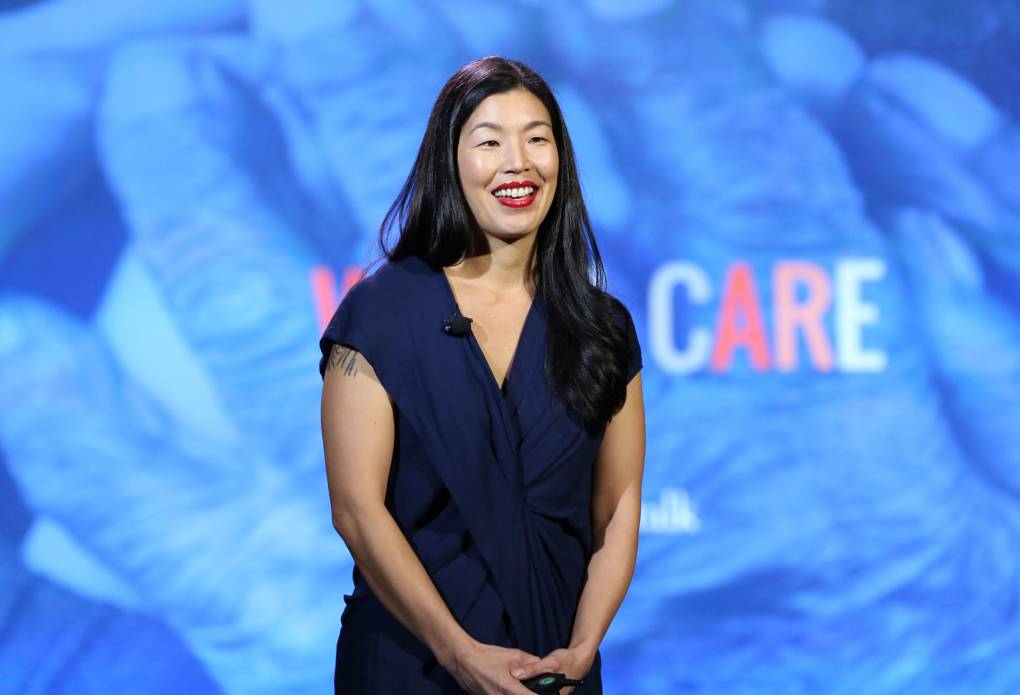
"caption": "'We have a workforce who is essential to not only the families they support, but their own families and communities,' said National Domestic Workers Alliance Director Ai-jen Poo. Pictured on stage at a Conference February 2, 2016 in Rancho Palos Verdes, California.",
"description": "'We have a workforce who is essential to not only the families they support, but their own families and communities,' said National Domestic Workers Alliance Director Ai-jen Poo. Pictured on stage at a Conference February 2, 2016 in Rancho Palos Verdes, California.",
"title": "GettyImages-508048704",
"credit": "Jonathan Leibson/Getty Images for AOL",
"status": "inherit",
"altTag": null,
"isLoading": false,
"fetchFailed": false
},
"news_11875903": {
"type": "attachments",
"id": "news_11875903",
"meta": {
"index": "attachments_1716263798",
"site": "news",
"id": "11875903",
"found": true
},
"parent": 11875883,
"imgSizes": {
"twentyfourteen-full-width": {
"file": "https://ww2.kqed.org/app/uploads/sites/10/2021/05/RS44115_004_KQED_Oakland_SchoolPods_ElisaCecaci_07272020-qut-1038x576.jpeg",
"width": 1038,
"mimeType": "image/jpeg",
"height": 576
},
"thumbnail": {
"file": "https://ww2.kqed.org/app/uploads/sites/10/2021/05/RS44115_004_KQED_Oakland_SchoolPods_ElisaCecaci_07272020-qut-160x107.jpeg",
"width": 160,
"mimeType": "image/jpeg",
"height": 107
},
"post-thumbnail": {
"file": "https://ww2.kqed.org/app/uploads/sites/10/2021/05/RS44115_004_KQED_Oakland_SchoolPods_ElisaCecaci_07272020-qut-672x372.jpeg",
"width": 672,
"mimeType": "image/jpeg",
"height": 372
},
"kqedFullSize": {
"file": "https://ww2.kqed.org/app/uploads/sites/10/2021/05/RS44115_004_KQED_Oakland_SchoolPods_ElisaCecaci_07272020-qut.jpeg",
"width": 1920,
"height": 1280
},
"large": {
"file": "https://ww2.kqed.org/app/uploads/sites/10/2021/05/RS44115_004_KQED_Oakland_SchoolPods_ElisaCecaci_07272020-qut-1020x680.jpeg",
"width": 1020,
"mimeType": "image/jpeg",
"height": 680
},
"1536x1536": {
"file": "https://ww2.kqed.org/app/uploads/sites/10/2021/05/RS44115_004_KQED_Oakland_SchoolPods_ElisaCecaci_07272020-qut-1536x1024.jpeg",
"width": 1536,
"mimeType": "image/jpeg",
"height": 1024
},
"medium": {
"file": "https://ww2.kqed.org/app/uploads/sites/10/2021/05/RS44115_004_KQED_Oakland_SchoolPods_ElisaCecaci_07272020-qut-800x533.jpeg",
"width": 800,
"mimeType": "image/jpeg",
"height": 533
}
},
"publishDate": 1622230182,
"modified": 1622230328,
"caption": "After more than a year of distance learning, some students and parents are counting on summer school to help make up for lost learning. ",
"description": "Keli'i, 6, and Kanoa, 18, study on their front porch in Oakland on July 27, 2020. ",
"title": "distance learning",
"credit": "Beth LaBerge/KQED",
"status": "inherit",
"altTag": null,
"isLoading": false,
"fetchFailed": false
}
},
"audioPlayerReducer": {
"postId": "stream_live",
"isPaused": true,
"isPlaying": false,
"pfsActive": false,
"pledgeModalIsOpen": true,
"playerDrawerIsOpen": false,
"liveAudioPlayStartedAt": 0,
"liveAudioPlayContext": ""
},
"authorsReducer": {
"byline_news_11885225": {
"type": "authors",
"id": "byline_news_11885225",
"meta": {
"override": true
},
"slug": "byline_news_11885225",
"name": "Jane Greenhalgh",
"isLoading": false
},
"byline_news_11885106": {
"type": "authors",
"id": "byline_news_11885106",
"meta": {
"override": true
},
"slug": "byline_news_11885106",
"name": "Sarah Jane Tribble\u003cbr>Kaiser Health News",
"isLoading": false
},
"byline_news_11884148": {
"type": "authors",
"id": "byline_news_11884148",
"meta": {
"override": true
},
"slug": "byline_news_11884148",
"name": "Carolyn Jones\u003cbr>EdSource",
"isLoading": false
},
"byline_news_11883582": {
"type": "authors",
"id": "byline_news_11883582",
"meta": {
"override": true
},
"slug": "byline_news_11883582",
"name": "Selena Simmons-Duffin",
"isLoading": false
},
"byline_news_11883351": {
"type": "authors",
"id": "byline_news_11883351",
"meta": {
"override": true
},
"slug": "byline_news_11883351",
"name": "Don Thompson \u003cbr> The Associated Press",
"isLoading": false
},
"byline_news_11882027": {
"type": "authors",
"id": "byline_news_11882027",
"meta": {
"override": true
},
"slug": "byline_news_11882027",
"name": "Rob Stein",
"isLoading": false
},
"byline_news_11880495": {
"type": "authors",
"id": "byline_news_11880495",
"meta": {
"override": true
},
"slug": "byline_news_11880495",
"name": "Jane Greenhalgh and Rob Stein\u003cbr />NPR",
"isLoading": false
},
"minakim": {
"type": "authors",
"id": "243",
"meta": {
"index": "authors_1716337520",
"id": "243",
"found": true
},
"name": "Mina Kim",
"firstName": "Mina",
"lastName": "Kim",
"slug": "minakim",
"email": "mkim@kqed.org",
"display_author_email": false,
"staff_mastheads": [
"news"
],
"title": "Host, Forum",
"bio": "Mina Kim is host of the 10 a.m. statewide hour of Forum; a live daily talk show for curious Californians on issues that matter to the state and nation, with a particular emphasis on race and equity.\r\n\r\nBefore joining the Forum team, Mina was KQED’s evening news anchor, and health reporter for The California Report. Her award-winning work has included natural disasters in Napa and gun violence in Oakland. Mina grew up in St. John’s, Newfoundland.",
"avatar": "https://secure.gravatar.com/avatar/145ce657a2d08cb86d93686beb958982?s=600&d=blank&r=g",
"twitter": "mkimreporter",
"facebook": null,
"instagram": null,
"linkedin": null,
"sites": [
{
"site": "news",
"roles": [
"contributor"
]
},
{
"site": "stateofhealth",
"roles": [
"author"
]
},
{
"site": "forum",
"roles": [
"editor"
]
}
],
"headData": {
"title": "Mina Kim | KQED",
"description": "Host, Forum",
"ogImgSrc": "https://secure.gravatar.com/avatar/145ce657a2d08cb86d93686beb958982?s=600&d=blank&r=g",
"twImgSrc": "https://secure.gravatar.com/avatar/145ce657a2d08cb86d93686beb958982?s=600&d=blank&r=g"
},
"isLoading": false,
"link": "/author/minakim"
},
"shossaini": {
"type": "authors",
"id": "3214",
"meta": {
"index": "authors_1716337520",
"id": "3214",
"found": true
},
"name": "Sara Hossaini",
"firstName": "Sara",
"lastName": "Hossaini",
"slug": "shossaini",
"email": "shossaini@kqed.org",
"display_author_email": true,
"staff_mastheads": [
"news"
],
"title": "KQED Reporter",
"bio": "Sara Hossaini came to general assignment reporting at KQED in 2013 after two winters reporting at Wyoming Public Radio. She holds a bachelor's degree in broadcast journalism from the University of Nebraska-Lincoln. Her radio romance began after a bitter breakup with documentary film (Ok, maybe it's still complicated). Her first simultaneous jobs in San Francisco were as Associate Producer on a PBS film series through the Center for Asian American Media and as a butler. She likes to trot, plot and make things with her hands.",
"avatar": "https://secure.gravatar.com/avatar/060e9f56b9554e17942e89f413242774?s=600&d=blank&r=g",
"twitter": "mshossaini",
"facebook": null,
"instagram": null,
"linkedin": null,
"sites": [
{
"site": "news",
"roles": [
"author"
]
},
{
"site": "stateofhealth",
"roles": [
"author"
]
}
],
"headData": {
"title": "Sara Hossaini | KQED",
"description": "KQED Reporter",
"ogImgSrc": "https://secure.gravatar.com/avatar/060e9f56b9554e17942e89f413242774?s=600&d=blank&r=g",
"twImgSrc": "https://secure.gravatar.com/avatar/060e9f56b9554e17942e89f413242774?s=600&d=blank&r=g"
},
"isLoading": false,
"link": "/author/shossaini"
},
"vrancano": {
"type": "authors",
"id": "11276",
"meta": {
"index": "authors_1716337520",
"id": "11276",
"found": true
},
"name": "Vanessa Rancaño",
"firstName": "Vanessa",
"lastName": "Rancaño",
"slug": "vrancano",
"email": "vrancano@kqed.org",
"display_author_email": false,
"staff_mastheads": [
"news"
],
"title": "Reporter",
"bio": "Vanessa Rancaño is a features reporter for KQED. She’s also covered homelessness and education for the station and reported from the Central Valley. Her work has aired across public radio, from flagship national news shows to longform narrative podcasts. Before taking up a mic, she worked as a freelance print journalist. She’s been recognized with a number of national and regional awards. Vanessa grew up in California's Central Valley. She's a former NPR Kroc Fellow, and a graduate of the UC Berkeley Graduate School of Journalism.",
"avatar": "https://secure.gravatar.com/avatar/b3a383dfb0e7ee1c17568f2cf067904ab654d6e3de9743fc661f3c788ade1bed?s=600&d=blank&r=g",
"twitter": "vanessarancano",
"bluesky": null,
"facebook": null,
"instagram": null,
"linkedin": null,
"sites": [
{
"site": "arts",
"roles": [
"editor"
]
},
{
"site": "news",
"roles": [
"editor"
]
},
{
"site": "liveblog",
"roles": [
"contributor"
]
}
],
"headData": {
"title": "Vanessa Rancaño | KQED",
"description": "Reporter",
"ogImgSrc": "https://secure.gravatar.com/avatar/b3a383dfb0e7ee1c17568f2cf067904ab654d6e3de9743fc661f3c788ade1bed?s=600&d=blank&r=g",
"twImgSrc": "https://secure.gravatar.com/avatar/b3a383dfb0e7ee1c17568f2cf067904ab654d6e3de9743fc661f3c788ade1bed?s=600&d=blank&r=g"
},
"isLoading": false,
"link": "/author/vrancano"
},
"lsarah": {
"type": "authors",
"id": "11626",
"meta": {
"index": "authors_1716337520",
"id": "11626",
"found": true
},
"name": "Lakshmi Sarah",
"firstName": "Lakshmi",
"lastName": "Sarah",
"slug": "lsarah",
"email": "lsarah@kqed.org",
"display_author_email": false,
"staff_mastheads": [],
"title": "Digital Producer",
"bio": "Lakshmi Sarah is an educator, author and journalist with a focus on innovative storytelling. She has worked with newspapers, radio and magazines from Ahmedabad, India to Los Angeles, California. She has written and produced for Die Zeit, Global Voices, AJ+, KQED, Fusion Media Group and the New York Times.",
"avatar": "https://secure.gravatar.com/avatar/652dcaecd8b28826fc17a8b2d6bb4e93?s=600&d=blank&r=g",
"twitter": "lakitalki",
"facebook": null,
"instagram": "https://www.instagram.com/laki.talki/",
"linkedin": "https://www.linkedin.com/in/lakisarah/",
"sites": [
{
"site": "arts",
"roles": []
},
{
"site": "news",
"roles": []
},
{
"site": "bayareabites",
"roles": []
},
{
"site": "science",
"roles": []
}
],
"headData": {
"title": "Lakshmi Sarah | KQED",
"description": "Digital Producer",
"ogImgSrc": "https://secure.gravatar.com/avatar/652dcaecd8b28826fc17a8b2d6bb4e93?s=600&d=blank&r=g",
"twImgSrc": "https://secure.gravatar.com/avatar/652dcaecd8b28826fc17a8b2d6bb4e93?s=600&d=blank&r=g"
},
"isLoading": false,
"link": "/author/lsarah"
},
"jrodriguez": {
"type": "authors",
"id": "11690",
"meta": {
"index": "authors_1716337520",
"id": "11690",
"found": true
},
"name": "Joe Fitzgerald Rodriguez",
"firstName": "Joe",
"lastName": "Fitzgerald Rodriguez",
"slug": "jrodriguez",
"email": "jrodriguez@kqed.org",
"display_author_email": true,
"staff_mastheads": [
"news"
],
"title": "Reporter and Producer",
"bio": "Joe Fitzgerald Rodriguez is a reporter and digital producer for KQED covering politics. Joe most recently wrote for the \u003cem>San Francisco Examiner\u003c/em> as a political columnist covering The City. He was raised in San Francisco and has spent his reporting career in his beloved, foggy, city by the bay. Joe was 12-years-old when he conducted his first interview in journalism, grilling former San Francisco Mayor Willie Brown for the Marina Middle School newspaper, \u003cem>The Penguin Press, \u003c/em>and he continues to report on the San Francisco Bay Area to this day.",
"avatar": "https://secure.gravatar.com/avatar/2247beb0564c1e9c62228d5649d2edac?s=600&d=blank&r=g",
"twitter": "FitztheReporter",
"facebook": null,
"instagram": "https://www.instagram.com/fitzthereporter/",
"linkedin": null,
"sites": [
{
"site": "",
"roles": [
"editor"
]
},
{
"site": "arts",
"roles": [
"editor"
]
},
{
"site": "news",
"roles": [
"editor"
]
},
{
"site": "science",
"roles": [
"editor"
]
},
{
"site": "elections",
"roles": [
"editor"
]
},
{
"site": "liveblog",
"roles": [
"editor"
]
}
],
"headData": {
"title": "Joe Fitzgerald Rodriguez | KQED",
"description": "Reporter and Producer",
"ogImgSrc": "https://secure.gravatar.com/avatar/2247beb0564c1e9c62228d5649d2edac?s=600&d=blank&r=g",
"twImgSrc": "https://secure.gravatar.com/avatar/2247beb0564c1e9c62228d5649d2edac?s=600&d=blank&r=g"
},
"isLoading": false,
"link": "/author/jrodriguez"
},
"ninasparling": {
"type": "authors",
"id": "11710",
"meta": {
"index": "authors_1716337520",
"id": "11710",
"found": true
},
"name": "ninasparling",
"firstName": "Nina",
"lastName": "Sparling",
"slug": "ninasparling",
"email": "ninasparling@kqed.org",
"display_author_email": false,
"staff_mastheads": [],
"title": "KQED Contributor",
"bio": null,
"avatar": "https://secure.gravatar.com/avatar/7fe6530cd951c31c709822d4ff97d2a8659c7b377dcc1ac6203b70aa62197c31?s=600&d=blank&r=g",
"twitter": null,
"bluesky": null,
"facebook": null,
"instagram": null,
"linkedin": null,
"sites": [
{
"site": "news",
"roles": [
"author"
]
}
],
"headData": {
"title": "ninasparling | KQED",
"description": "KQED Contributor",
"ogImgSrc": "https://secure.gravatar.com/avatar/7fe6530cd951c31c709822d4ff97d2a8659c7b377dcc1ac6203b70aa62197c31?s=600&d=blank&r=g",
"twImgSrc": "https://secure.gravatar.com/avatar/7fe6530cd951c31c709822d4ff97d2a8659c7b377dcc1ac6203b70aa62197c31?s=600&d=blank&r=g"
},
"isLoading": false,
"link": "/author/ninasparling"
},
"nnavarro": {
"type": "authors",
"id": "11756",
"meta": {
"index": "authors_1716337520",
"id": "11756",
"found": true
},
"name": "Natalia Navarro",
"firstName": "Natalia",
"lastName": "Navarro",
"slug": "nnavarro",
"email": "nnavarro@kqed.org",
"display_author_email": true,
"staff_mastheads": [
"news"
],
"title": "Afternoon News Anchor",
"bio": "Natalia Navarro is KQED's afternoon radio news anchor. She came to KQED in 2021 from Colorado Public Radio, where she was a reporter and host. She has received several awards for her work covering daily and breaking news from professional organizations such as the San Francisco Press Club, Society of Professional Journalists and the Colorado Broadcasters Association. Natalia is originally from Tucson, Arizona, where she got her start in journalism writing for the Arizona Daily Star, Arizona Public Media and the Tucson Weekly. Natalia earned her bachelor's degree in journalism and economics, and her master's degree in journalism from the University of Arizona.",
"avatar": "https://secure.gravatar.com/avatar/a2bdb19fd9520bdea295a2d5f9b2ad65ec51cf0bf559fb1cc041d3a0a04d62ad?s=600&d=blank&r=g",
"twitter": "@NataliaVNavarro",
"bluesky": null,
"facebook": null,
"instagram": null,
"linkedin": null,
"sites": [
{
"site": "news",
"roles": [
"editor"
]
}
],
"headData": {
"title": "Natalia Navarro | KQED",
"description": "Afternoon News Anchor",
"ogImgSrc": "https://secure.gravatar.com/avatar/a2bdb19fd9520bdea295a2d5f9b2ad65ec51cf0bf559fb1cc041d3a0a04d62ad?s=600&d=blank&r=g",
"twImgSrc": "https://secure.gravatar.com/avatar/a2bdb19fd9520bdea295a2d5f9b2ad65ec51cf0bf559fb1cc041d3a0a04d62ad?s=600&d=blank&r=g"
},
"isLoading": false,
"link": "/author/nnavarro"
}
},
"pagesReducer": {
"news_tag_covid": {
"type": "terms",
"id": "news_27989",
"meta": {
"index": "terms_1716263798",
"site": "news",
"id": "27989",
"score": 9.103885
},
"featImg": null,
"name": "covid",
"description": null,
"taxonomy": "tag",
"headData": {
"twImgId": null,
"twTitle": null,
"ogTitle": null,
"ogImgId": null,
"twDescription": null,
"description": null,
"title": "covid Archives | KQED News",
"ogDescription": null
},
"ttid": 28006,
"slug": "covid",
"isLoading": false,
"title": "covid",
"pageMeta": {
"site": "news",
"WpPageTemplate": "page-topic-editorial",
"currentPage": 13
},
"blocks": [
{
"blockName": "kqed/post-list",
"attrs": {
"layout": "cardArticle2",
"query": "posts/news?tag=covid",
"seeMore": false,
"paginated": true,
"page": 13
}
},
{
"blockName": "kqed/ad"
}
]
}
},
"pfsSessionReducer": {},
"postsReducer": {
"stream_live": {
"type": "live",
"id": "stream_live",
"audioUrl": "https://streams.kqed.org/kqedradio",
"title": "Live Stream",
"excerpt": "Live Stream information currently unavailable.",
"link": "/radio",
"featImg": "",
"label": {
"name": "KQED Live",
"link": "/"
}
},
"stream_kqedNewscast": {
"type": "posts",
"id": "stream_kqedNewscast",
"audioUrl": "https://www.kqed.org/.stream/anon/radio/RDnews/newscast.mp3?_=1",
"title": "KQED Newscast",
"featImg": "",
"label": {
"name": "88.5 FM",
"link": "/"
}
},
"news_11885225": {
"type": "posts",
"id": "news_11885225",
"meta": {
"index": "posts_1716263798",
"site": "news",
"id": "11885225",
"score": null,
"sort": [
1629141009000
]
},
"guestAuthors": [],
"slug": "immunocompromised-and-considering-a-3rd-covid-vaccine-6-things-to-know",
"title": "Immunocompromised and Considering a 3rd COVID Vaccine? 6 Things to Know",
"publishDate": 1629141009,
"format": "standard",
"headTitle": "Immunocompromised and Considering a 3rd COVID Vaccine? 6 Things to Know | KQED",
"labelTerm": {
"site": "news"
},
"content": "\u003cul>\n\u003cli>\u003cstrong>\u003ca href=\"https://www.kqed.org/news/11855623/where-can-i-get-a-covid-19-vaccine-in-the-bay-area-your-questions-answered#where\">GUIDE: Immunocompromised and looking for your third vaccine dose in the Bay Area?\u003c/a>\u003c/strong>\u003c/li>\n\u003c/ul>\n\u003cp>People with compromised immune systems who already got two doses of the Pfizer or Moderna vaccine can now get a third shot to boost their protection from COVID-19.\u003c/p>\n\u003cp>The Aug. 13 decision by\u003ca href=\"https://www.npr.org/sections/health-shots/2021/08/13/1027461542/cdc-panel-recommends-3rd-covid-vaccine-dose-for-immunocompromised-people\"> federal health agencies \u003c/a>is welcome news to many patients and their doctors who have been calling for this for months.\u003c/p>\n\u003cp>For patients like Valen Keefer, who is a liver and kidney transplant recipient in California, knowing there’s a way to get a third shot is a relief.\u003c/p>\n\u003cp>“This is an amazing and such an important step and needed for a while for our transplant community,” she says. “It’s just been so hard to know what to do and when to do it.”\u003c/p>\n\u003cp>Erin Lauridsen, who is blind and has an autoimmune condition that puts her at greater risk for catching the virus, says she plans on getting her third dose of the Moderna vaccine when it becomes available in the Bay Area.\u003c/p>\n\u003cp>“The decision makes me optimistic about being able to continue to enjoy the sort of increased participation in society that I did from getting my first vaccine,” said Lauridsen, who works for LightHouse for the Blind and Visually Impaired in San Francisco. “It does feel important just because of my intersecting blindness and also health conditions to have access to the vaccines.”\u003c/p>\n\u003cp>Data shows that many immunocompromised patients, such as organ transplant recipients and others on immune-suppressing medications, have had weak responses to the initial doses of the vaccine.\u003c/p>\n\u003cp>For Dr. Marc Boom, who runs \u003ca href=\"https://www.houstonmethodist.org/center-for-innovation/our-team/\">Houston Methodist\u003c/a>, the authorization for third shots couldn’t have come soon enough for patients in his hospital’s large transplant program.\u003cspan style=\"font-weight: 400\">[aside postID=\"news_11855623\"]\u003c/span>\u003c/p>\n\u003cp>“We are immediately pulling in those people, getting them the doses,” Boom says. He applauds the FDA’s decision, but says the agency could have acted faster, noting that countries like Israel, France and the U.K. have already made this move.\u003c/p>\n\u003cp>Friday’s recommendations from the Centers for Disease Control and Prevention leave some questions about exactly who is eligible for an additional dose and how to get it. Here’s what we know so far.\u003c/p>\n\u003cp>\u003cstrong>1. Why should immunocompromised people get a third shot?\u003c/strong>\u003c/p>\n\u003cp>Having a compromised immune system puts you at higher risk of severe illness and death from COVID-19. Studies show that the initial vaccine doses are less effective for people with weakened immune systems, ranging from 59% to 72%, compared to 90% to 94% among people without serious immune deficiencies.\u003c/p>\n\u003cp>People with conditions that weaken the immune system are also far more likely to have a breakthrough infection than people without. One U.S. study shows 40% to 44% of hospitalized breakthrough cases are in immunocompromised people.\u003c/p>\n\u003cp>“If I was someone who was on one of the medications that was on the CDC list, I would almost consider myself unvaccinated at this point,” said Dr. David Karp, who heads the \u003ca href=\"https://utswmed.org/doctors/david-karp/\">Division of Rheumatic Diseases \u003c/a>at UT Southwestern Medical Center.\u003c/p>\n\u003cp>Karp says that even though the current delta surge has mostly hit unvaccinated people, vaccinated but immunosuppressed patients also are landing in hospitals with COVID-19.\u003c/p>\n\u003cp>“For this group of patients, a third shot is going to improve their response to the vaccine and therefore lessen their chances of either contracting the disease or having a more serious disease,” said Karp, who is also president of the board of directors of the American College of Rheumatology.\u003c/p>\n\u003cp>“I’m really excited,” said Pat Beale, 59, of Boise, Idaho, who lives with a liver transplant and takes medicine that suppresses his immune system. He plans to get his third dose within the next week.\u003c/p>\n\u003cp>\u003cstrong>2. Who should get third shots?\u003c/strong>\u003c/p>\n\u003cp>Only a very small group of people with weakened immune systems qualify for the third dose. The CDC is recommending it for \u003ca href=\"https://www.cdc.gov/coronavirus/2019-ncov/vaccines/recommendations/immuno.html\">moderately to severely immunocompromised \u003c/a>people, including those who have:\u003c/p>\n\u003cul>\n\u003cli>Been receiving active cancer treatment for tumors or cancers of the blood.\u003c/li>\n\u003cli>Received an organ transplant and are taking medicine to suppress the immune system.\u003c/li>\n\u003cli>Received a stem cell transplant within the last two years or are taking medicine to suppress the immune system.\u003c/li>\n\u003cli>Moderate or severe primary immunodeficiency (such as DiGeorge syndrome or Wiskott-Aldrich syndrome).\u003c/li>\n\u003cli>Advanced or untreated HIV infection.\u003c/li>\n\u003cli>Active treatment with high-dose corticosteroids or other drugs that may suppress the immune response.\u003c/li>\n\u003c/ul>\n\u003cp>The recommendation is limited to adults 18 and older for the Moderna vaccine because that vaccine has not been authorized for adolescents yet. The Pfizer vaccine is authorized for adolescents 12 and older, and adults.\u003c/p>\n\u003cp>\u003cstrong>3. I don’t know if I’m immunocompromised, but I do have a chronic disease that makes me vulnerable to severe COVID-19 — should I be getting a third shot?\u003c/strong>\u003c/p>\n\u003cp>Many people may consider themselves at higher risk of serious illness from COVID-19 due to age or a preexisting condition, and may want another dose of vaccine. But, for now, an additional shot is only recommended for people who meet the CDC’s criteria for being immunocompromised.\u003c/p>\n\u003cp>People with other chronic conditions — even those that put them at higher risk for severe COVID-19 — are not authorized to get an additional dose at this point.\u003c/p>\n\u003cp>“This would not include long-term care facility residents, persons with diabetes, persons with heart disease. Those types of chronic medical conditions are not the intent here,” said Dr. Amanda Cohn, former chief medical officer for the CDC’s COVID-19 Vaccine Task Force, at Friday’s CDC committee meeting.\u003c/p>\n\u003cp>It’s not clear yet whether or when a booster will be recommended more broadly to vulnerable populations, though this is already underway in other countries including Israel. Health officials are currently tracking how well immunity holds up in people enrolled in the vaccine clinical trials. Those trials will determine the timing of booster shots, officials of both the FDA and CDC say.\u003c/p>\n\u003cp>[ad fullwidth]\u003c/p>\n\u003cp>\u003cstrong>4. Can I just sign up to get the shot or should I talk to my doctor first? And do I have to prove I’m immunosuppressed?\u003c/strong>\u003c/p>\n\u003cp>Start by talking with the health care provider you see for your immune-suppressing condition or its treatment. A doctor’s note is not likely to be required at vaccine sites — a person just needs to inform the staff that they are moderately to severely immunocompromised. However, it’s best to get your doctor’s input before getting the shot, says \u003ca href=\"https://www.hopkinsmedicine.org/profiles/details/dorry-segev\">Dr. Dorry Segev\u003c/a>, a transplant surgeon and researcher at Johns Hopkins Medicine who has been studying COVID-19 vaccination among organ transplant recipients.\u003c/p>\n\u003cp>He says that your doctor can help you determine whether the benefits of getting a third shot outweigh any risks in your particular case. “My hope is that this will be an individual patient-provider shared decision,” he says.\u003c/p>\n\u003cp>For people with compromised immune systems, “every time we activate the immune system, there is a risk,” Segev said. For instance, transplant recipients could risk rejection of the organ. \u003cstrong>“\u003c/strong>These things need to be done in a very careful, deliberate, thoughtful way with people’s medical teams,” he said.\u003c/p>\n\u003cp>For patients with certain conditions, it may be necessary to pause their immune-suppressing medications temporarily to let the third dose of the vaccine take effect, explained Karp. So talk to your doctor about your situation and how to increase your chances of having the vaccine be effective.\u003c/p>\n\u003cp>\u003cstrong>5. If I get a third shot, how good is the protection?\u003c/strong>\u003c/p>\n\u003cp>There are many reasons people can be immunosuppressed — it’s often a combination of their age, their medical conditions, and the treatments and drugs they’re taking. While studies show that a third vaccine dose can boost antibody responses in some people, it’s not universally guaranteed to work.\u003c/p>\n\u003cp>Immunocompromised people who get a third shot should still be aware they’re not necessarily safe from COVID-19, warned Vanderbilt University Professor \u003ca href=\"https://wag.app.vanderbilt.edu/PublicPage/Faculty/Details/32055\">Dr. Helen Keipp Talbot \u003c/a>during a committee meeting of the \u003ca href=\"https://www.cdc.gov/vaccines/acip/index.html\">Advisory Committee on Immunization Practices\u003c/a>.\u003c/p>\n\u003cp>“I think the reality is they’ll be safer, but still at an incredibly high risk for severe disease and death.” And everyone they spend time with also needs to be vaccinated, to protect them, Talbot says.\u003c/p>\n\u003cp>In a presentation to the committee, the CDC’s Dr. Kathleen Dooling said immunocompromised people, including those who receive an additional dose, should continue to follow prevention measures, including wearing a mask, staying six feet apart from others they don’t live with and avoiding crowds and poorly ventilated indoor spaces. And she urged close contacts of immunocompromised people to get vaccinated if they haven’t already.\u003c/p>\n\u003cp>\u003cstrong>6. Do I need to get the same vaccine I got for my first two doses? And what do I do if I got the J&J vaccine?\u003c/strong>\u003c/p>\n\u003cp>The CDC recommends you get the same vaccine you got for your first two doses, so if you got the Pfizer or Moderna for the first two doses, get that one for your third shot. But if that is not feasible, the CDC committee said an additional dose with the alternate vaccine is permitted.\u003c/p>\n\u003cp>Currently only the Pfizer and the Moderna vaccines are authorized for an additional dose. If you got the J&J, you still aren’t eligible.\u003c/p>\n\u003cp>The FDA says that there wasn’t enough data available to extend the authorization for an additional dose for the J&J shots. Representatives of both the FDA and the CDC said that they are “actively engaged” to determine the best course of action for recipients of the Johnson & Johnson vaccine and expect to know more “very shortly.”\u003c/p>\n\u003cdiv class=\"fullattribution\">Copyright 2021 NPR. To see more, visit npr.org.\u003cimg decoding=\"async\" src=\"https://www.google-analytics.com/__utm.gif?utmac=UA-5828686-4&utmdt=6+Things+To+Know+If+You%27re+Immunocompromised+And+Considering+A+3rd+Shot&utme=8(APIKey)9(MDAxOTAwOTE4MDEyMTkxMDAzNjczZDljZA004)\">\u003c/div>\n\u003cp>[ad floatright]\u003c/p>\n",
"blocks": [],
"excerpt": "People with weakened immune systems who already got two doses of the Pfizer or Moderna COVID-19 vaccines can now get a third shot. But exactly who is eligible? Here's what we know so far.",
"status": "publish",
"parent": 0,
"modified": 1726006236,
"stats": {
"hasAudio": false,
"hasVideo": false,
"hasChartOrMap": false,
"iframeSrcs": [],
"hasGoogleForm": false,
"hasGallery": false,
"hasHearkenModule": false,
"hasPolis": false,
"paragraphCount": 41,
"wordCount": 1685
},
"headData": {
"title": "Immunocompromised and Considering a 3rd COVID Vaccine? 6 Things to Know | KQED",
"description": "People with weakened immune systems who already got two doses of the Pfizer or Moderna COVID-19 vaccines can now get a third shot. But exactly who is eligible? Here's what we know so far.",
"ogTitle": "",
"ogDescription": "",
"ogImgId": "",
"twTitle": "",
"twDescription": "",
"twImgId": "",
"schema": {
"@context": "https://schema.org",
"@type": "NewsArticle",
"headline": "Immunocompromised and Considering a 3rd COVID Vaccine? 6 Things to Know",
"datePublished": "2021-08-16T12:10:09-07:00",
"dateModified": "2024-09-10T15:10:36-07:00",
"image": "https://cdn.kqed.org/wp-content/uploads/2020/02/KQED-OG-Image@1x.png",
"isAccessibleForFree": "True",
"publisher": {
"@type": "NewsMediaOrganization",
"@id": "https://www.kqed.org/#organization",
"name": "KQED",
"logo": "https://cdn.kqed.org/wp-content/uploads/2020/02/KQED-OG-Image@1x.png",
"url": "https://www.kqed.org",
"sameAs": [
"https://www.facebook.com/KQED",
"https://twitter.com/KQED",
"https://www.instagram.com/kqed/",
"https://www.tiktok.com/@kqedofficial",
"https://www.linkedin.com/company/kqed",
"https://www.youtube.com/channel/UCeC0IOo7i1P_61zVUWbJ4nw"
]
}
}
},
"sticky": false,
"nprImageCredit": "Christiana Botic",
"nprByline": "Jane Greenhalgh",
"nprImageAgency": "Boston Globe via Getty Images",
"nprStoryId": "1027597108",
"nprApiLink": "http://api.npr.org/query?id=1027597108&apiKey=MDAxOTAwOTE4MDEyMTkxMDAzNjczZDljZA004",
"nprHtmlLink": "https://www.npr.org/sections/health-shots/2021/08/14/1027597108/6-things-to-know-if-youre-immunocompromised-and-considering-a-3rd-shot?ft=nprml&f=1027597108",
"nprRetrievedStory": "1",
"nprPubDate": "Sat, 14 Aug 2021 07:00:00 -0400",
"nprStoryDate": "Sat, 14 Aug 2021 07:00:28 -0400",
"nprLastModifiedDate": "Sat, 14 Aug 2021 07:00:28 -0400",
"path": "/news/11885225/immunocompromised-and-considering-a-3rd-covid-vaccine-6-things-to-know",
"audioTrackLength": null,
"parsedContent": [
{
"type": "contentString",
"content": "\u003cdiv class=\"post-body\">\u003cp>\u003cul>\n\u003cli>\u003cstrong>\u003ca href=\"https://www.kqed.org/news/11855623/where-can-i-get-a-covid-19-vaccine-in-the-bay-area-your-questions-answered#where\">GUIDE: Immunocompromised and looking for your third vaccine dose in the Bay Area?\u003c/a>\u003c/strong>\u003c/li>\n\u003c/ul>\n\u003cp>People with compromised immune systems who already got two doses of the Pfizer or Moderna vaccine can now get a third shot to boost their protection from COVID-19.\u003c/p>\n\u003cp>The Aug. 13 decision by\u003ca href=\"https://www.npr.org/sections/health-shots/2021/08/13/1027461542/cdc-panel-recommends-3rd-covid-vaccine-dose-for-immunocompromised-people\"> federal health agencies \u003c/a>is welcome news to many patients and their doctors who have been calling for this for months.\u003c/p>\n\u003cp>For patients like Valen Keefer, who is a liver and kidney transplant recipient in California, knowing there’s a way to get a third shot is a relief.\u003c/p>\n\u003cp>“This is an amazing and such an important step and needed for a while for our transplant community,” she says. “It’s just been so hard to know what to do and when to do it.”\u003c/p>\n\u003cp>Erin Lauridsen, who is blind and has an autoimmune condition that puts her at greater risk for catching the virus, says she plans on getting her third dose of the Moderna vaccine when it becomes available in the Bay Area.\u003c/p>\n\u003cp>“The decision makes me optimistic about being able to continue to enjoy the sort of increased participation in society that I did from getting my first vaccine,” said Lauridsen, who works for LightHouse for the Blind and Visually Impaired in San Francisco. “It does feel important just because of my intersecting blindness and also health conditions to have access to the vaccines.”\u003c/p>\n\u003cp>Data shows that many immunocompromised patients, such as organ transplant recipients and others on immune-suppressing medications, have had weak responses to the initial doses of the vaccine.\u003c/p>\n\u003cp>For Dr. Marc Boom, who runs \u003ca href=\"https://www.houstonmethodist.org/center-for-innovation/our-team/\">Houston Methodist\u003c/a>, the authorization for third shots couldn’t have come soon enough for patients in his hospital’s large transplant program.\u003cspan style=\"font-weight: 400\">\u003c/p>\u003c/div>",
"attributes": {
"named": {},
"numeric": []
}
},
{
"type": "component",
"content": "",
"name": "aside",
"attributes": {
"named": {
"postid": "news_11855623",
"label": ""
},
"numeric": []
}
},
{
"type": "contentString",
"content": "\u003cdiv class=\"post-body\">\u003cp>\u003c/span>\u003c/p>\n\u003cp>“We are immediately pulling in those people, getting them the doses,” Boom says. He applauds the FDA’s decision, but says the agency could have acted faster, noting that countries like Israel, France and the U.K. have already made this move.\u003c/p>\n\u003cp>Friday’s recommendations from the Centers for Disease Control and Prevention leave some questions about exactly who is eligible for an additional dose and how to get it. Here’s what we know so far.\u003c/p>\n\u003cp>\u003cstrong>1. Why should immunocompromised people get a third shot?\u003c/strong>\u003c/p>\n\u003cp>Having a compromised immune system puts you at higher risk of severe illness and death from COVID-19. Studies show that the initial vaccine doses are less effective for people with weakened immune systems, ranging from 59% to 72%, compared to 90% to 94% among people without serious immune deficiencies.\u003c/p>\n\u003cp>People with conditions that weaken the immune system are also far more likely to have a breakthrough infection than people without. One U.S. study shows 40% to 44% of hospitalized breakthrough cases are in immunocompromised people.\u003c/p>\n\u003cp>“If I was someone who was on one of the medications that was on the CDC list, I would almost consider myself unvaccinated at this point,” said Dr. David Karp, who heads the \u003ca href=\"https://utswmed.org/doctors/david-karp/\">Division of Rheumatic Diseases \u003c/a>at UT Southwestern Medical Center.\u003c/p>\n\u003cp>Karp says that even though the current delta surge has mostly hit unvaccinated people, vaccinated but immunosuppressed patients also are landing in hospitals with COVID-19.\u003c/p>\n\u003cp>“For this group of patients, a third shot is going to improve their response to the vaccine and therefore lessen their chances of either contracting the disease or having a more serious disease,” said Karp, who is also president of the board of directors of the American College of Rheumatology.\u003c/p>\n\u003cp>“I’m really excited,” said Pat Beale, 59, of Boise, Idaho, who lives with a liver transplant and takes medicine that suppresses his immune system. He plans to get his third dose within the next week.\u003c/p>\n\u003cp>\u003cstrong>2. Who should get third shots?\u003c/strong>\u003c/p>\n\u003cp>Only a very small group of people with weakened immune systems qualify for the third dose. The CDC is recommending it for \u003ca href=\"https://www.cdc.gov/coronavirus/2019-ncov/vaccines/recommendations/immuno.html\">moderately to severely immunocompromised \u003c/a>people, including those who have:\u003c/p>\n\u003cul>\n\u003cli>Been receiving active cancer treatment for tumors or cancers of the blood.\u003c/li>\n\u003cli>Received an organ transplant and are taking medicine to suppress the immune system.\u003c/li>\n\u003cli>Received a stem cell transplant within the last two years or are taking medicine to suppress the immune system.\u003c/li>\n\u003cli>Moderate or severe primary immunodeficiency (such as DiGeorge syndrome or Wiskott-Aldrich syndrome).\u003c/li>\n\u003cli>Advanced or untreated HIV infection.\u003c/li>\n\u003cli>Active treatment with high-dose corticosteroids or other drugs that may suppress the immune response.\u003c/li>\n\u003c/ul>\n\u003cp>The recommendation is limited to adults 18 and older for the Moderna vaccine because that vaccine has not been authorized for adolescents yet. The Pfizer vaccine is authorized for adolescents 12 and older, and adults.\u003c/p>\n\u003cp>\u003cstrong>3. I don’t know if I’m immunocompromised, but I do have a chronic disease that makes me vulnerable to severe COVID-19 — should I be getting a third shot?\u003c/strong>\u003c/p>\n\u003cp>Many people may consider themselves at higher risk of serious illness from COVID-19 due to age or a preexisting condition, and may want another dose of vaccine. But, for now, an additional shot is only recommended for people who meet the CDC’s criteria for being immunocompromised.\u003c/p>\n\u003cp>People with other chronic conditions — even those that put them at higher risk for severe COVID-19 — are not authorized to get an additional dose at this point.\u003c/p>\n\u003cp>“This would not include long-term care facility residents, persons with diabetes, persons with heart disease. Those types of chronic medical conditions are not the intent here,” said Dr. Amanda Cohn, former chief medical officer for the CDC’s COVID-19 Vaccine Task Force, at Friday’s CDC committee meeting.\u003c/p>\n\u003cp>It’s not clear yet whether or when a booster will be recommended more broadly to vulnerable populations, though this is already underway in other countries including Israel. Health officials are currently tracking how well immunity holds up in people enrolled in the vaccine clinical trials. Those trials will determine the timing of booster shots, officials of both the FDA and CDC say.\u003c/p>\n\u003cp>\u003c/p>\u003c/div>",
"attributes": {
"named": {},
"numeric": []
}
},
{
"type": "component",
"content": "",
"name": "ad",
"attributes": {
"named": {
"label": "fullwidth"
},
"numeric": [
"fullwidth"
]
}
},
{
"type": "contentString",
"content": "\u003cdiv class=\"post-body\">\u003cp>\u003c/p>\n\u003cp>\u003cstrong>4. Can I just sign up to get the shot or should I talk to my doctor first? And do I have to prove I’m immunosuppressed?\u003c/strong>\u003c/p>\n\u003cp>Start by talking with the health care provider you see for your immune-suppressing condition or its treatment. A doctor’s note is not likely to be required at vaccine sites — a person just needs to inform the staff that they are moderately to severely immunocompromised. However, it’s best to get your doctor’s input before getting the shot, says \u003ca href=\"https://www.hopkinsmedicine.org/profiles/details/dorry-segev\">Dr. Dorry Segev\u003c/a>, a transplant surgeon and researcher at Johns Hopkins Medicine who has been studying COVID-19 vaccination among organ transplant recipients.\u003c/p>\n\u003cp>He says that your doctor can help you determine whether the benefits of getting a third shot outweigh any risks in your particular case. “My hope is that this will be an individual patient-provider shared decision,” he says.\u003c/p>\n\u003cp>For people with compromised immune systems, “every time we activate the immune system, there is a risk,” Segev said. For instance, transplant recipients could risk rejection of the organ. \u003cstrong>“\u003c/strong>These things need to be done in a very careful, deliberate, thoughtful way with people’s medical teams,” he said.\u003c/p>\n\u003cp>For patients with certain conditions, it may be necessary to pause their immune-suppressing medications temporarily to let the third dose of the vaccine take effect, explained Karp. So talk to your doctor about your situation and how to increase your chances of having the vaccine be effective.\u003c/p>\n\u003cp>\u003cstrong>5. If I get a third shot, how good is the protection?\u003c/strong>\u003c/p>\n\u003cp>There are many reasons people can be immunosuppressed — it’s often a combination of their age, their medical conditions, and the treatments and drugs they’re taking. While studies show that a third vaccine dose can boost antibody responses in some people, it’s not universally guaranteed to work.\u003c/p>\n\u003cp>Immunocompromised people who get a third shot should still be aware they’re not necessarily safe from COVID-19, warned Vanderbilt University Professor \u003ca href=\"https://wag.app.vanderbilt.edu/PublicPage/Faculty/Details/32055\">Dr. Helen Keipp Talbot \u003c/a>during a committee meeting of the \u003ca href=\"https://www.cdc.gov/vaccines/acip/index.html\">Advisory Committee on Immunization Practices\u003c/a>.\u003c/p>\n\u003cp>“I think the reality is they’ll be safer, but still at an incredibly high risk for severe disease and death.” And everyone they spend time with also needs to be vaccinated, to protect them, Talbot says.\u003c/p>\n\u003cp>In a presentation to the committee, the CDC’s Dr. Kathleen Dooling said immunocompromised people, including those who receive an additional dose, should continue to follow prevention measures, including wearing a mask, staying six feet apart from others they don’t live with and avoiding crowds and poorly ventilated indoor spaces. And she urged close contacts of immunocompromised people to get vaccinated if they haven’t already.\u003c/p>\n\u003cp>\u003cstrong>6. Do I need to get the same vaccine I got for my first two doses? And what do I do if I got the J&J vaccine?\u003c/strong>\u003c/p>\n\u003cp>The CDC recommends you get the same vaccine you got for your first two doses, so if you got the Pfizer or Moderna for the first two doses, get that one for your third shot. But if that is not feasible, the CDC committee said an additional dose with the alternate vaccine is permitted.\u003c/p>\n\u003cp>Currently only the Pfizer and the Moderna vaccines are authorized for an additional dose. If you got the J&J, you still aren’t eligible.\u003c/p>\n\u003cp>The FDA says that there wasn’t enough data available to extend the authorization for an additional dose for the J&J shots. Representatives of both the FDA and the CDC said that they are “actively engaged” to determine the best course of action for recipients of the Johnson & Johnson vaccine and expect to know more “very shortly.”\u003c/p>\n\u003cdiv class=\"fullattribution\">Copyright 2021 NPR. To see more, visit npr.org.\u003cimg decoding=\"async\" src=\"https://www.google-analytics.com/__utm.gif?utmac=UA-5828686-4&utmdt=6+Things+To+Know+If+You%27re+Immunocompromised+And+Considering+A+3rd+Shot&utme=8(APIKey)9(MDAxOTAwOTE4MDEyMTkxMDAzNjczZDljZA004)\">\u003c/div>\n\u003cp>\u003c/p>\u003c/div>",
"attributes": {
"named": {},
"numeric": []
}
},
{
"type": "component",
"content": "",
"name": "ad",
"attributes": {
"named": {
"label": "floatright"
},
"numeric": [
"floatright"
]
}
},
{
"type": "contentString",
"content": "\u003cdiv class=\"post-body\">\u003cp>\u003c/p>\n\u003c/div>\u003c/p>",
"attributes": {
"named": {},
"numeric": []
}
}
],
"link": "/news/11885225/immunocompromised-and-considering-a-3rd-covid-vaccine-6-things-to-know",
"authors": [
"byline_news_11885225"
],
"categories": [
"news_457",
"news_8"
],
"tags": [
"news_27350",
"news_27989",
"news_28801",
"news_27626",
"news_18543",
"news_17615"
],
"featImg": "news_11885226",
"label": "news"
},
"news_11885160": {
"type": "posts",
"id": "news_11885160",
"meta": {
"index": "posts_1716263798",
"site": "news",
"id": "11885160",
"score": null,
"sort": [
1629065756000
]
},
"guestAuthors": [],
"slug": "sf-lowrider-fest-watch-these-cars-bounce-and-get-a-vaccine-too",
"title": "SF Lowrider Fest: Watch These Cars Bounce and Get a Vaccine, Too",
"publishDate": 1629065756,
"format": "audio",
"headTitle": "SF Lowrider Fest: Watch These Cars Bounce and Get a Vaccine, Too | KQED",
"labelTerm": {
"site": "news"
},
"content": "\u003cp>Fans of lowrider car culture celebrated with a purpose over the weekend: The 40th annual “King of the Streets” lowrider car show at Daly City’s Cow Palace also included a vaccination clinic.\u003c/p>\n\u003cp>“It’s about being creative, just like lowriders, we’re creative,” said San Francisco Lowrider Council founder Roberto Y. Hernández.\u003c/p>\n\u003cp>While the usual hydraulic-propelled car-hopping contest took place, the lowrider council also came up with the idea to offer cash incentives to help reach unvaccinated folks, especially in the Latino community. And alongside the usual arts and crafts vendors, the council provided custom-made lowrider masks.\u003c/p>\n\u003cp>\u003ca href=\"https://www.sanfranciscolowridercouncil.com/\" target=\"_blank\" rel=\"noopener noreferrer\">The Lowrider Council\u003c/a> was initially founded in 1981 in an effort to push back against the racial profiling of young Latino men by the San Francisco Police Department. Hernández was arrested 113 times by San Francisco police under then-Mayor Dianne Feinstein, according to an event press release from the council.\u003c/p>\n\u003cp>Hernandez, along with others, filed a civil rights lawsuit against the city of San Francisco, and forced the removal of some police officers. Over the years, the council has collaborated with social justice organizations such as the United Farm Workers, Black Lives Matter and others calling for justice for Alex Nieto, a young Latino man killed by SFPD in 2014.\u003c/p>\n\u003cp>[ad fullwidth]\u003c/p>\n\u003cp>At Saturday’s event, the focus was on vaccinations.\u003c/p>\n\u003cp>“Eventually, you’re going to need a vaccine to go to indoor events,” Hernández said. “So let’s just get everybody vaccinated so that you don’t feel deprived of not being able to participate in things that you’re used to participating in.”\u003c/p>\n\u003cp>San Francisco Mayor London Breed announced Aug. 12 that the city will soon require proof of vaccination against COVID-19 to enter public indoor spaces including bars, restaurants and gyms. The new rule goes into effect Aug. 20. [aside postID=news_11884778]\u003c/p>\n\u003cp>“This is serious,” 58-year-old Marcus Gregory told KQED at the lowrider festival. He heard about the event from his friend, 59-year-old Ricky Ervin.\u003c/p>\n\u003cp>“I just want to … be on the safe side,” Gregory said. After his jab, he was up and headed toward the waiting area, where his friend Ricky sat with a Band-Aid on his arm.\u003c/p>\n\u003cp>Ervin said he’s been spreading the word after hearing about the event on the news. Each of them received a $100 Target gift card and a free “King of the Streets” T-shirt for their participation.\u003c/p>\n\u003cp>Pascal García-Montpetit, who is the health coordinator of the Latino Task Force, said vaccination rates in San Francisco are high — \u003ca href=\"https://sf.gov/data/covid-19-vaccinations\" target=\"_blank\" rel=\"noopener noreferrer\">77% of SF residents have had at least one dose\u003c/a> — but also noted the people coming to get their vaccines sometimes need a bit more encouragement.\u003c/p>\n\u003cp>“We do have to have these longer conversations with people,” he said, “with these extra incentives to help get them across that finish line.”\u003c/p>\n\u003cp>Catalina Cervantes Torres ended up getting COVID-19 before she decided to get vaccinated.\u003c/p>\n\u003cp>“I hadn’t planned on getting one [a vaccine] but a few months ago I got COVID and decided to do it,” she told KQED in Spanish. She came with her husband to admire the cars — and to get her shot.\u003c/p>\n\u003cp>\u003c/p>\n\u003cp>“Vacúnate ya, [vaccinate now] low and slow,” Hernandez said. “Winner takes home bragging rights and is the king of the streets all year long.”\u003c/p>\n\n",
"blocks": [],
"excerpt": "Fans of lowrider car culture celebrated with a purpose over the weekend: The 40th annual 'King of the Streets' lowrider car show and hopping contest at the Cow Palace included a vaccination clinic.",
"status": "publish",
"parent": 0,
"modified": 1740613570,
"stats": {
"hasAudio": false,
"hasVideo": false,
"hasChartOrMap": false,
"iframeSrcs": [],
"hasGoogleForm": false,
"hasGallery": false,
"hasHearkenModule": false,
"hasPolis": false,
"paragraphCount": 18,
"wordCount": 605
},
"headData": {
"title": "SF Lowrider Fest: Watch These Cars Bounce and Get a Vaccine, Too | KQED",
"description": "Fans of lowrider car culture celebrated with a purpose over the weekend: The 40th annual 'King of the Streets' lowrider car show and hopping contest at the Cow Palace included a vaccination clinic.",
"ogTitle": "",
"ogDescription": "",
"ogImgId": "",
"twTitle": "",
"twDescription": "",
"twImgId": "",
"schema": {
"@context": "https://schema.org",
"@type": "NewsArticle",
"headline": "SF Lowrider Fest: Watch These Cars Bounce and Get a Vaccine, Too",
"datePublished": "2021-08-15T15:15:56-07:00",
"dateModified": "2025-02-26T15:46:10-08:00",
"image": "https://cdn.kqed.org/wp-content/uploads/2020/02/KQED-OG-Image@1x.png",
"isAccessibleForFree": "True",
"publisher": {
"@type": "NewsMediaOrganization",
"@id": "https://www.kqed.org/#organization",
"name": "KQED",
"logo": "https://cdn.kqed.org/wp-content/uploads/2020/02/KQED-OG-Image@1x.png",
"url": "https://www.kqed.org",
"sameAs": [
"https://www.facebook.com/KQED",
"https://twitter.com/KQED",
"https://www.instagram.com/kqed/",
"https://www.tiktok.com/@kqedofficial",
"https://www.linkedin.com/company/kqed",
"https://www.youtube.com/channel/UCeC0IOo7i1P_61zVUWbJ4nw"
]
}
}
},
"audioUrl": "https://www.kqed.org/.stream/anon/radio/RDnews/2021/08/HossainiLowRiderVaccines.mp3",
"sticky": false,
"path": "/news/11885160/sf-lowrider-fest-watch-these-cars-bounce-and-get-a-vaccine-too",
"audioTrackLength": null,
"parsedContent": [
{
"type": "contentString",
"content": "\u003cdiv class=\"post-body\">\u003cp>\u003cp>Fans of lowrider car culture celebrated with a purpose over the weekend: The 40th annual “King of the Streets” lowrider car show at Daly City’s Cow Palace also included a vaccination clinic.\u003c/p>\n\u003cp>“It’s about being creative, just like lowriders, we’re creative,” said San Francisco Lowrider Council founder Roberto Y. Hernández.\u003c/p>\n\u003cp>While the usual hydraulic-propelled car-hopping contest took place, the lowrider council also came up with the idea to offer cash incentives to help reach unvaccinated folks, especially in the Latino community. And alongside the usual arts and crafts vendors, the council provided custom-made lowrider masks.\u003c/p>\n\u003cp>\u003ca href=\"https://www.sanfranciscolowridercouncil.com/\" target=\"_blank\" rel=\"noopener noreferrer\">The Lowrider Council\u003c/a> was initially founded in 1981 in an effort to push back against the racial profiling of young Latino men by the San Francisco Police Department. Hernández was arrested 113 times by San Francisco police under then-Mayor Dianne Feinstein, according to an event press release from the council.\u003c/p>\n\u003cp>Hernandez, along with others, filed a civil rights lawsuit against the city of San Francisco, and forced the removal of some police officers. Over the years, the council has collaborated with social justice organizations such as the United Farm Workers, Black Lives Matter and others calling for justice for Alex Nieto, a young Latino man killed by SFPD in 2014.\u003c/p>\n\u003cp>\u003c/p>\u003c/div>",
"attributes": {
"named": {},
"numeric": []
}
},
{
"type": "component",
"content": "",
"name": "ad",
"attributes": {
"named": {
"label": "fullwidth"
},
"numeric": [
"fullwidth"
]
}
},
{
"type": "contentString",
"content": "\u003cdiv class=\"post-body\">\u003cp>\u003c/p>\n\u003cp>At Saturday’s event, the focus was on vaccinations.\u003c/p>\n\u003cp>“Eventually, you’re going to need a vaccine to go to indoor events,” Hernández said. “So let’s just get everybody vaccinated so that you don’t feel deprived of not being able to participate in things that you’re used to participating in.”\u003c/p>\n\u003cp>San Francisco Mayor London Breed announced Aug. 12 that the city will soon require proof of vaccination against COVID-19 to enter public indoor spaces including bars, restaurants and gyms. The new rule goes into effect Aug. 20. \u003c/p>\u003c/div>",
"attributes": {
"named": {},
"numeric": []
}
},
{
"type": "component",
"content": "",
"name": "aside",
"attributes": {
"named": {
"postid": "news_11884778",
"label": ""
},
"numeric": []
}
},
{
"type": "contentString",
"content": "\u003cdiv class=\"post-body\">\u003cp>\u003c/p>\n\u003cp>“This is serious,” 58-year-old Marcus Gregory told KQED at the lowrider festival. He heard about the event from his friend, 59-year-old Ricky Ervin.\u003c/p>\n\u003cp>“I just want to … be on the safe side,” Gregory said. After his jab, he was up and headed toward the waiting area, where his friend Ricky sat with a Band-Aid on his arm.\u003c/p>\n\u003cp>Ervin said he’s been spreading the word after hearing about the event on the news. Each of them received a $100 Target gift card and a free “King of the Streets” T-shirt for their participation.\u003c/p>\n\u003cp>Pascal García-Montpetit, who is the health coordinator of the Latino Task Force, said vaccination rates in San Francisco are high — \u003ca href=\"https://sf.gov/data/covid-19-vaccinations\" target=\"_blank\" rel=\"noopener noreferrer\">77% of SF residents have had at least one dose\u003c/a> — but also noted the people coming to get their vaccines sometimes need a bit more encouragement.\u003c/p>\n\u003cp>“We do have to have these longer conversations with people,” he said, “with these extra incentives to help get them across that finish line.”\u003c/p>\n\u003cp>Catalina Cervantes Torres ended up getting COVID-19 before she decided to get vaccinated.\u003c/p>\n\u003cp>“I hadn’t planned on getting one [a vaccine] but a few months ago I got COVID and decided to do it,” she told KQED in Spanish. She came with her husband to admire the cars — and to get her shot.\u003c/p>\n\u003cp>\u003c/p>\n\u003cp>“Vacúnate ya, [vaccinate now] low and slow,” Hernandez said. “Winner takes home bragging rights and is the king of the streets all year long.”\u003c/p>\n\n\u003c/div>\u003c/p>",
"attributes": {
"named": {},
"numeric": []
}
}
],
"link": "/news/11885160/sf-lowrider-fest-watch-these-cars-bounce-and-get-a-vaccine-too",
"authors": [
"3214"
],
"categories": [
"news_223",
"news_457",
"news_28250",
"news_8"
],
"tags": [
"news_27989",
"news_27504",
"news_22044",
"news_29644",
"news_27626",
"news_18543",
"news_29792",
"news_38",
"news_981"
],
"featImg": "news_11885163",
"label": "news"
},
"news_11885106": {
"type": "posts",
"id": "news_11885106",
"meta": {
"index": "posts_1716263798",
"site": "news",
"id": "11885106",
"score": null,
"sort": [
1628942421000
]
},
"parent": 0,
"labelTerm": {
"site": "news"
},
"blocks": [],
"publishDate": 1628942421,
"format": "standard",
"disqusTitle": "Pfizer CEO to Public: Just Trust Us on the COVID Booster",
"title": "Pfizer CEO to Public: Just Trust Us on the COVID Booster",
"headTitle": "KQED News",
"content": "\u003cp>Pfizer CEO Albert Bourla was confident in June about the ability of his company’s vaccine to protect against the highly contagious delta variant, as it marched across the globe and filled U.S. hospitals with patients.\u003c/p>\n\u003cp>“I feel quite comfortable that we cover it,” Bourla said.\u003c/p>\n\u003cp>Just weeks later, Pfizer said it would seek authorization for a booster shot, after early trial results showed a third dose potentially increased protection. At the end of July, Pfizer and BioNTech announced findings that four to six months after a second dose, their vaccine’s efficacy dropped to about 84%.\u003c/p>\n\u003cp>Bourla was quick to promote a third dose after the discouraging news, saying he was “very, very confident” that a booster would increase immunity levels in the vaccinated.\u003c/p>\n\u003cp>There’s one hitch: Pfizer has not yet delivered conclusive proof to back up that confidence. The company lacks late-stage clinical trial results to confirm a booster will work against COVID variants including delta, which now accounts for 93% of new infections across the U.S.\u003c/p>\n\u003cp>[ad fullwidth]\u003c/p>\n\u003cp>Pfizer announced its \u003ca href=\"https://clinicaltrials.gov/ct2/show/NCT04955626?term=Pfizer&cond=Covid19&draw=3started\">global phase 3 trial\u003c/a> on a third dose in mid-July. That trial’s completion date is in 2022. Phase 3 results generally are required before regulatory approval.\u003c/p>\n\u003cp>“We are confident in this vaccine and the third dose, but you have to remember the vaccine efficacy study is still going on, so we need all the evidence to back up that,” Jerica Pitts, Pfizer’s director of global media relations, said Monday. The financial stakes are enormous: Pfizer announced in July that it expects \u003ca href=\"https://investors.pfizer.com/investor-news/press-release-details/2021/PFIZER-REPORTS-SECOND-QUARTER-2021-RESULTS/default.aspx\">$33.5 billion \u003c/a>in COVID-19 vaccine revenue this year.\u003c/p>\n\u003cp>Meanwhile, Pfizer recently said that if a third dose couldn’t combat the delta or other variants, the drugmaker is poised to come up with a “tailor-made” vaccine within 100 days.\u003c/p>\n\u003cp>All of this has sown a sense of confusion about what exactly will work, and when. The pharmaceutical industry’s rush to recommend boosters for the public is “a little frustrating,” said Dr. Paul Offit, director of the Vaccine Education Center at Children’s Hospital of Philadelphia and an adviser to the National Institutes of Health and the Food and Drug Administration. Even if a booster is found to be safe, he said, the U.S. effort should focus on “vaccinating people who are unvaccinated.”\u003c/p>\n\u003cp>In any case, decisions about boosters do not rest with vaccine makers, he said.\u003c/p>\n\u003cp>“Pharmaceutical companies aren’t public health agencies. It’s really not theirs to determine when or whether there should be booster dosing,” Offit said. “That is the purview of the CDC.”\u003c/p>\n\u003cp>Indeed, the Centers for Disease Control and Prevention and the FDA ― the federal agencies overseeing the authorization of COVID vaccines ― said \u003ca href=\"https://www.cdc.gov/media/releases/2021/s-07082021.html\" target=\"_blank\" rel=\"noopener noreferrer\">in July\u003c/a> that fully vaccinated Americans do not need a booster shot. Currently authorized vaccines ― from Pfizer, Moderna and Johnson & Johnson ― are working as they should: All three lower the risk of COVID severe enough to hospitalize or kill a person.\u003c/p>\n\u003cp>If hospitalization and death rates increase among the vaccinated, then it would be time to talk about boosters, Offit said, but “we’re not there yet.”\u003c/p>\n\u003cp>The White House has added to the mixed messaging: Press Secretary Jen Psaki confirmed that the U.S. will buy an additional 200 million doses of the Pfizer-BioNTech vaccine for inoculating children under 12 and for possible boosters.\u003c/p>\n\u003cp>Natalie Dean, a biostatistician at Emory University in Atlanta, said the confusion is not necessarily the fault of any one institution but rather that “there is genuine scientific uncertainty about how well [existing] vaccines work against the new variant.”\u003c/p>\n\u003cp>Scientists are piecing together information from observational studies, outbreak investigations and analyses of antibody responses.\u003c/p>\n\u003cp>For many Americans ― especially those who struggled six months ago to find any dose, frantically using \u003ca href=\"https://www.vaccinehunter.org/\">vaccine hunters\u003c/a> and driving hours-long distances for their first jab ― the confusion has set off a feverish search for an illicit third dose just in case it’s necessary.\u003c/p>\n\u003cp>“I snuck in a dose of Pfizer last week,” Angie Melton, a 50-year-old mother of four, shared on Facebook. Melton received the one-dose Johnson & Johnson shot at a mass vaccination site in April and feared the highly contagious delta variant could infect her and, then, her unvaccinated 10-year-old son, who has asthma.\u003c/p>\n\u003cp>After consulting friends and doctors and seeing \u003ca href=\"https://www.cnbc.com/2021/07/26/delta-people-are-mixing-and-matching-covid-vaccines-over-concerns-about-variant.html\">reports\u003c/a> about mix-and-match approaches in Europe, Melton signed onto a local pharmacy site and made an appointment to get a Pfizer shot. She’s scheduled for a second shot as well.\u003c/p>\n\u003cp>“I’m trying to keep my family safe,” Melton said.\u003c/p>\n\u003cp>A CDC advisory panel was set to meet Friday to consider updates on whether additional vaccine doses are necessary for immunocompromised people. A presentation about boosters is also on the \u003ca href=\"https://www.cdc.gov/vaccines/acip/meetings/downloads/agenda-archive/agenda-2021-08-13-508.pdf\">agenda\u003c/a>.\u003c/p>\n\u003cp>Immunocompromised patients like Sarah Keitt, who has multiple sclerosis and Crohn’s disease, expressed relief that federal regulators planned to recommend a third dose. Keitt, a disability rights activist who lives in Connecticut, said her neurologist told her to get a booster even after she had received two doses of Moderna. On Thursday, she said she was eager to get another dose but still frustrated about a lack of confidence in how much protection it would offer.[pullquote size=\"medium\" align=\"right\" citation=\"Natalie Dean, biostatistician at Emory University in Atlanta\"]'There is genuine scientific uncertainty about how well [existing] vaccines work against the new variant.’[/pullquote]\u003c/p>\n\u003cp>“If someone could definitely say there is a 95% chance you are protected” by a booster, Keitt said, “I would love it.”\u003c/p>\n\u003cp>Despite widespread media reports of so-called “breakthrough cases,” a \u003ca href=\"https://www.kff.org/policy-watch/covid-19-vaccine-breakthrough-cases-data-from-the-states/\">recent\u003c/a> data analysis by the Kaiser Family Foundation found that hospitalizations and deaths are extremely rare among the fully vaccinated ― well below 1%.\u003c/p>\n\u003cp>Offit points to a recent \u003ca href=\"https://www.cdc.gov/mmwr/volumes/70/wr/mm7031e2.htm\" target=\"_blank\" rel=\"noopener noreferrer\">outbreak\u003c/a> in Provincetown, Massachusetts, in which only four of the 346 fully vaccinated people infected with COVID were hospitalized, two of whom had underlying medical conditions. And no one died. “This vaccine still does an excellent job in the face of the delta variant at protecting people against severe, critical disease,” he said.\u003c/p>\n\u003cp>Yet the effectiveness of the Pfizer vaccine against variants is still under debate. This month a new preprint study by the Mayo Clinic found that the product’s effectiveness against infection dropped to 42% from January to July ― as the delta variant’s prevalence markedly increased.\u003c/p>\n\u003cp>Pfizer and partner BioNTech announced they \u003ca href=\"https://investors.biontech.de/news-releases/news-release-details/pfizer-and-biontech-provide-update-booster-program-light-delta\" target=\"_blank\" rel=\"noopener noreferrer\">are developing\u003c/a> an updated version of their vaccine in Germany to target the genomic features of the delta variant.\u003c/p>\n\u003cp>However, the idea that a new formulation could work better is “mostly hypothetical at this point,” said Vaughn Cooper, a professor of microbiology and molecular genetics at the University of Pittsburgh.\u003c/p>\n\u003cp>Dr. Vincent Rajkumar, a hematologist at the Mayo Clinic who closely studies his patients’ immune responses and antibody levels, said trying both strategies of using the current vaccine and testing a new version sounds reasonable.[aside tag=\"vaccines\" label=\"More COVID coverage\"]\u003c/p>\n\u003cp>There is one hypothesis that if “breakthrough” infections are due to a drop in antibody levels, boosting those levels will be enough, Rajkumar said. But the more worrisome hypothesis is that the delta variant, or any other variant, might respond considerably differently to ― and be less threatened ― by the antibodies the current vaccine generates.\u003c/p>\n\u003cp>“So unless you boost [antibodies] with a vaccine that is specific to delta, it won’t work,” Rajkumar said. He said testing both hypotheses is the “right thing to do in the interest of time.”\u003c/p>\n\u003cp>At the same time, though, the push for giving booster shots to healthy populations is premature, said Dr. Sadiya Khan, an epidemiologist and cardiologist at Northwestern University Feinberg School of Medicine. That’s because even if those already fully vaccinated do get a third dose or booster, the virus is still circulating among millions of unvaccinated people.\u003c/p>\n\u003cp>“The overwhelming majority of infections and hospitalizations and deaths are occurring among those who are unvaccinated,” Khan said.\u003c/p>\n\u003cp>“Giving up on that greater strategy of vaccinating the population is going to lead to continued surges,” she said. “The potential for harm is quite large.”\u003c/p>\n\u003cp>\u003cem>Kaiser Health News editor Arthur Allen contributed to this report.\u003c/em>\u003c/p>\n\u003cp>\u003ca href=\"https://khn.org/morning-briefing/\" target=\"_blank\" rel=\"noopener noreferrer\">Subscribe\u003c/a> to KHN's free Morning Briefing.\u003c/p>\n\u003cp>[ad floatright]\u003c/p>\n\u003cp> \u003c/p>\n\n",
"disqusIdentifier": "11885106 https://ww2.kqed.org/news/?p=11885106",
"disqusUrl": "https://ww2.kqed.org/news/2021/08/14/pfizer-ceo-to-public-just-trust-us-on-the-covid-booster/",
"stats": {
"hasVideo": false,
"hasChartOrMap": false,
"hasAudio": false,
"hasPolis": false,
"wordCount": 1452,
"hasGoogleForm": false,
"hasGallery": false,
"hasHearkenModule": false,
"iframeSrcs": [],
"paragraphCount": 38
},
"modified": 1629398635,
"excerpt": "'We are confident in this vaccine and the third dose, but you have to remember the vaccine efficacy study is still going on, so we need all the evidence to back up that,' said Jerica Pitts, Pfizer’s director of global media relations.",
"headData": {
"twImgId": "",
"twTitle": "",
"ogTitle": "",
"ogImgId": "",
"twDescription": "",
"description": "'We are confident in this vaccine and the third dose, but you have to remember the vaccine efficacy study is still going on, so we need all the evidence to back up that,' said Jerica Pitts, Pfizer’s director of global media relations.",
"title": "Pfizer CEO to Public: Just Trust Us on the COVID Booster | KQED",
"ogDescription": "",
"schema": {
"@context": "https://schema.org",
"@type": "NewsArticle",
"headline": "Pfizer CEO to Public: Just Trust Us on the COVID Booster",
"datePublished": "2021-08-14T05:00:21-07:00",
"dateModified": "2021-08-19T11:43:55-07:00",
"image": "https://cdn.kqed.org/wp-content/uploads/2020/02/KQED-OG-Image@1x.png",
"isAccessibleForFree": "True",
"publisher": {
"@type": "NewsMediaOrganization",
"@id": "https://www.kqed.org/#organization",
"name": "KQED",
"logo": "https://cdn.kqed.org/wp-content/uploads/2020/02/KQED-OG-Image@1x.png",
"url": "https://www.kqed.org",
"sameAs": [
"https://www.facebook.com/KQED",
"https://twitter.com/KQED",
"https://www.instagram.com/kqed/",
"https://www.tiktok.com/@kqedofficial",
"https://www.linkedin.com/company/kqed",
"https://www.youtube.com/channel/UCeC0IOo7i1P_61zVUWbJ4nw"
]
}
}
},
"guestAuthors": [],
"slug": "pfizer-ceo-to-public-just-trust-us-on-the-covid-booster",
"status": "publish",
"nprByline": "Sarah Jane Tribble\u003cbr>Kaiser Health News",
"path": "/news/11885106/pfizer-ceo-to-public-just-trust-us-on-the-covid-booster",
"audioTrackLength": null,
"parsedContent": [
{
"type": "contentString",
"content": "\u003cdiv class=\"post-body\">\u003cp>\u003cp>Pfizer CEO Albert Bourla was confident in June about the ability of his company’s vaccine to protect against the highly contagious delta variant, as it marched across the globe and filled U.S. hospitals with patients.\u003c/p>\n\u003cp>“I feel quite comfortable that we cover it,” Bourla said.\u003c/p>\n\u003cp>Just weeks later, Pfizer said it would seek authorization for a booster shot, after early trial results showed a third dose potentially increased protection. At the end of July, Pfizer and BioNTech announced findings that four to six months after a second dose, their vaccine’s efficacy dropped to about 84%.\u003c/p>\n\u003cp>Bourla was quick to promote a third dose after the discouraging news, saying he was “very, very confident” that a booster would increase immunity levels in the vaccinated.\u003c/p>\n\u003cp>There’s one hitch: Pfizer has not yet delivered conclusive proof to back up that confidence. The company lacks late-stage clinical trial results to confirm a booster will work against COVID variants including delta, which now accounts for 93% of new infections across the U.S.\u003c/p>\n\u003cp>\u003c/p>\u003c/div>",
"attributes": {
"named": {},
"numeric": []
}
},
{
"type": "component",
"content": "",
"name": "ad",
"attributes": {
"named": {
"label": "fullwidth"
},
"numeric": [
"fullwidth"
]
}
},
{
"type": "contentString",
"content": "\u003cdiv class=\"post-body\">\u003cp>\u003c/p>\n\u003cp>Pfizer announced its \u003ca href=\"https://clinicaltrials.gov/ct2/show/NCT04955626?term=Pfizer&cond=Covid19&draw=3started\">global phase 3 trial\u003c/a> on a third dose in mid-July. That trial’s completion date is in 2022. Phase 3 results generally are required before regulatory approval.\u003c/p>\n\u003cp>“We are confident in this vaccine and the third dose, but you have to remember the vaccine efficacy study is still going on, so we need all the evidence to back up that,” Jerica Pitts, Pfizer’s director of global media relations, said Monday. The financial stakes are enormous: Pfizer announced in July that it expects \u003ca href=\"https://investors.pfizer.com/investor-news/press-release-details/2021/PFIZER-REPORTS-SECOND-QUARTER-2021-RESULTS/default.aspx\">$33.5 billion \u003c/a>in COVID-19 vaccine revenue this year.\u003c/p>\n\u003cp>Meanwhile, Pfizer recently said that if a third dose couldn’t combat the delta or other variants, the drugmaker is poised to come up with a “tailor-made” vaccine within 100 days.\u003c/p>\n\u003cp>All of this has sown a sense of confusion about what exactly will work, and when. The pharmaceutical industry’s rush to recommend boosters for the public is “a little frustrating,” said Dr. Paul Offit, director of the Vaccine Education Center at Children’s Hospital of Philadelphia and an adviser to the National Institutes of Health and the Food and Drug Administration. Even if a booster is found to be safe, he said, the U.S. effort should focus on “vaccinating people who are unvaccinated.”\u003c/p>\n\u003cp>In any case, decisions about boosters do not rest with vaccine makers, he said.\u003c/p>\n\u003cp>“Pharmaceutical companies aren’t public health agencies. It’s really not theirs to determine when or whether there should be booster dosing,” Offit said. “That is the purview of the CDC.”\u003c/p>\n\u003cp>Indeed, the Centers for Disease Control and Prevention and the FDA ― the federal agencies overseeing the authorization of COVID vaccines ― said \u003ca href=\"https://www.cdc.gov/media/releases/2021/s-07082021.html\" target=\"_blank\" rel=\"noopener noreferrer\">in July\u003c/a> that fully vaccinated Americans do not need a booster shot. Currently authorized vaccines ― from Pfizer, Moderna and Johnson & Johnson ― are working as they should: All three lower the risk of COVID severe enough to hospitalize or kill a person.\u003c/p>\n\u003cp>If hospitalization and death rates increase among the vaccinated, then it would be time to talk about boosters, Offit said, but “we’re not there yet.”\u003c/p>\n\u003cp>The White House has added to the mixed messaging: Press Secretary Jen Psaki confirmed that the U.S. will buy an additional 200 million doses of the Pfizer-BioNTech vaccine for inoculating children under 12 and for possible boosters.\u003c/p>\n\u003cp>Natalie Dean, a biostatistician at Emory University in Atlanta, said the confusion is not necessarily the fault of any one institution but rather that “there is genuine scientific uncertainty about how well [existing] vaccines work against the new variant.”\u003c/p>\n\u003cp>Scientists are piecing together information from observational studies, outbreak investigations and analyses of antibody responses.\u003c/p>\n\u003cp>For many Americans ― especially those who struggled six months ago to find any dose, frantically using \u003ca href=\"https://www.vaccinehunter.org/\">vaccine hunters\u003c/a> and driving hours-long distances for their first jab ― the confusion has set off a feverish search for an illicit third dose just in case it’s necessary.\u003c/p>\n\u003cp>“I snuck in a dose of Pfizer last week,” Angie Melton, a 50-year-old mother of four, shared on Facebook. Melton received the one-dose Johnson & Johnson shot at a mass vaccination site in April and feared the highly contagious delta variant could infect her and, then, her unvaccinated 10-year-old son, who has asthma.\u003c/p>\n\u003cp>After consulting friends and doctors and seeing \u003ca href=\"https://www.cnbc.com/2021/07/26/delta-people-are-mixing-and-matching-covid-vaccines-over-concerns-about-variant.html\">reports\u003c/a> about mix-and-match approaches in Europe, Melton signed onto a local pharmacy site and made an appointment to get a Pfizer shot. She’s scheduled for a second shot as well.\u003c/p>\n\u003cp>“I’m trying to keep my family safe,” Melton said.\u003c/p>\n\u003cp>A CDC advisory panel was set to meet Friday to consider updates on whether additional vaccine doses are necessary for immunocompromised people. A presentation about boosters is also on the \u003ca href=\"https://www.cdc.gov/vaccines/acip/meetings/downloads/agenda-archive/agenda-2021-08-13-508.pdf\">agenda\u003c/a>.\u003c/p>\n\u003cp>Immunocompromised patients like Sarah Keitt, who has multiple sclerosis and Crohn’s disease, expressed relief that federal regulators planned to recommend a third dose. Keitt, a disability rights activist who lives in Connecticut, said her neurologist told her to get a booster even after she had received two doses of Moderna. On Thursday, she said she was eager to get another dose but still frustrated about a lack of confidence in how much protection it would offer.\u003c/p>\u003c/div>",
"attributes": {
"named": {},
"numeric": []
}
},
{
"type": "component",
"content": "'There is genuine scientific uncertainty about how well [existing] vaccines work against the new variant.’",
"name": "pullquote",
"attributes": {
"named": {
"size": "medium",
"align": "right",
"citation": "Natalie Dean, biostatistician at Emory University in Atlanta",
"label": ""
},
"numeric": []
}
},
{
"type": "contentString",
"content": "\u003cdiv class=\"post-body\">\u003cp>\u003c/p>\n\u003cp>“If someone could definitely say there is a 95% chance you are protected” by a booster, Keitt said, “I would love it.”\u003c/p>\n\u003cp>Despite widespread media reports of so-called “breakthrough cases,” a \u003ca href=\"https://www.kff.org/policy-watch/covid-19-vaccine-breakthrough-cases-data-from-the-states/\">recent\u003c/a> data analysis by the Kaiser Family Foundation found that hospitalizations and deaths are extremely rare among the fully vaccinated ― well below 1%.\u003c/p>\n\u003cp>Offit points to a recent \u003ca href=\"https://www.cdc.gov/mmwr/volumes/70/wr/mm7031e2.htm\" target=\"_blank\" rel=\"noopener noreferrer\">outbreak\u003c/a> in Provincetown, Massachusetts, in which only four of the 346 fully vaccinated people infected with COVID were hospitalized, two of whom had underlying medical conditions. And no one died. “This vaccine still does an excellent job in the face of the delta variant at protecting people against severe, critical disease,” he said.\u003c/p>\n\u003cp>Yet the effectiveness of the Pfizer vaccine against variants is still under debate. This month a new preprint study by the Mayo Clinic found that the product’s effectiveness against infection dropped to 42% from January to July ― as the delta variant’s prevalence markedly increased.\u003c/p>\n\u003cp>Pfizer and partner BioNTech announced they \u003ca href=\"https://investors.biontech.de/news-releases/news-release-details/pfizer-and-biontech-provide-update-booster-program-light-delta\" target=\"_blank\" rel=\"noopener noreferrer\">are developing\u003c/a> an updated version of their vaccine in Germany to target the genomic features of the delta variant.\u003c/p>\n\u003cp>However, the idea that a new formulation could work better is “mostly hypothetical at this point,” said Vaughn Cooper, a professor of microbiology and molecular genetics at the University of Pittsburgh.\u003c/p>\n\u003cp>Dr. Vincent Rajkumar, a hematologist at the Mayo Clinic who closely studies his patients’ immune responses and antibody levels, said trying both strategies of using the current vaccine and testing a new version sounds reasonable.\u003c/p>\u003c/div>",
"attributes": {
"named": {},
"numeric": []
}
},
{
"type": "component",
"content": "",
"name": "aside",
"attributes": {
"named": {
"tag": "vaccines",
"label": "More COVID coverage "
},
"numeric": []
}
},
{
"type": "contentString",
"content": "\u003cdiv class=\"post-body\">\u003cp>\u003c/p>\n\u003cp>There is one hypothesis that if “breakthrough” infections are due to a drop in antibody levels, boosting those levels will be enough, Rajkumar said. But the more worrisome hypothesis is that the delta variant, or any other variant, might respond considerably differently to ― and be less threatened ― by the antibodies the current vaccine generates.\u003c/p>\n\u003cp>“So unless you boost [antibodies] with a vaccine that is specific to delta, it won’t work,” Rajkumar said. He said testing both hypotheses is the “right thing to do in the interest of time.”\u003c/p>\n\u003cp>At the same time, though, the push for giving booster shots to healthy populations is premature, said Dr. Sadiya Khan, an epidemiologist and cardiologist at Northwestern University Feinberg School of Medicine. That’s because even if those already fully vaccinated do get a third dose or booster, the virus is still circulating among millions of unvaccinated people.\u003c/p>\n\u003cp>“The overwhelming majority of infections and hospitalizations and deaths are occurring among those who are unvaccinated,” Khan said.\u003c/p>\n\u003cp>“Giving up on that greater strategy of vaccinating the population is going to lead to continued surges,” she said. “The potential for harm is quite large.”\u003c/p>\n\u003cp>\u003cem>Kaiser Health News editor Arthur Allen contributed to this report.\u003c/em>\u003c/p>\n\u003cp>\u003ca href=\"https://khn.org/morning-briefing/\" target=\"_blank\" rel=\"noopener noreferrer\">Subscribe\u003c/a> to KHN's free Morning Briefing.\u003c/p>\n\u003cp>\u003c/p>\u003c/div>",
"attributes": {
"named": {},
"numeric": []
}
},
{
"type": "component",
"content": "",
"name": "ad",
"attributes": {
"named": {
"label": "floatright"
},
"numeric": [
"floatright"
]
}
},
{
"type": "contentString",
"content": "\u003cdiv class=\"post-body\">\u003cp>\u003c/p>\n\u003cp> \u003c/p>\n\n\u003c/div>\u003c/p>",
"attributes": {
"named": {},
"numeric": []
}
}
],
"link": "/news/11885106/pfizer-ceo-to-public-just-trust-us-on-the-covid-booster",
"authors": [
"byline_news_11885106"
],
"categories": [
"news_457",
"news_8",
"news_356"
],
"tags": [
"news_27350",
"news_27989",
"news_27504",
"news_28199",
"news_717",
"news_28919",
"news_981"
],
"featImg": "news_11885108",
"label": "news"
},
"news_11884778": {
"type": "posts",
"id": "news_11884778",
"meta": {
"index": "posts_1716263798",
"site": "news",
"id": "11884778",
"score": null,
"sort": [
1628799616000
]
},
"guestAuthors": [],
"slug": "san-franciscos-new-vaccine-mandate-when-it-starts-what-it-covers",
"title": "San Francisco's New Vaccine Mandate: When It Starts, What it Covers",
"publishDate": 1628799616,
"format": "standard",
"headTitle": "San Francisco’s New Vaccine Mandate: When It Starts, What it Covers | KQED",
"labelTerm": {
"site": "news"
},
"content": "\u003cp>San Francisco will soon require proof of full vaccination against COVID-19 to enter public indoor spaces including bars, restaurants and gyms, Mayor London Breed announced Thursday. The mandate also includes employees.\u003c/p>\n\u003cp>“Why we are doing this is to protect the workers, is to protect kids. It’s to protect those who can’t get vaccinated, to make sure that we don’t go backwards,” Breed said in a press conference.\u003c/p>\n\u003cp>While the requirement goes into effect on Aug. 20, employees of businesses affected by the mandate will have until Oct. 13 to provide proof of full vaccination “to preserve jobs while giving time for compliance,” the mayor’s office wrote in a statement.\u003c/p>\n\u003cp>Besides the obvious public health benefits, Breed also said vaccinations were important to ensure the economy recovers.\u003c/p>\n\u003cp>“We all have to do our part. We need to get vaccinated,” she said.\u003c/p>\n\u003cp>\u003cstrong>An overview of the main details of San Francisco’s new vaccine mandate\u003c/strong>:\u003c/p>\n\u003cul>\n\u003cli>Mandate starts on Aug. 20.\u003c/li>\n\u003cli>\u003ca href=\"https://www.kqed.org/news/11879188/dont-have-your-california-digital-vaccine-card-yet-heres-how-to-get-it\">Proof of vaccination\u003c/a> will be needed to enter crowded businesses like bars, restaurants, clubs, gyms and theaters.\u003c/li>\n\u003cli>Acceptable proof of vaccination includes your CDC vaccination card, a physical or digital copy or picture of that card, documentation from a health care provider, or a personal digital COVID-19 vaccine record issued by the state of California or by an approved private company.\u003c/li>\n\u003cli>Local business and merchant groups are largely supportive of the new requirements.\u003c/li>\n\u003cli>There are limited exceptions: People only need a mask to use a restroom at a business, for instance, and if a restaurant has a patio, proof of vaccination isn’t required for outdoor dining.\u003c/li>\n\u003cli>Businesses can ask for vaccine verification in advance and simply check ID upon entry.\u003c/li>\n\u003c/ul>\n\u003cp>\u003cem>Read on for the full details of San Francisco’s new vaccine mandate.\u003c/em>\u003c/p>\n\u003cp>https://twitter.com/LondonBreed/status/1425880490897076225\u003c/p>\n\u003cp>You won’t need to brandish your vaccination card everywhere — city officials said the new rule applies only to businesses in “high-contact indoor sectors.”\u003c/p>\n\u003cp>What does that mean? Essentially the order applies to places with crowds: those that serve food or drinks like bars and restaurants, theaters and clubs, and fitness establishments like gyms. The mandate does not apply to food pickups for to-go orders, officials said. \u003ca href=\"https://www.kqed.org/news/11879188/dont-have-your-california-digital-vaccine-card-yet-heres-how-to-get-it\">Read more on how to get a digital version of your proof of vaccination\u003c/a> if you don’t already have a digital vaccine card.\u003c/p>\n\u003cp>There are some exceptions to the proof of vaccination requirement. For instance, businesses may allow patrons to use outdoor areas without vaccination verification and may allow patrons wearing a well-fitted mask to use a restroom indoors without vaccination verification. Businesses that serve food or drinks to go may allow individuals wearing a well-fitted mask to order, pick up or pay for food or drink without vaccination verification.\u003c/p>\n\u003cp>Businesses also have the option to ask for verification in advance, as long as they confirm the patron’s identification when they enter the establishment.\u003c/p>\n\u003cp>[ad fullwidth]\u003c/p>\n\u003cp>The mandate will be more stringent than the requirement announced by New York City Mayor Bill De Blasio last week. San Francisco will now require proof of full vaccination for all customers and staff, while New York mandated proof of at least one shot for similar indoor activities.\u003c/p>\n\u003cp>Los Angeles is considering a similar move requiring people to have at least one dose of a COVID-19 vaccine before going to indoor restaurants, bars, gyms, movie theaters and other venues. City leaders there voted Wednesday to direct city attorneys to work out the details.\u003c/p>\n\u003ch3>‘A bold step’\u003c/h3>\n\u003cp>San Francisco just took “a bold step” to prevent the spread of the delta variant, said Dr. Yvonne Maldonado, a professor of global health and infectious diseases at Stanford University School of Medicine.\u003c/p>\n\u003cp>“I think the city and county of San Francisco don’t want to take any step backward in controlling this pandemic in the city,” Maldonado said. \u003c/p>\n\u003cp>The announcement comes a day after Gov. Gavin Newsom said \u003ca href=\"https://www.kqed.org/news/11884606/newsom-mandates-covid-vaccines-or-regular-tests-for-all-california-teachers\">all employees at public and private schools in California will have to show proof of vaccination\u003c/a> or face weekly testing.\u003c/p>\n\u003cp>Breed announced the mandate at the historic Vesuvio Cafe in North Beach, a favorite haunt of the beat poets. The cafe has been asking indoor patrons to show proof of vaccination since July 20.\u003c/p>\n\u003cp>Ben Bleiman, founder of the San Francisco Bar Owners Alliance, said the city’s restaurants and bars, which have already been voluntarily requiring proof of vaccination, say it’s a breeze.\u003c/p>\n\u003cp>“In actual practice, it actually was a little bit of a nothing burger,” Bleiman said. “If anything, almost every single person who walked through our doors that we’re hearing about was happy about it. They were thrilled, they were thankful. They felt safer.”\u003c/p>\n\u003cp>[aside label='Related Coverage' tag='coronavirus-resources-and-explainers']The San Francisco Independent Fitness Coalition, which represents more than 100 city fitness establishments, also said it supports the move.\u003c/p>\n\u003cp>Coalition board member Dave Karraker said in a statement, “We feel anything that can be done to avoid the capacity limits or the full shut down of indoor fitness that we experienced last year is in everyone’s best interest, particularly those small, neighborhood businesses that suffered so much since the start of the pandemic.”\u003c/p>\n\u003cp>The new order also applies to large events at indoor venues and requires attendees age 12 and over at events numbering 1,000 or more to provide proof of vaccination. A negative COVID test is no longer the bar for attending these events — proof of full vaccination is a must.\u003c/p>\n\u003cp>Some San Francisco health care providers not already subject to the state’s vaccination requirements will also now be required to show proof of vaccination. That includes workers at residential care facilities, adult day centers, and dental offices, as well as pharmacists and home health aides, according to city health officials.\u003c/p>\n\u003cp>The new rules are a response to the rise of the delta variant across the country, and locally. About 78% of San Franciscans are vaccinated, but the new surge shows a “need for additional measures to close the remaining gap of unvaccinated people,” the mayor’s statement said.\u003c/p>\n\u003cp>“We are now in a new phase of the pandemic,” said Dr. Grant Colfax, the city’s health director. “And even as we see a surge of cases, we have the powerful tool to fight this disease and to keep ourselves and each other safe. The vaccines, let’s use them”\u003c/p>\n\u003cp>https://twitter.com/MyrPressOffice/status/1425885296042811398\u003c/p>\n\u003cp>The move comes after San Francisco city officials announced all 35,000 government employees are required to be vaccinated. More than 80% of employees already are.\u003c/p>\n\u003cp>In a letter to the city, however, roughly 200 employees pushed back on the city’s vaccination effort, sending in “conspiracy-tinged letters,” \u003ca href=\"https://www.sfchronicle.com/sf/article/In-conspiracy-tinged-letters-200-S-F-employees-16375674.php\">according to The San Francisco Chronicle\u003c/a>. The employees were mostly fire department workers.\u003c/p>\n\u003cp>\u003cem>The Associated Press, KQED’s Nina Sparling and KQED’s Tara Siler contributed to this report.\u003c/em>\u003c/p>\n\u003cp>[ad floatright]\u003c/p>\n",
"blocks": [],
"excerpt": "A requirement for full vaccination against COVID will be required to enter public spaces including bars, restaurants and gyms, beginning Aug. 20, Mayor London Breed announced.",
"status": "publish",
"parent": 0,
"modified": 1726006246,
"stats": {
"hasAudio": false,
"hasVideo": false,
"hasChartOrMap": false,
"iframeSrcs": [],
"hasGoogleForm": false,
"hasGallery": false,
"hasHearkenModule": false,
"hasPolis": false,
"paragraphCount": 30,
"wordCount": 1211
},
"headData": {
"title": "San Francisco's New Vaccine Mandate: When It Starts, What it Covers | KQED",
"description": "A requirement for full vaccination against COVID will be required to enter public spaces including bars, restaurants and gyms, beginning Aug. 20, Mayor London Breed announced.",
"ogTitle": "",
"ogDescription": "",
"ogImgId": "",
"twTitle": "",
"twDescription": "",
"twImgId": "",
"schema": {
"@context": "https://schema.org",
"@type": "NewsArticle",
"headline": "San Francisco's New Vaccine Mandate: When It Starts, What it Covers",
"datePublished": "2021-08-12T13:20:16-07:00",
"dateModified": "2024-09-10T15:10:46-07:00",
"image": "https://cdn.kqed.org/wp-content/uploads/2020/02/KQED-OG-Image@1x.png",
"isAccessibleForFree": "True",
"publisher": {
"@type": "NewsMediaOrganization",
"@id": "https://www.kqed.org/#organization",
"name": "KQED",
"logo": "https://cdn.kqed.org/wp-content/uploads/2020/02/KQED-OG-Image@1x.png",
"url": "https://www.kqed.org",
"sameAs": [
"https://www.facebook.com/KQED",
"https://twitter.com/KQED",
"https://www.instagram.com/kqed/",
"https://www.tiktok.com/@kqedofficial",
"https://www.linkedin.com/company/kqed",
"https://www.youtube.com/channel/UCeC0IOo7i1P_61zVUWbJ4nw"
]
}
}
},
"sticky": false,
"path": "/news/11884778/san-franciscos-new-vaccine-mandate-when-it-starts-what-it-covers",
"audioTrackLength": null,
"parsedContent": [
{
"type": "contentString",
"content": "\u003cdiv class=\"post-body\">\u003cp>\u003cp>San Francisco will soon require proof of full vaccination against COVID-19 to enter public indoor spaces including bars, restaurants and gyms, Mayor London Breed announced Thursday. The mandate also includes employees.\u003c/p>\n\u003cp>“Why we are doing this is to protect the workers, is to protect kids. It’s to protect those who can’t get vaccinated, to make sure that we don’t go backwards,” Breed said in a press conference.\u003c/p>\n\u003cp>While the requirement goes into effect on Aug. 20, employees of businesses affected by the mandate will have until Oct. 13 to provide proof of full vaccination “to preserve jobs while giving time for compliance,” the mayor’s office wrote in a statement.\u003c/p>\n\u003cp>Besides the obvious public health benefits, Breed also said vaccinations were important to ensure the economy recovers.\u003c/p>\n\u003cp>“We all have to do our part. We need to get vaccinated,” she said.\u003c/p>\n\u003cp>\u003cstrong>An overview of the main details of San Francisco’s new vaccine mandate\u003c/strong>:\u003c/p>\n\u003cul>\n\u003cli>Mandate starts on Aug. 20.\u003c/li>\n\u003cli>\u003ca href=\"https://www.kqed.org/news/11879188/dont-have-your-california-digital-vaccine-card-yet-heres-how-to-get-it\">Proof of vaccination\u003c/a> will be needed to enter crowded businesses like bars, restaurants, clubs, gyms and theaters.\u003c/li>\n\u003cli>Acceptable proof of vaccination includes your CDC vaccination card, a physical or digital copy or picture of that card, documentation from a health care provider, or a personal digital COVID-19 vaccine record issued by the state of California or by an approved private company.\u003c/li>\n\u003cli>Local business and merchant groups are largely supportive of the new requirements.\u003c/li>\n\u003cli>There are limited exceptions: People only need a mask to use a restroom at a business, for instance, and if a restaurant has a patio, proof of vaccination isn’t required for outdoor dining.\u003c/li>\n\u003cli>Businesses can ask for vaccine verification in advance and simply check ID upon entry.\u003c/li>\n\u003c/ul>\n\u003cp>\u003cem>Read on for the full details of San Francisco’s new vaccine mandate.\u003c/em>\u003c/p>\u003c/p>\u003c/div>",
"attributes": {
"named": {},
"numeric": []
}
},
{
"type": "component",
"content": "",
"name": "singleTwitterStatus",
"attributes": {
"named": {
"id": "1425880490897076225"
},
"numeric": []
}
},
{
"type": "contentString",
"content": "\u003cdiv class=\"post-body\">\u003cp>\n\u003cp>You won’t need to brandish your vaccination card everywhere — city officials said the new rule applies only to businesses in “high-contact indoor sectors.”\u003c/p>\n\u003cp>What does that mean? Essentially the order applies to places with crowds: those that serve food or drinks like bars and restaurants, theaters and clubs, and fitness establishments like gyms. The mandate does not apply to food pickups for to-go orders, officials said. \u003ca href=\"https://www.kqed.org/news/11879188/dont-have-your-california-digital-vaccine-card-yet-heres-how-to-get-it\">Read more on how to get a digital version of your proof of vaccination\u003c/a> if you don’t already have a digital vaccine card.\u003c/p>\n\u003cp>There are some exceptions to the proof of vaccination requirement. For instance, businesses may allow patrons to use outdoor areas without vaccination verification and may allow patrons wearing a well-fitted mask to use a restroom indoors without vaccination verification. Businesses that serve food or drinks to go may allow individuals wearing a well-fitted mask to order, pick up or pay for food or drink without vaccination verification.\u003c/p>\n\u003cp>Businesses also have the option to ask for verification in advance, as long as they confirm the patron’s identification when they enter the establishment.\u003c/p>\n\u003cp>\u003c/p>\u003c/div>",
"attributes": {
"named": {},
"numeric": []
}
},
{
"type": "component",
"content": "",
"name": "ad",
"attributes": {
"named": {
"label": "fullwidth"
},
"numeric": [
"fullwidth"
]
}
},
{
"type": "contentString",
"content": "\u003cdiv class=\"post-body\">\u003cp>\u003c/p>\n\u003cp>The mandate will be more stringent than the requirement announced by New York City Mayor Bill De Blasio last week. San Francisco will now require proof of full vaccination for all customers and staff, while New York mandated proof of at least one shot for similar indoor activities.\u003c/p>\n\u003cp>Los Angeles is considering a similar move requiring people to have at least one dose of a COVID-19 vaccine before going to indoor restaurants, bars, gyms, movie theaters and other venues. City leaders there voted Wednesday to direct city attorneys to work out the details.\u003c/p>\n\u003ch3>‘A bold step’\u003c/h3>\n\u003cp>San Francisco just took “a bold step” to prevent the spread of the delta variant, said Dr. Yvonne Maldonado, a professor of global health and infectious diseases at Stanford University School of Medicine.\u003c/p>\n\u003cp>“I think the city and county of San Francisco don’t want to take any step backward in controlling this pandemic in the city,” Maldonado said. \u003c/p>\n\u003cp>The announcement comes a day after Gov. Gavin Newsom said \u003ca href=\"https://www.kqed.org/news/11884606/newsom-mandates-covid-vaccines-or-regular-tests-for-all-california-teachers\">all employees at public and private schools in California will have to show proof of vaccination\u003c/a> or face weekly testing.\u003c/p>\n\u003cp>Breed announced the mandate at the historic Vesuvio Cafe in North Beach, a favorite haunt of the beat poets. The cafe has been asking indoor patrons to show proof of vaccination since July 20.\u003c/p>\n\u003cp>Ben Bleiman, founder of the San Francisco Bar Owners Alliance, said the city’s restaurants and bars, which have already been voluntarily requiring proof of vaccination, say it’s a breeze.\u003c/p>\n\u003cp>“In actual practice, it actually was a little bit of a nothing burger,” Bleiman said. “If anything, almost every single person who walked through our doors that we’re hearing about was happy about it. They were thrilled, they were thankful. They felt safer.”\u003c/p>\n\u003cp>\u003c/p>\u003c/div>",
"attributes": {
"named": {},
"numeric": []
}
},
{
"type": "component",
"content": "",
"name": "aside",
"attributes": {
"named": {
"label": "Related Coverage ",
"tag": "coronavirus-resources-and-explainers"
},
"numeric": []
}
},
{
"type": "contentString",
"content": "\u003cdiv class=\"post-body\">\u003cp>The San Francisco Independent Fitness Coalition, which represents more than 100 city fitness establishments, also said it supports the move.\u003c/p>\n\u003cp>Coalition board member Dave Karraker said in a statement, “We feel anything that can be done to avoid the capacity limits or the full shut down of indoor fitness that we experienced last year is in everyone’s best interest, particularly those small, neighborhood businesses that suffered so much since the start of the pandemic.”\u003c/p>\n\u003cp>The new order also applies to large events at indoor venues and requires attendees age 12 and over at events numbering 1,000 or more to provide proof of vaccination. A negative COVID test is no longer the bar for attending these events — proof of full vaccination is a must.\u003c/p>\n\u003cp>Some San Francisco health care providers not already subject to the state’s vaccination requirements will also now be required to show proof of vaccination. That includes workers at residential care facilities, adult day centers, and dental offices, as well as pharmacists and home health aides, according to city health officials.\u003c/p>\n\u003cp>The new rules are a response to the rise of the delta variant across the country, and locally. About 78% of San Franciscans are vaccinated, but the new surge shows a “need for additional measures to close the remaining gap of unvaccinated people,” the mayor’s statement said.\u003c/p>\n\u003cp>“We are now in a new phase of the pandemic,” said Dr. Grant Colfax, the city’s health director. “And even as we see a surge of cases, we have the powerful tool to fight this disease and to keep ourselves and each other safe. The vaccines, let’s use them”\u003c/p>\u003c/p>\u003c/div>",
"attributes": {
"named": {},
"numeric": []
}
},
{
"type": "component",
"content": "",
"name": "singleTwitterStatus",
"attributes": {
"named": {
"id": "1425885296042811398"
},
"numeric": []
}
},
{
"type": "contentString",
"content": "\u003cdiv class=\"post-body\">\u003cp>\n\u003cp>The move comes after San Francisco city officials announced all 35,000 government employees are required to be vaccinated. More than 80% of employees already are.\u003c/p>\n\u003cp>In a letter to the city, however, roughly 200 employees pushed back on the city’s vaccination effort, sending in “conspiracy-tinged letters,” \u003ca href=\"https://www.sfchronicle.com/sf/article/In-conspiracy-tinged-letters-200-S-F-employees-16375674.php\">according to The San Francisco Chronicle\u003c/a>. The employees were mostly fire department workers.\u003c/p>\n\u003cp>\u003cem>The Associated Press, KQED’s Nina Sparling and KQED’s Tara Siler contributed to this report.\u003c/em>\u003c/p>\n\u003cp>\u003c/p>\u003c/div>",
"attributes": {
"named": {},
"numeric": []
}
},
{
"type": "component",
"content": "",
"name": "ad",
"attributes": {
"named": {
"label": "floatright"
},
"numeric": [
"floatright"
]
}
},
{
"type": "contentString",
"content": "\u003cdiv class=\"post-body\">\u003cp>\u003c/p>\n\u003c/div>\u003c/p>",
"attributes": {
"named": {},
"numeric": []
}
}
],
"link": "/news/11884778/san-franciscos-new-vaccine-mandate-when-it-starts-what-it-covers",
"authors": [
"11690",
"11710"
],
"categories": [
"news_457",
"news_8",
"news_13"
],
"tags": [
"news_27350",
"news_27989",
"news_28801",
"news_27626",
"news_2388",
"news_18543",
"news_6931",
"news_38",
"news_3228",
"news_981"
],
"featImg": "news_11884803",
"label": "news"
},
"news_11884148": {
"type": "posts",
"id": "news_11884148",
"meta": {
"index": "posts_1716263798",
"site": "news",
"id": "11884148",
"score": null,
"sort": [
1628280994000
]
},
"parent": 0,
"labelTerm": {},
"blocks": [],
"publishDate": 1628280994,
"format": "standard",
"disqusTitle": "Why Some Schools Are Mandating COVID Tests While Others Aren’t",
"title": "Why Some Schools Are Mandating COVID Tests While Others Aren’t",
"headTitle": "KQED News",
"content": "\u003cp>As students in California prepare to return to in-person instruction, schools are piecing together COVID-19 testing and vaccination measures that are as varied as the state itself.\u003c/p>\n\u003cp>The state is \u003ca href=\"https://schools.covid19.ca.gov/\">urging schools\u003c/a> to test students and staff regularly and encourage everyone on campus who’s eligible to get vaccinated. But neither vaccinations nor testing is required, and schools have flexibility as to how they implement measures to prevent COVID outbreaks.\u003c/p>\n\u003cp>The result is a patchwork of safety plans that are likely to change as conditions evolve. \u003ca href=\"https://achieve.lausd.net/latestnews\">Los Angeles Unified School District\u003c/a>, for example, is testing all students and staff weekly, regardless of whether they’ve been vaccinated. \u003ca href=\"https://docs.google.com/document/d/1DKIgwCu4tWuWCijywMNW-pAKDMoA9GhzdPol3bAtjPw/edit\">San Francisco Unified\u003c/a>, meanwhile, is recommending that students and staff get tested if they have symptoms, but is not requiring tests.\u003c/p>\n\u003cp>“Testing is an important part of tracking the spread of COVID,” said Dr. Robert Schooley, an infectious disease specialist at UC San Diego's School of Medicine and co-creator of the university’s coronavirus safety plan. “There’s no optimal way for schools to use testing, but we do know that it should be targeted and done frequently enough for school and public health officials to know what’s going on with the school population.”\u003c/p>\n\u003cp>[pullquote size=\"medium\" align=\"right\" citation=\"Dr. Robert Schooley, infectious disease specialist at UC San Diego's School of Medicine\"]'Testing is an important part of tracking the spread of COVID. There’s no optimal way for schools to use testing, but we do know that it should be targeted and done frequently enough for school and public health officials to know what’s going on with the school population.’[/pullquote]\u003c/p>\n\u003cp>The rapidly changing safety plans come amid a surge of COVID cases linked to the delta variant, a dramatically more transmissible strain of the original coronavirus that’s now dominant in California. Over the past month, new COVID infections in California grew by more than 400%, with young people leading the surge, according to the \u003ca href=\"https://covid19.ca.gov/state-dashboard/#todays-update\">California Department of Public Health\u003c/a>.\u003c/p>\n\u003cp>As a result, many California counties have reinstituted indoor mask mandates, even for people who are vaccinated.\u003c/p>\n\u003cp>Many employers, including California-based companies Google, Apple, Lyft, Uber and Twitter, have delayed plans to bring employees back to the office, according to \u003ca href=\"https://www.nytimes.com/2021/08/02/business/vaccine-return-to-office.html\">The New York Times\u003c/a>. Disneyland is requiring most of its employees to be vaccinated. On July 26, Gov. Gavin Newsom announced all state employees are required to be vaccinated or face weekly COVID tests.\u003c/p>\n\u003cp>[ad fullwidth]\u003c/p>\n\u003cp>But for most schools, tests are only one part of a broader safety plan. Vaccinations, social distancing, ventilation, regular cleaning, contact tracing and masking are also important ways to stop the spread of COVID, public health officials said. The only measure that the state requires is masking. Everyone on campus, regardless of whether they’re vaccinated, must wear masks indoors, the state announced last month.\u003c/p>\n\u003cp>Public health experts \u003ca href=\"https://news.usc.edu/188998/covid-delta-variant-schools-vaccination-mandates-usc-experts/\">predict\u003c/a> a jump in COVID cases linked to schools reopening. Although children are less likely than adults to get sick or die from COVID, they’re also less likely to be vaccinated. Vaccines are only available to those ages 12 and older, and only 11.5% of 12-to-18-year-olds nationwide have been fully vaccinated, according to the \u003ca href=\"https://www.mayoclinic.org/coronavirus-covid-19/vaccine-tracker\">Mayo Clinic\u003c/a>.\u003c/p>\n\u003cp>Children are also at risk of contracting a rare disorder called multisystem inflammatory syndrome, a potentially deadly condition linked to COVID. So far, more than 300 children in California, and 4,196 nationwide, have been diagnosed with MIS-C, according to the \u003ca href=\"https://www.cdc.gov/mis/cases/index.html\">Centers for Disease Control and Prevention\u003c/a>. At least 37 nationally have died.\u003c/p>\n\u003cp>Testing in K-12 schools “remains a powerful tool” for preventing transmission of COVID, according to state public health authorities. The state is offering free tests for all public, charter and private schools in California and suggesting schools use one of four \u003ca href=\"https://testing.covid19.ca.gov/wp-content/uploads/sites/332/2021/07/School-Testing-Considerations.pdf\">testing protocols\u003c/a> depending on the infection rate in the community or if there’s an outbreak at school:\u003c/p>\n\u003cul>\n\u003cli>Low community rate: periodic testing of asymptomatic students and staff\u003c/li>\n\u003cli>High community rate: weekly or biweekly testing of everyone who’s unvaccinated\u003c/li>\n\u003cli>Outbreak at school: testing every unvaccinated person who’s been in close contact with someone who’s tested positive\u003c/li>\n\u003cli>Symptomatic individuals: testing anyone who has symptoms of COVID\u003c/li>\n\u003c/ul>\n\u003cp>Another choice facing schools is the type of test to offer: either polymerase chain reaction, also called a PCR test, or a rapid test. Both are done by inserting a cotton swab in the nose. PCR tests are slightly more accurate but take about 48 hours to produce a result. Rapid tests are less accurate but might be more convenient for schools trying to test large numbers of people, Schooley said.\u003c/p>\n\u003cp>Vaccination policies are up to each individual district, and in many cases are subject to union approval. Teachers and other school staff are exempt from the state’s vaccination requirement because they’re employees of their districts.\u003c/p>\n\u003cp>Meanwhile, districts are adopting a variety of testing policies.\u003c/p>\n\u003cp>\u003ca href=\"https://sites.google.com/mercedcsd.org/mcsdcovid-19inforesources/home\">Merced City Schools\u003c/a> is offering free tests to students and staff but isn’t requiring tests unless there’s been an outbreak. In that case, the district will test anyone who’s been in contact with someone who’s tested positive or has symptoms.\u003c/p>\n\u003cp>[aside tag=\"coronavirus\" label=\"Related Posts\"]\u003c/p>\n\u003cp>The decision was a collaborative effort between school and local public health authorities, said Sergio Mendez, the district’s director of pupil services.\u003c/p>\n\u003cp>“We’re feeling very confident in the layers of mitigation we’ve put in. Testing is a big part of it,” Mendez said.\u003c/p>\n\u003cp>\u003ca href=\"https://sbcusd.com/cms/One.aspx?portalId=59953&pageId=36986778\">San Bernardino City Schools\u003c/a> is assigning “COVID liaisons” to coordinate testing and contact tracing at each school campus. The liaisons, who work for an outside company, will “be responsible for responding to COVID-19 concerns at the school level, providing guidance and information for students, families and staff. Liaisons will also play a key role in mitigation and management,” said district spokeswoman Maria Garcia.\u003c/p>\n\u003cp>Testing will be available for free at each school, but it won’t be required. The district is also asking children and their families to complete a health assessment every day before school.\u003c/p>\n\u003cp>San Jose Unified is \u003ca href=\"https://edsource.org/news-updates#san-jose-unified-to-require-staff-to-be-vaccinated-or-tested-twice-weekly-for-covid\">requiring\u003c/a> teachers and school staff to get tested twice a week for COVID if they’re not vaccinated. \u003ca href=\"https://www.wccusd.net/cms/lib/CA01001466/Centricity/Domain/3328/REOPENING%20PRESENTATION.pdf\">West Contra Costa Unified\u003c/a>, in the East Bay Area, is strongly encouraging — but not requiring — regular tests for those who are unvaccinated. The district is only testing those who have symptoms.\u003c/p>\n\u003cp>Los Angeles Unified’s interim superintendent, Megan Reilly, last week announced the district’s requirement that all students and staff be tested weekly, citing recommendations from the Los Angeles County Department of Public Health. The \u003ca href=\"https://achieve.lausd.net/covidtestingappt\">district is offering free tests\u003c/a> at a dozen locations around the city, as well as a mobile testing clinic that will visit school campuses. It’s also upgrading its ventilation systems, encouraging social distancing, regularly cleaning classrooms and urging everyone to get vaccinated.\u003c/p>\n\u003cp>“We believe Los Angeles Unified has the highest COVID safety standards of any public school district in the nation,” Reilly wrote in a letter to parents last week.\u003cbr>\n\u003cem>\u003cbr>\nEdSource's Ali Tadayon contributed to this report.\u003c/em>\u003c/p>\n\u003cp>\u003cem>This article was originally published by \u003ca href=\"https://edsource.org/\">EdSource\u003c/a>.\u003c/em>\u003c/p>\n\u003cp>[ad floatright]\u003c/p>\n",
"disqusIdentifier": "11884148 https://ww2.kqed.org/news/?p=11884148",
"disqusUrl": "https://ww2.kqed.org/news/2021/08/06/why-some-schools-are-mandating-covid-tests-while-others-arent/",
"stats": {
"hasVideo": false,
"hasChartOrMap": false,
"hasAudio": false,
"hasPolis": false,
"wordCount": 1239,
"hasGoogleForm": false,
"hasGallery": false,
"hasHearkenModule": false,
"iframeSrcs": [],
"paragraphCount": 27
},
"modified": 1628280994,
"excerpt": "The state is urging schools to test students and staff regularly and encourage everyone on campus who’s eligible to get vaccinated. But neither vaccinations nor testing is required, and schools have flexibility as to how they implement measures to prevent COVID outbreaks.",
"headData": {
"twImgId": "",
"twTitle": "",
"ogTitle": "",
"ogImgId": "",
"twDescription": "",
"description": "The state is urging schools to test students and staff regularly and encourage everyone on campus who’s eligible to get vaccinated. But neither vaccinations nor testing is required, and schools have flexibility as to how they implement measures to prevent COVID outbreaks.",
"title": "Why Some Schools Are Mandating COVID Tests While Others Aren’t | KQED",
"ogDescription": "",
"schema": {
"@context": "https://schema.org",
"@type": "NewsArticle",
"headline": "Why Some Schools Are Mandating COVID Tests While Others Aren’t",
"datePublished": "2021-08-06T13:16:34-07:00",
"dateModified": "2021-08-06T13:16:34-07:00",
"image": "https://cdn.kqed.org/wp-content/uploads/2020/02/KQED-OG-Image@1x.png",
"isAccessibleForFree": "True",
"publisher": {
"@type": "NewsMediaOrganization",
"@id": "https://www.kqed.org/#organization",
"name": "KQED",
"logo": "https://cdn.kqed.org/wp-content/uploads/2020/02/KQED-OG-Image@1x.png",
"url": "https://www.kqed.org",
"sameAs": [
"https://www.facebook.com/KQED",
"https://twitter.com/KQED",
"https://www.instagram.com/kqed/",
"https://www.tiktok.com/@kqedofficial",
"https://www.linkedin.com/company/kqed",
"https://www.youtube.com/channel/UCeC0IOo7i1P_61zVUWbJ4nw"
]
}
}
},
"guestAuthors": [],
"slug": "why-some-schools-are-mandating-covid-tests-while-others-arent",
"status": "publish",
"sourceUrl": "https://edsource.org/",
"nprByline": "Carolyn Jones\u003cbr>EdSource",
"source": "EdSource",
"path": "/news/11884148/why-some-schools-are-mandating-covid-tests-while-others-arent",
"audioTrackLength": null,
"parsedContent": [
{
"type": "contentString",
"content": "\u003cdiv class=\"post-body\">\u003cp>\u003cp>As students in California prepare to return to in-person instruction, schools are piecing together COVID-19 testing and vaccination measures that are as varied as the state itself.\u003c/p>\n\u003cp>The state is \u003ca href=\"https://schools.covid19.ca.gov/\">urging schools\u003c/a> to test students and staff regularly and encourage everyone on campus who’s eligible to get vaccinated. But neither vaccinations nor testing is required, and schools have flexibility as to how they implement measures to prevent COVID outbreaks.\u003c/p>\n\u003cp>The result is a patchwork of safety plans that are likely to change as conditions evolve. \u003ca href=\"https://achieve.lausd.net/latestnews\">Los Angeles Unified School District\u003c/a>, for example, is testing all students and staff weekly, regardless of whether they’ve been vaccinated. \u003ca href=\"https://docs.google.com/document/d/1DKIgwCu4tWuWCijywMNW-pAKDMoA9GhzdPol3bAtjPw/edit\">San Francisco Unified\u003c/a>, meanwhile, is recommending that students and staff get tested if they have symptoms, but is not requiring tests.\u003c/p>\n\u003cp>“Testing is an important part of tracking the spread of COVID,” said Dr. Robert Schooley, an infectious disease specialist at UC San Diego's School of Medicine and co-creator of the university’s coronavirus safety plan. “There’s no optimal way for schools to use testing, but we do know that it should be targeted and done frequently enough for school and public health officials to know what’s going on with the school population.”\u003c/p>\n\u003cp>\u003c/p>\u003c/div>",
"attributes": {
"named": {},
"numeric": []
}
},
{
"type": "component",
"content": "'Testing is an important part of tracking the spread of COVID. There’s no optimal way for schools to use testing, but we do know that it should be targeted and done frequently enough for school and public health officials to know what’s going on with the school population.’",
"name": "pullquote",
"attributes": {
"named": {
"size": "medium",
"align": "right",
"citation": "Dr. Robert Schooley, infectious disease specialist at UC San Diego's School of Medicine",
"label": ""
},
"numeric": []
}
},
{
"type": "contentString",
"content": "\u003cdiv class=\"post-body\">\u003cp>\u003c/p>\n\u003cp>The rapidly changing safety plans come amid a surge of COVID cases linked to the delta variant, a dramatically more transmissible strain of the original coronavirus that’s now dominant in California. Over the past month, new COVID infections in California grew by more than 400%, with young people leading the surge, according to the \u003ca href=\"https://covid19.ca.gov/state-dashboard/#todays-update\">California Department of Public Health\u003c/a>.\u003c/p>\n\u003cp>As a result, many California counties have reinstituted indoor mask mandates, even for people who are vaccinated.\u003c/p>\n\u003cp>Many employers, including California-based companies Google, Apple, Lyft, Uber and Twitter, have delayed plans to bring employees back to the office, according to \u003ca href=\"https://www.nytimes.com/2021/08/02/business/vaccine-return-to-office.html\">The New York Times\u003c/a>. Disneyland is requiring most of its employees to be vaccinated. On July 26, Gov. Gavin Newsom announced all state employees are required to be vaccinated or face weekly COVID tests.\u003c/p>\n\u003cp>\u003c/p>\u003c/div>",
"attributes": {
"named": {},
"numeric": []
}
},
{
"type": "component",
"content": "",
"name": "ad",
"attributes": {
"named": {
"label": "fullwidth"
},
"numeric": [
"fullwidth"
]
}
},
{
"type": "contentString",
"content": "\u003cdiv class=\"post-body\">\u003cp>\u003c/p>\n\u003cp>But for most schools, tests are only one part of a broader safety plan. Vaccinations, social distancing, ventilation, regular cleaning, contact tracing and masking are also important ways to stop the spread of COVID, public health officials said. The only measure that the state requires is masking. Everyone on campus, regardless of whether they’re vaccinated, must wear masks indoors, the state announced last month.\u003c/p>\n\u003cp>Public health experts \u003ca href=\"https://news.usc.edu/188998/covid-delta-variant-schools-vaccination-mandates-usc-experts/\">predict\u003c/a> a jump in COVID cases linked to schools reopening. Although children are less likely than adults to get sick or die from COVID, they’re also less likely to be vaccinated. Vaccines are only available to those ages 12 and older, and only 11.5% of 12-to-18-year-olds nationwide have been fully vaccinated, according to the \u003ca href=\"https://www.mayoclinic.org/coronavirus-covid-19/vaccine-tracker\">Mayo Clinic\u003c/a>.\u003c/p>\n\u003cp>Children are also at risk of contracting a rare disorder called multisystem inflammatory syndrome, a potentially deadly condition linked to COVID. So far, more than 300 children in California, and 4,196 nationwide, have been diagnosed with MIS-C, according to the \u003ca href=\"https://www.cdc.gov/mis/cases/index.html\">Centers for Disease Control and Prevention\u003c/a>. At least 37 nationally have died.\u003c/p>\n\u003cp>Testing in K-12 schools “remains a powerful tool” for preventing transmission of COVID, according to state public health authorities. The state is offering free tests for all public, charter and private schools in California and suggesting schools use one of four \u003ca href=\"https://testing.covid19.ca.gov/wp-content/uploads/sites/332/2021/07/School-Testing-Considerations.pdf\">testing protocols\u003c/a> depending on the infection rate in the community or if there’s an outbreak at school:\u003c/p>\n\u003cul>\n\u003cli>Low community rate: periodic testing of asymptomatic students and staff\u003c/li>\n\u003cli>High community rate: weekly or biweekly testing of everyone who’s unvaccinated\u003c/li>\n\u003cli>Outbreak at school: testing every unvaccinated person who’s been in close contact with someone who’s tested positive\u003c/li>\n\u003cli>Symptomatic individuals: testing anyone who has symptoms of COVID\u003c/li>\n\u003c/ul>\n\u003cp>Another choice facing schools is the type of test to offer: either polymerase chain reaction, also called a PCR test, or a rapid test. Both are done by inserting a cotton swab in the nose. PCR tests are slightly more accurate but take about 48 hours to produce a result. Rapid tests are less accurate but might be more convenient for schools trying to test large numbers of people, Schooley said.\u003c/p>\n\u003cp>Vaccination policies are up to each individual district, and in many cases are subject to union approval. Teachers and other school staff are exempt from the state’s vaccination requirement because they’re employees of their districts.\u003c/p>\n\u003cp>Meanwhile, districts are adopting a variety of testing policies.\u003c/p>\n\u003cp>\u003ca href=\"https://sites.google.com/mercedcsd.org/mcsdcovid-19inforesources/home\">Merced City Schools\u003c/a> is offering free tests to students and staff but isn’t requiring tests unless there’s been an outbreak. In that case, the district will test anyone who’s been in contact with someone who’s tested positive or has symptoms.\u003c/p>\n\u003cp>\u003c/p>\u003c/div>",
"attributes": {
"named": {},
"numeric": []
}
},
{
"type": "component",
"content": "",
"name": "aside",
"attributes": {
"named": {
"tag": "coronavirus",
"label": "Related Posts "
},
"numeric": []
}
},
{
"type": "contentString",
"content": "\u003cdiv class=\"post-body\">\u003cp>\u003c/p>\n\u003cp>The decision was a collaborative effort between school and local public health authorities, said Sergio Mendez, the district’s director of pupil services.\u003c/p>\n\u003cp>“We’re feeling very confident in the layers of mitigation we’ve put in. Testing is a big part of it,” Mendez said.\u003c/p>\n\u003cp>\u003ca href=\"https://sbcusd.com/cms/One.aspx?portalId=59953&pageId=36986778\">San Bernardino City Schools\u003c/a> is assigning “COVID liaisons” to coordinate testing and contact tracing at each school campus. The liaisons, who work for an outside company, will “be responsible for responding to COVID-19 concerns at the school level, providing guidance and information for students, families and staff. Liaisons will also play a key role in mitigation and management,” said district spokeswoman Maria Garcia.\u003c/p>\n\u003cp>Testing will be available for free at each school, but it won’t be required. The district is also asking children and their families to complete a health assessment every day before school.\u003c/p>\n\u003cp>San Jose Unified is \u003ca href=\"https://edsource.org/news-updates#san-jose-unified-to-require-staff-to-be-vaccinated-or-tested-twice-weekly-for-covid\">requiring\u003c/a> teachers and school staff to get tested twice a week for COVID if they’re not vaccinated. \u003ca href=\"https://www.wccusd.net/cms/lib/CA01001466/Centricity/Domain/3328/REOPENING%20PRESENTATION.pdf\">West Contra Costa Unified\u003c/a>, in the East Bay Area, is strongly encouraging — but not requiring — regular tests for those who are unvaccinated. The district is only testing those who have symptoms.\u003c/p>\n\u003cp>Los Angeles Unified’s interim superintendent, Megan Reilly, last week announced the district’s requirement that all students and staff be tested weekly, citing recommendations from the Los Angeles County Department of Public Health. The \u003ca href=\"https://achieve.lausd.net/covidtestingappt\">district is offering free tests\u003c/a> at a dozen locations around the city, as well as a mobile testing clinic that will visit school campuses. It’s also upgrading its ventilation systems, encouraging social distancing, regularly cleaning classrooms and urging everyone to get vaccinated.\u003c/p>\n\u003cp>“We believe Los Angeles Unified has the highest COVID safety standards of any public school district in the nation,” Reilly wrote in a letter to parents last week.\u003cbr>\n\u003cem>\u003cbr>\nEdSource's Ali Tadayon contributed to this report.\u003c/em>\u003c/p>\n\u003cp>\u003cem>This article was originally published by \u003ca href=\"https://edsource.org/\">EdSource\u003c/a>.\u003c/em>\u003c/p>\n\u003cp>\u003c/p>\u003c/div>",
"attributes": {
"named": {},
"numeric": []
}
},
{
"type": "component",
"content": "",
"name": "ad",
"attributes": {
"named": {
"label": "floatright"
},
"numeric": [
"floatright"
]
}
},
{
"type": "contentString",
"content": "\u003cdiv class=\"post-body\">\u003cp>\u003c/p>\n\u003c/div>\u003c/p>",
"attributes": {
"named": {},
"numeric": []
}
}
],
"link": "/news/11884148/why-some-schools-are-mandating-covid-tests-while-others-arent",
"authors": [
"byline_news_11884148"
],
"categories": [
"news_18540",
"news_8"
],
"tags": [
"news_27350",
"news_27989",
"news_27504",
"news_20013"
],
"featImg": "news_11884149",
"label": "source_news_11884148"
},
"news_11883582": {
"type": "posts",
"id": "news_11883582",
"meta": {
"index": "posts_1716263798",
"site": "news",
"id": "11883582",
"score": null,
"sort": [
1628034866000
]
},
"guestAuthors": [],
"slug": "uninsured-or-unemployed-you-might-be-missing-out-on-free-health-insurance",
"title": "Uninsured or Unemployed? You Might Be Missing Out on Free Health Insurance",
"publishDate": 1628034866,
"format": "standard",
"headTitle": "Uninsured or Unemployed? You Might Be Missing Out on Free Health Insurance | KQED",
"labelTerm": {},
"content": "\u003cp>If you are uninsured or you’ve been on unemployment benefits this year, new financial help — passed by Congress this year — means you might be eligible for free health insurance. \u003c/p>\n\u003cp>A special enrollment period put in place by the Biden administration \u003ca href=\"https://www.healthcare.gov/coronavirus/\">ends on Aug. 15\u003c/a>, so consumers will need to act fast to sign up for one of these plans on the Affordable Care Act marketplaces.\u003c/p>\n\u003cp>The health plans without monthly premiums come in several different flavors, some of which have been around for a while, and some of which are new. \u003c/p>\n\u003cp>There is Medicaid, which is the state-federal public plan for low-income people. And, on \u003ca href=\"https://www.healthcare.gov/\">HealthCare.gov\u003c/a> and \u003ca href=\"https://www.healthcare.gov/marketplace-in-your-state/\">the state marketplaces\u003c/a> there are free “\u003ca href=\"https://www.healthcare.gov/choose-a-plan/plans-categories/\">bronze plans\u003c/a>” — the lowest tier of plans — that might be available with zero-dollar premiums depending on your income. Both of those have been \u003ca href=\"https://www.kff.org/policy-watch/millions-of-uninsured-americans-are-eligible-for-free-aca-health-insurance/\">options for years\u003c/a>.\u003c/p>\n\u003cp>Now, there’s also a new free plan option open to a new category of people. The American Rescue Plan included \u003ca href=\"https://www.npr.org/sections/health-shots/2021/04/22/989448586/health-insurance-for-10-or-less-a-month-you-may-qualify-for-new-discounts\">a lot of changes\u003c/a> to help make it easier and more affordable to enroll, including new and more generous subsidies for premiums, cost-sharing support for low-income people and more. \u003c/p>\n\u003cp>[ad fullwidth]\u003c/p>\n\u003cp>One major change: If you’ve \u003ca href=\"https://www.healthcare.gov/more-savings/\">received unemployment benefits\u003c/a> at any point this year, you might qualify for a comprehensive silver plan through the end of 2021.\u003c/p>\n\u003cp>Put it all together? There are zero-cost premium plans available to 13.3 million Americans — nearly half of the 29 million or so uninsured. Yet puzzlingly few have enrolled.\u003c/p>\n\u003cp>“There are millions of people who are passing up free health insurance,” says \u003ca href=\"https://www.kff.org/person/cynthia-cox/\">Cynthia Cox\u003c/a>, director of the Program on the ACA at the nonprofit Kaiser Family Foundation, who authored a \u003ca href=\"https://www.kff.org/health-reform/issue-brief/how-the-american-rescue-plan-act-affects-subsidies-for-marketplace-shoppers-and-people-who-are-uninsured/\">recent brief\u003c/a> on the topic. “That free health insurance — most of the time — actually comes with very low deductibles, too. So a lot of times, people could have all — or the vast majority — of their health care costs paid for.”\u003c/p>\n\u003cp>Among the uninsured, 5 million are eligible not for free plans, but are for subsidized ones, and an additional 10.7 million people are not eligible for either, because they live in a state that has \u003ca href=\"https://www.npr.org/sections/health-shots/2021/07/01/1011502538/12-holdout-states-havent-expanded-medicaid-leaving-2-million-people-in-limbo\">not expanded Medicaid\u003c/a>, are undocumented immigrants or have access to an affordable plan through their employer or the ACA, \u003ca href=\"https://www.kff.org/health-reform/issue-brief/how-the-american-rescue-plan-act-affects-subsidies-for-marketplace-shoppers-and-people-who-are-uninsured/\">according to KFF’s analysis\u003c/a>. \u003c/p>\n\u003cp>Why would millions of people pass up the chance at free health coverage? \u003c/p>\n\u003cp>“I still hear constantly that people have no idea that this was an option,” says Jeremy Smith, a health insurance navigator at the nonprofit \u003ca href=\"https://acanavigator.com/wv/home\">First Choice Services\u003c/a> in West Virginia. \u003ca href=\"https://www.healthcare.gov/glossary/navigator/\">Navigators\u003c/a> give free advice to people who want to enroll in ACA plans.\u003c/p>\n\u003cp>\u003cimg loading=\"lazy\" decoding=\"async\" src=\"https://ww2.kqed.org/app/uploads/sites/10/2021/08/Screen-Shot-2021-08-03-at-3.42.12-PM.png\" alt=\"\" width=\"1612\" height=\"1084\" class=\"aligncenter size-full wp-image-11883600\" srcset=\"https://cdn.kqed.org/wp-content/uploads/sites/10/2021/08/Screen-Shot-2021-08-03-at-3.42.12-PM.png 1612w, https://cdn.kqed.org/wp-content/uploads/sites/10/2021/08/Screen-Shot-2021-08-03-at-3.42.12-PM-800x538.png 800w, https://cdn.kqed.org/wp-content/uploads/sites/10/2021/08/Screen-Shot-2021-08-03-at-3.42.12-PM-1020x686.png 1020w, https://cdn.kqed.org/wp-content/uploads/sites/10/2021/08/Screen-Shot-2021-08-03-at-3.42.12-PM-160x108.png 160w, https://cdn.kqed.org/wp-content/uploads/sites/10/2021/08/Screen-Shot-2021-08-03-at-3.42.12-PM-1536x1033.png 1536w\" sizes=\"(max-width: 1612px) 100vw, 1612px\">\u003c/p>\n\u003cp>Bad experiences trying to sign up in the past, or plans with high out-of-pocket costs and deductibles might have turned people off, Smith says. Even though many plans are available that have zero-dollar premiums, some may still have other \u003ca href=\"https://www.healthcare.gov/choose-a-plan/your-total-costs/\">out-of-pocket costs\u003c/a> to be aware of.\u003c/p>\n\u003cp>He finds most of the people he’s enrolling are still paying something every month, but it really varies. “For one family, it might make sense to take the zero-dollar plan that’s got a little bit higher deductible,” he says. “The next [family] can dig in, and they may be willing to pay $100 a month if it means their deductible’s lower and their co-pays are lower.”\u003c/p>\n\u003cp>Still, he thinks a lot of people are missing out. “Even though everybody’s trying to do all they can to say there’s these new options, a lot of people just think they don’t qualify, therefore they don’t look into it,” Smith says.\u003c/p>\n\u003cp>Inertia is also a powerful force, says Louise Norris, who co-owns an insurance brokerage in Colorado. Or maybe people are concerned about documentation or having to make \u003ca href=\"https://www.npr.org/sections/health-shots/2019/11/01/775391311/open-enrollment-is-here-6-tips-for-choosing-a-health-insurance-plan\">complicated choices\u003c/a>. \u003c/p>\n\u003cp>[pullquote size='medium' align='right' citation=\"Louise Norris, owner of a Colorado-based insurance brokerage\"]‘There are so many little reasons that somebody might be hesitating, and when you put them all together, you end up with at least a few million people who are leaving these benefits on the table.’[/pullquote]\u003c/p>\n\u003cp>“There are so many little reasons that somebody might be hesitating, and when you put them all together, you end up with at least a few million people who are leaving these benefits on the table,” Norris says.\u003c/p>\n\u003cp>Some new people have been signing up on HealthCare.gov and the state marketplaces. The Biden-Harris administration’s last report showed \u003ca href=\"https://www.hhs.gov/about/news/2021/07/14/health-care-sign-ups-surpass-2-million-during-2021-special-enrollment-period-ahead-of-aug-15-deadline.html\">2 million new people\u003c/a> enrolled in health plans, although it’s not clear how many of them enrolled in one of these free plan options.\u003c/p>\n\u003cp>Even with these affordable options, years of \u003ca href=\"https://www.npr.org/sections/health-shots/2017/09/20/552094974/bemoaning-budget-cuts-health-care-navigators-say-feds-dont-get-it\">slashed budgets for outreach\u003c/a> under the Trump administration had an impact on how many people are aware of the insurance marketplace at all, says Katie Roders Turner, a navigator with the Family Healthcare Foundation in central Florida.\u003c/p>\n\u003cp>“Over the last four years, there was this vacuum of information — and misinformation in addition to that,” she says. “I think it’s a knowledge gap, and I think that a marketing response is really going to make a big difference.”\u003c/p>\n\u003cp>The Biden administration has been putting some effort into marketing the plans and trying to get the word out about the fact that enrollment is now open and there are new discounts available. It’s running digital and TV ads and publishing community toolkits.\u003c/p>\n\u003cp>The Kaiser Family Foundation’s Cox says that outreach is needed, not just to tell people the plans are there and they’re more affordable now, but also to explain the value of having health insurance, even if it’s not a top-tier plan.\u003c/p>\n\u003cp>“One-hundred percent of the time, if you can get a free bronze plan, you are better off than being uninsured,” she says. Some consumers are put off by high deductibles — the amount you would have to pay for any health care you use before your insurance plan picks up the tab. But even a high deductible plan is better than no coverage, she says. \u003c/p>\n\u003cp>“If you get hit by a bus or have COVID and need a hospitalization, that’s the difference between being $7,000 in debt versus being $50,000 in debt,” she says. “It can mean the difference between keeping your car or not, or keeping your house or not,” she adds. “That’s a big difference.”\u003c/p>\n\u003cp>As of Sunday, one of the people who has a free plan is Deborah Kagan. She just moved from New York state — where she was on Medicaid after being laid off during the pandemic — to Florida, where she’s not eligible for Medicaid. She was extremely stressed about the move and losing coverage, especially because she has Type 1 diabetes.\u003c/p>\n\u003cp>[pullquote size='medium' align='right' citation=\"Deborah Kagan\"]‘Without my medication, I’m dead. And during COVID, I also found out that I had breast cancer and I had a brain tumor, and it was just one thing after the other.’[/pullquote]\u003c/p>\n\u003cp>“Without my medication, I’m dead,” she says. “And during COVID, I also found out that I had breast cancer and I had a brain tumor, and it was just one thing after the other.”\u003c/p>\n\u003cp>Because she’s been on unemployment benefits, a navigator with the Family Healthcare Foundation walked her through enrolling in a free silver plan that will cover most of her health costs through the rest of the year.\u003c/p>\n\u003cp>[ad floatright]\u003c/p>\n\u003cp>The navigators “knew everything — all the updates — and guided me through every step of the way and were just beyond helpful,” she says. Having a free plan lined up, she says, is “a huge relief and it will help me focus on finding a job quickly.” \u003c/p>\n\u003cdiv class=\"fullattribution\">Copyright 2021 NPR. To see more, visit https://www.npr.org.\u003cimg decoding=\"async\" src=\"https://www.google-analytics.com/__utm.gif?utmac=UA-5828686-4&utmdt=Uninsured+Or+Unemployed%3F+You+Might+Be+Missing+Out+On+Free+Health+Insurance&utme=8(APIKey)9(MDAxOTAwOTE4MDEyMTkxMDAzNjczZDljZA004)\">\u003c/div>\n\n",
"blocks": [],
"excerpt": "Millions of people who need insurance are eligible for free health care plans. A special enrollment period is ending on Aug. 15. Here's how to sign up in time.",
"status": "publish",
"parent": 0,
"modified": 1726006259,
"stats": {
"hasAudio": false,
"hasVideo": false,
"hasChartOrMap": false,
"iframeSrcs": [],
"hasGoogleForm": false,
"hasGallery": false,
"hasHearkenModule": false,
"hasPolis": false,
"paragraphCount": 32,
"wordCount": 1383
},
"headData": {
"title": "Uninsured or Unemployed? You Might Be Missing Out on Free Health Insurance | KQED",
"description": "Millions of people who need insurance are eligible for free health care plans. A special enrollment period is ending on Aug. 15. Here's how to sign up in time.",
"ogTitle": "",
"ogDescription": "",
"ogImgId": "",
"twTitle": "",
"twDescription": "",
"twImgId": "",
"schema": {
"@context": "https://schema.org",
"@type": "NewsArticle",
"headline": "Uninsured or Unemployed? You Might Be Missing Out on Free Health Insurance",
"datePublished": "2021-08-03T16:54:26-07:00",
"dateModified": "2024-09-10T15:10:59-07:00",
"image": "https://cdn.kqed.org/wp-content/uploads/2020/02/KQED-OG-Image@1x.png",
"isAccessibleForFree": "True",
"publisher": {
"@type": "NewsMediaOrganization",
"@id": "https://www.kqed.org/#organization",
"name": "KQED",
"logo": "https://cdn.kqed.org/wp-content/uploads/2020/02/KQED-OG-Image@1x.png",
"url": "https://www.kqed.org",
"sameAs": [
"https://www.facebook.com/KQED",
"https://twitter.com/KQED",
"https://www.instagram.com/kqed/",
"https://www.tiktok.com/@kqedofficial",
"https://www.linkedin.com/company/kqed",
"https://www.youtube.com/channel/UCeC0IOo7i1P_61zVUWbJ4nw"
]
}
}
},
"source": "NPR",
"sourceUrl": "https://www.npr.org/sections/health-shots/2021/08/03/1024219932/uninsured-or-unemployed-you-might-be-missing-out-on-free-health-insurance",
"sticky": false,
"nprByline": "Selena Simmons-Duffin",
"nprImageAgency": "HealthCare.gov/Screenshot by NPR",
"nprStoryId": "1024219932",
"nprApiLink": "http://api.npr.org/query?id=1024219932&apiKey=MDAxOTAwOTE4MDEyMTkxMDAzNjczZDljZA004",
"nprHtmlLink": "https://www.npr.org/sections/health-shots/2021/08/03/1024219932/uninsured-or-unemployed-you-might-be-missing-out-on-free-health-insurance?ft=nprml&f=1024219932",
"nprRetrievedStory": "1",
"nprPubDate": "Tue, 03 Aug 2021 13:58:00 -0400",
"nprStoryDate": "Tue, 03 Aug 2021 12:26:47 -0400",
"nprLastModifiedDate": "Tue, 03 Aug 2021 13:58:08 -0400",
"path": "/news/11883582/uninsured-or-unemployed-you-might-be-missing-out-on-free-health-insurance",
"audioTrackLength": null,
"parsedContent": [
{
"type": "contentString",
"content": "\u003cdiv class=\"post-body\">\u003cp>\u003cp>If you are uninsured or you’ve been on unemployment benefits this year, new financial help — passed by Congress this year — means you might be eligible for free health insurance. \u003c/p>\n\u003cp>A special enrollment period put in place by the Biden administration \u003ca href=\"https://www.healthcare.gov/coronavirus/\">ends on Aug. 15\u003c/a>, so consumers will need to act fast to sign up for one of these plans on the Affordable Care Act marketplaces.\u003c/p>\n\u003cp>The health plans without monthly premiums come in several different flavors, some of which have been around for a while, and some of which are new. \u003c/p>\n\u003cp>There is Medicaid, which is the state-federal public plan for low-income people. And, on \u003ca href=\"https://www.healthcare.gov/\">HealthCare.gov\u003c/a> and \u003ca href=\"https://www.healthcare.gov/marketplace-in-your-state/\">the state marketplaces\u003c/a> there are free “\u003ca href=\"https://www.healthcare.gov/choose-a-plan/plans-categories/\">bronze plans\u003c/a>” — the lowest tier of plans — that might be available with zero-dollar premiums depending on your income. Both of those have been \u003ca href=\"https://www.kff.org/policy-watch/millions-of-uninsured-americans-are-eligible-for-free-aca-health-insurance/\">options for years\u003c/a>.\u003c/p>\n\u003cp>Now, there’s also a new free plan option open to a new category of people. The American Rescue Plan included \u003ca href=\"https://www.npr.org/sections/health-shots/2021/04/22/989448586/health-insurance-for-10-or-less-a-month-you-may-qualify-for-new-discounts\">a lot of changes\u003c/a> to help make it easier and more affordable to enroll, including new and more generous subsidies for premiums, cost-sharing support for low-income people and more. \u003c/p>\n\u003cp>\u003c/p>\u003c/div>",
"attributes": {
"named": {},
"numeric": []
}
},
{
"type": "component",
"content": "",
"name": "ad",
"attributes": {
"named": {
"label": "fullwidth"
},
"numeric": [
"fullwidth"
]
}
},
{
"type": "contentString",
"content": "\u003cdiv class=\"post-body\">\u003cp>\u003c/p>\n\u003cp>One major change: If you’ve \u003ca href=\"https://www.healthcare.gov/more-savings/\">received unemployment benefits\u003c/a> at any point this year, you might qualify for a comprehensive silver plan through the end of 2021.\u003c/p>\n\u003cp>Put it all together? There are zero-cost premium plans available to 13.3 million Americans — nearly half of the 29 million or so uninsured. Yet puzzlingly few have enrolled.\u003c/p>\n\u003cp>“There are millions of people who are passing up free health insurance,” says \u003ca href=\"https://www.kff.org/person/cynthia-cox/\">Cynthia Cox\u003c/a>, director of the Program on the ACA at the nonprofit Kaiser Family Foundation, who authored a \u003ca href=\"https://www.kff.org/health-reform/issue-brief/how-the-american-rescue-plan-act-affects-subsidies-for-marketplace-shoppers-and-people-who-are-uninsured/\">recent brief\u003c/a> on the topic. “That free health insurance — most of the time — actually comes with very low deductibles, too. So a lot of times, people could have all — or the vast majority — of their health care costs paid for.”\u003c/p>\n\u003cp>Among the uninsured, 5 million are eligible not for free plans, but are for subsidized ones, and an additional 10.7 million people are not eligible for either, because they live in a state that has \u003ca href=\"https://www.npr.org/sections/health-shots/2021/07/01/1011502538/12-holdout-states-havent-expanded-medicaid-leaving-2-million-people-in-limbo\">not expanded Medicaid\u003c/a>, are undocumented immigrants or have access to an affordable plan through their employer or the ACA, \u003ca href=\"https://www.kff.org/health-reform/issue-brief/how-the-american-rescue-plan-act-affects-subsidies-for-marketplace-shoppers-and-people-who-are-uninsured/\">according to KFF’s analysis\u003c/a>. \u003c/p>\n\u003cp>Why would millions of people pass up the chance at free health coverage? \u003c/p>\n\u003cp>“I still hear constantly that people have no idea that this was an option,” says Jeremy Smith, a health insurance navigator at the nonprofit \u003ca href=\"https://acanavigator.com/wv/home\">First Choice Services\u003c/a> in West Virginia. \u003ca href=\"https://www.healthcare.gov/glossary/navigator/\">Navigators\u003c/a> give free advice to people who want to enroll in ACA plans.\u003c/p>\n\u003cp>\u003cimg loading=\"lazy\" decoding=\"async\" src=\"https://ww2.kqed.org/app/uploads/sites/10/2021/08/Screen-Shot-2021-08-03-at-3.42.12-PM.png\" alt=\"\" width=\"1612\" height=\"1084\" class=\"aligncenter size-full wp-image-11883600\" srcset=\"https://cdn.kqed.org/wp-content/uploads/sites/10/2021/08/Screen-Shot-2021-08-03-at-3.42.12-PM.png 1612w, https://cdn.kqed.org/wp-content/uploads/sites/10/2021/08/Screen-Shot-2021-08-03-at-3.42.12-PM-800x538.png 800w, https://cdn.kqed.org/wp-content/uploads/sites/10/2021/08/Screen-Shot-2021-08-03-at-3.42.12-PM-1020x686.png 1020w, https://cdn.kqed.org/wp-content/uploads/sites/10/2021/08/Screen-Shot-2021-08-03-at-3.42.12-PM-160x108.png 160w, https://cdn.kqed.org/wp-content/uploads/sites/10/2021/08/Screen-Shot-2021-08-03-at-3.42.12-PM-1536x1033.png 1536w\" sizes=\"(max-width: 1612px) 100vw, 1612px\">\u003c/p>\n\u003cp>Bad experiences trying to sign up in the past, or plans with high out-of-pocket costs and deductibles might have turned people off, Smith says. Even though many plans are available that have zero-dollar premiums, some may still have other \u003ca href=\"https://www.healthcare.gov/choose-a-plan/your-total-costs/\">out-of-pocket costs\u003c/a> to be aware of.\u003c/p>\n\u003cp>He finds most of the people he’s enrolling are still paying something every month, but it really varies. “For one family, it might make sense to take the zero-dollar plan that’s got a little bit higher deductible,” he says. “The next [family] can dig in, and they may be willing to pay $100 a month if it means their deductible’s lower and their co-pays are lower.”\u003c/p>\n\u003cp>Still, he thinks a lot of people are missing out. “Even though everybody’s trying to do all they can to say there’s these new options, a lot of people just think they don’t qualify, therefore they don’t look into it,” Smith says.\u003c/p>\n\u003cp>Inertia is also a powerful force, says Louise Norris, who co-owns an insurance brokerage in Colorado. Or maybe people are concerned about documentation or having to make \u003ca href=\"https://www.npr.org/sections/health-shots/2019/11/01/775391311/open-enrollment-is-here-6-tips-for-choosing-a-health-insurance-plan\">complicated choices\u003c/a>. \u003c/p>\n\u003cp>\u003c/p>\u003c/div>",
"attributes": {
"named": {},
"numeric": []
}
},
{
"type": "component",
"content": "‘There are so many little reasons that somebody might be hesitating, and when you put them all together, you end up with at least a few million people who are leaving these benefits on the table.’",
"name": "pullquote",
"attributes": {
"named": {
"size": "medium",
"align": "right",
"citation": "Louise Norris, owner of a Colorado-based insurance brokerage",
"label": ""
},
"numeric": []
}
},
{
"type": "contentString",
"content": "\u003cdiv class=\"post-body\">\u003cp>\u003c/p>\n\u003cp>“There are so many little reasons that somebody might be hesitating, and when you put them all together, you end up with at least a few million people who are leaving these benefits on the table,” Norris says.\u003c/p>\n\u003cp>Some new people have been signing up on HealthCare.gov and the state marketplaces. The Biden-Harris administration’s last report showed \u003ca href=\"https://www.hhs.gov/about/news/2021/07/14/health-care-sign-ups-surpass-2-million-during-2021-special-enrollment-period-ahead-of-aug-15-deadline.html\">2 million new people\u003c/a> enrolled in health plans, although it’s not clear how many of them enrolled in one of these free plan options.\u003c/p>\n\u003cp>Even with these affordable options, years of \u003ca href=\"https://www.npr.org/sections/health-shots/2017/09/20/552094974/bemoaning-budget-cuts-health-care-navigators-say-feds-dont-get-it\">slashed budgets for outreach\u003c/a> under the Trump administration had an impact on how many people are aware of the insurance marketplace at all, says Katie Roders Turner, a navigator with the Family Healthcare Foundation in central Florida.\u003c/p>\n\u003cp>“Over the last four years, there was this vacuum of information — and misinformation in addition to that,” she says. “I think it’s a knowledge gap, and I think that a marketing response is really going to make a big difference.”\u003c/p>\n\u003cp>The Biden administration has been putting some effort into marketing the plans and trying to get the word out about the fact that enrollment is now open and there are new discounts available. It’s running digital and TV ads and publishing community toolkits.\u003c/p>\n\u003cp>The Kaiser Family Foundation’s Cox says that outreach is needed, not just to tell people the plans are there and they’re more affordable now, but also to explain the value of having health insurance, even if it’s not a top-tier plan.\u003c/p>\n\u003cp>“One-hundred percent of the time, if you can get a free bronze plan, you are better off than being uninsured,” she says. Some consumers are put off by high deductibles — the amount you would have to pay for any health care you use before your insurance plan picks up the tab. But even a high deductible plan is better than no coverage, she says. \u003c/p>\n\u003cp>“If you get hit by a bus or have COVID and need a hospitalization, that’s the difference between being $7,000 in debt versus being $50,000 in debt,” she says. “It can mean the difference between keeping your car or not, or keeping your house or not,” she adds. “That’s a big difference.”\u003c/p>\n\u003cp>As of Sunday, one of the people who has a free plan is Deborah Kagan. She just moved from New York state — where she was on Medicaid after being laid off during the pandemic — to Florida, where she’s not eligible for Medicaid. She was extremely stressed about the move and losing coverage, especially because she has Type 1 diabetes.\u003c/p>\n\u003cp>\u003c/p>\u003c/div>",
"attributes": {
"named": {},
"numeric": []
}
},
{
"type": "component",
"content": "‘Without my medication, I’m dead. And during COVID, I also found out that I had breast cancer and I had a brain tumor, and it was just one thing after the other.’",
"name": "pullquote",
"attributes": {
"named": {
"size": "medium",
"align": "right",
"citation": "Deborah Kagan",
"label": ""
},
"numeric": []
}
},
{
"type": "contentString",
"content": "\u003cdiv class=\"post-body\">\u003cp>\u003c/p>\n\u003cp>“Without my medication, I’m dead,” she says. “And during COVID, I also found out that I had breast cancer and I had a brain tumor, and it was just one thing after the other.”\u003c/p>\n\u003cp>Because she’s been on unemployment benefits, a navigator with the Family Healthcare Foundation walked her through enrolling in a free silver plan that will cover most of her health costs through the rest of the year.\u003c/p>\n\u003cp>\u003c/p>\u003c/div>",
"attributes": {
"named": {},
"numeric": []
}
},
{
"type": "component",
"content": "",
"name": "ad",
"attributes": {
"named": {
"label": "floatright"
},
"numeric": [
"floatright"
]
}
},
{
"type": "contentString",
"content": "\u003cdiv class=\"post-body\">\u003cp>\u003c/p>\n\u003cp>The navigators “knew everything — all the updates — and guided me through every step of the way and were just beyond helpful,” she says. Having a free plan lined up, she says, is “a huge relief and it will help me focus on finding a job quickly.” \u003c/p>\n\u003cdiv class=\"fullattribution\">Copyright 2021 NPR. To see more, visit https://www.npr.org.\u003cimg decoding=\"async\" src=\"https://www.google-analytics.com/__utm.gif?utmac=UA-5828686-4&utmdt=Uninsured+Or+Unemployed%3F+You+Might+Be+Missing+Out+On+Free+Health+Insurance&utme=8(APIKey)9(MDAxOTAwOTE4MDEyMTkxMDAzNjczZDljZA004)\">\u003c/div>\n\n\u003c/div>\u003c/p>",
"attributes": {
"named": {},
"numeric": []
}
}
],
"link": "/news/11883582/uninsured-or-unemployed-you-might-be-missing-out-on-free-health-insurance",
"authors": [
"byline_news_11883582"
],
"categories": [
"news_457",
"news_8"
],
"tags": [
"news_2409",
"news_29052",
"news_27989",
"news_18543",
"news_717",
"news_631"
],
"featImg": "news_11883583",
"label": "source_news_11883582"
},
"news_11883351": {
"type": "posts",
"id": "news_11883351",
"meta": {
"index": "posts_1716263798",
"site": "news",
"id": "11883351",
"score": null,
"sort": [
1627840202000
]
},
"guestAuthors": [],
"slug": "california-learns-costly-pandemic-lesson-about-hospitals",
"title": "California Learns Costly Pandemic Lesson About Hospitals",
"publishDate": 1627840202,
"format": "standard",
"headTitle": "California Learns Costly Pandemic Lesson About Hospitals | KQED",
"labelTerm": {
"site": "news"
},
"content": "\u003cp>California spent nearly $200 million to set up, operate and staff alternate care sites that ultimately provided little help when the state’s worst coronavirus surge spiraled out of control last winter, forcing exhausted hospital workers to treat patients in tents and cafeterias.\u003c/p>\n\u003cp>It was a costly way to learn California’s hospital system is far more elastic than was thought at the start of the pandemic. Through desperation and innovation, the system was able to expand enough to accommodate patients even during the dire surge that saw hospitalizations top 20,000 and nearly 700 people die weekly. [pullquote size=\"medium\" align=\"right\" citation=\"Janet Coffman, a health policy professor at UCSF]‘Definitely some hospitals, particularly in the Los Angeles area, were at the breaking point, but we did not see that much use of the alternate care sites relative to what was contemplated. As dire as the situation was in the winter, it could have been even worse.’[/pullquote]\u003c/p>\n\u003cp>“Definitely some hospitals, particularly in the Los Angeles area, were at the breaking point, but we did not see that much use of the alternate care sites relative to what was contemplated,” said Janet Coffman, a health policy professor at UCSF. “As dire as the situation was in the winter, it could have been even worse.”\u003c/p>\n\u003cp>In the early weeks of the pandemic, Democratic Gov. Gavin Newsom ordered alternate care sites be set up in a former professional basketball arena, two state centers that usually treat people with developmental and intellectual disabilities, and other facilities.\u003c/p>\n\u003cp>It was part of an early plan to add an extra 66,000 hospital beds as California prepared for a projected crushing load of COVID-19 patients, one of many steps taken by the governor as he imposed the nation’s first statewide lockdown.\u003c/p>\n\u003cp>[ad fullwidth]\u003c/p>\n\u003cp>Ultimately, the state spent $43 million to set up eight sites, $48 million to hire contract employees and $96 million to operate them under a scaled-back plan, according to tallies that The Associated Press requested from the departments of Finance and General Services and the Health and Human Services Agency.\u003c/p>\n\u003cp>The sites treated a combined 3,582 patients, records show, but half were during the first three months of the pandemic when the number of infections was still low and, as it turned out, the traditional hospital system could have handled them on its own. The sites reopened in early December, treating fewer patients during the next three months even though many hospitals were overflowing.\u003c/p>\n\u003cp>The traditional hospital system squeaked through the worst of the pandemic with little overflow into the alternate care sites because the state temporarily eased nurse-to-patient staffing ratios — designed to protect the sick and their caretakers — and because of a scramble to bring in temporary outside workers, said Stephanie Roberson, government relations director of the California Nurses Association.\u003c/p>\n\u003cp>Brian Ferguson, a spokesman for the state Office of Emergency Services, said officials learned that it is better to align the state’s efforts with existing health care facilities than to set up makeshift, standalone hospitals.\u003c/p>\n\u003cp>For instance, two vacant hospitals reopened during a surge last summer, one each in Northern and Southern California, as the most populous state overtook New York for the most cases in the nation. But it didn’t use them again during the winter surge, choosing instead to work more closely with existing hospitals.\u003c/p>\n\u003cp>Similarly, Newsom in early April 2020 announced Sleep Train Arena, the former home of the NBA’s Sacramento Kings, would be turned into a 400-bed hospital. It wound up treating just nine patients over 10 weeks because existing hospitals in the region handled other cases.\u003c/p>\n\u003cp>The state never reopened that main arena when the virus surged again around Thanksgiving but instead treated 232 patients in the much smaller adjacent practice facility.\u003c/p>\n\u003cp>“If you look in hindsight, you could say, ‘Well, we could have used the money that we spent to rent Sleep Train and we could have put it back into the hospital system or we could have put it into procuring PPE (personal protective equipment) or any number of things,’ ” Roberson said. “But these are lessons learned.”\u003c/p>\n\u003cp>She added: “As we move forward, we have to take a look at all of these missteps and do better.”\u003c/p>\n\u003cp>Officials learned to be more flexible in opening and shutting the facilities and to “quickly pivot the site to have additional value or purpose” if it wasn’t needed for patients, Ferguson said.\u003c/p>\n\u003cp>For example, the surge centers all shut down by March as the worst infection wave abated. But two were shifted to other pandemic-related duties — one was used for coronavirus testing and the other was used for antibody infusion treatments. [aside tag=\"coronavirus, hospital\" label=\"More Related Coverage\"]\u003c/p>\n\u003cp>Similarly, contracts for traveling medical workers early in the pandemic required that they work at the alternate care sites even if they were not often needed. But the contracts during the winter surge were rewritten so that “in instances where they were no longer needed, you could quickly move them to a hospital” or to other duties like administering vaccinations, Ferguson said.\u003c/p>\n\u003cp>State officials had planned to rely more on the newly formed California Health Corps of medical professionals, particularly after 95,000 people initially answered Newsom’s call for volunteers.\u003c/p>\n\u003cp>But only a fraction actually qualified or signed up.\u003c/p>\n\u003cp>“When the health corps didn’t pan out as was hoped, travelers were the next best alternative,” said Coffman, who studies the health care workforce. “Yes, contract travelers are expensive, but at least you have confidence this is somebody we can count on to take good care of patients, to have the skills that are needed.”\u003c/p>\n\u003cp>California spent $612 million for contract medical employees and $2.2 million for the health corps, most of which it hopes to recoup from the federal government or the facilities where they worked.\u003c/p>\n\u003cp>The state budgeted $74.5 million for the fiscal year that started this month to cover late-arriving bills or if there is another surge that requires the state to ramp up again.\u003c/p>\n\u003cp>[ad floatright]\u003c/p>\n\u003cp>“If things were to take a turn for the worse — mainly delta variant … we still want to be able to move quickly,” said H.D. Palmer, spokesman for the California Department of Finance.\u003c/p>\n\n",
"blocks": [],
"excerpt": "California spent nearly $200 million to set up, operate and staff alternate care sites that ultimately provided little help when the state’s worst coronavirus surge spiraled out of control last winter, forcing exhausted hospital workers to treat patients in tents and cafeterias.",
"status": "publish",
"parent": 0,
"modified": 1738185387,
"stats": {
"hasAudio": false,
"hasVideo": false,
"hasChartOrMap": false,
"iframeSrcs": [],
"hasGoogleForm": false,
"hasGallery": false,
"hasHearkenModule": false,
"hasPolis": false,
"paragraphCount": 25,
"wordCount": 1090
},
"headData": {
"title": "California Learns Costly Pandemic Lesson About Hospitals | KQED",
"description": "California spent nearly $200 million to set up, operate and staff alternate care sites that ultimately provided little help when the state’s worst coronavirus surge spiraled out of control last winter, forcing exhausted hospital workers to treat patients in tents and cafeterias.",
"ogTitle": "",
"ogDescription": "",
"ogImgId": "",
"twTitle": "",
"twDescription": "",
"twImgId": "",
"schema": {
"@context": "https://schema.org",
"@type": "NewsArticle",
"headline": "California Learns Costly Pandemic Lesson About Hospitals",
"datePublished": "2021-08-01T10:50:02-07:00",
"dateModified": "2025-01-29T13:16:27-08:00",
"image": "https://cdn.kqed.org/wp-content/uploads/2020/02/KQED-OG-Image@1x.png",
"isAccessibleForFree": "True",
"publisher": {
"@type": "NewsMediaOrganization",
"@id": "https://www.kqed.org/#organization",
"name": "KQED",
"logo": "https://cdn.kqed.org/wp-content/uploads/2020/02/KQED-OG-Image@1x.png",
"url": "https://www.kqed.org",
"sameAs": [
"https://www.facebook.com/KQED",
"https://twitter.com/KQED",
"https://www.instagram.com/kqed/",
"https://www.tiktok.com/@kqedofficial",
"https://www.linkedin.com/company/kqed",
"https://www.youtube.com/channel/UCeC0IOo7i1P_61zVUWbJ4nw"
]
}
}
},
"sticky": false,
"nprByline": "Don Thompson \u003cbr> The Associated Press",
"path": "/news/11883351/california-learns-costly-pandemic-lesson-about-hospitals",
"audioTrackLength": null,
"parsedContent": [
{
"type": "contentString",
"content": "\u003cdiv class=\"post-body\">\u003cp>\u003cp>California spent nearly $200 million to set up, operate and staff alternate care sites that ultimately provided little help when the state’s worst coronavirus surge spiraled out of control last winter, forcing exhausted hospital workers to treat patients in tents and cafeterias.\u003c/p>\n\u003cp>It was a costly way to learn California’s hospital system is far more elastic than was thought at the start of the pandemic. Through desperation and innovation, the system was able to expand enough to accommodate patients even during the dire surge that saw hospitalizations top 20,000 and nearly 700 people die weekly. \u003c/p>\u003c/div>",
"attributes": {
"named": {},
"numeric": []
}
},
{
"type": "component",
"content": "‘Definitely some hospitals, particularly in the Los Angeles area, were at the breaking point, but we did not see that much use of the alternate care sites relative to what was contemplated. As dire as the situation was in the winter, it could have been even worse.’",
"name": "pullquote",
"attributes": {
"named": {
"size": "medium",
"align": "right",
"label": "citation=\"Janet Coffman, a health policy professor at UCSF"
},
"numeric": [
"citation=\"Janet",
"Coffman,",
"a",
"health",
"policy",
"professor",
"at",
"UCSF"
]
}
},
{
"type": "contentString",
"content": "\u003cdiv class=\"post-body\">\u003cp>\u003c/p>\n\u003cp>“Definitely some hospitals, particularly in the Los Angeles area, were at the breaking point, but we did not see that much use of the alternate care sites relative to what was contemplated,” said Janet Coffman, a health policy professor at UCSF. “As dire as the situation was in the winter, it could have been even worse.”\u003c/p>\n\u003cp>In the early weeks of the pandemic, Democratic Gov. Gavin Newsom ordered alternate care sites be set up in a former professional basketball arena, two state centers that usually treat people with developmental and intellectual disabilities, and other facilities.\u003c/p>\n\u003cp>It was part of an early plan to add an extra 66,000 hospital beds as California prepared for a projected crushing load of COVID-19 patients, one of many steps taken by the governor as he imposed the nation’s first statewide lockdown.\u003c/p>\n\u003cp>\u003c/p>\u003c/div>",
"attributes": {
"named": {},
"numeric": []
}
},
{
"type": "component",
"content": "",
"name": "ad",
"attributes": {
"named": {
"label": "fullwidth"
},
"numeric": [
"fullwidth"
]
}
},
{
"type": "contentString",
"content": "\u003cdiv class=\"post-body\">\u003cp>\u003c/p>\n\u003cp>Ultimately, the state spent $43 million to set up eight sites, $48 million to hire contract employees and $96 million to operate them under a scaled-back plan, according to tallies that The Associated Press requested from the departments of Finance and General Services and the Health and Human Services Agency.\u003c/p>\n\u003cp>The sites treated a combined 3,582 patients, records show, but half were during the first three months of the pandemic when the number of infections was still low and, as it turned out, the traditional hospital system could have handled them on its own. The sites reopened in early December, treating fewer patients during the next three months even though many hospitals were overflowing.\u003c/p>\n\u003cp>The traditional hospital system squeaked through the worst of the pandemic with little overflow into the alternate care sites because the state temporarily eased nurse-to-patient staffing ratios — designed to protect the sick and their caretakers — and because of a scramble to bring in temporary outside workers, said Stephanie Roberson, government relations director of the California Nurses Association.\u003c/p>\n\u003cp>Brian Ferguson, a spokesman for the state Office of Emergency Services, said officials learned that it is better to align the state’s efforts with existing health care facilities than to set up makeshift, standalone hospitals.\u003c/p>\n\u003cp>For instance, two vacant hospitals reopened during a surge last summer, one each in Northern and Southern California, as the most populous state overtook New York for the most cases in the nation. But it didn’t use them again during the winter surge, choosing instead to work more closely with existing hospitals.\u003c/p>\n\u003cp>Similarly, Newsom in early April 2020 announced Sleep Train Arena, the former home of the NBA’s Sacramento Kings, would be turned into a 400-bed hospital. It wound up treating just nine patients over 10 weeks because existing hospitals in the region handled other cases.\u003c/p>\n\u003cp>The state never reopened that main arena when the virus surged again around Thanksgiving but instead treated 232 patients in the much smaller adjacent practice facility.\u003c/p>\n\u003cp>“If you look in hindsight, you could say, ‘Well, we could have used the money that we spent to rent Sleep Train and we could have put it back into the hospital system or we could have put it into procuring PPE (personal protective equipment) or any number of things,’ ” Roberson said. “But these are lessons learned.”\u003c/p>\n\u003cp>She added: “As we move forward, we have to take a look at all of these missteps and do better.”\u003c/p>\n\u003cp>Officials learned to be more flexible in opening and shutting the facilities and to “quickly pivot the site to have additional value or purpose” if it wasn’t needed for patients, Ferguson said.\u003c/p>\n\u003cp>For example, the surge centers all shut down by March as the worst infection wave abated. But two were shifted to other pandemic-related duties — one was used for coronavirus testing and the other was used for antibody infusion treatments. \u003c/p>\u003c/div>",
"attributes": {
"named": {},
"numeric": []
}
},
{
"type": "component",
"content": "",
"name": "aside",
"attributes": {
"named": {
"tag": "coronavirus, hospital",
"label": "More Related Coverage "
},
"numeric": []
}
},
{
"type": "contentString",
"content": "\u003cdiv class=\"post-body\">\u003cp>\u003c/p>\n\u003cp>Similarly, contracts for traveling medical workers early in the pandemic required that they work at the alternate care sites even if they were not often needed. But the contracts during the winter surge were rewritten so that “in instances where they were no longer needed, you could quickly move them to a hospital” or to other duties like administering vaccinations, Ferguson said.\u003c/p>\n\u003cp>State officials had planned to rely more on the newly formed California Health Corps of medical professionals, particularly after 95,000 people initially answered Newsom’s call for volunteers.\u003c/p>\n\u003cp>But only a fraction actually qualified or signed up.\u003c/p>\n\u003cp>“When the health corps didn’t pan out as was hoped, travelers were the next best alternative,” said Coffman, who studies the health care workforce. “Yes, contract travelers are expensive, but at least you have confidence this is somebody we can count on to take good care of patients, to have the skills that are needed.”\u003c/p>\n\u003cp>California spent $612 million for contract medical employees and $2.2 million for the health corps, most of which it hopes to recoup from the federal government or the facilities where they worked.\u003c/p>\n\u003cp>The state budgeted $74.5 million for the fiscal year that started this month to cover late-arriving bills or if there is another surge that requires the state to ramp up again.\u003c/p>\n\u003cp>\u003c/p>\u003c/div>",
"attributes": {
"named": {},
"numeric": []
}
},
{
"type": "component",
"content": "",
"name": "ad",
"attributes": {
"named": {
"label": "floatright"
},
"numeric": [
"floatright"
]
}
},
{
"type": "contentString",
"content": "\u003cdiv class=\"post-body\">\u003cp>\u003c/p>\n\u003cp>“If things were to take a turn for the worse — mainly delta variant … we still want to be able to move quickly,” said H.D. Palmer, spokesman for the California Department of Finance.\u003c/p>\n\n\u003c/div>\u003c/p>",
"attributes": {
"named": {},
"numeric": []
}
}
],
"link": "/news/11883351/california-learns-costly-pandemic-lesson-about-hospitals",
"authors": [
"byline_news_11883351"
],
"categories": [
"news_1758",
"news_457",
"news_8"
],
"tags": [
"news_18538",
"news_27350",
"news_27989",
"news_27504",
"news_18543",
"news_18659",
"news_27660"
],
"featImg": "news_11883353",
"label": "news"
},
"news_11883324": {
"type": "posts",
"id": "news_11883324",
"meta": {
"index": "posts_1716263798",
"site": "news",
"id": "11883324",
"score": null,
"sort": [
1627819202000
]
},
"parent": 0,
"labelTerm": {
"site": "news"
},
"blocks": [],
"publishDate": 1627819202,
"format": "audio",
"disqusTitle": "Kids Are Heading Back to School. Here's How to Keep Them Safe as Delta Variant Spreads",
"title": "Kids Are Heading Back to School. Here's How to Keep Them Safe as Delta Variant Spreads",
"headTitle": "KQED News",
"content": "\u003cp>California's \u003ca href=\"https://www.cdph.ca.gov/Programs/CID/DCDC/Pages/COVID-19/K-12-Guidance-2021-22-School-Year.aspx\" target=\"_blank\" rel=\"noopener noreferrer\">current rules\u003c/a> for schools require all staff, students and visitors to wear masks inside school buildings when classes begin in just a few weeks. It's a big moment for kids and families as many children will be seeing the inside of a classroom for the first time in 18 months — but returning to school comes in the shadow of the delta variant.\u003c/p>\n\u003cp>KQED's Natalia Navarro spoke with pediatrician and UCSF associate professor Sunitha Kaiser about how to keep kids safe from COVID-19 as they head back to class.\u003c/p>\n\u003cp>\u003cem>This interview has been edited for length and clarity.\u003c/em>\u003c/p>\n\u003cp>\u003cstrong>KQED's Natalia Navarro: Do you think schools can reopen safely — and how will that work?\u003c/strong>\u003c/p>\n\u003cp>\u003cstrong>Professor Sunitha Kaiser:\u003c/strong> Yes, we're confident that schools can reopen safely. But each school district will be monitoring very closely for rises in COVID infections over time, and anything concerning. They'll be keeping a very close eye to continue to ensure safety.\u003c/p>\n\u003cp>[ad fullwidth]\u003c/p>\n\u003cp>We know how to keep kids safe from this virus: continue to have schools tackle multiple strategies of minimizing the risks, keeping kids and adults masked, trying to promote physical distance and ventilation, and keeping folks out of school when they have symptoms.\u003c/p>\n\u003cp>But we also know vaccines are incredibly effective. We know that most kids are actually getting COVID at home from close household contacts. The best way to boost safety is for whoever is eligible to get vaccinated — close household contacts and family members — to get vaccinated.\u003c/p>\n\u003cp>\u003cstrong>Do you think FDA approval for Pfizer for children under 12 is coming soon?\u003c/strong>\u003c/p>\n\u003cp>I hope so. We think that it will come by the end of this calendar year. But it does depend on the pace and findings of the trials in children, which are still ongoing. We do hope that by the end of the year, even the youngest children will be able to get vaccinated. But it already makes a tremendous difference in school settings for children 12 and older to be vaccinated.\u003c/p>\n\u003cp>\u003cstrong>From your research during last winter's surge before vaccines, what works to prevent transmission between kids?\u003c/strong>\u003c/p>\n\u003cp>We studied over 50 sites around San Francisco that supported kids and coming in person to do their online learning. We studied them for four months during the highest peak in San Francisco, much higher than current levels when vaccinations were not yet widely available. We observed over 1,700 children and over 200 adults, and there was only one case of hub-based COVID transmission and adult-to-adult case.\u003c/p>\n\u003cp>It really signified an overwhelming level of safety with the strategies they had in place, which at the time did not include vaccinations. The core principles we've learned that prevent COVID are masking, maximizing physical distance, keeping kids and adults out that have any COVID symptoms and maximizing ventilation.\u003c/p>\n\u003cp>\u003cstrong>What questions should parents and caregivers be asking their districts going into this fall?\u003c/strong>\u003c/p>\n\u003cp>They should be asking their districts what their COVID prevention strategies are, including the ones we've discussed, and how they're going to monitor and ensure our safety going forward. They should also ask proactively how the school is going to work in partnership with health care entities or others to ensure the availability of testing for rapid testing for any children or adults who need it, which will continue to add a layer of safety. There's much better infrastructure for that now than there has been in the past. [aside tag=\"coronavirus\" label=\"More Related Stories\"]\u003c/p>\n\u003cp>\u003cstrong>You mentioned that COVID transmission is more common between adults than between kids. If you were a teacher, would you be nervous right now?\u003c/strong>\u003c/p>\n\u003cp>The best thing teachers can do to ease their anxiety is get vaccinated. That's the biggest thing we can do to decrease our own personal risk, regardless of our work situation, because we know that we have these incredibly effective vaccines. Thus far, even against delta, they show really strong protection against severe disease.\u003c/p>\n\u003cp>Then I would encourage them to be increasingly secure in the fact that now we have recommendations around keeping everyone masked indoors regardless of vaccination status. And we're going to have a growing portion of folks getting vaccinated which can drive down community problems and overall risk.\u003c/p>\n\u003cp>\u003c/p>\n\u003cp>\u003cem>Unvaccinated Californians can go to \u003ca title=\"myturn.ca.gov\" href=\"https://myturn.ca.gov/\" target=\"_blank\" rel=\"noopener noreferrer\" data-auth=\"NotApplicable\" data-linkindex=\"6\">myturn.ca.gov\u003c/a> or call (833) 422-4255 to schedule their appointment or go to \u003ca title=\"myturn.ca.gov/clinic\" href=\"https://myturn.ca.gov/clinic.html\" target=\"_blank\" rel=\"noopener noreferrer\" data-auth=\"NotApplicable\" data-linkindex=\"7\">myturn.ca.gov/clinic\u003c/a> to find a walk-in clinic in their county.\u003c/em>\u003c/p>\n\n",
"disqusIdentifier": "11883324 https://ww2.kqed.org/news/?p=11883324",
"disqusUrl": "https://ww2.kqed.org/news/2021/08/01/kids-are-heading-back-to-school-heres-how-to-keep-them-safe-as-delta-variant-spreads/",
"stats": {
"hasVideo": false,
"hasChartOrMap": false,
"hasAudio": false,
"hasPolis": false,
"wordCount": 758,
"hasGoogleForm": false,
"hasGallery": false,
"hasHearkenModule": false,
"iframeSrcs": [],
"paragraphCount": 20
},
"modified": 1657153841,
"excerpt": "KQED's Natalia Navarro interviewed pediatrician and UCSF associate professor Sunitha Kaiser to talk about how to keep kids safe from COVID-19 as schools begin to re-open.",
"headData": {
"twImgId": "",
"twTitle": "",
"ogTitle": "",
"ogImgId": "",
"twDescription": "",
"description": "KQED's Natalia Navarro interviewed pediatrician and UCSF associate professor Sunitha Kaiser to talk about how to keep kids safe from COVID-19 as schools begin to re-open.",
"title": "Kids Are Heading Back to School. Here's How to Keep Them Safe as Delta Variant Spreads | KQED",
"ogDescription": "",
"schema": {
"@context": "https://schema.org",
"@type": "NewsArticle",
"headline": "Kids Are Heading Back to School. Here's How to Keep Them Safe as Delta Variant Spreads",
"datePublished": "2021-08-01T05:00:02-07:00",
"dateModified": "2022-07-06T17:30:41-07:00",
"image": "https://cdn.kqed.org/wp-content/uploads/2020/02/KQED-OG-Image@1x.png",
"isAccessibleForFree": "True",
"publisher": {
"@type": "NewsMediaOrganization",
"@id": "https://www.kqed.org/#organization",
"name": "KQED",
"logo": "https://cdn.kqed.org/wp-content/uploads/2020/02/KQED-OG-Image@1x.png",
"url": "https://www.kqed.org",
"sameAs": [
"https://www.facebook.com/KQED",
"https://twitter.com/KQED",
"https://www.instagram.com/kqed/",
"https://www.tiktok.com/@kqedofficial",
"https://www.linkedin.com/company/kqed",
"https://www.youtube.com/channel/UCeC0IOo7i1P_61zVUWbJ4nw"
]
}
}
},
"guestAuthors": [],
"slug": "kids-are-heading-back-to-school-heres-how-to-keep-them-safe-as-delta-variant-spreads",
"status": "publish",
"audioUrl": "https://www.kqed.org/.stream/anon/radio/RDnews/2021/07/SchoolVaccinesNavarro.mp3",
"excludeFromSiteSearch": "Include",
"path": "/news/11883324/kids-are-heading-back-to-school-heres-how-to-keep-them-safe-as-delta-variant-spreads",
"audioTrackLength": null,
"parsedContent": [
{
"type": "contentString",
"content": "\u003cdiv class=\"post-body\">\u003cp>\u003cp>California's \u003ca href=\"https://www.cdph.ca.gov/Programs/CID/DCDC/Pages/COVID-19/K-12-Guidance-2021-22-School-Year.aspx\" target=\"_blank\" rel=\"noopener noreferrer\">current rules\u003c/a> for schools require all staff, students and visitors to wear masks inside school buildings when classes begin in just a few weeks. It's a big moment for kids and families as many children will be seeing the inside of a classroom for the first time in 18 months — but returning to school comes in the shadow of the delta variant.\u003c/p>\n\u003cp>KQED's Natalia Navarro spoke with pediatrician and UCSF associate professor Sunitha Kaiser about how to keep kids safe from COVID-19 as they head back to class.\u003c/p>\n\u003cp>\u003cem>This interview has been edited for length and clarity.\u003c/em>\u003c/p>\n\u003cp>\u003cstrong>KQED's Natalia Navarro: Do you think schools can reopen safely — and how will that work?\u003c/strong>\u003c/p>\n\u003cp>\u003cstrong>Professor Sunitha Kaiser:\u003c/strong> Yes, we're confident that schools can reopen safely. But each school district will be monitoring very closely for rises in COVID infections over time, and anything concerning. They'll be keeping a very close eye to continue to ensure safety.\u003c/p>\n\u003cp>\u003c/p>\u003c/div>",
"attributes": {
"named": {},
"numeric": []
}
},
{
"type": "component",
"content": "",
"name": "ad",
"attributes": {
"named": {
"label": "fullwidth"
},
"numeric": [
"fullwidth"
]
}
},
{
"type": "contentString",
"content": "\u003cdiv class=\"post-body\">\u003cp>\u003c/p>\n\u003cp>We know how to keep kids safe from this virus: continue to have schools tackle multiple strategies of minimizing the risks, keeping kids and adults masked, trying to promote physical distance and ventilation, and keeping folks out of school when they have symptoms.\u003c/p>\n\u003cp>But we also know vaccines are incredibly effective. We know that most kids are actually getting COVID at home from close household contacts. The best way to boost safety is for whoever is eligible to get vaccinated — close household contacts and family members — to get vaccinated.\u003c/p>\n\u003cp>\u003cstrong>Do you think FDA approval for Pfizer for children under 12 is coming soon?\u003c/strong>\u003c/p>\n\u003cp>I hope so. We think that it will come by the end of this calendar year. But it does depend on the pace and findings of the trials in children, which are still ongoing. We do hope that by the end of the year, even the youngest children will be able to get vaccinated. But it already makes a tremendous difference in school settings for children 12 and older to be vaccinated.\u003c/p>\n\u003cp>\u003cstrong>From your research during last winter's surge before vaccines, what works to prevent transmission between kids?\u003c/strong>\u003c/p>\n\u003cp>We studied over 50 sites around San Francisco that supported kids and coming in person to do their online learning. We studied them for four months during the highest peak in San Francisco, much higher than current levels when vaccinations were not yet widely available. We observed over 1,700 children and over 200 adults, and there was only one case of hub-based COVID transmission and adult-to-adult case.\u003c/p>\n\u003cp>It really signified an overwhelming level of safety with the strategies they had in place, which at the time did not include vaccinations. The core principles we've learned that prevent COVID are masking, maximizing physical distance, keeping kids and adults out that have any COVID symptoms and maximizing ventilation.\u003c/p>\n\u003cp>\u003cstrong>What questions should parents and caregivers be asking their districts going into this fall?\u003c/strong>\u003c/p>\n\u003cp>They should be asking their districts what their COVID prevention strategies are, including the ones we've discussed, and how they're going to monitor and ensure our safety going forward. They should also ask proactively how the school is going to work in partnership with health care entities or others to ensure the availability of testing for rapid testing for any children or adults who need it, which will continue to add a layer of safety. There's much better infrastructure for that now than there has been in the past. \u003c/p>\u003c/div>",
"attributes": {
"named": {},
"numeric": []
}
},
{
"type": "component",
"content": "",
"name": "aside",
"attributes": {
"named": {
"tag": "coronavirus",
"label": "More Related Stories "
},
"numeric": []
}
},
{
"type": "contentString",
"content": "\u003cdiv class=\"post-body\">\u003cp>\u003c/p>\n\u003cp>\u003cstrong>You mentioned that COVID transmission is more common between adults than between kids. If you were a teacher, would you be nervous right now?\u003c/strong>\u003c/p>\n\u003cp>The best thing teachers can do to ease their anxiety is get vaccinated. That's the biggest thing we can do to decrease our own personal risk, regardless of our work situation, because we know that we have these incredibly effective vaccines. Thus far, even against delta, they show really strong protection against severe disease.\u003c/p>\n\u003cp>Then I would encourage them to be increasingly secure in the fact that now we have recommendations around keeping everyone masked indoors regardless of vaccination status. And we're going to have a growing portion of folks getting vaccinated which can drive down community problems and overall risk.\u003c/p>\n\u003cp>\u003c/p>\n\u003cp>\u003cem>Unvaccinated Californians can go to \u003ca title=\"myturn.ca.gov\" href=\"https://myturn.ca.gov/\" target=\"_blank\" rel=\"noopener noreferrer\" data-auth=\"NotApplicable\" data-linkindex=\"6\">myturn.ca.gov\u003c/a> or call (833) 422-4255 to schedule their appointment or go to \u003ca title=\"myturn.ca.gov/clinic\" href=\"https://myturn.ca.gov/clinic.html\" target=\"_blank\" rel=\"noopener noreferrer\" data-auth=\"NotApplicable\" data-linkindex=\"7\">myturn.ca.gov/clinic\u003c/a> to find a walk-in clinic in their county.\u003c/em>\u003c/p>\n\n\u003c/div>\u003c/p>",
"attributes": {
"named": {},
"numeric": []
}
}
],
"link": "/news/11883324/kids-are-heading-back-to-school-heres-how-to-keep-them-safe-as-delta-variant-spreads",
"authors": [
"11756",
"11626"
],
"categories": [
"news_18540",
"news_457",
"news_28250",
"news_8",
"news_13"
],
"tags": [
"news_27350",
"news_27989",
"news_18863",
"news_29644",
"news_20013",
"news_22602"
],
"featImg": "news_11883330",
"label": "news"
},
"news_11882027": {
"type": "posts",
"id": "news_11882027",
"meta": {
"index": "posts_1716263798",
"site": "news",
"id": "11882027",
"score": null,
"sort": [
1627581902000
]
},
"guestAuthors": [],
"slug": "worried-about-breakthrough-covid-cases-heres-what-to-know",
"title": "Experts Explain How They're Tracking Breakthrough Infections, Risk",
"publishDate": 1627581902,
"format": "standard",
"headTitle": "Experts Explain How They’re Tracking Breakthrough Infections, Risk | KQED",
"labelTerm": {},
"content": "\u003cp>\u003cem>Updated July 29, 10 a.m.\u003c/em>\u003c/p>\n\u003cp>\u003cem>Please note that the science on the delta variant is changing fast, with new data consistently being reported. Check our latest coverage for the most updated information. \u003c/em>\u003c/p>\n\u003cp>New data on the delta variant is coming in, and it’s not looking good. The currently authorized vaccines are still very protective, especially against hospitalization and death. But when it comes to getting an asymptomatic or mild case of COVID, they may not be quite as protective as they were against earlier strains.\u003c/p>\n\u003cp>And, here’s the part that really could change your day-to-day life: It seems vaccinated people who get breakthrough infections may be able to transmit the virus, according to the director of the Centers for Disease Control and Prevention, Dr. Rochelle Walensky.\u003c/p>\n\u003cp>“On rare occasions, some vaccinated people infected with the delta variant after vaccination may be contagious and spread the virus to others,” she \u003ca href=\"https://www.npr.org/sections/health-shots/2021/07/27/1021206558/cdc-expected-to-change-mask-guidance-for-vaccinated-people-including-in-schools\" target=\"_blank\" rel=\"noopener noreferrer\">told reporters Tuesday\u003c/a>, citing unpublished CDC data from recent outbreak investigations. “This new science is worrisome.” [aside postID=news_11882632]\u003c/p>\n\u003cp>[ad fullwidth]\u003c/p>\n\u003cp>That led the CDC to advise that even if people are fully vaccinated, they should \u003ca href=\"https://www.cdc.gov/coronavirus/2019-ncov/vaccines/fully-vaccinated-guidance.html\" target=\"_blank\" rel=\"noopener noreferrer\">wear masks indoors\u003c/a> if \u003ca href=\"https://www.npr.org/sections/health-shots/2021/07/28/1021795290/cdc-mask-guidelines-indoors-vaccinated-by-county-covid-spread\" target=\"_blank\" rel=\"noopener noreferrer\">they live in a place\u003c/a> with “substantial” or “high” levels of coronavirus transmission.\u003c/p>\n\u003cp>Still, people who’ve been vaccinated may rightly be asking: Are breakthrough cases becoming more common because of the delta variant? Could I get sick or get a family member sick?\u003c/p>\n\u003cp>Here’s what to know about breakthrough cases in the context of the delta variant, and what scientists are doing to track the vaccines’ efficacy.\u003c/p>\n\u003ch3>You Can Get COVID-19 Even if You’re Vaccinated, but It’s Rare and Likely to Be Mild\u003c/h3>\n\u003cp>Bottom line: Don’t panic. So far, research shows the current vaccines are holding up well against the delta variant. For instance, \u003ca href=\"https://www.nejm.org/doi/full/10.1056/NEJMoa2108891\" target=\"_blank\" rel=\"noopener noreferrer\">data from the U.K.\u003c/a> suggests the Pfizer vaccine is 88% effective at preventing symptomatic COVID-19 from the delta variant after two doses. And an earlier \u003ca href=\"https://www.gov.uk/government/news/vaccines-highly-effective-against-hospitalisation-from-delta-variant\" target=\"_blank\" rel=\"noopener noreferrer\">study from the U.K.\u003c/a> found that it is 96% effective against hospitalization.\u003c/p>\n\u003cp>If you do get infected (which is not likely but possible), the vaccine should help you keep from getting seriously sick. “Breakthrough infections, they tend to be mild — they tend to be more like a cold,” said \u003ca href=\"https://vaccines.emory.edu/faculty-evc/primary-faculty/delrio_carlos.html\" target=\"_blank\" rel=\"noopener noreferrer\">Dr. Carlos del Rio\u003c/a>, professor of medicine and infectious disease epidemiology at the Emory University School of Medicine.\u003c/p>\n\u003cp>Severe cases among vaccinated people are possible, but extremely rare — the vaccines dramatically reduce the risk of serious illness that leads to hospitalization or death. And 97% of those currently hospitalized with COVID-19 are unvaccinated, \u003ca href=\"https://www.npr.org/2021/07/16/1017002907/u-s-covid-deaths-are-rising-again-experts-call-it-a-pandemic-of-the-unvaccinated\" target=\"_blank\" rel=\"noopener noreferrer\">according to Walensky\u003c/a>.\u003c/p>\n\u003cp>For context, as of July 19, out of 159 million fully vaccinated people, the \u003ca href=\"https://www.cdc.gov/vaccines/covid-19/health-departments/breakthrough-cases.html\" target=\"_blank\" rel=\"noopener noreferrer\">CDC documented\u003c/a> 5,914 cases of fully vaccinated people who were hospitalized or died from COVID-19, and 75% of them were over age 65. It’s not clear how many of these breakthrough infections were caused by the delta variant, but that’s now by far \u003ca href=\"https://covid.cdc.gov/covid-data-tracker/#variant-proportions\" target=\"_blank\" rel=\"noopener noreferrer\">the dominant variant\u003c/a> in circulation.\u003c/p>\n\u003cp>The chances of getting seriously ill after being vaccinated are higher for those with \u003ca href=\"https://www.npr.org/sections/health-shots/2021/03/29/981767390/immunocompromised-and-concerned-about-the-vaccine-heres-what-you-need-to-know\" target=\"_blank\" rel=\"noopener noreferrer\">certain health conditions\u003c/a> that affect the immune system.\u003ca href=\"https://www.houstonmethodist.org/faculty/marc-boom/\" target=\"_blank\" rel=\"noopener noreferrer\"> Dr. Marc Boom,\u003c/a> president and CEO of Houston Methodist, said that at his hospital, 90% of the patients with COVID-19 are unvaccinated. The small percentage of vaccinated patients who do end up hospitalized, he said, “have underlying significant health risks — like cancer, like [organ] transplants — that probably prevented them from mounting a full immune response to the vaccine.”\u003c/p>\n\u003ch3>You May Be Able to Spread the Coronavirus if You Get a Breakthrough Infection\u003c/h3>\n\u003cp>Although health officials initially believed that it was unlikely people who got infected after being fully vaccinated could transmit the virus, new research suggests they can. Part of the reason, experts say, may be that the delta variant has been shown to \u003ca href=\"https://www.npr.org/sections/goatsandsoda/2021/07/08/1013794996/why-the-delta-variant-is-so-contagious-a-new-study-sheds-light\" target=\"_blank\" rel=\"noopener noreferrer\">replicate quickly and copiously\u003c/a> in people it infects.\u003c/p>\n\u003cp>As Walensky explained Tuesday, CDC has conducted outbreak investigations, and analyzed the viral load in the people who got infected, breaking out the vaccinated from the unvaccinated. “When we examine the rarer breakthrough infections and we look at the amount of virus in those people, it is pretty similar to the amount of virus in unvaccinated people,” she said.\u003c/p>\n\u003cp>CDC is continuing to follow those breakthrough cases to understand whether this higher-than-expected viral load leads them to actually infect other people.\u003c/p>\n\u003cp>The viral load data was part of the reason CDC changed its masking guidelines for vaccinated people, Walensky said, but the agency has not yet released the data she described.\u003c/p>\n\u003cp>“CDC has been good about releasing data along with policy,” said \u003ca href=\"https://medicine.yale.edu/yigh/profile/saad_omer/\" target=\"_blank\" rel=\"noopener noreferrer\">Saad Omer\u003c/a>, director of the Yale Institute for Global Health. He’s hoping this data will be made public soon as well, so he and other infectious disease experts can look it through.\u003c/p>\n\u003ch3>A Small Study Suggests It Might Be Possible for Vaccinated People to Get Long COVID\u003c/h3>\n\u003cp>Until recently there was very little data to help answer the question of whether the vaccinated could get long-haul COVID after a breakthrough case. Some experts thought it was unlikely. But a \u003ca href=\"http://www.nejm.org/doi/full/10.1056/NEJMoa2109072\" target=\"_blank\" rel=\"noopener noreferrer\">new study from Israel\u003c/a> suggests there’s a chance vaccinated people may be at risk for \u003ca href=\"https://www.cdc.gov/coronavirus/2019-ncov/long-term-effects.html\" target=\"_blank\" rel=\"noopener noreferrer\">long COVID-19 symptoms\u003c/a>.\u003c/p>\n\u003cp>\u003ca href=\"https://www.npr.org/sections/health-shots/2021/07/28/1021888033/breakthrough-infections-may-cause-long-covid-symptoms-small-study-suggests\" target=\"_blank\" rel=\"noopener noreferrer\">As NPR reported,\u003c/a> researchers at the Sheba Medical Center in Israel tracked nearly 1,500 vaccinated health care workers — among them, 39 people got sick with COVID, and of those, seven people had symptoms that lingered beyond six weeks.\u003c/p>\n\u003cp>Gili Regev-Yochay, who led the study, said these patients had symptoms like severe fatigue, loss of taste and smell, muscle pain and headaches.\u003c/p>\n\u003cp>“You could say these are mild symptoms, but disturbing enough that some of them didn’t even return to work,” she said.\u003c/p>\n\u003cp>It could be that this is a false alarm, and that these cases are even rarer than this study suggests, or that these symptoms do end up going away relatively quickly and don’t plague people for months like long COVID. Nevertheless, infectious disease experts described the findings as concerning.\u003c/p>\n\u003cp>“This study is the first to give us an indicator that we may be seeing long COVID even after vaccination, said \u003ca href=\"https://www.scripps.edu/faculty/topol/\" target=\"_blank\" rel=\"noopener noreferrer\">Dr. Eric Topol,\u003c/a> a professor of molecular medicine at Scripps Research. “We had hoped that when you get vaccinated even if you did have a breakthrough infection, you would have enough of an immune response that would block this protracted symptom complex.”\u003c/p>\n\u003cp>Scientists stress more research is needed to understand this issue. In the meantime, “the safest thing to do is to avoid being infected altogether,” says virologist \u003ca href=\"https://angelarasmussen.org/about\" target=\"_blank\" rel=\"noopener noreferrer\">Angela Rasmussen\u003c/a> of the Vaccine and Infectious Disease Organization at the University of Saskatchewan in Canada.\u003c/p>\n\u003cp>That might mean — in addition to vaccination — breaking out masks again, re-upping good hand hygiene and getting more air circulating when gathering indoors.\u003c/p>\n\u003cp>“The mitigation measures that we have put in place previously will still work against the delta variant — it’s not being transmitted by some other route,” Rasmussen added.\u003c/p>\n\u003ch3>CDC Doesn’t Track All Breakthroughs, but It’s Using Modeling to Estimate the Risk\u003c/h3>\n\u003cp>There’s no exact number of breakthrough cases nationally. It would be difficult to count the asymptomatic breakthrough cases because the U.S. isn’t testing nearly enough to catch them all. And in fact, the CDC stopped keeping a \u003ca href=\"https://www.npr.org/sections/health-shots/2021/05/27/1000933529/cdc-approach-to-breakthrough-infections-sparks-concerns\" target=\"_blank\" rel=\"noopener noreferrer\">running tally of mild breakthrough cases in May\u003c/a>.\u003c/p>\n\u003cp>But that’s not necessarily a problem, said \u003ca href=\"https://sph.umich.edu/faculty-profiles/martin-emily.html\" target=\"_blank\" rel=\"noopener noreferrer\">Emily Martin\u003c/a>, an epidemiology professor at the University of Michigan. “You don’t want to test everybody — you don’t need every positive to be identified,” she said. “You just need to understand how the positives that you’re finding represent the whole pie that you’re not seeing.”\u003c/p>\n\u003cp>The CDC runs carefully designed surveillance systems (which try to find pie slices that are representative) and does burden estimation (calculations you use to fill in the rest of the pie). It’s a process that’s already done every year with the flu, Martin said, to assess how well the flu shot is working when the vast majority of people who get the flu are never tested.\u003c/p>\n\u003cp>Now, the CDC is doing the same thing to monitor COVID-19. Hospitals and health departments are sending the CDC detailed information about certain cases of vaccinated patients who are hospitalized with COVID-19.\u003c/p>\n\u003cp>“We’d like to have a sample of the virus so that we can understand the viral load, so that we can sequence it, we can understand their symptoms and their risks that potentially put them in that situation,” the CDC’s Walensky told a \u003ca href=\"https://www.help.senate.gov/hearings/the-path-forward-a-federal-perspective-on-the-covid-19-response\" target=\"_blank\" rel=\"noopener noreferrer\">Senate panel \u003c/a>last week.\u003c/p>\n\u003cp>At the same time, the agency is doing ongoing \u003ca href=\"https://www.cdc.gov/vaccines/covid-19/effectiveness-research/protocols.html\" target=\"_blank\" rel=\"noopener noreferrer\">vaccine effectiveness studies\u003c/a> at long-term care facilities, academic medical centers, hospitals, and among health care and essential workers. “We’re doing many of those studies across the nation,” Walensky said, explaining that these allow the CDC to get an accurate picture of the real rate of breakthroughs among vaccinated people and whether that’s changing over time.\u003c/p>\n\u003cp>“That is a more systematic way of measuring breakthrough cases,” Martin said. Realistically, health officials can’t count every case, so this careful, long-term surveillance, along with calculations to extrapolate those findings, gives a fuller picture of how much virus is really out in the community.\u003c/p>\n\u003ch3>The Number of Breakthrough Cases is Growing, and That’s Expected\u003c/h3>\n\u003cp>There’s basic arithmetic at play: As more people get vaccinated, even if breakthroughs are rare, a rising number of cases will be among the vaccinated.\u003c/p>\n\u003cp>“Even with a 95% efficacious vaccine, you will have one in 20 vaccinees who are exposed get the disease,” said \u003ca href=\"https://www.medschool.umaryland.edu/profiles/Neuzil-Kathleen/\" target=\"_blank\" rel=\"noopener noreferrer\">Dr. Kathleen Neuzil\u003c/a>, director of the Center for Vaccine Development and Global Health at the University of Maryland. The important thing to note is that “the overwhelming number [of cases] are among the unvaccinated,” she said.\u003c/p>\n\u003cp>Certainly, with the delta variant taking over — which spreads about \u003ca href=\"https://www.npr.org/sections/goatsandsoda/2021/07/08/1013794996/why-the-delta-variant-is-so-contagious-a-new-study-sheds-light\" target=\"_blank\" rel=\"noopener noreferrer\">two to three times faster\u003c/a> than the original strain — there will be more cases among everyone, vaccinated and unvaccinated, said \u003ca href=\"https://vivo.weill.cornell.edu/display/cwid-jpm2003\" target=\"_blank\" rel=\"noopener noreferrer\">John Moore\u003c/a>, professor of microbiology and immunology at Weill Cornell Medicine.\u003c/p>\n\u003cp>“But its ability to infect fully vaccinated people is much less than those who are not vaccinated,” he said. “In other words, the vaccines still work, just a bit less well.”\u003c/p>\n\u003cp>Saad Omer of Yale put it this way: Previously you might have thought your vaccination as “providing a bit of a force field, but that’s not the case anymore,” he said. “It’s still pretty strong armor. But it’s penetrable armor.”\u003c/p>\n\u003cp>Epidemiologist Martin said that although it’s concerning to see places — \u003ca href=\"https://urldefense.com/v3/__https://laist.com/news/health/delta-variant-surges-in-la-and-more-vaccinated-people-are-testing-positive__;!!Iwwt!Db5WcrJRUlbSqsSOZOuoLn7Xxou_h8bBeHw1bv79bbUcYw43KIx_NygYqsxJdgtEXQ%24\" target=\"_blank\" rel=\"noopener noreferrer\">like LA county\u003c/a> — where a growing portion of positive tests are in vaccinated people, that’s not the metric she’s tracking to see if the delta is evading the vaccines.\u003c/p>\n\u003cp>Rather, she said, “I’m looking for an indication that a higher percentage of vaccinated people are getting infected than previously.”\u003c/p>\n\u003cp>She and other public health experts are watching for that carefully.\u003c/p>\n\u003cp>\u003cem>Unvaccinated Californians can go to \u003ca title=\"myturn.ca.gov\" href=\"https://myturn.ca.gov/\" target=\"_blank\" rel=\"noopener noreferrer\" data-auth=\"NotApplicable\" data-linkindex=\"6\">myturn.ca.gov\u003c/a> or call (833) 422-4255 to schedule their appointment or go to \u003ca title=\"myturn.ca.gov/clinic\" href=\"https://myturn.ca.gov/clinic.html\" target=\"_blank\" rel=\"noopener noreferrer\" data-auth=\"NotApplicable\" data-linkindex=\"7\">myturn.ca.gov/clinic\u003c/a> to find a walk-in clinic in their county.\u003c/em>\u003c/p>\n\u003cp>[ad floatright]\u003c/p>\n\u003cp>\u003cem>NPR’s Allison Aubrey contributed to this report.\u003c/em>\u003c/p>\n\u003cdiv class=\"fullattribution\">Copyright 2021 NPR. To see more, visit https://www.npr.org.\u003cimg decoding=\"async\" src=\"https://www.google-analytics.com/__utm.gif?utmac=UA-5828686-4&utmdt=What+The+Latest+Science+Shows+About+Breakthrough+Cases&utme=8(APIKey)9(MDAxOTAwOTE4MDEyMTkxMDAzNjczZDljZA004)\">\u003c/div>\n\n",
"blocks": [],
"excerpt": "With news about vaccinated people getting COVID infections, should you be worried? How common are breakthrough infections? Here's what scientists know and what they're trying to learn.",
"status": "publish",
"parent": 0,
"modified": 1740614817,
"stats": {
"hasAudio": false,
"hasVideo": false,
"hasChartOrMap": false,
"iframeSrcs": [],
"hasGoogleForm": false,
"hasGallery": false,
"hasHearkenModule": false,
"hasPolis": false,
"paragraphCount": 46,
"wordCount": 1996
},
"headData": {
"title": "Experts Explain How They're Tracking Breakthrough Infections, Risk | KQED",
"description": "With news about vaccinated people getting COVID infections, should you be worried? How common are breakthrough infections? Here's what scientists know and what they're trying to learn.",
"ogTitle": "",
"ogDescription": "",
"ogImgId": "",
"twTitle": "",
"twDescription": "",
"twImgId": "",
"schema": {
"@context": "https://schema.org",
"@type": "NewsArticle",
"headline": "Experts Explain How They're Tracking Breakthrough Infections, Risk",
"datePublished": "2021-07-29T11:05:02-07:00",
"dateModified": "2025-02-26T16:06:57-08:00",
"image": "https://cdn.kqed.org/wp-content/uploads/2020/02/KQED-OG-Image@1x.png",
"isAccessibleForFree": "True",
"publisher": {
"@type": "NewsMediaOrganization",
"@id": "https://www.kqed.org/#organization",
"name": "KQED",
"logo": "https://cdn.kqed.org/wp-content/uploads/2020/02/KQED-OG-Image@1x.png",
"url": "https://www.kqed.org",
"sameAs": [
"https://www.facebook.com/KQED",
"https://twitter.com/KQED",
"https://www.instagram.com/kqed/",
"https://www.tiktok.com/@kqedofficial",
"https://www.linkedin.com/company/kqed",
"https://www.youtube.com/channel/UCeC0IOo7i1P_61zVUWbJ4nw"
]
}
}
},
"source": "NPR",
"sourceUrl": "https://www.npr.org/",
"sticky": false,
"nprImageCredit": "Mario Tama",
"nprByline": "Rob Stein",
"nprImageAgency": "Getty Images",
"nprStoryId": "1018872469",
"nprApiLink": "http://api.npr.org/query?id=1018872469&apiKey=MDAxOTAwOTE4MDEyMTkxMDAzNjczZDljZA004",
"nprHtmlLink": "https://www.npr.org/sections/health-shots/2021/07/21/1018872469/worried-about-breakthrough-covid-cases-heres-what-to-know?ft=nprml&f=1018872469",
"nprRetrievedStory": "1",
"nprPubDate": "Thu, 29 Jul 2021 12:05:00 -0400",
"nprStoryDate": "Wed, 21 Jul 2021 14:21:02 -0400",
"nprLastModifiedDate": "Thu, 29 Jul 2021 12:05:45 -0400",
"path": "/news/11882027/worried-about-breakthrough-covid-cases-heres-what-to-know",
"audioTrackLength": null,
"parsedContent": [
{
"type": "contentString",
"content": "\u003cdiv class=\"post-body\">\u003cp>\u003cp>\u003cem>Updated July 29, 10 a.m.\u003c/em>\u003c/p>\n\u003cp>\u003cem>Please note that the science on the delta variant is changing fast, with new data consistently being reported. Check our latest coverage for the most updated information. \u003c/em>\u003c/p>\n\u003cp>New data on the delta variant is coming in, and it’s not looking good. The currently authorized vaccines are still very protective, especially against hospitalization and death. But when it comes to getting an asymptomatic or mild case of COVID, they may not be quite as protective as they were against earlier strains.\u003c/p>\n\u003cp>And, here’s the part that really could change your day-to-day life: It seems vaccinated people who get breakthrough infections may be able to transmit the virus, according to the director of the Centers for Disease Control and Prevention, Dr. Rochelle Walensky.\u003c/p>\n\u003cp>“On rare occasions, some vaccinated people infected with the delta variant after vaccination may be contagious and spread the virus to others,” she \u003ca href=\"https://www.npr.org/sections/health-shots/2021/07/27/1021206558/cdc-expected-to-change-mask-guidance-for-vaccinated-people-including-in-schools\" target=\"_blank\" rel=\"noopener noreferrer\">told reporters Tuesday\u003c/a>, citing unpublished CDC data from recent outbreak investigations. “This new science is worrisome.” \u003c/p>\u003c/div>",
"attributes": {
"named": {},
"numeric": []
}
},
{
"type": "component",
"content": "",
"name": "aside",
"attributes": {
"named": {
"postid": "news_11882632",
"label": ""
},
"numeric": []
}
},
{
"type": "contentString",
"content": "\u003cdiv class=\"post-body\">\u003cp>\u003c/p>\n\u003cp>\u003c/p>\u003c/div>",
"attributes": {
"named": {},
"numeric": []
}
},
{
"type": "component",
"content": "",
"name": "ad",
"attributes": {
"named": {
"label": "fullwidth"
},
"numeric": [
"fullwidth"
]
}
},
{
"type": "contentString",
"content": "\u003cdiv class=\"post-body\">\u003cp>\u003c/p>\n\u003cp>That led the CDC to advise that even if people are fully vaccinated, they should \u003ca href=\"https://www.cdc.gov/coronavirus/2019-ncov/vaccines/fully-vaccinated-guidance.html\" target=\"_blank\" rel=\"noopener noreferrer\">wear masks indoors\u003c/a> if \u003ca href=\"https://www.npr.org/sections/health-shots/2021/07/28/1021795290/cdc-mask-guidelines-indoors-vaccinated-by-county-covid-spread\" target=\"_blank\" rel=\"noopener noreferrer\">they live in a place\u003c/a> with “substantial” or “high” levels of coronavirus transmission.\u003c/p>\n\u003cp>Still, people who’ve been vaccinated may rightly be asking: Are breakthrough cases becoming more common because of the delta variant? Could I get sick or get a family member sick?\u003c/p>\n\u003cp>Here’s what to know about breakthrough cases in the context of the delta variant, and what scientists are doing to track the vaccines’ efficacy.\u003c/p>\n\u003ch3>You Can Get COVID-19 Even if You’re Vaccinated, but It’s Rare and Likely to Be Mild\u003c/h3>\n\u003cp>Bottom line: Don’t panic. So far, research shows the current vaccines are holding up well against the delta variant. For instance, \u003ca href=\"https://www.nejm.org/doi/full/10.1056/NEJMoa2108891\" target=\"_blank\" rel=\"noopener noreferrer\">data from the U.K.\u003c/a> suggests the Pfizer vaccine is 88% effective at preventing symptomatic COVID-19 from the delta variant after two doses. And an earlier \u003ca href=\"https://www.gov.uk/government/news/vaccines-highly-effective-against-hospitalisation-from-delta-variant\" target=\"_blank\" rel=\"noopener noreferrer\">study from the U.K.\u003c/a> found that it is 96% effective against hospitalization.\u003c/p>\n\u003cp>If you do get infected (which is not likely but possible), the vaccine should help you keep from getting seriously sick. “Breakthrough infections, they tend to be mild — they tend to be more like a cold,” said \u003ca href=\"https://vaccines.emory.edu/faculty-evc/primary-faculty/delrio_carlos.html\" target=\"_blank\" rel=\"noopener noreferrer\">Dr. Carlos del Rio\u003c/a>, professor of medicine and infectious disease epidemiology at the Emory University School of Medicine.\u003c/p>\n\u003cp>Severe cases among vaccinated people are possible, but extremely rare — the vaccines dramatically reduce the risk of serious illness that leads to hospitalization or death. And 97% of those currently hospitalized with COVID-19 are unvaccinated, \u003ca href=\"https://www.npr.org/2021/07/16/1017002907/u-s-covid-deaths-are-rising-again-experts-call-it-a-pandemic-of-the-unvaccinated\" target=\"_blank\" rel=\"noopener noreferrer\">according to Walensky\u003c/a>.\u003c/p>\n\u003cp>For context, as of July 19, out of 159 million fully vaccinated people, the \u003ca href=\"https://www.cdc.gov/vaccines/covid-19/health-departments/breakthrough-cases.html\" target=\"_blank\" rel=\"noopener noreferrer\">CDC documented\u003c/a> 5,914 cases of fully vaccinated people who were hospitalized or died from COVID-19, and 75% of them were over age 65. It’s not clear how many of these breakthrough infections were caused by the delta variant, but that’s now by far \u003ca href=\"https://covid.cdc.gov/covid-data-tracker/#variant-proportions\" target=\"_blank\" rel=\"noopener noreferrer\">the dominant variant\u003c/a> in circulation.\u003c/p>\n\u003cp>The chances of getting seriously ill after being vaccinated are higher for those with \u003ca href=\"https://www.npr.org/sections/health-shots/2021/03/29/981767390/immunocompromised-and-concerned-about-the-vaccine-heres-what-you-need-to-know\" target=\"_blank\" rel=\"noopener noreferrer\">certain health conditions\u003c/a> that affect the immune system.\u003ca href=\"https://www.houstonmethodist.org/faculty/marc-boom/\" target=\"_blank\" rel=\"noopener noreferrer\"> Dr. Marc Boom,\u003c/a> president and CEO of Houston Methodist, said that at his hospital, 90% of the patients with COVID-19 are unvaccinated. The small percentage of vaccinated patients who do end up hospitalized, he said, “have underlying significant health risks — like cancer, like [organ] transplants — that probably prevented them from mounting a full immune response to the vaccine.”\u003c/p>\n\u003ch3>You May Be Able to Spread the Coronavirus if You Get a Breakthrough Infection\u003c/h3>\n\u003cp>Although health officials initially believed that it was unlikely people who got infected after being fully vaccinated could transmit the virus, new research suggests they can. Part of the reason, experts say, may be that the delta variant has been shown to \u003ca href=\"https://www.npr.org/sections/goatsandsoda/2021/07/08/1013794996/why-the-delta-variant-is-so-contagious-a-new-study-sheds-light\" target=\"_blank\" rel=\"noopener noreferrer\">replicate quickly and copiously\u003c/a> in people it infects.\u003c/p>\n\u003cp>As Walensky explained Tuesday, CDC has conducted outbreak investigations, and analyzed the viral load in the people who got infected, breaking out the vaccinated from the unvaccinated. “When we examine the rarer breakthrough infections and we look at the amount of virus in those people, it is pretty similar to the amount of virus in unvaccinated people,” she said.\u003c/p>\n\u003cp>CDC is continuing to follow those breakthrough cases to understand whether this higher-than-expected viral load leads them to actually infect other people.\u003c/p>\n\u003cp>The viral load data was part of the reason CDC changed its masking guidelines for vaccinated people, Walensky said, but the agency has not yet released the data she described.\u003c/p>\n\u003cp>“CDC has been good about releasing data along with policy,” said \u003ca href=\"https://medicine.yale.edu/yigh/profile/saad_omer/\" target=\"_blank\" rel=\"noopener noreferrer\">Saad Omer\u003c/a>, director of the Yale Institute for Global Health. He’s hoping this data will be made public soon as well, so he and other infectious disease experts can look it through.\u003c/p>\n\u003ch3>A Small Study Suggests It Might Be Possible for Vaccinated People to Get Long COVID\u003c/h3>\n\u003cp>Until recently there was very little data to help answer the question of whether the vaccinated could get long-haul COVID after a breakthrough case. Some experts thought it was unlikely. But a \u003ca href=\"http://www.nejm.org/doi/full/10.1056/NEJMoa2109072\" target=\"_blank\" rel=\"noopener noreferrer\">new study from Israel\u003c/a> suggests there’s a chance vaccinated people may be at risk for \u003ca href=\"https://www.cdc.gov/coronavirus/2019-ncov/long-term-effects.html\" target=\"_blank\" rel=\"noopener noreferrer\">long COVID-19 symptoms\u003c/a>.\u003c/p>\n\u003cp>\u003ca href=\"https://www.npr.org/sections/health-shots/2021/07/28/1021888033/breakthrough-infections-may-cause-long-covid-symptoms-small-study-suggests\" target=\"_blank\" rel=\"noopener noreferrer\">As NPR reported,\u003c/a> researchers at the Sheba Medical Center in Israel tracked nearly 1,500 vaccinated health care workers — among them, 39 people got sick with COVID, and of those, seven people had symptoms that lingered beyond six weeks.\u003c/p>\n\u003cp>Gili Regev-Yochay, who led the study, said these patients had symptoms like severe fatigue, loss of taste and smell, muscle pain and headaches.\u003c/p>\n\u003cp>“You could say these are mild symptoms, but disturbing enough that some of them didn’t even return to work,” she said.\u003c/p>\n\u003cp>It could be that this is a false alarm, and that these cases are even rarer than this study suggests, or that these symptoms do end up going away relatively quickly and don’t plague people for months like long COVID. Nevertheless, infectious disease experts described the findings as concerning.\u003c/p>\n\u003cp>“This study is the first to give us an indicator that we may be seeing long COVID even after vaccination, said \u003ca href=\"https://www.scripps.edu/faculty/topol/\" target=\"_blank\" rel=\"noopener noreferrer\">Dr. Eric Topol,\u003c/a> a professor of molecular medicine at Scripps Research. “We had hoped that when you get vaccinated even if you did have a breakthrough infection, you would have enough of an immune response that would block this protracted symptom complex.”\u003c/p>\n\u003cp>Scientists stress more research is needed to understand this issue. In the meantime, “the safest thing to do is to avoid being infected altogether,” says virologist \u003ca href=\"https://angelarasmussen.org/about\" target=\"_blank\" rel=\"noopener noreferrer\">Angela Rasmussen\u003c/a> of the Vaccine and Infectious Disease Organization at the University of Saskatchewan in Canada.\u003c/p>\n\u003cp>That might mean — in addition to vaccination — breaking out masks again, re-upping good hand hygiene and getting more air circulating when gathering indoors.\u003c/p>\n\u003cp>“The mitigation measures that we have put in place previously will still work against the delta variant — it’s not being transmitted by some other route,” Rasmussen added.\u003c/p>\n\u003ch3>CDC Doesn’t Track All Breakthroughs, but It’s Using Modeling to Estimate the Risk\u003c/h3>\n\u003cp>There’s no exact number of breakthrough cases nationally. It would be difficult to count the asymptomatic breakthrough cases because the U.S. isn’t testing nearly enough to catch them all. And in fact, the CDC stopped keeping a \u003ca href=\"https://www.npr.org/sections/health-shots/2021/05/27/1000933529/cdc-approach-to-breakthrough-infections-sparks-concerns\" target=\"_blank\" rel=\"noopener noreferrer\">running tally of mild breakthrough cases in May\u003c/a>.\u003c/p>\n\u003cp>But that’s not necessarily a problem, said \u003ca href=\"https://sph.umich.edu/faculty-profiles/martin-emily.html\" target=\"_blank\" rel=\"noopener noreferrer\">Emily Martin\u003c/a>, an epidemiology professor at the University of Michigan. “You don’t want to test everybody — you don’t need every positive to be identified,” she said. “You just need to understand how the positives that you’re finding represent the whole pie that you’re not seeing.”\u003c/p>\n\u003cp>The CDC runs carefully designed surveillance systems (which try to find pie slices that are representative) and does burden estimation (calculations you use to fill in the rest of the pie). It’s a process that’s already done every year with the flu, Martin said, to assess how well the flu shot is working when the vast majority of people who get the flu are never tested.\u003c/p>\n\u003cp>Now, the CDC is doing the same thing to monitor COVID-19. Hospitals and health departments are sending the CDC detailed information about certain cases of vaccinated patients who are hospitalized with COVID-19.\u003c/p>\n\u003cp>“We’d like to have a sample of the virus so that we can understand the viral load, so that we can sequence it, we can understand their symptoms and their risks that potentially put them in that situation,” the CDC’s Walensky told a \u003ca href=\"https://www.help.senate.gov/hearings/the-path-forward-a-federal-perspective-on-the-covid-19-response\" target=\"_blank\" rel=\"noopener noreferrer\">Senate panel \u003c/a>last week.\u003c/p>\n\u003cp>At the same time, the agency is doing ongoing \u003ca href=\"https://www.cdc.gov/vaccines/covid-19/effectiveness-research/protocols.html\" target=\"_blank\" rel=\"noopener noreferrer\">vaccine effectiveness studies\u003c/a> at long-term care facilities, academic medical centers, hospitals, and among health care and essential workers. “We’re doing many of those studies across the nation,” Walensky said, explaining that these allow the CDC to get an accurate picture of the real rate of breakthroughs among vaccinated people and whether that’s changing over time.\u003c/p>\n\u003cp>“That is a more systematic way of measuring breakthrough cases,” Martin said. Realistically, health officials can’t count every case, so this careful, long-term surveillance, along with calculations to extrapolate those findings, gives a fuller picture of how much virus is really out in the community.\u003c/p>\n\u003ch3>The Number of Breakthrough Cases is Growing, and That’s Expected\u003c/h3>\n\u003cp>There’s basic arithmetic at play: As more people get vaccinated, even if breakthroughs are rare, a rising number of cases will be among the vaccinated.\u003c/p>\n\u003cp>“Even with a 95% efficacious vaccine, you will have one in 20 vaccinees who are exposed get the disease,” said \u003ca href=\"https://www.medschool.umaryland.edu/profiles/Neuzil-Kathleen/\" target=\"_blank\" rel=\"noopener noreferrer\">Dr. Kathleen Neuzil\u003c/a>, director of the Center for Vaccine Development and Global Health at the University of Maryland. The important thing to note is that “the overwhelming number [of cases] are among the unvaccinated,” she said.\u003c/p>\n\u003cp>Certainly, with the delta variant taking over — which spreads about \u003ca href=\"https://www.npr.org/sections/goatsandsoda/2021/07/08/1013794996/why-the-delta-variant-is-so-contagious-a-new-study-sheds-light\" target=\"_blank\" rel=\"noopener noreferrer\">two to three times faster\u003c/a> than the original strain — there will be more cases among everyone, vaccinated and unvaccinated, said \u003ca href=\"https://vivo.weill.cornell.edu/display/cwid-jpm2003\" target=\"_blank\" rel=\"noopener noreferrer\">John Moore\u003c/a>, professor of microbiology and immunology at Weill Cornell Medicine.\u003c/p>\n\u003cp>“But its ability to infect fully vaccinated people is much less than those who are not vaccinated,” he said. “In other words, the vaccines still work, just a bit less well.”\u003c/p>\n\u003cp>Saad Omer of Yale put it this way: Previously you might have thought your vaccination as “providing a bit of a force field, but that’s not the case anymore,” he said. “It’s still pretty strong armor. But it’s penetrable armor.”\u003c/p>\n\u003cp>Epidemiologist Martin said that although it’s concerning to see places — \u003ca href=\"https://urldefense.com/v3/__https://laist.com/news/health/delta-variant-surges-in-la-and-more-vaccinated-people-are-testing-positive__;!!Iwwt!Db5WcrJRUlbSqsSOZOuoLn7Xxou_h8bBeHw1bv79bbUcYw43KIx_NygYqsxJdgtEXQ%24\" target=\"_blank\" rel=\"noopener noreferrer\">like LA county\u003c/a> — where a growing portion of positive tests are in vaccinated people, that’s not the metric she’s tracking to see if the delta is evading the vaccines.\u003c/p>\n\u003cp>Rather, she said, “I’m looking for an indication that a higher percentage of vaccinated people are getting infected than previously.”\u003c/p>\n\u003cp>She and other public health experts are watching for that carefully.\u003c/p>\n\u003cp>\u003cem>Unvaccinated Californians can go to \u003ca title=\"myturn.ca.gov\" href=\"https://myturn.ca.gov/\" target=\"_blank\" rel=\"noopener noreferrer\" data-auth=\"NotApplicable\" data-linkindex=\"6\">myturn.ca.gov\u003c/a> or call (833) 422-4255 to schedule their appointment or go to \u003ca title=\"myturn.ca.gov/clinic\" href=\"https://myturn.ca.gov/clinic.html\" target=\"_blank\" rel=\"noopener noreferrer\" data-auth=\"NotApplicable\" data-linkindex=\"7\">myturn.ca.gov/clinic\u003c/a> to find a walk-in clinic in their county.\u003c/em>\u003c/p>\n\u003cp>\u003c/p>\u003c/div>",
"attributes": {
"named": {},
"numeric": []
}
},
{
"type": "component",
"content": "",
"name": "ad",
"attributes": {
"named": {
"label": "floatright"
},
"numeric": [
"floatright"
]
}
},
{
"type": "contentString",
"content": "\u003cdiv class=\"post-body\">\u003cp>\u003c/p>\n\u003cp>\u003cem>NPR’s Allison Aubrey contributed to this report.\u003c/em>\u003c/p>\n\u003cdiv class=\"fullattribution\">Copyright 2021 NPR. To see more, visit https://www.npr.org.\u003cimg decoding=\"async\" src=\"https://www.google-analytics.com/__utm.gif?utmac=UA-5828686-4&utmdt=What+The+Latest+Science+Shows+About+Breakthrough+Cases&utme=8(APIKey)9(MDAxOTAwOTE4MDEyMTkxMDAzNjczZDljZA004)\">\u003c/div>\n\n\u003c/div>\u003c/p>",
"attributes": {
"named": {},
"numeric": []
}
}
],
"link": "/news/11882027/worried-about-breakthrough-covid-cases-heres-what-to-know",
"authors": [
"byline_news_11882027"
],
"categories": [
"news_457",
"news_8",
"news_356"
],
"tags": [
"news_27350",
"news_27989",
"news_28801",
"news_27504",
"news_29644",
"news_28199",
"news_981"
],
"featImg": "news_11882934",
"label": "source_news_11882027"
},
"news_11880495": {
"type": "posts",
"id": "news_11880495",
"meta": {
"index": "posts_1716263798",
"site": "news",
"id": "11880495",
"score": null,
"sort": [
1625685129000
]
},
"parent": 0,
"labelTerm": {},
"blocks": [],
"publishDate": 1625685129,
"format": "standard",
"disqusTitle": "Delta Is Now the Dominant Coronavirus Variant in the US",
"title": "Delta Is Now the Dominant Coronavirus Variant in the US",
"headTitle": "NPR | KQED News",
"content": "\u003cp>The highly contagious delta variant now accounts for more than 51% of COVID-19 cases in the U.S., according \u003ca href=\"https://covid.cdc.gov/covid-data-tracker/#variant-proportions\">to new estimates\u003c/a> released by the Centers for Disease Control and Prevention. The variant, also known as B.1.617.2, was first detected in India and is spreading quickly across the globe.\u003c/p>\n\u003cp>And in parts of the U.S., the delta strain accounts for more than 80% of new infections, including some Midwestern states such as Missouri, Kansas and Iowa.\u003c/p>\n\u003cp>[aside tag=\"coronavirus\" label=\"Related Stories\"]\u003c/p>\n\u003cp>The delta variant is already causing 74.3% of infections in Western states, including Utah and Colorado, and 58.8% of infections in Southern states such as Texas, Louisiana, Arkansas and Oklahoma, according to CDC estimates.\u003c/p>\n\u003cp>The good news is the vaccines being used in the U.S. all appear to be highly effective at protecting against serious disease, hospitalization and death. And public health officials are urging the roughly 140 million to 150 million people who remain unvaccinated to get vaccinated.\u003c/p>\n\u003cp>\"Right now we have two Americas: the vaccinated and the unvaccinated America,\" \u003ca href=\"https://www.chop.edu/doctors/offit-paul-a\">says Dr. Paul Offit, \u003c/a>an infectious disease specialist at Children's Hospital of Philadelphia.\u003c/p>\n\u003cp>\"We're feeling pretty good right now because it's the summer. But come winter, if we still have a significant percentage of the population that is unvaccinated, we're going to see this virus surge again,\" Offit says.\u003c/p>\n\u003cp>And it's crucial to increase vaccinations in other countries,\u003ca href=\"https://medicine.yale.edu/yigh/profile/saad_omer/\"> says Saad Omer\u003c/a>, a vaccine researcher at Yale. \"The world has to get its act together,\" Omer says. \"Otherwise yet another, potentially more dangerous variant could emerge.\" \u003c/p>\n\u003cp>Copyright 2021 NPR. To see more, visit https://www.npr.org.\u003c/p>\n\u003cp>[ad fullwidth]\u003c/p>\n\u003cp>\u003c/p>\n",
"disqusIdentifier": "11880495 https://ww2.kqed.org/news/?p=11880495",
"disqusUrl": "https://ww2.kqed.org/news/2021/07/07/delta-is-now-the-dominant-coronavirus-variant-in-the-us/",
"stats": {
"hasVideo": false,
"hasChartOrMap": false,
"hasAudio": false,
"hasPolis": false,
"wordCount": 284,
"hasGoogleForm": false,
"hasGallery": false,
"hasHearkenModule": false,
"iframeSrcs": [],
"paragraphCount": 11
},
"modified": 1625685470,
"excerpt": "The CDC released new estimates showing the highly contagious delta variant now accounts for more than 51% of cases in the U.S. In some parts of the country, the strain is responsible for 80% of cases.",
"headData": {
"twImgId": "",
"twTitle": "",
"ogTitle": "",
"ogImgId": "",
"twDescription": "",
"description": "The CDC released new estimates showing the highly contagious delta variant now accounts for more than 51% of cases in the U.S. In some parts of the country, the strain is responsible for 80% of cases.",
"title": "Delta Is Now the Dominant Coronavirus Variant in the US | KQED",
"ogDescription": "",
"schema": {
"@context": "https://schema.org",
"@type": "NewsArticle",
"headline": "Delta Is Now the Dominant Coronavirus Variant in the US",
"datePublished": "2021-07-07T12:12:09-07:00",
"dateModified": "2021-07-07T12:17:50-07:00",
"image": "https://cdn.kqed.org/wp-content/uploads/2020/02/KQED-OG-Image@1x.png",
"isAccessibleForFree": "True",
"publisher": {
"@type": "NewsMediaOrganization",
"@id": "https://www.kqed.org/#organization",
"name": "KQED",
"logo": "https://cdn.kqed.org/wp-content/uploads/2020/02/KQED-OG-Image@1x.png",
"url": "https://www.kqed.org",
"sameAs": [
"https://www.facebook.com/KQED",
"https://twitter.com/KQED",
"https://www.instagram.com/kqed/",
"https://www.tiktok.com/@kqedofficial",
"https://www.linkedin.com/company/kqed",
"https://www.youtube.com/channel/UCeC0IOo7i1P_61zVUWbJ4nw"
]
}
}
},
"guestAuthors": [],
"slug": "delta-is-now-the-dominant-coronavirus-variant-in-the-us",
"status": "publish",
"sourceUrl": "https://www.npr.org/",
"nprApiLink": "http://api.npr.org/query?id=1013582342&apiKey=MDAxOTAwOTE4MDEyMTkxMDAzNjczZDljZA004",
"nprByline": "Jane Greenhalgh and Rob Stein\u003cbr />NPR",
"nprStoryDate": "Tue, 06 Jul 2021 20:23:40 -0400",
"nprLastModifiedDate": "Wed, 07 Jul 2021 13:19:01 -0400",
"nprHtmlLink": "https://www.npr.org/sections/coronavirus-live-updates/2021/07/06/1013582342/delta-is-now-the-dominant-coronavirus-variant-in-the-u-s?ft=nprml&f=1013582342",
"nprImageAgency": "DPA/Picture Alliance via Getty",
"nprImageCredit": "Boris Roessler",
"source": "NPR",
"nprStoryId": "1013582342",
"nprRetrievedStory": "1",
"nprPubDate": "Wed, 07 Jul 2021 13:19:00 -0400",
"path": "/news/11880495/delta-is-now-the-dominant-coronavirus-variant-in-the-us",
"audioTrackLength": null,
"parsedContent": [
{
"type": "contentString",
"content": "\u003cdiv class=\"post-body\">\u003cp>\u003cp>The highly contagious delta variant now accounts for more than 51% of COVID-19 cases in the U.S., according \u003ca href=\"https://covid.cdc.gov/covid-data-tracker/#variant-proportions\">to new estimates\u003c/a> released by the Centers for Disease Control and Prevention. The variant, also known as B.1.617.2, was first detected in India and is spreading quickly across the globe.\u003c/p>\n\u003cp>And in parts of the U.S., the delta strain accounts for more than 80% of new infections, including some Midwestern states such as Missouri, Kansas and Iowa.\u003c/p>\n\u003cp>\u003c/p>\u003c/div>",
"attributes": {
"named": {},
"numeric": []
}
},
{
"type": "component",
"content": "",
"name": "aside",
"attributes": {
"named": {
"tag": "coronavirus",
"label": "Related Stories "
},
"numeric": []
}
},
{
"type": "contentString",
"content": "\u003cdiv class=\"post-body\">\u003cp>\u003c/p>\n\u003cp>The delta variant is already causing 74.3% of infections in Western states, including Utah and Colorado, and 58.8% of infections in Southern states such as Texas, Louisiana, Arkansas and Oklahoma, according to CDC estimates.\u003c/p>\n\u003cp>The good news is the vaccines being used in the U.S. all appear to be highly effective at protecting against serious disease, hospitalization and death. And public health officials are urging the roughly 140 million to 150 million people who remain unvaccinated to get vaccinated.\u003c/p>\n\u003cp>\"Right now we have two Americas: the vaccinated and the unvaccinated America,\" \u003ca href=\"https://www.chop.edu/doctors/offit-paul-a\">says Dr. Paul Offit, \u003c/a>an infectious disease specialist at Children's Hospital of Philadelphia.\u003c/p>\n\u003cp>\"We're feeling pretty good right now because it's the summer. But come winter, if we still have a significant percentage of the population that is unvaccinated, we're going to see this virus surge again,\" Offit says.\u003c/p>\n\u003cp>And it's crucial to increase vaccinations in other countries,\u003ca href=\"https://medicine.yale.edu/yigh/profile/saad_omer/\"> says Saad Omer\u003c/a>, a vaccine researcher at Yale. \"The world has to get its act together,\" Omer says. \"Otherwise yet another, potentially more dangerous variant could emerge.\" \u003c/p>\n\u003cp>Copyright 2021 NPR. To see more, visit https://www.npr.org.\u003c/p>\n\u003cp>\u003c/p>\u003c/div>",
"attributes": {
"named": {},
"numeric": []
}
},
{
"type": "component",
"content": "",
"name": "ad",
"attributes": {
"named": {
"label": "fullwidth"
},
"numeric": [
"fullwidth"
]
}
},
{
"type": "contentString",
"content": "\u003cdiv class=\"post-body\">\u003cp>\u003c/p>\n\u003cp>\u003c/p>\n\u003c/div>\u003c/p>",
"attributes": {
"named": {},
"numeric": []
}
}
],
"link": "/news/11880495/delta-is-now-the-dominant-coronavirus-variant-in-the-us",
"authors": [
"byline_news_11880495"
],
"categories": [
"news_457",
"news_8",
"news_356"
],
"tags": [
"news_27350",
"news_27989",
"news_27504",
"news_18863",
"news_29644"
],
"affiliates": [
"news_253"
],
"featImg": "news_11880496",
"label": "source_news_11880495"
},
"news_11877838": {
"type": "posts",
"id": "news_11877838",
"meta": {
"index": "posts_1716263798",
"site": "news",
"id": "11877838",
"score": null,
"sort": [
1623787834000
]
},
"guestAuthors": [],
"slug": "the-work-that-makes-all-other-work-possible-ai-jen-poo-on-why-home-care-workers-are-infrastructure-workers",
"title": "'The Work That Makes All Other Work Possible': Ai-jen Poo on Why Home Care Workers Are Infrastructure Workers",
"publishDate": 1623787834,
"format": "audio",
"headTitle": "‘The Work That Makes All Other Work Possible’: Ai-jen Poo on Why Home Care Workers Are Infrastructure Workers | KQED",
"labelTerm": {
"site": "news"
},
"content": "\u003cp>The COVID-19 pandemic put a spotlight on the importance of child care, in-home care and support for the elderly as well as for members of the disability community across the nation. Now, one of the most contentious parts of negotiations with Republicans over President Biden’s infrastructure plan has to do with the administration’s inclusion of \u003ca href=\"https://www.theatlantic.com/ideas/archive/2021/04/why-care-work-infrastructure/618588/\" target=\"_blank\" rel=\"noopener noreferrer\">$400 billion in spending for at-home care for the elderly and people with disabilities\u003c/a>, with the administration arguing that such domestic work is as essential to a functioning economy as roads and bridges.\u003c/p>\n\u003cp>KQED’s Mina Kim spoke with \u003ca href=\"https://www.pbs.org/newshour/brief/375509/ai-jen-poo\" target=\"_blank\" rel=\"noopener noreferrer\">Ai-jen Poo\u003c/a>, director of the \u003ca href=\"https://www.domesticworkers.org/press/spokespersons/ai-jen-poo/\" target=\"_blank\" rel=\"noopener noreferrer\">National Domestic Workers Alliance\u003c/a>, about domestic workers and what it means to include this work in the infrastructure plan.\u003c/p>\n\u003cp>\u003cem>The following interview has been edited for length and clarity.\u003c/em>\u003c/p>\n\u003ch3>\u003cstrong>Why Care Work Is Best Described as Infrastructure\u003c/strong>\u003c/h3>\n\u003cp>\u003cstrong>Ai-jen Poo:\u003c/strong> We’ve always talked about how domestic work, the work that happens inside of our homes to take care of our family members, our children, our loved ones with disabilities, our aging loved ones, really is the work that makes all other work possible. Having access to care makes it possible for all of us to go out into the world and do what we do every single day.[pullquote size=\"medium\" align=\"right\" citation=\"Ai-jen Poo, director of the National Domestic Workers Alliance\"]‘If you think about the definition of infrastructure, it’s really that which enables society and the economy to function. And what could be more fundamental than having the ability to take care of your loved ones as you prepare to work and participate in our workforce and economy?’[/pullquote]\u003c/p>\n\u003cp>If you think about the definition of infrastructure, it’s really that which enables society and the economy to function. And what could be more fundamental than having the ability to take care of your loved ones as you prepare to work and participate in our workforce and economy?\u003c/p>\n\u003cp>Even if you think about the traditional definition of infrastructure, roads, bridges, tunnels, all of the people who are rebuilding our bridges and fixing our tunnels, they need care, too. So maybe it’s the first form of infrastructure before anything else.\u003c/p>\n\u003ch3>‘Single Greatest Opportunity in Generations’\u003c/h3>\n\u003cp>\u003cem>What do you think about the fact that care work is now in a presidential infrastructure bill?\u003c/em>\u003c/p>\n\u003cp>\u003cstrong>Ai-jen Poo:\u003c/strong> I think it’s the single greatest opportunity we’ve had in generations to establish the kind of policies and programs we need to support our ability to care for our families as we work. It’s necessary.\u003c/p>\n\u003cp>[ad fullwidth]\u003c/p>\n\u003cp>Even before the pandemic, many of us were simmering in a care crisis. We have a situation where the baby boom generation is aging into retirement at a rate of 10,000 people per day, turning 65 every 8 seconds. We’ve basically added an entire generation onto our lifespan and we haven’t adopted any of our systems or policy to support a quality of life and the care we need as we live longer. On both ends of the generational spectrum, we need more care than ever before at a time when we have less of it. Our default care infrastructure in previous generations was just expecting that women will stay home and be full-time family caregivers.\u003c/p>\n\u003cp>[pullquote size=\"medium\" align=\"right\" citation=\"Ai-jen Poo, director of the National Domestic Workers Alliance\"]‘The fact that the work as a profession has always been associated with women of color has profoundly shaped the way that we’ve treated this work in law, policy and in culture.’[/pullquote]We need programs, policies, systems and a strong care workforce to support us. There are over 2.5 million [care workers], and they’re overwhelmingly women — 92% women and majority women of color, including many immigrant women. This is actually the part of the economy with the highest concentration of undocumented immigrants of any workforce. They are also majority primary income earners for their families and majority mothers of small children.\u003c/p>\n\u003cp>We have a workforce who is essential not only to the families they support, but their own families and communities. And it’s also a workforce that has always been majority women of color. Some of the first domestic workers in the U.S. were enslaved Black women. And the fact that the work as a profession has always been associated with women of color has profoundly shaped the way that we’ve treated this work in law, policy and in culture.\u003c/p>\n\u003cp>Starting in the 1930s, when we were putting our foundational labor laws into place, this workforce was excluded intentionally as a result of racism and the legacy of slavery in our country. And it created a situation of extreme insecurity when domestic workers entered a crisis like a pandemic — it just became incredibly exacerbated.\u003c/p>\n\u003cfigure id=\"attachment_11877959\" class=\"wp-caption aligncenter\" style=\"max-width: 1355px\">\u003cimg loading=\"lazy\" decoding=\"async\" src=\"https://ww2.kqed.org/app/uploads/sites/10/2021/06/RS49609_015_SanFrancisco_AlexPadillaMissionKids_06012021-qut.jpg\" alt=\"\" width=\"1355\" height=\"1003\" class=\"size-full wp-image-11877959\" srcset=\"https://cdn.kqed.org/wp-content/uploads/sites/10/2021/06/RS49609_015_SanFrancisco_AlexPadillaMissionKids_06012021-qut.jpg 1355w, https://cdn.kqed.org/wp-content/uploads/sites/10/2021/06/RS49609_015_SanFrancisco_AlexPadillaMissionKids_06012021-qut-800x592.jpg 800w, https://cdn.kqed.org/wp-content/uploads/sites/10/2021/06/RS49609_015_SanFrancisco_AlexPadillaMissionKids_06012021-qut-1020x755.jpg 1020w, https://cdn.kqed.org/wp-content/uploads/sites/10/2021/06/RS49609_015_SanFrancisco_AlexPadillaMissionKids_06012021-qut-160x118.jpg 160w\" sizes=\"auto, (max-width: 1355px) 100vw, 1355px\">\u003cfigcaption class=\"wp-caption-text\">Sen. Alex Padilla speaks with children during a visit to Mission Kids Preschool in San Francisco on June 1, 2021. The visit was part of Padilla’s ‘Infrastructure Listening Tour.’ \u003ccite>(Beth LaBerge/KQED)\u003c/cite>\u003c/figcaption>\u003c/figure>\n\u003ch3>Structural Problems in Pay and Working Conditions\u003c/h3>\n\u003cp>\u003cem>Could you talk a little bit more about some of the more common structural problems that you see regarding pay and working conditions?\u003c/em>\u003c/p>\n\u003cp>\u003cstrong>Ai-jen Poo:\u003c/strong> Eighty-two percent of domestic workers didn’t have a single paid sick day. When the second stay-at-home orders came down, you saw dramatic losses in jobs and income because there’s no job security, there’s no contract or work agreement. The wages are essentially poverty wages. \u003c/p>\n\u003cp>So most domestic workers didn’t have the savings to be able to fall back on. I remember in March of 2020, in the first weeks of the pandemic, we held a meeting on Zoom with some of our members and one of them held her phone up to the Zoom screen to show us that she literally had 1 cent left in her bank account.\u003c/p>\n\u003ch3>What Investing in the Care Economy Looks Like\u003c/h3>\n\u003cp>\u003cem>When you say investment in care workers and the care economy, what does it look like?\u003c/em>\u003c/p>\n\u003cp>\u003cstrong>Ai-jen Poo:\u003c/strong> The Biden \u003ca href=\"https://www.whitehouse.gov/briefing-room/statements-releases/2021/03/31/fact-sheet-the-american-jobs-plan/\" target=\"_blank\" rel=\"noopener noreferrer\">American Jobs Plan\u003c/a> proposed a $400 billion investment in Medicaid, home and community-based care. What that money would do is expand access to home and community-based services and care for the elderly, and people with disabilities. And it would support raising wages and access to benefits for the workforce.\u003c/p>\n\u003cp>Right now, the average annual income of a home care worker is $17,000 per year. I don’t know a single community where that is sustainable, let alone enough to raise a family on. \u003c/p>\n\u003cp>[pullquote size=\"medium\" align=\"right\" citation=\"Ai-jen Poo, director of the National Domestic Workers Alliance\"]‘If you’re a parent or you’re a primary caregiver for a family member who needs assistance with activities of daily life, you know that it’s an impossible choice between work and family members who need you for their basic human needs.’[/pullquote]What we end up seeing is high rates of turnover because people simply cannot survive and sustain themselves doing this work … because the wages are so poor and the conditions are so tough, we have huge parts of this country that we call home care deserts or direct care deserts because people can’t get the support that they need in order to live in their communities. They end up either having to go into a nursing home or having to rely on overstretched family caregivers who have to make impossible choices about whether or not they can work. The money to Medicaid would specifically raise wages for the home care workforce and strengthen that workforce so that they can stay and sustain themselves doing this work.\u003c/p>\n\u003cp>It would expand access to the services for over 800,000 people who are on waiting lists and the millions more who don’t even know there’s a waiting list to wait on.\u003c/p>\n\u003ch3>A Cultural Shift\u003c/h3>\n\u003cp>\u003cem>What evidence do you have that there is a tangible cultural shift happening here?\u003c/em>\u003c/p>\n\u003cp>\u003cstrong>Ai-jen Poo:\u003c/strong> I do feel this incredible rage, we call it the “mom’s rage,” that incredible frustration that moms are feeling and have felt throughout the pandemic. \u003c/p>\n\u003cp>If you’re a parent or you’re a primary caregiver for a family member who needs assistance with activities of daily life, you know that it’s an impossible choice between work and family members who need you for their basic human needs.\u003c/p>\n\u003cp>The kind of rage that I’m feeling, especially from women who disproportionately bear the brunt of caregiving responsibilities in our country, and especially women of color who’ve been pushed out of the workforce by the millions, almost 5 million women pushed out of the workforce in the pandemic because of caregiving challenges. That is an indicator that something is very broken.\u003c/p>\n\u003cp>If we are to pull ourselves back from the regression to 1988 women’s workforce participation levels, we’re going to have to rebuild and build something really different. I think people know that in their guts. This cultural norm that we have around care being an individual responsibility and a responsibility of individual families is one that is very deep. It’s not like we’re going to move past it overnight. And it’s not that it isn’t the responsibility of women and families and individuals, but it is about what is our responsibility collectively to each other as a society to ensure that we have real choices and real agency when it comes to the people we love.\u003c/p>\n\u003ch3>\u003cstrong>Protections for Undocumented Domestic Workers\u003c/strong>\u003c/h3>\n\u003cp>\u003cem>Can you comment on protections for undocumented domestic workers?\u003c/em>\u003c/p>\n\u003cp>\u003cstrong>Ai-jen Poo:\u003c/strong> There are a tremendous number of undocumented workers — essential workers in this industry. [aside tag=\"undocumented\" label=\"Related Stories\"] We’ve been working really hard to make sure that we seize upon this moment as we’re imagining an economic recovery that is inclusive and supportive of essential workers and includes undocumented domestic workers and care workers that have kept us safe through the pandemic.\u003c/p>\n\u003cp>Sen. Alex Padilla from California has introduced legislation to create a path to citizenship for the 5 million essential workers across industries through this time of crisis, and so we are very busy trying to get support for that legislation. \u003c/p>\n\u003cp>It could be really transformative and it would be inclusive of domestic workers, so let the senator know that you really support his efforts and help us get people signed on to that bill.\u003c/p>\n\u003cp>[ad floatright]\u003c/p>\n",
"blocks": [],
"excerpt": "The Biden administration infrastructure bill includes $400 billion for home care work. Ai-jen Poo of the National Domestic Workers Alliance says it's a huge opportunity to establish much-needed support for workers and the families they care for.",
"status": "publish",
"parent": 0,
"modified": 1740182306,
"stats": {
"hasAudio": false,
"hasVideo": false,
"hasChartOrMap": false,
"iframeSrcs": [],
"hasGoogleForm": false,
"hasGallery": false,
"hasHearkenModule": false,
"hasPolis": false,
"paragraphCount": 31,
"wordCount": 1823
},
"headData": {
"title": "'The Work That Makes All Other Work Possible': Ai-jen Poo on Why Home Care Workers Are Infrastructure Workers | KQED",
"description": "The Biden administration infrastructure bill includes $400 billion for home care work. Ai-jen Poo of the National Domestic Workers Alliance says it's a huge opportunity to establish much-needed support for workers and the families they care for.",
"ogTitle": "",
"ogDescription": "",
"ogImgId": "",
"twTitle": "",
"twDescription": "",
"twImgId": "",
"schema": {
"@context": "https://schema.org",
"@type": "NewsArticle",
"headline": "'The Work That Makes All Other Work Possible': Ai-jen Poo on Why Home Care Workers Are Infrastructure Workers",
"datePublished": "2021-06-15T13:10:34-07:00",
"dateModified": "2025-02-21T15:58:26-08:00",
"image": "https://cdn.kqed.org/wp-content/uploads/2020/02/KQED-OG-Image@1x.png",
"isAccessibleForFree": "True",
"publisher": {
"@type": "NewsMediaOrganization",
"@id": "https://www.kqed.org/#organization",
"name": "KQED",
"logo": "https://cdn.kqed.org/wp-content/uploads/2020/02/KQED-OG-Image@1x.png",
"url": "https://www.kqed.org",
"sameAs": [
"https://www.facebook.com/KQED",
"https://twitter.com/KQED",
"https://www.instagram.com/kqed/",
"https://www.tiktok.com/@kqedofficial",
"https://www.linkedin.com/company/kqed",
"https://www.youtube.com/channel/UCeC0IOo7i1P_61zVUWbJ4nw"
]
}
}
},
"audioUrl": "https://www.podtrac.com/pts/redirect.mp3/traffic.megaphone.fm/KQINC9745267305.mp3",
"sticky": false,
"path": "/news/11877838/the-work-that-makes-all-other-work-possible-ai-jen-poo-on-why-home-care-workers-are-infrastructure-workers",
"audioTrackLength": null,
"parsedContent": [
{
"type": "contentString",
"content": "\u003cdiv class=\"post-body\">\u003cp>\u003cp>The COVID-19 pandemic put a spotlight on the importance of child care, in-home care and support for the elderly as well as for members of the disability community across the nation. Now, one of the most contentious parts of negotiations with Republicans over President Biden’s infrastructure plan has to do with the administration’s inclusion of \u003ca href=\"https://www.theatlantic.com/ideas/archive/2021/04/why-care-work-infrastructure/618588/\" target=\"_blank\" rel=\"noopener noreferrer\">$400 billion in spending for at-home care for the elderly and people with disabilities\u003c/a>, with the administration arguing that such domestic work is as essential to a functioning economy as roads and bridges.\u003c/p>\n\u003cp>KQED’s Mina Kim spoke with \u003ca href=\"https://www.pbs.org/newshour/brief/375509/ai-jen-poo\" target=\"_blank\" rel=\"noopener noreferrer\">Ai-jen Poo\u003c/a>, director of the \u003ca href=\"https://www.domesticworkers.org/press/spokespersons/ai-jen-poo/\" target=\"_blank\" rel=\"noopener noreferrer\">National Domestic Workers Alliance\u003c/a>, about domestic workers and what it means to include this work in the infrastructure plan.\u003c/p>\n\u003cp>\u003cem>The following interview has been edited for length and clarity.\u003c/em>\u003c/p>\n\u003ch3>\u003cstrong>Why Care Work Is Best Described as Infrastructure\u003c/strong>\u003c/h3>\n\u003cp>\u003cstrong>Ai-jen Poo:\u003c/strong> We’ve always talked about how domestic work, the work that happens inside of our homes to take care of our family members, our children, our loved ones with disabilities, our aging loved ones, really is the work that makes all other work possible. Having access to care makes it possible for all of us to go out into the world and do what we do every single day.\u003c/p>\u003c/div>",
"attributes": {
"named": {},
"numeric": []
}
},
{
"type": "component",
"content": "‘If you think about the definition of infrastructure, it’s really that which enables society and the economy to function. And what could be more fundamental than having the ability to take care of your loved ones as you prepare to work and participate in our workforce and economy?’",
"name": "pullquote",
"attributes": {
"named": {
"size": "medium",
"align": "right",
"citation": "Ai-jen Poo, director of the National Domestic Workers Alliance",
"label": ""
},
"numeric": []
}
},
{
"type": "contentString",
"content": "\u003cdiv class=\"post-body\">\u003cp>\u003c/p>\n\u003cp>If you think about the definition of infrastructure, it’s really that which enables society and the economy to function. And what could be more fundamental than having the ability to take care of your loved ones as you prepare to work and participate in our workforce and economy?\u003c/p>\n\u003cp>Even if you think about the traditional definition of infrastructure, roads, bridges, tunnels, all of the people who are rebuilding our bridges and fixing our tunnels, they need care, too. So maybe it’s the first form of infrastructure before anything else.\u003c/p>\n\u003ch3>‘Single Greatest Opportunity in Generations’\u003c/h3>\n\u003cp>\u003cem>What do you think about the fact that care work is now in a presidential infrastructure bill?\u003c/em>\u003c/p>\n\u003cp>\u003cstrong>Ai-jen Poo:\u003c/strong> I think it’s the single greatest opportunity we’ve had in generations to establish the kind of policies and programs we need to support our ability to care for our families as we work. It’s necessary.\u003c/p>\n\u003cp>\u003c/p>\u003c/div>",
"attributes": {
"named": {},
"numeric": []
}
},
{
"type": "component",
"content": "",
"name": "ad",
"attributes": {
"named": {
"label": "fullwidth"
},
"numeric": [
"fullwidth"
]
}
},
{
"type": "contentString",
"content": "\u003cdiv class=\"post-body\">\u003cp>\u003c/p>\n\u003cp>Even before the pandemic, many of us were simmering in a care crisis. We have a situation where the baby boom generation is aging into retirement at a rate of 10,000 people per day, turning 65 every 8 seconds. We’ve basically added an entire generation onto our lifespan and we haven’t adopted any of our systems or policy to support a quality of life and the care we need as we live longer. On both ends of the generational spectrum, we need more care than ever before at a time when we have less of it. Our default care infrastructure in previous generations was just expecting that women will stay home and be full-time family caregivers.\u003c/p>\n\u003cp>\u003c/p>\u003c/div>",
"attributes": {
"named": {},
"numeric": []
}
},
{
"type": "component",
"content": "‘The fact that the work as a profession has always been associated with women of color has profoundly shaped the way that we’ve treated this work in law, policy and in culture.’",
"name": "pullquote",
"attributes": {
"named": {
"size": "medium",
"align": "right",
"citation": "Ai-jen Poo, director of the National Domestic Workers Alliance",
"label": ""
},
"numeric": []
}
},
{
"type": "contentString",
"content": "\u003cdiv class=\"post-body\">\u003cp>We need programs, policies, systems and a strong care workforce to support us. There are over 2.5 million [care workers], and they’re overwhelmingly women — 92% women and majority women of color, including many immigrant women. This is actually the part of the economy with the highest concentration of undocumented immigrants of any workforce. They are also majority primary income earners for their families and majority mothers of small children.\u003c/p>\n\u003cp>We have a workforce who is essential not only to the families they support, but their own families and communities. And it’s also a workforce that has always been majority women of color. Some of the first domestic workers in the U.S. were enslaved Black women. And the fact that the work as a profession has always been associated with women of color has profoundly shaped the way that we’ve treated this work in law, policy and in culture.\u003c/p>\n\u003cp>Starting in the 1930s, when we were putting our foundational labor laws into place, this workforce was excluded intentionally as a result of racism and the legacy of slavery in our country. And it created a situation of extreme insecurity when domestic workers entered a crisis like a pandemic — it just became incredibly exacerbated.\u003c/p>\n\u003cfigure id=\"attachment_11877959\" class=\"wp-caption aligncenter\" style=\"max-width: 1355px\">\u003cimg loading=\"lazy\" decoding=\"async\" src=\"https://ww2.kqed.org/app/uploads/sites/10/2021/06/RS49609_015_SanFrancisco_AlexPadillaMissionKids_06012021-qut.jpg\" alt=\"\" width=\"1355\" height=\"1003\" class=\"size-full wp-image-11877959\" srcset=\"https://cdn.kqed.org/wp-content/uploads/sites/10/2021/06/RS49609_015_SanFrancisco_AlexPadillaMissionKids_06012021-qut.jpg 1355w, https://cdn.kqed.org/wp-content/uploads/sites/10/2021/06/RS49609_015_SanFrancisco_AlexPadillaMissionKids_06012021-qut-800x592.jpg 800w, https://cdn.kqed.org/wp-content/uploads/sites/10/2021/06/RS49609_015_SanFrancisco_AlexPadillaMissionKids_06012021-qut-1020x755.jpg 1020w, https://cdn.kqed.org/wp-content/uploads/sites/10/2021/06/RS49609_015_SanFrancisco_AlexPadillaMissionKids_06012021-qut-160x118.jpg 160w\" sizes=\"auto, (max-width: 1355px) 100vw, 1355px\">\u003cfigcaption class=\"wp-caption-text\">Sen. Alex Padilla speaks with children during a visit to Mission Kids Preschool in San Francisco on June 1, 2021. The visit was part of Padilla’s ‘Infrastructure Listening Tour.’ \u003ccite>(Beth LaBerge/KQED)\u003c/cite>\u003c/figcaption>\u003c/figure>\n\u003ch3>Structural Problems in Pay and Working Conditions\u003c/h3>\n\u003cp>\u003cem>Could you talk a little bit more about some of the more common structural problems that you see regarding pay and working conditions?\u003c/em>\u003c/p>\n\u003cp>\u003cstrong>Ai-jen Poo:\u003c/strong> Eighty-two percent of domestic workers didn’t have a single paid sick day. When the second stay-at-home orders came down, you saw dramatic losses in jobs and income because there’s no job security, there’s no contract or work agreement. The wages are essentially poverty wages. \u003c/p>\n\u003cp>So most domestic workers didn’t have the savings to be able to fall back on. I remember in March of 2020, in the first weeks of the pandemic, we held a meeting on Zoom with some of our members and one of them held her phone up to the Zoom screen to show us that she literally had 1 cent left in her bank account.\u003c/p>\n\u003ch3>What Investing in the Care Economy Looks Like\u003c/h3>\n\u003cp>\u003cem>When you say investment in care workers and the care economy, what does it look like?\u003c/em>\u003c/p>\n\u003cp>\u003cstrong>Ai-jen Poo:\u003c/strong> The Biden \u003ca href=\"https://www.whitehouse.gov/briefing-room/statements-releases/2021/03/31/fact-sheet-the-american-jobs-plan/\" target=\"_blank\" rel=\"noopener noreferrer\">American Jobs Plan\u003c/a> proposed a $400 billion investment in Medicaid, home and community-based care. What that money would do is expand access to home and community-based services and care for the elderly, and people with disabilities. And it would support raising wages and access to benefits for the workforce.\u003c/p>\n\u003cp>Right now, the average annual income of a home care worker is $17,000 per year. I don’t know a single community where that is sustainable, let alone enough to raise a family on. \u003c/p>\n\u003cp>\u003c/p>\u003c/div>",
"attributes": {
"named": {},
"numeric": []
}
},
{
"type": "component",
"content": "‘If you’re a parent or you’re a primary caregiver for a family member who needs assistance with activities of daily life, you know that it’s an impossible choice between work and family members who need you for their basic human needs.’",
"name": "pullquote",
"attributes": {
"named": {
"size": "medium",
"align": "right",
"citation": "Ai-jen Poo, director of the National Domestic Workers Alliance",
"label": ""
},
"numeric": []
}
},
{
"type": "contentString",
"content": "\u003cdiv class=\"post-body\">\u003cp>What we end up seeing is high rates of turnover because people simply cannot survive and sustain themselves doing this work … because the wages are so poor and the conditions are so tough, we have huge parts of this country that we call home care deserts or direct care deserts because people can’t get the support that they need in order to live in their communities. They end up either having to go into a nursing home or having to rely on overstretched family caregivers who have to make impossible choices about whether or not they can work. The money to Medicaid would specifically raise wages for the home care workforce and strengthen that workforce so that they can stay and sustain themselves doing this work.\u003c/p>\n\u003cp>It would expand access to the services for over 800,000 people who are on waiting lists and the millions more who don’t even know there’s a waiting list to wait on.\u003c/p>\n\u003ch3>A Cultural Shift\u003c/h3>\n\u003cp>\u003cem>What evidence do you have that there is a tangible cultural shift happening here?\u003c/em>\u003c/p>\n\u003cp>\u003cstrong>Ai-jen Poo:\u003c/strong> I do feel this incredible rage, we call it the “mom’s rage,” that incredible frustration that moms are feeling and have felt throughout the pandemic. \u003c/p>\n\u003cp>If you’re a parent or you’re a primary caregiver for a family member who needs assistance with activities of daily life, you know that it’s an impossible choice between work and family members who need you for their basic human needs.\u003c/p>\n\u003cp>The kind of rage that I’m feeling, especially from women who disproportionately bear the brunt of caregiving responsibilities in our country, and especially women of color who’ve been pushed out of the workforce by the millions, almost 5 million women pushed out of the workforce in the pandemic because of caregiving challenges. That is an indicator that something is very broken.\u003c/p>\n\u003cp>If we are to pull ourselves back from the regression to 1988 women’s workforce participation levels, we’re going to have to rebuild and build something really different. I think people know that in their guts. This cultural norm that we have around care being an individual responsibility and a responsibility of individual families is one that is very deep. It’s not like we’re going to move past it overnight. And it’s not that it isn’t the responsibility of women and families and individuals, but it is about what is our responsibility collectively to each other as a society to ensure that we have real choices and real agency when it comes to the people we love.\u003c/p>\n\u003ch3>\u003cstrong>Protections for Undocumented Domestic Workers\u003c/strong>\u003c/h3>\n\u003cp>\u003cem>Can you comment on protections for undocumented domestic workers?\u003c/em>\u003c/p>\n\u003cp>\u003cstrong>Ai-jen Poo:\u003c/strong> There are a tremendous number of undocumented workers — essential workers in this industry. \u003c/p>\u003c/div>",
"attributes": {
"named": {},
"numeric": []
}
},
{
"type": "component",
"content": "",
"name": "aside",
"attributes": {
"named": {
"tag": "undocumented",
"label": "Related Stories "
},
"numeric": []
}
},
{
"type": "contentString",
"content": "\u003cdiv class=\"post-body\">\u003cp> We’ve been working really hard to make sure that we seize upon this moment as we’re imagining an economic recovery that is inclusive and supportive of essential workers and includes undocumented domestic workers and care workers that have kept us safe through the pandemic.\u003c/p>\n\u003cp>Sen. Alex Padilla from California has introduced legislation to create a path to citizenship for the 5 million essential workers across industries through this time of crisis, and so we are very busy trying to get support for that legislation. \u003c/p>\n\u003cp>It could be really transformative and it would be inclusive of domestic workers, so let the senator know that you really support his efforts and help us get people signed on to that bill.\u003c/p>\n\u003cp>\u003c/p>\u003c/div>",
"attributes": {
"named": {},
"numeric": []
}
},
{
"type": "component",
"content": "",
"name": "ad",
"attributes": {
"named": {
"label": "floatright"
},
"numeric": [
"floatright"
]
}
},
{
"type": "contentString",
"content": "\u003cdiv class=\"post-body\">\u003cp>\u003c/p>\n\u003c/div>\u003c/p>",
"attributes": {
"named": {},
"numeric": []
}
}
],
"link": "/news/11877838/the-work-that-makes-all-other-work-possible-ai-jen-poo-on-why-home-care-workers-are-infrastructure-workers",
"authors": [
"243",
"11626"
],
"categories": [
"news_1758",
"news_457",
"news_34551",
"news_8"
],
"tags": [
"news_18538",
"news_27989",
"news_27504",
"news_26115",
"news_18543",
"news_1730",
"news_717",
"news_5946",
"news_19904"
],
"featImg": "news_11877960",
"label": "news"
},
"news_11875883": {
"type": "posts",
"id": "news_11875883",
"meta": {
"index": "posts_1716263798",
"site": "news",
"id": "11875883",
"score": null,
"sort": [
1622293224000
]
},
"guestAuthors": [],
"slug": "oakland-students-wont-see-a-major-summer-school-expansion-this-year",
"title": "Oakland Students Won't See a Major Summer School Expansion This Year",
"publishDate": 1622293224,
"format": "audio",
"headTitle": "Oakland Students Won’t See a Major Summer School Expansion This Year | KQED",
"labelTerm": {
"site": "news"
},
"content": "\u003cp>After a year of distance learning, Ericka Njemanze knows her third grade twins are behind.\u003c/p>\n\u003cp>“At the rate it’s going right now, I don’t think they’re ready for fourth grade at all,” she says.\u003c/p>\n\u003cp>Now she’s counting on five additional weeks of learning to make up the difference.\u003c/p>\n\u003cp>Summer school has traditionally offered struggling students a chance to catch up so they’re better prepared to start the next grade. But this year, as California school districts collect billions in pandemic relief money, many parents have their hopes set on those extra classes in June and July to compensate for any learning loss suffered during a school year in which kids, for the first time, learned completely at home through lessons given online.\u003c/p>\n\u003cp>“It’s going to have to be a whole lot of catching up,” Njemanze says.\u003c/p>\n\u003cp>[ad fullwidth]\u003c/p>\n\u003cp>She’s hoping her twins can brush up on their writing skills and practice their division.\u003c/p>\n\u003cp>“Something,” she says, “because they’re really not where they’re supposed to be.”\u003c/p>\n\u003cp>Njemanze’s kids have attended summer school for the past three years. This year, she was hoping the district would offer something extra because, right now, they have extra needs.\u003c/p>\n\u003cp>“With all the money, I would think that they would have been able to hire more teachers,” she says.\u003c/p>\n\u003cp>The Oakland Unified School District is expecting about $277 million in state and federal COVID relief money over the next three years, according to a district spokesperson.\u003c/p>\n\u003cp>But the cash isn’t translating into a major expansion of summer school, and in most ways it is business as usual. There’s still an intensive focus on literacy and small-group support for young students, plus hands-on enrichment activities.\u003c/p>\n\u003cp>“We have great interest from families,” says Julie McCalmont, the district’s summer learning program coordinator. “What we’re finding is our teachers are not as excited, and so we do have a little bit of a teacher shortage that we’re really racing to close.”\u003c/p>\n\u003cp>[aside label=\"More Coverage\" tag=\"distance-learning\"]\u003c/p>\n\u003cp>She’s planning to enroll the same number of students as usual, about 6,000. The most significant change this year is that families can choose between in-person classes and remote learning. Social distancing guidelines also mean classrooms are capped at 14 students.\u003c/p>\n\u003cp>“We need a lot more teachers in order to serve the same amount of students,” McCalmont says.\u003c/p>\n\u003cp>All that added labor — not just teachers, but extra support staff — will cost the district an extra $2 million, she says.\u003c/p>\n\u003cp>If the influx of COVID relief money does lead to more robust summer offerings, they won’t come until next year, according to McCalmont. Because while the funds will still be around, the COVID protocols may not. If that’s the case, she’d like to see the district spend the money on serving as many as 10,000 students.\u003c/p>\n\u003cp>“The real story is what we’re going to be dreaming up for 2022 when we are all back on our campuses together, where we don’t have to focus so much energy on operations and COVID response, [so] we can really focus on instructional design and student learning,” she says. “This is when we’re going to see the COVID money really ignite innovation.”\u003c/p>\n\u003cp>A couple weeks before the end of the school year, she was worried about simply maintaining regular programming. \u003c/p>\n\u003cp>“A successful summer will be maintaining the normal number of students that we always serve, given the pandemic and given the exhaustion point of so many of our teachers,” she says.\u003c/p>\n\u003cp>But after a major recruitment push from the district, another 50 teachers signed up. In all, about 400 teachers stepped forward to teach this summer, enough to serve all the students who signed up.\u003c/p>\n\u003cp>Darielle Vigay, a seventh grade history teacher, has taught the past three summers. But this year, she’s prioritizing her own children.\u003c/p>\n\u003cp>“I just really wanted to dedicate that time to my kids and being able to get them out of the house,” she says. “My family needed it.”\u003c/p>\n\u003cp>And she sees value in teachers and students taking a break to focus on themselves.\u003c/p>\n\u003cp>“While there’s definitely learning loss that happened, if our mental health isn’t right, Aug. 9 is going to be really hard,” she says, referring to the start of the next school year.\u003c/p>\n\u003cp>Teachers are paid their same hourly rate over the summer, and the district isn’t offering any additional financial incentives this year.\u003c/p>\n\u003cp>For Sam Petty, a fifth grade teacher, the extra income is welcome. But he regularly signs up because he sees summer school as an opportunity for a valuable learning experience.\u003c/p>\n\u003cp>“I use it as my own kind of training camp,” he says. “I take what I’ve learned from there to use it in the coming year.”\u003c/p>\n\u003cp>Last summer, the classes were crucial in helping him figure out how to effectively teach through distance learning. This year, it’s about working the kinks out of the return to in-classroom instruction.\u003c/p>\n\u003cp>“It’s pretty clear that we’re not going back to distance learning next year fully,” he says. “This is my chance to get my sea legs under me again.”\u003c/p>\n\u003cp>After more than a year at home, Ericka Njemanze’s daughter Kyra is looking forward to summer school. She’s excited to see her friends, but she’ll be bringing along her hand sanitizer.\u003c/p>\n\u003cp>“I’m just nervous about new things in the classroom,” she says.\u003c/p>\n\u003cp>Despite that anxiety, Kyra can’t wait to get off the computer and onto campus to polish her multiplication and division skills, “So you can get smarter and you can prepare for the fourth grade.”\u003c/p>\n\u003cp>\u003c/p>\n\u003cp>That’s what her mom is hoping, too.\u003c/p>\n\n",
"blocks": [],
"excerpt": "Parents are looking to summer school to make up for pandemic learning loss. It may not be all they hoped for.\r\n\r\n",
"status": "publish",
"parent": 0,
"modified": 1721125678,
"stats": {
"hasAudio": false,
"hasVideo": false,
"hasChartOrMap": false,
"iframeSrcs": [],
"hasGoogleForm": false,
"hasGallery": false,
"hasHearkenModule": false,
"hasPolis": false,
"paragraphCount": 36,
"wordCount": 1043
},
"headData": {
"title": "Oakland Students Won't See a Major Summer School Expansion This Year | KQED",
"description": "Parents are looking to summer school to make up for pandemic learning loss. It may not be all they hoped for.\r\n\r\n",
"ogTitle": "",
"ogDescription": "",
"ogImgId": "",
"twTitle": "",
"twDescription": "",
"twImgId": "",
"schema": {
"@context": "https://schema.org",
"@type": "NewsArticle",
"headline": "Oakland Students Won't See a Major Summer School Expansion This Year",
"datePublished": "2021-05-29T06:00:24-07:00",
"dateModified": "2024-07-16T03:27:58-07:00",
"image": "https://cdn.kqed.org/wp-content/uploads/2020/02/KQED-OG-Image@1x.png",
"isAccessibleForFree": "True",
"publisher": {
"@type": "NewsMediaOrganization",
"@id": "https://www.kqed.org/#organization",
"name": "KQED",
"logo": "https://cdn.kqed.org/wp-content/uploads/2020/02/KQED-OG-Image@1x.png",
"url": "https://www.kqed.org",
"sameAs": [
"https://www.facebook.com/KQED",
"https://twitter.com/KQED",
"https://www.instagram.com/kqed/",
"https://www.tiktok.com/@kqedofficial",
"https://www.linkedin.com/company/kqed",
"https://www.youtube.com/channel/UCeC0IOo7i1P_61zVUWbJ4nw"
]
}
}
},
"audioUrl": "https://www.kqed.org/.stream/anon/radio/RDnews/2021/05/RancanoOaklandSummerSchool.mp3",
"sticky": false,
"path": "/news/11875883/oakland-students-wont-see-a-major-summer-school-expansion-this-year",
"audioTrackLength": null,
"parsedContent": [
{
"type": "contentString",
"content": "\u003cdiv class=\"post-body\">\u003cp>\u003cp>After a year of distance learning, Ericka Njemanze knows her third grade twins are behind.\u003c/p>\n\u003cp>“At the rate it’s going right now, I don’t think they’re ready for fourth grade at all,” she says.\u003c/p>\n\u003cp>Now she’s counting on five additional weeks of learning to make up the difference.\u003c/p>\n\u003cp>Summer school has traditionally offered struggling students a chance to catch up so they’re better prepared to start the next grade. But this year, as California school districts collect billions in pandemic relief money, many parents have their hopes set on those extra classes in June and July to compensate for any learning loss suffered during a school year in which kids, for the first time, learned completely at home through lessons given online.\u003c/p>\n\u003cp>“It’s going to have to be a whole lot of catching up,” Njemanze says.\u003c/p>\n\u003cp>\u003c/p>\u003c/div>",
"attributes": {
"named": {},
"numeric": []
}
},
{
"type": "component",
"content": "",
"name": "ad",
"attributes": {
"named": {
"label": "fullwidth"
},
"numeric": [
"fullwidth"
]
}
},
{
"type": "contentString",
"content": "\u003cdiv class=\"post-body\">\u003cp>\u003c/p>\n\u003cp>She’s hoping her twins can brush up on their writing skills and practice their division.\u003c/p>\n\u003cp>“Something,” she says, “because they’re really not where they’re supposed to be.”\u003c/p>\n\u003cp>Njemanze’s kids have attended summer school for the past three years. This year, she was hoping the district would offer something extra because, right now, they have extra needs.\u003c/p>\n\u003cp>“With all the money, I would think that they would have been able to hire more teachers,” she says.\u003c/p>\n\u003cp>The Oakland Unified School District is expecting about $277 million in state and federal COVID relief money over the next three years, according to a district spokesperson.\u003c/p>\n\u003cp>But the cash isn’t translating into a major expansion of summer school, and in most ways it is business as usual. There’s still an intensive focus on literacy and small-group support for young students, plus hands-on enrichment activities.\u003c/p>\n\u003cp>“We have great interest from families,” says Julie McCalmont, the district’s summer learning program coordinator. “What we’re finding is our teachers are not as excited, and so we do have a little bit of a teacher shortage that we’re really racing to close.”\u003c/p>\n\u003cp>\u003c/p>\u003c/div>",
"attributes": {
"named": {},
"numeric": []
}
},
{
"type": "component",
"content": "",
"name": "aside",
"attributes": {
"named": {
"label": "More Coverage ",
"tag": "distance-learning"
},
"numeric": []
}
},
{
"type": "contentString",
"content": "\u003cdiv class=\"post-body\">\u003cp>\u003c/p>\n\u003cp>She’s planning to enroll the same number of students as usual, about 6,000. The most significant change this year is that families can choose between in-person classes and remote learning. Social distancing guidelines also mean classrooms are capped at 14 students.\u003c/p>\n\u003cp>“We need a lot more teachers in order to serve the same amount of students,” McCalmont says.\u003c/p>\n\u003cp>All that added labor — not just teachers, but extra support staff — will cost the district an extra $2 million, she says.\u003c/p>\n\u003cp>If the influx of COVID relief money does lead to more robust summer offerings, they won’t come until next year, according to McCalmont. Because while the funds will still be around, the COVID protocols may not. If that’s the case, she’d like to see the district spend the money on serving as many as 10,000 students.\u003c/p>\n\u003cp>“The real story is what we’re going to be dreaming up for 2022 when we are all back on our campuses together, where we don’t have to focus so much energy on operations and COVID response, [so] we can really focus on instructional design and student learning,” she says. “This is when we’re going to see the COVID money really ignite innovation.”\u003c/p>\n\u003cp>A couple weeks before the end of the school year, she was worried about simply maintaining regular programming. \u003c/p>\n\u003cp>“A successful summer will be maintaining the normal number of students that we always serve, given the pandemic and given the exhaustion point of so many of our teachers,” she says.\u003c/p>\n\u003cp>But after a major recruitment push from the district, another 50 teachers signed up. In all, about 400 teachers stepped forward to teach this summer, enough to serve all the students who signed up.\u003c/p>\n\u003cp>Darielle Vigay, a seventh grade history teacher, has taught the past three summers. But this year, she’s prioritizing her own children.\u003c/p>\n\u003cp>“I just really wanted to dedicate that time to my kids and being able to get them out of the house,” she says. “My family needed it.”\u003c/p>\n\u003cp>And she sees value in teachers and students taking a break to focus on themselves.\u003c/p>\n\u003cp>“While there’s definitely learning loss that happened, if our mental health isn’t right, Aug. 9 is going to be really hard,” she says, referring to the start of the next school year.\u003c/p>\n\u003cp>Teachers are paid their same hourly rate over the summer, and the district isn’t offering any additional financial incentives this year.\u003c/p>\n\u003cp>For Sam Petty, a fifth grade teacher, the extra income is welcome. But he regularly signs up because he sees summer school as an opportunity for a valuable learning experience.\u003c/p>\n\u003cp>“I use it as my own kind of training camp,” he says. “I take what I’ve learned from there to use it in the coming year.”\u003c/p>\n\u003cp>Last summer, the classes were crucial in helping him figure out how to effectively teach through distance learning. This year, it’s about working the kinks out of the return to in-classroom instruction.\u003c/p>\n\u003cp>“It’s pretty clear that we’re not going back to distance learning next year fully,” he says. “This is my chance to get my sea legs under me again.”\u003c/p>\n\u003cp>After more than a year at home, Ericka Njemanze’s daughter Kyra is looking forward to summer school. She’s excited to see her friends, but she’ll be bringing along her hand sanitizer.\u003c/p>\n\u003cp>“I’m just nervous about new things in the classroom,” she says.\u003c/p>\n\u003cp>Despite that anxiety, Kyra can’t wait to get off the computer and onto campus to polish her multiplication and division skills, “So you can get smarter and you can prepare for the fourth grade.”\u003c/p>\n\u003cp>\u003c/p>\n\u003cp>That’s what her mom is hoping, too.\u003c/p>\n\n\u003c/div>\u003c/p>",
"attributes": {
"named": {},
"numeric": []
}
}
],
"link": "/news/11875883/oakland-students-wont-see-a-major-summer-school-expansion-this-year",
"authors": [
"11276"
],
"categories": [
"news_18540",
"news_8"
],
"tags": [
"news_27989",
"news_27666",
"news_20013",
"news_1826",
"news_3366"
],
"featImg": "news_11875903",
"label": "news"
}
},
"podcastsReducer": {
"isFetching": false,
"fetchFailed": false,
"hasFetched": false,
"podcasts": {}
},
"radioProgramsReducer": {
"isFetching": false,
"fetchFailed": false,
"hasFetched": false,
"radioPrograms": {}
},
"radioSearchSegmentsReducer": {},
"programsReducer": {
"all-things-considered": {
"id": "all-things-considered",
"title": "All Things Considered",
"info": "Every weekday, \u003cem>All Things Considered\u003c/em> hosts Robert Siegel, Audie Cornish, Ari Shapiro, and Kelly McEvers present the program's trademark mix of news, interviews, commentaries, reviews, and offbeat features. Michel Martin hosts on the weekends.",
"airtime": "MON-FRI 1pm-2pm, 4:30pm-6:30pm\u003cbr />SAT-SUN 5pm-6pm",
"imageSrc": "https://cdn.kqed.org/wp-content/uploads/2024/04/All-Things-Considered-Podcast-Tile-360x360-1.jpg",
"officialWebsiteLink": "https://www.npr.org/programs/all-things-considered/",
"meta": {
"site": "news",
"source": "npr"
},
"link": "/radio/program/all-things-considered"
},
"american-suburb-podcast": {
"id": "american-suburb-podcast",
"title": "American Suburb: The Podcast",
"tagline": "The flip side of gentrification, told through one town",
"info": "Gentrification is changing cities across America, forcing people from neighborhoods they have long called home. Call them the displaced. Now those priced out of the Bay Area are looking for a better life in an unlikely place. American Suburb follows this migration to one California town along the Delta, 45 miles from San Francisco. But is this once sleepy suburb ready for them?",
"imageSrc": "https://cdn.kqed.org/wp-content/uploads/2024/04/American-Suburb-Podcast-Tile-703x703-1.jpg",
"officialWebsiteLink": "/news/series/american-suburb-podcast",
"meta": {
"site": "news",
"source": "kqed",
"order": 19
},
"link": "/news/series/american-suburb-podcast/",
"subscribe": {
"npr": "https://rpb3r.app.goo.gl/RBrW",
"apple": "https://itunes.apple.com/WebObjects/MZStore.woa/wa/viewPodcast?mt=2&id=1287748328",
"tuneIn": "https://tunein.com/radio/American-Suburb-p1086805/",
"rss": "https://ww2.kqed.org/news/series/american-suburb-podcast/feed/podcast",
"google": "https://podcasts.google.com/feed/aHR0cHM6Ly9mZWVkcy5tZWdhcGhvbmUuZm0vS1FJTkMzMDExODgxNjA5"
}
},
"baycurious": {
"id": "baycurious",
"title": "Bay Curious",
"tagline": "Exploring the Bay Area, one question at a time",
"info": "KQED’s new podcast, Bay Curious, gets to the bottom of the mysteries — both profound and peculiar — that give the Bay Area its unique identity. And we’ll do it with your help! You ask the questions. You decide what Bay Curious investigates. And you join us on the journey to find the answers.",
"imageSrc": "https://cdn.kqed.org/wp-content/uploads/2024/04/Bay-Curious-Podcast-Tile-703x703-1.jpg",
"imageAlt": "KQED Bay Curious",
"officialWebsiteLink": "/news/series/baycurious",
"meta": {
"site": "news",
"source": "kqed",
"order": 3
},
"link": "/podcasts/baycurious",
"subscribe": {
"apple": "https://podcasts.apple.com/us/podcast/bay-curious/id1172473406",
"npr": "https://www.npr.org/podcasts/500557090/bay-curious",
"rss": "https://ww2.kqed.org/news/category/bay-curious-podcast/feed/podcast",
"amazon": "https://music.amazon.com/podcasts/9a90d476-aa04-455d-9a4c-0871ed6216d4/bay-curious",
"stitcher": "https://www.stitcher.com/podcast/kqed/bay-curious",
"spotify": "https://open.spotify.com/show/6O76IdmhixfijmhTZLIJ8k"
}
},
"bbc-world-service": {
"id": "bbc-world-service",
"title": "BBC World Service",
"info": "The day's top stories from BBC News compiled twice daily in the week, once at weekends.",
"airtime": "MON-FRI 9pm-10pm, TUE-FRI 1am-2am",
"imageSrc": "https://cdn.kqed.org/wp-content/uploads/2024/04/BBC-World-Service-Podcast-Tile-360x360-1.jpg",
"officialWebsiteLink": "https://www.bbc.co.uk/sounds/play/live:bbc_world_service",
"meta": {
"site": "news",
"source": "BBC World Service"
},
"link": "/radio/program/bbc-world-service",
"subscribe": {
"apple": "https://itunes.apple.com/us/podcast/global-news-podcast/id135067274?mt=2",
"tuneIn": "https://tunein.com/radio/BBC-World-Service-p455581/",
"rss": "https://podcasts.files.bbci.co.uk/p02nq0gn.rss"
}
},
"californiareport": {
"id": "californiareport",
"title": "The California Report",
"tagline": "California, day by day",
"info": "KQED’s statewide radio news program providing daily coverage of issues, trends and public policy decisions.",
"imageSrc": "https://cdn.kqed.org/wp-content/uploads/2024/04/The-California-Report-Podcast-Tile-703x703-1.jpg",
"imageAlt": "KQED The California Report",
"officialWebsiteLink": "/californiareport",
"meta": {
"site": "news",
"source": "kqed",
"order": 8
},
"link": "/californiareport",
"subscribe": {
"apple": "https://podcasts.apple.com/us/podcast/kqeds-the-california-report/id79681292",
"amazon": "https://music.amazon.com/podcasts/26099305-72af-4542-9dde-ac1807fe36d5/kqed-s-the-california-report",
"npr": "https://www.npr.org/podcasts/432285393/the-california-report",
"stitcher": "https://www.stitcher.com/podcast/kqedfm-kqeds-the-california-report-podcast-8838",
"rss": "https://ww2.kqed.org/news/tag/tcram/feed/podcast"
}
},
"californiareportmagazine": {
"id": "californiareportmagazine",
"title": "The California Report Magazine",
"tagline": "Your state, your stories",
"info": "Every week, The California Report Magazine takes you on a road trip for the ears: to visit the places and meet the people who make California unique. The in-depth storytelling podcast from the California Report.",
"airtime": "FRI 4:30pm-5pm, 6:30pm-7pm, 11pm-11:30pm",
"imageSrc": "https://cdn.kqed.org/wp-content/uploads/2024/04/The-California-Report-Magazine-Podcast-Tile-703x703-1.jpg",
"imageAlt": "KQED The California Report Magazine",
"officialWebsiteLink": "/californiareportmagazine",
"meta": {
"site": "news",
"source": "kqed",
"order": 10
},
"link": "/californiareportmagazine",
"subscribe": {
"apple": "https://podcasts.apple.com/us/podcast/the-california-report-magazine/id1314750545",
"google": "https://podcasts.google.com/feed/aHR0cHM6Ly9mZWVkcy5tZWdhcGhvbmUuZm0vS1FJTkM3NjkwNjk1OTAz",
"npr": "https://www.npr.org/podcasts/564733126/the-california-report-magazine",
"stitcher": "https://www.stitcher.com/podcast/kqed/the-california-report-magazine",
"rss": "https://ww2.kqed.org/news/tag/tcrmag/feed/podcast"
}
},
"city-arts": {
"id": "city-arts",
"title": "City Arts & Lectures",
"info": "A one-hour radio program to hear celebrated writers, artists and thinkers address contemporary ideas and values, often discussing the creative process. Please note: tapes or transcripts are not available",
"imageSrc": "https://ww2.kqed.org/radio/wp-content/uploads/sites/50/2018/05/cityartsandlecture-300x300.jpg",
"officialWebsiteLink": "https://www.cityarts.net/",
"airtime": "SUN 1pm-2pm, TUE 10pm, WED 1am",
"meta": {
"site": "news",
"source": "City Arts & Lectures"
},
"link": "https://www.cityarts.net",
"subscribe": {
"tuneIn": "https://tunein.com/radio/City-Arts-and-Lectures-p692/",
"rss": "https://www.cityarts.net/feed/"
}
},
"closealltabs": {
"id": "closealltabs",
"title": "Close All Tabs",
"tagline": "Your irreverent guide to the trends redefining our world",
"info": "Close All Tabs breaks down how digital culture shapes our world through thoughtful insights and irreverent humor.",
"imageSrc": "https://cdn.kqed.org/wp-content/uploads/2025/02/CAT_2_Tile-scaled.jpg",
"imageAlt": "KQED Close All Tabs",
"officialWebsiteLink": "/podcasts/closealltabs",
"meta": {
"site": "news",
"source": "kqed",
"order": 1
},
"link": "/podcasts/closealltabs",
"subscribe": {
"apple": "https://podcasts.apple.com/us/podcast/close-all-tabs/id214663465",
"rss": "https://feeds.megaphone.fm/KQINC6993880386",
"amazon": "https://music.amazon.com/podcasts/92d9d4ac-67a3-4eed-b10a-fb45d45b1ef2/close-all-tabs",
"spotify": "https://open.spotify.com/show/6LAJFHnGK1pYXYzv6SIol6?si=deb0cae19813417c"
}
},
"code-switch-life-kit": {
"id": "code-switch-life-kit",
"title": "Code Switch / Life Kit",
"info": "\u003cem>Code Switch\u003c/em>, which listeners will hear in the first part of the hour, has fearless and much-needed conversations about race. Hosted by journalists of color, the show tackles the subject of race head-on, exploring how it impacts every part of society — from politics and pop culture to history, sports and more.\u003cbr />\u003cbr />\u003cem>Life Kit\u003c/em>, which will be in the second part of the hour, guides you through spaces and feelings no one prepares you for — from finances to mental health, from workplace microaggressions to imposter syndrome, from relationships to parenting. The show features experts with real world experience and shares their knowledge. Because everyone needs a little help being human.\u003cbr />\u003cbr />\u003ca href=\"https://www.npr.org/podcasts/510312/codeswitch\">\u003cem>Code Switch\u003c/em> offical site and podcast\u003c/a>\u003cbr />\u003ca href=\"https://www.npr.org/lifekit\">\u003cem>Life Kit\u003c/em> offical site and podcast\u003c/a>\u003cbr />",
"airtime": "SUN 9pm-10pm",
"imageSrc": "https://cdn.kqed.org/wp-content/uploads/2024/04/Code-Switch-Life-Kit-Podcast-Tile-360x360-1.jpg",
"meta": {
"site": "radio",
"source": "npr"
},
"link": "/radio/program/code-switch-life-kit",
"subscribe": {
"apple": "https://podcasts.apple.com/podcast/1112190608?mt=2&at=11l79Y&ct=nprdirectory",
"google": "https://podcasts.google.com/feed/aHR0cHM6Ly93d3cubnByLm9yZy9yc3MvcG9kY2FzdC5waHA_aWQ9NTEwMzEy",
"spotify": "https://open.spotify.com/show/3bExJ9JQpkwNhoHvaIIuyV",
"rss": "https://feeds.npr.org/510312/podcast.xml"
}
},
"commonwealth-club": {
"id": "commonwealth-club",
"title": "Commonwealth Club of California Podcast",
"info": "The Commonwealth Club of California is the nation's oldest and largest public affairs forum. As a non-partisan forum, The Club brings to the public airwaves diverse viewpoints on important topics. The Club's weekly radio broadcast - the oldest in the U.S., dating back to 1924 - is carried across the nation on public radio stations and is now podcasting. Our website archive features audio of our recent programs, as well as selected speeches from our long and distinguished history. This podcast feed is usually updated twice a week and is always un-edited.",
"airtime": "THU 10pm, FRI 1am",
"imageSrc": "https://cdn.kqed.org/wp-content/uploads/2024/04/Commonwealth-Club-Podcast-Tile-360x360-1.jpg",
"officialWebsiteLink": "https://www.commonwealthclub.org/podcasts",
"meta": {
"site": "news",
"source": "Commonwealth Club of California"
},
"link": "/radio/program/commonwealth-club",
"subscribe": {
"apple": "https://itunes.apple.com/us/podcast/commonwealth-club-of-california-podcast/id976334034?mt=2",
"google": "https://podcasts.google.com/feed/aHR0cDovL3d3dy5jb21tb253ZWFsdGhjbHViLm9yZy9hdWRpby9wb2RjYXN0L3dlZWtseS54bWw",
"tuneIn": "https://tunein.com/radio/Commonwealth-Club-of-California-p1060/"
}
},
"forum": {
"id": "forum",
"title": "Forum",
"tagline": "The conversation starts here",
"info": "KQED’s live call-in program discussing local, state, national and international issues, as well as in-depth interviews.",
"airtime": "MON-FRI 9am-11am, 10pm-11pm",
"imageSrc": "https://cdn.kqed.org/wp-content/uploads/2024/04/Forum-Podcast-Tile-703x703-1.jpg",
"imageAlt": "KQED Forum with Mina Kim and Alexis Madrigal",
"officialWebsiteLink": "/forum",
"meta": {
"site": "news",
"source": "kqed",
"order": 9
},
"link": "/forum",
"subscribe": {
"apple": "https://podcasts.apple.com/us/podcast/kqeds-forum/id73329719",
"google": "https://podcasts.google.com/feed/aHR0cHM6Ly9mZWVkcy5tZWdhcGhvbmUuZm0vS1FJTkM5NTU3MzgxNjMz",
"npr": "https://www.npr.org/podcasts/432307980/forum",
"stitcher": "https://www.stitcher.com/podcast/kqedfm-kqeds-forum-podcast",
"rss": "https://feeds.megaphone.fm/KQINC9557381633"
}
},
"freakonomics-radio": {
"id": "freakonomics-radio",
"title": "Freakonomics Radio",
"info": "Freakonomics Radio is a one-hour award-winning podcast and public-radio project hosted by Stephen Dubner, with co-author Steve Levitt as a regular guest. It is produced in partnership with WNYC.",
"imageSrc": "https://ww2.kqed.org/news/wp-content/uploads/sites/10/2018/05/freakonomicsRadio.png",
"officialWebsiteLink": "http://freakonomics.com/",
"airtime": "SUN 1am-2am, SAT 3pm-4pm",
"meta": {
"site": "radio",
"source": "WNYC"
},
"link": "/radio/program/freakonomics-radio",
"subscribe": {
"npr": "https://rpb3r.app.goo.gl/4s8b",
"apple": "https://itunes.apple.com/us/podcast/freakonomics-radio/id354668519",
"tuneIn": "https://tunein.com/podcasts/WNYC-Podcasts/Freakonomics-Radio-p272293/",
"rss": "https://feeds.feedburner.com/freakonomicsradio"
}
},
"fresh-air": {
"id": "fresh-air",
"title": "Fresh Air",
"info": "Hosted by Terry Gross, \u003cem>Fresh Air from WHYY\u003c/em> is the Peabody Award-winning weekday magazine of contemporary arts and issues. One of public radio's most popular programs, Fresh Air features intimate conversations with today's biggest luminaries.",
"airtime": "MON-FRI 7pm-8pm",
"imageSrc": "https://cdn.kqed.org/wp-content/uploads/2024/04/Fresh-Air-Podcast-Tile-360x360-1.jpg",
"officialWebsiteLink": "https://www.npr.org/programs/fresh-air/",
"meta": {
"site": "radio",
"source": "npr"
},
"link": "/radio/program/fresh-air",
"subscribe": {
"npr": "https://rpb3r.app.goo.gl/4s8b",
"apple": "https://itunes.apple.com/WebObjects/MZStore.woa/wa/viewPodcast?s=143441&mt=2&id=214089682&at=11l79Y&ct=nprdirectory",
"tuneIn": "https://tunein.com/radio/Fresh-Air-p17/",
"rss": "https://feeds.npr.org/381444908/podcast.xml"
}
},
"here-and-now": {
"id": "here-and-now",
"title": "Here & Now",
"info": "A live production of NPR and WBUR Boston, in collaboration with stations across the country, Here & Now reflects the fluid world of news as it's happening in the middle of the day, with timely, in-depth news, interviews and conversation. Hosted by Robin Young, Jeremy Hobson and Tonya Mosley.",
"airtime": "MON-THU 11am-12pm",
"imageSrc": "https://cdn.kqed.org/wp-content/uploads/2024/04/Here-And-Now-Podcast-Tile-360x360-1.jpg",
"officialWebsiteLink": "http://www.wbur.org/hereandnow",
"meta": {
"site": "news",
"source": "npr"
},
"link": "/radio/program/here-and-now",
"subsdcribe": {
"apple": "https://itunes.apple.com/WebObjects/MZStore.woa/wa/viewPodcast?mt=2&id=426698661",
"tuneIn": "https://tunein.com/radio/Here--Now-p211/",
"rss": "https://feeds.npr.org/510051/podcast.xml"
}
},
"hidden-brain": {
"id": "hidden-brain",
"title": "Hidden Brain",
"info": "Shankar Vedantam uses science and storytelling to reveal the unconscious patterns that drive human behavior, shape our choices and direct our relationships.",
"imageSrc": "https://ww2.kqed.org/radio/wp-content/uploads/sites/50/2018/05/hiddenbrain.jpg",
"officialWebsiteLink": "https://www.npr.org/series/423302056/hidden-brain",
"airtime": "SUN 7pm-8pm",
"meta": {
"site": "news",
"source": "NPR"
},
"link": "/radio/program/hidden-brain",
"subscribe": {
"apple": "https://itunes.apple.com/us/podcast/hidden-brain/id1028908750?mt=2",
"tuneIn": "https://tunein.com/podcasts/Science-Podcasts/Hidden-Brain-p787503/",
"rss": "https://feeds.npr.org/510308/podcast.xml"
}
},
"how-i-built-this": {
"id": "how-i-built-this",
"title": "How I Built This with Guy Raz",
"info": "Guy Raz dives into the stories behind some of the world's best known companies. How I Built This weaves a narrative journey about innovators, entrepreneurs and idealists—and the movements they built.",
"imageSrc": "https://ww2.kqed.org/news/wp-content/uploads/sites/10/2018/05/howIBuiltThis.png",
"officialWebsiteLink": "https://www.npr.org/podcasts/510313/how-i-built-this",
"airtime": "SUN 7:30pm-8pm",
"meta": {
"site": "news",
"source": "npr"
},
"link": "/radio/program/how-i-built-this",
"subscribe": {
"npr": "https://rpb3r.app.goo.gl/3zxy",
"apple": "https://itunes.apple.com/us/podcast/how-i-built-this-with-guy-raz/id1150510297?mt=2",
"tuneIn": "https://tunein.com/podcasts/Arts--Culture-Podcasts/How-I-Built-This-p910896/",
"rss": "https://feeds.npr.org/510313/podcast.xml"
}
},
"hyphenacion": {
"id": "hyphenacion",
"title": "Hyphenación",
"tagline": "Where conversation and cultura meet",
"info": "What kind of no sabo word is Hyphenación? For us, it’s about living within a hyphenation. Like being a third-gen Mexican-American from the Texas border now living that Bay Area Chicano life. Like Xorje! Each week we bring together a couple of hyphenated Latinos to talk all about personal life choices: family, careers, relationships, belonging … everything is on the table. ",
"imageSrc": "https://cdn.kqed.org/wp-content/uploads/2025/03/Hyphenacion_FinalAssets_PodcastTile.png",
"imageAlt": "KQED Hyphenación",
"officialWebsiteLink": "/podcasts/hyphenacion",
"meta": {
"site": "news",
"source": "kqed",
"order": 15
},
"link": "/podcasts/hyphenacion",
"subscribe": {
"apple": "https://podcasts.apple.com/us/podcast/hyphenaci%C3%B3n/id1191591838",
"spotify": "https://open.spotify.com/show/2p3Fifq96nw9BPcmFdIq0o?si=39209f7b25774f38",
"youtube": "https://www.youtube.com/c/kqedarts",
"amazon": "https://music.amazon.com/podcasts/6c3dd23c-93fb-4aab-97ba-1725fa6315f1/hyphenaci%C3%B3n",
"rss": "https://feeds.megaphone.fm/KQINC2275451163"
}
},
"jerrybrown": {
"id": "jerrybrown",
"title": "The Political Mind of Jerry Brown",
"tagline": "Lessons from a lifetime in politics",
"info": "The Political Mind of Jerry Brown brings listeners the wisdom of the former Governor, Mayor, and presidential candidate. Scott Shafer interviewed Brown for more than 40 hours, covering the former governor's life and half-century in the political game – and Brown has some lessons he'd like to share. ",
"imageSrc": "https://cdn.kqed.org/wp-content/uploads/2024/04/The-Political-Mind-of-Jerry-Brown-Podcast-Tile-703x703-1.jpg",
"imageAlt": "KQED The Political Mind of Jerry Brown",
"officialWebsiteLink": "/podcasts/jerrybrown",
"meta": {
"site": "news",
"source": "kqed",
"order": 18
},
"link": "/podcasts/jerrybrown",
"subscribe": {
"npr": "https://www.npr.org/podcasts/790253322/the-political-mind-of-jerry-brown",
"apple": "https://itunes.apple.com/us/podcast/id1492194549",
"rss": "https://ww2.kqed.org/news/series/jerrybrown/feed/podcast/",
"tuneIn": "http://tun.in/pjGcK",
"stitcher": "https://www.stitcher.com/podcast/kqed/the-political-mind-of-jerry-brown",
"spotify": "https://open.spotify.com/show/54C1dmuyFyKMFttY6X2j6r?si=K8SgRCoISNK6ZbjpXrX5-w",
"amazon": "https://music.amazon.com/podcasts/44420f75-3b0e-4301-ab3b-16da6b09e543/the-political-mind-of-jerry-brown"
}
},
"latino-usa": {
"id": "latino-usa",
"title": "Latino USA",
"airtime": "MON 1am-2am, SUN 6pm-7pm",
"info": "Latino USA, the radio journal of news and culture, is the only national, English-language radio program produced from a Latino perspective.",
"imageSrc": "https://ww2.kqed.org/radio/wp-content/uploads/sites/50/2018/04/latinoUsa.jpg",
"officialWebsiteLink": "http://latinousa.org/",
"meta": {
"site": "news",
"source": "npr"
},
"link": "/radio/program/latino-usa",
"subscribe": {
"npr": "https://rpb3r.app.goo.gl/xtTd",
"apple": "https://itunes.apple.com/WebObjects/MZStore.woa/wa/viewPodcast?s=143441&mt=2&id=79681317&at=11l79Y&ct=nprdirectory",
"tuneIn": "https://tunein.com/radio/Latino-USA-p621/",
"rss": "https://feeds.npr.org/510016/podcast.xml"
}
},
"marketplace": {
"id": "marketplace",
"title": "Marketplace",
"info": "Our flagship program, helmed by Kai Ryssdal, examines what the day in money delivered, through stories, conversations, newsworthy numbers and more. Updated Monday through Friday at about 3:30 p.m. PT.",
"airtime": "MON-FRI 4pm-4:30pm, MON-WED 6:30pm-7pm",
"imageSrc": "https://cdn.kqed.org/wp-content/uploads/2024/04/Marketplace-Podcast-Tile-360x360-1.jpg",
"officialWebsiteLink": "https://www.marketplace.org/",
"meta": {
"site": "news",
"source": "American Public Media"
},
"link": "/radio/program/marketplace",
"subscribe": {
"apple": "https://itunes.apple.com/WebObjects/MZStore.woa/wa/viewPodcast?s=143441&mt=2&id=201853034&at=11l79Y&ct=nprdirectory",
"tuneIn": "https://tunein.com/radio/APM-Marketplace-p88/",
"rss": "https://feeds.publicradio.org/public_feeds/marketplace-pm/rss/rss"
}
},
"masters-of-scale": {
"id": "masters-of-scale",
"title": "Masters of Scale",
"info": "Masters of Scale is an original podcast in which LinkedIn co-founder and Greylock Partner Reid Hoffman sets out to describe and prove theories that explain how great entrepreneurs take their companies from zero to a gazillion in ingenious fashion.",
"airtime": "Every other Wednesday June 12 through October 16 at 8pm (repeats Thursdays at 2am)",
"imageSrc": "https://cdn.kqed.org/wp-content/uploads/2024/04/Masters-of-Scale-Podcast-Tile-360x360-1.jpg",
"officialWebsiteLink": "https://mastersofscale.com/",
"meta": {
"site": "radio",
"source": "WaitWhat"
},
"link": "/radio/program/masters-of-scale",
"subscribe": {
"apple": "http://mastersofscale.app.link/",
"rss": "https://rss.art19.com/masters-of-scale"
}
},
"mindshift": {
"id": "mindshift",
"title": "MindShift",
"tagline": "A podcast about the future of learning and how we raise our kids",
"info": "The MindShift podcast explores the innovations in education that are shaping how kids learn. Hosts Ki Sung and Katrina Schwartz introduce listeners to educators, researchers, parents and students who are developing effective ways to improve how kids learn. We cover topics like how fed-up administrators are developing surprising tactics to deal with classroom disruptions; how listening to podcasts are helping kids develop reading skills; the consequences of overparenting; and why interdisciplinary learning can engage students on all ends of the traditional achievement spectrum. This podcast is part of the MindShift education site, a division of KQED News. KQED is an NPR/PBS member station based in San Francisco. You can also visit the MindShift website for episodes and supplemental blog posts or tweet us \u003ca href=\"https://twitter.com/MindShiftKQED\">@MindShiftKQED\u003c/a> or visit us at \u003ca href=\"/mindshift\">MindShift.KQED.org\u003c/a>",
"imageSrc": "https://cdn.kqed.org/wp-content/uploads/2024/04/Mindshift-Podcast-Tile-703x703-1.jpg",
"imageAlt": "KQED MindShift: How We Will Learn",
"officialWebsiteLink": "/mindshift/",
"meta": {
"site": "news",
"source": "kqed",
"order": 12
},
"link": "/podcasts/mindshift",
"subscribe": {
"apple": "https://podcasts.apple.com/us/podcast/mindshift-podcast/id1078765985",
"google": "https://podcasts.google.com/feed/aHR0cHM6Ly9mZWVkcy5tZWdhcGhvbmUuZm0vS1FJTkM1NzY0NjAwNDI5",
"npr": "https://www.npr.org/podcasts/464615685/mind-shift-podcast",
"stitcher": "https://www.stitcher.com/podcast/kqed/stories-teachers-share",
"spotify": "https://open.spotify.com/show/0MxSpNYZKNprFLCl7eEtyx"
}
},
"morning-edition": {
"id": "morning-edition",
"title": "Morning Edition",
"info": "\u003cem>Morning Edition\u003c/em> takes listeners around the country and the world with multi-faceted stories and commentaries every weekday. Hosts Steve Inskeep, David Greene and Rachel Martin bring you the latest breaking news and features to prepare you for the day.",
"airtime": "MON-FRI 3am-9am",
"imageSrc": "https://cdn.kqed.org/wp-content/uploads/2024/04/Morning-Edition-Podcast-Tile-360x360-1.jpg",
"officialWebsiteLink": "https://www.npr.org/programs/morning-edition/",
"meta": {
"site": "news",
"source": "npr"
},
"link": "/radio/program/morning-edition"
},
"onourwatch": {
"id": "onourwatch",
"title": "On Our Watch",
"tagline": "Deeply-reported investigative journalism",
"info": "For decades, the process for how police police themselves has been inconsistent – if not opaque. In some states, like California, these proceedings were completely hidden. After a new police transparency law unsealed scores of internal affairs files, our reporters set out to examine these cases and the shadow world of police discipline. On Our Watch brings listeners into the rooms where officers are questioned and witnesses are interrogated to find out who this system is really protecting. Is it the officers, or the public they've sworn to serve?",
"imageSrc": "https://cdn.kqed.org/wp-content/uploads/2024/04/On-Our-Watch-Podcast-Tile-703x703-1.jpg",
"imageAlt": "On Our Watch from NPR and KQED",
"officialWebsiteLink": "/podcasts/onourwatch",
"meta": {
"site": "news",
"source": "kqed",
"order": 11
},
"link": "/podcasts/onourwatch",
"subscribe": {
"apple": "https://podcasts.apple.com/podcast/id1567098962",
"google": "https://podcasts.google.com/feed/aHR0cHM6Ly9mZWVkcy5ucHIub3JnLzUxMDM2MC9wb2RjYXN0LnhtbD9zYz1nb29nbGVwb2RjYXN0cw",
"npr": "https://rpb3r.app.goo.gl/onourwatch",
"spotify": "https://open.spotify.com/show/0OLWoyizopu6tY1XiuX70x",
"tuneIn": "https://tunein.com/radio/On-Our-Watch-p1436229/",
"stitcher": "https://www.stitcher.com/show/on-our-watch",
"rss": "https://feeds.npr.org/510360/podcast.xml"
}
},
"on-the-media": {
"id": "on-the-media",
"title": "On The Media",
"info": "Our weekly podcast explores how the media 'sausage' is made, casts an incisive eye on fluctuations in the marketplace of ideas, and examines threats to the freedom of information and expression in America and abroad. For one hour a week, the show tries to lift the veil from the process of \"making media,\" especially news media, because it's through that lens that we see the world and the world sees us",
"airtime": "SUN 2pm-3pm, MON 12am-1am",
"imageSrc": "https://ww2.kqed.org/radio/wp-content/uploads/sites/50/2018/04/onTheMedia.png",
"officialWebsiteLink": "https://www.wnycstudios.org/shows/otm",
"meta": {
"site": "news",
"source": "wnyc"
},
"link": "/radio/program/on-the-media",
"subscribe": {
"apple": "https://itunes.apple.com/us/podcast/on-the-media/id73330715?mt=2",
"tuneIn": "https://tunein.com/radio/On-the-Media-p69/",
"rss": "http://feeds.wnyc.org/onthemedia"
}
},
"pbs-newshour": {
"id": "pbs-newshour",
"title": "PBS NewsHour",
"info": "Analysis, background reports and updates from the PBS NewsHour putting today's news in context.",
"airtime": "MON-FRI 3pm-4pm",
"imageSrc": "https://cdn.kqed.org/wp-content/uploads/2024/04/PBS-News-Hour-Podcast-Tile-360x360-1.jpg",
"officialWebsiteLink": "https://www.pbs.org/newshour/",
"meta": {
"site": "news",
"source": "pbs"
},
"link": "/radio/program/pbs-newshour",
"subscribe": {
"apple": "https://itunes.apple.com/us/podcast/pbs-newshour-full-show/id394432287?mt=2",
"tuneIn": "https://tunein.com/radio/PBS-NewsHour---Full-Show-p425698/",
"rss": "https://www.pbs.org/newshour/feeds/rss/podcasts/show"
}
},
"perspectives": {
"id": "perspectives",
"title": "Perspectives",
"tagline": "KQED's series of daily listener commentaries since 1991",
"info": "KQED's series of daily listener commentaries since 1991.",
"imageSrc": "https://cdn.kqed.org/wp-content/uploads/2025/01/Perspectives_Tile_Final.jpg",
"imageAlt": "KQED Perspectives",
"officialWebsiteLink": "/perspectives/",
"meta": {
"site": "radio",
"source": "kqed",
"order": 14
},
"link": "/perspectives",
"subscribe": {
"apple": "https://podcasts.apple.com/us/podcast/id73801135",
"npr": "https://www.npr.org/podcasts/432309616/perspectives",
"rss": "https://ww2.kqed.org/perspectives/category/perspectives/feed/",
"google": "https://podcasts.google.com/feed/aHR0cHM6Ly93dzIua3FlZC5vcmcvcGVyc3BlY3RpdmVzL2NhdGVnb3J5L3BlcnNwZWN0aXZlcy9mZWVkLw"
}
},
"planet-money": {
"id": "planet-money",
"title": "Planet Money",
"info": "The economy explained. Imagine you could call up a friend and say, Meet me at the bar and tell me what's going on with the economy. Now imagine that's actually a fun evening.",
"airtime": "SUN 3pm-4pm",
"imageSrc": "https://ww2.kqed.org/radio/wp-content/uploads/sites/50/2018/04/planetmoney.jpg",
"officialWebsiteLink": "https://www.npr.org/sections/money/",
"meta": {
"site": "news",
"source": "npr"
},
"link": "/radio/program/planet-money",
"subscribe": {
"npr": "https://rpb3r.app.goo.gl/M4f5",
"apple": "https://itunes.apple.com/us/podcast/planet-money/id290783428?mt=2",
"tuneIn": "https://tunein.com/podcasts/Business--Economics-Podcasts/Planet-Money-p164680/",
"rss": "https://feeds.npr.org/510289/podcast.xml"
}
},
"politicalbreakdown": {
"id": "politicalbreakdown",
"title": "Political Breakdown",
"tagline": "Politics from a personal perspective",
"info": "Political Breakdown is a new series that explores the political intersection of California and the nation. Each week hosts Scott Shafer and Marisa Lagos are joined with a new special guest to unpack politics -- with personality — and offer an insider’s glimpse at how politics happens.",
"airtime": "THU 6:30pm-7pm",
"imageSrc": "https://cdn.kqed.org/wp-content/uploads/2024/04/Political-Breakdown-2024-Podcast-Tile-703x703-1.jpg",
"imageAlt": "KQED Political Breakdown",
"officialWebsiteLink": "/podcasts/politicalbreakdown",
"meta": {
"site": "radio",
"source": "kqed",
"order": 5
},
"link": "/podcasts/politicalbreakdown",
"subscribe": {
"apple": "https://podcasts.apple.com/us/podcast/political-breakdown/id1327641087",
"amazon": "https://music.amazon.com/podcasts/e0c2d153-ad36-4c8d-901d-f1da6a724824/political-breakdown",
"npr": "https://www.npr.org/podcasts/572155894/political-breakdown",
"stitcher": "https://www.stitcher.com/podcast/kqed/political-breakdown",
"spotify": "https://open.spotify.com/show/07RVyIjIdk2WDuVehvBMoN",
"rss": "https://ww2.kqed.org/news/tag/political-breakdown/feed/podcast"
}
},
"possible": {
"id": "possible",
"title": "Possible",
"info": "Possible is hosted by entrepreneur Reid Hoffman and writer Aria Finger. Together in Possible, Hoffman and Finger lead enlightening discussions about building a brighter collective future. The show features interviews with visionary guests like Trevor Noah, Sam Altman and Janette Sadik-Khan. Possible paints an optimistic portrait of the world we can create through science, policy, business, art and our shared humanity. It asks: What if everything goes right for once? How can we get there? Each episode also includes a short fiction story generated by advanced AI GPT-4, serving as a thought-provoking springboard to speculate how humanity could leverage technology for good.",
"airtime": "SUN 2pm",
"imageSrc": "https://cdn.kqed.org/wp-content/uploads/2024/04/Possible-Podcast-Tile-360x360-1.jpg",
"officialWebsiteLink": "https://www.possible.fm/",
"meta": {
"site": "news",
"source": "Possible"
},
"link": "/radio/program/possible",
"subscribe": {
"apple": "https://podcasts.apple.com/us/podcast/possible/id1677184070",
"spotify": "https://open.spotify.com/show/730YpdUSNlMyPQwNnyjp4k"
}
},
"pri-the-world": {
"id": "pri-the-world",
"title": "PRI's The World: Latest Edition",
"info": "Each weekday, host Marco Werman and his team of producers bring you the world's most interesting stories in an hour of radio that reminds us just how small our planet really is.",
"airtime": "MON-FRI 2pm-3pm",
"imageSrc": "https://cdn.kqed.org/wp-content/uploads/2024/04/The-World-Podcast-Tile-360x360-1.jpg",
"officialWebsiteLink": "https://www.pri.org/programs/the-world",
"meta": {
"site": "news",
"source": "PRI"
},
"link": "/radio/program/pri-the-world",
"subscribe": {
"apple": "https://itunes.apple.com/us/podcast/pris-the-world-latest-edition/id278196007?mt=2",
"tuneIn": "https://tunein.com/podcasts/News--Politics-Podcasts/PRIs-The-World-p24/",
"rss": "http://feeds.feedburner.com/pri/theworld"
}
},
"radiolab": {
"id": "radiolab",
"title": "Radiolab",
"info": "A two-time Peabody Award-winner, Radiolab is an investigation told through sounds and stories, and centered around one big idea. In the Radiolab world, information sounds like music and science and culture collide. Hosted by Jad Abumrad and Robert Krulwich, the show is designed for listeners who demand skepticism, but appreciate wonder. WNYC Studios is the producer of other leading podcasts including Freakonomics Radio, Death, Sex & Money, On the Media and many more.",
"airtime": "SUN 12am-1am, SAT 2pm-3pm",
"imageSrc": "https://ww2.kqed.org/radio/wp-content/uploads/sites/50/2018/04/radiolab1400.png",
"officialWebsiteLink": "https://www.wnycstudios.org/shows/radiolab/",
"meta": {
"site": "science",
"source": "WNYC"
},
"link": "/radio/program/radiolab",
"subscribe": {
"apple": "https://itunes.apple.com/us/podcast/radiolab/id152249110?mt=2",
"tuneIn": "https://tunein.com/radio/RadioLab-p68032/",
"rss": "https://feeds.wnyc.org/radiolab"
}
},
"reveal": {
"id": "reveal",
"title": "Reveal",
"info": "Created by The Center for Investigative Reporting and PRX, Reveal is public radios first one-hour weekly radio show and podcast dedicated to investigative reporting. Credible, fact based and without a partisan agenda, Reveal combines the power and artistry of driveway moment storytelling with data-rich reporting on critically important issues. The result is stories that inform and inspire, arming our listeners with information to right injustices, hold the powerful accountable and improve lives.Reveal is hosted by Al Letson and showcases the award-winning work of CIR and newsrooms large and small across the nation. In a radio and podcast market crowded with choices, Reveal focuses on important and often surprising stories that illuminate the world for our listeners.",
"airtime": "SAT 4pm-5pm",
"imageSrc": "https://ww2.kqed.org/radio/wp-content/uploads/sites/50/2018/04/reveal300px.png",
"officialWebsiteLink": "https://www.revealnews.org/episodes/",
"meta": {
"site": "news",
"source": "npr"
},
"link": "/radio/program/reveal",
"subscribe": {
"apple": "https://itunes.apple.com/us/podcast/reveal/id886009669",
"tuneIn": "https://tunein.com/radio/Reveal-p679597/",
"rss": "http://feeds.revealradio.org/revealpodcast"
}
},
"rightnowish": {
"id": "rightnowish",
"title": "Rightnowish",
"tagline": "Art is where you find it",
"info": "Rightnowish digs into life in the Bay Area right now… ish. Journalist Pendarvis Harshaw takes us to galleries painted on the sides of liquor stores in West Oakland. We'll dance in warehouses in the Bayview, make smoothies with kids in South Berkeley, and listen to classical music in a 1984 Cutlass Supreme in Richmond. Every week, Pen talks to movers and shakers about how the Bay Area shapes what they create, and how they shape the place we call home.",
"imageSrc": "https://cdn.kqed.org/wp-content/uploads/2024/04/Rightnowish-Podcast-Tile-500x500-1.jpg",
"imageAlt": "KQED Rightnowish with Pendarvis Harshaw",
"officialWebsiteLink": "/podcasts/rightnowish",
"meta": {
"site": "arts",
"source": "kqed",
"order": 16
},
"link": "/podcasts/rightnowish",
"subscribe": {
"npr": "https://www.npr.org/podcasts/721590300/rightnowish",
"rss": "https://ww2.kqed.org/arts/programs/rightnowish/feed/podcast",
"apple": "https://podcasts.apple.com/us/podcast/rightnowish/id1482187648",
"stitcher": "https://www.stitcher.com/podcast/kqed/rightnowish",
"google": "https://podcasts.google.com/feed/aHR0cHM6Ly9mZWVkcy5tZWdhcGhvbmUuZm0vS1FJTkMxMjU5MTY3NDc4",
"spotify": "https://open.spotify.com/show/7kEJuafTzTVan7B78ttz1I"
}
},
"science-friday": {
"id": "science-friday",
"title": "Science Friday",
"info": "Science Friday is a weekly science talk show, broadcast live over public radio stations nationwide. Each week, the show focuses on science topics that are in the news and tries to bring an educated, balanced discussion to bear on the scientific issues at hand. Panels of expert guests join host Ira Flatow, a veteran science journalist, to discuss science and to take questions from listeners during the call-in portion of the program.",
"airtime": "FRI 11am-1pm",
"imageSrc": "https://cdn.kqed.org/wp-content/uploads/2024/04/Science-Friday-Podcast-Tile-360x360-1.jpg",
"officialWebsiteLink": "https://www.wnycstudios.org/shows/science-friday",
"meta": {
"site": "news",
"source": "npr"
},
"link": "/radio/program/science-friday",
"subscribe": {
"apple": "https://itunes.apple.com/WebObjects/MZStore.woa/wa/viewPodcast?s=143441&mt=2&id=73329284&at=11l79Y&ct=nprdirectory",
"tuneIn": "https://tunein.com/radio/Science-Friday-p394/",
"rss": "http://feeds.wnyc.org/science-friday"
}
},
"snap-judgment": {
"id": "snap-judgment",
"title": "Snap Judgment",
"tagline": "Real stories with killer beats",
"info": "The Snap Judgment radio show and podcast mixes real stories with killer beats to produce cinematic, dramatic radio. Snap's musical brand of storytelling dares listeners to see the world through the eyes of another. This is storytelling... with a BEAT!! Snap first aired on public radio stations nationwide in July 2010. Today, Snap Judgment airs on over 450 public radio stations and is brought to the airwaves by KQED & PRX.",
"airtime": "SAT 1pm-2pm, 9pm-10pm",
"imageSrc": "https://cdn.kqed.org/wp-content/uploads/2024/05/Snap-Judgment-Podcast-Tile-703x703-1.jpg",
"imageAlt": "KQED Snap Judgment",
"officialWebsiteLink": "https://snapjudgment.org",
"meta": {
"site": "arts",
"source": "kqed",
"order": 4
},
"link": "https://snapjudgment.org",
"subscribe": {
"apple": "https://podcasts.apple.com/us/podcast/snap-judgment/id283657561",
"npr": "https://www.npr.org/podcasts/449018144/snap-judgment",
"stitcher": "https://www.pandora.com/podcast/snap-judgment/PC:241?source=stitcher-sunset",
"spotify": "https://open.spotify.com/show/3Cct7ZWmxHNAtLgBTqjC5v",
"rss": "https://snap.feed.snapjudgment.org/"
}
},
"soldout": {
"id": "soldout",
"title": "SOLD OUT: Rethinking Housing in America",
"tagline": "A new future for housing",
"info": "Sold Out: Rethinking Housing in America",
"imageSrc": "https://cdn.kqed.org/wp-content/uploads/2024/04/Sold-Out-Podcast-Tile-703x703-1.jpg",
"imageAlt": "KQED Sold Out: Rethinking Housing in America",
"officialWebsiteLink": "/podcasts/soldout",
"meta": {
"site": "news",
"source": "kqed",
"order": 13
},
"link": "/podcasts/soldout",
"subscribe": {
"npr": "https://www.npr.org/podcasts/911586047/s-o-l-d-o-u-t-a-new-future-for-housing",
"apple": "https://podcasts.apple.com/us/podcast/introducing-sold-out-rethinking-housing-in-america/id1531354937",
"rss": "https://feeds.megaphone.fm/soldout",
"spotify": "https://open.spotify.com/show/38dTBSk2ISFoPiyYNoKn1X",
"stitcher": "https://www.stitcher.com/podcast/kqed/sold-out-rethinking-housing-in-america",
"tunein": "https://tunein.com/radio/SOLD-OUT-Rethinking-Housing-in-America-p1365871/"
}
},
"spooked": {
"id": "spooked",
"title": "Spooked",
"tagline": "True-life supernatural stories",
"info": "",
"imageSrc": "https://cdn.kqed.org/wp-content/uploads/2024/10/Spooked-Podcast-Tile-703x703-1.jpg",
"imageAlt": "KQED Spooked",
"officialWebsiteLink": "https://spookedpodcast.org/",
"meta": {
"site": "news",
"source": "kqed",
"order": 7
},
"link": "https://spookedpodcast.org/",
"subscribe": {
"apple": "https://podcasts.apple.com/us/podcast/spooked/id1279361017",
"npr": "https://www.npr.org/podcasts/549547848/snap-judgment-presents-spooked",
"spotify": "https://open.spotify.com/show/76571Rfl3m7PLJQZKQIGCT",
"rss": "https://feeds.simplecast.com/TBotaapn"
}
},
"tech-nation": {
"id": "tech-nation",
"title": "Tech Nation Radio Podcast",
"info": "Tech Nation is a weekly public radio program, hosted by Dr. Moira Gunn. Founded in 1993, it has grown from a simple interview show to a multi-faceted production, featuring conversations with noted technology and science leaders, and a weekly science and technology-related commentary.",
"airtime": "FRI 10pm",
"imageSrc": "https://cdn.kqed.org/wp-content/uploads/2024/04/Tech-Nation-Radio-Podcast-Tile-360x360-1.jpg",
"officialWebsiteLink": "http://technation.podomatic.com/",
"meta": {
"site": "science",
"source": "Tech Nation Media"
},
"link": "/radio/program/tech-nation",
"subscribe": {
"rss": "https://technation.podomatic.com/rss2.xml"
}
},
"ted-radio-hour": {
"id": "ted-radio-hour",
"title": "TED Radio Hour",
"info": "The TED Radio Hour is a journey through fascinating ideas, astonishing inventions, fresh approaches to old problems, and new ways to think and create.",
"airtime": "SUN 3pm-4pm, SAT 10pm-11pm",
"imageSrc": "https://ww2.kqed.org/radio/wp-content/uploads/sites/50/2018/04/tedRadioHour.jpg",
"officialWebsiteLink": "https://www.npr.org/programs/ted-radio-hour/?showDate=2018-06-22",
"meta": {
"site": "news",
"source": "npr"
},
"link": "/radio/program/ted-radio-hour",
"subscribe": {
"npr": "https://rpb3r.app.goo.gl/8vsS",
"apple": "https://itunes.apple.com/WebObjects/MZStore.woa/wa/viewPodcast?s=143441&mt=2&id=523121474&at=11l79Y&ct=nprdirectory",
"tuneIn": "https://tunein.com/radio/TED-Radio-Hour-p418021/",
"rss": "https://feeds.npr.org/510298/podcast.xml"
}
},
"thebay": {
"id": "thebay",
"title": "The Bay",
"tagline": "Local news to keep you rooted",
"info": "Host Devin Katayama walks you through the biggest story of the day with reporters and newsmakers.",
"imageSrc": "https://cdn.kqed.org/wp-content/uploads/2024/04/The-Bay-Podcast-Tile-703x703-1.jpg",
"imageAlt": "KQED The Bay",
"officialWebsiteLink": "/podcasts/thebay",
"meta": {
"site": "radio",
"source": "kqed",
"order": 2
},
"link": "/podcasts/thebay",
"subscribe": {
"apple": "https://podcasts.apple.com/us/podcast/the-bay/id1350043452",
"amazon": "https://music.amazon.com/podcasts/d800ea4c-7a2c-42f2-b861-edaf78a5db0b/the-bay",
"npr": "https://www.npr.org/podcasts/586725995/the-bay",
"stitcher": "https://www.stitcher.com/podcast/kqed/the-bay",
"spotify": "https://open.spotify.com/show/4BIKBKIujizLHlIlBNaAqQ",
"rss": "https://feeds.megaphone.fm/KQINC8259786327"
}
},
"thelatest": {
"id": "thelatest",
"title": "The Latest",
"tagline": "Trusted local news in real time",
"info": "",
"imageSrc": "https://cdn.kqed.org/wp-content/uploads/2025/05/The-Latest-2025-Podcast-Tile-703x703-1.jpg",
"imageAlt": "KQED The Latest",
"officialWebsiteLink": "/thelatest",
"meta": {
"site": "news",
"source": "kqed",
"order": 6
},
"link": "/thelatest",
"subscribe": {
"apple": "https://podcasts.apple.com/us/podcast/the-latest-from-kqed/id1197721799",
"npr": "https://www.npr.org/podcasts/1257949365/the-latest-from-k-q-e-d",
"spotify": "https://open.spotify.com/show/5KIIXMgM9GTi5AepwOYvIZ?si=bd3053fec7244dba",
"rss": "https://feeds.megaphone.fm/KQINC9137121918"
}
},
"theleap": {
"id": "theleap",
"title": "The Leap",
"tagline": "What if you closed your eyes, and jumped?",
"info": "Stories about people making dramatic, risky changes, told by award-winning public radio reporter Judy Campbell.",
"imageSrc": "https://cdn.kqed.org/wp-content/uploads/2024/04/The-Leap-Podcast-Tile-703x703-1.jpg",
"imageAlt": "KQED The Leap",
"officialWebsiteLink": "/podcasts/theleap",
"meta": {
"site": "news",
"source": "kqed",
"order": 17
},
"link": "/podcasts/theleap",
"subscribe": {
"apple": "https://podcasts.apple.com/us/podcast/the-leap/id1046668171",
"npr": "https://www.npr.org/podcasts/447248267/the-leap",
"stitcher": "https://www.stitcher.com/podcast/kqed/the-leap",
"spotify": "https://open.spotify.com/show/3sSlVHHzU0ytLwuGs1SD1U",
"rss": "https://ww2.kqed.org/news/programs/the-leap/feed/podcast"
}
},
"the-moth-radio-hour": {
"id": "the-moth-radio-hour",
"title": "The Moth Radio Hour",
"info": "Since its launch in 1997, The Moth has presented thousands of true stories, told live and without notes, to standing-room-only crowds worldwide. Moth storytellers stand alone, under a spotlight, with only a microphone and a roomful of strangers. The storyteller and the audience embark on a high-wire act of shared experience which is both terrifying and exhilarating. Since 2008, The Moth podcast has featured many of our favorite stories told live on Moth stages around the country. For information on all of our programs and live events, visit themoth.org.",
"airtime": "SAT 8pm-9pm and SUN 11am-12pm",
"imageSrc": "https://ww2.kqed.org/radio/wp-content/uploads/sites/50/2018/04/theMoth.jpg",
"officialWebsiteLink": "https://themoth.org/",
"meta": {
"site": "arts",
"source": "prx"
},
"link": "/radio/program/the-moth-radio-hour",
"subscribe": {
"apple": "https://itunes.apple.com/us/podcast/the-moth-podcast/id275699983?mt=2",
"tuneIn": "https://tunein.com/radio/The-Moth-p273888/",
"rss": "http://feeds.themoth.org/themothpodcast"
}
},
"the-new-yorker-radio-hour": {
"id": "the-new-yorker-radio-hour",
"title": "The New Yorker Radio Hour",
"info": "The New Yorker Radio Hour is a weekly program presented by the magazine's editor, David Remnick, and produced by WNYC Studios and The New Yorker. Each episode features a diverse mix of interviews, profiles, storytelling, and an occasional burst of humor inspired by the magazine, and shaped by its writers, artists, and editors. This isn't a radio version of a magazine, but something all its own, reflecting the rich possibilities of audio storytelling and conversation. Theme music for the show was composed and performed by Merrill Garbus of tUnE-YArDs.",
"airtime": "SAT 10am-11am",
"imageSrc": "https://cdn.kqed.org/wp-content/uploads/2024/04/The-New-Yorker-Podcast-Tile-360x360-1.jpg",
"officialWebsiteLink": "https://www.wnycstudios.org/shows/tnyradiohour",
"meta": {
"site": "arts",
"source": "WNYC"
},
"link": "/radio/program/the-new-yorker-radio-hour",
"subscribe": {
"apple": "https://itunes.apple.com/us/podcast/id1050430296",
"tuneIn": "https://tunein.com/podcasts/WNYC-Podcasts/New-Yorker-Radio-Hour-p803804/",
"rss": "https://feeds.feedburner.com/newyorkerradiohour"
}
},
"the-sam-sanders-show": {
"id": "the-sam-sanders-show",
"title": "The Sam Sanders Show",
"info": "One of public radio's most dynamic voices, Sam Sanders helped launch The NPR Politics Podcast and hosted NPR's hit show It's Been A Minute. Now, the award-winning host returns with something brand new, The Sam Sanders Show. Every week, Sam Sanders and friends dig into the culture that shapes our lives: what's driving the biggest trends, how artists really think, and even the memes you can't stop scrolling past. Sam is beloved for his way of unpacking the world and bringing you up close to fresh currents and engaging conversations. The Sam Sanders Show is smart, funny and always a good time.",
"airtime": "FRI 12-1pm AND SAT 11am-12pm",
"imageSrc": "https://cdn.kqed.org/wp-content/uploads/2025/11/The-Sam-Sanders-Show-Podcast-Tile-400x400-1.jpg",
"officialWebsiteLink": "https://www.kcrw.com/shows/the-sam-sanders-show/latest",
"meta": {
"site": "arts",
"source": "KCRW"
},
"link": "https://www.kcrw.com/shows/the-sam-sanders-show/latest",
"subscribe": {
"rss": "https://feed.cdnstream1.com/zjb/feed/download/ac/28/59/ac28594c-e1d0-4231-8728-61865cdc80e8.xml"
}
},
"the-splendid-table": {
"id": "the-splendid-table",
"title": "The Splendid Table",
"info": "\u003cem>The Splendid Table\u003c/em> hosts our nation's conversations about cooking, sustainability and food culture.",
"imageSrc": "https://cdn.kqed.org/wp-content/uploads/2024/04/The-Splendid-Table-Podcast-Tile-360x360-1.jpg",
"officialWebsiteLink": "https://www.splendidtable.org/",
"airtime": "SUN 10-11 pm",
"meta": {
"site": "radio",
"source": "npr"
},
"link": "/radio/program/the-splendid-table"
},
"this-american-life": {
"id": "this-american-life",
"title": "This American Life",
"info": "This American Life is a weekly public radio show, heard by 2.2 million people on more than 500 stations. Another 2.5 million people download the weekly podcast. It is hosted by Ira Glass, produced in collaboration with Chicago Public Media, delivered to stations by PRX The Public Radio Exchange, and has won all of the major broadcasting awards.",
"airtime": "SAT 12pm-1pm, 7pm-8pm",
"imageSrc": "https://ww2.kqed.org/radio/wp-content/uploads/sites/50/2018/04/thisAmericanLife.png",
"officialWebsiteLink": "https://www.thisamericanlife.org/",
"meta": {
"site": "news",
"source": "wbez"
},
"link": "/radio/program/this-american-life",
"subscribe": {
"apple": "https://itunes.apple.com/WebObjects/MZStore.woa/wa/viewPodcast?s=143441&mt=2&id=201671138&at=11l79Y&ct=nprdirectory",
"rss": "https://www.thisamericanlife.org/podcast/rss.xml"
}
},
"tinydeskradio": {
"id": "tinydeskradio",
"title": "Tiny Desk Radio",
"info": "We're bringing the best of Tiny Desk to the airwaves, only on public radio.",
"airtime": "SUN 8pm and SAT 9pm",
"imageSrc": "https://cdn.kqed.org/wp-content/uploads/2025/04/300x300-For-Member-Station-Logo-Tiny-Desk-Radio-@2x.png",
"officialWebsiteLink": "https://www.npr.org/series/g-s1-52030/tiny-desk-radio",
"meta": {
"site": "news",
"source": "npr"
},
"link": "/radio/program/tinydeskradio",
"subscribe": {
"rss": "https://feeds.npr.org/g-s1-52030/rss.xml"
}
},
"wait-wait-dont-tell-me": {
"id": "wait-wait-dont-tell-me",
"title": "Wait Wait... Don't Tell Me!",
"info": "Peter Sagal and Bill Kurtis host the weekly NPR News quiz show alongside some of the best and brightest news and entertainment personalities.",
"airtime": "SUN 10am-11am, SAT 11am-12pm, SAT 6pm-7pm",
"imageSrc": "https://cdn.kqed.org/wp-content/uploads/2024/04/Wait-Wait-Podcast-Tile-300x300-1.jpg",
"officialWebsiteLink": "https://www.npr.org/programs/wait-wait-dont-tell-me/",
"meta": {
"site": "news",
"source": "npr"
},
"link": "/radio/program/wait-wait-dont-tell-me",
"subscribe": {
"npr": "https://rpb3r.app.goo.gl/Xogv",
"apple": "https://itunes.apple.com/WebObjects/MZStore.woa/wa/viewPodcast?s=143441&mt=2&id=121493804&at=11l79Y&ct=nprdirectory",
"tuneIn": "https://tunein.com/radio/Wait-Wait-Dont-Tell-Me-p46/",
"rss": "https://feeds.npr.org/344098539/podcast.xml"
}
},
"weekend-edition-saturday": {
"id": "weekend-edition-saturday",
"title": "Weekend Edition Saturday",
"info": "Weekend Edition Saturday wraps up the week's news and offers a mix of analysis and features on a wide range of topics, including arts, sports, entertainment, and human interest stories. The two-hour program is hosted by NPR's Peabody Award-winning Scott Simon.",
"airtime": "SAT 5am-10am",
"imageSrc": "https://cdn.kqed.org/wp-content/uploads/2024/04/Weekend-Edition-Podcast-Tile-360x360-1.jpg",
"officialWebsiteLink": "https://www.npr.org/programs/weekend-edition-saturday/",
"meta": {
"site": "news",
"source": "npr"
},
"link": "/radio/program/weekend-edition-saturday"
},
"weekend-edition-sunday": {
"id": "weekend-edition-sunday",
"title": "Weekend Edition Sunday",
"info": "Weekend Edition Sunday features interviews with newsmakers, artists, scientists, politicians, musicians, writers, theologians and historians. The program has covered news events from Nelson Mandela's 1990 release from a South African prison to the capture of Saddam Hussein.",
"airtime": "SUN 5am-10am",
"imageSrc": "https://cdn.kqed.org/wp-content/uploads/2024/04/Weekend-Edition-Podcast-Tile-360x360-1.jpg",
"officialWebsiteLink": "https://www.npr.org/programs/weekend-edition-sunday/",
"meta": {
"site": "news",
"source": "npr"
},
"link": "/radio/program/weekend-edition-sunday"
}
},
"racesReducer": {},
"racesGenElectionReducer": {},
"racesGenElection2026Reducer": {},
"radioSchedulesReducer": {},
"listsReducer": {
"posts/news?tag=covid": {
"isFetching": false,
"latestQuery": {
"from": 144,
"size": 12
},
"vitalsOnly": false,
"totalRequested": 12,
"isLoading": false,
"isLoadingMore": true,
"total": {
"value": 184,
"relation": "eq"
},
"items": [
"news_11885225",
"news_11885160",
"news_11885106",
"news_11884778",
"news_11884148",
"news_11883582",
"news_11883351",
"news_11883324",
"news_11882027",
"news_11880495",
"news_11877838",
"news_11875883"
],
"complete": true
}
},
"recallGuideReducer": {
"intros": {},
"policy": {},
"candidates": {}
},
"savedArticleReducer": {
"articles": [],
"status": {}
},
"newslettersReducer": {
"isFetching": false,
"fetchFailed": false,
"hasFetched": false,
"newsletters": {},
"isSubscribing": false,
"isUnsubscribing": false,
"subscribedNewsletters": {}
},
"termsReducer": {
"about": {
"name": "About",
"type": "terms",
"id": "about",
"slug": "about",
"link": "/about",
"taxonomy": "site"
},
"arts": {
"name": "Arts & Culture",
"grouping": [
"arts",
"pop",
"trulyca"
],
"description": "KQED Arts provides daily in-depth coverage of the Bay Area's music, art, film, performing arts, literature and arts news, as well as cultural commentary and criticism.",
"type": "terms",
"id": "arts",
"slug": "arts",
"link": "/arts",
"taxonomy": "site"
},
"artschool": {
"name": "Art School",
"parent": "arts",
"type": "terms",
"id": "artschool",
"slug": "artschool",
"link": "/artschool",
"taxonomy": "site"
},
"bayareabites": {
"name": "KQED food",
"grouping": [
"food",
"bayareabites",
"checkplease"
],
"parent": "food",
"type": "terms",
"id": "bayareabites",
"slug": "bayareabites",
"link": "/food",
"taxonomy": "site"
},
"bayareahiphop": {
"name": "Bay Area Hiphop",
"type": "terms",
"id": "bayareahiphop",
"slug": "bayareahiphop",
"link": "/bayareahiphop",
"taxonomy": "site"
},
"campaign21": {
"name": "Campaign 21",
"type": "terms",
"id": "campaign21",
"slug": "campaign21",
"link": "/campaign21",
"taxonomy": "site"
},
"careers": {
"name": "Careers",
"type": "terms",
"id": "careers",
"slug": "careers",
"link": "/careers",
"taxonomy": "site"
},
"checkplease": {
"name": "KQED food",
"grouping": [
"food",
"bayareabites",
"checkplease"
],
"parent": "food",
"type": "terms",
"id": "checkplease",
"slug": "checkplease",
"link": "/food",
"taxonomy": "site"
},
"education": {
"name": "Education",
"grouping": [
"education"
],
"type": "terms",
"id": "education",
"slug": "education",
"link": "/education",
"taxonomy": "site"
},
"elections": {
"name": "Elections",
"type": "terms",
"id": "elections",
"slug": "elections",
"link": "/elections",
"taxonomy": "site"
},
"events": {
"name": "Events",
"type": "terms",
"id": "events",
"slug": "events",
"link": "/events",
"taxonomy": "site"
},
"event": {
"name": "Event",
"alias": "events",
"type": "terms",
"id": "event",
"slug": "event",
"link": "/event",
"taxonomy": "site"
},
"filmschoolshorts": {
"name": "Film School Shorts",
"type": "terms",
"id": "filmschoolshorts",
"slug": "filmschoolshorts",
"link": "/filmschoolshorts",
"taxonomy": "site"
},
"food": {
"name": "KQED food",
"grouping": [
"food",
"bayareabites",
"checkplease"
],
"type": "terms",
"id": "food",
"slug": "food",
"link": "/food",
"taxonomy": "site"
},
"forum": {
"name": "Forum",
"relatedContentQuery": "posts/forum?",
"parent": "news",
"type": "terms",
"id": "forum",
"slug": "forum",
"link": "/forum",
"taxonomy": "site"
},
"futureofyou": {
"name": "Future of You",
"grouping": [
"science",
"futureofyou"
],
"parent": "science",
"type": "terms",
"id": "futureofyou",
"slug": "futureofyou",
"link": "/futureofyou",
"taxonomy": "site"
},
"jpepinheart": {
"name": "KQED food",
"relatedContentQuery": "posts/food,bayareabites,checkplease",
"parent": "food",
"type": "terms",
"id": "jpepinheart",
"slug": "jpepinheart",
"link": "/food",
"taxonomy": "site"
},
"liveblog": {
"name": "Live Blog",
"type": "terms",
"id": "liveblog",
"slug": "liveblog",
"link": "/liveblog",
"taxonomy": "site"
},
"livetv": {
"name": "Live TV",
"parent": "tv",
"type": "terms",
"id": "livetv",
"slug": "livetv",
"link": "/livetv",
"taxonomy": "site"
},
"lowdown": {
"name": "The Lowdown",
"relatedContentQuery": "posts/lowdown?",
"parent": "news",
"type": "terms",
"id": "lowdown",
"slug": "lowdown",
"link": "/lowdown",
"taxonomy": "site"
},
"mindshift": {
"name": "Mindshift",
"parent": "news",
"description": "MindShift explores the future of education by highlighting the innovative – and sometimes counterintuitive – ways educators and parents are helping all children succeed.",
"type": "terms",
"id": "mindshift",
"slug": "mindshift",
"link": "/mindshift",
"taxonomy": "site"
},
"news": {
"name": "News",
"grouping": [
"news",
"forum"
],
"type": "terms",
"id": "news",
"slug": "news",
"link": "/news",
"taxonomy": "site"
},
"newsletters": {
"name": "newsletters",
"type": "terms",
"id": "newsletters",
"slug": "newsletters",
"link": "/newsletters",
"taxonomy": "site"
},
"perspectives": {
"name": "Perspectives",
"parent": "radio",
"type": "terms",
"id": "perspectives",
"slug": "perspectives",
"link": "/perspectives",
"taxonomy": "site"
},
"podcasts": {
"name": "Podcasts",
"type": "terms",
"id": "podcasts",
"slug": "podcasts",
"link": "/podcasts",
"taxonomy": "site"
},
"pop": {
"name": "Pop",
"parent": "arts",
"type": "terms",
"id": "pop",
"slug": "pop",
"link": "/pop",
"taxonomy": "site"
},
"pressroom": {
"name": "Pressroom",
"type": "terms",
"id": "pressroom",
"slug": "pressroom",
"link": "/pressroom",
"taxonomy": "site"
},
"quest": {
"name": "Quest",
"parent": "science",
"type": "terms",
"id": "quest",
"slug": "quest",
"link": "/quest",
"taxonomy": "site"
},
"radio": {
"name": "Radio",
"grouping": [
"forum",
"perspectives"
],
"description": "Listen to KQED Public Radio – home of Forum and The California Report – on 88.5 FM in San Francisco, 89.3 FM in Sacramento, 88.3 FM in Santa Rosa and 88.1 FM in Martinez.",
"type": "terms",
"id": "radio",
"slug": "radio",
"link": "/radio",
"taxonomy": "site"
},
"root": {
"name": "KQED",
"image": "https://ww2.kqed.org/app/uploads/2020/02/KQED-OG-Image@1x.png",
"imageWidth": 1200,
"imageHeight": 630,
"headData": {
"title": "KQED | News, Radio, Podcasts, TV | Public Media for Northern California",
"description": "KQED provides public radio, television, and independent reporting on issues that matter to the Bay Area. We’re the NPR and PBS member station for Northern California."
},
"type": "terms",
"id": "root",
"slug": "root",
"link": "/root",
"taxonomy": "site"
},
"science": {
"name": "Science",
"grouping": [
"science",
"futureofyou"
],
"description": "KQED Science brings you award-winning science and environment coverage from the Bay Area and beyond.",
"type": "terms",
"id": "science",
"slug": "science",
"link": "/science",
"taxonomy": "site"
},
"stateofhealth": {
"name": "State of Health",
"parent": "science",
"type": "terms",
"id": "stateofhealth",
"slug": "stateofhealth",
"link": "/stateofhealth",
"taxonomy": "site"
},
"support": {
"name": "Support",
"type": "terms",
"id": "support",
"slug": "support",
"link": "/support",
"taxonomy": "site"
},
"thedolist": {
"name": "The Do List",
"parent": "arts",
"type": "terms",
"id": "thedolist",
"slug": "thedolist",
"link": "/thedolist",
"taxonomy": "site"
},
"trulyca": {
"name": "Truly CA",
"grouping": [
"arts",
"pop",
"trulyca"
],
"parent": "arts",
"type": "terms",
"id": "trulyca",
"slug": "trulyca",
"link": "/trulyca",
"taxonomy": "site"
},
"tv": {
"name": "TV",
"type": "terms",
"id": "tv",
"slug": "tv",
"link": "/tv",
"taxonomy": "site"
},
"voterguide": {
"name": "Voter Guide",
"parent": "elections",
"alias": "elections",
"type": "terms",
"id": "voterguide",
"slug": "voterguide",
"link": "/voterguide",
"taxonomy": "site"
},
"guiaelectoral": {
"name": "Guia Electoral",
"parent": "elections",
"alias": "elections",
"type": "terms",
"id": "guiaelectoral",
"slug": "guiaelectoral",
"link": "/guiaelectoral",
"taxonomy": "site"
},
"news_tag_covid": {
"isLoading": true
},
"news_27989": {
"type": "terms",
"id": "news_27989",
"meta": {
"index": "terms_1716263798",
"site": "news",
"id": "27989",
"found": true
},
"relationships": {},
"featImg": null,
"name": "covid",
"description": null,
"taxonomy": "tag",
"headData": {
"twImgId": null,
"twTitle": null,
"ogTitle": null,
"ogImgId": null,
"twDescription": null,
"description": null,
"title": "covid Archives | KQED News",
"ogDescription": null
},
"ttid": 28006,
"slug": "covid",
"isLoading": false,
"link": "/news/tag/covid"
},
"source_news_11884148": {
"type": "terms",
"id": "source_news_11884148",
"meta": {
"override": true
},
"name": "EdSource",
"link": "https://edsource.org/",
"isLoading": false
},
"source_news_11883582": {
"type": "terms",
"id": "source_news_11883582",
"meta": {
"override": true
},
"name": "NPR",
"link": "https://www.npr.org/sections/health-shots/2021/08/03/1024219932/uninsured-or-unemployed-you-might-be-missing-out-on-free-health-insurance",
"isLoading": false
},
"source_news_11882027": {
"type": "terms",
"id": "source_news_11882027",
"meta": {
"override": true
},
"name": "NPR",
"link": "https://www.npr.org/",
"isLoading": false
},
"source_news_11880495": {
"type": "terms",
"id": "source_news_11880495",
"meta": {
"override": true
},
"name": "NPR",
"link": "https://www.npr.org/",
"isLoading": false
},
"news_457": {
"type": "terms",
"id": "news_457",
"meta": {
"index": "terms_1716263798",
"site": "news",
"id": "457",
"found": true
},
"relationships": {},
"featImg": null,
"name": "Health",
"description": null,
"taxonomy": "category",
"headData": {
"twImgId": null,
"twTitle": null,
"ogTitle": null,
"ogImgId": null,
"twDescription": null,
"description": null,
"title": "Health Archives | KQED News",
"ogDescription": null
},
"ttid": 16998,
"slug": "health",
"isLoading": false,
"link": "/news/category/health"
},
"news_8": {
"type": "terms",
"id": "news_8",
"meta": {
"index": "terms_1716263798",
"site": "news",
"id": "8",
"found": true
},
"relationships": {},
"featImg": null,
"name": "News",
"description": null,
"taxonomy": "category",
"headData": {
"twImgId": null,
"twTitle": null,
"ogTitle": null,
"ogImgId": null,
"twDescription": null,
"description": null,
"title": "News Archives | KQED News",
"ogDescription": null
},
"ttid": 8,
"slug": "news",
"isLoading": false,
"link": "/news/category/news"
},
"news_27350": {
"type": "terms",
"id": "news_27350",
"meta": {
"index": "terms_1716263798",
"site": "news",
"id": "27350",
"found": true
},
"relationships": {},
"featImg": null,
"name": "coronavirus",
"description": null,
"taxonomy": "tag",
"headData": {
"twImgId": null,
"twTitle": null,
"ogTitle": null,
"ogImgId": null,
"twDescription": null,
"description": null,
"title": "coronavirus Archives | KQED News",
"ogDescription": null
},
"ttid": 27367,
"slug": "coronavirus",
"isLoading": false,
"link": "/news/tag/coronavirus"
},
"news_28801": {
"type": "terms",
"id": "news_28801",
"meta": {
"index": "terms_1716263798",
"site": "news",
"id": "28801",
"found": true
},
"relationships": {},
"name": "COVID vaccines",
"slug": "covid-vaccines",
"taxonomy": "tag",
"description": null,
"featImg": null,
"headData": {
"title": "COVID vaccines | KQED News",
"description": null,
"ogTitle": null,
"ogDescription": null,
"ogImgId": null,
"twTitle": null,
"twDescription": null,
"twImgId": null
},
"ttid": 28818,
"isLoading": false,
"link": "/news/tag/covid-vaccines"
},
"news_27626": {
"type": "terms",
"id": "news_27626",
"meta": {
"index": "terms_1716263798",
"site": "news",
"id": "27626",
"found": true
},
"relationships": {},
"featImg": null,
"name": "featured-news",
"description": null,
"taxonomy": "tag",
"headData": {
"twImgId": null,
"twTitle": null,
"ogTitle": null,
"ogImgId": null,
"twDescription": null,
"description": null,
"title": "featured-news Archives | KQED News",
"ogDescription": null
},
"ttid": 27643,
"slug": "featured-news",
"isLoading": false,
"link": "/news/tag/featured-news"
},
"news_18543": {
"type": "terms",
"id": "news_18543",
"meta": {
"index": "terms_1716263798",
"site": "news",
"id": "18543",
"found": true
},
"relationships": {},
"featImg": null,
"name": "Health",
"description": null,
"taxonomy": "tag",
"headData": {
"twImgId": null,
"twTitle": null,
"ogTitle": null,
"ogImgId": null,
"twDescription": null,
"description": null,
"title": "Health Archives | KQED News",
"ogDescription": null
},
"ttid": 466,
"slug": "health",
"isLoading": false,
"link": "/news/tag/health"
},
"news_17615": {
"type": "terms",
"id": "news_17615",
"meta": {
"index": "terms_1716263798",
"site": "news",
"id": "17615",
"found": true
},
"relationships": {},
"featImg": null,
"name": "vaccinations",
"description": null,
"taxonomy": "tag",
"headData": {
"twImgId": null,
"twTitle": null,
"ogTitle": null,
"ogImgId": null,
"twDescription": null,
"description": null,
"title": "vaccinations Archives | KQED News",
"ogDescription": null
},
"ttid": 17649,
"slug": "vaccinations",
"isLoading": false,
"link": "/news/tag/vaccinations"
},
"news_223": {
"type": "terms",
"id": "news_223",
"meta": {
"index": "terms_1716263798",
"site": "news",
"id": "223",
"found": true
},
"relationships": {},
"featImg": null,
"name": "Arts and Culture",
"description": null,
"taxonomy": "category",
"headData": {
"twImgId": null,
"twTitle": null,
"ogTitle": null,
"ogImgId": null,
"twDescription": null,
"description": null,
"title": "Arts and Culture Archives | KQED News",
"ogDescription": null
},
"ttid": 231,
"slug": "arts-and-culture",
"isLoading": false,
"link": "/news/category/arts-and-culture"
},
"news_28250": {
"type": "terms",
"id": "news_28250",
"meta": {
"index": "terms_1716263798",
"site": "news",
"id": "28250",
"found": true
},
"relationships": {},
"featImg": null,
"name": "Local",
"description": null,
"taxonomy": "category",
"headData": {
"twImgId": null,
"twTitle": null,
"ogTitle": null,
"ogImgId": null,
"twDescription": null,
"description": null,
"title": "Local Archives | KQED News",
"ogDescription": null
},
"ttid": 28267,
"slug": "local",
"isLoading": false,
"link": "/news/category/local"
},
"news_27504": {
"type": "terms",
"id": "news_27504",
"meta": {
"index": "terms_1716263798",
"site": "news",
"id": "27504",
"found": true
},
"relationships": {},
"featImg": null,
"name": "covid-19",
"description": null,
"taxonomy": "tag",
"headData": {
"twImgId": null,
"twTitle": null,
"ogTitle": null,
"ogImgId": null,
"twDescription": null,
"description": null,
"title": "covid-19 Archives | KQED News",
"ogDescription": null
},
"ttid": 27521,
"slug": "covid-19",
"isLoading": false,
"link": "/news/tag/covid-19"
},
"news_22044": {
"type": "terms",
"id": "news_22044",
"meta": {
"index": "terms_1716263798",
"site": "news",
"id": "22044",
"found": true
},
"relationships": {},
"featImg": null,
"name": "Cow Palace",
"description": null,
"taxonomy": "tag",
"headData": {
"twImgId": null,
"twTitle": null,
"ogTitle": null,
"ogImgId": null,
"twDescription": null,
"description": null,
"title": "Cow Palace Archives | KQED News",
"ogDescription": null
},
"ttid": 22061,
"slug": "cow-palace",
"isLoading": false,
"link": "/news/tag/cow-palace"
},
"news_29644": {
"type": "terms",
"id": "news_29644",
"meta": {
"index": "terms_1716263798",
"site": "news",
"id": "29644",
"found": true
},
"relationships": {},
"featImg": null,
"name": "delta variant",
"description": null,
"taxonomy": "tag",
"headData": {
"twImgId": null,
"twTitle": null,
"ogTitle": null,
"ogImgId": null,
"twDescription": null,
"description": null,
"title": "delta variant Archives | KQED News",
"ogDescription": null
},
"ttid": 29661,
"slug": "delta-variant",
"isLoading": false,
"link": "/news/tag/delta-variant"
},
"news_29792": {
"type": "terms",
"id": "news_29792",
"meta": {
"index": "terms_1716263798",
"site": "news",
"id": "29792",
"found": true
},
"relationships": {},
"name": "lowrider",
"slug": "lowrider",
"taxonomy": "tag",
"description": null,
"featImg": null,
"headData": {
"title": "lowrider | KQED News",
"description": null,
"ogTitle": null,
"ogDescription": null,
"ogImgId": null,
"twTitle": null,
"twDescription": null,
"twImgId": null,
"metaRobotsNoIndex": "noindex"
},
"ttid": 29809,
"isLoading": false,
"link": "/news/tag/lowrider"
},
"news_38": {
"type": "terms",
"id": "news_38",
"meta": {
"index": "terms_1716263798",
"site": "news",
"id": "38",
"found": true
},
"relationships": {},
"featImg": null,
"name": "San Francisco",
"description": null,
"taxonomy": "tag",
"headData": {
"twImgId": null,
"twTitle": null,
"ogTitle": null,
"ogImgId": null,
"twDescription": null,
"description": null,
"title": "San Francisco Archives | KQED News",
"ogDescription": null
},
"ttid": 58,
"slug": "san-francisco",
"isLoading": false,
"link": "/news/tag/san-francisco"
},
"news_981": {
"type": "terms",
"id": "news_981",
"meta": {
"index": "terms_1716263798",
"site": "news",
"id": "981",
"found": true
},
"relationships": {},
"name": "Vaccines",
"slug": "vaccines",
"taxonomy": "tag",
"description": null,
"featImg": null,
"headData": {
"title": "Vaccines | KQED News",
"description": null,
"ogTitle": null,
"ogDescription": null,
"ogImgId": null,
"twTitle": null,
"twDescription": null,
"twImgId": null
},
"ttid": 991,
"isLoading": false,
"link": "/news/tag/vaccines"
},
"news_356": {
"type": "terms",
"id": "news_356",
"meta": {
"index": "terms_1716263798",
"site": "news",
"id": "356",
"found": true
},
"relationships": {},
"featImg": null,
"name": "Science",
"description": null,
"taxonomy": "category",
"headData": {
"twImgId": null,
"twTitle": null,
"ogTitle": null,
"ogImgId": null,
"twDescription": null,
"description": null,
"title": "Science Archives | KQED News",
"ogDescription": null
},
"ttid": 364,
"slug": "science",
"isLoading": false,
"link": "/news/category/science"
},
"news_28199": {
"type": "terms",
"id": "news_28199",
"meta": {
"index": "terms_1716263798",
"site": "news",
"id": "28199",
"found": true
},
"relationships": {},
"featImg": null,
"name": "featured-science",
"description": null,
"taxonomy": "tag",
"headData": {
"twImgId": null,
"twTitle": null,
"ogTitle": null,
"ogImgId": null,
"twDescription": null,
"description": null,
"title": "featured-science Archives | KQED News",
"ogDescription": null
},
"ttid": 28216,
"slug": "featured-science",
"isLoading": false,
"link": "/news/tag/featured-science"
},
"news_717": {
"type": "terms",
"id": "news_717",
"meta": {
"index": "terms_1716263798",
"site": "news",
"id": "717",
"found": true
},
"relationships": {},
"featImg": null,
"name": "Joe Biden",
"description": null,
"taxonomy": "tag",
"headData": {
"twImgId": null,
"twTitle": null,
"ogTitle": null,
"ogImgId": null,
"twDescription": null,
"description": null,
"title": "Joe Biden Archives | KQED News",
"ogDescription": null
},
"ttid": 726,
"slug": "joe-biden",
"isLoading": false,
"link": "/news/tag/joe-biden"
},
"news_28919": {
"type": "terms",
"id": "news_28919",
"meta": {
"index": "terms_1716263798",
"site": "news",
"id": "28919",
"found": true
},
"relationships": {},
"featImg": null,
"name": "pfizer",
"description": null,
"taxonomy": "tag",
"headData": {
"twImgId": null,
"twTitle": null,
"ogTitle": null,
"ogImgId": null,
"twDescription": null,
"description": null,
"title": "pfizer Archives | KQED News",
"ogDescription": null
},
"ttid": 28936,
"slug": "pfizer",
"isLoading": false,
"link": "/news/tag/pfizer"
},
"news_13": {
"type": "terms",
"id": "news_13",
"meta": {
"index": "terms_1716263798",
"site": "news",
"id": "13",
"found": true
},
"relationships": {},
"name": "Politics",
"slug": "politics",
"taxonomy": "category",
"description": null,
"featImg": null,
"headData": {
"title": "Politics | KQED News",
"description": null,
"ogTitle": null,
"ogDescription": null,
"ogImgId": null,
"twTitle": null,
"twDescription": null,
"twImgId": null
},
"ttid": 13,
"isLoading": false,
"link": "/news/category/politics"
},
"news_2388": {
"type": "terms",
"id": "news_2388",
"meta": {
"index": "terms_1716263798",
"site": "news",
"id": "2388",
"found": true
},
"relationships": {},
"featImg": null,
"name": "Grant Colfax",
"description": null,
"taxonomy": "tag",
"headData": {
"twImgId": null,
"twTitle": null,
"ogTitle": null,
"ogImgId": null,
"twDescription": null,
"description": null,
"title": "Grant Colfax Archives | KQED News",
"ogDescription": null
},
"ttid": 2403,
"slug": "grant-colfax",
"isLoading": false,
"link": "/news/tag/grant-colfax"
},
"news_6931": {
"type": "terms",
"id": "news_6931",
"meta": {
"index": "terms_1716263798",
"site": "news",
"id": "6931",
"found": true
},
"relationships": {},
"featImg": null,
"name": "London Breed",
"description": null,
"taxonomy": "tag",
"headData": {
"twImgId": null,
"twTitle": null,
"ogTitle": null,
"ogImgId": null,
"twDescription": null,
"description": null,
"title": "London Breed Archives | KQED News",
"ogDescription": null
},
"ttid": 6955,
"slug": "london-breed",
"isLoading": false,
"link": "/news/tag/london-breed"
},
"news_3228": {
"type": "terms",
"id": "news_3228",
"meta": {
"index": "terms_1716263798",
"site": "news",
"id": "3228",
"found": true
},
"relationships": {},
"featImg": null,
"name": "vaccination",
"description": null,
"taxonomy": "tag",
"headData": {
"twImgId": null,
"twTitle": null,
"ogTitle": null,
"ogImgId": null,
"twDescription": null,
"description": null,
"title": "vaccination Archives | KQED News",
"ogDescription": null
},
"ttid": 3246,
"slug": "vaccination",
"isLoading": false,
"link": "/news/tag/vaccination"
},
"news_18540": {
"type": "terms",
"id": "news_18540",
"meta": {
"index": "terms_1716263798",
"site": "news",
"id": "18540",
"found": true
},
"relationships": {},
"featImg": null,
"name": "Education",
"description": null,
"taxonomy": "category",
"headData": {
"twImgId": null,
"twTitle": null,
"ogTitle": null,
"ogImgId": null,
"twDescription": null,
"description": null,
"title": "Education Archives | KQED News",
"ogDescription": null
},
"ttid": 2595,
"slug": "education",
"isLoading": false,
"link": "/news/category/education"
},
"news_20013": {
"type": "terms",
"id": "news_20013",
"meta": {
"index": "terms_1716263798",
"site": "news",
"id": "20013",
"found": true
},
"relationships": {},
"featImg": null,
"name": "education",
"description": null,
"taxonomy": "tag",
"headData": {
"twImgId": null,
"twTitle": null,
"ogTitle": null,
"ogImgId": null,
"twDescription": null,
"description": null,
"title": "education Archives | KQED News",
"ogDescription": null
},
"ttid": 20030,
"slug": "education",
"isLoading": false,
"link": "/news/tag/education"
},
"news_2409": {
"type": "terms",
"id": "news_2409",
"meta": {
"index": "terms_1716263798",
"site": "news",
"id": "2409",
"found": true
},
"relationships": {},
"featImg": null,
"name": "Affordable Care Act",
"description": null,
"taxonomy": "tag",
"headData": {
"twImgId": null,
"twTitle": null,
"ogTitle": null,
"ogImgId": null,
"twDescription": null,
"description": null,
"title": "Affordable Care Act Archives | KQED News",
"ogDescription": null
},
"ttid": 2424,
"slug": "affordable-care-act",
"isLoading": false,
"link": "/news/tag/affordable-care-act"
},
"news_29052": {
"type": "terms",
"id": "news_29052",
"meta": {
"index": "terms_1716263798",
"site": "news",
"id": "29052",
"found": true
},
"relationships": {},
"featImg": null,
"name": "biden administration",
"description": null,
"taxonomy": "tag",
"headData": {
"twImgId": null,
"twTitle": null,
"ogTitle": null,
"ogImgId": null,
"twDescription": null,
"description": null,
"title": "biden administration Archives | KQED News",
"ogDescription": null
},
"ttid": 29069,
"slug": "biden-administration",
"isLoading": false,
"link": "/news/tag/biden-administration"
},
"news_631": {
"type": "terms",
"id": "news_631",
"meta": {
"index": "terms_1716263798",
"site": "news",
"id": "631",
"found": true
},
"relationships": {},
"featImg": null,
"name": "unemployment",
"description": null,
"taxonomy": "tag",
"headData": {
"twImgId": null,
"twTitle": null,
"ogTitle": null,
"ogImgId": null,
"twDescription": null,
"description": null,
"title": "unemployment Archives | KQED News",
"ogDescription": null
},
"ttid": 640,
"slug": "unemployment",
"isLoading": false,
"link": "/news/tag/unemployment"
},
"news_1758": {
"type": "terms",
"id": "news_1758",
"meta": {
"index": "terms_1716263798",
"site": "news",
"id": "1758",
"found": true
},
"relationships": {},
"featImg": null,
"name": "Economy",
"description": null,
"taxonomy": "category",
"headData": {
"twImgId": null,
"twTitle": null,
"ogTitle": null,
"ogImgId": null,
"twDescription": null,
"description": "Full coverage of the economy",
"title": "Economy Archives | KQED News",
"ogDescription": null
},
"ttid": 2648,
"slug": "economy",
"isLoading": false,
"link": "/news/category/economy"
},
"news_18538": {
"type": "terms",
"id": "news_18538",
"meta": {
"index": "terms_1716263798",
"site": "news",
"id": "18538",
"found": true
},
"relationships": {},
"featImg": null,
"name": "California",
"description": null,
"taxonomy": "tag",
"headData": {
"twImgId": null,
"twTitle": null,
"ogTitle": null,
"ogImgId": null,
"twDescription": null,
"description": null,
"title": "California Archives | KQED News",
"ogDescription": null
},
"ttid": 31,
"slug": "california",
"isLoading": false,
"link": "/news/tag/california"
},
"news_18659": {
"type": "terms",
"id": "news_18659",
"meta": {
"index": "terms_1716263798",
"site": "news",
"id": "18659",
"found": true
},
"relationships": {},
"featImg": null,
"name": "hospitals",
"description": null,
"taxonomy": "tag",
"headData": {
"twImgId": null,
"twTitle": null,
"ogTitle": null,
"ogImgId": null,
"twDescription": null,
"description": null,
"title": "hospitals Archives | KQED News",
"ogDescription": null
},
"ttid": 18676,
"slug": "hospitals",
"isLoading": false,
"link": "/news/tag/hospitals"
},
"news_27660": {
"type": "terms",
"id": "news_27660",
"meta": {
"index": "terms_1716263798",
"site": "news",
"id": "27660",
"found": true
},
"relationships": {},
"featImg": null,
"name": "pandemic",
"description": null,
"taxonomy": "tag",
"headData": {
"twImgId": null,
"twTitle": null,
"ogTitle": null,
"ogImgId": null,
"twDescription": null,
"description": null,
"title": "pandemic Archives | KQED News",
"ogDescription": null
},
"ttid": 27677,
"slug": "pandemic",
"isLoading": false,
"link": "/news/tag/pandemic"
},
"news_18863": {
"type": "terms",
"id": "news_18863",
"meta": {
"index": "terms_1716263798",
"site": "news",
"id": "18863",
"found": true
},
"relationships": {},
"featImg": null,
"name": "Delta",
"description": null,
"taxonomy": "tag",
"headData": {
"twImgId": null,
"twTitle": null,
"ogTitle": null,
"ogImgId": null,
"twDescription": null,
"description": null,
"title": "Delta Archives | KQED News",
"ogDescription": null
},
"ttid": 18880,
"slug": "delta",
"isLoading": false,
"link": "/news/tag/delta"
},
"news_22602": {
"type": "terms",
"id": "news_22602",
"meta": {
"index": "terms_1716263798",
"site": "news",
"id": "22602",
"found": true
},
"relationships": {},
"featImg": null,
"name": "school",
"description": null,
"taxonomy": "tag",
"headData": {
"twImgId": null,
"twTitle": null,
"ogTitle": null,
"ogImgId": null,
"twDescription": null,
"description": null,
"title": "school Archives | KQED News",
"ogDescription": null
},
"ttid": 22619,
"slug": "school",
"isLoading": false,
"link": "/news/tag/school"
},
"news_253": {
"type": "terms",
"id": "news_253",
"meta": {
"index": "terms_1716263798",
"site": "news",
"id": "253",
"found": true
},
"relationships": {},
"featImg": null,
"name": "NPR",
"description": null,
"taxonomy": "affiliate",
"headData": {
"twImgId": null,
"twTitle": null,
"ogTitle": null,
"ogImgId": null,
"twDescription": null,
"description": "KQED is the NPR station for the Bay Area, providing award-winning news, programming, and community engagement.",
"title": "NPR Archives - Get the Latest News and Reports from California | KQED",
"ogDescription": null
},
"ttid": 7083,
"slug": "npr",
"isLoading": false,
"link": "/news/affiliate/npr"
},
"news_34551": {
"type": "terms",
"id": "news_34551",
"meta": {
"index": "terms_1716263798",
"site": "news",
"id": "34551",
"found": true
},
"relationships": {},
"name": "Labor",
"slug": "labor",
"taxonomy": "category",
"description": "We examine worker safety, workplace regulation, employment trends and union organizing.",
"featImg": null,
"headData": {
"title": "Labor | KQED News",
"description": "We examine worker safety, workplace regulation, employment trends and union organizing.",
"ogTitle": null,
"ogDescription": null,
"ogImgId": null,
"twTitle": null,
"twDescription": null,
"twImgId": null
},
"ttid": 34568,
"isLoading": false,
"link": "/news/category/labor"
},
"news_26115": {
"type": "terms",
"id": "news_26115",
"meta": {
"index": "terms_1716263798",
"site": "news",
"id": "26115",
"found": true
},
"relationships": {},
"featImg": null,
"name": "domestic workers",
"description": null,
"taxonomy": "tag",
"headData": {
"twImgId": null,
"twTitle": null,
"ogTitle": null,
"ogImgId": null,
"twDescription": null,
"description": null,
"title": "domestic workers Archives | KQED News",
"ogDescription": null
},
"ttid": 26132,
"slug": "domestic-workers",
"isLoading": false,
"link": "/news/tag/domestic-workers"
},
"news_1730": {
"type": "terms",
"id": "news_1730",
"meta": {
"index": "terms_1716263798",
"site": "news",
"id": "1730",
"found": true
},
"relationships": {},
"featImg": null,
"name": "infrastructure",
"description": null,
"taxonomy": "tag",
"headData": {
"twImgId": null,
"twTitle": null,
"ogTitle": null,
"ogImgId": null,
"twDescription": null,
"description": null,
"title": "infrastructure Archives | KQED News",
"ogDescription": null
},
"ttid": 1742,
"slug": "infrastructure",
"isLoading": false,
"link": "/news/tag/infrastructure"
},
"news_5946": {
"type": "terms",
"id": "news_5946",
"meta": {
"index": "terms_1716263798",
"site": "news",
"id": "5946",
"found": true
},
"relationships": {},
"featImg": null,
"name": "KQED Forum",
"description": null,
"taxonomy": "tag",
"headData": {
"twImgId": null,
"twTitle": null,
"ogTitle": null,
"ogImgId": null,
"twDescription": null,
"description": null,
"title": "KQED Forum Archives | KQED News",
"ogDescription": null
},
"ttid": 5970,
"slug": "kqed-forum",
"isLoading": false,
"link": "/news/tag/kqed-forum"
},
"news_19904": {
"type": "terms",
"id": "news_19904",
"meta": {
"index": "terms_1716263798",
"site": "news",
"id": "19904",
"found": true
},
"relationships": {},
"name": "Labor",
"slug": "labor",
"taxonomy": "tag",
"description": null,
"featImg": null,
"headData": {
"title": "Labor | KQED News",
"description": null,
"ogTitle": null,
"ogDescription": null,
"ogImgId": null,
"twTitle": null,
"twDescription": null,
"twImgId": null
},
"ttid": 19921,
"isLoading": false,
"link": "/news/tag/labor"
},
"news_27666": {
"type": "terms",
"id": "news_27666",
"meta": {
"index": "terms_1716263798",
"site": "news",
"id": "27666",
"found": true
},
"relationships": {},
"featImg": null,
"name": "distance learning",
"description": null,
"taxonomy": "tag",
"headData": {
"twImgId": null,
"twTitle": null,
"ogTitle": null,
"ogImgId": null,
"twDescription": null,
"description": null,
"title": "distance learning Archives | KQED News",
"ogDescription": null
},
"ttid": 27683,
"slug": "distance-learning",
"isLoading": false,
"link": "/news/tag/distance-learning"
},
"news_1826": {
"type": "terms",
"id": "news_1826",
"meta": {
"index": "terms_1716263798",
"site": "news",
"id": "1826",
"found": true
},
"relationships": {},
"featImg": null,
"name": "Oakland Unified School District",
"description": null,
"taxonomy": "tag",
"headData": {
"twImgId": null,
"twTitle": null,
"ogTitle": null,
"ogImgId": null,
"twDescription": null,
"description": null,
"title": "Oakland Unified School District Archives | KQED News",
"ogDescription": null
},
"ttid": 1841,
"slug": "oakland-unified-school-district",
"isLoading": false,
"link": "/news/tag/oakland-unified-school-district"
},
"news_3366": {
"type": "terms",
"id": "news_3366",
"meta": {
"index": "terms_1716263798",
"site": "news",
"id": "3366",
"found": true
},
"relationships": {},
"featImg": null,
"name": "OUSD",
"description": null,
"taxonomy": "tag",
"headData": {
"twImgId": null,
"twTitle": null,
"ogTitle": null,
"ogImgId": null,
"twDescription": null,
"description": null,
"title": "OUSD Archives | KQED News",
"ogDescription": null
},
"ttid": 3384,
"slug": "ousd",
"isLoading": false,
"link": "/news/tag/ousd"
}
},
"userPermissionsReducer": {
"wpLoggedIn": false
},
"eventsReducer": {},
"fssReducer": {},
"tvDailyScheduleReducer": {},
"tvWeeklyScheduleReducer": {},
"tvPrimetimeScheduleReducer": {},
"tvMonthlyScheduleReducer": {},
"userAccountReducer": {
"user": {
"email": null,
"emailStatus": "EMAIL_UNVALIDATED",
"loggedStatus": "LOGGED_OUT",
"loggingChecked": false,
"articles": [],
"firstName": null,
"lastName": null,
"phoneNumber": null,
"fetchingMembership": false,
"membershipError": false,
"memberships": [
{
"id": null,
"startDate": null,
"firstName": null,
"lastName": null,
"familyNumber": null,
"memberNumber": null,
"memberSince": null,
"expirationDate": null,
"pfsEligible": false,
"isSustaining": false,
"membershipLevel": "Prospect",
"membershipStatus": "Non Member",
"lastGiftDate": null,
"renewalDate": null,
"lastDonationAmount": null
}
]
},
"authModal": {
"isOpen": false,
"view": "LANDING_VIEW"
},
"error": null
},
"youthMediaReducer": {},
"checkPleaseReducer": {
"filterData": {
"region": {
"key": "Restaurant Region",
"filters": [
"Any Region"
]
},
"cuisine": {
"key": "Restaurant Cuisine",
"filters": [
"Any Cuisine"
]
}
},
"restaurantDataById": {},
"restaurantIdsSorted": [],
"error": null
},
"userAgentReducer": {
"userAgent": "Mozilla/5.0 AppleWebKit/537.36 (KHTML, like Gecko; compatible; ClaudeBot/1.0; +claudebot@anthropic.com)",
"isBot": true
},
"requestOutcomesReducer": {
"notFound": []
}
}