window.__IS_SSR__=true
window.__INITIAL_STATE__={
"attachmentsReducer": {
"audio_0": {
"type": "attachments",
"id": "audio_0",
"imgSizes": {
"kqedFullSize": {
"file": "https://ww2.kqed.org/news/wp-content/themes/KQED-unified/img/audio_bgs/background0.jpg"
}
}
},
"audio_1": {
"type": "attachments",
"id": "audio_1",
"imgSizes": {
"kqedFullSize": {
"file": "https://ww2.kqed.org/news/wp-content/themes/KQED-unified/img/audio_bgs/background1.jpg"
}
}
},
"audio_2": {
"type": "attachments",
"id": "audio_2",
"imgSizes": {
"kqedFullSize": {
"file": "https://ww2.kqed.org/news/wp-content/themes/KQED-unified/img/audio_bgs/background2.jpg"
}
}
},
"audio_3": {
"type": "attachments",
"id": "audio_3",
"imgSizes": {
"kqedFullSize": {
"file": "https://ww2.kqed.org/news/wp-content/themes/KQED-unified/img/audio_bgs/background3.jpg"
}
}
},
"audio_4": {
"type": "attachments",
"id": "audio_4",
"imgSizes": {
"kqedFullSize": {
"file": "https://ww2.kqed.org/news/wp-content/themes/KQED-unified/img/audio_bgs/background4.jpg"
}
}
},
"placeholder": {
"type": "attachments",
"id": "placeholder",
"imgSizes": {
"thumbnail": {
"file": "https://cdn.kqed.org/wp-content/uploads/2024/12/KQED-Default-Image-816638274-2000x1333-1-160x107.jpg",
"width": 160,
"height": 107,
"mimeType": "image/jpeg"
},
"medium": {
"file": "https://cdn.kqed.org/wp-content/uploads/2024/12/KQED-Default-Image-816638274-2000x1333-1-800x533.jpg",
"width": 800,
"height": 533,
"mimeType": "image/jpeg"
},
"medium_large": {
"file": "https://cdn.kqed.org/wp-content/uploads/2024/12/KQED-Default-Image-816638274-2000x1333-1-768x512.jpg",
"width": 768,
"height": 512,
"mimeType": "image/jpeg"
},
"large": {
"file": "https://cdn.kqed.org/wp-content/uploads/2024/12/KQED-Default-Image-816638274-2000x1333-1-1020x680.jpg",
"width": 1020,
"height": 680,
"mimeType": "image/jpeg"
},
"1536x1536": {
"file": "https://cdn.kqed.org/wp-content/uploads/2024/12/KQED-Default-Image-816638274-2000x1333-1-1536x1024.jpg",
"width": 1536,
"height": 1024,
"mimeType": "image/jpeg"
},
"fd-lrg": {
"file": "https://cdn.kqed.org/wp-content/uploads/2024/12/KQED-Default-Image-816638274-2000x1333-1-1536x1024.jpg",
"width": 1536,
"height": 1024,
"mimeType": "image/jpeg"
},
"fd-med": {
"file": "https://cdn.kqed.org/wp-content/uploads/2024/12/KQED-Default-Image-816638274-2000x1333-1-1020x680.jpg",
"width": 1020,
"height": 680,
"mimeType": "image/jpeg"
},
"fd-sm": {
"file": "https://cdn.kqed.org/wp-content/uploads/2024/12/KQED-Default-Image-816638274-2000x1333-1-800x533.jpg",
"width": 800,
"height": 533,
"mimeType": "image/jpeg"
},
"post-thumbnail": {
"file": "https://cdn.kqed.org/wp-content/uploads/2024/12/KQED-Default-Image-816638274-2000x1333-1-672x372.jpg",
"width": 672,
"height": 372,
"mimeType": "image/jpeg"
},
"twentyfourteen-full-width": {
"file": "https://cdn.kqed.org/wp-content/uploads/2024/12/KQED-Default-Image-816638274-2000x1333-1-1038x576.jpg",
"width": 1038,
"height": 576,
"mimeType": "image/jpeg"
},
"xxsmall": {
"file": "https://cdn.kqed.org/wp-content/uploads/2024/12/KQED-Default-Image-816638274-2000x1333-1-160x107.jpg",
"width": 160,
"height": 107,
"mimeType": "image/jpeg"
},
"xsmall": {
"file": "https://cdn.kqed.org/wp-content/uploads/2024/12/KQED-Default-Image-816638274-2000x1333-1-672x372.jpg",
"width": 672,
"height": 372,
"mimeType": "image/jpeg"
},
"small": {
"file": "https://cdn.kqed.org/wp-content/uploads/2024/12/KQED-Default-Image-816638274-2000x1333-1-672x372.jpg",
"width": 672,
"height": 372,
"mimeType": "image/jpeg"
},
"xlarge": {
"file": "https://cdn.kqed.org/wp-content/uploads/2024/12/KQED-Default-Image-816638274-2000x1333-1-1020x680.jpg",
"width": 1020,
"height": 680,
"mimeType": "image/jpeg"
},
"full-width": {
"file": "https://cdn.kqed.org/wp-content/uploads/2024/12/KQED-Default-Image-816638274-2000x1333-1-1920x1280.jpg",
"width": 1920,
"height": 1280,
"mimeType": "image/jpeg"
},
"guest-author-32": {
"file": "https://cdn.kqed.org/wp-content/uploads/2025/01/KQED-Default-Image-816638274-1333x1333-1-160x160.jpg",
"width": 32,
"height": 32,
"mimeType": "image/jpeg"
},
"guest-author-50": {
"file": "https://cdn.kqed.org/wp-content/uploads/2025/01/KQED-Default-Image-816638274-1333x1333-1-160x160.jpg",
"width": 50,
"height": 50,
"mimeType": "image/jpeg"
},
"guest-author-64": {
"file": "https://cdn.kqed.org/wp-content/uploads/2025/01/KQED-Default-Image-816638274-1333x1333-1-160x160.jpg",
"width": 64,
"height": 64,
"mimeType": "image/jpeg"
},
"guest-author-96": {
"file": "https://cdn.kqed.org/wp-content/uploads/2025/01/KQED-Default-Image-816638274-1333x1333-1-160x160.jpg",
"width": 96,
"height": 96,
"mimeType": "image/jpeg"
},
"guest-author-128": {
"file": "https://cdn.kqed.org/wp-content/uploads/2025/01/KQED-Default-Image-816638274-1333x1333-1-160x160.jpg",
"width": 128,
"height": 128,
"mimeType": "image/jpeg"
},
"detail": {
"file": "https://cdn.kqed.org/wp-content/uploads/2025/01/KQED-Default-Image-816638274-1333x1333-1-160x160.jpg",
"width": 160,
"height": 160,
"mimeType": "image/jpeg"
},
"kqedFullSize": {
"file": "https://cdn.kqed.org/wp-content/uploads/2024/12/KQED-Default-Image-816638274-2000x1333-1.jpg",
"width": 2000,
"height": 1333
}
}
},
"news_11905177": {
"type": "attachments",
"id": "news_11905177",
"meta": {
"index": "attachments_1716263798",
"site": "news",
"id": "11905177",
"found": true
},
"parent": 11905165,
"imgSizes": {
"twentyfourteen-full-width": {
"file": "https://ww2.kqed.org/app/uploads/sites/10/2022/02/GettyImages-1364504003-1024x576.jpg",
"width": 1024,
"mimeType": "image/jpeg",
"height": 576
},
"thumbnail": {
"file": "https://ww2.kqed.org/app/uploads/sites/10/2022/02/GettyImages-1364504003-160x104.jpg",
"width": 160,
"mimeType": "image/jpeg",
"height": 104
},
"post-thumbnail": {
"file": "https://ww2.kqed.org/app/uploads/sites/10/2022/02/GettyImages-1364504003-672x372.jpg",
"width": 672,
"mimeType": "image/jpeg",
"height": 372
},
"kqedFullSize": {
"file": "https://ww2.kqed.org/app/uploads/sites/10/2022/02/GettyImages-1364504003.jpg",
"width": 1024,
"height": 664
},
"large": {
"file": "https://ww2.kqed.org/app/uploads/sites/10/2022/02/GettyImages-1364504003-1020x661.jpg",
"width": 1020,
"mimeType": "image/jpeg",
"height": 661
},
"medium": {
"file": "https://ww2.kqed.org/app/uploads/sites/10/2022/02/GettyImages-1364504003-800x519.jpg",
"width": 800,
"mimeType": "image/jpeg",
"height": 519
}
},
"publishDate": 1644888243,
"modified": 1644952312,
"caption": "A student wearing a mask does her work in a second and third grade class at Robert M. Pyles STEM Academy in Stanton on Thursday, Jan. 13, 2022.",
"description": null,
"title": "Schools keep in-person learning during COVID-19",
"credit": "Paul Bersebach/MediaNews Group/Orange County Register via Getty Images",
"status": "inherit",
"altTag": "A young girl wearing a black mask sits at a desk in a classroom.",
"isLoading": false,
"fetchFailed": false
},
"news_11905025": {
"type": "attachments",
"id": "news_11905025",
"meta": {
"index": "attachments_1716263798",
"site": "news",
"id": "11905025",
"found": true
},
"parent": 11905016,
"imgSizes": {
"twentyfourteen-full-width": {
"file": "https://ww2.kqed.org/app/uploads/sites/10/2022/02/IMG_7865-1038x576.jpg",
"width": 1038,
"mimeType": "image/jpeg",
"height": 576
},
"thumbnail": {
"file": "https://ww2.kqed.org/app/uploads/sites/10/2022/02/IMG_7865-160x120.jpg",
"width": 160,
"mimeType": "image/jpeg",
"height": 120
},
"post-thumbnail": {
"file": "https://ww2.kqed.org/app/uploads/sites/10/2022/02/IMG_7865-672x372.jpg",
"width": 672,
"mimeType": "image/jpeg",
"height": 372
},
"kqedFullSize": {
"file": "https://ww2.kqed.org/app/uploads/sites/10/2022/02/IMG_7865-scaled-e1644766161453.jpg",
"width": 1920,
"height": 1440
},
"2048x2048": {
"file": "https://ww2.kqed.org/app/uploads/sites/10/2022/02/IMG_7865-2048x1536.jpg",
"width": 2048,
"mimeType": "image/jpeg",
"height": 1536
},
"large": {
"file": "https://ww2.kqed.org/app/uploads/sites/10/2022/02/IMG_7865-1020x765.jpg",
"width": 1020,
"mimeType": "image/jpeg",
"height": 765
},
"1536x1536": {
"file": "https://ww2.kqed.org/app/uploads/sites/10/2022/02/IMG_7865-1536x1152.jpg",
"width": 1536,
"mimeType": "image/jpeg",
"height": 1152
},
"full-width": {
"file": "https://ww2.kqed.org/app/uploads/sites/10/2022/02/IMG_7865-1920x1440.jpg",
"width": 1920,
"mimeType": "image/jpeg",
"height": 1440
},
"medium": {
"file": "https://ww2.kqed.org/app/uploads/sites/10/2022/02/IMG_7865-800x600.jpg",
"width": 800,
"mimeType": "image/jpeg",
"height": 600
}
},
"publishDate": 1644766140,
"modified": 1644862734,
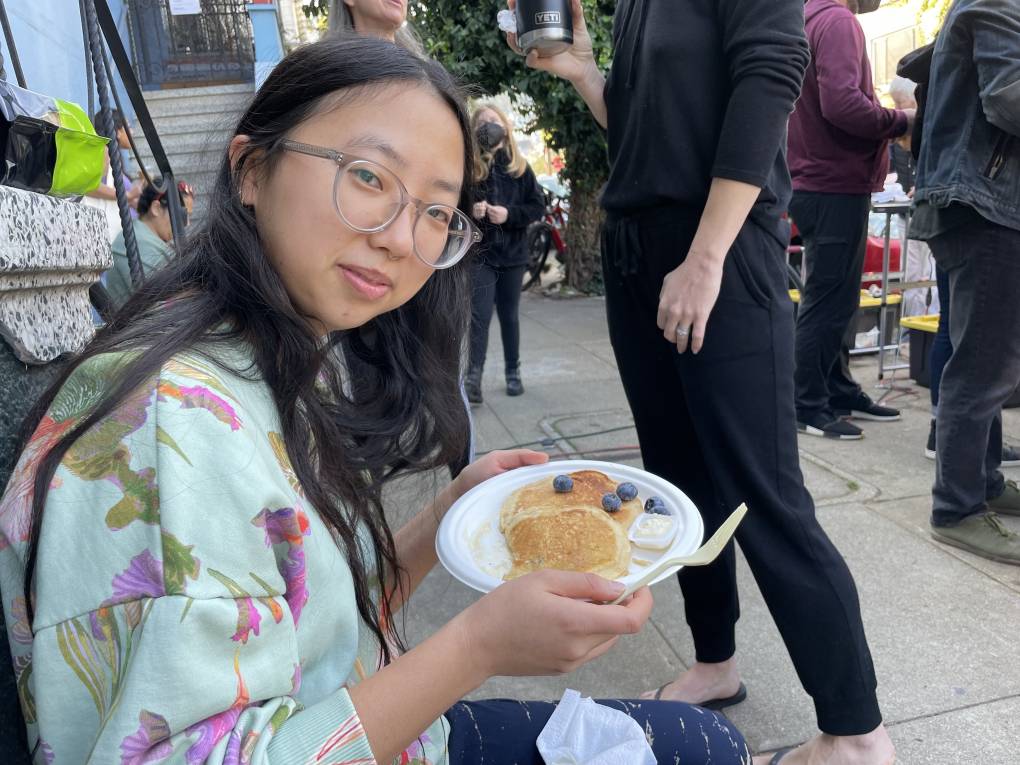
"caption": "San Francisco resident Diy Le enjoyed a plate of pancakes with a smattering of blueberries and a pat of butter while sitting on an overturned bucket against Curtis Kimball's front steps, Feb. 12, 2022.",
"description": null,
"title": "IMG_7865",
"credit": "Annelise Finney/KQED",
"status": "inherit",
"altTag": "A woman in a floral top sits down to eat a pancake.",
"isLoading": false,
"fetchFailed": false
},
"news_11904927": {
"type": "attachments",
"id": "news_11904927",
"meta": {
"index": "attachments_1716263798",
"site": "news",
"id": "11904927",
"found": true
},
"parent": 11904843,
"imgSizes": {
"twentyfourteen-full-width": {
"file": "https://ww2.kqed.org/app/uploads/sites/10/2022/02/MARQUEE_920-915x576.jpg",
"width": 915,
"mimeType": "image/jpeg",
"height": 576
},
"thumbnail": {
"file": "https://ww2.kqed.org/app/uploads/sites/10/2022/02/MARQUEE_920-160x108.jpg",
"width": 160,
"mimeType": "image/jpeg",
"height": 108
},
"post-thumbnail": {
"file": "https://ww2.kqed.org/app/uploads/sites/10/2022/02/MARQUEE_920-672x372.jpg",
"width": 672,
"mimeType": "image/jpeg",
"height": 372
},
"kqedFullSize": {
"file": "https://ww2.kqed.org/app/uploads/sites/10/2022/02/MARQUEE_920.jpg",
"width": 915,
"height": 617
},
"medium": {
"file": "https://ww2.kqed.org/app/uploads/sites/10/2022/02/MARQUEE_920-800x539.jpg",
"width": 800,
"mimeType": "image/jpeg",
"height": 539
}
},
"publishDate": 1644619481,
"modified": 1644619481,
"caption": null,
"description": null,
"title": "MARQUEE_920",
"credit": null,
"status": "inherit",
"altTag": null,
"isLoading": false,
"fetchFailed": false
},
"news_11904554": {
"type": "attachments",
"id": "news_11904554",
"meta": {
"index": "attachments_1716263798",
"site": "news",
"id": "11904554",
"found": true
},
"parent": 11904449,
"imgSizes": {
"twentyfourteen-full-width": {
"file": "https://ww2.kqed.org/app/uploads/sites/10/2022/02/51736828813_614b70b3f6_k-1038x576.jpg",
"width": 1038,
"mimeType": "image/jpeg",
"height": 576
},
"thumbnail": {
"file": "https://ww2.kqed.org/app/uploads/sites/10/2022/02/51736828813_614b70b3f6_k-160x127.jpg",
"width": 160,
"mimeType": "image/jpeg",
"height": 127
},
"post-thumbnail": {
"file": "https://ww2.kqed.org/app/uploads/sites/10/2022/02/51736828813_614b70b3f6_k-672x372.jpg",
"width": 672,
"mimeType": "image/jpeg",
"height": 372
},
"kqedFullSize": {
"file": "https://ww2.kqed.org/app/uploads/sites/10/2022/02/51736828813_614b70b3f6_k-e1644435950461.jpg",
"width": 1920,
"height": 1523
},
"large": {
"file": "https://ww2.kqed.org/app/uploads/sites/10/2022/02/51736828813_614b70b3f6_k-1020x809.jpg",
"width": 1020,
"mimeType": "image/jpeg",
"height": 809
},
"1536x1536": {
"file": "https://ww2.kqed.org/app/uploads/sites/10/2022/02/51736828813_614b70b3f6_k-1536x1219.jpg",
"width": 1536,
"mimeType": "image/jpeg",
"height": 1219
},
"full-width": {
"file": "https://ww2.kqed.org/app/uploads/sites/10/2022/02/51736828813_614b70b3f6_k-1920x1523.jpg",
"width": 1920,
"mimeType": "image/jpeg",
"height": 1523
},
"medium": {
"file": "https://ww2.kqed.org/app/uploads/sites/10/2022/02/51736828813_614b70b3f6_k-800x635.jpg",
"width": 800,
"mimeType": "image/jpeg",
"height": 635
}
},
"publishDate": 1644372508,
"modified": 1644439111,
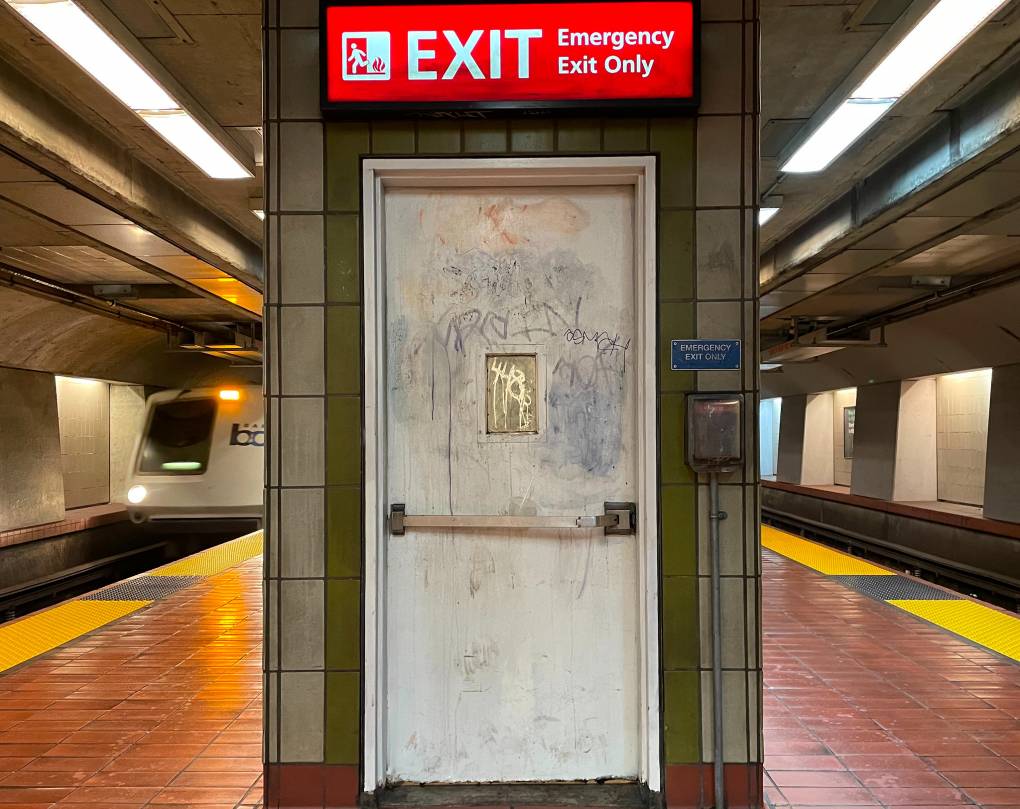
"caption": "An emergency exit on the platform of BART's 16th Street/Mission Station in San Francisco, on Dec. 9, 2021.",
"description": null,
"title": "BART Emergency Exit",
"credit": "Dan Brekke/KQED",
"status": "inherit",
"altTag": "An emergency exit as BART's 16th Street/Mission station in San Francisco.",
"isLoading": false,
"fetchFailed": false
},
"news_11904347": {
"type": "attachments",
"id": "news_11904347",
"meta": {
"index": "attachments_1716263798",
"site": "news",
"id": "11904347",
"found": true
},
"parent": 11904345,
"imgSizes": {
"twentyfourteen-full-width": {
"file": "https://ww2.kqed.org/app/uploads/sites/10/2022/02/sciencesource_ss22514018_custom-2fd91017d666ace5b6746d615c5e9e20f06f1974-1-1038x576.jpg",
"width": 1038,
"mimeType": "image/jpeg",
"height": 576
},
"thumbnail": {
"file": "https://ww2.kqed.org/app/uploads/sites/10/2022/02/sciencesource_ss22514018_custom-2fd91017d666ace5b6746d615c5e9e20f06f1974-1-160x125.jpg",
"width": 160,
"mimeType": "image/jpeg",
"height": 125
},
"post-thumbnail": {
"file": "https://ww2.kqed.org/app/uploads/sites/10/2022/02/sciencesource_ss22514018_custom-2fd91017d666ace5b6746d615c5e9e20f06f1974-1-672x372.jpg",
"width": 672,
"mimeType": "image/jpeg",
"height": 372
},
"kqedFullSize": {
"file": "https://ww2.kqed.org/app/uploads/sites/10/2022/02/sciencesource_ss22514018_custom-2fd91017d666ace5b6746d615c5e9e20f06f1974-1-scaled-e1644267755274.jpg",
"width": 1920,
"height": 1499
},
"2048x2048": {
"file": "https://ww2.kqed.org/app/uploads/sites/10/2022/02/sciencesource_ss22514018_custom-2fd91017d666ace5b6746d615c5e9e20f06f1974-1-2048x1599.jpg",
"width": 2048,
"mimeType": "image/jpeg",
"height": 1599
},
"large": {
"file": "https://ww2.kqed.org/app/uploads/sites/10/2022/02/sciencesource_ss22514018_custom-2fd91017d666ace5b6746d615c5e9e20f06f1974-1-1020x796.jpg",
"width": 1020,
"mimeType": "image/jpeg",
"height": 796
},
"1536x1536": {
"file": "https://ww2.kqed.org/app/uploads/sites/10/2022/02/sciencesource_ss22514018_custom-2fd91017d666ace5b6746d615c5e9e20f06f1974-1-1536x1199.jpg",
"width": 1536,
"mimeType": "image/jpeg",
"height": 1199
},
"full-width": {
"file": "https://ww2.kqed.org/app/uploads/sites/10/2022/02/sciencesource_ss22514018_custom-2fd91017d666ace5b6746d615c5e9e20f06f1974-1-1920x1499.jpg",
"width": 1920,
"mimeType": "image/jpeg",
"height": 1499
},
"medium": {
"file": "https://ww2.kqed.org/app/uploads/sites/10/2022/02/sciencesource_ss22514018_custom-2fd91017d666ace5b6746d615c5e9e20f06f1974-1-800x625.jpg",
"width": 800,
"mimeType": "image/jpeg",
"height": 625
}
},
"publishDate": 1644265924,
"modified": 1644273464,
"caption": "This colorized transmission electron micrograph shows SARS-CoV-2, also known as 2019-nCoV, the virus that causes COVID-19. ",
"description": "This colorized transmission electron micrograph (TEM) shows SARS-CoV-2, also known as 2019-nCoV, the virus that causes COVID-19. This specimen was isolated from a patient in the U.S. Particles of the virus are shown emerging from the surface of cells cultured in the lab. The spikes on the outer edge of the particles give coronaviruses their name, meaning 'crown-like'.",
"title": "SARS-CoV-2 is shown in this colorized transmission electron micrograph. This specimen was isolated from a patient in the U.S. Particles of the virus are shown emerging from the surface of cells cultured in the lab.",
"credit": "\u003ca href=\"https://www.sciencesource.com/archive/Image/Novel-Coronavirus-SARS-CoV-2-SS22514018.html\">Science Source\u003c/a>",
"status": "inherit",
"altTag": "A microscopic image of the virus that causes COVID.",
"isLoading": false,
"fetchFailed": false
},
"news_11904228": {
"type": "attachments",
"id": "news_11904228",
"meta": {
"index": "attachments_1716263798",
"site": "news",
"id": "11904228",
"found": true
},
"parent": 11903964,
"imgSizes": {
"twentyfourteen-full-width": {
"file": "https://ww2.kqed.org/app/uploads/sites/10/2022/02/image5PT-1038x576.jpeg",
"width": 1038,
"mimeType": "image/jpeg",
"height": 576
},
"thumbnail": {
"file": "https://ww2.kqed.org/app/uploads/sites/10/2022/02/image5PT-160x109.jpeg",
"width": 160,
"mimeType": "image/jpeg",
"height": 109
},
"post-thumbnail": {
"file": "https://ww2.kqed.org/app/uploads/sites/10/2022/02/image5PT-672x372.jpeg",
"width": 672,
"mimeType": "image/jpeg",
"height": 372
},
"kqedFullSize": {
"file": "https://ww2.kqed.org/app/uploads/sites/10/2022/02/image5PT.jpeg",
"width": 1170,
"height": 800
},
"large": {
"file": "https://ww2.kqed.org/app/uploads/sites/10/2022/02/image5PT-1020x697.jpeg",
"width": 1020,
"mimeType": "image/jpeg",
"height": 697
},
"medium": {
"file": "https://ww2.kqed.org/app/uploads/sites/10/2022/02/image5PT-800x547.jpeg",
"width": 800,
"mimeType": "image/jpeg",
"height": 547
}
},
"publishDate": 1644021945,
"modified": 1644022031,
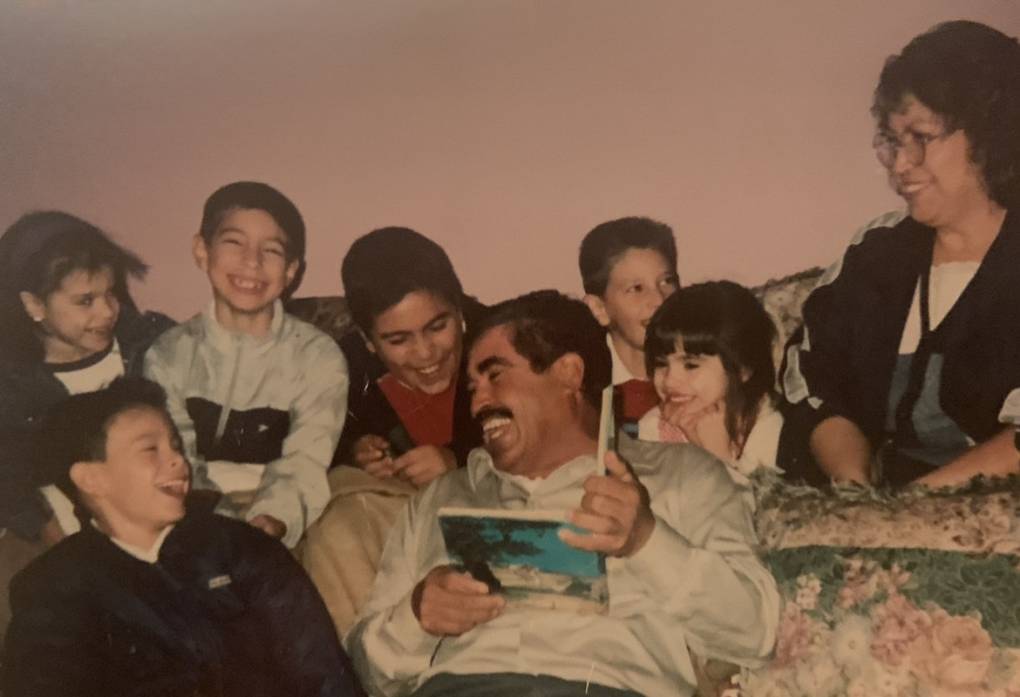
"caption": "Tomás Reyes Soto with his wife and grandchildren in their home in Madera in 2004. ",
"description": null,
"title": "image5PT",
"credit": "Courtesy Madi Bolaños",
"status": "inherit",
"altTag": "A man reading a book, surrounded by his wife and young grandchildren.",
"isLoading": false,
"fetchFailed": false
},
"news_11903520": {
"type": "attachments",
"id": "news_11903520",
"meta": {
"index": "attachments_1716263798",
"site": "news",
"id": "11903520",
"found": true
},
"parent": 11903519,
"imgSizes": {
"twentyfourteen-full-width": {
"file": "https://ww2.kqed.org/app/uploads/sites/10/2022/02/gettyimages-1237841710-0e2d34b5a4a0fac5654ed14f679a263903429e05-1038x576.jpg",
"width": 1038,
"mimeType": "image/jpeg",
"height": 576
},
"thumbnail": {
"file": "https://ww2.kqed.org/app/uploads/sites/10/2022/02/gettyimages-1237841710-0e2d34b5a4a0fac5654ed14f679a263903429e05-160x120.jpg",
"width": 160,
"mimeType": "image/jpeg",
"height": 120
},
"post-thumbnail": {
"file": "https://ww2.kqed.org/app/uploads/sites/10/2022/02/gettyimages-1237841710-0e2d34b5a4a0fac5654ed14f679a263903429e05-672x372.jpg",
"width": 672,
"mimeType": "image/jpeg",
"height": 372
},
"kqedFullSize": {
"file": "https://ww2.kqed.org/app/uploads/sites/10/2022/02/gettyimages-1237841710-0e2d34b5a4a0fac5654ed14f679a263903429e05-scaled-e1643742445285.jpg",
"width": 1920,
"height": 1439
},
"2048x2048": {
"file": "https://ww2.kqed.org/app/uploads/sites/10/2022/02/gettyimages-1237841710-0e2d34b5a4a0fac5654ed14f679a263903429e05-2048x1534.jpg",
"width": 2048,
"mimeType": "image/jpeg",
"height": 1534
},
"large": {
"file": "https://ww2.kqed.org/app/uploads/sites/10/2022/02/gettyimages-1237841710-0e2d34b5a4a0fac5654ed14f679a263903429e05-1020x764.jpg",
"width": 1020,
"mimeType": "image/jpeg",
"height": 764
},
"1536x1536": {
"file": "https://ww2.kqed.org/app/uploads/sites/10/2022/02/gettyimages-1237841710-0e2d34b5a4a0fac5654ed14f679a263903429e05-1536x1151.jpg",
"width": 1536,
"mimeType": "image/jpeg",
"height": 1151
},
"full-width": {
"file": "https://ww2.kqed.org/app/uploads/sites/10/2022/02/gettyimages-1237841710-0e2d34b5a4a0fac5654ed14f679a263903429e05-1920x1438.jpg",
"width": 1920,
"mimeType": "image/jpeg",
"height": 1438
},
"medium": {
"file": "https://ww2.kqed.org/app/uploads/sites/10/2022/02/gettyimages-1237841710-0e2d34b5a4a0fac5654ed14f679a263903429e05-800x599.jpg",
"width": 800,
"mimeType": "image/jpeg",
"height": 599
}
},
"publishDate": 1643740683,
"modified": 1675713358,
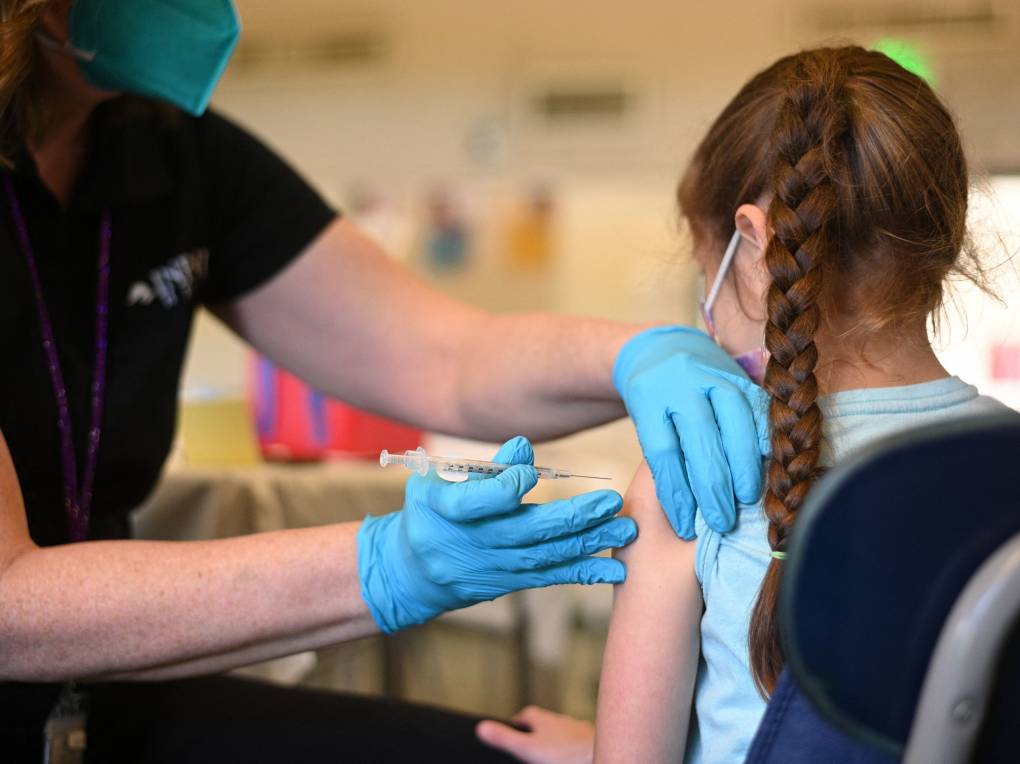
"caption": "A nurse administers a pediatric dose of a COVID-19 vaccine to a girl at an LA Care Health Plan vaccination clinic at Los Angeles Mission College on Jan. 19, 2022.",
"description": "A nurse administers a pediatric dose of a COVID-19 vaccine to a girl at an LA Care Health Plan vaccination clinic at Los Angeles Mission College on Jan. 19, 2022.",
"title": "A nurse administers a pediatric dose of the Covid-19 vaccine to a girl at a L.A. Care Health Plan vaccination clinic at Los Angeles Mission College in the Sylmar neighborhood in Los Angeles, Ca., January 19, 2022.",
"credit": "Robyn Beck/AFP via Getty Images",
"status": "inherit",
"altTag": "young child with braided hair facing away from camera gets vaccination shot in her left arm",
"isLoading": false,
"fetchFailed": false
},
"news_11903286": {
"type": "attachments",
"id": "news_11903286",
"meta": {
"index": "attachments_1716263798",
"site": "news",
"id": "11903286",
"found": true
},
"parent": 11903223,
"imgSizes": {
"twentyfourteen-full-width": {
"file": "https://ww2.kqed.org/app/uploads/sites/10/2022/01/cynthia-1038x576.jpg",
"width": 1038,
"mimeType": "image/jpeg",
"height": 576
},
"thumbnail": {
"file": "https://ww2.kqed.org/app/uploads/sites/10/2022/01/cynthia-160x90.jpg",
"width": 160,
"mimeType": "image/jpeg",
"height": 90
},
"post-thumbnail": {
"file": "https://ww2.kqed.org/app/uploads/sites/10/2022/01/cynthia-672x372.jpg",
"width": 672,
"mimeType": "image/jpeg",
"height": 372
},
"kqedFullSize": {
"file": "https://ww2.kqed.org/app/uploads/sites/10/2022/01/cynthia.jpg",
"width": 1280,
"height": 720
},
"large": {
"file": "https://ww2.kqed.org/app/uploads/sites/10/2022/01/cynthia-1020x574.jpg",
"width": 1020,
"mimeType": "image/jpeg",
"height": 574
},
"medium": {
"file": "https://ww2.kqed.org/app/uploads/sites/10/2022/01/cynthia-800x450.jpg",
"width": 800,
"mimeType": "image/jpeg",
"height": 450
}
},
"publishDate": 1643410977,
"modified": 1643410977,
"caption": null,
"description": null,
"title": "cynthia",
"credit": null,
"status": "inherit",
"altTag": null,
"isLoading": false,
"fetchFailed": false
},
"news_11902667": {
"type": "attachments",
"id": "news_11902667",
"meta": {
"index": "attachments_1716263798",
"site": "news",
"id": "11902667",
"found": true
},
"parent": 11902655,
"imgSizes": {
"twentyfourteen-full-width": {
"file": "https://ww2.kqed.org/app/uploads/sites/10/2022/01/personal_012522_final-1038x576.png",
"width": 1038,
"mimeType": "image/png",
"height": 576
},
"thumbnail": {
"file": "https://ww2.kqed.org/app/uploads/sites/10/2022/01/personal_012522_final-160x107.png",
"width": 160,
"mimeType": "image/png",
"height": 107
},
"post-thumbnail": {
"file": "https://ww2.kqed.org/app/uploads/sites/10/2022/01/personal_012522_final-672x372.png",
"width": 672,
"mimeType": "image/png",
"height": 372
},
"kqedFullSize": {
"file": "https://ww2.kqed.org/app/uploads/sites/10/2022/01/personal_012522_final.png",
"width": 1920,
"height": 1287
},
"large": {
"file": "https://ww2.kqed.org/app/uploads/sites/10/2022/01/personal_012522_final-1020x684.png",
"width": 1020,
"mimeType": "image/png",
"height": 684
},
"1536x1536": {
"file": "https://ww2.kqed.org/app/uploads/sites/10/2022/01/personal_012522_final-1536x1030.png",
"width": 1536,
"mimeType": "image/png",
"height": 1030
},
"medium": {
"file": "https://ww2.kqed.org/app/uploads/sites/10/2022/01/personal_012522_final-800x536.png",
"width": 800,
"mimeType": "image/png",
"height": 536
}
},
"publishDate": 1643154553,
"modified": 1643154697,
"caption": null,
"description": null,
"title": "personal_012522_final",
"credit": null,
"status": "inherit",
"altTag": "Cartoon: an anti-vaccine parent with anti-vax signs and phony covid cures stands next to his child. An arrow pointing at the child reads, \"personal belief exemption.\" The arrow pointing at the shrunken brain of the parent reads, \"parenting skills exemption.\"",
"isLoading": false,
"fetchFailed": false
},
"news_11902545": {
"type": "attachments",
"id": "news_11902545",
"meta": {
"index": "attachments_1716263798",
"site": "news",
"id": "11902545",
"found": true
},
"parent": 11902542,
"imgSizes": {
"twentyfourteen-full-width": {
"file": "https://ww2.kqed.org/app/uploads/sites/10/2022/01/012122-Pines-Placerville-Nursing-Home-MG-CM-07-1038x576.jpeg",
"width": 1038,
"mimeType": "image/jpeg",
"height": 576
},
"thumbnail": {
"file": "https://ww2.kqed.org/app/uploads/sites/10/2022/01/012122-Pines-Placerville-Nursing-Home-MG-CM-07-160x107.jpeg",
"width": 160,
"mimeType": "image/jpeg",
"height": 107
},
"post-thumbnail": {
"file": "https://ww2.kqed.org/app/uploads/sites/10/2022/01/012122-Pines-Placerville-Nursing-Home-MG-CM-07-672x372.jpeg",
"width": 672,
"mimeType": "image/jpeg",
"height": 372
},
"kqedFullSize": {
"file": "https://ww2.kqed.org/app/uploads/sites/10/2022/01/012122-Pines-Placerville-Nursing-Home-MG-CM-07.jpeg",
"width": 2000,
"height": 1333
},
"large": {
"file": "https://ww2.kqed.org/app/uploads/sites/10/2022/01/012122-Pines-Placerville-Nursing-Home-MG-CM-07-1020x680.jpeg",
"width": 1020,
"mimeType": "image/jpeg",
"height": 680
},
"1536x1536": {
"file": "https://ww2.kqed.org/app/uploads/sites/10/2022/01/012122-Pines-Placerville-Nursing-Home-MG-CM-07-1536x1024.jpeg",
"width": 1536,
"mimeType": "image/jpeg",
"height": 1024
},
"full-width": {
"file": "https://ww2.kqed.org/app/uploads/sites/10/2022/01/012122-Pines-Placerville-Nursing-Home-MG-CM-07-1920x1280.jpeg",
"width": 1920,
"mimeType": "image/jpeg",
"height": 1280
},
"medium": {
"file": "https://ww2.kqed.org/app/uploads/sites/10/2022/01/012122-Pines-Placerville-Nursing-Home-MG-CM-07-800x533.jpeg",
"width": 800,
"mimeType": "image/jpeg",
"height": 533
}
},
"publishDate": 1643067575,
"modified": 1643139407,
"caption": "The Pines at Placerville Healthcare Center in Placerville, a nursing and short-term rehabilitation facility, on Jan. 21, 2022. ",
"description": null,
"title": "012122-Pines-Placerville-Nursing-Home-MG-CM-07",
"credit": "Miguel Gutierrez Jr./CalMatters",
"status": "inherit",
"altTag": "A sign in front of a parking lot that says \"HEROES WORK HERE.\"",
"isLoading": false,
"fetchFailed": false
},
"news_11902362": {
"type": "attachments",
"id": "news_11902362",
"meta": {
"index": "attachments_1716263798",
"site": "news",
"id": "11902362",
"found": true
},
"parent": 11902253,
"imgSizes": {
"twentyfourteen-full-width": {
"file": "https://ww2.kqed.org/app/uploads/sites/10/2022/01/RS53238_007_Berkeley_SassyOutwaterWright_01202022-qut-1038x576.jpg",
"width": 1038,
"mimeType": "image/jpeg",
"height": 576
},
"thumbnail": {
"file": "https://ww2.kqed.org/app/uploads/sites/10/2022/01/RS53238_007_Berkeley_SassyOutwaterWright_01202022-qut-160x107.jpg",
"width": 160,
"mimeType": "image/jpeg",
"height": 107
},
"post-thumbnail": {
"file": "https://ww2.kqed.org/app/uploads/sites/10/2022/01/RS53238_007_Berkeley_SassyOutwaterWright_01202022-qut-672x372.jpg",
"width": 672,
"mimeType": "image/jpeg",
"height": 372
},
"kqedFullSize": {
"file": "https://ww2.kqed.org/app/uploads/sites/10/2022/01/RS53238_007_Berkeley_SassyOutwaterWright_01202022-qut.jpg",
"width": 1920,
"height": 1280
},
"large": {
"file": "https://ww2.kqed.org/app/uploads/sites/10/2022/01/RS53238_007_Berkeley_SassyOutwaterWright_01202022-qut-1020x680.jpg",
"width": 1020,
"mimeType": "image/jpeg",
"height": 680
},
"1536x1536": {
"file": "https://ww2.kqed.org/app/uploads/sites/10/2022/01/RS53238_007_Berkeley_SassyOutwaterWright_01202022-qut-1536x1024.jpg",
"width": 1536,
"mimeType": "image/jpeg",
"height": 1024
},
"medium": {
"file": "https://ww2.kqed.org/app/uploads/sites/10/2022/01/RS53238_007_Berkeley_SassyOutwaterWright_01202022-qut-800x533.jpg",
"width": 800,
"mimeType": "image/jpeg",
"height": 533
}
},
"publishDate": 1642802854,
"modified": 1671477629,
"caption": "Sassy Outwater-Wright walks through her Berkeley neighborhood with her guide dog, Ferdinand, on Jan. 20, 2022.",
"description": null,
"title": "RS53238_007_Berkeley_SassyOutwaterWright_01202022-qut",
"credit": "Beth LaBerge/KQED",
"status": "inherit",
"altTag": "A black guide dog leads a woman with a face mask down a sidewalk.",
"isLoading": false,
"fetchFailed": false
},
"news_11902354": {
"type": "attachments",
"id": "news_11902354",
"meta": {
"index": "attachments_1716263798",
"site": "news",
"id": "11902354",
"found": true
},
"parent": 11902321,
"imgSizes": {
"twentyfourteen-full-width": {
"file": "https://ww2.kqed.org/app/uploads/sites/10/2022/01/On-the-bench_Early-1990s_Credit-to-LaDoris-Cordell-1038x576.jpg",
"width": 1038,
"mimeType": "image/jpeg",
"height": 576
},
"thumbnail": {
"file": "https://ww2.kqed.org/app/uploads/sites/10/2022/01/On-the-bench_Early-1990s_Credit-to-LaDoris-Cordell-160x98.jpg",
"width": 160,
"mimeType": "image/jpeg",
"height": 98
},
"post-thumbnail": {
"file": "https://ww2.kqed.org/app/uploads/sites/10/2022/01/On-the-bench_Early-1990s_Credit-to-LaDoris-Cordell-672x372.jpg",
"width": 672,
"mimeType": "image/jpeg",
"height": 372
},
"kqedFullSize": {
"file": "https://ww2.kqed.org/app/uploads/sites/10/2022/01/On-the-bench_Early-1990s_Credit-to-LaDoris-Cordell-scaled.jpg",
"width": 2560,
"height": 1560
},
"2048x2048": {
"file": "https://ww2.kqed.org/app/uploads/sites/10/2022/01/On-the-bench_Early-1990s_Credit-to-LaDoris-Cordell-2048x1248.jpg",
"width": 2048,
"mimeType": "image/jpeg",
"height": 1248
},
"large": {
"file": "https://ww2.kqed.org/app/uploads/sites/10/2022/01/On-the-bench_Early-1990s_Credit-to-LaDoris-Cordell-1020x622.jpg",
"width": 1020,
"mimeType": "image/jpeg",
"height": 622
},
"1536x1536": {
"file": "https://ww2.kqed.org/app/uploads/sites/10/2022/01/On-the-bench_Early-1990s_Credit-to-LaDoris-Cordell-1536x936.jpg",
"width": 1536,
"mimeType": "image/jpeg",
"height": 936
},
"full-width": {
"file": "https://ww2.kqed.org/app/uploads/sites/10/2022/01/On-the-bench_Early-1990s_Credit-to-LaDoris-Cordell-1920x1170.jpg",
"width": 1920,
"mimeType": "image/jpeg",
"height": 1170
},
"medium": {
"file": "https://ww2.kqed.org/app/uploads/sites/10/2022/01/On-the-bench_Early-1990s_Credit-to-LaDoris-Cordell-800x488.jpg",
"width": 800,
"mimeType": "image/jpeg",
"height": 488
}
},
"publishDate": 1642800741,
"modified": 1642800741,
"caption": null,
"description": null,
"title": "On the bench_Early 1990s_Credit to LaDoris Cordell",
"credit": null,
"status": "inherit",
"altTag": null,
"isLoading": false,
"fetchFailed": false
}
},
"audioPlayerReducer": {
"postId": "stream_live",
"isPaused": true,
"isPlaying": false,
"pfsActive": false,
"pledgeModalIsOpen": true,
"playerDrawerIsOpen": false,
"liveAudioPlayStartedAt": 0,
"liveAudioPlayContext": ""
},
"authorsReducer": {
"byline_news_11905165": {
"type": "authors",
"id": "byline_news_11905165",
"meta": {
"override": true
},
"slug": "byline_news_11905165",
"name": "Jocelyn Gecker\u003cbr>Associated Press",
"isLoading": false
},
"byline_news_11904345": {
"type": "authors",
"id": "byline_news_11904345",
"meta": {
"override": true
},
"slug": "byline_news_11904345",
"name": "Michaeleen Doucleff",
"isLoading": false
},
"byline_news_11903519": {
"type": "authors",
"id": "byline_news_11903519",
"meta": {
"override": true
},
"slug": "byline_news_11903519",
"name": "Rob Stein",
"isLoading": false
},
"byline_news_11902542": {
"type": "authors",
"id": "byline_news_11902542",
"meta": {
"override": true
},
"slug": "byline_news_11902542",
"name": "\u003ca href=\"https://calmatters.org/author/kristen-hwang/\">Kristen Hwang\u003c/a>",
"isLoading": false
},
"danbrekke": {
"type": "authors",
"id": "222",
"meta": {
"index": "authors_1716337520",
"id": "222",
"found": true
},
"name": "Dan Brekke",
"firstName": "Dan",
"lastName": "Brekke",
"slug": "danbrekke",
"email": "dbrekke@kqed.org",
"display_author_email": true,
"staff_mastheads": [
"news",
"science"
],
"title": "KQED Editor and Reporter",
"bio": "Dan Brekke is a reporter and editor for KQED News, responsible for coverage of topics ranging from California water issues to the Bay Area's transportation challenges. In a newsroom career that began in Chicago in 1972, Dan has worked for \u003cem>The San Francisco Examiner,\u003c/em> Wired and TechTV and has been published in The New York Times, The New York Times Magazine, Business 2.0, Salon and elsewhere.\r\n\r\nSince joining KQED in 2007, Dan has reported, edited and produced both radio and online features and breaking news pieces. He has shared as both editor and reporter in four Society of Professional Journalists Norcal Excellence in Journalism awards and one Edward R. Murrow regional award. He was chosen for a spring 2017 residency at the Mesa Refuge to advance his research on California salmon.\r\n\r\nEmail Dan at: \u003ca href=\"mailto:dbrekke@kqed.org\">dbrekke@kqed.org\u003c/a>\r\n\r\n\u003cstrong>Twitter:\u003c/strong> \u003ca href=\"https://twitter.com/danbrekke\" rel=\"noopener noreferrer\">twitter.com/danbrekke\u003c/a>\r\n\u003cstrong>Facebook:\u003c/strong> \u003ca href=\"https://www.facebook.com/danbrekke\" rel=\"noopener noreferrer\">www.facebook.com/danbrekke\u003c/a>\r\n\u003cstrong>LinkedIn:\u003c/strong> \u003ca href=\"https://www.linkedin.com/in/danbrekke\" rel=\"noopener noreferrer\">www.linkedin.com/in/danbrekke\u003c/a>",
"avatar": "https://secure.gravatar.com/avatar/8f1f0d2a978fb3b23426c922c7e2af558fa36905b49c4ce76a97dc3c72d27226?s=600&d=mm&r=g",
"twitter": "danbrekke",
"bluesky": null,
"facebook": null,
"instagram": "https://www.instagram.com/dan.brekke/",
"linkedin": "https://www.linkedin.com/in/danbrekke/",
"sites": [
{
"site": "news",
"roles": [
"administrator",
"create_posts"
]
},
{
"site": "stateofhealth",
"roles": [
"editor"
]
},
{
"site": "science",
"roles": [
"editor"
]
},
{
"site": "quest",
"roles": [
"contributor"
]
},
{
"site": "food",
"roles": [
"contributor"
]
},
{
"site": "forum",
"roles": [
"contributor"
]
},
{
"site": "elections",
"roles": [
"editor"
]
},
{
"site": "liveblog",
"roles": [
"editor"
]
}
],
"headData": {
"title": "Dan Brekke | KQED",
"description": "KQED Editor and Reporter",
"ogImgSrc": "https://secure.gravatar.com/avatar/8f1f0d2a978fb3b23426c922c7e2af558fa36905b49c4ce76a97dc3c72d27226?s=600&d=mm&r=g",
"twImgSrc": "https://secure.gravatar.com/avatar/8f1f0d2a978fb3b23426c922c7e2af558fa36905b49c4ce76a97dc3c72d27226?s=600&d=mm&r=g"
},
"isLoading": false,
"link": "/author/danbrekke"
},
"kqed": {
"type": "authors",
"id": "236",
"meta": {
"index": "authors_1716337520",
"id": "236",
"found": true
},
"name": "KQED News Staff",
"firstName": "KQED News Staff",
"lastName": null,
"slug": "kqed",
"email": "faq@kqed.org",
"display_author_email": false,
"staff_mastheads": [],
"title": null,
"bio": null,
"avatar": "https://secure.gravatar.com/avatar/ef0e801a68c4c54afa9180db14084167?s=600&d=blank&r=g",
"twitter": null,
"facebook": null,
"instagram": null,
"linkedin": null,
"sites": [
{
"site": "arts",
"roles": [
"contributor"
]
},
{
"site": "news",
"roles": [
"editor"
]
},
{
"site": "futureofyou",
"roles": [
"author"
]
}
],
"headData": {
"title": "KQED News Staff | KQED",
"description": null,
"ogImgSrc": "https://secure.gravatar.com/avatar/ef0e801a68c4c54afa9180db14084167?s=600&d=blank&r=g",
"twImgSrc": "https://secure.gravatar.com/avatar/ef0e801a68c4c54afa9180db14084167?s=600&d=blank&r=g"
},
"isLoading": false,
"link": "/author/kqed"
},
"markfiore": {
"type": "authors",
"id": "3236",
"meta": {
"index": "authors_1716337520",
"id": "3236",
"found": true
},
"name": "Mark Fiore",
"firstName": "Mark",
"lastName": "Fiore",
"slug": "markfiore",
"email": "mark@markfiore.com",
"display_author_email": false,
"staff_mastheads": [
"news"
],
"title": "KQED News Cartoonist",
"bio": "\u003ca href=\"http://www.MarkFiore.com\">MarkFiore.com\u003c/a> | \u003ca href=\"https://twitter.com/markfiore\">Follow on Twitter\u003c/a> | \u003ca href=\"https://www.facebook.com/pages/Mark-Fiore-Animated-Political-Cartoons/94451707396?ref=bookmarks\">Facebook\u003c/a> | \u003ca href=\"mailto:mark@markfiore.com\">email\u003c/a>\r\n\r\nPulitzer Prize-winner, Mark Fiore, who the Wall Street Journal has called “the undisputed guru of the form,” creates animated political cartoons in San Francisco, where his work has been featured regularly on the San Francisco Chronicle’s web site, SFGate.com. His work has appeared on Newsweek.com, Slate.com, CBSNews.com, MotherJones.com, DailyKos.com and NPR’s web site. Fiore’s political animation has appeared on CNN, Frontline, Bill Moyers Journal, Salon.com and cable and broadcast outlets across the globe.\r\n\r\nBeginning his professional life by drawing traditional political cartoons for newspapers, Fiore’s work appeared in publications ranging from the Washington Post to the Los Angeles Times. In the late 1990s, he began to experiment with animating political cartoons and, after a short stint at the San Jose Mercury News as their staff cartoonist, Fiore devoted all his energies to animation.\r\nGrowing up in California, Fiore also spent a good portion of his life in the backwoods of Idaho. It was this combination that shaped him politically. Mark majored in political science at Colorado College, where, in a perfect send-off for a cartoonist, he received his diploma in 1991 as commencement speaker Dick Cheney smiled approvingly.\r\nMark Fiore was awarded the Pulitzer Prize for political cartooning in 2010, a Robert F. Kennedy Journalism Award in 2004 and has twice received an Online Journalism Award for commentary from the Online News Association (2002, 2008). Fiore has received two awards for his work in new media from the National Cartoonists Society (2001, 2002), and in 2006 received The James Madison Freedom of Information Award from The Society of Professional Journalists.",
"avatar": "https://secure.gravatar.com/avatar/fc4e2a612b15b67bad0c6f0e1db4ca9b?s=600&d=blank&r=g",
"twitter": "MarkFiore",
"facebook": null,
"instagram": "https://www.instagram.com/markfiore/?hl=en",
"linkedin": null,
"sites": [
{
"site": "arts",
"roles": [
"contributor"
]
},
{
"site": "news",
"roles": [
"editor"
]
},
{
"site": "futureofyou",
"roles": [
"editor"
]
},
{
"site": "science",
"roles": [
"editor"
]
}
],
"headData": {
"title": "Mark Fiore | KQED",
"description": "KQED News Cartoonist",
"ogImgSrc": "https://secure.gravatar.com/avatar/fc4e2a612b15b67bad0c6f0e1db4ca9b?s=600&d=blank&r=g",
"twImgSrc": "https://secure.gravatar.com/avatar/fc4e2a612b15b67bad0c6f0e1db4ca9b?s=600&d=blank&r=g"
},
"isLoading": false,
"link": "/author/markfiore"
},
"lesleymcclurg": {
"type": "authors",
"id": "11229",
"meta": {
"index": "authors_1716337520",
"id": "11229",
"found": true
},
"name": "Lesley McClurg",
"firstName": "Lesley",
"lastName": "McClurg",
"slug": "lesleymcclurg",
"email": "lmcclurg@KQED.org",
"display_author_email": false,
"staff_mastheads": [
"news",
"science"
],
"title": "KQED Health Correspondent",
"bio": "Lesley McClurg is a health correspondent and fill-in host whose work is regularly rebroadcast on NPR and PBS programs. She’s earned multiple regional Emmy awards, a national and a regional Edward R. Murrow award, and was named Best Beat Reporter by the Association of Health Care Journalists. The Society of Professional Journalists has recognized her work several times, and the Society of Environmental Journalists spotlighted her coverage of California’s historic drought.\r\n\r\nBefore joining KQED in 2016, Lesley covered food and sustainability for Capital Public Radio, environmental issues for Colorado Public Radio, and reported for KUOW and KCTS 9 in Seattle. Away from the newsroom, she loves skiing with her daughter, mountain biking with her partner, and playing with Ollie, the family’s goldendoodle. On deadline, she runs almost entirely on chocolate chips.\r\n\r\n ",
"avatar": "https://secure.gravatar.com/avatar/bab49e972ea10c774fe0f5e29dba1722b158f7c0d58a360923d1389d380b2978?s=600&d=blank&r=g",
"twitter": "lesleywmcclurg",
"bluesky": null,
"facebook": null,
"instagram": null,
"linkedin": null,
"sites": [
{
"site": "arts",
"roles": [
"author"
]
},
{
"site": "news",
"roles": [
"editor"
]
},
{
"site": "futureofyou",
"roles": [
"editor"
]
},
{
"site": "stateofhealth",
"roles": [
"author"
]
},
{
"site": "science",
"roles": [
"editor"
]
},
{
"site": "quest",
"roles": [
"subscriber"
]
},
{
"site": "forum",
"roles": [
"administrator"
]
},
{
"site": "liveblog",
"roles": [
"author"
]
}
],
"headData": {
"title": "Lesley McClurg | KQED",
"description": "KQED Health Correspondent",
"ogImgSrc": "https://secure.gravatar.com/avatar/bab49e972ea10c774fe0f5e29dba1722b158f7c0d58a360923d1389d380b2978?s=600&d=blank&r=g",
"twImgSrc": "https://secure.gravatar.com/avatar/bab49e972ea10c774fe0f5e29dba1722b158f7c0d58a360923d1389d380b2978?s=600&d=blank&r=g"
},
"isLoading": false,
"link": "/author/lesleymcclurg"
},
"jrodriguez": {
"type": "authors",
"id": "11690",
"meta": {
"index": "authors_1716337520",
"id": "11690",
"found": true
},
"name": "Joe Fitzgerald Rodriguez",
"firstName": "Joe",
"lastName": "Fitzgerald Rodriguez",
"slug": "jrodriguez",
"email": "jrodriguez@kqed.org",
"display_author_email": true,
"staff_mastheads": [
"news"
],
"title": "Reporter and Producer",
"bio": "Joe Fitzgerald Rodriguez is a reporter and digital producer for KQED covering politics. Joe most recently wrote for the \u003cem>San Francisco Examiner\u003c/em> as a political columnist covering The City. He was raised in San Francisco and has spent his reporting career in his beloved, foggy, city by the bay. Joe was 12-years-old when he conducted his first interview in journalism, grilling former San Francisco Mayor Willie Brown for the Marina Middle School newspaper, \u003cem>The Penguin Press, \u003c/em>and he continues to report on the San Francisco Bay Area to this day.",
"avatar": "https://secure.gravatar.com/avatar/2247beb0564c1e9c62228d5649d2edac?s=600&d=blank&r=g",
"twitter": "FitztheReporter",
"facebook": null,
"instagram": "https://www.instagram.com/fitzthereporter/",
"linkedin": null,
"sites": [
{
"site": "",
"roles": [
"editor"
]
},
{
"site": "arts",
"roles": [
"editor"
]
},
{
"site": "news",
"roles": [
"editor"
]
},
{
"site": "science",
"roles": [
"editor"
]
},
{
"site": "elections",
"roles": [
"editor"
]
},
{
"site": "liveblog",
"roles": [
"editor"
]
}
],
"headData": {
"title": "Joe Fitzgerald Rodriguez | KQED",
"description": "Reporter and Producer",
"ogImgSrc": "https://secure.gravatar.com/avatar/2247beb0564c1e9c62228d5649d2edac?s=600&d=blank&r=g",
"twImgSrc": "https://secure.gravatar.com/avatar/2247beb0564c1e9c62228d5649d2edac?s=600&d=blank&r=g"
},
"isLoading": false,
"link": "/author/jrodriguez"
},
"afinney": {
"type": "authors",
"id": "11772",
"meta": {
"index": "authors_1716337520",
"id": "11772",
"found": true
},
"name": "Annelise Finney",
"firstName": "Annelise",
"lastName": "Finney",
"slug": "afinney",
"email": "afinney@kqed.org",
"display_author_email": true,
"staff_mastheads": [
"news"
],
"title": "Reporter",
"bio": "Annelise reports on reparations in California and East Bay politics. She co-produced the Sunday Music Drop, a limited-term radio series featuring Bay Area musicians that aired between Sept 2022 and Oct 2024. She joined KQED in 2021 as a general assignment reporter and is an alumna of KALW's Audio Academy. She was born and raised in the East Bay. She is currently away from KQED completing a year-long reporting project in Berlin, Germany as a Alexander Von Humboldt German Chancellor Fellow.",
"avatar": "https://secure.gravatar.com/avatar/5fded66cae47704cdfc5021cde0f3aa4?s=600&d=blank&r=g",
"twitter": null,
"facebook": null,
"instagram": null,
"linkedin": null,
"sites": [
{
"site": "news",
"roles": [
"editor"
]
},
{
"site": "liveblog",
"roles": [
"author"
]
}
],
"headData": {
"title": "Annelise Finney | KQED",
"description": "Reporter",
"ogImgSrc": "https://secure.gravatar.com/avatar/5fded66cae47704cdfc5021cde0f3aa4?s=600&d=blank&r=g",
"twImgSrc": "https://secure.gravatar.com/avatar/5fded66cae47704cdfc5021cde0f3aa4?s=600&d=blank&r=g"
},
"isLoading": false,
"link": "/author/afinney"
},
"mbolanos": {
"type": "authors",
"id": "11895",
"meta": {
"index": "authors_1716337520",
"id": "11895",
"found": true
},
"name": "Madi Bolaños",
"firstName": "Madi",
"lastName": "Bolaños",
"slug": "mbolanos",
"email": "mbolanos@kqed.org",
"display_author_email": false,
"staff_mastheads": [],
"title": "KQED Contributor",
"bio": null,
"avatar": "https://secure.gravatar.com/avatar/e6df5601c1f2d951e46a3fb42764330f?s=600&d=blank&r=g",
"twitter": null,
"bluesky": null,
"facebook": null,
"instagram": null,
"linkedin": null,
"sites": [
{
"site": "news",
"roles": [
"author"
]
}
],
"headData": {
"title": "Madi Bolaños | KQED",
"description": "KQED Contributor",
"ogImgSrc": "https://secure.gravatar.com/avatar/e6df5601c1f2d951e46a3fb42764330f?s=600&d=blank&r=g",
"twImgSrc": "https://secure.gravatar.com/avatar/e6df5601c1f2d951e46a3fb42764330f?s=600&d=blank&r=g"
},
"isLoading": false,
"link": "/author/mbolanos"
}
},
"pagesReducer": {
"news_tag_covid-19": {
"type": "terms",
"id": "news_27504",
"meta": {
"index": "terms_1716263798",
"site": "news",
"id": "27504",
"score": 8.558313
},
"featImg": null,
"name": "covid-19",
"description": null,
"taxonomy": "tag",
"headData": {
"twImgId": null,
"twTitle": null,
"ogTitle": null,
"ogImgId": null,
"twDescription": null,
"description": null,
"title": "covid-19 Archives | KQED News",
"ogDescription": null
},
"ttid": 27521,
"slug": "covid-19",
"isLoading": false,
"title": "covid-19",
"pageMeta": {
"site": "news",
"WpPageTemplate": "page-topic-editorial",
"currentPage": 7
},
"blocks": [
{
"blockName": "kqed/post-list",
"attrs": {
"layout": "cardArticle2",
"query": "posts/news?tag=covid-19",
"seeMore": false,
"paginated": true,
"page": 7
}
},
{
"blockName": "kqed/ad"
}
]
}
},
"pfsSessionReducer": {},
"postsReducer": {
"stream_live": {
"type": "live",
"id": "stream_live",
"audioUrl": "https://streams.kqed.org/kqedradio",
"title": "Live Stream",
"excerpt": "Live Stream information currently unavailable.",
"link": "/radio",
"featImg": "",
"label": {
"name": "KQED Live",
"link": "/"
}
},
"stream_kqedNewscast": {
"type": "posts",
"id": "stream_kqedNewscast",
"audioUrl": "https://www.kqed.org/.stream/anon/radio/RDnews/newscast.mp3?_=1",
"title": "KQED Newscast",
"featImg": "",
"label": {
"name": "88.5 FM",
"link": "/"
}
},
"news_11905165": {
"type": "posts",
"id": "news_11905165",
"meta": {
"index": "posts_1716263798",
"site": "news",
"id": "11905165",
"score": null,
"sort": [
1644889057000
]
},
"parent": 0,
"labelTerm": {
"site": "news"
},
"blocks": [],
"publishDate": 1644889057,
"format": "standard",
"disqusTitle": "'Today a Change Isn't Being Made': California Delays Decision on Lifting School Mask Mandate",
"title": "'Today a Change Isn't Being Made': California Delays Decision on Lifting School Mask Mandate",
"headTitle": "KQED News",
"content": "\u003cp>Gov. Gavin Newsom delayed a closely watched decision on lifting California’s school mask mandate Monday, even as other Democratic governors around the country have dropped them in recent weeks.\u003c/p>\n\u003cp>While many Californians will be able to remove masks in most indoor settings starting Wednesday, schoolchildren and teachers will have to wait. Newsom had flagged Monday as the day to watch for a revision regarding school masking rules, then sent the state’s top health official to deliver the message of a delay.\u003c/p>\n\u003cp>“The message today, which I hope is clear, is today a change isn’t being made,” California Health and Human Services Secretary Dr. Mark Ghaly told reporters Monday, adding that his department will reassess on Feb. 28 whether the rule should change.\u003c/p>\n\u003cp>“This is not a decision we take lightly, it is not a decision that is a hasty one,” Ghaly said, noting that California’s vaccination rates for children are still low and the federal Centers for Disease Control and Prevention still recommends masks in schools.\u003c/p>\n\u003cp>The non-announcement comes just before California prepares to lift \u003ca href=\"https://www.cdph.ca.gov/Programs/CID/DCDC/Pages/COVID-19/guidance-for-face-coverings.aspx\">its mask mandate\u003c/a> for most indoor settings for vaccinated people, a rule that will sunset Tuesday. As of Wednesday, however, unvaccinated people will still be required to be masked indoors, and everyone — vaccinated or not — will have to wear masks in higher-risk settings like public transit and nursing homes. Local governments can continue their own indoor mask requirements, as Los Angeles County health officials announced they would.\u003c/p>\n\u003cp>[ad fullwidth]\u003c/p>\n\u003cp>It also comes a week after a half dozen other states controlled by Democrats, including Connecticut, Delaware, New Jersey and Oregon, announced plans to end statewide school mask mandates by the end of February or March. They are among a dozen states with such mandates for schools, which have become a \u003ca href=\"https://apnews.com/article/schools-mask-mandates-4eb7bc94b57eceb6ada993139e82de93\">lightning rod\u003c/a> in districts nationwide.\u003c/p>\n\u003cp>Newsom has come under pressure from Republicans and other critics to ease the mandates. He indicated last week that he was ready to scrap masking rules at schools but that teachers unions were not.\u003c/p>\n\u003cp>“They just asked for a little bit more time and I think that’s responsible and I respect that,” Newsom told a news conference last week. “But we also have a date with destiny. We recognize that we want to turn the page on the status quo.”\u003c/p>\n\u003cp>Ghaly said that even though California isn't quite ready to drop the rules, the state is heading in the right direction, noting that COVID-19 cases have dropped by more than 75% since mid-January. He declined to answer repeated questions on what role teachers unions played in Monday’s decision.\u003c/p>\n\u003cp>But the teachers' stance was made clear minutes after Ghaly finished speaking, when the powerful California Teachers Association issued a statement praising the “cautious approach to masking.”\u003c/p>\n\u003cp>[aside label=\"Related Coverage\" tag=\"mask-mandates\"]“We know that masking, strong testing programs and having good school ventilation systems in place have been key to ensuring the stability of in-person learning,” the statement from CTA President E. Toby Boyd said, adding that changes \"will disrupt and destabilize school communities.”\u003c/p>\n\u003cp>Jeff Freitas, president of the California Federation of Teachers, said the state's delay made good sense. He pointed to the markedly higher rates of COVID-19 infection in Black and Brown communities, and the need to ensure kids in those areas are safe at school.\u003c/p>\n\u003cp>“So we need to look at this with an equitable lens in making sure that we are providing the safest environment for everybody and especially for the underrepresented communities,” he said.\u003c/p>\n\u003cp>Newsom said last week that one of the sticking points in labor negotiations was the relatively low vaccination rates for children under 12.\u003c/p>\n\u003cp>Only 28% of 5- to 11-year-olds in California are fully vaccinated, according to the latest state figures, compared to 89% of residents 18 and older.\u003c/p>\n\u003cp>“The risk is much slower to have severe disease in children than in, say, a 65-year-old adult, that's for sure,” said Dr. Yvonne Maldonado, a pediatric infectious disease specialist at Stanford University. “But it doesn't mean that that child's life is not as valuable. They should be protected because the risk is still there. We put helmets on kids and put them in seatbelts — risks that are far lower of having a bad outcome.”\u003c/p>\n\u003cp>Ghaly declined to say whether lifting school mask requirements would be tied to specific metrics.\u003c/p>\n\u003cp>California has had some of the strictest mask and vaccination requirements in the country, with Newsom announcing last October a COVID-19 vaccine mandate for all public and private schoolchildren. That mandate is not expected to take effect until July, pending full federal approval for the shots.\u003c/p>\n\u003cp>The school mask requirements, in place since July 2020, were key to getting the state's powerful teachers unions to agree to reopen classrooms.\u003c/p>\n\u003cp>But the prolonged rules have furthered long-simmering frustrations among many parents and local officials, even in some particularly progressive districts.\u003c/p>\n\u003cp>“I think that this will transfer a lot of political pressure back down to districts,” said Brent Stephens, superintendent of the Berkeley Unified School District. “This is not a new pattern over the course of this pandemic. There have been many decisions left to localities to make that here in school districts we often feel are better made either at the state level or by people with better expertise in public health.”\u003c/p>\n\u003cp>In a number of more conservative regions, a handful of districts have begun to openly defy the state mandate.\u003c/p>\n\u003cp>In a suburb of Sacramento, the Roseville Joint Union High School District school board last week voted unanimously to start a “mask optional” policy.\u003c/p>\n\u003cp>And at Corona-Norco Unified School District in Riverside County, where students and parents recently protested the school mask mandate, the district said it has set up a supervised, outdoor area where students who refuse to mask up can spend the day protesting or doing schoolwork.\u003c/p>\n\u003cp>“When do we step out of this phase? Because we can’t stay in it forever,” said Jason Peplinski, superintendent of Simi Valley Unified School District in Ventura County. “And frankly, we can’t stay in it for much longer because, like I said, reasonable people are losing their patience.”\u003c/p>\n\u003cp>[ad floatright]\u003c/p>\n\u003cp>\u003cem>KQED's Julia McEvoy contributed additional reporting to this post.\u003c/em>\u003c/p>\n\n",
"disqusIdentifier": "11905165 https://ww2.kqed.org/news/?p=11905165",
"disqusUrl": "https://ww2.kqed.org/news/2022/02/14/today-a-change-isnt-being-made-california-delays-decision-on-lifting-school-mask-mandate/",
"stats": {
"hasVideo": false,
"hasChartOrMap": false,
"hasAudio": false,
"hasPolis": false,
"wordCount": 1096,
"hasGoogleForm": false,
"hasGallery": false,
"hasHearkenModule": false,
"iframeSrcs": [],
"paragraphCount": 28
},
"modified": 1644952708,
"excerpt": "State health officials said they would reassess the school masking rule on Feb. 28. Monday's non-announcement comes just a day before the state prepares to lift indoor mask mandates for vaccinated people.",
"headData": {
"twImgId": "",
"twTitle": "",
"ogTitle": "",
"ogImgId": "",
"twDescription": "",
"description": "State health officials said they would reassess the school masking rule on Feb. 28. Monday's non-announcement comes just a day before the state prepares to lift indoor mask mandates for vaccinated people.",
"title": "'Today a Change Isn't Being Made': California Delays Decision on Lifting School Mask Mandate | KQED",
"ogDescription": "",
"schema": {
"@context": "https://schema.org",
"@type": "NewsArticle",
"headline": "'Today a Change Isn't Being Made': California Delays Decision on Lifting School Mask Mandate",
"datePublished": "2022-02-14T17:37:37-08:00",
"dateModified": "2022-02-15T11:18:28-08:00",
"image": "https://cdn.kqed.org/wp-content/uploads/2020/02/KQED-OG-Image@1x.png",
"isAccessibleForFree": "True",
"publisher": {
"@type": "NewsMediaOrganization",
"@id": "https://www.kqed.org/#organization",
"name": "KQED",
"logo": "https://cdn.kqed.org/wp-content/uploads/2020/02/KQED-OG-Image@1x.png",
"url": "https://www.kqed.org",
"sameAs": [
"https://www.facebook.com/KQED",
"https://twitter.com/KQED",
"https://www.instagram.com/kqed/",
"https://www.tiktok.com/@kqedofficial",
"https://www.linkedin.com/company/kqed",
"https://www.youtube.com/channel/UCeC0IOo7i1P_61zVUWbJ4nw"
]
}
}
},
"guestAuthors": [],
"slug": "today-a-change-isnt-being-made-california-delays-decision-on-lifting-school-mask-mandate",
"status": "publish",
"nprByline": "Jocelyn Gecker\u003cbr>Associated Press",
"excludeFromSiteSearch": "Include",
"showOnAuthorArchivePages": "No",
"path": "/news/11905165/today-a-change-isnt-being-made-california-delays-decision-on-lifting-school-mask-mandate",
"audioTrackLength": null,
"parsedContent": [
{
"type": "contentString",
"content": "\u003cdiv class=\"post-body\">\u003cp>\u003cp>Gov. Gavin Newsom delayed a closely watched decision on lifting California’s school mask mandate Monday, even as other Democratic governors around the country have dropped them in recent weeks.\u003c/p>\n\u003cp>While many Californians will be able to remove masks in most indoor settings starting Wednesday, schoolchildren and teachers will have to wait. Newsom had flagged Monday as the day to watch for a revision regarding school masking rules, then sent the state’s top health official to deliver the message of a delay.\u003c/p>\n\u003cp>“The message today, which I hope is clear, is today a change isn’t being made,” California Health and Human Services Secretary Dr. Mark Ghaly told reporters Monday, adding that his department will reassess on Feb. 28 whether the rule should change.\u003c/p>\n\u003cp>“This is not a decision we take lightly, it is not a decision that is a hasty one,” Ghaly said, noting that California’s vaccination rates for children are still low and the federal Centers for Disease Control and Prevention still recommends masks in schools.\u003c/p>\n\u003cp>The non-announcement comes just before California prepares to lift \u003ca href=\"https://www.cdph.ca.gov/Programs/CID/DCDC/Pages/COVID-19/guidance-for-face-coverings.aspx\">its mask mandate\u003c/a> for most indoor settings for vaccinated people, a rule that will sunset Tuesday. As of Wednesday, however, unvaccinated people will still be required to be masked indoors, and everyone — vaccinated or not — will have to wear masks in higher-risk settings like public transit and nursing homes. Local governments can continue their own indoor mask requirements, as Los Angeles County health officials announced they would.\u003c/p>\n\u003cp>\u003c/p>\u003c/div>",
"attributes": {
"named": {},
"numeric": []
}
},
{
"type": "component",
"content": "",
"name": "ad",
"attributes": {
"named": {
"label": "fullwidth"
},
"numeric": [
"fullwidth"
]
}
},
{
"type": "contentString",
"content": "\u003cdiv class=\"post-body\">\u003cp>\u003c/p>\n\u003cp>It also comes a week after a half dozen other states controlled by Democrats, including Connecticut, Delaware, New Jersey and Oregon, announced plans to end statewide school mask mandates by the end of February or March. They are among a dozen states with such mandates for schools, which have become a \u003ca href=\"https://apnews.com/article/schools-mask-mandates-4eb7bc94b57eceb6ada993139e82de93\">lightning rod\u003c/a> in districts nationwide.\u003c/p>\n\u003cp>Newsom has come under pressure from Republicans and other critics to ease the mandates. He indicated last week that he was ready to scrap masking rules at schools but that teachers unions were not.\u003c/p>\n\u003cp>“They just asked for a little bit more time and I think that’s responsible and I respect that,” Newsom told a news conference last week. “But we also have a date with destiny. We recognize that we want to turn the page on the status quo.”\u003c/p>\n\u003cp>Ghaly said that even though California isn't quite ready to drop the rules, the state is heading in the right direction, noting that COVID-19 cases have dropped by more than 75% since mid-January. He declined to answer repeated questions on what role teachers unions played in Monday’s decision.\u003c/p>\n\u003cp>But the teachers' stance was made clear minutes after Ghaly finished speaking, when the powerful California Teachers Association issued a statement praising the “cautious approach to masking.”\u003c/p>\n\u003cp>\u003c/p>\u003c/div>",
"attributes": {
"named": {},
"numeric": []
}
},
{
"type": "component",
"content": "",
"name": "aside",
"attributes": {
"named": {
"label": "Related Coverage ",
"tag": "mask-mandates"
},
"numeric": []
}
},
{
"type": "contentString",
"content": "\u003cdiv class=\"post-body\">\u003cp>“We know that masking, strong testing programs and having good school ventilation systems in place have been key to ensuring the stability of in-person learning,” the statement from CTA President E. Toby Boyd said, adding that changes \"will disrupt and destabilize school communities.”\u003c/p>\n\u003cp>Jeff Freitas, president of the California Federation of Teachers, said the state's delay made good sense. He pointed to the markedly higher rates of COVID-19 infection in Black and Brown communities, and the need to ensure kids in those areas are safe at school.\u003c/p>\n\u003cp>“So we need to look at this with an equitable lens in making sure that we are providing the safest environment for everybody and especially for the underrepresented communities,” he said.\u003c/p>\n\u003cp>Newsom said last week that one of the sticking points in labor negotiations was the relatively low vaccination rates for children under 12.\u003c/p>\n\u003cp>Only 28% of 5- to 11-year-olds in California are fully vaccinated, according to the latest state figures, compared to 89% of residents 18 and older.\u003c/p>\n\u003cp>“The risk is much slower to have severe disease in children than in, say, a 65-year-old adult, that's for sure,” said Dr. Yvonne Maldonado, a pediatric infectious disease specialist at Stanford University. “But it doesn't mean that that child's life is not as valuable. They should be protected because the risk is still there. We put helmets on kids and put them in seatbelts — risks that are far lower of having a bad outcome.”\u003c/p>\n\u003cp>Ghaly declined to say whether lifting school mask requirements would be tied to specific metrics.\u003c/p>\n\u003cp>California has had some of the strictest mask and vaccination requirements in the country, with Newsom announcing last October a COVID-19 vaccine mandate for all public and private schoolchildren. That mandate is not expected to take effect until July, pending full federal approval for the shots.\u003c/p>\n\u003cp>The school mask requirements, in place since July 2020, were key to getting the state's powerful teachers unions to agree to reopen classrooms.\u003c/p>\n\u003cp>But the prolonged rules have furthered long-simmering frustrations among many parents and local officials, even in some particularly progressive districts.\u003c/p>\n\u003cp>“I think that this will transfer a lot of political pressure back down to districts,” said Brent Stephens, superintendent of the Berkeley Unified School District. “This is not a new pattern over the course of this pandemic. There have been many decisions left to localities to make that here in school districts we often feel are better made either at the state level or by people with better expertise in public health.”\u003c/p>\n\u003cp>In a number of more conservative regions, a handful of districts have begun to openly defy the state mandate.\u003c/p>\n\u003cp>In a suburb of Sacramento, the Roseville Joint Union High School District school board last week voted unanimously to start a “mask optional” policy.\u003c/p>\n\u003cp>And at Corona-Norco Unified School District in Riverside County, where students and parents recently protested the school mask mandate, the district said it has set up a supervised, outdoor area where students who refuse to mask up can spend the day protesting or doing schoolwork.\u003c/p>\n\u003cp>“When do we step out of this phase? Because we can’t stay in it forever,” said Jason Peplinski, superintendent of Simi Valley Unified School District in Ventura County. “And frankly, we can’t stay in it for much longer because, like I said, reasonable people are losing their patience.”\u003c/p>\n\u003cp>\u003c/p>\u003c/div>",
"attributes": {
"named": {},
"numeric": []
}
},
{
"type": "component",
"content": "",
"name": "ad",
"attributes": {
"named": {
"label": "floatright"
},
"numeric": [
"floatright"
]
}
},
{
"type": "contentString",
"content": "\u003cdiv class=\"post-body\">\u003cp>\u003c/p>\n\u003cp>\u003cem>KQED's Julia McEvoy contributed additional reporting to this post.\u003c/em>\u003c/p>\n\n\u003c/div>\u003c/p>",
"attributes": {
"named": {},
"numeric": []
}
}
],
"link": "/news/11905165/today-a-change-isnt-being-made-california-delays-decision-on-lifting-school-mask-mandate",
"authors": [
"byline_news_11905165"
],
"categories": [
"news_18540",
"news_8"
],
"tags": [
"news_27350",
"news_27504",
"news_20013",
"news_27804",
"news_29575"
],
"featImg": "news_11905177",
"label": "news"
},
"news_11905016": {
"type": "posts",
"id": "news_11905016",
"meta": {
"index": "posts_1716263798",
"site": "news",
"id": "11905016",
"score": null,
"sort": [
1644776788000
]
},
"parent": 0,
"labelTerm": {},
"blocks": [],
"publishDate": 1644776788,
"format": "audio",
"disqusTitle": "San Franciscan Serves Up 800-Plus Pancakes to Bring Joy to His Neighborhood",
"title": "San Franciscan Serves Up 800-Plus Pancakes to Bring Joy to His Neighborhood",
"headTitle": "KQED News",
"content": "\u003cp>Fluffy, buttery, soft and oh, so very reassuring — pancakes, for thousands upon thousands of years, have comforted humans in their time of need. [pullquote size=\"medium\" align=\"right\" citation=\"Curtis Kimball, chef\"]'Hopefully, everyone is inspired. Let's make San Francisco cool again, like super cool, like whatever thing you want to do to add to the beauty and creativity and just celebration of life that is San Francisco. You should do that. It's go time.'[/pullquote]\u003c/p>\n\u003cp>Deep in the stunningly preserved gut of Ötzi the Iceman, a 5,300-year-old archaeological discovery in Italy, \u003ca href=\"https://www.nationalgeographic.com/science/article/news-otzi-iceman-food-DNA-diet-meat-fat\">researchers found remains of a primitive precursor to pancakes\u003c/a>, a stomach-filling last meal which may have comforted the ancient human before he froze to death in a cave. Thousands of years later, Greek philosopher-doctor-writer Galen created a recipe for \"teganitai\" — literally, \"pan cakes\" — a precursor to what we today smother in butter and maple syrup.\u003c/p>\n\u003cp>And so it was, the year 2022, pancakes were again called upon to rescue the moods of weary, pandemic-worn folk in our little hamlet of San Francisco.\u003c/p>\n\u003cfigure id=\"attachment_11905040\" class=\"wp-caption alignnone\" style=\"max-width: 800px\">\u003cimg class=\"size-medium wp-image-11905040\" src=\"https://ww2.kqed.org/app/uploads/sites/10/2022/02/RS53720_IMG_7863-qut-800x600.jpg\" alt=\"A man in a chef hat stands at a griddle on the sidewalk in San Francisco serving pancakes.\" width=\"800\" height=\"600\" srcset=\"https://ww2.kqed.org/app/uploads/sites/10/2022/02/RS53720_IMG_7863-qut-800x600.jpg 800w, https://ww2.kqed.org/app/uploads/sites/10/2022/02/RS53720_IMG_7863-qut-1020x765.jpg 1020w, https://ww2.kqed.org/app/uploads/sites/10/2022/02/RS53720_IMG_7863-qut-160x120.jpg 160w, https://ww2.kqed.org/app/uploads/sites/10/2022/02/RS53720_IMG_7863-qut-1536x1152.jpg 1536w, https://ww2.kqed.org/app/uploads/sites/10/2022/02/RS53720_IMG_7863-qut.jpg 1920w\" sizes=\"(max-width: 800px) 100vw, 800px\">\u003cfigcaption class=\"wp-caption-text\">Chef Curtis Kimball, wearing a signature floppy chef hat from his creme brulee cart days, pours blueberry pancake batter onto a hot griddle on the sidewalk outside his house. \u003ccite>(Annelise Finney/KQED)\u003c/cite>\u003c/figcaption>\u003c/figure>\n\u003cp>No, not just one pancake, or several, but more than 800 served hot, free of monetary recompense, for empty-bellied city dwellers waltzing through the Bernal Heights neighborhood, flipped by one Chef Curtis Kimball. He's the former owner of the now-defunct, but much-beloved, Creme Brulee Cart (\u003ca href=\"https://sf.eater.com/2022/2/8/22922209/free-pancake-party-san-francisco-creme-brulee-cart\">it closed in 2016\u003c/a>, according to Eater SF). His sudden need for flapjackery stirred after he felt nostalgic for human contact amid our ever-shifting pandemic distancing (a familiar feeling for the fortunate work-from-home types).\u003c/p>\n\u003cp>And with so much COVID-19 tumultuousness — masks flying off, masks strapping on, stores opening, stores closing, abundant confusion and way, way too much time inside (for some) — Kimball said serving up some warm comfort food felt like a great way to help his neighbors rekindle their neighborly tendencies.\u003c/p>\n\u003cp>[ad fullwidth]\u003c/p>\n\u003cp>\"I just wanted to connect with people in my neighborhood and start building back the thin fabric of community,\" he said. \"It felt like the right time to do it.\"\u003c/p>\n\u003cp>While he spoke to KQED shortly before serving up more pancakes to the masses, a big breakfast on Saturday, Feb. 12, this is actually his second go-round at serving pancakes to his neighbors. Last month was the inaugural run of the effort, and people came flocking for flapjacks.\u003c/p>\n\u003cp>More than 75 folks munched and mingled, leading Kimball to gleefully pour his batter, flip his hotcakes, and flop them onto strangers' plates for two hours straight. It was worth the effort, he said: In a now somewhat-viral Twitter thread, Kimball called the experience \"rejuvenating\" as people just sat together and talked\u003cem>. \u003c/em>\u003c/p>\n\u003cp>https://twitter.com/cremebruleecart/status/1489287893323755524\u003c/p>\n\u003cp>\"It felt really good,\" he said later. \"It's hard to explain. I like being at the center of the action, but I don't really like being the center of attention.\"\u003c/p>\n\u003cp>So Kimball spread joy through his pancakes, while everyone around him ate, simmering delightedly in a bubbling batter of goodwill.\u003c/p>\n\u003cp>And no, it wasn't precisely social media that brought people in, though his tweets later garnered many views. Initially, Kimball spread the word through off-kilter flyers posted around the neighborhood, one of which claimed his wife thinks he's gotten \"weird\" since he's spent so much time inside.\u003c/p>\n\u003cp>The flyers caught neighbors' eyes. Allan Horrocks used to run a nearby record store and remembered Kimball from his creme brulee cart days. When he saw the flyers, he came running: \"I was like, yeah, I gotta definitely go to that. And the pancakes are delicious!\"\u003c/p>\n\u003cp>Kimball said that while the alleged quote from his wife was a bit of a stretch, it certainly hits on the point of serving up flapjacks to his neighbors — social connection, in a time when we've all gotten a little weird.\u003c/p>\n\u003cp>\"The interesting thing about the first pancake thing is I got to talk to a lot of people, and I will tell you everyone's social skills are not tip-top,\" Kimball said. \"We have been inside a long time and we are not as charming as we used to be. But it's fun to see people get out there and just take some shots in the dark. And you know, it worked.\"\u003c/p>\n\u003cp>Kimball's neighbor, Aditya Koolwal, was there Saturday morning eating pancakes with his two kids. He said any preliminary awkwardness was worth the chance to get out and meet some new people. \"That's why you live in a city, to do stuff like this,\" he said. \"When things are dead, it doesn't really feel like you're getting the value out of being in a city.\"\u003c/p>\n\u003cp>For his second go-round, Kimball also had help: Some of his old employees and his in-laws pitched in at three griddles. His mother-in-law, Candice Evans, visiting for the week from Delaware, was amused by the whole situation and said, \"Curtis always makes it interesting.\"\u003c/p>\n\u003cp>Kimball's wife kindly took care of their two kids, a 1-year-old and a 4-year-old, and made deliveries of bowls of fresh batter from inside the house to the curbside griddles.\u003c/p>\n\u003cp>https://twitter.com/cremebruleecart/status/1491540349554069508\u003c/p>\n\u003cp>While his neighbors expressed much delight, and lined up down the block to test Kimball's cakes, his 4-year-old daughter offered perhaps his most rave review.[aside tag=\"pancakes, food\" label=\"More Related Stories\"]\"She kept yelling, 'You're the best daddy ever!'\" he said. \"So that made me feel good. You always want your kids to be proud of you, even if it's fleeting.\"\u003c/p>\n\u003cp>If there's one message Kimball wants everyone to take from his griddle-handling, it's this: \"Hopefully, everyone is inspired. Let's make San Francisco cool again, like super cool, like whatever thing you want to do to add to the beauty and creativity and just celebration of life that is San Francisco. You should do that. It's go time.\"\u003c/p>\n\u003cp>That is, after you finish your pancakes.\u003c/p>\n\u003cp>[ad floatright]\u003c/p>\n\u003cp>\u003cem>An earlier version of this story referred to Thomas Jefferson's liking for \"griddle cakes\" made by his \"governess,\" an erroneous reference to enslaved woman Sally Heming. The reference has been removed.\u003c/em>\u003c/p>\n\n",
"disqusIdentifier": "11905016 https://ww2.kqed.org/news/?p=11905016",
"disqusUrl": "https://ww2.kqed.org/news/2022/02/13/san-franciscan-serves-up-800-plus-pancakes-to-bring-joy-to-his-neighborhood/",
"stats": {
"hasVideo": false,
"hasChartOrMap": false,
"hasAudio": false,
"hasPolis": false,
"wordCount": 1092,
"hasGoogleForm": false,
"hasGallery": false,
"hasHearkenModule": false,
"iframeSrcs": [],
"paragraphCount": 23
},
"modified": 1644881265,
"excerpt": "Curtis Kimball started the now-defunct Creme Brulee Cart, and wanted to use his griddle to inspire kindness in others. ",
"headData": {
"twImgId": "",
"twTitle": "",
"ogTitle": "",
"ogImgId": "",
"twDescription": "",
"description": "Curtis Kimball started the now-defunct Creme Brulee Cart, and wanted to use his griddle to inspire kindness in others. ",
"title": "San Franciscan Serves Up 800-Plus Pancakes to Bring Joy to His Neighborhood | KQED",
"ogDescription": "",
"schema": {
"@context": "https://schema.org",
"@type": "NewsArticle",
"headline": "San Franciscan Serves Up 800-Plus Pancakes to Bring Joy to His Neighborhood",
"datePublished": "2022-02-13T10:26:28-08:00",
"dateModified": "2022-02-14T15:27:45-08:00",
"image": "https://cdn.kqed.org/wp-content/uploads/2020/02/KQED-OG-Image@1x.png",
"isAccessibleForFree": "True",
"publisher": {
"@type": "NewsMediaOrganization",
"@id": "https://www.kqed.org/#organization",
"name": "KQED",
"logo": "https://cdn.kqed.org/wp-content/uploads/2020/02/KQED-OG-Image@1x.png",
"url": "https://www.kqed.org",
"sameAs": [
"https://www.facebook.com/KQED",
"https://twitter.com/KQED",
"https://www.instagram.com/kqed/",
"https://www.tiktok.com/@kqedofficial",
"https://www.linkedin.com/company/kqed",
"https://www.youtube.com/channel/UCeC0IOo7i1P_61zVUWbJ4nw"
]
}
}
},
"guestAuthors": [],
"slug": "san-franciscan-serves-up-800-plus-pancakes-to-bring-joy-to-his-neighborhood",
"status": "publish",
"sourceUrl": "/food/",
"audioUrl": "https://traffic.omny.fm/d/clips/0af137ef-751e-4b19-a055-aaef00d2d578/ffca7e9f-6831-4[…]f-aaef00f5a073/34f7b9fa-18dc-47d9-afd5-ae3c01370d27/audio.mp3",
"excludeFromSiteSearch": "Include",
"source": "Food",
"path": "/news/11905016/san-franciscan-serves-up-800-plus-pancakes-to-bring-joy-to-his-neighborhood",
"audioTrackLength": null,
"parsedContent": [
{
"type": "contentString",
"content": "\u003cdiv class=\"post-body\">\u003cp>\u003cp>Fluffy, buttery, soft and oh, so very reassuring — pancakes, for thousands upon thousands of years, have comforted humans in their time of need. \u003c/p>\u003c/div>",
"attributes": {
"named": {},
"numeric": []
}
},
{
"type": "component",
"content": "'Hopefully, everyone is inspired. Let's make San Francisco cool again, like super cool, like whatever thing you want to do to add to the beauty and creativity and just celebration of life that is San Francisco. You should do that. It's go time.'",
"name": "pullquote",
"attributes": {
"named": {
"size": "medium",
"align": "right",
"citation": "Curtis Kimball, chef",
"label": ""
},
"numeric": []
}
},
{
"type": "contentString",
"content": "\u003cdiv class=\"post-body\">\u003cp>\u003c/p>\n\u003cp>Deep in the stunningly preserved gut of Ötzi the Iceman, a 5,300-year-old archaeological discovery in Italy, \u003ca href=\"https://www.nationalgeographic.com/science/article/news-otzi-iceman-food-DNA-diet-meat-fat\">researchers found remains of a primitive precursor to pancakes\u003c/a>, a stomach-filling last meal which may have comforted the ancient human before he froze to death in a cave. Thousands of years later, Greek philosopher-doctor-writer Galen created a recipe for \"teganitai\" — literally, \"pan cakes\" — a precursor to what we today smother in butter and maple syrup.\u003c/p>\n\u003cp>And so it was, the year 2022, pancakes were again called upon to rescue the moods of weary, pandemic-worn folk in our little hamlet of San Francisco.\u003c/p>\n\u003cfigure id=\"attachment_11905040\" class=\"wp-caption alignnone\" style=\"max-width: 800px\">\u003cimg class=\"size-medium wp-image-11905040\" src=\"https://ww2.kqed.org/app/uploads/sites/10/2022/02/RS53720_IMG_7863-qut-800x600.jpg\" alt=\"A man in a chef hat stands at a griddle on the sidewalk in San Francisco serving pancakes.\" width=\"800\" height=\"600\" srcset=\"https://ww2.kqed.org/app/uploads/sites/10/2022/02/RS53720_IMG_7863-qut-800x600.jpg 800w, https://ww2.kqed.org/app/uploads/sites/10/2022/02/RS53720_IMG_7863-qut-1020x765.jpg 1020w, https://ww2.kqed.org/app/uploads/sites/10/2022/02/RS53720_IMG_7863-qut-160x120.jpg 160w, https://ww2.kqed.org/app/uploads/sites/10/2022/02/RS53720_IMG_7863-qut-1536x1152.jpg 1536w, https://ww2.kqed.org/app/uploads/sites/10/2022/02/RS53720_IMG_7863-qut.jpg 1920w\" sizes=\"(max-width: 800px) 100vw, 800px\">\u003cfigcaption class=\"wp-caption-text\">Chef Curtis Kimball, wearing a signature floppy chef hat from his creme brulee cart days, pours blueberry pancake batter onto a hot griddle on the sidewalk outside his house. \u003ccite>(Annelise Finney/KQED)\u003c/cite>\u003c/figcaption>\u003c/figure>\n\u003cp>No, not just one pancake, or several, but more than 800 served hot, free of monetary recompense, for empty-bellied city dwellers waltzing through the Bernal Heights neighborhood, flipped by one Chef Curtis Kimball. He's the former owner of the now-defunct, but much-beloved, Creme Brulee Cart (\u003ca href=\"https://sf.eater.com/2022/2/8/22922209/free-pancake-party-san-francisco-creme-brulee-cart\">it closed in 2016\u003c/a>, according to Eater SF). His sudden need for flapjackery stirred after he felt nostalgic for human contact amid our ever-shifting pandemic distancing (a familiar feeling for the fortunate work-from-home types).\u003c/p>\n\u003cp>And with so much COVID-19 tumultuousness — masks flying off, masks strapping on, stores opening, stores closing, abundant confusion and way, way too much time inside (for some) — Kimball said serving up some warm comfort food felt like a great way to help his neighbors rekindle their neighborly tendencies.\u003c/p>\n\u003cp>\u003c/p>\u003c/div>",
"attributes": {
"named": {},
"numeric": []
}
},
{
"type": "component",
"content": "",
"name": "ad",
"attributes": {
"named": {
"label": "fullwidth"
},
"numeric": [
"fullwidth"
]
}
},
{
"type": "contentString",
"content": "\u003cdiv class=\"post-body\">\u003cp>\u003c/p>\n\u003cp>\"I just wanted to connect with people in my neighborhood and start building back the thin fabric of community,\" he said. \"It felt like the right time to do it.\"\u003c/p>\n\u003cp>While he spoke to KQED shortly before serving up more pancakes to the masses, a big breakfast on Saturday, Feb. 12, this is actually his second go-round at serving pancakes to his neighbors. Last month was the inaugural run of the effort, and people came flocking for flapjacks.\u003c/p>\n\u003cp>More than 75 folks munched and mingled, leading Kimball to gleefully pour his batter, flip his hotcakes, and flop them onto strangers' plates for two hours straight. It was worth the effort, he said: In a now somewhat-viral Twitter thread, Kimball called the experience \"rejuvenating\" as people just sat together and talked\u003cem>. \u003c/em>\u003c/p>\u003c/p>\u003c/div>",
"attributes": {
"named": {},
"numeric": []
}
},
{
"type": "component",
"content": "",
"name": "singleTwitterStatus",
"attributes": {
"named": {
"id": "1489287893323755524"
},
"numeric": []
}
},
{
"type": "contentString",
"content": "\u003cdiv class=\"post-body\">\u003cp>\n\u003cp>\"It felt really good,\" he said later. \"It's hard to explain. I like being at the center of the action, but I don't really like being the center of attention.\"\u003c/p>\n\u003cp>So Kimball spread joy through his pancakes, while everyone around him ate, simmering delightedly in a bubbling batter of goodwill.\u003c/p>\n\u003cp>And no, it wasn't precisely social media that brought people in, though his tweets later garnered many views. Initially, Kimball spread the word through off-kilter flyers posted around the neighborhood, one of which claimed his wife thinks he's gotten \"weird\" since he's spent so much time inside.\u003c/p>\n\u003cp>The flyers caught neighbors' eyes. Allan Horrocks used to run a nearby record store and remembered Kimball from his creme brulee cart days. When he saw the flyers, he came running: \"I was like, yeah, I gotta definitely go to that. And the pancakes are delicious!\"\u003c/p>\n\u003cp>Kimball said that while the alleged quote from his wife was a bit of a stretch, it certainly hits on the point of serving up flapjacks to his neighbors — social connection, in a time when we've all gotten a little weird.\u003c/p>\n\u003cp>\"The interesting thing about the first pancake thing is I got to talk to a lot of people, and I will tell you everyone's social skills are not tip-top,\" Kimball said. \"We have been inside a long time and we are not as charming as we used to be. But it's fun to see people get out there and just take some shots in the dark. And you know, it worked.\"\u003c/p>\n\u003cp>Kimball's neighbor, Aditya Koolwal, was there Saturday morning eating pancakes with his two kids. He said any preliminary awkwardness was worth the chance to get out and meet some new people. \"That's why you live in a city, to do stuff like this,\" he said. \"When things are dead, it doesn't really feel like you're getting the value out of being in a city.\"\u003c/p>\n\u003cp>For his second go-round, Kimball also had help: Some of his old employees and his in-laws pitched in at three griddles. His mother-in-law, Candice Evans, visiting for the week from Delaware, was amused by the whole situation and said, \"Curtis always makes it interesting.\"\u003c/p>\n\u003cp>Kimball's wife kindly took care of their two kids, a 1-year-old and a 4-year-old, and made deliveries of bowls of fresh batter from inside the house to the curbside griddles.\u003c/p>\u003c/p>\u003c/div>",
"attributes": {
"named": {},
"numeric": []
}
},
{
"type": "component",
"content": "",
"name": "singleTwitterStatus",
"attributes": {
"named": {
"id": "1491540349554069508"
},
"numeric": []
}
},
{
"type": "contentString",
"content": "\u003cdiv class=\"post-body\">\u003cp>\n\u003cp>While his neighbors expressed much delight, and lined up down the block to test Kimball's cakes, his 4-year-old daughter offered perhaps his most rave review.\u003c/p>\u003c/div>",
"attributes": {
"named": {},
"numeric": []
}
},
{
"type": "component",
"content": "",
"name": "aside",
"attributes": {
"named": {
"tag": "pancakes, food",
"label": "More Related Stories "
},
"numeric": []
}
},
{
"type": "contentString",
"content": "\u003cdiv class=\"post-body\">\u003cp>\"She kept yelling, 'You're the best daddy ever!'\" he said. \"So that made me feel good. You always want your kids to be proud of you, even if it's fleeting.\"\u003c/p>\n\u003cp>If there's one message Kimball wants everyone to take from his griddle-handling, it's this: \"Hopefully, everyone is inspired. Let's make San Francisco cool again, like super cool, like whatever thing you want to do to add to the beauty and creativity and just celebration of life that is San Francisco. You should do that. It's go time.\"\u003c/p>\n\u003cp>That is, after you finish your pancakes.\u003c/p>\n\u003cp>\u003c/p>\u003c/div>",
"attributes": {
"named": {},
"numeric": []
}
},
{
"type": "component",
"content": "",
"name": "ad",
"attributes": {
"named": {
"label": "floatright"
},
"numeric": [
"floatright"
]
}
},
{
"type": "contentString",
"content": "\u003cdiv class=\"post-body\">\u003cp>\u003c/p>\n\u003cp>\u003cem>An earlier version of this story referred to Thomas Jefferson's liking for \"griddle cakes\" made by his \"governess,\" an erroneous reference to enslaved woman Sally Heming. The reference has been removed.\u003c/em>\u003c/p>\n\n\u003c/div>\u003c/p>",
"attributes": {
"named": {},
"numeric": []
}
}
],
"link": "/news/11905016/san-franciscan-serves-up-800-plus-pancakes-to-bring-joy-to-his-neighborhood",
"authors": [
"11690",
"11772"
],
"categories": [
"news_24114",
"news_8"
],
"tags": [
"news_30666",
"news_27504",
"news_30667",
"news_3986",
"news_30665",
"news_27660"
],
"featImg": "news_11905025",
"label": "source_news_11905016"
},
"news_11904843": {
"type": "posts",
"id": "news_11904843",
"meta": {
"index": "posts_1716263798",
"site": "news",
"id": "11904843",
"score": null,
"sort": [
1644629903000
]
},
"guestAuthors": [],
"slug": "tackling-reparations-this-week-in-california-news",
"title": "Tackling Reparations | This Week in California News",
"publishDate": 1644629903,
"format": "video",
"headTitle": "Tackling Reparations | This Week in California News | KQED",
"labelTerm": {
"term": 7052,
"site": "news"
},
"content": "\u003cp>\u003cb>San Francisco and Statewide African American Reparations\u003cbr>\n\u003c/b>\u003cspan style=\"font-weight: 400;\">California is the first state in the nation to create a task force to investigate the possibility of some form of compensation for Black residents, in recognition of historical and ongoing discrimination. In the Bay Area, the city of San Francisco has also taken up the matter with its own commission. Both groups have been meeting since last year and are beginning the process of researching how African Americans have been harmed by racist policies and what could be done to make amends.\u003c/span>\u003c/p>\n\u003cp>\u003cspan style=\"font-weight: 400;\">Guest:\u003c/span>\u003c/p>\n\u003cul>\n\u003cli style=\"font-weight: 400;\">\u003cspan style=\"font-weight: 400;\">Eric McDonnell, SF African American Reparations Advisory Committee chair\u003c/span>\u003c/li>\n\u003cli style=\"font-weight: 400;\">\u003cspan style=\"font-weight: 400;\">Otis R. Taylor Jr., KQED \u003c/span>\u003cspan style=\"font-weight: 400;\">supervising senior editor of race and equity\u003c/span>\u003c/li>\n\u003cli style=\"font-weight: 400;\">\u003cspan style=\"font-weight: 400;\">Lakshmi Sarah, KQED digital producer/reporter\u003c/span>\u003c/li>\n\u003c/ul>\n\u003cp>\u003cb>This Week in California News and Politics\u003cbr>\n\u003c/b>\u003cspan style=\"font-weight: 400;\">This week, Gov. Gavin Newsom signed pandemic relief legislation to assist small businesses and also extended COVID-19 paid sick leave. Meanwhile, the state announced that it is lifting indoor mask mandates on Feb. 16 as test-positivity rates continue to fall. We also chew on other news of the week, including a lawsuit filed against Tesla for an alleged hostile and racist workplace and the latest fundraising numbers in a local school board election that’s drawn national attention.\u003c/span>\u003c/p>\n\u003cp>\u003cspan style=\"font-weight: 400;\">Guests:\u003c/span>\u003c/p>\n\u003cul>\n\u003cli style=\"font-weight: 400;\">\u003cspan style=\"font-weight: 400;\">Guy Marzorati, KQED politics and government reporter\u003c/span>\u003c/li>\n\u003cli style=\"font-weight: 400;\">\u003cspan style=\"font-weight: 400;\">Rachael Myrow, KQED Silicon Valley News Desk senior editor\u003c/span>\u003c/li>\n\u003c/ul>\n\u003cp>\u003cb>Something Beautiful: Iacopi Farms Super Bloom\u003cbr>\n\u003c/b>\u003cspan style=\"font-weight: 400;\">It’s super bloom season — when fields of flowers explode into color at roughly the same time after winter rains. For this week’s Something Beautiful, we go to Iacopi Farms in Half Moon Bay.\u003c/span>\u003c/p>\n\u003cp>[ad fullwidth]\u003c/p>\u003cp>\u003c/p>\n",
"blocks": [],
"excerpt": null,
"status": "publish",
"parent": 0,
"modified": 1725920390,
"stats": {
"hasAudio": false,
"hasVideo": false,
"hasChartOrMap": false,
"iframeSrcs": [],
"hasGoogleForm": false,
"hasGallery": false,
"hasHearkenModule": false,
"hasPolis": false,
"paragraphCount": 7,
"wordCount": 269
},
"headData": {
"title": "Tackling Reparations | This Week in California News | KQED",
"description": "San Francisco and Statewide African American Reparations California is the first state in the nation to create a task force to investigate the possibility of some form of compensation for Black residents, in recognition of historical and ongoing discrimination. In the Bay Area, the city of San Francisco has also taken up the matter with its own commission. Both groups have been meeting since last year and are beginning the process of researching how African Americans have been harmed by racist policies and what could be done to make amends. Guest: Eric McDonnell, SF African American Reparations Advisory Committee chair",
"ogTitle": "",
"ogDescription": "",
"ogImgId": "",
"twTitle": "",
"twDescription": "",
"twImgId": "",
"schema": {
"@context": "https://schema.org",
"@type": "NewsArticle",
"headline": "Tackling Reparations | This Week in California News",
"datePublished": "2022-02-11T17:38:23-08:00",
"dateModified": "2024-09-09T15:19:50-07:00",
"image": "https://cdn.kqed.org/wp-content/uploads/2020/02/KQED-OG-Image@1x.png",
"isAccessibleForFree": "True",
"publisher": {
"@type": "NewsMediaOrganization",
"@id": "https://www.kqed.org/#organization",
"name": "KQED",
"logo": "https://cdn.kqed.org/wp-content/uploads/2020/02/KQED-OG-Image@1x.png",
"url": "https://www.kqed.org",
"sameAs": [
"https://www.facebook.com/KQED",
"https://twitter.com/KQED",
"https://www.instagram.com/kqed/",
"https://www.tiktok.com/@kqedofficial",
"https://www.linkedin.com/company/kqed",
"https://www.youtube.com/channel/UCeC0IOo7i1P_61zVUWbJ4nw"
]
}
}
},
"videoEmbed": "https://youtu.be/5UArHfjhoCs",
"sticky": false,
"excludeFromSiteSearch": "Include",
"path": "/news/11904843/tackling-reparations-this-week-in-california-news",
"audioTrackLength": null,
"parsedContent": [
{
"type": "contentString",
"content": "\u003cdiv class=\"post-body\">\u003cp>\u003cp>\u003cb>San Francisco and Statewide African American Reparations\u003cbr>\n\u003c/b>\u003cspan style=\"font-weight: 400;\">California is the first state in the nation to create a task force to investigate the possibility of some form of compensation for Black residents, in recognition of historical and ongoing discrimination. In the Bay Area, the city of San Francisco has also taken up the matter with its own commission. Both groups have been meeting since last year and are beginning the process of researching how African Americans have been harmed by racist policies and what could be done to make amends.\u003c/span>\u003c/p>\n\u003cp>\u003cspan style=\"font-weight: 400;\">Guest:\u003c/span>\u003c/p>\n\u003cul>\n\u003cli style=\"font-weight: 400;\">\u003cspan style=\"font-weight: 400;\">Eric McDonnell, SF African American Reparations Advisory Committee chair\u003c/span>\u003c/li>\n\u003cli style=\"font-weight: 400;\">\u003cspan style=\"font-weight: 400;\">Otis R. Taylor Jr., KQED \u003c/span>\u003cspan style=\"font-weight: 400;\">supervising senior editor of race and equity\u003c/span>\u003c/li>\n\u003cli style=\"font-weight: 400;\">\u003cspan style=\"font-weight: 400;\">Lakshmi Sarah, KQED digital producer/reporter\u003c/span>\u003c/li>\n\u003c/ul>\n\u003cp>\u003cb>This Week in California News and Politics\u003cbr>\n\u003c/b>\u003cspan style=\"font-weight: 400;\">This week, Gov. Gavin Newsom signed pandemic relief legislation to assist small businesses and also extended COVID-19 paid sick leave. Meanwhile, the state announced that it is lifting indoor mask mandates on Feb. 16 as test-positivity rates continue to fall. We also chew on other news of the week, including a lawsuit filed against Tesla for an alleged hostile and racist workplace and the latest fundraising numbers in a local school board election that’s drawn national attention.\u003c/span>\u003c/p>\n\u003cp>\u003cspan style=\"font-weight: 400;\">Guests:\u003c/span>\u003c/p>\n\u003cul>\n\u003cli style=\"font-weight: 400;\">\u003cspan style=\"font-weight: 400;\">Guy Marzorati, KQED politics and government reporter\u003c/span>\u003c/li>\n\u003cli style=\"font-weight: 400;\">\u003cspan style=\"font-weight: 400;\">Rachael Myrow, KQED Silicon Valley News Desk senior editor\u003c/span>\u003c/li>\n\u003c/ul>\n\u003cp>\u003cb>Something Beautiful: Iacopi Farms Super Bloom\u003cbr>\n\u003c/b>\u003cspan style=\"font-weight: 400;\">It’s super bloom season — when fields of flowers explode into color at roughly the same time after winter rains. For this week’s Something Beautiful, we go to Iacopi Farms in Half Moon Bay.\u003c/span>\u003c/p>\n\u003cp>\u003c/p>\u003c/div>",
"attributes": {
"named": {},
"numeric": []
}
},
{
"type": "component",
"content": "",
"name": "ad",
"attributes": {
"named": {
"label": "fullwidth"
},
"numeric": [
"fullwidth"
]
}
},
{
"type": "contentString",
"content": "\u003cdiv class=\"post-body\">\u003cp>\u003c/p>\u003cp>\u003c/p>\n\u003c/div>\u003c/p>",
"attributes": {
"named": {},
"numeric": []
}
}
],
"link": "/news/11904843/tackling-reparations-this-week-in-california-news",
"authors": [
"236"
],
"programs": [
"news_7052"
],
"series": [
"news_34369"
],
"categories": [
"news_457",
"news_6188",
"news_8",
"news_13"
],
"tags": [
"news_30656",
"news_1386",
"news_18538",
"news_30652",
"news_27504",
"news_16",
"news_1164",
"news_20297",
"news_38",
"news_18188",
"news_30632"
],
"featImg": "news_11904927",
"label": "news_7052"
},
"news_11904449": {
"type": "posts",
"id": "news_11904449",
"meta": {
"index": "posts_1716263798",
"site": "news",
"id": "11904449",
"score": null,
"sort": [
1644436077000
]
},
"guestAuthors": [],
"slug": "transit-breakdown-literally-barts-big-budget-trouble-anemic-ridership-and-whether-the-normal-commute-will-ever-return",
"title": "Transit Breakdown (Literally): BART's Big Budget Trouble, Anemic Ridership and Whether the 'Normal' Commute Will Ever Return",
"publishDate": 1644436077,
"format": "standard",
"headTitle": "Transit Breakdown (Literally): BART’s Big Budget Trouble, Anemic Ridership and Whether the ‘Normal’ Commute Will Ever Return | KQED",
"labelTerm": {
"site": "news"
},
"content": "\u003cp>\u003cem>Updated 8:30 a.m. Thursday, Feb. 10, 2022\u003c/em>\u003c/p>\n\u003cp>[dropcap]A[/dropcap]s far as we know, the coronavirus can’t get inside the machinery of a train or bus or ferry boat and actually shut them down. But it might as well be able to. By disrupting the world of work and our travel routines, COVID-19 in all its endless variants is proving to be an affliction from which it will take public transportation years and years to recover.\u003c/p>\n\u003cp>The latest example of the malady — you could call it “long transit COVID” — will be on display Thursday and Friday when BART will give the world a glimpse of what its bleak fiscal future holds. Some details, and related transit developments:\u003c/p>\n\u003ch2>Will ridership (and revenues and budgets) ever return to ‘normal’?\u003c/h2>\n\u003cp>The BART board of directors will hear \u003ca href=\"https://s3.documentcloud.org/documents/21199224/bart-fiscal-outlook-february-2022-presentation.pdf\">a presentation Thursday\u003c/a> showing that due in large part to the continued very slow return of ridership, the district will exhaust federal emergency funding over the next two fiscal years.\u003c/p>\n\u003cp>Going forward, BART doesn’t see ridership numbers recovering to pre-pandemic levels for many years. Under its best-case projection, that won’t happen until 2029-30. The “base case” budget assumption — midway between the worst-case and best-case scenarios — doesn’t forecast that happening within the next decade, period, even with the addition of new service to downtown San Jose sometime around 2030. In terms of budget forecasts, BART staff says that without some major new revenue sources, the agency will begin running a deficit sometime in the first half of 2024.\u003c/p>\n\u003ch2>Search for transit cash\u003c/h2>\n\u003cfigure id=\"attachment_11900732\" class=\"wp-caption aligncenter\" style=\"max-width: 1024px\">\u003ca href=\"https://ww2.kqed.org/app/uploads/sites/10/2022/01/GettyImages-2576287.jpg\">\u003cimg loading=\"lazy\" decoding=\"async\" class=\"wp-image-11900732 size-full\" src=\"https://ww2.kqed.org/app/uploads/sites/10/2022/01/GettyImages-2576287.jpg\" alt=\"A large white building seen from a distance with trees and people around the outside.\" width=\"1024\" height=\"667\" srcset=\"https://cdn.kqed.org/wp-content/uploads/sites/10/2022/01/GettyImages-2576287.jpg 1024w, https://cdn.kqed.org/wp-content/uploads/sites/10/2022/01/GettyImages-2576287-800x521.jpg 800w, https://cdn.kqed.org/wp-content/uploads/sites/10/2022/01/GettyImages-2576287-1020x664.jpg 1020w, https://cdn.kqed.org/wp-content/uploads/sites/10/2022/01/GettyImages-2576287-160x104.jpg 160w\" sizes=\"(max-width: 1024px) 100vw, 1024px\">\u003c/a>\u003cfigcaption class=\"wp-caption-text\">The California state Capitol building. \u003ccite>(David Paul Morris/Getty Images)\u003c/cite>\u003c/figcaption>\u003c/figure>\n\u003cp>Near term, BART and other transit agencies are looking for more bailouts like the repeated cash infusions they’ve received from the federal government over the past two years. California, for instance, has a big general fund surplus, and BART and other operators hope the Newsom administration and state Legislature can be persuaded to provide additional resources.\u003c/p>\n\u003cp>[ad fullwidth]\u003c/p>\n\u003cp>In the longer term, a handful of Bay Area agencies, including BART and the Metropolitan Transportation Commission, have started making noise about a 2024 ballot measure that would include some form of tax to sustain regional transit long into the future. But Bay Area voters seem hostile to the idea. Recent polling shows more than \u003ca href=\"https://mtc.ca.gov/sites/default/files/documents/2021-12/Metropolitan_Transportation_Commission_Listening_Session_Packet.pdf\">60% of voters think “taxes are high enough”\u003c/a> and would “vote against any tax increase.” At the same time, public transportation ranked last among 11 issues likely voters were asked about, with only 22% ranking it a “very high” priority. In fact, a former incarnation of this idea, a “mega-measure” known as \u003ca href=\"https://fasterbayarea.org/\" target=\"_blank\" rel=\"noreferrer noopener\">FASTER Bay Area\u003c/a>, would have raised $100 billion or more over the next couple of decades, but was scrubbed from the 2020 ballot after failing to attract widespread support.\u003c/p>\n\u003ch2>BART ridership is anemic\u003c/h2>\n\u003cfigure id=\"attachment_11895999\" class=\"wp-caption aligncenter\" style=\"max-width: 2560px\">\u003ca href=\"https://ww2.kqed.org/app/uploads/sites/10/2021/11/GettyImages-1217663387-scaled.jpg\">\u003cimg loading=\"lazy\" decoding=\"async\" class=\"size-full wp-image-11895999\" src=\"https://ww2.kqed.org/app/uploads/sites/10/2021/11/GettyImages-1217663387-scaled.jpg\" alt=\"The BART passenger wears a facemask and is the only passenger visible within the train.\" width=\"2560\" height=\"1706\" srcset=\"https://cdn.kqed.org/wp-content/uploads/sites/10/2021/11/GettyImages-1217663387-scaled.jpg 2560w, https://cdn.kqed.org/wp-content/uploads/sites/10/2021/11/GettyImages-1217663387-800x533.jpg 800w, https://cdn.kqed.org/wp-content/uploads/sites/10/2021/11/GettyImages-1217663387-1020x680.jpg 1020w, https://cdn.kqed.org/wp-content/uploads/sites/10/2021/11/GettyImages-1217663387-160x107.jpg 160w, https://cdn.kqed.org/wp-content/uploads/sites/10/2021/11/GettyImages-1217663387-1536x1024.jpg 1536w, https://cdn.kqed.org/wp-content/uploads/sites/10/2021/11/GettyImages-1217663387-2048x1365.jpg 2048w, https://cdn.kqed.org/wp-content/uploads/sites/10/2021/11/GettyImages-1217663387-1920x1280.jpg 1920w\" sizes=\"(max-width: 2560px) 100vw, 2560px\">\u003c/a>\u003cfigcaption class=\"wp-caption-text\">A BART passenger rides in an empty train car on April 8, 2020, in San Francisco. At the start of the pandemic, BART announced that it would slash daily service as ridership dramatically dropped due to the COVID-19 shelter-in-place order. \u003ccite>(Justin Sullivan/Getty Images)\u003c/cite>\u003c/figcaption>\u003c/figure>\n\u003cp>In January, overall BART ridership was down 76% from its pre-pandemic baseline. And the recent month-to-month trend is even more depressing, with January ridership down 18% from December, and December ridership down 4% from November.\u003c/p>\n\u003cp>Part of the initial drop was probably due to December’s continually wet weather. BART is also attributing the sharp January decline to the omicron surge. If you’re looking for a sliver of good news, BART ridership is looking like it’s bouncing back from its recent nadir.\u003c/p>\n\u003ch2>But all transit ridership is anemic\u003c/h2>\n\u003cfigure id=\"attachment_11904525\" class=\"wp-caption aligncenter\" style=\"max-width: 1240px\">\u003ca href=\"https://ww2.kqed.org/app/uploads/sites/10/2022/02/200316-coronavirus-san-francisco-se-613p.jpeg\">\u003cimg loading=\"lazy\" decoding=\"async\" class=\"wp-image-11904525 size-full\" src=\"https://ww2.kqed.org/app/uploads/sites/10/2022/02/200316-coronavirus-san-francisco-se-613p.jpeg\" alt=\"A largely empty wide, hilly San Francisco street with cable car tracks.\" width=\"1240\" height=\"802\" srcset=\"https://cdn.kqed.org/wp-content/uploads/sites/10/2022/02/200316-coronavirus-san-francisco-se-613p.jpeg 1240w, https://cdn.kqed.org/wp-content/uploads/sites/10/2022/02/200316-coronavirus-san-francisco-se-613p-800x517.jpeg 800w, https://cdn.kqed.org/wp-content/uploads/sites/10/2022/02/200316-coronavirus-san-francisco-se-613p-1020x660.jpeg 1020w, https://cdn.kqed.org/wp-content/uploads/sites/10/2022/02/200316-coronavirus-san-francisco-se-613p-160x103.jpeg 160w\" sizes=\"(max-width: 1240px) 100vw, 1240px\">\u003c/a>\u003cfigcaption class=\"wp-caption-text\">Few pedestrians walk along Powell Street during commute hours in San Francisco on March 16, 2020, at the onset of the coronavirus pandemic. \u003ccite>(Justin Sullivan/Getty Images)\u003c/cite>\u003c/figcaption>\u003c/figure>\n\u003cp>Companies continuing to delay a return to the office — \u003cem>really \u003c/em>returning to the office — is the long-term issue suppressing ridership and one that doesn’t seem likely to change in the foreseeable future. In the Bay Area Council’s \u003ca href=\"https://public.flourish.studio/story/1114459/\" target=\"_blank\" rel=\"noopener noreferrer\">January employer survey\u003c/a>, more than two-thirds of respondents said they expected their workers will be on site three days per week or fewer “once the pandemic is behind us.”\u003c/p>\n\u003cp>\u003ca href=\"https://www.bayareacouncil.org/transportation/survey-fewer-days-at-the-office-more-traffic/\" target=\"_blank\" rel=\"noopener noreferrer\">An earlier council analysis\u003c/a> said that could mean a lasting cut of 1.1 million daily commute trips region-wide.\u003c/p>\n\u003ch2>Muni: ‘Expect extended waits and likely crowding’\u003c/h2>\n\u003cfigure id=\"attachment_11894599\" class=\"wp-caption aligncenter\" style=\"max-width: 1024px\">\u003ca href=\"https://ww2.kqed.org/app/uploads/sites/10/2021/11/GettyImages-1217248287.jpg\">\u003cimg loading=\"lazy\" decoding=\"async\" class=\"size-full wp-image-11894599\" src=\"https://ww2.kqed.org/app/uploads/sites/10/2021/11/GettyImages-1217248287.jpg\" alt=\"People wear masks as they wait in a bus shelter as a red and gray bus pulls up.\" width=\"1024\" height=\"661\" srcset=\"https://cdn.kqed.org/wp-content/uploads/sites/10/2021/11/GettyImages-1217248287.jpg 1024w, https://cdn.kqed.org/wp-content/uploads/sites/10/2021/11/GettyImages-1217248287-800x516.jpg 800w, https://cdn.kqed.org/wp-content/uploads/sites/10/2021/11/GettyImages-1217248287-1020x658.jpg 1020w, https://cdn.kqed.org/wp-content/uploads/sites/10/2021/11/GettyImages-1217248287-160x103.jpg 160w\" sizes=\"(max-width: 1024px) 100vw, 1024px\">\u003c/a>\u003cfigcaption class=\"wp-caption-text\">People wear masks as they wait in a shelter for a San Francisco MUNI bus on April 6, 2020. \u003ccite>(Justin Sullivan/Getty Images)\u003c/cite>\u003c/figcaption>\u003c/figure>\n\u003cp>The Bay Area’s busiest transit system began experiencing staff shortages early in the omicron surge, and the problem has intensified in the last couple of weeks amid Lunar New Year celebrations. In its daily rider alerts, the agency has recently named as many as 30 lines (of 50 or so that are currently running) that would experience “extended waits and likely crowding.”\u003c/p>\n\u003cp>The staffing shortages are due to “regular old sick calls,” according to agency spokesperson Erica Kato, who said the agency is attempting to fill schedule gaps by offering overtime to operators. And just how many sick calls is Muni getting, and how many bus and train runs are being missed? On Monday of last week, it reported 355 sick calls, with 268 “open” runs — scheduled runs for which no operator was available. Last Tuesday it was 259 sick calls and 220 open runs.\u003c/p>\n\u003ch2>A new and improved CEQA exemption for transportation projects\u003c/h2>\n\u003cfigure id=\"attachment_11904532\" class=\"wp-caption aligncenter\" style=\"max-width: 800px\">\u003ca href=\"https://ww2.kqed.org/app/uploads/sites/10/2022/02/04Project-Management-SVBX-copy-2.jpeg\">\u003cimg loading=\"lazy\" decoding=\"async\" class=\"wp-image-11904532 size-full\" src=\"https://ww2.kqed.org/app/uploads/sites/10/2022/02/04Project-Management-SVBX-copy-2.jpeg\" alt=\"A large underground transit construction site\" width=\"800\" height=\"600\" srcset=\"https://cdn.kqed.org/wp-content/uploads/sites/10/2022/02/04Project-Management-SVBX-copy-2.jpeg 800w, https://cdn.kqed.org/wp-content/uploads/sites/10/2022/02/04Project-Management-SVBX-copy-2-160x120.jpeg 160w\" sizes=\"(max-width: 800px) 100vw, 800px\">\u003c/a>\u003cfigcaption class=\"wp-caption-text\">Construction on the BART Silicon Valley Berryessa extension. \u003ccite>(Courtesy of Transmetrics)\u003c/cite>\u003c/figcaption>\u003c/figure>\n\u003cp>San Francisco state Sen. Scott Wiener’s \u003ca href=\"https://leginfo.legislature.ca.gov/faces/billNavClient.xhtml?bill_id=202120220SB922\" target=\"_blank\" rel=\"noopener noreferrer\">SB 922\u003c/a> is a follow-up to his \u003ca href=\"https://leginfo.legislature.ca.gov/faces/billNavClient.xhtml?bill_id=201920200SB288\" target=\"_blank\" rel=\"noopener noreferrer\">SB 288\u003c/a>, legislation that succeeded in speeding up transit and bike projects by making most of them exempt from review under the California Environmental Quality Act.\u003c/p>\n\u003cp>Under SB 288, the exemption ends next Jan. 1; the new bill would make the exemption permanent and expand its scope to new pedestrian projects — think programs like “slow streets” in San Francisco and Oakland, bus-only freeway lanes (under discussion, but still far from reality, on the Bay Bridge) and new carpool lanes on city streets. The bill would also extend the exemption to projects in non-urbanized areas and require a new equity analysis for exempted transit projects slated for areas with a high potential for community displacement.\u003c/p>\n\u003ch2>Caltrain ‘governance’ struggle drags on\u003c/h2>\n\u003cfigure id=\"attachment_11254007\" class=\"wp-caption aligncenter\" style=\"max-width: 1920px\">\u003ca href=\"https://ww2.kqed.org/app/uploads/sites/10/2017/01/31909760916_d88814d339_o-e1483581327477.jpg\">\u003cimg loading=\"lazy\" decoding=\"async\" class=\"size-full wp-image-11254007\" src=\"https://ww2.kqed.org/app/uploads/sites/10/2017/01/31909760916_d88814d339_o-e1483581327477.jpg\" alt=\"The side of a Caltrain train as it enters a station.\" width=\"1920\" height=\"1440\">\u003c/a>\u003cfigcaption class=\"wp-caption-text\">Caltrain cars at San Jose’s Diridon Station, Dec. 28, 2016. \u003ccite>(Dan Brekke/KQED)\u003c/cite>\u003c/figcaption>\u003c/figure>\n\u003cp>The saga continues.\u003c/p>\n\u003cp>An ad hoc committee of the Peninsula Corridor Joint Powers Board, aka the Caltrain board, is working with a March 3 deadline to produce an agreement that will resolve outstanding governance issues. One sticking point: San Mateo County’s recent announcement that it will require a $15.2 million payment as part of settling the governance dispute. That sum, along with $19.6 million from the Metropolitan Transportation Commission, would finally settle a debt incurred by San Francisco and Santa Clara counties when San Mateo fronted the cash for buying Caltrain’s right-of-way from Southern Pacific more than three decades ago.\u003c/p>\n\u003cp>Another sticking point: how a more independent Caltrain will share staff with SamTrans, which has managed the railroad since its long-ago acquisition. Meantime, Caltrain’s ridership in December was down 82% from pre-pandemic levels, and the agency is looking for $410 million to finish its electrification project.\u003c/p>\n\u003ch2>In court next week\u003c/h2>\n\u003cp>The Amalgamated Transit Union and the Biden administration’s Department of Transportation face off in a Sacramento courtroom next Thursday (Feb. 17) over the DOT’s plan, announced abruptly in late October, to block release of emergency operating funds to BART, AC Transit and other agencies because of an ongoing dispute over a 2013 California law that limits pension benefits for newly hired union workers.\u003c/p>\n\u003cp>U.S. District Judge Kimberly Mueller granted a preliminary injunction to the state in late December that cleared the way for release of emergency funds. At stake now is whether the DOT may block future funding.\u003c/p>\n\u003cp>[ad floatright]\u003c/p>\n",
"blocks": [],
"excerpt": "By disrupting the world of work and our travel routines, COVID-19 in all its endless variants is proving to be an affliction from which it will take public transportation years and years to recover.",
"status": "publish",
"parent": 0,
"modified": 1721132339,
"stats": {
"hasAudio": false,
"hasVideo": false,
"hasChartOrMap": false,
"iframeSrcs": [],
"hasGoogleForm": false,
"hasGallery": false,
"hasHearkenModule": false,
"hasPolis": false,
"paragraphCount": 22,
"wordCount": 1404
},
"headData": {
"title": "Transit Breakdown (Literally): BART's Big Budget Trouble, Anemic Ridership and Whether the 'Normal' Commute Will Ever Return | KQED",
"description": "By disrupting the world of work and our travel routines, COVID-19 in all its endless variants is proving to be an affliction from which it will take public transportation years and years to recover.",
"ogTitle": "",
"ogDescription": "",
"ogImgId": "",
"twTitle": "",
"twDescription": "",
"twImgId": "",
"schema": {
"@context": "https://schema.org",
"@type": "NewsArticle",
"headline": "Transit Breakdown (Literally): BART's Big Budget Trouble, Anemic Ridership and Whether the 'Normal' Commute Will Ever Return",
"datePublished": "2022-02-09T11:47:57-08:00",
"dateModified": "2024-07-16T05:18:59-07:00",
"image": "https://cdn.kqed.org/wp-content/uploads/2020/02/KQED-OG-Image@1x.png",
"isAccessibleForFree": "True",
"publisher": {
"@type": "NewsMediaOrganization",
"@id": "https://www.kqed.org/#organization",
"name": "KQED",
"logo": "https://cdn.kqed.org/wp-content/uploads/2020/02/KQED-OG-Image@1x.png",
"url": "https://www.kqed.org",
"sameAs": [
"https://www.facebook.com/KQED",
"https://twitter.com/KQED",
"https://www.instagram.com/kqed/",
"https://www.tiktok.com/@kqedofficial",
"https://www.linkedin.com/company/kqed",
"https://www.youtube.com/channel/UCeC0IOo7i1P_61zVUWbJ4nw"
]
}
}
},
"sticky": false,
"excludeFromSiteSearch": "Include",
"path": "/news/11904449/transit-breakdown-literally-barts-big-budget-trouble-anemic-ridership-and-whether-the-normal-commute-will-ever-return",
"audioTrackLength": null,
"parsedContent": [
{
"type": "contentString",
"content": "\u003cdiv class=\"post-body\">\u003cp>\u003cp>\u003cem>Updated 8:30 a.m. Thursday, Feb. 10, 2022\u003c/em>\u003c/p>\n\u003cp>\u003c/p>\u003cp>\u003cspan class=\"utils-parseShortcode-shortcodes-__dropcapShortcode__dropcap\">A\u003c/span>\u003c/p>\u003cp>s far as we know, the coronavirus can’t get inside the machinery of a train or bus or ferry boat and actually shut them down. But it might as well be able to. By disrupting the world of work and our travel routines, COVID-19 in all its endless variants is proving to be an affliction from which it will take public transportation years and years to recover.\u003c/p>\n\u003cp>The latest example of the malady — you could call it “long transit COVID” — will be on display Thursday and Friday when BART will give the world a glimpse of what its bleak fiscal future holds. Some details, and related transit developments:\u003c/p>\n\u003ch2>Will ridership (and revenues and budgets) ever return to ‘normal’?\u003c/h2>\n\u003cp>The BART board of directors will hear \u003ca href=\"https://s3.documentcloud.org/documents/21199224/bart-fiscal-outlook-february-2022-presentation.pdf\">a presentation Thursday\u003c/a> showing that due in large part to the continued very slow return of ridership, the district will exhaust federal emergency funding over the next two fiscal years.\u003c/p>\n\u003cp>Going forward, BART doesn’t see ridership numbers recovering to pre-pandemic levels for many years. Under its best-case projection, that won’t happen until 2029-30. The “base case” budget assumption — midway between the worst-case and best-case scenarios — doesn’t forecast that happening within the next decade, period, even with the addition of new service to downtown San Jose sometime around 2030. In terms of budget forecasts, BART staff says that without some major new revenue sources, the agency will begin running a deficit sometime in the first half of 2024.\u003c/p>\n\u003ch2>Search for transit cash\u003c/h2>\n\u003cfigure id=\"attachment_11900732\" class=\"wp-caption aligncenter\" style=\"max-width: 1024px\">\u003ca href=\"https://ww2.kqed.org/app/uploads/sites/10/2022/01/GettyImages-2576287.jpg\">\u003cimg loading=\"lazy\" decoding=\"async\" class=\"wp-image-11900732 size-full\" src=\"https://ww2.kqed.org/app/uploads/sites/10/2022/01/GettyImages-2576287.jpg\" alt=\"A large white building seen from a distance with trees and people around the outside.\" width=\"1024\" height=\"667\" srcset=\"https://cdn.kqed.org/wp-content/uploads/sites/10/2022/01/GettyImages-2576287.jpg 1024w, https://cdn.kqed.org/wp-content/uploads/sites/10/2022/01/GettyImages-2576287-800x521.jpg 800w, https://cdn.kqed.org/wp-content/uploads/sites/10/2022/01/GettyImages-2576287-1020x664.jpg 1020w, https://cdn.kqed.org/wp-content/uploads/sites/10/2022/01/GettyImages-2576287-160x104.jpg 160w\" sizes=\"(max-width: 1024px) 100vw, 1024px\">\u003c/a>\u003cfigcaption class=\"wp-caption-text\">The California state Capitol building. \u003ccite>(David Paul Morris/Getty Images)\u003c/cite>\u003c/figcaption>\u003c/figure>\n\u003cp>Near term, BART and other transit agencies are looking for more bailouts like the repeated cash infusions they’ve received from the federal government over the past two years. California, for instance, has a big general fund surplus, and BART and other operators hope the Newsom administration and state Legislature can be persuaded to provide additional resources.\u003c/p>\n\u003cp>\u003c/p>\u003c/div>",
"attributes": {
"named": {},
"numeric": []
}
},
{
"type": "component",
"content": "",
"name": "ad",
"attributes": {
"named": {
"label": "fullwidth"
},
"numeric": [
"fullwidth"
]
}
},
{
"type": "contentString",
"content": "\u003cdiv class=\"post-body\">\u003cp>\u003c/p>\n\u003cp>In the longer term, a handful of Bay Area agencies, including BART and the Metropolitan Transportation Commission, have started making noise about a 2024 ballot measure that would include some form of tax to sustain regional transit long into the future. But Bay Area voters seem hostile to the idea. Recent polling shows more than \u003ca href=\"https://mtc.ca.gov/sites/default/files/documents/2021-12/Metropolitan_Transportation_Commission_Listening_Session_Packet.pdf\">60% of voters think “taxes are high enough”\u003c/a> and would “vote against any tax increase.” At the same time, public transportation ranked last among 11 issues likely voters were asked about, with only 22% ranking it a “very high” priority. In fact, a former incarnation of this idea, a “mega-measure” known as \u003ca href=\"https://fasterbayarea.org/\" target=\"_blank\" rel=\"noreferrer noopener\">FASTER Bay Area\u003c/a>, would have raised $100 billion or more over the next couple of decades, but was scrubbed from the 2020 ballot after failing to attract widespread support.\u003c/p>\n\u003ch2>BART ridership is anemic\u003c/h2>\n\u003cfigure id=\"attachment_11895999\" class=\"wp-caption aligncenter\" style=\"max-width: 2560px\">\u003ca href=\"https://ww2.kqed.org/app/uploads/sites/10/2021/11/GettyImages-1217663387-scaled.jpg\">\u003cimg loading=\"lazy\" decoding=\"async\" class=\"size-full wp-image-11895999\" src=\"https://ww2.kqed.org/app/uploads/sites/10/2021/11/GettyImages-1217663387-scaled.jpg\" alt=\"The BART passenger wears a facemask and is the only passenger visible within the train.\" width=\"2560\" height=\"1706\" srcset=\"https://cdn.kqed.org/wp-content/uploads/sites/10/2021/11/GettyImages-1217663387-scaled.jpg 2560w, https://cdn.kqed.org/wp-content/uploads/sites/10/2021/11/GettyImages-1217663387-800x533.jpg 800w, https://cdn.kqed.org/wp-content/uploads/sites/10/2021/11/GettyImages-1217663387-1020x680.jpg 1020w, https://cdn.kqed.org/wp-content/uploads/sites/10/2021/11/GettyImages-1217663387-160x107.jpg 160w, https://cdn.kqed.org/wp-content/uploads/sites/10/2021/11/GettyImages-1217663387-1536x1024.jpg 1536w, https://cdn.kqed.org/wp-content/uploads/sites/10/2021/11/GettyImages-1217663387-2048x1365.jpg 2048w, https://cdn.kqed.org/wp-content/uploads/sites/10/2021/11/GettyImages-1217663387-1920x1280.jpg 1920w\" sizes=\"(max-width: 2560px) 100vw, 2560px\">\u003c/a>\u003cfigcaption class=\"wp-caption-text\">A BART passenger rides in an empty train car on April 8, 2020, in San Francisco. At the start of the pandemic, BART announced that it would slash daily service as ridership dramatically dropped due to the COVID-19 shelter-in-place order. \u003ccite>(Justin Sullivan/Getty Images)\u003c/cite>\u003c/figcaption>\u003c/figure>\n\u003cp>In January, overall BART ridership was down 76% from its pre-pandemic baseline. And the recent month-to-month trend is even more depressing, with January ridership down 18% from December, and December ridership down 4% from November.\u003c/p>\n\u003cp>Part of the initial drop was probably due to December’s continually wet weather. BART is also attributing the sharp January decline to the omicron surge. If you’re looking for a sliver of good news, BART ridership is looking like it’s bouncing back from its recent nadir.\u003c/p>\n\u003ch2>But all transit ridership is anemic\u003c/h2>\n\u003cfigure id=\"attachment_11904525\" class=\"wp-caption aligncenter\" style=\"max-width: 1240px\">\u003ca href=\"https://ww2.kqed.org/app/uploads/sites/10/2022/02/200316-coronavirus-san-francisco-se-613p.jpeg\">\u003cimg loading=\"lazy\" decoding=\"async\" class=\"wp-image-11904525 size-full\" src=\"https://ww2.kqed.org/app/uploads/sites/10/2022/02/200316-coronavirus-san-francisco-se-613p.jpeg\" alt=\"A largely empty wide, hilly San Francisco street with cable car tracks.\" width=\"1240\" height=\"802\" srcset=\"https://cdn.kqed.org/wp-content/uploads/sites/10/2022/02/200316-coronavirus-san-francisco-se-613p.jpeg 1240w, https://cdn.kqed.org/wp-content/uploads/sites/10/2022/02/200316-coronavirus-san-francisco-se-613p-800x517.jpeg 800w, https://cdn.kqed.org/wp-content/uploads/sites/10/2022/02/200316-coronavirus-san-francisco-se-613p-1020x660.jpeg 1020w, https://cdn.kqed.org/wp-content/uploads/sites/10/2022/02/200316-coronavirus-san-francisco-se-613p-160x103.jpeg 160w\" sizes=\"(max-width: 1240px) 100vw, 1240px\">\u003c/a>\u003cfigcaption class=\"wp-caption-text\">Few pedestrians walk along Powell Street during commute hours in San Francisco on March 16, 2020, at the onset of the coronavirus pandemic. \u003ccite>(Justin Sullivan/Getty Images)\u003c/cite>\u003c/figcaption>\u003c/figure>\n\u003cp>Companies continuing to delay a return to the office — \u003cem>really \u003c/em>returning to the office — is the long-term issue suppressing ridership and one that doesn’t seem likely to change in the foreseeable future. In the Bay Area Council’s \u003ca href=\"https://public.flourish.studio/story/1114459/\" target=\"_blank\" rel=\"noopener noreferrer\">January employer survey\u003c/a>, more than two-thirds of respondents said they expected their workers will be on site three days per week or fewer “once the pandemic is behind us.”\u003c/p>\n\u003cp>\u003ca href=\"https://www.bayareacouncil.org/transportation/survey-fewer-days-at-the-office-more-traffic/\" target=\"_blank\" rel=\"noopener noreferrer\">An earlier council analysis\u003c/a> said that could mean a lasting cut of 1.1 million daily commute trips region-wide.\u003c/p>\n\u003ch2>Muni: ‘Expect extended waits and likely crowding’\u003c/h2>\n\u003cfigure id=\"attachment_11894599\" class=\"wp-caption aligncenter\" style=\"max-width: 1024px\">\u003ca href=\"https://ww2.kqed.org/app/uploads/sites/10/2021/11/GettyImages-1217248287.jpg\">\u003cimg loading=\"lazy\" decoding=\"async\" class=\"size-full wp-image-11894599\" src=\"https://ww2.kqed.org/app/uploads/sites/10/2021/11/GettyImages-1217248287.jpg\" alt=\"People wear masks as they wait in a bus shelter as a red and gray bus pulls up.\" width=\"1024\" height=\"661\" srcset=\"https://cdn.kqed.org/wp-content/uploads/sites/10/2021/11/GettyImages-1217248287.jpg 1024w, https://cdn.kqed.org/wp-content/uploads/sites/10/2021/11/GettyImages-1217248287-800x516.jpg 800w, https://cdn.kqed.org/wp-content/uploads/sites/10/2021/11/GettyImages-1217248287-1020x658.jpg 1020w, https://cdn.kqed.org/wp-content/uploads/sites/10/2021/11/GettyImages-1217248287-160x103.jpg 160w\" sizes=\"(max-width: 1024px) 100vw, 1024px\">\u003c/a>\u003cfigcaption class=\"wp-caption-text\">People wear masks as they wait in a shelter for a San Francisco MUNI bus on April 6, 2020. \u003ccite>(Justin Sullivan/Getty Images)\u003c/cite>\u003c/figcaption>\u003c/figure>\n\u003cp>The Bay Area’s busiest transit system began experiencing staff shortages early in the omicron surge, and the problem has intensified in the last couple of weeks amid Lunar New Year celebrations. In its daily rider alerts, the agency has recently named as many as 30 lines (of 50 or so that are currently running) that would experience “extended waits and likely crowding.”\u003c/p>\n\u003cp>The staffing shortages are due to “regular old sick calls,” according to agency spokesperson Erica Kato, who said the agency is attempting to fill schedule gaps by offering overtime to operators. And just how many sick calls is Muni getting, and how many bus and train runs are being missed? On Monday of last week, it reported 355 sick calls, with 268 “open” runs — scheduled runs for which no operator was available. Last Tuesday it was 259 sick calls and 220 open runs.\u003c/p>\n\u003ch2>A new and improved CEQA exemption for transportation projects\u003c/h2>\n\u003cfigure id=\"attachment_11904532\" class=\"wp-caption aligncenter\" style=\"max-width: 800px\">\u003ca href=\"https://ww2.kqed.org/app/uploads/sites/10/2022/02/04Project-Management-SVBX-copy-2.jpeg\">\u003cimg loading=\"lazy\" decoding=\"async\" class=\"wp-image-11904532 size-full\" src=\"https://ww2.kqed.org/app/uploads/sites/10/2022/02/04Project-Management-SVBX-copy-2.jpeg\" alt=\"A large underground transit construction site\" width=\"800\" height=\"600\" srcset=\"https://cdn.kqed.org/wp-content/uploads/sites/10/2022/02/04Project-Management-SVBX-copy-2.jpeg 800w, https://cdn.kqed.org/wp-content/uploads/sites/10/2022/02/04Project-Management-SVBX-copy-2-160x120.jpeg 160w\" sizes=\"(max-width: 800px) 100vw, 800px\">\u003c/a>\u003cfigcaption class=\"wp-caption-text\">Construction on the BART Silicon Valley Berryessa extension. \u003ccite>(Courtesy of Transmetrics)\u003c/cite>\u003c/figcaption>\u003c/figure>\n\u003cp>San Francisco state Sen. Scott Wiener’s \u003ca href=\"https://leginfo.legislature.ca.gov/faces/billNavClient.xhtml?bill_id=202120220SB922\" target=\"_blank\" rel=\"noopener noreferrer\">SB 922\u003c/a> is a follow-up to his \u003ca href=\"https://leginfo.legislature.ca.gov/faces/billNavClient.xhtml?bill_id=201920200SB288\" target=\"_blank\" rel=\"noopener noreferrer\">SB 288\u003c/a>, legislation that succeeded in speeding up transit and bike projects by making most of them exempt from review under the California Environmental Quality Act.\u003c/p>\n\u003cp>Under SB 288, the exemption ends next Jan. 1; the new bill would make the exemption permanent and expand its scope to new pedestrian projects — think programs like “slow streets” in San Francisco and Oakland, bus-only freeway lanes (under discussion, but still far from reality, on the Bay Bridge) and new carpool lanes on city streets. The bill would also extend the exemption to projects in non-urbanized areas and require a new equity analysis for exempted transit projects slated for areas with a high potential for community displacement.\u003c/p>\n\u003ch2>Caltrain ‘governance’ struggle drags on\u003c/h2>\n\u003cfigure id=\"attachment_11254007\" class=\"wp-caption aligncenter\" style=\"max-width: 1920px\">\u003ca href=\"https://ww2.kqed.org/app/uploads/sites/10/2017/01/31909760916_d88814d339_o-e1483581327477.jpg\">\u003cimg loading=\"lazy\" decoding=\"async\" class=\"size-full wp-image-11254007\" src=\"https://ww2.kqed.org/app/uploads/sites/10/2017/01/31909760916_d88814d339_o-e1483581327477.jpg\" alt=\"The side of a Caltrain train as it enters a station.\" width=\"1920\" height=\"1440\">\u003c/a>\u003cfigcaption class=\"wp-caption-text\">Caltrain cars at San Jose’s Diridon Station, Dec. 28, 2016. \u003ccite>(Dan Brekke/KQED)\u003c/cite>\u003c/figcaption>\u003c/figure>\n\u003cp>The saga continues.\u003c/p>\n\u003cp>An ad hoc committee of the Peninsula Corridor Joint Powers Board, aka the Caltrain board, is working with a March 3 deadline to produce an agreement that will resolve outstanding governance issues. One sticking point: San Mateo County’s recent announcement that it will require a $15.2 million payment as part of settling the governance dispute. That sum, along with $19.6 million from the Metropolitan Transportation Commission, would finally settle a debt incurred by San Francisco and Santa Clara counties when San Mateo fronted the cash for buying Caltrain’s right-of-way from Southern Pacific more than three decades ago.\u003c/p>\n\u003cp>Another sticking point: how a more independent Caltrain will share staff with SamTrans, which has managed the railroad since its long-ago acquisition. Meantime, Caltrain’s ridership in December was down 82% from pre-pandemic levels, and the agency is looking for $410 million to finish its electrification project.\u003c/p>\n\u003ch2>In court next week\u003c/h2>\n\u003cp>The Amalgamated Transit Union and the Biden administration’s Department of Transportation face off in a Sacramento courtroom next Thursday (Feb. 17) over the DOT’s plan, announced abruptly in late October, to block release of emergency operating funds to BART, AC Transit and other agencies because of an ongoing dispute over a 2013 California law that limits pension benefits for newly hired union workers.\u003c/p>\n\u003cp>U.S. District Judge Kimberly Mueller granted a preliminary injunction to the state in late December that cleared the way for release of emergency funds. At stake now is whether the DOT may block future funding.\u003c/p>\n\u003cp>\u003c/p>\u003c/div>",
"attributes": {
"named": {},
"numeric": []
}
},
{
"type": "component",
"content": "",
"name": "ad",
"attributes": {
"named": {
"label": "floatright"
},
"numeric": [
"floatright"
]
}
},
{
"type": "contentString",
"content": "\u003cdiv class=\"post-body\">\u003cp>\u003c/p>\n\u003c/div>\u003c/p>",
"attributes": {
"named": {},
"numeric": []
}
}
],
"link": "/news/11904449/transit-breakdown-literally-barts-big-budget-trouble-anemic-ridership-and-whether-the-normal-commute-will-ever-return",
"authors": [
"222"
],
"categories": [
"news_8",
"news_1397"
],
"tags": [
"news_269",
"news_510",
"news_4248",
"news_27504",
"news_20008",
"news_320",
"news_1217",
"news_1334",
"news_2684",
"news_20517"
],
"featImg": "news_11904554",
"label": "news"
},
"news_11904345": {
"type": "posts",
"id": "news_11904345",
"meta": {
"index": "posts_1716263798",
"site": "news",
"id": "11904345",
"score": null,
"sort": [
1644267888000
]
},
"guestAuthors": [],
"slug": "the-future-of-the-pandemic-is-becoming-clearer-as-researchers-learn-more-about-the-nature-of-covid-infections",
"title": "The Future of the Pandemic Is Becoming Clearer as Researchers Learn More About the Nature of COVID Infections",
"publishDate": 1644267888,
"format": "standard",
"headTitle": "The Future of the Pandemic Is Becoming Clearer as Researchers Learn More About the Nature of COVID Infections | KQED",
"labelTerm": {},
"content": "\u003cp>During the early days of the pandemic, scientists and doctors were concerned that being infected with COVID-19 might not trigger a strong immune response in many people — thus an infection might not provide long-term protection.\u003c/p>\n\u003cp>“Immunity to Covid-19 could be lost in months, UK study suggests,” \u003ca href=\"https://www.theguardian.com/world/2020/jul/12/immunity-to-covid-19-could-be-lost-in-months-uk-study-suggests\">a headline from The Guardian alerted\u003c/a> back in July 2020. “King’s College London team found steep drops in patients’ antibody levels three months after infection,” the story warned.\u003c/p>\n\u003cp>But that idea was based on preliminary data from the laboratory — and on a faulty understanding of how the immune system works. Now, about a year and a half later, better data is painting a more optimistic picture about immunity after a bout of COVID-19. In fact, a symptomatic infection triggers a remarkable immune response in the general population, likely offering protection against severe disease and death for a few years.\u003c/p>\n\u003cp>And if you’re vaccinated on top of that, your protection is likely even better, studies are consistently showing.\u003c/p>\n\u003cp>Here are several key questions people have been asking throughout the pandemic — and ones that researchers are beginning to answer.\u003c/p>\n\u003ch2>\u003cstrong>If I recently had COVID, am I protected against getting a severe course of COVID in the future ?\u003c/strong>\u003c/h2>\n\u003cp>With SARS-CoV-2, your immune system generates two types of protection: protection against reinfection and protection against severe illness upon that second infection. Let’s start with the latter.\u003c/p>\n\u003cp>[ad fullwidth]\u003c/p>\n\u003cp>If you’re under age 50 and healthy, then a bout of COVID-19 offers good protection against severe disease if you were to be infected again in a future surge, said epidemiologist \u003ca href=\"https://vivo.weill.cornell.edu/display/cwid-lja2002\">Laith Abu-Raddad\u003c/a>, at Weill Cornell Medicine-Qatar. “That’s really important because eventually, every one of us will get infected,” he said. “But if reinfections prove to be more mild, in general, it will allow us to live with this pandemic in a much easier way.”\u003c/p>\n\u003cp>Abu-Raddad and his team have been tracking reinfections in Qatar for more than a year. In one study, the team analyzed about 1,300 reinfections among more than 350,000 people in Qatar. They found that a prior COVID-19 infection reduced the risk of hospitalization upon reinfection by about 90% compared to people experiencing their first infection.\u003c/p>\n\u003cp>\u003ca href=\"https://www.nejm.org/doi/full/10.1056/NEJMc2108120\">These findings\u003c/a>, published in The New England Journal of Medicine in December, are consistent with \u003ca href=\"https://www.cdc.gov/mmwr/volumes/71/wr/mm7104e1.htm?s_cid=mm7104e1_w\">data released by the Centers for Disease Control and Prevention last month\u003c/a>. In that study, a prior infection reduced the risk of hospitalization during the delta surge by more than 50 times compared to no prior infection and no vaccination. People who both had a prior infection and were vaccinated had the most protection.\u003c/p>\n\u003cp>And here’s the “really good news,” Abu-Raddad said: This protection against severe disease persists, perhaps for years. “We’ve been following this same group of people for over a year and a half now, we don’t see much waning. If it’s there, it’s too small to discern.”\u003c/p>\n\u003cp>But the good news doesn’t necessarily hold true for everyone. This long-term protection is seen in healthy people under age 50, Abu-Raddad points out. It’s likely less potent and possibly more short-lived for people who are older or who have underlying health conditions, he said. More data is needed to know how the protection varies with age.\u003c/p>\n\u003cp>That said, studies in the laboratory also suggest that protection against severe disease is long-term after a bout of COVID-19, at least for healthy people.\u003c/p>\n\u003cp>In particular, \u003ca href=\"https://pubmed.ncbi.nlm.nih.gov/34250512/\">antibodies against SARS-CoV-2 persist in the blood\u003c/a> for months, possibly years after an infection, scientists at the Fred Hutchinson Cancer Research Center and Emory University have reported.\u003c/p>\n\u003cp>In that study, immunologist Juliana McElrath and her colleagues measured antibodies in the blood of more than 200 people after a confirmed SARS-CoV-2 infection. More than 90% of the volunteers generated antibodies to SARS-CoV-2 right after infection. In general, the level of antibodies declined quickly two to three months after an infection, but after about four months, the level began to plateau. Even after eight months, the vast majority of people in the study still had antibodies in their blood that could neutralize SARS-CoV-2.\u003c/p>\n\u003cp>After publishing that study in Cell Reports Medicine, the team continued to follow the same group of people, and now has data up to 15 months after infection, the researchers told Nature on Tuesday. So far, the antibodies seem to be sticking around for the long haul, said immunologist \u003ca href=\"https://vaccines.emory.edu/faculty/primary-faculty/ahmed-rafi.html\">Rafi Ahmed\u003c/a> at Emory University, who helped lead the study. “Looking at the shape of the curve, it looks pretty damn good. It is really quite stable.”\u003c/p>\n\u003cp>[aside label=\"related coverage\" tag=\"covid\"]Last Tuesday, researchers at the Johns Hopkins Medical Institutions also reported that \u003ca href=\"https://jamanetwork.com/journals/jama/fullarticle/2788894\">SARS-CoV-2 antibodies can persist up to 20 months\u003c/a>. In that study, 293 out of 295 unvaccinated people generated antibodies after a positive COVID test.\u003c/p>\n\u003cp>This pattern, with antibodies declining quickly and then plateauing, occurs with any infection, not just SARS-CoV-2, immunologist \u003ca href=\"https://immunobiology.arizona.edu/profile/deepta-bhattacharya-phd\">Deepta Bhattacharya\u003c/a> told NPR \u003ca href=\"https://www.npr.org/sections/goatsandsoda/2021/08/30/1032520934/immunity-to-covid-19-could-last-longer-than-youd-think\">back in August\u003c/a>. “In every single immune response, there is a sharp rise in antibodies, a period of sharp decline,” and then it starts to stabilize at a lower level, he said.\u003c/p>\n\u003cp>About six months after a SARS-CoV-2 infection, right around the time when the antibody level starts to stabilize, the immune system does something extraordinary: It generates special cells, called long-lived plasma cells, that can make potent antibodies against SARS-CoV-2 for decades, possibly even a lifetime. “These cells are remarkable,” Bhattacharya said. “They’re estimated to spit out something like 10,000 antibody molecules per second.” Therefore, you wouldn’t need many of these cells to protect against a future infection.\u003c/p>\n\u003cp>On top of that, the immune system also generates several types of cells, known as B and T cells, which kick into action upon reinfection. These cells quickly ramp up antibody levels and destroy infected cells to ensure a mild course of COVID doesn’t turn into a serious one. Several studies, including one published in January, have shown that \u003ca href=\"https://www.ncbi.nlm.nih.gov/pmc/articles/PMC8768427/\">these cells are durable and likely persist longer than a year\u003c/a>.\u003c/p>\n\u003ch2>\u003cstrong>Does this mean I won’t get reinfected if I’ve had COVID? \u003c/strong>\u003c/h2>\n\u003cp>Unfortunately, the answer is no.\u003c/p>\n\u003cp>“Reinfections are not just possible, they’re pretty much inevitable,” said evolutionary biologist \u003ca href=\"https://ysph.yale.edu/profile/jeffrey_townsend/\">Jeffrey Townsend\u003c/a> at Yale University. “At least all the evidence that we have now says that that’s true.”\u003c/p>\n\u003cp>To estimate how often reinfections will occur with SARS-CoV-2, Townsend and his team have been studying four other coronaviruses. They are known as “seasonal coronaviruses” and cause about 30% of colds each year.\u003c/p>\n\u003cp>“They all infect and reinfect on a yearly timescale,” he said, “so there’s no reason to expect something different from SARS-CoV-2.”\u003c/p>\n\u003cp>The risk of \u003ca href=\"https://www.thelancet.com/journals/lanmic/article/PIIS2666-5247(21)00219-6/fulltext\">reinfection is likely very low right after you’re sick\u003c/a> — up to about four months or so afterward, Townsend and his team estimate. Then the risk grows. And their data suggests that, on average, people will be reinfected every year or two with SARS-CoV-2. “It is very rare for reinfection to happen on a very short timescale, but on a longer timescale it seems to happen with some frequency,” he said.\u003c/p>\n\u003cp>But your specific risk for reinfection depends heavily on your personal situation, such as whether you’re exposed to lots of people at work or live with children who go to school. “So that time frame for reinfection each year or so assumes that we all just relax everything about our protections and just sort of let it rip, basically,” Townsend said.\u003c/p>\n\u003cp>And, he said, your risk of reinfection also depends on the virus and how much it mutates. For example, during the delta surge, a previous infection offered about 85% protection against reinfection, Abu-Raddad and his team found. But with omicron, that protection dropped to 55%. So the chance of reinfection was much higher.\u003c/p>\n\u003ch2>\u003cstrong>So why is the immune system so good at preventing severe disease but not really able to stop reinfection?\u003c/strong>\u003c/h2>\n\u003cp>No one knows for sure. But this \u003ca href=\"https://www.microbe.tv/twiv/twiv-857/\">strategy may be a deliberate one by the immune system\u003c/a>, National Institutes of Health immunologist Jonathan Yewdell explained last week on the podcast This Week in Virology.\u003c/p>\n\u003cp>In essence, your immune system is allocating resources. And its primary goal is to keep you alive. So the immune system has decided that, with coronaviruses, it’s not worth stopping the infection as long as it can stop serious, life-threatening illness.\u003c/p>\n\u003cp>“That is good enough under most circumstances,” Yewdell explained. “You might not think when you’re in bed with a 106 [degree] fever, you know, and crying for your spouse to help you because you could barely move that ‘this is good enough.’ But as long as you’ve recovered … you know, mission accomplished.”\u003c/p>\n\u003cp>In other words, the immune system is not built to stop every sickness or asymptomatic infection. And it’s definitely not built to “give you a negative PCR test,” Yewdell said.\u003c/p>\n\u003cp>[ad floatright]\u003c/p>\n\u003cp>So the future of COVID-19 is starting to become clearer: We’re going to have a lot more infections but hopefully a lot fewer hospitalizations and deaths.\u003c/p>\n\u003cdiv class=\"fullattribution\">Copyright 2022 NPR. To see more, visit www.npr.org.\u003cimg decoding=\"async\" src=\"https://www.google-analytics.com/__utm.gif?utmac=UA-5828686-4&utmdt=The+future+of+the+pandemic+is+looking+clearer+as+we+learn+more+about+infection&utme=8(APIKey)9(MDAxOTAwOTE4MDEyMTkxMDAzNjczZDljZA004)\">\u003c/div>\n\n",
"blocks": [],
"excerpt": "Scientists are beginning to get a better understanding of how long antibodies from a COVID infection can protect you — and what they'll protect you from.",
"status": "publish",
"parent": 0,
"modified": 1726005784,
"stats": {
"hasAudio": false,
"hasVideo": false,
"hasChartOrMap": false,
"iframeSrcs": [],
"hasGoogleForm": false,
"hasGallery": false,
"hasHearkenModule": false,
"hasPolis": false,
"paragraphCount": 33,
"wordCount": 1637
},
"headData": {
"title": "The Future of the Pandemic Is Becoming Clearer as Researchers Learn More About the Nature of COVID Infections | KQED",
"description": "Scientists are beginning to get a better understanding of how long antibodies from a COVID infection can protect you — and what they'll protect you from.",
"ogTitle": "",
"ogDescription": "",
"ogImgId": "",
"twTitle": "",
"twDescription": "",
"twImgId": "",
"schema": {
"@context": "https://schema.org",
"@type": "NewsArticle",
"headline": "The Future of the Pandemic Is Becoming Clearer as Researchers Learn More About the Nature of COVID Infections",
"datePublished": "2022-02-07T13:04:48-08:00",
"dateModified": "2024-09-10T15:03:04-07:00",
"image": "https://cdn.kqed.org/wp-content/uploads/2020/02/KQED-OG-Image@1x.png",
"isAccessibleForFree": "True",
"publisher": {
"@type": "NewsMediaOrganization",
"@id": "https://www.kqed.org/#organization",
"name": "KQED",
"logo": "https://cdn.kqed.org/wp-content/uploads/2020/02/KQED-OG-Image@1x.png",
"url": "https://www.kqed.org",
"sameAs": [
"https://www.facebook.com/KQED",
"https://twitter.com/KQED",
"https://www.instagram.com/kqed/",
"https://www.tiktok.com/@kqedofficial",
"https://www.linkedin.com/company/kqed",
"https://www.youtube.com/channel/UCeC0IOo7i1P_61zVUWbJ4nw"
]
}
}
},
"source": "NPR",
"sourceUrl": "https://www.npr.org/",
"sticky": false,
"nprByline": "Michaeleen Doucleff",
"nprImageAgency": "Science Source",
"nprStoryId": "1057245449",
"nprApiLink": "http://api.npr.org/query?id=1057245449&apiKey=MDAxOTAwOTE4MDEyMTkxMDAzNjczZDljZA004",
"nprHtmlLink": "https://www.npr.org/sections/goatsandsoda/2022/02/07/1057245449/the-future-of-the-pandemic-is-looking-clearer-as-we-learn-more-about-infection?ft=nprml&f=1057245449",
"nprRetrievedStory": "1",
"nprPubDate": "Mon, 07 Feb 2022 12:27:00 -0500",
"nprStoryDate": "Mon, 07 Feb 2022 05:00:50 -0500",
"nprLastModifiedDate": "Mon, 07 Feb 2022 12:27:40 -0500",
"nprAudio": "https://ondemand.npr.org/anon.npr-mp3/npr/me/2022/02/20220207_me_the_future_of_the_pandemic_is_looking_clearer_as_we_learn_more_about_infection.mp3?orgId=1&topicId=1031&d=388&p=3&story=1057245449&ft=nprml&f=1057245449",
"nprAudioM3u": "http://api.npr.org/m3u/11078777355-92e35b.m3u?orgId=1&topicId=1031&d=388&p=3&story=1057245449&ft=nprml&f=1057245449",
"excludeFromSiteSearch": "Include",
"showOnAuthorArchivePages": "No",
"path": "/news/11904345/the-future-of-the-pandemic-is-becoming-clearer-as-researchers-learn-more-about-the-nature-of-covid-infections",
"audioUrl": "https://ondemand.npr.org/anon.npr-mp3/npr/me/2022/02/20220207_me_the_future_of_the_pandemic_is_looking_clearer_as_we_learn_more_about_infection.mp3?orgId=1&topicId=1031&d=388&p=3&story=1057245449&ft=nprml&f=1057245449",
"audioTrackLength": null,
"parsedContent": [
{
"type": "contentString",
"content": "\u003cdiv class=\"post-body\">\u003cp>\u003cp>During the early days of the pandemic, scientists and doctors were concerned that being infected with COVID-19 might not trigger a strong immune response in many people — thus an infection might not provide long-term protection.\u003c/p>\n\u003cp>“Immunity to Covid-19 could be lost in months, UK study suggests,” \u003ca href=\"https://www.theguardian.com/world/2020/jul/12/immunity-to-covid-19-could-be-lost-in-months-uk-study-suggests\">a headline from The Guardian alerted\u003c/a> back in July 2020. “King’s College London team found steep drops in patients’ antibody levels three months after infection,” the story warned.\u003c/p>\n\u003cp>But that idea was based on preliminary data from the laboratory — and on a faulty understanding of how the immune system works. Now, about a year and a half later, better data is painting a more optimistic picture about immunity after a bout of COVID-19. In fact, a symptomatic infection triggers a remarkable immune response in the general population, likely offering protection against severe disease and death for a few years.\u003c/p>\n\u003cp>And if you’re vaccinated on top of that, your protection is likely even better, studies are consistently showing.\u003c/p>\n\u003cp>Here are several key questions people have been asking throughout the pandemic — and ones that researchers are beginning to answer.\u003c/p>\n\u003ch2>\u003cstrong>If I recently had COVID, am I protected against getting a severe course of COVID in the future ?\u003c/strong>\u003c/h2>\n\u003cp>With SARS-CoV-2, your immune system generates two types of protection: protection against reinfection and protection against severe illness upon that second infection. Let’s start with the latter.\u003c/p>\n\u003cp>\u003c/p>\u003c/div>",
"attributes": {
"named": {},
"numeric": []
}
},
{
"type": "component",
"content": "",
"name": "ad",
"attributes": {
"named": {
"label": "fullwidth"
},
"numeric": [
"fullwidth"
]
}
},
{
"type": "contentString",
"content": "\u003cdiv class=\"post-body\">\u003cp>\u003c/p>\n\u003cp>If you’re under age 50 and healthy, then a bout of COVID-19 offers good protection against severe disease if you were to be infected again in a future surge, said epidemiologist \u003ca href=\"https://vivo.weill.cornell.edu/display/cwid-lja2002\">Laith Abu-Raddad\u003c/a>, at Weill Cornell Medicine-Qatar. “That’s really important because eventually, every one of us will get infected,” he said. “But if reinfections prove to be more mild, in general, it will allow us to live with this pandemic in a much easier way.”\u003c/p>\n\u003cp>Abu-Raddad and his team have been tracking reinfections in Qatar for more than a year. In one study, the team analyzed about 1,300 reinfections among more than 350,000 people in Qatar. They found that a prior COVID-19 infection reduced the risk of hospitalization upon reinfection by about 90% compared to people experiencing their first infection.\u003c/p>\n\u003cp>\u003ca href=\"https://www.nejm.org/doi/full/10.1056/NEJMc2108120\">These findings\u003c/a>, published in The New England Journal of Medicine in December, are consistent with \u003ca href=\"https://www.cdc.gov/mmwr/volumes/71/wr/mm7104e1.htm?s_cid=mm7104e1_w\">data released by the Centers for Disease Control and Prevention last month\u003c/a>. In that study, a prior infection reduced the risk of hospitalization during the delta surge by more than 50 times compared to no prior infection and no vaccination. People who both had a prior infection and were vaccinated had the most protection.\u003c/p>\n\u003cp>And here’s the “really good news,” Abu-Raddad said: This protection against severe disease persists, perhaps for years. “We’ve been following this same group of people for over a year and a half now, we don’t see much waning. If it’s there, it’s too small to discern.”\u003c/p>\n\u003cp>But the good news doesn’t necessarily hold true for everyone. This long-term protection is seen in healthy people under age 50, Abu-Raddad points out. It’s likely less potent and possibly more short-lived for people who are older or who have underlying health conditions, he said. More data is needed to know how the protection varies with age.\u003c/p>\n\u003cp>That said, studies in the laboratory also suggest that protection against severe disease is long-term after a bout of COVID-19, at least for healthy people.\u003c/p>\n\u003cp>In particular, \u003ca href=\"https://pubmed.ncbi.nlm.nih.gov/34250512/\">antibodies against SARS-CoV-2 persist in the blood\u003c/a> for months, possibly years after an infection, scientists at the Fred Hutchinson Cancer Research Center and Emory University have reported.\u003c/p>\n\u003cp>In that study, immunologist Juliana McElrath and her colleagues measured antibodies in the blood of more than 200 people after a confirmed SARS-CoV-2 infection. More than 90% of the volunteers generated antibodies to SARS-CoV-2 right after infection. In general, the level of antibodies declined quickly two to three months after an infection, but after about four months, the level began to plateau. Even after eight months, the vast majority of people in the study still had antibodies in their blood that could neutralize SARS-CoV-2.\u003c/p>\n\u003cp>After publishing that study in Cell Reports Medicine, the team continued to follow the same group of people, and now has data up to 15 months after infection, the researchers told Nature on Tuesday. So far, the antibodies seem to be sticking around for the long haul, said immunologist \u003ca href=\"https://vaccines.emory.edu/faculty/primary-faculty/ahmed-rafi.html\">Rafi Ahmed\u003c/a> at Emory University, who helped lead the study. “Looking at the shape of the curve, it looks pretty damn good. It is really quite stable.”\u003c/p>\n\u003cp>\u003c/p>\u003c/div>",
"attributes": {
"named": {},
"numeric": []
}
},
{
"type": "component",
"content": "",
"name": "aside",
"attributes": {
"named": {
"label": "related coverage ",
"tag": "covid"
},
"numeric": []
}
},
{
"type": "contentString",
"content": "\u003cdiv class=\"post-body\">\u003cp>Last Tuesday, researchers at the Johns Hopkins Medical Institutions also reported that \u003ca href=\"https://jamanetwork.com/journals/jama/fullarticle/2788894\">SARS-CoV-2 antibodies can persist up to 20 months\u003c/a>. In that study, 293 out of 295 unvaccinated people generated antibodies after a positive COVID test.\u003c/p>\n\u003cp>This pattern, with antibodies declining quickly and then plateauing, occurs with any infection, not just SARS-CoV-2, immunologist \u003ca href=\"https://immunobiology.arizona.edu/profile/deepta-bhattacharya-phd\">Deepta Bhattacharya\u003c/a> told NPR \u003ca href=\"https://www.npr.org/sections/goatsandsoda/2021/08/30/1032520934/immunity-to-covid-19-could-last-longer-than-youd-think\">back in August\u003c/a>. “In every single immune response, there is a sharp rise in antibodies, a period of sharp decline,” and then it starts to stabilize at a lower level, he said.\u003c/p>\n\u003cp>About six months after a SARS-CoV-2 infection, right around the time when the antibody level starts to stabilize, the immune system does something extraordinary: It generates special cells, called long-lived plasma cells, that can make potent antibodies against SARS-CoV-2 for decades, possibly even a lifetime. “These cells are remarkable,” Bhattacharya said. “They’re estimated to spit out something like 10,000 antibody molecules per second.” Therefore, you wouldn’t need many of these cells to protect against a future infection.\u003c/p>\n\u003cp>On top of that, the immune system also generates several types of cells, known as B and T cells, which kick into action upon reinfection. These cells quickly ramp up antibody levels and destroy infected cells to ensure a mild course of COVID doesn’t turn into a serious one. Several studies, including one published in January, have shown that \u003ca href=\"https://www.ncbi.nlm.nih.gov/pmc/articles/PMC8768427/\">these cells are durable and likely persist longer than a year\u003c/a>.\u003c/p>\n\u003ch2>\u003cstrong>Does this mean I won’t get reinfected if I’ve had COVID? \u003c/strong>\u003c/h2>\n\u003cp>Unfortunately, the answer is no.\u003c/p>\n\u003cp>“Reinfections are not just possible, they’re pretty much inevitable,” said evolutionary biologist \u003ca href=\"https://ysph.yale.edu/profile/jeffrey_townsend/\">Jeffrey Townsend\u003c/a> at Yale University. “At least all the evidence that we have now says that that’s true.”\u003c/p>\n\u003cp>To estimate how often reinfections will occur with SARS-CoV-2, Townsend and his team have been studying four other coronaviruses. They are known as “seasonal coronaviruses” and cause about 30% of colds each year.\u003c/p>\n\u003cp>“They all infect and reinfect on a yearly timescale,” he said, “so there’s no reason to expect something different from SARS-CoV-2.”\u003c/p>\n\u003cp>The risk of \u003ca href=\"https://www.thelancet.com/journals/lanmic/article/PIIS2666-5247(21)00219-6/fulltext\">reinfection is likely very low right after you’re sick\u003c/a> — up to about four months or so afterward, Townsend and his team estimate. Then the risk grows. And their data suggests that, on average, people will be reinfected every year or two with SARS-CoV-2. “It is very rare for reinfection to happen on a very short timescale, but on a longer timescale it seems to happen with some frequency,” he said.\u003c/p>\n\u003cp>But your specific risk for reinfection depends heavily on your personal situation, such as whether you’re exposed to lots of people at work or live with children who go to school. “So that time frame for reinfection each year or so assumes that we all just relax everything about our protections and just sort of let it rip, basically,” Townsend said.\u003c/p>\n\u003cp>And, he said, your risk of reinfection also depends on the virus and how much it mutates. For example, during the delta surge, a previous infection offered about 85% protection against reinfection, Abu-Raddad and his team found. But with omicron, that protection dropped to 55%. So the chance of reinfection was much higher.\u003c/p>\n\u003ch2>\u003cstrong>So why is the immune system so good at preventing severe disease but not really able to stop reinfection?\u003c/strong>\u003c/h2>\n\u003cp>No one knows for sure. But this \u003ca href=\"https://www.microbe.tv/twiv/twiv-857/\">strategy may be a deliberate one by the immune system\u003c/a>, National Institutes of Health immunologist Jonathan Yewdell explained last week on the podcast This Week in Virology.\u003c/p>\n\u003cp>In essence, your immune system is allocating resources. And its primary goal is to keep you alive. So the immune system has decided that, with coronaviruses, it’s not worth stopping the infection as long as it can stop serious, life-threatening illness.\u003c/p>\n\u003cp>“That is good enough under most circumstances,” Yewdell explained. “You might not think when you’re in bed with a 106 [degree] fever, you know, and crying for your spouse to help you because you could barely move that ‘this is good enough.’ But as long as you’ve recovered … you know, mission accomplished.”\u003c/p>\n\u003cp>In other words, the immune system is not built to stop every sickness or asymptomatic infection. And it’s definitely not built to “give you a negative PCR test,” Yewdell said.\u003c/p>\n\u003cp>\u003c/p>\u003c/div>",
"attributes": {
"named": {},
"numeric": []
}
},
{
"type": "component",
"content": "",
"name": "ad",
"attributes": {
"named": {
"label": "floatright"
},
"numeric": [
"floatright"
]
}
},
{
"type": "contentString",
"content": "\u003cdiv class=\"post-body\">\u003cp>\u003c/p>\n\u003cp>So the future of COVID-19 is starting to become clearer: We’re going to have a lot more infections but hopefully a lot fewer hospitalizations and deaths.\u003c/p>\n\u003cdiv class=\"fullattribution\">Copyright 2022 NPR. To see more, visit www.npr.org.\u003cimg decoding=\"async\" src=\"https://www.google-analytics.com/__utm.gif?utmac=UA-5828686-4&utmdt=The+future+of+the+pandemic+is+looking+clearer+as+we+learn+more+about+infection&utme=8(APIKey)9(MDAxOTAwOTE4MDEyMTkxMDAzNjczZDljZA004)\">\u003c/div>\n\n\u003c/div>\u003c/p>",
"attributes": {
"named": {},
"numeric": []
}
}
],
"link": "/news/11904345/the-future-of-the-pandemic-is-becoming-clearer-as-researchers-learn-more-about-the-nature-of-covid-infections",
"authors": [
"byline_news_11904345"
],
"categories": [
"news_457",
"news_8",
"news_356"
],
"tags": [
"news_27350",
"news_27989",
"news_27504",
"news_18543",
"news_27660"
],
"featImg": "news_11904347",
"label": "source_news_11904345"
},
"news_11903964": {
"type": "posts",
"id": "news_11903964",
"meta": {
"index": "posts_1716263798",
"site": "news",
"id": "11903964",
"score": null,
"sort": [
1644024602000
]
},
"guestAuthors": [],
"slug": "he-taught-me-what-unconditional-love-is-a-granddaughter-remembers-her-papi-tomas-lost-to-covid",
"title": "'He Taught Me What Unconditional Love Is': A Granddaughter Remembers Her Papi Tomás, Lost to COVID",
"publishDate": 1644024602,
"format": "standard",
"headTitle": "‘He Taught Me What Unconditional Love Is’: A Granddaughter Remembers Her Papi Tomás, Lost to COVID | KQED",
"labelTerm": {
"term": 26731,
"site": "news"
},
"content": "\u003cp>\u003cem>More than 80,000 Californians have died so far from COVID-19. \u003ca href=\"https://podcasts.apple.com/us/podcast/the-california-report-magazine/id1314750545?mt=2\">The California Report Magazine\u003c/a> has been honoring some of them with a series of tributes from loved ones. If you’d like to submit a remembrance, please \u003ca href=\"http://kqed.org/lost2covid\">fill out this form\u003c/a>.\u003c/em>\u003c/p>\n\u003cp>\u003cem>This tribute to Tomás Reyes Soto comes from his granddaughter Madi Bolaños, a radio reporter at KVPR, the local NPR station in Fresno.\u003c/em>\u003c/p>\n\u003cp>We all called my grandfather Papi Tomás. He died on Dec. 13, 2020, a week before his 69th birthday. In the year since his death, I’ve had a lot of time to think about his legacy and what his decisions meant for me and my future. I feel this extreme sense of gratitude to him. My Papi Tomás taught me the value of hard work, to have pride in my work, and that nothing was out of my reach.\u003c/p>\n\u003cfigure id=\"attachment_11903996\" class=\"wp-caption alignnone\" style=\"max-width: 800px\">\u003cimg loading=\"lazy\" decoding=\"async\" class=\"size-medium wp-image-11903996\" src=\"https://ww2.kqed.org/app/uploads/sites/10/2022/02/image1PT-800x1017.jpg\" alt=\"\" width=\"800\" height=\"1017\" srcset=\"https://cdn.kqed.org/wp-content/uploads/sites/10/2022/02/image1PT-800x1017.jpg 800w, https://cdn.kqed.org/wp-content/uploads/sites/10/2022/02/image1PT-1020x1297.jpg 1020w, https://cdn.kqed.org/wp-content/uploads/sites/10/2022/02/image1PT-160x203.jpg 160w, https://cdn.kqed.org/wp-content/uploads/sites/10/2022/02/image1PT.jpg 1125w\" sizes=\"(max-width: 800px) 100vw, 800px\">\u003cfigcaption class=\"wp-caption-text\">Tomás Reyes Soto with his grandchildren, Robert Murillo II (top left), Crishtian Ceja (top center), Judith Ceja (top right) and Madi Bolaños. \u003ccite>(Courtesy Madi Bolaños)\u003c/cite>\u003c/figcaption>\u003c/figure>\n\u003cp>Papi Tomás was born in Pueblo Nuevo, in the Mexican state of Durango, in 1951. When he was 12, he started traveling to the neighboring state of Sinaloa to work picking tomatoes. On one of his trips, when he was 16, he met my grandma, Elisa Aguilar Zepeda, who we call Mami Licha. She says he was very direct.\u003c/p>\n\u003cp>“He went up to me and said, ‘You’re going to be my wife, chaparrita,’” she told me in Spanish. “I told him, ‘You’re crazy.’ That Saturday, he sent a mariachi that played music from Northern Mexico.”\u003c/p>\n\u003cp>[ad fullwidth]\u003c/p>\n\u003cp>They married and had five kids together. Soon after, they moved to Mexicali, on the border with California. He was a taquero, making and selling tacos. My mom, Monica Reyes-Aguilar, says some of her favorite memories are helping him cut cabbage and tomatoes.\u003c/p>\n\u003cfigure id=\"attachment_11903999\" class=\"wp-caption alignright\" style=\"max-width: 288px\">\u003cimg loading=\"lazy\" decoding=\"async\" class=\"wp-image-11903999\" src=\"https://ww2.kqed.org/app/uploads/sites/10/2022/02/image4PT-800x768.jpg\" alt=\"An old, damaged photo of a man and a woman close together.\" width=\"288\" height=\"276\" srcset=\"https://cdn.kqed.org/wp-content/uploads/sites/10/2022/02/image4PT-800x768.jpg 800w, https://cdn.kqed.org/wp-content/uploads/sites/10/2022/02/image4PT-1020x979.jpg 1020w, https://cdn.kqed.org/wp-content/uploads/sites/10/2022/02/image4PT-160x154.jpg 160w, https://cdn.kqed.org/wp-content/uploads/sites/10/2022/02/image4PT.jpg 1170w\" sizes=\"(max-width: 288px) 100vw, 288px\">\u003cfigcaption class=\"wp-caption-text\">Tomás Reyes Soto and his wife, Elisa de Reyes in Mexicali, Mexico, in 1980. \u003ccite>(Courtesy Madi Bolaños)\u003c/cite>\u003c/figcaption>\u003c/figure>\n\u003cp>“I just remember he used to make the best tacos, the best flour tortillas, tacos with the best salsas,” she said. “He made really good spicy salsa. That was his thing.”\u003c/p>\n\u003cp>But Mami Licha said Papi Tomás always had bigger dreams to move to the United States. He never attended school as a child, and he didn’t want that for his kids. So in 1985, he took his wife and kids through the desert to cross the border.\u003c/p>\n\u003cp>“He had the idea that his children had to grow up in the United States and that they were going to be the best there,” Mami Licha told me. “He was always proud of their accomplishments. When our two oldest kids graduated from university, he cried so hard.”\u003c/p>\n\u003cp>Mami Licha says sometimes she felt like her kids loved their dad more than her, because she had to be the strict one. But my mom remembers her dad being even more strict than her mom, especially after he came home from a long day of work in the fields.\u003c/p>\n\u003cp>“We’d see the truck and we would run home, make sure that house was clean and everything was nice and tidy because Papi Tomás was coming,” my mom recalled.\u003c/p>\n\u003cp>He picked garlic, olives and oranges for 40 years. He enjoyed it. It was honest work, but he wanted his kids to strive for more.\u003c/p>\n\u003cp>“He would tell all of us, ‘You better pay attention in school or this will be your future,'” my mom said. “And I took it literally. I wanted to get straight A’s because I did not like working in the fields.”\u003c/p>\n\u003cp>Papi Tomás’s kids remember him as a tough-love kind of dad. But that changed when he became a grandfather. I was born when my mom was 20 years old. She was a single mother. Many people, including my grandpa, told her she was making the wrong decision by keeping me.\u003c/p>\n\u003cfigure id=\"attachment_11904003\" class=\"wp-caption aligncenter\" style=\"max-width: 800px\">\u003cimg loading=\"lazy\" decoding=\"async\" class=\"wp-image-11904003 size-medium\" src=\"https://ww2.kqed.org/app/uploads/sites/10/2022/02/image2PT-800x1057.jpg\" alt=\"An grandfather standing outside with his arm around his granddaughter.\" width=\"800\" height=\"1057\" srcset=\"https://cdn.kqed.org/wp-content/uploads/sites/10/2022/02/image2PT-800x1057.jpg 800w, https://cdn.kqed.org/wp-content/uploads/sites/10/2022/02/image2PT-1020x1348.jpg 1020w, https://cdn.kqed.org/wp-content/uploads/sites/10/2022/02/image2PT-160x211.jpg 160w, https://cdn.kqed.org/wp-content/uploads/sites/10/2022/02/image2PT-1162x1536.jpg 1162w, https://cdn.kqed.org/wp-content/uploads/sites/10/2022/02/image2PT.jpg 1170w\" sizes=\"(max-width: 800px) 100vw, 800px\">\u003cfigcaption class=\"wp-caption-text\">Tomás Reyes Soto and his granddaughter Madi Bolaños on her 23rd birthday. \u003ccite>(Courtesy Madi Bolaños)\u003c/cite>\u003c/figcaption>\u003c/figure>\n\u003cp>My mom says their relationship was contentious for the first year of my life. But she was determined to prove him wrong and everyone else who doubted her. She was going to be a successful single mom because her dad taught her to be hardworking and determined.\u003c/p>\n\u003cp>She got a job as a teller at a bank. Now she works as a lending consultant. And she owns a new home near the same fields where her dad took her to pick olives as a teenager. He would always say, “A chambear porque nacimos bonitos pero pobres!” (Translation: “Work hard because we were born good-looking but poor!”) She took that literally, too.\u003c/p>\n\u003cp>I was his fifth grandchild. Altogether, there were 15 of us.\u003c/p>\n\u003cp>[aside label=\"More stories from our 'Lost to COVID' series\" tag=\"lost-to-covid\"]“He’d start counting them,” Mami Licha remembered. “Every few years he’d say, ‘How many are there now?’ And he’d name them, but not by their actual names, by the nicknames he’d give them.”\u003c/p>\n\u003cp>He called one of his grandson’s “rábanito,” Spanish for radish, because he blushed easily. Another one was “nadador” (swimmer), because he was trying to swim in the tub at only 6 months old. I was his “Monicita Jr.” or his “Madi Yupi.”\u003c/p>\n\u003cp>As a kid, it was a great morning if he’d call and say, in Spanish, “Madi Yupi, do you want me to pick you up from school today?” I’d run out of my classroom and see him waiting for me in his pickup truck wearing his jeans, a button-up shirt, a hat and his signature mustache. He’d dye his mustache every few months when it started to turn gray.\u003c/p>\n\u003cp>At that time, he worked as a supervisor in the fields. After picking me up, he’d usually have to go back to work or run a few work-related errands. I remember on one of those days, we stopped at the gas station near his house and from inside his truck he called out to a woman on the street. He told her, “Be careful, immigration agents are driving around the neighborhood.” He was always looking out for his undocumented community.\u003c/p>\n\u003cp>I knew I could always count on my Papi Tomás. He taught me what unconditional love is. He was a second father to all of his grandchildren. He was even a father figure to his nephew and niece Grecia and Angel Mundaca, who didn’t have a present father.\u003c/p>\n\u003cfigure id=\"attachment_11903990\" class=\"wp-caption aligncenter\" style=\"max-width: 2560px\">\u003ca href=\"https://ww2.kqed.org/app/uploads/sites/10/2022/02/image7PT-scaled.jpg\">\u003cimg loading=\"lazy\" decoding=\"async\" class=\"wp-image-11903990 size-full\" src=\"https://ww2.kqed.org/app/uploads/sites/10/2022/02/image7PT-scaled.jpg\" alt=\"A man sits with his young granddaughter on his lap in a kitchen.\" width=\"2560\" height=\"1831\" srcset=\"https://cdn.kqed.org/wp-content/uploads/sites/10/2022/02/image7PT-scaled.jpg 2560w, https://cdn.kqed.org/wp-content/uploads/sites/10/2022/02/image7PT-800x572.jpg 800w, https://cdn.kqed.org/wp-content/uploads/sites/10/2022/02/image7PT-1020x729.jpg 1020w, https://cdn.kqed.org/wp-content/uploads/sites/10/2022/02/image7PT-160x114.jpg 160w, https://cdn.kqed.org/wp-content/uploads/sites/10/2022/02/image7PT-1536x1099.jpg 1536w, https://cdn.kqed.org/wp-content/uploads/sites/10/2022/02/image7PT-2048x1465.jpg 2048w, https://cdn.kqed.org/wp-content/uploads/sites/10/2022/02/image7PT-1920x1373.jpg 1920w\" sizes=\"(max-width: 2560px) 100vw, 2560px\">\u003c/a>\u003cfigcaption class=\"wp-caption-text\">Tomás Reyes Soto and his granddaughter Madi Bolaños in Fresno in 2003. \u003ccite>(Courtesy Madi Bolaños)\u003c/cite>\u003c/figcaption>\u003c/figure>\n\u003cp>In the last few years before his death, he spent the most time with his younger grandchildren Mario Olguin, 11, and Melanie Olguin, 17.\u003c/p>\n\u003cp>“I mean, if my mom or dad wasn’t there when I needed them, who would be there? My grandpa,” Mario Olguin told me. “He would always be there when I needed him.”\u003c/p>\n\u003cp>“He would always pick me up from school and he just wanted to hang out more with me and, like, get to know me better,” Melanie Olguin said. “He’d be like, ‘Oh, let’s go to eat.’ Oh, look at your belly, so tiny, so small. You look so skinny. Let’s go out to eat.’ All the time.”[pullquote align=\"right\" size=\"medium\" citation=\"Mario Olguin, one of Soto's 15 grandchildren\"]‘I mean, if my mom or dad wasn’t there when I needed them, who would be there? My grandpa. He would always be there when I needed him.’[/pullquote]His grandchildren were the joy of the second half of his life. But that time was also far from easy for him. He had high cholesterol, but he didn’t take it seriously until he had a heart attack at age 57. He underwent major heart surgeries shortly after. Then, at age 68, he was diagnosed with prostate cancer. In the final years of his life, he’d talk about his death like it was just around the corner. He’d tell us to make sure we took care of our grandma, our Mami Licha, after he died.\u003c/p>\n\u003cp>At the start of the pandemic, Papi Tomás took COVID-19 very seriously. He only left his house to go work in the fields. Then in late November 2020, Mami Licha contracted the virus while working as a housekeeper at a hospital. Papi Tomás took care of her. Then he contracted the virus, and so did my mom.\u003c/p>\n\u003cp>“My body was in a lot of pain and all I can think of is that I hope my dad is not in the same pain that I am going through,” my mom remembered. “And the next day when we learned that he had passed away, it was painful.”\u003c/p>\n\u003cp>He had been sick for a few days. My grandma tried convincing him to go to the hospital, but he told her he didn’t want to die alone. She tried to convince him that since she worked at the hospital, she would check in on him as often as she could. He still refused.\u003c/p>\n\u003cfigure id=\"attachment_11903992\" class=\"wp-caption aligncenter\" style=\"max-width: 800px\">\u003cimg loading=\"lazy\" decoding=\"async\" class=\"wp-image-11903992 size-medium\" src=\"https://ww2.kqed.org/app/uploads/sites/10/2022/02/image3PT-800x453.jpg\" alt=\"An older man with a mustache with his head next to his granddaughter.\" width=\"800\" height=\"453\" srcset=\"https://cdn.kqed.org/wp-content/uploads/sites/10/2022/02/image3PT-800x453.jpg 800w, https://cdn.kqed.org/wp-content/uploads/sites/10/2022/02/image3PT-1020x578.jpg 1020w, https://cdn.kqed.org/wp-content/uploads/sites/10/2022/02/image3PT-160x91.jpg 160w, https://cdn.kqed.org/wp-content/uploads/sites/10/2022/02/image3PT-1536x871.jpg 1536w, https://cdn.kqed.org/wp-content/uploads/sites/10/2022/02/image3PT-1920x1088.jpg 1920w, https://cdn.kqed.org/wp-content/uploads/sites/10/2022/02/image3PT.jpg 2036w\" sizes=\"(max-width: 800px) 100vw, 800px\">\u003cfigcaption class=\"wp-caption-text\">Tomás Reyes Soto (with his signature dyed mustache) and his granddaughter Melanie Olguin. \u003ccite>(Courtesy Madi Bolaños)\u003c/cite>\u003c/figcaption>\u003c/figure>\n\u003cp>My Mami Licha found him at home, lifeless, after returning from her night shift at the hospital. That morning, I remember waking up to a scream from across the house. My cousins had gotten the news. My mom, who had been bedridden for days, suddenly had the energy to get dressed. We all raced to the car, tears streaming down our faces as we made the 25-minute drive to my grandparents’ house. All his children and most of us grandchildren arrived shortly after hearing the news.\u003c/p>\n\u003cp>“We were parked right there outside the driveway,” Melanie remembered. “I remember my mom screaming really loud, ‘Oh, no, no, no, you’re lying!’ in Spanish. She was like, ‘You’re lying! He’s fine!’”\u003c/p>\n\u003cp>Tomás Reyes Soto died in his sleep, lying on his side with his hands clasped together in front of him. For my mom and me the grief is still very real.\u003c/p>\n\u003cp>“It’s still painful,” she told me. “You never want to go through that pain that your parents are gone, especially someone that you care for so much.”\u003c/p>\n\u003cp>A year before my grandpa died, I graduated college and got an internship in Washington, D.C. The day before I left, I went to visit him. I told him how grateful I was for his sacrifices, for the values he instilled in my mom and that she passed on to me. The values that allowed me to fly across the country to pursue my dream of becoming a reporter. We hugged and shared a few tears together.\u003c/p>\n\u003cp>Later that day, my mom told me Papi Tomás called her to tell her she did a good job raising me. I felt and still feel indebted to him and my mom for the sacrifices they made for me. I’m just happy I was able to tell him that before he passed away.\u003c/p>\n\u003cp>[ad floatright]\u003c/p>\n\u003cp>https://docs.google.com/forms/d/e/1FAIpQLSckOJOhLOFX1NkhVutxIrCJeo1LxJejpCRt4cyNWdgzeQRk1A/viewform?embedded=true\u003c/p>\n\n",
"blocks": [],
"excerpt": "My Papi Tomás taught me the value of hard work, to have pride in my work, and that nothing was out of my reach.",
"status": "publish",
"parent": 0,
"modified": 1721157826,
"stats": {
"hasAudio": false,
"hasVideo": false,
"hasChartOrMap": false,
"iframeSrcs": [],
"hasGoogleForm": true,
"hasGallery": false,
"hasHearkenModule": false,
"hasPolis": false,
"paragraphCount": 36,
"wordCount": 2032
},
"headData": {
"title": "'He Taught Me What Unconditional Love Is': A Granddaughter Remembers Her Papi Tomás, Lost to COVID | KQED",
"description": "My Papi Tomás taught me the value of hard work, to have pride in my work, and that nothing was out of my reach.",
"ogTitle": "",
"ogDescription": "",
"ogImgId": "",
"twTitle": "",
"twDescription": "",
"twImgId": "",
"schema": {
"@context": "https://schema.org",
"@type": "NewsArticle",
"headline": "'He Taught Me What Unconditional Love Is': A Granddaughter Remembers Her Papi Tomás, Lost to COVID",
"datePublished": "2022-02-04T17:30:02-08:00",
"dateModified": "2024-07-16T12:23:46-07:00",
"image": "https://cdn.kqed.org/wp-content/uploads/2020/02/KQED-OG-Image@1x.png",
"isAccessibleForFree": "True",
"publisher": {
"@type": "NewsMediaOrganization",
"@id": "https://www.kqed.org/#organization",
"name": "KQED",
"logo": "https://cdn.kqed.org/wp-content/uploads/2020/02/KQED-OG-Image@1x.png",
"url": "https://www.kqed.org",
"sameAs": [
"https://www.facebook.com/KQED",
"https://twitter.com/KQED",
"https://www.instagram.com/kqed/",
"https://www.tiktok.com/@kqedofficial",
"https://www.linkedin.com/company/kqed",
"https://www.youtube.com/channel/UCeC0IOo7i1P_61zVUWbJ4nw"
]
}
}
},
"audioUrl": "https://traffic.omny.fm/d/clips/0af137ef-751e-4b19-a055-aaef00d2d578/ffca7e9f-6831-41c5-bcaf-aaef00f5a073/8678f0e9-ce05-48eb-9f50-ae3201653a41/audio.mp3",
"sticky": false,
"excludeFromSiteSearch": "Include",
"showOnAuthorArchivePages": "No",
"articleAge": "0",
"path": "/news/11903964/he-taught-me-what-unconditional-love-is-a-granddaughter-remembers-her-papi-tomas-lost-to-covid",
"audioTrackLength": null,
"parsedContent": [
{
"type": "contentString",
"content": "\u003cdiv class=\"post-body\">\u003cp>\u003cp>\u003cem>More than 80,000 Californians have died so far from COVID-19. \u003ca href=\"https://podcasts.apple.com/us/podcast/the-california-report-magazine/id1314750545?mt=2\">The California Report Magazine\u003c/a> has been honoring some of them with a series of tributes from loved ones. If you’d like to submit a remembrance, please \u003ca href=\"http://kqed.org/lost2covid\">fill out this form\u003c/a>.\u003c/em>\u003c/p>\n\u003cp>\u003cem>This tribute to Tomás Reyes Soto comes from his granddaughter Madi Bolaños, a radio reporter at KVPR, the local NPR station in Fresno.\u003c/em>\u003c/p>\n\u003cp>We all called my grandfather Papi Tomás. He died on Dec. 13, 2020, a week before his 69th birthday. In the year since his death, I’ve had a lot of time to think about his legacy and what his decisions meant for me and my future. I feel this extreme sense of gratitude to him. My Papi Tomás taught me the value of hard work, to have pride in my work, and that nothing was out of my reach.\u003c/p>\n\u003cfigure id=\"attachment_11903996\" class=\"wp-caption alignnone\" style=\"max-width: 800px\">\u003cimg loading=\"lazy\" decoding=\"async\" class=\"size-medium wp-image-11903996\" src=\"https://ww2.kqed.org/app/uploads/sites/10/2022/02/image1PT-800x1017.jpg\" alt=\"\" width=\"800\" height=\"1017\" srcset=\"https://cdn.kqed.org/wp-content/uploads/sites/10/2022/02/image1PT-800x1017.jpg 800w, https://cdn.kqed.org/wp-content/uploads/sites/10/2022/02/image1PT-1020x1297.jpg 1020w, https://cdn.kqed.org/wp-content/uploads/sites/10/2022/02/image1PT-160x203.jpg 160w, https://cdn.kqed.org/wp-content/uploads/sites/10/2022/02/image1PT.jpg 1125w\" sizes=\"(max-width: 800px) 100vw, 800px\">\u003cfigcaption class=\"wp-caption-text\">Tomás Reyes Soto with his grandchildren, Robert Murillo II (top left), Crishtian Ceja (top center), Judith Ceja (top right) and Madi Bolaños. \u003ccite>(Courtesy Madi Bolaños)\u003c/cite>\u003c/figcaption>\u003c/figure>\n\u003cp>Papi Tomás was born in Pueblo Nuevo, in the Mexican state of Durango, in 1951. When he was 12, he started traveling to the neighboring state of Sinaloa to work picking tomatoes. On one of his trips, when he was 16, he met my grandma, Elisa Aguilar Zepeda, who we call Mami Licha. She says he was very direct.\u003c/p>\n\u003cp>“He went up to me and said, ‘You’re going to be my wife, chaparrita,’” she told me in Spanish. “I told him, ‘You’re crazy.’ That Saturday, he sent a mariachi that played music from Northern Mexico.”\u003c/p>\n\u003cp>\u003c/p>\u003c/div>",
"attributes": {
"named": {},
"numeric": []
}
},
{
"type": "component",
"content": "",
"name": "ad",
"attributes": {
"named": {
"label": "fullwidth"
},
"numeric": [
"fullwidth"
]
}
},
{
"type": "contentString",
"content": "\u003cdiv class=\"post-body\">\u003cp>\u003c/p>\n\u003cp>They married and had five kids together. Soon after, they moved to Mexicali, on the border with California. He was a taquero, making and selling tacos. My mom, Monica Reyes-Aguilar, says some of her favorite memories are helping him cut cabbage and tomatoes.\u003c/p>\n\u003cfigure id=\"attachment_11903999\" class=\"wp-caption alignright\" style=\"max-width: 288px\">\u003cimg loading=\"lazy\" decoding=\"async\" class=\"wp-image-11903999\" src=\"https://ww2.kqed.org/app/uploads/sites/10/2022/02/image4PT-800x768.jpg\" alt=\"An old, damaged photo of a man and a woman close together.\" width=\"288\" height=\"276\" srcset=\"https://cdn.kqed.org/wp-content/uploads/sites/10/2022/02/image4PT-800x768.jpg 800w, https://cdn.kqed.org/wp-content/uploads/sites/10/2022/02/image4PT-1020x979.jpg 1020w, https://cdn.kqed.org/wp-content/uploads/sites/10/2022/02/image4PT-160x154.jpg 160w, https://cdn.kqed.org/wp-content/uploads/sites/10/2022/02/image4PT.jpg 1170w\" sizes=\"(max-width: 288px) 100vw, 288px\">\u003cfigcaption class=\"wp-caption-text\">Tomás Reyes Soto and his wife, Elisa de Reyes in Mexicali, Mexico, in 1980. \u003ccite>(Courtesy Madi Bolaños)\u003c/cite>\u003c/figcaption>\u003c/figure>\n\u003cp>“I just remember he used to make the best tacos, the best flour tortillas, tacos with the best salsas,” she said. “He made really good spicy salsa. That was his thing.”\u003c/p>\n\u003cp>But Mami Licha said Papi Tomás always had bigger dreams to move to the United States. He never attended school as a child, and he didn’t want that for his kids. So in 1985, he took his wife and kids through the desert to cross the border.\u003c/p>\n\u003cp>“He had the idea that his children had to grow up in the United States and that they were going to be the best there,” Mami Licha told me. “He was always proud of their accomplishments. When our two oldest kids graduated from university, he cried so hard.”\u003c/p>\n\u003cp>Mami Licha says sometimes she felt like her kids loved their dad more than her, because she had to be the strict one. But my mom remembers her dad being even more strict than her mom, especially after he came home from a long day of work in the fields.\u003c/p>\n\u003cp>“We’d see the truck and we would run home, make sure that house was clean and everything was nice and tidy because Papi Tomás was coming,” my mom recalled.\u003c/p>\n\u003cp>He picked garlic, olives and oranges for 40 years. He enjoyed it. It was honest work, but he wanted his kids to strive for more.\u003c/p>\n\u003cp>“He would tell all of us, ‘You better pay attention in school or this will be your future,'” my mom said. “And I took it literally. I wanted to get straight A’s because I did not like working in the fields.”\u003c/p>\n\u003cp>Papi Tomás’s kids remember him as a tough-love kind of dad. But that changed when he became a grandfather. I was born when my mom was 20 years old. She was a single mother. Many people, including my grandpa, told her she was making the wrong decision by keeping me.\u003c/p>\n\u003cfigure id=\"attachment_11904003\" class=\"wp-caption aligncenter\" style=\"max-width: 800px\">\u003cimg loading=\"lazy\" decoding=\"async\" class=\"wp-image-11904003 size-medium\" src=\"https://ww2.kqed.org/app/uploads/sites/10/2022/02/image2PT-800x1057.jpg\" alt=\"An grandfather standing outside with his arm around his granddaughter.\" width=\"800\" height=\"1057\" srcset=\"https://cdn.kqed.org/wp-content/uploads/sites/10/2022/02/image2PT-800x1057.jpg 800w, https://cdn.kqed.org/wp-content/uploads/sites/10/2022/02/image2PT-1020x1348.jpg 1020w, https://cdn.kqed.org/wp-content/uploads/sites/10/2022/02/image2PT-160x211.jpg 160w, https://cdn.kqed.org/wp-content/uploads/sites/10/2022/02/image2PT-1162x1536.jpg 1162w, https://cdn.kqed.org/wp-content/uploads/sites/10/2022/02/image2PT.jpg 1170w\" sizes=\"(max-width: 800px) 100vw, 800px\">\u003cfigcaption class=\"wp-caption-text\">Tomás Reyes Soto and his granddaughter Madi Bolaños on her 23rd birthday. \u003ccite>(Courtesy Madi Bolaños)\u003c/cite>\u003c/figcaption>\u003c/figure>\n\u003cp>My mom says their relationship was contentious for the first year of my life. But she was determined to prove him wrong and everyone else who doubted her. She was going to be a successful single mom because her dad taught her to be hardworking and determined.\u003c/p>\n\u003cp>She got a job as a teller at a bank. Now she works as a lending consultant. And she owns a new home near the same fields where her dad took her to pick olives as a teenager. He would always say, “A chambear porque nacimos bonitos pero pobres!” (Translation: “Work hard because we were born good-looking but poor!”) She took that literally, too.\u003c/p>\n\u003cp>I was his fifth grandchild. Altogether, there were 15 of us.\u003c/p>\n\u003cp>\u003c/p>\u003c/div>",
"attributes": {
"named": {},
"numeric": []
}
},
{
"type": "component",
"content": "",
"name": "aside",
"attributes": {
"named": {
"label": "More stories from our 'Lost to COVID' series ",
"tag": "lost-to-covid"
},
"numeric": []
}
},
{
"type": "contentString",
"content": "\u003cdiv class=\"post-body\">\u003cp>“He’d start counting them,” Mami Licha remembered. “Every few years he’d say, ‘How many are there now?’ And he’d name them, but not by their actual names, by the nicknames he’d give them.”\u003c/p>\n\u003cp>He called one of his grandson’s “rábanito,” Spanish for radish, because he blushed easily. Another one was “nadador” (swimmer), because he was trying to swim in the tub at only 6 months old. I was his “Monicita Jr.” or his “Madi Yupi.”\u003c/p>\n\u003cp>As a kid, it was a great morning if he’d call and say, in Spanish, “Madi Yupi, do you want me to pick you up from school today?” I’d run out of my classroom and see him waiting for me in his pickup truck wearing his jeans, a button-up shirt, a hat and his signature mustache. He’d dye his mustache every few months when it started to turn gray.\u003c/p>\n\u003cp>At that time, he worked as a supervisor in the fields. After picking me up, he’d usually have to go back to work or run a few work-related errands. I remember on one of those days, we stopped at the gas station near his house and from inside his truck he called out to a woman on the street. He told her, “Be careful, immigration agents are driving around the neighborhood.” He was always looking out for his undocumented community.\u003c/p>\n\u003cp>I knew I could always count on my Papi Tomás. He taught me what unconditional love is. He was a second father to all of his grandchildren. He was even a father figure to his nephew and niece Grecia and Angel Mundaca, who didn’t have a present father.\u003c/p>\n\u003cfigure id=\"attachment_11903990\" class=\"wp-caption aligncenter\" style=\"max-width: 2560px\">\u003ca href=\"https://ww2.kqed.org/app/uploads/sites/10/2022/02/image7PT-scaled.jpg\">\u003cimg loading=\"lazy\" decoding=\"async\" class=\"wp-image-11903990 size-full\" src=\"https://ww2.kqed.org/app/uploads/sites/10/2022/02/image7PT-scaled.jpg\" alt=\"A man sits with his young granddaughter on his lap in a kitchen.\" width=\"2560\" height=\"1831\" srcset=\"https://cdn.kqed.org/wp-content/uploads/sites/10/2022/02/image7PT-scaled.jpg 2560w, https://cdn.kqed.org/wp-content/uploads/sites/10/2022/02/image7PT-800x572.jpg 800w, https://cdn.kqed.org/wp-content/uploads/sites/10/2022/02/image7PT-1020x729.jpg 1020w, https://cdn.kqed.org/wp-content/uploads/sites/10/2022/02/image7PT-160x114.jpg 160w, https://cdn.kqed.org/wp-content/uploads/sites/10/2022/02/image7PT-1536x1099.jpg 1536w, https://cdn.kqed.org/wp-content/uploads/sites/10/2022/02/image7PT-2048x1465.jpg 2048w, https://cdn.kqed.org/wp-content/uploads/sites/10/2022/02/image7PT-1920x1373.jpg 1920w\" sizes=\"(max-width: 2560px) 100vw, 2560px\">\u003c/a>\u003cfigcaption class=\"wp-caption-text\">Tomás Reyes Soto and his granddaughter Madi Bolaños in Fresno in 2003. \u003ccite>(Courtesy Madi Bolaños)\u003c/cite>\u003c/figcaption>\u003c/figure>\n\u003cp>In the last few years before his death, he spent the most time with his younger grandchildren Mario Olguin, 11, and Melanie Olguin, 17.\u003c/p>\n\u003cp>“I mean, if my mom or dad wasn’t there when I needed them, who would be there? My grandpa,” Mario Olguin told me. “He would always be there when I needed him.”\u003c/p>\n\u003cp>“He would always pick me up from school and he just wanted to hang out more with me and, like, get to know me better,” Melanie Olguin said. “He’d be like, ‘Oh, let’s go to eat.’ Oh, look at your belly, so tiny, so small. You look so skinny. Let’s go out to eat.’ All the time.”\u003c/p>\u003c/div>",
"attributes": {
"named": {},
"numeric": []
}
},
{
"type": "component",
"content": "‘I mean, if my mom or dad wasn’t there when I needed them, who would be there? My grandpa. He would always be there when I needed him.’",
"name": "pullquote",
"attributes": {
"named": {
"align": "right",
"size": "medium",
"citation": "Mario Olguin, one of Soto's 15 grandchildren",
"label": ""
},
"numeric": []
}
},
{
"type": "contentString",
"content": "\u003cdiv class=\"post-body\">\u003cp>His grandchildren were the joy of the second half of his life. But that time was also far from easy for him. He had high cholesterol, but he didn’t take it seriously until he had a heart attack at age 57. He underwent major heart surgeries shortly after. Then, at age 68, he was diagnosed with prostate cancer. In the final years of his life, he’d talk about his death like it was just around the corner. He’d tell us to make sure we took care of our grandma, our Mami Licha, after he died.\u003c/p>\n\u003cp>At the start of the pandemic, Papi Tomás took COVID-19 very seriously. He only left his house to go work in the fields. Then in late November 2020, Mami Licha contracted the virus while working as a housekeeper at a hospital. Papi Tomás took care of her. Then he contracted the virus, and so did my mom.\u003c/p>\n\u003cp>“My body was in a lot of pain and all I can think of is that I hope my dad is not in the same pain that I am going through,” my mom remembered. “And the next day when we learned that he had passed away, it was painful.”\u003c/p>\n\u003cp>He had been sick for a few days. My grandma tried convincing him to go to the hospital, but he told her he didn’t want to die alone. She tried to convince him that since she worked at the hospital, she would check in on him as often as she could. He still refused.\u003c/p>\n\u003cfigure id=\"attachment_11903992\" class=\"wp-caption aligncenter\" style=\"max-width: 800px\">\u003cimg loading=\"lazy\" decoding=\"async\" class=\"wp-image-11903992 size-medium\" src=\"https://ww2.kqed.org/app/uploads/sites/10/2022/02/image3PT-800x453.jpg\" alt=\"An older man with a mustache with his head next to his granddaughter.\" width=\"800\" height=\"453\" srcset=\"https://cdn.kqed.org/wp-content/uploads/sites/10/2022/02/image3PT-800x453.jpg 800w, https://cdn.kqed.org/wp-content/uploads/sites/10/2022/02/image3PT-1020x578.jpg 1020w, https://cdn.kqed.org/wp-content/uploads/sites/10/2022/02/image3PT-160x91.jpg 160w, https://cdn.kqed.org/wp-content/uploads/sites/10/2022/02/image3PT-1536x871.jpg 1536w, https://cdn.kqed.org/wp-content/uploads/sites/10/2022/02/image3PT-1920x1088.jpg 1920w, https://cdn.kqed.org/wp-content/uploads/sites/10/2022/02/image3PT.jpg 2036w\" sizes=\"(max-width: 800px) 100vw, 800px\">\u003cfigcaption class=\"wp-caption-text\">Tomás Reyes Soto (with his signature dyed mustache) and his granddaughter Melanie Olguin. \u003ccite>(Courtesy Madi Bolaños)\u003c/cite>\u003c/figcaption>\u003c/figure>\n\u003cp>My Mami Licha found him at home, lifeless, after returning from her night shift at the hospital. That morning, I remember waking up to a scream from across the house. My cousins had gotten the news. My mom, who had been bedridden for days, suddenly had the energy to get dressed. We all raced to the car, tears streaming down our faces as we made the 25-minute drive to my grandparents’ house. All his children and most of us grandchildren arrived shortly after hearing the news.\u003c/p>\n\u003cp>“We were parked right there outside the driveway,” Melanie remembered. “I remember my mom screaming really loud, ‘Oh, no, no, no, you’re lying!’ in Spanish. She was like, ‘You’re lying! He’s fine!’”\u003c/p>\n\u003cp>Tomás Reyes Soto died in his sleep, lying on his side with his hands clasped together in front of him. For my mom and me the grief is still very real.\u003c/p>\n\u003cp>“It’s still painful,” she told me. “You never want to go through that pain that your parents are gone, especially someone that you care for so much.”\u003c/p>\n\u003cp>A year before my grandpa died, I graduated college and got an internship in Washington, D.C. The day before I left, I went to visit him. I told him how grateful I was for his sacrifices, for the values he instilled in my mom and that she passed on to me. The values that allowed me to fly across the country to pursue my dream of becoming a reporter. We hugged and shared a few tears together.\u003c/p>\n\u003cp>Later that day, my mom told me Papi Tomás called her to tell her she did a good job raising me. I felt and still feel indebted to him and my mom for the sacrifices they made for me. I’m just happy I was able to tell him that before he passed away.\u003c/p>\n\u003cp>\u003c/p>\u003c/div>",
"attributes": {
"named": {},
"numeric": []
}
},
{
"type": "component",
"content": "",
"name": "ad",
"attributes": {
"named": {
"label": "floatright"
},
"numeric": [
"floatright"
]
}
},
{
"type": "contentString",
"content": "\u003cdiv class=\"post-body\">\u003cp>\u003c/p>\u003c/p>\u003cp>\u003cdiv class='utils-parseShortcode-shortcodes-__shortcodes__shortcodeWrapper'>\n \u003ciframe\n src='https://docs.google.com/forms/d/e/1FAIpQLSckOJOhLOFX1NkhVutxIrCJeo1LxJejpCRt4cyNWdgzeQRk1A/viewform?embedded=true?embedded=true'\n title='https://docs.google.com/forms/d/e/1FAIpQLSckOJOhLOFX1NkhVutxIrCJeo1LxJejpCRt4cyNWdgzeQRk1A/viewform?embedded=true'\n width='760' height='500'\n frameborder='0'\n marginheight='0' marginwidth='0'>\u003c/iframe>\u003c/div>\u003c/p>\u003cp>\n\u003c/div>\u003c/p>",
"attributes": {
"named": {},
"numeric": []
}
}
],
"link": "/news/11903964/he-taught-me-what-unconditional-love-is-a-granddaughter-remembers-her-papi-tomas-lost-to-covid",
"authors": [
"11895"
],
"programs": [
"news_72",
"news_26731"
],
"categories": [
"news_1169",
"news_8"
],
"tags": [
"news_311",
"news_27504",
"news_28005",
"news_18269",
"news_17708",
"news_28128",
"news_2403",
"news_1773"
],
"affiliates": [
"news_29969"
],
"featImg": "news_11904228",
"label": "news_26731"
},
"news_11903519": {
"type": "posts",
"id": "news_11903519",
"meta": {
"index": "posts_1716263798",
"site": "news",
"id": "11903519",
"score": null,
"sort": [
1643742854000
]
},
"guestAuthors": [],
"slug": "pfizer-covid-vaccine-for-children-under-5-could-be-ready-this-month",
"title": "Pfizer COVID Vaccine for Children Under 5 Could Be Ready This Month",
"publishDate": 1643742854,
"format": "standard",
"headTitle": "Pfizer COVID Vaccine for Children Under 5 Could Be Ready This Month | KQED",
"labelTerm": {},
"content": "\u003cp>\u003ci>\u003cspan style=\"font-weight: 400\">Updated 4 p.m. Tuesday\u003c/span>\u003c/i>\u003c/p>\n\u003cp>The last age group of the population unable to get a COVID-19 vaccine may soon be able to do so — and much earlier than anticipated.\u003c/p>\n\u003cp>Pfizer-BioNTech on Tuesday \u003ca href=\"https://www.pfizer.com/news/press-release/press-release-detail/pfizer-and-biontech-initiate-rolling-submission-emergency\">filed a submission\u003c/a> for emergency use authorization to the Food and Drug Administration for a vaccine regimen designed for use in children age 6 months to 5 years.\u003c/p>\n\u003cp>“Having a safe and effective vaccine available for children in this age group is a priority for the agency and we’re committed to a timely review of the data,” said acting FDA Commissioner Janet Woodcock.\u003c/p>\n\u003cp>[ad fullwidth]\u003c/p>\n\u003cp>The FDA \u003ca href=\"https://www.fda.gov/news-events/press-announcements/coronavirus-covid-19-update-fda-advisory-committee-meeting-discuss-request-authorization-pfizer\">announced a Feb. 15 meeting\u003c/a> of its advisory committee to discuss the request for an emergency use authorization.\u003c/p>\n\u003cp>Clinical trials last fall showed that the low doses of the vaccine generated protection in children up to 2 years old but failed to do so in kids age 2-5. The companies \u003ca href=\"https://www.npr.org/sections/coronavirus-live-updates/2021/12/17/1065200225/pfizer-third-dose-covid-vaccine-infants-young-children\">announced in December\u003c/a> they’d add a third dose to its trials, which would delay the submission to the FDA.\u003c/p>\n\u003cp>[aside label='Coronavirus Resources' tag='coronavirus-resources-and-explainers']Emergency use authorization could allow children to begin a two-dose regimen, which would prepare children between 2 and 5 years old to receive a third shot when the data demonstrates it’s effective.\u003c/p>\n\u003cp>“By now they probably have more information on whether the two shots provided any protection at all,” said Dr. Bob Wachter, chair of the UCSF Department of Medicine.\u003c/p>\n\u003cp>“It seems likely the third shot will be necessary … but you can’t get shot #3 until you’ve [had] shots 1 and 2,” he wrote in an email Monday night.\u003c/p>\n\u003cp>The FDA authorized the companies’ vaccine for children age 5 through 11 last October, but use among children remains significantly lower than the overall population. According to data from the Centers for Disease Control and Prevention, only 21.6% of children 5-11 are fully vaccinated.\u003c/p>\n\u003cp>“The key question is whether the parents of younger children will get their kids vaccinated,” said Dr. Celine Gounder, clinical assistant professor at NYU Langone Health. “Parents are relatively more hesitant to get their young children vaccinated than themselves.”\u003c/p>\n\u003cp>Gounder predicted vaccination rates for the younger group of children would mirror that of the group already authorized for the doses.\u003c/p>\n\u003cdiv class=\"fullattribution\">Copyright 2022 NPR. To see more, visit \u003ca href=\"https://www.npr.org\">NPR.org\u003c/a>.\u003cimg decoding=\"async\" src=\"https://www.google-analytics.com/__utm.gif?utmac=UA-5828686-4&utmdt=COVID-19+vaccine+for+young+kids+could+be+ready+this+month&utme=8(APIKey)9(MDAxOTAwOTE4MDEyMTkxMDAzNjczZDljZA004)\">\u003c/div>\n\u003cp>\u003c/p>\n",
"blocks": [],
"excerpt": "Pfizer-BioNTech on Tuesday filed for emergency use authorization with the Food and Drug Administration.",
"status": "publish",
"parent": 0,
"modified": 1721131642,
"stats": {
"hasAudio": false,
"hasVideo": false,
"hasChartOrMap": false,
"iframeSrcs": [],
"hasGoogleForm": false,
"hasGallery": false,
"hasHearkenModule": false,
"hasPolis": false,
"paragraphCount": 14,
"wordCount": 409
},
"headData": {
"title": "Pfizer COVID Vaccine for Children Under 5 Could Be Ready This Month | KQED",
"description": "Pfizer-BioNTech on Tuesday filed for emergency use authorization with the Food and Drug Administration.",
"ogTitle": "",
"ogDescription": "",
"ogImgId": "",
"twTitle": "",
"twDescription": "",
"twImgId": "",
"schema": {
"@context": "https://schema.org",
"@type": "NewsArticle",
"headline": "Pfizer COVID Vaccine for Children Under 5 Could Be Ready This Month",
"datePublished": "2022-02-01T11:14:14-08:00",
"dateModified": "2024-07-16T05:07:22-07:00",
"image": "https://cdn.kqed.org/wp-content/uploads/2020/02/KQED-OG-Image@1x.png",
"isAccessibleForFree": "True",
"publisher": {
"@type": "NewsMediaOrganization",
"@id": "https://www.kqed.org/#organization",
"name": "KQED",
"logo": "https://cdn.kqed.org/wp-content/uploads/2020/02/KQED-OG-Image@1x.png",
"url": "https://www.kqed.org",
"sameAs": [
"https://www.facebook.com/KQED",
"https://twitter.com/KQED",
"https://www.instagram.com/kqed/",
"https://www.tiktok.com/@kqedofficial",
"https://www.linkedin.com/company/kqed",
"https://www.youtube.com/channel/UCeC0IOo7i1P_61zVUWbJ4nw"
]
}
}
},
"source": "NPR",
"sourceUrl": "https://www.npr.org/",
"sticky": false,
"nprImageCredit": "ROBYN BECK",
"nprByline": "Rob Stein",
"nprImageAgency": "AFP via Getty Images",
"nprStoryId": "1077180611",
"nprApiLink": "http://api.npr.org/query?id=1077180611&apiKey=MDAxOTAwOTE4MDEyMTkxMDAzNjczZDljZA004",
"nprHtmlLink": "https://www.npr.org/2022/02/01/1077180611/pfizer-under-5?ft=nprml&f=1077180611",
"nprRetrievedStory": "1",
"nprPubDate": "Tue, 01 Feb 2022 12:19:00 -0500",
"nprStoryDate": "Tue, 01 Feb 2022 02:49:00 -0500",
"nprLastModifiedDate": "Tue, 01 Feb 2022 07:42:54 -0500",
"nprAudio": "https://ondemand.npr.org/anon.npr-mp3/npr/me/2022/02/20220201_me_covid-19_vaccine_for_young_kids_could_be_ready_this_month.mp3?orgId=1&topicId=1128&d=261&p=3&story=1077180611&ft=nprml&f=1077180611",
"nprAudioM3u": "http://api.npr.org/m3u/11077198412-2c1e58.m3u?orgId=1&topicId=1128&d=261&p=3&story=1077180611&ft=nprml&f=1077180611",
"excludeFromSiteSearch": "Include",
"showOnAuthorArchivePages": "No",
"path": "/news/11903519/pfizer-covid-vaccine-for-children-under-5-could-be-ready-this-month",
"audioUrl": "https://ondemand.npr.org/anon.npr-mp3/npr/me/2022/02/20220201_me_covid-19_vaccine_for_young_kids_could_be_ready_this_month.mp3?orgId=1&topicId=1128&d=261&p=3&story=1077180611&ft=nprml&f=1077180611",
"audioTrackLength": null,
"parsedContent": [
{
"type": "contentString",
"content": "\u003cdiv class=\"post-body\">\u003cp>\u003cp>\u003ci>\u003cspan style=\"font-weight: 400\">Updated 4 p.m. Tuesday\u003c/span>\u003c/i>\u003c/p>\n\u003cp>The last age group of the population unable to get a COVID-19 vaccine may soon be able to do so — and much earlier than anticipated.\u003c/p>\n\u003cp>Pfizer-BioNTech on Tuesday \u003ca href=\"https://www.pfizer.com/news/press-release/press-release-detail/pfizer-and-biontech-initiate-rolling-submission-emergency\">filed a submission\u003c/a> for emergency use authorization to the Food and Drug Administration for a vaccine regimen designed for use in children age 6 months to 5 years.\u003c/p>\n\u003cp>“Having a safe and effective vaccine available for children in this age group is a priority for the agency and we’re committed to a timely review of the data,” said acting FDA Commissioner Janet Woodcock.\u003c/p>\n\u003cp>\u003c/p>\u003c/div>",
"attributes": {
"named": {},
"numeric": []
}
},
{
"type": "component",
"content": "",
"name": "ad",
"attributes": {
"named": {
"label": "fullwidth"
},
"numeric": [
"fullwidth"
]
}
},
{
"type": "contentString",
"content": "\u003cdiv class=\"post-body\">\u003cp>\u003c/p>\n\u003cp>The FDA \u003ca href=\"https://www.fda.gov/news-events/press-announcements/coronavirus-covid-19-update-fda-advisory-committee-meeting-discuss-request-authorization-pfizer\">announced a Feb. 15 meeting\u003c/a> of its advisory committee to discuss the request for an emergency use authorization.\u003c/p>\n\u003cp>Clinical trials last fall showed that the low doses of the vaccine generated protection in children up to 2 years old but failed to do so in kids age 2-5. The companies \u003ca href=\"https://www.npr.org/sections/coronavirus-live-updates/2021/12/17/1065200225/pfizer-third-dose-covid-vaccine-infants-young-children\">announced in December\u003c/a> they’d add a third dose to its trials, which would delay the submission to the FDA.\u003c/p>\n\u003cp>\u003c/p>\u003c/div>",
"attributes": {
"named": {},
"numeric": []
}
},
{
"type": "component",
"content": "",
"name": "aside",
"attributes": {
"named": {
"label": "Coronavirus Resources ",
"tag": "coronavirus-resources-and-explainers"
},
"numeric": []
}
},
{
"type": "contentString",
"content": "\u003cdiv class=\"post-body\">\u003cp>Emergency use authorization could allow children to begin a two-dose regimen, which would prepare children between 2 and 5 years old to receive a third shot when the data demonstrates it’s effective.\u003c/p>\n\u003cp>“By now they probably have more information on whether the two shots provided any protection at all,” said Dr. Bob Wachter, chair of the UCSF Department of Medicine.\u003c/p>\n\u003cp>“It seems likely the third shot will be necessary … but you can’t get shot #3 until you’ve [had] shots 1 and 2,” he wrote in an email Monday night.\u003c/p>\n\u003cp>The FDA authorized the companies’ vaccine for children age 5 through 11 last October, but use among children remains significantly lower than the overall population. According to data from the Centers for Disease Control and Prevention, only 21.6% of children 5-11 are fully vaccinated.\u003c/p>\n\u003cp>“The key question is whether the parents of younger children will get their kids vaccinated,” said Dr. Celine Gounder, clinical assistant professor at NYU Langone Health. “Parents are relatively more hesitant to get their young children vaccinated than themselves.”\u003c/p>\n\u003cp>Gounder predicted vaccination rates for the younger group of children would mirror that of the group already authorized for the doses.\u003c/p>\n\u003cdiv class=\"fullattribution\">Copyright 2022 NPR. To see more, visit \u003ca href=\"https://www.npr.org\">NPR.org\u003c/a>.\u003cimg decoding=\"async\" src=\"https://www.google-analytics.com/__utm.gif?utmac=UA-5828686-4&utmdt=COVID-19+vaccine+for+young+kids+could+be+ready+this+month&utme=8(APIKey)9(MDAxOTAwOTE4MDEyMTkxMDAzNjczZDljZA004)\">\u003c/div>\n\u003cp>\u003c/p>\n\u003c/div>\u003c/p>",
"attributes": {
"named": {},
"numeric": []
}
}
],
"link": "/news/11903519/pfizer-covid-vaccine-for-children-under-5-could-be-ready-this-month",
"authors": [
"byline_news_11903519"
],
"categories": [
"news_457",
"news_8"
],
"tags": [
"news_2043",
"news_28801",
"news_27504",
"news_17762",
"news_981"
],
"featImg": "news_11903520",
"label": "source_news_11903519"
},
"news_11903223": {
"type": "posts",
"id": "news_11903223",
"meta": {
"index": "posts_1716263798",
"site": "news",
"id": "11903223",
"score": null,
"sort": [
1643423386000
]
},
"guestAuthors": [],
"slug": "teacher-burnout-this-week-in-california-news",
"title": "Teacher Burnout | This Week in California News",
"publishDate": 1643423386,
"format": "video",
"headTitle": "Teacher Burnout | This Week in California News | KQED",
"labelTerm": {
"term": 7052,
"site": "news"
},
"content": "\u003cp>\u003cb>Pandemic and Teacher Burnout\u003cbr>\n\u003c/b>\u003cspan style=\"font-weight: 400\">The COVID-19 pandemic has placed incredible pressure on our school systems and on teachers in particular, who say they’re experiencing burnout like never before. Many of the teachers we talked to say their workload — which wasn’t light even before the pandemic — has become gargantuan. Even as schools are already struggling with major staffing shortages, study after study finds that teachers are contemplating quitting in record numbers. \u003c/span>\u003c/p>\n\u003cp>\u003cspan style=\"font-weight: 400\">Guest:\u003c/span>\u003c/p>\n\u003cul>\n\u003cli style=\"font-weight: 400\">\u003cspan style=\"font-weight: 400\">Beatrice Viramontes, Teach for America Bay Area executive director\u003c/span>\u003c/li>\n\u003c/ul>\n\u003cp>\u003cb>This Week in California News and Politics\u003cbr>\n\u003c/b>\u003cspan style=\"font-weight: 400\">This week, the city of San Jose made bold moves to increase gun control, hundreds of acres of land were returned to Native Americans, and U.S. House Speaker Nancy Pelosi announced she’ll seek another term in office. Our panel of reporters considers the week’s big stories in California.\u003c/span>\u003c/p>\n\u003cp>\u003cspan style=\"font-weight: 400\">Guests:\u003c/span>\u003c/p>\n\u003cul>\n\u003cli style=\"font-weight: 400\">\u003cspan style=\"font-weight: 400\">Marisa Lagos, KQED politics and government correspondent \u003c/span>\u003c/li>\n\u003cli style=\"font-weight: 400\">\u003cspan style=\"font-weight: 400\">Adhiti Bandlamudi, KQED Silicon Valley reporter\u003c/span>\u003c/li>\n\u003c/ul>\n\u003cp>\u003cb>Something Beautiful: East Bay Vivarium\u003cbr>\n\u003c/b>\u003cspan style=\"font-weight: 400\">This week’s Something Beautiful should perhaps be called Something Slithery. At the East Bay Vivarium you can find all kinds of snakes and lizards and even a massive komodo dragon. There are also tarantulas and scorpions for the braver among us! \u003c/span>\u003c/p>\n\u003cp>[ad fullwidth]\u003c/p>\u003cp>\u003c/p>\n",
"blocks": [],
"excerpt": null,
"status": "publish",
"parent": 0,
"modified": 1721128239,
"stats": {
"hasAudio": false,
"hasVideo": false,
"hasChartOrMap": false,
"iframeSrcs": [],
"hasGoogleForm": false,
"hasGallery": false,
"hasHearkenModule": false,
"hasPolis": false,
"paragraphCount": 7,
"wordCount": 213
},
"headData": {
"title": "Teacher Burnout | This Week in California News | KQED",
"description": "Pandemic and Teacher Burnout The COVID-19 pandemic has placed incredible pressure on our school systems and on teachers in particular, who say they’re experiencing burnout like never before. Many of the teachers we talked to say their workload — which wasn’t light even before the pandemic — has become gargantuan. Even as schools are already",
"ogTitle": "",
"ogDescription": "",
"ogImgId": "",
"twTitle": "",
"twDescription": "",
"twImgId": "",
"schema": {
"@context": "https://schema.org",
"@type": "NewsArticle",
"headline": "Teacher Burnout | This Week in California News",
"datePublished": "2022-01-28T18:29:46-08:00",
"dateModified": "2024-07-16T04:10:39-07:00",
"image": "https://cdn.kqed.org/wp-content/uploads/2020/02/KQED-OG-Image@1x.png",
"isAccessibleForFree": "True",
"publisher": {
"@type": "NewsMediaOrganization",
"@id": "https://www.kqed.org/#organization",
"name": "KQED",
"logo": "https://cdn.kqed.org/wp-content/uploads/2020/02/KQED-OG-Image@1x.png",
"url": "https://www.kqed.org",
"sameAs": [
"https://www.facebook.com/KQED",
"https://twitter.com/KQED",
"https://www.instagram.com/kqed/",
"https://www.tiktok.com/@kqedofficial",
"https://www.linkedin.com/company/kqed",
"https://www.youtube.com/channel/UCeC0IOo7i1P_61zVUWbJ4nw"
]
}
}
},
"videoEmbed": "https://youtu.be/sLkqnQ_AaSM",
"sticky": false,
"excludeFromSiteSearch": "Include",
"path": "/news/11903223/teacher-burnout-this-week-in-california-news",
"audioTrackLength": null,
"parsedContent": [
{
"type": "contentString",
"content": "\u003cdiv class=\"post-body\">\u003cp>\u003cp>\u003cb>Pandemic and Teacher Burnout\u003cbr>\n\u003c/b>\u003cspan style=\"font-weight: 400\">The COVID-19 pandemic has placed incredible pressure on our school systems and on teachers in particular, who say they’re experiencing burnout like never before. Many of the teachers we talked to say their workload — which wasn’t light even before the pandemic — has become gargantuan. Even as schools are already struggling with major staffing shortages, study after study finds that teachers are contemplating quitting in record numbers. \u003c/span>\u003c/p>\n\u003cp>\u003cspan style=\"font-weight: 400\">Guest:\u003c/span>\u003c/p>\n\u003cul>\n\u003cli style=\"font-weight: 400\">\u003cspan style=\"font-weight: 400\">Beatrice Viramontes, Teach for America Bay Area executive director\u003c/span>\u003c/li>\n\u003c/ul>\n\u003cp>\u003cb>This Week in California News and Politics\u003cbr>\n\u003c/b>\u003cspan style=\"font-weight: 400\">This week, the city of San Jose made bold moves to increase gun control, hundreds of acres of land were returned to Native Americans, and U.S. House Speaker Nancy Pelosi announced she’ll seek another term in office. Our panel of reporters considers the week’s big stories in California.\u003c/span>\u003c/p>\n\u003cp>\u003cspan style=\"font-weight: 400\">Guests:\u003c/span>\u003c/p>\n\u003cul>\n\u003cli style=\"font-weight: 400\">\u003cspan style=\"font-weight: 400\">Marisa Lagos, KQED politics and government correspondent \u003c/span>\u003c/li>\n\u003cli style=\"font-weight: 400\">\u003cspan style=\"font-weight: 400\">Adhiti Bandlamudi, KQED Silicon Valley reporter\u003c/span>\u003c/li>\n\u003c/ul>\n\u003cp>\u003cb>Something Beautiful: East Bay Vivarium\u003cbr>\n\u003c/b>\u003cspan style=\"font-weight: 400\">This week’s Something Beautiful should perhaps be called Something Slithery. At the East Bay Vivarium you can find all kinds of snakes and lizards and even a massive komodo dragon. There are also tarantulas and scorpions for the braver among us! \u003c/span>\u003c/p>\n\u003cp>\u003c/p>\u003c/div>",
"attributes": {
"named": {},
"numeric": []
}
},
{
"type": "component",
"content": "",
"name": "ad",
"attributes": {
"named": {
"label": "fullwidth"
},
"numeric": [
"fullwidth"
]
}
},
{
"type": "contentString",
"content": "\u003cdiv class=\"post-body\">\u003cp>\u003c/p>\u003cp>\u003c/p>\n\u003c/div>\u003c/p>",
"attributes": {
"named": {},
"numeric": []
}
}
],
"link": "/news/11903223/teacher-burnout-this-week-in-california-news",
"authors": [
"236"
],
"programs": [
"news_7052"
],
"categories": [
"news_19906",
"news_457",
"news_8",
"news_13",
"news_356"
],
"tags": [
"news_27510",
"news_18538",
"news_27504",
"news_20562",
"news_177",
"news_1262",
"news_18541"
],
"featImg": "news_11903286",
"label": "news_7052"
},
"news_11902655": {
"type": "posts",
"id": "news_11902655",
"meta": {
"index": "posts_1716263798",
"site": "news",
"id": "11902655",
"score": null,
"sort": [
1643157533000
]
},
"guestAuthors": [],
"slug": "nothing-personal",
"title": "Nothing Personal ...",
"publishDate": 1643157533,
"format": "aside",
"headTitle": "Nothing Personal … | KQED",
"labelTerm": {
"term": 18515,
"site": "news"
},
"content": "\u003cp>\u003ca href=\"https://ww2.kqed.org/app/uploads/sites/10/2022/01/personal_012522_final.png\">\u003cimg loading=\"lazy\" decoding=\"async\" class=\"alignnone size-full wp-image-11902667\" src=\"https://ww2.kqed.org/app/uploads/sites/10/2022/01/personal_012522_final.png\" alt='Cartoon: an anti-vaccine parent with anti-vax signs and phony covid cures stands next to his child. An arrow pointing at the child reads, \"personal belief exemption.\" The arrow pointing at the shrunken brain of the parent reads, \"parenting skills exemption.\"' width=\"1920\" height=\"1287\" srcset=\"https://cdn.kqed.org/wp-content/uploads/sites/10/2022/01/personal_012522_final.png 1920w, https://cdn.kqed.org/wp-content/uploads/sites/10/2022/01/personal_012522_final-800x536.png 800w, https://cdn.kqed.org/wp-content/uploads/sites/10/2022/01/personal_012522_final-1020x684.png 1020w, https://cdn.kqed.org/wp-content/uploads/sites/10/2022/01/personal_012522_final-160x107.png 160w, https://cdn.kqed.org/wp-content/uploads/sites/10/2022/01/personal_012522_final-1536x1030.png 1536w\" sizes=\"auto, (max-width: 1920px) 100vw, 1920px\">\u003c/a>\u003c/p>\n\u003cp>The \u003ca href=\"https://calmatters.org/newsletters/whatmatters/2022/01/california-vaccine-mandate-children/\">bill Democratic state Sen. Richard Pan introduced on Monday\u003c/a> would require all California students in grades K-12 to be vaccinated against COVID-19 by Jan. 1, 2023, eliminating the personal belief exemption.\u003c/p>\n\u003cp>Pan’s bill goes a step further than \u003ca href=\"https://www.kqed.org/news/11890715/newsom-enacts-first-in-nation-statewide-student-vaccine-mandate\">Gov. Gavin Newsom’s mandate announced in the fall\u003c/a>, which allows for personal belief exemptions.\u003c/p>\n\u003cp>In this era of rampant anti-science misinformation, a personal belief exemption is far too easy of an out, and it only serves to sabotage herd immunity and prolong the pandemic.\u003c/p>\n\u003cp>Sorry, if you really want to put yourself, your kids and others at risk, you’re going to need a much better reason than “personal belief.”\u003c/p>\n\u003cp>[ad fullwidth]\u003c/p>\n\u003cp>\u003c/p>\n",
"blocks": [],
"excerpt": "The bill Democratic state Sen. Richard Pan introduced on Monday would require all California students in grades K-12 to be vaccinated against COVID-19, eliminating the personal belief exemption.",
"status": "publish",
"parent": 0,
"modified": 1740699586,
"stats": {
"hasAudio": false,
"hasVideo": false,
"hasChartOrMap": false,
"iframeSrcs": [],
"hasGoogleForm": false,
"hasGallery": false,
"hasHearkenModule": false,
"hasPolis": false,
"paragraphCount": 7,
"wordCount": 127
},
"headData": {
"title": "Nothing Personal ... | KQED",
"description": "The bill Democratic state Sen. Richard Pan introduced on Monday would require all California students in grades K-12 to be vaccinated against COVID-19, eliminating the personal belief exemption.",
"ogTitle": "",
"ogDescription": "",
"ogImgId": "",
"twTitle": "",
"twDescription": "",
"twImgId": "",
"schema": {
"@context": "https://schema.org",
"@type": "NewsArticle",
"headline": "Nothing Personal ...",
"datePublished": "2022-01-25T16:38:53-08:00",
"dateModified": "2025-02-27T15:39:46-08:00",
"image": "https://cdn.kqed.org/wp-content/uploads/2020/02/KQED-OG-Image@1x.png",
"isAccessibleForFree": "True",
"publisher": {
"@type": "NewsMediaOrganization",
"@id": "https://www.kqed.org/#organization",
"name": "KQED",
"logo": "https://cdn.kqed.org/wp-content/uploads/2020/02/KQED-OG-Image@1x.png",
"url": "https://www.kqed.org",
"sameAs": [
"https://www.facebook.com/KQED",
"https://twitter.com/KQED",
"https://www.instagram.com/kqed/",
"https://www.tiktok.com/@kqedofficial",
"https://www.linkedin.com/company/kqed",
"https://www.youtube.com/channel/UCeC0IOo7i1P_61zVUWbJ4nw"
]
}
}
},
"sticky": false,
"excludeFromSiteSearch": "Include",
"path": "/news/11902655/nothing-personal",
"audioTrackLength": null,
"parsedContent": [
{
"type": "contentString",
"content": "\u003cdiv class=\"post-body\">\u003cp>\u003cp>\u003ca href=\"https://ww2.kqed.org/app/uploads/sites/10/2022/01/personal_012522_final.png\">\u003cimg loading=\"lazy\" decoding=\"async\" class=\"alignnone size-full wp-image-11902667\" src=\"https://ww2.kqed.org/app/uploads/sites/10/2022/01/personal_012522_final.png\" alt='Cartoon: an anti-vaccine parent with anti-vax signs and phony covid cures stands next to his child. An arrow pointing at the child reads, \"personal belief exemption.\" The arrow pointing at the shrunken brain of the parent reads, \"parenting skills exemption.\"' width=\"1920\" height=\"1287\" srcset=\"https://cdn.kqed.org/wp-content/uploads/sites/10/2022/01/personal_012522_final.png 1920w, https://cdn.kqed.org/wp-content/uploads/sites/10/2022/01/personal_012522_final-800x536.png 800w, https://cdn.kqed.org/wp-content/uploads/sites/10/2022/01/personal_012522_final-1020x684.png 1020w, https://cdn.kqed.org/wp-content/uploads/sites/10/2022/01/personal_012522_final-160x107.png 160w, https://cdn.kqed.org/wp-content/uploads/sites/10/2022/01/personal_012522_final-1536x1030.png 1536w\" sizes=\"auto, (max-width: 1920px) 100vw, 1920px\">\u003c/a>\u003c/p>\n\u003cp>The \u003ca href=\"https://calmatters.org/newsletters/whatmatters/2022/01/california-vaccine-mandate-children/\">bill Democratic state Sen. Richard Pan introduced on Monday\u003c/a> would require all California students in grades K-12 to be vaccinated against COVID-19 by Jan. 1, 2023, eliminating the personal belief exemption.\u003c/p>\n\u003cp>Pan’s bill goes a step further than \u003ca href=\"https://www.kqed.org/news/11890715/newsom-enacts-first-in-nation-statewide-student-vaccine-mandate\">Gov. Gavin Newsom’s mandate announced in the fall\u003c/a>, which allows for personal belief exemptions.\u003c/p>\n\u003cp>In this era of rampant anti-science misinformation, a personal belief exemption is far too easy of an out, and it only serves to sabotage herd immunity and prolong the pandemic.\u003c/p>\n\u003cp>Sorry, if you really want to put yourself, your kids and others at risk, you’re going to need a much better reason than “personal belief.”\u003c/p>\n\u003cp>\u003c/p>\u003c/div>",
"attributes": {
"named": {},
"numeric": []
}
},
{
"type": "component",
"content": "",
"name": "ad",
"attributes": {
"named": {
"label": "fullwidth"
},
"numeric": [
"fullwidth"
]
}
},
{
"type": "contentString",
"content": "\u003cdiv class=\"post-body\">\u003cp>\u003c/p>\n\u003cp>\u003c/p>\n\u003c/div>\u003c/p>",
"attributes": {
"named": {},
"numeric": []
}
}
],
"link": "/news/11902655/nothing-personal",
"authors": [
"3236"
],
"series": [
"news_18515"
],
"categories": [
"news_18540",
"news_457",
"news_13"
],
"tags": [
"news_27350",
"news_28801",
"news_27504",
"news_16",
"news_20949",
"news_27660",
"news_5831",
"news_981"
],
"featImg": "news_11902667",
"label": "news_18515"
},
"news_11902542": {
"type": "posts",
"id": "news_11902542",
"meta": {
"index": "posts_1716263798",
"site": "news",
"id": "11902542",
"score": null,
"sort": [
1643119202000
]
},
"parent": 0,
"labelTerm": {},
"blocks": [],
"publishDate": 1643119202,
"format": "standard",
"disqusTitle": "COVID-Positive Employees at Some California Nursing Homes Continue to Work Amid Critical Staffing Shortages",
"title": "COVID-Positive Employees at Some California Nursing Homes Continue to Work Amid Critical Staffing Shortages",
"headTitle": "KQED News",
"content": "\u003cp>Four days after Celine started working as a nursing assistant in the COVID-19 unit at a Placerville nursing home, she tested positive for the virus. She was fatigued and weak and had a dry cough — but she kept working. She said she has worked 13 days in the last two weeks, frequently taking care of more than a dozen patients at a time or working a double shift when asked.\u003c/p>\n\u003cp>“I’d have to sit down at least 10 minutes because I just get tired, and I’m still tired honestly,” said Celine, who works at the Pines at Placerville Healthcare Center, and asked not to be fully identified because she fears losing her job.\u003c/p>\n\u003cp>Severe worker shortages — worsened by the omicron surge — have forced some of California’s long-term care facilities to rely on COVID-positive staff for patient care. \u003ca href=\"https://www.cdph.ca.gov/Programs/CID/DCDC/Pages/COVID-19/SNFsCOVID_19.aspx\">According to state data\u003c/a>, 11,500 long-term care center workers, or roughly 8% of the workforce, are now infected with COVID. That's 48 times as many as were infected at the beginning of December, \u003ca href=\"https://calmatters.org/health/coronavirus/2021/12/first-us-omicron-infection-san-francisco/\">when omicron emerged\u003c/a>, even though 93% of them are fully vaccinated.[pullquote align=\"right\" size=\"medium\" citation=\"Claire Enright, workforce specialist, California Association of Health Facilities\"]'I've been a nurse in long-term care for over 25 years, and there's never been a time where we haven't had a 'help wanted' sign out in some form.'[/pullquote]The California Department of Public Health earlier this month quietly issued controversial \u003ca href=\"https://www.cdph.ca.gov/Programs/CHCQ/LCP/Pages/AFL-21-08.aspx\">emergency guidelines\u003c/a> allowing infected health care employees with no symptoms to continue working. And at facilities with the most severe staffing shortages, symptomatic staff are allowed to work with COVID patients.\u003c/p>\n\u003cp>Since the latest omicron-fueled surge, Celine said she’s actually worked more overtime and cared for more patients than usual, despite having the virus.\u003c/p>\n\u003cp>“There really wasn’t a lot of staff at the beginning to work the COVID unit, so that’s why I continue to work,” she said. “It’s really hard to get staff in the building because a lot of people are afraid. If [workers] did not feel well enough, they didn’t force anybody to work.”\u003c/p>\n\u003cp>[ad fullwidth]\u003c/p>\n\u003cp>So many workers are sick that the company installed a portable toilet in the parking lot for them to use away from the nursing home residents. Water pumped in for handwashing freezes at night, and some colleagues go home or to a nearby McDonald's to use the restroom, she said.\u003c/p>\n\u003cp>The Pines at Placerville did not respond to multiple requests for comment.\u003c/p>\n\u003cp>At the Grant Cuesta Sub-Acute and Rehabilitation Center in Mountain View, a certified nursing assistant, who also did not want to be identified to protect her job, said she was asked to return to work five days after contracting COVID-19. State and federal health guidelines have sanctioned five-day quarantines or shorter at facilities with critical staffing shortages, but her lingering cough and body aches convinced her to refuse.\u003c/p>\n\u003cp>Now, three weeks later, she is back at work, surrounded by colleagues who tell her they too are COVID-19-positive, she said.\u003c/p>\n\u003cp>“It’s been like one co-worker after another, after another, everyone getting sick,” she said.\u003c/p>\n\u003cp>Nine residents also have the virus, and the facility has set up an isolation ward.\u003c/p>\n\u003cp>“No matter how much you protect yourself, we’re still eating in the same dining room,” she said, noting that workers who test positive are required to wear N95 masks. “You know, we’re still sharing the same restroom. So what’s the whole point? It’s almost like they don’t care about us getting sick.”\u003c/p>\n\u003cp>Grant Cuesta also did not respond to multiple requests for comment.\u003c/p>\n\u003cp>California’s \u003ca href=\"https://www.cahf.org/About/Consumer-Help/Facts-and-Statistics\">1,200 residential care and skilled nursing facilities\u003c/a>, home to more than 400,000 people, have been the \u003ca href=\"https://calmatters.org/health/coronavirus/2021/03/when-will-nursing-homes-reopen-to-visitors-state-officials-wont-say/\">epicenter of COVID-19 outbreaks\u003c/a> since the beginning of the pandemic.\u003c/p>\n\u003cp>\u003c!-- iframe plugin v.4.3 wordpress.org/plugins/iframe/ -->\u003cbr>\n\u003ciframe src=\"https://flo.uri.sh/visualisation/8490678/embed#?secret=bun2dGyF2l\" width=\"800\" height=\"500\" scrolling=\"yes\" class=\"iframe-class\" frameborder=\"0\">\u003c/iframe>\u003c/p>\n\u003cp>While vaccination and testing requirements have helped bring those numbers down, the omicron surge is now hampering facilities’ ability to prevent the spread of the virus among residents, who are often elderly and medically vulnerable.\u003c/p>\n\u003cp>“For me, I think this wave was a shocker only because it swept through boosted and vaccinated people,” said Christina Lockyer-White, a certified nursing assistant at Kingston Healthcare Center in Bakersfield.\u003c/p>\n\u003cp>Staff members there are required to wear full protective equipment including face shields, gowns, gloves and N95 masks throughout the facility, but several have tested positive regardless, Lockyer-White said.\u003c/p>\n\u003cp>“We didn’t think we’d be in this position, and here we are,” Lockyer-White said. “It’s like reliving a nightmare.”\u003c/p>\n\u003ch3>'Help wanted': Long-term shortage of workers\u003c/h3>\n\u003cp>Workplace shortages have plagued nursing homes and memory-care and assisted-living centers for years, driven by an aging population, stagnant wages and dwindling training programs.\u003c/p>\n\u003cp>“I’ve been a nurse in long-term care for over 25 years, and there’s never been a time where we haven’t had a ‘help wanted’ sign out in some form,” said Claire Enright, workforce specialist at the California Association of Health Facilities, which represents skilled nursing facilities.\u003c/p>\n\u003cp>“Five to six years ago, there were over 600 training programs for [certified nursing assistants] in the state. We’re down to around 300,” she said.\u003c/p>\n\u003cp>[aside label=\"Related Coverage\" tag=\"nursing-homes\"]Skilled nursing facilities provide 24-hour medical care for sick residents who require constant monitoring or rehabilitation. Other long-term care facilities, such as assisted-living and memory-care centers, as well as some retirement homes, are for residents who need help with some daily activities.\u003c/p>\n\u003cp>Even before the pandemic, most long-term care facilities struggled to hire enough staff, like certified nursing assistants and registered nurses, who often work very demanding jobs for minimal pay. But the last two years have stretched many of these facilities to their breaking points. Nationwide, hundreds of thousands of long-term care workers have left their jobs, more than in any other health care sector, according to the American Health Care Association/National Center for Assisted Living.\u003c/p>\n\u003cp>Staff shortages also are directly affecting capacity at these facilities. Before the pandemic, most nursing homes in California operated at about 88% capacity. Now that’s down to 70% to 75%, Enright said.\u003c/p>\n\u003cp>Enright said the association has heard of some long-term care facilities relying on COVID-19-positive employees during this surge, but she said there’s no way of telling how many of them are actually caring for patients.\u003c/p>\n\u003ch3>\u003cstrong>Staff shortages vs. sick workers\u003c/strong>\u003c/h3>\n\u003cp>Omicron has been a nightmare for families of residents, too.\u003c/p>\n\u003cp>Two weeks ago, Miriam Raftery’s 91-year-old mother, Mary, contracted COVID-19 in her La Mesa memory-care facility. She’s now in an isolation room by herself, and Raftery said she isn’t allowed to visit her.\u003c/p>\n\u003cp>“It is scary. They say dry cough, but who knows. At 91, she’s very frail. It’s frightening,” Raftery said.\u003c/p>\n\u003cfigure id=\"attachment_11902549\" class=\"wp-caption alignright\" style=\"max-width: 400px\">\u003ca href=\"https://ww2.kqed.org/app/uploads/sites/10/2022/01/012122-Nursing-Home-Worker-Shortage-COVID-CM-01-e1643068091709.jpeg\">\u003cimg class=\"size-full wp-image-11902549\" src=\"https://ww2.kqed.org/app/uploads/sites/10/2022/01/012122-Nursing-Home-Worker-Shortage-COVID-CM-01-e1643068091709.jpeg\" alt=\"An elderly with glasses and a purple sweater sits at a table.\" width=\"400\" height=\"533\">\u003c/a>\u003cfigcaption class=\"wp-caption-text\">Miriam Raftery’s 91-year-old mother, Mary, lives in a long-term memory-care facility near San Diego and contracted COVID-19 in mid-January during the height of the omicron surge. \u003ccite>(Courtesy of Miriam Raftery)\u003c/cite>\u003c/figcaption>\u003c/figure>\n\u003cp>What frightens Raftery even more, however, is Mary being left alone in isolation. During last winter’s surge, most long-term care facilities implemented strict lockdown measures.\u003c/p>\n\u003cp>“When she was in that first place, she would just cry. They’d let me have window visits. She couldn’t really hear me very well, but she would just cry and plead with me to take her home. She didn’t understand what was happening,” Raftery said.\u003c/p>\n\u003cp>Now, with her mom confined to an isolation room, Raftery is concerned she will get depressed again or, worse, injure herself.\u003c/p>\n\u003cp>Mary has dementia and is considered a high-fall risk — she forgets that she can’t walk unassisted, Raftery said, who grew so concerned about her falling that she hired a private caregiver to sit with her for eight hours a day.\u003c/p>\n\u003cp>“I felt like I had no choice,” Raftery said. “It’s costing me $5,500 to do this for her, but given her history of serious falls and winding up in hospital multiple times from falling out of bed at these other places, you know, when she was left unattended during the day.”\u003c/p>\n\u003cp>Raftery said Mary already has experienced the consequences of understaffed facilities. She’s been in four homes in the San Diego area since February, moving each time Raftery discovered possible signs of neglect. When Raftery questioned those facilities about why no one was monitoring her mother, she said she was told there wasn’t enough staff to do so.\u003c/p>\n\u003cp>“The facilities she’s been in, they were all losing people because certain people didn’t want to get vaccinated or they were just fed up,” Raftery said.\u003c/p>\n\u003cp>Families and advocates say staffing shortages caused by the omicron wave are a catch-22: Sick workers risk spreading the disease to elderly and vulnerable residents, but understaffing leads to neglect and inadequate care.\u003c/p>\n\u003cp>“I get why [the state health department] has opened the doors to asymptomatic workers, but it’s still highly transmissible, whether we’re asymptomatic or not, whether we’re vaccinated or not, right? So it’s a scary proposition,” said Maitely Weismann, co-founder of the Essential Caregivers Coalition.[pullquote align=\"right\" size=\"medium\" citation=\"Angela Trivonovich, daughter of nursing home resident\"]'If people feel good and they come in positive, I don't know if that's going to spread it any more than it does already. And I think the residents need all the care they can get. They're desperate.'[/pullquote]Weismann’s 79-year-old mother, Celia, lives in a Los Angeles-area assisted-living facility, where there was an outbreak last year — which she narrowly avoided because of an unrelated hospital stay. Now she’s worried her mom will catch COVID this time around.\u003c/p>\n\u003cp>Even though her mother is vaccinated and boosted, Weismann said she hears about people with similar conditions and disabilities dying from the disease.\u003c/p>\n\u003cp>The state health department has come under fire for insufficient oversight of nursing homes, with some families alleging their loved ones died of COVID-19 after sick staff were forced to work.\u003c/p>\n\u003cp>But for some, having reliable, COVID-positive staff available to care for their relatives is better than no one at all.\u003c/p>\n\u003cp>“Personally, if someone’s positive and comes in, I’m OK with that because I would rather my mom have the care that she needs than have her be neglected,” said San Diego resident Angela Trivonovich. “I’ve seen the results of neglect and not a lot of care in a nursing home. I would rather her not get severe diaper rash. I’d rather her not get a bed sore.”\u003c/p>\n\u003cp>Trivonovich said she was just notified that 22 workers have tested positive in the last two weeks at the facility where her 84-year-old mother lives.\u003c/p>\n\u003cp>“If people feel good and they come in positive, I don’t know if that’s going to spread it any more than it does already. And I think the residents need all the care they can get,” she said. “They’re desperate.”\u003c/p>\n\u003cp>[ad floatright]\u003c/p>\n\u003cp>\u003cem>CalMatters reporter Alejandro Lazo contributed to this report.\u003c/em>\u003c/p>\n\n",
"disqusIdentifier": "11902542 https://ww2.kqed.org/news/?p=11902542",
"disqusUrl": "https://ww2.kqed.org/news/2022/01/25/covid-positive-employees-at-some-california-nursing-homes-continue-to-work-amid-critical-staffing-shortages/",
"stats": {
"hasVideo": false,
"hasChartOrMap": true,
"hasAudio": false,
"hasPolis": false,
"wordCount": 1994,
"hasGoogleForm": false,
"hasGallery": false,
"hasHearkenModule": false,
"iframeSrcs": [
"https://flo.uri.sh/visualisation/8490678/embed#"
],
"paragraphCount": 47
},
"modified": 1643217000,
"excerpt": "About 11,500 long-term care center workers in California are now sick with COVID, and a significant number are continuing to work.",
"headData": {
"twImgId": "",
"twTitle": "",
"ogTitle": "",
"ogImgId": "",
"twDescription": "",
"description": "About 11,500 long-term care center workers in California are now sick with COVID, and a significant number are continuing to work.",
"title": "COVID-Positive Employees at Some California Nursing Homes Continue to Work Amid Critical Staffing Shortages | KQED",
"ogDescription": "",
"schema": {
"@context": "https://schema.org",
"@type": "NewsArticle",
"headline": "COVID-Positive Employees at Some California Nursing Homes Continue to Work Amid Critical Staffing Shortages",
"datePublished": "2022-01-25T06:00:02-08:00",
"dateModified": "2022-01-26T09:10:00-08:00",
"image": "https://cdn.kqed.org/wp-content/uploads/2020/02/KQED-OG-Image@1x.png",
"isAccessibleForFree": "True",
"publisher": {
"@type": "NewsMediaOrganization",
"@id": "https://www.kqed.org/#organization",
"name": "KQED",
"logo": "https://cdn.kqed.org/wp-content/uploads/2020/02/KQED-OG-Image@1x.png",
"url": "https://www.kqed.org",
"sameAs": [
"https://www.facebook.com/KQED",
"https://twitter.com/KQED",
"https://www.instagram.com/kqed/",
"https://www.tiktok.com/@kqedofficial",
"https://www.linkedin.com/company/kqed",
"https://www.youtube.com/channel/UCeC0IOo7i1P_61zVUWbJ4nw"
]
}
}
},
"guestAuthors": [],
"slug": "covid-positive-employees-at-some-california-nursing-homes-continue-to-work-amid-critical-staffing-shortages",
"status": "publish",
"sourceUrl": "https://calmatters.org/",
"nprByline": "\u003ca href=\"https://calmatters.org/author/kristen-hwang/\">Kristen Hwang\u003c/a>",
"excludeFromSiteSearch": "Include",
"source": "CalMatters",
"showOnAuthorArchivePages": "No",
"path": "/news/11902542/covid-positive-employees-at-some-california-nursing-homes-continue-to-work-amid-critical-staffing-shortages",
"audioTrackLength": null,
"parsedContent": [
{
"type": "contentString",
"content": "\u003cdiv class=\"post-body\">\u003cp>\u003cp>Four days after Celine started working as a nursing assistant in the COVID-19 unit at a Placerville nursing home, she tested positive for the virus. She was fatigued and weak and had a dry cough — but she kept working. She said she has worked 13 days in the last two weeks, frequently taking care of more than a dozen patients at a time or working a double shift when asked.\u003c/p>\n\u003cp>“I’d have to sit down at least 10 minutes because I just get tired, and I’m still tired honestly,” said Celine, who works at the Pines at Placerville Healthcare Center, and asked not to be fully identified because she fears losing her job.\u003c/p>\n\u003cp>Severe worker shortages — worsened by the omicron surge — have forced some of California’s long-term care facilities to rely on COVID-positive staff for patient care. \u003ca href=\"https://www.cdph.ca.gov/Programs/CID/DCDC/Pages/COVID-19/SNFsCOVID_19.aspx\">According to state data\u003c/a>, 11,500 long-term care center workers, or roughly 8% of the workforce, are now infected with COVID. That's 48 times as many as were infected at the beginning of December, \u003ca href=\"https://calmatters.org/health/coronavirus/2021/12/first-us-omicron-infection-san-francisco/\">when omicron emerged\u003c/a>, even though 93% of them are fully vaccinated.\u003c/p>\u003c/div>",
"attributes": {
"named": {},
"numeric": []
}
},
{
"type": "component",
"content": "'I've been a nurse in long-term care for over 25 years, and there's never been a time where we haven't had a 'help wanted' sign out in some form.'",
"name": "pullquote",
"attributes": {
"named": {
"align": "right",
"size": "medium",
"citation": "Claire Enright, workforce specialist, California Association of Health Facilities",
"label": ""
},
"numeric": []
}
},
{
"type": "contentString",
"content": "\u003cdiv class=\"post-body\">\u003cp>The California Department of Public Health earlier this month quietly issued controversial \u003ca href=\"https://www.cdph.ca.gov/Programs/CHCQ/LCP/Pages/AFL-21-08.aspx\">emergency guidelines\u003c/a> allowing infected health care employees with no symptoms to continue working. And at facilities with the most severe staffing shortages, symptomatic staff are allowed to work with COVID patients.\u003c/p>\n\u003cp>Since the latest omicron-fueled surge, Celine said she’s actually worked more overtime and cared for more patients than usual, despite having the virus.\u003c/p>\n\u003cp>“There really wasn’t a lot of staff at the beginning to work the COVID unit, so that’s why I continue to work,” she said. “It’s really hard to get staff in the building because a lot of people are afraid. If [workers] did not feel well enough, they didn’t force anybody to work.”\u003c/p>\n\u003cp>\u003c/p>\u003c/div>",
"attributes": {
"named": {},
"numeric": []
}
},
{
"type": "component",
"content": "",
"name": "ad",
"attributes": {
"named": {
"label": "fullwidth"
},
"numeric": [
"fullwidth"
]
}
},
{
"type": "contentString",
"content": "\u003cdiv class=\"post-body\">\u003cp>\u003c/p>\n\u003cp>So many workers are sick that the company installed a portable toilet in the parking lot for them to use away from the nursing home residents. Water pumped in for handwashing freezes at night, and some colleagues go home or to a nearby McDonald's to use the restroom, she said.\u003c/p>\n\u003cp>The Pines at Placerville did not respond to multiple requests for comment.\u003c/p>\n\u003cp>At the Grant Cuesta Sub-Acute and Rehabilitation Center in Mountain View, a certified nursing assistant, who also did not want to be identified to protect her job, said she was asked to return to work five days after contracting COVID-19. State and federal health guidelines have sanctioned five-day quarantines or shorter at facilities with critical staffing shortages, but her lingering cough and body aches convinced her to refuse.\u003c/p>\n\u003cp>Now, three weeks later, she is back at work, surrounded by colleagues who tell her they too are COVID-19-positive, she said.\u003c/p>\n\u003cp>“It’s been like one co-worker after another, after another, everyone getting sick,” she said.\u003c/p>\n\u003cp>Nine residents also have the virus, and the facility has set up an isolation ward.\u003c/p>\n\u003cp>“No matter how much you protect yourself, we’re still eating in the same dining room,” she said, noting that workers who test positive are required to wear N95 masks. “You know, we’re still sharing the same restroom. So what’s the whole point? It’s almost like they don’t care about us getting sick.”\u003c/p>\n\u003cp>Grant Cuesta also did not respond to multiple requests for comment.\u003c/p>\n\u003cp>California’s \u003ca href=\"https://www.cahf.org/About/Consumer-Help/Facts-and-Statistics\">1,200 residential care and skilled nursing facilities\u003c/a>, home to more than 400,000 people, have been the \u003ca href=\"https://calmatters.org/health/coronavirus/2021/03/when-will-nursing-homes-reopen-to-visitors-state-officials-wont-say/\">epicenter of COVID-19 outbreaks\u003c/a> since the beginning of the pandemic.\u003c/p>\n\u003cp>\u003c!-- iframe plugin v.4.3 wordpress.org/plugins/iframe/ -->\u003cbr>\n\u003ciframe src=\"https://flo.uri.sh/visualisation/8490678/embed#?secret=bun2dGyF2l\" width=\"800\" height=\"500\" scrolling=\"yes\" class=\"iframe-class\" frameborder=\"0\">\u003c/iframe>\u003c/p>\n\u003cp>While vaccination and testing requirements have helped bring those numbers down, the omicron surge is now hampering facilities’ ability to prevent the spread of the virus among residents, who are often elderly and medically vulnerable.\u003c/p>\n\u003cp>“For me, I think this wave was a shocker only because it swept through boosted and vaccinated people,” said Christina Lockyer-White, a certified nursing assistant at Kingston Healthcare Center in Bakersfield.\u003c/p>\n\u003cp>Staff members there are required to wear full protective equipment including face shields, gowns, gloves and N95 masks throughout the facility, but several have tested positive regardless, Lockyer-White said.\u003c/p>\n\u003cp>“We didn’t think we’d be in this position, and here we are,” Lockyer-White said. “It’s like reliving a nightmare.”\u003c/p>\n\u003ch3>'Help wanted': Long-term shortage of workers\u003c/h3>\n\u003cp>Workplace shortages have plagued nursing homes and memory-care and assisted-living centers for years, driven by an aging population, stagnant wages and dwindling training programs.\u003c/p>\n\u003cp>“I’ve been a nurse in long-term care for over 25 years, and there’s never been a time where we haven’t had a ‘help wanted’ sign out in some form,” said Claire Enright, workforce specialist at the California Association of Health Facilities, which represents skilled nursing facilities.\u003c/p>\n\u003cp>“Five to six years ago, there were over 600 training programs for [certified nursing assistants] in the state. We’re down to around 300,” she said.\u003c/p>\n\u003cp>\u003c/p>\u003c/div>",
"attributes": {
"named": {},
"numeric": []
}
},
{
"type": "component",
"content": "",
"name": "aside",
"attributes": {
"named": {
"label": "Related Coverage ",
"tag": "nursing-homes"
},
"numeric": []
}
},
{
"type": "contentString",
"content": "\u003cdiv class=\"post-body\">\u003cp>Skilled nursing facilities provide 24-hour medical care for sick residents who require constant monitoring or rehabilitation. Other long-term care facilities, such as assisted-living and memory-care centers, as well as some retirement homes, are for residents who need help with some daily activities.\u003c/p>\n\u003cp>Even before the pandemic, most long-term care facilities struggled to hire enough staff, like certified nursing assistants and registered nurses, who often work very demanding jobs for minimal pay. But the last two years have stretched many of these facilities to their breaking points. Nationwide, hundreds of thousands of long-term care workers have left their jobs, more than in any other health care sector, according to the American Health Care Association/National Center for Assisted Living.\u003c/p>\n\u003cp>Staff shortages also are directly affecting capacity at these facilities. Before the pandemic, most nursing homes in California operated at about 88% capacity. Now that’s down to 70% to 75%, Enright said.\u003c/p>\n\u003cp>Enright said the association has heard of some long-term care facilities relying on COVID-19-positive employees during this surge, but she said there’s no way of telling how many of them are actually caring for patients.\u003c/p>\n\u003ch3>\u003cstrong>Staff shortages vs. sick workers\u003c/strong>\u003c/h3>\n\u003cp>Omicron has been a nightmare for families of residents, too.\u003c/p>\n\u003cp>Two weeks ago, Miriam Raftery’s 91-year-old mother, Mary, contracted COVID-19 in her La Mesa memory-care facility. She’s now in an isolation room by herself, and Raftery said she isn’t allowed to visit her.\u003c/p>\n\u003cp>“It is scary. They say dry cough, but who knows. At 91, she’s very frail. It’s frightening,” Raftery said.\u003c/p>\n\u003cfigure id=\"attachment_11902549\" class=\"wp-caption alignright\" style=\"max-width: 400px\">\u003ca href=\"https://ww2.kqed.org/app/uploads/sites/10/2022/01/012122-Nursing-Home-Worker-Shortage-COVID-CM-01-e1643068091709.jpeg\">\u003cimg class=\"size-full wp-image-11902549\" src=\"https://ww2.kqed.org/app/uploads/sites/10/2022/01/012122-Nursing-Home-Worker-Shortage-COVID-CM-01-e1643068091709.jpeg\" alt=\"An elderly with glasses and a purple sweater sits at a table.\" width=\"400\" height=\"533\">\u003c/a>\u003cfigcaption class=\"wp-caption-text\">Miriam Raftery’s 91-year-old mother, Mary, lives in a long-term memory-care facility near San Diego and contracted COVID-19 in mid-January during the height of the omicron surge. \u003ccite>(Courtesy of Miriam Raftery)\u003c/cite>\u003c/figcaption>\u003c/figure>\n\u003cp>What frightens Raftery even more, however, is Mary being left alone in isolation. During last winter’s surge, most long-term care facilities implemented strict lockdown measures.\u003c/p>\n\u003cp>“When she was in that first place, she would just cry. They’d let me have window visits. She couldn’t really hear me very well, but she would just cry and plead with me to take her home. She didn’t understand what was happening,” Raftery said.\u003c/p>\n\u003cp>Now, with her mom confined to an isolation room, Raftery is concerned she will get depressed again or, worse, injure herself.\u003c/p>\n\u003cp>Mary has dementia and is considered a high-fall risk — she forgets that she can’t walk unassisted, Raftery said, who grew so concerned about her falling that she hired a private caregiver to sit with her for eight hours a day.\u003c/p>\n\u003cp>“I felt like I had no choice,” Raftery said. “It’s costing me $5,500 to do this for her, but given her history of serious falls and winding up in hospital multiple times from falling out of bed at these other places, you know, when she was left unattended during the day.”\u003c/p>\n\u003cp>Raftery said Mary already has experienced the consequences of understaffed facilities. She’s been in four homes in the San Diego area since February, moving each time Raftery discovered possible signs of neglect. When Raftery questioned those facilities about why no one was monitoring her mother, she said she was told there wasn’t enough staff to do so.\u003c/p>\n\u003cp>“The facilities she’s been in, they were all losing people because certain people didn’t want to get vaccinated or they were just fed up,” Raftery said.\u003c/p>\n\u003cp>Families and advocates say staffing shortages caused by the omicron wave are a catch-22: Sick workers risk spreading the disease to elderly and vulnerable residents, but understaffing leads to neglect and inadequate care.\u003c/p>\n\u003cp>“I get why [the state health department] has opened the doors to asymptomatic workers, but it’s still highly transmissible, whether we’re asymptomatic or not, whether we’re vaccinated or not, right? So it’s a scary proposition,” said Maitely Weismann, co-founder of the Essential Caregivers Coalition.\u003c/p>\u003c/div>",
"attributes": {
"named": {},
"numeric": []
}
},
{
"type": "component",
"content": "'If people feel good and they come in positive, I don't know if that's going to spread it any more than it does already. And I think the residents need all the care they can get. They're desperate.'",
"name": "pullquote",
"attributes": {
"named": {
"align": "right",
"size": "medium",
"citation": "Angela Trivonovich, daughter of nursing home resident",
"label": ""
},
"numeric": []
}
},
{
"type": "contentString",
"content": "\u003cdiv class=\"post-body\">\u003cp>Weismann’s 79-year-old mother, Celia, lives in a Los Angeles-area assisted-living facility, where there was an outbreak last year — which she narrowly avoided because of an unrelated hospital stay. Now she’s worried her mom will catch COVID this time around.\u003c/p>\n\u003cp>Even though her mother is vaccinated and boosted, Weismann said she hears about people with similar conditions and disabilities dying from the disease.\u003c/p>\n\u003cp>The state health department has come under fire for insufficient oversight of nursing homes, with some families alleging their loved ones died of COVID-19 after sick staff were forced to work.\u003c/p>\n\u003cp>But for some, having reliable, COVID-positive staff available to care for their relatives is better than no one at all.\u003c/p>\n\u003cp>“Personally, if someone’s positive and comes in, I’m OK with that because I would rather my mom have the care that she needs than have her be neglected,” said San Diego resident Angela Trivonovich. “I’ve seen the results of neglect and not a lot of care in a nursing home. I would rather her not get severe diaper rash. I’d rather her not get a bed sore.”\u003c/p>\n\u003cp>Trivonovich said she was just notified that 22 workers have tested positive in the last two weeks at the facility where her 84-year-old mother lives.\u003c/p>\n\u003cp>“If people feel good and they come in positive, I don’t know if that’s going to spread it any more than it does already. And I think the residents need all the care they can get,” she said. “They’re desperate.”\u003c/p>\n\u003cp>\u003c/p>\u003c/div>",
"attributes": {
"named": {},
"numeric": []
}
},
{
"type": "component",
"content": "",
"name": "ad",
"attributes": {
"named": {
"label": "floatright"
},
"numeric": [
"floatright"
]
}
},
{
"type": "contentString",
"content": "\u003cdiv class=\"post-body\">\u003cp>\u003c/p>\n\u003cp>\u003cem>CalMatters reporter Alejandro Lazo contributed to this report.\u003c/em>\u003c/p>\n\n\u003c/div>\u003c/p>",
"attributes": {
"named": {},
"numeric": []
}
}
],
"link": "/news/11902542/covid-positive-employees-at-some-california-nursing-homes-continue-to-work-amid-critical-staffing-shortages",
"authors": [
"byline_news_11902542"
],
"categories": [
"news_457",
"news_8"
],
"tags": [
"news_27350",
"news_27504",
"news_27626",
"news_2813",
"news_30305"
],
"featImg": "news_11902545",
"label": "source_news_11902542"
},
"news_11902253": {
"type": "posts",
"id": "news_11902253",
"meta": {
"index": "posts_1716263798",
"site": "news",
"id": "11902253",
"score": null,
"sort": [
1643032803000
]
},
"parent": 0,
"labelTerm": {
"site": "news"
},
"blocks": [],
"publishDate": 1643032803,
"format": "standard",
"disqusTitle": "'Risk No Matter Where I Go': For Many Disabled People, a Future of Ever-Present COVID Is Daunting",
"title": "'Risk No Matter Where I Go': For Many Disabled People, a Future of Ever-Present COVID Is Daunting",
"headTitle": "KQED News",
"content": "\u003cp>Even before the COVID pandemic hit, Danny and Nikki Miller devoted all the time and energy they could to caring for their two sons, both of whom have a rare genetic disorder called \u003ca href=\"https://www.mepan.org/\">MEPAN syndrome\u003c/a>.\u003c/p>\n\u003cp>Ten-year-old Chase and 11-year-old Carson have alert minds and radiant smiles, but very uncooperative bodies. They can’t sit, stand, talk or walk. The Marin family’s morning routine includes wheelchairs, electric lifts, diaper changes and spoon feeding.[pullquote align=\"right\" size=\"medium\" citation=\"Sassy Outwater-Wright, a Berkeley resident who is immunocompromised\"]'There’s an element of risk no matter where I go. I can't step out into public and not assume that there's somebody unvaccinated nearby.'[/pullquote]The family used to rely heavily on several types of therapists and individual aids — and the boys’ skills were slowly improving. But when COVID hit, all that support went online or stopped entirely. Danny and Nikki struggled to balance their own careers with homeschooling their boys.\u003c/p>\n\u003cp>“We were taxed,” says Danny Miller. “I tried to teach the boys physical therapy while it was being demonstrated over Zoom. We had a lot more responsibility, a lot more on our shoulders. You know, as if we didn't have enough already.”\u003c/p>\n\u003cp>Every new surge of the virus sends the family into chaos, escalating Danny and Nikki’s fears that their boys might contract it. Doctors have warned that their incredibly rare neurological disease (there are fewer than 30 known cases worldwide) puts them at higher risk — and their parents now dread a future riddled with supervariants.\u003c/p>\n\u003cfigure id=\"attachment_11902367\" class=\"wp-caption aligncenter\" style=\"max-width: 1920px\">\u003ca href=\"https://ww2.kqed.org/app/uploads/sites/10/2022/01/Miller-Family-Oct2021-008-scaled-e1642807438637.jpg\">\u003cimg class=\"wp-image-11902367 size-full\" src=\"https://ww2.kqed.org/app/uploads/sites/10/2022/01/Miller-Family-Oct2021-008-scaled-e1642807438637.jpg\" alt=\"A family of four, with two boys in wheelchairs and a mother and father in the middle.\" width=\"1920\" height=\"1280\">\u003c/a>\u003cfigcaption class=\"wp-caption-text\">The Miller family in November 2021. From left: Carson, 11, Danny, Nikki and Chase, 10. \u003ccite>(Courtesy Danny Miller)\u003c/cite>\u003c/figcaption>\u003c/figure>\n\u003cp>“We don't want anything else to potentially compromise their already fragile situation,” Danny says.\u003c/p>\n\u003cp>Even after the omicron surge ends, COVID-19 will still be with us, and learning to live with it will be a challenge for everyone.\u003c/p>\n\u003cp>But that challenge will be especially difficult for the roughly \u003ca href=\"https://jamanetwork.com/journals/jama/fullarticle/2572798\">7 million immunocompromised Americans\u003c/a> who remain especially vulnerable and will have to keep their guard up much higher than the rest of us.\u003c/p>\n\u003cp>Among them is Sassy Outwater-Wright. Her 39-year-old body is also very fragile. Right when COVID hit in the spring of 2020, the Berkeley resident started feeling an agonizing pain in her head and face. Doctors discovered a very aggressive soft-tissue cancer creeping toward her brain. Radiation and chemotherapy treatment wiped out her white blood cells, and therefore her immune system.\u003c/p>\n\u003cp>Leaving the house, let alone taking an Uber to and from the hospital for screenings and checkups, was and still \u003cem>is\u003c/em> terrifying for her. Public transportation is still out of the question.\u003c/p>\n\u003cfigure id=\"attachment_11902363\" class=\"wp-caption aligncenter\" style=\"max-width: 1920px\">\u003ca href=\"https://ww2.kqed.org/app/uploads/sites/10/2022/01/RS53245_015_Berkeley_SassyOutwaterWright_01202022-qut.jpg\">\u003cimg class=\"size-full wp-image-11902363\" src=\"https://ww2.kqed.org/app/uploads/sites/10/2022/01/RS53245_015_Berkeley_SassyOutwaterWright_01202022-qut.jpg\" alt=\"A woman with tattoos and dark glasses sits at a table in a garden.\" width=\"1920\" height=\"1280\" srcset=\"https://ww2.kqed.org/app/uploads/sites/10/2022/01/RS53245_015_Berkeley_SassyOutwaterWright_01202022-qut.jpg 1920w, https://ww2.kqed.org/app/uploads/sites/10/2022/01/RS53245_015_Berkeley_SassyOutwaterWright_01202022-qut-800x533.jpg 800w, https://ww2.kqed.org/app/uploads/sites/10/2022/01/RS53245_015_Berkeley_SassyOutwaterWright_01202022-qut-1020x680.jpg 1020w, https://ww2.kqed.org/app/uploads/sites/10/2022/01/RS53245_015_Berkeley_SassyOutwaterWright_01202022-qut-160x107.jpg 160w, https://ww2.kqed.org/app/uploads/sites/10/2022/01/RS53245_015_Berkeley_SassyOutwaterWright_01202022-qut-1536x1024.jpg 1536w\" sizes=\"(max-width: 1920px) 100vw, 1920px\">\u003c/a>\u003cfigcaption class=\"wp-caption-text\">Sassy Outwater-Wright sits at a picnic table in her backyard in Berkeley on Jan. 20, 2022. \u003ccite>(Beth LaBerge/KQED)\u003c/cite>\u003c/figcaption>\u003c/figure>\n\u003cp>Outwater-Wright has fought cancer her entire life. When she was a baby, a rare cancer attacked her eyes, leaving her blind.\u003c/p>\n\u003cp>“My superhero name is Tumor Killer Girl,” she says. “I just went through my 100th surgery in November.”\u003c/p>\n\u003cp>If Outwater-Wright gets a sniffle, taking a rapid COVID test isn’t an option because she can’t see the results. As a disability advocate, she’s trying to fight for better access to home tests and ensure that vaccine messaging is accessible to people with disabilities. But that’s hard to do over Zoom.\u003c/p>\n\u003cp>“I do not have that face-to-face gravitas of me walking into a room anymore,” she says.\u003c/p>\n\u003cp>Outwater-Wright would also like to sit in a cafe, take a vacation and ditch her N95 mask, which presses into the sensitive scar on her face where her tumor was. But she can’t do any of those things — and that’s unlikely to change for the foreseeable future.\u003c/p>\n\u003cfigure id=\"attachment_11902364\" class=\"wp-caption aligncenter\" style=\"max-width: 1920px\">\u003ca href=\"https://ww2.kqed.org/app/uploads/sites/10/2022/01/RS53249_019_Berkeley_SassyOutwaterWright_01202022-qut.jpg\">\u003cimg class=\"size-full wp-image-11902364\" src=\"https://ww2.kqed.org/app/uploads/sites/10/2022/01/RS53249_019_Berkeley_SassyOutwaterWright_01202022-qut.jpg\" alt=\"A woman stretches, touching the floor with her hands.\" width=\"1920\" height=\"1280\" srcset=\"https://ww2.kqed.org/app/uploads/sites/10/2022/01/RS53249_019_Berkeley_SassyOutwaterWright_01202022-qut.jpg 1920w, https://ww2.kqed.org/app/uploads/sites/10/2022/01/RS53249_019_Berkeley_SassyOutwaterWright_01202022-qut-800x533.jpg 800w, https://ww2.kqed.org/app/uploads/sites/10/2022/01/RS53249_019_Berkeley_SassyOutwaterWright_01202022-qut-1020x680.jpg 1020w, https://ww2.kqed.org/app/uploads/sites/10/2022/01/RS53249_019_Berkeley_SassyOutwaterWright_01202022-qut-160x107.jpg 160w, https://ww2.kqed.org/app/uploads/sites/10/2022/01/RS53249_019_Berkeley_SassyOutwaterWright_01202022-qut-1536x1024.jpg 1536w\" sizes=\"(max-width: 1920px) 100vw, 1920px\">\u003c/a>\u003cfigcaption class=\"wp-caption-text\">Sassy Outwater-Wright participates from home in a remote session with her physical therapist on Jan. 20, 2022. She had to cancel in-person visits to the gym due to the latest COVID-19 surge. \u003ccite>(Beth LaBerge/KQED)\u003c/cite>\u003c/figcaption>\u003c/figure>\n\u003cp>“There’s an element of risk no matter where I go,” she says. “I can't step out into public and not assume that there's somebody unvaccinated nearby.”\u003c/p>\n\u003cp>Alice Wong, a prominent disability rights activist and author, also weighs life or death every time she goes outside. The San Francisco resident has a neuromuscular disability and uses a ventilator to breathe.[aside label=\"RELATED COVERAGE\" tag=\"disability-rights\"]“There is a casual acceptance that the pandemic will turn into something endemic, an inevitability that ‘everyone’ will get COVID eventually,” writes Wong in an email. “Leaders, medical professionals and public health experts have said something along those lines with zero acknowledgement that people will still die and those deaths will be disproportionately from high-risk groups.”\u003c/p>\n\u003cp>Wong is pushing for additional funds to pay for more delivery services to administer boosters, masks and test kits to people who can't leave their homes. She is also advocating for stricter vaccine mandates, extended paid sick leave and free personal protective equipment for home health care workers and employees of long-term care facilities.\u003c/p>\n\u003cp>Wong says it’s hard to see small glimmers of access — like online events, priority shopping hours, curbside pickup and even flexible work schedules — slowly receding. It’s exhausting, she says, defending one’s very existence at a time when being immunocompromised has never been more terrifying.\u003c/p>\n\u003cp>“Their vulnerability is very much dependent on community case rates,” says Bob Wachter, chair of the Department of Medicine at UCSF. “They're probably going to have to modify their behavior based on that level of threat.”\u003c/p>\n\u003cfigure id=\"attachment_11902369\" class=\"wp-caption aligncenter\" style=\"max-width: 2560px\">\u003ca href=\"https://ww2.kqed.org/app/uploads/sites/10/2022/01/Miller-Family-Oct2021-052-scaled.jpg\">\u003cimg class=\"size-full wp-image-11902369\" src=\"https://ww2.kqed.org/app/uploads/sites/10/2022/01/Miller-Family-Oct2021-052-scaled.jpg\" alt=\"Two boys in wheelchairs, smiling and touching hands.\" width=\"2560\" height=\"2169\" srcset=\"https://ww2.kqed.org/app/uploads/sites/10/2022/01/Miller-Family-Oct2021-052-scaled.jpg 2560w, https://ww2.kqed.org/app/uploads/sites/10/2022/01/Miller-Family-Oct2021-052-800x678.jpg 800w, https://ww2.kqed.org/app/uploads/sites/10/2022/01/Miller-Family-Oct2021-052-1020x864.jpg 1020w, https://ww2.kqed.org/app/uploads/sites/10/2022/01/Miller-Family-Oct2021-052-160x136.jpg 160w, https://ww2.kqed.org/app/uploads/sites/10/2022/01/Miller-Family-Oct2021-052-1536x1301.jpg 1536w, https://ww2.kqed.org/app/uploads/sites/10/2022/01/Miller-Family-Oct2021-052-2048x1735.jpg 2048w, https://ww2.kqed.org/app/uploads/sites/10/2022/01/Miller-Family-Oct2021-052-1920x1627.jpg 1920w\" sizes=\"(max-width: 2560px) 100vw, 2560px\">\u003c/a>\u003cfigcaption class=\"wp-caption-text\">Brothers Chase (left), 10, and Carson, 11, in November 2021. \u003ccite>(Courtesy of Danny Miller)\u003c/cite>\u003c/figcaption>\u003c/figure>\n\u003cp>Danny Miller, the father of the two boys with MEPAN syndrome, is frustrated so many people are choosing not to get vaccinated. He says those decisions are threatening his sons' lives, and would like to see politicians and judges take stronger steps to ensure higher vaccine rates.\u003c/p>\n\u003cp>“You have parts of the country where two-thirds of the people are not vaccinated or boosted,” he says. “That means things are going to drag on much longer than they should because we are not all in this together.”[ad fullwidth]\u003c/p>\n\u003cp>\u003c/p>\n",
"disqusIdentifier": "11902253 https://ww2.kqed.org/news/?p=11902253",
"disqusUrl": "https://ww2.kqed.org/news/2022/01/24/risk-no-matter-where-i-go-for-many-disabled-people-a-future-of-ever-present-covid-is-daunting/",
"stats": {
"hasVideo": false,
"hasChartOrMap": false,
"hasAudio": false,
"hasPolis": false,
"wordCount": 1092,
"hasGoogleForm": false,
"hasGallery": false,
"hasHearkenModule": false,
"iframeSrcs": [],
"paragraphCount": 22
},
"modified": 1643058361,
"excerpt": "COVID-19 is likely to remain a threat for the foreseeable future, a particularly frightening prospect for millions of disabled, immunocompromised people. ",
"headData": {
"twImgId": "",
"twTitle": "",
"ogTitle": "",
"ogImgId": "",
"twDescription": "",
"description": "COVID-19 is likely to remain a threat for the foreseeable future, a particularly frightening prospect for millions of disabled, immunocompromised people. ",
"title": "'Risk No Matter Where I Go': For Many Disabled People, a Future of Ever-Present COVID Is Daunting | KQED",
"ogDescription": "",
"schema": {
"@context": "https://schema.org",
"@type": "NewsArticle",
"headline": "'Risk No Matter Where I Go': For Many Disabled People, a Future of Ever-Present COVID Is Daunting",
"datePublished": "2022-01-24T06:00:03-08:00",
"dateModified": "2022-01-24T13:06:01-08:00",
"image": "https://cdn.kqed.org/wp-content/uploads/2020/02/KQED-OG-Image@1x.png",
"isAccessibleForFree": "True",
"publisher": {
"@type": "NewsMediaOrganization",
"@id": "https://www.kqed.org/#organization",
"name": "KQED",
"logo": "https://cdn.kqed.org/wp-content/uploads/2020/02/KQED-OG-Image@1x.png",
"url": "https://www.kqed.org",
"sameAs": [
"https://www.facebook.com/KQED",
"https://twitter.com/KQED",
"https://www.instagram.com/kqed/",
"https://www.tiktok.com/@kqedofficial",
"https://www.linkedin.com/company/kqed",
"https://www.youtube.com/channel/UCeC0IOo7i1P_61zVUWbJ4nw"
]
}
}
},
"guestAuthors": [],
"slug": "risk-no-matter-where-i-go-for-many-disabled-people-a-future-of-ever-present-covid-is-daunting",
"status": "publish",
"audioUrl": "https://traffic.omny.fm/d/clips/0af137ef-751e-4b19-a055-aaef00d2d578/ffca7e9f-6831-4[…]f-aaef00f5a073/fc86fdbe-b168-44cc-b96d-ae2301365466/audio.mp3",
"excludeFromSiteSearch": "Include",
"path": "/news/11902253/risk-no-matter-where-i-go-for-many-disabled-people-a-future-of-ever-present-covid-is-daunting",
"audioTrackLength": null,
"parsedContent": [
{
"type": "contentString",
"content": "\u003cdiv class=\"post-body\">\u003cp>\u003cp>Even before the COVID pandemic hit, Danny and Nikki Miller devoted all the time and energy they could to caring for their two sons, both of whom have a rare genetic disorder called \u003ca href=\"https://www.mepan.org/\">MEPAN syndrome\u003c/a>.\u003c/p>\n\u003cp>Ten-year-old Chase and 11-year-old Carson have alert minds and radiant smiles, but very uncooperative bodies. They can’t sit, stand, talk or walk. The Marin family’s morning routine includes wheelchairs, electric lifts, diaper changes and spoon feeding.\u003c/p>\u003c/div>",
"attributes": {
"named": {},
"numeric": []
}
},
{
"type": "component",
"content": "'There’s an element of risk no matter where I go. I can't step out into public and not assume that there's somebody unvaccinated nearby.'",
"name": "pullquote",
"attributes": {
"named": {
"align": "right",
"size": "medium",
"citation": "Sassy Outwater-Wright, a Berkeley resident who is immunocompromised",
"label": ""
},
"numeric": []
}
},
{
"type": "contentString",
"content": "\u003cdiv class=\"post-body\">\u003cp>The family used to rely heavily on several types of therapists and individual aids — and the boys’ skills were slowly improving. But when COVID hit, all that support went online or stopped entirely. Danny and Nikki struggled to balance their own careers with homeschooling their boys.\u003c/p>\n\u003cp>“We were taxed,” says Danny Miller. “I tried to teach the boys physical therapy while it was being demonstrated over Zoom. We had a lot more responsibility, a lot more on our shoulders. You know, as if we didn't have enough already.”\u003c/p>\n\u003cp>Every new surge of the virus sends the family into chaos, escalating Danny and Nikki’s fears that their boys might contract it. Doctors have warned that their incredibly rare neurological disease (there are fewer than 30 known cases worldwide) puts them at higher risk — and their parents now dread a future riddled with supervariants.\u003c/p>\n\u003cfigure id=\"attachment_11902367\" class=\"wp-caption aligncenter\" style=\"max-width: 1920px\">\u003ca href=\"https://ww2.kqed.org/app/uploads/sites/10/2022/01/Miller-Family-Oct2021-008-scaled-e1642807438637.jpg\">\u003cimg class=\"wp-image-11902367 size-full\" src=\"https://ww2.kqed.org/app/uploads/sites/10/2022/01/Miller-Family-Oct2021-008-scaled-e1642807438637.jpg\" alt=\"A family of four, with two boys in wheelchairs and a mother and father in the middle.\" width=\"1920\" height=\"1280\">\u003c/a>\u003cfigcaption class=\"wp-caption-text\">The Miller family in November 2021. From left: Carson, 11, Danny, Nikki and Chase, 10. \u003ccite>(Courtesy Danny Miller)\u003c/cite>\u003c/figcaption>\u003c/figure>\n\u003cp>“We don't want anything else to potentially compromise their already fragile situation,” Danny says.\u003c/p>\n\u003cp>Even after the omicron surge ends, COVID-19 will still be with us, and learning to live with it will be a challenge for everyone.\u003c/p>\n\u003cp>But that challenge will be especially difficult for the roughly \u003ca href=\"https://jamanetwork.com/journals/jama/fullarticle/2572798\">7 million immunocompromised Americans\u003c/a> who remain especially vulnerable and will have to keep their guard up much higher than the rest of us.\u003c/p>\n\u003cp>Among them is Sassy Outwater-Wright. Her 39-year-old body is also very fragile. Right when COVID hit in the spring of 2020, the Berkeley resident started feeling an agonizing pain in her head and face. Doctors discovered a very aggressive soft-tissue cancer creeping toward her brain. Radiation and chemotherapy treatment wiped out her white blood cells, and therefore her immune system.\u003c/p>\n\u003cp>Leaving the house, let alone taking an Uber to and from the hospital for screenings and checkups, was and still \u003cem>is\u003c/em> terrifying for her. Public transportation is still out of the question.\u003c/p>\n\u003cfigure id=\"attachment_11902363\" class=\"wp-caption aligncenter\" style=\"max-width: 1920px\">\u003ca href=\"https://ww2.kqed.org/app/uploads/sites/10/2022/01/RS53245_015_Berkeley_SassyOutwaterWright_01202022-qut.jpg\">\u003cimg class=\"size-full wp-image-11902363\" src=\"https://ww2.kqed.org/app/uploads/sites/10/2022/01/RS53245_015_Berkeley_SassyOutwaterWright_01202022-qut.jpg\" alt=\"A woman with tattoos and dark glasses sits at a table in a garden.\" width=\"1920\" height=\"1280\" srcset=\"https://ww2.kqed.org/app/uploads/sites/10/2022/01/RS53245_015_Berkeley_SassyOutwaterWright_01202022-qut.jpg 1920w, https://ww2.kqed.org/app/uploads/sites/10/2022/01/RS53245_015_Berkeley_SassyOutwaterWright_01202022-qut-800x533.jpg 800w, https://ww2.kqed.org/app/uploads/sites/10/2022/01/RS53245_015_Berkeley_SassyOutwaterWright_01202022-qut-1020x680.jpg 1020w, https://ww2.kqed.org/app/uploads/sites/10/2022/01/RS53245_015_Berkeley_SassyOutwaterWright_01202022-qut-160x107.jpg 160w, https://ww2.kqed.org/app/uploads/sites/10/2022/01/RS53245_015_Berkeley_SassyOutwaterWright_01202022-qut-1536x1024.jpg 1536w\" sizes=\"(max-width: 1920px) 100vw, 1920px\">\u003c/a>\u003cfigcaption class=\"wp-caption-text\">Sassy Outwater-Wright sits at a picnic table in her backyard in Berkeley on Jan. 20, 2022. \u003ccite>(Beth LaBerge/KQED)\u003c/cite>\u003c/figcaption>\u003c/figure>\n\u003cp>Outwater-Wright has fought cancer her entire life. When she was a baby, a rare cancer attacked her eyes, leaving her blind.\u003c/p>\n\u003cp>“My superhero name is Tumor Killer Girl,” she says. “I just went through my 100th surgery in November.”\u003c/p>\n\u003cp>If Outwater-Wright gets a sniffle, taking a rapid COVID test isn’t an option because she can’t see the results. As a disability advocate, she’s trying to fight for better access to home tests and ensure that vaccine messaging is accessible to people with disabilities. But that’s hard to do over Zoom.\u003c/p>\n\u003cp>“I do not have that face-to-face gravitas of me walking into a room anymore,” she says.\u003c/p>\n\u003cp>Outwater-Wright would also like to sit in a cafe, take a vacation and ditch her N95 mask, which presses into the sensitive scar on her face where her tumor was. But she can’t do any of those things — and that’s unlikely to change for the foreseeable future.\u003c/p>\n\u003cfigure id=\"attachment_11902364\" class=\"wp-caption aligncenter\" style=\"max-width: 1920px\">\u003ca href=\"https://ww2.kqed.org/app/uploads/sites/10/2022/01/RS53249_019_Berkeley_SassyOutwaterWright_01202022-qut.jpg\">\u003cimg class=\"size-full wp-image-11902364\" src=\"https://ww2.kqed.org/app/uploads/sites/10/2022/01/RS53249_019_Berkeley_SassyOutwaterWright_01202022-qut.jpg\" alt=\"A woman stretches, touching the floor with her hands.\" width=\"1920\" height=\"1280\" srcset=\"https://ww2.kqed.org/app/uploads/sites/10/2022/01/RS53249_019_Berkeley_SassyOutwaterWright_01202022-qut.jpg 1920w, https://ww2.kqed.org/app/uploads/sites/10/2022/01/RS53249_019_Berkeley_SassyOutwaterWright_01202022-qut-800x533.jpg 800w, https://ww2.kqed.org/app/uploads/sites/10/2022/01/RS53249_019_Berkeley_SassyOutwaterWright_01202022-qut-1020x680.jpg 1020w, https://ww2.kqed.org/app/uploads/sites/10/2022/01/RS53249_019_Berkeley_SassyOutwaterWright_01202022-qut-160x107.jpg 160w, https://ww2.kqed.org/app/uploads/sites/10/2022/01/RS53249_019_Berkeley_SassyOutwaterWright_01202022-qut-1536x1024.jpg 1536w\" sizes=\"(max-width: 1920px) 100vw, 1920px\">\u003c/a>\u003cfigcaption class=\"wp-caption-text\">Sassy Outwater-Wright participates from home in a remote session with her physical therapist on Jan. 20, 2022. She had to cancel in-person visits to the gym due to the latest COVID-19 surge. \u003ccite>(Beth LaBerge/KQED)\u003c/cite>\u003c/figcaption>\u003c/figure>\n\u003cp>“There’s an element of risk no matter where I go,” she says. “I can't step out into public and not assume that there's somebody unvaccinated nearby.”\u003c/p>\n\u003cp>Alice Wong, a prominent disability rights activist and author, also weighs life or death every time she goes outside. The San Francisco resident has a neuromuscular disability and uses a ventilator to breathe.\u003c/p>\u003c/div>",
"attributes": {
"named": {},
"numeric": []
}
},
{
"type": "component",
"content": "",
"name": "aside",
"attributes": {
"named": {
"label": "RELATED COVERAGE ",
"tag": "disability-rights"
},
"numeric": []
}
},
{
"type": "contentString",
"content": "\u003cdiv class=\"post-body\">\u003cp>“There is a casual acceptance that the pandemic will turn into something endemic, an inevitability that ‘everyone’ will get COVID eventually,” writes Wong in an email. “Leaders, medical professionals and public health experts have said something along those lines with zero acknowledgement that people will still die and those deaths will be disproportionately from high-risk groups.”\u003c/p>\n\u003cp>Wong is pushing for additional funds to pay for more delivery services to administer boosters, masks and test kits to people who can't leave their homes. She is also advocating for stricter vaccine mandates, extended paid sick leave and free personal protective equipment for home health care workers and employees of long-term care facilities.\u003c/p>\n\u003cp>Wong says it’s hard to see small glimmers of access — like online events, priority shopping hours, curbside pickup and even flexible work schedules — slowly receding. It’s exhausting, she says, defending one’s very existence at a time when being immunocompromised has never been more terrifying.\u003c/p>\n\u003cp>“Their vulnerability is very much dependent on community case rates,” says Bob Wachter, chair of the Department of Medicine at UCSF. “They're probably going to have to modify their behavior based on that level of threat.”\u003c/p>\n\u003cfigure id=\"attachment_11902369\" class=\"wp-caption aligncenter\" style=\"max-width: 2560px\">\u003ca href=\"https://ww2.kqed.org/app/uploads/sites/10/2022/01/Miller-Family-Oct2021-052-scaled.jpg\">\u003cimg class=\"size-full wp-image-11902369\" src=\"https://ww2.kqed.org/app/uploads/sites/10/2022/01/Miller-Family-Oct2021-052-scaled.jpg\" alt=\"Two boys in wheelchairs, smiling and touching hands.\" width=\"2560\" height=\"2169\" srcset=\"https://ww2.kqed.org/app/uploads/sites/10/2022/01/Miller-Family-Oct2021-052-scaled.jpg 2560w, https://ww2.kqed.org/app/uploads/sites/10/2022/01/Miller-Family-Oct2021-052-800x678.jpg 800w, https://ww2.kqed.org/app/uploads/sites/10/2022/01/Miller-Family-Oct2021-052-1020x864.jpg 1020w, https://ww2.kqed.org/app/uploads/sites/10/2022/01/Miller-Family-Oct2021-052-160x136.jpg 160w, https://ww2.kqed.org/app/uploads/sites/10/2022/01/Miller-Family-Oct2021-052-1536x1301.jpg 1536w, https://ww2.kqed.org/app/uploads/sites/10/2022/01/Miller-Family-Oct2021-052-2048x1735.jpg 2048w, https://ww2.kqed.org/app/uploads/sites/10/2022/01/Miller-Family-Oct2021-052-1920x1627.jpg 1920w\" sizes=\"(max-width: 2560px) 100vw, 2560px\">\u003c/a>\u003cfigcaption class=\"wp-caption-text\">Brothers Chase (left), 10, and Carson, 11, in November 2021. \u003ccite>(Courtesy of Danny Miller)\u003c/cite>\u003c/figcaption>\u003c/figure>\n\u003cp>Danny Miller, the father of the two boys with MEPAN syndrome, is frustrated so many people are choosing not to get vaccinated. He says those decisions are threatening his sons' lives, and would like to see politicians and judges take stronger steps to ensure higher vaccine rates.\u003c/p>\n\u003cp>“You have parts of the country where two-thirds of the people are not vaccinated or boosted,” he says. “That means things are going to drag on much longer than they should because we are not all in this together.”\u003c/p>\u003c/div>",
"attributes": {
"named": {},
"numeric": []
}
},
{
"type": "component",
"content": "",
"name": "ad",
"attributes": {
"named": {
"label": "fullwidth"
},
"numeric": [
"fullwidth"
]
}
},
{
"type": "contentString",
"content": "\u003cdiv class=\"post-body\">\u003cp>\u003c/p>\n\u003cp>\u003c/p>\n\u003c/div>\u003c/p>",
"attributes": {
"named": {},
"numeric": []
}
}
],
"link": "/news/11902253/risk-no-matter-where-i-go-for-many-disabled-people-a-future-of-ever-present-covid-is-daunting",
"authors": [
"11229"
],
"categories": [
"news_457",
"news_8"
],
"tags": [
"news_28001",
"news_27350",
"news_27504",
"news_25262",
"news_27626",
"news_30305"
],
"featImg": "news_11902362",
"label": "news"
},
"news_11902321": {
"type": "posts",
"id": "news_11902321",
"meta": {
"index": "posts_1716263798",
"site": "news",
"id": "11902321",
"score": null,
"sort": [
1642815158000
]
},
"guestAuthors": [],
"slug": "covid-19-judge-ladoris-cordell-this-week-in-california",
"title": "COVID-19 | Judge LaDoris Cordell | This Week in California",
"publishDate": 1642815158,
"format": "video",
"headTitle": "COVID-19 | Judge LaDoris Cordell | This Week in California | KQED",
"labelTerm": {
"term": 7052,
"site": "news"
},
"content": "\u003cp>\u003cb>COVID-19 Update\u003cbr>\n\u003c/b>\u003cspan style=\"font-weight: 400\">This week, California logged 7 million cases of the coronavirus since the beginning of the pandemic – adding 1 million cases in just one week. Still, there are signs that the omicron surge is starting to climb down from its peak, as test positivity rates dropped from a high of 23% to 20%. But hospitals are still scrambling and death rates are still nearly double what they were a month ago.\u003c/span>\u003c/p>\n\u003cp>\u003cspan style=\"font-weight: 400\">Guest:\u003c/span>\u003c/p>\n\u003cul>\n\u003cli style=\"font-weight: 400\">\u003cspan style=\"font-weight: 400\">Dr. Matt Willis, Marin County public health officer\u003c/span>\u003c/li>\n\u003c/ul>\n\u003cp>\u003cb>Judge LaDoris Cordell’s “Her Honor”\u003cbr>\n\u003c/b>\u003cspan style=\"font-weight: 400\">Judge LaDoris Hazzard Cordell shattered glass ceilings when she became the first African American female judge in Northern California. Cordell, now retired, is calling out America’s criminal justice system for racial and ethnic bias, which study after study has also highlighted. She says the courts regularly and unfairly punish people of color more severely than white people and she has plenty of ideas for how to fix the system. Cordell shares her insights in her recent book, “\u003c/span>\u003cspan style=\"font-weight: 400\">Her Honor: My Life on the Bench… What Works, What’s Broken, and How to Change It.”\u003c/span>\u003c/p>\n\u003cp>\u003cspan style=\"font-weight: 400\">Guest:\u003c/span>\u003c/p>\n\u003cul>\n\u003cli style=\"font-weight: 400\">\u003cspan style=\"font-weight: 400\">Judge LaDoris Cordell, author, “Her Honor” \u003c/span>\u003c/li>\n\u003c/ul>\n\u003cp>\u003cb>This Week in California News & Politics\u003cbr>\n\u003c/b>\u003cspan style=\"font-weight: 400\">Despite the good news that COVID cases may be declining, the impact of the pandemic continues to be felt everywhere. Gov. Gavin Newsom and some lawmakers are looking to ramp up work-place COVID vaccine mandates and even remove the personal belief exemption. The issue of whether or not to require vaccination is also playing a role in the state Assembly race for David Chiu’s seat, which he vacated to take the job of San Francisco’s City Attorney.\u003c/span>\u003c/p>\n\u003cp>[ad fullwidth]\u003c/p>\n\u003cp>\u003cspan style=\"font-weight: 400\">Guests:\u003c/span>\u003c/p>\n\u003cul>\n\u003cli style=\"font-weight: 400\">\u003cspan style=\"font-weight: 400\">Guy Marzorati, KQED politics and government reporter\u003c/span>\u003c/li>\n\u003cli style=\"font-weight: 400\">\u003cspan style=\"font-weight: 400\">Brian Watt, KQED morning edition host\u003c/span>\u003c/li>\n\u003c/ul>\n\u003cp>\u003c/p>\n\u003cp>\u003cb>Something Beautiful: Art of the Brick\u003cbr>\n\u003c/b>\u003cspan style=\"font-weight: 400\">This week’s look at Something Beautiful is the “Art of the Brick,” an exhibition featuring more than 70 sculptures made from more than 1 million LEGO bricks by artist Nathan\u003c/span> \u003cspan style=\"font-weight: 400\">Sawaya.\u003c/span>\u003c/p>\n\n",
"blocks": [],
"excerpt": null,
"status": "publish",
"parent": 0,
"modified": 1722644400,
"stats": {
"hasAudio": false,
"hasVideo": false,
"hasChartOrMap": false,
"iframeSrcs": [],
"hasGoogleForm": false,
"hasGallery": false,
"hasHearkenModule": false,
"hasPolis": false,
"paragraphCount": 9,
"wordCount": 348
},
"headData": {
"title": "COVID-19 | Judge LaDoris Cordell | This Week in California | KQED",
"description": "COVID-19 Update This week, California logged 7 million cases of the coronavirus since the beginning of the pandemic – adding 1 million cases in just one week. Still, there are signs that the omicron surge is starting to climb down from its peak, as test positivity rates dropped from a high of 23% to 20%. But hospitals are still scrambling and death rates are still nearly double what they were a month ago. Guest: Dr. Matt Willis, Marin County public health officer Judge LaDoris Cordell’s “Her Honor” Judge LaDoris Hazzard Cordell shattered glass ceilings when she became the first African",
"ogTitle": "",
"ogDescription": "",
"ogImgId": "",
"twTitle": "",
"twDescription": "",
"twImgId": "",
"schema": {
"@context": "https://schema.org",
"@type": "NewsArticle",
"headline": "COVID-19 | Judge LaDoris Cordell | This Week in California",
"datePublished": "2022-01-21T17:32:38-08:00",
"dateModified": "2024-08-02T17:20:00-07:00",
"image": "https://cdn.kqed.org/wp-content/uploads/2020/02/KQED-OG-Image@1x.png",
"isAccessibleForFree": "True",
"publisher": {
"@type": "NewsMediaOrganization",
"@id": "https://www.kqed.org/#organization",
"name": "KQED",
"logo": "https://cdn.kqed.org/wp-content/uploads/2020/02/KQED-OG-Image@1x.png",
"url": "https://www.kqed.org",
"sameAs": [
"https://www.facebook.com/KQED",
"https://twitter.com/KQED",
"https://www.instagram.com/kqed/",
"https://www.tiktok.com/@kqedofficial",
"https://www.linkedin.com/company/kqed",
"https://www.youtube.com/channel/UCeC0IOo7i1P_61zVUWbJ4nw"
]
}
}
},
"videoEmbed": "https://youtu.be/Dm5za6vkMI0",
"sticky": false,
"excludeFromSiteSearch": "Include",
"path": "/news/11902321/covid-19-judge-ladoris-cordell-this-week-in-california",
"audioTrackLength": null,
"parsedContent": [
{
"type": "contentString",
"content": "\u003cdiv class=\"post-body\">\u003cp>\u003cp>\u003cb>COVID-19 Update\u003cbr>\n\u003c/b>\u003cspan style=\"font-weight: 400\">This week, California logged 7 million cases of the coronavirus since the beginning of the pandemic – adding 1 million cases in just one week. Still, there are signs that the omicron surge is starting to climb down from its peak, as test positivity rates dropped from a high of 23% to 20%. But hospitals are still scrambling and death rates are still nearly double what they were a month ago.\u003c/span>\u003c/p>\n\u003cp>\u003cspan style=\"font-weight: 400\">Guest:\u003c/span>\u003c/p>\n\u003cul>\n\u003cli style=\"font-weight: 400\">\u003cspan style=\"font-weight: 400\">Dr. Matt Willis, Marin County public health officer\u003c/span>\u003c/li>\n\u003c/ul>\n\u003cp>\u003cb>Judge LaDoris Cordell’s “Her Honor”\u003cbr>\n\u003c/b>\u003cspan style=\"font-weight: 400\">Judge LaDoris Hazzard Cordell shattered glass ceilings when she became the first African American female judge in Northern California. Cordell, now retired, is calling out America’s criminal justice system for racial and ethnic bias, which study after study has also highlighted. She says the courts regularly and unfairly punish people of color more severely than white people and she has plenty of ideas for how to fix the system. Cordell shares her insights in her recent book, “\u003c/span>\u003cspan style=\"font-weight: 400\">Her Honor: My Life on the Bench… What Works, What’s Broken, and How to Change It.”\u003c/span>\u003c/p>\n\u003cp>\u003cspan style=\"font-weight: 400\">Guest:\u003c/span>\u003c/p>\n\u003cul>\n\u003cli style=\"font-weight: 400\">\u003cspan style=\"font-weight: 400\">Judge LaDoris Cordell, author, “Her Honor” \u003c/span>\u003c/li>\n\u003c/ul>\n\u003cp>\u003cb>This Week in California News & Politics\u003cbr>\n\u003c/b>\u003cspan style=\"font-weight: 400\">Despite the good news that COVID cases may be declining, the impact of the pandemic continues to be felt everywhere. Gov. Gavin Newsom and some lawmakers are looking to ramp up work-place COVID vaccine mandates and even remove the personal belief exemption. The issue of whether or not to require vaccination is also playing a role in the state Assembly race for David Chiu’s seat, which he vacated to take the job of San Francisco’s City Attorney.\u003c/span>\u003c/p>\n\u003cp>\u003c/p>\u003c/div>",
"attributes": {
"named": {},
"numeric": []
}
},
{
"type": "component",
"content": "",
"name": "ad",
"attributes": {
"named": {
"label": "fullwidth"
},
"numeric": [
"fullwidth"
]
}
},
{
"type": "contentString",
"content": "\u003cdiv class=\"post-body\">\u003cp>\u003c/p>\n\u003cp>\u003cspan style=\"font-weight: 400\">Guests:\u003c/span>\u003c/p>\n\u003cul>\n\u003cli style=\"font-weight: 400\">\u003cspan style=\"font-weight: 400\">Guy Marzorati, KQED politics and government reporter\u003c/span>\u003c/li>\n\u003cli style=\"font-weight: 400\">\u003cspan style=\"font-weight: 400\">Brian Watt, KQED morning edition host\u003c/span>\u003c/li>\n\u003c/ul>\n\u003cp>\u003c/p>\n\u003cp>\u003cb>Something Beautiful: Art of the Brick\u003cbr>\n\u003c/b>\u003cspan style=\"font-weight: 400\">This week’s look at Something Beautiful is the “Art of the Brick,” an exhibition featuring more than 70 sculptures made from more than 1 million LEGO bricks by artist Nathan\u003c/span> \u003cspan style=\"font-weight: 400\">Sawaya.\u003c/span>\u003c/p>\n\n\u003c/div>\u003c/p>",
"attributes": {
"named": {},
"numeric": []
}
}
],
"link": "/news/11902321/covid-19-judge-ladoris-cordell-this-week-in-california",
"authors": [
"236"
],
"programs": [
"news_7052"
],
"categories": [
"news_223",
"news_1758",
"news_457",
"news_6188",
"news_13",
"news_356"
],
"tags": [
"news_17681",
"news_26437",
"news_18538",
"news_27504",
"news_167",
"news_16",
"news_23289",
"news_3729",
"news_5930",
"news_30305"
],
"featImg": "news_11902354",
"label": "news_7052"
}
},
"podcastsReducer": {
"isFetching": false,
"fetchFailed": false,
"hasFetched": false,
"podcasts": {}
},
"radioProgramsReducer": {
"isFetching": false,
"fetchFailed": false,
"hasFetched": false,
"radioPrograms": {}
},
"radioSearchSegmentsReducer": {},
"programsReducer": {
"all-things-considered": {
"id": "all-things-considered",
"title": "All Things Considered",
"info": "Every weekday, \u003cem>All Things Considered\u003c/em> hosts Robert Siegel, Audie Cornish, Ari Shapiro, and Kelly McEvers present the program's trademark mix of news, interviews, commentaries, reviews, and offbeat features. Michel Martin hosts on the weekends.",
"airtime": "MON-FRI 1pm-2pm, 4:30pm-6:30pm\u003cbr />SAT-SUN 5pm-6pm",
"imageSrc": "https://cdn.kqed.org/wp-content/uploads/2024/04/All-Things-Considered-Podcast-Tile-360x360-1.jpg",
"officialWebsiteLink": "https://www.npr.org/programs/all-things-considered/",
"meta": {
"site": "news",
"source": "npr"
},
"link": "/radio/program/all-things-considered"
},
"american-suburb-podcast": {
"id": "american-suburb-podcast",
"title": "American Suburb: The Podcast",
"tagline": "The flip side of gentrification, told through one town",
"info": "Gentrification is changing cities across America, forcing people from neighborhoods they have long called home. Call them the displaced. Now those priced out of the Bay Area are looking for a better life in an unlikely place. American Suburb follows this migration to one California town along the Delta, 45 miles from San Francisco. But is this once sleepy suburb ready for them?",
"imageSrc": "https://cdn.kqed.org/wp-content/uploads/2024/04/American-Suburb-Podcast-Tile-703x703-1.jpg",
"officialWebsiteLink": "/news/series/american-suburb-podcast",
"meta": {
"site": "news",
"source": "kqed",
"order": 19
},
"link": "/news/series/american-suburb-podcast/",
"subscribe": {
"npr": "https://rpb3r.app.goo.gl/RBrW",
"apple": "https://itunes.apple.com/WebObjects/MZStore.woa/wa/viewPodcast?mt=2&id=1287748328",
"tuneIn": "https://tunein.com/radio/American-Suburb-p1086805/",
"rss": "https://ww2.kqed.org/news/series/american-suburb-podcast/feed/podcast",
"google": "https://podcasts.google.com/feed/aHR0cHM6Ly9mZWVkcy5tZWdhcGhvbmUuZm0vS1FJTkMzMDExODgxNjA5"
}
},
"baycurious": {
"id": "baycurious",
"title": "Bay Curious",
"tagline": "Exploring the Bay Area, one question at a time",
"info": "KQED’s new podcast, Bay Curious, gets to the bottom of the mysteries — both profound and peculiar — that give the Bay Area its unique identity. And we’ll do it with your help! You ask the questions. You decide what Bay Curious investigates. And you join us on the journey to find the answers.",
"imageSrc": "https://cdn.kqed.org/wp-content/uploads/2024/04/Bay-Curious-Podcast-Tile-703x703-1.jpg",
"imageAlt": "KQED Bay Curious",
"officialWebsiteLink": "/news/series/baycurious",
"meta": {
"site": "news",
"source": "kqed",
"order": 3
},
"link": "/podcasts/baycurious",
"subscribe": {
"apple": "https://podcasts.apple.com/us/podcast/bay-curious/id1172473406",
"npr": "https://www.npr.org/podcasts/500557090/bay-curious",
"rss": "https://ww2.kqed.org/news/category/bay-curious-podcast/feed/podcast",
"amazon": "https://music.amazon.com/podcasts/9a90d476-aa04-455d-9a4c-0871ed6216d4/bay-curious",
"stitcher": "https://www.stitcher.com/podcast/kqed/bay-curious",
"spotify": "https://open.spotify.com/show/6O76IdmhixfijmhTZLIJ8k"
}
},
"bbc-world-service": {
"id": "bbc-world-service",
"title": "BBC World Service",
"info": "The day's top stories from BBC News compiled twice daily in the week, once at weekends.",
"airtime": "MON-FRI 9pm-10pm, TUE-FRI 1am-2am",
"imageSrc": "https://cdn.kqed.org/wp-content/uploads/2024/04/BBC-World-Service-Podcast-Tile-360x360-1.jpg",
"officialWebsiteLink": "https://www.bbc.co.uk/sounds/play/live:bbc_world_service",
"meta": {
"site": "news",
"source": "BBC World Service"
},
"link": "/radio/program/bbc-world-service",
"subscribe": {
"apple": "https://itunes.apple.com/us/podcast/global-news-podcast/id135067274?mt=2",
"tuneIn": "https://tunein.com/radio/BBC-World-Service-p455581/",
"rss": "https://podcasts.files.bbci.co.uk/p02nq0gn.rss"
}
},
"californiareport": {
"id": "californiareport",
"title": "The California Report",
"tagline": "California, day by day",
"info": "KQED’s statewide radio news program providing daily coverage of issues, trends and public policy decisions.",
"imageSrc": "https://cdn.kqed.org/wp-content/uploads/2024/04/The-California-Report-Podcast-Tile-703x703-1.jpg",
"imageAlt": "KQED The California Report",
"officialWebsiteLink": "/californiareport",
"meta": {
"site": "news",
"source": "kqed",
"order": 8
},
"link": "/californiareport",
"subscribe": {
"apple": "https://podcasts.apple.com/us/podcast/kqeds-the-california-report/id79681292",
"amazon": "https://music.amazon.com/podcasts/26099305-72af-4542-9dde-ac1807fe36d5/kqed-s-the-california-report",
"npr": "https://www.npr.org/podcasts/432285393/the-california-report",
"stitcher": "https://www.stitcher.com/podcast/kqedfm-kqeds-the-california-report-podcast-8838",
"rss": "https://ww2.kqed.org/news/tag/tcram/feed/podcast"
}
},
"californiareportmagazine": {
"id": "californiareportmagazine",
"title": "The California Report Magazine",
"tagline": "Your state, your stories",
"info": "Every week, The California Report Magazine takes you on a road trip for the ears: to visit the places and meet the people who make California unique. The in-depth storytelling podcast from the California Report.",
"airtime": "FRI 4:30pm-5pm, 6:30pm-7pm, 11pm-11:30pm",
"imageSrc": "https://cdn.kqed.org/wp-content/uploads/2024/04/The-California-Report-Magazine-Podcast-Tile-703x703-1.jpg",
"imageAlt": "KQED The California Report Magazine",
"officialWebsiteLink": "/californiareportmagazine",
"meta": {
"site": "news",
"source": "kqed",
"order": 10
},
"link": "/californiareportmagazine",
"subscribe": {
"apple": "https://podcasts.apple.com/us/podcast/the-california-report-magazine/id1314750545",
"google": "https://podcasts.google.com/feed/aHR0cHM6Ly9mZWVkcy5tZWdhcGhvbmUuZm0vS1FJTkM3NjkwNjk1OTAz",
"npr": "https://www.npr.org/podcasts/564733126/the-california-report-magazine",
"stitcher": "https://www.stitcher.com/podcast/kqed/the-california-report-magazine",
"rss": "https://ww2.kqed.org/news/tag/tcrmag/feed/podcast"
}
},
"city-arts": {
"id": "city-arts",
"title": "City Arts & Lectures",
"info": "A one-hour radio program to hear celebrated writers, artists and thinkers address contemporary ideas and values, often discussing the creative process. Please note: tapes or transcripts are not available",
"imageSrc": "https://ww2.kqed.org/radio/wp-content/uploads/sites/50/2018/05/cityartsandlecture-300x300.jpg",
"officialWebsiteLink": "https://www.cityarts.net/",
"airtime": "SUN 1pm-2pm, TUE 10pm, WED 1am",
"meta": {
"site": "news",
"source": "City Arts & Lectures"
},
"link": "https://www.cityarts.net",
"subscribe": {
"tuneIn": "https://tunein.com/radio/City-Arts-and-Lectures-p692/",
"rss": "https://www.cityarts.net/feed/"
}
},
"closealltabs": {
"id": "closealltabs",
"title": "Close All Tabs",
"tagline": "Your irreverent guide to the trends redefining our world",
"info": "Close All Tabs breaks down how digital culture shapes our world through thoughtful insights and irreverent humor.",
"imageSrc": "https://cdn.kqed.org/wp-content/uploads/2025/02/CAT_2_Tile-scaled.jpg",
"imageAlt": "KQED Close All Tabs",
"officialWebsiteLink": "/podcasts/closealltabs",
"meta": {
"site": "news",
"source": "kqed",
"order": 1
},
"link": "/podcasts/closealltabs",
"subscribe": {
"apple": "https://podcasts.apple.com/us/podcast/close-all-tabs/id214663465",
"rss": "https://feeds.megaphone.fm/KQINC6993880386",
"amazon": "https://music.amazon.com/podcasts/92d9d4ac-67a3-4eed-b10a-fb45d45b1ef2/close-all-tabs",
"spotify": "https://open.spotify.com/show/6LAJFHnGK1pYXYzv6SIol6?si=deb0cae19813417c"
}
},
"code-switch-life-kit": {
"id": "code-switch-life-kit",
"title": "Code Switch / Life Kit",
"info": "\u003cem>Code Switch\u003c/em>, which listeners will hear in the first part of the hour, has fearless and much-needed conversations about race. Hosted by journalists of color, the show tackles the subject of race head-on, exploring how it impacts every part of society — from politics and pop culture to history, sports and more.\u003cbr />\u003cbr />\u003cem>Life Kit\u003c/em>, which will be in the second part of the hour, guides you through spaces and feelings no one prepares you for — from finances to mental health, from workplace microaggressions to imposter syndrome, from relationships to parenting. The show features experts with real world experience and shares their knowledge. Because everyone needs a little help being human.\u003cbr />\u003cbr />\u003ca href=\"https://www.npr.org/podcasts/510312/codeswitch\">\u003cem>Code Switch\u003c/em> offical site and podcast\u003c/a>\u003cbr />\u003ca href=\"https://www.npr.org/lifekit\">\u003cem>Life Kit\u003c/em> offical site and podcast\u003c/a>\u003cbr />",
"airtime": "SUN 9pm-10pm",
"imageSrc": "https://cdn.kqed.org/wp-content/uploads/2024/04/Code-Switch-Life-Kit-Podcast-Tile-360x360-1.jpg",
"meta": {
"site": "radio",
"source": "npr"
},
"link": "/radio/program/code-switch-life-kit",
"subscribe": {
"apple": "https://podcasts.apple.com/podcast/1112190608?mt=2&at=11l79Y&ct=nprdirectory",
"google": "https://podcasts.google.com/feed/aHR0cHM6Ly93d3cubnByLm9yZy9yc3MvcG9kY2FzdC5waHA_aWQ9NTEwMzEy",
"spotify": "https://open.spotify.com/show/3bExJ9JQpkwNhoHvaIIuyV",
"rss": "https://feeds.npr.org/510312/podcast.xml"
}
},
"commonwealth-club": {
"id": "commonwealth-club",
"title": "Commonwealth Club of California Podcast",
"info": "The Commonwealth Club of California is the nation's oldest and largest public affairs forum. As a non-partisan forum, The Club brings to the public airwaves diverse viewpoints on important topics. The Club's weekly radio broadcast - the oldest in the U.S., dating back to 1924 - is carried across the nation on public radio stations and is now podcasting. Our website archive features audio of our recent programs, as well as selected speeches from our long and distinguished history. This podcast feed is usually updated twice a week and is always un-edited.",
"airtime": "THU 10pm, FRI 1am",
"imageSrc": "https://cdn.kqed.org/wp-content/uploads/2024/04/Commonwealth-Club-Podcast-Tile-360x360-1.jpg",
"officialWebsiteLink": "https://www.commonwealthclub.org/podcasts",
"meta": {
"site": "news",
"source": "Commonwealth Club of California"
},
"link": "/radio/program/commonwealth-club",
"subscribe": {
"apple": "https://itunes.apple.com/us/podcast/commonwealth-club-of-california-podcast/id976334034?mt=2",
"google": "https://podcasts.google.com/feed/aHR0cDovL3d3dy5jb21tb253ZWFsdGhjbHViLm9yZy9hdWRpby9wb2RjYXN0L3dlZWtseS54bWw",
"tuneIn": "https://tunein.com/radio/Commonwealth-Club-of-California-p1060/"
}
},
"forum": {
"id": "forum",
"title": "Forum",
"tagline": "The conversation starts here",
"info": "KQED’s live call-in program discussing local, state, national and international issues, as well as in-depth interviews.",
"airtime": "MON-FRI 9am-11am, 10pm-11pm",
"imageSrc": "https://cdn.kqed.org/wp-content/uploads/2024/04/Forum-Podcast-Tile-703x703-1.jpg",
"imageAlt": "KQED Forum with Mina Kim and Alexis Madrigal",
"officialWebsiteLink": "/forum",
"meta": {
"site": "news",
"source": "kqed",
"order": 9
},
"link": "/forum",
"subscribe": {
"apple": "https://podcasts.apple.com/us/podcast/kqeds-forum/id73329719",
"google": "https://podcasts.google.com/feed/aHR0cHM6Ly9mZWVkcy5tZWdhcGhvbmUuZm0vS1FJTkM5NTU3MzgxNjMz",
"npr": "https://www.npr.org/podcasts/432307980/forum",
"stitcher": "https://www.stitcher.com/podcast/kqedfm-kqeds-forum-podcast",
"rss": "https://feeds.megaphone.fm/KQINC9557381633"
}
},
"freakonomics-radio": {
"id": "freakonomics-radio",
"title": "Freakonomics Radio",
"info": "Freakonomics Radio is a one-hour award-winning podcast and public-radio project hosted by Stephen Dubner, with co-author Steve Levitt as a regular guest. It is produced in partnership with WNYC.",
"imageSrc": "https://ww2.kqed.org/news/wp-content/uploads/sites/10/2018/05/freakonomicsRadio.png",
"officialWebsiteLink": "http://freakonomics.com/",
"airtime": "SUN 1am-2am, SAT 3pm-4pm",
"meta": {
"site": "radio",
"source": "WNYC"
},
"link": "/radio/program/freakonomics-radio",
"subscribe": {
"npr": "https://rpb3r.app.goo.gl/4s8b",
"apple": "https://itunes.apple.com/us/podcast/freakonomics-radio/id354668519",
"tuneIn": "https://tunein.com/podcasts/WNYC-Podcasts/Freakonomics-Radio-p272293/",
"rss": "https://feeds.feedburner.com/freakonomicsradio"
}
},
"fresh-air": {
"id": "fresh-air",
"title": "Fresh Air",
"info": "Hosted by Terry Gross, \u003cem>Fresh Air from WHYY\u003c/em> is the Peabody Award-winning weekday magazine of contemporary arts and issues. One of public radio's most popular programs, Fresh Air features intimate conversations with today's biggest luminaries.",
"airtime": "MON-FRI 7pm-8pm",
"imageSrc": "https://cdn.kqed.org/wp-content/uploads/2024/04/Fresh-Air-Podcast-Tile-360x360-1.jpg",
"officialWebsiteLink": "https://www.npr.org/programs/fresh-air/",
"meta": {
"site": "radio",
"source": "npr"
},
"link": "/radio/program/fresh-air",
"subscribe": {
"npr": "https://rpb3r.app.goo.gl/4s8b",
"apple": "https://itunes.apple.com/WebObjects/MZStore.woa/wa/viewPodcast?s=143441&mt=2&id=214089682&at=11l79Y&ct=nprdirectory",
"tuneIn": "https://tunein.com/radio/Fresh-Air-p17/",
"rss": "https://feeds.npr.org/381444908/podcast.xml"
}
},
"here-and-now": {
"id": "here-and-now",
"title": "Here & Now",
"info": "A live production of NPR and WBUR Boston, in collaboration with stations across the country, Here & Now reflects the fluid world of news as it's happening in the middle of the day, with timely, in-depth news, interviews and conversation. Hosted by Robin Young, Jeremy Hobson and Tonya Mosley.",
"airtime": "MON-THU 11am-12pm",
"imageSrc": "https://cdn.kqed.org/wp-content/uploads/2024/04/Here-And-Now-Podcast-Tile-360x360-1.jpg",
"officialWebsiteLink": "http://www.wbur.org/hereandnow",
"meta": {
"site": "news",
"source": "npr"
},
"link": "/radio/program/here-and-now",
"subsdcribe": {
"apple": "https://itunes.apple.com/WebObjects/MZStore.woa/wa/viewPodcast?mt=2&id=426698661",
"tuneIn": "https://tunein.com/radio/Here--Now-p211/",
"rss": "https://feeds.npr.org/510051/podcast.xml"
}
},
"hidden-brain": {
"id": "hidden-brain",
"title": "Hidden Brain",
"info": "Shankar Vedantam uses science and storytelling to reveal the unconscious patterns that drive human behavior, shape our choices and direct our relationships.",
"imageSrc": "https://ww2.kqed.org/radio/wp-content/uploads/sites/50/2018/05/hiddenbrain.jpg",
"officialWebsiteLink": "https://www.npr.org/series/423302056/hidden-brain",
"airtime": "SUN 7pm-8pm",
"meta": {
"site": "news",
"source": "NPR"
},
"link": "/radio/program/hidden-brain",
"subscribe": {
"apple": "https://itunes.apple.com/us/podcast/hidden-brain/id1028908750?mt=2",
"tuneIn": "https://tunein.com/podcasts/Science-Podcasts/Hidden-Brain-p787503/",
"rss": "https://feeds.npr.org/510308/podcast.xml"
}
},
"how-i-built-this": {
"id": "how-i-built-this",
"title": "How I Built This with Guy Raz",
"info": "Guy Raz dives into the stories behind some of the world's best known companies. How I Built This weaves a narrative journey about innovators, entrepreneurs and idealists—and the movements they built.",
"imageSrc": "https://ww2.kqed.org/news/wp-content/uploads/sites/10/2018/05/howIBuiltThis.png",
"officialWebsiteLink": "https://www.npr.org/podcasts/510313/how-i-built-this",
"airtime": "SUN 7:30pm-8pm",
"meta": {
"site": "news",
"source": "npr"
},
"link": "/radio/program/how-i-built-this",
"subscribe": {
"npr": "https://rpb3r.app.goo.gl/3zxy",
"apple": "https://itunes.apple.com/us/podcast/how-i-built-this-with-guy-raz/id1150510297?mt=2",
"tuneIn": "https://tunein.com/podcasts/Arts--Culture-Podcasts/How-I-Built-This-p910896/",
"rss": "https://feeds.npr.org/510313/podcast.xml"
}
},
"hyphenacion": {
"id": "hyphenacion",
"title": "Hyphenación",
"tagline": "Where conversation and cultura meet",
"info": "What kind of no sabo word is Hyphenación? For us, it’s about living within a hyphenation. Like being a third-gen Mexican-American from the Texas border now living that Bay Area Chicano life. Like Xorje! Each week we bring together a couple of hyphenated Latinos to talk all about personal life choices: family, careers, relationships, belonging … everything is on the table. ",
"imageSrc": "https://cdn.kqed.org/wp-content/uploads/2025/03/Hyphenacion_FinalAssets_PodcastTile.png",
"imageAlt": "KQED Hyphenación",
"officialWebsiteLink": "/podcasts/hyphenacion",
"meta": {
"site": "news",
"source": "kqed",
"order": 15
},
"link": "/podcasts/hyphenacion",
"subscribe": {
"apple": "https://podcasts.apple.com/us/podcast/hyphenaci%C3%B3n/id1191591838",
"spotify": "https://open.spotify.com/show/2p3Fifq96nw9BPcmFdIq0o?si=39209f7b25774f38",
"youtube": "https://www.youtube.com/c/kqedarts",
"amazon": "https://music.amazon.com/podcasts/6c3dd23c-93fb-4aab-97ba-1725fa6315f1/hyphenaci%C3%B3n",
"rss": "https://feeds.megaphone.fm/KQINC2275451163"
}
},
"jerrybrown": {
"id": "jerrybrown",
"title": "The Political Mind of Jerry Brown",
"tagline": "Lessons from a lifetime in politics",
"info": "The Political Mind of Jerry Brown brings listeners the wisdom of the former Governor, Mayor, and presidential candidate. Scott Shafer interviewed Brown for more than 40 hours, covering the former governor's life and half-century in the political game – and Brown has some lessons he'd like to share. ",
"imageSrc": "https://cdn.kqed.org/wp-content/uploads/2024/04/The-Political-Mind-of-Jerry-Brown-Podcast-Tile-703x703-1.jpg",
"imageAlt": "KQED The Political Mind of Jerry Brown",
"officialWebsiteLink": "/podcasts/jerrybrown",
"meta": {
"site": "news",
"source": "kqed",
"order": 18
},
"link": "/podcasts/jerrybrown",
"subscribe": {
"npr": "https://www.npr.org/podcasts/790253322/the-political-mind-of-jerry-brown",
"apple": "https://itunes.apple.com/us/podcast/id1492194549",
"rss": "https://ww2.kqed.org/news/series/jerrybrown/feed/podcast/",
"tuneIn": "http://tun.in/pjGcK",
"stitcher": "https://www.stitcher.com/podcast/kqed/the-political-mind-of-jerry-brown",
"spotify": "https://open.spotify.com/show/54C1dmuyFyKMFttY6X2j6r?si=K8SgRCoISNK6ZbjpXrX5-w",
"amazon": "https://music.amazon.com/podcasts/44420f75-3b0e-4301-ab3b-16da6b09e543/the-political-mind-of-jerry-brown"
}
},
"latino-usa": {
"id": "latino-usa",
"title": "Latino USA",
"airtime": "MON 1am-2am, SUN 6pm-7pm",
"info": "Latino USA, the radio journal of news and culture, is the only national, English-language radio program produced from a Latino perspective.",
"imageSrc": "https://ww2.kqed.org/radio/wp-content/uploads/sites/50/2018/04/latinoUsa.jpg",
"officialWebsiteLink": "http://latinousa.org/",
"meta": {
"site": "news",
"source": "npr"
},
"link": "/radio/program/latino-usa",
"subscribe": {
"npr": "https://rpb3r.app.goo.gl/xtTd",
"apple": "https://itunes.apple.com/WebObjects/MZStore.woa/wa/viewPodcast?s=143441&mt=2&id=79681317&at=11l79Y&ct=nprdirectory",
"tuneIn": "https://tunein.com/radio/Latino-USA-p621/",
"rss": "https://feeds.npr.org/510016/podcast.xml"
}
},
"marketplace": {
"id": "marketplace",
"title": "Marketplace",
"info": "Our flagship program, helmed by Kai Ryssdal, examines what the day in money delivered, through stories, conversations, newsworthy numbers and more. Updated Monday through Friday at about 3:30 p.m. PT.",
"airtime": "MON-FRI 4pm-4:30pm, MON-WED 6:30pm-7pm",
"imageSrc": "https://cdn.kqed.org/wp-content/uploads/2024/04/Marketplace-Podcast-Tile-360x360-1.jpg",
"officialWebsiteLink": "https://www.marketplace.org/",
"meta": {
"site": "news",
"source": "American Public Media"
},
"link": "/radio/program/marketplace",
"subscribe": {
"apple": "https://itunes.apple.com/WebObjects/MZStore.woa/wa/viewPodcast?s=143441&mt=2&id=201853034&at=11l79Y&ct=nprdirectory",
"tuneIn": "https://tunein.com/radio/APM-Marketplace-p88/",
"rss": "https://feeds.publicradio.org/public_feeds/marketplace-pm/rss/rss"
}
},
"masters-of-scale": {
"id": "masters-of-scale",
"title": "Masters of Scale",
"info": "Masters of Scale is an original podcast in which LinkedIn co-founder and Greylock Partner Reid Hoffman sets out to describe and prove theories that explain how great entrepreneurs take their companies from zero to a gazillion in ingenious fashion.",
"airtime": "Every other Wednesday June 12 through October 16 at 8pm (repeats Thursdays at 2am)",
"imageSrc": "https://cdn.kqed.org/wp-content/uploads/2024/04/Masters-of-Scale-Podcast-Tile-360x360-1.jpg",
"officialWebsiteLink": "https://mastersofscale.com/",
"meta": {
"site": "radio",
"source": "WaitWhat"
},
"link": "/radio/program/masters-of-scale",
"subscribe": {
"apple": "http://mastersofscale.app.link/",
"rss": "https://rss.art19.com/masters-of-scale"
}
},
"mindshift": {
"id": "mindshift",
"title": "MindShift",
"tagline": "A podcast about the future of learning and how we raise our kids",
"info": "The MindShift podcast explores the innovations in education that are shaping how kids learn. Hosts Ki Sung and Katrina Schwartz introduce listeners to educators, researchers, parents and students who are developing effective ways to improve how kids learn. We cover topics like how fed-up administrators are developing surprising tactics to deal with classroom disruptions; how listening to podcasts are helping kids develop reading skills; the consequences of overparenting; and why interdisciplinary learning can engage students on all ends of the traditional achievement spectrum. This podcast is part of the MindShift education site, a division of KQED News. KQED is an NPR/PBS member station based in San Francisco. You can also visit the MindShift website for episodes and supplemental blog posts or tweet us \u003ca href=\"https://twitter.com/MindShiftKQED\">@MindShiftKQED\u003c/a> or visit us at \u003ca href=\"/mindshift\">MindShift.KQED.org\u003c/a>",
"imageSrc": "https://cdn.kqed.org/wp-content/uploads/2024/04/Mindshift-Podcast-Tile-703x703-1.jpg",
"imageAlt": "KQED MindShift: How We Will Learn",
"officialWebsiteLink": "/mindshift/",
"meta": {
"site": "news",
"source": "kqed",
"order": 12
},
"link": "/podcasts/mindshift",
"subscribe": {
"apple": "https://podcasts.apple.com/us/podcast/mindshift-podcast/id1078765985",
"google": "https://podcasts.google.com/feed/aHR0cHM6Ly9mZWVkcy5tZWdhcGhvbmUuZm0vS1FJTkM1NzY0NjAwNDI5",
"npr": "https://www.npr.org/podcasts/464615685/mind-shift-podcast",
"stitcher": "https://www.stitcher.com/podcast/kqed/stories-teachers-share",
"spotify": "https://open.spotify.com/show/0MxSpNYZKNprFLCl7eEtyx"
}
},
"morning-edition": {
"id": "morning-edition",
"title": "Morning Edition",
"info": "\u003cem>Morning Edition\u003c/em> takes listeners around the country and the world with multi-faceted stories and commentaries every weekday. Hosts Steve Inskeep, David Greene and Rachel Martin bring you the latest breaking news and features to prepare you for the day.",
"airtime": "MON-FRI 3am-9am",
"imageSrc": "https://cdn.kqed.org/wp-content/uploads/2024/04/Morning-Edition-Podcast-Tile-360x360-1.jpg",
"officialWebsiteLink": "https://www.npr.org/programs/morning-edition/",
"meta": {
"site": "news",
"source": "npr"
},
"link": "/radio/program/morning-edition"
},
"onourwatch": {
"id": "onourwatch",
"title": "On Our Watch",
"tagline": "Deeply-reported investigative journalism",
"info": "For decades, the process for how police police themselves has been inconsistent – if not opaque. In some states, like California, these proceedings were completely hidden. After a new police transparency law unsealed scores of internal affairs files, our reporters set out to examine these cases and the shadow world of police discipline. On Our Watch brings listeners into the rooms where officers are questioned and witnesses are interrogated to find out who this system is really protecting. Is it the officers, or the public they've sworn to serve?",
"imageSrc": "https://cdn.kqed.org/wp-content/uploads/2024/04/On-Our-Watch-Podcast-Tile-703x703-1.jpg",
"imageAlt": "On Our Watch from NPR and KQED",
"officialWebsiteLink": "/podcasts/onourwatch",
"meta": {
"site": "news",
"source": "kqed",
"order": 11
},
"link": "/podcasts/onourwatch",
"subscribe": {
"apple": "https://podcasts.apple.com/podcast/id1567098962",
"google": "https://podcasts.google.com/feed/aHR0cHM6Ly9mZWVkcy5ucHIub3JnLzUxMDM2MC9wb2RjYXN0LnhtbD9zYz1nb29nbGVwb2RjYXN0cw",
"npr": "https://rpb3r.app.goo.gl/onourwatch",
"spotify": "https://open.spotify.com/show/0OLWoyizopu6tY1XiuX70x",
"tuneIn": "https://tunein.com/radio/On-Our-Watch-p1436229/",
"stitcher": "https://www.stitcher.com/show/on-our-watch",
"rss": "https://feeds.npr.org/510360/podcast.xml"
}
},
"on-the-media": {
"id": "on-the-media",
"title": "On The Media",
"info": "Our weekly podcast explores how the media 'sausage' is made, casts an incisive eye on fluctuations in the marketplace of ideas, and examines threats to the freedom of information and expression in America and abroad. For one hour a week, the show tries to lift the veil from the process of \"making media,\" especially news media, because it's through that lens that we see the world and the world sees us",
"airtime": "SUN 2pm-3pm, MON 12am-1am",
"imageSrc": "https://ww2.kqed.org/radio/wp-content/uploads/sites/50/2018/04/onTheMedia.png",
"officialWebsiteLink": "https://www.wnycstudios.org/shows/otm",
"meta": {
"site": "news",
"source": "wnyc"
},
"link": "/radio/program/on-the-media",
"subscribe": {
"apple": "https://itunes.apple.com/us/podcast/on-the-media/id73330715?mt=2",
"tuneIn": "https://tunein.com/radio/On-the-Media-p69/",
"rss": "http://feeds.wnyc.org/onthemedia"
}
},
"pbs-newshour": {
"id": "pbs-newshour",
"title": "PBS NewsHour",
"info": "Analysis, background reports and updates from the PBS NewsHour putting today's news in context.",
"airtime": "MON-FRI 3pm-4pm",
"imageSrc": "https://cdn.kqed.org/wp-content/uploads/2024/04/PBS-News-Hour-Podcast-Tile-360x360-1.jpg",
"officialWebsiteLink": "https://www.pbs.org/newshour/",
"meta": {
"site": "news",
"source": "pbs"
},
"link": "/radio/program/pbs-newshour",
"subscribe": {
"apple": "https://itunes.apple.com/us/podcast/pbs-newshour-full-show/id394432287?mt=2",
"tuneIn": "https://tunein.com/radio/PBS-NewsHour---Full-Show-p425698/",
"rss": "https://www.pbs.org/newshour/feeds/rss/podcasts/show"
}
},
"perspectives": {
"id": "perspectives",
"title": "Perspectives",
"tagline": "KQED's series of daily listener commentaries since 1991",
"info": "KQED's series of daily listener commentaries since 1991.",
"imageSrc": "https://cdn.kqed.org/wp-content/uploads/2025/01/Perspectives_Tile_Final.jpg",
"imageAlt": "KQED Perspectives",
"officialWebsiteLink": "/perspectives/",
"meta": {
"site": "radio",
"source": "kqed",
"order": 14
},
"link": "/perspectives",
"subscribe": {
"apple": "https://podcasts.apple.com/us/podcast/id73801135",
"npr": "https://www.npr.org/podcasts/432309616/perspectives",
"rss": "https://ww2.kqed.org/perspectives/category/perspectives/feed/",
"google": "https://podcasts.google.com/feed/aHR0cHM6Ly93dzIua3FlZC5vcmcvcGVyc3BlY3RpdmVzL2NhdGVnb3J5L3BlcnNwZWN0aXZlcy9mZWVkLw"
}
},
"planet-money": {
"id": "planet-money",
"title": "Planet Money",
"info": "The economy explained. Imagine you could call up a friend and say, Meet me at the bar and tell me what's going on with the economy. Now imagine that's actually a fun evening.",
"airtime": "SUN 3pm-4pm",
"imageSrc": "https://ww2.kqed.org/radio/wp-content/uploads/sites/50/2018/04/planetmoney.jpg",
"officialWebsiteLink": "https://www.npr.org/sections/money/",
"meta": {
"site": "news",
"source": "npr"
},
"link": "/radio/program/planet-money",
"subscribe": {
"npr": "https://rpb3r.app.goo.gl/M4f5",
"apple": "https://itunes.apple.com/us/podcast/planet-money/id290783428?mt=2",
"tuneIn": "https://tunein.com/podcasts/Business--Economics-Podcasts/Planet-Money-p164680/",
"rss": "https://feeds.npr.org/510289/podcast.xml"
}
},
"politicalbreakdown": {
"id": "politicalbreakdown",
"title": "Political Breakdown",
"tagline": "Politics from a personal perspective",
"info": "Political Breakdown is a new series that explores the political intersection of California and the nation. Each week hosts Scott Shafer and Marisa Lagos are joined with a new special guest to unpack politics -- with personality — and offer an insider’s glimpse at how politics happens.",
"airtime": "THU 6:30pm-7pm",
"imageSrc": "https://cdn.kqed.org/wp-content/uploads/2024/04/Political-Breakdown-2024-Podcast-Tile-703x703-1.jpg",
"imageAlt": "KQED Political Breakdown",
"officialWebsiteLink": "/podcasts/politicalbreakdown",
"meta": {
"site": "radio",
"source": "kqed",
"order": 5
},
"link": "/podcasts/politicalbreakdown",
"subscribe": {
"apple": "https://podcasts.apple.com/us/podcast/political-breakdown/id1327641087",
"amazon": "https://music.amazon.com/podcasts/e0c2d153-ad36-4c8d-901d-f1da6a724824/political-breakdown",
"npr": "https://www.npr.org/podcasts/572155894/political-breakdown",
"stitcher": "https://www.stitcher.com/podcast/kqed/political-breakdown",
"spotify": "https://open.spotify.com/show/07RVyIjIdk2WDuVehvBMoN",
"rss": "https://ww2.kqed.org/news/tag/political-breakdown/feed/podcast"
}
},
"possible": {
"id": "possible",
"title": "Possible",
"info": "Possible is hosted by entrepreneur Reid Hoffman and writer Aria Finger. Together in Possible, Hoffman and Finger lead enlightening discussions about building a brighter collective future. The show features interviews with visionary guests like Trevor Noah, Sam Altman and Janette Sadik-Khan. Possible paints an optimistic portrait of the world we can create through science, policy, business, art and our shared humanity. It asks: What if everything goes right for once? How can we get there? Each episode also includes a short fiction story generated by advanced AI GPT-4, serving as a thought-provoking springboard to speculate how humanity could leverage technology for good.",
"airtime": "SUN 2pm",
"imageSrc": "https://cdn.kqed.org/wp-content/uploads/2024/04/Possible-Podcast-Tile-360x360-1.jpg",
"officialWebsiteLink": "https://www.possible.fm/",
"meta": {
"site": "news",
"source": "Possible"
},
"link": "/radio/program/possible",
"subscribe": {
"apple": "https://podcasts.apple.com/us/podcast/possible/id1677184070",
"spotify": "https://open.spotify.com/show/730YpdUSNlMyPQwNnyjp4k"
}
},
"pri-the-world": {
"id": "pri-the-world",
"title": "PRI's The World: Latest Edition",
"info": "Each weekday, host Marco Werman and his team of producers bring you the world's most interesting stories in an hour of radio that reminds us just how small our planet really is.",
"airtime": "MON-FRI 2pm-3pm",
"imageSrc": "https://cdn.kqed.org/wp-content/uploads/2024/04/The-World-Podcast-Tile-360x360-1.jpg",
"officialWebsiteLink": "https://www.pri.org/programs/the-world",
"meta": {
"site": "news",
"source": "PRI"
},
"link": "/radio/program/pri-the-world",
"subscribe": {
"apple": "https://itunes.apple.com/us/podcast/pris-the-world-latest-edition/id278196007?mt=2",
"tuneIn": "https://tunein.com/podcasts/News--Politics-Podcasts/PRIs-The-World-p24/",
"rss": "http://feeds.feedburner.com/pri/theworld"
}
},
"radiolab": {
"id": "radiolab",
"title": "Radiolab",
"info": "A two-time Peabody Award-winner, Radiolab is an investigation told through sounds and stories, and centered around one big idea. In the Radiolab world, information sounds like music and science and culture collide. Hosted by Jad Abumrad and Robert Krulwich, the show is designed for listeners who demand skepticism, but appreciate wonder. WNYC Studios is the producer of other leading podcasts including Freakonomics Radio, Death, Sex & Money, On the Media and many more.",
"airtime": "SUN 12am-1am, SAT 2pm-3pm",
"imageSrc": "https://ww2.kqed.org/radio/wp-content/uploads/sites/50/2018/04/radiolab1400.png",
"officialWebsiteLink": "https://www.wnycstudios.org/shows/radiolab/",
"meta": {
"site": "science",
"source": "WNYC"
},
"link": "/radio/program/radiolab",
"subscribe": {
"apple": "https://itunes.apple.com/us/podcast/radiolab/id152249110?mt=2",
"tuneIn": "https://tunein.com/radio/RadioLab-p68032/",
"rss": "https://feeds.wnyc.org/radiolab"
}
},
"reveal": {
"id": "reveal",
"title": "Reveal",
"info": "Created by The Center for Investigative Reporting and PRX, Reveal is public radios first one-hour weekly radio show and podcast dedicated to investigative reporting. Credible, fact based and without a partisan agenda, Reveal combines the power and artistry of driveway moment storytelling with data-rich reporting on critically important issues. The result is stories that inform and inspire, arming our listeners with information to right injustices, hold the powerful accountable and improve lives.Reveal is hosted by Al Letson and showcases the award-winning work of CIR and newsrooms large and small across the nation. In a radio and podcast market crowded with choices, Reveal focuses on important and often surprising stories that illuminate the world for our listeners.",
"airtime": "SAT 4pm-5pm",
"imageSrc": "https://ww2.kqed.org/radio/wp-content/uploads/sites/50/2018/04/reveal300px.png",
"officialWebsiteLink": "https://www.revealnews.org/episodes/",
"meta": {
"site": "news",
"source": "npr"
},
"link": "/radio/program/reveal",
"subscribe": {
"apple": "https://itunes.apple.com/us/podcast/reveal/id886009669",
"tuneIn": "https://tunein.com/radio/Reveal-p679597/",
"rss": "http://feeds.revealradio.org/revealpodcast"
}
},
"rightnowish": {
"id": "rightnowish",
"title": "Rightnowish",
"tagline": "Art is where you find it",
"info": "Rightnowish digs into life in the Bay Area right now… ish. Journalist Pendarvis Harshaw takes us to galleries painted on the sides of liquor stores in West Oakland. We'll dance in warehouses in the Bayview, make smoothies with kids in South Berkeley, and listen to classical music in a 1984 Cutlass Supreme in Richmond. Every week, Pen talks to movers and shakers about how the Bay Area shapes what they create, and how they shape the place we call home.",
"imageSrc": "https://cdn.kqed.org/wp-content/uploads/2024/04/Rightnowish-Podcast-Tile-500x500-1.jpg",
"imageAlt": "KQED Rightnowish with Pendarvis Harshaw",
"officialWebsiteLink": "/podcasts/rightnowish",
"meta": {
"site": "arts",
"source": "kqed",
"order": 16
},
"link": "/podcasts/rightnowish",
"subscribe": {
"npr": "https://www.npr.org/podcasts/721590300/rightnowish",
"rss": "https://ww2.kqed.org/arts/programs/rightnowish/feed/podcast",
"apple": "https://podcasts.apple.com/us/podcast/rightnowish/id1482187648",
"stitcher": "https://www.stitcher.com/podcast/kqed/rightnowish",
"google": "https://podcasts.google.com/feed/aHR0cHM6Ly9mZWVkcy5tZWdhcGhvbmUuZm0vS1FJTkMxMjU5MTY3NDc4",
"spotify": "https://open.spotify.com/show/7kEJuafTzTVan7B78ttz1I"
}
},
"science-friday": {
"id": "science-friday",
"title": "Science Friday",
"info": "Science Friday is a weekly science talk show, broadcast live over public radio stations nationwide. Each week, the show focuses on science topics that are in the news and tries to bring an educated, balanced discussion to bear on the scientific issues at hand. Panels of expert guests join host Ira Flatow, a veteran science journalist, to discuss science and to take questions from listeners during the call-in portion of the program.",
"airtime": "FRI 11am-1pm",
"imageSrc": "https://cdn.kqed.org/wp-content/uploads/2024/04/Science-Friday-Podcast-Tile-360x360-1.jpg",
"officialWebsiteLink": "https://www.wnycstudios.org/shows/science-friday",
"meta": {
"site": "news",
"source": "npr"
},
"link": "/radio/program/science-friday",
"subscribe": {
"apple": "https://itunes.apple.com/WebObjects/MZStore.woa/wa/viewPodcast?s=143441&mt=2&id=73329284&at=11l79Y&ct=nprdirectory",
"tuneIn": "https://tunein.com/radio/Science-Friday-p394/",
"rss": "http://feeds.wnyc.org/science-friday"
}
},
"snap-judgment": {
"id": "snap-judgment",
"title": "Snap Judgment",
"tagline": "Real stories with killer beats",
"info": "The Snap Judgment radio show and podcast mixes real stories with killer beats to produce cinematic, dramatic radio. Snap's musical brand of storytelling dares listeners to see the world through the eyes of another. This is storytelling... with a BEAT!! Snap first aired on public radio stations nationwide in July 2010. Today, Snap Judgment airs on over 450 public radio stations and is brought to the airwaves by KQED & PRX.",
"airtime": "SAT 1pm-2pm, 9pm-10pm",
"imageSrc": "https://cdn.kqed.org/wp-content/uploads/2024/05/Snap-Judgment-Podcast-Tile-703x703-1.jpg",
"imageAlt": "KQED Snap Judgment",
"officialWebsiteLink": "https://snapjudgment.org",
"meta": {
"site": "arts",
"source": "kqed",
"order": 4
},
"link": "https://snapjudgment.org",
"subscribe": {
"apple": "https://podcasts.apple.com/us/podcast/snap-judgment/id283657561",
"npr": "https://www.npr.org/podcasts/449018144/snap-judgment",
"stitcher": "https://www.pandora.com/podcast/snap-judgment/PC:241?source=stitcher-sunset",
"spotify": "https://open.spotify.com/show/3Cct7ZWmxHNAtLgBTqjC5v",
"rss": "https://snap.feed.snapjudgment.org/"
}
},
"soldout": {
"id": "soldout",
"title": "SOLD OUT: Rethinking Housing in America",
"tagline": "A new future for housing",
"info": "Sold Out: Rethinking Housing in America",
"imageSrc": "https://cdn.kqed.org/wp-content/uploads/2024/04/Sold-Out-Podcast-Tile-703x703-1.jpg",
"imageAlt": "KQED Sold Out: Rethinking Housing in America",
"officialWebsiteLink": "/podcasts/soldout",
"meta": {
"site": "news",
"source": "kqed",
"order": 13
},
"link": "/podcasts/soldout",
"subscribe": {
"npr": "https://www.npr.org/podcasts/911586047/s-o-l-d-o-u-t-a-new-future-for-housing",
"apple": "https://podcasts.apple.com/us/podcast/introducing-sold-out-rethinking-housing-in-america/id1531354937",
"rss": "https://feeds.megaphone.fm/soldout",
"spotify": "https://open.spotify.com/show/38dTBSk2ISFoPiyYNoKn1X",
"stitcher": "https://www.stitcher.com/podcast/kqed/sold-out-rethinking-housing-in-america",
"tunein": "https://tunein.com/radio/SOLD-OUT-Rethinking-Housing-in-America-p1365871/"
}
},
"spooked": {
"id": "spooked",
"title": "Spooked",
"tagline": "True-life supernatural stories",
"info": "",
"imageSrc": "https://cdn.kqed.org/wp-content/uploads/2024/10/Spooked-Podcast-Tile-703x703-1.jpg",
"imageAlt": "KQED Spooked",
"officialWebsiteLink": "https://spookedpodcast.org/",
"meta": {
"site": "news",
"source": "kqed",
"order": 7
},
"link": "https://spookedpodcast.org/",
"subscribe": {
"apple": "https://podcasts.apple.com/us/podcast/spooked/id1279361017",
"npr": "https://www.npr.org/podcasts/549547848/snap-judgment-presents-spooked",
"spotify": "https://open.spotify.com/show/76571Rfl3m7PLJQZKQIGCT",
"rss": "https://feeds.simplecast.com/TBotaapn"
}
},
"tech-nation": {
"id": "tech-nation",
"title": "Tech Nation Radio Podcast",
"info": "Tech Nation is a weekly public radio program, hosted by Dr. Moira Gunn. Founded in 1993, it has grown from a simple interview show to a multi-faceted production, featuring conversations with noted technology and science leaders, and a weekly science and technology-related commentary.",
"airtime": "FRI 10pm",
"imageSrc": "https://cdn.kqed.org/wp-content/uploads/2024/04/Tech-Nation-Radio-Podcast-Tile-360x360-1.jpg",
"officialWebsiteLink": "http://technation.podomatic.com/",
"meta": {
"site": "science",
"source": "Tech Nation Media"
},
"link": "/radio/program/tech-nation",
"subscribe": {
"rss": "https://technation.podomatic.com/rss2.xml"
}
},
"ted-radio-hour": {
"id": "ted-radio-hour",
"title": "TED Radio Hour",
"info": "The TED Radio Hour is a journey through fascinating ideas, astonishing inventions, fresh approaches to old problems, and new ways to think and create.",
"airtime": "SUN 3pm-4pm, SAT 10pm-11pm",
"imageSrc": "https://ww2.kqed.org/radio/wp-content/uploads/sites/50/2018/04/tedRadioHour.jpg",
"officialWebsiteLink": "https://www.npr.org/programs/ted-radio-hour/?showDate=2018-06-22",
"meta": {
"site": "news",
"source": "npr"
},
"link": "/radio/program/ted-radio-hour",
"subscribe": {
"npr": "https://rpb3r.app.goo.gl/8vsS",
"apple": "https://itunes.apple.com/WebObjects/MZStore.woa/wa/viewPodcast?s=143441&mt=2&id=523121474&at=11l79Y&ct=nprdirectory",
"tuneIn": "https://tunein.com/radio/TED-Radio-Hour-p418021/",
"rss": "https://feeds.npr.org/510298/podcast.xml"
}
},
"thebay": {
"id": "thebay",
"title": "The Bay",
"tagline": "Local news to keep you rooted",
"info": "Host Devin Katayama walks you through the biggest story of the day with reporters and newsmakers.",
"imageSrc": "https://cdn.kqed.org/wp-content/uploads/2024/04/The-Bay-Podcast-Tile-703x703-1.jpg",
"imageAlt": "KQED The Bay",
"officialWebsiteLink": "/podcasts/thebay",
"meta": {
"site": "radio",
"source": "kqed",
"order": 2
},
"link": "/podcasts/thebay",
"subscribe": {
"apple": "https://podcasts.apple.com/us/podcast/the-bay/id1350043452",
"amazon": "https://music.amazon.com/podcasts/d800ea4c-7a2c-42f2-b861-edaf78a5db0b/the-bay",
"npr": "https://www.npr.org/podcasts/586725995/the-bay",
"stitcher": "https://www.stitcher.com/podcast/kqed/the-bay",
"spotify": "https://open.spotify.com/show/4BIKBKIujizLHlIlBNaAqQ",
"rss": "https://feeds.megaphone.fm/KQINC8259786327"
}
},
"thelatest": {
"id": "thelatest",
"title": "The Latest",
"tagline": "Trusted local news in real time",
"info": "",
"imageSrc": "https://cdn.kqed.org/wp-content/uploads/2025/05/The-Latest-2025-Podcast-Tile-703x703-1.jpg",
"imageAlt": "KQED The Latest",
"officialWebsiteLink": "/thelatest",
"meta": {
"site": "news",
"source": "kqed",
"order": 6
},
"link": "/thelatest",
"subscribe": {
"apple": "https://podcasts.apple.com/us/podcast/the-latest-from-kqed/id1197721799",
"npr": "https://www.npr.org/podcasts/1257949365/the-latest-from-k-q-e-d",
"spotify": "https://open.spotify.com/show/5KIIXMgM9GTi5AepwOYvIZ?si=bd3053fec7244dba",
"rss": "https://feeds.megaphone.fm/KQINC9137121918"
}
},
"theleap": {
"id": "theleap",
"title": "The Leap",
"tagline": "What if you closed your eyes, and jumped?",
"info": "Stories about people making dramatic, risky changes, told by award-winning public radio reporter Judy Campbell.",
"imageSrc": "https://cdn.kqed.org/wp-content/uploads/2024/04/The-Leap-Podcast-Tile-703x703-1.jpg",
"imageAlt": "KQED The Leap",
"officialWebsiteLink": "/podcasts/theleap",
"meta": {
"site": "news",
"source": "kqed",
"order": 17
},
"link": "/podcasts/theleap",
"subscribe": {
"apple": "https://podcasts.apple.com/us/podcast/the-leap/id1046668171",
"npr": "https://www.npr.org/podcasts/447248267/the-leap",
"stitcher": "https://www.stitcher.com/podcast/kqed/the-leap",
"spotify": "https://open.spotify.com/show/3sSlVHHzU0ytLwuGs1SD1U",
"rss": "https://ww2.kqed.org/news/programs/the-leap/feed/podcast"
}
},
"the-moth-radio-hour": {
"id": "the-moth-radio-hour",
"title": "The Moth Radio Hour",
"info": "Since its launch in 1997, The Moth has presented thousands of true stories, told live and without notes, to standing-room-only crowds worldwide. Moth storytellers stand alone, under a spotlight, with only a microphone and a roomful of strangers. The storyteller and the audience embark on a high-wire act of shared experience which is both terrifying and exhilarating. Since 2008, The Moth podcast has featured many of our favorite stories told live on Moth stages around the country. For information on all of our programs and live events, visit themoth.org.",
"airtime": "SAT 8pm-9pm and SUN 11am-12pm",
"imageSrc": "https://ww2.kqed.org/radio/wp-content/uploads/sites/50/2018/04/theMoth.jpg",
"officialWebsiteLink": "https://themoth.org/",
"meta": {
"site": "arts",
"source": "prx"
},
"link": "/radio/program/the-moth-radio-hour",
"subscribe": {
"apple": "https://itunes.apple.com/us/podcast/the-moth-podcast/id275699983?mt=2",
"tuneIn": "https://tunein.com/radio/The-Moth-p273888/",
"rss": "http://feeds.themoth.org/themothpodcast"
}
},
"the-new-yorker-radio-hour": {
"id": "the-new-yorker-radio-hour",
"title": "The New Yorker Radio Hour",
"info": "The New Yorker Radio Hour is a weekly program presented by the magazine's editor, David Remnick, and produced by WNYC Studios and The New Yorker. Each episode features a diverse mix of interviews, profiles, storytelling, and an occasional burst of humor inspired by the magazine, and shaped by its writers, artists, and editors. This isn't a radio version of a magazine, but something all its own, reflecting the rich possibilities of audio storytelling and conversation. Theme music for the show was composed and performed by Merrill Garbus of tUnE-YArDs.",
"airtime": "SAT 10am-11am",
"imageSrc": "https://cdn.kqed.org/wp-content/uploads/2024/04/The-New-Yorker-Podcast-Tile-360x360-1.jpg",
"officialWebsiteLink": "https://www.wnycstudios.org/shows/tnyradiohour",
"meta": {
"site": "arts",
"source": "WNYC"
},
"link": "/radio/program/the-new-yorker-radio-hour",
"subscribe": {
"apple": "https://itunes.apple.com/us/podcast/id1050430296",
"tuneIn": "https://tunein.com/podcasts/WNYC-Podcasts/New-Yorker-Radio-Hour-p803804/",
"rss": "https://feeds.feedburner.com/newyorkerradiohour"
}
},
"the-sam-sanders-show": {
"id": "the-sam-sanders-show",
"title": "The Sam Sanders Show",
"info": "One of public radio's most dynamic voices, Sam Sanders helped launch The NPR Politics Podcast and hosted NPR's hit show It's Been A Minute. Now, the award-winning host returns with something brand new, The Sam Sanders Show. Every week, Sam Sanders and friends dig into the culture that shapes our lives: what's driving the biggest trends, how artists really think, and even the memes you can't stop scrolling past. Sam is beloved for his way of unpacking the world and bringing you up close to fresh currents and engaging conversations. The Sam Sanders Show is smart, funny and always a good time.",
"airtime": "FRI 12-1pm AND SAT 11am-12pm",
"imageSrc": "https://cdn.kqed.org/wp-content/uploads/2025/11/The-Sam-Sanders-Show-Podcast-Tile-400x400-1.jpg",
"officialWebsiteLink": "https://www.kcrw.com/shows/the-sam-sanders-show/latest",
"meta": {
"site": "arts",
"source": "KCRW"
},
"link": "https://www.kcrw.com/shows/the-sam-sanders-show/latest",
"subscribe": {
"rss": "https://feed.cdnstream1.com/zjb/feed/download/ac/28/59/ac28594c-e1d0-4231-8728-61865cdc80e8.xml"
}
},
"the-splendid-table": {
"id": "the-splendid-table",
"title": "The Splendid Table",
"info": "\u003cem>The Splendid Table\u003c/em> hosts our nation's conversations about cooking, sustainability and food culture.",
"imageSrc": "https://cdn.kqed.org/wp-content/uploads/2024/04/The-Splendid-Table-Podcast-Tile-360x360-1.jpg",
"officialWebsiteLink": "https://www.splendidtable.org/",
"airtime": "SUN 10-11 pm",
"meta": {
"site": "radio",
"source": "npr"
},
"link": "/radio/program/the-splendid-table"
},
"this-american-life": {
"id": "this-american-life",
"title": "This American Life",
"info": "This American Life is a weekly public radio show, heard by 2.2 million people on more than 500 stations. Another 2.5 million people download the weekly podcast. It is hosted by Ira Glass, produced in collaboration with Chicago Public Media, delivered to stations by PRX The Public Radio Exchange, and has won all of the major broadcasting awards.",
"airtime": "SAT 12pm-1pm, 7pm-8pm",
"imageSrc": "https://ww2.kqed.org/radio/wp-content/uploads/sites/50/2018/04/thisAmericanLife.png",
"officialWebsiteLink": "https://www.thisamericanlife.org/",
"meta": {
"site": "news",
"source": "wbez"
},
"link": "/radio/program/this-american-life",
"subscribe": {
"apple": "https://itunes.apple.com/WebObjects/MZStore.woa/wa/viewPodcast?s=143441&mt=2&id=201671138&at=11l79Y&ct=nprdirectory",
"rss": "https://www.thisamericanlife.org/podcast/rss.xml"
}
},
"tinydeskradio": {
"id": "tinydeskradio",
"title": "Tiny Desk Radio",
"info": "We're bringing the best of Tiny Desk to the airwaves, only on public radio.",
"airtime": "SUN 8pm and SAT 9pm",
"imageSrc": "https://cdn.kqed.org/wp-content/uploads/2025/04/300x300-For-Member-Station-Logo-Tiny-Desk-Radio-@2x.png",
"officialWebsiteLink": "https://www.npr.org/series/g-s1-52030/tiny-desk-radio",
"meta": {
"site": "news",
"source": "npr"
},
"link": "/radio/program/tinydeskradio",
"subscribe": {
"rss": "https://feeds.npr.org/g-s1-52030/rss.xml"
}
},
"wait-wait-dont-tell-me": {
"id": "wait-wait-dont-tell-me",
"title": "Wait Wait... Don't Tell Me!",
"info": "Peter Sagal and Bill Kurtis host the weekly NPR News quiz show alongside some of the best and brightest news and entertainment personalities.",
"airtime": "SUN 10am-11am, SAT 11am-12pm, SAT 6pm-7pm",
"imageSrc": "https://cdn.kqed.org/wp-content/uploads/2024/04/Wait-Wait-Podcast-Tile-300x300-1.jpg",
"officialWebsiteLink": "https://www.npr.org/programs/wait-wait-dont-tell-me/",
"meta": {
"site": "news",
"source": "npr"
},
"link": "/radio/program/wait-wait-dont-tell-me",
"subscribe": {
"npr": "https://rpb3r.app.goo.gl/Xogv",
"apple": "https://itunes.apple.com/WebObjects/MZStore.woa/wa/viewPodcast?s=143441&mt=2&id=121493804&at=11l79Y&ct=nprdirectory",
"tuneIn": "https://tunein.com/radio/Wait-Wait-Dont-Tell-Me-p46/",
"rss": "https://feeds.npr.org/344098539/podcast.xml"
}
},
"weekend-edition-saturday": {
"id": "weekend-edition-saturday",
"title": "Weekend Edition Saturday",
"info": "Weekend Edition Saturday wraps up the week's news and offers a mix of analysis and features on a wide range of topics, including arts, sports, entertainment, and human interest stories. The two-hour program is hosted by NPR's Peabody Award-winning Scott Simon.",
"airtime": "SAT 5am-10am",
"imageSrc": "https://cdn.kqed.org/wp-content/uploads/2024/04/Weekend-Edition-Podcast-Tile-360x360-1.jpg",
"officialWebsiteLink": "https://www.npr.org/programs/weekend-edition-saturday/",
"meta": {
"site": "news",
"source": "npr"
},
"link": "/radio/program/weekend-edition-saturday"
},
"weekend-edition-sunday": {
"id": "weekend-edition-sunday",
"title": "Weekend Edition Sunday",
"info": "Weekend Edition Sunday features interviews with newsmakers, artists, scientists, politicians, musicians, writers, theologians and historians. The program has covered news events from Nelson Mandela's 1990 release from a South African prison to the capture of Saddam Hussein.",
"airtime": "SUN 5am-10am",
"imageSrc": "https://cdn.kqed.org/wp-content/uploads/2024/04/Weekend-Edition-Podcast-Tile-360x360-1.jpg",
"officialWebsiteLink": "https://www.npr.org/programs/weekend-edition-sunday/",
"meta": {
"site": "news",
"source": "npr"
},
"link": "/radio/program/weekend-edition-sunday"
}
},
"racesReducer": {},
"racesGenElectionReducer": {},
"racesGenElection2026Reducer": {},
"racesGenElection2026PresidentialReducer": {},
"radioSchedulesReducer": {},
"listsReducer": {
"posts/news?tag=covid-19": {
"isFetching": false,
"latestQuery": {
"from": 72,
"size": 12
},
"vitalsOnly": false,
"totalRequested": 12,
"isLoading": false,
"isLoadingMore": true,
"total": {
"value": 1100,
"relation": "eq"
},
"items": [
"news_11905165",
"news_11905016",
"news_11904843",
"news_11904449",
"news_11904345",
"news_11903964",
"news_11903519",
"news_11903223",
"news_11902655",
"news_11902542",
"news_11902253",
"news_11902321"
],
"complete": true
}
},
"recallGuideReducer": {
"intros": {},
"policy": {},
"candidates": {}
},
"savedArticleReducer": {
"articles": [],
"status": {}
},
"newslettersReducer": {
"isFetching": false,
"fetchFailed": false,
"hasFetched": false,
"newsletters": {},
"isSubscribing": false,
"isUnsubscribing": false,
"subscribedNewsletters": {}
},
"termsReducer": {
"about": {
"name": "About",
"type": "terms",
"id": "about",
"slug": "about",
"link": "/about",
"taxonomy": "site"
},
"arts": {
"name": "Arts & Culture",
"grouping": [
"arts",
"pop",
"trulyca"
],
"description": "KQED Arts provides daily in-depth coverage of the Bay Area's music, art, film, performing arts, literature and arts news, as well as cultural commentary and criticism.",
"type": "terms",
"id": "arts",
"slug": "arts",
"link": "/arts",
"taxonomy": "site"
},
"artschool": {
"name": "Art School",
"parent": "arts",
"type": "terms",
"id": "artschool",
"slug": "artschool",
"link": "/artschool",
"taxonomy": "site"
},
"bayareabites": {
"name": "KQED food",
"grouping": [
"food",
"bayareabites",
"checkplease"
],
"parent": "food",
"type": "terms",
"id": "bayareabites",
"slug": "bayareabites",
"link": "/food",
"taxonomy": "site"
},
"bayareahiphop": {
"name": "Bay Area Hiphop",
"type": "terms",
"id": "bayareahiphop",
"slug": "bayareahiphop",
"link": "/bayareahiphop",
"taxonomy": "site"
},
"campaign21": {
"name": "Campaign 21",
"type": "terms",
"id": "campaign21",
"slug": "campaign21",
"link": "/campaign21",
"taxonomy": "site"
},
"careers": {
"name": "Careers",
"type": "terms",
"id": "careers",
"slug": "careers",
"link": "/careers",
"taxonomy": "site"
},
"checkplease": {
"name": "KQED food",
"grouping": [
"food",
"bayareabites",
"checkplease"
],
"parent": "food",
"type": "terms",
"id": "checkplease",
"slug": "checkplease",
"link": "/food",
"taxonomy": "site"
},
"education": {
"name": "Education",
"grouping": [
"education"
],
"type": "terms",
"id": "education",
"slug": "education",
"link": "/education",
"taxonomy": "site"
},
"elections": {
"name": "Elections",
"type": "terms",
"id": "elections",
"slug": "elections",
"link": "/elections",
"taxonomy": "site"
},
"events": {
"name": "Events",
"type": "terms",
"id": "events",
"slug": "events",
"link": "/events",
"taxonomy": "site"
},
"event": {
"name": "Event",
"alias": "events",
"type": "terms",
"id": "event",
"slug": "event",
"link": "/event",
"taxonomy": "site"
},
"filmschoolshorts": {
"name": "Film School Shorts",
"type": "terms",
"id": "filmschoolshorts",
"slug": "filmschoolshorts",
"link": "/filmschoolshorts",
"taxonomy": "site"
},
"food": {
"name": "KQED food",
"grouping": [
"food",
"bayareabites",
"checkplease"
],
"type": "terms",
"id": "food",
"slug": "food",
"link": "/food",
"taxonomy": "site"
},
"forum": {
"name": "Forum",
"relatedContentQuery": "posts/forum?",
"parent": "news",
"type": "terms",
"id": "forum",
"slug": "forum",
"link": "/forum",
"taxonomy": "site"
},
"futureofyou": {
"name": "Future of You",
"grouping": [
"science",
"futureofyou"
],
"parent": "science",
"type": "terms",
"id": "futureofyou",
"slug": "futureofyou",
"link": "/futureofyou",
"taxonomy": "site"
},
"jpepinheart": {
"name": "KQED food",
"relatedContentQuery": "posts/food,bayareabites,checkplease",
"parent": "food",
"type": "terms",
"id": "jpepinheart",
"slug": "jpepinheart",
"link": "/food",
"taxonomy": "site"
},
"liveblog": {
"name": "Live Blog",
"type": "terms",
"id": "liveblog",
"slug": "liveblog",
"link": "/liveblog",
"taxonomy": "site"
},
"livetv": {
"name": "Live TV",
"parent": "tv",
"type": "terms",
"id": "livetv",
"slug": "livetv",
"link": "/livetv",
"taxonomy": "site"
},
"lowdown": {
"name": "The Lowdown",
"relatedContentQuery": "posts/lowdown?",
"parent": "news",
"type": "terms",
"id": "lowdown",
"slug": "lowdown",
"link": "/lowdown",
"taxonomy": "site"
},
"mindshift": {
"name": "Mindshift",
"parent": "news",
"description": "MindShift explores the future of education by highlighting the innovative – and sometimes counterintuitive – ways educators and parents are helping all children succeed.",
"type": "terms",
"id": "mindshift",
"slug": "mindshift",
"link": "/mindshift",
"taxonomy": "site"
},
"news": {
"name": "News",
"grouping": [
"news",
"forum"
],
"type": "terms",
"id": "news",
"slug": "news",
"link": "/news",
"taxonomy": "site"
},
"newsletters": {
"name": "newsletters",
"type": "terms",
"id": "newsletters",
"slug": "newsletters",
"link": "/newsletters",
"taxonomy": "site"
},
"perspectives": {
"name": "Perspectives",
"parent": "radio",
"type": "terms",
"id": "perspectives",
"slug": "perspectives",
"link": "/perspectives",
"taxonomy": "site"
},
"podcasts": {
"name": "Podcasts",
"type": "terms",
"id": "podcasts",
"slug": "podcasts",
"link": "/podcasts",
"taxonomy": "site"
},
"pop": {
"name": "Pop",
"parent": "arts",
"type": "terms",
"id": "pop",
"slug": "pop",
"link": "/pop",
"taxonomy": "site"
},
"pressroom": {
"name": "Pressroom",
"type": "terms",
"id": "pressroom",
"slug": "pressroom",
"link": "/pressroom",
"taxonomy": "site"
},
"quest": {
"name": "Quest",
"parent": "science",
"type": "terms",
"id": "quest",
"slug": "quest",
"link": "/quest",
"taxonomy": "site"
},
"radio": {
"name": "Radio",
"grouping": [
"forum",
"perspectives"
],
"description": "Listen to KQED Public Radio – home of Forum and The California Report – on 88.5 FM in San Francisco, 89.3 FM in Sacramento, 88.3 FM in Santa Rosa and 88.1 FM in Martinez.",
"type": "terms",
"id": "radio",
"slug": "radio",
"link": "/radio",
"taxonomy": "site"
},
"root": {
"name": "KQED",
"image": "https://ww2.kqed.org/app/uploads/2020/02/KQED-OG-Image@1x.png",
"imageWidth": 1200,
"imageHeight": 630,
"headData": {
"title": "KQED | News, Radio, Podcasts, TV | Public Media for Northern California",
"description": "KQED provides public radio, television, and independent reporting on issues that matter to the Bay Area. We’re the NPR and PBS member station for Northern California."
},
"type": "terms",
"id": "root",
"slug": "root",
"link": "/root",
"taxonomy": "site"
},
"science": {
"name": "Science",
"grouping": [
"science",
"futureofyou"
],
"description": "KQED Science brings you award-winning science and environment coverage from the Bay Area and beyond.",
"type": "terms",
"id": "science",
"slug": "science",
"link": "/science",
"taxonomy": "site"
},
"stateofhealth": {
"name": "State of Health",
"parent": "science",
"type": "terms",
"id": "stateofhealth",
"slug": "stateofhealth",
"link": "/stateofhealth",
"taxonomy": "site"
},
"support": {
"name": "Support",
"type": "terms",
"id": "support",
"slug": "support",
"link": "/support",
"taxonomy": "site"
},
"thedolist": {
"name": "The Do List",
"parent": "arts",
"type": "terms",
"id": "thedolist",
"slug": "thedolist",
"link": "/thedolist",
"taxonomy": "site"
},
"trulyca": {
"name": "Truly CA",
"grouping": [
"arts",
"pop",
"trulyca"
],
"parent": "arts",
"type": "terms",
"id": "trulyca",
"slug": "trulyca",
"link": "/trulyca",
"taxonomy": "site"
},
"tv": {
"name": "TV",
"type": "terms",
"id": "tv",
"slug": "tv",
"link": "/tv",
"taxonomy": "site"
},
"voterguide": {
"name": "Voter Guide",
"parent": "elections",
"alias": "elections",
"type": "terms",
"id": "voterguide",
"slug": "voterguide",
"link": "/voterguide",
"taxonomy": "site"
},
"guiaelectoral": {
"name": "Guia Electoral",
"parent": "elections",
"alias": "elections",
"type": "terms",
"id": "guiaelectoral",
"slug": "guiaelectoral",
"link": "/guiaelectoral",
"taxonomy": "site"
},
"news_tag_covid-19": {
"isLoading": true
},
"news_27504": {
"type": "terms",
"id": "news_27504",
"meta": {
"index": "terms_1716263798",
"site": "news",
"id": "27504",
"found": true
},
"relationships": {},
"featImg": null,
"name": "covid-19",
"description": null,
"taxonomy": "tag",
"headData": {
"twImgId": null,
"twTitle": null,
"ogTitle": null,
"ogImgId": null,
"twDescription": null,
"description": null,
"title": "covid-19 Archives | KQED News",
"ogDescription": null
},
"ttid": 27521,
"slug": "covid-19",
"isLoading": false,
"link": "/news/tag/covid-19"
},
"source_news_11905016": {
"type": "terms",
"id": "source_news_11905016",
"meta": {
"override": true
},
"name": "Food",
"link": "/food/",
"isLoading": false
},
"source_news_11904345": {
"type": "terms",
"id": "source_news_11904345",
"meta": {
"override": true
},
"name": "NPR",
"link": "https://www.npr.org/",
"isLoading": false
},
"source_news_11903519": {
"type": "terms",
"id": "source_news_11903519",
"meta": {
"override": true
},
"name": "NPR",
"link": "https://www.npr.org/",
"isLoading": false
},
"source_news_11902542": {
"type": "terms",
"id": "source_news_11902542",
"meta": {
"override": true
},
"name": "CalMatters",
"link": "https://calmatters.org/",
"isLoading": false
},
"news_18540": {
"type": "terms",
"id": "news_18540",
"meta": {
"index": "terms_1716263798",
"site": "news",
"id": "18540",
"found": true
},
"relationships": {},
"featImg": null,
"name": "Education",
"description": null,
"taxonomy": "category",
"headData": {
"twImgId": null,
"twTitle": null,
"ogTitle": null,
"ogImgId": null,
"twDescription": null,
"description": null,
"title": "Education Archives | KQED News",
"ogDescription": null
},
"ttid": 2595,
"slug": "education",
"isLoading": false,
"link": "/news/category/education"
},
"news_8": {
"type": "terms",
"id": "news_8",
"meta": {
"index": "terms_1716263798",
"site": "news",
"id": "8",
"found": true
},
"relationships": {},
"featImg": null,
"name": "News",
"description": null,
"taxonomy": "category",
"headData": {
"twImgId": null,
"twTitle": null,
"ogTitle": null,
"ogImgId": null,
"twDescription": null,
"description": null,
"title": "News Archives | KQED News",
"ogDescription": null
},
"ttid": 8,
"slug": "news",
"isLoading": false,
"link": "/news/category/news"
},
"news_27350": {
"type": "terms",
"id": "news_27350",
"meta": {
"index": "terms_1716263798",
"site": "news",
"id": "27350",
"found": true
},
"relationships": {},
"featImg": null,
"name": "coronavirus",
"description": null,
"taxonomy": "tag",
"headData": {
"twImgId": null,
"twTitle": null,
"ogTitle": null,
"ogImgId": null,
"twDescription": null,
"description": null,
"title": "coronavirus Archives | KQED News",
"ogDescription": null
},
"ttid": 27367,
"slug": "coronavirus",
"isLoading": false,
"link": "/news/tag/coronavirus"
},
"news_20013": {
"type": "terms",
"id": "news_20013",
"meta": {
"index": "terms_1716263798",
"site": "news",
"id": "20013",
"found": true
},
"relationships": {},
"featImg": null,
"name": "education",
"description": null,
"taxonomy": "tag",
"headData": {
"twImgId": null,
"twTitle": null,
"ogTitle": null,
"ogImgId": null,
"twDescription": null,
"description": null,
"title": "education Archives | KQED News",
"ogDescription": null
},
"ttid": 20030,
"slug": "education",
"isLoading": false,
"link": "/news/tag/education"
},
"news_27804": {
"type": "terms",
"id": "news_27804",
"meta": {
"index": "terms_1716263798",
"site": "news",
"id": "27804",
"found": true
},
"relationships": {},
"featImg": null,
"name": "face masks",
"description": null,
"taxonomy": "tag",
"headData": {
"twImgId": null,
"twTitle": null,
"ogTitle": null,
"ogImgId": null,
"twDescription": null,
"description": null,
"title": "face masks Archives | KQED News",
"ogDescription": null
},
"ttid": 27821,
"slug": "face-masks",
"isLoading": false,
"link": "/news/tag/face-masks"
},
"news_29575": {
"type": "terms",
"id": "news_29575",
"meta": {
"index": "terms_1716263798",
"site": "news",
"id": "29575",
"found": true
},
"relationships": {},
"featImg": null,
"name": "mask mandates",
"description": null,
"taxonomy": "tag",
"headData": {
"twImgId": null,
"twTitle": null,
"ogTitle": null,
"ogImgId": null,
"twDescription": null,
"description": null,
"title": "mask mandates Archives | KQED News",
"ogDescription": null
},
"ttid": 29592,
"slug": "mask-mandates",
"isLoading": false,
"link": "/news/tag/mask-mandates"
},
"news_24114": {
"type": "terms",
"id": "news_24114",
"meta": {
"index": "terms_1716263798",
"site": "news",
"id": "24114",
"found": true
},
"relationships": {},
"featImg": null,
"name": "Food",
"description": null,
"taxonomy": "category",
"headData": {
"twImgId": null,
"twTitle": null,
"ogTitle": null,
"ogImgId": null,
"twDescription": null,
"description": null,
"title": "Food Archives | KQED News",
"ogDescription": null
},
"ttid": 24131,
"slug": "food",
"isLoading": false,
"link": "/news/category/food"
},
"news_30666": {
"type": "terms",
"id": "news_30666",
"meta": {
"index": "terms_1716263798",
"site": "news",
"id": "30666",
"found": true
},
"relationships": {},
"featImg": null,
"name": "Bernal Heights",
"description": null,
"taxonomy": "tag",
"headData": {
"twImgId": null,
"twTitle": null,
"ogTitle": null,
"ogImgId": null,
"twDescription": null,
"description": null,
"title": "Bernal Heights Archives | KQED News",
"ogDescription": null
},
"ttid": 30683,
"slug": "bernal-heights",
"isLoading": false,
"link": "/news/tag/bernal-heights"
},
"news_3986": {
"type": "terms",
"id": "news_3986",
"meta": {
"index": "terms_1716263798",
"site": "news",
"id": "3986",
"found": true
},
"relationships": {},
"featImg": null,
"name": "Mission",
"description": null,
"taxonomy": "tag",
"headData": {
"twImgId": null,
"twTitle": null,
"ogTitle": null,
"ogImgId": null,
"twDescription": null,
"description": null,
"title": "Mission Archives | KQED News",
"ogDescription": null
},
"ttid": 4005,
"slug": "mission",
"isLoading": false,
"link": "/news/tag/mission"
},
"news_27660": {
"type": "terms",
"id": "news_27660",
"meta": {
"index": "terms_1716263798",
"site": "news",
"id": "27660",
"found": true
},
"relationships": {},
"featImg": null,
"name": "pandemic",
"description": null,
"taxonomy": "tag",
"headData": {
"twImgId": null,
"twTitle": null,
"ogTitle": null,
"ogImgId": null,
"twDescription": null,
"description": null,
"title": "pandemic Archives | KQED News",
"ogDescription": null
},
"ttid": 27677,
"slug": "pandemic",
"isLoading": false,
"link": "/news/tag/pandemic"
},
"news_7052": {
"type": "terms",
"id": "news_7052",
"meta": {
"index": "terms_1716263798",
"site": "news",
"id": "7052",
"found": true
},
"relationships": {
"ogImgId": {
"data": {
"type": "attachments",
"id": "news_117396"
}
}
},
"featImg": "https://ww2.kqed.org/app/uploads/sites/10/2014/10/KQED-Newsroom-Logo-Web-Banners-051.png",
"name": "KQED Newsroom",
"description": null,
"taxonomy": "program",
"headData": {
"twImgId": null,
"twTitle": null,
"ogTitle": "KQED Newsroom",
"ogImgId": "news_117396",
"twDescription": null,
"description": "KQED Newsroom airs every Friday on KQED-9",
"title": "KQED Newsroom | KQED Arts",
"ogDescription": "KQED Newsroom is our weekly show highlighting the issues that matter most to the people of Northern California."
},
"ttid": 7078,
"slug": "kqed-newsroom",
"isLoading": false,
"link": "/news/program/kqed-newsroom"
},
"news_34369": {
"type": "terms",
"id": "news_34369",
"meta": {
"index": "terms_1716263798",
"site": "news",
"id": "34369",
"found": true
},
"relationships": {},
"name": "Reparations",
"slug": "reparations",
"taxonomy": "series",
"description": null,
"featImg": null,
"headData": {
"title": "Reparations Archives | KQED News",
"description": null,
"ogTitle": null,
"ogDescription": null,
"ogImgId": null,
"twTitle": null,
"twDescription": null,
"twImgId": null
},
"ttid": 34386,
"isLoading": false,
"link": "/news/series/reparations"
},
"news_457": {
"type": "terms",
"id": "news_457",
"meta": {
"index": "terms_1716263798",
"site": "news",
"id": "457",
"found": true
},
"relationships": {},
"featImg": null,
"name": "Health",
"description": null,
"taxonomy": "category",
"headData": {
"twImgId": null,
"twTitle": null,
"ogTitle": null,
"ogImgId": null,
"twDescription": null,
"description": null,
"title": "Health Archives | KQED News",
"ogDescription": null
},
"ttid": 16998,
"slug": "health",
"isLoading": false,
"link": "/news/category/health"
},
"news_6188": {
"type": "terms",
"id": "news_6188",
"meta": {
"index": "terms_1716263798",
"site": "news",
"id": "6188",
"found": true
},
"relationships": {},
"featImg": null,
"name": "Law and Justice",
"description": null,
"taxonomy": "category",
"headData": {
"twImgId": null,
"twTitle": null,
"ogTitle": null,
"ogImgId": null,
"twDescription": null,
"description": null,
"title": "Law and Justice Archives | KQED News",
"ogDescription": null
},
"ttid": 6212,
"slug": "law-and-justice",
"isLoading": false,
"link": "/news/category/law-and-justice"
},
"news_13": {
"type": "terms",
"id": "news_13",
"meta": {
"index": "terms_1716263798",
"site": "news",
"id": "13",
"found": true
},
"relationships": {},
"name": "Politics",
"slug": "politics",
"taxonomy": "category",
"description": null,
"featImg": null,
"headData": {
"title": "Politics | KQED News",
"description": null,
"ogTitle": null,
"ogDescription": null,
"ogImgId": null,
"twTitle": null,
"twDescription": null,
"twImgId": null
},
"ttid": 13,
"isLoading": false,
"link": "/news/category/politics"
},
"news_30656": {
"type": "terms",
"id": "news_30656",
"meta": {
"index": "terms_1716263798",
"site": "news",
"id": "30656",
"found": true
},
"relationships": {},
"featImg": null,
"name": "African American reparations",
"description": null,
"taxonomy": "tag",
"headData": {
"twImgId": null,
"twTitle": null,
"ogTitle": null,
"ogImgId": null,
"twDescription": null,
"description": null,
"title": "African American reparations Archives | KQED News",
"ogDescription": null
},
"ttid": 30673,
"slug": "african-american-reparations",
"isLoading": false,
"link": "/news/tag/african-american-reparations"
},
"news_1386": {
"type": "terms",
"id": "news_1386",
"meta": {
"index": "terms_1716263798",
"site": "news",
"id": "1386",
"found": true
},
"relationships": {},
"featImg": null,
"name": "Bay Area",
"description": null,
"taxonomy": "tag",
"headData": {
"twImgId": null,
"twTitle": null,
"ogTitle": null,
"ogImgId": null,
"twDescription": null,
"description": null,
"title": "Bay Area Archives | KQED News",
"ogDescription": null
},
"ttid": 1398,
"slug": "bay-area",
"isLoading": false,
"link": "/news/tag/bay-area"
},
"news_18538": {
"type": "terms",
"id": "news_18538",
"meta": {
"index": "terms_1716263798",
"site": "news",
"id": "18538",
"found": true
},
"relationships": {},
"featImg": null,
"name": "California",
"description": null,
"taxonomy": "tag",
"headData": {
"twImgId": null,
"twTitle": null,
"ogTitle": null,
"ogImgId": null,
"twDescription": null,
"description": null,
"title": "California Archives | KQED News",
"ogDescription": null
},
"ttid": 31,
"slug": "california",
"isLoading": false,
"link": "/news/tag/california"
},
"news_30652": {
"type": "terms",
"id": "news_30652",
"meta": {
"index": "terms_1716263798",
"site": "news",
"id": "30652",
"found": true
},
"relationships": {},
"featImg": null,
"name": "california-reparations",
"description": null,
"taxonomy": "tag",
"headData": {
"twImgId": null,
"twTitle": null,
"ogTitle": null,
"ogImgId": null,
"twDescription": null,
"description": null,
"title": "california-reparations Archives | KQED News",
"ogDescription": null
},
"ttid": 30669,
"slug": "california-reparations",
"isLoading": false,
"link": "/news/tag/california-reparations"
},
"news_16": {
"type": "terms",
"id": "news_16",
"meta": {
"index": "terms_1716263798",
"site": "news",
"id": "16",
"found": true
},
"relationships": {},
"featImg": null,
"name": "Gavin Newsom",
"description": null,
"taxonomy": "tag",
"headData": {
"twImgId": null,
"twTitle": null,
"ogTitle": null,
"ogImgId": null,
"twDescription": null,
"description": null,
"title": "Gavin Newsom Archives | KQED News",
"ogDescription": null
},
"ttid": 16,
"slug": "gavin-newsom",
"isLoading": false,
"link": "/news/tag/gavin-newsom"
},
"news_1164": {
"type": "terms",
"id": "news_1164",
"meta": {
"index": "terms_1716263798",
"site": "news",
"id": "1164",
"found": true
},
"relationships": {},
"featImg": null,
"name": "Half Moon Bay",
"description": null,
"taxonomy": "tag",
"headData": {
"twImgId": null,
"twTitle": null,
"ogTitle": null,
"ogImgId": null,
"twDescription": null,
"description": null,
"title": "Half Moon Bay Archives | KQED News",
"ogDescription": null
},
"ttid": 1175,
"slug": "half-moon-bay",
"isLoading": false,
"link": "/news/tag/half-moon-bay"
},
"news_20297": {
"type": "terms",
"id": "news_20297",
"meta": {
"index": "terms_1716263798",
"site": "news",
"id": "20297",
"found": true
},
"relationships": {},
"featImg": "https://ww2.kqed.org/app/uploads/sites/10/2014/10/KQED-Newsroom-Logo-Web-Banners-051.png",
"name": "KQED Newsroom Full Episodes",
"description": null,
"taxonomy": "tag",
"headData": {
"twImgId": null,
"twTitle": null,
"ogTitle": null,
"ogImgId": null,
"twDescription": null,
"description": null,
"title": "KQED Newsroom Full Episodes Archives | KQED News",
"ogDescription": null
},
"ttid": 20314,
"slug": "kqed-newsroom-episode",
"isLoading": false,
"link": "/news/tag/kqed-newsroom-episode"
},
"news_38": {
"type": "terms",
"id": "news_38",
"meta": {
"index": "terms_1716263798",
"site": "news",
"id": "38",
"found": true
},
"relationships": {},
"featImg": null,
"name": "San Francisco",
"description": null,
"taxonomy": "tag",
"headData": {
"twImgId": null,
"twTitle": null,
"ogTitle": null,
"ogImgId": null,
"twDescription": null,
"description": null,
"title": "San Francisco Archives | KQED News",
"ogDescription": null
},
"ttid": 58,
"slug": "san-francisco",
"isLoading": false,
"link": "/news/tag/san-francisco"
},
"news_18188": {
"type": "terms",
"id": "news_18188",
"meta": {
"index": "terms_1716263798",
"site": "news",
"id": "18188",
"found": true
},
"relationships": {},
"featImg": null,
"name": "Santa Clara County",
"description": null,
"taxonomy": "tag",
"headData": {
"twImgId": null,
"twTitle": null,
"ogTitle": null,
"ogImgId": null,
"twDescription": null,
"description": null,
"title": "Santa Clara County Archives | KQED News",
"ogDescription": null
},
"ttid": 18222,
"slug": "santa-clara-county",
"isLoading": false,
"link": "/news/tag/santa-clara-county"
},
"news_30632": {
"type": "terms",
"id": "news_30632",
"meta": {
"index": "terms_1716263798",
"site": "news",
"id": "30632",
"found": true
},
"relationships": {},
"featImg": null,
"name": "Something Beautiful",
"description": null,
"taxonomy": "tag",
"headData": {
"twImgId": null,
"twTitle": null,
"ogTitle": null,
"ogImgId": null,
"twDescription": null,
"description": null,
"title": "Something Beautiful Archives | KQED News",
"ogDescription": null
},
"ttid": 30649,
"slug": "something-beautiful",
"isLoading": false,
"link": "/news/tag/something-beautiful"
},
"news_1397": {
"type": "terms",
"id": "news_1397",
"meta": {
"index": "terms_1716263798",
"site": "news",
"id": "1397",
"found": true
},
"relationships": {},
"featImg": null,
"name": "Transportation",
"description": null,
"taxonomy": "category",
"headData": {
"twImgId": null,
"twTitle": null,
"ogTitle": null,
"ogImgId": null,
"twDescription": null,
"description": null,
"title": "Transportation Archives | KQED News",
"ogDescription": null
},
"ttid": 1409,
"slug": "transportation",
"isLoading": false,
"link": "/news/category/transportation"
},
"news_269": {
"type": "terms",
"id": "news_269",
"meta": {
"index": "terms_1716263798",
"site": "news",
"id": "269",
"found": true
},
"relationships": {},
"featImg": null,
"name": "BART",
"description": null,
"taxonomy": "tag",
"headData": {
"twImgId": null,
"twTitle": null,
"ogTitle": null,
"ogImgId": null,
"twDescription": null,
"description": null,
"title": "BART Archives | KQED News",
"ogDescription": null
},
"ttid": 277,
"slug": "bart",
"isLoading": false,
"link": "/news/tag/bart"
},
"news_510": {
"type": "terms",
"id": "news_510",
"meta": {
"index": "terms_1716263798",
"site": "news",
"id": "510",
"found": true
},
"relationships": {},
"featImg": null,
"name": "Caltrain",
"description": null,
"taxonomy": "tag",
"headData": {
"twImgId": null,
"twTitle": null,
"ogTitle": null,
"ogImgId": null,
"twDescription": null,
"description": null,
"title": "Caltrain Archives | KQED News",
"ogDescription": null
},
"ttid": 519,
"slug": "caltrain",
"isLoading": false,
"link": "/news/tag/caltrain"
},
"news_4248": {
"type": "terms",
"id": "news_4248",
"meta": {
"index": "terms_1716263798",
"site": "news",
"id": "4248",
"found": true
},
"relationships": {},
"featImg": null,
"name": "ceqa",
"description": null,
"taxonomy": "tag",
"headData": {
"twImgId": null,
"twTitle": null,
"ogTitle": null,
"ogImgId": null,
"twDescription": null,
"description": null,
"title": "ceqa Archives | KQED News",
"ogDescription": null
},
"ttid": 4267,
"slug": "ceqa",
"isLoading": false,
"link": "/news/tag/ceqa"
},
"news_20008": {
"type": "terms",
"id": "news_20008",
"meta": {
"index": "terms_1716263798",
"site": "news",
"id": "20008",
"found": true
},
"relationships": {},
"featImg": null,
"name": "Metropolitan Transportation Commission",
"description": null,
"taxonomy": "tag",
"headData": {
"twImgId": null,
"twTitle": null,
"ogTitle": null,
"ogImgId": null,
"twDescription": null,
"description": null,
"title": "Metropolitan Transportation Commission Archives | KQED News",
"ogDescription": null
},
"ttid": 20025,
"slug": "metropolitan-transportation-commission",
"isLoading": false,
"link": "/news/tag/metropolitan-transportation-commission"
},
"news_320": {
"type": "terms",
"id": "news_320",
"meta": {
"index": "terms_1716263798",
"site": "news",
"id": "320",
"found": true
},
"relationships": {},
"featImg": null,
"name": "Muni",
"description": null,
"taxonomy": "tag",
"headData": {
"twImgId": null,
"twTitle": null,
"ogTitle": null,
"ogImgId": null,
"twDescription": null,
"description": null,
"title": "Muni Archives | KQED News",
"ogDescription": null
},
"ttid": 328,
"slug": "muni",
"isLoading": false,
"link": "/news/tag/muni"
},
"news_1217": {
"type": "terms",
"id": "news_1217",
"meta": {
"index": "terms_1716263798",
"site": "news",
"id": "1217",
"found": true
},
"relationships": {},
"featImg": null,
"name": "Scott Wiener",
"description": null,
"taxonomy": "tag",
"headData": {
"twImgId": null,
"twTitle": null,
"ogTitle": null,
"ogImgId": null,
"twDescription": null,
"description": null,
"title": "Scott Wiener Archives | KQED News",
"ogDescription": null
},
"ttid": 1229,
"slug": "scott-wiener",
"isLoading": false,
"link": "/news/tag/scott-wiener"
},
"news_1334": {
"type": "terms",
"id": "news_1334",
"meta": {
"index": "terms_1716263798",
"site": "news",
"id": "1334",
"found": true
},
"relationships": {},
"featImg": null,
"name": "SFMTA",
"description": null,
"taxonomy": "tag",
"headData": {
"twImgId": null,
"twTitle": null,
"ogTitle": null,
"ogImgId": null,
"twDescription": null,
"description": null,
"title": "SFMTA Archives | KQED News",
"ogDescription": null
},
"ttid": 1346,
"slug": "sfmta",
"isLoading": false,
"link": "/news/tag/sfmta"
},
"news_2684": {
"type": "terms",
"id": "news_2684",
"meta": {
"index": "terms_1716263798",
"site": "news",
"id": "2684",
"found": true
},
"relationships": {},
"featImg": null,
"name": "transit",
"description": null,
"taxonomy": "tag",
"headData": {
"twImgId": null,
"twTitle": null,
"ogTitle": null,
"ogImgId": null,
"twDescription": null,
"description": null,
"title": "transit Archives | KQED News",
"ogDescription": null
},
"ttid": 2701,
"slug": "transit",
"isLoading": false,
"link": "/news/tag/transit"
},
"news_20517": {
"type": "terms",
"id": "news_20517",
"meta": {
"index": "terms_1716263798",
"site": "news",
"id": "20517",
"found": true
},
"relationships": {},
"featImg": null,
"name": "transportation",
"description": null,
"taxonomy": "tag",
"headData": {
"twImgId": null,
"twTitle": null,
"ogTitle": null,
"ogImgId": null,
"twDescription": null,
"description": null,
"title": "transportation Archives | KQED News",
"ogDescription": null
},
"ttid": 20534,
"slug": "transportation",
"isLoading": false,
"link": "/news/tag/transportation"
},
"news_356": {
"type": "terms",
"id": "news_356",
"meta": {
"index": "terms_1716263798",
"site": "news",
"id": "356",
"found": true
},
"relationships": {},
"featImg": null,
"name": "Science",
"description": null,
"taxonomy": "category",
"headData": {
"twImgId": null,
"twTitle": null,
"ogTitle": null,
"ogImgId": null,
"twDescription": null,
"description": null,
"title": "Science Archives | KQED News",
"ogDescription": null
},
"ttid": 364,
"slug": "science",
"isLoading": false,
"link": "/news/category/science"
},
"news_27989": {
"type": "terms",
"id": "news_27989",
"meta": {
"index": "terms_1716263798",
"site": "news",
"id": "27989",
"found": true
},
"relationships": {},
"featImg": null,
"name": "covid",
"description": null,
"taxonomy": "tag",
"headData": {
"twImgId": null,
"twTitle": null,
"ogTitle": null,
"ogImgId": null,
"twDescription": null,
"description": null,
"title": "covid Archives | KQED News",
"ogDescription": null
},
"ttid": 28006,
"slug": "covid",
"isLoading": false,
"link": "/news/tag/covid"
},
"news_18543": {
"type": "terms",
"id": "news_18543",
"meta": {
"index": "terms_1716263798",
"site": "news",
"id": "18543",
"found": true
},
"relationships": {},
"featImg": null,
"name": "Health",
"description": null,
"taxonomy": "tag",
"headData": {
"twImgId": null,
"twTitle": null,
"ogTitle": null,
"ogImgId": null,
"twDescription": null,
"description": null,
"title": "Health Archives | KQED News",
"ogDescription": null
},
"ttid": 466,
"slug": "health",
"isLoading": false,
"link": "/news/tag/health"
},
"news_72": {
"type": "terms",
"id": "news_72",
"meta": {
"index": "terms_1716263798",
"site": "news",
"id": "72",
"found": true
},
"relationships": {},
"featImg": "https://ww2.kqed.org/app/uploads/sites/10/2014/10/TCR-2-Logo-Web-Banners-03.png",
"name": "The California Report",
"description": null,
"taxonomy": "program",
"headData": {
"twImgId": null,
"twTitle": null,
"ogTitle": null,
"ogImgId": null,
"twDescription": null,
"description": null,
"title": "The California Report Archives | KQED News",
"ogDescription": null
},
"ttid": 6969,
"slug": "the-california-report",
"isLoading": false,
"link": "/news/program/the-california-report"
},
"news_26731": {
"type": "terms",
"id": "news_26731",
"meta": {
"index": "terms_1716263798",
"site": "news",
"id": "26731",
"found": true
},
"relationships": {},
"featImg": null,
"name": "The California Report Magazine",
"description": null,
"taxonomy": "program",
"headData": {
"twImgId": null,
"twTitle": null,
"ogTitle": null,
"ogImgId": null,
"twDescription": null,
"description": null,
"title": "The California Report Magazine Archives | KQED News",
"ogDescription": null
},
"ttid": 26748,
"slug": "the-california-report-magazine",
"isLoading": false,
"link": "/news/program/the-california-report-magazine"
},
"news_1169": {
"type": "terms",
"id": "news_1169",
"meta": {
"index": "terms_1716263798",
"site": "news",
"id": "1169",
"found": true
},
"relationships": {},
"featImg": null,
"name": "Immigration",
"description": null,
"taxonomy": "category",
"headData": {
"twImgId": null,
"twTitle": null,
"ogTitle": null,
"ogImgId": null,
"twDescription": null,
"description": null,
"title": "Immigration Archives | KQED News",
"ogDescription": null
},
"ttid": 1180,
"slug": "immigration",
"isLoading": false,
"link": "/news/category/immigration"
},
"news_311": {
"type": "terms",
"id": "news_311",
"meta": {
"index": "terms_1716263798",
"site": "news",
"id": "311",
"found": true
},
"relationships": {},
"featImg": null,
"name": "Central Valley",
"description": null,
"taxonomy": "tag",
"headData": {
"twImgId": null,
"twTitle": null,
"ogTitle": null,
"ogImgId": null,
"twDescription": null,
"description": null,
"title": "Central Valley Archives | KQED News",
"ogDescription": null
},
"ttid": 319,
"slug": "central-valley",
"isLoading": false,
"link": "/news/tag/central-valley"
},
"news_28005": {
"type": "terms",
"id": "news_28005",
"meta": {
"index": "terms_1716263798",
"site": "news",
"id": "28005",
"found": true
},
"relationships": {},
"featImg": null,
"name": "covid-19 deaths",
"description": null,
"taxonomy": "tag",
"headData": {
"twImgId": null,
"twTitle": null,
"ogTitle": null,
"ogImgId": null,
"twDescription": null,
"description": null,
"title": "covid-19 deaths Archives | KQED News",
"ogDescription": null
},
"ttid": 28022,
"slug": "covid-19-deaths",
"isLoading": false,
"link": "/news/tag/covid-19-deaths"
},
"news_18269": {
"type": "terms",
"id": "news_18269",
"meta": {
"index": "terms_1716263798",
"site": "news",
"id": "18269",
"found": true
},
"relationships": {},
"featImg": null,
"name": "farmworkers",
"description": null,
"taxonomy": "tag",
"headData": {
"twImgId": null,
"twTitle": null,
"ogTitle": null,
"ogImgId": null,
"twDescription": null,
"description": null,
"title": "farmworkers Archives | KQED News",
"ogDescription": null
},
"ttid": 18303,
"slug": "farmworkers",
"isLoading": false,
"link": "/news/tag/farmworkers"
},
"news_17708": {
"type": "terms",
"id": "news_17708",
"meta": {
"index": "terms_1716263798",
"site": "news",
"id": "17708",
"found": true
},
"relationships": {},
"featImg": null,
"name": "immigrants",
"description": null,
"taxonomy": "tag",
"headData": {
"twImgId": null,
"twTitle": null,
"ogTitle": null,
"ogImgId": null,
"twDescription": null,
"description": null,
"title": "immigrants Archives | KQED News",
"ogDescription": null
},
"ttid": 17742,
"slug": "immigrants",
"isLoading": false,
"link": "/news/tag/immigrants"
},
"news_28128": {
"type": "terms",
"id": "news_28128",
"meta": {
"index": "terms_1716263798",
"site": "news",
"id": "28128",
"found": true
},
"relationships": {},
"name": "mexicali",
"slug": "mexicali",
"taxonomy": "tag",
"description": null,
"featImg": null,
"headData": {
"title": "mexicali | KQED News",
"description": null,
"ogTitle": null,
"ogDescription": null,
"ogImgId": null,
"twTitle": null,
"twDescription": null,
"twImgId": null,
"metaRobotsNoIndex": "noindex"
},
"ttid": 28145,
"isLoading": false,
"link": "/news/tag/mexicali"
},
"news_2403": {
"type": "terms",
"id": "news_2403",
"meta": {
"index": "terms_1716263798",
"site": "news",
"id": "2403",
"found": true
},
"relationships": {},
"featImg": null,
"name": "Mexico",
"description": null,
"taxonomy": "tag",
"headData": {
"twImgId": null,
"twTitle": null,
"ogTitle": null,
"ogImgId": null,
"twDescription": null,
"description": null,
"title": "Mexico Archives | KQED News",
"ogDescription": null
},
"ttid": 2418,
"slug": "mexico",
"isLoading": false,
"link": "/news/tag/mexico"
},
"news_1773": {
"type": "terms",
"id": "news_1773",
"meta": {
"index": "terms_1716263798",
"site": "news",
"id": "1773",
"found": true
},
"relationships": {},
"featImg": null,
"name": "obituary",
"description": null,
"taxonomy": "tag",
"headData": {
"twImgId": null,
"twTitle": null,
"ogTitle": null,
"ogImgId": null,
"twDescription": null,
"description": null,
"title": "obituary Archives | KQED News",
"ogDescription": null
},
"ttid": 1788,
"slug": "obituary",
"isLoading": false,
"link": "/news/tag/obituary"
},
"news_29969": {
"type": "terms",
"id": "news_29969",
"meta": {
"index": "terms_1716263798",
"site": "news",
"id": "29969",
"found": true
},
"relationships": {},
"featImg": null,
"name": "KVPR",
"description": null,
"taxonomy": "affiliate",
"headData": {
"twImgId": null,
"twTitle": null,
"ogTitle": null,
"ogImgId": null,
"twDescription": null,
"description": null,
"title": "KVPR Archives | KQED Arts",
"ogDescription": null
},
"ttid": 29986,
"slug": "kvpr",
"isLoading": false,
"link": "/news/affiliate/kvpr"
},
"news_2043": {
"type": "terms",
"id": "news_2043",
"meta": {
"index": "terms_1716263798",
"site": "news",
"id": "2043",
"found": true
},
"relationships": {},
"featImg": null,
"name": "children",
"description": null,
"taxonomy": "tag",
"headData": {
"twImgId": null,
"twTitle": null,
"ogTitle": null,
"ogImgId": null,
"twDescription": null,
"description": null,
"title": "children Archives | KQED News",
"ogDescription": null
},
"ttid": 2058,
"slug": "children",
"isLoading": false,
"link": "/news/tag/children"
},
"news_28801": {
"type": "terms",
"id": "news_28801",
"meta": {
"index": "terms_1716263798",
"site": "news",
"id": "28801",
"found": true
},
"relationships": {},
"name": "COVID vaccines",
"slug": "covid-vaccines",
"taxonomy": "tag",
"description": null,
"featImg": null,
"headData": {
"title": "COVID vaccines | KQED News",
"description": null,
"ogTitle": null,
"ogDescription": null,
"ogImgId": null,
"twTitle": null,
"twDescription": null,
"twImgId": null
},
"ttid": 28818,
"isLoading": false,
"link": "/news/tag/covid-vaccines"
},
"news_17762": {
"type": "terms",
"id": "news_17762",
"meta": {
"index": "terms_1716263798",
"site": "news",
"id": "17762",
"found": true
},
"relationships": {},
"featImg": null,
"name": "kids",
"description": null,
"taxonomy": "tag",
"headData": {
"twImgId": null,
"twTitle": null,
"ogTitle": null,
"ogImgId": null,
"twDescription": null,
"description": null,
"title": "kids Archives | KQED News",
"ogDescription": null
},
"ttid": 17796,
"slug": "kids",
"isLoading": false,
"link": "/news/tag/kids"
},
"news_981": {
"type": "terms",
"id": "news_981",
"meta": {
"index": "terms_1716263798",
"site": "news",
"id": "981",
"found": true
},
"relationships": {},
"name": "Vaccines",
"slug": "vaccines",
"taxonomy": "tag",
"description": null,
"featImg": null,
"headData": {
"title": "Vaccines | KQED News",
"description": null,
"ogTitle": null,
"ogDescription": null,
"ogImgId": null,
"twTitle": null,
"twDescription": null,
"twImgId": null
},
"ttid": 991,
"isLoading": false,
"link": "/news/tag/vaccines"
},
"news_19906": {
"type": "terms",
"id": "news_19906",
"meta": {
"index": "terms_1716263798",
"site": "news",
"id": "19906",
"found": true
},
"relationships": {},
"featImg": null,
"name": "Environment",
"description": null,
"taxonomy": "category",
"headData": {
"twImgId": null,
"twTitle": null,
"ogTitle": null,
"ogImgId": null,
"twDescription": null,
"description": null,
"title": "Environment Archives | KQED News",
"ogDescription": null
},
"ttid": 19923,
"slug": "environment",
"isLoading": false,
"link": "/news/category/environment"
},
"news_27510": {
"type": "terms",
"id": "news_27510",
"meta": {
"index": "terms_1716263798",
"site": "news",
"id": "27510",
"found": true
},
"relationships": {},
"featImg": null,
"name": "Adhiti Bandlamudi",
"description": null,
"taxonomy": "tag",
"headData": {
"twImgId": null,
"twTitle": null,
"ogTitle": null,
"ogImgId": null,
"twDescription": null,
"description": null,
"title": "Adhiti Bandlamudi Archives | KQED News",
"ogDescription": null
},
"ttid": 27527,
"slug": "adhiti-bandlamudi",
"isLoading": false,
"link": "/news/tag/adhiti-bandlamudi"
},
"news_20562": {
"type": "terms",
"id": "news_20562",
"meta": {
"index": "terms_1716263798",
"site": "news",
"id": "20562",
"found": true
},
"relationships": {},
"featImg": null,
"name": "Marisa Lagos",
"description": null,
"taxonomy": "tag",
"headData": {
"twImgId": null,
"twTitle": null,
"ogTitle": null,
"ogImgId": null,
"twDescription": null,
"description": null,
"title": "Marisa Lagos Archives | KQED News",
"ogDescription": null
},
"ttid": 20579,
"slug": "marisa-lagos",
"isLoading": false,
"link": "/news/tag/marisa-lagos"
},
"news_177": {
"type": "terms",
"id": "news_177",
"meta": {
"index": "terms_1716263798",
"site": "news",
"id": "177",
"found": true
},
"relationships": {},
"featImg": null,
"name": "Nancy Pelosi",
"description": null,
"taxonomy": "tag",
"headData": {
"twImgId": null,
"twTitle": null,
"ogTitle": null,
"ogImgId": null,
"twDescription": null,
"description": null,
"title": "Nancy Pelosi Archives | KQED News",
"ogDescription": null
},
"ttid": 184,
"slug": "nancy-pelosi",
"isLoading": false,
"link": "/news/tag/nancy-pelosi"
},
"news_1262": {
"type": "terms",
"id": "news_1262",
"meta": {
"index": "terms_1716263798",
"site": "news",
"id": "1262",
"found": true
},
"relationships": {},
"featImg": null,
"name": "native americans",
"description": null,
"taxonomy": "tag",
"headData": {
"twImgId": null,
"twTitle": null,
"ogTitle": null,
"ogImgId": null,
"twDescription": null,
"description": null,
"title": "native americans Archives | KQED News",
"ogDescription": null
},
"ttid": 1274,
"slug": "native-americans",
"isLoading": false,
"link": "/news/tag/native-americans"
},
"news_18541": {
"type": "terms",
"id": "news_18541",
"meta": {
"index": "terms_1716263798",
"site": "news",
"id": "18541",
"found": true
},
"relationships": {},
"featImg": null,
"name": "San Jose",
"description": null,
"taxonomy": "tag",
"headData": {
"twImgId": null,
"twTitle": null,
"ogTitle": null,
"ogImgId": null,
"twDescription": null,
"description": null,
"title": "San Jose Archives | KQED News",
"ogDescription": null
},
"ttid": 91,
"slug": "san-jose",
"isLoading": false,
"link": "/news/tag/san-jose"
},
"news_18515": {
"type": "terms",
"id": "news_18515",
"meta": {
"index": "terms_1716263798",
"site": "news",
"id": "18515",
"found": true
},
"relationships": {},
"featImg": "https://ww2.kqed.org/app/uploads/sites/10/2015/09/DrawnBayHeader.jpg",
"name": "Mark Fiore: Drawn to the Bay",
"description": "\"Mark Fiore: Drawn to the Bay\" is a look at the Bay Area through the eyes of a longtime local cartoonist. Sometimes current, sometimes quirky, always interesting and engaging, you can find Drawn to the Bay here and on KQED’s Facebook, Twitter and Instagram feeds Monday through Friday. Mark Fiore is a Pulitzer Prize-winning political animator and cartoonist who hatched in California before the Intertubes were even invented.\r\n",
"taxonomy": "series",
"headData": {
"twImgId": null,
"twTitle": null,
"ogTitle": null,
"ogImgId": null,
"twDescription": null,
"description": "\"Mark Fiore: Drawn to the Bay\" is a look at the Bay Area through the eyes of a longtime local cartoonist. Sometimes current, sometimes quirky, always interesting and engaging, you can find Drawn to the Bay here and on KQED’s Facebook, Twitter and Instagram feeds Monday through Friday. Mark Fiore is a Pulitzer Prize-winning political animator and cartoonist who hatched in California before the Intertubes were even invented.",
"title": "Mark Fiore: Drawn to the Bay Archives | KQED News",
"ogDescription": null
},
"ttid": 18549,
"slug": "mark-fiore-drawn-to-the-bay",
"isLoading": false,
"link": "/news/series/mark-fiore-drawn-to-the-bay"
},
"news_20949": {
"type": "terms",
"id": "news_20949",
"meta": {
"index": "terms_1716263798",
"site": "news",
"id": "20949",
"found": true
},
"relationships": {},
"featImg": null,
"name": "mark-fiore-drawn-to-the-bay-featured",
"description": null,
"taxonomy": "tag",
"headData": {
"twImgId": null,
"twTitle": null,
"ogTitle": null,
"ogImgId": null,
"twDescription": null,
"description": null,
"title": "mark-fiore-drawn-to-the-bay-featured Archives | KQED News",
"ogDescription": null
},
"ttid": 20966,
"slug": "mark-fiore-drawn-to-the-bay-featured",
"isLoading": false,
"link": "/news/tag/mark-fiore-drawn-to-the-bay-featured"
},
"news_5831": {
"type": "terms",
"id": "news_5831",
"meta": {
"index": "terms_1716263798",
"site": "news",
"id": "5831",
"found": true
},
"relationships": {},
"featImg": null,
"name": "Richard Pan",
"description": null,
"taxonomy": "tag",
"headData": {
"twImgId": null,
"twTitle": null,
"ogTitle": null,
"ogImgId": null,
"twDescription": null,
"description": null,
"title": "Richard Pan Archives | KQED News",
"ogDescription": null
},
"ttid": 5855,
"slug": "richard-pan",
"isLoading": false,
"link": "/news/tag/richard-pan"
},
"news_27626": {
"type": "terms",
"id": "news_27626",
"meta": {
"index": "terms_1716263798",
"site": "news",
"id": "27626",
"found": true
},
"relationships": {},
"featImg": null,
"name": "featured-news",
"description": null,
"taxonomy": "tag",
"headData": {
"twImgId": null,
"twTitle": null,
"ogTitle": null,
"ogImgId": null,
"twDescription": null,
"description": null,
"title": "featured-news Archives | KQED News",
"ogDescription": null
},
"ttid": 27643,
"slug": "featured-news",
"isLoading": false,
"link": "/news/tag/featured-news"
},
"news_2813": {
"type": "terms",
"id": "news_2813",
"meta": {
"index": "terms_1716263798",
"site": "news",
"id": "2813",
"found": true
},
"relationships": {},
"featImg": null,
"name": "nursing homes",
"description": null,
"taxonomy": "tag",
"headData": {
"twImgId": null,
"twTitle": null,
"ogTitle": null,
"ogImgId": null,
"twDescription": null,
"description": null,
"title": "nursing homes Archives | KQED News",
"ogDescription": null
},
"ttid": 2831,
"slug": "nursing-homes",
"isLoading": false,
"link": "/news/tag/nursing-homes"
},
"news_30305": {
"type": "terms",
"id": "news_30305",
"meta": {
"index": "terms_1716263798",
"site": "news",
"id": "30305",
"found": true
},
"relationships": {},
"featImg": null,
"name": "omicron",
"description": null,
"taxonomy": "tag",
"headData": {
"twImgId": null,
"twTitle": null,
"ogTitle": null,
"ogImgId": null,
"twDescription": null,
"description": null,
"title": "omicron Archives | KQED News",
"ogDescription": null
},
"ttid": 30322,
"slug": "omicron",
"isLoading": false,
"link": "/news/tag/omicron"
},
"news_28001": {
"type": "terms",
"id": "news_28001",
"meta": {
"index": "terms_1716263798",
"site": "news",
"id": "28001",
"found": true
},
"relationships": {},
"name": "Alice Wong",
"slug": "alice-wong",
"taxonomy": "tag",
"description": null,
"featImg": null,
"headData": {
"title": "Alice Wong | KQED News",
"description": null,
"ogTitle": null,
"ogDescription": null,
"ogImgId": null,
"twTitle": null,
"twDescription": null,
"twImgId": null,
"metaRobotsNoIndex": "noindex"
},
"ttid": 28018,
"isLoading": false,
"link": "/news/tag/alice-wong"
},
"news_25262": {
"type": "terms",
"id": "news_25262",
"meta": {
"index": "terms_1716263798",
"site": "news",
"id": "25262",
"found": true
},
"relationships": {},
"featImg": null,
"name": "disability rights",
"description": null,
"taxonomy": "tag",
"headData": {
"twImgId": null,
"twTitle": null,
"ogTitle": null,
"ogImgId": null,
"twDescription": null,
"description": null,
"title": "disability rights Archives | KQED News",
"ogDescription": null
},
"ttid": 25279,
"slug": "disability-rights",
"isLoading": false,
"link": "/news/tag/disability-rights"
},
"news_223": {
"type": "terms",
"id": "news_223",
"meta": {
"index": "terms_1716263798",
"site": "news",
"id": "223",
"found": true
},
"relationships": {},
"featImg": null,
"name": "Arts and Culture",
"description": null,
"taxonomy": "category",
"headData": {
"twImgId": null,
"twTitle": null,
"ogTitle": null,
"ogImgId": null,
"twDescription": null,
"description": null,
"title": "Arts and Culture Archives | KQED News",
"ogDescription": null
},
"ttid": 231,
"slug": "arts-and-culture",
"isLoading": false,
"link": "/news/category/arts-and-culture"
},
"news_1758": {
"type": "terms",
"id": "news_1758",
"meta": {
"index": "terms_1716263798",
"site": "news",
"id": "1758",
"found": true
},
"relationships": {},
"featImg": null,
"name": "Economy",
"description": null,
"taxonomy": "category",
"headData": {
"twImgId": null,
"twTitle": null,
"ogTitle": null,
"ogImgId": null,
"twDescription": null,
"description": "Full coverage of the economy",
"title": "Economy Archives | KQED News",
"ogDescription": null
},
"ttid": 2648,
"slug": "economy",
"isLoading": false,
"link": "/news/category/economy"
},
"news_17681": {
"type": "terms",
"id": "news_17681",
"meta": {
"index": "terms_1716263798",
"site": "news",
"id": "17681",
"found": true
},
"relationships": {},
"name": "49ers",
"slug": "49ers",
"taxonomy": "tag",
"description": null,
"featImg": null,
"headData": {
"title": "49ers | KQED News",
"description": null,
"ogTitle": null,
"ogDescription": null,
"ogImgId": null,
"twTitle": null,
"twDescription": null,
"twImgId": null
},
"ttid": 17715,
"isLoading": false,
"link": "/news/tag/49ers"
},
"news_26437": {
"type": "terms",
"id": "news_26437",
"meta": {
"index": "terms_1716263798",
"site": "news",
"id": "26437",
"found": true
},
"relationships": {},
"featImg": null,
"name": "Brian Watt",
"description": null,
"taxonomy": "tag",
"headData": {
"twImgId": null,
"twTitle": null,
"ogTitle": null,
"ogImgId": null,
"twDescription": null,
"description": null,
"title": "Brian Watt Archives | KQED News",
"ogDescription": null
},
"ttid": 26454,
"slug": "brian-watt",
"isLoading": false,
"link": "/news/tag/brian-watt"
},
"news_167": {
"type": "terms",
"id": "news_167",
"meta": {
"index": "terms_1716263798",
"site": "news",
"id": "167",
"found": true
},
"relationships": {},
"featImg": null,
"name": "David Chiu",
"description": null,
"taxonomy": "tag",
"headData": {
"twImgId": null,
"twTitle": null,
"ogTitle": null,
"ogImgId": null,
"twDescription": null,
"description": null,
"title": "David Chiu Archives | KQED News",
"ogDescription": null
},
"ttid": 174,
"slug": "david-chiu",
"isLoading": false,
"link": "/news/tag/david-chiu"
},
"news_23289": {
"type": "terms",
"id": "news_23289",
"meta": {
"index": "terms_1716263798",
"site": "news",
"id": "23289",
"found": true
},
"relationships": {},
"featImg": null,
"name": "Guy Marzorati",
"description": null,
"taxonomy": "tag",
"headData": {
"twImgId": null,
"twTitle": null,
"ogTitle": null,
"ogImgId": null,
"twDescription": null,
"description": null,
"title": "Guy Marzorati Archives | KQED News",
"ogDescription": null
},
"ttid": 23306,
"slug": "guy-marzorati",
"isLoading": false,
"link": "/news/tag/guy-marzorati"
},
"news_3729": {
"type": "terms",
"id": "news_3729",
"meta": {
"index": "terms_1716263798",
"site": "news",
"id": "3729",
"found": true
},
"relationships": {},
"featImg": null,
"name": "Marin County",
"description": null,
"taxonomy": "tag",
"headData": {
"twImgId": null,
"twTitle": null,
"ogTitle": null,
"ogImgId": null,
"twDescription": null,
"description": null,
"title": "Marin County Archives | KQED News",
"ogDescription": null
},
"ttid": 3747,
"slug": "marin-county",
"isLoading": false,
"link": "/news/tag/marin-county"
},
"news_5930": {
"type": "terms",
"id": "news_5930",
"meta": {
"index": "terms_1716263798",
"site": "news",
"id": "5930",
"found": true
},
"relationships": {},
"featImg": null,
"name": "Northern California",
"description": null,
"taxonomy": "tag",
"headData": {
"twImgId": null,
"twTitle": null,
"ogTitle": null,
"ogImgId": null,
"twDescription": null,
"description": null,
"title": "Northern California Archives | KQED News",
"ogDescription": null
},
"ttid": 5954,
"slug": "northern-california",
"isLoading": false,
"link": "/news/tag/northern-california"
}
},
"userPermissionsReducer": {
"wpLoggedIn": false
},
"eventsReducer": {},
"fssReducer": {},
"tvDailyScheduleReducer": {},
"tvWeeklyScheduleReducer": {},
"tvPrimetimeScheduleReducer": {},
"tvMonthlyScheduleReducer": {},
"userAccountReducer": {
"user": {
"email": null,
"emailStatus": "EMAIL_UNVALIDATED",
"loggedStatus": "LOGGED_OUT",
"loggingChecked": false,
"articles": [],
"firstName": null,
"lastName": null,
"phoneNumber": null,
"fetchingMembership": false,
"membershipError": false,
"memberships": [
{
"id": null,
"startDate": null,
"firstName": null,
"lastName": null,
"familyNumber": null,
"memberNumber": null,
"memberSince": null,
"expirationDate": null,
"pfsEligible": false,
"isSustaining": false,
"membershipLevel": "Prospect",
"membershipStatus": "Non Member",
"lastGiftDate": null,
"renewalDate": null,
"lastDonationAmount": null
}
]
},
"authModal": {
"isOpen": false,
"view": "LANDING_VIEW"
},
"error": null
},
"youthMediaReducer": {},
"checkPleaseReducer": {
"filterData": {
"region": {
"key": "Restaurant Region",
"filters": [
"Any Region"
]
},
"cuisine": {
"key": "Restaurant Cuisine",
"filters": [
"Any Cuisine"
]
}
},
"restaurantDataById": {},
"restaurantIdsSorted": [],
"error": null
},
"userAgentReducer": {
"userAgent": "Mozilla/5.0 AppleWebKit/537.36 (KHTML, like Gecko; compatible; ClaudeBot/1.0; +claudebot@anthropic.com)",
"isBot": true
},
"requestOutcomesReducer": {
"notFound": []
}
}