window.__IS_SSR__=true
window.__INITIAL_STATE__={
"attachmentsReducer": {
"audio_0": {
"type": "attachments",
"id": "audio_0",
"imgSizes": {
"kqedFullSize": {
"file": "https://ww2.kqed.org/news/wp-content/themes/KQED-unified/img/audio_bgs/background0.jpg"
}
}
},
"audio_1": {
"type": "attachments",
"id": "audio_1",
"imgSizes": {
"kqedFullSize": {
"file": "https://ww2.kqed.org/news/wp-content/themes/KQED-unified/img/audio_bgs/background1.jpg"
}
}
},
"audio_2": {
"type": "attachments",
"id": "audio_2",
"imgSizes": {
"kqedFullSize": {
"file": "https://ww2.kqed.org/news/wp-content/themes/KQED-unified/img/audio_bgs/background2.jpg"
}
}
},
"audio_3": {
"type": "attachments",
"id": "audio_3",
"imgSizes": {
"kqedFullSize": {
"file": "https://ww2.kqed.org/news/wp-content/themes/KQED-unified/img/audio_bgs/background3.jpg"
}
}
},
"audio_4": {
"type": "attachments",
"id": "audio_4",
"imgSizes": {
"kqedFullSize": {
"file": "https://ww2.kqed.org/news/wp-content/themes/KQED-unified/img/audio_bgs/background4.jpg"
}
}
},
"placeholder": {
"type": "attachments",
"id": "placeholder",
"imgSizes": {
"thumbnail": {
"file": "https://cdn.kqed.org/wp-content/uploads/2024/12/KQED-Default-Image-816638274-2000x1333-1-160x107.jpg",
"width": 160,
"height": 107,
"mimeType": "image/jpeg"
},
"medium": {
"file": "https://cdn.kqed.org/wp-content/uploads/2024/12/KQED-Default-Image-816638274-2000x1333-1-800x533.jpg",
"width": 800,
"height": 533,
"mimeType": "image/jpeg"
},
"medium_large": {
"file": "https://cdn.kqed.org/wp-content/uploads/2024/12/KQED-Default-Image-816638274-2000x1333-1-768x512.jpg",
"width": 768,
"height": 512,
"mimeType": "image/jpeg"
},
"large": {
"file": "https://cdn.kqed.org/wp-content/uploads/2024/12/KQED-Default-Image-816638274-2000x1333-1-1020x680.jpg",
"width": 1020,
"height": 680,
"mimeType": "image/jpeg"
},
"1536x1536": {
"file": "https://cdn.kqed.org/wp-content/uploads/2024/12/KQED-Default-Image-816638274-2000x1333-1-1536x1024.jpg",
"width": 1536,
"height": 1024,
"mimeType": "image/jpeg"
},
"fd-lrg": {
"file": "https://cdn.kqed.org/wp-content/uploads/2024/12/KQED-Default-Image-816638274-2000x1333-1-1536x1024.jpg",
"width": 1536,
"height": 1024,
"mimeType": "image/jpeg"
},
"fd-med": {
"file": "https://cdn.kqed.org/wp-content/uploads/2024/12/KQED-Default-Image-816638274-2000x1333-1-1020x680.jpg",
"width": 1020,
"height": 680,
"mimeType": "image/jpeg"
},
"fd-sm": {
"file": "https://cdn.kqed.org/wp-content/uploads/2024/12/KQED-Default-Image-816638274-2000x1333-1-800x533.jpg",
"width": 800,
"height": 533,
"mimeType": "image/jpeg"
},
"post-thumbnail": {
"file": "https://cdn.kqed.org/wp-content/uploads/2024/12/KQED-Default-Image-816638274-2000x1333-1-672x372.jpg",
"width": 672,
"height": 372,
"mimeType": "image/jpeg"
},
"twentyfourteen-full-width": {
"file": "https://cdn.kqed.org/wp-content/uploads/2024/12/KQED-Default-Image-816638274-2000x1333-1-1038x576.jpg",
"width": 1038,
"height": 576,
"mimeType": "image/jpeg"
},
"xxsmall": {
"file": "https://cdn.kqed.org/wp-content/uploads/2024/12/KQED-Default-Image-816638274-2000x1333-1-160x107.jpg",
"width": 160,
"height": 107,
"mimeType": "image/jpeg"
},
"xsmall": {
"file": "https://cdn.kqed.org/wp-content/uploads/2024/12/KQED-Default-Image-816638274-2000x1333-1-672x372.jpg",
"width": 672,
"height": 372,
"mimeType": "image/jpeg"
},
"small": {
"file": "https://cdn.kqed.org/wp-content/uploads/2024/12/KQED-Default-Image-816638274-2000x1333-1-672x372.jpg",
"width": 672,
"height": 372,
"mimeType": "image/jpeg"
},
"xlarge": {
"file": "https://cdn.kqed.org/wp-content/uploads/2024/12/KQED-Default-Image-816638274-2000x1333-1-1020x680.jpg",
"width": 1020,
"height": 680,
"mimeType": "image/jpeg"
},
"full-width": {
"file": "https://cdn.kqed.org/wp-content/uploads/2024/12/KQED-Default-Image-816638274-2000x1333-1-1920x1280.jpg",
"width": 1920,
"height": 1280,
"mimeType": "image/jpeg"
},
"guest-author-32": {
"file": "https://cdn.kqed.org/wp-content/uploads/2025/01/KQED-Default-Image-816638274-1333x1333-1-160x160.jpg",
"width": 32,
"height": 32,
"mimeType": "image/jpeg"
},
"guest-author-50": {
"file": "https://cdn.kqed.org/wp-content/uploads/2025/01/KQED-Default-Image-816638274-1333x1333-1-160x160.jpg",
"width": 50,
"height": 50,
"mimeType": "image/jpeg"
},
"guest-author-64": {
"file": "https://cdn.kqed.org/wp-content/uploads/2025/01/KQED-Default-Image-816638274-1333x1333-1-160x160.jpg",
"width": 64,
"height": 64,
"mimeType": "image/jpeg"
},
"guest-author-96": {
"file": "https://cdn.kqed.org/wp-content/uploads/2025/01/KQED-Default-Image-816638274-1333x1333-1-160x160.jpg",
"width": 96,
"height": 96,
"mimeType": "image/jpeg"
},
"guest-author-128": {
"file": "https://cdn.kqed.org/wp-content/uploads/2025/01/KQED-Default-Image-816638274-1333x1333-1-160x160.jpg",
"width": 128,
"height": 128,
"mimeType": "image/jpeg"
},
"detail": {
"file": "https://cdn.kqed.org/wp-content/uploads/2025/01/KQED-Default-Image-816638274-1333x1333-1-160x160.jpg",
"width": 160,
"height": 160,
"mimeType": "image/jpeg"
},
"kqedFullSize": {
"file": "https://cdn.kqed.org/wp-content/uploads/2024/12/KQED-Default-Image-816638274-2000x1333-1.jpg",
"width": 2000,
"height": 1333
}
}
},
"news_11910690": {
"type": "attachments",
"id": "news_11910690",
"meta": {
"index": "attachments_1716263798",
"site": "news",
"id": "11910690",
"found": true
},
"parent": 11910688,
"imgSizes": {
"twentyfourteen-full-width": {
"file": "https://ww2.kqed.org/app/uploads/sites/10/2022/04/RS54169_027_KQED_HomeyFoodDistribution_03052022-qut-1038x576.jpg",
"width": 1038,
"mimeType": "image/jpeg",
"height": 576
},
"thumbnail": {
"file": "https://ww2.kqed.org/app/uploads/sites/10/2022/04/RS54169_027_KQED_HomeyFoodDistribution_03052022-qut-160x107.jpg",
"width": 160,
"mimeType": "image/jpeg",
"height": 107
},
"post-thumbnail": {
"file": "https://ww2.kqed.org/app/uploads/sites/10/2022/04/RS54169_027_KQED_HomeyFoodDistribution_03052022-qut-672x372.jpg",
"width": 672,
"mimeType": "image/jpeg",
"height": 372
},
"kqedFullSize": {
"file": "https://ww2.kqed.org/app/uploads/sites/10/2022/04/RS54169_027_KQED_HomeyFoodDistribution_03052022-qut.jpg",
"width": 1920,
"height": 1280
},
"large": {
"file": "https://ww2.kqed.org/app/uploads/sites/10/2022/04/RS54169_027_KQED_HomeyFoodDistribution_03052022-qut-1020x680.jpg",
"width": 1020,
"mimeType": "image/jpeg",
"height": 680
},
"1536x1536": {
"file": "https://ww2.kqed.org/app/uploads/sites/10/2022/04/RS54169_027_KQED_HomeyFoodDistribution_03052022-qut-1536x1024.jpg",
"width": 1536,
"mimeType": "image/jpeg",
"height": 1024
},
"medium": {
"file": "https://ww2.kqed.org/app/uploads/sites/10/2022/04/RS54169_027_KQED_HomeyFoodDistribution_03052022-qut-800x533.jpg",
"width": 800,
"mimeType": "image/jpeg",
"height": 533
}
},
"publishDate": 1649457071,
"modified": 1649967465,
"caption": "Volunteers help distribute food boxes to community members during a Guerrer@s de la Ciudad food distribution event at HOMEY, a non-profit focused on social and community justice issues, in San Francisco's Mission District on March 5, 2022.",
"description": null,
"title": "RS54169_027_KQED_HomeyFoodDistribution_03052022-qut",
"credit": null,
"status": "inherit",
"altTag": null,
"isLoading": false,
"fetchFailed": false
},
"news_11909494": {
"type": "attachments",
"id": "news_11909494",
"meta": {
"index": "attachments_1716263798",
"site": "news",
"id": "11909494",
"found": true
},
"parent": 11909493,
"imgSizes": {
"twentyfourteen-full-width": {
"file": "https://ww2.kqed.org/app/uploads/sites/10/2022/03/Male-with-hoodie-on-cell-phone-1020x576.png",
"width": 1020,
"mimeType": "image/png",
"height": 576
},
"thumbnail": {
"file": "https://ww2.kqed.org/app/uploads/sites/10/2022/03/Male-with-hoodie-on-cell-phone-160x107.png",
"width": 160,
"mimeType": "image/png",
"height": 107
},
"post-thumbnail": {
"file": "https://ww2.kqed.org/app/uploads/sites/10/2022/03/Male-with-hoodie-on-cell-phone-672x372.png",
"width": 672,
"mimeType": "image/png",
"height": 372
},
"kqedFullSize": {
"file": "https://ww2.kqed.org/app/uploads/sites/10/2022/03/Male-with-hoodie-on-cell-phone.png",
"width": 1020,
"height": 680
},
"medium": {
"file": "https://ww2.kqed.org/app/uploads/sites/10/2022/03/Male-with-hoodie-on-cell-phone-800x533.png",
"width": 800,
"mimeType": "image/png",
"height": 533
}
},
"publishDate": 1648422084,
"modified": 1648422117,
"caption": "¿Se pregunta cuánto tiempo tarda en procesarse la ayuda al alquiler por COVID-19? Usted es uno de los cientos de miles de personas que se encuentran en la misma situación en todo California en este momento.",
"description": null,
"title": "Male with hoodie on cell phone",
"credit": "ThuongDaiHua vía Pexels",
"status": "inherit",
"altTag": null,
"isLoading": false,
"fetchFailed": false
},
"news_11892873": {
"type": "attachments",
"id": "news_11892873",
"meta": {
"index": "attachments_1716263798",
"site": "news",
"id": "11892873",
"found": true
},
"parent": 11892838,
"imgSizes": {
"twentyfourteen-full-width": {
"file": "https://ww2.kqed.org/app/uploads/sites/10/2021/10/RS50829_025_Fresno_FosterFarmsCOVID_08112021-qut-1038x576.jpg",
"width": 1038,
"mimeType": "image/jpeg",
"height": 576
},
"thumbnail": {
"file": "https://ww2.kqed.org/app/uploads/sites/10/2021/10/RS50829_025_Fresno_FosterFarmsCOVID_08112021-qut-160x107.jpg",
"width": 160,
"mimeType": "image/jpeg",
"height": 107
},
"post-thumbnail": {
"file": "https://ww2.kqed.org/app/uploads/sites/10/2021/10/RS50829_025_Fresno_FosterFarmsCOVID_08112021-qut-672x372.jpg",
"width": 672,
"mimeType": "image/jpeg",
"height": 372
},
"kqedFullSize": {
"file": "https://ww2.kqed.org/app/uploads/sites/10/2021/10/RS50829_025_Fresno_FosterFarmsCOVID_08112021-qut.jpg",
"width": 1920,
"height": 1280
},
"large": {
"file": "https://ww2.kqed.org/app/uploads/sites/10/2021/10/RS50829_025_Fresno_FosterFarmsCOVID_08112021-qut-1020x680.jpg",
"width": 1020,
"mimeType": "image/jpeg",
"height": 680
},
"1536x1536": {
"file": "https://ww2.kqed.org/app/uploads/sites/10/2021/10/RS50829_025_Fresno_FosterFarmsCOVID_08112021-qut-1536x1024.jpg",
"width": 1536,
"mimeType": "image/jpeg",
"height": 1024
},
"medium": {
"file": "https://ww2.kqed.org/app/uploads/sites/10/2021/10/RS50829_025_Fresno_FosterFarmsCOVID_08112021-qut-800x533.jpg",
"width": 800,
"mimeType": "image/jpeg",
"height": 533
}
},
"publishDate": 1634673473,
"modified": 1648859341,
"caption": "Alma Ruth Hernandez Nuñez holds a photo of her late husband, Eufracio Caballero, and herself on their wedding day, while sitting in her home in Sanger on Aug. 11, 2021.",
"description": null,
"title": "RS50829_025_Fresno_FosterFarmsCOVID_08112021-qut",
"credit": "Beth LaBerge/KQED",
"status": "inherit",
"altTag": "A hand in a lap, lit by sunlight, holds a color photograph of a man and a woman inside a home, in regular clothes, holding hands and smiling. The person holding the photo is wearing a red shirt -- the hem is visible -- and a jean skirt, and her other hand rests on her lap as well. The carpet beyond her lap is an olive green.",
"isLoading": false,
"fetchFailed": false
},
"news_11909053": {
"type": "attachments",
"id": "news_11909053",
"meta": {
"index": "attachments_1716263798",
"site": "news",
"id": "11909053",
"found": true
},
"parent": 11909026,
"imgSizes": {
"twentyfourteen-full-width": {
"file": "https://ww2.kqed.org/app/uploads/sites/10/2022/03/RS54658_GettyImages-1239245283-qut-1038x576.jpg",
"width": 1038,
"mimeType": "image/jpeg",
"height": 576
},
"thumbnail": {
"file": "https://ww2.kqed.org/app/uploads/sites/10/2022/03/RS54658_GettyImages-1239245283-qut-160x107.jpg",
"width": 160,
"mimeType": "image/jpeg",
"height": 107
},
"post-thumbnail": {
"file": "https://ww2.kqed.org/app/uploads/sites/10/2022/03/RS54658_GettyImages-1239245283-qut-672x372.jpg",
"width": 672,
"mimeType": "image/jpeg",
"height": 372
},
"kqedFullSize": {
"file": "https://ww2.kqed.org/app/uploads/sites/10/2022/03/RS54658_GettyImages-1239245283-qut.jpg",
"width": 1920,
"height": 1280
},
"large": {
"file": "https://ww2.kqed.org/app/uploads/sites/10/2022/03/RS54658_GettyImages-1239245283-qut-1020x680.jpg",
"width": 1020,
"mimeType": "image/jpeg",
"height": 680
},
"1536x1536": {
"file": "https://ww2.kqed.org/app/uploads/sites/10/2022/03/RS54658_GettyImages-1239245283-qut-1536x1024.jpg",
"width": 1536,
"mimeType": "image/jpeg",
"height": 1024
},
"medium": {
"file": "https://ww2.kqed.org/app/uploads/sites/10/2022/03/RS54658_GettyImages-1239245283-qut-800x533.jpg",
"width": 800,
"mimeType": "image/jpeg",
"height": 533
}
},
"publishDate": 1648071044,
"modified": 1648157742,
"caption": "A person walks past a COVID-19 testing location.",
"description": null,
"title": "no-insurance-free-covid-test",
"credit": "Photo by Stefani Reynolds/AFP via Getty Images",
"status": "inherit",
"altTag": "A woman wearing a pink shirt and a long flowing black skirt walks past a sign saying \"no cost to you COVID-19 testing\"",
"isLoading": false,
"fetchFailed": false
},
"news_11907537": {
"type": "attachments",
"id": "news_11907537",
"meta": {
"index": "attachments_1716263798",
"site": "news",
"id": "11907537",
"found": true
},
"parent": 11907526,
"imgSizes": {
"twentyfourteen-full-width": {
"file": "https://ww2.kqed.org/app/uploads/sites/10/2022/03/RS46337_016_KQED_SanFrancisco_Playgrounds_12102020-qut-1038x576.jpg",
"width": 1038,
"mimeType": "image/jpeg",
"height": 576
},
"thumbnail": {
"file": "https://ww2.kqed.org/app/uploads/sites/10/2022/03/RS46337_016_KQED_SanFrancisco_Playgrounds_12102020-qut-160x107.jpg",
"width": 160,
"mimeType": "image/jpeg",
"height": 107
},
"post-thumbnail": {
"file": "https://ww2.kqed.org/app/uploads/sites/10/2022/03/RS46337_016_KQED_SanFrancisco_Playgrounds_12102020-qut-672x372.jpg",
"width": 672,
"mimeType": "image/jpeg",
"height": 372
},
"kqedFullSize": {
"file": "https://ww2.kqed.org/app/uploads/sites/10/2022/03/RS46337_016_KQED_SanFrancisco_Playgrounds_12102020-qut.jpg",
"width": 1920,
"height": 1280
},
"large": {
"file": "https://ww2.kqed.org/app/uploads/sites/10/2022/03/RS46337_016_KQED_SanFrancisco_Playgrounds_12102020-qut-1020x680.jpg",
"width": 1020,
"mimeType": "image/jpeg",
"height": 680
},
"1536x1536": {
"file": "https://ww2.kqed.org/app/uploads/sites/10/2022/03/RS46337_016_KQED_SanFrancisco_Playgrounds_12102020-qut-1536x1024.jpg",
"width": 1536,
"mimeType": "image/jpeg",
"height": 1024
},
"medium": {
"file": "https://ww2.kqed.org/app/uploads/sites/10/2022/03/RS46337_016_KQED_SanFrancisco_Playgrounds_12102020-qut-800x533.jpg",
"width": 800,
"mimeType": "image/jpeg",
"height": 533
}
},
"publishDate": 1646786256,
"modified": 1646789111,
"caption": "Children go down a concrete slide at Youngblood Coleman Community Learning Hub in San Francisco on Dec. 10, 2020.",
"description": null,
"title": "RS46337_016_KQED_SanFrancisco_Playgrounds_12102020-qut",
"credit": "Beth LaBerge, KQED",
"status": "inherit",
"altTag": "A child wearing a mask sits at the top of a slide about to go down",
"isLoading": false,
"fetchFailed": false
},
"news_11883637": {
"type": "attachments",
"id": "news_11883637",
"meta": {
"index": "attachments_1716263798",
"site": "news",
"id": "11883637",
"found": true
},
"parent": 11883591,
"imgSizes": {
"twentyfourteen-full-width": {
"file": "https://ww2.kqed.org/app/uploads/sites/10/2021/08/GettyImages-1211479742-1020x676-1-1020x576.jpeg",
"width": 1020,
"mimeType": "image/jpeg",
"height": 576
},
"thumbnail": {
"file": "https://ww2.kqed.org/app/uploads/sites/10/2021/08/GettyImages-1211479742-1020x676-1-160x106.jpeg",
"width": 160,
"mimeType": "image/jpeg",
"height": 106
},
"post-thumbnail": {
"file": "https://ww2.kqed.org/app/uploads/sites/10/2021/08/GettyImages-1211479742-1020x676-1-672x372.jpeg",
"width": 672,
"mimeType": "image/jpeg",
"height": 372
},
"kqedFullSize": {
"file": "https://ww2.kqed.org/app/uploads/sites/10/2021/08/GettyImages-1211479742-1020x676-1.jpeg",
"width": 1020,
"height": 676
},
"medium": {
"file": "https://ww2.kqed.org/app/uploads/sites/10/2021/08/GettyImages-1211479742-1020x676-1-800x530.jpeg",
"width": 800,
"mimeType": "image/jpeg",
"height": 530
}
},
"publishDate": 1628038367,
"modified": 1646445760,
"caption": "A woman wearing a mask walks past a wall in Los Angeles on May 1, 2020, with a graffiti message demanding rent forgiveness.",
"description": null,
"title": "GettyImages-1211479742-1020x676",
"credit": "Valerie Macon/AFP via Getty Images",
"status": "inherit",
"altTag": "A woman walks down the street past a white wall with the words 'Forgive Our Rent' spraypainted on it.",
"isLoading": false,
"fetchFailed": false
},
"news_11907046": {
"type": "attachments",
"id": "news_11907046",
"meta": {
"index": "attachments_1716263798",
"site": "news",
"id": "11907046",
"found": true
},
"parent": 11907038,
"imgSizes": {
"twentyfourteen-full-width": {
"file": "https://ww2.kqed.org/app/uploads/sites/10/2022/03/IMG_0165-998x576.jpg",
"width": 998,
"mimeType": "image/jpeg",
"height": 576
},
"thumbnail": {
"file": "https://ww2.kqed.org/app/uploads/sites/10/2022/03/IMG_0165-160x125.jpg",
"width": 160,
"mimeType": "image/jpeg",
"height": 125
},
"post-thumbnail": {
"file": "https://ww2.kqed.org/app/uploads/sites/10/2022/03/IMG_0165-672x372.jpg",
"width": 672,
"mimeType": "image/jpeg",
"height": 372
},
"kqedFullSize": {
"file": "https://ww2.kqed.org/app/uploads/sites/10/2022/03/IMG_0165.jpg",
"width": 998,
"height": 781
},
"medium": {
"file": "https://ww2.kqed.org/app/uploads/sites/10/2022/03/IMG_0165-800x626.jpg",
"width": 800,
"mimeType": "image/jpeg",
"height": 626
}
},
"publishDate": 1646267205,
"modified": 1646272338,
"caption": "Keris Myrick, right, who has schizophrenia, with her father, Dr. Howard Myrick, in June 2015. ",
"description": null,
"title": "IMG_0165",
"credit": "Courtesy of Keris Myrick",
"status": "inherit",
"altTag": "An older man and woman pose outside for a photo.",
"isLoading": false,
"fetchFailed": false
},
"news_11906799": {
"type": "attachments",
"id": "news_11906799",
"meta": {
"index": "attachments_1716263798",
"site": "news",
"id": "11906799",
"found": true
},
"parent": 11906779,
"imgSizes": {
"twentyfourteen-full-width": {
"file": "https://ww2.kqed.org/app/uploads/sites/10/2022/02/expressions_022822_final-1038x576.png",
"width": 1038,
"mimeType": "image/png",
"height": 576
},
"thumbnail": {
"file": "https://ww2.kqed.org/app/uploads/sites/10/2022/02/expressions_022822_final-160x117.png",
"width": 160,
"mimeType": "image/png",
"height": 117
},
"post-thumbnail": {
"file": "https://ww2.kqed.org/app/uploads/sites/10/2022/02/expressions_022822_final-672x372.png",
"width": 672,
"mimeType": "image/png",
"height": 372
},
"kqedFullSize": {
"file": "https://ww2.kqed.org/app/uploads/sites/10/2022/02/expressions_022822_final.png",
"width": 1920,
"height": 1399
},
"large": {
"file": "https://ww2.kqed.org/app/uploads/sites/10/2022/02/expressions_022822_final-1020x743.png",
"width": 1020,
"mimeType": "image/png",
"height": 743
},
"1536x1536": {
"file": "https://ww2.kqed.org/app/uploads/sites/10/2022/02/expressions_022822_final-1536x1119.png",
"width": 1536,
"mimeType": "image/png",
"height": 1119
},
"medium": {
"file": "https://ww2.kqed.org/app/uploads/sites/10/2022/02/expressions_022822_final-800x583.png",
"width": 800,
"mimeType": "image/png",
"height": 583
}
},
"publishDate": 1646090919,
"modified": 1646091005,
"caption": null,
"description": null,
"title": "expressions_022822_final",
"credit": null,
"status": "inherit",
"altTag": "Cartoon: titled \"Unmasked Human Facial Expressions: a refresher guide for students & teachers,\" shows many different mouth positions labeled, \"happiness, joy, awe, surprise, tenacity and glee.\"",
"isLoading": false,
"fetchFailed": false
},
"news_11906226": {
"type": "attachments",
"id": "news_11906226",
"meta": {
"index": "attachments_1716263798",
"site": "news",
"id": "11906226",
"found": true
},
"parent": 11906215,
"imgSizes": {
"twentyfourteen-full-width": {
"file": "https://ww2.kqed.org/app/uploads/sites/10/2022/02/021722_RenataGarza_LJ-14-CM-1038x576.jpg",
"width": 1038,
"mimeType": "image/jpeg",
"height": 576
},
"thumbnail": {
"file": "https://ww2.kqed.org/app/uploads/sites/10/2022/02/021722_RenataGarza_LJ-14-CM-160x107.jpg",
"width": 160,
"mimeType": "image/jpeg",
"height": 107
},
"post-thumbnail": {
"file": "https://ww2.kqed.org/app/uploads/sites/10/2022/02/021722_RenataGarza_LJ-14-CM-672x372.jpg",
"width": 672,
"mimeType": "image/jpeg",
"height": 372
},
"kqedFullSize": {
"file": "https://ww2.kqed.org/app/uploads/sites/10/2022/02/021722_RenataGarza_LJ-14-CM.jpg",
"width": 1920,
"height": 1280
},
"large": {
"file": "https://ww2.kqed.org/app/uploads/sites/10/2022/02/021722_RenataGarza_LJ-14-CM-1020x680.jpg",
"width": 1020,
"mimeType": "image/jpeg",
"height": 680
},
"1536x1536": {
"file": "https://ww2.kqed.org/app/uploads/sites/10/2022/02/021722_RenataGarza_LJ-14-CM-1536x1024.jpg",
"width": 1536,
"mimeType": "image/jpeg",
"height": 1024
},
"medium": {
"file": "https://ww2.kqed.org/app/uploads/sites/10/2022/02/021722_RenataGarza_LJ-14-CM-800x533.jpg",
"width": 800,
"mimeType": "image/jpeg",
"height": 533
}
},
"publishDate": 1645650944,
"modified": 1645651030,
"caption": "Renata Garza-Silva, a teacher in Los Angeles who is immunocompromised, poses for a portrait inside her classroom on Feb. 17, 2022.",
"description": null,
"title": "021722_RenataGarza_LJ-14-CM",
"credit": "Lauren Justice/CalMatters",
"status": "inherit",
"altTag": "A woman posing in a classroom.",
"isLoading": false,
"fetchFailed": false
},
"news_11905573": {
"type": "attachments",
"id": "news_11905573",
"meta": {
"index": "attachments_1716263798",
"site": "news",
"id": "11905573",
"found": true
},
"parent": 11905386,
"imgSizes": {
"twentyfourteen-full-width": {
"file": "https://ww2.kqed.org/app/uploads/sites/10/2022/02/RS50274_012_Richmond_JeanStanley_07152021-qut-1038x576.jpg",
"width": 1038,
"mimeType": "image/jpeg",
"height": 576
},
"thumbnail": {
"file": "https://ww2.kqed.org/app/uploads/sites/10/2022/02/RS50274_012_Richmond_JeanStanley_07152021-qut-160x107.jpg",
"width": 160,
"mimeType": "image/jpeg",
"height": 107
},
"post-thumbnail": {
"file": "https://ww2.kqed.org/app/uploads/sites/10/2022/02/RS50274_012_Richmond_JeanStanley_07152021-qut-672x372.jpg",
"width": 672,
"mimeType": "image/jpeg",
"height": 372
},
"kqedFullSize": {
"file": "https://ww2.kqed.org/app/uploads/sites/10/2022/02/RS50274_012_Richmond_JeanStanley_07152021-qut.jpg",
"width": 1920,
"height": 1280
},
"large": {
"file": "https://ww2.kqed.org/app/uploads/sites/10/2022/02/RS50274_012_Richmond_JeanStanley_07152021-qut-1020x680.jpg",
"width": 1020,
"mimeType": "image/jpeg",
"height": 680
},
"1536x1536": {
"file": "https://ww2.kqed.org/app/uploads/sites/10/2022/02/RS50274_012_Richmond_JeanStanley_07152021-qut-1536x1024.jpg",
"width": 1536,
"mimeType": "image/jpeg",
"height": 1024
},
"medium": {
"file": "https://ww2.kqed.org/app/uploads/sites/10/2022/02/RS50274_012_Richmond_JeanStanley_07152021-qut-800x533.jpg",
"width": 800,
"mimeType": "image/jpeg",
"height": 533
}
},
"publishDate": 1645128154,
"modified": 1645226010,
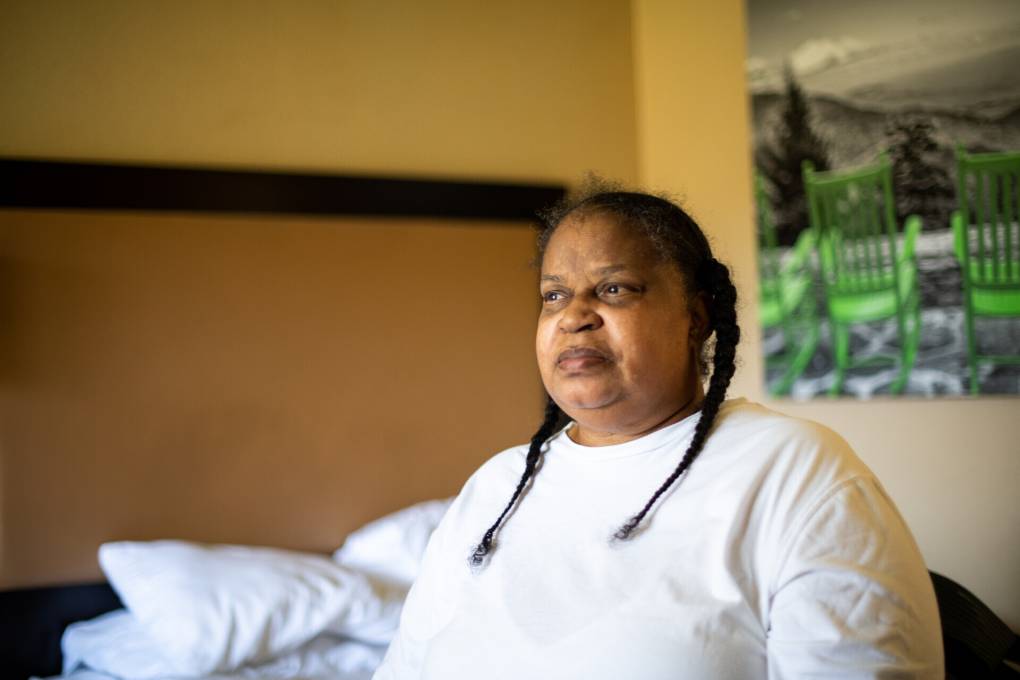
"caption": "Jean Kendrick sits in the Richmond hotel room that she and her son Stanley have shared for the past seven months, on July 15, 2021, as they prepare to move to a Project Roomkey hotel nearby.",
"description": null,
"title": "RS50274_012_Richmond_JeanStanley_07152021-qut",
"credit": "Beth LaBerge/KQED",
"status": "inherit",
"altTag": "A woman stares off to the left while sitting on a bed. She is wearing a white shirt, and her hair is in braids.",
"isLoading": false,
"fetchFailed": false
},
"news_11905858": {
"type": "attachments",
"id": "news_11905858",
"meta": {
"index": "attachments_1716263798",
"site": "news",
"id": "11905858",
"found": true
},
"parent": 11905761,
"imgSizes": {
"twentyfourteen-full-width": {
"file": "https://ww2.kqed.org/app/uploads/sites/10/2022/02/SantiagoCornejo-1-1038x576.jpg",
"width": 1038,
"mimeType": "image/jpeg",
"height": 576
},
"thumbnail": {
"file": "https://ww2.kqed.org/app/uploads/sites/10/2022/02/SantiagoCornejo-1-160x90.jpg",
"width": 160,
"mimeType": "image/jpeg",
"height": 90
},
"post-thumbnail": {
"file": "https://ww2.kqed.org/app/uploads/sites/10/2022/02/SantiagoCornejo-1-672x372.jpg",
"width": 672,
"mimeType": "image/jpeg",
"height": 372
},
"kqedFullSize": {
"file": "https://ww2.kqed.org/app/uploads/sites/10/2022/02/SantiagoCornejo-1.jpg",
"width": 2048,
"height": 1152
},
"large": {
"file": "https://ww2.kqed.org/app/uploads/sites/10/2022/02/SantiagoCornejo-1-1020x574.jpg",
"width": 1020,
"mimeType": "image/jpeg",
"height": 574
},
"1536x1536": {
"file": "https://ww2.kqed.org/app/uploads/sites/10/2022/02/SantiagoCornejo-1-1536x864.jpg",
"width": 1536,
"mimeType": "image/jpeg",
"height": 864
},
"full-width": {
"file": "https://ww2.kqed.org/app/uploads/sites/10/2022/02/SantiagoCornejo-1-1920x1080.jpg",
"width": 1920,
"mimeType": "image/jpeg",
"height": 1080
},
"medium": {
"file": "https://ww2.kqed.org/app/uploads/sites/10/2022/02/SantiagoCornejo-1-800x450.jpg",
"width": 800,
"mimeType": "image/jpeg",
"height": 450
}
},
"publishDate": 1645227858,
"modified": 1645227858,
"caption": null,
"description": null,
"title": "SantiagoCornejo (1)",
"credit": null,
"status": "inherit",
"altTag": null,
"isLoading": false,
"fetchFailed": false
},
"news_11905129": {
"type": "attachments",
"id": "news_11905129",
"meta": {
"index": "attachments_1716263798",
"site": "news",
"id": "11905129",
"found": true
},
"parent": 11905122,
"imgSizes": {
"twentyfourteen-full-width": {
"file": "https://ww2.kqed.org/app/uploads/sites/10/2022/02/lifted_021422_final-1038x576.png",
"width": 1038,
"mimeType": "image/png",
"height": 576
},
"thumbnail": {
"file": "https://ww2.kqed.org/app/uploads/sites/10/2022/02/lifted_021422_final-160x109.png",
"width": 160,
"mimeType": "image/png",
"height": 109
},
"post-thumbnail": {
"file": "https://ww2.kqed.org/app/uploads/sites/10/2022/02/lifted_021422_final-672x372.png",
"width": 672,
"mimeType": "image/png",
"height": 372
},
"kqedFullSize": {
"file": "https://ww2.kqed.org/app/uploads/sites/10/2022/02/lifted_021422_final.png",
"width": 1920,
"height": 1307
},
"large": {
"file": "https://ww2.kqed.org/app/uploads/sites/10/2022/02/lifted_021422_final-1020x694.png",
"width": 1020,
"mimeType": "image/png",
"height": 694
},
"1536x1536": {
"file": "https://ww2.kqed.org/app/uploads/sites/10/2022/02/lifted_021422_final-1536x1046.png",
"width": 1536,
"mimeType": "image/png",
"height": 1046
},
"medium": {
"file": "https://ww2.kqed.org/app/uploads/sites/10/2022/02/lifted_021422_final-800x545.png",
"width": 800,
"mimeType": "image/png",
"height": 545
}
},
"publishDate": 1644875452,
"modified": 1644875545,
"caption": null,
"description": null,
"title": "lifted_021422_final",
"credit": null,
"status": "inherit",
"altTag": "Cartoon: titled \"mask mandates lifted,\" shows a woman happily saying \"hooray!\" and tossing her mask aside. Frame is captioned, \"June 2021.\" A nearly identical image with a woman tossing her mask aside while still wearing another mask as she says, \"hooray?\" is captioned, \"feb. 2022.\"",
"isLoading": false,
"fetchFailed": false
}
},
"audioPlayerReducer": {
"postId": "stream_live",
"isPaused": true,
"isPlaying": false,
"pfsActive": false,
"pledgeModalIsOpen": true,
"playerDrawerIsOpen": false,
"liveAudioPlayStartedAt": 0,
"liveAudioPlayContext": ""
},
"authorsReducer": {
"byline_news_11907526": {
"type": "authors",
"id": "byline_news_11907526",
"meta": {
"override": true
},
"slug": "byline_news_11907526",
"name": "Elizabeth Aguilera",
"isLoading": false
},
"byline_news_11906215": {
"type": "authors",
"id": "byline_news_11906215",
"meta": {
"override": true
},
"slug": "byline_news_11906215",
"name": "\u003ca href=\"https://calmatters.org/author/anaibarra/\">Anna B. Ibarra\u003c/a>",
"isLoading": false
},
"kqed": {
"type": "authors",
"id": "236",
"meta": {
"index": "authors_1716337520",
"id": "236",
"found": true
},
"name": "KQED News Staff",
"firstName": "KQED News Staff",
"lastName": null,
"slug": "kqed",
"email": "faq@kqed.org",
"display_author_email": false,
"staff_mastheads": [],
"title": null,
"bio": null,
"avatar": "https://secure.gravatar.com/avatar/ef0e801a68c4c54afa9180db14084167?s=600&d=blank&r=g",
"twitter": null,
"facebook": null,
"instagram": null,
"linkedin": null,
"sites": [
{
"site": "arts",
"roles": [
"contributor"
]
},
{
"site": "news",
"roles": [
"editor"
]
},
{
"site": "futureofyou",
"roles": [
"author"
]
}
],
"headData": {
"title": "KQED News Staff | KQED",
"description": null,
"ogImgSrc": "https://secure.gravatar.com/avatar/ef0e801a68c4c54afa9180db14084167?s=600&d=blank&r=g",
"twImgSrc": "https://secure.gravatar.com/avatar/ef0e801a68c4c54afa9180db14084167?s=600&d=blank&r=g"
},
"isLoading": false,
"link": "/author/kqed"
},
"adembosky": {
"type": "authors",
"id": "3205",
"meta": {
"index": "authors_1716337520",
"id": "3205",
"found": true
},
"name": "April Dembosky",
"firstName": "April",
"lastName": "Dembosky",
"slug": "adembosky",
"email": "adembosky@kqed.org",
"display_author_email": false,
"staff_mastheads": [
"news",
"science"
],
"title": "KQED Health Correspondent",
"bio": "April Dembosky is the health correspondent for KQED News and a regular contributor to NPR. She specializes in covering altered states of mind, from postpartum depression to methamphetamine-induced psychosis to the insanity defense. Her investigative series on insurance companies sidestepping mental health laws won multiple awards, including first place in beat reporting from the national Association of Health Care Journalists. She is the recipient of numerous other prizes and fellowships, including a national Edward R. Murrow award for investigative reporting, a Society of Professional Journalists award for long-form storytelling, and a Carter Center Fellowship for Mental Health Journalism.\r\n\r\nDembosky reported and produced \u003cem>Soundtrack of Silence\u003c/em>, an audio documentary about music and memory that is currently being made into a feature film by Paramount Pictures.\r\n\r\nBefore joining KQED in 2013, Dembosky covered technology and Silicon Valley for \u003cem>The Financial Times of London,\u003c/em> and contributed business and arts stories to \u003cem>Marketplace \u003c/em>and \u003cem>The New York Times.\u003c/em> She got her undergraduate degree in philosophy from Smith College and her master's in journalism from the University of California, Berkeley. She is a classically trained violinist and proud alum of the first symphony orchestra at Burning Man.",
"avatar": "https://secure.gravatar.com/avatar/ef92999be4ceb9ea60701e7dc276f813?s=600&d=blank&r=g",
"twitter": "adembosky",
"facebook": null,
"instagram": null,
"linkedin": null,
"sites": [
{
"site": "arts",
"roles": [
"author"
]
},
{
"site": "news",
"roles": [
"editor"
]
},
{
"site": "futureofyou",
"roles": [
"author"
]
},
{
"site": "stateofhealth",
"roles": [
"editor"
]
},
{
"site": "science",
"roles": [
"editor"
]
},
{
"site": "forum",
"roles": [
"editor"
]
}
],
"headData": {
"title": "April Dembosky | KQED",
"description": "KQED Health Correspondent",
"ogImgSrc": "https://secure.gravatar.com/avatar/ef92999be4ceb9ea60701e7dc276f813?s=600&d=blank&r=g",
"twImgSrc": "https://secure.gravatar.com/avatar/ef92999be4ceb9ea60701e7dc276f813?s=600&d=blank&r=g"
},
"isLoading": false,
"link": "/author/adembosky"
},
"markfiore": {
"type": "authors",
"id": "3236",
"meta": {
"index": "authors_1716337520",
"id": "3236",
"found": true
},
"name": "Mark Fiore",
"firstName": "Mark",
"lastName": "Fiore",
"slug": "markfiore",
"email": "mark@markfiore.com",
"display_author_email": false,
"staff_mastheads": [
"news"
],
"title": "KQED News Cartoonist",
"bio": "\u003ca href=\"http://www.MarkFiore.com\">MarkFiore.com\u003c/a> | \u003ca href=\"https://twitter.com/markfiore\">Follow on Twitter\u003c/a> | \u003ca href=\"https://www.facebook.com/pages/Mark-Fiore-Animated-Political-Cartoons/94451707396?ref=bookmarks\">Facebook\u003c/a> | \u003ca href=\"mailto:mark@markfiore.com\">email\u003c/a>\r\n\r\nPulitzer Prize-winner, Mark Fiore, who the Wall Street Journal has called “the undisputed guru of the form,” creates animated political cartoons in San Francisco, where his work has been featured regularly on the San Francisco Chronicle’s web site, SFGate.com. His work has appeared on Newsweek.com, Slate.com, CBSNews.com, MotherJones.com, DailyKos.com and NPR’s web site. Fiore’s political animation has appeared on CNN, Frontline, Bill Moyers Journal, Salon.com and cable and broadcast outlets across the globe.\r\n\r\nBeginning his professional life by drawing traditional political cartoons for newspapers, Fiore’s work appeared in publications ranging from the Washington Post to the Los Angeles Times. In the late 1990s, he began to experiment with animating political cartoons and, after a short stint at the San Jose Mercury News as their staff cartoonist, Fiore devoted all his energies to animation.\r\nGrowing up in California, Fiore also spent a good portion of his life in the backwoods of Idaho. It was this combination that shaped him politically. Mark majored in political science at Colorado College, where, in a perfect send-off for a cartoonist, he received his diploma in 1991 as commencement speaker Dick Cheney smiled approvingly.\r\nMark Fiore was awarded the Pulitzer Prize for political cartooning in 2010, a Robert F. Kennedy Journalism Award in 2004 and has twice received an Online Journalism Award for commentary from the Online News Association (2002, 2008). Fiore has received two awards for his work in new media from the National Cartoonists Society (2001, 2002), and in 2006 received The James Madison Freedom of Information Award from The Society of Professional Journalists.",
"avatar": "https://secure.gravatar.com/avatar/fc4e2a612b15b67bad0c6f0e1db4ca9b?s=600&d=blank&r=g",
"twitter": "MarkFiore",
"facebook": null,
"instagram": "https://www.instagram.com/markfiore/?hl=en",
"linkedin": null,
"sites": [
{
"site": "arts",
"roles": [
"contributor"
]
},
{
"site": "news",
"roles": [
"editor"
]
},
{
"site": "futureofyou",
"roles": [
"editor"
]
},
{
"site": "science",
"roles": [
"editor"
]
}
],
"headData": {
"title": "Mark Fiore | KQED",
"description": "KQED News Cartoonist",
"ogImgSrc": "https://secure.gravatar.com/avatar/fc4e2a612b15b67bad0c6f0e1db4ca9b?s=600&d=blank&r=g",
"twImgSrc": "https://secure.gravatar.com/avatar/fc4e2a612b15b67bad0c6f0e1db4ca9b?s=600&d=blank&r=g"
},
"isLoading": false,
"link": "/author/markfiore"
},
"carlysevern": {
"type": "authors",
"id": "3243",
"meta": {
"index": "authors_1716337520",
"id": "3243",
"found": true
},
"name": "Carly Severn",
"firstName": "Carly",
"lastName": "Severn",
"slug": "carlysevern",
"email": "csevern@kqed.org",
"display_author_email": false,
"staff_mastheads": [
"news"
],
"title": "Senior Editor, Audience News ",
"bio": "Carly is KQED's Senior Editor of Audience News on the Digital News team, and has reported for the California Report Magazine, Bay Curious and KQED Arts. She's formerly the host of \u003ca href=\"http://ww2.kqed.org/pop/category/the-cooler/\" rel=\"noopener noreferrer\">The Cooler\u003c/a> podcast.",
"avatar": "https://secure.gravatar.com/avatar/54037bf5c128fe678f0ef26cec97a93f2e7f220a22d7285703328f12c42c1b1d?s=600&d=blank&r=g",
"twitter": "teacupinthebay",
"bluesky": null,
"facebook": null,
"instagram": null,
"linkedin": null,
"sites": [
{
"site": "",
"roles": [
"editor"
]
},
{
"site": "arts",
"roles": [
"editor"
]
},
{
"site": "news",
"roles": [
"administrator"
]
},
{
"site": "pop",
"roles": [
"editor"
]
},
{
"site": "futureofyou",
"roles": [
"editor"
]
},
{
"site": "about",
"roles": [
"administrator"
]
},
{
"site": "mindshift",
"roles": [
"editor"
]
},
{
"site": "bayareabites",
"roles": [
"editor"
]
},
{
"site": "stateofhealth",
"roles": [
"editor"
]
},
{
"site": "science",
"roles": [
"editor"
]
},
{
"site": "food",
"roles": [
"contributor"
]
},
{
"site": "forum",
"roles": [
"editor"
]
},
{
"site": "perspectives",
"roles": [
"administrator"
]
},
{
"site": "liveblog",
"roles": [
"editor"
]
}
],
"headData": {
"title": "Carly Severn | KQED",
"description": "Senior Editor, Audience News ",
"ogImgSrc": "https://secure.gravatar.com/avatar/54037bf5c128fe678f0ef26cec97a93f2e7f220a22d7285703328f12c42c1b1d?s=600&d=blank&r=g",
"twImgSrc": "https://secure.gravatar.com/avatar/54037bf5c128fe678f0ef26cec97a93f2e7f220a22d7285703328f12c42c1b1d?s=600&d=blank&r=g"
},
"isLoading": false,
"link": "/author/carlysevern"
},
"ecruzguevarra": {
"type": "authors",
"id": "8654",
"meta": {
"index": "authors_1716337520",
"id": "8654",
"found": true
},
"name": "Ericka Cruz Guevarra",
"firstName": "Ericka",
"lastName": "Cruz Guevarra",
"slug": "ecruzguevarra",
"email": "ecruzguevarra@kqed.org",
"display_author_email": true,
"staff_mastheads": [
"news"
],
"title": "Producer, The Bay Podcast",
"bio": "Ericka Cruz Guevarra is host of \u003ca href=\"https://www.kqed.org/podcasts/thebay\">\u003cem>The Bay\u003c/em>\u003c/a> podcast at KQED. Before host, she was the show’s producer. Her work in that capacity includes a three-part reported series on policing in Vallejo, which won a 2020 excellence in journalism award from the Society of Professional Journalists. Ericka has worked as a breaking news reporter at Oregon Public Broadcasting, helped produce the Code Switch podcast, and was KQED’s inaugural Raul Ramirez Diversity Fund intern. She’s also an alumna of NPR’s Next Generation Radio program. Send her an email if you have strong feelings about whether Fairfield and Suisun City are the Bay. Ericka is represented by SAG-AFTRA.",
"avatar": "https://secure.gravatar.com/avatar/accefc1de4bafc7e234b69bcb9b6f6536c130fd84709bc3069ef11a78787e1bb?s=600&d=blank&r=g",
"twitter": "NotoriousECG",
"bluesky": null,
"facebook": null,
"instagram": null,
"linkedin": null,
"sites": [
{
"site": "arts",
"roles": [
"subscriber"
]
},
{
"site": "news",
"roles": [
"editor",
"manage_categories"
]
},
{
"site": "futureofyou",
"roles": [
"subscriber"
]
},
{
"site": "stateofhealth",
"roles": [
"subscriber"
]
},
{
"site": "science",
"roles": [
"editor"
]
},
{
"site": "forum",
"roles": [
"subscriber"
]
}
],
"headData": {
"title": "Ericka Cruz Guevarra | KQED",
"description": "Producer, The Bay Podcast",
"ogImgSrc": "https://secure.gravatar.com/avatar/accefc1de4bafc7e234b69bcb9b6f6536c130fd84709bc3069ef11a78787e1bb?s=600&d=blank&r=g",
"twImgSrc": "https://secure.gravatar.com/avatar/accefc1de4bafc7e234b69bcb9b6f6536c130fd84709bc3069ef11a78787e1bb?s=600&d=blank&r=g"
},
"isLoading": false,
"link": "/author/ecruzguevarra"
},
"katewolffe": {
"type": "authors",
"id": "11523",
"meta": {
"index": "authors_1716337520",
"id": "11523",
"found": true
},
"name": "Kate Wolffe",
"firstName": "Kate",
"lastName": "Wolffe",
"slug": "katewolffe",
"email": "kwolffe@kqed.org",
"display_author_email": true,
"staff_mastheads": [
"news"
],
"title": "KQED Reporter + Weekend Host",
"bio": "Kate Wolffe reports on local Bay Area happenings for KQED, and hosts the news on weekend afternoons. She joined KQED in 2018 as an intern on the Forum team, before moving to cover topics ranging from politics to criminal justice to homelessness. A Bay Area native and UC Berkeley graduate, Kate loves to discover new corners of the region.",
"avatar": "https://secure.gravatar.com/avatar/22455f14db824a03ee252f73052fe939?s=600&d=blank&r=g",
"twitter": "katewolffe",
"facebook": null,
"instagram": null,
"linkedin": null,
"sites": [
{
"site": "arts",
"roles": [
"editor"
]
},
{
"site": "news",
"roles": [
"author",
"edit_others_posts"
]
},
{
"site": "forum",
"roles": [
"editor"
]
}
],
"headData": {
"title": "Kate Wolffe | KQED",
"description": "KQED Reporter + Weekend Host",
"ogImgSrc": "https://secure.gravatar.com/avatar/22455f14db824a03ee252f73052fe939?s=600&d=blank&r=g",
"twImgSrc": "https://secure.gravatar.com/avatar/22455f14db824a03ee252f73052fe939?s=600&d=blank&r=g"
},
"isLoading": false,
"link": "/author/katewolffe"
},
"msolomon": {
"type": "authors",
"id": "11651",
"meta": {
"index": "authors_1716337520",
"id": "11651",
"found": true
},
"name": "Molly Solomon",
"firstName": "Molly",
"lastName": "Solomon",
"slug": "msolomon",
"email": "msolomon@KQED.org",
"display_author_email": false,
"staff_mastheads": [
"news"
],
"title": "Senior Editor",
"bio": "Molly Solomon is the senior editor of KQED's California Politics and Government Desk. Previously, she was the station's editor-at-large, with a focus on editing early childhood education, politics, and criminal justice. Before that, she managed and edited statewide election coverage for The California Newsroom, a collaboration of local public radio stations, CalMatters and NPR. Molly joined KQED in 2019 to launch the station’s housing affordability desk, where she reported on homelessness, evictions and is the co-host of KQED’s housing podcast, SOLD OUT: Rethinking Housing in America. Before that, she was the Southwest Washington Bureau Chief for Oregon Public Broadcasting and a reporter at Hawaii Public Radio. Her stories have aired on NPR’s \u003cem>Morning Edition\u003c/em>, \u003cem>All Things Considered\u003c/em>, \u003cem>Here & Now\u003c/em>, \u003cem>Science Friday\u003c/em> and \u003cem>Marketplace\u003c/em>. Molly's award-winning reporting has been honored by the Best of the West, Edward R. Murrow awards, Society of Professional Journalists, National Headliner Awards, and the Asian American Journalists Association. Born and raised in Berkeley, Molly is a big fan of burritos and her scruffy terrier, Ollie.",
"avatar": "https://secure.gravatar.com/avatar/9ad9794616923d81c9a79897161545bd?s=600&d=blank&r=g",
"twitter": "solomonout",
"facebook": null,
"instagram": null,
"linkedin": null,
"sites": [
{
"site": "news",
"roles": [
"editor"
]
},
{
"site": "science",
"roles": [
"editor"
]
}
],
"headData": {
"title": "Molly Solomon | KQED",
"description": "Senior Editor",
"ogImgSrc": "https://secure.gravatar.com/avatar/9ad9794616923d81c9a79897161545bd?s=600&d=blank&r=g",
"twImgSrc": "https://secure.gravatar.com/avatar/9ad9794616923d81c9a79897161545bd?s=600&d=blank&r=g"
},
"isLoading": false,
"link": "/author/msolomon"
},
"ebaldassari": {
"type": "authors",
"id": "11652",
"meta": {
"index": "authors_1716337520",
"id": "11652",
"found": true
},
"name": "Erin Baldassari",
"firstName": "Erin",
"lastName": "Baldassari",
"slug": "ebaldassari",
"email": "ebaldassari@KQED.org",
"display_author_email": true,
"staff_mastheads": [
"news"
],
"title": "Staff Writer",
"bio": "Erin Baldassari covers housing for KQED. She's a former print journalist and most recently worked as the transportation reporter for the \u003cem>Mercury News\u003c/em> and \u003cem>East Bay Times. \u003c/em>There, she focused on how the Bay Area’s housing shortage has changed the way people move around the region. She also served on the \u003cem>East Bay Times\u003c/em>’ 2017 Pulitzer Prize-winning team for coverage of the Ghost Ship Fire in Oakland. Prior to that, Erin worked as a breaking news and general assignment reporter for a variety of outlets in the Bay Area and the greater Boston area. A Tufts University alumna, Erin grew up in the foothills of the Sierra Nevada mountains and in Sonoma County. She is a life-long KQED listener.",
"avatar": "https://secure.gravatar.com/avatar/5e95cad64a8ca08288082212e199d2b0cbeb4fd8e8ef5339395f361032bbe005?s=600&d=blank&r=g",
"twitter": "e_baldi",
"bluesky": null,
"facebook": null,
"instagram": null,
"linkedin": null,
"sites": [
{
"site": "news",
"roles": [
"edit_others_posts",
"editor"
]
},
{
"site": "science",
"roles": [
"editor"
]
},
{
"site": "liveblog",
"roles": [
"editor"
]
}
],
"headData": {
"title": "Erin Baldassari | KQED",
"description": "Staff Writer",
"ogImgSrc": "https://secure.gravatar.com/avatar/5e95cad64a8ca08288082212e199d2b0cbeb4fd8e8ef5339395f361032bbe005?s=600&d=blank&r=g",
"twImgSrc": "https://secure.gravatar.com/avatar/5e95cad64a8ca08288082212e199d2b0cbeb4fd8e8ef5339395f361032bbe005?s=600&d=blank&r=g"
},
"isLoading": false,
"link": "/author/ebaldassari"
},
"ccabreralomeli": {
"type": "authors",
"id": "11708",
"meta": {
"index": "authors_1716337520",
"id": "11708",
"found": true
},
"name": "Carlos Cabrera-Lomelí",
"firstName": "Carlos",
"lastName": "Cabrera-Lomelí",
"slug": "ccabreralomeli",
"email": "ccabreralomeli@KQED.org",
"display_author_email": true,
"staff_mastheads": [
"news"
],
"title": "Community Reporter",
"bio": "Carlos Cabrera-Lomelí is a community reporter with KQED's digital engagement team. He also reports and co-produces for KQED's bilingual news hub KQED en Español. He grew up in San Francisco's Mission District and has previously worked with Univision, 48 Hills and REFORMA in Mexico City.",
"avatar": "https://secure.gravatar.com/avatar/c309be9665e484f887b818c89e273ecc673004f426f36b24d00a4d813a2e0518?s=600&d=blank&r=g",
"twitter": "@LomeliCabrera",
"bluesky": null,
"facebook": null,
"instagram": null,
"linkedin": null,
"sites": [
{
"site": "arts",
"roles": [
"editor"
]
},
{
"site": "news",
"roles": [
"editor"
]
},
{
"site": "about",
"roles": [
"editor"
]
},
{
"site": "science",
"roles": [
"editor"
]
},
{
"site": "perspectives",
"roles": [
"editor"
]
},
{
"site": "elections",
"roles": [
"editor"
]
},
{
"site": "liveblog",
"roles": [
"contributor"
]
}
],
"headData": {
"title": "Carlos Cabrera-Lomelí | KQED",
"description": "Community Reporter",
"ogImgSrc": "https://secure.gravatar.com/avatar/c309be9665e484f887b818c89e273ecc673004f426f36b24d00a4d813a2e0518?s=600&d=blank&r=g",
"twImgSrc": "https://secure.gravatar.com/avatar/c309be9665e484f887b818c89e273ecc673004f426f36b24d00a4d813a2e0518?s=600&d=blank&r=g"
},
"isLoading": false,
"link": "/author/ccabreralomeli"
},
"mesquinca": {
"type": "authors",
"id": "11802",
"meta": {
"index": "authors_1716337520",
"id": "11802",
"found": true
},
"name": "Maria Esquinca",
"firstName": "Maria",
"lastName": "Esquinca",
"slug": "mesquinca",
"email": "mesquinca@kqed.org",
"display_author_email": false,
"staff_mastheads": [],
"title": "Producer, The Bay",
"bio": "María Esquinca is a producer of The Bay. Before that, she was a New York Women’s Foundation IGNITE Fellow at Latino USA. She worked at Radio Bilingue where she covered the San Joaquin Valley. Maria has interned at WLRN, News 21, The New York Times Student Journalism Institute and at Crain’s Detroit Business as a Dow Jones News Fund Business Reporting Intern. She is an MFA graduate from the University of Miami. In 2017, she graduated from the Walter Cronkite School of Journalism and Mass Communication with a Master of Mass Communication. A fronteriza, she was born in Ciudad Juárez, Chihuahua, Mexico and grew up in El Paso, Texas.",
"avatar": "https://secure.gravatar.com/avatar/77cedba18aae91da775038ba06dcd8d0?s=600&d=blank&r=g",
"twitter": "@m_esquinca",
"facebook": null,
"instagram": null,
"linkedin": null,
"sites": [
{
"site": "news",
"roles": []
}
],
"headData": {
"title": "Maria Esquinca | KQED",
"description": "Producer, The Bay",
"ogImgSrc": "https://secure.gravatar.com/avatar/77cedba18aae91da775038ba06dcd8d0?s=600&d=blank&r=g",
"twImgSrc": "https://secure.gravatar.com/avatar/77cedba18aae91da775038ba06dcd8d0?s=600&d=blank&r=g"
},
"isLoading": false,
"link": "/author/mesquinca"
}
},
"pagesReducer": {
"news_tag_covid-19": {
"type": "terms",
"id": "news_27504",
"meta": {
"index": "terms_1716263798",
"site": "news",
"id": "27504",
"score": 8.558294
},
"featImg": null,
"name": "covid-19",
"description": null,
"taxonomy": "tag",
"headData": {
"twImgId": null,
"twTitle": null,
"ogTitle": null,
"ogImgId": null,
"twDescription": null,
"description": null,
"title": "covid-19 Archives | KQED News",
"ogDescription": null
},
"ttid": 27521,
"slug": "covid-19",
"isLoading": false,
"title": "covid-19",
"pageMeta": {
"site": "news",
"WpPageTemplate": "page-topic-editorial",
"currentPage": 6
},
"blocks": [
{
"blockName": "kqed/post-list",
"attrs": {
"layout": "cardArticle2",
"query": "posts/news?tag=covid-19",
"seeMore": false,
"paginated": true,
"page": 6
}
},
{
"blockName": "kqed/ad"
}
]
}
},
"pfsSessionReducer": {},
"postsReducer": {
"stream_live": {
"type": "live",
"id": "stream_live",
"audioUrl": "https://streams.kqed.org/kqedradio",
"title": "Live Stream",
"excerpt": "Live Stream information currently unavailable.",
"link": "/radio",
"featImg": "",
"label": {
"name": "KQED Live",
"link": "/"
}
},
"stream_kqedNewscast": {
"type": "posts",
"id": "stream_kqedNewscast",
"audioUrl": "https://www.kqed.org/.stream/anon/radio/RDnews/newscast.mp3?_=1",
"title": "KQED Newscast",
"featImg": "",
"label": {
"name": "88.5 FM",
"link": "/"
}
},
"news_11910688": {
"type": "posts",
"id": "news_11910688",
"meta": {
"index": "posts_1716263798",
"site": "news",
"id": "11910688",
"score": null,
"sort": [
1649671244000
]
},
"guestAuthors": [],
"slug": "support-for-mutual-aid-came-and-went-but-the-need-is-still-there",
"title": "Support for Mutual Aid Came and Went, But the Need Is Still There",
"publishDate": 1649671244,
"format": "audio",
"headTitle": "Support for Mutual Aid Came and Went, But the Need Is Still There | KQED",
"labelTerm": {},
"content": "\u003cp>\u003cspan style=\"font-weight: 400\">In 2020 call outs for mutual aid donations flooded social media, and people responded with an abundance of money, food and time. Two years later, interest and support has waned while the needs have not gone away. As government aid like the child tax credit and stimulus checks expire, organizers across the Bay look at filling in the gaps.\u003c/span>\u003c/p>\n\u003cp>\u003cspan style=\"font-weight: 400\">Guest: \u003ca href=\"https://twitter.com/LomeliCabrera\">Carlos Cabrera-Lomelí\u003c/a>, community engagement reporter for KQED\u003c/span>\u003c/p>\n\u003cp>\u003ca href=\"https://bit.ly/37gGMDa\">\u003cem>Episode transcript\u003c/em>\u003c/a>\u003c/p>\n\u003cdiv class=\"card card--enclosed grey\">\n\u003cp id=\"embed-code\" class=\"inconsolata\">\n\u003c!-- iframe plugin v.4.3 wordpress.org/plugins/iframe/ -->\u003cbr>\n\u003ciframe loading=\"lazy\" frameborder=\"0\" height=\"200\" scrolling=\"no\" src=\"https://playlist.megaphone.fm?e=KQINC9346688488&light=true\" width=\"100%\" class=\"iframe-class\">\u003c/iframe>\n\u003c/p>\n\u003c/div>\n\u003cp>\u003cb>Recommended listening:\u003c/b>\u003c/p>\n\u003cul>\n\u003cli>\u003ca href=\"https://www.kqed.org/news/11842565/what-mutual-aid-means-and-why-its-worth-protecting\">\u003cspan style=\"font-weight: 400\">What Mutual Aid Means — And Why It’s Worth Protecting\u003c/span>\u003c/a>\u003cspan style=\"font-weight: 400\"> \u003c/span>\u003c/li>\n\u003c/ul>\n\u003cp> \u003c/p>\n\u003cp>[ad fullwidth]\u003c/p>\u003cp>\u003c/p>\n",
"blocks": [],
"excerpt": null,
"status": "publish",
"parent": 0,
"modified": 1721129680,
"stats": {
"hasAudio": true,
"hasVideo": false,
"hasChartOrMap": false,
"iframeSrcs": [],
"hasGoogleForm": false,
"hasGallery": false,
"hasHearkenModule": false,
"hasPolis": false,
"paragraphCount": 6,
"wordCount": 90
},
"headData": {
"title": "Support for Mutual Aid Came and Went, But the Need Is Still There | KQED",
"description": "In 2020 call outs for mutual aid donations flooded social media, and people responded with an abundance of money, food and time. Two years later, interest and support has waned while the needs have not gone away. As government aid like the child tax credit and stimulus checks expire, organizers across the Bay look at",
"ogTitle": "",
"ogDescription": "",
"ogImgId": "",
"twTitle": "",
"twDescription": "",
"twImgId": "",
"schema": {
"@context": "https://schema.org",
"@type": "NewsArticle",
"headline": "Support for Mutual Aid Came and Went, But the Need Is Still There",
"datePublished": "2022-04-11T03:00:44-07:00",
"dateModified": "2024-07-16T04:34:40-07:00",
"image": "https://cdn.kqed.org/wp-content/uploads/2020/02/KQED-OG-Image@1x.png",
"isAccessibleForFree": "True",
"publisher": {
"@type": "NewsMediaOrganization",
"@id": "https://www.kqed.org/#organization",
"name": "KQED",
"logo": "https://cdn.kqed.org/wp-content/uploads/2020/02/KQED-OG-Image@1x.png",
"url": "https://www.kqed.org",
"sameAs": [
"https://www.facebook.com/KQED",
"https://twitter.com/KQED",
"https://www.instagram.com/kqed/",
"https://www.tiktok.com/@kqedofficial",
"https://www.linkedin.com/company/kqed",
"https://www.youtube.com/channel/UCeC0IOo7i1P_61zVUWbJ4nw"
]
}
}
},
"source": "The Bay",
"sourceUrl": "https://www.kqed.org/podcasts/thebay",
"audioUrl": "https://www.podtrac.com/pts/redirect.mp3/traffic.megaphone.fm/KQINC9346688488.mp3?updated=1649464095",
"sticky": false,
"excludeFromSiteSearch": "Include",
"path": "/news/11910688/support-for-mutual-aid-came-and-went-but-the-need-is-still-there",
"audioTrackLength": null,
"parsedContent": [
{
"type": "contentString",
"content": "\u003cdiv class=\"post-body\">\u003cp>\u003cp>\u003cspan style=\"font-weight: 400\">In 2020 call outs for mutual aid donations flooded social media, and people responded with an abundance of money, food and time. Two years later, interest and support has waned while the needs have not gone away. As government aid like the child tax credit and stimulus checks expire, organizers across the Bay look at filling in the gaps.\u003c/span>\u003c/p>\n\u003cp>\u003cspan style=\"font-weight: 400\">Guest: \u003ca href=\"https://twitter.com/LomeliCabrera\">Carlos Cabrera-Lomelí\u003c/a>, community engagement reporter for KQED\u003c/span>\u003c/p>\n\u003cp>\u003ca href=\"https://bit.ly/37gGMDa\">\u003cem>Episode transcript\u003c/em>\u003c/a>\u003c/p>\n\u003cdiv class=\"card card--enclosed grey\">\n\u003cp id=\"embed-code\" class=\"inconsolata\">\n\u003c!-- iframe plugin v.4.3 wordpress.org/plugins/iframe/ -->\u003cbr>\n\u003ciframe loading=\"lazy\" frameborder=\"0\" height=\"200\" scrolling=\"no\" src=\"https://playlist.megaphone.fm?e=KQINC9346688488&light=true\" width=\"100%\" class=\"iframe-class\">\u003c/iframe>\n\u003c/p>\n\u003c/div>\n\u003cp>\u003cb>Recommended listening:\u003c/b>\u003c/p>\n\u003cul>\n\u003cli>\u003ca href=\"https://www.kqed.org/news/11842565/what-mutual-aid-means-and-why-its-worth-protecting\">\u003cspan style=\"font-weight: 400\">What Mutual Aid Means — And Why It’s Worth Protecting\u003c/span>\u003c/a>\u003cspan style=\"font-weight: 400\"> \u003c/span>\u003c/li>\n\u003c/ul>\n\u003cp> \u003c/p>\n\u003cp>\u003c/p>\u003c/div>",
"attributes": {
"named": {},
"numeric": []
}
},
{
"type": "component",
"content": "",
"name": "ad",
"attributes": {
"named": {
"label": "fullwidth"
},
"numeric": [
"fullwidth"
]
}
},
{
"type": "contentString",
"content": "\u003cdiv class=\"post-body\">\u003cp>\u003c/p>\u003cp>\u003c/p>\n\u003c/div>\u003c/p>",
"attributes": {
"named": {},
"numeric": []
}
}
],
"link": "/news/11910688/support-for-mutual-aid-came-and-went-but-the-need-is-still-there",
"authors": [
"8654",
"11708",
"11802"
],
"programs": [
"news_28779"
],
"categories": [
"news_8",
"news_33520"
],
"tags": [
"news_27504",
"news_28508",
"news_22598"
],
"featImg": "news_11910690",
"label": "source_news_11910688"
},
"news_11909493": {
"type": "posts",
"id": "news_11909493",
"meta": {
"index": "posts_1716263798",
"site": "news",
"id": "11909493",
"score": null,
"sort": [
1649264713000
]
},
"guestAuthors": [],
"slug": "que-hacer-si-su-tramite-para-recibir-ayuda-para-la-renta-de-california-se-esta-demorando",
"title": "Ayuda para la renta en California: ¿Ya la solicitó y sigue esperando? Esto es lo que usted (y su arrendador) pueden hacer ahora",
"publishDate": 1649264713,
"format": "standard",
"headTitle": "Ayuda para la renta en California: ¿Ya la solicitó y sigue esperando? Esto es lo que usted (y su arrendador) pueden hacer ahora | KQED",
"labelTerm": {},
"content": "\u003cp>\u003ca href=\"https://www.kqed.org/news/11908640/covid-rent-relief-taking-a-long-time-to-process-what-you-can-do-if-youre-waiting\">\u003ci>Read in English\u003c/i>\u003c/a>\u003c/p>\n\u003cp>De última hora,\u003ca href=\"https://www.kqed.org/news/11909880/california-lawmakers-extend-eviction-protections-for-tenants-awaiting-rent-relief\"> California logró ampliar el programa estatal de protecciones contra el desalojo\u003c/a> (enlace sólo en inglés) para las personas que solicitaron ayuda para la renta antes de que venciera la fecha límite del 31 de marzo.\u003c/p>\n\u003cp>Esto significa que si usted es un inquilino que aplicó al programa de ayuda financiera para pagar su renta atrasada, ya sea junto a su arrendador o por sí mismo, el hecho de haberlo solicitado seguirá técnicamente protegiéndolo contra el desalojo hasta el 30 de junio.\u003c/p>\n\u003cp>Pero más de medio millón de personas han aplicado a este programa desde que se puso en marcha en marzo de 2021. Sin embargo, \u003ca href=\"https://housing.ca.gov/covid_rr/dashboard.html\">menos de la mitad de esos solicitantes han recibido los pagos\u003c/a>, según el propio tablero estatal del programa.\u003c/p>\n\u003cp>Así que si usted es uno de los que ha solicitado esta ayuda y todavía está esperando una respuesta, ¿qué puede hacer durante este tiempo? ¿Y qué puede hacer su arrendador mientras espera noticias sobre su solicitud? Siga leyendo.\u003c/p>\n\u003ch2>\u003cstrong>¿Esta extensión de las protecciones contra desalojos significa que hay una moratoria en todo el estado otra vez?\u003c/strong>\u003c/h2>\n\u003cp>No. La moratoria estatal contra desalojos de California expiró el otoño pasado, el 30 de septiembre de 2021.\u003c/p>\n\u003cp>Pero el programa estatal de ayuda para la renta ha otorgado su propio tipo de protecciones contra el desalojo a partir del 1 de octubre de 2021. Eso es porque desde esa fecha, \u003ca href=\"https://housing.ca.gov/tenant/protection_guidelines.html\">cualquier propietario que quiera desalojar a un inquilino por no pagar el alquiler como resultado de una dificultad conectada con COVID-19 tiene que solicitar primero el alivio de alquiler\u003c/a> antes de continuar con una demanda de desalojo.\u003c/p>\n\u003cp>[aside label='Más en español' tag='kqed-en-espanol']Por su parte, los inquilinos afectados por dificultades derivadas por COVID-19 podrían evitar que un desalojo siguiera adelante, siempre y cuando demuestren que han presentado su solicitud al programa de ayuda al alquiler como defensa ante el tribunal.\u003c/p>\n\u003cp>Estas protecciones \u003ca href=\"https://www.kqed.org/news/11909880/california-lawmakers-extend-eviction-protections-for-tenants-awaiting-rent-relief\">habrían expirado el 31 de marzo\u003c/a> (enlace sólo en inglés), pero ahora se han ampliado hasta el 30 de junio por la nueva legislación de California, aunque sólo para las personas que solicitaron el programa de alivio del alquiler antes del 31 de marzo.\u003c/p>\n\u003cp>Algunas ciudades y condados todavía tienen sus propias moratorias contra desalojos que se mantuvieron en vigor después de que expiró la moratoria estatal. \u003ca href=\"https://www.kqed.org/news/11892641/ayuda-para-la-renta-durante-covid-19-lo-que-los-inquilinos-y-los-propietarios-deben-saber#:~:text=Mi%20condado%20o%20ciudad%20tiene%20su%20propia%20directriz%20de%20moratoria%20de%20desalojos.%20%C2%BFTambi%C3%A9n%20expirar%C3%A1%3F\">Vea si su condado del Área de la Bahía todavía tiene una moratoria de desalojo\u003c/a>.\u003c/p>\n\u003ch2>\u003cstrong>¿Qué pasa si he presentado una solicitud para el programa estatal y todavía estoy esperando?\u003c/strong>\u003c/h2>\n\u003cp>El estado dice que \u003ca href=\"https://housing.ca.gov/covid_rr/resources.html\">“todas las solicitudes elegibles recibidas en o antes del 31 de marzo de 2022, para el alquiler o los servicios públicos adeudados entre el 1 de abril de 2020 y el 31 de marzo de 2022, serán pagadas.”\u003c/a>\u003c/p>\n\u003cp>Le preguntamos a Madeline Howard, abogada principal del Western Center on Law and Poverty, qué debe hacer la gente si, a pesar de todo, sigue esperando que se procese su solicitud.\u003c/p>\n\u003cp>“Si ya tiene una solicitud y está esperando, le sugiero que se dirija al Departamento de Vivienda y Desarrollo Comunitario (o HCD por sus siglas en inglés)”, dijo. Recomienda llamar a la línea de ayuda al (833) 430-2122.\u003c/p>\n\u003cp>Si ha recibido una notificación de desalojo por parte de su arrendatario, Howard recomienda decir al HCD que necesita que agilicen su solicitud. El departamento opera a partir de una lista de prioridades, y su solicitud podría ser considerada antes si usted está en una situación de emergencia.\u003c/p>\n\u003cp>El estado dice que siempre que haya presentado su solicitud antes del 31 de marzo, \u003ca href=\"https://housing.ca.gov/covid_rr/resources.html\">usted todavía podrá acceder a su solicitud después de esa fecha\u003c/a> “para comprobar el estatus, responder a las tareas y proporcionar información adicional solicitada por su administrador de casos”.\u003c/p>\n\u003cfigure id=\"attachment_11910386\" class=\"wp-caption aligncenter\" style=\"max-width: 1920px\">\u003cimg loading=\"lazy\" decoding=\"async\" class=\"size-full wp-image-11910386\" src=\"https://ww2.kqed.org/app/uploads/sites/10/2022/04/EDD-UNEMPLOYMENT-1.jpg\" alt=\"Una persona se sienta en un sillón y mira a su computadora.\" width=\"1920\" height=\"1280\" srcset=\"https://cdn.kqed.org/wp-content/uploads/sites/10/2022/04/EDD-UNEMPLOYMENT-1.jpg 1920w, https://cdn.kqed.org/wp-content/uploads/sites/10/2022/04/EDD-UNEMPLOYMENT-1-800x533.jpg 800w, https://cdn.kqed.org/wp-content/uploads/sites/10/2022/04/EDD-UNEMPLOYMENT-1-1020x680.jpg 1020w, https://cdn.kqed.org/wp-content/uploads/sites/10/2022/04/EDD-UNEMPLOYMENT-1-160x107.jpg 160w, https://cdn.kqed.org/wp-content/uploads/sites/10/2022/04/EDD-UNEMPLOYMENT-1-1536x1024.jpg 1536w\" sizes=\"(max-width: 1920px) 100vw, 1920px\">\u003cfigcaption class=\"wp-caption-text\">Para los inquilinos y propietarios que solicitan ayuda financiera para el alquiler, el tiempo es esencia \u003ccite>(Liza Summer/Pexels)\u003c/cite>\u003c/figcaption>\u003c/figure>\n\u003ch2>Solicité ayuda para la renta antes del 31 de marzo. ¿Tengo garantizado el dinero?\u003c/h2>\n\u003cp>El estado dice que \u003ca href=\"https://housing.ca.gov/covid_rr/resources.html\">“todas las solicitudes elegibles recibidas en o antes del 31 de marzo de 2022, para el alquiler o los servicios públicos adeudados entre el 1 de abril de 2020 y el 31 de marzo de 2022, serán pagados.”\u003c/a>\u003c/p>\n\u003cp>Pero aunque el Departamento de Vivienda y Desarrollo Comunitario sostiene que su objetivo es entregar las solicitudes en 30 días, \u003ca href=\"https://nationalequityatlas.org/CARentalAssistance\">el tiempo medio de espera es mucho mayor: cuatro meses promedio\u003c/a> (enlace sólo en inglés), según un informe reciente del National Equity Atlas .\u003c/p>\n\u003cp>El estado dice que siempre que haya presentado su solicitud antes del 31 de marzo, \u003ca href=\"https://housing.ca.gov/covid_rr/resources.html\">todavía podrá acceder a su solicitud después de esa fecha “para comprobar el estado, responder a las tareas y proporcionar información adicional solicitada por su administrador de casos”.\u003c/a>\u003c/p>\n\u003ch2>\u003cstrong>Si apliqué antes de la fecha límite, ¿hay alguna posibilidad de que mi arrendador intente desalojarme?\u003c/strong>\u003c/h2>\n\u003cp>Cuando la ley funciona como debería, si llenó una solicitud y la envió el 31 de marzo o antes, debería estar protegido contra el desalojo en virtud de esta ley. Pero eso no significa que la ley siempre funcione como debería.\u003c/p>\n\u003cp>Algunos abogados y defensores de los inquilinos han informado de clientes que habían presentado una solicitud que todavía estaba en proceso de revisión, pero que recibieron una notificación de desalojo de todos modos. Por lo general, esto se debe a que el propietario no sabía que el inquilino había presentado la solicitud o afirma falsamente que su inquilino no ha presentado toda la documentación requerida para la solicitud.\u003c/p>\n\u003cp>A finales de marzo, la oficina del fiscal general del estado envió cartas de advertencia a 91 bufetes de abogados que representan a propietarios de todo el estado recordándoles que presentar declaraciones falsas va en contra de la ley.\u003c/p>\n\u003cp>[aside postID=\"news_11884668\" hero=\"https://ww2.kqed.org/app/uploads/sites/10/2021/08/traffic-sign.jpg\"]“Presentar declaraciones falsas en los tribunales viola múltiples leyes estatales”, escribió el fiscal general adjunto Hunter Landerholm, “al igual que mantener un caso de este tipo después de saber que la declaración utilizada para iniciarlo es falsa”.\u003c/p>\n\u003cp>El propósito de esa carta era animar a esos bufetes a “revisar” los casos de desalojo archivados para “asegurarse de que cumplen la ley”.\u003c/p>\n\u003cp>Los desalojos siguen produciéndose, dijo Madeline Howard, abogada principal del Western Center on Law and Poverty, “porque las protecciones son imperfectas. Y es muy difícil hacerlas cumplir sin un abogado”.\u003c/p>\n\u003cp>Normalmente, un abogado puede ayudar al inquilino a luchar contra estas reclamaciones. Así que, si solicitó una ayuda para la renta el 31 de marzo o antes y la solicitud sigue pendiente, pero está recibiendo una notificación de desalojo, póngase en contacto con un abogado. \u003ca href=\"https://www.lawhelpca.org/es/legal-information\">Encuentre una oficina de ayuda legal cerca de usted\u003c/a>.\u003c/p>\n\u003cp>Si su arrendador le pide una prueba de que ha solicitado el programa de ayuda al alquiler, Howard aconseja que descargue el documento de solicitud en la página web de Housing is Key y se lo envíe para “dejar bien claro que lo ha solicitado”.\u003c/p>\n\u003cp>Una cosa clave para recordar: para la mayoría de los inquilinos en California, a partir del 1 de abril, los propietarios todavía podrán llevar a sus inquilinos a los tribunales e iniciar los procedimientos de desalojo por falta de alquiler. Eso es porque \u003ca href=\"https://www.kqed.org/news/11909880/california-lawmakers-extend-eviction-protections-for-tenants-awaiting-rent-relief\">esta nueva legislación estatal\u003c/a> (enlace sólo en inglés) significa que un propietario no lo puede desalojar por no pagar el alquiler que debía antes del 31 de marzo, pero no le protege del desalojo por no pagar el alquiler después de esa fecha.\u003cbr>\n[ad fullwidth]\u003c/p>\n\u003ch2>\u003cstrong>Mi ciudad me permite solicitar ayuda para la renta después del 31 de marzo. ¿Me podrían desalojar mientras espero los fondos?\u003c/strong>\u003c/h2>\n\u003cp>Si usted solicita una ayuda para la renta, los fondos provendrán del estado o de su propio condado, dependiendo de dónde viva. También puede ser elegible para ambos. Cuando solicite la ayuda para la renta \u003ca href=\"https://housing.ca.gov/covid_rr/index.html\">a través del portal del estado\u003c/a> se le dirigirá al lugar adecuado para solicitarla, dependiendo de su ubicación, si se trata de una ayuda estatal o local.\u003c/p>\n\u003cp>La \u003ca href=\"https://www.kqed.org/news/11909880/california-lawmakers-extend-eviction-protections-for-tenants-awaiting-rent-relief\">ampliación de las protecciones estatales contra el desalojo\u003c/a> (enlace sólo en inglés) sólo se aplica a los inquilinos que solicitaron la ayuda al alquiler el 31 de marzo o antes. Esto significa que si vive en una jurisdicción donde su ciudad o condado administra el programa de ayuda para la renta (y no lo hace a través del programa estatal Housing is Key), y le permiten presentar una solicitud de ayuda al alquiler después del 1 de abril, podría ser desalojado incluso si está esperando la ayuda al alquiler de tu ciudad o condado.\u003c/p>\n\u003cfigure id=\"attachment_11910380\" class=\"wp-caption aligncenter\" style=\"max-width: 1920px\">\u003cimg loading=\"lazy\" decoding=\"async\" class=\"size-full wp-image-11910380\" src=\"https://ww2.kqed.org/app/uploads/sites/10/2022/04/pexels-karolina-grabowska-4386433.jpg\" alt=\"Un par de manos abre una cartera de piel llena de dólares.\" width=\"1920\" height=\"1200\" srcset=\"https://cdn.kqed.org/wp-content/uploads/sites/10/2022/04/pexels-karolina-grabowska-4386433.jpg 1920w, https://cdn.kqed.org/wp-content/uploads/sites/10/2022/04/pexels-karolina-grabowska-4386433-800x500.jpg 800w, https://cdn.kqed.org/wp-content/uploads/sites/10/2022/04/pexels-karolina-grabowska-4386433-1020x638.jpg 1020w, https://cdn.kqed.org/wp-content/uploads/sites/10/2022/04/pexels-karolina-grabowska-4386433-160x100.jpg 160w, https://cdn.kqed.org/wp-content/uploads/sites/10/2022/04/pexels-karolina-grabowska-4386433-1536x960.jpg 1536w\" sizes=\"(max-width: 1920px) 100vw, 1920px\">\u003cfigcaption class=\"wp-caption-text\">Los propietarios todavía pueden llevar a los inquilinos a los tribunales después del 1 de abril por los alquileres no pagados después de esa fecha. \u003ccite>(Karolina Grabowska/Pexels)\u003c/cite>\u003c/figcaption>\u003c/figure>\n\u003ch2>¿Qué pasa si mi arrendador o casero me amenaza con desalojarme?\u003c/h2>\n\u003cp>Howard dijo que si usted recibe un aviso de desalojo, “póngase en contacto con una oficina de ayuda legal tan pronto como pueda, porque esos casos se mueven rápidamente”. \u003ca href=\"https://www.lawhelpca.org/es/legal-information\">Encuentre una oficina de ayuda legal cerca de usted\u003c/a>.\u003c/p>\n\u003cp>Recuerde, ya que la moratoria oficial de desalojo del estado expiró el 30 de septiembre de 2021, los inquilinos afectados debido a dificultades por COVID-19 podrían evitar que un desalojo avanzará si presentaban su solicitud de alivio pendiente como una defensa en la corte, y esta nueva prórroga de las protecciones contra el desalojo significa que ahora será así hasta el 30 de junio.\u003c/p>\n\u003cp>“Uno de los problemas de las protecciones estatales es que son muy complicadas y es realmente difícil para un inquilino utilizar las protecciones estatales si no tiene un abogado”, dijo Howard. “Y la mayoría de los inquilinos que se enfrentan a un desalojo tienen que ir a los tribunales sin un abogado”.\u003c/p>\n\u003cp>[aside postID=\"news_11881727\" hero=\"https://ww2.kqed.org/app/uploads/sites/35/2021/07/HOUSE-BURNING-IMAGE-800x450.jpg\"]Según la Unión Americana de Libertades Civiles (o ACLU, por sus siglas en inglés), \u003ca href=\"https://www.aclu.org/news/racial-justice/tenants-right-to-counsel-is-critical-to-fight-mass-evictions-and-advance-race-equity-during-the-pandemic-and-beyond/\">el 10% de los inquilinos tiene un abogado en el tribunal, en comparación con el 90% de los propietarios\u003c/a> (enlace sólo en inglés).\u003c/p>\n\u003cp>La colega de Howard, Lorraine López, abogada principal del Western Center on Law and Poverty, también recomienda buscar organizaciones comunitarias y agencias de servicios legales sin fines de lucro que ayuden a los inquilinos y acceder a documentos con su información, talleres y clínicas para informarse sobre sus derechos en caso de que el propietario le envíe una notificación legal. \u003ca href=\"https://www.lawhelpca.org/es/legal-information\">Encuentra una oficina de asistencia legal cerca de usted\u003c/a>.\u003c/p>\n\u003cp>Es también fundamental que no se mude, dice López. “A esto lo llamamos ‘auto desalojo'”, explica, y aunque “muchos inquilinos piensan que un aviso es suficiente para desalojarlos, en California el propietario necesita obtener una orden judicial para sacarlo de su casa”.\u003c/p>\n\u003cp>Así que hasta que un tribunal no haya emitido una orden para que se mude, no se vaya.\u003c/p>\n\u003cp>“En algunas ciudades y condados, el propietario puede enfrentarse no sólo a sanciones penales si le echa de su casa por la fuerza sin una orden judicial, sino también a sanciones monetarias si el inquilino presenta una demanda. En el momento en que se va, usted pierde muchas protecciones valiosas e incluso puede acabar con una sentencia en tu contra”, dice López.\u003c/p>\n\u003ch2>\u003cstrong>Si está tardando tanto el trámite de las solicitudes, ¿qué pasa si sigo esperando para el 30 de junio?\u003c/strong>\u003c/h2>\n\u003cp>Si su solicitud sigue pendiente después de que expire esta prórroga, sí, podría ser desalojado.\u003c/p>\n\u003cp>Y es probable que muchos, decenas de miles de personas se encuentren en este grupo. Howard señaló que un análisis del programa de ayuda para la renta realizado por el grupo de investigación PolicyLink muestra que, al ritmo actual de aprobación de solicitudes, \u003ca href=\"https://nationalequityatlas.org/CARentalAssistance\">algunos solicitantes seguirán esperando una decisión hasta el Día de Acción de Gracias\u003c/a> (enlace sólo en inglés).\u003c/p>\n\u003cp>Dicho esto, hay algunas cosas que los abogados pueden hacer para ayudar. Si se encuentra en esa situación, con una solicitud de ayuda al alquiler pendiente y una notificación de desalojo, debe ponerse en contacto con un abogado. \u003ca href=\"https://www.lawhelpca.org/es/legal-information\">Encuentre una oficina de asistencia legal cerca de usted\u003c/a>.\u003c/p>\n\u003cfigure id=\"attachment_11910379\" class=\"wp-caption aligncenter\" style=\"max-width: 1920px\">\u003cimg loading=\"lazy\" decoding=\"async\" class=\"size-full wp-image-11910379\" src=\"https://ww2.kqed.org/app/uploads/sites/10/2022/04/RS50490_007_SanFrancisco_Housing_07292021-qut.jpg\" alt='Un cartel de \"Se alquila\" cuelga en la ventana de un edificio de apartamentos en Nob Hill, en San Francisco, el 29 de julio de 2021.' width=\"1920\" height=\"1280\" srcset=\"https://cdn.kqed.org/wp-content/uploads/sites/10/2022/04/RS50490_007_SanFrancisco_Housing_07292021-qut.jpg 1920w, https://cdn.kqed.org/wp-content/uploads/sites/10/2022/04/RS50490_007_SanFrancisco_Housing_07292021-qut-800x533.jpg 800w, https://cdn.kqed.org/wp-content/uploads/sites/10/2022/04/RS50490_007_SanFrancisco_Housing_07292021-qut-1020x680.jpg 1020w, https://cdn.kqed.org/wp-content/uploads/sites/10/2022/04/RS50490_007_SanFrancisco_Housing_07292021-qut-160x107.jpg 160w, https://cdn.kqed.org/wp-content/uploads/sites/10/2022/04/RS50490_007_SanFrancisco_Housing_07292021-qut-1536x1024.jpg 1536w\" sizes=\"(max-width: 1920px) 100vw, 1920px\">\u003cfigcaption class=\"wp-caption-text\">Si su condado o ciudad promulgó protecciones contra el desalojo antes del 19 de agosto de 2020, esas protecciones están protegidas y seguirán vigentes. Esto incluye las medidas aprobadas en el condado de Alameda, la ciudad de Oakland y la ciudad de Los Ángeles. \u003ccite>(Beth LaBerge/KQED)\u003c/cite>\u003c/figcaption>\u003c/figure>\n\u003ch2>\u003cstrong>Mi condado va a poner en marcha sus propias protecciones contra el desalojo el 1 de abril. ¿Esto va en contra las leyes del estado?\u003c/strong>\u003c/h2>\n\u003cp>Aquí es donde las cosas en verdad se complican.\u003c/p>\n\u003cp>Si su jurisdicción local promulgó protecciones contra el desalojo antes del 19 de agosto de 2020, esas protecciones siguen vigentes. Esto incluye las medidas aprobadas en el condado de Alameda, Oakland y la ciudad de Los Ángeles.\u003c/p>\n\u003cp>Si su jurisdicción local promulgó protecciones locales más fuertes después del 19 de agosto de 2020, esas protecciones ya han terminado. Esto significa que los residentes de San Francisco y el condado de Los Ángeles que hubieran estado protegidos por la nueva normativa local ya no lo estarán.\u003c/p>\n\u003cp>Si esto le parece contradictorio, no es el único. Howard cuestiona el “desajuste fundamental” de cómo California está ahora efectivamente “bloqueando estas protecciones locales que habrían ayudado a la gente durante un período de tiempo que no está cubierto en absoluto o abordado en absoluto por la ley estatal”.\u003c/p>\n\u003ch2>Se me pasó el plazo del 31 de marzo para solicitar la ayuda para la renta. ¿Hay algo que pueda hacer?\u003c/h2>\n\u003cp>Depende.\u003c/p>\n\u003cp>Si no ha presentado una solicitud a Housing is Key, usted no podrá presentar una nueva después del 31 de marzo.\u003c/p>\n\u003cp>Si ya presentó una solicitud a \u003ca href=\"https://housing.ca.gov/covid_rr/index_esp.html\">Housing is Key\u003c/a>, es posible que el estado le permita volver a solicitar fondos adicionales, incluso para meses futuros.\u003c/p>\n\u003cp>Si usted vive en una ciudad o condado que ofrece su propio programa de ayuda al alquiler (como Sacramento, Oakland y Fresno), su programa local puede seguir aceptando solicitudes después del 31 de marzo.\u003c/p>\n\u003cp>Dicho esto, es posible que también existan recursos locales que puedan ayudarle con el alquiler. Si vive en el Área de la Bahía, llame al 3-1-1 para saber más.\u003c/p>\n\u003ch2>\u003cstrong>¿Qué otras ayudas económicas tengo a mi disposición?\u003c/strong>\u003c/h2>\n\u003cp>El programa de alimentos CalFresh es la versión estatal del Programa Federal de Asistencia Nutricional Suplementaria, o SNAP, que proporciona beneficios alimenticios (también conocidos como cupones de alimentos) a las familias de bajos ingresos. Los nuevos solicitantes de CalFresh pueden \u003ca href=\"https://www.getcalfresh.org/es/apply\">iniciar su solicitud en línea en español\u003c/a>, \u003ca href=\"https://www.getcalfresh.org/apply\">inglés\u003c/a> o \u003ca href=\"https://www.getcalfresh.org/zh/apply\">chino\u003c/a> utilizando el sitio oficial del estado, o llamando al (877) 847-3663. También puede solicitarlo en persona en la oficina de CalFresh designada en su condado.\u003c/p>\n\u003cp>El estado dice que si usted recibe asistencia de programa de ayuda para la renta, \u003ca href=\"https://housing.ca.gov/covid_rr/program_overview.html\">esto no lo descalificará de ningún otro programa de asistencia de beneficios del estado como CalFresh\u003c/a>.\u003c/p>\n\u003chr>\n\u003cp>\u003cem>Una versión de este artículo se publicó originalmente el 21 de marzo de 2022. Este artículo incluye información de The Associated Press. Este artículo fue traducido por la periodista, \u003ca href=\"https://www.kqed.org/author/mpena/\">María Peña\u003c/a> y editado por el periodista \u003ca href=\"https://www.kqed.org/author/ccabreralomeli\">Carlos Cabrera-Lomelí\u003c/a>.\u003c/em>\u003c/p>\n\u003cp>[ad fullwidth]\u003c/p>\n\u003cp>[ad floatright]\u003c/p>\n",
"blocks": [],
"excerpt": "Si ya completó su aplicación para recibir ayuda para la renta en California, ¿qué puede hacer ahora? Todavía existen maneras en que puede prevenir un desalojo.",
"status": "publish",
"parent": 0,
"modified": 1721158027,
"stats": {
"hasAudio": false,
"hasVideo": false,
"hasChartOrMap": false,
"iframeSrcs": [],
"hasGoogleForm": false,
"hasGallery": false,
"hasHearkenModule": false,
"hasPolis": false,
"paragraphCount": 54,
"wordCount": 2942
},
"headData": {
"title": "Ayuda para la renta en California: ¿Ya la solicitó y sigue esperando? Esto es lo que usted (y su arrendador) pueden hacer ahora | KQED",
"description": "Si ya completó su aplicación para recibir ayuda para la renta en California, ¿qué puede hacer ahora? Todavía existen maneras en que puede prevenir un desalojo.",
"ogTitle": "",
"ogDescription": "",
"ogImgId": "",
"twTitle": "",
"twDescription": "",
"twImgId": "",
"schema": {
"@context": "https://schema.org",
"@type": "NewsArticle",
"headline": "Ayuda para la renta en California: ¿Ya la solicitó y sigue esperando? Esto es lo que usted (y su arrendador) pueden hacer ahora",
"datePublished": "2022-04-06T10:05:13-07:00",
"dateModified": "2024-07-16T12:27:07-07:00",
"image": "https://cdn.kqed.org/wp-content/uploads/2020/02/KQED-OG-Image@1x.png",
"isAccessibleForFree": "True",
"publisher": {
"@type": "NewsMediaOrganization",
"@id": "https://www.kqed.org/#organization",
"name": "KQED",
"logo": "https://cdn.kqed.org/wp-content/uploads/2020/02/KQED-OG-Image@1x.png",
"url": "https://www.kqed.org",
"sameAs": [
"https://www.facebook.com/KQED",
"https://twitter.com/KQED",
"https://www.instagram.com/kqed/",
"https://www.tiktok.com/@kqedofficial",
"https://www.linkedin.com/company/kqed",
"https://www.youtube.com/channel/UCeC0IOo7i1P_61zVUWbJ4nw"
]
}
}
},
"source": "KQED en Español",
"sourceUrl": "https://www.kqed.org/kqedenespanol/",
"sticky": false,
"WpOldSlug": "que-hacer-si-su-tramite-para-recibir-ayuda-para-la-renta-de-california-se-esta-demorando__trashed",
"excludeFromSiteSearch": "Include",
"path": "/news/11909493/que-hacer-si-su-tramite-para-recibir-ayuda-para-la-renta-de-california-se-esta-demorando",
"audioTrackLength": null,
"parsedContent": [
{
"type": "contentString",
"content": "\u003cdiv class=\"post-body\">\u003cp>\u003cp>\u003ca href=\"https://www.kqed.org/news/11908640/covid-rent-relief-taking-a-long-time-to-process-what-you-can-do-if-youre-waiting\">\u003ci>Read in English\u003c/i>\u003c/a>\u003c/p>\n\u003cp>De última hora,\u003ca href=\"https://www.kqed.org/news/11909880/california-lawmakers-extend-eviction-protections-for-tenants-awaiting-rent-relief\"> California logró ampliar el programa estatal de protecciones contra el desalojo\u003c/a> (enlace sólo en inglés) para las personas que solicitaron ayuda para la renta antes de que venciera la fecha límite del 31 de marzo.\u003c/p>\n\u003cp>Esto significa que si usted es un inquilino que aplicó al programa de ayuda financiera para pagar su renta atrasada, ya sea junto a su arrendador o por sí mismo, el hecho de haberlo solicitado seguirá técnicamente protegiéndolo contra el desalojo hasta el 30 de junio.\u003c/p>\n\u003cp>Pero más de medio millón de personas han aplicado a este programa desde que se puso en marcha en marzo de 2021. Sin embargo, \u003ca href=\"https://housing.ca.gov/covid_rr/dashboard.html\">menos de la mitad de esos solicitantes han recibido los pagos\u003c/a>, según el propio tablero estatal del programa.\u003c/p>\n\u003cp>Así que si usted es uno de los que ha solicitado esta ayuda y todavía está esperando una respuesta, ¿qué puede hacer durante este tiempo? ¿Y qué puede hacer su arrendador mientras espera noticias sobre su solicitud? Siga leyendo.\u003c/p>\n\u003ch2>\u003cstrong>¿Esta extensión de las protecciones contra desalojos significa que hay una moratoria en todo el estado otra vez?\u003c/strong>\u003c/h2>\n\u003cp>No. La moratoria estatal contra desalojos de California expiró el otoño pasado, el 30 de septiembre de 2021.\u003c/p>\n\u003cp>Pero el programa estatal de ayuda para la renta ha otorgado su propio tipo de protecciones contra el desalojo a partir del 1 de octubre de 2021. Eso es porque desde esa fecha, \u003ca href=\"https://housing.ca.gov/tenant/protection_guidelines.html\">cualquier propietario que quiera desalojar a un inquilino por no pagar el alquiler como resultado de una dificultad conectada con COVID-19 tiene que solicitar primero el alivio de alquiler\u003c/a> antes de continuar con una demanda de desalojo.\u003c/p>\n\u003cp>\u003c/p>\u003c/div>",
"attributes": {
"named": {},
"numeric": []
}
},
{
"type": "component",
"content": "",
"name": "aside",
"attributes": {
"named": {
"label": "Más en español ",
"tag": "kqed-en-espanol"
},
"numeric": []
}
},
{
"type": "contentString",
"content": "\u003cdiv class=\"post-body\">\u003cp>Por su parte, los inquilinos afectados por dificultades derivadas por COVID-19 podrían evitar que un desalojo siguiera adelante, siempre y cuando demuestren que han presentado su solicitud al programa de ayuda al alquiler como defensa ante el tribunal.\u003c/p>\n\u003cp>Estas protecciones \u003ca href=\"https://www.kqed.org/news/11909880/california-lawmakers-extend-eviction-protections-for-tenants-awaiting-rent-relief\">habrían expirado el 31 de marzo\u003c/a> (enlace sólo en inglés), pero ahora se han ampliado hasta el 30 de junio por la nueva legislación de California, aunque sólo para las personas que solicitaron el programa de alivio del alquiler antes del 31 de marzo.\u003c/p>\n\u003cp>Algunas ciudades y condados todavía tienen sus propias moratorias contra desalojos que se mantuvieron en vigor después de que expiró la moratoria estatal. \u003ca href=\"https://www.kqed.org/news/11892641/ayuda-para-la-renta-durante-covid-19-lo-que-los-inquilinos-y-los-propietarios-deben-saber#:~:text=Mi%20condado%20o%20ciudad%20tiene%20su%20propia%20directriz%20de%20moratoria%20de%20desalojos.%20%C2%BFTambi%C3%A9n%20expirar%C3%A1%3F\">Vea si su condado del Área de la Bahía todavía tiene una moratoria de desalojo\u003c/a>.\u003c/p>\n\u003ch2>\u003cstrong>¿Qué pasa si he presentado una solicitud para el programa estatal y todavía estoy esperando?\u003c/strong>\u003c/h2>\n\u003cp>El estado dice que \u003ca href=\"https://housing.ca.gov/covid_rr/resources.html\">“todas las solicitudes elegibles recibidas en o antes del 31 de marzo de 2022, para el alquiler o los servicios públicos adeudados entre el 1 de abril de 2020 y el 31 de marzo de 2022, serán pagadas.”\u003c/a>\u003c/p>\n\u003cp>Le preguntamos a Madeline Howard, abogada principal del Western Center on Law and Poverty, qué debe hacer la gente si, a pesar de todo, sigue esperando que se procese su solicitud.\u003c/p>\n\u003cp>“Si ya tiene una solicitud y está esperando, le sugiero que se dirija al Departamento de Vivienda y Desarrollo Comunitario (o HCD por sus siglas en inglés)”, dijo. Recomienda llamar a la línea de ayuda al (833) 430-2122.\u003c/p>\n\u003cp>Si ha recibido una notificación de desalojo por parte de su arrendatario, Howard recomienda decir al HCD que necesita que agilicen su solicitud. El departamento opera a partir de una lista de prioridades, y su solicitud podría ser considerada antes si usted está en una situación de emergencia.\u003c/p>\n\u003cp>El estado dice que siempre que haya presentado su solicitud antes del 31 de marzo, \u003ca href=\"https://housing.ca.gov/covid_rr/resources.html\">usted todavía podrá acceder a su solicitud después de esa fecha\u003c/a> “para comprobar el estatus, responder a las tareas y proporcionar información adicional solicitada por su administrador de casos”.\u003c/p>\n\u003cfigure id=\"attachment_11910386\" class=\"wp-caption aligncenter\" style=\"max-width: 1920px\">\u003cimg loading=\"lazy\" decoding=\"async\" class=\"size-full wp-image-11910386\" src=\"https://ww2.kqed.org/app/uploads/sites/10/2022/04/EDD-UNEMPLOYMENT-1.jpg\" alt=\"Una persona se sienta en un sillón y mira a su computadora.\" width=\"1920\" height=\"1280\" srcset=\"https://cdn.kqed.org/wp-content/uploads/sites/10/2022/04/EDD-UNEMPLOYMENT-1.jpg 1920w, https://cdn.kqed.org/wp-content/uploads/sites/10/2022/04/EDD-UNEMPLOYMENT-1-800x533.jpg 800w, https://cdn.kqed.org/wp-content/uploads/sites/10/2022/04/EDD-UNEMPLOYMENT-1-1020x680.jpg 1020w, https://cdn.kqed.org/wp-content/uploads/sites/10/2022/04/EDD-UNEMPLOYMENT-1-160x107.jpg 160w, https://cdn.kqed.org/wp-content/uploads/sites/10/2022/04/EDD-UNEMPLOYMENT-1-1536x1024.jpg 1536w\" sizes=\"(max-width: 1920px) 100vw, 1920px\">\u003cfigcaption class=\"wp-caption-text\">Para los inquilinos y propietarios que solicitan ayuda financiera para el alquiler, el tiempo es esencia \u003ccite>(Liza Summer/Pexels)\u003c/cite>\u003c/figcaption>\u003c/figure>\n\u003ch2>Solicité ayuda para la renta antes del 31 de marzo. ¿Tengo garantizado el dinero?\u003c/h2>\n\u003cp>El estado dice que \u003ca href=\"https://housing.ca.gov/covid_rr/resources.html\">“todas las solicitudes elegibles recibidas en o antes del 31 de marzo de 2022, para el alquiler o los servicios públicos adeudados entre el 1 de abril de 2020 y el 31 de marzo de 2022, serán pagados.”\u003c/a>\u003c/p>\n\u003cp>Pero aunque el Departamento de Vivienda y Desarrollo Comunitario sostiene que su objetivo es entregar las solicitudes en 30 días, \u003ca href=\"https://nationalequityatlas.org/CARentalAssistance\">el tiempo medio de espera es mucho mayor: cuatro meses promedio\u003c/a> (enlace sólo en inglés), según un informe reciente del National Equity Atlas .\u003c/p>\n\u003cp>El estado dice que siempre que haya presentado su solicitud antes del 31 de marzo, \u003ca href=\"https://housing.ca.gov/covid_rr/resources.html\">todavía podrá acceder a su solicitud después de esa fecha “para comprobar el estado, responder a las tareas y proporcionar información adicional solicitada por su administrador de casos”.\u003c/a>\u003c/p>\n\u003ch2>\u003cstrong>Si apliqué antes de la fecha límite, ¿hay alguna posibilidad de que mi arrendador intente desalojarme?\u003c/strong>\u003c/h2>\n\u003cp>Cuando la ley funciona como debería, si llenó una solicitud y la envió el 31 de marzo o antes, debería estar protegido contra el desalojo en virtud de esta ley. Pero eso no significa que la ley siempre funcione como debería.\u003c/p>\n\u003cp>Algunos abogados y defensores de los inquilinos han informado de clientes que habían presentado una solicitud que todavía estaba en proceso de revisión, pero que recibieron una notificación de desalojo de todos modos. Por lo general, esto se debe a que el propietario no sabía que el inquilino había presentado la solicitud o afirma falsamente que su inquilino no ha presentado toda la documentación requerida para la solicitud.\u003c/p>\n\u003cp>A finales de marzo, la oficina del fiscal general del estado envió cartas de advertencia a 91 bufetes de abogados que representan a propietarios de todo el estado recordándoles que presentar declaraciones falsas va en contra de la ley.\u003c/p>\n\u003cp>\u003c/p>\u003c/div>",
"attributes": {
"named": {},
"numeric": []
}
},
{
"type": "component",
"content": "",
"name": "aside",
"attributes": {
"named": {
"postid": "news_11884668",
"hero": "https://ww2.kqed.org/app/uploads/sites/10/2021/08/traffic-sign.jpg",
"label": ""
},
"numeric": []
}
},
{
"type": "contentString",
"content": "\u003cdiv class=\"post-body\">\u003cp>“Presentar declaraciones falsas en los tribunales viola múltiples leyes estatales”, escribió el fiscal general adjunto Hunter Landerholm, “al igual que mantener un caso de este tipo después de saber que la declaración utilizada para iniciarlo es falsa”.\u003c/p>\n\u003cp>El propósito de esa carta era animar a esos bufetes a “revisar” los casos de desalojo archivados para “asegurarse de que cumplen la ley”.\u003c/p>\n\u003cp>Los desalojos siguen produciéndose, dijo Madeline Howard, abogada principal del Western Center on Law and Poverty, “porque las protecciones son imperfectas. Y es muy difícil hacerlas cumplir sin un abogado”.\u003c/p>\n\u003cp>Normalmente, un abogado puede ayudar al inquilino a luchar contra estas reclamaciones. Así que, si solicitó una ayuda para la renta el 31 de marzo o antes y la solicitud sigue pendiente, pero está recibiendo una notificación de desalojo, póngase en contacto con un abogado. \u003ca href=\"https://www.lawhelpca.org/es/legal-information\">Encuentre una oficina de ayuda legal cerca de usted\u003c/a>.\u003c/p>\n\u003cp>Si su arrendador le pide una prueba de que ha solicitado el programa de ayuda al alquiler, Howard aconseja que descargue el documento de solicitud en la página web de Housing is Key y se lo envíe para “dejar bien claro que lo ha solicitado”.\u003c/p>\n\u003cp>Una cosa clave para recordar: para la mayoría de los inquilinos en California, a partir del 1 de abril, los propietarios todavía podrán llevar a sus inquilinos a los tribunales e iniciar los procedimientos de desalojo por falta de alquiler. Eso es porque \u003ca href=\"https://www.kqed.org/news/11909880/california-lawmakers-extend-eviction-protections-for-tenants-awaiting-rent-relief\">esta nueva legislación estatal\u003c/a> (enlace sólo en inglés) significa que un propietario no lo puede desalojar por no pagar el alquiler que debía antes del 31 de marzo, pero no le protege del desalojo por no pagar el alquiler después de esa fecha.\u003cbr>\n\u003c/p>\u003c/div>",
"attributes": {
"named": {},
"numeric": []
}
},
{
"type": "component",
"content": "",
"name": "ad",
"attributes": {
"named": {
"label": "fullwidth"
},
"numeric": [
"fullwidth"
]
}
},
{
"type": "contentString",
"content": "\u003cdiv class=\"post-body\">\u003cp>\u003c/p>\n\u003ch2>\u003cstrong>Mi ciudad me permite solicitar ayuda para la renta después del 31 de marzo. ¿Me podrían desalojar mientras espero los fondos?\u003c/strong>\u003c/h2>\n\u003cp>Si usted solicita una ayuda para la renta, los fondos provendrán del estado o de su propio condado, dependiendo de dónde viva. También puede ser elegible para ambos. Cuando solicite la ayuda para la renta \u003ca href=\"https://housing.ca.gov/covid_rr/index.html\">a través del portal del estado\u003c/a> se le dirigirá al lugar adecuado para solicitarla, dependiendo de su ubicación, si se trata de una ayuda estatal o local.\u003c/p>\n\u003cp>La \u003ca href=\"https://www.kqed.org/news/11909880/california-lawmakers-extend-eviction-protections-for-tenants-awaiting-rent-relief\">ampliación de las protecciones estatales contra el desalojo\u003c/a> (enlace sólo en inglés) sólo se aplica a los inquilinos que solicitaron la ayuda al alquiler el 31 de marzo o antes. Esto significa que si vive en una jurisdicción donde su ciudad o condado administra el programa de ayuda para la renta (y no lo hace a través del programa estatal Housing is Key), y le permiten presentar una solicitud de ayuda al alquiler después del 1 de abril, podría ser desalojado incluso si está esperando la ayuda al alquiler de tu ciudad o condado.\u003c/p>\n\u003cfigure id=\"attachment_11910380\" class=\"wp-caption aligncenter\" style=\"max-width: 1920px\">\u003cimg loading=\"lazy\" decoding=\"async\" class=\"size-full wp-image-11910380\" src=\"https://ww2.kqed.org/app/uploads/sites/10/2022/04/pexels-karolina-grabowska-4386433.jpg\" alt=\"Un par de manos abre una cartera de piel llena de dólares.\" width=\"1920\" height=\"1200\" srcset=\"https://cdn.kqed.org/wp-content/uploads/sites/10/2022/04/pexels-karolina-grabowska-4386433.jpg 1920w, https://cdn.kqed.org/wp-content/uploads/sites/10/2022/04/pexels-karolina-grabowska-4386433-800x500.jpg 800w, https://cdn.kqed.org/wp-content/uploads/sites/10/2022/04/pexels-karolina-grabowska-4386433-1020x638.jpg 1020w, https://cdn.kqed.org/wp-content/uploads/sites/10/2022/04/pexels-karolina-grabowska-4386433-160x100.jpg 160w, https://cdn.kqed.org/wp-content/uploads/sites/10/2022/04/pexels-karolina-grabowska-4386433-1536x960.jpg 1536w\" sizes=\"(max-width: 1920px) 100vw, 1920px\">\u003cfigcaption class=\"wp-caption-text\">Los propietarios todavía pueden llevar a los inquilinos a los tribunales después del 1 de abril por los alquileres no pagados después de esa fecha. \u003ccite>(Karolina Grabowska/Pexels)\u003c/cite>\u003c/figcaption>\u003c/figure>\n\u003ch2>¿Qué pasa si mi arrendador o casero me amenaza con desalojarme?\u003c/h2>\n\u003cp>Howard dijo que si usted recibe un aviso de desalojo, “póngase en contacto con una oficina de ayuda legal tan pronto como pueda, porque esos casos se mueven rápidamente”. \u003ca href=\"https://www.lawhelpca.org/es/legal-information\">Encuentre una oficina de ayuda legal cerca de usted\u003c/a>.\u003c/p>\n\u003cp>Recuerde, ya que la moratoria oficial de desalojo del estado expiró el 30 de septiembre de 2021, los inquilinos afectados debido a dificultades por COVID-19 podrían evitar que un desalojo avanzará si presentaban su solicitud de alivio pendiente como una defensa en la corte, y esta nueva prórroga de las protecciones contra el desalojo significa que ahora será así hasta el 30 de junio.\u003c/p>\n\u003cp>“Uno de los problemas de las protecciones estatales es que son muy complicadas y es realmente difícil para un inquilino utilizar las protecciones estatales si no tiene un abogado”, dijo Howard. “Y la mayoría de los inquilinos que se enfrentan a un desalojo tienen que ir a los tribunales sin un abogado”.\u003c/p>\n\u003cp>\u003c/p>\u003c/div>",
"attributes": {
"named": {},
"numeric": []
}
},
{
"type": "component",
"content": "",
"name": "aside",
"attributes": {
"named": {
"postid": "news_11881727",
"hero": "https://ww2.kqed.org/app/uploads/sites/35/2021/07/HOUSE-BURNING-IMAGE-800x450.jpg",
"label": ""
},
"numeric": []
}
},
{
"type": "contentString",
"content": "\u003cdiv class=\"post-body\">\u003cp>Según la Unión Americana de Libertades Civiles (o ACLU, por sus siglas en inglés), \u003ca href=\"https://www.aclu.org/news/racial-justice/tenants-right-to-counsel-is-critical-to-fight-mass-evictions-and-advance-race-equity-during-the-pandemic-and-beyond/\">el 10% de los inquilinos tiene un abogado en el tribunal, en comparación con el 90% de los propietarios\u003c/a> (enlace sólo en inglés).\u003c/p>\n\u003cp>La colega de Howard, Lorraine López, abogada principal del Western Center on Law and Poverty, también recomienda buscar organizaciones comunitarias y agencias de servicios legales sin fines de lucro que ayuden a los inquilinos y acceder a documentos con su información, talleres y clínicas para informarse sobre sus derechos en caso de que el propietario le envíe una notificación legal. \u003ca href=\"https://www.lawhelpca.org/es/legal-information\">Encuentra una oficina de asistencia legal cerca de usted\u003c/a>.\u003c/p>\n\u003cp>Es también fundamental que no se mude, dice López. “A esto lo llamamos ‘auto desalojo'”, explica, y aunque “muchos inquilinos piensan que un aviso es suficiente para desalojarlos, en California el propietario necesita obtener una orden judicial para sacarlo de su casa”.\u003c/p>\n\u003cp>Así que hasta que un tribunal no haya emitido una orden para que se mude, no se vaya.\u003c/p>\n\u003cp>“En algunas ciudades y condados, el propietario puede enfrentarse no sólo a sanciones penales si le echa de su casa por la fuerza sin una orden judicial, sino también a sanciones monetarias si el inquilino presenta una demanda. En el momento en que se va, usted pierde muchas protecciones valiosas e incluso puede acabar con una sentencia en tu contra”, dice López.\u003c/p>\n\u003ch2>\u003cstrong>Si está tardando tanto el trámite de las solicitudes, ¿qué pasa si sigo esperando para el 30 de junio?\u003c/strong>\u003c/h2>\n\u003cp>Si su solicitud sigue pendiente después de que expire esta prórroga, sí, podría ser desalojado.\u003c/p>\n\u003cp>Y es probable que muchos, decenas de miles de personas se encuentren en este grupo. Howard señaló que un análisis del programa de ayuda para la renta realizado por el grupo de investigación PolicyLink muestra que, al ritmo actual de aprobación de solicitudes, \u003ca href=\"https://nationalequityatlas.org/CARentalAssistance\">algunos solicitantes seguirán esperando una decisión hasta el Día de Acción de Gracias\u003c/a> (enlace sólo en inglés).\u003c/p>\n\u003cp>Dicho esto, hay algunas cosas que los abogados pueden hacer para ayudar. Si se encuentra en esa situación, con una solicitud de ayuda al alquiler pendiente y una notificación de desalojo, debe ponerse en contacto con un abogado. \u003ca href=\"https://www.lawhelpca.org/es/legal-information\">Encuentre una oficina de asistencia legal cerca de usted\u003c/a>.\u003c/p>\n\u003cfigure id=\"attachment_11910379\" class=\"wp-caption aligncenter\" style=\"max-width: 1920px\">\u003cimg loading=\"lazy\" decoding=\"async\" class=\"size-full wp-image-11910379\" src=\"https://ww2.kqed.org/app/uploads/sites/10/2022/04/RS50490_007_SanFrancisco_Housing_07292021-qut.jpg\" alt='Un cartel de \"Se alquila\" cuelga en la ventana de un edificio de apartamentos en Nob Hill, en San Francisco, el 29 de julio de 2021.' width=\"1920\" height=\"1280\" srcset=\"https://cdn.kqed.org/wp-content/uploads/sites/10/2022/04/RS50490_007_SanFrancisco_Housing_07292021-qut.jpg 1920w, https://cdn.kqed.org/wp-content/uploads/sites/10/2022/04/RS50490_007_SanFrancisco_Housing_07292021-qut-800x533.jpg 800w, https://cdn.kqed.org/wp-content/uploads/sites/10/2022/04/RS50490_007_SanFrancisco_Housing_07292021-qut-1020x680.jpg 1020w, https://cdn.kqed.org/wp-content/uploads/sites/10/2022/04/RS50490_007_SanFrancisco_Housing_07292021-qut-160x107.jpg 160w, https://cdn.kqed.org/wp-content/uploads/sites/10/2022/04/RS50490_007_SanFrancisco_Housing_07292021-qut-1536x1024.jpg 1536w\" sizes=\"(max-width: 1920px) 100vw, 1920px\">\u003cfigcaption class=\"wp-caption-text\">Si su condado o ciudad promulgó protecciones contra el desalojo antes del 19 de agosto de 2020, esas protecciones están protegidas y seguirán vigentes. Esto incluye las medidas aprobadas en el condado de Alameda, la ciudad de Oakland y la ciudad de Los Ángeles. \u003ccite>(Beth LaBerge/KQED)\u003c/cite>\u003c/figcaption>\u003c/figure>\n\u003ch2>\u003cstrong>Mi condado va a poner en marcha sus propias protecciones contra el desalojo el 1 de abril. ¿Esto va en contra las leyes del estado?\u003c/strong>\u003c/h2>\n\u003cp>Aquí es donde las cosas en verdad se complican.\u003c/p>\n\u003cp>Si su jurisdicción local promulgó protecciones contra el desalojo antes del 19 de agosto de 2020, esas protecciones siguen vigentes. Esto incluye las medidas aprobadas en el condado de Alameda, Oakland y la ciudad de Los Ángeles.\u003c/p>\n\u003cp>Si su jurisdicción local promulgó protecciones locales más fuertes después del 19 de agosto de 2020, esas protecciones ya han terminado. Esto significa que los residentes de San Francisco y el condado de Los Ángeles que hubieran estado protegidos por la nueva normativa local ya no lo estarán.\u003c/p>\n\u003cp>Si esto le parece contradictorio, no es el único. Howard cuestiona el “desajuste fundamental” de cómo California está ahora efectivamente “bloqueando estas protecciones locales que habrían ayudado a la gente durante un período de tiempo que no está cubierto en absoluto o abordado en absoluto por la ley estatal”.\u003c/p>\n\u003ch2>Se me pasó el plazo del 31 de marzo para solicitar la ayuda para la renta. ¿Hay algo que pueda hacer?\u003c/h2>\n\u003cp>Depende.\u003c/p>\n\u003cp>Si no ha presentado una solicitud a Housing is Key, usted no podrá presentar una nueva después del 31 de marzo.\u003c/p>\n\u003cp>Si ya presentó una solicitud a \u003ca href=\"https://housing.ca.gov/covid_rr/index_esp.html\">Housing is Key\u003c/a>, es posible que el estado le permita volver a solicitar fondos adicionales, incluso para meses futuros.\u003c/p>\n\u003cp>Si usted vive en una ciudad o condado que ofrece su propio programa de ayuda al alquiler (como Sacramento, Oakland y Fresno), su programa local puede seguir aceptando solicitudes después del 31 de marzo.\u003c/p>\n\u003cp>Dicho esto, es posible que también existan recursos locales que puedan ayudarle con el alquiler. Si vive en el Área de la Bahía, llame al 3-1-1 para saber más.\u003c/p>\n\u003ch2>\u003cstrong>¿Qué otras ayudas económicas tengo a mi disposición?\u003c/strong>\u003c/h2>\n\u003cp>El programa de alimentos CalFresh es la versión estatal del Programa Federal de Asistencia Nutricional Suplementaria, o SNAP, que proporciona beneficios alimenticios (también conocidos como cupones de alimentos) a las familias de bajos ingresos. Los nuevos solicitantes de CalFresh pueden \u003ca href=\"https://www.getcalfresh.org/es/apply\">iniciar su solicitud en línea en español\u003c/a>, \u003ca href=\"https://www.getcalfresh.org/apply\">inglés\u003c/a> o \u003ca href=\"https://www.getcalfresh.org/zh/apply\">chino\u003c/a> utilizando el sitio oficial del estado, o llamando al (877) 847-3663. También puede solicitarlo en persona en la oficina de CalFresh designada en su condado.\u003c/p>\n\u003cp>El estado dice que si usted recibe asistencia de programa de ayuda para la renta, \u003ca href=\"https://housing.ca.gov/covid_rr/program_overview.html\">esto no lo descalificará de ningún otro programa de asistencia de beneficios del estado como CalFresh\u003c/a>.\u003c/p>\n\u003chr>\n\u003cp>\u003cem>Una versión de este artículo se publicó originalmente el 21 de marzo de 2022. Este artículo incluye información de The Associated Press. Este artículo fue traducido por la periodista, \u003ca href=\"https://www.kqed.org/author/mpena/\">María Peña\u003c/a> y editado por el periodista \u003ca href=\"https://www.kqed.org/author/ccabreralomeli\">Carlos Cabrera-Lomelí\u003c/a>.\u003c/em>\u003c/p>\n\u003cp>\u003c/p>\u003c/div>",
"attributes": {
"named": {},
"numeric": []
}
},
{
"type": "component",
"content": "",
"name": "ad",
"attributes": {
"named": {
"label": "fullwidth"
},
"numeric": [
"fullwidth"
]
}
},
{
"type": "contentString",
"content": "\u003cdiv class=\"post-body\">\u003cp>\u003c/p>\n\u003cp>\u003c/p>\u003c/div>",
"attributes": {
"named": {},
"numeric": []
}
},
{
"type": "component",
"content": "",
"name": "ad",
"attributes": {
"named": {
"label": "floatright"
},
"numeric": [
"floatright"
]
}
},
{
"type": "contentString",
"content": "\u003cdiv class=\"post-body\">\u003cp>\u003c/p>\n\u003c/div>\u003c/p>",
"attributes": {
"named": {},
"numeric": []
}
}
],
"link": "/news/11909493/que-hacer-si-su-tramite-para-recibir-ayuda-para-la-renta-de-california-se-esta-demorando",
"authors": [
"11523",
"11652",
"3243"
],
"categories": [
"news_6266",
"news_28523",
"news_8"
],
"tags": [
"news_18538",
"news_27989",
"news_27504",
"news_28586",
"news_30152",
"news_9",
"news_27775",
"news_26702",
"news_28444",
"news_25409"
],
"featImg": "news_11909494",
"label": "source_news_11909493"
},
"news_11909754": {
"type": "posts",
"id": "news_11909754",
"meta": {
"index": "posts_1716263798",
"site": "news",
"id": "11909754",
"score": null,
"sort": [
1648854028000
]
},
"guestAuthors": [],
"slug": "encore-broadcast-there-is-anger-he-should-be-alive-an-investigation-into-deadly-covid-19-outbreaks-at-foster-farms",
"title": "ENCORE BROADCAST: 'There Is Anger. He Should Be Alive': An Investigation Into Deadly COVID-19 Outbreaks at Foster Farms",
"publishDate": 1648854028,
"format": "audio",
"headTitle": "ENCORE BROADCAST: ‘There Is Anger. He Should Be Alive’: An Investigation Into Deadly COVID-19 Outbreaks at Foster Farms | KQED",
"labelTerm": {
"term": 26731,
"site": "news"
},
"content": "\u003cp>In 2020, California’s Foster Farms became the site of one of the nation’s deadliest COVID-19 outbreaks at a meat or poultry plant. The California Report’s Central Valley reporter, Alex Hall, spent a year and a half talking to spouses and family members of workers who spent decades at the company’s chicken-processing plants. She found that hundreds of Foster Farms workers tested positive for the virus in 2020. Sixteen people died, and at least 20 others were hospitalized.\u003c/p>\n\u003cp>\u003ca href=\"https://www.kqed.org/news/11892838/there-is-anger-he-should-be-alive-an-investigation-into-deadly-covid-19-outbreaks-at-foster-farms\">Hall’s investigation\u003c/a> shows that as plants stayed open to maintain the food supply, and workers got sick from COVID-19, or even died, Foster Farms didn’t always give a complete picture of the problem to health officials, state regulators and their own employees. We meet families who lost loved ones who worked at Foster Farms — families who are grieving, struggling financially, and trying to make sense of what happened.\u003c/p>\n\u003cp>Since this episode originally aired in October 2021, some of the families Hall spoke with are still waiting to hear whether they will receive death benefits — nearly a year and a half after their loved ones died. Meanwhile, three of the temp agencies Foster Farms used to hire workers have successfully argued to get their Cal/OSHA penalties reduced. Foster Farms is still appealing the state’s citations against them.\u003c/p>\n\u003cp>[ad fullwidth]\u003c/p>\u003cp>\u003c/p>\n",
"blocks": [],
"excerpt": "CA's Foster Farms was the site of one of the nation's deadliest COVID-19 outbreaks at a meat or poultry plant.",
"status": "publish",
"parent": 0,
"modified": 1740182275,
"stats": {
"hasAudio": false,
"hasVideo": false,
"hasChartOrMap": false,
"iframeSrcs": [],
"hasGoogleForm": false,
"hasGallery": false,
"hasHearkenModule": false,
"hasPolis": false,
"paragraphCount": 5,
"wordCount": 235
},
"headData": {
"title": "ENCORE BROADCAST: 'There Is Anger. He Should Be Alive': An Investigation Into Deadly COVID-19 Outbreaks at Foster Farms | KQED",
"description": "CA's Foster Farms was the site of one of the nation's deadliest COVID-19 outbreaks at a meat or poultry plant.",
"ogTitle": "",
"ogDescription": "",
"ogImgId": "",
"twTitle": "",
"twDescription": "",
"twImgId": "",
"schema": {
"@context": "https://schema.org",
"@type": "NewsArticle",
"headline": "ENCORE BROADCAST: 'There Is Anger. He Should Be Alive': An Investigation Into Deadly COVID-19 Outbreaks at Foster Farms",
"datePublished": "2022-04-01T16:00:28-07:00",
"dateModified": "2025-02-21T15:57:55-08:00",
"image": "https://cdn.kqed.org/wp-content/uploads/2020/02/KQED-OG-Image@1x.png",
"isAccessibleForFree": "True",
"publisher": {
"@type": "NewsMediaOrganization",
"@id": "https://www.kqed.org/#organization",
"name": "KQED",
"logo": "https://cdn.kqed.org/wp-content/uploads/2020/02/KQED-OG-Image@1x.png",
"url": "https://www.kqed.org",
"sameAs": [
"https://www.facebook.com/KQED",
"https://twitter.com/KQED",
"https://www.instagram.com/kqed/",
"https://www.tiktok.com/@kqedofficial",
"https://www.linkedin.com/company/kqed",
"https://www.youtube.com/channel/UCeC0IOo7i1P_61zVUWbJ4nw"
]
}
}
},
"audioUrl": "https://www.podtrac.com/pts/redirect.mp3/traffic.megaphone.fm/KQINC8151833478.mp3?updated=1648668329",
"sticky": false,
"excludeFromSiteSearch": "Include",
"path": "/news/11909754/encore-broadcast-there-is-anger-he-should-be-alive-an-investigation-into-deadly-covid-19-outbreaks-at-foster-farms",
"audioTrackLength": null,
"parsedContent": [
{
"type": "contentString",
"content": "\u003cdiv class=\"post-body\">\u003cp>\u003cp>In 2020, California’s Foster Farms became the site of one of the nation’s deadliest COVID-19 outbreaks at a meat or poultry plant. The California Report’s Central Valley reporter, Alex Hall, spent a year and a half talking to spouses and family members of workers who spent decades at the company’s chicken-processing plants. She found that hundreds of Foster Farms workers tested positive for the virus in 2020. Sixteen people died, and at least 20 others were hospitalized.\u003c/p>\n\u003cp>\u003ca href=\"https://www.kqed.org/news/11892838/there-is-anger-he-should-be-alive-an-investigation-into-deadly-covid-19-outbreaks-at-foster-farms\">Hall’s investigation\u003c/a> shows that as plants stayed open to maintain the food supply, and workers got sick from COVID-19, or even died, Foster Farms didn’t always give a complete picture of the problem to health officials, state regulators and their own employees. We meet families who lost loved ones who worked at Foster Farms — families who are grieving, struggling financially, and trying to make sense of what happened.\u003c/p>\n\u003cp>Since this episode originally aired in October 2021, some of the families Hall spoke with are still waiting to hear whether they will receive death benefits — nearly a year and a half after their loved ones died. Meanwhile, three of the temp agencies Foster Farms used to hire workers have successfully argued to get their Cal/OSHA penalties reduced. Foster Farms is still appealing the state’s citations against them.\u003c/p>\n\u003cp>\u003c/p>\u003c/div>",
"attributes": {
"named": {},
"numeric": []
}
},
{
"type": "component",
"content": "",
"name": "ad",
"attributes": {
"named": {
"label": "fullwidth"
},
"numeric": [
"fullwidth"
]
}
},
{
"type": "contentString",
"content": "\u003cdiv class=\"post-body\">\u003cp>\u003c/p>\u003cp>\u003c/p>\n\u003c/div>\u003c/p>",
"attributes": {
"named": {},
"numeric": []
}
}
],
"link": "/news/11909754/encore-broadcast-there-is-anger-he-should-be-alive-an-investigation-into-deadly-covid-19-outbreaks-at-foster-farms",
"authors": [
"236"
],
"programs": [
"news_72",
"news_26731"
],
"categories": [
"news_457",
"news_8",
"news_33520"
],
"tags": [
"news_311",
"news_29566",
"news_27504",
"news_28400",
"news_37",
"news_19904"
],
"featImg": "news_11892873",
"label": "news_26731"
},
"news_11909026": {
"type": "posts",
"id": "news_11909026",
"meta": {
"index": "posts_1716263798",
"site": "news",
"id": "11909026",
"score": null,
"sort": [
1648126856000
]
},
"guestAuthors": [],
"slug": "finding-a-free-covid-test-without-insurance-just-got-harder-heres-how-to-get-one",
"title": "Finding a Free COVID Test Without Insurance Just Got Harder. Here's How to Get One",
"publishDate": 1648126856,
"format": "standard",
"headTitle": "Finding a Free COVID Test Without Insurance Just Got Harder. Here’s How to Get One | KQED",
"labelTerm": {
"site": "news"
},
"content": "\u003cp>Starting Wednesday, March 23, \u003ca href=\"https://www.hrsa.gov/coviduninsuredclaim/submission-deadline\">the federal program that’s been funding COVID testing and care for people without health insurance has ended\u003c/a>.\u003c/p>\n\u003cp>This means that finding a test if you’re uninsured just became a little more complex.\u003c/p>\n\u003cp>Until now, the providers of COVID tests and care could bill the COVID-19 Uninsured Program from the Health Resources and Services Administration (HRSA) for the costs of giving these services to uninsured folks. This change — which was announced only one week ago, on March 16 — means COVID testing sites can no longer bill the federal government for testing uninsured people. In some cases, this means they’ll no longer be able to provide those services to people without insurance.\u003c/p>\n\u003cp>With the \u003ca href=\"https://www.wsj.com/articles/omicron-ba-2-variant-represents-rising-share-of-u-s-covid-19-cases-11647979879\">potential of another COVID surge ahead from the new BA.2 omicron variant\u003c/a>, it’s important to know how your testing and care options might have changed if you don’t have health insurance. Keep reading for what you need to know.\u003c/p>\n\u003ch2>Your county will almost certainly still offer you a free COVID test with no insurance\u003c/h2>\n\u003cp>While private providers are most affected by this change because they are now unable to bill the federal government for COVID tests for uninsured people (more on that below), your Bay Area county is most likely unaffected by this change. So far, Alameda, Contra Costa, San Francisco, San Mateo, Santa Clara, Sonoma and Marin counties all have confirmed to KQED that there’s no change in their ability to offer uninsured folks free COVID testing.\u003c/p>\n\u003cp>This is because counties usually draw their funding for testing and vaccination from other sources. For example, a spokesperson for Contra Costa County said that its Board of Supervisors “allocated funding from the American Rescue Plan Act for health services for COVID-19 activities, including supporting vaccination and testing services for the community.”\u003c/p>\n\u003cp>This means that if you need a COVID test quickly, and don’t have health insurance, going to a county-sponsored site might be your most reliable route.\u003c/p>\n\u003cp>Use the links below to find your county’s community testing sites:\u003c/p>\n\u003cul>\n\u003cli>\u003ca href=\"https://covid-19.acgov.org/testing.page\">Alameda County COVID tests\u003c/a>\u003c/li>\n\u003cli>\u003ca href=\"https://www.cityofberkeley.info/covid19-testing/\">City of Berkeley COVID tests\u003c/a>\u003c/li>\n\u003cli>\u003ca href=\"https://www.coronavirus.cchealth.org/get-tested\">Contra Costa County COVID tests\u003c/a>\u003c/li>\n\u003cli>\u003ca href=\"https://coronavirus.marinhhs.org/covid-19-testing-information\">Marin County COVID tests\u003c/a>\u003c/li>\n\u003cli>\u003ca href=\"https://www.countyofnapa.org/2776/COVID-19-Testing\">Napa County COVID tests\u003c/a>\u003c/li>\n\u003cli>\u003ca href=\"https://sf.gov/find-out-about-your-covid-19-testing-options\">San Francisco County COVID tests\u003c/a>\u003c/li>\n\u003cli>\u003ca href=\"https://www.smcgov.org/testing\">San Mateo County COVID tests\u003c/a>\u003c/li>\n\u003cli>\u003ca href=\"https://www.sccgov.org/sites/covid19/Pages/covid19-testing.aspx\">Santa Clara County COVID tests\u003c/a>\u003c/li>\n\u003cli>\u003ca href=\"https://www.solanocounty.com/depts/ph/coronavirus_links/faq___community_testing_sites.asp\">Solano County COVID tests\u003c/a>\u003c/li>\n\u003cli>\u003ca href=\"https://socoemergency.org/emergency/novel-coronavirus/testing-and-tracing/\">Sonoma County COVID tests\u003c/a>\u003c/li>\n\u003c/ul>\n\u003ch2>Other testing sites might have stopped offering free COVID tests for uninsured people\u003c/h2>\n\u003cp>Now that providers can no longer claim the costs of testing uninsured folks for COVID from the federal government, you might find that the testing site down the street from you has stopped offering free tests to people without insurance. But different testing providers are handling it in different ways.\u003c/p>\n\u003cp>Some sites may continue offering free COVID tests to those without insurance. In the Bay Area, the provider Virus Geeks promises that now that the HRSA funding has ended, they will cover the costs of free testing for uninsured people. “Everyone who does not have insurance is welcome to get testing at any of our sites for free,” said Virus Geeks CEO Frank Lee in an email.\u003c/p>\n\u003cp>[aside label='Related Coverage' tag='coronavirus']Virus Geeks has sites across the Bay Area, including in San Francisco, Oakland, Redwood City and San Pablo. \u003ca href=\"https://my.virusgeeks.com/\">The full list of Virus Geeks testing centers is available here.\u003c/a>\u003c/p>\n\u003cp>Other testing sites may now ask you to pay an out-of-pocket fee to get a test if you don’t have health insurance. \u003ca href=\"https://www.totaltestingsolutions.com/\">Total Testing Solutions\u003c/a>, for example, says they will “be moving to self-pay testing, but are doing our best to keep it as low as possible,” and offering rapid testing for $49 or virtual testing [at-home tests done with the assistance of a testing expert provided through a video call] for $25.\u003c/p>\n\u003cp>Some testing sites may make changes to their eligibility criteria for uninsured people. This includes \u003ca href=\"https://www.testthepeople.org/\">Test the People\u003c/a>, which has sites in Oakland and San Francisco where — starting Friday, March 25 — only uninsured people who have COVID symptoms will be able to get a free COVID test.\u003c/p>\n\u003cp>Craig Rouskey, CEO of renegade.bio which operates Test the People, estimates that currently 16% to 20% of people using the program’s sites are uninsured. As of Friday, these patients without insurance will be asked to attest to having symptoms before getting their test.\u003c/p>\n\u003cp>Rouskey says that Test the People is “currently reaching out to our partners in public health and nonprofit sectors to support the testing of asymptomatic uninsured individuals,” and that focusing on testing symptomatic people will allow the organization to at least “sequence those positive results from symptomatic people and help track the next variants of concern, which is really where we’re going with the pandemic.”\u003c/p>\n\u003cp>All of this is to say: Getting a COVID test without insurance from a noncounty testing site has now become far less straightforward. So we strongly advise that you check the provider’s website before heading to their testing site — because you might find that if you don’t have insurance, they might charge you for the test, or not provide it at all.\u003c/p>\n\u003cp>\u003ca href=\"https://www.kqed.org/news/11898455/where-to-find-a-covid-test-near-you-in-the-bay-area#locations\">Find a noncounty testing site near you.\u003c/a>\u003c/p>\n\u003cp>[ad fullwidth]\u003c/p>\n\u003ch2>You can still get free at-home COVID tests from the federal government via USPS\u003c/h2>\n\u003cp>You can order up to eight free at-home COVID-19 antigen tests online from the federal government and the United States Postal Service. Previously, the federal government only provided four free tests per household but, as of March 7, people who have already received their original can make a second order.\u003c/p>\n\u003cp>The tests and shipping are completely free of charge. \u003ca href=\"https://www.kqed.org/news/11901928/you-can-now-order-free-covid-at-home-tests-via-usps\">Find out more about ordering your free COVID at-home tests via USPS.\u003c/a>\u003c/p>\n\u003ch2>Sign up for California’s Uninsured Group program\u003c/h2>\n\u003cp>California is still covering tests for some residents without coverage through the COVID-19 Uninsured Group program, managed by the Department of Health Care Services. Thanks to state legislation from 2020, the program offers free COVID-19 testing, hospital care and treatment to anyone in California who doesn’t have insurance.\u003c/p>\n\u003cp>Any uninsured person can apply to the program, regardless of income or immigration status. Once you’re enrolled, you can receive COVID-19 testing and treatment from any Medi-Cal provider for free across California.\u003c/p>\n\u003cp>The catch: To enroll, “you first have to find a medical provider in your community that has been designated by the state as a qualified provider,” explains David Kane, senior attorney with the Western Center on Law and Poverty — and you can’t submit the application yourself.\u003c/p>\n\u003cp>The \u003ca href=\"https://www.dhcs.ca.gov/services/medi-cal/eligibility/Documents/COVID-19UninsuredGroupProgram/MC-374-ENG-09-2020.pdf\">COVID-19 Uninsured Group program application is available online\u003c/a>, and you can fill it out yourself — but it can only be submitted to Medi-Cal \u003cem>through\u003c/em> that qualified provider (QP). There are dozens of QPs across the Bay Area that can help you file your application so it reaches Medi-Cal. You can find an \u003ca href=\"https://cadhcs.maps.arcgis.com/apps/webappviewer/index.html?id=62f87cadcea54cf887289e7eceda14f5\">interactive map of all the QPs in the Bay Area, along with their contact information here\u003c/a>.\u003c/p>\n\u003cp>“Once you find a qualified provider, that provider has to know how to process an application,” Kane said. He added that because this program is not as widely known, unfortunately some qualified providers may be unfamiliar with how to file an application.\u003c/p>\n\u003cp>Kane acknowledges that the burden of explaining what the Uninsured Group program is should not be placed on the patient, but adds that there are several options available if someone calls a provider who is not aware that this resource exists.\u003c/p>\n\u003cp>“Patients should tell a provider they are uninsured, or underinsured, and need coverage to access this care and that they know specifically about the COVID-19 Uninsured Group program, and ask to be enrolled in that program,” he explained.\u003c/p>\n\u003cp>Kane says that if the provider insists they still don’t know what you’re talking about or that you’re not eligible for the program, you should either:\u003c/p>\n\u003cul>\n\u003cli>Request to speak to someone who works at that provider who is informed about this resource.\u003c/li>\n\u003cli>Reach out to another qualified provider.\u003c/li>\n\u003cli>\u003ca href=\"https://healthconsumer.org/contact/\">Contact the Health Consumer Alliance\u003c/a>, an advocacy group that supports Californians seeking health coverage and offers free legal aid.\u003c/li>\n\u003c/ul>\n\u003cp>“This program exists for people who need it,” Kane said. “Just about everybody [who’s uninsured] in California is eligible. So be persistent until you are enrolled.” Read a \u003ca href=\"https://www.dhcs.ca.gov/services/medi-cal/eligibility/Documents/COVID-19UninsuredGroupProgram/COVID-19UninsuredGroupFAQ.pdf\">FAQ on the state’s COVID-19 Uninsured Group program\u003c/a>.\u003c/p>\n\u003cp>[ad floatright]\u003c/p>\n",
"blocks": [],
"excerpt": "No insurance? No problem. Even though federal funding has ended, you can still find a free COVID test near you at these sites.",
"status": "publish",
"parent": 0,
"modified": 1721131826,
"stats": {
"hasAudio": false,
"hasVideo": false,
"hasChartOrMap": false,
"iframeSrcs": [],
"hasGoogleForm": false,
"hasGallery": false,
"hasHearkenModule": false,
"hasPolis": false,
"paragraphCount": 30,
"wordCount": 1450
},
"headData": {
"title": "Finding a Free COVID Test Without Insurance Just Got Harder. Here's How to Get One | KQED",
"description": "No insurance? No problem. Even though federal funding has ended, you can still find a free COVID test near you at these sites.",
"ogTitle": "",
"ogDescription": "",
"ogImgId": "",
"twTitle": "",
"twDescription": "",
"twImgId": "",
"schema": {
"@context": "https://schema.org",
"@type": "NewsArticle",
"headline": "Finding a Free COVID Test Without Insurance Just Got Harder. Here's How to Get One",
"datePublished": "2022-03-24T06:00:56-07:00",
"dateModified": "2024-07-16T05:10:26-07:00",
"image": "https://cdn.kqed.org/wp-content/uploads/2020/02/KQED-OG-Image@1x.png",
"isAccessibleForFree": "True",
"publisher": {
"@type": "NewsMediaOrganization",
"@id": "https://www.kqed.org/#organization",
"name": "KQED",
"logo": "https://cdn.kqed.org/wp-content/uploads/2020/02/KQED-OG-Image@1x.png",
"url": "https://www.kqed.org",
"sameAs": [
"https://www.facebook.com/KQED",
"https://twitter.com/KQED",
"https://www.instagram.com/kqed/",
"https://www.tiktok.com/@kqedofficial",
"https://www.linkedin.com/company/kqed",
"https://www.youtube.com/channel/UCeC0IOo7i1P_61zVUWbJ4nw"
]
}
}
},
"sticky": false,
"excludeFromSiteSearch": "Include",
"path": "/news/11909026/finding-a-free-covid-test-without-insurance-just-got-harder-heres-how-to-get-one",
"audioTrackLength": null,
"parsedContent": [
{
"type": "contentString",
"content": "\u003cdiv class=\"post-body\">\u003cp>\u003cp>Starting Wednesday, March 23, \u003ca href=\"https://www.hrsa.gov/coviduninsuredclaim/submission-deadline\">the federal program that’s been funding COVID testing and care for people without health insurance has ended\u003c/a>.\u003c/p>\n\u003cp>This means that finding a test if you’re uninsured just became a little more complex.\u003c/p>\n\u003cp>Until now, the providers of COVID tests and care could bill the COVID-19 Uninsured Program from the Health Resources and Services Administration (HRSA) for the costs of giving these services to uninsured folks. This change — which was announced only one week ago, on March 16 — means COVID testing sites can no longer bill the federal government for testing uninsured people. In some cases, this means they’ll no longer be able to provide those services to people without insurance.\u003c/p>\n\u003cp>With the \u003ca href=\"https://www.wsj.com/articles/omicron-ba-2-variant-represents-rising-share-of-u-s-covid-19-cases-11647979879\">potential of another COVID surge ahead from the new BA.2 omicron variant\u003c/a>, it’s important to know how your testing and care options might have changed if you don’t have health insurance. Keep reading for what you need to know.\u003c/p>\n\u003ch2>Your county will almost certainly still offer you a free COVID test with no insurance\u003c/h2>\n\u003cp>While private providers are most affected by this change because they are now unable to bill the federal government for COVID tests for uninsured people (more on that below), your Bay Area county is most likely unaffected by this change. So far, Alameda, Contra Costa, San Francisco, San Mateo, Santa Clara, Sonoma and Marin counties all have confirmed to KQED that there’s no change in their ability to offer uninsured folks free COVID testing.\u003c/p>\n\u003cp>This is because counties usually draw their funding for testing and vaccination from other sources. For example, a spokesperson for Contra Costa County said that its Board of Supervisors “allocated funding from the American Rescue Plan Act for health services for COVID-19 activities, including supporting vaccination and testing services for the community.”\u003c/p>\n\u003cp>This means that if you need a COVID test quickly, and don’t have health insurance, going to a county-sponsored site might be your most reliable route.\u003c/p>\n\u003cp>Use the links below to find your county’s community testing sites:\u003c/p>\n\u003cul>\n\u003cli>\u003ca href=\"https://covid-19.acgov.org/testing.page\">Alameda County COVID tests\u003c/a>\u003c/li>\n\u003cli>\u003ca href=\"https://www.cityofberkeley.info/covid19-testing/\">City of Berkeley COVID tests\u003c/a>\u003c/li>\n\u003cli>\u003ca href=\"https://www.coronavirus.cchealth.org/get-tested\">Contra Costa County COVID tests\u003c/a>\u003c/li>\n\u003cli>\u003ca href=\"https://coronavirus.marinhhs.org/covid-19-testing-information\">Marin County COVID tests\u003c/a>\u003c/li>\n\u003cli>\u003ca href=\"https://www.countyofnapa.org/2776/COVID-19-Testing\">Napa County COVID tests\u003c/a>\u003c/li>\n\u003cli>\u003ca href=\"https://sf.gov/find-out-about-your-covid-19-testing-options\">San Francisco County COVID tests\u003c/a>\u003c/li>\n\u003cli>\u003ca href=\"https://www.smcgov.org/testing\">San Mateo County COVID tests\u003c/a>\u003c/li>\n\u003cli>\u003ca href=\"https://www.sccgov.org/sites/covid19/Pages/covid19-testing.aspx\">Santa Clara County COVID tests\u003c/a>\u003c/li>\n\u003cli>\u003ca href=\"https://www.solanocounty.com/depts/ph/coronavirus_links/faq___community_testing_sites.asp\">Solano County COVID tests\u003c/a>\u003c/li>\n\u003cli>\u003ca href=\"https://socoemergency.org/emergency/novel-coronavirus/testing-and-tracing/\">Sonoma County COVID tests\u003c/a>\u003c/li>\n\u003c/ul>\n\u003ch2>Other testing sites might have stopped offering free COVID tests for uninsured people\u003c/h2>\n\u003cp>Now that providers can no longer claim the costs of testing uninsured folks for COVID from the federal government, you might find that the testing site down the street from you has stopped offering free tests to people without insurance. But different testing providers are handling it in different ways.\u003c/p>\n\u003cp>Some sites may continue offering free COVID tests to those without insurance. In the Bay Area, the provider Virus Geeks promises that now that the HRSA funding has ended, they will cover the costs of free testing for uninsured people. “Everyone who does not have insurance is welcome to get testing at any of our sites for free,” said Virus Geeks CEO Frank Lee in an email.\u003c/p>\n\u003cp>\u003c/p>\u003c/div>",
"attributes": {
"named": {},
"numeric": []
}
},
{
"type": "component",
"content": "",
"name": "aside",
"attributes": {
"named": {
"label": "Related Coverage ",
"tag": "coronavirus"
},
"numeric": []
}
},
{
"type": "contentString",
"content": "\u003cdiv class=\"post-body\">\u003cp>Virus Geeks has sites across the Bay Area, including in San Francisco, Oakland, Redwood City and San Pablo. \u003ca href=\"https://my.virusgeeks.com/\">The full list of Virus Geeks testing centers is available here.\u003c/a>\u003c/p>\n\u003cp>Other testing sites may now ask you to pay an out-of-pocket fee to get a test if you don’t have health insurance. \u003ca href=\"https://www.totaltestingsolutions.com/\">Total Testing Solutions\u003c/a>, for example, says they will “be moving to self-pay testing, but are doing our best to keep it as low as possible,” and offering rapid testing for $49 or virtual testing [at-home tests done with the assistance of a testing expert provided through a video call] for $25.\u003c/p>\n\u003cp>Some testing sites may make changes to their eligibility criteria for uninsured people. This includes \u003ca href=\"https://www.testthepeople.org/\">Test the People\u003c/a>, which has sites in Oakland and San Francisco where — starting Friday, March 25 — only uninsured people who have COVID symptoms will be able to get a free COVID test.\u003c/p>\n\u003cp>Craig Rouskey, CEO of renegade.bio which operates Test the People, estimates that currently 16% to 20% of people using the program’s sites are uninsured. As of Friday, these patients without insurance will be asked to attest to having symptoms before getting their test.\u003c/p>\n\u003cp>Rouskey says that Test the People is “currently reaching out to our partners in public health and nonprofit sectors to support the testing of asymptomatic uninsured individuals,” and that focusing on testing symptomatic people will allow the organization to at least “sequence those positive results from symptomatic people and help track the next variants of concern, which is really where we’re going with the pandemic.”\u003c/p>\n\u003cp>All of this is to say: Getting a COVID test without insurance from a noncounty testing site has now become far less straightforward. So we strongly advise that you check the provider’s website before heading to their testing site — because you might find that if you don’t have insurance, they might charge you for the test, or not provide it at all.\u003c/p>\n\u003cp>\u003ca href=\"https://www.kqed.org/news/11898455/where-to-find-a-covid-test-near-you-in-the-bay-area#locations\">Find a noncounty testing site near you.\u003c/a>\u003c/p>\n\u003cp>\u003c/p>\u003c/div>",
"attributes": {
"named": {},
"numeric": []
}
},
{
"type": "component",
"content": "",
"name": "ad",
"attributes": {
"named": {
"label": "fullwidth"
},
"numeric": [
"fullwidth"
]
}
},
{
"type": "contentString",
"content": "\u003cdiv class=\"post-body\">\u003cp>\u003c/p>\n\u003ch2>You can still get free at-home COVID tests from the federal government via USPS\u003c/h2>\n\u003cp>You can order up to eight free at-home COVID-19 antigen tests online from the federal government and the United States Postal Service. Previously, the federal government only provided four free tests per household but, as of March 7, people who have already received their original can make a second order.\u003c/p>\n\u003cp>The tests and shipping are completely free of charge. \u003ca href=\"https://www.kqed.org/news/11901928/you-can-now-order-free-covid-at-home-tests-via-usps\">Find out more about ordering your free COVID at-home tests via USPS.\u003c/a>\u003c/p>\n\u003ch2>Sign up for California’s Uninsured Group program\u003c/h2>\n\u003cp>California is still covering tests for some residents without coverage through the COVID-19 Uninsured Group program, managed by the Department of Health Care Services. Thanks to state legislation from 2020, the program offers free COVID-19 testing, hospital care and treatment to anyone in California who doesn’t have insurance.\u003c/p>\n\u003cp>Any uninsured person can apply to the program, regardless of income or immigration status. Once you’re enrolled, you can receive COVID-19 testing and treatment from any Medi-Cal provider for free across California.\u003c/p>\n\u003cp>The catch: To enroll, “you first have to find a medical provider in your community that has been designated by the state as a qualified provider,” explains David Kane, senior attorney with the Western Center on Law and Poverty — and you can’t submit the application yourself.\u003c/p>\n\u003cp>The \u003ca href=\"https://www.dhcs.ca.gov/services/medi-cal/eligibility/Documents/COVID-19UninsuredGroupProgram/MC-374-ENG-09-2020.pdf\">COVID-19 Uninsured Group program application is available online\u003c/a>, and you can fill it out yourself — but it can only be submitted to Medi-Cal \u003cem>through\u003c/em> that qualified provider (QP). There are dozens of QPs across the Bay Area that can help you file your application so it reaches Medi-Cal. You can find an \u003ca href=\"https://cadhcs.maps.arcgis.com/apps/webappviewer/index.html?id=62f87cadcea54cf887289e7eceda14f5\">interactive map of all the QPs in the Bay Area, along with their contact information here\u003c/a>.\u003c/p>\n\u003cp>“Once you find a qualified provider, that provider has to know how to process an application,” Kane said. He added that because this program is not as widely known, unfortunately some qualified providers may be unfamiliar with how to file an application.\u003c/p>\n\u003cp>Kane acknowledges that the burden of explaining what the Uninsured Group program is should not be placed on the patient, but adds that there are several options available if someone calls a provider who is not aware that this resource exists.\u003c/p>\n\u003cp>“Patients should tell a provider they are uninsured, or underinsured, and need coverage to access this care and that they know specifically about the COVID-19 Uninsured Group program, and ask to be enrolled in that program,” he explained.\u003c/p>\n\u003cp>Kane says that if the provider insists they still don’t know what you’re talking about or that you’re not eligible for the program, you should either:\u003c/p>\n\u003cul>\n\u003cli>Request to speak to someone who works at that provider who is informed about this resource.\u003c/li>\n\u003cli>Reach out to another qualified provider.\u003c/li>\n\u003cli>\u003ca href=\"https://healthconsumer.org/contact/\">Contact the Health Consumer Alliance\u003c/a>, an advocacy group that supports Californians seeking health coverage and offers free legal aid.\u003c/li>\n\u003c/ul>\n\u003cp>“This program exists for people who need it,” Kane said. “Just about everybody [who’s uninsured] in California is eligible. So be persistent until you are enrolled.” Read a \u003ca href=\"https://www.dhcs.ca.gov/services/medi-cal/eligibility/Documents/COVID-19UninsuredGroupProgram/COVID-19UninsuredGroupFAQ.pdf\">FAQ on the state’s COVID-19 Uninsured Group program\u003c/a>.\u003c/p>\n\u003cp>\u003c/p>\u003c/div>",
"attributes": {
"named": {},
"numeric": []
}
},
{
"type": "component",
"content": "",
"name": "ad",
"attributes": {
"named": {
"label": "floatright"
},
"numeric": [
"floatright"
]
}
},
{
"type": "contentString",
"content": "\u003cdiv class=\"post-body\">\u003cp>\u003c/p>\n\u003c/div>\u003c/p>",
"attributes": {
"named": {},
"numeric": []
}
}
],
"link": "/news/11909026/finding-a-free-covid-test-without-insurance-just-got-harder-heres-how-to-get-one",
"authors": [
"3243",
"11708"
],
"categories": [
"news_457",
"news_8"
],
"tags": [
"news_27350",
"news_29029",
"news_27646",
"news_27989",
"news_27504",
"news_29122",
"news_27626",
"news_1054",
"news_26702"
],
"featImg": "news_11909053",
"label": "news"
},
"news_11907526": {
"type": "posts",
"id": "news_11907526",
"meta": {
"index": "posts_1716263798",
"site": "news",
"id": "11907526",
"score": null,
"sort": [
1646787231000
]
},
"parent": 0,
"labelTerm": {},
"blocks": [],
"publishDate": 1646787231,
"format": "standard",
"disqusTitle": "Is the California Mask Mandate Ending Too Soon for Little Kids?",
"title": "Is the California Mask Mandate Ending Too Soon for Little Kids?",
"headTitle": "KQED News",
"content": "\u003cp>Toddlers and preschoolers who have mostly known a school life with tiny masks may be in for a big lifestyle change after Friday, when the state mask mandate for kids ends at midnight.\u003c/p>\n\u003cp>While wearing masks is still strongly recommended, some medical experts worry removing the state mask mandate could be risky for tots.\u003c/p>\n\u003cp>The change shifts the onus of requiring masking to child care and preschool operators, schools and school districts. Schools will no longer be able to bar a student from school for not wearing a face covering.\u003c/p>\n\u003cp>“The wisest thing to do is go from a requirement to strongly recommending [masks] and recognizing that there may be some places where they want to continue masking and that is OK,” said Dr. Tomás Aragón, state public health officer and director of the California Department of Public Health. “We are leaving it up to the county, district or schools.”\u003c/p>\n\u003cp>Aragón told CalMatters that March 11 was selected because by then, state officials project that infections will have declined even more. It also gives schools and families more time to make decisions or prepare for the change.\u003c/p>\n\u003cp>[ad fullwidth]\u003c/p>\n\u003cp>[aside label=\"Related Coverage\" tag=\"mask-mandates\"]Parents throughout California have been vocal about wanting the mask mandate in schools lifted. At the Discovery Preschool in Truckee, children have not been wearing masks for a few months, said Courtney Dent, the school’s assistant director, in violation of state guidelines. The Nevada County preschool has 72 students age 2 to 5 years old. Dent said some children in January wore masks because of the surge, but the school leaves it up to families.\u003c/p>\n\u003cp>Masks are required for staff, teachers and parents of children at Discovery Preschool. Other safety measures include taking kids’ temperatures when they arrive, not allowing parents into the classrooms and doing activities outside.\u003c/p>\n\u003cp>Dent said they are waiting for the rules to change for the staff. “I hope to God it does change, we are all ready,” she said. While schools like Discovery Preschool have already made the decision to not require masks, some experts say the state’s decision to end the mandate comes too soon, especially for California’s smallest residents, who are not eligible for vaccination against COVID-19.\u003c/p>\n\u003cp>“The message the public has heard is, ‘Masks are not necessary,’” said John Swartzberg, clinical professor emeritus of infectious diseases and vaccinology at the UC Berkeley School of Public Health. “The state is leaving the decision to the parent or the adult. That’s fine, but now the parents are struggling with the decision.”\u003c/p>\n\u003cp>Swartzberg said another two to three weeks would have meant knowing for sure the case rate has decreased enough to lift the mandate instead of relying on predictions.\u003c/p>\n\u003cp>“That is hope, that the trajectory will continue,” he said about the state’s projection. “I think it’s a fairly safe bet, but I think public health policy should be based on health unless the policy is having significant harm.”\u003c/p>\n\u003cp>Shira Shafir, an infectious disease epidemiologist at the UCLA Fielding School of Public Health, goes even further for the 2- to 5-year-olds.\u003c/p>\n\u003cp>She points out that these children are ineligible to be vaccinated, can get infected, can transmit the infection to others and, while rare, can get severely ill from COVID-19. They also are often in the same facilities with infants under 2 who cannot wear masks.\u003c/p>\n\u003cp>“The wise thing to do is to continue to have children mask until they are eligible to be vaccinated and there is a sufficient number of them vaccinated to be protected,” Shafir said.\u003c/p>\n\u003cp>Experts agree that for the smallest children, the most effective protection is for everyone around them to be vaccinated. While some have worried that masking impedes learning or development, Shafir, Swartzberg and Aragón say there is no evidence of developmental or emotional downsides to children masking.\u003c/p>\n\u003cp>Aragón said a variety of factors went into the state’s decision to lift the mandate, including the rate of new coronavirus cases, the number of vaccinated Californians, how many people the omicron variant infected and the lessons learned about COVID-19 over the last two-plus years.\u003c/p>\n\u003cp>The COVID-19 case rate in California as of March 7 was 11.1 new cases per 100,000 people, a drop from 19.5 cases per 100,000 people the previous week, according to the Department of Public Health. By Friday the state expects it will be even lower. Swartzberg questions the decision, noting that last June, California did not follow the Centers for Disease Control and Prevention’s recommendation to lift mask mandates because the state’s rate back then was 3 new cases per 100,000 people. He wants to see the rate at least that low again before students are allowed to pocket their face coverings.\u003c/p>\n\u003cp>Since then, so many people have been infected by the delta and omicron variant surges that the calculation has changed, Aragón said. Plus, a mask in a school setting, Aragón said, has been just one tool to reduce transmission. Now, schools will need to focus on ventilation, getting kids to stay home when they are sick and other precautions.\u003c/p>\n\u003cp>Swartzberg is concerned that this is another area where there will be inequity. When masks come off and protection is dependent on filtration systems, fans and outdoor time, then schools or child care centers with fewer resources will be less safe.\u003c/p>\n\u003cp>Mask rule changes for schools and child care sites have been slower to come from the state than for restaurants, retail stores or public events.\u003c/p>\n\u003cp>“Children have no choice, they have to be in school. they don’t have a choice who they sit next to and they spend a long period of time day after day with other people,” Aragón said. “So we are extra protective of the children with the primary goal of keeping the schools open.”\u003c/p>\n\u003cp>By lifting the mandate, the state has shifted the responsibility to the child care, preschool and school officials, and that makes things more difficult for them, especially in this politicized environment, experts said.\u003c/p>\n\u003cp>When masks were a requirement, at least a preschool had state law to lean on, Shafir said.\u003c/p>\n\u003cp>“Now that it’s strongly recommended, it forces the administration, the heads of preschools, day care, toddler yoga, whatever it is, to decide,” she said. “They no longer have that protection from the state to implement a policy that is in the best interest of the children.”\u003c/p>\n\u003cp>And it’s easier for kids to do when all of them are required to wear a mask, she said.\u003c/p>\n\u003cp>Shafir is the parent of a 3-year-old who attends a university-run preschool. The children there are required to wear KN95 or similar masks and get weekly nose-tickle COVID-19 tests.\u003c/p>\n\u003cp>Shafir said her preschool is keeping masks and other precautions in place for students through the end of March.\u003c/p>\n\u003cp>“We hope that families and places will continue to [wear masks],” Aragón said. “We recognize there are some families in some parts of the state that feel differently and don’t want to wear a mask, and this gives them the opportunity to do something different.”\u003c/p>\n\u003cp>Kimi Mtovic, who owns Miss Kimi Family DayCare in San Jose, said she and her staff are keeping their masks on.\u003c/p>\n\u003cp>“We are not comfortable taking the masks off,” she said. “For the kids, it’s going to have to be up to the parents, whatever they are comfortable with.”\u003c/p>\n\u003cp>[ad floatright]\u003c/p>\n\u003cp>Gov. Gavin Newsom and state officials said today that the state mask mandate for schools will end, but local jurisdictions are free to impose their own requirements.\u003c/p>\n\n",
"disqusIdentifier": "11907526 https://ww2.kqed.org/news/?p=11907526",
"disqusUrl": "https://ww2.kqed.org/news/2022/03/08/is-the-california-mask-mandate-ending-too-soon-for-little-children/",
"stats": {
"hasVideo": false,
"hasChartOrMap": false,
"hasAudio": false,
"hasPolis": false,
"wordCount": 1345,
"hasGoogleForm": false,
"hasGallery": false,
"hasHearkenModule": false,
"iframeSrcs": [],
"paragraphCount": 33
},
"modified": 1646790735,
"excerpt": "California will soon lift its mask mandate for children in schools and child care facilities, but some experts say the move is premature.",
"headData": {
"twImgId": "",
"twTitle": "",
"ogTitle": "",
"ogImgId": "",
"twDescription": "",
"description": "California will soon lift its mask mandate for children in schools and child care facilities, but some experts say the move is premature.",
"title": "Is the California Mask Mandate Ending Too Soon for Little Kids? | KQED",
"ogDescription": "",
"schema": {
"@context": "https://schema.org",
"@type": "NewsArticle",
"headline": "Is the California Mask Mandate Ending Too Soon for Little Kids?",
"datePublished": "2022-03-08T16:53:51-08:00",
"dateModified": "2022-03-08T17:52:15-08:00",
"image": "https://cdn.kqed.org/wp-content/uploads/2020/02/KQED-OG-Image@1x.png",
"isAccessibleForFree": "True",
"publisher": {
"@type": "NewsMediaOrganization",
"@id": "https://www.kqed.org/#organization",
"name": "KQED",
"logo": "https://cdn.kqed.org/wp-content/uploads/2020/02/KQED-OG-Image@1x.png",
"url": "https://www.kqed.org",
"sameAs": [
"https://www.facebook.com/KQED",
"https://twitter.com/KQED",
"https://www.instagram.com/kqed/",
"https://www.tiktok.com/@kqedofficial",
"https://www.linkedin.com/company/kqed",
"https://www.youtube.com/channel/UCeC0IOo7i1P_61zVUWbJ4nw"
]
}
}
},
"guestAuthors": [],
"slug": "is-the-california-mask-mandate-ending-too-soon-for-little-children",
"status": "publish",
"sourceUrl": "https://calmatters.org/",
"nprByline": "Elizabeth Aguilera",
"excludeFromSiteSearch": "Include",
"source": "CalMatters",
"showOnAuthorArchivePages": "No",
"path": "/news/11907526/is-the-california-mask-mandate-ending-too-soon-for-little-children",
"audioTrackLength": null,
"parsedContent": [
{
"type": "contentString",
"content": "\u003cdiv class=\"post-body\">\u003cp>\u003cp>Toddlers and preschoolers who have mostly known a school life with tiny masks may be in for a big lifestyle change after Friday, when the state mask mandate for kids ends at midnight.\u003c/p>\n\u003cp>While wearing masks is still strongly recommended, some medical experts worry removing the state mask mandate could be risky for tots.\u003c/p>\n\u003cp>The change shifts the onus of requiring masking to child care and preschool operators, schools and school districts. Schools will no longer be able to bar a student from school for not wearing a face covering.\u003c/p>\n\u003cp>“The wisest thing to do is go from a requirement to strongly recommending [masks] and recognizing that there may be some places where they want to continue masking and that is OK,” said Dr. Tomás Aragón, state public health officer and director of the California Department of Public Health. “We are leaving it up to the county, district or schools.”\u003c/p>\n\u003cp>Aragón told CalMatters that March 11 was selected because by then, state officials project that infections will have declined even more. It also gives schools and families more time to make decisions or prepare for the change.\u003c/p>\n\u003cp>\u003c/p>\u003c/div>",
"attributes": {
"named": {},
"numeric": []
}
},
{
"type": "component",
"content": "",
"name": "ad",
"attributes": {
"named": {
"label": "fullwidth"
},
"numeric": [
"fullwidth"
]
}
},
{
"type": "contentString",
"content": "\u003cdiv class=\"post-body\">\u003cp>\u003c/p>\n\u003cp>\u003c/p>\u003c/div>",
"attributes": {
"named": {},
"numeric": []
}
},
{
"type": "component",
"content": "",
"name": "aside",
"attributes": {
"named": {
"label": "Related Coverage ",
"tag": "mask-mandates"
},
"numeric": []
}
},
{
"type": "contentString",
"content": "\u003cdiv class=\"post-body\">\u003cp>Parents throughout California have been vocal about wanting the mask mandate in schools lifted. At the Discovery Preschool in Truckee, children have not been wearing masks for a few months, said Courtney Dent, the school’s assistant director, in violation of state guidelines. The Nevada County preschool has 72 students age 2 to 5 years old. Dent said some children in January wore masks because of the surge, but the school leaves it up to families.\u003c/p>\n\u003cp>Masks are required for staff, teachers and parents of children at Discovery Preschool. Other safety measures include taking kids’ temperatures when they arrive, not allowing parents into the classrooms and doing activities outside.\u003c/p>\n\u003cp>Dent said they are waiting for the rules to change for the staff. “I hope to God it does change, we are all ready,” she said. While schools like Discovery Preschool have already made the decision to not require masks, some experts say the state’s decision to end the mandate comes too soon, especially for California’s smallest residents, who are not eligible for vaccination against COVID-19.\u003c/p>\n\u003cp>“The message the public has heard is, ‘Masks are not necessary,’” said John Swartzberg, clinical professor emeritus of infectious diseases and vaccinology at the UC Berkeley School of Public Health. “The state is leaving the decision to the parent or the adult. That’s fine, but now the parents are struggling with the decision.”\u003c/p>\n\u003cp>Swartzberg said another two to three weeks would have meant knowing for sure the case rate has decreased enough to lift the mandate instead of relying on predictions.\u003c/p>\n\u003cp>“That is hope, that the trajectory will continue,” he said about the state’s projection. “I think it’s a fairly safe bet, but I think public health policy should be based on health unless the policy is having significant harm.”\u003c/p>\n\u003cp>Shira Shafir, an infectious disease epidemiologist at the UCLA Fielding School of Public Health, goes even further for the 2- to 5-year-olds.\u003c/p>\n\u003cp>She points out that these children are ineligible to be vaccinated, can get infected, can transmit the infection to others and, while rare, can get severely ill from COVID-19. They also are often in the same facilities with infants under 2 who cannot wear masks.\u003c/p>\n\u003cp>“The wise thing to do is to continue to have children mask until they are eligible to be vaccinated and there is a sufficient number of them vaccinated to be protected,” Shafir said.\u003c/p>\n\u003cp>Experts agree that for the smallest children, the most effective protection is for everyone around them to be vaccinated. While some have worried that masking impedes learning or development, Shafir, Swartzberg and Aragón say there is no evidence of developmental or emotional downsides to children masking.\u003c/p>\n\u003cp>Aragón said a variety of factors went into the state’s decision to lift the mandate, including the rate of new coronavirus cases, the number of vaccinated Californians, how many people the omicron variant infected and the lessons learned about COVID-19 over the last two-plus years.\u003c/p>\n\u003cp>The COVID-19 case rate in California as of March 7 was 11.1 new cases per 100,000 people, a drop from 19.5 cases per 100,000 people the previous week, according to the Department of Public Health. By Friday the state expects it will be even lower. Swartzberg questions the decision, noting that last June, California did not follow the Centers for Disease Control and Prevention’s recommendation to lift mask mandates because the state’s rate back then was 3 new cases per 100,000 people. He wants to see the rate at least that low again before students are allowed to pocket their face coverings.\u003c/p>\n\u003cp>Since then, so many people have been infected by the delta and omicron variant surges that the calculation has changed, Aragón said. Plus, a mask in a school setting, Aragón said, has been just one tool to reduce transmission. Now, schools will need to focus on ventilation, getting kids to stay home when they are sick and other precautions.\u003c/p>\n\u003cp>Swartzberg is concerned that this is another area where there will be inequity. When masks come off and protection is dependent on filtration systems, fans and outdoor time, then schools or child care centers with fewer resources will be less safe.\u003c/p>\n\u003cp>Mask rule changes for schools and child care sites have been slower to come from the state than for restaurants, retail stores or public events.\u003c/p>\n\u003cp>“Children have no choice, they have to be in school. they don’t have a choice who they sit next to and they spend a long period of time day after day with other people,” Aragón said. “So we are extra protective of the children with the primary goal of keeping the schools open.”\u003c/p>\n\u003cp>By lifting the mandate, the state has shifted the responsibility to the child care, preschool and school officials, and that makes things more difficult for them, especially in this politicized environment, experts said.\u003c/p>\n\u003cp>When masks were a requirement, at least a preschool had state law to lean on, Shafir said.\u003c/p>\n\u003cp>“Now that it’s strongly recommended, it forces the administration, the heads of preschools, day care, toddler yoga, whatever it is, to decide,” she said. “They no longer have that protection from the state to implement a policy that is in the best interest of the children.”\u003c/p>\n\u003cp>And it’s easier for kids to do when all of them are required to wear a mask, she said.\u003c/p>\n\u003cp>Shafir is the parent of a 3-year-old who attends a university-run preschool. The children there are required to wear KN95 or similar masks and get weekly nose-tickle COVID-19 tests.\u003c/p>\n\u003cp>Shafir said her preschool is keeping masks and other precautions in place for students through the end of March.\u003c/p>\n\u003cp>“We hope that families and places will continue to [wear masks],” Aragón said. “We recognize there are some families in some parts of the state that feel differently and don’t want to wear a mask, and this gives them the opportunity to do something different.”\u003c/p>\n\u003cp>Kimi Mtovic, who owns Miss Kimi Family DayCare in San Jose, said she and her staff are keeping their masks on.\u003c/p>\n\u003cp>“We are not comfortable taking the masks off,” she said. “For the kids, it’s going to have to be up to the parents, whatever they are comfortable with.”\u003c/p>\n\u003cp>\u003c/p>\u003c/div>",
"attributes": {
"named": {},
"numeric": []
}
},
{
"type": "component",
"content": "",
"name": "ad",
"attributes": {
"named": {
"label": "floatright"
},
"numeric": [
"floatright"
]
}
},
{
"type": "contentString",
"content": "\u003cdiv class=\"post-body\">\u003cp>\u003c/p>\n\u003cp>Gov. Gavin Newsom and state officials said today that the state mask mandate for schools will end, but local jurisdictions are free to impose their own requirements.\u003c/p>\n\n\u003c/div>\u003c/p>",
"attributes": {
"named": {},
"numeric": []
}
}
],
"link": "/news/11907526/is-the-california-mask-mandate-ending-too-soon-for-little-children",
"authors": [
"byline_news_11907526"
],
"categories": [
"news_8"
],
"tags": [
"news_27350",
"news_27504",
"news_27804",
"news_29575"
],
"featImg": "news_11907537",
"label": "source_news_11907526"
},
"news_11907165": {
"type": "posts",
"id": "news_11907165",
"meta": {
"index": "posts_1716263798",
"site": "news",
"id": "11907165",
"score": null,
"sort": [
1646488808000
]
},
"guestAuthors": [],
"slug": "only-16-of-californias-rent-relief-applicants-have-received-checks-new-study-finds",
"title": "Only 16% of California's COVID Rent Relief Applicants Have Received Their Checks, New Study Finds",
"publishDate": 1646488808,
"format": "audio",
"headTitle": "Only 16% of California’s COVID Rent Relief Applicants Have Received Their Checks, New Study Finds | KQED",
"labelTerm": {
"term": 72,
"site": "news"
},
"content": "\u003cp>California is far behind in its efforts to help people with COVID-19-related hardships pay their back rent.\u003c/p>\n\u003cp>That’s according to a \u003ca href=\"https://nationalequityatlas.org/CARentalAssistance\">report out this week from the National Equity Atlas\u003c/a>, which found that a year into the state’s rent relief program, only 16% of applicants have received any money, largely due to bureaucratic delays.\u003c/p>\n\u003cp>The analysis is based on data from the state’s \u003ca href=\"https://www.hcd.ca.gov/\">Housing and Community Development Department\u003c/a> tracking all rental assistance applications submitted through Feb. 23, 2022. It shows that hundreds of thousands of applicants are still waiting for rent relief.\u003cspan style=\"font-weight: 400\">[aside postID=news_11908640 hero='https://ww2.kqed.org/app/uploads/sites/10/2022/03/pexels-thuongdaihua-4203996-1020x680.png']\u003c/span>\u003c/p>\n\u003cp>The findings come less than a month before the state’s March 31 deadline, after which lower-income residents financially affected by the pandemic can no longer apply for the relief. That’s also the expiration date for the state’s limited protections that currently prevent those residents from being evicted if they can show they have applied for the aid.\u003c/p>\n\u003cp>The report found that over 488,000 California renter households had applied for COVID-related rent relief as of late February. More than 180,000 of them had been approved, but fewer than 76,000 had actually received payments, either directly or through a landlord.\u003c/p>\n\u003cp>The report also found it took an average of about three months for tenants to be informed of the status of their applications, and an additional month after being approved to actually receive their checks.[pullquote align=\"right\" size=\"medium\" citation=\"Madeline Howard, senior attorney, Western Center on Law and Poverty\"]‘It really is very problematic to have people still waiting for their money when they’re about to be subject to eviction if they can’t pay.’[/pullquote]\u003c/p>\n\u003cp>“It really is very problematic to have people still waiting for their money when they’re about to be subject to eviction if they can’t pay,” said Madeline Howard, a senior attorney at the Western Center on Law and Poverty, and one of the study’s authors. The state, she said, must speed up the payment process and extend eviction protections.\u003c/p>\n\u003cp>“It would be so profoundly unfair and wrong for tenants to be evicted because of these bureaucratic delays,” Howard said.\u003c/p>\n\u003cp>The state’s housing agency, however, disputes the report’s findings. Its \u003ca href=\"https://housing.ca.gov/covid_rr/dashboard.html\">public dashboard\u003c/a> shows that 41% of applicants — or 190,900 households — have already been “served.”\u003c/p>\n\u003cp>That total, though, includes applicants who have been approved but have not yet received payment, and whose claims are designated as “complete: payment pending.”\u003c/p>\n\u003cp>Geoffrey Ross, the agency’s deputy director, told KQED that the checks for those applications “are either physically in the mail or they have been received and have not been cashed.”\u003c/p>\n\u003cp>But Howard said that doesn’t square with what she was told by the agency, who confirmed to her in an email that “payment pending” referred to applicants who had been approved for payment but had not yet received funds.[aside label=\"Related Coverage\" tag=\"rent-relief\"]Howard said it’s misleading for the state to count any unpaid applicants as “served.”\u003c/p>\n\u003cp>“We felt that it was very important to distinguish between the reality of someone actually being paid versus this pending payment,” she said. “In our view, someone who hasn’t actually gotten the money, they’re not ‘served,’ they’re not protected. So that distinction feels really important.”\u003c/p>\n\u003cp>She added, in a text message, “I wish that this administration would focus on protecting tenants from needless evictions instead of covering up all the problems with the program.”\u003c/p>\n\u003cp>The study also finds that, in addition to the small fraction of applicants who have been paid, many more are still waiting for a decision on their application.\u003c/p>\n\u003cp>The state maintains its goal is to process completed applications within 30 days, and Ross said he expects an additional 30,000 checks to be sent out by the end of this month.\u003c/p>\n\u003cp>[ad fullwidth]\u003c/p>\n\u003cp>Ross also noted that the state will continue to process the remaining 230,000 or so pending applications, and that eligible applicants who apply by March 31 are guaranteed to receive aid.\u003c/p>\n\u003cp>\u003ca href=\"https://www.nolo.com/legal-encyclopedia/coronavirus-covid-19-california-eviction-bans-and-tenant-protections.html\">Local eviction protections in many counties \u003c/a>— including Alameda, Sonoma and Solano — will cover “more than half” of pending applicants, he added.\u003c/p>\n\u003cp>But some of those local protections may also be in jeopardy. Just this week, a group of \u003ca href=\"https://oaklandside.org/2022/03/03/landlords-lawsuit-eviction-moratorium-oakland-alameda-county/\">landlords in Alameda County filed a lawsuit \u003c/a>in federal court to force the city and county of Oakland to overturn their eviction bans.\u003c/p>\n\u003cp>\u003cem>\u003cstrong>Clarification:\u003c/strong> \u003c/em>\u003c/p>\n\u003cp>\u003cem>Five days after the original publication of this story, Geoffrey Ross, deputy director of the California Department of Housing and Community Development, said he “misspoke” in defining “payment pending” as checks that are either in the mail or have been received by people and not yet cashed. Instead, he said “payment pending” means that funds are obligated, but applicants have yet to receive them.\u003c/em>\u003c/p>\n\u003cp>\u003cem>The agency also now says the dataset it gave the study’s authors was not its most updated version, and that many more applicants have been paid than what is reflected in those original figures. Thousands of people who were in the “pending payment” section should have been in the “paid” section, it said. \u003c/em>\u003c/p>\n\u003cp>\u003c/p>\n",
"blocks": [],
"excerpt": "The findings come less than a month before California's state eviction protections expire, and when lower-income residents financially affected by the pandemic will no longer be able to apply for the rent relief. ",
"status": "publish",
"parent": 0,
"modified": 1738785419,
"stats": {
"hasAudio": false,
"hasVideo": false,
"hasChartOrMap": false,
"iframeSrcs": [],
"hasGoogleForm": false,
"hasGallery": false,
"hasHearkenModule": false,
"hasPolis": false,
"paragraphCount": 24,
"wordCount": 940
},
"headData": {
"title": "Only 16% of California's COVID Rent Relief Applicants Have Received Their Checks, New Study Finds | KQED",
"description": "The findings come less than a month before California's state eviction protections expire, and when lower-income residents financially affected by the pandemic will no longer be able to apply for the rent relief. ",
"ogTitle": "",
"ogDescription": "",
"ogImgId": "",
"twTitle": "",
"twDescription": "",
"twImgId": "",
"schema": {
"@context": "https://schema.org",
"@type": "NewsArticle",
"headline": "Only 16% of California's COVID Rent Relief Applicants Have Received Their Checks, New Study Finds",
"datePublished": "2022-03-05T06:00:08-08:00",
"dateModified": "2025-02-05T11:56:59-08:00",
"image": "https://cdn.kqed.org/wp-content/uploads/2020/02/KQED-OG-Image@1x.png",
"isAccessibleForFree": "True",
"publisher": {
"@type": "NewsMediaOrganization",
"@id": "https://www.kqed.org/#organization",
"name": "KQED",
"logo": "https://cdn.kqed.org/wp-content/uploads/2020/02/KQED-OG-Image@1x.png",
"url": "https://www.kqed.org",
"sameAs": [
"https://www.facebook.com/KQED",
"https://twitter.com/KQED",
"https://www.instagram.com/kqed/",
"https://www.tiktok.com/@kqedofficial",
"https://www.linkedin.com/company/kqed",
"https://www.youtube.com/channel/UCeC0IOo7i1P_61zVUWbJ4nw"
]
}
}
},
"audioUrl": "https://traffic.omny.fm/d/clips/0af137ef-751e-4b19-a055-aaef00d2d578/ffca7e9f-6831-41c5-bcaf-aaef00f5a073/e2a4f248-2a34-467f-93d2-ae4e014f7fe3/audio.mp3",
"sticky": false,
"excludeFromSiteSearch": "Include",
"path": "/news/11907165/only-16-of-californias-rent-relief-applicants-have-received-checks-new-study-finds",
"audioTrackLength": null,
"parsedContent": [
{
"type": "contentString",
"content": "\u003cdiv class=\"post-body\">\u003cp>\u003cp>California is far behind in its efforts to help people with COVID-19-related hardships pay their back rent.\u003c/p>\n\u003cp>That’s according to a \u003ca href=\"https://nationalequityatlas.org/CARentalAssistance\">report out this week from the National Equity Atlas\u003c/a>, which found that a year into the state’s rent relief program, only 16% of applicants have received any money, largely due to bureaucratic delays.\u003c/p>\n\u003cp>The analysis is based on data from the state’s \u003ca href=\"https://www.hcd.ca.gov/\">Housing and Community Development Department\u003c/a> tracking all rental assistance applications submitted through Feb. 23, 2022. It shows that hundreds of thousands of applicants are still waiting for rent relief.\u003cspan style=\"font-weight: 400\">\u003c/p>\u003c/div>",
"attributes": {
"named": {},
"numeric": []
}
},
{
"type": "component",
"content": "",
"name": "aside",
"attributes": {
"named": {
"postid": "news_11908640",
"hero": "https://ww2.kqed.org/app/uploads/sites/10/2022/03/pexels-thuongdaihua-4203996-1020x680.png",
"label": ""
},
"numeric": []
}
},
{
"type": "contentString",
"content": "\u003cdiv class=\"post-body\">\u003cp>\u003c/span>\u003c/p>\n\u003cp>The findings come less than a month before the state’s March 31 deadline, after which lower-income residents financially affected by the pandemic can no longer apply for the relief. That’s also the expiration date for the state’s limited protections that currently prevent those residents from being evicted if they can show they have applied for the aid.\u003c/p>\n\u003cp>The report found that over 488,000 California renter households had applied for COVID-related rent relief as of late February. More than 180,000 of them had been approved, but fewer than 76,000 had actually received payments, either directly or through a landlord.\u003c/p>\n\u003cp>The report also found it took an average of about three months for tenants to be informed of the status of their applications, and an additional month after being approved to actually receive their checks.\u003c/p>\u003c/div>",
"attributes": {
"named": {},
"numeric": []
}
},
{
"type": "component",
"content": "‘It really is very problematic to have people still waiting for their money when they’re about to be subject to eviction if they can’t pay.’",
"name": "pullquote",
"attributes": {
"named": {
"align": "right",
"size": "medium",
"citation": "Madeline Howard, senior attorney, Western Center on Law and Poverty",
"label": ""
},
"numeric": []
}
},
{
"type": "contentString",
"content": "\u003cdiv class=\"post-body\">\u003cp>\u003c/p>\n\u003cp>“It really is very problematic to have people still waiting for their money when they’re about to be subject to eviction if they can’t pay,” said Madeline Howard, a senior attorney at the Western Center on Law and Poverty, and one of the study’s authors. The state, she said, must speed up the payment process and extend eviction protections.\u003c/p>\n\u003cp>“It would be so profoundly unfair and wrong for tenants to be evicted because of these bureaucratic delays,” Howard said.\u003c/p>\n\u003cp>The state’s housing agency, however, disputes the report’s findings. Its \u003ca href=\"https://housing.ca.gov/covid_rr/dashboard.html\">public dashboard\u003c/a> shows that 41% of applicants — or 190,900 households — have already been “served.”\u003c/p>\n\u003cp>That total, though, includes applicants who have been approved but have not yet received payment, and whose claims are designated as “complete: payment pending.”\u003c/p>\n\u003cp>Geoffrey Ross, the agency’s deputy director, told KQED that the checks for those applications “are either physically in the mail or they have been received and have not been cashed.”\u003c/p>\n\u003cp>But Howard said that doesn’t square with what she was told by the agency, who confirmed to her in an email that “payment pending” referred to applicants who had been approved for payment but had not yet received funds.\u003c/p>\u003c/div>",
"attributes": {
"named": {},
"numeric": []
}
},
{
"type": "component",
"content": "",
"name": "aside",
"attributes": {
"named": {
"label": "Related Coverage ",
"tag": "rent-relief"
},
"numeric": []
}
},
{
"type": "contentString",
"content": "\u003cdiv class=\"post-body\">\u003cp>Howard said it’s misleading for the state to count any unpaid applicants as “served.”\u003c/p>\n\u003cp>“We felt that it was very important to distinguish between the reality of someone actually being paid versus this pending payment,” she said. “In our view, someone who hasn’t actually gotten the money, they’re not ‘served,’ they’re not protected. So that distinction feels really important.”\u003c/p>\n\u003cp>She added, in a text message, “I wish that this administration would focus on protecting tenants from needless evictions instead of covering up all the problems with the program.”\u003c/p>\n\u003cp>The study also finds that, in addition to the small fraction of applicants who have been paid, many more are still waiting for a decision on their application.\u003c/p>\n\u003cp>The state maintains its goal is to process completed applications within 30 days, and Ross said he expects an additional 30,000 checks to be sent out by the end of this month.\u003c/p>\n\u003cp>\u003c/p>\u003c/div>",
"attributes": {
"named": {},
"numeric": []
}
},
{
"type": "component",
"content": "",
"name": "ad",
"attributes": {
"named": {
"label": "fullwidth"
},
"numeric": [
"fullwidth"
]
}
},
{
"type": "contentString",
"content": "\u003cdiv class=\"post-body\">\u003cp>\u003c/p>\n\u003cp>Ross also noted that the state will continue to process the remaining 230,000 or so pending applications, and that eligible applicants who apply by March 31 are guaranteed to receive aid.\u003c/p>\n\u003cp>\u003ca href=\"https://www.nolo.com/legal-encyclopedia/coronavirus-covid-19-california-eviction-bans-and-tenant-protections.html\">Local eviction protections in many counties \u003c/a>— including Alameda, Sonoma and Solano — will cover “more than half” of pending applicants, he added.\u003c/p>\n\u003cp>But some of those local protections may also be in jeopardy. Just this week, a group of \u003ca href=\"https://oaklandside.org/2022/03/03/landlords-lawsuit-eviction-moratorium-oakland-alameda-county/\">landlords in Alameda County filed a lawsuit \u003c/a>in federal court to force the city and county of Oakland to overturn their eviction bans.\u003c/p>\n\u003cp>\u003cem>\u003cstrong>Clarification:\u003c/strong> \u003c/em>\u003c/p>\n\u003cp>\u003cem>Five days after the original publication of this story, Geoffrey Ross, deputy director of the California Department of Housing and Community Development, said he “misspoke” in defining “payment pending” as checks that are either in the mail or have been received by people and not yet cashed. Instead, he said “payment pending” means that funds are obligated, but applicants have yet to receive them.\u003c/em>\u003c/p>\n\u003cp>\u003cem>The agency also now says the dataset it gave the study’s authors was not its most updated version, and that many more applicants have been paid than what is reflected in those original figures. Thousands of people who were in the “pending payment” section should have been in the “paid” section, it said. \u003c/em>\u003c/p>\n\u003cp>\u003c/p>\n\u003c/div>\u003c/p>",
"attributes": {
"named": {},
"numeric": []
}
}
],
"link": "/news/11907165/only-16-of-californias-rent-relief-applicants-have-received-checks-new-study-finds",
"authors": [
"11523"
],
"programs": [
"news_72"
],
"categories": [
"news_6266",
"news_8",
"news_33520"
],
"tags": [
"news_27504",
"news_21883",
"news_18372",
"news_27626",
"news_1775",
"news_20967"
],
"featImg": "news_11883637",
"label": "news_72"
},
"news_11907038": {
"type": "posts",
"id": "news_11907038",
"meta": {
"index": "posts_1716263798",
"site": "news",
"id": "11907038",
"score": null,
"sort": [
1646308807000
]
},
"guestAuthors": [],
"slug": "schizophrenia-puts-people-at-high-risk-of-dying-from-covid-that-may-also-change-our-fundamental-understanding-of-the-brain-disease",
"title": "Schizophrenia Puts People at High Risk of Dying From COVID. That Finding May Also Change Our Fundamental Understanding of the Brain Disease",
"publishDate": 1646308807,
"format": "standard",
"headTitle": "Schizophrenia Puts People at High Risk of Dying From COVID. That Finding May Also Change Our Fundamental Understanding of the Brain Disease | KQED",
"labelTerm": {
"site": "news"
},
"content": "\u003cp>Most of the time, the voices in Keris Myrick’s head don’t bother her. They stay in the background or say nice things. But sometimes they get loud and mean — like when a deadly pandemic descends on the world and shuts down society as we know it.\u003c/p>\n\u003cp>“It’s when things go really, really fast and they seem overwhelmingly disastrous. That’s when it happens,” says Myrick, who was diagnosed with schizophrenia 25 years ago. “I literally had a meltdown right here in my house. Just lost it.”\u003c/p>\n\u003cp>Like a lot of people, Myrick, who lives in Los Angeles, kept a large stash of toilet paper under her bathroom sink in the early days of the lockdown. But when one of the pipes started to leak and her precious TP got soaked, the mean voices emerged and attacked.[pullquote align=\"right\" size=\"medium\" citation=\"Katlyn Nemani, neuropsychiatrist, NYU School of Medicine\"]‘This is a really rare opportunity to study the potential relationship between the immune system and psychiatric illness, by looking at the effects of a single virus at a single point in time.’[/pullquote]“Calling me stupid, and what kind of idiot puts their toilet paper under the sink?” Myrick remembers.\u003c/p>\n\u003cp>She was able to calm herself down and quiet the voices, and as the pandemic wore on, she kept them at bay by keeping busy: working for a foundation, hosting a podcast, and writing a children’s book. She was able to manage, but worried about others like her — about \u003cspan style=\"font-weight: 400\">3.2 million Americans have schizophrenia, often characterized by hallucinations, delusions and disorganized thinking that can interfere with a person’s ability to work or care for themselves.\u003c/span>\u003c/p>\n\u003cp>“People with schizophrenia were not actually deemed as ‘the priority vulnerable population’ to be served or to be addressed in the same way as people who had other chronic health conditions and who were over a certain age,” she says. “So we kind of got left out.”\u003c/p>\n\u003cp>[ad fullwidth]\u003c/p>\n\u003cp>This omission occurred even as new data published in the Journal of the American Medical Association showed that people with schizophrenia are\u003ca href=\"https://pubmed.ncbi.nlm.nih.gov/33502436/\"> nearly three times\u003c/a> more likely to die from COVID-19 than the general population, meaning their risk of death from the virus is greater than for people with diabetes, heart disease or any other condition aside from age.\u003c/p>\n\u003cp>“People’s initial reaction to this was one of disbelief,” says Katlyn Nemani, a New York University School of Medicine neuropsychiatrist and the study’s lead author.\u003c/p>\n\u003cp>Some researchers initially questioned whether the disparate death rates could be explained by the often poor physical health of people with schizophrenia, or because they have trouble accessing health care. But Nemani’s study controlled for those factors: All the patients in the study were tested and treated, and they got care from the same doctors in the same health care system.\u003c/p>\n\u003cp>Then the other studies started rolling in from countries with universal health care systems — the U.K., Denmark, Israel, South Korea —\u003ca href=\"https://pubmed.ncbi.nlm.nih.gov/34313711/\"> all showing the same findings\u003c/a>: a nearly three times higher risk of death for people with schizophrenia. A\u003ca href=\"https://www.research.manchester.ac.uk/portal/en/publications/disparities-in-covid19-infection-hospitalisation-and-death-in-people-with-schizophrenia-bipolar-disorder-and-major-depressive-disorder-a-cohort-study-of-the-uk-biobank(41268f18-54ff-4db6-8f95-bb6cfce3b508).html\"> more recent study\u003c/a> from the U.K., published in December 2021, found the risk was five times greater.\u003c/p>\n\u003cp>“You have to wonder, is there something inherent to the disorder itself that’s contributing to this?” Nemani asks.[aside label=\"Related Coverage\" tag=\"mental-illness\"]The data points to a problem with the immune system, Nemani says. The same immune dysfunction that’s causing severe COVID in people with schizophrenia could also be what’s driving their psychotic symptoms. This suggests that schizophrenia is not just a disorder of the brain, but a disease of the whole body, she says.\u003c/p>\n\u003cp>\u003cspan style=\"font-weight: 400\">Although researchers have been studying this theory already, the data from the pandemic sheds light on it in a whole new way, opening doors for new discoveries. \u003c/span>\u003c/p>\n\u003cp>“This is a really rare opportunity to study the potential relationship between the immune system and psychiatric illness, by looking at the effects of a single virus at a single point in time,” Nemani says. “It could potentially lead to interventions that improve medical conditions that are associated with the disease, but also our understanding of the illness itself and what we should be doing to treat it.”\u003c/p>\n\u003cp>In the long term, it could lead to new immunological treatments that might work better than current antipsychotic drugs.\u003c/p>\n\u003cp>For now, advocates want the data about risk to be shared more widely, so more people can survive the pandemic. They want people with schizophrenia and their caretakers to know they should take extra precautions, and, earlier in the pandemic, they were hoping to get vaccine priority for the population.\u003c/p>\n\u003cp>“It’s been a challenge,” says Brandon Staglin, who has schizophrenia and is the president of \u003ca href=\"https://onemind.org/\">One Mind\u003c/a>, a mental health advocacy group based in Napa Valley.\u003c/p>\n\u003cp>When he and other advocates first saw Nemani’s data in early 2021, they started lobbying public health officials. They wanted the Centers for Disease Control and Prevention to add schizophrenia to its list of high-risk conditions for COVID, which was used to determine priority for distributing the vaccine, the same as it had done for cancer and diabetes.\u003c/p>\n\u003cp>But they heard crickets.\u003c/p>\n\u003cp>“It doesn’t make any sense,” Staglin says. “Other conditions that are part of the list are much lower risk of dying, but clearly schizophrenia is a higher risk.”\u003c/p>\n\u003cfigure id=\"attachment_11907062\" class=\"wp-caption aligncenter\" style=\"max-width: 800px\">\u003ca href=\"https://ww2.kqed.org/app/uploads/sites/10/2022/03/Brandon-Onstage-at-Music-Festival-2017-copy.jpg\">\u003cimg loading=\"lazy\" decoding=\"async\" class=\"size-full wp-image-11907062\" src=\"https://ww2.kqed.org/app/uploads/sites/10/2022/03/Brandon-Onstage-at-Music-Festival-2017-copy.jpg\" alt=\"A man plays guitar on stage with other musicians.\" width=\"800\" height=\"534\" srcset=\"https://cdn.kqed.org/wp-content/uploads/sites/10/2022/03/Brandon-Onstage-at-Music-Festival-2017-copy.jpg 800w, https://cdn.kqed.org/wp-content/uploads/sites/10/2022/03/Brandon-Onstage-at-Music-Festival-2017-copy-160x107.jpg 160w\" sizes=\"(max-width: 800px) 100vw, 800px\">\u003c/a>\u003cfigcaption class=\"wp-caption-text\">Brandon Staglin plays a song he wrote about living with schizophrenia, in 2017, during an annual fundraiser for One Mind, the mental health advocacy group he helps run. \u003ccite>(Courtesy of Flying Pig Studio)\u003c/cite>\u003c/figcaption>\u003c/figure>\n\u003cp>In several other countries, including England and Germany,\u003ca href=\"https://www.kcl.ac.uk/news/uk-only-one-of-four-european-countries-to-prioritise-severe-mental-illness-in-covid-vaccine-strategy\"> people with serious mental illness were prioritized\u003c/a> for vaccines from the very beginning of the rollout last February. In the U.S., though, it wasn’t until people were getting\u003ca href=\"https://www.nytimes.com/live/2021/10/28/world/covid-vaccine-boosters#cdc-mental-health-covid\"> boosters in October\u003c/a> that the CDC finally added schizophrenia to the list.\u003c/p>\n\u003cp>“We were happy when that happened, but we wish there had been faster action,” Staglin says.\u003c/p>\n\u003cp>It’s always like this with mental illness, says Keris Myrick.\u003c/p>\n\u003cp>“It’s like we have to remind people,” she says. “It’s just sort of, ‘Oh, yeah, oh right, I forgot about that.’”\u003c/p>\n\u003cp>[ad floatright]\u003c/p>\n\u003cp>As scientists learn more about the link between COVID and schizophrenia, and as the potential for pandemic-related research grows, Myrick and Staglin both say mental health must be more than an afterthought.\u003c/p>\n\n",
"blocks": [],
"excerpt": "Recent studies from around the world have found that people with schizophrenia are as much as five times more likely to die from COVID-19 than the general population. The findings also suggest schizophrenia is not just a disease of the brain, but potentially an autoimmune disease.",
"status": "publish",
"parent": 0,
"modified": 1726005772,
"stats": {
"hasAudio": false,
"hasVideo": false,
"hasChartOrMap": false,
"iframeSrcs": [],
"hasGoogleForm": false,
"hasGallery": false,
"hasHearkenModule": false,
"hasPolis": false,
"paragraphCount": 25,
"wordCount": 1130
},
"headData": {
"title": "Schizophrenia Puts People at High Risk of Dying From COVID. That Finding May Also Change Our Fundamental Understanding of the Brain Disease | KQED",
"description": "Recent studies from around the world have found that people with schizophrenia are as much as five times more likely to die from COVID-19 than the general population. The findings also suggest schizophrenia is not just a disease of the brain, but potentially an autoimmune disease.",
"ogTitle": "",
"ogDescription": "",
"ogImgId": "",
"twTitle": "",
"twDescription": "",
"twImgId": "",
"schema": {
"@context": "https://schema.org",
"@type": "NewsArticle",
"headline": "Schizophrenia Puts People at High Risk of Dying From COVID. That Finding May Also Change Our Fundamental Understanding of the Brain Disease",
"datePublished": "2022-03-03T04:00:07-08:00",
"dateModified": "2024-09-10T15:02:52-07:00",
"image": "https://cdn.kqed.org/wp-content/uploads/2020/02/KQED-OG-Image@1x.png",
"isAccessibleForFree": "True",
"publisher": {
"@type": "NewsMediaOrganization",
"@id": "https://www.kqed.org/#organization",
"name": "KQED",
"logo": "https://cdn.kqed.org/wp-content/uploads/2020/02/KQED-OG-Image@1x.png",
"url": "https://www.kqed.org",
"sameAs": [
"https://www.facebook.com/KQED",
"https://twitter.com/KQED",
"https://www.instagram.com/kqed/",
"https://www.tiktok.com/@kqedofficial",
"https://www.linkedin.com/company/kqed",
"https://www.youtube.com/channel/UCeC0IOo7i1P_61zVUWbJ4nw"
]
}
}
},
"audioUrl": "https://omny.fm/shows/kqed-segmented-audio/schizophrenia-is-second-biggest-risk-factor-after.mp3",
"sticky": false,
"excludeFromSiteSearch": "Include",
"path": "/news/11907038/schizophrenia-puts-people-at-high-risk-of-dying-from-covid-that-may-also-change-our-fundamental-understanding-of-the-brain-disease",
"audioTrackLength": null,
"parsedContent": [
{
"type": "contentString",
"content": "\u003cdiv class=\"post-body\">\u003cp>\u003cp>Most of the time, the voices in Keris Myrick’s head don’t bother her. They stay in the background or say nice things. But sometimes they get loud and mean — like when a deadly pandemic descends on the world and shuts down society as we know it.\u003c/p>\n\u003cp>“It’s when things go really, really fast and they seem overwhelmingly disastrous. That’s when it happens,” says Myrick, who was diagnosed with schizophrenia 25 years ago. “I literally had a meltdown right here in my house. Just lost it.”\u003c/p>\n\u003cp>Like a lot of people, Myrick, who lives in Los Angeles, kept a large stash of toilet paper under her bathroom sink in the early days of the lockdown. But when one of the pipes started to leak and her precious TP got soaked, the mean voices emerged and attacked.\u003c/p>\u003c/div>",
"attributes": {
"named": {},
"numeric": []
}
},
{
"type": "component",
"content": "‘This is a really rare opportunity to study the potential relationship between the immune system and psychiatric illness, by looking at the effects of a single virus at a single point in time.’",
"name": "pullquote",
"attributes": {
"named": {
"align": "right",
"size": "medium",
"citation": "Katlyn Nemani, neuropsychiatrist, NYU School of Medicine",
"label": ""
},
"numeric": []
}
},
{
"type": "contentString",
"content": "\u003cdiv class=\"post-body\">\u003cp>“Calling me stupid, and what kind of idiot puts their toilet paper under the sink?” Myrick remembers.\u003c/p>\n\u003cp>She was able to calm herself down and quiet the voices, and as the pandemic wore on, she kept them at bay by keeping busy: working for a foundation, hosting a podcast, and writing a children’s book. She was able to manage, but worried about others like her — about \u003cspan style=\"font-weight: 400\">3.2 million Americans have schizophrenia, often characterized by hallucinations, delusions and disorganized thinking that can interfere with a person’s ability to work or care for themselves.\u003c/span>\u003c/p>\n\u003cp>“People with schizophrenia were not actually deemed as ‘the priority vulnerable population’ to be served or to be addressed in the same way as people who had other chronic health conditions and who were over a certain age,” she says. “So we kind of got left out.”\u003c/p>\n\u003cp>\u003c/p>\u003c/div>",
"attributes": {
"named": {},
"numeric": []
}
},
{
"type": "component",
"content": "",
"name": "ad",
"attributes": {
"named": {
"label": "fullwidth"
},
"numeric": [
"fullwidth"
]
}
},
{
"type": "contentString",
"content": "\u003cdiv class=\"post-body\">\u003cp>\u003c/p>\n\u003cp>This omission occurred even as new data published in the Journal of the American Medical Association showed that people with schizophrenia are\u003ca href=\"https://pubmed.ncbi.nlm.nih.gov/33502436/\"> nearly three times\u003c/a> more likely to die from COVID-19 than the general population, meaning their risk of death from the virus is greater than for people with diabetes, heart disease or any other condition aside from age.\u003c/p>\n\u003cp>“People’s initial reaction to this was one of disbelief,” says Katlyn Nemani, a New York University School of Medicine neuropsychiatrist and the study’s lead author.\u003c/p>\n\u003cp>Some researchers initially questioned whether the disparate death rates could be explained by the often poor physical health of people with schizophrenia, or because they have trouble accessing health care. But Nemani’s study controlled for those factors: All the patients in the study were tested and treated, and they got care from the same doctors in the same health care system.\u003c/p>\n\u003cp>Then the other studies started rolling in from countries with universal health care systems — the U.K., Denmark, Israel, South Korea —\u003ca href=\"https://pubmed.ncbi.nlm.nih.gov/34313711/\"> all showing the same findings\u003c/a>: a nearly three times higher risk of death for people with schizophrenia. A\u003ca href=\"https://www.research.manchester.ac.uk/portal/en/publications/disparities-in-covid19-infection-hospitalisation-and-death-in-people-with-schizophrenia-bipolar-disorder-and-major-depressive-disorder-a-cohort-study-of-the-uk-biobank(41268f18-54ff-4db6-8f95-bb6cfce3b508).html\"> more recent study\u003c/a> from the U.K., published in December 2021, found the risk was five times greater.\u003c/p>\n\u003cp>“You have to wonder, is there something inherent to the disorder itself that’s contributing to this?” Nemani asks.\u003c/p>\u003c/div>",
"attributes": {
"named": {},
"numeric": []
}
},
{
"type": "component",
"content": "",
"name": "aside",
"attributes": {
"named": {
"label": "Related Coverage ",
"tag": "mental-illness"
},
"numeric": []
}
},
{
"type": "contentString",
"content": "\u003cdiv class=\"post-body\">\u003cp>The data points to a problem with the immune system, Nemani says. The same immune dysfunction that’s causing severe COVID in people with schizophrenia could also be what’s driving their psychotic symptoms. This suggests that schizophrenia is not just a disorder of the brain, but a disease of the whole body, she says.\u003c/p>\n\u003cp>\u003cspan style=\"font-weight: 400\">Although researchers have been studying this theory already, the data from the pandemic sheds light on it in a whole new way, opening doors for new discoveries. \u003c/span>\u003c/p>\n\u003cp>“This is a really rare opportunity to study the potential relationship between the immune system and psychiatric illness, by looking at the effects of a single virus at a single point in time,” Nemani says. “It could potentially lead to interventions that improve medical conditions that are associated with the disease, but also our understanding of the illness itself and what we should be doing to treat it.”\u003c/p>\n\u003cp>In the long term, it could lead to new immunological treatments that might work better than current antipsychotic drugs.\u003c/p>\n\u003cp>For now, advocates want the data about risk to be shared more widely, so more people can survive the pandemic. They want people with schizophrenia and their caretakers to know they should take extra precautions, and, earlier in the pandemic, they were hoping to get vaccine priority for the population.\u003c/p>\n\u003cp>“It’s been a challenge,” says Brandon Staglin, who has schizophrenia and is the president of \u003ca href=\"https://onemind.org/\">One Mind\u003c/a>, a mental health advocacy group based in Napa Valley.\u003c/p>\n\u003cp>When he and other advocates first saw Nemani’s data in early 2021, they started lobbying public health officials. They wanted the Centers for Disease Control and Prevention to add schizophrenia to its list of high-risk conditions for COVID, which was used to determine priority for distributing the vaccine, the same as it had done for cancer and diabetes.\u003c/p>\n\u003cp>But they heard crickets.\u003c/p>\n\u003cp>“It doesn’t make any sense,” Staglin says. “Other conditions that are part of the list are much lower risk of dying, but clearly schizophrenia is a higher risk.”\u003c/p>\n\u003cfigure id=\"attachment_11907062\" class=\"wp-caption aligncenter\" style=\"max-width: 800px\">\u003ca href=\"https://ww2.kqed.org/app/uploads/sites/10/2022/03/Brandon-Onstage-at-Music-Festival-2017-copy.jpg\">\u003cimg loading=\"lazy\" decoding=\"async\" class=\"size-full wp-image-11907062\" src=\"https://ww2.kqed.org/app/uploads/sites/10/2022/03/Brandon-Onstage-at-Music-Festival-2017-copy.jpg\" alt=\"A man plays guitar on stage with other musicians.\" width=\"800\" height=\"534\" srcset=\"https://cdn.kqed.org/wp-content/uploads/sites/10/2022/03/Brandon-Onstage-at-Music-Festival-2017-copy.jpg 800w, https://cdn.kqed.org/wp-content/uploads/sites/10/2022/03/Brandon-Onstage-at-Music-Festival-2017-copy-160x107.jpg 160w\" sizes=\"(max-width: 800px) 100vw, 800px\">\u003c/a>\u003cfigcaption class=\"wp-caption-text\">Brandon Staglin plays a song he wrote about living with schizophrenia, in 2017, during an annual fundraiser for One Mind, the mental health advocacy group he helps run. \u003ccite>(Courtesy of Flying Pig Studio)\u003c/cite>\u003c/figcaption>\u003c/figure>\n\u003cp>In several other countries, including England and Germany,\u003ca href=\"https://www.kcl.ac.uk/news/uk-only-one-of-four-european-countries-to-prioritise-severe-mental-illness-in-covid-vaccine-strategy\"> people with serious mental illness were prioritized\u003c/a> for vaccines from the very beginning of the rollout last February. In the U.S., though, it wasn’t until people were getting\u003ca href=\"https://www.nytimes.com/live/2021/10/28/world/covid-vaccine-boosters#cdc-mental-health-covid\"> boosters in October\u003c/a> that the CDC finally added schizophrenia to the list.\u003c/p>\n\u003cp>“We were happy when that happened, but we wish there had been faster action,” Staglin says.\u003c/p>\n\u003cp>It’s always like this with mental illness, says Keris Myrick.\u003c/p>\n\u003cp>“It’s like we have to remind people,” she says. “It’s just sort of, ‘Oh, yeah, oh right, I forgot about that.’”\u003c/p>\n\u003cp>\u003c/p>\u003c/div>",
"attributes": {
"named": {},
"numeric": []
}
},
{
"type": "component",
"content": "",
"name": "ad",
"attributes": {
"named": {
"label": "floatright"
},
"numeric": [
"floatright"
]
}
},
{
"type": "contentString",
"content": "\u003cdiv class=\"post-body\">\u003cp>\u003c/p>\n\u003cp>As scientists learn more about the link between COVID and schizophrenia, and as the potential for pandemic-related research grows, Myrick and Staglin both say mental health must be more than an afterthought.\u003c/p>\n\n\u003c/div>\u003c/p>",
"attributes": {
"named": {},
"numeric": []
}
}
],
"link": "/news/11907038/schizophrenia-puts-people-at-high-risk-of-dying-from-covid-that-may-also-change-our-fundamental-understanding-of-the-brain-disease",
"authors": [
"3205"
],
"categories": [
"news_457",
"news_8"
],
"tags": [
"news_27504",
"news_27626",
"news_18543",
"news_17983"
],
"featImg": "news_11907046",
"label": "news"
},
"news_11906779": {
"type": "posts",
"id": "news_11906779",
"meta": {
"index": "posts_1716263798",
"site": "news",
"id": "11906779",
"score": null,
"sort": [
1646100256000
]
},
"parent": 0,
"labelTerm": {
"site": "news",
"term": 18515
},
"blocks": [],
"publishDate": 1646100256,
"format": "aside",
"disqusTitle": "Unmasking and Reemergence",
"title": "Unmasking and Reemergence",
"headTitle": "Mark Fiore: Drawn to the Bay | KQED News",
"content": "\u003cp>\u003ca href=\"https://ww2.kqed.org/app/uploads/sites/10/2022/02/expressions_022822_final.png\">\u003cimg class=\"alignnone size-full wp-image-11906799\" src=\"https://ww2.kqed.org/app/uploads/sites/10/2022/02/expressions_022822_final.png\" alt='Cartoon: titled \"Unmasked Human Facial Expressions: a refresher guide for students & teachers,\" shows many different mouth positions labeled, \"happiness, joy, awe, surprise, tenacity and glee.\"' width=\"1920\" height=\"1399\" srcset=\"https://ww2.kqed.org/app/uploads/sites/10/2022/02/expressions_022822_final.png 1920w, https://ww2.kqed.org/app/uploads/sites/10/2022/02/expressions_022822_final-800x583.png 800w, https://ww2.kqed.org/app/uploads/sites/10/2022/02/expressions_022822_final-1020x743.png 1020w, https://ww2.kqed.org/app/uploads/sites/10/2022/02/expressions_022822_final-160x117.png 160w, https://ww2.kqed.org/app/uploads/sites/10/2022/02/expressions_022822_final-1536x1119.png 1536w\" sizes=\"(max-width: 1920px) 100vw, 1920px\">\u003c/a>\u003c/p>\n\u003cp>Gov. Gavin Newsom's office announced Monday that \u003ca href=\"https://bit.ly/fioreschoolmaskslifted\">California is lifting its school mask mandate\u003c/a>, leaving it up to school districts and local communities to decide whether to require face masks in classrooms.\u003c/p>\n\u003cp>Translation: It looks like we're about to see a lot fewer students wearing face masks in school.\u003c/p>\n\u003cp>Thanks to declining COVID-19 case rates and fewer hospitalizations, the \u003ca href=\"https://www.npr.org/sections/health-shots/2022/02/25/1082249002/cdc-says-americans-can-now-go-unmasked-in-many-parts-of-the-country\">Centers for Disease Control and Prevention eased up on its masking recommendations on Friday\u003c/a>.\u003c/p>\n\u003cp>We've been in this pandemic long enough to know that face mask mandates may come back if there's another nasty variant, but it sure is wonderful that students will be able to show their smiles after a two-year hiatus.\u003c/p>\n\u003cp>[ad fullwidth]\u003c/p>\n\u003cp>\u003c/p>\n",
"disqusIdentifier": "11906779 https://ww2.kqed.org/news/?p=11906779",
"disqusUrl": "https://ww2.kqed.org/news/2022/02/28/un-masking-and-re-emergence/",
"stats": {
"hasVideo": false,
"hasChartOrMap": false,
"hasAudio": false,
"hasPolis": false,
"wordCount": 120,
"hasGoogleForm": false,
"hasGallery": false,
"hasHearkenModule": false,
"iframeSrcs": [],
"paragraphCount": 7
},
"modified": 1646161641,
"excerpt": "Gov. Gavin Newsom's office announced Monday that California is lifting the school mask mandate, leaving it up to school districts and local communities to decide whether to require facemasks in classrooms or not. ",
"headData": {
"twImgId": "",
"twTitle": "",
"ogTitle": "",
"ogImgId": "",
"twDescription": "",
"description": "Gov. Gavin Newsom's office announced Monday that California is lifting the school mask mandate, leaving it up to school districts and local communities to decide whether to require facemasks in classrooms or not. ",
"title": "Unmasking and Reemergence | KQED",
"ogDescription": "",
"schema": {
"@context": "https://schema.org",
"@type": "NewsArticle",
"headline": "Unmasking and Reemergence",
"datePublished": "2022-02-28T18:04:16-08:00",
"dateModified": "2022-03-01T11:07:21-08:00",
"image": "https://cdn.kqed.org/wp-content/uploads/2020/02/KQED-OG-Image@1x.png",
"isAccessibleForFree": "True",
"publisher": {
"@type": "NewsMediaOrganization",
"@id": "https://www.kqed.org/#organization",
"name": "KQED",
"logo": "https://cdn.kqed.org/wp-content/uploads/2020/02/KQED-OG-Image@1x.png",
"url": "https://www.kqed.org",
"sameAs": [
"https://www.facebook.com/KQED",
"https://twitter.com/KQED",
"https://www.instagram.com/kqed/",
"https://www.tiktok.com/@kqedofficial",
"https://www.linkedin.com/company/kqed",
"https://www.youtube.com/channel/UCeC0IOo7i1P_61zVUWbJ4nw"
]
}
}
},
"guestAuthors": [],
"slug": "un-masking-and-re-emergence",
"status": "publish",
"excludeFromSiteSearch": "Include",
"path": "/news/11906779/un-masking-and-re-emergence",
"audioTrackLength": null,
"parsedContent": [
{
"type": "contentString",
"content": "\u003cdiv class=\"post-body\">\u003cp>\u003cp>\u003ca href=\"https://ww2.kqed.org/app/uploads/sites/10/2022/02/expressions_022822_final.png\">\u003cimg class=\"alignnone size-full wp-image-11906799\" src=\"https://ww2.kqed.org/app/uploads/sites/10/2022/02/expressions_022822_final.png\" alt='Cartoon: titled \"Unmasked Human Facial Expressions: a refresher guide for students & teachers,\" shows many different mouth positions labeled, \"happiness, joy, awe, surprise, tenacity and glee.\"' width=\"1920\" height=\"1399\" srcset=\"https://ww2.kqed.org/app/uploads/sites/10/2022/02/expressions_022822_final.png 1920w, https://ww2.kqed.org/app/uploads/sites/10/2022/02/expressions_022822_final-800x583.png 800w, https://ww2.kqed.org/app/uploads/sites/10/2022/02/expressions_022822_final-1020x743.png 1020w, https://ww2.kqed.org/app/uploads/sites/10/2022/02/expressions_022822_final-160x117.png 160w, https://ww2.kqed.org/app/uploads/sites/10/2022/02/expressions_022822_final-1536x1119.png 1536w\" sizes=\"(max-width: 1920px) 100vw, 1920px\">\u003c/a>\u003c/p>\n\u003cp>Gov. Gavin Newsom's office announced Monday that \u003ca href=\"https://bit.ly/fioreschoolmaskslifted\">California is lifting its school mask mandate\u003c/a>, leaving it up to school districts and local communities to decide whether to require face masks in classrooms.\u003c/p>\n\u003cp>Translation: It looks like we're about to see a lot fewer students wearing face masks in school.\u003c/p>\n\u003cp>Thanks to declining COVID-19 case rates and fewer hospitalizations, the \u003ca href=\"https://www.npr.org/sections/health-shots/2022/02/25/1082249002/cdc-says-americans-can-now-go-unmasked-in-many-parts-of-the-country\">Centers for Disease Control and Prevention eased up on its masking recommendations on Friday\u003c/a>.\u003c/p>\n\u003cp>We've been in this pandemic long enough to know that face mask mandates may come back if there's another nasty variant, but it sure is wonderful that students will be able to show their smiles after a two-year hiatus.\u003c/p>\n\u003cp>\u003c/p>\u003c/div>",
"attributes": {
"named": {},
"numeric": []
}
},
{
"type": "component",
"content": "",
"name": "ad",
"attributes": {
"named": {
"label": "fullwidth"
},
"numeric": [
"fullwidth"
]
}
},
{
"type": "contentString",
"content": "\u003cdiv class=\"post-body\">\u003cp>\u003c/p>\n\u003cp>\u003c/p>\n\u003c/div>\u003c/p>",
"attributes": {
"named": {},
"numeric": []
}
}
],
"link": "/news/11906779/un-masking-and-re-emergence",
"authors": [
"3236"
],
"series": [
"news_18515"
],
"categories": [
"news_18540",
"news_457",
"news_8",
"news_13"
],
"tags": [
"news_27350",
"news_27504",
"news_27804",
"news_20949",
"news_29575",
"news_27651",
"news_27660",
"news_2998"
],
"featImg": "news_11906799",
"label": "news_18515"
},
"news_11906215": {
"type": "posts",
"id": "news_11906215",
"meta": {
"index": "posts_1716263798",
"site": "news",
"id": "11906215",
"score": null,
"sort": [
1645653611000
]
},
"guestAuthors": [],
"slug": "i-dont-want-to-give-up-on-life-for-millions-of-high-risk-californians-lifting-covid-restrictions-sparks-major-safety-fears",
"title": "'I Don't Want to Give Up on Life': For Millions of High-Risk Californians, Lifting COVID Restrictions Sparks Major Safety Fears",
"publishDate": 1645653611,
"format": "standard",
"headTitle": "‘I Don’t Want to Give Up on Life’: For Millions of High-Risk Californians, Lifting COVID Restrictions Sparks Major Safety Fears | KQED",
"labelTerm": {},
"content": "\u003cp>\u003cem>Lea este artículo en \u003c/em>\u003ca href=\"https://calmatters.org/calmatters-en-espanol/2022/02/no-somos-tomados-en-cuenta-los-californianos-que-no-pueden-volver-a-la-normalidad-mientras-el-hastio-del-covid-se-apodera-del-estado/\">\u003cem>español\u003c/em>\u003c/a>\u003cem>.\u003c/em>\u003c/p>\n\u003cp>Renata Garza-Silva loves movies — she longs to sit in a theater without having to worry about COVID-19 and whether others around her are masked.\u003c/p>\n\u003cp>Hillary Liber dreams about going back to the gym. She misses her in-person fitness classes, but for now, a makeshift home-workout space in the middle of her living room will have to do.\u003c/p>\n\u003cp>Garza-Silva, who is immunocompromised, and Liber, who is diabetic, are among the millions of Californians at greater risk of complications from a COVID-19 infection despite being fully vaccinated. Both women worry that the \u003ca href=\"https://calmatters.org/health/coronavirus/2022/02/california-covid-plans/\">statewide protective measures\u003c/a> that had given them some peace of mind during the pandemic are now being lifted, increasing their susceptibility and limiting where they can go and what they can do.[pullquote align=\"right\" size=\"medium\" citation=\"Hillary Liber, San Diego resident with Type 1 diabetes\"]‘I’m always balancing out the fear of missing out with the fear of going out.’[/pullquote]Throughout California, people like Garza-Silva and Liber who have health conditions, such as heart disease, autoimmune disorders and diabetes, are forced to reevaluate their risks. Every day, they ask themselves whether buying groceries, going to work, eating at a restaurant or visiting the post office is worth the risk of contracting a virus that could leave them hospitalized — or worse.\u003c/p>\n\u003cp>For people at higher risk, the pandemic has meant walking a fine line for two years. “I’m always balancing out the fear of missing out with the fear of going out,” Liber said.\u003c/p>\n\u003cp>[ad fullwidth]\u003c/p>\n\u003cp>Under state guidelines that were loosened last week, vaccinated people now can go maskless in indoor public spaces, except health care facilities, schools and prisons. Garza-Silva said this amplifies her worries, and she’s upset that state health officials have virtually ignored people like her when setting guidelines for returning life to “normal.”\u003c/p>\n\u003cp>“People in my position, young children and older people are just ignored. We don’t count whatsoever,” said Garza-Silva, 48, a middle school teacher and resident of La Crescenta, whose immune system is weakened because of medication she takes after a kidney transplant. “I don’t know that people understand how many of us there are.”\u003c/p>\n\u003cp>\u003ca href=\"https://www.kff.org/coronavirus-covid-19/issue-brief/how-many-adults-are-at-risk-of-serious-illness-if-infected-with-coronavirus/\">About a third of adults in California\u003c/a> — close to 10 million people — are at elevated risk of serious complications from COVID-19, according to a 2020 report from the Kaiser Family Foundation. This includes 6 million people who are 65 and older, but also millions of others with heart disease, diabetes, lung disorders, obesity and other conditions. (The data did not include seniors in nursing homes or children.)\u003c/p>\n\u003cp>Organ transplant patients and those undergoing cancer treatment or taking anti-inflammatory steroids — which are used to treat autoimmune diseases such as rheumatoid arthritis and lupus — are among those considered “\u003ca href=\"https://www.cdc.gov/coronavirus/2019-ncov/vaccines/recommendations/immuno.html\">moderately or severely immunocompromised\u003c/a>,” according to the U.S. Centers for Disease Control and Prevention. Nationwide \u003ca href=\"https://jamanetwork.com/journals/jamanetworkopen/fullarticle/2780270\">about 3% of adults\u003c/a> are estimated to be on immunosuppressive medication.\u003c/p>\n\u003cp>Others with chronic illnesses also should continue to be more cautious, experts say. The \u003ca href=\"https://www.cdc.gov/coronavirus/2019-ncov/need-extra-precautions/people-with-medical-conditions.html\">CDC lists people\u003c/a> with diabetes, chronic obstructive pulmonary disease, heart failure, coronary artery disease and kidney disease, among others, as likely to get very sick from COVID-19.\u003c/p>\n\u003cp>In California, 2.5 million people have been diagnosed with diabetes, but \u003ca href=\"https://pubmed.ncbi.nlm.nih.gov/27197309/#:~:text=In%20California%2C%20more%20than%2013,adults)%20have%20prediabetes%20or%20diabetes.\">millions more are estimated\u003c/a> to be undiagnosed or prediabetic. And \u003ca href=\"https://www.americashealthrankings.org/explore/annual/measure/CVD/state/CA\">7% of adults in California\u003c/a> — about 2.1 million people — have been diagnosed with heart disease.\u003c/p>\n\u003ch2 id=\"h-vaccines-offer-some-protection\">Vaccines offer some protection\u003c/h2>\n\u003cp>Many people with health conditions gain strong protection from vaccines, experts say, but others less so.\u003c/p>\n\u003cp>Transplant patients, like Garza-Silva, take immunosuppressive drugs so their immune system won’t attack their new organ, leaving them vulnerable to infections. For some, the first two doses of the vaccine \u003ca href=\"https://publichealth.jhu.edu/2022/one-size-doesnt-fit-all-covid-19-vaccines-and-immunocompromised-patients\">do not provide adequate protection\u003c/a>, and in some cases, even a third dose hasn’t been sufficient, prompting federal health officials to allow people with compromised immune systems to receive a fourth dose.\u003c/p>\n\u003cp>Garza-Silva has received three doses and is talking to her doctor about the fourth.\u003c/p>\n\u003cp>“Being fully vaccinated protects you dramatically, even if you have a chronic condition,” said \u003ca href=\"https://health.ucdavis.edu/team/leadership/621/mark-henderson---internal-medicine-sacramento\">Dr. Mark Henderson\u003c/a>, an internal medicine physician at UC Davis Health.[aside label=\"Related Stories\" postID=\"news_11885225,news_11902253,news_11879762\"]Still, immunocompromised people face an elevated risk. At Henderson’s hospital, about 20% of people hospitalized for COVID-19 are vaccinated — most of them have a health condition that makes them susceptible.\u003c/p>\n\u003cp>Diabetes, for example, is known to affect immune function, Henderson explained. “White blood cells, which are the basis of fighting infections, don’t work the same way in diabetics,” he said.\u003c/p>\n\u003cp>Diabetes was listed as an underlying condition in \u003ca href=\"https://www.cdc.gov/nchs/covid19/mortality-overview.htm\">15% of COVID-19 deaths\u003c/a> nationwide.\u003c/p>\n\u003cp>As the state and nation look to turn the page on the pandemic, these patients, as well as older residents, have to be more vigilant in keeping up with boosters and wearing masks, Henderson said.\u003c/p>\n\u003cp>“The pandemic has always been about the vulnerable. In terms of the havoc that it’s wreaked, it has been about the elderly, the medically vulnerable and now those who are unvaccinated,” Henderson said.\u003c/p>\n\u003cp>Andy Imparato, director of Disability Rights California, said that unlike conversations around vaccine distribution in which advocates were able to provide input, they were not invited to discuss the \u003ca href=\"https://calmatters.org/health/coronavirus/2022/02/california-covid-plans/\">state’s SMARTER plan\u003c/a>, a blueprint released last week that will set the stage for the next phase of the pandemic.\u003c/p>\n\u003cp>The plan sets preparedness goals that state officials say will help them quickly respond and adapt to changing conditions, including new variants. But the \u003ca href=\"https://files.covid19.ca.gov/pdf/smarterplan.pdf\">30-page document\u003c/a> mentions people with underlying medical conditions only to emphasize that they should continue to use masks and stay up-to-date on their shots.\u003c/p>\n\u003cp>Under the state’s existing guidelines, vaccinated people can go maskless in most public places. People who are unvaccinated must still wear a mask in all public settings, although throughout the pandemic, the rules have rarely been enforced, mostly leaving it up to businesses to decide whether to check vaccination status. And even then, \u003ca href=\"https://www.reuters.com/business/healthcare-pharmaceuticals/uk-study-finds-vaccinated-people-easily-transmit-delta-variant-households-2021-10-28/\">vaccinated people can still transmit\u003c/a> the virus.\u003c/p>\n\u003cp>High-risk individuals can’t live in a bubble. People with health conditions or disabilities, for example, often depend on others for assistance. Many people with heart disease or diabetes have to venture out into the world to work.\u003c/p>\n\u003cp>“We want the state to recognize those who, even after they have been vaccinated, are at high risk,” Imparato said. “We recognize that the state is trying to balance competing demands, including keeping business afloat and helping people resume their lives, but we don’t want it to happen prematurely.”\u003c/p>\n\u003cp>The state is also expected to soon set \u003ca href=\"https://calmatters.org/education/k-12-education/2022/02/parents-lose-patience-over-school-mask-mandate/\">a date for when masks will be able to come off inside schools\u003c/a>.\u003c/p>\n\u003cp>The \u003ca href=\"https://calmatters.org/education/k-12-education/2022/02/parents-lose-patience-over-school-mask-mandate/\">imminent end of indoor masking at schools\u003c/a> concerns Garza-Silva, who teaches middle school film appreciation for the Los Angeles Unified School District. In a sign of loosening protections, the district announced Friday that it is lifting its outdoor mask mandate.\u003c/p>\n\u003cp>Her students, she said, are very understanding of her immunocompromised condition and are good about wearing masks in the classroom. She keeps windows and doors open for better airflow, but doesn’t know what will happen when masks are no longer required in schools.\u003c/p>\n\u003cp>“Our principal has been very supportive, and maybe it will be OK for students to wear masks at least for my class, I really don’t know,” she said.\u003c/p>\n\u003cp>Earlier this month, \u003ca href=\"https://www.sacbee.com/opinion/article258521623.html\">a Placer County high school teacher,\u003c/a> who was fully vaccinated but had suppressed immunity from prescriptions treating his autoimmune disorder, died from COVID after returning to the classroom.\u003c/p>\n\u003ch2 id=\"h-looking-to-the-future\">Looking to the future\u003c/h2>\n\u003cp>One hopeful sign is that therapeutics, like remdesivir, are now much more widely available than they were before — although during the omicron surge, supply still struggled to keep up with demand, said Dr. Shira Abeles, an infectious disease specialist at UC San Diego Health.\u003c/p>\n\u003cp>Also, another recently approved drug \u003ca href=\"https://www.sandiegouniontribune.com/news/health/story/2022-02-08/new-option-arrives-to-protect-most-vulnerable-from-covid-19\">known as Evusheld\u003c/a>, can be used as a preventive measure, before infection, for those at highest risk, although supplies are still quite limited.\u003c/p>\n\u003cp>Liber, who lives in San Diego, said one of her friends who also is high risk was treated with monoclonal antibodies when they caught COVID, “but there’s no guarantee it’ll be available if I need it.”[aside postID=news_11900454 hero='https://ww2.kqed.org/app/uploads/sites/10/2021/12/RS47894_015_SanFrancisco_ChinaExpress_03192021-qut-1020x680.jpg']Her Type 1 diabetes is well-managed, but she knows that in combination with her age, 68, “back to normal” for her may still be a long way off. But, “I’m not 15 anymore, I don’t have my whole life ahead of me,” she said.\u003c/p>\n\u003cp>People older than 65 account for \u003ca href=\"https://covid19.ca.gov/vaccination-progress-data/\">71% of COVID-19 deaths\u003c/a> in California. About 84% of older Californians are vaccinated with two doses, and 72% are boosted.\u003c/p>\n\u003cp>At the beginning of the pandemic, Liber and her husband were on total lockdown, rarely leaving their house. “We got really good at Amazon and Instacart,” she said.\u003c/p>\n\u003cp>Vaccines and stricter mask guidelines gave her some confidence to resume some of her favorite activities.\u003c/p>\n\u003cp>When case counts dropped and things started to look a little better, she journeyed to restaurants to eat outdoors on patios. It’s happened so infrequently in the last two years that she knows exactly how many times she’s dined out — five.\u003c/p>\n\u003cp>But every surge sends her back inside, and she fears pandemic-weary people will forget about people like her and stop taking precautions.\u003c/p>\n\u003cp>[ad floatright]\u003c/p>\n\u003cp>“I still want to do things,” she said. “I don’t want to give up on life.”\u003c/p>\n\n",
"blocks": [],
"excerpt": "Millions of Californians at high risk from conditions like heart disease, autoimmune disorders and diabetes feel unprotected and forgotten as the state rolls back its COVID orders.",
"status": "publish",
"parent": 0,
"modified": 1726005778,
"stats": {
"hasAudio": false,
"hasVideo": false,
"hasChartOrMap": false,
"iframeSrcs": [],
"hasGoogleForm": false,
"hasGallery": false,
"hasHearkenModule": false,
"hasPolis": false,
"paragraphCount": 40,
"wordCount": 1707
},
"headData": {
"title": "'I Don't Want to Give Up on Life': For Millions of High-Risk Californians, Lifting COVID Restrictions Sparks Major Safety Fears | KQED",
"description": "Millions of Californians at high risk from conditions like heart disease, autoimmune disorders and diabetes feel unprotected and forgotten as the state rolls back its COVID orders.",
"ogTitle": "",
"ogDescription": "",
"ogImgId": "",
"twTitle": "",
"twDescription": "",
"twImgId": "",
"schema": {
"@context": "https://schema.org",
"@type": "NewsArticle",
"headline": "'I Don't Want to Give Up on Life': For Millions of High-Risk Californians, Lifting COVID Restrictions Sparks Major Safety Fears",
"datePublished": "2022-02-23T14:00:11-08:00",
"dateModified": "2024-09-10T15:02:58-07:00",
"image": "https://cdn.kqed.org/wp-content/uploads/2020/02/KQED-OG-Image@1x.png",
"isAccessibleForFree": "True",
"publisher": {
"@type": "NewsMediaOrganization",
"@id": "https://www.kqed.org/#organization",
"name": "KQED",
"logo": "https://cdn.kqed.org/wp-content/uploads/2020/02/KQED-OG-Image@1x.png",
"url": "https://www.kqed.org",
"sameAs": [
"https://www.facebook.com/KQED",
"https://twitter.com/KQED",
"https://www.instagram.com/kqed/",
"https://www.tiktok.com/@kqedofficial",
"https://www.linkedin.com/company/kqed",
"https://www.youtube.com/channel/UCeC0IOo7i1P_61zVUWbJ4nw"
]
}
}
},
"source": "CalMatters",
"sourceUrl": "https://calmatters.org/",
"sticky": false,
"nprByline": "\u003ca href=\"https://calmatters.org/author/anaibarra/\">Anna B. Ibarra\u003c/a>",
"excludeFromSiteSearch": "Include",
"showOnAuthorArchivePages": "No",
"path": "/news/11906215/i-dont-want-to-give-up-on-life-for-millions-of-high-risk-californians-lifting-covid-restrictions-sparks-major-safety-fears",
"audioTrackLength": null,
"parsedContent": [
{
"type": "contentString",
"content": "\u003cdiv class=\"post-body\">\u003cp>\u003cp>\u003cem>Lea este artículo en \u003c/em>\u003ca href=\"https://calmatters.org/calmatters-en-espanol/2022/02/no-somos-tomados-en-cuenta-los-californianos-que-no-pueden-volver-a-la-normalidad-mientras-el-hastio-del-covid-se-apodera-del-estado/\">\u003cem>español\u003c/em>\u003c/a>\u003cem>.\u003c/em>\u003c/p>\n\u003cp>Renata Garza-Silva loves movies — she longs to sit in a theater without having to worry about COVID-19 and whether others around her are masked.\u003c/p>\n\u003cp>Hillary Liber dreams about going back to the gym. She misses her in-person fitness classes, but for now, a makeshift home-workout space in the middle of her living room will have to do.\u003c/p>\n\u003cp>Garza-Silva, who is immunocompromised, and Liber, who is diabetic, are among the millions of Californians at greater risk of complications from a COVID-19 infection despite being fully vaccinated. Both women worry that the \u003ca href=\"https://calmatters.org/health/coronavirus/2022/02/california-covid-plans/\">statewide protective measures\u003c/a> that had given them some peace of mind during the pandemic are now being lifted, increasing their susceptibility and limiting where they can go and what they can do.\u003c/p>\u003c/div>",
"attributes": {
"named": {},
"numeric": []
}
},
{
"type": "component",
"content": "‘I’m always balancing out the fear of missing out with the fear of going out.’",
"name": "pullquote",
"attributes": {
"named": {
"align": "right",
"size": "medium",
"citation": "Hillary Liber, San Diego resident with Type 1 diabetes",
"label": ""
},
"numeric": []
}
},
{
"type": "contentString",
"content": "\u003cdiv class=\"post-body\">\u003cp>Throughout California, people like Garza-Silva and Liber who have health conditions, such as heart disease, autoimmune disorders and diabetes, are forced to reevaluate their risks. Every day, they ask themselves whether buying groceries, going to work, eating at a restaurant or visiting the post office is worth the risk of contracting a virus that could leave them hospitalized — or worse.\u003c/p>\n\u003cp>For people at higher risk, the pandemic has meant walking a fine line for two years. “I’m always balancing out the fear of missing out with the fear of going out,” Liber said.\u003c/p>\n\u003cp>\u003c/p>\u003c/div>",
"attributes": {
"named": {},
"numeric": []
}
},
{
"type": "component",
"content": "",
"name": "ad",
"attributes": {
"named": {
"label": "fullwidth"
},
"numeric": [
"fullwidth"
]
}
},
{
"type": "contentString",
"content": "\u003cdiv class=\"post-body\">\u003cp>\u003c/p>\n\u003cp>Under state guidelines that were loosened last week, vaccinated people now can go maskless in indoor public spaces, except health care facilities, schools and prisons. Garza-Silva said this amplifies her worries, and she’s upset that state health officials have virtually ignored people like her when setting guidelines for returning life to “normal.”\u003c/p>\n\u003cp>“People in my position, young children and older people are just ignored. We don’t count whatsoever,” said Garza-Silva, 48, a middle school teacher and resident of La Crescenta, whose immune system is weakened because of medication she takes after a kidney transplant. “I don’t know that people understand how many of us there are.”\u003c/p>\n\u003cp>\u003ca href=\"https://www.kff.org/coronavirus-covid-19/issue-brief/how-many-adults-are-at-risk-of-serious-illness-if-infected-with-coronavirus/\">About a third of adults in California\u003c/a> — close to 10 million people — are at elevated risk of serious complications from COVID-19, according to a 2020 report from the Kaiser Family Foundation. This includes 6 million people who are 65 and older, but also millions of others with heart disease, diabetes, lung disorders, obesity and other conditions. (The data did not include seniors in nursing homes or children.)\u003c/p>\n\u003cp>Organ transplant patients and those undergoing cancer treatment or taking anti-inflammatory steroids — which are used to treat autoimmune diseases such as rheumatoid arthritis and lupus — are among those considered “\u003ca href=\"https://www.cdc.gov/coronavirus/2019-ncov/vaccines/recommendations/immuno.html\">moderately or severely immunocompromised\u003c/a>,” according to the U.S. Centers for Disease Control and Prevention. Nationwide \u003ca href=\"https://jamanetwork.com/journals/jamanetworkopen/fullarticle/2780270\">about 3% of adults\u003c/a> are estimated to be on immunosuppressive medication.\u003c/p>\n\u003cp>Others with chronic illnesses also should continue to be more cautious, experts say. The \u003ca href=\"https://www.cdc.gov/coronavirus/2019-ncov/need-extra-precautions/people-with-medical-conditions.html\">CDC lists people\u003c/a> with diabetes, chronic obstructive pulmonary disease, heart failure, coronary artery disease and kidney disease, among others, as likely to get very sick from COVID-19.\u003c/p>\n\u003cp>In California, 2.5 million people have been diagnosed with diabetes, but \u003ca href=\"https://pubmed.ncbi.nlm.nih.gov/27197309/#:~:text=In%20California%2C%20more%20than%2013,adults)%20have%20prediabetes%20or%20diabetes.\">millions more are estimated\u003c/a> to be undiagnosed or prediabetic. And \u003ca href=\"https://www.americashealthrankings.org/explore/annual/measure/CVD/state/CA\">7% of adults in California\u003c/a> — about 2.1 million people — have been diagnosed with heart disease.\u003c/p>\n\u003ch2 id=\"h-vaccines-offer-some-protection\">Vaccines offer some protection\u003c/h2>\n\u003cp>Many people with health conditions gain strong protection from vaccines, experts say, but others less so.\u003c/p>\n\u003cp>Transplant patients, like Garza-Silva, take immunosuppressive drugs so their immune system won’t attack their new organ, leaving them vulnerable to infections. For some, the first two doses of the vaccine \u003ca href=\"https://publichealth.jhu.edu/2022/one-size-doesnt-fit-all-covid-19-vaccines-and-immunocompromised-patients\">do not provide adequate protection\u003c/a>, and in some cases, even a third dose hasn’t been sufficient, prompting federal health officials to allow people with compromised immune systems to receive a fourth dose.\u003c/p>\n\u003cp>Garza-Silva has received three doses and is talking to her doctor about the fourth.\u003c/p>\n\u003cp>“Being fully vaccinated protects you dramatically, even if you have a chronic condition,” said \u003ca href=\"https://health.ucdavis.edu/team/leadership/621/mark-henderson---internal-medicine-sacramento\">Dr. Mark Henderson\u003c/a>, an internal medicine physician at UC Davis Health.\u003c/p>\u003c/div>",
"attributes": {
"named": {},
"numeric": []
}
},
{
"type": "component",
"content": "",
"name": "aside",
"attributes": {
"named": {
"label": "Related Stories ",
"postid": "news_11885225,news_11902253,news_11879762"
},
"numeric": []
}
},
{
"type": "contentString",
"content": "\u003cdiv class=\"post-body\">\u003cp>Still, immunocompromised people face an elevated risk. At Henderson’s hospital, about 20% of people hospitalized for COVID-19 are vaccinated — most of them have a health condition that makes them susceptible.\u003c/p>\n\u003cp>Diabetes, for example, is known to affect immune function, Henderson explained. “White blood cells, which are the basis of fighting infections, don’t work the same way in diabetics,” he said.\u003c/p>\n\u003cp>Diabetes was listed as an underlying condition in \u003ca href=\"https://www.cdc.gov/nchs/covid19/mortality-overview.htm\">15% of COVID-19 deaths\u003c/a> nationwide.\u003c/p>\n\u003cp>As the state and nation look to turn the page on the pandemic, these patients, as well as older residents, have to be more vigilant in keeping up with boosters and wearing masks, Henderson said.\u003c/p>\n\u003cp>“The pandemic has always been about the vulnerable. In terms of the havoc that it’s wreaked, it has been about the elderly, the medically vulnerable and now those who are unvaccinated,” Henderson said.\u003c/p>\n\u003cp>Andy Imparato, director of Disability Rights California, said that unlike conversations around vaccine distribution in which advocates were able to provide input, they were not invited to discuss the \u003ca href=\"https://calmatters.org/health/coronavirus/2022/02/california-covid-plans/\">state’s SMARTER plan\u003c/a>, a blueprint released last week that will set the stage for the next phase of the pandemic.\u003c/p>\n\u003cp>The plan sets preparedness goals that state officials say will help them quickly respond and adapt to changing conditions, including new variants. But the \u003ca href=\"https://files.covid19.ca.gov/pdf/smarterplan.pdf\">30-page document\u003c/a> mentions people with underlying medical conditions only to emphasize that they should continue to use masks and stay up-to-date on their shots.\u003c/p>\n\u003cp>Under the state’s existing guidelines, vaccinated people can go maskless in most public places. People who are unvaccinated must still wear a mask in all public settings, although throughout the pandemic, the rules have rarely been enforced, mostly leaving it up to businesses to decide whether to check vaccination status. And even then, \u003ca href=\"https://www.reuters.com/business/healthcare-pharmaceuticals/uk-study-finds-vaccinated-people-easily-transmit-delta-variant-households-2021-10-28/\">vaccinated people can still transmit\u003c/a> the virus.\u003c/p>\n\u003cp>High-risk individuals can’t live in a bubble. People with health conditions or disabilities, for example, often depend on others for assistance. Many people with heart disease or diabetes have to venture out into the world to work.\u003c/p>\n\u003cp>“We want the state to recognize those who, even after they have been vaccinated, are at high risk,” Imparato said. “We recognize that the state is trying to balance competing demands, including keeping business afloat and helping people resume their lives, but we don’t want it to happen prematurely.”\u003c/p>\n\u003cp>The state is also expected to soon set \u003ca href=\"https://calmatters.org/education/k-12-education/2022/02/parents-lose-patience-over-school-mask-mandate/\">a date for when masks will be able to come off inside schools\u003c/a>.\u003c/p>\n\u003cp>The \u003ca href=\"https://calmatters.org/education/k-12-education/2022/02/parents-lose-patience-over-school-mask-mandate/\">imminent end of indoor masking at schools\u003c/a> concerns Garza-Silva, who teaches middle school film appreciation for the Los Angeles Unified School District. In a sign of loosening protections, the district announced Friday that it is lifting its outdoor mask mandate.\u003c/p>\n\u003cp>Her students, she said, are very understanding of her immunocompromised condition and are good about wearing masks in the classroom. She keeps windows and doors open for better airflow, but doesn’t know what will happen when masks are no longer required in schools.\u003c/p>\n\u003cp>“Our principal has been very supportive, and maybe it will be OK for students to wear masks at least for my class, I really don’t know,” she said.\u003c/p>\n\u003cp>Earlier this month, \u003ca href=\"https://www.sacbee.com/opinion/article258521623.html\">a Placer County high school teacher,\u003c/a> who was fully vaccinated but had suppressed immunity from prescriptions treating his autoimmune disorder, died from COVID after returning to the classroom.\u003c/p>\n\u003ch2 id=\"h-looking-to-the-future\">Looking to the future\u003c/h2>\n\u003cp>One hopeful sign is that therapeutics, like remdesivir, are now much more widely available than they were before — although during the omicron surge, supply still struggled to keep up with demand, said Dr. Shira Abeles, an infectious disease specialist at UC San Diego Health.\u003c/p>\n\u003cp>Also, another recently approved drug \u003ca href=\"https://www.sandiegouniontribune.com/news/health/story/2022-02-08/new-option-arrives-to-protect-most-vulnerable-from-covid-19\">known as Evusheld\u003c/a>, can be used as a preventive measure, before infection, for those at highest risk, although supplies are still quite limited.\u003c/p>\n\u003cp>Liber, who lives in San Diego, said one of her friends who also is high risk was treated with monoclonal antibodies when they caught COVID, “but there’s no guarantee it’ll be available if I need it.”\u003c/p>\u003c/div>",
"attributes": {
"named": {},
"numeric": []
}
},
{
"type": "component",
"content": "",
"name": "aside",
"attributes": {
"named": {
"postid": "news_11900454",
"hero": "https://ww2.kqed.org/app/uploads/sites/10/2021/12/RS47894_015_SanFrancisco_ChinaExpress_03192021-qut-1020x680.jpg",
"label": ""
},
"numeric": []
}
},
{
"type": "contentString",
"content": "\u003cdiv class=\"post-body\">\u003cp>Her Type 1 diabetes is well-managed, but she knows that in combination with her age, 68, “back to normal” for her may still be a long way off. But, “I’m not 15 anymore, I don’t have my whole life ahead of me,” she said.\u003c/p>\n\u003cp>People older than 65 account for \u003ca href=\"https://covid19.ca.gov/vaccination-progress-data/\">71% of COVID-19 deaths\u003c/a> in California. About 84% of older Californians are vaccinated with two doses, and 72% are boosted.\u003c/p>\n\u003cp>At the beginning of the pandemic, Liber and her husband were on total lockdown, rarely leaving their house. “We got really good at Amazon and Instacart,” she said.\u003c/p>\n\u003cp>Vaccines and stricter mask guidelines gave her some confidence to resume some of her favorite activities.\u003c/p>\n\u003cp>When case counts dropped and things started to look a little better, she journeyed to restaurants to eat outdoors on patios. It’s happened so infrequently in the last two years that she knows exactly how many times she’s dined out — five.\u003c/p>\n\u003cp>But every surge sends her back inside, and she fears pandemic-weary people will forget about people like her and stop taking precautions.\u003c/p>\n\u003cp>\u003c/p>\u003c/div>",
"attributes": {
"named": {},
"numeric": []
}
},
{
"type": "component",
"content": "",
"name": "ad",
"attributes": {
"named": {
"label": "floatright"
},
"numeric": [
"floatright"
]
}
},
{
"type": "contentString",
"content": "\u003cdiv class=\"post-body\">\u003cp>\u003c/p>\n\u003cp>“I still want to do things,” she said. “I don’t want to give up on life.”\u003c/p>\n\n\u003c/div>\u003c/p>",
"attributes": {
"named": {},
"numeric": []
}
}
],
"link": "/news/11906215/i-dont-want-to-give-up-on-life-for-millions-of-high-risk-californians-lifting-covid-restrictions-sparks-major-safety-fears",
"authors": [
"byline_news_11906215"
],
"categories": [
"news_457",
"news_8"
],
"tags": [
"news_27350",
"news_27504",
"news_18543",
"news_29575"
],
"featImg": "news_11906226",
"label": "source_news_11906215"
},
"news_11905386": {
"type": "posts",
"id": "news_11905386",
"meta": {
"index": "posts_1716263798",
"site": "news",
"id": "11905386",
"score": null,
"sort": [
1645441269000
]
},
"guestAuthors": [],
"slug": "why-black-women-are-more-likely-to-face-eviction",
"title": "Why Black Women Are More Likely to Face Eviction",
"publishDate": 1645441269,
"format": "audio",
"headTitle": "Why Black Women Are More Likely to Face Eviction | KQED",
"labelTerm": {},
"content": "\u003cp>\u003cspan style=\"font-weight: 400\">Evictions do not affect everyone equally. \u003c/span>\u003c/p>\n\u003cp>\u003cspan style=\"font-weight: 400\">Millions of renters in this country have struggled to make rent after losing income during the pandemic. \u003c/span>\u003cspan style=\"font-weight: 400\">And Black renters, particularly Black women, are more likely to be evicted than white renters.\u003c/span>\u003c/p>\n\u003cp>\u003cspan style=\"font-weight: 400\">Jean Kendrick and her son were evicted during the early days of the pandemic. We follow their journey to find affordable housing, while examining the factors driving the racial disparities in eviction rates — including generations of racist housing policies and predatory home lending practices. \u003c/span>\u003c/p>\n\u003ch5 id=\"embed-code\" class=\"inconsolata\">\n\u003c!-- iframe plugin v.4.3 wordpress.org/plugins/iframe/ -->\u003cbr>\n\u003ciframe loading=\"lazy\" frameborder=\"0\" height=\"200\" scrolling=\"no\" src=\"https://playlist.megaphone.fm?e=KQINC5557493952&light=true\" width=\"100%\" class=\"iframe-class\">\u003c/iframe>\u003cbr>\n\u003c/h5>\n\u003chr>\n\u003cp>\u003cb>THE COLOR OF EVICTIONS [TRANSCRIPT]\u003c/b>\u003c/p>\n\u003cp>\u003ci>\u003cspan style=\"font-weight: 400\">A quick note before we begin: This episode includes descriptions of violence and attempted suicide.\u003c/span>\u003c/i>\u003c/p>\n\u003cp>[ad fullwidth]\u003c/p>\n\u003cp>\u003cem>(Music in)\u003c/em>\u003c/p>\n\u003cp>\u003cb>MOLLY SOLOMON, HOST\u003c/b>: \u003cspan style=\"font-weight: 400\">It’s July 30, 2021 — the last Friday before Congress breaks for summer vacation. But not Congresswoman Cori Bush.\u003c/span>\u003c/p>\n\u003cp>\u003cb>U.S. REPRESENTATIVE CORI BUSH\u003c/b>: \u003ca href=\"https://www.facebook.com/watch/?v=3835032279936286\">\u003cspan style=\"font-weight: 400\">We are out here, we want to continue to be out here. I’m calling on my colleagues, Congress members, if you support this, come back out here and be with us today.\u003c/span>\u003c/a>\u003cspan style=\"font-weight: 400\"> \u003c/span>\u003c/p>\n\u003cp>\u003cb>ERIN BALDASSARI, HOST\u003c/b>: \u003cspan style=\"font-weight: 400\">The representative from St. Louis, Missouri, was standing on the steps of the U.S. Capitol, and she was calling on Congress to come back and do their jobs. \u003c/span>\u003c/p>\n\u003cp>\u003cb>CORI\u003c/b>: \u003cspan style=\"font-weight: 400\">Come back out here because we need to be brought back to this house to finish this work so that people don’t end up on the street while we go vacation. We cannot go on vacation while people are at risk.\u003c/span>\u003c/p>\n\u003cp>\u003cb>MOLLY\u003c/b>: \u003cspan style=\"font-weight: 400\">She’s talking about the millions of renters in this country, disproportionately Black and Brown families, struggling to make rent after losing income during the pandemic. They had been protected from eviction for more than a year, but those protections were about to expire if Congress didn’t act.\u003c/span>\u003c/p>\n\u003cp>\u003cem>(Music out)\u003c/em>\u003c/p>\n\u003cp>\u003cem>(Sounds from the organized sit-in on the steps of the U.S. Capitol to extend the eviction moratorium, August 2021.)\u003c/em>\u003c/p>\n\u003cp>\u003cb>ERIN\u003c/b>: \u003cspan style=\"font-weight: 400\">The congresswoman wasn’t alone — there were protesters, too, with signs and sleeping bags. And they stayed there for five days, in the cold, in the rain.\u003c/span>\u003c/p>\n\u003cp>\u003cb>CORI\u003c/b>: H\u003cspan style=\"font-weight: 400\">ere we are. We’re still out here. It is pouring, it’s pouring on us. \u003c/span>\u003c/p>\n\u003cfigure id=\"attachment_11884130\" class=\"wp-caption alignnone\" style=\"max-width: 800px\">\u003cimg loading=\"lazy\" decoding=\"async\" class=\"wp-image-11884130 size-full\" src=\"https://ww2.kqed.org/app/uploads/sites/10/2021/08/cori-bush-getty.jpg\" alt=\"\" width=\"800\" height=\"599\" srcset=\"https://cdn.kqed.org/wp-content/uploads/sites/10/2021/08/cori-bush-getty.jpg 800w, https://cdn.kqed.org/wp-content/uploads/sites/10/2021/08/cori-bush-getty-160x120.jpg 160w\" sizes=\"auto, (max-width: 800px) 100vw, 800px\">\u003cfigcaption class=\"wp-caption-text\">U.S. Rep. Cori Bush, D-Missouri (center), speaks at a rally at the U.S. Capitol on Tuesday, Aug. 3, 2021. Bush slept on the steps of the Capitol for days to protest that the CDC’s eviction moratorium was being allowed to expire. \u003ccite>(Kevin Dietsch/Getty Images)\u003c/cite>\u003c/figcaption>\u003c/figure>\n\u003cp>\u003cb>SENATOR \u003c/b>\u003cb>CHUCK SCHUMER\u003c/b>:\u003cspan style=\"font-weight: 400\"> We cannot have these people lose their homes.\u003c/span>\u003c/p>\n\u003cp>\u003cb>JOYCE \u003c/b>\u003cb>BEATTY\u003c/b>:\u003cspan style=\"font-weight: 400\"> Fifty-seven members of the Congressional Black Caucus all supported extending the moratorium.\u003c/span>\u003c/p>\n\u003cp>\u003cb>MOLLY\u003c/b>\u003cspan style=\"font-weight: 400\">: We spoke to the Congresswoman a few months after the protest. She said sleeping on the steps of the Capitol brought back memories.\u003c/span>\u003c/p>\n\u003cp>\u003cem>(Music in)\u003c/em>\u003c/p>\n\u003cp>\u003cb>CORI\u003c/b>:\u003cspan style=\"font-weight: 400\"> Once the temperature started to drop, I was triggered.\u003c/span>\u003c/p>\n\u003cp>\u003cb>MOLLY\u003c/b>: \u003cspan style=\"font-weight: 400\">Almost two decades ago, Congresswoman Cori Bush was an unhoused single mom, living out of her Ford Explorer with two young kids.\u003c/span>\u003c/p>\n\u003cp>\u003cb>CORI\u003c/b>\u003cspan style=\"font-weight: 400\">: It took me back to those moments when I was cold and sleeping in a car, wondering if my babies were warm enough. Not having enough blankets, no matter how many blankets we put on us, no matter how many items of clothing that we pulled out of the trash bags that were in the car to cover it —\u003c/span>\u003cspan style=\"font-weight: 400\"> you know, \u003c/span>\u003cspan style=\"font-weight: 400\">it was just like you just couldn’t get warm enough.\u003c/span>\u003c/p>\n\u003cp>\u003cb>ERIN\u003c/b>:\u003cspan style=\"font-weight: 400\"> Not only has Bush been homeless, she’s been evicted — three times. Before she was elected to Congress, she was a nurse and a Black Lives Matter activist.\u003c/span>\u003c/p>\n\u003cp>\u003cb>CORI\u003c/b>: \u003cspan style=\"font-weight: 400\">I kept thinking, who speaks for us? Who speaks for us? Who speaks for single parents? Who speaks for Black women? Who speaks for us?\u003c/span>\u003c/p>\n\u003cp>\u003cb>ERIN\u003c/b>: \u003cspan style=\"font-weight: 400\">For all the women who’ve been through what she’s been through. \u003c/span>\u003c/p>\n\u003cp>\u003cb>CORI\u003c/b>: \u003cspan style=\"font-weight: 400\">The number of Black women that I know, just through the course of my life, who’ve been evicted from homes is very high.\u003c/span>\u003c/p>\n\u003cp>\u003cb>MOLLY\u003c/b>:\u003cspan style=\"font-weight: 400\"> And the data backs that up. Even before the pandemic, Black women were the most vulnerable to job loss, most likely to be single heads of households and most likely to be evicted. \u003c/span>\u003c/p>\n\u003cp>\u003cspan style=\"font-weight: 400\">Research from the \u003c/span>\u003ca href=\"https://www.aclu.org/news/racial-justice/clearing-the-record-how-eviction-sealing-laws-can-advance-housing-access-for-women-of-color/\">\u003cspan style=\"font-weight: 400\">ACLU and Princeton’s Eviction Lab\u003c/span>\u003c/a>\u003cspan style=\"font-weight: 400\"> show Black women renters get evicted at twice the rate of white renters.\u003c/span>\u003c/p>\n\u003cp>\u003cspan style=\"font-weight: 400\">But that story that Cori Bush has lived, and seen all around her, it’s not a new one. \u003c/span>\u003c/p>\n\u003cp>\u003cb>CORI\u003c/b>:\u003cspan style=\"font-weight: 400\"> This has been going on since America, since the United States of America, that there has been this discrimination, harmful policies that have been put in place to make sure that there is a group that is supreme in this country. \u003c/span>\u003c/p>\n\u003cp>\u003cem>(Music out)\u003c/em>\u003c/p>\n\u003cp>\u003cb>ERIN\u003c/b>: \u003cspan style=\"font-weight: 400\">Bush’s protests caught the attention of the nation, including President Joe Biden, who extended the eviction moratorium one final time.\u003c/span>\u003c/p>\n\u003cp>\u003cem>(Sold Out theme song begins.)\u003c/em>\u003c/p>\n\u003cp>\u003cb>MOLLY\u003c/b>:\u003cspan style=\"font-weight: 400\"> Her protest got us thinking a lot about who is on the receiving end of an eviction order. And what we learned is that evictions do not affect everyone equally.\u003c/span>\u003c/p>\n\u003cp>\u003cb>MOLLY\u003c/b>: \u003cspan style=\"font-weight: 400\">I’m Molly Solomon.\u003c/span>\u003c/p>\n\u003cp>\u003cb>ERIN\u003c/b>: \u003cspan style=\"font-weight: 400\">And I’m Erin Baldassari. \u003c/span>\u003c/p>\n\u003cp>\u003cspan style=\"font-weight: 400\">You’re listening to Sold Out: Rethinking Housing in America. And this season, we’re taking a closer look at evictions: who they happen to, and what that says about inequality in this country.\u003c/span>\u003c/p>\n\u003cp>\u003cb>ERIN\u003c/b>: \u003cspan style=\"font-weight: 400\">In this episode, we’ll look at how Black women are more likely to be evicted, and why they are more likely to be renters in the first place.\u003c/span>\u003c/p>\n\u003cp>\u003cb>MOLLY\u003c/b>:\u003cspan style=\"font-weight: 400\"> For the last year and a half, I’ve been following one woman and her son after they were evicted. Her story tells us a lot about the causes of an eviction, and the consequences. \u003c/span>\u003c/p>\n\u003cp>\u003cspan style=\"font-weight: 400\">And how even when you think you’ve done everything right, you can still lose it all.\u003c/span>\u003c/p>\n\u003cp>\u003ci>\u003cspan style=\"font-weight: 400\">(Sold Out theme song ends.)\u003c/span>\u003c/i>\u003c/p>\n\u003cfigure id=\"attachment_11843281\" class=\"wp-caption alignnone\" style=\"max-width: 657px\">\u003cimg loading=\"lazy\" decoding=\"async\" class=\"size-full wp-image-11843281\" src=\"https://ww2.kqed.org/app/uploads/sites/10/2020/10/SOLD-OUT-Web-Banners__Tune-In_656x336.png\" alt=\"\" width=\"657\" height=\"337\" srcset=\"https://cdn.kqed.org/wp-content/uploads/sites/10/2020/10/SOLD-OUT-Web-Banners__Tune-In_656x336.png 657w, https://cdn.kqed.org/wp-content/uploads/sites/10/2020/10/SOLD-OUT-Web-Banners__Tune-In_656x336-160x82.png 160w\" sizes=\"auto, (max-width: 657px) 100vw, 657px\">\u003cfigcaption class=\"wp-caption-text\">Sold Out: Rethinking Housing in America is a five-part series reimagining what housing could be by examining California, the epicenter of the nation’s housing affordability crisis.\u003c/figcaption>\u003c/figure>\n\u003cp>\u003cem>\u003cspan style=\"font-weight: 400\">(Sounds: Someone knocks on a door and says, “Hi, Jean!”)\u003c/span>\u003c/em>\u003c/p>\n\u003cp>\u003cb>MOLLY\u003c/b>: \u003cspan style=\"font-weight: 400\">The first time I met Jean Kendrick in person last summer, she greeted me with a warm smile and a hug. It was exciting to finally see each other. We’d been talking on the phone for months. But with the pandemic, we’d kept our distance. Once we were finally vaccinated, I went to see her.\u003c/span>\u003c/p>\n\u003cp>\u003cb>JEAN\u003c/b>: \u003cspan style=\"font-weight: 400\">In this room right now, we’re in the bedroom. Right now we’re in the living room. \u003cem>(Laughs)\u003c/em>\u003c/span>\u003c/p>\n\u003cp>\u003cb>MOLLY\u003c/b>: \u003cspan style=\"font-weight: 400\">We met in Jean’s room at an Extended Stay hotel in Richmond, California, a city north of Oakland. The building is three stories high, plain, with a big parking lot. Jean’s room is close to the lobby on the first floor.\u003c/span>\u003c/p>\n\u003cp>\u003cb>JEAN\u003c/b>: \u003cspan style=\"font-weight: 400\">And then that’s the kitchenette. And then there’s a bathroom.\u003c/span>\u003c/p>\n\u003cp>\u003cb>MOLLY\u003c/b>: \u003cspan style=\"font-weight: 400\">Yeah, it’s all one room.\u003cbr>\n\u003c/span>\u003c/p>\n\u003cp>\u003cstrong>JEAN\u003c/strong>: All one room!\u003c/p>\n\u003cp>\u003cb>STANLEY JACKSON III\u003c/b>: \u003cspan style=\"font-weight: 400\">The master dining room is over here. \u003c/span>\u003c/p>\n\u003cp>\u003cb>MOLLY\u003c/b>:\u003cspan style=\"font-weight: 400\"> That’s her son Stanley, making a joke that the corner of the room with a side table is the master dining room.\u003c/span>\u003c/p>\n\u003cp>\u003cspan style=\"font-weight: 400\">It can be hard to understand Stanley when he speaks. That’s because when he was 19, he got in a major car accident. He was hit by a street sweeper. Now he’s 43 and lives with a traumatic brain injury. He’s partially paralyzed on the right side of his body and uses a power wheelchair to get around.\u003c/span>\u003c/p>\n\u003cp>\u003cb>STANLEY\u003c/b>\u003cspan style=\"font-weight: 400\">: I have a traumatic brain injury and I suffer seizures. So I definitely need someone to stay with me at all times.\u003c/span>\u003c/p>\n\u003cfigure id=\"attachment_11905575\" class=\"wp-caption alignnone\" style=\"max-width: 800px\">\u003cimg loading=\"lazy\" decoding=\"async\" class=\"wp-image-11905575 size-medium\" src=\"https://ww2.kqed.org/app/uploads/sites/10/2022/02/RS46474_002_KQED_Richmond_Eviction_12222020-qut-800x533.jpg\" alt=\"A mother and her son standing in front of a building. The woman is holding onto this wheelchair handles. They are both wearing masks.\" width=\"800\" height=\"533\" srcset=\"https://cdn.kqed.org/wp-content/uploads/sites/10/2022/02/RS46474_002_KQED_Richmond_Eviction_12222020-qut-800x533.jpg 800w, https://cdn.kqed.org/wp-content/uploads/sites/10/2022/02/RS46474_002_KQED_Richmond_Eviction_12222020-qut-1020x680.jpg 1020w, https://cdn.kqed.org/wp-content/uploads/sites/10/2022/02/RS46474_002_KQED_Richmond_Eviction_12222020-qut-160x107.jpg 160w, https://cdn.kqed.org/wp-content/uploads/sites/10/2022/02/RS46474_002_KQED_Richmond_Eviction_12222020-qut-1536x1024.jpg 1536w, https://cdn.kqed.org/wp-content/uploads/sites/10/2022/02/RS46474_002_KQED_Richmond_Eviction_12222020-qut.jpg 1920w\" sizes=\"auto, (max-width: 800px) 100vw, 800px\">\u003cfigcaption class=\"wp-caption-text\">Jean Kendrick and her son Stanley at an Extended Stay America in Richmond on Dec. 22, 2020. (Beth LaBerge/KQED)\u003c/figcaption>\u003c/figure>\n\u003cp>\u003cb>MOLLY\u003c/b>:\u003cspan style=\"font-weight: 400\"> That person is Jean. Taking care of Stanley comes naturally to her. She’s retired now, but for nearly 40 years she was a nurse.\u003c/span>\u003c/p>\n\u003cp>\u003cb>JEAN\u003c/b>: \u003cspan style=\"font-weight: 400\">I loved the idea that I was helping people. And when I originally, back in ‘71, when I first became a nurse, it was actually bedside hands-on care. I like the idea that you go in there and you give a back rub, you turn the patient over.\u003c/span>\u003c/p>\n\u003cp>\u003cb>MOLLY\u003c/b>: \u003cspan style=\"font-weight: 400\">Jean never expected to be 70 years old and living out of a hotel room with her adult son.\u003c/span>\u003c/p>\n\u003cp>\u003cb>JEAN\u003c/b>:\u003cspan style=\"font-weight: 400\"> This was supposed to have been like a temporary stop until we got something. \u003c/span>\u003c/p>\n\u003cp>\u003cb>MOLLY\u003c/b>:\u003cspan style=\"font-weight: 400\"> How long did you think you’d stay here?\u003c/span>\u003c/p>\n\u003cp>\u003cb>JEAN\u003c/b>:\u003cspan style=\"font-weight: 400\"> A month at the most. A month turned into seven months. \u003c/span>\u003c/p>\n\u003cp>\u003cb>MOLLY\u003c/b>:\u003cspan style=\"font-weight: 400\"> They’ve been living here since they were evicted.\u003c/span>\u003c/p>\n\u003cp>\u003cspan style=\"font-weight: 400\">Evicted from the two-bedroom duplex they shared, a short 15-minute drive from here. It was public housing, and the rent was less than $200 a month. It was something they could afford on Jean’s Social Security income and Stanley’s disability checks.\u003c/span>\u003c/p>\n\u003cp>\u003cb>ERIN\u003c/b>:\u003cspan style=\"font-weight: 400\"> A quick note before we go any further: This story of Jean and Stanley’s eviction is complicated. And what we’ve learned is that every eviction is. Theirs started in 2019 — before the pandemic. But it kept getting pushed back once COVID-19 hit. \u003c/span>\u003c/p>\n\u003cp>\u003cspan style=\"font-weight: 400\">Stanley had gotten into a dispute with his neighbor, and the police were called. According to the police report, the neighbor sprayed Stanley in the face with bug spray, and she stabbed him with a corkscrew.\u003c/span>\u003c/p>\n\u003cp>\u003cb>MOLLY\u003c/b>:\u003cspan style=\"font-weight: 400\"> What happened next sparked off more than two years of legal battles that included their eviction, plus a felony charge against Stanley. We tried to speak to the Housing Authority about what happened, but they said they couldn’t comment because of federal privacy laws. \u003c/span>\u003c/p>\n\u003cp>\u003cb>ERIN\u003c/b>:\u003cspan style=\"font-weight: 400\"> So we put in a public records request and got court tape from their eviction hearing.\u003c/span>\u003c/p>\n\u003cp>\u003cb>\u003ci>JUDGE IN EVICTION COURT\u003c/i>\u003c/b>:\u003cspan style=\"font-weight: 400\"> The court’s going to call the matter of the Housing Authority of the City of Richmond vs. Stanley Jackson and Jean Kendrick. \u003c/span>\u003c/p>\n\u003cp>\u003cb>ERIN\u003c/b>: \u003cspan style=\"font-weight: 400\">The property manager testified that Stanley had been called into a meeting to talk about the incident with the neighbor. Things got heated, and Stanley lost his temper and started swearing.\u003c/span>\u003c/p>\n\u003cp>\u003cb>\u003ci>PROPERTY MANAGER IN EVICTION COURT\u003c/i>\u003c/b>:\u003cspan style=\"font-weight: 400\"> And then he pushed the table, wheeled his wheelchair around towards me. I stood up and backed up towards my wall. And he pulled his wheelchair up to me and kicked me about three to four times.\u003c/span>\u003c/p>\n\u003cp>\u003cb>ERIN\u003c/b>: \u003cspan style=\"font-weight: 400\">This is ultimately what prompted their eviction. It was a violation of Stanley’s lease. \u003c/span>\u003c/p>\n\u003cp>\u003cspan style=\"font-weight: 400\">Jean knows Stanley has a temper, and when he feels threatened or misunderstood, he can lash out. This stems from his bipolar disorder and his traumatic brain injury. \u003c/span>\u003c/p>\n\u003cp>\u003cspan style=\"font-weight: 400\">Jean said she asked the Housing Authority to include her in any meetings with him. But that didn’t happen this time.\u003c/span>\u003c/p>\n\u003cp>\u003cb>JEAN\u003c/b>:\u003cspan style=\"font-weight: 400\"> And he’s not to actually talk to anyone unless he has someone there, because sometimes you can’t understand him. And he gets frustrated when you have to keep, “What did you say? What did you say?” He gets frustrated at me. But I’m around him, I can understand him a little bit better. \u003c/span>\u003c/p>\n\u003cp>\u003cb>MOLLY\u003c/b>:\u003cspan style=\"font-weight: 400\"> She felt like, if they had done that, and she had been with him, none of this would have happened. \u003c/span>\u003c/p>\n\u003cp>\u003cem>(Music in)\u003c/em>\u003c/p>\n\u003cp>\u003cb>JEAN\u003c/b>:\u003cspan style=\"font-weight: 400\"> For them to have evicted him knowing our situation was cruel and unjust punishment, especially during a pandemic. \u003c/span>\u003cspan style=\"font-weight: 400\">Where is your heart?\u003c/span>\u003c/p>\n\u003cfigure id=\"attachment_11905574\" class=\"wp-caption alignnone\" style=\"max-width: 800px\">\u003cimg loading=\"lazy\" decoding=\"async\" class=\"wp-image-11905574 size-medium\" src=\"https://ww2.kqed.org/app/uploads/sites/10/2022/02/RS50272_010_Richmond_JeanStanley_07152021-qut-800x533.jpg\" alt=\"A woman sits on a bed in a hotel room, surrounded by her belongings.\" width=\"800\" height=\"533\" srcset=\"https://cdn.kqed.org/wp-content/uploads/sites/10/2022/02/RS50272_010_Richmond_JeanStanley_07152021-qut-800x533.jpg 800w, https://cdn.kqed.org/wp-content/uploads/sites/10/2022/02/RS50272_010_Richmond_JeanStanley_07152021-qut-1020x680.jpg 1020w, https://cdn.kqed.org/wp-content/uploads/sites/10/2022/02/RS50272_010_Richmond_JeanStanley_07152021-qut-160x107.jpg 160w, https://cdn.kqed.org/wp-content/uploads/sites/10/2022/02/RS50272_010_Richmond_JeanStanley_07152021-qut-1536x1024.jpg 1536w, https://cdn.kqed.org/wp-content/uploads/sites/10/2022/02/RS50272_010_Richmond_JeanStanley_07152021-qut.jpg 1920w\" sizes=\"auto, (max-width: 800px) 100vw, 800px\">\u003cfigcaption class=\"wp-caption-text\">Jean Kendrick sits on the bed in her hotel room on July 15, 2021. (Beth LaBerge/KQED)\u003c/figcaption>\u003c/figure>\n\u003cp>\u003ci>\u003cspan style=\"font-weight: 400\">(Sound: Rain falling)\u003c/span>\u003c/i>\u003c/p>\n\u003cp>\u003cb>MOLLY\u003c/b>: \u003cspan style=\"font-weight: 400\">The day of the eviction was a rainy Sunday morning, a couple of weeks before Christmas 2020. Sheriff deputies were scheduled to show up to change the locks at 6 a.m. Jean and Stanley woke up early to start moving everything into a storage unit.\u003c/span>\u003c/p>\n\u003cp>\u003cb>JEAN\u003c/b>:\u003cspan style=\"font-weight: 400\"> That day was very depressing.\u003c/span>\u003c/p>\n\u003cp>\u003cb>ERIN\u003c/b>:\u003cspan style=\"font-weight: 400\"> She and Stanley had nowhere to go. When they looked around at other housing in the Bay Area, everything was too expensive. Which is how they ended up in the hotel room at the Extended Stay.\u003c/span>\u003c/p>\n\u003cp>\u003cspan style=\"font-weight: 400\">After we first reported on Jean and Stanley’s story, people heard it on the radio and found \u003c/span>\u003ca href=\"https://www.gofundme.com/f/k4jmr-fund-to-relocate?qid=4c56ddb3f6fb8a9c2e55b279a08231b7\">\u003cspan style=\"font-weight: 400\">their GoFundMe page\u003c/span>\u003c/a>\u003cspan style=\"font-weight: 400\">. Close to $14,000 came in, a lot of it from strangers. But they burned through it in a matter of months. \u003c/span>\u003c/p>\n\u003cp>\u003cb>JEAN\u003c/b>:\u003cspan style=\"font-weight: 400\"> We’re paying $805 a week here, and so that’s depleted. Everything that we had from GoFundMe, that’s depleted. Everything is gone, you know.\u003c/span>\u003c/p>\n\u003cp>\u003cb>MOLLY\u003c/b>: \u003cspan style=\"font-weight: 400\">They were paying more than $3,000 a month for their room at the Extended Stay Hotel — that’s more than most people pay for a mortgage. Jean told me she was shopping for a tent and thought about moving into her car. And she worried a lot about what would happen to both of them if they ended up on the street. \u003c/span>\u003c/p>\n\u003cp>\u003cb>JEAN\u003c/b>: \u003cspan style=\"font-weight: 400\">Because we can’t be on the street. He has a power wheelchair that has to be charged every night. I got a CPAP machine to breathe at night, so if we go out, if we live on the street, we’re dead.\u003c/span>\u003c/p>\n\u003cp>\u003cb>MOLLY\u003c/b>: \u003cspan style=\"font-weight: 400\">Jean has diabetes. Hypertension. She can’t stand for long because of her back. She had surgery on it before the eviction began, but it never really healed and she’s constantly in pain.\u003c/span>\u003c/p>\n\u003cp>\u003cb>JEAN\u003c/b>: \u003cspan style=\"font-weight: 400\">My doctor’s checking because my blood pressure is high again, and so is the stress level. Like I keep telling people, I’ve never had to go through this before, and not knowing which avenues to take, and the ins and outs, it’s hard. Not even my worst enemy, I wouldn’t wish this on.\u003c/span>\u003c/p>\n\u003cp>\u003cb>MOLLY\u003c/b>:\u003cspan style=\"font-weight: 400\"> Jean and Stanley are among the millions of people who get evicted every year in this country. There are many reasons why, but the biggest is failure to pay rent. \u003c/span>\u003c/p>\n\u003cp>\u003cspan style=\"font-weight: 400\">And for everyone who is evicted, it’s about more than losing the roof over your head. It affects all aspects of your life, including your health.\u003c/span>\u003c/p>\n\u003cp>\u003cb>EMILY\u003c/b> \u003cb>BENFER\u003c/b>\u003cspan style=\"font-weight: 400\">: Especially for someone who already has comorbidities, so who’s already suffering from other impairments or disabilities.\u003c/span>\u003c/p>\n\u003cp>\u003cb>ERIN\u003c/b>: \u003ca href=\"https://twitter.com/emilyabenfer?lang=en\">\u003cspan style=\"font-weight: 400\">Emily Benfer\u003c/span>\u003c/a>\u003cspan style=\"font-weight: 400\"> is a professor of law and public health at Wake Forest University. She’s spent a lot of time researching the intersection of housing and health. \u003c/span>\u003c/p>\n\u003cp>\u003cspan style=\"font-weight: 400\">When she says “comorbidities,” she’s referring to things like cardiac disease, high blood pressure, respiratory disease. Conditions that would put you at a higher risk of death or serious illness if you were evicted.\u003c/span>\u003c/p>\n\u003cp>\u003cb>EMILY\u003c/b>:\u003cspan style=\"font-weight: 400\"> Housing is critical. It’s how you refrigerate your medication, it’s how you plug in a nebulizer for respiratory distress. It’s how you keep yourself safe from environmental harm. It’s that sense of stability that can improve mental health outcomes.\u003c/span>\u003c/p>\n\u003cp>\u003cspan style=\"font-weight: 400\">\u003cstrong>ERIN\u003c/strong>: Studies have shown that an eviction can even take years off your life. \u003c/span>\u003cspan style=\"font-weight: 400\">That losing your housing or even just the threat of it can result in a higher mortality rate. It can also bring on depression. \u003c/span>\u003c/p>\n\u003cp>\u003cb>MOLLY\u003c/b>: \u003cspan style=\"font-weight: 400\">And that was definitely true for Jean. \u003c/span>\u003c/p>\n\u003cp>\u003cb>JEAN\u003c/b>:\u003cspan style=\"font-weight: 400\"> Even though I’m in Extended Stay and we have a place to sleep right now, it’s not like resting sleep. I keep telling my son, yes, I’m laying down. And you may hear me snoring but I’m not resting. I’m exhausted. \u003c/span>\u003c/p>\n\u003cp>\u003cb>MOLLY\u003c/b>:\u003cspan style=\"font-weight: 400\"> It’s impacting Stanley, too.\u003c/span>\u003c/p>\n\u003cp>\u003cb>STANLEY\u003c/b>:\u003cspan style=\"font-weight: 400\"> This hotel living is not for me. I’ve never lived like this before in my life. This is not the life for me.\u003c/span>\u003c/p>\n\u003cfigure id=\"attachment_11905570\" class=\"wp-caption alignnone\" style=\"max-width: 800px\">\u003cimg loading=\"lazy\" decoding=\"async\" class=\"wp-image-11905570 size-medium\" src=\"https://ww2.kqed.org/app/uploads/sites/10/2022/02/RS50276_014_Richmond_JeanStanley_07152021-qut-800x533.jpg\" alt=\"A woman holds a room card for the Extended Stay hotel chain.\" width=\"800\" height=\"533\" srcset=\"https://cdn.kqed.org/wp-content/uploads/sites/10/2022/02/RS50276_014_Richmond_JeanStanley_07152021-qut-800x533.jpg 800w, https://cdn.kqed.org/wp-content/uploads/sites/10/2022/02/RS50276_014_Richmond_JeanStanley_07152021-qut-1020x680.jpg 1020w, https://cdn.kqed.org/wp-content/uploads/sites/10/2022/02/RS50276_014_Richmond_JeanStanley_07152021-qut-160x107.jpg 160w, https://cdn.kqed.org/wp-content/uploads/sites/10/2022/02/RS50276_014_Richmond_JeanStanley_07152021-qut-1536x1024.jpg 1536w, https://cdn.kqed.org/wp-content/uploads/sites/10/2022/02/RS50276_014_Richmond_JeanStanley_07152021-qut.jpg 1920w\" sizes=\"auto, (max-width: 800px) 100vw, 800px\">\u003cfigcaption class=\"wp-caption-text\">Jean Kendrick holds the hotel key for her room on July 15, 2021. (Beth LaBerge/KQED)\u003c/figcaption>\u003c/figure>\n\u003cp>\u003cb>MOLLY\u003c/b>: \u003cspan style=\"font-weight: 400\">Stanley says he’s also ashamed that they ended up here. And that they got evicted in the first place. He has two kids and he hasn’t told them that he and Jean are living out of this hotel.\u003c/span>\u003c/p>\n\u003cp>\u003cb>STANLEY\u003c/b>: \u003cspan style=\"font-weight: 400\">I want them to be proud of me. I don’t want them to look down on me.\u003c/span>\u003c/p>\n\u003cp>\u003cb>MOLLY\u003c/b>: \u003cspan style=\"font-weight: 400\">Jean told me his moods have gotten worse. For a while, he talked about suicide. And then, he tried to swallow a bottle of medication. He had to go to the hospital. He’s doing better now but he still needs his mom’s help.\u003c/span>\u003c/p>\n\u003cp>\u003cb>JEAN\u003c/b>:\u003cspan style=\"font-weight: 400\"> I have to be the strong one for both of us and continually talk him down off of that ledge that he’s on. \u003c/span>\u003c/p>\n\u003cp>\u003cb>MOLLY\u003c/b>: \u003cspan style=\"font-weight: 400\">Coming up, we break down why evictions keep happening to families like Jean’s. \u003c/span>\u003c/p>\n\u003cp>\u003cspan style=\"font-weight: 400\">It’s about making rent, and so much more.\u003c/span>\u003c/p>\n\u003cp>\u003cspan style=\"font-weight: 400\">Stay tuned.\u003c/span>\u003c/p>\n\u003cp>\u003ci>\u003cspan style=\"font-weight: 400\">[Advertisement]\u003c/span>\u003c/i>\u003c/p>\n\u003cp>\u003cb>ERIN\u003c/b>: \u003cspan style=\"font-weight: 400\">Evictions do not affect everyone equally. When you go to eviction court, you’ll see that the majority of people being evicted are Black women and other women of color.\u003c/span>\u003c/p>\n\u003cp>\u003cspan style=\"font-weight: 400\">We spoke to people who research these inequities. People like \u003c/span>\u003ca href=\"https://twitter.com/KEBroady\">\u003cspan style=\"font-weight: 400\">Kristen Broady,\u003c/span>\u003c/a>\u003cspan style=\"font-weight: 400\"> she’s a professor of financial economics and a fellow at the Brookings Institution. She says part of this is about money.\u003c/span>\u003c/p>\n\u003cp>\u003cb>KRISTEN\u003c/b>: \u003cspan style=\"font-weight: 400\">When we think about evictions and why people get evicted, you have to look at how much of their income are they spending on rent? How much savings do they have? What is their income, what is their employment and corresponding unemployment rate?\u003c/span>\u003c/p>\n\u003cp>\u003cb>MOLLY\u003c/b>:\u003cspan style=\"font-weight: 400\"> She says low wages and high rents explain why 60% of Black women renters are cost-burdened. Meaning they pay at least a third of their income on housing — that’s more than any other group.\u003c/span>\u003c/p>\n\u003cp>\u003cspan style=\"font-weight: 400\">Broady says it’s not just how much Black women earn, it’s also about the jobs that are available.\u003c/span>\u003c/p>\n\u003cp>\u003cb>KRISTEN\u003c/b>: \u003cspan style=\"font-weight: 400\">We know that Black people, and particularly women, have higher unemployment rates compared to the white population, have lower incomes, are concentrated in jobs that are customer facing and at higher risk of automation, like cashiers or secretaries and service workers.\u003c/span>\u003c/p>\n\u003cp>\u003cb>ERIN\u003c/b>:\u003cspan style=\"font-weight: 400\"> Another reason why women are more likely than men to face eviction: having kids at home. \u003c/span>\u003c/p>\n\u003cp>\u003ca href=\"https://twitter.com/sandrapark\">\u003cspan style=\"font-weight: 400\">Sandra Park\u003c/span>\u003c/a>\u003cspan style=\"font-weight: 400\"> is a senior attorney with the ACLU. She says landlords often associate children with all kinds of problems. \u003c/span>\u003c/p>\n\u003cp>\u003cb>SANDRA\u003c/b>: \u003cspan style=\"font-weight: 400\">Whether it’s property damage or noise, as well as being concerned that the presence of children may attract more attention from the state. Whether that means Child Protective Services, law enforcement, health inspectors, or related to lead poisoning.\u003c/span>\u003c/p>\n\u003cp>\u003cb>MOLLY\u003c/b>:\u003cspan style=\"font-weight: 400\"> And there’s one more reason that we see more Black women being evicted. And it starts with calling 911 for help. \u003c/span>\u003c/p>\n\u003cp>\u003cspan style=\"font-weight: 400\">Some cities have laws against the police showing up at a home too many times — regardless of the cause. They’re called \u003ca href=\"https://www.aclu.org/other/i-am-not-nuisance-local-ordinances-punish-victims-crime\">nuisance ordinances\u003c/a> or crime-free policies.\u003c/span>\u003c/p>\n\u003cp>\u003cb>ERIN\u003c/b>:\u003cspan style=\"font-weight: 400\"> They were designed to make it easier for landlords to evict tenants who were engaged in drug dealing or fights or were getting the cops called on them a lot. But the problem is, the largest number of calls come from people reporting domestic violence. And even if you are calling for help, you can still get thrown out.\u003c/span>\u003c/p>\n\u003cp>\u003cb>MOLLY\u003c/b>:\u003cspan style=\"font-weight: 400\"> And Sandra Park has seen the tragic consequences of how this can play out. She had a client in Norristown, Pennsylvania, Lakisha Briggs, who was being assaulted by an abusive ex-boyfriend.\u003c/span>\u003c/p>\n\u003cp>\u003cb>SANDRA\u003c/b>: \u003cspan style=\"font-weight: 400\">And the police arrived. They arrested him. But then the officer also told her that she was on three strikes and she could face eviction.\u003c/span>\u003c/p>\n\u003cp>\u003cb>MOLLY\u003c/b>: \u003cspan style=\"font-weight: 400\">When Lakisha learned this, she stopped calling the police. She didn’t want to get kicked out of her home. And then things got so bad. Her partner attacked her and stabbed her in the neck. Even then, she refused to call the police. It was a neighbor who called 911 and Lakisha was airlifted to the hospital.\u003c/span>\u003c/p>\n\u003cp>\u003cb>PARK\u003c/b>:\u003cspan style=\"font-weight: 400\"> Her life was luckily saved. But when she returned to her house, her landlord gave her an eviction notice.\u003c/span>\u003c/p>\n\u003cp>\u003cb>ERIN\u003c/b>:\u003cspan style=\"font-weight: 400\"> Park sued the city of Norristown and got them to strike down the crime-free housing policy. And she’s been leading the ACLU’s national effort against these ordinances. \u003c/span>\u003c/p>\n\u003cp>\u003cspan style=\"font-weight: 400\">She says they don’t really stop crime. And research shows they’re more often enforced in Black neighborhoods than white ones, so they add to the disproportionate rate of eviction, especially for Black women.\u003c/span>\u003c/p>\n\u003cp>\u003cb>MOLLY\u003c/b>: \u003cspan style=\"font-weight: 400\">But Kristen Broady says this is not just about economics or overpolicing. The real reason we see more Black women evicted?\u003c/span>\u003c/p>\n\u003cp>\u003cb>KRISTEN\u003c/b>: Well, \u003cspan style=\"font-weight: 400\">I think that’s easy. And the answer is racism.\u003c/span>\u003c/p>\n\u003cp>\u003cspan style=\"font-weight: 400\">Black women have been the caretakers, as I said, from the time of enslavement. Black women have been used and abused from enslavement through Reconstruction and through the civil rights movement. \u003c/span>\u003c/p>\n\u003cp>\u003cspan style=\"font-weight: 400\">And even today, we are the caretakers for this society. But providing that care doesn’t mean that there is reciprocity. That doesn’t mean that we’re cared for when we need something. And that’s always been the problem in this country.\u003c/span>\u003c/p>\n\u003cp>\u003cb>MOLLY\u003c/b>: \u003cspan style=\"font-weight: 400\">And when you think about it, Jean is the embodiment of this. A nurse for 40 years who in her retirement is taking care of her adult son. They’re now living with the consequences of a system that’s stacked against her.\u003c/span>\u003c/p>\n\u003cp>\u003cb>ERIN\u003c/b>:\u003cspan style=\"font-weight: 400\"> In his book “\u003c/span>\u003ca href=\"https://www.evictedbook.com/\">\u003cspan style=\"font-weight: 400\">Evicted\u003c/span>\u003c/a>\u003cspan style=\"font-weight: 400\">,” sociologist \u003c/span>\u003ca href=\"https://twitter.com/just_shelter?lang=en\">\u003cspan style=\"font-weight: 400\">Matthew Desmond\u003c/span>\u003c/a>\u003cspan style=\"font-weight: 400\"> wrote that eviction is not just the result of poverty, it’s also a cause. An eviction can lead to a job loss. It’s linked to homelessness. \u003c/span>\u003c/p>\n\u003cp>\u003cb>MOLLY\u003c/b>: \u003cspan style=\"font-weight: 400\">Families lose neighborhoods, their schools, their community. People who are evicted tend to move into worse neighborhoods with higher crime.\u003c/span>\u003c/p>\n\u003cp>\u003cb>ERIN\u003c/b>: \u003cspan style=\"font-weight: 400\">And an eviction can follow you for years. It’s sometimes referred to as the scarlet E — a stubborn mark on a tenant’s rental history that shows up when a landlord screens them.\u003c/span>\u003c/p>\n\u003cp>\u003cb>MOLLY\u003c/b>: \u003cspan style=\"font-weight: 400\">For Jean and Stanley, it’s been really hard to find new housing. Housing is so expensive in the Bay Area, and there’s not a lot they can afford.\u003c/span>\u003c/p>\n\u003cp>\u003cspan style=\"font-weight: 400\">Back in their hotel room, Jean pulls up an app on her phone.\u003c/span>\u003c/p>\n\u003cp>\u003cb>JEAN\u003c/b>: \u003cspan style=\"font-weight: 400\">See, it has all of these different listings throughout the United States.\u003c/span>\u003c/p>\n\u003cp>\u003cspan style=\"font-weight: 400\">\u003cstrong>MOLLY\u003c/strong>: Oh! So you’re looking everywhere? This is Minnesota.\u003c/span>\u003c/p>\n\u003cp>\u003cspan style=\"font-weight: 400\">\u003cstrong>JEAN\u003c/strong>: Yeah. \u003c/span>\u003c/p>\n\u003cp>\u003cb>MOLLY\u003c/b>: \u003cspan style=\"font-weight: 400\">The app allows her to apply for Section 8 or low-income housing anywhere in the country.\u003c/span>\u003c/p>\n\u003cp>\u003cb>JEAN\u003c/b>:\u003cspan style=\"font-weight: 400\"> I’ve applied to a lot of them. And there’s some that have a year’s waiting list, sometimes five year’s waiting lists. And then I just put in …\u003c/span>\u003c/p>\n\u003cp>\u003cb>MOLLY\u003c/b>: \u003cspan style=\"font-weight: 400\">Five years?\u003c/span>\u003c/p>\n\u003cp>\u003cb>JEAN\u003c/b>:\u003cspan style=\"font-weight: 400\"> Yeah, five years. People are going to just sit there and go like this, twiddling their thumbs, waiting for someone to call them.\u003c/span>\u003c/p>\n\u003cp>\u003cb>MOLLY\u003c/b>:\u003cspan style=\"font-weight: 400\"> She thinks she’s applied to 24 places — so many that she had to buy a printer to keep track of all of them. But most places never got back to her at all. She thinks it’s because of their eviction.\u003c/span>\u003c/p>\n\u003cp>\u003cb>ERIN\u003c/b>: \u003cspan style=\"font-weight: 400\">There’s usually a box you check on an application. Jean figures it’s better to mark it than leave it blank and have the eviction show up on her background check. She told me about this one place in the Bay Area — she called and they told her there was an opening. \u003c/span>\u003c/p>\n\u003cp>\u003cb>JEAN\u003c/b>: \u003cspan style=\"font-weight: 400\">And then when I sent them the application, it said eviction. They said, “Oh, we don’t have anything. There’s a year waiting list.”\u003c/span>\u003c/p>\n\u003cp>\u003cb>MOLLY\u003c/b>: \u003cspan style=\"font-weight: 400\">Jean didn’t always have to scramble like this for a place to live. Before living in this hotel room, before living in public housing, Jean owned her own home. \u003c/span>\u003c/p>\n\u003cp>\u003cspan style=\"font-weight: 400\">Coming up: what caused her to lose it all. \u003c/span>\u003c/p>\n\u003cp>\u003ci>\u003cspan style=\"font-weight: 400\">[Advertisement]\u003c/span>\u003c/i>\u003c/p>\n\u003cfigure id=\"attachment_11905569\" class=\"wp-caption alignnone\" style=\"max-width: 800px\">\u003cimg loading=\"lazy\" decoding=\"async\" class=\"wp-image-11905569 size-medium\" src=\"https://ww2.kqed.org/app/uploads/sites/10/2022/02/RS50269_007_Richmond_JeanStanley_07152021-qut-800x533.jpg\" alt=\"A woman is looking over her groceries while standing in her hotel room kitchen.\" width=\"800\" height=\"533\" srcset=\"https://cdn.kqed.org/wp-content/uploads/sites/10/2022/02/RS50269_007_Richmond_JeanStanley_07152021-qut-800x533.jpg 800w, https://cdn.kqed.org/wp-content/uploads/sites/10/2022/02/RS50269_007_Richmond_JeanStanley_07152021-qut-1020x680.jpg 1020w, https://cdn.kqed.org/wp-content/uploads/sites/10/2022/02/RS50269_007_Richmond_JeanStanley_07152021-qut-160x107.jpg 160w, https://cdn.kqed.org/wp-content/uploads/sites/10/2022/02/RS50269_007_Richmond_JeanStanley_07152021-qut-1536x1024.jpg 1536w, https://cdn.kqed.org/wp-content/uploads/sites/10/2022/02/RS50269_007_Richmond_JeanStanley_07152021-qut.jpg 1920w\" sizes=\"auto, (max-width: 800px) 100vw, 800px\">\u003cfigcaption class=\"wp-caption-text\">Jean Kendrick cleans the kitchen at her Extended Stay hotel room in Richmond on July 15, 2021. (Beth LaBerge/KQED)\u003c/figcaption>\u003c/figure>\n\u003cp>\u003cb>MOLLY\u003c/b>:\u003cspan style=\"font-weight: 400\"> Jean Kendrick used to own a home way up in the Oakland Hills. It was a three-bedroom ranch with a big yard that looked out toward San Francisco. \u003c/span>\u003c/p>\n\u003cp>\u003cb>JEAN\u003c/b>: \u003cspan style=\"font-weight: 400\">They said it was the size of, a little less than the size of a football field. When I first moved up there, my legs would get so tired just walking to the house.\u003c/span>\u003c/p>\n\u003cp>\u003cb>MOLLY\u003c/b>: \u003cspan style=\"font-weight: 400\">It was a nice neighborhood, with lots of families. Jean liked how quiet and peaceful it was up there.\u003c/span>\u003c/p>\n\u003cp>\u003cb>JEAN\u003c/b>: \u003cspan style=\"font-weight: 400\">It had a nice view so that when the sun went down, you can see the orange and I had this tree. You know, you see the picture with the black tree and then the orange background? That’s the way it looked, and I wish I would have took a picture.\u003c/span>\u003c/p>\n\u003cp>\u003cb>MOLLY\u003c/b>: \u003cspan style=\"font-weight: 400\">It was Jean’s sister-in-law who bought it in the ’80s. \u003c/span>\u003c/p>\n\u003cp>\u003cb>JEAN\u003c/b>:\u003cspan style=\"font-weight: 400\"> Yeah, she bought the house for $150,000.\u003c/span>\u003c/p>\n\u003cp>\u003cb>MOLLY\u003c/b>: \u003cspan style=\"font-weight: 400\">Now that same house is worth over $1.6 million. \u003c/span>\u003cspan style=\"font-weight: 400\">Jean and her husband inherited the house from his sister. And they put a lot of love into the house, adding a walk-in tub and a dishwasher. \u003c/span>\u003c/p>\n\u003cp>\u003cb>JEAN\u003c/b>: Because\u003cspan style=\"font-weight: 400\"> I was putting things in there so that I would be comfortable when I retire.\u003c/span>\u003c/p>\n\u003cp>\u003cb>MOLLY\u003c/b>: \u003cspan style=\"font-weight: 400\">Jean and her husband lived there over a decade, until he passed away. The troubles started when the house needed a new roof. It was going to cost $14,000. \u003c/span>\u003cspan style=\"font-weight: 400\">So in 2007, Jean took out a loan on the house to pay for it.\u003c/span>\u003c/p>\n\u003cp>\u003cb>JEAN\u003c/b>:\u003cspan style=\"font-weight: 400\"> I had one of those mortgages that was flexible instead of fixed.\u003c/span>\u003c/p>\n\u003cp>\u003cb>MOLLY\u003c/b>: \u003cspan style=\"font-weight: 400\">She says the mortgage company talked her into it. They told her you can keep this rate for six months, then we’ll get you into a fixed rate. It seemed fine at the time — she could manage the payments, about $1,000 a month. \u003c/span>\u003cspan style=\"font-weight: 400\">But then the payments went way up.\u003c/span>\u003c/p>\n\u003cp>\u003cb>JEAN\u003c/b>: \u003cspan style=\"font-weight: 400\">And when it went up to $3,333 a month, I couldn’t afford it anymore.\u003c/span>\u003c/p>\n\u003cp>\u003cb>MOLLY\u003c/b>: \u003cspan style=\"font-weight: 400\">In 2010, like so many homeowners, Jean lost her dream house to foreclosure. She filed for bankruptcy, sold the house in a quick sale, and moved into a rental.\u003c/span>\u003c/p>\n\u003cp>\u003cb>JEAN\u003c/b>: \u003cspan style=\"font-weight: 400\">At the time, it’s like a shock to your system and you’re perceived as it’s only happening to me, and I’m a loser, I failed.\u003c/span>\u003c/p>\n\u003cp>\u003cb>ERIN\u003c/b>:\u003cspan style=\"font-weight: 400\"> But it wasn’t just happening to Jean. \u003c/span>\u003c/p>\n\u003cp>\u003cb>JACOB FABER\u003c/b>:\u003cspan style=\"font-weight: 400\"> This story is a real and devastating illustration of a broader pattern.\u003c/span>\u003c/p>\n\u003cp>\u003cb>ERIN\u003c/b>: \u003ca href=\"https://wagner.nyu.edu/community/faculty/jacob-william-faber\">\u003cspan style=\"font-weight: 400\">Jacob Faber\u003c/span>\u003c/a>\u003cspan style=\"font-weight: 400\"> is a sociologist at New York University who studies housing and racial inequality. He says the story of what happened to Jean during the Great Recession was happening to a lot of American families. And it hit Black families like Jean’s especially hard.\u003c/span>\u003c/p>\n\u003cp>\u003cb>JACOB\u003c/b>:\u003cspan style=\"font-weight: 400\"> People of color, primarily Blacks and Latinos, were targeted for these predatory mortgage loans.\u003c/span>\u003c/p>\n\u003cp>\u003cb>MOLLY\u003c/b>:\u003cspan style=\"font-weight: 400\"> In the wake of the financial crisis, waves of foreclosures sank Black homeownership rates, which hit record lows. Faber analyzed millions of loan applications and found that Black households were more than twice as likely to get a riskier subprime loan than white applicants, even if they had higher incomes.\u003c/span>\u003c/p>\n\u003cp>\u003cb>JACOB\u003c/b>: \u003cspan style=\"font-weight: 400\">And so that’s why, for example, we see that Blacks and Latinos in 2006 who are making $250,000 a year were more likely to get subprime loans than white borrowers making $35,000 a year.\u003c/span>\u003c/p>\n\u003cp>\u003cb>ERIN\u003c/b>:\u003cspan style=\"font-weight: 400\"> It wasn’t just who was being targeted, but where. This subprime lending crisis hit the exact same neighborhoods that have long faced discrimination. \u003c/span>\u003cspan style=\"font-weight: 400\">And still do today.\u003c/span>\u003c/p>\n\u003cp>\u003cb>JACOB\u003c/b>:\u003cspan style=\"font-weight: 400\"> I would argue that one of the biggest reasons, if not the biggest reason, is this weight of history.\u003c/span>\u003c/p>\n\u003cp>\u003cb>MOLLY\u003c/b>: \u003cspan style=\"font-weight: 400\">History that goes back to the 1930s — back to when our country first invested in who they thought deserved to own a home, and who didn’t. \u003c/span>\u003c/p>\n\u003cp>\u003ci>\u003cspan style=\"font-weight: 400\">(Sounds: Trumpets, audio recordings reminiscent of Great Depression-era films. \u003c/span>\u003c/i>\u003ci>\u003cspan style=\"font-weight: 400\">Male narrator: “The story of homes, and how people live, is a story of the foundation on which a nation is built.”)\u003c/span>\u003c/i>\u003c/p>\n\u003cp>\u003cb>ERIN\u003c/b>: \u003cspan style=\"font-weight: 400\">The federal government wanted banks to make it easier for people to afford their homes because they saw homeownership as a way to lift people out of the Great Depression. To make that happen, they created the 30-year fixed-rate mortgage. At the time, it was a revolutionary idea.\u003c/span>\u003c/p>\n\u003cp>\u003ci>\u003cspan style=\"font-weight: 400\">(Sounds: Trumpets, audio recordings reminiscent of Great Depression-era films. Male narrator: “And now through the use of the National Housing Act, insured mortgage is brought within the reach of all citizens on a monthly payment plan no greater than rent.”)\u003c/span>\u003c/i>\u003c/p>\n\u003cp>\u003cb>CHLOE THURSTON\u003c/b>:\u003cspan style=\"font-weight: 400\"> A house is a very expensive consumer good, right? \u003c/span>\u003c/p>\n\u003cp>\u003cb>ERIN\u003c/b>: \u003cspan style=\"font-weight: 400\">\u003ca href=\"https://mobile.twitter.com/chloethurstondc\">Chloe Thurston\u003c/a> is an assistant professor of political science at Northwestern University.\u003c/span>\u003c/p>\n\u003cp>\u003cb>CHLOE\u003c/b>: \u003cspan style=\"font-weight: 400\">Most of us cannot afford to buy a house outright in cash. You know, if someone asked you to pay for a house, you probably don’t have the money to just buy it. And so as a result, most of us have to get financing from somewhere.\u003c/span>\u003c/p>\n\u003cp>\u003cb>ERIN\u003c/b>: \u003cspan style=\"font-weight: 400\">But, to make the banks happy, the government also had to promise to pay them for any borrowers who defaulted.\u003c/span>\u003c/p>\n\u003cp>\u003cb>CHLOE\u003c/b>:\u003cspan style=\"font-weight: 400\"> It ensures private lenders to loan to citizens, but on certain conditions.\u003c/span>\u003c/p>\n\u003cp>\u003cb>MOLLY\u003c/b>: \u003cspan style=\"font-weight: 400\">Conditions explicitly based on race. It was the practice we know as redlining, where the government backed loans for homes in some neighborhoods — the ones where white families lived. And labeled the places where Black families lived as too risky.\u003c/span>\u003c/p>\n\u003cp>\u003cspan style=\"font-weight: 400\">By 1950, 98% of those loans had gone to white families. And many of them had left for the suburbs. \u003c/span>\u003c/p>\n\u003cp>\u003cspan style=\"font-weight: 400\">In cities, Black families and immigrants were confined to old and deteriorating housing. Landlords jacked up the rent, bleeding Black families dry.\u003c/span>\u003c/p>\n\u003cp>\u003cb>ERIN\u003c/b>:\u003cspan style=\"font-weight: 400\"> You can hear stories of housing struggles in songs and poems from this time, including this reading of Langston Hughes’s famous poem “\u003c/span>\u003ca href=\"http://nationalhumanitiescenter.org/pds/maai3/protest/text11/hugheslandlord.pdf\">\u003cspan style=\"font-weight: 400\">Ballad of the Landlord\u003c/span>\u003c/a>\u003cspan style=\"font-weight: 400\">.”\u003c/span>\u003c/p>\n\u003cp>\u003ci>\u003cspan style=\"font-weight: 400\">(Music in)\u003c/span>\u003c/i>\u003c/p>\n\u003cp>\u003ci>\u003cspan style=\"font-weight: 400\">(Sound: Person reads “Ballad of the Landlord”:\u003c/span>\u003c/i>\u003c/p>\n\u003cp>\u003ci>\u003cspan style=\"font-weight: 400\">“Landlord, landlord,\u003cbr>\n\u003c/span>\u003c/i>\u003ci>\u003cspan style=\"font-weight: 400\">My roof has sprung a leak.\u003cbr>\n\u003c/span>\u003c/i>\u003ci>\u003cspan style=\"font-weight: 400\">Don’t you ‘member I told you about it\u003cbr>\nWay last week?\u003c/span>\u003c/i>\u003c/p>\n\u003cp>\u003ci>\u003cspan style=\"font-weight: 400\">“Landlord, landlord,\u003cbr>\nThese steps is broken down.\u003cbr>\n\u003c/span>\u003c/i>\u003ci>\u003cspan style=\"font-weight: 400\">When you come up yourself\u003cbr>\nIt’s a wonder you don’t fall down. \u003c/span>\u003c/i>\u003c/p>\n\u003cp>\u003ci>\u003cspan style=\"font-weight: 400\">“Ten Bucks you say I owe you?\u003cbr>\nTen Bucks you say is due?\u003cbr>\n\u003c/span>\u003c/i>\u003ci>\u003cspan style=\"font-weight: 400\">Well, that’s Ten Bucks more’n I’ll pay you\u003cbr>\nTil you fix this house up new. \u003c/span>\u003c/i>\u003c/p>\n\u003cp>\u003ci>\u003cspan style=\"font-weight: 400\">“What? You gonna get eviction orders?\u003cbr>\n\u003c/span>\u003c/i>\u003ci>\u003cspan style=\"font-weight: 400\">You gonna cut off my heat?\u003cbr>\nYou gonna take my furniture and\u003cbr>\nThrow it in the street?”\u003cbr>\n\u003c/span>\u003c/i>\u003c/p>\n\u003cp>\u003cem>(Music out)\u003c/em>\u003c/p>\n\u003cp>\u003cb>ERIN\u003c/b>: \u003ca href=\"https://slate.com/human-interest/2013/03/rent-parties-langston-hughes-collection-of-rent-party-cards-photo.html\">\u003cspan style=\"font-weight: 400\">Hughes also wrote about rent parties\u003c/span>\u003c/a>\u003cspan style=\"font-weight: 400\">, where Black households in places like Harlem invited musicians to play, to help pay for high rents. Housing was so overcrowded that sometimes two, three, four families lived under one roof. \u003c/span>\u003c/p>\n\u003cp>\u003cb>CHLOE\u003c/b>:\u003cspan style=\"font-weight: 400\"> So we know that housing could be very overcrowded, that people weren’t necessarily paying less just because they were living in, you know, what we would consider to be substandard housing. They were actually, in many cases, paying more.\u003c/span>\u003c/p>\n\u003cp>\u003cb>ERIN\u003c/b>: \u003cspan style=\"font-weight: 400\">Paying more for housing that was in some cases uninhabitable.\u003c/span>\u003c/p>\n\u003cp>\u003cb>CHLOE\u003c/b>:\u003cspan style=\"font-weight: 400\"> Reports of issues like rats and not just cracking paint, but crumbling ceilings. Houses without things we would take for granted, like floors or without sort of working plumbing, things like that.\u003c/span>\u003c/p>\n\u003cp>\u003cb>MOLLY\u003c/b>:\u003cspan style=\"font-weight: 400\"> Shut out from conventional home loans, Black families who did become homeowners were often steered to real estate schemes with steep interest rates, where houses could be quickly repossessed with just one missed payment.\u003c/span>\u003c/p>\n\u003cp>\u003cb>ERIN\u003c/b>: \u003cspan style=\"font-weight: 400\">Even though Congress passed the \u003c/span>\u003ca href=\"https://www.hud.gov/program_offices/fair_housing_equal_opp/aboutfheo/history#:~:text=The%201968%20Act%20expanded%20on,Housing%20Act%20(of%201968).\">\u003cspan style=\"font-weight: 400\">Fair Housing Act back in 1968\u003c/span>\u003c/a>\u003cspan style=\"font-weight: 400\">, realtors and lenders continue to discriminate. \u003c/span>\u003cspan style=\"font-weight: 400\">Today, Black homes are undervalued.\u003c/span>\u003ca href=\"https://projects.newsday.com/long-island/real-estate-agents-investigation/\">\u003cspan style=\"font-weight: 400\"> Realtors continue to steer people to segregated neighborhoods.\u003c/span>\u003c/a>\u003cspan style=\"font-weight: 400\"> And Black communities are still reeling from the foreclosure crisis.\u003c/span>\u003c/p>\n\u003cp>\u003cspan style=\"font-weight: 400\">Being shut out from homeownership — what is probably the single biggest investment a person will make — has huge and lasting consequences.\u003c/span>\u003c/p>\n\u003cp>\u003cb>CHLOE\u003c/b>:\u003cspan style=\"font-weight: 400\"> If we think about the effects of these laws, it is to lock out from what ended up being this really great opportunity for asset and wealth building, also for living in neighborhoods where public goods are sort of well provided. It locks many people out from those opportunities. \u003c/span>\u003cspan style=\"font-weight: 400\">And many of those who are locked out from those opportunities are Black women.\u003c/span>\u003c/p>\n\u003cp>\u003ci>\u003cspan style=\"font-weight: 400\">(Music in)\u003c/span>\u003c/i>\u003c/p>\n\u003cp>\u003cb>MOLLY\u003c/b>: \u003cspan style=\"font-weight: 400\">Jean still thinks about her old Oakland house with the big yard. As painful as it was to lose the house, it made her feel better that it went to a young family with kids.\u003c/span>\u003c/p>\n\u003cp>\u003cb>JEAN\u003c/b>: \u003cspan style=\"font-weight: 400\">I’d always see the vision of kids playing in the backyard. And I said it needs to have a family in it. \u003c/span>\u003c/p>\n\u003cp>\u003cb>MOLLY\u003c/b>: \u003cspan style=\"font-weight: 400\">Sometimes she would drive up there to pick up old mail. The family was always nice and welcomed her. But after a while, it stopped feeling like her home.\u003c/span>\u003c/p>\n\u003cp>\u003cb>JEAN\u003c/b>: \u003cspan style=\"font-weight: 400\">And when I started seeing them make changes, I couldn’t go up there anymore because it was, I said here I worked 13 years to get it this way and you’re moving it around. So, you know, I stopped.\u003c/span>\u003c/p>\n\u003cfigure id=\"attachment_11905571\" class=\"wp-caption alignnone\" style=\"max-width: 800px\">\u003cimg loading=\"lazy\" decoding=\"async\" class=\"wp-image-11905571 size-medium\" src=\"https://ww2.kqed.org/app/uploads/sites/10/2022/02/RS46476_004_KQED_Richmond_Eviction_12222020-qut-800x533.jpg\" alt=\"A woman pushes her son on his wheelchair in a hotel parking lot.\" width=\"800\" height=\"533\" srcset=\"https://cdn.kqed.org/wp-content/uploads/sites/10/2022/02/RS46476_004_KQED_Richmond_Eviction_12222020-qut-800x533.jpg 800w, https://cdn.kqed.org/wp-content/uploads/sites/10/2022/02/RS46476_004_KQED_Richmond_Eviction_12222020-qut-1020x680.jpg 1020w, https://cdn.kqed.org/wp-content/uploads/sites/10/2022/02/RS46476_004_KQED_Richmond_Eviction_12222020-qut-160x107.jpg 160w, https://cdn.kqed.org/wp-content/uploads/sites/10/2022/02/RS46476_004_KQED_Richmond_Eviction_12222020-qut-1536x1024.jpg 1536w, https://cdn.kqed.org/wp-content/uploads/sites/10/2022/02/RS46476_004_KQED_Richmond_Eviction_12222020-qut.jpg 1920w\" sizes=\"auto, (max-width: 800px) 100vw, 800px\">\u003cfigcaption class=\"wp-caption-text\">Jean Kendrick and her son Stanley at an Extended Stay America in Richmond on Dec. 22, 2020. (Beth LaBerge/KQED)\u003c/figcaption>\u003c/figure>\n\u003cp>\u003cb>MOLLY\u003c/b>: \u003cspan style=\"font-weight: 400\">If Jean still had her home in the Oakland hills today, things might look different for her and Stanley. They’d have a roof over their heads. They’d have something to help them pay for a medical emergency. Jean could make plans.\u003c/span>\u003c/p>\n\u003cp>\u003cspan style=\"font-weight: 400\">And most of all, Jean wouldn’t have to worry about Stanley, and whether he had a safe and affordable place to live.\u003c/span>\u003c/p>\n\u003cp>\u003cb>ERIN\u003c/b>: \u003cspan style=\"font-weight: 400\">They did get a break last summer. They moved into a nearby hotel as part of a program that provides free housing for people who are homeless. Jean and Stanley have a caseworker.\u003c/span>\u003c/p>\n\u003cp>\u003cspan style=\"font-weight: 400\">But the place they’re staying at is temporary. And it’s still not their home.\u003c/span>\u003c/p>\n\u003cp>\u003cb>MOLLY\u003c/b>:\u003cspan style=\"font-weight: 400\"> Home is something that comes up a lot when I talk to Jean. It’s something that feels out of reach. But, she’s hoping that wherever they land next, it’ll be their forever home.\u003c/span>\u003c/p>\n\u003cp>\u003cb>JEAN\u003c/b>: \u003cspan style=\"font-weight: 400\">Home means knowing that the rent isn’t outrageous and that we have a roof over our head, something that’s safe. That would be a blessing. I’ve lived in all kinds of places, and like my mansion up on the hill, I’m not looking for that. I’m just looking for something that’s comfortable.\u003c/span>\u003c/p>\n\u003cp>\u003ci>\u003cspan style=\"font-weight: 400\">(Music out)\u003c/span>\u003c/i>\u003c/p>\n\u003cp>\u003cem>(Sold Out theme song begins.)\u003c/em>\u003c/p>\n\u003cp>\u003cspan style=\"font-weight: 400\">\u003cstrong>ERIN\u003c/strong>: Next time on Sold Out: Evictions don’t just happen to people. \u003c/span>\u003cspan style=\"font-weight: 400\">There’s someone on the other end: Landlords. \u003c/span>\u003c/p>\n\u003cp>\u003cb>DONNA RIDGE\u003c/b>: That’s not my problem. My problem is that you need to pay your rent, and you need to pay it on time like everybody else does. That’s the way it works.\u003c/p>\n\u003cp>\u003cb>KEVIN DAVIDSON\u003c/b>: That’s why we give them every opportunity to pay. But if they don’t, then they can’t live there for free.\u003c/p>\n\u003cp>\u003cb>DESIREE FIELDS\u003c/b>: So just by virtue of, you know, having the resources to, you know, to purchase a property and own it, landlords are able to charge tenants for access to something that’s a fundamental human need, right? Like we all need someplace to live.\u003c/p>\n\u003cp>\u003cb>PHILIP GARBODEN\u003c/b>: There’s big differences in how landlords do eviction based on who that landlord is.\u003c/p>\n\u003cp>\u003cb>ERIN\u003c/b>: \u003cspan style=\"font-weight: 400\">We’ll look at who owns rental property, how it’s changing, and why that matters for tenants. \u003c/span>\u003c/p>\n\u003cp>\u003cspan style=\"font-weight: 400\">Sold Out is a production of KQED. \u003c/span>\u003c/p>\n\u003cp>\u003cspan style=\"font-weight: 400\">This episode was written and reported by us, Molly Solomon and Erin Baldassari.\u003c/span>\u003c/p>\n\u003cp>\u003cspan style=\"font-weight: 400\">Adhiti Bandlamudi produced this episode. Kyana Moghadam is our senior producer. Brendan Willard is our sound engineer. Rob Speight wrote our theme song. Natalia Aldana is our senior engagement producer, and Gerald Fermin is our engagement intern.\u003c/span>\u003c/p>\n\u003cp>\u003cb>MOLLY\u003c/b>: \u003cspan style=\"font-weight: 400\">Thanks to our editor, Erika Kelly. Additional editing from Jessica Placzek and Otis Taylor Jr.\u003c/span>\u003c/p>\n\u003cp>\u003cspan style=\"font-weight: 400\">If you liked this episode, we think you’ll like another podcast from KQED, \u003c/span>\u003ca href=\"https://www.kqed.org/news/series/american-suburb-podcast/\">\u003cspan style=\"font-weight: 400\">American Suburb\u003c/span>\u003c/a>\u003cspan style=\"font-weight: 400\">. A big thank-you to Sandhya Dirks, whose previous reporting on Antioch really helped guide us.\u003c/span>\u003c/p>\n\u003cp>\u003cb>ERIN\u003c/b>: \u003cspan style=\"font-weight: 400\">We couldn’t have made this season without Ethan Toven-Lindsey, Holly Kernan, Erika Aguilar and Vinnee Tong.\u003c/span>\u003c/p>\n\u003cp>[ad floatright]\u003c/p>\n\u003cp>\u003cspan style=\"font-weight: 400\">Thanks for listening! \u003c/span>\u003cspan style=\"font-weight: 400\">We’ll see you next week.\u003c/span>\u003c/p>\n\n",
"blocks": [],
"excerpt": "While millions of Americans of all races have struggled to make rent during the pandemic, Black renters — particularly Black women — are more likely to face eviction. We examine why.",
"status": "publish",
"parent": 0,
"modified": 1739919848,
"stats": {
"hasAudio": true,
"hasVideo": false,
"hasChartOrMap": false,
"iframeSrcs": [],
"hasGoogleForm": false,
"hasGallery": false,
"hasHearkenModule": false,
"hasPolis": false,
"paragraphCount": 222,
"wordCount": 6266
},
"headData": {
"title": "Why Black Women Are More Likely to Face Eviction | KQED",
"description": "While millions of Americans of all races have struggled to make rent during the pandemic, Black renters — particularly Black women — are more likely to face eviction. We examine why.",
"ogTitle": "",
"ogDescription": "",
"ogImgId": "",
"twTitle": "",
"twDescription": "",
"twImgId": "",
"schema": {
"@context": "https://schema.org",
"@type": "NewsArticle",
"headline": "Why Black Women Are More Likely to Face Eviction",
"datePublished": "2022-02-21T03:01:09-08:00",
"dateModified": "2025-02-18T15:04:08-08:00",
"image": "https://cdn.kqed.org/wp-content/uploads/2020/02/KQED-OG-Image@1x.png",
"isAccessibleForFree": "True",
"publisher": {
"@type": "NewsMediaOrganization",
"@id": "https://www.kqed.org/#organization",
"name": "KQED",
"logo": "https://cdn.kqed.org/wp-content/uploads/2020/02/KQED-OG-Image@1x.png",
"url": "https://www.kqed.org",
"sameAs": [
"https://www.facebook.com/KQED",
"https://twitter.com/KQED",
"https://www.instagram.com/kqed/",
"https://www.tiktok.com/@kqedofficial",
"https://www.linkedin.com/company/kqed",
"https://www.youtube.com/channel/UCeC0IOo7i1P_61zVUWbJ4nw"
]
}
}
},
"source": "SOLD OUT",
"sourceUrl": "https://www.kqed.org/podcasts/soldout",
"audioUrl": "https://www.podtrac.com/pts/redirect.mp3/traffic.megaphone.fm/KQINC5557493952.mp3?updated=1645457500",
"sticky": false,
"excludeFromSiteSearch": "Include",
"path": "/news/11905386/why-black-women-are-more-likely-to-face-eviction",
"audioTrackLength": null,
"parsedContent": [
{
"type": "contentString",
"content": "\u003cdiv class=\"post-body\">\u003cp>\u003cp>\u003cspan style=\"font-weight: 400\">Evictions do not affect everyone equally. \u003c/span>\u003c/p>\n\u003cp>\u003cspan style=\"font-weight: 400\">Millions of renters in this country have struggled to make rent after losing income during the pandemic. \u003c/span>\u003cspan style=\"font-weight: 400\">And Black renters, particularly Black women, are more likely to be evicted than white renters.\u003c/span>\u003c/p>\n\u003cp>\u003cspan style=\"font-weight: 400\">Jean Kendrick and her son were evicted during the early days of the pandemic. We follow their journey to find affordable housing, while examining the factors driving the racial disparities in eviction rates — including generations of racist housing policies and predatory home lending practices. \u003c/span>\u003c/p>\n\u003ch5 id=\"embed-code\" class=\"inconsolata\">\n\u003c!-- iframe plugin v.4.3 wordpress.org/plugins/iframe/ -->\u003cbr>\n\u003ciframe loading=\"lazy\" frameborder=\"0\" height=\"200\" scrolling=\"no\" src=\"https://playlist.megaphone.fm?e=KQINC5557493952&light=true\" width=\"100%\" class=\"iframe-class\">\u003c/iframe>\u003cbr>\n\u003c/h5>\n\u003chr>\n\u003cp>\u003cb>THE COLOR OF EVICTIONS [TRANSCRIPT]\u003c/b>\u003c/p>\n\u003cp>\u003ci>\u003cspan style=\"font-weight: 400\">A quick note before we begin: This episode includes descriptions of violence and attempted suicide.\u003c/span>\u003c/i>\u003c/p>\n\u003cp>\u003c/p>\u003c/div>",
"attributes": {
"named": {},
"numeric": []
}
},
{
"type": "component",
"content": "",
"name": "ad",
"attributes": {
"named": {
"label": "fullwidth"
},
"numeric": [
"fullwidth"
]
}
},
{
"type": "contentString",
"content": "\u003cdiv class=\"post-body\">\u003cp>\u003c/p>\n\u003cp>\u003cem>(Music in)\u003c/em>\u003c/p>\n\u003cp>\u003cb>MOLLY SOLOMON, HOST\u003c/b>: \u003cspan style=\"font-weight: 400\">It’s July 30, 2021 — the last Friday before Congress breaks for summer vacation. But not Congresswoman Cori Bush.\u003c/span>\u003c/p>\n\u003cp>\u003cb>U.S. REPRESENTATIVE CORI BUSH\u003c/b>: \u003ca href=\"https://www.facebook.com/watch/?v=3835032279936286\">\u003cspan style=\"font-weight: 400\">We are out here, we want to continue to be out here. I’m calling on my colleagues, Congress members, if you support this, come back out here and be with us today.\u003c/span>\u003c/a>\u003cspan style=\"font-weight: 400\"> \u003c/span>\u003c/p>\n\u003cp>\u003cb>ERIN BALDASSARI, HOST\u003c/b>: \u003cspan style=\"font-weight: 400\">The representative from St. Louis, Missouri, was standing on the steps of the U.S. Capitol, and she was calling on Congress to come back and do their jobs. \u003c/span>\u003c/p>\n\u003cp>\u003cb>CORI\u003c/b>: \u003cspan style=\"font-weight: 400\">Come back out here because we need to be brought back to this house to finish this work so that people don’t end up on the street while we go vacation. We cannot go on vacation while people are at risk.\u003c/span>\u003c/p>\n\u003cp>\u003cb>MOLLY\u003c/b>: \u003cspan style=\"font-weight: 400\">She’s talking about the millions of renters in this country, disproportionately Black and Brown families, struggling to make rent after losing income during the pandemic. They had been protected from eviction for more than a year, but those protections were about to expire if Congress didn’t act.\u003c/span>\u003c/p>\n\u003cp>\u003cem>(Music out)\u003c/em>\u003c/p>\n\u003cp>\u003cem>(Sounds from the organized sit-in on the steps of the U.S. Capitol to extend the eviction moratorium, August 2021.)\u003c/em>\u003c/p>\n\u003cp>\u003cb>ERIN\u003c/b>: \u003cspan style=\"font-weight: 400\">The congresswoman wasn’t alone — there were protesters, too, with signs and sleeping bags. And they stayed there for five days, in the cold, in the rain.\u003c/span>\u003c/p>\n\u003cp>\u003cb>CORI\u003c/b>: H\u003cspan style=\"font-weight: 400\">ere we are. We’re still out here. It is pouring, it’s pouring on us. \u003c/span>\u003c/p>\n\u003cfigure id=\"attachment_11884130\" class=\"wp-caption alignnone\" style=\"max-width: 800px\">\u003cimg loading=\"lazy\" decoding=\"async\" class=\"wp-image-11884130 size-full\" src=\"https://ww2.kqed.org/app/uploads/sites/10/2021/08/cori-bush-getty.jpg\" alt=\"\" width=\"800\" height=\"599\" srcset=\"https://cdn.kqed.org/wp-content/uploads/sites/10/2021/08/cori-bush-getty.jpg 800w, https://cdn.kqed.org/wp-content/uploads/sites/10/2021/08/cori-bush-getty-160x120.jpg 160w\" sizes=\"auto, (max-width: 800px) 100vw, 800px\">\u003cfigcaption class=\"wp-caption-text\">U.S. Rep. Cori Bush, D-Missouri (center), speaks at a rally at the U.S. Capitol on Tuesday, Aug. 3, 2021. Bush slept on the steps of the Capitol for days to protest that the CDC’s eviction moratorium was being allowed to expire. \u003ccite>(Kevin Dietsch/Getty Images)\u003c/cite>\u003c/figcaption>\u003c/figure>\n\u003cp>\u003cb>SENATOR \u003c/b>\u003cb>CHUCK SCHUMER\u003c/b>:\u003cspan style=\"font-weight: 400\"> We cannot have these people lose their homes.\u003c/span>\u003c/p>\n\u003cp>\u003cb>JOYCE \u003c/b>\u003cb>BEATTY\u003c/b>:\u003cspan style=\"font-weight: 400\"> Fifty-seven members of the Congressional Black Caucus all supported extending the moratorium.\u003c/span>\u003c/p>\n\u003cp>\u003cb>MOLLY\u003c/b>\u003cspan style=\"font-weight: 400\">: We spoke to the Congresswoman a few months after the protest. She said sleeping on the steps of the Capitol brought back memories.\u003c/span>\u003c/p>\n\u003cp>\u003cem>(Music in)\u003c/em>\u003c/p>\n\u003cp>\u003cb>CORI\u003c/b>:\u003cspan style=\"font-weight: 400\"> Once the temperature started to drop, I was triggered.\u003c/span>\u003c/p>\n\u003cp>\u003cb>MOLLY\u003c/b>: \u003cspan style=\"font-weight: 400\">Almost two decades ago, Congresswoman Cori Bush was an unhoused single mom, living out of her Ford Explorer with two young kids.\u003c/span>\u003c/p>\n\u003cp>\u003cb>CORI\u003c/b>\u003cspan style=\"font-weight: 400\">: It took me back to those moments when I was cold and sleeping in a car, wondering if my babies were warm enough. Not having enough blankets, no matter how many blankets we put on us, no matter how many items of clothing that we pulled out of the trash bags that were in the car to cover it —\u003c/span>\u003cspan style=\"font-weight: 400\"> you know, \u003c/span>\u003cspan style=\"font-weight: 400\">it was just like you just couldn’t get warm enough.\u003c/span>\u003c/p>\n\u003cp>\u003cb>ERIN\u003c/b>:\u003cspan style=\"font-weight: 400\"> Not only has Bush been homeless, she’s been evicted — three times. Before she was elected to Congress, she was a nurse and a Black Lives Matter activist.\u003c/span>\u003c/p>\n\u003cp>\u003cb>CORI\u003c/b>: \u003cspan style=\"font-weight: 400\">I kept thinking, who speaks for us? Who speaks for us? Who speaks for single parents? Who speaks for Black women? Who speaks for us?\u003c/span>\u003c/p>\n\u003cp>\u003cb>ERIN\u003c/b>: \u003cspan style=\"font-weight: 400\">For all the women who’ve been through what she’s been through. \u003c/span>\u003c/p>\n\u003cp>\u003cb>CORI\u003c/b>: \u003cspan style=\"font-weight: 400\">The number of Black women that I know, just through the course of my life, who’ve been evicted from homes is very high.\u003c/span>\u003c/p>\n\u003cp>\u003cb>MOLLY\u003c/b>:\u003cspan style=\"font-weight: 400\"> And the data backs that up. Even before the pandemic, Black women were the most vulnerable to job loss, most likely to be single heads of households and most likely to be evicted. \u003c/span>\u003c/p>\n\u003cp>\u003cspan style=\"font-weight: 400\">Research from the \u003c/span>\u003ca href=\"https://www.aclu.org/news/racial-justice/clearing-the-record-how-eviction-sealing-laws-can-advance-housing-access-for-women-of-color/\">\u003cspan style=\"font-weight: 400\">ACLU and Princeton’s Eviction Lab\u003c/span>\u003c/a>\u003cspan style=\"font-weight: 400\"> show Black women renters get evicted at twice the rate of white renters.\u003c/span>\u003c/p>\n\u003cp>\u003cspan style=\"font-weight: 400\">But that story that Cori Bush has lived, and seen all around her, it’s not a new one. \u003c/span>\u003c/p>\n\u003cp>\u003cb>CORI\u003c/b>:\u003cspan style=\"font-weight: 400\"> This has been going on since America, since the United States of America, that there has been this discrimination, harmful policies that have been put in place to make sure that there is a group that is supreme in this country. \u003c/span>\u003c/p>\n\u003cp>\u003cem>(Music out)\u003c/em>\u003c/p>\n\u003cp>\u003cb>ERIN\u003c/b>: \u003cspan style=\"font-weight: 400\">Bush’s protests caught the attention of the nation, including President Joe Biden, who extended the eviction moratorium one final time.\u003c/span>\u003c/p>\n\u003cp>\u003cem>(Sold Out theme song begins.)\u003c/em>\u003c/p>\n\u003cp>\u003cb>MOLLY\u003c/b>:\u003cspan style=\"font-weight: 400\"> Her protest got us thinking a lot about who is on the receiving end of an eviction order. And what we learned is that evictions do not affect everyone equally.\u003c/span>\u003c/p>\n\u003cp>\u003cb>MOLLY\u003c/b>: \u003cspan style=\"font-weight: 400\">I’m Molly Solomon.\u003c/span>\u003c/p>\n\u003cp>\u003cb>ERIN\u003c/b>: \u003cspan style=\"font-weight: 400\">And I’m Erin Baldassari. \u003c/span>\u003c/p>\n\u003cp>\u003cspan style=\"font-weight: 400\">You’re listening to Sold Out: Rethinking Housing in America. And this season, we’re taking a closer look at evictions: who they happen to, and what that says about inequality in this country.\u003c/span>\u003c/p>\n\u003cp>\u003cb>ERIN\u003c/b>: \u003cspan style=\"font-weight: 400\">In this episode, we’ll look at how Black women are more likely to be evicted, and why they are more likely to be renters in the first place.\u003c/span>\u003c/p>\n\u003cp>\u003cb>MOLLY\u003c/b>:\u003cspan style=\"font-weight: 400\"> For the last year and a half, I’ve been following one woman and her son after they were evicted. Her story tells us a lot about the causes of an eviction, and the consequences. \u003c/span>\u003c/p>\n\u003cp>\u003cspan style=\"font-weight: 400\">And how even when you think you’ve done everything right, you can still lose it all.\u003c/span>\u003c/p>\n\u003cp>\u003ci>\u003cspan style=\"font-weight: 400\">(Sold Out theme song ends.)\u003c/span>\u003c/i>\u003c/p>\n\u003cfigure id=\"attachment_11843281\" class=\"wp-caption alignnone\" style=\"max-width: 657px\">\u003cimg loading=\"lazy\" decoding=\"async\" class=\"size-full wp-image-11843281\" src=\"https://ww2.kqed.org/app/uploads/sites/10/2020/10/SOLD-OUT-Web-Banners__Tune-In_656x336.png\" alt=\"\" width=\"657\" height=\"337\" srcset=\"https://cdn.kqed.org/wp-content/uploads/sites/10/2020/10/SOLD-OUT-Web-Banners__Tune-In_656x336.png 657w, https://cdn.kqed.org/wp-content/uploads/sites/10/2020/10/SOLD-OUT-Web-Banners__Tune-In_656x336-160x82.png 160w\" sizes=\"auto, (max-width: 657px) 100vw, 657px\">\u003cfigcaption class=\"wp-caption-text\">Sold Out: Rethinking Housing in America is a five-part series reimagining what housing could be by examining California, the epicenter of the nation’s housing affordability crisis.\u003c/figcaption>\u003c/figure>\n\u003cp>\u003cem>\u003cspan style=\"font-weight: 400\">(Sounds: Someone knocks on a door and says, “Hi, Jean!”)\u003c/span>\u003c/em>\u003c/p>\n\u003cp>\u003cb>MOLLY\u003c/b>: \u003cspan style=\"font-weight: 400\">The first time I met Jean Kendrick in person last summer, she greeted me with a warm smile and a hug. It was exciting to finally see each other. We’d been talking on the phone for months. But with the pandemic, we’d kept our distance. Once we were finally vaccinated, I went to see her.\u003c/span>\u003c/p>\n\u003cp>\u003cb>JEAN\u003c/b>: \u003cspan style=\"font-weight: 400\">In this room right now, we’re in the bedroom. Right now we’re in the living room. \u003cem>(Laughs)\u003c/em>\u003c/span>\u003c/p>\n\u003cp>\u003cb>MOLLY\u003c/b>: \u003cspan style=\"font-weight: 400\">We met in Jean’s room at an Extended Stay hotel in Richmond, California, a city north of Oakland. The building is three stories high, plain, with a big parking lot. Jean’s room is close to the lobby on the first floor.\u003c/span>\u003c/p>\n\u003cp>\u003cb>JEAN\u003c/b>: \u003cspan style=\"font-weight: 400\">And then that’s the kitchenette. And then there’s a bathroom.\u003c/span>\u003c/p>\n\u003cp>\u003cb>MOLLY\u003c/b>: \u003cspan style=\"font-weight: 400\">Yeah, it’s all one room.\u003cbr>\n\u003c/span>\u003c/p>\n\u003cp>\u003cstrong>JEAN\u003c/strong>: All one room!\u003c/p>\n\u003cp>\u003cb>STANLEY JACKSON III\u003c/b>: \u003cspan style=\"font-weight: 400\">The master dining room is over here. \u003c/span>\u003c/p>\n\u003cp>\u003cb>MOLLY\u003c/b>:\u003cspan style=\"font-weight: 400\"> That’s her son Stanley, making a joke that the corner of the room with a side table is the master dining room.\u003c/span>\u003c/p>\n\u003cp>\u003cspan style=\"font-weight: 400\">It can be hard to understand Stanley when he speaks. That’s because when he was 19, he got in a major car accident. He was hit by a street sweeper. Now he’s 43 and lives with a traumatic brain injury. He’s partially paralyzed on the right side of his body and uses a power wheelchair to get around.\u003c/span>\u003c/p>\n\u003cp>\u003cb>STANLEY\u003c/b>\u003cspan style=\"font-weight: 400\">: I have a traumatic brain injury and I suffer seizures. So I definitely need someone to stay with me at all times.\u003c/span>\u003c/p>\n\u003cfigure id=\"attachment_11905575\" class=\"wp-caption alignnone\" style=\"max-width: 800px\">\u003cimg loading=\"lazy\" decoding=\"async\" class=\"wp-image-11905575 size-medium\" src=\"https://ww2.kqed.org/app/uploads/sites/10/2022/02/RS46474_002_KQED_Richmond_Eviction_12222020-qut-800x533.jpg\" alt=\"A mother and her son standing in front of a building. The woman is holding onto this wheelchair handles. They are both wearing masks.\" width=\"800\" height=\"533\" srcset=\"https://cdn.kqed.org/wp-content/uploads/sites/10/2022/02/RS46474_002_KQED_Richmond_Eviction_12222020-qut-800x533.jpg 800w, https://cdn.kqed.org/wp-content/uploads/sites/10/2022/02/RS46474_002_KQED_Richmond_Eviction_12222020-qut-1020x680.jpg 1020w, https://cdn.kqed.org/wp-content/uploads/sites/10/2022/02/RS46474_002_KQED_Richmond_Eviction_12222020-qut-160x107.jpg 160w, https://cdn.kqed.org/wp-content/uploads/sites/10/2022/02/RS46474_002_KQED_Richmond_Eviction_12222020-qut-1536x1024.jpg 1536w, https://cdn.kqed.org/wp-content/uploads/sites/10/2022/02/RS46474_002_KQED_Richmond_Eviction_12222020-qut.jpg 1920w\" sizes=\"auto, (max-width: 800px) 100vw, 800px\">\u003cfigcaption class=\"wp-caption-text\">Jean Kendrick and her son Stanley at an Extended Stay America in Richmond on Dec. 22, 2020. (Beth LaBerge/KQED)\u003c/figcaption>\u003c/figure>\n\u003cp>\u003cb>MOLLY\u003c/b>:\u003cspan style=\"font-weight: 400\"> That person is Jean. Taking care of Stanley comes naturally to her. She’s retired now, but for nearly 40 years she was a nurse.\u003c/span>\u003c/p>\n\u003cp>\u003cb>JEAN\u003c/b>: \u003cspan style=\"font-weight: 400\">I loved the idea that I was helping people. And when I originally, back in ‘71, when I first became a nurse, it was actually bedside hands-on care. I like the idea that you go in there and you give a back rub, you turn the patient over.\u003c/span>\u003c/p>\n\u003cp>\u003cb>MOLLY\u003c/b>: \u003cspan style=\"font-weight: 400\">Jean never expected to be 70 years old and living out of a hotel room with her adult son.\u003c/span>\u003c/p>\n\u003cp>\u003cb>JEAN\u003c/b>:\u003cspan style=\"font-weight: 400\"> This was supposed to have been like a temporary stop until we got something. \u003c/span>\u003c/p>\n\u003cp>\u003cb>MOLLY\u003c/b>:\u003cspan style=\"font-weight: 400\"> How long did you think you’d stay here?\u003c/span>\u003c/p>\n\u003cp>\u003cb>JEAN\u003c/b>:\u003cspan style=\"font-weight: 400\"> A month at the most. A month turned into seven months. \u003c/span>\u003c/p>\n\u003cp>\u003cb>MOLLY\u003c/b>:\u003cspan style=\"font-weight: 400\"> They’ve been living here since they were evicted.\u003c/span>\u003c/p>\n\u003cp>\u003cspan style=\"font-weight: 400\">Evicted from the two-bedroom duplex they shared, a short 15-minute drive from here. It was public housing, and the rent was less than $200 a month. It was something they could afford on Jean’s Social Security income and Stanley’s disability checks.\u003c/span>\u003c/p>\n\u003cp>\u003cb>ERIN\u003c/b>:\u003cspan style=\"font-weight: 400\"> A quick note before we go any further: This story of Jean and Stanley’s eviction is complicated. And what we’ve learned is that every eviction is. Theirs started in 2019 — before the pandemic. But it kept getting pushed back once COVID-19 hit. \u003c/span>\u003c/p>\n\u003cp>\u003cspan style=\"font-weight: 400\">Stanley had gotten into a dispute with his neighbor, and the police were called. According to the police report, the neighbor sprayed Stanley in the face with bug spray, and she stabbed him with a corkscrew.\u003c/span>\u003c/p>\n\u003cp>\u003cb>MOLLY\u003c/b>:\u003cspan style=\"font-weight: 400\"> What happened next sparked off more than two years of legal battles that included their eviction, plus a felony charge against Stanley. We tried to speak to the Housing Authority about what happened, but they said they couldn’t comment because of federal privacy laws. \u003c/span>\u003c/p>\n\u003cp>\u003cb>ERIN\u003c/b>:\u003cspan style=\"font-weight: 400\"> So we put in a public records request and got court tape from their eviction hearing.\u003c/span>\u003c/p>\n\u003cp>\u003cb>\u003ci>JUDGE IN EVICTION COURT\u003c/i>\u003c/b>:\u003cspan style=\"font-weight: 400\"> The court’s going to call the matter of the Housing Authority of the City of Richmond vs. Stanley Jackson and Jean Kendrick. \u003c/span>\u003c/p>\n\u003cp>\u003cb>ERIN\u003c/b>: \u003cspan style=\"font-weight: 400\">The property manager testified that Stanley had been called into a meeting to talk about the incident with the neighbor. Things got heated, and Stanley lost his temper and started swearing.\u003c/span>\u003c/p>\n\u003cp>\u003cb>\u003ci>PROPERTY MANAGER IN EVICTION COURT\u003c/i>\u003c/b>:\u003cspan style=\"font-weight: 400\"> And then he pushed the table, wheeled his wheelchair around towards me. I stood up and backed up towards my wall. And he pulled his wheelchair up to me and kicked me about three to four times.\u003c/span>\u003c/p>\n\u003cp>\u003cb>ERIN\u003c/b>: \u003cspan style=\"font-weight: 400\">This is ultimately what prompted their eviction. It was a violation of Stanley’s lease. \u003c/span>\u003c/p>\n\u003cp>\u003cspan style=\"font-weight: 400\">Jean knows Stanley has a temper, and when he feels threatened or misunderstood, he can lash out. This stems from his bipolar disorder and his traumatic brain injury. \u003c/span>\u003c/p>\n\u003cp>\u003cspan style=\"font-weight: 400\">Jean said she asked the Housing Authority to include her in any meetings with him. But that didn’t happen this time.\u003c/span>\u003c/p>\n\u003cp>\u003cb>JEAN\u003c/b>:\u003cspan style=\"font-weight: 400\"> And he’s not to actually talk to anyone unless he has someone there, because sometimes you can’t understand him. And he gets frustrated when you have to keep, “What did you say? What did you say?” He gets frustrated at me. But I’m around him, I can understand him a little bit better. \u003c/span>\u003c/p>\n\u003cp>\u003cb>MOLLY\u003c/b>:\u003cspan style=\"font-weight: 400\"> She felt like, if they had done that, and she had been with him, none of this would have happened. \u003c/span>\u003c/p>\n\u003cp>\u003cem>(Music in)\u003c/em>\u003c/p>\n\u003cp>\u003cb>JEAN\u003c/b>:\u003cspan style=\"font-weight: 400\"> For them to have evicted him knowing our situation was cruel and unjust punishment, especially during a pandemic. \u003c/span>\u003cspan style=\"font-weight: 400\">Where is your heart?\u003c/span>\u003c/p>\n\u003cfigure id=\"attachment_11905574\" class=\"wp-caption alignnone\" style=\"max-width: 800px\">\u003cimg loading=\"lazy\" decoding=\"async\" class=\"wp-image-11905574 size-medium\" src=\"https://ww2.kqed.org/app/uploads/sites/10/2022/02/RS50272_010_Richmond_JeanStanley_07152021-qut-800x533.jpg\" alt=\"A woman sits on a bed in a hotel room, surrounded by her belongings.\" width=\"800\" height=\"533\" srcset=\"https://cdn.kqed.org/wp-content/uploads/sites/10/2022/02/RS50272_010_Richmond_JeanStanley_07152021-qut-800x533.jpg 800w, https://cdn.kqed.org/wp-content/uploads/sites/10/2022/02/RS50272_010_Richmond_JeanStanley_07152021-qut-1020x680.jpg 1020w, https://cdn.kqed.org/wp-content/uploads/sites/10/2022/02/RS50272_010_Richmond_JeanStanley_07152021-qut-160x107.jpg 160w, https://cdn.kqed.org/wp-content/uploads/sites/10/2022/02/RS50272_010_Richmond_JeanStanley_07152021-qut-1536x1024.jpg 1536w, https://cdn.kqed.org/wp-content/uploads/sites/10/2022/02/RS50272_010_Richmond_JeanStanley_07152021-qut.jpg 1920w\" sizes=\"auto, (max-width: 800px) 100vw, 800px\">\u003cfigcaption class=\"wp-caption-text\">Jean Kendrick sits on the bed in her hotel room on July 15, 2021. (Beth LaBerge/KQED)\u003c/figcaption>\u003c/figure>\n\u003cp>\u003ci>\u003cspan style=\"font-weight: 400\">(Sound: Rain falling)\u003c/span>\u003c/i>\u003c/p>\n\u003cp>\u003cb>MOLLY\u003c/b>: \u003cspan style=\"font-weight: 400\">The day of the eviction was a rainy Sunday morning, a couple of weeks before Christmas 2020. Sheriff deputies were scheduled to show up to change the locks at 6 a.m. Jean and Stanley woke up early to start moving everything into a storage unit.\u003c/span>\u003c/p>\n\u003cp>\u003cb>JEAN\u003c/b>:\u003cspan style=\"font-weight: 400\"> That day was very depressing.\u003c/span>\u003c/p>\n\u003cp>\u003cb>ERIN\u003c/b>:\u003cspan style=\"font-weight: 400\"> She and Stanley had nowhere to go. When they looked around at other housing in the Bay Area, everything was too expensive. Which is how they ended up in the hotel room at the Extended Stay.\u003c/span>\u003c/p>\n\u003cp>\u003cspan style=\"font-weight: 400\">After we first reported on Jean and Stanley’s story, people heard it on the radio and found \u003c/span>\u003ca href=\"https://www.gofundme.com/f/k4jmr-fund-to-relocate?qid=4c56ddb3f6fb8a9c2e55b279a08231b7\">\u003cspan style=\"font-weight: 400\">their GoFundMe page\u003c/span>\u003c/a>\u003cspan style=\"font-weight: 400\">. Close to $14,000 came in, a lot of it from strangers. But they burned through it in a matter of months. \u003c/span>\u003c/p>\n\u003cp>\u003cb>JEAN\u003c/b>:\u003cspan style=\"font-weight: 400\"> We’re paying $805 a week here, and so that’s depleted. Everything that we had from GoFundMe, that’s depleted. Everything is gone, you know.\u003c/span>\u003c/p>\n\u003cp>\u003cb>MOLLY\u003c/b>: \u003cspan style=\"font-weight: 400\">They were paying more than $3,000 a month for their room at the Extended Stay Hotel — that’s more than most people pay for a mortgage. Jean told me she was shopping for a tent and thought about moving into her car. And she worried a lot about what would happen to both of them if they ended up on the street. \u003c/span>\u003c/p>\n\u003cp>\u003cb>JEAN\u003c/b>: \u003cspan style=\"font-weight: 400\">Because we can’t be on the street. He has a power wheelchair that has to be charged every night. I got a CPAP machine to breathe at night, so if we go out, if we live on the street, we’re dead.\u003c/span>\u003c/p>\n\u003cp>\u003cb>MOLLY\u003c/b>: \u003cspan style=\"font-weight: 400\">Jean has diabetes. Hypertension. She can’t stand for long because of her back. She had surgery on it before the eviction began, but it never really healed and she’s constantly in pain.\u003c/span>\u003c/p>\n\u003cp>\u003cb>JEAN\u003c/b>: \u003cspan style=\"font-weight: 400\">My doctor’s checking because my blood pressure is high again, and so is the stress level. Like I keep telling people, I’ve never had to go through this before, and not knowing which avenues to take, and the ins and outs, it’s hard. Not even my worst enemy, I wouldn’t wish this on.\u003c/span>\u003c/p>\n\u003cp>\u003cb>MOLLY\u003c/b>:\u003cspan style=\"font-weight: 400\"> Jean and Stanley are among the millions of people who get evicted every year in this country. There are many reasons why, but the biggest is failure to pay rent. \u003c/span>\u003c/p>\n\u003cp>\u003cspan style=\"font-weight: 400\">And for everyone who is evicted, it’s about more than losing the roof over your head. It affects all aspects of your life, including your health.\u003c/span>\u003c/p>\n\u003cp>\u003cb>EMILY\u003c/b> \u003cb>BENFER\u003c/b>\u003cspan style=\"font-weight: 400\">: Especially for someone who already has comorbidities, so who’s already suffering from other impairments or disabilities.\u003c/span>\u003c/p>\n\u003cp>\u003cb>ERIN\u003c/b>: \u003ca href=\"https://twitter.com/emilyabenfer?lang=en\">\u003cspan style=\"font-weight: 400\">Emily Benfer\u003c/span>\u003c/a>\u003cspan style=\"font-weight: 400\"> is a professor of law and public health at Wake Forest University. She’s spent a lot of time researching the intersection of housing and health. \u003c/span>\u003c/p>\n\u003cp>\u003cspan style=\"font-weight: 400\">When she says “comorbidities,” she’s referring to things like cardiac disease, high blood pressure, respiratory disease. Conditions that would put you at a higher risk of death or serious illness if you were evicted.\u003c/span>\u003c/p>\n\u003cp>\u003cb>EMILY\u003c/b>:\u003cspan style=\"font-weight: 400\"> Housing is critical. It’s how you refrigerate your medication, it’s how you plug in a nebulizer for respiratory distress. It’s how you keep yourself safe from environmental harm. It’s that sense of stability that can improve mental health outcomes.\u003c/span>\u003c/p>\n\u003cp>\u003cspan style=\"font-weight: 400\">\u003cstrong>ERIN\u003c/strong>: Studies have shown that an eviction can even take years off your life. \u003c/span>\u003cspan style=\"font-weight: 400\">That losing your housing or even just the threat of it can result in a higher mortality rate. It can also bring on depression. \u003c/span>\u003c/p>\n\u003cp>\u003cb>MOLLY\u003c/b>: \u003cspan style=\"font-weight: 400\">And that was definitely true for Jean. \u003c/span>\u003c/p>\n\u003cp>\u003cb>JEAN\u003c/b>:\u003cspan style=\"font-weight: 400\"> Even though I’m in Extended Stay and we have a place to sleep right now, it’s not like resting sleep. I keep telling my son, yes, I’m laying down. And you may hear me snoring but I’m not resting. I’m exhausted. \u003c/span>\u003c/p>\n\u003cp>\u003cb>MOLLY\u003c/b>:\u003cspan style=\"font-weight: 400\"> It’s impacting Stanley, too.\u003c/span>\u003c/p>\n\u003cp>\u003cb>STANLEY\u003c/b>:\u003cspan style=\"font-weight: 400\"> This hotel living is not for me. I’ve never lived like this before in my life. This is not the life for me.\u003c/span>\u003c/p>\n\u003cfigure id=\"attachment_11905570\" class=\"wp-caption alignnone\" style=\"max-width: 800px\">\u003cimg loading=\"lazy\" decoding=\"async\" class=\"wp-image-11905570 size-medium\" src=\"https://ww2.kqed.org/app/uploads/sites/10/2022/02/RS50276_014_Richmond_JeanStanley_07152021-qut-800x533.jpg\" alt=\"A woman holds a room card for the Extended Stay hotel chain.\" width=\"800\" height=\"533\" srcset=\"https://cdn.kqed.org/wp-content/uploads/sites/10/2022/02/RS50276_014_Richmond_JeanStanley_07152021-qut-800x533.jpg 800w, https://cdn.kqed.org/wp-content/uploads/sites/10/2022/02/RS50276_014_Richmond_JeanStanley_07152021-qut-1020x680.jpg 1020w, https://cdn.kqed.org/wp-content/uploads/sites/10/2022/02/RS50276_014_Richmond_JeanStanley_07152021-qut-160x107.jpg 160w, https://cdn.kqed.org/wp-content/uploads/sites/10/2022/02/RS50276_014_Richmond_JeanStanley_07152021-qut-1536x1024.jpg 1536w, https://cdn.kqed.org/wp-content/uploads/sites/10/2022/02/RS50276_014_Richmond_JeanStanley_07152021-qut.jpg 1920w\" sizes=\"auto, (max-width: 800px) 100vw, 800px\">\u003cfigcaption class=\"wp-caption-text\">Jean Kendrick holds the hotel key for her room on July 15, 2021. (Beth LaBerge/KQED)\u003c/figcaption>\u003c/figure>\n\u003cp>\u003cb>MOLLY\u003c/b>: \u003cspan style=\"font-weight: 400\">Stanley says he’s also ashamed that they ended up here. And that they got evicted in the first place. He has two kids and he hasn’t told them that he and Jean are living out of this hotel.\u003c/span>\u003c/p>\n\u003cp>\u003cb>STANLEY\u003c/b>: \u003cspan style=\"font-weight: 400\">I want them to be proud of me. I don’t want them to look down on me.\u003c/span>\u003c/p>\n\u003cp>\u003cb>MOLLY\u003c/b>: \u003cspan style=\"font-weight: 400\">Jean told me his moods have gotten worse. For a while, he talked about suicide. And then, he tried to swallow a bottle of medication. He had to go to the hospital. He’s doing better now but he still needs his mom’s help.\u003c/span>\u003c/p>\n\u003cp>\u003cb>JEAN\u003c/b>:\u003cspan style=\"font-weight: 400\"> I have to be the strong one for both of us and continually talk him down off of that ledge that he’s on. \u003c/span>\u003c/p>\n\u003cp>\u003cb>MOLLY\u003c/b>: \u003cspan style=\"font-weight: 400\">Coming up, we break down why evictions keep happening to families like Jean’s. \u003c/span>\u003c/p>\n\u003cp>\u003cspan style=\"font-weight: 400\">It’s about making rent, and so much more.\u003c/span>\u003c/p>\n\u003cp>\u003cspan style=\"font-weight: 400\">Stay tuned.\u003c/span>\u003c/p>\n\u003cp>\u003ci>\u003cspan style=\"font-weight: 400\">[Advertisement]\u003c/span>\u003c/i>\u003c/p>\n\u003cp>\u003cb>ERIN\u003c/b>: \u003cspan style=\"font-weight: 400\">Evictions do not affect everyone equally. When you go to eviction court, you’ll see that the majority of people being evicted are Black women and other women of color.\u003c/span>\u003c/p>\n\u003cp>\u003cspan style=\"font-weight: 400\">We spoke to people who research these inequities. People like \u003c/span>\u003ca href=\"https://twitter.com/KEBroady\">\u003cspan style=\"font-weight: 400\">Kristen Broady,\u003c/span>\u003c/a>\u003cspan style=\"font-weight: 400\"> she’s a professor of financial economics and a fellow at the Brookings Institution. She says part of this is about money.\u003c/span>\u003c/p>\n\u003cp>\u003cb>KRISTEN\u003c/b>: \u003cspan style=\"font-weight: 400\">When we think about evictions and why people get evicted, you have to look at how much of their income are they spending on rent? How much savings do they have? What is their income, what is their employment and corresponding unemployment rate?\u003c/span>\u003c/p>\n\u003cp>\u003cb>MOLLY\u003c/b>:\u003cspan style=\"font-weight: 400\"> She says low wages and high rents explain why 60% of Black women renters are cost-burdened. Meaning they pay at least a third of their income on housing — that’s more than any other group.\u003c/span>\u003c/p>\n\u003cp>\u003cspan style=\"font-weight: 400\">Broady says it’s not just how much Black women earn, it’s also about the jobs that are available.\u003c/span>\u003c/p>\n\u003cp>\u003cb>KRISTEN\u003c/b>: \u003cspan style=\"font-weight: 400\">We know that Black people, and particularly women, have higher unemployment rates compared to the white population, have lower incomes, are concentrated in jobs that are customer facing and at higher risk of automation, like cashiers or secretaries and service workers.\u003c/span>\u003c/p>\n\u003cp>\u003cb>ERIN\u003c/b>:\u003cspan style=\"font-weight: 400\"> Another reason why women are more likely than men to face eviction: having kids at home. \u003c/span>\u003c/p>\n\u003cp>\u003ca href=\"https://twitter.com/sandrapark\">\u003cspan style=\"font-weight: 400\">Sandra Park\u003c/span>\u003c/a>\u003cspan style=\"font-weight: 400\"> is a senior attorney with the ACLU. She says landlords often associate children with all kinds of problems. \u003c/span>\u003c/p>\n\u003cp>\u003cb>SANDRA\u003c/b>: \u003cspan style=\"font-weight: 400\">Whether it’s property damage or noise, as well as being concerned that the presence of children may attract more attention from the state. Whether that means Child Protective Services, law enforcement, health inspectors, or related to lead poisoning.\u003c/span>\u003c/p>\n\u003cp>\u003cb>MOLLY\u003c/b>:\u003cspan style=\"font-weight: 400\"> And there’s one more reason that we see more Black women being evicted. And it starts with calling 911 for help. \u003c/span>\u003c/p>\n\u003cp>\u003cspan style=\"font-weight: 400\">Some cities have laws against the police showing up at a home too many times — regardless of the cause. They’re called \u003ca href=\"https://www.aclu.org/other/i-am-not-nuisance-local-ordinances-punish-victims-crime\">nuisance ordinances\u003c/a> or crime-free policies.\u003c/span>\u003c/p>\n\u003cp>\u003cb>ERIN\u003c/b>:\u003cspan style=\"font-weight: 400\"> They were designed to make it easier for landlords to evict tenants who were engaged in drug dealing or fights or were getting the cops called on them a lot. But the problem is, the largest number of calls come from people reporting domestic violence. And even if you are calling for help, you can still get thrown out.\u003c/span>\u003c/p>\n\u003cp>\u003cb>MOLLY\u003c/b>:\u003cspan style=\"font-weight: 400\"> And Sandra Park has seen the tragic consequences of how this can play out. She had a client in Norristown, Pennsylvania, Lakisha Briggs, who was being assaulted by an abusive ex-boyfriend.\u003c/span>\u003c/p>\n\u003cp>\u003cb>SANDRA\u003c/b>: \u003cspan style=\"font-weight: 400\">And the police arrived. They arrested him. But then the officer also told her that she was on three strikes and she could face eviction.\u003c/span>\u003c/p>\n\u003cp>\u003cb>MOLLY\u003c/b>: \u003cspan style=\"font-weight: 400\">When Lakisha learned this, she stopped calling the police. She didn’t want to get kicked out of her home. And then things got so bad. Her partner attacked her and stabbed her in the neck. Even then, she refused to call the police. It was a neighbor who called 911 and Lakisha was airlifted to the hospital.\u003c/span>\u003c/p>\n\u003cp>\u003cb>PARK\u003c/b>:\u003cspan style=\"font-weight: 400\"> Her life was luckily saved. But when she returned to her house, her landlord gave her an eviction notice.\u003c/span>\u003c/p>\n\u003cp>\u003cb>ERIN\u003c/b>:\u003cspan style=\"font-weight: 400\"> Park sued the city of Norristown and got them to strike down the crime-free housing policy. And she’s been leading the ACLU’s national effort against these ordinances. \u003c/span>\u003c/p>\n\u003cp>\u003cspan style=\"font-weight: 400\">She says they don’t really stop crime. And research shows they’re more often enforced in Black neighborhoods than white ones, so they add to the disproportionate rate of eviction, especially for Black women.\u003c/span>\u003c/p>\n\u003cp>\u003cb>MOLLY\u003c/b>: \u003cspan style=\"font-weight: 400\">But Kristen Broady says this is not just about economics or overpolicing. The real reason we see more Black women evicted?\u003c/span>\u003c/p>\n\u003cp>\u003cb>KRISTEN\u003c/b>: Well, \u003cspan style=\"font-weight: 400\">I think that’s easy. And the answer is racism.\u003c/span>\u003c/p>\n\u003cp>\u003cspan style=\"font-weight: 400\">Black women have been the caretakers, as I said, from the time of enslavement. Black women have been used and abused from enslavement through Reconstruction and through the civil rights movement. \u003c/span>\u003c/p>\n\u003cp>\u003cspan style=\"font-weight: 400\">And even today, we are the caretakers for this society. But providing that care doesn’t mean that there is reciprocity. That doesn’t mean that we’re cared for when we need something. And that’s always been the problem in this country.\u003c/span>\u003c/p>\n\u003cp>\u003cb>MOLLY\u003c/b>: \u003cspan style=\"font-weight: 400\">And when you think about it, Jean is the embodiment of this. A nurse for 40 years who in her retirement is taking care of her adult son. They’re now living with the consequences of a system that’s stacked against her.\u003c/span>\u003c/p>\n\u003cp>\u003cb>ERIN\u003c/b>:\u003cspan style=\"font-weight: 400\"> In his book “\u003c/span>\u003ca href=\"https://www.evictedbook.com/\">\u003cspan style=\"font-weight: 400\">Evicted\u003c/span>\u003c/a>\u003cspan style=\"font-weight: 400\">,” sociologist \u003c/span>\u003ca href=\"https://twitter.com/just_shelter?lang=en\">\u003cspan style=\"font-weight: 400\">Matthew Desmond\u003c/span>\u003c/a>\u003cspan style=\"font-weight: 400\"> wrote that eviction is not just the result of poverty, it’s also a cause. An eviction can lead to a job loss. It’s linked to homelessness. \u003c/span>\u003c/p>\n\u003cp>\u003cb>MOLLY\u003c/b>: \u003cspan style=\"font-weight: 400\">Families lose neighborhoods, their schools, their community. People who are evicted tend to move into worse neighborhoods with higher crime.\u003c/span>\u003c/p>\n\u003cp>\u003cb>ERIN\u003c/b>: \u003cspan style=\"font-weight: 400\">And an eviction can follow you for years. It’s sometimes referred to as the scarlet E — a stubborn mark on a tenant’s rental history that shows up when a landlord screens them.\u003c/span>\u003c/p>\n\u003cp>\u003cb>MOLLY\u003c/b>: \u003cspan style=\"font-weight: 400\">For Jean and Stanley, it’s been really hard to find new housing. Housing is so expensive in the Bay Area, and there’s not a lot they can afford.\u003c/span>\u003c/p>\n\u003cp>\u003cspan style=\"font-weight: 400\">Back in their hotel room, Jean pulls up an app on her phone.\u003c/span>\u003c/p>\n\u003cp>\u003cb>JEAN\u003c/b>: \u003cspan style=\"font-weight: 400\">See, it has all of these different listings throughout the United States.\u003c/span>\u003c/p>\n\u003cp>\u003cspan style=\"font-weight: 400\">\u003cstrong>MOLLY\u003c/strong>: Oh! So you’re looking everywhere? This is Minnesota.\u003c/span>\u003c/p>\n\u003cp>\u003cspan style=\"font-weight: 400\">\u003cstrong>JEAN\u003c/strong>: Yeah. \u003c/span>\u003c/p>\n\u003cp>\u003cb>MOLLY\u003c/b>: \u003cspan style=\"font-weight: 400\">The app allows her to apply for Section 8 or low-income housing anywhere in the country.\u003c/span>\u003c/p>\n\u003cp>\u003cb>JEAN\u003c/b>:\u003cspan style=\"font-weight: 400\"> I’ve applied to a lot of them. And there’s some that have a year’s waiting list, sometimes five year’s waiting lists. And then I just put in …\u003c/span>\u003c/p>\n\u003cp>\u003cb>MOLLY\u003c/b>: \u003cspan style=\"font-weight: 400\">Five years?\u003c/span>\u003c/p>\n\u003cp>\u003cb>JEAN\u003c/b>:\u003cspan style=\"font-weight: 400\"> Yeah, five years. People are going to just sit there and go like this, twiddling their thumbs, waiting for someone to call them.\u003c/span>\u003c/p>\n\u003cp>\u003cb>MOLLY\u003c/b>:\u003cspan style=\"font-weight: 400\"> She thinks she’s applied to 24 places — so many that she had to buy a printer to keep track of all of them. But most places never got back to her at all. She thinks it’s because of their eviction.\u003c/span>\u003c/p>\n\u003cp>\u003cb>ERIN\u003c/b>: \u003cspan style=\"font-weight: 400\">There’s usually a box you check on an application. Jean figures it’s better to mark it than leave it blank and have the eviction show up on her background check. She told me about this one place in the Bay Area — she called and they told her there was an opening. \u003c/span>\u003c/p>\n\u003cp>\u003cb>JEAN\u003c/b>: \u003cspan style=\"font-weight: 400\">And then when I sent them the application, it said eviction. They said, “Oh, we don’t have anything. There’s a year waiting list.”\u003c/span>\u003c/p>\n\u003cp>\u003cb>MOLLY\u003c/b>: \u003cspan style=\"font-weight: 400\">Jean didn’t always have to scramble like this for a place to live. Before living in this hotel room, before living in public housing, Jean owned her own home. \u003c/span>\u003c/p>\n\u003cp>\u003cspan style=\"font-weight: 400\">Coming up: what caused her to lose it all. \u003c/span>\u003c/p>\n\u003cp>\u003ci>\u003cspan style=\"font-weight: 400\">[Advertisement]\u003c/span>\u003c/i>\u003c/p>\n\u003cfigure id=\"attachment_11905569\" class=\"wp-caption alignnone\" style=\"max-width: 800px\">\u003cimg loading=\"lazy\" decoding=\"async\" class=\"wp-image-11905569 size-medium\" src=\"https://ww2.kqed.org/app/uploads/sites/10/2022/02/RS50269_007_Richmond_JeanStanley_07152021-qut-800x533.jpg\" alt=\"A woman is looking over her groceries while standing in her hotel room kitchen.\" width=\"800\" height=\"533\" srcset=\"https://cdn.kqed.org/wp-content/uploads/sites/10/2022/02/RS50269_007_Richmond_JeanStanley_07152021-qut-800x533.jpg 800w, https://cdn.kqed.org/wp-content/uploads/sites/10/2022/02/RS50269_007_Richmond_JeanStanley_07152021-qut-1020x680.jpg 1020w, https://cdn.kqed.org/wp-content/uploads/sites/10/2022/02/RS50269_007_Richmond_JeanStanley_07152021-qut-160x107.jpg 160w, https://cdn.kqed.org/wp-content/uploads/sites/10/2022/02/RS50269_007_Richmond_JeanStanley_07152021-qut-1536x1024.jpg 1536w, https://cdn.kqed.org/wp-content/uploads/sites/10/2022/02/RS50269_007_Richmond_JeanStanley_07152021-qut.jpg 1920w\" sizes=\"auto, (max-width: 800px) 100vw, 800px\">\u003cfigcaption class=\"wp-caption-text\">Jean Kendrick cleans the kitchen at her Extended Stay hotel room in Richmond on July 15, 2021. (Beth LaBerge/KQED)\u003c/figcaption>\u003c/figure>\n\u003cp>\u003cb>MOLLY\u003c/b>:\u003cspan style=\"font-weight: 400\"> Jean Kendrick used to own a home way up in the Oakland Hills. It was a three-bedroom ranch with a big yard that looked out toward San Francisco. \u003c/span>\u003c/p>\n\u003cp>\u003cb>JEAN\u003c/b>: \u003cspan style=\"font-weight: 400\">They said it was the size of, a little less than the size of a football field. When I first moved up there, my legs would get so tired just walking to the house.\u003c/span>\u003c/p>\n\u003cp>\u003cb>MOLLY\u003c/b>: \u003cspan style=\"font-weight: 400\">It was a nice neighborhood, with lots of families. Jean liked how quiet and peaceful it was up there.\u003c/span>\u003c/p>\n\u003cp>\u003cb>JEAN\u003c/b>: \u003cspan style=\"font-weight: 400\">It had a nice view so that when the sun went down, you can see the orange and I had this tree. You know, you see the picture with the black tree and then the orange background? That’s the way it looked, and I wish I would have took a picture.\u003c/span>\u003c/p>\n\u003cp>\u003cb>MOLLY\u003c/b>: \u003cspan style=\"font-weight: 400\">It was Jean’s sister-in-law who bought it in the ’80s. \u003c/span>\u003c/p>\n\u003cp>\u003cb>JEAN\u003c/b>:\u003cspan style=\"font-weight: 400\"> Yeah, she bought the house for $150,000.\u003c/span>\u003c/p>\n\u003cp>\u003cb>MOLLY\u003c/b>: \u003cspan style=\"font-weight: 400\">Now that same house is worth over $1.6 million. \u003c/span>\u003cspan style=\"font-weight: 400\">Jean and her husband inherited the house from his sister. And they put a lot of love into the house, adding a walk-in tub and a dishwasher. \u003c/span>\u003c/p>\n\u003cp>\u003cb>JEAN\u003c/b>: Because\u003cspan style=\"font-weight: 400\"> I was putting things in there so that I would be comfortable when I retire.\u003c/span>\u003c/p>\n\u003cp>\u003cb>MOLLY\u003c/b>: \u003cspan style=\"font-weight: 400\">Jean and her husband lived there over a decade, until he passed away. The troubles started when the house needed a new roof. It was going to cost $14,000. \u003c/span>\u003cspan style=\"font-weight: 400\">So in 2007, Jean took out a loan on the house to pay for it.\u003c/span>\u003c/p>\n\u003cp>\u003cb>JEAN\u003c/b>:\u003cspan style=\"font-weight: 400\"> I had one of those mortgages that was flexible instead of fixed.\u003c/span>\u003c/p>\n\u003cp>\u003cb>MOLLY\u003c/b>: \u003cspan style=\"font-weight: 400\">She says the mortgage company talked her into it. They told her you can keep this rate for six months, then we’ll get you into a fixed rate. It seemed fine at the time — she could manage the payments, about $1,000 a month. \u003c/span>\u003cspan style=\"font-weight: 400\">But then the payments went way up.\u003c/span>\u003c/p>\n\u003cp>\u003cb>JEAN\u003c/b>: \u003cspan style=\"font-weight: 400\">And when it went up to $3,333 a month, I couldn’t afford it anymore.\u003c/span>\u003c/p>\n\u003cp>\u003cb>MOLLY\u003c/b>: \u003cspan style=\"font-weight: 400\">In 2010, like so many homeowners, Jean lost her dream house to foreclosure. She filed for bankruptcy, sold the house in a quick sale, and moved into a rental.\u003c/span>\u003c/p>\n\u003cp>\u003cb>JEAN\u003c/b>: \u003cspan style=\"font-weight: 400\">At the time, it’s like a shock to your system and you’re perceived as it’s only happening to me, and I’m a loser, I failed.\u003c/span>\u003c/p>\n\u003cp>\u003cb>ERIN\u003c/b>:\u003cspan style=\"font-weight: 400\"> But it wasn’t just happening to Jean. \u003c/span>\u003c/p>\n\u003cp>\u003cb>JACOB FABER\u003c/b>:\u003cspan style=\"font-weight: 400\"> This story is a real and devastating illustration of a broader pattern.\u003c/span>\u003c/p>\n\u003cp>\u003cb>ERIN\u003c/b>: \u003ca href=\"https://wagner.nyu.edu/community/faculty/jacob-william-faber\">\u003cspan style=\"font-weight: 400\">Jacob Faber\u003c/span>\u003c/a>\u003cspan style=\"font-weight: 400\"> is a sociologist at New York University who studies housing and racial inequality. He says the story of what happened to Jean during the Great Recession was happening to a lot of American families. And it hit Black families like Jean’s especially hard.\u003c/span>\u003c/p>\n\u003cp>\u003cb>JACOB\u003c/b>:\u003cspan style=\"font-weight: 400\"> People of color, primarily Blacks and Latinos, were targeted for these predatory mortgage loans.\u003c/span>\u003c/p>\n\u003cp>\u003cb>MOLLY\u003c/b>:\u003cspan style=\"font-weight: 400\"> In the wake of the financial crisis, waves of foreclosures sank Black homeownership rates, which hit record lows. Faber analyzed millions of loan applications and found that Black households were more than twice as likely to get a riskier subprime loan than white applicants, even if they had higher incomes.\u003c/span>\u003c/p>\n\u003cp>\u003cb>JACOB\u003c/b>: \u003cspan style=\"font-weight: 400\">And so that’s why, for example, we see that Blacks and Latinos in 2006 who are making $250,000 a year were more likely to get subprime loans than white borrowers making $35,000 a year.\u003c/span>\u003c/p>\n\u003cp>\u003cb>ERIN\u003c/b>:\u003cspan style=\"font-weight: 400\"> It wasn’t just who was being targeted, but where. This subprime lending crisis hit the exact same neighborhoods that have long faced discrimination. \u003c/span>\u003cspan style=\"font-weight: 400\">And still do today.\u003c/span>\u003c/p>\n\u003cp>\u003cb>JACOB\u003c/b>:\u003cspan style=\"font-weight: 400\"> I would argue that one of the biggest reasons, if not the biggest reason, is this weight of history.\u003c/span>\u003c/p>\n\u003cp>\u003cb>MOLLY\u003c/b>: \u003cspan style=\"font-weight: 400\">History that goes back to the 1930s — back to when our country first invested in who they thought deserved to own a home, and who didn’t. \u003c/span>\u003c/p>\n\u003cp>\u003ci>\u003cspan style=\"font-weight: 400\">(Sounds: Trumpets, audio recordings reminiscent of Great Depression-era films. \u003c/span>\u003c/i>\u003ci>\u003cspan style=\"font-weight: 400\">Male narrator: “The story of homes, and how people live, is a story of the foundation on which a nation is built.”)\u003c/span>\u003c/i>\u003c/p>\n\u003cp>\u003cb>ERIN\u003c/b>: \u003cspan style=\"font-weight: 400\">The federal government wanted banks to make it easier for people to afford their homes because they saw homeownership as a way to lift people out of the Great Depression. To make that happen, they created the 30-year fixed-rate mortgage. At the time, it was a revolutionary idea.\u003c/span>\u003c/p>\n\u003cp>\u003ci>\u003cspan style=\"font-weight: 400\">(Sounds: Trumpets, audio recordings reminiscent of Great Depression-era films. Male narrator: “And now through the use of the National Housing Act, insured mortgage is brought within the reach of all citizens on a monthly payment plan no greater than rent.”)\u003c/span>\u003c/i>\u003c/p>\n\u003cp>\u003cb>CHLOE THURSTON\u003c/b>:\u003cspan style=\"font-weight: 400\"> A house is a very expensive consumer good, right? \u003c/span>\u003c/p>\n\u003cp>\u003cb>ERIN\u003c/b>: \u003cspan style=\"font-weight: 400\">\u003ca href=\"https://mobile.twitter.com/chloethurstondc\">Chloe Thurston\u003c/a> is an assistant professor of political science at Northwestern University.\u003c/span>\u003c/p>\n\u003cp>\u003cb>CHLOE\u003c/b>: \u003cspan style=\"font-weight: 400\">Most of us cannot afford to buy a house outright in cash. You know, if someone asked you to pay for a house, you probably don’t have the money to just buy it. And so as a result, most of us have to get financing from somewhere.\u003c/span>\u003c/p>\n\u003cp>\u003cb>ERIN\u003c/b>: \u003cspan style=\"font-weight: 400\">But, to make the banks happy, the government also had to promise to pay them for any borrowers who defaulted.\u003c/span>\u003c/p>\n\u003cp>\u003cb>CHLOE\u003c/b>:\u003cspan style=\"font-weight: 400\"> It ensures private lenders to loan to citizens, but on certain conditions.\u003c/span>\u003c/p>\n\u003cp>\u003cb>MOLLY\u003c/b>: \u003cspan style=\"font-weight: 400\">Conditions explicitly based on race. It was the practice we know as redlining, where the government backed loans for homes in some neighborhoods — the ones where white families lived. And labeled the places where Black families lived as too risky.\u003c/span>\u003c/p>\n\u003cp>\u003cspan style=\"font-weight: 400\">By 1950, 98% of those loans had gone to white families. And many of them had left for the suburbs. \u003c/span>\u003c/p>\n\u003cp>\u003cspan style=\"font-weight: 400\">In cities, Black families and immigrants were confined to old and deteriorating housing. Landlords jacked up the rent, bleeding Black families dry.\u003c/span>\u003c/p>\n\u003cp>\u003cb>ERIN\u003c/b>:\u003cspan style=\"font-weight: 400\"> You can hear stories of housing struggles in songs and poems from this time, including this reading of Langston Hughes’s famous poem “\u003c/span>\u003ca href=\"http://nationalhumanitiescenter.org/pds/maai3/protest/text11/hugheslandlord.pdf\">\u003cspan style=\"font-weight: 400\">Ballad of the Landlord\u003c/span>\u003c/a>\u003cspan style=\"font-weight: 400\">.”\u003c/span>\u003c/p>\n\u003cp>\u003ci>\u003cspan style=\"font-weight: 400\">(Music in)\u003c/span>\u003c/i>\u003c/p>\n\u003cp>\u003ci>\u003cspan style=\"font-weight: 400\">(Sound: Person reads “Ballad of the Landlord”:\u003c/span>\u003c/i>\u003c/p>\n\u003cp>\u003ci>\u003cspan style=\"font-weight: 400\">“Landlord, landlord,\u003cbr>\n\u003c/span>\u003c/i>\u003ci>\u003cspan style=\"font-weight: 400\">My roof has sprung a leak.\u003cbr>\n\u003c/span>\u003c/i>\u003ci>\u003cspan style=\"font-weight: 400\">Don’t you ‘member I told you about it\u003cbr>\nWay last week?\u003c/span>\u003c/i>\u003c/p>\n\u003cp>\u003ci>\u003cspan style=\"font-weight: 400\">“Landlord, landlord,\u003cbr>\nThese steps is broken down.\u003cbr>\n\u003c/span>\u003c/i>\u003ci>\u003cspan style=\"font-weight: 400\">When you come up yourself\u003cbr>\nIt’s a wonder you don’t fall down. \u003c/span>\u003c/i>\u003c/p>\n\u003cp>\u003ci>\u003cspan style=\"font-weight: 400\">“Ten Bucks you say I owe you?\u003cbr>\nTen Bucks you say is due?\u003cbr>\n\u003c/span>\u003c/i>\u003ci>\u003cspan style=\"font-weight: 400\">Well, that’s Ten Bucks more’n I’ll pay you\u003cbr>\nTil you fix this house up new. \u003c/span>\u003c/i>\u003c/p>\n\u003cp>\u003ci>\u003cspan style=\"font-weight: 400\">“What? You gonna get eviction orders?\u003cbr>\n\u003c/span>\u003c/i>\u003ci>\u003cspan style=\"font-weight: 400\">You gonna cut off my heat?\u003cbr>\nYou gonna take my furniture and\u003cbr>\nThrow it in the street?”\u003cbr>\n\u003c/span>\u003c/i>\u003c/p>\n\u003cp>\u003cem>(Music out)\u003c/em>\u003c/p>\n\u003cp>\u003cb>ERIN\u003c/b>: \u003ca href=\"https://slate.com/human-interest/2013/03/rent-parties-langston-hughes-collection-of-rent-party-cards-photo.html\">\u003cspan style=\"font-weight: 400\">Hughes also wrote about rent parties\u003c/span>\u003c/a>\u003cspan style=\"font-weight: 400\">, where Black households in places like Harlem invited musicians to play, to help pay for high rents. Housing was so overcrowded that sometimes two, three, four families lived under one roof. \u003c/span>\u003c/p>\n\u003cp>\u003cb>CHLOE\u003c/b>:\u003cspan style=\"font-weight: 400\"> So we know that housing could be very overcrowded, that people weren’t necessarily paying less just because they were living in, you know, what we would consider to be substandard housing. They were actually, in many cases, paying more.\u003c/span>\u003c/p>\n\u003cp>\u003cb>ERIN\u003c/b>: \u003cspan style=\"font-weight: 400\">Paying more for housing that was in some cases uninhabitable.\u003c/span>\u003c/p>\n\u003cp>\u003cb>CHLOE\u003c/b>:\u003cspan style=\"font-weight: 400\"> Reports of issues like rats and not just cracking paint, but crumbling ceilings. Houses without things we would take for granted, like floors or without sort of working plumbing, things like that.\u003c/span>\u003c/p>\n\u003cp>\u003cb>MOLLY\u003c/b>:\u003cspan style=\"font-weight: 400\"> Shut out from conventional home loans, Black families who did become homeowners were often steered to real estate schemes with steep interest rates, where houses could be quickly repossessed with just one missed payment.\u003c/span>\u003c/p>\n\u003cp>\u003cb>ERIN\u003c/b>: \u003cspan style=\"font-weight: 400\">Even though Congress passed the \u003c/span>\u003ca href=\"https://www.hud.gov/program_offices/fair_housing_equal_opp/aboutfheo/history#:~:text=The%201968%20Act%20expanded%20on,Housing%20Act%20(of%201968).\">\u003cspan style=\"font-weight: 400\">Fair Housing Act back in 1968\u003c/span>\u003c/a>\u003cspan style=\"font-weight: 400\">, realtors and lenders continue to discriminate. \u003c/span>\u003cspan style=\"font-weight: 400\">Today, Black homes are undervalued.\u003c/span>\u003ca href=\"https://projects.newsday.com/long-island/real-estate-agents-investigation/\">\u003cspan style=\"font-weight: 400\"> Realtors continue to steer people to segregated neighborhoods.\u003c/span>\u003c/a>\u003cspan style=\"font-weight: 400\"> And Black communities are still reeling from the foreclosure crisis.\u003c/span>\u003c/p>\n\u003cp>\u003cspan style=\"font-weight: 400\">Being shut out from homeownership — what is probably the single biggest investment a person will make — has huge and lasting consequences.\u003c/span>\u003c/p>\n\u003cp>\u003cb>CHLOE\u003c/b>:\u003cspan style=\"font-weight: 400\"> If we think about the effects of these laws, it is to lock out from what ended up being this really great opportunity for asset and wealth building, also for living in neighborhoods where public goods are sort of well provided. It locks many people out from those opportunities. \u003c/span>\u003cspan style=\"font-weight: 400\">And many of those who are locked out from those opportunities are Black women.\u003c/span>\u003c/p>\n\u003cp>\u003ci>\u003cspan style=\"font-weight: 400\">(Music in)\u003c/span>\u003c/i>\u003c/p>\n\u003cp>\u003cb>MOLLY\u003c/b>: \u003cspan style=\"font-weight: 400\">Jean still thinks about her old Oakland house with the big yard. As painful as it was to lose the house, it made her feel better that it went to a young family with kids.\u003c/span>\u003c/p>\n\u003cp>\u003cb>JEAN\u003c/b>: \u003cspan style=\"font-weight: 400\">I’d always see the vision of kids playing in the backyard. And I said it needs to have a family in it. \u003c/span>\u003c/p>\n\u003cp>\u003cb>MOLLY\u003c/b>: \u003cspan style=\"font-weight: 400\">Sometimes she would drive up there to pick up old mail. The family was always nice and welcomed her. But after a while, it stopped feeling like her home.\u003c/span>\u003c/p>\n\u003cp>\u003cb>JEAN\u003c/b>: \u003cspan style=\"font-weight: 400\">And when I started seeing them make changes, I couldn’t go up there anymore because it was, I said here I worked 13 years to get it this way and you’re moving it around. So, you know, I stopped.\u003c/span>\u003c/p>\n\u003cfigure id=\"attachment_11905571\" class=\"wp-caption alignnone\" style=\"max-width: 800px\">\u003cimg loading=\"lazy\" decoding=\"async\" class=\"wp-image-11905571 size-medium\" src=\"https://ww2.kqed.org/app/uploads/sites/10/2022/02/RS46476_004_KQED_Richmond_Eviction_12222020-qut-800x533.jpg\" alt=\"A woman pushes her son on his wheelchair in a hotel parking lot.\" width=\"800\" height=\"533\" srcset=\"https://cdn.kqed.org/wp-content/uploads/sites/10/2022/02/RS46476_004_KQED_Richmond_Eviction_12222020-qut-800x533.jpg 800w, https://cdn.kqed.org/wp-content/uploads/sites/10/2022/02/RS46476_004_KQED_Richmond_Eviction_12222020-qut-1020x680.jpg 1020w, https://cdn.kqed.org/wp-content/uploads/sites/10/2022/02/RS46476_004_KQED_Richmond_Eviction_12222020-qut-160x107.jpg 160w, https://cdn.kqed.org/wp-content/uploads/sites/10/2022/02/RS46476_004_KQED_Richmond_Eviction_12222020-qut-1536x1024.jpg 1536w, https://cdn.kqed.org/wp-content/uploads/sites/10/2022/02/RS46476_004_KQED_Richmond_Eviction_12222020-qut.jpg 1920w\" sizes=\"auto, (max-width: 800px) 100vw, 800px\">\u003cfigcaption class=\"wp-caption-text\">Jean Kendrick and her son Stanley at an Extended Stay America in Richmond on Dec. 22, 2020. (Beth LaBerge/KQED)\u003c/figcaption>\u003c/figure>\n\u003cp>\u003cb>MOLLY\u003c/b>: \u003cspan style=\"font-weight: 400\">If Jean still had her home in the Oakland hills today, things might look different for her and Stanley. They’d have a roof over their heads. They’d have something to help them pay for a medical emergency. Jean could make plans.\u003c/span>\u003c/p>\n\u003cp>\u003cspan style=\"font-weight: 400\">And most of all, Jean wouldn’t have to worry about Stanley, and whether he had a safe and affordable place to live.\u003c/span>\u003c/p>\n\u003cp>\u003cb>ERIN\u003c/b>: \u003cspan style=\"font-weight: 400\">They did get a break last summer. They moved into a nearby hotel as part of a program that provides free housing for people who are homeless. Jean and Stanley have a caseworker.\u003c/span>\u003c/p>\n\u003cp>\u003cspan style=\"font-weight: 400\">But the place they’re staying at is temporary. And it’s still not their home.\u003c/span>\u003c/p>\n\u003cp>\u003cb>MOLLY\u003c/b>:\u003cspan style=\"font-weight: 400\"> Home is something that comes up a lot when I talk to Jean. It’s something that feels out of reach. But, she’s hoping that wherever they land next, it’ll be their forever home.\u003c/span>\u003c/p>\n\u003cp>\u003cb>JEAN\u003c/b>: \u003cspan style=\"font-weight: 400\">Home means knowing that the rent isn’t outrageous and that we have a roof over our head, something that’s safe. That would be a blessing. I’ve lived in all kinds of places, and like my mansion up on the hill, I’m not looking for that. I’m just looking for something that’s comfortable.\u003c/span>\u003c/p>\n\u003cp>\u003ci>\u003cspan style=\"font-weight: 400\">(Music out)\u003c/span>\u003c/i>\u003c/p>\n\u003cp>\u003cem>(Sold Out theme song begins.)\u003c/em>\u003c/p>\n\u003cp>\u003cspan style=\"font-weight: 400\">\u003cstrong>ERIN\u003c/strong>: Next time on Sold Out: Evictions don’t just happen to people. \u003c/span>\u003cspan style=\"font-weight: 400\">There’s someone on the other end: Landlords. \u003c/span>\u003c/p>\n\u003cp>\u003cb>DONNA RIDGE\u003c/b>: That’s not my problem. My problem is that you need to pay your rent, and you need to pay it on time like everybody else does. That’s the way it works.\u003c/p>\n\u003cp>\u003cb>KEVIN DAVIDSON\u003c/b>: That’s why we give them every opportunity to pay. But if they don’t, then they can’t live there for free.\u003c/p>\n\u003cp>\u003cb>DESIREE FIELDS\u003c/b>: So just by virtue of, you know, having the resources to, you know, to purchase a property and own it, landlords are able to charge tenants for access to something that’s a fundamental human need, right? Like we all need someplace to live.\u003c/p>\n\u003cp>\u003cb>PHILIP GARBODEN\u003c/b>: There’s big differences in how landlords do eviction based on who that landlord is.\u003c/p>\n\u003cp>\u003cb>ERIN\u003c/b>: \u003cspan style=\"font-weight: 400\">We’ll look at who owns rental property, how it’s changing, and why that matters for tenants. \u003c/span>\u003c/p>\n\u003cp>\u003cspan style=\"font-weight: 400\">Sold Out is a production of KQED. \u003c/span>\u003c/p>\n\u003cp>\u003cspan style=\"font-weight: 400\">This episode was written and reported by us, Molly Solomon and Erin Baldassari.\u003c/span>\u003c/p>\n\u003cp>\u003cspan style=\"font-weight: 400\">Adhiti Bandlamudi produced this episode. Kyana Moghadam is our senior producer. Brendan Willard is our sound engineer. Rob Speight wrote our theme song. Natalia Aldana is our senior engagement producer, and Gerald Fermin is our engagement intern.\u003c/span>\u003c/p>\n\u003cp>\u003cb>MOLLY\u003c/b>: \u003cspan style=\"font-weight: 400\">Thanks to our editor, Erika Kelly. Additional editing from Jessica Placzek and Otis Taylor Jr.\u003c/span>\u003c/p>\n\u003cp>\u003cspan style=\"font-weight: 400\">If you liked this episode, we think you’ll like another podcast from KQED, \u003c/span>\u003ca href=\"https://www.kqed.org/news/series/american-suburb-podcast/\">\u003cspan style=\"font-weight: 400\">American Suburb\u003c/span>\u003c/a>\u003cspan style=\"font-weight: 400\">. A big thank-you to Sandhya Dirks, whose previous reporting on Antioch really helped guide us.\u003c/span>\u003c/p>\n\u003cp>\u003cb>ERIN\u003c/b>: \u003cspan style=\"font-weight: 400\">We couldn’t have made this season without Ethan Toven-Lindsey, Holly Kernan, Erika Aguilar and Vinnee Tong.\u003c/span>\u003c/p>\n\u003cp>\u003c/p>\u003c/div>",
"attributes": {
"named": {},
"numeric": []
}
},
{
"type": "component",
"content": "",
"name": "ad",
"attributes": {
"named": {
"label": "floatright"
},
"numeric": [
"floatright"
]
}
},
{
"type": "contentString",
"content": "\u003cdiv class=\"post-body\">\u003cp>\u003c/p>\n\u003cp>\u003cspan style=\"font-weight: 400\">Thanks for listening! \u003c/span>\u003cspan style=\"font-weight: 400\">We’ll see you next week.\u003c/span>\u003c/p>\n\n\u003c/div>\u003c/p>",
"attributes": {
"named": {},
"numeric": []
}
}
],
"link": "/news/11905386/why-black-women-are-more-likely-to-face-eviction",
"authors": [
"11651",
"11652"
],
"programs": [
"news_33522"
],
"categories": [
"news_6266",
"news_8",
"news_33520"
],
"tags": [
"news_24805",
"news_1386",
"news_30678",
"news_18538",
"news_27504",
"news_30292",
"news_21883",
"news_27701",
"news_1775",
"news_9",
"news_28082",
"news_27660",
"news_17968",
"news_20967",
"news_579",
"news_28541"
],
"featImg": "news_11905573",
"label": "source_news_11905386"
},
"news_11905761": {
"type": "posts",
"id": "news_11905761",
"meta": {
"index": "posts_1716263798",
"site": "news",
"id": "11905761",
"score": null,
"sort": [
1645229836000
]
},
"guestAuthors": [],
"slug": "amazon-oil-this-week-in-california-news",
"title": "Amazon Oil | This Week in California News",
"publishDate": 1645229836,
"format": "video",
"headTitle": "Amazon Oil | This Week in California News | KQED",
"labelTerm": {
"term": 7052,
"site": "news"
},
"content": "\u003cp>\u003cb>California and Oil From the Amazon\u003cbr>\n\u003c/b>\u003cspan style=\"font-weight: 400\">A quarter of the crude oil that California imports comes from the Amazon region. In fact, California imports more oil from Ecuador than from Saudi Arabia or Iraq, and the state is the world’s largest consumer of Ecuadorian oil, according to a \u003c/span>\u003ca href=\"https://www.stand.earth/LinkedFates\">\u003cspan style=\"font-weight: 400\">recent report\u003c/span>\u003c/a>\u003cspan style=\"font-weight: 400\">. The study, released by Amazon Watch and Stand.earth, also examines how fossil fuel extraction is affecting the communities and environment of the Ecuadorian rainforest.\u003c/span>\u003c/p>\n\u003cp>\u003cspan style=\"font-weight: 400\">Guests:\u003c/span>\u003c/p>\n\u003cul>\n\u003cli style=\"font-weight: 400\">\u003cspan style=\"font-weight: 400\">Kevin Koenig, Amazon Watch climate and energy director\u003c/span>\u003c/li>\n\u003cli style=\"font-weight: 400\">\u003cspan style=\"font-weight: 400\">Tyson Miller, Stand.earth Amazon program director\u003c/span>\u003c/li>\n\u003c/ul>\n\u003cp>\u003cb>This Week in California News and Politics\u003cbr>\n\u003c/b>\u003cspan style=\"font-weight: 400\">This week, Gov. Gavin Newsom released his long-term plan for living with COVID-19 as the virus eventually becomes endemic. Meanwhile, a new \u003c/span>\u003ca href=\"https://escholarship.org/uc/item/6ft4h17c\">\u003cspan style=\"font-weight: 400\">poll\u003c/span>\u003c/a>\u003cspan style=\"font-weight: 400\"> by the Institute of Governmental Studies finds that Californians are increasingly concerned about rising crime. We also chew on the latest political news, including legislation that aims to control the wild pig population, the run-off election for the state Assembly seat recently vacated by David Chiu, and what San Francisco District Attorney Chesa Boudin can do about the Asian American community’s concern about hate crimes.\u003c/span>\u003c/p>\n\u003cp>\u003cspan style=\"font-weight: 400\">Guests:\u003c/span>\u003c/p>\n\u003cul>\n\u003cli style=\"font-weight: 400\">\u003cspan style=\"font-weight: 400\">Joe Fitzgerald Rodriguez, KQED reporter and digital producer\u003c/span>\u003c/li>\n\u003cli style=\"font-weight: 400\">\u003cspan style=\"font-weight: 400\">Marisa Lagos, KQED politics and government correspondent\u003c/span>\u003c/li>\n\u003c/ul>\n\u003cp>\u003cb>Something Beautiful: Lands End Exhibit\u003cbr>\n\u003c/b>\u003cspan style=\"font-weight: 400\">This week’s Something Beautiful features a new art exhibit titled “Lands End,” which examines humanity’s relationship with the environment. The exhibit is organized by the FOR-SITE Foundation and runs through March 22. You can read our review of the show \u003c/span>\u003ca href=\"https://www.kqed.org/arts/13906957/lands-end-for-site-cliff-house-review\">\u003cspan style=\"font-weight: 400\">here\u003c/span>\u003c/a>\u003cspan style=\"font-weight: 400\">.\u003c/span>\u003c/p>\n\u003cp>[ad fullwidth]\u003c/p>\u003cp>\u003c/p>\n",
"blocks": [],
"excerpt": null,
"status": "publish",
"parent": 0,
"modified": 1722644373,
"stats": {
"hasAudio": false,
"hasVideo": false,
"hasChartOrMap": false,
"iframeSrcs": [],
"hasGoogleForm": false,
"hasGallery": false,
"hasHearkenModule": false,
"hasPolis": false,
"paragraphCount": 7,
"wordCount": 264
},
"headData": {
"title": "Amazon Oil | This Week in California News | KQED",
"description": "California and Oil From the Amazon A quarter of the crude oil that California imports comes from the Amazon region. In fact, California imports more oil from Ecuador than from Saudi Arabia or Iraq, and the state is the world's largest consumer of Ecuadorian oil, according to a recent report. The study, released by Amazon Watch and Stand.earth, also examines how fossil fuel extraction is affecting the communities and environment of the Ecuadorian rainforest. Guests: Kevin Koenig, Amazon Watch climate and energy director Tyson Miller, Stand.earth Amazon program director This Week in California News and Politics This week, Gov. Gavin",
"ogTitle": "",
"ogDescription": "",
"ogImgId": "",
"twTitle": "",
"twDescription": "",
"twImgId": "",
"schema": {
"@context": "https://schema.org",
"@type": "NewsArticle",
"headline": "Amazon Oil | This Week in California News",
"datePublished": "2022-02-18T16:17:16-08:00",
"dateModified": "2024-08-02T17:19:33-07:00",
"image": "https://cdn.kqed.org/wp-content/uploads/2020/02/KQED-OG-Image@1x.png",
"isAccessibleForFree": "True",
"publisher": {
"@type": "NewsMediaOrganization",
"@id": "https://www.kqed.org/#organization",
"name": "KQED",
"logo": "https://cdn.kqed.org/wp-content/uploads/2020/02/KQED-OG-Image@1x.png",
"url": "https://www.kqed.org",
"sameAs": [
"https://www.facebook.com/KQED",
"https://twitter.com/KQED",
"https://www.instagram.com/kqed/",
"https://www.tiktok.com/@kqedofficial",
"https://www.linkedin.com/company/kqed",
"https://www.youtube.com/channel/UCeC0IOo7i1P_61zVUWbJ4nw"
]
}
}
},
"videoEmbed": "https://youtu.be/0NwOsTsL2FE",
"sticky": false,
"excludeFromSiteSearch": "Include",
"path": "/news/11905761/amazon-oil-this-week-in-california-news",
"audioTrackLength": null,
"parsedContent": [
{
"type": "contentString",
"content": "\u003cdiv class=\"post-body\">\u003cp>\u003cp>\u003cb>California and Oil From the Amazon\u003cbr>\n\u003c/b>\u003cspan style=\"font-weight: 400\">A quarter of the crude oil that California imports comes from the Amazon region. In fact, California imports more oil from Ecuador than from Saudi Arabia or Iraq, and the state is the world’s largest consumer of Ecuadorian oil, according to a \u003c/span>\u003ca href=\"https://www.stand.earth/LinkedFates\">\u003cspan style=\"font-weight: 400\">recent report\u003c/span>\u003c/a>\u003cspan style=\"font-weight: 400\">. The study, released by Amazon Watch and Stand.earth, also examines how fossil fuel extraction is affecting the communities and environment of the Ecuadorian rainforest.\u003c/span>\u003c/p>\n\u003cp>\u003cspan style=\"font-weight: 400\">Guests:\u003c/span>\u003c/p>\n\u003cul>\n\u003cli style=\"font-weight: 400\">\u003cspan style=\"font-weight: 400\">Kevin Koenig, Amazon Watch climate and energy director\u003c/span>\u003c/li>\n\u003cli style=\"font-weight: 400\">\u003cspan style=\"font-weight: 400\">Tyson Miller, Stand.earth Amazon program director\u003c/span>\u003c/li>\n\u003c/ul>\n\u003cp>\u003cb>This Week in California News and Politics\u003cbr>\n\u003c/b>\u003cspan style=\"font-weight: 400\">This week, Gov. Gavin Newsom released his long-term plan for living with COVID-19 as the virus eventually becomes endemic. Meanwhile, a new \u003c/span>\u003ca href=\"https://escholarship.org/uc/item/6ft4h17c\">\u003cspan style=\"font-weight: 400\">poll\u003c/span>\u003c/a>\u003cspan style=\"font-weight: 400\"> by the Institute of Governmental Studies finds that Californians are increasingly concerned about rising crime. We also chew on the latest political news, including legislation that aims to control the wild pig population, the run-off election for the state Assembly seat recently vacated by David Chiu, and what San Francisco District Attorney Chesa Boudin can do about the Asian American community’s concern about hate crimes.\u003c/span>\u003c/p>\n\u003cp>\u003cspan style=\"font-weight: 400\">Guests:\u003c/span>\u003c/p>\n\u003cul>\n\u003cli style=\"font-weight: 400\">\u003cspan style=\"font-weight: 400\">Joe Fitzgerald Rodriguez, KQED reporter and digital producer\u003c/span>\u003c/li>\n\u003cli style=\"font-weight: 400\">\u003cspan style=\"font-weight: 400\">Marisa Lagos, KQED politics and government correspondent\u003c/span>\u003c/li>\n\u003c/ul>\n\u003cp>\u003cb>Something Beautiful: Lands End Exhibit\u003cbr>\n\u003c/b>\u003cspan style=\"font-weight: 400\">This week’s Something Beautiful features a new art exhibit titled “Lands End,” which examines humanity’s relationship with the environment. The exhibit is organized by the FOR-SITE Foundation and runs through March 22. You can read our review of the show \u003c/span>\u003ca href=\"https://www.kqed.org/arts/13906957/lands-end-for-site-cliff-house-review\">\u003cspan style=\"font-weight: 400\">here\u003c/span>\u003c/a>\u003cspan style=\"font-weight: 400\">.\u003c/span>\u003c/p>\n\u003cp>\u003c/p>\u003c/div>",
"attributes": {
"named": {},
"numeric": []
}
},
{
"type": "component",
"content": "",
"name": "ad",
"attributes": {
"named": {
"label": "fullwidth"
},
"numeric": [
"fullwidth"
]
}
},
{
"type": "contentString",
"content": "\u003cdiv class=\"post-body\">\u003cp>\u003c/p>\u003cp>\u003c/p>\n\u003c/div>\u003c/p>",
"attributes": {
"named": {},
"numeric": []
}
}
],
"link": "/news/11905761/amazon-oil-this-week-in-california-news",
"authors": [
"236"
],
"programs": [
"news_7052"
],
"categories": [
"news_223",
"news_19906",
"news_457",
"news_6188",
"news_13",
"news_356"
],
"tags": [
"news_1611",
"news_18538",
"news_27504",
"news_843",
"news_16",
"news_9",
"news_20297",
"news_19177",
"news_3833",
"news_20562",
"news_23749",
"news_30632"
],
"featImg": "news_11905858",
"label": "news_7052"
},
"news_11905122": {
"type": "posts",
"id": "news_11905122",
"meta": {
"index": "posts_1716263798",
"site": "news",
"id": "11905122",
"score": null,
"sort": [
1644889271000
]
},
"parent": 0,
"labelTerm": {
"site": "news",
"term": 18515
},
"blocks": [],
"publishDate": 1644889271,
"format": "aside",
"disqusTitle": "The Great Unmasking II",
"title": "The Great Unmasking II",
"headTitle": "Mark Fiore: Drawn to the Bay | KQED News",
"content": "\u003cp>\u003ca href=\"https://ww2.kqed.org/app/uploads/sites/10/2022/02/lifted_021422_final.png\">\u003cimg class=\"alignnone size-full wp-image-11905129\" src=\"https://ww2.kqed.org/app/uploads/sites/10/2022/02/lifted_021422_final.png\" alt='Cartoon: titled \"mask mandates lifted,\" shows a woman happily saying \"hooray!\" and tossing her mask aside. Frame is captioned, \"June 2021.\" A nearly identical image with a woman tossing her mask aside while still wearing another mask as she says, \"hooray?\" is captioned, \"feb. 2022.\"' width=\"1920\" height=\"1307\" srcset=\"https://ww2.kqed.org/app/uploads/sites/10/2022/02/lifted_021422_final.png 1920w, https://ww2.kqed.org/app/uploads/sites/10/2022/02/lifted_021422_final-800x545.png 800w, https://ww2.kqed.org/app/uploads/sites/10/2022/02/lifted_021422_final-1020x694.png 1020w, https://ww2.kqed.org/app/uploads/sites/10/2022/02/lifted_021422_final-160x109.png 160w, https://ww2.kqed.org/app/uploads/sites/10/2022/02/lifted_021422_final-1536x1046.png 1536w\" sizes=\"(max-width: 1920px) 100vw, 1920px\">\u003c/a>\u003c/p>\n\u003cp>COVID-19 case counts are down dramatically and California is set to lift the indoor mask mandate on Wednesday for people who are vaccinated — although some may be a little more cautious this time around about ditching masks immediately.\u003c/p>\n\u003cp>After battling first the delta variant and then omicron, The Great Unmasking II feels a little less celebratory \u003ca href=\"https://www.kqed.org/news/11877874/the-reopening-day-weve-all-been-waiting-for\">compared to last June's trumpeted \"grand reopening.\"\u003c/a>\u003c/p>\n\u003cp>If scientists and state health officials say it's OK to forgo face masks in indoor public spaces, I, for one, am going to happily ditch my mask and let the vaccine do its work.\u003c/p>\n\u003cp>I've always thought that not having to wear a face mask is just one of the many, many perks of having a COVID-19 vaccine and booster.\u003c/p>\n\u003cp>But we'd better keep those face masks handy, just in case.\u003c/p>\n\u003cp>[ad fullwidth]\u003c/p>\n\u003cp>\u003c/p>\n",
"disqusIdentifier": "11905122 https://ww2.kqed.org/news/?p=11905122",
"disqusUrl": "https://ww2.kqed.org/news/2022/02/14/the-great-unmasking-ii/",
"stats": {
"hasVideo": false,
"hasChartOrMap": false,
"hasAudio": false,
"hasPolis": false,
"wordCount": 143,
"hasGoogleForm": false,
"hasGallery": false,
"hasHearkenModule": false,
"iframeSrcs": [],
"paragraphCount": 8
},
"modified": 1644952848,
"excerpt": "COVID-19 case counts are down dramatically and California is set to lift the indoor mask mandate for people who are vaccinated — although some may be a little more cautious this time around about ditching masks immediately. ",
"headData": {
"twImgId": "",
"twTitle": "",
"ogTitle": "",
"ogImgId": "",
"twDescription": "",
"description": "COVID-19 case counts are down dramatically and California is set to lift the indoor mask mandate for people who are vaccinated — although some may be a little more cautious this time around about ditching masks immediately. ",
"title": "The Great Unmasking II | KQED",
"ogDescription": "",
"schema": {
"@context": "https://schema.org",
"@type": "NewsArticle",
"headline": "The Great Unmasking II",
"datePublished": "2022-02-14T17:41:11-08:00",
"dateModified": "2022-02-15T11:20:48-08:00",
"image": "https://cdn.kqed.org/wp-content/uploads/2020/02/KQED-OG-Image@1x.png",
"isAccessibleForFree": "True",
"publisher": {
"@type": "NewsMediaOrganization",
"@id": "https://www.kqed.org/#organization",
"name": "KQED",
"logo": "https://cdn.kqed.org/wp-content/uploads/2020/02/KQED-OG-Image@1x.png",
"url": "https://www.kqed.org",
"sameAs": [
"https://www.facebook.com/KQED",
"https://twitter.com/KQED",
"https://www.instagram.com/kqed/",
"https://www.tiktok.com/@kqedofficial",
"https://www.linkedin.com/company/kqed",
"https://www.youtube.com/channel/UCeC0IOo7i1P_61zVUWbJ4nw"
]
}
}
},
"guestAuthors": [],
"slug": "the-great-unmasking-ii",
"status": "publish",
"excludeFromSiteSearch": "Include",
"path": "/news/11905122/the-great-unmasking-ii",
"audioTrackLength": null,
"parsedContent": [
{
"type": "contentString",
"content": "\u003cdiv class=\"post-body\">\u003cp>\u003cp>\u003ca href=\"https://ww2.kqed.org/app/uploads/sites/10/2022/02/lifted_021422_final.png\">\u003cimg class=\"alignnone size-full wp-image-11905129\" src=\"https://ww2.kqed.org/app/uploads/sites/10/2022/02/lifted_021422_final.png\" alt='Cartoon: titled \"mask mandates lifted,\" shows a woman happily saying \"hooray!\" and tossing her mask aside. Frame is captioned, \"June 2021.\" A nearly identical image with a woman tossing her mask aside while still wearing another mask as she says, \"hooray?\" is captioned, \"feb. 2022.\"' width=\"1920\" height=\"1307\" srcset=\"https://ww2.kqed.org/app/uploads/sites/10/2022/02/lifted_021422_final.png 1920w, https://ww2.kqed.org/app/uploads/sites/10/2022/02/lifted_021422_final-800x545.png 800w, https://ww2.kqed.org/app/uploads/sites/10/2022/02/lifted_021422_final-1020x694.png 1020w, https://ww2.kqed.org/app/uploads/sites/10/2022/02/lifted_021422_final-160x109.png 160w, https://ww2.kqed.org/app/uploads/sites/10/2022/02/lifted_021422_final-1536x1046.png 1536w\" sizes=\"(max-width: 1920px) 100vw, 1920px\">\u003c/a>\u003c/p>\n\u003cp>COVID-19 case counts are down dramatically and California is set to lift the indoor mask mandate on Wednesday for people who are vaccinated — although some may be a little more cautious this time around about ditching masks immediately.\u003c/p>\n\u003cp>After battling first the delta variant and then omicron, The Great Unmasking II feels a little less celebratory \u003ca href=\"https://www.kqed.org/news/11877874/the-reopening-day-weve-all-been-waiting-for\">compared to last June's trumpeted \"grand reopening.\"\u003c/a>\u003c/p>\n\u003cp>If scientists and state health officials say it's OK to forgo face masks in indoor public spaces, I, for one, am going to happily ditch my mask and let the vaccine do its work.\u003c/p>\n\u003cp>I've always thought that not having to wear a face mask is just one of the many, many perks of having a COVID-19 vaccine and booster.\u003c/p>\n\u003cp>But we'd better keep those face masks handy, just in case.\u003c/p>\n\u003cp>\u003c/p>\u003c/div>",
"attributes": {
"named": {},
"numeric": []
}
},
{
"type": "component",
"content": "",
"name": "ad",
"attributes": {
"named": {
"label": "fullwidth"
},
"numeric": [
"fullwidth"
]
}
},
{
"type": "contentString",
"content": "\u003cdiv class=\"post-body\">\u003cp>\u003c/p>\n\u003cp>\u003c/p>\n\u003c/div>\u003c/p>",
"attributes": {
"named": {},
"numeric": []
}
}
],
"link": "/news/11905122/the-great-unmasking-ii",
"authors": [
"3236"
],
"series": [
"news_18515"
],
"categories": [
"news_457",
"news_8",
"news_13"
],
"tags": [
"news_27350",
"news_27989",
"news_27504",
"news_29660",
"news_27804",
"news_20949",
"news_29535",
"news_29575",
"news_30305",
"news_30306"
],
"featImg": "news_11905129",
"label": "news_18515"
}
},
"podcastsReducer": {
"isFetching": false,
"fetchFailed": false,
"hasFetched": false,
"podcasts": {}
},
"radioProgramsReducer": {
"isFetching": false,
"fetchFailed": false,
"hasFetched": false,
"radioPrograms": {}
},
"radioSearchSegmentsReducer": {},
"programsReducer": {
"all-things-considered": {
"id": "all-things-considered",
"title": "All Things Considered",
"info": "Every weekday, \u003cem>All Things Considered\u003c/em> hosts Robert Siegel, Audie Cornish, Ari Shapiro, and Kelly McEvers present the program's trademark mix of news, interviews, commentaries, reviews, and offbeat features. Michel Martin hosts on the weekends.",
"airtime": "MON-FRI 1pm-2pm, 4:30pm-6:30pm\u003cbr />SAT-SUN 5pm-6pm",
"imageSrc": "https://cdn.kqed.org/wp-content/uploads/2024/04/All-Things-Considered-Podcast-Tile-360x360-1.jpg",
"officialWebsiteLink": "https://www.npr.org/programs/all-things-considered/",
"meta": {
"site": "news",
"source": "npr"
},
"link": "/radio/program/all-things-considered"
},
"american-suburb-podcast": {
"id": "american-suburb-podcast",
"title": "American Suburb: The Podcast",
"tagline": "The flip side of gentrification, told through one town",
"info": "Gentrification is changing cities across America, forcing people from neighborhoods they have long called home. Call them the displaced. Now those priced out of the Bay Area are looking for a better life in an unlikely place. American Suburb follows this migration to one California town along the Delta, 45 miles from San Francisco. But is this once sleepy suburb ready for them?",
"imageSrc": "https://cdn.kqed.org/wp-content/uploads/2024/04/American-Suburb-Podcast-Tile-703x703-1.jpg",
"officialWebsiteLink": "/news/series/american-suburb-podcast",
"meta": {
"site": "news",
"source": "kqed",
"order": 19
},
"link": "/news/series/american-suburb-podcast/",
"subscribe": {
"npr": "https://rpb3r.app.goo.gl/RBrW",
"apple": "https://itunes.apple.com/WebObjects/MZStore.woa/wa/viewPodcast?mt=2&id=1287748328",
"tuneIn": "https://tunein.com/radio/American-Suburb-p1086805/",
"rss": "https://ww2.kqed.org/news/series/american-suburb-podcast/feed/podcast",
"google": "https://podcasts.google.com/feed/aHR0cHM6Ly9mZWVkcy5tZWdhcGhvbmUuZm0vS1FJTkMzMDExODgxNjA5"
}
},
"baycurious": {
"id": "baycurious",
"title": "Bay Curious",
"tagline": "Exploring the Bay Area, one question at a time",
"info": "KQED’s new podcast, Bay Curious, gets to the bottom of the mysteries — both profound and peculiar — that give the Bay Area its unique identity. And we’ll do it with your help! You ask the questions. You decide what Bay Curious investigates. And you join us on the journey to find the answers.",
"imageSrc": "https://cdn.kqed.org/wp-content/uploads/2024/04/Bay-Curious-Podcast-Tile-703x703-1.jpg",
"imageAlt": "KQED Bay Curious",
"officialWebsiteLink": "/news/series/baycurious",
"meta": {
"site": "news",
"source": "kqed",
"order": 3
},
"link": "/podcasts/baycurious",
"subscribe": {
"apple": "https://podcasts.apple.com/us/podcast/bay-curious/id1172473406",
"npr": "https://www.npr.org/podcasts/500557090/bay-curious",
"rss": "https://ww2.kqed.org/news/category/bay-curious-podcast/feed/podcast",
"amazon": "https://music.amazon.com/podcasts/9a90d476-aa04-455d-9a4c-0871ed6216d4/bay-curious",
"stitcher": "https://www.stitcher.com/podcast/kqed/bay-curious",
"spotify": "https://open.spotify.com/show/6O76IdmhixfijmhTZLIJ8k"
}
},
"bbc-world-service": {
"id": "bbc-world-service",
"title": "BBC World Service",
"info": "The day's top stories from BBC News compiled twice daily in the week, once at weekends.",
"airtime": "MON-FRI 9pm-10pm, TUE-FRI 1am-2am",
"imageSrc": "https://cdn.kqed.org/wp-content/uploads/2024/04/BBC-World-Service-Podcast-Tile-360x360-1.jpg",
"officialWebsiteLink": "https://www.bbc.co.uk/sounds/play/live:bbc_world_service",
"meta": {
"site": "news",
"source": "BBC World Service"
},
"link": "/radio/program/bbc-world-service",
"subscribe": {
"apple": "https://itunes.apple.com/us/podcast/global-news-podcast/id135067274?mt=2",
"tuneIn": "https://tunein.com/radio/BBC-World-Service-p455581/",
"rss": "https://podcasts.files.bbci.co.uk/p02nq0gn.rss"
}
},
"californiareport": {
"id": "californiareport",
"title": "The California Report",
"tagline": "California, day by day",
"info": "KQED’s statewide radio news program providing daily coverage of issues, trends and public policy decisions.",
"imageSrc": "https://cdn.kqed.org/wp-content/uploads/2024/04/The-California-Report-Podcast-Tile-703x703-1.jpg",
"imageAlt": "KQED The California Report",
"officialWebsiteLink": "/californiareport",
"meta": {
"site": "news",
"source": "kqed",
"order": 8
},
"link": "/californiareport",
"subscribe": {
"apple": "https://podcasts.apple.com/us/podcast/kqeds-the-california-report/id79681292",
"amazon": "https://music.amazon.com/podcasts/26099305-72af-4542-9dde-ac1807fe36d5/kqed-s-the-california-report",
"npr": "https://www.npr.org/podcasts/432285393/the-california-report",
"stitcher": "https://www.stitcher.com/podcast/kqedfm-kqeds-the-california-report-podcast-8838",
"rss": "https://ww2.kqed.org/news/tag/tcram/feed/podcast"
}
},
"californiareportmagazine": {
"id": "californiareportmagazine",
"title": "The California Report Magazine",
"tagline": "Your state, your stories",
"info": "Every week, The California Report Magazine takes you on a road trip for the ears: to visit the places and meet the people who make California unique. The in-depth storytelling podcast from the California Report.",
"airtime": "FRI 4:30pm-5pm, 6:30pm-7pm, 11pm-11:30pm",
"imageSrc": "https://cdn.kqed.org/wp-content/uploads/2024/04/The-California-Report-Magazine-Podcast-Tile-703x703-1.jpg",
"imageAlt": "KQED The California Report Magazine",
"officialWebsiteLink": "/californiareportmagazine",
"meta": {
"site": "news",
"source": "kqed",
"order": 10
},
"link": "/californiareportmagazine",
"subscribe": {
"apple": "https://podcasts.apple.com/us/podcast/the-california-report-magazine/id1314750545",
"google": "https://podcasts.google.com/feed/aHR0cHM6Ly9mZWVkcy5tZWdhcGhvbmUuZm0vS1FJTkM3NjkwNjk1OTAz",
"npr": "https://www.npr.org/podcasts/564733126/the-california-report-magazine",
"stitcher": "https://www.stitcher.com/podcast/kqed/the-california-report-magazine",
"rss": "https://ww2.kqed.org/news/tag/tcrmag/feed/podcast"
}
},
"city-arts": {
"id": "city-arts",
"title": "City Arts & Lectures",
"info": "A one-hour radio program to hear celebrated writers, artists and thinkers address contemporary ideas and values, often discussing the creative process. Please note: tapes or transcripts are not available",
"imageSrc": "https://ww2.kqed.org/radio/wp-content/uploads/sites/50/2018/05/cityartsandlecture-300x300.jpg",
"officialWebsiteLink": "https://www.cityarts.net/",
"airtime": "SUN 1pm-2pm, TUE 10pm, WED 1am",
"meta": {
"site": "news",
"source": "City Arts & Lectures"
},
"link": "https://www.cityarts.net",
"subscribe": {
"tuneIn": "https://tunein.com/radio/City-Arts-and-Lectures-p692/",
"rss": "https://www.cityarts.net/feed/"
}
},
"closealltabs": {
"id": "closealltabs",
"title": "Close All Tabs",
"tagline": "Your irreverent guide to the trends redefining our world",
"info": "Close All Tabs breaks down how digital culture shapes our world through thoughtful insights and irreverent humor.",
"imageSrc": "https://cdn.kqed.org/wp-content/uploads/2025/02/CAT_2_Tile-scaled.jpg",
"imageAlt": "KQED Close All Tabs",
"officialWebsiteLink": "/podcasts/closealltabs",
"meta": {
"site": "news",
"source": "kqed",
"order": 1
},
"link": "/podcasts/closealltabs",
"subscribe": {
"apple": "https://podcasts.apple.com/us/podcast/close-all-tabs/id214663465",
"rss": "https://feeds.megaphone.fm/KQINC6993880386",
"amazon": "https://music.amazon.com/podcasts/92d9d4ac-67a3-4eed-b10a-fb45d45b1ef2/close-all-tabs",
"spotify": "https://open.spotify.com/show/6LAJFHnGK1pYXYzv6SIol6?si=deb0cae19813417c"
}
},
"code-switch-life-kit": {
"id": "code-switch-life-kit",
"title": "Code Switch / Life Kit",
"info": "\u003cem>Code Switch\u003c/em>, which listeners will hear in the first part of the hour, has fearless and much-needed conversations about race. Hosted by journalists of color, the show tackles the subject of race head-on, exploring how it impacts every part of society — from politics and pop culture to history, sports and more.\u003cbr />\u003cbr />\u003cem>Life Kit\u003c/em>, which will be in the second part of the hour, guides you through spaces and feelings no one prepares you for — from finances to mental health, from workplace microaggressions to imposter syndrome, from relationships to parenting. The show features experts with real world experience and shares their knowledge. Because everyone needs a little help being human.\u003cbr />\u003cbr />\u003ca href=\"https://www.npr.org/podcasts/510312/codeswitch\">\u003cem>Code Switch\u003c/em> offical site and podcast\u003c/a>\u003cbr />\u003ca href=\"https://www.npr.org/lifekit\">\u003cem>Life Kit\u003c/em> offical site and podcast\u003c/a>\u003cbr />",
"airtime": "SUN 9pm-10pm",
"imageSrc": "https://cdn.kqed.org/wp-content/uploads/2024/04/Code-Switch-Life-Kit-Podcast-Tile-360x360-1.jpg",
"meta": {
"site": "radio",
"source": "npr"
},
"link": "/radio/program/code-switch-life-kit",
"subscribe": {
"apple": "https://podcasts.apple.com/podcast/1112190608?mt=2&at=11l79Y&ct=nprdirectory",
"google": "https://podcasts.google.com/feed/aHR0cHM6Ly93d3cubnByLm9yZy9yc3MvcG9kY2FzdC5waHA_aWQ9NTEwMzEy",
"spotify": "https://open.spotify.com/show/3bExJ9JQpkwNhoHvaIIuyV",
"rss": "https://feeds.npr.org/510312/podcast.xml"
}
},
"commonwealth-club": {
"id": "commonwealth-club",
"title": "Commonwealth Club of California Podcast",
"info": "The Commonwealth Club of California is the nation's oldest and largest public affairs forum. As a non-partisan forum, The Club brings to the public airwaves diverse viewpoints on important topics. The Club's weekly radio broadcast - the oldest in the U.S., dating back to 1924 - is carried across the nation on public radio stations and is now podcasting. Our website archive features audio of our recent programs, as well as selected speeches from our long and distinguished history. This podcast feed is usually updated twice a week and is always un-edited.",
"airtime": "THU 10pm, FRI 1am",
"imageSrc": "https://cdn.kqed.org/wp-content/uploads/2024/04/Commonwealth-Club-Podcast-Tile-360x360-1.jpg",
"officialWebsiteLink": "https://www.commonwealthclub.org/podcasts",
"meta": {
"site": "news",
"source": "Commonwealth Club of California"
},
"link": "/radio/program/commonwealth-club",
"subscribe": {
"apple": "https://itunes.apple.com/us/podcast/commonwealth-club-of-california-podcast/id976334034?mt=2",
"google": "https://podcasts.google.com/feed/aHR0cDovL3d3dy5jb21tb253ZWFsdGhjbHViLm9yZy9hdWRpby9wb2RjYXN0L3dlZWtseS54bWw",
"tuneIn": "https://tunein.com/radio/Commonwealth-Club-of-California-p1060/"
}
},
"forum": {
"id": "forum",
"title": "Forum",
"tagline": "The conversation starts here",
"info": "KQED’s live call-in program discussing local, state, national and international issues, as well as in-depth interviews.",
"airtime": "MON-FRI 9am-11am, 10pm-11pm",
"imageSrc": "https://cdn.kqed.org/wp-content/uploads/2024/04/Forum-Podcast-Tile-703x703-1.jpg",
"imageAlt": "KQED Forum with Mina Kim and Alexis Madrigal",
"officialWebsiteLink": "/forum",
"meta": {
"site": "news",
"source": "kqed",
"order": 9
},
"link": "/forum",
"subscribe": {
"apple": "https://podcasts.apple.com/us/podcast/kqeds-forum/id73329719",
"google": "https://podcasts.google.com/feed/aHR0cHM6Ly9mZWVkcy5tZWdhcGhvbmUuZm0vS1FJTkM5NTU3MzgxNjMz",
"npr": "https://www.npr.org/podcasts/432307980/forum",
"stitcher": "https://www.stitcher.com/podcast/kqedfm-kqeds-forum-podcast",
"rss": "https://feeds.megaphone.fm/KQINC9557381633"
}
},
"freakonomics-radio": {
"id": "freakonomics-radio",
"title": "Freakonomics Radio",
"info": "Freakonomics Radio is a one-hour award-winning podcast and public-radio project hosted by Stephen Dubner, with co-author Steve Levitt as a regular guest. It is produced in partnership with WNYC.",
"imageSrc": "https://ww2.kqed.org/news/wp-content/uploads/sites/10/2018/05/freakonomicsRadio.png",
"officialWebsiteLink": "http://freakonomics.com/",
"airtime": "SUN 1am-2am, SAT 3pm-4pm",
"meta": {
"site": "radio",
"source": "WNYC"
},
"link": "/radio/program/freakonomics-radio",
"subscribe": {
"npr": "https://rpb3r.app.goo.gl/4s8b",
"apple": "https://itunes.apple.com/us/podcast/freakonomics-radio/id354668519",
"tuneIn": "https://tunein.com/podcasts/WNYC-Podcasts/Freakonomics-Radio-p272293/",
"rss": "https://feeds.feedburner.com/freakonomicsradio"
}
},
"fresh-air": {
"id": "fresh-air",
"title": "Fresh Air",
"info": "Hosted by Terry Gross, \u003cem>Fresh Air from WHYY\u003c/em> is the Peabody Award-winning weekday magazine of contemporary arts and issues. One of public radio's most popular programs, Fresh Air features intimate conversations with today's biggest luminaries.",
"airtime": "MON-FRI 7pm-8pm",
"imageSrc": "https://cdn.kqed.org/wp-content/uploads/2024/04/Fresh-Air-Podcast-Tile-360x360-1.jpg",
"officialWebsiteLink": "https://www.npr.org/programs/fresh-air/",
"meta": {
"site": "radio",
"source": "npr"
},
"link": "/radio/program/fresh-air",
"subscribe": {
"npr": "https://rpb3r.app.goo.gl/4s8b",
"apple": "https://itunes.apple.com/WebObjects/MZStore.woa/wa/viewPodcast?s=143441&mt=2&id=214089682&at=11l79Y&ct=nprdirectory",
"tuneIn": "https://tunein.com/radio/Fresh-Air-p17/",
"rss": "https://feeds.npr.org/381444908/podcast.xml"
}
},
"here-and-now": {
"id": "here-and-now",
"title": "Here & Now",
"info": "A live production of NPR and WBUR Boston, in collaboration with stations across the country, Here & Now reflects the fluid world of news as it's happening in the middle of the day, with timely, in-depth news, interviews and conversation. Hosted by Robin Young, Jeremy Hobson and Tonya Mosley.",
"airtime": "MON-THU 11am-12pm",
"imageSrc": "https://cdn.kqed.org/wp-content/uploads/2024/04/Here-And-Now-Podcast-Tile-360x360-1.jpg",
"officialWebsiteLink": "http://www.wbur.org/hereandnow",
"meta": {
"site": "news",
"source": "npr"
},
"link": "/radio/program/here-and-now",
"subsdcribe": {
"apple": "https://itunes.apple.com/WebObjects/MZStore.woa/wa/viewPodcast?mt=2&id=426698661",
"tuneIn": "https://tunein.com/radio/Here--Now-p211/",
"rss": "https://feeds.npr.org/510051/podcast.xml"
}
},
"hidden-brain": {
"id": "hidden-brain",
"title": "Hidden Brain",
"info": "Shankar Vedantam uses science and storytelling to reveal the unconscious patterns that drive human behavior, shape our choices and direct our relationships.",
"imageSrc": "https://ww2.kqed.org/radio/wp-content/uploads/sites/50/2018/05/hiddenbrain.jpg",
"officialWebsiteLink": "https://www.npr.org/series/423302056/hidden-brain",
"airtime": "SUN 7pm-8pm",
"meta": {
"site": "news",
"source": "NPR"
},
"link": "/radio/program/hidden-brain",
"subscribe": {
"apple": "https://itunes.apple.com/us/podcast/hidden-brain/id1028908750?mt=2",
"tuneIn": "https://tunein.com/podcasts/Science-Podcasts/Hidden-Brain-p787503/",
"rss": "https://feeds.npr.org/510308/podcast.xml"
}
},
"how-i-built-this": {
"id": "how-i-built-this",
"title": "How I Built This with Guy Raz",
"info": "Guy Raz dives into the stories behind some of the world's best known companies. How I Built This weaves a narrative journey about innovators, entrepreneurs and idealists—and the movements they built.",
"imageSrc": "https://ww2.kqed.org/news/wp-content/uploads/sites/10/2018/05/howIBuiltThis.png",
"officialWebsiteLink": "https://www.npr.org/podcasts/510313/how-i-built-this",
"airtime": "SUN 7:30pm-8pm",
"meta": {
"site": "news",
"source": "npr"
},
"link": "/radio/program/how-i-built-this",
"subscribe": {
"npr": "https://rpb3r.app.goo.gl/3zxy",
"apple": "https://itunes.apple.com/us/podcast/how-i-built-this-with-guy-raz/id1150510297?mt=2",
"tuneIn": "https://tunein.com/podcasts/Arts--Culture-Podcasts/How-I-Built-This-p910896/",
"rss": "https://feeds.npr.org/510313/podcast.xml"
}
},
"hyphenacion": {
"id": "hyphenacion",
"title": "Hyphenación",
"tagline": "Where conversation and cultura meet",
"info": "What kind of no sabo word is Hyphenación? For us, it’s about living within a hyphenation. Like being a third-gen Mexican-American from the Texas border now living that Bay Area Chicano life. Like Xorje! Each week we bring together a couple of hyphenated Latinos to talk all about personal life choices: family, careers, relationships, belonging … everything is on the table. ",
"imageSrc": "https://cdn.kqed.org/wp-content/uploads/2025/03/Hyphenacion_FinalAssets_PodcastTile.png",
"imageAlt": "KQED Hyphenación",
"officialWebsiteLink": "/podcasts/hyphenacion",
"meta": {
"site": "news",
"source": "kqed",
"order": 15
},
"link": "/podcasts/hyphenacion",
"subscribe": {
"apple": "https://podcasts.apple.com/us/podcast/hyphenaci%C3%B3n/id1191591838",
"spotify": "https://open.spotify.com/show/2p3Fifq96nw9BPcmFdIq0o?si=39209f7b25774f38",
"youtube": "https://www.youtube.com/c/kqedarts",
"amazon": "https://music.amazon.com/podcasts/6c3dd23c-93fb-4aab-97ba-1725fa6315f1/hyphenaci%C3%B3n",
"rss": "https://feeds.megaphone.fm/KQINC2275451163"
}
},
"jerrybrown": {
"id": "jerrybrown",
"title": "The Political Mind of Jerry Brown",
"tagline": "Lessons from a lifetime in politics",
"info": "The Political Mind of Jerry Brown brings listeners the wisdom of the former Governor, Mayor, and presidential candidate. Scott Shafer interviewed Brown for more than 40 hours, covering the former governor's life and half-century in the political game – and Brown has some lessons he'd like to share. ",
"imageSrc": "https://cdn.kqed.org/wp-content/uploads/2024/04/The-Political-Mind-of-Jerry-Brown-Podcast-Tile-703x703-1.jpg",
"imageAlt": "KQED The Political Mind of Jerry Brown",
"officialWebsiteLink": "/podcasts/jerrybrown",
"meta": {
"site": "news",
"source": "kqed",
"order": 18
},
"link": "/podcasts/jerrybrown",
"subscribe": {
"npr": "https://www.npr.org/podcasts/790253322/the-political-mind-of-jerry-brown",
"apple": "https://itunes.apple.com/us/podcast/id1492194549",
"rss": "https://ww2.kqed.org/news/series/jerrybrown/feed/podcast/",
"tuneIn": "http://tun.in/pjGcK",
"stitcher": "https://www.stitcher.com/podcast/kqed/the-political-mind-of-jerry-brown",
"spotify": "https://open.spotify.com/show/54C1dmuyFyKMFttY6X2j6r?si=K8SgRCoISNK6ZbjpXrX5-w",
"amazon": "https://music.amazon.com/podcasts/44420f75-3b0e-4301-ab3b-16da6b09e543/the-political-mind-of-jerry-brown"
}
},
"latino-usa": {
"id": "latino-usa",
"title": "Latino USA",
"airtime": "MON 1am-2am, SUN 6pm-7pm",
"info": "Latino USA, the radio journal of news and culture, is the only national, English-language radio program produced from a Latino perspective.",
"imageSrc": "https://ww2.kqed.org/radio/wp-content/uploads/sites/50/2018/04/latinoUsa.jpg",
"officialWebsiteLink": "http://latinousa.org/",
"meta": {
"site": "news",
"source": "npr"
},
"link": "/radio/program/latino-usa",
"subscribe": {
"npr": "https://rpb3r.app.goo.gl/xtTd",
"apple": "https://itunes.apple.com/WebObjects/MZStore.woa/wa/viewPodcast?s=143441&mt=2&id=79681317&at=11l79Y&ct=nprdirectory",
"tuneIn": "https://tunein.com/radio/Latino-USA-p621/",
"rss": "https://feeds.npr.org/510016/podcast.xml"
}
},
"marketplace": {
"id": "marketplace",
"title": "Marketplace",
"info": "Our flagship program, helmed by Kai Ryssdal, examines what the day in money delivered, through stories, conversations, newsworthy numbers and more. Updated Monday through Friday at about 3:30 p.m. PT.",
"airtime": "MON-FRI 4pm-4:30pm, MON-WED 6:30pm-7pm",
"imageSrc": "https://cdn.kqed.org/wp-content/uploads/2024/04/Marketplace-Podcast-Tile-360x360-1.jpg",
"officialWebsiteLink": "https://www.marketplace.org/",
"meta": {
"site": "news",
"source": "American Public Media"
},
"link": "/radio/program/marketplace",
"subscribe": {
"apple": "https://itunes.apple.com/WebObjects/MZStore.woa/wa/viewPodcast?s=143441&mt=2&id=201853034&at=11l79Y&ct=nprdirectory",
"tuneIn": "https://tunein.com/radio/APM-Marketplace-p88/",
"rss": "https://feeds.publicradio.org/public_feeds/marketplace-pm/rss/rss"
}
},
"masters-of-scale": {
"id": "masters-of-scale",
"title": "Masters of Scale",
"info": "Masters of Scale is an original podcast in which LinkedIn co-founder and Greylock Partner Reid Hoffman sets out to describe and prove theories that explain how great entrepreneurs take their companies from zero to a gazillion in ingenious fashion.",
"airtime": "Every other Wednesday June 12 through October 16 at 8pm (repeats Thursdays at 2am)",
"imageSrc": "https://cdn.kqed.org/wp-content/uploads/2024/04/Masters-of-Scale-Podcast-Tile-360x360-1.jpg",
"officialWebsiteLink": "https://mastersofscale.com/",
"meta": {
"site": "radio",
"source": "WaitWhat"
},
"link": "/radio/program/masters-of-scale",
"subscribe": {
"apple": "http://mastersofscale.app.link/",
"rss": "https://rss.art19.com/masters-of-scale"
}
},
"mindshift": {
"id": "mindshift",
"title": "MindShift",
"tagline": "A podcast about the future of learning and how we raise our kids",
"info": "The MindShift podcast explores the innovations in education that are shaping how kids learn. Hosts Ki Sung and Katrina Schwartz introduce listeners to educators, researchers, parents and students who are developing effective ways to improve how kids learn. We cover topics like how fed-up administrators are developing surprising tactics to deal with classroom disruptions; how listening to podcasts are helping kids develop reading skills; the consequences of overparenting; and why interdisciplinary learning can engage students on all ends of the traditional achievement spectrum. This podcast is part of the MindShift education site, a division of KQED News. KQED is an NPR/PBS member station based in San Francisco. You can also visit the MindShift website for episodes and supplemental blog posts or tweet us \u003ca href=\"https://twitter.com/MindShiftKQED\">@MindShiftKQED\u003c/a> or visit us at \u003ca href=\"/mindshift\">MindShift.KQED.org\u003c/a>",
"imageSrc": "https://cdn.kqed.org/wp-content/uploads/2024/04/Mindshift-Podcast-Tile-703x703-1.jpg",
"imageAlt": "KQED MindShift: How We Will Learn",
"officialWebsiteLink": "/mindshift/",
"meta": {
"site": "news",
"source": "kqed",
"order": 12
},
"link": "/podcasts/mindshift",
"subscribe": {
"apple": "https://podcasts.apple.com/us/podcast/mindshift-podcast/id1078765985",
"google": "https://podcasts.google.com/feed/aHR0cHM6Ly9mZWVkcy5tZWdhcGhvbmUuZm0vS1FJTkM1NzY0NjAwNDI5",
"npr": "https://www.npr.org/podcasts/464615685/mind-shift-podcast",
"stitcher": "https://www.stitcher.com/podcast/kqed/stories-teachers-share",
"spotify": "https://open.spotify.com/show/0MxSpNYZKNprFLCl7eEtyx"
}
},
"morning-edition": {
"id": "morning-edition",
"title": "Morning Edition",
"info": "\u003cem>Morning Edition\u003c/em> takes listeners around the country and the world with multi-faceted stories and commentaries every weekday. Hosts Steve Inskeep, David Greene and Rachel Martin bring you the latest breaking news and features to prepare you for the day.",
"airtime": "MON-FRI 3am-9am",
"imageSrc": "https://cdn.kqed.org/wp-content/uploads/2024/04/Morning-Edition-Podcast-Tile-360x360-1.jpg",
"officialWebsiteLink": "https://www.npr.org/programs/morning-edition/",
"meta": {
"site": "news",
"source": "npr"
},
"link": "/radio/program/morning-edition"
},
"onourwatch": {
"id": "onourwatch",
"title": "On Our Watch",
"tagline": "Deeply-reported investigative journalism",
"info": "For decades, the process for how police police themselves has been inconsistent – if not opaque. In some states, like California, these proceedings were completely hidden. After a new police transparency law unsealed scores of internal affairs files, our reporters set out to examine these cases and the shadow world of police discipline. On Our Watch brings listeners into the rooms where officers are questioned and witnesses are interrogated to find out who this system is really protecting. Is it the officers, or the public they've sworn to serve?",
"imageSrc": "https://cdn.kqed.org/wp-content/uploads/2024/04/On-Our-Watch-Podcast-Tile-703x703-1.jpg",
"imageAlt": "On Our Watch from NPR and KQED",
"officialWebsiteLink": "/podcasts/onourwatch",
"meta": {
"site": "news",
"source": "kqed",
"order": 11
},
"link": "/podcasts/onourwatch",
"subscribe": {
"apple": "https://podcasts.apple.com/podcast/id1567098962",
"google": "https://podcasts.google.com/feed/aHR0cHM6Ly9mZWVkcy5ucHIub3JnLzUxMDM2MC9wb2RjYXN0LnhtbD9zYz1nb29nbGVwb2RjYXN0cw",
"npr": "https://rpb3r.app.goo.gl/onourwatch",
"spotify": "https://open.spotify.com/show/0OLWoyizopu6tY1XiuX70x",
"tuneIn": "https://tunein.com/radio/On-Our-Watch-p1436229/",
"stitcher": "https://www.stitcher.com/show/on-our-watch",
"rss": "https://feeds.npr.org/510360/podcast.xml"
}
},
"on-the-media": {
"id": "on-the-media",
"title": "On The Media",
"info": "Our weekly podcast explores how the media 'sausage' is made, casts an incisive eye on fluctuations in the marketplace of ideas, and examines threats to the freedom of information and expression in America and abroad. For one hour a week, the show tries to lift the veil from the process of \"making media,\" especially news media, because it's through that lens that we see the world and the world sees us",
"airtime": "SUN 2pm-3pm, MON 12am-1am",
"imageSrc": "https://ww2.kqed.org/radio/wp-content/uploads/sites/50/2018/04/onTheMedia.png",
"officialWebsiteLink": "https://www.wnycstudios.org/shows/otm",
"meta": {
"site": "news",
"source": "wnyc"
},
"link": "/radio/program/on-the-media",
"subscribe": {
"apple": "https://itunes.apple.com/us/podcast/on-the-media/id73330715?mt=2",
"tuneIn": "https://tunein.com/radio/On-the-Media-p69/",
"rss": "http://feeds.wnyc.org/onthemedia"
}
},
"pbs-newshour": {
"id": "pbs-newshour",
"title": "PBS NewsHour",
"info": "Analysis, background reports and updates from the PBS NewsHour putting today's news in context.",
"airtime": "MON-FRI 3pm-4pm",
"imageSrc": "https://cdn.kqed.org/wp-content/uploads/2024/04/PBS-News-Hour-Podcast-Tile-360x360-1.jpg",
"officialWebsiteLink": "https://www.pbs.org/newshour/",
"meta": {
"site": "news",
"source": "pbs"
},
"link": "/radio/program/pbs-newshour",
"subscribe": {
"apple": "https://itunes.apple.com/us/podcast/pbs-newshour-full-show/id394432287?mt=2",
"tuneIn": "https://tunein.com/radio/PBS-NewsHour---Full-Show-p425698/",
"rss": "https://www.pbs.org/newshour/feeds/rss/podcasts/show"
}
},
"perspectives": {
"id": "perspectives",
"title": "Perspectives",
"tagline": "KQED's series of daily listener commentaries since 1991",
"info": "KQED's series of daily listener commentaries since 1991.",
"imageSrc": "https://cdn.kqed.org/wp-content/uploads/2025/01/Perspectives_Tile_Final.jpg",
"imageAlt": "KQED Perspectives",
"officialWebsiteLink": "/perspectives/",
"meta": {
"site": "radio",
"source": "kqed",
"order": 14
},
"link": "/perspectives",
"subscribe": {
"apple": "https://podcasts.apple.com/us/podcast/id73801135",
"npr": "https://www.npr.org/podcasts/432309616/perspectives",
"rss": "https://ww2.kqed.org/perspectives/category/perspectives/feed/",
"google": "https://podcasts.google.com/feed/aHR0cHM6Ly93dzIua3FlZC5vcmcvcGVyc3BlY3RpdmVzL2NhdGVnb3J5L3BlcnNwZWN0aXZlcy9mZWVkLw"
}
},
"planet-money": {
"id": "planet-money",
"title": "Planet Money",
"info": "The economy explained. Imagine you could call up a friend and say, Meet me at the bar and tell me what's going on with the economy. Now imagine that's actually a fun evening.",
"airtime": "SUN 3pm-4pm",
"imageSrc": "https://ww2.kqed.org/radio/wp-content/uploads/sites/50/2018/04/planetmoney.jpg",
"officialWebsiteLink": "https://www.npr.org/sections/money/",
"meta": {
"site": "news",
"source": "npr"
},
"link": "/radio/program/planet-money",
"subscribe": {
"npr": "https://rpb3r.app.goo.gl/M4f5",
"apple": "https://itunes.apple.com/us/podcast/planet-money/id290783428?mt=2",
"tuneIn": "https://tunein.com/podcasts/Business--Economics-Podcasts/Planet-Money-p164680/",
"rss": "https://feeds.npr.org/510289/podcast.xml"
}
},
"politicalbreakdown": {
"id": "politicalbreakdown",
"title": "Political Breakdown",
"tagline": "Politics from a personal perspective",
"info": "Political Breakdown is a new series that explores the political intersection of California and the nation. Each week hosts Scott Shafer and Marisa Lagos are joined with a new special guest to unpack politics -- with personality — and offer an insider’s glimpse at how politics happens.",
"airtime": "THU 6:30pm-7pm",
"imageSrc": "https://cdn.kqed.org/wp-content/uploads/2024/04/Political-Breakdown-2024-Podcast-Tile-703x703-1.jpg",
"imageAlt": "KQED Political Breakdown",
"officialWebsiteLink": "/podcasts/politicalbreakdown",
"meta": {
"site": "radio",
"source": "kqed",
"order": 5
},
"link": "/podcasts/politicalbreakdown",
"subscribe": {
"apple": "https://podcasts.apple.com/us/podcast/political-breakdown/id1327641087",
"amazon": "https://music.amazon.com/podcasts/e0c2d153-ad36-4c8d-901d-f1da6a724824/political-breakdown",
"npr": "https://www.npr.org/podcasts/572155894/political-breakdown",
"stitcher": "https://www.stitcher.com/podcast/kqed/political-breakdown",
"spotify": "https://open.spotify.com/show/07RVyIjIdk2WDuVehvBMoN",
"rss": "https://ww2.kqed.org/news/tag/political-breakdown/feed/podcast"
}
},
"possible": {
"id": "possible",
"title": "Possible",
"info": "Possible is hosted by entrepreneur Reid Hoffman and writer Aria Finger. Together in Possible, Hoffman and Finger lead enlightening discussions about building a brighter collective future. The show features interviews with visionary guests like Trevor Noah, Sam Altman and Janette Sadik-Khan. Possible paints an optimistic portrait of the world we can create through science, policy, business, art and our shared humanity. It asks: What if everything goes right for once? How can we get there? Each episode also includes a short fiction story generated by advanced AI GPT-4, serving as a thought-provoking springboard to speculate how humanity could leverage technology for good.",
"airtime": "SUN 2pm",
"imageSrc": "https://cdn.kqed.org/wp-content/uploads/2024/04/Possible-Podcast-Tile-360x360-1.jpg",
"officialWebsiteLink": "https://www.possible.fm/",
"meta": {
"site": "news",
"source": "Possible"
},
"link": "/radio/program/possible",
"subscribe": {
"apple": "https://podcasts.apple.com/us/podcast/possible/id1677184070",
"spotify": "https://open.spotify.com/show/730YpdUSNlMyPQwNnyjp4k"
}
},
"pri-the-world": {
"id": "pri-the-world",
"title": "PRI's The World: Latest Edition",
"info": "Each weekday, host Marco Werman and his team of producers bring you the world's most interesting stories in an hour of radio that reminds us just how small our planet really is.",
"airtime": "MON-FRI 2pm-3pm",
"imageSrc": "https://cdn.kqed.org/wp-content/uploads/2024/04/The-World-Podcast-Tile-360x360-1.jpg",
"officialWebsiteLink": "https://www.pri.org/programs/the-world",
"meta": {
"site": "news",
"source": "PRI"
},
"link": "/radio/program/pri-the-world",
"subscribe": {
"apple": "https://itunes.apple.com/us/podcast/pris-the-world-latest-edition/id278196007?mt=2",
"tuneIn": "https://tunein.com/podcasts/News--Politics-Podcasts/PRIs-The-World-p24/",
"rss": "http://feeds.feedburner.com/pri/theworld"
}
},
"radiolab": {
"id": "radiolab",
"title": "Radiolab",
"info": "A two-time Peabody Award-winner, Radiolab is an investigation told through sounds and stories, and centered around one big idea. In the Radiolab world, information sounds like music and science and culture collide. Hosted by Jad Abumrad and Robert Krulwich, the show is designed for listeners who demand skepticism, but appreciate wonder. WNYC Studios is the producer of other leading podcasts including Freakonomics Radio, Death, Sex & Money, On the Media and many more.",
"airtime": "SUN 12am-1am, SAT 2pm-3pm",
"imageSrc": "https://ww2.kqed.org/radio/wp-content/uploads/sites/50/2018/04/radiolab1400.png",
"officialWebsiteLink": "https://www.wnycstudios.org/shows/radiolab/",
"meta": {
"site": "science",
"source": "WNYC"
},
"link": "/radio/program/radiolab",
"subscribe": {
"apple": "https://itunes.apple.com/us/podcast/radiolab/id152249110?mt=2",
"tuneIn": "https://tunein.com/radio/RadioLab-p68032/",
"rss": "https://feeds.wnyc.org/radiolab"
}
},
"reveal": {
"id": "reveal",
"title": "Reveal",
"info": "Created by The Center for Investigative Reporting and PRX, Reveal is public radios first one-hour weekly radio show and podcast dedicated to investigative reporting. Credible, fact based and without a partisan agenda, Reveal combines the power and artistry of driveway moment storytelling with data-rich reporting on critically important issues. The result is stories that inform and inspire, arming our listeners with information to right injustices, hold the powerful accountable and improve lives.Reveal is hosted by Al Letson and showcases the award-winning work of CIR and newsrooms large and small across the nation. In a radio and podcast market crowded with choices, Reveal focuses on important and often surprising stories that illuminate the world for our listeners.",
"airtime": "SAT 4pm-5pm",
"imageSrc": "https://ww2.kqed.org/radio/wp-content/uploads/sites/50/2018/04/reveal300px.png",
"officialWebsiteLink": "https://www.revealnews.org/episodes/",
"meta": {
"site": "news",
"source": "npr"
},
"link": "/radio/program/reveal",
"subscribe": {
"apple": "https://itunes.apple.com/us/podcast/reveal/id886009669",
"tuneIn": "https://tunein.com/radio/Reveal-p679597/",
"rss": "http://feeds.revealradio.org/revealpodcast"
}
},
"rightnowish": {
"id": "rightnowish",
"title": "Rightnowish",
"tagline": "Art is where you find it",
"info": "Rightnowish digs into life in the Bay Area right now… ish. Journalist Pendarvis Harshaw takes us to galleries painted on the sides of liquor stores in West Oakland. We'll dance in warehouses in the Bayview, make smoothies with kids in South Berkeley, and listen to classical music in a 1984 Cutlass Supreme in Richmond. Every week, Pen talks to movers and shakers about how the Bay Area shapes what they create, and how they shape the place we call home.",
"imageSrc": "https://cdn.kqed.org/wp-content/uploads/2024/04/Rightnowish-Podcast-Tile-500x500-1.jpg",
"imageAlt": "KQED Rightnowish with Pendarvis Harshaw",
"officialWebsiteLink": "/podcasts/rightnowish",
"meta": {
"site": "arts",
"source": "kqed",
"order": 16
},
"link": "/podcasts/rightnowish",
"subscribe": {
"npr": "https://www.npr.org/podcasts/721590300/rightnowish",
"rss": "https://ww2.kqed.org/arts/programs/rightnowish/feed/podcast",
"apple": "https://podcasts.apple.com/us/podcast/rightnowish/id1482187648",
"stitcher": "https://www.stitcher.com/podcast/kqed/rightnowish",
"google": "https://podcasts.google.com/feed/aHR0cHM6Ly9mZWVkcy5tZWdhcGhvbmUuZm0vS1FJTkMxMjU5MTY3NDc4",
"spotify": "https://open.spotify.com/show/7kEJuafTzTVan7B78ttz1I"
}
},
"science-friday": {
"id": "science-friday",
"title": "Science Friday",
"info": "Science Friday is a weekly science talk show, broadcast live over public radio stations nationwide. Each week, the show focuses on science topics that are in the news and tries to bring an educated, balanced discussion to bear on the scientific issues at hand. Panels of expert guests join host Ira Flatow, a veteran science journalist, to discuss science and to take questions from listeners during the call-in portion of the program.",
"airtime": "FRI 11am-1pm",
"imageSrc": "https://cdn.kqed.org/wp-content/uploads/2024/04/Science-Friday-Podcast-Tile-360x360-1.jpg",
"officialWebsiteLink": "https://www.wnycstudios.org/shows/science-friday",
"meta": {
"site": "news",
"source": "npr"
},
"link": "/radio/program/science-friday",
"subscribe": {
"apple": "https://itunes.apple.com/WebObjects/MZStore.woa/wa/viewPodcast?s=143441&mt=2&id=73329284&at=11l79Y&ct=nprdirectory",
"tuneIn": "https://tunein.com/radio/Science-Friday-p394/",
"rss": "http://feeds.wnyc.org/science-friday"
}
},
"snap-judgment": {
"id": "snap-judgment",
"title": "Snap Judgment",
"tagline": "Real stories with killer beats",
"info": "The Snap Judgment radio show and podcast mixes real stories with killer beats to produce cinematic, dramatic radio. Snap's musical brand of storytelling dares listeners to see the world through the eyes of another. This is storytelling... with a BEAT!! Snap first aired on public radio stations nationwide in July 2010. Today, Snap Judgment airs on over 450 public radio stations and is brought to the airwaves by KQED & PRX.",
"airtime": "SAT 1pm-2pm, 9pm-10pm",
"imageSrc": "https://cdn.kqed.org/wp-content/uploads/2024/05/Snap-Judgment-Podcast-Tile-703x703-1.jpg",
"imageAlt": "KQED Snap Judgment",
"officialWebsiteLink": "https://snapjudgment.org",
"meta": {
"site": "arts",
"source": "kqed",
"order": 4
},
"link": "https://snapjudgment.org",
"subscribe": {
"apple": "https://podcasts.apple.com/us/podcast/snap-judgment/id283657561",
"npr": "https://www.npr.org/podcasts/449018144/snap-judgment",
"stitcher": "https://www.pandora.com/podcast/snap-judgment/PC:241?source=stitcher-sunset",
"spotify": "https://open.spotify.com/show/3Cct7ZWmxHNAtLgBTqjC5v",
"rss": "https://snap.feed.snapjudgment.org/"
}
},
"soldout": {
"id": "soldout",
"title": "SOLD OUT: Rethinking Housing in America",
"tagline": "A new future for housing",
"info": "Sold Out: Rethinking Housing in America",
"imageSrc": "https://cdn.kqed.org/wp-content/uploads/2024/04/Sold-Out-Podcast-Tile-703x703-1.jpg",
"imageAlt": "KQED Sold Out: Rethinking Housing in America",
"officialWebsiteLink": "/podcasts/soldout",
"meta": {
"site": "news",
"source": "kqed",
"order": 13
},
"link": "/podcasts/soldout",
"subscribe": {
"npr": "https://www.npr.org/podcasts/911586047/s-o-l-d-o-u-t-a-new-future-for-housing",
"apple": "https://podcasts.apple.com/us/podcast/introducing-sold-out-rethinking-housing-in-america/id1531354937",
"rss": "https://feeds.megaphone.fm/soldout",
"spotify": "https://open.spotify.com/show/38dTBSk2ISFoPiyYNoKn1X",
"stitcher": "https://www.stitcher.com/podcast/kqed/sold-out-rethinking-housing-in-america",
"tunein": "https://tunein.com/radio/SOLD-OUT-Rethinking-Housing-in-America-p1365871/"
}
},
"spooked": {
"id": "spooked",
"title": "Spooked",
"tagline": "True-life supernatural stories",
"info": "",
"imageSrc": "https://cdn.kqed.org/wp-content/uploads/2024/10/Spooked-Podcast-Tile-703x703-1.jpg",
"imageAlt": "KQED Spooked",
"officialWebsiteLink": "https://spookedpodcast.org/",
"meta": {
"site": "news",
"source": "kqed",
"order": 7
},
"link": "https://spookedpodcast.org/",
"subscribe": {
"apple": "https://podcasts.apple.com/us/podcast/spooked/id1279361017",
"npr": "https://www.npr.org/podcasts/549547848/snap-judgment-presents-spooked",
"spotify": "https://open.spotify.com/show/76571Rfl3m7PLJQZKQIGCT",
"rss": "https://feeds.simplecast.com/TBotaapn"
}
},
"tech-nation": {
"id": "tech-nation",
"title": "Tech Nation Radio Podcast",
"info": "Tech Nation is a weekly public radio program, hosted by Dr. Moira Gunn. Founded in 1993, it has grown from a simple interview show to a multi-faceted production, featuring conversations with noted technology and science leaders, and a weekly science and technology-related commentary.",
"airtime": "FRI 10pm",
"imageSrc": "https://cdn.kqed.org/wp-content/uploads/2024/04/Tech-Nation-Radio-Podcast-Tile-360x360-1.jpg",
"officialWebsiteLink": "http://technation.podomatic.com/",
"meta": {
"site": "science",
"source": "Tech Nation Media"
},
"link": "/radio/program/tech-nation",
"subscribe": {
"rss": "https://technation.podomatic.com/rss2.xml"
}
},
"ted-radio-hour": {
"id": "ted-radio-hour",
"title": "TED Radio Hour",
"info": "The TED Radio Hour is a journey through fascinating ideas, astonishing inventions, fresh approaches to old problems, and new ways to think and create.",
"airtime": "SUN 3pm-4pm, SAT 10pm-11pm",
"imageSrc": "https://ww2.kqed.org/radio/wp-content/uploads/sites/50/2018/04/tedRadioHour.jpg",
"officialWebsiteLink": "https://www.npr.org/programs/ted-radio-hour/?showDate=2018-06-22",
"meta": {
"site": "news",
"source": "npr"
},
"link": "/radio/program/ted-radio-hour",
"subscribe": {
"npr": "https://rpb3r.app.goo.gl/8vsS",
"apple": "https://itunes.apple.com/WebObjects/MZStore.woa/wa/viewPodcast?s=143441&mt=2&id=523121474&at=11l79Y&ct=nprdirectory",
"tuneIn": "https://tunein.com/radio/TED-Radio-Hour-p418021/",
"rss": "https://feeds.npr.org/510298/podcast.xml"
}
},
"thebay": {
"id": "thebay",
"title": "The Bay",
"tagline": "Local news to keep you rooted",
"info": "Host Devin Katayama walks you through the biggest story of the day with reporters and newsmakers.",
"imageSrc": "https://cdn.kqed.org/wp-content/uploads/2024/04/The-Bay-Podcast-Tile-703x703-1.jpg",
"imageAlt": "KQED The Bay",
"officialWebsiteLink": "/podcasts/thebay",
"meta": {
"site": "radio",
"source": "kqed",
"order": 2
},
"link": "/podcasts/thebay",
"subscribe": {
"apple": "https://podcasts.apple.com/us/podcast/the-bay/id1350043452",
"amazon": "https://music.amazon.com/podcasts/d800ea4c-7a2c-42f2-b861-edaf78a5db0b/the-bay",
"npr": "https://www.npr.org/podcasts/586725995/the-bay",
"stitcher": "https://www.stitcher.com/podcast/kqed/the-bay",
"spotify": "https://open.spotify.com/show/4BIKBKIujizLHlIlBNaAqQ",
"rss": "https://feeds.megaphone.fm/KQINC8259786327"
}
},
"thelatest": {
"id": "thelatest",
"title": "The Latest",
"tagline": "Trusted local news in real time",
"info": "",
"imageSrc": "https://cdn.kqed.org/wp-content/uploads/2025/05/The-Latest-2025-Podcast-Tile-703x703-1.jpg",
"imageAlt": "KQED The Latest",
"officialWebsiteLink": "/thelatest",
"meta": {
"site": "news",
"source": "kqed",
"order": 6
},
"link": "/thelatest",
"subscribe": {
"apple": "https://podcasts.apple.com/us/podcast/the-latest-from-kqed/id1197721799",
"npr": "https://www.npr.org/podcasts/1257949365/the-latest-from-k-q-e-d",
"spotify": "https://open.spotify.com/show/5KIIXMgM9GTi5AepwOYvIZ?si=bd3053fec7244dba",
"rss": "https://feeds.megaphone.fm/KQINC9137121918"
}
},
"theleap": {
"id": "theleap",
"title": "The Leap",
"tagline": "What if you closed your eyes, and jumped?",
"info": "Stories about people making dramatic, risky changes, told by award-winning public radio reporter Judy Campbell.",
"imageSrc": "https://cdn.kqed.org/wp-content/uploads/2024/04/The-Leap-Podcast-Tile-703x703-1.jpg",
"imageAlt": "KQED The Leap",
"officialWebsiteLink": "/podcasts/theleap",
"meta": {
"site": "news",
"source": "kqed",
"order": 17
},
"link": "/podcasts/theleap",
"subscribe": {
"apple": "https://podcasts.apple.com/us/podcast/the-leap/id1046668171",
"npr": "https://www.npr.org/podcasts/447248267/the-leap",
"stitcher": "https://www.stitcher.com/podcast/kqed/the-leap",
"spotify": "https://open.spotify.com/show/3sSlVHHzU0ytLwuGs1SD1U",
"rss": "https://ww2.kqed.org/news/programs/the-leap/feed/podcast"
}
},
"the-moth-radio-hour": {
"id": "the-moth-radio-hour",
"title": "The Moth Radio Hour",
"info": "Since its launch in 1997, The Moth has presented thousands of true stories, told live and without notes, to standing-room-only crowds worldwide. Moth storytellers stand alone, under a spotlight, with only a microphone and a roomful of strangers. The storyteller and the audience embark on a high-wire act of shared experience which is both terrifying and exhilarating. Since 2008, The Moth podcast has featured many of our favorite stories told live on Moth stages around the country. For information on all of our programs and live events, visit themoth.org.",
"airtime": "SAT 8pm-9pm and SUN 11am-12pm",
"imageSrc": "https://ww2.kqed.org/radio/wp-content/uploads/sites/50/2018/04/theMoth.jpg",
"officialWebsiteLink": "https://themoth.org/",
"meta": {
"site": "arts",
"source": "prx"
},
"link": "/radio/program/the-moth-radio-hour",
"subscribe": {
"apple": "https://itunes.apple.com/us/podcast/the-moth-podcast/id275699983?mt=2",
"tuneIn": "https://tunein.com/radio/The-Moth-p273888/",
"rss": "http://feeds.themoth.org/themothpodcast"
}
},
"the-new-yorker-radio-hour": {
"id": "the-new-yorker-radio-hour",
"title": "The New Yorker Radio Hour",
"info": "The New Yorker Radio Hour is a weekly program presented by the magazine's editor, David Remnick, and produced by WNYC Studios and The New Yorker. Each episode features a diverse mix of interviews, profiles, storytelling, and an occasional burst of humor inspired by the magazine, and shaped by its writers, artists, and editors. This isn't a radio version of a magazine, but something all its own, reflecting the rich possibilities of audio storytelling and conversation. Theme music for the show was composed and performed by Merrill Garbus of tUnE-YArDs.",
"airtime": "SAT 10am-11am",
"imageSrc": "https://cdn.kqed.org/wp-content/uploads/2024/04/The-New-Yorker-Podcast-Tile-360x360-1.jpg",
"officialWebsiteLink": "https://www.wnycstudios.org/shows/tnyradiohour",
"meta": {
"site": "arts",
"source": "WNYC"
},
"link": "/radio/program/the-new-yorker-radio-hour",
"subscribe": {
"apple": "https://itunes.apple.com/us/podcast/id1050430296",
"tuneIn": "https://tunein.com/podcasts/WNYC-Podcasts/New-Yorker-Radio-Hour-p803804/",
"rss": "https://feeds.feedburner.com/newyorkerradiohour"
}
},
"the-sam-sanders-show": {
"id": "the-sam-sanders-show",
"title": "The Sam Sanders Show",
"info": "One of public radio's most dynamic voices, Sam Sanders helped launch The NPR Politics Podcast and hosted NPR's hit show It's Been A Minute. Now, the award-winning host returns with something brand new, The Sam Sanders Show. Every week, Sam Sanders and friends dig into the culture that shapes our lives: what's driving the biggest trends, how artists really think, and even the memes you can't stop scrolling past. Sam is beloved for his way of unpacking the world and bringing you up close to fresh currents and engaging conversations. The Sam Sanders Show is smart, funny and always a good time.",
"airtime": "FRI 12-1pm AND SAT 11am-12pm",
"imageSrc": "https://cdn.kqed.org/wp-content/uploads/2025/11/The-Sam-Sanders-Show-Podcast-Tile-400x400-1.jpg",
"officialWebsiteLink": "https://www.kcrw.com/shows/the-sam-sanders-show/latest",
"meta": {
"site": "arts",
"source": "KCRW"
},
"link": "https://www.kcrw.com/shows/the-sam-sanders-show/latest",
"subscribe": {
"rss": "https://feed.cdnstream1.com/zjb/feed/download/ac/28/59/ac28594c-e1d0-4231-8728-61865cdc80e8.xml"
}
},
"the-splendid-table": {
"id": "the-splendid-table",
"title": "The Splendid Table",
"info": "\u003cem>The Splendid Table\u003c/em> hosts our nation's conversations about cooking, sustainability and food culture.",
"imageSrc": "https://cdn.kqed.org/wp-content/uploads/2024/04/The-Splendid-Table-Podcast-Tile-360x360-1.jpg",
"officialWebsiteLink": "https://www.splendidtable.org/",
"airtime": "SUN 10-11 pm",
"meta": {
"site": "radio",
"source": "npr"
},
"link": "/radio/program/the-splendid-table"
},
"this-american-life": {
"id": "this-american-life",
"title": "This American Life",
"info": "This American Life is a weekly public radio show, heard by 2.2 million people on more than 500 stations. Another 2.5 million people download the weekly podcast. It is hosted by Ira Glass, produced in collaboration with Chicago Public Media, delivered to stations by PRX The Public Radio Exchange, and has won all of the major broadcasting awards.",
"airtime": "SAT 12pm-1pm, 7pm-8pm",
"imageSrc": "https://ww2.kqed.org/radio/wp-content/uploads/sites/50/2018/04/thisAmericanLife.png",
"officialWebsiteLink": "https://www.thisamericanlife.org/",
"meta": {
"site": "news",
"source": "wbez"
},
"link": "/radio/program/this-american-life",
"subscribe": {
"apple": "https://itunes.apple.com/WebObjects/MZStore.woa/wa/viewPodcast?s=143441&mt=2&id=201671138&at=11l79Y&ct=nprdirectory",
"rss": "https://www.thisamericanlife.org/podcast/rss.xml"
}
},
"tinydeskradio": {
"id": "tinydeskradio",
"title": "Tiny Desk Radio",
"info": "We're bringing the best of Tiny Desk to the airwaves, only on public radio.",
"airtime": "SUN 8pm and SAT 9pm",
"imageSrc": "https://cdn.kqed.org/wp-content/uploads/2025/04/300x300-For-Member-Station-Logo-Tiny-Desk-Radio-@2x.png",
"officialWebsiteLink": "https://www.npr.org/series/g-s1-52030/tiny-desk-radio",
"meta": {
"site": "news",
"source": "npr"
},
"link": "/radio/program/tinydeskradio",
"subscribe": {
"rss": "https://feeds.npr.org/g-s1-52030/rss.xml"
}
},
"wait-wait-dont-tell-me": {
"id": "wait-wait-dont-tell-me",
"title": "Wait Wait... Don't Tell Me!",
"info": "Peter Sagal and Bill Kurtis host the weekly NPR News quiz show alongside some of the best and brightest news and entertainment personalities.",
"airtime": "SUN 10am-11am, SAT 11am-12pm, SAT 6pm-7pm",
"imageSrc": "https://cdn.kqed.org/wp-content/uploads/2024/04/Wait-Wait-Podcast-Tile-300x300-1.jpg",
"officialWebsiteLink": "https://www.npr.org/programs/wait-wait-dont-tell-me/",
"meta": {
"site": "news",
"source": "npr"
},
"link": "/radio/program/wait-wait-dont-tell-me",
"subscribe": {
"npr": "https://rpb3r.app.goo.gl/Xogv",
"apple": "https://itunes.apple.com/WebObjects/MZStore.woa/wa/viewPodcast?s=143441&mt=2&id=121493804&at=11l79Y&ct=nprdirectory",
"tuneIn": "https://tunein.com/radio/Wait-Wait-Dont-Tell-Me-p46/",
"rss": "https://feeds.npr.org/344098539/podcast.xml"
}
},
"weekend-edition-saturday": {
"id": "weekend-edition-saturday",
"title": "Weekend Edition Saturday",
"info": "Weekend Edition Saturday wraps up the week's news and offers a mix of analysis and features on a wide range of topics, including arts, sports, entertainment, and human interest stories. The two-hour program is hosted by NPR's Peabody Award-winning Scott Simon.",
"airtime": "SAT 5am-10am",
"imageSrc": "https://cdn.kqed.org/wp-content/uploads/2024/04/Weekend-Edition-Podcast-Tile-360x360-1.jpg",
"officialWebsiteLink": "https://www.npr.org/programs/weekend-edition-saturday/",
"meta": {
"site": "news",
"source": "npr"
},
"link": "/radio/program/weekend-edition-saturday"
},
"weekend-edition-sunday": {
"id": "weekend-edition-sunday",
"title": "Weekend Edition Sunday",
"info": "Weekend Edition Sunday features interviews with newsmakers, artists, scientists, politicians, musicians, writers, theologians and historians. The program has covered news events from Nelson Mandela's 1990 release from a South African prison to the capture of Saddam Hussein.",
"airtime": "SUN 5am-10am",
"imageSrc": "https://cdn.kqed.org/wp-content/uploads/2024/04/Weekend-Edition-Podcast-Tile-360x360-1.jpg",
"officialWebsiteLink": "https://www.npr.org/programs/weekend-edition-sunday/",
"meta": {
"site": "news",
"source": "npr"
},
"link": "/radio/program/weekend-edition-sunday"
}
},
"racesReducer": {},
"racesGenElectionReducer": {},
"racesGenElection2026Reducer": {},
"racesGenElection2026PresidentialReducer": {},
"radioSchedulesReducer": {},
"listsReducer": {
"posts/news?tag=covid-19": {
"isFetching": false,
"latestQuery": {
"from": 60,
"size": 12
},
"vitalsOnly": false,
"totalRequested": 12,
"isLoading": false,
"isLoadingMore": true,
"total": {
"value": 1100,
"relation": "eq"
},
"items": [
"news_11910688",
"news_11909493",
"news_11909754",
"news_11909026",
"news_11907526",
"news_11907165",
"news_11907038",
"news_11906779",
"news_11906215",
"news_11905386",
"news_11905761",
"news_11905122"
],
"complete": true
}
},
"recallGuideReducer": {
"intros": {},
"policy": {},
"candidates": {}
},
"savedArticleReducer": {
"articles": [],
"status": {}
},
"newslettersReducer": {
"isFetching": false,
"fetchFailed": false,
"hasFetched": false,
"newsletters": {},
"isSubscribing": false,
"isUnsubscribing": false,
"subscribedNewsletters": {}
},
"termsReducer": {
"about": {
"name": "About",
"type": "terms",
"id": "about",
"slug": "about",
"link": "/about",
"taxonomy": "site"
},
"arts": {
"name": "Arts & Culture",
"grouping": [
"arts",
"pop",
"trulyca"
],
"description": "KQED Arts provides daily in-depth coverage of the Bay Area's music, art, film, performing arts, literature and arts news, as well as cultural commentary and criticism.",
"type": "terms",
"id": "arts",
"slug": "arts",
"link": "/arts",
"taxonomy": "site"
},
"artschool": {
"name": "Art School",
"parent": "arts",
"type": "terms",
"id": "artschool",
"slug": "artschool",
"link": "/artschool",
"taxonomy": "site"
},
"bayareabites": {
"name": "KQED food",
"grouping": [
"food",
"bayareabites",
"checkplease"
],
"parent": "food",
"type": "terms",
"id": "bayareabites",
"slug": "bayareabites",
"link": "/food",
"taxonomy": "site"
},
"bayareahiphop": {
"name": "Bay Area Hiphop",
"type": "terms",
"id": "bayareahiphop",
"slug": "bayareahiphop",
"link": "/bayareahiphop",
"taxonomy": "site"
},
"campaign21": {
"name": "Campaign 21",
"type": "terms",
"id": "campaign21",
"slug": "campaign21",
"link": "/campaign21",
"taxonomy": "site"
},
"careers": {
"name": "Careers",
"type": "terms",
"id": "careers",
"slug": "careers",
"link": "/careers",
"taxonomy": "site"
},
"checkplease": {
"name": "KQED food",
"grouping": [
"food",
"bayareabites",
"checkplease"
],
"parent": "food",
"type": "terms",
"id": "checkplease",
"slug": "checkplease",
"link": "/food",
"taxonomy": "site"
},
"education": {
"name": "Education",
"grouping": [
"education"
],
"type": "terms",
"id": "education",
"slug": "education",
"link": "/education",
"taxonomy": "site"
},
"elections": {
"name": "Elections",
"type": "terms",
"id": "elections",
"slug": "elections",
"link": "/elections",
"taxonomy": "site"
},
"events": {
"name": "Events",
"type": "terms",
"id": "events",
"slug": "events",
"link": "/events",
"taxonomy": "site"
},
"event": {
"name": "Event",
"alias": "events",
"type": "terms",
"id": "event",
"slug": "event",
"link": "/event",
"taxonomy": "site"
},
"filmschoolshorts": {
"name": "Film School Shorts",
"type": "terms",
"id": "filmschoolshorts",
"slug": "filmschoolshorts",
"link": "/filmschoolshorts",
"taxonomy": "site"
},
"food": {
"name": "KQED food",
"grouping": [
"food",
"bayareabites",
"checkplease"
],
"type": "terms",
"id": "food",
"slug": "food",
"link": "/food",
"taxonomy": "site"
},
"forum": {
"name": "Forum",
"relatedContentQuery": "posts/forum?",
"parent": "news",
"type": "terms",
"id": "forum",
"slug": "forum",
"link": "/forum",
"taxonomy": "site"
},
"futureofyou": {
"name": "Future of You",
"grouping": [
"science",
"futureofyou"
],
"parent": "science",
"type": "terms",
"id": "futureofyou",
"slug": "futureofyou",
"link": "/futureofyou",
"taxonomy": "site"
},
"jpepinheart": {
"name": "KQED food",
"relatedContentQuery": "posts/food,bayareabites,checkplease",
"parent": "food",
"type": "terms",
"id": "jpepinheart",
"slug": "jpepinheart",
"link": "/food",
"taxonomy": "site"
},
"liveblog": {
"name": "Live Blog",
"type": "terms",
"id": "liveblog",
"slug": "liveblog",
"link": "/liveblog",
"taxonomy": "site"
},
"livetv": {
"name": "Live TV",
"parent": "tv",
"type": "terms",
"id": "livetv",
"slug": "livetv",
"link": "/livetv",
"taxonomy": "site"
},
"lowdown": {
"name": "The Lowdown",
"relatedContentQuery": "posts/lowdown?",
"parent": "news",
"type": "terms",
"id": "lowdown",
"slug": "lowdown",
"link": "/lowdown",
"taxonomy": "site"
},
"mindshift": {
"name": "Mindshift",
"parent": "news",
"description": "MindShift explores the future of education by highlighting the innovative – and sometimes counterintuitive – ways educators and parents are helping all children succeed.",
"type": "terms",
"id": "mindshift",
"slug": "mindshift",
"link": "/mindshift",
"taxonomy": "site"
},
"news": {
"name": "News",
"grouping": [
"news",
"forum"
],
"type": "terms",
"id": "news",
"slug": "news",
"link": "/news",
"taxonomy": "site"
},
"newsletters": {
"name": "newsletters",
"type": "terms",
"id": "newsletters",
"slug": "newsletters",
"link": "/newsletters",
"taxonomy": "site"
},
"perspectives": {
"name": "Perspectives",
"parent": "radio",
"type": "terms",
"id": "perspectives",
"slug": "perspectives",
"link": "/perspectives",
"taxonomy": "site"
},
"podcasts": {
"name": "Podcasts",
"type": "terms",
"id": "podcasts",
"slug": "podcasts",
"link": "/podcasts",
"taxonomy": "site"
},
"pop": {
"name": "Pop",
"parent": "arts",
"type": "terms",
"id": "pop",
"slug": "pop",
"link": "/pop",
"taxonomy": "site"
},
"pressroom": {
"name": "Pressroom",
"type": "terms",
"id": "pressroom",
"slug": "pressroom",
"link": "/pressroom",
"taxonomy": "site"
},
"quest": {
"name": "Quest",
"parent": "science",
"type": "terms",
"id": "quest",
"slug": "quest",
"link": "/quest",
"taxonomy": "site"
},
"radio": {
"name": "Radio",
"grouping": [
"forum",
"perspectives"
],
"description": "Listen to KQED Public Radio – home of Forum and The California Report – on 88.5 FM in San Francisco, 89.3 FM in Sacramento, 88.3 FM in Santa Rosa and 88.1 FM in Martinez.",
"type": "terms",
"id": "radio",
"slug": "radio",
"link": "/radio",
"taxonomy": "site"
},
"root": {
"name": "KQED",
"image": "https://ww2.kqed.org/app/uploads/2020/02/KQED-OG-Image@1x.png",
"imageWidth": 1200,
"imageHeight": 630,
"headData": {
"title": "KQED | News, Radio, Podcasts, TV | Public Media for Northern California",
"description": "KQED provides public radio, television, and independent reporting on issues that matter to the Bay Area. We’re the NPR and PBS member station for Northern California."
},
"type": "terms",
"id": "root",
"slug": "root",
"link": "/root",
"taxonomy": "site"
},
"science": {
"name": "Science",
"grouping": [
"science",
"futureofyou"
],
"description": "KQED Science brings you award-winning science and environment coverage from the Bay Area and beyond.",
"type": "terms",
"id": "science",
"slug": "science",
"link": "/science",
"taxonomy": "site"
},
"stateofhealth": {
"name": "State of Health",
"parent": "science",
"type": "terms",
"id": "stateofhealth",
"slug": "stateofhealth",
"link": "/stateofhealth",
"taxonomy": "site"
},
"support": {
"name": "Support",
"type": "terms",
"id": "support",
"slug": "support",
"link": "/support",
"taxonomy": "site"
},
"thedolist": {
"name": "The Do List",
"parent": "arts",
"type": "terms",
"id": "thedolist",
"slug": "thedolist",
"link": "/thedolist",
"taxonomy": "site"
},
"trulyca": {
"name": "Truly CA",
"grouping": [
"arts",
"pop",
"trulyca"
],
"parent": "arts",
"type": "terms",
"id": "trulyca",
"slug": "trulyca",
"link": "/trulyca",
"taxonomy": "site"
},
"tv": {
"name": "TV",
"type": "terms",
"id": "tv",
"slug": "tv",
"link": "/tv",
"taxonomy": "site"
},
"voterguide": {
"name": "Voter Guide",
"parent": "elections",
"alias": "elections",
"type": "terms",
"id": "voterguide",
"slug": "voterguide",
"link": "/voterguide",
"taxonomy": "site"
},
"guiaelectoral": {
"name": "Guia Electoral",
"parent": "elections",
"alias": "elections",
"type": "terms",
"id": "guiaelectoral",
"slug": "guiaelectoral",
"link": "/guiaelectoral",
"taxonomy": "site"
},
"news_tag_covid-19": {
"isLoading": true
},
"news_27504": {
"type": "terms",
"id": "news_27504",
"meta": {
"index": "terms_1716263798",
"site": "news",
"id": "27504",
"found": true
},
"relationships": {},
"featImg": null,
"name": "covid-19",
"description": null,
"taxonomy": "tag",
"headData": {
"twImgId": null,
"twTitle": null,
"ogTitle": null,
"ogImgId": null,
"twDescription": null,
"description": null,
"title": "covid-19 Archives | KQED News",
"ogDescription": null
},
"ttid": 27521,
"slug": "covid-19",
"isLoading": false,
"link": "/news/tag/covid-19"
},
"source_news_11910688": {
"type": "terms",
"id": "source_news_11910688",
"meta": {
"override": true
},
"name": "The Bay",
"link": "https://www.kqed.org/podcasts/thebay",
"isLoading": false
},
"source_news_11909493": {
"type": "terms",
"id": "source_news_11909493",
"meta": {
"override": true
},
"name": "KQED en Español",
"link": "https://www.kqed.org/kqedenespanol/",
"isLoading": false
},
"source_news_11907526": {
"type": "terms",
"id": "source_news_11907526",
"meta": {
"override": true
},
"name": "CalMatters",
"link": "https://calmatters.org/",
"isLoading": false
},
"source_news_11906215": {
"type": "terms",
"id": "source_news_11906215",
"meta": {
"override": true
},
"name": "CalMatters",
"link": "https://calmatters.org/",
"isLoading": false
},
"source_news_11905386": {
"type": "terms",
"id": "source_news_11905386",
"meta": {
"override": true
},
"name": "SOLD OUT",
"link": "https://www.kqed.org/podcasts/soldout",
"isLoading": false
},
"news_28779": {
"type": "terms",
"id": "news_28779",
"meta": {
"index": "terms_1716263798",
"site": "news",
"id": "28779",
"found": true
},
"relationships": {},
"featImg": null,
"name": "The Bay",
"description": null,
"taxonomy": "program",
"headData": {
"twImgId": null,
"twTitle": null,
"ogTitle": null,
"ogImgId": null,
"twDescription": null,
"description": "The Bay is a daily news and culture program from KQED that covers the latest headlines, trends, and stories that matter to the Bay Area.",
"title": "The Bay Area Archives | KQED",
"ogDescription": null
},
"ttid": 28796,
"slug": "the-bay",
"isLoading": false,
"link": "/news/program/the-bay"
},
"news_8": {
"type": "terms",
"id": "news_8",
"meta": {
"index": "terms_1716263798",
"site": "news",
"id": "8",
"found": true
},
"relationships": {},
"featImg": null,
"name": "News",
"description": null,
"taxonomy": "category",
"headData": {
"twImgId": null,
"twTitle": null,
"ogTitle": null,
"ogImgId": null,
"twDescription": null,
"description": null,
"title": "News Archives | KQED News",
"ogDescription": null
},
"ttid": 8,
"slug": "news",
"isLoading": false,
"link": "/news/category/news"
},
"news_33520": {
"type": "terms",
"id": "news_33520",
"meta": {
"index": "terms_1716263798",
"site": "news",
"id": "33520",
"found": true
},
"relationships": {},
"featImg": null,
"name": "Podcast",
"description": null,
"taxonomy": "category",
"headData": {
"twImgId": null,
"twTitle": null,
"ogTitle": null,
"ogImgId": null,
"twDescription": null,
"description": null,
"title": "Podcast Archives | KQED News",
"ogDescription": null
},
"ttid": 33537,
"slug": "podcast",
"isLoading": false,
"link": "/news/category/podcast"
},
"news_28508": {
"type": "terms",
"id": "news_28508",
"meta": {
"index": "terms_1716263798",
"site": "news",
"id": "28508",
"found": true
},
"relationships": {},
"featImg": null,
"name": "mutual aid",
"description": null,
"taxonomy": "tag",
"headData": {
"twImgId": null,
"twTitle": null,
"ogTitle": null,
"ogImgId": null,
"twDescription": null,
"description": null,
"title": "mutual aid Archives | KQED News",
"ogDescription": null
},
"ttid": 28525,
"slug": "mutual-aid",
"isLoading": false,
"link": "/news/tag/mutual-aid"
},
"news_22598": {
"type": "terms",
"id": "news_22598",
"meta": {
"index": "terms_1716263798",
"site": "news",
"id": "22598",
"found": true
},
"relationships": {},
"featImg": null,
"name": "The Bay",
"description": "\u003cimg class=\"alignnone size-medium wp-image-11638190\" src=\"https://ww2.kqed.org/news/wp-content/uploads/sites/10/2018/02/TheBay_1200x6301.png\" alt=\"\" />\r\n\u003cbr/>\r\n\r\nEvery good story starts local. So that’s where we start. \u003ci>The Bay\u003c/i> is storytelling for daily news. KQED host Devin Katayama talks with reporters to help us make sense of what’s happening in the Bay Area. One story. One conversation. One idea.\r\n\r\n\u003cstrong>Subscribe to The Bay:\u003c/strong>\r\n\r\n\u003ca href=\"https://itunes.apple.com/us/podcast/the-bay/id1350043452?mt=2\">\u003cimg src=\"https://ww2.kqed.org/news/wp-content/uploads/sites/10/2018/01/Listen_on_Apple_Podcasts_sRGB_US-e1515635079510.png\" />\u003c/a>",
"taxonomy": "tag",
"headData": {
"twImgId": null,
"twTitle": null,
"ogTitle": null,
"ogImgId": null,
"twDescription": null,
"description": "Every good story starts local. So that’s where we start. The Bay is storytelling for daily news. KQED host Devin Katayama talks with reporters to help us make sense of what’s happening in the Bay Area. One story. One conversation. One idea. Subscribe to The Bay:",
"title": "The Bay Archives | KQED News",
"ogDescription": null
},
"ttid": 22615,
"slug": "the-bay",
"isLoading": false,
"link": "/news/tag/the-bay"
},
"news_6266": {
"type": "terms",
"id": "news_6266",
"meta": {
"index": "terms_1716263798",
"site": "news",
"id": "6266",
"found": true
},
"relationships": {},
"featImg": null,
"name": "Housing",
"description": null,
"taxonomy": "category",
"headData": {
"twImgId": null,
"twTitle": null,
"ogTitle": null,
"ogImgId": null,
"twDescription": null,
"description": null,
"title": "Housing Archives | KQED News",
"ogDescription": null
},
"ttid": 6290,
"slug": "housing",
"isLoading": false,
"link": "/news/category/housing"
},
"news_28523": {
"type": "terms",
"id": "news_28523",
"meta": {
"index": "terms_1716263798",
"site": "news",
"id": "28523",
"found": true
},
"relationships": {},
"featImg": null,
"name": "KQED en Español",
"description": null,
"taxonomy": "category",
"headData": {
"twImgId": null,
"twTitle": null,
"ogTitle": null,
"ogImgId": null,
"twDescription": null,
"description": null,
"title": "KQED en Español Archives | KQED News",
"ogDescription": null
},
"ttid": 28540,
"slug": "kqed-en-espanol",
"isLoading": false,
"link": "/news/category/kqed-en-espanol"
},
"news_18538": {
"type": "terms",
"id": "news_18538",
"meta": {
"index": "terms_1716263798",
"site": "news",
"id": "18538",
"found": true
},
"relationships": {},
"featImg": null,
"name": "California",
"description": null,
"taxonomy": "tag",
"headData": {
"twImgId": null,
"twTitle": null,
"ogTitle": null,
"ogImgId": null,
"twDescription": null,
"description": null,
"title": "California Archives | KQED News",
"ogDescription": null
},
"ttid": 31,
"slug": "california",
"isLoading": false,
"link": "/news/tag/california"
},
"news_27989": {
"type": "terms",
"id": "news_27989",
"meta": {
"index": "terms_1716263798",
"site": "news",
"id": "27989",
"found": true
},
"relationships": {},
"featImg": null,
"name": "covid",
"description": null,
"taxonomy": "tag",
"headData": {
"twImgId": null,
"twTitle": null,
"ogTitle": null,
"ogImgId": null,
"twDescription": null,
"description": null,
"title": "covid Archives | KQED News",
"ogDescription": null
},
"ttid": 28006,
"slug": "covid",
"isLoading": false,
"link": "/news/tag/covid"
},
"news_28586": {
"type": "terms",
"id": "news_28586",
"meta": {
"index": "terms_1716263798",
"site": "news",
"id": "28586",
"found": true
},
"relationships": {},
"featImg": null,
"name": "en español",
"description": null,
"taxonomy": "tag",
"headData": {
"twImgId": null,
"twTitle": null,
"ogTitle": null,
"ogImgId": null,
"twDescription": null,
"description": null,
"title": "en español Archives | KQED News",
"ogDescription": null
},
"ttid": 28603,
"slug": "en-espanol",
"isLoading": false,
"link": "/news/tag/en-espanol"
},
"news_30152": {
"type": "terms",
"id": "news_30152",
"meta": {
"index": "terms_1716263798",
"site": "news",
"id": "30152",
"found": true
},
"relationships": {},
"featImg": null,
"name": "guías de KQED",
"description": null,
"taxonomy": "tag",
"headData": {
"twImgId": null,
"twTitle": null,
"ogTitle": null,
"ogImgId": null,
"twDescription": null,
"description": null,
"title": "guías de KQED Archives | KQED News",
"ogDescription": null
},
"ttid": 30169,
"slug": "guias-de-kqed",
"isLoading": false,
"link": "/news/tag/guias-de-kqed"
},
"news_9": {
"type": "terms",
"id": "news_9",
"meta": {
"index": "terms_1716263798",
"site": "news",
"id": "9",
"found": true
},
"relationships": {},
"featImg": null,
"name": "KQED",
"description": null,
"taxonomy": "tag",
"headData": {
"twImgId": null,
"twTitle": null,
"ogTitle": null,
"ogImgId": null,
"twDescription": null,
"description": null,
"title": "KQED Archives | KQED News",
"ogDescription": null
},
"ttid": 150,
"slug": "kqed",
"isLoading": false,
"link": "/news/tag/kqed"
},
"news_27775": {
"type": "terms",
"id": "news_27775",
"meta": {
"index": "terms_1716263798",
"site": "news",
"id": "27775",
"found": true
},
"relationships": {},
"featImg": null,
"name": "kqed en español",
"description": null,
"taxonomy": "tag",
"headData": {
"twImgId": null,
"twTitle": null,
"ogTitle": null,
"ogImgId": null,
"twDescription": null,
"description": null,
"title": "kqed en español Archives | KQED News",
"ogDescription": null
},
"ttid": 27792,
"slug": "kqed-en-espanol",
"isLoading": false,
"link": "/news/tag/kqed-en-espanol"
},
"news_26702": {
"type": "terms",
"id": "news_26702",
"meta": {
"index": "terms_1716263798",
"site": "news",
"id": "26702",
"found": true
},
"relationships": {},
"featImg": null,
"name": "KQED guides",
"description": null,
"taxonomy": "tag",
"headData": {
"twImgId": null,
"twTitle": null,
"ogTitle": null,
"ogImgId": null,
"twDescription": null,
"description": null,
"title": "KQED guides Archives | KQED News",
"ogDescription": null
},
"ttid": 26719,
"slug": "kqed-guides",
"isLoading": false,
"link": "/news/tag/kqed-guides"
},
"news_28444": {
"type": "terms",
"id": "news_28444",
"meta": {
"index": "terms_1716263798",
"site": "news",
"id": "28444",
"found": true
},
"relationships": {},
"featImg": null,
"name": "kqedenespanol",
"description": null,
"taxonomy": "tag",
"headData": {
"twImgId": null,
"twTitle": null,
"ogTitle": null,
"ogImgId": null,
"twDescription": null,
"description": null,
"title": "kqedenespanol Archives | KQED News",
"ogDescription": null
},
"ttid": 28461,
"slug": "kqedenespanol",
"isLoading": false,
"link": "/news/tag/kqedenespanol"
},
"news_25409": {
"type": "terms",
"id": "news_25409",
"meta": {
"index": "terms_1716263798",
"site": "news",
"id": "25409",
"found": true
},
"relationships": {},
"featImg": null,
"name": "Latinx",
"description": null,
"taxonomy": "tag",
"headData": {
"twImgId": null,
"twTitle": null,
"ogTitle": null,
"ogImgId": null,
"twDescription": null,
"description": null,
"title": "Latinx Archives | KQED News",
"ogDescription": null
},
"ttid": 25426,
"slug": "latinx",
"isLoading": false,
"link": "/news/tag/latinx"
},
"news_72": {
"type": "terms",
"id": "news_72",
"meta": {
"index": "terms_1716263798",
"site": "news",
"id": "72",
"found": true
},
"relationships": {},
"featImg": "https://ww2.kqed.org/app/uploads/sites/10/2014/10/TCR-2-Logo-Web-Banners-03.png",
"name": "The California Report",
"description": null,
"taxonomy": "program",
"headData": {
"twImgId": null,
"twTitle": null,
"ogTitle": null,
"ogImgId": null,
"twDescription": null,
"description": null,
"title": "The California Report Archives | KQED News",
"ogDescription": null
},
"ttid": 6969,
"slug": "the-california-report",
"isLoading": false,
"link": "/news/program/the-california-report"
},
"news_26731": {
"type": "terms",
"id": "news_26731",
"meta": {
"index": "terms_1716263798",
"site": "news",
"id": "26731",
"found": true
},
"relationships": {},
"featImg": null,
"name": "The California Report Magazine",
"description": null,
"taxonomy": "program",
"headData": {
"twImgId": null,
"twTitle": null,
"ogTitle": null,
"ogImgId": null,
"twDescription": null,
"description": null,
"title": "The California Report Magazine Archives | KQED News",
"ogDescription": null
},
"ttid": 26748,
"slug": "the-california-report-magazine",
"isLoading": false,
"link": "/news/program/the-california-report-magazine"
},
"news_457": {
"type": "terms",
"id": "news_457",
"meta": {
"index": "terms_1716263798",
"site": "news",
"id": "457",
"found": true
},
"relationships": {},
"featImg": null,
"name": "Health",
"description": null,
"taxonomy": "category",
"headData": {
"twImgId": null,
"twTitle": null,
"ogTitle": null,
"ogImgId": null,
"twDescription": null,
"description": null,
"title": "Health Archives | KQED News",
"ogDescription": null
},
"ttid": 16998,
"slug": "health",
"isLoading": false,
"link": "/news/category/health"
},
"news_311": {
"type": "terms",
"id": "news_311",
"meta": {
"index": "terms_1716263798",
"site": "news",
"id": "311",
"found": true
},
"relationships": {},
"featImg": null,
"name": "Central Valley",
"description": null,
"taxonomy": "tag",
"headData": {
"twImgId": null,
"twTitle": null,
"ogTitle": null,
"ogImgId": null,
"twDescription": null,
"description": null,
"title": "Central Valley Archives | KQED News",
"ogDescription": null
},
"ttid": 319,
"slug": "central-valley",
"isLoading": false,
"link": "/news/tag/central-valley"
},
"news_29566": {
"type": "terms",
"id": "news_29566",
"meta": {
"index": "terms_1716263798",
"site": "news",
"id": "29566",
"found": true
},
"relationships": {},
"featImg": null,
"name": "COVID Deaths",
"description": null,
"taxonomy": "tag",
"headData": {
"twImgId": null,
"twTitle": null,
"ogTitle": null,
"ogImgId": null,
"twDescription": null,
"description": null,
"title": "COVID Deaths Archives | KQED News",
"ogDescription": null
},
"ttid": 29583,
"slug": "covid-deaths",
"isLoading": false,
"link": "/news/tag/covid-deaths"
},
"news_28400": {
"type": "terms",
"id": "news_28400",
"meta": {
"index": "terms_1716263798",
"site": "news",
"id": "28400",
"found": true
},
"relationships": {},
"featImg": null,
"name": "Foster Farms",
"description": null,
"taxonomy": "tag",
"headData": {
"twImgId": null,
"twTitle": null,
"ogTitle": null,
"ogImgId": null,
"twDescription": null,
"description": null,
"title": "Foster Farms Archives | KQED News",
"ogDescription": null
},
"ttid": 28417,
"slug": "foster-farms",
"isLoading": false,
"link": "/news/tag/foster-farms"
},
"news_37": {
"type": "terms",
"id": "news_37",
"meta": {
"index": "terms_1716263798",
"site": "news",
"id": "37",
"found": true
},
"relationships": {},
"featImg": null,
"name": "Fresno",
"description": null,
"taxonomy": "tag",
"headData": {
"twImgId": null,
"twTitle": null,
"ogTitle": null,
"ogImgId": null,
"twDescription": null,
"description": null,
"title": "Fresno Archives | KQED News",
"ogDescription": null
},
"ttid": 37,
"slug": "fresno",
"isLoading": false,
"link": "/news/tag/fresno"
},
"news_19904": {
"type": "terms",
"id": "news_19904",
"meta": {
"index": "terms_1716263798",
"site": "news",
"id": "19904",
"found": true
},
"relationships": {},
"name": "Labor",
"slug": "labor",
"taxonomy": "tag",
"description": null,
"featImg": null,
"headData": {
"title": "Labor | KQED News",
"description": null,
"ogTitle": null,
"ogDescription": null,
"ogImgId": null,
"twTitle": null,
"twDescription": null,
"twImgId": null
},
"ttid": 19921,
"isLoading": false,
"link": "/news/tag/labor"
},
"news_27350": {
"type": "terms",
"id": "news_27350",
"meta": {
"index": "terms_1716263798",
"site": "news",
"id": "27350",
"found": true
},
"relationships": {},
"featImg": null,
"name": "coronavirus",
"description": null,
"taxonomy": "tag",
"headData": {
"twImgId": null,
"twTitle": null,
"ogTitle": null,
"ogImgId": null,
"twDescription": null,
"description": null,
"title": "coronavirus Archives | KQED News",
"ogDescription": null
},
"ttid": 27367,
"slug": "coronavirus",
"isLoading": false,
"link": "/news/tag/coronavirus"
},
"news_29029": {
"type": "terms",
"id": "news_29029",
"meta": {
"index": "terms_1716263798",
"site": "news",
"id": "29029",
"found": true
},
"relationships": {},
"featImg": null,
"name": "Coronavirus Resources and Explainers",
"description": null,
"taxonomy": "tag",
"headData": {
"twImgId": null,
"twTitle": null,
"ogTitle": null,
"ogImgId": null,
"twDescription": null,
"description": null,
"title": "Coronavirus Resources and Explainers Archives | KQED News",
"ogDescription": null
},
"ttid": 29046,
"slug": "coronavirus-resources-and-explainers",
"isLoading": false,
"link": "/news/tag/coronavirus-resources-and-explainers"
},
"news_27646": {
"type": "terms",
"id": "news_27646",
"meta": {
"index": "terms_1716263798",
"site": "news",
"id": "27646",
"found": true
},
"relationships": {},
"featImg": null,
"name": "coronavirus testing",
"description": null,
"taxonomy": "tag",
"headData": {
"twImgId": null,
"twTitle": null,
"ogTitle": null,
"ogImgId": null,
"twDescription": null,
"description": null,
"title": "coronavirus testing Archives | KQED News",
"ogDescription": null
},
"ttid": 27663,
"slug": "coronavirus-testing",
"isLoading": false,
"link": "/news/tag/coronavirus-testing"
},
"news_29122": {
"type": "terms",
"id": "news_29122",
"meta": {
"index": "terms_1716263798",
"site": "news",
"id": "29122",
"found": true
},
"relationships": {},
"featImg": null,
"name": "COVID-19 testing",
"description": null,
"taxonomy": "tag",
"headData": {
"twImgId": null,
"twTitle": null,
"ogTitle": null,
"ogImgId": null,
"twDescription": null,
"description": null,
"title": "COVID-19 testing Archives | KQED News",
"ogDescription": null
},
"ttid": 29139,
"slug": "covid-19-testing",
"isLoading": false,
"link": "/news/tag/covid-19-testing"
},
"news_27626": {
"type": "terms",
"id": "news_27626",
"meta": {
"index": "terms_1716263798",
"site": "news",
"id": "27626",
"found": true
},
"relationships": {},
"featImg": null,
"name": "featured-news",
"description": null,
"taxonomy": "tag",
"headData": {
"twImgId": null,
"twTitle": null,
"ogTitle": null,
"ogImgId": null,
"twDescription": null,
"description": null,
"title": "featured-news Archives | KQED News",
"ogDescription": null
},
"ttid": 27643,
"slug": "featured-news",
"isLoading": false,
"link": "/news/tag/featured-news"
},
"news_1054": {
"type": "terms",
"id": "news_1054",
"meta": {
"index": "terms_1716263798",
"site": "news",
"id": "1054",
"found": true
},
"relationships": {},
"featImg": null,
"name": "health insurance",
"description": null,
"taxonomy": "tag",
"headData": {
"twImgId": null,
"twTitle": null,
"ogTitle": null,
"ogImgId": null,
"twDescription": null,
"description": null,
"title": "health insurance Archives | KQED News",
"ogDescription": null
},
"ttid": 1065,
"slug": "health-insurance",
"isLoading": false,
"link": "/news/tag/health-insurance"
},
"news_27804": {
"type": "terms",
"id": "news_27804",
"meta": {
"index": "terms_1716263798",
"site": "news",
"id": "27804",
"found": true
},
"relationships": {},
"featImg": null,
"name": "face masks",
"description": null,
"taxonomy": "tag",
"headData": {
"twImgId": null,
"twTitle": null,
"ogTitle": null,
"ogImgId": null,
"twDescription": null,
"description": null,
"title": "face masks Archives | KQED News",
"ogDescription": null
},
"ttid": 27821,
"slug": "face-masks",
"isLoading": false,
"link": "/news/tag/face-masks"
},
"news_29575": {
"type": "terms",
"id": "news_29575",
"meta": {
"index": "terms_1716263798",
"site": "news",
"id": "29575",
"found": true
},
"relationships": {},
"featImg": null,
"name": "mask mandates",
"description": null,
"taxonomy": "tag",
"headData": {
"twImgId": null,
"twTitle": null,
"ogTitle": null,
"ogImgId": null,
"twDescription": null,
"description": null,
"title": "mask mandates Archives | KQED News",
"ogDescription": null
},
"ttid": 29592,
"slug": "mask-mandates",
"isLoading": false,
"link": "/news/tag/mask-mandates"
},
"news_21883": {
"type": "terms",
"id": "news_21883",
"meta": {
"index": "terms_1716263798",
"site": "news",
"id": "21883",
"found": true
},
"relationships": {},
"featImg": null,
"name": "eviction",
"description": null,
"taxonomy": "tag",
"headData": {
"twImgId": null,
"twTitle": null,
"ogTitle": null,
"ogImgId": null,
"twDescription": null,
"description": null,
"title": "eviction Archives | KQED News",
"ogDescription": null
},
"ttid": 21900,
"slug": "eviction",
"isLoading": false,
"link": "/news/tag/eviction"
},
"news_18372": {
"type": "terms",
"id": "news_18372",
"meta": {
"index": "terms_1716263798",
"site": "news",
"id": "18372",
"found": true
},
"relationships": {},
"featImg": null,
"name": "evictions",
"description": null,
"taxonomy": "tag",
"headData": {
"twImgId": null,
"twTitle": null,
"ogTitle": null,
"ogImgId": null,
"twDescription": null,
"description": null,
"title": "evictions Archives | KQED News",
"ogDescription": null
},
"ttid": 18406,
"slug": "evictions",
"isLoading": false,
"link": "/news/tag/evictions"
},
"news_1775": {
"type": "terms",
"id": "news_1775",
"meta": {
"index": "terms_1716263798",
"site": "news",
"id": "1775",
"found": true
},
"relationships": {},
"featImg": null,
"name": "housing",
"description": null,
"taxonomy": "tag",
"headData": {
"twImgId": null,
"twTitle": null,
"ogTitle": null,
"ogImgId": null,
"twDescription": null,
"description": null,
"title": "housing Archives | KQED News",
"ogDescription": null
},
"ttid": 1790,
"slug": "housing",
"isLoading": false,
"link": "/news/tag/housing"
},
"news_20967": {
"type": "terms",
"id": "news_20967",
"meta": {
"index": "terms_1716263798",
"site": "news",
"id": "20967",
"found": true
},
"relationships": {},
"featImg": null,
"name": "Rent",
"description": null,
"taxonomy": "tag",
"headData": {
"twImgId": null,
"twTitle": null,
"ogTitle": null,
"ogImgId": null,
"twDescription": null,
"description": null,
"title": "Rent Archives | KQED News",
"ogDescription": null
},
"ttid": 20984,
"slug": "rent",
"isLoading": false,
"link": "/news/tag/rent"
},
"news_18543": {
"type": "terms",
"id": "news_18543",
"meta": {
"index": "terms_1716263798",
"site": "news",
"id": "18543",
"found": true
},
"relationships": {},
"featImg": null,
"name": "Health",
"description": null,
"taxonomy": "tag",
"headData": {
"twImgId": null,
"twTitle": null,
"ogTitle": null,
"ogImgId": null,
"twDescription": null,
"description": null,
"title": "Health Archives | KQED News",
"ogDescription": null
},
"ttid": 466,
"slug": "health",
"isLoading": false,
"link": "/news/tag/health"
},
"news_17983": {
"type": "terms",
"id": "news_17983",
"meta": {
"index": "terms_1716263798",
"site": "news",
"id": "17983",
"found": true
},
"relationships": {},
"featImg": null,
"name": "mental illness",
"description": null,
"taxonomy": "tag",
"headData": {
"twImgId": null,
"twTitle": null,
"ogTitle": null,
"ogImgId": null,
"twDescription": null,
"description": null,
"title": "mental illness Archives | KQED News",
"ogDescription": null
},
"ttid": 18017,
"slug": "mental-illness",
"isLoading": false,
"link": "/news/tag/mental-illness"
},
"news_18515": {
"type": "terms",
"id": "news_18515",
"meta": {
"index": "terms_1716263798",
"site": "news",
"id": "18515",
"found": true
},
"relationships": {},
"featImg": "https://ww2.kqed.org/app/uploads/sites/10/2015/09/DrawnBayHeader.jpg",
"name": "Mark Fiore: Drawn to the Bay",
"description": "\"Mark Fiore: Drawn to the Bay\" is a look at the Bay Area through the eyes of a longtime local cartoonist. Sometimes current, sometimes quirky, always interesting and engaging, you can find Drawn to the Bay here and on KQED’s Facebook, Twitter and Instagram feeds Monday through Friday. Mark Fiore is a Pulitzer Prize-winning political animator and cartoonist who hatched in California before the Intertubes were even invented.\r\n",
"taxonomy": "series",
"headData": {
"twImgId": null,
"twTitle": null,
"ogTitle": null,
"ogImgId": null,
"twDescription": null,
"description": "\"Mark Fiore: Drawn to the Bay\" is a look at the Bay Area through the eyes of a longtime local cartoonist. Sometimes current, sometimes quirky, always interesting and engaging, you can find Drawn to the Bay here and on KQED’s Facebook, Twitter and Instagram feeds Monday through Friday. Mark Fiore is a Pulitzer Prize-winning political animator and cartoonist who hatched in California before the Intertubes were even invented.",
"title": "Mark Fiore: Drawn to the Bay Archives | KQED News",
"ogDescription": null
},
"ttid": 18549,
"slug": "mark-fiore-drawn-to-the-bay",
"isLoading": false,
"link": "/news/series/mark-fiore-drawn-to-the-bay"
},
"news_18540": {
"type": "terms",
"id": "news_18540",
"meta": {
"index": "terms_1716263798",
"site": "news",
"id": "18540",
"found": true
},
"relationships": {},
"featImg": null,
"name": "Education",
"description": null,
"taxonomy": "category",
"headData": {
"twImgId": null,
"twTitle": null,
"ogTitle": null,
"ogImgId": null,
"twDescription": null,
"description": null,
"title": "Education Archives | KQED News",
"ogDescription": null
},
"ttid": 2595,
"slug": "education",
"isLoading": false,
"link": "/news/category/education"
},
"news_13": {
"type": "terms",
"id": "news_13",
"meta": {
"index": "terms_1716263798",
"site": "news",
"id": "13",
"found": true
},
"relationships": {},
"name": "Politics",
"slug": "politics",
"taxonomy": "category",
"description": null,
"featImg": null,
"headData": {
"title": "Politics | KQED News",
"description": null,
"ogTitle": null,
"ogDescription": null,
"ogImgId": null,
"twTitle": null,
"twDescription": null,
"twImgId": null
},
"ttid": 13,
"isLoading": false,
"link": "/news/category/politics"
},
"news_20949": {
"type": "terms",
"id": "news_20949",
"meta": {
"index": "terms_1716263798",
"site": "news",
"id": "20949",
"found": true
},
"relationships": {},
"featImg": null,
"name": "mark-fiore-drawn-to-the-bay-featured",
"description": null,
"taxonomy": "tag",
"headData": {
"twImgId": null,
"twTitle": null,
"ogTitle": null,
"ogImgId": null,
"twDescription": null,
"description": null,
"title": "mark-fiore-drawn-to-the-bay-featured Archives | KQED News",
"ogDescription": null
},
"ttid": 20966,
"slug": "mark-fiore-drawn-to-the-bay-featured",
"isLoading": false,
"link": "/news/tag/mark-fiore-drawn-to-the-bay-featured"
},
"news_27651": {
"type": "terms",
"id": "news_27651",
"meta": {
"index": "terms_1716263798",
"site": "news",
"id": "27651",
"found": true
},
"relationships": {},
"featImg": null,
"name": "masks",
"description": null,
"taxonomy": "tag",
"headData": {
"twImgId": null,
"twTitle": null,
"ogTitle": null,
"ogImgId": null,
"twDescription": null,
"description": null,
"title": "masks Archives | KQED News",
"ogDescription": null
},
"ttid": 27668,
"slug": "masks",
"isLoading": false,
"link": "/news/tag/masks"
},
"news_27660": {
"type": "terms",
"id": "news_27660",
"meta": {
"index": "terms_1716263798",
"site": "news",
"id": "27660",
"found": true
},
"relationships": {},
"featImg": null,
"name": "pandemic",
"description": null,
"taxonomy": "tag",
"headData": {
"twImgId": null,
"twTitle": null,
"ogTitle": null,
"ogImgId": null,
"twDescription": null,
"description": null,
"title": "pandemic Archives | KQED News",
"ogDescription": null
},
"ttid": 27677,
"slug": "pandemic",
"isLoading": false,
"link": "/news/tag/pandemic"
},
"news_2998": {
"type": "terms",
"id": "news_2998",
"meta": {
"index": "terms_1716263798",
"site": "news",
"id": "2998",
"found": true
},
"relationships": {},
"featImg": null,
"name": "schools",
"description": null,
"taxonomy": "tag",
"headData": {
"twImgId": null,
"twTitle": null,
"ogTitle": null,
"ogImgId": null,
"twDescription": null,
"description": null,
"title": "schools Archives | KQED News",
"ogDescription": null
},
"ttid": 3016,
"slug": "schools",
"isLoading": false,
"link": "/news/tag/schools"
},
"news_33522": {
"type": "terms",
"id": "news_33522",
"meta": {
"index": "terms_1716263798",
"site": "news",
"id": "33522",
"found": true
},
"relationships": {},
"featImg": null,
"name": "SOLD OUT",
"description": null,
"taxonomy": "program",
"headData": {
"twImgId": null,
"twTitle": null,
"ogTitle": null,
"ogImgId": null,
"twDescription": null,
"description": null,
"title": "SOLD OUT Archives | KQED News",
"ogDescription": null
},
"ttid": 33539,
"slug": "sold-out",
"isLoading": false,
"link": "/news/program/sold-out"
},
"news_24805": {
"type": "terms",
"id": "news_24805",
"meta": {
"index": "terms_1716263798",
"site": "news",
"id": "24805",
"found": true
},
"relationships": {},
"featImg": null,
"name": "affordable housing crisis",
"description": null,
"taxonomy": "tag",
"headData": {
"twImgId": null,
"twTitle": null,
"ogTitle": null,
"ogImgId": null,
"twDescription": null,
"description": null,
"title": "affordable housing crisis Archives | KQED News",
"ogDescription": null
},
"ttid": 24822,
"slug": "affordable-housing-crisis",
"isLoading": false,
"link": "/news/tag/affordable-housing-crisis"
},
"news_1386": {
"type": "terms",
"id": "news_1386",
"meta": {
"index": "terms_1716263798",
"site": "news",
"id": "1386",
"found": true
},
"relationships": {},
"featImg": null,
"name": "Bay Area",
"description": null,
"taxonomy": "tag",
"headData": {
"twImgId": null,
"twTitle": null,
"ogTitle": null,
"ogImgId": null,
"twDescription": null,
"description": null,
"title": "Bay Area Archives | KQED News",
"ogDescription": null
},
"ttid": 1398,
"slug": "bay-area",
"isLoading": false,
"link": "/news/tag/bay-area"
},
"news_30678": {
"type": "terms",
"id": "news_30678",
"meta": {
"index": "terms_1716263798",
"site": "news",
"id": "30678",
"found": true
},
"relationships": {},
"featImg": null,
"name": "Black women",
"description": null,
"taxonomy": "tag",
"headData": {
"twImgId": null,
"twTitle": null,
"ogTitle": null,
"ogImgId": null,
"twDescription": null,
"description": null,
"title": "Black women Archives | KQED News",
"ogDescription": null
},
"ttid": 30695,
"slug": "black-women",
"isLoading": false,
"link": "/news/tag/black-women"
},
"news_30292": {
"type": "terms",
"id": "news_30292",
"meta": {
"index": "terms_1716263798",
"site": "news",
"id": "30292",
"found": true
},
"relationships": {},
"name": "covid19",
"slug": "covid19",
"taxonomy": "tag",
"description": null,
"featImg": null,
"headData": {
"title": "covid19 | KQED News",
"description": null,
"ogTitle": null,
"ogDescription": null,
"ogImgId": null,
"twTitle": null,
"twDescription": null,
"twImgId": null,
"metaRobotsNoIndex": "noindex"
},
"ttid": 30309,
"isLoading": false,
"link": "/news/tag/covid19"
},
"news_27701": {
"type": "terms",
"id": "news_27701",
"meta": {
"index": "terms_1716263798",
"site": "news",
"id": "27701",
"found": true
},
"relationships": {},
"featImg": null,
"name": "eviction moratorium",
"description": null,
"taxonomy": "tag",
"headData": {
"twImgId": null,
"twTitle": null,
"ogTitle": null,
"ogImgId": null,
"twDescription": null,
"description": null,
"title": "eviction moratorium Archives | KQED News",
"ogDescription": null
},
"ttid": 27718,
"slug": "eviction-moratorium",
"isLoading": false,
"link": "/news/tag/eviction-moratorium"
},
"news_28082": {
"type": "terms",
"id": "news_28082",
"meta": {
"index": "terms_1716263798",
"site": "news",
"id": "28082",
"found": true
},
"relationships": {},
"featImg": null,
"name": "landlord",
"description": null,
"taxonomy": "tag",
"headData": {
"twImgId": null,
"twTitle": null,
"ogTitle": null,
"ogImgId": null,
"twDescription": null,
"description": null,
"title": "landlord Archives | KQED News",
"ogDescription": null
},
"ttid": 28099,
"slug": "landlord",
"isLoading": false,
"link": "/news/tag/landlord"
},
"news_17968": {
"type": "terms",
"id": "news_17968",
"meta": {
"index": "terms_1716263798",
"site": "news",
"id": "17968",
"found": true
},
"relationships": {},
"name": "Politics",
"slug": "politics",
"taxonomy": "tag",
"description": null,
"featImg": null,
"headData": {
"title": "Politics | KQED News",
"description": null,
"ogTitle": null,
"ogDescription": null,
"ogImgId": null,
"twTitle": null,
"twDescription": null,
"twImgId": null
},
"ttid": 18002,
"isLoading": false,
"link": "/news/tag/politics"
},
"news_579": {
"type": "terms",
"id": "news_579",
"meta": {
"index": "terms_1716263798",
"site": "news",
"id": "579",
"found": true
},
"relationships": {},
"featImg": null,
"name": "Richmond",
"description": null,
"taxonomy": "tag",
"headData": {
"twImgId": null,
"twTitle": null,
"ogTitle": null,
"ogImgId": null,
"twDescription": null,
"description": null,
"title": "Richmond Archives | KQED News",
"ogDescription": null
},
"ttid": 2717,
"slug": "richmond",
"isLoading": false,
"link": "/news/tag/richmond"
},
"news_28541": {
"type": "terms",
"id": "news_28541",
"meta": {
"index": "terms_1716263798",
"site": "news",
"id": "28541",
"found": true
},
"relationships": {},
"featImg": null,
"name": "sold out",
"description": null,
"taxonomy": "tag",
"headData": {
"twImgId": null,
"twTitle": null,
"ogTitle": null,
"ogImgId": null,
"twDescription": null,
"description": null,
"title": "sold out Archives | KQED News",
"ogDescription": null
},
"ttid": 28558,
"slug": "sold-out",
"isLoading": false,
"link": "/news/tag/sold-out"
},
"news_7052": {
"type": "terms",
"id": "news_7052",
"meta": {
"index": "terms_1716263798",
"site": "news",
"id": "7052",
"found": true
},
"relationships": {
"ogImgId": {
"data": {
"type": "attachments",
"id": "news_117396"
}
}
},
"featImg": "https://ww2.kqed.org/app/uploads/sites/10/2014/10/KQED-Newsroom-Logo-Web-Banners-051.png",
"name": "KQED Newsroom",
"description": null,
"taxonomy": "program",
"headData": {
"twImgId": null,
"twTitle": null,
"ogTitle": "KQED Newsroom",
"ogImgId": "news_117396",
"twDescription": null,
"description": "KQED Newsroom airs every Friday on KQED-9",
"title": "KQED Newsroom | KQED Arts",
"ogDescription": "KQED Newsroom is our weekly show highlighting the issues that matter most to the people of Northern California."
},
"ttid": 7078,
"slug": "kqed-newsroom",
"isLoading": false,
"link": "/news/program/kqed-newsroom"
},
"news_223": {
"type": "terms",
"id": "news_223",
"meta": {
"index": "terms_1716263798",
"site": "news",
"id": "223",
"found": true
},
"relationships": {},
"featImg": null,
"name": "Arts and Culture",
"description": null,
"taxonomy": "category",
"headData": {
"twImgId": null,
"twTitle": null,
"ogTitle": null,
"ogImgId": null,
"twDescription": null,
"description": null,
"title": "Arts and Culture Archives | KQED News",
"ogDescription": null
},
"ttid": 231,
"slug": "arts-and-culture",
"isLoading": false,
"link": "/news/category/arts-and-culture"
},
"news_19906": {
"type": "terms",
"id": "news_19906",
"meta": {
"index": "terms_1716263798",
"site": "news",
"id": "19906",
"found": true
},
"relationships": {},
"featImg": null,
"name": "Environment",
"description": null,
"taxonomy": "category",
"headData": {
"twImgId": null,
"twTitle": null,
"ogTitle": null,
"ogImgId": null,
"twDescription": null,
"description": null,
"title": "Environment Archives | KQED News",
"ogDescription": null
},
"ttid": 19923,
"slug": "environment",
"isLoading": false,
"link": "/news/category/environment"
},
"news_6188": {
"type": "terms",
"id": "news_6188",
"meta": {
"index": "terms_1716263798",
"site": "news",
"id": "6188",
"found": true
},
"relationships": {},
"featImg": null,
"name": "Law and Justice",
"description": null,
"taxonomy": "category",
"headData": {
"twImgId": null,
"twTitle": null,
"ogTitle": null,
"ogImgId": null,
"twDescription": null,
"description": null,
"title": "Law and Justice Archives | KQED News",
"ogDescription": null
},
"ttid": 6212,
"slug": "law-and-justice",
"isLoading": false,
"link": "/news/category/law-and-justice"
},
"news_356": {
"type": "terms",
"id": "news_356",
"meta": {
"index": "terms_1716263798",
"site": "news",
"id": "356",
"found": true
},
"relationships": {},
"featImg": null,
"name": "Science",
"description": null,
"taxonomy": "category",
"headData": {
"twImgId": null,
"twTitle": null,
"ogTitle": null,
"ogImgId": null,
"twDescription": null,
"description": null,
"title": "Science Archives | KQED News",
"ogDescription": null
},
"ttid": 364,
"slug": "science",
"isLoading": false,
"link": "/news/category/science"
},
"news_1611": {
"type": "terms",
"id": "news_1611",
"meta": {
"index": "terms_1716263798",
"site": "news",
"id": "1611",
"found": true
},
"relationships": {},
"featImg": null,
"name": "Amazon",
"description": null,
"taxonomy": "tag",
"headData": {
"twImgId": null,
"twTitle": null,
"ogTitle": null,
"ogImgId": null,
"twDescription": null,
"description": null,
"title": "Amazon Archives | KQED News",
"ogDescription": null
},
"ttid": 1623,
"slug": "amazon",
"isLoading": false,
"link": "/news/tag/amazon"
},
"news_843": {
"type": "terms",
"id": "news_843",
"meta": {
"index": "terms_1716263798",
"site": "news",
"id": "843",
"found": true
},
"relationships": {},
"featImg": null,
"name": "Ecuador",
"description": null,
"taxonomy": "tag",
"headData": {
"twImgId": null,
"twTitle": null,
"ogTitle": null,
"ogImgId": null,
"twDescription": null,
"description": null,
"title": "Ecuador Archives | KQED News",
"ogDescription": null
},
"ttid": 853,
"slug": "ecuador",
"isLoading": false,
"link": "/news/tag/ecuador"
},
"news_16": {
"type": "terms",
"id": "news_16",
"meta": {
"index": "terms_1716263798",
"site": "news",
"id": "16",
"found": true
},
"relationships": {},
"featImg": null,
"name": "Gavin Newsom",
"description": null,
"taxonomy": "tag",
"headData": {
"twImgId": null,
"twTitle": null,
"ogTitle": null,
"ogImgId": null,
"twDescription": null,
"description": null,
"title": "Gavin Newsom Archives | KQED News",
"ogDescription": null
},
"ttid": 16,
"slug": "gavin-newsom",
"isLoading": false,
"link": "/news/tag/gavin-newsom"
},
"news_20297": {
"type": "terms",
"id": "news_20297",
"meta": {
"index": "terms_1716263798",
"site": "news",
"id": "20297",
"found": true
},
"relationships": {},
"featImg": "https://ww2.kqed.org/app/uploads/sites/10/2014/10/KQED-Newsroom-Logo-Web-Banners-051.png",
"name": "KQED Newsroom Full Episodes",
"description": null,
"taxonomy": "tag",
"headData": {
"twImgId": null,
"twTitle": null,
"ogTitle": null,
"ogImgId": null,
"twDescription": null,
"description": null,
"title": "KQED Newsroom Full Episodes Archives | KQED News",
"ogDescription": null
},
"ttid": 20314,
"slug": "kqed-newsroom-episode",
"isLoading": false,
"link": "/news/tag/kqed-newsroom-episode"
},
"news_19177": {
"type": "terms",
"id": "news_19177",
"meta": {
"index": "terms_1716263798",
"site": "news",
"id": "19177",
"found": true
},
"relationships": {},
"featImg": null,
"name": "kqed-newsroom-featured",
"description": null,
"taxonomy": "tag",
"headData": {
"twImgId": null,
"twTitle": null,
"ogTitle": null,
"ogImgId": null,
"twDescription": null,
"description": null,
"title": "kqed-newsroom-featured Archives | KQED News",
"ogDescription": null
},
"ttid": 19194,
"slug": "kqed-newsroom-featured",
"isLoading": false,
"link": "/news/tag/kqed-newsroom-featured"
},
"news_3833": {
"type": "terms",
"id": "news_3833",
"meta": {
"index": "terms_1716263798",
"site": "news",
"id": "3833",
"found": true
},
"relationships": {},
"name": "Lands End",
"slug": "lands-end",
"taxonomy": "tag",
"description": null,
"featImg": null,
"headData": {
"title": "Lands End | KQED News",
"description": null,
"ogTitle": null,
"ogDescription": null,
"ogImgId": null,
"twTitle": null,
"twDescription": null,
"twImgId": null,
"metaRobotsNoIndex": "noindex"
},
"ttid": 3852,
"isLoading": false,
"link": "/news/tag/lands-end"
},
"news_20562": {
"type": "terms",
"id": "news_20562",
"meta": {
"index": "terms_1716263798",
"site": "news",
"id": "20562",
"found": true
},
"relationships": {},
"featImg": null,
"name": "Marisa Lagos",
"description": null,
"taxonomy": "tag",
"headData": {
"twImgId": null,
"twTitle": null,
"ogTitle": null,
"ogImgId": null,
"twDescription": null,
"description": null,
"title": "Marisa Lagos Archives | KQED News",
"ogDescription": null
},
"ttid": 20579,
"slug": "marisa-lagos",
"isLoading": false,
"link": "/news/tag/marisa-lagos"
},
"news_23749": {
"type": "terms",
"id": "news_23749",
"meta": {
"index": "terms_1716263798",
"site": "news",
"id": "23749",
"found": true
},
"relationships": {},
"featImg": null,
"name": "Saudi Arabia",
"description": null,
"taxonomy": "tag",
"headData": {
"twImgId": null,
"twTitle": null,
"ogTitle": null,
"ogImgId": null,
"twDescription": null,
"description": null,
"title": "Saudi Arabia Archives | KQED News",
"ogDescription": null
},
"ttid": 23766,
"slug": "saudi-arabia",
"isLoading": false,
"link": "/news/tag/saudi-arabia"
},
"news_30632": {
"type": "terms",
"id": "news_30632",
"meta": {
"index": "terms_1716263798",
"site": "news",
"id": "30632",
"found": true
},
"relationships": {},
"featImg": null,
"name": "Something Beautiful",
"description": null,
"taxonomy": "tag",
"headData": {
"twImgId": null,
"twTitle": null,
"ogTitle": null,
"ogImgId": null,
"twDescription": null,
"description": null,
"title": "Something Beautiful Archives | KQED News",
"ogDescription": null
},
"ttid": 30649,
"slug": "something-beautiful",
"isLoading": false,
"link": "/news/tag/something-beautiful"
},
"news_29660": {
"type": "terms",
"id": "news_29660",
"meta": {
"index": "terms_1716263798",
"site": "news",
"id": "29660",
"found": true
},
"relationships": {},
"featImg": null,
"name": "face mask",
"description": null,
"taxonomy": "tag",
"headData": {
"twImgId": null,
"twTitle": null,
"ogTitle": null,
"ogImgId": null,
"twDescription": null,
"description": null,
"title": "face mask Archives | KQED News",
"ogDescription": null
},
"ttid": 29677,
"slug": "face-mask",
"isLoading": false,
"link": "/news/tag/face-mask"
},
"news_29535": {
"type": "terms",
"id": "news_29535",
"meta": {
"index": "terms_1716263798",
"site": "news",
"id": "29535",
"found": true
},
"relationships": {},
"featImg": null,
"name": "mask mandate",
"description": null,
"taxonomy": "tag",
"headData": {
"twImgId": null,
"twTitle": null,
"ogTitle": null,
"ogImgId": null,
"twDescription": null,
"description": null,
"title": "mask mandate Archives | KQED News",
"ogDescription": null
},
"ttid": 29552,
"slug": "mask-mandate",
"isLoading": false,
"link": "/news/tag/mask-mandate"
},
"news_30305": {
"type": "terms",
"id": "news_30305",
"meta": {
"index": "terms_1716263798",
"site": "news",
"id": "30305",
"found": true
},
"relationships": {},
"featImg": null,
"name": "omicron",
"description": null,
"taxonomy": "tag",
"headData": {
"twImgId": null,
"twTitle": null,
"ogTitle": null,
"ogImgId": null,
"twDescription": null,
"description": null,
"title": "omicron Archives | KQED News",
"ogDescription": null
},
"ttid": 30322,
"slug": "omicron",
"isLoading": false,
"link": "/news/tag/omicron"
},
"news_30306": {
"type": "terms",
"id": "news_30306",
"meta": {
"index": "terms_1716263798",
"site": "news",
"id": "30306",
"found": true
},
"relationships": {},
"featImg": null,
"name": "omicron variant",
"description": null,
"taxonomy": "tag",
"headData": {
"twImgId": null,
"twTitle": null,
"ogTitle": null,
"ogImgId": null,
"twDescription": null,
"description": null,
"title": "omicron variant Archives | KQED News",
"ogDescription": null
},
"ttid": 30323,
"slug": "omicron-variant",
"isLoading": false,
"link": "/news/tag/omicron-variant"
}
},
"userPermissionsReducer": {
"wpLoggedIn": false
},
"eventsReducer": {},
"fssReducer": {},
"tvDailyScheduleReducer": {},
"tvWeeklyScheduleReducer": {},
"tvPrimetimeScheduleReducer": {},
"tvMonthlyScheduleReducer": {},
"userAccountReducer": {
"user": {
"email": null,
"emailStatus": "EMAIL_UNVALIDATED",
"loggedStatus": "LOGGED_OUT",
"loggingChecked": false,
"articles": [],
"firstName": null,
"lastName": null,
"phoneNumber": null,
"fetchingMembership": false,
"membershipError": false,
"memberships": [
{
"id": null,
"startDate": null,
"firstName": null,
"lastName": null,
"familyNumber": null,
"memberNumber": null,
"memberSince": null,
"expirationDate": null,
"pfsEligible": false,
"isSustaining": false,
"membershipLevel": "Prospect",
"membershipStatus": "Non Member",
"lastGiftDate": null,
"renewalDate": null,
"lastDonationAmount": null
}
]
},
"authModal": {
"isOpen": false,
"view": "LANDING_VIEW"
},
"error": null
},
"youthMediaReducer": {},
"checkPleaseReducer": {
"filterData": {
"region": {
"key": "Restaurant Region",
"filters": [
"Any Region"
]
},
"cuisine": {
"key": "Restaurant Cuisine",
"filters": [
"Any Cuisine"
]
}
},
"restaurantDataById": {},
"restaurantIdsSorted": [],
"error": null
},
"userAgentReducer": {
"userAgent": "Mozilla/5.0 AppleWebKit/537.36 (KHTML, like Gecko; compatible; ClaudeBot/1.0; +claudebot@anthropic.com)",
"isBot": true
},
"requestOutcomesReducer": {
"notFound": []
}
}