window.__IS_SSR__=true
window.__INITIAL_STATE__={
"attachmentsReducer": {
"audio_0": {
"type": "attachments",
"id": "audio_0",
"imgSizes": {
"kqedFullSize": {
"file": "https://ww2.kqed.org/news/wp-content/themes/KQED-unified/img/audio_bgs/background0.jpg"
}
}
},
"audio_1": {
"type": "attachments",
"id": "audio_1",
"imgSizes": {
"kqedFullSize": {
"file": "https://ww2.kqed.org/news/wp-content/themes/KQED-unified/img/audio_bgs/background1.jpg"
}
}
},
"audio_2": {
"type": "attachments",
"id": "audio_2",
"imgSizes": {
"kqedFullSize": {
"file": "https://ww2.kqed.org/news/wp-content/themes/KQED-unified/img/audio_bgs/background2.jpg"
}
}
},
"audio_3": {
"type": "attachments",
"id": "audio_3",
"imgSizes": {
"kqedFullSize": {
"file": "https://ww2.kqed.org/news/wp-content/themes/KQED-unified/img/audio_bgs/background3.jpg"
}
}
},
"audio_4": {
"type": "attachments",
"id": "audio_4",
"imgSizes": {
"kqedFullSize": {
"file": "https://ww2.kqed.org/news/wp-content/themes/KQED-unified/img/audio_bgs/background4.jpg"
}
}
},
"placeholder": {
"type": "attachments",
"id": "placeholder",
"imgSizes": {
"thumbnail": {
"file": "https://cdn.kqed.org/wp-content/uploads/2024/12/KQED-Default-Image-816638274-2000x1333-1-160x107.jpg",
"width": 160,
"height": 107,
"mimeType": "image/jpeg"
},
"medium": {
"file": "https://cdn.kqed.org/wp-content/uploads/2024/12/KQED-Default-Image-816638274-2000x1333-1-800x533.jpg",
"width": 800,
"height": 533,
"mimeType": "image/jpeg"
},
"medium_large": {
"file": "https://cdn.kqed.org/wp-content/uploads/2024/12/KQED-Default-Image-816638274-2000x1333-1-768x512.jpg",
"width": 768,
"height": 512,
"mimeType": "image/jpeg"
},
"large": {
"file": "https://cdn.kqed.org/wp-content/uploads/2024/12/KQED-Default-Image-816638274-2000x1333-1-1020x680.jpg",
"width": 1020,
"height": 680,
"mimeType": "image/jpeg"
},
"1536x1536": {
"file": "https://cdn.kqed.org/wp-content/uploads/2024/12/KQED-Default-Image-816638274-2000x1333-1-1536x1024.jpg",
"width": 1536,
"height": 1024,
"mimeType": "image/jpeg"
},
"fd-lrg": {
"file": "https://cdn.kqed.org/wp-content/uploads/2024/12/KQED-Default-Image-816638274-2000x1333-1-1536x1024.jpg",
"width": 1536,
"height": 1024,
"mimeType": "image/jpeg"
},
"fd-med": {
"file": "https://cdn.kqed.org/wp-content/uploads/2024/12/KQED-Default-Image-816638274-2000x1333-1-1020x680.jpg",
"width": 1020,
"height": 680,
"mimeType": "image/jpeg"
},
"fd-sm": {
"file": "https://cdn.kqed.org/wp-content/uploads/2024/12/KQED-Default-Image-816638274-2000x1333-1-800x533.jpg",
"width": 800,
"height": 533,
"mimeType": "image/jpeg"
},
"post-thumbnail": {
"file": "https://cdn.kqed.org/wp-content/uploads/2024/12/KQED-Default-Image-816638274-2000x1333-1-672x372.jpg",
"width": 672,
"height": 372,
"mimeType": "image/jpeg"
},
"twentyfourteen-full-width": {
"file": "https://cdn.kqed.org/wp-content/uploads/2024/12/KQED-Default-Image-816638274-2000x1333-1-1038x576.jpg",
"width": 1038,
"height": 576,
"mimeType": "image/jpeg"
},
"xxsmall": {
"file": "https://cdn.kqed.org/wp-content/uploads/2024/12/KQED-Default-Image-816638274-2000x1333-1-160x107.jpg",
"width": 160,
"height": 107,
"mimeType": "image/jpeg"
},
"xsmall": {
"file": "https://cdn.kqed.org/wp-content/uploads/2024/12/KQED-Default-Image-816638274-2000x1333-1-672x372.jpg",
"width": 672,
"height": 372,
"mimeType": "image/jpeg"
},
"small": {
"file": "https://cdn.kqed.org/wp-content/uploads/2024/12/KQED-Default-Image-816638274-2000x1333-1-672x372.jpg",
"width": 672,
"height": 372,
"mimeType": "image/jpeg"
},
"xlarge": {
"file": "https://cdn.kqed.org/wp-content/uploads/2024/12/KQED-Default-Image-816638274-2000x1333-1-1020x680.jpg",
"width": 1020,
"height": 680,
"mimeType": "image/jpeg"
},
"full-width": {
"file": "https://cdn.kqed.org/wp-content/uploads/2024/12/KQED-Default-Image-816638274-2000x1333-1-1920x1280.jpg",
"width": 1920,
"height": 1280,
"mimeType": "image/jpeg"
},
"guest-author-32": {
"file": "https://cdn.kqed.org/wp-content/uploads/2025/01/KQED-Default-Image-816638274-1333x1333-1-160x160.jpg",
"width": 32,
"height": 32,
"mimeType": "image/jpeg"
},
"guest-author-50": {
"file": "https://cdn.kqed.org/wp-content/uploads/2025/01/KQED-Default-Image-816638274-1333x1333-1-160x160.jpg",
"width": 50,
"height": 50,
"mimeType": "image/jpeg"
},
"guest-author-64": {
"file": "https://cdn.kqed.org/wp-content/uploads/2025/01/KQED-Default-Image-816638274-1333x1333-1-160x160.jpg",
"width": 64,
"height": 64,
"mimeType": "image/jpeg"
},
"guest-author-96": {
"file": "https://cdn.kqed.org/wp-content/uploads/2025/01/KQED-Default-Image-816638274-1333x1333-1-160x160.jpg",
"width": 96,
"height": 96,
"mimeType": "image/jpeg"
},
"guest-author-128": {
"file": "https://cdn.kqed.org/wp-content/uploads/2025/01/KQED-Default-Image-816638274-1333x1333-1-160x160.jpg",
"width": 128,
"height": 128,
"mimeType": "image/jpeg"
},
"detail": {
"file": "https://cdn.kqed.org/wp-content/uploads/2025/01/KQED-Default-Image-816638274-1333x1333-1-160x160.jpg",
"width": 160,
"height": 160,
"mimeType": "image/jpeg"
},
"kqedFullSize": {
"file": "https://cdn.kqed.org/wp-content/uploads/2024/12/KQED-Default-Image-816638274-2000x1333-1.jpg",
"width": 2000,
"height": 1333
}
}
},
"news_11832139": {
"type": "attachments",
"id": "news_11832139",
"meta": {
"index": "attachments_1716263798",
"site": "news",
"id": "11832139",
"found": true
},
"parent": 11831660,
"imgSizes": {
"apple_news_ca_landscape_5_5": {
"file": "https://ww2.kqed.org/app/uploads/sites/10/2020/08/RS44062_005_KQED_Oakland_MosserPropertyManagement_07232020-qut-1044x783.jpg",
"width": 1044,
"mimeType": "image/jpeg",
"height": 783
},
"apple_news_ca_square_4_0": {
"file": "https://ww2.kqed.org/app/uploads/sites/10/2020/08/RS44062_005_KQED_Oakland_MosserPropertyManagement_07232020-qut-470x470.jpg",
"width": 470,
"mimeType": "image/jpeg",
"height": 470
},
"twentyfourteen-full-width": {
"file": "https://ww2.kqed.org/app/uploads/sites/10/2020/08/RS44062_005_KQED_Oakland_MosserPropertyManagement_07232020-qut-1038x576.jpg",
"width": 1038,
"mimeType": "image/jpeg",
"height": 576
},
"thumbnail": {
"file": "https://ww2.kqed.org/app/uploads/sites/10/2020/08/RS44062_005_KQED_Oakland_MosserPropertyManagement_07232020-qut-160x107.jpg",
"width": 160,
"mimeType": "image/jpeg",
"height": 107
},
"post-thumbnail": {
"file": "https://ww2.kqed.org/app/uploads/sites/10/2020/08/RS44062_005_KQED_Oakland_MosserPropertyManagement_07232020-qut-672x372.jpg",
"width": 672,
"mimeType": "image/jpeg",
"height": 372
},
"kqedFullSize": {
"file": "https://ww2.kqed.org/app/uploads/sites/10/2020/08/RS44062_005_KQED_Oakland_MosserPropertyManagement_07232020-qut.jpg",
"width": 1920,
"height": 1280
},
"apple_news_ca_landscape_4_7": {
"file": "https://ww2.kqed.org/app/uploads/sites/10/2020/08/RS44062_005_KQED_Oakland_MosserPropertyManagement_07232020-qut-632x474.jpg",
"width": 632,
"mimeType": "image/jpeg",
"height": 474
},
"large": {
"file": "https://ww2.kqed.org/app/uploads/sites/10/2020/08/RS44062_005_KQED_Oakland_MosserPropertyManagement_07232020-qut-1020x680.jpg",
"width": 1020,
"mimeType": "image/jpeg",
"height": 680
},
"apple_news_ca_landscape_4_0": {
"file": "https://ww2.kqed.org/app/uploads/sites/10/2020/08/RS44062_005_KQED_Oakland_MosserPropertyManagement_07232020-qut-536x402.jpg",
"width": 536,
"mimeType": "image/jpeg",
"height": 402
},
"apple_news_ca_portrait_12_9": {
"file": "https://ww2.kqed.org/app/uploads/sites/10/2020/08/RS44062_005_KQED_Oakland_MosserPropertyManagement_07232020-qut-1122x1280.jpg",
"width": 1122,
"mimeType": "image/jpeg",
"height": 1280
},
"medium": {
"file": "https://ww2.kqed.org/app/uploads/sites/10/2020/08/RS44062_005_KQED_Oakland_MosserPropertyManagement_07232020-qut-800x533.jpg",
"width": 800,
"mimeType": "image/jpeg",
"height": 533
},
"apple_news_ca_portrait_4_0": {
"file": "https://ww2.kqed.org/app/uploads/sites/10/2020/08/RS44062_005_KQED_Oakland_MosserPropertyManagement_07232020-qut-354x472.jpg",
"width": 354,
"mimeType": "image/jpeg",
"height": 472
},
"apple_news_ca_portrait_9_7": {
"file": "https://ww2.kqed.org/app/uploads/sites/10/2020/08/RS44062_005_KQED_Oakland_MosserPropertyManagement_07232020-qut-840x1120.jpg",
"width": 840,
"mimeType": "image/jpeg",
"height": 1120
},
"apple_news_ca_landscape_12_9": {
"file": "https://ww2.kqed.org/app/uploads/sites/10/2020/08/RS44062_005_KQED_Oakland_MosserPropertyManagement_07232020-qut-1832x1280.jpg",
"width": 1832,
"mimeType": "image/jpeg",
"height": 1280
},
"apple_news_ca_square_9_7": {
"file": "https://ww2.kqed.org/app/uploads/sites/10/2020/08/RS44062_005_KQED_Oakland_MosserPropertyManagement_07232020-qut-1104x1104.jpg",
"width": 1104,
"mimeType": "image/jpeg",
"height": 1104
},
"1536x1536": {
"file": "https://ww2.kqed.org/app/uploads/sites/10/2020/08/RS44062_005_KQED_Oakland_MosserPropertyManagement_07232020-qut-1536x1024.jpg",
"width": 1536,
"mimeType": "image/jpeg",
"height": 1024
},
"apple_news_ca_portrait_4_7": {
"file": "https://ww2.kqed.org/app/uploads/sites/10/2020/08/RS44062_005_KQED_Oakland_MosserPropertyManagement_07232020-qut-414x552.jpg",
"width": 414,
"mimeType": "image/jpeg",
"height": 552
},
"apple_news_ca_square_12_9": {
"file": "https://ww2.kqed.org/app/uploads/sites/10/2020/08/RS44062_005_KQED_Oakland_MosserPropertyManagement_07232020-qut-1472x1280.jpg",
"width": 1472,
"mimeType": "image/jpeg",
"height": 1280
},
"apple_news_ca_portrait_5_5": {
"file": "https://ww2.kqed.org/app/uploads/sites/10/2020/08/RS44062_005_KQED_Oakland_MosserPropertyManagement_07232020-qut-687x916.jpg",
"width": 687,
"mimeType": "image/jpeg",
"height": 916
},
"apple_news_ca_square_4_7": {
"file": "https://ww2.kqed.org/app/uploads/sites/10/2020/08/RS44062_005_KQED_Oakland_MosserPropertyManagement_07232020-qut-550x550.jpg",
"width": 550,
"mimeType": "image/jpeg",
"height": 550
},
"apple_news_ca_landscape_9_7": {
"file": "https://ww2.kqed.org/app/uploads/sites/10/2020/08/RS44062_005_KQED_Oakland_MosserPropertyManagement_07232020-qut-1376x1032.jpg",
"width": 1376,
"mimeType": "image/jpeg",
"height": 1032
},
"apple_news_ca_square_5_5": {
"file": "https://ww2.kqed.org/app/uploads/sites/10/2020/08/RS44062_005_KQED_Oakland_MosserPropertyManagement_07232020-qut-912x912.jpg",
"width": 912,
"mimeType": "image/jpeg",
"height": 912
}
},
"publishDate": 1596735363,
"modified": 1596735411,
"caption": "Posters calling for a rent strike hang above Brianne Hodson and Ryan Furtkamp at their apartment in Oakland on July 23, 2020. Their apartment building is owned by the property management company Mosser.",
"description": null,
"title": "RS44062_005_KQED_Oakland_MosserPropertyManagement_07232020-qut",
"credit": "Beth LaBerge/KQED",
"status": "inherit",
"isLoading": false,
"fetchFailed": false
},
"news_11832303": {
"type": "attachments",
"id": "news_11832303",
"meta": {
"index": "attachments_1716263798",
"site": "news",
"id": "11832303",
"found": true
},
"parent": 11832256,
"imgSizes": {
"apple_news_ca_landscape_5_5": {
"file": "https://ww2.kqed.org/app/uploads/sites/10/2020/08/Veritas_Protest_Web-1044x783.jpg",
"width": 1044,
"mimeType": "image/jpeg",
"height": 783
},
"apple_news_ca_square_4_0": {
"file": "https://ww2.kqed.org/app/uploads/sites/10/2020/08/Veritas_Protest_Web-470x470.jpg",
"width": 470,
"mimeType": "image/jpeg",
"height": 470
},
"twentyfourteen-full-width": {
"file": "https://ww2.kqed.org/app/uploads/sites/10/2020/08/Veritas_Protest_Web-1038x576.jpg",
"width": 1038,
"mimeType": "image/jpeg",
"height": 576
},
"thumbnail": {
"file": "https://ww2.kqed.org/app/uploads/sites/10/2020/08/Veritas_Protest_Web-160x102.jpg",
"width": 160,
"mimeType": "image/jpeg",
"height": 102
},
"post-thumbnail": {
"file": "https://ww2.kqed.org/app/uploads/sites/10/2020/08/Veritas_Protest_Web-672x372.jpg",
"width": 672,
"mimeType": "image/jpeg",
"height": 372
},
"kqedFullSize": {
"file": "https://ww2.kqed.org/app/uploads/sites/10/2020/08/Veritas_Protest_Web.jpg",
"width": 1700,
"height": 1080
},
"apple_news_ca_landscape_4_7": {
"file": "https://ww2.kqed.org/app/uploads/sites/10/2020/08/Veritas_Protest_Web-632x474.jpg",
"width": 632,
"mimeType": "image/jpeg",
"height": 474
},
"large": {
"file": "https://ww2.kqed.org/app/uploads/sites/10/2020/08/Veritas_Protest_Web-1020x648.jpg",
"width": 1020,
"mimeType": "image/jpeg",
"height": 648
},
"apple_news_ca_landscape_4_0": {
"file": "https://ww2.kqed.org/app/uploads/sites/10/2020/08/Veritas_Protest_Web-536x402.jpg",
"width": 536,
"mimeType": "image/jpeg",
"height": 402
},
"apple_news_ca_portrait_12_9": {
"file": "https://ww2.kqed.org/app/uploads/sites/10/2020/08/Veritas_Protest_Web-1122x1080.jpg",
"width": 1122,
"mimeType": "image/jpeg",
"height": 1080
},
"medium": {
"file": "https://ww2.kqed.org/app/uploads/sites/10/2020/08/Veritas_Protest_Web-800x508.jpg",
"width": 800,
"mimeType": "image/jpeg",
"height": 508
},
"apple_news_ca_portrait_4_0": {
"file": "https://ww2.kqed.org/app/uploads/sites/10/2020/08/Veritas_Protest_Web-354x472.jpg",
"width": 354,
"mimeType": "image/jpeg",
"height": 472
},
"apple_news_ca_portrait_9_7": {
"file": "https://ww2.kqed.org/app/uploads/sites/10/2020/08/Veritas_Protest_Web-840x1080.jpg",
"width": 840,
"mimeType": "image/jpeg",
"height": 1080
},
"apple_news_ca_square_9_7": {
"file": "https://ww2.kqed.org/app/uploads/sites/10/2020/08/Veritas_Protest_Web-1104x1080.jpg",
"width": 1104,
"mimeType": "image/jpeg",
"height": 1080
},
"1536x1536": {
"file": "https://ww2.kqed.org/app/uploads/sites/10/2020/08/Veritas_Protest_Web-1536x976.jpg",
"width": 1536,
"mimeType": "image/jpeg",
"height": 976
},
"apple_news_ca_portrait_4_7": {
"file": "https://ww2.kqed.org/app/uploads/sites/10/2020/08/Veritas_Protest_Web-414x552.jpg",
"width": 414,
"mimeType": "image/jpeg",
"height": 552
},
"apple_news_ca_square_12_9": {
"file": "https://ww2.kqed.org/app/uploads/sites/10/2020/08/Veritas_Protest_Web-1472x1080.jpg",
"width": 1472,
"mimeType": "image/jpeg",
"height": 1080
},
"apple_news_ca_portrait_5_5": {
"file": "https://ww2.kqed.org/app/uploads/sites/10/2020/08/Veritas_Protest_Web-687x916.jpg",
"width": 687,
"mimeType": "image/jpeg",
"height": 916
},
"apple_news_ca_square_4_7": {
"file": "https://ww2.kqed.org/app/uploads/sites/10/2020/08/Veritas_Protest_Web-550x550.jpg",
"width": 550,
"mimeType": "image/jpeg",
"height": 550
},
"apple_news_ca_landscape_9_7": {
"file": "https://ww2.kqed.org/app/uploads/sites/10/2020/08/Veritas_Protest_Web-1376x1032.jpg",
"width": 1376,
"mimeType": "image/jpeg",
"height": 1032
},
"apple_news_ca_square_5_5": {
"file": "https://ww2.kqed.org/app/uploads/sites/10/2020/08/Veritas_Protest_Web-912x912.jpg",
"width": 912,
"mimeType": "image/jpeg",
"height": 912
}
},
"publishDate": 1596757710,
"modified": 1596757854,
"caption": "Veritas tenants protest outside the company's CEO Yat-Pang Au's Russian Hill home on Sunday, July 26, calling on him to use Paycheck Protection Program loan funding to fund a small business relief fund, and to offer 100% rent forgiveness for tenants through August. ",
"description": "Veritas tenants protest outside the company's CEO Yat-Pang Au's Russian Hill home on Sunday, July 26, calling on him to use Paycheck Protection Program loan funding to fund a small business relief fund, and to offer 100% rent forgiveness for tenants through August. ",
"title": "Veritas_Protest_Web",
"credit": "Joe Fitzgerald Rodriguez/KQED",
"status": "inherit",
"isLoading": false,
"fetchFailed": false
},
"news_11832211": {
"type": "attachments",
"id": "news_11832211",
"meta": {
"index": "attachments_1716263798",
"site": "news",
"id": "11832211",
"found": true
},
"parent": 11831806,
"imgSizes": {
"apple_news_ca_landscape_5_5": {
"file": "https://ww2.kqed.org/app/uploads/sites/10/2020/08/RS44250_007_KQED_SanFrancisco_SintoGourmet_08062020-qut-1044x783.jpg",
"width": 1044,
"mimeType": "image/jpeg",
"height": 783
},
"apple_news_ca_square_4_0": {
"file": "https://ww2.kqed.org/app/uploads/sites/10/2020/08/RS44250_007_KQED_SanFrancisco_SintoGourmet_08062020-qut-470x470.jpg",
"width": 470,
"mimeType": "image/jpeg",
"height": 470
},
"twentyfourteen-full-width": {
"file": "https://ww2.kqed.org/app/uploads/sites/10/2020/08/RS44250_007_KQED_SanFrancisco_SintoGourmet_08062020-qut-1038x576.jpg",
"width": 1038,
"mimeType": "image/jpeg",
"height": 576
},
"thumbnail": {
"file": "https://ww2.kqed.org/app/uploads/sites/10/2020/08/RS44250_007_KQED_SanFrancisco_SintoGourmet_08062020-qut-160x107.jpg",
"width": 160,
"mimeType": "image/jpeg",
"height": 107
},
"post-thumbnail": {
"file": "https://ww2.kqed.org/app/uploads/sites/10/2020/08/RS44250_007_KQED_SanFrancisco_SintoGourmet_08062020-qut-672x372.jpg",
"width": 672,
"mimeType": "image/jpeg",
"height": 372
},
"kqedFullSize": {
"file": "https://ww2.kqed.org/app/uploads/sites/10/2020/08/RS44250_007_KQED_SanFrancisco_SintoGourmet_08062020-qut.jpg",
"width": 1920,
"height": 1280
},
"apple_news_ca_landscape_4_7": {
"file": "https://ww2.kqed.org/app/uploads/sites/10/2020/08/RS44250_007_KQED_SanFrancisco_SintoGourmet_08062020-qut-632x474.jpg",
"width": 632,
"mimeType": "image/jpeg",
"height": 474
},
"large": {
"file": "https://ww2.kqed.org/app/uploads/sites/10/2020/08/RS44250_007_KQED_SanFrancisco_SintoGourmet_08062020-qut-1020x680.jpg",
"width": 1020,
"mimeType": "image/jpeg",
"height": 680
},
"apple_news_ca_landscape_4_0": {
"file": "https://ww2.kqed.org/app/uploads/sites/10/2020/08/RS44250_007_KQED_SanFrancisco_SintoGourmet_08062020-qut-536x402.jpg",
"width": 536,
"mimeType": "image/jpeg",
"height": 402
},
"apple_news_ca_portrait_12_9": {
"file": "https://ww2.kqed.org/app/uploads/sites/10/2020/08/RS44250_007_KQED_SanFrancisco_SintoGourmet_08062020-qut-1122x1280.jpg",
"width": 1122,
"mimeType": "image/jpeg",
"height": 1280
},
"medium": {
"file": "https://ww2.kqed.org/app/uploads/sites/10/2020/08/RS44250_007_KQED_SanFrancisco_SintoGourmet_08062020-qut-800x533.jpg",
"width": 800,
"mimeType": "image/jpeg",
"height": 533
},
"apple_news_ca_portrait_4_0": {
"file": "https://ww2.kqed.org/app/uploads/sites/10/2020/08/RS44250_007_KQED_SanFrancisco_SintoGourmet_08062020-qut-354x472.jpg",
"width": 354,
"mimeType": "image/jpeg",
"height": 472
},
"apple_news_ca_portrait_9_7": {
"file": "https://ww2.kqed.org/app/uploads/sites/10/2020/08/RS44250_007_KQED_SanFrancisco_SintoGourmet_08062020-qut-840x1120.jpg",
"width": 840,
"mimeType": "image/jpeg",
"height": 1120
},
"apple_news_ca_landscape_12_9": {
"file": "https://ww2.kqed.org/app/uploads/sites/10/2020/08/RS44250_007_KQED_SanFrancisco_SintoGourmet_08062020-qut-1832x1280.jpg",
"width": 1832,
"mimeType": "image/jpeg",
"height": 1280
},
"apple_news_ca_square_9_7": {
"file": "https://ww2.kqed.org/app/uploads/sites/10/2020/08/RS44250_007_KQED_SanFrancisco_SintoGourmet_08062020-qut-1104x1104.jpg",
"width": 1104,
"mimeType": "image/jpeg",
"height": 1104
},
"1536x1536": {
"file": "https://ww2.kqed.org/app/uploads/sites/10/2020/08/RS44250_007_KQED_SanFrancisco_SintoGourmet_08062020-qut-1536x1024.jpg",
"width": 1536,
"mimeType": "image/jpeg",
"height": 1024
},
"apple_news_ca_portrait_4_7": {
"file": "https://ww2.kqed.org/app/uploads/sites/10/2020/08/RS44250_007_KQED_SanFrancisco_SintoGourmet_08062020-qut-414x552.jpg",
"width": 414,
"mimeType": "image/jpeg",
"height": 552
},
"apple_news_ca_square_12_9": {
"file": "https://ww2.kqed.org/app/uploads/sites/10/2020/08/RS44250_007_KQED_SanFrancisco_SintoGourmet_08062020-qut-1472x1280.jpg",
"width": 1472,
"mimeType": "image/jpeg",
"height": 1280
},
"apple_news_ca_portrait_5_5": {
"file": "https://ww2.kqed.org/app/uploads/sites/10/2020/08/RS44250_007_KQED_SanFrancisco_SintoGourmet_08062020-qut-687x916.jpg",
"width": 687,
"mimeType": "image/jpeg",
"height": 916
},
"apple_news_ca_square_4_7": {
"file": "https://ww2.kqed.org/app/uploads/sites/10/2020/08/RS44250_007_KQED_SanFrancisco_SintoGourmet_08062020-qut-550x550.jpg",
"width": 550,
"mimeType": "image/jpeg",
"height": 550
},
"apple_news_ca_landscape_9_7": {
"file": "https://ww2.kqed.org/app/uploads/sites/10/2020/08/RS44250_007_KQED_SanFrancisco_SintoGourmet_08062020-qut-1376x1032.jpg",
"width": 1376,
"mimeType": "image/jpeg",
"height": 1032
},
"apple_news_ca_square_5_5": {
"file": "https://ww2.kqed.org/app/uploads/sites/10/2020/08/RS44250_007_KQED_SanFrancisco_SintoGourmet_08062020-qut-912x912.jpg",
"width": 912,
"mimeType": "image/jpeg",
"height": 912
}
},
"publishDate": 1596746964,
"modified": 1596747060,
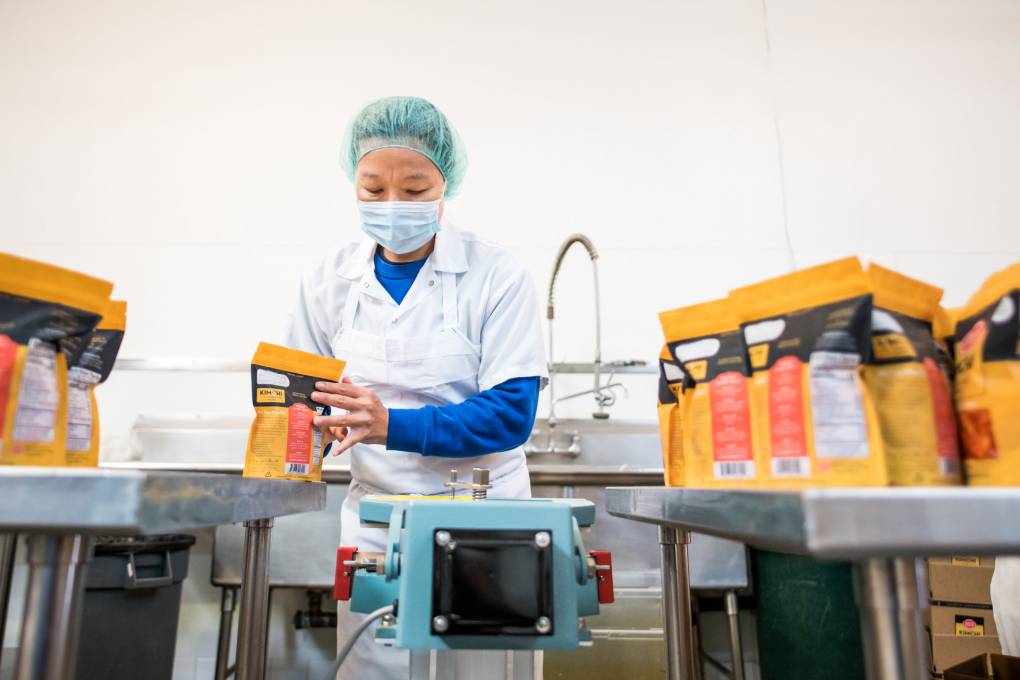
"caption": "Hyunjoo Albrecht works in her Bayview kitchen to package kimchi on August 6, 2020.",
"description": "Hyunjoo Albrecht works in her Bayview kitchen to package kimchi on August 6, 2020.",
"title": "RS44250_007_KQED_SanFrancisco_SintoGourmet_08062020-qut",
"credit": "Beth LaBerge/KQED",
"status": "inherit",
"isLoading": false,
"fetchFailed": false
},
"news_11832168": {
"type": "attachments",
"id": "news_11832168",
"meta": {
"index": "attachments_1716263798",
"site": "news",
"id": "11832168",
"found": true
},
"parent": 11832163,
"imgSizes": {
"apple_news_ca_landscape_5_5": {
"file": "https://ww2.kqed.org/app/uploads/sites/10/2020/08/downup_080620_final-1044x783.png",
"width": 1044,
"mimeType": "image/png",
"height": 783
},
"apple_news_ca_square_4_0": {
"file": "https://ww2.kqed.org/app/uploads/sites/10/2020/08/downup_080620_final-470x470.png",
"width": 470,
"mimeType": "image/png",
"height": 470
},
"twentyfourteen-full-width": {
"file": "https://ww2.kqed.org/app/uploads/sites/10/2020/08/downup_080620_final-1038x576.png",
"width": 1038,
"mimeType": "image/png",
"height": 576
},
"thumbnail": {
"file": "https://ww2.kqed.org/app/uploads/sites/10/2020/08/downup_080620_final-160x107.png",
"width": 160,
"mimeType": "image/png",
"height": 107
},
"post-thumbnail": {
"file": "https://ww2.kqed.org/app/uploads/sites/10/2020/08/downup_080620_final-672x372.png",
"width": 672,
"mimeType": "image/png",
"height": 372
},
"kqedFullSize": {
"file": "https://ww2.kqed.org/app/uploads/sites/10/2020/08/downup_080620_final.png",
"width": 1920,
"height": 1279
},
"apple_news_ca_landscape_4_7": {
"file": "https://ww2.kqed.org/app/uploads/sites/10/2020/08/downup_080620_final-632x474.png",
"width": 632,
"mimeType": "image/png",
"height": 474
},
"large": {
"file": "https://ww2.kqed.org/app/uploads/sites/10/2020/08/downup_080620_final-1020x679.png",
"width": 1020,
"mimeType": "image/png",
"height": 679
},
"apple_news_ca_landscape_4_0": {
"file": "https://ww2.kqed.org/app/uploads/sites/10/2020/08/downup_080620_final-536x402.png",
"width": 536,
"mimeType": "image/png",
"height": 402
},
"apple_news_ca_portrait_12_9": {
"file": "https://ww2.kqed.org/app/uploads/sites/10/2020/08/downup_080620_final-1122x1279.png",
"width": 1122,
"mimeType": "image/png",
"height": 1279
},
"medium": {
"file": "https://ww2.kqed.org/app/uploads/sites/10/2020/08/downup_080620_final-800x533.png",
"width": 800,
"mimeType": "image/png",
"height": 533
},
"apple_news_ca_portrait_4_0": {
"file": "https://ww2.kqed.org/app/uploads/sites/10/2020/08/downup_080620_final-354x472.png",
"width": 354,
"mimeType": "image/png",
"height": 472
},
"apple_news_ca_portrait_9_7": {
"file": "https://ww2.kqed.org/app/uploads/sites/10/2020/08/downup_080620_final-840x1120.png",
"width": 840,
"mimeType": "image/png",
"height": 1120
},
"apple_news_ca_landscape_12_9": {
"file": "https://ww2.kqed.org/app/uploads/sites/10/2020/08/downup_080620_final-1832x1279.png",
"width": 1832,
"mimeType": "image/png",
"height": 1279
},
"apple_news_ca_square_9_7": {
"file": "https://ww2.kqed.org/app/uploads/sites/10/2020/08/downup_080620_final-1104x1104.png",
"width": 1104,
"mimeType": "image/png",
"height": 1104
},
"1536x1536": {
"file": "https://ww2.kqed.org/app/uploads/sites/10/2020/08/downup_080620_final-1536x1023.png",
"width": 1536,
"mimeType": "image/png",
"height": 1023
},
"apple_news_ca_portrait_4_7": {
"file": "https://ww2.kqed.org/app/uploads/sites/10/2020/08/downup_080620_final-414x552.png",
"width": 414,
"mimeType": "image/png",
"height": 552
},
"apple_news_ca_square_12_9": {
"file": "https://ww2.kqed.org/app/uploads/sites/10/2020/08/downup_080620_final-1472x1279.png",
"width": 1472,
"mimeType": "image/png",
"height": 1279
},
"apple_news_ca_portrait_5_5": {
"file": "https://ww2.kqed.org/app/uploads/sites/10/2020/08/downup_080620_final-687x916.png",
"width": 687,
"mimeType": "image/png",
"height": 916
},
"apple_news_ca_square_4_7": {
"file": "https://ww2.kqed.org/app/uploads/sites/10/2020/08/downup_080620_final-550x550.png",
"width": 550,
"mimeType": "image/png",
"height": 550
},
"apple_news_ca_landscape_9_7": {
"file": "https://ww2.kqed.org/app/uploads/sites/10/2020/08/downup_080620_final-1376x1032.png",
"width": 1376,
"mimeType": "image/png",
"height": 1032
},
"apple_news_ca_square_5_5": {
"file": "https://ww2.kqed.org/app/uploads/sites/10/2020/08/downup_080620_final-912x912.png",
"width": 912,
"mimeType": "image/png",
"height": 912
}
},
"publishDate": 1596740288,
"modified": 1596740319,
"caption": null,
"description": null,
"title": "downup_080620_final",
"credit": null,
"status": "inherit",
"isLoading": false,
"fetchFailed": false
},
"news_11832046": {
"type": "attachments",
"id": "news_11832046",
"meta": {
"index": "attachments_1716263798",
"site": "news",
"id": "11832046",
"found": true
},
"parent": 11831989,
"imgSizes": {
"apple_news_ca_landscape_5_5": {
"file": "https://ww2.kqed.org/app/uploads/sites/10/2020/08/RS44114_003_KQED_Oakland_SchoolPods_ElisaCecaci_07272020-qut-1044x783.jpg",
"width": 1044,
"mimeType": "image/jpeg",
"height": 783
},
"apple_news_ca_square_4_0": {
"file": "https://ww2.kqed.org/app/uploads/sites/10/2020/08/RS44114_003_KQED_Oakland_SchoolPods_ElisaCecaci_07272020-qut-470x470.jpg",
"width": 470,
"mimeType": "image/jpeg",
"height": 470
},
"twentyfourteen-full-width": {
"file": "https://ww2.kqed.org/app/uploads/sites/10/2020/08/RS44114_003_KQED_Oakland_SchoolPods_ElisaCecaci_07272020-qut-1038x576.jpg",
"width": 1038,
"mimeType": "image/jpeg",
"height": 576
},
"thumbnail": {
"file": "https://ww2.kqed.org/app/uploads/sites/10/2020/08/RS44114_003_KQED_Oakland_SchoolPods_ElisaCecaci_07272020-qut-160x107.jpg",
"width": 160,
"mimeType": "image/jpeg",
"height": 107
},
"post-thumbnail": {
"file": "https://ww2.kqed.org/app/uploads/sites/10/2020/08/RS44114_003_KQED_Oakland_SchoolPods_ElisaCecaci_07272020-qut-672x372.jpg",
"width": 672,
"mimeType": "image/jpeg",
"height": 372
},
"kqedFullSize": {
"file": "https://ww2.kqed.org/app/uploads/sites/10/2020/08/RS44114_003_KQED_Oakland_SchoolPods_ElisaCecaci_07272020-qut.jpg",
"width": 1920,
"height": 1280
},
"apple_news_ca_landscape_4_7": {
"file": "https://ww2.kqed.org/app/uploads/sites/10/2020/08/RS44114_003_KQED_Oakland_SchoolPods_ElisaCecaci_07272020-qut-632x474.jpg",
"width": 632,
"mimeType": "image/jpeg",
"height": 474
},
"large": {
"file": "https://ww2.kqed.org/app/uploads/sites/10/2020/08/RS44114_003_KQED_Oakland_SchoolPods_ElisaCecaci_07272020-qut-1020x680.jpg",
"width": 1020,
"mimeType": "image/jpeg",
"height": 680
},
"apple_news_ca_landscape_4_0": {
"file": "https://ww2.kqed.org/app/uploads/sites/10/2020/08/RS44114_003_KQED_Oakland_SchoolPods_ElisaCecaci_07272020-qut-536x402.jpg",
"width": 536,
"mimeType": "image/jpeg",
"height": 402
},
"apple_news_ca_portrait_12_9": {
"file": "https://ww2.kqed.org/app/uploads/sites/10/2020/08/RS44114_003_KQED_Oakland_SchoolPods_ElisaCecaci_07272020-qut-1122x1280.jpg",
"width": 1122,
"mimeType": "image/jpeg",
"height": 1280
},
"medium": {
"file": "https://ww2.kqed.org/app/uploads/sites/10/2020/08/RS44114_003_KQED_Oakland_SchoolPods_ElisaCecaci_07272020-qut-800x533.jpg",
"width": 800,
"mimeType": "image/jpeg",
"height": 533
},
"apple_news_ca_portrait_4_0": {
"file": "https://ww2.kqed.org/app/uploads/sites/10/2020/08/RS44114_003_KQED_Oakland_SchoolPods_ElisaCecaci_07272020-qut-354x472.jpg",
"width": 354,
"mimeType": "image/jpeg",
"height": 472
},
"apple_news_ca_portrait_9_7": {
"file": "https://ww2.kqed.org/app/uploads/sites/10/2020/08/RS44114_003_KQED_Oakland_SchoolPods_ElisaCecaci_07272020-qut-840x1120.jpg",
"width": 840,
"mimeType": "image/jpeg",
"height": 1120
},
"apple_news_ca_landscape_12_9": {
"file": "https://ww2.kqed.org/app/uploads/sites/10/2020/08/RS44114_003_KQED_Oakland_SchoolPods_ElisaCecaci_07272020-qut-1832x1280.jpg",
"width": 1832,
"mimeType": "image/jpeg",
"height": 1280
},
"apple_news_ca_square_9_7": {
"file": "https://ww2.kqed.org/app/uploads/sites/10/2020/08/RS44114_003_KQED_Oakland_SchoolPods_ElisaCecaci_07272020-qut-1104x1104.jpg",
"width": 1104,
"mimeType": "image/jpeg",
"height": 1104
},
"1536x1536": {
"file": "https://ww2.kqed.org/app/uploads/sites/10/2020/08/RS44114_003_KQED_Oakland_SchoolPods_ElisaCecaci_07272020-qut-1536x1024.jpg",
"width": 1536,
"mimeType": "image/jpeg",
"height": 1024
},
"apple_news_ca_portrait_4_7": {
"file": "https://ww2.kqed.org/app/uploads/sites/10/2020/08/RS44114_003_KQED_Oakland_SchoolPods_ElisaCecaci_07272020-qut-414x552.jpg",
"width": 414,
"mimeType": "image/jpeg",
"height": 552
},
"apple_news_ca_square_12_9": {
"file": "https://ww2.kqed.org/app/uploads/sites/10/2020/08/RS44114_003_KQED_Oakland_SchoolPods_ElisaCecaci_07272020-qut-1472x1280.jpg",
"width": 1472,
"mimeType": "image/jpeg",
"height": 1280
},
"apple_news_ca_portrait_5_5": {
"file": "https://ww2.kqed.org/app/uploads/sites/10/2020/08/RS44114_003_KQED_Oakland_SchoolPods_ElisaCecaci_07272020-qut-687x916.jpg",
"width": 687,
"mimeType": "image/jpeg",
"height": 916
},
"apple_news_ca_square_4_7": {
"file": "https://ww2.kqed.org/app/uploads/sites/10/2020/08/RS44114_003_KQED_Oakland_SchoolPods_ElisaCecaci_07272020-qut-550x550.jpg",
"width": 550,
"mimeType": "image/jpeg",
"height": 550
},
"apple_news_ca_landscape_9_7": {
"file": "https://ww2.kqed.org/app/uploads/sites/10/2020/08/RS44114_003_KQED_Oakland_SchoolPods_ElisaCecaci_07272020-qut-1376x1032.jpg",
"width": 1376,
"mimeType": "image/jpeg",
"height": 1032
},
"apple_news_ca_square_5_5": {
"file": "https://ww2.kqed.org/app/uploads/sites/10/2020/08/RS44114_003_KQED_Oakland_SchoolPods_ElisaCecaci_07272020-qut-912x912.jpg",
"width": 912,
"mimeType": "image/jpeg",
"height": 912
}
},
"publishDate": 1596671015,
"modified": 1596672091,
"caption": "Keli'i, 6, and Kanoa, 18, study on their front porch in Oakland on July 27, 2020. Both boys will be distance learning from home this fall. ",
"description": "Keli'i, 6, and Kanoa, 18, study on their front porch in Oakland on July 27, 2020. Both boys will be distance learning from home this fall. ",
"title": "RS44114_003_KQED_Oakland_SchoolPods_ElisaCecaci_07272020-qut",
"credit": "Beth LaBerge/KQED",
"status": "inherit",
"isLoading": false,
"fetchFailed": false
},
"news_11831937": {
"type": "attachments",
"id": "news_11831937",
"meta": {
"index": "attachments_1716263798",
"site": "news",
"id": "11831937",
"found": true
},
"parent": 11831898,
"imgSizes": {
"apple_news_ca_landscape_5_5": {
"file": "https://ww2.kqed.org/app/uploads/sites/10/2020/08/IMG_3374-e1596590789607-1044x783.jpeg",
"width": 1044,
"mimeType": "image/jpeg",
"height": 783
},
"apple_news_ca_square_4_0": {
"file": "https://ww2.kqed.org/app/uploads/sites/10/2020/08/IMG_3374-e1596590789607-470x470.jpeg",
"width": 470,
"mimeType": "image/jpeg",
"height": 470
},
"twentyfourteen-full-width": {
"file": "https://ww2.kqed.org/app/uploads/sites/10/2020/08/IMG_3374-e1596590789607-1038x576.jpeg",
"width": 1038,
"mimeType": "image/jpeg",
"height": 576
},
"thumbnail": {
"file": "https://ww2.kqed.org/app/uploads/sites/10/2020/08/IMG_3374-e1596590789607-160x108.jpeg",
"width": 160,
"mimeType": "image/jpeg",
"height": 108
},
"post-thumbnail": {
"file": "https://ww2.kqed.org/app/uploads/sites/10/2020/08/IMG_3374-e1596590789607-672x372.jpeg",
"width": 672,
"mimeType": "image/jpeg",
"height": 372
},
"kqedFullSize": {
"file": "https://ww2.kqed.org/app/uploads/sites/10/2020/08/IMG_3374-e1596590841735.jpeg",
"width": 1920,
"height": 1296
},
"2048x2048": {
"file": "https://ww2.kqed.org/app/uploads/sites/10/2020/08/IMG_3374-e1596590789607-2048x1382.jpeg",
"width": 2048,
"mimeType": "image/jpeg",
"height": 1382
},
"apple_news_ca_landscape_4_7": {
"file": "https://ww2.kqed.org/app/uploads/sites/10/2020/08/IMG_3374-e1596590789607-632x474.jpeg",
"width": 632,
"mimeType": "image/jpeg",
"height": 474
},
"large": {
"file": "https://ww2.kqed.org/app/uploads/sites/10/2020/08/IMG_3374-e1596590789607-1020x689.jpeg",
"width": 1020,
"mimeType": "image/jpeg",
"height": 689
},
"apple_news_ca_landscape_4_0": {
"file": "https://ww2.kqed.org/app/uploads/sites/10/2020/08/IMG_3374-e1596590789607-536x402.jpeg",
"width": 536,
"mimeType": "image/jpeg",
"height": 402
},
"apple_news_ca_portrait_12_9": {
"file": "https://ww2.kqed.org/app/uploads/sites/10/2020/08/IMG_3374-e1596590789607-1122x1496.jpeg",
"width": 1122,
"mimeType": "image/jpeg",
"height": 1496
},
"medium": {
"file": "https://ww2.kqed.org/app/uploads/sites/10/2020/08/IMG_3374-e1596590789607-800x540.jpeg",
"width": 800,
"mimeType": "image/jpeg",
"height": 540
},
"apple_news_ca_portrait_4_0": {
"file": "https://ww2.kqed.org/app/uploads/sites/10/2020/08/IMG_3374-e1596590789607-354x472.jpeg",
"width": 354,
"mimeType": "image/jpeg",
"height": 472
},
"apple_news_ca_portrait_9_7": {
"file": "https://ww2.kqed.org/app/uploads/sites/10/2020/08/IMG_3374-e1596590789607-840x1120.jpeg",
"width": 840,
"mimeType": "image/jpeg",
"height": 1120
},
"apple_news_ca_landscape_12_9": {
"file": "https://ww2.kqed.org/app/uploads/sites/10/2020/08/IMG_3374-e1596590789607-1832x1374.jpeg",
"width": 1832,
"mimeType": "image/jpeg",
"height": 1374
},
"apple_news_ca_square_9_7": {
"file": "https://ww2.kqed.org/app/uploads/sites/10/2020/08/IMG_3374-e1596590789607-1104x1104.jpeg",
"width": 1104,
"mimeType": "image/jpeg",
"height": 1104
},
"1536x1536": {
"file": "https://ww2.kqed.org/app/uploads/sites/10/2020/08/IMG_3374-e1596590789607-1536x1037.jpeg",
"width": 1536,
"mimeType": "image/jpeg",
"height": 1037
},
"apple_news_ca_portrait_4_7": {
"file": "https://ww2.kqed.org/app/uploads/sites/10/2020/08/IMG_3374-e1596590789607-414x552.jpeg",
"width": 414,
"mimeType": "image/jpeg",
"height": 552
},
"apple_news_ca_square_12_9": {
"file": "https://ww2.kqed.org/app/uploads/sites/10/2020/08/IMG_3374-e1596590789607-1472x1472.jpeg",
"width": 1472,
"mimeType": "image/jpeg",
"height": 1472
},
"apple_news_ca_portrait_5_5": {
"file": "https://ww2.kqed.org/app/uploads/sites/10/2020/08/IMG_3374-e1596590789607-687x916.jpeg",
"width": 687,
"mimeType": "image/jpeg",
"height": 916
},
"full-width": {
"file": "https://ww2.kqed.org/app/uploads/sites/10/2020/08/IMG_3374-e1596590789607-1920x1296.jpeg",
"width": 1920,
"mimeType": "image/jpeg",
"height": 1296
},
"apple_news_ca_square_4_7": {
"file": "https://ww2.kqed.org/app/uploads/sites/10/2020/08/IMG_3374-e1596590789607-550x550.jpeg",
"width": 550,
"mimeType": "image/jpeg",
"height": 550
},
"apple_news_ca_landscape_9_7": {
"file": "https://ww2.kqed.org/app/uploads/sites/10/2020/08/IMG_3374-e1596590789607-1376x1032.jpeg",
"width": 1376,
"mimeType": "image/jpeg",
"height": 1032
},
"apple_news_ca_square_5_5": {
"file": "https://ww2.kqed.org/app/uploads/sites/10/2020/08/IMG_3374-e1596590789607-912x912.jpeg",
"width": 912,
"mimeType": "image/jpeg",
"height": 912
}
},
"publishDate": 1596590710,
"modified": 1596662343,
"caption": "Antonio Rael said he had to call California's Employment Development Department thousands of times before he was able to access the benefits he's entitled to.",
"description": "Antonio Rael said he had to call California's Employment Development Department thousands of times before he was able to access the benefits he's entitled to.",
"title": "IMG_3374",
"credit": "Courtesy of Antonio Rael",
"status": "inherit",
"isLoading": false,
"fetchFailed": false
},
"news_11831958": {
"type": "attachments",
"id": "news_11831958",
"meta": {
"index": "attachments_1716263798",
"site": "news",
"id": "11831958",
"found": true
},
"parent": 11831918,
"imgSizes": {
"apple_news_ca_landscape_5_5": {
"file": "https://ww2.kqed.org/app/uploads/sites/10/2020/08/staff-CMF-5-v2-1044x783.jpg",
"width": 1044,
"mimeType": "image/jpeg",
"height": 783
},
"apple_news_ca_square_4_0": {
"file": "https://ww2.kqed.org/app/uploads/sites/10/2020/08/staff-CMF-5-v2-470x470.jpg",
"width": 470,
"mimeType": "image/jpeg",
"height": 470
},
"twentyfourteen-full-width": {
"file": "https://ww2.kqed.org/app/uploads/sites/10/2020/08/staff-CMF-5-v2-1038x576.jpg",
"width": 1038,
"mimeType": "image/jpeg",
"height": 576
},
"thumbnail": {
"file": "https://ww2.kqed.org/app/uploads/sites/10/2020/08/staff-CMF-5-v2-160x92.jpg",
"width": 160,
"mimeType": "image/jpeg",
"height": 92
},
"post-thumbnail": {
"file": "https://ww2.kqed.org/app/uploads/sites/10/2020/08/staff-CMF-5-v2-672x372.jpg",
"width": 672,
"mimeType": "image/jpeg",
"height": 372
},
"kqedFullSize": {
"file": "https://ww2.kqed.org/app/uploads/sites/10/2020/08/staff-CMF-5-v2.jpg",
"width": 1464,
"height": 845
},
"apple_news_ca_landscape_4_7": {
"file": "https://ww2.kqed.org/app/uploads/sites/10/2020/08/staff-CMF-5-v2-632x474.jpg",
"width": 632,
"mimeType": "image/jpeg",
"height": 474
},
"large": {
"file": "https://ww2.kqed.org/app/uploads/sites/10/2020/08/staff-CMF-5-v2-1020x589.jpg",
"width": 1020,
"mimeType": "image/jpeg",
"height": 589
},
"apple_news_ca_landscape_4_0": {
"file": "https://ww2.kqed.org/app/uploads/sites/10/2020/08/staff-CMF-5-v2-536x402.jpg",
"width": 536,
"mimeType": "image/jpeg",
"height": 402
},
"apple_news_ca_portrait_12_9": {
"file": "https://ww2.kqed.org/app/uploads/sites/10/2020/08/staff-CMF-5-v2-1122x845.jpg",
"width": 1122,
"mimeType": "image/jpeg",
"height": 845
},
"medium": {
"file": "https://ww2.kqed.org/app/uploads/sites/10/2020/08/staff-CMF-5-v2-800x462.jpg",
"width": 800,
"mimeType": "image/jpeg",
"height": 462
},
"apple_news_ca_portrait_4_0": {
"file": "https://ww2.kqed.org/app/uploads/sites/10/2020/08/staff-CMF-5-v2-354x472.jpg",
"width": 354,
"mimeType": "image/jpeg",
"height": 472
},
"apple_news_ca_portrait_9_7": {
"file": "https://ww2.kqed.org/app/uploads/sites/10/2020/08/staff-CMF-5-v2-840x845.jpg",
"width": 840,
"mimeType": "image/jpeg",
"height": 845
},
"apple_news_ca_square_9_7": {
"file": "https://ww2.kqed.org/app/uploads/sites/10/2020/08/staff-CMF-5-v2-1104x845.jpg",
"width": 1104,
"mimeType": "image/jpeg",
"height": 845
},
"apple_news_ca_portrait_4_7": {
"file": "https://ww2.kqed.org/app/uploads/sites/10/2020/08/staff-CMF-5-v2-414x552.jpg",
"width": 414,
"mimeType": "image/jpeg",
"height": 552
},
"apple_news_ca_portrait_5_5": {
"file": "https://ww2.kqed.org/app/uploads/sites/10/2020/08/staff-CMF-5-v2-687x845.jpg",
"width": 687,
"mimeType": "image/jpeg",
"height": 845
},
"apple_news_ca_square_4_7": {
"file": "https://ww2.kqed.org/app/uploads/sites/10/2020/08/staff-CMF-5-v2-550x550.jpg",
"width": 550,
"mimeType": "image/jpeg",
"height": 550
},
"apple_news_ca_landscape_9_7": {
"file": "https://ww2.kqed.org/app/uploads/sites/10/2020/08/staff-CMF-5-v2-1376x845.jpg",
"width": 1376,
"mimeType": "image/jpeg",
"height": 845
},
"apple_news_ca_square_5_5": {
"file": "https://ww2.kqed.org/app/uploads/sites/10/2020/08/staff-CMF-5-v2-912x845.jpg",
"width": 912,
"mimeType": "image/jpeg",
"height": 845
}
},
"publishDate": 1596603172,
"modified": 1596670925,
"caption": "The California Medical Facility is a men's prison in Vacaville, California, which contains a skilled nursing facility. ",
"description": "The California Medical Facility is a men's prison in Vacaville, CA, that contains a skilled nursing facility. ",
"title": "staff CMF 5 v2",
"credit": "Sruti Mamidanna/KQED",
"status": "inherit",
"isLoading": false,
"fetchFailed": false
},
"news_11831849": {
"type": "attachments",
"id": "news_11831849",
"meta": {
"index": "attachments_1716263798",
"site": "news",
"id": "11831849",
"found": true
},
"parent": 11831848,
"imgSizes": {
"apple_news_ca_landscape_5_5": {
"file": "https://ww2.kqed.org/app/uploads/sites/10/2020/08/cdcr_080420_final-1044x783.jpg",
"width": 1044,
"mimeType": "image/jpeg",
"height": 783
},
"apple_news_ca_square_4_0": {
"file": "https://ww2.kqed.org/app/uploads/sites/10/2020/08/cdcr_080420_final-470x470.jpg",
"width": 470,
"mimeType": "image/jpeg",
"height": 470
},
"twentyfourteen-full-width": {
"file": "https://ww2.kqed.org/app/uploads/sites/10/2020/08/cdcr_080420_final-1038x576.jpg",
"width": 1038,
"mimeType": "image/jpeg",
"height": 576
},
"thumbnail": {
"file": "https://ww2.kqed.org/app/uploads/sites/10/2020/08/cdcr_080420_final-160x116.jpg",
"width": 160,
"mimeType": "image/jpeg",
"height": 116
},
"post-thumbnail": {
"file": "https://ww2.kqed.org/app/uploads/sites/10/2020/08/cdcr_080420_final-672x372.jpg",
"width": 672,
"mimeType": "image/jpeg",
"height": 372
},
"kqedFullSize": {
"file": "https://ww2.kqed.org/app/uploads/sites/10/2020/08/cdcr_080420_final.jpg",
"width": 1920,
"height": 1388
},
"apple_news_ca_landscape_4_7": {
"file": "https://ww2.kqed.org/app/uploads/sites/10/2020/08/cdcr_080420_final-632x474.jpg",
"width": 632,
"mimeType": "image/jpeg",
"height": 474
},
"large": {
"file": "https://ww2.kqed.org/app/uploads/sites/10/2020/08/cdcr_080420_final-1020x737.jpg",
"width": 1020,
"mimeType": "image/jpeg",
"height": 737
},
"apple_news_ca_landscape_4_0": {
"file": "https://ww2.kqed.org/app/uploads/sites/10/2020/08/cdcr_080420_final-536x402.jpg",
"width": 536,
"mimeType": "image/jpeg",
"height": 402
},
"apple_news_ca_portrait_12_9": {
"file": "https://ww2.kqed.org/app/uploads/sites/10/2020/08/cdcr_080420_final-1122x1388.jpg",
"width": 1122,
"mimeType": "image/jpeg",
"height": 1388
},
"medium": {
"file": "https://ww2.kqed.org/app/uploads/sites/10/2020/08/cdcr_080420_final-800x578.jpg",
"width": 800,
"mimeType": "image/jpeg",
"height": 578
},
"apple_news_ca_portrait_4_0": {
"file": "https://ww2.kqed.org/app/uploads/sites/10/2020/08/cdcr_080420_final-354x472.jpg",
"width": 354,
"mimeType": "image/jpeg",
"height": 472
},
"apple_news_ca_portrait_9_7": {
"file": "https://ww2.kqed.org/app/uploads/sites/10/2020/08/cdcr_080420_final-840x1120.jpg",
"width": 840,
"mimeType": "image/jpeg",
"height": 1120
},
"apple_news_ca_landscape_12_9": {
"file": "https://ww2.kqed.org/app/uploads/sites/10/2020/08/cdcr_080420_final-1832x1374.jpg",
"width": 1832,
"mimeType": "image/jpeg",
"height": 1374
},
"apple_news_ca_square_9_7": {
"file": "https://ww2.kqed.org/app/uploads/sites/10/2020/08/cdcr_080420_final-1104x1104.jpg",
"width": 1104,
"mimeType": "image/jpeg",
"height": 1104
},
"1536x1536": {
"file": "https://ww2.kqed.org/app/uploads/sites/10/2020/08/cdcr_080420_final-1536x1110.jpg",
"width": 1536,
"mimeType": "image/jpeg",
"height": 1110
},
"apple_news_ca_portrait_4_7": {
"file": "https://ww2.kqed.org/app/uploads/sites/10/2020/08/cdcr_080420_final-414x552.jpg",
"width": 414,
"mimeType": "image/jpeg",
"height": 552
},
"apple_news_ca_square_12_9": {
"file": "https://ww2.kqed.org/app/uploads/sites/10/2020/08/cdcr_080420_final-1472x1388.jpg",
"width": 1472,
"mimeType": "image/jpeg",
"height": 1388
},
"apple_news_ca_portrait_5_5": {
"file": "https://ww2.kqed.org/app/uploads/sites/10/2020/08/cdcr_080420_final-687x916.jpg",
"width": 687,
"mimeType": "image/jpeg",
"height": 916
},
"apple_news_ca_square_4_7": {
"file": "https://ww2.kqed.org/app/uploads/sites/10/2020/08/cdcr_080420_final-550x550.jpg",
"width": 550,
"mimeType": "image/jpeg",
"height": 550
},
"apple_news_ca_landscape_9_7": {
"file": "https://ww2.kqed.org/app/uploads/sites/10/2020/08/cdcr_080420_final-1376x1032.jpg",
"width": 1376,
"mimeType": "image/jpeg",
"height": 1032
},
"apple_news_ca_square_5_5": {
"file": "https://ww2.kqed.org/app/uploads/sites/10/2020/08/cdcr_080420_final-912x912.jpg",
"width": 912,
"mimeType": "image/jpeg",
"height": 912
}
},
"publishDate": 1596575746,
"modified": 1596575782,
"caption": null,
"description": null,
"title": "cdcr_080420_final",
"credit": null,
"status": "inherit",
"isLoading": false,
"fetchFailed": false
},
"news_11831885": {
"type": "attachments",
"id": "news_11831885",
"meta": {
"index": "attachments_1716263798",
"site": "news",
"id": "11831885",
"found": true
},
"parent": 11831871,
"imgSizes": {
"apple_news_ca_landscape_5_5": {
"file": "https://ww2.kqed.org/app/uploads/sites/10/2020/08/RS42240_029_KQED_Hayward_CoronavirusTesting_03232020_9898-qut-1044x783.jpg",
"width": 1044,
"mimeType": "image/jpeg",
"height": 783
},
"apple_news_ca_square_4_0": {
"file": "https://ww2.kqed.org/app/uploads/sites/10/2020/08/RS42240_029_KQED_Hayward_CoronavirusTesting_03232020_9898-qut-470x470.jpg",
"width": 470,
"mimeType": "image/jpeg",
"height": 470
},
"twentyfourteen-full-width": {
"file": "https://ww2.kqed.org/app/uploads/sites/10/2020/08/RS42240_029_KQED_Hayward_CoronavirusTesting_03232020_9898-qut-1038x576.jpg",
"width": 1038,
"mimeType": "image/jpeg",
"height": 576
},
"thumbnail": {
"file": "https://ww2.kqed.org/app/uploads/sites/10/2020/08/RS42240_029_KQED_Hayward_CoronavirusTesting_03232020_9898-qut-160x107.jpg",
"width": 160,
"mimeType": "image/jpeg",
"height": 107
},
"post-thumbnail": {
"file": "https://ww2.kqed.org/app/uploads/sites/10/2020/08/RS42240_029_KQED_Hayward_CoronavirusTesting_03232020_9898-qut-672x372.jpg",
"width": 672,
"mimeType": "image/jpeg",
"height": 372
},
"kqedFullSize": {
"file": "https://ww2.kqed.org/app/uploads/sites/10/2020/08/RS42240_029_KQED_Hayward_CoronavirusTesting_03232020_9898-qut.jpg",
"width": 1920,
"height": 1280
},
"apple_news_ca_landscape_4_7": {
"file": "https://ww2.kqed.org/app/uploads/sites/10/2020/08/RS42240_029_KQED_Hayward_CoronavirusTesting_03232020_9898-qut-632x474.jpg",
"width": 632,
"mimeType": "image/jpeg",
"height": 474
},
"large": {
"file": "https://ww2.kqed.org/app/uploads/sites/10/2020/08/RS42240_029_KQED_Hayward_CoronavirusTesting_03232020_9898-qut-1020x680.jpg",
"width": 1020,
"mimeType": "image/jpeg",
"height": 680
},
"apple_news_ca_landscape_4_0": {
"file": "https://ww2.kqed.org/app/uploads/sites/10/2020/08/RS42240_029_KQED_Hayward_CoronavirusTesting_03232020_9898-qut-536x402.jpg",
"width": 536,
"mimeType": "image/jpeg",
"height": 402
},
"apple_news_ca_portrait_12_9": {
"file": "https://ww2.kqed.org/app/uploads/sites/10/2020/08/RS42240_029_KQED_Hayward_CoronavirusTesting_03232020_9898-qut-1122x1280.jpg",
"width": 1122,
"mimeType": "image/jpeg",
"height": 1280
},
"medium": {
"file": "https://ww2.kqed.org/app/uploads/sites/10/2020/08/RS42240_029_KQED_Hayward_CoronavirusTesting_03232020_9898-qut-800x533.jpg",
"width": 800,
"mimeType": "image/jpeg",
"height": 533
},
"apple_news_ca_portrait_4_0": {
"file": "https://ww2.kqed.org/app/uploads/sites/10/2020/08/RS42240_029_KQED_Hayward_CoronavirusTesting_03232020_9898-qut-354x472.jpg",
"width": 354,
"mimeType": "image/jpeg",
"height": 472
},
"apple_news_ca_portrait_9_7": {
"file": "https://ww2.kqed.org/app/uploads/sites/10/2020/08/RS42240_029_KQED_Hayward_CoronavirusTesting_03232020_9898-qut-840x1120.jpg",
"width": 840,
"mimeType": "image/jpeg",
"height": 1120
},
"apple_news_ca_landscape_12_9": {
"file": "https://ww2.kqed.org/app/uploads/sites/10/2020/08/RS42240_029_KQED_Hayward_CoronavirusTesting_03232020_9898-qut-1832x1280.jpg",
"width": 1832,
"mimeType": "image/jpeg",
"height": 1280
},
"apple_news_ca_square_9_7": {
"file": "https://ww2.kqed.org/app/uploads/sites/10/2020/08/RS42240_029_KQED_Hayward_CoronavirusTesting_03232020_9898-qut-1104x1104.jpg",
"width": 1104,
"mimeType": "image/jpeg",
"height": 1104
},
"1536x1536": {
"file": "https://ww2.kqed.org/app/uploads/sites/10/2020/08/RS42240_029_KQED_Hayward_CoronavirusTesting_03232020_9898-qut-1536x1024.jpg",
"width": 1536,
"mimeType": "image/jpeg",
"height": 1024
},
"apple_news_ca_portrait_4_7": {
"file": "https://ww2.kqed.org/app/uploads/sites/10/2020/08/RS42240_029_KQED_Hayward_CoronavirusTesting_03232020_9898-qut-414x552.jpg",
"width": 414,
"mimeType": "image/jpeg",
"height": 552
},
"apple_news_ca_square_12_9": {
"file": "https://ww2.kqed.org/app/uploads/sites/10/2020/08/RS42240_029_KQED_Hayward_CoronavirusTesting_03232020_9898-qut-1472x1280.jpg",
"width": 1472,
"mimeType": "image/jpeg",
"height": 1280
},
"apple_news_ca_portrait_5_5": {
"file": "https://ww2.kqed.org/app/uploads/sites/10/2020/08/RS42240_029_KQED_Hayward_CoronavirusTesting_03232020_9898-qut-687x916.jpg",
"width": 687,
"mimeType": "image/jpeg",
"height": 916
},
"apple_news_ca_square_4_7": {
"file": "https://ww2.kqed.org/app/uploads/sites/10/2020/08/RS42240_029_KQED_Hayward_CoronavirusTesting_03232020_9898-qut-550x550.jpg",
"width": 550,
"mimeType": "image/jpeg",
"height": 550
},
"apple_news_ca_landscape_9_7": {
"file": "https://ww2.kqed.org/app/uploads/sites/10/2020/08/RS42240_029_KQED_Hayward_CoronavirusTesting_03232020_9898-qut-1376x1032.jpg",
"width": 1376,
"mimeType": "image/jpeg",
"height": 1032
},
"apple_news_ca_square_5_5": {
"file": "https://ww2.kqed.org/app/uploads/sites/10/2020/08/RS42240_029_KQED_Hayward_CoronavirusTesting_03232020_9898-qut-912x912.jpg",
"width": 912,
"mimeType": "image/jpeg",
"height": 912
}
},
"publishDate": 1596582042,
"modified": 1596582128,
"caption": "Medical personnel test patients for COVID-19 at a facility in Hayward in March. ",
"description": "Medical personnel test patients for COVID-19 at a facility in Hayward in March. ",
"title": "RS42240_029_KQED_Hayward_CoronavirusTesting_03232020_9898-qut",
"credit": "Beth LaBerge/KQED",
"status": "inherit",
"isLoading": false,
"fetchFailed": false
},
"news_11831720": {
"type": "attachments",
"id": "news_11831720",
"meta": {
"index": "attachments_1716263798",
"site": "news",
"id": "11831720",
"found": true
},
"parent": 11831241,
"imgSizes": {
"apple_news_ca_landscape_5_5": {
"file": "https://ww2.kqed.org/app/uploads/sites/10/2020/07/Debt-Collections-Pic-1044x783.jpg",
"width": 1044,
"mimeType": "image/jpeg",
"height": 783
},
"apple_news_ca_square_4_0": {
"file": "https://ww2.kqed.org/app/uploads/sites/10/2020/07/Debt-Collections-Pic-470x470.jpg",
"width": 470,
"mimeType": "image/jpeg",
"height": 470
},
"twentyfourteen-full-width": {
"file": "https://ww2.kqed.org/app/uploads/sites/10/2020/07/Debt-Collections-Pic-1038x576.jpg",
"width": 1038,
"mimeType": "image/jpeg",
"height": 576
},
"thumbnail": {
"file": "https://ww2.kqed.org/app/uploads/sites/10/2020/07/Debt-Collections-Pic-160x107.jpg",
"width": 160,
"mimeType": "image/jpeg",
"height": 107
},
"post-thumbnail": {
"file": "https://ww2.kqed.org/app/uploads/sites/10/2020/07/Debt-Collections-Pic-672x372.jpg",
"width": 672,
"mimeType": "image/jpeg",
"height": 372
},
"kqedFullSize": {
"file": "https://ww2.kqed.org/app/uploads/sites/10/2020/07/Debt-Collections-Pic-scaled.jpg",
"width": 2560,
"height": 1707
},
"2048x2048": {
"file": "https://ww2.kqed.org/app/uploads/sites/10/2020/07/Debt-Collections-Pic-2048x1365.jpg",
"width": 2048,
"mimeType": "image/jpeg",
"height": 1365
},
"apple_news_ca_landscape_4_7": {
"file": "https://ww2.kqed.org/app/uploads/sites/10/2020/07/Debt-Collections-Pic-632x474.jpg",
"width": 632,
"mimeType": "image/jpeg",
"height": 474
},
"large": {
"file": "https://ww2.kqed.org/app/uploads/sites/10/2020/07/Debt-Collections-Pic-1020x680.jpg",
"width": 1020,
"mimeType": "image/jpeg",
"height": 680
},
"apple_news_ca_landscape_4_0": {
"file": "https://ww2.kqed.org/app/uploads/sites/10/2020/07/Debt-Collections-Pic-536x402.jpg",
"width": 536,
"mimeType": "image/jpeg",
"height": 402
},
"apple_news_ca_portrait_12_9": {
"file": "https://ww2.kqed.org/app/uploads/sites/10/2020/07/Debt-Collections-Pic-1122x1496.jpg",
"width": 1122,
"mimeType": "image/jpeg",
"height": 1496
},
"medium": {
"file": "https://ww2.kqed.org/app/uploads/sites/10/2020/07/Debt-Collections-Pic-800x533.jpg",
"width": 800,
"mimeType": "image/jpeg",
"height": 533
},
"apple_news_ca_portrait_4_0": {
"file": "https://ww2.kqed.org/app/uploads/sites/10/2020/07/Debt-Collections-Pic-354x472.jpg",
"width": 354,
"mimeType": "image/jpeg",
"height": 472
},
"apple_news_ca_portrait_9_7": {
"file": "https://ww2.kqed.org/app/uploads/sites/10/2020/07/Debt-Collections-Pic-840x1120.jpg",
"width": 840,
"mimeType": "image/jpeg",
"height": 1120
},
"apple_news_ca_landscape_12_9": {
"file": "https://ww2.kqed.org/app/uploads/sites/10/2020/07/Debt-Collections-Pic-1832x1374.jpg",
"width": 1832,
"mimeType": "image/jpeg",
"height": 1374
},
"apple_news_ca_square_9_7": {
"file": "https://ww2.kqed.org/app/uploads/sites/10/2020/07/Debt-Collections-Pic-1104x1104.jpg",
"width": 1104,
"mimeType": "image/jpeg",
"height": 1104
},
"1536x1536": {
"file": "https://ww2.kqed.org/app/uploads/sites/10/2020/07/Debt-Collections-Pic-1536x1024.jpg",
"width": 1536,
"mimeType": "image/jpeg",
"height": 1024
},
"apple_news_ca_portrait_4_7": {
"file": "https://ww2.kqed.org/app/uploads/sites/10/2020/07/Debt-Collections-Pic-414x552.jpg",
"width": 414,
"mimeType": "image/jpeg",
"height": 552
},
"apple_news_ca_square_12_9": {
"file": "https://ww2.kqed.org/app/uploads/sites/10/2020/07/Debt-Collections-Pic-1472x1472.jpg",
"width": 1472,
"mimeType": "image/jpeg",
"height": 1472
},
"apple_news_ca_portrait_5_5": {
"file": "https://ww2.kqed.org/app/uploads/sites/10/2020/07/Debt-Collections-Pic-687x916.jpg",
"width": 687,
"mimeType": "image/jpeg",
"height": 916
},
"full-width": {
"file": "https://ww2.kqed.org/app/uploads/sites/10/2020/07/Debt-Collections-Pic-1920x1280.jpg",
"width": 1920,
"mimeType": "image/jpeg",
"height": 1280
},
"apple_news_ca_square_4_7": {
"file": "https://ww2.kqed.org/app/uploads/sites/10/2020/07/Debt-Collections-Pic-550x550.jpg",
"width": 550,
"mimeType": "image/jpeg",
"height": 550
},
"apple_news_ca_landscape_9_7": {
"file": "https://ww2.kqed.org/app/uploads/sites/10/2020/07/Debt-Collections-Pic-1376x1032.jpg",
"width": 1376,
"mimeType": "image/jpeg",
"height": 1032
},
"apple_news_ca_square_5_5": {
"file": "https://ww2.kqed.org/app/uploads/sites/10/2020/07/Debt-Collections-Pic-912x912.jpg",
"width": 912,
"mimeType": "image/jpeg",
"height": 912
}
},
"publishDate": 1596494288,
"modified": 1596565048,
"caption": "Millions of Californians are filing for unemployment and living off of credit. Because of this, debt collection activity is expected to increase in the pandemic's aftermath. ",
"description": "Millions of Californians are filing for unemployment and living off of credit. Because of this, debt collection activity is expected to increase in the pandemic's aftermath. ",
"title": "Millions of Californians are filing for unemployment and living off of credit. Because of this, debt collection activity is expected to increase in the pandemic's aftermath.",
"credit": "rupixen.com on Unsplash",
"status": "inherit",
"isLoading": false,
"fetchFailed": false
},
"news_11831716": {
"type": "attachments",
"id": "news_11831716",
"meta": {
"index": "attachments_1716263798",
"site": "news",
"id": "11831716",
"found": true
},
"parent": 11831708,
"imgSizes": {
"apple_news_ca_landscape_5_5": {
"file": "https://ww2.kqed.org/app/uploads/sites/10/2020/08/byproducts_080320_final-1044x783.png",
"width": 1044,
"mimeType": "image/png",
"height": 783
},
"apple_news_ca_square_4_0": {
"file": "https://ww2.kqed.org/app/uploads/sites/10/2020/08/byproducts_080320_final-470x470.png",
"width": 470,
"mimeType": "image/png",
"height": 470
},
"twentyfourteen-full-width": {
"file": "https://ww2.kqed.org/app/uploads/sites/10/2020/08/byproducts_080320_final-1038x576.png",
"width": 1038,
"mimeType": "image/png",
"height": 576
},
"thumbnail": {
"file": "https://ww2.kqed.org/app/uploads/sites/10/2020/08/byproducts_080320_final-160x118.png",
"width": 160,
"mimeType": "image/png",
"height": 118
},
"post-thumbnail": {
"file": "https://ww2.kqed.org/app/uploads/sites/10/2020/08/byproducts_080320_final-672x372.png",
"width": 672,
"mimeType": "image/png",
"height": 372
},
"kqedFullSize": {
"file": "https://ww2.kqed.org/app/uploads/sites/10/2020/08/byproducts_080320_final.png",
"width": 1920,
"height": 1413
},
"apple_news_ca_landscape_4_7": {
"file": "https://ww2.kqed.org/app/uploads/sites/10/2020/08/byproducts_080320_final-632x474.png",
"width": 632,
"mimeType": "image/png",
"height": 474
},
"large": {
"file": "https://ww2.kqed.org/app/uploads/sites/10/2020/08/byproducts_080320_final-1020x751.png",
"width": 1020,
"mimeType": "image/png",
"height": 751
},
"apple_news_ca_landscape_4_0": {
"file": "https://ww2.kqed.org/app/uploads/sites/10/2020/08/byproducts_080320_final-536x402.png",
"width": 536,
"mimeType": "image/png",
"height": 402
},
"apple_news_ca_portrait_12_9": {
"file": "https://ww2.kqed.org/app/uploads/sites/10/2020/08/byproducts_080320_final-1122x1413.png",
"width": 1122,
"mimeType": "image/png",
"height": 1413
},
"medium": {
"file": "https://ww2.kqed.org/app/uploads/sites/10/2020/08/byproducts_080320_final-800x589.png",
"width": 800,
"mimeType": "image/png",
"height": 589
},
"apple_news_ca_portrait_4_0": {
"file": "https://ww2.kqed.org/app/uploads/sites/10/2020/08/byproducts_080320_final-354x472.png",
"width": 354,
"mimeType": "image/png",
"height": 472
},
"apple_news_ca_portrait_9_7": {
"file": "https://ww2.kqed.org/app/uploads/sites/10/2020/08/byproducts_080320_final-840x1120.png",
"width": 840,
"mimeType": "image/png",
"height": 1120
},
"apple_news_ca_landscape_12_9": {
"file": "https://ww2.kqed.org/app/uploads/sites/10/2020/08/byproducts_080320_final-1832x1374.png",
"width": 1832,
"mimeType": "image/png",
"height": 1374
},
"apple_news_ca_square_9_7": {
"file": "https://ww2.kqed.org/app/uploads/sites/10/2020/08/byproducts_080320_final-1104x1104.png",
"width": 1104,
"mimeType": "image/png",
"height": 1104
},
"1536x1536": {
"file": "https://ww2.kqed.org/app/uploads/sites/10/2020/08/byproducts_080320_final-1536x1130.png",
"width": 1536,
"mimeType": "image/png",
"height": 1130
},
"apple_news_ca_portrait_4_7": {
"file": "https://ww2.kqed.org/app/uploads/sites/10/2020/08/byproducts_080320_final-414x552.png",
"width": 414,
"mimeType": "image/png",
"height": 552
},
"apple_news_ca_square_12_9": {
"file": "https://ww2.kqed.org/app/uploads/sites/10/2020/08/byproducts_080320_final-1472x1413.png",
"width": 1472,
"mimeType": "image/png",
"height": 1413
},
"apple_news_ca_portrait_5_5": {
"file": "https://ww2.kqed.org/app/uploads/sites/10/2020/08/byproducts_080320_final-687x916.png",
"width": 687,
"mimeType": "image/png",
"height": 916
},
"apple_news_ca_square_4_7": {
"file": "https://ww2.kqed.org/app/uploads/sites/10/2020/08/byproducts_080320_final-550x550.png",
"width": 550,
"mimeType": "image/png",
"height": 550
},
"apple_news_ca_landscape_9_7": {
"file": "https://ww2.kqed.org/app/uploads/sites/10/2020/08/byproducts_080320_final-1376x1032.png",
"width": 1376,
"mimeType": "image/png",
"height": 1032
},
"apple_news_ca_square_5_5": {
"file": "https://ww2.kqed.org/app/uploads/sites/10/2020/08/byproducts_080320_final-912x912.png",
"width": 912,
"mimeType": "image/png",
"height": 912
}
},
"publishDate": 1596493767,
"modified": 1596493809,
"caption": null,
"description": null,
"title": "byproducts_080320_final",
"credit": null,
"status": "inherit",
"isLoading": false,
"fetchFailed": false
},
"news_11831410": {
"type": "attachments",
"id": "news_11831410",
"meta": {
"index": "attachments_1716263798",
"site": "news",
"id": "11831410",
"found": true
},
"parent": 11831335,
"imgSizes": {
"apple_news_ca_landscape_5_5": {
"file": "https://ww2.kqed.org/app/uploads/sites/10/2020/07/RS41424_026_KQED_RegistrarofVoters_SantaClara_02192020_9070-qut-1044x783.jpg",
"width": 1044,
"mimeType": "image/jpeg",
"height": 783
},
"apple_news_ca_square_4_0": {
"file": "https://ww2.kqed.org/app/uploads/sites/10/2020/07/RS41424_026_KQED_RegistrarofVoters_SantaClara_02192020_9070-qut-470x470.jpg",
"width": 470,
"mimeType": "image/jpeg",
"height": 470
},
"twentyfourteen-full-width": {
"file": "https://ww2.kqed.org/app/uploads/sites/10/2020/07/RS41424_026_KQED_RegistrarofVoters_SantaClara_02192020_9070-qut-1038x576.jpg",
"width": 1038,
"mimeType": "image/jpeg",
"height": 576
},
"thumbnail": {
"file": "https://ww2.kqed.org/app/uploads/sites/10/2020/07/RS41424_026_KQED_RegistrarofVoters_SantaClara_02192020_9070-qut-160x107.jpg",
"width": 160,
"mimeType": "image/jpeg",
"height": 107
},
"post-thumbnail": {
"file": "https://ww2.kqed.org/app/uploads/sites/10/2020/07/RS41424_026_KQED_RegistrarofVoters_SantaClara_02192020_9070-qut-672x372.jpg",
"width": 672,
"mimeType": "image/jpeg",
"height": 372
},
"kqedFullSize": {
"file": "https://ww2.kqed.org/app/uploads/sites/10/2020/07/RS41424_026_KQED_RegistrarofVoters_SantaClara_02192020_9070-qut.jpg",
"width": 1920,
"height": 1278
},
"apple_news_ca_landscape_4_7": {
"file": "https://ww2.kqed.org/app/uploads/sites/10/2020/07/RS41424_026_KQED_RegistrarofVoters_SantaClara_02192020_9070-qut-632x474.jpg",
"width": 632,
"mimeType": "image/jpeg",
"height": 474
},
"large": {
"file": "https://ww2.kqed.org/app/uploads/sites/10/2020/07/RS41424_026_KQED_RegistrarofVoters_SantaClara_02192020_9070-qut-1020x679.jpg",
"width": 1020,
"mimeType": "image/jpeg",
"height": 679
},
"apple_news_ca_landscape_4_0": {
"file": "https://ww2.kqed.org/app/uploads/sites/10/2020/07/RS41424_026_KQED_RegistrarofVoters_SantaClara_02192020_9070-qut-536x402.jpg",
"width": 536,
"mimeType": "image/jpeg",
"height": 402
},
"apple_news_ca_portrait_12_9": {
"file": "https://ww2.kqed.org/app/uploads/sites/10/2020/07/RS41424_026_KQED_RegistrarofVoters_SantaClara_02192020_9070-qut-1122x1278.jpg",
"width": 1122,
"mimeType": "image/jpeg",
"height": 1278
},
"medium": {
"file": "https://ww2.kqed.org/app/uploads/sites/10/2020/07/RS41424_026_KQED_RegistrarofVoters_SantaClara_02192020_9070-qut-800x533.jpg",
"width": 800,
"mimeType": "image/jpeg",
"height": 533
},
"apple_news_ca_portrait_4_0": {
"file": "https://ww2.kqed.org/app/uploads/sites/10/2020/07/RS41424_026_KQED_RegistrarofVoters_SantaClara_02192020_9070-qut-354x472.jpg",
"width": 354,
"mimeType": "image/jpeg",
"height": 472
},
"apple_news_ca_portrait_9_7": {
"file": "https://ww2.kqed.org/app/uploads/sites/10/2020/07/RS41424_026_KQED_RegistrarofVoters_SantaClara_02192020_9070-qut-840x1120.jpg",
"width": 840,
"mimeType": "image/jpeg",
"height": 1120
},
"apple_news_ca_landscape_12_9": {
"file": "https://ww2.kqed.org/app/uploads/sites/10/2020/07/RS41424_026_KQED_RegistrarofVoters_SantaClara_02192020_9070-qut-1832x1278.jpg",
"width": 1832,
"mimeType": "image/jpeg",
"height": 1278
},
"apple_news_ca_square_9_7": {
"file": "https://ww2.kqed.org/app/uploads/sites/10/2020/07/RS41424_026_KQED_RegistrarofVoters_SantaClara_02192020_9070-qut-1104x1104.jpg",
"width": 1104,
"mimeType": "image/jpeg",
"height": 1104
},
"1536x1536": {
"file": "https://ww2.kqed.org/app/uploads/sites/10/2020/07/RS41424_026_KQED_RegistrarofVoters_SantaClara_02192020_9070-qut-1536x1022.jpg",
"width": 1536,
"mimeType": "image/jpeg",
"height": 1022
},
"apple_news_ca_portrait_4_7": {
"file": "https://ww2.kqed.org/app/uploads/sites/10/2020/07/RS41424_026_KQED_RegistrarofVoters_SantaClara_02192020_9070-qut-414x552.jpg",
"width": 414,
"mimeType": "image/jpeg",
"height": 552
},
"apple_news_ca_square_12_9": {
"file": "https://ww2.kqed.org/app/uploads/sites/10/2020/07/RS41424_026_KQED_RegistrarofVoters_SantaClara_02192020_9070-qut-1472x1278.jpg",
"width": 1472,
"mimeType": "image/jpeg",
"height": 1278
},
"apple_news_ca_portrait_5_5": {
"file": "https://ww2.kqed.org/app/uploads/sites/10/2020/07/RS41424_026_KQED_RegistrarofVoters_SantaClara_02192020_9070-qut-687x916.jpg",
"width": 687,
"mimeType": "image/jpeg",
"height": 916
},
"apple_news_ca_square_4_7": {
"file": "https://ww2.kqed.org/app/uploads/sites/10/2020/07/RS41424_026_KQED_RegistrarofVoters_SantaClara_02192020_9070-qut-550x550.jpg",
"width": 550,
"mimeType": "image/jpeg",
"height": 550
},
"apple_news_ca_landscape_9_7": {
"file": "https://ww2.kqed.org/app/uploads/sites/10/2020/07/RS41424_026_KQED_RegistrarofVoters_SantaClara_02192020_9070-qut-1376x1032.jpg",
"width": 1376,
"mimeType": "image/jpeg",
"height": 1032
},
"apple_news_ca_square_5_5": {
"file": "https://ww2.kqed.org/app/uploads/sites/10/2020/07/RS41424_026_KQED_RegistrarofVoters_SantaClara_02192020_9070-qut-912x912.jpg",
"width": 912,
"mimeType": "image/jpeg",
"height": 912
}
},
"publishDate": 1596217160,
"modified": 1596217199,
"caption": "A sign leads voters to the polling station at the Santa Clara Registrar of Voters on Feb. 19, 2020.",
"description": null,
"title": "RS41424_026_KQED_RegistrarofVoters_SantaClara_02192020_9070-qut",
"credit": "Beth LaBerge/KQED",
"status": "inherit",
"isLoading": false,
"fetchFailed": false
}
},
"audioPlayerReducer": {
"postId": "stream_live",
"isPaused": true,
"isPlaying": false,
"pfsActive": false,
"pledgeModalIsOpen": true,
"playerDrawerIsOpen": false,
"liveAudioPlayStartedAt": 0,
"liveAudioPlayContext": ""
},
"authorsReducer": {
"gmarzorati": {
"type": "authors",
"id": "227",
"meta": {
"index": "authors_1716337520",
"id": "227",
"found": true
},
"name": "Guy Marzorati",
"firstName": "Guy",
"lastName": "Marzorati",
"slug": "gmarzorati",
"email": "gmarzorati@KQED.org",
"display_author_email": true,
"staff_mastheads": [
"news"
],
"title": "Correspondent",
"bio": "Guy Marzorati is a correspondent on KQED's California Politics and Government Desk, based in San Jose. A graduate of Santa Clara University, Guy joined KQED in 2013. He reports on state and local politics and produces KQED's digital voter guide.",
"avatar": "https://secure.gravatar.com/avatar/e7038b8dbfd55b104369b76b1cd0b9de?s=600&d=blank&r=g",
"twitter": "guymarzorati",
"facebook": null,
"instagram": null,
"linkedin": null,
"sites": [
{
"site": "",
"roles": [
"editor"
]
},
{
"site": "news",
"roles": [
"editor"
]
},
{
"site": "science",
"roles": [
"editor"
]
},
{
"site": "forum",
"roles": [
"editor"
]
},
{
"site": "elections",
"roles": [
"editor"
]
},
{
"site": "liveblog",
"roles": [
"editor"
]
}
],
"headData": {
"title": "Guy Marzorati | KQED",
"description": "Correspondent",
"ogImgSrc": "https://secure.gravatar.com/avatar/e7038b8dbfd55b104369b76b1cd0b9de?s=600&d=blank&r=g",
"twImgSrc": "https://secure.gravatar.com/avatar/e7038b8dbfd55b104369b76b1cd0b9de?s=600&d=blank&r=g"
},
"isLoading": false,
"link": "/author/gmarzorati"
},
"kqednewsstaffandwires": {
"type": "authors",
"id": "237",
"meta": {
"index": "authors_1716337520",
"id": "237",
"found": true
},
"name": "KQED News Staff and Wires",
"firstName": "KQED News Staff and Wires",
"lastName": null,
"slug": "kqednewsstaffandwires",
"email": "onlinenewsstaff@kqed.org",
"display_author_email": false,
"staff_mastheads": [],
"title": null,
"bio": null,
"avatar": "https://secure.gravatar.com/avatar/72295af8ebbfbd19a4948f5271285664?s=600&d=blank&r=g",
"twitter": null,
"facebook": null,
"instagram": null,
"linkedin": null,
"sites": [
{
"site": "arts",
"roles": [
"contributor"
]
},
{
"site": "news",
"roles": [
"contributor"
]
},
{
"site": "lowdown",
"roles": [
"author"
]
},
{
"site": "stateofhealth",
"roles": [
"contributor"
]
},
{
"site": "food",
"roles": [
"author"
]
}
],
"headData": {
"title": "KQED News Staff and Wires | KQED",
"description": null,
"ogImgSrc": "https://secure.gravatar.com/avatar/72295af8ebbfbd19a4948f5271285664?s=600&d=blank&r=g",
"twImgSrc": "https://secure.gravatar.com/avatar/72295af8ebbfbd19a4948f5271285664?s=600&d=blank&r=g"
},
"isLoading": false,
"link": "/author/kqednewsstaffandwires"
},
"mlam": {
"type": "authors",
"id": "244",
"meta": {
"index": "authors_1716337520",
"id": "244",
"found": true
},
"name": "Monica Lam",
"firstName": "Monica Z.",
"lastName": "Lam",
"slug": "mlam",
"email": "mlam@kqed.org",
"display_author_email": true,
"staff_mastheads": [
"news"
],
"title": "KQED Senior Producer",
"bio": "Monica is senior producer of the weekly current affairs program, \"KQED Newsroom.\" She's also served as senior editor of digital content at KQED. She likes to report and edit as well as produce video and take photos.\r\n\r\nBefore joining KQED, Monica worked at the Center for Investigative Reporting, where she examined conditions inside \u003cspan style=\"font-weight: 400;\">maximum security \u003c/span>prisons and abuse in state-run institutions for the developmentally disabled. Prior to that, she produced and directed \u003cem>Journey of the Bonesetter's Daughter,\u003c/em> a documentary that follows novelist Amy Tan as she creates an opera based on her family history.\r\n\r\nMonica's work has been honored with a duPont Award, five Emmys, regional and national Murrow Awards, and has been recognized by Investigative Reporters and Editors, the Society of Professional Journalists, Religion Newswriters Association and the San Francisco Peninsula Press Club. Monica studied urban studies at Stanford University and earned a master's in journalism at University of California at Berkeley. Follow her on twitter: @monicazlam",
"avatar": "https://secure.gravatar.com/avatar/018c474b2b71f43e0e6ca9b15a0ad36f?s=600&d=blank&r=g",
"twitter": "@monicazlam",
"facebook": null,
"instagram": null,
"linkedin": null,
"sites": [
{
"site": "arts",
"roles": [
"administrator"
]
},
{
"site": "news",
"roles": [
"editor"
]
},
{
"site": "trulyca",
"roles": [
"editor"
]
},
{
"site": "science",
"roles": [
"editor"
]
},
{
"site": "breakingnews",
"roles": [
"editor"
]
}
],
"headData": {
"title": "Monica Lam | KQED",
"description": "KQED Senior Producer",
"ogImgSrc": "https://secure.gravatar.com/avatar/018c474b2b71f43e0e6ca9b15a0ad36f?s=600&d=blank&r=g",
"twImgSrc": "https://secure.gravatar.com/avatar/018c474b2b71f43e0e6ca9b15a0ad36f?s=600&d=blank&r=g"
},
"isLoading": false,
"link": "/author/mlam"
},
"samharnett": {
"type": "authors",
"id": "253",
"meta": {
"index": "authors_1716337520",
"id": "253",
"found": true
},
"name": "Sam Harnett",
"firstName": "Sam",
"lastName": "Harnett",
"slug": "samharnett",
"email": "samharnett@gmail.com",
"display_author_email": false,
"staff_mastheads": [],
"title": "KQED Contributor",
"bio": "Sam Harnett covered tech and work at KQED. He is the co-creator of \u003cem>\u003ca href=\"http://www.theworldaccordingtosound.org\">The World According to Sound\u003c/a>,\u003c/em> a 90-second podcast that features different sounds and the stories behind them.\r\n\r\nBefore coming to KQED, Sam worked as an independent reporter who contributed regularly to \u003cem>The California Report, Marketplace,\u003c/em> \u003cem>The World \u003c/em>and NPR.",
"avatar": "https://secure.gravatar.com/avatar/2538b972ac02f2b9546c7a6c59a0f3d0?s=600&d=blank&r=g",
"twitter": "Samwharnett",
"facebook": null,
"instagram": null,
"linkedin": null,
"sites": [
{
"site": "news",
"roles": [
"edit_others_posts",
"subscriber"
]
},
{
"site": "stateofhealth",
"roles": [
"author"
]
},
{
"site": "science",
"roles": [
"editor"
]
},
{
"site": "quest",
"roles": [
"subscriber"
]
}
],
"headData": {
"title": "Sam Harnett | KQED",
"description": "KQED Contributor",
"ogImgSrc": "https://secure.gravatar.com/avatar/2538b972ac02f2b9546c7a6c59a0f3d0?s=600&d=blank&r=g",
"twImgSrc": "https://secure.gravatar.com/avatar/2538b972ac02f2b9546c7a6c59a0f3d0?s=600&d=blank&r=g"
},
"isLoading": false,
"link": "/author/samharnett"
},
"shossaini": {
"type": "authors",
"id": "3214",
"meta": {
"index": "authors_1716337520",
"id": "3214",
"found": true
},
"name": "Sara Hossaini",
"firstName": "Sara",
"lastName": "Hossaini",
"slug": "shossaini",
"email": "shossaini@kqed.org",
"display_author_email": true,
"staff_mastheads": [
"news"
],
"title": "KQED Reporter",
"bio": "Sara Hossaini came to general assignment reporting at KQED in 2013 after two winters reporting at Wyoming Public Radio. She holds a bachelor's degree in broadcast journalism from the University of Nebraska-Lincoln. Her radio romance began after a bitter breakup with documentary film (Ok, maybe it's still complicated). Her first simultaneous jobs in San Francisco were as Associate Producer on a PBS film series through the Center for Asian American Media and as a butler. She likes to trot, plot and make things with her hands.",
"avatar": "https://secure.gravatar.com/avatar/060e9f56b9554e17942e89f413242774?s=600&d=blank&r=g",
"twitter": "mshossaini",
"facebook": null,
"instagram": null,
"linkedin": null,
"sites": [
{
"site": "news",
"roles": [
"author"
]
},
{
"site": "stateofhealth",
"roles": [
"author"
]
}
],
"headData": {
"title": "Sara Hossaini | KQED",
"description": "KQED Reporter",
"ogImgSrc": "https://secure.gravatar.com/avatar/060e9f56b9554e17942e89f413242774?s=600&d=blank&r=g",
"twImgSrc": "https://secure.gravatar.com/avatar/060e9f56b9554e17942e89f413242774?s=600&d=blank&r=g"
},
"isLoading": false,
"link": "/author/shossaini"
},
"markfiore": {
"type": "authors",
"id": "3236",
"meta": {
"index": "authors_1716337520",
"id": "3236",
"found": true
},
"name": "Mark Fiore",
"firstName": "Mark",
"lastName": "Fiore",
"slug": "markfiore",
"email": "mark@markfiore.com",
"display_author_email": false,
"staff_mastheads": [
"news"
],
"title": "KQED News Cartoonist",
"bio": "\u003ca href=\"http://www.MarkFiore.com\">MarkFiore.com\u003c/a> | \u003ca href=\"https://twitter.com/markfiore\">Follow on Twitter\u003c/a> | \u003ca href=\"https://www.facebook.com/pages/Mark-Fiore-Animated-Political-Cartoons/94451707396?ref=bookmarks\">Facebook\u003c/a> | \u003ca href=\"mailto:mark@markfiore.com\">email\u003c/a>\r\n\r\nPulitzer Prize-winner, Mark Fiore, who the Wall Street Journal has called “the undisputed guru of the form,” creates animated political cartoons in San Francisco, where his work has been featured regularly on the San Francisco Chronicle’s web site, SFGate.com. His work has appeared on Newsweek.com, Slate.com, CBSNews.com, MotherJones.com, DailyKos.com and NPR’s web site. Fiore’s political animation has appeared on CNN, Frontline, Bill Moyers Journal, Salon.com and cable and broadcast outlets across the globe.\r\n\r\nBeginning his professional life by drawing traditional political cartoons for newspapers, Fiore’s work appeared in publications ranging from the Washington Post to the Los Angeles Times. In the late 1990s, he began to experiment with animating political cartoons and, after a short stint at the San Jose Mercury News as their staff cartoonist, Fiore devoted all his energies to animation.\r\nGrowing up in California, Fiore also spent a good portion of his life in the backwoods of Idaho. It was this combination that shaped him politically. Mark majored in political science at Colorado College, where, in a perfect send-off for a cartoonist, he received his diploma in 1991 as commencement speaker Dick Cheney smiled approvingly.\r\nMark Fiore was awarded the Pulitzer Prize for political cartooning in 2010, a Robert F. Kennedy Journalism Award in 2004 and has twice received an Online Journalism Award for commentary from the Online News Association (2002, 2008). Fiore has received two awards for his work in new media from the National Cartoonists Society (2001, 2002), and in 2006 received The James Madison Freedom of Information Award from The Society of Professional Journalists.",
"avatar": "https://secure.gravatar.com/avatar/fc4e2a612b15b67bad0c6f0e1db4ca9b?s=600&d=blank&r=g",
"twitter": "MarkFiore",
"facebook": null,
"instagram": "https://www.instagram.com/markfiore/?hl=en",
"linkedin": null,
"sites": [
{
"site": "arts",
"roles": [
"contributor"
]
},
{
"site": "news",
"roles": [
"editor"
]
},
{
"site": "futureofyou",
"roles": [
"editor"
]
},
{
"site": "science",
"roles": [
"editor"
]
}
],
"headData": {
"title": "Mark Fiore | KQED",
"description": "KQED News Cartoonist",
"ogImgSrc": "https://secure.gravatar.com/avatar/fc4e2a612b15b67bad0c6f0e1db4ca9b?s=600&d=blank&r=g",
"twImgSrc": "https://secure.gravatar.com/avatar/fc4e2a612b15b67bad0c6f0e1db4ca9b?s=600&d=blank&r=g"
},
"isLoading": false,
"link": "/author/markfiore"
},
"mfharvin": {
"type": "authors",
"id": "11583",
"meta": {
"index": "authors_1716337520",
"id": "11583",
"found": true
},
"name": "Mary Franklin Harvin",
"firstName": "Mary Franklin",
"lastName": "Harvin",
"slug": "mfharvin",
"email": "mfharvin@KQED.org",
"display_author_email": false,
"staff_mastheads": [
"news"
],
"title": "KQED Contributor",
"bio": null,
"avatar": "https://secure.gravatar.com/avatar/0e53510a7d48cfbdebfc9b11357d845f?s=600&d=blank&r=g",
"twitter": "EmEffHarvin",
"facebook": null,
"instagram": null,
"linkedin": null,
"sites": [
{
"site": "news",
"roles": [
"author",
"edit_others_posts"
]
},
{
"site": "science",
"roles": [
"editor"
]
}
],
"headData": {
"title": "Mary Franklin Harvin | KQED",
"description": "KQED Contributor",
"ogImgSrc": "https://secure.gravatar.com/avatar/0e53510a7d48cfbdebfc9b11357d845f?s=600&d=blank&r=g",
"twImgSrc": "https://secure.gravatar.com/avatar/0e53510a7d48cfbdebfc9b11357d845f?s=600&d=blank&r=g"
},
"isLoading": false,
"link": "/author/mfharvin"
},
"abandlamudi": {
"type": "authors",
"id": "11672",
"meta": {
"index": "authors_1716337520",
"id": "11672",
"found": true
},
"name": "Adhiti Bandlamudi",
"firstName": "Adhiti",
"lastName": "Bandlamudi",
"slug": "abandlamudi",
"email": "abandlamudi@kqed.org",
"display_author_email": false,
"staff_mastheads": [
"news"
],
"title": "KQED Housing Reporter",
"bio": "Adhiti Bandlamudi reports for KQED's Housing desk. She focuses on how housing gets built across the Bay Area. Before joining KQED in 2020, she reported for WUNC in Durham, North Carolina, WABE in Atlanta, Georgia and Capital Public Radio in Sacramento. In 2017, she was awarded a Kroc Fellowship at NPR where she reported on everything from sprinkles to the Golden State Killer's arrest. When she's not reporting, she's baking new recipes in her kitchen or watching movies with friends and family. She's originally from Georgia and has strong opinions about Great British Bake Off.",
"avatar": "https://secure.gravatar.com/avatar/868129c8b257bb99a3500e2c86a65400?s=600&d=mm&r=g",
"twitter": "oddity_adhiti",
"facebook": null,
"instagram": null,
"linkedin": null,
"sites": [
{
"site": "arts",
"roles": [
"author"
]
},
{
"site": "news",
"roles": [
"editor"
]
},
{
"site": "liveblog",
"roles": [
"author"
]
}
],
"headData": {
"title": "Adhiti Bandlamudi | KQED",
"description": "KQED Housing Reporter",
"ogImgSrc": "https://secure.gravatar.com/avatar/868129c8b257bb99a3500e2c86a65400?s=600&d=mm&r=g",
"twImgSrc": "https://secure.gravatar.com/avatar/868129c8b257bb99a3500e2c86a65400?s=600&d=mm&r=g"
},
"isLoading": false,
"link": "/author/abandlamudi"
},
"jrodriguez": {
"type": "authors",
"id": "11690",
"meta": {
"index": "authors_1716337520",
"id": "11690",
"found": true
},
"name": "Joe Fitzgerald Rodriguez",
"firstName": "Joe",
"lastName": "Fitzgerald Rodriguez",
"slug": "jrodriguez",
"email": "jrodriguez@kqed.org",
"display_author_email": true,
"staff_mastheads": [
"news"
],
"title": "Reporter and Producer",
"bio": "Joe Fitzgerald Rodriguez is a reporter and digital producer for KQED covering politics. Joe most recently wrote for the \u003cem>San Francisco Examiner\u003c/em> as a political columnist covering The City. He was raised in San Francisco and has spent his reporting career in his beloved, foggy, city by the bay. Joe was 12-years-old when he conducted his first interview in journalism, grilling former San Francisco Mayor Willie Brown for the Marina Middle School newspaper, \u003cem>The Penguin Press, \u003c/em>and he continues to report on the San Francisco Bay Area to this day.",
"avatar": "https://secure.gravatar.com/avatar/2247beb0564c1e9c62228d5649d2edac?s=600&d=blank&r=g",
"twitter": "FitztheReporter",
"facebook": null,
"instagram": "https://www.instagram.com/fitzthereporter/",
"linkedin": null,
"sites": [
{
"site": "",
"roles": [
"editor"
]
},
{
"site": "arts",
"roles": [
"editor"
]
},
{
"site": "news",
"roles": [
"editor"
]
},
{
"site": "science",
"roles": [
"editor"
]
},
{
"site": "elections",
"roles": [
"editor"
]
},
{
"site": "liveblog",
"roles": [
"editor"
]
}
],
"headData": {
"title": "Joe Fitzgerald Rodriguez | KQED",
"description": "Reporter and Producer",
"ogImgSrc": "https://secure.gravatar.com/avatar/2247beb0564c1e9c62228d5649d2edac?s=600&d=blank&r=g",
"twImgSrc": "https://secure.gravatar.com/avatar/2247beb0564c1e9c62228d5649d2edac?s=600&d=blank&r=g"
},
"isLoading": false,
"link": "/author/jrodriguez"
}
},
"pagesReducer": {
"news_tag_covid-19": {
"type": "terms",
"id": "news_27504",
"meta": {
"index": "terms_1716263798",
"site": "news",
"id": "27504",
"score": 8.558557
},
"featImg": null,
"name": "covid-19",
"description": null,
"taxonomy": "tag",
"headData": {
"twImgId": null,
"twTitle": null,
"ogTitle": null,
"ogImgId": null,
"twDescription": null,
"description": null,
"title": "covid-19 Archives | KQED News",
"ogDescription": null
},
"ttid": 27521,
"slug": "covid-19",
"isLoading": false,
"title": "covid-19",
"pageMeta": {
"site": "news",
"WpPageTemplate": "page-topic-editorial",
"currentPage": 50
},
"blocks": [
{
"blockName": "kqed/post-list",
"attrs": {
"layout": "cardArticle2",
"query": "posts/news?tag=covid-19",
"seeMore": false,
"paginated": true,
"page": 50
}
},
{
"blockName": "kqed/ad"
}
]
}
},
"pfsSessionReducer": {},
"postsReducer": {
"stream_live": {
"type": "live",
"id": "stream_live",
"audioUrl": "https://streams.kqed.org/kqedradio",
"title": "Live Stream",
"excerpt": "Live Stream information currently unavailable.",
"link": "/radio",
"featImg": "",
"label": {
"name": "KQED Live",
"link": "/"
}
},
"stream_kqedNewscast": {
"type": "posts",
"id": "stream_kqedNewscast",
"audioUrl": "https://www.kqed.org/.stream/anon/radio/RDnews/newscast.mp3?_=1",
"title": "KQED Newscast",
"featImg": "",
"label": {
"name": "88.5 FM",
"link": "/"
}
},
"news_11831660": {
"type": "posts",
"id": "news_11831660",
"meta": {
"index": "posts_1716263798",
"site": "news",
"id": "11831660",
"score": null,
"sort": [
1596801701000
]
},
"guestAuthors": [],
"slug": "ppp-payroll-protection-loans-landlords-mosser-maximus-emerald-fund",
"title": "Pandemic Loans Were Meant for Small Businesses. Why Did These Giant Property Firms Get Millions?",
"publishDate": 1596801701,
"format": "standard",
"headTitle": "Pandemic Loans Were Meant for Small Businesses. Why Did These Giant Property Firms Get Millions? | KQED",
"labelTerm": {
"site": "news"
},
"content": "\u003cp>\u003cem>This story contains a correction. \u003c/em>\u003c/p>\n\u003cp>Ryan Furtkamp and Brianne Hodson are counting down the days until local eviction moratoriums end, fearing what comes next.\u003c/p>\n\u003cp>Furtkamp, 32, and Hodson, 35, are married and live in Oakland, just north of downtown, and say they moved to the city for its diversity and progressive politics.\u003c/p>\n\u003cp>Furtkamp, who hails from Phoenix, works at UC Berkeley in communications. Hodson, who moved up from Los Angeles after high school, built her own successful dog-walking business.\u003c/p>\n\u003cp>Their combined incomes paid their $2,275 monthly rent — until the pandemic wiped out Hodson’s business. As clients dropped off, her income fell.\u003c/p>\n\u003cp>Hodson has gotten benefits from the federal Pandemic Unemployment Assistance program, but not enough to help them make rent, which they haven’t paid since April. The couple and other tenants in their 39-unit building say they plan to try to negotiate rent forgiveness with their landlord, San Francisco-based Mosser Companies. They say the only thing keeping them housed now is Oakland’s eviction moratorium.\u003c/p>\n\u003cp>“Despite the relief, there’s no way we would be able to afford rent right now,” Hodson said recently.\u003c/p>\n\u003cp>But federal pandemic assistance came through in a big way for their landlord.\u003c/p>\n\u003cp>[ad fullwidth]\u003c/p>\n\u003cp>Government records show Mosser Companies received a loan of between $2 million and $5 million under the Paycheck Protection Program, passed by Congress in March to help small businesses avoid layoffs during the pandemic. The data, posted last month by the federal Small Business Administration, shows loan amounts in broad ranges, not specific amounts.\u003c/p>\n\u003cp>The company’s property management arm, Mosser Living, offers rental units in 55 properties across San Francisco, 20 properties in Oakland and eight properties in Los Angeles, promising a “blend” of “vintage with modern upgrades in all the right places, striking the perfect balance between authentic and awesome.”\u003c/p>\n\u003cp>“We call this Mosser Living. You’ll call it ‘home,’ ” the company’s website says.\u003c/p>\n\u003cp>Furtkamp says the thought that federal assistance has been unable to help him and his wife meet their rent while Mosser got millions in federal support makes him furious.\u003c/p>\n\u003cp>“For them to take advantage of a program like this that’s intended for small business — that doesn’t have access to capital in the way that they do — it’s just kind of insulting that they would abuse the program in that way,” Furtkamp said.\u003c/p>\n\u003cp>Mosser Companies did not respond to repeated requests for comment on its loan and its response to tenants in Furtkamp’s building.\u003c/p>\n\u003cp>Mosser is just one of several large Bay Area property and development firms that scored PPP loans.\u003c/p>\n\u003cp>Among companies identified for KQED by tenant advocates and industry sources are some of the region’s biggest landlords. They include:\u003c/p>\n\u003cul>\n\u003cli style=\"list-style-type: none\">\n\u003cul>\n\u003cli>Emerald Fund, developer of 37 projects with more than 5,000 housing units, received a loan of between $1 and $3.5 million\u003c/li>\n\u003cli>Maximus Real Estate Partners, which manages San Francisco’s Parkmerced, got a loan of $2 million to $5 million\u003c/li>\n\u003cli>Reliant Group Management, which manages 23 properties in the Bay Area and more than 70 in the United States, received between $1 million and $3.5 million\u003c/li>\n\u003cli>Grosvenor Properties, which manages four properties in San Francisco, got between $1 million and $3.5 million\u003c/li>\n\u003cli>Woodmont Real Estate Services, which owns roughly 80 multifamily properties across California, received between $5 million and $10 million\u003c/li>\n\u003c/ul>\n\u003c/li>\n\u003c/ul>\n\u003ch3>Deep Pockets — and Big Loans\u003c/h3>\n\u003cp>The news comes on the heels of public outcry over a $3.6 million PPP loan \u003ca href=\"https://www.kqed.org/coronavirusliveupdates/news/11818912/after-pelosi-pressure-sf-biggest-landlord-veritas-says-they-will-repay-loan\">granted to Veritas Investments\u003c/a>. San Francisco’s biggest landlord, the company owns and operates more than 250 apartment buildings in the city and has $3 billion in assets.\u003c/p>\n\u003cp>The loans have received negative attention in part because of some companies’ poor reputations with tenants and community groups.\u003c/p>\n\u003cp>Some firms on the list, such as Veritas, have been criticized in the past for allegedly trying to push tenants out of rent-controlled buildings. Others, such as Maximus, have been the target of community anger \u003ca href=\"https://www.kqed.org/news/10984844/the-monster-is-back-updated-proposal-for-project-at-16th-and-mission\">for proposing projects that could gentrify neighborhoods and displace longtime residents\u003c/a>.\u003c/p>\n\u003cp>Politicians, pundits, housing rights activists and those renting from these corporate landlords also argue that the loan recipients are too big and too wealthy to need government help.\u003c/p>\n\u003cp>\u003c!-- iframe plugin v.4.3 wordpress.org/plugins/iframe/ -->\u003cbr>\n\u003ciframe loading=\"lazy\" src=\"https://flo.uri.sh/visualisation/3374695/embed\" frameborder=\"0\" scrolling=\"no\" style=\"width:100%;height:600px;\" width=\"100%\" height=\"500\" class=\"iframe-class\">\u003c/iframe>\u003c/p>\n\u003cdiv style=\"width: 100%!;margin-top: 4px!important;text-align: right!important\">\u003ca class=\"flourish-credit\" style=\"text-decoration: none!important\" href=\"https://public.flourish.studio/visualisation/3374695/?utm_source=embed&utm_campaign=visualisation/3374695\" target=\"_top\" rel=\"noopener noreferrer\">\u003cimg decoding=\"async\" style=\"width: 105px!important;height: 16px!important;border: none!important;margin: 0!important\" src=\"https://public.flourish.studio/resources/made_with_flourish.svg\" alt=\"Made with Flourish\">\u003c/a>\u003c/div>\n\u003cp>Mosser Companies, for instance, includes Mosser Capital, which offers real estate investment opportunities and boasts $1.3 billion in assets.\u003c/p>\n\u003cp>Other local firms that got PPP loans illustrate the massive amounts of capital that property firms are dealing in as they buy, sell and invest in Bay Area real estate.\u003c/p>\n\u003cp>Starcity Properties, which received a loan of between $1 and $2 million, owns seven buildings in San Francisco and two in Oakland. It has offered properties on the market for as much as $30 million and sold properties for $11 million and $16 million, according to filings with the federal Securities and Exchange Commission.\u003c/p>\n\u003cp>Ballast Investments, which received a PPP loan between $1 and $2 million, manages $97 million in assets, according to its SEC filings, with custody of $38 million across 78 clients.\u003c/p>\n\u003ch3>A Tough Borrowing Environment for Property Managers?\u003c/h3>\n\u003cp>But those working in the real estate industry say some of these wealthy-looking firms may need the short-term help the PPP loans can provide.\u003c/p>\n\u003cp>Alexander Quinn, director of research for Northern California at real estate services firm JLL, says big property owners typically have access to what’s often called “dry powder” — buildings in their portfolio that can be refinanced to raise cash reserves.\u003c/p>\n\u003cp>“Now, some of them pulled some of that out, put it into cash, but a lot of them didn’t,” Quinn said. But if they didn’t, borrowing has become more complicated.\u003c/p>\n\u003cp>“If you were, say, saying, ‘Oh, I need to pull out cash to shore up my cash flow for the next six months,’ it’d be a very difficult thing to do right now,” he said. That’s because it is “really hard to refinance in this market,” Quinn said.\u003c/p>\n\u003cp>One reason banks would be reluctant to refinance is that borrowers might not have a reliable flow of rent payments because so many tenants have lost income.\u003c/p>\n\u003cp>But Quinn said that the vast majority of tenants have kept up with rent payments so far.\u003c/p>\n\u003cp>“Rent payments, rent collections have been pretty good until July,” Quinn said. “We saw roughly over 95% of all renters paying their rent” nationally.\u003c/p>\n\u003cp>And, Quinn added, who is vulnerable depends on when you bought your properties. Those with older properties are less likely to be cash-strapped, whereas those with new developments may face a harder road.\u003c/p>\n\u003cp>[aside label='More Housing Coverage' tag='affordable-housing']Starcity Properties CEO Jon Dishotsky said that the availability of capital, including cash to meet payroll, has changed dramatically since the pandemic began.\u003c/p>\n\u003cp>“Out of a hundred people I normally talk to for capital … 30 write a term sheet in a normal environment, and I get down to three or five (funders) at the end of the day,” he said. “Now, out of a hundred people, five pick up the phone. And one writes a term sheet.”\u003c/p>\n\u003cp>The company, which builds “co-living” apartment units meant to appeal to younger tenants, took out a $1.2 million PPP loan.\u003c/p>\n\u003cp>That amount pales in comparison to the hundreds of millions it needs to build its projects, but Dishotsky says it’s helped the company get through the past few months.\u003c/p>\n\u003cp>“Our corporate entity certainly could have run into a lot of trouble” without the PPP loan, which he said was used to hire back about six furloughed staffers out of a total of roughly 50. According to Small Business Administration data, Starcity said it retained 42 jobs with its loan.\u003c/p>\n\u003cp>While his company may be able to raise some capital, Dishotsky said, PPP loans had another favorable feature: speed. Investments may take time to raise, but the PPP loan let them pay employees right away.\u003c/p>\n\u003cp>Todd David, director of the San Francisco Housing Action Coalition, said “it makes sense to me” why property management firms and housing developers would need PPP loans.\u003c/p>\n\u003cp>“There’s a huge dislocation in the lending market,” David said. “Projects they were counting on to bring in revenue got delayed and may have been delayed indefinitely, and they still have expenses to pay with employees.”\u003c/p>\n\u003cp>And to complaints that firms like Veritas with its massive property portfolio don’t need government help, David said “just because they manage assets of $3 billion doesn’t mean those assets are on their balance sheet.”\u003c/p>\n\u003ch3>Who Deserves a PPP Loan?\u003c/h3>\n\u003cp>Should big Bay Area property owners and developers have benefited from PPP loans? Debbie Nunez, a San Francisco native and Lowell High School graduate doesn’t think so.\u003c/p>\n\u003cp>For the last three decades she’s lived in a Sutter Street apartment building that Veritas bought about five years ago. She hasn’t had a particularly happy relationship with her new landlord, which launched what she’s certain was unnecessary construction inside her building. She filed an administrative appeal with the city to stop the construction, which Veritas critics say the company has used as a tactic to oust tenants from rent-controlled units.\u003c/p>\n\u003cp>With more than a dozen Veritas tenant activists, Nunez trooped to the Russian Hill home of Veritas CEO Yat-Pang Au one Sunday last month to read a letter demanding that the company distribute at least some of its $3.6 million PPP loan to small businesses that are struggling through the pandemic.\u003c/p>\n\u003cp>“Veritas does not qualify as a small business in need,” Nunez said. One sign of that, his tenants say: Au’s own personal wealth, estimated by Bloomberg \u003ca href=\"https://www.bloomberg.com/news/articles/2019-10-25/landlord-who-built-3-billion-san-francisco-empire-draws-fire#:~:text=He%20got%20the%20first%20taste,million%2C%20according%20to%20Bloomberg%20estimates.\">at more than $100 million\u003c/a>.\u003c/p>\n\u003cp>The Paycheck Protection Program was initially aimed at companies with 500 employees or fewer and later adjusted to include companies with more workers who met the federal definition of a “small business.” PPP loans can be forgiven if the recipients can prove the funds were used to keep employees on payrolls or for a limited set of other business needs.\u003c/p>\n\u003cfigure id=\"attachment_11832140\" class=\"wp-caption alignnone\" style=\"max-width: 800px\">\u003cimg loading=\"lazy\" decoding=\"async\" class=\"size-medium wp-image-11832140\" src=\"https://ww2.kqed.org/app/uploads/sites/10/2020/08/RS44228_002_KQED_IMG_4556-qut-800x632.jpg\" alt=\"\" width=\"800\" height=\"632\" srcset=\"https://cdn.kqed.org/wp-content/uploads/sites/10/2020/08/RS44228_002_KQED_IMG_4556-qut-800x632.jpg 800w, https://cdn.kqed.org/wp-content/uploads/sites/10/2020/08/RS44228_002_KQED_IMG_4556-qut-1020x806.jpg 1020w, https://cdn.kqed.org/wp-content/uploads/sites/10/2020/08/RS44228_002_KQED_IMG_4556-qut-160x126.jpg 160w, https://cdn.kqed.org/wp-content/uploads/sites/10/2020/08/RS44228_002_KQED_IMG_4556-qut-1536x1214.jpg 1536w, https://cdn.kqed.org/wp-content/uploads/sites/10/2020/08/RS44228_002_KQED_IMG_4556-qut.jpg 1920w\" sizes=\"auto, (max-width: 800px) 100vw, 800px\">\u003cfigcaption class=\"wp-caption-text\">Debbie Nunez is fighting Veritas over construction in her multifamily apartment building. She claims the work is unnecessary. \u003ccite>(Courtesy Photo)\u003c/cite>\u003c/figcaption>\u003c/figure>\n\u003cp>Because many property management firms operate under “a very unique circumstance” — they have outsize assets and revenues but relatively few employees — they could easily meet that basic PPP requirement, despite the program being touted publicly as being aimed at small businesses.\u003c/p>\n\u003cp>JLL’s Alexander Quinn notes that the program’s primary goal was to get a lot of cash into the economy quickly.\u003c/p>\n\u003cp>“I think the PPP was mostly a shotgun approach. It wasn’t really about, you know, who is deserving, or who isn’t,” Quinn said. “Setting the rules was not as important as just the urgency of delivering the funds to private companies.”\u003c/p>\n\u003cp>“There really is no referee,” Quinn added. “So as a result, a lot of people were opportunistic.”\u003c/p>\n\u003ch3>A Limited Offer of Help, Then ‘Total Silence’\u003c/h3>\n\u003cp>As to how property firms that got PPP loans are behaving toward tenants, Quinn says some California companies have provided rental relief to tenants during the pandemic. Notably, on Thursday, San Francisco’s largest landlord – Veritas – offered 50% rent forgiveness for tenants between April and July, if they enter a repayment plan for the remaining rent.\u003c/p>\n\u003cp>But, Quinn noted, “others have not” offered rent relief, and what little has been offered has been extremely limited.\u003c/p>\n\u003cp>[pullquote size=\"medium\" align=\"right\" citation=\"Brianne Hodson\"]‘Every month we have this terrified waiting period of seeing whether the City Council and the Board of Supervisors will extend the [eviction] protections that are in place.’[/pullquote]Oakland tenants Ryan Furtkamp and Brianne Hodson say that their PPP recipient landlord, Mosser Companies, has offered some help — but not nearly enough.\u003c/p>\n\u003cp>Furtkamp and Hodson have organized with fellow tenants with the help of housing advocacy group Alliance of Californians for Community Empowerment, or ACCE.\u003c/p>\n\u003cp>At first, Mosser offered to give tenants up to six months to repay their back rent — an offer Furtkamp said is simply unaffordable for him and most of his neighbors.\u003c/p>\n\u003cp>“Since then, total silence in terms of willingness to work with tenants who haven’t been able to pay rent. What they have been doing though, is harassing tenants who haven’t been able to pay rent,” he said.\u003c/p>\n\u003cp>Notices began appearing outside apartments declaring them “abandoned” and warning that they would soon be entered by Mosser employees. Tours would be given for prospective new tenants.\u003c/p>\n\u003cp>But Furtkamp said the apartments have not been abandoned.\u003c/p>\n\u003cp>Some of those neighbors simply stopped paying rent, he says. They can’t be evicted at this point because Oakland, Alameda County and the state of California all have eviction moratoriums in place. In Furtkamp’s view, Mosser’s declaration of abandonment is sinister.\u003c/p>\n\u003cfigure id=\"attachment_11832143\" class=\"wp-caption aligncenter\" style=\"max-width: 800px\">\u003cimg loading=\"lazy\" decoding=\"async\" class=\"size-medium wp-image-11832143\" src=\"https://ww2.kqed.org/app/uploads/sites/10/2020/08/RS44064_007_KQED_Oakland_MosserPropertyManagement_07232020-qut-800x533.jpg\" alt=\"\" width=\"800\" height=\"533\" srcset=\"https://cdn.kqed.org/wp-content/uploads/sites/10/2020/08/RS44064_007_KQED_Oakland_MosserPropertyManagement_07232020-qut-800x533.jpg 800w, https://cdn.kqed.org/wp-content/uploads/sites/10/2020/08/RS44064_007_KQED_Oakland_MosserPropertyManagement_07232020-qut-1020x680.jpg 1020w, https://cdn.kqed.org/wp-content/uploads/sites/10/2020/08/RS44064_007_KQED_Oakland_MosserPropertyManagement_07232020-qut-160x107.jpg 160w, https://cdn.kqed.org/wp-content/uploads/sites/10/2020/08/RS44064_007_KQED_Oakland_MosserPropertyManagement_07232020-qut-1536x1024.jpg 1536w, https://cdn.kqed.org/wp-content/uploads/sites/10/2020/08/RS44064_007_KQED_Oakland_MosserPropertyManagement_07232020-qut.jpg 1920w\" sizes=\"auto, (max-width: 800px) 100vw, 800px\">\u003cfigcaption class=\"wp-caption-text\">A sign for Mosser, a property management company, at an apartment building in Oakland on July 23, 2020. \u003ccite>(Beth LaBerge/KQED)\u003c/cite>\u003c/figcaption>\u003c/figure>\n\u003cp>“We’ve had to email Mosser and be like, ‘Hey, this is a violation of the county health code that is ordering the shelter in place. Have you attempted to even make contact with this person to see if they’re still here?’ ” Furtkamp said.\u003c/p>\n\u003cp>In an email response from Mosser to Furtkamp and Hodson, the company said it was canceling the threatened property tours “due to resident concerns regarding visitors.”\u003c/p>\n\u003cp>Furtkamp says Mosser’s PPP loan could be a help — to neighborhood businesses that are struggling because of the pandemic.\u003c/p>\n\u003cp>“In our neighborhood alone, we’re seeing some bars and restaurants that just aren’t going to be able to survive, that have closed already,” Furtkamp said.\u003c/p>\n\u003cp>And soon, Furtkamp and Hodson say, they may have to leave the neighborhood, too.\u003c/p>\n\u003cp>“We know we’re renters,” Hodson said. “We don’t have assets. The eviction moratorium has been really essential to us staying afloat.”\u003c/p>\n\u003cp>“Every month we have this terrified waiting period of seeing whether the City Council and the Board of Supervisors will extend the protections that are in place,” she said.\u003c/p>\n\u003cp>Once the eviction moratoriums end, she said, they will have to make “very hard” decisions. Should they be ousted from their apartment, she said she doesn’t have answers on what they would do next.\u003c/p>\n\u003cp>“I think about it every day,” Hodson said.\u003c/p>\n\u003cp>\u003ci data-stringify-type=\"italic\">Editor’s note: KQED is among the local businesses and media organizations that have received a PPP loan. This helps us continue to provide essential information and service to our audiences during the COVID-19 pandemic. \u003c/i>\u003c/p>\n\u003cp>Correction: This story originally reported that San Francisco’s Grosvenor Properties, which received a Paycheck Protection Program loan, owns buildings in Japan, France and China. In fact, it’s a separate company, Grosvenor Americas, which did not receive a PPP loan, that owns those overseas properties.\u003c/p>\n\u003cp>[ad floatright]\u003c/p>\n",
"blocks": [],
"excerpt": "Some PPP loans went to Bay Area landlords and developers with billions in assets. Community activists say the companies didn't need the money, though industry observers say even big property firms face cash-flow concerns during the COVID-19 crisis. ",
"status": "publish",
"parent": 0,
"modified": 1738784611,
"stats": {
"hasAudio": false,
"hasVideo": false,
"hasChartOrMap": true,
"iframeSrcs": [
"https://flo.uri.sh/visualisation/3374695/embed"
],
"hasGoogleForm": false,
"hasGallery": false,
"hasHearkenModule": false,
"hasPolis": false,
"paragraphCount": 73,
"wordCount": 2612
},
"headData": {
"title": "Pandemic Loans Were Meant for Small Businesses. Why Did These Giant Property Firms Get Millions? | KQED",
"description": "Some PPP loans went to Bay Area landlords and developers with billions in assets. Community activists say the companies didn't need the money.",
"ogTitle": "",
"ogDescription": "",
"ogImgId": "",
"twTitle": "",
"twDescription": "",
"twImgId": "",
"socialDescription": "Some PPP loans went to Bay Area landlords and developers with billions in assets. Community activists say the companies didn't need the money.",
"schema": {
"@context": "https://schema.org",
"@type": "NewsArticle",
"headline": "Pandemic Loans Were Meant for Small Businesses. Why Did These Giant Property Firms Get Millions?",
"datePublished": "2020-08-07T05:01:41-07:00",
"dateModified": "2025-02-05T11:43:31-08:00",
"image": "https://cdn.kqed.org/wp-content/uploads/2020/02/KQED-OG-Image@1x.png",
"isAccessibleForFree": "True",
"publisher": {
"@type": "NewsMediaOrganization",
"@id": "https://www.kqed.org/#organization",
"name": "KQED",
"logo": "https://cdn.kqed.org/wp-content/uploads/2020/02/KQED-OG-Image@1x.png",
"url": "https://www.kqed.org",
"sameAs": [
"https://www.facebook.com/KQED",
"https://twitter.com/KQED",
"https://www.instagram.com/kqed/",
"https://www.tiktok.com/@kqedofficial",
"https://www.linkedin.com/company/kqed",
"https://www.youtube.com/channel/UCeC0IOo7i1P_61zVUWbJ4nw"
]
}
}
},
"sticky": false,
"path": "/news/11831660/ppp-payroll-protection-loans-landlords-mosser-maximus-emerald-fund",
"audioTrackLength": null,
"parsedContent": [
{
"type": "contentString",
"content": "\u003cdiv class=\"post-body\">\u003cp>\u003cp>\u003cem>This story contains a correction. \u003c/em>\u003c/p>\n\u003cp>Ryan Furtkamp and Brianne Hodson are counting down the days until local eviction moratoriums end, fearing what comes next.\u003c/p>\n\u003cp>Furtkamp, 32, and Hodson, 35, are married and live in Oakland, just north of downtown, and say they moved to the city for its diversity and progressive politics.\u003c/p>\n\u003cp>Furtkamp, who hails from Phoenix, works at UC Berkeley in communications. Hodson, who moved up from Los Angeles after high school, built her own successful dog-walking business.\u003c/p>\n\u003cp>Their combined incomes paid their $2,275 monthly rent — until the pandemic wiped out Hodson’s business. As clients dropped off, her income fell.\u003c/p>\n\u003cp>Hodson has gotten benefits from the federal Pandemic Unemployment Assistance program, but not enough to help them make rent, which they haven’t paid since April. The couple and other tenants in their 39-unit building say they plan to try to negotiate rent forgiveness with their landlord, San Francisco-based Mosser Companies. They say the only thing keeping them housed now is Oakland’s eviction moratorium.\u003c/p>\n\u003cp>“Despite the relief, there’s no way we would be able to afford rent right now,” Hodson said recently.\u003c/p>\n\u003cp>But federal pandemic assistance came through in a big way for their landlord.\u003c/p>\n\u003cp>\u003c/p>\u003c/div>",
"attributes": {
"named": {},
"numeric": []
}
},
{
"type": "component",
"content": "",
"name": "ad",
"attributes": {
"named": {
"label": "fullwidth"
},
"numeric": [
"fullwidth"
]
}
},
{
"type": "contentString",
"content": "\u003cdiv class=\"post-body\">\u003cp>\u003c/p>\n\u003cp>Government records show Mosser Companies received a loan of between $2 million and $5 million under the Paycheck Protection Program, passed by Congress in March to help small businesses avoid layoffs during the pandemic. The data, posted last month by the federal Small Business Administration, shows loan amounts in broad ranges, not specific amounts.\u003c/p>\n\u003cp>The company’s property management arm, Mosser Living, offers rental units in 55 properties across San Francisco, 20 properties in Oakland and eight properties in Los Angeles, promising a “blend” of “vintage with modern upgrades in all the right places, striking the perfect balance between authentic and awesome.”\u003c/p>\n\u003cp>“We call this Mosser Living. You’ll call it ‘home,’ ” the company’s website says.\u003c/p>\n\u003cp>Furtkamp says the thought that federal assistance has been unable to help him and his wife meet their rent while Mosser got millions in federal support makes him furious.\u003c/p>\n\u003cp>“For them to take advantage of a program like this that’s intended for small business — that doesn’t have access to capital in the way that they do — it’s just kind of insulting that they would abuse the program in that way,” Furtkamp said.\u003c/p>\n\u003cp>Mosser Companies did not respond to repeated requests for comment on its loan and its response to tenants in Furtkamp’s building.\u003c/p>\n\u003cp>Mosser is just one of several large Bay Area property and development firms that scored PPP loans.\u003c/p>\n\u003cp>Among companies identified for KQED by tenant advocates and industry sources are some of the region’s biggest landlords. They include:\u003c/p>\n\u003cul>\n\u003cli style=\"list-style-type: none\">\n\u003cul>\n\u003cli>Emerald Fund, developer of 37 projects with more than 5,000 housing units, received a loan of between $1 and $3.5 million\u003c/li>\n\u003cli>Maximus Real Estate Partners, which manages San Francisco’s Parkmerced, got a loan of $2 million to $5 million\u003c/li>\n\u003cli>Reliant Group Management, which manages 23 properties in the Bay Area and more than 70 in the United States, received between $1 million and $3.5 million\u003c/li>\n\u003cli>Grosvenor Properties, which manages four properties in San Francisco, got between $1 million and $3.5 million\u003c/li>\n\u003cli>Woodmont Real Estate Services, which owns roughly 80 multifamily properties across California, received between $5 million and $10 million\u003c/li>\n\u003c/ul>\n\u003c/li>\n\u003c/ul>\n\u003ch3>Deep Pockets — and Big Loans\u003c/h3>\n\u003cp>The news comes on the heels of public outcry over a $3.6 million PPP loan \u003ca href=\"https://www.kqed.org/coronavirusliveupdates/news/11818912/after-pelosi-pressure-sf-biggest-landlord-veritas-says-they-will-repay-loan\">granted to Veritas Investments\u003c/a>. San Francisco’s biggest landlord, the company owns and operates more than 250 apartment buildings in the city and has $3 billion in assets.\u003c/p>\n\u003cp>The loans have received negative attention in part because of some companies’ poor reputations with tenants and community groups.\u003c/p>\n\u003cp>Some firms on the list, such as Veritas, have been criticized in the past for allegedly trying to push tenants out of rent-controlled buildings. Others, such as Maximus, have been the target of community anger \u003ca href=\"https://www.kqed.org/news/10984844/the-monster-is-back-updated-proposal-for-project-at-16th-and-mission\">for proposing projects that could gentrify neighborhoods and displace longtime residents\u003c/a>.\u003c/p>\n\u003cp>Politicians, pundits, housing rights activists and those renting from these corporate landlords also argue that the loan recipients are too big and too wealthy to need government help.\u003c/p>\n\u003cp>\u003c!-- iframe plugin v.4.3 wordpress.org/plugins/iframe/ -->\u003cbr>\n\u003ciframe loading=\"lazy\" src=\"https://flo.uri.sh/visualisation/3374695/embed\" frameborder=\"0\" scrolling=\"no\" style=\"width:100%;height:600px;\" width=\"100%\" height=\"500\" class=\"iframe-class\">\u003c/iframe>\u003c/p>\n\u003cdiv style=\"width: 100%!;margin-top: 4px!important;text-align: right!important\">\u003ca class=\"flourish-credit\" style=\"text-decoration: none!important\" href=\"https://public.flourish.studio/visualisation/3374695/?utm_source=embed&utm_campaign=visualisation/3374695\" target=\"_top\" rel=\"noopener noreferrer\">\u003cimg decoding=\"async\" style=\"width: 105px!important;height: 16px!important;border: none!important;margin: 0!important\" src=\"https://public.flourish.studio/resources/made_with_flourish.svg\" alt=\"Made with Flourish\">\u003c/a>\u003c/div>\n\u003cp>Mosser Companies, for instance, includes Mosser Capital, which offers real estate investment opportunities and boasts $1.3 billion in assets.\u003c/p>\n\u003cp>Other local firms that got PPP loans illustrate the massive amounts of capital that property firms are dealing in as they buy, sell and invest in Bay Area real estate.\u003c/p>\n\u003cp>Starcity Properties, which received a loan of between $1 and $2 million, owns seven buildings in San Francisco and two in Oakland. It has offered properties on the market for as much as $30 million and sold properties for $11 million and $16 million, according to filings with the federal Securities and Exchange Commission.\u003c/p>\n\u003cp>Ballast Investments, which received a PPP loan between $1 and $2 million, manages $97 million in assets, according to its SEC filings, with custody of $38 million across 78 clients.\u003c/p>\n\u003ch3>A Tough Borrowing Environment for Property Managers?\u003c/h3>\n\u003cp>But those working in the real estate industry say some of these wealthy-looking firms may need the short-term help the PPP loans can provide.\u003c/p>\n\u003cp>Alexander Quinn, director of research for Northern California at real estate services firm JLL, says big property owners typically have access to what’s often called “dry powder” — buildings in their portfolio that can be refinanced to raise cash reserves.\u003c/p>\n\u003cp>“Now, some of them pulled some of that out, put it into cash, but a lot of them didn’t,” Quinn said. But if they didn’t, borrowing has become more complicated.\u003c/p>\n\u003cp>“If you were, say, saying, ‘Oh, I need to pull out cash to shore up my cash flow for the next six months,’ it’d be a very difficult thing to do right now,” he said. That’s because it is “really hard to refinance in this market,” Quinn said.\u003c/p>\n\u003cp>One reason banks would be reluctant to refinance is that borrowers might not have a reliable flow of rent payments because so many tenants have lost income.\u003c/p>\n\u003cp>But Quinn said that the vast majority of tenants have kept up with rent payments so far.\u003c/p>\n\u003cp>“Rent payments, rent collections have been pretty good until July,” Quinn said. “We saw roughly over 95% of all renters paying their rent” nationally.\u003c/p>\n\u003cp>And, Quinn added, who is vulnerable depends on when you bought your properties. Those with older properties are less likely to be cash-strapped, whereas those with new developments may face a harder road.\u003c/p>\n\u003cp>\u003c/p>\u003c/div>",
"attributes": {
"named": {},
"numeric": []
}
},
{
"type": "component",
"content": "",
"name": "aside",
"attributes": {
"named": {
"label": "More Housing Coverage ",
"tag": "affordable-housing"
},
"numeric": []
}
},
{
"type": "contentString",
"content": "\u003cdiv class=\"post-body\">\u003cp>Starcity Properties CEO Jon Dishotsky said that the availability of capital, including cash to meet payroll, has changed dramatically since the pandemic began.\u003c/p>\n\u003cp>“Out of a hundred people I normally talk to for capital … 30 write a term sheet in a normal environment, and I get down to three or five (funders) at the end of the day,” he said. “Now, out of a hundred people, five pick up the phone. And one writes a term sheet.”\u003c/p>\n\u003cp>The company, which builds “co-living” apartment units meant to appeal to younger tenants, took out a $1.2 million PPP loan.\u003c/p>\n\u003cp>That amount pales in comparison to the hundreds of millions it needs to build its projects, but Dishotsky says it’s helped the company get through the past few months.\u003c/p>\n\u003cp>“Our corporate entity certainly could have run into a lot of trouble” without the PPP loan, which he said was used to hire back about six furloughed staffers out of a total of roughly 50. According to Small Business Administration data, Starcity said it retained 42 jobs with its loan.\u003c/p>\n\u003cp>While his company may be able to raise some capital, Dishotsky said, PPP loans had another favorable feature: speed. Investments may take time to raise, but the PPP loan let them pay employees right away.\u003c/p>\n\u003cp>Todd David, director of the San Francisco Housing Action Coalition, said “it makes sense to me” why property management firms and housing developers would need PPP loans.\u003c/p>\n\u003cp>“There’s a huge dislocation in the lending market,” David said. “Projects they were counting on to bring in revenue got delayed and may have been delayed indefinitely, and they still have expenses to pay with employees.”\u003c/p>\n\u003cp>And to complaints that firms like Veritas with its massive property portfolio don’t need government help, David said “just because they manage assets of $3 billion doesn’t mean those assets are on their balance sheet.”\u003c/p>\n\u003ch3>Who Deserves a PPP Loan?\u003c/h3>\n\u003cp>Should big Bay Area property owners and developers have benefited from PPP loans? Debbie Nunez, a San Francisco native and Lowell High School graduate doesn’t think so.\u003c/p>\n\u003cp>For the last three decades she’s lived in a Sutter Street apartment building that Veritas bought about five years ago. She hasn’t had a particularly happy relationship with her new landlord, which launched what she’s certain was unnecessary construction inside her building. She filed an administrative appeal with the city to stop the construction, which Veritas critics say the company has used as a tactic to oust tenants from rent-controlled units.\u003c/p>\n\u003cp>With more than a dozen Veritas tenant activists, Nunez trooped to the Russian Hill home of Veritas CEO Yat-Pang Au one Sunday last month to read a letter demanding that the company distribute at least some of its $3.6 million PPP loan to small businesses that are struggling through the pandemic.\u003c/p>\n\u003cp>“Veritas does not qualify as a small business in need,” Nunez said. One sign of that, his tenants say: Au’s own personal wealth, estimated by Bloomberg \u003ca href=\"https://www.bloomberg.com/news/articles/2019-10-25/landlord-who-built-3-billion-san-francisco-empire-draws-fire#:~:text=He%20got%20the%20first%20taste,million%2C%20according%20to%20Bloomberg%20estimates.\">at more than $100 million\u003c/a>.\u003c/p>\n\u003cp>The Paycheck Protection Program was initially aimed at companies with 500 employees or fewer and later adjusted to include companies with more workers who met the federal definition of a “small business.” PPP loans can be forgiven if the recipients can prove the funds were used to keep employees on payrolls or for a limited set of other business needs.\u003c/p>\n\u003cfigure id=\"attachment_11832140\" class=\"wp-caption alignnone\" style=\"max-width: 800px\">\u003cimg loading=\"lazy\" decoding=\"async\" class=\"size-medium wp-image-11832140\" src=\"https://ww2.kqed.org/app/uploads/sites/10/2020/08/RS44228_002_KQED_IMG_4556-qut-800x632.jpg\" alt=\"\" width=\"800\" height=\"632\" srcset=\"https://cdn.kqed.org/wp-content/uploads/sites/10/2020/08/RS44228_002_KQED_IMG_4556-qut-800x632.jpg 800w, https://cdn.kqed.org/wp-content/uploads/sites/10/2020/08/RS44228_002_KQED_IMG_4556-qut-1020x806.jpg 1020w, https://cdn.kqed.org/wp-content/uploads/sites/10/2020/08/RS44228_002_KQED_IMG_4556-qut-160x126.jpg 160w, https://cdn.kqed.org/wp-content/uploads/sites/10/2020/08/RS44228_002_KQED_IMG_4556-qut-1536x1214.jpg 1536w, https://cdn.kqed.org/wp-content/uploads/sites/10/2020/08/RS44228_002_KQED_IMG_4556-qut.jpg 1920w\" sizes=\"auto, (max-width: 800px) 100vw, 800px\">\u003cfigcaption class=\"wp-caption-text\">Debbie Nunez is fighting Veritas over construction in her multifamily apartment building. She claims the work is unnecessary. \u003ccite>(Courtesy Photo)\u003c/cite>\u003c/figcaption>\u003c/figure>\n\u003cp>Because many property management firms operate under “a very unique circumstance” — they have outsize assets and revenues but relatively few employees — they could easily meet that basic PPP requirement, despite the program being touted publicly as being aimed at small businesses.\u003c/p>\n\u003cp>JLL’s Alexander Quinn notes that the program’s primary goal was to get a lot of cash into the economy quickly.\u003c/p>\n\u003cp>“I think the PPP was mostly a shotgun approach. It wasn’t really about, you know, who is deserving, or who isn’t,” Quinn said. “Setting the rules was not as important as just the urgency of delivering the funds to private companies.”\u003c/p>\n\u003cp>“There really is no referee,” Quinn added. “So as a result, a lot of people were opportunistic.”\u003c/p>\n\u003ch3>A Limited Offer of Help, Then ‘Total Silence’\u003c/h3>\n\u003cp>As to how property firms that got PPP loans are behaving toward tenants, Quinn says some California companies have provided rental relief to tenants during the pandemic. Notably, on Thursday, San Francisco’s largest landlord – Veritas – offered 50% rent forgiveness for tenants between April and July, if they enter a repayment plan for the remaining rent.\u003c/p>\n\u003cp>But, Quinn noted, “others have not” offered rent relief, and what little has been offered has been extremely limited.\u003c/p>\n\u003cp>\u003c/p>\u003c/div>",
"attributes": {
"named": {},
"numeric": []
}
},
{
"type": "component",
"content": "‘Every month we have this terrified waiting period of seeing whether the City Council and the Board of Supervisors will extend the [eviction] protections that are in place.’",
"name": "pullquote",
"attributes": {
"named": {
"size": "medium",
"align": "right",
"citation": "Brianne Hodson",
"label": ""
},
"numeric": []
}
},
{
"type": "contentString",
"content": "\u003cdiv class=\"post-body\">\u003cp>Oakland tenants Ryan Furtkamp and Brianne Hodson say that their PPP recipient landlord, Mosser Companies, has offered some help — but not nearly enough.\u003c/p>\n\u003cp>Furtkamp and Hodson have organized with fellow tenants with the help of housing advocacy group Alliance of Californians for Community Empowerment, or ACCE.\u003c/p>\n\u003cp>At first, Mosser offered to give tenants up to six months to repay their back rent — an offer Furtkamp said is simply unaffordable for him and most of his neighbors.\u003c/p>\n\u003cp>“Since then, total silence in terms of willingness to work with tenants who haven’t been able to pay rent. What they have been doing though, is harassing tenants who haven’t been able to pay rent,” he said.\u003c/p>\n\u003cp>Notices began appearing outside apartments declaring them “abandoned” and warning that they would soon be entered by Mosser employees. Tours would be given for prospective new tenants.\u003c/p>\n\u003cp>But Furtkamp said the apartments have not been abandoned.\u003c/p>\n\u003cp>Some of those neighbors simply stopped paying rent, he says. They can’t be evicted at this point because Oakland, Alameda County and the state of California all have eviction moratoriums in place. In Furtkamp’s view, Mosser’s declaration of abandonment is sinister.\u003c/p>\n\u003cfigure id=\"attachment_11832143\" class=\"wp-caption aligncenter\" style=\"max-width: 800px\">\u003cimg loading=\"lazy\" decoding=\"async\" class=\"size-medium wp-image-11832143\" src=\"https://ww2.kqed.org/app/uploads/sites/10/2020/08/RS44064_007_KQED_Oakland_MosserPropertyManagement_07232020-qut-800x533.jpg\" alt=\"\" width=\"800\" height=\"533\" srcset=\"https://cdn.kqed.org/wp-content/uploads/sites/10/2020/08/RS44064_007_KQED_Oakland_MosserPropertyManagement_07232020-qut-800x533.jpg 800w, https://cdn.kqed.org/wp-content/uploads/sites/10/2020/08/RS44064_007_KQED_Oakland_MosserPropertyManagement_07232020-qut-1020x680.jpg 1020w, https://cdn.kqed.org/wp-content/uploads/sites/10/2020/08/RS44064_007_KQED_Oakland_MosserPropertyManagement_07232020-qut-160x107.jpg 160w, https://cdn.kqed.org/wp-content/uploads/sites/10/2020/08/RS44064_007_KQED_Oakland_MosserPropertyManagement_07232020-qut-1536x1024.jpg 1536w, https://cdn.kqed.org/wp-content/uploads/sites/10/2020/08/RS44064_007_KQED_Oakland_MosserPropertyManagement_07232020-qut.jpg 1920w\" sizes=\"auto, (max-width: 800px) 100vw, 800px\">\u003cfigcaption class=\"wp-caption-text\">A sign for Mosser, a property management company, at an apartment building in Oakland on July 23, 2020. \u003ccite>(Beth LaBerge/KQED)\u003c/cite>\u003c/figcaption>\u003c/figure>\n\u003cp>“We’ve had to email Mosser and be like, ‘Hey, this is a violation of the county health code that is ordering the shelter in place. Have you attempted to even make contact with this person to see if they’re still here?’ ” Furtkamp said.\u003c/p>\n\u003cp>In an email response from Mosser to Furtkamp and Hodson, the company said it was canceling the threatened property tours “due to resident concerns regarding visitors.”\u003c/p>\n\u003cp>Furtkamp says Mosser’s PPP loan could be a help — to neighborhood businesses that are struggling because of the pandemic.\u003c/p>\n\u003cp>“In our neighborhood alone, we’re seeing some bars and restaurants that just aren’t going to be able to survive, that have closed already,” Furtkamp said.\u003c/p>\n\u003cp>And soon, Furtkamp and Hodson say, they may have to leave the neighborhood, too.\u003c/p>\n\u003cp>“We know we’re renters,” Hodson said. “We don’t have assets. The eviction moratorium has been really essential to us staying afloat.”\u003c/p>\n\u003cp>“Every month we have this terrified waiting period of seeing whether the City Council and the Board of Supervisors will extend the protections that are in place,” she said.\u003c/p>\n\u003cp>Once the eviction moratoriums end, she said, they will have to make “very hard” decisions. Should they be ousted from their apartment, she said she doesn’t have answers on what they would do next.\u003c/p>\n\u003cp>“I think about it every day,” Hodson said.\u003c/p>\n\u003cp>\u003ci data-stringify-type=\"italic\">Editor’s note: KQED is among the local businesses and media organizations that have received a PPP loan. This helps us continue to provide essential information and service to our audiences during the COVID-19 pandemic. \u003c/i>\u003c/p>\n\u003cp>Correction: This story originally reported that San Francisco’s Grosvenor Properties, which received a Paycheck Protection Program loan, owns buildings in Japan, France and China. In fact, it’s a separate company, Grosvenor Americas, which did not receive a PPP loan, that owns those overseas properties.\u003c/p>\n\u003cp>\u003c/p>\u003c/div>",
"attributes": {
"named": {},
"numeric": []
}
},
{
"type": "component",
"content": "",
"name": "ad",
"attributes": {
"named": {
"label": "floatright"
},
"numeric": [
"floatright"
]
}
},
{
"type": "contentString",
"content": "\u003cdiv class=\"post-body\">\u003cp>\u003c/p>\n\u003c/div>\u003c/p>",
"attributes": {
"named": {},
"numeric": []
}
}
],
"link": "/news/11831660/ppp-payroll-protection-loans-landlords-mosser-maximus-emerald-fund",
"authors": [
"11690"
],
"categories": [
"news_1758",
"news_6266",
"news_8"
],
"tags": [
"news_3921",
"news_27350",
"news_27504",
"news_27626",
"news_1775",
"news_27707"
],
"featImg": "news_11832139",
"label": "news"
},
"news_11832256": {
"type": "posts",
"id": "news_11832256",
"meta": {
"index": "posts_1716263798",
"site": "news",
"id": "11832256",
"score": null,
"sort": [
1596762581000
]
},
"guestAuthors": [],
"slug": "sfs-biggest-landlord-veritas-to-forgive-50-of-missed-rent-april-through-july",
"title": "SF's Biggest Landlord, Veritas, to Forgive 50% of Missed Rent, April Through July",
"publishDate": 1596762581,
"format": "standard",
"headTitle": "SF’s Biggest Landlord, Veritas, to Forgive 50% of Missed Rent, April Through July | KQED",
"labelTerm": {
"site": "news"
},
"content": "\u003cp>\u003cem>This post has been updated. \u003c/em>\u003c/p>\n\u003cp>San Francisco’s largest landlord, Veritas, will forgive 50% of missed rent from April through July, the company announced Thursday in a mass email to its tenants.\u003c/p>\n\u003cp>That promise comes with one caveat: Tenants must enter an agreement to pay back the other half of their rent over the next 12 months.\u003c/p>\n\u003cp>“That’s a pretty big deal,” said Alexander Quinn, director of research for Northern California at real estate services firm JLL.\u003c/p>\n\u003cp>Quinn has monitored companies like Veritas operating in Northern California during the pandemic and said the company’s deal is unique. [aside tag=\"housing\" label=\"more housing coverage\"]\u003c/p>\n\u003cp>“Most of the deals that I’ve seen are just about extending payments later, but not actually forgiving rent,” he said.\u003c/p>\n\u003cp>While this may seem like a gift for cash-strapped tenants who have lost income due to the pandemic, tenant advocates say the offer doesn’t go far enough.\u003c/p>\n\u003cp>It also comes after three months of heated negotiations between Veritas and a coalition including the Veritas Tenants Association and San Francisco Council of District Merchants Associations, which represents mom and pop shops across the city.\u003c/p>\n\u003cp>Those groups argued for Veritas to offer 100% rent forgiveness for both residential and commercial tenants from the beginning of shelter-in-place orders in March through Aug. 31, which they estimated would cost the company between $3 million and $4 million. That’s according to emails between Veritas and the tenants and merchant groups obtained by KQED.\u003c/p>\n\u003cp>Veritas confirmed the emails and offer but declined to comment directly.\u003c/p>\n\u003cp>[ad fullwidth]\u003c/p>\n\u003cp>“The Veritas Tenants Association is deeply disappointed in Veritas’ refusal to engage us on the pressing issue of rent relief,” Debbie Nunez, a Veritas tenant who represents the Veritas Tenants Association, wrote in a statement. “For three months, we have been asking for a seat at the table on the issues affecting our lives. It’s a simple request. But Veritas has ignored our voices and created a program that is inadequate for the times we’re in.”\u003c/p>\n\u003cp>Supervisor Aaron Peskin, who mediated negotiations between Veritas and the Veritas Tenants Association, said the landlord should “stop dehumanizing” its tenants and sit down at the negotiating table.\u003c/p>\n\u003cp>“This to me looks like a first offer. Three of the four points in the offer are already the law,” Peskin said, including an eviction moratorium, not raising rents and not passing through costs of construction to tenants. He added that even if the 50% forgiveness is sizable, negotiating terms of rent repayment is vital to tenants.\u003c/p>\n\u003cp>Without negotiation, Peskin said, “Fundamentally, they dictate everything.”\u003c/p>\n\u003cp>The tenants also called on Veritas to contribute $3.6 million to a small business relief fund.\u003c/p>\n\u003cp>If that number sounds familiar, it’s the same amount Veritas received as a federal Paycheck Protection Program loan earlier this year. Advocates and elected officials —\u003ca href=\"https://www.kqed.org/coronavirusliveupdates/news/11818895/pelosi-calls-on-sfs-largest-landlord-veritas-to-return-3-6-million-covid-19-small-business-loan\"> including House Speaker Nancy Pelosi\u003c/a> — lambasted Veritas for accepting the loan, saying it seriously stretched the definition of a “small business,” the intended recipients of those loans.\u003c/p>\n\u003cp>[pullquote size='medium' align='right' citation='Debbie Nunez']‘For three months, we have been asking for a seat at the table on the issues affecting our lives. It’s a simple request. But Veritas has ignored our voices and created a program that is inadequate for the times we’re in.’[/pullquote]\u003c/p>\n\u003cp>Veritas CEO Yat-Pang Au wrote in a June letter to the Veritas Tenants Association, “While we are not going to engage in a debate over Veritas’ qualifications for the PPP loan, it is important to restate that we are, in fact, a small business with many front-line workers who would have lost their jobs without the loan.”\u003c/p>\n\u003cp>Maryo Mogannam, president of the council of merchants associations, said he was “concerned” about Veritas’ “approach” with his group. “Their lack of equitable relief for small businesses which are suffering the lion’s share of the COVID-19 pandemic is alarming,” he said, “particularly” in light of the PPP loan.\u003c/p>\n\u003cp>Veritas did not agree to pay into the small business relief fund in any of its correspondence with the groups.\u003c/p>\n\u003cp>[documentcloud url=\"http://www.documentcloud.org/documents/7016735-2-VTA-SFCDMA-Counter-Proposal-1.html\" responsive=true height=400]\u003c/p>\n\u003cp>In Au’s final response to the groups, which was sent Thursday, he also said no matter what happens with state and local eviction moratoriums, Veritas would honor its own eviction moratorium through the end of 2020 and place a moratorium on rental increases through the end of the year.\u003c/p>\n\u003cp>Nunez, the Veritas tenant, said her fellow tenants are in dire financial straits.\u003c/p>\n\u003cp>“Fifty percent relief is not enough for tenants who have lost jobs and are now depleting their savings or taking out loans to keep their homes,” she said. “Fifty percent is not enough for a real-estate investment firm with documented access to millions of dollars in capital and whose CEO alone is reported to be worth more than $100 million. Fifty percent is not enough, and the Veritas Tenants Association will continue to fight alongside local merchants for our homes and our communities.”\u003c/p>\n\u003cp>While Veritas’ rent forgiveness may seem generous, Quinn from JLL said the company has less leverage in these negotiations due to San Francisco’s eviction moratorium.\u003c/p>\n\u003cp>“It may take time to recoup revenue,” Quinn said, since Veritas cannot simply evict its tenants and find new ones. Asking tenants to agree to rental plans may, therefore, be one of its only options.\u003c/p>\n\u003cp>“If their revenue isn’t realized, they can’t pay their mortgage,” Quinn said.\u003c/p>\n\u003cp>[documentcloud url=\"http://www.documentcloud.org/documents/7016737-3-Veritas-Response-8-6-2020.html\" responsive=true height=400]\u003c/p>\n\u003cp>\u003cem>KQED is among the local businesses and media organizations that have received a PPP loan. This helps us continue to provide essential information and service to our audiences during the COVID-19 pandemic.\u003c/em>\u003c/p>\n\u003cp>\u003c/p>\n",
"blocks": [],
"excerpt": "The promise comes with one caveat: Tenants must enter an agreement to pay back the other half of their rent over the next 12 months.",
"status": "publish",
"parent": 0,
"modified": 1721125910,
"stats": {
"hasAudio": false,
"hasVideo": false,
"hasChartOrMap": false,
"iframeSrcs": [],
"hasGoogleForm": false,
"hasGallery": false,
"hasHearkenModule": false,
"hasPolis": false,
"paragraphCount": 31,
"wordCount": 1038
},
"headData": {
"title": "SF's Biggest Landlord, Veritas, to Forgive 50% of Missed Rent, April Through July | KQED",
"description": "The promise comes with one caveat: Tenants must enter an agreement to pay back the other half of their rent over the next 12 months.",
"ogTitle": "",
"ogDescription": "",
"ogImgId": "",
"twTitle": "",
"twDescription": "",
"twImgId": "",
"schema": {
"@context": "https://schema.org",
"@type": "NewsArticle",
"headline": "SF's Biggest Landlord, Veritas, to Forgive 50% of Missed Rent, April Through July",
"datePublished": "2020-08-06T18:09:41-07:00",
"dateModified": "2024-07-16T03:31:50-07:00",
"image": "https://cdn.kqed.org/wp-content/uploads/2020/02/KQED-OG-Image@1x.png",
"isAccessibleForFree": "True",
"publisher": {
"@type": "NewsMediaOrganization",
"@id": "https://www.kqed.org/#organization",
"name": "KQED",
"logo": "https://cdn.kqed.org/wp-content/uploads/2020/02/KQED-OG-Image@1x.png",
"url": "https://www.kqed.org",
"sameAs": [
"https://www.facebook.com/KQED",
"https://twitter.com/KQED",
"https://www.instagram.com/kqed/",
"https://www.tiktok.com/@kqedofficial",
"https://www.linkedin.com/company/kqed",
"https://www.youtube.com/channel/UCeC0IOo7i1P_61zVUWbJ4nw"
]
}
}
},
"sticky": false,
"path": "/news/11832256/sfs-biggest-landlord-veritas-to-forgive-50-of-missed-rent-april-through-july",
"audioTrackLength": null,
"parsedContent": [
{
"type": "contentString",
"content": "\u003cdiv class=\"post-body\">\u003cp>\u003cp>\u003cem>This post has been updated. \u003c/em>\u003c/p>\n\u003cp>San Francisco’s largest landlord, Veritas, will forgive 50% of missed rent from April through July, the company announced Thursday in a mass email to its tenants.\u003c/p>\n\u003cp>That promise comes with one caveat: Tenants must enter an agreement to pay back the other half of their rent over the next 12 months.\u003c/p>\n\u003cp>“That’s a pretty big deal,” said Alexander Quinn, director of research for Northern California at real estate services firm JLL.\u003c/p>\n\u003cp>Quinn has monitored companies like Veritas operating in Northern California during the pandemic and said the company’s deal is unique. \u003c/p>\u003c/div>",
"attributes": {
"named": {},
"numeric": []
}
},
{
"type": "component",
"content": "",
"name": "aside",
"attributes": {
"named": {
"tag": "housing",
"label": "more housing coverage "
},
"numeric": []
}
},
{
"type": "contentString",
"content": "\u003cdiv class=\"post-body\">\u003cp>\u003c/p>\n\u003cp>“Most of the deals that I’ve seen are just about extending payments later, but not actually forgiving rent,” he said.\u003c/p>\n\u003cp>While this may seem like a gift for cash-strapped tenants who have lost income due to the pandemic, tenant advocates say the offer doesn’t go far enough.\u003c/p>\n\u003cp>It also comes after three months of heated negotiations between Veritas and a coalition including the Veritas Tenants Association and San Francisco Council of District Merchants Associations, which represents mom and pop shops across the city.\u003c/p>\n\u003cp>Those groups argued for Veritas to offer 100% rent forgiveness for both residential and commercial tenants from the beginning of shelter-in-place orders in March through Aug. 31, which they estimated would cost the company between $3 million and $4 million. That’s according to emails between Veritas and the tenants and merchant groups obtained by KQED.\u003c/p>\n\u003cp>Veritas confirmed the emails and offer but declined to comment directly.\u003c/p>\n\u003cp>\u003c/p>\u003c/div>",
"attributes": {
"named": {},
"numeric": []
}
},
{
"type": "component",
"content": "",
"name": "ad",
"attributes": {
"named": {
"label": "fullwidth"
},
"numeric": [
"fullwidth"
]
}
},
{
"type": "contentString",
"content": "\u003cdiv class=\"post-body\">\u003cp>\u003c/p>\n\u003cp>“The Veritas Tenants Association is deeply disappointed in Veritas’ refusal to engage us on the pressing issue of rent relief,” Debbie Nunez, a Veritas tenant who represents the Veritas Tenants Association, wrote in a statement. “For three months, we have been asking for a seat at the table on the issues affecting our lives. It’s a simple request. But Veritas has ignored our voices and created a program that is inadequate for the times we’re in.”\u003c/p>\n\u003cp>Supervisor Aaron Peskin, who mediated negotiations between Veritas and the Veritas Tenants Association, said the landlord should “stop dehumanizing” its tenants and sit down at the negotiating table.\u003c/p>\n\u003cp>“This to me looks like a first offer. Three of the four points in the offer are already the law,” Peskin said, including an eviction moratorium, not raising rents and not passing through costs of construction to tenants. He added that even if the 50% forgiveness is sizable, negotiating terms of rent repayment is vital to tenants.\u003c/p>\n\u003cp>Without negotiation, Peskin said, “Fundamentally, they dictate everything.”\u003c/p>\n\u003cp>The tenants also called on Veritas to contribute $3.6 million to a small business relief fund.\u003c/p>\n\u003cp>If that number sounds familiar, it’s the same amount Veritas received as a federal Paycheck Protection Program loan earlier this year. Advocates and elected officials —\u003ca href=\"https://www.kqed.org/coronavirusliveupdates/news/11818895/pelosi-calls-on-sfs-largest-landlord-veritas-to-return-3-6-million-covid-19-small-business-loan\"> including House Speaker Nancy Pelosi\u003c/a> — lambasted Veritas for accepting the loan, saying it seriously stretched the definition of a “small business,” the intended recipients of those loans.\u003c/p>\n\u003cp>\u003c/p>\u003c/div>",
"attributes": {
"named": {},
"numeric": []
}
},
{
"type": "component",
"content": "‘For three months, we have been asking for a seat at the table on the issues affecting our lives. It’s a simple request. But Veritas has ignored our voices and created a program that is inadequate for the times we’re in.’",
"name": "pullquote",
"attributes": {
"named": {
"size": "medium",
"align": "right",
"citation": "Debbie Nunez",
"label": ""
},
"numeric": []
}
},
{
"type": "contentString",
"content": "\u003cdiv class=\"post-body\">\u003cp>\u003c/p>\n\u003cp>Veritas CEO Yat-Pang Au wrote in a June letter to the Veritas Tenants Association, “While we are not going to engage in a debate over Veritas’ qualifications for the PPP loan, it is important to restate that we are, in fact, a small business with many front-line workers who would have lost their jobs without the loan.”\u003c/p>\n\u003cp>Maryo Mogannam, president of the council of merchants associations, said he was “concerned” about Veritas’ “approach” with his group. “Their lack of equitable relief for small businesses which are suffering the lion’s share of the COVID-19 pandemic is alarming,” he said, “particularly” in light of the PPP loan.\u003c/p>\n\u003cp>Veritas did not agree to pay into the small business relief fund in any of its correspondence with the groups.\u003c/p>\n\u003cp>\u003c/p>\u003c/div>",
"attributes": {
"named": {},
"numeric": []
}
},
{
"type": "component",
"content": "",
"name": "documentcloud",
"attributes": {
"named": {
"url": "http://www.documentcloud.org/documents/7016735-2-VTA-SFCDMA-Counter-Proposal-1.html",
"responsive": "true",
"height": "400",
"label": ""
},
"numeric": []
}
},
{
"type": "contentString",
"content": "\u003cdiv class=\"post-body\">\u003cp>\u003c/p>\n\u003cp>In Au’s final response to the groups, which was sent Thursday, he also said no matter what happens with state and local eviction moratoriums, Veritas would honor its own eviction moratorium through the end of 2020 and place a moratorium on rental increases through the end of the year.\u003c/p>\n\u003cp>Nunez, the Veritas tenant, said her fellow tenants are in dire financial straits.\u003c/p>\n\u003cp>“Fifty percent relief is not enough for tenants who have lost jobs and are now depleting their savings or taking out loans to keep their homes,” she said. “Fifty percent is not enough for a real-estate investment firm with documented access to millions of dollars in capital and whose CEO alone is reported to be worth more than $100 million. Fifty percent is not enough, and the Veritas Tenants Association will continue to fight alongside local merchants for our homes and our communities.”\u003c/p>\n\u003cp>While Veritas’ rent forgiveness may seem generous, Quinn from JLL said the company has less leverage in these negotiations due to San Francisco’s eviction moratorium.\u003c/p>\n\u003cp>“It may take time to recoup revenue,” Quinn said, since Veritas cannot simply evict its tenants and find new ones. Asking tenants to agree to rental plans may, therefore, be one of its only options.\u003c/p>\n\u003cp>“If their revenue isn’t realized, they can’t pay their mortgage,” Quinn said.\u003c/p>\n\u003cp>\u003c/p>\u003c/div>",
"attributes": {
"named": {},
"numeric": []
}
},
{
"type": "component",
"content": "",
"name": "documentcloud",
"attributes": {
"named": {
"url": "http://www.documentcloud.org/documents/7016737-3-Veritas-Response-8-6-2020.html",
"responsive": "true",
"height": "400",
"label": ""
},
"numeric": []
}
},
{
"type": "contentString",
"content": "\u003cdiv class=\"post-body\">\u003cp>\u003c/p>\n\u003cp>\u003cem>KQED is among the local businesses and media organizations that have received a PPP loan. This helps us continue to provide essential information and service to our audiences during the COVID-19 pandemic.\u003c/em>\u003c/p>\n\u003cp>\u003c/p>\n\u003c/div>\u003c/p>",
"attributes": {
"named": {},
"numeric": []
}
}
],
"link": "/news/11832256/sfs-biggest-landlord-veritas-to-forgive-50-of-missed-rent-april-through-july",
"authors": [
"11690"
],
"categories": [
"news_6266",
"news_28250",
"news_8"
],
"tags": [
"news_27350",
"news_27504",
"news_27626",
"news_1775",
"news_27660",
"news_20967"
],
"featImg": "news_11832303",
"label": "news"
},
"news_11831806": {
"type": "posts",
"id": "news_11831806",
"meta": {
"index": "posts_1716263798",
"site": "news",
"id": "11831806",
"score": null,
"sort": [
1596749501000
]
},
"parent": 0,
"labelTerm": {
"site": "news"
},
"blocks": [],
"publishDate": 1596749501,
"format": "image",
"disqusTitle": "'They Just Don’t Listen': SF Kimchi Maker Saw 'Food Tech' Practices Up Close — In Her Kitchen",
"title": "'They Just Don’t Listen': SF Kimchi Maker Saw 'Food Tech' Practices Up Close — In Her Kitchen",
"headTitle": "KQED News",
"content": "\u003cp>Hyunjoo Albrecht runs a kimchi and hot sauce manufacturing company called \u003ca href=\"https://sintogourmet.com/\">Sinto Gourmet\u003c/a>. Over the last decade, she has had an unusually intimate vantage on “food tech” companies. That’s because she has been a landlord to many of the Silicon Valley delivery apps and other venture-backed businesses who were trying to “disrupt the food space.”\u003c/p>\n\u003cp>This is the story of how Albrecht had to partner with these companies to build her own food business in the Bay Area, why she vowed to stop working with them and how in the pandemic she ended up partnering with a company that had burned her in the past.\u003c/p>\n\u003cfigure id=\"attachment_11832209\" class=\"wp-caption aligncenter\" style=\"max-width: 1920px\">\u003cimg class=\"size-full wp-image-11832209\" src=\"https://ww2.kqed.org/app/uploads/sites/10/2020/08/RS44247_004_KQED_SanFrancisco_SintoGourmet_08062020-qut.jpg\" alt=\"\" width=\"1920\" height=\"1280\" srcset=\"https://ww2.kqed.org/app/uploads/sites/10/2020/08/RS44247_004_KQED_SanFrancisco_SintoGourmet_08062020-qut.jpg 1920w, https://ww2.kqed.org/app/uploads/sites/10/2020/08/RS44247_004_KQED_SanFrancisco_SintoGourmet_08062020-qut-800x533.jpg 800w, https://ww2.kqed.org/app/uploads/sites/10/2020/08/RS44247_004_KQED_SanFrancisco_SintoGourmet_08062020-qut-1020x680.jpg 1020w, https://ww2.kqed.org/app/uploads/sites/10/2020/08/RS44247_004_KQED_SanFrancisco_SintoGourmet_08062020-qut-160x107.jpg 160w, https://ww2.kqed.org/app/uploads/sites/10/2020/08/RS44247_004_KQED_SanFrancisco_SintoGourmet_08062020-qut-1536x1024.jpg 1536w\" sizes=\"(max-width: 1920px) 100vw, 1920px\">\u003cfigcaption class=\"wp-caption-text\">Hyunjoo Albrecht works in her Bayview kitchen to package kimchi on Aug. 6, 2020. Albrecht began selling the products in grocery stores and then directly to individuals. Eventually, the business grew enough that she needed a commercial kitchen \u003ccite>(Beth LaBerge/KQED)\u003c/cite>\u003c/figcaption>\u003c/figure>\n\u003ch3>\u003cstrong>The Road to a Sustainable Business\u003c/strong>\u003c/h3>\n\u003cp>Unlike food tech companies that spring to life with venture capital, it took Albrecht years to build her business. She immigrated from South Korea in 2003 and started Sinto Gourmet with some recipes from her North Korean grandmother. Then she started slowly expanding her fermented offerings.\u003c/p>\n\u003cp>She sells tubs of spicy napa cabbage kimchi. There is a mild version and a crunchy option. In 2014, she started selling a mixture of fermented California root vegetables: red beets, daikon, turnips, rutabaga and carrots. Alongside the kimchi, Albrecht has developed two hot sauces: tangy apple and sesame garlic.\u003c/p>\n\u003cp>[aside tag=\"food\" label=\"more coverage\"]\u003c/p>\n\u003cp>Albrecht began selling the products in grocery stores and then directly to individuals. Eventually, the business grew enough that she needed a commercial kitchen, which is hard to find in San Francisco. So she decided to take her life savings and build a large kitchen.\u003c/p>\n\u003cp>Her kitchen is one of the larger commercial cooking facilities in the city. It's in a roughly 5,000-square-foot warehouse in the Bayview neighborhood. The walk-in freezer alone is 500 square feet. She jokes that it's bigger than most one-bedroom apartments in San Francisco.\u003c/p>\n\u003cp>Albrecht's plan was to make her kimchi there and rent out the extra space to other local cooks. But the tenants that flocked to her space were not small independent chefs, but instead venture capital-backed food companies.\u003c/p>\n\u003cp>Albercht began leasing them unused space in her kitchen. Many of the companies she leased space to came with big plans and then disappeared when they ran out of venture capital. Her tenants included companies like the pizza-delivery app called Easy as Pi, a meal delivery service called Din and a ready-made meal kit company called Sprig.\u003c/p>\n\u003cfigure id=\"attachment_11832208\" class=\"wp-caption aligncenter\" style=\"max-width: 1920px\">\u003cimg class=\"size-full wp-image-11832208\" src=\"https://ww2.kqed.org/app/uploads/sites/10/2020/08/RS44254_010_KQED_SanFrancisco_SintoGourmet_08062020-qut.jpg\" alt=\"\" width=\"1920\" height=\"1280\" srcset=\"https://ww2.kqed.org/app/uploads/sites/10/2020/08/RS44254_010_KQED_SanFrancisco_SintoGourmet_08062020-qut.jpg 1920w, https://ww2.kqed.org/app/uploads/sites/10/2020/08/RS44254_010_KQED_SanFrancisco_SintoGourmet_08062020-qut-800x533.jpg 800w, https://ww2.kqed.org/app/uploads/sites/10/2020/08/RS44254_010_KQED_SanFrancisco_SintoGourmet_08062020-qut-1020x680.jpg 1020w, https://ww2.kqed.org/app/uploads/sites/10/2020/08/RS44254_010_KQED_SanFrancisco_SintoGourmet_08062020-qut-160x107.jpg 160w, https://ww2.kqed.org/app/uploads/sites/10/2020/08/RS44254_010_KQED_SanFrancisco_SintoGourmet_08062020-qut-1536x1024.jpg 1536w\" sizes=\"(max-width: 1920px) 100vw, 1920px\">\u003cfigcaption class=\"wp-caption-text\">Employees at Sinto Gourmet package kimchi at the Bayview commercial kitchen on Aug. 6, 2020. Albrecht's kitchen is one of the larger commercial cooking facilities in the city. It's in a roughly 5,000-square-foot warehouse in the Bayview neighborhood. The walk-in freezer alone is 500 square feet. \u003ccite>(Beth LaBerge/KQED)\u003c/cite>\u003c/figcaption>\u003c/figure>\n\u003ch3>\u003cstrong>A Different Business Philosophy\u003c/strong>\u003c/h3>\n\u003cp>Over the last five years in the U.S., there have been over 2,000 venture capital investments made into what folks call \"food tech companies,” which includes everything from delivery to bioengineered meat. According to a report from a venture capital fund called AgFunder, there was almost $20 billion invested in 2019 alone.\u003c/p>\n\u003cp>Many of the companies that have sprung up over the years, like Sprig and Munchery, have gone bust. At KQED, we covered how the local chefs \u003ca href=\"https://www.kqed.org/news/11801762/meet-the-baker-who-got-her-money-back-from-the-venture-capitalists\">Munchery was working with had to fight for over a year\u003c/a> to get paid the debts they were owed when the business closed. [pullquote size='medium' align='right' citation='Hyunjoo Albrecht']'They just don’t listen. The only things they care about are their goals, their investors and their ‘scalability.’'[/pullquote]\u003c/p>\n\u003cp>As Albrecht watched these kinds of food tech companies come and go in her kitchen, she’s sometimes tried to give the young executives tips. “They just don’t listen,” Albrecht says. “The only things they care about are their goals, their investors and their ‘scalability.’ ”\u003c/p>\n\u003cp>Albrecht says most of the people she has met at these companies are very different from her and owners of other local food businesses. She struggled to characterize the difference, but it was more than just their corporate philosophy.\u003c/p>\n\u003cp>Many of the people she knows trying to make a living selling food are immigrants, women and people of color — far different than the food tech would-be entrepreneurs. “They are young, white,” she says, “the kind of people you see in a J. Crew catalog.”\u003c/p>\n\u003cp>There is also a big difference in who they bring in to work at their companies. Albrecht hires local workers to make her kimchi, many of whom have worked preparing and handling food for years. They look very different from the workers at the food tech companies.\u003c/p>\n\u003cp>“All these people they hire are also from Silicon Valley companies who have no experience in a food manufacturing company,” Albrecht says. “Often these positions are for logistics, operations, marketing, all those people. Those are the people they hire.” [ad fullwidth]\u003c/p>\n\u003cp>One anecdote about a former tenant of hers really hits home regarding how different her business is from their business.\u003c/p>\n\u003cp>A tenant with a meal kit company wanted to automate filling a container with a few ounces of sauce, so Albrecht says they bought a giant machine to squeeze sauce into cups. It came in on a big pallet, and it was a huge operation to assemble. Albrecht says they were really excited about this machine.\u003c/p>\n\u003cp>But when they finally got it hooked up, it didn’t work as expected. She can’t help laughing while she tells the story. “When the sauce comes out of this machine and lands into the little saucer cup it doesn’t land 'pretty' enough. So they just stopped using it. They just left it there.” The giant machine sat hulking on a pallet, unused, for months.\u003c/p>\n\u003cp>Albrecht says she she quickly realized her tenants weren’t trying to build a sustainable business like her. They were swinging for the moon.\u003c/p>\n\u003cp>“I try to grow little by little,” Albrecht says, “and luckily I have never lost money. My business is profitable. I can pay myself. I can pay my employees. I can pay all the bills to my suppliers on time.”\u003c/p>\n\u003cfigure id=\"attachment_11832207\" class=\"wp-caption aligncenter\" style=\"max-width: 1920px\">\u003cimg class=\"size-full wp-image-11832207\" src=\"https://ww2.kqed.org/app/uploads/sites/10/2020/08/RS44245_003_KQED_SanFrancisco_SintoGourmet_08062020-qut.jpg\" alt=\"\" width=\"1920\" height=\"1280\" srcset=\"https://ww2.kqed.org/app/uploads/sites/10/2020/08/RS44245_003_KQED_SanFrancisco_SintoGourmet_08062020-qut.jpg 1920w, https://ww2.kqed.org/app/uploads/sites/10/2020/08/RS44245_003_KQED_SanFrancisco_SintoGourmet_08062020-qut-800x533.jpg 800w, https://ww2.kqed.org/app/uploads/sites/10/2020/08/RS44245_003_KQED_SanFrancisco_SintoGourmet_08062020-qut-1020x680.jpg 1020w, https://ww2.kqed.org/app/uploads/sites/10/2020/08/RS44245_003_KQED_SanFrancisco_SintoGourmet_08062020-qut-160x107.jpg 160w, https://ww2.kqed.org/app/uploads/sites/10/2020/08/RS44245_003_KQED_SanFrancisco_SintoGourmet_08062020-qut-1536x1024.jpg 1536w\" sizes=\"(max-width: 1920px) 100vw, 1920px\">\u003cfigcaption class=\"wp-caption-text\">Albrecht said, at the start of this year, she'd grown her business to the point where she didn’t need to rent space or sell her product to a food tech company. But then the pandemic hit. \u003ccite>(Beth LaBerge/KQED)\u003c/cite>\u003c/figcaption>\u003c/figure>\n\u003ch3>\u003cstrong>An Uneasy Partnership\u003c/strong>\u003c/h3>\n\u003cp>At the start of this year, Albrecht and her workers were turning 5,000 to 6,000 pounds of piles of napa cabbage into kimchi every day. She had finally grown the business to the point where she didn’t need to rent space or sell her product to a food tech company. Albrecht she was happy to be done with them. But then the pandemic hit.\u003c/p>\n\u003cp>While Albrecht’s sales have declined, \u003ca href=\"https://www.kqed.org/bayareabites/138355/the-online-grocery-marketplace-is-booming-in-the-bay-area-heres-why\">delivery apps are flush with business\u003c/a>. She has found herself working again with a company called Local Crate. Before the pandemic, she says the company was super late paying her for the products she sold them.\u003c/p>\n\u003cp>“It was not a lot of money, but it made me really upset,” Albrecht says. “I don’t know why they run the business like this.”\u003c/p>\n\u003cp>Albrecht didn’t want to work with them anymore. But now with the pandemic, she welcomes any business she can get. She also convinced the company to pay her up front. She’s happy for any sales right now. Although, she looks forward to the day she can get back to selling her kimchi directly to grocery stores and customers.\u003c/p>\n\u003cp>[ad floatright]\u003c/p>\n",
"disqusIdentifier": "11831806 https://ww2.kqed.org/news/?p=11831806",
"disqusUrl": "https://ww2.kqed.org/news/2020/08/06/they-just-dont-listen-sf-kimchi-maker-saw-food-tech-practices-up-close-in-her-kitchen/",
"stats": {
"hasVideo": false,
"hasChartOrMap": false,
"hasAudio": false,
"hasPolis": false,
"wordCount": 1354,
"hasGoogleForm": false,
"hasGallery": false,
"hasHearkenModule": false,
"iframeSrcs": [],
"paragraphCount": 26
},
"modified": 1596841256,
"excerpt": "Many local businesses have suffered during the pandemic, while delivery apps and other venture-backed companies thrive.",
"headData": {
"twImgId": "",
"twTitle": "",
"ogTitle": "",
"ogImgId": "",
"twDescription": "",
"description": "Many local businesses have suffered during the pandemic, while delivery apps and other venture-backed companies thrive.",
"title": "'They Just Don’t Listen': SF Kimchi Maker Saw 'Food Tech' Practices Up Close — In Her Kitchen | KQED",
"ogDescription": "",
"schema": {
"@context": "https://schema.org",
"@type": "NewsArticle",
"headline": "'They Just Don’t Listen': SF Kimchi Maker Saw 'Food Tech' Practices Up Close — In Her Kitchen",
"datePublished": "2020-08-06T14:31:41-07:00",
"dateModified": "2020-08-07T16:00:56-07:00",
"image": "https://cdn.kqed.org/wp-content/uploads/2020/02/KQED-OG-Image@1x.png",
"isAccessibleForFree": "True",
"publisher": {
"@type": "NewsMediaOrganization",
"@id": "https://www.kqed.org/#organization",
"name": "KQED",
"logo": "https://cdn.kqed.org/wp-content/uploads/2020/02/KQED-OG-Image@1x.png",
"url": "https://www.kqed.org",
"sameAs": [
"https://www.facebook.com/KQED",
"https://twitter.com/KQED",
"https://www.instagram.com/kqed/",
"https://www.tiktok.com/@kqedofficial",
"https://www.linkedin.com/company/kqed",
"https://www.youtube.com/channel/UCeC0IOo7i1P_61zVUWbJ4nw"
]
}
}
},
"guestAuthors": [],
"slug": "they-just-dont-listen-sf-kimchi-maker-saw-food-tech-practices-up-close-in-her-kitchen",
"status": "publish",
"audioUrl": "https://traffic.omny.fm/d/clips/0af137ef-751e-4b19-a055-aaef00d2d578/ffca7e9f-6831-41c5-bcaf-aaef00f5a073/3ad98a4d-e23f-4acc-b834-ac0d0129236f/audio.mp3",
"path": "/news/11831806/they-just-dont-listen-sf-kimchi-maker-saw-food-tech-practices-up-close-in-her-kitchen",
"audioDuration": 254000,
"audioTrackLength": null,
"parsedContent": [
{
"type": "contentString",
"content": "\u003cdiv class=\"post-body\">\u003cp>\u003cp>Hyunjoo Albrecht runs a kimchi and hot sauce manufacturing company called \u003ca href=\"https://sintogourmet.com/\">Sinto Gourmet\u003c/a>. Over the last decade, she has had an unusually intimate vantage on “food tech” companies. That’s because she has been a landlord to many of the Silicon Valley delivery apps and other venture-backed businesses who were trying to “disrupt the food space.”\u003c/p>\n\u003cp>This is the story of how Albrecht had to partner with these companies to build her own food business in the Bay Area, why she vowed to stop working with them and how in the pandemic she ended up partnering with a company that had burned her in the past.\u003c/p>\n\u003cfigure id=\"attachment_11832209\" class=\"wp-caption aligncenter\" style=\"max-width: 1920px\">\u003cimg class=\"size-full wp-image-11832209\" src=\"https://ww2.kqed.org/app/uploads/sites/10/2020/08/RS44247_004_KQED_SanFrancisco_SintoGourmet_08062020-qut.jpg\" alt=\"\" width=\"1920\" height=\"1280\" srcset=\"https://ww2.kqed.org/app/uploads/sites/10/2020/08/RS44247_004_KQED_SanFrancisco_SintoGourmet_08062020-qut.jpg 1920w, https://ww2.kqed.org/app/uploads/sites/10/2020/08/RS44247_004_KQED_SanFrancisco_SintoGourmet_08062020-qut-800x533.jpg 800w, https://ww2.kqed.org/app/uploads/sites/10/2020/08/RS44247_004_KQED_SanFrancisco_SintoGourmet_08062020-qut-1020x680.jpg 1020w, https://ww2.kqed.org/app/uploads/sites/10/2020/08/RS44247_004_KQED_SanFrancisco_SintoGourmet_08062020-qut-160x107.jpg 160w, https://ww2.kqed.org/app/uploads/sites/10/2020/08/RS44247_004_KQED_SanFrancisco_SintoGourmet_08062020-qut-1536x1024.jpg 1536w\" sizes=\"(max-width: 1920px) 100vw, 1920px\">\u003cfigcaption class=\"wp-caption-text\">Hyunjoo Albrecht works in her Bayview kitchen to package kimchi on Aug. 6, 2020. Albrecht began selling the products in grocery stores and then directly to individuals. Eventually, the business grew enough that she needed a commercial kitchen \u003ccite>(Beth LaBerge/KQED)\u003c/cite>\u003c/figcaption>\u003c/figure>\n\u003ch3>\u003cstrong>The Road to a Sustainable Business\u003c/strong>\u003c/h3>\n\u003cp>Unlike food tech companies that spring to life with venture capital, it took Albrecht years to build her business. She immigrated from South Korea in 2003 and started Sinto Gourmet with some recipes from her North Korean grandmother. Then she started slowly expanding her fermented offerings.\u003c/p>\n\u003cp>She sells tubs of spicy napa cabbage kimchi. There is a mild version and a crunchy option. In 2014, she started selling a mixture of fermented California root vegetables: red beets, daikon, turnips, rutabaga and carrots. Alongside the kimchi, Albrecht has developed two hot sauces: tangy apple and sesame garlic.\u003c/p>\n\u003cp>\u003c/p>\u003c/div>",
"attributes": {
"named": {},
"numeric": []
}
},
{
"type": "component",
"content": "",
"name": "aside",
"attributes": {
"named": {
"tag": "food",
"label": "more coverage "
},
"numeric": []
}
},
{
"type": "contentString",
"content": "\u003cdiv class=\"post-body\">\u003cp>\u003c/p>\n\u003cp>Albrecht began selling the products in grocery stores and then directly to individuals. Eventually, the business grew enough that she needed a commercial kitchen, which is hard to find in San Francisco. So she decided to take her life savings and build a large kitchen.\u003c/p>\n\u003cp>Her kitchen is one of the larger commercial cooking facilities in the city. It's in a roughly 5,000-square-foot warehouse in the Bayview neighborhood. The walk-in freezer alone is 500 square feet. She jokes that it's bigger than most one-bedroom apartments in San Francisco.\u003c/p>\n\u003cp>Albrecht's plan was to make her kimchi there and rent out the extra space to other local cooks. But the tenants that flocked to her space were not small independent chefs, but instead venture capital-backed food companies.\u003c/p>\n\u003cp>Albercht began leasing them unused space in her kitchen. Many of the companies she leased space to came with big plans and then disappeared when they ran out of venture capital. Her tenants included companies like the pizza-delivery app called Easy as Pi, a meal delivery service called Din and a ready-made meal kit company called Sprig.\u003c/p>\n\u003cfigure id=\"attachment_11832208\" class=\"wp-caption aligncenter\" style=\"max-width: 1920px\">\u003cimg class=\"size-full wp-image-11832208\" src=\"https://ww2.kqed.org/app/uploads/sites/10/2020/08/RS44254_010_KQED_SanFrancisco_SintoGourmet_08062020-qut.jpg\" alt=\"\" width=\"1920\" height=\"1280\" srcset=\"https://ww2.kqed.org/app/uploads/sites/10/2020/08/RS44254_010_KQED_SanFrancisco_SintoGourmet_08062020-qut.jpg 1920w, https://ww2.kqed.org/app/uploads/sites/10/2020/08/RS44254_010_KQED_SanFrancisco_SintoGourmet_08062020-qut-800x533.jpg 800w, https://ww2.kqed.org/app/uploads/sites/10/2020/08/RS44254_010_KQED_SanFrancisco_SintoGourmet_08062020-qut-1020x680.jpg 1020w, https://ww2.kqed.org/app/uploads/sites/10/2020/08/RS44254_010_KQED_SanFrancisco_SintoGourmet_08062020-qut-160x107.jpg 160w, https://ww2.kqed.org/app/uploads/sites/10/2020/08/RS44254_010_KQED_SanFrancisco_SintoGourmet_08062020-qut-1536x1024.jpg 1536w\" sizes=\"(max-width: 1920px) 100vw, 1920px\">\u003cfigcaption class=\"wp-caption-text\">Employees at Sinto Gourmet package kimchi at the Bayview commercial kitchen on Aug. 6, 2020. Albrecht's kitchen is one of the larger commercial cooking facilities in the city. It's in a roughly 5,000-square-foot warehouse in the Bayview neighborhood. The walk-in freezer alone is 500 square feet. \u003ccite>(Beth LaBerge/KQED)\u003c/cite>\u003c/figcaption>\u003c/figure>\n\u003ch3>\u003cstrong>A Different Business Philosophy\u003c/strong>\u003c/h3>\n\u003cp>Over the last five years in the U.S., there have been over 2,000 venture capital investments made into what folks call \"food tech companies,” which includes everything from delivery to bioengineered meat. According to a report from a venture capital fund called AgFunder, there was almost $20 billion invested in 2019 alone.\u003c/p>\n\u003cp>Many of the companies that have sprung up over the years, like Sprig and Munchery, have gone bust. At KQED, we covered how the local chefs \u003ca href=\"https://www.kqed.org/news/11801762/meet-the-baker-who-got-her-money-back-from-the-venture-capitalists\">Munchery was working with had to fight for over a year\u003c/a> to get paid the debts they were owed when the business closed. \u003c/p>\u003c/div>",
"attributes": {
"named": {},
"numeric": []
}
},
{
"type": "component",
"content": "'They just don’t listen. The only things they care about are their goals, their investors and their ‘scalability.’'",
"name": "pullquote",
"attributes": {
"named": {
"size": "medium",
"align": "right",
"citation": "Hyunjoo Albrecht",
"label": ""
},
"numeric": []
}
},
{
"type": "contentString",
"content": "\u003cdiv class=\"post-body\">\u003cp>\u003c/p>\n\u003cp>As Albrecht watched these kinds of food tech companies come and go in her kitchen, she’s sometimes tried to give the young executives tips. “They just don’t listen,” Albrecht says. “The only things they care about are their goals, their investors and their ‘scalability.’ ”\u003c/p>\n\u003cp>Albrecht says most of the people she has met at these companies are very different from her and owners of other local food businesses. She struggled to characterize the difference, but it was more than just their corporate philosophy.\u003c/p>\n\u003cp>Many of the people she knows trying to make a living selling food are immigrants, women and people of color — far different than the food tech would-be entrepreneurs. “They are young, white,” she says, “the kind of people you see in a J. Crew catalog.”\u003c/p>\n\u003cp>There is also a big difference in who they bring in to work at their companies. Albrecht hires local workers to make her kimchi, many of whom have worked preparing and handling food for years. They look very different from the workers at the food tech companies.\u003c/p>\n\u003cp>“All these people they hire are also from Silicon Valley companies who have no experience in a food manufacturing company,” Albrecht says. “Often these positions are for logistics, operations, marketing, all those people. Those are the people they hire.” \u003c/p>\u003c/div>",
"attributes": {
"named": {},
"numeric": []
}
},
{
"type": "component",
"content": "",
"name": "ad",
"attributes": {
"named": {
"label": "fullwidth"
},
"numeric": [
"fullwidth"
]
}
},
{
"type": "contentString",
"content": "\u003cdiv class=\"post-body\">\u003cp>\u003c/p>\n\u003cp>One anecdote about a former tenant of hers really hits home regarding how different her business is from their business.\u003c/p>\n\u003cp>A tenant with a meal kit company wanted to automate filling a container with a few ounces of sauce, so Albrecht says they bought a giant machine to squeeze sauce into cups. It came in on a big pallet, and it was a huge operation to assemble. Albrecht says they were really excited about this machine.\u003c/p>\n\u003cp>But when they finally got it hooked up, it didn’t work as expected. She can’t help laughing while she tells the story. “When the sauce comes out of this machine and lands into the little saucer cup it doesn’t land 'pretty' enough. So they just stopped using it. They just left it there.” The giant machine sat hulking on a pallet, unused, for months.\u003c/p>\n\u003cp>Albrecht says she she quickly realized her tenants weren’t trying to build a sustainable business like her. They were swinging for the moon.\u003c/p>\n\u003cp>“I try to grow little by little,” Albrecht says, “and luckily I have never lost money. My business is profitable. I can pay myself. I can pay my employees. I can pay all the bills to my suppliers on time.”\u003c/p>\n\u003cfigure id=\"attachment_11832207\" class=\"wp-caption aligncenter\" style=\"max-width: 1920px\">\u003cimg class=\"size-full wp-image-11832207\" src=\"https://ww2.kqed.org/app/uploads/sites/10/2020/08/RS44245_003_KQED_SanFrancisco_SintoGourmet_08062020-qut.jpg\" alt=\"\" width=\"1920\" height=\"1280\" srcset=\"https://ww2.kqed.org/app/uploads/sites/10/2020/08/RS44245_003_KQED_SanFrancisco_SintoGourmet_08062020-qut.jpg 1920w, https://ww2.kqed.org/app/uploads/sites/10/2020/08/RS44245_003_KQED_SanFrancisco_SintoGourmet_08062020-qut-800x533.jpg 800w, https://ww2.kqed.org/app/uploads/sites/10/2020/08/RS44245_003_KQED_SanFrancisco_SintoGourmet_08062020-qut-1020x680.jpg 1020w, https://ww2.kqed.org/app/uploads/sites/10/2020/08/RS44245_003_KQED_SanFrancisco_SintoGourmet_08062020-qut-160x107.jpg 160w, https://ww2.kqed.org/app/uploads/sites/10/2020/08/RS44245_003_KQED_SanFrancisco_SintoGourmet_08062020-qut-1536x1024.jpg 1536w\" sizes=\"(max-width: 1920px) 100vw, 1920px\">\u003cfigcaption class=\"wp-caption-text\">Albrecht said, at the start of this year, she'd grown her business to the point where she didn’t need to rent space or sell her product to a food tech company. But then the pandemic hit. \u003ccite>(Beth LaBerge/KQED)\u003c/cite>\u003c/figcaption>\u003c/figure>\n\u003ch3>\u003cstrong>An Uneasy Partnership\u003c/strong>\u003c/h3>\n\u003cp>At the start of this year, Albrecht and her workers were turning 5,000 to 6,000 pounds of piles of napa cabbage into kimchi every day. She had finally grown the business to the point where she didn’t need to rent space or sell her product to a food tech company. Albrecht she was happy to be done with them. But then the pandemic hit.\u003c/p>\n\u003cp>While Albrecht’s sales have declined, \u003ca href=\"https://www.kqed.org/bayareabites/138355/the-online-grocery-marketplace-is-booming-in-the-bay-area-heres-why\">delivery apps are flush with business\u003c/a>. She has found herself working again with a company called Local Crate. Before the pandemic, she says the company was super late paying her for the products she sold them.\u003c/p>\n\u003cp>“It was not a lot of money, but it made me really upset,” Albrecht says. “I don’t know why they run the business like this.”\u003c/p>\n\u003cp>Albrecht didn’t want to work with them anymore. But now with the pandemic, she welcomes any business she can get. She also convinced the company to pay her up front. She’s happy for any sales right now. Although, she looks forward to the day she can get back to selling her kimchi directly to grocery stores and customers.\u003c/p>\n\u003cp>\u003c/p>\u003c/div>",
"attributes": {
"named": {},
"numeric": []
}
},
{
"type": "component",
"content": "",
"name": "ad",
"attributes": {
"named": {
"label": "floatright"
},
"numeric": [
"floatright"
]
}
},
{
"type": "contentString",
"content": "\u003cdiv class=\"post-body\">\u003cp>\u003c/p>\n\u003c/div>\u003c/p>",
"attributes": {
"named": {},
"numeric": []
}
}
],
"link": "/news/11831806/they-just-dont-listen-sf-kimchi-maker-saw-food-tech-practices-up-close-in-her-kitchen",
"authors": [
"253"
],
"categories": [
"news_24114",
"news_8",
"news_248"
],
"tags": [
"news_27350",
"news_27504",
"news_333",
"news_38"
],
"featImg": "news_11832211",
"label": "news"
},
"news_11832163": {
"type": "posts",
"id": "news_11832163",
"meta": {
"index": "posts_1716263798",
"site": "news",
"id": "11832163",
"score": null,
"sort": [
1596745275000
]
},
"parent": 0,
"labelTerm": {
"site": "news",
"term": 18515
},
"blocks": [],
"publishDate": 1596745275,
"format": "standard",
"disqusTitle": "California COVID-19 Cases are Trending Down... or Up",
"title": "California COVID-19 Cases are Trending Down... or Up",
"headTitle": "Mark Fiore: Drawn to the Bay | KQED News",
"content": "\u003cp>California leads the nation in the number of COVID-19 cases even as a \u003ca href=\"https://bit.ly/fiorecovidreporting\">technical issue\u003c/a> causes testing data to be underreported.\u003c/p>\n\u003cp>Because of the data problem, the state has \u003ca href=\"https://apnews.com/c6abcd212ca6b5d7ac04fc064e52cdcb\">stopped adding or removing\u003c/a> counties from its coronavirus watch list.\u003c/p>\n\u003cp>In other words, it's worse than we think.\u003c/p>\n\u003cp>Add this to the long list of reasons to be serious about wearing a face mask.\u003c/p>\n\u003cp>[ad fullwidth]\u003c/p>\n\u003cp>\u003c/p>\n",
"disqusIdentifier": "11832163 https://ww2.kqed.org/news/?p=11832163",
"disqusUrl": "https://ww2.kqed.org/news/2020/08/06/california-covid-19-cases-are-trending-down-or-up/",
"stats": {
"hasVideo": false,
"hasChartOrMap": false,
"hasAudio": false,
"hasPolis": false,
"wordCount": 67,
"hasGoogleForm": false,
"hasGallery": false,
"hasHearkenModule": false,
"iframeSrcs": [],
"paragraphCount": 6
},
"modified": 1596745275,
"excerpt": "California leads the nation in the number of COVID-19 cases even as a technical issue causes testing data to be underreported. ",
"headData": {
"twImgId": "",
"twTitle": "",
"ogTitle": "",
"ogImgId": "",
"twDescription": "",
"description": "California leads the nation in the number of COVID-19 cases even as a technical issue causes testing data to be underreported. ",
"title": "California COVID-19 Cases are Trending Down... or Up | KQED",
"ogDescription": "",
"schema": {
"@context": "https://schema.org",
"@type": "NewsArticle",
"headline": "California COVID-19 Cases are Trending Down... or Up",
"datePublished": "2020-08-06T13:21:15-07:00",
"dateModified": "2020-08-06T13:21:15-07:00",
"image": "https://cdn.kqed.org/wp-content/uploads/2020/02/KQED-OG-Image@1x.png",
"isAccessibleForFree": "True",
"publisher": {
"@type": "NewsMediaOrganization",
"@id": "https://www.kqed.org/#organization",
"name": "KQED",
"logo": "https://cdn.kqed.org/wp-content/uploads/2020/02/KQED-OG-Image@1x.png",
"url": "https://www.kqed.org",
"sameAs": [
"https://www.facebook.com/KQED",
"https://twitter.com/KQED",
"https://www.instagram.com/kqed/",
"https://www.tiktok.com/@kqedofficial",
"https://www.linkedin.com/company/kqed",
"https://www.youtube.com/channel/UCeC0IOo7i1P_61zVUWbJ4nw"
]
}
}
},
"guestAuthors": [],
"slug": "california-covid-19-cases-are-trending-down-or-up",
"status": "publish",
"path": "/news/11832163/california-covid-19-cases-are-trending-down-or-up",
"audioTrackLength": null,
"parsedContent": [
{
"type": "contentString",
"content": "\u003cdiv class=\"post-body\">\u003cp>\u003cp>California leads the nation in the number of COVID-19 cases even as a \u003ca href=\"https://bit.ly/fiorecovidreporting\">technical issue\u003c/a> causes testing data to be underreported.\u003c/p>\n\u003cp>Because of the data problem, the state has \u003ca href=\"https://apnews.com/c6abcd212ca6b5d7ac04fc064e52cdcb\">stopped adding or removing\u003c/a> counties from its coronavirus watch list.\u003c/p>\n\u003cp>In other words, it's worse than we think.\u003c/p>\n\u003cp>Add this to the long list of reasons to be serious about wearing a face mask.\u003c/p>\n\u003cp>\u003c/p>\u003c/div>",
"attributes": {
"named": {},
"numeric": []
}
},
{
"type": "component",
"content": "",
"name": "ad",
"attributes": {
"named": {
"label": "fullwidth"
},
"numeric": [
"fullwidth"
]
}
},
{
"type": "contentString",
"content": "\u003cdiv class=\"post-body\">\u003cp>\u003c/p>\n\u003cp>\u003c/p>\n\u003c/div>\u003c/p>",
"attributes": {
"named": {},
"numeric": []
}
}
],
"link": "/news/11832163/california-covid-19-cases-are-trending-down-or-up",
"authors": [
"3236"
],
"series": [
"news_18515"
],
"categories": [
"news_457",
"news_13"
],
"tags": [
"news_27350",
"news_27504",
"news_21593",
"news_20949",
"news_27660"
],
"featImg": "news_11832168",
"label": "news_18515"
},
"news_11831989": {
"type": "posts",
"id": "news_11831989",
"meta": {
"index": "posts_1716263798",
"site": "news",
"id": "11831989",
"score": null,
"sort": [
1596672607000
]
},
"parent": 0,
"labelTerm": {},
"blocks": [],
"publishDate": 1596672607,
"format": "audio",
"disqusTitle": "Families Navigate the Maze of Pandemic Pods, Distance Learning and Inequity",
"title": "Families Navigate the Maze of Pandemic Pods, Distance Learning and Inequity",
"headTitle": "KQED News",
"content": "\u003cp>If you’re a Bay Area parent, you’ve probably heard by now that most schools are starting the fall in distance learning mode. That’s got some parents looking to create or find small in-person learning groups for their kids as they seek to limit their exposure to COVID-19 and blunt the havoc remote learning is wreaking on child care needs and educational norms.\u003c/p>\n\u003cp>But even as the idea of so-called pandemic pods is catching fire, so, too, are concerns that these arrangements will worsen inequities among students.\u003c/p>\n\u003cp>Berkeley mom Liana Chavarín said that despite the best efforts of her 9-year-old son's public school teachers, the experience of distance learning during the spring semester after schools were shut down was “absolute hell.”\u003c/p>\n\u003cp>While trying to keep the preschool she founded and its staff afloat, she was also overseeing her son’s Zoom lessons and homework. She even recruited relatives to virtually tutor him while she worked. But it got to be too much.\u003c/p>\n\u003cp>“So we ended up just saying, forget it,” Chavarín said.\u003c/p>\n\u003cp>[ad fullwidth]\u003c/p>\n\u003cp>It wasn’t an easy choice, she said, in part because of the attitudes ingrained in her as the child of Mexican immigrant parents.\u003c/p>\n\u003cp>“Coming from a background common in immigrant communities, you listen to the teacher. You do the work. You don't question the teacher,” Chavarín said. “ I had to just let that go and say, ‘You know what? We can't do it.’ ”\u003c/p>\n\u003cp>Instead, Chavarín and her son came up with an individual learning plan and schedule of their own.\u003c/p>\n\u003cp>With fall approaching, she decided to go even further: She withdrew her son from public school. Even if it were to reopen for in-person instruction, she wants to avoid yet another transition. As a single mom who sends money back to support her parents, she's also worried about either of them catching the virus if school campuses were to reopen.\u003c/p>\n\u003cp>Now Chavarín plans to expand her preschool, the Berkeley Forest School, to create small pods for her son and other elementary school-aged children in the same boat. She plans to prioritize former preschoolers, other families of color, and less-resourced families. She’s already hearing from parents.\u003c/p>\n\u003cp>“They just emailed me off the bat and they want to pay double to guarantee them a spot,” Chavarín said.\u003c/p>\n\u003cp>But she said she isn’t offering enrollment to the highest bidder.\u003c/p>\n\u003cp>Parents in her preschool pay a sliding scale of tuition from anywhere between $50 to $2,000 per month, and she intends to do the same with the elementary groupings as part of her mission to “center less-resourced families, and families of color seeking a safer space (outdoors) to have community and mitigate risk, since we all know of the inequity in medical care for us.”\u003c/p>\n\u003cfigure id=\"attachment_11832045\" class=\"wp-caption alignnone\" style=\"max-width: 800px\">\u003cimg class=\"size-medium wp-image-11832045\" src=\"https://ww2.kqed.org/app/uploads/sites/10/2020/08/RS44041_003_KQED_Berkeley_ForestPreschoolPortrait_07242020-qut-800x533.jpg\" alt=\"Liana Chavarín runs the private Berkeley Forest School and is expanding it to include small learning groups for elementary-school-aged students.\" width=\"800\" height=\"533\" srcset=\"https://ww2.kqed.org/app/uploads/sites/10/2020/08/RS44041_003_KQED_Berkeley_ForestPreschoolPortrait_07242020-qut-800x533.jpg 800w, https://ww2.kqed.org/app/uploads/sites/10/2020/08/RS44041_003_KQED_Berkeley_ForestPreschoolPortrait_07242020-qut-1020x680.jpg 1020w, https://ww2.kqed.org/app/uploads/sites/10/2020/08/RS44041_003_KQED_Berkeley_ForestPreschoolPortrait_07242020-qut-160x107.jpg 160w, https://ww2.kqed.org/app/uploads/sites/10/2020/08/RS44041_003_KQED_Berkeley_ForestPreschoolPortrait_07242020-qut-1536x1024.jpg 1536w, https://ww2.kqed.org/app/uploads/sites/10/2020/08/RS44041_003_KQED_Berkeley_ForestPreschoolPortrait_07242020-qut.jpg 1920w\" sizes=\"(max-width: 800px) 100vw, 800px\">\u003cfigcaption class=\"wp-caption-text\">Liana Chavarín runs the private Berkeley Forest School and is expanding it to include small learning groups for elementary school-aged students. \u003ccite>(Beth LaBerge/KQED)\u003c/cite>\u003c/figcaption>\u003c/figure>\n\u003cp>While Chavarín’s profession allowed for a fortuitous fix to her child care and educational woes, many parents aren’t so well positioned. The frenzy is palpable. The types of pods and small groupings proliferating through grassroots networks and being discussed on Facebook groups (one hub quadrupled in size to nearly 30,000 members in little more than a week) vary in form. Some are shared child care arrangements, others are more like microschools with tutors and teachers.\u003c/p>\n\u003cp>By design, however, there is one thing about pandemic pods that remains constant: exclusivity. Who gets in and who's left out isn’t just about money, however; it can be about how strictly your family is quarantining.\u003c/p>\n\u003cp>When El Cerrito mother of two Andrea Wildenberg heard that her eldest daughter wouldn't be able to start kindergarten in a classroom, she thought, “I just can't do another year of just ignoring her while I sit at my laptop.”\u003c/p>\n\u003cp>Wildenberg explored joining together with another family to bring in a tutor to teach and also give the kids some opportunity to socialize, maybe in her own backyard.\u003c/p>\n\u003cp>But she sensed that others might not share the same standards when it came to quarantining. Wildenberg said her family is careful — both she and her husband work from home, but they do take their kids out for hikes and other allowed activities. She thought that didn’t sit well with one mom she courted who had been more strictly sheltering in place.\u003c/p>\n\u003cp>“After meeting with this one person, I just feel like she's going to say no,” Wildenberg said. “I don't want her to say no. But on the other hand, I think she's going to.”\u003c/p>\n\u003cp>Wildenberg instead ended up securing a spot for her daughter at the preschool she attended in the spring, which opened a kindergarten program.\u003c/p>\n\u003cp>Safety concerns can be an even bigger barrier for families with living arrangements or jobs that are perceived as less safe — say, a grocery store or health care worker, or residents of a multifamily household.\u003c/p>\n\u003cp>While some well-intentioned families have floated the idea of sponsoring other children in their pod, for example by covering that child’s share of the costs for a tutor, safety concerns can thwart such a match.\u003c/p>\n\u003cp>Nevertheless, Oakland mom Elisa Cecaci supports the much-debated idea.\u003c/p>\n\u003cp>“I think it's vital that a child with less resources be offered a space, tutoring,” Cecaci said.\u003c/p>\n\u003cfigure id=\"attachment_11832044\" class=\"wp-caption alignnone\" style=\"max-width: 800px\">\u003cimg class=\"size-medium wp-image-11832044\" src=\"https://ww2.kqed.org/app/uploads/sites/10/2020/08/RS44113_002_KQED_Oakland_SchoolPods_ElisaCecaci_07272020-qut-800x533.jpg\" alt=\"Elisa Cecaci and her two sons Keli'i, 6, and Kanoa, 18, at their home in Oakland on July 27, 2020. \" width=\"800\" height=\"533\" srcset=\"https://ww2.kqed.org/app/uploads/sites/10/2020/08/RS44113_002_KQED_Oakland_SchoolPods_ElisaCecaci_07272020-qut-800x533.jpg 800w, https://ww2.kqed.org/app/uploads/sites/10/2020/08/RS44113_002_KQED_Oakland_SchoolPods_ElisaCecaci_07272020-qut-1020x680.jpg 1020w, https://ww2.kqed.org/app/uploads/sites/10/2020/08/RS44113_002_KQED_Oakland_SchoolPods_ElisaCecaci_07272020-qut-160x107.jpg 160w, https://ww2.kqed.org/app/uploads/sites/10/2020/08/RS44113_002_KQED_Oakland_SchoolPods_ElisaCecaci_07272020-qut-1536x1024.jpg 1536w, https://ww2.kqed.org/app/uploads/sites/10/2020/08/RS44113_002_KQED_Oakland_SchoolPods_ElisaCecaci_07272020-qut.jpg 1920w\" sizes=\"(max-width: 800px) 100vw, 800px\">\u003cfigcaption class=\"wp-caption-text\">Elisa Cecaci and her two sons Keli'i, 6, and Kanoa, 18, at their home in Oakland on July 27, 2020. \u003ccite>(Beth LaBerge/KQED)\u003c/cite>\u003c/figcaption>\u003c/figure>\n\u003cp>Cecaci has been working behind the scenes in online forums to try to get moms — yes, they’re mostly moms — to think more critically about issues of fairness and community. That’s despite the fact that she won’t be participating in a pod herself. One of her sons has Type 1 diabetes. Their grandmother, 72, also lives in the home. Cecaci feared that her son and his grandmother would be more vulnerable to COVID-19, so she quit her lifelong job as a nanny and said it’s unlikely she’ll send the boys back to a physical school until there is a vaccine.\u003c/p>\n\u003cp>But Cecaci is committed to sticking with distance learning for another reason.\u003c/p>\n\u003cp>“I think the thing that's really sad for me is that in all the time that all four of my sons have been in school, it has been maybe once or twice that they've had an African American male teacher,” she said. “[My son] has an African American male teacher this year.”\u003c/p>\n\u003cp>For now, her husband’s income as a truck driver will allow their first grader to continue on — virtually — at the private school where he has a teacher who resembles him. Cecaci is of Mexican and European heritage, while her husband is African American.\u003c/p>\n\u003cp>[aside label=\"related coverage\" postID=mindshift_56329,forum_2010101878793]\u003c/p>\n\u003cp>Berkeley Unified School District Superintendent Brent Stephens acknowledged that many parents feel abandoned by schools and state leaders.\u003c/p>\n\u003cp>While many public school districts like \u003ca href=\"https://docs.google.com/document/d/1_4GEhNuxNxNeS_zShRAsasAS6f_2il5P5n78GRlbC-k/edit\">Oakland Unified\u003c/a> and Berkeley won’t endorse families creating small learning pods on their own, some are trying to make it easier for parents to connect by doing things like providing early class lists.\u003c/p>\n\u003cp>Berkeley is also exploring ways to try and address the inequity inherent in both distance learning and microschools.\u003c/p>\n\u003cp>Stephens said he’s considering the creation of all-day \"fall camps\" on campuses for between 50 to 100 students who “receive special education services, students who are receiving English language development services or intervention. And then, it might be possible to also consider prioritizing students who are not right now a part of a pod.”\u003c/p>\n\u003cp>[ad floatright]\u003c/p>\n\u003cp>Meanwhile, Stephens said the district is working hard to improve the distance learning experience, by making it more predictable, interactive and supportive. He's urging parents to try it on for size before opting out.\u003c/p>\n\n",
"disqusIdentifier": "11831989 https://ww2.kqed.org/news/?p=11831989",
"disqusUrl": "https://ww2.kqed.org/news/2020/08/05/parents-navigate-the-maze-of-pandemic-pods-distance-learning-and-inequity/",
"stats": {
"hasVideo": false,
"hasChartOrMap": false,
"hasAudio": false,
"hasPolis": false,
"wordCount": 1393,
"hasGoogleForm": false,
"hasGallery": false,
"hasHearkenModule": false,
"iframeSrcs": [],
"paragraphCount": 36
},
"modified": 1596736762,
"excerpt": "With a fall of distance learning at public schools looming, many parents are looking for alternate arrangements for their children’s education.",
"headData": {
"twImgId": "",
"twTitle": "",
"ogTitle": "",
"ogImgId": "",
"twDescription": "",
"description": "With a fall of distance learning at public schools looming, many parents are looking for alternate arrangements for their children’s education.",
"title": "Families Navigate the Maze of Pandemic Pods, Distance Learning and Inequity | KQED",
"ogDescription": "",
"schema": {
"@context": "https://schema.org",
"@type": "NewsArticle",
"headline": "Families Navigate the Maze of Pandemic Pods, Distance Learning and Inequity",
"datePublished": "2020-08-05T17:10:07-07:00",
"dateModified": "2020-08-06T10:59:22-07:00",
"image": "https://cdn.kqed.org/wp-content/uploads/2020/02/KQED-OG-Image@1x.png",
"isAccessibleForFree": "True",
"publisher": {
"@type": "NewsMediaOrganization",
"@id": "https://www.kqed.org/#organization",
"name": "KQED",
"logo": "https://cdn.kqed.org/wp-content/uploads/2020/02/KQED-OG-Image@1x.png",
"url": "https://www.kqed.org",
"sameAs": [
"https://www.facebook.com/KQED",
"https://twitter.com/KQED",
"https://www.instagram.com/kqed/",
"https://www.tiktok.com/@kqedofficial",
"https://www.linkedin.com/company/kqed",
"https://www.youtube.com/channel/UCeC0IOo7i1P_61zVUWbJ4nw"
]
}
}
},
"guestAuthors": [],
"slug": "parents-navigate-the-maze-of-pandemic-pods-distance-learning-and-inequity",
"status": "publish",
"sourceUrl": "https://www.kqed.org/coronavirus",
"audioUrl": "https://traffic.omny.fm/d/clips/0af137ef-751e-4b19-a055-aaef00d2d578/ffca7e9f-6831-41c5-bcaf-aaef00f5a073/3dda0675-2b81-4070-8b57-ac0601240b98/audio.mp3",
"source": "Coronavirus",
"path": "/news/11831989/parents-navigate-the-maze-of-pandemic-pods-distance-learning-and-inequity",
"audioDuration": 239000,
"audioTrackLength": null,
"parsedContent": [
{
"type": "contentString",
"content": "\u003cdiv class=\"post-body\">\u003cp>\u003cp>If you’re a Bay Area parent, you’ve probably heard by now that most schools are starting the fall in distance learning mode. That’s got some parents looking to create or find small in-person learning groups for their kids as they seek to limit their exposure to COVID-19 and blunt the havoc remote learning is wreaking on child care needs and educational norms.\u003c/p>\n\u003cp>But even as the idea of so-called pandemic pods is catching fire, so, too, are concerns that these arrangements will worsen inequities among students.\u003c/p>\n\u003cp>Berkeley mom Liana Chavarín said that despite the best efforts of her 9-year-old son's public school teachers, the experience of distance learning during the spring semester after schools were shut down was “absolute hell.”\u003c/p>\n\u003cp>While trying to keep the preschool she founded and its staff afloat, she was also overseeing her son’s Zoom lessons and homework. She even recruited relatives to virtually tutor him while she worked. But it got to be too much.\u003c/p>\n\u003cp>“So we ended up just saying, forget it,” Chavarín said.\u003c/p>\n\u003cp>\u003c/p>\u003c/div>",
"attributes": {
"named": {},
"numeric": []
}
},
{
"type": "component",
"content": "",
"name": "ad",
"attributes": {
"named": {
"label": "fullwidth"
},
"numeric": [
"fullwidth"
]
}
},
{
"type": "contentString",
"content": "\u003cdiv class=\"post-body\">\u003cp>\u003c/p>\n\u003cp>It wasn’t an easy choice, she said, in part because of the attitudes ingrained in her as the child of Mexican immigrant parents.\u003c/p>\n\u003cp>“Coming from a background common in immigrant communities, you listen to the teacher. You do the work. You don't question the teacher,” Chavarín said. “ I had to just let that go and say, ‘You know what? We can't do it.’ ”\u003c/p>\n\u003cp>Instead, Chavarín and her son came up with an individual learning plan and schedule of their own.\u003c/p>\n\u003cp>With fall approaching, she decided to go even further: She withdrew her son from public school. Even if it were to reopen for in-person instruction, she wants to avoid yet another transition. As a single mom who sends money back to support her parents, she's also worried about either of them catching the virus if school campuses were to reopen.\u003c/p>\n\u003cp>Now Chavarín plans to expand her preschool, the Berkeley Forest School, to create small pods for her son and other elementary school-aged children in the same boat. She plans to prioritize former preschoolers, other families of color, and less-resourced families. She’s already hearing from parents.\u003c/p>\n\u003cp>“They just emailed me off the bat and they want to pay double to guarantee them a spot,” Chavarín said.\u003c/p>\n\u003cp>But she said she isn’t offering enrollment to the highest bidder.\u003c/p>\n\u003cp>Parents in her preschool pay a sliding scale of tuition from anywhere between $50 to $2,000 per month, and she intends to do the same with the elementary groupings as part of her mission to “center less-resourced families, and families of color seeking a safer space (outdoors) to have community and mitigate risk, since we all know of the inequity in medical care for us.”\u003c/p>\n\u003cfigure id=\"attachment_11832045\" class=\"wp-caption alignnone\" style=\"max-width: 800px\">\u003cimg class=\"size-medium wp-image-11832045\" src=\"https://ww2.kqed.org/app/uploads/sites/10/2020/08/RS44041_003_KQED_Berkeley_ForestPreschoolPortrait_07242020-qut-800x533.jpg\" alt=\"Liana Chavarín runs the private Berkeley Forest School and is expanding it to include small learning groups for elementary-school-aged students.\" width=\"800\" height=\"533\" srcset=\"https://ww2.kqed.org/app/uploads/sites/10/2020/08/RS44041_003_KQED_Berkeley_ForestPreschoolPortrait_07242020-qut-800x533.jpg 800w, https://ww2.kqed.org/app/uploads/sites/10/2020/08/RS44041_003_KQED_Berkeley_ForestPreschoolPortrait_07242020-qut-1020x680.jpg 1020w, https://ww2.kqed.org/app/uploads/sites/10/2020/08/RS44041_003_KQED_Berkeley_ForestPreschoolPortrait_07242020-qut-160x107.jpg 160w, https://ww2.kqed.org/app/uploads/sites/10/2020/08/RS44041_003_KQED_Berkeley_ForestPreschoolPortrait_07242020-qut-1536x1024.jpg 1536w, https://ww2.kqed.org/app/uploads/sites/10/2020/08/RS44041_003_KQED_Berkeley_ForestPreschoolPortrait_07242020-qut.jpg 1920w\" sizes=\"(max-width: 800px) 100vw, 800px\">\u003cfigcaption class=\"wp-caption-text\">Liana Chavarín runs the private Berkeley Forest School and is expanding it to include small learning groups for elementary school-aged students. \u003ccite>(Beth LaBerge/KQED)\u003c/cite>\u003c/figcaption>\u003c/figure>\n\u003cp>While Chavarín’s profession allowed for a fortuitous fix to her child care and educational woes, many parents aren’t so well positioned. The frenzy is palpable. The types of pods and small groupings proliferating through grassroots networks and being discussed on Facebook groups (one hub quadrupled in size to nearly 30,000 members in little more than a week) vary in form. Some are shared child care arrangements, others are more like microschools with tutors and teachers.\u003c/p>\n\u003cp>By design, however, there is one thing about pandemic pods that remains constant: exclusivity. Who gets in and who's left out isn’t just about money, however; it can be about how strictly your family is quarantining.\u003c/p>\n\u003cp>When El Cerrito mother of two Andrea Wildenberg heard that her eldest daughter wouldn't be able to start kindergarten in a classroom, she thought, “I just can't do another year of just ignoring her while I sit at my laptop.”\u003c/p>\n\u003cp>Wildenberg explored joining together with another family to bring in a tutor to teach and also give the kids some opportunity to socialize, maybe in her own backyard.\u003c/p>\n\u003cp>But she sensed that others might not share the same standards when it came to quarantining. Wildenberg said her family is careful — both she and her husband work from home, but they do take their kids out for hikes and other allowed activities. She thought that didn’t sit well with one mom she courted who had been more strictly sheltering in place.\u003c/p>\n\u003cp>“After meeting with this one person, I just feel like she's going to say no,” Wildenberg said. “I don't want her to say no. But on the other hand, I think she's going to.”\u003c/p>\n\u003cp>Wildenberg instead ended up securing a spot for her daughter at the preschool she attended in the spring, which opened a kindergarten program.\u003c/p>\n\u003cp>Safety concerns can be an even bigger barrier for families with living arrangements or jobs that are perceived as less safe — say, a grocery store or health care worker, or residents of a multifamily household.\u003c/p>\n\u003cp>While some well-intentioned families have floated the idea of sponsoring other children in their pod, for example by covering that child’s share of the costs for a tutor, safety concerns can thwart such a match.\u003c/p>\n\u003cp>Nevertheless, Oakland mom Elisa Cecaci supports the much-debated idea.\u003c/p>\n\u003cp>“I think it's vital that a child with less resources be offered a space, tutoring,” Cecaci said.\u003c/p>\n\u003cfigure id=\"attachment_11832044\" class=\"wp-caption alignnone\" style=\"max-width: 800px\">\u003cimg class=\"size-medium wp-image-11832044\" src=\"https://ww2.kqed.org/app/uploads/sites/10/2020/08/RS44113_002_KQED_Oakland_SchoolPods_ElisaCecaci_07272020-qut-800x533.jpg\" alt=\"Elisa Cecaci and her two sons Keli'i, 6, and Kanoa, 18, at their home in Oakland on July 27, 2020. \" width=\"800\" height=\"533\" srcset=\"https://ww2.kqed.org/app/uploads/sites/10/2020/08/RS44113_002_KQED_Oakland_SchoolPods_ElisaCecaci_07272020-qut-800x533.jpg 800w, https://ww2.kqed.org/app/uploads/sites/10/2020/08/RS44113_002_KQED_Oakland_SchoolPods_ElisaCecaci_07272020-qut-1020x680.jpg 1020w, https://ww2.kqed.org/app/uploads/sites/10/2020/08/RS44113_002_KQED_Oakland_SchoolPods_ElisaCecaci_07272020-qut-160x107.jpg 160w, https://ww2.kqed.org/app/uploads/sites/10/2020/08/RS44113_002_KQED_Oakland_SchoolPods_ElisaCecaci_07272020-qut-1536x1024.jpg 1536w, https://ww2.kqed.org/app/uploads/sites/10/2020/08/RS44113_002_KQED_Oakland_SchoolPods_ElisaCecaci_07272020-qut.jpg 1920w\" sizes=\"(max-width: 800px) 100vw, 800px\">\u003cfigcaption class=\"wp-caption-text\">Elisa Cecaci and her two sons Keli'i, 6, and Kanoa, 18, at their home in Oakland on July 27, 2020. \u003ccite>(Beth LaBerge/KQED)\u003c/cite>\u003c/figcaption>\u003c/figure>\n\u003cp>Cecaci has been working behind the scenes in online forums to try to get moms — yes, they’re mostly moms — to think more critically about issues of fairness and community. That’s despite the fact that she won’t be participating in a pod herself. One of her sons has Type 1 diabetes. Their grandmother, 72, also lives in the home. Cecaci feared that her son and his grandmother would be more vulnerable to COVID-19, so she quit her lifelong job as a nanny and said it’s unlikely she’ll send the boys back to a physical school until there is a vaccine.\u003c/p>\n\u003cp>But Cecaci is committed to sticking with distance learning for another reason.\u003c/p>\n\u003cp>“I think the thing that's really sad for me is that in all the time that all four of my sons have been in school, it has been maybe once or twice that they've had an African American male teacher,” she said. “[My son] has an African American male teacher this year.”\u003c/p>\n\u003cp>For now, her husband’s income as a truck driver will allow their first grader to continue on — virtually — at the private school where he has a teacher who resembles him. Cecaci is of Mexican and European heritage, while her husband is African American.\u003c/p>\n\u003cp>\u003c/p>\u003c/div>",
"attributes": {
"named": {},
"numeric": []
}
},
{
"type": "component",
"content": "",
"name": "aside",
"attributes": {
"named": {
"label": "related coverage ",
"postid": "mindshift_56329,forum_2010101878793"
},
"numeric": []
}
},
{
"type": "contentString",
"content": "\u003cdiv class=\"post-body\">\u003cp>\u003c/p>\n\u003cp>Berkeley Unified School District Superintendent Brent Stephens acknowledged that many parents feel abandoned by schools and state leaders.\u003c/p>\n\u003cp>While many public school districts like \u003ca href=\"https://docs.google.com/document/d/1_4GEhNuxNxNeS_zShRAsasAS6f_2il5P5n78GRlbC-k/edit\">Oakland Unified\u003c/a> and Berkeley won’t endorse families creating small learning pods on their own, some are trying to make it easier for parents to connect by doing things like providing early class lists.\u003c/p>\n\u003cp>Berkeley is also exploring ways to try and address the inequity inherent in both distance learning and microschools.\u003c/p>\n\u003cp>Stephens said he’s considering the creation of all-day \"fall camps\" on campuses for between 50 to 100 students who “receive special education services, students who are receiving English language development services or intervention. And then, it might be possible to also consider prioritizing students who are not right now a part of a pod.”\u003c/p>\n\u003cp>\u003c/p>\u003c/div>",
"attributes": {
"named": {},
"numeric": []
}
},
{
"type": "component",
"content": "",
"name": "ad",
"attributes": {
"named": {
"label": "floatright"
},
"numeric": [
"floatright"
]
}
},
{
"type": "contentString",
"content": "\u003cdiv class=\"post-body\">\u003cp>\u003c/p>\n\u003cp>Meanwhile, Stephens said the district is working hard to improve the distance learning experience, by making it more predictable, interactive and supportive. He's urging parents to try it on for size before opting out.\u003c/p>\n\n\u003c/div>\u003c/p>",
"attributes": {
"named": {},
"numeric": []
}
}
],
"link": "/news/11831989/parents-navigate-the-maze-of-pandemic-pods-distance-learning-and-inequity",
"authors": [
"3214"
],
"categories": [
"news_18540",
"news_8"
],
"tags": [
"news_27350",
"news_27504",
"news_27666",
"news_20013",
"news_27626",
"news_28357"
],
"featImg": "news_11832046",
"label": "source_news_11831989"
},
"news_11831898": {
"type": "posts",
"id": "news_11831898",
"meta": {
"index": "posts_1716263798",
"site": "news",
"id": "11831898",
"score": null,
"sort": [
1596632420000
]
},
"parent": 0,
"labelTerm": {
"site": "news",
"term": 72
},
"blocks": [],
"publishDate": 1596632420,
"format": "standard",
"disqusTitle": "Working Full Time for Unemployment: One Man's Months-Long Struggle for His Benefits",
"title": "Working Full Time for Unemployment: One Man's Months-Long Struggle for His Benefits",
"headTitle": "The California Report | KQED News",
"content": "\u003cp>Antonio Rael has California’s Employment Development Department (EDD) on speed dial, but he knows the numbers and call-in process by heart anyway.\u003c/p>\n\u003cp>EDD is one of the state’s largest departments, and oversees all unemployment claims for Californians. [pullquote size='medium' align='right' citation='Antonio Rael']'I even know, like the codes: You press ‘1, 6, 7, 3’ to get through. You put in your Social Security Number, press ‘1’. And ... now they have it where it just hangs up on you. ‘Sorry, we can't help you’ — After you’ve done all that.'[/pullquote]\u003c/p>\n\u003cp>“I even know, like the codes: you press 1, 6, 7, 3 to get through,\" Rael said. \"You put in your Social Security Number, press 1. And ... now they have it where it just hangs up on you. ‘Sorry, we can't help you’ — After you’ve done all that.”\u003c/p>\n\u003cp>Rael's had plenty of time to internalize the information. Since the pandemic started, he says he’s called EDD around 5,600 times.\u003c/p>\n\u003cp>He finally got through last week to a representative who could re-certify his application. But, until then, Rael’s was just another of the \u003ca href=\"https://www.latimes.com/california/story/2020-07-30/edd-california-unemployment-agency-hearing-complaints\" target=\"_blank\" rel=\"noopener noreferrer\">at least 1 million claims\u003c/a> in EDD’s processing backlog, which has left thousands of Californians without the benefits they're entitled to, and has drawn criticism from multiple state officials.\u003c/p>\n\u003cp>Even though unemployment applicants must confirm they are looking for work (as long as they’re not too sick) to be eligible for benefits, in Rael’s case he had to make a full-time job out of pursuing his payments.\u003c/p>\n\u003ch3>‘Just Starting to Get My Mojo Back’\u003c/h3>\n\u003cp>Rael is 56 and lives in West Hollywood. He normally works as a makeup artist and TV stand-in. In the last five years he’s survived cancer and a heart attack, he said. He’d just gotten back into a routine with work in July 2019.\u003c/p>\n\u003cfigure id=\"attachment_11831908\" class=\"wp-caption alignright\" style=\"max-width: 800px\">\u003cimg class=\"size-medium wp-image-11831908\" src=\"https://ww2.kqed.org/app/uploads/sites/10/2020/08/97FABE7B-D40F-4DEE-8DDD-0A7C17DEA49D-800x800.jpeg\" alt=\"Antonio Rael during one of many hospital visits in the last few years.\" width=\"800\" height=\"800\" srcset=\"https://ww2.kqed.org/app/uploads/sites/10/2020/08/97FABE7B-D40F-4DEE-8DDD-0A7C17DEA49D-800x800.jpeg 800w, https://ww2.kqed.org/app/uploads/sites/10/2020/08/97FABE7B-D40F-4DEE-8DDD-0A7C17DEA49D-1020x1020.jpeg 1020w, https://ww2.kqed.org/app/uploads/sites/10/2020/08/97FABE7B-D40F-4DEE-8DDD-0A7C17DEA49D-160x160.jpeg 160w, https://ww2.kqed.org/app/uploads/sites/10/2020/08/97FABE7B-D40F-4DEE-8DDD-0A7C17DEA49D-1536x1536.jpeg 1536w, https://ww2.kqed.org/app/uploads/sites/10/2020/08/97FABE7B-D40F-4DEE-8DDD-0A7C17DEA49D-2048x2048.jpeg 2048w, https://ww2.kqed.org/app/uploads/sites/10/2020/08/97FABE7B-D40F-4DEE-8DDD-0A7C17DEA49D-1920x1920.jpeg 1920w, https://ww2.kqed.org/app/uploads/sites/10/2020/08/97FABE7B-D40F-4DEE-8DDD-0A7C17DEA49D-1472x1472.jpeg 1472w, https://ww2.kqed.org/app/uploads/sites/10/2020/08/97FABE7B-D40F-4DEE-8DDD-0A7C17DEA49D-1104x1104.jpeg 1104w, https://ww2.kqed.org/app/uploads/sites/10/2020/08/97FABE7B-D40F-4DEE-8DDD-0A7C17DEA49D-912x912.jpeg 912w, https://ww2.kqed.org/app/uploads/sites/10/2020/08/97FABE7B-D40F-4DEE-8DDD-0A7C17DEA49D-550x550.jpeg 550w, https://ww2.kqed.org/app/uploads/sites/10/2020/08/97FABE7B-D40F-4DEE-8DDD-0A7C17DEA49D-470x470.jpeg 470w\" sizes=\"(max-width: 800px) 100vw, 800px\">\u003cfigcaption class=\"wp-caption-text\">Antonio Rael during one of many hospital visits in the last few years.\u003c/figcaption>\u003c/figure>\n\u003cp>“I was starting to get, you know, my mojo back. And, you know, I was trying to get on top of my bills because the cancer had bankrupt me pretty much,” Rael explained.\u003c/p>\n\u003cp>Then the pandemic hit. Rael applied for regular unemployment benefits, but EDD said he wasn’t eligible.\u003c/p>\n\u003cp>“I guess because I had cancer, I hadn't put in enough time,” Rael said. “They go 18 months previous, and I was sick. So they said that I didn't have enough hours to qualify.”\u003c/p>\n\u003cp>Since Rael is an independent contractor, his situation was even more complicated. The CARES Act \u003ca href=\"https://www.feinstein.senate.gov/public/index.cfm/press-releases?ID=91191FD9-9ECF-448E-B533-BF257066CBD0\" target=\"_blank\" rel=\"noopener noreferrer\">did make pandemic assistance available to unemployed freelancers\u003c/a> starting at the end of April. But, even though he was eligible, it took Rael more than 3,600 calls over the course of 10 weeks to get eight weeks’ worth of pandemic assistance back-paid.\u003c/p>\n\u003ch3>Hurry Up and Wait: Grappling with Re-certification\u003c/h3>\n\u003cp>But just because Rael was approved didn’t mean the trouble with EDD was over. He, along with many other unemployment recipients, hit roadblocks when they tried to re-certify their unemployment — which they’re required to do every two weeks.\u003c/p>\n\u003cp>\u003ca href=\"https://sacramento.cbslocal.com/2020/04/15/edd-confusing-unemployment-question-clarified/\" target=\"_blank\" rel=\"noopener noreferrer\">Since the first months of the pandemic\u003c/a>, EDD has acknowledged that certain qualifying questions on its forms are confusing.\u003c/p>\n\u003cp>And, according to EDD spokesperson Loree Levy, one of the questions on the re-certification form is still stymieing applicants: “Question number two asks, ‘Was there any reason other than sickness or injury where you couldn't accept a job offer?’ And a lot of people say ‘yes.’ ”\u003c/p>\n\u003cp>But answering \"yes,\" according to Levy, disqualifies the application in question.\u003c/p>\n\u003cp>[pullquote size='medium' align='right' citation='Loree Levy, EDD spokesperson']'You've got to remain able and available to accept that job if it were offered. It may not be out there right now, but if the job were offered, you’d be ready to take that job. And that's what we have to look for and what we're required to look for in order to pay you benefits'[/pullquote]\u003c/p>\n\u003cp>People are likely answering \"yes\" because they work in fields where opportunity is very limited right now due to the pandemic, and they don’t think there are any jobs to be had. So in their minds, there is another reason: COVID-19.\u003c/p>\n\u003cp>“You've got to remain able and available to accept that job if it were offered. It may not be out there right now, but if the job were offered, you’d be ready to take that job. And that's what we have to look for and what we're required to look for in order to pay you benefits,” Levy said.\u003c/p>\n\u003cp>Rael said he only figured out he was supposed to answer \"no” after he finally reached a representative who was willing to walk him through the form, question by question. They were on the phone for at least an hour and a half, he said.\u003c/p>\n\u003cp>When applicants make mistakes on their forms, the forms aren’t processed. And when forms aren’t processed, people don’t get their benefits until the application is updated. That’s what happened to Rael.\u003c/p>\n\u003ch3>EDD: 'Staffing Isn't the Issue'\u003c/h3>\n\u003cp>The one key obstacle to getting his benefits approved and re-certified, according to Rael, was that the EDD workers who had the most direct access to update his application only worked morning hours.\u003c/p>\n\u003cp>“Those are the only people that can really change your account unless they call you back for an appointment,” he said.\u003c/p>\n\u003cp>https://twitter.com/EmEffHarvin/status/1291177491068002306?s=20\u003c/p>\n\u003cp>Levy confirmed that the more complicated questions are reserved for certain early shift workers.\u003c/p>\n\u003cp>“The more experienced representatives we have that require about six months of training, they are the ones that we try to reserve to be able to actually take claims over the phone in the mornings and then they process claims in the afternoon so that we don't get behind on payments.”\u003c/p>\n\u003cp>For Rael to get re-certified, it took more than 2,000 calls and hours on the phone with seven different representatives. He says he also got some assistance from Assemblymember Richard Bloom, D-Santa Monica, and encourages others who feel lost in the process to reach out to their representatives if they haven’t.\u003c/p>\n\u003cp>In his more than 5,000 calls, Rael said the workers he reached outside of the 8 a.m.-noon block and his individually scheduled phone appointments could only communicate basic information that could have just as easily been shared on a taped recording.\u003c/p>\n\u003cp>EDD is in the process of hiring \u003ca href=\"http://www.oesnews.com/california-workers-struggling-through-pandemic-receive-41-3-billion-in-unemployment-benefits/\" target=\"_blank\" rel=\"noopener noreferrer\">more than 5,000 new workers\u003c/a>. But, according to Levy, the issue isn’t too few workers in the mornings. It’s other people calling in when they could find answers online. She said the agency has a triage system to expedite the efficiency of processing claims, but it’s not working because the lines are tied up.\u003c/p>\n\u003cp>“I talk to a lot of people who have spent so much time trying to get through on the phone lines,” Levy said. “And when I get their question, it was easily answered just by looking at those \u003ca href=\"https://edd.ca.gov/about_edd/coronavirus-2019/faqs.htm\" target=\"_blank\" rel=\"noopener noreferrer\">top FAQs\u003c/a> that we change up every week based on what we're hearing from customers.”\u003c/p>\n\u003cp>https://twitter.com/EmEffHarvin/status/1291177508688343043?s=20\u003c/p>\n\u003cp>Levy thinks if Californians started taking the time to consult the FAQs instead of tying up the phone lines with simple questions the people who need more specific answers would be able to reach the representatives who can help them more easily.\u003c/p>\n\u003cp>But Rael disagrees with Levy’s characterization of many of the people calling. A lot of the guidance that was most helpful to Rael he got off social media. And it’s clear to him from the \u003ca href=\"https://www.facebook.com/groups/583459392371625\">online worker forums\u003c/a> that he participates in that people \u003cem>are\u003c/em> consulting the digital resources.\u003c/p>\n\u003cp>“I know people that have called over 10,000 times, and they still don’t have their money,” Rael said. [ad fullwidth]\u003c/p>\n\u003ch3>A Million More Like Rael\u003c/h3>\n\u003cp>Rael is now figuring out paying off the debts that piled up while he was waiting for EDD to process his claim. Now that he isn’t spending all of his time trying to secure his unemployment, he’s putting together online art classes to post on YouTube and Udemy for kids stuck at home right now.\u003c/p>\n\u003cp>\u003ca href=\"https://www.mercurynews.com/2020/08/03/coronavirus-unemployment-1-million-california-workers-edd-payment-trap/\" target=\"_blank\" rel=\"noopener noreferrer\">New reports\u003c/a> show the breakdown of the current unemployment claims in EDD’s backlog: 889,000 workers who “may be eligible with additional information” and 239,000 worker with claims “pending EDD resolution.”\u003c/p>\n\u003cp>Rael’s experience gives ominous context to the likelihood they’ll be processed anytime soon. However, Gov. Gavin Newsom last week \u003ca href=\"https://www.gov.ca.gov/2020/07/29/governor-newsom-takes-action-to-strengthen-state-unemployment-insurance-delivery-system/\" target=\"_blank\" rel=\"noopener noreferrer\">announced a strike team\u003c/a> tasked with revamping the department’s dated digital presence. He also promised to streamline communications with applicants who’ve yet to get payments.\u003c/p>\n\u003cp>https://twitter.com/DavidChiu/status/1275456972876181509\u003c/p>\n\u003cp>The Assembly budget subcommittee also recently held an oversight hearing to look at processes at EDD. Assemblymember David Chiu, D-San Francisco, who’s been critical of the agency, said in a statement that he’s glad the governor’s taking notice of the issues, but that the efforts he’s announced will “only scratch the surface of the disaster that is EDD.”\u003c/p>\n\u003cp>\u003cem>Developments and guidance on how to file for unemployment insurance has been changing rapidly. For additional support, please refer to \u003ca href=\"https://www.kqed.org/news/11806938/how-to-file-for-unemployment-in-california-during-the-coronavirus-pandemic\" target=\"_blank\" rel=\"noopener noreferrer\">KQED's guide\u003c/a>, the official \u003ca href=\"http://edd.ca.gov/\" target=\"_blank\" rel=\"noopener noreferrer\">EDD website\u003c/a>, the \u003ca href=\"https://www.facebook.com/groups/3296311573733137\" target=\"_blank\" rel=\"noopener noreferrer\">Unofficial CA unemployment help public group on Facebook\u003c/a> or this resource \u003ca href=\"https://www.kqed.org/news/11820299/applying-for-unemployment-in-california-unofficial-facebook-group-creates-help-website\" target=\"_blank\" rel=\"noopener noreferrer\">created by volunteers\u003c/a>. \u003c/em>\u003c/p>\n\u003cp>[ad floatright]\u003c/p>\n",
"disqusIdentifier": "11831898 https://ww2.kqed.org/news/?p=11831898",
"disqusUrl": "https://ww2.kqed.org/news/2020/08/05/working-full-time-for-unemployment-one-mans-months-long-struggle-for-his-benefits/",
"stats": {
"hasVideo": false,
"hasChartOrMap": false,
"hasAudio": false,
"hasPolis": false,
"wordCount": 1685,
"hasGoogleForm": false,
"hasGallery": false,
"hasHearkenModule": false,
"iframeSrcs": [],
"paragraphCount": 37
},
"modified": 1596735096,
"excerpt": "Delays at the state Employment Development Department has left thousands Californians without the benefits they're entitled to, and has drawn criticism from multiple state officials.",
"headData": {
"twImgId": "",
"twTitle": "",
"ogTitle": "",
"ogImgId": "",
"twDescription": "",
"description": "Delays at the state Employment Development Department has left thousands Californians without the benefits they're entitled to, and has drawn criticism from multiple state officials.",
"title": "Working Full Time for Unemployment: One Man's Months-Long Struggle for His Benefits | KQED",
"ogDescription": "",
"schema": {
"@context": "https://schema.org",
"@type": "NewsArticle",
"headline": "Working Full Time for Unemployment: One Man's Months-Long Struggle for His Benefits",
"datePublished": "2020-08-05T06:00:20-07:00",
"dateModified": "2020-08-06T10:31:36-07:00",
"image": "https://cdn.kqed.org/wp-content/uploads/2020/02/KQED-OG-Image@1x.png",
"isAccessibleForFree": "True",
"publisher": {
"@type": "NewsMediaOrganization",
"@id": "https://www.kqed.org/#organization",
"name": "KQED",
"logo": "https://cdn.kqed.org/wp-content/uploads/2020/02/KQED-OG-Image@1x.png",
"url": "https://www.kqed.org",
"sameAs": [
"https://www.facebook.com/KQED",
"https://twitter.com/KQED",
"https://www.instagram.com/kqed/",
"https://www.tiktok.com/@kqedofficial",
"https://www.linkedin.com/company/kqed",
"https://www.youtube.com/channel/UCeC0IOo7i1P_61zVUWbJ4nw"
]
}
}
},
"guestAuthors": [],
"slug": "working-full-time-for-unemployment-one-mans-months-long-struggle-for-his-benefits",
"status": "publish",
"audioUrl": "https://traffic.omny.fm/d/clips/0af137ef-751e-4b19-a055-aaef00d2d578/ffca7e9f-6831-41c5-bcaf-aaef00f5a073/51582e84-c97e-4178-8f7f-ac0c0116afac/audio.mp3",
"path": "/news/11831898/working-full-time-for-unemployment-one-mans-months-long-struggle-for-his-benefits",
"audioTrackLength": null,
"parsedContent": [
{
"type": "contentString",
"content": "\u003cdiv class=\"post-body\">\u003cp>\u003cp>Antonio Rael has California’s Employment Development Department (EDD) on speed dial, but he knows the numbers and call-in process by heart anyway.\u003c/p>\n\u003cp>EDD is one of the state’s largest departments, and oversees all unemployment claims for Californians. \u003c/p>\u003c/div>",
"attributes": {
"named": {},
"numeric": []
}
},
{
"type": "component",
"content": "'I even know, like the codes: You press ‘1, 6, 7, 3’ to get through. You put in your Social Security Number, press ‘1’. And ... now they have it where it just hangs up on you. ‘Sorry, we can't help you’ — After you’ve done all that.'",
"name": "pullquote",
"attributes": {
"named": {
"size": "medium",
"align": "right",
"citation": "Antonio Rael",
"label": ""
},
"numeric": []
}
},
{
"type": "contentString",
"content": "\u003cdiv class=\"post-body\">\u003cp>\u003c/p>\n\u003cp>“I even know, like the codes: you press 1, 6, 7, 3 to get through,\" Rael said. \"You put in your Social Security Number, press 1. And ... now they have it where it just hangs up on you. ‘Sorry, we can't help you’ — After you’ve done all that.”\u003c/p>\n\u003cp>Rael's had plenty of time to internalize the information. Since the pandemic started, he says he’s called EDD around 5,600 times.\u003c/p>\n\u003cp>He finally got through last week to a representative who could re-certify his application. But, until then, Rael’s was just another of the \u003ca href=\"https://www.latimes.com/california/story/2020-07-30/edd-california-unemployment-agency-hearing-complaints\" target=\"_blank\" rel=\"noopener noreferrer\">at least 1 million claims\u003c/a> in EDD’s processing backlog, which has left thousands of Californians without the benefits they're entitled to, and has drawn criticism from multiple state officials.\u003c/p>\n\u003cp>Even though unemployment applicants must confirm they are looking for work (as long as they’re not too sick) to be eligible for benefits, in Rael’s case he had to make a full-time job out of pursuing his payments.\u003c/p>\n\u003ch3>‘Just Starting to Get My Mojo Back’\u003c/h3>\n\u003cp>Rael is 56 and lives in West Hollywood. He normally works as a makeup artist and TV stand-in. In the last five years he’s survived cancer and a heart attack, he said. He’d just gotten back into a routine with work in July 2019.\u003c/p>\n\u003cfigure id=\"attachment_11831908\" class=\"wp-caption alignright\" style=\"max-width: 800px\">\u003cimg class=\"size-medium wp-image-11831908\" src=\"https://ww2.kqed.org/app/uploads/sites/10/2020/08/97FABE7B-D40F-4DEE-8DDD-0A7C17DEA49D-800x800.jpeg\" alt=\"Antonio Rael during one of many hospital visits in the last few years.\" width=\"800\" height=\"800\" srcset=\"https://ww2.kqed.org/app/uploads/sites/10/2020/08/97FABE7B-D40F-4DEE-8DDD-0A7C17DEA49D-800x800.jpeg 800w, https://ww2.kqed.org/app/uploads/sites/10/2020/08/97FABE7B-D40F-4DEE-8DDD-0A7C17DEA49D-1020x1020.jpeg 1020w, https://ww2.kqed.org/app/uploads/sites/10/2020/08/97FABE7B-D40F-4DEE-8DDD-0A7C17DEA49D-160x160.jpeg 160w, https://ww2.kqed.org/app/uploads/sites/10/2020/08/97FABE7B-D40F-4DEE-8DDD-0A7C17DEA49D-1536x1536.jpeg 1536w, https://ww2.kqed.org/app/uploads/sites/10/2020/08/97FABE7B-D40F-4DEE-8DDD-0A7C17DEA49D-2048x2048.jpeg 2048w, https://ww2.kqed.org/app/uploads/sites/10/2020/08/97FABE7B-D40F-4DEE-8DDD-0A7C17DEA49D-1920x1920.jpeg 1920w, https://ww2.kqed.org/app/uploads/sites/10/2020/08/97FABE7B-D40F-4DEE-8DDD-0A7C17DEA49D-1472x1472.jpeg 1472w, https://ww2.kqed.org/app/uploads/sites/10/2020/08/97FABE7B-D40F-4DEE-8DDD-0A7C17DEA49D-1104x1104.jpeg 1104w, https://ww2.kqed.org/app/uploads/sites/10/2020/08/97FABE7B-D40F-4DEE-8DDD-0A7C17DEA49D-912x912.jpeg 912w, https://ww2.kqed.org/app/uploads/sites/10/2020/08/97FABE7B-D40F-4DEE-8DDD-0A7C17DEA49D-550x550.jpeg 550w, https://ww2.kqed.org/app/uploads/sites/10/2020/08/97FABE7B-D40F-4DEE-8DDD-0A7C17DEA49D-470x470.jpeg 470w\" sizes=\"(max-width: 800px) 100vw, 800px\">\u003cfigcaption class=\"wp-caption-text\">Antonio Rael during one of many hospital visits in the last few years.\u003c/figcaption>\u003c/figure>\n\u003cp>“I was starting to get, you know, my mojo back. And, you know, I was trying to get on top of my bills because the cancer had bankrupt me pretty much,” Rael explained.\u003c/p>\n\u003cp>Then the pandemic hit. Rael applied for regular unemployment benefits, but EDD said he wasn’t eligible.\u003c/p>\n\u003cp>“I guess because I had cancer, I hadn't put in enough time,” Rael said. “They go 18 months previous, and I was sick. So they said that I didn't have enough hours to qualify.”\u003c/p>\n\u003cp>Since Rael is an independent contractor, his situation was even more complicated. The CARES Act \u003ca href=\"https://www.feinstein.senate.gov/public/index.cfm/press-releases?ID=91191FD9-9ECF-448E-B533-BF257066CBD0\" target=\"_blank\" rel=\"noopener noreferrer\">did make pandemic assistance available to unemployed freelancers\u003c/a> starting at the end of April. But, even though he was eligible, it took Rael more than 3,600 calls over the course of 10 weeks to get eight weeks’ worth of pandemic assistance back-paid.\u003c/p>\n\u003ch3>Hurry Up and Wait: Grappling with Re-certification\u003c/h3>\n\u003cp>But just because Rael was approved didn’t mean the trouble with EDD was over. He, along with many other unemployment recipients, hit roadblocks when they tried to re-certify their unemployment — which they’re required to do every two weeks.\u003c/p>\n\u003cp>\u003ca href=\"https://sacramento.cbslocal.com/2020/04/15/edd-confusing-unemployment-question-clarified/\" target=\"_blank\" rel=\"noopener noreferrer\">Since the first months of the pandemic\u003c/a>, EDD has acknowledged that certain qualifying questions on its forms are confusing.\u003c/p>\n\u003cp>And, according to EDD spokesperson Loree Levy, one of the questions on the re-certification form is still stymieing applicants: “Question number two asks, ‘Was there any reason other than sickness or injury where you couldn't accept a job offer?’ And a lot of people say ‘yes.’ ”\u003c/p>\n\u003cp>But answering \"yes,\" according to Levy, disqualifies the application in question.\u003c/p>\n\u003cp>\u003c/p>\u003c/div>",
"attributes": {
"named": {},
"numeric": []
}
},
{
"type": "component",
"content": "'You've got to remain able and available to accept that job if it were offered. It may not be out there right now, but if the job were offered, you’d be ready to take that job. And that's what we have to look for and what we're required to look for in order to pay you benefits'",
"name": "pullquote",
"attributes": {
"named": {
"size": "medium",
"align": "right",
"citation": "Loree Levy, EDD spokesperson",
"label": ""
},
"numeric": []
}
},
{
"type": "contentString",
"content": "\u003cdiv class=\"post-body\">\u003cp>\u003c/p>\n\u003cp>People are likely answering \"yes\" because they work in fields where opportunity is very limited right now due to the pandemic, and they don’t think there are any jobs to be had. So in their minds, there is another reason: COVID-19.\u003c/p>\n\u003cp>“You've got to remain able and available to accept that job if it were offered. It may not be out there right now, but if the job were offered, you’d be ready to take that job. And that's what we have to look for and what we're required to look for in order to pay you benefits,” Levy said.\u003c/p>\n\u003cp>Rael said he only figured out he was supposed to answer \"no” after he finally reached a representative who was willing to walk him through the form, question by question. They were on the phone for at least an hour and a half, he said.\u003c/p>\n\u003cp>When applicants make mistakes on their forms, the forms aren’t processed. And when forms aren’t processed, people don’t get their benefits until the application is updated. That’s what happened to Rael.\u003c/p>\n\u003ch3>EDD: 'Staffing Isn't the Issue'\u003c/h3>\n\u003cp>The one key obstacle to getting his benefits approved and re-certified, according to Rael, was that the EDD workers who had the most direct access to update his application only worked morning hours.\u003c/p>\n\u003cp>“Those are the only people that can really change your account unless they call you back for an appointment,” he said.\u003c/p>\u003c/p>\u003c/div>",
"attributes": {
"named": {},
"numeric": []
}
},
{
"type": "component",
"content": "",
"name": "singleTwitterStatus",
"attributes": {
"named": {
"id": "1291177491068002306"
},
"numeric": []
}
},
{
"type": "contentString",
"content": "\u003cdiv class=\"post-body\">\u003cp>\n\u003cp>Levy confirmed that the more complicated questions are reserved for certain early shift workers.\u003c/p>\n\u003cp>“The more experienced representatives we have that require about six months of training, they are the ones that we try to reserve to be able to actually take claims over the phone in the mornings and then they process claims in the afternoon so that we don't get behind on payments.”\u003c/p>\n\u003cp>For Rael to get re-certified, it took more than 2,000 calls and hours on the phone with seven different representatives. He says he also got some assistance from Assemblymember Richard Bloom, D-Santa Monica, and encourages others who feel lost in the process to reach out to their representatives if they haven’t.\u003c/p>\n\u003cp>In his more than 5,000 calls, Rael said the workers he reached outside of the 8 a.m.-noon block and his individually scheduled phone appointments could only communicate basic information that could have just as easily been shared on a taped recording.\u003c/p>\n\u003cp>EDD is in the process of hiring \u003ca href=\"http://www.oesnews.com/california-workers-struggling-through-pandemic-receive-41-3-billion-in-unemployment-benefits/\" target=\"_blank\" rel=\"noopener noreferrer\">more than 5,000 new workers\u003c/a>. But, according to Levy, the issue isn’t too few workers in the mornings. It’s other people calling in when they could find answers online. She said the agency has a triage system to expedite the efficiency of processing claims, but it’s not working because the lines are tied up.\u003c/p>\n\u003cp>“I talk to a lot of people who have spent so much time trying to get through on the phone lines,” Levy said. “And when I get their question, it was easily answered just by looking at those \u003ca href=\"https://edd.ca.gov/about_edd/coronavirus-2019/faqs.htm\" target=\"_blank\" rel=\"noopener noreferrer\">top FAQs\u003c/a> that we change up every week based on what we're hearing from customers.”\u003c/p>\u003c/p>\u003c/div>",
"attributes": {
"named": {},
"numeric": []
}
},
{
"type": "component",
"content": "",
"name": "singleTwitterStatus",
"attributes": {
"named": {
"id": "1291177508688343043"
},
"numeric": []
}
},
{
"type": "contentString",
"content": "\u003cdiv class=\"post-body\">\u003cp>\n\u003cp>Levy thinks if Californians started taking the time to consult the FAQs instead of tying up the phone lines with simple questions the people who need more specific answers would be able to reach the representatives who can help them more easily.\u003c/p>\n\u003cp>But Rael disagrees with Levy’s characterization of many of the people calling. A lot of the guidance that was most helpful to Rael he got off social media. And it’s clear to him from the \u003ca href=\"https://www.facebook.com/groups/583459392371625\">online worker forums\u003c/a> that he participates in that people \u003cem>are\u003c/em> consulting the digital resources.\u003c/p>\n\u003cp>“I know people that have called over 10,000 times, and they still don’t have their money,” Rael said. \u003c/p>\u003c/div>",
"attributes": {
"named": {},
"numeric": []
}
},
{
"type": "component",
"content": "",
"name": "ad",
"attributes": {
"named": {
"label": "fullwidth"
},
"numeric": [
"fullwidth"
]
}
},
{
"type": "contentString",
"content": "\u003cdiv class=\"post-body\">\u003cp>\u003c/p>\n\u003ch3>A Million More Like Rael\u003c/h3>\n\u003cp>Rael is now figuring out paying off the debts that piled up while he was waiting for EDD to process his claim. Now that he isn’t spending all of his time trying to secure his unemployment, he’s putting together online art classes to post on YouTube and Udemy for kids stuck at home right now.\u003c/p>\n\u003cp>\u003ca href=\"https://www.mercurynews.com/2020/08/03/coronavirus-unemployment-1-million-california-workers-edd-payment-trap/\" target=\"_blank\" rel=\"noopener noreferrer\">New reports\u003c/a> show the breakdown of the current unemployment claims in EDD’s backlog: 889,000 workers who “may be eligible with additional information” and 239,000 worker with claims “pending EDD resolution.”\u003c/p>\n\u003cp>Rael’s experience gives ominous context to the likelihood they’ll be processed anytime soon. However, Gov. Gavin Newsom last week \u003ca href=\"https://www.gov.ca.gov/2020/07/29/governor-newsom-takes-action-to-strengthen-state-unemployment-insurance-delivery-system/\" target=\"_blank\" rel=\"noopener noreferrer\">announced a strike team\u003c/a> tasked with revamping the department’s dated digital presence. He also promised to streamline communications with applicants who’ve yet to get payments.\u003c/p>\u003c/p>\u003c/div>",
"attributes": {
"named": {},
"numeric": []
}
},
{
"type": "component",
"content": "",
"name": "singleTwitterStatus",
"attributes": {
"named": {
"id": "1275456972876181509"
},
"numeric": []
}
},
{
"type": "contentString",
"content": "\u003cdiv class=\"post-body\">\u003cp>\n\u003cp>The Assembly budget subcommittee also recently held an oversight hearing to look at processes at EDD. Assemblymember David Chiu, D-San Francisco, who’s been critical of the agency, said in a statement that he’s glad the governor’s taking notice of the issues, but that the efforts he’s announced will “only scratch the surface of the disaster that is EDD.”\u003c/p>\n\u003cp>\u003cem>Developments and guidance on how to file for unemployment insurance has been changing rapidly. For additional support, please refer to \u003ca href=\"https://www.kqed.org/news/11806938/how-to-file-for-unemployment-in-california-during-the-coronavirus-pandemic\" target=\"_blank\" rel=\"noopener noreferrer\">KQED's guide\u003c/a>, the official \u003ca href=\"http://edd.ca.gov/\" target=\"_blank\" rel=\"noopener noreferrer\">EDD website\u003c/a>, the \u003ca href=\"https://www.facebook.com/groups/3296311573733137\" target=\"_blank\" rel=\"noopener noreferrer\">Unofficial CA unemployment help public group on Facebook\u003c/a> or this resource \u003ca href=\"https://www.kqed.org/news/11820299/applying-for-unemployment-in-california-unofficial-facebook-group-creates-help-website\" target=\"_blank\" rel=\"noopener noreferrer\">created by volunteers\u003c/a>. \u003c/em>\u003c/p>\n\u003cp>\u003c/p>\u003c/div>",
"attributes": {
"named": {},
"numeric": []
}
},
{
"type": "component",
"content": "",
"name": "ad",
"attributes": {
"named": {
"label": "floatright"
},
"numeric": [
"floatright"
]
}
},
{
"type": "contentString",
"content": "\u003cdiv class=\"post-body\">\u003cp>\u003c/p>\n\u003c/div>\u003c/p>",
"attributes": {
"named": {},
"numeric": []
}
}
],
"link": "/news/11831898/working-full-time-for-unemployment-one-mans-months-long-struggle-for-his-benefits",
"authors": [
"11583"
],
"programs": [
"news_72"
],
"categories": [
"news_1758",
"news_8"
],
"tags": [
"news_27350",
"news_27504",
"news_21749",
"news_28340",
"news_631"
],
"featImg": "news_11831937",
"label": "news_72"
},
"news_11831918": {
"type": "posts",
"id": "news_11831918",
"meta": {
"index": "posts_1716263798",
"site": "news",
"id": "11831918",
"score": null,
"sort": [
1596628853000
]
},
"parent": 0,
"labelTerm": {},
"blocks": [],
"publishDate": 1596628853,
"format": "audio",
"disqusTitle": "Testing of Prison Staff Lags as COVID-19 Spreads",
"title": "Testing of Prison Staff Lags as COVID-19 Spreads",
"headTitle": "KQED News",
"content": "\u003cp>\u003cem>Updated Aug. 6\u003c/em>\u003c/p>\n\u003cp>Five months into the coronavirus pandemic, the California state prison system is still struggling to control the biggest risk factor for transmitting COVID-19 to inmates — its own staff.\u003c/p>\n\u003cp>Even after acknowledging that workers, who come and go every day, are the main vector for infecting incarcerated people, the California Department of Corrections and Rehabilitation (CDCR) missed a court-imposed deadline of July 16 to test all of its 49,000 staff, according to a recent court filing.\u003c/p>\n\u003cp>The agency is also struggling to finalize a plan for ongoing testing of corrections officers, cooks, cleaners and medical workers that attorneys for inmates have challenged in federal court.\u003c/p>\n\u003cp>[pullquote size=\"medium\" align=\"right\" citation=\"Sophie Hart, Prison Law Office\"]'We are very concerned. ... There are apparently hundreds of staff members who still haven’t been tested, any one of which could bring the virus into the prisons.'[/pullquote]\u003c/p>\n\u003cp>“We are very concerned,” said Sophie Hart, a Prison Law Office attorney. “There are apparently hundreds of staff members who still haven’t been tested, any one of which could bring the virus into the prisons.”\u003c/p>\n\u003cp>CDCR said it had tested an average of 90% of the staff across the 35 prisons in the system, according to the agency’s July 22 data.\u003c/p>\n\u003cp>However, that average obscures the fact that some prisons have tested far below that rate. Approximately 20% of the staff had yet to be tested in a dozen prisons, while one prison had only tested 59% of their staff, according to court documents.\u003c/p>\n\u003cp>CDCR said that testing all its workers — or baseline testing — hadn’t been completed for a number of reasons.\u003c/p>\n\u003cp>“Some institutions have experienced a recent increase in retirements, and a large number of staff members have been out on long-term sick leave, pre-approved time off, or family and medical leave,” department lawyers wrote in a court filing.\u003c/p>\n\u003cp>CDCR said it is taking steps to complete the initial testing as soon as possible and the agency is negotiating how to continuously test employees.\u003c/p>\n\u003cp>[aside label=\"related coverage\" tag=\"cdcr\"]\u003c/p>\n\u003ch3>‘Staff as the Main Vector’\u003c/h3>\n\u003cp>More than \u003ca href=\"https://www.cdcr.ca.gov/covid19/population-status-tracking/\">8,500\u003c/a> incarcerated people have contracted the virus in California, and at least 50 have died. Once the virus gets inside the close confines of a prison, it spreads rapidly among people sharing cells and bathrooms and congregating in exercise yards and chow halls.\u003c/p>\n\u003cp>The court-appointed federal receiver responsible for monitoring whether prisons are providing adequate health care has identified prison staff as the “main vector for spreading COVID-19 in the state prisons and has recommended that all staff at all institutions be tested for COVID-19.”\u003c/p>\n\u003cp>CDCR \u003ca href=\"https://www.kqed.org/news/11808622/gov-newsom-halts-prison-transfers-of-new-inmates-citing-coronavirus-threat\">halted intake of new felons\u003c/a> in early March, and after a \u003ca href=\"https://www.kqed.org/news/11827142/lawmakers-want-stronger-covid-19-protections-in-california-prisons\">disastrous transfer of inmates\u003c/a> from a prison with an active outbreak to San Quentin, strengthened its transfer protocols. But the flow of tens of thousands of staff to work and home every day continues.\u003c/p>\n\u003cp>“The biggest concern by far is staff,” said Stefano Bertozzi, dean emeritus of the UC Berkeley School of Public Health. “Staff can't be quarantined every time they enter the prison.”\u003c/p>\n\u003cp>Even after baseline testing of all prison staff is completed, repeat testing — or “surveillance testing” — will be critical to preventing future outbreaks of COVID-19.\u003c/p>\n\u003cp>\"CDCR worked closely with the California Department of Public Health (CDPH) to develop a comprehensive staff-testing plan that includes ongoing testing of staff at all institutions statewide,” said CDCR press secretary Dana Simas.\u003c/p>\n\u003cp>At prisons that provide skilled nursing care for medically vulnerable people, the CDCR says it will routinely test 25% of the staff every seven days, such that all staff get tested once a month. If there are any active cases at those facilities, staff get tested every seven days.\u003c/p>\n\u003cp>Prisons with lower-risk populations that have active cases of COVID-19 should retest all its staff every 14 days, while prisons that don’t have active cases should test 10% of its staff every 14 days.\u003c/p>\n\u003cp>But Bertozzi said that even testing every seven days may not be frequent enough.\u003c/p>\n\u003cp>“Seven days is a very long time,” he said. “If you turn positive on the day after testing, then you will spend most of your infectious period ... without being detected until testing comes back around.”\u003c/p>\n\u003cp>[pullquote size=\"medium\" align=\"right\" citation=\"Stefano Bertozzi, UC Berkeley School of Public Health\"]'Seven days is a very long time. If you turn positive on the day after testing, then you will spend most of your infectious period ... without being detected.'[/pullquote]\u003c/p>\n\u003cp>The testing schedule that the CDCR plans for lower-risk prisons — 10% of staff every 14 days — will do even less to catch a case early and prevent a potential outbreak, Bertozzi said.\u003c/p>\n\u003cp>“That's not at all helpful unless you happen to catch somebody when they happen to be infected and are able to respond,” he said. “It means that 90% of the people, if they happen to be infected, they're not going to be removed from susceptible staff or prisoners. They're going to continue working.”\u003c/p>\n\u003cp>The current CDCR policy also directs any staff member who experiences potential COVID-19 symptoms to seek a medical evaluation to assess whether they need a test.\u003c/p>\n\u003cp>But the Prison Law Office’s Hart says that guidance isn’t stringent enough. Instead, said Hart, any symptomatic employee should be immediately given a test, because arranging to see a doctor first isn’t a rapid enough response.\u003c/p>\n\u003cp>“The most important thing when you're doing a staff testing plan like this is to quickly identify staff members who have it and then to figure out who they might have come into contact with,” Hart said. “We don't think that the CDCR's plan does enough to reach either of those goals.”\u003c/p>\n\u003cp>[ad fullwidth]\u003c/p>\n\u003cp>The CDCR said in its rebuttal that it is following guidance issued by the Centers for Disease Control and Prevention (CDC) and also pointed out that “testing resources are at a premium and testing volumes and turnaround times statewide are stretched thin.”\u003c/p>\n\u003cp>“It is therefore important for staff who believe they may have a symptom consistent with COVID-19 to undergo a medical evaluation and to be assessed by a medical professional who can better determine whether testing is warranted in light of their symptomatology,” the CDCR wrote in a court filing.\u003c/p>\n\u003cp>Currently there are more than \u003ca href=\"https://www.cdcr.ca.gov/covid19/cdcr-cchcs-covid-19-status/\">1,030 active cases \u003c/a>of the coronavirus among staff, and eight have died since late May.\u003c/p>\n\u003ch3>Testing Between Yards\u003c/h3>\n\u003cp>While most prison staff are assigned to certain posts for three years at a time, they’re also often asked to work in more than one area of a prison.\u003c/p>\n\u003cp>In a memo from early May, the CDCR said, “It would not be feasible to make all dorm assignments permanent and completely static because the prisons need to have the flexibility to send custody staff to locations where they are needed, which can change from day to day due to staff illness, leave, emergencies, changes in programming, staffing shortages, promotions, and transfers, among other reasons.”\u003c/p>\n\u003cp>This is despite national guidance from the CDC that “it is \u003cstrong>essential\u003c/strong> for staff members to maintain a consistent duty assignment in the same area of the facility across shifts to prevent transmission across different facility areas” (emphasis is the CDC’s).\u003c/p>\n\u003cp>[pullquote size=\"medium\" align=\"right\" citation=\"Yvonne Walker, SEIU Local 1000 president\"]'They’re fearful about bringing something home to their families or their being patient zero and bringing something into the institution.'[/pullquote]\u003c/p>\n\u003cp>Bertozzi said that any staff member who works in more than one housing unit within a prison should be tested on the day they change work assignments.\u003c/p>\n\u003cp>The CDCR is still negotiating the details of how widespread testing should be if a new case is confirmed at a prison — whether to limit testing to an employee’s regularly assigned yard or to conduct broader contact tracing and test across multiple yards.\u003c/p>\n\u003cp>Both the California Correctional Peace Officers Association and the Service Employees International Union, the unions representing prison officers and other prison staff respectively, have expressed support for regular testing of staff if it is free of cost and provided during work hours.\u003c/p>\n\u003cp>“They’re fearful about bringing something home to their families or their being patient zero and bringing something into the institution,” said Yvonne Walker, president of SEIU Local 1000, which represents nearly 19,000 service workers throughout state prisons.\u003c/p>\n\u003cp>Ultimately, Bertozzi said, rigorous staff testing doesn’t only protect those incarcerated inside, but also the surrounding community.\u003c/p>\n\u003cp>“The introduction [of COVID-19] to the prisons is most typically through staff. But that doesn't mean it stays there,” Bertozzi said. “It then gets amplified in the prison because so many staff get infected and take it back out to their communities.”\u003c/p>\n\u003cp>A federal judge could rule this week on whether the CDCR’s staff testing plan is adequate.\u003c/p>\n\u003cp>\u003cem>Updated Aug. 6: This story was updated to clarify the CDCR's surveillance testing plan and to include information about COVID-19 cases among prison staff.\u003c/em>\u003c/p>\n\u003cp>[ad floatright]\u003c/p>\n",
"disqusIdentifier": "11831918 https://ww2.kqed.org/news/?p=11831918",
"disqusUrl": "https://ww2.kqed.org/news/2020/08/05/testing-of-prison-staff-lags-as-covid-19-spreads/",
"stats": {
"hasVideo": false,
"hasChartOrMap": false,
"hasAudio": false,
"hasPolis": false,
"wordCount": 1580,
"hasGoogleForm": false,
"hasGallery": false,
"hasHearkenModule": false,
"iframeSrcs": [],
"paragraphCount": 45
},
"modified": 1596860534,
"excerpt": "Despite acknowledging that workers, who come and go every day, are the 'main vector' for infecting incarcerated people, state prisons missed a July 16 deadline to test its 49,000 staff.",
"headData": {
"twImgId": "",
"twTitle": "",
"ogTitle": "",
"ogImgId": "",
"twDescription": "",
"description": "Despite acknowledging that workers, who come and go every day, are the 'main vector' for infecting incarcerated people, state prisons missed a July 16 deadline to test its 49,000 staff.",
"title": "Testing of Prison Staff Lags as COVID-19 Spreads | KQED",
"ogDescription": "",
"schema": {
"@context": "https://schema.org",
"@type": "NewsArticle",
"headline": "Testing of Prison Staff Lags as COVID-19 Spreads",
"datePublished": "2020-08-05T05:00:53-07:00",
"dateModified": "2020-08-07T21:22:14-07:00",
"image": "https://cdn.kqed.org/wp-content/uploads/2020/02/KQED-OG-Image@1x.png",
"isAccessibleForFree": "True",
"publisher": {
"@type": "NewsMediaOrganization",
"@id": "https://www.kqed.org/#organization",
"name": "KQED",
"logo": "https://cdn.kqed.org/wp-content/uploads/2020/02/KQED-OG-Image@1x.png",
"url": "https://www.kqed.org",
"sameAs": [
"https://www.facebook.com/KQED",
"https://twitter.com/KQED",
"https://www.instagram.com/kqed/",
"https://www.tiktok.com/@kqedofficial",
"https://www.linkedin.com/company/kqed",
"https://www.youtube.com/channel/UCeC0IOo7i1P_61zVUWbJ4nw"
]
}
}
},
"guestAuthors": [],
"slug": "testing-of-prison-staff-lags-as-covid-19-spreads",
"status": "publish",
"sourceUrl": "https://www.kqed.org/coronavirus",
"audioUrl": "https://www.kqed.org/.stream/anon/radio/RDnews/2020/08/LamSilerCoronavirusinPrisons2Way.mp3",
"source": "Coronavirus",
"path": "/news/11831918/testing-of-prison-staff-lags-as-covid-19-spreads",
"audioTrackLength": null,
"parsedContent": [
{
"type": "contentString",
"content": "\u003cdiv class=\"post-body\">\u003cp>\u003cp>\u003cem>Updated Aug. 6\u003c/em>\u003c/p>\n\u003cp>Five months into the coronavirus pandemic, the California state prison system is still struggling to control the biggest risk factor for transmitting COVID-19 to inmates — its own staff.\u003c/p>\n\u003cp>Even after acknowledging that workers, who come and go every day, are the main vector for infecting incarcerated people, the California Department of Corrections and Rehabilitation (CDCR) missed a court-imposed deadline of July 16 to test all of its 49,000 staff, according to a recent court filing.\u003c/p>\n\u003cp>The agency is also struggling to finalize a plan for ongoing testing of corrections officers, cooks, cleaners and medical workers that attorneys for inmates have challenged in federal court.\u003c/p>\n\u003cp>\u003c/p>\u003c/div>",
"attributes": {
"named": {},
"numeric": []
}
},
{
"type": "component",
"content": "'We are very concerned. ... There are apparently hundreds of staff members who still haven’t been tested, any one of which could bring the virus into the prisons.'",
"name": "pullquote",
"attributes": {
"named": {
"size": "medium",
"align": "right",
"citation": "Sophie Hart, Prison Law Office",
"label": ""
},
"numeric": []
}
},
{
"type": "contentString",
"content": "\u003cdiv class=\"post-body\">\u003cp>\u003c/p>\n\u003cp>“We are very concerned,” said Sophie Hart, a Prison Law Office attorney. “There are apparently hundreds of staff members who still haven’t been tested, any one of which could bring the virus into the prisons.”\u003c/p>\n\u003cp>CDCR said it had tested an average of 90% of the staff across the 35 prisons in the system, according to the agency’s July 22 data.\u003c/p>\n\u003cp>However, that average obscures the fact that some prisons have tested far below that rate. Approximately 20% of the staff had yet to be tested in a dozen prisons, while one prison had only tested 59% of their staff, according to court documents.\u003c/p>\n\u003cp>CDCR said that testing all its workers — or baseline testing — hadn’t been completed for a number of reasons.\u003c/p>\n\u003cp>“Some institutions have experienced a recent increase in retirements, and a large number of staff members have been out on long-term sick leave, pre-approved time off, or family and medical leave,” department lawyers wrote in a court filing.\u003c/p>\n\u003cp>CDCR said it is taking steps to complete the initial testing as soon as possible and the agency is negotiating how to continuously test employees.\u003c/p>\n\u003cp>\u003c/p>\u003c/div>",
"attributes": {
"named": {},
"numeric": []
}
},
{
"type": "component",
"content": "",
"name": "aside",
"attributes": {
"named": {
"label": "related coverage ",
"tag": "cdcr"
},
"numeric": []
}
},
{
"type": "contentString",
"content": "\u003cdiv class=\"post-body\">\u003cp>\u003c/p>\n\u003ch3>‘Staff as the Main Vector’\u003c/h3>\n\u003cp>More than \u003ca href=\"https://www.cdcr.ca.gov/covid19/population-status-tracking/\">8,500\u003c/a> incarcerated people have contracted the virus in California, and at least 50 have died. Once the virus gets inside the close confines of a prison, it spreads rapidly among people sharing cells and bathrooms and congregating in exercise yards and chow halls.\u003c/p>\n\u003cp>The court-appointed federal receiver responsible for monitoring whether prisons are providing adequate health care has identified prison staff as the “main vector for spreading COVID-19 in the state prisons and has recommended that all staff at all institutions be tested for COVID-19.”\u003c/p>\n\u003cp>CDCR \u003ca href=\"https://www.kqed.org/news/11808622/gov-newsom-halts-prison-transfers-of-new-inmates-citing-coronavirus-threat\">halted intake of new felons\u003c/a> in early March, and after a \u003ca href=\"https://www.kqed.org/news/11827142/lawmakers-want-stronger-covid-19-protections-in-california-prisons\">disastrous transfer of inmates\u003c/a> from a prison with an active outbreak to San Quentin, strengthened its transfer protocols. But the flow of tens of thousands of staff to work and home every day continues.\u003c/p>\n\u003cp>“The biggest concern by far is staff,” said Stefano Bertozzi, dean emeritus of the UC Berkeley School of Public Health. “Staff can't be quarantined every time they enter the prison.”\u003c/p>\n\u003cp>Even after baseline testing of all prison staff is completed, repeat testing — or “surveillance testing” — will be critical to preventing future outbreaks of COVID-19.\u003c/p>\n\u003cp>\"CDCR worked closely with the California Department of Public Health (CDPH) to develop a comprehensive staff-testing plan that includes ongoing testing of staff at all institutions statewide,” said CDCR press secretary Dana Simas.\u003c/p>\n\u003cp>At prisons that provide skilled nursing care for medically vulnerable people, the CDCR says it will routinely test 25% of the staff every seven days, such that all staff get tested once a month. If there are any active cases at those facilities, staff get tested every seven days.\u003c/p>\n\u003cp>Prisons with lower-risk populations that have active cases of COVID-19 should retest all its staff every 14 days, while prisons that don’t have active cases should test 10% of its staff every 14 days.\u003c/p>\n\u003cp>But Bertozzi said that even testing every seven days may not be frequent enough.\u003c/p>\n\u003cp>“Seven days is a very long time,” he said. “If you turn positive on the day after testing, then you will spend most of your infectious period ... without being detected until testing comes back around.”\u003c/p>\n\u003cp>\u003c/p>\u003c/div>",
"attributes": {
"named": {},
"numeric": []
}
},
{
"type": "component",
"content": "'Seven days is a very long time. If you turn positive on the day after testing, then you will spend most of your infectious period ... without being detected.'",
"name": "pullquote",
"attributes": {
"named": {
"size": "medium",
"align": "right",
"citation": "Stefano Bertozzi, UC Berkeley School of Public Health",
"label": ""
},
"numeric": []
}
},
{
"type": "contentString",
"content": "\u003cdiv class=\"post-body\">\u003cp>\u003c/p>\n\u003cp>The testing schedule that the CDCR plans for lower-risk prisons — 10% of staff every 14 days — will do even less to catch a case early and prevent a potential outbreak, Bertozzi said.\u003c/p>\n\u003cp>“That's not at all helpful unless you happen to catch somebody when they happen to be infected and are able to respond,” he said. “It means that 90% of the people, if they happen to be infected, they're not going to be removed from susceptible staff or prisoners. They're going to continue working.”\u003c/p>\n\u003cp>The current CDCR policy also directs any staff member who experiences potential COVID-19 symptoms to seek a medical evaluation to assess whether they need a test.\u003c/p>\n\u003cp>But the Prison Law Office’s Hart says that guidance isn’t stringent enough. Instead, said Hart, any symptomatic employee should be immediately given a test, because arranging to see a doctor first isn’t a rapid enough response.\u003c/p>\n\u003cp>“The most important thing when you're doing a staff testing plan like this is to quickly identify staff members who have it and then to figure out who they might have come into contact with,” Hart said. “We don't think that the CDCR's plan does enough to reach either of those goals.”\u003c/p>\n\u003cp>\u003c/p>\u003c/div>",
"attributes": {
"named": {},
"numeric": []
}
},
{
"type": "component",
"content": "",
"name": "ad",
"attributes": {
"named": {
"label": "fullwidth"
},
"numeric": [
"fullwidth"
]
}
},
{
"type": "contentString",
"content": "\u003cdiv class=\"post-body\">\u003cp>\u003c/p>\n\u003cp>The CDCR said in its rebuttal that it is following guidance issued by the Centers for Disease Control and Prevention (CDC) and also pointed out that “testing resources are at a premium and testing volumes and turnaround times statewide are stretched thin.”\u003c/p>\n\u003cp>“It is therefore important for staff who believe they may have a symptom consistent with COVID-19 to undergo a medical evaluation and to be assessed by a medical professional who can better determine whether testing is warranted in light of their symptomatology,” the CDCR wrote in a court filing.\u003c/p>\n\u003cp>Currently there are more than \u003ca href=\"https://www.cdcr.ca.gov/covid19/cdcr-cchcs-covid-19-status/\">1,030 active cases \u003c/a>of the coronavirus among staff, and eight have died since late May.\u003c/p>\n\u003ch3>Testing Between Yards\u003c/h3>\n\u003cp>While most prison staff are assigned to certain posts for three years at a time, they’re also often asked to work in more than one area of a prison.\u003c/p>\n\u003cp>In a memo from early May, the CDCR said, “It would not be feasible to make all dorm assignments permanent and completely static because the prisons need to have the flexibility to send custody staff to locations where they are needed, which can change from day to day due to staff illness, leave, emergencies, changes in programming, staffing shortages, promotions, and transfers, among other reasons.”\u003c/p>\n\u003cp>This is despite national guidance from the CDC that “it is \u003cstrong>essential\u003c/strong> for staff members to maintain a consistent duty assignment in the same area of the facility across shifts to prevent transmission across different facility areas” (emphasis is the CDC’s).\u003c/p>\n\u003cp>\u003c/p>\u003c/div>",
"attributes": {
"named": {},
"numeric": []
}
},
{
"type": "component",
"content": "'They’re fearful about bringing something home to their families or their being patient zero and bringing something into the institution.'",
"name": "pullquote",
"attributes": {
"named": {
"size": "medium",
"align": "right",
"citation": "Yvonne Walker, SEIU Local 1000 president",
"label": ""
},
"numeric": []
}
},
{
"type": "contentString",
"content": "\u003cdiv class=\"post-body\">\u003cp>\u003c/p>\n\u003cp>Bertozzi said that any staff member who works in more than one housing unit within a prison should be tested on the day they change work assignments.\u003c/p>\n\u003cp>The CDCR is still negotiating the details of how widespread testing should be if a new case is confirmed at a prison — whether to limit testing to an employee’s regularly assigned yard or to conduct broader contact tracing and test across multiple yards.\u003c/p>\n\u003cp>Both the California Correctional Peace Officers Association and the Service Employees International Union, the unions representing prison officers and other prison staff respectively, have expressed support for regular testing of staff if it is free of cost and provided during work hours.\u003c/p>\n\u003cp>“They’re fearful about bringing something home to their families or their being patient zero and bringing something into the institution,” said Yvonne Walker, president of SEIU Local 1000, which represents nearly 19,000 service workers throughout state prisons.\u003c/p>\n\u003cp>Ultimately, Bertozzi said, rigorous staff testing doesn’t only protect those incarcerated inside, but also the surrounding community.\u003c/p>\n\u003cp>“The introduction [of COVID-19] to the prisons is most typically through staff. But that doesn't mean it stays there,” Bertozzi said. “It then gets amplified in the prison because so many staff get infected and take it back out to their communities.”\u003c/p>\n\u003cp>A federal judge could rule this week on whether the CDCR’s staff testing plan is adequate.\u003c/p>\n\u003cp>\u003cem>Updated Aug. 6: This story was updated to clarify the CDCR's surveillance testing plan and to include information about COVID-19 cases among prison staff.\u003c/em>\u003c/p>\n\u003cp>\u003c/p>\u003c/div>",
"attributes": {
"named": {},
"numeric": []
}
},
{
"type": "component",
"content": "",
"name": "ad",
"attributes": {
"named": {
"label": "floatright"
},
"numeric": [
"floatright"
]
}
},
{
"type": "contentString",
"content": "\u003cdiv class=\"post-body\">\u003cp>\u003c/p>\n\u003c/div>\u003c/p>",
"attributes": {
"named": {},
"numeric": []
}
}
],
"link": "/news/11831918/testing-of-prison-staff-lags-as-covid-19-spreads",
"authors": [
"244"
],
"categories": [
"news_457",
"news_6188",
"news_8"
],
"tags": [
"news_1628",
"news_616",
"news_1629",
"news_27350",
"news_27504"
],
"featImg": "news_11831958",
"label": "source_news_11831918"
},
"news_11831848": {
"type": "posts",
"id": "news_11831848",
"meta": {
"index": "posts_1716263798",
"site": "news",
"id": "11831848",
"score": null,
"sort": [
1596584387000
]
},
"parent": 0,
"labelTerm": {
"site": "news",
"term": 18515
},
"blocks": [],
"publishDate": 1596584387,
"format": "standard",
"disqusTitle": "Pandemic Prisons",
"title": "Pandemic Prisons",
"headTitle": "Mark Fiore: Drawn to the Bay | KQED News",
"content": "\u003cp>From a prison transfer that led to a deadly COVID-19 outbreak at San Quentin to \u003ca href=\"https://www.kqed.org/news/11831918/testing-of-prison-staff-lags-as-covid-19-spreads\">admitting that its staff are the \"main vector\"\u003c/a> for infecting incarcerated people, the California Department of Corrections and Rehabilitation is under fire for botching its response to the pandemic.\u003c/p>\n\u003cp>There are well over 8,000 confirmed cases of incarcerated people infected with COVID-19 and nearly 50 deaths throughout the California prison system.\u003c/p>\n\u003cp>As of Monday afternoon, 21 people locked up at San Quentin had died of coronavirus.\u003c/p>\n\u003cp>Meanwhile, CDCR appears to still be dragging its feet when it comes to testing all prison staff.\u003c/p>\n\u003cp>[ad fullwidth]\u003c/p>\n\u003cp>\u003c/p>\n",
"disqusIdentifier": "11831848 https://ww2.kqed.org/news/?p=11831848",
"disqusUrl": "https://ww2.kqed.org/news/2020/08/04/pandemic-prisons/",
"stats": {
"hasVideo": false,
"hasChartOrMap": false,
"hasAudio": false,
"hasPolis": false,
"wordCount": 103,
"hasGoogleForm": false,
"hasGallery": false,
"hasHearkenModule": false,
"iframeSrcs": [],
"paragraphCount": 6
},
"modified": 1596644325,
"excerpt": "From a prison transfer that led to a deadly COVID-19 outbreak at San Quentin to admitting that its staff are the 'main vector' for infecting incarcerated people, CDCR is under fire for botching its response to the pandemic.",
"headData": {
"twImgId": "",
"twTitle": "",
"ogTitle": "",
"ogImgId": "",
"twDescription": "",
"description": "From a prison transfer that led to a deadly COVID-19 outbreak at San Quentin to admitting that its staff are the 'main vector' for infecting incarcerated people, CDCR is under fire for botching its response to the pandemic.",
"title": "Pandemic Prisons | KQED",
"ogDescription": "",
"schema": {
"@context": "https://schema.org",
"@type": "NewsArticle",
"headline": "Pandemic Prisons",
"datePublished": "2020-08-04T16:39:47-07:00",
"dateModified": "2020-08-05T09:18:45-07:00",
"image": "https://cdn.kqed.org/wp-content/uploads/2020/02/KQED-OG-Image@1x.png",
"isAccessibleForFree": "True",
"publisher": {
"@type": "NewsMediaOrganization",
"@id": "https://www.kqed.org/#organization",
"name": "KQED",
"logo": "https://cdn.kqed.org/wp-content/uploads/2020/02/KQED-OG-Image@1x.png",
"url": "https://www.kqed.org",
"sameAs": [
"https://www.facebook.com/KQED",
"https://twitter.com/KQED",
"https://www.instagram.com/kqed/",
"https://www.tiktok.com/@kqedofficial",
"https://www.linkedin.com/company/kqed",
"https://www.youtube.com/channel/UCeC0IOo7i1P_61zVUWbJ4nw"
]
}
}
},
"guestAuthors": [],
"slug": "pandemic-prisons",
"status": "publish",
"path": "/news/11831848/pandemic-prisons",
"audioTrackLength": null,
"parsedContent": [
{
"type": "contentString",
"content": "\u003cdiv class=\"post-body\">\u003cp>\u003cp>From a prison transfer that led to a deadly COVID-19 outbreak at San Quentin to \u003ca href=\"https://www.kqed.org/news/11831918/testing-of-prison-staff-lags-as-covid-19-spreads\">admitting that its staff are the \"main vector\"\u003c/a> for infecting incarcerated people, the California Department of Corrections and Rehabilitation is under fire for botching its response to the pandemic.\u003c/p>\n\u003cp>There are well over 8,000 confirmed cases of incarcerated people infected with COVID-19 and nearly 50 deaths throughout the California prison system.\u003c/p>\n\u003cp>As of Monday afternoon, 21 people locked up at San Quentin had died of coronavirus.\u003c/p>\n\u003cp>Meanwhile, CDCR appears to still be dragging its feet when it comes to testing all prison staff.\u003c/p>\n\u003cp>\u003c/p>\u003c/div>",
"attributes": {
"named": {},
"numeric": []
}
},
{
"type": "component",
"content": "",
"name": "ad",
"attributes": {
"named": {
"label": "fullwidth"
},
"numeric": [
"fullwidth"
]
}
},
{
"type": "contentString",
"content": "\u003cdiv class=\"post-body\">\u003cp>\u003c/p>\n\u003cp>\u003c/p>\n\u003c/div>\u003c/p>",
"attributes": {
"named": {},
"numeric": []
}
}
],
"link": "/news/11831848/pandemic-prisons",
"authors": [
"3236"
],
"series": [
"news_18515"
],
"categories": [
"news_457",
"news_6188",
"news_13"
],
"tags": [
"news_26658",
"news_1629",
"news_27350",
"news_27504",
"news_20949",
"news_486"
],
"featImg": "news_11831849",
"label": "news_18515"
},
"news_11831871": {
"type": "posts",
"id": "news_11831871",
"meta": {
"index": "posts_1716263798",
"site": "news",
"id": "11831871",
"score": null,
"sort": [
1596582268000
]
},
"parent": 0,
"labelTerm": {
"site": "news"
},
"blocks": [],
"publishDate": 1596582268,
"format": "standard",
"disqusTitle": "California Is Underreporting Recent COVID-19 Cases Due to Technical Issue",
"title": "California Is Underreporting Recent COVID-19 Cases Due to Technical Issue",
"headTitle": "KQED News",
"content": "\u003cp>A technical problem has caused a lag in California's tally of coronavirus test results, casting doubt on the accuracy of recent data showing improvements in the infection rate and number of positive cases, and hindering efforts to track the spread, the state's top health official said Tuesday. \u003c/p>\n\u003cp>Health and Human Services Secretary Dr. Mark Ghaly said in a news briefing Tuesday that in recent days, California has not been receiving a full count of tests conducted, or positive results, through electronic lab reports due to the unresolved issue, which he did not describe in detail.\u003c/p>\n\u003cp>The technical problems have affected the state's electronic lab reporting system known as CalREDIE.\u003c/p>\n\u003cp>\"There's a specific component that feeds information from labs to both the state system and the local public health system,\" Ghaly said. \"That may actually be the place where data is getting stuck.\"\u003c/p>\n\u003cp>Ghaly said the state is working \"around the clock\" to fix the problem, and is now asking labs to report cases manually.\u003c/p>\n\u003cp>\"We're not sure when we will have a definitive fix,\" he said.\u003c/p>\n\u003cp>The state's data page now carries a disclaimer saying the numbers \"represent an underreporting of actual positive cases\" per day. \u003c/p>\n\u003cp>The latest daily tally posted Tuesday showed 4,526 new confirmed positives, the lowest total in more than six weeks and a precipitous drop from the record nearly 13,000 reported two weeks ago. County health officials have posted notices on their sites advising of the lag and that a drop in cases might not paint a full picture. \u003c/p>\n\u003cp>\"Some counties, many counties, in fact, depend on the state's information to keep their own data up to date,\" Ghaly said. \"There is no doubt that their ability to address in a timely way specific cases, case investigation[s] and contact tracing is limited.\"\u003c/p>\n\u003cp>[ad fullwidth]\u003c/p>\n\u003cp>Wendy Hetherington, Riverside County's chief of epidemiology and program evaluation, said she believes hundreds of cases a day haven't been reported in her county. The undercount impedes the ability to find newly infected individuals and quickly contact those who have been in close contact with them so they can self-quarantine to avoid spreading the disease. \u003c/p>\n\u003cp>\"We're delaying case investigations. We're delaying follow up,\" she said. \"We can't tell how well we're doing until this issue is resolved.\"\u003c/p>\n\u003cp>Even with the underreporting of cases, California has recorded more total positive tests than any other state, about 520,000. \u003c/p>\n\u003cp>[aside label='Coronavirus Coverage' tag='coronavirus']On Monday, Gov. Gavin Newsom gave his most optimistic report on the state's virus efforts since a second surge of cases in early June. He noted daily cases had dropped by an average of 2,200 in the last week and the infection rate of 6.1% was significantly lower than the nearly 8% recorded last month. \u003c/p>\n\u003cp>Ghaly acknowledged on Tuesday that the rate Newsom highlighted was based on incomplete data and that missing data is being inputted manually. He stressed that looking at one- and two-week trends can help account for missing data from individual days. \u003c/p>\n\u003cp>Ghaly said hospitalization data – which doesn't run through the same troubled system – has seen signs of improvement. \u003c/p>\n\u003cp>\"These data centers [affected by the IT issue] do not have overlap with our hospitalization and ICU numbers,\" Ghaly said. \u003c/p>\n\u003cp>\"And we feel confident that [those numbers] are beginning to stabilize, as the governor mentioned yesterday ... We're now down to an 11% reduction over the past 14 days. And similarly, our ICU admissions continue to reduce. That is good news.\"\u003c/p>\n\u003cp>The latest count Tuesday showed 6,302 people were hospitalized across the state, a 12% drop from the high recorded in July. Total deaths have now topped 9,500.\u003c/p>\n\u003cp>Ghaly advised people who think they’ve been exposed to the coronavirus to quarantine before getting their test results back.\u003c/p>\n\u003cp>\u003cem>KQED's Peter Arcuni and The Associated Press contributed reporting to this story.\u003c/em>\u003c/p>\n\u003cp>\u003c/p>\n",
"disqusIdentifier": "11831871 https://ww2.kqed.org/news/?p=11831871",
"disqusUrl": "https://ww2.kqed.org/news/2020/08/04/california-is-under-reporting-recent-covid-19-cases-due-to-technical-issue/",
"stats": {
"hasVideo": false,
"hasChartOrMap": false,
"hasAudio": false,
"hasPolis": false,
"wordCount": 661,
"hasGoogleForm": false,
"hasGallery": false,
"hasHearkenModule": false,
"iframeSrcs": [],
"paragraphCount": 22
},
"modified": 1596585508,
"excerpt": "An IT problem has caused a lag in California's tally of coronavirus test results, casting doubt on the accuracy of recent data showing improvements in the state's infection rate.",
"headData": {
"twImgId": "",
"twTitle": "",
"ogTitle": "",
"ogImgId": "",
"twDescription": "",
"description": "An IT problem has caused a lag in California's tally of coronavirus test results, casting doubt on the accuracy of recent data showing improvements in the state's infection rate.",
"title": "California Is Underreporting Recent COVID-19 Cases Due to Technical Issue | KQED",
"ogDescription": "",
"schema": {
"@context": "https://schema.org",
"@type": "NewsArticle",
"headline": "California Is Underreporting Recent COVID-19 Cases Due to Technical Issue",
"datePublished": "2020-08-04T16:04:28-07:00",
"dateModified": "2020-08-04T16:58:28-07:00",
"image": "https://cdn.kqed.org/wp-content/uploads/2020/02/KQED-OG-Image@1x.png",
"isAccessibleForFree": "True",
"publisher": {
"@type": "NewsMediaOrganization",
"@id": "https://www.kqed.org/#organization",
"name": "KQED",
"logo": "https://cdn.kqed.org/wp-content/uploads/2020/02/KQED-OG-Image@1x.png",
"url": "https://www.kqed.org",
"sameAs": [
"https://www.facebook.com/KQED",
"https://twitter.com/KQED",
"https://www.instagram.com/kqed/",
"https://www.tiktok.com/@kqedofficial",
"https://www.linkedin.com/company/kqed",
"https://www.youtube.com/channel/UCeC0IOo7i1P_61zVUWbJ4nw"
]
}
}
},
"guestAuthors": [],
"slug": "california-is-under-reporting-recent-covid-19-cases-due-to-technical-issue",
"status": "publish",
"path": "/news/11831871/california-is-under-reporting-recent-covid-19-cases-due-to-technical-issue",
"audioTrackLength": null,
"parsedContent": [
{
"type": "contentString",
"content": "\u003cdiv class=\"post-body\">\u003cp>\u003cp>A technical problem has caused a lag in California's tally of coronavirus test results, casting doubt on the accuracy of recent data showing improvements in the infection rate and number of positive cases, and hindering efforts to track the spread, the state's top health official said Tuesday. \u003c/p>\n\u003cp>Health and Human Services Secretary Dr. Mark Ghaly said in a news briefing Tuesday that in recent days, California has not been receiving a full count of tests conducted, or positive results, through electronic lab reports due to the unresolved issue, which he did not describe in detail.\u003c/p>\n\u003cp>The technical problems have affected the state's electronic lab reporting system known as CalREDIE.\u003c/p>\n\u003cp>\"There's a specific component that feeds information from labs to both the state system and the local public health system,\" Ghaly said. \"That may actually be the place where data is getting stuck.\"\u003c/p>\n\u003cp>Ghaly said the state is working \"around the clock\" to fix the problem, and is now asking labs to report cases manually.\u003c/p>\n\u003cp>\"We're not sure when we will have a definitive fix,\" he said.\u003c/p>\n\u003cp>The state's data page now carries a disclaimer saying the numbers \"represent an underreporting of actual positive cases\" per day. \u003c/p>\n\u003cp>The latest daily tally posted Tuesday showed 4,526 new confirmed positives, the lowest total in more than six weeks and a precipitous drop from the record nearly 13,000 reported two weeks ago. County health officials have posted notices on their sites advising of the lag and that a drop in cases might not paint a full picture. \u003c/p>\n\u003cp>\"Some counties, many counties, in fact, depend on the state's information to keep their own data up to date,\" Ghaly said. \"There is no doubt that their ability to address in a timely way specific cases, case investigation[s] and contact tracing is limited.\"\u003c/p>\n\u003cp>\u003c/p>\u003c/div>",
"attributes": {
"named": {},
"numeric": []
}
},
{
"type": "component",
"content": "",
"name": "ad",
"attributes": {
"named": {
"label": "fullwidth"
},
"numeric": [
"fullwidth"
]
}
},
{
"type": "contentString",
"content": "\u003cdiv class=\"post-body\">\u003cp>\u003c/p>\n\u003cp>Wendy Hetherington, Riverside County's chief of epidemiology and program evaluation, said she believes hundreds of cases a day haven't been reported in her county. The undercount impedes the ability to find newly infected individuals and quickly contact those who have been in close contact with them so they can self-quarantine to avoid spreading the disease. \u003c/p>\n\u003cp>\"We're delaying case investigations. We're delaying follow up,\" she said. \"We can't tell how well we're doing until this issue is resolved.\"\u003c/p>\n\u003cp>Even with the underreporting of cases, California has recorded more total positive tests than any other state, about 520,000. \u003c/p>\n\u003cp>\u003c/p>\u003c/div>",
"attributes": {
"named": {},
"numeric": []
}
},
{
"type": "component",
"content": "",
"name": "aside",
"attributes": {
"named": {
"label": "Coronavirus Coverage ",
"tag": "coronavirus"
},
"numeric": []
}
},
{
"type": "contentString",
"content": "\u003cdiv class=\"post-body\">\u003cp>On Monday, Gov. Gavin Newsom gave his most optimistic report on the state's virus efforts since a second surge of cases in early June. He noted daily cases had dropped by an average of 2,200 in the last week and the infection rate of 6.1% was significantly lower than the nearly 8% recorded last month. \u003c/p>\n\u003cp>Ghaly acknowledged on Tuesday that the rate Newsom highlighted was based on incomplete data and that missing data is being inputted manually. He stressed that looking at one- and two-week trends can help account for missing data from individual days. \u003c/p>\n\u003cp>Ghaly said hospitalization data – which doesn't run through the same troubled system – has seen signs of improvement. \u003c/p>\n\u003cp>\"These data centers [affected by the IT issue] do not have overlap with our hospitalization and ICU numbers,\" Ghaly said. \u003c/p>\n\u003cp>\"And we feel confident that [those numbers] are beginning to stabilize, as the governor mentioned yesterday ... We're now down to an 11% reduction over the past 14 days. And similarly, our ICU admissions continue to reduce. That is good news.\"\u003c/p>\n\u003cp>The latest count Tuesday showed 6,302 people were hospitalized across the state, a 12% drop from the high recorded in July. Total deaths have now topped 9,500.\u003c/p>\n\u003cp>Ghaly advised people who think they’ve been exposed to the coronavirus to quarantine before getting their test results back.\u003c/p>\n\u003cp>\u003cem>KQED's Peter Arcuni and The Associated Press contributed reporting to this story.\u003c/em>\u003c/p>\n\u003cp>\u003c/p>\n\u003c/div>\u003c/p>",
"attributes": {
"named": {},
"numeric": []
}
}
],
"link": "/news/11831871/california-is-under-reporting-recent-covid-19-cases-due-to-technical-issue",
"authors": [
"237"
],
"categories": [
"news_457",
"news_8",
"news_13"
],
"tags": [
"news_18538",
"news_6456",
"news_27350",
"news_27504",
"news_28352"
],
"featImg": "news_11831885",
"label": "news"
},
"news_11831241": {
"type": "posts",
"id": "news_11831241",
"meta": {
"index": "posts_1716263798",
"site": "news",
"id": "11831241",
"score": null,
"sort": [
1596574463000
]
},
"guestAuthors": [],
"slug": "first-the-pandemic-hit-then-the-recession-now-debt-collectors-are-calling",
"title": "First the Pandemic Hit, Then the Recession – Now Debt Collectors Are Calling",
"publishDate": 1596574463,
"format": "standard",
"headTitle": "First the Pandemic Hit, Then the Recession – Now Debt Collectors Are Calling | KQED",
"labelTerm": {
"site": "news"
},
"content": "\u003cp>Thousands of Californians are struggling to pay their bills during one of the nation’s worst health crises, which has wiped out millions of jobs and left many businesses hobbling. But despite their financial hardships, many are being asked to pay their debts or have their wages garnished in the middle of a global pandemic.\u003c/p>\n\u003cp>Richard Gonzales works as a mechanical engineer in San Jose. Before the pandemic hit, he was using the extra money he made to pay for continuing education classes. But since May, he’s been furloughed.\u003c/p>\n\u003cp>“I just went back to work a couple weeks ago,” Gonzales said. “And that’s on a day-by-day basis at this time.”\u003c/p>\n\u003cp>Gonzales is afraid he’ll get laid off. He wasn’t able to pay his rent while he was furloughed, but San Jose and many other cities in the Bay Area have \u003ca href=\"https://www.sanjoseca.gov/your-government/departments-offices/housing/eviction-moratorium\">eviction moratoriums\u003c/a> in place, which prohibit landlords from evicting their tenants if they can’t pay rent due to financial hardships brought on by the pandemic.\u003c/p>\n\u003cp>San Jose’s moratorium ends on Aug. 31, and Gonzales’ landlord has already threatened to evict him if he doesn’t pay his back-rent.\u003c/p>\n\u003cp>[ad fullwidth]\u003c/p>\n\u003cp>“It’s become difficult to pay it. And I have every intention [of paying the rent] because I’ve never had any problems like this,” Gonzales said. “But it’s making me worried and stressed out about … am I going to be able to do it.”\u003c/p>\n\u003cp>Last month, the Federal Reserve released a \u003ca href=\"https://www.federalreserve.gov/releases/z1/20200611/html/introductory_text.htm\">report\u003c/a> showing that household debt increased by almost 4% across the United States in the first quarter.\u003c/p>\n\u003cp>Kiran Sidhu, policy counsel for the \u003ca href=\"https://www.responsiblelending.org/\">Center for Responsible Lending\u003c/a>, has been seeing debt collection cases from people who are already struggling financially, and particularly from borrowers of color.\u003c/p>\n\u003cp>“Debt collection cases disproportionately impact borrowers of color and we can expect these debt collection cases are going to increase because of the situation that existed before the pandemic even began,” Sidhu said. “We can imagine that debt collection cases are going to be on the rise.”\u003c/p>\n\u003cp>[pullquote size=\"medium\" align=\"right\" citation=\"Jessica Nowlan, Young Women's Freedom Center executive director\"]‘I have a history of poverty that I haven’t been able to climb out of. And so a hit from the IRS was pretty devastating to my family.’[/pullquote]\u003c/p>\n\u003cp>Back in April, Gov. Gavin Newsom signed an \u003ca href=\"https://www.gov.ca.gov/wp-content/uploads/2020/04/4.23.20-EO-N-57-20-text.pdf\">executive order\u003c/a> to stop debt collectors from garnishing COVID-19 stimulus checks. He also provided relief for private student loan borrowers. But Sidhu doesn’t believe this relief is enough to save families struggling from debt, especially as the pandemic continues.\u003c/p>\n\u003cp>“States should really be careful about how they begin to reopen and continue business as usual,” Sidhu said. “Families still have not recovered from the 2008 financial recession and this on top of that is going to exacerbate issues for folks who are already reeling.”\u003c/p>\n\u003cp>Jessica Nowlan’s debt fits into that category. She lives in Oakland with her three kids and, after experiencing homelessness for several years, worked her way up to become executive director of the \u003ca href=\"https://www.youngwomenfree.org/\">Young Women’s Freedom Center\u003c/a>, a local nonprofit.\u003c/p>\n\u003cp>“I think that I finally felt like a grown-up. I can take care of myself. I just moved, I bought a couch,” Nowlan said.\u003c/p>\n\u003cfigure id=\"attachment_11831725\" class=\"wp-caption aligncenter\" style=\"max-width: 800px\">\u003cimg loading=\"lazy\" decoding=\"async\" class=\"size-medium wp-image-11831725\" src=\"https://ww2.kqed.org/app/uploads/sites/10/2020/08/Jessica-Nowlan-800x533.jpg\" alt=\"Jessica Nowlan lives in Oakland with her sons, Myles Green (left) and James Green (right) in Oakland. Money has been tight during the pandemic, but debt collectors are knocking on her door anyway.\" width=\"800\" height=\"533\" srcset=\"https://cdn.kqed.org/wp-content/uploads/sites/10/2020/08/Jessica-Nowlan-800x533.jpg 800w, https://cdn.kqed.org/wp-content/uploads/sites/10/2020/08/Jessica-Nowlan-160x107.jpg 160w, https://cdn.kqed.org/wp-content/uploads/sites/10/2020/08/Jessica-Nowlan.jpg 960w\" sizes=\"auto, (max-width: 800px) 100vw, 800px\">\u003cfigcaption class=\"wp-caption-text\">Jessica Nowlan lives in Oakland with her sons, Myles Green (left) and James Green (right) in Oakland. Money has been tight during the pandemic, but debt collectors are knocking on her door anyway. \u003ccite>(Photo Courtesy of Jessica Nowlan)\u003c/cite>\u003c/figcaption>\u003c/figure>\n\u003cp>Because of her low-income status, she was used to receiving tax credits every year. Since starting her role as executive director of her organization, she has instead owed money to the IRS when she filed taxes. But Nowlan didn’t realize that and now owes the IRS over $20,000 in back taxes. Two weeks ago, the IRS garnished $6,000 from her bank account.\u003c/p>\n\u003cp>“I have a history of poverty that I haven’t been able to climb out of. And so a hit from the IRS was pretty devastating to my family,” Nowlan said.\u003c/p>\n\u003cp>She’s now on a six-year payment plan with the IRS to pay those back taxes, but there won’t be a lot of money left in her account for extra purchases.\u003c/p>\n\u003cp>[aside label=\"Coronavirus Resources\" tag=\"resource\"]\u003c/p>\n\u003cp>Sharon Djemal, director of the Consumer Justice Clinic at the \u003ca href=\"https://ebclc.org/\">East Bay Community Law Center\u003c/a>, is getting calls from clients concerned about the debt they’re accumulating now, on top of the debt they already had pre-pandemic.\u003c/p>\n\u003cp>“People are getting lots of calls and are very stressed about getting calls or letters regarding some of the debt they’ve accumulated over the past few months,” Djemal said.\u003c/p>\n\u003cp>She says it can take a year for a case to get into the court system and she expects to see a deluge of cases next year because of debt accumulated during the pandemic. The cases she handles today are related to pre-pandemic debt.\u003c/p>\n\u003cp>On the legislative front, state Sen. Bob Wieckowski, D-Fremont, has been working on bills to reform the debt collection process.\u003c/p>\n\u003cp>His legislation, \u003ca href=\"https://leginfo.legislature.ca.gov/faces/billTextClient.xhtml?bill_id=201920200SB616\">Senate Bill 616\u003c/a>, which passed in 2019, prohibits debt collectors from cleaning out bank accounts. Starting in September, collectors will have to leave at least \u003ca href=\"https://wclp.org/press-release-governor-signs-bill-stopping-debt-collectors-from-draining-bank-accounts/\">$1,724\u003c/a> in a family’s bank account — enough to provide a “minimum basic standard of adequate care for a family of four.”\u003c/p>\n\u003cp>Wieckowski is working on another bill, \u003ca href=\"https://leginfo.legislature.ca.gov/faces/billNavClient.xhtml?bill_id=201920200SB908\">SB 908\u003c/a>, which would expand oversight on debt collectors.\u003c/p>\n\u003cp>“There’s no regulation, there’s no licensing,” Wieckowski said. “It’s nothing new — it’s the crescendo now because there’s so many more people that are financially vulnerable.”\u003c/p>\n\u003cp>\u003c/p>\n\u003cp>SB 908 passed the state Senate in late June and is now waiting for an Assembly vote.\u003c/p>\n\n",
"blocks": [],
"excerpt": "Even as millions of Californians have filed for unemployment during the coronavirus pandemic, many who are already financially vulnerable are being asked to pay back their debts.",
"status": "publish",
"parent": 0,
"modified": 1740612639,
"stats": {
"hasAudio": false,
"hasVideo": false,
"hasChartOrMap": false,
"iframeSrcs": [],
"hasGoogleForm": false,
"hasGallery": false,
"hasHearkenModule": false,
"hasPolis": false,
"paragraphCount": 28,
"wordCount": 1035
},
"headData": {
"title": "First the Pandemic Hit, Then the Recession – Now Debt Collectors Are Calling | KQED",
"description": "Even as millions of Californians have filed for unemployment during the coronavirus pandemic, many who are already financially vulnerable are being asked to pay back their debts.",
"ogTitle": "",
"ogDescription": "",
"ogImgId": "",
"twTitle": "",
"twDescription": "",
"twImgId": "",
"schema": {
"@context": "https://schema.org",
"@type": "NewsArticle",
"headline": "First the Pandemic Hit, Then the Recession – Now Debt Collectors Are Calling",
"datePublished": "2020-08-04T13:54:23-07:00",
"dateModified": "2025-02-26T15:30:39-08:00",
"image": "https://cdn.kqed.org/wp-content/uploads/2020/02/KQED-OG-Image@1x.png",
"isAccessibleForFree": "True",
"publisher": {
"@type": "NewsMediaOrganization",
"@id": "https://www.kqed.org/#organization",
"name": "KQED",
"logo": "https://cdn.kqed.org/wp-content/uploads/2020/02/KQED-OG-Image@1x.png",
"url": "https://www.kqed.org",
"sameAs": [
"https://www.facebook.com/KQED",
"https://twitter.com/KQED",
"https://www.instagram.com/kqed/",
"https://www.tiktok.com/@kqedofficial",
"https://www.linkedin.com/company/kqed",
"https://www.youtube.com/channel/UCeC0IOo7i1P_61zVUWbJ4nw"
]
}
}
},
"audioUrl": "https://traffic.omny.fm/d/clips/0af137ef-751e-4b19-a055-aaef00d2d578/ffca7e9f-6831-41c5-bcaf-aaef00f5a073/bebf602d-0beb-4b39-9477-ac070128a539/audio.mp3",
"sticky": false,
"path": "/news/11831241/first-the-pandemic-hit-then-the-recession-now-debt-collectors-are-calling",
"audioTrackLength": null,
"parsedContent": [
{
"type": "contentString",
"content": "\u003cdiv class=\"post-body\">\u003cp>\u003cp>Thousands of Californians are struggling to pay their bills during one of the nation’s worst health crises, which has wiped out millions of jobs and left many businesses hobbling. But despite their financial hardships, many are being asked to pay their debts or have their wages garnished in the middle of a global pandemic.\u003c/p>\n\u003cp>Richard Gonzales works as a mechanical engineer in San Jose. Before the pandemic hit, he was using the extra money he made to pay for continuing education classes. But since May, he’s been furloughed.\u003c/p>\n\u003cp>“I just went back to work a couple weeks ago,” Gonzales said. “And that’s on a day-by-day basis at this time.”\u003c/p>\n\u003cp>Gonzales is afraid he’ll get laid off. He wasn’t able to pay his rent while he was furloughed, but San Jose and many other cities in the Bay Area have \u003ca href=\"https://www.sanjoseca.gov/your-government/departments-offices/housing/eviction-moratorium\">eviction moratoriums\u003c/a> in place, which prohibit landlords from evicting their tenants if they can’t pay rent due to financial hardships brought on by the pandemic.\u003c/p>\n\u003cp>San Jose’s moratorium ends on Aug. 31, and Gonzales’ landlord has already threatened to evict him if he doesn’t pay his back-rent.\u003c/p>\n\u003cp>\u003c/p>\u003c/div>",
"attributes": {
"named": {},
"numeric": []
}
},
{
"type": "component",
"content": "",
"name": "ad",
"attributes": {
"named": {
"label": "fullwidth"
},
"numeric": [
"fullwidth"
]
}
},
{
"type": "contentString",
"content": "\u003cdiv class=\"post-body\">\u003cp>\u003c/p>\n\u003cp>“It’s become difficult to pay it. And I have every intention [of paying the rent] because I’ve never had any problems like this,” Gonzales said. “But it’s making me worried and stressed out about … am I going to be able to do it.”\u003c/p>\n\u003cp>Last month, the Federal Reserve released a \u003ca href=\"https://www.federalreserve.gov/releases/z1/20200611/html/introductory_text.htm\">report\u003c/a> showing that household debt increased by almost 4% across the United States in the first quarter.\u003c/p>\n\u003cp>Kiran Sidhu, policy counsel for the \u003ca href=\"https://www.responsiblelending.org/\">Center for Responsible Lending\u003c/a>, has been seeing debt collection cases from people who are already struggling financially, and particularly from borrowers of color.\u003c/p>\n\u003cp>“Debt collection cases disproportionately impact borrowers of color and we can expect these debt collection cases are going to increase because of the situation that existed before the pandemic even began,” Sidhu said. “We can imagine that debt collection cases are going to be on the rise.”\u003c/p>\n\u003cp>\u003c/p>\u003c/div>",
"attributes": {
"named": {},
"numeric": []
}
},
{
"type": "component",
"content": "‘I have a history of poverty that I haven’t been able to climb out of. And so a hit from the IRS was pretty devastating to my family.’",
"name": "pullquote",
"attributes": {
"named": {
"size": "medium",
"align": "right",
"citation": "Jessica Nowlan, Young Women's Freedom Center executive director",
"label": ""
},
"numeric": []
}
},
{
"type": "contentString",
"content": "\u003cdiv class=\"post-body\">\u003cp>\u003c/p>\n\u003cp>Back in April, Gov. Gavin Newsom signed an \u003ca href=\"https://www.gov.ca.gov/wp-content/uploads/2020/04/4.23.20-EO-N-57-20-text.pdf\">executive order\u003c/a> to stop debt collectors from garnishing COVID-19 stimulus checks. He also provided relief for private student loan borrowers. But Sidhu doesn’t believe this relief is enough to save families struggling from debt, especially as the pandemic continues.\u003c/p>\n\u003cp>“States should really be careful about how they begin to reopen and continue business as usual,” Sidhu said. “Families still have not recovered from the 2008 financial recession and this on top of that is going to exacerbate issues for folks who are already reeling.”\u003c/p>\n\u003cp>Jessica Nowlan’s debt fits into that category. She lives in Oakland with her three kids and, after experiencing homelessness for several years, worked her way up to become executive director of the \u003ca href=\"https://www.youngwomenfree.org/\">Young Women’s Freedom Center\u003c/a>, a local nonprofit.\u003c/p>\n\u003cp>“I think that I finally felt like a grown-up. I can take care of myself. I just moved, I bought a couch,” Nowlan said.\u003c/p>\n\u003cfigure id=\"attachment_11831725\" class=\"wp-caption aligncenter\" style=\"max-width: 800px\">\u003cimg loading=\"lazy\" decoding=\"async\" class=\"size-medium wp-image-11831725\" src=\"https://ww2.kqed.org/app/uploads/sites/10/2020/08/Jessica-Nowlan-800x533.jpg\" alt=\"Jessica Nowlan lives in Oakland with her sons, Myles Green (left) and James Green (right) in Oakland. Money has been tight during the pandemic, but debt collectors are knocking on her door anyway.\" width=\"800\" height=\"533\" srcset=\"https://cdn.kqed.org/wp-content/uploads/sites/10/2020/08/Jessica-Nowlan-800x533.jpg 800w, https://cdn.kqed.org/wp-content/uploads/sites/10/2020/08/Jessica-Nowlan-160x107.jpg 160w, https://cdn.kqed.org/wp-content/uploads/sites/10/2020/08/Jessica-Nowlan.jpg 960w\" sizes=\"auto, (max-width: 800px) 100vw, 800px\">\u003cfigcaption class=\"wp-caption-text\">Jessica Nowlan lives in Oakland with her sons, Myles Green (left) and James Green (right) in Oakland. Money has been tight during the pandemic, but debt collectors are knocking on her door anyway. \u003ccite>(Photo Courtesy of Jessica Nowlan)\u003c/cite>\u003c/figcaption>\u003c/figure>\n\u003cp>Because of her low-income status, she was used to receiving tax credits every year. Since starting her role as executive director of her organization, she has instead owed money to the IRS when she filed taxes. But Nowlan didn’t realize that and now owes the IRS over $20,000 in back taxes. Two weeks ago, the IRS garnished $6,000 from her bank account.\u003c/p>\n\u003cp>“I have a history of poverty that I haven’t been able to climb out of. And so a hit from the IRS was pretty devastating to my family,” Nowlan said.\u003c/p>\n\u003cp>She’s now on a six-year payment plan with the IRS to pay those back taxes, but there won’t be a lot of money left in her account for extra purchases.\u003c/p>\n\u003cp>\u003c/p>\u003c/div>",
"attributes": {
"named": {},
"numeric": []
}
},
{
"type": "component",
"content": "",
"name": "aside",
"attributes": {
"named": {
"label": "Coronavirus Resources ",
"tag": "resource"
},
"numeric": []
}
},
{
"type": "contentString",
"content": "\u003cdiv class=\"post-body\">\u003cp>\u003c/p>\n\u003cp>Sharon Djemal, director of the Consumer Justice Clinic at the \u003ca href=\"https://ebclc.org/\">East Bay Community Law Center\u003c/a>, is getting calls from clients concerned about the debt they’re accumulating now, on top of the debt they already had pre-pandemic.\u003c/p>\n\u003cp>“People are getting lots of calls and are very stressed about getting calls or letters regarding some of the debt they’ve accumulated over the past few months,” Djemal said.\u003c/p>\n\u003cp>She says it can take a year for a case to get into the court system and she expects to see a deluge of cases next year because of debt accumulated during the pandemic. The cases she handles today are related to pre-pandemic debt.\u003c/p>\n\u003cp>On the legislative front, state Sen. Bob Wieckowski, D-Fremont, has been working on bills to reform the debt collection process.\u003c/p>\n\u003cp>His legislation, \u003ca href=\"https://leginfo.legislature.ca.gov/faces/billTextClient.xhtml?bill_id=201920200SB616\">Senate Bill 616\u003c/a>, which passed in 2019, prohibits debt collectors from cleaning out bank accounts. Starting in September, collectors will have to leave at least \u003ca href=\"https://wclp.org/press-release-governor-signs-bill-stopping-debt-collectors-from-draining-bank-accounts/\">$1,724\u003c/a> in a family’s bank account — enough to provide a “minimum basic standard of adequate care for a family of four.”\u003c/p>\n\u003cp>Wieckowski is working on another bill, \u003ca href=\"https://leginfo.legislature.ca.gov/faces/billNavClient.xhtml?bill_id=201920200SB908\">SB 908\u003c/a>, which would expand oversight on debt collectors.\u003c/p>\n\u003cp>“There’s no regulation, there’s no licensing,” Wieckowski said. “It’s nothing new — it’s the crescendo now because there’s so many more people that are financially vulnerable.”\u003c/p>\n\u003cp>\u003c/p>\n\u003cp>SB 908 passed the state Senate in late June and is now waiting for an Assembly vote.\u003c/p>\n\n\u003c/div>\u003c/p>",
"attributes": {
"named": {},
"numeric": []
}
}
],
"link": "/news/11831241/first-the-pandemic-hit-then-the-recession-now-debt-collectors-are-calling",
"authors": [
"11672"
],
"categories": [
"news_1758",
"news_18540",
"news_8",
"news_248"
],
"tags": [
"news_27510",
"news_27350",
"news_27504",
"news_20382",
"news_20013",
"news_27701",
"news_20704",
"news_25523",
"news_1631"
],
"featImg": "news_11831720",
"label": "news"
},
"news_11831708": {
"type": "posts",
"id": "news_11831708",
"meta": {
"index": "posts_1716263798",
"site": "news",
"id": "11831708",
"score": null,
"sort": [
1596495117000
]
},
"guestAuthors": [],
"slug": "cleaner-air-painful-layoffs",
"title": "Cleaner Air, Painful Layoffs",
"publishDate": 1596495117,
"format": "standard",
"headTitle": "Cleaner Air, Painful Layoffs | KQED",
"labelTerm": {
"term": 18515,
"site": "news"
},
"content": "\u003cp>Hundreds of workers at the Marathon refinery in Martinez are set to \u003ca href=\"https://bit.ly/fioremarathonrefinery\">lose their jobs\u003c/a> at California’s fourth-largest refinery.\u003c/p>\n\u003cp>The oil industry has taken a big hit amid the current COVID-19 world of sticking close to home and continuing economic decline.\u003c/p>\n\u003cp>While I rejoice at there being one less polluting refinery in the Bay Area, that doesn’t help the hundreds of workers (thousands if you include contractors) shown the door by Marathon Petroleum.\u003c/p>\n\u003cp>If only that much-heralded transition to a green economy had begun in earnest before the shock of a coronavirus-stalled economy.\u003c/p>\n\u003cp>[ad fullwidth]\u003c/p>\n\u003cp>\u003c/p>\n",
"blocks": [],
"excerpt": "Hundreds of workers at the Marathon refinery in Martinez are set to lose their jobs at California's fourth-largest refinery. ",
"status": "publish",
"parent": 0,
"modified": 1721125872,
"stats": {
"hasAudio": false,
"hasVideo": false,
"hasChartOrMap": false,
"iframeSrcs": [],
"hasGoogleForm": false,
"hasGallery": false,
"hasHearkenModule": false,
"hasPolis": false,
"paragraphCount": 6,
"wordCount": 103
},
"headData": {
"title": "Cleaner Air, Painful Layoffs | KQED",
"description": "Hundreds of workers at the Marathon refinery in Martinez are set to lose their jobs at California's fourth-largest refinery. ",
"ogTitle": "",
"ogDescription": "",
"ogImgId": "",
"twTitle": "",
"twDescription": "",
"twImgId": "",
"schema": {
"@context": "https://schema.org",
"@type": "NewsArticle",
"headline": "Cleaner Air, Painful Layoffs",
"datePublished": "2020-08-03T15:51:57-07:00",
"dateModified": "2024-07-16T03:31:12-07:00",
"image": "https://cdn.kqed.org/wp-content/uploads/2020/02/KQED-OG-Image@1x.png",
"isAccessibleForFree": "True",
"publisher": {
"@type": "NewsMediaOrganization",
"@id": "https://www.kqed.org/#organization",
"name": "KQED",
"logo": "https://cdn.kqed.org/wp-content/uploads/2020/02/KQED-OG-Image@1x.png",
"url": "https://www.kqed.org",
"sameAs": [
"https://www.facebook.com/KQED",
"https://twitter.com/KQED",
"https://www.instagram.com/kqed/",
"https://www.tiktok.com/@kqedofficial",
"https://www.linkedin.com/company/kqed",
"https://www.youtube.com/channel/UCeC0IOo7i1P_61zVUWbJ4nw"
]
}
}
},
"sticky": false,
"path": "/news/11831708/cleaner-air-painful-layoffs",
"audioTrackLength": null,
"parsedContent": [
{
"type": "contentString",
"content": "\u003cdiv class=\"post-body\">\u003cp>\u003cp>Hundreds of workers at the Marathon refinery in Martinez are set to \u003ca href=\"https://bit.ly/fioremarathonrefinery\">lose their jobs\u003c/a> at California’s fourth-largest refinery.\u003c/p>\n\u003cp>The oil industry has taken a big hit amid the current COVID-19 world of sticking close to home and continuing economic decline.\u003c/p>\n\u003cp>While I rejoice at there being one less polluting refinery in the Bay Area, that doesn’t help the hundreds of workers (thousands if you include contractors) shown the door by Marathon Petroleum.\u003c/p>\n\u003cp>If only that much-heralded transition to a green economy had begun in earnest before the shock of a coronavirus-stalled economy.\u003c/p>\n\u003cp>\u003c/p>\u003c/div>",
"attributes": {
"named": {},
"numeric": []
}
},
{
"type": "component",
"content": "",
"name": "ad",
"attributes": {
"named": {
"label": "fullwidth"
},
"numeric": [
"fullwidth"
]
}
},
{
"type": "contentString",
"content": "\u003cdiv class=\"post-body\">\u003cp>\u003c/p>\n\u003cp>\u003c/p>\n\u003c/div>\u003c/p>",
"attributes": {
"named": {},
"numeric": []
}
}
],
"link": "/news/11831708/cleaner-air-painful-layoffs",
"authors": [
"3236"
],
"series": [
"news_18515"
],
"categories": [
"news_1758",
"news_19906",
"news_1397"
],
"tags": [
"news_27350",
"news_27504",
"news_352",
"news_28351",
"news_20949",
"news_227",
"news_3111",
"news_21390"
],
"featImg": "news_11831716",
"label": "news_18515"
},
"news_11831335": {
"type": "posts",
"id": "news_11831335",
"meta": {
"index": "posts_1716263798",
"site": "news",
"id": "11831335",
"score": null,
"sort": [
1596233152000
]
},
"guestAuthors": [],
"slug": "all-hands-on-deck-as-california-election-officials-struggle-to-find-pandemic-safe-polling-places",
"title": "‘All Hands on Deck’ as California Election Officials Struggle to Find Pandemic-Safe Polling Places",
"publishDate": 1596233152,
"format": "standard",
"headTitle": "‘All Hands on Deck’ as California Election Officials Struggle to Find Pandemic-Safe Polling Places | KQED",
"labelTerm": {
"site": "news"
},
"content": "\u003cp>California election officials have a clear message for voters ahead of the first statewide election during the coronavirus pandemic: Fill out your ballot at home.\u003c/p>\n\u003cp>Voting by mail will be easier this fall, when every registered voter in the state will be sent a ballot in an effort to reduce crowding at polling places.\u003c/p>\n\u003cp>But for many Californians, distanced voting is not possible; some might have language barriers or disability issues requiring in-person assistance. Others, like voters who have recently relocated or are experiencing homelessness, may not have received a ballot in the mail.\u003c/p>\n\u003cp>For them, and the many others voters who simply prefer to cast their ballots in person, state and local officials are scrambling to create a safe voting experience that reduces the risk of COVID-19 transmission.\u003c/p>\n\u003cp>[pullquote align=\"right\" size=\"medium\" citation=\"California Secretary of State Alex Padilla\"]‘Say goodbye to voting in residential garages and retirement homes.’[/pullquote]\u003c/p>\n\u003cp>Some counties are using the crisis to pilot novel ideas, while others are struggling to replace longtime polling places where a gathering of people could pose a significant health risk.\u003c/p>\n\u003cp>“Say goodbye to voting in residential garages and retirement homes,” California Secretary of State Alex Padilla said. “To different extents, different counties are struggling to find replacement and smarter voting locations.”\u003c/p>\n\u003cp>Padilla said it’s “all hands on deck” in the effort to find voting locations that can accommodate physical distancing.\u003c/p>\n\u003cp>“We’re not going to go into a voting location and see 30 voting booths all side by side,” Padilla said, who last week \u003ca href=\"https://elections.cdn.sos.ca.gov/ccrov/pdf/2020/july/20154jl.pdf\" target=\"_blank\" rel=\"noopener noreferrer\">issued safety guidelines\u003c/a> for in-person voting. “So we’re needing both new locations and larger locations.”\u003c/p>\n\u003cp>Acknowledging that finding and staffing new locations may prove impossible in many parts of the state, Padilla is supporting legislation that would let counties reduce the number of polling places they have to open in the fall.\u003c/p>\n\u003cp>The proposal, Senate Bill 423, mirrors an \u003ca href=\"https://www.gov.ca.gov/2020/06/03/governor-newsom-signs-executive-order-on-safe-secure-and-accessible-general-election-in-november/\" target=\"_blank\" rel=\"noopener noreferrer\">executive order\u003c/a> signed by Gov. Gavin Newsom in June.\u003c/p>\n\u003cp>Supporters believe the changes will not come at the expense of access: If counties opt to consolidate voting locations, they’ll have to open the polls for longer hours — beginning the Saturday before Election Day.\u003c/p>\n\u003cp>“As we have already seen in some other states, a massive reduction in voting locations would result in longer lines and larger and potentially unsafe gatherings on Election Day,” Assemblyman Marc Berman, D-Menlo Park, who chairs the Assembly Committee on Elections and Redistricting, said in a hearing on the bill this week. “SB 423 will ensure that that will not be the case in California.”\u003c/p>\n\u003cp>A \u003ca href=\"https://www.brennancenter.org/sites/default/files/2020-06/6_02_WaitingtoVote_FINAL.pdf\" target=\"_blank\" rel=\"noopener noreferrer\">report from the Brennan Center for Justice \u003c/a> on racial disparities in voting access warned that election administrators should “avoid closing polling places without firm analytical evidence that doing so will not overburden remaining polling places.”\u003c/p>\n\u003cp>[ad fullwidth]\u003c/p>\n\u003cp>Assemblyman James Gallagher, R-Yuba City, worried aloud at the hearing that “for people not to have access to the polling place that they’re used to going to, I can see that as being problematic for voter access.”\u003c/p>\n\u003cp>But election officials say many counties will have no choice — with many long-time polling places either unavailable or unusable during the pandemic.\u003c/p>\n\u003cp>“We know in Alameda County specifically, a lot of the locations that were used in the primary are reluctant to make themselves available this November or simply not making the commitment,” Padilla said.\u003c/p>\n\u003cp>Alameda, like counties across the state, relies heavily on churches and synagogues to serve as polling places. In Oakland, more than half of the polling places in the March primary were houses of worship or religious facilities, like parish halls. Asking those facilities to open their doors for voting on weekend days of worship could prove difficult.\u003c/p>\n\u003cp>Tim Dupuis, the registrar of voters in Alameda County, declined to comment for this story.\u003c/p>\n\u003cp>“We’ve traditionally used churches, but when you’re asking them to be open on Sunday, some of the churches have said ‘wait a second!’” said Joe Holland, the registrar of voters in Santa Barbara County. “It’s been a real challenge.”\u003c/p>\n\u003cp>[aside label=\"More 2020 Election Coverage\" tag=\"election-2020\"]And many schools, another traditional site for voting, are unable to commit to serving as polling places because they’re still not sure if they will reopen by Election Day.\u003c/p>\n\u003cp>Holland said Santa Barbara will have 25 voting locations in November, down from 86 during the March primary. The remaining locations will act as ‘vote centers,’ providing extra services like on-site registration and ballot assistance. Santa Cruz and Stanislaus are among the counties taking a similar approach.\u003c/p>\n\u003cp>Finding new sites hasn’t been easy or cheap, Holland said, who’s renting out three hotel ballrooms at a cost of $6,000 each.\u003c/p>\n\u003cp>“We’re going to see very high turnout,” he said. “Now we have to put this on in the middle of a pandemic and do it in a way that we’ve never done before. That’s a lot of risk.”\u003c/p>\n\u003cp>The transition could prove easier in the 15 counties that already switched to a ‘vote center’ model in previous elections — including Napa, San Mateo and Santa Clara counties — where many of the polling sites are large enough to provide for physical distancing.\u003c/p>\n\u003cp>“It hasn’t been as much of a challenge,” said April Bracamonte, Santa Clara County’s Election Process Supervisor, noting that the county is close to its goal of securing 100 vote centers. “The facilities are concerned and want to have a lengthy conversation, but we haven’t had any resistance.”\u003c/p>\n\u003cp>Other counties are turning to unique solutions in their attempt to find safe voting sites.\u003c/p>\n\u003cp>Last week, Sacramento County announced that Golden 1 Center, home of the Sacramento Kings, will be converted into a \u003ca href=\"https://www.saccounty.net/news/latest-news/Pages/CountyElectionsAnnouncesVoteCenteratGolden1.aspx\" target=\"_blank\" rel=\"noopener noreferrer\">gigantic vote center\u003c/a> for 10 days before the election. And San Francisco is moving its large City Hall voting site outdoors, in front of the adjacent Bill Graham Auditorium, to reduce crowding.\u003c/p>\n\u003cp>Meanwhile, Chukchansi Park, the minor league baseball stadium in Fresno, will serve as a phone bank for election workers to answer voters’ questions, said Brandi Orth, the Fresno County registrar of voters.\u003c/p>\n\u003cp>Orth, the president of the California Association of Clerks and Election Officials, called the process of finding sites a “tremendous undertaking.”\u003c/p>\n\u003cp>But she said one silver lining was the tens of millions of dollars in new election funding available to counties, including $65.5 million from the federal budget and CARES Act, that \u003ca href=\"https://www.eac.gov/election-officials/guidance-use-hava-funds-expenses-related-covid-19\" target=\"_blank\" rel=\"noopener noreferrer\">allows counties\u003c/a> to use the funds to lease polling facilities.\u003c/p>\n\u003cp>“The one nice thing is there’s money available, and that hasn’t always been the case,” Orth said. “So that’s a welcome relief.”\u003c/p>\n\u003cp>[ad floatright]\u003c/p>\n",
"blocks": [],
"excerpt": "County election officials are scrambling to set up safe in-person polling places that minimize the risk of spreading the coronavirus.",
"status": "publish",
"parent": 0,
"modified": 1722892019,
"stats": {
"hasAudio": false,
"hasVideo": false,
"hasChartOrMap": false,
"iframeSrcs": [],
"hasGoogleForm": false,
"hasGallery": false,
"hasHearkenModule": false,
"hasPolis": false,
"paragraphCount": 34,
"wordCount": 1185
},
"headData": {
"title": "‘All Hands on Deck’ as California Election Officials Struggle to Find Pandemic-Safe Polling Places | KQED",
"description": "County election officials are scrambling to set up safe in-person polling places that minimize the risk of spreading the coronavirus.",
"ogTitle": "",
"ogDescription": "",
"ogImgId": "",
"twTitle": "",
"twDescription": "",
"twImgId": "",
"schema": {
"@context": "https://schema.org",
"@type": "NewsArticle",
"headline": "‘All Hands on Deck’ as California Election Officials Struggle to Find Pandemic-Safe Polling Places",
"datePublished": "2020-07-31T15:05:52-07:00",
"dateModified": "2024-08-05T14:06:59-07:00",
"image": "https://cdn.kqed.org/wp-content/uploads/2020/02/KQED-OG-Image@1x.png",
"isAccessibleForFree": "True",
"publisher": {
"@type": "NewsMediaOrganization",
"@id": "https://www.kqed.org/#organization",
"name": "KQED",
"logo": "https://cdn.kqed.org/wp-content/uploads/2020/02/KQED-OG-Image@1x.png",
"url": "https://www.kqed.org",
"sameAs": [
"https://www.facebook.com/KQED",
"https://twitter.com/KQED",
"https://www.instagram.com/kqed/",
"https://www.tiktok.com/@kqedofficial",
"https://www.linkedin.com/company/kqed",
"https://www.youtube.com/channel/UCeC0IOo7i1P_61zVUWbJ4nw"
]
}
}
},
"sticky": false,
"path": "/news/11831335/all-hands-on-deck-as-california-election-officials-struggle-to-find-pandemic-safe-polling-places",
"audioTrackLength": null,
"parsedContent": [
{
"type": "contentString",
"content": "\u003cdiv class=\"post-body\">\u003cp>\u003cp>California election officials have a clear message for voters ahead of the first statewide election during the coronavirus pandemic: Fill out your ballot at home.\u003c/p>\n\u003cp>Voting by mail will be easier this fall, when every registered voter in the state will be sent a ballot in an effort to reduce crowding at polling places.\u003c/p>\n\u003cp>But for many Californians, distanced voting is not possible; some might have language barriers or disability issues requiring in-person assistance. Others, like voters who have recently relocated or are experiencing homelessness, may not have received a ballot in the mail.\u003c/p>\n\u003cp>For them, and the many others voters who simply prefer to cast their ballots in person, state and local officials are scrambling to create a safe voting experience that reduces the risk of COVID-19 transmission.\u003c/p>\n\u003cp>\u003c/p>\u003c/div>",
"attributes": {
"named": {},
"numeric": []
}
},
{
"type": "component",
"content": "‘Say goodbye to voting in residential garages and retirement homes.’",
"name": "pullquote",
"attributes": {
"named": {
"align": "right",
"size": "medium",
"citation": "California Secretary of State Alex Padilla",
"label": ""
},
"numeric": []
}
},
{
"type": "contentString",
"content": "\u003cdiv class=\"post-body\">\u003cp>\u003c/p>\n\u003cp>Some counties are using the crisis to pilot novel ideas, while others are struggling to replace longtime polling places where a gathering of people could pose a significant health risk.\u003c/p>\n\u003cp>“Say goodbye to voting in residential garages and retirement homes,” California Secretary of State Alex Padilla said. “To different extents, different counties are struggling to find replacement and smarter voting locations.”\u003c/p>\n\u003cp>Padilla said it’s “all hands on deck” in the effort to find voting locations that can accommodate physical distancing.\u003c/p>\n\u003cp>“We’re not going to go into a voting location and see 30 voting booths all side by side,” Padilla said, who last week \u003ca href=\"https://elections.cdn.sos.ca.gov/ccrov/pdf/2020/july/20154jl.pdf\" target=\"_blank\" rel=\"noopener noreferrer\">issued safety guidelines\u003c/a> for in-person voting. “So we’re needing both new locations and larger locations.”\u003c/p>\n\u003cp>Acknowledging that finding and staffing new locations may prove impossible in many parts of the state, Padilla is supporting legislation that would let counties reduce the number of polling places they have to open in the fall.\u003c/p>\n\u003cp>The proposal, Senate Bill 423, mirrors an \u003ca href=\"https://www.gov.ca.gov/2020/06/03/governor-newsom-signs-executive-order-on-safe-secure-and-accessible-general-election-in-november/\" target=\"_blank\" rel=\"noopener noreferrer\">executive order\u003c/a> signed by Gov. Gavin Newsom in June.\u003c/p>\n\u003cp>Supporters believe the changes will not come at the expense of access: If counties opt to consolidate voting locations, they’ll have to open the polls for longer hours — beginning the Saturday before Election Day.\u003c/p>\n\u003cp>“As we have already seen in some other states, a massive reduction in voting locations would result in longer lines and larger and potentially unsafe gatherings on Election Day,” Assemblyman Marc Berman, D-Menlo Park, who chairs the Assembly Committee on Elections and Redistricting, said in a hearing on the bill this week. “SB 423 will ensure that that will not be the case in California.”\u003c/p>\n\u003cp>A \u003ca href=\"https://www.brennancenter.org/sites/default/files/2020-06/6_02_WaitingtoVote_FINAL.pdf\" target=\"_blank\" rel=\"noopener noreferrer\">report from the Brennan Center for Justice \u003c/a> on racial disparities in voting access warned that election administrators should “avoid closing polling places without firm analytical evidence that doing so will not overburden remaining polling places.”\u003c/p>\n\u003cp>\u003c/p>\u003c/div>",
"attributes": {
"named": {},
"numeric": []
}
},
{
"type": "component",
"content": "",
"name": "ad",
"attributes": {
"named": {
"label": "fullwidth"
},
"numeric": [
"fullwidth"
]
}
},
{
"type": "contentString",
"content": "\u003cdiv class=\"post-body\">\u003cp>\u003c/p>\n\u003cp>Assemblyman James Gallagher, R-Yuba City, worried aloud at the hearing that “for people not to have access to the polling place that they’re used to going to, I can see that as being problematic for voter access.”\u003c/p>\n\u003cp>But election officials say many counties will have no choice — with many long-time polling places either unavailable or unusable during the pandemic.\u003c/p>\n\u003cp>“We know in Alameda County specifically, a lot of the locations that were used in the primary are reluctant to make themselves available this November or simply not making the commitment,” Padilla said.\u003c/p>\n\u003cp>Alameda, like counties across the state, relies heavily on churches and synagogues to serve as polling places. In Oakland, more than half of the polling places in the March primary were houses of worship or religious facilities, like parish halls. Asking those facilities to open their doors for voting on weekend days of worship could prove difficult.\u003c/p>\n\u003cp>Tim Dupuis, the registrar of voters in Alameda County, declined to comment for this story.\u003c/p>\n\u003cp>“We’ve traditionally used churches, but when you’re asking them to be open on Sunday, some of the churches have said ‘wait a second!’” said Joe Holland, the registrar of voters in Santa Barbara County. “It’s been a real challenge.”\u003c/p>\n\u003cp>\u003c/p>\u003c/div>",
"attributes": {
"named": {},
"numeric": []
}
},
{
"type": "component",
"content": "",
"name": "aside",
"attributes": {
"named": {
"label": "More 2020 Election Coverage ",
"tag": "election-2020"
},
"numeric": []
}
},
{
"type": "contentString",
"content": "\u003cdiv class=\"post-body\">\u003cp>And many schools, another traditional site for voting, are unable to commit to serving as polling places because they’re still not sure if they will reopen by Election Day.\u003c/p>\n\u003cp>Holland said Santa Barbara will have 25 voting locations in November, down from 86 during the March primary. The remaining locations will act as ‘vote centers,’ providing extra services like on-site registration and ballot assistance. Santa Cruz and Stanislaus are among the counties taking a similar approach.\u003c/p>\n\u003cp>Finding new sites hasn’t been easy or cheap, Holland said, who’s renting out three hotel ballrooms at a cost of $6,000 each.\u003c/p>\n\u003cp>“We’re going to see very high turnout,” he said. “Now we have to put this on in the middle of a pandemic and do it in a way that we’ve never done before. That’s a lot of risk.”\u003c/p>\n\u003cp>The transition could prove easier in the 15 counties that already switched to a ‘vote center’ model in previous elections — including Napa, San Mateo and Santa Clara counties — where many of the polling sites are large enough to provide for physical distancing.\u003c/p>\n\u003cp>“It hasn’t been as much of a challenge,” said April Bracamonte, Santa Clara County’s Election Process Supervisor, noting that the county is close to its goal of securing 100 vote centers. “The facilities are concerned and want to have a lengthy conversation, but we haven’t had any resistance.”\u003c/p>\n\u003cp>Other counties are turning to unique solutions in their attempt to find safe voting sites.\u003c/p>\n\u003cp>Last week, Sacramento County announced that Golden 1 Center, home of the Sacramento Kings, will be converted into a \u003ca href=\"https://www.saccounty.net/news/latest-news/Pages/CountyElectionsAnnouncesVoteCenteratGolden1.aspx\" target=\"_blank\" rel=\"noopener noreferrer\">gigantic vote center\u003c/a> for 10 days before the election. And San Francisco is moving its large City Hall voting site outdoors, in front of the adjacent Bill Graham Auditorium, to reduce crowding.\u003c/p>\n\u003cp>Meanwhile, Chukchansi Park, the minor league baseball stadium in Fresno, will serve as a phone bank for election workers to answer voters’ questions, said Brandi Orth, the Fresno County registrar of voters.\u003c/p>\n\u003cp>Orth, the president of the California Association of Clerks and Election Officials, called the process of finding sites a “tremendous undertaking.”\u003c/p>\n\u003cp>But she said one silver lining was the tens of millions of dollars in new election funding available to counties, including $65.5 million from the federal budget and CARES Act, that \u003ca href=\"https://www.eac.gov/election-officials/guidance-use-hava-funds-expenses-related-covid-19\" target=\"_blank\" rel=\"noopener noreferrer\">allows counties\u003c/a> to use the funds to lease polling facilities.\u003c/p>\n\u003cp>“The one nice thing is there’s money available, and that hasn’t always been the case,” Orth said. “So that’s a welcome relief.”\u003c/p>\n\u003cp>\u003c/p>\u003c/div>",
"attributes": {
"named": {},
"numeric": []
}
},
{
"type": "component",
"content": "",
"name": "ad",
"attributes": {
"named": {
"label": "floatright"
},
"numeric": [
"floatright"
]
}
},
{
"type": "contentString",
"content": "\u003cdiv class=\"post-body\">\u003cp>\u003c/p>\n\u003c/div>\u003c/p>",
"attributes": {
"named": {},
"numeric": []
}
}
],
"link": "/news/11831335/all-hands-on-deck-as-california-election-officials-struggle-to-find-pandemic-safe-polling-places",
"authors": [
"227"
],
"categories": [
"news_8",
"news_13"
],
"tags": [
"news_27350",
"news_27504",
"news_28756",
"news_27626",
"news_17968",
"news_19319"
],
"featImg": "news_11831410",
"label": "news"
}
},
"podcastsReducer": {
"isFetching": false,
"fetchFailed": false,
"hasFetched": false,
"podcasts": {}
},
"radioProgramsReducer": {
"isFetching": false,
"fetchFailed": false,
"hasFetched": false,
"radioPrograms": {}
},
"radioSearchSegmentsReducer": {},
"programsReducer": {
"all-things-considered": {
"id": "all-things-considered",
"title": "All Things Considered",
"info": "Every weekday, \u003cem>All Things Considered\u003c/em> hosts Robert Siegel, Audie Cornish, Ari Shapiro, and Kelly McEvers present the program's trademark mix of news, interviews, commentaries, reviews, and offbeat features. Michel Martin hosts on the weekends.",
"airtime": "MON-FRI 1pm-2pm, 4:30pm-6:30pm\u003cbr />SAT-SUN 5pm-6pm",
"imageSrc": "https://cdn.kqed.org/wp-content/uploads/2024/04/All-Things-Considered-Podcast-Tile-360x360-1.jpg",
"officialWebsiteLink": "https://www.npr.org/programs/all-things-considered/",
"meta": {
"site": "news",
"source": "npr"
},
"link": "/radio/program/all-things-considered"
},
"american-suburb-podcast": {
"id": "american-suburb-podcast",
"title": "American Suburb: The Podcast",
"tagline": "The flip side of gentrification, told through one town",
"info": "Gentrification is changing cities across America, forcing people from neighborhoods they have long called home. Call them the displaced. Now those priced out of the Bay Area are looking for a better life in an unlikely place. American Suburb follows this migration to one California town along the Delta, 45 miles from San Francisco. But is this once sleepy suburb ready for them?",
"imageSrc": "https://cdn.kqed.org/wp-content/uploads/2024/04/American-Suburb-Podcast-Tile-703x703-1.jpg",
"officialWebsiteLink": "/news/series/american-suburb-podcast",
"meta": {
"site": "news",
"source": "kqed",
"order": 19
},
"link": "/news/series/american-suburb-podcast/",
"subscribe": {
"npr": "https://rpb3r.app.goo.gl/RBrW",
"apple": "https://itunes.apple.com/WebObjects/MZStore.woa/wa/viewPodcast?mt=2&id=1287748328",
"tuneIn": "https://tunein.com/radio/American-Suburb-p1086805/",
"rss": "https://ww2.kqed.org/news/series/american-suburb-podcast/feed/podcast",
"google": "https://podcasts.google.com/feed/aHR0cHM6Ly9mZWVkcy5tZWdhcGhvbmUuZm0vS1FJTkMzMDExODgxNjA5"
}
},
"baycurious": {
"id": "baycurious",
"title": "Bay Curious",
"tagline": "Exploring the Bay Area, one question at a time",
"info": "KQED’s new podcast, Bay Curious, gets to the bottom of the mysteries — both profound and peculiar — that give the Bay Area its unique identity. And we’ll do it with your help! You ask the questions. You decide what Bay Curious investigates. And you join us on the journey to find the answers.",
"imageSrc": "https://cdn.kqed.org/wp-content/uploads/2024/04/Bay-Curious-Podcast-Tile-703x703-1.jpg",
"imageAlt": "KQED Bay Curious",
"officialWebsiteLink": "/news/series/baycurious",
"meta": {
"site": "news",
"source": "kqed",
"order": 3
},
"link": "/podcasts/baycurious",
"subscribe": {
"apple": "https://podcasts.apple.com/us/podcast/bay-curious/id1172473406",
"npr": "https://www.npr.org/podcasts/500557090/bay-curious",
"rss": "https://ww2.kqed.org/news/category/bay-curious-podcast/feed/podcast",
"amazon": "https://music.amazon.com/podcasts/9a90d476-aa04-455d-9a4c-0871ed6216d4/bay-curious",
"stitcher": "https://www.stitcher.com/podcast/kqed/bay-curious",
"spotify": "https://open.spotify.com/show/6O76IdmhixfijmhTZLIJ8k"
}
},
"bbc-world-service": {
"id": "bbc-world-service",
"title": "BBC World Service",
"info": "The day's top stories from BBC News compiled twice daily in the week, once at weekends.",
"airtime": "MON-FRI 9pm-10pm, TUE-FRI 1am-2am",
"imageSrc": "https://cdn.kqed.org/wp-content/uploads/2024/04/BBC-World-Service-Podcast-Tile-360x360-1.jpg",
"officialWebsiteLink": "https://www.bbc.co.uk/sounds/play/live:bbc_world_service",
"meta": {
"site": "news",
"source": "BBC World Service"
},
"link": "/radio/program/bbc-world-service",
"subscribe": {
"apple": "https://itunes.apple.com/us/podcast/global-news-podcast/id135067274?mt=2",
"tuneIn": "https://tunein.com/radio/BBC-World-Service-p455581/",
"rss": "https://podcasts.files.bbci.co.uk/p02nq0gn.rss"
}
},
"californiareport": {
"id": "californiareport",
"title": "The California Report",
"tagline": "California, day by day",
"info": "KQED’s statewide radio news program providing daily coverage of issues, trends and public policy decisions.",
"imageSrc": "https://cdn.kqed.org/wp-content/uploads/2024/04/The-California-Report-Podcast-Tile-703x703-1.jpg",
"imageAlt": "KQED The California Report",
"officialWebsiteLink": "/californiareport",
"meta": {
"site": "news",
"source": "kqed",
"order": 8
},
"link": "/californiareport",
"subscribe": {
"apple": "https://podcasts.apple.com/us/podcast/kqeds-the-california-report/id79681292",
"amazon": "https://music.amazon.com/podcasts/26099305-72af-4542-9dde-ac1807fe36d5/kqed-s-the-california-report",
"npr": "https://www.npr.org/podcasts/432285393/the-california-report",
"stitcher": "https://www.stitcher.com/podcast/kqedfm-kqeds-the-california-report-podcast-8838",
"rss": "https://ww2.kqed.org/news/tag/tcram/feed/podcast"
}
},
"californiareportmagazine": {
"id": "californiareportmagazine",
"title": "The California Report Magazine",
"tagline": "Your state, your stories",
"info": "Every week, The California Report Magazine takes you on a road trip for the ears: to visit the places and meet the people who make California unique. The in-depth storytelling podcast from the California Report.",
"airtime": "FRI 4:30pm-5pm, 6:30pm-7pm, 11pm-11:30pm",
"imageSrc": "https://cdn.kqed.org/wp-content/uploads/2024/04/The-California-Report-Magazine-Podcast-Tile-703x703-1.jpg",
"imageAlt": "KQED The California Report Magazine",
"officialWebsiteLink": "/californiareportmagazine",
"meta": {
"site": "news",
"source": "kqed",
"order": 10
},
"link": "/californiareportmagazine",
"subscribe": {
"apple": "https://podcasts.apple.com/us/podcast/the-california-report-magazine/id1314750545",
"google": "https://podcasts.google.com/feed/aHR0cHM6Ly9mZWVkcy5tZWdhcGhvbmUuZm0vS1FJTkM3NjkwNjk1OTAz",
"npr": "https://www.npr.org/podcasts/564733126/the-california-report-magazine",
"stitcher": "https://www.stitcher.com/podcast/kqed/the-california-report-magazine",
"rss": "https://ww2.kqed.org/news/tag/tcrmag/feed/podcast"
}
},
"city-arts": {
"id": "city-arts",
"title": "City Arts & Lectures",
"info": "A one-hour radio program to hear celebrated writers, artists and thinkers address contemporary ideas and values, often discussing the creative process. Please note: tapes or transcripts are not available",
"imageSrc": "https://ww2.kqed.org/radio/wp-content/uploads/sites/50/2018/05/cityartsandlecture-300x300.jpg",
"officialWebsiteLink": "https://www.cityarts.net/",
"airtime": "SUN 1pm-2pm, TUE 10pm, WED 1am",
"meta": {
"site": "news",
"source": "City Arts & Lectures"
},
"link": "https://www.cityarts.net",
"subscribe": {
"tuneIn": "https://tunein.com/radio/City-Arts-and-Lectures-p692/",
"rss": "https://www.cityarts.net/feed/"
}
},
"closealltabs": {
"id": "closealltabs",
"title": "Close All Tabs",
"tagline": "Your irreverent guide to the trends redefining our world",
"info": "Close All Tabs breaks down how digital culture shapes our world through thoughtful insights and irreverent humor.",
"imageSrc": "https://cdn.kqed.org/wp-content/uploads/2025/02/CAT_2_Tile-scaled.jpg",
"imageAlt": "KQED Close All Tabs",
"officialWebsiteLink": "/podcasts/closealltabs",
"meta": {
"site": "news",
"source": "kqed",
"order": 1
},
"link": "/podcasts/closealltabs",
"subscribe": {
"apple": "https://podcasts.apple.com/us/podcast/close-all-tabs/id214663465",
"rss": "https://feeds.megaphone.fm/KQINC6993880386",
"amazon": "https://music.amazon.com/podcasts/92d9d4ac-67a3-4eed-b10a-fb45d45b1ef2/close-all-tabs",
"spotify": "https://open.spotify.com/show/6LAJFHnGK1pYXYzv6SIol6?si=deb0cae19813417c"
}
},
"code-switch-life-kit": {
"id": "code-switch-life-kit",
"title": "Code Switch / Life Kit",
"info": "\u003cem>Code Switch\u003c/em>, which listeners will hear in the first part of the hour, has fearless and much-needed conversations about race. Hosted by journalists of color, the show tackles the subject of race head-on, exploring how it impacts every part of society — from politics and pop culture to history, sports and more.\u003cbr />\u003cbr />\u003cem>Life Kit\u003c/em>, which will be in the second part of the hour, guides you through spaces and feelings no one prepares you for — from finances to mental health, from workplace microaggressions to imposter syndrome, from relationships to parenting. The show features experts with real world experience and shares their knowledge. Because everyone needs a little help being human.\u003cbr />\u003cbr />\u003ca href=\"https://www.npr.org/podcasts/510312/codeswitch\">\u003cem>Code Switch\u003c/em> offical site and podcast\u003c/a>\u003cbr />\u003ca href=\"https://www.npr.org/lifekit\">\u003cem>Life Kit\u003c/em> offical site and podcast\u003c/a>\u003cbr />",
"airtime": "SUN 9pm-10pm",
"imageSrc": "https://cdn.kqed.org/wp-content/uploads/2024/04/Code-Switch-Life-Kit-Podcast-Tile-360x360-1.jpg",
"meta": {
"site": "radio",
"source": "npr"
},
"link": "/radio/program/code-switch-life-kit",
"subscribe": {
"apple": "https://podcasts.apple.com/podcast/1112190608?mt=2&at=11l79Y&ct=nprdirectory",
"google": "https://podcasts.google.com/feed/aHR0cHM6Ly93d3cubnByLm9yZy9yc3MvcG9kY2FzdC5waHA_aWQ9NTEwMzEy",
"spotify": "https://open.spotify.com/show/3bExJ9JQpkwNhoHvaIIuyV",
"rss": "https://feeds.npr.org/510312/podcast.xml"
}
},
"commonwealth-club": {
"id": "commonwealth-club",
"title": "Commonwealth Club of California Podcast",
"info": "The Commonwealth Club of California is the nation's oldest and largest public affairs forum. As a non-partisan forum, The Club brings to the public airwaves diverse viewpoints on important topics. The Club's weekly radio broadcast - the oldest in the U.S., dating back to 1924 - is carried across the nation on public radio stations and is now podcasting. Our website archive features audio of our recent programs, as well as selected speeches from our long and distinguished history. This podcast feed is usually updated twice a week and is always un-edited.",
"airtime": "THU 10pm, FRI 1am",
"imageSrc": "https://cdn.kqed.org/wp-content/uploads/2024/04/Commonwealth-Club-Podcast-Tile-360x360-1.jpg",
"officialWebsiteLink": "https://www.commonwealthclub.org/podcasts",
"meta": {
"site": "news",
"source": "Commonwealth Club of California"
},
"link": "/radio/program/commonwealth-club",
"subscribe": {
"apple": "https://itunes.apple.com/us/podcast/commonwealth-club-of-california-podcast/id976334034?mt=2",
"google": "https://podcasts.google.com/feed/aHR0cDovL3d3dy5jb21tb253ZWFsdGhjbHViLm9yZy9hdWRpby9wb2RjYXN0L3dlZWtseS54bWw",
"tuneIn": "https://tunein.com/radio/Commonwealth-Club-of-California-p1060/"
}
},
"forum": {
"id": "forum",
"title": "Forum",
"tagline": "The conversation starts here",
"info": "KQED’s live call-in program discussing local, state, national and international issues, as well as in-depth interviews.",
"airtime": "MON-FRI 9am-11am, 10pm-11pm",
"imageSrc": "https://cdn.kqed.org/wp-content/uploads/2024/04/Forum-Podcast-Tile-703x703-1.jpg",
"imageAlt": "KQED Forum with Mina Kim and Alexis Madrigal",
"officialWebsiteLink": "/forum",
"meta": {
"site": "news",
"source": "kqed",
"order": 9
},
"link": "/forum",
"subscribe": {
"apple": "https://podcasts.apple.com/us/podcast/kqeds-forum/id73329719",
"google": "https://podcasts.google.com/feed/aHR0cHM6Ly9mZWVkcy5tZWdhcGhvbmUuZm0vS1FJTkM5NTU3MzgxNjMz",
"npr": "https://www.npr.org/podcasts/432307980/forum",
"stitcher": "https://www.stitcher.com/podcast/kqedfm-kqeds-forum-podcast",
"rss": "https://feeds.megaphone.fm/KQINC9557381633"
}
},
"freakonomics-radio": {
"id": "freakonomics-radio",
"title": "Freakonomics Radio",
"info": "Freakonomics Radio is a one-hour award-winning podcast and public-radio project hosted by Stephen Dubner, with co-author Steve Levitt as a regular guest. It is produced in partnership with WNYC.",
"imageSrc": "https://ww2.kqed.org/news/wp-content/uploads/sites/10/2018/05/freakonomicsRadio.png",
"officialWebsiteLink": "http://freakonomics.com/",
"airtime": "SUN 1am-2am, SAT 3pm-4pm",
"meta": {
"site": "radio",
"source": "WNYC"
},
"link": "/radio/program/freakonomics-radio",
"subscribe": {
"npr": "https://rpb3r.app.goo.gl/4s8b",
"apple": "https://itunes.apple.com/us/podcast/freakonomics-radio/id354668519",
"tuneIn": "https://tunein.com/podcasts/WNYC-Podcasts/Freakonomics-Radio-p272293/",
"rss": "https://feeds.feedburner.com/freakonomicsradio"
}
},
"fresh-air": {
"id": "fresh-air",
"title": "Fresh Air",
"info": "Hosted by Terry Gross, \u003cem>Fresh Air from WHYY\u003c/em> is the Peabody Award-winning weekday magazine of contemporary arts and issues. One of public radio's most popular programs, Fresh Air features intimate conversations with today's biggest luminaries.",
"airtime": "MON-FRI 7pm-8pm",
"imageSrc": "https://cdn.kqed.org/wp-content/uploads/2024/04/Fresh-Air-Podcast-Tile-360x360-1.jpg",
"officialWebsiteLink": "https://www.npr.org/programs/fresh-air/",
"meta": {
"site": "radio",
"source": "npr"
},
"link": "/radio/program/fresh-air",
"subscribe": {
"npr": "https://rpb3r.app.goo.gl/4s8b",
"apple": "https://itunes.apple.com/WebObjects/MZStore.woa/wa/viewPodcast?s=143441&mt=2&id=214089682&at=11l79Y&ct=nprdirectory",
"tuneIn": "https://tunein.com/radio/Fresh-Air-p17/",
"rss": "https://feeds.npr.org/381444908/podcast.xml"
}
},
"here-and-now": {
"id": "here-and-now",
"title": "Here & Now",
"info": "A live production of NPR and WBUR Boston, in collaboration with stations across the country, Here & Now reflects the fluid world of news as it's happening in the middle of the day, with timely, in-depth news, interviews and conversation. Hosted by Robin Young, Jeremy Hobson and Tonya Mosley.",
"airtime": "MON-THU 11am-12pm",
"imageSrc": "https://cdn.kqed.org/wp-content/uploads/2024/04/Here-And-Now-Podcast-Tile-360x360-1.jpg",
"officialWebsiteLink": "http://www.wbur.org/hereandnow",
"meta": {
"site": "news",
"source": "npr"
},
"link": "/radio/program/here-and-now",
"subsdcribe": {
"apple": "https://itunes.apple.com/WebObjects/MZStore.woa/wa/viewPodcast?mt=2&id=426698661",
"tuneIn": "https://tunein.com/radio/Here--Now-p211/",
"rss": "https://feeds.npr.org/510051/podcast.xml"
}
},
"hidden-brain": {
"id": "hidden-brain",
"title": "Hidden Brain",
"info": "Shankar Vedantam uses science and storytelling to reveal the unconscious patterns that drive human behavior, shape our choices and direct our relationships.",
"imageSrc": "https://ww2.kqed.org/radio/wp-content/uploads/sites/50/2018/05/hiddenbrain.jpg",
"officialWebsiteLink": "https://www.npr.org/series/423302056/hidden-brain",
"airtime": "SUN 7pm-8pm",
"meta": {
"site": "news",
"source": "NPR"
},
"link": "/radio/program/hidden-brain",
"subscribe": {
"apple": "https://itunes.apple.com/us/podcast/hidden-brain/id1028908750?mt=2",
"tuneIn": "https://tunein.com/podcasts/Science-Podcasts/Hidden-Brain-p787503/",
"rss": "https://feeds.npr.org/510308/podcast.xml"
}
},
"how-i-built-this": {
"id": "how-i-built-this",
"title": "How I Built This with Guy Raz",
"info": "Guy Raz dives into the stories behind some of the world's best known companies. How I Built This weaves a narrative journey about innovators, entrepreneurs and idealists—and the movements they built.",
"imageSrc": "https://ww2.kqed.org/news/wp-content/uploads/sites/10/2018/05/howIBuiltThis.png",
"officialWebsiteLink": "https://www.npr.org/podcasts/510313/how-i-built-this",
"airtime": "SUN 7:30pm-8pm",
"meta": {
"site": "news",
"source": "npr"
},
"link": "/radio/program/how-i-built-this",
"subscribe": {
"npr": "https://rpb3r.app.goo.gl/3zxy",
"apple": "https://itunes.apple.com/us/podcast/how-i-built-this-with-guy-raz/id1150510297?mt=2",
"tuneIn": "https://tunein.com/podcasts/Arts--Culture-Podcasts/How-I-Built-This-p910896/",
"rss": "https://feeds.npr.org/510313/podcast.xml"
}
},
"hyphenacion": {
"id": "hyphenacion",
"title": "Hyphenación",
"tagline": "Where conversation and cultura meet",
"info": "What kind of no sabo word is Hyphenación? For us, it’s about living within a hyphenation. Like being a third-gen Mexican-American from the Texas border now living that Bay Area Chicano life. Like Xorje! Each week we bring together a couple of hyphenated Latinos to talk all about personal life choices: family, careers, relationships, belonging … everything is on the table. ",
"imageSrc": "https://cdn.kqed.org/wp-content/uploads/2025/03/Hyphenacion_FinalAssets_PodcastTile.png",
"imageAlt": "KQED Hyphenación",
"officialWebsiteLink": "/podcasts/hyphenacion",
"meta": {
"site": "news",
"source": "kqed",
"order": 15
},
"link": "/podcasts/hyphenacion",
"subscribe": {
"apple": "https://podcasts.apple.com/us/podcast/hyphenaci%C3%B3n/id1191591838",
"spotify": "https://open.spotify.com/show/2p3Fifq96nw9BPcmFdIq0o?si=39209f7b25774f38",
"youtube": "https://www.youtube.com/c/kqedarts",
"amazon": "https://music.amazon.com/podcasts/6c3dd23c-93fb-4aab-97ba-1725fa6315f1/hyphenaci%C3%B3n",
"rss": "https://feeds.megaphone.fm/KQINC2275451163"
}
},
"jerrybrown": {
"id": "jerrybrown",
"title": "The Political Mind of Jerry Brown",
"tagline": "Lessons from a lifetime in politics",
"info": "The Political Mind of Jerry Brown brings listeners the wisdom of the former Governor, Mayor, and presidential candidate. Scott Shafer interviewed Brown for more than 40 hours, covering the former governor's life and half-century in the political game – and Brown has some lessons he'd like to share. ",
"imageSrc": "https://cdn.kqed.org/wp-content/uploads/2024/04/The-Political-Mind-of-Jerry-Brown-Podcast-Tile-703x703-1.jpg",
"imageAlt": "KQED The Political Mind of Jerry Brown",
"officialWebsiteLink": "/podcasts/jerrybrown",
"meta": {
"site": "news",
"source": "kqed",
"order": 18
},
"link": "/podcasts/jerrybrown",
"subscribe": {
"npr": "https://www.npr.org/podcasts/790253322/the-political-mind-of-jerry-brown",
"apple": "https://itunes.apple.com/us/podcast/id1492194549",
"rss": "https://ww2.kqed.org/news/series/jerrybrown/feed/podcast/",
"tuneIn": "http://tun.in/pjGcK",
"stitcher": "https://www.stitcher.com/podcast/kqed/the-political-mind-of-jerry-brown",
"spotify": "https://open.spotify.com/show/54C1dmuyFyKMFttY6X2j6r?si=K8SgRCoISNK6ZbjpXrX5-w",
"amazon": "https://music.amazon.com/podcasts/44420f75-3b0e-4301-ab3b-16da6b09e543/the-political-mind-of-jerry-brown"
}
},
"latino-usa": {
"id": "latino-usa",
"title": "Latino USA",
"airtime": "MON 1am-2am, SUN 6pm-7pm",
"info": "Latino USA, the radio journal of news and culture, is the only national, English-language radio program produced from a Latino perspective.",
"imageSrc": "https://ww2.kqed.org/radio/wp-content/uploads/sites/50/2018/04/latinoUsa.jpg",
"officialWebsiteLink": "http://latinousa.org/",
"meta": {
"site": "news",
"source": "npr"
},
"link": "/radio/program/latino-usa",
"subscribe": {
"npr": "https://rpb3r.app.goo.gl/xtTd",
"apple": "https://itunes.apple.com/WebObjects/MZStore.woa/wa/viewPodcast?s=143441&mt=2&id=79681317&at=11l79Y&ct=nprdirectory",
"tuneIn": "https://tunein.com/radio/Latino-USA-p621/",
"rss": "https://feeds.npr.org/510016/podcast.xml"
}
},
"marketplace": {
"id": "marketplace",
"title": "Marketplace",
"info": "Our flagship program, helmed by Kai Ryssdal, examines what the day in money delivered, through stories, conversations, newsworthy numbers and more. Updated Monday through Friday at about 3:30 p.m. PT.",
"airtime": "MON-FRI 4pm-4:30pm, MON-WED 6:30pm-7pm",
"imageSrc": "https://cdn.kqed.org/wp-content/uploads/2024/04/Marketplace-Podcast-Tile-360x360-1.jpg",
"officialWebsiteLink": "https://www.marketplace.org/",
"meta": {
"site": "news",
"source": "American Public Media"
},
"link": "/radio/program/marketplace",
"subscribe": {
"apple": "https://itunes.apple.com/WebObjects/MZStore.woa/wa/viewPodcast?s=143441&mt=2&id=201853034&at=11l79Y&ct=nprdirectory",
"tuneIn": "https://tunein.com/radio/APM-Marketplace-p88/",
"rss": "https://feeds.publicradio.org/public_feeds/marketplace-pm/rss/rss"
}
},
"masters-of-scale": {
"id": "masters-of-scale",
"title": "Masters of Scale",
"info": "Masters of Scale is an original podcast in which LinkedIn co-founder and Greylock Partner Reid Hoffman sets out to describe and prove theories that explain how great entrepreneurs take their companies from zero to a gazillion in ingenious fashion.",
"airtime": "Every other Wednesday June 12 through October 16 at 8pm (repeats Thursdays at 2am)",
"imageSrc": "https://cdn.kqed.org/wp-content/uploads/2024/04/Masters-of-Scale-Podcast-Tile-360x360-1.jpg",
"officialWebsiteLink": "https://mastersofscale.com/",
"meta": {
"site": "radio",
"source": "WaitWhat"
},
"link": "/radio/program/masters-of-scale",
"subscribe": {
"apple": "http://mastersofscale.app.link/",
"rss": "https://rss.art19.com/masters-of-scale"
}
},
"mindshift": {
"id": "mindshift",
"title": "MindShift",
"tagline": "A podcast about the future of learning and how we raise our kids",
"info": "The MindShift podcast explores the innovations in education that are shaping how kids learn. Hosts Ki Sung and Katrina Schwartz introduce listeners to educators, researchers, parents and students who are developing effective ways to improve how kids learn. We cover topics like how fed-up administrators are developing surprising tactics to deal with classroom disruptions; how listening to podcasts are helping kids develop reading skills; the consequences of overparenting; and why interdisciplinary learning can engage students on all ends of the traditional achievement spectrum. This podcast is part of the MindShift education site, a division of KQED News. KQED is an NPR/PBS member station based in San Francisco. You can also visit the MindShift website for episodes and supplemental blog posts or tweet us \u003ca href=\"https://twitter.com/MindShiftKQED\">@MindShiftKQED\u003c/a> or visit us at \u003ca href=\"/mindshift\">MindShift.KQED.org\u003c/a>",
"imageSrc": "https://cdn.kqed.org/wp-content/uploads/2024/04/Mindshift-Podcast-Tile-703x703-1.jpg",
"imageAlt": "KQED MindShift: How We Will Learn",
"officialWebsiteLink": "/mindshift/",
"meta": {
"site": "news",
"source": "kqed",
"order": 12
},
"link": "/podcasts/mindshift",
"subscribe": {
"apple": "https://podcasts.apple.com/us/podcast/mindshift-podcast/id1078765985",
"google": "https://podcasts.google.com/feed/aHR0cHM6Ly9mZWVkcy5tZWdhcGhvbmUuZm0vS1FJTkM1NzY0NjAwNDI5",
"npr": "https://www.npr.org/podcasts/464615685/mind-shift-podcast",
"stitcher": "https://www.stitcher.com/podcast/kqed/stories-teachers-share",
"spotify": "https://open.spotify.com/show/0MxSpNYZKNprFLCl7eEtyx"
}
},
"morning-edition": {
"id": "morning-edition",
"title": "Morning Edition",
"info": "\u003cem>Morning Edition\u003c/em> takes listeners around the country and the world with multi-faceted stories and commentaries every weekday. Hosts Steve Inskeep, David Greene and Rachel Martin bring you the latest breaking news and features to prepare you for the day.",
"airtime": "MON-FRI 3am-9am",
"imageSrc": "https://cdn.kqed.org/wp-content/uploads/2024/04/Morning-Edition-Podcast-Tile-360x360-1.jpg",
"officialWebsiteLink": "https://www.npr.org/programs/morning-edition/",
"meta": {
"site": "news",
"source": "npr"
},
"link": "/radio/program/morning-edition"
},
"onourwatch": {
"id": "onourwatch",
"title": "On Our Watch",
"tagline": "Deeply-reported investigative journalism",
"info": "For decades, the process for how police police themselves has been inconsistent – if not opaque. In some states, like California, these proceedings were completely hidden. After a new police transparency law unsealed scores of internal affairs files, our reporters set out to examine these cases and the shadow world of police discipline. On Our Watch brings listeners into the rooms where officers are questioned and witnesses are interrogated to find out who this system is really protecting. Is it the officers, or the public they've sworn to serve?",
"imageSrc": "https://cdn.kqed.org/wp-content/uploads/2024/04/On-Our-Watch-Podcast-Tile-703x703-1.jpg",
"imageAlt": "On Our Watch from NPR and KQED",
"officialWebsiteLink": "/podcasts/onourwatch",
"meta": {
"site": "news",
"source": "kqed",
"order": 11
},
"link": "/podcasts/onourwatch",
"subscribe": {
"apple": "https://podcasts.apple.com/podcast/id1567098962",
"google": "https://podcasts.google.com/feed/aHR0cHM6Ly9mZWVkcy5ucHIub3JnLzUxMDM2MC9wb2RjYXN0LnhtbD9zYz1nb29nbGVwb2RjYXN0cw",
"npr": "https://rpb3r.app.goo.gl/onourwatch",
"spotify": "https://open.spotify.com/show/0OLWoyizopu6tY1XiuX70x",
"tuneIn": "https://tunein.com/radio/On-Our-Watch-p1436229/",
"stitcher": "https://www.stitcher.com/show/on-our-watch",
"rss": "https://feeds.npr.org/510360/podcast.xml"
}
},
"on-the-media": {
"id": "on-the-media",
"title": "On The Media",
"info": "Our weekly podcast explores how the media 'sausage' is made, casts an incisive eye on fluctuations in the marketplace of ideas, and examines threats to the freedom of information and expression in America and abroad. For one hour a week, the show tries to lift the veil from the process of \"making media,\" especially news media, because it's through that lens that we see the world and the world sees us",
"airtime": "SUN 2pm-3pm, MON 12am-1am",
"imageSrc": "https://ww2.kqed.org/radio/wp-content/uploads/sites/50/2018/04/onTheMedia.png",
"officialWebsiteLink": "https://www.wnycstudios.org/shows/otm",
"meta": {
"site": "news",
"source": "wnyc"
},
"link": "/radio/program/on-the-media",
"subscribe": {
"apple": "https://itunes.apple.com/us/podcast/on-the-media/id73330715?mt=2",
"tuneIn": "https://tunein.com/radio/On-the-Media-p69/",
"rss": "http://feeds.wnyc.org/onthemedia"
}
},
"pbs-newshour": {
"id": "pbs-newshour",
"title": "PBS NewsHour",
"info": "Analysis, background reports and updates from the PBS NewsHour putting today's news in context.",
"airtime": "MON-FRI 3pm-4pm",
"imageSrc": "https://cdn.kqed.org/wp-content/uploads/2024/04/PBS-News-Hour-Podcast-Tile-360x360-1.jpg",
"officialWebsiteLink": "https://www.pbs.org/newshour/",
"meta": {
"site": "news",
"source": "pbs"
},
"link": "/radio/program/pbs-newshour",
"subscribe": {
"apple": "https://itunes.apple.com/us/podcast/pbs-newshour-full-show/id394432287?mt=2",
"tuneIn": "https://tunein.com/radio/PBS-NewsHour---Full-Show-p425698/",
"rss": "https://www.pbs.org/newshour/feeds/rss/podcasts/show"
}
},
"perspectives": {
"id": "perspectives",
"title": "Perspectives",
"tagline": "KQED's series of daily listener commentaries since 1991",
"info": "KQED's series of daily listener commentaries since 1991.",
"imageSrc": "https://cdn.kqed.org/wp-content/uploads/2025/01/Perspectives_Tile_Final.jpg",
"imageAlt": "KQED Perspectives",
"officialWebsiteLink": "/perspectives/",
"meta": {
"site": "radio",
"source": "kqed",
"order": 14
},
"link": "/perspectives",
"subscribe": {
"apple": "https://podcasts.apple.com/us/podcast/id73801135",
"npr": "https://www.npr.org/podcasts/432309616/perspectives",
"rss": "https://ww2.kqed.org/perspectives/category/perspectives/feed/",
"google": "https://podcasts.google.com/feed/aHR0cHM6Ly93dzIua3FlZC5vcmcvcGVyc3BlY3RpdmVzL2NhdGVnb3J5L3BlcnNwZWN0aXZlcy9mZWVkLw"
}
},
"planet-money": {
"id": "planet-money",
"title": "Planet Money",
"info": "The economy explained. Imagine you could call up a friend and say, Meet me at the bar and tell me what's going on with the economy. Now imagine that's actually a fun evening.",
"airtime": "SUN 3pm-4pm",
"imageSrc": "https://ww2.kqed.org/radio/wp-content/uploads/sites/50/2018/04/planetmoney.jpg",
"officialWebsiteLink": "https://www.npr.org/sections/money/",
"meta": {
"site": "news",
"source": "npr"
},
"link": "/radio/program/planet-money",
"subscribe": {
"npr": "https://rpb3r.app.goo.gl/M4f5",
"apple": "https://itunes.apple.com/us/podcast/planet-money/id290783428?mt=2",
"tuneIn": "https://tunein.com/podcasts/Business--Economics-Podcasts/Planet-Money-p164680/",
"rss": "https://feeds.npr.org/510289/podcast.xml"
}
},
"politicalbreakdown": {
"id": "politicalbreakdown",
"title": "Political Breakdown",
"tagline": "Politics from a personal perspective",
"info": "Political Breakdown is a new series that explores the political intersection of California and the nation. Each week hosts Scott Shafer and Marisa Lagos are joined with a new special guest to unpack politics -- with personality — and offer an insider’s glimpse at how politics happens.",
"airtime": "THU 6:30pm-7pm",
"imageSrc": "https://cdn.kqed.org/wp-content/uploads/2024/04/Political-Breakdown-2024-Podcast-Tile-703x703-1.jpg",
"imageAlt": "KQED Political Breakdown",
"officialWebsiteLink": "/podcasts/politicalbreakdown",
"meta": {
"site": "radio",
"source": "kqed",
"order": 5
},
"link": "/podcasts/politicalbreakdown",
"subscribe": {
"apple": "https://podcasts.apple.com/us/podcast/political-breakdown/id1327641087",
"amazon": "https://music.amazon.com/podcasts/e0c2d153-ad36-4c8d-901d-f1da6a724824/political-breakdown",
"npr": "https://www.npr.org/podcasts/572155894/political-breakdown",
"stitcher": "https://www.stitcher.com/podcast/kqed/political-breakdown",
"spotify": "https://open.spotify.com/show/07RVyIjIdk2WDuVehvBMoN",
"rss": "https://ww2.kqed.org/news/tag/political-breakdown/feed/podcast"
}
},
"possible": {
"id": "possible",
"title": "Possible",
"info": "Possible is hosted by entrepreneur Reid Hoffman and writer Aria Finger. Together in Possible, Hoffman and Finger lead enlightening discussions about building a brighter collective future. The show features interviews with visionary guests like Trevor Noah, Sam Altman and Janette Sadik-Khan. Possible paints an optimistic portrait of the world we can create through science, policy, business, art and our shared humanity. It asks: What if everything goes right for once? How can we get there? Each episode also includes a short fiction story generated by advanced AI GPT-4, serving as a thought-provoking springboard to speculate how humanity could leverage technology for good.",
"airtime": "SUN 2pm",
"imageSrc": "https://cdn.kqed.org/wp-content/uploads/2024/04/Possible-Podcast-Tile-360x360-1.jpg",
"officialWebsiteLink": "https://www.possible.fm/",
"meta": {
"site": "news",
"source": "Possible"
},
"link": "/radio/program/possible",
"subscribe": {
"apple": "https://podcasts.apple.com/us/podcast/possible/id1677184070",
"spotify": "https://open.spotify.com/show/730YpdUSNlMyPQwNnyjp4k"
}
},
"pri-the-world": {
"id": "pri-the-world",
"title": "PRI's The World: Latest Edition",
"info": "Each weekday, host Marco Werman and his team of producers bring you the world's most interesting stories in an hour of radio that reminds us just how small our planet really is.",
"airtime": "MON-FRI 2pm-3pm",
"imageSrc": "https://cdn.kqed.org/wp-content/uploads/2024/04/The-World-Podcast-Tile-360x360-1.jpg",
"officialWebsiteLink": "https://www.pri.org/programs/the-world",
"meta": {
"site": "news",
"source": "PRI"
},
"link": "/radio/program/pri-the-world",
"subscribe": {
"apple": "https://itunes.apple.com/us/podcast/pris-the-world-latest-edition/id278196007?mt=2",
"tuneIn": "https://tunein.com/podcasts/News--Politics-Podcasts/PRIs-The-World-p24/",
"rss": "http://feeds.feedburner.com/pri/theworld"
}
},
"radiolab": {
"id": "radiolab",
"title": "Radiolab",
"info": "A two-time Peabody Award-winner, Radiolab is an investigation told through sounds and stories, and centered around one big idea. In the Radiolab world, information sounds like music and science and culture collide. Hosted by Jad Abumrad and Robert Krulwich, the show is designed for listeners who demand skepticism, but appreciate wonder. WNYC Studios is the producer of other leading podcasts including Freakonomics Radio, Death, Sex & Money, On the Media and many more.",
"airtime": "SUN 12am-1am, SAT 2pm-3pm",
"imageSrc": "https://ww2.kqed.org/radio/wp-content/uploads/sites/50/2018/04/radiolab1400.png",
"officialWebsiteLink": "https://www.wnycstudios.org/shows/radiolab/",
"meta": {
"site": "science",
"source": "WNYC"
},
"link": "/radio/program/radiolab",
"subscribe": {
"apple": "https://itunes.apple.com/us/podcast/radiolab/id152249110?mt=2",
"tuneIn": "https://tunein.com/radio/RadioLab-p68032/",
"rss": "https://feeds.wnyc.org/radiolab"
}
},
"reveal": {
"id": "reveal",
"title": "Reveal",
"info": "Created by The Center for Investigative Reporting and PRX, Reveal is public radios first one-hour weekly radio show and podcast dedicated to investigative reporting. Credible, fact based and without a partisan agenda, Reveal combines the power and artistry of driveway moment storytelling with data-rich reporting on critically important issues. The result is stories that inform and inspire, arming our listeners with information to right injustices, hold the powerful accountable and improve lives.Reveal is hosted by Al Letson and showcases the award-winning work of CIR and newsrooms large and small across the nation. In a radio and podcast market crowded with choices, Reveal focuses on important and often surprising stories that illuminate the world for our listeners.",
"airtime": "SAT 4pm-5pm",
"imageSrc": "https://ww2.kqed.org/radio/wp-content/uploads/sites/50/2018/04/reveal300px.png",
"officialWebsiteLink": "https://www.revealnews.org/episodes/",
"meta": {
"site": "news",
"source": "npr"
},
"link": "/radio/program/reveal",
"subscribe": {
"apple": "https://itunes.apple.com/us/podcast/reveal/id886009669",
"tuneIn": "https://tunein.com/radio/Reveal-p679597/",
"rss": "http://feeds.revealradio.org/revealpodcast"
}
},
"rightnowish": {
"id": "rightnowish",
"title": "Rightnowish",
"tagline": "Art is where you find it",
"info": "Rightnowish digs into life in the Bay Area right now… ish. Journalist Pendarvis Harshaw takes us to galleries painted on the sides of liquor stores in West Oakland. We'll dance in warehouses in the Bayview, make smoothies with kids in South Berkeley, and listen to classical music in a 1984 Cutlass Supreme in Richmond. Every week, Pen talks to movers and shakers about how the Bay Area shapes what they create, and how they shape the place we call home.",
"imageSrc": "https://cdn.kqed.org/wp-content/uploads/2024/04/Rightnowish-Podcast-Tile-500x500-1.jpg",
"imageAlt": "KQED Rightnowish with Pendarvis Harshaw",
"officialWebsiteLink": "/podcasts/rightnowish",
"meta": {
"site": "arts",
"source": "kqed",
"order": 16
},
"link": "/podcasts/rightnowish",
"subscribe": {
"npr": "https://www.npr.org/podcasts/721590300/rightnowish",
"rss": "https://ww2.kqed.org/arts/programs/rightnowish/feed/podcast",
"apple": "https://podcasts.apple.com/us/podcast/rightnowish/id1482187648",
"stitcher": "https://www.stitcher.com/podcast/kqed/rightnowish",
"google": "https://podcasts.google.com/feed/aHR0cHM6Ly9mZWVkcy5tZWdhcGhvbmUuZm0vS1FJTkMxMjU5MTY3NDc4",
"spotify": "https://open.spotify.com/show/7kEJuafTzTVan7B78ttz1I"
}
},
"science-friday": {
"id": "science-friday",
"title": "Science Friday",
"info": "Science Friday is a weekly science talk show, broadcast live over public radio stations nationwide. Each week, the show focuses on science topics that are in the news and tries to bring an educated, balanced discussion to bear on the scientific issues at hand. Panels of expert guests join host Ira Flatow, a veteran science journalist, to discuss science and to take questions from listeners during the call-in portion of the program.",
"airtime": "FRI 11am-1pm",
"imageSrc": "https://cdn.kqed.org/wp-content/uploads/2024/04/Science-Friday-Podcast-Tile-360x360-1.jpg",
"officialWebsiteLink": "https://www.wnycstudios.org/shows/science-friday",
"meta": {
"site": "news",
"source": "npr"
},
"link": "/radio/program/science-friday",
"subscribe": {
"apple": "https://itunes.apple.com/WebObjects/MZStore.woa/wa/viewPodcast?s=143441&mt=2&id=73329284&at=11l79Y&ct=nprdirectory",
"tuneIn": "https://tunein.com/radio/Science-Friday-p394/",
"rss": "http://feeds.wnyc.org/science-friday"
}
},
"snap-judgment": {
"id": "snap-judgment",
"title": "Snap Judgment",
"tagline": "Real stories with killer beats",
"info": "The Snap Judgment radio show and podcast mixes real stories with killer beats to produce cinematic, dramatic radio. Snap's musical brand of storytelling dares listeners to see the world through the eyes of another. This is storytelling... with a BEAT!! Snap first aired on public radio stations nationwide in July 2010. Today, Snap Judgment airs on over 450 public radio stations and is brought to the airwaves by KQED & PRX.",
"airtime": "SAT 1pm-2pm, 9pm-10pm",
"imageSrc": "https://cdn.kqed.org/wp-content/uploads/2024/05/Snap-Judgment-Podcast-Tile-703x703-1.jpg",
"imageAlt": "KQED Snap Judgment",
"officialWebsiteLink": "https://snapjudgment.org",
"meta": {
"site": "arts",
"source": "kqed",
"order": 4
},
"link": "https://snapjudgment.org",
"subscribe": {
"apple": "https://podcasts.apple.com/us/podcast/snap-judgment/id283657561",
"npr": "https://www.npr.org/podcasts/449018144/snap-judgment",
"stitcher": "https://www.pandora.com/podcast/snap-judgment/PC:241?source=stitcher-sunset",
"spotify": "https://open.spotify.com/show/3Cct7ZWmxHNAtLgBTqjC5v",
"rss": "https://snap.feed.snapjudgment.org/"
}
},
"soldout": {
"id": "soldout",
"title": "SOLD OUT: Rethinking Housing in America",
"tagline": "A new future for housing",
"info": "Sold Out: Rethinking Housing in America",
"imageSrc": "https://cdn.kqed.org/wp-content/uploads/2024/04/Sold-Out-Podcast-Tile-703x703-1.jpg",
"imageAlt": "KQED Sold Out: Rethinking Housing in America",
"officialWebsiteLink": "/podcasts/soldout",
"meta": {
"site": "news",
"source": "kqed",
"order": 13
},
"link": "/podcasts/soldout",
"subscribe": {
"npr": "https://www.npr.org/podcasts/911586047/s-o-l-d-o-u-t-a-new-future-for-housing",
"apple": "https://podcasts.apple.com/us/podcast/introducing-sold-out-rethinking-housing-in-america/id1531354937",
"rss": "https://feeds.megaphone.fm/soldout",
"spotify": "https://open.spotify.com/show/38dTBSk2ISFoPiyYNoKn1X",
"stitcher": "https://www.stitcher.com/podcast/kqed/sold-out-rethinking-housing-in-america",
"tunein": "https://tunein.com/radio/SOLD-OUT-Rethinking-Housing-in-America-p1365871/"
}
},
"spooked": {
"id": "spooked",
"title": "Spooked",
"tagline": "True-life supernatural stories",
"info": "",
"imageSrc": "https://cdn.kqed.org/wp-content/uploads/2024/10/Spooked-Podcast-Tile-703x703-1.jpg",
"imageAlt": "KQED Spooked",
"officialWebsiteLink": "https://spookedpodcast.org/",
"meta": {
"site": "news",
"source": "kqed",
"order": 7
},
"link": "https://spookedpodcast.org/",
"subscribe": {
"apple": "https://podcasts.apple.com/us/podcast/spooked/id1279361017",
"npr": "https://www.npr.org/podcasts/549547848/snap-judgment-presents-spooked",
"spotify": "https://open.spotify.com/show/76571Rfl3m7PLJQZKQIGCT",
"rss": "https://feeds.simplecast.com/TBotaapn"
}
},
"tech-nation": {
"id": "tech-nation",
"title": "Tech Nation Radio Podcast",
"info": "Tech Nation is a weekly public radio program, hosted by Dr. Moira Gunn. Founded in 1993, it has grown from a simple interview show to a multi-faceted production, featuring conversations with noted technology and science leaders, and a weekly science and technology-related commentary.",
"airtime": "FRI 10pm",
"imageSrc": "https://cdn.kqed.org/wp-content/uploads/2024/04/Tech-Nation-Radio-Podcast-Tile-360x360-1.jpg",
"officialWebsiteLink": "http://technation.podomatic.com/",
"meta": {
"site": "science",
"source": "Tech Nation Media"
},
"link": "/radio/program/tech-nation",
"subscribe": {
"rss": "https://technation.podomatic.com/rss2.xml"
}
},
"ted-radio-hour": {
"id": "ted-radio-hour",
"title": "TED Radio Hour",
"info": "The TED Radio Hour is a journey through fascinating ideas, astonishing inventions, fresh approaches to old problems, and new ways to think and create.",
"airtime": "SUN 3pm-4pm, SAT 10pm-11pm",
"imageSrc": "https://ww2.kqed.org/radio/wp-content/uploads/sites/50/2018/04/tedRadioHour.jpg",
"officialWebsiteLink": "https://www.npr.org/programs/ted-radio-hour/?showDate=2018-06-22",
"meta": {
"site": "news",
"source": "npr"
},
"link": "/radio/program/ted-radio-hour",
"subscribe": {
"npr": "https://rpb3r.app.goo.gl/8vsS",
"apple": "https://itunes.apple.com/WebObjects/MZStore.woa/wa/viewPodcast?s=143441&mt=2&id=523121474&at=11l79Y&ct=nprdirectory",
"tuneIn": "https://tunein.com/radio/TED-Radio-Hour-p418021/",
"rss": "https://feeds.npr.org/510298/podcast.xml"
}
},
"thebay": {
"id": "thebay",
"title": "The Bay",
"tagline": "Local news to keep you rooted",
"info": "Host Devin Katayama walks you through the biggest story of the day with reporters and newsmakers.",
"imageSrc": "https://cdn.kqed.org/wp-content/uploads/2024/04/The-Bay-Podcast-Tile-703x703-1.jpg",
"imageAlt": "KQED The Bay",
"officialWebsiteLink": "/podcasts/thebay",
"meta": {
"site": "radio",
"source": "kqed",
"order": 2
},
"link": "/podcasts/thebay",
"subscribe": {
"apple": "https://podcasts.apple.com/us/podcast/the-bay/id1350043452",
"amazon": "https://music.amazon.com/podcasts/d800ea4c-7a2c-42f2-b861-edaf78a5db0b/the-bay",
"npr": "https://www.npr.org/podcasts/586725995/the-bay",
"stitcher": "https://www.stitcher.com/podcast/kqed/the-bay",
"spotify": "https://open.spotify.com/show/4BIKBKIujizLHlIlBNaAqQ",
"rss": "https://feeds.megaphone.fm/KQINC8259786327"
}
},
"thelatest": {
"id": "thelatest",
"title": "The Latest",
"tagline": "Trusted local news in real time",
"info": "",
"imageSrc": "https://cdn.kqed.org/wp-content/uploads/2025/05/The-Latest-2025-Podcast-Tile-703x703-1.jpg",
"imageAlt": "KQED The Latest",
"officialWebsiteLink": "/thelatest",
"meta": {
"site": "news",
"source": "kqed",
"order": 6
},
"link": "/thelatest",
"subscribe": {
"apple": "https://podcasts.apple.com/us/podcast/the-latest-from-kqed/id1197721799",
"npr": "https://www.npr.org/podcasts/1257949365/the-latest-from-k-q-e-d",
"spotify": "https://open.spotify.com/show/5KIIXMgM9GTi5AepwOYvIZ?si=bd3053fec7244dba",
"rss": "https://feeds.megaphone.fm/KQINC9137121918"
}
},
"theleap": {
"id": "theleap",
"title": "The Leap",
"tagline": "What if you closed your eyes, and jumped?",
"info": "Stories about people making dramatic, risky changes, told by award-winning public radio reporter Judy Campbell.",
"imageSrc": "https://cdn.kqed.org/wp-content/uploads/2024/04/The-Leap-Podcast-Tile-703x703-1.jpg",
"imageAlt": "KQED The Leap",
"officialWebsiteLink": "/podcasts/theleap",
"meta": {
"site": "news",
"source": "kqed",
"order": 17
},
"link": "/podcasts/theleap",
"subscribe": {
"apple": "https://podcasts.apple.com/us/podcast/the-leap/id1046668171",
"npr": "https://www.npr.org/podcasts/447248267/the-leap",
"stitcher": "https://www.stitcher.com/podcast/kqed/the-leap",
"spotify": "https://open.spotify.com/show/3sSlVHHzU0ytLwuGs1SD1U",
"rss": "https://ww2.kqed.org/news/programs/the-leap/feed/podcast"
}
},
"the-moth-radio-hour": {
"id": "the-moth-radio-hour",
"title": "The Moth Radio Hour",
"info": "Since its launch in 1997, The Moth has presented thousands of true stories, told live and without notes, to standing-room-only crowds worldwide. Moth storytellers stand alone, under a spotlight, with only a microphone and a roomful of strangers. The storyteller and the audience embark on a high-wire act of shared experience which is both terrifying and exhilarating. Since 2008, The Moth podcast has featured many of our favorite stories told live on Moth stages around the country. For information on all of our programs and live events, visit themoth.org.",
"airtime": "SAT 8pm-9pm and SUN 11am-12pm",
"imageSrc": "https://ww2.kqed.org/radio/wp-content/uploads/sites/50/2018/04/theMoth.jpg",
"officialWebsiteLink": "https://themoth.org/",
"meta": {
"site": "arts",
"source": "prx"
},
"link": "/radio/program/the-moth-radio-hour",
"subscribe": {
"apple": "https://itunes.apple.com/us/podcast/the-moth-podcast/id275699983?mt=2",
"tuneIn": "https://tunein.com/radio/The-Moth-p273888/",
"rss": "http://feeds.themoth.org/themothpodcast"
}
},
"the-new-yorker-radio-hour": {
"id": "the-new-yorker-radio-hour",
"title": "The New Yorker Radio Hour",
"info": "The New Yorker Radio Hour is a weekly program presented by the magazine's editor, David Remnick, and produced by WNYC Studios and The New Yorker. Each episode features a diverse mix of interviews, profiles, storytelling, and an occasional burst of humor inspired by the magazine, and shaped by its writers, artists, and editors. This isn't a radio version of a magazine, but something all its own, reflecting the rich possibilities of audio storytelling and conversation. Theme music for the show was composed and performed by Merrill Garbus of tUnE-YArDs.",
"airtime": "SAT 10am-11am",
"imageSrc": "https://cdn.kqed.org/wp-content/uploads/2024/04/The-New-Yorker-Podcast-Tile-360x360-1.jpg",
"officialWebsiteLink": "https://www.wnycstudios.org/shows/tnyradiohour",
"meta": {
"site": "arts",
"source": "WNYC"
},
"link": "/radio/program/the-new-yorker-radio-hour",
"subscribe": {
"apple": "https://itunes.apple.com/us/podcast/id1050430296",
"tuneIn": "https://tunein.com/podcasts/WNYC-Podcasts/New-Yorker-Radio-Hour-p803804/",
"rss": "https://feeds.feedburner.com/newyorkerradiohour"
}
},
"the-sam-sanders-show": {
"id": "the-sam-sanders-show",
"title": "The Sam Sanders Show",
"info": "One of public radio's most dynamic voices, Sam Sanders helped launch The NPR Politics Podcast and hosted NPR's hit show It's Been A Minute. Now, the award-winning host returns with something brand new, The Sam Sanders Show. Every week, Sam Sanders and friends dig into the culture that shapes our lives: what's driving the biggest trends, how artists really think, and even the memes you can't stop scrolling past. Sam is beloved for his way of unpacking the world and bringing you up close to fresh currents and engaging conversations. The Sam Sanders Show is smart, funny and always a good time.",
"airtime": "FRI 12-1pm AND SAT 11am-12pm",
"imageSrc": "https://cdn.kqed.org/wp-content/uploads/2025/11/The-Sam-Sanders-Show-Podcast-Tile-400x400-1.jpg",
"officialWebsiteLink": "https://www.kcrw.com/shows/the-sam-sanders-show/latest",
"meta": {
"site": "arts",
"source": "KCRW"
},
"link": "https://www.kcrw.com/shows/the-sam-sanders-show/latest",
"subscribe": {
"rss": "https://feed.cdnstream1.com/zjb/feed/download/ac/28/59/ac28594c-e1d0-4231-8728-61865cdc80e8.xml"
}
},
"the-splendid-table": {
"id": "the-splendid-table",
"title": "The Splendid Table",
"info": "\u003cem>The Splendid Table\u003c/em> hosts our nation's conversations about cooking, sustainability and food culture.",
"imageSrc": "https://cdn.kqed.org/wp-content/uploads/2024/04/The-Splendid-Table-Podcast-Tile-360x360-1.jpg",
"officialWebsiteLink": "https://www.splendidtable.org/",
"airtime": "SUN 10-11 pm",
"meta": {
"site": "radio",
"source": "npr"
},
"link": "/radio/program/the-splendid-table"
},
"this-american-life": {
"id": "this-american-life",
"title": "This American Life",
"info": "This American Life is a weekly public radio show, heard by 2.2 million people on more than 500 stations. Another 2.5 million people download the weekly podcast. It is hosted by Ira Glass, produced in collaboration with Chicago Public Media, delivered to stations by PRX The Public Radio Exchange, and has won all of the major broadcasting awards.",
"airtime": "SAT 12pm-1pm, 7pm-8pm",
"imageSrc": "https://ww2.kqed.org/radio/wp-content/uploads/sites/50/2018/04/thisAmericanLife.png",
"officialWebsiteLink": "https://www.thisamericanlife.org/",
"meta": {
"site": "news",
"source": "wbez"
},
"link": "/radio/program/this-american-life",
"subscribe": {
"apple": "https://itunes.apple.com/WebObjects/MZStore.woa/wa/viewPodcast?s=143441&mt=2&id=201671138&at=11l79Y&ct=nprdirectory",
"rss": "https://www.thisamericanlife.org/podcast/rss.xml"
}
},
"tinydeskradio": {
"id": "tinydeskradio",
"title": "Tiny Desk Radio",
"info": "We're bringing the best of Tiny Desk to the airwaves, only on public radio.",
"airtime": "SUN 8pm and SAT 9pm",
"imageSrc": "https://cdn.kqed.org/wp-content/uploads/2025/04/300x300-For-Member-Station-Logo-Tiny-Desk-Radio-@2x.png",
"officialWebsiteLink": "https://www.npr.org/series/g-s1-52030/tiny-desk-radio",
"meta": {
"site": "news",
"source": "npr"
},
"link": "/radio/program/tinydeskradio",
"subscribe": {
"rss": "https://feeds.npr.org/g-s1-52030/rss.xml"
}
},
"wait-wait-dont-tell-me": {
"id": "wait-wait-dont-tell-me",
"title": "Wait Wait... Don't Tell Me!",
"info": "Peter Sagal and Bill Kurtis host the weekly NPR News quiz show alongside some of the best and brightest news and entertainment personalities.",
"airtime": "SUN 10am-11am, SAT 11am-12pm, SAT 6pm-7pm",
"imageSrc": "https://cdn.kqed.org/wp-content/uploads/2024/04/Wait-Wait-Podcast-Tile-300x300-1.jpg",
"officialWebsiteLink": "https://www.npr.org/programs/wait-wait-dont-tell-me/",
"meta": {
"site": "news",
"source": "npr"
},
"link": "/radio/program/wait-wait-dont-tell-me",
"subscribe": {
"npr": "https://rpb3r.app.goo.gl/Xogv",
"apple": "https://itunes.apple.com/WebObjects/MZStore.woa/wa/viewPodcast?s=143441&mt=2&id=121493804&at=11l79Y&ct=nprdirectory",
"tuneIn": "https://tunein.com/radio/Wait-Wait-Dont-Tell-Me-p46/",
"rss": "https://feeds.npr.org/344098539/podcast.xml"
}
},
"weekend-edition-saturday": {
"id": "weekend-edition-saturday",
"title": "Weekend Edition Saturday",
"info": "Weekend Edition Saturday wraps up the week's news and offers a mix of analysis and features on a wide range of topics, including arts, sports, entertainment, and human interest stories. The two-hour program is hosted by NPR's Peabody Award-winning Scott Simon.",
"airtime": "SAT 5am-10am",
"imageSrc": "https://cdn.kqed.org/wp-content/uploads/2024/04/Weekend-Edition-Podcast-Tile-360x360-1.jpg",
"officialWebsiteLink": "https://www.npr.org/programs/weekend-edition-saturday/",
"meta": {
"site": "news",
"source": "npr"
},
"link": "/radio/program/weekend-edition-saturday"
},
"weekend-edition-sunday": {
"id": "weekend-edition-sunday",
"title": "Weekend Edition Sunday",
"info": "Weekend Edition Sunday features interviews with newsmakers, artists, scientists, politicians, musicians, writers, theologians and historians. The program has covered news events from Nelson Mandela's 1990 release from a South African prison to the capture of Saddam Hussein.",
"airtime": "SUN 5am-10am",
"imageSrc": "https://cdn.kqed.org/wp-content/uploads/2024/04/Weekend-Edition-Podcast-Tile-360x360-1.jpg",
"officialWebsiteLink": "https://www.npr.org/programs/weekend-edition-sunday/",
"meta": {
"site": "news",
"source": "npr"
},
"link": "/radio/program/weekend-edition-sunday"
}
},
"racesReducer": {},
"racesGenElectionReducer": {},
"racesGenElection2026Reducer": {},
"racesGenElection2026PresidentialReducer": {},
"radioSchedulesReducer": {},
"listsReducer": {
"posts/news?tag=covid-19": {
"isFetching": false,
"latestQuery": {
"from": 588,
"size": 12
},
"vitalsOnly": false,
"totalRequested": 12,
"isLoading": false,
"isLoadingMore": true,
"total": {
"value": 1100,
"relation": "eq"
},
"items": [
"news_11831660",
"news_11832256",
"news_11831806",
"news_11832163",
"news_11831989",
"news_11831898",
"news_11831918",
"news_11831848",
"news_11831871",
"news_11831241",
"news_11831708",
"news_11831335"
],
"complete": true
}
},
"recallGuideReducer": {
"intros": {},
"policy": {},
"candidates": {}
},
"savedArticleReducer": {
"articles": [],
"status": {}
},
"newslettersReducer": {
"isFetching": false,
"fetchFailed": false,
"hasFetched": false,
"newsletters": {},
"isSubscribing": false,
"isUnsubscribing": false,
"subscribedNewsletters": {}
},
"termsReducer": {
"about": {
"name": "About",
"type": "terms",
"id": "about",
"slug": "about",
"link": "/about",
"taxonomy": "site"
},
"arts": {
"name": "Arts & Culture",
"grouping": [
"arts",
"pop",
"trulyca"
],
"description": "KQED Arts provides daily in-depth coverage of the Bay Area's music, art, film, performing arts, literature and arts news, as well as cultural commentary and criticism.",
"type": "terms",
"id": "arts",
"slug": "arts",
"link": "/arts",
"taxonomy": "site"
},
"artschool": {
"name": "Art School",
"parent": "arts",
"type": "terms",
"id": "artschool",
"slug": "artschool",
"link": "/artschool",
"taxonomy": "site"
},
"bayareabites": {
"name": "KQED food",
"grouping": [
"food",
"bayareabites",
"checkplease"
],
"parent": "food",
"type": "terms",
"id": "bayareabites",
"slug": "bayareabites",
"link": "/food",
"taxonomy": "site"
},
"bayareahiphop": {
"name": "Bay Area Hiphop",
"type": "terms",
"id": "bayareahiphop",
"slug": "bayareahiphop",
"link": "/bayareahiphop",
"taxonomy": "site"
},
"campaign21": {
"name": "Campaign 21",
"type": "terms",
"id": "campaign21",
"slug": "campaign21",
"link": "/campaign21",
"taxonomy": "site"
},
"careers": {
"name": "Careers",
"type": "terms",
"id": "careers",
"slug": "careers",
"link": "/careers",
"taxonomy": "site"
},
"checkplease": {
"name": "KQED food",
"grouping": [
"food",
"bayareabites",
"checkplease"
],
"parent": "food",
"type": "terms",
"id": "checkplease",
"slug": "checkplease",
"link": "/food",
"taxonomy": "site"
},
"education": {
"name": "Education",
"grouping": [
"education"
],
"type": "terms",
"id": "education",
"slug": "education",
"link": "/education",
"taxonomy": "site"
},
"elections": {
"name": "Elections",
"type": "terms",
"id": "elections",
"slug": "elections",
"link": "/elections",
"taxonomy": "site"
},
"events": {
"name": "Events",
"type": "terms",
"id": "events",
"slug": "events",
"link": "/events",
"taxonomy": "site"
},
"event": {
"name": "Event",
"alias": "events",
"type": "terms",
"id": "event",
"slug": "event",
"link": "/event",
"taxonomy": "site"
},
"filmschoolshorts": {
"name": "Film School Shorts",
"type": "terms",
"id": "filmschoolshorts",
"slug": "filmschoolshorts",
"link": "/filmschoolshorts",
"taxonomy": "site"
},
"food": {
"name": "KQED food",
"grouping": [
"food",
"bayareabites",
"checkplease"
],
"type": "terms",
"id": "food",
"slug": "food",
"link": "/food",
"taxonomy": "site"
},
"forum": {
"name": "Forum",
"relatedContentQuery": "posts/forum?",
"parent": "news",
"type": "terms",
"id": "forum",
"slug": "forum",
"link": "/forum",
"taxonomy": "site"
},
"futureofyou": {
"name": "Future of You",
"grouping": [
"science",
"futureofyou"
],
"parent": "science",
"type": "terms",
"id": "futureofyou",
"slug": "futureofyou",
"link": "/futureofyou",
"taxonomy": "site"
},
"jpepinheart": {
"name": "KQED food",
"relatedContentQuery": "posts/food,bayareabites,checkplease",
"parent": "food",
"type": "terms",
"id": "jpepinheart",
"slug": "jpepinheart",
"link": "/food",
"taxonomy": "site"
},
"liveblog": {
"name": "Live Blog",
"type": "terms",
"id": "liveblog",
"slug": "liveblog",
"link": "/liveblog",
"taxonomy": "site"
},
"livetv": {
"name": "Live TV",
"parent": "tv",
"type": "terms",
"id": "livetv",
"slug": "livetv",
"link": "/livetv",
"taxonomy": "site"
},
"lowdown": {
"name": "The Lowdown",
"relatedContentQuery": "posts/lowdown?",
"parent": "news",
"type": "terms",
"id": "lowdown",
"slug": "lowdown",
"link": "/lowdown",
"taxonomy": "site"
},
"mindshift": {
"name": "Mindshift",
"parent": "news",
"description": "MindShift explores the future of education by highlighting the innovative – and sometimes counterintuitive – ways educators and parents are helping all children succeed.",
"type": "terms",
"id": "mindshift",
"slug": "mindshift",
"link": "/mindshift",
"taxonomy": "site"
},
"news": {
"name": "News",
"grouping": [
"news",
"forum"
],
"type": "terms",
"id": "news",
"slug": "news",
"link": "/news",
"taxonomy": "site"
},
"newsletters": {
"name": "newsletters",
"type": "terms",
"id": "newsletters",
"slug": "newsletters",
"link": "/newsletters",
"taxonomy": "site"
},
"perspectives": {
"name": "Perspectives",
"parent": "radio",
"type": "terms",
"id": "perspectives",
"slug": "perspectives",
"link": "/perspectives",
"taxonomy": "site"
},
"podcasts": {
"name": "Podcasts",
"type": "terms",
"id": "podcasts",
"slug": "podcasts",
"link": "/podcasts",
"taxonomy": "site"
},
"pop": {
"name": "Pop",
"parent": "arts",
"type": "terms",
"id": "pop",
"slug": "pop",
"link": "/pop",
"taxonomy": "site"
},
"pressroom": {
"name": "Pressroom",
"type": "terms",
"id": "pressroom",
"slug": "pressroom",
"link": "/pressroom",
"taxonomy": "site"
},
"quest": {
"name": "Quest",
"parent": "science",
"type": "terms",
"id": "quest",
"slug": "quest",
"link": "/quest",
"taxonomy": "site"
},
"radio": {
"name": "Radio",
"grouping": [
"forum",
"perspectives"
],
"description": "Listen to KQED Public Radio – home of Forum and The California Report – on 88.5 FM in San Francisco, 89.3 FM in Sacramento, 88.3 FM in Santa Rosa and 88.1 FM in Martinez.",
"type": "terms",
"id": "radio",
"slug": "radio",
"link": "/radio",
"taxonomy": "site"
},
"root": {
"name": "KQED",
"image": "https://ww2.kqed.org/app/uploads/2020/02/KQED-OG-Image@1x.png",
"imageWidth": 1200,
"imageHeight": 630,
"headData": {
"title": "KQED | News, Radio, Podcasts, TV | Public Media for Northern California",
"description": "KQED provides public radio, television, and independent reporting on issues that matter to the Bay Area. We’re the NPR and PBS member station for Northern California."
},
"type": "terms",
"id": "root",
"slug": "root",
"link": "/root",
"taxonomy": "site"
},
"science": {
"name": "Science",
"grouping": [
"science",
"futureofyou"
],
"description": "KQED Science brings you award-winning science and environment coverage from the Bay Area and beyond.",
"type": "terms",
"id": "science",
"slug": "science",
"link": "/science",
"taxonomy": "site"
},
"stateofhealth": {
"name": "State of Health",
"parent": "science",
"type": "terms",
"id": "stateofhealth",
"slug": "stateofhealth",
"link": "/stateofhealth",
"taxonomy": "site"
},
"support": {
"name": "Support",
"type": "terms",
"id": "support",
"slug": "support",
"link": "/support",
"taxonomy": "site"
},
"thedolist": {
"name": "The Do List",
"parent": "arts",
"type": "terms",
"id": "thedolist",
"slug": "thedolist",
"link": "/thedolist",
"taxonomy": "site"
},
"trulyca": {
"name": "Truly CA",
"grouping": [
"arts",
"pop",
"trulyca"
],
"parent": "arts",
"type": "terms",
"id": "trulyca",
"slug": "trulyca",
"link": "/trulyca",
"taxonomy": "site"
},
"tv": {
"name": "TV",
"type": "terms",
"id": "tv",
"slug": "tv",
"link": "/tv",
"taxonomy": "site"
},
"voterguide": {
"name": "Voter Guide",
"parent": "elections",
"alias": "elections",
"type": "terms",
"id": "voterguide",
"slug": "voterguide",
"link": "/voterguide",
"taxonomy": "site"
},
"guiaelectoral": {
"name": "Guia Electoral",
"parent": "elections",
"alias": "elections",
"type": "terms",
"id": "guiaelectoral",
"slug": "guiaelectoral",
"link": "/guiaelectoral",
"taxonomy": "site"
},
"news_tag_covid-19": {
"isLoading": true
},
"news_27504": {
"type": "terms",
"id": "news_27504",
"meta": {
"index": "terms_1716263798",
"site": "news",
"id": "27504",
"found": true
},
"relationships": {},
"featImg": null,
"name": "covid-19",
"description": null,
"taxonomy": "tag",
"headData": {
"twImgId": null,
"twTitle": null,
"ogTitle": null,
"ogImgId": null,
"twDescription": null,
"description": null,
"title": "covid-19 Archives | KQED News",
"ogDescription": null
},
"ttid": 27521,
"slug": "covid-19",
"isLoading": false,
"link": "/news/tag/covid-19"
},
"source_news_11831989": {
"type": "terms",
"id": "source_news_11831989",
"meta": {
"override": true
},
"name": "Coronavirus",
"link": "https://www.kqed.org/coronavirus",
"isLoading": false
},
"source_news_11831918": {
"type": "terms",
"id": "source_news_11831918",
"meta": {
"override": true
},
"name": "Coronavirus",
"link": "https://www.kqed.org/coronavirus",
"isLoading": false
},
"news_1758": {
"type": "terms",
"id": "news_1758",
"meta": {
"index": "terms_1716263798",
"site": "news",
"id": "1758",
"found": true
},
"relationships": {},
"featImg": null,
"name": "Economy",
"description": null,
"taxonomy": "category",
"headData": {
"twImgId": null,
"twTitle": null,
"ogTitle": null,
"ogImgId": null,
"twDescription": null,
"description": "Full coverage of the economy",
"title": "Economy Archives | KQED News",
"ogDescription": null
},
"ttid": 2648,
"slug": "economy",
"isLoading": false,
"link": "/news/category/economy"
},
"news_6266": {
"type": "terms",
"id": "news_6266",
"meta": {
"index": "terms_1716263798",
"site": "news",
"id": "6266",
"found": true
},
"relationships": {},
"featImg": null,
"name": "Housing",
"description": null,
"taxonomy": "category",
"headData": {
"twImgId": null,
"twTitle": null,
"ogTitle": null,
"ogImgId": null,
"twDescription": null,
"description": null,
"title": "Housing Archives | KQED News",
"ogDescription": null
},
"ttid": 6290,
"slug": "housing",
"isLoading": false,
"link": "/news/category/housing"
},
"news_8": {
"type": "terms",
"id": "news_8",
"meta": {
"index": "terms_1716263798",
"site": "news",
"id": "8",
"found": true
},
"relationships": {},
"featImg": null,
"name": "News",
"description": null,
"taxonomy": "category",
"headData": {
"twImgId": null,
"twTitle": null,
"ogTitle": null,
"ogImgId": null,
"twDescription": null,
"description": null,
"title": "News Archives | KQED News",
"ogDescription": null
},
"ttid": 8,
"slug": "news",
"isLoading": false,
"link": "/news/category/news"
},
"news_3921": {
"type": "terms",
"id": "news_3921",
"meta": {
"index": "terms_1716263798",
"site": "news",
"id": "3921",
"found": true
},
"relationships": {},
"featImg": null,
"name": "affordable housing",
"description": null,
"taxonomy": "tag",
"headData": {
"twImgId": null,
"twTitle": null,
"ogTitle": null,
"ogImgId": null,
"twDescription": null,
"description": null,
"title": "affordable housing Archives | KQED News",
"ogDescription": null
},
"ttid": 3940,
"slug": "affordable-housing",
"isLoading": false,
"link": "/news/tag/affordable-housing"
},
"news_27350": {
"type": "terms",
"id": "news_27350",
"meta": {
"index": "terms_1716263798",
"site": "news",
"id": "27350",
"found": true
},
"relationships": {},
"featImg": null,
"name": "coronavirus",
"description": null,
"taxonomy": "tag",
"headData": {
"twImgId": null,
"twTitle": null,
"ogTitle": null,
"ogImgId": null,
"twDescription": null,
"description": null,
"title": "coronavirus Archives | KQED News",
"ogDescription": null
},
"ttid": 27367,
"slug": "coronavirus",
"isLoading": false,
"link": "/news/tag/coronavirus"
},
"news_27626": {
"type": "terms",
"id": "news_27626",
"meta": {
"index": "terms_1716263798",
"site": "news",
"id": "27626",
"found": true
},
"relationships": {},
"featImg": null,
"name": "featured-news",
"description": null,
"taxonomy": "tag",
"headData": {
"twImgId": null,
"twTitle": null,
"ogTitle": null,
"ogImgId": null,
"twDescription": null,
"description": null,
"title": "featured-news Archives | KQED News",
"ogDescription": null
},
"ttid": 27643,
"slug": "featured-news",
"isLoading": false,
"link": "/news/tag/featured-news"
},
"news_1775": {
"type": "terms",
"id": "news_1775",
"meta": {
"index": "terms_1716263798",
"site": "news",
"id": "1775",
"found": true
},
"relationships": {},
"featImg": null,
"name": "housing",
"description": null,
"taxonomy": "tag",
"headData": {
"twImgId": null,
"twTitle": null,
"ogTitle": null,
"ogImgId": null,
"twDescription": null,
"description": null,
"title": "housing Archives | KQED News",
"ogDescription": null
},
"ttid": 1790,
"slug": "housing",
"isLoading": false,
"link": "/news/tag/housing"
},
"news_27707": {
"type": "terms",
"id": "news_27707",
"meta": {
"index": "terms_1716263798",
"site": "news",
"id": "27707",
"found": true
},
"relationships": {},
"featImg": null,
"name": "tenants",
"description": null,
"taxonomy": "tag",
"headData": {
"twImgId": null,
"twTitle": null,
"ogTitle": null,
"ogImgId": null,
"twDescription": null,
"description": null,
"title": "tenants Archives | KQED News",
"ogDescription": null
},
"ttid": 27724,
"slug": "tenants",
"isLoading": false,
"link": "/news/tag/tenants"
},
"news_28250": {
"type": "terms",
"id": "news_28250",
"meta": {
"index": "terms_1716263798",
"site": "news",
"id": "28250",
"found": true
},
"relationships": {},
"featImg": null,
"name": "Local",
"description": null,
"taxonomy": "category",
"headData": {
"twImgId": null,
"twTitle": null,
"ogTitle": null,
"ogImgId": null,
"twDescription": null,
"description": null,
"title": "Local Archives | KQED News",
"ogDescription": null
},
"ttid": 28267,
"slug": "local",
"isLoading": false,
"link": "/news/category/local"
},
"news_27660": {
"type": "terms",
"id": "news_27660",
"meta": {
"index": "terms_1716263798",
"site": "news",
"id": "27660",
"found": true
},
"relationships": {},
"featImg": null,
"name": "pandemic",
"description": null,
"taxonomy": "tag",
"headData": {
"twImgId": null,
"twTitle": null,
"ogTitle": null,
"ogImgId": null,
"twDescription": null,
"description": null,
"title": "pandemic Archives | KQED News",
"ogDescription": null
},
"ttid": 27677,
"slug": "pandemic",
"isLoading": false,
"link": "/news/tag/pandemic"
},
"news_20967": {
"type": "terms",
"id": "news_20967",
"meta": {
"index": "terms_1716263798",
"site": "news",
"id": "20967",
"found": true
},
"relationships": {},
"featImg": null,
"name": "Rent",
"description": null,
"taxonomy": "tag",
"headData": {
"twImgId": null,
"twTitle": null,
"ogTitle": null,
"ogImgId": null,
"twDescription": null,
"description": null,
"title": "Rent Archives | KQED News",
"ogDescription": null
},
"ttid": 20984,
"slug": "rent",
"isLoading": false,
"link": "/news/tag/rent"
},
"news_24114": {
"type": "terms",
"id": "news_24114",
"meta": {
"index": "terms_1716263798",
"site": "news",
"id": "24114",
"found": true
},
"relationships": {},
"featImg": null,
"name": "Food",
"description": null,
"taxonomy": "category",
"headData": {
"twImgId": null,
"twTitle": null,
"ogTitle": null,
"ogImgId": null,
"twDescription": null,
"description": null,
"title": "Food Archives | KQED News",
"ogDescription": null
},
"ttid": 24131,
"slug": "food",
"isLoading": false,
"link": "/news/category/food"
},
"news_248": {
"type": "terms",
"id": "news_248",
"meta": {
"index": "terms_1716263798",
"site": "news",
"id": "248",
"found": true
},
"relationships": {},
"featImg": null,
"name": "Technology",
"description": null,
"taxonomy": "category",
"headData": {
"twImgId": null,
"twTitle": null,
"ogTitle": null,
"ogImgId": null,
"twDescription": null,
"description": null,
"title": "Technology Archives | KQED News",
"ogDescription": null
},
"ttid": 256,
"slug": "technology",
"isLoading": false,
"link": "/news/category/technology"
},
"news_333": {
"type": "terms",
"id": "news_333",
"meta": {
"index": "terms_1716263798",
"site": "news",
"id": "333",
"found": true
},
"relationships": {},
"featImg": null,
"name": "Food",
"description": null,
"taxonomy": "tag",
"headData": {
"twImgId": null,
"twTitle": null,
"ogTitle": null,
"ogImgId": null,
"twDescription": null,
"description": null,
"title": "Food Archives | KQED News",
"ogDescription": null
},
"ttid": 341,
"slug": "food",
"isLoading": false,
"link": "/news/tag/food"
},
"news_38": {
"type": "terms",
"id": "news_38",
"meta": {
"index": "terms_1716263798",
"site": "news",
"id": "38",
"found": true
},
"relationships": {},
"featImg": null,
"name": "San Francisco",
"description": null,
"taxonomy": "tag",
"headData": {
"twImgId": null,
"twTitle": null,
"ogTitle": null,
"ogImgId": null,
"twDescription": null,
"description": null,
"title": "San Francisco Archives | KQED News",
"ogDescription": null
},
"ttid": 58,
"slug": "san-francisco",
"isLoading": false,
"link": "/news/tag/san-francisco"
},
"news_18515": {
"type": "terms",
"id": "news_18515",
"meta": {
"index": "terms_1716263798",
"site": "news",
"id": "18515",
"found": true
},
"relationships": {},
"featImg": "https://ww2.kqed.org/app/uploads/sites/10/2015/09/DrawnBayHeader.jpg",
"name": "Mark Fiore: Drawn to the Bay",
"description": "\"Mark Fiore: Drawn to the Bay\" is a look at the Bay Area through the eyes of a longtime local cartoonist. Sometimes current, sometimes quirky, always interesting and engaging, you can find Drawn to the Bay here and on KQED’s Facebook, Twitter and Instagram feeds Monday through Friday. Mark Fiore is a Pulitzer Prize-winning political animator and cartoonist who hatched in California before the Intertubes were even invented.\r\n",
"taxonomy": "series",
"headData": {
"twImgId": null,
"twTitle": null,
"ogTitle": null,
"ogImgId": null,
"twDescription": null,
"description": "\"Mark Fiore: Drawn to the Bay\" is a look at the Bay Area through the eyes of a longtime local cartoonist. Sometimes current, sometimes quirky, always interesting and engaging, you can find Drawn to the Bay here and on KQED’s Facebook, Twitter and Instagram feeds Monday through Friday. Mark Fiore is a Pulitzer Prize-winning political animator and cartoonist who hatched in California before the Intertubes were even invented.",
"title": "Mark Fiore: Drawn to the Bay Archives | KQED News",
"ogDescription": null
},
"ttid": 18549,
"slug": "mark-fiore-drawn-to-the-bay",
"isLoading": false,
"link": "/news/series/mark-fiore-drawn-to-the-bay"
},
"news_457": {
"type": "terms",
"id": "news_457",
"meta": {
"index": "terms_1716263798",
"site": "news",
"id": "457",
"found": true
},
"relationships": {},
"featImg": null,
"name": "Health",
"description": null,
"taxonomy": "category",
"headData": {
"twImgId": null,
"twTitle": null,
"ogTitle": null,
"ogImgId": null,
"twDescription": null,
"description": null,
"title": "Health Archives | KQED News",
"ogDescription": null
},
"ttid": 16998,
"slug": "health",
"isLoading": false,
"link": "/news/category/health"
},
"news_13": {
"type": "terms",
"id": "news_13",
"meta": {
"index": "terms_1716263798",
"site": "news",
"id": "13",
"found": true
},
"relationships": {},
"name": "Politics",
"slug": "politics",
"taxonomy": "category",
"description": null,
"featImg": null,
"headData": {
"title": "Politics | KQED News",
"description": null,
"ogTitle": null,
"ogDescription": null,
"ogImgId": null,
"twTitle": null,
"twDescription": null,
"twImgId": null
},
"ttid": 13,
"isLoading": false,
"link": "/news/category/politics"
},
"news_21593": {
"type": "terms",
"id": "news_21593",
"meta": {
"index": "terms_1716263798",
"site": "news",
"id": "21593",
"found": true
},
"relationships": {},
"featImg": null,
"name": "data",
"description": null,
"taxonomy": "tag",
"headData": {
"twImgId": null,
"twTitle": null,
"ogTitle": null,
"ogImgId": null,
"twDescription": null,
"description": null,
"title": "data Archives | KQED News",
"ogDescription": null
},
"ttid": 21610,
"slug": "data",
"isLoading": false,
"link": "/news/tag/data"
},
"news_20949": {
"type": "terms",
"id": "news_20949",
"meta": {
"index": "terms_1716263798",
"site": "news",
"id": "20949",
"found": true
},
"relationships": {},
"featImg": null,
"name": "mark-fiore-drawn-to-the-bay-featured",
"description": null,
"taxonomy": "tag",
"headData": {
"twImgId": null,
"twTitle": null,
"ogTitle": null,
"ogImgId": null,
"twDescription": null,
"description": null,
"title": "mark-fiore-drawn-to-the-bay-featured Archives | KQED News",
"ogDescription": null
},
"ttid": 20966,
"slug": "mark-fiore-drawn-to-the-bay-featured",
"isLoading": false,
"link": "/news/tag/mark-fiore-drawn-to-the-bay-featured"
},
"news_18540": {
"type": "terms",
"id": "news_18540",
"meta": {
"index": "terms_1716263798",
"site": "news",
"id": "18540",
"found": true
},
"relationships": {},
"featImg": null,
"name": "Education",
"description": null,
"taxonomy": "category",
"headData": {
"twImgId": null,
"twTitle": null,
"ogTitle": null,
"ogImgId": null,
"twDescription": null,
"description": null,
"title": "Education Archives | KQED News",
"ogDescription": null
},
"ttid": 2595,
"slug": "education",
"isLoading": false,
"link": "/news/category/education"
},
"news_27666": {
"type": "terms",
"id": "news_27666",
"meta": {
"index": "terms_1716263798",
"site": "news",
"id": "27666",
"found": true
},
"relationships": {},
"featImg": null,
"name": "distance learning",
"description": null,
"taxonomy": "tag",
"headData": {
"twImgId": null,
"twTitle": null,
"ogTitle": null,
"ogImgId": null,
"twDescription": null,
"description": null,
"title": "distance learning Archives | KQED News",
"ogDescription": null
},
"ttid": 27683,
"slug": "distance-learning",
"isLoading": false,
"link": "/news/tag/distance-learning"
},
"news_20013": {
"type": "terms",
"id": "news_20013",
"meta": {
"index": "terms_1716263798",
"site": "news",
"id": "20013",
"found": true
},
"relationships": {},
"featImg": null,
"name": "education",
"description": null,
"taxonomy": "tag",
"headData": {
"twImgId": null,
"twTitle": null,
"ogTitle": null,
"ogImgId": null,
"twDescription": null,
"description": null,
"title": "education Archives | KQED News",
"ogDescription": null
},
"ttid": 20030,
"slug": "education",
"isLoading": false,
"link": "/news/tag/education"
},
"news_72": {
"type": "terms",
"id": "news_72",
"meta": {
"index": "terms_1716263798",
"site": "news",
"id": "72",
"found": true
},
"relationships": {},
"featImg": "https://ww2.kqed.org/app/uploads/sites/10/2014/10/TCR-2-Logo-Web-Banners-03.png",
"name": "The California Report",
"description": null,
"taxonomy": "program",
"headData": {
"twImgId": null,
"twTitle": null,
"ogTitle": null,
"ogImgId": null,
"twDescription": null,
"description": null,
"title": "The California Report Archives | KQED News",
"ogDescription": null
},
"ttid": 6969,
"slug": "the-california-report",
"isLoading": false,
"link": "/news/program/the-california-report"
},
"news_21749": {
"type": "terms",
"id": "news_21749",
"meta": {
"index": "terms_1716263798",
"site": "news",
"id": "21749",
"found": true
},
"relationships": {},
"featImg": null,
"name": "employment",
"description": null,
"taxonomy": "tag",
"headData": {
"twImgId": null,
"twTitle": null,
"ogTitle": null,
"ogImgId": null,
"twDescription": null,
"description": null,
"title": "employment Archives | KQED News",
"ogDescription": null
},
"ttid": 21766,
"slug": "employment",
"isLoading": false,
"link": "/news/tag/employment"
},
"news_28340": {
"type": "terms",
"id": "news_28340",
"meta": {
"index": "terms_1716263798",
"site": "news",
"id": "28340",
"found": true
},
"relationships": {},
"featImg": null,
"name": "Employment Development Department",
"description": null,
"taxonomy": "tag",
"headData": {
"twImgId": null,
"twTitle": null,
"ogTitle": null,
"ogImgId": null,
"twDescription": null,
"description": null,
"title": "Employment Development Department Archives | KQED News",
"ogDescription": null
},
"ttid": 28357,
"slug": "employment-development-department",
"isLoading": false,
"link": "/news/tag/employment-development-department"
},
"news_631": {
"type": "terms",
"id": "news_631",
"meta": {
"index": "terms_1716263798",
"site": "news",
"id": "631",
"found": true
},
"relationships": {},
"featImg": null,
"name": "unemployment",
"description": null,
"taxonomy": "tag",
"headData": {
"twImgId": null,
"twTitle": null,
"ogTitle": null,
"ogImgId": null,
"twDescription": null,
"description": null,
"title": "unemployment Archives | KQED News",
"ogDescription": null
},
"ttid": 640,
"slug": "unemployment",
"isLoading": false,
"link": "/news/tag/unemployment"
},
"news_6188": {
"type": "terms",
"id": "news_6188",
"meta": {
"index": "terms_1716263798",
"site": "news",
"id": "6188",
"found": true
},
"relationships": {},
"featImg": null,
"name": "Law and Justice",
"description": null,
"taxonomy": "category",
"headData": {
"twImgId": null,
"twTitle": null,
"ogTitle": null,
"ogImgId": null,
"twDescription": null,
"description": null,
"title": "Law and Justice Archives | KQED News",
"ogDescription": null
},
"ttid": 6212,
"slug": "law-and-justice",
"isLoading": false,
"link": "/news/category/law-and-justice"
},
"news_1628": {
"type": "terms",
"id": "news_1628",
"meta": {
"index": "terms_1716263798",
"site": "news",
"id": "1628",
"found": true
},
"relationships": {},
"featImg": null,
"name": "California Department of Corrections and Rehabilitation",
"description": null,
"taxonomy": "tag",
"headData": {
"twImgId": null,
"twTitle": null,
"ogTitle": null,
"ogImgId": null,
"twDescription": null,
"description": null,
"title": "California Department of Corrections and Rehabilitation Archives | KQED News",
"ogDescription": null
},
"ttid": 1640,
"slug": "california-department-of-corrections-and-rehabilitation",
"isLoading": false,
"link": "/news/tag/california-department-of-corrections-and-rehabilitation"
},
"news_616": {
"type": "terms",
"id": "news_616",
"meta": {
"index": "terms_1716263798",
"site": "news",
"id": "616",
"found": true
},
"relationships": {},
"featImg": null,
"name": "California prisons",
"description": null,
"taxonomy": "tag",
"headData": {
"twImgId": null,
"twTitle": null,
"ogTitle": null,
"ogImgId": null,
"twDescription": null,
"description": null,
"title": "California prisons Archives | KQED News",
"ogDescription": null
},
"ttid": 625,
"slug": "california-prisons",
"isLoading": false,
"link": "/news/tag/california-prisons"
},
"news_1629": {
"type": "terms",
"id": "news_1629",
"meta": {
"index": "terms_1716263798",
"site": "news",
"id": "1629",
"found": true
},
"relationships": {},
"featImg": null,
"name": "CDCR",
"description": null,
"taxonomy": "tag",
"headData": {
"twImgId": null,
"twTitle": null,
"ogTitle": null,
"ogImgId": null,
"twDescription": null,
"description": null,
"title": "CDCR Archives | KQED News",
"ogDescription": null
},
"ttid": 1641,
"slug": "cdcr",
"isLoading": false,
"link": "/news/tag/cdcr"
},
"news_26658": {
"type": "terms",
"id": "news_26658",
"meta": {
"index": "terms_1716263798",
"site": "news",
"id": "26658",
"found": true
},
"relationships": {},
"featImg": null,
"name": "California Department of Correction and Rehabilitation",
"description": null,
"taxonomy": "tag",
"headData": {
"twImgId": null,
"twTitle": null,
"ogTitle": null,
"ogImgId": null,
"twDescription": null,
"description": null,
"title": "California Department of Correction and Rehabilitation Archives | KQED News",
"ogDescription": null
},
"ttid": 26675,
"slug": "california-department-of-correction-and-rehabilitation",
"isLoading": false,
"link": "/news/tag/california-department-of-correction-and-rehabilitation"
},
"news_486": {
"type": "terms",
"id": "news_486",
"meta": {
"index": "terms_1716263798",
"site": "news",
"id": "486",
"found": true
},
"relationships": {},
"featImg": null,
"name": "San Quentin",
"description": null,
"taxonomy": "tag",
"headData": {
"twImgId": null,
"twTitle": null,
"ogTitle": null,
"ogImgId": null,
"twDescription": null,
"description": null,
"title": "San Quentin Archives | KQED News",
"ogDescription": null
},
"ttid": 495,
"slug": "san-quentin",
"isLoading": false,
"link": "/news/tag/san-quentin"
},
"news_18538": {
"type": "terms",
"id": "news_18538",
"meta": {
"index": "terms_1716263798",
"site": "news",
"id": "18538",
"found": true
},
"relationships": {},
"featImg": null,
"name": "California",
"description": null,
"taxonomy": "tag",
"headData": {
"twImgId": null,
"twTitle": null,
"ogTitle": null,
"ogImgId": null,
"twDescription": null,
"description": null,
"title": "California Archives | KQED News",
"ogDescription": null
},
"ttid": 31,
"slug": "california",
"isLoading": false,
"link": "/news/tag/california"
},
"news_6456": {
"type": "terms",
"id": "news_6456",
"meta": {
"index": "terms_1716263798",
"site": "news",
"id": "6456",
"found": true
},
"relationships": {},
"featImg": null,
"name": "CDPH",
"description": null,
"taxonomy": "tag",
"headData": {
"twImgId": null,
"twTitle": null,
"ogTitle": null,
"ogImgId": null,
"twDescription": null,
"description": null,
"title": "CDPH Archives | KQED News",
"ogDescription": null
},
"ttid": 6480,
"slug": "cdph",
"isLoading": false,
"link": "/news/tag/cdph"
},
"news_28352": {
"type": "terms",
"id": "news_28352",
"meta": {
"index": "terms_1716263798",
"site": "news",
"id": "28352",
"found": true
},
"relationships": {},
"featImg": null,
"name": "mark ghaly",
"description": null,
"taxonomy": "tag",
"headData": {
"twImgId": null,
"twTitle": null,
"ogTitle": null,
"ogImgId": null,
"twDescription": null,
"description": null,
"title": "mark ghaly Archives | KQED News",
"ogDescription": null
},
"ttid": 28369,
"slug": "mark-ghaly",
"isLoading": false,
"link": "/news/tag/mark-ghaly"
},
"news_27510": {
"type": "terms",
"id": "news_27510",
"meta": {
"index": "terms_1716263798",
"site": "news",
"id": "27510",
"found": true
},
"relationships": {},
"featImg": null,
"name": "Adhiti Bandlamudi",
"description": null,
"taxonomy": "tag",
"headData": {
"twImgId": null,
"twTitle": null,
"ogTitle": null,
"ogImgId": null,
"twDescription": null,
"description": null,
"title": "Adhiti Bandlamudi Archives | KQED News",
"ogDescription": null
},
"ttid": 27527,
"slug": "adhiti-bandlamudi",
"isLoading": false,
"link": "/news/tag/adhiti-bandlamudi"
},
"news_20382": {
"type": "terms",
"id": "news_20382",
"meta": {
"index": "terms_1716263798",
"site": "news",
"id": "20382",
"found": true
},
"relationships": {},
"featImg": null,
"name": "debt",
"description": null,
"taxonomy": "tag",
"headData": {
"twImgId": null,
"twTitle": null,
"ogTitle": null,
"ogImgId": null,
"twDescription": null,
"description": null,
"title": "debt Archives | KQED News",
"ogDescription": null
},
"ttid": 20399,
"slug": "debt",
"isLoading": false,
"link": "/news/tag/debt"
},
"news_27701": {
"type": "terms",
"id": "news_27701",
"meta": {
"index": "terms_1716263798",
"site": "news",
"id": "27701",
"found": true
},
"relationships": {},
"featImg": null,
"name": "eviction moratorium",
"description": null,
"taxonomy": "tag",
"headData": {
"twImgId": null,
"twTitle": null,
"ogTitle": null,
"ogImgId": null,
"twDescription": null,
"description": null,
"title": "eviction moratorium Archives | KQED News",
"ogDescription": null
},
"ttid": 27718,
"slug": "eviction-moratorium",
"isLoading": false,
"link": "/news/tag/eviction-moratorium"
},
"news_20704": {
"type": "terms",
"id": "news_20704",
"meta": {
"index": "terms_1716263798",
"site": "news",
"id": "20704",
"found": true
},
"relationships": {},
"featImg": null,
"name": "predatory lending",
"description": null,
"taxonomy": "tag",
"headData": {
"twImgId": null,
"twTitle": null,
"ogTitle": null,
"ogImgId": null,
"twDescription": null,
"description": null,
"title": "predatory lending Archives | KQED News",
"ogDescription": null
},
"ttid": 20721,
"slug": "predatory-lending",
"isLoading": false,
"link": "/news/tag/predatory-lending"
},
"news_25523": {
"type": "terms",
"id": "news_25523",
"meta": {
"index": "terms_1716263798",
"site": "news",
"id": "25523",
"found": true
},
"relationships": {},
"featImg": null,
"name": "student loans",
"description": null,
"taxonomy": "tag",
"headData": {
"twImgId": null,
"twTitle": null,
"ogTitle": null,
"ogImgId": null,
"twDescription": null,
"description": null,
"title": "student loans Archives | KQED News",
"ogDescription": null
},
"ttid": 25540,
"slug": "student-loans",
"isLoading": false,
"link": "/news/tag/student-loans"
},
"news_1631": {
"type": "terms",
"id": "news_1631",
"meta": {
"index": "terms_1716263798",
"site": "news",
"id": "1631",
"found": true
},
"relationships": {},
"name": "Technology",
"slug": "technology",
"taxonomy": "tag",
"description": null,
"featImg": null,
"headData": {
"title": "Technology | KQED News",
"description": null,
"ogTitle": null,
"ogDescription": null,
"ogImgId": null,
"twTitle": null,
"twDescription": null,
"twImgId": null
},
"ttid": 1643,
"isLoading": false,
"link": "/news/tag/technology"
},
"news_19906": {
"type": "terms",
"id": "news_19906",
"meta": {
"index": "terms_1716263798",
"site": "news",
"id": "19906",
"found": true
},
"relationships": {},
"featImg": null,
"name": "Environment",
"description": null,
"taxonomy": "category",
"headData": {
"twImgId": null,
"twTitle": null,
"ogTitle": null,
"ogImgId": null,
"twDescription": null,
"description": null,
"title": "Environment Archives | KQED News",
"ogDescription": null
},
"ttid": 19923,
"slug": "environment",
"isLoading": false,
"link": "/news/category/environment"
},
"news_1397": {
"type": "terms",
"id": "news_1397",
"meta": {
"index": "terms_1716263798",
"site": "news",
"id": "1397",
"found": true
},
"relationships": {},
"featImg": null,
"name": "Transportation",
"description": null,
"taxonomy": "category",
"headData": {
"twImgId": null,
"twTitle": null,
"ogTitle": null,
"ogImgId": null,
"twDescription": null,
"description": null,
"title": "Transportation Archives | KQED News",
"ogDescription": null
},
"ttid": 1409,
"slug": "transportation",
"isLoading": false,
"link": "/news/category/transportation"
},
"news_352": {
"type": "terms",
"id": "news_352",
"meta": {
"index": "terms_1716263798",
"site": "news",
"id": "352",
"found": true
},
"relationships": {},
"featImg": null,
"name": "layoffs",
"description": null,
"taxonomy": "tag",
"headData": {
"twImgId": null,
"twTitle": null,
"ogTitle": null,
"ogImgId": null,
"twDescription": null,
"description": null,
"title": "layoffs Archives | KQED News",
"ogDescription": null
},
"ttid": 360,
"slug": "layoffs",
"isLoading": false,
"link": "/news/tag/layoffs"
},
"news_28351": {
"type": "terms",
"id": "news_28351",
"meta": {
"index": "terms_1716263798",
"site": "news",
"id": "28351",
"found": true
},
"relationships": {},
"name": "Marathon Petroleum",
"slug": "marathon-petroleum",
"taxonomy": "tag",
"description": null,
"featImg": null,
"headData": {
"title": "Marathon Petroleum | KQED News",
"description": null,
"ogTitle": null,
"ogDescription": null,
"ogImgId": null,
"twTitle": null,
"twDescription": null,
"twImgId": null,
"metaRobotsNoIndex": "noindex"
},
"ttid": 28368,
"isLoading": false,
"link": "/news/tag/marathon-petroleum"
},
"news_227": {
"type": "terms",
"id": "news_227",
"meta": {
"index": "terms_1716263798",
"site": "news",
"id": "227",
"found": true
},
"relationships": {},
"featImg": null,
"name": "Martinez",
"description": null,
"taxonomy": "tag",
"headData": {
"twImgId": null,
"twTitle": null,
"ogTitle": null,
"ogImgId": null,
"twDescription": null,
"description": null,
"title": "Martinez Archives | KQED News",
"ogDescription": null
},
"ttid": 235,
"slug": "martinez",
"isLoading": false,
"link": "/news/tag/martinez"
},
"news_3111": {
"type": "terms",
"id": "news_3111",
"meta": {
"index": "terms_1716263798",
"site": "news",
"id": "3111",
"found": true
},
"relationships": {},
"featImg": null,
"name": "oil",
"description": null,
"taxonomy": "tag",
"headData": {
"twImgId": null,
"twTitle": null,
"ogTitle": null,
"ogImgId": null,
"twDescription": null,
"description": null,
"title": "oil Archives | KQED News",
"ogDescription": null
},
"ttid": 3129,
"slug": "oil",
"isLoading": false,
"link": "/news/tag/oil"
},
"news_21390": {
"type": "terms",
"id": "news_21390",
"meta": {
"index": "terms_1716263798",
"site": "news",
"id": "21390",
"found": true
},
"relationships": {},
"featImg": null,
"name": "oil industry",
"description": null,
"taxonomy": "tag",
"headData": {
"twImgId": null,
"twTitle": null,
"ogTitle": null,
"ogImgId": null,
"twDescription": null,
"description": null,
"title": "oil industry Archives | KQED News",
"ogDescription": null
},
"ttid": 21407,
"slug": "oil-industry",
"isLoading": false,
"link": "/news/tag/oil-industry"
},
"news_28756": {
"type": "terms",
"id": "news_28756",
"meta": {
"index": "terms_1716263798",
"site": "news",
"id": "28756",
"found": true
},
"relationships": {},
"name": "Election 2020",
"slug": "election-2020",
"taxonomy": "tag",
"description": null,
"featImg": null,
"headData": {
"title": "Election 2020 | KQED News",
"description": null,
"ogTitle": null,
"ogDescription": null,
"ogImgId": null,
"twTitle": null,
"twDescription": null,
"twImgId": null
},
"ttid": 28773,
"isLoading": false,
"link": "/news/tag/election-2020"
},
"news_17968": {
"type": "terms",
"id": "news_17968",
"meta": {
"index": "terms_1716263798",
"site": "news",
"id": "17968",
"found": true
},
"relationships": {},
"name": "Politics",
"slug": "politics",
"taxonomy": "tag",
"description": null,
"featImg": null,
"headData": {
"title": "Politics | KQED News",
"description": null,
"ogTitle": null,
"ogDescription": null,
"ogImgId": null,
"twTitle": null,
"twDescription": null,
"twImgId": null
},
"ttid": 18002,
"isLoading": false,
"link": "/news/tag/politics"
},
"news_19319": {
"type": "terms",
"id": "news_19319",
"meta": {
"index": "terms_1716263798",
"site": "news",
"id": "19319",
"found": true
},
"relationships": {},
"featImg": null,
"name": "vote-by-mail",
"description": null,
"taxonomy": "tag",
"headData": {
"twImgId": null,
"twTitle": null,
"ogTitle": null,
"ogImgId": null,
"twDescription": null,
"description": null,
"title": "vote-by-mail Archives | KQED News",
"ogDescription": null
},
"ttid": 19336,
"slug": "vote-by-mail",
"isLoading": false,
"link": "/news/tag/vote-by-mail"
}
},
"userPermissionsReducer": {
"wpLoggedIn": false
},
"eventsReducer": {},
"fssReducer": {},
"tvDailyScheduleReducer": {},
"tvWeeklyScheduleReducer": {},
"tvPrimetimeScheduleReducer": {},
"tvMonthlyScheduleReducer": {},
"userAccountReducer": {
"user": {
"email": null,
"emailStatus": "EMAIL_UNVALIDATED",
"loggedStatus": "LOGGED_OUT",
"loggingChecked": false,
"articles": [],
"firstName": null,
"lastName": null,
"phoneNumber": null,
"fetchingMembership": false,
"membershipError": false,
"memberships": [
{
"id": null,
"startDate": null,
"firstName": null,
"lastName": null,
"familyNumber": null,
"memberNumber": null,
"memberSince": null,
"expirationDate": null,
"pfsEligible": false,
"isSustaining": false,
"membershipLevel": "Prospect",
"membershipStatus": "Non Member",
"lastGiftDate": null,
"renewalDate": null,
"lastDonationAmount": null
}
]
},
"authModal": {
"isOpen": false,
"view": "LANDING_VIEW"
},
"error": null
},
"youthMediaReducer": {},
"checkPleaseReducer": {
"filterData": {
"region": {
"key": "Restaurant Region",
"filters": [
"Any Region"
]
},
"cuisine": {
"key": "Restaurant Cuisine",
"filters": [
"Any Cuisine"
]
}
},
"restaurantDataById": {},
"restaurantIdsSorted": [],
"error": null
},
"userAgentReducer": {
"userAgent": "Mozilla/5.0 AppleWebKit/537.36 (KHTML, like Gecko; compatible; ClaudeBot/1.0; +claudebot@anthropic.com)",
"isBot": true
},
"requestOutcomesReducer": {
"notFound": []
}
}