window.__IS_SSR__=true
window.__INITIAL_STATE__={
"attachmentsReducer": {
"audio_0": {
"type": "attachments",
"id": "audio_0",
"imgSizes": {
"kqedFullSize": {
"file": "https://ww2.kqed.org/news/wp-content/themes/KQED-unified/img/audio_bgs/background0.jpg"
}
}
},
"audio_1": {
"type": "attachments",
"id": "audio_1",
"imgSizes": {
"kqedFullSize": {
"file": "https://ww2.kqed.org/news/wp-content/themes/KQED-unified/img/audio_bgs/background1.jpg"
}
}
},
"audio_2": {
"type": "attachments",
"id": "audio_2",
"imgSizes": {
"kqedFullSize": {
"file": "https://ww2.kqed.org/news/wp-content/themes/KQED-unified/img/audio_bgs/background2.jpg"
}
}
},
"audio_3": {
"type": "attachments",
"id": "audio_3",
"imgSizes": {
"kqedFullSize": {
"file": "https://ww2.kqed.org/news/wp-content/themes/KQED-unified/img/audio_bgs/background3.jpg"
}
}
},
"audio_4": {
"type": "attachments",
"id": "audio_4",
"imgSizes": {
"kqedFullSize": {
"file": "https://ww2.kqed.org/news/wp-content/themes/KQED-unified/img/audio_bgs/background4.jpg"
}
}
},
"placeholder": {
"type": "attachments",
"id": "placeholder",
"imgSizes": {
"thumbnail": {
"file": "https://cdn.kqed.org/wp-content/uploads/2024/12/KQED-Default-Image-816638274-2000x1333-1-160x107.jpg",
"width": 160,
"height": 107,
"mimeType": "image/jpeg"
},
"medium": {
"file": "https://cdn.kqed.org/wp-content/uploads/2024/12/KQED-Default-Image-816638274-2000x1333-1-800x533.jpg",
"width": 800,
"height": 533,
"mimeType": "image/jpeg"
},
"medium_large": {
"file": "https://cdn.kqed.org/wp-content/uploads/2024/12/KQED-Default-Image-816638274-2000x1333-1-768x512.jpg",
"width": 768,
"height": 512,
"mimeType": "image/jpeg"
},
"large": {
"file": "https://cdn.kqed.org/wp-content/uploads/2024/12/KQED-Default-Image-816638274-2000x1333-1-1020x680.jpg",
"width": 1020,
"height": 680,
"mimeType": "image/jpeg"
},
"1536x1536": {
"file": "https://cdn.kqed.org/wp-content/uploads/2024/12/KQED-Default-Image-816638274-2000x1333-1-1536x1024.jpg",
"width": 1536,
"height": 1024,
"mimeType": "image/jpeg"
},
"fd-lrg": {
"file": "https://cdn.kqed.org/wp-content/uploads/2024/12/KQED-Default-Image-816638274-2000x1333-1-1536x1024.jpg",
"width": 1536,
"height": 1024,
"mimeType": "image/jpeg"
},
"fd-med": {
"file": "https://cdn.kqed.org/wp-content/uploads/2024/12/KQED-Default-Image-816638274-2000x1333-1-1020x680.jpg",
"width": 1020,
"height": 680,
"mimeType": "image/jpeg"
},
"fd-sm": {
"file": "https://cdn.kqed.org/wp-content/uploads/2024/12/KQED-Default-Image-816638274-2000x1333-1-800x533.jpg",
"width": 800,
"height": 533,
"mimeType": "image/jpeg"
},
"post-thumbnail": {
"file": "https://cdn.kqed.org/wp-content/uploads/2024/12/KQED-Default-Image-816638274-2000x1333-1-672x372.jpg",
"width": 672,
"height": 372,
"mimeType": "image/jpeg"
},
"twentyfourteen-full-width": {
"file": "https://cdn.kqed.org/wp-content/uploads/2024/12/KQED-Default-Image-816638274-2000x1333-1-1038x576.jpg",
"width": 1038,
"height": 576,
"mimeType": "image/jpeg"
},
"xxsmall": {
"file": "https://cdn.kqed.org/wp-content/uploads/2024/12/KQED-Default-Image-816638274-2000x1333-1-160x107.jpg",
"width": 160,
"height": 107,
"mimeType": "image/jpeg"
},
"xsmall": {
"file": "https://cdn.kqed.org/wp-content/uploads/2024/12/KQED-Default-Image-816638274-2000x1333-1-672x372.jpg",
"width": 672,
"height": 372,
"mimeType": "image/jpeg"
},
"small": {
"file": "https://cdn.kqed.org/wp-content/uploads/2024/12/KQED-Default-Image-816638274-2000x1333-1-672x372.jpg",
"width": 672,
"height": 372,
"mimeType": "image/jpeg"
},
"xlarge": {
"file": "https://cdn.kqed.org/wp-content/uploads/2024/12/KQED-Default-Image-816638274-2000x1333-1-1020x680.jpg",
"width": 1020,
"height": 680,
"mimeType": "image/jpeg"
},
"full-width": {
"file": "https://cdn.kqed.org/wp-content/uploads/2024/12/KQED-Default-Image-816638274-2000x1333-1-1920x1280.jpg",
"width": 1920,
"height": 1280,
"mimeType": "image/jpeg"
},
"guest-author-32": {
"file": "https://cdn.kqed.org/wp-content/uploads/2025/01/KQED-Default-Image-816638274-1333x1333-1-160x160.jpg",
"width": 32,
"height": 32,
"mimeType": "image/jpeg"
},
"guest-author-50": {
"file": "https://cdn.kqed.org/wp-content/uploads/2025/01/KQED-Default-Image-816638274-1333x1333-1-160x160.jpg",
"width": 50,
"height": 50,
"mimeType": "image/jpeg"
},
"guest-author-64": {
"file": "https://cdn.kqed.org/wp-content/uploads/2025/01/KQED-Default-Image-816638274-1333x1333-1-160x160.jpg",
"width": 64,
"height": 64,
"mimeType": "image/jpeg"
},
"guest-author-96": {
"file": "https://cdn.kqed.org/wp-content/uploads/2025/01/KQED-Default-Image-816638274-1333x1333-1-160x160.jpg",
"width": 96,
"height": 96,
"mimeType": "image/jpeg"
},
"guest-author-128": {
"file": "https://cdn.kqed.org/wp-content/uploads/2025/01/KQED-Default-Image-816638274-1333x1333-1-160x160.jpg",
"width": 128,
"height": 128,
"mimeType": "image/jpeg"
},
"detail": {
"file": "https://cdn.kqed.org/wp-content/uploads/2025/01/KQED-Default-Image-816638274-1333x1333-1-160x160.jpg",
"width": 160,
"height": 160,
"mimeType": "image/jpeg"
},
"kqedFullSize": {
"file": "https://cdn.kqed.org/wp-content/uploads/2024/12/KQED-Default-Image-816638274-2000x1333-1.jpg",
"width": 2000,
"height": 1333
}
}
},
"news_11849962": {
"type": "attachments",
"id": "news_11849962",
"meta": {
"index": "attachments_1716263798",
"site": "news",
"id": "11849962",
"found": true
},
"parent": 11849950,
"imgSizes": {
"apple_news_ca_landscape_5_5": {
"file": "https://ww2.kqed.org/app/uploads/sites/10/2020/12/RS42591_008_KQED_SanFrancisco_Businesses_04072020-qut-1044x783.jpg",
"width": 1044,
"mimeType": "image/jpeg",
"height": 783
},
"apple_news_ca_square_4_0": {
"file": "https://ww2.kqed.org/app/uploads/sites/10/2020/12/RS42591_008_KQED_SanFrancisco_Businesses_04072020-qut-470x470.jpg",
"width": 470,
"mimeType": "image/jpeg",
"height": 470
},
"twentyfourteen-full-width": {
"file": "https://ww2.kqed.org/app/uploads/sites/10/2020/12/RS42591_008_KQED_SanFrancisco_Businesses_04072020-qut-1038x576.jpg",
"width": 1038,
"mimeType": "image/jpeg",
"height": 576
},
"thumbnail": {
"file": "https://ww2.kqed.org/app/uploads/sites/10/2020/12/RS42591_008_KQED_SanFrancisco_Businesses_04072020-qut-160x107.jpg",
"width": 160,
"mimeType": "image/jpeg",
"height": 107
},
"post-thumbnail": {
"file": "https://ww2.kqed.org/app/uploads/sites/10/2020/12/RS42591_008_KQED_SanFrancisco_Businesses_04072020-qut-672x372.jpg",
"width": 672,
"mimeType": "image/jpeg",
"height": 372
},
"kqedFullSize": {
"file": "https://ww2.kqed.org/app/uploads/sites/10/2020/12/RS42591_008_KQED_SanFrancisco_Businesses_04072020-qut.jpg",
"width": 1920,
"height": 1280
},
"apple_news_ca_landscape_4_7": {
"file": "https://ww2.kqed.org/app/uploads/sites/10/2020/12/RS42591_008_KQED_SanFrancisco_Businesses_04072020-qut-632x474.jpg",
"width": 632,
"mimeType": "image/jpeg",
"height": 474
},
"large": {
"file": "https://ww2.kqed.org/app/uploads/sites/10/2020/12/RS42591_008_KQED_SanFrancisco_Businesses_04072020-qut-1020x680.jpg",
"width": 1020,
"mimeType": "image/jpeg",
"height": 680
},
"apple_news_ca_landscape_4_0": {
"file": "https://ww2.kqed.org/app/uploads/sites/10/2020/12/RS42591_008_KQED_SanFrancisco_Businesses_04072020-qut-536x402.jpg",
"width": 536,
"mimeType": "image/jpeg",
"height": 402
},
"apple_news_ca_portrait_12_9": {
"file": "https://ww2.kqed.org/app/uploads/sites/10/2020/12/RS42591_008_KQED_SanFrancisco_Businesses_04072020-qut-1122x1280.jpg",
"width": 1122,
"mimeType": "image/jpeg",
"height": 1280
},
"medium": {
"file": "https://ww2.kqed.org/app/uploads/sites/10/2020/12/RS42591_008_KQED_SanFrancisco_Businesses_04072020-qut-800x533.jpg",
"width": 800,
"mimeType": "image/jpeg",
"height": 533
},
"apple_news_ca_portrait_4_0": {
"file": "https://ww2.kqed.org/app/uploads/sites/10/2020/12/RS42591_008_KQED_SanFrancisco_Businesses_04072020-qut-354x472.jpg",
"width": 354,
"mimeType": "image/jpeg",
"height": 472
},
"apple_news_ca_portrait_9_7": {
"file": "https://ww2.kqed.org/app/uploads/sites/10/2020/12/RS42591_008_KQED_SanFrancisco_Businesses_04072020-qut-840x1120.jpg",
"width": 840,
"mimeType": "image/jpeg",
"height": 1120
},
"apple_news_ca_landscape_12_9": {
"file": "https://ww2.kqed.org/app/uploads/sites/10/2020/12/RS42591_008_KQED_SanFrancisco_Businesses_04072020-qut-1832x1280.jpg",
"width": 1832,
"mimeType": "image/jpeg",
"height": 1280
},
"apple_news_ca_square_9_7": {
"file": "https://ww2.kqed.org/app/uploads/sites/10/2020/12/RS42591_008_KQED_SanFrancisco_Businesses_04072020-qut-1104x1104.jpg",
"width": 1104,
"mimeType": "image/jpeg",
"height": 1104
},
"1536x1536": {
"file": "https://ww2.kqed.org/app/uploads/sites/10/2020/12/RS42591_008_KQED_SanFrancisco_Businesses_04072020-qut-1536x1024.jpg",
"width": 1536,
"mimeType": "image/jpeg",
"height": 1024
},
"apple_news_ca_portrait_4_7": {
"file": "https://ww2.kqed.org/app/uploads/sites/10/2020/12/RS42591_008_KQED_SanFrancisco_Businesses_04072020-qut-414x552.jpg",
"width": 414,
"mimeType": "image/jpeg",
"height": 552
},
"apple_news_ca_square_12_9": {
"file": "https://ww2.kqed.org/app/uploads/sites/10/2020/12/RS42591_008_KQED_SanFrancisco_Businesses_04072020-qut-1472x1280.jpg",
"width": 1472,
"mimeType": "image/jpeg",
"height": 1280
},
"apple_news_ca_portrait_5_5": {
"file": "https://ww2.kqed.org/app/uploads/sites/10/2020/12/RS42591_008_KQED_SanFrancisco_Businesses_04072020-qut-687x916.jpg",
"width": 687,
"mimeType": "image/jpeg",
"height": 916
},
"apple_news_ca_square_4_7": {
"file": "https://ww2.kqed.org/app/uploads/sites/10/2020/12/RS42591_008_KQED_SanFrancisco_Businesses_04072020-qut-550x550.jpg",
"width": 550,
"mimeType": "image/jpeg",
"height": 550
},
"apple_news_ca_landscape_9_7": {
"file": "https://ww2.kqed.org/app/uploads/sites/10/2020/12/RS42591_008_KQED_SanFrancisco_Businesses_04072020-qut-1376x1032.jpg",
"width": 1376,
"mimeType": "image/jpeg",
"height": 1032
},
"apple_news_ca_square_5_5": {
"file": "https://ww2.kqed.org/app/uploads/sites/10/2020/12/RS42591_008_KQED_SanFrancisco_Businesses_04072020-qut-912x912.jpg",
"width": 912,
"mimeType": "image/jpeg",
"height": 912
}
},
"publishDate": 1607290167,
"modified": 1607290194,
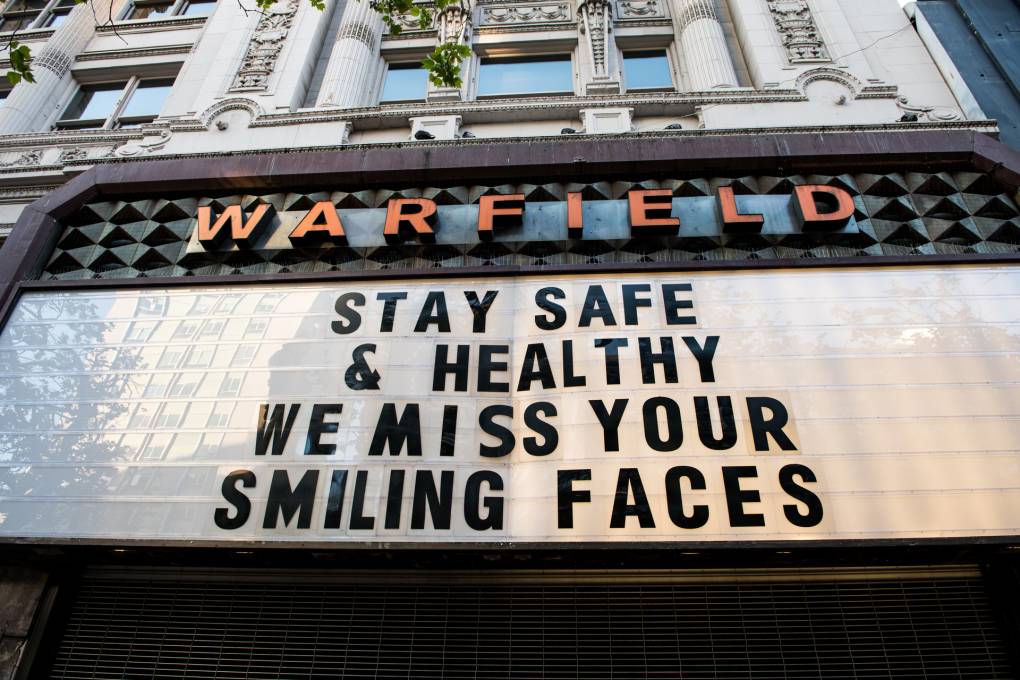
"caption": "The marquee for the Warfield reads, 'Stay Safe & Healthy. We Miss Your Smiling Faces,' on Market Street in San Francisco on April 7, 2020.",
"description": null,
"title": "RS42591_008_KQED_SanFrancisco_Businesses_04072020-qut",
"credit": "Beth LaBerge/KQED",
"status": "inherit",
"altTag": null,
"isLoading": false,
"fetchFailed": false
},
"news_11849906": {
"type": "attachments",
"id": "news_11849906",
"meta": {
"index": "attachments_1716263798",
"site": "news",
"id": "11849906",
"found": true
},
"parent": 11849905,
"imgSizes": {
"apple_news_ca_landscape_5_5": {
"file": "https://ww2.kqed.org/app/uploads/sites/10/2020/12/coronavirus-positive_wide-f7cc20e4d971f9d64322eb296f3d60ecce5c3f3f-1044x783.jpg",
"width": 1044,
"mimeType": "image/jpeg",
"height": 783
},
"apple_news_ca_square_4_0": {
"file": "https://ww2.kqed.org/app/uploads/sites/10/2020/12/coronavirus-positive_wide-f7cc20e4d971f9d64322eb296f3d60ecce5c3f3f-470x470.jpg",
"width": 470,
"mimeType": "image/jpeg",
"height": 470
},
"twentyfourteen-full-width": {
"file": "https://ww2.kqed.org/app/uploads/sites/10/2020/12/coronavirus-positive_wide-f7cc20e4d971f9d64322eb296f3d60ecce5c3f3f-1038x576.jpg",
"width": 1038,
"mimeType": "image/jpeg",
"height": 576
},
"thumbnail": {
"file": "https://ww2.kqed.org/app/uploads/sites/10/2020/12/coronavirus-positive_wide-f7cc20e4d971f9d64322eb296f3d60ecce5c3f3f-160x90.jpg",
"width": 160,
"mimeType": "image/jpeg",
"height": 90
},
"post-thumbnail": {
"file": "https://ww2.kqed.org/app/uploads/sites/10/2020/12/coronavirus-positive_wide-f7cc20e4d971f9d64322eb296f3d60ecce5c3f3f-672x372.jpg",
"width": 672,
"mimeType": "image/jpeg",
"height": 372
},
"kqedFullSize": {
"file": "https://ww2.kqed.org/app/uploads/sites/10/2020/12/coronavirus-positive_wide-f7cc20e4d971f9d64322eb296f3d60ecce5c3f3f-scaled-e1607191970148.jpg",
"width": 1920,
"height": 1079
},
"2048x2048": {
"file": "https://ww2.kqed.org/app/uploads/sites/10/2020/12/coronavirus-positive_wide-f7cc20e4d971f9d64322eb296f3d60ecce5c3f3f-2048x1151.jpg",
"width": 2048,
"mimeType": "image/jpeg",
"height": 1151
},
"apple_news_ca_landscape_4_7": {
"file": "https://ww2.kqed.org/app/uploads/sites/10/2020/12/coronavirus-positive_wide-f7cc20e4d971f9d64322eb296f3d60ecce5c3f3f-632x474.jpg",
"width": 632,
"mimeType": "image/jpeg",
"height": 474
},
"large": {
"file": "https://ww2.kqed.org/app/uploads/sites/10/2020/12/coronavirus-positive_wide-f7cc20e4d971f9d64322eb296f3d60ecce5c3f3f-1020x573.jpg",
"width": 1020,
"mimeType": "image/jpeg",
"height": 573
},
"apple_news_ca_landscape_4_0": {
"file": "https://ww2.kqed.org/app/uploads/sites/10/2020/12/coronavirus-positive_wide-f7cc20e4d971f9d64322eb296f3d60ecce5c3f3f-536x402.jpg",
"width": 536,
"mimeType": "image/jpeg",
"height": 402
},
"apple_news_ca_portrait_12_9": {
"file": "https://ww2.kqed.org/app/uploads/sites/10/2020/12/coronavirus-positive_wide-f7cc20e4d971f9d64322eb296f3d60ecce5c3f3f-1122x1496.jpg",
"width": 1122,
"mimeType": "image/jpeg",
"height": 1496
},
"medium": {
"file": "https://ww2.kqed.org/app/uploads/sites/10/2020/12/coronavirus-positive_wide-f7cc20e4d971f9d64322eb296f3d60ecce5c3f3f-800x450.jpg",
"width": 800,
"mimeType": "image/jpeg",
"height": 450
},
"apple_news_ca_portrait_4_0": {
"file": "https://ww2.kqed.org/app/uploads/sites/10/2020/12/coronavirus-positive_wide-f7cc20e4d971f9d64322eb296f3d60ecce5c3f3f-354x472.jpg",
"width": 354,
"mimeType": "image/jpeg",
"height": 472
},
"apple_news_ca_portrait_9_7": {
"file": "https://ww2.kqed.org/app/uploads/sites/10/2020/12/coronavirus-positive_wide-f7cc20e4d971f9d64322eb296f3d60ecce5c3f3f-840x1120.jpg",
"width": 840,
"mimeType": "image/jpeg",
"height": 1120
},
"apple_news_ca_landscape_12_9": {
"file": "https://ww2.kqed.org/app/uploads/sites/10/2020/12/coronavirus-positive_wide-f7cc20e4d971f9d64322eb296f3d60ecce5c3f3f-1832x1374.jpg",
"width": 1832,
"mimeType": "image/jpeg",
"height": 1374
},
"apple_news_ca_square_9_7": {
"file": "https://ww2.kqed.org/app/uploads/sites/10/2020/12/coronavirus-positive_wide-f7cc20e4d971f9d64322eb296f3d60ecce5c3f3f-1104x1104.jpg",
"width": 1104,
"mimeType": "image/jpeg",
"height": 1104
},
"1536x1536": {
"file": "https://ww2.kqed.org/app/uploads/sites/10/2020/12/coronavirus-positive_wide-f7cc20e4d971f9d64322eb296f3d60ecce5c3f3f-1536x863.jpg",
"width": 1536,
"mimeType": "image/jpeg",
"height": 863
},
"apple_news_ca_portrait_4_7": {
"file": "https://ww2.kqed.org/app/uploads/sites/10/2020/12/coronavirus-positive_wide-f7cc20e4d971f9d64322eb296f3d60ecce5c3f3f-414x552.jpg",
"width": 414,
"mimeType": "image/jpeg",
"height": 552
},
"apple_news_ca_square_12_9": {
"file": "https://ww2.kqed.org/app/uploads/sites/10/2020/12/coronavirus-positive_wide-f7cc20e4d971f9d64322eb296f3d60ecce5c3f3f-1472x1472.jpg",
"width": 1472,
"mimeType": "image/jpeg",
"height": 1472
},
"apple_news_ca_portrait_5_5": {
"file": "https://ww2.kqed.org/app/uploads/sites/10/2020/12/coronavirus-positive_wide-f7cc20e4d971f9d64322eb296f3d60ecce5c3f3f-687x916.jpg",
"width": 687,
"mimeType": "image/jpeg",
"height": 916
},
"full-width": {
"file": "https://ww2.kqed.org/app/uploads/sites/10/2020/12/coronavirus-positive_wide-f7cc20e4d971f9d64322eb296f3d60ecce5c3f3f-1920x1079.jpg",
"width": 1920,
"mimeType": "image/jpeg",
"height": 1079
},
"apple_news_ca_square_4_7": {
"file": "https://ww2.kqed.org/app/uploads/sites/10/2020/12/coronavirus-positive_wide-f7cc20e4d971f9d64322eb296f3d60ecce5c3f3f-550x550.jpg",
"width": 550,
"mimeType": "image/jpeg",
"height": 550
},
"apple_news_ca_landscape_9_7": {
"file": "https://ww2.kqed.org/app/uploads/sites/10/2020/12/coronavirus-positive_wide-f7cc20e4d971f9d64322eb296f3d60ecce5c3f3f-1376x1032.jpg",
"width": 1376,
"mimeType": "image/jpeg",
"height": 1032
},
"apple_news_ca_square_5_5": {
"file": "https://ww2.kqed.org/app/uploads/sites/10/2020/12/coronavirus-positive_wide-f7cc20e4d971f9d64322eb296f3d60ecce5c3f3f-912x912.jpg",
"width": 912,
"mimeType": "image/jpeg",
"height": 912
}
},
"publishDate": 1607191582,
"modified": 1607192014,
"caption": "Dr. Kristen Kendrick walks us through what to do if and when we test positive for COVID-19 or develop mild symptoms. How long must we isolate at home? What about our housemates? How do keep the food coming? When can we go outside again?",
"description": null,
"title": "Dr. Kristen Kendrick walks us through what to do if and when we test positive for COVID-19 or develop mild symptoms. How long must we isolate at home? What about our housemates? How do keep the food coming? When can we go outside again?",
"credit": "Malte Mueller/Getty Images/fStop",
"status": "inherit",
"altTag": null,
"isLoading": false,
"fetchFailed": false
},
"news_11849837": {
"type": "attachments",
"id": "news_11849837",
"meta": {
"index": "attachments_1716263798",
"site": "news",
"id": "11849837",
"found": true
},
"parent": 11849825,
"imgSizes": {
"apple_news_ca_landscape_5_5": {
"file": "https://ww2.kqed.org/app/uploads/sites/10/2020/12/MARQUEE-809C-1044x720.jpg",
"width": 1044,
"mimeType": "image/jpeg",
"height": 720
},
"apple_news_ca_square_4_0": {
"file": "https://ww2.kqed.org/app/uploads/sites/10/2020/12/MARQUEE-809C-470x470.jpg",
"width": 470,
"mimeType": "image/jpeg",
"height": 470
},
"twentyfourteen-full-width": {
"file": "https://ww2.kqed.org/app/uploads/sites/10/2020/12/MARQUEE-809C-1038x576.jpg",
"width": 1038,
"mimeType": "image/jpeg",
"height": 576
},
"thumbnail": {
"file": "https://ww2.kqed.org/app/uploads/sites/10/2020/12/MARQUEE-809C-160x90.jpg",
"width": 160,
"mimeType": "image/jpeg",
"height": 90
},
"post-thumbnail": {
"file": "https://ww2.kqed.org/app/uploads/sites/10/2020/12/MARQUEE-809C-672x372.jpg",
"width": 672,
"mimeType": "image/jpeg",
"height": 372
},
"kqedFullSize": {
"file": "https://ww2.kqed.org/app/uploads/sites/10/2020/12/MARQUEE-809C.jpg",
"width": 1280,
"height": 720
},
"apple_news_ca_landscape_4_7": {
"file": "https://ww2.kqed.org/app/uploads/sites/10/2020/12/MARQUEE-809C-632x474.jpg",
"width": 632,
"mimeType": "image/jpeg",
"height": 474
},
"large": {
"file": "https://ww2.kqed.org/app/uploads/sites/10/2020/12/MARQUEE-809C-1020x574.jpg",
"width": 1020,
"mimeType": "image/jpeg",
"height": 574
},
"apple_news_ca_landscape_4_0": {
"file": "https://ww2.kqed.org/app/uploads/sites/10/2020/12/MARQUEE-809C-536x402.jpg",
"width": 536,
"mimeType": "image/jpeg",
"height": 402
},
"apple_news_ca_portrait_12_9": {
"file": "https://ww2.kqed.org/app/uploads/sites/10/2020/12/MARQUEE-809C-1122x720.jpg",
"width": 1122,
"mimeType": "image/jpeg",
"height": 720
},
"medium": {
"file": "https://ww2.kqed.org/app/uploads/sites/10/2020/12/MARQUEE-809C-800x450.jpg",
"width": 800,
"mimeType": "image/jpeg",
"height": 450
},
"apple_news_ca_portrait_4_0": {
"file": "https://ww2.kqed.org/app/uploads/sites/10/2020/12/MARQUEE-809C-354x472.jpg",
"width": 354,
"mimeType": "image/jpeg",
"height": 472
},
"apple_news_ca_portrait_9_7": {
"file": "https://ww2.kqed.org/app/uploads/sites/10/2020/12/MARQUEE-809C-840x720.jpg",
"width": 840,
"mimeType": "image/jpeg",
"height": 720
},
"apple_news_ca_square_9_7": {
"file": "https://ww2.kqed.org/app/uploads/sites/10/2020/12/MARQUEE-809C-1104x720.jpg",
"width": 1104,
"mimeType": "image/jpeg",
"height": 720
},
"apple_news_ca_portrait_4_7": {
"file": "https://ww2.kqed.org/app/uploads/sites/10/2020/12/MARQUEE-809C-414x552.jpg",
"width": 414,
"mimeType": "image/jpeg",
"height": 552
},
"apple_news_ca_portrait_5_5": {
"file": "https://ww2.kqed.org/app/uploads/sites/10/2020/12/MARQUEE-809C-687x720.jpg",
"width": 687,
"mimeType": "image/jpeg",
"height": 720
},
"apple_news_ca_square_4_7": {
"file": "https://ww2.kqed.org/app/uploads/sites/10/2020/12/MARQUEE-809C-550x550.jpg",
"width": 550,
"mimeType": "image/jpeg",
"height": 550
},
"apple_news_ca_square_5_5": {
"file": "https://ww2.kqed.org/app/uploads/sites/10/2020/12/MARQUEE-809C-912x720.jpg",
"width": 912,
"mimeType": "image/jpeg",
"height": 720
}
},
"publishDate": 1607128763,
"modified": 1607128763,
"caption": null,
"description": null,
"title": "MARQUEE 809C",
"credit": null,
"status": "inherit",
"altTag": null,
"isLoading": false,
"fetchFailed": false
},
"news_11849800": {
"type": "attachments",
"id": "news_11849800",
"meta": {
"index": "attachments_1716263798",
"site": "news",
"id": "11849800",
"found": true
},
"parent": 11849734,
"imgSizes": {
"apple_news_ca_landscape_5_5": {
"file": "https://ww2.kqed.org/app/uploads/sites/10/2020/12/outdoor_120420_final-1044x783.png",
"width": 1044,
"mimeType": "image/png",
"height": 783
},
"apple_news_ca_square_4_0": {
"file": "https://ww2.kqed.org/app/uploads/sites/10/2020/12/outdoor_120420_final-470x470.png",
"width": 470,
"mimeType": "image/png",
"height": 470
},
"twentyfourteen-full-width": {
"file": "https://ww2.kqed.org/app/uploads/sites/10/2020/12/outdoor_120420_final-1038x576.png",
"width": 1038,
"mimeType": "image/png",
"height": 576
},
"thumbnail": {
"file": "https://ww2.kqed.org/app/uploads/sites/10/2020/12/outdoor_120420_final-160x105.png",
"width": 160,
"mimeType": "image/png",
"height": 105
},
"post-thumbnail": {
"file": "https://ww2.kqed.org/app/uploads/sites/10/2020/12/outdoor_120420_final-672x372.png",
"width": 672,
"mimeType": "image/png",
"height": 372
},
"kqedFullSize": {
"file": "https://ww2.kqed.org/app/uploads/sites/10/2020/12/outdoor_120420_final.png",
"width": 1920,
"height": 1259
},
"apple_news_ca_landscape_4_7": {
"file": "https://ww2.kqed.org/app/uploads/sites/10/2020/12/outdoor_120420_final-632x474.png",
"width": 632,
"mimeType": "image/png",
"height": 474
},
"large": {
"file": "https://ww2.kqed.org/app/uploads/sites/10/2020/12/outdoor_120420_final-1020x669.png",
"width": 1020,
"mimeType": "image/png",
"height": 669
},
"apple_news_ca_landscape_4_0": {
"file": "https://ww2.kqed.org/app/uploads/sites/10/2020/12/outdoor_120420_final-536x402.png",
"width": 536,
"mimeType": "image/png",
"height": 402
},
"apple_news_ca_portrait_12_9": {
"file": "https://ww2.kqed.org/app/uploads/sites/10/2020/12/outdoor_120420_final-1122x1259.png",
"width": 1122,
"mimeType": "image/png",
"height": 1259
},
"medium": {
"file": "https://ww2.kqed.org/app/uploads/sites/10/2020/12/outdoor_120420_final-800x525.png",
"width": 800,
"mimeType": "image/png",
"height": 525
},
"apple_news_ca_portrait_4_0": {
"file": "https://ww2.kqed.org/app/uploads/sites/10/2020/12/outdoor_120420_final-354x472.png",
"width": 354,
"mimeType": "image/png",
"height": 472
},
"apple_news_ca_portrait_9_7": {
"file": "https://ww2.kqed.org/app/uploads/sites/10/2020/12/outdoor_120420_final-840x1120.png",
"width": 840,
"mimeType": "image/png",
"height": 1120
},
"apple_news_ca_landscape_12_9": {
"file": "https://ww2.kqed.org/app/uploads/sites/10/2020/12/outdoor_120420_final-1832x1259.png",
"width": 1832,
"mimeType": "image/png",
"height": 1259
},
"apple_news_ca_square_9_7": {
"file": "https://ww2.kqed.org/app/uploads/sites/10/2020/12/outdoor_120420_final-1104x1104.png",
"width": 1104,
"mimeType": "image/png",
"height": 1104
},
"1536x1536": {
"file": "https://ww2.kqed.org/app/uploads/sites/10/2020/12/outdoor_120420_final-1536x1007.png",
"width": 1536,
"mimeType": "image/png",
"height": 1007
},
"apple_news_ca_portrait_4_7": {
"file": "https://ww2.kqed.org/app/uploads/sites/10/2020/12/outdoor_120420_final-414x552.png",
"width": 414,
"mimeType": "image/png",
"height": 552
},
"apple_news_ca_square_12_9": {
"file": "https://ww2.kqed.org/app/uploads/sites/10/2020/12/outdoor_120420_final-1472x1259.png",
"width": 1472,
"mimeType": "image/png",
"height": 1259
},
"apple_news_ca_portrait_5_5": {
"file": "https://ww2.kqed.org/app/uploads/sites/10/2020/12/outdoor_120420_final-687x916.png",
"width": 687,
"mimeType": "image/png",
"height": 916
},
"apple_news_ca_square_4_7": {
"file": "https://ww2.kqed.org/app/uploads/sites/10/2020/12/outdoor_120420_final-550x550.png",
"width": 550,
"mimeType": "image/png",
"height": 550
},
"apple_news_ca_landscape_9_7": {
"file": "https://ww2.kqed.org/app/uploads/sites/10/2020/12/outdoor_120420_final-1376x1032.png",
"width": 1376,
"mimeType": "image/png",
"height": 1032
},
"apple_news_ca_square_5_5": {
"file": "https://ww2.kqed.org/app/uploads/sites/10/2020/12/outdoor_120420_final-912x912.png",
"width": 912,
"mimeType": "image/png",
"height": 912
}
},
"publishDate": 1607124023,
"modified": 1607124086,
"caption": null,
"description": null,
"title": "outdoor_120420_final",
"credit": null,
"status": "inherit",
"altTag": "A Mark Fiore cartoon about drought and stay-at-home orders amid the COVID-19 pandemic.",
"isLoading": false,
"fetchFailed": false
},
"news_11849642": {
"type": "attachments",
"id": "news_11849642",
"meta": {
"index": "attachments_1716263798",
"site": "news",
"id": "11849642",
"found": true
},
"parent": 11849641,
"imgSizes": {
"apple_news_ca_landscape_5_5": {
"file": "https://ww2.kqed.org/app/uploads/sites/10/2020/12/RS46158_GettyImages-1218838341-qut-1044x783.jpg",
"width": 1044,
"mimeType": "image/jpeg",
"height": 783
},
"apple_news_ca_square_4_0": {
"file": "https://ww2.kqed.org/app/uploads/sites/10/2020/12/RS46158_GettyImages-1218838341-qut-470x470.jpg",
"width": 470,
"mimeType": "image/jpeg",
"height": 470
},
"twentyfourteen-full-width": {
"file": "https://ww2.kqed.org/app/uploads/sites/10/2020/12/RS46158_GettyImages-1218838341-qut-1038x576.jpg",
"width": 1038,
"mimeType": "image/jpeg",
"height": 576
},
"thumbnail": {
"file": "https://ww2.kqed.org/app/uploads/sites/10/2020/12/RS46158_GettyImages-1218838341-qut-160x106.jpg",
"width": 160,
"mimeType": "image/jpeg",
"height": 106
},
"post-thumbnail": {
"file": "https://ww2.kqed.org/app/uploads/sites/10/2020/12/RS46158_GettyImages-1218838341-qut-672x372.jpg",
"width": 672,
"mimeType": "image/jpeg",
"height": 372
},
"kqedFullSize": {
"file": "https://ww2.kqed.org/app/uploads/sites/10/2020/12/RS46158_GettyImages-1218838341-qut.jpg",
"width": 1920,
"height": 1266
},
"apple_news_ca_landscape_4_7": {
"file": "https://ww2.kqed.org/app/uploads/sites/10/2020/12/RS46158_GettyImages-1218838341-qut-632x474.jpg",
"width": 632,
"mimeType": "image/jpeg",
"height": 474
},
"large": {
"file": "https://ww2.kqed.org/app/uploads/sites/10/2020/12/RS46158_GettyImages-1218838341-qut-1020x673.jpg",
"width": 1020,
"mimeType": "image/jpeg",
"height": 673
},
"apple_news_ca_landscape_4_0": {
"file": "https://ww2.kqed.org/app/uploads/sites/10/2020/12/RS46158_GettyImages-1218838341-qut-536x402.jpg",
"width": 536,
"mimeType": "image/jpeg",
"height": 402
},
"apple_news_ca_portrait_12_9": {
"file": "https://ww2.kqed.org/app/uploads/sites/10/2020/12/RS46158_GettyImages-1218838341-qut-1122x1266.jpg",
"width": 1122,
"mimeType": "image/jpeg",
"height": 1266
},
"medium": {
"file": "https://ww2.kqed.org/app/uploads/sites/10/2020/12/RS46158_GettyImages-1218838341-qut-800x528.jpg",
"width": 800,
"mimeType": "image/jpeg",
"height": 528
},
"apple_news_ca_portrait_4_0": {
"file": "https://ww2.kqed.org/app/uploads/sites/10/2020/12/RS46158_GettyImages-1218838341-qut-354x472.jpg",
"width": 354,
"mimeType": "image/jpeg",
"height": 472
},
"apple_news_ca_portrait_9_7": {
"file": "https://ww2.kqed.org/app/uploads/sites/10/2020/12/RS46158_GettyImages-1218838341-qut-840x1120.jpg",
"width": 840,
"mimeType": "image/jpeg",
"height": 1120
},
"apple_news_ca_landscape_12_9": {
"file": "https://ww2.kqed.org/app/uploads/sites/10/2020/12/RS46158_GettyImages-1218838341-qut-1832x1266.jpg",
"width": 1832,
"mimeType": "image/jpeg",
"height": 1266
},
"apple_news_ca_square_9_7": {
"file": "https://ww2.kqed.org/app/uploads/sites/10/2020/12/RS46158_GettyImages-1218838341-qut-1104x1104.jpg",
"width": 1104,
"mimeType": "image/jpeg",
"height": 1104
},
"1536x1536": {
"file": "https://ww2.kqed.org/app/uploads/sites/10/2020/12/RS46158_GettyImages-1218838341-qut-1536x1013.jpg",
"width": 1536,
"mimeType": "image/jpeg",
"height": 1013
},
"apple_news_ca_portrait_4_7": {
"file": "https://ww2.kqed.org/app/uploads/sites/10/2020/12/RS46158_GettyImages-1218838341-qut-414x552.jpg",
"width": 414,
"mimeType": "image/jpeg",
"height": 552
},
"apple_news_ca_square_12_9": {
"file": "https://ww2.kqed.org/app/uploads/sites/10/2020/12/RS46158_GettyImages-1218838341-qut-1472x1266.jpg",
"width": 1472,
"mimeType": "image/jpeg",
"height": 1266
},
"apple_news_ca_portrait_5_5": {
"file": "https://ww2.kqed.org/app/uploads/sites/10/2020/12/RS46158_GettyImages-1218838341-qut-687x916.jpg",
"width": 687,
"mimeType": "image/jpeg",
"height": 916
},
"apple_news_ca_square_4_7": {
"file": "https://ww2.kqed.org/app/uploads/sites/10/2020/12/RS46158_GettyImages-1218838341-qut-550x550.jpg",
"width": 550,
"mimeType": "image/jpeg",
"height": 550
},
"apple_news_ca_landscape_9_7": {
"file": "https://ww2.kqed.org/app/uploads/sites/10/2020/12/RS46158_GettyImages-1218838341-qut-1376x1032.jpg",
"width": 1376,
"mimeType": "image/jpeg",
"height": 1032
},
"apple_news_ca_square_5_5": {
"file": "https://ww2.kqed.org/app/uploads/sites/10/2020/12/RS46158_GettyImages-1218838341-qut-912x912.jpg",
"width": 912,
"mimeType": "image/jpeg",
"height": 912
}
},
"publishDate": 1607051366,
"modified": 1607051489,
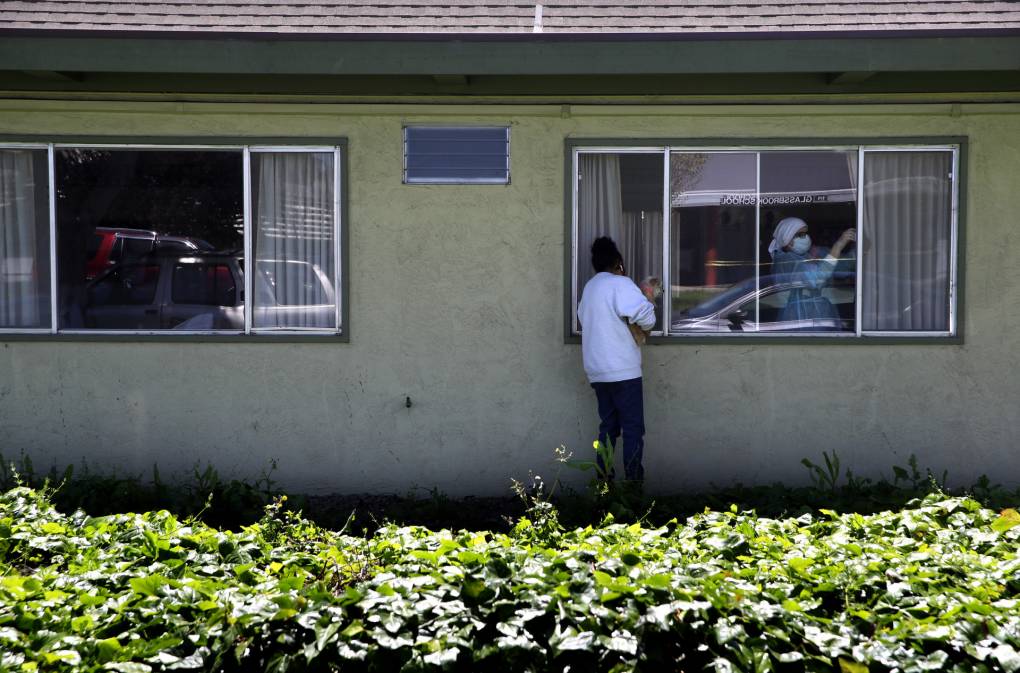
"caption": "HAYWARD, CALIFORNIA - APRIL 14: Adrina Rodriguez holds her dog as she looks through a window while visiting her father who is a patient at the Gateway Care and Rehabilitation Center that has tested negative for COVID-19 on April 14, 2020 in Hayward, California. The Gateway Care and Rehabilitation Center remains open after a tenth patient died from COVID-19 complications. ",
"description": "HAYWARD, CALIFORNIA - APRIL 14: Adrina Rodriguez holds her dog as she looks through a window while visiting her father who is a patient at the Gateway Care and Rehabilitation Center that has tested negative for COVID-19 on April 14, 2020 in Hayward, California. The Gateway Care and Rehabilitation Center remains open after a tenth patient died from COVID-19 complications.",
"title": "Hayward, California Nursing Home Sees Cluster Of Coronavirus Cases",
"credit": "Justin Sullivan/Getty Images",
"status": "inherit",
"altTag": "HAYWARD, CALIFORNIA - APRIL 14: Adrina Rodriguez holds her dog as she looks through a window while visiting her father who is a patient at the Gateway Care and Rehabilitation Center that has tested negative for COVID-19 on April 14, 2020 in Hayward, California. The Gateway Care and Rehabilitation Center remains open after a tenth patient died from COVID-19 complications.",
"isLoading": false,
"fetchFailed": false
},
"news_11849507": {
"type": "attachments",
"id": "news_11849507",
"meta": {
"index": "attachments_1716263798",
"site": "news",
"id": "11849507",
"found": true
},
"parent": 11849485,
"imgSizes": {
"apple_news_ca_landscape_5_5": {
"file": "https://ww2.kqed.org/app/uploads/sites/10/2020/12/RS46182_IMG_4913-qut-1044x783.jpg",
"width": 1044,
"mimeType": "image/jpeg",
"height": 783
},
"apple_news_ca_square_4_0": {
"file": "https://ww2.kqed.org/app/uploads/sites/10/2020/12/RS46182_IMG_4913-qut-470x470.jpg",
"width": 470,
"mimeType": "image/jpeg",
"height": 470
},
"twentyfourteen-full-width": {
"file": "https://ww2.kqed.org/app/uploads/sites/10/2020/12/RS46182_IMG_4913-qut-1038x576.jpg",
"width": 1038,
"mimeType": "image/jpeg",
"height": 576
},
"thumbnail": {
"file": "https://ww2.kqed.org/app/uploads/sites/10/2020/12/RS46182_IMG_4913-qut-160x120.jpg",
"width": 160,
"mimeType": "image/jpeg",
"height": 120
},
"post-thumbnail": {
"file": "https://ww2.kqed.org/app/uploads/sites/10/2020/12/RS46182_IMG_4913-qut-672x372.jpg",
"width": 672,
"mimeType": "image/jpeg",
"height": 372
},
"kqedFullSize": {
"file": "https://ww2.kqed.org/app/uploads/sites/10/2020/12/RS46182_IMG_4913-qut.jpg",
"width": 1920,
"height": 1440
},
"apple_news_ca_landscape_4_7": {
"file": "https://ww2.kqed.org/app/uploads/sites/10/2020/12/RS46182_IMG_4913-qut-632x474.jpg",
"width": 632,
"mimeType": "image/jpeg",
"height": 474
},
"large": {
"file": "https://ww2.kqed.org/app/uploads/sites/10/2020/12/RS46182_IMG_4913-qut-1020x765.jpg",
"width": 1020,
"mimeType": "image/jpeg",
"height": 765
},
"apple_news_ca_landscape_4_0": {
"file": "https://ww2.kqed.org/app/uploads/sites/10/2020/12/RS46182_IMG_4913-qut-536x402.jpg",
"width": 536,
"mimeType": "image/jpeg",
"height": 402
},
"apple_news_ca_portrait_12_9": {
"file": "https://ww2.kqed.org/app/uploads/sites/10/2020/12/RS46182_IMG_4913-qut-1122x1440.jpg",
"width": 1122,
"mimeType": "image/jpeg",
"height": 1440
},
"medium": {
"file": "https://ww2.kqed.org/app/uploads/sites/10/2020/12/RS46182_IMG_4913-qut-800x600.jpg",
"width": 800,
"mimeType": "image/jpeg",
"height": 600
},
"apple_news_ca_portrait_4_0": {
"file": "https://ww2.kqed.org/app/uploads/sites/10/2020/12/RS46182_IMG_4913-qut-354x472.jpg",
"width": 354,
"mimeType": "image/jpeg",
"height": 472
},
"apple_news_ca_portrait_9_7": {
"file": "https://ww2.kqed.org/app/uploads/sites/10/2020/12/RS46182_IMG_4913-qut-840x1120.jpg",
"width": 840,
"mimeType": "image/jpeg",
"height": 1120
},
"apple_news_ca_landscape_12_9": {
"file": "https://ww2.kqed.org/app/uploads/sites/10/2020/12/RS46182_IMG_4913-qut-1832x1374.jpg",
"width": 1832,
"mimeType": "image/jpeg",
"height": 1374
},
"apple_news_ca_square_9_7": {
"file": "https://ww2.kqed.org/app/uploads/sites/10/2020/12/RS46182_IMG_4913-qut-1104x1104.jpg",
"width": 1104,
"mimeType": "image/jpeg",
"height": 1104
},
"1536x1536": {
"file": "https://ww2.kqed.org/app/uploads/sites/10/2020/12/RS46182_IMG_4913-qut-1536x1152.jpg",
"width": 1536,
"mimeType": "image/jpeg",
"height": 1152
},
"apple_news_ca_portrait_4_7": {
"file": "https://ww2.kqed.org/app/uploads/sites/10/2020/12/RS46182_IMG_4913-qut-414x552.jpg",
"width": 414,
"mimeType": "image/jpeg",
"height": 552
},
"apple_news_ca_square_12_9": {
"file": "https://ww2.kqed.org/app/uploads/sites/10/2020/12/RS46182_IMG_4913-qut-1472x1440.jpg",
"width": 1472,
"mimeType": "image/jpeg",
"height": 1440
},
"apple_news_ca_portrait_5_5": {
"file": "https://ww2.kqed.org/app/uploads/sites/10/2020/12/RS46182_IMG_4913-qut-687x916.jpg",
"width": 687,
"mimeType": "image/jpeg",
"height": 916
},
"apple_news_ca_square_4_7": {
"file": "https://ww2.kqed.org/app/uploads/sites/10/2020/12/RS46182_IMG_4913-qut-550x550.jpg",
"width": 550,
"mimeType": "image/jpeg",
"height": 550
},
"apple_news_ca_landscape_9_7": {
"file": "https://ww2.kqed.org/app/uploads/sites/10/2020/12/RS46182_IMG_4913-qut-1376x1032.jpg",
"width": 1376,
"mimeType": "image/jpeg",
"height": 1032
},
"apple_news_ca_square_5_5": {
"file": "https://ww2.kqed.org/app/uploads/sites/10/2020/12/RS46182_IMG_4913-qut-912x912.jpg",
"width": 912,
"mimeType": "image/jpeg",
"height": 912
}
},
"publishDate": 1607025349,
"modified": 1607032186,
"caption": "UC Berkeley student association president and political science major Victoria Vera pictured outside The Golden Bear Cafe. Students and dining staff have been hit particularly hard by the school's short- and long-term financial woes.",
"description": "UC Berkeley student association president and political science major Victoria Vera pictured outside The Golden Bear Cafe. Students and dining staff have been hit particularly hard by the school's short- and long-term financial woes.",
"title": "RS46182_IMG_4913-qut",
"credit": "Chloe Veltman/KQED",
"status": "inherit",
"altTag": "\"\"",
"isLoading": false,
"fetchFailed": false
},
"news_11849588": {
"type": "attachments",
"id": "news_11849588",
"meta": {
"index": "attachments_1716263798",
"site": "news",
"id": "11849588",
"found": true
},
"parent": 11849585,
"imgSizes": {
"apple_news_ca_landscape_5_5": {
"file": "https://ww2.kqed.org/app/uploads/sites/10/2020/12/RS16165_JV0A7516-qut-1044x783.jpg",
"width": 1044,
"mimeType": "image/jpeg",
"height": 783
},
"apple_news_ca_square_4_0": {
"file": "https://ww2.kqed.org/app/uploads/sites/10/2020/12/RS16165_JV0A7516-qut-470x470.jpg",
"width": 470,
"mimeType": "image/jpeg",
"height": 470
},
"twentyfourteen-full-width": {
"file": "https://ww2.kqed.org/app/uploads/sites/10/2020/12/RS16165_JV0A7516-qut-1038x576.jpg",
"width": 1038,
"mimeType": "image/jpeg",
"height": 576
},
"thumbnail": {
"file": "https://ww2.kqed.org/app/uploads/sites/10/2020/12/RS16165_JV0A7516-qut-160x107.jpg",
"width": 160,
"mimeType": "image/jpeg",
"height": 107
},
"post-thumbnail": {
"file": "https://ww2.kqed.org/app/uploads/sites/10/2020/12/RS16165_JV0A7516-qut-672x372.jpg",
"width": 672,
"mimeType": "image/jpeg",
"height": 372
},
"kqedFullSize": {
"file": "https://ww2.kqed.org/app/uploads/sites/10/2020/12/RS16165_JV0A7516-qut.jpg",
"width": 1920,
"height": 1280
},
"apple_news_ca_landscape_4_7": {
"file": "https://ww2.kqed.org/app/uploads/sites/10/2020/12/RS16165_JV0A7516-qut-632x474.jpg",
"width": 632,
"mimeType": "image/jpeg",
"height": 474
},
"large": {
"file": "https://ww2.kqed.org/app/uploads/sites/10/2020/12/RS16165_JV0A7516-qut-1020x680.jpg",
"width": 1020,
"mimeType": "image/jpeg",
"height": 680
},
"apple_news_ca_landscape_4_0": {
"file": "https://ww2.kqed.org/app/uploads/sites/10/2020/12/RS16165_JV0A7516-qut-536x402.jpg",
"width": 536,
"mimeType": "image/jpeg",
"height": 402
},
"apple_news_ca_portrait_12_9": {
"file": "https://ww2.kqed.org/app/uploads/sites/10/2020/12/RS16165_JV0A7516-qut-1122x1280.jpg",
"width": 1122,
"mimeType": "image/jpeg",
"height": 1280
},
"medium": {
"file": "https://ww2.kqed.org/app/uploads/sites/10/2020/12/RS16165_JV0A7516-qut-800x533.jpg",
"width": 800,
"mimeType": "image/jpeg",
"height": 533
},
"apple_news_ca_portrait_4_0": {
"file": "https://ww2.kqed.org/app/uploads/sites/10/2020/12/RS16165_JV0A7516-qut-354x472.jpg",
"width": 354,
"mimeType": "image/jpeg",
"height": 472
},
"apple_news_ca_portrait_9_7": {
"file": "https://ww2.kqed.org/app/uploads/sites/10/2020/12/RS16165_JV0A7516-qut-840x1120.jpg",
"width": 840,
"mimeType": "image/jpeg",
"height": 1120
},
"apple_news_ca_landscape_12_9": {
"file": "https://ww2.kqed.org/app/uploads/sites/10/2020/12/RS16165_JV0A7516-qut-1832x1280.jpg",
"width": 1832,
"mimeType": "image/jpeg",
"height": 1280
},
"apple_news_ca_square_9_7": {
"file": "https://ww2.kqed.org/app/uploads/sites/10/2020/12/RS16165_JV0A7516-qut-1104x1104.jpg",
"width": 1104,
"mimeType": "image/jpeg",
"height": 1104
},
"1536x1536": {
"file": "https://ww2.kqed.org/app/uploads/sites/10/2020/12/RS16165_JV0A7516-qut-1536x1024.jpg",
"width": 1536,
"mimeType": "image/jpeg",
"height": 1024
},
"apple_news_ca_portrait_4_7": {
"file": "https://ww2.kqed.org/app/uploads/sites/10/2020/12/RS16165_JV0A7516-qut-414x552.jpg",
"width": 414,
"mimeType": "image/jpeg",
"height": 552
},
"apple_news_ca_square_12_9": {
"file": "https://ww2.kqed.org/app/uploads/sites/10/2020/12/RS16165_JV0A7516-qut-1472x1280.jpg",
"width": 1472,
"mimeType": "image/jpeg",
"height": 1280
},
"apple_news_ca_portrait_5_5": {
"file": "https://ww2.kqed.org/app/uploads/sites/10/2020/12/RS16165_JV0A7516-qut-687x916.jpg",
"width": 687,
"mimeType": "image/jpeg",
"height": 916
},
"apple_news_ca_square_4_7": {
"file": "https://ww2.kqed.org/app/uploads/sites/10/2020/12/RS16165_JV0A7516-qut-550x550.jpg",
"width": 550,
"mimeType": "image/jpeg",
"height": 550
},
"apple_news_ca_landscape_9_7": {
"file": "https://ww2.kqed.org/app/uploads/sites/10/2020/12/RS16165_JV0A7516-qut-1376x1032.jpg",
"width": 1376,
"mimeType": "image/jpeg",
"height": 1032
},
"apple_news_ca_square_5_5": {
"file": "https://ww2.kqed.org/app/uploads/sites/10/2020/12/RS16165_JV0A7516-qut-912x912.jpg",
"width": 912,
"mimeType": "image/jpeg",
"height": 912
}
},
"publishDate": 1607041970,
"modified": 1626996401,
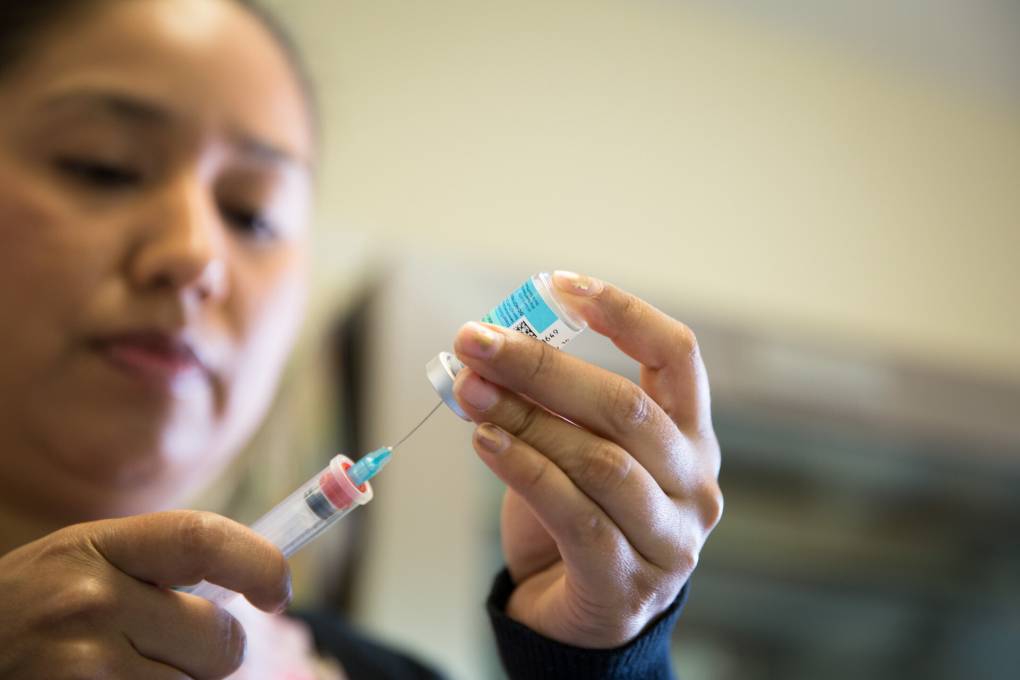
"caption": "Etzel Rubio at Berkeley Pediatrics fills a syringe in preparation to administer a vaccine.",
"description": "Etzel Rubio at Berkeley Pediatrics fills a syringe in preparation to administer a vaccine.",
"title": "RS16165_JV0A7516-qut",
"credit": "Jeremy Raff/KQED",
"status": "inherit",
"altTag": null,
"isLoading": false,
"fetchFailed": false
},
"news_11849582": {
"type": "attachments",
"id": "news_11849582",
"meta": {
"index": "attachments_1716263798",
"site": "news",
"id": "11849582",
"found": true
},
"parent": 11849549,
"imgSizes": {
"apple_news_ca_landscape_5_5": {
"file": "https://ww2.kqed.org/app/uploads/sites/10/2020/12/RS46185_IMG_2619-qut-e1607041411223-1044x783.jpg",
"width": 1044,
"mimeType": "image/jpeg",
"height": 783
},
"apple_news_ca_square_4_0": {
"file": "https://ww2.kqed.org/app/uploads/sites/10/2020/12/RS46185_IMG_2619-qut-e1607041411223-470x470.jpg",
"width": 470,
"mimeType": "image/jpeg",
"height": 470
},
"twentyfourteen-full-width": {
"file": "https://ww2.kqed.org/app/uploads/sites/10/2020/12/RS46185_IMG_2619-qut-e1607041411223-1038x576.jpg",
"width": 1038,
"mimeType": "image/jpeg",
"height": 576
},
"thumbnail": {
"file": "https://ww2.kqed.org/app/uploads/sites/10/2020/12/RS46185_IMG_2619-qut-e1607041411223-160x120.jpg",
"width": 160,
"mimeType": "image/jpeg",
"height": 120
},
"post-thumbnail": {
"file": "https://ww2.kqed.org/app/uploads/sites/10/2020/12/RS46185_IMG_2619-qut-e1607041411223-672x372.jpg",
"width": 672,
"mimeType": "image/jpeg",
"height": 372
},
"kqedFullSize": {
"file": "https://ww2.kqed.org/app/uploads/sites/10/2020/12/RS46185_IMG_2619-qut-e1607041411223.jpg",
"width": 1920,
"height": 1440
},
"apple_news_ca_landscape_4_7": {
"file": "https://ww2.kqed.org/app/uploads/sites/10/2020/12/RS46185_IMG_2619-qut-e1607041411223-632x474.jpg",
"width": 632,
"mimeType": "image/jpeg",
"height": 474
},
"large": {
"file": "https://ww2.kqed.org/app/uploads/sites/10/2020/12/RS46185_IMG_2619-qut-e1607041411223-1020x765.jpg",
"width": 1020,
"mimeType": "image/jpeg",
"height": 765
},
"apple_news_ca_landscape_4_0": {
"file": "https://ww2.kqed.org/app/uploads/sites/10/2020/12/RS46185_IMG_2619-qut-e1607041411223-536x402.jpg",
"width": 536,
"mimeType": "image/jpeg",
"height": 402
},
"apple_news_ca_portrait_12_9": {
"file": "https://ww2.kqed.org/app/uploads/sites/10/2020/12/RS46185_IMG_2619-qut-e1607041411223-1122x1440.jpg",
"width": 1122,
"mimeType": "image/jpeg",
"height": 1440
},
"medium": {
"file": "https://ww2.kqed.org/app/uploads/sites/10/2020/12/RS46185_IMG_2619-qut-e1607041411223-800x600.jpg",
"width": 800,
"mimeType": "image/jpeg",
"height": 600
},
"apple_news_ca_portrait_4_0": {
"file": "https://ww2.kqed.org/app/uploads/sites/10/2020/12/RS46185_IMG_2619-qut-e1607041411223-354x472.jpg",
"width": 354,
"mimeType": "image/jpeg",
"height": 472
},
"apple_news_ca_portrait_9_7": {
"file": "https://ww2.kqed.org/app/uploads/sites/10/2020/12/RS46185_IMG_2619-qut-e1607041411223-840x1120.jpg",
"width": 840,
"mimeType": "image/jpeg",
"height": 1120
},
"apple_news_ca_landscape_12_9": {
"file": "https://ww2.kqed.org/app/uploads/sites/10/2020/12/RS46185_IMG_2619-qut-e1607041411223-1832x1374.jpg",
"width": 1832,
"mimeType": "image/jpeg",
"height": 1374
},
"apple_news_ca_square_9_7": {
"file": "https://ww2.kqed.org/app/uploads/sites/10/2020/12/RS46185_IMG_2619-qut-e1607041411223-1104x1104.jpg",
"width": 1104,
"mimeType": "image/jpeg",
"height": 1104
},
"1536x1536": {
"file": "https://ww2.kqed.org/app/uploads/sites/10/2020/12/RS46185_IMG_2619-qut-e1607041411223-1536x1152.jpg",
"width": 1536,
"mimeType": "image/jpeg",
"height": 1152
},
"apple_news_ca_portrait_4_7": {
"file": "https://ww2.kqed.org/app/uploads/sites/10/2020/12/RS46185_IMG_2619-qut-e1607041411223-414x552.jpg",
"width": 414,
"mimeType": "image/jpeg",
"height": 552
},
"apple_news_ca_square_12_9": {
"file": "https://ww2.kqed.org/app/uploads/sites/10/2020/12/RS46185_IMG_2619-qut-e1607041411223-1472x1440.jpg",
"width": 1472,
"mimeType": "image/jpeg",
"height": 1440
},
"apple_news_ca_portrait_5_5": {
"file": "https://ww2.kqed.org/app/uploads/sites/10/2020/12/RS46185_IMG_2619-qut-e1607041411223-687x916.jpg",
"width": 687,
"mimeType": "image/jpeg",
"height": 916
},
"apple_news_ca_square_4_7": {
"file": "https://ww2.kqed.org/app/uploads/sites/10/2020/12/RS46185_IMG_2619-qut-e1607041411223-550x550.jpg",
"width": 550,
"mimeType": "image/jpeg",
"height": 550
},
"apple_news_ca_landscape_9_7": {
"file": "https://ww2.kqed.org/app/uploads/sites/10/2020/12/RS46185_IMG_2619-qut-e1607041411223-1376x1032.jpg",
"width": 1376,
"mimeType": "image/jpeg",
"height": 1032
},
"apple_news_ca_square_5_5": {
"file": "https://ww2.kqed.org/app/uploads/sites/10/2020/12/RS46185_IMG_2619-qut-e1607041411223-912x912.jpg",
"width": 912,
"mimeType": "image/jpeg",
"height": 912
}
},
"publishDate": 1607041303,
"modified": 1607116642,
"caption": "Dr. Anthony Fauci, Director of the National Institute of Allergy and Infectious Diseases, on Political Breakdown. ",
"description": "Dr. Anthony Fauci, Director of the National Institute of Allergy and Infectious Diseases, on Political Breakdown. ",
"title": "RS46185_IMG_2619-qut",
"credit": null,
"status": "inherit",
"altTag": "\"\"",
"isLoading": false,
"fetchFailed": false
},
"news_11849578": {
"type": "attachments",
"id": "news_11849578",
"meta": {
"index": "attachments_1716263798",
"site": "news",
"id": "11849578",
"found": true
},
"parent": 11849568,
"imgSizes": {
"apple_news_ca_landscape_5_5": {
"file": "https://ww2.kqed.org/app/uploads/sites/10/2020/12/again_120320_final-1044x783.png",
"width": 1044,
"mimeType": "image/png",
"height": 783
},
"apple_news_ca_square_4_0": {
"file": "https://ww2.kqed.org/app/uploads/sites/10/2020/12/again_120320_final-470x470.png",
"width": 470,
"mimeType": "image/png",
"height": 470
},
"twentyfourteen-full-width": {
"file": "https://ww2.kqed.org/app/uploads/sites/10/2020/12/again_120320_final-1038x576.png",
"width": 1038,
"mimeType": "image/png",
"height": 576
},
"thumbnail": {
"file": "https://ww2.kqed.org/app/uploads/sites/10/2020/12/again_120320_final-160x102.png",
"width": 160,
"mimeType": "image/png",
"height": 102
},
"post-thumbnail": {
"file": "https://ww2.kqed.org/app/uploads/sites/10/2020/12/again_120320_final-672x372.png",
"width": 672,
"mimeType": "image/png",
"height": 372
},
"kqedFullSize": {
"file": "https://ww2.kqed.org/app/uploads/sites/10/2020/12/again_120320_final.png",
"width": 1920,
"height": 1221
},
"apple_news_ca_landscape_4_7": {
"file": "https://ww2.kqed.org/app/uploads/sites/10/2020/12/again_120320_final-632x474.png",
"width": 632,
"mimeType": "image/png",
"height": 474
},
"large": {
"file": "https://ww2.kqed.org/app/uploads/sites/10/2020/12/again_120320_final-1020x649.png",
"width": 1020,
"mimeType": "image/png",
"height": 649
},
"apple_news_ca_landscape_4_0": {
"file": "https://ww2.kqed.org/app/uploads/sites/10/2020/12/again_120320_final-536x402.png",
"width": 536,
"mimeType": "image/png",
"height": 402
},
"apple_news_ca_portrait_12_9": {
"file": "https://ww2.kqed.org/app/uploads/sites/10/2020/12/again_120320_final-1122x1221.png",
"width": 1122,
"mimeType": "image/png",
"height": 1221
},
"medium": {
"file": "https://ww2.kqed.org/app/uploads/sites/10/2020/12/again_120320_final-800x509.png",
"width": 800,
"mimeType": "image/png",
"height": 509
},
"apple_news_ca_portrait_4_0": {
"file": "https://ww2.kqed.org/app/uploads/sites/10/2020/12/again_120320_final-354x472.png",
"width": 354,
"mimeType": "image/png",
"height": 472
},
"apple_news_ca_portrait_9_7": {
"file": "https://ww2.kqed.org/app/uploads/sites/10/2020/12/again_120320_final-840x1120.png",
"width": 840,
"mimeType": "image/png",
"height": 1120
},
"apple_news_ca_landscape_12_9": {
"file": "https://ww2.kqed.org/app/uploads/sites/10/2020/12/again_120320_final-1832x1221.png",
"width": 1832,
"mimeType": "image/png",
"height": 1221
},
"apple_news_ca_square_9_7": {
"file": "https://ww2.kqed.org/app/uploads/sites/10/2020/12/again_120320_final-1104x1104.png",
"width": 1104,
"mimeType": "image/png",
"height": 1104
},
"1536x1536": {
"file": "https://ww2.kqed.org/app/uploads/sites/10/2020/12/again_120320_final-1536x977.png",
"width": 1536,
"mimeType": "image/png",
"height": 977
},
"apple_news_ca_portrait_4_7": {
"file": "https://ww2.kqed.org/app/uploads/sites/10/2020/12/again_120320_final-414x552.png",
"width": 414,
"mimeType": "image/png",
"height": 552
},
"apple_news_ca_square_12_9": {
"file": "https://ww2.kqed.org/app/uploads/sites/10/2020/12/again_120320_final-1472x1221.png",
"width": 1472,
"mimeType": "image/png",
"height": 1221
},
"apple_news_ca_portrait_5_5": {
"file": "https://ww2.kqed.org/app/uploads/sites/10/2020/12/again_120320_final-687x916.png",
"width": 687,
"mimeType": "image/png",
"height": 916
},
"apple_news_ca_square_4_7": {
"file": "https://ww2.kqed.org/app/uploads/sites/10/2020/12/again_120320_final-550x550.png",
"width": 550,
"mimeType": "image/png",
"height": 550
},
"apple_news_ca_landscape_9_7": {
"file": "https://ww2.kqed.org/app/uploads/sites/10/2020/12/again_120320_final-1376x1032.png",
"width": 1376,
"mimeType": "image/png",
"height": 1032
},
"apple_news_ca_square_5_5": {
"file": "https://ww2.kqed.org/app/uploads/sites/10/2020/12/again_120320_final-912x912.png",
"width": 912,
"mimeType": "image/png",
"height": 912
}
},
"publishDate": 1607041039,
"modified": 1607041118,
"caption": null,
"description": null,
"title": "again_120320_final",
"credit": null,
"status": "inherit",
"altTag": "A Mark Fiore cartoon featuring the \"Home Sweet Home\" classic needlepoint sign as \"Home Stay Home Again\" as new stay-at-home orders are issued by Gov. Newsom",
"isLoading": false,
"fetchFailed": false
},
"news_11849488": {
"type": "attachments",
"id": "news_11849488",
"meta": {
"index": "attachments_1716263798",
"site": "news",
"id": "11849488",
"found": true
},
"parent": 11849487,
"imgSizes": {
"apple_news_ca_landscape_5_5": {
"file": "https://ww2.kqed.org/app/uploads/sites/10/2020/12/RS46154_063_KQED_SanFrancisco_COVIDTesting_11302020-qut-1044x783.jpg",
"width": 1044,
"mimeType": "image/jpeg",
"height": 783
},
"apple_news_ca_square_4_0": {
"file": "https://ww2.kqed.org/app/uploads/sites/10/2020/12/RS46154_063_KQED_SanFrancisco_COVIDTesting_11302020-qut-470x470.jpg",
"width": 470,
"mimeType": "image/jpeg",
"height": 470
},
"twentyfourteen-full-width": {
"file": "https://ww2.kqed.org/app/uploads/sites/10/2020/12/RS46154_063_KQED_SanFrancisco_COVIDTesting_11302020-qut-1038x576.jpg",
"width": 1038,
"mimeType": "image/jpeg",
"height": 576
},
"thumbnail": {
"file": "https://ww2.kqed.org/app/uploads/sites/10/2020/12/RS46154_063_KQED_SanFrancisco_COVIDTesting_11302020-qut-160x107.jpg",
"width": 160,
"mimeType": "image/jpeg",
"height": 107
},
"post-thumbnail": {
"file": "https://ww2.kqed.org/app/uploads/sites/10/2020/12/RS46154_063_KQED_SanFrancisco_COVIDTesting_11302020-qut-672x372.jpg",
"width": 672,
"mimeType": "image/jpeg",
"height": 372
},
"kqedFullSize": {
"file": "https://ww2.kqed.org/app/uploads/sites/10/2020/12/RS46154_063_KQED_SanFrancisco_COVIDTesting_11302020-qut.jpg",
"width": 1920,
"height": 1280
},
"apple_news_ca_landscape_4_7": {
"file": "https://ww2.kqed.org/app/uploads/sites/10/2020/12/RS46154_063_KQED_SanFrancisco_COVIDTesting_11302020-qut-632x474.jpg",
"width": 632,
"mimeType": "image/jpeg",
"height": 474
},
"large": {
"file": "https://ww2.kqed.org/app/uploads/sites/10/2020/12/RS46154_063_KQED_SanFrancisco_COVIDTesting_11302020-qut-1020x680.jpg",
"width": 1020,
"mimeType": "image/jpeg",
"height": 680
},
"apple_news_ca_landscape_4_0": {
"file": "https://ww2.kqed.org/app/uploads/sites/10/2020/12/RS46154_063_KQED_SanFrancisco_COVIDTesting_11302020-qut-536x402.jpg",
"width": 536,
"mimeType": "image/jpeg",
"height": 402
},
"apple_news_ca_portrait_12_9": {
"file": "https://ww2.kqed.org/app/uploads/sites/10/2020/12/RS46154_063_KQED_SanFrancisco_COVIDTesting_11302020-qut-1122x1280.jpg",
"width": 1122,
"mimeType": "image/jpeg",
"height": 1280
},
"medium": {
"file": "https://ww2.kqed.org/app/uploads/sites/10/2020/12/RS46154_063_KQED_SanFrancisco_COVIDTesting_11302020-qut-800x533.jpg",
"width": 800,
"mimeType": "image/jpeg",
"height": 533
},
"apple_news_ca_portrait_4_0": {
"file": "https://ww2.kqed.org/app/uploads/sites/10/2020/12/RS46154_063_KQED_SanFrancisco_COVIDTesting_11302020-qut-354x472.jpg",
"width": 354,
"mimeType": "image/jpeg",
"height": 472
},
"apple_news_ca_portrait_9_7": {
"file": "https://ww2.kqed.org/app/uploads/sites/10/2020/12/RS46154_063_KQED_SanFrancisco_COVIDTesting_11302020-qut-840x1120.jpg",
"width": 840,
"mimeType": "image/jpeg",
"height": 1120
},
"apple_news_ca_landscape_12_9": {
"file": "https://ww2.kqed.org/app/uploads/sites/10/2020/12/RS46154_063_KQED_SanFrancisco_COVIDTesting_11302020-qut-1832x1280.jpg",
"width": 1832,
"mimeType": "image/jpeg",
"height": 1280
},
"apple_news_ca_square_9_7": {
"file": "https://ww2.kqed.org/app/uploads/sites/10/2020/12/RS46154_063_KQED_SanFrancisco_COVIDTesting_11302020-qut-1104x1104.jpg",
"width": 1104,
"mimeType": "image/jpeg",
"height": 1104
},
"1536x1536": {
"file": "https://ww2.kqed.org/app/uploads/sites/10/2020/12/RS46154_063_KQED_SanFrancisco_COVIDTesting_11302020-qut-1536x1024.jpg",
"width": 1536,
"mimeType": "image/jpeg",
"height": 1024
},
"apple_news_ca_portrait_4_7": {
"file": "https://ww2.kqed.org/app/uploads/sites/10/2020/12/RS46154_063_KQED_SanFrancisco_COVIDTesting_11302020-qut-414x552.jpg",
"width": 414,
"mimeType": "image/jpeg",
"height": 552
},
"apple_news_ca_square_12_9": {
"file": "https://ww2.kqed.org/app/uploads/sites/10/2020/12/RS46154_063_KQED_SanFrancisco_COVIDTesting_11302020-qut-1472x1280.jpg",
"width": 1472,
"mimeType": "image/jpeg",
"height": 1280
},
"apple_news_ca_portrait_5_5": {
"file": "https://ww2.kqed.org/app/uploads/sites/10/2020/12/RS46154_063_KQED_SanFrancisco_COVIDTesting_11302020-qut-687x916.jpg",
"width": 687,
"mimeType": "image/jpeg",
"height": 916
},
"apple_news_ca_square_4_7": {
"file": "https://ww2.kqed.org/app/uploads/sites/10/2020/12/RS46154_063_KQED_SanFrancisco_COVIDTesting_11302020-qut-550x550.jpg",
"width": 550,
"mimeType": "image/jpeg",
"height": 550
},
"apple_news_ca_landscape_9_7": {
"file": "https://ww2.kqed.org/app/uploads/sites/10/2020/12/RS46154_063_KQED_SanFrancisco_COVIDTesting_11302020-qut-1376x1032.jpg",
"width": 1376,
"mimeType": "image/jpeg",
"height": 1032
},
"apple_news_ca_square_5_5": {
"file": "https://ww2.kqed.org/app/uploads/sites/10/2020/12/RS46154_063_KQED_SanFrancisco_COVIDTesting_11302020-qut-912x912.jpg",
"width": 912,
"mimeType": "image/jpeg",
"height": 912
}
},
"publishDate": 1607018940,
"modified": 1659985571,
"caption": "A pop-up COVID-19 testing site near the BART station on 24th and Mission streets in San Francisco on Nov. 30, 2020. The site is part of the Unidos En Salud initiative, a collaboration between UCSF and the city's Latino Task Force.",
"description": null,
"title": "RS46154_063_KQED_SanFrancisco_COVIDTesting_11302020-qut",
"credit": "Beth LaBerge/KQED",
"status": "inherit",
"altTag": "A family gets ready to receive a COVID-19 test in a large plaza.",
"isLoading": false,
"fetchFailed": false
},
"news_11849467": {
"type": "attachments",
"id": "news_11849467",
"meta": {
"index": "attachments_1716263798",
"site": "news",
"id": "11849467",
"found": true
},
"parent": 11849466,
"imgSizes": {
"apple_news_ca_square_4_0": {
"file": "https://ww2.kqed.org/app/uploads/sites/10/2020/12/GettyImages-1229763398-1020x706-1-470x470.jpg",
"width": 470,
"mimeType": "image/jpeg",
"height": 470
},
"twentyfourteen-full-width": {
"file": "https://ww2.kqed.org/app/uploads/sites/10/2020/12/GettyImages-1229763398-1020x706-1-1020x576.jpg",
"width": 1020,
"mimeType": "image/jpeg",
"height": 576
},
"thumbnail": {
"file": "https://ww2.kqed.org/app/uploads/sites/10/2020/12/GettyImages-1229763398-1020x706-1-160x111.jpg",
"width": 160,
"mimeType": "image/jpeg",
"height": 111
},
"post-thumbnail": {
"file": "https://ww2.kqed.org/app/uploads/sites/10/2020/12/GettyImages-1229763398-1020x706-1-672x372.jpg",
"width": 672,
"mimeType": "image/jpeg",
"height": 372
},
"kqedFullSize": {
"file": "https://ww2.kqed.org/app/uploads/sites/10/2020/12/GettyImages-1229763398-1020x706-1.jpg",
"width": 1020,
"height": 706
},
"apple_news_ca_landscape_4_7": {
"file": "https://ww2.kqed.org/app/uploads/sites/10/2020/12/GettyImages-1229763398-1020x706-1-632x474.jpg",
"width": 632,
"mimeType": "image/jpeg",
"height": 474
},
"apple_news_ca_landscape_4_0": {
"file": "https://ww2.kqed.org/app/uploads/sites/10/2020/12/GettyImages-1229763398-1020x706-1-536x402.jpg",
"width": 536,
"mimeType": "image/jpeg",
"height": 402
},
"medium": {
"file": "https://ww2.kqed.org/app/uploads/sites/10/2020/12/GettyImages-1229763398-1020x706-1-800x554.jpg",
"width": 800,
"mimeType": "image/jpeg",
"height": 554
},
"apple_news_ca_portrait_4_0": {
"file": "https://ww2.kqed.org/app/uploads/sites/10/2020/12/GettyImages-1229763398-1020x706-1-354x472.jpg",
"width": 354,
"mimeType": "image/jpeg",
"height": 472
},
"apple_news_ca_portrait_9_7": {
"file": "https://ww2.kqed.org/app/uploads/sites/10/2020/12/GettyImages-1229763398-1020x706-1-840x706.jpg",
"width": 840,
"mimeType": "image/jpeg",
"height": 706
},
"apple_news_ca_portrait_4_7": {
"file": "https://ww2.kqed.org/app/uploads/sites/10/2020/12/GettyImages-1229763398-1020x706-1-414x552.jpg",
"width": 414,
"mimeType": "image/jpeg",
"height": 552
},
"apple_news_ca_portrait_5_5": {
"file": "https://ww2.kqed.org/app/uploads/sites/10/2020/12/GettyImages-1229763398-1020x706-1-687x706.jpg",
"width": 687,
"mimeType": "image/jpeg",
"height": 706
},
"apple_news_ca_square_4_7": {
"file": "https://ww2.kqed.org/app/uploads/sites/10/2020/12/GettyImages-1229763398-1020x706-1-550x550.jpg",
"width": 550,
"mimeType": "image/jpeg",
"height": 550
},
"apple_news_ca_square_5_5": {
"file": "https://ww2.kqed.org/app/uploads/sites/10/2020/12/GettyImages-1229763398-1020x706-1-912x706.jpg",
"width": 912,
"mimeType": "image/jpeg",
"height": 706
}
},
"publishDate": 1606963573,
"modified": 1606963603,
"caption": "Un empleado sostiene una ampolla la cual luego llenará una vacuna. ",
"description": null,
"title": "GettyImages-1229763398-1020x706",
"credit": "Hendrik Schmidt-Pool/Getty Images",
"status": "inherit",
"altTag": null,
"isLoading": false,
"fetchFailed": false
},
"news_11849403": {
"type": "attachments",
"id": "news_11849403",
"meta": {
"index": "attachments_1716263798",
"site": "news",
"id": "11849403",
"found": true
},
"parent": 11849397,
"imgSizes": {
"apple_news_ca_landscape_5_5": {
"file": "https://ww2.kqed.org/app/uploads/sites/10/2020/12/menu_120220_final-1044x783.png",
"width": 1044,
"mimeType": "image/png",
"height": 783
},
"apple_news_ca_square_4_0": {
"file": "https://ww2.kqed.org/app/uploads/sites/10/2020/12/menu_120220_final-470x470.png",
"width": 470,
"mimeType": "image/png",
"height": 470
},
"twentyfourteen-full-width": {
"file": "https://ww2.kqed.org/app/uploads/sites/10/2020/12/menu_120220_final-1038x576.png",
"width": 1038,
"mimeType": "image/png",
"height": 576
},
"thumbnail": {
"file": "https://ww2.kqed.org/app/uploads/sites/10/2020/12/menu_120220_final-160x101.png",
"width": 160,
"mimeType": "image/png",
"height": 101
},
"post-thumbnail": {
"file": "https://ww2.kqed.org/app/uploads/sites/10/2020/12/menu_120220_final-672x372.png",
"width": 672,
"mimeType": "image/png",
"height": 372
},
"kqedFullSize": {
"file": "https://ww2.kqed.org/app/uploads/sites/10/2020/12/menu_120220_final.png",
"width": 1920,
"height": 1206
},
"apple_news_ca_landscape_4_7": {
"file": "https://ww2.kqed.org/app/uploads/sites/10/2020/12/menu_120220_final-632x474.png",
"width": 632,
"mimeType": "image/png",
"height": 474
},
"large": {
"file": "https://ww2.kqed.org/app/uploads/sites/10/2020/12/menu_120220_final-1020x641.png",
"width": 1020,
"mimeType": "image/png",
"height": 641
},
"apple_news_ca_landscape_4_0": {
"file": "https://ww2.kqed.org/app/uploads/sites/10/2020/12/menu_120220_final-536x402.png",
"width": 536,
"mimeType": "image/png",
"height": 402
},
"apple_news_ca_portrait_12_9": {
"file": "https://ww2.kqed.org/app/uploads/sites/10/2020/12/menu_120220_final-1122x1206.png",
"width": 1122,
"mimeType": "image/png",
"height": 1206
},
"medium": {
"file": "https://ww2.kqed.org/app/uploads/sites/10/2020/12/menu_120220_final-800x503.png",
"width": 800,
"mimeType": "image/png",
"height": 503
},
"apple_news_ca_portrait_4_0": {
"file": "https://ww2.kqed.org/app/uploads/sites/10/2020/12/menu_120220_final-354x472.png",
"width": 354,
"mimeType": "image/png",
"height": 472
},
"apple_news_ca_portrait_9_7": {
"file": "https://ww2.kqed.org/app/uploads/sites/10/2020/12/menu_120220_final-840x1120.png",
"width": 840,
"mimeType": "image/png",
"height": 1120
},
"apple_news_ca_landscape_12_9": {
"file": "https://ww2.kqed.org/app/uploads/sites/10/2020/12/menu_120220_final-1832x1206.png",
"width": 1832,
"mimeType": "image/png",
"height": 1206
},
"apple_news_ca_square_9_7": {
"file": "https://ww2.kqed.org/app/uploads/sites/10/2020/12/menu_120220_final-1104x1104.png",
"width": 1104,
"mimeType": "image/png",
"height": 1104
},
"1536x1536": {
"file": "https://ww2.kqed.org/app/uploads/sites/10/2020/12/menu_120220_final-1536x965.png",
"width": 1536,
"mimeType": "image/png",
"height": 965
},
"apple_news_ca_portrait_4_7": {
"file": "https://ww2.kqed.org/app/uploads/sites/10/2020/12/menu_120220_final-414x552.png",
"width": 414,
"mimeType": "image/png",
"height": 552
},
"apple_news_ca_square_12_9": {
"file": "https://ww2.kqed.org/app/uploads/sites/10/2020/12/menu_120220_final-1472x1206.png",
"width": 1472,
"mimeType": "image/png",
"height": 1206
},
"apple_news_ca_portrait_5_5": {
"file": "https://ww2.kqed.org/app/uploads/sites/10/2020/12/menu_120220_final-687x916.png",
"width": 687,
"mimeType": "image/png",
"height": 916
},
"apple_news_ca_square_4_7": {
"file": "https://ww2.kqed.org/app/uploads/sites/10/2020/12/menu_120220_final-550x550.png",
"width": 550,
"mimeType": "image/png",
"height": 550
},
"apple_news_ca_landscape_9_7": {
"file": "https://ww2.kqed.org/app/uploads/sites/10/2020/12/menu_120220_final-1376x1032.png",
"width": 1376,
"mimeType": "image/png",
"height": 1032
},
"apple_news_ca_square_5_5": {
"file": "https://ww2.kqed.org/app/uploads/sites/10/2020/12/menu_120220_final-912x912.png",
"width": 912,
"mimeType": "image/png",
"height": 912
}
},
"publishDate": 1606948986,
"modified": 1606949037,
"caption": null,
"description": null,
"title": "menu_120220_final",
"credit": null,
"status": "inherit",
"altTag": "A Mark Fiore cartoon about Gov. Gavin Newsom and Mayor London Breed's dining at the French Laundry amid COVID-19 restrictions.",
"isLoading": false,
"fetchFailed": false
}
},
"audioPlayerReducer": {
"postId": "stream_live",
"isPaused": true,
"isPlaying": false,
"pfsActive": false,
"pledgeModalIsOpen": true,
"playerDrawerIsOpen": false,
"liveAudioPlayStartedAt": 0,
"liveAudioPlayContext": ""
},
"authorsReducer": {
"byline_news_11849950": {
"type": "authors",
"id": "byline_news_11849950",
"meta": {
"override": true
},
"slug": "byline_news_11849950",
"name": "Jocelyn Gecker \u003cbr> Associated Press",
"isLoading": false
},
"byline_news_11849905": {
"type": "authors",
"id": "byline_news_11849905",
"meta": {
"override": true
},
"slug": "byline_news_11849905",
"name": "Kristen Kendrick",
"isLoading": false
},
"lisapickoffwhite-2": {
"type": "authors",
"id": "199",
"meta": {
"index": "authors_1716337520",
"id": "199",
"found": true
},
"name": "Lisa Pickoff-White",
"firstName": "Lisa",
"lastName": "Pickoff-White",
"slug": "lisapickoffwhite-2",
"email": "lpickoffwhite@kqed.org",
"display_author_email": false,
"staff_mastheads": [
"news"
],
"title": "Data Journalist, Senior Producer",
"bio": "Lisa Pickoff-White is KQED's data reporter. Lisa specializes in simplifying complex topics and bringing them to life through compelling visuals, including photography and data visualizations. She previously has worked at the Center for Investigative Reporting and other national outlets. Her work has been honored with awards from the Online News Association, Investigative Reporters and Editors, the Society of Professional Journalists and SXSW Interactive. \u003cstrong> \u003c/strong>",
"avatar": "https://secure.gravatar.com/avatar/5513c5f3967df792aa65bee2501e84d6?s=600&d=blank&r=g",
"twitter": "pickoffwhite",
"facebook": null,
"instagram": null,
"linkedin": null,
"sites": [
{
"site": "",
"roles": [
"editor"
]
},
{
"site": "arts",
"roles": []
},
{
"site": "news",
"roles": [
"administrator"
]
},
{
"site": "about",
"roles": [
"editor"
]
},
{
"site": "stateofhealth",
"roles": [
"administrator"
]
},
{
"site": "science",
"roles": [
"editor"
]
},
{
"site": "quest",
"roles": [
"editor"
]
},
{
"site": "forum",
"roles": [
"editor"
]
}
],
"headData": {
"title": "Lisa Pickoff-White | KQED",
"description": "Data Journalist, Senior Producer",
"ogImgSrc": "https://secure.gravatar.com/avatar/5513c5f3967df792aa65bee2501e84d6?s=600&d=blank&r=g",
"twImgSrc": "https://secure.gravatar.com/avatar/5513c5f3967df792aa65bee2501e84d6?s=600&d=blank&r=g"
},
"isLoading": false,
"link": "/author/lisapickoffwhite-2"
},
"kqed": {
"type": "authors",
"id": "236",
"meta": {
"index": "authors_1716337520",
"id": "236",
"found": true
},
"name": "KQED News Staff",
"firstName": "KQED News Staff",
"lastName": null,
"slug": "kqed",
"email": "faq@kqed.org",
"display_author_email": false,
"staff_mastheads": [],
"title": null,
"bio": null,
"avatar": "https://secure.gravatar.com/avatar/ef0e801a68c4c54afa9180db14084167?s=600&d=blank&r=g",
"twitter": null,
"facebook": null,
"instagram": null,
"linkedin": null,
"sites": [
{
"site": "arts",
"roles": [
"contributor"
]
},
{
"site": "news",
"roles": [
"editor"
]
},
{
"site": "futureofyou",
"roles": [
"author"
]
}
],
"headData": {
"title": "KQED News Staff | KQED",
"description": null,
"ogImgSrc": "https://secure.gravatar.com/avatar/ef0e801a68c4c54afa9180db14084167?s=600&d=blank&r=g",
"twImgSrc": "https://secure.gravatar.com/avatar/ef0e801a68c4c54afa9180db14084167?s=600&d=blank&r=g"
},
"isLoading": false,
"link": "/author/kqed"
},
"scottshafer": {
"type": "authors",
"id": "255",
"meta": {
"index": "authors_1716337520",
"id": "255",
"found": true
},
"name": "Scott Shafer",
"firstName": "Scott",
"lastName": "Shafer",
"slug": "scottshafer",
"email": "sshafer@kqed.org",
"display_author_email": false,
"staff_mastheads": [
"news"
],
"title": "KQED Contributor",
"bio": "Scott Shafer is a senior editor with the KQED Politics and Government desk. He is co-host of Political Breakdown, the award-winning radio show and podcast with a personal take on the world of politics. Scott came to KQED in 1998 to host the statewide\u003cem> California Report\u003c/em>. Prior to that he had extended stints in politics and government\u003cem>.\u003c/em> He uses that inside experience at KQED in his, reporting, hosting and analysis for the politics desk. Scott collaborated \u003cem>Political Breakdown a\u003c/em>nd on \u003cem>The Political Mind of Jerry Brown, \u003c/em>an eight-part series about the life and extraordinary political career of the former governor. For fun, he plays water polo with the San Francisco Tsunami.",
"avatar": "https://secure.gravatar.com/avatar/a62ebae45b79d7aed1a39a0e3bf68104?s=600&d=blank&r=g",
"twitter": "scottshafer",
"bluesky": null,
"facebook": null,
"instagram": null,
"linkedin": null,
"sites": [
{
"site": "news",
"roles": [
"editor"
]
},
{
"site": "stateofhealth",
"roles": [
"author"
]
},
{
"site": "science",
"roles": [
"author"
]
},
{
"site": "forum",
"roles": [
"subscriber"
]
},
{
"site": "liveblog",
"roles": [
"author"
]
}
],
"headData": {
"title": "Scott Shafer | KQED",
"description": "KQED Contributor",
"ogImgSrc": "https://secure.gravatar.com/avatar/a62ebae45b79d7aed1a39a0e3bf68104?s=600&d=blank&r=g",
"twImgSrc": "https://secure.gravatar.com/avatar/a62ebae45b79d7aed1a39a0e3bf68104?s=600&d=blank&r=g"
},
"isLoading": false,
"link": "/author/scottshafer"
},
"matthewgreen": {
"type": "authors",
"id": "1263",
"meta": {
"index": "authors_1716337520",
"id": "1263",
"found": true
},
"name": "Matthew Green",
"firstName": "Matthew",
"lastName": "Green",
"slug": "matthewgreen",
"email": "mgreen@kqed.org",
"display_author_email": false,
"staff_mastheads": [],
"title": "KQED Editor/Reporter",
"bio": "Matthew Green is a digital media producer for KQED News. He previously produced \u003ca href=\"http://www.kqed.org/lowdown\">The Lowdown\u003c/a>, KQED’s multimedia news education blog. Matthew's written for numerous Bay Area publications, including the Oakland Tribune and San Francisco Chronicle. He also taught journalism classes at Fremont High School in East Oakland.\r\n\r\nEmail: mgreen@kqed.org; Twitter: @MGreenKQED",
"avatar": "https://secure.gravatar.com/avatar/3bf498d1267ca02c8494f33d8cfc575e?s=600&d=blank&r=g",
"twitter": "MGreenKQED",
"facebook": null,
"instagram": null,
"linkedin": null,
"sites": [
{
"site": "news",
"roles": []
},
{
"site": "lowdown",
"roles": []
},
{
"site": "science",
"roles": []
},
{
"site": "education",
"roles": []
},
{
"site": "quest",
"roles": []
},
{
"site": "liveblog",
"roles": []
}
],
"headData": {
"title": "Matthew Green | KQED",
"description": "KQED Editor/Reporter",
"ogImgSrc": "https://secure.gravatar.com/avatar/3bf498d1267ca02c8494f33d8cfc575e?s=600&d=blank&r=g",
"twImgSrc": "https://secure.gravatar.com/avatar/3bf498d1267ca02c8494f33d8cfc575e?s=600&d=blank&r=g"
},
"isLoading": false,
"link": "/author/matthewgreen"
},
"adembosky": {
"type": "authors",
"id": "3205",
"meta": {
"index": "authors_1716337520",
"id": "3205",
"found": true
},
"name": "April Dembosky",
"firstName": "April",
"lastName": "Dembosky",
"slug": "adembosky",
"email": "adembosky@kqed.org",
"display_author_email": false,
"staff_mastheads": [
"news",
"science"
],
"title": "KQED Health Correspondent",
"bio": "April Dembosky is the health correspondent for KQED News and a regular contributor to NPR. She specializes in covering altered states of mind, from postpartum depression to methamphetamine-induced psychosis to the insanity defense. Her investigative series on insurance companies sidestepping mental health laws won multiple awards, including first place in beat reporting from the national Association of Health Care Journalists. She is the recipient of numerous other prizes and fellowships, including a national Edward R. Murrow award for investigative reporting, a Society of Professional Journalists award for long-form storytelling, and a Carter Center Fellowship for Mental Health Journalism.\r\n\r\nDembosky reported and produced \u003cem>Soundtrack of Silence\u003c/em>, an audio documentary about music and memory that is currently being made into a feature film by Paramount Pictures.\r\n\r\nBefore joining KQED in 2013, Dembosky covered technology and Silicon Valley for \u003cem>The Financial Times of London,\u003c/em> and contributed business and arts stories to \u003cem>Marketplace \u003c/em>and \u003cem>The New York Times.\u003c/em> She got her undergraduate degree in philosophy from Smith College and her master's in journalism from the University of California, Berkeley. She is a classically trained violinist and proud alum of the first symphony orchestra at Burning Man.",
"avatar": "https://secure.gravatar.com/avatar/ef92999be4ceb9ea60701e7dc276f813?s=600&d=blank&r=g",
"twitter": "adembosky",
"facebook": null,
"instagram": null,
"linkedin": null,
"sites": [
{
"site": "arts",
"roles": [
"author"
]
},
{
"site": "news",
"roles": [
"editor"
]
},
{
"site": "futureofyou",
"roles": [
"author"
]
},
{
"site": "stateofhealth",
"roles": [
"editor"
]
},
{
"site": "science",
"roles": [
"editor"
]
},
{
"site": "forum",
"roles": [
"editor"
]
}
],
"headData": {
"title": "April Dembosky | KQED",
"description": "KQED Health Correspondent",
"ogImgSrc": "https://secure.gravatar.com/avatar/ef92999be4ceb9ea60701e7dc276f813?s=600&d=blank&r=g",
"twImgSrc": "https://secure.gravatar.com/avatar/ef92999be4ceb9ea60701e7dc276f813?s=600&d=blank&r=g"
},
"isLoading": false,
"link": "/author/adembosky"
},
"markfiore": {
"type": "authors",
"id": "3236",
"meta": {
"index": "authors_1716337520",
"id": "3236",
"found": true
},
"name": "Mark Fiore",
"firstName": "Mark",
"lastName": "Fiore",
"slug": "markfiore",
"email": "mark@markfiore.com",
"display_author_email": false,
"staff_mastheads": [
"news"
],
"title": "KQED News Cartoonist",
"bio": "\u003ca href=\"http://www.MarkFiore.com\">MarkFiore.com\u003c/a> | \u003ca href=\"https://twitter.com/markfiore\">Follow on Twitter\u003c/a> | \u003ca href=\"https://www.facebook.com/pages/Mark-Fiore-Animated-Political-Cartoons/94451707396?ref=bookmarks\">Facebook\u003c/a> | \u003ca href=\"mailto:mark@markfiore.com\">email\u003c/a>\r\n\r\nPulitzer Prize-winner, Mark Fiore, who the Wall Street Journal has called “the undisputed guru of the form,” creates animated political cartoons in San Francisco, where his work has been featured regularly on the San Francisco Chronicle’s web site, SFGate.com. His work has appeared on Newsweek.com, Slate.com, CBSNews.com, MotherJones.com, DailyKos.com and NPR’s web site. Fiore’s political animation has appeared on CNN, Frontline, Bill Moyers Journal, Salon.com and cable and broadcast outlets across the globe.\r\n\r\nBeginning his professional life by drawing traditional political cartoons for newspapers, Fiore’s work appeared in publications ranging from the Washington Post to the Los Angeles Times. In the late 1990s, he began to experiment with animating political cartoons and, after a short stint at the San Jose Mercury News as their staff cartoonist, Fiore devoted all his energies to animation.\r\nGrowing up in California, Fiore also spent a good portion of his life in the backwoods of Idaho. It was this combination that shaped him politically. Mark majored in political science at Colorado College, where, in a perfect send-off for a cartoonist, he received his diploma in 1991 as commencement speaker Dick Cheney smiled approvingly.\r\nMark Fiore was awarded the Pulitzer Prize for political cartooning in 2010, a Robert F. Kennedy Journalism Award in 2004 and has twice received an Online Journalism Award for commentary from the Online News Association (2002, 2008). Fiore has received two awards for his work in new media from the National Cartoonists Society (2001, 2002), and in 2006 received The James Madison Freedom of Information Award from The Society of Professional Journalists.",
"avatar": "https://secure.gravatar.com/avatar/fc4e2a612b15b67bad0c6f0e1db4ca9b?s=600&d=blank&r=g",
"twitter": "MarkFiore",
"facebook": null,
"instagram": "https://www.instagram.com/markfiore/?hl=en",
"linkedin": null,
"sites": [
{
"site": "arts",
"roles": [
"contributor"
]
},
{
"site": "news",
"roles": [
"editor"
]
},
{
"site": "futureofyou",
"roles": [
"editor"
]
},
{
"site": "science",
"roles": [
"editor"
]
}
],
"headData": {
"title": "Mark Fiore | KQED",
"description": "KQED News Cartoonist",
"ogImgSrc": "https://secure.gravatar.com/avatar/fc4e2a612b15b67bad0c6f0e1db4ca9b?s=600&d=blank&r=g",
"twImgSrc": "https://secure.gravatar.com/avatar/fc4e2a612b15b67bad0c6f0e1db4ca9b?s=600&d=blank&r=g"
},
"isLoading": false,
"link": "/author/markfiore"
},
"mlagos": {
"type": "authors",
"id": "3239",
"meta": {
"index": "authors_1716337520",
"id": "3239",
"found": true
},
"name": "Marisa Lagos",
"firstName": "Marisa",
"lastName": "Lagos",
"slug": "mlagos",
"email": "mlagos@kqed.org",
"display_author_email": false,
"staff_mastheads": [
"news"
],
"title": "KQED Contributor",
"bio": "Marisa Lagos is a correspondent for KQED’s California Politics and Government Desk and co-hosts the award-winning show and podcast, Political Breakdown. At KQED, Lagos also conducts reporting, analysis and investigations into state, local and national politics for radio, TV, online and onstage. In 2022, she and co-host, Scott Shafer, moderated the only gubernatorial debate in California. In 2020, the \u003ci>Washington Post\u003c/i> named her one of the top political journalists in California; she was nominated for a Peabody and won several other awards for her work investigating the 2017 California wildfires. She has worked at the \u003ci>San Francisco Chronicle\u003c/i>, \u003ci>San Francisco Examiner\u003c/i> and \u003ci>Los Angeles Times\u003c/i>. A UC Santa Barbara graduate, she lives in San Francisco with her two sons and husband.",
"avatar": "https://secure.gravatar.com/avatar/a261a0d3696fc066871ef96b85b5e7d2?s=600&d=blank&r=g",
"twitter": "@mlagos",
"facebook": null,
"instagram": null,
"linkedin": null,
"sites": [
{
"site": "arts",
"roles": [
"author"
]
},
{
"site": "news",
"roles": [
"editor"
]
},
{
"site": "science",
"roles": [
"editor"
]
},
{
"site": "forum",
"roles": [
"author"
]
},
{
"site": "liveblog",
"roles": [
"author"
]
}
],
"headData": {
"title": "Marisa Lagos | KQED",
"description": "KQED Contributor",
"ogImgSrc": "https://secure.gravatar.com/avatar/a261a0d3696fc066871ef96b85b5e7d2?s=600&d=blank&r=g",
"twImgSrc": "https://secure.gravatar.com/avatar/a261a0d3696fc066871ef96b85b5e7d2?s=600&d=blank&r=g"
},
"isLoading": false,
"link": "/author/mlagos"
},
"dkatayama": {
"type": "authors",
"id": "7240",
"meta": {
"index": "authors_1716337520",
"id": "7240",
"found": true
},
"name": "Devin Katayama",
"firstName": "Devin",
"lastName": "Katayama",
"slug": "dkatayama",
"email": "dkatayama@kqed.org",
"display_author_email": true,
"staff_mastheads": [
"news"
],
"title": "Editor of Talent and Development",
"bio": "Devin Katayama is former Editor of Talent and Development for KQED. He supported our internship program and on-call staff by looking for equitable opportunities to improve the newsroom.\r\n\r\nHe previously hosted The Bay and American Suburb podcasts from KQED News. Prior to returning to the Bay Area in 2015, Devin was the education reporter for WFPL in Louisville and worked as a producer with radio stations in Chicago and Portland, OR. His work has appeared on NPR’s \u003cem>Morning Edition, All Things Considered, The Takeaway\u003c/em> and \u003cem>Here and Now.\u003c/em>\r\n\r\nDevin earned his MA in Journalism from Columbia College Chicago, where he was a Follett Fellow and the recipient of the 2011 Studs Terkel Community Media Workshop Scholarship for his story on Chicago's homeless youth. He won WBUR's 2014 Daniel Schorr award and a regional RTNDA Edward R. Murrow Award for his documentary \"At Risk\" that looked at issues facing some of Louisville's students. Devin has also received numerous local awards from the Associated Press and the Society of Professional Journalists.",
"avatar": "https://secure.gravatar.com/avatar/d0d2978a31002fb2de107921a8e18405?s=600&d=blank&r=g",
"twitter": "RadioDevin",
"facebook": null,
"instagram": null,
"linkedin": null,
"sites": [
{
"site": "arts",
"roles": []
},
{
"site": "news",
"roles": [
"author"
]
},
{
"site": "stateofhealth",
"roles": [
"author"
]
},
{
"site": "forum",
"roles": [
"editor"
]
},
{
"site": "perspectives",
"roles": [
"editor"
]
}
],
"headData": {
"title": "Devin Katayama | KQED",
"description": "Editor of Talent and Development",
"ogImgSrc": "https://secure.gravatar.com/avatar/d0d2978a31002fb2de107921a8e18405?s=600&d=blank&r=g",
"twImgSrc": "https://secure.gravatar.com/avatar/d0d2978a31002fb2de107921a8e18405?s=600&d=blank&r=g"
},
"isLoading": false,
"link": "/author/dkatayama"
},
"cveltman": {
"type": "authors",
"id": "8608",
"meta": {
"index": "authors_1716337520",
"id": "8608",
"found": true
},
"name": "Chloe Veltman",
"firstName": "Chloe",
"lastName": "Veltman",
"slug": "cveltman",
"email": "cveltman@kqed.org",
"display_author_email": true,
"staff_mastheads": [],
"title": "Arts and Culture Reporter",
"bio": "Chloe Veltman is a former arts and culture reporter for KQED. Prior to joining the organization, she launched and led the arts bureau at Colorado Public Radio, served as the Bay Area's culture columnist for the New York Times, and was the founder, host and executive producer of VoiceBox, a national award-winning weekly podcast/radio show and live events series all about the human voice. Chloe is the recipient of numerous prizes, grants and fellowships including a Webby Award for her work on interactive storytelling, both the John S Knight Journalism Fellowship and Humanities Center Fellowship at Stanford University, the Sundance Arts Writing Fellowship and a Library of Congress Research Fellowship. She is the author of the book \"On Acting\" and has appeared as a guest lecturer at Yale University and the San Francisco Conservatory of Music among other institutions. She holds a BA in english literature from King's College, Cambridge, and a Masters in Dramaturgy from the Central School of Speech and Drama/Harvard Institute for Advanced Theater Training.\r\n\u003ca href=\"https://www.chloeveltman.com\">www.chloeveltman.com\u003c/a>",
"avatar": "https://secure.gravatar.com/avatar/55403394b00a1ddab683952c2eb2cf85?s=600&d=blank&r=g",
"twitter": "chloeveltman",
"facebook": null,
"instagram": null,
"linkedin": null,
"sites": [
{
"site": "arts",
"roles": []
},
{
"site": "news",
"roles": [
"author"
]
},
{
"site": "pop",
"roles": [
"editor"
]
},
{
"site": "science",
"roles": []
}
],
"headData": {
"title": "Chloe Veltman | KQED",
"description": "Arts and Culture Reporter",
"ogImgSrc": "https://secure.gravatar.com/avatar/55403394b00a1ddab683952c2eb2cf85?s=600&d=blank&r=g",
"twImgSrc": "https://secure.gravatar.com/avatar/55403394b00a1ddab683952c2eb2cf85?s=600&d=blank&r=g"
},
"isLoading": false,
"link": "/author/cveltman"
},
"ecruzguevarra": {
"type": "authors",
"id": "8654",
"meta": {
"index": "authors_1716337520",
"id": "8654",
"found": true
},
"name": "Ericka Cruz Guevarra",
"firstName": "Ericka",
"lastName": "Cruz Guevarra",
"slug": "ecruzguevarra",
"email": "ecruzguevarra@kqed.org",
"display_author_email": true,
"staff_mastheads": [
"news"
],
"title": "Producer, The Bay Podcast",
"bio": "Ericka Cruz Guevarra is host of \u003ca href=\"https://www.kqed.org/podcasts/thebay\">\u003cem>The Bay\u003c/em>\u003c/a> podcast at KQED. Before host, she was the show’s producer. Her work in that capacity includes a three-part reported series on policing in Vallejo, which won a 2020 excellence in journalism award from the Society of Professional Journalists. Ericka has worked as a breaking news reporter at Oregon Public Broadcasting, helped produce the Code Switch podcast, and was KQED’s inaugural Raul Ramirez Diversity Fund intern. She’s also an alumna of NPR’s Next Generation Radio program. Send her an email if you have strong feelings about whether Fairfield and Suisun City are the Bay. Ericka is represented by SAG-AFTRA.",
"avatar": "https://secure.gravatar.com/avatar/accefc1de4bafc7e234b69bcb9b6f6536c130fd84709bc3069ef11a78787e1bb?s=600&d=blank&r=g",
"twitter": "NotoriousECG",
"bluesky": null,
"facebook": null,
"instagram": null,
"linkedin": null,
"sites": [
{
"site": "arts",
"roles": [
"subscriber"
]
},
{
"site": "news",
"roles": [
"editor",
"manage_categories"
]
},
{
"site": "futureofyou",
"roles": [
"subscriber"
]
},
{
"site": "stateofhealth",
"roles": [
"subscriber"
]
},
{
"site": "science",
"roles": [
"editor"
]
},
{
"site": "forum",
"roles": [
"subscriber"
]
}
],
"headData": {
"title": "Ericka Cruz Guevarra | KQED",
"description": "Producer, The Bay Podcast",
"ogImgSrc": "https://secure.gravatar.com/avatar/accefc1de4bafc7e234b69bcb9b6f6536c130fd84709bc3069ef11a78787e1bb?s=600&d=blank&r=g",
"twImgSrc": "https://secure.gravatar.com/avatar/accefc1de4bafc7e234b69bcb9b6f6536c130fd84709bc3069ef11a78787e1bb?s=600&d=blank&r=g"
},
"isLoading": false,
"link": "/author/ecruzguevarra"
},
"mpeterson": {
"type": "authors",
"id": "11223",
"meta": {
"index": "authors_1716337520",
"id": "11223",
"found": true
},
"name": "Molly Peterson",
"firstName": "Molly",
"lastName": "Peterson",
"slug": "mpeterson",
"email": "mpeterson@kqed.org",
"display_author_email": false,
"staff_mastheads": [],
"title": null,
"bio": "Molly Peterson reports for KQED science and news on climate change, catastrophe and risk. Previously she was environment correspondent at Southern California Public Radio. Her work has also appeared at The New York Times, The Guardian, on NPR, at High Country News, on Code Switch, and other national outlets. She has been honored with awards from Public Radio News Directors Incorporated, Investigative Reporters and Editors, the Society for Professional Journalists, the Los Angeles Press Club, and RTNDA Edward R. Murrow awards, among others.",
"avatar": "https://secure.gravatar.com/avatar/7908e2807131f776cc8165c649530b05?s=600&d=blank&r=g",
"twitter": "Mollydacious",
"facebook": null,
"instagram": "https://www.instagram.com/radiomolly/",
"linkedin": null,
"sites": [
{
"site": "news",
"roles": [
"subscriber"
]
},
{
"site": "futureofyou",
"roles": [
"editor"
]
},
{
"site": "science",
"roles": [
"editor"
]
}
],
"headData": {
"title": "Molly Peterson | KQED",
"description": null,
"ogImgSrc": "https://secure.gravatar.com/avatar/7908e2807131f776cc8165c649530b05?s=600&d=blank&r=g",
"twImgSrc": "https://secure.gravatar.com/avatar/7908e2807131f776cc8165c649530b05?s=600&d=blank&r=g"
},
"isLoading": false,
"link": "/author/mpeterson"
},
"lesleymcclurg": {
"type": "authors",
"id": "11229",
"meta": {
"index": "authors_1716337520",
"id": "11229",
"found": true
},
"name": "Lesley McClurg",
"firstName": "Lesley",
"lastName": "McClurg",
"slug": "lesleymcclurg",
"email": "lmcclurg@KQED.org",
"display_author_email": false,
"staff_mastheads": [
"news",
"science"
],
"title": "KQED Health Correspondent",
"bio": "Lesley McClurg is a health correspondent and fill-in host whose work is regularly rebroadcast on NPR and PBS programs. She’s earned multiple regional Emmy awards, a national and a regional Edward R. Murrow award, and was named Best Beat Reporter by the Association of Health Care Journalists. The Society of Professional Journalists has recognized her work several times, and the Society of Environmental Journalists spotlighted her coverage of California’s historic drought.\r\n\r\nBefore joining KQED in 2016, Lesley covered food and sustainability for Capital Public Radio, environmental issues for Colorado Public Radio, and reported for KUOW and KCTS 9 in Seattle. Away from the newsroom, she loves skiing with her daughter, mountain biking with her partner, and playing with Ollie, the family’s goldendoodle. On deadline, she runs almost entirely on chocolate chips.\r\n\r\n ",
"avatar": "https://secure.gravatar.com/avatar/bab49e972ea10c774fe0f5e29dba1722b158f7c0d58a360923d1389d380b2978?s=600&d=blank&r=g",
"twitter": "lesleywmcclurg",
"bluesky": null,
"facebook": null,
"instagram": null,
"linkedin": null,
"sites": [
{
"site": "arts",
"roles": [
"author"
]
},
{
"site": "news",
"roles": [
"editor"
]
},
{
"site": "futureofyou",
"roles": [
"editor"
]
},
{
"site": "stateofhealth",
"roles": [
"author"
]
},
{
"site": "science",
"roles": [
"editor"
]
},
{
"site": "quest",
"roles": [
"subscriber"
]
},
{
"site": "forum",
"roles": [
"administrator"
]
},
{
"site": "liveblog",
"roles": [
"author"
]
}
],
"headData": {
"title": "Lesley McClurg | KQED",
"description": "KQED Health Correspondent",
"ogImgSrc": "https://secure.gravatar.com/avatar/bab49e972ea10c774fe0f5e29dba1722b158f7c0d58a360923d1389d380b2978?s=600&d=blank&r=g",
"twImgSrc": "https://secure.gravatar.com/avatar/bab49e972ea10c774fe0f5e29dba1722b158f7c0d58a360923d1389d380b2978?s=600&d=blank&r=g"
},
"isLoading": false,
"link": "/author/lesleymcclurg"
},
"kmoghadam": {
"type": "authors",
"id": "11637",
"meta": {
"index": "authors_1716337520",
"id": "11637",
"found": true
},
"name": "Kyana Moghadam",
"firstName": "Kyana",
"lastName": "Moghadam",
"slug": "kmoghadam",
"email": "kmoghadam@kqed.org",
"display_author_email": false,
"staff_mastheads": [
"news"
],
"title": "Senior Producer ",
"bio": "Kyana Moghadam is a senior producer at KQED. Prior to joining KQED, she was an audio producer and editor with Al Jazeera, Jetty Studios, VOX Media, Democracy Now!, and Global Press.",
"avatar": "https://secure.gravatar.com/avatar/cdbd6cb0b9e99deaa9eb618abdba56f265d374a2c614710aebeb4e58decbc5f0?s=600&d=blank&r=g",
"twitter": null,
"bluesky": null,
"facebook": null,
"instagram": null,
"linkedin": "https://www.linkedin.com/in/kyanamoghadam/",
"sites": [
{
"site": "",
"roles": [
"editor"
]
},
{
"site": "arts",
"roles": [
"editor"
]
},
{
"site": "news",
"roles": [
"administrator"
]
},
{
"site": "pop",
"roles": [
"editor"
]
},
{
"site": "about",
"roles": [
"editor"
]
},
{
"site": "forum",
"roles": [
"editor"
]
},
{
"site": "perspectives",
"roles": [
"editor"
]
},
{
"site": "podcasts",
"roles": [
"administrator"
]
}
],
"headData": {
"title": "Kyana Moghadam | KQED",
"description": "Senior Producer ",
"ogImgSrc": "https://secure.gravatar.com/avatar/cdbd6cb0b9e99deaa9eb618abdba56f265d374a2c614710aebeb4e58decbc5f0?s=600&d=blank&r=g",
"twImgSrc": "https://secure.gravatar.com/avatar/cdbd6cb0b9e99deaa9eb618abdba56f265d374a2c614710aebeb4e58decbc5f0?s=600&d=blank&r=g"
},
"isLoading": false,
"link": "/author/kmoghadam"
},
"amontecillo": {
"type": "authors",
"id": "11649",
"meta": {
"index": "authors_1716337520",
"id": "11649",
"found": true
},
"name": "Alan Montecillo",
"firstName": "Alan",
"lastName": "Montecillo",
"slug": "amontecillo",
"email": "amontecillo@kqed.org",
"display_author_email": false,
"staff_mastheads": [
"news"
],
"title": "KQED Contributor",
"bio": "Alan Montecillo is the senior editor of \u003cem>\u003ca href=\"http://kqed.org/thebay\">The Bay\u003c/a>, \u003c/em> KQED's local news podcast. Before moving to the Bay Area, he worked as a senior talk show producer for WILL in Champaign-Urbana, Illinois and at Oregon Public Broadcasting in Portland, Oregon. He has won journalism awards from the Society of Professional Journalists Northern California, the Public Media Journalists Association, The Signal Awards, and has also received a regional Edward R. Murrow award. Alan is a Filipino American from Hong Kong and a graduate of Reed College.",
"avatar": "https://secure.gravatar.com/avatar/268f53a2066899ea9efdd8a5900218b17c822d9862cbc9326cccec53ef41d349?s=600&d=blank&r=g",
"twitter": "alanmontecillo",
"bluesky": null,
"facebook": null,
"instagram": null,
"linkedin": null,
"sites": [
{
"site": "",
"roles": [
"editor"
]
},
{
"site": "news",
"roles": [
"editor",
"manage_categories"
]
}
],
"headData": {
"title": "Alan Montecillo | KQED",
"description": "KQED Contributor",
"ogImgSrc": "https://secure.gravatar.com/avatar/268f53a2066899ea9efdd8a5900218b17c822d9862cbc9326cccec53ef41d349?s=600&d=blank&r=g",
"twImgSrc": "https://secure.gravatar.com/avatar/268f53a2066899ea9efdd8a5900218b17c822d9862cbc9326cccec53ef41d349?s=600&d=blank&r=g"
},
"isLoading": false,
"link": "/author/amontecillo"
}
},
"pagesReducer": {
"news_tag_covid-19": {
"type": "terms",
"id": "news_27504",
"meta": {
"index": "terms_1716263798",
"site": "news",
"id": "27504",
"score": 8.558537
},
"featImg": null,
"name": "covid-19",
"description": null,
"taxonomy": "tag",
"headData": {
"twImgId": null,
"twTitle": null,
"ogTitle": null,
"ogImgId": null,
"twDescription": null,
"description": null,
"title": "covid-19 Archives | KQED News",
"ogDescription": null
},
"ttid": 27521,
"slug": "covid-19",
"isLoading": false,
"title": "covid-19",
"pageMeta": {
"site": "news",
"WpPageTemplate": "page-topic-editorial",
"currentPage": 39
},
"blocks": [
{
"blockName": "kqed/post-list",
"attrs": {
"layout": "cardArticle2",
"query": "posts/news?tag=covid-19",
"seeMore": false,
"paginated": true,
"page": 39
}
},
{
"blockName": "kqed/ad"
}
]
}
},
"pfsSessionReducer": {},
"postsReducer": {
"stream_live": {
"type": "live",
"id": "stream_live",
"audioUrl": "https://streams.kqed.org/kqedradio",
"title": "Live Stream",
"excerpt": "Live Stream information currently unavailable.",
"link": "/radio",
"featImg": "",
"label": {
"name": "KQED Live",
"link": "/"
}
},
"stream_kqedNewscast": {
"type": "posts",
"id": "stream_kqedNewscast",
"audioUrl": "https://www.kqed.org/.stream/anon/radio/RDnews/newscast.mp3?_=1",
"title": "KQED Newscast",
"featImg": "",
"label": {
"name": "88.5 FM",
"link": "/"
}
},
"news_11849950": {
"type": "posts",
"id": "news_11849950",
"meta": {
"index": "posts_1716263798",
"site": "news",
"id": "11849950",
"score": null,
"sort": [
1607290301000
]
},
"guestAuthors": [],
"slug": "to-prevent-a-coronavirus-surge-most-of-california-to-enter-new-stay-at-home-orders",
"title": "To Prevent a Coronavirus Surge, Most of California to Enter New Stay-at-Home Orders",
"publishDate": 1607290301,
"format": "standard",
"headTitle": "To Prevent a Coronavirus Surge, Most of California to Enter New Stay-at-Home Orders | KQED",
"labelTerm": {
"site": "news"
},
"content": "\u003cp>Bay Area health officials from five counties announced Friday that they’re implementing a new stay-at-home order ahead of the state’s timeline announced by Gov. Gavin Newsom on Thursday.\u003c/p>\n\u003cp>Health officers in five of the Bay Area region’s 11 counties didn’t want to wait. On Friday, they adopted the state’s stay-at-home order. The changes begin to take effect Sunday night in San Francisco, Santa Clara, Marin, Alameda and Contra Costa counties, as well as the city of Berkeley.\u003c/p>\n\u003cp>“We don’t think we can wait for the state’s new restrictions to go into effect. … This is an emergency,” Contra Costa Health Officer Chris Farnitano said.\u003c/p>\n\u003cp>“Our biggest fear all along — that we won’t have a bed for you or your mother or your grandmother or grandfather when they get sick — is the reality we’ll be facing unless we slow the spread,” San Francisco Mayor London Breed said.\u003c/p>\n\u003cp>The Bay Area order will last at least through Jan. 4, a week longer than the state’s timeline, and came as the state recorded another daily record number of new cases with 22,018. Hospitalizations topped 9,000 for first time, and ICU patients were at a record 2,152.\u003c/p>\n\u003cp>[ad fullwidth]\u003c/p>\n\u003cp>In addition, the vast region of Southern California, much of the San Francisco Bay area and a large swath of the Central Valley are about to be placed under a sweeping new lockdown in an urgent attempt to slow the rapid rise of coronavirus cases.\u003c/p>\n\u003cp>The California Department of Public Health said Saturday the intensive care unit capacity in Southern California and Central Valley hospitals had fallen below a 15% threshold that triggers the new measures, which include strict closures for businesses and a ban on gathering with anyone outside of your own household. The new measures will take effect Sunday evening and remain in place for at least three weeks, meaning the lockdown will cover the Christmas holiday.\u003c/p>\n\u003cp>Much of the state is on the brink of the same restrictions. Some counties have opted to impose them even before the mandate kicks in, including five San Francisco Bay Area counties where the measures also take effect starting Sunday.\u003c/p>\n\u003cp>With a new lockdown looming, many rushed out to supermarkets Saturday and lined up outside salons to squeeze in a haircut before the orders kicked in.\u003c/p>\n\u003cp>San Francisco resident Michael Duranceau rushed to a market to load up on supplies.\u003c/p>\n\u003cp>“I’m just stocking up before Sunday — the basics, bread, eggs,” he told KGO-TV, clutching a heavy grocery bag and a baguette.\u003c/p>\n\u003cp>Gov. Gavin Newsom announced the new plan Thursday. It is the most restrictive order since he imposed the country’s first statewide stay-at-home rule in March. But the situation is bleaker than in March.\u003c/p>\n\u003cp>“The risk of contracting COVID in the community now is higher now than it has ever been,” Dr. Eric McDonald, the medical director for San Diego County, told reporters Saturday. He and other officials urged the public to bear down, heed the rules and help the state get through the latest and worst wave of cases the state has seen.\u003c/p>\n\u003cp>California has tallied a staggering total of 1.3 million COVID-19 cases since the pandemic started, setting a new daily record on Friday when 25,068 confirmed cases were recorded.\u003c/p>\n\u003cp>The new order divides the state into five regions and uses ICU capacity as the trigger for closures.\u003c/p>\n\u003cp>The measures bar all on-site restaurant dining and close hair and nail salons, movie theaters and many other businesses, as well as museums and playgrounds. It says people may not congregate with anyone outside their household and must always wear masks when they go outside.\u003c/p>\n\u003cp>Under the new order, schools that are currently open can continue to provide in-person instruction; retailers including supermarkets and shopping centers can operate with just 20% customer capacity.\u003c/p>\n\u003cp>The 11-county Southern California region, which includes the cities of Los Angeles and San Diego, had only 12.5% of its ICU beds available, the California Department of Public Health reported Saturday. The figure was 8.6% for the San Joaquin Valley region, composed of a dozen counties in the agricultural Central Valley and rural areas of the Sierra Nevada.\u003c/p>\n\u003cp>Together the two regions are home to more than half of California’s population of 40 million.\u003c/p>\n\u003cp>“We are at a point where surging cases and hospitalizations are not letting up,” said Dr. Salvador Sandoval, public health officer for the Central Valley city of Merced. “I can’t emphasize this enough – everyone must take personal steps to protect themselves and protect others.”\u003c/p>\n\u003cp>The other three regions — Greater Sacramento, Northern California and San Francisco Bay Area — were all around 21% capacity.\u003c/p>\n\u003cp>The new shutdowns were a gut-wrenching move for small businesses that have struggled to survive over nearly a year in which they were repeatedly ordered to close, then allowed to reopen but with complex safety precautions.\u003c/p>\n\u003cp>Michelle Saunders James was in tears Friday at the thought of closing down her Oakland nail salon just five weeks after reopening it.\u003c/p>\n\u003cp>“We wear (face) shields. We take temperatures. We do everything we are told to do so everyone feels safe, including our staff and team,” she told KGO-TV. “So I don’t understand why it’s not enough, and I’m terribly sad and afraid.”\u003c/p>\n\u003cp>Critics say the broad statewide order unfairly lumps too many disparate counties together into regions.\u003c/p>\n\u003cp>“I feel like it’s absurd. That’s how I feel. It’s a joke. I mean, first of all we are 220 miles away from Los Angeles. And we are geographically isolated and we have no problem … with overfilled ICU beds,” said Assemblyman Jordan Cunningham, a Republican who represents San Luis Obispo.\u003c/p>\n\u003cp>He asked why his county should be lumped in with Southern California counties like Los Angeles and Riverside when the San Luis Obispo hospital has just one COVID patient in the ICU. The effect on business has already been devastating, he said. “We’ve got small businesses that are losing everything, everything they have.”\u003c/p>\n\u003cp>The explosive rise in COVID-19 infections that began in October is being blamed largely on people ignoring safety measures and socializing with others.\u003c/p>\n\u003cp>Berkeley Health Officer Lisa Hernandez said people should not meet in person with anyone they don’t live with, “even in a small group, and even outdoors with precautions.”\u003c/p>\n\u003cp>“If you have a social bubble, it is now popped,” Hernandez said. “Do not let this be the last holiday with your family.”\u003c/p>\n\u003cp>In the inland Central Valley, Fresno County had just 10 of its 150 ICU beds available. Health officials described a grim picture with hospitals struggling to stay staffed because of coronavirus infections and exposures. One hospital is holding ICU patients in the emergency department until beds open up, Emergency Medical Services Director Daniel Lynch said Friday.\u003c/p>\n\u003cp>The county has requested help from the state with staffing for a couple of weeks. But so far only one or two additional workers have shown up at three local hospitals as the whole state struggles with staffing.\u003c/p>\n\u003cp>___\u003c/p>\n\u003cp>[ad floatright]\u003c/p>\n\u003cp>\u003cem>Associated Press writers Olga R. Rodriguez and Juliet Williams in San Francisco, Robert Jablon and Brian Melley in Los Angeles and Adam Beam in Sacramento contributed.\u003c/em>\u003c/p>\n\n",
"blocks": [],
"excerpt": "Much of the state is on the brink of restrictions. Some counties have opted to impose them even before the mandate kicks in, including five Bay Area counties.",
"status": "publish",
"parent": 0,
"modified": 1723498435,
"stats": {
"hasAudio": false,
"hasVideo": false,
"hasChartOrMap": false,
"iframeSrcs": [],
"hasGoogleForm": false,
"hasGallery": false,
"hasHearkenModule": false,
"hasPolis": false,
"paragraphCount": 36,
"wordCount": 1276
},
"headData": {
"title": "To Prevent a Coronavirus Surge, Most of California to Enter New Stay-at-Home Orders | KQED",
"description": "Much of the state is on the brink of restrictions. Some counties have opted to impose them even before the mandate kicks in, including five Bay Area counties.",
"ogTitle": "",
"ogDescription": "",
"ogImgId": "",
"twTitle": "",
"twDescription": "",
"twImgId": "",
"schema": {
"@context": "https://schema.org",
"@type": "NewsArticle",
"headline": "To Prevent a Coronavirus Surge, Most of California to Enter New Stay-at-Home Orders",
"datePublished": "2020-12-06T13:31:41-08:00",
"dateModified": "2024-08-12T14:33:55-07:00",
"image": "https://cdn.kqed.org/wp-content/uploads/2020/02/KQED-OG-Image@1x.png",
"isAccessibleForFree": "True",
"publisher": {
"@type": "NewsMediaOrganization",
"@id": "https://www.kqed.org/#organization",
"name": "KQED",
"logo": "https://cdn.kqed.org/wp-content/uploads/2020/02/KQED-OG-Image@1x.png",
"url": "https://www.kqed.org",
"sameAs": [
"https://www.facebook.com/KQED",
"https://twitter.com/KQED",
"https://www.instagram.com/kqed/",
"https://www.tiktok.com/@kqedofficial",
"https://www.linkedin.com/company/kqed",
"https://www.youtube.com/channel/UCeC0IOo7i1P_61zVUWbJ4nw"
]
}
}
},
"sticky": false,
"nprByline": "Jocelyn Gecker \u003cbr> Associated Press",
"path": "/news/11849950/to-prevent-a-coronavirus-surge-most-of-california-to-enter-new-stay-at-home-orders",
"audioTrackLength": null,
"parsedContent": [
{
"type": "contentString",
"content": "\u003cdiv class=\"post-body\">\u003cp>\u003cp>Bay Area health officials from five counties announced Friday that they’re implementing a new stay-at-home order ahead of the state’s timeline announced by Gov. Gavin Newsom on Thursday.\u003c/p>\n\u003cp>Health officers in five of the Bay Area region’s 11 counties didn’t want to wait. On Friday, they adopted the state’s stay-at-home order. The changes begin to take effect Sunday night in San Francisco, Santa Clara, Marin, Alameda and Contra Costa counties, as well as the city of Berkeley.\u003c/p>\n\u003cp>“We don’t think we can wait for the state’s new restrictions to go into effect. … This is an emergency,” Contra Costa Health Officer Chris Farnitano said.\u003c/p>\n\u003cp>“Our biggest fear all along — that we won’t have a bed for you or your mother or your grandmother or grandfather when they get sick — is the reality we’ll be facing unless we slow the spread,” San Francisco Mayor London Breed said.\u003c/p>\n\u003cp>The Bay Area order will last at least through Jan. 4, a week longer than the state’s timeline, and came as the state recorded another daily record number of new cases with 22,018. Hospitalizations topped 9,000 for first time, and ICU patients were at a record 2,152.\u003c/p>\n\u003cp>\u003c/p>\u003c/div>",
"attributes": {
"named": {},
"numeric": []
}
},
{
"type": "component",
"content": "",
"name": "ad",
"attributes": {
"named": {
"label": "fullwidth"
},
"numeric": [
"fullwidth"
]
}
},
{
"type": "contentString",
"content": "\u003cdiv class=\"post-body\">\u003cp>\u003c/p>\n\u003cp>In addition, the vast region of Southern California, much of the San Francisco Bay area and a large swath of the Central Valley are about to be placed under a sweeping new lockdown in an urgent attempt to slow the rapid rise of coronavirus cases.\u003c/p>\n\u003cp>The California Department of Public Health said Saturday the intensive care unit capacity in Southern California and Central Valley hospitals had fallen below a 15% threshold that triggers the new measures, which include strict closures for businesses and a ban on gathering with anyone outside of your own household. The new measures will take effect Sunday evening and remain in place for at least three weeks, meaning the lockdown will cover the Christmas holiday.\u003c/p>\n\u003cp>Much of the state is on the brink of the same restrictions. Some counties have opted to impose them even before the mandate kicks in, including five San Francisco Bay Area counties where the measures also take effect starting Sunday.\u003c/p>\n\u003cp>With a new lockdown looming, many rushed out to supermarkets Saturday and lined up outside salons to squeeze in a haircut before the orders kicked in.\u003c/p>\n\u003cp>San Francisco resident Michael Duranceau rushed to a market to load up on supplies.\u003c/p>\n\u003cp>“I’m just stocking up before Sunday — the basics, bread, eggs,” he told KGO-TV, clutching a heavy grocery bag and a baguette.\u003c/p>\n\u003cp>Gov. Gavin Newsom announced the new plan Thursday. It is the most restrictive order since he imposed the country’s first statewide stay-at-home rule in March. But the situation is bleaker than in March.\u003c/p>\n\u003cp>“The risk of contracting COVID in the community now is higher now than it has ever been,” Dr. Eric McDonald, the medical director for San Diego County, told reporters Saturday. He and other officials urged the public to bear down, heed the rules and help the state get through the latest and worst wave of cases the state has seen.\u003c/p>\n\u003cp>California has tallied a staggering total of 1.3 million COVID-19 cases since the pandemic started, setting a new daily record on Friday when 25,068 confirmed cases were recorded.\u003c/p>\n\u003cp>The new order divides the state into five regions and uses ICU capacity as the trigger for closures.\u003c/p>\n\u003cp>The measures bar all on-site restaurant dining and close hair and nail salons, movie theaters and many other businesses, as well as museums and playgrounds. It says people may not congregate with anyone outside their household and must always wear masks when they go outside.\u003c/p>\n\u003cp>Under the new order, schools that are currently open can continue to provide in-person instruction; retailers including supermarkets and shopping centers can operate with just 20% customer capacity.\u003c/p>\n\u003cp>The 11-county Southern California region, which includes the cities of Los Angeles and San Diego, had only 12.5% of its ICU beds available, the California Department of Public Health reported Saturday. The figure was 8.6% for the San Joaquin Valley region, composed of a dozen counties in the agricultural Central Valley and rural areas of the Sierra Nevada.\u003c/p>\n\u003cp>Together the two regions are home to more than half of California’s population of 40 million.\u003c/p>\n\u003cp>“We are at a point where surging cases and hospitalizations are not letting up,” said Dr. Salvador Sandoval, public health officer for the Central Valley city of Merced. “I can’t emphasize this enough – everyone must take personal steps to protect themselves and protect others.”\u003c/p>\n\u003cp>The other three regions — Greater Sacramento, Northern California and San Francisco Bay Area — were all around 21% capacity.\u003c/p>\n\u003cp>The new shutdowns were a gut-wrenching move for small businesses that have struggled to survive over nearly a year in which they were repeatedly ordered to close, then allowed to reopen but with complex safety precautions.\u003c/p>\n\u003cp>Michelle Saunders James was in tears Friday at the thought of closing down her Oakland nail salon just five weeks after reopening it.\u003c/p>\n\u003cp>“We wear (face) shields. We take temperatures. We do everything we are told to do so everyone feels safe, including our staff and team,” she told KGO-TV. “So I don’t understand why it’s not enough, and I’m terribly sad and afraid.”\u003c/p>\n\u003cp>Critics say the broad statewide order unfairly lumps too many disparate counties together into regions.\u003c/p>\n\u003cp>“I feel like it’s absurd. That’s how I feel. It’s a joke. I mean, first of all we are 220 miles away from Los Angeles. And we are geographically isolated and we have no problem … with overfilled ICU beds,” said Assemblyman Jordan Cunningham, a Republican who represents San Luis Obispo.\u003c/p>\n\u003cp>He asked why his county should be lumped in with Southern California counties like Los Angeles and Riverside when the San Luis Obispo hospital has just one COVID patient in the ICU. The effect on business has already been devastating, he said. “We’ve got small businesses that are losing everything, everything they have.”\u003c/p>\n\u003cp>The explosive rise in COVID-19 infections that began in October is being blamed largely on people ignoring safety measures and socializing with others.\u003c/p>\n\u003cp>Berkeley Health Officer Lisa Hernandez said people should not meet in person with anyone they don’t live with, “even in a small group, and even outdoors with precautions.”\u003c/p>\n\u003cp>“If you have a social bubble, it is now popped,” Hernandez said. “Do not let this be the last holiday with your family.”\u003c/p>\n\u003cp>In the inland Central Valley, Fresno County had just 10 of its 150 ICU beds available. Health officials described a grim picture with hospitals struggling to stay staffed because of coronavirus infections and exposures. One hospital is holding ICU patients in the emergency department until beds open up, Emergency Medical Services Director Daniel Lynch said Friday.\u003c/p>\n\u003cp>The county has requested help from the state with staffing for a couple of weeks. But so far only one or two additional workers have shown up at three local hospitals as the whole state struggles with staffing.\u003c/p>\n\u003cp>___\u003c/p>\n\u003cp>\u003c/p>\u003c/div>",
"attributes": {
"named": {},
"numeric": []
}
},
{
"type": "component",
"content": "",
"name": "ad",
"attributes": {
"named": {
"label": "floatright"
},
"numeric": [
"floatright"
]
}
},
{
"type": "contentString",
"content": "\u003cdiv class=\"post-body\">\u003cp>\u003c/p>\n\u003cp>\u003cem>Associated Press writers Olga R. Rodriguez and Juliet Williams in San Francisco, Robert Jablon and Brian Melley in Los Angeles and Adam Beam in Sacramento contributed.\u003c/em>\u003c/p>\n\n\u003c/div>\u003c/p>",
"attributes": {
"named": {},
"numeric": []
}
}
],
"link": "/news/11849950/to-prevent-a-coronavirus-surge-most-of-california-to-enter-new-stay-at-home-orders",
"authors": [
"byline_news_11849950"
],
"categories": [
"news_8"
],
"tags": [
"news_18538",
"news_27350",
"news_27504",
"news_16",
"news_4937",
"news_27879"
],
"featImg": "news_11849962",
"label": "news"
},
"news_11849905": {
"type": "posts",
"id": "news_11849905",
"meta": {
"index": "posts_1716263798",
"site": "news",
"id": "11849905",
"score": null,
"sort": [
1607192674000
]
},
"guestAuthors": [],
"slug": "what-to-do-if-you-test-positive-for-the-coronavirus-this-winter",
"title": "What to Do if You Test Positive for the Coronavirus This Winter",
"publishDate": 1607192674,
"format": "standard",
"headTitle": "What to Do if You Test Positive for the Coronavirus This Winter | KQED",
"labelTerm": {
"site": "news"
},
"content": "\u003cp>As the cooler weather takes hold, a viral pandemic is blanketing the U.S. with infection rates like we’ve never seen.\u003c/p>\n\u003cp>As of early December, there are more than 200,000 \u003ca href=\"https://www.npr.org/sections/health-shots/2020/09/01/816707182/map-tracking-the-spread-of-the-coronavirus-in-the-u-s\">new U.S. cases\u003c/a> reported and more than 1,800 deaths from COVID-19 on average every day. And although we know this illness is dangerous, the \u003ca href=\"https://www.cdc.gov/coronavirus/2019-ncov/covid-data/covidview/index.html#:~:text=The%20overall%20cumulative%20COVID%2D19,aged%2065%20years%20and%20older.\">hospitalization rate\u003c/a> is about 243 hospital stays per 100,000 infections, which means masses of people are having to manage less severe cases at home, too.\u003c/p>\n\u003cp>Patients are facing time alone with a notoriously unpredictable virus — and that can feel scary, confusing and overwhelming. Those are all sentiments I’ve heard a lot in my own practice as a family doctor lately.\u003c/p>\n\u003cp>If you’ve gotten a positive test result, here’s advice from doctors about how to handle a mild to moderate, or even asymptomatic, case on your own — and when you need to seek emergency help.\u003c/p>\n\u003ch3>\u003cstrong>Isolate yourself from others, starting as quickly as you can\u003c/strong>\u003c/h3>\n\u003cp>You’ve probably heard this one plenty, but it’s as important as ever: The Centers for Disease Control and Prevention \u003ca href=\"https://www.cdc.gov/coronavirus/2019-ncov/if-you-are-sick/isolation.html\">recommends 10 days of isolation\u003c/a> after a positive coronavirus test if you’re asymptomatic, or at least 10 days of isolation from the start of symptoms if you have them. If your positive test was \u003cem>after\u003c/em> symptoms started, isolation days would still start counting from the first day of symptoms.\u003c/p>\n\u003cp>[ad fullwidth]\u003c/p>\n\u003cp>If you’re in this situation and live with other people, it takes a bit of planning to follow that advice. It’s important to stay in separate rooms (including during meals and sleep), and everyone else in the house should wear a mask in common areas. Also, be sure to step up the sanitizing of shared surfaces and avoid sharing things such as cups and towels.\u003c/p>\n\u003ch3>\u003cstrong>Members of your household and your close contacts need to quarantine, too\u003c/strong>\u003c/h3>\n\u003cp>If you’ve tested positive for the virus, everyone you live with has been exposed, so they, too, \u003ca href=\"https://www.cdc.gov/coronavirus/2019-ncov/if-you-are-sick/quarantine.html#:~:text=Stay%20home%20for%2014%20days,from%20COVID%2D19.\">will need to quarantine\u003c/a> as well as anyone you had close contact with in the two days leading up to your positive test being collected or the start of symptoms.\u003c/p>\n\u003cp>So what’s close contact? The CDC says 15 \u003cem>cumulative\u003c/em> minutes of exposure to the sick person and within 6 feet of them — even with masks on. It’s fair to assume anyone who has been gathering with you, especially indoors, was exposed, so plan to reach out to close contacts and ask them to quarantine.\u003c/p>\n\u003cp>But there’s \u003ca href=\"https://www.npr.org/2020/12/02/941355347/cdc-shortens-its-covid-19-quarantine-recommendations\">new recommendations\u003c/a> for how many days they need to quarantine. The CDC still maintains a full 14 days of quarantine after being exposed is the best method to keep from spreading COVID-19, but it now offers alternatives if that’s not possible. Exposed people can quarantine 10 days from the exposure if there’s no testing and symptoms don’t develop, or as few as seven days if there are no symptoms \u003cem>and\u003c/em> they get a negative test.\u003c/p>\n\u003cp>If the shorter quarantine schedule is followed, exposed people should keep watching closely for symptoms for a full 14 days since an infection can \u003ca href=\"https://www.who.int/news-room/q-a-detail/coronavirus-disease-covid-19\">take that long to develop\u003c/a>. But keep in mind, these are general recommendations and may differ from state to state depending on the number of cases, so be sure to look up local guidance.\u003c/p>\n\u003ch3>\u003cstrong>Assess your symptom severity and know when to seek emergency care\u003c/strong>\u003c/h3>\n\u003cp>If your symptoms are the common nasal congestion, dry cough, body aches, loss of taste or smell or headache, it’s suitable to stay home and treat yourself with rest and plenty of liquids. But be alert to changing symptoms, says \u003ca href=\"https://doctors.umiamihealth.org/provider/Roger+Argelio+Alvarez/525365\">Roger Alvarez\u003c/a>, a pulmonologist and professor of clinical medicine at the University of Miami’s Miller School of Medicine. He says that although mild to moderate COVID-19 cases can be managed at home, symptoms that start out mild can wax, wane and evolve into severe symptoms that need treatment at a hospital.\u003c/p>\n\u003cp>Red flag symptoms that suggest you need to call 911 no matter how many days you’ve been sick include (but aren’t limited to): trouble breathing, chest pain, blue lips, confusion, being unable to tolerate food or drink, weakness or feeling like you can’t stay awake.\u003c/p>\n\u003cp>Consider getting a basic oxygen monitor — \u003ca href=\"https://www.npr.org/sections/goatsandsoda/2020/05/01/848400469/coronavirus-faqs-whats-a-pulse-oximeter-is-it-a-good-idea-to-buy-one\">a pulse oximeter\u003c/a> — for your finger at home, watching for a drop in your oxygen levels down to 94% or below. When levels drop below this, it’s time to call your doctor immediately. If you don’t have a primary care provider, go to an urgent care or emergency room — or, if you feel like you can’t breathe, call 911. Similarly, a high fever (above 103 F) that doesn’t get lower with fever-reducing medicines is another reason to call, or visit, a doctor.\u003c/p>\n\u003cp>But don’t get too caught up in the numbers: If you get a feeling that “something’s not right,” don’t delay medical care.\u003c/p>\n\u003ch3>\u003cstrong>Reach out to your doctor, but know there’s no magic pill\u003c/strong>\u003c/h3>\n\u003cp>If you’ve just tested positive and started isolating, it’s a good time to reach out to your primary care doctor or other health care provider (if you haven’t already) and get advice tailored to your symptoms and medical history. This is especially important for patients with any chronic illnesses such as lung disease or diabetes, but also for healthy people.\u003c/p>\n\u003cp>The good news? Doctors are easier to reach than ever with the popularity of \u003ca href=\"https://www.npr.org/2020/03/16/816344287/during-coronavirus-outbreak-virtual-doctor-visits-are-encouraged\">telephone and video visits\u003c/a>, so no need to leave your home to talk to them. The bad news is that the coronavirus is a virus, just like the flu, which means \u003ca href=\"https://www.cdc.gov/patientsafety/features/be-antibiotics-aware.html#:~:text=Antibiotics%20do%20not%20work%20on,infections%20get%20better%20without%20antibiotics.\">an antibiotic won’t stop the illness or the symptoms\u003c/a>.\u003c/p>\n\u003cp>\u003ca href=\"https://www.uwhealth.org/findadoctor/profile/matthew-c-anderson-md/10003\">Dr. Matthew Anderson\u003c/a>, senior medical director of primary care at the University of Wisconsin, tells NPR that he sometimes gives oral steroids to patients with chronic lung disease who get COVID-19 and are wheezing. But he says steroids or other drugs you may have heard about — including one of the \u003ca href=\"https://www.npr.org/sections/health-shots/2020/11/10/933444237/fda-oks-eli-lilly-covid-19-drug-but-supplies-will-be-limited\">monoclonal antibody cocktails\u003c/a> or \u003ca href=\"https://www.npr.org/sections/latest-updates-trump-covid-19-results/2020/10/03/919883050/trump-is-taking-remdesivir-heres-how-it-works-to-control-the-coronavirus\">remdesivir\u003c/a> — “aren’t the standard of care” for mild or moderate COVID-19, and might do more harm than good in those cases. While there’s been lots of talk about those drugs given to patients with severe illness who are hospitalized – maybe most famously, \u003ca href=\"https://www.npr.org/2020/10/03/919831018/how-president-trump-is-treating-covid-19\">President Trump\u003c/a> – these treatments aren’t currently recommended for milder cases that are best managed at home.\u003c/p>\n\u003ch3>\u003cstrong>Make an isolation and care plan early, and ask for help \u003c/strong>\u003c/h3>\n\u003cp>Doctors and health care teams that include nurses and care navigators can also be a good resource for figuring out and lining up the sort of logistical help you’ll need to isolate yourself. You won’t want to run out of your routine medications, so ask your health team about how to get them via mail order or from pharmacies that deliver.\u003c/p>\n\u003cp>Also important: How will you and your quarantining housemates get and keep groceries, toilet paper and other goods in the house? Most cities now have grocery delivery services you can access online; typically health care systems also have social workers that can connect you with other food services if you need them. Make a list of your needs and ask friends for help. If you’re isolated and sick, pets will still need to be walked, snow shoveled and bills paid.\u003c/p>\n\u003ch3>\u003cstrong>Rest and rehydrate but try to avoid lingering in bed\u003c/strong>\u003c/h3>\n\u003cp>It can feel frustrating if you’ve got a positive coronavirus test with mild symptoms such as a runny nose or sore throat for which there’s no definitive treatment. But that just means you should stick to the well-worn advice for healing from any viral infection: Get extra rest, drink plenty of fluids and take an over-the-counter fever-reducing medicine such as acetaminophen if you need it.\u003c/p>\n\u003cp>Fluids may also be hard to gulp down when you’re feeling bad, but dehydration can land people in the hospital on its own. That’s especially true for children and older folks, so try to sip plenty of water, juice, soup or electrolyte drinks throughout the day. Non-caffeinated tea with \u003ca href=\"https://www.npr.org/sections/health-shots/2020/02/08/802750225/for-kids-coughs-swap-the-over-the-counter-syrups-for-honey\">honey might soothe your sore throat\u003c/a>, but avoid drinks with lots of sugar or caffeine.\u003c/p>\n\u003cp>Rest is also important to recovery, but be wary of the urge to stay in bed. “You don’t want to overwork yourself but avoid strict bed rest – we don’t want patients to be totally sedentary because we know that patients who move around seem to do better,” says Alvarez, who has recovered from a case of COVID-19 himself. He encourages patients to walk around their homes as they’re able or sit upright on the couch – all things that help expand the lungs and improve the movement of air.\u003c/p>\n\u003ch3>\u003cstrong>Don’t forget your mental health\u003c/strong>\u003c/h3>\n\u003cp>Whether or not you’ve got symptoms, getting a positive test for the coronavirus can be stressful, and isolating alone can make that even worse. When it comes to isolation, adding structure to your days can help a lot, says \u003ca href=\"https://ubhc.rutgers.edu/about-us/leadership/frank-ghinassi.xml\">Dr. Frank Ghinassi\u003c/a>, president and CEO of Rutgers University Behavioral Health Care and senior vice president at RWJBarnabas Health. Ghinassi recommends scheduling sleep and meals at the same time every day and penciling in at least one thing that provides pleasure daily — even if it’s as simple as streaming a movie.\u003c/p>\n\u003cp>The most important part is “actually making the schedule,” Ghinassi says. And be sure to include some socializing — virtual socializing, that is. Also put a bit of simple exercise on the calendar if you’re \u003ca href=\"https://newsnetwork.mayoclinic.org/discussion/covid-19-exercise-when-ill-whats-okay-and-whats-not/\">feeling up to it\u003c/a> — 30 minutes of light physical activity several times a week will help lift your mood. Maybe take a video exercise class or, if you’re asymptomatic or have mild symptoms, climbing stairs will get your heart rate up in a good way. And if you’re unwell and stairs are too much, try taking a room-to-room stroll within your home. Every little bit counts.\u003c/p>\n\u003ch3>\u003cstrong>If your symptoms linger longer than 10 days, keep isolating\u003c/strong>\u003c/h3>\n\u003cp>Unfortunately, you can’t schedule how long symptoms might last when it comes to the coronavirus. Doctors have been studying the nitty-gritty of statistics and numbers for months, and although the \u003ca href=\"https://www.cdc.gov/coronavirus/2019-ncov/hcp/duration-isolation.html\">CDC recommends\u003c/a> isolating at least 10 days from when mild or moderate symptoms started (or 10 days from a positive test if you never had symptoms), there’s no definite number of days to isolate if you’ve still got symptoms after that.\u003c/p>\n\u003cp>The CDC says you can stop isolating if you’ve been free of fever without fever-reducing medicines for 24 hours and your symptoms are “improving.” But if you’re fever-free and still feeling bad with symptoms such as cough, headache or body aches, it’s best to keep staying away from people longer – at least until symptoms have continued to improve significantly for a few days.\u003c/p>\n\u003cp>For otherwise healthy people who test positive for the coronavirus, there’s no need to retest before stopping isolation with or without symptoms. But it \u003cem>is\u003c/em> important to go right back to your mask-wearing, hand-washing and social-distancing routines after that isolation period. And be sure to follow up with your primary care providers – they can help counsel you about your health needs after COVID-19 and about becoming a part of clinical trials that can help researchers learn more about the virus and its treatment.\u003c/p>\n\u003ch3>\u003cstrong>Tell your cautionary tale\u003c/strong>\u003c/h3>\n\u003cp>If you’re out of the woods after a positive coronavirus test, you might consider passing along your experience to friends and family — especially any words of cautious wisdom if you traced your own case back to a pandemic-fatigued moment of weakness, such as going to a gathering or forgoing your mask. But let’s not make it a shame game: We are all human, and talking openly about your story might encourage others to keep their guard up.\u003c/p>\n\u003cp>And be sure to consider sharing acts of kindness and lending a virtual ear or hand to family, friends and neighbors you hear about who test positive later on. The best treatment for all of us to give and get right now may be looking out for each other – no prescription needed.\u003c/p>\n\u003cp>[ad floatright]\u003c/p>\n\u003cp>\u003cem>Kristen Kendrick is a board-certified family physician in Washington, D.C., and a health and media fellow at NPR and Georgetown University School of Medicine.\u003c/em>\u003c/p>\n\u003cdiv class=\"fullattribution\">Copyright 2020 NPR. To see more, visit https://www.npr.org.\u003cimg decoding=\"async\" src=\"https://www.google-analytics.com/__utm.gif?utmac=UA-5828686-4&utmdt=What+To+Do+If+You+Test+Positive+For+The+Coronavirus+This+Winter&utme=8(APIKey)9(MDAxOTAwOTE4MDEyMTkxMDAzNjczZDljZA004)\">\u003c/div>\n\n",
"blocks": [],
"excerpt": "Here's how to self-isolate and which symptoms signal you need immediate emergency care.",
"status": "publish",
"parent": 0,
"modified": 1726006828,
"stats": {
"hasAudio": false,
"hasVideo": false,
"hasChartOrMap": false,
"iframeSrcs": [],
"hasGoogleForm": false,
"hasGallery": false,
"hasHearkenModule": false,
"hasPolis": false,
"paragraphCount": 32,
"wordCount": 2185
},
"headData": {
"title": "What to Do if You Test Positive for the Coronavirus This Winter | KQED",
"description": "Here's how to self-isolate and which symptoms signal you need immediate emergency care.",
"ogTitle": "",
"ogDescription": "",
"ogImgId": "",
"twTitle": "",
"twDescription": "",
"twImgId": "",
"schema": {
"@context": "https://schema.org",
"@type": "NewsArticle",
"headline": "What to Do if You Test Positive for the Coronavirus This Winter",
"datePublished": "2020-12-05T10:24:34-08:00",
"dateModified": "2024-09-10T15:20:28-07:00",
"image": "https://cdn.kqed.org/wp-content/uploads/2020/02/KQED-OG-Image@1x.png",
"isAccessibleForFree": "True",
"publisher": {
"@type": "NewsMediaOrganization",
"@id": "https://www.kqed.org/#organization",
"name": "KQED",
"logo": "https://cdn.kqed.org/wp-content/uploads/2020/02/KQED-OG-Image@1x.png",
"url": "https://www.kqed.org",
"sameAs": [
"https://www.facebook.com/KQED",
"https://twitter.com/KQED",
"https://www.instagram.com/kqed/",
"https://www.tiktok.com/@kqedofficial",
"https://www.linkedin.com/company/kqed",
"https://www.youtube.com/channel/UCeC0IOo7i1P_61zVUWbJ4nw"
]
}
}
},
"sticky": false,
"nprImageCredit": "Malte Mueller",
"nprByline": "Kristen Kendrick",
"nprImageAgency": "Getty Images/fStop",
"nprStoryId": "939050215",
"nprApiLink": "http://api.npr.org/query?id=939050215&apiKey=MDAxOTAwOTE4MDEyMTkxMDAzNjczZDljZA004",
"nprHtmlLink": "https://www.npr.org/sections/health-shots/2020/12/04/939050215/what-to-do-if-you-test-positive-for-the-coronavirus-this-fall-or-winter?ft=nprml&f=939050215",
"nprRetrievedStory": "1",
"nprPubDate": "Fri, 04 Dec 2020 14:17:00 -0500",
"nprStoryDate": "Fri, 04 Dec 2020 13:16:57 -0500",
"nprLastModifiedDate": "Fri, 04 Dec 2020 14:17:34 -0500",
"path": "/news/11849905/what-to-do-if-you-test-positive-for-the-coronavirus-this-winter",
"audioTrackLength": null,
"parsedContent": [
{
"type": "contentString",
"content": "\u003cdiv class=\"post-body\">\u003cp>\u003cp>As the cooler weather takes hold, a viral pandemic is blanketing the U.S. with infection rates like we’ve never seen.\u003c/p>\n\u003cp>As of early December, there are more than 200,000 \u003ca href=\"https://www.npr.org/sections/health-shots/2020/09/01/816707182/map-tracking-the-spread-of-the-coronavirus-in-the-u-s\">new U.S. cases\u003c/a> reported and more than 1,800 deaths from COVID-19 on average every day. And although we know this illness is dangerous, the \u003ca href=\"https://www.cdc.gov/coronavirus/2019-ncov/covid-data/covidview/index.html#:~:text=The%20overall%20cumulative%20COVID%2D19,aged%2065%20years%20and%20older.\">hospitalization rate\u003c/a> is about 243 hospital stays per 100,000 infections, which means masses of people are having to manage less severe cases at home, too.\u003c/p>\n\u003cp>Patients are facing time alone with a notoriously unpredictable virus — and that can feel scary, confusing and overwhelming. Those are all sentiments I’ve heard a lot in my own practice as a family doctor lately.\u003c/p>\n\u003cp>If you’ve gotten a positive test result, here’s advice from doctors about how to handle a mild to moderate, or even asymptomatic, case on your own — and when you need to seek emergency help.\u003c/p>\n\u003ch3>\u003cstrong>Isolate yourself from others, starting as quickly as you can\u003c/strong>\u003c/h3>\n\u003cp>You’ve probably heard this one plenty, but it’s as important as ever: The Centers for Disease Control and Prevention \u003ca href=\"https://www.cdc.gov/coronavirus/2019-ncov/if-you-are-sick/isolation.html\">recommends 10 days of isolation\u003c/a> after a positive coronavirus test if you’re asymptomatic, or at least 10 days of isolation from the start of symptoms if you have them. If your positive test was \u003cem>after\u003c/em> symptoms started, isolation days would still start counting from the first day of symptoms.\u003c/p>\n\u003cp>\u003c/p>\u003c/div>",
"attributes": {
"named": {},
"numeric": []
}
},
{
"type": "component",
"content": "",
"name": "ad",
"attributes": {
"named": {
"label": "fullwidth"
},
"numeric": [
"fullwidth"
]
}
},
{
"type": "contentString",
"content": "\u003cdiv class=\"post-body\">\u003cp>\u003c/p>\n\u003cp>If you’re in this situation and live with other people, it takes a bit of planning to follow that advice. It’s important to stay in separate rooms (including during meals and sleep), and everyone else in the house should wear a mask in common areas. Also, be sure to step up the sanitizing of shared surfaces and avoid sharing things such as cups and towels.\u003c/p>\n\u003ch3>\u003cstrong>Members of your household and your close contacts need to quarantine, too\u003c/strong>\u003c/h3>\n\u003cp>If you’ve tested positive for the virus, everyone you live with has been exposed, so they, too, \u003ca href=\"https://www.cdc.gov/coronavirus/2019-ncov/if-you-are-sick/quarantine.html#:~:text=Stay%20home%20for%2014%20days,from%20COVID%2D19.\">will need to quarantine\u003c/a> as well as anyone you had close contact with in the two days leading up to your positive test being collected or the start of symptoms.\u003c/p>\n\u003cp>So what’s close contact? The CDC says 15 \u003cem>cumulative\u003c/em> minutes of exposure to the sick person and within 6 feet of them — even with masks on. It’s fair to assume anyone who has been gathering with you, especially indoors, was exposed, so plan to reach out to close contacts and ask them to quarantine.\u003c/p>\n\u003cp>But there’s \u003ca href=\"https://www.npr.org/2020/12/02/941355347/cdc-shortens-its-covid-19-quarantine-recommendations\">new recommendations\u003c/a> for how many days they need to quarantine. The CDC still maintains a full 14 days of quarantine after being exposed is the best method to keep from spreading COVID-19, but it now offers alternatives if that’s not possible. Exposed people can quarantine 10 days from the exposure if there’s no testing and symptoms don’t develop, or as few as seven days if there are no symptoms \u003cem>and\u003c/em> they get a negative test.\u003c/p>\n\u003cp>If the shorter quarantine schedule is followed, exposed people should keep watching closely for symptoms for a full 14 days since an infection can \u003ca href=\"https://www.who.int/news-room/q-a-detail/coronavirus-disease-covid-19\">take that long to develop\u003c/a>. But keep in mind, these are general recommendations and may differ from state to state depending on the number of cases, so be sure to look up local guidance.\u003c/p>\n\u003ch3>\u003cstrong>Assess your symptom severity and know when to seek emergency care\u003c/strong>\u003c/h3>\n\u003cp>If your symptoms are the common nasal congestion, dry cough, body aches, loss of taste or smell or headache, it’s suitable to stay home and treat yourself with rest and plenty of liquids. But be alert to changing symptoms, says \u003ca href=\"https://doctors.umiamihealth.org/provider/Roger+Argelio+Alvarez/525365\">Roger Alvarez\u003c/a>, a pulmonologist and professor of clinical medicine at the University of Miami’s Miller School of Medicine. He says that although mild to moderate COVID-19 cases can be managed at home, symptoms that start out mild can wax, wane and evolve into severe symptoms that need treatment at a hospital.\u003c/p>\n\u003cp>Red flag symptoms that suggest you need to call 911 no matter how many days you’ve been sick include (but aren’t limited to): trouble breathing, chest pain, blue lips, confusion, being unable to tolerate food or drink, weakness or feeling like you can’t stay awake.\u003c/p>\n\u003cp>Consider getting a basic oxygen monitor — \u003ca href=\"https://www.npr.org/sections/goatsandsoda/2020/05/01/848400469/coronavirus-faqs-whats-a-pulse-oximeter-is-it-a-good-idea-to-buy-one\">a pulse oximeter\u003c/a> — for your finger at home, watching for a drop in your oxygen levels down to 94% or below. When levels drop below this, it’s time to call your doctor immediately. If you don’t have a primary care provider, go to an urgent care or emergency room — or, if you feel like you can’t breathe, call 911. Similarly, a high fever (above 103 F) that doesn’t get lower with fever-reducing medicines is another reason to call, or visit, a doctor.\u003c/p>\n\u003cp>But don’t get too caught up in the numbers: If you get a feeling that “something’s not right,” don’t delay medical care.\u003c/p>\n\u003ch3>\u003cstrong>Reach out to your doctor, but know there’s no magic pill\u003c/strong>\u003c/h3>\n\u003cp>If you’ve just tested positive and started isolating, it’s a good time to reach out to your primary care doctor or other health care provider (if you haven’t already) and get advice tailored to your symptoms and medical history. This is especially important for patients with any chronic illnesses such as lung disease or diabetes, but also for healthy people.\u003c/p>\n\u003cp>The good news? Doctors are easier to reach than ever with the popularity of \u003ca href=\"https://www.npr.org/2020/03/16/816344287/during-coronavirus-outbreak-virtual-doctor-visits-are-encouraged\">telephone and video visits\u003c/a>, so no need to leave your home to talk to them. The bad news is that the coronavirus is a virus, just like the flu, which means \u003ca href=\"https://www.cdc.gov/patientsafety/features/be-antibiotics-aware.html#:~:text=Antibiotics%20do%20not%20work%20on,infections%20get%20better%20without%20antibiotics.\">an antibiotic won’t stop the illness or the symptoms\u003c/a>.\u003c/p>\n\u003cp>\u003ca href=\"https://www.uwhealth.org/findadoctor/profile/matthew-c-anderson-md/10003\">Dr. Matthew Anderson\u003c/a>, senior medical director of primary care at the University of Wisconsin, tells NPR that he sometimes gives oral steroids to patients with chronic lung disease who get COVID-19 and are wheezing. But he says steroids or other drugs you may have heard about — including one of the \u003ca href=\"https://www.npr.org/sections/health-shots/2020/11/10/933444237/fda-oks-eli-lilly-covid-19-drug-but-supplies-will-be-limited\">monoclonal antibody cocktails\u003c/a> or \u003ca href=\"https://www.npr.org/sections/latest-updates-trump-covid-19-results/2020/10/03/919883050/trump-is-taking-remdesivir-heres-how-it-works-to-control-the-coronavirus\">remdesivir\u003c/a> — “aren’t the standard of care” for mild or moderate COVID-19, and might do more harm than good in those cases. While there’s been lots of talk about those drugs given to patients with severe illness who are hospitalized – maybe most famously, \u003ca href=\"https://www.npr.org/2020/10/03/919831018/how-president-trump-is-treating-covid-19\">President Trump\u003c/a> – these treatments aren’t currently recommended for milder cases that are best managed at home.\u003c/p>\n\u003ch3>\u003cstrong>Make an isolation and care plan early, and ask for help \u003c/strong>\u003c/h3>\n\u003cp>Doctors and health care teams that include nurses and care navigators can also be a good resource for figuring out and lining up the sort of logistical help you’ll need to isolate yourself. You won’t want to run out of your routine medications, so ask your health team about how to get them via mail order or from pharmacies that deliver.\u003c/p>\n\u003cp>Also important: How will you and your quarantining housemates get and keep groceries, toilet paper and other goods in the house? Most cities now have grocery delivery services you can access online; typically health care systems also have social workers that can connect you with other food services if you need them. Make a list of your needs and ask friends for help. If you’re isolated and sick, pets will still need to be walked, snow shoveled and bills paid.\u003c/p>\n\u003ch3>\u003cstrong>Rest and rehydrate but try to avoid lingering in bed\u003c/strong>\u003c/h3>\n\u003cp>It can feel frustrating if you’ve got a positive coronavirus test with mild symptoms such as a runny nose or sore throat for which there’s no definitive treatment. But that just means you should stick to the well-worn advice for healing from any viral infection: Get extra rest, drink plenty of fluids and take an over-the-counter fever-reducing medicine such as acetaminophen if you need it.\u003c/p>\n\u003cp>Fluids may also be hard to gulp down when you’re feeling bad, but dehydration can land people in the hospital on its own. That’s especially true for children and older folks, so try to sip plenty of water, juice, soup or electrolyte drinks throughout the day. Non-caffeinated tea with \u003ca href=\"https://www.npr.org/sections/health-shots/2020/02/08/802750225/for-kids-coughs-swap-the-over-the-counter-syrups-for-honey\">honey might soothe your sore throat\u003c/a>, but avoid drinks with lots of sugar or caffeine.\u003c/p>\n\u003cp>Rest is also important to recovery, but be wary of the urge to stay in bed. “You don’t want to overwork yourself but avoid strict bed rest – we don’t want patients to be totally sedentary because we know that patients who move around seem to do better,” says Alvarez, who has recovered from a case of COVID-19 himself. He encourages patients to walk around their homes as they’re able or sit upright on the couch – all things that help expand the lungs and improve the movement of air.\u003c/p>\n\u003ch3>\u003cstrong>Don’t forget your mental health\u003c/strong>\u003c/h3>\n\u003cp>Whether or not you’ve got symptoms, getting a positive test for the coronavirus can be stressful, and isolating alone can make that even worse. When it comes to isolation, adding structure to your days can help a lot, says \u003ca href=\"https://ubhc.rutgers.edu/about-us/leadership/frank-ghinassi.xml\">Dr. Frank Ghinassi\u003c/a>, president and CEO of Rutgers University Behavioral Health Care and senior vice president at RWJBarnabas Health. Ghinassi recommends scheduling sleep and meals at the same time every day and penciling in at least one thing that provides pleasure daily — even if it’s as simple as streaming a movie.\u003c/p>\n\u003cp>The most important part is “actually making the schedule,” Ghinassi says. And be sure to include some socializing — virtual socializing, that is. Also put a bit of simple exercise on the calendar if you’re \u003ca href=\"https://newsnetwork.mayoclinic.org/discussion/covid-19-exercise-when-ill-whats-okay-and-whats-not/\">feeling up to it\u003c/a> — 30 minutes of light physical activity several times a week will help lift your mood. Maybe take a video exercise class or, if you’re asymptomatic or have mild symptoms, climbing stairs will get your heart rate up in a good way. And if you’re unwell and stairs are too much, try taking a room-to-room stroll within your home. Every little bit counts.\u003c/p>\n\u003ch3>\u003cstrong>If your symptoms linger longer than 10 days, keep isolating\u003c/strong>\u003c/h3>\n\u003cp>Unfortunately, you can’t schedule how long symptoms might last when it comes to the coronavirus. Doctors have been studying the nitty-gritty of statistics and numbers for months, and although the \u003ca href=\"https://www.cdc.gov/coronavirus/2019-ncov/hcp/duration-isolation.html\">CDC recommends\u003c/a> isolating at least 10 days from when mild or moderate symptoms started (or 10 days from a positive test if you never had symptoms), there’s no definite number of days to isolate if you’ve still got symptoms after that.\u003c/p>\n\u003cp>The CDC says you can stop isolating if you’ve been free of fever without fever-reducing medicines for 24 hours and your symptoms are “improving.” But if you’re fever-free and still feeling bad with symptoms such as cough, headache or body aches, it’s best to keep staying away from people longer – at least until symptoms have continued to improve significantly for a few days.\u003c/p>\n\u003cp>For otherwise healthy people who test positive for the coronavirus, there’s no need to retest before stopping isolation with or without symptoms. But it \u003cem>is\u003c/em> important to go right back to your mask-wearing, hand-washing and social-distancing routines after that isolation period. And be sure to follow up with your primary care providers – they can help counsel you about your health needs after COVID-19 and about becoming a part of clinical trials that can help researchers learn more about the virus and its treatment.\u003c/p>\n\u003ch3>\u003cstrong>Tell your cautionary tale\u003c/strong>\u003c/h3>\n\u003cp>If you’re out of the woods after a positive coronavirus test, you might consider passing along your experience to friends and family — especially any words of cautious wisdom if you traced your own case back to a pandemic-fatigued moment of weakness, such as going to a gathering or forgoing your mask. But let’s not make it a shame game: We are all human, and talking openly about your story might encourage others to keep their guard up.\u003c/p>\n\u003cp>And be sure to consider sharing acts of kindness and lending a virtual ear or hand to family, friends and neighbors you hear about who test positive later on. The best treatment for all of us to give and get right now may be looking out for each other – no prescription needed.\u003c/p>\n\u003cp>\u003c/p>\u003c/div>",
"attributes": {
"named": {},
"numeric": []
}
},
{
"type": "component",
"content": "",
"name": "ad",
"attributes": {
"named": {
"label": "floatright"
},
"numeric": [
"floatright"
]
}
},
{
"type": "contentString",
"content": "\u003cdiv class=\"post-body\">\u003cp>\u003c/p>\n\u003cp>\u003cem>Kristen Kendrick is a board-certified family physician in Washington, D.C., and a health and media fellow at NPR and Georgetown University School of Medicine.\u003c/em>\u003c/p>\n\u003cdiv class=\"fullattribution\">Copyright 2020 NPR. To see more, visit https://www.npr.org.\u003cimg decoding=\"async\" src=\"https://www.google-analytics.com/__utm.gif?utmac=UA-5828686-4&utmdt=What+To+Do+If+You+Test+Positive+For+The+Coronavirus+This+Winter&utme=8(APIKey)9(MDAxOTAwOTE4MDEyMTkxMDAzNjczZDljZA004)\">\u003c/div>\n\n\u003c/div>\u003c/p>",
"attributes": {
"named": {},
"numeric": []
}
}
],
"link": "/news/11849905/what-to-do-if-you-test-positive-for-the-coronavirus-this-winter",
"authors": [
"byline_news_11849905"
],
"categories": [
"news_457",
"news_8"
],
"tags": [
"news_27350",
"news_29029",
"news_27504",
"news_18543",
"news_25551"
],
"featImg": "news_11849906",
"label": "news"
},
"news_11849825": {
"type": "posts",
"id": "news_11849825",
"meta": {
"index": "posts_1716263798",
"site": "news",
"id": "11849825",
"score": null,
"sort": [
1607129323000
]
},
"guestAuthors": [],
"slug": "california-surgeon-general-dr-nadine-burke-harris-churches-fight-to-stay-open",
"title": "California Surgeon General Dr. Nadine Burke Harris, Churches Fight to Stay Open",
"publishDate": 1607129323,
"format": "video",
"headTitle": "California Surgeon General Dr. Nadine Burke Harris, Churches Fight to Stay Open | KQED",
"labelTerm": {
"term": 7052,
"site": "news"
},
"content": "\u003cp>\u003cb>California Surgeon General Dr. Nadine Burke Harris\u003cbr>\n\u003c/b>\u003cspan style=\"font-weight: 400\">Regional and state leaders this week imposed strict new stay-at-home orders in an effort to curb rapidly rising rates of infection — even as the promise of not just one, but potentially two, COVID-19 vaccines offer glimmers of a light at the end of the tunnel. California’s first-ever surgeon general, Dr. Nadine Burke Harris, was recently appointed to chair the state’s Community Vaccine Advisory Committee to help ensure that the vaccine is distributed in an equitable manner, especially among communities that have faced historic injustice. She also weighs in on the new public health orders.\u003c/span>\u003c/p>\n\u003cp>\u003cspan style=\"font-weight: 400\">Guest:\u003c/span>\u003c/p>\n\u003cul>\n\u003cli style=\"font-weight: 400\">\u003cspan style=\"font-weight: 400\">Dr. Nadine Burke Harris, California surgeon general\u003c/span>\u003c/li>\n\u003c/ul>\n\u003cp>\u003cb>California Churches Fight to Stay Open\u003cbr>\n\u003c/b>\u003cspan style=\"font-weight: 400\">The U.S. Supreme Court intervened Thursday on behalf of several California churches who are petitioning to be allowed to hold indoor services despite Gov. Gavin Newsom’s public health orders limiting them during the pandemic. With tighter restrictions looming statewide this month, we talk to church leaders about why they believe conducting indoor services is important.\u003c/span>\u003c/p>\n\u003cp>\u003cspan style=\"font-weight: 400\">Guests: \u003c/span>\u003c/p>\n\u003cul>\n\u003cli style=\"font-weight: 400\">\u003cspan style=\"font-weight: 400\">Bishop Arthur Hodges, South Bay United Pentecostal Church\u003c/span>\u003c/li>\n\u003cli style=\"font-weight: 400\">\u003cspan style=\"font-weight: 400\">Archbishop Salvatore Cordileone, Roman Catholic Archdiocese of San Francisco\u003c/span>\u003c/li>\n\u003c/ul>\n\u003cp>\u003cb>Something Beautiful: Marin County Civic Center\u003cbr>\n\u003c/b>\u003cspan style=\"font-weight: 400\">The Marin County Civic Center was designed by Frank Lloyd Wright in the late 1950s. However, the architect did not live to see the completion of the structure, which eventually received the honor of being both a California and a national historic landmark.\u003c/span>\u003c/p>\n\u003cp>[ad fullwidth]\u003c/p>\u003cp>\u003c/p>\n",
"blocks": [],
"excerpt": null,
"status": "publish",
"parent": 0,
"modified": 1721149706,
"stats": {
"hasAudio": false,
"hasVideo": false,
"hasChartOrMap": false,
"iframeSrcs": [],
"hasGoogleForm": false,
"hasGallery": false,
"hasHearkenModule": false,
"hasPolis": false,
"paragraphCount": 7,
"wordCount": 252
},
"headData": {
"title": "California Surgeon General Dr. Nadine Burke Harris, Churches Fight to Stay Open | KQED",
"description": "California Surgeon General Dr. Nadine Burke Harris Regional and state leaders this week imposed strict new stay-at-home orders in an effort to curb rapidly rising rates of infection — even as the promise of not just one, but potentially two, COVID-19 vaccines offer glimmers of a light at the end of the tunnel. California’s first-ever",
"ogTitle": "",
"ogDescription": "",
"ogImgId": "",
"twTitle": "",
"twDescription": "",
"twImgId": "",
"schema": {
"@context": "https://schema.org",
"@type": "NewsArticle",
"headline": "California Surgeon General Dr. Nadine Burke Harris, Churches Fight to Stay Open",
"datePublished": "2020-12-04T16:48:43-08:00",
"dateModified": "2024-07-16T10:08:26-07:00",
"image": "https://cdn.kqed.org/wp-content/uploads/2020/02/KQED-OG-Image@1x.png",
"isAccessibleForFree": "True",
"publisher": {
"@type": "NewsMediaOrganization",
"@id": "https://www.kqed.org/#organization",
"name": "KQED",
"logo": "https://cdn.kqed.org/wp-content/uploads/2020/02/KQED-OG-Image@1x.png",
"url": "https://www.kqed.org",
"sameAs": [
"https://www.facebook.com/KQED",
"https://twitter.com/KQED",
"https://www.instagram.com/kqed/",
"https://www.tiktok.com/@kqedofficial",
"https://www.linkedin.com/company/kqed",
"https://www.youtube.com/channel/UCeC0IOo7i1P_61zVUWbJ4nw"
]
}
}
},
"videoEmbed": "https://youtu.be/tmro6AADR6A",
"sticky": false,
"path": "/news/11849825/california-surgeon-general-dr-nadine-burke-harris-churches-fight-to-stay-open",
"audioTrackLength": null,
"parsedContent": [
{
"type": "contentString",
"content": "\u003cdiv class=\"post-body\">\u003cp>\u003cp>\u003cb>California Surgeon General Dr. Nadine Burke Harris\u003cbr>\n\u003c/b>\u003cspan style=\"font-weight: 400\">Regional and state leaders this week imposed strict new stay-at-home orders in an effort to curb rapidly rising rates of infection — even as the promise of not just one, but potentially two, COVID-19 vaccines offer glimmers of a light at the end of the tunnel. California’s first-ever surgeon general, Dr. Nadine Burke Harris, was recently appointed to chair the state’s Community Vaccine Advisory Committee to help ensure that the vaccine is distributed in an equitable manner, especially among communities that have faced historic injustice. She also weighs in on the new public health orders.\u003c/span>\u003c/p>\n\u003cp>\u003cspan style=\"font-weight: 400\">Guest:\u003c/span>\u003c/p>\n\u003cul>\n\u003cli style=\"font-weight: 400\">\u003cspan style=\"font-weight: 400\">Dr. Nadine Burke Harris, California surgeon general\u003c/span>\u003c/li>\n\u003c/ul>\n\u003cp>\u003cb>California Churches Fight to Stay Open\u003cbr>\n\u003c/b>\u003cspan style=\"font-weight: 400\">The U.S. Supreme Court intervened Thursday on behalf of several California churches who are petitioning to be allowed to hold indoor services despite Gov. Gavin Newsom’s public health orders limiting them during the pandemic. With tighter restrictions looming statewide this month, we talk to church leaders about why they believe conducting indoor services is important.\u003c/span>\u003c/p>\n\u003cp>\u003cspan style=\"font-weight: 400\">Guests: \u003c/span>\u003c/p>\n\u003cul>\n\u003cli style=\"font-weight: 400\">\u003cspan style=\"font-weight: 400\">Bishop Arthur Hodges, South Bay United Pentecostal Church\u003c/span>\u003c/li>\n\u003cli style=\"font-weight: 400\">\u003cspan style=\"font-weight: 400\">Archbishop Salvatore Cordileone, Roman Catholic Archdiocese of San Francisco\u003c/span>\u003c/li>\n\u003c/ul>\n\u003cp>\u003cb>Something Beautiful: Marin County Civic Center\u003cbr>\n\u003c/b>\u003cspan style=\"font-weight: 400\">The Marin County Civic Center was designed by Frank Lloyd Wright in the late 1950s. However, the architect did not live to see the completion of the structure, which eventually received the honor of being both a California and a national historic landmark.\u003c/span>\u003c/p>\n\u003cp>\u003c/p>\u003c/div>",
"attributes": {
"named": {},
"numeric": []
}
},
{
"type": "component",
"content": "",
"name": "ad",
"attributes": {
"named": {
"label": "fullwidth"
},
"numeric": [
"fullwidth"
]
}
},
{
"type": "contentString",
"content": "\u003cdiv class=\"post-body\">\u003cp>\u003c/p>\u003cp>\u003c/p>\n\u003c/div>\u003c/p>",
"attributes": {
"named": {},
"numeric": []
}
}
],
"link": "/news/11849825/california-surgeon-general-dr-nadine-burke-harris-churches-fight-to-stay-open",
"authors": [
"236"
],
"programs": [
"news_7052"
],
"categories": [
"news_223",
"news_457",
"news_6188",
"news_28250",
"news_8",
"news_13",
"news_356"
],
"tags": [
"news_27504",
"news_22148",
"news_16",
"news_20297",
"news_19177",
"news_2826",
"news_201"
],
"featImg": "news_11849837",
"label": "news_7052"
},
"news_11849734": {
"type": "posts",
"id": "news_11849734",
"meta": {
"index": "posts_1716263798",
"site": "news",
"id": "11849734",
"score": null,
"sort": [
1607124702000
]
},
"guestAuthors": [],
"slug": "just-another-day-in-2020",
"title": "Just Another Day in 2020",
"publishDate": 1607124702,
"format": "standard",
"headTitle": "Just Another Day in 2020 | KQED",
"labelTerm": {},
"content": "\u003cp>\u003ca href=\"https://bit.ly/fioredrought\">Add “drought” to the list\u003c/a> of awful things from this terrible, horrible, no good, very bad year.\u003c/p>\n\u003cp>The U.S. Drought Monitor reports that about half of California is experiencing severe or extreme drought.\u003c/p>\n\u003cp>The immediate weather forecast looks like you’ll have clear skies for the final two days of outdoor dining in the Bay Area.\u003c/p>\n\u003cp>After that, \u003ca href=\"https://www.kqed.org/news/11849792/5-bay-area-counties-implement-strict-new-stay-at-home-orders-ahead-of-schedule\">stay-at-home orders\u003c/a> go into effect.\u003c/p>\n\u003cp>[ad fullwidth]\u003c/p>\n\u003cp>\u003c/p>\n",
"blocks": [],
"excerpt": "Add 'drought' to the list of awful things from this terrible, horrible, no good, very bad year.",
"status": "publish",
"parent": 0,
"modified": 1726001089,
"stats": {
"hasAudio": false,
"hasVideo": false,
"hasChartOrMap": false,
"iframeSrcs": [],
"hasGoogleForm": false,
"hasGallery": false,
"hasHearkenModule": false,
"hasPolis": false,
"paragraphCount": 6,
"wordCount": 71
},
"headData": {
"title": "Just Another Day in 2020 | KQED",
"description": "Add 'drought' to the list of awful things from this terrible, horrible, no good, very bad year.",
"ogTitle": "",
"ogDescription": "",
"ogImgId": "",
"twTitle": "",
"twDescription": "",
"twImgId": "",
"schema": {
"@context": "https://schema.org",
"@type": "NewsArticle",
"headline": "Just Another Day in 2020",
"datePublished": "2020-12-04T15:31:42-08:00",
"dateModified": "2024-09-10T13:44:49-07:00",
"image": "https://cdn.kqed.org/wp-content/uploads/2020/02/KQED-OG-Image@1x.png",
"isAccessibleForFree": "True",
"publisher": {
"@type": "NewsMediaOrganization",
"@id": "https://www.kqed.org/#organization",
"name": "KQED",
"logo": "https://cdn.kqed.org/wp-content/uploads/2020/02/KQED-OG-Image@1x.png",
"url": "https://www.kqed.org",
"sameAs": [
"https://www.facebook.com/KQED",
"https://twitter.com/KQED",
"https://www.instagram.com/kqed/",
"https://www.tiktok.com/@kqedofficial",
"https://www.linkedin.com/company/kqed",
"https://www.youtube.com/channel/UCeC0IOo7i1P_61zVUWbJ4nw"
]
}
}
},
"sticky": false,
"path": "/news/11849734/just-another-day-in-2020",
"audioTrackLength": null,
"parsedContent": [
{
"type": "contentString",
"content": "\u003cdiv class=\"post-body\">\u003cp>\u003cp>\u003ca href=\"https://bit.ly/fioredrought\">Add “drought” to the list\u003c/a> of awful things from this terrible, horrible, no good, very bad year.\u003c/p>\n\u003cp>The U.S. Drought Monitor reports that about half of California is experiencing severe or extreme drought.\u003c/p>\n\u003cp>The immediate weather forecast looks like you’ll have clear skies for the final two days of outdoor dining in the Bay Area.\u003c/p>\n\u003cp>After that, \u003ca href=\"https://www.kqed.org/news/11849792/5-bay-area-counties-implement-strict-new-stay-at-home-orders-ahead-of-schedule\">stay-at-home orders\u003c/a> go into effect.\u003c/p>\n\u003cp>\u003c/p>\u003c/div>",
"attributes": {
"named": {},
"numeric": []
}
},
{
"type": "component",
"content": "",
"name": "ad",
"attributes": {
"named": {
"label": "fullwidth"
},
"numeric": [
"fullwidth"
]
}
},
{
"type": "contentString",
"content": "\u003cdiv class=\"post-body\">\u003cp>\u003c/p>\n\u003cp>\u003c/p>\n\u003c/div>\u003c/p>",
"attributes": {
"named": {},
"numeric": []
}
}
],
"link": "/news/11849734/just-another-day-in-2020",
"authors": [
"3236"
],
"series": [
"news_18515"
],
"categories": [
"news_34165",
"news_1758",
"news_19906",
"news_24114",
"news_457",
"news_13"
],
"tags": [
"news_255",
"news_27350",
"news_27504",
"news_17601",
"news_20949",
"news_27660",
"news_22714",
"news_27879",
"news_28862"
],
"featImg": "news_11849800",
"label": "news"
},
"news_11849641": {
"type": "posts",
"id": "news_11849641",
"meta": {
"index": "posts_1716263798",
"site": "news",
"id": "11849641",
"score": null,
"sort": [
1607108115000
]
},
"guestAuthors": [],
"slug": "surging-coronavirus-more-dangerous-for-nursing-homes-with-black-latino-residents",
"title": "Surging Coronavirus More Dangerous for Nursing Homes With Black, Latino Residents",
"publishDate": 1607108115,
"format": "standard",
"headTitle": "Surging Coronavirus More Dangerous for Nursing Homes With Black, Latino Residents | KQED",
"labelTerm": {
"site": "news"
},
"content": "\u003cp>\u003ca href=\"https://www.kqed.org/news/11850234/creciente-covid-19-podria-afectar-mas-a-hogares-para-adultos-mayores-con-residentes-afroamericanos-y-latinos\">\u003cem>Leer en espa\u003cspan style=\"font-weight: 400\">ñol\u003c/span>\u003c/em>\u003c/a>\u003c/p>\n\u003cp>As the coronavirus surges again, it is especially dangerous for people in nursing homes caring for more Black and Latino residents, according to a new analysis from the California Health Care Foundation.\u003c/p>\n\u003cp>Researchers found that skilled nursing facilities with a greater share of Black and Latino residents had higher rates of COVID-19 cases and deaths — and that disparity is growing.\u003c/p>\n\u003cp>“We asked [our] advisory group, how do you explain this disparity?” said Dr. Bruce Spurlock, executive director of \u003ca href=\"https://calhospitalcompare.org/about/\">Cal Hospital Compare\u003c/a>, and a study co-author. “And nobody really knows. And that’s kind of the part that we really need to figure out.”\u003c/p>\n\u003cp>\u003cb>A Shift Over Time\u003c/b>\u003c/p>\n\u003cp>Skilled nursing facilities have borne much of the weight of the pandemic. More than one quarter of reported COVID-related deaths in California have happened in nursing homes, even though their residents make up less than half a percent of the state’s population.\u003c/p>\n\u003cfigure id=\"attachment_11849674\" class=\"wp-caption alignright\" style=\"max-width: 800px\">\u003ca href=\"https://ww2.kqed.org/app/uploads/sites/10/2020/12/RS42756_RS42754_alt_1003-qut.jpg\">\u003cimg loading=\"lazy\" decoding=\"async\" class=\"size-medium wp-image-11849674\" src=\"https://ww2.kqed.org/app/uploads/sites/10/2020/12/RS42756_RS42754_alt_1003-qut-800x581.jpg\" alt=\"Costell Akrie holds a small baby in his room.\" width=\"800\" height=\"581\" srcset=\"https://cdn.kqed.org/wp-content/uploads/sites/10/2020/12/RS42756_RS42754_alt_1003-qut-800x581.jpg 800w, https://cdn.kqed.org/wp-content/uploads/sites/10/2020/12/RS42756_RS42754_alt_1003-qut-1020x741.jpg 1020w, https://cdn.kqed.org/wp-content/uploads/sites/10/2020/12/RS42756_RS42754_alt_1003-qut-160x116.jpg 160w, https://cdn.kqed.org/wp-content/uploads/sites/10/2020/12/RS42756_RS42754_alt_1003-qut-1536x1115.jpg 1536w, https://cdn.kqed.org/wp-content/uploads/sites/10/2020/12/RS42756_RS42754_alt_1003-qut.jpg 1920w\" sizes=\"(max-width: 800px) 100vw, 800px\">\u003c/a>\u003cfigcaption class=\"wp-caption-text\">Costell Akrie died after contracting coronavirus in corporate-owned Gateway Care and Rehabilitation Center in Alameda County. A new study has found that staffing levels worsened outbreaks in facilities like his. \u003ccite>(Courtesy of John Burris Law Offices)\u003c/cite>\u003c/figcaption>\u003c/figure>\n\u003cp>Beyond demographics, the new study analyzed state and federal data about ownership status, size, type of patient, staffing levels and geography to identify factors associated with the hardest-hit nursing homes.\u003c/p>\n\u003cp>And those factors changed as the pandemic wore on. Back in May, “you could tell that the larger the facility, the for-profit facilities, were doing worse than the smaller and nonprofit facilities,” Spurlock said.\u003c/p>\n\u003cp>By late summer, he said, facilities struggling to control the virus were in counties with high COVID-19 rates.\u003c/p>\n\u003cp>“Age, gender, race and ethnicity were a much bigger predictor of who was doing worse in the August time frame,” Spurlock said.\u003c/p>\n\u003cp>Nursing home residents over 85, and men, have been more vulnerable to the virus throughout California. And while Latinos account for about \u003ca href=\"https://covid19.ca.gov/state-dashboard/\">60% of California’s positive coronavirus tests\u003c/a>, they represent less than 40% of the state’s population. But across the state, COVID-positive tests for Blacks have been a disproportionately small part of the total.\u003c/p>\n\u003cp>\u003c!-- iframe plugin v.4.3 wordpress.org/plugins/iframe/ -->\u003cbr>\n\u003ciframe loading=\"lazy\" title=\"Nursing Homes With More Latino Residents Have More COVID-19 Cases\" aria-label=\"Interactive line chart\" id=\"datawrapper-chart-3Mtcb\" src=\"https://datawrapper.dwcdn.net/3Mtcb/8/\" scrolling=\"no\" frameborder=\"0\" style=\"width: 0; min-width: 100% !important; border: none;\" height=\"400\" width=\"100%\" class=\"iframe-class\">\u003c/iframe>\u003cbr>\n[datawrapper]\u003c/p>\n\u003cp>\u003c!-- iframe plugin v.4.3 wordpress.org/plugins/iframe/ -->\u003cbr>\n\u003ciframe loading=\"lazy\" title=\"Nursing Homes With More Black Residents Have More COVID-19 Cases\" aria-label=\"Interactive line chart\" id=\"datawrapper-chart-HxpFR\" src=\"https://datawrapper.dwcdn.net/HxpFR/3/\" scrolling=\"no\" frameborder=\"0\" style=\"width: 0; min-width: 100% !important; border: none;\" height=\"400\" width=\"100%\" class=\"iframe-class\">\u003c/iframe>\u003cbr>\n[datawrapper]\u003c/p>\n\u003cp>\u003cb>Lower Risk in Bay Area Nursing Homes\u003c/b>\u003c/p>\n\u003cp>All together, the research suggests a story of how the coronavirus has moved through skilled nursing facilities statewide. That story is slightly different in the Bay Area.\u003c/p>\n\u003cp>Outbreaks the region experienced during late spring and summer tracks with the study’s overall conclusions about nursing homes. Windsor Vallejo, a Contra Costa County care home operated by a limited liability corporation, saw 100 cases of the coronavirus in May. A month earlier, corporate-owned Gateway Care and Rehabilitation Center in Hayward saw \u003ca href=\"https://www.kqed.org/science/1962559/state-lists-dont-reveal-all-the-senior-care-homes-with-covid-19-outbreaks\">at least 65 cases\u003c/a> of COVID-19. Complaints from family members have so far prompted a lawsuit and an investigation by the Alameda County district attorney.\u003c/p>\n\u003cp>But Bay Area nursing homes have fewer Latino residents than the rest of the state. The region’s nursing homes are generally smaller than the state average, and fewer are run by corporations for profit. About a third of Marin County nursing homes are nonprofit, for example.\u003c/p>\n\u003cp>\u003c!-- iframe plugin v.4.3 wordpress.org/plugins/iframe/ -->\u003cbr>\n\u003ciframe loading=\"lazy\" title=\"Percent of Investor-owned and Non-profit Nursing Homes \" aria-label=\"chart\" id=\"datawrapper-chart-5Bj0h\" src=\"https://datawrapper.dwcdn.net/5Bj0h/3/\" scrolling=\"no\" frameborder=\"0\" style=\"width: 0; min-width: 100% !important; border: none;\" height=\"400\" width=\"100%\" class=\"iframe-class\">\u003c/iframe>\u003cbr>\n[datawrapper]\u003c/p>\n\u003cp>“The report is great. My response to it is ‘duh,’ ” said Scott Akrie, whose father Costell tested positive for coronavirus while at Gateway and died within weeks. Akrie, who is suing Gateway, points out that the facility has been repeatedly cited by state regulators and sued, so far with little consequence. “Just because these people are elderly, they are not forgotten souls that can be taken for granted.”\u003c/p>\n\u003cp>County by county, as the coronavirus surges, health officers are now are modifying orders related to long-term care homes. In Santa Clara County, \u003ca href=\"https://www.sccgov.org/sites/covid19/Pages/mandatory-directives-long-care-facilities.aspx\">the latest guidelines\u003c/a> keep visitors to care home residents outside as much as possible, and require visitors present a negative test within 72 hours of a socially distanced visit indoors.\u003c/p>\n\u003cp>In Alameda County, where the Centers for Disease Control and Prevention reports the case rate per capita has risen 24% in the last week, seven nursing homes report COVID-19 outbreaks as of Dec. 2. Nine facilities currently report outbreaks in Santa Clara County, where the case rate has risen more than 50% in the last week.\u003c/p>\n\u003cp>[ad fullwidth]\u003cbr>\n\u003cb>Some Recommendations Easier Than Others\u003c/b>\u003c/p>\n\u003cp>Researchers make several recommendations to stanch the spread of the virus in nursing homes. Some are tactical; actions that could be taken immediately, like asking the Department of Public Health to enforce testing and training requirements week after week. Some are more complex: The authors suggest that the Department of Health Care Services should demand more financial transparency from all related entities controlling nursing homes, which would require amending law and regulation.\u003c/p>\n\u003cp>[aside postID=\"news_11849594,news_11813696,science_1968093\" label=\"More Coronavirus Coverage\"]The California Department of Public Health says it has used predictive analysis to identify facilities that seem to be headed for trouble, and follows up with facilities in outbreak to address urgent needs. In a statement, CDPH says it has prioritized mitigation and infection control, as well as the investigation of complaints and incidents that nursing homes themselves report, over routine inspections and enforcement.\u003c/p>\n\u003cp>Nursing homes with higher levels of staffing have fared better throughout the pandemic, but staffing levels remain “a very controversial area,” according to Spurlock. Federal and state rules set minimum hour requirements for nurses, assistants and other staffers at skilled nursing facilities. In the Bay Area, patient advocates allege that understaffing has contributed to outbreaks, especially in Alameda County.\u003c/p>\n\u003cp>In a statement, the California Association of Health Facilities calls staffing a “critical” problem for the nursing homes it represents, pointing out that when a worker tests positive and must quarantine, other workers must often work double shifts.\u003c/p>\n\u003cp>“It’s incredibly difficult to find staff right now and require them to work in a dangerous environment,” said California Association of Health Facilities spokeswoman Deborah Pacyna.\u003c/p>\n\u003cp>Researchers recommend that regulators require facilities to meet the staffing standards they’re supposed to. They also suggest designating family members as “essential workers” as the pandemic continues. Doing that would permit relatives into facilities, which could boost care and minimize isolation and anxiety in a time of crisis.\u003c/p>\n\u003cp>[pullquote align=\"right\" citation=\"Scott Akrie\"]“Just because these people are elderly, they are not forgotten souls that can be taken for granted.”[/pullquote]The authors also put forward a more involved proposal to restructure the state’s low-income health subsidy, to boost nursing home salaries and staffing even further than it does now. Such a move would prompt debate and require litigation.\u003c/p>\n\u003cp>“Any suggestion that staff levels should be increased needs to be coupled with additional state reimbursement for wages,” said Pacyna.\u003c/p>\n\u003cp>“With staffing, we know the changes to make” that would help, said Spurlock. “With health equity, we still are unsure about what actions that we need to take to reduce the disparity.”\u003c/p>\n\u003cp>Among the researchers’ health equity-related recommendations is that vaccines should be directed toward skilled nursing facilities most at-risk, which right now means facilities with higher numbers of Black and Latino residents.\u003c/p>\n\u003cp>As of now, federal and state guidelines prioritize vaccines for health care workers on the front lines most at risk of contracting COVID-19. California counties are still developing their specific plans for distributing vaccines that are sure to be in short supply. And Spurlock acknowledges that this recommendation is a controversial one. But he says that the evidence points toward a need for change, and for multiple, large-scale solutions being enacted simultaneously.\u003c/p>\n\u003cp>“The pandemic has really ripped open some vulnerabilities in a population that’s extremely dangerous, that something like this can go through very rapidly and ravage people that are near and dear to our hearts,” Spurlock said. “I don’t think we’re going back.”\u003c/p>\n\u003cp>[ad floatright]\u003c/p>\n",
"blocks": [],
"excerpt": "Researchers tell the story of how COVID-19 moved through care homes with data. What they've found also suggests ways to protect people better. ",
"status": "publish",
"parent": 0,
"modified": 1726006830,
"stats": {
"hasAudio": false,
"hasVideo": false,
"hasChartOrMap": true,
"iframeSrcs": [
"https://datawrapper.dwcdn.net/3Mtcb/8/",
"https://datawrapper.dwcdn.net/HxpFR/3/",
"https://datawrapper.dwcdn.net/5Bj0h/3/"
],
"hasGoogleForm": false,
"hasGallery": false,
"hasHearkenModule": false,
"hasPolis": false,
"paragraphCount": 35,
"wordCount": 1345
},
"headData": {
"title": "Surging Coronavirus More Dangerous for Nursing Homes With Black, Latino Residents | KQED",
"description": "Researchers tell the story of how COVID-19 moved through care homes with data. What they've found also suggests ways to protect people better. ",
"ogTitle": "",
"ogDescription": "",
"ogImgId": "",
"twTitle": "",
"twDescription": "",
"twImgId": "",
"schema": {
"@context": "https://schema.org",
"@type": "NewsArticle",
"headline": "Surging Coronavirus More Dangerous for Nursing Homes With Black, Latino Residents",
"datePublished": "2020-12-04T10:55:15-08:00",
"dateModified": "2024-09-10T15:20:30-07:00",
"image": "https://cdn.kqed.org/wp-content/uploads/2020/02/KQED-OG-Image@1x.png",
"isAccessibleForFree": "True",
"publisher": {
"@type": "NewsMediaOrganization",
"@id": "https://www.kqed.org/#organization",
"name": "KQED",
"logo": "https://cdn.kqed.org/wp-content/uploads/2020/02/KQED-OG-Image@1x.png",
"url": "https://www.kqed.org",
"sameAs": [
"https://www.facebook.com/KQED",
"https://twitter.com/KQED",
"https://www.instagram.com/kqed/",
"https://www.tiktok.com/@kqedofficial",
"https://www.linkedin.com/company/kqed",
"https://www.youtube.com/channel/UCeC0IOo7i1P_61zVUWbJ4nw"
]
}
}
},
"audioUrl": "https://traffic.omny.fm/d/clips/0af137ef-751e-4b19-a055-aaef00d2d578/ffca7e9f-6831-41c5-bcaf-aaef00f5a073/f3186572-452f-4dd6-9997-ac8401396e04/audio.mp3",
"sticky": false,
"path": "/news/11849641/surging-coronavirus-more-dangerous-for-nursing-homes-with-black-latino-residents",
"audioTrackLength": null,
"parsedContent": [
{
"type": "contentString",
"content": "\u003cdiv class=\"post-body\">\u003cp>\u003cp>\u003ca href=\"https://www.kqed.org/news/11850234/creciente-covid-19-podria-afectar-mas-a-hogares-para-adultos-mayores-con-residentes-afroamericanos-y-latinos\">\u003cem>Leer en espa\u003cspan style=\"font-weight: 400\">ñol\u003c/span>\u003c/em>\u003c/a>\u003c/p>\n\u003cp>As the coronavirus surges again, it is especially dangerous for people in nursing homes caring for more Black and Latino residents, according to a new analysis from the California Health Care Foundation.\u003c/p>\n\u003cp>Researchers found that skilled nursing facilities with a greater share of Black and Latino residents had higher rates of COVID-19 cases and deaths — and that disparity is growing.\u003c/p>\n\u003cp>“We asked [our] advisory group, how do you explain this disparity?” said Dr. Bruce Spurlock, executive director of \u003ca href=\"https://calhospitalcompare.org/about/\">Cal Hospital Compare\u003c/a>, and a study co-author. “And nobody really knows. And that’s kind of the part that we really need to figure out.”\u003c/p>\n\u003cp>\u003cb>A Shift Over Time\u003c/b>\u003c/p>\n\u003cp>Skilled nursing facilities have borne much of the weight of the pandemic. More than one quarter of reported COVID-related deaths in California have happened in nursing homes, even though their residents make up less than half a percent of the state’s population.\u003c/p>\n\u003cfigure id=\"attachment_11849674\" class=\"wp-caption alignright\" style=\"max-width: 800px\">\u003ca href=\"https://ww2.kqed.org/app/uploads/sites/10/2020/12/RS42756_RS42754_alt_1003-qut.jpg\">\u003cimg loading=\"lazy\" decoding=\"async\" class=\"size-medium wp-image-11849674\" src=\"https://ww2.kqed.org/app/uploads/sites/10/2020/12/RS42756_RS42754_alt_1003-qut-800x581.jpg\" alt=\"Costell Akrie holds a small baby in his room.\" width=\"800\" height=\"581\" srcset=\"https://cdn.kqed.org/wp-content/uploads/sites/10/2020/12/RS42756_RS42754_alt_1003-qut-800x581.jpg 800w, https://cdn.kqed.org/wp-content/uploads/sites/10/2020/12/RS42756_RS42754_alt_1003-qut-1020x741.jpg 1020w, https://cdn.kqed.org/wp-content/uploads/sites/10/2020/12/RS42756_RS42754_alt_1003-qut-160x116.jpg 160w, https://cdn.kqed.org/wp-content/uploads/sites/10/2020/12/RS42756_RS42754_alt_1003-qut-1536x1115.jpg 1536w, https://cdn.kqed.org/wp-content/uploads/sites/10/2020/12/RS42756_RS42754_alt_1003-qut.jpg 1920w\" sizes=\"(max-width: 800px) 100vw, 800px\">\u003c/a>\u003cfigcaption class=\"wp-caption-text\">Costell Akrie died after contracting coronavirus in corporate-owned Gateway Care and Rehabilitation Center in Alameda County. A new study has found that staffing levels worsened outbreaks in facilities like his. \u003ccite>(Courtesy of John Burris Law Offices)\u003c/cite>\u003c/figcaption>\u003c/figure>\n\u003cp>Beyond demographics, the new study analyzed state and federal data about ownership status, size, type of patient, staffing levels and geography to identify factors associated with the hardest-hit nursing homes.\u003c/p>\n\u003cp>And those factors changed as the pandemic wore on. Back in May, “you could tell that the larger the facility, the for-profit facilities, were doing worse than the smaller and nonprofit facilities,” Spurlock said.\u003c/p>\n\u003cp>By late summer, he said, facilities struggling to control the virus were in counties with high COVID-19 rates.\u003c/p>\n\u003cp>“Age, gender, race and ethnicity were a much bigger predictor of who was doing worse in the August time frame,” Spurlock said.\u003c/p>\n\u003cp>Nursing home residents over 85, and men, have been more vulnerable to the virus throughout California. And while Latinos account for about \u003ca href=\"https://covid19.ca.gov/state-dashboard/\">60% of California’s positive coronavirus tests\u003c/a>, they represent less than 40% of the state’s population. But across the state, COVID-positive tests for Blacks have been a disproportionately small part of the total.\u003c/p>\n\u003cp>\u003c!-- iframe plugin v.4.3 wordpress.org/plugins/iframe/ -->\u003cbr>\n\u003ciframe loading=\"lazy\" title=\"Nursing Homes With More Latino Residents Have More COVID-19 Cases\" aria-label=\"Interactive line chart\" id=\"datawrapper-chart-3Mtcb\" src=\"https://datawrapper.dwcdn.net/3Mtcb/8/\" scrolling=\"no\" frameborder=\"0\" style=\"width: 0; min-width: 100% !important; border: none;\" height=\"400\" width=\"100%\" class=\"iframe-class\">\u003c/iframe>\u003cbr>\n\u003c/p>\u003c/div>",
"attributes": {
"named": {},
"numeric": []
}
},
{
"type": "component",
"content": "",
"name": "datawrapper",
"attributes": {
"named": {
"label": ""
},
"numeric": []
}
},
{
"type": "contentString",
"content": "\u003cdiv class=\"post-body\">\u003cp>\u003c/p>\n\u003cp>\u003c!-- iframe plugin v.4.3 wordpress.org/plugins/iframe/ -->\u003cbr>\n\u003ciframe loading=\"lazy\" title=\"Nursing Homes With More Black Residents Have More COVID-19 Cases\" aria-label=\"Interactive line chart\" id=\"datawrapper-chart-HxpFR\" src=\"https://datawrapper.dwcdn.net/HxpFR/3/\" scrolling=\"no\" frameborder=\"0\" style=\"width: 0; min-width: 100% !important; border: none;\" height=\"400\" width=\"100%\" class=\"iframe-class\">\u003c/iframe>\u003cbr>\n\u003c/p>\u003c/div>",
"attributes": {
"named": {},
"numeric": []
}
},
{
"type": "component",
"content": "",
"name": "datawrapper",
"attributes": {
"named": {
"label": ""
},
"numeric": []
}
},
{
"type": "contentString",
"content": "\u003cdiv class=\"post-body\">\u003cp>\u003c/p>\n\u003cp>\u003cb>Lower Risk in Bay Area Nursing Homes\u003c/b>\u003c/p>\n\u003cp>All together, the research suggests a story of how the coronavirus has moved through skilled nursing facilities statewide. That story is slightly different in the Bay Area.\u003c/p>\n\u003cp>Outbreaks the region experienced during late spring and summer tracks with the study’s overall conclusions about nursing homes. Windsor Vallejo, a Contra Costa County care home operated by a limited liability corporation, saw 100 cases of the coronavirus in May. A month earlier, corporate-owned Gateway Care and Rehabilitation Center in Hayward saw \u003ca href=\"https://www.kqed.org/science/1962559/state-lists-dont-reveal-all-the-senior-care-homes-with-covid-19-outbreaks\">at least 65 cases\u003c/a> of COVID-19. Complaints from family members have so far prompted a lawsuit and an investigation by the Alameda County district attorney.\u003c/p>\n\u003cp>But Bay Area nursing homes have fewer Latino residents than the rest of the state. The region’s nursing homes are generally smaller than the state average, and fewer are run by corporations for profit. About a third of Marin County nursing homes are nonprofit, for example.\u003c/p>\n\u003cp>\u003c!-- iframe plugin v.4.3 wordpress.org/plugins/iframe/ -->\u003cbr>\n\u003ciframe loading=\"lazy\" title=\"Percent of Investor-owned and Non-profit Nursing Homes \" aria-label=\"chart\" id=\"datawrapper-chart-5Bj0h\" src=\"https://datawrapper.dwcdn.net/5Bj0h/3/\" scrolling=\"no\" frameborder=\"0\" style=\"width: 0; min-width: 100% !important; border: none;\" height=\"400\" width=\"100%\" class=\"iframe-class\">\u003c/iframe>\u003cbr>\n\u003c/p>\u003c/div>",
"attributes": {
"named": {},
"numeric": []
}
},
{
"type": "component",
"content": "",
"name": "datawrapper",
"attributes": {
"named": {
"label": ""
},
"numeric": []
}
},
{
"type": "contentString",
"content": "\u003cdiv class=\"post-body\">\u003cp>\u003c/p>\n\u003cp>“The report is great. My response to it is ‘duh,’ ” said Scott Akrie, whose father Costell tested positive for coronavirus while at Gateway and died within weeks. Akrie, who is suing Gateway, points out that the facility has been repeatedly cited by state regulators and sued, so far with little consequence. “Just because these people are elderly, they are not forgotten souls that can be taken for granted.”\u003c/p>\n\u003cp>County by county, as the coronavirus surges, health officers are now are modifying orders related to long-term care homes. In Santa Clara County, \u003ca href=\"https://www.sccgov.org/sites/covid19/Pages/mandatory-directives-long-care-facilities.aspx\">the latest guidelines\u003c/a> keep visitors to care home residents outside as much as possible, and require visitors present a negative test within 72 hours of a socially distanced visit indoors.\u003c/p>\n\u003cp>In Alameda County, where the Centers for Disease Control and Prevention reports the case rate per capita has risen 24% in the last week, seven nursing homes report COVID-19 outbreaks as of Dec. 2. Nine facilities currently report outbreaks in Santa Clara County, where the case rate has risen more than 50% in the last week.\u003c/p>\n\u003cp>\u003c/p>\u003c/div>",
"attributes": {
"named": {},
"numeric": []
}
},
{
"type": "component",
"content": "",
"name": "ad",
"attributes": {
"named": {
"label": "fullwidth"
},
"numeric": [
"fullwidth"
]
}
},
{
"type": "contentString",
"content": "\u003cdiv class=\"post-body\">\u003cp>\u003cbr>\n\u003cb>Some Recommendations Easier Than Others\u003c/b>\u003c/p>\n\u003cp>Researchers make several recommendations to stanch the spread of the virus in nursing homes. Some are tactical; actions that could be taken immediately, like asking the Department of Public Health to enforce testing and training requirements week after week. Some are more complex: The authors suggest that the Department of Health Care Services should demand more financial transparency from all related entities controlling nursing homes, which would require amending law and regulation.\u003c/p>\n\u003cp>\u003c/p>\u003c/div>",
"attributes": {
"named": {},
"numeric": []
}
},
{
"type": "component",
"content": "",
"name": "aside",
"attributes": {
"named": {
"postid": "news_11849594,news_11813696,science_1968093",
"label": "More Coronavirus Coverage "
},
"numeric": []
}
},
{
"type": "contentString",
"content": "\u003cdiv class=\"post-body\">\u003cp>The California Department of Public Health says it has used predictive analysis to identify facilities that seem to be headed for trouble, and follows up with facilities in outbreak to address urgent needs. In a statement, CDPH says it has prioritized mitigation and infection control, as well as the investigation of complaints and incidents that nursing homes themselves report, over routine inspections and enforcement.\u003c/p>\n\u003cp>Nursing homes with higher levels of staffing have fared better throughout the pandemic, but staffing levels remain “a very controversial area,” according to Spurlock. Federal and state rules set minimum hour requirements for nurses, assistants and other staffers at skilled nursing facilities. In the Bay Area, patient advocates allege that understaffing has contributed to outbreaks, especially in Alameda County.\u003c/p>\n\u003cp>In a statement, the California Association of Health Facilities calls staffing a “critical” problem for the nursing homes it represents, pointing out that when a worker tests positive and must quarantine, other workers must often work double shifts.\u003c/p>\n\u003cp>“It’s incredibly difficult to find staff right now and require them to work in a dangerous environment,” said California Association of Health Facilities spokeswoman Deborah Pacyna.\u003c/p>\n\u003cp>Researchers recommend that regulators require facilities to meet the staffing standards they’re supposed to. They also suggest designating family members as “essential workers” as the pandemic continues. Doing that would permit relatives into facilities, which could boost care and minimize isolation and anxiety in a time of crisis.\u003c/p>\n\u003cp>\u003c/p>\u003c/div>",
"attributes": {
"named": {},
"numeric": []
}
},
{
"type": "component",
"content": "“Just because these people are elderly, they are not forgotten souls that can be taken for granted.”",
"name": "pullquote",
"attributes": {
"named": {
"align": "right",
"citation": "Scott Akrie",
"label": ""
},
"numeric": []
}
},
{
"type": "contentString",
"content": "\u003cdiv class=\"post-body\">\u003cp>The authors also put forward a more involved proposal to restructure the state’s low-income health subsidy, to boost nursing home salaries and staffing even further than it does now. Such a move would prompt debate and require litigation.\u003c/p>\n\u003cp>“Any suggestion that staff levels should be increased needs to be coupled with additional state reimbursement for wages,” said Pacyna.\u003c/p>\n\u003cp>“With staffing, we know the changes to make” that would help, said Spurlock. “With health equity, we still are unsure about what actions that we need to take to reduce the disparity.”\u003c/p>\n\u003cp>Among the researchers’ health equity-related recommendations is that vaccines should be directed toward skilled nursing facilities most at-risk, which right now means facilities with higher numbers of Black and Latino residents.\u003c/p>\n\u003cp>As of now, federal and state guidelines prioritize vaccines for health care workers on the front lines most at risk of contracting COVID-19. California counties are still developing their specific plans for distributing vaccines that are sure to be in short supply. And Spurlock acknowledges that this recommendation is a controversial one. But he says that the evidence points toward a need for change, and for multiple, large-scale solutions being enacted simultaneously.\u003c/p>\n\u003cp>“The pandemic has really ripped open some vulnerabilities in a population that’s extremely dangerous, that something like this can go through very rapidly and ravage people that are near and dear to our hearts,” Spurlock said. “I don’t think we’re going back.”\u003c/p>\n\u003cp>\u003c/p>\u003c/div>",
"attributes": {
"named": {},
"numeric": []
}
},
{
"type": "component",
"content": "",
"name": "ad",
"attributes": {
"named": {
"label": "floatright"
},
"numeric": [
"floatright"
]
}
},
{
"type": "contentString",
"content": "\u003cdiv class=\"post-body\">\u003cp>\u003c/p>\n\u003c/div>\u003c/p>",
"attributes": {
"named": {},
"numeric": []
}
}
],
"link": "/news/11849641/surging-coronavirus-more-dangerous-for-nursing-homes-with-black-latino-residents",
"authors": [
"11223",
"199"
],
"categories": [
"news_457",
"news_8",
"news_356"
],
"tags": [
"news_27350",
"news_27504",
"news_18543"
],
"featImg": "news_11849642",
"label": "news"
},
"news_11849485": {
"type": "posts",
"id": "news_11849485",
"meta": {
"index": "posts_1716263798",
"site": "news",
"id": "11849485",
"score": null,
"sort": [
1607094004000
]
},
"parent": 0,
"labelTerm": {
"site": "news"
},
"blocks": [],
"publishDate": 1607094004,
"format": "audio",
"disqusTitle": "'We're Fragile': UC Berkeley Officials Battle Budget Woes",
"title": "'We're Fragile': UC Berkeley Officials Battle Budget Woes",
"headTitle": "KQED News",
"content": "\u003cp>The Bay Area’s flagship public university, UC Berkeley, is trying to work its way out of an unprecedented \u003ca href=\"https://news.berkeley.edu/2020/07/15/update-on-budget-expense-reduction-measures/\" target=\"_blank\" rel=\"noopener noreferrer\">$340 million deficit\u003c/a> due to the pandemic. And that means some of the hardest-hit departments and individuals on campus are having to fend for themselves.\u003c/p>\n\u003cp>The campus has seen plunging revenue on several fronts, including $35 million gone in tuition fees.\u003c/p>\n\u003cp>\"We had about 800 students that decided not to come back to the fall,\" said Rosemarie Rae, Berkeley's vice chancellor of finance and chief financial officer.\u003c/p>\n\u003cfigure id=\"attachment_11849562\" class=\"wp-caption alignright\" style=\"max-width: 1806px\">\u003cimg class=\"size-full wp-image-11849562\" src=\"https://ww2.kqed.org/app/uploads/sites/10/2020/12/rosemarie-rae-scaled.jpg\" alt='\"\"' width=\"1806\" height=\"2560\" srcset=\"https://ww2.kqed.org/app/uploads/sites/10/2020/12/rosemarie-rae-scaled.jpg 1806w, https://ww2.kqed.org/app/uploads/sites/10/2020/12/rosemarie-rae-800x1134.jpg 800w, https://ww2.kqed.org/app/uploads/sites/10/2020/12/rosemarie-rae-1020x1446.jpg 1020w, https://ww2.kqed.org/app/uploads/sites/10/2020/12/rosemarie-rae-160x227.jpg 160w, https://ww2.kqed.org/app/uploads/sites/10/2020/12/rosemarie-rae-1084x1536.jpg 1084w, https://ww2.kqed.org/app/uploads/sites/10/2020/12/rosemarie-rae-1445x2048.jpg 1445w, https://ww2.kqed.org/app/uploads/sites/10/2020/12/rosemarie-rae-1920x2722.jpg 1920w\" sizes=\"(max-width: 1806px) 100vw, 1806px\">\u003cfigcaption class=\"wp-caption-text\">Rosemarie Rae, Berkeley's vice chancellor of finance and chief financial officer. \u003ccite>(Courtesy of UC Berkeley)\u003c/cite>\u003c/figcaption>\u003c/figure>\n\u003cp>Then there's the $100 million to $140 million anticipated loss in housing and dining income. Plus $33 million in revenue from sports events.\u003c/p>\n\u003cp>On top of all of the losses, Rae pointed to tens of millions of dollars in additional pandemic-related expenses — from COVID-19 testing and sanitization, to upgrading systems to accommodate remote learning and meetings.\u003c/p>\n\u003cp>That’s a lot of pain.\u003c/p>\n\u003cp>It’s been especially tough for Rae herself, who came in seven years ago to oversee the university’s complex $3 billion budget. She spent those years getting the campus out of a $150 million shortfall caused by declining state support, years of frozen tuition and substantial long-term debt.\u003c/p>\n\u003cp>\"We're fragile,\" Rae said. \"We were already running skinny as we came into COVID-19.\"\u003c/p>\n\u003cp>The university isn't reducing tuition costs — a pain-point for many students who decided to go ahead with their studies during the pandemic.\u003c/p>\n\u003cp>\"A lot of students are frustrated with this because we have a lot of fees here at Berkeley, like campus service fees and student service fees,\" said Victoria Vera, political science major and student union president. \"Their argument is, 'If I'm not on campus and I'm not in the area to utilize these services, why should I pay into them?' \"\u003c/p>\n\u003cp>Rae said the school's strategy for getting back on financial track includes digging into reserves, taking out loans and relying on federal support. Berkeley has received approximately $30 million in federal CARES Act funding.\u003c/p>\n\u003cp>But she said revenue-generating areas like athletics, and housing and dining, are supposed to be self-sustaining. So aside from some loans that UC Berkeley is making available to these areas, they’re largely on their own when it comes to navigating financial challenges.\u003c/p>\n\u003cp>[pullquote size='medium' align='right' citation='Victoria Vera, political science major and student union president']'A lot of students are frustrated with this because we have a lot of fees here at Berkeley, like campus service fees and student service fees ... Their argument is, 'If I'm not on campus and I'm not in the area to utilize these services, why should I pay into them?''[/pullquote]\u003c/p>\n\u003cp>\"My goal is to solve as much of our shortfall as we can through our own internal controls, through reductions to our operating budget, controls on compensation,\" said Tom Lowry, UC Berkeley's senior associate athletics director and chief financial officer. \"But depending on the way this football season plays out, we may need more or less of that borrowing authority to remain solvent.\"\u003c/p>\n\u003cp>Just under one third of the athletics department’s revenue comes from televised athletics events — especially football.\u003c/p>\n\u003cp>Berkeley's Nov. 15 game against UCLA, the first of the season, came after months of pandemic-related cancellations, delays and expenses that threw Cal’s athletics department into financial chaos. The original financial projections, based on an entirely canceled season, were harsh.\u003c/p>\n\u003cp>\"You're talking about losing 50% of your revenue just like that,\" Lowry said.\u003c/p>\n\u003cp>Now that some competitive play has started up again, Lowry said the financial picture is looking less grim. But he said the projections could change again with COVID-19 cases now on the upswing.\u003c/p>\n\u003cp>\"Our employees may sustain some unpaid time off in order to deal with this financial crisis,\" he said. [ad fullwidth]\u003c/p>\n\u003cp>Athletics isn’t the only part of campus taking a long, hard look at workforce costs.\u003c/p>\n\u003cp>CFO Rae said, \"65 percent of our budget is related to salaries and benefits. So if we're going to try to contain our costs, it primarily happens there.\"\u003c/p>\n\u003cp>Rae said the entire campus has implemented a hiring freeze. Some top administrators and senior athletics staff took a 10% dip in pay. And there have been well over 100 temporary layoffs, mainly in the realms of Housing & Dining, and Cal Performances, the university's performing arts presenter.\u003c/p>\n\u003cp>Omar Prevost is one of the people the university temporarily let go. He's lead custodian at The Golden Bear Cafe, one of the few eateries currently open on campus.\u003c/p>\n\u003cfigure id=\"attachment_11849510\" class=\"wp-caption aligncenter\" style=\"max-width: 800px\">\u003cimg class=\"size-medium wp-image-11849510\" src=\"https://ww2.kqed.org/app/uploads/sites/10/2020/12/RS46183_IMG_4907-qut-800x600.jpg\" alt=\"\" width=\"800\" height=\"600\" srcset=\"https://ww2.kqed.org/app/uploads/sites/10/2020/12/RS46183_IMG_4907-qut-800x600.jpg 800w, https://ww2.kqed.org/app/uploads/sites/10/2020/12/RS46183_IMG_4907-qut-1020x765.jpg 1020w, https://ww2.kqed.org/app/uploads/sites/10/2020/12/RS46183_IMG_4907-qut-160x120.jpg 160w, https://ww2.kqed.org/app/uploads/sites/10/2020/12/RS46183_IMG_4907-qut-1536x1152.jpg 1536w, https://ww2.kqed.org/app/uploads/sites/10/2020/12/RS46183_IMG_4907-qut-1832x1374.jpg 1832w, https://ww2.kqed.org/app/uploads/sites/10/2020/12/RS46183_IMG_4907-qut-1376x1032.jpg 1376w, https://ww2.kqed.org/app/uploads/sites/10/2020/12/RS46183_IMG_4907-qut-1044x783.jpg 1044w, https://ww2.kqed.org/app/uploads/sites/10/2020/12/RS46183_IMG_4907-qut-632x474.jpg 632w, https://ww2.kqed.org/app/uploads/sites/10/2020/12/RS46183_IMG_4907-qut-536x402.jpg 536w, https://ww2.kqed.org/app/uploads/sites/10/2020/12/RS46183_IMG_4907-qut.jpg 1920w\" sizes=\"(max-width: 800px) 100vw, 800px\">\u003cfigcaption class=\"wp-caption-text\">The Golden Bear Cafe. One of few eateries currently open on Berkeley's campus. The school's housing and dining operations have sustained enormous losses as a result of the pandemic. \u003ccite>(Chloe Veltman/KQED)\u003c/cite>\u003c/figcaption>\u003c/figure>\n\u003cp>\"We're doing simple stuff like coming out every 30 minutes and doing wipe downs on all high contact point areas inside and outside,\" he told KQED while making his rounds one recent lunch time as students chatted and ate around him on the Golden Bear's sunny patio. \"Just trying to stay on pace.\"\u003c/p>\n\u003cp>Prevost said he was out of work for five months while The Golden Bear was closed. According to UC Berkeley's media relations office, just over 100 campus dining services employees were temporarily laid off as a result of the pandemic.\u003c/p>\n\u003cp>\"It was the most challenging time,\" Prevost said. \"I definitely learned something about budgeting.\"\u003c/p>\n\u003cp>Prevost said since he's come back to work, he's been sharing his hard-earned financial know-how with his co-workers.\u003c/p>\n\u003cp>\"Especially with some of the newer people that are working here,\" he said. \"Like, a lot of us don't make a significant amount of money.\"\u003c/p>\n\u003cp>UC Berkeley reports no \u003cem>permanent\u003c/em> layoffs so far. However, that doesn’t take into account the roughly 100 lecturers — non-tenure-track teaching staff, also known as \"adjunct professors\" — who were on payroll last academic year, but not this one. [aside tag=\"higher-education\" label=\"more coverage\"]\u003c/p>\n\u003cp>\"They're usually hired on one-semester or one-year contracts that often aren't renewed,\" said Mia McIver, president of the \u003ca href=\"https://ucaft.org/\" target=\"_blank\" rel=\"noopener noreferrer\">University Council-American Federation of Teachers (UC-AFT)\u003c/a>, the union that advocates for non-tenure-track instructors in the UC system, and a lecturer in the writing program at UCLA.\u003c/p>\n\u003cp>Berkeley has set aside $10 million to minimize COVID-19-related layoffs, especially for low-income staff, funded through faculty and non-union staff pay freezes.\u003c/p>\n\u003cp>Though they praise the administration's handling of COVID-19-related health and safety measures, some of Berkeley's tenure-track professors are not happy with this type of approach to solving the university's short- and long-term financial woes.\u003c/p>\n\u003cp>\"We're concerned that the already uncompetitive salaries that we have — that don't really sustain a reasonable quality of life in the Bay Area for many — are going to be furloughed,\" said history professor and Berkeley Faculty Association co-chair James Vernon.\u003c/p>\n\u003cp>His concerns will not be unfounded if Berkeley moves ahead with further proposed cuts.\u003c/p>\n\u003cp>UC Berkeley's financial challenges mirror what's happening in the UC system overall. Since the onset of COVID-19, the 10 campuses have sustained around $1.4 billion in lost revenue and other costs, according to the UC Office of the President.\u003c/p>\n\u003cp>\"Campuses are using federal CARES Act funding and reserves to mitigate the negative impacts of some of the losses,\" said Office of the President spokesperson Stett Holbrook.\u003c/p>\n\u003cp>Many members of the Berkeley community are saying all of this belt-tightening points to a deeper systemic problem with how we fund higher education.\u003c/p>\n\u003cp>\"We need support as a public institution,\" said student union president Vera. \"We need support from our state government and we need support from our federal government, too.\"\u003c/p>\n\u003cp>[pullquote size='medium' align='right' citation='James Vernon, history professor and Berkeley Faculty Association co-chair']'Our campus leaders haven’t done a good enough job articulating why UC Berkeley education is a public good that should get publicly funded.'[/pullquote]\u003c/p>\n\u003cp>Three decades ago, the state provided half of Berkeley’s revenue. \u003ca href=\"https://calparents.berkeley.edu/the-funding-conundrum-cals-dwindling-state-support/#:~:text=Since%20UC%20Berkeley%20is%20a,vast%20majority%20of%20Cal's%20budget.&text=Today%2C%20the%20state%20funds%20just,other%20sources%20cover%20the%20rest\" target=\"_blank\" rel=\"noopener noreferrer\">Today, it covers roughly one-seventh\u003c/a>. Vernon said instead of focusing on cost-cutting measures and pursuing more commercial income streams, Berkeley should redouble its efforts to make the case for increased public funding.\u003c/p>\n\u003cp>\"Our campus leaders haven’t done a good enough job articulating why UC Berkeley education is a public good that should get publicly funded,\" Vernon said.\u003c/p>\n\u003cp>Rae said the university is continuing to advocate for more state and federal funding.\u003c/p>\n\u003cp>The Budget Act of 2020 included a stipulation that would have enabled campuses to receive up to $169.2 million. According to the UC Office of the President, this would have represented a 5% increase in funding equivalent to the FY20-21 state budget allocation before the pandemic. But Congress did not approve those funds.\u003c/p>\n\u003cp>Rae said Berkeley alone would have received around $40 million from the state if the funding had been approved.\u003c/p>\n\u003cp>Meanwhile, arguably the main reason for Berkeley's existence — its students — are getting hurt as a result of the longstanding drop in state support.\u003c/p>\n\u003cp>\"When we don't get the proper funding we need to maintain our university, that impacts marginalized students in particular,\" Vera said. \"Not having access to tutoring, to retention recruitment programing, to affordable housing, it really impacts what it's like to be a current student, what it's like to live in the Bay Area.\"\u003c/p>\n\u003cp>[ad floatright]\u003c/p>\n",
"disqusIdentifier": "11849485 https://ww2.kqed.org/news/?p=11849485",
"disqusUrl": "https://ww2.kqed.org/news/2020/12/04/were-fragile-uc-berkeley-officials-battle-budget-woes/",
"stats": {
"hasVideo": false,
"hasChartOrMap": false,
"hasAudio": false,
"hasPolis": false,
"wordCount": 1630,
"hasGoogleForm": false,
"hasGallery": false,
"hasHearkenModule": false,
"iframeSrcs": [],
"paragraphCount": 47
},
"modified": 1607121336,
"excerpt": "From lost income from televised football games to temporary layoffs for dining services staff, the unprecedented $340 million deficit is impacting all corners of the Bay Area's flagship public university. ",
"headData": {
"twImgId": "",
"twTitle": "",
"ogTitle": "",
"ogImgId": "",
"twDescription": "",
"description": "From lost income from televised football games to temporary layoffs for dining services staff, the unprecedented $340 million deficit is impacting all corners of the Bay Area's flagship public university. ",
"title": "'We're Fragile': UC Berkeley Officials Battle Budget Woes | KQED",
"ogDescription": "",
"schema": {
"@context": "https://schema.org",
"@type": "NewsArticle",
"headline": "'We're Fragile': UC Berkeley Officials Battle Budget Woes",
"datePublished": "2020-12-04T07:00:04-08:00",
"dateModified": "2020-12-04T14:35:36-08:00",
"image": "https://cdn.kqed.org/wp-content/uploads/2020/02/KQED-OG-Image@1x.png",
"isAccessibleForFree": "True",
"publisher": {
"@type": "NewsMediaOrganization",
"@id": "https://www.kqed.org/#organization",
"name": "KQED",
"logo": "https://cdn.kqed.org/wp-content/uploads/2020/02/KQED-OG-Image@1x.png",
"url": "https://www.kqed.org",
"sameAs": [
"https://www.facebook.com/KQED",
"https://twitter.com/KQED",
"https://www.instagram.com/kqed/",
"https://www.tiktok.com/@kqedofficial",
"https://www.linkedin.com/company/kqed",
"https://www.youtube.com/channel/UCeC0IOo7i1P_61zVUWbJ4nw"
]
}
}
},
"guestAuthors": [],
"slug": "were-fragile-uc-berkeley-officials-battle-budget-woes",
"status": "publish",
"audioUrl": "https://traffic.omny.fm/d/clips/0af137ef-751e-4b19-a055-aaef00d2d578/ffca7e9f-6831-41c5-bcaf-aaef00f5a073/2081a39a-c34f-4ba8-9b9f-ac8701313f01/audio.mp3",
"path": "/news/11849485/were-fragile-uc-berkeley-officials-battle-budget-woes",
"audioDuration": 275000,
"audioTrackLength": null,
"parsedContent": [
{
"type": "contentString",
"content": "\u003cdiv class=\"post-body\">\u003cp>\u003cp>The Bay Area’s flagship public university, UC Berkeley, is trying to work its way out of an unprecedented \u003ca href=\"https://news.berkeley.edu/2020/07/15/update-on-budget-expense-reduction-measures/\" target=\"_blank\" rel=\"noopener noreferrer\">$340 million deficit\u003c/a> due to the pandemic. And that means some of the hardest-hit departments and individuals on campus are having to fend for themselves.\u003c/p>\n\u003cp>The campus has seen plunging revenue on several fronts, including $35 million gone in tuition fees.\u003c/p>\n\u003cp>\"We had about 800 students that decided not to come back to the fall,\" said Rosemarie Rae, Berkeley's vice chancellor of finance and chief financial officer.\u003c/p>\n\u003cfigure id=\"attachment_11849562\" class=\"wp-caption alignright\" style=\"max-width: 1806px\">\u003cimg class=\"size-full wp-image-11849562\" src=\"https://ww2.kqed.org/app/uploads/sites/10/2020/12/rosemarie-rae-scaled.jpg\" alt='\"\"' width=\"1806\" height=\"2560\" srcset=\"https://ww2.kqed.org/app/uploads/sites/10/2020/12/rosemarie-rae-scaled.jpg 1806w, https://ww2.kqed.org/app/uploads/sites/10/2020/12/rosemarie-rae-800x1134.jpg 800w, https://ww2.kqed.org/app/uploads/sites/10/2020/12/rosemarie-rae-1020x1446.jpg 1020w, https://ww2.kqed.org/app/uploads/sites/10/2020/12/rosemarie-rae-160x227.jpg 160w, https://ww2.kqed.org/app/uploads/sites/10/2020/12/rosemarie-rae-1084x1536.jpg 1084w, https://ww2.kqed.org/app/uploads/sites/10/2020/12/rosemarie-rae-1445x2048.jpg 1445w, https://ww2.kqed.org/app/uploads/sites/10/2020/12/rosemarie-rae-1920x2722.jpg 1920w\" sizes=\"(max-width: 1806px) 100vw, 1806px\">\u003cfigcaption class=\"wp-caption-text\">Rosemarie Rae, Berkeley's vice chancellor of finance and chief financial officer. \u003ccite>(Courtesy of UC Berkeley)\u003c/cite>\u003c/figcaption>\u003c/figure>\n\u003cp>Then there's the $100 million to $140 million anticipated loss in housing and dining income. Plus $33 million in revenue from sports events.\u003c/p>\n\u003cp>On top of all of the losses, Rae pointed to tens of millions of dollars in additional pandemic-related expenses — from COVID-19 testing and sanitization, to upgrading systems to accommodate remote learning and meetings.\u003c/p>\n\u003cp>That’s a lot of pain.\u003c/p>\n\u003cp>It’s been especially tough for Rae herself, who came in seven years ago to oversee the university’s complex $3 billion budget. She spent those years getting the campus out of a $150 million shortfall caused by declining state support, years of frozen tuition and substantial long-term debt.\u003c/p>\n\u003cp>\"We're fragile,\" Rae said. \"We were already running skinny as we came into COVID-19.\"\u003c/p>\n\u003cp>The university isn't reducing tuition costs — a pain-point for many students who decided to go ahead with their studies during the pandemic.\u003c/p>\n\u003cp>\"A lot of students are frustrated with this because we have a lot of fees here at Berkeley, like campus service fees and student service fees,\" said Victoria Vera, political science major and student union president. \"Their argument is, 'If I'm not on campus and I'm not in the area to utilize these services, why should I pay into them?' \"\u003c/p>\n\u003cp>Rae said the school's strategy for getting back on financial track includes digging into reserves, taking out loans and relying on federal support. Berkeley has received approximately $30 million in federal CARES Act funding.\u003c/p>\n\u003cp>But she said revenue-generating areas like athletics, and housing and dining, are supposed to be self-sustaining. So aside from some loans that UC Berkeley is making available to these areas, they’re largely on their own when it comes to navigating financial challenges.\u003c/p>\n\u003cp>\u003c/p>\u003c/div>",
"attributes": {
"named": {},
"numeric": []
}
},
{
"type": "component",
"content": "'A lot of students are frustrated with this because we have a lot of fees here at Berkeley, like campus service fees and student service fees ... Their argument is, 'If I'm not on campus and I'm not in the area to utilize these services, why should I pay into them?''",
"name": "pullquote",
"attributes": {
"named": {
"size": "medium",
"align": "right",
"citation": "Victoria Vera, political science major and student union president",
"label": ""
},
"numeric": []
}
},
{
"type": "contentString",
"content": "\u003cdiv class=\"post-body\">\u003cp>\u003c/p>\n\u003cp>\"My goal is to solve as much of our shortfall as we can through our own internal controls, through reductions to our operating budget, controls on compensation,\" said Tom Lowry, UC Berkeley's senior associate athletics director and chief financial officer. \"But depending on the way this football season plays out, we may need more or less of that borrowing authority to remain solvent.\"\u003c/p>\n\u003cp>Just under one third of the athletics department’s revenue comes from televised athletics events — especially football.\u003c/p>\n\u003cp>Berkeley's Nov. 15 game against UCLA, the first of the season, came after months of pandemic-related cancellations, delays and expenses that threw Cal’s athletics department into financial chaos. The original financial projections, based on an entirely canceled season, were harsh.\u003c/p>\n\u003cp>\"You're talking about losing 50% of your revenue just like that,\" Lowry said.\u003c/p>\n\u003cp>Now that some competitive play has started up again, Lowry said the financial picture is looking less grim. But he said the projections could change again with COVID-19 cases now on the upswing.\u003c/p>\n\u003cp>\"Our employees may sustain some unpaid time off in order to deal with this financial crisis,\" he said. \u003c/p>\u003c/div>",
"attributes": {
"named": {},
"numeric": []
}
},
{
"type": "component",
"content": "",
"name": "ad",
"attributes": {
"named": {
"label": "fullwidth"
},
"numeric": [
"fullwidth"
]
}
},
{
"type": "contentString",
"content": "\u003cdiv class=\"post-body\">\u003cp>\u003c/p>\n\u003cp>Athletics isn’t the only part of campus taking a long, hard look at workforce costs.\u003c/p>\n\u003cp>CFO Rae said, \"65 percent of our budget is related to salaries and benefits. So if we're going to try to contain our costs, it primarily happens there.\"\u003c/p>\n\u003cp>Rae said the entire campus has implemented a hiring freeze. Some top administrators and senior athletics staff took a 10% dip in pay. And there have been well over 100 temporary layoffs, mainly in the realms of Housing & Dining, and Cal Performances, the university's performing arts presenter.\u003c/p>\n\u003cp>Omar Prevost is one of the people the university temporarily let go. He's lead custodian at The Golden Bear Cafe, one of the few eateries currently open on campus.\u003c/p>\n\u003cfigure id=\"attachment_11849510\" class=\"wp-caption aligncenter\" style=\"max-width: 800px\">\u003cimg class=\"size-medium wp-image-11849510\" src=\"https://ww2.kqed.org/app/uploads/sites/10/2020/12/RS46183_IMG_4907-qut-800x600.jpg\" alt=\"\" width=\"800\" height=\"600\" srcset=\"https://ww2.kqed.org/app/uploads/sites/10/2020/12/RS46183_IMG_4907-qut-800x600.jpg 800w, https://ww2.kqed.org/app/uploads/sites/10/2020/12/RS46183_IMG_4907-qut-1020x765.jpg 1020w, https://ww2.kqed.org/app/uploads/sites/10/2020/12/RS46183_IMG_4907-qut-160x120.jpg 160w, https://ww2.kqed.org/app/uploads/sites/10/2020/12/RS46183_IMG_4907-qut-1536x1152.jpg 1536w, https://ww2.kqed.org/app/uploads/sites/10/2020/12/RS46183_IMG_4907-qut-1832x1374.jpg 1832w, https://ww2.kqed.org/app/uploads/sites/10/2020/12/RS46183_IMG_4907-qut-1376x1032.jpg 1376w, https://ww2.kqed.org/app/uploads/sites/10/2020/12/RS46183_IMG_4907-qut-1044x783.jpg 1044w, https://ww2.kqed.org/app/uploads/sites/10/2020/12/RS46183_IMG_4907-qut-632x474.jpg 632w, https://ww2.kqed.org/app/uploads/sites/10/2020/12/RS46183_IMG_4907-qut-536x402.jpg 536w, https://ww2.kqed.org/app/uploads/sites/10/2020/12/RS46183_IMG_4907-qut.jpg 1920w\" sizes=\"(max-width: 800px) 100vw, 800px\">\u003cfigcaption class=\"wp-caption-text\">The Golden Bear Cafe. One of few eateries currently open on Berkeley's campus. The school's housing and dining operations have sustained enormous losses as a result of the pandemic. \u003ccite>(Chloe Veltman/KQED)\u003c/cite>\u003c/figcaption>\u003c/figure>\n\u003cp>\"We're doing simple stuff like coming out every 30 minutes and doing wipe downs on all high contact point areas inside and outside,\" he told KQED while making his rounds one recent lunch time as students chatted and ate around him on the Golden Bear's sunny patio. \"Just trying to stay on pace.\"\u003c/p>\n\u003cp>Prevost said he was out of work for five months while The Golden Bear was closed. According to UC Berkeley's media relations office, just over 100 campus dining services employees were temporarily laid off as a result of the pandemic.\u003c/p>\n\u003cp>\"It was the most challenging time,\" Prevost said. \"I definitely learned something about budgeting.\"\u003c/p>\n\u003cp>Prevost said since he's come back to work, he's been sharing his hard-earned financial know-how with his co-workers.\u003c/p>\n\u003cp>\"Especially with some of the newer people that are working here,\" he said. \"Like, a lot of us don't make a significant amount of money.\"\u003c/p>\n\u003cp>UC Berkeley reports no \u003cem>permanent\u003c/em> layoffs so far. However, that doesn’t take into account the roughly 100 lecturers — non-tenure-track teaching staff, also known as \"adjunct professors\" — who were on payroll last academic year, but not this one. \u003c/p>\u003c/div>",
"attributes": {
"named": {},
"numeric": []
}
},
{
"type": "component",
"content": "",
"name": "aside",
"attributes": {
"named": {
"tag": "higher-education",
"label": "more coverage "
},
"numeric": []
}
},
{
"type": "contentString",
"content": "\u003cdiv class=\"post-body\">\u003cp>\u003c/p>\n\u003cp>\"They're usually hired on one-semester or one-year contracts that often aren't renewed,\" said Mia McIver, president of the \u003ca href=\"https://ucaft.org/\" target=\"_blank\" rel=\"noopener noreferrer\">University Council-American Federation of Teachers (UC-AFT)\u003c/a>, the union that advocates for non-tenure-track instructors in the UC system, and a lecturer in the writing program at UCLA.\u003c/p>\n\u003cp>Berkeley has set aside $10 million to minimize COVID-19-related layoffs, especially for low-income staff, funded through faculty and non-union staff pay freezes.\u003c/p>\n\u003cp>Though they praise the administration's handling of COVID-19-related health and safety measures, some of Berkeley's tenure-track professors are not happy with this type of approach to solving the university's short- and long-term financial woes.\u003c/p>\n\u003cp>\"We're concerned that the already uncompetitive salaries that we have — that don't really sustain a reasonable quality of life in the Bay Area for many — are going to be furloughed,\" said history professor and Berkeley Faculty Association co-chair James Vernon.\u003c/p>\n\u003cp>His concerns will not be unfounded if Berkeley moves ahead with further proposed cuts.\u003c/p>\n\u003cp>UC Berkeley's financial challenges mirror what's happening in the UC system overall. Since the onset of COVID-19, the 10 campuses have sustained around $1.4 billion in lost revenue and other costs, according to the UC Office of the President.\u003c/p>\n\u003cp>\"Campuses are using federal CARES Act funding and reserves to mitigate the negative impacts of some of the losses,\" said Office of the President spokesperson Stett Holbrook.\u003c/p>\n\u003cp>Many members of the Berkeley community are saying all of this belt-tightening points to a deeper systemic problem with how we fund higher education.\u003c/p>\n\u003cp>\"We need support as a public institution,\" said student union president Vera. \"We need support from our state government and we need support from our federal government, too.\"\u003c/p>\n\u003cp>\u003c/p>\u003c/div>",
"attributes": {
"named": {},
"numeric": []
}
},
{
"type": "component",
"content": "'Our campus leaders haven’t done a good enough job articulating why UC Berkeley education is a public good that should get publicly funded.'",
"name": "pullquote",
"attributes": {
"named": {
"size": "medium",
"align": "right",
"citation": "James Vernon, history professor and Berkeley Faculty Association co-chair",
"label": ""
},
"numeric": []
}
},
{
"type": "contentString",
"content": "\u003cdiv class=\"post-body\">\u003cp>\u003c/p>\n\u003cp>Three decades ago, the state provided half of Berkeley’s revenue. \u003ca href=\"https://calparents.berkeley.edu/the-funding-conundrum-cals-dwindling-state-support/#:~:text=Since%20UC%20Berkeley%20is%20a,vast%20majority%20of%20Cal's%20budget.&text=Today%2C%20the%20state%20funds%20just,other%20sources%20cover%20the%20rest\" target=\"_blank\" rel=\"noopener noreferrer\">Today, it covers roughly one-seventh\u003c/a>. Vernon said instead of focusing on cost-cutting measures and pursuing more commercial income streams, Berkeley should redouble its efforts to make the case for increased public funding.\u003c/p>\n\u003cp>\"Our campus leaders haven’t done a good enough job articulating why UC Berkeley education is a public good that should get publicly funded,\" Vernon said.\u003c/p>\n\u003cp>Rae said the university is continuing to advocate for more state and federal funding.\u003c/p>\n\u003cp>The Budget Act of 2020 included a stipulation that would have enabled campuses to receive up to $169.2 million. According to the UC Office of the President, this would have represented a 5% increase in funding equivalent to the FY20-21 state budget allocation before the pandemic. But Congress did not approve those funds.\u003c/p>\n\u003cp>Rae said Berkeley alone would have received around $40 million from the state if the funding had been approved.\u003c/p>\n\u003cp>Meanwhile, arguably the main reason for Berkeley's existence — its students — are getting hurt as a result of the longstanding drop in state support.\u003c/p>\n\u003cp>\"When we don't get the proper funding we need to maintain our university, that impacts marginalized students in particular,\" Vera said. \"Not having access to tutoring, to retention recruitment programing, to affordable housing, it really impacts what it's like to be a current student, what it's like to live in the Bay Area.\"\u003c/p>\n\u003cp>\u003c/p>\u003c/div>",
"attributes": {
"named": {},
"numeric": []
}
},
{
"type": "component",
"content": "",
"name": "ad",
"attributes": {
"named": {
"label": "floatright"
},
"numeric": [
"floatright"
]
}
},
{
"type": "contentString",
"content": "\u003cdiv class=\"post-body\">\u003cp>\u003c/p>\n\u003c/div>\u003c/p>",
"attributes": {
"named": {},
"numeric": []
}
}
],
"link": "/news/11849485/were-fragile-uc-berkeley-officials-battle-budget-woes",
"authors": [
"8608"
],
"categories": [
"news_18540",
"news_8"
],
"tags": [
"news_27350",
"news_27504",
"news_20013",
"news_4843",
"news_17597"
],
"featImg": "news_11849507",
"label": "news"
},
"news_11849585": {
"type": "posts",
"id": "news_11849585",
"meta": {
"index": "posts_1716263798",
"site": "news",
"id": "11849585",
"score": null,
"sort": [
1607079630000
]
},
"guestAuthors": [],
"slug": "why-california-is-factoring-in-historical-social-injustice-in-the-vaccine-rollout",
"title": "Why California Is Factoring in Historical Social Injustice in the Vaccine Rollout",
"publishDate": 1607079630,
"format": "audio",
"headTitle": "Why California Is Factoring in Historical Social Injustice in the Vaccine Rollout | KQED",
"labelTerm": {},
"content": "\u003cp>California is planning its rollout of a coronavirus vaccine. Healthcare workers have already been prioritized, but figuring out who comes next and how that decision will be made is now in the hands of an advisory committee made up of health and community leaders. One factor they’ll use to decide who gets the vaccine next? A look at the nation’s history of social injustice, and which groups have been overlooked, and wronged, in the past.\u003c/p>\n\u003cp>Guest: \u003ca href=\"https://www.kqed.org/author/adembosky\" target=\"_blank\" rel=\"noopener noreferrer\">April Dembosky\u003c/a>, Health Correspondent for KQED\u003c/p>\n\u003cp>\u003c!-- iframe plugin v.4.3 wordpress.org/plugins/iframe/ -->\u003cbr>\n\u003ciframe loading=\"lazy\" frameborder=\"0\" height=\"200\" scrolling=\"no\" src=\"https://playlist.megaphone.fm?e=KQINC3390746488&light=true\" width=\"100%\" class=\"iframe-class\">\u003c/iframe>\u003c/p>\n\u003cp>Read the transcript \u003ca href=\"https://bit.ly/3lCZRQT\" target=\"_blank\" rel=\"noopener noreferrer\">here\u003c/a>.\u003c/p>\n\u003cp>\u003ca href=\"https://www.kqed.org/thebaynewsletter\" target=\"_blank\" rel=\"noopener noreferrer\">\u003cem>Sign up for our weekly newsletter! \u003c/em>\u003c/a>\u003c/p>\n\u003cp>[ad fullwidth]\u003c/p>\u003cp>\u003c/p>\n",
"blocks": [],
"excerpt": null,
"status": "publish",
"parent": 0,
"modified": 1740613706,
"stats": {
"hasAudio": true,
"hasVideo": false,
"hasChartOrMap": false,
"iframeSrcs": [],
"hasGoogleForm": false,
"hasGallery": false,
"hasHearkenModule": false,
"hasPolis": false,
"paragraphCount": 7,
"wordCount": 100
},
"headData": {
"title": "Why California Is Factoring in Historical Social Injustice in the Vaccine Rollout | KQED",
"description": "California is planning its rollout of a coronavirus vaccine. Healthcare workers have already been prioritized, but figuring out who comes next and how that decision will be made is now in the hands of an advisory committee made up of health and community leaders. One factor they’ll use to decide who gets the vaccine next? A look at the nation’s history of social injustice, and which groups have been overlooked, and wronged, in the past. Guest: April Dembosky, Health Correspondent for KQED Read the transcript here. Sign up for our weekly newsletter! ",
"ogTitle": "",
"ogDescription": "",
"ogImgId": "",
"twTitle": "",
"twDescription": "",
"twImgId": "",
"schema": {
"@context": "https://schema.org",
"@type": "NewsArticle",
"headline": "Why California Is Factoring in Historical Social Injustice in the Vaccine Rollout",
"datePublished": "2020-12-04T03:00:30-08:00",
"dateModified": "2025-02-26T15:48:26-08:00",
"image": "https://cdn.kqed.org/wp-content/uploads/2020/02/KQED-OG-Image@1x.png",
"isAccessibleForFree": "True",
"publisher": {
"@type": "NewsMediaOrganization",
"@id": "https://www.kqed.org/#organization",
"name": "KQED",
"logo": "https://cdn.kqed.org/wp-content/uploads/2020/02/KQED-OG-Image@1x.png",
"url": "https://www.kqed.org",
"sameAs": [
"https://www.facebook.com/KQED",
"https://twitter.com/KQED",
"https://www.instagram.com/kqed/",
"https://www.tiktok.com/@kqedofficial",
"https://www.linkedin.com/company/kqed",
"https://www.youtube.com/channel/UCeC0IOo7i1P_61zVUWbJ4nw"
]
}
}
},
"source": "The Bay",
"sourceUrl": "https://www.kqed.org/podcasts/thebay",
"audioUrl": "https://www.podtrac.com/pts/redirect.mp3/traffic.megaphone.fm/KQINC3390746488.mp3",
"sticky": false,
"path": "/news/11849585/why-california-is-factoring-in-historical-social-injustice-in-the-vaccine-rollout",
"audioTrackLength": null,
"parsedContent": [
{
"type": "contentString",
"content": "\u003cdiv class=\"post-body\">\u003cp>\u003cp>California is planning its rollout of a coronavirus vaccine. Healthcare workers have already been prioritized, but figuring out who comes next and how that decision will be made is now in the hands of an advisory committee made up of health and community leaders. One factor they’ll use to decide who gets the vaccine next? A look at the nation’s history of social injustice, and which groups have been overlooked, and wronged, in the past.\u003c/p>\n\u003cp>Guest: \u003ca href=\"https://www.kqed.org/author/adembosky\" target=\"_blank\" rel=\"noopener noreferrer\">April Dembosky\u003c/a>, Health Correspondent for KQED\u003c/p>\n\u003cp>\u003c!-- iframe plugin v.4.3 wordpress.org/plugins/iframe/ -->\u003cbr>\n\u003ciframe loading=\"lazy\" frameborder=\"0\" height=\"200\" scrolling=\"no\" src=\"https://playlist.megaphone.fm?e=KQINC3390746488&light=true\" width=\"100%\" class=\"iframe-class\">\u003c/iframe>\u003c/p>\n\u003cp>Read the transcript \u003ca href=\"https://bit.ly/3lCZRQT\" target=\"_blank\" rel=\"noopener noreferrer\">here\u003c/a>.\u003c/p>\n\u003cp>\u003ca href=\"https://www.kqed.org/thebaynewsletter\" target=\"_blank\" rel=\"noopener noreferrer\">\u003cem>Sign up for our weekly newsletter! \u003c/em>\u003c/a>\u003c/p>\n\u003cp>\u003c/p>\u003c/div>",
"attributes": {
"named": {},
"numeric": []
}
},
{
"type": "component",
"content": "",
"name": "ad",
"attributes": {
"named": {
"label": "fullwidth"
},
"numeric": [
"fullwidth"
]
}
},
{
"type": "contentString",
"content": "\u003cdiv class=\"post-body\">\u003cp>\u003c/p>\u003cp>\u003c/p>\n\u003c/div>\u003c/p>",
"attributes": {
"named": {},
"numeric": []
}
}
],
"link": "/news/11849585/why-california-is-factoring-in-historical-social-injustice-in-the-vaccine-rollout",
"authors": [
"11637",
"7240",
"8654",
"11649",
"3205"
],
"programs": [
"news_28779"
],
"categories": [
"news_457",
"news_33520"
],
"tags": [
"news_18538",
"news_27350",
"news_27989",
"news_27504",
"news_21405",
"news_27966",
"news_9",
"news_21512",
"news_28426",
"news_16988",
"news_22598",
"news_981"
],
"featImg": "news_11849588",
"label": "source_news_11849585"
},
"news_11849549": {
"type": "posts",
"id": "news_11849549",
"meta": {
"index": "posts_1716263798",
"site": "news",
"id": "11849549",
"score": null,
"sort": [
1607049047000
]
},
"guestAuthors": [],
"slug": "dr-anthony-fauci-on-californias-new-covid-restrictions-and-lessons-from-the-hiv-aids-epidemic",
"title": "Dr. Anthony Fauci on California's New COVID-19 Restrictions and Lessons from the HIV/AIDS Epidemic",
"publishDate": 1607049047,
"format": "audio",
"headTitle": "Dr. Anthony Fauci on California’s New COVID-19 Restrictions and Lessons from the HIV/AIDS Epidemic | KQED",
"labelTerm": {},
"content": "\u003cp>Dr. Anthony Fauci, director of the National Institute of Allergy and Infectious Diseases, joins Marisa Lagos and Scott Shafer to discuss California’s new regional stay-at-home order, the politicization of vaccines and the “spectacular” advances in their development, and lessons he learned from fighting the HIV/AIDS epidemic. Then, San Francisco Chronicle health reporter Erin Allday joins to discuss the new statewide order and how public health guidance has evolved since the spring.\u003c/p>\n\u003cp>Here are some highlights from our interview with Dr. Fauci:\u003c/p>\n\u003ch3>On California’s new shelter-in-place order\u003c/h3>\n\u003cp>Fauci, the nation’s leading infectious disease specialist, enthusiastically supports Gov. Gavin Newsom’s new order, which calls for \u003ca href=\"https://www.kqed.org/news/11849487/newsom-to-impose-sweeping-new-stay-at-home-order-as-covid-19-rates-soar\">regional shutdowns of some businesses and other activities\u003c/a> once ICU hospital bed capacity drops to 15%.\u003c/p>\n\u003cp>Fauci said he consulted with California health authorities ahead of the announcement, and called it “a prudent and correct decision.”\u003c/p>\n\u003cp>“The reason is that you are all on a brink, literally on the threshold of getting the almost unimaginable situation of getting the health care system overrun. You just can’t let that happen. That is unimaginable and unacceptable,” Fauci said. “I spoke to some of his health people and I said I would back them in that decision. So I certainly back what the governor’s doing.”\u003c/p>\n\u003cp>[aside postID=\"news_11849487\" label=\"California's New Shelter-in-Place Order\"]\u003c/p>\n\u003cp>Fauci warned that while hospitals across the nation are already filling up, we have not “seen the full brunt of what we expect to be yet again, another surge, hopefully a mini surge, as opposed to a major one.”\u003c/p>\n\u003cp>“There almost invariably will be a surge associated with what went on last week, with Thanksgiving, with the travel … and the congregate settings of dinners,” he said. “The trouble is, the spike won’t come for about two and a half to three weeks after the Thanksgiving holiday, which would put it right before the Christmas and Hanukkah holiday, which is kind of a double whammy. So we are in a really precarious situation. And because of the stress on the health care system, I think what the governor did was both prudent and advisable.”\u003c/p>\n\u003ch3>On the nation’s inconsistent approach and mixed messaging\u003c/h3>\n\u003cp>Fauci, who’s careful not to get too political, said this: “Mixed messages are bad. One of the problems inherent in mixed messages is that [it] provides license for people to do things according to their own preconceived notions. Because if they hear that going left is right, going right is right, then they say: ‘I’m going to go wherever I want to go because it’s a 50-50 chance.’ that’s not good. We need consistent messages at all levels.”\u003c/p>\n\u003cp>Asked where we stand now as compared to where he thought we would be when the pandemic started, Fauci was blunt.\u003c/p>\n\u003cp>[pullquote size='medium' align='right' citation='Dr. Anthony Fauci']‘There’s no doubt in my mind that … uniform mask wearing, distancing, avoiding crowds or the kinds of shutdowns that you’re talking about, it does make a difference and you should be assured of that.’[/pullquote]\u003c/p>\n\u003cp>“I think I would have to say honestly, worse,” he said. “I thought that we were going to have a uniform public health response that would not have allowed us to never get below a precarious baseline. And every time we try to do something like open up the economy, we’d slip up and then come down. And then we do this, we slip up, and now we’re going into winter, we’re going into the holidays and we’re seeing the same thing.”\u003c/p>\n\u003cp>He also acknowledged that governing a large state like California — and ensuring a consistent message across its diverse 58 counties — is difficult. But, he said, even though the entire nation is seeing a surge in cases right now, places like California are in a better position to tackle the increase because of our stricter state guidelines around mask wearing and social distancing.\u003c/p>\n\u003cp>“I think initially you may think you’re seeing the same result, but when it really plays out, there’s no doubt in my mind that … uniform mask wearing, distancing, avoiding crowds or the kinds of shutdowns that you’re talking about, it does make a difference and you should be assured of that,” he said.\u003c/p>\n\u003ch3>On the vaccine and his hope for the coming months\u003c/h3>\n\u003cp>Fauci encouraged Americans not to lose hope, saying we need to hang on for just a few more months.\u003c/p>\n\u003cp>[aside tag=\"covid-vaccines\" label=\"more vaccine coverage\"]\u003c/p>\n\u003cp>“Help is on the way because we have extraordinarily efficacious vaccines, plural, more than one vaccine that will start to be implemented and distributed in the middle and end of December. And then as we get into January, February, March, more and more and more people will be vaccinated so that by the time we get to April, it will be available for the general public,” he said.\u003c/p>\n\u003cp>Fauci said he’s confident we will “crush this outbreak” and urged the nation to double down, to make difficult sacrifices as we head into the holidays — knowing that there’s light at the end of the tunnel.\u003c/p>\n\u003cp>“Once we get a substantial proportion of the population vaccinated, we’ll get that umbrella of herd immunity and that will ultimately crush this outbreak,” he said. “That to me is an incentive … to double down even more and say [that] although things like the lockdown, things that the governor is trying to do are difficult and straining your comfort, your economy and all those things, the fact is that at the end of the day it will get us through. And then when a vaccine comes in full blast, we’re going to be out of this.” [ad fullwidth]\u003c/p>\n\u003ch3>On vaccine skepticism\u003c/h3>\n\u003cp>With regular Americans as well as health care workers expressing concern about the safety of a vaccine created in record time, Fauci urged everyone to examine the scientific record and consider the independence of our regulators.\u003c/p>\n\u003cp>“These skepticisms are understandable when there are mixed messages,” he said, noting that people have concern about both how quickly the vaccines were developed and whether they are safe and effective.\u003c/p>\n\u003cp>“The fact that we were able to go from the recognition of a brand new virus in January to a vaccine that’s able to be distributed by December is a completely unprecedented accomplishment,” he said. “It is spectacular not because it was rushed by compromising safety or scientific integrity, because of the extraordinary scientific advances that have been made in vaccine platform technologies, which is the fruit of basic and applied research that’s been going on for decades.”\u003c/p>\n\u003cp>Fauci said it’s not as if the underlying science and technology “just popped up.”\u003c/p>\n\u003cp>“This is people who have been working throughout the country, in the world, for decades on exquisite technologies that have allowed us to do things in weeks to months that a decade ago would have taken several years. So the speed does not compromise anything,” he said.\u003c/p>\n\u003cp>What about the safety and the efficacy? Fauci said he knows some people are skeptical that the Trump administration may be trying to prove something, or that the vaccine manufacturers are just trying to make money.\u003c/p>\n\u003cp>[pullquote size='medium' align='right' citation='Dr. Anthony Fauci']‘We’ve got to be able to communicate that to the American public, that even though there’s a lot of skepticism, the [vaccine] process is independent and transparent, period’[/pullquote]\u003c/p>\n\u003cp>“It’s neither of the two, and here’s why,” he said. “Because the determination of safety and efficacy is made by an independent data and safety monitoring board that has allegiance, not to the president, not to the administration and not to the company. It has an allegiance to the American public.”\u003c/p>\n\u003cp>Fauci noted that the process starts with a group of independent scientists, statisticians, ethicists and vaccinology experts who examine the data for safety and efficacy.\u003c/p>\n\u003cp>“They then, and only then, release it to the company, which then examines it and gives it to the [Food and Drug Administration], where career scientists — not politicians but career scientists who do this every day for decades — examine the data and then in accordance with their advisory committee, which is another independent committee, determine if it’s safe and able to be given to the American public. So you have a process that is not only independent, it’s completely transparent.”\u003c/p>\n\u003cp>Fauci noted that “nobody can hide anything,” because the data will ultimately be published in a peer-reviewed journal.\u003c/p>\n\u003cp>“So we’ve got to be able to communicate that to the American public, that even though there’s a lot of skepticism, the process is independent and transparent, period,” he said.\u003c/p>\n\u003ch3>On his own personal journey\u003c/h3>\n\u003cp>Fauci also discussed his remarkable career — he has been at the National Institute of Allergy and Infectious Diseases since 1972 and was appointed director in 1984.\u003c/p>\n\u003cp>While this pandemic has made Fauci a household name, many in the public health community first got to know him in the 1980s as the nation struggled with another new, mysterious, deadly and terrifying virus: HIV.\u003c/p>\n\u003cp>Fauci recognized the threat before many of his colleagues and began researching the virus. But by 1988, he and other government scientists were also becoming the subject of protests by AIDS activists — mostly young, gay men — who felt the government wasn’t doing enough to let infected Americans try new treatments and that they didn’t have a seat at the table.\u003c/p>\n\u003cp>Fauci invited them in, and ended up traveling the country to talk to gay communities stricken by AIDS. Their inclusion and input helped change the way the government approached experimental HIV and AIDS treatments — and more broadly, how we approach medicine in the U.S.\u003c/p>\n\u003cp>We asked Fauci what he learned from that experience.\u003c/p>\n\u003cp>“Well, that was really one of the more transforming periods in my own professional career, in my own life, in which I made a decision — which retrospectively it really turned out to be a good decision — to reach out to the community,” he said.\u003c/p>\n\u003cp>[pullquote size='medium' align='right' citation='Dr. Anthony Fauci']‘Once you start getting involved in ideology and political things, you just lose any credibility. So I have stayed completely away from the politics and focused on what my job is, which is public health and the safety and the health of the American public. You do that, you’re in good shape’[/pullquote]\u003c/p>\n\u003cp>“In this case, it was dominated by young gay men in San Francisco and in New York and in Los Angeles. Because they had some very valid points that the government, the scientific and regulatory community just did not fully appreciate the situation they were in, and they excluded the constituents from participation in important decision making that had a great impact on their lives and their deaths. And yet no one was listening to them.”\u003c/p>\n\u003cp>The activists’ exclusion, Fauci said, made them “iconoclastic, theatrical, confrontative, which unfortunately turned off the government and the scientific and regulatory community even more.”\u003c/p>\n\u003cp>What he did — putting aside the theatrical protests and sitting down with them — “was one of the better things I’ve ever done in my career.”\u003c/p>\n\u003cp>“It became eminently clear to me that what they were saying really made sense, and if I were in their shoes, I would have been doing exactly what they were doing. And that’s when I said I need to sit down and start talking to these people. And once we did that, we found out that we had a lot in common. And that’s when the bonds of collaboration began decades ago to the point now that is a very productive component of what we do,” he said.\u003c/p>\n\u003cp>Fauci, who will be serving his seventh presidential administration as NIAID director when Joe Biden is sworn in next month, has survived Republicans and Democrats, as well as numerous outbreaks: HIV/AIDS, Ebola, Zika, H1N1 and now the coronavirus. What has he learned?\u003c/p>\n\u003cp>“As a scientist and as a public health person, it’s absolutely essential that I stay above and beyond the politics and focus completely on the public health, the scientific issues, because that’s what I’m supposed to be doing,” he said. “Once you start getting involved in ideology and political things, you just lose any credibility. So I have stayed completely away from the politics and focused on what my job is, which is public health and the safety and the health of the American public. You do that, you’re in good shape.”\u003c/p>\n\u003cp>\u003cem>This interview has been lightly edited for clarity.\u003c/em>\u003c/p>\n\u003cp>[ad floatright]\u003c/p>\n",
"blocks": [],
"excerpt": "Dr. Anthony Fauci spoke with KQED's Political Breakdown on California's new regional stay-at-home order, the politicization of vaccines and the 'spectacular' advances in their development, and lessons he learned from fighting the HIV/AIDS epidemic.",
"status": "publish",
"parent": 0,
"modified": 1726006833,
"stats": {
"hasAudio": false,
"hasVideo": false,
"hasChartOrMap": false,
"iframeSrcs": [],
"hasGoogleForm": false,
"hasGallery": false,
"hasHearkenModule": false,
"hasPolis": false,
"paragraphCount": 46,
"wordCount": 2258
},
"headData": {
"title": "Dr. Anthony Fauci on California's New COVID-19 Restrictions and Lessons from the HIV/AIDS Epidemic | KQED",
"description": "Dr. Anthony Fauci spoke with KQED's Political Breakdown on California's new regional stay-at-home order, the politicization of vaccines and the 'spectacular' advances in their development, and lessons he learned from fighting the HIV/AIDS epidemic.",
"ogTitle": "",
"ogDescription": "",
"ogImgId": "",
"twTitle": "",
"twDescription": "",
"twImgId": "",
"schema": {
"@context": "https://schema.org",
"@type": "NewsArticle",
"headline": "Dr. Anthony Fauci on California's New COVID-19 Restrictions and Lessons from the HIV/AIDS Epidemic",
"datePublished": "2020-12-03T18:30:47-08:00",
"dateModified": "2024-09-10T15:20:33-07:00",
"image": "https://cdn.kqed.org/wp-content/uploads/2020/02/KQED-OG-Image@1x.png",
"isAccessibleForFree": "True",
"publisher": {
"@type": "NewsMediaOrganization",
"@id": "https://www.kqed.org/#organization",
"name": "KQED",
"logo": "https://cdn.kqed.org/wp-content/uploads/2020/02/KQED-OG-Image@1x.png",
"url": "https://www.kqed.org",
"sameAs": [
"https://www.facebook.com/KQED",
"https://twitter.com/KQED",
"https://www.instagram.com/kqed/",
"https://www.tiktok.com/@kqedofficial",
"https://www.linkedin.com/company/kqed",
"https://www.youtube.com/channel/UCeC0IOo7i1P_61zVUWbJ4nw"
]
}
}
},
"source": "Political Breakdown",
"audioUrl": "https://www.podtrac.com/pts/redirect.mp3/traffic.megaphone.fm/KQINC7571977294.mp3",
"sticky": false,
"path": "/news/11849549/dr-anthony-fauci-on-californias-new-covid-restrictions-and-lessons-from-the-hiv-aids-epidemic",
"audioTrackLength": null,
"parsedContent": [
{
"type": "contentString",
"content": "\u003cdiv class=\"post-body\">\u003cp>\u003cp>Dr. Anthony Fauci, director of the National Institute of Allergy and Infectious Diseases, joins Marisa Lagos and Scott Shafer to discuss California’s new regional stay-at-home order, the politicization of vaccines and the “spectacular” advances in their development, and lessons he learned from fighting the HIV/AIDS epidemic. Then, San Francisco Chronicle health reporter Erin Allday joins to discuss the new statewide order and how public health guidance has evolved since the spring.\u003c/p>\n\u003cp>Here are some highlights from our interview with Dr. Fauci:\u003c/p>\n\u003ch3>On California’s new shelter-in-place order\u003c/h3>\n\u003cp>Fauci, the nation’s leading infectious disease specialist, enthusiastically supports Gov. Gavin Newsom’s new order, which calls for \u003ca href=\"https://www.kqed.org/news/11849487/newsom-to-impose-sweeping-new-stay-at-home-order-as-covid-19-rates-soar\">regional shutdowns of some businesses and other activities\u003c/a> once ICU hospital bed capacity drops to 15%.\u003c/p>\n\u003cp>Fauci said he consulted with California health authorities ahead of the announcement, and called it “a prudent and correct decision.”\u003c/p>\n\u003cp>“The reason is that you are all on a brink, literally on the threshold of getting the almost unimaginable situation of getting the health care system overrun. You just can’t let that happen. That is unimaginable and unacceptable,” Fauci said. “I spoke to some of his health people and I said I would back them in that decision. So I certainly back what the governor’s doing.”\u003c/p>\n\u003cp>\u003c/p>\u003c/div>",
"attributes": {
"named": {},
"numeric": []
}
},
{
"type": "component",
"content": "",
"name": "aside",
"attributes": {
"named": {
"postid": "news_11849487",
"label": "California's New Shelter-in-Place Order "
},
"numeric": []
}
},
{
"type": "contentString",
"content": "\u003cdiv class=\"post-body\">\u003cp>\u003c/p>\n\u003cp>Fauci warned that while hospitals across the nation are already filling up, we have not “seen the full brunt of what we expect to be yet again, another surge, hopefully a mini surge, as opposed to a major one.”\u003c/p>\n\u003cp>“There almost invariably will be a surge associated with what went on last week, with Thanksgiving, with the travel … and the congregate settings of dinners,” he said. “The trouble is, the spike won’t come for about two and a half to three weeks after the Thanksgiving holiday, which would put it right before the Christmas and Hanukkah holiday, which is kind of a double whammy. So we are in a really precarious situation. And because of the stress on the health care system, I think what the governor did was both prudent and advisable.”\u003c/p>\n\u003ch3>On the nation’s inconsistent approach and mixed messaging\u003c/h3>\n\u003cp>Fauci, who’s careful not to get too political, said this: “Mixed messages are bad. One of the problems inherent in mixed messages is that [it] provides license for people to do things according to their own preconceived notions. Because if they hear that going left is right, going right is right, then they say: ‘I’m going to go wherever I want to go because it’s a 50-50 chance.’ that’s not good. We need consistent messages at all levels.”\u003c/p>\n\u003cp>Asked where we stand now as compared to where he thought we would be when the pandemic started, Fauci was blunt.\u003c/p>\n\u003cp>\u003c/p>\u003c/div>",
"attributes": {
"named": {},
"numeric": []
}
},
{
"type": "component",
"content": "‘There’s no doubt in my mind that … uniform mask wearing, distancing, avoiding crowds or the kinds of shutdowns that you’re talking about, it does make a difference and you should be assured of that.’",
"name": "pullquote",
"attributes": {
"named": {
"size": "medium",
"align": "right",
"citation": "Dr. Anthony Fauci",
"label": ""
},
"numeric": []
}
},
{
"type": "contentString",
"content": "\u003cdiv class=\"post-body\">\u003cp>\u003c/p>\n\u003cp>“I think I would have to say honestly, worse,” he said. “I thought that we were going to have a uniform public health response that would not have allowed us to never get below a precarious baseline. And every time we try to do something like open up the economy, we’d slip up and then come down. And then we do this, we slip up, and now we’re going into winter, we’re going into the holidays and we’re seeing the same thing.”\u003c/p>\n\u003cp>He also acknowledged that governing a large state like California — and ensuring a consistent message across its diverse 58 counties — is difficult. But, he said, even though the entire nation is seeing a surge in cases right now, places like California are in a better position to tackle the increase because of our stricter state guidelines around mask wearing and social distancing.\u003c/p>\n\u003cp>“I think initially you may think you’re seeing the same result, but when it really plays out, there’s no doubt in my mind that … uniform mask wearing, distancing, avoiding crowds or the kinds of shutdowns that you’re talking about, it does make a difference and you should be assured of that,” he said.\u003c/p>\n\u003ch3>On the vaccine and his hope for the coming months\u003c/h3>\n\u003cp>Fauci encouraged Americans not to lose hope, saying we need to hang on for just a few more months.\u003c/p>\n\u003cp>\u003c/p>\u003c/div>",
"attributes": {
"named": {},
"numeric": []
}
},
{
"type": "component",
"content": "",
"name": "aside",
"attributes": {
"named": {
"tag": "covid-vaccines",
"label": "more vaccine coverage "
},
"numeric": []
}
},
{
"type": "contentString",
"content": "\u003cdiv class=\"post-body\">\u003cp>\u003c/p>\n\u003cp>“Help is on the way because we have extraordinarily efficacious vaccines, plural, more than one vaccine that will start to be implemented and distributed in the middle and end of December. And then as we get into January, February, March, more and more and more people will be vaccinated so that by the time we get to April, it will be available for the general public,” he said.\u003c/p>\n\u003cp>Fauci said he’s confident we will “crush this outbreak” and urged the nation to double down, to make difficult sacrifices as we head into the holidays — knowing that there’s light at the end of the tunnel.\u003c/p>\n\u003cp>“Once we get a substantial proportion of the population vaccinated, we’ll get that umbrella of herd immunity and that will ultimately crush this outbreak,” he said. “That to me is an incentive … to double down even more and say [that] although things like the lockdown, things that the governor is trying to do are difficult and straining your comfort, your economy and all those things, the fact is that at the end of the day it will get us through. And then when a vaccine comes in full blast, we’re going to be out of this.” \u003c/p>\u003c/div>",
"attributes": {
"named": {},
"numeric": []
}
},
{
"type": "component",
"content": "",
"name": "ad",
"attributes": {
"named": {
"label": "fullwidth"
},
"numeric": [
"fullwidth"
]
}
},
{
"type": "contentString",
"content": "\u003cdiv class=\"post-body\">\u003cp>\u003c/p>\n\u003ch3>On vaccine skepticism\u003c/h3>\n\u003cp>With regular Americans as well as health care workers expressing concern about the safety of a vaccine created in record time, Fauci urged everyone to examine the scientific record and consider the independence of our regulators.\u003c/p>\n\u003cp>“These skepticisms are understandable when there are mixed messages,” he said, noting that people have concern about both how quickly the vaccines were developed and whether they are safe and effective.\u003c/p>\n\u003cp>“The fact that we were able to go from the recognition of a brand new virus in January to a vaccine that’s able to be distributed by December is a completely unprecedented accomplishment,” he said. “It is spectacular not because it was rushed by compromising safety or scientific integrity, because of the extraordinary scientific advances that have been made in vaccine platform technologies, which is the fruit of basic and applied research that’s been going on for decades.”\u003c/p>\n\u003cp>Fauci said it’s not as if the underlying science and technology “just popped up.”\u003c/p>\n\u003cp>“This is people who have been working throughout the country, in the world, for decades on exquisite technologies that have allowed us to do things in weeks to months that a decade ago would have taken several years. So the speed does not compromise anything,” he said.\u003c/p>\n\u003cp>What about the safety and the efficacy? Fauci said he knows some people are skeptical that the Trump administration may be trying to prove something, or that the vaccine manufacturers are just trying to make money.\u003c/p>\n\u003cp>\u003c/p>\u003c/div>",
"attributes": {
"named": {},
"numeric": []
}
},
{
"type": "component",
"content": "‘We’ve got to be able to communicate that to the American public, that even though there’s a lot of skepticism, the [vaccine] process is independent and transparent, period’",
"name": "pullquote",
"attributes": {
"named": {
"size": "medium",
"align": "right",
"citation": "Dr. Anthony Fauci",
"label": ""
},
"numeric": []
}
},
{
"type": "contentString",
"content": "\u003cdiv class=\"post-body\">\u003cp>\u003c/p>\n\u003cp>“It’s neither of the two, and here’s why,” he said. “Because the determination of safety and efficacy is made by an independent data and safety monitoring board that has allegiance, not to the president, not to the administration and not to the company. It has an allegiance to the American public.”\u003c/p>\n\u003cp>Fauci noted that the process starts with a group of independent scientists, statisticians, ethicists and vaccinology experts who examine the data for safety and efficacy.\u003c/p>\n\u003cp>“They then, and only then, release it to the company, which then examines it and gives it to the [Food and Drug Administration], where career scientists — not politicians but career scientists who do this every day for decades — examine the data and then in accordance with their advisory committee, which is another independent committee, determine if it’s safe and able to be given to the American public. So you have a process that is not only independent, it’s completely transparent.”\u003c/p>\n\u003cp>Fauci noted that “nobody can hide anything,” because the data will ultimately be published in a peer-reviewed journal.\u003c/p>\n\u003cp>“So we’ve got to be able to communicate that to the American public, that even though there’s a lot of skepticism, the process is independent and transparent, period,” he said.\u003c/p>\n\u003ch3>On his own personal journey\u003c/h3>\n\u003cp>Fauci also discussed his remarkable career — he has been at the National Institute of Allergy and Infectious Diseases since 1972 and was appointed director in 1984.\u003c/p>\n\u003cp>While this pandemic has made Fauci a household name, many in the public health community first got to know him in the 1980s as the nation struggled with another new, mysterious, deadly and terrifying virus: HIV.\u003c/p>\n\u003cp>Fauci recognized the threat before many of his colleagues and began researching the virus. But by 1988, he and other government scientists were also becoming the subject of protests by AIDS activists — mostly young, gay men — who felt the government wasn’t doing enough to let infected Americans try new treatments and that they didn’t have a seat at the table.\u003c/p>\n\u003cp>Fauci invited them in, and ended up traveling the country to talk to gay communities stricken by AIDS. Their inclusion and input helped change the way the government approached experimental HIV and AIDS treatments — and more broadly, how we approach medicine in the U.S.\u003c/p>\n\u003cp>We asked Fauci what he learned from that experience.\u003c/p>\n\u003cp>“Well, that was really one of the more transforming periods in my own professional career, in my own life, in which I made a decision — which retrospectively it really turned out to be a good decision — to reach out to the community,” he said.\u003c/p>\n\u003cp>\u003c/p>\u003c/div>",
"attributes": {
"named": {},
"numeric": []
}
},
{
"type": "component",
"content": "‘Once you start getting involved in ideology and political things, you just lose any credibility. So I have stayed completely away from the politics and focused on what my job is, which is public health and the safety and the health of the American public. You do that, you’re in good shape’",
"name": "pullquote",
"attributes": {
"named": {
"size": "medium",
"align": "right",
"citation": "Dr. Anthony Fauci",
"label": ""
},
"numeric": []
}
},
{
"type": "contentString",
"content": "\u003cdiv class=\"post-body\">\u003cp>\u003c/p>\n\u003cp>“In this case, it was dominated by young gay men in San Francisco and in New York and in Los Angeles. Because they had some very valid points that the government, the scientific and regulatory community just did not fully appreciate the situation they were in, and they excluded the constituents from participation in important decision making that had a great impact on their lives and their deaths. And yet no one was listening to them.”\u003c/p>\n\u003cp>The activists’ exclusion, Fauci said, made them “iconoclastic, theatrical, confrontative, which unfortunately turned off the government and the scientific and regulatory community even more.”\u003c/p>\n\u003cp>What he did — putting aside the theatrical protests and sitting down with them — “was one of the better things I’ve ever done in my career.”\u003c/p>\n\u003cp>“It became eminently clear to me that what they were saying really made sense, and if I were in their shoes, I would have been doing exactly what they were doing. And that’s when I said I need to sit down and start talking to these people. And once we did that, we found out that we had a lot in common. And that’s when the bonds of collaboration began decades ago to the point now that is a very productive component of what we do,” he said.\u003c/p>\n\u003cp>Fauci, who will be serving his seventh presidential administration as NIAID director when Joe Biden is sworn in next month, has survived Republicans and Democrats, as well as numerous outbreaks: HIV/AIDS, Ebola, Zika, H1N1 and now the coronavirus. What has he learned?\u003c/p>\n\u003cp>“As a scientist and as a public health person, it’s absolutely essential that I stay above and beyond the politics and focus completely on the public health, the scientific issues, because that’s what I’m supposed to be doing,” he said. “Once you start getting involved in ideology and political things, you just lose any credibility. So I have stayed completely away from the politics and focused on what my job is, which is public health and the safety and the health of the American public. You do that, you’re in good shape.”\u003c/p>\n\u003cp>\u003cem>This interview has been lightly edited for clarity.\u003c/em>\u003c/p>\n\u003cp>\u003c/p>\u003c/div>",
"attributes": {
"named": {},
"numeric": []
}
},
{
"type": "component",
"content": "",
"name": "ad",
"attributes": {
"named": {
"label": "floatright"
},
"numeric": [
"floatright"
]
}
},
{
"type": "contentString",
"content": "\u003cdiv class=\"post-body\">\u003cp>\u003c/p>\n\u003c/div>\u003c/p>",
"attributes": {
"named": {},
"numeric": []
}
}
],
"link": "/news/11849549/dr-anthony-fauci-on-californias-new-covid-restrictions-and-lessons-from-the-hiv-aids-epidemic",
"authors": [
"3239",
"255"
],
"programs": [
"news_33544"
],
"categories": [
"news_457",
"news_8",
"news_33520"
],
"tags": [
"news_1510",
"news_27350",
"news_28801",
"news_27504",
"news_18543",
"news_22235"
],
"featImg": "news_11849582",
"label": "source_news_11849549"
},
"news_11849568": {
"type": "posts",
"id": "news_11849568",
"meta": {
"index": "posts_1716263798",
"site": "news",
"id": "11849568",
"score": null,
"sort": [
1607043978000
]
},
"parent": 0,
"labelTerm": {
"site": "news",
"term": 18515
},
"blocks": [],
"publishDate": 1607043978,
"format": "standard",
"disqusTitle": "The Hunkering-Down Continues",
"title": "The Hunkering-Down Continues",
"headTitle": "Mark Fiore: Drawn to the Bay | KQED News",
"content": "\u003cp>Amid surging COVID-19 rates, Gov. Gavin Newsom \u003ca href=\"https://www.kqed.org/news/11849487/newsom-to-impose-sweeping-new-stay-at-home-order-as-covid-19-rates-soar\">announced a new stay-at-home order\u003c/a> that will go into effect for specific regions of the state if their ICU capacity drops below 15%.\u003c/p>\n\u003cp>It looks like the Bay Area will fall under the new order in a few weeks if the data remains on the current track.\u003c/p>\n\u003cp>On the bright side, vaccines are on the way and even the (\u003ca href=\"https://www.kqed.org/news/11849397/next-time-order-in\">almost\u003c/a>) ever-cautious Newsom said, \"this is the final surge in this pandemic.\"\u003c/p>\n\u003cp>I sure hope he's right.\u003c/p>\n\u003cp>[ad fullwidth]\u003c/p>\n\u003cp>\u003c/p>\n",
"disqusIdentifier": "11849568 https://ww2.kqed.org/news/?p=11849568",
"disqusUrl": "https://ww2.kqed.org/news/2020/12/03/the-hunkering-down-continues/",
"stats": {
"hasVideo": false,
"hasChartOrMap": false,
"hasAudio": false,
"hasPolis": false,
"wordCount": 90,
"hasGoogleForm": false,
"hasGallery": false,
"hasHearkenModule": false,
"iframeSrcs": [],
"paragraphCount": 6
},
"modified": 1607043978,
"excerpt": "Amid surging COVID-19 rates, Gov. Gavin Newsom announced a new stay-at-home order that will go into effect for specific regions of the state if their ICU capacity drops below 15%.",
"headData": {
"twImgId": "",
"twTitle": "",
"ogTitle": "",
"ogImgId": "",
"twDescription": "",
"description": "Amid surging COVID-19 rates, Gov. Gavin Newsom announced a new stay-at-home order that will go into effect for specific regions of the state if their ICU capacity drops below 15%.",
"title": "The Hunkering-Down Continues | KQED",
"ogDescription": "",
"schema": {
"@context": "https://schema.org",
"@type": "NewsArticle",
"headline": "The Hunkering-Down Continues",
"datePublished": "2020-12-03T17:06:18-08:00",
"dateModified": "2020-12-03T17:06:18-08:00",
"image": "https://cdn.kqed.org/wp-content/uploads/2020/02/KQED-OG-Image@1x.png",
"isAccessibleForFree": "True",
"publisher": {
"@type": "NewsMediaOrganization",
"@id": "https://www.kqed.org/#organization",
"name": "KQED",
"logo": "https://cdn.kqed.org/wp-content/uploads/2020/02/KQED-OG-Image@1x.png",
"url": "https://www.kqed.org",
"sameAs": [
"https://www.facebook.com/KQED",
"https://twitter.com/KQED",
"https://www.instagram.com/kqed/",
"https://www.tiktok.com/@kqedofficial",
"https://www.linkedin.com/company/kqed",
"https://www.youtube.com/channel/UCeC0IOo7i1P_61zVUWbJ4nw"
]
}
}
},
"guestAuthors": [],
"slug": "the-hunkering-down-continues",
"status": "publish",
"path": "/news/11849568/the-hunkering-down-continues",
"audioTrackLength": null,
"parsedContent": [
{
"type": "contentString",
"content": "\u003cdiv class=\"post-body\">\u003cp>\u003cp>Amid surging COVID-19 rates, Gov. Gavin Newsom \u003ca href=\"https://www.kqed.org/news/11849487/newsom-to-impose-sweeping-new-stay-at-home-order-as-covid-19-rates-soar\">announced a new stay-at-home order\u003c/a> that will go into effect for specific regions of the state if their ICU capacity drops below 15%.\u003c/p>\n\u003cp>It looks like the Bay Area will fall under the new order in a few weeks if the data remains on the current track.\u003c/p>\n\u003cp>On the bright side, vaccines are on the way and even the (\u003ca href=\"https://www.kqed.org/news/11849397/next-time-order-in\">almost\u003c/a>) ever-cautious Newsom said, \"this is the final surge in this pandemic.\"\u003c/p>\n\u003cp>I sure hope he's right.\u003c/p>\n\u003cp>\u003c/p>\u003c/div>",
"attributes": {
"named": {},
"numeric": []
}
},
{
"type": "component",
"content": "",
"name": "ad",
"attributes": {
"named": {
"label": "fullwidth"
},
"numeric": [
"fullwidth"
]
}
},
{
"type": "contentString",
"content": "\u003cdiv class=\"post-body\">\u003cp>\u003c/p>\n\u003cp>\u003c/p>\n\u003c/div>\u003c/p>",
"attributes": {
"named": {},
"numeric": []
}
}
],
"link": "/news/11849568/the-hunkering-down-continues",
"authors": [
"3236"
],
"series": [
"news_18515"
],
"categories": [
"news_457",
"news_13"
],
"tags": [
"news_27350",
"news_28801",
"news_27504",
"news_16",
"news_20949",
"news_27660",
"news_27879",
"news_28862"
],
"featImg": "news_11849578",
"label": "news_18515"
},
"news_11849487": {
"type": "posts",
"id": "news_11849487",
"meta": {
"index": "posts_1716263798",
"site": "news",
"id": "11849487",
"score": null,
"sort": [
1607042503000
]
},
"parent": 0,
"labelTerm": {
"site": "news"
},
"blocks": [],
"publishDate": 1607042503,
"format": "standard",
"disqusTitle": "Newsom to Impose Sweeping New Stay-at-Home Order as COVID-19 Rates Soar",
"title": "Newsom to Impose Sweeping New Stay-at-Home Order as COVID-19 Rates Soar",
"headTitle": "KQED News",
"content": "\u003cp>\u003cstrong>Update, 5 p.m. Friday:\u003c/strong>\u003c/p>\n\u003cp>Bay Area health officials from five counties announced Friday that they're implementing a new stay-at-home order ahead of the state's timeline announced by Gov. Gavin Newsom on Thursday.\u003c/p>\n\u003cp>The restrictions will affect residents and businesses in Alameda, Contra Costa, Marin, San Francisco and Santa Clara counties. The order will last until Jan. 4, 2021.\u003c/p>\n\u003cp>Indoor and outdoor playgrounds, personal care services, hair salons, movie theaters, museums and bars must close. Gathering with anyone outside of your household is not allowed, even outside. All non-essential travel is not allowed.\u003c/p>\n\u003cp>Indoor retail and grocery stores can operate at 20% capacity, and restaurants can stay open for take-out, delivery and pick-up.\u003c/p>\n\u003cp>The stay-at-home order will go into effect on the following days:\u003c/p>\n\u003cul>\n\u003cli>Contra Costa County: Sunday, Dec. 6\u003c/li>\n\u003cli>Santa Clara County: Sunday, Dec. 6\u003c/li>\n\u003cli>San Francisco County: Monday, Dec. 7\u003c/li>\n\u003cli>Alameda County: Monday, Dec. 7\u003c/li>\n\u003cli>Marin County: Tuesday, Dec. 8\u003c/li>\n\u003c/ul>\n\u003cp>See more information about \u003ca href=\"https://www.kqed.org/news/11849792/5-bay-area-counties-implement-strict-new-stay-at-home-orders-ahead-of-schedule\">what the new stay-at-home order means\u003c/a>.\u003c/p>\n\u003cp>\u003cstrong>Original post:\u003c/strong>\u003cbr />\nGov. Gavin Newsom on Thursday announced a sweeping new regional stay-at-home order that will force the shutdown of many businesses and activities in vast regions across California where hospital intensive care units are nearing capacity due to soaring COVID-19 rates.[pullquote align=\"right\" size=\"medium\" citation=\"Gov. Gavin Newsom\"]'If we don't act now, we'll continue to see the death rate climb — more lives lost. And that's why today ... we are pulling that emergency brake.'[/pullquote]Health officials, Newsom said, will track ICU capacity in five regions, designated as the Bay Area, Northern California, the greater Sacramento region, the San Joaquin Valley and Southern California.\u003c/p>\n\u003cp>The order will go into effect for an entire region — for at least three weeks — when its ICU beds are more than 85% full.\u003c/p>\n\u003cp>\"The bottom line is, if we don't act now, our hospital system will be overwhelmed,\" Newsom said at a press briefing. \"If we don't act now, we'll continue to see the death rate climb — more lives lost. And that's why today ... we are pulling that emergency brake.\"\u003c/p>\n\u003cp>Residents in regions where the order is imposed will technically be required to stay at home as much as possible in an effort to reduce transmission of the virus. The order also mandates the closure, within 48 hours, of a wide swath of businesses and activities, akin to those forced to close during the first statewide shutdown in March. Businesses that must close when the order is triggered include:\u003c/p>\n\u003cul>\n\u003cli>Hair salons\u003c/li>\n\u003cli>Indoor recreation centers\u003c/li>\n\u003cli>Movie theaters\u003c/li>\n\u003cli>Bars and wineries\u003c/li>\n\u003cli>Personal care services\u003c/li>\n\u003cli>Museums\u003c/li>\n\u003cli>Indoor and outdoor playgrounds\u003c/li>\n\u003c/ul>\n\u003cp>Restaurants will only be allowed to offer take-out and delivery service – even outdoor dining will be prohibited – and occupancy at grocery stores and other retail outlets will be reduced to 20% capacity. Additionally, the order restricts all nonessential travel, and requires that hotels and other lodging be reserved for essential workers. Houses of worship must also cease all indoor operations.\u003c/p>\n\u003cp>As the order currently stands, K-12 schools and day care centers that are already offering in-person learning can continue to do so.\u003c/p>\n\u003cp>https://twitter.com/CAgovernor/status/1334641978730921985\u003c/p>\n\u003cp>None of the five regions currently meet the threshold to trigger the order, Newsom said, but most are projected to reach it within days. In the Bay Area, the order will likely take effect by mid- to late-December.\u003c/p>\n\u003cp>The announcement comes just two weeks after Newsom implemented a \u003ca href=\"https://www.kqed.org/news/11848109/new-california-curfew-applies-to-most-bay-area-counties\">more limited curfew\u003c/a> restricting many nonessential activities and business operations across much of the state between 10 p.m. and 5 a.m. Similar to that action, and the first shutdown order in March, enforcement of this newest mandate will remain largely in the hands of local authorities. Newsom warned, though, as he did repeatedly in the spring, that the state would withhold money from counties that refused to enforce the rules.\u003c/p>\n\u003cp>Individual counties will be eligible to emerge from their regional order after three weeks if their hospital ICU capacity, projected 4 weeks out — increases to at least 15%, at which point they will go back to the \u003ca href=\"https://covid19.ca.gov/safer-economy/#county-status\">color-coded reopening tier system\u003c/a> the state has been using. But the chances of that happening anytime soon is slim, Newsom said, anticipating that the entire state will likely remain under the order into early 2021. \"Not just three weeks, but likely next month, month and a half, maybe as much as two months,\" he said.\u003c/p>\n\u003cp>Unlike the order in March, this newest directive allows parks and beaches to remain open.\u003c/p>\n\u003cp>\"I'm not naive about the pressure and stress that you’re under,\" Newsom said, urging people to participate in outside activities to the extent they safely can. \"We encourage you to take your dog for a walk. We want you to exercise and go on a run with a partner within your household. ... Take a bike ride. Go fishing.\"\u003c/p>\n\u003cp>https://twitter.com/passantino/status/1334598768642183173?ref_src=twsrc%5Egoogle%7Ctwcamp%5Eserp%7Ctwgr%5Etweet\u003c/p>\n\u003cp>The announcement comes amid an alarming new surge of COVID-19 cases in California — along with the rest of the country — that threaten to overwhelm the health care system.\u003c/p>\n\u003cp>Over the last seven days, there has been an average of more than 15,000 new, daily infections reported statewide, far outpacing the rate during previous surges. And those figures, Newsom noted, don't account for the impacts of Thanksgiving travel and gatherings. Roughly 12% of new cases will likely require hospitalization over a two-week period, which could cause a spike in new hospital admissions across the state and quickly strain intensive care units, he said.\u003c/p>\n\u003cp>Deaths from the virus in California have also shot up in recent weeks.\u003c/p>\n\u003cp>[aside label=\"related coverage\" tag=\"stay-at-home\"]\"A month ago, on Nov. 2, we reported the tragic loss of 14 lives related to this pandemic,\" Newsom said. \"In the last 24 hours, similar to the previous 24 hours, we reported back-to-back days with 113 deaths.\" The virus, he noted, has already claimed the lives of more than 19,400 Californians since March.\u003c/p>\n\u003cp>The nation’s leading infectious disease specialist threw his support behind Newsom's order.\u003c/p>\n\u003cp>Dr. Anthony Fauci, director of the National Institute of Allergies and Infectious Diseases, told KQED’s Political Breakdown podcast Thursday that he consulted with California health authorities ahead of the announcement. He called it “a prudent and correct decision.”\u003c/p>\n\u003cp>“The reason is that you are all on a brink, literally on the threshold of the almost unimaginable situation of getting the health care system overrun,\" Fauci said. \"You just can’t let that happen. That is unimaginable and unacceptable.\u003c/p>\n\u003cp>“I spoke to some of [Newsom's] health people, and I said I would back them in that decision. So I certainly back what the governor is doing.”\u003c/p>\n\u003cp>Fauci warned that while hospitals across the nation are already filling up, we have not “seen the full brunt of what we expect to be yet again, another surge ... Hopefully a mini-surge, as opposed to a major one.”\u003c/p>\n\u003cp>Acknowledging the heavy financial and emotional burden the new order places on scores of Californians, Newsom urged small businesses to take advantage of a series of new \u003ca href=\"https://covid19.ca.gov/business-and-employers/\">tax relief measures\u003c/a> intended to help soften the blow of the restrictions, including an automatic three-month extension for taxpayers filing less than $1 million in sales tax, and interest-free payment agreements to larger companies that have up to $5 million in taxable sales.\u003c/p>\n\u003cp>Newsom said the state was also dipping into reserve accounts to make half a billion dollars of additional funds available to small businesses, cultural institutions and nonprofits, offering individual cash grants of up to $25,000. It is also offering a new hiring tax credit — of up to $1,000 per employee and $100,000 per employer, he said.\u003c/p>\n\u003cp>[pullquote size=\"medium\" align=\"right\" citation=\"Dr. Anthony Fauci\"]'[The order is] a prudent and correct decision. You are all on a brink ... of the almost unimaginable situation of getting the health care system overrun. You just can’t let that happen.'[/pullquote]\"Take advantage of the moment,\" Newsom said. \"Utilize those dollars.\"\u003c/p>\n\u003cp>Newsom also said the state would continue making hotel rooms available for agriculture and health care workers, as well as the homeless, and provide additional funding to food banks.\u003c/p>\n\u003cp>Newsom also spelled out the distribution plan for the 327,000 doses of COVID-19 vaccine the state expects to receive by mid-December. That vaccine, produced by drugmaker Pfizer, \u003ca href=\"https://www.statnews.com/2020/11/18/pfizer-biontech-covid19-vaccine-fda-data/\">has been shown to be\u003c/a> 95% effective in preventing new infections, but requires two doses, and must be stored at \u003ca href=\"https://www.wired.com/story/physics-of-materials-minus-80-degrees-celsius/\">extremely low temperatures\u003c/a> — far below the capability of standard freezers.\u003c/p>\n\u003cp>[ad fullwidth]\u003c/p>\n\u003cp>Under the prioritization plan, the first batch of that vaccine — enough for less than 1% of California's population — will be distributed to the state's most vulnerable workers in three different groups. Workers in hospitals, assisted living facilities and dialysis centers, as well as paramedics and emergency medical technicians, will be first in line, Newsom said.\u003c/p>\n\u003cp>Up next will be workers in home health and supportive services, correctional institutions, community health clinics and urgent care facilities.\u003c/p>\n\u003cp>Workers in other health care settings, including lab, dental and pharmacy employees, will round out the final tier of initial recipients.\u003c/p>\n\u003cp>\"We will be very aggressive in making sure that those with means, those with influence, are not crowding out those that are most deserving of the vaccines,\" Newsom said. “We will prioritize, and we will expect that everyone in the health care delivery system is held to the same ethical standard of prioritizing truly those that are most in need.\"\u003c/p>\n\u003cp>Newsom said he expected the state to also soon receive vaccines from some of the other drug producers, and would expand distribution plans based on those supplies.\u003c/p>\n\u003cp>\"This is not a permanent state. This is what many had projected,\" Newsom said. “There is light at the end of the tunnel. We are a few months away from truly seeing real progress with the vaccine, real distribution, real accessibility, real availability. We do not anticipate having to do this once again.\"\u003c/p>\n\u003cp>But he underscored the critical urgency of the moment.\u003c/p>\n\u003cp>\"We really all need to step up,\" he added. \"We need to do everything we can to stem the tide, to bend the curve and give us the time necessary to get those vaccines in the hands of all Californians all across the state.\"\u003c/p>\n\u003cp>\u003cem>KQED's Marisa Lagos contributed to this report.\u003c/em>\u003c/p>\n",
"disqusIdentifier": "11849487 https://ww2.kqed.org/news/?p=11849487",
"disqusUrl": "https://ww2.kqed.org/news/2020/12/03/newsom-to-impose-sweeping-new-stay-at-home-order-as-covid-19-rates-soar/",
"stats": {
"hasVideo": false,
"hasChartOrMap": false,
"hasAudio": false,
"hasPolis": false,
"wordCount": 1759,
"hasGoogleForm": false,
"hasGallery": false,
"hasHearkenModule": false,
"iframeSrcs": [],
"paragraphCount": 42
},
"modified": 1607149674,
"excerpt": "The order, which will force the shutdown of many businesses and activities, will be triggered for at least three weeks when a region's ICU capacity reaches 85%. But Newsom also detailed plans for distributing the first batch of vaccine, saying, \"There is light at the end of the tunnel.\" ",
"headData": {
"twImgId": "",
"twTitle": "",
"ogTitle": "",
"ogImgId": "",
"twDescription": "",
"description": "The order, which will force the shutdown of many businesses and activities, will be triggered for at least three weeks when a region's ICU capacity reaches 85%. But Newsom also detailed plans for distributing the first batch of vaccine, saying, "There is light at the end of the tunnel." ",
"title": "Newsom to Impose Sweeping New Stay-at-Home Order as COVID-19 Rates Soar | KQED",
"ogDescription": "",
"schema": {
"@context": "https://schema.org",
"@type": "NewsArticle",
"headline": "Newsom to Impose Sweeping New Stay-at-Home Order as COVID-19 Rates Soar",
"datePublished": "2020-12-03T16:41:43-08:00",
"dateModified": "2020-12-04T22:27:54-08:00",
"image": "https://cdn.kqed.org/wp-content/uploads/2020/02/KQED-OG-Image@1x.png",
"isAccessibleForFree": "True",
"publisher": {
"@type": "NewsMediaOrganization",
"@id": "https://www.kqed.org/#organization",
"name": "KQED",
"logo": "https://cdn.kqed.org/wp-content/uploads/2020/02/KQED-OG-Image@1x.png",
"url": "https://www.kqed.org",
"sameAs": [
"https://www.facebook.com/KQED",
"https://twitter.com/KQED",
"https://www.instagram.com/kqed/",
"https://www.tiktok.com/@kqedofficial",
"https://www.linkedin.com/company/kqed",
"https://www.youtube.com/channel/UCeC0IOo7i1P_61zVUWbJ4nw"
]
}
}
},
"guestAuthors": [],
"slug": "newsom-to-impose-sweeping-new-stay-at-home-order-as-covid-19-rates-soar",
"status": "publish",
"audioUrl": "https://www.kqed.org/.stream/anon/radio/RDnews/2020/12/SilerDemboskyStayHome2way.mp3",
"path": "/news/11849487/newsom-to-impose-sweeping-new-stay-at-home-order-as-covid-19-rates-soar",
"audioTrackLength": null,
"parsedContent": [
{
"type": "contentString",
"content": "\u003cdiv class=\"post-body\">\u003cp>\u003cp>\u003cstrong>Update, 5 p.m. Friday:\u003c/strong>\u003c/p>\n\u003cp>Bay Area health officials from five counties announced Friday that they're implementing a new stay-at-home order ahead of the state's timeline announced by Gov. Gavin Newsom on Thursday.\u003c/p>\n\u003cp>The restrictions will affect residents and businesses in Alameda, Contra Costa, Marin, San Francisco and Santa Clara counties. The order will last until Jan. 4, 2021.\u003c/p>\n\u003cp>Indoor and outdoor playgrounds, personal care services, hair salons, movie theaters, museums and bars must close. Gathering with anyone outside of your household is not allowed, even outside. All non-essential travel is not allowed.\u003c/p>\n\u003cp>Indoor retail and grocery stores can operate at 20% capacity, and restaurants can stay open for take-out, delivery and pick-up.\u003c/p>\n\u003cp>The stay-at-home order will go into effect on the following days:\u003c/p>\n\u003cul>\n\u003cli>Contra Costa County: Sunday, Dec. 6\u003c/li>\n\u003cli>Santa Clara County: Sunday, Dec. 6\u003c/li>\n\u003cli>San Francisco County: Monday, Dec. 7\u003c/li>\n\u003cli>Alameda County: Monday, Dec. 7\u003c/li>\n\u003cli>Marin County: Tuesday, Dec. 8\u003c/li>\n\u003c/ul>\n\u003cp>See more information about \u003ca href=\"https://www.kqed.org/news/11849792/5-bay-area-counties-implement-strict-new-stay-at-home-orders-ahead-of-schedule\">what the new stay-at-home order means\u003c/a>.\u003c/p>\n\u003cp>\u003cstrong>Original post:\u003c/strong>\u003cbr />\nGov. Gavin Newsom on Thursday announced a sweeping new regional stay-at-home order that will force the shutdown of many businesses and activities in vast regions across California where hospital intensive care units are nearing capacity due to soaring COVID-19 rates.\u003c/p>\u003c/div>",
"attributes": {
"named": {},
"numeric": []
}
},
{
"type": "component",
"content": "'If we don't act now, we'll continue to see the death rate climb — more lives lost. And that's why today ... we are pulling that emergency brake.'",
"name": "pullquote",
"attributes": {
"named": {
"align": "right",
"size": "medium",
"citation": "Gov. Gavin Newsom",
"label": ""
},
"numeric": []
}
},
{
"type": "contentString",
"content": "\u003cdiv class=\"post-body\">\u003cp>Health officials, Newsom said, will track ICU capacity in five regions, designated as the Bay Area, Northern California, the greater Sacramento region, the San Joaquin Valley and Southern California.\u003c/p>\n\u003cp>The order will go into effect for an entire region — for at least three weeks — when its ICU beds are more than 85% full.\u003c/p>\n\u003cp>\"The bottom line is, if we don't act now, our hospital system will be overwhelmed,\" Newsom said at a press briefing. \"If we don't act now, we'll continue to see the death rate climb — more lives lost. And that's why today ... we are pulling that emergency brake.\"\u003c/p>\n\u003cp>Residents in regions where the order is imposed will technically be required to stay at home as much as possible in an effort to reduce transmission of the virus. The order also mandates the closure, within 48 hours, of a wide swath of businesses and activities, akin to those forced to close during the first statewide shutdown in March. Businesses that must close when the order is triggered include:\u003c/p>\n\u003cul>\n\u003cli>Hair salons\u003c/li>\n\u003cli>Indoor recreation centers\u003c/li>\n\u003cli>Movie theaters\u003c/li>\n\u003cli>Bars and wineries\u003c/li>\n\u003cli>Personal care services\u003c/li>\n\u003cli>Museums\u003c/li>\n\u003cli>Indoor and outdoor playgrounds\u003c/li>\n\u003c/ul>\n\u003cp>Restaurants will only be allowed to offer take-out and delivery service – even outdoor dining will be prohibited – and occupancy at grocery stores and other retail outlets will be reduced to 20% capacity. Additionally, the order restricts all nonessential travel, and requires that hotels and other lodging be reserved for essential workers. Houses of worship must also cease all indoor operations.\u003c/p>\n\u003cp>As the order currently stands, K-12 schools and day care centers that are already offering in-person learning can continue to do so.\u003c/p>\u003c/p>\u003c/div>",
"attributes": {
"named": {},
"numeric": []
}
},
{
"type": "component",
"content": "",
"name": "singleTwitterStatus",
"attributes": {
"named": {
"id": "1334641978730921985"
},
"numeric": []
}
},
{
"type": "contentString",
"content": "\u003cdiv class=\"post-body\">\u003cp>\n\u003cp>None of the five regions currently meet the threshold to trigger the order, Newsom said, but most are projected to reach it within days. In the Bay Area, the order will likely take effect by mid- to late-December.\u003c/p>\n\u003cp>The announcement comes just two weeks after Newsom implemented a \u003ca href=\"https://www.kqed.org/news/11848109/new-california-curfew-applies-to-most-bay-area-counties\">more limited curfew\u003c/a> restricting many nonessential activities and business operations across much of the state between 10 p.m. and 5 a.m. Similar to that action, and the first shutdown order in March, enforcement of this newest mandate will remain largely in the hands of local authorities. Newsom warned, though, as he did repeatedly in the spring, that the state would withhold money from counties that refused to enforce the rules.\u003c/p>\n\u003cp>Individual counties will be eligible to emerge from their regional order after three weeks if their hospital ICU capacity, projected 4 weeks out — increases to at least 15%, at which point they will go back to the \u003ca href=\"https://covid19.ca.gov/safer-economy/#county-status\">color-coded reopening tier system\u003c/a> the state has been using. But the chances of that happening anytime soon is slim, Newsom said, anticipating that the entire state will likely remain under the order into early 2021. \"Not just three weeks, but likely next month, month and a half, maybe as much as two months,\" he said.\u003c/p>\n\u003cp>Unlike the order in March, this newest directive allows parks and beaches to remain open.\u003c/p>\n\u003cp>\"I'm not naive about the pressure and stress that you’re under,\" Newsom said, urging people to participate in outside activities to the extent they safely can. \"We encourage you to take your dog for a walk. We want you to exercise and go on a run with a partner within your household. ... Take a bike ride. Go fishing.\"\u003c/p>\u003c/p>\u003c/div>",
"attributes": {
"named": {},
"numeric": []
}
},
{
"type": "component",
"content": "",
"name": "singleTwitterStatus",
"attributes": {
"named": {
"id": "1334598768642183173"
},
"numeric": []
}
},
{
"type": "contentString",
"content": "\u003cdiv class=\"post-body\">\u003cp>\n\u003cp>The announcement comes amid an alarming new surge of COVID-19 cases in California — along with the rest of the country — that threaten to overwhelm the health care system.\u003c/p>\n\u003cp>Over the last seven days, there has been an average of more than 15,000 new, daily infections reported statewide, far outpacing the rate during previous surges. And those figures, Newsom noted, don't account for the impacts of Thanksgiving travel and gatherings. Roughly 12% of new cases will likely require hospitalization over a two-week period, which could cause a spike in new hospital admissions across the state and quickly strain intensive care units, he said.\u003c/p>\n\u003cp>Deaths from the virus in California have also shot up in recent weeks.\u003c/p>\n\u003cp>\u003c/p>\u003c/div>",
"attributes": {
"named": {},
"numeric": []
}
},
{
"type": "component",
"content": "",
"name": "aside",
"attributes": {
"named": {
"label": "related coverage ",
"tag": "stay-at-home"
},
"numeric": []
}
},
{
"type": "contentString",
"content": "\u003cdiv class=\"post-body\">\u003cp>\"A month ago, on Nov. 2, we reported the tragic loss of 14 lives related to this pandemic,\" Newsom said. \"In the last 24 hours, similar to the previous 24 hours, we reported back-to-back days with 113 deaths.\" The virus, he noted, has already claimed the lives of more than 19,400 Californians since March.\u003c/p>\n\u003cp>The nation’s leading infectious disease specialist threw his support behind Newsom's order.\u003c/p>\n\u003cp>Dr. Anthony Fauci, director of the National Institute of Allergies and Infectious Diseases, told KQED’s Political Breakdown podcast Thursday that he consulted with California health authorities ahead of the announcement. He called it “a prudent and correct decision.”\u003c/p>\n\u003cp>“The reason is that you are all on a brink, literally on the threshold of the almost unimaginable situation of getting the health care system overrun,\" Fauci said. \"You just can’t let that happen. That is unimaginable and unacceptable.\u003c/p>\n\u003cp>“I spoke to some of [Newsom's] health people, and I said I would back them in that decision. So I certainly back what the governor is doing.”\u003c/p>\n\u003cp>Fauci warned that while hospitals across the nation are already filling up, we have not “seen the full brunt of what we expect to be yet again, another surge ... Hopefully a mini-surge, as opposed to a major one.”\u003c/p>\n\u003cp>Acknowledging the heavy financial and emotional burden the new order places on scores of Californians, Newsom urged small businesses to take advantage of a series of new \u003ca href=\"https://covid19.ca.gov/business-and-employers/\">tax relief measures\u003c/a> intended to help soften the blow of the restrictions, including an automatic three-month extension for taxpayers filing less than $1 million in sales tax, and interest-free payment agreements to larger companies that have up to $5 million in taxable sales.\u003c/p>\n\u003cp>Newsom said the state was also dipping into reserve accounts to make half a billion dollars of additional funds available to small businesses, cultural institutions and nonprofits, offering individual cash grants of up to $25,000. It is also offering a new hiring tax credit — of up to $1,000 per employee and $100,000 per employer, he said.\u003c/p>\n\u003cp>\u003c/p>\u003c/div>",
"attributes": {
"named": {},
"numeric": []
}
},
{
"type": "component",
"content": "'[The order is] a prudent and correct decision. You are all on a brink ... of the almost unimaginable situation of getting the health care system overrun. You just can’t let that happen.'",
"name": "pullquote",
"attributes": {
"named": {
"size": "medium",
"align": "right",
"citation": "Dr. Anthony Fauci",
"label": ""
},
"numeric": []
}
},
{
"type": "contentString",
"content": "\u003cdiv class=\"post-body\">\u003cp>\"Take advantage of the moment,\" Newsom said. \"Utilize those dollars.\"\u003c/p>\n\u003cp>Newsom also said the state would continue making hotel rooms available for agriculture and health care workers, as well as the homeless, and provide additional funding to food banks.\u003c/p>\n\u003cp>Newsom also spelled out the distribution plan for the 327,000 doses of COVID-19 vaccine the state expects to receive by mid-December. That vaccine, produced by drugmaker Pfizer, \u003ca href=\"https://www.statnews.com/2020/11/18/pfizer-biontech-covid19-vaccine-fda-data/\">has been shown to be\u003c/a> 95% effective in preventing new infections, but requires two doses, and must be stored at \u003ca href=\"https://www.wired.com/story/physics-of-materials-minus-80-degrees-celsius/\">extremely low temperatures\u003c/a> — far below the capability of standard freezers.\u003c/p>\n\u003cp>\u003c/p>\u003c/div>",
"attributes": {
"named": {},
"numeric": []
}
},
{
"type": "component",
"content": "",
"name": "ad",
"attributes": {
"named": {
"label": "fullwidth"
},
"numeric": [
"fullwidth"
]
}
},
{
"type": "contentString",
"content": "\u003cdiv class=\"post-body\">\u003cp>\u003c/p>\n\u003cp>Under the prioritization plan, the first batch of that vaccine — enough for less than 1% of California's population — will be distributed to the state's most vulnerable workers in three different groups. Workers in hospitals, assisted living facilities and dialysis centers, as well as paramedics and emergency medical technicians, will be first in line, Newsom said.\u003c/p>\n\u003cp>Up next will be workers in home health and supportive services, correctional institutions, community health clinics and urgent care facilities.\u003c/p>\n\u003cp>Workers in other health care settings, including lab, dental and pharmacy employees, will round out the final tier of initial recipients.\u003c/p>\n\u003cp>\"We will be very aggressive in making sure that those with means, those with influence, are not crowding out those that are most deserving of the vaccines,\" Newsom said. “We will prioritize, and we will expect that everyone in the health care delivery system is held to the same ethical standard of prioritizing truly those that are most in need.\"\u003c/p>\n\u003cp>Newsom said he expected the state to also soon receive vaccines from some of the other drug producers, and would expand distribution plans based on those supplies.\u003c/p>\n\u003cp>\"This is not a permanent state. This is what many had projected,\" Newsom said. “There is light at the end of the tunnel. We are a few months away from truly seeing real progress with the vaccine, real distribution, real accessibility, real availability. We do not anticipate having to do this once again.\"\u003c/p>\n\u003cp>But he underscored the critical urgency of the moment.\u003c/p>\n\u003cp>\"We really all need to step up,\" he added. \"We need to do everything we can to stem the tide, to bend the curve and give us the time necessary to get those vaccines in the hands of all Californians all across the state.\"\u003c/p>\n\u003cp>\u003cem>KQED's Marisa Lagos contributed to this report.\u003c/em>\u003c/p>\n\u003c/div>\u003c/p>",
"attributes": {
"named": {},
"numeric": []
}
}
],
"link": "/news/11849487/newsom-to-impose-sweeping-new-stay-at-home-order-as-covid-19-rates-soar",
"authors": [
"1263"
],
"categories": [
"news_457",
"news_8"
],
"tags": [
"news_18538",
"news_27350",
"news_27504",
"news_27626",
"news_16",
"news_17968",
"news_27879",
"news_28862"
],
"featImg": "news_11849488",
"label": "news"
},
"news_11849466": {
"type": "posts",
"id": "news_11849466",
"meta": {
"index": "posts_1716263798",
"site": "news",
"id": "11849466",
"score": null,
"sort": [
1607028948000
]
},
"parent": 0,
"labelTerm": {
"site": "news"
},
"blocks": [],
"publishDate": 1607028948,
"format": "image",
"title": "Los planes de la vacuna de COVID-19 en California: Lo que sabemos hasta ahora",
"headTitle": "KQED News",
"content": "\u003cp>\u003ca href=\"https://www.kqed.org/news/11848790/covid-19-vaccine-plans-in-california-what-we-know-so-far\">\u003cem>Read in English\u003c/em>\u003c/a>\u003c/p>\n\u003cp>La pandemia del coronavirus todavía sigue creciendo de manera descontrolada en todo California. \u003ca href=\"https://www.latimes.com/projects/california-coronavirus-cases-tracking-outbreak/\">Según\u003c/a> cifras del estado, este miércoles, 20 mil 759 personas dieron positivo en la prueba de covid-19, más del doble que la cifra mes pasado. Las autoridades de salud ahora temen que los hospitales se saturen durante la época de fiestas, ya que más personas podrían reunirse con su familia en espacios cerrados, lo que resultaría en una explosión de contagios.\u003c/p>\n\u003cp>Ponerse un cubrebocas al salir a la calle sigue siendo de máxima importancia, pero las cifras recientes recalcan la necesidad de una vacuna eficaz para por fin controlar este desastre.\u003c/p>\n\u003cp>Por eso, \u003ca href=\"https://www.npr.org/sections/health-shots/2020/11/18/936060122/pfizer-to-seek-fda-ok-for-covid-19-vaccine-within-days\">Pfizer\u003c/a> y \u003ca href=\"https://www.npr.org/sections/health-shots/2020/11/16/935239294/modernas-covid-19-vaccine-shines-in-clinical-trial\">Moderna\u003c/a> presentaron recientemente los resultados verdaderamente alentadores de las vacunas que han desarrollado respectivamente. Ambas parecen proveer protección contra el coronavirus a un nivel de eficacia del 95%. La semana pasada, AstraZeneca también \u003ca href=\"https://www.npr.org/sections/coronavirus-live-updates/2020/11/23/937881011/u-k-coronavirus-trial-promises-highly-effective-new-vaccine\">reveló\u003c/a> los resultados de su vacuna, sin embargo, la metodología detrás de esos resultados ha sido cuestionada por algunos \u003ca href=\"https://www.wired.com/story/the-astrazeneca-covid-vaccine-data-isnt-up-to-snuff/\">investigadores\u003c/a>. Estas vacunas son las más prometedoras fuera de un grupo de seis vacunas que están llegando al final de la tercera fase de las pruebas clínicas. Pfizer ya ha \u003ca href=\"https://www.pfizer.com/news/press-release/press-release-detail/pfizer-and-biontech-submit-emergency-use-authorization\">solicitado\u003c/a> del gobierno federal autorización para aplicar su vacuna en casos de emergencia. Es probable que las otras farmacéuticas pronto hagan lo mismo.\u003c/p>\n\u003cp>Si todo va bien, algunos estadounidenses podrían recibir la vacuna ya para la próxima semana, según Moncef Slaouil, el asesor científico principal de operación '\u003ca href=\"https://www.hhs.gov/coronavirus/explaining-operation-warp-speed/index.html\">Warp Speed\u003c/a>' (o \"a toda velocidad\" en español) el programa del gobierno federal para proveer la vacuna contra el covid-19 al público.\u003c/p>\n\u003cp>[ad fullwidth]\u003c/p>\n\u003cp>La doctora Erica Pan, directora temporal del Departamento de Salud Pública de California, dice que la llegada de la vacuna no será una panacea. \"Esperamos que para fin de año, ya tengamos un suministro, pero va a llegar poco a poco. Es una luz maravillosa al final del túnel, pero no todas las vacunas van a llegar a la misma vez\", dijo ella.\u003c/p>\n\u003cp>A mediados de octubre, el gobierno de California publicó un plan \u003ca href=\"https://www.cdph.ca.gov/Programs/CID/DCDC/CDPH%20Document%20Library/COVID-19/COVID-19-Vaccination-Plan-California-Interim-Draft_V1.0.pdf\">preliminar\u003c/a> para distribuir la vacuna en tres fases, el cual está basado parcialmente en el sistema actual de entregas que ha sido usado para proveer inmunización durante la temporada de la influenza y epidemias anteriores como la del virus H1N1.\u003c/p>\n\u003ch3>Tres fases: Quién califica cuándo\u003c/h3>\n\u003cp>La doctora Pan señala que cuando California reciba el primer cargamento de vacunas, el cual incluye entre 1 a 2 millones de vacunas, todas serán distribuidas entre los empleados del sector salud que están más expuestos al covid-19. Ya que lleguen más vacunas, más trabajadores de salud podrán recibirlas y se le dará prioridad a quienes estén más vulnerables. Por ejemplo, el personal de centros de enfermería que trabaje directamente dentro de hogares tendrá prioridad sobre los empleados que no están igualmente expuestos.\u003c/p>\n\u003cp>Personas que corren más riesgo de enfermarse gravemente, como adultos mayores con condiciones preexistentes, también serán incluidos en esta fase. El grupo final de la primera fase son trabajadores esenciales, pero las categorías específicas que van a calificar aún no han sido definidas.\u003c/p>\n\u003cp>Cuando el suministro de vacunas crezca suficientemente, la fase dos entrará en acción, la cual se enfocará en proveer inmunidad a los trabajadores de salud que no están trabajando directamente con el coronavirus, como médicos de cuidados primarios o que trabajen en clínicas para pacientes externos. También podrán calificar aún más trabajadores esenciales y además personas con discapacidades.\u003c/p>\n\u003cp>[aside label ='Historias Relacionadas' tag='kqed-en-espanol']Funcionarios dicen que el orden de inmunización también tomará en cuenta inequidades de raza, ingreso y acceso al cuidado de salud. Esto se hará para asegurarse que grupos que han sido afectados de manera desproporcionada reciban protección lo más antes posible.\u003c/p>\n\u003cp>Ya que los fabricantes logren producir suficientes vacunas para el público en general, iniciará la tercera fase y también una campaña de publicidad para impulsar a la población que se vacune.\u003c/p>\n\u003cp>Se espera que los condados presenten sus planes de distribución al estado no más tardar el 1o de diciembre, para que luego se hagan disponibles al público en general. Estos documentos proveerán información a más detalle sobre cómo cada región manejara la distribución.\u003c/p>\n\u003cp>\"Pasarán varios meses para que recibamos más vacunas, y hasta más tiempo hasta que vacunemos a suficientes personas para que podamos bajar la guardia\", dijo Pan.\u003c/p>\n\u003cp>Aquí hay otras preguntas y respuestas sobre la distribución de vacunas en California:\u003c/p>\n\u003ch5>\u003cstrong>¿Por qué me debo vacunar? \u003c/strong>\u003c/h5>\n\u003cp>La respuesta es simple: actualmente no existe ninguna cura para el covid-19, y existen pocos tratamientos. La enfermedad ha matado a casi 19 mil californianos y al menos a 1.4 millones de personas alrededor del mundo. Expertos afirman que la vacuna es nuestra mejor herramienta para ponerle un fin a la pandemia.\u003c/p>\n\u003ch5>¿Cuántas dosis se necesitan?\u003c/h5>\n\u003cp>Hasta este momento, las vacunas más prometedoras son las de Pfizer, Moderna y AstraZeneca, las cuales requieren que el individuo reciba dos inyecciones, la segunda al menos un mes después de la primera.\u003c/p>\n\u003ch5>¿Cuándo podré ser vacunado?\u003c/h5>\n\u003cp>Funcionarios de salud esperan que la vacuna esté disponible para el público en general alrededor de fines de primavera o a fines de verano. Estos cálculos asumen que las cifras proveídas por Moderna, Pfizer y AstraZeneca sobre sus pruebas iniciales podrán sostenerse a lo largo de los próximos meses. Mientras tanto, aún falta mucho tiempo para que una vacuna para los pequeños niños esté disponible, ya que se necesita más investigación.\u003c/p>\n\u003ch5>¿Será caro vacunarse?\u003c/h5>\n\u003cp>\"El estado se encargará del costo de las vacunas, para que haya obstáculos financieros que impidan que alguien se vacune\", dijo el doctor Mark Ghaly, el secretario de salud y servicios humanos de California. La vacuna será gratuita hasta para las personas sin seguro médico, afirmó Ghaly.\u003c/p>\n\u003ch5>¿Dónde me podré vacunar?\u003c/h5>\n\u003cp>La distribución de las vacunas es un inmenso rompecabezas logístico, el cual aún sigue en desarrollo. Las vacunas que han avanzado más en el proceso de ser aprobadas requieren cuidado y almacenamiento especial. Por ejemplo, la vacuna de Pfizer sólo puede ser enviada a una temperatura de -94°F, mucho más bajo que lo que se requiere para otras vacunas. Clínicas móviles y farmacias comerciales podrían ser los primeros puntos de distribución. Ya después de eso serán disponibles en consultorios médicos, hospitales y centros de salud aprobados por el gobierno federal.\u003c/p>\n\u003cp>Para más información, puede acceder al sitio de los Centros para el control y prevención de enfermedades sobre las vacunas contra el covid-19.\u003c/p>\n\u003cp>[ad floatright]\u003c/p>\n\u003cp>\u003cem>Este artículo fue traducido por el periodista, \u003ca href=\"https://www.kqed.org/author/ccabreralomeli\" target=\"_blank\" rel=\"noopener noreferrer\">Carlos Cabrera-Lomelí\u003c/a>.\u003c/em>\u003c/p>\n\n",
"stats": {
"hasVideo": false,
"hasChartOrMap": false,
"hasAudio": false,
"hasPolis": false,
"wordCount": 1337,
"hasGoogleForm": false,
"hasGallery": false,
"hasHearkenModule": false,
"iframeSrcs": [],
"paragraphCount": 24
},
"modified": 1677712295,
"excerpt": "Encuentre lo que los funcionarios tienen planeado para el lanzamiento de la vacuna para la población de 40 millones de Californianos. \r\n",
"headData": {
"twImgId": "",
"twTitle": "",
"ogTitle": "",
"ogImgId": "",
"twDescription": "",
"description": "Encuentre lo que los funcionarios tienen planeado para el lanzamiento de la vacuna para la población de 40 millones de Californianos. \r\n",
"title": "Los planes de la vacuna de COVID-19 en California: Lo que sabemos hasta ahora | KQED",
"ogDescription": "",
"schema": {
"@context": "https://schema.org",
"@type": "NewsArticle",
"headline": "Los planes de la vacuna de COVID-19 en California: Lo que sabemos hasta ahora",
"datePublished": "2020-12-03T12:55:48-08:00",
"dateModified": "2023-03-01T15:11:35-08:00",
"image": "https://cdn.kqed.org/wp-content/uploads/2020/02/KQED-OG-Image@1x.png",
"isAccessibleForFree": "True",
"publisher": {
"@type": "NewsMediaOrganization",
"@id": "https://www.kqed.org/#organization",
"name": "KQED",
"logo": "https://cdn.kqed.org/wp-content/uploads/2020/02/KQED-OG-Image@1x.png",
"url": "https://www.kqed.org",
"sameAs": [
"https://www.facebook.com/KQED",
"https://twitter.com/KQED",
"https://www.instagram.com/kqed/",
"https://www.tiktok.com/@kqedofficial",
"https://www.linkedin.com/company/kqed",
"https://www.youtube.com/channel/UCeC0IOo7i1P_61zVUWbJ4nw"
]
}
}
},
"guestAuthors": [],
"slug": "los-planes-de-la-vacuna-de-covid-19-en-california-lo-que-sabemos-hasta-ahora",
"status": "publish",
"templateType": "standard",
"excludeFromSiteSearch": "Include",
"featuredImageType": "standard",
"articleAge": "0",
"path": "/news/11849466/los-planes-de-la-vacuna-de-covid-19-en-california-lo-que-sabemos-hasta-ahora",
"audioTrackLength": null,
"parsedContent": [
{
"type": "contentString",
"content": "\u003cdiv class=\"post-body\">\u003cp>\u003cp>\u003ca href=\"https://www.kqed.org/news/11848790/covid-19-vaccine-plans-in-california-what-we-know-so-far\">\u003cem>Read in English\u003c/em>\u003c/a>\u003c/p>\n\u003cp>La pandemia del coronavirus todavía sigue creciendo de manera descontrolada en todo California. \u003ca href=\"https://www.latimes.com/projects/california-coronavirus-cases-tracking-outbreak/\">Según\u003c/a> cifras del estado, este miércoles, 20 mil 759 personas dieron positivo en la prueba de covid-19, más del doble que la cifra mes pasado. Las autoridades de salud ahora temen que los hospitales se saturen durante la época de fiestas, ya que más personas podrían reunirse con su familia en espacios cerrados, lo que resultaría en una explosión de contagios.\u003c/p>\n\u003cp>Ponerse un cubrebocas al salir a la calle sigue siendo de máxima importancia, pero las cifras recientes recalcan la necesidad de una vacuna eficaz para por fin controlar este desastre.\u003c/p>\n\u003cp>Por eso, \u003ca href=\"https://www.npr.org/sections/health-shots/2020/11/18/936060122/pfizer-to-seek-fda-ok-for-covid-19-vaccine-within-days\">Pfizer\u003c/a> y \u003ca href=\"https://www.npr.org/sections/health-shots/2020/11/16/935239294/modernas-covid-19-vaccine-shines-in-clinical-trial\">Moderna\u003c/a> presentaron recientemente los resultados verdaderamente alentadores de las vacunas que han desarrollado respectivamente. Ambas parecen proveer protección contra el coronavirus a un nivel de eficacia del 95%. La semana pasada, AstraZeneca también \u003ca href=\"https://www.npr.org/sections/coronavirus-live-updates/2020/11/23/937881011/u-k-coronavirus-trial-promises-highly-effective-new-vaccine\">reveló\u003c/a> los resultados de su vacuna, sin embargo, la metodología detrás de esos resultados ha sido cuestionada por algunos \u003ca href=\"https://www.wired.com/story/the-astrazeneca-covid-vaccine-data-isnt-up-to-snuff/\">investigadores\u003c/a>. Estas vacunas son las más prometedoras fuera de un grupo de seis vacunas que están llegando al final de la tercera fase de las pruebas clínicas. Pfizer ya ha \u003ca href=\"https://www.pfizer.com/news/press-release/press-release-detail/pfizer-and-biontech-submit-emergency-use-authorization\">solicitado\u003c/a> del gobierno federal autorización para aplicar su vacuna en casos de emergencia. Es probable que las otras farmacéuticas pronto hagan lo mismo.\u003c/p>\n\u003cp>Si todo va bien, algunos estadounidenses podrían recibir la vacuna ya para la próxima semana, según Moncef Slaouil, el asesor científico principal de operación '\u003ca href=\"https://www.hhs.gov/coronavirus/explaining-operation-warp-speed/index.html\">Warp Speed\u003c/a>' (o \"a toda velocidad\" en español) el programa del gobierno federal para proveer la vacuna contra el covid-19 al público.\u003c/p>\n\u003cp>\u003c/p>\u003c/div>",
"attributes": {
"named": {},
"numeric": []
}
},
{
"type": "component",
"content": "",
"name": "ad",
"attributes": {
"named": {
"label": "fullwidth"
},
"numeric": [
"fullwidth"
]
}
},
{
"type": "contentString",
"content": "\u003cdiv class=\"post-body\">\u003cp>\u003c/p>\n\u003cp>La doctora Erica Pan, directora temporal del Departamento de Salud Pública de California, dice que la llegada de la vacuna no será una panacea. \"Esperamos que para fin de año, ya tengamos un suministro, pero va a llegar poco a poco. Es una luz maravillosa al final del túnel, pero no todas las vacunas van a llegar a la misma vez\", dijo ella.\u003c/p>\n\u003cp>A mediados de octubre, el gobierno de California publicó un plan \u003ca href=\"https://www.cdph.ca.gov/Programs/CID/DCDC/CDPH%20Document%20Library/COVID-19/COVID-19-Vaccination-Plan-California-Interim-Draft_V1.0.pdf\">preliminar\u003c/a> para distribuir la vacuna en tres fases, el cual está basado parcialmente en el sistema actual de entregas que ha sido usado para proveer inmunización durante la temporada de la influenza y epidemias anteriores como la del virus H1N1.\u003c/p>\n\u003ch3>Tres fases: Quién califica cuándo\u003c/h3>\n\u003cp>La doctora Pan señala que cuando California reciba el primer cargamento de vacunas, el cual incluye entre 1 a 2 millones de vacunas, todas serán distribuidas entre los empleados del sector salud que están más expuestos al covid-19. Ya que lleguen más vacunas, más trabajadores de salud podrán recibirlas y se le dará prioridad a quienes estén más vulnerables. Por ejemplo, el personal de centros de enfermería que trabaje directamente dentro de hogares tendrá prioridad sobre los empleados que no están igualmente expuestos.\u003c/p>\n\u003cp>Personas que corren más riesgo de enfermarse gravemente, como adultos mayores con condiciones preexistentes, también serán incluidos en esta fase. El grupo final de la primera fase son trabajadores esenciales, pero las categorías específicas que van a calificar aún no han sido definidas.\u003c/p>\n\u003cp>Cuando el suministro de vacunas crezca suficientemente, la fase dos entrará en acción, la cual se enfocará en proveer inmunidad a los trabajadores de salud que no están trabajando directamente con el coronavirus, como médicos de cuidados primarios o que trabajen en clínicas para pacientes externos. También podrán calificar aún más trabajadores esenciales y además personas con discapacidades.\u003c/p>\n\u003cp>\u003c/p>\u003c/div>",
"attributes": {
"named": {},
"numeric": []
}
},
{
"type": "component",
"content": "",
"name": "aside",
"attributes": {
"named": {
"label": "Historias Relacionadas ",
"tag": "kqed-en-espanol"
},
"numeric": []
}
},
{
"type": "contentString",
"content": "\u003cdiv class=\"post-body\">\u003cp>Funcionarios dicen que el orden de inmunización también tomará en cuenta inequidades de raza, ingreso y acceso al cuidado de salud. Esto se hará para asegurarse que grupos que han sido afectados de manera desproporcionada reciban protección lo más antes posible.\u003c/p>\n\u003cp>Ya que los fabricantes logren producir suficientes vacunas para el público en general, iniciará la tercera fase y también una campaña de publicidad para impulsar a la población que se vacune.\u003c/p>\n\u003cp>Se espera que los condados presenten sus planes de distribución al estado no más tardar el 1o de diciembre, para que luego se hagan disponibles al público en general. Estos documentos proveerán información a más detalle sobre cómo cada región manejara la distribución.\u003c/p>\n\u003cp>\"Pasarán varios meses para que recibamos más vacunas, y hasta más tiempo hasta que vacunemos a suficientes personas para que podamos bajar la guardia\", dijo Pan.\u003c/p>\n\u003cp>Aquí hay otras preguntas y respuestas sobre la distribución de vacunas en California:\u003c/p>\n\u003ch5>\u003cstrong>¿Por qué me debo vacunar? \u003c/strong>\u003c/h5>\n\u003cp>La respuesta es simple: actualmente no existe ninguna cura para el covid-19, y existen pocos tratamientos. La enfermedad ha matado a casi 19 mil californianos y al menos a 1.4 millones de personas alrededor del mundo. Expertos afirman que la vacuna es nuestra mejor herramienta para ponerle un fin a la pandemia.\u003c/p>\n\u003ch5>¿Cuántas dosis se necesitan?\u003c/h5>\n\u003cp>Hasta este momento, las vacunas más prometedoras son las de Pfizer, Moderna y AstraZeneca, las cuales requieren que el individuo reciba dos inyecciones, la segunda al menos un mes después de la primera.\u003c/p>\n\u003ch5>¿Cuándo podré ser vacunado?\u003c/h5>\n\u003cp>Funcionarios de salud esperan que la vacuna esté disponible para el público en general alrededor de fines de primavera o a fines de verano. Estos cálculos asumen que las cifras proveídas por Moderna, Pfizer y AstraZeneca sobre sus pruebas iniciales podrán sostenerse a lo largo de los próximos meses. Mientras tanto, aún falta mucho tiempo para que una vacuna para los pequeños niños esté disponible, ya que se necesita más investigación.\u003c/p>\n\u003ch5>¿Será caro vacunarse?\u003c/h5>\n\u003cp>\"El estado se encargará del costo de las vacunas, para que haya obstáculos financieros que impidan que alguien se vacune\", dijo el doctor Mark Ghaly, el secretario de salud y servicios humanos de California. La vacuna será gratuita hasta para las personas sin seguro médico, afirmó Ghaly.\u003c/p>\n\u003ch5>¿Dónde me podré vacunar?\u003c/h5>\n\u003cp>La distribución de las vacunas es un inmenso rompecabezas logístico, el cual aún sigue en desarrollo. Las vacunas que han avanzado más en el proceso de ser aprobadas requieren cuidado y almacenamiento especial. Por ejemplo, la vacuna de Pfizer sólo puede ser enviada a una temperatura de -94°F, mucho más bajo que lo que se requiere para otras vacunas. Clínicas móviles y farmacias comerciales podrían ser los primeros puntos de distribución. Ya después de eso serán disponibles en consultorios médicos, hospitales y centros de salud aprobados por el gobierno federal.\u003c/p>\n\u003cp>Para más información, puede acceder al sitio de los Centros para el control y prevención de enfermedades sobre las vacunas contra el covid-19.\u003c/p>\n\u003cp>\u003c/p>\u003c/div>",
"attributes": {
"named": {},
"numeric": []
}
},
{
"type": "component",
"content": "",
"name": "ad",
"attributes": {
"named": {
"label": "floatright"
},
"numeric": [
"floatright"
]
}
},
{
"type": "contentString",
"content": "\u003cdiv class=\"post-body\">\u003cp>\u003c/p>\n\u003cp>\u003cem>Este artículo fue traducido por el periodista, \u003ca href=\"https://www.kqed.org/author/ccabreralomeli\" target=\"_blank\" rel=\"noopener noreferrer\">Carlos Cabrera-Lomelí\u003c/a>.\u003c/em>\u003c/p>\n\n\u003c/div>\u003c/p>",
"attributes": {
"named": {},
"numeric": []
}
}
],
"link": "/news/11849466/los-planes-de-la-vacuna-de-covid-19-en-california-lo-que-sabemos-hasta-ahora",
"authors": [
"11229"
],
"categories": [
"news_28523"
],
"tags": [
"news_27504",
"news_28023",
"news_28056",
"news_27775",
"news_28875"
],
"featImg": "news_11849467",
"label": "news"
},
"news_11849397": {
"type": "posts",
"id": "news_11849397",
"meta": {
"index": "posts_1716263798",
"site": "news",
"id": "11849397",
"score": null,
"sort": [
1606953648000
]
},
"parent": 0,
"labelTerm": {
"site": "news",
"term": 18515
},
"blocks": [],
"publishDate": 1606953648,
"format": "standard",
"disqusTitle": "Next Time Order In",
"title": "Next Time Order In",
"headTitle": "Mark Fiore: Drawn to the Bay | KQED News",
"content": "\u003cp>Dinner parties at the pricey French Laundry have caused credibility problems for Gov. Gavin Newsom and San Francisco Mayor London Breed, but they're not the only politicians \u003ca href=\"https://bit.ly/fiorefrenchlaundrypols\">facing scrutiny\u003c/a>.\u003c/p>\n\u003cp>Of course \u003ca href=\"https://www.foxnews.com/opinion/tucker-carlson-gavin-newsom-french-laundry-dinner-coronavirus-hypocrisy\">Tucker Carlson\u003c/a> and the anti-mask set are reveling in the screw-up, but this shouldn't be a \"gotcha'\" moment that justifies gathering in groups and ignoring public health advice.\u003c/p>\n\u003cp>Let's use this as an opportunity to redouble our efforts, stay safe and realize that, yes, even savvy political pros can make stupid choices.\u003c/p>\n\u003cp>[ad fullwidth]\u003c/p>\u003cp>\u003c/p>\n",
"disqusIdentifier": "11849397 https://ww2.kqed.org/news/?p=11849397",
"disqusUrl": "https://ww2.kqed.org/news/2020/12/02/next-time-order-in/",
"stats": {
"hasVideo": false,
"hasChartOrMap": false,
"hasAudio": false,
"hasPolis": false,
"wordCount": 90,
"hasGoogleForm": false,
"hasGallery": false,
"hasHearkenModule": false,
"iframeSrcs": [],
"paragraphCount": 5
},
"modified": 1606953648,
"excerpt": "Dinner parties at the pricey French Laundry have caused credibility problems for Gov. Gavin Newsom and San Francisco Mayor London Breed, but they're not the only politicians facing scrutiny. ",
"headData": {
"twImgId": "",
"twTitle": "",
"ogTitle": "",
"ogImgId": "",
"twDescription": "",
"description": "Dinner parties at the pricey French Laundry have caused credibility problems for Gov. Gavin Newsom and San Francisco Mayor London Breed, but they're not the only politicians facing scrutiny. ",
"title": "Next Time Order In | KQED",
"ogDescription": "",
"schema": {
"@context": "https://schema.org",
"@type": "NewsArticle",
"headline": "Next Time Order In",
"datePublished": "2020-12-02T16:00:48-08:00",
"dateModified": "2020-12-02T16:00:48-08:00",
"image": "https://cdn.kqed.org/wp-content/uploads/2020/02/KQED-OG-Image@1x.png",
"isAccessibleForFree": "True",
"publisher": {
"@type": "NewsMediaOrganization",
"@id": "https://www.kqed.org/#organization",
"name": "KQED",
"logo": "https://cdn.kqed.org/wp-content/uploads/2020/02/KQED-OG-Image@1x.png",
"url": "https://www.kqed.org",
"sameAs": [
"https://www.facebook.com/KQED",
"https://twitter.com/KQED",
"https://www.instagram.com/kqed/",
"https://www.tiktok.com/@kqedofficial",
"https://www.linkedin.com/company/kqed",
"https://www.youtube.com/channel/UCeC0IOo7i1P_61zVUWbJ4nw"
]
}
}
},
"guestAuthors": [],
"slug": "next-time-order-in",
"status": "publish",
"path": "/news/11849397/next-time-order-in",
"audioTrackLength": null,
"parsedContent": [
{
"type": "contentString",
"content": "\u003cdiv class=\"post-body\">\u003cp>\u003cp>Dinner parties at the pricey French Laundry have caused credibility problems for Gov. Gavin Newsom and San Francisco Mayor London Breed, but they're not the only politicians \u003ca href=\"https://bit.ly/fiorefrenchlaundrypols\">facing scrutiny\u003c/a>.\u003c/p>\n\u003cp>Of course \u003ca href=\"https://www.foxnews.com/opinion/tucker-carlson-gavin-newsom-french-laundry-dinner-coronavirus-hypocrisy\">Tucker Carlson\u003c/a> and the anti-mask set are reveling in the screw-up, but this shouldn't be a \"gotcha'\" moment that justifies gathering in groups and ignoring public health advice.\u003c/p>\n\u003cp>Let's use this as an opportunity to redouble our efforts, stay safe and realize that, yes, even savvy political pros can make stupid choices.\u003c/p>\n\u003cp>\u003c/p>\u003c/div>",
"attributes": {
"named": {},
"numeric": []
}
},
{
"type": "component",
"content": "",
"name": "ad",
"attributes": {
"named": {
"label": "fullwidth"
},
"numeric": [
"fullwidth"
]
}
},
{
"type": "contentString",
"content": "\u003cdiv class=\"post-body\">\u003cp>\u003c/p>\u003cp>\u003c/p>\n\u003c/div>\u003c/p>",
"attributes": {
"named": {},
"numeric": []
}
}
],
"link": "/news/11849397/next-time-order-in",
"authors": [
"3236"
],
"series": [
"news_18515"
],
"categories": [
"news_1758",
"news_24114",
"news_457",
"news_13"
],
"tags": [
"news_27350",
"news_27504",
"news_28873",
"news_16",
"news_6931",
"news_20949",
"news_27660"
],
"featImg": "news_11849403",
"label": "news_18515"
}
},
"podcastsReducer": {
"isFetching": false,
"fetchFailed": false,
"hasFetched": false,
"podcasts": {}
},
"radioProgramsReducer": {
"isFetching": false,
"fetchFailed": false,
"hasFetched": false,
"radioPrograms": {}
},
"radioSearchSegmentsReducer": {},
"programsReducer": {
"all-things-considered": {
"id": "all-things-considered",
"title": "All Things Considered",
"info": "Every weekday, \u003cem>All Things Considered\u003c/em> hosts Robert Siegel, Audie Cornish, Ari Shapiro, and Kelly McEvers present the program's trademark mix of news, interviews, commentaries, reviews, and offbeat features. Michel Martin hosts on the weekends.",
"airtime": "MON-FRI 1pm-2pm, 4:30pm-6:30pm\u003cbr />SAT-SUN 5pm-6pm",
"imageSrc": "https://cdn.kqed.org/wp-content/uploads/2024/04/All-Things-Considered-Podcast-Tile-360x360-1.jpg",
"officialWebsiteLink": "https://www.npr.org/programs/all-things-considered/",
"meta": {
"site": "news",
"source": "npr"
},
"link": "/radio/program/all-things-considered"
},
"american-suburb-podcast": {
"id": "american-suburb-podcast",
"title": "American Suburb: The Podcast",
"tagline": "The flip side of gentrification, told through one town",
"info": "Gentrification is changing cities across America, forcing people from neighborhoods they have long called home. Call them the displaced. Now those priced out of the Bay Area are looking for a better life in an unlikely place. American Suburb follows this migration to one California town along the Delta, 45 miles from San Francisco. But is this once sleepy suburb ready for them?",
"imageSrc": "https://cdn.kqed.org/wp-content/uploads/2024/04/American-Suburb-Podcast-Tile-703x703-1.jpg",
"officialWebsiteLink": "/news/series/american-suburb-podcast",
"meta": {
"site": "news",
"source": "kqed",
"order": 19
},
"link": "/news/series/american-suburb-podcast/",
"subscribe": {
"npr": "https://rpb3r.app.goo.gl/RBrW",
"apple": "https://itunes.apple.com/WebObjects/MZStore.woa/wa/viewPodcast?mt=2&id=1287748328",
"tuneIn": "https://tunein.com/radio/American-Suburb-p1086805/",
"rss": "https://ww2.kqed.org/news/series/american-suburb-podcast/feed/podcast",
"google": "https://podcasts.google.com/feed/aHR0cHM6Ly9mZWVkcy5tZWdhcGhvbmUuZm0vS1FJTkMzMDExODgxNjA5"
}
},
"baycurious": {
"id": "baycurious",
"title": "Bay Curious",
"tagline": "Exploring the Bay Area, one question at a time",
"info": "KQED’s new podcast, Bay Curious, gets to the bottom of the mysteries — both profound and peculiar — that give the Bay Area its unique identity. And we’ll do it with your help! You ask the questions. You decide what Bay Curious investigates. And you join us on the journey to find the answers.",
"imageSrc": "https://cdn.kqed.org/wp-content/uploads/2024/04/Bay-Curious-Podcast-Tile-703x703-1.jpg",
"imageAlt": "KQED Bay Curious",
"officialWebsiteLink": "/news/series/baycurious",
"meta": {
"site": "news",
"source": "kqed",
"order": 3
},
"link": "/podcasts/baycurious",
"subscribe": {
"apple": "https://podcasts.apple.com/us/podcast/bay-curious/id1172473406",
"npr": "https://www.npr.org/podcasts/500557090/bay-curious",
"rss": "https://ww2.kqed.org/news/category/bay-curious-podcast/feed/podcast",
"amazon": "https://music.amazon.com/podcasts/9a90d476-aa04-455d-9a4c-0871ed6216d4/bay-curious",
"stitcher": "https://www.stitcher.com/podcast/kqed/bay-curious",
"spotify": "https://open.spotify.com/show/6O76IdmhixfijmhTZLIJ8k"
}
},
"bbc-world-service": {
"id": "bbc-world-service",
"title": "BBC World Service",
"info": "The day's top stories from BBC News compiled twice daily in the week, once at weekends.",
"airtime": "MON-FRI 9pm-10pm, TUE-FRI 1am-2am",
"imageSrc": "https://cdn.kqed.org/wp-content/uploads/2024/04/BBC-World-Service-Podcast-Tile-360x360-1.jpg",
"officialWebsiteLink": "https://www.bbc.co.uk/sounds/play/live:bbc_world_service",
"meta": {
"site": "news",
"source": "BBC World Service"
},
"link": "/radio/program/bbc-world-service",
"subscribe": {
"apple": "https://itunes.apple.com/us/podcast/global-news-podcast/id135067274?mt=2",
"tuneIn": "https://tunein.com/radio/BBC-World-Service-p455581/",
"rss": "https://podcasts.files.bbci.co.uk/p02nq0gn.rss"
}
},
"californiareport": {
"id": "californiareport",
"title": "The California Report",
"tagline": "California, day by day",
"info": "KQED’s statewide radio news program providing daily coverage of issues, trends and public policy decisions.",
"imageSrc": "https://cdn.kqed.org/wp-content/uploads/2024/04/The-California-Report-Podcast-Tile-703x703-1.jpg",
"imageAlt": "KQED The California Report",
"officialWebsiteLink": "/californiareport",
"meta": {
"site": "news",
"source": "kqed",
"order": 8
},
"link": "/californiareport",
"subscribe": {
"apple": "https://podcasts.apple.com/us/podcast/kqeds-the-california-report/id79681292",
"amazon": "https://music.amazon.com/podcasts/26099305-72af-4542-9dde-ac1807fe36d5/kqed-s-the-california-report",
"npr": "https://www.npr.org/podcasts/432285393/the-california-report",
"stitcher": "https://www.stitcher.com/podcast/kqedfm-kqeds-the-california-report-podcast-8838",
"rss": "https://ww2.kqed.org/news/tag/tcram/feed/podcast"
}
},
"californiareportmagazine": {
"id": "californiareportmagazine",
"title": "The California Report Magazine",
"tagline": "Your state, your stories",
"info": "Every week, The California Report Magazine takes you on a road trip for the ears: to visit the places and meet the people who make California unique. The in-depth storytelling podcast from the California Report.",
"airtime": "FRI 4:30pm-5pm, 6:30pm-7pm, 11pm-11:30pm",
"imageSrc": "https://cdn.kqed.org/wp-content/uploads/2024/04/The-California-Report-Magazine-Podcast-Tile-703x703-1.jpg",
"imageAlt": "KQED The California Report Magazine",
"officialWebsiteLink": "/californiareportmagazine",
"meta": {
"site": "news",
"source": "kqed",
"order": 10
},
"link": "/californiareportmagazine",
"subscribe": {
"apple": "https://podcasts.apple.com/us/podcast/the-california-report-magazine/id1314750545",
"google": "https://podcasts.google.com/feed/aHR0cHM6Ly9mZWVkcy5tZWdhcGhvbmUuZm0vS1FJTkM3NjkwNjk1OTAz",
"npr": "https://www.npr.org/podcasts/564733126/the-california-report-magazine",
"stitcher": "https://www.stitcher.com/podcast/kqed/the-california-report-magazine",
"rss": "https://ww2.kqed.org/news/tag/tcrmag/feed/podcast"
}
},
"city-arts": {
"id": "city-arts",
"title": "City Arts & Lectures",
"info": "A one-hour radio program to hear celebrated writers, artists and thinkers address contemporary ideas and values, often discussing the creative process. Please note: tapes or transcripts are not available",
"imageSrc": "https://ww2.kqed.org/radio/wp-content/uploads/sites/50/2018/05/cityartsandlecture-300x300.jpg",
"officialWebsiteLink": "https://www.cityarts.net/",
"airtime": "SUN 1pm-2pm, TUE 10pm, WED 1am",
"meta": {
"site": "news",
"source": "City Arts & Lectures"
},
"link": "https://www.cityarts.net",
"subscribe": {
"tuneIn": "https://tunein.com/radio/City-Arts-and-Lectures-p692/",
"rss": "https://www.cityarts.net/feed/"
}
},
"closealltabs": {
"id": "closealltabs",
"title": "Close All Tabs",
"tagline": "Your irreverent guide to the trends redefining our world",
"info": "Close All Tabs breaks down how digital culture shapes our world through thoughtful insights and irreverent humor.",
"imageSrc": "https://cdn.kqed.org/wp-content/uploads/2025/02/CAT_2_Tile-scaled.jpg",
"imageAlt": "KQED Close All Tabs",
"officialWebsiteLink": "/podcasts/closealltabs",
"meta": {
"site": "news",
"source": "kqed",
"order": 1
},
"link": "/podcasts/closealltabs",
"subscribe": {
"apple": "https://podcasts.apple.com/us/podcast/close-all-tabs/id214663465",
"rss": "https://feeds.megaphone.fm/KQINC6993880386",
"amazon": "https://music.amazon.com/podcasts/92d9d4ac-67a3-4eed-b10a-fb45d45b1ef2/close-all-tabs",
"spotify": "https://open.spotify.com/show/6LAJFHnGK1pYXYzv6SIol6?si=deb0cae19813417c"
}
},
"code-switch-life-kit": {
"id": "code-switch-life-kit",
"title": "Code Switch / Life Kit",
"info": "\u003cem>Code Switch\u003c/em>, which listeners will hear in the first part of the hour, has fearless and much-needed conversations about race. Hosted by journalists of color, the show tackles the subject of race head-on, exploring how it impacts every part of society — from politics and pop culture to history, sports and more.\u003cbr />\u003cbr />\u003cem>Life Kit\u003c/em>, which will be in the second part of the hour, guides you through spaces and feelings no one prepares you for — from finances to mental health, from workplace microaggressions to imposter syndrome, from relationships to parenting. The show features experts with real world experience and shares their knowledge. Because everyone needs a little help being human.\u003cbr />\u003cbr />\u003ca href=\"https://www.npr.org/podcasts/510312/codeswitch\">\u003cem>Code Switch\u003c/em> offical site and podcast\u003c/a>\u003cbr />\u003ca href=\"https://www.npr.org/lifekit\">\u003cem>Life Kit\u003c/em> offical site and podcast\u003c/a>\u003cbr />",
"airtime": "SUN 9pm-10pm",
"imageSrc": "https://cdn.kqed.org/wp-content/uploads/2024/04/Code-Switch-Life-Kit-Podcast-Tile-360x360-1.jpg",
"meta": {
"site": "radio",
"source": "npr"
},
"link": "/radio/program/code-switch-life-kit",
"subscribe": {
"apple": "https://podcasts.apple.com/podcast/1112190608?mt=2&at=11l79Y&ct=nprdirectory",
"google": "https://podcasts.google.com/feed/aHR0cHM6Ly93d3cubnByLm9yZy9yc3MvcG9kY2FzdC5waHA_aWQ9NTEwMzEy",
"spotify": "https://open.spotify.com/show/3bExJ9JQpkwNhoHvaIIuyV",
"rss": "https://feeds.npr.org/510312/podcast.xml"
}
},
"commonwealth-club": {
"id": "commonwealth-club",
"title": "Commonwealth Club of California Podcast",
"info": "The Commonwealth Club of California is the nation's oldest and largest public affairs forum. As a non-partisan forum, The Club brings to the public airwaves diverse viewpoints on important topics. The Club's weekly radio broadcast - the oldest in the U.S., dating back to 1924 - is carried across the nation on public radio stations and is now podcasting. Our website archive features audio of our recent programs, as well as selected speeches from our long and distinguished history. This podcast feed is usually updated twice a week and is always un-edited.",
"airtime": "THU 10pm, FRI 1am",
"imageSrc": "https://cdn.kqed.org/wp-content/uploads/2024/04/Commonwealth-Club-Podcast-Tile-360x360-1.jpg",
"officialWebsiteLink": "https://www.commonwealthclub.org/podcasts",
"meta": {
"site": "news",
"source": "Commonwealth Club of California"
},
"link": "/radio/program/commonwealth-club",
"subscribe": {
"apple": "https://itunes.apple.com/us/podcast/commonwealth-club-of-california-podcast/id976334034?mt=2",
"google": "https://podcasts.google.com/feed/aHR0cDovL3d3dy5jb21tb253ZWFsdGhjbHViLm9yZy9hdWRpby9wb2RjYXN0L3dlZWtseS54bWw",
"tuneIn": "https://tunein.com/radio/Commonwealth-Club-of-California-p1060/"
}
},
"forum": {
"id": "forum",
"title": "Forum",
"tagline": "The conversation starts here",
"info": "KQED’s live call-in program discussing local, state, national and international issues, as well as in-depth interviews.",
"airtime": "MON-FRI 9am-11am, 10pm-11pm",
"imageSrc": "https://cdn.kqed.org/wp-content/uploads/2024/04/Forum-Podcast-Tile-703x703-1.jpg",
"imageAlt": "KQED Forum with Mina Kim and Alexis Madrigal",
"officialWebsiteLink": "/forum",
"meta": {
"site": "news",
"source": "kqed",
"order": 9
},
"link": "/forum",
"subscribe": {
"apple": "https://podcasts.apple.com/us/podcast/kqeds-forum/id73329719",
"google": "https://podcasts.google.com/feed/aHR0cHM6Ly9mZWVkcy5tZWdhcGhvbmUuZm0vS1FJTkM5NTU3MzgxNjMz",
"npr": "https://www.npr.org/podcasts/432307980/forum",
"stitcher": "https://www.stitcher.com/podcast/kqedfm-kqeds-forum-podcast",
"rss": "https://feeds.megaphone.fm/KQINC9557381633"
}
},
"freakonomics-radio": {
"id": "freakonomics-radio",
"title": "Freakonomics Radio",
"info": "Freakonomics Radio is a one-hour award-winning podcast and public-radio project hosted by Stephen Dubner, with co-author Steve Levitt as a regular guest. It is produced in partnership with WNYC.",
"imageSrc": "https://ww2.kqed.org/news/wp-content/uploads/sites/10/2018/05/freakonomicsRadio.png",
"officialWebsiteLink": "http://freakonomics.com/",
"airtime": "SUN 1am-2am, SAT 3pm-4pm",
"meta": {
"site": "radio",
"source": "WNYC"
},
"link": "/radio/program/freakonomics-radio",
"subscribe": {
"npr": "https://rpb3r.app.goo.gl/4s8b",
"apple": "https://itunes.apple.com/us/podcast/freakonomics-radio/id354668519",
"tuneIn": "https://tunein.com/podcasts/WNYC-Podcasts/Freakonomics-Radio-p272293/",
"rss": "https://feeds.feedburner.com/freakonomicsradio"
}
},
"fresh-air": {
"id": "fresh-air",
"title": "Fresh Air",
"info": "Hosted by Terry Gross, \u003cem>Fresh Air from WHYY\u003c/em> is the Peabody Award-winning weekday magazine of contemporary arts and issues. One of public radio's most popular programs, Fresh Air features intimate conversations with today's biggest luminaries.",
"airtime": "MON-FRI 7pm-8pm",
"imageSrc": "https://cdn.kqed.org/wp-content/uploads/2024/04/Fresh-Air-Podcast-Tile-360x360-1.jpg",
"officialWebsiteLink": "https://www.npr.org/programs/fresh-air/",
"meta": {
"site": "radio",
"source": "npr"
},
"link": "/radio/program/fresh-air",
"subscribe": {
"npr": "https://rpb3r.app.goo.gl/4s8b",
"apple": "https://itunes.apple.com/WebObjects/MZStore.woa/wa/viewPodcast?s=143441&mt=2&id=214089682&at=11l79Y&ct=nprdirectory",
"tuneIn": "https://tunein.com/radio/Fresh-Air-p17/",
"rss": "https://feeds.npr.org/381444908/podcast.xml"
}
},
"here-and-now": {
"id": "here-and-now",
"title": "Here & Now",
"info": "A live production of NPR and WBUR Boston, in collaboration with stations across the country, Here & Now reflects the fluid world of news as it's happening in the middle of the day, with timely, in-depth news, interviews and conversation. Hosted by Robin Young, Jeremy Hobson and Tonya Mosley.",
"airtime": "MON-THU 11am-12pm",
"imageSrc": "https://cdn.kqed.org/wp-content/uploads/2024/04/Here-And-Now-Podcast-Tile-360x360-1.jpg",
"officialWebsiteLink": "http://www.wbur.org/hereandnow",
"meta": {
"site": "news",
"source": "npr"
},
"link": "/radio/program/here-and-now",
"subsdcribe": {
"apple": "https://itunes.apple.com/WebObjects/MZStore.woa/wa/viewPodcast?mt=2&id=426698661",
"tuneIn": "https://tunein.com/radio/Here--Now-p211/",
"rss": "https://feeds.npr.org/510051/podcast.xml"
}
},
"hidden-brain": {
"id": "hidden-brain",
"title": "Hidden Brain",
"info": "Shankar Vedantam uses science and storytelling to reveal the unconscious patterns that drive human behavior, shape our choices and direct our relationships.",
"imageSrc": "https://ww2.kqed.org/radio/wp-content/uploads/sites/50/2018/05/hiddenbrain.jpg",
"officialWebsiteLink": "https://www.npr.org/series/423302056/hidden-brain",
"airtime": "SUN 7pm-8pm",
"meta": {
"site": "news",
"source": "NPR"
},
"link": "/radio/program/hidden-brain",
"subscribe": {
"apple": "https://itunes.apple.com/us/podcast/hidden-brain/id1028908750?mt=2",
"tuneIn": "https://tunein.com/podcasts/Science-Podcasts/Hidden-Brain-p787503/",
"rss": "https://feeds.npr.org/510308/podcast.xml"
}
},
"how-i-built-this": {
"id": "how-i-built-this",
"title": "How I Built This with Guy Raz",
"info": "Guy Raz dives into the stories behind some of the world's best known companies. How I Built This weaves a narrative journey about innovators, entrepreneurs and idealists—and the movements they built.",
"imageSrc": "https://ww2.kqed.org/news/wp-content/uploads/sites/10/2018/05/howIBuiltThis.png",
"officialWebsiteLink": "https://www.npr.org/podcasts/510313/how-i-built-this",
"airtime": "SUN 7:30pm-8pm",
"meta": {
"site": "news",
"source": "npr"
},
"link": "/radio/program/how-i-built-this",
"subscribe": {
"npr": "https://rpb3r.app.goo.gl/3zxy",
"apple": "https://itunes.apple.com/us/podcast/how-i-built-this-with-guy-raz/id1150510297?mt=2",
"tuneIn": "https://tunein.com/podcasts/Arts--Culture-Podcasts/How-I-Built-This-p910896/",
"rss": "https://feeds.npr.org/510313/podcast.xml"
}
},
"hyphenacion": {
"id": "hyphenacion",
"title": "Hyphenación",
"tagline": "Where conversation and cultura meet",
"info": "What kind of no sabo word is Hyphenación? For us, it’s about living within a hyphenation. Like being a third-gen Mexican-American from the Texas border now living that Bay Area Chicano life. Like Xorje! Each week we bring together a couple of hyphenated Latinos to talk all about personal life choices: family, careers, relationships, belonging … everything is on the table. ",
"imageSrc": "https://cdn.kqed.org/wp-content/uploads/2025/03/Hyphenacion_FinalAssets_PodcastTile.png",
"imageAlt": "KQED Hyphenación",
"officialWebsiteLink": "/podcasts/hyphenacion",
"meta": {
"site": "news",
"source": "kqed",
"order": 15
},
"link": "/podcasts/hyphenacion",
"subscribe": {
"apple": "https://podcasts.apple.com/us/podcast/hyphenaci%C3%B3n/id1191591838",
"spotify": "https://open.spotify.com/show/2p3Fifq96nw9BPcmFdIq0o?si=39209f7b25774f38",
"youtube": "https://www.youtube.com/c/kqedarts",
"amazon": "https://music.amazon.com/podcasts/6c3dd23c-93fb-4aab-97ba-1725fa6315f1/hyphenaci%C3%B3n",
"rss": "https://feeds.megaphone.fm/KQINC2275451163"
}
},
"jerrybrown": {
"id": "jerrybrown",
"title": "The Political Mind of Jerry Brown",
"tagline": "Lessons from a lifetime in politics",
"info": "The Political Mind of Jerry Brown brings listeners the wisdom of the former Governor, Mayor, and presidential candidate. Scott Shafer interviewed Brown for more than 40 hours, covering the former governor's life and half-century in the political game – and Brown has some lessons he'd like to share. ",
"imageSrc": "https://cdn.kqed.org/wp-content/uploads/2024/04/The-Political-Mind-of-Jerry-Brown-Podcast-Tile-703x703-1.jpg",
"imageAlt": "KQED The Political Mind of Jerry Brown",
"officialWebsiteLink": "/podcasts/jerrybrown",
"meta": {
"site": "news",
"source": "kqed",
"order": 18
},
"link": "/podcasts/jerrybrown",
"subscribe": {
"npr": "https://www.npr.org/podcasts/790253322/the-political-mind-of-jerry-brown",
"apple": "https://itunes.apple.com/us/podcast/id1492194549",
"rss": "https://ww2.kqed.org/news/series/jerrybrown/feed/podcast/",
"tuneIn": "http://tun.in/pjGcK",
"stitcher": "https://www.stitcher.com/podcast/kqed/the-political-mind-of-jerry-brown",
"spotify": "https://open.spotify.com/show/54C1dmuyFyKMFttY6X2j6r?si=K8SgRCoISNK6ZbjpXrX5-w",
"amazon": "https://music.amazon.com/podcasts/44420f75-3b0e-4301-ab3b-16da6b09e543/the-political-mind-of-jerry-brown"
}
},
"latino-usa": {
"id": "latino-usa",
"title": "Latino USA",
"airtime": "MON 1am-2am, SUN 6pm-7pm",
"info": "Latino USA, the radio journal of news and culture, is the only national, English-language radio program produced from a Latino perspective.",
"imageSrc": "https://ww2.kqed.org/radio/wp-content/uploads/sites/50/2018/04/latinoUsa.jpg",
"officialWebsiteLink": "http://latinousa.org/",
"meta": {
"site": "news",
"source": "npr"
},
"link": "/radio/program/latino-usa",
"subscribe": {
"npr": "https://rpb3r.app.goo.gl/xtTd",
"apple": "https://itunes.apple.com/WebObjects/MZStore.woa/wa/viewPodcast?s=143441&mt=2&id=79681317&at=11l79Y&ct=nprdirectory",
"tuneIn": "https://tunein.com/radio/Latino-USA-p621/",
"rss": "https://feeds.npr.org/510016/podcast.xml"
}
},
"marketplace": {
"id": "marketplace",
"title": "Marketplace",
"info": "Our flagship program, helmed by Kai Ryssdal, examines what the day in money delivered, through stories, conversations, newsworthy numbers and more. Updated Monday through Friday at about 3:30 p.m. PT.",
"airtime": "MON-FRI 4pm-4:30pm, MON-WED 6:30pm-7pm",
"imageSrc": "https://cdn.kqed.org/wp-content/uploads/2024/04/Marketplace-Podcast-Tile-360x360-1.jpg",
"officialWebsiteLink": "https://www.marketplace.org/",
"meta": {
"site": "news",
"source": "American Public Media"
},
"link": "/radio/program/marketplace",
"subscribe": {
"apple": "https://itunes.apple.com/WebObjects/MZStore.woa/wa/viewPodcast?s=143441&mt=2&id=201853034&at=11l79Y&ct=nprdirectory",
"tuneIn": "https://tunein.com/radio/APM-Marketplace-p88/",
"rss": "https://feeds.publicradio.org/public_feeds/marketplace-pm/rss/rss"
}
},
"masters-of-scale": {
"id": "masters-of-scale",
"title": "Masters of Scale",
"info": "Masters of Scale is an original podcast in which LinkedIn co-founder and Greylock Partner Reid Hoffman sets out to describe and prove theories that explain how great entrepreneurs take their companies from zero to a gazillion in ingenious fashion.",
"airtime": "Every other Wednesday June 12 through October 16 at 8pm (repeats Thursdays at 2am)",
"imageSrc": "https://cdn.kqed.org/wp-content/uploads/2024/04/Masters-of-Scale-Podcast-Tile-360x360-1.jpg",
"officialWebsiteLink": "https://mastersofscale.com/",
"meta": {
"site": "radio",
"source": "WaitWhat"
},
"link": "/radio/program/masters-of-scale",
"subscribe": {
"apple": "http://mastersofscale.app.link/",
"rss": "https://rss.art19.com/masters-of-scale"
}
},
"mindshift": {
"id": "mindshift",
"title": "MindShift",
"tagline": "A podcast about the future of learning and how we raise our kids",
"info": "The MindShift podcast explores the innovations in education that are shaping how kids learn. Hosts Ki Sung and Katrina Schwartz introduce listeners to educators, researchers, parents and students who are developing effective ways to improve how kids learn. We cover topics like how fed-up administrators are developing surprising tactics to deal with classroom disruptions; how listening to podcasts are helping kids develop reading skills; the consequences of overparenting; and why interdisciplinary learning can engage students on all ends of the traditional achievement spectrum. This podcast is part of the MindShift education site, a division of KQED News. KQED is an NPR/PBS member station based in San Francisco. You can also visit the MindShift website for episodes and supplemental blog posts or tweet us \u003ca href=\"https://twitter.com/MindShiftKQED\">@MindShiftKQED\u003c/a> or visit us at \u003ca href=\"/mindshift\">MindShift.KQED.org\u003c/a>",
"imageSrc": "https://cdn.kqed.org/wp-content/uploads/2024/04/Mindshift-Podcast-Tile-703x703-1.jpg",
"imageAlt": "KQED MindShift: How We Will Learn",
"officialWebsiteLink": "/mindshift/",
"meta": {
"site": "news",
"source": "kqed",
"order": 12
},
"link": "/podcasts/mindshift",
"subscribe": {
"apple": "https://podcasts.apple.com/us/podcast/mindshift-podcast/id1078765985",
"google": "https://podcasts.google.com/feed/aHR0cHM6Ly9mZWVkcy5tZWdhcGhvbmUuZm0vS1FJTkM1NzY0NjAwNDI5",
"npr": "https://www.npr.org/podcasts/464615685/mind-shift-podcast",
"stitcher": "https://www.stitcher.com/podcast/kqed/stories-teachers-share",
"spotify": "https://open.spotify.com/show/0MxSpNYZKNprFLCl7eEtyx"
}
},
"morning-edition": {
"id": "morning-edition",
"title": "Morning Edition",
"info": "\u003cem>Morning Edition\u003c/em> takes listeners around the country and the world with multi-faceted stories and commentaries every weekday. Hosts Steve Inskeep, David Greene and Rachel Martin bring you the latest breaking news and features to prepare you for the day.",
"airtime": "MON-FRI 3am-9am",
"imageSrc": "https://cdn.kqed.org/wp-content/uploads/2024/04/Morning-Edition-Podcast-Tile-360x360-1.jpg",
"officialWebsiteLink": "https://www.npr.org/programs/morning-edition/",
"meta": {
"site": "news",
"source": "npr"
},
"link": "/radio/program/morning-edition"
},
"onourwatch": {
"id": "onourwatch",
"title": "On Our Watch",
"tagline": "Deeply-reported investigative journalism",
"info": "For decades, the process for how police police themselves has been inconsistent – if not opaque. In some states, like California, these proceedings were completely hidden. After a new police transparency law unsealed scores of internal affairs files, our reporters set out to examine these cases and the shadow world of police discipline. On Our Watch brings listeners into the rooms where officers are questioned and witnesses are interrogated to find out who this system is really protecting. Is it the officers, or the public they've sworn to serve?",
"imageSrc": "https://cdn.kqed.org/wp-content/uploads/2024/04/On-Our-Watch-Podcast-Tile-703x703-1.jpg",
"imageAlt": "On Our Watch from NPR and KQED",
"officialWebsiteLink": "/podcasts/onourwatch",
"meta": {
"site": "news",
"source": "kqed",
"order": 11
},
"link": "/podcasts/onourwatch",
"subscribe": {
"apple": "https://podcasts.apple.com/podcast/id1567098962",
"google": "https://podcasts.google.com/feed/aHR0cHM6Ly9mZWVkcy5ucHIub3JnLzUxMDM2MC9wb2RjYXN0LnhtbD9zYz1nb29nbGVwb2RjYXN0cw",
"npr": "https://rpb3r.app.goo.gl/onourwatch",
"spotify": "https://open.spotify.com/show/0OLWoyizopu6tY1XiuX70x",
"tuneIn": "https://tunein.com/radio/On-Our-Watch-p1436229/",
"stitcher": "https://www.stitcher.com/show/on-our-watch",
"rss": "https://feeds.npr.org/510360/podcast.xml"
}
},
"on-the-media": {
"id": "on-the-media",
"title": "On The Media",
"info": "Our weekly podcast explores how the media 'sausage' is made, casts an incisive eye on fluctuations in the marketplace of ideas, and examines threats to the freedom of information and expression in America and abroad. For one hour a week, the show tries to lift the veil from the process of \"making media,\" especially news media, because it's through that lens that we see the world and the world sees us",
"airtime": "SUN 2pm-3pm, MON 12am-1am",
"imageSrc": "https://ww2.kqed.org/radio/wp-content/uploads/sites/50/2018/04/onTheMedia.png",
"officialWebsiteLink": "https://www.wnycstudios.org/shows/otm",
"meta": {
"site": "news",
"source": "wnyc"
},
"link": "/radio/program/on-the-media",
"subscribe": {
"apple": "https://itunes.apple.com/us/podcast/on-the-media/id73330715?mt=2",
"tuneIn": "https://tunein.com/radio/On-the-Media-p69/",
"rss": "http://feeds.wnyc.org/onthemedia"
}
},
"pbs-newshour": {
"id": "pbs-newshour",
"title": "PBS NewsHour",
"info": "Analysis, background reports and updates from the PBS NewsHour putting today's news in context.",
"airtime": "MON-FRI 3pm-4pm",
"imageSrc": "https://cdn.kqed.org/wp-content/uploads/2024/04/PBS-News-Hour-Podcast-Tile-360x360-1.jpg",
"officialWebsiteLink": "https://www.pbs.org/newshour/",
"meta": {
"site": "news",
"source": "pbs"
},
"link": "/radio/program/pbs-newshour",
"subscribe": {
"apple": "https://itunes.apple.com/us/podcast/pbs-newshour-full-show/id394432287?mt=2",
"tuneIn": "https://tunein.com/radio/PBS-NewsHour---Full-Show-p425698/",
"rss": "https://www.pbs.org/newshour/feeds/rss/podcasts/show"
}
},
"perspectives": {
"id": "perspectives",
"title": "Perspectives",
"tagline": "KQED's series of daily listener commentaries since 1991",
"info": "KQED's series of daily listener commentaries since 1991.",
"imageSrc": "https://cdn.kqed.org/wp-content/uploads/2025/01/Perspectives_Tile_Final.jpg",
"imageAlt": "KQED Perspectives",
"officialWebsiteLink": "/perspectives/",
"meta": {
"site": "radio",
"source": "kqed",
"order": 14
},
"link": "/perspectives",
"subscribe": {
"apple": "https://podcasts.apple.com/us/podcast/id73801135",
"npr": "https://www.npr.org/podcasts/432309616/perspectives",
"rss": "https://ww2.kqed.org/perspectives/category/perspectives/feed/",
"google": "https://podcasts.google.com/feed/aHR0cHM6Ly93dzIua3FlZC5vcmcvcGVyc3BlY3RpdmVzL2NhdGVnb3J5L3BlcnNwZWN0aXZlcy9mZWVkLw"
}
},
"planet-money": {
"id": "planet-money",
"title": "Planet Money",
"info": "The economy explained. Imagine you could call up a friend and say, Meet me at the bar and tell me what's going on with the economy. Now imagine that's actually a fun evening.",
"airtime": "SUN 3pm-4pm",
"imageSrc": "https://ww2.kqed.org/radio/wp-content/uploads/sites/50/2018/04/planetmoney.jpg",
"officialWebsiteLink": "https://www.npr.org/sections/money/",
"meta": {
"site": "news",
"source": "npr"
},
"link": "/radio/program/planet-money",
"subscribe": {
"npr": "https://rpb3r.app.goo.gl/M4f5",
"apple": "https://itunes.apple.com/us/podcast/planet-money/id290783428?mt=2",
"tuneIn": "https://tunein.com/podcasts/Business--Economics-Podcasts/Planet-Money-p164680/",
"rss": "https://feeds.npr.org/510289/podcast.xml"
}
},
"politicalbreakdown": {
"id": "politicalbreakdown",
"title": "Political Breakdown",
"tagline": "Politics from a personal perspective",
"info": "Political Breakdown is a new series that explores the political intersection of California and the nation. Each week hosts Scott Shafer and Marisa Lagos are joined with a new special guest to unpack politics -- with personality — and offer an insider’s glimpse at how politics happens.",
"airtime": "THU 6:30pm-7pm",
"imageSrc": "https://cdn.kqed.org/wp-content/uploads/2024/04/Political-Breakdown-2024-Podcast-Tile-703x703-1.jpg",
"imageAlt": "KQED Political Breakdown",
"officialWebsiteLink": "/podcasts/politicalbreakdown",
"meta": {
"site": "radio",
"source": "kqed",
"order": 5
},
"link": "/podcasts/politicalbreakdown",
"subscribe": {
"apple": "https://podcasts.apple.com/us/podcast/political-breakdown/id1327641087",
"amazon": "https://music.amazon.com/podcasts/e0c2d153-ad36-4c8d-901d-f1da6a724824/political-breakdown",
"npr": "https://www.npr.org/podcasts/572155894/political-breakdown",
"stitcher": "https://www.stitcher.com/podcast/kqed/political-breakdown",
"spotify": "https://open.spotify.com/show/07RVyIjIdk2WDuVehvBMoN",
"rss": "https://ww2.kqed.org/news/tag/political-breakdown/feed/podcast"
}
},
"possible": {
"id": "possible",
"title": "Possible",
"info": "Possible is hosted by entrepreneur Reid Hoffman and writer Aria Finger. Together in Possible, Hoffman and Finger lead enlightening discussions about building a brighter collective future. The show features interviews with visionary guests like Trevor Noah, Sam Altman and Janette Sadik-Khan. Possible paints an optimistic portrait of the world we can create through science, policy, business, art and our shared humanity. It asks: What if everything goes right for once? How can we get there? Each episode also includes a short fiction story generated by advanced AI GPT-4, serving as a thought-provoking springboard to speculate how humanity could leverage technology for good.",
"airtime": "SUN 2pm",
"imageSrc": "https://cdn.kqed.org/wp-content/uploads/2024/04/Possible-Podcast-Tile-360x360-1.jpg",
"officialWebsiteLink": "https://www.possible.fm/",
"meta": {
"site": "news",
"source": "Possible"
},
"link": "/radio/program/possible",
"subscribe": {
"apple": "https://podcasts.apple.com/us/podcast/possible/id1677184070",
"spotify": "https://open.spotify.com/show/730YpdUSNlMyPQwNnyjp4k"
}
},
"pri-the-world": {
"id": "pri-the-world",
"title": "PRI's The World: Latest Edition",
"info": "Each weekday, host Marco Werman and his team of producers bring you the world's most interesting stories in an hour of radio that reminds us just how small our planet really is.",
"airtime": "MON-FRI 2pm-3pm",
"imageSrc": "https://cdn.kqed.org/wp-content/uploads/2024/04/The-World-Podcast-Tile-360x360-1.jpg",
"officialWebsiteLink": "https://www.pri.org/programs/the-world",
"meta": {
"site": "news",
"source": "PRI"
},
"link": "/radio/program/pri-the-world",
"subscribe": {
"apple": "https://itunes.apple.com/us/podcast/pris-the-world-latest-edition/id278196007?mt=2",
"tuneIn": "https://tunein.com/podcasts/News--Politics-Podcasts/PRIs-The-World-p24/",
"rss": "http://feeds.feedburner.com/pri/theworld"
}
},
"radiolab": {
"id": "radiolab",
"title": "Radiolab",
"info": "A two-time Peabody Award-winner, Radiolab is an investigation told through sounds and stories, and centered around one big idea. In the Radiolab world, information sounds like music and science and culture collide. Hosted by Jad Abumrad and Robert Krulwich, the show is designed for listeners who demand skepticism, but appreciate wonder. WNYC Studios is the producer of other leading podcasts including Freakonomics Radio, Death, Sex & Money, On the Media and many more.",
"airtime": "SUN 12am-1am, SAT 2pm-3pm",
"imageSrc": "https://ww2.kqed.org/radio/wp-content/uploads/sites/50/2018/04/radiolab1400.png",
"officialWebsiteLink": "https://www.wnycstudios.org/shows/radiolab/",
"meta": {
"site": "science",
"source": "WNYC"
},
"link": "/radio/program/radiolab",
"subscribe": {
"apple": "https://itunes.apple.com/us/podcast/radiolab/id152249110?mt=2",
"tuneIn": "https://tunein.com/radio/RadioLab-p68032/",
"rss": "https://feeds.wnyc.org/radiolab"
}
},
"reveal": {
"id": "reveal",
"title": "Reveal",
"info": "Created by The Center for Investigative Reporting and PRX, Reveal is public radios first one-hour weekly radio show and podcast dedicated to investigative reporting. Credible, fact based and without a partisan agenda, Reveal combines the power and artistry of driveway moment storytelling with data-rich reporting on critically important issues. The result is stories that inform and inspire, arming our listeners with information to right injustices, hold the powerful accountable and improve lives.Reveal is hosted by Al Letson and showcases the award-winning work of CIR and newsrooms large and small across the nation. In a radio and podcast market crowded with choices, Reveal focuses on important and often surprising stories that illuminate the world for our listeners.",
"airtime": "SAT 4pm-5pm",
"imageSrc": "https://ww2.kqed.org/radio/wp-content/uploads/sites/50/2018/04/reveal300px.png",
"officialWebsiteLink": "https://www.revealnews.org/episodes/",
"meta": {
"site": "news",
"source": "npr"
},
"link": "/radio/program/reveal",
"subscribe": {
"apple": "https://itunes.apple.com/us/podcast/reveal/id886009669",
"tuneIn": "https://tunein.com/radio/Reveal-p679597/",
"rss": "http://feeds.revealradio.org/revealpodcast"
}
},
"rightnowish": {
"id": "rightnowish",
"title": "Rightnowish",
"tagline": "Art is where you find it",
"info": "Rightnowish digs into life in the Bay Area right now… ish. Journalist Pendarvis Harshaw takes us to galleries painted on the sides of liquor stores in West Oakland. We'll dance in warehouses in the Bayview, make smoothies with kids in South Berkeley, and listen to classical music in a 1984 Cutlass Supreme in Richmond. Every week, Pen talks to movers and shakers about how the Bay Area shapes what they create, and how they shape the place we call home.",
"imageSrc": "https://cdn.kqed.org/wp-content/uploads/2024/04/Rightnowish-Podcast-Tile-500x500-1.jpg",
"imageAlt": "KQED Rightnowish with Pendarvis Harshaw",
"officialWebsiteLink": "/podcasts/rightnowish",
"meta": {
"site": "arts",
"source": "kqed",
"order": 16
},
"link": "/podcasts/rightnowish",
"subscribe": {
"npr": "https://www.npr.org/podcasts/721590300/rightnowish",
"rss": "https://ww2.kqed.org/arts/programs/rightnowish/feed/podcast",
"apple": "https://podcasts.apple.com/us/podcast/rightnowish/id1482187648",
"stitcher": "https://www.stitcher.com/podcast/kqed/rightnowish",
"google": "https://podcasts.google.com/feed/aHR0cHM6Ly9mZWVkcy5tZWdhcGhvbmUuZm0vS1FJTkMxMjU5MTY3NDc4",
"spotify": "https://open.spotify.com/show/7kEJuafTzTVan7B78ttz1I"
}
},
"science-friday": {
"id": "science-friday",
"title": "Science Friday",
"info": "Science Friday is a weekly science talk show, broadcast live over public radio stations nationwide. Each week, the show focuses on science topics that are in the news and tries to bring an educated, balanced discussion to bear on the scientific issues at hand. Panels of expert guests join host Ira Flatow, a veteran science journalist, to discuss science and to take questions from listeners during the call-in portion of the program.",
"airtime": "FRI 11am-1pm",
"imageSrc": "https://cdn.kqed.org/wp-content/uploads/2024/04/Science-Friday-Podcast-Tile-360x360-1.jpg",
"officialWebsiteLink": "https://www.wnycstudios.org/shows/science-friday",
"meta": {
"site": "news",
"source": "npr"
},
"link": "/radio/program/science-friday",
"subscribe": {
"apple": "https://itunes.apple.com/WebObjects/MZStore.woa/wa/viewPodcast?s=143441&mt=2&id=73329284&at=11l79Y&ct=nprdirectory",
"tuneIn": "https://tunein.com/radio/Science-Friday-p394/",
"rss": "http://feeds.wnyc.org/science-friday"
}
},
"snap-judgment": {
"id": "snap-judgment",
"title": "Snap Judgment",
"tagline": "Real stories with killer beats",
"info": "The Snap Judgment radio show and podcast mixes real stories with killer beats to produce cinematic, dramatic radio. Snap's musical brand of storytelling dares listeners to see the world through the eyes of another. This is storytelling... with a BEAT!! Snap first aired on public radio stations nationwide in July 2010. Today, Snap Judgment airs on over 450 public radio stations and is brought to the airwaves by KQED & PRX.",
"airtime": "SAT 1pm-2pm, 9pm-10pm",
"imageSrc": "https://cdn.kqed.org/wp-content/uploads/2024/05/Snap-Judgment-Podcast-Tile-703x703-1.jpg",
"imageAlt": "KQED Snap Judgment",
"officialWebsiteLink": "https://snapjudgment.org",
"meta": {
"site": "arts",
"source": "kqed",
"order": 4
},
"link": "https://snapjudgment.org",
"subscribe": {
"apple": "https://podcasts.apple.com/us/podcast/snap-judgment/id283657561",
"npr": "https://www.npr.org/podcasts/449018144/snap-judgment",
"stitcher": "https://www.pandora.com/podcast/snap-judgment/PC:241?source=stitcher-sunset",
"spotify": "https://open.spotify.com/show/3Cct7ZWmxHNAtLgBTqjC5v",
"rss": "https://snap.feed.snapjudgment.org/"
}
},
"soldout": {
"id": "soldout",
"title": "SOLD OUT: Rethinking Housing in America",
"tagline": "A new future for housing",
"info": "Sold Out: Rethinking Housing in America",
"imageSrc": "https://cdn.kqed.org/wp-content/uploads/2024/04/Sold-Out-Podcast-Tile-703x703-1.jpg",
"imageAlt": "KQED Sold Out: Rethinking Housing in America",
"officialWebsiteLink": "/podcasts/soldout",
"meta": {
"site": "news",
"source": "kqed",
"order": 13
},
"link": "/podcasts/soldout",
"subscribe": {
"npr": "https://www.npr.org/podcasts/911586047/s-o-l-d-o-u-t-a-new-future-for-housing",
"apple": "https://podcasts.apple.com/us/podcast/introducing-sold-out-rethinking-housing-in-america/id1531354937",
"rss": "https://feeds.megaphone.fm/soldout",
"spotify": "https://open.spotify.com/show/38dTBSk2ISFoPiyYNoKn1X",
"stitcher": "https://www.stitcher.com/podcast/kqed/sold-out-rethinking-housing-in-america",
"tunein": "https://tunein.com/radio/SOLD-OUT-Rethinking-Housing-in-America-p1365871/"
}
},
"spooked": {
"id": "spooked",
"title": "Spooked",
"tagline": "True-life supernatural stories",
"info": "",
"imageSrc": "https://cdn.kqed.org/wp-content/uploads/2024/10/Spooked-Podcast-Tile-703x703-1.jpg",
"imageAlt": "KQED Spooked",
"officialWebsiteLink": "https://spookedpodcast.org/",
"meta": {
"site": "news",
"source": "kqed",
"order": 7
},
"link": "https://spookedpodcast.org/",
"subscribe": {
"apple": "https://podcasts.apple.com/us/podcast/spooked/id1279361017",
"npr": "https://www.npr.org/podcasts/549547848/snap-judgment-presents-spooked",
"spotify": "https://open.spotify.com/show/76571Rfl3m7PLJQZKQIGCT",
"rss": "https://feeds.simplecast.com/TBotaapn"
}
},
"tech-nation": {
"id": "tech-nation",
"title": "Tech Nation Radio Podcast",
"info": "Tech Nation is a weekly public radio program, hosted by Dr. Moira Gunn. Founded in 1993, it has grown from a simple interview show to a multi-faceted production, featuring conversations with noted technology and science leaders, and a weekly science and technology-related commentary.",
"airtime": "FRI 10pm",
"imageSrc": "https://cdn.kqed.org/wp-content/uploads/2024/04/Tech-Nation-Radio-Podcast-Tile-360x360-1.jpg",
"officialWebsiteLink": "http://technation.podomatic.com/",
"meta": {
"site": "science",
"source": "Tech Nation Media"
},
"link": "/radio/program/tech-nation",
"subscribe": {
"rss": "https://technation.podomatic.com/rss2.xml"
}
},
"ted-radio-hour": {
"id": "ted-radio-hour",
"title": "TED Radio Hour",
"info": "The TED Radio Hour is a journey through fascinating ideas, astonishing inventions, fresh approaches to old problems, and new ways to think and create.",
"airtime": "SUN 3pm-4pm, SAT 10pm-11pm",
"imageSrc": "https://ww2.kqed.org/radio/wp-content/uploads/sites/50/2018/04/tedRadioHour.jpg",
"officialWebsiteLink": "https://www.npr.org/programs/ted-radio-hour/?showDate=2018-06-22",
"meta": {
"site": "news",
"source": "npr"
},
"link": "/radio/program/ted-radio-hour",
"subscribe": {
"npr": "https://rpb3r.app.goo.gl/8vsS",
"apple": "https://itunes.apple.com/WebObjects/MZStore.woa/wa/viewPodcast?s=143441&mt=2&id=523121474&at=11l79Y&ct=nprdirectory",
"tuneIn": "https://tunein.com/radio/TED-Radio-Hour-p418021/",
"rss": "https://feeds.npr.org/510298/podcast.xml"
}
},
"thebay": {
"id": "thebay",
"title": "The Bay",
"tagline": "Local news to keep you rooted",
"info": "Host Devin Katayama walks you through the biggest story of the day with reporters and newsmakers.",
"imageSrc": "https://cdn.kqed.org/wp-content/uploads/2024/04/The-Bay-Podcast-Tile-703x703-1.jpg",
"imageAlt": "KQED The Bay",
"officialWebsiteLink": "/podcasts/thebay",
"meta": {
"site": "radio",
"source": "kqed",
"order": 2
},
"link": "/podcasts/thebay",
"subscribe": {
"apple": "https://podcasts.apple.com/us/podcast/the-bay/id1350043452",
"amazon": "https://music.amazon.com/podcasts/d800ea4c-7a2c-42f2-b861-edaf78a5db0b/the-bay",
"npr": "https://www.npr.org/podcasts/586725995/the-bay",
"stitcher": "https://www.stitcher.com/podcast/kqed/the-bay",
"spotify": "https://open.spotify.com/show/4BIKBKIujizLHlIlBNaAqQ",
"rss": "https://feeds.megaphone.fm/KQINC8259786327"
}
},
"thelatest": {
"id": "thelatest",
"title": "The Latest",
"tagline": "Trusted local news in real time",
"info": "",
"imageSrc": "https://cdn.kqed.org/wp-content/uploads/2025/05/The-Latest-2025-Podcast-Tile-703x703-1.jpg",
"imageAlt": "KQED The Latest",
"officialWebsiteLink": "/thelatest",
"meta": {
"site": "news",
"source": "kqed",
"order": 6
},
"link": "/thelatest",
"subscribe": {
"apple": "https://podcasts.apple.com/us/podcast/the-latest-from-kqed/id1197721799",
"npr": "https://www.npr.org/podcasts/1257949365/the-latest-from-k-q-e-d",
"spotify": "https://open.spotify.com/show/5KIIXMgM9GTi5AepwOYvIZ?si=bd3053fec7244dba",
"rss": "https://feeds.megaphone.fm/KQINC9137121918"
}
},
"theleap": {
"id": "theleap",
"title": "The Leap",
"tagline": "What if you closed your eyes, and jumped?",
"info": "Stories about people making dramatic, risky changes, told by award-winning public radio reporter Judy Campbell.",
"imageSrc": "https://cdn.kqed.org/wp-content/uploads/2024/04/The-Leap-Podcast-Tile-703x703-1.jpg",
"imageAlt": "KQED The Leap",
"officialWebsiteLink": "/podcasts/theleap",
"meta": {
"site": "news",
"source": "kqed",
"order": 17
},
"link": "/podcasts/theleap",
"subscribe": {
"apple": "https://podcasts.apple.com/us/podcast/the-leap/id1046668171",
"npr": "https://www.npr.org/podcasts/447248267/the-leap",
"stitcher": "https://www.stitcher.com/podcast/kqed/the-leap",
"spotify": "https://open.spotify.com/show/3sSlVHHzU0ytLwuGs1SD1U",
"rss": "https://ww2.kqed.org/news/programs/the-leap/feed/podcast"
}
},
"the-moth-radio-hour": {
"id": "the-moth-radio-hour",
"title": "The Moth Radio Hour",
"info": "Since its launch in 1997, The Moth has presented thousands of true stories, told live and without notes, to standing-room-only crowds worldwide. Moth storytellers stand alone, under a spotlight, with only a microphone and a roomful of strangers. The storyteller and the audience embark on a high-wire act of shared experience which is both terrifying and exhilarating. Since 2008, The Moth podcast has featured many of our favorite stories told live on Moth stages around the country. For information on all of our programs and live events, visit themoth.org.",
"airtime": "SAT 8pm-9pm and SUN 11am-12pm",
"imageSrc": "https://ww2.kqed.org/radio/wp-content/uploads/sites/50/2018/04/theMoth.jpg",
"officialWebsiteLink": "https://themoth.org/",
"meta": {
"site": "arts",
"source": "prx"
},
"link": "/radio/program/the-moth-radio-hour",
"subscribe": {
"apple": "https://itunes.apple.com/us/podcast/the-moth-podcast/id275699983?mt=2",
"tuneIn": "https://tunein.com/radio/The-Moth-p273888/",
"rss": "http://feeds.themoth.org/themothpodcast"
}
},
"the-new-yorker-radio-hour": {
"id": "the-new-yorker-radio-hour",
"title": "The New Yorker Radio Hour",
"info": "The New Yorker Radio Hour is a weekly program presented by the magazine's editor, David Remnick, and produced by WNYC Studios and The New Yorker. Each episode features a diverse mix of interviews, profiles, storytelling, and an occasional burst of humor inspired by the magazine, and shaped by its writers, artists, and editors. This isn't a radio version of a magazine, but something all its own, reflecting the rich possibilities of audio storytelling and conversation. Theme music for the show was composed and performed by Merrill Garbus of tUnE-YArDs.",
"airtime": "SAT 10am-11am",
"imageSrc": "https://cdn.kqed.org/wp-content/uploads/2024/04/The-New-Yorker-Podcast-Tile-360x360-1.jpg",
"officialWebsiteLink": "https://www.wnycstudios.org/shows/tnyradiohour",
"meta": {
"site": "arts",
"source": "WNYC"
},
"link": "/radio/program/the-new-yorker-radio-hour",
"subscribe": {
"apple": "https://itunes.apple.com/us/podcast/id1050430296",
"tuneIn": "https://tunein.com/podcasts/WNYC-Podcasts/New-Yorker-Radio-Hour-p803804/",
"rss": "https://feeds.feedburner.com/newyorkerradiohour"
}
},
"the-sam-sanders-show": {
"id": "the-sam-sanders-show",
"title": "The Sam Sanders Show",
"info": "One of public radio's most dynamic voices, Sam Sanders helped launch The NPR Politics Podcast and hosted NPR's hit show It's Been A Minute. Now, the award-winning host returns with something brand new, The Sam Sanders Show. Every week, Sam Sanders and friends dig into the culture that shapes our lives: what's driving the biggest trends, how artists really think, and even the memes you can't stop scrolling past. Sam is beloved for his way of unpacking the world and bringing you up close to fresh currents and engaging conversations. The Sam Sanders Show is smart, funny and always a good time.",
"airtime": "FRI 12-1pm AND SAT 11am-12pm",
"imageSrc": "https://cdn.kqed.org/wp-content/uploads/2025/11/The-Sam-Sanders-Show-Podcast-Tile-400x400-1.jpg",
"officialWebsiteLink": "https://www.kcrw.com/shows/the-sam-sanders-show/latest",
"meta": {
"site": "arts",
"source": "KCRW"
},
"link": "https://www.kcrw.com/shows/the-sam-sanders-show/latest",
"subscribe": {
"rss": "https://feed.cdnstream1.com/zjb/feed/download/ac/28/59/ac28594c-e1d0-4231-8728-61865cdc80e8.xml"
}
},
"the-splendid-table": {
"id": "the-splendid-table",
"title": "The Splendid Table",
"info": "\u003cem>The Splendid Table\u003c/em> hosts our nation's conversations about cooking, sustainability and food culture.",
"imageSrc": "https://cdn.kqed.org/wp-content/uploads/2024/04/The-Splendid-Table-Podcast-Tile-360x360-1.jpg",
"officialWebsiteLink": "https://www.splendidtable.org/",
"airtime": "SUN 10-11 pm",
"meta": {
"site": "radio",
"source": "npr"
},
"link": "/radio/program/the-splendid-table"
},
"this-american-life": {
"id": "this-american-life",
"title": "This American Life",
"info": "This American Life is a weekly public radio show, heard by 2.2 million people on more than 500 stations. Another 2.5 million people download the weekly podcast. It is hosted by Ira Glass, produced in collaboration with Chicago Public Media, delivered to stations by PRX The Public Radio Exchange, and has won all of the major broadcasting awards.",
"airtime": "SAT 12pm-1pm, 7pm-8pm",
"imageSrc": "https://ww2.kqed.org/radio/wp-content/uploads/sites/50/2018/04/thisAmericanLife.png",
"officialWebsiteLink": "https://www.thisamericanlife.org/",
"meta": {
"site": "news",
"source": "wbez"
},
"link": "/radio/program/this-american-life",
"subscribe": {
"apple": "https://itunes.apple.com/WebObjects/MZStore.woa/wa/viewPodcast?s=143441&mt=2&id=201671138&at=11l79Y&ct=nprdirectory",
"rss": "https://www.thisamericanlife.org/podcast/rss.xml"
}
},
"tinydeskradio": {
"id": "tinydeskradio",
"title": "Tiny Desk Radio",
"info": "We're bringing the best of Tiny Desk to the airwaves, only on public radio.",
"airtime": "SUN 8pm and SAT 9pm",
"imageSrc": "https://cdn.kqed.org/wp-content/uploads/2025/04/300x300-For-Member-Station-Logo-Tiny-Desk-Radio-@2x.png",
"officialWebsiteLink": "https://www.npr.org/series/g-s1-52030/tiny-desk-radio",
"meta": {
"site": "news",
"source": "npr"
},
"link": "/radio/program/tinydeskradio",
"subscribe": {
"rss": "https://feeds.npr.org/g-s1-52030/rss.xml"
}
},
"wait-wait-dont-tell-me": {
"id": "wait-wait-dont-tell-me",
"title": "Wait Wait... Don't Tell Me!",
"info": "Peter Sagal and Bill Kurtis host the weekly NPR News quiz show alongside some of the best and brightest news and entertainment personalities.",
"airtime": "SUN 10am-11am, SAT 11am-12pm, SAT 6pm-7pm",
"imageSrc": "https://cdn.kqed.org/wp-content/uploads/2024/04/Wait-Wait-Podcast-Tile-300x300-1.jpg",
"officialWebsiteLink": "https://www.npr.org/programs/wait-wait-dont-tell-me/",
"meta": {
"site": "news",
"source": "npr"
},
"link": "/radio/program/wait-wait-dont-tell-me",
"subscribe": {
"npr": "https://rpb3r.app.goo.gl/Xogv",
"apple": "https://itunes.apple.com/WebObjects/MZStore.woa/wa/viewPodcast?s=143441&mt=2&id=121493804&at=11l79Y&ct=nprdirectory",
"tuneIn": "https://tunein.com/radio/Wait-Wait-Dont-Tell-Me-p46/",
"rss": "https://feeds.npr.org/344098539/podcast.xml"
}
},
"weekend-edition-saturday": {
"id": "weekend-edition-saturday",
"title": "Weekend Edition Saturday",
"info": "Weekend Edition Saturday wraps up the week's news and offers a mix of analysis and features on a wide range of topics, including arts, sports, entertainment, and human interest stories. The two-hour program is hosted by NPR's Peabody Award-winning Scott Simon.",
"airtime": "SAT 5am-10am",
"imageSrc": "https://cdn.kqed.org/wp-content/uploads/2024/04/Weekend-Edition-Podcast-Tile-360x360-1.jpg",
"officialWebsiteLink": "https://www.npr.org/programs/weekend-edition-saturday/",
"meta": {
"site": "news",
"source": "npr"
},
"link": "/radio/program/weekend-edition-saturday"
},
"weekend-edition-sunday": {
"id": "weekend-edition-sunday",
"title": "Weekend Edition Sunday",
"info": "Weekend Edition Sunday features interviews with newsmakers, artists, scientists, politicians, musicians, writers, theologians and historians. The program has covered news events from Nelson Mandela's 1990 release from a South African prison to the capture of Saddam Hussein.",
"airtime": "SUN 5am-10am",
"imageSrc": "https://cdn.kqed.org/wp-content/uploads/2024/04/Weekend-Edition-Podcast-Tile-360x360-1.jpg",
"officialWebsiteLink": "https://www.npr.org/programs/weekend-edition-sunday/",
"meta": {
"site": "news",
"source": "npr"
},
"link": "/radio/program/weekend-edition-sunday"
}
},
"racesReducer": {},
"racesGenElectionReducer": {},
"racesGenElection2026Reducer": {},
"racesGenElection2026PresidentialReducer": {},
"radioSchedulesReducer": {},
"listsReducer": {
"posts/news?tag=covid-19": {
"isFetching": false,
"latestQuery": {
"from": 456,
"size": 12
},
"vitalsOnly": false,
"totalRequested": 12,
"isLoading": false,
"isLoadingMore": true,
"total": {
"value": 1100,
"relation": "eq"
},
"items": [
"news_11849950",
"news_11849905",
"news_11849825",
"news_11849734",
"news_11849641",
"news_11849485",
"news_11849585",
"news_11849549",
"news_11849568",
"news_11849487",
"news_11849466",
"news_11849397"
],
"complete": true
}
},
"recallGuideReducer": {
"intros": {},
"policy": {},
"candidates": {}
},
"savedArticleReducer": {
"articles": [],
"status": {}
},
"newslettersReducer": {
"isFetching": false,
"fetchFailed": false,
"hasFetched": false,
"newsletters": {},
"isSubscribing": false,
"isUnsubscribing": false,
"subscribedNewsletters": {}
},
"termsReducer": {
"about": {
"name": "About",
"type": "terms",
"id": "about",
"slug": "about",
"link": "/about",
"taxonomy": "site"
},
"arts": {
"name": "Arts & Culture",
"grouping": [
"arts",
"pop",
"trulyca"
],
"description": "KQED Arts provides daily in-depth coverage of the Bay Area's music, art, film, performing arts, literature and arts news, as well as cultural commentary and criticism.",
"type": "terms",
"id": "arts",
"slug": "arts",
"link": "/arts",
"taxonomy": "site"
},
"artschool": {
"name": "Art School",
"parent": "arts",
"type": "terms",
"id": "artschool",
"slug": "artschool",
"link": "/artschool",
"taxonomy": "site"
},
"bayareabites": {
"name": "KQED food",
"grouping": [
"food",
"bayareabites",
"checkplease"
],
"parent": "food",
"type": "terms",
"id": "bayareabites",
"slug": "bayareabites",
"link": "/food",
"taxonomy": "site"
},
"bayareahiphop": {
"name": "Bay Area Hiphop",
"type": "terms",
"id": "bayareahiphop",
"slug": "bayareahiphop",
"link": "/bayareahiphop",
"taxonomy": "site"
},
"campaign21": {
"name": "Campaign 21",
"type": "terms",
"id": "campaign21",
"slug": "campaign21",
"link": "/campaign21",
"taxonomy": "site"
},
"careers": {
"name": "Careers",
"type": "terms",
"id": "careers",
"slug": "careers",
"link": "/careers",
"taxonomy": "site"
},
"checkplease": {
"name": "KQED food",
"grouping": [
"food",
"bayareabites",
"checkplease"
],
"parent": "food",
"type": "terms",
"id": "checkplease",
"slug": "checkplease",
"link": "/food",
"taxonomy": "site"
},
"education": {
"name": "Education",
"grouping": [
"education"
],
"type": "terms",
"id": "education",
"slug": "education",
"link": "/education",
"taxonomy": "site"
},
"elections": {
"name": "Elections",
"type": "terms",
"id": "elections",
"slug": "elections",
"link": "/elections",
"taxonomy": "site"
},
"events": {
"name": "Events",
"type": "terms",
"id": "events",
"slug": "events",
"link": "/events",
"taxonomy": "site"
},
"event": {
"name": "Event",
"alias": "events",
"type": "terms",
"id": "event",
"slug": "event",
"link": "/event",
"taxonomy": "site"
},
"filmschoolshorts": {
"name": "Film School Shorts",
"type": "terms",
"id": "filmschoolshorts",
"slug": "filmschoolshorts",
"link": "/filmschoolshorts",
"taxonomy": "site"
},
"food": {
"name": "KQED food",
"grouping": [
"food",
"bayareabites",
"checkplease"
],
"type": "terms",
"id": "food",
"slug": "food",
"link": "/food",
"taxonomy": "site"
},
"forum": {
"name": "Forum",
"relatedContentQuery": "posts/forum?",
"parent": "news",
"type": "terms",
"id": "forum",
"slug": "forum",
"link": "/forum",
"taxonomy": "site"
},
"futureofyou": {
"name": "Future of You",
"grouping": [
"science",
"futureofyou"
],
"parent": "science",
"type": "terms",
"id": "futureofyou",
"slug": "futureofyou",
"link": "/futureofyou",
"taxonomy": "site"
},
"jpepinheart": {
"name": "KQED food",
"relatedContentQuery": "posts/food,bayareabites,checkplease",
"parent": "food",
"type": "terms",
"id": "jpepinheart",
"slug": "jpepinheart",
"link": "/food",
"taxonomy": "site"
},
"liveblog": {
"name": "Live Blog",
"type": "terms",
"id": "liveblog",
"slug": "liveblog",
"link": "/liveblog",
"taxonomy": "site"
},
"livetv": {
"name": "Live TV",
"parent": "tv",
"type": "terms",
"id": "livetv",
"slug": "livetv",
"link": "/livetv",
"taxonomy": "site"
},
"lowdown": {
"name": "The Lowdown",
"relatedContentQuery": "posts/lowdown?",
"parent": "news",
"type": "terms",
"id": "lowdown",
"slug": "lowdown",
"link": "/lowdown",
"taxonomy": "site"
},
"mindshift": {
"name": "Mindshift",
"parent": "news",
"description": "MindShift explores the future of education by highlighting the innovative – and sometimes counterintuitive – ways educators and parents are helping all children succeed.",
"type": "terms",
"id": "mindshift",
"slug": "mindshift",
"link": "/mindshift",
"taxonomy": "site"
},
"news": {
"name": "News",
"grouping": [
"news",
"forum"
],
"type": "terms",
"id": "news",
"slug": "news",
"link": "/news",
"taxonomy": "site"
},
"newsletters": {
"name": "newsletters",
"type": "terms",
"id": "newsletters",
"slug": "newsletters",
"link": "/newsletters",
"taxonomy": "site"
},
"perspectives": {
"name": "Perspectives",
"parent": "radio",
"type": "terms",
"id": "perspectives",
"slug": "perspectives",
"link": "/perspectives",
"taxonomy": "site"
},
"podcasts": {
"name": "Podcasts",
"type": "terms",
"id": "podcasts",
"slug": "podcasts",
"link": "/podcasts",
"taxonomy": "site"
},
"pop": {
"name": "Pop",
"parent": "arts",
"type": "terms",
"id": "pop",
"slug": "pop",
"link": "/pop",
"taxonomy": "site"
},
"pressroom": {
"name": "Pressroom",
"type": "terms",
"id": "pressroom",
"slug": "pressroom",
"link": "/pressroom",
"taxonomy": "site"
},
"quest": {
"name": "Quest",
"parent": "science",
"type": "terms",
"id": "quest",
"slug": "quest",
"link": "/quest",
"taxonomy": "site"
},
"radio": {
"name": "Radio",
"grouping": [
"forum",
"perspectives"
],
"description": "Listen to KQED Public Radio – home of Forum and The California Report – on 88.5 FM in San Francisco, 89.3 FM in Sacramento, 88.3 FM in Santa Rosa and 88.1 FM in Martinez.",
"type": "terms",
"id": "radio",
"slug": "radio",
"link": "/radio",
"taxonomy": "site"
},
"root": {
"name": "KQED",
"image": "https://ww2.kqed.org/app/uploads/2020/02/KQED-OG-Image@1x.png",
"imageWidth": 1200,
"imageHeight": 630,
"headData": {
"title": "KQED | News, Radio, Podcasts, TV | Public Media for Northern California",
"description": "KQED provides public radio, television, and independent reporting on issues that matter to the Bay Area. We’re the NPR and PBS member station for Northern California."
},
"type": "terms",
"id": "root",
"slug": "root",
"link": "/root",
"taxonomy": "site"
},
"science": {
"name": "Science",
"grouping": [
"science",
"futureofyou"
],
"description": "KQED Science brings you award-winning science and environment coverage from the Bay Area and beyond.",
"type": "terms",
"id": "science",
"slug": "science",
"link": "/science",
"taxonomy": "site"
},
"stateofhealth": {
"name": "State of Health",
"parent": "science",
"type": "terms",
"id": "stateofhealth",
"slug": "stateofhealth",
"link": "/stateofhealth",
"taxonomy": "site"
},
"support": {
"name": "Support",
"type": "terms",
"id": "support",
"slug": "support",
"link": "/support",
"taxonomy": "site"
},
"thedolist": {
"name": "The Do List",
"parent": "arts",
"type": "terms",
"id": "thedolist",
"slug": "thedolist",
"link": "/thedolist",
"taxonomy": "site"
},
"trulyca": {
"name": "Truly CA",
"grouping": [
"arts",
"pop",
"trulyca"
],
"parent": "arts",
"type": "terms",
"id": "trulyca",
"slug": "trulyca",
"link": "/trulyca",
"taxonomy": "site"
},
"tv": {
"name": "TV",
"type": "terms",
"id": "tv",
"slug": "tv",
"link": "/tv",
"taxonomy": "site"
},
"voterguide": {
"name": "Voter Guide",
"parent": "elections",
"alias": "elections",
"type": "terms",
"id": "voterguide",
"slug": "voterguide",
"link": "/voterguide",
"taxonomy": "site"
},
"guiaelectoral": {
"name": "Guia Electoral",
"parent": "elections",
"alias": "elections",
"type": "terms",
"id": "guiaelectoral",
"slug": "guiaelectoral",
"link": "/guiaelectoral",
"taxonomy": "site"
},
"news_tag_covid-19": {
"isLoading": true
},
"news_27504": {
"type": "terms",
"id": "news_27504",
"meta": {
"index": "terms_1716263798",
"site": "news",
"id": "27504",
"found": true
},
"relationships": {},
"featImg": null,
"name": "covid-19",
"description": null,
"taxonomy": "tag",
"headData": {
"twImgId": null,
"twTitle": null,
"ogTitle": null,
"ogImgId": null,
"twDescription": null,
"description": null,
"title": "covid-19 Archives | KQED News",
"ogDescription": null
},
"ttid": 27521,
"slug": "covid-19",
"isLoading": false,
"link": "/news/tag/covid-19"
},
"source_news_11849585": {
"type": "terms",
"id": "source_news_11849585",
"meta": {
"override": true
},
"name": "The Bay",
"link": "https://www.kqed.org/podcasts/thebay",
"isLoading": false
},
"source_news_11849549": {
"type": "terms",
"id": "source_news_11849549",
"meta": {
"override": true
},
"name": "Political Breakdown",
"isLoading": false
},
"news_8": {
"type": "terms",
"id": "news_8",
"meta": {
"index": "terms_1716263798",
"site": "news",
"id": "8",
"found": true
},
"relationships": {},
"featImg": null,
"name": "News",
"description": null,
"taxonomy": "category",
"headData": {
"twImgId": null,
"twTitle": null,
"ogTitle": null,
"ogImgId": null,
"twDescription": null,
"description": null,
"title": "News Archives | KQED News",
"ogDescription": null
},
"ttid": 8,
"slug": "news",
"isLoading": false,
"link": "/news/category/news"
},
"news_18538": {
"type": "terms",
"id": "news_18538",
"meta": {
"index": "terms_1716263798",
"site": "news",
"id": "18538",
"found": true
},
"relationships": {},
"featImg": null,
"name": "California",
"description": null,
"taxonomy": "tag",
"headData": {
"twImgId": null,
"twTitle": null,
"ogTitle": null,
"ogImgId": null,
"twDescription": null,
"description": null,
"title": "California Archives | KQED News",
"ogDescription": null
},
"ttid": 31,
"slug": "california",
"isLoading": false,
"link": "/news/tag/california"
},
"news_27350": {
"type": "terms",
"id": "news_27350",
"meta": {
"index": "terms_1716263798",
"site": "news",
"id": "27350",
"found": true
},
"relationships": {},
"featImg": null,
"name": "coronavirus",
"description": null,
"taxonomy": "tag",
"headData": {
"twImgId": null,
"twTitle": null,
"ogTitle": null,
"ogImgId": null,
"twDescription": null,
"description": null,
"title": "coronavirus Archives | KQED News",
"ogDescription": null
},
"ttid": 27367,
"slug": "coronavirus",
"isLoading": false,
"link": "/news/tag/coronavirus"
},
"news_16": {
"type": "terms",
"id": "news_16",
"meta": {
"index": "terms_1716263798",
"site": "news",
"id": "16",
"found": true
},
"relationships": {},
"featImg": null,
"name": "Gavin Newsom",
"description": null,
"taxonomy": "tag",
"headData": {
"twImgId": null,
"twTitle": null,
"ogTitle": null,
"ogImgId": null,
"twDescription": null,
"description": null,
"title": "Gavin Newsom Archives | KQED News",
"ogDescription": null
},
"ttid": 16,
"slug": "gavin-newsom",
"isLoading": false,
"link": "/news/tag/gavin-newsom"
},
"news_4937": {
"type": "terms",
"id": "news_4937",
"meta": {
"index": "terms_1716263798",
"site": "news",
"id": "4937",
"found": true
},
"relationships": {},
"featImg": null,
"name": "shutdown",
"description": null,
"taxonomy": "tag",
"headData": {
"twImgId": null,
"twTitle": null,
"ogTitle": null,
"ogImgId": null,
"twDescription": null,
"description": null,
"title": "shutdown Archives | KQED News",
"ogDescription": null
},
"ttid": 4956,
"slug": "shutdown",
"isLoading": false,
"link": "/news/tag/shutdown"
},
"news_27879": {
"type": "terms",
"id": "news_27879",
"meta": {
"index": "terms_1716263798",
"site": "news",
"id": "27879",
"found": true
},
"relationships": {},
"featImg": null,
"name": "stay-at-home",
"description": null,
"taxonomy": "tag",
"headData": {
"twImgId": null,
"twTitle": null,
"ogTitle": null,
"ogImgId": null,
"twDescription": null,
"description": null,
"title": "stay-at-home Archives | KQED News",
"ogDescription": null
},
"ttid": 27896,
"slug": "stay-at-home",
"isLoading": false,
"link": "/news/tag/stay-at-home"
},
"news_457": {
"type": "terms",
"id": "news_457",
"meta": {
"index": "terms_1716263798",
"site": "news",
"id": "457",
"found": true
},
"relationships": {},
"featImg": null,
"name": "Health",
"description": null,
"taxonomy": "category",
"headData": {
"twImgId": null,
"twTitle": null,
"ogTitle": null,
"ogImgId": null,
"twDescription": null,
"description": null,
"title": "Health Archives | KQED News",
"ogDescription": null
},
"ttid": 16998,
"slug": "health",
"isLoading": false,
"link": "/news/category/health"
},
"news_29029": {
"type": "terms",
"id": "news_29029",
"meta": {
"index": "terms_1716263798",
"site": "news",
"id": "29029",
"found": true
},
"relationships": {},
"featImg": null,
"name": "Coronavirus Resources and Explainers",
"description": null,
"taxonomy": "tag",
"headData": {
"twImgId": null,
"twTitle": null,
"ogTitle": null,
"ogImgId": null,
"twDescription": null,
"description": null,
"title": "Coronavirus Resources and Explainers Archives | KQED News",
"ogDescription": null
},
"ttid": 29046,
"slug": "coronavirus-resources-and-explainers",
"isLoading": false,
"link": "/news/tag/coronavirus-resources-and-explainers"
},
"news_18543": {
"type": "terms",
"id": "news_18543",
"meta": {
"index": "terms_1716263798",
"site": "news",
"id": "18543",
"found": true
},
"relationships": {},
"featImg": null,
"name": "Health",
"description": null,
"taxonomy": "tag",
"headData": {
"twImgId": null,
"twTitle": null,
"ogTitle": null,
"ogImgId": null,
"twDescription": null,
"description": null,
"title": "Health Archives | KQED News",
"ogDescription": null
},
"ttid": 466,
"slug": "health",
"isLoading": false,
"link": "/news/tag/health"
},
"news_25551": {
"type": "terms",
"id": "news_25551",
"meta": {
"index": "terms_1716263798",
"site": "news",
"id": "25551",
"found": true
},
"relationships": {},
"featImg": null,
"name": "quarantine",
"description": null,
"taxonomy": "tag",
"headData": {
"twImgId": null,
"twTitle": null,
"ogTitle": null,
"ogImgId": null,
"twDescription": null,
"description": null,
"title": "quarantine Archives | KQED News",
"ogDescription": null
},
"ttid": 25568,
"slug": "quarantine",
"isLoading": false,
"link": "/news/tag/quarantine"
},
"news_7052": {
"type": "terms",
"id": "news_7052",
"meta": {
"index": "terms_1716263798",
"site": "news",
"id": "7052",
"found": true
},
"relationships": {
"ogImgId": {
"data": {
"type": "attachments",
"id": "news_117396"
}
}
},
"featImg": "https://ww2.kqed.org/app/uploads/sites/10/2014/10/KQED-Newsroom-Logo-Web-Banners-051.png",
"name": "KQED Newsroom",
"description": null,
"taxonomy": "program",
"headData": {
"twImgId": null,
"twTitle": null,
"ogTitle": "KQED Newsroom",
"ogImgId": "news_117396",
"twDescription": null,
"description": "KQED Newsroom airs every Friday on KQED-9",
"title": "KQED Newsroom | KQED Arts",
"ogDescription": "KQED Newsroom is our weekly show highlighting the issues that matter most to the people of Northern California."
},
"ttid": 7078,
"slug": "kqed-newsroom",
"isLoading": false,
"link": "/news/program/kqed-newsroom"
},
"news_223": {
"type": "terms",
"id": "news_223",
"meta": {
"index": "terms_1716263798",
"site": "news",
"id": "223",
"found": true
},
"relationships": {},
"featImg": null,
"name": "Arts and Culture",
"description": null,
"taxonomy": "category",
"headData": {
"twImgId": null,
"twTitle": null,
"ogTitle": null,
"ogImgId": null,
"twDescription": null,
"description": null,
"title": "Arts and Culture Archives | KQED News",
"ogDescription": null
},
"ttid": 231,
"slug": "arts-and-culture",
"isLoading": false,
"link": "/news/category/arts-and-culture"
},
"news_6188": {
"type": "terms",
"id": "news_6188",
"meta": {
"index": "terms_1716263798",
"site": "news",
"id": "6188",
"found": true
},
"relationships": {},
"featImg": null,
"name": "Law and Justice",
"description": null,
"taxonomy": "category",
"headData": {
"twImgId": null,
"twTitle": null,
"ogTitle": null,
"ogImgId": null,
"twDescription": null,
"description": null,
"title": "Law and Justice Archives | KQED News",
"ogDescription": null
},
"ttid": 6212,
"slug": "law-and-justice",
"isLoading": false,
"link": "/news/category/law-and-justice"
},
"news_28250": {
"type": "terms",
"id": "news_28250",
"meta": {
"index": "terms_1716263798",
"site": "news",
"id": "28250",
"found": true
},
"relationships": {},
"featImg": null,
"name": "Local",
"description": null,
"taxonomy": "category",
"headData": {
"twImgId": null,
"twTitle": null,
"ogTitle": null,
"ogImgId": null,
"twDescription": null,
"description": null,
"title": "Local Archives | KQED News",
"ogDescription": null
},
"ttid": 28267,
"slug": "local",
"isLoading": false,
"link": "/news/category/local"
},
"news_13": {
"type": "terms",
"id": "news_13",
"meta": {
"index": "terms_1716263798",
"site": "news",
"id": "13",
"found": true
},
"relationships": {},
"name": "Politics",
"slug": "politics",
"taxonomy": "category",
"description": null,
"featImg": null,
"headData": {
"title": "Politics | KQED News",
"description": null,
"ogTitle": null,
"ogDescription": null,
"ogImgId": null,
"twTitle": null,
"twDescription": null,
"twImgId": null
},
"ttid": 13,
"isLoading": false,
"link": "/news/category/politics"
},
"news_356": {
"type": "terms",
"id": "news_356",
"meta": {
"index": "terms_1716263798",
"site": "news",
"id": "356",
"found": true
},
"relationships": {},
"featImg": null,
"name": "Science",
"description": null,
"taxonomy": "category",
"headData": {
"twImgId": null,
"twTitle": null,
"ogTitle": null,
"ogImgId": null,
"twDescription": null,
"description": null,
"title": "Science Archives | KQED News",
"ogDescription": null
},
"ttid": 364,
"slug": "science",
"isLoading": false,
"link": "/news/category/science"
},
"news_22148": {
"type": "terms",
"id": "news_22148",
"meta": {
"index": "terms_1716263798",
"site": "news",
"id": "22148",
"found": true
},
"relationships": {},
"name": "Frank Lloyd Wright",
"slug": "frank-lloyd-wright",
"taxonomy": "tag",
"description": null,
"featImg": null,
"headData": {
"title": "Frank Lloyd Wright | KQED News",
"description": null,
"ogTitle": null,
"ogDescription": null,
"ogImgId": null,
"twTitle": null,
"twDescription": null,
"twImgId": null,
"metaRobotsNoIndex": "noindex"
},
"ttid": 22165,
"isLoading": false,
"link": "/news/tag/frank-lloyd-wright"
},
"news_20297": {
"type": "terms",
"id": "news_20297",
"meta": {
"index": "terms_1716263798",
"site": "news",
"id": "20297",
"found": true
},
"relationships": {},
"featImg": "https://ww2.kqed.org/app/uploads/sites/10/2014/10/KQED-Newsroom-Logo-Web-Banners-051.png",
"name": "KQED Newsroom Full Episodes",
"description": null,
"taxonomy": "tag",
"headData": {
"twImgId": null,
"twTitle": null,
"ogTitle": null,
"ogImgId": null,
"twDescription": null,
"description": null,
"title": "KQED Newsroom Full Episodes Archives | KQED News",
"ogDescription": null
},
"ttid": 20314,
"slug": "kqed-newsroom-episode",
"isLoading": false,
"link": "/news/tag/kqed-newsroom-episode"
},
"news_19177": {
"type": "terms",
"id": "news_19177",
"meta": {
"index": "terms_1716263798",
"site": "news",
"id": "19177",
"found": true
},
"relationships": {},
"featImg": null,
"name": "kqed-newsroom-featured",
"description": null,
"taxonomy": "tag",
"headData": {
"twImgId": null,
"twTitle": null,
"ogTitle": null,
"ogImgId": null,
"twDescription": null,
"description": null,
"title": "kqed-newsroom-featured Archives | KQED News",
"ogDescription": null
},
"ttid": 19194,
"slug": "kqed-newsroom-featured",
"isLoading": false,
"link": "/news/tag/kqed-newsroom-featured"
},
"news_2826": {
"type": "terms",
"id": "news_2826",
"meta": {
"index": "terms_1716263798",
"site": "news",
"id": "2826",
"found": true
},
"relationships": {},
"featImg": null,
"name": "Salvatore Cordileone",
"description": null,
"taxonomy": "tag",
"headData": {
"twImgId": null,
"twTitle": null,
"ogTitle": null,
"ogImgId": null,
"twDescription": null,
"description": null,
"title": "Salvatore Cordileone Archives | KQED News",
"ogDescription": null
},
"ttid": 2844,
"slug": "salvatore-cordileone",
"isLoading": false,
"link": "/news/tag/salvatore-cordileone"
},
"news_201": {
"type": "terms",
"id": "news_201",
"meta": {
"index": "terms_1716263798",
"site": "news",
"id": "201",
"found": true
},
"relationships": {},
"featImg": null,
"name": "SCOTUS",
"description": null,
"taxonomy": "tag",
"headData": {
"twImgId": null,
"twTitle": null,
"ogTitle": null,
"ogImgId": null,
"twDescription": null,
"description": null,
"title": "SCOTUS Archives | KQED News",
"ogDescription": null
},
"ttid": 209,
"slug": "scotus",
"isLoading": false,
"link": "/news/tag/scotus"
},
"news_18515": {
"type": "terms",
"id": "news_18515",
"meta": {
"index": "terms_1716263798",
"site": "news",
"id": "18515",
"found": true
},
"relationships": {},
"featImg": "https://ww2.kqed.org/app/uploads/sites/10/2015/09/DrawnBayHeader.jpg",
"name": "Mark Fiore: Drawn to the Bay",
"description": "\"Mark Fiore: Drawn to the Bay\" is a look at the Bay Area through the eyes of a longtime local cartoonist. Sometimes current, sometimes quirky, always interesting and engaging, you can find Drawn to the Bay here and on KQED’s Facebook, Twitter and Instagram feeds Monday through Friday. Mark Fiore is a Pulitzer Prize-winning political animator and cartoonist who hatched in California before the Intertubes were even invented.\r\n",
"taxonomy": "series",
"headData": {
"twImgId": null,
"twTitle": null,
"ogTitle": null,
"ogImgId": null,
"twDescription": null,
"description": "\"Mark Fiore: Drawn to the Bay\" is a look at the Bay Area through the eyes of a longtime local cartoonist. Sometimes current, sometimes quirky, always interesting and engaging, you can find Drawn to the Bay here and on KQED’s Facebook, Twitter and Instagram feeds Monday through Friday. Mark Fiore is a Pulitzer Prize-winning political animator and cartoonist who hatched in California before the Intertubes were even invented.",
"title": "Mark Fiore: Drawn to the Bay Archives | KQED News",
"ogDescription": null
},
"ttid": 18549,
"slug": "mark-fiore-drawn-to-the-bay",
"isLoading": false,
"link": "/news/series/mark-fiore-drawn-to-the-bay"
},
"news_34165": {
"type": "terms",
"id": "news_34165",
"meta": {
"index": "terms_1716263798",
"site": "news",
"id": "34165",
"found": true
},
"relationships": {},
"name": "Climate",
"slug": "climate",
"taxonomy": "category",
"description": null,
"featImg": null,
"headData": {
"title": "Climate Archives | KQED News",
"description": null,
"ogTitle": null,
"ogDescription": null,
"ogImgId": null,
"twTitle": null,
"twDescription": null,
"twImgId": null
},
"ttid": 34182,
"isLoading": false,
"link": "/news/category/climate"
},
"news_1758": {
"type": "terms",
"id": "news_1758",
"meta": {
"index": "terms_1716263798",
"site": "news",
"id": "1758",
"found": true
},
"relationships": {},
"featImg": null,
"name": "Economy",
"description": null,
"taxonomy": "category",
"headData": {
"twImgId": null,
"twTitle": null,
"ogTitle": null,
"ogImgId": null,
"twDescription": null,
"description": "Full coverage of the economy",
"title": "Economy Archives | KQED News",
"ogDescription": null
},
"ttid": 2648,
"slug": "economy",
"isLoading": false,
"link": "/news/category/economy"
},
"news_19906": {
"type": "terms",
"id": "news_19906",
"meta": {
"index": "terms_1716263798",
"site": "news",
"id": "19906",
"found": true
},
"relationships": {},
"featImg": null,
"name": "Environment",
"description": null,
"taxonomy": "category",
"headData": {
"twImgId": null,
"twTitle": null,
"ogTitle": null,
"ogImgId": null,
"twDescription": null,
"description": null,
"title": "Environment Archives | KQED News",
"ogDescription": null
},
"ttid": 19923,
"slug": "environment",
"isLoading": false,
"link": "/news/category/environment"
},
"news_24114": {
"type": "terms",
"id": "news_24114",
"meta": {
"index": "terms_1716263798",
"site": "news",
"id": "24114",
"found": true
},
"relationships": {},
"featImg": null,
"name": "Food",
"description": null,
"taxonomy": "category",
"headData": {
"twImgId": null,
"twTitle": null,
"ogTitle": null,
"ogImgId": null,
"twDescription": null,
"description": null,
"title": "Food Archives | KQED News",
"ogDescription": null
},
"ttid": 24131,
"slug": "food",
"isLoading": false,
"link": "/news/category/food"
},
"news_255": {
"type": "terms",
"id": "news_255",
"meta": {
"index": "terms_1716263798",
"site": "news",
"id": "255",
"found": true
},
"relationships": {},
"featImg": null,
"name": "climate change",
"description": null,
"taxonomy": "tag",
"headData": {
"twImgId": null,
"twTitle": null,
"ogTitle": null,
"ogImgId": null,
"twDescription": null,
"description": null,
"title": "climate change Archives | KQED News",
"ogDescription": null
},
"ttid": 263,
"slug": "climate-change",
"isLoading": false,
"link": "/news/tag/climate-change"
},
"news_17601": {
"type": "terms",
"id": "news_17601",
"meta": {
"index": "terms_1716263798",
"site": "news",
"id": "17601",
"found": true
},
"relationships": {},
"featImg": null,
"name": "Drought",
"description": null,
"taxonomy": "tag",
"headData": {
"twImgId": null,
"twTitle": null,
"ogTitle": null,
"ogImgId": null,
"twDescription": null,
"description": null,
"title": "Drought Archives | KQED News",
"ogDescription": null
},
"ttid": 17635,
"slug": "drought",
"isLoading": false,
"link": "/news/tag/drought"
},
"news_20949": {
"type": "terms",
"id": "news_20949",
"meta": {
"index": "terms_1716263798",
"site": "news",
"id": "20949",
"found": true
},
"relationships": {},
"featImg": null,
"name": "mark-fiore-drawn-to-the-bay-featured",
"description": null,
"taxonomy": "tag",
"headData": {
"twImgId": null,
"twTitle": null,
"ogTitle": null,
"ogImgId": null,
"twDescription": null,
"description": null,
"title": "mark-fiore-drawn-to-the-bay-featured Archives | KQED News",
"ogDescription": null
},
"ttid": 20966,
"slug": "mark-fiore-drawn-to-the-bay-featured",
"isLoading": false,
"link": "/news/tag/mark-fiore-drawn-to-the-bay-featured"
},
"news_27660": {
"type": "terms",
"id": "news_27660",
"meta": {
"index": "terms_1716263798",
"site": "news",
"id": "27660",
"found": true
},
"relationships": {},
"featImg": null,
"name": "pandemic",
"description": null,
"taxonomy": "tag",
"headData": {
"twImgId": null,
"twTitle": null,
"ogTitle": null,
"ogImgId": null,
"twDescription": null,
"description": null,
"title": "pandemic Archives | KQED News",
"ogDescription": null
},
"ttid": 27677,
"slug": "pandemic",
"isLoading": false,
"link": "/news/tag/pandemic"
},
"news_22714": {
"type": "terms",
"id": "news_22714",
"meta": {
"index": "terms_1716263798",
"site": "news",
"id": "22714",
"found": true
},
"relationships": {},
"featImg": null,
"name": "restaurants",
"description": null,
"taxonomy": "tag",
"headData": {
"twImgId": null,
"twTitle": null,
"ogTitle": null,
"ogImgId": null,
"twDescription": null,
"description": null,
"title": "restaurants Archives | KQED News",
"ogDescription": null
},
"ttid": 22731,
"slug": "restaurants",
"isLoading": false,
"link": "/news/tag/restaurants"
},
"news_28862": {
"type": "terms",
"id": "news_28862",
"meta": {
"index": "terms_1716263798",
"site": "news",
"id": "28862",
"found": true
},
"relationships": {},
"featImg": null,
"name": "stay-at-home order",
"description": null,
"taxonomy": "tag",
"headData": {
"twImgId": null,
"twTitle": null,
"ogTitle": null,
"ogImgId": null,
"twDescription": null,
"description": null,
"title": "stay-at-home order Archives | KQED News",
"ogDescription": null
},
"ttid": 28879,
"slug": "stay-at-home-order",
"isLoading": false,
"link": "/news/tag/stay-at-home-order"
},
"news_18540": {
"type": "terms",
"id": "news_18540",
"meta": {
"index": "terms_1716263798",
"site": "news",
"id": "18540",
"found": true
},
"relationships": {},
"featImg": null,
"name": "Education",
"description": null,
"taxonomy": "category",
"headData": {
"twImgId": null,
"twTitle": null,
"ogTitle": null,
"ogImgId": null,
"twDescription": null,
"description": null,
"title": "Education Archives | KQED News",
"ogDescription": null
},
"ttid": 2595,
"slug": "education",
"isLoading": false,
"link": "/news/category/education"
},
"news_20013": {
"type": "terms",
"id": "news_20013",
"meta": {
"index": "terms_1716263798",
"site": "news",
"id": "20013",
"found": true
},
"relationships": {},
"featImg": null,
"name": "education",
"description": null,
"taxonomy": "tag",
"headData": {
"twImgId": null,
"twTitle": null,
"ogTitle": null,
"ogImgId": null,
"twDescription": null,
"description": null,
"title": "education Archives | KQED News",
"ogDescription": null
},
"ttid": 20030,
"slug": "education",
"isLoading": false,
"link": "/news/tag/education"
},
"news_4843": {
"type": "terms",
"id": "news_4843",
"meta": {
"index": "terms_1716263798",
"site": "news",
"id": "4843",
"found": true
},
"relationships": {},
"featImg": null,
"name": "higher education",
"description": null,
"taxonomy": "tag",
"headData": {
"twImgId": null,
"twTitle": null,
"ogTitle": null,
"ogImgId": null,
"twDescription": null,
"description": null,
"title": "higher education Archives | KQED News",
"ogDescription": null
},
"ttid": 4862,
"slug": "higher-education",
"isLoading": false,
"link": "/news/tag/higher-education"
},
"news_17597": {
"type": "terms",
"id": "news_17597",
"meta": {
"index": "terms_1716263798",
"site": "news",
"id": "17597",
"found": true
},
"relationships": {},
"featImg": null,
"name": "UC Berkeley",
"description": null,
"taxonomy": "tag",
"headData": {
"twImgId": null,
"twTitle": null,
"ogTitle": null,
"ogImgId": null,
"twDescription": null,
"description": null,
"title": "UC Berkeley Archives | KQED News",
"ogDescription": null
},
"ttid": 17631,
"slug": "uc-berkeley",
"isLoading": false,
"link": "/news/tag/uc-berkeley"
},
"news_28779": {
"type": "terms",
"id": "news_28779",
"meta": {
"index": "terms_1716263798",
"site": "news",
"id": "28779",
"found": true
},
"relationships": {},
"featImg": null,
"name": "The Bay",
"description": null,
"taxonomy": "program",
"headData": {
"twImgId": null,
"twTitle": null,
"ogTitle": null,
"ogImgId": null,
"twDescription": null,
"description": "The Bay is a daily news and culture program from KQED that covers the latest headlines, trends, and stories that matter to the Bay Area.",
"title": "The Bay Area Archives | KQED",
"ogDescription": null
},
"ttid": 28796,
"slug": "the-bay",
"isLoading": false,
"link": "/news/program/the-bay"
},
"news_33520": {
"type": "terms",
"id": "news_33520",
"meta": {
"index": "terms_1716263798",
"site": "news",
"id": "33520",
"found": true
},
"relationships": {},
"featImg": null,
"name": "Podcast",
"description": null,
"taxonomy": "category",
"headData": {
"twImgId": null,
"twTitle": null,
"ogTitle": null,
"ogImgId": null,
"twDescription": null,
"description": null,
"title": "Podcast Archives | KQED News",
"ogDescription": null
},
"ttid": 33537,
"slug": "podcast",
"isLoading": false,
"link": "/news/category/podcast"
},
"news_27989": {
"type": "terms",
"id": "news_27989",
"meta": {
"index": "terms_1716263798",
"site": "news",
"id": "27989",
"found": true
},
"relationships": {},
"featImg": null,
"name": "covid",
"description": null,
"taxonomy": "tag",
"headData": {
"twImgId": null,
"twTitle": null,
"ogTitle": null,
"ogImgId": null,
"twDescription": null,
"description": null,
"title": "covid Archives | KQED News",
"ogDescription": null
},
"ttid": 28006,
"slug": "covid",
"isLoading": false,
"link": "/news/tag/covid"
},
"news_21405": {
"type": "terms",
"id": "news_21405",
"meta": {
"index": "terms_1716263798",
"site": "news",
"id": "21405",
"found": true
},
"relationships": {},
"featImg": null,
"name": "equity",
"description": null,
"taxonomy": "tag",
"headData": {
"twImgId": null,
"twTitle": null,
"ogTitle": null,
"ogImgId": null,
"twDescription": null,
"description": null,
"title": "equity Archives | KQED News",
"ogDescription": null
},
"ttid": 21422,
"slug": "equity",
"isLoading": false,
"link": "/news/tag/equity"
},
"news_27966": {
"type": "terms",
"id": "news_27966",
"meta": {
"index": "terms_1716263798",
"site": "news",
"id": "27966",
"found": true
},
"relationships": {},
"featImg": null,
"name": "indigenous",
"description": null,
"taxonomy": "tag",
"headData": {
"twImgId": null,
"twTitle": null,
"ogTitle": null,
"ogImgId": null,
"twDescription": null,
"description": null,
"title": "indigenous Archives | KQED News",
"ogDescription": null
},
"ttid": 27983,
"slug": "indigenous",
"isLoading": false,
"link": "/news/tag/indigenous"
},
"news_9": {
"type": "terms",
"id": "news_9",
"meta": {
"index": "terms_1716263798",
"site": "news",
"id": "9",
"found": true
},
"relationships": {},
"featImg": null,
"name": "KQED",
"description": null,
"taxonomy": "tag",
"headData": {
"twImgId": null,
"twTitle": null,
"ogTitle": null,
"ogImgId": null,
"twDescription": null,
"description": null,
"title": "KQED Archives | KQED News",
"ogDescription": null
},
"ttid": 150,
"slug": "kqed",
"isLoading": false,
"link": "/news/tag/kqed"
},
"news_21512": {
"type": "terms",
"id": "news_21512",
"meta": {
"index": "terms_1716263798",
"site": "news",
"id": "21512",
"found": true
},
"relationships": {},
"featImg": null,
"name": "Native American",
"description": null,
"taxonomy": "tag",
"headData": {
"twImgId": null,
"twTitle": null,
"ogTitle": null,
"ogImgId": null,
"twDescription": null,
"description": null,
"title": "Native American Archives | KQED News",
"ogDescription": null
},
"ttid": 21529,
"slug": "native-american",
"isLoading": false,
"link": "/news/tag/native-american"
},
"news_28426": {
"type": "terms",
"id": "news_28426",
"meta": {
"index": "terms_1716263798",
"site": "news",
"id": "28426",
"found": true
},
"relationships": {},
"featImg": null,
"name": "podcast",
"description": null,
"taxonomy": "tag",
"headData": {
"twImgId": null,
"twTitle": null,
"ogTitle": null,
"ogImgId": null,
"twDescription": null,
"description": null,
"title": "podcast Archives | KQED News",
"ogDescription": null
},
"ttid": 28443,
"slug": "podcast",
"isLoading": false,
"link": "/news/tag/podcast"
},
"news_16988": {
"type": "terms",
"id": "news_16988",
"meta": {
"index": "terms_1716263798",
"site": "news",
"id": "16988",
"found": true
},
"relationships": {},
"featImg": null,
"name": "social justice",
"description": null,
"taxonomy": "tag",
"headData": {
"twImgId": null,
"twTitle": null,
"ogTitle": null,
"ogImgId": null,
"twDescription": null,
"description": null,
"title": "social justice Archives | KQED News",
"ogDescription": null
},
"ttid": 17014,
"slug": "social-justice",
"isLoading": false,
"link": "/news/tag/social-justice"
},
"news_22598": {
"type": "terms",
"id": "news_22598",
"meta": {
"index": "terms_1716263798",
"site": "news",
"id": "22598",
"found": true
},
"relationships": {},
"featImg": null,
"name": "The Bay",
"description": "\u003cimg class=\"alignnone size-medium wp-image-11638190\" src=\"https://ww2.kqed.org/news/wp-content/uploads/sites/10/2018/02/TheBay_1200x6301.png\" alt=\"\" />\r\n\u003cbr/>\r\n\r\nEvery good story starts local. So that’s where we start. \u003ci>The Bay\u003c/i> is storytelling for daily news. KQED host Devin Katayama talks with reporters to help us make sense of what’s happening in the Bay Area. One story. One conversation. One idea.\r\n\r\n\u003cstrong>Subscribe to The Bay:\u003c/strong>\r\n\r\n\u003ca href=\"https://itunes.apple.com/us/podcast/the-bay/id1350043452?mt=2\">\u003cimg src=\"https://ww2.kqed.org/news/wp-content/uploads/sites/10/2018/01/Listen_on_Apple_Podcasts_sRGB_US-e1515635079510.png\" />\u003c/a>",
"taxonomy": "tag",
"headData": {
"twImgId": null,
"twTitle": null,
"ogTitle": null,
"ogImgId": null,
"twDescription": null,
"description": "Every good story starts local. So that’s where we start. The Bay is storytelling for daily news. KQED host Devin Katayama talks with reporters to help us make sense of what’s happening in the Bay Area. One story. One conversation. One idea. Subscribe to The Bay:",
"title": "The Bay Archives | KQED News",
"ogDescription": null
},
"ttid": 22615,
"slug": "the-bay",
"isLoading": false,
"link": "/news/tag/the-bay"
},
"news_981": {
"type": "terms",
"id": "news_981",
"meta": {
"index": "terms_1716263798",
"site": "news",
"id": "981",
"found": true
},
"relationships": {},
"name": "Vaccines",
"slug": "vaccines",
"taxonomy": "tag",
"description": null,
"featImg": null,
"headData": {
"title": "Vaccines | KQED News",
"description": null,
"ogTitle": null,
"ogDescription": null,
"ogImgId": null,
"twTitle": null,
"twDescription": null,
"twImgId": null
},
"ttid": 991,
"isLoading": false,
"link": "/news/tag/vaccines"
},
"news_33544": {
"type": "terms",
"id": "news_33544",
"meta": {
"index": "terms_1716263798",
"site": "news",
"id": "33544",
"found": true
},
"relationships": {},
"featImg": null,
"name": "Political Breakdown",
"description": null,
"taxonomy": "program",
"headData": {
"twImgId": null,
"twTitle": null,
"ogTitle": null,
"ogImgId": null,
"twDescription": null,
"description": null,
"title": "Political Breakdown Archives | KQED News",
"ogDescription": null
},
"ttid": 33561,
"slug": "political-breakdown",
"isLoading": false,
"link": "/news/program/political-breakdown"
},
"news_1510": {
"type": "terms",
"id": "news_1510",
"meta": {
"index": "terms_1716263798",
"site": "news",
"id": "1510",
"found": true
},
"relationships": {},
"featImg": null,
"name": "AIDS",
"description": null,
"taxonomy": "tag",
"headData": {
"twImgId": null,
"twTitle": null,
"ogTitle": null,
"ogImgId": null,
"twDescription": null,
"description": null,
"title": "AIDS Archives | KQED News",
"ogDescription": null
},
"ttid": 1522,
"slug": "aids",
"isLoading": false,
"link": "/news/tag/aids"
},
"news_28801": {
"type": "terms",
"id": "news_28801",
"meta": {
"index": "terms_1716263798",
"site": "news",
"id": "28801",
"found": true
},
"relationships": {},
"name": "COVID vaccines",
"slug": "covid-vaccines",
"taxonomy": "tag",
"description": null,
"featImg": null,
"headData": {
"title": "COVID vaccines | KQED News",
"description": null,
"ogTitle": null,
"ogDescription": null,
"ogImgId": null,
"twTitle": null,
"twDescription": null,
"twImgId": null
},
"ttid": 28818,
"isLoading": false,
"link": "/news/tag/covid-vaccines"
},
"news_22235": {
"type": "terms",
"id": "news_22235",
"meta": {
"index": "terms_1716263798",
"site": "news",
"id": "22235",
"found": true
},
"relationships": {},
"featImg": null,
"name": "Political Breakdown",
"description": "\u003cimg class=\"alignnone size-medium wp-image-11638190\" src=\"https://ww2.kqed.org/news/wp-content/uploads/sites/10/2018/01/PB-for-FB-links.png\" alt=\"\" />\r\n\r\nJoin hosts\u003cstrong> Scott Shafer\u003c/strong> and \u003cstrong>Marisa Lagos\u003c/strong> as they unpack the week in politics with a California perspective. Featuring interviews with reporters and other insiders involved in the craft of politics—including elected officials, candidates, pollsters, campaign managers, fundraisers, and other political players—\u003ci>Political Breakdown \u003c/i>pulls back the curtain to offer an insider’s glimpse at how politics works today.\r\n\r\n\u003ca href=\"https://itunes.apple.com/us/podcast/political-breakdown/id1327641087?mt=2\">\u003cimg src=\"https://ww2.kqed.org/news/wp-content/uploads/sites/10/2018/01/Listen_on_Apple_Podcasts_sRGB_US-e1515635079510.png\" />\u003c/a>",
"taxonomy": "tag",
"headData": {
"twImgId": null,
"twTitle": null,
"ogTitle": null,
"ogImgId": null,
"twDescription": null,
"description": "Join hosts Scott Shafer and Marisa Lagos as they unpack the week in politics with a California perspective. Featuring interviews with reporters and other insiders involved in the craft of politics—including elected officials, candidates, pollsters, campaign managers, fundraisers, and other political players—Political Breakdown pulls back the curtain to offer an insider’s glimpse at how politics works today.",
"title": "Political Breakdown Archives | KQED News",
"ogDescription": null
},
"ttid": 22252,
"slug": "political-breakdown",
"isLoading": false,
"link": "/news/tag/political-breakdown"
},
"news_27626": {
"type": "terms",
"id": "news_27626",
"meta": {
"index": "terms_1716263798",
"site": "news",
"id": "27626",
"found": true
},
"relationships": {},
"featImg": null,
"name": "featured-news",
"description": null,
"taxonomy": "tag",
"headData": {
"twImgId": null,
"twTitle": null,
"ogTitle": null,
"ogImgId": null,
"twDescription": null,
"description": null,
"title": "featured-news Archives | KQED News",
"ogDescription": null
},
"ttid": 27643,
"slug": "featured-news",
"isLoading": false,
"link": "/news/tag/featured-news"
},
"news_17968": {
"type": "terms",
"id": "news_17968",
"meta": {
"index": "terms_1716263798",
"site": "news",
"id": "17968",
"found": true
},
"relationships": {},
"name": "Politics",
"slug": "politics",
"taxonomy": "tag",
"description": null,
"featImg": null,
"headData": {
"title": "Politics | KQED News",
"description": null,
"ogTitle": null,
"ogDescription": null,
"ogImgId": null,
"twTitle": null,
"twDescription": null,
"twImgId": null
},
"ttid": 18002,
"isLoading": false,
"link": "/news/tag/politics"
},
"news_28523": {
"type": "terms",
"id": "news_28523",
"meta": {
"index": "terms_1716263798",
"site": "news",
"id": "28523",
"found": true
},
"relationships": {},
"featImg": null,
"name": "KQED en Español",
"description": null,
"taxonomy": "category",
"headData": {
"twImgId": null,
"twTitle": null,
"ogTitle": null,
"ogImgId": null,
"twDescription": null,
"description": null,
"title": "KQED en Español Archives | KQED News",
"ogDescription": null
},
"ttid": 28540,
"slug": "kqed-en-espanol",
"isLoading": false,
"link": "/news/category/kqed-en-espanol"
},
"news_28023": {
"type": "terms",
"id": "news_28023",
"meta": {
"index": "terms_1716263798",
"site": "news",
"id": "28023",
"found": true
},
"relationships": {},
"featImg": null,
"name": "el corona",
"description": null,
"taxonomy": "tag",
"headData": {
"twImgId": null,
"twTitle": null,
"ogTitle": null,
"ogImgId": null,
"twDescription": null,
"description": null,
"title": "el corona Archives | KQED News",
"ogDescription": null
},
"ttid": 28040,
"slug": "el-corona",
"isLoading": false,
"link": "/news/tag/el-corona"
},
"news_28056": {
"type": "terms",
"id": "news_28056",
"meta": {
"index": "terms_1716263798",
"site": "news",
"id": "28056",
"found": true
},
"relationships": {},
"featImg": null,
"name": "el coronavirus",
"description": null,
"taxonomy": "tag",
"headData": {
"twImgId": null,
"twTitle": null,
"ogTitle": null,
"ogImgId": null,
"twDescription": null,
"description": null,
"title": "el coronavirus Archives | KQED News",
"ogDescription": null
},
"ttid": 28073,
"slug": "el-coronavirus",
"isLoading": false,
"link": "/news/tag/el-coronavirus"
},
"news_27775": {
"type": "terms",
"id": "news_27775",
"meta": {
"index": "terms_1716263798",
"site": "news",
"id": "27775",
"found": true
},
"relationships": {},
"featImg": null,
"name": "kqed en español",
"description": null,
"taxonomy": "tag",
"headData": {
"twImgId": null,
"twTitle": null,
"ogTitle": null,
"ogImgId": null,
"twDescription": null,
"description": null,
"title": "kqed en español Archives | KQED News",
"ogDescription": null
},
"ttid": 27792,
"slug": "kqed-en-espanol",
"isLoading": false,
"link": "/news/tag/kqed-en-espanol"
},
"news_28875": {
"type": "terms",
"id": "news_28875",
"meta": {
"index": "terms_1716263798",
"site": "news",
"id": "28875",
"found": true
},
"relationships": {},
"featImg": null,
"name": "vacuna",
"description": null,
"taxonomy": "tag",
"headData": {
"twImgId": null,
"twTitle": null,
"ogTitle": null,
"ogImgId": null,
"twDescription": null,
"description": null,
"title": "vacuna Archives | KQED News",
"ogDescription": null
},
"ttid": 28892,
"slug": "vacuna",
"isLoading": false,
"link": "/news/tag/vacuna"
},
"news_6931": {
"type": "terms",
"id": "news_6931",
"meta": {
"index": "terms_1716263798",
"site": "news",
"id": "6931",
"found": true
},
"relationships": {},
"featImg": null,
"name": "London Breed",
"description": null,
"taxonomy": "tag",
"headData": {
"twImgId": null,
"twTitle": null,
"ogTitle": null,
"ogImgId": null,
"twDescription": null,
"description": null,
"title": "London Breed Archives | KQED News",
"ogDescription": null
},
"ttid": 6955,
"slug": "london-breed",
"isLoading": false,
"link": "/news/tag/london-breed"
}
},
"userPermissionsReducer": {
"wpLoggedIn": false
},
"eventsReducer": {},
"fssReducer": {},
"tvDailyScheduleReducer": {},
"tvWeeklyScheduleReducer": {},
"tvPrimetimeScheduleReducer": {},
"tvMonthlyScheduleReducer": {},
"userAccountReducer": {
"user": {
"email": null,
"emailStatus": "EMAIL_UNVALIDATED",
"loggedStatus": "LOGGED_OUT",
"loggingChecked": false,
"articles": [],
"firstName": null,
"lastName": null,
"phoneNumber": null,
"fetchingMembership": false,
"membershipError": false,
"memberships": [
{
"id": null,
"startDate": null,
"firstName": null,
"lastName": null,
"familyNumber": null,
"memberNumber": null,
"memberSince": null,
"expirationDate": null,
"pfsEligible": false,
"isSustaining": false,
"membershipLevel": "Prospect",
"membershipStatus": "Non Member",
"lastGiftDate": null,
"renewalDate": null,
"lastDonationAmount": null
}
]
},
"authModal": {
"isOpen": false,
"view": "LANDING_VIEW"
},
"error": null
},
"youthMediaReducer": {},
"checkPleaseReducer": {
"filterData": {
"region": {
"key": "Restaurant Region",
"filters": [
"Any Region"
]
},
"cuisine": {
"key": "Restaurant Cuisine",
"filters": [
"Any Cuisine"
]
}
},
"restaurantDataById": {},
"restaurantIdsSorted": [],
"error": null
},
"userAgentReducer": {
"userAgent": "Mozilla/5.0 AppleWebKit/537.36 (KHTML, like Gecko; compatible; ClaudeBot/1.0; +claudebot@anthropic.com)",
"isBot": true
},
"requestOutcomesReducer": {
"notFound": []
}
}