window.__IS_SSR__=true
window.__INITIAL_STATE__={
"attachmentsReducer": {
"audio_0": {
"type": "attachments",
"id": "audio_0",
"imgSizes": {
"kqedFullSize": {
"file": "https://ww2.kqed.org/news/wp-content/themes/KQED-unified/img/audio_bgs/background0.jpg"
}
}
},
"audio_1": {
"type": "attachments",
"id": "audio_1",
"imgSizes": {
"kqedFullSize": {
"file": "https://ww2.kqed.org/news/wp-content/themes/KQED-unified/img/audio_bgs/background1.jpg"
}
}
},
"audio_2": {
"type": "attachments",
"id": "audio_2",
"imgSizes": {
"kqedFullSize": {
"file": "https://ww2.kqed.org/news/wp-content/themes/KQED-unified/img/audio_bgs/background2.jpg"
}
}
},
"audio_3": {
"type": "attachments",
"id": "audio_3",
"imgSizes": {
"kqedFullSize": {
"file": "https://ww2.kqed.org/news/wp-content/themes/KQED-unified/img/audio_bgs/background3.jpg"
}
}
},
"audio_4": {
"type": "attachments",
"id": "audio_4",
"imgSizes": {
"kqedFullSize": {
"file": "https://ww2.kqed.org/news/wp-content/themes/KQED-unified/img/audio_bgs/background4.jpg"
}
}
},
"placeholder": {
"type": "attachments",
"id": "placeholder",
"imgSizes": {
"thumbnail": {
"file": "https://cdn.kqed.org/wp-content/uploads/2024/12/KQED-Default-Image-816638274-2000x1333-1-160x107.jpg",
"width": 160,
"height": 107,
"mimeType": "image/jpeg"
},
"medium": {
"file": "https://cdn.kqed.org/wp-content/uploads/2024/12/KQED-Default-Image-816638274-2000x1333-1-800x533.jpg",
"width": 800,
"height": 533,
"mimeType": "image/jpeg"
},
"medium_large": {
"file": "https://cdn.kqed.org/wp-content/uploads/2024/12/KQED-Default-Image-816638274-2000x1333-1-768x512.jpg",
"width": 768,
"height": 512,
"mimeType": "image/jpeg"
},
"large": {
"file": "https://cdn.kqed.org/wp-content/uploads/2024/12/KQED-Default-Image-816638274-2000x1333-1-1020x680.jpg",
"width": 1020,
"height": 680,
"mimeType": "image/jpeg"
},
"1536x1536": {
"file": "https://cdn.kqed.org/wp-content/uploads/2024/12/KQED-Default-Image-816638274-2000x1333-1-1536x1024.jpg",
"width": 1536,
"height": 1024,
"mimeType": "image/jpeg"
},
"fd-lrg": {
"file": "https://cdn.kqed.org/wp-content/uploads/2024/12/KQED-Default-Image-816638274-2000x1333-1-1536x1024.jpg",
"width": 1536,
"height": 1024,
"mimeType": "image/jpeg"
},
"fd-med": {
"file": "https://cdn.kqed.org/wp-content/uploads/2024/12/KQED-Default-Image-816638274-2000x1333-1-1020x680.jpg",
"width": 1020,
"height": 680,
"mimeType": "image/jpeg"
},
"fd-sm": {
"file": "https://cdn.kqed.org/wp-content/uploads/2024/12/KQED-Default-Image-816638274-2000x1333-1-800x533.jpg",
"width": 800,
"height": 533,
"mimeType": "image/jpeg"
},
"post-thumbnail": {
"file": "https://cdn.kqed.org/wp-content/uploads/2024/12/KQED-Default-Image-816638274-2000x1333-1-672x372.jpg",
"width": 672,
"height": 372,
"mimeType": "image/jpeg"
},
"twentyfourteen-full-width": {
"file": "https://cdn.kqed.org/wp-content/uploads/2024/12/KQED-Default-Image-816638274-2000x1333-1-1038x576.jpg",
"width": 1038,
"height": 576,
"mimeType": "image/jpeg"
},
"xxsmall": {
"file": "https://cdn.kqed.org/wp-content/uploads/2024/12/KQED-Default-Image-816638274-2000x1333-1-160x107.jpg",
"width": 160,
"height": 107,
"mimeType": "image/jpeg"
},
"xsmall": {
"file": "https://cdn.kqed.org/wp-content/uploads/2024/12/KQED-Default-Image-816638274-2000x1333-1-672x372.jpg",
"width": 672,
"height": 372,
"mimeType": "image/jpeg"
},
"small": {
"file": "https://cdn.kqed.org/wp-content/uploads/2024/12/KQED-Default-Image-816638274-2000x1333-1-672x372.jpg",
"width": 672,
"height": 372,
"mimeType": "image/jpeg"
},
"xlarge": {
"file": "https://cdn.kqed.org/wp-content/uploads/2024/12/KQED-Default-Image-816638274-2000x1333-1-1020x680.jpg",
"width": 1020,
"height": 680,
"mimeType": "image/jpeg"
},
"full-width": {
"file": "https://cdn.kqed.org/wp-content/uploads/2024/12/KQED-Default-Image-816638274-2000x1333-1-1920x1280.jpg",
"width": 1920,
"height": 1280,
"mimeType": "image/jpeg"
},
"guest-author-32": {
"file": "https://cdn.kqed.org/wp-content/uploads/2025/01/KQED-Default-Image-816638274-1333x1333-1-160x160.jpg",
"width": 32,
"height": 32,
"mimeType": "image/jpeg"
},
"guest-author-50": {
"file": "https://cdn.kqed.org/wp-content/uploads/2025/01/KQED-Default-Image-816638274-1333x1333-1-160x160.jpg",
"width": 50,
"height": 50,
"mimeType": "image/jpeg"
},
"guest-author-64": {
"file": "https://cdn.kqed.org/wp-content/uploads/2025/01/KQED-Default-Image-816638274-1333x1333-1-160x160.jpg",
"width": 64,
"height": 64,
"mimeType": "image/jpeg"
},
"guest-author-96": {
"file": "https://cdn.kqed.org/wp-content/uploads/2025/01/KQED-Default-Image-816638274-1333x1333-1-160x160.jpg",
"width": 96,
"height": 96,
"mimeType": "image/jpeg"
},
"guest-author-128": {
"file": "https://cdn.kqed.org/wp-content/uploads/2025/01/KQED-Default-Image-816638274-1333x1333-1-160x160.jpg",
"width": 128,
"height": 128,
"mimeType": "image/jpeg"
},
"detail": {
"file": "https://cdn.kqed.org/wp-content/uploads/2025/01/KQED-Default-Image-816638274-1333x1333-1-160x160.jpg",
"width": 160,
"height": 160,
"mimeType": "image/jpeg"
},
"kqedFullSize": {
"file": "https://cdn.kqed.org/wp-content/uploads/2024/12/KQED-Default-Image-816638274-2000x1333-1.jpg",
"width": 2000,
"height": 1333
}
}
},
"news_11862835": {
"type": "attachments",
"id": "news_11862835",
"meta": {
"index": "attachments_1716263798",
"site": "news",
"id": "11862835",
"found": true
},
"parent": 11862817,
"imgSizes": {
"apple_news_ca_landscape_5_5": {
"file": "https://ww2.kqed.org/app/uploads/sites/10/2021/03/RS46279_039_KQED_SanFrancisco_COVIDShutdown_12042020-qut-1044x783.jpg",
"width": 1044,
"mimeType": "image/jpeg",
"height": 783
},
"apple_news_ca_square_4_0": {
"file": "https://ww2.kqed.org/app/uploads/sites/10/2021/03/RS46279_039_KQED_SanFrancisco_COVIDShutdown_12042020-qut-470x470.jpg",
"width": 470,
"mimeType": "image/jpeg",
"height": 470
},
"twentyfourteen-full-width": {
"file": "https://ww2.kqed.org/app/uploads/sites/10/2021/03/RS46279_039_KQED_SanFrancisco_COVIDShutdown_12042020-qut-1038x576.jpg",
"width": 1038,
"mimeType": "image/jpeg",
"height": 576
},
"thumbnail": {
"file": "https://ww2.kqed.org/app/uploads/sites/10/2021/03/RS46279_039_KQED_SanFrancisco_COVIDShutdown_12042020-qut-160x107.jpg",
"width": 160,
"mimeType": "image/jpeg",
"height": 107
},
"post-thumbnail": {
"file": "https://ww2.kqed.org/app/uploads/sites/10/2021/03/RS46279_039_KQED_SanFrancisco_COVIDShutdown_12042020-qut-672x372.jpg",
"width": 672,
"mimeType": "image/jpeg",
"height": 372
},
"kqedFullSize": {
"file": "https://ww2.kqed.org/app/uploads/sites/10/2021/03/RS46279_039_KQED_SanFrancisco_COVIDShutdown_12042020-qut.jpg",
"width": 1920,
"height": 1280
},
"apple_news_ca_landscape_4_7": {
"file": "https://ww2.kqed.org/app/uploads/sites/10/2021/03/RS46279_039_KQED_SanFrancisco_COVIDShutdown_12042020-qut-632x474.jpg",
"width": 632,
"mimeType": "image/jpeg",
"height": 474
},
"large": {
"file": "https://ww2.kqed.org/app/uploads/sites/10/2021/03/RS46279_039_KQED_SanFrancisco_COVIDShutdown_12042020-qut-1020x680.jpg",
"width": 1020,
"mimeType": "image/jpeg",
"height": 680
},
"apple_news_ca_landscape_4_0": {
"file": "https://ww2.kqed.org/app/uploads/sites/10/2021/03/RS46279_039_KQED_SanFrancisco_COVIDShutdown_12042020-qut-536x402.jpg",
"width": 536,
"mimeType": "image/jpeg",
"height": 402
},
"apple_news_ca_portrait_12_9": {
"file": "https://ww2.kqed.org/app/uploads/sites/10/2021/03/RS46279_039_KQED_SanFrancisco_COVIDShutdown_12042020-qut-1122x1280.jpg",
"width": 1122,
"mimeType": "image/jpeg",
"height": 1280
},
"medium": {
"file": "https://ww2.kqed.org/app/uploads/sites/10/2021/03/RS46279_039_KQED_SanFrancisco_COVIDShutdown_12042020-qut-800x533.jpg",
"width": 800,
"mimeType": "image/jpeg",
"height": 533
},
"apple_news_ca_portrait_4_0": {
"file": "https://ww2.kqed.org/app/uploads/sites/10/2021/03/RS46279_039_KQED_SanFrancisco_COVIDShutdown_12042020-qut-354x472.jpg",
"width": 354,
"mimeType": "image/jpeg",
"height": 472
},
"apple_news_ca_portrait_9_7": {
"file": "https://ww2.kqed.org/app/uploads/sites/10/2021/03/RS46279_039_KQED_SanFrancisco_COVIDShutdown_12042020-qut-840x1120.jpg",
"width": 840,
"mimeType": "image/jpeg",
"height": 1120
},
"apple_news_ca_landscape_12_9": {
"file": "https://ww2.kqed.org/app/uploads/sites/10/2021/03/RS46279_039_KQED_SanFrancisco_COVIDShutdown_12042020-qut-1832x1280.jpg",
"width": 1832,
"mimeType": "image/jpeg",
"height": 1280
},
"apple_news_ca_square_9_7": {
"file": "https://ww2.kqed.org/app/uploads/sites/10/2021/03/RS46279_039_KQED_SanFrancisco_COVIDShutdown_12042020-qut-1104x1104.jpg",
"width": 1104,
"mimeType": "image/jpeg",
"height": 1104
},
"1536x1536": {
"file": "https://ww2.kqed.org/app/uploads/sites/10/2021/03/RS46279_039_KQED_SanFrancisco_COVIDShutdown_12042020-qut-1536x1024.jpg",
"width": 1536,
"mimeType": "image/jpeg",
"height": 1024
},
"apple_news_ca_portrait_4_7": {
"file": "https://ww2.kqed.org/app/uploads/sites/10/2021/03/RS46279_039_KQED_SanFrancisco_COVIDShutdown_12042020-qut-414x552.jpg",
"width": 414,
"mimeType": "image/jpeg",
"height": 552
},
"apple_news_ca_square_12_9": {
"file": "https://ww2.kqed.org/app/uploads/sites/10/2021/03/RS46279_039_KQED_SanFrancisco_COVIDShutdown_12042020-qut-1472x1280.jpg",
"width": 1472,
"mimeType": "image/jpeg",
"height": 1280
},
"apple_news_ca_portrait_5_5": {
"file": "https://ww2.kqed.org/app/uploads/sites/10/2021/03/RS46279_039_KQED_SanFrancisco_COVIDShutdown_12042020-qut-687x916.jpg",
"width": 687,
"mimeType": "image/jpeg",
"height": 916
},
"apple_news_ca_square_4_7": {
"file": "https://ww2.kqed.org/app/uploads/sites/10/2021/03/RS46279_039_KQED_SanFrancisco_COVIDShutdown_12042020-qut-550x550.jpg",
"width": 550,
"mimeType": "image/jpeg",
"height": 550
},
"apple_news_ca_landscape_9_7": {
"file": "https://ww2.kqed.org/app/uploads/sites/10/2021/03/RS46279_039_KQED_SanFrancisco_COVIDShutdown_12042020-qut-1376x1032.jpg",
"width": 1376,
"mimeType": "image/jpeg",
"height": 1032
},
"apple_news_ca_square_5_5": {
"file": "https://ww2.kqed.org/app/uploads/sites/10/2021/03/RS46279_039_KQED_SanFrancisco_COVIDShutdown_12042020-qut-912x912.jpg",
"width": 912,
"mimeType": "image/jpeg",
"height": 912
}
},
"publishDate": 1614715787,
"modified": 1614715864,
"caption": "A customer takes advantage of outdoor dining in San Francisco's North Beach neighborhood on Dec. 4, 2020.",
"description": null,
"title": "Outdoor dining in San Francisco's North Beach neighborhood on Dec. 4, 2020.",
"credit": "Beth LaBerge/KQED",
"status": "inherit",
"altTag": null,
"isLoading": false,
"fetchFailed": false
},
"news_11879979": {
"type": "attachments",
"id": "news_11879979",
"meta": {
"index": "attachments_1716263798",
"site": "news",
"id": "11879979",
"found": true
},
"parent": 11879958,
"imgSizes": {
"twentyfourteen-full-width": {
"file": "https://ww2.kqed.org/app/uploads/sites/10/2021/06/IMG_20210603_082449-1038x576.jpg",
"width": 1038,
"mimeType": "image/jpeg",
"height": 576
},
"thumbnail": {
"file": "https://ww2.kqed.org/app/uploads/sites/10/2021/06/IMG_20210603_082449-160x120.jpg",
"width": 160,
"mimeType": "image/jpeg",
"height": 120
},
"post-thumbnail": {
"file": "https://ww2.kqed.org/app/uploads/sites/10/2021/06/IMG_20210603_082449-672x372.jpg",
"width": 672,
"mimeType": "image/jpeg",
"height": 372
},
"kqedFullSize": {
"file": "https://ww2.kqed.org/app/uploads/sites/10/2021/06/IMG_20210603_082449.jpg",
"width": 1536,
"height": 1152
},
"large": {
"file": "https://ww2.kqed.org/app/uploads/sites/10/2021/06/IMG_20210603_082449-1020x765.jpg",
"width": 1020,
"mimeType": "image/jpeg",
"height": 765
},
"medium": {
"file": "https://ww2.kqed.org/app/uploads/sites/10/2021/06/IMG_20210603_082449-800x600.jpg",
"width": 800,
"mimeType": "image/jpeg",
"height": 600
}
},
"publishDate": 1625085638,
"modified": 1625092042,
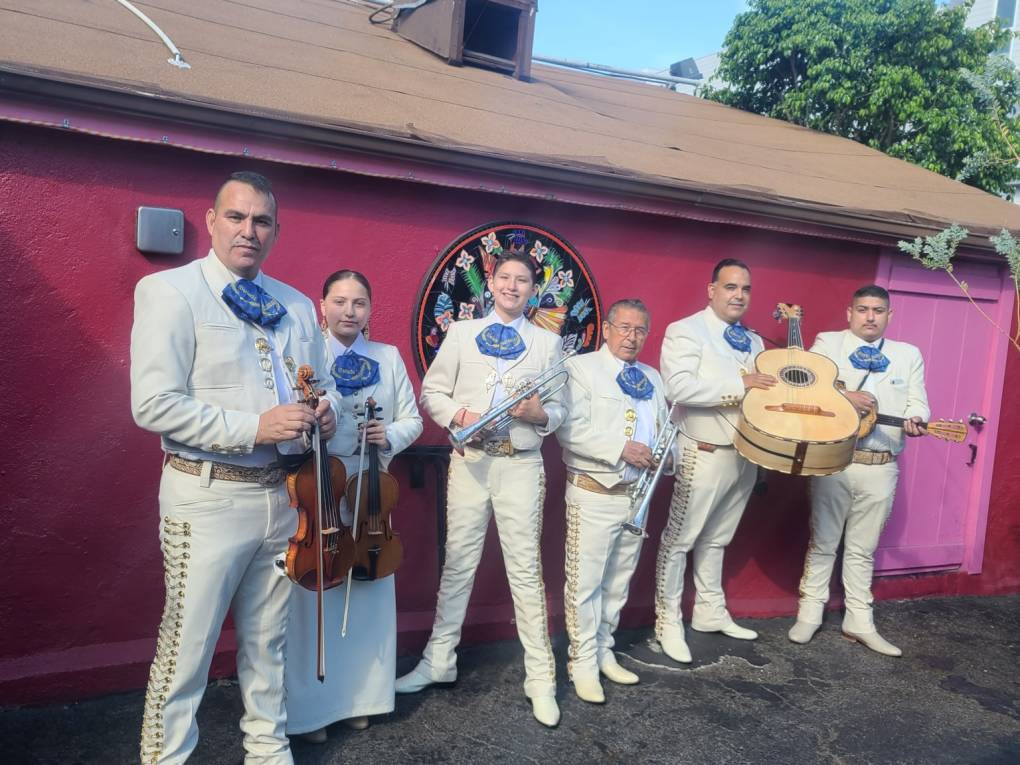
"caption": "Due to COVID-19, public events in California were canceled through the spring and summer of 2020 and many mariachi had to start performing at gatherings that defied the state's shelter-in-place restrictions in order to survive. But accepting these type of jobs put them at greater risk of contracting COVID-19.",
"description": "Due to COVID-19, public events in California were cancelled through the spring and summer of 2020 and many mariachi had to start performing at gatherings that defied the state's shelter-in-place restrictions in order to survive. But accepting these type of jobs put them at greater risk of contracting COVID-19.",
"title": "IMG_20210603_082449",
"credit": "Courtesy of Mariachi Nuevo Guadalajara",
"status": "inherit",
"altTag": "A group of mariachis stand against a wall with their instruments in their hands.",
"isLoading": false,
"fetchFailed": false
},
"news_11879763": {
"type": "attachments",
"id": "news_11879763",
"meta": {
"index": "attachments_1716263798",
"site": "news",
"id": "11879763",
"found": true
},
"parent": 11879762,
"imgSizes": {
"twentyfourteen-full-width": {
"file": "https://ww2.kqed.org/app/uploads/sites/10/2021/06/gettyimages-1134490895-43-151d9078b33256e7e23d6a620a0205da5f0df640-1038x576.jpg",
"width": 1038,
"mimeType": "image/jpeg",
"height": 576
},
"thumbnail": {
"file": "https://ww2.kqed.org/app/uploads/sites/10/2021/06/gettyimages-1134490895-43-151d9078b33256e7e23d6a620a0205da5f0df640-160x120.jpg",
"width": 160,
"mimeType": "image/jpeg",
"height": 120
},
"post-thumbnail": {
"file": "https://ww2.kqed.org/app/uploads/sites/10/2021/06/gettyimages-1134490895-43-151d9078b33256e7e23d6a620a0205da5f0df640-672x372.jpg",
"width": 672,
"mimeType": "image/jpeg",
"height": 372
},
"kqedFullSize": {
"file": "https://ww2.kqed.org/app/uploads/sites/10/2021/06/gettyimages-1134490895-43-151d9078b33256e7e23d6a620a0205da5f0df640-scaled.jpg",
"width": 2560,
"height": 1919
},
"2048x2048": {
"file": "https://ww2.kqed.org/app/uploads/sites/10/2021/06/gettyimages-1134490895-43-151d9078b33256e7e23d6a620a0205da5f0df640-2048x1535.jpg",
"width": 2048,
"mimeType": "image/jpeg",
"height": 1535
},
"large": {
"file": "https://ww2.kqed.org/app/uploads/sites/10/2021/06/gettyimages-1134490895-43-151d9078b33256e7e23d6a620a0205da5f0df640-1020x765.jpg",
"width": 1020,
"mimeType": "image/jpeg",
"height": 765
},
"1536x1536": {
"file": "https://ww2.kqed.org/app/uploads/sites/10/2021/06/gettyimages-1134490895-43-151d9078b33256e7e23d6a620a0205da5f0df640-1536x1151.jpg",
"width": 1536,
"mimeType": "image/jpeg",
"height": 1151
},
"full-width": {
"file": "https://ww2.kqed.org/app/uploads/sites/10/2021/06/gettyimages-1134490895-43-151d9078b33256e7e23d6a620a0205da5f0df640-1920x1439.jpg",
"width": 1920,
"mimeType": "image/jpeg",
"height": 1439
},
"medium": {
"file": "https://ww2.kqed.org/app/uploads/sites/10/2021/06/gettyimages-1134490895-43-151d9078b33256e7e23d6a620a0205da5f0df640-800x600.jpg",
"width": 800,
"mimeType": "image/jpeg",
"height": 600
}
},
"publishDate": 1624998964,
"modified": 1624999333,
"caption": "HIV-1. Transmission electron micrograph. Cone-shaped cores are sectioned in various orientations. ",
"description": null,
"title": "A computer-enhanced image of the HIV virus.",
"credit": "Computer enhanced image from CDC",
"status": "inherit",
"altTag": null,
"isLoading": false,
"fetchFailed": false
},
"news_11877732": {
"type": "attachments",
"id": "news_11877732",
"meta": {
"index": "attachments_1716263798",
"site": "news",
"id": "11877732",
"found": true
},
"parent": 11877717,
"imgSizes": {
"twentyfourteen-full-width": {
"file": "https://ww2.kqed.org/app/uploads/sites/10/2021/06/RS49577_011_PortofOakland_Vaccination_05272021-qut-1038x576.jpg",
"width": 1038,
"mimeType": "image/jpeg",
"height": 576
},
"thumbnail": {
"file": "https://ww2.kqed.org/app/uploads/sites/10/2021/06/RS49577_011_PortofOakland_Vaccination_05272021-qut-160x107.jpg",
"width": 160,
"mimeType": "image/jpeg",
"height": 107
},
"post-thumbnail": {
"file": "https://ww2.kqed.org/app/uploads/sites/10/2021/06/RS49577_011_PortofOakland_Vaccination_05272021-qut-672x372.jpg",
"width": 672,
"mimeType": "image/jpeg",
"height": 372
},
"kqedFullSize": {
"file": "https://ww2.kqed.org/app/uploads/sites/10/2021/06/RS49577_011_PortofOakland_Vaccination_05272021-qut.jpg",
"width": 1920,
"height": 1280
},
"large": {
"file": "https://ww2.kqed.org/app/uploads/sites/10/2021/06/RS49577_011_PortofOakland_Vaccination_05272021-qut-1020x680.jpg",
"width": 1020,
"mimeType": "image/jpeg",
"height": 680
},
"1536x1536": {
"file": "https://ww2.kqed.org/app/uploads/sites/10/2021/06/RS49577_011_PortofOakland_Vaccination_05272021-qut-1536x1024.jpg",
"width": 1536,
"mimeType": "image/jpeg",
"height": 1024
},
"medium": {
"file": "https://ww2.kqed.org/app/uploads/sites/10/2021/06/RS49577_011_PortofOakland_Vaccination_05272021-qut-800x533.jpg",
"width": 800,
"mimeType": "image/jpeg",
"height": 533
}
},
"publishDate": 1623436920,
"modified": 1624920486,
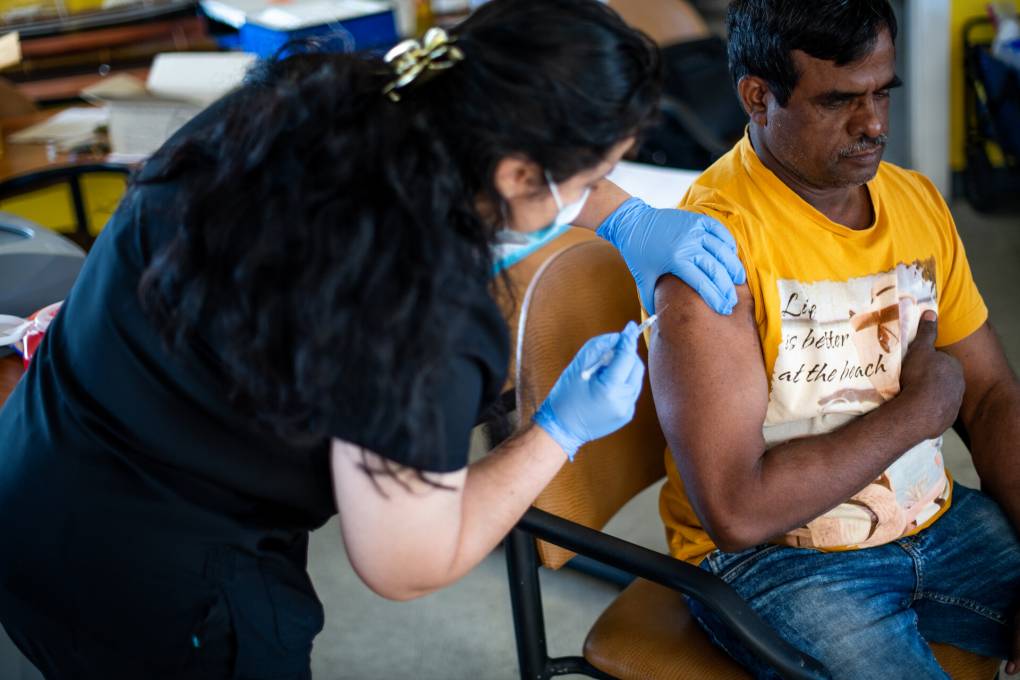
"caption": "A crew member from the cargo ship Sea Hope receives the Johnson & Johnson vaccination at the Port of Oakland on May 27, 2021.",
"description": null,
"title": "RS49577_011_PortofOakland_Vaccination_05272021-qut",
"credit": "Beth LaBerge/KQED",
"status": "inherit",
"altTag": null,
"isLoading": false,
"fetchFailed": false
},
"news_11879472": {
"type": "attachments",
"id": "news_11879472",
"meta": {
"index": "attachments_1716263798",
"site": "news",
"id": "11879472",
"found": true
},
"parent": 11879461,
"imgSizes": {
"twentyfourteen-full-width": {
"file": "https://ww2.kqed.org/app/uploads/sites/10/2021/06/20210620_CalMatters_CharisHill_0129_A-scaled-1-1038x576.jpeg",
"width": 1038,
"mimeType": "image/jpeg",
"height": 576
},
"thumbnail": {
"file": "https://ww2.kqed.org/app/uploads/sites/10/2021/06/20210620_CalMatters_CharisHill_0129_A-scaled-1-160x107.jpeg",
"width": 160,
"mimeType": "image/jpeg",
"height": 107
},
"post-thumbnail": {
"file": "https://ww2.kqed.org/app/uploads/sites/10/2021/06/20210620_CalMatters_CharisHill_0129_A-scaled-1-672x372.jpeg",
"width": 672,
"mimeType": "image/jpeg",
"height": 372
},
"kqedFullSize": {
"file": "https://ww2.kqed.org/app/uploads/sites/10/2021/06/20210620_CalMatters_CharisHill_0129_A-scaled-1.jpeg",
"width": 1200,
"height": 801
},
"large": {
"file": "https://ww2.kqed.org/app/uploads/sites/10/2021/06/20210620_CalMatters_CharisHill_0129_A-scaled-1-1020x681.jpeg",
"width": 1020,
"mimeType": "image/jpeg",
"height": 681
},
"medium": {
"file": "https://ww2.kqed.org/app/uploads/sites/10/2021/06/20210620_CalMatters_CharisHill_0129_A-scaled-1-800x534.jpeg",
"width": 800,
"mimeType": "image/jpeg",
"height": 534
}
},
"publishDate": 1624667525,
"modified": 1624667544,
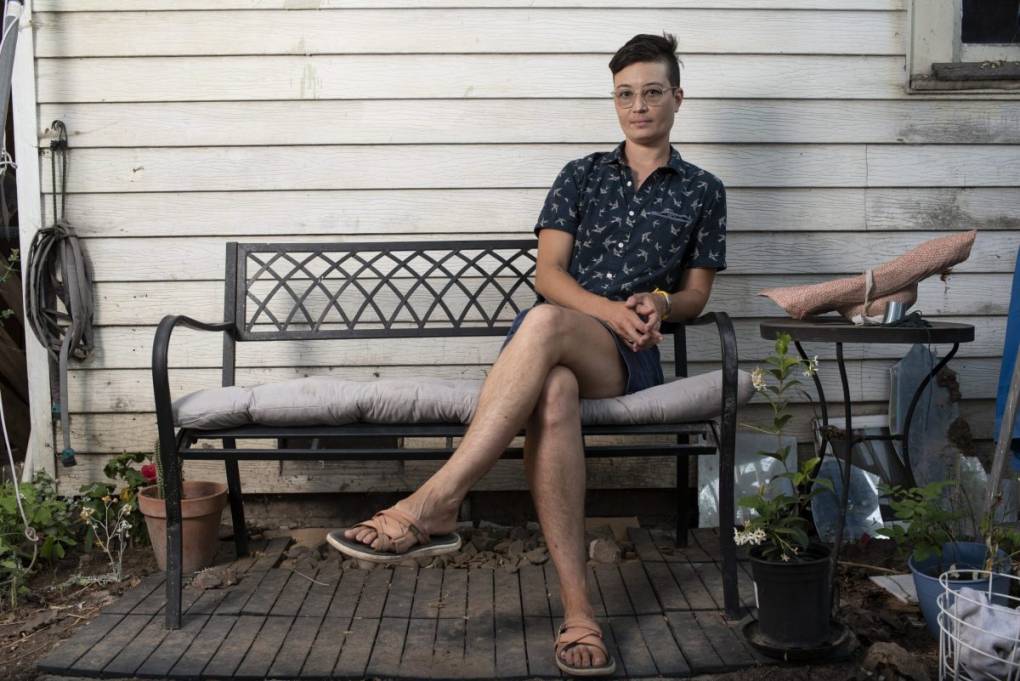
"caption": "Charis Hill, a disability activist, poses for a portrait at their home in Sacramento. Hill is advocating for the Golden State Stimulus to be extended to SSDI recipients automatically.",
"description": "Charis Hill, a disability activist, poses for a portrait at their home in Sacramento. Hill is advocating for the Golden State Stimulus to be extended to SSDI recipients automatically.",
"title": "20210620_CalMatters_CharisHill_0129_A-scaled",
"credit": "Salgu Wissmath/CalMatters",
"status": "inherit",
"altTag": null,
"isLoading": false,
"fetchFailed": false
},
"news_11879339": {
"type": "attachments",
"id": "news_11879339",
"meta": {
"index": "attachments_1716263798",
"site": "news",
"id": "11879339",
"found": true
},
"parent": 11879337,
"imgSizes": {
"twentyfourteen-full-width": {
"file": "https://ww2.kqed.org/app/uploads/sites/10/2021/06/Image-from-iOS-3-1038x576.jpg",
"width": 1038,
"mimeType": "image/jpeg",
"height": 576
},
"thumbnail": {
"file": "https://ww2.kqed.org/app/uploads/sites/10/2021/06/Image-from-iOS-3-160x107.jpg",
"width": 160,
"mimeType": "image/jpeg",
"height": 107
},
"post-thumbnail": {
"file": "https://ww2.kqed.org/app/uploads/sites/10/2021/06/Image-from-iOS-3-672x372.jpg",
"width": 672,
"mimeType": "image/jpeg",
"height": 372
},
"kqedFullSize": {
"file": "https://ww2.kqed.org/app/uploads/sites/10/2021/06/Image-from-iOS-3.jpg",
"width": 1529,
"height": 1019
},
"large": {
"file": "https://ww2.kqed.org/app/uploads/sites/10/2021/06/Image-from-iOS-3-1020x680.jpg",
"width": 1020,
"mimeType": "image/jpeg",
"height": 680
},
"medium": {
"file": "https://ww2.kqed.org/app/uploads/sites/10/2021/06/Image-from-iOS-3-800x533.jpg",
"width": 800,
"mimeType": "image/jpeg",
"height": 533
}
},
"publishDate": 1624644509,
"modified": 1624644581,
"caption": "Anti-eviction protesters stand in front of Santa Clara County Superior Court on Jan. 27, 2021, during a demonstration calling for stronger statewide eviction protections.",
"description": "Anti-eviction protesters stand in front of Santa Clara County Superior Court on Jan. 27, 2021, during a demonstration calling for stronger statewide eviction protections.",
"title": "Image from iOS",
"credit": "Beth LaBerge/KQED",
"status": "inherit",
"altTag": null,
"isLoading": false,
"fetchFailed": false
},
"news_11878892": {
"type": "attachments",
"id": "news_11878892",
"meta": {
"index": "attachments_1716263798",
"site": "news",
"id": "11878892",
"found": true
},
"parent": 11878891,
"imgSizes": {
"twentyfourteen-full-width": {
"file": "https://ww2.kqed.org/app/uploads/sites/10/2021/06/AssortedPamphlets-1038x576.jpeg",
"width": 1038,
"mimeType": "image/jpeg",
"height": 576
},
"thumbnail": {
"file": "https://ww2.kqed.org/app/uploads/sites/10/2021/06/AssortedPamphlets-160x107.jpeg",
"width": 160,
"mimeType": "image/jpeg",
"height": 107
},
"post-thumbnail": {
"file": "https://ww2.kqed.org/app/uploads/sites/10/2021/06/AssortedPamphlets-672x372.jpeg",
"width": 672,
"mimeType": "image/jpeg",
"height": 372
},
"kqedFullSize": {
"file": "https://ww2.kqed.org/app/uploads/sites/10/2021/06/AssortedPamphlets.jpeg",
"width": 1200,
"height": 800
},
"large": {
"file": "https://ww2.kqed.org/app/uploads/sites/10/2021/06/AssortedPamphlets-1020x680.jpeg",
"width": 1020,
"mimeType": "image/jpeg",
"height": 680
},
"medium": {
"file": "https://ww2.kqed.org/app/uploads/sites/10/2021/06/AssortedPamphlets-800x533.jpeg",
"width": 800,
"mimeType": "image/jpeg",
"height": 533
}
},
"publishDate": 1624380151,
"modified": 1624380563,
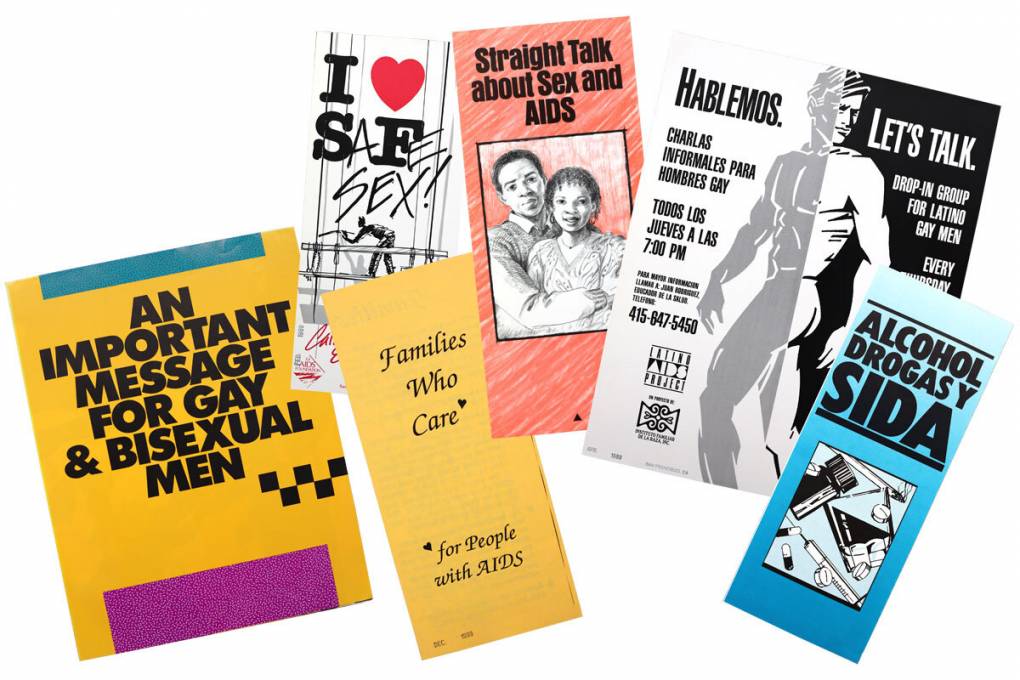
"caption": "Sex education and risk-reduction pamphlets from the 1980s, many produced by the San Francisco AIDS Foundation. (Material from the Gay and Lesbian Center ephemera collection and the San Francisco Ephemera Collection, San Francisco Public Library)",
"description": null,
"title": "AssortedPamphlets",
"credit": "Collage by Sarah Hotchkiss/KQED",
"status": "inherit",
"altTag": null,
"isLoading": false,
"fetchFailed": false
},
"news_11878603": {
"type": "attachments",
"id": "news_11878603",
"meta": {
"index": "attachments_1716263798",
"site": "news",
"id": "11878603",
"found": true
},
"parent": 11878591,
"imgSizes": {
"twentyfourteen-full-width": {
"file": "https://ww2.kqed.org/app/uploads/sites/10/2021/06/GettyImages-1232312321-1-1038x576.jpg",
"width": 1038,
"mimeType": "image/jpeg",
"height": 576
},
"thumbnail": {
"file": "https://ww2.kqed.org/app/uploads/sites/10/2021/06/GettyImages-1232312321-1-160x107.jpg",
"width": 160,
"mimeType": "image/jpeg",
"height": 107
},
"post-thumbnail": {
"file": "https://ww2.kqed.org/app/uploads/sites/10/2021/06/GettyImages-1232312321-1-672x372.jpg",
"width": 672,
"mimeType": "image/jpeg",
"height": 372
},
"kqedFullSize": {
"file": "https://ww2.kqed.org/app/uploads/sites/10/2021/06/GettyImages-1232312321-1.jpg",
"width": 1920,
"height": 1280
},
"large": {
"file": "https://ww2.kqed.org/app/uploads/sites/10/2021/06/GettyImages-1232312321-1-1020x680.jpg",
"width": 1020,
"mimeType": "image/jpeg",
"height": 680
},
"1536x1536": {
"file": "https://ww2.kqed.org/app/uploads/sites/10/2021/06/GettyImages-1232312321-1-1536x1024.jpg",
"width": 1536,
"mimeType": "image/jpeg",
"height": 1024
},
"medium": {
"file": "https://ww2.kqed.org/app/uploads/sites/10/2021/06/GettyImages-1232312321-1-800x533.jpg",
"width": 800,
"mimeType": "image/jpeg",
"height": 533
}
},
"publishDate": 1624038113,
"modified": 1624038279,
"caption": "Californians will be able to acquire a digital record of their coronavirus vaccination to access spaces that require proof of inoculation.",
"description": "Californians will be able to acquire a digital record of their coronavirus vaccination to access spaces that require proof of inoculation.",
"title": "US-HEALTH-VIRUS-VACCINE",
"credit": "Chandan Khanna/AFP via Getty Images",
"status": "inherit",
"altTag": null,
"isLoading": false,
"fetchFailed": false
},
"news_11878329": {
"type": "attachments",
"id": "news_11878329",
"meta": {
"index": "attachments_1716263798",
"site": "news",
"id": "11878329",
"found": true
},
"parent": 11878318,
"imgSizes": {
"twentyfourteen-full-width": {
"file": "https://ww2.kqed.org/app/uploads/sites/10/2021/06/RS46106_014_KQED_SanFrancisco_COVIDTesting_11302020-qut-1038x576.jpg",
"width": 1038,
"mimeType": "image/jpeg",
"height": 576
},
"thumbnail": {
"file": "https://ww2.kqed.org/app/uploads/sites/10/2021/06/RS46106_014_KQED_SanFrancisco_COVIDTesting_11302020-qut-160x107.jpg",
"width": 160,
"mimeType": "image/jpeg",
"height": 107
},
"post-thumbnail": {
"file": "https://ww2.kqed.org/app/uploads/sites/10/2021/06/RS46106_014_KQED_SanFrancisco_COVIDTesting_11302020-qut-672x372.jpg",
"width": 672,
"mimeType": "image/jpeg",
"height": 372
},
"kqedFullSize": {
"file": "https://ww2.kqed.org/app/uploads/sites/10/2021/06/RS46106_014_KQED_SanFrancisco_COVIDTesting_11302020-qut.jpg",
"width": 1920,
"height": 1280
},
"large": {
"file": "https://ww2.kqed.org/app/uploads/sites/10/2021/06/RS46106_014_KQED_SanFrancisco_COVIDTesting_11302020-qut-1020x680.jpg",
"width": 1020,
"mimeType": "image/jpeg",
"height": 680
},
"1536x1536": {
"file": "https://ww2.kqed.org/app/uploads/sites/10/2021/06/RS46106_014_KQED_SanFrancisco_COVIDTesting_11302020-qut-1536x1024.jpg",
"width": 1536,
"mimeType": "image/jpeg",
"height": 1024
},
"medium": {
"file": "https://ww2.kqed.org/app/uploads/sites/10/2021/06/RS46106_014_KQED_SanFrancisco_COVIDTesting_11302020-qut-800x533.jpg",
"width": 800,
"mimeType": "image/jpeg",
"height": 533
}
},
"publishDate": 1623893220,
"modified": 1640643412,
"caption": "Health care worker Olga Duran tests a patient for COVID-19 at a Unidos en Salud (United in Health) testing site on 24th and Mission streets in San Francisco on Nov. 30, 2020. The effort is a collaboration between UCSF and the SF Latino Task Force to help vulnerable populations during the pandemic.",
"description": null,
"title": "RS46106_014_KQED_SanFrancisco_COVIDTesting_11302020-qut",
"credit": "Beth LaBerge/KQED",
"status": "inherit",
"altTag": "A healthcare worker in blue scrubs swabs a man whose back is turned to the camera.",
"isLoading": false,
"fetchFailed": false
},
"news_11878161": {
"type": "attachments",
"id": "news_11878161",
"meta": {
"index": "attachments_1716263798",
"site": "news",
"id": "11878161",
"found": true
},
"parent": 11877998,
"imgSizes": {
"twentyfourteen-full-width": {
"file": "https://ww2.kqed.org/app/uploads/sites/10/2021/06/RS49882_GettyImages-1232975542-qut-1038x576.jpg",
"width": 1038,
"mimeType": "image/jpeg",
"height": 576
},
"thumbnail": {
"file": "https://ww2.kqed.org/app/uploads/sites/10/2021/06/RS49882_GettyImages-1232975542-qut-160x107.jpg",
"width": 160,
"mimeType": "image/jpeg",
"height": 107
},
"post-thumbnail": {
"file": "https://ww2.kqed.org/app/uploads/sites/10/2021/06/RS49882_GettyImages-1232975542-qut-672x372.jpg",
"width": 672,
"mimeType": "image/jpeg",
"height": 372
},
"kqedFullSize": {
"file": "https://ww2.kqed.org/app/uploads/sites/10/2021/06/RS49882_GettyImages-1232975542-qut.jpg",
"width": 1920,
"height": 1280
},
"large": {
"file": "https://ww2.kqed.org/app/uploads/sites/10/2021/06/RS49882_GettyImages-1232975542-qut-1020x680.jpg",
"width": 1020,
"mimeType": "image/jpeg",
"height": 680
},
"1536x1536": {
"file": "https://ww2.kqed.org/app/uploads/sites/10/2021/06/RS49882_GettyImages-1232975542-qut-1536x1024.jpg",
"width": 1536,
"mimeType": "image/jpeg",
"height": 1024
},
"medium": {
"file": "https://ww2.kqed.org/app/uploads/sites/10/2021/06/RS49882_GettyImages-1232975542-qut-800x533.jpg",
"width": 800,
"mimeType": "image/jpeg",
"height": 533
}
},
"publishDate": 1623802347,
"modified": 1623869776,
"caption": "Nurses, health care workers and firefighters hold a candlelight vigil in memory of those lost during the coronavirus pandemic, on May 18 2021 in Woodlands Hills. ",
"description": "Nurses, health care workers and firefighters hold a candlelight vigil in memory of those lost during the coronavirus pandemic, on May 18 2021, in Woodlands Hills. ",
"title": "US-HEALTH-VIRUS",
"credit": "Valerie Macon/AFP via Getty Images",
"status": "inherit",
"altTag": null,
"isLoading": false,
"fetchFailed": false
},
"news_11877960": {
"type": "attachments",
"id": "news_11877960",
"meta": {
"index": "attachments_1716263798",
"site": "news",
"id": "11877960",
"found": true
},
"parent": 11877838,
"imgSizes": {
"twentyfourteen-full-width": {
"file": "https://ww2.kqed.org/app/uploads/sites/10/2021/06/GettyImages-508048704-1038x576.jpg",
"width": 1038,
"mimeType": "image/jpeg",
"height": 576
},
"thumbnail": {
"file": "https://ww2.kqed.org/app/uploads/sites/10/2021/06/GettyImages-508048704-160x109.jpg",
"width": 160,
"mimeType": "image/jpeg",
"height": 109
},
"post-thumbnail": {
"file": "https://ww2.kqed.org/app/uploads/sites/10/2021/06/GettyImages-508048704-672x372.jpg",
"width": 672,
"mimeType": "image/jpeg",
"height": 372
},
"kqedFullSize": {
"file": "https://ww2.kqed.org/app/uploads/sites/10/2021/06/GettyImages-508048704.jpg",
"width": 1920,
"height": 1309
},
"large": {
"file": "https://ww2.kqed.org/app/uploads/sites/10/2021/06/GettyImages-508048704-1020x695.jpg",
"width": 1020,
"mimeType": "image/jpeg",
"height": 695
},
"1536x1536": {
"file": "https://ww2.kqed.org/app/uploads/sites/10/2021/06/GettyImages-508048704-1536x1047.jpg",
"width": 1536,
"mimeType": "image/jpeg",
"height": 1047
},
"medium": {
"file": "https://ww2.kqed.org/app/uploads/sites/10/2021/06/GettyImages-508048704-800x545.jpg",
"width": 800,
"mimeType": "image/jpeg",
"height": 545
}
},
"publishDate": 1623716446,
"modified": 1623786200,
"caption": "'We have a workforce who is essential to not only the families they support, but their own families and communities,' said National Domestic Workers Alliance Director Ai-jen Poo. Pictured on stage at a Conference February 2, 2016 in Rancho Palos Verdes, California.",
"description": "'We have a workforce who is essential to not only the families they support, but their own families and communities,' said National Domestic Workers Alliance Director Ai-jen Poo. Pictured on stage at a Conference February 2, 2016 in Rancho Palos Verdes, California.",
"title": "GettyImages-508048704",
"credit": "Jonathan Leibson/Getty Images for AOL",
"status": "inherit",
"altTag": null,
"isLoading": false,
"fetchFailed": false
},
"news_11866691": {
"type": "attachments",
"id": "news_11866691",
"meta": {
"index": "attachments_1716263798",
"site": "news",
"id": "11866691",
"found": true
},
"parent": 11864473,
"imgSizes": {
"twentyfourteen-full-width": {
"file": "https://ww2.kqed.org/app/uploads/sites/10/2021/03/hugs-2-1038x576.png",
"width": 1038,
"mimeType": "image/png",
"height": 576
},
"thumbnail": {
"file": "https://ww2.kqed.org/app/uploads/sites/10/2021/03/hugs-2-160x97.png",
"width": 160,
"mimeType": "image/png",
"height": 97
},
"post-thumbnail": {
"file": "https://ww2.kqed.org/app/uploads/sites/10/2021/03/hugs-2-672x372.png",
"width": 672,
"mimeType": "image/png",
"height": 372
},
"kqedFullSize": {
"file": "https://ww2.kqed.org/app/uploads/sites/10/2021/03/hugs-2.png",
"width": 1980,
"height": 1200
},
"large": {
"file": "https://ww2.kqed.org/app/uploads/sites/10/2021/03/hugs-2-1020x618.png",
"width": 1020,
"mimeType": "image/png",
"height": 618
},
"1536x1536": {
"file": "https://ww2.kqed.org/app/uploads/sites/10/2021/03/hugs-2-1536x931.png",
"width": 1536,
"mimeType": "image/png",
"height": 931
},
"full-width": {
"file": "https://ww2.kqed.org/app/uploads/sites/10/2021/03/hugs-2-1920x1164.png",
"width": 1920,
"mimeType": "image/png",
"height": 1164
},
"medium": {
"file": "https://ww2.kqed.org/app/uploads/sites/10/2021/03/hugs-2-800x485.png",
"width": 800,
"mimeType": "image/png",
"height": 485
}
},
"publishDate": 1616786875,
"modified": 1616799955,
"caption": "What can you do after you're fully vaccinated? The CDC has guidance.",
"description": "What can you do after you're fully vaccinated? The CDC has guidance.",
"title": "fully-vaccinated-guidance",
"credit": "Cottonbro/Pexels",
"status": "inherit",
"altTag": "Two people standing in front of a window, hugging",
"isLoading": false,
"fetchFailed": false
}
},
"audioPlayerReducer": {
"postId": "stream_live",
"isPaused": true,
"isPlaying": false,
"pfsActive": false,
"pledgeModalIsOpen": true,
"playerDrawerIsOpen": false,
"liveAudioPlayStartedAt": 0,
"liveAudioPlayContext": ""
},
"authorsReducer": {
"byline_news_11879958": {
"type": "authors",
"id": "byline_news_11879958",
"meta": {
"override": true
},
"slug": "byline_news_11879958",
"name": "\u003ca href=\"https://calmatters.org/author/jacqueline-garcia/\">Jacqueline Garcia\u003c/a>",
"isLoading": false
},
"byline_news_11879762": {
"type": "authors",
"id": "byline_news_11879762",
"meta": {
"override": true
},
"slug": "byline_news_11879762",
"name": "Nurith Aizenman",
"isLoading": false
},
"byline_news_11879461": {
"type": "authors",
"id": "byline_news_11879461",
"meta": {
"override": true
},
"slug": "byline_news_11879461",
"name": "\u003ca href=\"https://calmatters.org/author/jackie-botts/\">Jackie Botts\u003c/a>",
"isLoading": false
},
"byline_news_11879337": {
"type": "authors",
"id": "byline_news_11879337",
"meta": {
"override": true
},
"slug": "byline_news_11879337",
"name": "Adam Beam \u003cbr> The Associated Press",
"isLoading": false
},
"byline_news_11878591": {
"type": "authors",
"id": "byline_news_11878591",
"meta": {
"override": true
},
"slug": "byline_news_11878591",
"name": "Don Thompson",
"isLoading": false
},
"byline_news_11878318": {
"type": "authors",
"id": "byline_news_11878318",
"meta": {
"override": true
},
"slug": "byline_news_11878318",
"name": "Marisa Lagos (KQED) and Caitie Switalski Muñoz (WLRN)",
"isLoading": false
},
"shotchkiss": {
"type": "authors",
"id": "61",
"meta": {
"index": "authors_1716337520",
"id": "61",
"found": true
},
"name": "Sarah Hotchkiss",
"firstName": "Sarah",
"lastName": "Hotchkiss",
"slug": "shotchkiss",
"email": "shotchkiss@kqed.org",
"display_author_email": true,
"staff_mastheads": [
"arts"
],
"title": "Senior Editor",
"bio": "Sarah Hotchkiss is a San Francisco \u003ca href=\"http://www.sarahhotchkiss.com\">artist\u003c/a> and arts writer. In 2019, she received the Dorothea & Leo Rabkin Foundation grant for visual art journalism and in 2020 she received a Society of Professional Journalists, Northern California award for excellence in arts and culture reporting.",
"avatar": "https://secure.gravatar.com/avatar/bc662df144b3d27fd8b1b6f1c2a420d34e91e53154d411bb7ad353cc8b6cea8d?s=600&d=blank&r=g",
"twitter": null,
"bluesky": null,
"facebook": null,
"instagram": null,
"linkedin": null,
"sites": [
{
"site": "",
"roles": [
"editor"
]
},
{
"site": "arts",
"roles": [
"Contributor",
"administrator"
]
},
{
"site": "artschool",
"roles": [
"administrator"
]
},
{
"site": "news",
"roles": [
"editor"
]
},
{
"site": "pop",
"roles": [
"administrator"
]
},
{
"site": "bayareabites",
"roles": [
"editor"
]
},
{
"site": "spark",
"roles": [
"editor"
]
},
{
"site": "checkplease",
"roles": [
"editor"
]
}
],
"headData": {
"title": "Sarah Hotchkiss | KQED",
"description": "Senior Editor",
"ogImgSrc": "https://secure.gravatar.com/avatar/bc662df144b3d27fd8b1b6f1c2a420d34e91e53154d411bb7ad353cc8b6cea8d?s=600&d=blank&r=g",
"twImgSrc": "https://secure.gravatar.com/avatar/bc662df144b3d27fd8b1b6f1c2a420d34e91e53154d411bb7ad353cc8b6cea8d?s=600&d=blank&r=g"
},
"isLoading": false,
"link": "/author/shotchkiss"
},
"minakim": {
"type": "authors",
"id": "243",
"meta": {
"index": "authors_1716337520",
"id": "243",
"found": true
},
"name": "Mina Kim",
"firstName": "Mina",
"lastName": "Kim",
"slug": "minakim",
"email": "mkim@kqed.org",
"display_author_email": false,
"staff_mastheads": [
"news"
],
"title": "Host, Forum",
"bio": "Mina Kim is host of the 10 a.m. statewide hour of Forum; a live daily talk show for curious Californians on issues that matter to the state and nation, with a particular emphasis on race and equity.\r\n\r\nBefore joining the Forum team, Mina was KQED’s evening news anchor, and health reporter for The California Report. Her award-winning work has included natural disasters in Napa and gun violence in Oakland. Mina grew up in St. John’s, Newfoundland.",
"avatar": "https://secure.gravatar.com/avatar/145ce657a2d08cb86d93686beb958982?s=600&d=blank&r=g",
"twitter": "mkimreporter",
"facebook": null,
"instagram": null,
"linkedin": null,
"sites": [
{
"site": "news",
"roles": [
"contributor"
]
},
{
"site": "stateofhealth",
"roles": [
"author"
]
},
{
"site": "forum",
"roles": [
"editor"
]
}
],
"headData": {
"title": "Mina Kim | KQED",
"description": "Host, Forum",
"ogImgSrc": "https://secure.gravatar.com/avatar/145ce657a2d08cb86d93686beb958982?s=600&d=blank&r=g",
"twImgSrc": "https://secure.gravatar.com/avatar/145ce657a2d08cb86d93686beb958982?s=600&d=blank&r=g"
},
"isLoading": false,
"link": "/author/minakim"
},
"tarasiler": {
"type": "authors",
"id": "257",
"meta": {
"index": "authors_1716337520",
"id": "257",
"found": true
},
"name": "Tara Siler",
"firstName": "Tara",
"lastName": "Siler",
"slug": "tarasiler",
"email": "tsiler@kqed.org",
"display_author_email": false,
"staff_mastheads": [
"news"
],
"title": "KQED Contributor",
"bio": "Tara reports and anchors for KQED news. She covers a range of issues from community-police relations to local politics. Tara started out in community radio in the Bay Area, where she was raised. She eventually moved to Washington DC where she covered Congress for eight years for Pacifica and Monitor Radio. Her stories have also been heard on NPR's All Things Considered, Morning Edition and The World.\r\n\r\nTara lives with her husband in Oakland-- where they raised their two sons. She enjoys spending time with her family, gardening and hiking in the Oakland hills... and keeping up with the news.",
"avatar": "https://secure.gravatar.com/avatar/99802f9746fb80b65fd8ec6c57954450?s=600&d=blank&r=g",
"twitter": null,
"facebook": null,
"instagram": null,
"linkedin": null,
"sites": [
{
"site": "news",
"roles": [
"contributor",
"edit_others_posts"
]
},
{
"site": "stateofhealth",
"roles": [
"author"
]
}
],
"headData": {
"title": "Tara Siler | KQED",
"description": "KQED Contributor",
"ogImgSrc": "https://secure.gravatar.com/avatar/99802f9746fb80b65fd8ec6c57954450?s=600&d=blank&r=g",
"twImgSrc": "https://secure.gravatar.com/avatar/99802f9746fb80b65fd8ec6c57954450?s=600&d=blank&r=g"
},
"isLoading": false,
"link": "/author/tarasiler"
},
"carlysevern": {
"type": "authors",
"id": "3243",
"meta": {
"index": "authors_1716337520",
"id": "3243",
"found": true
},
"name": "Carly Severn",
"firstName": "Carly",
"lastName": "Severn",
"slug": "carlysevern",
"email": "csevern@kqed.org",
"display_author_email": false,
"staff_mastheads": [
"news"
],
"title": "Senior Editor, Audience News ",
"bio": "Carly is KQED's Senior Editor of Audience News on the Digital News team, and has reported for the California Report Magazine, Bay Curious and KQED Arts. She's formerly the host of \u003ca href=\"http://ww2.kqed.org/pop/category/the-cooler/\" rel=\"noopener noreferrer\">The Cooler\u003c/a> podcast.",
"avatar": "https://secure.gravatar.com/avatar/54037bf5c128fe678f0ef26cec97a93f2e7f220a22d7285703328f12c42c1b1d?s=600&d=blank&r=g",
"twitter": "teacupinthebay",
"bluesky": null,
"facebook": null,
"instagram": null,
"linkedin": null,
"sites": [
{
"site": "",
"roles": [
"editor"
]
},
{
"site": "arts",
"roles": [
"editor"
]
},
{
"site": "news",
"roles": [
"administrator"
]
},
{
"site": "pop",
"roles": [
"editor"
]
},
{
"site": "futureofyou",
"roles": [
"editor"
]
},
{
"site": "about",
"roles": [
"administrator"
]
},
{
"site": "mindshift",
"roles": [
"editor"
]
},
{
"site": "bayareabites",
"roles": [
"editor"
]
},
{
"site": "stateofhealth",
"roles": [
"editor"
]
},
{
"site": "science",
"roles": [
"editor"
]
},
{
"site": "food",
"roles": [
"contributor"
]
},
{
"site": "forum",
"roles": [
"editor"
]
},
{
"site": "perspectives",
"roles": [
"administrator"
]
},
{
"site": "liveblog",
"roles": [
"editor"
]
}
],
"headData": {
"title": "Carly Severn | KQED",
"description": "Senior Editor, Audience News ",
"ogImgSrc": "https://secure.gravatar.com/avatar/54037bf5c128fe678f0ef26cec97a93f2e7f220a22d7285703328f12c42c1b1d?s=600&d=blank&r=g",
"twImgSrc": "https://secure.gravatar.com/avatar/54037bf5c128fe678f0ef26cec97a93f2e7f220a22d7285703328f12c42c1b1d?s=600&d=blank&r=g"
},
"isLoading": false,
"link": "/author/carlysevern"
},
"dkatayama": {
"type": "authors",
"id": "7240",
"meta": {
"index": "authors_1716337520",
"id": "7240",
"found": true
},
"name": "Devin Katayama",
"firstName": "Devin",
"lastName": "Katayama",
"slug": "dkatayama",
"email": "dkatayama@kqed.org",
"display_author_email": true,
"staff_mastheads": [
"news"
],
"title": "Editor of Talent and Development",
"bio": "Devin Katayama is former Editor of Talent and Development for KQED. He supported our internship program and on-call staff by looking for equitable opportunities to improve the newsroom.\r\n\r\nHe previously hosted The Bay and American Suburb podcasts from KQED News. Prior to returning to the Bay Area in 2015, Devin was the education reporter for WFPL in Louisville and worked as a producer with radio stations in Chicago and Portland, OR. His work has appeared on NPR’s \u003cem>Morning Edition, All Things Considered, The Takeaway\u003c/em> and \u003cem>Here and Now.\u003c/em>\r\n\r\nDevin earned his MA in Journalism from Columbia College Chicago, where he was a Follett Fellow and the recipient of the 2011 Studs Terkel Community Media Workshop Scholarship for his story on Chicago's homeless youth. He won WBUR's 2014 Daniel Schorr award and a regional RTNDA Edward R. Murrow Award for his documentary \"At Risk\" that looked at issues facing some of Louisville's students. Devin has also received numerous local awards from the Associated Press and the Society of Professional Journalists.",
"avatar": "https://secure.gravatar.com/avatar/d0d2978a31002fb2de107921a8e18405?s=600&d=blank&r=g",
"twitter": "RadioDevin",
"facebook": null,
"instagram": null,
"linkedin": null,
"sites": [
{
"site": "arts",
"roles": []
},
{
"site": "news",
"roles": [
"author"
]
},
{
"site": "stateofhealth",
"roles": [
"author"
]
},
{
"site": "forum",
"roles": [
"editor"
]
},
{
"site": "perspectives",
"roles": [
"editor"
]
}
],
"headData": {
"title": "Devin Katayama | KQED",
"description": "Editor of Talent and Development",
"ogImgSrc": "https://secure.gravatar.com/avatar/d0d2978a31002fb2de107921a8e18405?s=600&d=blank&r=g",
"twImgSrc": "https://secure.gravatar.com/avatar/d0d2978a31002fb2de107921a8e18405?s=600&d=blank&r=g"
},
"isLoading": false,
"link": "/author/dkatayama"
},
"ecruzguevarra": {
"type": "authors",
"id": "8654",
"meta": {
"index": "authors_1716337520",
"id": "8654",
"found": true
},
"name": "Ericka Cruz Guevarra",
"firstName": "Ericka",
"lastName": "Cruz Guevarra",
"slug": "ecruzguevarra",
"email": "ecruzguevarra@kqed.org",
"display_author_email": true,
"staff_mastheads": [
"news"
],
"title": "Producer, The Bay Podcast",
"bio": "Ericka Cruz Guevarra is host of \u003ca href=\"https://www.kqed.org/podcasts/thebay\">\u003cem>The Bay\u003c/em>\u003c/a> podcast at KQED. Before host, she was the show’s producer. Her work in that capacity includes a three-part reported series on policing in Vallejo, which won a 2020 excellence in journalism award from the Society of Professional Journalists. Ericka has worked as a breaking news reporter at Oregon Public Broadcasting, helped produce the Code Switch podcast, and was KQED’s inaugural Raul Ramirez Diversity Fund intern. She’s also an alumna of NPR’s Next Generation Radio program. Send her an email if you have strong feelings about whether Fairfield and Suisun City are the Bay. Ericka is represented by SAG-AFTRA.",
"avatar": "https://secure.gravatar.com/avatar/accefc1de4bafc7e234b69bcb9b6f6536c130fd84709bc3069ef11a78787e1bb?s=600&d=blank&r=g",
"twitter": "NotoriousECG",
"bluesky": null,
"facebook": null,
"instagram": null,
"linkedin": null,
"sites": [
{
"site": "arts",
"roles": [
"subscriber"
]
},
{
"site": "news",
"roles": [
"editor",
"manage_categories"
]
},
{
"site": "futureofyou",
"roles": [
"subscriber"
]
},
{
"site": "stateofhealth",
"roles": [
"subscriber"
]
},
{
"site": "science",
"roles": [
"editor"
]
},
{
"site": "forum",
"roles": [
"subscriber"
]
}
],
"headData": {
"title": "Ericka Cruz Guevarra | KQED",
"description": "Producer, The Bay Podcast",
"ogImgSrc": "https://secure.gravatar.com/avatar/accefc1de4bafc7e234b69bcb9b6f6536c130fd84709bc3069ef11a78787e1bb?s=600&d=blank&r=g",
"twImgSrc": "https://secure.gravatar.com/avatar/accefc1de4bafc7e234b69bcb9b6f6536c130fd84709bc3069ef11a78787e1bb?s=600&d=blank&r=g"
},
"isLoading": false,
"link": "/author/ecruzguevarra"
},
"mwiley": {
"type": "authors",
"id": "11526",
"meta": {
"index": "authors_1716337520",
"id": "11526",
"found": true
},
"name": "Michelle Wiley",
"firstName": "Michelle",
"lastName": "Wiley",
"slug": "mwiley",
"email": "mwiley@KQED.org",
"display_author_email": true,
"staff_mastheads": [],
"title": null,
"bio": "Michelle Wiley was the senior editor of weekends.",
"avatar": "https://secure.gravatar.com/avatar/3b897d82a09e8587e8e73fa69fbcc635?s=600&d=blank&r=g",
"twitter": "michelleewiley",
"facebook": null,
"instagram": null,
"linkedin": null,
"sites": [
{
"site": "",
"roles": [
"editor"
]
},
{
"site": "arts",
"roles": [
"editor"
]
},
{
"site": "news",
"roles": [
"subscriber"
]
},
{
"site": "lowdown",
"roles": [
"editor"
]
},
{
"site": "science",
"roles": [
"editor"
]
},
{
"site": "podcasts",
"roles": [
"editor"
]
}
],
"headData": {
"title": "Michelle Wiley | KQED",
"description": null,
"ogImgSrc": "https://secure.gravatar.com/avatar/3b897d82a09e8587e8e73fa69fbcc635?s=600&d=blank&r=g",
"twImgSrc": "https://secure.gravatar.com/avatar/3b897d82a09e8587e8e73fa69fbcc635?s=600&d=blank&r=g"
},
"isLoading": false,
"link": "/author/mwiley"
},
"lsarah": {
"type": "authors",
"id": "11626",
"meta": {
"index": "authors_1716337520",
"id": "11626",
"found": true
},
"name": "Lakshmi Sarah",
"firstName": "Lakshmi",
"lastName": "Sarah",
"slug": "lsarah",
"email": "lsarah@kqed.org",
"display_author_email": false,
"staff_mastheads": [],
"title": "Digital Producer",
"bio": "Lakshmi Sarah is an educator, author and journalist with a focus on innovative storytelling. She has worked with newspapers, radio and magazines from Ahmedabad, India to Los Angeles, California. She has written and produced for Die Zeit, Global Voices, AJ+, KQED, Fusion Media Group and the New York Times.",
"avatar": "https://secure.gravatar.com/avatar/652dcaecd8b28826fc17a8b2d6bb4e93?s=600&d=blank&r=g",
"twitter": "lakitalki",
"facebook": null,
"instagram": "https://www.instagram.com/laki.talki/",
"linkedin": "https://www.linkedin.com/in/lakisarah/",
"sites": [
{
"site": "arts",
"roles": []
},
{
"site": "news",
"roles": []
},
{
"site": "bayareabites",
"roles": []
},
{
"site": "science",
"roles": []
}
],
"headData": {
"title": "Lakshmi Sarah | KQED",
"description": "Digital Producer",
"ogImgSrc": "https://secure.gravatar.com/avatar/652dcaecd8b28826fc17a8b2d6bb4e93?s=600&d=blank&r=g",
"twImgSrc": "https://secure.gravatar.com/avatar/652dcaecd8b28826fc17a8b2d6bb4e93?s=600&d=blank&r=g"
},
"isLoading": false,
"link": "/author/lsarah"
},
"hmcdede": {
"type": "authors",
"id": "11635",
"meta": {
"index": "authors_1716337520",
"id": "11635",
"found": true
},
"name": "Holly McDede",
"firstName": "Holly",
"lastName": "McDede",
"slug": "hmcdede",
"email": "hmcdede@KQED.org",
"display_author_email": false,
"staff_mastheads": [],
"title": "KQED Contributor",
"bio": null,
"avatar": "https://secure.gravatar.com/avatar/999d9bf31bb3a2f0511932d99526cb3e?s=600&d=blank&r=g",
"twitter": null,
"facebook": null,
"instagram": null,
"linkedin": null,
"sites": [
{
"site": "arts",
"roles": [
"editor"
]
},
{
"site": "news",
"roles": [
"edit_others_posts",
"editor"
]
},
{
"site": "science",
"roles": [
"editor"
]
},
{
"site": "forum",
"roles": [
"editor"
]
},
{
"site": "perspectives",
"roles": [
"administrator"
]
}
],
"headData": {
"title": "Holly McDede | KQED",
"description": "KQED Contributor",
"ogImgSrc": "https://secure.gravatar.com/avatar/999d9bf31bb3a2f0511932d99526cb3e?s=600&d=blank&r=g",
"twImgSrc": "https://secure.gravatar.com/avatar/999d9bf31bb3a2f0511932d99526cb3e?s=600&d=blank&r=g"
},
"isLoading": false,
"link": "/author/hmcdede"
},
"jchang": {
"type": "authors",
"id": "11642",
"meta": {
"index": "authors_1716337520",
"id": "11642",
"found": true
},
"name": "Julie Chang",
"firstName": "Julie",
"lastName": "Chang",
"slug": "jchang",
"email": "jchang@kqed.org",
"display_author_email": false,
"staff_mastheads": [
"news"
],
"title": "KQED Contributor",
"bio": "Julie Chang is a reporter and producer (and occasional anchor) with the radio and digital teams at KQED. Before KQED, she worked at WAMU 88.5 in Washington D.C. and 89.3 KPCC in Los Angeles County. Her work has been featured on NPR’s Morning Edition and All Things Considered, Here & Now, the New York Times, and more. Julie graduated from UC Berkeley’s Graduate School of Journalism. She previously taught English at Pasadena City College, Fullerton College and Cal Poly Pomona. Julie earned her M.A. in English from Cal Poly Pomona and her B.A. in English from UCI with a minor in criminology.",
"avatar": "https://secure.gravatar.com/avatar/a7afce94ef127082c5475116b4a3b77d?s=600&d=blank&r=g",
"twitter": "BayAreaJulie",
"facebook": null,
"instagram": null,
"linkedin": "https://www.linkedin.com/in/julieyc/",
"sites": [
{
"site": "",
"roles": [
"editor"
]
},
{
"site": "news",
"roles": [
"author"
]
},
{
"site": "science",
"roles": [
"editor"
]
}
],
"headData": {
"title": "Julie Chang | KQED",
"description": "KQED Contributor",
"ogImgSrc": "https://secure.gravatar.com/avatar/a7afce94ef127082c5475116b4a3b77d?s=600&d=blank&r=g",
"twImgSrc": "https://secure.gravatar.com/avatar/a7afce94ef127082c5475116b4a3b77d?s=600&d=blank&r=g"
},
"isLoading": false,
"link": "/author/jchang"
},
"amontecillo": {
"type": "authors",
"id": "11649",
"meta": {
"index": "authors_1716337520",
"id": "11649",
"found": true
},
"name": "Alan Montecillo",
"firstName": "Alan",
"lastName": "Montecillo",
"slug": "amontecillo",
"email": "amontecillo@kqed.org",
"display_author_email": false,
"staff_mastheads": [
"news"
],
"title": "KQED Contributor",
"bio": "Alan Montecillo is the senior editor of \u003cem>\u003ca href=\"http://kqed.org/thebay\">The Bay\u003c/a>, \u003c/em> KQED's local news podcast. Before moving to the Bay Area, he worked as a senior talk show producer for WILL in Champaign-Urbana, Illinois and at Oregon Public Broadcasting in Portland, Oregon. He has won journalism awards from the Society of Professional Journalists Northern California, the Public Media Journalists Association, The Signal Awards, and has also received a regional Edward R. Murrow award. Alan is a Filipino American from Hong Kong and a graduate of Reed College.",
"avatar": "https://secure.gravatar.com/avatar/268f53a2066899ea9efdd8a5900218b17c822d9862cbc9326cccec53ef41d349?s=600&d=blank&r=g",
"twitter": "alanmontecillo",
"bluesky": null,
"facebook": null,
"instagram": null,
"linkedin": null,
"sites": [
{
"site": "",
"roles": [
"editor"
]
},
{
"site": "news",
"roles": [
"editor",
"manage_categories"
]
}
],
"headData": {
"title": "Alan Montecillo | KQED",
"description": "KQED Contributor",
"ogImgSrc": "https://secure.gravatar.com/avatar/268f53a2066899ea9efdd8a5900218b17c822d9862cbc9326cccec53ef41d349?s=600&d=blank&r=g",
"twImgSrc": "https://secure.gravatar.com/avatar/268f53a2066899ea9efdd8a5900218b17c822d9862cbc9326cccec53ef41d349?s=600&d=blank&r=g"
},
"isLoading": false,
"link": "/author/amontecillo"
},
"smartos": {
"type": "authors",
"id": "11741",
"meta": {
"index": "authors_1716337520",
"id": "11741",
"found": true
},
"name": "Shaylyn Martos",
"firstName": "Shaylyn",
"lastName": "Martos",
"slug": "smartos",
"email": "smartos@kqed.org",
"display_author_email": false,
"staff_mastheads": [],
"title": "KQED Contributor",
"bio": null,
"avatar": "https://secure.gravatar.com/avatar/ca566efb61a864c9a7fff48e77d45f31?s=600&d=blank&r=g",
"twitter": "@shaylynmartos",
"facebook": null,
"instagram": null,
"linkedin": null,
"sites": [
{
"site": "news",
"roles": [
"author"
]
}
],
"headData": {
"title": "Shaylyn Martos | KQED",
"description": "KQED Contributor",
"ogImgSrc": "https://secure.gravatar.com/avatar/ca566efb61a864c9a7fff48e77d45f31?s=600&d=blank&r=g",
"twImgSrc": "https://secure.gravatar.com/avatar/ca566efb61a864c9a7fff48e77d45f31?s=600&d=blank&r=g"
},
"isLoading": false,
"link": "/author/smartos"
}
},
"pagesReducer": {
"news_tag_covid-19": {
"type": "terms",
"id": "news_27504",
"meta": {
"index": "terms_1716263798",
"site": "news",
"id": "27504",
"score": 8.558294
},
"featImg": null,
"name": "covid-19",
"description": null,
"taxonomy": "tag",
"headData": {
"twImgId": null,
"twTitle": null,
"ogTitle": null,
"ogImgId": null,
"twDescription": null,
"description": null,
"title": "covid-19 Archives | KQED News",
"ogDescription": null
},
"ttid": 27521,
"slug": "covid-19",
"isLoading": false,
"title": "covid-19",
"pageMeta": {
"site": "news",
"WpPageTemplate": "page-topic-editorial",
"currentPage": 19
},
"blocks": [
{
"blockName": "kqed/post-list",
"attrs": {
"layout": "cardArticle2",
"query": "posts/news?tag=covid-19",
"seeMore": false,
"paginated": true,
"page": 19
}
},
{
"blockName": "kqed/ad"
}
]
}
},
"pfsSessionReducer": {},
"postsReducer": {
"stream_live": {
"type": "live",
"id": "stream_live",
"audioUrl": "https://streams.kqed.org/kqedradio",
"title": "Live Stream",
"excerpt": "Live Stream information currently unavailable.",
"link": "/radio",
"featImg": "",
"label": {
"name": "KQED Live",
"link": "/"
}
},
"stream_kqedNewscast": {
"type": "posts",
"id": "stream_kqedNewscast",
"audioUrl": "https://www.kqed.org/.stream/anon/radio/RDnews/newscast.mp3?_=1",
"title": "KQED Newscast",
"featImg": "",
"label": {
"name": "88.5 FM",
"link": "/"
}
},
"news_11880128": {
"type": "posts",
"id": "news_11880128",
"meta": {
"index": "posts_1716263798",
"site": "news",
"id": "11880128",
"score": null,
"sort": [
1625230827000
]
},
"parent": 0,
"labelTerm": {
"site": "news"
},
"blocks": [],
"publishDate": 1625230827,
"format": "standard",
"disqusTitle": "Delta Variant in California: What Vaccinated People Should Know About Breakthrough Cases, Symptoms and Travel",
"title": "Delta Variant in California: What Vaccinated People Should Know About Breakthrough Cases, Symptoms and Travel",
"headTitle": "KQED News",
"content": "\u003cp>The highly contagious delta variant is gaining ground in the United States and is now expected to become the dominant COVID-19 strain in California.\u003c/p>\n\u003cp>It's led the Los Angeles County Department of Public Health to \"strongly recommended\" that \u003ca href=\"https://www.washingtonpost.com/health/2021/06/30/los-angeles-indoor-masks-vaccinated/\">residents once more start wearing masks inside indoor spaces\u003c/a> like restaurants and stores — even if they're vaccinated against the coronavirus. \u003ca href=\"https://www.kqed.org/news/11877048/californias-mask-mandate-ends-june-15-heres-why-some-fully-vaccinated-people-will-keep-wearing-them\">California's mask mandate for vaccinated people was previously dropped\u003c/a> when the state reopened on June 15, with some exceptions for spaces like public transit, schools and health care settings.\u003c/p>\n\u003cp>It's hard not to be unsettled by the \u003ca href=\"https://www.kqed.org/news/11879587/do-i-need-to-worry-about-the-delta-variant-if-im-vaccinated\">news of the delta variant's spread\u003c/a>. But how worried should people be in the Bay Area, where COVID cases are relatively low and vaccination rates are high?\u003c/p>\n\u003cp>KQED spoke to \u003ca href=\"https://profiles.ucsf.edu/kirsten.bibbins-domingo\">Dr. Kirsten Bibbins-Domingo\u003c/a>, chair of UCSF's Department of Epidemiology and Biostatistics, about the relative risks of the delta variant and how much vaccinated people in the Bay Area should be considering modifying their behavior. Because the updates on the delta variant \"can be a little bit scary, and a little bit confusing,\" says Bibbins-Domingo, it's important to know the relative risks at play.\u003c/p>\n\u003cp>[ad fullwidth]\u003c/p>\n\u003cp>\u003cem>This interview has been edited for length and clarity.\u003c/em>\u003c/p>\n\u003ch3>Will the Bay Area Follow L.A. and Recommend Masking Again?\u003c/h3>\n\u003cp>Certainly the vaccines are highly effective. They are not 100% perfect. And I think for each of this is just understanding our own level of tolerance, knowing that the variants are on the rise, and are more transmissible.\u003c/p>\n\u003cp>There are people who will in that setting want to be masking more often. But I don't think yet in the Bay Area, given that our case rates are low, that there will actually be a public health order saying that we should do that.\u003cspan style=\"font-weight: 400\">[aside postID=\"news_111879587\"]\u003c/span>\u003c/p>\n\u003cp>I don't think we want to create the confusion by saying, \"Oh, everyone needs to mask up again.\" But I do think there is the reality that many people in the Bay Area still \u003cem>are\u003c/em> wearing their masks, even though they've been vaccinated.\u003c/p>\n\u003cp>And I think that it's up to your own personal level of of risk-taking in an environment where the variants are present. There are many people who are going to choose to wear their masks, particularly indoors, when in a public setting, when they don't know whether the people around them are vaccinated or not.\u003c/p>\n\u003ch3>How Worried Should I Be About Breakthrough Cases Among Vaccinated People? How Rare Are They Really?\u003c/h3>\n\u003cp>I can't really overstate what great news it is that particularly the mRNA vaccines, those made by Pfizer and Moderna, are 90% effective against this delta variant.\u003c/p>\n\u003cp>It's even better news to realize that even when there \u003cem>are\u003c/em> breakthroughs, that they really have not been the ones that are causing very severe disease that are landing you in the hospital or dying, except in very rare cases. So even when they're breakthrough infections, people tend to have more mild disease.\u003c/p>\n\u003cp>[aside label=\"Related Stories\" tag=\"coronavirus\"]\u003c/p>\n\u003cp>Listeners may know that the \u003ca href=\"https://www.nytimes.com/2021/06/29/world/who-mask-guidelines.html\">World Health Organization has also suggested that people who are vaccinated should wear masks indoors\u003c/a> because of the rise of the delta variant. But that reflects also that worldwide, many, many more people are not vaccinated or are vaccinated with a type of vaccine that is not as effective.\u003c/p>\n\u003cp>[Breakthrough infections] are rare because these vaccines are effective. Ironically, though, when you look at a population where a large number of people are vaccinated, then even in rare cases of a highly transmissible variant, breaking through means that you start to have larger numbers of people. And so it \u003cem>looks\u003c/em> like there's a problem with the vaccines. There really isn't a problem with the vaccines, but they aren't 100%.\u003c/p>\n\u003cp>And I think that is why many people in this environment might decide that if they're in a public indoor setting when they don't know whether people around them are vaccinated, that they will take that extra layer of protection of wearing a mask. But everyone should understand that the vaccines on their own are in the 90% range of effectiveness against this delta variant, and that even when there are breakthroughs, they usually aren't of the type that are landing people in the hospital with severe illness.\u003c/p>\n\u003ch3>What Delta Variant Symptoms Should I Watch for, Even if I'm Vaccinated?\u003c/h3>\n\u003cp>It's \u003ca href=\"https://www.cdc.gov/coronavirus/2019-ncov/symptoms-testing/symptoms.html\">the same set of symptoms\u003c/a> that people have experienced for a while. The sore throat, the things that might be cold or flu-like symptoms. And it is the recommendation that if you experience those symptoms, even if you've been vaccinated, that you should be tested for this reason.\u003c/p>\n\u003cp>Again, it's far less common — the vaccines are highly effective. In an environment where a delta variant starts to take hold, they will be cases mostly in the unvaccinated people. That is certainly what we're seeing in California and around the country. But the breakthrough cases among the much larger groups of vaccinated people will also mean that some of them will have symptoms, and will want to be tested.\u003c/p>\n\u003cfigure id=\"attachment_11879589\" class=\"wp-caption alignnone\" style=\"max-width: 2560px\">\u003cimg class=\"size-full wp-image-11879589\" src=\"https://ww2.kqed.org/app/uploads/sites/10/2021/06/gettyimages-1233483127_custom-9cb29703e27f80c3b791a0c6250941669cc03b67-scaled.jpg\" alt=\"A sign urges people to get tested for a COVID-19 variant in Blackburn, England. The U.K. is experiencing a surge in the delta variant, which was first identified in India.\" width=\"2560\" height=\"1708\" srcset=\"https://ww2.kqed.org/app/uploads/sites/10/2021/06/gettyimages-1233483127_custom-9cb29703e27f80c3b791a0c6250941669cc03b67-scaled.jpg 2560w, https://ww2.kqed.org/app/uploads/sites/10/2021/06/gettyimages-1233483127_custom-9cb29703e27f80c3b791a0c6250941669cc03b67-800x534.jpg 800w, https://ww2.kqed.org/app/uploads/sites/10/2021/06/gettyimages-1233483127_custom-9cb29703e27f80c3b791a0c6250941669cc03b67-1020x681.jpg 1020w, https://ww2.kqed.org/app/uploads/sites/10/2021/06/gettyimages-1233483127_custom-9cb29703e27f80c3b791a0c6250941669cc03b67-160x107.jpg 160w, https://ww2.kqed.org/app/uploads/sites/10/2021/06/gettyimages-1233483127_custom-9cb29703e27f80c3b791a0c6250941669cc03b67-1536x1025.jpg 1536w, https://ww2.kqed.org/app/uploads/sites/10/2021/06/gettyimages-1233483127_custom-9cb29703e27f80c3b791a0c6250941669cc03b67-2048x1366.jpg 2048w, https://ww2.kqed.org/app/uploads/sites/10/2021/06/gettyimages-1233483127_custom-9cb29703e27f80c3b791a0c6250941669cc03b67-1920x1281.jpg 1920w\" sizes=\"(max-width: 2560px) 100vw, 2560px\">\u003cfigcaption class=\"wp-caption-text\">A pedestrian walks past an electronic information board displaying COVID-19 information relating to a 'variant of concern in the area' in Blackburn, northwest England, on June 16, 2021. The U.K. government on Monday announced a four-week delay to the full lifting of coronavirus restrictions in England due to a surge in infections caused by delta, which first appeared in India. \u003ccite>(Oli Scarff/AFP via Getty Images)\u003c/cite>\u003c/figcaption>\u003c/figure>\n\u003ch3>Should the Delta Variant Change My Behavior if I'm Traveling Outside of the Bay Area?\u003c/h3>\n\u003cp>One has to recognize that in the Bay Area we have both high vaccination rates and a high rate of people still masking. And both of those things are contributors to the very low case rates we have in the Bay Area.\u003c/p>\n\u003cp>That's not true even in other parts of the state, frankly. So I think when you are in those settings, it \u003cem>is\u003c/em> prudent to be cautious. If you're vaccinated and outdoors, those are really very safe settings. But if I were in an environment that had lower rates of vaccination, I would certainly — in an indoor setting for myself personally — make sure that I have have a mask on.\u003c/p>\n\u003ch3>How at Risk From the Delta Variant Are Unvaccinated Kids?\u003c/h3>\n\u003cp>This is a highly transmissible variant that is transmissible also in children, and they make up a large fraction of the unvaccinated population in most places. And it is the reason that even though each one of us who is vaccinated might feel personally protected, we're living in an environment of unvaccinated people that include large groups of people like children and preteens who definitely can be infected.\u003c/p>\n\u003cp>And that is why families with children who have not yet been vaccinated are [still] wearing masks this summer. And why all of us have to be vigilant, to watch the transmission of this variant.\u003c/p>\n\u003ch3>How Does 'Long COVID' Play Into All This?\u003c/h3>\n\u003cp>This is one of those areas where the science is still evolving, and we are realizing more and more how important this is.\u003c/p>\n\u003cp>We've seen the figures of the acute presentations of COVID, and the deaths from COVID. But really, the longer-term sequelae [after effect] of COVID is important, and is affecting a larger number of people, I think, than we previously had really appreciated. And I think it is one more reason why we really have to make sure that \u003cem>everyone\u003c/em> is protected from that initial infection.\u003c/p>\n\u003cp>Because even if your risk of having a complication acutely is low — as we know it is, for example, in young adults — we also know that COVID can do much more than what it does in the acute setting. It's yet another reason, frankly, to be vaccinated.\u003c/p>\n\u003cp>Vaccination is the key to controlling this. And so the most important thing for all of us to think about is how we can encourage as many people as possible to actually \u003cem>get\u003c/em> these vaccines that are highly effective.\u003c/p>\n\u003cp>[ad floatright]\u003c/p>\n",
"disqusIdentifier": "11880128 https://ww2.kqed.org/news/?p=11880128",
"disqusUrl": "https://ww2.kqed.org/news/2021/07/02/delta-variant-in-california-what-vaccinated-people-should-know-about-breakthrough-cases-symptoms-and-travel/",
"stats": {
"hasVideo": false,
"hasChartOrMap": false,
"hasAudio": false,
"hasPolis": false,
"wordCount": 1376,
"hasGoogleForm": false,
"hasGallery": false,
"hasHearkenModule": false,
"iframeSrcs": [],
"paragraphCount": 27
},
"modified": 1625249895,
"excerpt": "UCSF's Dr. Kirsten Bibbins-Domingo discusses how worried vaccinated people should be by the delta variant. ",
"headData": {
"twImgId": "",
"twTitle": "",
"ogTitle": "",
"ogImgId": "",
"twDescription": "",
"description": "UCSF's Dr. Kirsten Bibbins-Domingo discusses how worried vaccinated people should be by the delta variant. ",
"title": "Delta Variant in California: What Vaccinated People Should Know About Breakthrough Cases, Symptoms and Travel | KQED",
"ogDescription": "",
"schema": {
"@context": "https://schema.org",
"@type": "NewsArticle",
"headline": "Delta Variant in California: What Vaccinated People Should Know About Breakthrough Cases, Symptoms and Travel",
"datePublished": "2021-07-02T06:00:27-07:00",
"dateModified": "2021-07-02T11:18:15-07:00",
"image": "https://cdn.kqed.org/wp-content/uploads/2020/02/KQED-OG-Image@1x.png",
"isAccessibleForFree": "True",
"publisher": {
"@type": "NewsMediaOrganization",
"@id": "https://www.kqed.org/#organization",
"name": "KQED",
"logo": "https://cdn.kqed.org/wp-content/uploads/2020/02/KQED-OG-Image@1x.png",
"url": "https://www.kqed.org",
"sameAs": [
"https://www.facebook.com/KQED",
"https://twitter.com/KQED",
"https://www.instagram.com/kqed/",
"https://www.tiktok.com/@kqedofficial",
"https://www.linkedin.com/company/kqed",
"https://www.youtube.com/channel/UCeC0IOo7i1P_61zVUWbJ4nw"
]
}
}
},
"guestAuthors": [],
"slug": "delta-variant-in-california-what-vaccinated-people-should-know-about-breakthrough-cases-symptoms-and-travel",
"status": "publish",
"path": "/news/11880128/delta-variant-in-california-what-vaccinated-people-should-know-about-breakthrough-cases-symptoms-and-travel",
"audioTrackLength": null,
"parsedContent": [
{
"type": "contentString",
"content": "\u003cdiv class=\"post-body\">\u003cp>\u003cp>The highly contagious delta variant is gaining ground in the United States and is now expected to become the dominant COVID-19 strain in California.\u003c/p>\n\u003cp>It's led the Los Angeles County Department of Public Health to \"strongly recommended\" that \u003ca href=\"https://www.washingtonpost.com/health/2021/06/30/los-angeles-indoor-masks-vaccinated/\">residents once more start wearing masks inside indoor spaces\u003c/a> like restaurants and stores — even if they're vaccinated against the coronavirus. \u003ca href=\"https://www.kqed.org/news/11877048/californias-mask-mandate-ends-june-15-heres-why-some-fully-vaccinated-people-will-keep-wearing-them\">California's mask mandate for vaccinated people was previously dropped\u003c/a> when the state reopened on June 15, with some exceptions for spaces like public transit, schools and health care settings.\u003c/p>\n\u003cp>It's hard not to be unsettled by the \u003ca href=\"https://www.kqed.org/news/11879587/do-i-need-to-worry-about-the-delta-variant-if-im-vaccinated\">news of the delta variant's spread\u003c/a>. But how worried should people be in the Bay Area, where COVID cases are relatively low and vaccination rates are high?\u003c/p>\n\u003cp>KQED spoke to \u003ca href=\"https://profiles.ucsf.edu/kirsten.bibbins-domingo\">Dr. Kirsten Bibbins-Domingo\u003c/a>, chair of UCSF's Department of Epidemiology and Biostatistics, about the relative risks of the delta variant and how much vaccinated people in the Bay Area should be considering modifying their behavior. Because the updates on the delta variant \"can be a little bit scary, and a little bit confusing,\" says Bibbins-Domingo, it's important to know the relative risks at play.\u003c/p>\n\u003cp>\u003c/p>\u003c/div>",
"attributes": {
"named": {},
"numeric": []
}
},
{
"type": "component",
"content": "",
"name": "ad",
"attributes": {
"named": {
"label": "fullwidth"
},
"numeric": [
"fullwidth"
]
}
},
{
"type": "contentString",
"content": "\u003cdiv class=\"post-body\">\u003cp>\u003c/p>\n\u003cp>\u003cem>This interview has been edited for length and clarity.\u003c/em>\u003c/p>\n\u003ch3>Will the Bay Area Follow L.A. and Recommend Masking Again?\u003c/h3>\n\u003cp>Certainly the vaccines are highly effective. They are not 100% perfect. And I think for each of this is just understanding our own level of tolerance, knowing that the variants are on the rise, and are more transmissible.\u003c/p>\n\u003cp>There are people who will in that setting want to be masking more often. But I don't think yet in the Bay Area, given that our case rates are low, that there will actually be a public health order saying that we should do that.\u003cspan style=\"font-weight: 400\">\u003c/p>\u003c/div>",
"attributes": {
"named": {},
"numeric": []
}
},
{
"type": "component",
"content": "",
"name": "aside",
"attributes": {
"named": {
"postid": "news_111879587",
"label": ""
},
"numeric": []
}
},
{
"type": "contentString",
"content": "\u003cdiv class=\"post-body\">\u003cp>\u003c/span>\u003c/p>\n\u003cp>I don't think we want to create the confusion by saying, \"Oh, everyone needs to mask up again.\" But I do think there is the reality that many people in the Bay Area still \u003cem>are\u003c/em> wearing their masks, even though they've been vaccinated.\u003c/p>\n\u003cp>And I think that it's up to your own personal level of of risk-taking in an environment where the variants are present. There are many people who are going to choose to wear their masks, particularly indoors, when in a public setting, when they don't know whether the people around them are vaccinated or not.\u003c/p>\n\u003ch3>How Worried Should I Be About Breakthrough Cases Among Vaccinated People? How Rare Are They Really?\u003c/h3>\n\u003cp>I can't really overstate what great news it is that particularly the mRNA vaccines, those made by Pfizer and Moderna, are 90% effective against this delta variant.\u003c/p>\n\u003cp>It's even better news to realize that even when there \u003cem>are\u003c/em> breakthroughs, that they really have not been the ones that are causing very severe disease that are landing you in the hospital or dying, except in very rare cases. So even when they're breakthrough infections, people tend to have more mild disease.\u003c/p>\n\u003cp>\u003c/p>\u003c/div>",
"attributes": {
"named": {},
"numeric": []
}
},
{
"type": "component",
"content": "",
"name": "aside",
"attributes": {
"named": {
"label": "Related Stories ",
"tag": "coronavirus"
},
"numeric": []
}
},
{
"type": "contentString",
"content": "\u003cdiv class=\"post-body\">\u003cp>\u003c/p>\n\u003cp>Listeners may know that the \u003ca href=\"https://www.nytimes.com/2021/06/29/world/who-mask-guidelines.html\">World Health Organization has also suggested that people who are vaccinated should wear masks indoors\u003c/a> because of the rise of the delta variant. But that reflects also that worldwide, many, many more people are not vaccinated or are vaccinated with a type of vaccine that is not as effective.\u003c/p>\n\u003cp>[Breakthrough infections] are rare because these vaccines are effective. Ironically, though, when you look at a population where a large number of people are vaccinated, then even in rare cases of a highly transmissible variant, breaking through means that you start to have larger numbers of people. And so it \u003cem>looks\u003c/em> like there's a problem with the vaccines. There really isn't a problem with the vaccines, but they aren't 100%.\u003c/p>\n\u003cp>And I think that is why many people in this environment might decide that if they're in a public indoor setting when they don't know whether people around them are vaccinated, that they will take that extra layer of protection of wearing a mask. But everyone should understand that the vaccines on their own are in the 90% range of effectiveness against this delta variant, and that even when there are breakthroughs, they usually aren't of the type that are landing people in the hospital with severe illness.\u003c/p>\n\u003ch3>What Delta Variant Symptoms Should I Watch for, Even if I'm Vaccinated?\u003c/h3>\n\u003cp>It's \u003ca href=\"https://www.cdc.gov/coronavirus/2019-ncov/symptoms-testing/symptoms.html\">the same set of symptoms\u003c/a> that people have experienced for a while. The sore throat, the things that might be cold or flu-like symptoms. And it is the recommendation that if you experience those symptoms, even if you've been vaccinated, that you should be tested for this reason.\u003c/p>\n\u003cp>Again, it's far less common — the vaccines are highly effective. In an environment where a delta variant starts to take hold, they will be cases mostly in the unvaccinated people. That is certainly what we're seeing in California and around the country. But the breakthrough cases among the much larger groups of vaccinated people will also mean that some of them will have symptoms, and will want to be tested.\u003c/p>\n\u003cfigure id=\"attachment_11879589\" class=\"wp-caption alignnone\" style=\"max-width: 2560px\">\u003cimg class=\"size-full wp-image-11879589\" src=\"https://ww2.kqed.org/app/uploads/sites/10/2021/06/gettyimages-1233483127_custom-9cb29703e27f80c3b791a0c6250941669cc03b67-scaled.jpg\" alt=\"A sign urges people to get tested for a COVID-19 variant in Blackburn, England. The U.K. is experiencing a surge in the delta variant, which was first identified in India.\" width=\"2560\" height=\"1708\" srcset=\"https://ww2.kqed.org/app/uploads/sites/10/2021/06/gettyimages-1233483127_custom-9cb29703e27f80c3b791a0c6250941669cc03b67-scaled.jpg 2560w, https://ww2.kqed.org/app/uploads/sites/10/2021/06/gettyimages-1233483127_custom-9cb29703e27f80c3b791a0c6250941669cc03b67-800x534.jpg 800w, https://ww2.kqed.org/app/uploads/sites/10/2021/06/gettyimages-1233483127_custom-9cb29703e27f80c3b791a0c6250941669cc03b67-1020x681.jpg 1020w, https://ww2.kqed.org/app/uploads/sites/10/2021/06/gettyimages-1233483127_custom-9cb29703e27f80c3b791a0c6250941669cc03b67-160x107.jpg 160w, https://ww2.kqed.org/app/uploads/sites/10/2021/06/gettyimages-1233483127_custom-9cb29703e27f80c3b791a0c6250941669cc03b67-1536x1025.jpg 1536w, https://ww2.kqed.org/app/uploads/sites/10/2021/06/gettyimages-1233483127_custom-9cb29703e27f80c3b791a0c6250941669cc03b67-2048x1366.jpg 2048w, https://ww2.kqed.org/app/uploads/sites/10/2021/06/gettyimages-1233483127_custom-9cb29703e27f80c3b791a0c6250941669cc03b67-1920x1281.jpg 1920w\" sizes=\"(max-width: 2560px) 100vw, 2560px\">\u003cfigcaption class=\"wp-caption-text\">A pedestrian walks past an electronic information board displaying COVID-19 information relating to a 'variant of concern in the area' in Blackburn, northwest England, on June 16, 2021. The U.K. government on Monday announced a four-week delay to the full lifting of coronavirus restrictions in England due to a surge in infections caused by delta, which first appeared in India. \u003ccite>(Oli Scarff/AFP via Getty Images)\u003c/cite>\u003c/figcaption>\u003c/figure>\n\u003ch3>Should the Delta Variant Change My Behavior if I'm Traveling Outside of the Bay Area?\u003c/h3>\n\u003cp>One has to recognize that in the Bay Area we have both high vaccination rates and a high rate of people still masking. And both of those things are contributors to the very low case rates we have in the Bay Area.\u003c/p>\n\u003cp>That's not true even in other parts of the state, frankly. So I think when you are in those settings, it \u003cem>is\u003c/em> prudent to be cautious. If you're vaccinated and outdoors, those are really very safe settings. But if I were in an environment that had lower rates of vaccination, I would certainly — in an indoor setting for myself personally — make sure that I have have a mask on.\u003c/p>\n\u003ch3>How at Risk From the Delta Variant Are Unvaccinated Kids?\u003c/h3>\n\u003cp>This is a highly transmissible variant that is transmissible also in children, and they make up a large fraction of the unvaccinated population in most places. And it is the reason that even though each one of us who is vaccinated might feel personally protected, we're living in an environment of unvaccinated people that include large groups of people like children and preteens who definitely can be infected.\u003c/p>\n\u003cp>And that is why families with children who have not yet been vaccinated are [still] wearing masks this summer. And why all of us have to be vigilant, to watch the transmission of this variant.\u003c/p>\n\u003ch3>How Does 'Long COVID' Play Into All This?\u003c/h3>\n\u003cp>This is one of those areas where the science is still evolving, and we are realizing more and more how important this is.\u003c/p>\n\u003cp>We've seen the figures of the acute presentations of COVID, and the deaths from COVID. But really, the longer-term sequelae [after effect] of COVID is important, and is affecting a larger number of people, I think, than we previously had really appreciated. And I think it is one more reason why we really have to make sure that \u003cem>everyone\u003c/em> is protected from that initial infection.\u003c/p>\n\u003cp>Because even if your risk of having a complication acutely is low — as we know it is, for example, in young adults — we also know that COVID can do much more than what it does in the acute setting. It's yet another reason, frankly, to be vaccinated.\u003c/p>\n\u003cp>Vaccination is the key to controlling this. And so the most important thing for all of us to think about is how we can encourage as many people as possible to actually \u003cem>get\u003c/em> these vaccines that are highly effective.\u003c/p>\n\u003cp>\u003c/p>\u003c/div>",
"attributes": {
"named": {},
"numeric": []
}
},
{
"type": "component",
"content": "",
"name": "ad",
"attributes": {
"named": {
"label": "floatright"
},
"numeric": [
"floatright"
]
}
},
{
"type": "contentString",
"content": "\u003cdiv class=\"post-body\">\u003cp>\u003c/p>\n\u003c/div>\u003c/p>",
"attributes": {
"named": {},
"numeric": []
}
}
],
"link": "/news/11880128/delta-variant-in-california-what-vaccinated-people-should-know-about-breakthrough-cases-symptoms-and-travel",
"authors": [
"3243",
"257"
],
"categories": [
"news_457",
"news_8"
],
"tags": [
"news_27350",
"news_29029",
"news_27504",
"news_29644"
],
"featImg": "news_11862835",
"label": "news"
},
"news_11879958": {
"type": "posts",
"id": "news_11879958",
"meta": {
"index": "posts_1716263798",
"site": "news",
"id": "11879958",
"score": null,
"sort": [
1625086846000
]
},
"guestAuthors": [],
"slug": "how-covid-19-swept-californias-mariachis",
"title": "How COVID-19 Swept California’s Mariachis",
"publishDate": 1625086846,
"format": "standard",
"headTitle": "How COVID-19 Swept California’s Mariachis | KQED",
"labelTerm": {},
"content": "\u003cp>\u003ca href=\"https://calmatters.org/calmatters-en-espanol/2021/06/california-mariachis-covid-2/\">\u003cem>Leer en español\u003c/em>\u003c/a>\u003c/p>\n\u003cp>Hundreds of mariachis come to Boyle Heights in Los Angeles from across the United States and Mexico in search of work. They gather at Mariachi Plaza, a small park with a bandstand and kiosk that holds a special place in their hearts because it was donated by the Mexican state of Jalisco, the birthplace of this music. They wait for people to call or stop by to hire them.\u003c/p>\n\u003cp>But the pandemic hit mariachi bands brutally. Most work dried up as events were canceled through the spring and summer of 2020.\u003c/p>\n\u003cp>Some musicians performed at gatherings that defied California’s shelter-in-place rules and social distancing protocols. Without any other source of income, musicians felt they had no choice but to accept jobs even at the risk of coronavirus exposure.\u003c/p>\n\u003cp>More than 50 mariachi musicians have died of COVID-19 over the past year, said Israel Moreno, president of the Organization of Independent Mariachis of California (OMICAL) in Boyle Heights.\u003c/p>\n\u003cp>[aside postID=\"news_11850782\" hero=\"https://ww2.kqed.org/app/uploads/sites/10/2020/12/RS46378_009_KQED_Oakland_OurLadyofGuadalupeDay_12122020-qut-800x533.jpg\"]About 80% of the group’s roughly 270 members have gotten infected, he said. OMICAL members have rallied to collect donations of food and money, and the group has helped grieving families.\u003c/p>\n\u003cp>“We would give a box of food to the mariachis every week,” Moreno said. “For those who passed away we would look for their families to let them know or helped with donations to repatriate the body to their country.”\u003c/p>\n\u003cp>Business has picked up for mariachis since the worst days of the pandemic. But it will take a long time for the community to fully recover from the physical, emotional and financial damage.\u003cbr>\n[ad fullwidth]\u003c/p>\n\u003ch3>“I Thought We Were Going to Be OK”\u003c/h3>\n\u003cp>Alex Cisneros has worked as a mariachi for over 25 years. He is proud to say he has supported his family with this job.\u003c/p>\n\u003cp>Cisneros, the leader of Mariachi Nuevo Guadalajara, said the band was hired to perform at a house event in celebration of Father’s Day last June. There was a crowd of a few dozen people. At the time, the state prohibited gatherings but police didn’t enforce the rule at residences.\u003c/p>\n\u003cp>[pullquote align=\"right\" size=\"medium\" citation=\"Alex Cisneros, leader of Mariachi Nuevo Guadalajara\"]‘There were so many people when I arrived that doctors told me I was still breathing and that they couldn’t take me in.’[/pullquote]Three days before the event, the six musicians who planned to attend got tested for the coronavirus to make sure they were not infected. All of them tested negative.\u003c/p>\n\u003cp>“I thought we were going to be OK,” said Cisneros, who plays the violin and sings.\u003c/p>\n\u003cp>When they arrived at the party, they tried to keep some distance from the crowd. But as they continued to play, guests pushed in closer.\u003c/p>\n\u003cp>“We kept moving back but there was a point where we couldn’t move anymore,” Cisneros said.\u003c/p>\n\u003cp>Singing and playing brass instruments such as trumpets, a mariachi staple, are considered especially risky for coronavirus transmission because they \u003ca href=\"https://www.health.state.mn.us/diseases/coronavirus/musicguide.pdf\">release respiratory particles\u003c/a> through the air.\u003c/p>\n\u003cp>As he was driving home, Cisneros felt a dry cough and his throat hurt. Initially he ignored the symptoms, thinking his throat was sore from singing.\u003c/p>\n\u003cp>He went to bed, but by the next day he had fever, diarrhea and extreme pain in his bones. He was shivering and vomited. He called his bandmates and cautioned them.\u003c/p>\n\u003cp>As days passed, his health deteriorated. His headaches worsened and he started having harsh pain in his lungs. When he could no longer handle the pain, he went to a hospital near his home in Boyle Heights.\u003c/p>\n\u003cp>[aside label ='Related Coverage' tag='coronavirus']“But there were so many people when I arrived that doctors told me I was still breathing and that they couldn’t take me in,” he said. “While I was at the hospital I had a strong headache and pain on my left arm. I thought at that moment I was going to die.”\u003c/p>\n\u003cp>He tested positive for the coronavirus, but, unable to get proper medical care at the hospital, Cisneros went home. His whole family became infected. They were sick for about two months, but their symptoms were lighter than his.\u003c/p>\n\u003cp>Cisneros said that when the pandemic started, a friend who was part of another group but had no job started working with his band. A few months later, the man died of COVID. Cisneros said the news was devastating for him, but he’s thankful that Mariachi Nuevo Guadalajara did not suffer major losses.\u003c/p>\n\u003ch3>Back to Work — Performing at Funerals\u003c/h3>\n\u003cp>The hiring of mariachis began increasing last fall. But instead of happy celebrations, most jobs were to play at funerals. For a while at the beginning of this year, some bands played at one funeral, or more, almost every day.\u003c/p>\n\u003cp>[pullquote align=\"right\" size=\"medium\" citation=\"Francisco Hernandez, violinist\"]‘I really try to hold my own tears when I see them because their tears are real when they cry for their loved ones.’[/pullquote]“Recently we played in a funeral at Rose Hills cemetery and we counted in a perimeter of about 100 meters eight funerals,” Israel Moreno said.\u003c/p>\n\u003cp>Francisco Hernandez, violinist of Mariachi Los Potrillos and vice president of OMICAL, said the worst part of playing at funerals is seeing a child mourn a parent or a grandparent.\u003c/p>\n\u003cp>“I really try to hold my own tears when I see them because their tears are real when they cry for their loved ones,” said Hernandez.\u003c/p>\n\u003cp>Hernandez said there has been so much demand to play at funerals that mariachis wish there were more hours during the day.\u003c/p>\n\u003cp>California dropped \u003ca href=\"https://calmatters.org/politics/2021/06/california-reopening-june/\">mask mandates on June 15\u003c/a>. Cisneros said his band is booked mainly on weekends, and he is grateful that he has been able to go back to work.\u003c/p>\n\u003cp>But nearly a year after he contracted COVID-19, he still suffers from its effects. Although medical experts \u003ca href=\"https://health.clevelandclinic.org/when-should-you-get-vaccinated-if-youve-had-covid-19/\">encourage\u003c/a> people who’ve had COVID to get vaccinated, even if they have persistent symptoms, Cisneros has put it off because he fears he’ll have a bad reaction.\u003c/p>\n\u003cp>“I still have throat pain, my lungs hurt and I think even my kidneys got damaged … I have a lot of headaches, too,” he said. “I forget things a lot, my body aches and my bones hurt a lot when it’s cold.”\u003c/p>\n\u003chr>\n\u003cp>\u003cem>This article is part of \u003ca href=\"https://calmatters.org/projects/the-california-divide/\">The California Divide\u003c/a>, a collaboration among newsrooms examining income inequity and economic survival in California. It was published by the USC Center for Health Journalism in collaboration with La Opinión.\u003c/em>\u003cbr>\n[ad fullwidth]\u003c/p>\n\u003cp>[ad floatright]\u003c/p>\n",
"blocks": [],
"excerpt": "For most of the pandemic, mariachi bands in California have not been able to perform at live events. In order to survive, many have had to turn to private gatherings that put them at greater risk of coronavirus.",
"status": "publish",
"parent": 0,
"modified": 1721127760,
"stats": {
"hasAudio": false,
"hasVideo": false,
"hasChartOrMap": false,
"iframeSrcs": [],
"hasGoogleForm": false,
"hasGallery": false,
"hasHearkenModule": false,
"hasPolis": false,
"paragraphCount": 31,
"wordCount": 1154
},
"headData": {
"title": "How COVID-19 Swept California’s Mariachis | KQED",
"description": "For most of the pandemic, mariachi bands in California have not been able to perform at live events. In order to survive, many have had to turn to private gatherings that put them at greater risk of coronavirus.",
"ogTitle": "",
"ogDescription": "",
"ogImgId": "",
"twTitle": "",
"twDescription": "",
"twImgId": "",
"schema": {
"@context": "https://schema.org",
"@type": "NewsArticle",
"headline": "How COVID-19 Swept California’s Mariachis",
"datePublished": "2021-06-30T14:00:46-07:00",
"dateModified": "2024-07-16T04:02:40-07:00",
"image": "https://cdn.kqed.org/wp-content/uploads/2020/02/KQED-OG-Image@1x.png",
"isAccessibleForFree": "True",
"publisher": {
"@type": "NewsMediaOrganization",
"@id": "https://www.kqed.org/#organization",
"name": "KQED",
"logo": "https://cdn.kqed.org/wp-content/uploads/2020/02/KQED-OG-Image@1x.png",
"url": "https://www.kqed.org",
"sameAs": [
"https://www.facebook.com/KQED",
"https://twitter.com/KQED",
"https://www.instagram.com/kqed/",
"https://www.tiktok.com/@kqedofficial",
"https://www.linkedin.com/company/kqed",
"https://www.youtube.com/channel/UCeC0IOo7i1P_61zVUWbJ4nw"
]
}
}
},
"source": "CalMatters",
"sticky": false,
"nprByline": "\u003ca href=\"https://calmatters.org/author/jacqueline-garcia/\">Jacqueline Garcia\u003c/a>",
"path": "/news/11879958/how-covid-19-swept-californias-mariachis",
"audioTrackLength": null,
"parsedContent": [
{
"type": "contentString",
"content": "\u003cdiv class=\"post-body\">\u003cp>\u003cp>\u003ca href=\"https://calmatters.org/calmatters-en-espanol/2021/06/california-mariachis-covid-2/\">\u003cem>Leer en español\u003c/em>\u003c/a>\u003c/p>\n\u003cp>Hundreds of mariachis come to Boyle Heights in Los Angeles from across the United States and Mexico in search of work. They gather at Mariachi Plaza, a small park with a bandstand and kiosk that holds a special place in their hearts because it was donated by the Mexican state of Jalisco, the birthplace of this music. They wait for people to call or stop by to hire them.\u003c/p>\n\u003cp>But the pandemic hit mariachi bands brutally. Most work dried up as events were canceled through the spring and summer of 2020.\u003c/p>\n\u003cp>Some musicians performed at gatherings that defied California’s shelter-in-place rules and social distancing protocols. Without any other source of income, musicians felt they had no choice but to accept jobs even at the risk of coronavirus exposure.\u003c/p>\n\u003cp>More than 50 mariachi musicians have died of COVID-19 over the past year, said Israel Moreno, president of the Organization of Independent Mariachis of California (OMICAL) in Boyle Heights.\u003c/p>\n\u003cp>\u003c/p>\u003c/div>",
"attributes": {
"named": {},
"numeric": []
}
},
{
"type": "component",
"content": "",
"name": "aside",
"attributes": {
"named": {
"postid": "news_11850782",
"hero": "https://ww2.kqed.org/app/uploads/sites/10/2020/12/RS46378_009_KQED_Oakland_OurLadyofGuadalupeDay_12122020-qut-800x533.jpg",
"label": ""
},
"numeric": []
}
},
{
"type": "contentString",
"content": "\u003cdiv class=\"post-body\">\u003cp>About 80% of the group’s roughly 270 members have gotten infected, he said. OMICAL members have rallied to collect donations of food and money, and the group has helped grieving families.\u003c/p>\n\u003cp>“We would give a box of food to the mariachis every week,” Moreno said. “For those who passed away we would look for their families to let them know or helped with donations to repatriate the body to their country.”\u003c/p>\n\u003cp>Business has picked up for mariachis since the worst days of the pandemic. But it will take a long time for the community to fully recover from the physical, emotional and financial damage.\u003cbr>\n\u003c/p>\u003c/div>",
"attributes": {
"named": {},
"numeric": []
}
},
{
"type": "component",
"content": "",
"name": "ad",
"attributes": {
"named": {
"label": "fullwidth"
},
"numeric": [
"fullwidth"
]
}
},
{
"type": "contentString",
"content": "\u003cdiv class=\"post-body\">\u003cp>\u003c/p>\n\u003ch3>“I Thought We Were Going to Be OK”\u003c/h3>\n\u003cp>Alex Cisneros has worked as a mariachi for over 25 years. He is proud to say he has supported his family with this job.\u003c/p>\n\u003cp>Cisneros, the leader of Mariachi Nuevo Guadalajara, said the band was hired to perform at a house event in celebration of Father’s Day last June. There was a crowd of a few dozen people. At the time, the state prohibited gatherings but police didn’t enforce the rule at residences.\u003c/p>\n\u003cp>\u003c/p>\u003c/div>",
"attributes": {
"named": {},
"numeric": []
}
},
{
"type": "component",
"content": "‘There were so many people when I arrived that doctors told me I was still breathing and that they couldn’t take me in.’",
"name": "pullquote",
"attributes": {
"named": {
"align": "right",
"size": "medium",
"citation": "Alex Cisneros, leader of Mariachi Nuevo Guadalajara",
"label": ""
},
"numeric": []
}
},
{
"type": "contentString",
"content": "\u003cdiv class=\"post-body\">\u003cp>Three days before the event, the six musicians who planned to attend got tested for the coronavirus to make sure they were not infected. All of them tested negative.\u003c/p>\n\u003cp>“I thought we were going to be OK,” said Cisneros, who plays the violin and sings.\u003c/p>\n\u003cp>When they arrived at the party, they tried to keep some distance from the crowd. But as they continued to play, guests pushed in closer.\u003c/p>\n\u003cp>“We kept moving back but there was a point where we couldn’t move anymore,” Cisneros said.\u003c/p>\n\u003cp>Singing and playing brass instruments such as trumpets, a mariachi staple, are considered especially risky for coronavirus transmission because they \u003ca href=\"https://www.health.state.mn.us/diseases/coronavirus/musicguide.pdf\">release respiratory particles\u003c/a> through the air.\u003c/p>\n\u003cp>As he was driving home, Cisneros felt a dry cough and his throat hurt. Initially he ignored the symptoms, thinking his throat was sore from singing.\u003c/p>\n\u003cp>He went to bed, but by the next day he had fever, diarrhea and extreme pain in his bones. He was shivering and vomited. He called his bandmates and cautioned them.\u003c/p>\n\u003cp>As days passed, his health deteriorated. His headaches worsened and he started having harsh pain in his lungs. When he could no longer handle the pain, he went to a hospital near his home in Boyle Heights.\u003c/p>\n\u003cp>\u003c/p>\u003c/div>",
"attributes": {
"named": {},
"numeric": []
}
},
{
"type": "component",
"content": "",
"name": "aside",
"attributes": {
"named": {
"label": "Related Coverage ",
"tag": "coronavirus"
},
"numeric": []
}
},
{
"type": "contentString",
"content": "\u003cdiv class=\"post-body\">\u003cp>“But there were so many people when I arrived that doctors told me I was still breathing and that they couldn’t take me in,” he said. “While I was at the hospital I had a strong headache and pain on my left arm. I thought at that moment I was going to die.”\u003c/p>\n\u003cp>He tested positive for the coronavirus, but, unable to get proper medical care at the hospital, Cisneros went home. His whole family became infected. They were sick for about two months, but their symptoms were lighter than his.\u003c/p>\n\u003cp>Cisneros said that when the pandemic started, a friend who was part of another group but had no job started working with his band. A few months later, the man died of COVID. Cisneros said the news was devastating for him, but he’s thankful that Mariachi Nuevo Guadalajara did not suffer major losses.\u003c/p>\n\u003ch3>Back to Work — Performing at Funerals\u003c/h3>\n\u003cp>The hiring of mariachis began increasing last fall. But instead of happy celebrations, most jobs were to play at funerals. For a while at the beginning of this year, some bands played at one funeral, or more, almost every day.\u003c/p>\n\u003cp>\u003c/p>\u003c/div>",
"attributes": {
"named": {},
"numeric": []
}
},
{
"type": "component",
"content": "‘I really try to hold my own tears when I see them because their tears are real when they cry for their loved ones.’",
"name": "pullquote",
"attributes": {
"named": {
"align": "right",
"size": "medium",
"citation": "Francisco Hernandez, violinist",
"label": ""
},
"numeric": []
}
},
{
"type": "contentString",
"content": "\u003cdiv class=\"post-body\">\u003cp>“Recently we played in a funeral at Rose Hills cemetery and we counted in a perimeter of about 100 meters eight funerals,” Israel Moreno said.\u003c/p>\n\u003cp>Francisco Hernandez, violinist of Mariachi Los Potrillos and vice president of OMICAL, said the worst part of playing at funerals is seeing a child mourn a parent or a grandparent.\u003c/p>\n\u003cp>“I really try to hold my own tears when I see them because their tears are real when they cry for their loved ones,” said Hernandez.\u003c/p>\n\u003cp>Hernandez said there has been so much demand to play at funerals that mariachis wish there were more hours during the day.\u003c/p>\n\u003cp>California dropped \u003ca href=\"https://calmatters.org/politics/2021/06/california-reopening-june/\">mask mandates on June 15\u003c/a>. Cisneros said his band is booked mainly on weekends, and he is grateful that he has been able to go back to work.\u003c/p>\n\u003cp>But nearly a year after he contracted COVID-19, he still suffers from its effects. Although medical experts \u003ca href=\"https://health.clevelandclinic.org/when-should-you-get-vaccinated-if-youve-had-covid-19/\">encourage\u003c/a> people who’ve had COVID to get vaccinated, even if they have persistent symptoms, Cisneros has put it off because he fears he’ll have a bad reaction.\u003c/p>\n\u003cp>“I still have throat pain, my lungs hurt and I think even my kidneys got damaged … I have a lot of headaches, too,” he said. “I forget things a lot, my body aches and my bones hurt a lot when it’s cold.”\u003c/p>\n\u003chr>\n\u003cp>\u003cem>This article is part of \u003ca href=\"https://calmatters.org/projects/the-california-divide/\">The California Divide\u003c/a>, a collaboration among newsrooms examining income inequity and economic survival in California. It was published by the USC Center for Health Journalism in collaboration with La Opinión.\u003c/em>\u003cbr>\n\u003c/p>\u003c/div>",
"attributes": {
"named": {},
"numeric": []
}
},
{
"type": "component",
"content": "",
"name": "ad",
"attributes": {
"named": {
"label": "fullwidth"
},
"numeric": [
"fullwidth"
]
}
},
{
"type": "contentString",
"content": "\u003cdiv class=\"post-body\">\u003cp>\u003c/p>\n\u003cp>\u003c/p>\u003c/div>",
"attributes": {
"named": {},
"numeric": []
}
},
{
"type": "component",
"content": "",
"name": "ad",
"attributes": {
"named": {
"label": "floatright"
},
"numeric": [
"floatright"
]
}
},
{
"type": "contentString",
"content": "\u003cdiv class=\"post-body\">\u003cp>\u003c/p>\n\u003c/div>\u003c/p>",
"attributes": {
"named": {},
"numeric": []
}
}
],
"link": "/news/11879958/how-covid-19-swept-californias-mariachis",
"authors": [
"byline_news_11879958"
],
"categories": [
"news_8"
],
"tags": [
"news_18538",
"news_22772",
"news_27350",
"news_27980",
"news_27504",
"news_4",
"news_21258",
"news_1425"
],
"featImg": "news_11879979",
"label": "source_news_11879958"
},
"news_11879762": {
"type": "posts",
"id": "news_11879762",
"meta": {
"index": "posts_1716263798",
"site": "news",
"id": "11879762",
"score": null,
"sort": [
1624999546000
]
},
"guestAuthors": [],
"slug": "protecting-the-immuno-compromised-against-covid-could-be-key-to-ending-the-pandemic",
"title": "Protecting the Immunocompromised Against COVID Could Be Key to Ending the Pandemic",
"publishDate": 1624999546,
"format": "standard",
"headTitle": "Protecting the Immunocompromised Against COVID Could Be Key to Ending the Pandemic | KQED",
"labelTerm": {},
"content": "\u003cp>There’s mounting research to suggest that protecting people who are immunocompromised from getting COVID is important not just for their sake – it could be critical in the effort to end the pandemic for everyone.\u003c/p>\n\u003cp>The evidence comes from two separate strands of studies.\u003c/p>\n\u003cp>\u003ca href=\"https://www.ucl.ac.uk/infection-immunity/people/dr-laura-mccoy\">Dr. Laura McCoy\u003c/a> has been doing the first type. She’s an infectious disease researcher at University College London.\u003c/p>\n\u003cp>“The group of people that I’m particularly interested in are those living with HIV,” she says.\u003c/p>\n\u003cp>She’s been studying how well their immune systems respond to vaccines against COVID-19 — specifically the Pfizer vaccine.\u003c/p>\n\u003cp>So far, it’s worked quite well for HIV-positive people.\u003c/p>\n\u003cp>But there’s a catch. In her studies, “all of our participants had really quite well-controlled HIV.”\u003c/p>\n\u003cp>Normally, HIV attacks the immune system. But these patients were on anti-HIV medications that were suppressing HIV’s impact. “What we hadn’t yet seen was how people’s immune response was affected when their HIV was effectively out of control because they weren’t on medication,” says McCoy.\u003c/p>\n\u003cp>Then, in a clinic she was working with, an HIV-positive patient came in who was not on any meds. The HIV virus had decimated this person’s immune system. For instance, says McCoy, “when we looked at their blood there were very few functional B-cells or T-cells.” Both are crucial players in the immune system.\u003c/p>\n\u003cp>And as it happened, just 16 days earlier, this person had gotten their second dose of the Pfizer vaccine.\u003c/p>\n\u003cp>Typically two weeks after the second dose a person’s blood is teeming with antibodies against COVID. But with this person, “we actually couldn’t see any measurable levels of anti-coronavirus antibody in the blood,” says McCoy.\u003c/p>\n\u003cp>Even after 44 days — once this person had been put on HIV meds and their immune system had recovered — they still had not produced any COVID-19 antibodies in response to the vaccine.\u003c/p>\n\u003cp>“That’s really quite extraordinary,” says McCoy.\u003c/p>\n\u003cp>These results, \u003ca href=\"https://www.thelancet.com/journals/lanhiv/article/PIIS2352-3018(21)00099-0/fulltext\">published in the journal The Lancet\u003c/a> this month, match similar findings that the vaccines may not be effective for people who are immunocompromised for other reasons such as individuals with cancer or organ transplant recipients who are taking immunosuppressing drugs to keep their bodies from rejecting the transplant.\u003c/p>\n\u003cp>\u003ca href=\"https://www.publichealth.columbia.edu/people/our-faculty/ssa16\">Dr. Salim Abdool Karim\u003c/a> directs South Africa’s Centre for the AIDS Programme of Research. He says this research suggests that a lot of people are at risk around the world. “Most countries will have immunosuppressed individuals,” he notes.\u003c/p>\n\u003cp>And Abdool Karim says it’s time to connect the dots to the second category of research regarding immunocompromised people and COVID-19.\u003c/p>\n\u003cp>Specifically, a team that includes researchers at the center Abdool Karim leads \u003ca href=\"https://www.medrxiv.org/content/10.1101/2021.06.03.21258228v1\">recently followed the case of a woman in South Africa\u003c/a> who was infected with the coronavirus at a time when her HIV was uncontrolled. It took her body seven months to clear the coronavirus.\u003c/p>\n\u003cp>“In the course of that time the virus underwent multiple mutations,” says Abdool Karim. And step by step these mutations morphed the virus into a version of the variants of concern that have fueled new surges across the world.\u003c/p>\n\u003cp>“So essentially this HIV-positive woman became a cauldron for the creation of a whole lot of new variants,” he says. “She literally recreated the steps.”\u003c/p>\n\u003cp>That finding echoes a handful of similar studies.\u003c/p>\n\u003cp>Abdool Karim, who also co-chairs South Africa’s advisory committee on COVID-19, says his takeaway is this: “Immunosuppressed individuals are really important in this pandemic.”\u003c/p>\n\u003cp>Protecting them needs to be made a top priority — to keep them safe and to slow the emergence of variants, he says.\u003c/p>\n\u003cp>[ad fullwidth]\u003c/p>\n\u003cp>There are potential solutions: For instance, a recent \u003ca href=\"https://www.npr.org/sections/health-shots/2021/06/15/1006382264/a-3rd-dose-of-covid-vaccines-may-boost-immunity-for-transplant-recipients\">study of organ transplant patients \u003c/a>who were on immunosuppressing drugs found that giving them a third dose of either the Pfizer or Moderna vaccine did have some effect. Similarly, McCoy’s work on HIV-positive patients suggests if you make sure a person’s HIV has been treated before you give them a COVID vaccine, the vaccine will work.\u003c/p>\n\u003cp>What’s important, says Abdool Karim, will be to ramp up research on all this. This is a new scientific puzzle, he says. And “we’ve only just begun putting the pieces together.”\u003c/p>\n\u003cdiv class=\"fullattribution\">Copyright 2021 NPR. To see more, visit https://www.npr.org.\u003cimg decoding=\"async\" src=\"https://www.google-analytics.com/__utm.gif?utmac=UA-5828686-4&utmdt=Protecting+The+Immuno-Compromised+Against+COVID+Could+Be+Key+To+Ending+The+Pandemic&utme=8(APIKey)9(MDAxOTAwOTE4MDEyMTkxMDAzNjczZDljZA004)\">\u003c/div>\n\u003cp>\u003c/p>\n",
"blocks": [],
"excerpt": "Vaccines may not be as effective for those who are immunocompromised. Protecting them needs to be made a top priority, say researchers — to keep them safe and to slow the emergence of variants.",
"status": "publish",
"parent": 0,
"modified": 1726006308,
"stats": {
"hasAudio": false,
"hasVideo": false,
"hasChartOrMap": false,
"iframeSrcs": [],
"hasGoogleForm": false,
"hasGallery": false,
"hasHearkenModule": false,
"hasPolis": false,
"paragraphCount": 26,
"wordCount": 776
},
"headData": {
"title": "Protecting the Immunocompromised Against COVID Could Be Key to Ending the Pandemic | KQED",
"description": "Vaccines may not be as effective for those who are immunocompromised. Protecting them needs to be made a top priority, say researchers — to keep them safe and to slow the emergence of variants.",
"ogTitle": "",
"ogDescription": "",
"ogImgId": "",
"twTitle": "",
"twDescription": "",
"twImgId": "",
"schema": {
"@context": "https://schema.org",
"@type": "NewsArticle",
"headline": "Protecting the Immunocompromised Against COVID Could Be Key to Ending the Pandemic",
"datePublished": "2021-06-29T13:45:46-07:00",
"dateModified": "2024-09-10T15:11:48-07:00",
"image": "https://cdn.kqed.org/wp-content/uploads/2020/02/KQED-OG-Image@1x.png",
"isAccessibleForFree": "True",
"publisher": {
"@type": "NewsMediaOrganization",
"@id": "https://www.kqed.org/#organization",
"name": "KQED",
"logo": "https://cdn.kqed.org/wp-content/uploads/2020/02/KQED-OG-Image@1x.png",
"url": "https://www.kqed.org",
"sameAs": [
"https://www.facebook.com/KQED",
"https://twitter.com/KQED",
"https://www.instagram.com/kqed/",
"https://www.tiktok.com/@kqedofficial",
"https://www.linkedin.com/company/kqed",
"https://www.youtube.com/channel/UCeC0IOo7i1P_61zVUWbJ4nw"
]
}
}
},
"source": "NPR",
"sourceUrl": "https://www.npr.org/",
"sticky": false,
"nprImageCredit": "Callista Images",
"nprByline": "Nurith Aizenman",
"nprImageAgency": "Getty Images/Image Source",
"nprStoryId": "1011043650",
"nprApiLink": "http://api.npr.org/query?id=1011043650&apiKey=MDAxOTAwOTE4MDEyMTkxMDAzNjczZDljZA004",
"nprHtmlLink": "https://www.npr.org/sections/goatsandsoda/2021/06/28/1011043650/the-key-to-ending-the-pandemic-may-be-protecting-immunocompromised-people?ft=nprml&f=1011043650",
"nprRetrievedStory": "1",
"nprPubDate": "Mon, 28 Jun 2021 18:50:00 -0400",
"nprStoryDate": "Mon, 28 Jun 2021 16:09:00 -0400",
"nprLastModifiedDate": "Mon, 28 Jun 2021 18:50:19 -0400",
"nprAudio": "https://ondemand.npr.org/anon.npr-mp3/npr/atc/2021/06/20210628_atc_the_key_to_ending_the_pandemic_may_be_protecting_immunocompromised_people.mp3?orgId=1&topicId=1031&d=255&p=2&story=1011043650&ft=nprml&f=1011043650",
"nprAudioM3u": "http://api.npr.org/m3u/11011043654-9c105e.m3u?orgId=1&topicId=1031&d=255&p=2&story=1011043650&ft=nprml&f=1011043650",
"path": "/news/11879762/protecting-the-immuno-compromised-against-covid-could-be-key-to-ending-the-pandemic",
"audioUrl": "https://ondemand.npr.org/anon.npr-mp3/npr/atc/2021/06/20210628_atc_the_key_to_ending_the_pandemic_may_be_protecting_immunocompromised_people.mp3?orgId=1&topicId=1031&d=255&p=2&story=1011043650&ft=nprml&f=1011043650",
"audioTrackLength": null,
"parsedContent": [
{
"type": "contentString",
"content": "\u003cdiv class=\"post-body\">\u003cp>\u003cp>There’s mounting research to suggest that protecting people who are immunocompromised from getting COVID is important not just for their sake – it could be critical in the effort to end the pandemic for everyone.\u003c/p>\n\u003cp>The evidence comes from two separate strands of studies.\u003c/p>\n\u003cp>\u003ca href=\"https://www.ucl.ac.uk/infection-immunity/people/dr-laura-mccoy\">Dr. Laura McCoy\u003c/a> has been doing the first type. She’s an infectious disease researcher at University College London.\u003c/p>\n\u003cp>“The group of people that I’m particularly interested in are those living with HIV,” she says.\u003c/p>\n\u003cp>She’s been studying how well their immune systems respond to vaccines against COVID-19 — specifically the Pfizer vaccine.\u003c/p>\n\u003cp>So far, it’s worked quite well for HIV-positive people.\u003c/p>\n\u003cp>But there’s a catch. In her studies, “all of our participants had really quite well-controlled HIV.”\u003c/p>\n\u003cp>Normally, HIV attacks the immune system. But these patients were on anti-HIV medications that were suppressing HIV’s impact. “What we hadn’t yet seen was how people’s immune response was affected when their HIV was effectively out of control because they weren’t on medication,” says McCoy.\u003c/p>\n\u003cp>Then, in a clinic she was working with, an HIV-positive patient came in who was not on any meds. The HIV virus had decimated this person’s immune system. For instance, says McCoy, “when we looked at their blood there were very few functional B-cells or T-cells.” Both are crucial players in the immune system.\u003c/p>\n\u003cp>And as it happened, just 16 days earlier, this person had gotten their second dose of the Pfizer vaccine.\u003c/p>\n\u003cp>Typically two weeks after the second dose a person’s blood is teeming with antibodies against COVID. But with this person, “we actually couldn’t see any measurable levels of anti-coronavirus antibody in the blood,” says McCoy.\u003c/p>\n\u003cp>Even after 44 days — once this person had been put on HIV meds and their immune system had recovered — they still had not produced any COVID-19 antibodies in response to the vaccine.\u003c/p>\n\u003cp>“That’s really quite extraordinary,” says McCoy.\u003c/p>\n\u003cp>These results, \u003ca href=\"https://www.thelancet.com/journals/lanhiv/article/PIIS2352-3018(21)00099-0/fulltext\">published in the journal The Lancet\u003c/a> this month, match similar findings that the vaccines may not be effective for people who are immunocompromised for other reasons such as individuals with cancer or organ transplant recipients who are taking immunosuppressing drugs to keep their bodies from rejecting the transplant.\u003c/p>\n\u003cp>\u003ca href=\"https://www.publichealth.columbia.edu/people/our-faculty/ssa16\">Dr. Salim Abdool Karim\u003c/a> directs South Africa’s Centre for the AIDS Programme of Research. He says this research suggests that a lot of people are at risk around the world. “Most countries will have immunosuppressed individuals,” he notes.\u003c/p>\n\u003cp>And Abdool Karim says it’s time to connect the dots to the second category of research regarding immunocompromised people and COVID-19.\u003c/p>\n\u003cp>Specifically, a team that includes researchers at the center Abdool Karim leads \u003ca href=\"https://www.medrxiv.org/content/10.1101/2021.06.03.21258228v1\">recently followed the case of a woman in South Africa\u003c/a> who was infected with the coronavirus at a time when her HIV was uncontrolled. It took her body seven months to clear the coronavirus.\u003c/p>\n\u003cp>“In the course of that time the virus underwent multiple mutations,” says Abdool Karim. And step by step these mutations morphed the virus into a version of the variants of concern that have fueled new surges across the world.\u003c/p>\n\u003cp>“So essentially this HIV-positive woman became a cauldron for the creation of a whole lot of new variants,” he says. “She literally recreated the steps.”\u003c/p>\n\u003cp>That finding echoes a handful of similar studies.\u003c/p>\n\u003cp>Abdool Karim, who also co-chairs South Africa’s advisory committee on COVID-19, says his takeaway is this: “Immunosuppressed individuals are really important in this pandemic.”\u003c/p>\n\u003cp>Protecting them needs to be made a top priority — to keep them safe and to slow the emergence of variants, he says.\u003c/p>\n\u003cp>\u003c/p>\u003c/div>",
"attributes": {
"named": {},
"numeric": []
}
},
{
"type": "component",
"content": "",
"name": "ad",
"attributes": {
"named": {
"label": "fullwidth"
},
"numeric": [
"fullwidth"
]
}
},
{
"type": "contentString",
"content": "\u003cdiv class=\"post-body\">\u003cp>\u003c/p>\n\u003cp>There are potential solutions: For instance, a recent \u003ca href=\"https://www.npr.org/sections/health-shots/2021/06/15/1006382264/a-3rd-dose-of-covid-vaccines-may-boost-immunity-for-transplant-recipients\">study of organ transplant patients \u003c/a>who were on immunosuppressing drugs found that giving them a third dose of either the Pfizer or Moderna vaccine did have some effect. Similarly, McCoy’s work on HIV-positive patients suggests if you make sure a person’s HIV has been treated before you give them a COVID vaccine, the vaccine will work.\u003c/p>\n\u003cp>What’s important, says Abdool Karim, will be to ramp up research on all this. This is a new scientific puzzle, he says. And “we’ve only just begun putting the pieces together.”\u003c/p>\n\u003cdiv class=\"fullattribution\">Copyright 2021 NPR. To see more, visit https://www.npr.org.\u003cimg decoding=\"async\" src=\"https://www.google-analytics.com/__utm.gif?utmac=UA-5828686-4&utmdt=Protecting+The+Immuno-Compromised+Against+COVID+Could+Be+Key+To+Ending+The+Pandemic&utme=8(APIKey)9(MDAxOTAwOTE4MDEyMTkxMDAzNjczZDljZA004)\">\u003c/div>\n\u003cp>\u003c/p>\n\u003c/div>\u003c/p>",
"attributes": {
"named": {},
"numeric": []
}
}
],
"link": "/news/11879762/protecting-the-immuno-compromised-against-covid-could-be-key-to-ending-the-pandemic",
"authors": [
"byline_news_11879762"
],
"categories": [
"news_457",
"news_8"
],
"tags": [
"news_27350",
"news_28801",
"news_27504",
"news_18543",
"news_29548"
],
"featImg": "news_11879763",
"label": "source_news_11879762"
},
"news_11877717": {
"type": "posts",
"id": "news_11877717",
"meta": {
"index": "posts_1716263798",
"site": "news",
"id": "11877717",
"score": null,
"sort": [
1624916671000
]
},
"guestAuthors": [],
"slug": "stranded-international-seafarers-offered-covid-vaccine-at-port-of-oakland",
"title": "Stranded International Seafarers Offered COVID Vaccine at Port of Oakland",
"publishDate": 1624916671,
"format": "standard",
"headTitle": "Stranded International Seafarers Offered COVID Vaccine at Port of Oakland | KQED",
"labelTerm": {
"site": "news"
},
"content": "\u003cp>Some 800 seafarers from around the world have received COVID-19 vaccinations at the Port of Oakland since May, part of an effort to ease an international crisis that has left hundreds of thousands of merchant ship crew members stuck at sea due to pandemic-related health concerns.\u003c/p>\n\u003cp>[pullquote align=\"right\" size=\"medium\" citation=\"Seth Gomez, senior pharmacist, Alameda County Health Care for the Homeless\"]‘I think it’s important that we get as many people vaccinated as possible, regardless of where they call home.’[/pullquote]The local vaccine drive, organized by the International Maritime Center in Oakland, mirrors similar initiatives in a growing number of ports around the world to administer the single-dose Johnson & Johnson vaccine to stranded crews. Ports in India, the Philippines and Belgium have also recently launched their own programs to vaccinate stranded seafarers.\u003c/p>\n\u003cp>At the Port of Oakland, medical workers from Alameda County’s Health Care for the Homeless program and Contra Costa Health Services, in partnership with the health care company Curative, typically set up shop aboard docked ships, and vaccinate anyone willing to roll up their sleeves. Many crew members hail from countries that have been ravaged by the pandemic, where vaccines are still largely out of reach, said John Claassen, chairman of the International Maritime Center.\u003c/p>\n\u003cfigure id=\"attachment_11877727\" class=\"wp-caption aligncenter\" style=\"max-width: 1920px\">\u003cimg loading=\"lazy\" decoding=\"async\" class=\"wp-image-11877727 size-full\" src=\"https://ww2.kqed.org/app/uploads/sites/10/2021/06/RS49575_009_PortofOakland_Vaccination_05272021-qut.jpg\" alt=\"\" width=\"1920\" height=\"1280\" srcset=\"https://cdn.kqed.org/wp-content/uploads/sites/10/2021/06/RS49575_009_PortofOakland_Vaccination_05272021-qut.jpg 1920w, https://cdn.kqed.org/wp-content/uploads/sites/10/2021/06/RS49575_009_PortofOakland_Vaccination_05272021-qut-800x533.jpg 800w, https://cdn.kqed.org/wp-content/uploads/sites/10/2021/06/RS49575_009_PortofOakland_Vaccination_05272021-qut-1020x680.jpg 1020w, https://cdn.kqed.org/wp-content/uploads/sites/10/2021/06/RS49575_009_PortofOakland_Vaccination_05272021-qut-160x107.jpg 160w, https://cdn.kqed.org/wp-content/uploads/sites/10/2021/06/RS49575_009_PortofOakland_Vaccination_05272021-qut-1536x1024.jpg 1536w\" sizes=\"auto, (max-width: 1920px) 100vw, 1920px\">\u003cfigcaption class=\"wp-caption-text\">Crew members from the cargo ship Sea Hope get their temperatures checked before receiving the Johnson & Johnson vaccine during a vaccination drive at the Port of Oakland on May 27, 2021. \u003ccite>(Beth LaBerge/KQED)\u003c/cite>\u003c/figcaption>\u003c/figure>\n\u003cp>“These are people who are stuck aboard the ship, and their families are worried sick about them. In countries like the Philippines and India, they’re not getting the vaccines,” he said. “So here … they’re so happy they’re taking pictures.”\u003c/p>\n\u003cp>At the beginning of the pandemic, many governments shut down their borders and banned international shipping crews from coming ashore. That had devastating consequences not just for the world economy (an estimated 80% of global trade is moved by maritime transport), but also the roughly 2 million seafarers who operate the global fleet of merchant ships.\u003c/p>\n\u003cp>\u003ca href=\"https://www.imo.org/en/MediaCentre/HotTopics/Pages/FAQ-on-crew-changes-and-repatriation-of-seafarers.aspx\">The International Maritime Organization\u003c/a> estimates that as of March 2021, roughly 200,000 seafarers were still stranded on their ships, a logjam the group calls a humanitarian and economic crisis.\u003c/p>\n\u003cfigure id=\"attachment_11877718\" class=\"wp-caption aligncenter\" style=\"max-width: 1920px\">\u003ca href=\"https://ww2.kqed.org/app/uploads/sites/10/2021/06/RS49569_001_PortofOakland_Vaccination_05272021-qut.jpg\">\u003cimg loading=\"lazy\" decoding=\"async\" class=\"size-full wp-image-11877718\" src=\"https://ww2.kqed.org/app/uploads/sites/10/2021/06/RS49569_001_PortofOakland_Vaccination_05272021-qut.jpg\" alt=\"\" width=\"1920\" height=\"1280\" srcset=\"https://cdn.kqed.org/wp-content/uploads/sites/10/2021/06/RS49569_001_PortofOakland_Vaccination_05272021-qut.jpg 1920w, https://cdn.kqed.org/wp-content/uploads/sites/10/2021/06/RS49569_001_PortofOakland_Vaccination_05272021-qut-800x533.jpg 800w, https://cdn.kqed.org/wp-content/uploads/sites/10/2021/06/RS49569_001_PortofOakland_Vaccination_05272021-qut-1020x680.jpg 1020w, https://cdn.kqed.org/wp-content/uploads/sites/10/2021/06/RS49569_001_PortofOakland_Vaccination_05272021-qut-160x107.jpg 160w, https://cdn.kqed.org/wp-content/uploads/sites/10/2021/06/RS49569_001_PortofOakland_Vaccination_05272021-qut-1536x1024.jpg 1536w\" sizes=\"auto, (max-width: 1920px) 100vw, 1920px\">\u003c/a>\u003cfigcaption class=\"wp-caption-text\">Crew members of the NYK Delphinus cargo ship wait to receive their Johnson & Johnson vaccines during a Port of Oakland vaccination drive on May 27, 2021. \u003ccite>(Beth LaBerge/KQED)\u003c/cite>\u003c/figcaption>\u003c/figure>\n\u003cp>Maritime workers are a crucial but often overlooked part of the vast global shipping industry, and have been impacted particularly hard by the pandemic, said Margaret Reasoner, a volunteer with the Oakland chapter of the International Maritime Center. One deck seaman on a container ship recently told her he had been stuck at sea for 14 months, she said.\u003c/p>\n\u003cp>[ad fullwidth]“Mariners are resilient people. They understand they’re going to be gone from their families, she said. But, “we don’t think, ‘I’ll go to work and I won’t see my family, I won’t see my kids, for 14 months.’ That’s a long time.”\u003c/p>\n\u003cp>Ships can’t afford to risk anyone on board contracting the virus, since containment is difficult and health care services limited.\u003c/p>\n\u003cfigure id=\"attachment_11879622\" class=\"wp-caption aligncenter\" style=\"max-width: 1920px\">\u003ca href=\"https://ww2.kqed.org/app/uploads/sites/10/2021/06/RS49592_026_PortofOakland_Vaccination_05272021-qut.jpg\">\u003cimg loading=\"lazy\" decoding=\"async\" class=\"size-full wp-image-11879622\" src=\"https://ww2.kqed.org/app/uploads/sites/10/2021/06/RS49592_026_PortofOakland_Vaccination_05272021-qut.jpg\" alt=\"\" width=\"1920\" height=\"1280\" srcset=\"https://cdn.kqed.org/wp-content/uploads/sites/10/2021/06/RS49592_026_PortofOakland_Vaccination_05272021-qut.jpg 1920w, https://cdn.kqed.org/wp-content/uploads/sites/10/2021/06/RS49592_026_PortofOakland_Vaccination_05272021-qut-800x533.jpg 800w, https://cdn.kqed.org/wp-content/uploads/sites/10/2021/06/RS49592_026_PortofOakland_Vaccination_05272021-qut-1020x680.jpg 1020w, https://cdn.kqed.org/wp-content/uploads/sites/10/2021/06/RS49592_026_PortofOakland_Vaccination_05272021-qut-160x107.jpg 160w, https://cdn.kqed.org/wp-content/uploads/sites/10/2021/06/RS49592_026_PortofOakland_Vaccination_05272021-qut-1536x1024.jpg 1536w\" sizes=\"auto, (max-width: 1920px) 100vw, 1920px\">\u003c/a>\u003cfigcaption class=\"wp-caption-text\">A cargo ship crew member receives his vaccine during a pop-up event at the Port of Oakland on May 27, 2021. \u003ccite>(Beth LaBerge/KQED)\u003c/cite>\u003c/figcaption>\u003c/figure>\n\u003cp>Brian Helmle, a deckhand on the San Francisco Bay Ferry, and a member of the Inlandboatmen’s Union, recently volunteered to help vaccinate crew members of the MV Cape Orlando, docked just across the estuary in Alameda. Doing so, he said, is a good way to show international solidarity with other maritime workers.\u003c/p>\n\u003cp>[aside label=\"related coverage\" tag=\"port-of-oakland\"]“I have coworkers on the ferry boats who have been shipped out on deep-sea shipping lines, and they have told me stories about how hard the work is and how isolating it is,” he said. “And in times where there’s any kind of emergency, you know, health or war or anything like that, people go from being isolated to being in danger or stranded and unable to get home.”\u003c/p>\n\u003cp>Alameda County Health Care for the Homeless, one of the groups involved in the effort, is used to delivering vaccines to people where they are, said Seth Gomez, a senior pharmacist.\u003c/p>\n\u003cp>“Being a clinician first, and a pharmacist, I think it’s important that we get as many people vaccinated as possible, regardless of where they call home,” he said.\u003c/p>\n\u003cp>\u003c/p>\n",
"blocks": [],
"excerpt": "Some 800 mariners from across the globe have received the single-dose Johnson & Johnson vaccine at the port since May, an effort to ease an international crisis that has stranded hundreds of thousands of crew members since the pandemic began.",
"status": "publish",
"parent": 0,
"modified": 1740615511,
"stats": {
"hasAudio": false,
"hasVideo": false,
"hasChartOrMap": false,
"iframeSrcs": [],
"hasGoogleForm": false,
"hasGallery": false,
"hasHearkenModule": false,
"hasPolis": false,
"paragraphCount": 14,
"wordCount": 789
},
"headData": {
"title": "Stranded International Seafarers Offered COVID Vaccine at Port of Oakland | KQED",
"description": "Some 800 mariners from across the globe have received the single-dose Johnson & Johnson vaccine at the port since May, an effort to ease an international crisis that has stranded hundreds of thousands of crew members since the pandemic began.",
"ogTitle": "",
"ogDescription": "",
"ogImgId": "",
"twTitle": "",
"twDescription": "",
"twImgId": "",
"schema": {
"@context": "https://schema.org",
"@type": "NewsArticle",
"headline": "Stranded International Seafarers Offered COVID Vaccine at Port of Oakland",
"datePublished": "2021-06-28T14:44:31-07:00",
"dateModified": "2025-02-26T16:18:31-08:00",
"image": "https://cdn.kqed.org/wp-content/uploads/2020/02/KQED-OG-Image@1x.png",
"isAccessibleForFree": "True",
"publisher": {
"@type": "NewsMediaOrganization",
"@id": "https://www.kqed.org/#organization",
"name": "KQED",
"logo": "https://cdn.kqed.org/wp-content/uploads/2020/02/KQED-OG-Image@1x.png",
"url": "https://www.kqed.org",
"sameAs": [
"https://www.facebook.com/KQED",
"https://twitter.com/KQED",
"https://www.instagram.com/kqed/",
"https://www.tiktok.com/@kqedofficial",
"https://www.linkedin.com/company/kqed",
"https://www.youtube.com/channel/UCeC0IOo7i1P_61zVUWbJ4nw"
]
}
}
},
"sticky": false,
"path": "/news/11877717/stranded-international-seafarers-offered-covid-vaccine-at-port-of-oakland",
"audioTrackLength": null,
"parsedContent": [
{
"type": "contentString",
"content": "\u003cdiv class=\"post-body\">\u003cp>\u003cp>Some 800 seafarers from around the world have received COVID-19 vaccinations at the Port of Oakland since May, part of an effort to ease an international crisis that has left hundreds of thousands of merchant ship crew members stuck at sea due to pandemic-related health concerns.\u003c/p>\n\u003cp>\u003c/p>\u003c/div>",
"attributes": {
"named": {},
"numeric": []
}
},
{
"type": "component",
"content": "‘I think it’s important that we get as many people vaccinated as possible, regardless of where they call home.’",
"name": "pullquote",
"attributes": {
"named": {
"align": "right",
"size": "medium",
"citation": "Seth Gomez, senior pharmacist, Alameda County Health Care for the Homeless",
"label": ""
},
"numeric": []
}
},
{
"type": "contentString",
"content": "\u003cdiv class=\"post-body\">\u003cp>The local vaccine drive, organized by the International Maritime Center in Oakland, mirrors similar initiatives in a growing number of ports around the world to administer the single-dose Johnson & Johnson vaccine to stranded crews. Ports in India, the Philippines and Belgium have also recently launched their own programs to vaccinate stranded seafarers.\u003c/p>\n\u003cp>At the Port of Oakland, medical workers from Alameda County’s Health Care for the Homeless program and Contra Costa Health Services, in partnership with the health care company Curative, typically set up shop aboard docked ships, and vaccinate anyone willing to roll up their sleeves. Many crew members hail from countries that have been ravaged by the pandemic, where vaccines are still largely out of reach, said John Claassen, chairman of the International Maritime Center.\u003c/p>\n\u003cfigure id=\"attachment_11877727\" class=\"wp-caption aligncenter\" style=\"max-width: 1920px\">\u003cimg loading=\"lazy\" decoding=\"async\" class=\"wp-image-11877727 size-full\" src=\"https://ww2.kqed.org/app/uploads/sites/10/2021/06/RS49575_009_PortofOakland_Vaccination_05272021-qut.jpg\" alt=\"\" width=\"1920\" height=\"1280\" srcset=\"https://cdn.kqed.org/wp-content/uploads/sites/10/2021/06/RS49575_009_PortofOakland_Vaccination_05272021-qut.jpg 1920w, https://cdn.kqed.org/wp-content/uploads/sites/10/2021/06/RS49575_009_PortofOakland_Vaccination_05272021-qut-800x533.jpg 800w, https://cdn.kqed.org/wp-content/uploads/sites/10/2021/06/RS49575_009_PortofOakland_Vaccination_05272021-qut-1020x680.jpg 1020w, https://cdn.kqed.org/wp-content/uploads/sites/10/2021/06/RS49575_009_PortofOakland_Vaccination_05272021-qut-160x107.jpg 160w, https://cdn.kqed.org/wp-content/uploads/sites/10/2021/06/RS49575_009_PortofOakland_Vaccination_05272021-qut-1536x1024.jpg 1536w\" sizes=\"auto, (max-width: 1920px) 100vw, 1920px\">\u003cfigcaption class=\"wp-caption-text\">Crew members from the cargo ship Sea Hope get their temperatures checked before receiving the Johnson & Johnson vaccine during a vaccination drive at the Port of Oakland on May 27, 2021. \u003ccite>(Beth LaBerge/KQED)\u003c/cite>\u003c/figcaption>\u003c/figure>\n\u003cp>“These are people who are stuck aboard the ship, and their families are worried sick about them. In countries like the Philippines and India, they’re not getting the vaccines,” he said. “So here … they’re so happy they’re taking pictures.”\u003c/p>\n\u003cp>At the beginning of the pandemic, many governments shut down their borders and banned international shipping crews from coming ashore. That had devastating consequences not just for the world economy (an estimated 80% of global trade is moved by maritime transport), but also the roughly 2 million seafarers who operate the global fleet of merchant ships.\u003c/p>\n\u003cp>\u003ca href=\"https://www.imo.org/en/MediaCentre/HotTopics/Pages/FAQ-on-crew-changes-and-repatriation-of-seafarers.aspx\">The International Maritime Organization\u003c/a> estimates that as of March 2021, roughly 200,000 seafarers were still stranded on their ships, a logjam the group calls a humanitarian and economic crisis.\u003c/p>\n\u003cfigure id=\"attachment_11877718\" class=\"wp-caption aligncenter\" style=\"max-width: 1920px\">\u003ca href=\"https://ww2.kqed.org/app/uploads/sites/10/2021/06/RS49569_001_PortofOakland_Vaccination_05272021-qut.jpg\">\u003cimg loading=\"lazy\" decoding=\"async\" class=\"size-full wp-image-11877718\" src=\"https://ww2.kqed.org/app/uploads/sites/10/2021/06/RS49569_001_PortofOakland_Vaccination_05272021-qut.jpg\" alt=\"\" width=\"1920\" height=\"1280\" srcset=\"https://cdn.kqed.org/wp-content/uploads/sites/10/2021/06/RS49569_001_PortofOakland_Vaccination_05272021-qut.jpg 1920w, https://cdn.kqed.org/wp-content/uploads/sites/10/2021/06/RS49569_001_PortofOakland_Vaccination_05272021-qut-800x533.jpg 800w, https://cdn.kqed.org/wp-content/uploads/sites/10/2021/06/RS49569_001_PortofOakland_Vaccination_05272021-qut-1020x680.jpg 1020w, https://cdn.kqed.org/wp-content/uploads/sites/10/2021/06/RS49569_001_PortofOakland_Vaccination_05272021-qut-160x107.jpg 160w, https://cdn.kqed.org/wp-content/uploads/sites/10/2021/06/RS49569_001_PortofOakland_Vaccination_05272021-qut-1536x1024.jpg 1536w\" sizes=\"auto, (max-width: 1920px) 100vw, 1920px\">\u003c/a>\u003cfigcaption class=\"wp-caption-text\">Crew members of the NYK Delphinus cargo ship wait to receive their Johnson & Johnson vaccines during a Port of Oakland vaccination drive on May 27, 2021. \u003ccite>(Beth LaBerge/KQED)\u003c/cite>\u003c/figcaption>\u003c/figure>\n\u003cp>Maritime workers are a crucial but often overlooked part of the vast global shipping industry, and have been impacted particularly hard by the pandemic, said Margaret Reasoner, a volunteer with the Oakland chapter of the International Maritime Center. One deck seaman on a container ship recently told her he had been stuck at sea for 14 months, she said.\u003c/p>\n\u003cp>\u003c/p>\u003c/div>",
"attributes": {
"named": {},
"numeric": []
}
},
{
"type": "component",
"content": "",
"name": "ad",
"attributes": {
"named": {
"label": "fullwidth"
},
"numeric": [
"fullwidth"
]
}
},
{
"type": "contentString",
"content": "\u003cdiv class=\"post-body\">\u003cp>“Mariners are resilient people. They understand they’re going to be gone from their families, she said. But, “we don’t think, ‘I’ll go to work and I won’t see my family, I won’t see my kids, for 14 months.’ That’s a long time.”\u003c/p>\n\u003cp>Ships can’t afford to risk anyone on board contracting the virus, since containment is difficult and health care services limited.\u003c/p>\n\u003cfigure id=\"attachment_11879622\" class=\"wp-caption aligncenter\" style=\"max-width: 1920px\">\u003ca href=\"https://ww2.kqed.org/app/uploads/sites/10/2021/06/RS49592_026_PortofOakland_Vaccination_05272021-qut.jpg\">\u003cimg loading=\"lazy\" decoding=\"async\" class=\"size-full wp-image-11879622\" src=\"https://ww2.kqed.org/app/uploads/sites/10/2021/06/RS49592_026_PortofOakland_Vaccination_05272021-qut.jpg\" alt=\"\" width=\"1920\" height=\"1280\" srcset=\"https://cdn.kqed.org/wp-content/uploads/sites/10/2021/06/RS49592_026_PortofOakland_Vaccination_05272021-qut.jpg 1920w, https://cdn.kqed.org/wp-content/uploads/sites/10/2021/06/RS49592_026_PortofOakland_Vaccination_05272021-qut-800x533.jpg 800w, https://cdn.kqed.org/wp-content/uploads/sites/10/2021/06/RS49592_026_PortofOakland_Vaccination_05272021-qut-1020x680.jpg 1020w, https://cdn.kqed.org/wp-content/uploads/sites/10/2021/06/RS49592_026_PortofOakland_Vaccination_05272021-qut-160x107.jpg 160w, https://cdn.kqed.org/wp-content/uploads/sites/10/2021/06/RS49592_026_PortofOakland_Vaccination_05272021-qut-1536x1024.jpg 1536w\" sizes=\"auto, (max-width: 1920px) 100vw, 1920px\">\u003c/a>\u003cfigcaption class=\"wp-caption-text\">A cargo ship crew member receives his vaccine during a pop-up event at the Port of Oakland on May 27, 2021. \u003ccite>(Beth LaBerge/KQED)\u003c/cite>\u003c/figcaption>\u003c/figure>\n\u003cp>Brian Helmle, a deckhand on the San Francisco Bay Ferry, and a member of the Inlandboatmen’s Union, recently volunteered to help vaccinate crew members of the MV Cape Orlando, docked just across the estuary in Alameda. Doing so, he said, is a good way to show international solidarity with other maritime workers.\u003c/p>\n\u003cp>\u003c/p>\u003c/div>",
"attributes": {
"named": {},
"numeric": []
}
},
{
"type": "component",
"content": "",
"name": "aside",
"attributes": {
"named": {
"label": "related coverage ",
"tag": "port-of-oakland"
},
"numeric": []
}
},
{
"type": "contentString",
"content": "\u003cdiv class=\"post-body\">\u003cp>“I have coworkers on the ferry boats who have been shipped out on deep-sea shipping lines, and they have told me stories about how hard the work is and how isolating it is,” he said. “And in times where there’s any kind of emergency, you know, health or war or anything like that, people go from being isolated to being in danger or stranded and unable to get home.”\u003c/p>\n\u003cp>Alameda County Health Care for the Homeless, one of the groups involved in the effort, is used to delivering vaccines to people where they are, said Seth Gomez, a senior pharmacist.\u003c/p>\n\u003cp>“Being a clinician first, and a pharmacist, I think it’s important that we get as many people vaccinated as possible, regardless of where they call home,” he said.\u003c/p>\n\u003cp>\u003c/p>\n\u003c/div>\u003c/p>",
"attributes": {
"named": {},
"numeric": []
}
}
],
"link": "/news/11877717/stranded-international-seafarers-offered-covid-vaccine-at-port-of-oakland",
"authors": [
"11635"
],
"categories": [
"news_1758",
"news_457",
"news_8"
],
"tags": [
"news_27350",
"news_28801",
"news_27504",
"news_18543",
"news_29348",
"news_2045",
"news_20517"
],
"featImg": "news_11877732",
"label": "news"
},
"news_11879461": {
"type": "posts",
"id": "news_11879461",
"meta": {
"index": "posts_1716263798",
"site": "news",
"id": "11879461",
"score": null,
"sort": [
1624714207000
]
},
"guestAuthors": [],
"slug": "some-disabled-californians-feel-abandoned-by-newsoms-golden-state-stimulus",
"title": "Some Disabled Californians Feel Abandoned by Newsom’s Golden State Stimulus",
"publishDate": 1624714207,
"format": "standard",
"headTitle": "Some Disabled Californians Feel Abandoned by Newsom’s Golden State Stimulus | KQED",
"labelTerm": {},
"content": "\u003cp>\u003cem>Lea este artículo en \u003ca href=\"https://calmatters.org/calmatters-en-espanol/2021/06/algunos-californianos-discapacitados-se-sienten-abandonados-por-el-estimulo-golden-state-de-newsom/\" target=\"_blank\" rel=\"noopener noreferrer\">español\u003c/a>.\u003c/em>\u003c/p>\n\u003cp>A $600 check would go a long way for Janet Clendenin.\u003c/p>\n\u003cp>The costs of the sugar-free foods she buys to manage her diabetes have risen sharply in South Lake Tahoe during the pandemic, Clendenin said. She usually has to crisscross the picturesque region by bus to find discounts at Dollar Tree, Grocery Outlet and Walmart.\u003c/p>\n\u003cp>So when she learned about Gov. Gavin Newsom’s plan to send $600 payments to the lowest-income Californians in February, Clendenin felt relief.\u003c/p>\n\u003cp>[pullquote size=\"medium\" align=\"right\" citation=\"Charis Hill, disability activist\"]‘It’s really hard to see and read coverage of Newsom touting how great this is for middle-class people.’[/pullquote]Then came frustration.\u003c/p>\n\u003cp>Clendenin scoured the news for \u003ca href=\"https://calmatters.org/california-divide/2021/02/california-golden-state-stimulus-600-check/\" target=\"_blank\" rel=\"noopener noreferrer\">details on eligibility\u003c/a>. She learned that she could have qualified if she worked in 2020. But a constellation of diabetes, arthritis, migraines, back injuries and nerve pain made work impossible about six years ago. Given her disabilities, she could also have qualified if only she received Supplemental Security Income, a federal safety-net program for elderly, blind and disabled people with limited income.\u003c/p>\n\u003cp>But nowhere could Clendenin find mention of Social Security Disability Insurance, the other main federal program for people with disabilities, which sends her $1,056 a month.\u003c/p>\n\u003cp>“I couldn’t believe that we were left out,” said Clendenin. “How unfair is that?”\u003c/p>\n\u003cp>It’s a sentiment shared by many Californians on federal disability insurance, who have asked why Newsom’s stimulus payments skipped them over.\u003c/p>\n\u003cp>While California lawmakers automatically sent checks to 1.2 million people who receive SSI, the 1.2 million Californians on SSDI only qualify if they had income from work in 2020. But that’s rare — \u003ca href=\"https://www.cbpp.org/research/social-security/paul-n-van-de-water-promoting-opportunity-for-social-security-disability\" target=\"_blank\" rel=\"noopener noreferrer\">research shows\u003c/a> that \u003ca href=\"https://www.ssa.gov/disabilityresearch/documents/TTW5_Brief_2_DIcohort_REV2.pdf\" target=\"_blank\" rel=\"noopener noreferrer\">fewer than 1 in 5 SSDI recipients work during a typical year\u003c/a>, often because they are limited by their disabilities or risk losing their benefits if they work too much.\u003c/p>\n\u003cp>[aside postID=\"news_11860924\" hero=\"https://ww2.kqed.org/app/uploads/sites/10/2021/02/RS47239_001_SanFrancisco_HenryZhang_02162021-qut-1020x680.jpg\"]Disability advocates say it’s the latest example of the state abandoning some of its most vulnerable residents during the pandemic, after having directed medical health providers to \u003ca href=\"https://www.sacbee.com/article243474286.html\" target=\"_blank\" rel=\"noopener noreferrer\">ration COVID-19 care to elderly and less-healthy people\u003c/a> last spring and \u003ca href=\"https://calmatters.org/health/coronavirus/2021/02/covid-advisory-group-rejects-higher-vaccine-priority-for-disabled-californians-and-those-with-chronic-conditions/\" target=\"_blank\" rel=\"noopener noreferrer\">deprioritize people with disabilities for vaccines\u003c/a> earlier this year — both policies that were \u003ca href=\"https://calmatters.org/health/coronavirus/2021/02/california-shifts-priorities-vaccine-chronic-conditions/\" target=\"_blank\" rel=\"noopener noreferrer\">reversed after considerable outcry\u003c/a>.\u003c/p>\n\u003cp>“Overall the state has been uneven in how it’s helped people with disabilities navigate the pandemic,” said Andrew Imparato, executive director of Disability Rights California. “A lot of people with disabilities have had to fend for themselves.”\u003c/p>\n\u003cp>Department of Finance spokesperson H.D. Palmer cites logistical challenges. California maintains an up-to-date list of residents who get SSI \u003ca href=\"https://www.cdss.ca.gov/inforesources/ssi-ssp\" target=\"_blank\" rel=\"noopener noreferrer\">because the state supplements the federal benefit by a few hundred dollars\u003c/a>, but doesn’t have access to the same information for SSDI.\u003c/p>\n\u003cp>“Trying to include SSDI … would be a time-consuming and laborious process with the feds that doesn’t line up with the intent of (the Golden State Stimulus) — to get immediate relief to Californians with whom we have an existing relationship,” Palmer wrote in an email.\u003c/p>\n\u003ch3>‘Make Hard Decisions Quickly’\u003c/h3>\n\u003cp>The Newsom administration may have also based the decision on a consideration of need.\u003c/p>\n\u003cp>California’s \u003ca href=\"https://calbudgetcenter.org/wp-content/uploads/2020/02/CA-Budget-Center-SSI-SSP-IB_Chart-4.-SSP-Individual-Grant-Up-to-FPL-Bar-Chart.png\" target=\"_blank\" rel=\"noopener noreferrer\">SSI recipients live in poverty by definition\u003c/a>. Elderly, blind and disabled people can only qualify if they have extremely low income and wealth, and they typically receive just $954.72 per month.\u003c/p>\n\u003cp>On the other hand, people with sufficient work history can qualify for monthly SSDI payments based on their former wages, with the \u003ca href=\"https://www.ssa.gov/OACT/ProgData/icp.html\" target=\"_blank\" rel=\"noopener noreferrer\">average national benefit at $1,280\u003c/a> per month.\u003c/p>\n\u003cp>Still, California’s SSDI recipients often face steep financial challenges. They are more than twice as likely to live in poverty compared to the rest of the population, according to calculations by Andrew Houtenville, an economist at the Institute on Disability at the University of New Hampshire. And people with disabilities often have to cover expensive medical equipment, appointments with specialists and drugs out-of-pocket.\u003c/p>\n\u003cp>[ad fullwidth]\u003c/p>\n\u003cp>Imparato acknowledged that the state was “trying to make hard decisions quickly” but “including everyone on SSDI probably would have been a more equitable thing to do than excluding them because you don’t have access to their program or because it’s not a means-tested program.”\u003c/p>\n\u003cp>There are some signs that lawmakers could still include SSDI recipients. Newsom’s proposed expansion of the Golden State Stimulus still requires approval from state legislators. Though they passed a placeholder budget to meet a June 15 deadline, state lawmakers continue to disagree with Newsom over how much surplus money the state has at its disposal and how to spend it.\u003c/p>\n\u003cp>According to a legislative staffer familiar with ongoing budget negotiations, some members of the Legislature are pushing the Newsom administration to expand eligibility for the Golden State Stimulus payments to Californians on SSDI, among other groups.\u003c/p>\n\u003ch3>The Evolution of the Golden State Stimulus\u003c/h3>\n\u003cp>Eligibility for Newsom’s Golden State Stimulus has gone through several twists and turns. In January, \u003ca href=\"https://calmatters.org/california-divide/2021/01/newsom-wants-extra-600-stimulus-for-low-wage-californians/\" target=\"_blank\" rel=\"noopener noreferrer\">Newsom announced a $2.4 billion plan to send $600 Golden State Stimulus checks\u003c/a> to approximately 4 million low-income workers.\u003c/p>\n\u003cp>[aside postID=news_11874637 hero='https://ww2.kqed.org/app/uploads/sites/10/2021/05/RS49132_013_SanFrancisco_MEDADairoRomero_05192021-qut-1020x680.jpg']By February, with the \u003ca href=\"https://twitter.com/GavinNewsom/status/1357089574288117760?s=20\" target=\"_blank\" rel=\"noopener noreferrer\">state’s revenue estimates swelling\u003c/a>, the Legislature negotiated and approved an even more generous \u003ca href=\"https://calmatters.org/california-divide/2021/02/california-600-stimulus-checks-undocumented-workers/\" target=\"_blank\" rel=\"noopener noreferrer\">$3.8 billion stimulus payment plan that included extra aid for undocumented workers\u003c/a>.\u003c/p>\n\u003cp>Under this plan, the state also sent $600 payments to certain Californians living in poverty — regardless of whether they work. That included very low-income families with children enrolled in CalWORKs, as well as recipients of SSI or the state’s alternative for some immigrant groups, known as the \u003ca href=\"https://www.cdss.ca.gov/inforesources/cash-assistance-for-immigrants\" target=\"_blank\" rel=\"noopener noreferrer\">Cash Assistance Program for Immigrants\u003c/a>.\u003c/p>\n\u003cp>It took Charis Hill several days of searching online and contacting their state assemblymember to discover that they did not automatically qualify. A Sacramento-based disability activist who lives on $1,027 per month from SSDI, Hill eventually deduced that they could qualify not because they were disabled, but rather because they had done freelance writing and speaking last year.\u003c/p>\n\u003cp>Hill would have to file taxes, something they hadn’t done in years because their earned income is far below the filing requirement. They decided it was worth it. Their expenses have jumped during the pandemic, especially as they’ve opted for grocery deliveries instead of shopping in stores because they are immunocompromised.\u003c/p>\n\u003cp>Hill said that, unlike many disabled people, they were fortunate to have internet access and a friend who could help them file their taxes. They were lucky to be able to work last year despite experiencing constant pain and fatigue from an inflammatory condition called axial spondyloarthritis. But, they said, it’s wrong that the Golden State Stimulus program is “basing a disabled person’s value on their ability to work.”\u003c/p>\n\u003cfigure id=\"attachment_11879468\" class=\"wp-caption alignnone\" style=\"max-width: 800px\">\u003cimg loading=\"lazy\" decoding=\"async\" class=\"size-medium wp-image-11879468\" src=\"https://ww2.kqed.org/app/uploads/sites/10/2021/06/20210620_CalMatters_CharisHill_0075_A-scaled-1-800x533.jpeg\" alt=\"\" width=\"800\" height=\"533\" srcset=\"https://cdn.kqed.org/wp-content/uploads/sites/10/2021/06/20210620_CalMatters_CharisHill_0075_A-scaled-1-800x533.jpeg 800w, https://cdn.kqed.org/wp-content/uploads/sites/10/2021/06/20210620_CalMatters_CharisHill_0075_A-scaled-1-1020x680.jpeg 1020w, https://cdn.kqed.org/wp-content/uploads/sites/10/2021/06/20210620_CalMatters_CharisHill_0075_A-scaled-1-160x107.jpeg 160w, https://cdn.kqed.org/wp-content/uploads/sites/10/2021/06/20210620_CalMatters_CharisHill_0075_A-scaled-1-1536x1024.jpeg 1536w, https://cdn.kqed.org/wp-content/uploads/sites/10/2021/06/20210620_CalMatters_CharisHill_0075_A-scaled-1.jpeg 1568w\" sizes=\"(max-width: 800px) 100vw, 800px\">\u003cfigcaption class=\"wp-caption-text\">Charis Hill, a disability activist based in Sacramento, was able to get the Golden State Stimulus because they did some freelance work in 2020. But Hill says that it’s unfair that most Californians receiving federal disability insurance don’t currently qualify. \u003ccite>(Salgu Wissmath/CalMatters)\u003c/cite>\u003c/figcaption>\u003c/figure>\n\u003cp>When Newsom proposed a \u003ca href=\"https://calmatters.org/california-divide/2021/05/newsom-proposes-expanding-golden-state-stimulus-to-middle-class/\" target=\"_blank\" rel=\"noopener noreferrer\">second round of Golden State stimulus payments aimed at California’s middle class\u003c/a> in May, Hill was hopeful that other SSDI recipients would finally be able to benefit, too. However, as the details of Newsom’s plan emerged, there was still no mention of SSDI recipients.\u003c/p>\n\u003cp>“It’s really hard to see and read coverage of Newsom touting how great this is for middle-class people,” said Hill, when people with disabilities are “some of the most impoverished people in the whole country.”\u003c/p>\n\u003ch3>Financial Burden Can Fall to Caretakers\u003c/h3>\n\u003cp>Sydney Chandler manages the finances and health care of her cousin, Chris Batiste, who is paralyzed. Batiste breathes through an apparatus and communicates with Chandler through a laptop, blinks and head movements.\u003c/p>\n\u003cp>[aside label=\"related coverage\" tag=\"disability-rights\"]Chandler, who is a Los Angeles-based writer, said she was livid to learn that SSDI recipients were left out of the state stimulus. To her, it was just another obstacle in the arbitrary and bureaucratic maze that people with disabilities face in trying to attain a liveable income.\u003c/p>\n\u003cp>Caretakers often carry a significant financial burden. Batiste receives $975 per month in SSDI, and Chandler said she contributes over $1,000 more each month to help cover his rent and full-time nursing.\u003c/p>\n\u003cp>“If it wasn’t for me, he would be one of the homeless,” Chandler said, “and you’re telling me that you couldn’t set up a portal for SSDI (recipients) to input their information?”\u003c/p>\n\u003cp>\u003cem>This article is part of the California Divide, a collaboration among newsrooms examining income inequality and economic survival in California.\u003c/em>\u003c/p>\n\u003cp>[ad floatright]\u003c/p>\n",
"blocks": [],
"excerpt": "The Newsom administration sent $600 Golden State Stimulus checks to some Californians with disabilities, but passed over others. ",
"status": "publish",
"parent": 0,
"modified": 1726006318,
"stats": {
"hasAudio": false,
"hasVideo": false,
"hasChartOrMap": false,
"iframeSrcs": [],
"hasGoogleForm": false,
"hasGallery": false,
"hasHearkenModule": false,
"hasPolis": false,
"paragraphCount": 36,
"wordCount": 1535
},
"headData": {
"title": "Some Disabled Californians Feel Abandoned by Newsom’s Golden State Stimulus | KQED",
"description": "The Newsom administration sent $600 Golden State Stimulus checks to some Californians with disabilities, but passed over others. ",
"ogTitle": "",
"ogDescription": "",
"ogImgId": "",
"twTitle": "",
"twDescription": "",
"twImgId": "",
"schema": {
"@context": "https://schema.org",
"@type": "NewsArticle",
"headline": "Some Disabled Californians Feel Abandoned by Newsom’s Golden State Stimulus",
"datePublished": "2021-06-26T06:30:07-07:00",
"dateModified": "2024-09-10T15:11:58-07:00",
"image": "https://cdn.kqed.org/wp-content/uploads/2020/02/KQED-OG-Image@1x.png",
"isAccessibleForFree": "True",
"publisher": {
"@type": "NewsMediaOrganization",
"@id": "https://www.kqed.org/#organization",
"name": "KQED",
"logo": "https://cdn.kqed.org/wp-content/uploads/2020/02/KQED-OG-Image@1x.png",
"url": "https://www.kqed.org",
"sameAs": [
"https://www.facebook.com/KQED",
"https://twitter.com/KQED",
"https://www.instagram.com/kqed/",
"https://www.tiktok.com/@kqedofficial",
"https://www.linkedin.com/company/kqed",
"https://www.youtube.com/channel/UCeC0IOo7i1P_61zVUWbJ4nw"
]
}
}
},
"source": "CalMatters",
"sourceUrl": "https://calmatters.org/",
"sticky": false,
"nprByline": "\u003ca href=\"https://calmatters.org/author/jackie-botts/\">Jackie Botts\u003c/a>",
"path": "/news/11879461/some-disabled-californians-feel-abandoned-by-newsoms-golden-state-stimulus",
"audioTrackLength": null,
"parsedContent": [
{
"type": "contentString",
"content": "\u003cdiv class=\"post-body\">\u003cp>\u003cp>\u003cem>Lea este artículo en \u003ca href=\"https://calmatters.org/calmatters-en-espanol/2021/06/algunos-californianos-discapacitados-se-sienten-abandonados-por-el-estimulo-golden-state-de-newsom/\" target=\"_blank\" rel=\"noopener noreferrer\">español\u003c/a>.\u003c/em>\u003c/p>\n\u003cp>A $600 check would go a long way for Janet Clendenin.\u003c/p>\n\u003cp>The costs of the sugar-free foods she buys to manage her diabetes have risen sharply in South Lake Tahoe during the pandemic, Clendenin said. She usually has to crisscross the picturesque region by bus to find discounts at Dollar Tree, Grocery Outlet and Walmart.\u003c/p>\n\u003cp>So when she learned about Gov. Gavin Newsom’s plan to send $600 payments to the lowest-income Californians in February, Clendenin felt relief.\u003c/p>\n\u003cp>\u003c/p>\u003c/div>",
"attributes": {
"named": {},
"numeric": []
}
},
{
"type": "component",
"content": "‘It’s really hard to see and read coverage of Newsom touting how great this is for middle-class people.’",
"name": "pullquote",
"attributes": {
"named": {
"size": "medium",
"align": "right",
"citation": "Charis Hill, disability activist",
"label": ""
},
"numeric": []
}
},
{
"type": "contentString",
"content": "\u003cdiv class=\"post-body\">\u003cp>Then came frustration.\u003c/p>\n\u003cp>Clendenin scoured the news for \u003ca href=\"https://calmatters.org/california-divide/2021/02/california-golden-state-stimulus-600-check/\" target=\"_blank\" rel=\"noopener noreferrer\">details on eligibility\u003c/a>. She learned that she could have qualified if she worked in 2020. But a constellation of diabetes, arthritis, migraines, back injuries and nerve pain made work impossible about six years ago. Given her disabilities, she could also have qualified if only she received Supplemental Security Income, a federal safety-net program for elderly, blind and disabled people with limited income.\u003c/p>\n\u003cp>But nowhere could Clendenin find mention of Social Security Disability Insurance, the other main federal program for people with disabilities, which sends her $1,056 a month.\u003c/p>\n\u003cp>“I couldn’t believe that we were left out,” said Clendenin. “How unfair is that?”\u003c/p>\n\u003cp>It’s a sentiment shared by many Californians on federal disability insurance, who have asked why Newsom’s stimulus payments skipped them over.\u003c/p>\n\u003cp>While California lawmakers automatically sent checks to 1.2 million people who receive SSI, the 1.2 million Californians on SSDI only qualify if they had income from work in 2020. But that’s rare — \u003ca href=\"https://www.cbpp.org/research/social-security/paul-n-van-de-water-promoting-opportunity-for-social-security-disability\" target=\"_blank\" rel=\"noopener noreferrer\">research shows\u003c/a> that \u003ca href=\"https://www.ssa.gov/disabilityresearch/documents/TTW5_Brief_2_DIcohort_REV2.pdf\" target=\"_blank\" rel=\"noopener noreferrer\">fewer than 1 in 5 SSDI recipients work during a typical year\u003c/a>, often because they are limited by their disabilities or risk losing their benefits if they work too much.\u003c/p>\n\u003cp>\u003c/p>\u003c/div>",
"attributes": {
"named": {},
"numeric": []
}
},
{
"type": "component",
"content": "",
"name": "aside",
"attributes": {
"named": {
"postid": "news_11860924",
"hero": "https://ww2.kqed.org/app/uploads/sites/10/2021/02/RS47239_001_SanFrancisco_HenryZhang_02162021-qut-1020x680.jpg",
"label": ""
},
"numeric": []
}
},
{
"type": "contentString",
"content": "\u003cdiv class=\"post-body\">\u003cp>Disability advocates say it’s the latest example of the state abandoning some of its most vulnerable residents during the pandemic, after having directed medical health providers to \u003ca href=\"https://www.sacbee.com/article243474286.html\" target=\"_blank\" rel=\"noopener noreferrer\">ration COVID-19 care to elderly and less-healthy people\u003c/a> last spring and \u003ca href=\"https://calmatters.org/health/coronavirus/2021/02/covid-advisory-group-rejects-higher-vaccine-priority-for-disabled-californians-and-those-with-chronic-conditions/\" target=\"_blank\" rel=\"noopener noreferrer\">deprioritize people with disabilities for vaccines\u003c/a> earlier this year — both policies that were \u003ca href=\"https://calmatters.org/health/coronavirus/2021/02/california-shifts-priorities-vaccine-chronic-conditions/\" target=\"_blank\" rel=\"noopener noreferrer\">reversed after considerable outcry\u003c/a>.\u003c/p>\n\u003cp>“Overall the state has been uneven in how it’s helped people with disabilities navigate the pandemic,” said Andrew Imparato, executive director of Disability Rights California. “A lot of people with disabilities have had to fend for themselves.”\u003c/p>\n\u003cp>Department of Finance spokesperson H.D. Palmer cites logistical challenges. California maintains an up-to-date list of residents who get SSI \u003ca href=\"https://www.cdss.ca.gov/inforesources/ssi-ssp\" target=\"_blank\" rel=\"noopener noreferrer\">because the state supplements the federal benefit by a few hundred dollars\u003c/a>, but doesn’t have access to the same information for SSDI.\u003c/p>\n\u003cp>“Trying to include SSDI … would be a time-consuming and laborious process with the feds that doesn’t line up with the intent of (the Golden State Stimulus) — to get immediate relief to Californians with whom we have an existing relationship,” Palmer wrote in an email.\u003c/p>\n\u003ch3>‘Make Hard Decisions Quickly’\u003c/h3>\n\u003cp>The Newsom administration may have also based the decision on a consideration of need.\u003c/p>\n\u003cp>California’s \u003ca href=\"https://calbudgetcenter.org/wp-content/uploads/2020/02/CA-Budget-Center-SSI-SSP-IB_Chart-4.-SSP-Individual-Grant-Up-to-FPL-Bar-Chart.png\" target=\"_blank\" rel=\"noopener noreferrer\">SSI recipients live in poverty by definition\u003c/a>. Elderly, blind and disabled people can only qualify if they have extremely low income and wealth, and they typically receive just $954.72 per month.\u003c/p>\n\u003cp>On the other hand, people with sufficient work history can qualify for monthly SSDI payments based on their former wages, with the \u003ca href=\"https://www.ssa.gov/OACT/ProgData/icp.html\" target=\"_blank\" rel=\"noopener noreferrer\">average national benefit at $1,280\u003c/a> per month.\u003c/p>\n\u003cp>Still, California’s SSDI recipients often face steep financial challenges. They are more than twice as likely to live in poverty compared to the rest of the population, according to calculations by Andrew Houtenville, an economist at the Institute on Disability at the University of New Hampshire. And people with disabilities often have to cover expensive medical equipment, appointments with specialists and drugs out-of-pocket.\u003c/p>\n\u003cp>\u003c/p>\u003c/div>",
"attributes": {
"named": {},
"numeric": []
}
},
{
"type": "component",
"content": "",
"name": "ad",
"attributes": {
"named": {
"label": "fullwidth"
},
"numeric": [
"fullwidth"
]
}
},
{
"type": "contentString",
"content": "\u003cdiv class=\"post-body\">\u003cp>\u003c/p>\n\u003cp>Imparato acknowledged that the state was “trying to make hard decisions quickly” but “including everyone on SSDI probably would have been a more equitable thing to do than excluding them because you don’t have access to their program or because it’s not a means-tested program.”\u003c/p>\n\u003cp>There are some signs that lawmakers could still include SSDI recipients. Newsom’s proposed expansion of the Golden State Stimulus still requires approval from state legislators. Though they passed a placeholder budget to meet a June 15 deadline, state lawmakers continue to disagree with Newsom over how much surplus money the state has at its disposal and how to spend it.\u003c/p>\n\u003cp>According to a legislative staffer familiar with ongoing budget negotiations, some members of the Legislature are pushing the Newsom administration to expand eligibility for the Golden State Stimulus payments to Californians on SSDI, among other groups.\u003c/p>\n\u003ch3>The Evolution of the Golden State Stimulus\u003c/h3>\n\u003cp>Eligibility for Newsom’s Golden State Stimulus has gone through several twists and turns. In January, \u003ca href=\"https://calmatters.org/california-divide/2021/01/newsom-wants-extra-600-stimulus-for-low-wage-californians/\" target=\"_blank\" rel=\"noopener noreferrer\">Newsom announced a $2.4 billion plan to send $600 Golden State Stimulus checks\u003c/a> to approximately 4 million low-income workers.\u003c/p>\n\u003cp>\u003c/p>\u003c/div>",
"attributes": {
"named": {},
"numeric": []
}
},
{
"type": "component",
"content": "",
"name": "aside",
"attributes": {
"named": {
"postid": "news_11874637",
"hero": "https://ww2.kqed.org/app/uploads/sites/10/2021/05/RS49132_013_SanFrancisco_MEDADairoRomero_05192021-qut-1020x680.jpg",
"label": ""
},
"numeric": []
}
},
{
"type": "contentString",
"content": "\u003cdiv class=\"post-body\">\u003cp>By February, with the \u003ca href=\"https://twitter.com/GavinNewsom/status/1357089574288117760?s=20\" target=\"_blank\" rel=\"noopener noreferrer\">state’s revenue estimates swelling\u003c/a>, the Legislature negotiated and approved an even more generous \u003ca href=\"https://calmatters.org/california-divide/2021/02/california-600-stimulus-checks-undocumented-workers/\" target=\"_blank\" rel=\"noopener noreferrer\">$3.8 billion stimulus payment plan that included extra aid for undocumented workers\u003c/a>.\u003c/p>\n\u003cp>Under this plan, the state also sent $600 payments to certain Californians living in poverty — regardless of whether they work. That included very low-income families with children enrolled in CalWORKs, as well as recipients of SSI or the state’s alternative for some immigrant groups, known as the \u003ca href=\"https://www.cdss.ca.gov/inforesources/cash-assistance-for-immigrants\" target=\"_blank\" rel=\"noopener noreferrer\">Cash Assistance Program for Immigrants\u003c/a>.\u003c/p>\n\u003cp>It took Charis Hill several days of searching online and contacting their state assemblymember to discover that they did not automatically qualify. A Sacramento-based disability activist who lives on $1,027 per month from SSDI, Hill eventually deduced that they could qualify not because they were disabled, but rather because they had done freelance writing and speaking last year.\u003c/p>\n\u003cp>Hill would have to file taxes, something they hadn’t done in years because their earned income is far below the filing requirement. They decided it was worth it. Their expenses have jumped during the pandemic, especially as they’ve opted for grocery deliveries instead of shopping in stores because they are immunocompromised.\u003c/p>\n\u003cp>Hill said that, unlike many disabled people, they were fortunate to have internet access and a friend who could help them file their taxes. They were lucky to be able to work last year despite experiencing constant pain and fatigue from an inflammatory condition called axial spondyloarthritis. But, they said, it’s wrong that the Golden State Stimulus program is “basing a disabled person’s value on their ability to work.”\u003c/p>\n\u003cfigure id=\"attachment_11879468\" class=\"wp-caption alignnone\" style=\"max-width: 800px\">\u003cimg loading=\"lazy\" decoding=\"async\" class=\"size-medium wp-image-11879468\" src=\"https://ww2.kqed.org/app/uploads/sites/10/2021/06/20210620_CalMatters_CharisHill_0075_A-scaled-1-800x533.jpeg\" alt=\"\" width=\"800\" height=\"533\" srcset=\"https://cdn.kqed.org/wp-content/uploads/sites/10/2021/06/20210620_CalMatters_CharisHill_0075_A-scaled-1-800x533.jpeg 800w, https://cdn.kqed.org/wp-content/uploads/sites/10/2021/06/20210620_CalMatters_CharisHill_0075_A-scaled-1-1020x680.jpeg 1020w, https://cdn.kqed.org/wp-content/uploads/sites/10/2021/06/20210620_CalMatters_CharisHill_0075_A-scaled-1-160x107.jpeg 160w, https://cdn.kqed.org/wp-content/uploads/sites/10/2021/06/20210620_CalMatters_CharisHill_0075_A-scaled-1-1536x1024.jpeg 1536w, https://cdn.kqed.org/wp-content/uploads/sites/10/2021/06/20210620_CalMatters_CharisHill_0075_A-scaled-1.jpeg 1568w\" sizes=\"(max-width: 800px) 100vw, 800px\">\u003cfigcaption class=\"wp-caption-text\">Charis Hill, a disability activist based in Sacramento, was able to get the Golden State Stimulus because they did some freelance work in 2020. But Hill says that it’s unfair that most Californians receiving federal disability insurance don’t currently qualify. \u003ccite>(Salgu Wissmath/CalMatters)\u003c/cite>\u003c/figcaption>\u003c/figure>\n\u003cp>When Newsom proposed a \u003ca href=\"https://calmatters.org/california-divide/2021/05/newsom-proposes-expanding-golden-state-stimulus-to-middle-class/\" target=\"_blank\" rel=\"noopener noreferrer\">second round of Golden State stimulus payments aimed at California’s middle class\u003c/a> in May, Hill was hopeful that other SSDI recipients would finally be able to benefit, too. However, as the details of Newsom’s plan emerged, there was still no mention of SSDI recipients.\u003c/p>\n\u003cp>“It’s really hard to see and read coverage of Newsom touting how great this is for middle-class people,” said Hill, when people with disabilities are “some of the most impoverished people in the whole country.”\u003c/p>\n\u003ch3>Financial Burden Can Fall to Caretakers\u003c/h3>\n\u003cp>Sydney Chandler manages the finances and health care of her cousin, Chris Batiste, who is paralyzed. Batiste breathes through an apparatus and communicates with Chandler through a laptop, blinks and head movements.\u003c/p>\n\u003cp>\u003c/p>\u003c/div>",
"attributes": {
"named": {},
"numeric": []
}
},
{
"type": "component",
"content": "",
"name": "aside",
"attributes": {
"named": {
"label": "related coverage ",
"tag": "disability-rights"
},
"numeric": []
}
},
{
"type": "contentString",
"content": "\u003cdiv class=\"post-body\">\u003cp>Chandler, who is a Los Angeles-based writer, said she was livid to learn that SSDI recipients were left out of the state stimulus. To her, it was just another obstacle in the arbitrary and bureaucratic maze that people with disabilities face in trying to attain a liveable income.\u003c/p>\n\u003cp>Caretakers often carry a significant financial burden. Batiste receives $975 per month in SSDI, and Chandler said she contributes over $1,000 more each month to help cover his rent and full-time nursing.\u003c/p>\n\u003cp>“If it wasn’t for me, he would be one of the homeless,” Chandler said, “and you’re telling me that you couldn’t set up a portal for SSDI (recipients) to input their information?”\u003c/p>\n\u003cp>\u003cem>This article is part of the California Divide, a collaboration among newsrooms examining income inequality and economic survival in California.\u003c/em>\u003c/p>\n\u003cp>\u003c/p>\u003c/div>",
"attributes": {
"named": {},
"numeric": []
}
},
{
"type": "component",
"content": "",
"name": "ad",
"attributes": {
"named": {
"label": "floatright"
},
"numeric": [
"floatright"
]
}
},
{
"type": "contentString",
"content": "\u003cdiv class=\"post-body\">\u003cp>\u003c/p>\n\u003c/div>\u003c/p>",
"attributes": {
"named": {},
"numeric": []
}
}
],
"link": "/news/11879461/some-disabled-californians-feel-abandoned-by-newsoms-golden-state-stimulus",
"authors": [
"byline_news_11879461"
],
"categories": [
"news_457",
"news_8"
],
"tags": [
"news_27504",
"news_29228",
"news_25262",
"news_29525",
"news_18543"
],
"featImg": "news_11879472",
"label": "source_news_11879461"
},
"news_11879337": {
"type": "posts",
"id": "news_11879337",
"meta": {
"index": "posts_1716263798",
"site": "news",
"id": "11879337",
"score": null,
"sort": [
1624647313000
]
},
"guestAuthors": [],
"slug": "california-to-extend-eviction-moratorium-with-rent-relief-and-back-rent-for-tenants",
"title": "California to Extend Eviction Moratorium, With Rent Relief and Back Rent for Tenants",
"publishDate": 1624647313,
"format": "audio",
"headTitle": "California to Extend Eviction Moratorium, With Rent Relief and Back Rent for Tenants | KQED",
"labelTerm": {
"site": "news"
},
"content": "\u003cp>\u003cem>Updated 12 p.m. Saturday\u003c/em>\u003c/p>\n\u003cp>California will ban evictions for unpaid rent through the end of September and pay off 100% of all past due rent for eligible tenants under a deal announced Friday by Gov. Gavin Newsom and legislative leaders.\u003c/p>\n\u003cp>California banned evictions after Newsom imposed the nation’s first statewide shutdown in March 2020 and ordered most businesses to close and people to stay home to slow the spread of the coronavirus.\u003c/p>\n\u003cp>[pullquote size=\"medium\" align=\"right\" citation=\"Assemblymember David Chiu, D-San Francisco\"]‘We want to make sure we’re avoiding those evictions. And we also want to make sure that Californians are not saddled with this rental debt moving into the future.’[/pullquote]The \u003ca href=\"https://www.kqed.org/news/11878817/california-weighs-extending-eviction-protections-past-june\" target=\"_blank\" rel=\"noopener noreferrer\">eviction moratorium will be the third one in the state\u003c/a> so far. Current protections are scheduled to expire on Wednesday.\u003c/p>\n\u003cp>\u003ca href=\"https://leginfo.legislature.ca.gov/faces/billNavClient.xhtml?bill_id=202120220AB832\" target=\"_blank\" rel=\"noopener noreferrer\">The new agreement\u003c/a> will extend the eviction moratorium through the end of September and pledges to pay off all unpaid rent from April 2020 through Sept. 30 of this year for people who earn 80% or less of their area’s median income and have been affected by the pandemic.\u003c/p>\n\u003cp>No one knows exactly how many people will qualify and how much it will cost. But the state has $5.2 billion to spend on back rents, enough to provide $10,400 each to a half-million tenants, all of it coming from the federal government.\u003c/p>\n\u003cp>“I think that everyone is breathing a sigh of relief,” said Madeline Howard, senior attorney for the Western Center on Law and Poverty.\u003c/p>\n\u003cp>Newsom’s administration believes the pot of money is more than enough to pay off rental debts for everyone eligible. Another $2 billion in state money will cover people’s unpaid utility bills.\u003c/p>\n\u003cp>The proposal, which will be voted on in the Legislature next week, also gives tenants more time to apply for assistance after a landlord tries to evict them while also masking their credit and rental history so those debts won’t show up and prevent them from getting future housing.\u003c/p>\n\u003cp>People who are not eligible for the money can still qualify for the eviction ban if they pay at least 25% of what they owe by Sept 30. Since those tenants still will be behind on rent, landlords can take them to court to recover what’s left. But landlords can’t evict them for it.\u003c/p>\n\u003cp>“We want to make sure we’re avoiding those evictions. And we also want to make sure that Californians are not saddled with this rental debt moving into the future,” said Assemblymember David Chiu, D-San Francisco, who also chairs the Assembly’s housing committee.\u003c/p>\n\u003cp>[aside postID=news_11864513 hero='https://ww2.kqed.org/app/uploads/sites/10/2021/03/pexels-karolina-grabowska-4386433-1020x638.jpg']“Our housing situation in California was a crisis before COVID, and the pandemic has only made it worse — this extension is key to making sure that more people don’t lose the safety net helping them keep their home,” said Senate President Pro Tem Toni Atkins, D-San Diego. “While our state may be emerging from the pandemic, in many ways, the lingering financial impact still weighs heavily on California families.”\u003c/p>\n\u003cp>To qualify, people may only earn 80% or less of their area’s median income and must have been affected by the pandemic — a nondescript requirement everyone can meet.\u003c/p>\n\u003cp>Newsom, who will face a recall election later this year fueled by criticism of his handling of the pandemic, said in a news release he is thankful for the legislative proposal, “which I am eager to sign into law as soon as I receive it.”\u003c/p>\n\u003cp>The deal needs two-thirds support from the Legislature to pass. A vote is expected on Monday.\u003c/p>\n\u003cp>[ad fullwidth]\u003c/p>\n\u003cp>California has some of the most expensive rent in the country and has a housing shortage. About 25% of California’s renters pay at least half of their income on housing costs, a figure that includes rent and utilities, according to the California Department of Finance.\u003c/p>\n\u003cp>The announcement comes as \u003ca href=\"https://www.kqed.org/news/11877600/thousands-of-renters-and-landlords-await-state-aid-as-eviction-moratorium-set-to-expire\" target=\"_blank\" rel=\"noopener noreferrer\">the state has struggled to spend $5.2 billion in federal rent relief\u003c/a>. So far, the state has handed out less than 10% of the money applied for.\u003c/p>\n\u003cp>[aside tag=\"eviction-moratorium\" label=\"Related coverage\"]The extension gives state officials more time to disburse that money. A report from the California Department of Housing and Community Development showed the state had received $490 million in requests but had paid just $32 million covering 2,500 households as of May 31. That figure does not include some of the state’s larger cities, which run their own rental assistance programs.\u003c/p>\n\u003cp>California Apartment Association CEO Tom Bannon said California would not have to extend the eviction moratorium if it were able to spend the money faster.\u003c/p>\n\u003cp>“It’s unacceptable that state and local governments have distributed less than 15% of the billions of dollars earmarked for California rental assistance,” said Bannon, whose organization represents landlords. “California has got to distribute these dollars faster so that the eviction moratorium being introduced is the last.”\u003c/p>\n\u003cp>\u003cem>KQED’s Molly Solomon contributed to this report.\u003c/em>\u003c/p>\n\u003cp>___\u003c/p>\n\u003cp>\u003cem>This story has been updated to say that people who make less than 80% of the area median income do not have to pay any portion of what they owe to be eligible for the money.\u003c/em>\u003c/p>\n\u003cp>\u003c/p>\n",
"blocks": [],
"excerpt": "Renters who make less than 80% of the area median income do not have to pay any portion of back rent they owe to be eligible for the money.",
"status": "publish",
"parent": 0,
"modified": 1738785442,
"stats": {
"hasAudio": false,
"hasVideo": false,
"hasChartOrMap": false,
"iframeSrcs": [],
"hasGoogleForm": false,
"hasGallery": false,
"hasHearkenModule": false,
"hasPolis": false,
"paragraphCount": 25,
"wordCount": 925
},
"headData": {
"title": "California to Extend Eviction Moratorium, With Rent Relief and Back Rent for Tenants | KQED",
"description": "Renters who make less than 80% of the area median income do not have to pay any portion of back rent they owe to be eligible for the money.",
"ogTitle": "",
"ogDescription": "",
"ogImgId": "",
"twTitle": "",
"twDescription": "",
"twImgId": "",
"schema": {
"@context": "https://schema.org",
"@type": "NewsArticle",
"headline": "California to Extend Eviction Moratorium, With Rent Relief and Back Rent for Tenants",
"datePublished": "2021-06-25T11:55:13-07:00",
"dateModified": "2025-02-05T11:57:22-08:00",
"image": "https://cdn.kqed.org/wp-content/uploads/2020/02/KQED-OG-Image@1x.png",
"isAccessibleForFree": "True",
"publisher": {
"@type": "NewsMediaOrganization",
"@id": "https://www.kqed.org/#organization",
"name": "KQED",
"logo": "https://cdn.kqed.org/wp-content/uploads/2020/02/KQED-OG-Image@1x.png",
"url": "https://www.kqed.org",
"sameAs": [
"https://www.facebook.com/KQED",
"https://twitter.com/KQED",
"https://www.instagram.com/kqed/",
"https://www.tiktok.com/@kqedofficial",
"https://www.linkedin.com/company/kqed",
"https://www.youtube.com/channel/UCeC0IOo7i1P_61zVUWbJ4nw"
]
}
}
},
"audioUrl": "https://www.kqed.org/.stream/anon/radio/RDnews/2021/06/SolomonSilerCARentRelief2Way.mp3",
"sticky": false,
"nprByline": "Adam Beam \u003cbr> The Associated Press",
"path": "/news/11879337/california-to-extend-eviction-moratorium-with-rent-relief-and-back-rent-for-tenants",
"audioDuration": 232000,
"audioTrackLength": null,
"parsedContent": [
{
"type": "contentString",
"content": "\u003cdiv class=\"post-body\">\u003cp>\u003cp>\u003cem>Updated 12 p.m. Saturday\u003c/em>\u003c/p>\n\u003cp>California will ban evictions for unpaid rent through the end of September and pay off 100% of all past due rent for eligible tenants under a deal announced Friday by Gov. Gavin Newsom and legislative leaders.\u003c/p>\n\u003cp>California banned evictions after Newsom imposed the nation’s first statewide shutdown in March 2020 and ordered most businesses to close and people to stay home to slow the spread of the coronavirus.\u003c/p>\n\u003cp>\u003c/p>\u003c/div>",
"attributes": {
"named": {},
"numeric": []
}
},
{
"type": "component",
"content": "‘We want to make sure we’re avoiding those evictions. And we also want to make sure that Californians are not saddled with this rental debt moving into the future.’",
"name": "pullquote",
"attributes": {
"named": {
"size": "medium",
"align": "right",
"citation": "Assemblymember David Chiu, D-San Francisco",
"label": ""
},
"numeric": []
}
},
{
"type": "contentString",
"content": "\u003cdiv class=\"post-body\">\u003cp>The \u003ca href=\"https://www.kqed.org/news/11878817/california-weighs-extending-eviction-protections-past-june\" target=\"_blank\" rel=\"noopener noreferrer\">eviction moratorium will be the third one in the state\u003c/a> so far. Current protections are scheduled to expire on Wednesday.\u003c/p>\n\u003cp>\u003ca href=\"https://leginfo.legislature.ca.gov/faces/billNavClient.xhtml?bill_id=202120220AB832\" target=\"_blank\" rel=\"noopener noreferrer\">The new agreement\u003c/a> will extend the eviction moratorium through the end of September and pledges to pay off all unpaid rent from April 2020 through Sept. 30 of this year for people who earn 80% or less of their area’s median income and have been affected by the pandemic.\u003c/p>\n\u003cp>No one knows exactly how many people will qualify and how much it will cost. But the state has $5.2 billion to spend on back rents, enough to provide $10,400 each to a half-million tenants, all of it coming from the federal government.\u003c/p>\n\u003cp>“I think that everyone is breathing a sigh of relief,” said Madeline Howard, senior attorney for the Western Center on Law and Poverty.\u003c/p>\n\u003cp>Newsom’s administration believes the pot of money is more than enough to pay off rental debts for everyone eligible. Another $2 billion in state money will cover people’s unpaid utility bills.\u003c/p>\n\u003cp>The proposal, which will be voted on in the Legislature next week, also gives tenants more time to apply for assistance after a landlord tries to evict them while also masking their credit and rental history so those debts won’t show up and prevent them from getting future housing.\u003c/p>\n\u003cp>People who are not eligible for the money can still qualify for the eviction ban if they pay at least 25% of what they owe by Sept 30. Since those tenants still will be behind on rent, landlords can take them to court to recover what’s left. But landlords can’t evict them for it.\u003c/p>\n\u003cp>“We want to make sure we’re avoiding those evictions. And we also want to make sure that Californians are not saddled with this rental debt moving into the future,” said Assemblymember David Chiu, D-San Francisco, who also chairs the Assembly’s housing committee.\u003c/p>\n\u003cp>\u003c/p>\u003c/div>",
"attributes": {
"named": {},
"numeric": []
}
},
{
"type": "component",
"content": "",
"name": "aside",
"attributes": {
"named": {
"postid": "news_11864513",
"hero": "https://ww2.kqed.org/app/uploads/sites/10/2021/03/pexels-karolina-grabowska-4386433-1020x638.jpg",
"label": ""
},
"numeric": []
}
},
{
"type": "contentString",
"content": "\u003cdiv class=\"post-body\">\u003cp>“Our housing situation in California was a crisis before COVID, and the pandemic has only made it worse — this extension is key to making sure that more people don’t lose the safety net helping them keep their home,” said Senate President Pro Tem Toni Atkins, D-San Diego. “While our state may be emerging from the pandemic, in many ways, the lingering financial impact still weighs heavily on California families.”\u003c/p>\n\u003cp>To qualify, people may only earn 80% or less of their area’s median income and must have been affected by the pandemic — a nondescript requirement everyone can meet.\u003c/p>\n\u003cp>Newsom, who will face a recall election later this year fueled by criticism of his handling of the pandemic, said in a news release he is thankful for the legislative proposal, “which I am eager to sign into law as soon as I receive it.”\u003c/p>\n\u003cp>The deal needs two-thirds support from the Legislature to pass. A vote is expected on Monday.\u003c/p>\n\u003cp>\u003c/p>\u003c/div>",
"attributes": {
"named": {},
"numeric": []
}
},
{
"type": "component",
"content": "",
"name": "ad",
"attributes": {
"named": {
"label": "fullwidth"
},
"numeric": [
"fullwidth"
]
}
},
{
"type": "contentString",
"content": "\u003cdiv class=\"post-body\">\u003cp>\u003c/p>\n\u003cp>California has some of the most expensive rent in the country and has a housing shortage. About 25% of California’s renters pay at least half of their income on housing costs, a figure that includes rent and utilities, according to the California Department of Finance.\u003c/p>\n\u003cp>The announcement comes as \u003ca href=\"https://www.kqed.org/news/11877600/thousands-of-renters-and-landlords-await-state-aid-as-eviction-moratorium-set-to-expire\" target=\"_blank\" rel=\"noopener noreferrer\">the state has struggled to spend $5.2 billion in federal rent relief\u003c/a>. So far, the state has handed out less than 10% of the money applied for.\u003c/p>\n\u003cp>\u003c/p>\u003c/div>",
"attributes": {
"named": {},
"numeric": []
}
},
{
"type": "component",
"content": "",
"name": "aside",
"attributes": {
"named": {
"tag": "eviction-moratorium",
"label": "Related coverage "
},
"numeric": []
}
},
{
"type": "contentString",
"content": "\u003cdiv class=\"post-body\">\u003cp>The extension gives state officials more time to disburse that money. A report from the California Department of Housing and Community Development showed the state had received $490 million in requests but had paid just $32 million covering 2,500 households as of May 31. That figure does not include some of the state’s larger cities, which run their own rental assistance programs.\u003c/p>\n\u003cp>California Apartment Association CEO Tom Bannon said California would not have to extend the eviction moratorium if it were able to spend the money faster.\u003c/p>\n\u003cp>“It’s unacceptable that state and local governments have distributed less than 15% of the billions of dollars earmarked for California rental assistance,” said Bannon, whose organization represents landlords. “California has got to distribute these dollars faster so that the eviction moratorium being introduced is the last.”\u003c/p>\n\u003cp>\u003cem>KQED’s Molly Solomon contributed to this report.\u003c/em>\u003c/p>\n\u003cp>___\u003c/p>\n\u003cp>\u003cem>This story has been updated to say that people who make less than 80% of the area median income do not have to pay any portion of what they owe to be eligible for the money.\u003c/em>\u003c/p>\n\u003cp>\u003c/p>\n\u003c/div>\u003c/p>",
"attributes": {
"named": {},
"numeric": []
}
}
],
"link": "/news/11879337/california-to-extend-eviction-moratorium-with-rent-relief-and-back-rent-for-tenants",
"authors": [
"byline_news_11879337"
],
"categories": [
"news_6266",
"news_8"
],
"tags": [
"news_27504",
"news_27701",
"news_27626",
"news_1775",
"news_20967"
],
"featImg": "news_11879339",
"label": "news"
},
"news_11878891": {
"type": "posts",
"id": "news_11878891",
"meta": {
"index": "posts_1716263798",
"site": "news",
"id": "11878891",
"score": null,
"sort": [
1624442432000
]
},
"guestAuthors": [],
"slug": "from-aids-to-covid-19-gay-activists-in-san-francisco-have-been-organizing-in-public-health-for-decades",
"title": "From AIDS to COVID-19, Gay Activists in San Francisco Have Been Organizing in Public Health for Decades",
"publishDate": 1624442432,
"format": "audio",
"headTitle": "From AIDS to COVID-19, Gay Activists in San Francisco Have Been Organizing in Public Health for Decades | KQED",
"labelTerm": {},
"content": "\u003cp>\u003cspan style=\"font-weight: 400\">Forty years after the AIDS epidemic, the COVID-19 pandemic threatens those most at risk in the LGBTQ community across the world. Community organizers in the Bay Area have been \u003c/span>\u003ca href=\"https://www.refinery29.com/en-us/2020/05/9824007/lgbtq-coronavirus-activism-queer-response-act-up\">\u003cspan style=\"font-weight: 400\">building on the work\u003c/span>\u003c/a>\u003cspan style=\"font-weight: 400\"> of people like Bobbi Campbell, a San Francisco nurse who became the first person to go public with a cancer associated with AIDS. His work to educate the other gay men in the city was the beginning of an activist-led campaign that helped protect the queer community from AIDS even before the federal government acknowledged the disease.\u003c/span>\u003c/p>\n\u003cp>\u003cspan style=\"font-weight: 400\">Guest: \u003c/span>\u003ca href=\"https://twitter.com/sahotchkiss?ref_src=twsrc%5Egoogle%7Ctwcamp%5Eserp%7Ctwgr%5Eauthor\">\u003cspan style=\"font-weight: 400\">Sarah Hotchkiss\u003c/span>\u003c/a>\u003cspan style=\"font-weight: 400\">, KQED Arts’ Senior associate editor\u003c/span>\u003c/p>\n\u003cp>\u003cspan style=\"font-weight: 400\">Read more of KQED Arts’ series \u003c/span>\u003ca href=\"https://www.kqed.org/arts/program/pride-as-protest\">\u003cspan style=\"font-weight: 400\">Pride as Protest\u003c/span>\u003c/a>\u003cspan style=\"font-weight: 400\">.\u003c/span>\u003c/p>\n\u003cp>\u003c!-- iframe plugin v.4.3 wordpress.org/plugins/iframe/ -->\u003cbr>\n\u003ciframe loading=\"lazy\" frameborder=\"0\" height=\"200\" scrolling=\"no\" src=\"https://playlist.megaphone.fm?e=KQINC2825548005&light=true\" width=\"100%\" class=\"iframe-class\">\u003c/iframe>\u003c/p>\n\u003cp>\u003ci>\u003cspan style=\"font-weight: 400\">Episode transcript \u003ca href=\"https://bit.ly/3d72AAR\">here\u003c/a>.\u003c/span>\u003c/i>\u003c/p>\n\u003cp>[ad fullwidth]\u003c/p>\n\u003cp>\u003c/p>\n\u003cp>\u003ci>\u003cspan style=\"font-weight: 400\">This episode originally aired on June 26, 2019. Subscribe to \u003c/span>\u003c/i>\u003ca href=\"https://www.kqed.org/news/tag/the-bay\">\u003ci>\u003cspan style=\"font-weight: 400\">The Bay\u003c/span>\u003c/i>\u003c/a>\u003ci>\u003cspan style=\"font-weight: 400\"> to hear more local Bay Area stories like this one. New episodes are released Monday, Wednesday and Friday at 3 a.m. Find The Bay on \u003c/span>\u003c/i>\u003ca href=\"https://podcasts.apple.com/us/podcast/the-bay/id1350043452?mt=2\">\u003ci>\u003cspan style=\"font-weight: 400\">Apple Podcasts\u003c/span>\u003c/i>\u003c/a>\u003ci>\u003cspan style=\"font-weight: 400\">, \u003c/span>\u003c/i>\u003ca href=\"https://open.spotify.com/show/4BIKBKIujizLHlIlBNaAqQ\">\u003ci>\u003cspan style=\"font-weight: 400\">Spotify\u003c/span>\u003c/i>\u003c/a>\u003ci>\u003cspan style=\"font-weight: 400\">, \u003c/span>\u003c/i>\u003ca href=\"https://www.stitcher.com/podcast/kqed/the-bay\">\u003ci>\u003cspan style=\"font-weight: 400\">Stitcher\u003c/span>\u003c/i>\u003c/a>\u003ci>\u003cspan style=\"font-weight: 400\">, NPR One or via \u003c/span>\u003c/i>\u003ca href=\"https://www.amazon.com/KQED-The-Bay-Flash-Briefing/dp/B07H6YYV23\">\u003ci>\u003cspan style=\"font-weight: 400\">Alexa\u003c/span>\u003c/i>\u003c/a>\u003cspan style=\"font-weight: 400\">.\u003c/span>\u003c/p>\n\n",
"blocks": [],
"excerpt": null,
"status": "publish",
"parent": 0,
"modified": 1721157442,
"stats": {
"hasAudio": true,
"hasVideo": false,
"hasChartOrMap": false,
"iframeSrcs": [],
"hasGoogleForm": false,
"hasGallery": false,
"hasHearkenModule": false,
"hasPolis": false,
"paragraphCount": 8,
"wordCount": 163
},
"headData": {
"title": "From AIDS to COVID-19, Gay Activists in San Francisco Have Been Organizing in Public Health for Decades | KQED",
"description": "Forty years after the AIDS epidemic, the COVID-19 pandemic threatens those most at risk in the LGBTQ community across the world. Community organizers in the Bay Area have been building on the work of people like Bobbi Campbell, a San Francisco nurse who became the first person to go public with a cancer associated with",
"ogTitle": "",
"ogDescription": "",
"ogImgId": "",
"twTitle": "",
"twDescription": "",
"twImgId": "",
"schema": {
"@context": "https://schema.org",
"@type": "NewsArticle",
"headline": "From AIDS to COVID-19, Gay Activists in San Francisco Have Been Organizing in Public Health for Decades",
"datePublished": "2021-06-23T03:00:32-07:00",
"dateModified": "2024-07-16T12:17:22-07:00",
"image": "https://cdn.kqed.org/wp-content/uploads/2020/02/KQED-OG-Image@1x.png",
"isAccessibleForFree": "True",
"publisher": {
"@type": "NewsMediaOrganization",
"@id": "https://www.kqed.org/#organization",
"name": "KQED",
"logo": "https://cdn.kqed.org/wp-content/uploads/2020/02/KQED-OG-Image@1x.png",
"url": "https://www.kqed.org",
"sameAs": [
"https://www.facebook.com/KQED",
"https://twitter.com/KQED",
"https://www.instagram.com/kqed/",
"https://www.tiktok.com/@kqedofficial",
"https://www.linkedin.com/company/kqed",
"https://www.youtube.com/channel/UCeC0IOo7i1P_61zVUWbJ4nw"
]
}
}
},
"source": "The Bay",
"sourceUrl": "https://www.kqed.org/podcasts/thebay",
"audioUrl": "https://www.podtrac.com/pts/redirect.mp3/traffic.megaphone.fm/KQINC2825548005.mp3?updated=1624386695",
"sticky": false,
"path": "/news/11878891/from-aids-to-covid-19-gay-activists-in-san-francisco-have-been-organizing-in-public-health-for-decades",
"audioTrackLength": null,
"parsedContent": [
{
"type": "contentString",
"content": "\u003cdiv class=\"post-body\">\u003cp>\u003cp>\u003cspan style=\"font-weight: 400\">Forty years after the AIDS epidemic, the COVID-19 pandemic threatens those most at risk in the LGBTQ community across the world. Community organizers in the Bay Area have been \u003c/span>\u003ca href=\"https://www.refinery29.com/en-us/2020/05/9824007/lgbtq-coronavirus-activism-queer-response-act-up\">\u003cspan style=\"font-weight: 400\">building on the work\u003c/span>\u003c/a>\u003cspan style=\"font-weight: 400\"> of people like Bobbi Campbell, a San Francisco nurse who became the first person to go public with a cancer associated with AIDS. His work to educate the other gay men in the city was the beginning of an activist-led campaign that helped protect the queer community from AIDS even before the federal government acknowledged the disease.\u003c/span>\u003c/p>\n\u003cp>\u003cspan style=\"font-weight: 400\">Guest: \u003c/span>\u003ca href=\"https://twitter.com/sahotchkiss?ref_src=twsrc%5Egoogle%7Ctwcamp%5Eserp%7Ctwgr%5Eauthor\">\u003cspan style=\"font-weight: 400\">Sarah Hotchkiss\u003c/span>\u003c/a>\u003cspan style=\"font-weight: 400\">, KQED Arts’ Senior associate editor\u003c/span>\u003c/p>\n\u003cp>\u003cspan style=\"font-weight: 400\">Read more of KQED Arts’ series \u003c/span>\u003ca href=\"https://www.kqed.org/arts/program/pride-as-protest\">\u003cspan style=\"font-weight: 400\">Pride as Protest\u003c/span>\u003c/a>\u003cspan style=\"font-weight: 400\">.\u003c/span>\u003c/p>\n\u003cp>\u003c!-- iframe plugin v.4.3 wordpress.org/plugins/iframe/ -->\u003cbr>\n\u003ciframe loading=\"lazy\" frameborder=\"0\" height=\"200\" scrolling=\"no\" src=\"https://playlist.megaphone.fm?e=KQINC2825548005&light=true\" width=\"100%\" class=\"iframe-class\">\u003c/iframe>\u003c/p>\n\u003cp>\u003ci>\u003cspan style=\"font-weight: 400\">Episode transcript \u003ca href=\"https://bit.ly/3d72AAR\">here\u003c/a>.\u003c/span>\u003c/i>\u003c/p>\n\u003cp>\u003c/p>\u003c/div>",
"attributes": {
"named": {},
"numeric": []
}
},
{
"type": "component",
"content": "",
"name": "ad",
"attributes": {
"named": {
"label": "fullwidth"
},
"numeric": [
"fullwidth"
]
}
},
{
"type": "contentString",
"content": "\u003cdiv class=\"post-body\">\u003cp>\u003c/p>\n\u003cp>\u003c/p>\n\u003cp>\u003ci>\u003cspan style=\"font-weight: 400\">This episode originally aired on June 26, 2019. Subscribe to \u003c/span>\u003c/i>\u003ca href=\"https://www.kqed.org/news/tag/the-bay\">\u003ci>\u003cspan style=\"font-weight: 400\">The Bay\u003c/span>\u003c/i>\u003c/a>\u003ci>\u003cspan style=\"font-weight: 400\"> to hear more local Bay Area stories like this one. New episodes are released Monday, Wednesday and Friday at 3 a.m. Find The Bay on \u003c/span>\u003c/i>\u003ca href=\"https://podcasts.apple.com/us/podcast/the-bay/id1350043452?mt=2\">\u003ci>\u003cspan style=\"font-weight: 400\">Apple Podcasts\u003c/span>\u003c/i>\u003c/a>\u003ci>\u003cspan style=\"font-weight: 400\">, \u003c/span>\u003c/i>\u003ca href=\"https://open.spotify.com/show/4BIKBKIujizLHlIlBNaAqQ\">\u003ci>\u003cspan style=\"font-weight: 400\">Spotify\u003c/span>\u003c/i>\u003c/a>\u003ci>\u003cspan style=\"font-weight: 400\">, \u003c/span>\u003c/i>\u003ca href=\"https://www.stitcher.com/podcast/kqed/the-bay\">\u003ci>\u003cspan style=\"font-weight: 400\">Stitcher\u003c/span>\u003c/i>\u003c/a>\u003ci>\u003cspan style=\"font-weight: 400\">, NPR One or via \u003c/span>\u003c/i>\u003ca href=\"https://www.amazon.com/KQED-The-Bay-Flash-Briefing/dp/B07H6YYV23\">\u003ci>\u003cspan style=\"font-weight: 400\">Alexa\u003c/span>\u003c/i>\u003c/a>\u003cspan style=\"font-weight: 400\">.\u003c/span>\u003c/p>\n\n\u003c/div>\u003c/p>",
"attributes": {
"named": {},
"numeric": []
}
}
],
"link": "/news/11878891/from-aids-to-covid-19-gay-activists-in-san-francisco-have-been-organizing-in-public-health-for-decades",
"authors": [
"7240",
"61",
"8654",
"11649",
"11741"
],
"programs": [
"news_28779"
],
"categories": [
"news_457",
"news_33520"
],
"tags": [
"news_27504",
"news_29548",
"news_20004",
"news_3123",
"news_19960",
"news_22598"
],
"featImg": "news_11878892",
"label": "source_news_11878891"
},
"news_11878591": {
"type": "posts",
"id": "news_11878591",
"meta": {
"index": "posts_1716263798",
"site": "news",
"id": "11878591",
"score": null,
"sort": [
1624040932000
]
},
"guestAuthors": [],
"slug": "californians-can-now-get-digital-vaccine-cards",
"title": "Californians Can Now Get Digital Vaccine Cards",
"publishDate": 1624040932,
"format": "image",
"headTitle": "Californians Can Now Get Digital Vaccine Cards | KQED",
"labelTerm": {},
"content": "\u003cp>California on Friday announced it is offering residents a digital record of their coronavirus vaccination that they can use to access businesses or events that require proof of inoculation.\u003c/p>\n\u003cp>The state’s public health and technology departments said the \u003ca href=\"https://myvaccinerecord.cdph.ca.gov/\">Digital COVID-19 Vaccine Record\u003c/a> tool will allow Californians to access their record from the state’s immunization registry. It will show the same information as the paper cards issued by the Centers for Disease Control and Prevention to document coronavirus vaccinations.\u003c/p>\n\u003cp>“We are better enabling Californians to verify their vaccination status to ensure our state is in a better position to encourage the best practices in reducing the spread of COVID-19,” said State Epidemiologist Dr. Erica Pan at a press call Friday morning.\u003c/p>\n\u003cp>As of Thursday, more than 19 million Californians have been fully vaccinated and 3.5 million partially vaccinated, according to the California Department of Public Health.\u003c/p>\n\u003cp>To \u003ca href=\"https://myvaccinerecord.cdph.ca.gov/\" target=\"_blank\" rel=\"noopener noreferrer\">receive their digital vaccine record\u003c/a>, users will input their name, date of birth and email or phone, and they will be asked to create a 4-digit PIN. The record will include a QR code and users can save it to their phones.\u003c/p>\n\u003cp>https://twitter.com/CAPublicHealth/status/1405938234283249664?s=20\u003c/p>\n\u003cp>The digital vaccine card is free and acts as a backup in case people lose or damage their paper CDC card.\u003c/p>\n\u003cp>State officials acknowledged at a press call Friday morning that some Californians — likely fewer than 10% — will encounter some difficulty in obtaining their digital record because of outdated contact information or for other reasons.\u003c/p>\n\u003cp>Those experiencing problems can call the COVID-19 Hotline at 1-833-422-4255 or get help through the website’s \u003ca href=\"https://chat.myturn.ca.gov/?id=17\" target=\"_blank\" rel=\"noopener noreferrer\">virtual assistant\u003c/a>.\u003c/p>\n\u003cp>Following a drop in coronavirus cases and rise in vaccinations, California this week lifted a slew of pandemic-related restrictions. Vaccinated people are no longer required to wear masks at most indoor locations, though the unvaccinated still must do so. Everyone must continue to wear masks in some places, such as on mass transit and in health facilities.\u003c/p>\n\u003cp>Additionally, \u003ca href=\"https://www.kqed.org/news/11878490/california-drops-workplace-mask-rule-for-vaccinated-workers\" target=\"_blank\" rel=\"noopener noreferrer\">vaccinated employees can unmask in workplaces\u003c/a>. State workplace regulators on Thursday approved revised rules allowing fully vaccinated employees the same freedoms on and off the job, including ending most mask and physical distancing requirements. Newsom immediately issued an executive order waiving the usual 10-day legal review and allowing the changes to take effect as soon as they are filed with the secretary of state.\u003c/p>\n\u003cp>[aside postID=news_11878490 hero='https://ww2.kqed.org/app/uploads/sites/10/2021/06/Getty-workplacemasks-1020x625.jpg']The rules apply in almost every workplace in the state, including offices, factories and retailers. They come after weeks of confusion as the California Occupational Safety and Health Standards Board flip-flopped over changes.\u003c/p>\n\u003cp>The measures adopted in a 5-1 vote, with one member absent, now conform with general state guidelines that took effect Tuesday by ending most mask rules for vaccinated people. Employers can require workers to show proof of vaccination or allow them to self-report and keep a record.\u003c/p>\n\u003cp>Unvaccinated workers are still required to wear masks.\u003c/p>\n\u003cp>[ad fullwidth]\u003c/p>\n\u003cp>Everybody, regardless of vaccination status, must wear masks on mass transit and in health facilities.\u003c/p>\n\u003cp>What constitutes proof of vaccination has also prompted confusion: Will only paper cards do, or can photos of the cards or digital confirmations do?\u003c/p>\n\u003cp>California already has a confidential public health database on the tens of millions of people who’ve been vaccinated. Earlier this week, Gov. Gavin Newsom said the state was working on a way for people to show that they have been vaccinated without having to carry their paper card but denied calling the electronic verification system a “vaccine passport.”\u003c/p>\n\u003cp>[aside postID=news_11877048 hero='https://ww2.kqed.org/app/uploads/sites/10/2021/06/GettyImages-1210618045-1-1020x680.jpg']About two dozen states have banned state-required vaccine passports and some, including Texas, also barred businesses from requiring vaccinations.\u003c/p>\n\u003cp>Newsom on Monday noted that the electronic verification system isn’t mandatory.\u003c/p>\n\u003cp>“It’s not a passport, it’s not a requirement,” he said.\u003c/p>\n\u003cp>Under the workplace rule changes, employers also have the right to require everyone to remain masked — vaccinated or not. And vaccinated employees will still be able to \u003ca href=\"https://www.kqed.org/news/11877048/californias-mask-mandate-ends-june-15-heres-why-some-fully-vaccinated-people-will-keep-wearing-them\" target=\"_blank\" rel=\"noopener noreferrer\">wear masks if they choose\u003c/a> without facing retaliation.\u003c/p>\n\u003cp>[aside label=\"related coverage\" tag=\"mask-mandate\"]The changes also end physical distancing in workplaces except for certain workers during major outbreaks. Vaccinated employees won’t need to be tested or quarantine unless they show symptoms, even if they have close contact with an infected person.\u003c/p>\n\u003cp>The California Chamber of Commerce, which represents more than 14,000 members, said the changes “will help employers move forward and fully reopen.”\u003c/p>\n\u003cp>“What’s very difficult is to figure out what the balance is so that we’re doing the most good for the most people, but not at all dismissing the vulnerable in our population,” said Chris Laszcz-Davis, a management representative on the Cal/OSHA Standards Board.\u003c/p>\n\u003cp>But board member Laura Stock, an occupational safety expert who cast the lone opposition vote, warned that the pandemic is not over.\u003c/p>\n\u003cp>“This has real consequences that people can get sick and die due to exposure in the workplace,” Stock said.\u003c/p>\n\u003cp>\u003cem>KQED’s Julie Chang contributed to this report.\u003c/em>\u003c/p>\n\u003cp>\u003c/p>\n",
"blocks": [],
"excerpt": "The Digital COVID-19 Vaccine Record will include a QR code users can save to their phones.",
"status": "publish",
"parent": 0,
"modified": 1740614402,
"stats": {
"hasAudio": false,
"hasVideo": false,
"hasChartOrMap": false,
"iframeSrcs": [],
"hasGoogleForm": false,
"hasGallery": false,
"hasHearkenModule": false,
"hasPolis": false,
"paragraphCount": 28,
"wordCount": 902
},
"headData": {
"title": "Californians Can Now Get Digital Vaccine Cards | KQED",
"description": "The Digital COVID-19 Vaccine Record will include a QR code users can save to their phones.",
"ogTitle": "",
"ogDescription": "",
"ogImgId": "",
"twTitle": "",
"twDescription": "",
"twImgId": "",
"schema": {
"@context": "https://schema.org",
"@type": "NewsArticle",
"headline": "Californians Can Now Get Digital Vaccine Cards",
"datePublished": "2021-06-18T11:28:52-07:00",
"dateModified": "2025-02-26T16:00:02-08:00",
"image": "https://cdn.kqed.org/wp-content/uploads/2020/02/KQED-OG-Image@1x.png",
"isAccessibleForFree": "True",
"publisher": {
"@type": "NewsMediaOrganization",
"@id": "https://www.kqed.org/#organization",
"name": "KQED",
"logo": "https://cdn.kqed.org/wp-content/uploads/2020/02/KQED-OG-Image@1x.png",
"url": "https://www.kqed.org",
"sameAs": [
"https://www.facebook.com/KQED",
"https://twitter.com/KQED",
"https://www.instagram.com/kqed/",
"https://www.tiktok.com/@kqedofficial",
"https://www.linkedin.com/company/kqed",
"https://www.youtube.com/channel/UCeC0IOo7i1P_61zVUWbJ4nw"
]
}
}
},
"source": "The Associated Press",
"sourceUrl": "https://apnews.com/article/ca-state-wire-california-coronavirus-pandemic-government-and-politics-health-6e3a7f5933a543964231fc45066c2f03",
"sticky": false,
"nprByline": "Don Thompson",
"path": "/news/11878591/californians-can-now-get-digital-vaccine-cards",
"audioTrackLength": null,
"parsedContent": [
{
"type": "contentString",
"content": "\u003cdiv class=\"post-body\">\u003cp>\u003cp>California on Friday announced it is offering residents a digital record of their coronavirus vaccination that they can use to access businesses or events that require proof of inoculation.\u003c/p>\n\u003cp>The state’s public health and technology departments said the \u003ca href=\"https://myvaccinerecord.cdph.ca.gov/\">Digital COVID-19 Vaccine Record\u003c/a> tool will allow Californians to access their record from the state’s immunization registry. It will show the same information as the paper cards issued by the Centers for Disease Control and Prevention to document coronavirus vaccinations.\u003c/p>\n\u003cp>“We are better enabling Californians to verify their vaccination status to ensure our state is in a better position to encourage the best practices in reducing the spread of COVID-19,” said State Epidemiologist Dr. Erica Pan at a press call Friday morning.\u003c/p>\n\u003cp>As of Thursday, more than 19 million Californians have been fully vaccinated and 3.5 million partially vaccinated, according to the California Department of Public Health.\u003c/p>\n\u003cp>To \u003ca href=\"https://myvaccinerecord.cdph.ca.gov/\" target=\"_blank\" rel=\"noopener noreferrer\">receive their digital vaccine record\u003c/a>, users will input their name, date of birth and email or phone, and they will be asked to create a 4-digit PIN. The record will include a QR code and users can save it to their phones.\u003c/p>\u003c/p>\u003c/div>",
"attributes": {
"named": {},
"numeric": []
}
},
{
"type": "component",
"content": "",
"name": "singleTwitterStatus",
"attributes": {
"named": {
"id": "1405938234283249664"
},
"numeric": []
}
},
{
"type": "contentString",
"content": "\u003cdiv class=\"post-body\">\u003cp>\n\u003cp>The digital vaccine card is free and acts as a backup in case people lose or damage their paper CDC card.\u003c/p>\n\u003cp>State officials acknowledged at a press call Friday morning that some Californians — likely fewer than 10% — will encounter some difficulty in obtaining their digital record because of outdated contact information or for other reasons.\u003c/p>\n\u003cp>Those experiencing problems can call the COVID-19 Hotline at 1-833-422-4255 or get help through the website’s \u003ca href=\"https://chat.myturn.ca.gov/?id=17\" target=\"_blank\" rel=\"noopener noreferrer\">virtual assistant\u003c/a>.\u003c/p>\n\u003cp>Following a drop in coronavirus cases and rise in vaccinations, California this week lifted a slew of pandemic-related restrictions. Vaccinated people are no longer required to wear masks at most indoor locations, though the unvaccinated still must do so. Everyone must continue to wear masks in some places, such as on mass transit and in health facilities.\u003c/p>\n\u003cp>Additionally, \u003ca href=\"https://www.kqed.org/news/11878490/california-drops-workplace-mask-rule-for-vaccinated-workers\" target=\"_blank\" rel=\"noopener noreferrer\">vaccinated employees can unmask in workplaces\u003c/a>. State workplace regulators on Thursday approved revised rules allowing fully vaccinated employees the same freedoms on and off the job, including ending most mask and physical distancing requirements. Newsom immediately issued an executive order waiving the usual 10-day legal review and allowing the changes to take effect as soon as they are filed with the secretary of state.\u003c/p>\n\u003cp>\u003c/p>\u003c/div>",
"attributes": {
"named": {},
"numeric": []
}
},
{
"type": "component",
"content": "",
"name": "aside",
"attributes": {
"named": {
"postid": "news_11878490",
"hero": "https://ww2.kqed.org/app/uploads/sites/10/2021/06/Getty-workplacemasks-1020x625.jpg",
"label": ""
},
"numeric": []
}
},
{
"type": "contentString",
"content": "\u003cdiv class=\"post-body\">\u003cp>The rules apply in almost every workplace in the state, including offices, factories and retailers. They come after weeks of confusion as the California Occupational Safety and Health Standards Board flip-flopped over changes.\u003c/p>\n\u003cp>The measures adopted in a 5-1 vote, with one member absent, now conform with general state guidelines that took effect Tuesday by ending most mask rules for vaccinated people. Employers can require workers to show proof of vaccination or allow them to self-report and keep a record.\u003c/p>\n\u003cp>Unvaccinated workers are still required to wear masks.\u003c/p>\n\u003cp>\u003c/p>\u003c/div>",
"attributes": {
"named": {},
"numeric": []
}
},
{
"type": "component",
"content": "",
"name": "ad",
"attributes": {
"named": {
"label": "fullwidth"
},
"numeric": [
"fullwidth"
]
}
},
{
"type": "contentString",
"content": "\u003cdiv class=\"post-body\">\u003cp>\u003c/p>\n\u003cp>Everybody, regardless of vaccination status, must wear masks on mass transit and in health facilities.\u003c/p>\n\u003cp>What constitutes proof of vaccination has also prompted confusion: Will only paper cards do, or can photos of the cards or digital confirmations do?\u003c/p>\n\u003cp>California already has a confidential public health database on the tens of millions of people who’ve been vaccinated. Earlier this week, Gov. Gavin Newsom said the state was working on a way for people to show that they have been vaccinated without having to carry their paper card but denied calling the electronic verification system a “vaccine passport.”\u003c/p>\n\u003cp>\u003c/p>\u003c/div>",
"attributes": {
"named": {},
"numeric": []
}
},
{
"type": "component",
"content": "",
"name": "aside",
"attributes": {
"named": {
"postid": "news_11877048",
"hero": "https://ww2.kqed.org/app/uploads/sites/10/2021/06/GettyImages-1210618045-1-1020x680.jpg",
"label": ""
},
"numeric": []
}
},
{
"type": "contentString",
"content": "\u003cdiv class=\"post-body\">\u003cp>About two dozen states have banned state-required vaccine passports and some, including Texas, also barred businesses from requiring vaccinations.\u003c/p>\n\u003cp>Newsom on Monday noted that the electronic verification system isn’t mandatory.\u003c/p>\n\u003cp>“It’s not a passport, it’s not a requirement,” he said.\u003c/p>\n\u003cp>Under the workplace rule changes, employers also have the right to require everyone to remain masked — vaccinated or not. And vaccinated employees will still be able to \u003ca href=\"https://www.kqed.org/news/11877048/californias-mask-mandate-ends-june-15-heres-why-some-fully-vaccinated-people-will-keep-wearing-them\" target=\"_blank\" rel=\"noopener noreferrer\">wear masks if they choose\u003c/a> without facing retaliation.\u003c/p>\n\u003cp>\u003c/p>\u003c/div>",
"attributes": {
"named": {},
"numeric": []
}
},
{
"type": "component",
"content": "",
"name": "aside",
"attributes": {
"named": {
"label": "related coverage ",
"tag": "mask-mandate"
},
"numeric": []
}
},
{
"type": "contentString",
"content": "\u003cdiv class=\"post-body\">\u003cp>The changes also end physical distancing in workplaces except for certain workers during major outbreaks. Vaccinated employees won’t need to be tested or quarantine unless they show symptoms, even if they have close contact with an infected person.\u003c/p>\n\u003cp>The California Chamber of Commerce, which represents more than 14,000 members, said the changes “will help employers move forward and fully reopen.”\u003c/p>\n\u003cp>“What’s very difficult is to figure out what the balance is so that we’re doing the most good for the most people, but not at all dismissing the vulnerable in our population,” said Chris Laszcz-Davis, a management representative on the Cal/OSHA Standards Board.\u003c/p>\n\u003cp>But board member Laura Stock, an occupational safety expert who cast the lone opposition vote, warned that the pandemic is not over.\u003c/p>\n\u003cp>“This has real consequences that people can get sick and die due to exposure in the workplace,” Stock said.\u003c/p>\n\u003cp>\u003cem>KQED’s Julie Chang contributed to this report.\u003c/em>\u003c/p>\n\u003cp>\u003c/p>\n\u003c/div>\u003c/p>",
"attributes": {
"named": {},
"numeric": []
}
}
],
"link": "/news/11878591/californians-can-now-get-digital-vaccine-cards",
"authors": [
"byline_news_11878591"
],
"categories": [
"news_457",
"news_8"
],
"tags": [
"news_6145",
"news_5043",
"news_28801",
"news_27504",
"news_27804",
"news_18543",
"news_29535"
],
"featImg": "news_11878603",
"label": "source_news_11878591"
},
"news_11878318": {
"type": "posts",
"id": "news_11878318",
"meta": {
"index": "posts_1716263798",
"site": "news",
"id": "11878318",
"score": null,
"sort": [
1623949960000
]
},
"guestAuthors": [],
"slug": "california-and-florida-took-dramatically-divergent-pandemic-paths-who-did-better",
"title": "California and Florida Took Dramatically Divergent Pandemic Paths. Who Did Better?",
"publishDate": 1623949960,
"format": "standard",
"headTitle": "California and Florida Took Dramatically Divergent Pandemic Paths. Who Did Better? | KQED",
"labelTerm": {
"site": "news"
},
"content": "\u003cp>From the outset of the coronavirus pandemic, the governors of California and Florida have taken almost polar opposite approaches to managing an unprecedented health crisis: California Gov. Gavin Newsom shut down his state early, prioritizing public health; Florida Gov. Ron DeSantis largely kept his state open for business, prioritizing the economy.\u003c/p>\n\u003cp>California just fully reopened on Tuesday, while Florida has been open all year, save for a short lockdown last spring.\u003c/p>\n\u003cp>The split mirrors the political divisions that have bedeviled the United States during the pandemic — with both sides claiming victory at various times. But now, more than a year of data is offering some clear takeaways on which state’s approach has produced better outcomes on a number of fronts.[pullquote align=\"right\" size=\"medium\" citation=\"Jon Jacobo, SF Latino Task Force health committee chair\"]‘We recruited volunteers. We knocked on 1,400 doors over four days and registered people at the door, handed out fliers. We phone-banked — treated it like a traditional political campaign.’[/pullquote]In short, thousands more people per capita in Florida have been infected with, and died from, COVID-19 than in California. And while unemployment remains about twice as high in California, some economists are now \u003ca href=\"https://www.latimes.com/business/story/2021-06-02/la-fi-california-economy-recovery-ucla-forecast-june-2021\">predicting a faster overall recovery\u003c/a> in states like California that locked down early and kept those restrictions in place.\u003c/p>\n\u003cp>Still, given the two states’ widely contrasting approaches to the pandemic, some experts say they would have expected even more disparate health outcomes.\u003c/p>\n\u003cp>“I think most public health officials would say that Florida humbles us and makes us realize there are parts of this that we understand and there are parts of this that we don’t exactly understand,” said Dr. Bob Wachter, a leading epidemiologist and chair of the Department of Medicine at UCSF.\u003c/p>\n\u003cp>“It’s easy to criticize California,” Wachter added. “The overall numbers of cases and deaths are so high. But that’s irrelevant, really. You have to look at the per capita rates because California is so much bigger than any other state.”\u003c/p>\n\u003cp>By Wachter’s math, if Florida’s COVID-19 death rate had been closer to California’s, there would have been nearly 2,400 fewer people dead there. As of this week, \u003ca href=\"https://covid.cdc.gov/covid-data-tracker/#cases_casesper100klast7days\">transmission rates in Florida remain five times higher than in California\u003c/a>, according to the Centers for Disease Control and Prevention. In all, 57% of all Californians have received at least one dose of the vaccine, compared to about 48% of all Floridians.\u003c/p>\n\u003cp>And beyond health and economic impacts, there have been other trade-offs each state made, with outcomes that may take years to fully evaluate: For one, most Florida kids have been back in school since the fall; most California students did not return until this spring, and even then, not always full time.\u003c/p>\n\u003cp>For Wachter, assessing the success or failure of each state is complicated — and to some extent subjective.\u003c/p>\n\u003cp>“I mean, I think some of that will come down to how you value human life,” he said. “I don’t want to sugarcoat it. The number of deaths in Florida per capita is significantly higher than they are in California.”\u003c/p>\n\u003cp>For community leaders on the ground in both states, the decisions made by DeSantis and Newsom had far-reaching implications — especially for communities of color, who were generally hardest hit by the pandemic.\u003c/p>\n\u003cp>One year \u003ca href=\"https://revealnews.org/article/how-a-national-health-crisis-fell-on-the-backs-of-local-leaders/\">after we first compared these two states\u003c/a>, in a collaboration between KQED in San Francisco, \u003ca href=\"https://www.wlrn.org/\">WLRN\u003c/a> in Miami and \u003ca href=\"https://revealnews.org/\">Reveal\u003c/a>, we visited communities in each state: the Mission District in San Francisco and the city of Miami Gardens in Florida.\u003c/p>\n\u003ch3>The Mission District\u003c/h3>\n\u003cp>Last spring, as the coronavirus was spreading across the nation, and the world, community leaders in San Francisco’s heavily Latino Mission District realized things were poised to get bad — quickly.\u003c/p>\n\u003cp>Although heavily gentrified in pockets, the Mission is still a largely working-class neighborhood. It’s home to many low-income families who often live in homes shared by multiple generations, allowing little room to quarantine if needed.\u003c/p>\n\u003cp>Jon Jacobo, who grew up here and is active in local politics, said he and others watched with concern in March 2020 as San Francisco officials, and then state leaders, announced some of the nation’s first stay-at home orders — even as spring break continued to draw tourists to Florida.\u003c/p>\n\u003cfigure id=\"attachment_11878395\" class=\"wp-caption aligncenter\" style=\"max-width: 1920px\">\u003ca href=\"https://ww2.kqed.org/app/uploads/sites/10/2021/06/RS46114_022_KQED_SanFrancisco_COVIDTesting_11302020-qut.jpg\">\u003cimg loading=\"lazy\" decoding=\"async\" class=\"size-full wp-image-11878395\" src=\"https://ww2.kqed.org/app/uploads/sites/10/2021/06/RS46114_022_KQED_SanFrancisco_COVIDTesting_11302020-qut.jpg\" alt=\"\" width=\"1920\" height=\"1280\" srcset=\"https://cdn.kqed.org/wp-content/uploads/sites/10/2021/06/RS46114_022_KQED_SanFrancisco_COVIDTesting_11302020-qut.jpg 1920w, https://cdn.kqed.org/wp-content/uploads/sites/10/2021/06/RS46114_022_KQED_SanFrancisco_COVIDTesting_11302020-qut-800x533.jpg 800w, https://cdn.kqed.org/wp-content/uploads/sites/10/2021/06/RS46114_022_KQED_SanFrancisco_COVIDTesting_11302020-qut-1020x680.jpg 1020w, https://cdn.kqed.org/wp-content/uploads/sites/10/2021/06/RS46114_022_KQED_SanFrancisco_COVIDTesting_11302020-qut-160x107.jpg 160w, https://cdn.kqed.org/wp-content/uploads/sites/10/2021/06/RS46114_022_KQED_SanFrancisco_COVIDTesting_11302020-qut-1536x1024.jpg 1536w\" sizes=\"auto, (max-width: 1920px) 100vw, 1920px\">\u003c/a>\u003cfigcaption class=\"wp-caption-text\">Volunteers from the San Francisco Latino Task Force help register people at a COVID-19 testing site on 24th and Mission streets in San Francisco on Nov. 30, 2020. \u003ccite>(Beth LaBerge/KQED)\u003c/cite>\u003c/figcaption>\u003c/figure>\n\u003cp>“The immediate thoughts, I think, for everybody were, ‘What is going to happen to the folks that are going to lose their jobs? … What’s going to happen to the individuals that have to go to work?’ ” he said. “Because there’s a lot of people that don’t have that luxury or that privilege.”\u003c/p>\n\u003cp>Jacobo and other volunteers — many of them Latino community members themselves — banded together to create what they called the Latino Task Force. Fearful of a coming wave of infections, they started asking the city for resources, including testing, tracing, rental assistance and food donations.\u003c/p>\n\u003cp>But at the time, tests were in short supply and the virus was spreading rapidly — more so in this neighborhood, it seemed to them, than in other nearby communities. So in April 2020, the Latino Task Force and other community leaders partnered with UCSF to set up a testing site in the neighborhood and put some numbers behind their hunch.\u003c/p>\n\u003cp>“We recruited volunteers. We knocked on 1,400 doors over four days and registered people at the door, handed out fliers. We phone-banked — treated it like a traditional political campaign,” Jacobo said.\u003c/p>\n\u003cp>In the end, over 4,000 people came to get tested. About 40% were Latino.\u003c/p>\n\u003cp>“The people that were positive — \u003ca href=\"https://www.ucsf.edu/news/2020/05/417356/initial-results-mission-district-covid-19-testing-announced\">it was 95% Latino, it was 100% people of color,\u003c/a>” Jacobo said.\u003c/p>\n\u003cp>[aside label=\"related coverage\" tag=\"coronavirus\"]In response, the city expanded testing opportunities and other help for people of color and essential workers throughout the city — in partnership with existing groups like the Latino Task Force, who already had deep ties to city neighborhoods. It’s a lesson San Francisco learned decades ago during the AIDS crisis: The best way to get to hard-to-reach populations, people who might distrust the government, is to use the networks they already trust.\u003c/p>\n\u003cp>The Latino Task Force did this in the Mission by not only focusing on testing: They set up a resource hub at a large building at 701 Alabama St. Funded by the city, the street outside morphs every Thursday into a pop-up COVID-19 testing site, and now, a place where people can make vaccine appointments.\u003c/p>\n\u003cp>But it’s also offering all the other things low-income residents have needed during the pandemic. For more than a year, the site has handed out groceries — serving as many as 9,000 families each week. There is also a community wellness team on-site that partners with families when someone tests positive to make sure they have the resources to survive quarantine. Mental health services and job training — all offered in multiple languages — are available as well.\u003c/p>\n\u003cp>San Francisco Mayor London Breed called the collaboration — one of many across the city — a game changer.\u003c/p>\n\u003cp>“Part of working with the Latino Task Force had everything to do with making people feel comfortable about getting tested, no questions asked,” she said recently.\u003c/p>\n\u003cp>All this government and community support didn’t erase the disproportionate burden of COVID-19 cases on Latinos in San Francisco during its summer and winter surges. But Jacobo said it did offer a safety net for vulnerable residents — and it left the city and community with a playbook when the vaccines started to roll out.\u003c/p>\n\u003cp>“We have a community health team providing info on what the vaccine is or what the vaccine isn’t. And we’ll literally sign you up for your appointment here,” Jacobo said. “So you don’t have to do anything.”\u003c/p>\n\u003cp>https://twitter.com/LondonBreed/status/1403425020303396865\u003c/p>\n\u003cp>It worked: By early June, San Francisco reported that \u003ca href=\"https://data.sfgov.org/stories/s/COVID-19-Vaccinations-Maps/uue2-6gdn/\">more than 70% of residents in the neighborhood\u003c/a> had received at least one dose. Citywide, more than two-thirds of Latinos are vaccinated. And as California lifts nearly all COVID-19 restrictions — San Francisco officials this week announced more 80% of residents have received at least one dose.\u003c/p>\n\u003cp>Breed credits San Franciscans for trusting the science, the data and one another.\u003c/p>\n\u003cp>“I must say, I am really proud of how San Franciscans, for the most part, handled this crisis, because if people didn’t comply and didn’t trust the information, we wouldn’t be here,” she said.\u003c/p>\n\u003cp>The same cannot be said across the country in Miami Gardens.\u003c/p>\n\u003ch3>Miami Gardens\u003c/h3>\n\u003cp>Located in Miami-Dade County, Miami Gardens is the largest Black-majority city in Florida — African Americans make up roughly 71% of the population. And like the Latino community in San Francisco’s Mission District, it is not a monolithic group — there are Bahamians, Jamaicans, Afro-Cubans, residents from West African countries like Nigeria and Ghana; some are Florida natives, some are immigrants.\u003c/p>\n\u003cp>Overall, Miami-Dade County is doing pretty well when it comes to vaccines: About 58% of the total population has received at least one dose, according to county data from June 3.\u003c/p>\n\u003cfigure id=\"attachment_11878385\" class=\"wp-caption aligncenter\" style=\"max-width: 1760px\">\u003ca href=\"https://ww2.kqed.org/app/uploads/sites/10/2021/06/Miami-G.jpeg\">\u003cimg loading=\"lazy\" decoding=\"async\" class=\"size-full wp-image-11878385\" src=\"https://ww2.kqed.org/app/uploads/sites/10/2021/06/Miami-G.jpeg\" alt=\"\" width=\"1760\" height=\"1320\" srcset=\"https://cdn.kqed.org/wp-content/uploads/sites/10/2021/06/Miami-G.jpeg 1760w, https://cdn.kqed.org/wp-content/uploads/sites/10/2021/06/Miami-G-800x600.jpeg 800w, https://cdn.kqed.org/wp-content/uploads/sites/10/2021/06/Miami-G-1020x765.jpeg 1020w, https://cdn.kqed.org/wp-content/uploads/sites/10/2021/06/Miami-G-160x120.jpeg 160w, https://cdn.kqed.org/wp-content/uploads/sites/10/2021/06/Miami-G-1536x1152.jpeg 1536w\" sizes=\"auto, (max-width: 1760px) 100vw, 1760px\">\u003c/a>\u003cfigcaption class=\"wp-caption-text\">On a Friday in May, only four or five people came to receive COVID-19 vaccinations at the Brentwood Pool vaccination site in Miami Gardens, Florida. \u003ccite>(Caitie Switalski Muñoz/WLRN)\u003c/cite>\u003c/figcaption>\u003c/figure>\n\u003cp>However, that number plummets among the county’s Black residents, only about 20% of whom have received at least one shot.\u003c/p>\n\u003cp>The vice mayor of Miami Gardens, Reggie Leon, said he feels that disparity is probably due to a combination of inaccessibility and mistrust.\u003c/p>\n\u003cp>“We knew that people of color had some trust issues, especially with vaccines. So [my office] started reaching out,” said Leon, who is Black. “We started reaching out to different groups.”\u003c/p>\n\u003cp>One of the major vaccination sites was a state-run location at the Hard Rock Stadium in the city — home to the Miami Dolphins and where the 2020 Super Bowl was held shortly before the coronavirus hit.\u003c/p>\n\u003cp>Despite the state previously offering testing at the site, Leon said the location just didn’t work for many residents of his city.\u003c/p>\n\u003cp>“The stadium wasn’t enough because you had people coming from everywhere to get into the stadium and the stadium didn’t have the flexibility for walk-ups and they didn’t have the flexibility for those people that didn’t have transportation,” he said.\u003c/p>\n\u003cp>It wasn’t just about access, said Dr. Dwight Reynolds, an emergency physician working with the city of Miami Gardens. Many Black men like him were uncomfortable with the stadium site, he said, noting that it was set up by the state with help from the National Guard, and had a lot of security.\u003c/p>\n\u003cp>“Imagine for a moment that you are a male of color. You go into a place where you see white officers — let’s tell it like it is — with guns,” Reynolds said. “OK, would you feel comfortable pulling up to that site although it’s free? Probably not.”\u003c/p>\n\u003cp>https://twitter.com/NPR/status/1394293659441500160\u003c/p>\n\u003cp>So to try to increase vaccination rates among residents, the city partnered with a Black-owned company to open its own pop-up vaccination site at Brentwood Community Pool, about 2 miles away from the Hard Rock Stadium. At its pop-up site, the city offers doses of the Moderna vaccine, with Black nurses and doctors, including Reynolds.\u003c/p>\n\u003cp>Reynolds said he regularly hears from Black Floridians that they feel more comfortable with him holding the needle.\u003c/p>\n\u003cp>“To have people that look like you, talk like you, that’s kind of important,” he said. “We look like them. We talk like them. And guess what? We are them.”\u003c/p>\n\u003cp>Faith Heywood, a Black nurse herself, got her first shot there in mid-May.\u003c/p>\n\u003cp>“I’ve been looking online and it’s, you know, very complicated,” she said. “I’m ready today. I don’t want to think about Monday or Tuesday.”\u003c/p>\n\u003cp>[ad fullwidth]Despite the location and ease, though, it’s been hard to attract people: On one Friday in May only about four or five people came for a shot all day.\u003c/p>\n\u003cp>Reynolds said he’s often been in the difficult position of deciding whether or not to open a vial — and risk having doses go bad.\u003c/p>\n\u003cp>“Let’s say at 3 o’clock, 4 o’clock — if you … can’t move those ones that you have left, then you end up having problems,” he said, adding he’s taken to driving extra doses as far as Coral Springs — some 30 miles away.\u003c/p>\n\u003cp>It’s been slower going here than in San Francisco, where a deeper level of trust had already been established in some lower-income communities by the time the vaccines arrived.\u003c/p>\n\u003cp>Local leaders in both Miami Gardens and San Francisco’s Mission District have centered their efforts around building trust on the ground, but say they have been both helped and stymied by the decisions made at their own state capitols.\u003c/p>\n\u003ch3>‘I Would Not Declare Victory Now’\u003c/h3>\n\u003cp>In Florida, Gov. DeSantis followed the lead of his ally, former President Donald Trump: He refused to institute many restrictions recommended by health experts, like a statewide mask mandate.\u003c/p>\n\u003cp>And by spring 2021, DeSantis also made it harder for local governments to enforce their own COVID-19 safety rules. In March, for example, he overturned fines cities and counties administered to individuals and businesses for breaking health restrictions.\u003c/p>\n\u003cp>Epidemiologists in both states agree that while the two governors’ decisions did influence health outcomes, so did the individual decisions of the millions of residents in each state — who sometimes acted in spite of their leaders’ examples.\u003c/p>\n\u003cp>Cindy Prins, a University of Florida epidemiologist, said that’s probably one reason why things aren’t as bad in Florida as some experts predicted they would be.\u003c/p>\n\u003cp>“I think a lot of people continued to wear masks, not go to restaurants, physically distance in some cases, in spite of the fact that things were opened up,” Prins said.[pullquote align=\"right\" size=\"medium\" citation=\"Dr. Dwight Reynolds, emergency physician in Miami Gardens, Florida\"]‘To have people that look like you, talk like you, that’s kind of important. We look like them. We talk like them. And guess what? We are them.’[/pullquote]“It’s very hard to judge success because we don’t have the comparison group of what would have happened if everything was open the whole time,” she continued. “What’s the comparison if everything’s closed?”\u003c/p>\n\u003cp>Still, Wachter, from UCSF, stressed that this pandemic isn’t over.\u003c/p>\n\u003cp>“I don’t think the Florida story is fully written yet,” he said. “There’s a lot of the variants down there. The variants are nastier. So I would not declare victory now in Florida.”\u003c/p>\n\u003cp>Meanwhile, the actions of individual Californians — especially at family gatherings over the holiday season — prompted a major winter surge. Yet Wachter said those outbreaks were notably worse in the southern half of the state, showing that Newsom’s restrictions only went so far.\u003c/p>\n\u003cp>“The state had the same rules and standards. But people in L.A. and people in some of the other southern counties were acting differently than the people in the Bay Area were tending to. And you saw a divergence,” he said.\u003c/p>\n\u003cp>This was the \u003ca href=\"https://revealnews.org/article/how-a-national-health-crisis-fell-on-the-backs-of-local-leaders/\">major finding\u003c/a> of our collaboration last spring, early in the pandemic: the huge significance of individual actions, particularly in the absence of a coordinated national response. We all ended up being the Dr. Fauci of our own homes, so to speak.\u003c/p>\n\u003ch3>Where We Go From Here\u003c/h3>\n\u003cp>Now, with vaccines widespread, the U.S. is entering a new phase of this pandemic.\u003c/p>\n\u003cp>But even now, DeSantis and Newsom are still being guided by their opposing ideologies.\u003c/p>\n\u003cp>After 15 months, California lifted nearly all restrictions Tuesday, but counties are still permitted to enforce their own, and all unvaccinated residents are still being asked to mask in most public spaces. Attendees at indoor events with more than 5,000 people will have to either show they’re fully vaccinated or provide a recent negative COVID-19 test result; and Newsom’s administration is in the process of creating a digital “vaccine verification system,” allowing businesses to more easily check people’s vaccination status (though he’s quick to stress that using it is not required).\u003c/p>\n\u003cfigure id=\"attachment_11878398\" class=\"wp-caption aligncenter\" style=\"max-width: 1920px\">\u003ca href=\"https://ww2.kqed.org/app/uploads/sites/10/2021/06/RS46130_038_KQED_SanFrancisco_COVIDTesting_11302020-qut.jpg\">\u003cimg loading=\"lazy\" decoding=\"async\" class=\"size-full wp-image-11878398\" src=\"https://ww2.kqed.org/app/uploads/sites/10/2021/06/RS46130_038_KQED_SanFrancisco_COVIDTesting_11302020-qut.jpg\" alt=\"\" width=\"1920\" height=\"1280\" srcset=\"https://cdn.kqed.org/wp-content/uploads/sites/10/2021/06/RS46130_038_KQED_SanFrancisco_COVIDTesting_11302020-qut.jpg 1920w, https://cdn.kqed.org/wp-content/uploads/sites/10/2021/06/RS46130_038_KQED_SanFrancisco_COVIDTesting_11302020-qut-800x533.jpg 800w, https://cdn.kqed.org/wp-content/uploads/sites/10/2021/06/RS46130_038_KQED_SanFrancisco_COVIDTesting_11302020-qut-1020x680.jpg 1020w, https://cdn.kqed.org/wp-content/uploads/sites/10/2021/06/RS46130_038_KQED_SanFrancisco_COVIDTesting_11302020-qut-160x107.jpg 160w, https://cdn.kqed.org/wp-content/uploads/sites/10/2021/06/RS46130_038_KQED_SanFrancisco_COVIDTesting_11302020-qut-1536x1024.jpg 1536w\" sizes=\"auto, (max-width: 1920px) 100vw, 1920px\">\u003c/a>\u003cfigcaption class=\"wp-caption-text\">Health care worker Jaden Anderson tests a child for COVID-19 at a Unidos en Salud testing site on 24th and Mission streets in San Francisco on Nov. 30, 2020. \u003ccite>(Beth LaBerge/KQED)\u003c/cite>\u003c/figcaption>\u003c/figure>\n\u003cp>Meanwhile, in Florida, DeSantis recently \u003ca href=\"//www.miamiherald.com/news/coronavirus/article251147909.html\">overrode\u003c/a> all remaining local emergency pandemic-related orders and restrictions. He also signed a bill making it illegal for businesses, schools and governments to require proof of vaccination. Recently, he’s been in a legal battle with the CDC over requiring vaccines on cruises.\u003c/p>\n\u003cp>In many ways, each governor is playing to his political base — with mixed results.\u003c/p>\n\u003cp>Despite better health outcomes in California, Newsom is facing a recall attempt largely fueled by anger over his strict lockdowns. Yet just months after the recall qualified, Newsom is looking increasingly strong as his state emerges from the pandemic.\u003c/p>\n\u003cp>Meanwhile, DeSantis’ star is also on the rise in the GOP — even though, or maybe because, he flouted many public health guidelines.\u003c/p>\n\u003cp>The coming months will be crucial from a public health perspective. But the debate over whether DeSantis or Newsom best led his state through this crisis will likely drag on, especially given the two governors’ ambitious political aspirations: Both are thought to have presidential hopes.\u003c/p>\n\u003cp>\u003cb>Correction\u003c/b>: Dr. Bob Wachter’s initial estimate of how many fewer COVID-19 deaths there would have been in Florida if it had the same death rate as in California was miscalculated. The original version of this story states: \u003c/p>\n\u003cp>\u003ci>By Wachter’s math, if Florida’s COVID-19 death rate had been closer to California’s, there would have been roughly 5,000 fewer people dead there.\u003c/i>\u003c/p>\n\u003cp>In fact, the correct estimate of fewer deaths (based on each state’s COVID death rate at the time of publication) is less than half that: 2,389. \u003c/p>\n\u003cp>\u003cem>WLRN’s Verónica Zaragovia contributed to this story.\u003c/em>\u003c/p>\n\u003cp>[ad floatright]\u003c/p>\n",
"blocks": [],
"excerpt": "A year ago, KQED and WLRN in Miami collaborated to document the dramatically contrasting policy decisions their state leaders made at the beginning of the pandemic. A year later, we evaluate how those decisions impacted public health and economic outcomes in each state.",
"status": "publish",
"parent": 0,
"modified": 1740615518,
"stats": {
"hasAudio": false,
"hasVideo": false,
"hasChartOrMap": false,
"iframeSrcs": [],
"hasGoogleForm": false,
"hasGallery": false,
"hasHearkenModule": false,
"hasPolis": false,
"paragraphCount": 75,
"wordCount": 3241
},
"headData": {
"title": "California and Florida Took Dramatically Divergent Pandemic Paths. Who Did Better? | KQED",
"description": "A year ago, KQED and WLRN in Miami collaborated to document the dramatically contrasting policy decisions their state leaders made at the beginning of the pandemic. A year later, we evaluate how those decisions impacted public health and economic outcomes in each state.",
"ogTitle": "",
"ogDescription": "",
"ogImgId": "",
"twTitle": "",
"twDescription": "",
"twImgId": "",
"schema": {
"@context": "https://schema.org",
"@type": "NewsArticle",
"headline": "California and Florida Took Dramatically Divergent Pandemic Paths. Who Did Better?",
"datePublished": "2021-06-17T10:12:40-07:00",
"dateModified": "2025-02-26T16:18:38-08:00",
"image": "https://cdn.kqed.org/wp-content/uploads/2020/02/KQED-OG-Image@1x.png",
"isAccessibleForFree": "True",
"publisher": {
"@type": "NewsMediaOrganization",
"@id": "https://www.kqed.org/#organization",
"name": "KQED",
"logo": "https://cdn.kqed.org/wp-content/uploads/2020/02/KQED-OG-Image@1x.png",
"url": "https://www.kqed.org",
"sameAs": [
"https://www.facebook.com/KQED",
"https://twitter.com/KQED",
"https://www.instagram.com/kqed/",
"https://www.tiktok.com/@kqedofficial",
"https://www.linkedin.com/company/kqed",
"https://www.youtube.com/channel/UCeC0IOo7i1P_61zVUWbJ4nw"
]
}
}
},
"audioUrl": "https://traffic.omny.fm/d/clips/0af137ef-751e-4b19-a055-aaef00d2d578/ffca7e9f-6831-4[…]f-aaef00f5a073/bc880a48-abac-44a2-8339-ad4a0122971e/audio.mp3",
"sticky": false,
"nprByline": "Marisa Lagos (KQED) and Caitie Switalski Muñoz (WLRN)",
"path": "/news/11878318/california-and-florida-took-dramatically-divergent-pandemic-paths-who-did-better",
"audioTrackLength": null,
"parsedContent": [
{
"type": "contentString",
"content": "\u003cdiv class=\"post-body\">\u003cp>\u003cp>From the outset of the coronavirus pandemic, the governors of California and Florida have taken almost polar opposite approaches to managing an unprecedented health crisis: California Gov. Gavin Newsom shut down his state early, prioritizing public health; Florida Gov. Ron DeSantis largely kept his state open for business, prioritizing the economy.\u003c/p>\n\u003cp>California just fully reopened on Tuesday, while Florida has been open all year, save for a short lockdown last spring.\u003c/p>\n\u003cp>The split mirrors the political divisions that have bedeviled the United States during the pandemic — with both sides claiming victory at various times. But now, more than a year of data is offering some clear takeaways on which state’s approach has produced better outcomes on a number of fronts.\u003c/p>\u003c/div>",
"attributes": {
"named": {},
"numeric": []
}
},
{
"type": "component",
"content": "‘We recruited volunteers. We knocked on 1,400 doors over four days and registered people at the door, handed out fliers. We phone-banked — treated it like a traditional political campaign.’",
"name": "pullquote",
"attributes": {
"named": {
"align": "right",
"size": "medium",
"citation": "Jon Jacobo, SF Latino Task Force health committee chair",
"label": ""
},
"numeric": []
}
},
{
"type": "contentString",
"content": "\u003cdiv class=\"post-body\">\u003cp>In short, thousands more people per capita in Florida have been infected with, and died from, COVID-19 than in California. And while unemployment remains about twice as high in California, some economists are now \u003ca href=\"https://www.latimes.com/business/story/2021-06-02/la-fi-california-economy-recovery-ucla-forecast-june-2021\">predicting a faster overall recovery\u003c/a> in states like California that locked down early and kept those restrictions in place.\u003c/p>\n\u003cp>Still, given the two states’ widely contrasting approaches to the pandemic, some experts say they would have expected even more disparate health outcomes.\u003c/p>\n\u003cp>“I think most public health officials would say that Florida humbles us and makes us realize there are parts of this that we understand and there are parts of this that we don’t exactly understand,” said Dr. Bob Wachter, a leading epidemiologist and chair of the Department of Medicine at UCSF.\u003c/p>\n\u003cp>“It’s easy to criticize California,” Wachter added. “The overall numbers of cases and deaths are so high. But that’s irrelevant, really. You have to look at the per capita rates because California is so much bigger than any other state.”\u003c/p>\n\u003cp>By Wachter’s math, if Florida’s COVID-19 death rate had been closer to California’s, there would have been nearly 2,400 fewer people dead there. As of this week, \u003ca href=\"https://covid.cdc.gov/covid-data-tracker/#cases_casesper100klast7days\">transmission rates in Florida remain five times higher than in California\u003c/a>, according to the Centers for Disease Control and Prevention. In all, 57% of all Californians have received at least one dose of the vaccine, compared to about 48% of all Floridians.\u003c/p>\n\u003cp>And beyond health and economic impacts, there have been other trade-offs each state made, with outcomes that may take years to fully evaluate: For one, most Florida kids have been back in school since the fall; most California students did not return until this spring, and even then, not always full time.\u003c/p>\n\u003cp>For Wachter, assessing the success or failure of each state is complicated — and to some extent subjective.\u003c/p>\n\u003cp>“I mean, I think some of that will come down to how you value human life,” he said. “I don’t want to sugarcoat it. The number of deaths in Florida per capita is significantly higher than they are in California.”\u003c/p>\n\u003cp>For community leaders on the ground in both states, the decisions made by DeSantis and Newsom had far-reaching implications — especially for communities of color, who were generally hardest hit by the pandemic.\u003c/p>\n\u003cp>One year \u003ca href=\"https://revealnews.org/article/how-a-national-health-crisis-fell-on-the-backs-of-local-leaders/\">after we first compared these two states\u003c/a>, in a collaboration between KQED in San Francisco, \u003ca href=\"https://www.wlrn.org/\">WLRN\u003c/a> in Miami and \u003ca href=\"https://revealnews.org/\">Reveal\u003c/a>, we visited communities in each state: the Mission District in San Francisco and the city of Miami Gardens in Florida.\u003c/p>\n\u003ch3>The Mission District\u003c/h3>\n\u003cp>Last spring, as the coronavirus was spreading across the nation, and the world, community leaders in San Francisco’s heavily Latino Mission District realized things were poised to get bad — quickly.\u003c/p>\n\u003cp>Although heavily gentrified in pockets, the Mission is still a largely working-class neighborhood. It’s home to many low-income families who often live in homes shared by multiple generations, allowing little room to quarantine if needed.\u003c/p>\n\u003cp>Jon Jacobo, who grew up here and is active in local politics, said he and others watched with concern in March 2020 as San Francisco officials, and then state leaders, announced some of the nation’s first stay-at home orders — even as spring break continued to draw tourists to Florida.\u003c/p>\n\u003cfigure id=\"attachment_11878395\" class=\"wp-caption aligncenter\" style=\"max-width: 1920px\">\u003ca href=\"https://ww2.kqed.org/app/uploads/sites/10/2021/06/RS46114_022_KQED_SanFrancisco_COVIDTesting_11302020-qut.jpg\">\u003cimg loading=\"lazy\" decoding=\"async\" class=\"size-full wp-image-11878395\" src=\"https://ww2.kqed.org/app/uploads/sites/10/2021/06/RS46114_022_KQED_SanFrancisco_COVIDTesting_11302020-qut.jpg\" alt=\"\" width=\"1920\" height=\"1280\" srcset=\"https://cdn.kqed.org/wp-content/uploads/sites/10/2021/06/RS46114_022_KQED_SanFrancisco_COVIDTesting_11302020-qut.jpg 1920w, https://cdn.kqed.org/wp-content/uploads/sites/10/2021/06/RS46114_022_KQED_SanFrancisco_COVIDTesting_11302020-qut-800x533.jpg 800w, https://cdn.kqed.org/wp-content/uploads/sites/10/2021/06/RS46114_022_KQED_SanFrancisco_COVIDTesting_11302020-qut-1020x680.jpg 1020w, https://cdn.kqed.org/wp-content/uploads/sites/10/2021/06/RS46114_022_KQED_SanFrancisco_COVIDTesting_11302020-qut-160x107.jpg 160w, https://cdn.kqed.org/wp-content/uploads/sites/10/2021/06/RS46114_022_KQED_SanFrancisco_COVIDTesting_11302020-qut-1536x1024.jpg 1536w\" sizes=\"auto, (max-width: 1920px) 100vw, 1920px\">\u003c/a>\u003cfigcaption class=\"wp-caption-text\">Volunteers from the San Francisco Latino Task Force help register people at a COVID-19 testing site on 24th and Mission streets in San Francisco on Nov. 30, 2020. \u003ccite>(Beth LaBerge/KQED)\u003c/cite>\u003c/figcaption>\u003c/figure>\n\u003cp>“The immediate thoughts, I think, for everybody were, ‘What is going to happen to the folks that are going to lose their jobs? … What’s going to happen to the individuals that have to go to work?’ ” he said. “Because there’s a lot of people that don’t have that luxury or that privilege.”\u003c/p>\n\u003cp>Jacobo and other volunteers — many of them Latino community members themselves — banded together to create what they called the Latino Task Force. Fearful of a coming wave of infections, they started asking the city for resources, including testing, tracing, rental assistance and food donations.\u003c/p>\n\u003cp>But at the time, tests were in short supply and the virus was spreading rapidly — more so in this neighborhood, it seemed to them, than in other nearby communities. So in April 2020, the Latino Task Force and other community leaders partnered with UCSF to set up a testing site in the neighborhood and put some numbers behind their hunch.\u003c/p>\n\u003cp>“We recruited volunteers. We knocked on 1,400 doors over four days and registered people at the door, handed out fliers. We phone-banked — treated it like a traditional political campaign,” Jacobo said.\u003c/p>\n\u003cp>In the end, over 4,000 people came to get tested. About 40% were Latino.\u003c/p>\n\u003cp>“The people that were positive — \u003ca href=\"https://www.ucsf.edu/news/2020/05/417356/initial-results-mission-district-covid-19-testing-announced\">it was 95% Latino, it was 100% people of color,\u003c/a>” Jacobo said.\u003c/p>\n\u003cp>\u003c/p>\u003c/div>",
"attributes": {
"named": {},
"numeric": []
}
},
{
"type": "component",
"content": "",
"name": "aside",
"attributes": {
"named": {
"label": "related coverage ",
"tag": "coronavirus"
},
"numeric": []
}
},
{
"type": "contentString",
"content": "\u003cdiv class=\"post-body\">\u003cp>In response, the city expanded testing opportunities and other help for people of color and essential workers throughout the city — in partnership with existing groups like the Latino Task Force, who already had deep ties to city neighborhoods. It’s a lesson San Francisco learned decades ago during the AIDS crisis: The best way to get to hard-to-reach populations, people who might distrust the government, is to use the networks they already trust.\u003c/p>\n\u003cp>The Latino Task Force did this in the Mission by not only focusing on testing: They set up a resource hub at a large building at 701 Alabama St. Funded by the city, the street outside morphs every Thursday into a pop-up COVID-19 testing site, and now, a place where people can make vaccine appointments.\u003c/p>\n\u003cp>But it’s also offering all the other things low-income residents have needed during the pandemic. For more than a year, the site has handed out groceries — serving as many as 9,000 families each week. There is also a community wellness team on-site that partners with families when someone tests positive to make sure they have the resources to survive quarantine. Mental health services and job training — all offered in multiple languages — are available as well.\u003c/p>\n\u003cp>San Francisco Mayor London Breed called the collaboration — one of many across the city — a game changer.\u003c/p>\n\u003cp>“Part of working with the Latino Task Force had everything to do with making people feel comfortable about getting tested, no questions asked,” she said recently.\u003c/p>\n\u003cp>All this government and community support didn’t erase the disproportionate burden of COVID-19 cases on Latinos in San Francisco during its summer and winter surges. But Jacobo said it did offer a safety net for vulnerable residents — and it left the city and community with a playbook when the vaccines started to roll out.\u003c/p>\n\u003cp>“We have a community health team providing info on what the vaccine is or what the vaccine isn’t. And we’ll literally sign you up for your appointment here,” Jacobo said. “So you don’t have to do anything.”\u003c/p>\u003c/p>\u003c/div>",
"attributes": {
"named": {},
"numeric": []
}
},
{
"type": "component",
"content": "",
"name": "singleTwitterStatus",
"attributes": {
"named": {
"id": "1403425020303396865"
},
"numeric": []
}
},
{
"type": "contentString",
"content": "\u003cdiv class=\"post-body\">\u003cp>\n\u003cp>It worked: By early June, San Francisco reported that \u003ca href=\"https://data.sfgov.org/stories/s/COVID-19-Vaccinations-Maps/uue2-6gdn/\">more than 70% of residents in the neighborhood\u003c/a> had received at least one dose. Citywide, more than two-thirds of Latinos are vaccinated. And as California lifts nearly all COVID-19 restrictions — San Francisco officials this week announced more 80% of residents have received at least one dose.\u003c/p>\n\u003cp>Breed credits San Franciscans for trusting the science, the data and one another.\u003c/p>\n\u003cp>“I must say, I am really proud of how San Franciscans, for the most part, handled this crisis, because if people didn’t comply and didn’t trust the information, we wouldn’t be here,” she said.\u003c/p>\n\u003cp>The same cannot be said across the country in Miami Gardens.\u003c/p>\n\u003ch3>Miami Gardens\u003c/h3>\n\u003cp>Located in Miami-Dade County, Miami Gardens is the largest Black-majority city in Florida — African Americans make up roughly 71% of the population. And like the Latino community in San Francisco’s Mission District, it is not a monolithic group — there are Bahamians, Jamaicans, Afro-Cubans, residents from West African countries like Nigeria and Ghana; some are Florida natives, some are immigrants.\u003c/p>\n\u003cp>Overall, Miami-Dade County is doing pretty well when it comes to vaccines: About 58% of the total population has received at least one dose, according to county data from June 3.\u003c/p>\n\u003cfigure id=\"attachment_11878385\" class=\"wp-caption aligncenter\" style=\"max-width: 1760px\">\u003ca href=\"https://ww2.kqed.org/app/uploads/sites/10/2021/06/Miami-G.jpeg\">\u003cimg loading=\"lazy\" decoding=\"async\" class=\"size-full wp-image-11878385\" src=\"https://ww2.kqed.org/app/uploads/sites/10/2021/06/Miami-G.jpeg\" alt=\"\" width=\"1760\" height=\"1320\" srcset=\"https://cdn.kqed.org/wp-content/uploads/sites/10/2021/06/Miami-G.jpeg 1760w, https://cdn.kqed.org/wp-content/uploads/sites/10/2021/06/Miami-G-800x600.jpeg 800w, https://cdn.kqed.org/wp-content/uploads/sites/10/2021/06/Miami-G-1020x765.jpeg 1020w, https://cdn.kqed.org/wp-content/uploads/sites/10/2021/06/Miami-G-160x120.jpeg 160w, https://cdn.kqed.org/wp-content/uploads/sites/10/2021/06/Miami-G-1536x1152.jpeg 1536w\" sizes=\"auto, (max-width: 1760px) 100vw, 1760px\">\u003c/a>\u003cfigcaption class=\"wp-caption-text\">On a Friday in May, only four or five people came to receive COVID-19 vaccinations at the Brentwood Pool vaccination site in Miami Gardens, Florida. \u003ccite>(Caitie Switalski Muñoz/WLRN)\u003c/cite>\u003c/figcaption>\u003c/figure>\n\u003cp>However, that number plummets among the county’s Black residents, only about 20% of whom have received at least one shot.\u003c/p>\n\u003cp>The vice mayor of Miami Gardens, Reggie Leon, said he feels that disparity is probably due to a combination of inaccessibility and mistrust.\u003c/p>\n\u003cp>“We knew that people of color had some trust issues, especially with vaccines. So [my office] started reaching out,” said Leon, who is Black. “We started reaching out to different groups.”\u003c/p>\n\u003cp>One of the major vaccination sites was a state-run location at the Hard Rock Stadium in the city — home to the Miami Dolphins and where the 2020 Super Bowl was held shortly before the coronavirus hit.\u003c/p>\n\u003cp>Despite the state previously offering testing at the site, Leon said the location just didn’t work for many residents of his city.\u003c/p>\n\u003cp>“The stadium wasn’t enough because you had people coming from everywhere to get into the stadium and the stadium didn’t have the flexibility for walk-ups and they didn’t have the flexibility for those people that didn’t have transportation,” he said.\u003c/p>\n\u003cp>It wasn’t just about access, said Dr. Dwight Reynolds, an emergency physician working with the city of Miami Gardens. Many Black men like him were uncomfortable with the stadium site, he said, noting that it was set up by the state with help from the National Guard, and had a lot of security.\u003c/p>\n\u003cp>“Imagine for a moment that you are a male of color. You go into a place where you see white officers — let’s tell it like it is — with guns,” Reynolds said. “OK, would you feel comfortable pulling up to that site although it’s free? Probably not.”\u003c/p>\u003c/p>\u003c/div>",
"attributes": {
"named": {},
"numeric": []
}
},
{
"type": "component",
"content": "",
"name": "singleTwitterStatus",
"attributes": {
"named": {
"id": "1394293659441500160"
},
"numeric": []
}
},
{
"type": "contentString",
"content": "\u003cdiv class=\"post-body\">\u003cp>\n\u003cp>So to try to increase vaccination rates among residents, the city partnered with a Black-owned company to open its own pop-up vaccination site at Brentwood Community Pool, about 2 miles away from the Hard Rock Stadium. At its pop-up site, the city offers doses of the Moderna vaccine, with Black nurses and doctors, including Reynolds.\u003c/p>\n\u003cp>Reynolds said he regularly hears from Black Floridians that they feel more comfortable with him holding the needle.\u003c/p>\n\u003cp>“To have people that look like you, talk like you, that’s kind of important,” he said. “We look like them. We talk like them. And guess what? We are them.”\u003c/p>\n\u003cp>Faith Heywood, a Black nurse herself, got her first shot there in mid-May.\u003c/p>\n\u003cp>“I’ve been looking online and it’s, you know, very complicated,” she said. “I’m ready today. I don’t want to think about Monday or Tuesday.”\u003c/p>\n\u003cp>\u003c/p>\u003c/div>",
"attributes": {
"named": {},
"numeric": []
}
},
{
"type": "component",
"content": "",
"name": "ad",
"attributes": {
"named": {
"label": "fullwidth"
},
"numeric": [
"fullwidth"
]
}
},
{
"type": "contentString",
"content": "\u003cdiv class=\"post-body\">\u003cp>Despite the location and ease, though, it’s been hard to attract people: On one Friday in May only about four or five people came for a shot all day.\u003c/p>\n\u003cp>Reynolds said he’s often been in the difficult position of deciding whether or not to open a vial — and risk having doses go bad.\u003c/p>\n\u003cp>“Let’s say at 3 o’clock, 4 o’clock — if you … can’t move those ones that you have left, then you end up having problems,” he said, adding he’s taken to driving extra doses as far as Coral Springs — some 30 miles away.\u003c/p>\n\u003cp>It’s been slower going here than in San Francisco, where a deeper level of trust had already been established in some lower-income communities by the time the vaccines arrived.\u003c/p>\n\u003cp>Local leaders in both Miami Gardens and San Francisco’s Mission District have centered their efforts around building trust on the ground, but say they have been both helped and stymied by the decisions made at their own state capitols.\u003c/p>\n\u003ch3>‘I Would Not Declare Victory Now’\u003c/h3>\n\u003cp>In Florida, Gov. DeSantis followed the lead of his ally, former President Donald Trump: He refused to institute many restrictions recommended by health experts, like a statewide mask mandate.\u003c/p>\n\u003cp>And by spring 2021, DeSantis also made it harder for local governments to enforce their own COVID-19 safety rules. In March, for example, he overturned fines cities and counties administered to individuals and businesses for breaking health restrictions.\u003c/p>\n\u003cp>Epidemiologists in both states agree that while the two governors’ decisions did influence health outcomes, so did the individual decisions of the millions of residents in each state — who sometimes acted in spite of their leaders’ examples.\u003c/p>\n\u003cp>Cindy Prins, a University of Florida epidemiologist, said that’s probably one reason why things aren’t as bad in Florida as some experts predicted they would be.\u003c/p>\n\u003cp>“I think a lot of people continued to wear masks, not go to restaurants, physically distance in some cases, in spite of the fact that things were opened up,” Prins said.\u003c/p>\u003c/div>",
"attributes": {
"named": {},
"numeric": []
}
},
{
"type": "component",
"content": "‘To have people that look like you, talk like you, that’s kind of important. We look like them. We talk like them. And guess what? We are them.’",
"name": "pullquote",
"attributes": {
"named": {
"align": "right",
"size": "medium",
"citation": "Dr. Dwight Reynolds, emergency physician in Miami Gardens, Florida",
"label": ""
},
"numeric": []
}
},
{
"type": "contentString",
"content": "\u003cdiv class=\"post-body\">\u003cp>“It’s very hard to judge success because we don’t have the comparison group of what would have happened if everything was open the whole time,” she continued. “What’s the comparison if everything’s closed?”\u003c/p>\n\u003cp>Still, Wachter, from UCSF, stressed that this pandemic isn’t over.\u003c/p>\n\u003cp>“I don’t think the Florida story is fully written yet,” he said. “There’s a lot of the variants down there. The variants are nastier. So I would not declare victory now in Florida.”\u003c/p>\n\u003cp>Meanwhile, the actions of individual Californians — especially at family gatherings over the holiday season — prompted a major winter surge. Yet Wachter said those outbreaks were notably worse in the southern half of the state, showing that Newsom’s restrictions only went so far.\u003c/p>\n\u003cp>“The state had the same rules and standards. But people in L.A. and people in some of the other southern counties were acting differently than the people in the Bay Area were tending to. And you saw a divergence,” he said.\u003c/p>\n\u003cp>This was the \u003ca href=\"https://revealnews.org/article/how-a-national-health-crisis-fell-on-the-backs-of-local-leaders/\">major finding\u003c/a> of our collaboration last spring, early in the pandemic: the huge significance of individual actions, particularly in the absence of a coordinated national response. We all ended up being the Dr. Fauci of our own homes, so to speak.\u003c/p>\n\u003ch3>Where We Go From Here\u003c/h3>\n\u003cp>Now, with vaccines widespread, the U.S. is entering a new phase of this pandemic.\u003c/p>\n\u003cp>But even now, DeSantis and Newsom are still being guided by their opposing ideologies.\u003c/p>\n\u003cp>After 15 months, California lifted nearly all restrictions Tuesday, but counties are still permitted to enforce their own, and all unvaccinated residents are still being asked to mask in most public spaces. Attendees at indoor events with more than 5,000 people will have to either show they’re fully vaccinated or provide a recent negative COVID-19 test result; and Newsom’s administration is in the process of creating a digital “vaccine verification system,” allowing businesses to more easily check people’s vaccination status (though he’s quick to stress that using it is not required).\u003c/p>\n\u003cfigure id=\"attachment_11878398\" class=\"wp-caption aligncenter\" style=\"max-width: 1920px\">\u003ca href=\"https://ww2.kqed.org/app/uploads/sites/10/2021/06/RS46130_038_KQED_SanFrancisco_COVIDTesting_11302020-qut.jpg\">\u003cimg loading=\"lazy\" decoding=\"async\" class=\"size-full wp-image-11878398\" src=\"https://ww2.kqed.org/app/uploads/sites/10/2021/06/RS46130_038_KQED_SanFrancisco_COVIDTesting_11302020-qut.jpg\" alt=\"\" width=\"1920\" height=\"1280\" srcset=\"https://cdn.kqed.org/wp-content/uploads/sites/10/2021/06/RS46130_038_KQED_SanFrancisco_COVIDTesting_11302020-qut.jpg 1920w, https://cdn.kqed.org/wp-content/uploads/sites/10/2021/06/RS46130_038_KQED_SanFrancisco_COVIDTesting_11302020-qut-800x533.jpg 800w, https://cdn.kqed.org/wp-content/uploads/sites/10/2021/06/RS46130_038_KQED_SanFrancisco_COVIDTesting_11302020-qut-1020x680.jpg 1020w, https://cdn.kqed.org/wp-content/uploads/sites/10/2021/06/RS46130_038_KQED_SanFrancisco_COVIDTesting_11302020-qut-160x107.jpg 160w, https://cdn.kqed.org/wp-content/uploads/sites/10/2021/06/RS46130_038_KQED_SanFrancisco_COVIDTesting_11302020-qut-1536x1024.jpg 1536w\" sizes=\"auto, (max-width: 1920px) 100vw, 1920px\">\u003c/a>\u003cfigcaption class=\"wp-caption-text\">Health care worker Jaden Anderson tests a child for COVID-19 at a Unidos en Salud testing site on 24th and Mission streets in San Francisco on Nov. 30, 2020. \u003ccite>(Beth LaBerge/KQED)\u003c/cite>\u003c/figcaption>\u003c/figure>\n\u003cp>Meanwhile, in Florida, DeSantis recently \u003ca href=\"//www.miamiherald.com/news/coronavirus/article251147909.html\">overrode\u003c/a> all remaining local emergency pandemic-related orders and restrictions. He also signed a bill making it illegal for businesses, schools and governments to require proof of vaccination. Recently, he’s been in a legal battle with the CDC over requiring vaccines on cruises.\u003c/p>\n\u003cp>In many ways, each governor is playing to his political base — with mixed results.\u003c/p>\n\u003cp>Despite better health outcomes in California, Newsom is facing a recall attempt largely fueled by anger over his strict lockdowns. Yet just months after the recall qualified, Newsom is looking increasingly strong as his state emerges from the pandemic.\u003c/p>\n\u003cp>Meanwhile, DeSantis’ star is also on the rise in the GOP — even though, or maybe because, he flouted many public health guidelines.\u003c/p>\n\u003cp>The coming months will be crucial from a public health perspective. But the debate over whether DeSantis or Newsom best led his state through this crisis will likely drag on, especially given the two governors’ ambitious political aspirations: Both are thought to have presidential hopes.\u003c/p>\n\u003cp>\u003cb>Correction\u003c/b>: Dr. Bob Wachter’s initial estimate of how many fewer COVID-19 deaths there would have been in Florida if it had the same death rate as in California was miscalculated. The original version of this story states: \u003c/p>\n\u003cp>\u003ci>By Wachter’s math, if Florida’s COVID-19 death rate had been closer to California’s, there would have been roughly 5,000 fewer people dead there.\u003c/i>\u003c/p>\n\u003cp>In fact, the correct estimate of fewer deaths (based on each state’s COVID death rate at the time of publication) is less than half that: 2,389. \u003c/p>\n\u003cp>\u003cem>WLRN’s Verónica Zaragovia contributed to this story.\u003c/em>\u003c/p>\n\u003cp>\u003c/p>\u003c/div>",
"attributes": {
"named": {},
"numeric": []
}
},
{
"type": "component",
"content": "",
"name": "ad",
"attributes": {
"named": {
"label": "floatright"
},
"numeric": [
"floatright"
]
}
},
{
"type": "contentString",
"content": "\u003cdiv class=\"post-body\">\u003cp>\u003c/p>\n\u003c/div>\u003c/p>",
"attributes": {
"named": {},
"numeric": []
}
}
],
"link": "/news/11878318/california-and-florida-took-dramatically-divergent-pandemic-paths-who-did-better",
"authors": [
"byline_news_11878318"
],
"categories": [
"news_457",
"news_8",
"news_13"
],
"tags": [
"news_27350",
"news_28801",
"news_27504",
"news_27626",
"news_22608",
"news_16",
"news_20605",
"news_5270",
"news_17968",
"news_29586",
"news_38"
],
"featImg": "news_11878329",
"label": "news"
},
"news_11877998": {
"type": "posts",
"id": "news_11877998",
"meta": {
"index": "posts_1716263798",
"site": "news",
"id": "11877998",
"score": null,
"sort": [
1623830511000
]
},
"guestAuthors": [],
"slug": "many-are-thrilled-california-has-reopened-how-do-covid-survivors-feel",
"title": "Many Are Thrilled California Has Reopened. How Do COVID Survivors Feel?",
"publishDate": 1623830511,
"format": "standard",
"headTitle": "Many Are Thrilled California Has Reopened. How Do COVID Survivors Feel? | KQED",
"labelTerm": {
"site": "news"
},
"content": "\u003cp>For Gina Vitelli, who lost her father to COVID-19 last December, California’s so-called return to pre-pandemic normal will never really be possible.\u003c/p>\n\u003cp>Vitelli, who is based in Los Gatos, is a member of \u003ca href=\"https://covidsurvivorsforchange.org/\" target=\"_blank\" rel=\"noopener noreferrer\">COVID Survivors for Change\u003c/a>, a grassroots, nonpartisan group of COVID survivors across the country. The group aims to help survivors find ways to use their experiences to drive policy and cultural change. \u003c/p>\n\u003cp>Vitelli, 53, said she wishes people would be a little bit more empathetic during this time of reopening.\u003c/p>\n\u003cp>“A lot of what I see today on our support page is that people are just having an incredibly rough time having to listen to ‘going back to normal,’ ” she said. “For us it will never be the same. My dad lost his life in a very horrific way.”\u003c/p>\n\u003cp>When people talk about COVID so casually, she said it feels demoralizing.\u003c/p>\n\u003cp>[pullquote size=\"medium\" align=\"right\" citation=\"Rachel Maurice, COVID Survivors for Change member\"]‘I wish people would do something to be an advocate for positive change for the whole country. We’ve been saying that we’re in this together, but people now are acting like they’re not in this together anymore.’[/pullquote]\u003c/p>\n\u003cp>Seeing the flood of social media posts and news about reopening and \u003ca href=\"https://www.kqed.org/news/11877902/california-promotes-tourism-industry-offering-dream-vacation-giveaways-to-spur-vaccinations-on-eve-of-reopening\" target=\"_blank\" rel=\"noopener noreferrer\">taking trips\u003c/a>, Vitelli said she’d also like to see more done for those who have lost their lives, whether it’s a national holiday or something similar. \u003c/p>\n\u003cp>She said it’s important to acknowledge all that was lost. \u003c/p>\n\u003cp>“It’s difficult to see people that are not impacted by COVID just laughing and traveling here and there,” Vitelli said. “It’s just really difficult.”\u003c/p>\n\u003ch3>‘Everybody’s Starting to Forget’\u003c/h3>\n\u003cp>Some survivors of COVID-19 are calling for direct financial support and more medical leave to help those hurt by the virus.\u003c/p>\n\u003cp>Rachel Maurice, who lives in Southern California, would have benefited from paid family leave last year when her 15-year-old daughter tested positive for COVID-19.\u003c/p>\n\u003cp>Maurice, 36, left work to care for her daughter and then had to quarantine for a total of three weeks, which she said resulted in her losing her job. Her daughter still has weak lungs due to COVID and has had to go to the hospital another two times due to the disease’s long-term effects. \u003c/p>\n\u003cp>“I just wish that there would be some laws and protection that would allow survivors to take the time off,” Maurice said.\u003c/p>\n\u003cp>She also worries that many people are already forgetting.\u003c/p>\n\u003cp>“I think we just have a short-term memory,” Maurice said of the feeling that many Americans have mentally moved beyond the pandemic. “All the struggles we went through as a nation — everybody’s starting to forget.”\u003c/p>\n\u003cp>[ad fullwidth]\u003c/p>\n\u003cp>Maurice participated in a virtual event on June 12 called “Summer 2021 COVID Survivor Summit,” a gathering for people who’ve had direct experiences with COVID-19, like getting sick from the virus and suffering long-term effects, or who’ve lost a loved one to coronavirus virtually.\u003c/p>\n\u003cp>COVID Survivors for Change, which organized the event, is \u003ca href=\"https://www.kqed.org/coronavirusliveupdates/news/11877829/covid-survivors-call-for-financial-support-for-memorials-medical-leave\">calling for national paid family and medical leave, funds for COVID memorials and programs supporting COVID survivors\u003c/a>, including scholarships for children impacted.\u003c/p>\n\u003cp>There have been over 62,500 COVID-19 deaths as of June 16 in California since the start of the pandemic, according to the California Department of Public Health.\u003c/p>\n\u003cp>The nation and the pandemic are “at an inflection moment,” said Chris Kocher, an event organizer with COVID Survivors for Change.\u003c/p>\n\u003cp>“There is this emotional shift in the nation. People are looking to move on,” he said. “We hear a lot about this ‘get back to normal,’ right? These are very heartbreaking terms that are not available for millions of Americans.”\u003c/p>\n\u003cp>[aside postID=news_11877992 hero='https://ww2.kqed.org/app/uploads/sites/10/2021/06/0692021_ReopeningJune15_PU_Sized_15-1020x680.jpg']“Yes, the pandemic is beginning to come to an end,” Kocher added. “But 40,000 children have lost a parent, [and] millions of Americans are living with the symptoms of long-COVID.”\u003c/p>\n\u003cp>At the summit on Saturday, survivors expressed concerns about lifting COVID restrictions, like masking and social distancing requirements, especially when young children remain unvaccinated and when it’s still unclear how to check an unmasked person’s vaccination status. Summit participants also learned how to lobby lawmakers and organize local marches and awareness campaigns.\u003c/p>\n\u003cp>“I would have liked the reopening to happen with a little more caution,” Maurice told KQED on June 15, \u003ca href=\"https://www.kqed.org/news/11877992/whats-actually-changed-in-california-now-the-state-has-reopened\" target=\"_blank\" rel=\"noopener noreferrer\">California’s reopening day\u003c/a>. “I would have liked it better if there were more people being vaccinated and more education around the vaccine.”\u003c/p>\n\u003cp>For Maurice, the impacts of COVID on her family are still being felt today and she wishes everyone would do their part to take care of one another. \u003c/p>\n\u003cp>“I wish people would do something to be an advocate for positive change for the whole country,” she said. “We’ve been saying that we’re in this together, but people now are acting like they’re not in this together anymore.”\u003c/p>\n\u003cp>\u003c/p>\n",
"blocks": [],
"excerpt": "'I feel like all the struggles we went through as a nation — everybody's starting to forget,' said Rachel Maurice of the feeling that many have mentally moved beyond the pandemic.",
"status": "publish",
"parent": 0,
"modified": 1721129771,
"stats": {
"hasAudio": false,
"hasVideo": false,
"hasChartOrMap": false,
"iframeSrcs": [],
"hasGoogleForm": false,
"hasGallery": false,
"hasHearkenModule": false,
"hasPolis": false,
"paragraphCount": 27,
"wordCount": 907
},
"headData": {
"title": "Many Are Thrilled California Has Reopened. How Do COVID Survivors Feel? | KQED",
"description": "'I feel like all the struggles we went through as a nation — everybody's starting to forget,' said Rachel Maurice of the feeling that many have mentally moved beyond the pandemic.",
"ogTitle": "",
"ogDescription": "",
"ogImgId": "",
"twTitle": "",
"twDescription": "",
"twImgId": "",
"schema": {
"@context": "https://schema.org",
"@type": "NewsArticle",
"headline": "Many Are Thrilled California Has Reopened. How Do COVID Survivors Feel?",
"datePublished": "2021-06-16T01:01:51-07:00",
"dateModified": "2024-07-16T04:36:11-07:00",
"image": "https://cdn.kqed.org/wp-content/uploads/2020/02/KQED-OG-Image@1x.png",
"isAccessibleForFree": "True",
"publisher": {
"@type": "NewsMediaOrganization",
"@id": "https://www.kqed.org/#organization",
"name": "KQED",
"logo": "https://cdn.kqed.org/wp-content/uploads/2020/02/KQED-OG-Image@1x.png",
"url": "https://www.kqed.org",
"sameAs": [
"https://www.facebook.com/KQED",
"https://twitter.com/KQED",
"https://www.instagram.com/kqed/",
"https://www.tiktok.com/@kqedofficial",
"https://www.linkedin.com/company/kqed",
"https://www.youtube.com/channel/UCeC0IOo7i1P_61zVUWbJ4nw"
]
}
}
},
"sticky": false,
"path": "/news/11877998/many-are-thrilled-california-has-reopened-how-do-covid-survivors-feel",
"audioTrackLength": null,
"parsedContent": [
{
"type": "contentString",
"content": "\u003cdiv class=\"post-body\">\u003cp>\u003cp>For Gina Vitelli, who lost her father to COVID-19 last December, California’s so-called return to pre-pandemic normal will never really be possible.\u003c/p>\n\u003cp>Vitelli, who is based in Los Gatos, is a member of \u003ca href=\"https://covidsurvivorsforchange.org/\" target=\"_blank\" rel=\"noopener noreferrer\">COVID Survivors for Change\u003c/a>, a grassroots, nonpartisan group of COVID survivors across the country. The group aims to help survivors find ways to use their experiences to drive policy and cultural change. \u003c/p>\n\u003cp>Vitelli, 53, said she wishes people would be a little bit more empathetic during this time of reopening.\u003c/p>\n\u003cp>“A lot of what I see today on our support page is that people are just having an incredibly rough time having to listen to ‘going back to normal,’ ” she said. “For us it will never be the same. My dad lost his life in a very horrific way.”\u003c/p>\n\u003cp>When people talk about COVID so casually, she said it feels demoralizing.\u003c/p>\n\u003cp>\u003c/p>\u003c/div>",
"attributes": {
"named": {},
"numeric": []
}
},
{
"type": "component",
"content": "‘I wish people would do something to be an advocate for positive change for the whole country. We’ve been saying that we’re in this together, but people now are acting like they’re not in this together anymore.’",
"name": "pullquote",
"attributes": {
"named": {
"size": "medium",
"align": "right",
"citation": "Rachel Maurice, COVID Survivors for Change member",
"label": ""
},
"numeric": []
}
},
{
"type": "contentString",
"content": "\u003cdiv class=\"post-body\">\u003cp>\u003c/p>\n\u003cp>Seeing the flood of social media posts and news about reopening and \u003ca href=\"https://www.kqed.org/news/11877902/california-promotes-tourism-industry-offering-dream-vacation-giveaways-to-spur-vaccinations-on-eve-of-reopening\" target=\"_blank\" rel=\"noopener noreferrer\">taking trips\u003c/a>, Vitelli said she’d also like to see more done for those who have lost their lives, whether it’s a national holiday or something similar. \u003c/p>\n\u003cp>She said it’s important to acknowledge all that was lost. \u003c/p>\n\u003cp>“It’s difficult to see people that are not impacted by COVID just laughing and traveling here and there,” Vitelli said. “It’s just really difficult.”\u003c/p>\n\u003ch3>‘Everybody’s Starting to Forget’\u003c/h3>\n\u003cp>Some survivors of COVID-19 are calling for direct financial support and more medical leave to help those hurt by the virus.\u003c/p>\n\u003cp>Rachel Maurice, who lives in Southern California, would have benefited from paid family leave last year when her 15-year-old daughter tested positive for COVID-19.\u003c/p>\n\u003cp>Maurice, 36, left work to care for her daughter and then had to quarantine for a total of three weeks, which she said resulted in her losing her job. Her daughter still has weak lungs due to COVID and has had to go to the hospital another two times due to the disease’s long-term effects. \u003c/p>\n\u003cp>“I just wish that there would be some laws and protection that would allow survivors to take the time off,” Maurice said.\u003c/p>\n\u003cp>She also worries that many people are already forgetting.\u003c/p>\n\u003cp>“I think we just have a short-term memory,” Maurice said of the feeling that many Americans have mentally moved beyond the pandemic. “All the struggles we went through as a nation — everybody’s starting to forget.”\u003c/p>\n\u003cp>\u003c/p>\u003c/div>",
"attributes": {
"named": {},
"numeric": []
}
},
{
"type": "component",
"content": "",
"name": "ad",
"attributes": {
"named": {
"label": "fullwidth"
},
"numeric": [
"fullwidth"
]
}
},
{
"type": "contentString",
"content": "\u003cdiv class=\"post-body\">\u003cp>\u003c/p>\n\u003cp>Maurice participated in a virtual event on June 12 called “Summer 2021 COVID Survivor Summit,” a gathering for people who’ve had direct experiences with COVID-19, like getting sick from the virus and suffering long-term effects, or who’ve lost a loved one to coronavirus virtually.\u003c/p>\n\u003cp>COVID Survivors for Change, which organized the event, is \u003ca href=\"https://www.kqed.org/coronavirusliveupdates/news/11877829/covid-survivors-call-for-financial-support-for-memorials-medical-leave\">calling for national paid family and medical leave, funds for COVID memorials and programs supporting COVID survivors\u003c/a>, including scholarships for children impacted.\u003c/p>\n\u003cp>There have been over 62,500 COVID-19 deaths as of June 16 in California since the start of the pandemic, according to the California Department of Public Health.\u003c/p>\n\u003cp>The nation and the pandemic are “at an inflection moment,” said Chris Kocher, an event organizer with COVID Survivors for Change.\u003c/p>\n\u003cp>“There is this emotional shift in the nation. People are looking to move on,” he said. “We hear a lot about this ‘get back to normal,’ right? These are very heartbreaking terms that are not available for millions of Americans.”\u003c/p>\n\u003cp>\u003c/p>\u003c/div>",
"attributes": {
"named": {},
"numeric": []
}
},
{
"type": "component",
"content": "",
"name": "aside",
"attributes": {
"named": {
"postid": "news_11877992",
"hero": "https://ww2.kqed.org/app/uploads/sites/10/2021/06/0692021_ReopeningJune15_PU_Sized_15-1020x680.jpg",
"label": ""
},
"numeric": []
}
},
{
"type": "contentString",
"content": "\u003cdiv class=\"post-body\">\u003cp>“Yes, the pandemic is beginning to come to an end,” Kocher added. “But 40,000 children have lost a parent, [and] millions of Americans are living with the symptoms of long-COVID.”\u003c/p>\n\u003cp>At the summit on Saturday, survivors expressed concerns about lifting COVID restrictions, like masking and social distancing requirements, especially when young children remain unvaccinated and when it’s still unclear how to check an unmasked person’s vaccination status. Summit participants also learned how to lobby lawmakers and organize local marches and awareness campaigns.\u003c/p>\n\u003cp>“I would have liked the reopening to happen with a little more caution,” Maurice told KQED on June 15, \u003ca href=\"https://www.kqed.org/news/11877992/whats-actually-changed-in-california-now-the-state-has-reopened\" target=\"_blank\" rel=\"noopener noreferrer\">California’s reopening day\u003c/a>. “I would have liked it better if there were more people being vaccinated and more education around the vaccine.”\u003c/p>\n\u003cp>For Maurice, the impacts of COVID on her family are still being felt today and she wishes everyone would do their part to take care of one another. \u003c/p>\n\u003cp>“I wish people would do something to be an advocate for positive change for the whole country,” she said. “We’ve been saying that we’re in this together, but people now are acting like they’re not in this together anymore.”\u003c/p>\n\u003cp>\u003c/p>\n\u003c/div>\u003c/p>",
"attributes": {
"named": {},
"numeric": []
}
}
],
"link": "/news/11877998/many-are-thrilled-california-has-reopened-how-do-covid-survivors-feel",
"authors": [
"11626",
"11642"
],
"categories": [
"news_457",
"news_8"
],
"tags": [
"news_18538",
"news_29495",
"news_27350",
"news_27504",
"news_27881"
],
"featImg": "news_11878161",
"label": "news"
},
"news_11877838": {
"type": "posts",
"id": "news_11877838",
"meta": {
"index": "posts_1716263798",
"site": "news",
"id": "11877838",
"score": null,
"sort": [
1623787834000
]
},
"guestAuthors": [],
"slug": "the-work-that-makes-all-other-work-possible-ai-jen-poo-on-why-home-care-workers-are-infrastructure-workers",
"title": "'The Work That Makes All Other Work Possible': Ai-jen Poo on Why Home Care Workers Are Infrastructure Workers",
"publishDate": 1623787834,
"format": "audio",
"headTitle": "‘The Work That Makes All Other Work Possible’: Ai-jen Poo on Why Home Care Workers Are Infrastructure Workers | KQED",
"labelTerm": {
"site": "news"
},
"content": "\u003cp>The COVID-19 pandemic put a spotlight on the importance of child care, in-home care and support for the elderly as well as for members of the disability community across the nation. Now, one of the most contentious parts of negotiations with Republicans over President Biden’s infrastructure plan has to do with the administration’s inclusion of \u003ca href=\"https://www.theatlantic.com/ideas/archive/2021/04/why-care-work-infrastructure/618588/\" target=\"_blank\" rel=\"noopener noreferrer\">$400 billion in spending for at-home care for the elderly and people with disabilities\u003c/a>, with the administration arguing that such domestic work is as essential to a functioning economy as roads and bridges.\u003c/p>\n\u003cp>KQED’s Mina Kim spoke with \u003ca href=\"https://www.pbs.org/newshour/brief/375509/ai-jen-poo\" target=\"_blank\" rel=\"noopener noreferrer\">Ai-jen Poo\u003c/a>, director of the \u003ca href=\"https://www.domesticworkers.org/press/spokespersons/ai-jen-poo/\" target=\"_blank\" rel=\"noopener noreferrer\">National Domestic Workers Alliance\u003c/a>, about domestic workers and what it means to include this work in the infrastructure plan.\u003c/p>\n\u003cp>\u003cem>The following interview has been edited for length and clarity.\u003c/em>\u003c/p>\n\u003ch3>\u003cstrong>Why Care Work Is Best Described as Infrastructure\u003c/strong>\u003c/h3>\n\u003cp>\u003cstrong>Ai-jen Poo:\u003c/strong> We’ve always talked about how domestic work, the work that happens inside of our homes to take care of our family members, our children, our loved ones with disabilities, our aging loved ones, really is the work that makes all other work possible. Having access to care makes it possible for all of us to go out into the world and do what we do every single day.[pullquote size=\"medium\" align=\"right\" citation=\"Ai-jen Poo, director of the National Domestic Workers Alliance\"]‘If you think about the definition of infrastructure, it’s really that which enables society and the economy to function. And what could be more fundamental than having the ability to take care of your loved ones as you prepare to work and participate in our workforce and economy?’[/pullquote]\u003c/p>\n\u003cp>If you think about the definition of infrastructure, it’s really that which enables society and the economy to function. And what could be more fundamental than having the ability to take care of your loved ones as you prepare to work and participate in our workforce and economy?\u003c/p>\n\u003cp>Even if you think about the traditional definition of infrastructure, roads, bridges, tunnels, all of the people who are rebuilding our bridges and fixing our tunnels, they need care, too. So maybe it’s the first form of infrastructure before anything else.\u003c/p>\n\u003ch3>‘Single Greatest Opportunity in Generations’\u003c/h3>\n\u003cp>\u003cem>What do you think about the fact that care work is now in a presidential infrastructure bill?\u003c/em>\u003c/p>\n\u003cp>\u003cstrong>Ai-jen Poo:\u003c/strong> I think it’s the single greatest opportunity we’ve had in generations to establish the kind of policies and programs we need to support our ability to care for our families as we work. It’s necessary.\u003c/p>\n\u003cp>[ad fullwidth]\u003c/p>\n\u003cp>Even before the pandemic, many of us were simmering in a care crisis. We have a situation where the baby boom generation is aging into retirement at a rate of 10,000 people per day, turning 65 every 8 seconds. We’ve basically added an entire generation onto our lifespan and we haven’t adopted any of our systems or policy to support a quality of life and the care we need as we live longer. On both ends of the generational spectrum, we need more care than ever before at a time when we have less of it. Our default care infrastructure in previous generations was just expecting that women will stay home and be full-time family caregivers.\u003c/p>\n\u003cp>[pullquote size=\"medium\" align=\"right\" citation=\"Ai-jen Poo, director of the National Domestic Workers Alliance\"]‘The fact that the work as a profession has always been associated with women of color has profoundly shaped the way that we’ve treated this work in law, policy and in culture.’[/pullquote]We need programs, policies, systems and a strong care workforce to support us. There are over 2.5 million [care workers], and they’re overwhelmingly women — 92% women and majority women of color, including many immigrant women. This is actually the part of the economy with the highest concentration of undocumented immigrants of any workforce. They are also majority primary income earners for their families and majority mothers of small children.\u003c/p>\n\u003cp>We have a workforce who is essential not only to the families they support, but their own families and communities. And it’s also a workforce that has always been majority women of color. Some of the first domestic workers in the U.S. were enslaved Black women. And the fact that the work as a profession has always been associated with women of color has profoundly shaped the way that we’ve treated this work in law, policy and in culture.\u003c/p>\n\u003cp>Starting in the 1930s, when we were putting our foundational labor laws into place, this workforce was excluded intentionally as a result of racism and the legacy of slavery in our country. And it created a situation of extreme insecurity when domestic workers entered a crisis like a pandemic — it just became incredibly exacerbated.\u003c/p>\n\u003cfigure id=\"attachment_11877959\" class=\"wp-caption aligncenter\" style=\"max-width: 1355px\">\u003cimg loading=\"lazy\" decoding=\"async\" src=\"https://ww2.kqed.org/app/uploads/sites/10/2021/06/RS49609_015_SanFrancisco_AlexPadillaMissionKids_06012021-qut.jpg\" alt=\"\" width=\"1355\" height=\"1003\" class=\"size-full wp-image-11877959\" srcset=\"https://cdn.kqed.org/wp-content/uploads/sites/10/2021/06/RS49609_015_SanFrancisco_AlexPadillaMissionKids_06012021-qut.jpg 1355w, https://cdn.kqed.org/wp-content/uploads/sites/10/2021/06/RS49609_015_SanFrancisco_AlexPadillaMissionKids_06012021-qut-800x592.jpg 800w, https://cdn.kqed.org/wp-content/uploads/sites/10/2021/06/RS49609_015_SanFrancisco_AlexPadillaMissionKids_06012021-qut-1020x755.jpg 1020w, https://cdn.kqed.org/wp-content/uploads/sites/10/2021/06/RS49609_015_SanFrancisco_AlexPadillaMissionKids_06012021-qut-160x118.jpg 160w\" sizes=\"auto, (max-width: 1355px) 100vw, 1355px\">\u003cfigcaption class=\"wp-caption-text\">Sen. Alex Padilla speaks with children during a visit to Mission Kids Preschool in San Francisco on June 1, 2021. The visit was part of Padilla’s ‘Infrastructure Listening Tour.’ \u003ccite>(Beth LaBerge/KQED)\u003c/cite>\u003c/figcaption>\u003c/figure>\n\u003ch3>Structural Problems in Pay and Working Conditions\u003c/h3>\n\u003cp>\u003cem>Could you talk a little bit more about some of the more common structural problems that you see regarding pay and working conditions?\u003c/em>\u003c/p>\n\u003cp>\u003cstrong>Ai-jen Poo:\u003c/strong> Eighty-two percent of domestic workers didn’t have a single paid sick day. When the second stay-at-home orders came down, you saw dramatic losses in jobs and income because there’s no job security, there’s no contract or work agreement. The wages are essentially poverty wages. \u003c/p>\n\u003cp>So most domestic workers didn’t have the savings to be able to fall back on. I remember in March of 2020, in the first weeks of the pandemic, we held a meeting on Zoom with some of our members and one of them held her phone up to the Zoom screen to show us that she literally had 1 cent left in her bank account.\u003c/p>\n\u003ch3>What Investing in the Care Economy Looks Like\u003c/h3>\n\u003cp>\u003cem>When you say investment in care workers and the care economy, what does it look like?\u003c/em>\u003c/p>\n\u003cp>\u003cstrong>Ai-jen Poo:\u003c/strong> The Biden \u003ca href=\"https://www.whitehouse.gov/briefing-room/statements-releases/2021/03/31/fact-sheet-the-american-jobs-plan/\" target=\"_blank\" rel=\"noopener noreferrer\">American Jobs Plan\u003c/a> proposed a $400 billion investment in Medicaid, home and community-based care. What that money would do is expand access to home and community-based services and care for the elderly, and people with disabilities. And it would support raising wages and access to benefits for the workforce.\u003c/p>\n\u003cp>Right now, the average annual income of a home care worker is $17,000 per year. I don’t know a single community where that is sustainable, let alone enough to raise a family on. \u003c/p>\n\u003cp>[pullquote size=\"medium\" align=\"right\" citation=\"Ai-jen Poo, director of the National Domestic Workers Alliance\"]‘If you’re a parent or you’re a primary caregiver for a family member who needs assistance with activities of daily life, you know that it’s an impossible choice between work and family members who need you for their basic human needs.’[/pullquote]What we end up seeing is high rates of turnover because people simply cannot survive and sustain themselves doing this work … because the wages are so poor and the conditions are so tough, we have huge parts of this country that we call home care deserts or direct care deserts because people can’t get the support that they need in order to live in their communities. They end up either having to go into a nursing home or having to rely on overstretched family caregivers who have to make impossible choices about whether or not they can work. The money to Medicaid would specifically raise wages for the home care workforce and strengthen that workforce so that they can stay and sustain themselves doing this work.\u003c/p>\n\u003cp>It would expand access to the services for over 800,000 people who are on waiting lists and the millions more who don’t even know there’s a waiting list to wait on.\u003c/p>\n\u003ch3>A Cultural Shift\u003c/h3>\n\u003cp>\u003cem>What evidence do you have that there is a tangible cultural shift happening here?\u003c/em>\u003c/p>\n\u003cp>\u003cstrong>Ai-jen Poo:\u003c/strong> I do feel this incredible rage, we call it the “mom’s rage,” that incredible frustration that moms are feeling and have felt throughout the pandemic. \u003c/p>\n\u003cp>If you’re a parent or you’re a primary caregiver for a family member who needs assistance with activities of daily life, you know that it’s an impossible choice between work and family members who need you for their basic human needs.\u003c/p>\n\u003cp>The kind of rage that I’m feeling, especially from women who disproportionately bear the brunt of caregiving responsibilities in our country, and especially women of color who’ve been pushed out of the workforce by the millions, almost 5 million women pushed out of the workforce in the pandemic because of caregiving challenges. That is an indicator that something is very broken.\u003c/p>\n\u003cp>If we are to pull ourselves back from the regression to 1988 women’s workforce participation levels, we’re going to have to rebuild and build something really different. I think people know that in their guts. This cultural norm that we have around care being an individual responsibility and a responsibility of individual families is one that is very deep. It’s not like we’re going to move past it overnight. And it’s not that it isn’t the responsibility of women and families and individuals, but it is about what is our responsibility collectively to each other as a society to ensure that we have real choices and real agency when it comes to the people we love.\u003c/p>\n\u003ch3>\u003cstrong>Protections for Undocumented Domestic Workers\u003c/strong>\u003c/h3>\n\u003cp>\u003cem>Can you comment on protections for undocumented domestic workers?\u003c/em>\u003c/p>\n\u003cp>\u003cstrong>Ai-jen Poo:\u003c/strong> There are a tremendous number of undocumented workers — essential workers in this industry. [aside tag=\"undocumented\" label=\"Related Stories\"] We’ve been working really hard to make sure that we seize upon this moment as we’re imagining an economic recovery that is inclusive and supportive of essential workers and includes undocumented domestic workers and care workers that have kept us safe through the pandemic.\u003c/p>\n\u003cp>Sen. Alex Padilla from California has introduced legislation to create a path to citizenship for the 5 million essential workers across industries through this time of crisis, and so we are very busy trying to get support for that legislation. \u003c/p>\n\u003cp>It could be really transformative and it would be inclusive of domestic workers, so let the senator know that you really support his efforts and help us get people signed on to that bill.\u003c/p>\n\u003cp>[ad floatright]\u003c/p>\n",
"blocks": [],
"excerpt": "The Biden administration infrastructure bill includes $400 billion for home care work. Ai-jen Poo of the National Domestic Workers Alliance says it's a huge opportunity to establish much-needed support for workers and the families they care for.",
"status": "publish",
"parent": 0,
"modified": 1740182306,
"stats": {
"hasAudio": false,
"hasVideo": false,
"hasChartOrMap": false,
"iframeSrcs": [],
"hasGoogleForm": false,
"hasGallery": false,
"hasHearkenModule": false,
"hasPolis": false,
"paragraphCount": 31,
"wordCount": 1823
},
"headData": {
"title": "'The Work That Makes All Other Work Possible': Ai-jen Poo on Why Home Care Workers Are Infrastructure Workers | KQED",
"description": "The Biden administration infrastructure bill includes $400 billion for home care work. Ai-jen Poo of the National Domestic Workers Alliance says it's a huge opportunity to establish much-needed support for workers and the families they care for.",
"ogTitle": "",
"ogDescription": "",
"ogImgId": "",
"twTitle": "",
"twDescription": "",
"twImgId": "",
"schema": {
"@context": "https://schema.org",
"@type": "NewsArticle",
"headline": "'The Work That Makes All Other Work Possible': Ai-jen Poo on Why Home Care Workers Are Infrastructure Workers",
"datePublished": "2021-06-15T13:10:34-07:00",
"dateModified": "2025-02-21T15:58:26-08:00",
"image": "https://cdn.kqed.org/wp-content/uploads/2020/02/KQED-OG-Image@1x.png",
"isAccessibleForFree": "True",
"publisher": {
"@type": "NewsMediaOrganization",
"@id": "https://www.kqed.org/#organization",
"name": "KQED",
"logo": "https://cdn.kqed.org/wp-content/uploads/2020/02/KQED-OG-Image@1x.png",
"url": "https://www.kqed.org",
"sameAs": [
"https://www.facebook.com/KQED",
"https://twitter.com/KQED",
"https://www.instagram.com/kqed/",
"https://www.tiktok.com/@kqedofficial",
"https://www.linkedin.com/company/kqed",
"https://www.youtube.com/channel/UCeC0IOo7i1P_61zVUWbJ4nw"
]
}
}
},
"audioUrl": "https://www.podtrac.com/pts/redirect.mp3/traffic.megaphone.fm/KQINC9745267305.mp3",
"sticky": false,
"path": "/news/11877838/the-work-that-makes-all-other-work-possible-ai-jen-poo-on-why-home-care-workers-are-infrastructure-workers",
"audioTrackLength": null,
"parsedContent": [
{
"type": "contentString",
"content": "\u003cdiv class=\"post-body\">\u003cp>\u003cp>The COVID-19 pandemic put a spotlight on the importance of child care, in-home care and support for the elderly as well as for members of the disability community across the nation. Now, one of the most contentious parts of negotiations with Republicans over President Biden’s infrastructure plan has to do with the administration’s inclusion of \u003ca href=\"https://www.theatlantic.com/ideas/archive/2021/04/why-care-work-infrastructure/618588/\" target=\"_blank\" rel=\"noopener noreferrer\">$400 billion in spending for at-home care for the elderly and people with disabilities\u003c/a>, with the administration arguing that such domestic work is as essential to a functioning economy as roads and bridges.\u003c/p>\n\u003cp>KQED’s Mina Kim spoke with \u003ca href=\"https://www.pbs.org/newshour/brief/375509/ai-jen-poo\" target=\"_blank\" rel=\"noopener noreferrer\">Ai-jen Poo\u003c/a>, director of the \u003ca href=\"https://www.domesticworkers.org/press/spokespersons/ai-jen-poo/\" target=\"_blank\" rel=\"noopener noreferrer\">National Domestic Workers Alliance\u003c/a>, about domestic workers and what it means to include this work in the infrastructure plan.\u003c/p>\n\u003cp>\u003cem>The following interview has been edited for length and clarity.\u003c/em>\u003c/p>\n\u003ch3>\u003cstrong>Why Care Work Is Best Described as Infrastructure\u003c/strong>\u003c/h3>\n\u003cp>\u003cstrong>Ai-jen Poo:\u003c/strong> We’ve always talked about how domestic work, the work that happens inside of our homes to take care of our family members, our children, our loved ones with disabilities, our aging loved ones, really is the work that makes all other work possible. Having access to care makes it possible for all of us to go out into the world and do what we do every single day.\u003c/p>\u003c/div>",
"attributes": {
"named": {},
"numeric": []
}
},
{
"type": "component",
"content": "‘If you think about the definition of infrastructure, it’s really that which enables society and the economy to function. And what could be more fundamental than having the ability to take care of your loved ones as you prepare to work and participate in our workforce and economy?’",
"name": "pullquote",
"attributes": {
"named": {
"size": "medium",
"align": "right",
"citation": "Ai-jen Poo, director of the National Domestic Workers Alliance",
"label": ""
},
"numeric": []
}
},
{
"type": "contentString",
"content": "\u003cdiv class=\"post-body\">\u003cp>\u003c/p>\n\u003cp>If you think about the definition of infrastructure, it’s really that which enables society and the economy to function. And what could be more fundamental than having the ability to take care of your loved ones as you prepare to work and participate in our workforce and economy?\u003c/p>\n\u003cp>Even if you think about the traditional definition of infrastructure, roads, bridges, tunnels, all of the people who are rebuilding our bridges and fixing our tunnels, they need care, too. So maybe it’s the first form of infrastructure before anything else.\u003c/p>\n\u003ch3>‘Single Greatest Opportunity in Generations’\u003c/h3>\n\u003cp>\u003cem>What do you think about the fact that care work is now in a presidential infrastructure bill?\u003c/em>\u003c/p>\n\u003cp>\u003cstrong>Ai-jen Poo:\u003c/strong> I think it’s the single greatest opportunity we’ve had in generations to establish the kind of policies and programs we need to support our ability to care for our families as we work. It’s necessary.\u003c/p>\n\u003cp>\u003c/p>\u003c/div>",
"attributes": {
"named": {},
"numeric": []
}
},
{
"type": "component",
"content": "",
"name": "ad",
"attributes": {
"named": {
"label": "fullwidth"
},
"numeric": [
"fullwidth"
]
}
},
{
"type": "contentString",
"content": "\u003cdiv class=\"post-body\">\u003cp>\u003c/p>\n\u003cp>Even before the pandemic, many of us were simmering in a care crisis. We have a situation where the baby boom generation is aging into retirement at a rate of 10,000 people per day, turning 65 every 8 seconds. We’ve basically added an entire generation onto our lifespan and we haven’t adopted any of our systems or policy to support a quality of life and the care we need as we live longer. On both ends of the generational spectrum, we need more care than ever before at a time when we have less of it. Our default care infrastructure in previous generations was just expecting that women will stay home and be full-time family caregivers.\u003c/p>\n\u003cp>\u003c/p>\u003c/div>",
"attributes": {
"named": {},
"numeric": []
}
},
{
"type": "component",
"content": "‘The fact that the work as a profession has always been associated with women of color has profoundly shaped the way that we’ve treated this work in law, policy and in culture.’",
"name": "pullquote",
"attributes": {
"named": {
"size": "medium",
"align": "right",
"citation": "Ai-jen Poo, director of the National Domestic Workers Alliance",
"label": ""
},
"numeric": []
}
},
{
"type": "contentString",
"content": "\u003cdiv class=\"post-body\">\u003cp>We need programs, policies, systems and a strong care workforce to support us. There are over 2.5 million [care workers], and they’re overwhelmingly women — 92% women and majority women of color, including many immigrant women. This is actually the part of the economy with the highest concentration of undocumented immigrants of any workforce. They are also majority primary income earners for their families and majority mothers of small children.\u003c/p>\n\u003cp>We have a workforce who is essential not only to the families they support, but their own families and communities. And it’s also a workforce that has always been majority women of color. Some of the first domestic workers in the U.S. were enslaved Black women. And the fact that the work as a profession has always been associated with women of color has profoundly shaped the way that we’ve treated this work in law, policy and in culture.\u003c/p>\n\u003cp>Starting in the 1930s, when we were putting our foundational labor laws into place, this workforce was excluded intentionally as a result of racism and the legacy of slavery in our country. And it created a situation of extreme insecurity when domestic workers entered a crisis like a pandemic — it just became incredibly exacerbated.\u003c/p>\n\u003cfigure id=\"attachment_11877959\" class=\"wp-caption aligncenter\" style=\"max-width: 1355px\">\u003cimg loading=\"lazy\" decoding=\"async\" src=\"https://ww2.kqed.org/app/uploads/sites/10/2021/06/RS49609_015_SanFrancisco_AlexPadillaMissionKids_06012021-qut.jpg\" alt=\"\" width=\"1355\" height=\"1003\" class=\"size-full wp-image-11877959\" srcset=\"https://cdn.kqed.org/wp-content/uploads/sites/10/2021/06/RS49609_015_SanFrancisco_AlexPadillaMissionKids_06012021-qut.jpg 1355w, https://cdn.kqed.org/wp-content/uploads/sites/10/2021/06/RS49609_015_SanFrancisco_AlexPadillaMissionKids_06012021-qut-800x592.jpg 800w, https://cdn.kqed.org/wp-content/uploads/sites/10/2021/06/RS49609_015_SanFrancisco_AlexPadillaMissionKids_06012021-qut-1020x755.jpg 1020w, https://cdn.kqed.org/wp-content/uploads/sites/10/2021/06/RS49609_015_SanFrancisco_AlexPadillaMissionKids_06012021-qut-160x118.jpg 160w\" sizes=\"auto, (max-width: 1355px) 100vw, 1355px\">\u003cfigcaption class=\"wp-caption-text\">Sen. Alex Padilla speaks with children during a visit to Mission Kids Preschool in San Francisco on June 1, 2021. The visit was part of Padilla’s ‘Infrastructure Listening Tour.’ \u003ccite>(Beth LaBerge/KQED)\u003c/cite>\u003c/figcaption>\u003c/figure>\n\u003ch3>Structural Problems in Pay and Working Conditions\u003c/h3>\n\u003cp>\u003cem>Could you talk a little bit more about some of the more common structural problems that you see regarding pay and working conditions?\u003c/em>\u003c/p>\n\u003cp>\u003cstrong>Ai-jen Poo:\u003c/strong> Eighty-two percent of domestic workers didn’t have a single paid sick day. When the second stay-at-home orders came down, you saw dramatic losses in jobs and income because there’s no job security, there’s no contract or work agreement. The wages are essentially poverty wages. \u003c/p>\n\u003cp>So most domestic workers didn’t have the savings to be able to fall back on. I remember in March of 2020, in the first weeks of the pandemic, we held a meeting on Zoom with some of our members and one of them held her phone up to the Zoom screen to show us that she literally had 1 cent left in her bank account.\u003c/p>\n\u003ch3>What Investing in the Care Economy Looks Like\u003c/h3>\n\u003cp>\u003cem>When you say investment in care workers and the care economy, what does it look like?\u003c/em>\u003c/p>\n\u003cp>\u003cstrong>Ai-jen Poo:\u003c/strong> The Biden \u003ca href=\"https://www.whitehouse.gov/briefing-room/statements-releases/2021/03/31/fact-sheet-the-american-jobs-plan/\" target=\"_blank\" rel=\"noopener noreferrer\">American Jobs Plan\u003c/a> proposed a $400 billion investment in Medicaid, home and community-based care. What that money would do is expand access to home and community-based services and care for the elderly, and people with disabilities. And it would support raising wages and access to benefits for the workforce.\u003c/p>\n\u003cp>Right now, the average annual income of a home care worker is $17,000 per year. I don’t know a single community where that is sustainable, let alone enough to raise a family on. \u003c/p>\n\u003cp>\u003c/p>\u003c/div>",
"attributes": {
"named": {},
"numeric": []
}
},
{
"type": "component",
"content": "‘If you’re a parent or you’re a primary caregiver for a family member who needs assistance with activities of daily life, you know that it’s an impossible choice between work and family members who need you for their basic human needs.’",
"name": "pullquote",
"attributes": {
"named": {
"size": "medium",
"align": "right",
"citation": "Ai-jen Poo, director of the National Domestic Workers Alliance",
"label": ""
},
"numeric": []
}
},
{
"type": "contentString",
"content": "\u003cdiv class=\"post-body\">\u003cp>What we end up seeing is high rates of turnover because people simply cannot survive and sustain themselves doing this work … because the wages are so poor and the conditions are so tough, we have huge parts of this country that we call home care deserts or direct care deserts because people can’t get the support that they need in order to live in their communities. They end up either having to go into a nursing home or having to rely on overstretched family caregivers who have to make impossible choices about whether or not they can work. The money to Medicaid would specifically raise wages for the home care workforce and strengthen that workforce so that they can stay and sustain themselves doing this work.\u003c/p>\n\u003cp>It would expand access to the services for over 800,000 people who are on waiting lists and the millions more who don’t even know there’s a waiting list to wait on.\u003c/p>\n\u003ch3>A Cultural Shift\u003c/h3>\n\u003cp>\u003cem>What evidence do you have that there is a tangible cultural shift happening here?\u003c/em>\u003c/p>\n\u003cp>\u003cstrong>Ai-jen Poo:\u003c/strong> I do feel this incredible rage, we call it the “mom’s rage,” that incredible frustration that moms are feeling and have felt throughout the pandemic. \u003c/p>\n\u003cp>If you’re a parent or you’re a primary caregiver for a family member who needs assistance with activities of daily life, you know that it’s an impossible choice between work and family members who need you for their basic human needs.\u003c/p>\n\u003cp>The kind of rage that I’m feeling, especially from women who disproportionately bear the brunt of caregiving responsibilities in our country, and especially women of color who’ve been pushed out of the workforce by the millions, almost 5 million women pushed out of the workforce in the pandemic because of caregiving challenges. That is an indicator that something is very broken.\u003c/p>\n\u003cp>If we are to pull ourselves back from the regression to 1988 women’s workforce participation levels, we’re going to have to rebuild and build something really different. I think people know that in their guts. This cultural norm that we have around care being an individual responsibility and a responsibility of individual families is one that is very deep. It’s not like we’re going to move past it overnight. And it’s not that it isn’t the responsibility of women and families and individuals, but it is about what is our responsibility collectively to each other as a society to ensure that we have real choices and real agency when it comes to the people we love.\u003c/p>\n\u003ch3>\u003cstrong>Protections for Undocumented Domestic Workers\u003c/strong>\u003c/h3>\n\u003cp>\u003cem>Can you comment on protections for undocumented domestic workers?\u003c/em>\u003c/p>\n\u003cp>\u003cstrong>Ai-jen Poo:\u003c/strong> There are a tremendous number of undocumented workers — essential workers in this industry. \u003c/p>\u003c/div>",
"attributes": {
"named": {},
"numeric": []
}
},
{
"type": "component",
"content": "",
"name": "aside",
"attributes": {
"named": {
"tag": "undocumented",
"label": "Related Stories "
},
"numeric": []
}
},
{
"type": "contentString",
"content": "\u003cdiv class=\"post-body\">\u003cp> We’ve been working really hard to make sure that we seize upon this moment as we’re imagining an economic recovery that is inclusive and supportive of essential workers and includes undocumented domestic workers and care workers that have kept us safe through the pandemic.\u003c/p>\n\u003cp>Sen. Alex Padilla from California has introduced legislation to create a path to citizenship for the 5 million essential workers across industries through this time of crisis, and so we are very busy trying to get support for that legislation. \u003c/p>\n\u003cp>It could be really transformative and it would be inclusive of domestic workers, so let the senator know that you really support his efforts and help us get people signed on to that bill.\u003c/p>\n\u003cp>\u003c/p>\u003c/div>",
"attributes": {
"named": {},
"numeric": []
}
},
{
"type": "component",
"content": "",
"name": "ad",
"attributes": {
"named": {
"label": "floatright"
},
"numeric": [
"floatright"
]
}
},
{
"type": "contentString",
"content": "\u003cdiv class=\"post-body\">\u003cp>\u003c/p>\n\u003c/div>\u003c/p>",
"attributes": {
"named": {},
"numeric": []
}
}
],
"link": "/news/11877838/the-work-that-makes-all-other-work-possible-ai-jen-poo-on-why-home-care-workers-are-infrastructure-workers",
"authors": [
"243",
"11626"
],
"categories": [
"news_1758",
"news_457",
"news_34551",
"news_8"
],
"tags": [
"news_18538",
"news_27989",
"news_27504",
"news_26115",
"news_18543",
"news_1730",
"news_717",
"news_5946",
"news_19904"
],
"featImg": "news_11877960",
"label": "news"
},
"news_11864473": {
"type": "posts",
"id": "news_11864473",
"meta": {
"index": "posts_1716263798",
"site": "news",
"id": "11864473",
"score": null,
"sort": [
1623771970000
]
},
"parent": 0,
"labelTerm": {
"site": "news"
},
"blocks": [],
"publishDate": 1623771970,
"format": "image",
"disqusTitle": "California Reopens: Here's What You Can Do if You're Vaccinated — and Where You Need a Mask",
"title": "California Reopens: Here's What You Can Do if You're Vaccinated — and Where You Need a Mask",
"headTitle": "KQED News",
"content": "\u003cp>\u003cstrong>Go straight to:\u003c/strong>\u003c/p>\n\u003cul>\n\u003cli>\u003ca href=\"#where\">Where do I still have to wear a mask?\u003c/a>\u003c/li>\n\u003cli>\u003cstrong>\u003ca href=\"#safe\">Is it safe to hang out with unvaccinated friends?\u003c/a>\u003c/strong>\u003c/li>\n\u003cli>\u003ca href=\"#kids\">How does this work with unvaccinated kids?\u003c/a>\u003c/li>\n\u003cli>\u003cstrong>\u003ca href=\"#when\">Remind me: What does 'fully vaccinated' mean? \u003c/a>\u003c/strong>\u003c/li>\n\u003c/ul>\n\u003cp>Almost half of California's population is fully vaccinated against COVID-19.\u003c/p>\n\u003cp>And now, as of June 15, the state has reopened for \"business as usual\" — which includes scrapping the long-standing mask mandate and officially adopting the Centers for Disease Control and Prevention's earlier guidance that fully vaccinated people no longer need to wear masks in most places.\u003c/p>\n\u003cp>(If you're feeling like you already heard about this CDC update, you're not imagining it: These are the same guidelines released back on May 13. Unlike other states, California has waited a month to adopt them.)\u003c/p>\n\u003cp>\"Some people are nervous and some people are ready. And I can just tell you scientifically, we are ready,\" said Dr. Monica Gandhi, infectious disease expert and professor of medicine at UCSF, about this reopening.\u003c/p>\n\u003cp>\"These vaccines absolutely work against variants ... it really is safe to ditch that mask inside if you're vaccinated,\" said Gandhi.\u003c/p>\n\u003cp>With all this in mind, you might be wondering: What exactly can you now do after you're fully vaccinated? Where do you still have to wear a mask? And, perhaps more importantly, what should you not do?\u003c/p>\n\u003cp>Remember: Even though the official guidance has been updated, \u003ca href=\"https://www.kqed.org/news/11877048/californias-mask-mandate-ends-june-15-heres-why-some-fully-vaccinated-people-will-keep-wearing-them\">many fully vaccinated people will be choosing to still wear their mask\u003c/a> in certain settings, despite the rules saying they don't \u003cem>have\u003c/em> to. \u003ca href=\"https://www.kqed.org/news/11877048/californias-mask-mandate-ends-june-15-heres-why-some-fully-vaccinated-people-will-keep-wearing-them\">Read more\u003c/a> about the reasons you might consider holding onto your mask a little longer.\u003c/p>\n\u003cul>\n\u003cli>\u003cstrong>\u003ca href=\"#ask\">Don't see your question answered here? Wondering about specific situations? Ask KQED\u003c/a>\u003c/strong>\u003c/li>\n\u003c/ul>\n\u003ch3>\u003ca id=\"where\">\u003c/a>If I'm Fully Vaccinated, in Which Settings Can I Ditch My Mask?\u003c/h3>\n\u003cp>As of June 15, pretty much everywhere — with a few exceptions.\u003c/p>\n\u003cp>Now that California has adopted the CDC's latest guidance, the only places that fully vaccinated people are still required to wear a mask are:\u003c/p>\n\u003cul>\n\u003cli>On public transit, like BART and Muni (because \u003ca href=\"https://www.tsa.gov/news/press/releases/2021/04/30/tsa-extends-face-mask-requirement-airports-and-throughout\">the Transportation Security Administration has extended mask requirements\u003c/a> across all transportation networks throughout the United States — meaning buses, rail systems, planes and at airports — through Sept. 13)\u003c/li>\n\u003cli>Indoors in K-12 schools and child care settings\u003c/li>\n\u003cli>Health care settings, like hospitals\u003c/li>\n\u003cli>Homeless shelters, emergency shelters and and cooling centers.\u003c/li>\n\u003c/ul>\n\u003cp>Individual businesses, like stores, may also require customers wear masks. Your workplace may also have its own rules about you, as an employee, wearing a mask.\u003c/p>\n\u003cp>According to the CDC, here are \u003ca href=\"https://www.cdc.gov/coronavirus/2019-ncov/daily-life-coping/participate-in-activities.html\">examples of the outdoor situations\u003c/a> in which fully vaccinated Californians now no longer need masks. The asterisk* shows which activities still require unvaccinated people to wear a mask:\u003c/p>\n\u003cul>\n\u003cli>Walk, run, wheelchair roll or bike outdoors with members of your household\u003c/li>\n\u003cli>Attend a small, outdoor gathering with fully vaccinated family and friends\u003c/li>\n\u003cli>Attend a small, outdoor gathering with fully vaccinated and unvaccinated people, particularly in areas of substantial to high transmission*\u003c/li>\n\u003cli>Dine at an outdoor restaurant with friends from multiple households*\u003c/li>\n\u003cli>Attend a crowded outdoor event like a live performance, parade or sports event*\u003c/li>\n\u003c/ul>\n\u003cp>(Because all these updates can get confusing: \u003ca href=\"https://www.kqed.org/news/11871317/stop-and-smell-the-roses-cdc-says-many-americans-can-now-go-outside-safely-without-a-mask\">The CDC's earlier guidance about outdoor masking \u003c/a>stated that the only place fully vaccinated people had to wear a mask outside was in \u003cem>crowds\u003c/em>. This newest guidance for California, however, has removed this requirement.)\u003c/p>\n\u003cfigure id=\"attachment_11824024\" class=\"wp-caption alignnone\" style=\"max-width: 1900px\">\u003cimg class=\"size-full wp-image-11824024\" src=\"https://ww2.kqed.org/app/uploads/sites/10/2020/06/10-lb-rogue-weight-plate-near-people-gathered-703016-NEW.jpg\" alt=\"\" width=\"1900\" height=\"1267\" srcset=\"https://ww2.kqed.org/app/uploads/sites/10/2020/06/10-lb-rogue-weight-plate-near-people-gathered-703016-NEW.jpg 1900w, https://ww2.kqed.org/app/uploads/sites/10/2020/06/10-lb-rogue-weight-plate-near-people-gathered-703016-NEW-160x107.jpg 160w, https://ww2.kqed.org/app/uploads/sites/10/2020/06/10-lb-rogue-weight-plate-near-people-gathered-703016-NEW-800x533.jpg 800w, https://ww2.kqed.org/app/uploads/sites/10/2020/06/10-lb-rogue-weight-plate-near-people-gathered-703016-NEW-1020x680.jpg 1020w\" sizes=\"(max-width: 1900px) 100vw, 1900px\">\u003cfigcaption class=\"wp-caption-text\">California has lifted its mask mandate, and fully vaccinated people no longer need to wear masks during exercise classes — unless a gym requires it. \u003ccite>(Victor Freitas/Pexels)\u003c/cite>\u003c/figcaption>\u003c/figure>\n\u003cp>\u003ca href=\"https://www.cdc.gov/coronavirus/2019-ncov/daily-life-coping/participate-in-activities.html\">Examples of indoor settings\u003c/a> in which fully vaccinated Californians now no longer need masks (asterisk* shows which activities still require unvaccinated people to wear a mask):\u003c/p>\n\u003cul>\n\u003cli>Visit a barber or hair salon*\u003c/li>\n\u003cli>Go to an uncrowded, indoor shopping center or museum*\u003c/li>\n\u003cli>Attend a small, indoor gathering of fully vaccinated and unvaccinated people from multiple households*\u003c/li>\n\u003cli>Go to an indoor movie theater*\u003c/li>\n\u003cli>Attend a full-capacity worship service*\u003c/li>\n\u003cli>Sing in an indoor chorus*\u003c/li>\n\u003cli>Eat at an indoor restaurant or bar*\u003c/li>\n\u003cli>Participate in an indoor, high-intensity exercise class*\u003c/li>\n\u003c/ul>\n\u003cp>Because it might not always be obvious ahead of time what businesses or locations might require you to put on a mask regardless of your vaccination status, it's a good idea to still bring a mask with you when you leave your home ... just in case.\u003c/p>\n\u003cp>\u003cem>\u003cstrong>The short version: \u003c/strong>If you're fully vaccinated, you can go mask-free in pretty much all settings, with important exceptions.\u003c/em>\u003c/p>\n\u003cul>\n\u003cli>\u003cstrong>\u003ca href=\"#ask\">Don't see your question answered here? Wondering about specific situations? Ask KQED\u003c/a>\u003c/strong>\u003c/li>\n\u003c/ul>\n\u003ch3>\u003ca id=\"safe\">\u003c/a>What About Hanging Out With Unvaccinated Friends?\u003c/h3>\n\u003cp>If you're fully vaccinated and you're meeting up with a friend who for whatever reason hasn't got their vaccine yet, the CDC's guidance now effective in California says that \u003ca href=\"https://www.cdc.gov/coronavirus/2019-ncov/daily-life-coping/participate-in-activities.html\">\u003cem>you\u003c/em> don't have to wear your mask around them \u003c/a>— indoors or outdoors.\u003c/p>\n\u003cp>If your unvaccinated friend is immunocompromised, or otherwise at high risk for getting very sick from COVID, you may want to chat to them about their preferences around masking. Even though your chances of transmitting the coronavirus to them are low as a fully vaccinated person, if masking up makes everyone involved feel safe and more comfortable, it might be something to consider. Read more about \u003ca href=\"https://www.kqed.org/news/11877048/californias-mask-mandate-ends-june-15-heres-why-some-fully-vaccinated-people-will-keep-wearing-them#health\">vaccinated people wanting to mask around people with health conditions\u003c/a>.\u003c/p>\n\u003cfigure id=\"attachment_11866713\" class=\"wp-caption alignnone\" style=\"max-width: 1920px\">\u003cimg class=\"size-full wp-image-11866713\" src=\"https://ww2.kqed.org/app/uploads/sites/10/2021/03/pexels-cottonbro-4684262.jpg\" alt=\"\" width=\"1920\" height=\"1280\" srcset=\"https://ww2.kqed.org/app/uploads/sites/10/2021/03/pexels-cottonbro-4684262.jpg 1920w, https://ww2.kqed.org/app/uploads/sites/10/2021/03/pexels-cottonbro-4684262-800x533.jpg 800w, https://ww2.kqed.org/app/uploads/sites/10/2021/03/pexels-cottonbro-4684262-1020x680.jpg 1020w, https://ww2.kqed.org/app/uploads/sites/10/2021/03/pexels-cottonbro-4684262-160x107.jpg 160w, https://ww2.kqed.org/app/uploads/sites/10/2021/03/pexels-cottonbro-4684262-1536x1024.jpg 1536w\" sizes=\"(max-width: 1920px) 100vw, 1920px\">\u003cfigcaption class=\"wp-caption-text\">If you and your friend are both fully vaccinated, it's safe to hang out with them indoors, without masks. \u003ccite>(Cottonbro/Pexels)\u003c/cite>\u003c/figcaption>\u003c/figure>\n\u003cp>You might also stay vigilant when it comes to the \u003cem>size\u003c/em> of any gathering.\u003c/p>\n\u003cp>\"The numbers matter because it's just a matter of how many noses and mouths from different risk groups come together,\" said Dr. Peter Chin-Hong, a professor of medicine and infectious disease specialist at UCSF. \"The more people you bring together [vaccinated or unvaccinated], the higher the chances of somebody who didn't respond to the vaccine, and somebody who might have COVID might be in a larger group. So it's just really a statistical game.\"\u003c/p>\n\u003cp>\u003cem>\u003cstrong>The short version:\u003c/strong> The CDC's guidance says you don't need a mask around unvaccinated people — but there a few instances in which you might still consider it. \u003c/em>\u003c/p>\n\u003ch3>\u003ca id=\"kids\">\u003c/a>How Does All This Work Around Unvaccinated Kids?\u003c/h3>\n\u003cp>\u003cstrong>Are indoor play dates/hangouts OK if the adults are all vaccinated but the kids aren't?\u003c/strong>\u003c/p>\n\u003cp>While younger children are at lower risk of severe disease if they do get infected, the risk \"is not zero,\" said \u003ca href=\"https://www.uofmhealth.org/profile/922/preeti-n-malani-md\">Dr. Preeti Malani\u003c/a>, an infectious disease specialist and chief health officer at the University of Michigan. And kids can transmit to others, so you still need to be thoughtful about your social bubble.\u003c/p>\n\u003cp>Outdoor play dates are safer, and Dr. \u003ca href=\"https://www.bumc.bu.edu/busm/profile/cassandra-pierre/\">Cassandra Pierre,\u003c/a> an infectious disease specialist at Boston Medical Center, said it's probably fine to let the kiddos go maskless if they are outside — provided there aren't variants of concern circulating widely in your community.\u003c/p>\n\u003cfigure id=\"attachment_11856374\" class=\"wp-caption alignnone\" style=\"max-width: 1920px\">\u003cimg class=\"size-full wp-image-11856374\" src=\"https://ww2.kqed.org/app/uploads/sites/10/2021/01/01202021_KidsCOVID_SH_01_10-e1611253693171.jpg\" alt=\"\" width=\"1920\" height=\"1280\">\u003cfigcaption class=\"wp-caption-text\">Mae Villanueva, 4, plays at Lake Balboa Park in Van Nuys on Jan. 20, 2021. \u003ccite>(Shae Hammond/CalMatters)\u003c/cite>\u003c/figcaption>\u003c/figure>\n\u003cp>If you want the kids to play indoors, make sure you have an honest conversation with the other family about their risk factors. Did they just fly back from vacation in a spot where variants of concern are circulating widely? Do their kids play on a sports team that just had a COVID-19 case? Have they had a sleepover at someone else's house?\u003c/p>\n\u003cp>\"The point is, you have shared risk and shared responsibility in terms of play dates,\" Malani said.\u003c/p>\n\u003cp>As for how many families can join the indoor play date? Given CDC guidelines about meeting up with unvaccinated households, Pierre suggests limiting it to one family at a time.\u003c/p>\n\u003cp>\u003ca href=\"https://profiles.ucsf.edu/monica.gandhi\">Dr. Monica Gandhi\u003c/a> is an infectious disease doctor at UCSF, and her interpretation is more liberal: If the kids are all low-risk and the adults are all vaccinated, she would suggest no more than four households. \"It's ultimately about what your risk tolerance is,\" Gandhi notes — though case rates in your community should help guide your decision making.\u003c/p>\n\u003cp>\u003cstrong>My relatives want to hold a family reunion. Is it safe for us to gather?\u003c/strong>\u003c/p>\n\u003cp>Yes, but keep it small and keep most of the activities outdoors if you can. \"If you have a big family reunion, there's going to be risk,\" said Malani. \"It's probably not a great time to hang out with 100 people.\"\u003c/p>\n\u003cp>Make sure all the vulnerable adults in the family are vaccinated, and again, talk openly about the kids' risk factors. It might be a good idea to hold off on maskless indoor play dates for a week or two before traveling to the reunion, Pierre said. For older kids, maybe they shouldn't be spending a lot of time unmasked with a bunch of friends before they meet up with grandparents, said Dr. Emily Landon, an infectious disease specialist and executive medical director for infection prevention and control at the University of Chicago School of Medicine.\u003c/p>\n\u003cp>\u003cstrong>What about taking a vacation with my unvaccinated kids?\u003c/strong>\u003c/p>\n\u003cp>If it's feasible, consider driving instead of flying, said \u003ca href=\"https://www.vumc.org/viiii/person/david-aronoff-md\">Dr. David Aronoff\u003c/a>, director of the division of infectious diseases at Vanderbilt University Medical Center.\u003c/p>\n\u003cp>If you do fly, make sure your kids know how to wear a mask properly and keep their distance from other people. Pierre, the mother of 3-year-old twins, suggests avoiding longer flights because longer exposures pose potentially higher risks. Also, consider your sanity: It can be hard to keep young kids masked up and entertained on long-haul flights.\u003c/p>\n\u003cp>The biggest risk on flights is from the exhalations of nearby passengers, so seat your kids in between you and their other parent, not on an aisle, suggest Aronoff and Gandhi.\u003c/p>\n\u003cp>Avoid busy theme parks or crowded indoor activities at your destination. One other thing to consider: Will your kids have to quarantine once they're back home or refrain from school sports or other activities?\u003c/p>\n\u003ch3>\u003ca id=\"movies\">\u003c/a>Can I Travel if I'm Fully Vaccinated?\u003c/h3>\n\u003cp>Yes. On April 2, the CDC updated its guidance to say \u003ca href=\"https://www.kqed.org/news/11867775/fully-vaccinated-you-can-travel-again-says-new-cdc-covid-19-guidance\">fully vaccinated people can travel within the U.S.\u003c/a> without getting tested for the coronavirus or going into quarantine afterward.\u003c/p>\n\u003cp>During travel, you'll have to wear a mask on planes, buses, trains and other forms of public transit. You'll also have to do so indoors at U.S. transportation hubs such as airports and train or bus stations.\u003c/p>\n\u003cp>After you arrive home from traveling, the CDC still recommends you monitor yourself for COVID symptoms, but says you'll only need to self-quarantine or get a coronavirus test if you do develop symptoms.\u003c/p>\n\u003cfigure id=\"attachment_11867796\" class=\"wp-caption alignnone\" style=\"max-width: 1920px\">\u003cimg class=\"size-full wp-image-11867796\" src=\"https://ww2.kqed.org/app/uploads/sites/10/2021/04/RS48337_GettyImages-1292637776-qut.jpg\" alt=\"Two masked people hugging in an airport\" width=\"1920\" height=\"1299\" srcset=\"https://ww2.kqed.org/app/uploads/sites/10/2021/04/RS48337_GettyImages-1292637776-qut.jpg 1920w, https://ww2.kqed.org/app/uploads/sites/10/2021/04/RS48337_GettyImages-1292637776-qut-800x541.jpg 800w, https://ww2.kqed.org/app/uploads/sites/10/2021/04/RS48337_GettyImages-1292637776-qut-1020x690.jpg 1020w, https://ww2.kqed.org/app/uploads/sites/10/2021/04/RS48337_GettyImages-1292637776-qut-160x108.jpg 160w, https://ww2.kqed.org/app/uploads/sites/10/2021/04/RS48337_GettyImages-1292637776-qut-1536x1039.jpg 1536w\" sizes=\"(max-width: 1920px) 100vw, 1920px\">\u003cfigcaption class=\"wp-caption-text\">A traveler is hugged outside the Tom Bradley International Terminal after arriving at Los Angeles International Airport. \u003ccite>(Mario Tama/Getty Images)\u003c/cite>\u003c/figcaption>\u003c/figure>\n\u003cp>What about state-specific advice? Back on April 2, \u003ca href=\"https://www.cdph.ca.gov/Programs/CID/DCDC/Pages/COVID-19/Travel-Advisory.aspx\">the California Department of Public Health released revised COVID-19 travel guidance \u003c/a>for both residents and travelers to the state, removing \u003ca href=\"https://www.latimes.com/california/story/2021-01-07/californians-shouldnt-travel-more-than-120-miles-from-home-state-says\">previous guidelines that asked Californians to travel no further than 120 miles from their homes\u003c/a>. The revised guidelines still urge \u003cem>unvaccinated\u003c/em> Californians to \"avoid non-essential travel outside of California, to other states or countries.\"\u003c/p>\n\u003cp>\u003cem>\u003cstrong>The short version: \u003c/strong>The CDC now says travel is OK once you're fully vaccinated, but you'll still need to mask in transit.\u003c/em>\u003c/p>\n\u003cp>[ad fullwidth]\u003c/p>\n\u003ch3>\u003ca id=\"when\">\u003c/a>Remind Me: When Am I Fully Vaccinated After My COVID-19 Vaccine?\u003c/h3>\n\u003cp>It's important to know that \u003ca class=\"c-link\" href=\"https://www.kqed.org/science/1972824/covid-19-vaccine-your-questions-answered#question11\" target=\"_blank\" rel=\"noopener noreferrer\" data-stringify-link=\"https://www.kqed.org/science/1972824/covid-19-vaccine-your-questions-answered#question11\" data-sk=\"tooltip_parent\">you are \u003ci data-stringify-type=\"italic\">not\u003c/i> immediately protected from the coronavirus after your first vaccination shot\u003c/a>. That's because it takes your body time to build up the necessary antibodies that offer protection against getting sick from COVID-19.\u003c/p>\n\u003cp>\u003ca class=\"c-link\" href=\"https://www.cdc.gov/coronavirus/2019-ncov/vaccines/fully-vaccinated.html\" target=\"_blank\" rel=\"noopener noreferrer\" data-stringify-link=\"https://www.cdc.gov/coronavirus/2019-ncov/vaccines/fully-vaccinated.html\" data-sk=\"tooltip_parent\">You're considered \"fully protected\" \u003c/a>and \u003ca href=\"https://www.cdc.gov/coronavirus/2019-ncov/vaccines/fully-vaccinated-guidance.html\">\"fully vaccinated,\"\u003c/a> according to the CDC, two weeks after your second dose of the Pfizer-BioNTech or Moderna COVID-19 vaccine, or two weeks after the single-dose Johnson & Johnson/Janssen COVID-19 vaccine.\u003c/p>\n\u003cfigure id=\"attachment_11866647\" class=\"wp-caption alignnone\" style=\"max-width: 2560px\">\u003cimg class=\"size-full wp-image-11866647\" src=\"https://ww2.kqed.org/app/uploads/sites/10/2021/03/GettyImages-1231929310-scaled.jpg\" alt=\"\" width=\"2560\" height=\"1405\" srcset=\"https://ww2.kqed.org/app/uploads/sites/10/2021/03/GettyImages-1231929310-scaled.jpg 2560w, https://ww2.kqed.org/app/uploads/sites/10/2021/03/GettyImages-1231929310-800x439.jpg 800w, https://ww2.kqed.org/app/uploads/sites/10/2021/03/GettyImages-1231929310-1020x560.jpg 1020w, https://ww2.kqed.org/app/uploads/sites/10/2021/03/GettyImages-1231929310-160x88.jpg 160w, https://ww2.kqed.org/app/uploads/sites/10/2021/03/GettyImages-1231929310-1536x843.jpg 1536w, https://ww2.kqed.org/app/uploads/sites/10/2021/03/GettyImages-1231929310-2048x1124.jpg 2048w, https://ww2.kqed.org/app/uploads/sites/10/2021/03/GettyImages-1231929310-1920x1054.jpg 1920w\" sizes=\"(max-width: 2560px) 100vw, 2560px\">\u003cfigcaption class=\"wp-caption-text\">Licensed vocational nurse Denise Saldana prepares the single-dose Johnson&Johnson/Janssen COVID-19 vaccine \u003ccite>(Frederic J Brown/AFP/Getty Images)\u003c/cite>\u003c/figcaption>\u003c/figure>\n\u003cp>So what about your immunity \u003cem>before\u003c/em> that? For the Moderna and Pfizer-BioNTech vaccines, \u003ca href=\"https://www.kqed.org/science/1972824/covid-19-vaccine-your-questions-answered#question11\">the first dose gives you most of the protection against severe disease\u003c/a> and the second dose takes you all the way there. Plus, experts think the second dose may extend how long the vaccine lasts.\u003c/p>\n\u003cp>Fourteen days after your first dose of the Moderna or Pfizer-BioNTech vaccine, you are 80% protected on average, said \u003ca href=\"https://profiles.ucsf.edu/robert.wachter\">Dr. Robert Wachter\u003c/a>, chair of the UCSF Department of Medicine. (In case that makes you think about skipping the second dose, remember that the vaccine trials were two doses, so what we know about how well the vaccine works depends on two doses.)\u003cspan style=\"font-weight: 400;\">[aside postID=\"news_11855623\"]\u003c/span>\u003c/p>\n\u003cp>Johnson & Johnson/Janssen's single dose provides 66% overall protection after two weeks. It becomes more effective at preventing severe or critical illness, at 85%, after 28 days.\u003ca href=\"https://www.kqed.org/science/1972824/covid-19-vaccine-your-questions-answered#question11\"> Read more about how immunity develops after getting the vaccine.\u003c/a>\u003c/p>\n\u003cp>But it's also important to remember that not everyone's body will react to the vaccine the same way.\u003c/p>\n\u003cp>\"It's super important to wait two weeks after your last shot, because not everybody is the same, and although some people get some efficacy early on with antibodies being formed against the spike proteins, that's not true for most people,\" said Dr. Chin-Hong.\u003c/p>\n\u003cp>\"We don't know who's going to get the antibody response early and who's not. So giving everyone a two week window period after your last shot gives us the confidence that you're going to act like the people in the clinical trials,\" he said.\u003c/p>\n\u003cp>\u003cem>\u003cstrong>The short version: \u003c/strong>Give the vaccine the time it needs to get your body protected from COVID-19. You're not fully vaccinated until two weeks after your dose.\u003c/em>\u003c/p>\n\u003ch3>\u003ca id=\"infection\">\u003c/a> If I'm Fully Vaccinated Can I Still Transmit COVID-19?\u003c/h3>\n\u003cp>\"The bulk of the evidence now suggests that it is very, very unlikely that a vaccinated individual — who's fully vaccinated — can transmit to somebody who is not vaccinated. But there's always going to be a small chance,\" Chin-Hong said.\u003c/p>\n\u003cp>So, as with everything in the pandemic, it's best to err on the side of caution to protect your friends, family and greater community, and follow the guidelines.\u003c/p>\n\u003cp>\u003cem>\u003cstrong>The short version: \u003c/strong>We still don't know for sure yet if being fully vaccinated from COVID-19 stops you from spreading the virus. That's why you'll still be asked to wear a mask in certain scenarios.\u003c/em>\u003c/p>\n\u003ch3>Can I Still \u003cem>Get\u003c/em> COVID-19 When Fully Vaccinated?\u003c/h3>\n\u003cp>The CDC says that the risk that fully vaccinated people could become infected with COVID-19 is \"low\" — but that any \u003cem>symptoms\u003c/em> of COVID-19 are the thing you should really watch for.[aside postID=\"science_1972824\"]\u003c/p>\n\u003cp>If you're exposed to someone with suspected or confirmed COVID-19, but you're fully vaccinated and you have no COVID-like symptoms, \u003ca href=\"https://www.cdc.gov/coronavirus/2019-ncov/vaccines/fully-vaccinated-guidance.html\">you don't need to quarantine and you don't need to get tested for the coronavirus\u003c/a>. That's because your risk of infection is is low, says the CDC.\u003c/p>\n\u003cfigure id=\"attachment_11862753\" class=\"wp-caption alignnone\" style=\"max-width: 1920px\">\u003cimg class=\"size-full wp-image-11862753\" src=\"https://ww2.kqed.org/app/uploads/sites/10/2021/03/pexels-polina-tankilevitch-3873193.jpg\" alt=\"A woman with a face mask\" width=\"1920\" height=\"1280\" srcset=\"https://ww2.kqed.org/app/uploads/sites/10/2021/03/pexels-polina-tankilevitch-3873193.jpg 1920w, https://ww2.kqed.org/app/uploads/sites/10/2021/03/pexels-polina-tankilevitch-3873193-800x533.jpg 800w, https://ww2.kqed.org/app/uploads/sites/10/2021/03/pexels-polina-tankilevitch-3873193-1020x680.jpg 1020w, https://ww2.kqed.org/app/uploads/sites/10/2021/03/pexels-polina-tankilevitch-3873193-160x107.jpg 160w, https://ww2.kqed.org/app/uploads/sites/10/2021/03/pexels-polina-tankilevitch-3873193-1536x1024.jpg 1536w\" sizes=\"(max-width: 1920px) 100vw, 1920px\">\u003cfigcaption class=\"wp-caption-text\">A year into the COVID-19 pandemic, we want to know: What do you need? \u003ccite>(Polina Tankilevitch/Pexels)\u003c/cite>\u003c/figcaption>\u003c/figure>\n\u003cp>But if you are exposed and you \u003cem>do\u003c/em> get symptoms, the CDC says you should isolate yourselves from others and get a test. When this happens, it's important to let your health care provider know that you're fully vaccinated.\u003c/p>\n\u003cp>The CDC also has more detailed \u003ca href=\"https://www.cdc.gov/coronavirus/2019-ncov/hcp/infection-control-after-vaccination.html\">guidance for fully vaccinated people who work in health care settings\u003c/a>.\u003c/p>\n\u003cp>\u003cem>\u003cstrong>The short version: \u003c/strong>Your risk of getting COVID-19 when fully vaccinated is low, but watch for symptoms.\u003c/em>\u003c/p>\n\u003ch3>\u003ca id=\"ask\">\u003c/a>Ask Your Question: What Else Do You Want to Know?\u003c/h3>\n\u003cp>[hearken id=\"7478\" src=\"https://modules.wearehearken.com/kqed/embed/7478.js\"]\u003c/p>\n\u003cp>\u003cem>A previous version of this post was published on April 27. \u003ci data-stringify-type=\"italic\">This post includes additional reporting from NPR’s Maria Godoy and Carmel Wroth, and \u003c/i>KQED Science's Carolina Cuellar.\u003c/em>\u003c/p>\n\u003cp>[ad floatright]\u003c/p>\n",
"disqusIdentifier": "11864473 https://ww2.kqed.org/news/?p=11864473",
"disqusUrl": "https://ww2.kqed.org/news/2021/06/15/what-can-you-do-after-youre-fully-vaccinated-against-covid-19/",
"stats": {
"hasVideo": false,
"hasChartOrMap": false,
"hasAudio": false,
"hasPolis": false,
"wordCount": 2691,
"hasGoogleForm": false,
"hasGallery": false,
"hasHearkenModule": true,
"iframeSrcs": [],
"paragraphCount": 62
},
"modified": 1623789154,
"excerpt": "June 15 is finally here. From where masks are still required to what California's reopening means for unvaccinated kids, here's what you need to know.",
"headData": {
"twImgId": "",
"twTitle": "",
"ogTitle": "",
"ogImgId": "",
"twDescription": "",
"description": "June 15 is finally here. From where masks are still required to what California's reopening means for unvaccinated kids, here's what you need to know.",
"title": "California Reopens: Here's What You Can Do if You're Vaccinated — and Where You Need a Mask | KQED",
"ogDescription": "",
"schema": {
"@context": "https://schema.org",
"@type": "NewsArticle",
"headline": "California Reopens: Here's What You Can Do if You're Vaccinated — and Where You Need a Mask",
"datePublished": "2021-06-15T08:46:10-07:00",
"dateModified": "2021-06-15T13:32:34-07:00",
"image": "https://cdn.kqed.org/wp-content/uploads/2020/02/KQED-OG-Image@1x.png",
"isAccessibleForFree": "True",
"publisher": {
"@type": "NewsMediaOrganization",
"@id": "https://www.kqed.org/#organization",
"name": "KQED",
"logo": "https://cdn.kqed.org/wp-content/uploads/2020/02/KQED-OG-Image@1x.png",
"url": "https://www.kqed.org",
"sameAs": [
"https://www.facebook.com/KQED",
"https://twitter.com/KQED",
"https://www.instagram.com/kqed/",
"https://www.tiktok.com/@kqedofficial",
"https://www.linkedin.com/company/kqed",
"https://www.youtube.com/channel/UCeC0IOo7i1P_61zVUWbJ4nw"
]
}
}
},
"guestAuthors": [],
"slug": "what-can-you-do-after-youre-fully-vaccinated-against-covid-19",
"status": "publish",
"audioUrl": "https://traffic.omny.fm/d/clips/0af137ef-751e-4b19-a055-aaef00d2d578/ffca7e9f-6831-41c5-bcaf-aaef00f5a073/a8490d4c-4b0c-41ed-8dc5-ad4801241e96/audio.mp3",
"path": "/news/11864473/what-can-you-do-after-youre-fully-vaccinated-against-covid-19",
"audioDuration": 201000,
"audioTrackLength": null,
"parsedContent": [
{
"type": "contentString",
"content": "\u003cdiv class=\"post-body\">\u003cp>\u003cp>\u003cstrong>Go straight to:\u003c/strong>\u003c/p>\n\u003cul>\n\u003cli>\u003ca href=\"#where\">Where do I still have to wear a mask?\u003c/a>\u003c/li>\n\u003cli>\u003cstrong>\u003ca href=\"#safe\">Is it safe to hang out with unvaccinated friends?\u003c/a>\u003c/strong>\u003c/li>\n\u003cli>\u003ca href=\"#kids\">How does this work with unvaccinated kids?\u003c/a>\u003c/li>\n\u003cli>\u003cstrong>\u003ca href=\"#when\">Remind me: What does 'fully vaccinated' mean? \u003c/a>\u003c/strong>\u003c/li>\n\u003c/ul>\n\u003cp>Almost half of California's population is fully vaccinated against COVID-19.\u003c/p>\n\u003cp>And now, as of June 15, the state has reopened for \"business as usual\" — which includes scrapping the long-standing mask mandate and officially adopting the Centers for Disease Control and Prevention's earlier guidance that fully vaccinated people no longer need to wear masks in most places.\u003c/p>\n\u003cp>(If you're feeling like you already heard about this CDC update, you're not imagining it: These are the same guidelines released back on May 13. Unlike other states, California has waited a month to adopt them.)\u003c/p>\n\u003cp>\"Some people are nervous and some people are ready. And I can just tell you scientifically, we are ready,\" said Dr. Monica Gandhi, infectious disease expert and professor of medicine at UCSF, about this reopening.\u003c/p>\n\u003cp>\"These vaccines absolutely work against variants ... it really is safe to ditch that mask inside if you're vaccinated,\" said Gandhi.\u003c/p>\n\u003cp>With all this in mind, you might be wondering: What exactly can you now do after you're fully vaccinated? Where do you still have to wear a mask? And, perhaps more importantly, what should you not do?\u003c/p>\n\u003cp>Remember: Even though the official guidance has been updated, \u003ca href=\"https://www.kqed.org/news/11877048/californias-mask-mandate-ends-june-15-heres-why-some-fully-vaccinated-people-will-keep-wearing-them\">many fully vaccinated people will be choosing to still wear their mask\u003c/a> in certain settings, despite the rules saying they don't \u003cem>have\u003c/em> to. \u003ca href=\"https://www.kqed.org/news/11877048/californias-mask-mandate-ends-june-15-heres-why-some-fully-vaccinated-people-will-keep-wearing-them\">Read more\u003c/a> about the reasons you might consider holding onto your mask a little longer.\u003c/p>\n\u003cul>\n\u003cli>\u003cstrong>\u003ca href=\"#ask\">Don't see your question answered here? Wondering about specific situations? Ask KQED\u003c/a>\u003c/strong>\u003c/li>\n\u003c/ul>\n\u003ch3>\u003ca id=\"where\">\u003c/a>If I'm Fully Vaccinated, in Which Settings Can I Ditch My Mask?\u003c/h3>\n\u003cp>As of June 15, pretty much everywhere — with a few exceptions.\u003c/p>\n\u003cp>Now that California has adopted the CDC's latest guidance, the only places that fully vaccinated people are still required to wear a mask are:\u003c/p>\n\u003cul>\n\u003cli>On public transit, like BART and Muni (because \u003ca href=\"https://www.tsa.gov/news/press/releases/2021/04/30/tsa-extends-face-mask-requirement-airports-and-throughout\">the Transportation Security Administration has extended mask requirements\u003c/a> across all transportation networks throughout the United States — meaning buses, rail systems, planes and at airports — through Sept. 13)\u003c/li>\n\u003cli>Indoors in K-12 schools and child care settings\u003c/li>\n\u003cli>Health care settings, like hospitals\u003c/li>\n\u003cli>Homeless shelters, emergency shelters and and cooling centers.\u003c/li>\n\u003c/ul>\n\u003cp>Individual businesses, like stores, may also require customers wear masks. Your workplace may also have its own rules about you, as an employee, wearing a mask.\u003c/p>\n\u003cp>According to the CDC, here are \u003ca href=\"https://www.cdc.gov/coronavirus/2019-ncov/daily-life-coping/participate-in-activities.html\">examples of the outdoor situations\u003c/a> in which fully vaccinated Californians now no longer need masks. The asterisk* shows which activities still require unvaccinated people to wear a mask:\u003c/p>\n\u003cul>\n\u003cli>Walk, run, wheelchair roll or bike outdoors with members of your household\u003c/li>\n\u003cli>Attend a small, outdoor gathering with fully vaccinated family and friends\u003c/li>\n\u003cli>Attend a small, outdoor gathering with fully vaccinated and unvaccinated people, particularly in areas of substantial to high transmission*\u003c/li>\n\u003cli>Dine at an outdoor restaurant with friends from multiple households*\u003c/li>\n\u003cli>Attend a crowded outdoor event like a live performance, parade or sports event*\u003c/li>\n\u003c/ul>\n\u003cp>(Because all these updates can get confusing: \u003ca href=\"https://www.kqed.org/news/11871317/stop-and-smell-the-roses-cdc-says-many-americans-can-now-go-outside-safely-without-a-mask\">The CDC's earlier guidance about outdoor masking \u003c/a>stated that the only place fully vaccinated people had to wear a mask outside was in \u003cem>crowds\u003c/em>. This newest guidance for California, however, has removed this requirement.)\u003c/p>\n\u003cfigure id=\"attachment_11824024\" class=\"wp-caption alignnone\" style=\"max-width: 1900px\">\u003cimg class=\"size-full wp-image-11824024\" src=\"https://ww2.kqed.org/app/uploads/sites/10/2020/06/10-lb-rogue-weight-plate-near-people-gathered-703016-NEW.jpg\" alt=\"\" width=\"1900\" height=\"1267\" srcset=\"https://ww2.kqed.org/app/uploads/sites/10/2020/06/10-lb-rogue-weight-plate-near-people-gathered-703016-NEW.jpg 1900w, https://ww2.kqed.org/app/uploads/sites/10/2020/06/10-lb-rogue-weight-plate-near-people-gathered-703016-NEW-160x107.jpg 160w, https://ww2.kqed.org/app/uploads/sites/10/2020/06/10-lb-rogue-weight-plate-near-people-gathered-703016-NEW-800x533.jpg 800w, https://ww2.kqed.org/app/uploads/sites/10/2020/06/10-lb-rogue-weight-plate-near-people-gathered-703016-NEW-1020x680.jpg 1020w\" sizes=\"(max-width: 1900px) 100vw, 1900px\">\u003cfigcaption class=\"wp-caption-text\">California has lifted its mask mandate, and fully vaccinated people no longer need to wear masks during exercise classes — unless a gym requires it. \u003ccite>(Victor Freitas/Pexels)\u003c/cite>\u003c/figcaption>\u003c/figure>\n\u003cp>\u003ca href=\"https://www.cdc.gov/coronavirus/2019-ncov/daily-life-coping/participate-in-activities.html\">Examples of indoor settings\u003c/a> in which fully vaccinated Californians now no longer need masks (asterisk* shows which activities still require unvaccinated people to wear a mask):\u003c/p>\n\u003cul>\n\u003cli>Visit a barber or hair salon*\u003c/li>\n\u003cli>Go to an uncrowded, indoor shopping center or museum*\u003c/li>\n\u003cli>Attend a small, indoor gathering of fully vaccinated and unvaccinated people from multiple households*\u003c/li>\n\u003cli>Go to an indoor movie theater*\u003c/li>\n\u003cli>Attend a full-capacity worship service*\u003c/li>\n\u003cli>Sing in an indoor chorus*\u003c/li>\n\u003cli>Eat at an indoor restaurant or bar*\u003c/li>\n\u003cli>Participate in an indoor, high-intensity exercise class*\u003c/li>\n\u003c/ul>\n\u003cp>Because it might not always be obvious ahead of time what businesses or locations might require you to put on a mask regardless of your vaccination status, it's a good idea to still bring a mask with you when you leave your home ... just in case.\u003c/p>\n\u003cp>\u003cem>\u003cstrong>The short version: \u003c/strong>If you're fully vaccinated, you can go mask-free in pretty much all settings, with important exceptions.\u003c/em>\u003c/p>\n\u003cul>\n\u003cli>\u003cstrong>\u003ca href=\"#ask\">Don't see your question answered here? Wondering about specific situations? Ask KQED\u003c/a>\u003c/strong>\u003c/li>\n\u003c/ul>\n\u003ch3>\u003ca id=\"safe\">\u003c/a>What About Hanging Out With Unvaccinated Friends?\u003c/h3>\n\u003cp>If you're fully vaccinated and you're meeting up with a friend who for whatever reason hasn't got their vaccine yet, the CDC's guidance now effective in California says that \u003ca href=\"https://www.cdc.gov/coronavirus/2019-ncov/daily-life-coping/participate-in-activities.html\">\u003cem>you\u003c/em> don't have to wear your mask around them \u003c/a>— indoors or outdoors.\u003c/p>\n\u003cp>If your unvaccinated friend is immunocompromised, or otherwise at high risk for getting very sick from COVID, you may want to chat to them about their preferences around masking. Even though your chances of transmitting the coronavirus to them are low as a fully vaccinated person, if masking up makes everyone involved feel safe and more comfortable, it might be something to consider. Read more about \u003ca href=\"https://www.kqed.org/news/11877048/californias-mask-mandate-ends-june-15-heres-why-some-fully-vaccinated-people-will-keep-wearing-them#health\">vaccinated people wanting to mask around people with health conditions\u003c/a>.\u003c/p>\n\u003cfigure id=\"attachment_11866713\" class=\"wp-caption alignnone\" style=\"max-width: 1920px\">\u003cimg class=\"size-full wp-image-11866713\" src=\"https://ww2.kqed.org/app/uploads/sites/10/2021/03/pexels-cottonbro-4684262.jpg\" alt=\"\" width=\"1920\" height=\"1280\" srcset=\"https://ww2.kqed.org/app/uploads/sites/10/2021/03/pexels-cottonbro-4684262.jpg 1920w, https://ww2.kqed.org/app/uploads/sites/10/2021/03/pexels-cottonbro-4684262-800x533.jpg 800w, https://ww2.kqed.org/app/uploads/sites/10/2021/03/pexels-cottonbro-4684262-1020x680.jpg 1020w, https://ww2.kqed.org/app/uploads/sites/10/2021/03/pexels-cottonbro-4684262-160x107.jpg 160w, https://ww2.kqed.org/app/uploads/sites/10/2021/03/pexels-cottonbro-4684262-1536x1024.jpg 1536w\" sizes=\"(max-width: 1920px) 100vw, 1920px\">\u003cfigcaption class=\"wp-caption-text\">If you and your friend are both fully vaccinated, it's safe to hang out with them indoors, without masks. \u003ccite>(Cottonbro/Pexels)\u003c/cite>\u003c/figcaption>\u003c/figure>\n\u003cp>You might also stay vigilant when it comes to the \u003cem>size\u003c/em> of any gathering.\u003c/p>\n\u003cp>\"The numbers matter because it's just a matter of how many noses and mouths from different risk groups come together,\" said Dr. Peter Chin-Hong, a professor of medicine and infectious disease specialist at UCSF. \"The more people you bring together [vaccinated or unvaccinated], the higher the chances of somebody who didn't respond to the vaccine, and somebody who might have COVID might be in a larger group. So it's just really a statistical game.\"\u003c/p>\n\u003cp>\u003cem>\u003cstrong>The short version:\u003c/strong> The CDC's guidance says you don't need a mask around unvaccinated people — but there a few instances in which you might still consider it. \u003c/em>\u003c/p>\n\u003ch3>\u003ca id=\"kids\">\u003c/a>How Does All This Work Around Unvaccinated Kids?\u003c/h3>\n\u003cp>\u003cstrong>Are indoor play dates/hangouts OK if the adults are all vaccinated but the kids aren't?\u003c/strong>\u003c/p>\n\u003cp>While younger children are at lower risk of severe disease if they do get infected, the risk \"is not zero,\" said \u003ca href=\"https://www.uofmhealth.org/profile/922/preeti-n-malani-md\">Dr. Preeti Malani\u003c/a>, an infectious disease specialist and chief health officer at the University of Michigan. And kids can transmit to others, so you still need to be thoughtful about your social bubble.\u003c/p>\n\u003cp>Outdoor play dates are safer, and Dr. \u003ca href=\"https://www.bumc.bu.edu/busm/profile/cassandra-pierre/\">Cassandra Pierre,\u003c/a> an infectious disease specialist at Boston Medical Center, said it's probably fine to let the kiddos go maskless if they are outside — provided there aren't variants of concern circulating widely in your community.\u003c/p>\n\u003cfigure id=\"attachment_11856374\" class=\"wp-caption alignnone\" style=\"max-width: 1920px\">\u003cimg class=\"size-full wp-image-11856374\" src=\"https://ww2.kqed.org/app/uploads/sites/10/2021/01/01202021_KidsCOVID_SH_01_10-e1611253693171.jpg\" alt=\"\" width=\"1920\" height=\"1280\">\u003cfigcaption class=\"wp-caption-text\">Mae Villanueva, 4, plays at Lake Balboa Park in Van Nuys on Jan. 20, 2021. \u003ccite>(Shae Hammond/CalMatters)\u003c/cite>\u003c/figcaption>\u003c/figure>\n\u003cp>If you want the kids to play indoors, make sure you have an honest conversation with the other family about their risk factors. Did they just fly back from vacation in a spot where variants of concern are circulating widely? Do their kids play on a sports team that just had a COVID-19 case? Have they had a sleepover at someone else's house?\u003c/p>\n\u003cp>\"The point is, you have shared risk and shared responsibility in terms of play dates,\" Malani said.\u003c/p>\n\u003cp>As for how many families can join the indoor play date? Given CDC guidelines about meeting up with unvaccinated households, Pierre suggests limiting it to one family at a time.\u003c/p>\n\u003cp>\u003ca href=\"https://profiles.ucsf.edu/monica.gandhi\">Dr. Monica Gandhi\u003c/a> is an infectious disease doctor at UCSF, and her interpretation is more liberal: If the kids are all low-risk and the adults are all vaccinated, she would suggest no more than four households. \"It's ultimately about what your risk tolerance is,\" Gandhi notes — though case rates in your community should help guide your decision making.\u003c/p>\n\u003cp>\u003cstrong>My relatives want to hold a family reunion. Is it safe for us to gather?\u003c/strong>\u003c/p>\n\u003cp>Yes, but keep it small and keep most of the activities outdoors if you can. \"If you have a big family reunion, there's going to be risk,\" said Malani. \"It's probably not a great time to hang out with 100 people.\"\u003c/p>\n\u003cp>Make sure all the vulnerable adults in the family are vaccinated, and again, talk openly about the kids' risk factors. It might be a good idea to hold off on maskless indoor play dates for a week or two before traveling to the reunion, Pierre said. For older kids, maybe they shouldn't be spending a lot of time unmasked with a bunch of friends before they meet up with grandparents, said Dr. Emily Landon, an infectious disease specialist and executive medical director for infection prevention and control at the University of Chicago School of Medicine.\u003c/p>\n\u003cp>\u003cstrong>What about taking a vacation with my unvaccinated kids?\u003c/strong>\u003c/p>\n\u003cp>If it's feasible, consider driving instead of flying, said \u003ca href=\"https://www.vumc.org/viiii/person/david-aronoff-md\">Dr. David Aronoff\u003c/a>, director of the division of infectious diseases at Vanderbilt University Medical Center.\u003c/p>\n\u003cp>If you do fly, make sure your kids know how to wear a mask properly and keep their distance from other people. Pierre, the mother of 3-year-old twins, suggests avoiding longer flights because longer exposures pose potentially higher risks. Also, consider your sanity: It can be hard to keep young kids masked up and entertained on long-haul flights.\u003c/p>\n\u003cp>The biggest risk on flights is from the exhalations of nearby passengers, so seat your kids in between you and their other parent, not on an aisle, suggest Aronoff and Gandhi.\u003c/p>\n\u003cp>Avoid busy theme parks or crowded indoor activities at your destination. One other thing to consider: Will your kids have to quarantine once they're back home or refrain from school sports or other activities?\u003c/p>\n\u003ch3>\u003ca id=\"movies\">\u003c/a>Can I Travel if I'm Fully Vaccinated?\u003c/h3>\n\u003cp>Yes. On April 2, the CDC updated its guidance to say \u003ca href=\"https://www.kqed.org/news/11867775/fully-vaccinated-you-can-travel-again-says-new-cdc-covid-19-guidance\">fully vaccinated people can travel within the U.S.\u003c/a> without getting tested for the coronavirus or going into quarantine afterward.\u003c/p>\n\u003cp>During travel, you'll have to wear a mask on planes, buses, trains and other forms of public transit. You'll also have to do so indoors at U.S. transportation hubs such as airports and train or bus stations.\u003c/p>\n\u003cp>After you arrive home from traveling, the CDC still recommends you monitor yourself for COVID symptoms, but says you'll only need to self-quarantine or get a coronavirus test if you do develop symptoms.\u003c/p>\n\u003cfigure id=\"attachment_11867796\" class=\"wp-caption alignnone\" style=\"max-width: 1920px\">\u003cimg class=\"size-full wp-image-11867796\" src=\"https://ww2.kqed.org/app/uploads/sites/10/2021/04/RS48337_GettyImages-1292637776-qut.jpg\" alt=\"Two masked people hugging in an airport\" width=\"1920\" height=\"1299\" srcset=\"https://ww2.kqed.org/app/uploads/sites/10/2021/04/RS48337_GettyImages-1292637776-qut.jpg 1920w, https://ww2.kqed.org/app/uploads/sites/10/2021/04/RS48337_GettyImages-1292637776-qut-800x541.jpg 800w, https://ww2.kqed.org/app/uploads/sites/10/2021/04/RS48337_GettyImages-1292637776-qut-1020x690.jpg 1020w, https://ww2.kqed.org/app/uploads/sites/10/2021/04/RS48337_GettyImages-1292637776-qut-160x108.jpg 160w, https://ww2.kqed.org/app/uploads/sites/10/2021/04/RS48337_GettyImages-1292637776-qut-1536x1039.jpg 1536w\" sizes=\"(max-width: 1920px) 100vw, 1920px\">\u003cfigcaption class=\"wp-caption-text\">A traveler is hugged outside the Tom Bradley International Terminal after arriving at Los Angeles International Airport. \u003ccite>(Mario Tama/Getty Images)\u003c/cite>\u003c/figcaption>\u003c/figure>\n\u003cp>What about state-specific advice? Back on April 2, \u003ca href=\"https://www.cdph.ca.gov/Programs/CID/DCDC/Pages/COVID-19/Travel-Advisory.aspx\">the California Department of Public Health released revised COVID-19 travel guidance \u003c/a>for both residents and travelers to the state, removing \u003ca href=\"https://www.latimes.com/california/story/2021-01-07/californians-shouldnt-travel-more-than-120-miles-from-home-state-says\">previous guidelines that asked Californians to travel no further than 120 miles from their homes\u003c/a>. The revised guidelines still urge \u003cem>unvaccinated\u003c/em> Californians to \"avoid non-essential travel outside of California, to other states or countries.\"\u003c/p>\n\u003cp>\u003cem>\u003cstrong>The short version: \u003c/strong>The CDC now says travel is OK once you're fully vaccinated, but you'll still need to mask in transit.\u003c/em>\u003c/p>\n\u003cp>\u003c/p>\u003c/div>",
"attributes": {
"named": {},
"numeric": []
}
},
{
"type": "component",
"content": "",
"name": "ad",
"attributes": {
"named": {
"label": "fullwidth"
},
"numeric": [
"fullwidth"
]
}
},
{
"type": "contentString",
"content": "\u003cdiv class=\"post-body\">\u003cp>\u003c/p>\n\u003ch3>\u003ca id=\"when\">\u003c/a>Remind Me: When Am I Fully Vaccinated After My COVID-19 Vaccine?\u003c/h3>\n\u003cp>It's important to know that \u003ca class=\"c-link\" href=\"https://www.kqed.org/science/1972824/covid-19-vaccine-your-questions-answered#question11\" target=\"_blank\" rel=\"noopener noreferrer\" data-stringify-link=\"https://www.kqed.org/science/1972824/covid-19-vaccine-your-questions-answered#question11\" data-sk=\"tooltip_parent\">you are \u003ci data-stringify-type=\"italic\">not\u003c/i> immediately protected from the coronavirus after your first vaccination shot\u003c/a>. That's because it takes your body time to build up the necessary antibodies that offer protection against getting sick from COVID-19.\u003c/p>\n\u003cp>\u003ca class=\"c-link\" href=\"https://www.cdc.gov/coronavirus/2019-ncov/vaccines/fully-vaccinated.html\" target=\"_blank\" rel=\"noopener noreferrer\" data-stringify-link=\"https://www.cdc.gov/coronavirus/2019-ncov/vaccines/fully-vaccinated.html\" data-sk=\"tooltip_parent\">You're considered \"fully protected\" \u003c/a>and \u003ca href=\"https://www.cdc.gov/coronavirus/2019-ncov/vaccines/fully-vaccinated-guidance.html\">\"fully vaccinated,\"\u003c/a> according to the CDC, two weeks after your second dose of the Pfizer-BioNTech or Moderna COVID-19 vaccine, or two weeks after the single-dose Johnson & Johnson/Janssen COVID-19 vaccine.\u003c/p>\n\u003cfigure id=\"attachment_11866647\" class=\"wp-caption alignnone\" style=\"max-width: 2560px\">\u003cimg class=\"size-full wp-image-11866647\" src=\"https://ww2.kqed.org/app/uploads/sites/10/2021/03/GettyImages-1231929310-scaled.jpg\" alt=\"\" width=\"2560\" height=\"1405\" srcset=\"https://ww2.kqed.org/app/uploads/sites/10/2021/03/GettyImages-1231929310-scaled.jpg 2560w, https://ww2.kqed.org/app/uploads/sites/10/2021/03/GettyImages-1231929310-800x439.jpg 800w, https://ww2.kqed.org/app/uploads/sites/10/2021/03/GettyImages-1231929310-1020x560.jpg 1020w, https://ww2.kqed.org/app/uploads/sites/10/2021/03/GettyImages-1231929310-160x88.jpg 160w, https://ww2.kqed.org/app/uploads/sites/10/2021/03/GettyImages-1231929310-1536x843.jpg 1536w, https://ww2.kqed.org/app/uploads/sites/10/2021/03/GettyImages-1231929310-2048x1124.jpg 2048w, https://ww2.kqed.org/app/uploads/sites/10/2021/03/GettyImages-1231929310-1920x1054.jpg 1920w\" sizes=\"(max-width: 2560px) 100vw, 2560px\">\u003cfigcaption class=\"wp-caption-text\">Licensed vocational nurse Denise Saldana prepares the single-dose Johnson&Johnson/Janssen COVID-19 vaccine \u003ccite>(Frederic J Brown/AFP/Getty Images)\u003c/cite>\u003c/figcaption>\u003c/figure>\n\u003cp>So what about your immunity \u003cem>before\u003c/em> that? For the Moderna and Pfizer-BioNTech vaccines, \u003ca href=\"https://www.kqed.org/science/1972824/covid-19-vaccine-your-questions-answered#question11\">the first dose gives you most of the protection against severe disease\u003c/a> and the second dose takes you all the way there. Plus, experts think the second dose may extend how long the vaccine lasts.\u003c/p>\n\u003cp>Fourteen days after your first dose of the Moderna or Pfizer-BioNTech vaccine, you are 80% protected on average, said \u003ca href=\"https://profiles.ucsf.edu/robert.wachter\">Dr. Robert Wachter\u003c/a>, chair of the UCSF Department of Medicine. (In case that makes you think about skipping the second dose, remember that the vaccine trials were two doses, so what we know about how well the vaccine works depends on two doses.)\u003cspan style=\"font-weight: 400;\">\u003c/p>\u003c/div>",
"attributes": {
"named": {},
"numeric": []
}
},
{
"type": "component",
"content": "",
"name": "aside",
"attributes": {
"named": {
"postid": "news_11855623",
"label": ""
},
"numeric": []
}
},
{
"type": "contentString",
"content": "\u003cdiv class=\"post-body\">\u003cp>\u003c/span>\u003c/p>\n\u003cp>Johnson & Johnson/Janssen's single dose provides 66% overall protection after two weeks. It becomes more effective at preventing severe or critical illness, at 85%, after 28 days.\u003ca href=\"https://www.kqed.org/science/1972824/covid-19-vaccine-your-questions-answered#question11\"> Read more about how immunity develops after getting the vaccine.\u003c/a>\u003c/p>\n\u003cp>But it's also important to remember that not everyone's body will react to the vaccine the same way.\u003c/p>\n\u003cp>\"It's super important to wait two weeks after your last shot, because not everybody is the same, and although some people get some efficacy early on with antibodies being formed against the spike proteins, that's not true for most people,\" said Dr. Chin-Hong.\u003c/p>\n\u003cp>\"We don't know who's going to get the antibody response early and who's not. So giving everyone a two week window period after your last shot gives us the confidence that you're going to act like the people in the clinical trials,\" he said.\u003c/p>\n\u003cp>\u003cem>\u003cstrong>The short version: \u003c/strong>Give the vaccine the time it needs to get your body protected from COVID-19. You're not fully vaccinated until two weeks after your dose.\u003c/em>\u003c/p>\n\u003ch3>\u003ca id=\"infection\">\u003c/a> If I'm Fully Vaccinated Can I Still Transmit COVID-19?\u003c/h3>\n\u003cp>\"The bulk of the evidence now suggests that it is very, very unlikely that a vaccinated individual — who's fully vaccinated — can transmit to somebody who is not vaccinated. But there's always going to be a small chance,\" Chin-Hong said.\u003c/p>\n\u003cp>So, as with everything in the pandemic, it's best to err on the side of caution to protect your friends, family and greater community, and follow the guidelines.\u003c/p>\n\u003cp>\u003cem>\u003cstrong>The short version: \u003c/strong>We still don't know for sure yet if being fully vaccinated from COVID-19 stops you from spreading the virus. That's why you'll still be asked to wear a mask in certain scenarios.\u003c/em>\u003c/p>\n\u003ch3>Can I Still \u003cem>Get\u003c/em> COVID-19 When Fully Vaccinated?\u003c/h3>\n\u003cp>The CDC says that the risk that fully vaccinated people could become infected with COVID-19 is \"low\" — but that any \u003cem>symptoms\u003c/em> of COVID-19 are the thing you should really watch for.\u003c/p>\u003c/div>",
"attributes": {
"named": {},
"numeric": []
}
},
{
"type": "component",
"content": "",
"name": "aside",
"attributes": {
"named": {
"postid": "science_1972824",
"label": ""
},
"numeric": []
}
},
{
"type": "contentString",
"content": "\u003cdiv class=\"post-body\">\u003cp>\u003c/p>\n\u003cp>If you're exposed to someone with suspected or confirmed COVID-19, but you're fully vaccinated and you have no COVID-like symptoms, \u003ca href=\"https://www.cdc.gov/coronavirus/2019-ncov/vaccines/fully-vaccinated-guidance.html\">you don't need to quarantine and you don't need to get tested for the coronavirus\u003c/a>. That's because your risk of infection is is low, says the CDC.\u003c/p>\n\u003cfigure id=\"attachment_11862753\" class=\"wp-caption alignnone\" style=\"max-width: 1920px\">\u003cimg class=\"size-full wp-image-11862753\" src=\"https://ww2.kqed.org/app/uploads/sites/10/2021/03/pexels-polina-tankilevitch-3873193.jpg\" alt=\"A woman with a face mask\" width=\"1920\" height=\"1280\" srcset=\"https://ww2.kqed.org/app/uploads/sites/10/2021/03/pexels-polina-tankilevitch-3873193.jpg 1920w, https://ww2.kqed.org/app/uploads/sites/10/2021/03/pexels-polina-tankilevitch-3873193-800x533.jpg 800w, https://ww2.kqed.org/app/uploads/sites/10/2021/03/pexels-polina-tankilevitch-3873193-1020x680.jpg 1020w, https://ww2.kqed.org/app/uploads/sites/10/2021/03/pexels-polina-tankilevitch-3873193-160x107.jpg 160w, https://ww2.kqed.org/app/uploads/sites/10/2021/03/pexels-polina-tankilevitch-3873193-1536x1024.jpg 1536w\" sizes=\"(max-width: 1920px) 100vw, 1920px\">\u003cfigcaption class=\"wp-caption-text\">A year into the COVID-19 pandemic, we want to know: What do you need? \u003ccite>(Polina Tankilevitch/Pexels)\u003c/cite>\u003c/figcaption>\u003c/figure>\n\u003cp>But if you are exposed and you \u003cem>do\u003c/em> get symptoms, the CDC says you should isolate yourselves from others and get a test. When this happens, it's important to let your health care provider know that you're fully vaccinated.\u003c/p>\n\u003cp>The CDC also has more detailed \u003ca href=\"https://www.cdc.gov/coronavirus/2019-ncov/hcp/infection-control-after-vaccination.html\">guidance for fully vaccinated people who work in health care settings\u003c/a>.\u003c/p>\n\u003cp>\u003cem>\u003cstrong>The short version: \u003c/strong>Your risk of getting COVID-19 when fully vaccinated is low, but watch for symptoms.\u003c/em>\u003c/p>\n\u003ch3>\u003ca id=\"ask\">\u003c/a>Ask Your Question: What Else Do You Want to Know?\u003c/h3>\n\u003cp>\u003c/p>\u003c/div>",
"attributes": {
"named": {},
"numeric": []
}
},
{
"type": "component",
"content": "",
"name": "hearken",
"attributes": {
"named": {
"id": "7478",
"src": "https://modules.wearehearken.com/kqed/embed/7478.js",
"label": ""
},
"numeric": []
}
},
{
"type": "contentString",
"content": "\u003cdiv class=\"post-body\">\u003cp>\u003c/p>\n\u003cp>\u003cem>A previous version of this post was published on April 27. \u003ci data-stringify-type=\"italic\">This post includes additional reporting from NPR’s Maria Godoy and Carmel Wroth, and \u003c/i>KQED Science's Carolina Cuellar.\u003c/em>\u003c/p>\n\u003cp>\u003c/p>\u003c/div>",
"attributes": {
"named": {},
"numeric": []
}
},
{
"type": "component",
"content": "",
"name": "ad",
"attributes": {
"named": {
"label": "floatright"
},
"numeric": [
"floatright"
]
}
},
{
"type": "contentString",
"content": "\u003cdiv class=\"post-body\">\u003cp>\u003c/p>\n\u003c/div>\u003c/p>",
"attributes": {
"named": {},
"numeric": []
}
}
],
"link": "/news/11864473/what-can-you-do-after-youre-fully-vaccinated-against-covid-19",
"authors": [
"3243",
"11526"
],
"categories": [
"news_457",
"news_8"
],
"tags": [
"news_29216",
"news_18538",
"news_27350",
"news_29029",
"news_28801",
"news_27504",
"news_27626",
"news_981"
],
"featImg": "news_11866691",
"label": "news"
}
},
"podcastsReducer": {
"isFetching": false,
"fetchFailed": false,
"hasFetched": false,
"podcasts": {}
},
"radioProgramsReducer": {
"isFetching": false,
"fetchFailed": false,
"hasFetched": false,
"radioPrograms": {}
},
"radioSearchSegmentsReducer": {},
"programsReducer": {
"all-things-considered": {
"id": "all-things-considered",
"title": "All Things Considered",
"info": "Every weekday, \u003cem>All Things Considered\u003c/em> hosts Robert Siegel, Audie Cornish, Ari Shapiro, and Kelly McEvers present the program's trademark mix of news, interviews, commentaries, reviews, and offbeat features. Michel Martin hosts on the weekends.",
"airtime": "MON-FRI 1pm-2pm, 4:30pm-6:30pm\u003cbr />SAT-SUN 5pm-6pm",
"imageSrc": "https://cdn.kqed.org/wp-content/uploads/2024/04/All-Things-Considered-Podcast-Tile-360x360-1.jpg",
"officialWebsiteLink": "https://www.npr.org/programs/all-things-considered/",
"meta": {
"site": "news",
"source": "npr"
},
"link": "/radio/program/all-things-considered"
},
"american-suburb-podcast": {
"id": "american-suburb-podcast",
"title": "American Suburb: The Podcast",
"tagline": "The flip side of gentrification, told through one town",
"info": "Gentrification is changing cities across America, forcing people from neighborhoods they have long called home. Call them the displaced. Now those priced out of the Bay Area are looking for a better life in an unlikely place. American Suburb follows this migration to one California town along the Delta, 45 miles from San Francisco. But is this once sleepy suburb ready for them?",
"imageSrc": "https://cdn.kqed.org/wp-content/uploads/2024/04/American-Suburb-Podcast-Tile-703x703-1.jpg",
"officialWebsiteLink": "/news/series/american-suburb-podcast",
"meta": {
"site": "news",
"source": "kqed",
"order": 19
},
"link": "/news/series/american-suburb-podcast/",
"subscribe": {
"npr": "https://rpb3r.app.goo.gl/RBrW",
"apple": "https://itunes.apple.com/WebObjects/MZStore.woa/wa/viewPodcast?mt=2&id=1287748328",
"tuneIn": "https://tunein.com/radio/American-Suburb-p1086805/",
"rss": "https://ww2.kqed.org/news/series/american-suburb-podcast/feed/podcast",
"google": "https://podcasts.google.com/feed/aHR0cHM6Ly9mZWVkcy5tZWdhcGhvbmUuZm0vS1FJTkMzMDExODgxNjA5"
}
},
"baycurious": {
"id": "baycurious",
"title": "Bay Curious",
"tagline": "Exploring the Bay Area, one question at a time",
"info": "KQED’s new podcast, Bay Curious, gets to the bottom of the mysteries — both profound and peculiar — that give the Bay Area its unique identity. And we’ll do it with your help! You ask the questions. You decide what Bay Curious investigates. And you join us on the journey to find the answers.",
"imageSrc": "https://cdn.kqed.org/wp-content/uploads/2024/04/Bay-Curious-Podcast-Tile-703x703-1.jpg",
"imageAlt": "KQED Bay Curious",
"officialWebsiteLink": "/news/series/baycurious",
"meta": {
"site": "news",
"source": "kqed",
"order": 3
},
"link": "/podcasts/baycurious",
"subscribe": {
"apple": "https://podcasts.apple.com/us/podcast/bay-curious/id1172473406",
"npr": "https://www.npr.org/podcasts/500557090/bay-curious",
"rss": "https://ww2.kqed.org/news/category/bay-curious-podcast/feed/podcast",
"amazon": "https://music.amazon.com/podcasts/9a90d476-aa04-455d-9a4c-0871ed6216d4/bay-curious",
"stitcher": "https://www.stitcher.com/podcast/kqed/bay-curious",
"spotify": "https://open.spotify.com/show/6O76IdmhixfijmhTZLIJ8k"
}
},
"bbc-world-service": {
"id": "bbc-world-service",
"title": "BBC World Service",
"info": "The day's top stories from BBC News compiled twice daily in the week, once at weekends.",
"airtime": "MON-FRI 9pm-10pm, TUE-FRI 1am-2am",
"imageSrc": "https://cdn.kqed.org/wp-content/uploads/2024/04/BBC-World-Service-Podcast-Tile-360x360-1.jpg",
"officialWebsiteLink": "https://www.bbc.co.uk/sounds/play/live:bbc_world_service",
"meta": {
"site": "news",
"source": "BBC World Service"
},
"link": "/radio/program/bbc-world-service",
"subscribe": {
"apple": "https://itunes.apple.com/us/podcast/global-news-podcast/id135067274?mt=2",
"tuneIn": "https://tunein.com/radio/BBC-World-Service-p455581/",
"rss": "https://podcasts.files.bbci.co.uk/p02nq0gn.rss"
}
},
"californiareport": {
"id": "californiareport",
"title": "The California Report",
"tagline": "California, day by day",
"info": "KQED’s statewide radio news program providing daily coverage of issues, trends and public policy decisions.",
"imageSrc": "https://cdn.kqed.org/wp-content/uploads/2024/04/The-California-Report-Podcast-Tile-703x703-1.jpg",
"imageAlt": "KQED The California Report",
"officialWebsiteLink": "/californiareport",
"meta": {
"site": "news",
"source": "kqed",
"order": 8
},
"link": "/californiareport",
"subscribe": {
"apple": "https://podcasts.apple.com/us/podcast/kqeds-the-california-report/id79681292",
"amazon": "https://music.amazon.com/podcasts/26099305-72af-4542-9dde-ac1807fe36d5/kqed-s-the-california-report",
"npr": "https://www.npr.org/podcasts/432285393/the-california-report",
"stitcher": "https://www.stitcher.com/podcast/kqedfm-kqeds-the-california-report-podcast-8838",
"rss": "https://ww2.kqed.org/news/tag/tcram/feed/podcast"
}
},
"californiareportmagazine": {
"id": "californiareportmagazine",
"title": "The California Report Magazine",
"tagline": "Your state, your stories",
"info": "Every week, The California Report Magazine takes you on a road trip for the ears: to visit the places and meet the people who make California unique. The in-depth storytelling podcast from the California Report.",
"airtime": "FRI 4:30pm-5pm, 6:30pm-7pm, 11pm-11:30pm",
"imageSrc": "https://cdn.kqed.org/wp-content/uploads/2024/04/The-California-Report-Magazine-Podcast-Tile-703x703-1.jpg",
"imageAlt": "KQED The California Report Magazine",
"officialWebsiteLink": "/californiareportmagazine",
"meta": {
"site": "news",
"source": "kqed",
"order": 10
},
"link": "/californiareportmagazine",
"subscribe": {
"apple": "https://podcasts.apple.com/us/podcast/the-california-report-magazine/id1314750545",
"google": "https://podcasts.google.com/feed/aHR0cHM6Ly9mZWVkcy5tZWdhcGhvbmUuZm0vS1FJTkM3NjkwNjk1OTAz",
"npr": "https://www.npr.org/podcasts/564733126/the-california-report-magazine",
"stitcher": "https://www.stitcher.com/podcast/kqed/the-california-report-magazine",
"rss": "https://ww2.kqed.org/news/tag/tcrmag/feed/podcast"
}
},
"city-arts": {
"id": "city-arts",
"title": "City Arts & Lectures",
"info": "A one-hour radio program to hear celebrated writers, artists and thinkers address contemporary ideas and values, often discussing the creative process. Please note: tapes or transcripts are not available",
"imageSrc": "https://ww2.kqed.org/radio/wp-content/uploads/sites/50/2018/05/cityartsandlecture-300x300.jpg",
"officialWebsiteLink": "https://www.cityarts.net/",
"airtime": "SUN 1pm-2pm, TUE 10pm, WED 1am",
"meta": {
"site": "news",
"source": "City Arts & Lectures"
},
"link": "https://www.cityarts.net",
"subscribe": {
"tuneIn": "https://tunein.com/radio/City-Arts-and-Lectures-p692/",
"rss": "https://www.cityarts.net/feed/"
}
},
"closealltabs": {
"id": "closealltabs",
"title": "Close All Tabs",
"tagline": "Your irreverent guide to the trends redefining our world",
"info": "Close All Tabs breaks down how digital culture shapes our world through thoughtful insights and irreverent humor.",
"imageSrc": "https://cdn.kqed.org/wp-content/uploads/2025/02/CAT_2_Tile-scaled.jpg",
"imageAlt": "KQED Close All Tabs",
"officialWebsiteLink": "/podcasts/closealltabs",
"meta": {
"site": "news",
"source": "kqed",
"order": 1
},
"link": "/podcasts/closealltabs",
"subscribe": {
"apple": "https://podcasts.apple.com/us/podcast/close-all-tabs/id214663465",
"rss": "https://feeds.megaphone.fm/KQINC6993880386",
"amazon": "https://music.amazon.com/podcasts/92d9d4ac-67a3-4eed-b10a-fb45d45b1ef2/close-all-tabs",
"spotify": "https://open.spotify.com/show/6LAJFHnGK1pYXYzv6SIol6?si=deb0cae19813417c"
}
},
"code-switch-life-kit": {
"id": "code-switch-life-kit",
"title": "Code Switch / Life Kit",
"info": "\u003cem>Code Switch\u003c/em>, which listeners will hear in the first part of the hour, has fearless and much-needed conversations about race. Hosted by journalists of color, the show tackles the subject of race head-on, exploring how it impacts every part of society — from politics and pop culture to history, sports and more.\u003cbr />\u003cbr />\u003cem>Life Kit\u003c/em>, which will be in the second part of the hour, guides you through spaces and feelings no one prepares you for — from finances to mental health, from workplace microaggressions to imposter syndrome, from relationships to parenting. The show features experts with real world experience and shares their knowledge. Because everyone needs a little help being human.\u003cbr />\u003cbr />\u003ca href=\"https://www.npr.org/podcasts/510312/codeswitch\">\u003cem>Code Switch\u003c/em> offical site and podcast\u003c/a>\u003cbr />\u003ca href=\"https://www.npr.org/lifekit\">\u003cem>Life Kit\u003c/em> offical site and podcast\u003c/a>\u003cbr />",
"airtime": "SUN 9pm-10pm",
"imageSrc": "https://cdn.kqed.org/wp-content/uploads/2024/04/Code-Switch-Life-Kit-Podcast-Tile-360x360-1.jpg",
"meta": {
"site": "radio",
"source": "npr"
},
"link": "/radio/program/code-switch-life-kit",
"subscribe": {
"apple": "https://podcasts.apple.com/podcast/1112190608?mt=2&at=11l79Y&ct=nprdirectory",
"google": "https://podcasts.google.com/feed/aHR0cHM6Ly93d3cubnByLm9yZy9yc3MvcG9kY2FzdC5waHA_aWQ9NTEwMzEy",
"spotify": "https://open.spotify.com/show/3bExJ9JQpkwNhoHvaIIuyV",
"rss": "https://feeds.npr.org/510312/podcast.xml"
}
},
"commonwealth-club": {
"id": "commonwealth-club",
"title": "Commonwealth Club of California Podcast",
"info": "The Commonwealth Club of California is the nation's oldest and largest public affairs forum. As a non-partisan forum, The Club brings to the public airwaves diverse viewpoints on important topics. The Club's weekly radio broadcast - the oldest in the U.S., dating back to 1924 - is carried across the nation on public radio stations and is now podcasting. Our website archive features audio of our recent programs, as well as selected speeches from our long and distinguished history. This podcast feed is usually updated twice a week and is always un-edited.",
"airtime": "THU 10pm, FRI 1am",
"imageSrc": "https://cdn.kqed.org/wp-content/uploads/2024/04/Commonwealth-Club-Podcast-Tile-360x360-1.jpg",
"officialWebsiteLink": "https://www.commonwealthclub.org/podcasts",
"meta": {
"site": "news",
"source": "Commonwealth Club of California"
},
"link": "/radio/program/commonwealth-club",
"subscribe": {
"apple": "https://itunes.apple.com/us/podcast/commonwealth-club-of-california-podcast/id976334034?mt=2",
"google": "https://podcasts.google.com/feed/aHR0cDovL3d3dy5jb21tb253ZWFsdGhjbHViLm9yZy9hdWRpby9wb2RjYXN0L3dlZWtseS54bWw",
"tuneIn": "https://tunein.com/radio/Commonwealth-Club-of-California-p1060/"
}
},
"forum": {
"id": "forum",
"title": "Forum",
"tagline": "The conversation starts here",
"info": "KQED’s live call-in program discussing local, state, national and international issues, as well as in-depth interviews.",
"airtime": "MON-FRI 9am-11am, 10pm-11pm",
"imageSrc": "https://cdn.kqed.org/wp-content/uploads/2024/04/Forum-Podcast-Tile-703x703-1.jpg",
"imageAlt": "KQED Forum with Mina Kim and Alexis Madrigal",
"officialWebsiteLink": "/forum",
"meta": {
"site": "news",
"source": "kqed",
"order": 9
},
"link": "/forum",
"subscribe": {
"apple": "https://podcasts.apple.com/us/podcast/kqeds-forum/id73329719",
"google": "https://podcasts.google.com/feed/aHR0cHM6Ly9mZWVkcy5tZWdhcGhvbmUuZm0vS1FJTkM5NTU3MzgxNjMz",
"npr": "https://www.npr.org/podcasts/432307980/forum",
"stitcher": "https://www.stitcher.com/podcast/kqedfm-kqeds-forum-podcast",
"rss": "https://feeds.megaphone.fm/KQINC9557381633"
}
},
"freakonomics-radio": {
"id": "freakonomics-radio",
"title": "Freakonomics Radio",
"info": "Freakonomics Radio is a one-hour award-winning podcast and public-radio project hosted by Stephen Dubner, with co-author Steve Levitt as a regular guest. It is produced in partnership with WNYC.",
"imageSrc": "https://ww2.kqed.org/news/wp-content/uploads/sites/10/2018/05/freakonomicsRadio.png",
"officialWebsiteLink": "http://freakonomics.com/",
"airtime": "SUN 1am-2am, SAT 3pm-4pm",
"meta": {
"site": "radio",
"source": "WNYC"
},
"link": "/radio/program/freakonomics-radio",
"subscribe": {
"npr": "https://rpb3r.app.goo.gl/4s8b",
"apple": "https://itunes.apple.com/us/podcast/freakonomics-radio/id354668519",
"tuneIn": "https://tunein.com/podcasts/WNYC-Podcasts/Freakonomics-Radio-p272293/",
"rss": "https://feeds.feedburner.com/freakonomicsradio"
}
},
"fresh-air": {
"id": "fresh-air",
"title": "Fresh Air",
"info": "Hosted by Terry Gross, \u003cem>Fresh Air from WHYY\u003c/em> is the Peabody Award-winning weekday magazine of contemporary arts and issues. One of public radio's most popular programs, Fresh Air features intimate conversations with today's biggest luminaries.",
"airtime": "MON-FRI 7pm-8pm",
"imageSrc": "https://cdn.kqed.org/wp-content/uploads/2024/04/Fresh-Air-Podcast-Tile-360x360-1.jpg",
"officialWebsiteLink": "https://www.npr.org/programs/fresh-air/",
"meta": {
"site": "radio",
"source": "npr"
},
"link": "/radio/program/fresh-air",
"subscribe": {
"npr": "https://rpb3r.app.goo.gl/4s8b",
"apple": "https://itunes.apple.com/WebObjects/MZStore.woa/wa/viewPodcast?s=143441&mt=2&id=214089682&at=11l79Y&ct=nprdirectory",
"tuneIn": "https://tunein.com/radio/Fresh-Air-p17/",
"rss": "https://feeds.npr.org/381444908/podcast.xml"
}
},
"here-and-now": {
"id": "here-and-now",
"title": "Here & Now",
"info": "A live production of NPR and WBUR Boston, in collaboration with stations across the country, Here & Now reflects the fluid world of news as it's happening in the middle of the day, with timely, in-depth news, interviews and conversation. Hosted by Robin Young, Jeremy Hobson and Tonya Mosley.",
"airtime": "MON-THU 11am-12pm",
"imageSrc": "https://cdn.kqed.org/wp-content/uploads/2024/04/Here-And-Now-Podcast-Tile-360x360-1.jpg",
"officialWebsiteLink": "http://www.wbur.org/hereandnow",
"meta": {
"site": "news",
"source": "npr"
},
"link": "/radio/program/here-and-now",
"subsdcribe": {
"apple": "https://itunes.apple.com/WebObjects/MZStore.woa/wa/viewPodcast?mt=2&id=426698661",
"tuneIn": "https://tunein.com/radio/Here--Now-p211/",
"rss": "https://feeds.npr.org/510051/podcast.xml"
}
},
"hidden-brain": {
"id": "hidden-brain",
"title": "Hidden Brain",
"info": "Shankar Vedantam uses science and storytelling to reveal the unconscious patterns that drive human behavior, shape our choices and direct our relationships.",
"imageSrc": "https://ww2.kqed.org/radio/wp-content/uploads/sites/50/2018/05/hiddenbrain.jpg",
"officialWebsiteLink": "https://www.npr.org/series/423302056/hidden-brain",
"airtime": "SUN 7pm-8pm",
"meta": {
"site": "news",
"source": "NPR"
},
"link": "/radio/program/hidden-brain",
"subscribe": {
"apple": "https://itunes.apple.com/us/podcast/hidden-brain/id1028908750?mt=2",
"tuneIn": "https://tunein.com/podcasts/Science-Podcasts/Hidden-Brain-p787503/",
"rss": "https://feeds.npr.org/510308/podcast.xml"
}
},
"how-i-built-this": {
"id": "how-i-built-this",
"title": "How I Built This with Guy Raz",
"info": "Guy Raz dives into the stories behind some of the world's best known companies. How I Built This weaves a narrative journey about innovators, entrepreneurs and idealists—and the movements they built.",
"imageSrc": "https://ww2.kqed.org/news/wp-content/uploads/sites/10/2018/05/howIBuiltThis.png",
"officialWebsiteLink": "https://www.npr.org/podcasts/510313/how-i-built-this",
"airtime": "SUN 7:30pm-8pm",
"meta": {
"site": "news",
"source": "npr"
},
"link": "/radio/program/how-i-built-this",
"subscribe": {
"npr": "https://rpb3r.app.goo.gl/3zxy",
"apple": "https://itunes.apple.com/us/podcast/how-i-built-this-with-guy-raz/id1150510297?mt=2",
"tuneIn": "https://tunein.com/podcasts/Arts--Culture-Podcasts/How-I-Built-This-p910896/",
"rss": "https://feeds.npr.org/510313/podcast.xml"
}
},
"hyphenacion": {
"id": "hyphenacion",
"title": "Hyphenación",
"tagline": "Where conversation and cultura meet",
"info": "What kind of no sabo word is Hyphenación? For us, it’s about living within a hyphenation. Like being a third-gen Mexican-American from the Texas border now living that Bay Area Chicano life. Like Xorje! Each week we bring together a couple of hyphenated Latinos to talk all about personal life choices: family, careers, relationships, belonging … everything is on the table. ",
"imageSrc": "https://cdn.kqed.org/wp-content/uploads/2025/03/Hyphenacion_FinalAssets_PodcastTile.png",
"imageAlt": "KQED Hyphenación",
"officialWebsiteLink": "/podcasts/hyphenacion",
"meta": {
"site": "news",
"source": "kqed",
"order": 15
},
"link": "/podcasts/hyphenacion",
"subscribe": {
"apple": "https://podcasts.apple.com/us/podcast/hyphenaci%C3%B3n/id1191591838",
"spotify": "https://open.spotify.com/show/2p3Fifq96nw9BPcmFdIq0o?si=39209f7b25774f38",
"youtube": "https://www.youtube.com/c/kqedarts",
"amazon": "https://music.amazon.com/podcasts/6c3dd23c-93fb-4aab-97ba-1725fa6315f1/hyphenaci%C3%B3n",
"rss": "https://feeds.megaphone.fm/KQINC2275451163"
}
},
"jerrybrown": {
"id": "jerrybrown",
"title": "The Political Mind of Jerry Brown",
"tagline": "Lessons from a lifetime in politics",
"info": "The Political Mind of Jerry Brown brings listeners the wisdom of the former Governor, Mayor, and presidential candidate. Scott Shafer interviewed Brown for more than 40 hours, covering the former governor's life and half-century in the political game – and Brown has some lessons he'd like to share. ",
"imageSrc": "https://cdn.kqed.org/wp-content/uploads/2024/04/The-Political-Mind-of-Jerry-Brown-Podcast-Tile-703x703-1.jpg",
"imageAlt": "KQED The Political Mind of Jerry Brown",
"officialWebsiteLink": "/podcasts/jerrybrown",
"meta": {
"site": "news",
"source": "kqed",
"order": 18
},
"link": "/podcasts/jerrybrown",
"subscribe": {
"npr": "https://www.npr.org/podcasts/790253322/the-political-mind-of-jerry-brown",
"apple": "https://itunes.apple.com/us/podcast/id1492194549",
"rss": "https://ww2.kqed.org/news/series/jerrybrown/feed/podcast/",
"tuneIn": "http://tun.in/pjGcK",
"stitcher": "https://www.stitcher.com/podcast/kqed/the-political-mind-of-jerry-brown",
"spotify": "https://open.spotify.com/show/54C1dmuyFyKMFttY6X2j6r?si=K8SgRCoISNK6ZbjpXrX5-w",
"amazon": "https://music.amazon.com/podcasts/44420f75-3b0e-4301-ab3b-16da6b09e543/the-political-mind-of-jerry-brown"
}
},
"latino-usa": {
"id": "latino-usa",
"title": "Latino USA",
"airtime": "MON 1am-2am, SUN 6pm-7pm",
"info": "Latino USA, the radio journal of news and culture, is the only national, English-language radio program produced from a Latino perspective.",
"imageSrc": "https://ww2.kqed.org/radio/wp-content/uploads/sites/50/2018/04/latinoUsa.jpg",
"officialWebsiteLink": "http://latinousa.org/",
"meta": {
"site": "news",
"source": "npr"
},
"link": "/radio/program/latino-usa",
"subscribe": {
"npr": "https://rpb3r.app.goo.gl/xtTd",
"apple": "https://itunes.apple.com/WebObjects/MZStore.woa/wa/viewPodcast?s=143441&mt=2&id=79681317&at=11l79Y&ct=nprdirectory",
"tuneIn": "https://tunein.com/radio/Latino-USA-p621/",
"rss": "https://feeds.npr.org/510016/podcast.xml"
}
},
"marketplace": {
"id": "marketplace",
"title": "Marketplace",
"info": "Our flagship program, helmed by Kai Ryssdal, examines what the day in money delivered, through stories, conversations, newsworthy numbers and more. Updated Monday through Friday at about 3:30 p.m. PT.",
"airtime": "MON-FRI 4pm-4:30pm, MON-WED 6:30pm-7pm",
"imageSrc": "https://cdn.kqed.org/wp-content/uploads/2024/04/Marketplace-Podcast-Tile-360x360-1.jpg",
"officialWebsiteLink": "https://www.marketplace.org/",
"meta": {
"site": "news",
"source": "American Public Media"
},
"link": "/radio/program/marketplace",
"subscribe": {
"apple": "https://itunes.apple.com/WebObjects/MZStore.woa/wa/viewPodcast?s=143441&mt=2&id=201853034&at=11l79Y&ct=nprdirectory",
"tuneIn": "https://tunein.com/radio/APM-Marketplace-p88/",
"rss": "https://feeds.publicradio.org/public_feeds/marketplace-pm/rss/rss"
}
},
"masters-of-scale": {
"id": "masters-of-scale",
"title": "Masters of Scale",
"info": "Masters of Scale is an original podcast in which LinkedIn co-founder and Greylock Partner Reid Hoffman sets out to describe and prove theories that explain how great entrepreneurs take their companies from zero to a gazillion in ingenious fashion.",
"airtime": "Every other Wednesday June 12 through October 16 at 8pm (repeats Thursdays at 2am)",
"imageSrc": "https://cdn.kqed.org/wp-content/uploads/2024/04/Masters-of-Scale-Podcast-Tile-360x360-1.jpg",
"officialWebsiteLink": "https://mastersofscale.com/",
"meta": {
"site": "radio",
"source": "WaitWhat"
},
"link": "/radio/program/masters-of-scale",
"subscribe": {
"apple": "http://mastersofscale.app.link/",
"rss": "https://rss.art19.com/masters-of-scale"
}
},
"mindshift": {
"id": "mindshift",
"title": "MindShift",
"tagline": "A podcast about the future of learning and how we raise our kids",
"info": "The MindShift podcast explores the innovations in education that are shaping how kids learn. Hosts Ki Sung and Katrina Schwartz introduce listeners to educators, researchers, parents and students who are developing effective ways to improve how kids learn. We cover topics like how fed-up administrators are developing surprising tactics to deal with classroom disruptions; how listening to podcasts are helping kids develop reading skills; the consequences of overparenting; and why interdisciplinary learning can engage students on all ends of the traditional achievement spectrum. This podcast is part of the MindShift education site, a division of KQED News. KQED is an NPR/PBS member station based in San Francisco. You can also visit the MindShift website for episodes and supplemental blog posts or tweet us \u003ca href=\"https://twitter.com/MindShiftKQED\">@MindShiftKQED\u003c/a> or visit us at \u003ca href=\"/mindshift\">MindShift.KQED.org\u003c/a>",
"imageSrc": "https://cdn.kqed.org/wp-content/uploads/2024/04/Mindshift-Podcast-Tile-703x703-1.jpg",
"imageAlt": "KQED MindShift: How We Will Learn",
"officialWebsiteLink": "/mindshift/",
"meta": {
"site": "news",
"source": "kqed",
"order": 12
},
"link": "/podcasts/mindshift",
"subscribe": {
"apple": "https://podcasts.apple.com/us/podcast/mindshift-podcast/id1078765985",
"google": "https://podcasts.google.com/feed/aHR0cHM6Ly9mZWVkcy5tZWdhcGhvbmUuZm0vS1FJTkM1NzY0NjAwNDI5",
"npr": "https://www.npr.org/podcasts/464615685/mind-shift-podcast",
"stitcher": "https://www.stitcher.com/podcast/kqed/stories-teachers-share",
"spotify": "https://open.spotify.com/show/0MxSpNYZKNprFLCl7eEtyx"
}
},
"morning-edition": {
"id": "morning-edition",
"title": "Morning Edition",
"info": "\u003cem>Morning Edition\u003c/em> takes listeners around the country and the world with multi-faceted stories and commentaries every weekday. Hosts Steve Inskeep, David Greene and Rachel Martin bring you the latest breaking news and features to prepare you for the day.",
"airtime": "MON-FRI 3am-9am",
"imageSrc": "https://cdn.kqed.org/wp-content/uploads/2024/04/Morning-Edition-Podcast-Tile-360x360-1.jpg",
"officialWebsiteLink": "https://www.npr.org/programs/morning-edition/",
"meta": {
"site": "news",
"source": "npr"
},
"link": "/radio/program/morning-edition"
},
"onourwatch": {
"id": "onourwatch",
"title": "On Our Watch",
"tagline": "Deeply-reported investigative journalism",
"info": "For decades, the process for how police police themselves has been inconsistent – if not opaque. In some states, like California, these proceedings were completely hidden. After a new police transparency law unsealed scores of internal affairs files, our reporters set out to examine these cases and the shadow world of police discipline. On Our Watch brings listeners into the rooms where officers are questioned and witnesses are interrogated to find out who this system is really protecting. Is it the officers, or the public they've sworn to serve?",
"imageSrc": "https://cdn.kqed.org/wp-content/uploads/2024/04/On-Our-Watch-Podcast-Tile-703x703-1.jpg",
"imageAlt": "On Our Watch from NPR and KQED",
"officialWebsiteLink": "/podcasts/onourwatch",
"meta": {
"site": "news",
"source": "kqed",
"order": 11
},
"link": "/podcasts/onourwatch",
"subscribe": {
"apple": "https://podcasts.apple.com/podcast/id1567098962",
"google": "https://podcasts.google.com/feed/aHR0cHM6Ly9mZWVkcy5ucHIub3JnLzUxMDM2MC9wb2RjYXN0LnhtbD9zYz1nb29nbGVwb2RjYXN0cw",
"npr": "https://rpb3r.app.goo.gl/onourwatch",
"spotify": "https://open.spotify.com/show/0OLWoyizopu6tY1XiuX70x",
"tuneIn": "https://tunein.com/radio/On-Our-Watch-p1436229/",
"stitcher": "https://www.stitcher.com/show/on-our-watch",
"rss": "https://feeds.npr.org/510360/podcast.xml"
}
},
"on-the-media": {
"id": "on-the-media",
"title": "On The Media",
"info": "Our weekly podcast explores how the media 'sausage' is made, casts an incisive eye on fluctuations in the marketplace of ideas, and examines threats to the freedom of information and expression in America and abroad. For one hour a week, the show tries to lift the veil from the process of \"making media,\" especially news media, because it's through that lens that we see the world and the world sees us",
"airtime": "SUN 2pm-3pm, MON 12am-1am",
"imageSrc": "https://ww2.kqed.org/radio/wp-content/uploads/sites/50/2018/04/onTheMedia.png",
"officialWebsiteLink": "https://www.wnycstudios.org/shows/otm",
"meta": {
"site": "news",
"source": "wnyc"
},
"link": "/radio/program/on-the-media",
"subscribe": {
"apple": "https://itunes.apple.com/us/podcast/on-the-media/id73330715?mt=2",
"tuneIn": "https://tunein.com/radio/On-the-Media-p69/",
"rss": "http://feeds.wnyc.org/onthemedia"
}
},
"pbs-newshour": {
"id": "pbs-newshour",
"title": "PBS NewsHour",
"info": "Analysis, background reports and updates from the PBS NewsHour putting today's news in context.",
"airtime": "MON-FRI 3pm-4pm",
"imageSrc": "https://cdn.kqed.org/wp-content/uploads/2024/04/PBS-News-Hour-Podcast-Tile-360x360-1.jpg",
"officialWebsiteLink": "https://www.pbs.org/newshour/",
"meta": {
"site": "news",
"source": "pbs"
},
"link": "/radio/program/pbs-newshour",
"subscribe": {
"apple": "https://itunes.apple.com/us/podcast/pbs-newshour-full-show/id394432287?mt=2",
"tuneIn": "https://tunein.com/radio/PBS-NewsHour---Full-Show-p425698/",
"rss": "https://www.pbs.org/newshour/feeds/rss/podcasts/show"
}
},
"perspectives": {
"id": "perspectives",
"title": "Perspectives",
"tagline": "KQED's series of daily listener commentaries since 1991",
"info": "KQED's series of daily listener commentaries since 1991.",
"imageSrc": "https://cdn.kqed.org/wp-content/uploads/2025/01/Perspectives_Tile_Final.jpg",
"imageAlt": "KQED Perspectives",
"officialWebsiteLink": "/perspectives/",
"meta": {
"site": "radio",
"source": "kqed",
"order": 14
},
"link": "/perspectives",
"subscribe": {
"apple": "https://podcasts.apple.com/us/podcast/id73801135",
"npr": "https://www.npr.org/podcasts/432309616/perspectives",
"rss": "https://ww2.kqed.org/perspectives/category/perspectives/feed/",
"google": "https://podcasts.google.com/feed/aHR0cHM6Ly93dzIua3FlZC5vcmcvcGVyc3BlY3RpdmVzL2NhdGVnb3J5L3BlcnNwZWN0aXZlcy9mZWVkLw"
}
},
"planet-money": {
"id": "planet-money",
"title": "Planet Money",
"info": "The economy explained. Imagine you could call up a friend and say, Meet me at the bar and tell me what's going on with the economy. Now imagine that's actually a fun evening.",
"airtime": "SUN 3pm-4pm",
"imageSrc": "https://ww2.kqed.org/radio/wp-content/uploads/sites/50/2018/04/planetmoney.jpg",
"officialWebsiteLink": "https://www.npr.org/sections/money/",
"meta": {
"site": "news",
"source": "npr"
},
"link": "/radio/program/planet-money",
"subscribe": {
"npr": "https://rpb3r.app.goo.gl/M4f5",
"apple": "https://itunes.apple.com/us/podcast/planet-money/id290783428?mt=2",
"tuneIn": "https://tunein.com/podcasts/Business--Economics-Podcasts/Planet-Money-p164680/",
"rss": "https://feeds.npr.org/510289/podcast.xml"
}
},
"politicalbreakdown": {
"id": "politicalbreakdown",
"title": "Political Breakdown",
"tagline": "Politics from a personal perspective",
"info": "Political Breakdown is a new series that explores the political intersection of California and the nation. Each week hosts Scott Shafer and Marisa Lagos are joined with a new special guest to unpack politics -- with personality — and offer an insider’s glimpse at how politics happens.",
"airtime": "THU 6:30pm-7pm",
"imageSrc": "https://cdn.kqed.org/wp-content/uploads/2024/04/Political-Breakdown-2024-Podcast-Tile-703x703-1.jpg",
"imageAlt": "KQED Political Breakdown",
"officialWebsiteLink": "/podcasts/politicalbreakdown",
"meta": {
"site": "radio",
"source": "kqed",
"order": 5
},
"link": "/podcasts/politicalbreakdown",
"subscribe": {
"apple": "https://podcasts.apple.com/us/podcast/political-breakdown/id1327641087",
"amazon": "https://music.amazon.com/podcasts/e0c2d153-ad36-4c8d-901d-f1da6a724824/political-breakdown",
"npr": "https://www.npr.org/podcasts/572155894/political-breakdown",
"stitcher": "https://www.stitcher.com/podcast/kqed/political-breakdown",
"spotify": "https://open.spotify.com/show/07RVyIjIdk2WDuVehvBMoN",
"rss": "https://ww2.kqed.org/news/tag/political-breakdown/feed/podcast"
}
},
"possible": {
"id": "possible",
"title": "Possible",
"info": "Possible is hosted by entrepreneur Reid Hoffman and writer Aria Finger. Together in Possible, Hoffman and Finger lead enlightening discussions about building a brighter collective future. The show features interviews with visionary guests like Trevor Noah, Sam Altman and Janette Sadik-Khan. Possible paints an optimistic portrait of the world we can create through science, policy, business, art and our shared humanity. It asks: What if everything goes right for once? How can we get there? Each episode also includes a short fiction story generated by advanced AI GPT-4, serving as a thought-provoking springboard to speculate how humanity could leverage technology for good.",
"airtime": "SUN 2pm",
"imageSrc": "https://cdn.kqed.org/wp-content/uploads/2024/04/Possible-Podcast-Tile-360x360-1.jpg",
"officialWebsiteLink": "https://www.possible.fm/",
"meta": {
"site": "news",
"source": "Possible"
},
"link": "/radio/program/possible",
"subscribe": {
"apple": "https://podcasts.apple.com/us/podcast/possible/id1677184070",
"spotify": "https://open.spotify.com/show/730YpdUSNlMyPQwNnyjp4k"
}
},
"pri-the-world": {
"id": "pri-the-world",
"title": "PRI's The World: Latest Edition",
"info": "Each weekday, host Marco Werman and his team of producers bring you the world's most interesting stories in an hour of radio that reminds us just how small our planet really is.",
"airtime": "MON-FRI 2pm-3pm",
"imageSrc": "https://cdn.kqed.org/wp-content/uploads/2024/04/The-World-Podcast-Tile-360x360-1.jpg",
"officialWebsiteLink": "https://www.pri.org/programs/the-world",
"meta": {
"site": "news",
"source": "PRI"
},
"link": "/radio/program/pri-the-world",
"subscribe": {
"apple": "https://itunes.apple.com/us/podcast/pris-the-world-latest-edition/id278196007?mt=2",
"tuneIn": "https://tunein.com/podcasts/News--Politics-Podcasts/PRIs-The-World-p24/",
"rss": "http://feeds.feedburner.com/pri/theworld"
}
},
"radiolab": {
"id": "radiolab",
"title": "Radiolab",
"info": "A two-time Peabody Award-winner, Radiolab is an investigation told through sounds and stories, and centered around one big idea. In the Radiolab world, information sounds like music and science and culture collide. Hosted by Jad Abumrad and Robert Krulwich, the show is designed for listeners who demand skepticism, but appreciate wonder. WNYC Studios is the producer of other leading podcasts including Freakonomics Radio, Death, Sex & Money, On the Media and many more.",
"airtime": "SUN 12am-1am, SAT 2pm-3pm",
"imageSrc": "https://ww2.kqed.org/radio/wp-content/uploads/sites/50/2018/04/radiolab1400.png",
"officialWebsiteLink": "https://www.wnycstudios.org/shows/radiolab/",
"meta": {
"site": "science",
"source": "WNYC"
},
"link": "/radio/program/radiolab",
"subscribe": {
"apple": "https://itunes.apple.com/us/podcast/radiolab/id152249110?mt=2",
"tuneIn": "https://tunein.com/radio/RadioLab-p68032/",
"rss": "https://feeds.wnyc.org/radiolab"
}
},
"reveal": {
"id": "reveal",
"title": "Reveal",
"info": "Created by The Center for Investigative Reporting and PRX, Reveal is public radios first one-hour weekly radio show and podcast dedicated to investigative reporting. Credible, fact based and without a partisan agenda, Reveal combines the power and artistry of driveway moment storytelling with data-rich reporting on critically important issues. The result is stories that inform and inspire, arming our listeners with information to right injustices, hold the powerful accountable and improve lives.Reveal is hosted by Al Letson and showcases the award-winning work of CIR and newsrooms large and small across the nation. In a radio and podcast market crowded with choices, Reveal focuses on important and often surprising stories that illuminate the world for our listeners.",
"airtime": "SAT 4pm-5pm",
"imageSrc": "https://ww2.kqed.org/radio/wp-content/uploads/sites/50/2018/04/reveal300px.png",
"officialWebsiteLink": "https://www.revealnews.org/episodes/",
"meta": {
"site": "news",
"source": "npr"
},
"link": "/radio/program/reveal",
"subscribe": {
"apple": "https://itunes.apple.com/us/podcast/reveal/id886009669",
"tuneIn": "https://tunein.com/radio/Reveal-p679597/",
"rss": "http://feeds.revealradio.org/revealpodcast"
}
},
"rightnowish": {
"id": "rightnowish",
"title": "Rightnowish",
"tagline": "Art is where you find it",
"info": "Rightnowish digs into life in the Bay Area right now… ish. Journalist Pendarvis Harshaw takes us to galleries painted on the sides of liquor stores in West Oakland. We'll dance in warehouses in the Bayview, make smoothies with kids in South Berkeley, and listen to classical music in a 1984 Cutlass Supreme in Richmond. Every week, Pen talks to movers and shakers about how the Bay Area shapes what they create, and how they shape the place we call home.",
"imageSrc": "https://cdn.kqed.org/wp-content/uploads/2024/04/Rightnowish-Podcast-Tile-500x500-1.jpg",
"imageAlt": "KQED Rightnowish with Pendarvis Harshaw",
"officialWebsiteLink": "/podcasts/rightnowish",
"meta": {
"site": "arts",
"source": "kqed",
"order": 16
},
"link": "/podcasts/rightnowish",
"subscribe": {
"npr": "https://www.npr.org/podcasts/721590300/rightnowish",
"rss": "https://ww2.kqed.org/arts/programs/rightnowish/feed/podcast",
"apple": "https://podcasts.apple.com/us/podcast/rightnowish/id1482187648",
"stitcher": "https://www.stitcher.com/podcast/kqed/rightnowish",
"google": "https://podcasts.google.com/feed/aHR0cHM6Ly9mZWVkcy5tZWdhcGhvbmUuZm0vS1FJTkMxMjU5MTY3NDc4",
"spotify": "https://open.spotify.com/show/7kEJuafTzTVan7B78ttz1I"
}
},
"science-friday": {
"id": "science-friday",
"title": "Science Friday",
"info": "Science Friday is a weekly science talk show, broadcast live over public radio stations nationwide. Each week, the show focuses on science topics that are in the news and tries to bring an educated, balanced discussion to bear on the scientific issues at hand. Panels of expert guests join host Ira Flatow, a veteran science journalist, to discuss science and to take questions from listeners during the call-in portion of the program.",
"airtime": "FRI 11am-1pm",
"imageSrc": "https://cdn.kqed.org/wp-content/uploads/2024/04/Science-Friday-Podcast-Tile-360x360-1.jpg",
"officialWebsiteLink": "https://www.wnycstudios.org/shows/science-friday",
"meta": {
"site": "news",
"source": "npr"
},
"link": "/radio/program/science-friday",
"subscribe": {
"apple": "https://itunes.apple.com/WebObjects/MZStore.woa/wa/viewPodcast?s=143441&mt=2&id=73329284&at=11l79Y&ct=nprdirectory",
"tuneIn": "https://tunein.com/radio/Science-Friday-p394/",
"rss": "http://feeds.wnyc.org/science-friday"
}
},
"snap-judgment": {
"id": "snap-judgment",
"title": "Snap Judgment",
"tagline": "Real stories with killer beats",
"info": "The Snap Judgment radio show and podcast mixes real stories with killer beats to produce cinematic, dramatic radio. Snap's musical brand of storytelling dares listeners to see the world through the eyes of another. This is storytelling... with a BEAT!! Snap first aired on public radio stations nationwide in July 2010. Today, Snap Judgment airs on over 450 public radio stations and is brought to the airwaves by KQED & PRX.",
"airtime": "SAT 1pm-2pm, 9pm-10pm",
"imageSrc": "https://cdn.kqed.org/wp-content/uploads/2024/05/Snap-Judgment-Podcast-Tile-703x703-1.jpg",
"imageAlt": "KQED Snap Judgment",
"officialWebsiteLink": "https://snapjudgment.org",
"meta": {
"site": "arts",
"source": "kqed",
"order": 4
},
"link": "https://snapjudgment.org",
"subscribe": {
"apple": "https://podcasts.apple.com/us/podcast/snap-judgment/id283657561",
"npr": "https://www.npr.org/podcasts/449018144/snap-judgment",
"stitcher": "https://www.pandora.com/podcast/snap-judgment/PC:241?source=stitcher-sunset",
"spotify": "https://open.spotify.com/show/3Cct7ZWmxHNAtLgBTqjC5v",
"rss": "https://snap.feed.snapjudgment.org/"
}
},
"soldout": {
"id": "soldout",
"title": "SOLD OUT: Rethinking Housing in America",
"tagline": "A new future for housing",
"info": "Sold Out: Rethinking Housing in America",
"imageSrc": "https://cdn.kqed.org/wp-content/uploads/2024/04/Sold-Out-Podcast-Tile-703x703-1.jpg",
"imageAlt": "KQED Sold Out: Rethinking Housing in America",
"officialWebsiteLink": "/podcasts/soldout",
"meta": {
"site": "news",
"source": "kqed",
"order": 13
},
"link": "/podcasts/soldout",
"subscribe": {
"npr": "https://www.npr.org/podcasts/911586047/s-o-l-d-o-u-t-a-new-future-for-housing",
"apple": "https://podcasts.apple.com/us/podcast/introducing-sold-out-rethinking-housing-in-america/id1531354937",
"rss": "https://feeds.megaphone.fm/soldout",
"spotify": "https://open.spotify.com/show/38dTBSk2ISFoPiyYNoKn1X",
"stitcher": "https://www.stitcher.com/podcast/kqed/sold-out-rethinking-housing-in-america",
"tunein": "https://tunein.com/radio/SOLD-OUT-Rethinking-Housing-in-America-p1365871/"
}
},
"spooked": {
"id": "spooked",
"title": "Spooked",
"tagline": "True-life supernatural stories",
"info": "",
"imageSrc": "https://cdn.kqed.org/wp-content/uploads/2024/10/Spooked-Podcast-Tile-703x703-1.jpg",
"imageAlt": "KQED Spooked",
"officialWebsiteLink": "https://spookedpodcast.org/",
"meta": {
"site": "news",
"source": "kqed",
"order": 7
},
"link": "https://spookedpodcast.org/",
"subscribe": {
"apple": "https://podcasts.apple.com/us/podcast/spooked/id1279361017",
"npr": "https://www.npr.org/podcasts/549547848/snap-judgment-presents-spooked",
"spotify": "https://open.spotify.com/show/76571Rfl3m7PLJQZKQIGCT",
"rss": "https://feeds.simplecast.com/TBotaapn"
}
},
"tech-nation": {
"id": "tech-nation",
"title": "Tech Nation Radio Podcast",
"info": "Tech Nation is a weekly public radio program, hosted by Dr. Moira Gunn. Founded in 1993, it has grown from a simple interview show to a multi-faceted production, featuring conversations with noted technology and science leaders, and a weekly science and technology-related commentary.",
"airtime": "FRI 10pm",
"imageSrc": "https://cdn.kqed.org/wp-content/uploads/2024/04/Tech-Nation-Radio-Podcast-Tile-360x360-1.jpg",
"officialWebsiteLink": "http://technation.podomatic.com/",
"meta": {
"site": "science",
"source": "Tech Nation Media"
},
"link": "/radio/program/tech-nation",
"subscribe": {
"rss": "https://technation.podomatic.com/rss2.xml"
}
},
"ted-radio-hour": {
"id": "ted-radio-hour",
"title": "TED Radio Hour",
"info": "The TED Radio Hour is a journey through fascinating ideas, astonishing inventions, fresh approaches to old problems, and new ways to think and create.",
"airtime": "SUN 3pm-4pm, SAT 10pm-11pm",
"imageSrc": "https://ww2.kqed.org/radio/wp-content/uploads/sites/50/2018/04/tedRadioHour.jpg",
"officialWebsiteLink": "https://www.npr.org/programs/ted-radio-hour/?showDate=2018-06-22",
"meta": {
"site": "news",
"source": "npr"
},
"link": "/radio/program/ted-radio-hour",
"subscribe": {
"npr": "https://rpb3r.app.goo.gl/8vsS",
"apple": "https://itunes.apple.com/WebObjects/MZStore.woa/wa/viewPodcast?s=143441&mt=2&id=523121474&at=11l79Y&ct=nprdirectory",
"tuneIn": "https://tunein.com/radio/TED-Radio-Hour-p418021/",
"rss": "https://feeds.npr.org/510298/podcast.xml"
}
},
"thebay": {
"id": "thebay",
"title": "The Bay",
"tagline": "Local news to keep you rooted",
"info": "Host Devin Katayama walks you through the biggest story of the day with reporters and newsmakers.",
"imageSrc": "https://cdn.kqed.org/wp-content/uploads/2024/04/The-Bay-Podcast-Tile-703x703-1.jpg",
"imageAlt": "KQED The Bay",
"officialWebsiteLink": "/podcasts/thebay",
"meta": {
"site": "radio",
"source": "kqed",
"order": 2
},
"link": "/podcasts/thebay",
"subscribe": {
"apple": "https://podcasts.apple.com/us/podcast/the-bay/id1350043452",
"amazon": "https://music.amazon.com/podcasts/d800ea4c-7a2c-42f2-b861-edaf78a5db0b/the-bay",
"npr": "https://www.npr.org/podcasts/586725995/the-bay",
"stitcher": "https://www.stitcher.com/podcast/kqed/the-bay",
"spotify": "https://open.spotify.com/show/4BIKBKIujizLHlIlBNaAqQ",
"rss": "https://feeds.megaphone.fm/KQINC8259786327"
}
},
"thelatest": {
"id": "thelatest",
"title": "The Latest",
"tagline": "Trusted local news in real time",
"info": "",
"imageSrc": "https://cdn.kqed.org/wp-content/uploads/2025/05/The-Latest-2025-Podcast-Tile-703x703-1.jpg",
"imageAlt": "KQED The Latest",
"officialWebsiteLink": "/thelatest",
"meta": {
"site": "news",
"source": "kqed",
"order": 6
},
"link": "/thelatest",
"subscribe": {
"apple": "https://podcasts.apple.com/us/podcast/the-latest-from-kqed/id1197721799",
"npr": "https://www.npr.org/podcasts/1257949365/the-latest-from-k-q-e-d",
"spotify": "https://open.spotify.com/show/5KIIXMgM9GTi5AepwOYvIZ?si=bd3053fec7244dba",
"rss": "https://feeds.megaphone.fm/KQINC9137121918"
}
},
"theleap": {
"id": "theleap",
"title": "The Leap",
"tagline": "What if you closed your eyes, and jumped?",
"info": "Stories about people making dramatic, risky changes, told by award-winning public radio reporter Judy Campbell.",
"imageSrc": "https://cdn.kqed.org/wp-content/uploads/2024/04/The-Leap-Podcast-Tile-703x703-1.jpg",
"imageAlt": "KQED The Leap",
"officialWebsiteLink": "/podcasts/theleap",
"meta": {
"site": "news",
"source": "kqed",
"order": 17
},
"link": "/podcasts/theleap",
"subscribe": {
"apple": "https://podcasts.apple.com/us/podcast/the-leap/id1046668171",
"npr": "https://www.npr.org/podcasts/447248267/the-leap",
"stitcher": "https://www.stitcher.com/podcast/kqed/the-leap",
"spotify": "https://open.spotify.com/show/3sSlVHHzU0ytLwuGs1SD1U",
"rss": "https://ww2.kqed.org/news/programs/the-leap/feed/podcast"
}
},
"the-moth-radio-hour": {
"id": "the-moth-radio-hour",
"title": "The Moth Radio Hour",
"info": "Since its launch in 1997, The Moth has presented thousands of true stories, told live and without notes, to standing-room-only crowds worldwide. Moth storytellers stand alone, under a spotlight, with only a microphone and a roomful of strangers. The storyteller and the audience embark on a high-wire act of shared experience which is both terrifying and exhilarating. Since 2008, The Moth podcast has featured many of our favorite stories told live on Moth stages around the country. For information on all of our programs and live events, visit themoth.org.",
"airtime": "SAT 8pm-9pm and SUN 11am-12pm",
"imageSrc": "https://ww2.kqed.org/radio/wp-content/uploads/sites/50/2018/04/theMoth.jpg",
"officialWebsiteLink": "https://themoth.org/",
"meta": {
"site": "arts",
"source": "prx"
},
"link": "/radio/program/the-moth-radio-hour",
"subscribe": {
"apple": "https://itunes.apple.com/us/podcast/the-moth-podcast/id275699983?mt=2",
"tuneIn": "https://tunein.com/radio/The-Moth-p273888/",
"rss": "http://feeds.themoth.org/themothpodcast"
}
},
"the-new-yorker-radio-hour": {
"id": "the-new-yorker-radio-hour",
"title": "The New Yorker Radio Hour",
"info": "The New Yorker Radio Hour is a weekly program presented by the magazine's editor, David Remnick, and produced by WNYC Studios and The New Yorker. Each episode features a diverse mix of interviews, profiles, storytelling, and an occasional burst of humor inspired by the magazine, and shaped by its writers, artists, and editors. This isn't a radio version of a magazine, but something all its own, reflecting the rich possibilities of audio storytelling and conversation. Theme music for the show was composed and performed by Merrill Garbus of tUnE-YArDs.",
"airtime": "SAT 10am-11am",
"imageSrc": "https://cdn.kqed.org/wp-content/uploads/2024/04/The-New-Yorker-Podcast-Tile-360x360-1.jpg",
"officialWebsiteLink": "https://www.wnycstudios.org/shows/tnyradiohour",
"meta": {
"site": "arts",
"source": "WNYC"
},
"link": "/radio/program/the-new-yorker-radio-hour",
"subscribe": {
"apple": "https://itunes.apple.com/us/podcast/id1050430296",
"tuneIn": "https://tunein.com/podcasts/WNYC-Podcasts/New-Yorker-Radio-Hour-p803804/",
"rss": "https://feeds.feedburner.com/newyorkerradiohour"
}
},
"the-sam-sanders-show": {
"id": "the-sam-sanders-show",
"title": "The Sam Sanders Show",
"info": "One of public radio's most dynamic voices, Sam Sanders helped launch The NPR Politics Podcast and hosted NPR's hit show It's Been A Minute. Now, the award-winning host returns with something brand new, The Sam Sanders Show. Every week, Sam Sanders and friends dig into the culture that shapes our lives: what's driving the biggest trends, how artists really think, and even the memes you can't stop scrolling past. Sam is beloved for his way of unpacking the world and bringing you up close to fresh currents and engaging conversations. The Sam Sanders Show is smart, funny and always a good time.",
"airtime": "FRI 12-1pm AND SAT 11am-12pm",
"imageSrc": "https://cdn.kqed.org/wp-content/uploads/2025/11/The-Sam-Sanders-Show-Podcast-Tile-400x400-1.jpg",
"officialWebsiteLink": "https://www.kcrw.com/shows/the-sam-sanders-show/latest",
"meta": {
"site": "arts",
"source": "KCRW"
},
"link": "https://www.kcrw.com/shows/the-sam-sanders-show/latest",
"subscribe": {
"rss": "https://feed.cdnstream1.com/zjb/feed/download/ac/28/59/ac28594c-e1d0-4231-8728-61865cdc80e8.xml"
}
},
"the-splendid-table": {
"id": "the-splendid-table",
"title": "The Splendid Table",
"info": "\u003cem>The Splendid Table\u003c/em> hosts our nation's conversations about cooking, sustainability and food culture.",
"imageSrc": "https://cdn.kqed.org/wp-content/uploads/2024/04/The-Splendid-Table-Podcast-Tile-360x360-1.jpg",
"officialWebsiteLink": "https://www.splendidtable.org/",
"airtime": "SUN 10-11 pm",
"meta": {
"site": "radio",
"source": "npr"
},
"link": "/radio/program/the-splendid-table"
},
"this-american-life": {
"id": "this-american-life",
"title": "This American Life",
"info": "This American Life is a weekly public radio show, heard by 2.2 million people on more than 500 stations. Another 2.5 million people download the weekly podcast. It is hosted by Ira Glass, produced in collaboration with Chicago Public Media, delivered to stations by PRX The Public Radio Exchange, and has won all of the major broadcasting awards.",
"airtime": "SAT 12pm-1pm, 7pm-8pm",
"imageSrc": "https://ww2.kqed.org/radio/wp-content/uploads/sites/50/2018/04/thisAmericanLife.png",
"officialWebsiteLink": "https://www.thisamericanlife.org/",
"meta": {
"site": "news",
"source": "wbez"
},
"link": "/radio/program/this-american-life",
"subscribe": {
"apple": "https://itunes.apple.com/WebObjects/MZStore.woa/wa/viewPodcast?s=143441&mt=2&id=201671138&at=11l79Y&ct=nprdirectory",
"rss": "https://www.thisamericanlife.org/podcast/rss.xml"
}
},
"tinydeskradio": {
"id": "tinydeskradio",
"title": "Tiny Desk Radio",
"info": "We're bringing the best of Tiny Desk to the airwaves, only on public radio.",
"airtime": "SUN 8pm and SAT 9pm",
"imageSrc": "https://cdn.kqed.org/wp-content/uploads/2025/04/300x300-For-Member-Station-Logo-Tiny-Desk-Radio-@2x.png",
"officialWebsiteLink": "https://www.npr.org/series/g-s1-52030/tiny-desk-radio",
"meta": {
"site": "news",
"source": "npr"
},
"link": "/radio/program/tinydeskradio",
"subscribe": {
"rss": "https://feeds.npr.org/g-s1-52030/rss.xml"
}
},
"wait-wait-dont-tell-me": {
"id": "wait-wait-dont-tell-me",
"title": "Wait Wait... Don't Tell Me!",
"info": "Peter Sagal and Bill Kurtis host the weekly NPR News quiz show alongside some of the best and brightest news and entertainment personalities.",
"airtime": "SUN 10am-11am, SAT 11am-12pm, SAT 6pm-7pm",
"imageSrc": "https://cdn.kqed.org/wp-content/uploads/2024/04/Wait-Wait-Podcast-Tile-300x300-1.jpg",
"officialWebsiteLink": "https://www.npr.org/programs/wait-wait-dont-tell-me/",
"meta": {
"site": "news",
"source": "npr"
},
"link": "/radio/program/wait-wait-dont-tell-me",
"subscribe": {
"npr": "https://rpb3r.app.goo.gl/Xogv",
"apple": "https://itunes.apple.com/WebObjects/MZStore.woa/wa/viewPodcast?s=143441&mt=2&id=121493804&at=11l79Y&ct=nprdirectory",
"tuneIn": "https://tunein.com/radio/Wait-Wait-Dont-Tell-Me-p46/",
"rss": "https://feeds.npr.org/344098539/podcast.xml"
}
},
"weekend-edition-saturday": {
"id": "weekend-edition-saturday",
"title": "Weekend Edition Saturday",
"info": "Weekend Edition Saturday wraps up the week's news and offers a mix of analysis and features on a wide range of topics, including arts, sports, entertainment, and human interest stories. The two-hour program is hosted by NPR's Peabody Award-winning Scott Simon.",
"airtime": "SAT 5am-10am",
"imageSrc": "https://cdn.kqed.org/wp-content/uploads/2024/04/Weekend-Edition-Podcast-Tile-360x360-1.jpg",
"officialWebsiteLink": "https://www.npr.org/programs/weekend-edition-saturday/",
"meta": {
"site": "news",
"source": "npr"
},
"link": "/radio/program/weekend-edition-saturday"
},
"weekend-edition-sunday": {
"id": "weekend-edition-sunday",
"title": "Weekend Edition Sunday",
"info": "Weekend Edition Sunday features interviews with newsmakers, artists, scientists, politicians, musicians, writers, theologians and historians. The program has covered news events from Nelson Mandela's 1990 release from a South African prison to the capture of Saddam Hussein.",
"airtime": "SUN 5am-10am",
"imageSrc": "https://cdn.kqed.org/wp-content/uploads/2024/04/Weekend-Edition-Podcast-Tile-360x360-1.jpg",
"officialWebsiteLink": "https://www.npr.org/programs/weekend-edition-sunday/",
"meta": {
"site": "news",
"source": "npr"
},
"link": "/radio/program/weekend-edition-sunday"
}
},
"racesReducer": {},
"racesGenElectionReducer": {},
"racesGenElection2026Reducer": {},
"racesGenElection2026PresidentialReducer": {},
"radioSchedulesReducer": {},
"listsReducer": {
"posts/news?tag=covid-19": {
"isFetching": false,
"latestQuery": {
"from": 216,
"size": 12
},
"vitalsOnly": false,
"totalRequested": 12,
"isLoading": false,
"isLoadingMore": true,
"total": {
"value": 1100,
"relation": "eq"
},
"items": [
"news_11880128",
"news_11879958",
"news_11879762",
"news_11877717",
"news_11879461",
"news_11879337",
"news_11878891",
"news_11878591",
"news_11878318",
"news_11877998",
"news_11877838",
"news_11864473"
],
"complete": true
}
},
"recallGuideReducer": {
"intros": {},
"policy": {},
"candidates": {}
},
"savedArticleReducer": {
"articles": [],
"status": {}
},
"newslettersReducer": {
"isFetching": false,
"fetchFailed": false,
"hasFetched": false,
"newsletters": {},
"isSubscribing": false,
"isUnsubscribing": false,
"subscribedNewsletters": {}
},
"termsReducer": {
"about": {
"name": "About",
"type": "terms",
"id": "about",
"slug": "about",
"link": "/about",
"taxonomy": "site"
},
"arts": {
"name": "Arts & Culture",
"grouping": [
"arts",
"pop",
"trulyca"
],
"description": "KQED Arts provides daily in-depth coverage of the Bay Area's music, art, film, performing arts, literature and arts news, as well as cultural commentary and criticism.",
"type": "terms",
"id": "arts",
"slug": "arts",
"link": "/arts",
"taxonomy": "site"
},
"artschool": {
"name": "Art School",
"parent": "arts",
"type": "terms",
"id": "artschool",
"slug": "artschool",
"link": "/artschool",
"taxonomy": "site"
},
"bayareabites": {
"name": "KQED food",
"grouping": [
"food",
"bayareabites",
"checkplease"
],
"parent": "food",
"type": "terms",
"id": "bayareabites",
"slug": "bayareabites",
"link": "/food",
"taxonomy": "site"
},
"bayareahiphop": {
"name": "Bay Area Hiphop",
"type": "terms",
"id": "bayareahiphop",
"slug": "bayareahiphop",
"link": "/bayareahiphop",
"taxonomy": "site"
},
"campaign21": {
"name": "Campaign 21",
"type": "terms",
"id": "campaign21",
"slug": "campaign21",
"link": "/campaign21",
"taxonomy": "site"
},
"careers": {
"name": "Careers",
"type": "terms",
"id": "careers",
"slug": "careers",
"link": "/careers",
"taxonomy": "site"
},
"checkplease": {
"name": "KQED food",
"grouping": [
"food",
"bayareabites",
"checkplease"
],
"parent": "food",
"type": "terms",
"id": "checkplease",
"slug": "checkplease",
"link": "/food",
"taxonomy": "site"
},
"education": {
"name": "Education",
"grouping": [
"education"
],
"type": "terms",
"id": "education",
"slug": "education",
"link": "/education",
"taxonomy": "site"
},
"elections": {
"name": "Elections",
"type": "terms",
"id": "elections",
"slug": "elections",
"link": "/elections",
"taxonomy": "site"
},
"events": {
"name": "Events",
"type": "terms",
"id": "events",
"slug": "events",
"link": "/events",
"taxonomy": "site"
},
"event": {
"name": "Event",
"alias": "events",
"type": "terms",
"id": "event",
"slug": "event",
"link": "/event",
"taxonomy": "site"
},
"filmschoolshorts": {
"name": "Film School Shorts",
"type": "terms",
"id": "filmschoolshorts",
"slug": "filmschoolshorts",
"link": "/filmschoolshorts",
"taxonomy": "site"
},
"food": {
"name": "KQED food",
"grouping": [
"food",
"bayareabites",
"checkplease"
],
"type": "terms",
"id": "food",
"slug": "food",
"link": "/food",
"taxonomy": "site"
},
"forum": {
"name": "Forum",
"relatedContentQuery": "posts/forum?",
"parent": "news",
"type": "terms",
"id": "forum",
"slug": "forum",
"link": "/forum",
"taxonomy": "site"
},
"futureofyou": {
"name": "Future of You",
"grouping": [
"science",
"futureofyou"
],
"parent": "science",
"type": "terms",
"id": "futureofyou",
"slug": "futureofyou",
"link": "/futureofyou",
"taxonomy": "site"
},
"jpepinheart": {
"name": "KQED food",
"relatedContentQuery": "posts/food,bayareabites,checkplease",
"parent": "food",
"type": "terms",
"id": "jpepinheart",
"slug": "jpepinheart",
"link": "/food",
"taxonomy": "site"
},
"liveblog": {
"name": "Live Blog",
"type": "terms",
"id": "liveblog",
"slug": "liveblog",
"link": "/liveblog",
"taxonomy": "site"
},
"livetv": {
"name": "Live TV",
"parent": "tv",
"type": "terms",
"id": "livetv",
"slug": "livetv",
"link": "/livetv",
"taxonomy": "site"
},
"lowdown": {
"name": "The Lowdown",
"relatedContentQuery": "posts/lowdown?",
"parent": "news",
"type": "terms",
"id": "lowdown",
"slug": "lowdown",
"link": "/lowdown",
"taxonomy": "site"
},
"mindshift": {
"name": "Mindshift",
"parent": "news",
"description": "MindShift explores the future of education by highlighting the innovative – and sometimes counterintuitive – ways educators and parents are helping all children succeed.",
"type": "terms",
"id": "mindshift",
"slug": "mindshift",
"link": "/mindshift",
"taxonomy": "site"
},
"news": {
"name": "News",
"grouping": [
"news",
"forum"
],
"type": "terms",
"id": "news",
"slug": "news",
"link": "/news",
"taxonomy": "site"
},
"newsletters": {
"name": "newsletters",
"type": "terms",
"id": "newsletters",
"slug": "newsletters",
"link": "/newsletters",
"taxonomy": "site"
},
"perspectives": {
"name": "Perspectives",
"parent": "radio",
"type": "terms",
"id": "perspectives",
"slug": "perspectives",
"link": "/perspectives",
"taxonomy": "site"
},
"podcasts": {
"name": "Podcasts",
"type": "terms",
"id": "podcasts",
"slug": "podcasts",
"link": "/podcasts",
"taxonomy": "site"
},
"pop": {
"name": "Pop",
"parent": "arts",
"type": "terms",
"id": "pop",
"slug": "pop",
"link": "/pop",
"taxonomy": "site"
},
"pressroom": {
"name": "Pressroom",
"type": "terms",
"id": "pressroom",
"slug": "pressroom",
"link": "/pressroom",
"taxonomy": "site"
},
"quest": {
"name": "Quest",
"parent": "science",
"type": "terms",
"id": "quest",
"slug": "quest",
"link": "/quest",
"taxonomy": "site"
},
"radio": {
"name": "Radio",
"grouping": [
"forum",
"perspectives"
],
"description": "Listen to KQED Public Radio – home of Forum and The California Report – on 88.5 FM in San Francisco, 89.3 FM in Sacramento, 88.3 FM in Santa Rosa and 88.1 FM in Martinez.",
"type": "terms",
"id": "radio",
"slug": "radio",
"link": "/radio",
"taxonomy": "site"
},
"root": {
"name": "KQED",
"image": "https://ww2.kqed.org/app/uploads/2020/02/KQED-OG-Image@1x.png",
"imageWidth": 1200,
"imageHeight": 630,
"headData": {
"title": "KQED | News, Radio, Podcasts, TV | Public Media for Northern California",
"description": "KQED provides public radio, television, and independent reporting on issues that matter to the Bay Area. We’re the NPR and PBS member station for Northern California."
},
"type": "terms",
"id": "root",
"slug": "root",
"link": "/root",
"taxonomy": "site"
},
"science": {
"name": "Science",
"grouping": [
"science",
"futureofyou"
],
"description": "KQED Science brings you award-winning science and environment coverage from the Bay Area and beyond.",
"type": "terms",
"id": "science",
"slug": "science",
"link": "/science",
"taxonomy": "site"
},
"stateofhealth": {
"name": "State of Health",
"parent": "science",
"type": "terms",
"id": "stateofhealth",
"slug": "stateofhealth",
"link": "/stateofhealth",
"taxonomy": "site"
},
"support": {
"name": "Support",
"type": "terms",
"id": "support",
"slug": "support",
"link": "/support",
"taxonomy": "site"
},
"thedolist": {
"name": "The Do List",
"parent": "arts",
"type": "terms",
"id": "thedolist",
"slug": "thedolist",
"link": "/thedolist",
"taxonomy": "site"
},
"trulyca": {
"name": "Truly CA",
"grouping": [
"arts",
"pop",
"trulyca"
],
"parent": "arts",
"type": "terms",
"id": "trulyca",
"slug": "trulyca",
"link": "/trulyca",
"taxonomy": "site"
},
"tv": {
"name": "TV",
"type": "terms",
"id": "tv",
"slug": "tv",
"link": "/tv",
"taxonomy": "site"
},
"voterguide": {
"name": "Voter Guide",
"parent": "elections",
"alias": "elections",
"type": "terms",
"id": "voterguide",
"slug": "voterguide",
"link": "/voterguide",
"taxonomy": "site"
},
"guiaelectoral": {
"name": "Guia Electoral",
"parent": "elections",
"alias": "elections",
"type": "terms",
"id": "guiaelectoral",
"slug": "guiaelectoral",
"link": "/guiaelectoral",
"taxonomy": "site"
},
"news_tag_covid-19": {
"isLoading": true
},
"news_27504": {
"type": "terms",
"id": "news_27504",
"meta": {
"index": "terms_1716263798",
"site": "news",
"id": "27504",
"found": true
},
"relationships": {},
"featImg": null,
"name": "covid-19",
"description": null,
"taxonomy": "tag",
"headData": {
"twImgId": null,
"twTitle": null,
"ogTitle": null,
"ogImgId": null,
"twDescription": null,
"description": null,
"title": "covid-19 Archives | KQED News",
"ogDescription": null
},
"ttid": 27521,
"slug": "covid-19",
"isLoading": false,
"link": "/news/tag/covid-19"
},
"source_news_11879958": {
"type": "terms",
"id": "source_news_11879958",
"meta": {
"override": true
},
"name": "CalMatters",
"isLoading": false
},
"source_news_11879762": {
"type": "terms",
"id": "source_news_11879762",
"meta": {
"override": true
},
"name": "NPR",
"link": "https://www.npr.org/",
"isLoading": false
},
"source_news_11879461": {
"type": "terms",
"id": "source_news_11879461",
"meta": {
"override": true
},
"name": "CalMatters",
"link": "https://calmatters.org/",
"isLoading": false
},
"source_news_11878891": {
"type": "terms",
"id": "source_news_11878891",
"meta": {
"override": true
},
"name": "The Bay",
"link": "https://www.kqed.org/podcasts/thebay",
"isLoading": false
},
"source_news_11878591": {
"type": "terms",
"id": "source_news_11878591",
"meta": {
"override": true
},
"name": "The Associated Press",
"link": "https://apnews.com/article/ca-state-wire-california-coronavirus-pandemic-government-and-politics-health-6e3a7f5933a543964231fc45066c2f03",
"isLoading": false
},
"news_457": {
"type": "terms",
"id": "news_457",
"meta": {
"index": "terms_1716263798",
"site": "news",
"id": "457",
"found": true
},
"relationships": {},
"featImg": null,
"name": "Health",
"description": null,
"taxonomy": "category",
"headData": {
"twImgId": null,
"twTitle": null,
"ogTitle": null,
"ogImgId": null,
"twDescription": null,
"description": null,
"title": "Health Archives | KQED News",
"ogDescription": null
},
"ttid": 16998,
"slug": "health",
"isLoading": false,
"link": "/news/category/health"
},
"news_8": {
"type": "terms",
"id": "news_8",
"meta": {
"index": "terms_1716263798",
"site": "news",
"id": "8",
"found": true
},
"relationships": {},
"featImg": null,
"name": "News",
"description": null,
"taxonomy": "category",
"headData": {
"twImgId": null,
"twTitle": null,
"ogTitle": null,
"ogImgId": null,
"twDescription": null,
"description": null,
"title": "News Archives | KQED News",
"ogDescription": null
},
"ttid": 8,
"slug": "news",
"isLoading": false,
"link": "/news/category/news"
},
"news_27350": {
"type": "terms",
"id": "news_27350",
"meta": {
"index": "terms_1716263798",
"site": "news",
"id": "27350",
"found": true
},
"relationships": {},
"featImg": null,
"name": "coronavirus",
"description": null,
"taxonomy": "tag",
"headData": {
"twImgId": null,
"twTitle": null,
"ogTitle": null,
"ogImgId": null,
"twDescription": null,
"description": null,
"title": "coronavirus Archives | KQED News",
"ogDescription": null
},
"ttid": 27367,
"slug": "coronavirus",
"isLoading": false,
"link": "/news/tag/coronavirus"
},
"news_29029": {
"type": "terms",
"id": "news_29029",
"meta": {
"index": "terms_1716263798",
"site": "news",
"id": "29029",
"found": true
},
"relationships": {},
"featImg": null,
"name": "Coronavirus Resources and Explainers",
"description": null,
"taxonomy": "tag",
"headData": {
"twImgId": null,
"twTitle": null,
"ogTitle": null,
"ogImgId": null,
"twDescription": null,
"description": null,
"title": "Coronavirus Resources and Explainers Archives | KQED News",
"ogDescription": null
},
"ttid": 29046,
"slug": "coronavirus-resources-and-explainers",
"isLoading": false,
"link": "/news/tag/coronavirus-resources-and-explainers"
},
"news_29644": {
"type": "terms",
"id": "news_29644",
"meta": {
"index": "terms_1716263798",
"site": "news",
"id": "29644",
"found": true
},
"relationships": {},
"featImg": null,
"name": "delta variant",
"description": null,
"taxonomy": "tag",
"headData": {
"twImgId": null,
"twTitle": null,
"ogTitle": null,
"ogImgId": null,
"twDescription": null,
"description": null,
"title": "delta variant Archives | KQED News",
"ogDescription": null
},
"ttid": 29661,
"slug": "delta-variant",
"isLoading": false,
"link": "/news/tag/delta-variant"
},
"news_18538": {
"type": "terms",
"id": "news_18538",
"meta": {
"index": "terms_1716263798",
"site": "news",
"id": "18538",
"found": true
},
"relationships": {},
"featImg": null,
"name": "California",
"description": null,
"taxonomy": "tag",
"headData": {
"twImgId": null,
"twTitle": null,
"ogTitle": null,
"ogImgId": null,
"twDescription": null,
"description": null,
"title": "California Archives | KQED News",
"ogDescription": null
},
"ttid": 31,
"slug": "california",
"isLoading": false,
"link": "/news/tag/california"
},
"news_22772": {
"type": "terms",
"id": "news_22772",
"meta": {
"index": "terms_1716263798",
"site": "news",
"id": "22772",
"found": true
},
"relationships": {},
"featImg": null,
"name": "CALmatters",
"description": null,
"taxonomy": "tag",
"headData": {
"twImgId": null,
"twTitle": null,
"ogTitle": null,
"ogImgId": null,
"twDescription": null,
"description": null,
"title": "CALmatters Archives | KQED News",
"ogDescription": null
},
"ttid": 22789,
"slug": "calmatters",
"isLoading": false,
"link": "/news/tag/calmatters"
},
"news_27980": {
"type": "terms",
"id": "news_27980",
"meta": {
"index": "terms_1716263798",
"site": "news",
"id": "27980",
"found": true
},
"relationships": {},
"featImg": null,
"name": "Coronavirus deaths",
"description": null,
"taxonomy": "tag",
"headData": {
"twImgId": null,
"twTitle": null,
"ogTitle": null,
"ogImgId": null,
"twDescription": null,
"description": null,
"title": "Coronavirus deaths Archives | KQED News",
"ogDescription": null
},
"ttid": 27997,
"slug": "coronavirus-deaths",
"isLoading": false,
"link": "/news/tag/coronavirus-deaths"
},
"news_4": {
"type": "terms",
"id": "news_4",
"meta": {
"index": "terms_1716263798",
"site": "news",
"id": "4",
"found": true
},
"relationships": {},
"featImg": null,
"name": "los angeles",
"description": null,
"taxonomy": "tag",
"headData": {
"twImgId": null,
"twTitle": null,
"ogTitle": null,
"ogImgId": null,
"twDescription": null,
"description": null,
"title": "los angeles Archives | KQED News",
"ogDescription": null
},
"ttid": 4,
"slug": "los-angeles",
"isLoading": false,
"link": "/news/tag/los-angeles"
},
"news_21258": {
"type": "terms",
"id": "news_21258",
"meta": {
"index": "terms_1716263798",
"site": "news",
"id": "21258",
"found": true
},
"relationships": {},
"featImg": null,
"name": "Mariachi",
"description": null,
"taxonomy": "tag",
"headData": {
"twImgId": null,
"twTitle": null,
"ogTitle": null,
"ogImgId": null,
"twDescription": null,
"description": null,
"title": "Mariachi Archives | KQED News",
"ogDescription": null
},
"ttid": 21275,
"slug": "mariachi",
"isLoading": false,
"link": "/news/tag/mariachi"
},
"news_1425": {
"type": "terms",
"id": "news_1425",
"meta": {
"index": "terms_1716263798",
"site": "news",
"id": "1425",
"found": true
},
"relationships": {},
"featImg": null,
"name": "music",
"description": null,
"taxonomy": "tag",
"headData": {
"twImgId": null,
"twTitle": null,
"ogTitle": null,
"ogImgId": null,
"twDescription": null,
"description": null,
"title": "music Archives | KQED News",
"ogDescription": null
},
"ttid": 1437,
"slug": "music",
"isLoading": false,
"link": "/news/tag/music"
},
"news_28801": {
"type": "terms",
"id": "news_28801",
"meta": {
"index": "terms_1716263798",
"site": "news",
"id": "28801",
"found": true
},
"relationships": {},
"name": "COVID vaccines",
"slug": "covid-vaccines",
"taxonomy": "tag",
"description": null,
"featImg": null,
"headData": {
"title": "COVID vaccines | KQED News",
"description": null,
"ogTitle": null,
"ogDescription": null,
"ogImgId": null,
"twTitle": null,
"twDescription": null,
"twImgId": null
},
"ttid": 28818,
"isLoading": false,
"link": "/news/tag/covid-vaccines"
},
"news_18543": {
"type": "terms",
"id": "news_18543",
"meta": {
"index": "terms_1716263798",
"site": "news",
"id": "18543",
"found": true
},
"relationships": {},
"featImg": null,
"name": "Health",
"description": null,
"taxonomy": "tag",
"headData": {
"twImgId": null,
"twTitle": null,
"ogTitle": null,
"ogImgId": null,
"twDescription": null,
"description": null,
"title": "Health Archives | KQED News",
"ogDescription": null
},
"ttid": 466,
"slug": "health",
"isLoading": false,
"link": "/news/tag/health"
},
"news_29548": {
"type": "terms",
"id": "news_29548",
"meta": {
"index": "terms_1716263798",
"site": "news",
"id": "29548",
"found": true
},
"relationships": {},
"featImg": null,
"name": "HIV/AIDS",
"description": null,
"taxonomy": "tag",
"headData": {
"twImgId": null,
"twTitle": null,
"ogTitle": null,
"ogImgId": null,
"twDescription": null,
"description": null,
"title": "HIV/AIDS Archives | KQED News",
"ogDescription": null
},
"ttid": 29565,
"slug": "hiv-aids",
"isLoading": false,
"link": "/news/tag/hiv-aids"
},
"news_1758": {
"type": "terms",
"id": "news_1758",
"meta": {
"index": "terms_1716263798",
"site": "news",
"id": "1758",
"found": true
},
"relationships": {},
"featImg": null,
"name": "Economy",
"description": null,
"taxonomy": "category",
"headData": {
"twImgId": null,
"twTitle": null,
"ogTitle": null,
"ogImgId": null,
"twDescription": null,
"description": "Full coverage of the economy",
"title": "Economy Archives | KQED News",
"ogDescription": null
},
"ttid": 2648,
"slug": "economy",
"isLoading": false,
"link": "/news/category/economy"
},
"news_29348": {
"type": "terms",
"id": "news_29348",
"meta": {
"index": "terms_1716263798",
"site": "news",
"id": "29348",
"found": true
},
"relationships": {},
"featImg": null,
"name": "johnson & johnson",
"description": null,
"taxonomy": "tag",
"headData": {
"twImgId": null,
"twTitle": null,
"ogTitle": null,
"ogImgId": null,
"twDescription": null,
"description": null,
"title": "johnson & johnson Archives | KQED News",
"ogDescription": null
},
"ttid": 29365,
"slug": "johnson-johnson",
"isLoading": false,
"link": "/news/tag/johnson-johnson"
},
"news_2045": {
"type": "terms",
"id": "news_2045",
"meta": {
"index": "terms_1716263798",
"site": "news",
"id": "2045",
"found": true
},
"relationships": {},
"featImg": null,
"name": "Port of Oakland",
"description": null,
"taxonomy": "tag",
"headData": {
"twImgId": null,
"twTitle": null,
"ogTitle": null,
"ogImgId": null,
"twDescription": null,
"description": null,
"title": "Port of Oakland Archives | KQED News",
"ogDescription": null
},
"ttid": 2060,
"slug": "port-of-oakland",
"isLoading": false,
"link": "/news/tag/port-of-oakland"
},
"news_20517": {
"type": "terms",
"id": "news_20517",
"meta": {
"index": "terms_1716263798",
"site": "news",
"id": "20517",
"found": true
},
"relationships": {},
"featImg": null,
"name": "transportation",
"description": null,
"taxonomy": "tag",
"headData": {
"twImgId": null,
"twTitle": null,
"ogTitle": null,
"ogImgId": null,
"twDescription": null,
"description": null,
"title": "transportation Archives | KQED News",
"ogDescription": null
},
"ttid": 20534,
"slug": "transportation",
"isLoading": false,
"link": "/news/tag/transportation"
},
"news_29228": {
"type": "terms",
"id": "news_29228",
"meta": {
"index": "terms_1716263798",
"site": "news",
"id": "29228",
"found": true
},
"relationships": {},
"featImg": null,
"name": "disability community",
"description": null,
"taxonomy": "tag",
"headData": {
"twImgId": null,
"twTitle": null,
"ogTitle": null,
"ogImgId": null,
"twDescription": null,
"description": null,
"title": "disability community Archives | KQED News",
"ogDescription": null
},
"ttid": 29245,
"slug": "disability-community",
"isLoading": false,
"link": "/news/tag/disability-community"
},
"news_25262": {
"type": "terms",
"id": "news_25262",
"meta": {
"index": "terms_1716263798",
"site": "news",
"id": "25262",
"found": true
},
"relationships": {},
"featImg": null,
"name": "disability rights",
"description": null,
"taxonomy": "tag",
"headData": {
"twImgId": null,
"twTitle": null,
"ogTitle": null,
"ogImgId": null,
"twDescription": null,
"description": null,
"title": "disability rights Archives | KQED News",
"ogDescription": null
},
"ttid": 25279,
"slug": "disability-rights",
"isLoading": false,
"link": "/news/tag/disability-rights"
},
"news_29525": {
"type": "terms",
"id": "news_29525",
"meta": {
"index": "terms_1716263798",
"site": "news",
"id": "29525",
"found": true
},
"relationships": {},
"featImg": null,
"name": "golden state stimulus",
"description": null,
"taxonomy": "tag",
"headData": {
"twImgId": null,
"twTitle": null,
"ogTitle": null,
"ogImgId": null,
"twDescription": null,
"description": null,
"title": "golden state stimulus Archives | KQED News",
"ogDescription": null
},
"ttid": 29542,
"slug": "golden-state-stimulus",
"isLoading": false,
"link": "/news/tag/golden-state-stimulus"
},
"news_6266": {
"type": "terms",
"id": "news_6266",
"meta": {
"index": "terms_1716263798",
"site": "news",
"id": "6266",
"found": true
},
"relationships": {},
"featImg": null,
"name": "Housing",
"description": null,
"taxonomy": "category",
"headData": {
"twImgId": null,
"twTitle": null,
"ogTitle": null,
"ogImgId": null,
"twDescription": null,
"description": null,
"title": "Housing Archives | KQED News",
"ogDescription": null
},
"ttid": 6290,
"slug": "housing",
"isLoading": false,
"link": "/news/category/housing"
},
"news_27701": {
"type": "terms",
"id": "news_27701",
"meta": {
"index": "terms_1716263798",
"site": "news",
"id": "27701",
"found": true
},
"relationships": {},
"featImg": null,
"name": "eviction moratorium",
"description": null,
"taxonomy": "tag",
"headData": {
"twImgId": null,
"twTitle": null,
"ogTitle": null,
"ogImgId": null,
"twDescription": null,
"description": null,
"title": "eviction moratorium Archives | KQED News",
"ogDescription": null
},
"ttid": 27718,
"slug": "eviction-moratorium",
"isLoading": false,
"link": "/news/tag/eviction-moratorium"
},
"news_27626": {
"type": "terms",
"id": "news_27626",
"meta": {
"index": "terms_1716263798",
"site": "news",
"id": "27626",
"found": true
},
"relationships": {},
"featImg": null,
"name": "featured-news",
"description": null,
"taxonomy": "tag",
"headData": {
"twImgId": null,
"twTitle": null,
"ogTitle": null,
"ogImgId": null,
"twDescription": null,
"description": null,
"title": "featured-news Archives | KQED News",
"ogDescription": null
},
"ttid": 27643,
"slug": "featured-news",
"isLoading": false,
"link": "/news/tag/featured-news"
},
"news_1775": {
"type": "terms",
"id": "news_1775",
"meta": {
"index": "terms_1716263798",
"site": "news",
"id": "1775",
"found": true
},
"relationships": {},
"featImg": null,
"name": "housing",
"description": null,
"taxonomy": "tag",
"headData": {
"twImgId": null,
"twTitle": null,
"ogTitle": null,
"ogImgId": null,
"twDescription": null,
"description": null,
"title": "housing Archives | KQED News",
"ogDescription": null
},
"ttid": 1790,
"slug": "housing",
"isLoading": false,
"link": "/news/tag/housing"
},
"news_20967": {
"type": "terms",
"id": "news_20967",
"meta": {
"index": "terms_1716263798",
"site": "news",
"id": "20967",
"found": true
},
"relationships": {},
"featImg": null,
"name": "Rent",
"description": null,
"taxonomy": "tag",
"headData": {
"twImgId": null,
"twTitle": null,
"ogTitle": null,
"ogImgId": null,
"twDescription": null,
"description": null,
"title": "Rent Archives | KQED News",
"ogDescription": null
},
"ttid": 20984,
"slug": "rent",
"isLoading": false,
"link": "/news/tag/rent"
},
"news_28779": {
"type": "terms",
"id": "news_28779",
"meta": {
"index": "terms_1716263798",
"site": "news",
"id": "28779",
"found": true
},
"relationships": {},
"featImg": null,
"name": "The Bay",
"description": null,
"taxonomy": "program",
"headData": {
"twImgId": null,
"twTitle": null,
"ogTitle": null,
"ogImgId": null,
"twDescription": null,
"description": "The Bay is a daily news and culture program from KQED that covers the latest headlines, trends, and stories that matter to the Bay Area.",
"title": "The Bay Area Archives | KQED",
"ogDescription": null
},
"ttid": 28796,
"slug": "the-bay",
"isLoading": false,
"link": "/news/program/the-bay"
},
"news_33520": {
"type": "terms",
"id": "news_33520",
"meta": {
"index": "terms_1716263798",
"site": "news",
"id": "33520",
"found": true
},
"relationships": {},
"featImg": null,
"name": "Podcast",
"description": null,
"taxonomy": "category",
"headData": {
"twImgId": null,
"twTitle": null,
"ogTitle": null,
"ogImgId": null,
"twDescription": null,
"description": null,
"title": "Podcast Archives | KQED News",
"ogDescription": null
},
"ttid": 33537,
"slug": "podcast",
"isLoading": false,
"link": "/news/category/podcast"
},
"news_20004": {
"type": "terms",
"id": "news_20004",
"meta": {
"index": "terms_1716263798",
"site": "news",
"id": "20004",
"found": true
},
"relationships": {},
"featImg": null,
"name": "LGBTQ",
"description": null,
"taxonomy": "tag",
"headData": {
"twImgId": null,
"twTitle": null,
"ogTitle": null,
"ogImgId": null,
"twDescription": null,
"description": null,
"title": "LGBTQ Archives | KQED News",
"ogDescription": null
},
"ttid": 20021,
"slug": "lgbtq",
"isLoading": false,
"link": "/news/tag/lgbtq"
},
"news_3123": {
"type": "terms",
"id": "news_3123",
"meta": {
"index": "terms_1716263798",
"site": "news",
"id": "3123",
"found": true
},
"relationships": {},
"featImg": null,
"name": "pride",
"description": null,
"taxonomy": "tag",
"headData": {
"twImgId": null,
"twTitle": null,
"ogTitle": null,
"ogImgId": null,
"twDescription": null,
"description": null,
"title": "pride Archives | KQED News",
"ogDescription": null
},
"ttid": 3141,
"slug": "pride",
"isLoading": false,
"link": "/news/tag/pride"
},
"news_19960": {
"type": "terms",
"id": "news_19960",
"meta": {
"index": "terms_1716263798",
"site": "news",
"id": "19960",
"found": true
},
"relationships": {},
"featImg": null,
"name": "public health",
"description": null,
"taxonomy": "tag",
"headData": {
"twImgId": null,
"twTitle": null,
"ogTitle": null,
"ogImgId": null,
"twDescription": null,
"description": null,
"title": "public health Archives | KQED News",
"ogDescription": null
},
"ttid": 19977,
"slug": "public-health",
"isLoading": false,
"link": "/news/tag/public-health"
},
"news_22598": {
"type": "terms",
"id": "news_22598",
"meta": {
"index": "terms_1716263798",
"site": "news",
"id": "22598",
"found": true
},
"relationships": {},
"featImg": null,
"name": "The Bay",
"description": "\u003cimg class=\"alignnone size-medium wp-image-11638190\" src=\"https://ww2.kqed.org/news/wp-content/uploads/sites/10/2018/02/TheBay_1200x6301.png\" alt=\"\" />\r\n\u003cbr/>\r\n\r\nEvery good story starts local. So that’s where we start. \u003ci>The Bay\u003c/i> is storytelling for daily news. KQED host Devin Katayama talks with reporters to help us make sense of what’s happening in the Bay Area. One story. One conversation. One idea.\r\n\r\n\u003cstrong>Subscribe to The Bay:\u003c/strong>\r\n\r\n\u003ca href=\"https://itunes.apple.com/us/podcast/the-bay/id1350043452?mt=2\">\u003cimg src=\"https://ww2.kqed.org/news/wp-content/uploads/sites/10/2018/01/Listen_on_Apple_Podcasts_sRGB_US-e1515635079510.png\" />\u003c/a>",
"taxonomy": "tag",
"headData": {
"twImgId": null,
"twTitle": null,
"ogTitle": null,
"ogImgId": null,
"twDescription": null,
"description": "Every good story starts local. So that’s where we start. The Bay is storytelling for daily news. KQED host Devin Katayama talks with reporters to help us make sense of what’s happening in the Bay Area. One story. One conversation. One idea. Subscribe to The Bay:",
"title": "The Bay Archives | KQED News",
"ogDescription": null
},
"ttid": 22615,
"slug": "the-bay",
"isLoading": false,
"link": "/news/tag/the-bay"
},
"news_6145": {
"type": "terms",
"id": "news_6145",
"meta": {
"index": "terms_1716263798",
"site": "news",
"id": "6145",
"found": true
},
"relationships": {},
"featImg": null,
"name": "Cal-OSHA",
"description": null,
"taxonomy": "tag",
"headData": {
"twImgId": null,
"twTitle": null,
"ogTitle": null,
"ogImgId": null,
"twDescription": null,
"description": null,
"title": "Cal-OSHA Archives | KQED News",
"ogDescription": null
},
"ttid": 6169,
"slug": "cal-osha",
"isLoading": false,
"link": "/news/tag/cal-osha"
},
"news_5043": {
"type": "terms",
"id": "news_5043",
"meta": {
"index": "terms_1716263798",
"site": "news",
"id": "5043",
"found": true
},
"relationships": {},
"featImg": null,
"name": "CalOSHA",
"description": null,
"taxonomy": "tag",
"headData": {
"twImgId": null,
"twTitle": null,
"ogTitle": null,
"ogImgId": null,
"twDescription": null,
"description": null,
"title": "CalOSHA Archives | KQED News",
"ogDescription": null
},
"ttid": 5063,
"slug": "calosha",
"isLoading": false,
"link": "/news/tag/calosha"
},
"news_27804": {
"type": "terms",
"id": "news_27804",
"meta": {
"index": "terms_1716263798",
"site": "news",
"id": "27804",
"found": true
},
"relationships": {},
"featImg": null,
"name": "face masks",
"description": null,
"taxonomy": "tag",
"headData": {
"twImgId": null,
"twTitle": null,
"ogTitle": null,
"ogImgId": null,
"twDescription": null,
"description": null,
"title": "face masks Archives | KQED News",
"ogDescription": null
},
"ttid": 27821,
"slug": "face-masks",
"isLoading": false,
"link": "/news/tag/face-masks"
},
"news_29535": {
"type": "terms",
"id": "news_29535",
"meta": {
"index": "terms_1716263798",
"site": "news",
"id": "29535",
"found": true
},
"relationships": {},
"featImg": null,
"name": "mask mandate",
"description": null,
"taxonomy": "tag",
"headData": {
"twImgId": null,
"twTitle": null,
"ogTitle": null,
"ogImgId": null,
"twDescription": null,
"description": null,
"title": "mask mandate Archives | KQED News",
"ogDescription": null
},
"ttid": 29552,
"slug": "mask-mandate",
"isLoading": false,
"link": "/news/tag/mask-mandate"
},
"news_13": {
"type": "terms",
"id": "news_13",
"meta": {
"index": "terms_1716263798",
"site": "news",
"id": "13",
"found": true
},
"relationships": {},
"name": "Politics",
"slug": "politics",
"taxonomy": "category",
"description": null,
"featImg": null,
"headData": {
"title": "Politics | KQED News",
"description": null,
"ogTitle": null,
"ogDescription": null,
"ogImgId": null,
"twTitle": null,
"twDescription": null,
"twImgId": null
},
"ttid": 13,
"isLoading": false,
"link": "/news/category/politics"
},
"news_22608": {
"type": "terms",
"id": "news_22608",
"meta": {
"index": "terms_1716263798",
"site": "news",
"id": "22608",
"found": true
},
"relationships": {},
"featImg": null,
"name": "Florida",
"description": null,
"taxonomy": "tag",
"headData": {
"twImgId": null,
"twTitle": null,
"ogTitle": null,
"ogImgId": null,
"twDescription": null,
"description": null,
"title": "Florida Archives | KQED News",
"ogDescription": null
},
"ttid": 22625,
"slug": "florida",
"isLoading": false,
"link": "/news/tag/florida"
},
"news_16": {
"type": "terms",
"id": "news_16",
"meta": {
"index": "terms_1716263798",
"site": "news",
"id": "16",
"found": true
},
"relationships": {},
"featImg": null,
"name": "Gavin Newsom",
"description": null,
"taxonomy": "tag",
"headData": {
"twImgId": null,
"twTitle": null,
"ogTitle": null,
"ogImgId": null,
"twDescription": null,
"description": null,
"title": "Gavin Newsom Archives | KQED News",
"ogDescription": null
},
"ttid": 16,
"slug": "gavin-newsom",
"isLoading": false,
"link": "/news/tag/gavin-newsom"
},
"news_20605": {
"type": "terms",
"id": "news_20605",
"meta": {
"index": "terms_1716263798",
"site": "news",
"id": "20605",
"found": true
},
"relationships": {},
"featImg": null,
"name": "Latino",
"description": null,
"taxonomy": "tag",
"headData": {
"twImgId": null,
"twTitle": null,
"ogTitle": null,
"ogImgId": null,
"twDescription": null,
"description": null,
"title": "Latino Archives | KQED News",
"ogDescription": null
},
"ttid": 20622,
"slug": "latino",
"isLoading": false,
"link": "/news/tag/latino"
},
"news_5270": {
"type": "terms",
"id": "news_5270",
"meta": {
"index": "terms_1716263798",
"site": "news",
"id": "5270",
"found": true
},
"relationships": {},
"featImg": null,
"name": "Mission District",
"description": null,
"taxonomy": "tag",
"headData": {
"twImgId": null,
"twTitle": null,
"ogTitle": null,
"ogImgId": null,
"twDescription": null,
"description": null,
"title": "Mission District Archives | KQED News",
"ogDescription": null
},
"ttid": 5292,
"slug": "mission-district",
"isLoading": false,
"link": "/news/tag/mission-district"
},
"news_17968": {
"type": "terms",
"id": "news_17968",
"meta": {
"index": "terms_1716263798",
"site": "news",
"id": "17968",
"found": true
},
"relationships": {},
"name": "Politics",
"slug": "politics",
"taxonomy": "tag",
"description": null,
"featImg": null,
"headData": {
"title": "Politics | KQED News",
"description": null,
"ogTitle": null,
"ogDescription": null,
"ogImgId": null,
"twTitle": null,
"twDescription": null,
"twImgId": null
},
"ttid": 18002,
"isLoading": false,
"link": "/news/tag/politics"
},
"news_29586": {
"type": "terms",
"id": "news_29586",
"meta": {
"index": "terms_1716263798",
"site": "news",
"id": "29586",
"found": true
},
"relationships": {},
"featImg": null,
"name": "ron desantis",
"description": null,
"taxonomy": "tag",
"headData": {
"twImgId": null,
"twTitle": null,
"ogTitle": null,
"ogImgId": null,
"twDescription": null,
"description": null,
"title": "ron desantis Archives | KQED News",
"ogDescription": null
},
"ttid": 29603,
"slug": "ron-desantis",
"isLoading": false,
"link": "/news/tag/ron-desantis"
},
"news_38": {
"type": "terms",
"id": "news_38",
"meta": {
"index": "terms_1716263798",
"site": "news",
"id": "38",
"found": true
},
"relationships": {},
"featImg": null,
"name": "San Francisco",
"description": null,
"taxonomy": "tag",
"headData": {
"twImgId": null,
"twTitle": null,
"ogTitle": null,
"ogImgId": null,
"twDescription": null,
"description": null,
"title": "San Francisco Archives | KQED News",
"ogDescription": null
},
"ttid": 58,
"slug": "san-francisco",
"isLoading": false,
"link": "/news/tag/san-francisco"
},
"news_29495": {
"type": "terms",
"id": "news_29495",
"meta": {
"index": "terms_1716263798",
"site": "news",
"id": "29495",
"found": true
},
"relationships": {},
"featImg": null,
"name": "california reopening",
"description": null,
"taxonomy": "tag",
"headData": {
"twImgId": null,
"twTitle": null,
"ogTitle": null,
"ogImgId": null,
"twDescription": null,
"description": null,
"title": "california reopening Archives | KQED News",
"ogDescription": null
},
"ttid": 29512,
"slug": "california-reopening",
"isLoading": false,
"link": "/news/tag/california-reopening"
},
"news_27881": {
"type": "terms",
"id": "news_27881",
"meta": {
"index": "terms_1716263798",
"site": "news",
"id": "27881",
"found": true
},
"relationships": {},
"featImg": null,
"name": "reopening",
"description": null,
"taxonomy": "tag",
"headData": {
"twImgId": null,
"twTitle": null,
"ogTitle": null,
"ogImgId": null,
"twDescription": null,
"description": null,
"title": "reopening Archives | KQED News",
"ogDescription": null
},
"ttid": 27898,
"slug": "reopening",
"isLoading": false,
"link": "/news/tag/reopening"
},
"news_34551": {
"type": "terms",
"id": "news_34551",
"meta": {
"index": "terms_1716263798",
"site": "news",
"id": "34551",
"found": true
},
"relationships": {},
"name": "Labor",
"slug": "labor",
"taxonomy": "category",
"description": "We examine worker safety, workplace regulation, employment trends and union organizing.",
"featImg": null,
"headData": {
"title": "Labor | KQED News",
"description": "We examine worker safety, workplace regulation, employment trends and union organizing.",
"ogTitle": null,
"ogDescription": null,
"ogImgId": null,
"twTitle": null,
"twDescription": null,
"twImgId": null
},
"ttid": 34568,
"isLoading": false,
"link": "/news/category/labor"
},
"news_27989": {
"type": "terms",
"id": "news_27989",
"meta": {
"index": "terms_1716263798",
"site": "news",
"id": "27989",
"found": true
},
"relationships": {},
"featImg": null,
"name": "covid",
"description": null,
"taxonomy": "tag",
"headData": {
"twImgId": null,
"twTitle": null,
"ogTitle": null,
"ogImgId": null,
"twDescription": null,
"description": null,
"title": "covid Archives | KQED News",
"ogDescription": null
},
"ttid": 28006,
"slug": "covid",
"isLoading": false,
"link": "/news/tag/covid"
},
"news_26115": {
"type": "terms",
"id": "news_26115",
"meta": {
"index": "terms_1716263798",
"site": "news",
"id": "26115",
"found": true
},
"relationships": {},
"featImg": null,
"name": "domestic workers",
"description": null,
"taxonomy": "tag",
"headData": {
"twImgId": null,
"twTitle": null,
"ogTitle": null,
"ogImgId": null,
"twDescription": null,
"description": null,
"title": "domestic workers Archives | KQED News",
"ogDescription": null
},
"ttid": 26132,
"slug": "domestic-workers",
"isLoading": false,
"link": "/news/tag/domestic-workers"
},
"news_1730": {
"type": "terms",
"id": "news_1730",
"meta": {
"index": "terms_1716263798",
"site": "news",
"id": "1730",
"found": true
},
"relationships": {},
"featImg": null,
"name": "infrastructure",
"description": null,
"taxonomy": "tag",
"headData": {
"twImgId": null,
"twTitle": null,
"ogTitle": null,
"ogImgId": null,
"twDescription": null,
"description": null,
"title": "infrastructure Archives | KQED News",
"ogDescription": null
},
"ttid": 1742,
"slug": "infrastructure",
"isLoading": false,
"link": "/news/tag/infrastructure"
},
"news_717": {
"type": "terms",
"id": "news_717",
"meta": {
"index": "terms_1716263798",
"site": "news",
"id": "717",
"found": true
},
"relationships": {},
"featImg": null,
"name": "Joe Biden",
"description": null,
"taxonomy": "tag",
"headData": {
"twImgId": null,
"twTitle": null,
"ogTitle": null,
"ogImgId": null,
"twDescription": null,
"description": null,
"title": "Joe Biden Archives | KQED News",
"ogDescription": null
},
"ttid": 726,
"slug": "joe-biden",
"isLoading": false,
"link": "/news/tag/joe-biden"
},
"news_5946": {
"type": "terms",
"id": "news_5946",
"meta": {
"index": "terms_1716263798",
"site": "news",
"id": "5946",
"found": true
},
"relationships": {},
"featImg": null,
"name": "KQED Forum",
"description": null,
"taxonomy": "tag",
"headData": {
"twImgId": null,
"twTitle": null,
"ogTitle": null,
"ogImgId": null,
"twDescription": null,
"description": null,
"title": "KQED Forum Archives | KQED News",
"ogDescription": null
},
"ttid": 5970,
"slug": "kqed-forum",
"isLoading": false,
"link": "/news/tag/kqed-forum"
},
"news_19904": {
"type": "terms",
"id": "news_19904",
"meta": {
"index": "terms_1716263798",
"site": "news",
"id": "19904",
"found": true
},
"relationships": {},
"name": "Labor",
"slug": "labor",
"taxonomy": "tag",
"description": null,
"featImg": null,
"headData": {
"title": "Labor | KQED News",
"description": null,
"ogTitle": null,
"ogDescription": null,
"ogImgId": null,
"twTitle": null,
"twDescription": null,
"twImgId": null
},
"ttid": 19921,
"isLoading": false,
"link": "/news/tag/labor"
},
"news_29216": {
"type": "terms",
"id": "news_29216",
"meta": {
"index": "terms_1716263798",
"site": "news",
"id": "29216",
"found": true
},
"relationships": {},
"name": "A Year of COVID",
"slug": "a-year-of-covid",
"taxonomy": "tag",
"description": null,
"featImg": null,
"headData": {
"title": "A Year of COVID | KQED News",
"description": null,
"ogTitle": null,
"ogDescription": null,
"ogImgId": null,
"twTitle": null,
"twDescription": null,
"twImgId": null,
"metaRobotsNoIndex": "noindex"
},
"ttid": 29233,
"isLoading": false,
"link": "/news/tag/a-year-of-covid"
},
"news_981": {
"type": "terms",
"id": "news_981",
"meta": {
"index": "terms_1716263798",
"site": "news",
"id": "981",
"found": true
},
"relationships": {},
"name": "Vaccines",
"slug": "vaccines",
"taxonomy": "tag",
"description": null,
"featImg": null,
"headData": {
"title": "Vaccines | KQED News",
"description": null,
"ogTitle": null,
"ogDescription": null,
"ogImgId": null,
"twTitle": null,
"twDescription": null,
"twImgId": null
},
"ttid": 991,
"isLoading": false,
"link": "/news/tag/vaccines"
}
},
"userPermissionsReducer": {
"wpLoggedIn": false
},
"eventsReducer": {},
"fssReducer": {},
"tvDailyScheduleReducer": {},
"tvWeeklyScheduleReducer": {},
"tvPrimetimeScheduleReducer": {},
"tvMonthlyScheduleReducer": {},
"userAccountReducer": {
"user": {
"email": null,
"emailStatus": "EMAIL_UNVALIDATED",
"loggedStatus": "LOGGED_OUT",
"loggingChecked": false,
"articles": [],
"firstName": null,
"lastName": null,
"phoneNumber": null,
"fetchingMembership": false,
"membershipError": false,
"memberships": [
{
"id": null,
"startDate": null,
"firstName": null,
"lastName": null,
"familyNumber": null,
"memberNumber": null,
"memberSince": null,
"expirationDate": null,
"pfsEligible": false,
"isSustaining": false,
"membershipLevel": "Prospect",
"membershipStatus": "Non Member",
"lastGiftDate": null,
"renewalDate": null,
"lastDonationAmount": null
}
]
},
"authModal": {
"isOpen": false,
"view": "LANDING_VIEW"
},
"error": null
},
"youthMediaReducer": {},
"checkPleaseReducer": {
"filterData": {
"region": {
"key": "Restaurant Region",
"filters": [
"Any Region"
]
},
"cuisine": {
"key": "Restaurant Cuisine",
"filters": [
"Any Cuisine"
]
}
},
"restaurantDataById": {},
"restaurantIdsSorted": [],
"error": null
},
"userAgentReducer": {
"userAgent": "Mozilla/5.0 AppleWebKit/537.36 (KHTML, like Gecko; compatible; ClaudeBot/1.0; +claudebot@anthropic.com)",
"isBot": true
},
"requestOutcomesReducer": {
"notFound": []
}
}