window.__IS_SSR__=true
window.__INITIAL_STATE__={
"attachmentsReducer": {
"audio_0": {
"type": "attachments",
"id": "audio_0",
"imgSizes": {
"kqedFullSize": {
"file": "https://ww2.kqed.org/news/wp-content/themes/KQED-unified/img/audio_bgs/background0.jpg"
}
}
},
"audio_1": {
"type": "attachments",
"id": "audio_1",
"imgSizes": {
"kqedFullSize": {
"file": "https://ww2.kqed.org/news/wp-content/themes/KQED-unified/img/audio_bgs/background1.jpg"
}
}
},
"audio_2": {
"type": "attachments",
"id": "audio_2",
"imgSizes": {
"kqedFullSize": {
"file": "https://ww2.kqed.org/news/wp-content/themes/KQED-unified/img/audio_bgs/background2.jpg"
}
}
},
"audio_3": {
"type": "attachments",
"id": "audio_3",
"imgSizes": {
"kqedFullSize": {
"file": "https://ww2.kqed.org/news/wp-content/themes/KQED-unified/img/audio_bgs/background3.jpg"
}
}
},
"audio_4": {
"type": "attachments",
"id": "audio_4",
"imgSizes": {
"kqedFullSize": {
"file": "https://ww2.kqed.org/news/wp-content/themes/KQED-unified/img/audio_bgs/background4.jpg"
}
}
},
"placeholder": {
"type": "attachments",
"id": "placeholder",
"imgSizes": {
"thumbnail": {
"file": "https://cdn.kqed.org/wp-content/uploads/2024/12/KQED-Default-Image-816638274-2000x1333-1-160x107.jpg",
"width": 160,
"height": 107,
"mimeType": "image/jpeg"
},
"medium": {
"file": "https://cdn.kqed.org/wp-content/uploads/2024/12/KQED-Default-Image-816638274-2000x1333-1-800x533.jpg",
"width": 800,
"height": 533,
"mimeType": "image/jpeg"
},
"medium_large": {
"file": "https://cdn.kqed.org/wp-content/uploads/2024/12/KQED-Default-Image-816638274-2000x1333-1-768x512.jpg",
"width": 768,
"height": 512,
"mimeType": "image/jpeg"
},
"large": {
"file": "https://cdn.kqed.org/wp-content/uploads/2024/12/KQED-Default-Image-816638274-2000x1333-1-1020x680.jpg",
"width": 1020,
"height": 680,
"mimeType": "image/jpeg"
},
"1536x1536": {
"file": "https://cdn.kqed.org/wp-content/uploads/2024/12/KQED-Default-Image-816638274-2000x1333-1-1536x1024.jpg",
"width": 1536,
"height": 1024,
"mimeType": "image/jpeg"
},
"fd-lrg": {
"file": "https://cdn.kqed.org/wp-content/uploads/2024/12/KQED-Default-Image-816638274-2000x1333-1-1536x1024.jpg",
"width": 1536,
"height": 1024,
"mimeType": "image/jpeg"
},
"fd-med": {
"file": "https://cdn.kqed.org/wp-content/uploads/2024/12/KQED-Default-Image-816638274-2000x1333-1-1020x680.jpg",
"width": 1020,
"height": 680,
"mimeType": "image/jpeg"
},
"fd-sm": {
"file": "https://cdn.kqed.org/wp-content/uploads/2024/12/KQED-Default-Image-816638274-2000x1333-1-800x533.jpg",
"width": 800,
"height": 533,
"mimeType": "image/jpeg"
},
"post-thumbnail": {
"file": "https://cdn.kqed.org/wp-content/uploads/2024/12/KQED-Default-Image-816638274-2000x1333-1-672x372.jpg",
"width": 672,
"height": 372,
"mimeType": "image/jpeg"
},
"twentyfourteen-full-width": {
"file": "https://cdn.kqed.org/wp-content/uploads/2024/12/KQED-Default-Image-816638274-2000x1333-1-1038x576.jpg",
"width": 1038,
"height": 576,
"mimeType": "image/jpeg"
},
"xxsmall": {
"file": "https://cdn.kqed.org/wp-content/uploads/2024/12/KQED-Default-Image-816638274-2000x1333-1-160x107.jpg",
"width": 160,
"height": 107,
"mimeType": "image/jpeg"
},
"xsmall": {
"file": "https://cdn.kqed.org/wp-content/uploads/2024/12/KQED-Default-Image-816638274-2000x1333-1-672x372.jpg",
"width": 672,
"height": 372,
"mimeType": "image/jpeg"
},
"small": {
"file": "https://cdn.kqed.org/wp-content/uploads/2024/12/KQED-Default-Image-816638274-2000x1333-1-672x372.jpg",
"width": 672,
"height": 372,
"mimeType": "image/jpeg"
},
"xlarge": {
"file": "https://cdn.kqed.org/wp-content/uploads/2024/12/KQED-Default-Image-816638274-2000x1333-1-1020x680.jpg",
"width": 1020,
"height": 680,
"mimeType": "image/jpeg"
},
"full-width": {
"file": "https://cdn.kqed.org/wp-content/uploads/2024/12/KQED-Default-Image-816638274-2000x1333-1-1920x1280.jpg",
"width": 1920,
"height": 1280,
"mimeType": "image/jpeg"
},
"guest-author-32": {
"file": "https://cdn.kqed.org/wp-content/uploads/2025/01/KQED-Default-Image-816638274-1333x1333-1-160x160.jpg",
"width": 32,
"height": 32,
"mimeType": "image/jpeg"
},
"guest-author-50": {
"file": "https://cdn.kqed.org/wp-content/uploads/2025/01/KQED-Default-Image-816638274-1333x1333-1-160x160.jpg",
"width": 50,
"height": 50,
"mimeType": "image/jpeg"
},
"guest-author-64": {
"file": "https://cdn.kqed.org/wp-content/uploads/2025/01/KQED-Default-Image-816638274-1333x1333-1-160x160.jpg",
"width": 64,
"height": 64,
"mimeType": "image/jpeg"
},
"guest-author-96": {
"file": "https://cdn.kqed.org/wp-content/uploads/2025/01/KQED-Default-Image-816638274-1333x1333-1-160x160.jpg",
"width": 96,
"height": 96,
"mimeType": "image/jpeg"
},
"guest-author-128": {
"file": "https://cdn.kqed.org/wp-content/uploads/2025/01/KQED-Default-Image-816638274-1333x1333-1-160x160.jpg",
"width": 128,
"height": 128,
"mimeType": "image/jpeg"
},
"detail": {
"file": "https://cdn.kqed.org/wp-content/uploads/2025/01/KQED-Default-Image-816638274-1333x1333-1-160x160.jpg",
"width": 160,
"height": 160,
"mimeType": "image/jpeg"
},
"kqedFullSize": {
"file": "https://cdn.kqed.org/wp-content/uploads/2024/12/KQED-Default-Image-816638274-2000x1333-1.jpg",
"width": 2000,
"height": 1333
}
}
},
"news_11881356": {
"type": "attachments",
"id": "news_11881356",
"meta": {
"index": "attachments_1716263798",
"site": "news",
"id": "11881356",
"found": true
},
"parent": 11881334,
"imgSizes": {
"twentyfourteen-full-width": {
"file": "https://ww2.kqed.org/app/uploads/sites/10/2021/07/GettyImages-1233724654-1038x576.jpg",
"width": 1038,
"mimeType": "image/jpeg",
"height": 576
},
"thumbnail": {
"file": "https://ww2.kqed.org/app/uploads/sites/10/2021/07/GettyImages-1233724654-160x96.jpg",
"width": 160,
"mimeType": "image/jpeg",
"height": 96
},
"post-thumbnail": {
"file": "https://ww2.kqed.org/app/uploads/sites/10/2021/07/GettyImages-1233724654-672x372.jpg",
"width": 672,
"mimeType": "image/jpeg",
"height": 372
},
"kqedFullSize": {
"file": "https://ww2.kqed.org/app/uploads/sites/10/2021/07/GettyImages-1233724654.jpg",
"width": 1920,
"height": 1150
},
"large": {
"file": "https://ww2.kqed.org/app/uploads/sites/10/2021/07/GettyImages-1233724654-1020x611.jpg",
"width": 1020,
"mimeType": "image/jpeg",
"height": 611
},
"1536x1536": {
"file": "https://ww2.kqed.org/app/uploads/sites/10/2021/07/GettyImages-1233724654-1536x920.jpg",
"width": 1536,
"mimeType": "image/jpeg",
"height": 920
},
"medium": {
"file": "https://ww2.kqed.org/app/uploads/sites/10/2021/07/GettyImages-1233724654-800x479.jpg",
"width": 800,
"mimeType": "image/jpeg",
"height": 479
}
},
"publishDate": 1626392637,
"modified": 1626392894,
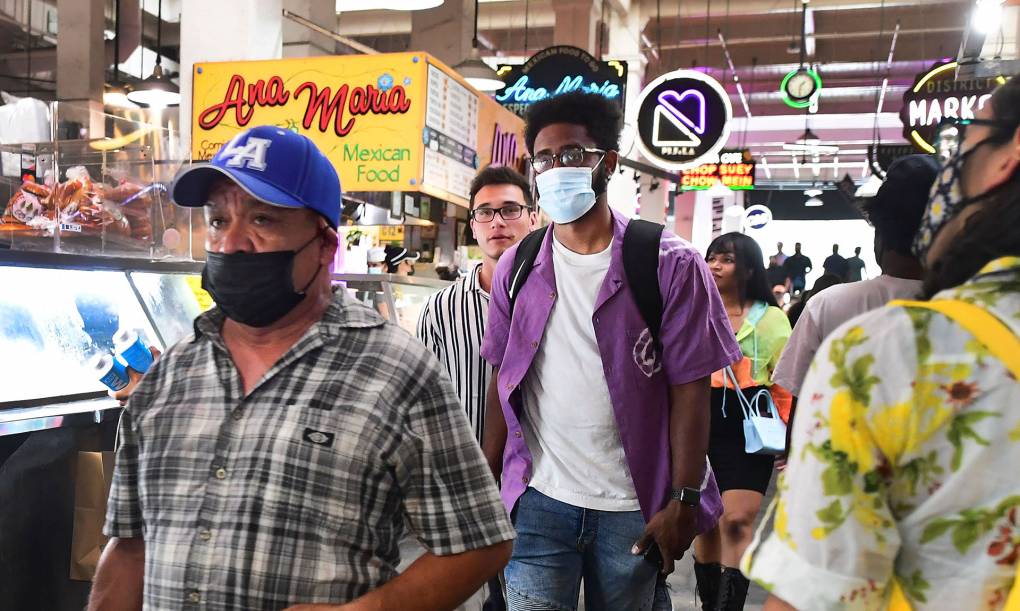
"caption": "Masked and unmasked people make their way through Grand Central Market in Los Angeles, California on June 29, 2021. County officials announced Thursday, July 15, 2021, it will restore an indoor mask mandate for all individuals regardless of vaccination status as COVID-19 cases spike in recent weeks.",
"description": "Masked and unmasked people make their way through Grand Central Market in Los Angeles, California on June 29, 2021. County officials announced Thursday, July 15, 2021, it will restore an indoor mask mandate for all individuals regardless of vaccination status as COVID-19 cases spike in recent weeks.",
"title": "US-HEALTH-VIRUS",
"credit": "Frederic J. Brown/AFP via Getty Images",
"status": "inherit",
"altTag": null,
"isLoading": false,
"fetchFailed": false
},
"news_11881246": {
"type": "attachments",
"id": "news_11881246",
"meta": {
"index": "attachments_1716263798",
"site": "news",
"id": "11881246",
"found": true
},
"parent": 11881207,
"imgSizes": {
"twentyfourteen-full-width": {
"file": "https://ww2.kqed.org/app/uploads/sites/10/2021/07/GettyImages-1229644112-1-1038x576.jpg",
"width": 1038,
"mimeType": "image/jpeg",
"height": 576
},
"thumbnail": {
"file": "https://ww2.kqed.org/app/uploads/sites/10/2021/07/GettyImages-1229644112-1-160x91.jpg",
"width": 160,
"mimeType": "image/jpeg",
"height": 91
},
"post-thumbnail": {
"file": "https://ww2.kqed.org/app/uploads/sites/10/2021/07/GettyImages-1229644112-1-672x372.jpg",
"width": 672,
"mimeType": "image/jpeg",
"height": 372
},
"kqedFullSize": {
"file": "https://ww2.kqed.org/app/uploads/sites/10/2021/07/GettyImages-1229644112-1.jpg",
"width": 1920,
"height": 1093
},
"large": {
"file": "https://ww2.kqed.org/app/uploads/sites/10/2021/07/GettyImages-1229644112-1-1020x581.jpg",
"width": 1020,
"mimeType": "image/jpeg",
"height": 581
},
"1536x1536": {
"file": "https://ww2.kqed.org/app/uploads/sites/10/2021/07/GettyImages-1229644112-1-1536x874.jpg",
"width": 1536,
"mimeType": "image/jpeg",
"height": 874
},
"medium": {
"file": "https://ww2.kqed.org/app/uploads/sites/10/2021/07/GettyImages-1229644112-1-800x455.jpg",
"width": 800,
"mimeType": "image/jpeg",
"height": 455
}
},
"publishDate": 1626310567,
"modified": 1626466314,
"caption": "Students sit with their laptop computers at St. Joseph Catholic School in La Puente, California, on Nov. 16, 2020.",
"description": "Students sit with their laptop computers at St. Joseph Catholic School in La Puente, California on November 16, 2020.",
"title": "GettyImages-1229644112 (1)",
"credit": "Frederic J. Brown/AFP via Getty Images",
"status": "inherit",
"altTag": null,
"isLoading": false,
"fetchFailed": false
},
"news_11881192": {
"type": "attachments",
"id": "news_11881192",
"meta": {
"index": "attachments_1716263798",
"site": "news",
"id": "11881192",
"found": true
},
"parent": 11881184,
"imgSizes": {
"twentyfourteen-full-width": {
"file": "https://ww2.kqed.org/app/uploads/sites/10/2021/07/schoolmasks_071221_final-1038x576.png",
"width": 1038,
"mimeType": "image/png",
"height": 576
},
"thumbnail": {
"file": "https://ww2.kqed.org/app/uploads/sites/10/2021/07/schoolmasks_071221_final-160x109.png",
"width": 160,
"mimeType": "image/png",
"height": 109
},
"post-thumbnail": {
"file": "https://ww2.kqed.org/app/uploads/sites/10/2021/07/schoolmasks_071221_final-672x372.png",
"width": 672,
"mimeType": "image/png",
"height": 372
},
"kqedFullSize": {
"file": "https://ww2.kqed.org/app/uploads/sites/10/2021/07/schoolmasks_071221_final.png",
"width": 1920,
"height": 1302
},
"large": {
"file": "https://ww2.kqed.org/app/uploads/sites/10/2021/07/schoolmasks_071221_final-1020x692.png",
"width": 1020,
"mimeType": "image/png",
"height": 692
},
"1536x1536": {
"file": "https://ww2.kqed.org/app/uploads/sites/10/2021/07/schoolmasks_071221_final-1536x1042.png",
"width": 1536,
"mimeType": "image/png",
"height": 1042
},
"medium": {
"file": "https://ww2.kqed.org/app/uploads/sites/10/2021/07/schoolmasks_071221_final-800x543.png",
"width": 800,
"mimeType": "image/png",
"height": 543
}
},
"publishDate": 1626293317,
"modified": 1626293429,
"caption": null,
"description": null,
"title": "schoolmasks_071221_final",
"credit": null,
"status": "inherit",
"altTag": "A Mark Fiore cartoon showing two students with masks standing in front of a chalk board with mathematical style writing that looks confusing. X=face masks, V=vaccines, if V, then X=0, and similar equations. The cartoon's caption reads \"Maskmatics.\"",
"isLoading": false,
"fetchFailed": false
},
"news_11881078": {
"type": "attachments",
"id": "news_11881078",
"meta": {
"index": "attachments_1716263798",
"site": "news",
"id": "11881078",
"found": true
},
"parent": 11881022,
"imgSizes": {
"twentyfourteen-full-width": {
"file": "https://ww2.kqed.org/app/uploads/sites/10/2021/07/GettyImages-1314853108-1024x576.jpg",
"width": 1024,
"mimeType": "image/jpeg",
"height": 576
},
"thumbnail": {
"file": "https://ww2.kqed.org/app/uploads/sites/10/2021/07/GettyImages-1314853108-160x107.jpg",
"width": 160,
"mimeType": "image/jpeg",
"height": 107
},
"post-thumbnail": {
"file": "https://ww2.kqed.org/app/uploads/sites/10/2021/07/GettyImages-1314853108-672x372.jpg",
"width": 672,
"mimeType": "image/jpeg",
"height": 372
},
"kqedFullSize": {
"file": "https://ww2.kqed.org/app/uploads/sites/10/2021/07/GettyImages-1314853108.jpg",
"width": 1024,
"height": 683
},
"large": {
"file": "https://ww2.kqed.org/app/uploads/sites/10/2021/07/GettyImages-1314853108-1020x680.jpg",
"width": 1020,
"mimeType": "image/jpeg",
"height": 680
},
"medium": {
"file": "https://ww2.kqed.org/app/uploads/sites/10/2021/07/GettyImages-1314853108-800x534.jpg",
"width": 800,
"mimeType": "image/jpeg",
"height": 534
}
},
"publishDate": 1626217291,
"modified": 1626217380,
"caption": "Returning students walk the hallway at Hollywood High School in Los Angeles on April 27, 2021, where schools reopened after more than a year.",
"description": null,
"title": "High Schools Return To In Person Learning In Los Angeles",
"credit": "Rodin Eckenroth/Getty Images",
"status": "inherit",
"altTag": null,
"isLoading": false,
"fetchFailed": false
},
"news_11880882": {
"type": "attachments",
"id": "news_11880882",
"meta": {
"index": "attachments_1716263798",
"site": "news",
"id": "11880882",
"found": true
},
"parent": 11880880,
"imgSizes": {
"twentyfourteen-full-width": {
"file": "https://ww2.kqed.org/app/uploads/sites/10/2021/07/gettyimages-1327155951-87a26af65cd5b9f4986d17fa9546e935eec43e5e-1-1038x576.jpg",
"width": 1038,
"mimeType": "image/jpeg",
"height": 576
},
"thumbnail": {
"file": "https://ww2.kqed.org/app/uploads/sites/10/2021/07/gettyimages-1327155951-87a26af65cd5b9f4986d17fa9546e935eec43e5e-1-160x120.jpg",
"width": 160,
"mimeType": "image/jpeg",
"height": 120
},
"post-thumbnail": {
"file": "https://ww2.kqed.org/app/uploads/sites/10/2021/07/gettyimages-1327155951-87a26af65cd5b9f4986d17fa9546e935eec43e5e-1-672x372.jpg",
"width": 672,
"mimeType": "image/jpeg",
"height": 372
},
"kqedFullSize": {
"file": "https://ww2.kqed.org/app/uploads/sites/10/2021/07/gettyimages-1327155951-87a26af65cd5b9f4986d17fa9546e935eec43e5e-1-scaled-e1626118242707.jpg",
"width": 1920,
"height": 1439
},
"2048x2048": {
"file": "https://ww2.kqed.org/app/uploads/sites/10/2021/07/gettyimages-1327155951-87a26af65cd5b9f4986d17fa9546e935eec43e5e-1-2048x1534.jpg",
"width": 2048,
"mimeType": "image/jpeg",
"height": 1534
},
"large": {
"file": "https://ww2.kqed.org/app/uploads/sites/10/2021/07/gettyimages-1327155951-87a26af65cd5b9f4986d17fa9546e935eec43e5e-1-1020x764.jpg",
"width": 1020,
"mimeType": "image/jpeg",
"height": 764
},
"1536x1536": {
"file": "https://ww2.kqed.org/app/uploads/sites/10/2021/07/gettyimages-1327155951-87a26af65cd5b9f4986d17fa9546e935eec43e5e-1-1536x1151.jpg",
"width": 1536,
"mimeType": "image/jpeg",
"height": 1151
},
"full-width": {
"file": "https://ww2.kqed.org/app/uploads/sites/10/2021/07/gettyimages-1327155951-87a26af65cd5b9f4986d17fa9546e935eec43e5e-1-1920x1438.jpg",
"width": 1920,
"mimeType": "image/jpeg",
"height": 1438
},
"medium": {
"file": "https://ww2.kqed.org/app/uploads/sites/10/2021/07/gettyimages-1327155951-87a26af65cd5b9f4986d17fa9546e935eec43e5e-1-800x599.jpg",
"width": 800,
"mimeType": "image/jpeg",
"height": 599
}
},
"publishDate": 1626114739,
"modified": 1626125462,
"caption": "People relax at Georgetown Waterfront Park in Washington, D.C., \non July 5, 2021. While pandemic restrictions have been lifted for much of the U.S., the delta variant of COVID-19 is hospitalizing thousands of unvaccinated people.",
"description": "(Photo by Tasos Katopodis/Getty Images)",
"title": "People relax at the Georgetown Waterfront Park on Monday in Washington, D.C. While pandemic restrictions have been lifted for much of the country, the Delta variant of COVID-19 is hospitalizing thousands of people in the U.S. who have so far not gotten a vaccine.",
"credit": "Tasos Katopodis/Getty Images",
"status": "inherit",
"altTag": null,
"isLoading": false,
"fetchFailed": false
},
"news_11880806": {
"type": "attachments",
"id": "news_11880806",
"meta": {
"index": "attachments_1716263798",
"site": "news",
"id": "11880806",
"found": true
},
"parent": 11880805,
"imgSizes": {
"twentyfourteen-full-width": {
"file": "https://ww2.kqed.org/app/uploads/sites/10/2021/07/RS49617_023_SanFrancisco_AlexPadillaMissionKids_06012021-qut-1038x576.jpeg",
"width": 1038,
"mimeType": "image/jpeg",
"height": 576
},
"thumbnail": {
"file": "https://ww2.kqed.org/app/uploads/sites/10/2021/07/RS49617_023_SanFrancisco_AlexPadillaMissionKids_06012021-qut-160x107.jpeg",
"width": 160,
"mimeType": "image/jpeg",
"height": 107
},
"post-thumbnail": {
"file": "https://ww2.kqed.org/app/uploads/sites/10/2021/07/RS49617_023_SanFrancisco_AlexPadillaMissionKids_06012021-qut-672x372.jpeg",
"width": 672,
"mimeType": "image/jpeg",
"height": 372
},
"kqedFullSize": {
"file": "https://ww2.kqed.org/app/uploads/sites/10/2021/07/RS49617_023_SanFrancisco_AlexPadillaMissionKids_06012021-qut.jpeg",
"width": 1920,
"height": 1278
},
"large": {
"file": "https://ww2.kqed.org/app/uploads/sites/10/2021/07/RS49617_023_SanFrancisco_AlexPadillaMissionKids_06012021-qut-1020x679.jpeg",
"width": 1020,
"mimeType": "image/jpeg",
"height": 679
},
"1536x1536": {
"file": "https://ww2.kqed.org/app/uploads/sites/10/2021/07/RS49617_023_SanFrancisco_AlexPadillaMissionKids_06012021-qut-1536x1022.jpeg",
"width": 1536,
"mimeType": "image/jpeg",
"height": 1022
},
"medium": {
"file": "https://ww2.kqed.org/app/uploads/sites/10/2021/07/RS49617_023_SanFrancisco_AlexPadillaMissionKids_06012021-qut-800x533.jpeg",
"width": 800,
"mimeType": "image/jpeg",
"height": 533
}
},
"publishDate": 1625937474,
"modified": 1626109782,
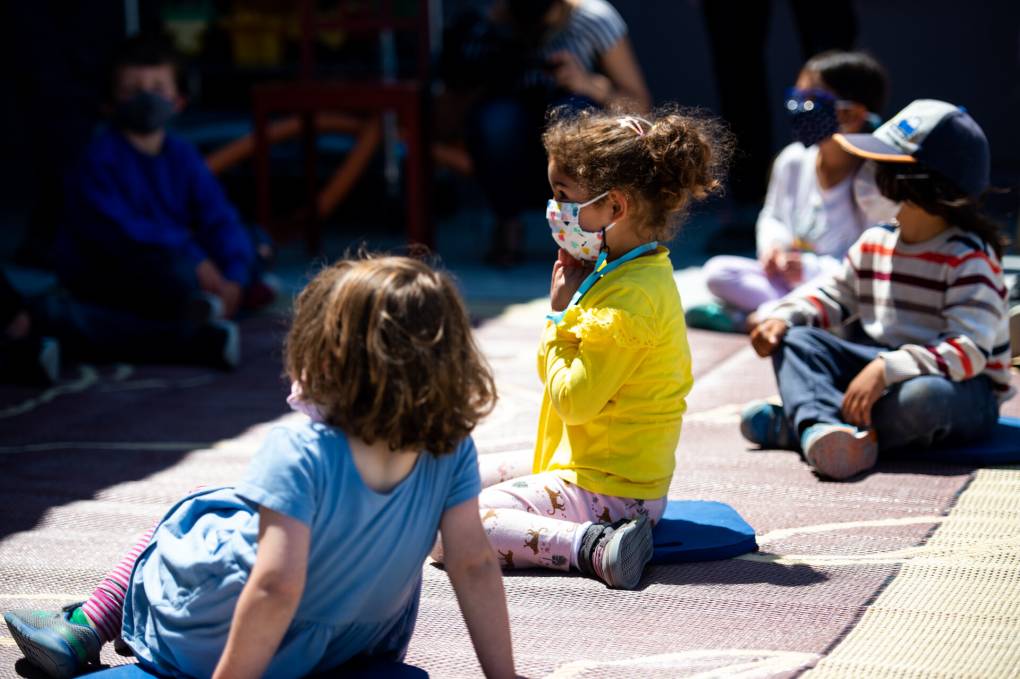
"caption": "Children at Mission Kids Preschool in San Francisco listen to Sen. Alex Padilla speak during a visit to the school on June 1, 2021.",
"description": null,
"title": "RS49617_023_SanFrancisco_AlexPadillaMissionKids_06012021-qut",
"credit": "Beth LaBerge/KQED",
"status": "inherit",
"altTag": null,
"isLoading": false,
"fetchFailed": false
},
"news_11880798": {
"type": "attachments",
"id": "news_11880798",
"meta": {
"index": "attachments_1716263798",
"site": "news",
"id": "11880798",
"found": true
},
"parent": 11880792,
"imgSizes": {
"twentyfourteen-full-width": {
"file": "https://ww2.kqed.org/app/uploads/sites/10/2021/07/GettyImages-1233832328-1-1038x576.jpg",
"width": 1038,
"mimeType": "image/jpeg",
"height": 576
},
"thumbnail": {
"file": "https://ww2.kqed.org/app/uploads/sites/10/2021/07/GettyImages-1233832328-1-160x107.jpg",
"width": 160,
"mimeType": "image/jpeg",
"height": 107
},
"post-thumbnail": {
"file": "https://ww2.kqed.org/app/uploads/sites/10/2021/07/GettyImages-1233832328-1-672x372.jpg",
"width": 672,
"mimeType": "image/jpeg",
"height": 372
},
"kqedFullSize": {
"file": "https://ww2.kqed.org/app/uploads/sites/10/2021/07/GettyImages-1233832328-1.jpg",
"width": 1920,
"height": 1280
},
"large": {
"file": "https://ww2.kqed.org/app/uploads/sites/10/2021/07/GettyImages-1233832328-1-1020x680.jpg",
"width": 1020,
"mimeType": "image/jpeg",
"height": 680
},
"1536x1536": {
"file": "https://ww2.kqed.org/app/uploads/sites/10/2021/07/GettyImages-1233832328-1-1536x1024.jpg",
"width": 1536,
"mimeType": "image/jpeg",
"height": 1024
},
"medium": {
"file": "https://ww2.kqed.org/app/uploads/sites/10/2021/07/GettyImages-1233832328-1-800x533.jpg",
"width": 800,
"mimeType": "image/jpeg",
"height": 533
}
},
"publishDate": 1625875911,
"modified": 1625875928,
"caption": "A medical worker takes a dose of a COVID-19 vaccine in a syringe on July 6, 2021 in Dhaka, Bangladesh. ",
"description": "A medical worker takes a dose of a COVID-19 vaccine in a syringe on July 6, 2021 in Dhaka, Bangladesh. ",
"title": "GettyImages-1233832328 (1)",
"credit": "Allison Joyce/Getty Images",
"status": "inherit",
"altTag": null,
"isLoading": false,
"fetchFailed": false
},
"news_11880763": {
"type": "attachments",
"id": "news_11880763",
"meta": {
"index": "attachments_1716263798",
"site": "news",
"id": "11880763",
"found": true
},
"parent": 11880762,
"imgSizes": {
"twentyfourteen-full-width": {
"file": "https://ww2.kqed.org/app/uploads/sites/10/2021/07/santa-rosa-samuel-jones-hall-1038x576.png",
"width": 1038,
"mimeType": "image/png",
"height": 576
},
"thumbnail": {
"file": "https://ww2.kqed.org/app/uploads/sites/10/2021/07/santa-rosa-samuel-jones-hall-160x100.png",
"width": 160,
"mimeType": "image/png",
"height": 100
},
"post-thumbnail": {
"file": "https://ww2.kqed.org/app/uploads/sites/10/2021/07/santa-rosa-samuel-jones-hall-672x372.png",
"width": 672,
"mimeType": "image/png",
"height": 372
},
"kqedFullSize": {
"file": "https://ww2.kqed.org/app/uploads/sites/10/2021/07/santa-rosa-samuel-jones-hall.png",
"width": 1920,
"height": 1200
},
"large": {
"file": "https://ww2.kqed.org/app/uploads/sites/10/2021/07/santa-rosa-samuel-jones-hall-1020x638.png",
"width": 1020,
"mimeType": "image/png",
"height": 638
},
"1536x1536": {
"file": "https://ww2.kqed.org/app/uploads/sites/10/2021/07/santa-rosa-samuel-jones-hall-1536x960.png",
"width": 1536,
"mimeType": "image/png",
"height": 960
},
"medium": {
"file": "https://ww2.kqed.org/app/uploads/sites/10/2021/07/santa-rosa-samuel-jones-hall-800x500.png",
"width": 800,
"mimeType": "image/png",
"height": 500
}
},
"publishDate": 1625866024,
"modified": 1625871965,
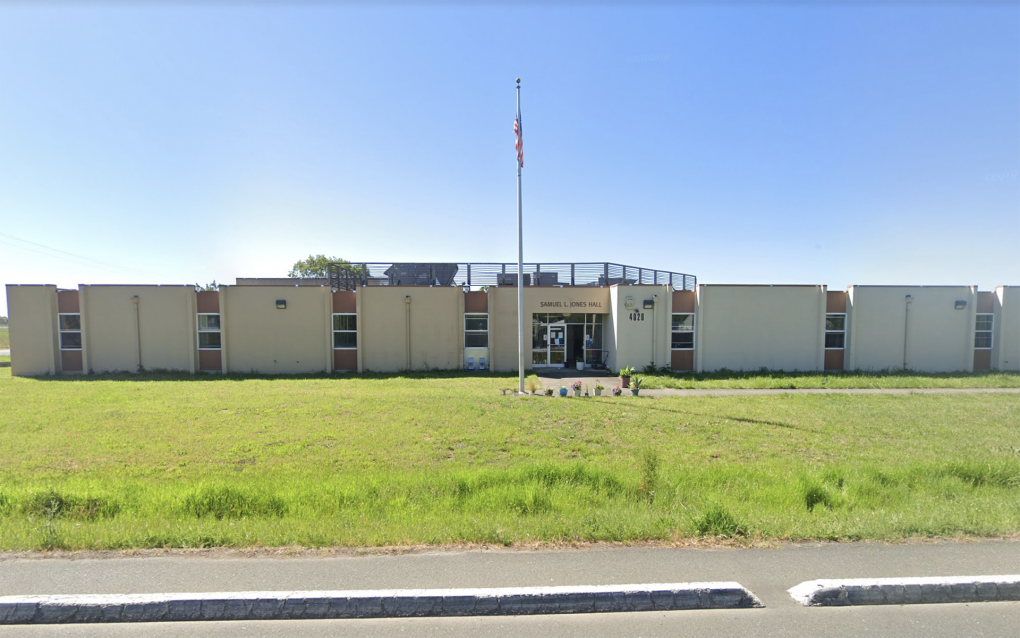
"caption": "Almost a third of the 153 residents at Samuel L. Jones Hall, a homeless shelter in Santa Rosa and Sonoma County’s largest shelter, tested positive for COVID-19.",
"description": "47 residents at Samuel L. Jones Hall, a homeless shelter in Santa Rosa, tested positive for COVID-19.",
"title": "santa rosa samuel jones hall",
"credit": "Google Maps",
"status": "inherit",
"altTag": null,
"isLoading": false,
"fetchFailed": false
},
"news_11880733": {
"type": "attachments",
"id": "news_11880733",
"meta": {
"index": "attachments_1716263798",
"site": "news",
"id": "11880733",
"found": true
},
"parent": 11880730,
"imgSizes": {
"twentyfourteen-full-width": {
"file": "https://ww2.kqed.org/app/uploads/sites/10/2021/07/RS49604_010_SanFrancisco_AlexPadillaMissionKids_06012021-qut-1038x576.jpg",
"width": 1038,
"mimeType": "image/jpeg",
"height": 576
},
"thumbnail": {
"file": "https://ww2.kqed.org/app/uploads/sites/10/2021/07/RS49604_010_SanFrancisco_AlexPadillaMissionKids_06012021-qut-160x107.jpg",
"width": 160,
"mimeType": "image/jpeg",
"height": 107
},
"post-thumbnail": {
"file": "https://ww2.kqed.org/app/uploads/sites/10/2021/07/RS49604_010_SanFrancisco_AlexPadillaMissionKids_06012021-qut-672x372.jpg",
"width": 672,
"mimeType": "image/jpeg",
"height": 372
},
"kqedFullSize": {
"file": "https://ww2.kqed.org/app/uploads/sites/10/2021/07/RS49604_010_SanFrancisco_AlexPadillaMissionKids_06012021-qut.jpg",
"width": 1920,
"height": 1280
},
"large": {
"file": "https://ww2.kqed.org/app/uploads/sites/10/2021/07/RS49604_010_SanFrancisco_AlexPadillaMissionKids_06012021-qut-1020x680.jpg",
"width": 1020,
"mimeType": "image/jpeg",
"height": 680
},
"1536x1536": {
"file": "https://ww2.kqed.org/app/uploads/sites/10/2021/07/RS49604_010_SanFrancisco_AlexPadillaMissionKids_06012021-qut-1536x1024.jpg",
"width": 1536,
"mimeType": "image/jpeg",
"height": 1024
},
"medium": {
"file": "https://ww2.kqed.org/app/uploads/sites/10/2021/07/RS49604_010_SanFrancisco_AlexPadillaMissionKids_06012021-qut-800x533.jpg",
"width": 800,
"mimeType": "image/jpeg",
"height": 533
}
},
"publishDate": 1625853789,
"modified": 1644935808,
"caption": "A child uses a keyboard at Mission Kids Preschool in San Francisco on June 1, 2021. When kids are too young for vaccines, masks are critical in reducing the risk of COVID-19 transmission. That's part of the newly updated CDC guidelines for the coming school year — and for any travel plans parents are making for summer.",
"description": "A child uses a keyboard at Mission Kids Preschool in San Francisco on June 1, 2021. When kids are too young for vaccines, masks are critical in reducing the risk of COVID-19 transmission. That's part of the newly updated CDC guidelines for the coming school year — and for any travel plans parents are making for summer.",
"title": "RS49604_010_SanFrancisco_AlexPadillaMissionKids_06012021-qut",
"credit": "Beth LaBerge/KQED",
"status": "inherit",
"altTag": null,
"isLoading": false,
"fetchFailed": false
},
"news_11880595": {
"type": "attachments",
"id": "news_11880595",
"meta": {
"index": "attachments_1716263798",
"site": "news",
"id": "11880595",
"found": true
},
"parent": 11880589,
"imgSizes": {
"twentyfourteen-full-width": {
"file": "https://ww2.kqed.org/app/uploads/sites/10/2021/07/delta-1038x576.jpeg",
"width": 1038,
"mimeType": "image/jpeg",
"height": 576
},
"thumbnail": {
"file": "https://ww2.kqed.org/app/uploads/sites/10/2021/07/delta-160x90.jpeg",
"width": 160,
"mimeType": "image/jpeg",
"height": 90
},
"post-thumbnail": {
"file": "https://ww2.kqed.org/app/uploads/sites/10/2021/07/delta-672x372.jpeg",
"width": 672,
"mimeType": "image/jpeg",
"height": 372
},
"kqedFullSize": {
"file": "https://ww2.kqed.org/app/uploads/sites/10/2021/07/delta.jpeg",
"width": 1600,
"height": 900
},
"large": {
"file": "https://ww2.kqed.org/app/uploads/sites/10/2021/07/delta-1020x574.jpeg",
"width": 1020,
"mimeType": "image/jpeg",
"height": 574
},
"1536x1536": {
"file": "https://ww2.kqed.org/app/uploads/sites/10/2021/07/delta-1536x864.jpeg",
"width": 1536,
"mimeType": "image/jpeg",
"height": 864
},
"medium": {
"file": "https://ww2.kqed.org/app/uploads/sites/10/2021/07/delta-800x450.jpeg",
"width": 800,
"mimeType": "image/jpeg",
"height": 450
}
},
"publishDate": 1625766043,
"modified": 1625766073,
"caption": "Scanning electron microscopic image of a cell infected with SARS-COV-2 virus particles, shown in yellow.",
"description": "Scanning electron microscopic image of a cell infected with SARS-COV-2 virus particles, shown in yellow.",
"title": "delta",
"credit": "Courtesy of the National Institute of Allergy and Infectious Diseases",
"status": "inherit",
"altTag": null,
"isLoading": false,
"fetchFailed": false
},
"news_11880496": {
"type": "attachments",
"id": "news_11880496",
"meta": {
"index": "attachments_1716263798",
"site": "news",
"id": "11880496",
"found": true
},
"parent": 11880495,
"imgSizes": {
"twentyfourteen-full-width": {
"file": "https://ww2.kqed.org/app/uploads/sites/10/2021/07/gettyimages-1233765390_custom-f5f7a5b637107f603f27cb8c330986300c5fe60d-1038x576.jpg",
"width": 1038,
"mimeType": "image/jpeg",
"height": 576
},
"thumbnail": {
"file": "https://ww2.kqed.org/app/uploads/sites/10/2021/07/gettyimages-1233765390_custom-f5f7a5b637107f603f27cb8c330986300c5fe60d-160x107.jpg",
"width": 160,
"mimeType": "image/jpeg",
"height": 107
},
"post-thumbnail": {
"file": "https://ww2.kqed.org/app/uploads/sites/10/2021/07/gettyimages-1233765390_custom-f5f7a5b637107f603f27cb8c330986300c5fe60d-672x372.jpg",
"width": 672,
"mimeType": "image/jpeg",
"height": 372
},
"kqedFullSize": {
"file": "https://ww2.kqed.org/app/uploads/sites/10/2021/07/gettyimages-1233765390_custom-f5f7a5b637107f603f27cb8c330986300c5fe60d-scaled.jpg",
"width": 2560,
"height": 1717
},
"2048x2048": {
"file": "https://ww2.kqed.org/app/uploads/sites/10/2021/07/gettyimages-1233765390_custom-f5f7a5b637107f603f27cb8c330986300c5fe60d-2048x1374.jpg",
"width": 2048,
"mimeType": "image/jpeg",
"height": 1374
},
"large": {
"file": "https://ww2.kqed.org/app/uploads/sites/10/2021/07/gettyimages-1233765390_custom-f5f7a5b637107f603f27cb8c330986300c5fe60d-1020x684.jpg",
"width": 1020,
"mimeType": "image/jpeg",
"height": 684
},
"1536x1536": {
"file": "https://ww2.kqed.org/app/uploads/sites/10/2021/07/gettyimages-1233765390_custom-f5f7a5b637107f603f27cb8c330986300c5fe60d-1536x1030.jpg",
"width": 1536,
"mimeType": "image/jpeg",
"height": 1030
},
"full-width": {
"file": "https://ww2.kqed.org/app/uploads/sites/10/2021/07/gettyimages-1233765390_custom-f5f7a5b637107f603f27cb8c330986300c5fe60d-1920x1288.jpg",
"width": 1920,
"mimeType": "image/jpeg",
"height": 1288
},
"medium": {
"file": "https://ww2.kqed.org/app/uploads/sites/10/2021/07/gettyimages-1233765390_custom-f5f7a5b637107f603f27cb8c330986300c5fe60d-800x537.jpg",
"width": 800,
"mimeType": "image/jpeg",
"height": 537
}
},
"publishDate": 1625684413,
"modified": 1625684536,
"caption": "The delta variant, first detected in India, is spreading across the globe. In parts of the U.S., the strain accounts for more than 80% of new infections, according to Centers for Disease Control and Prevention estimates.",
"description": null,
"title": "The delta variant, first detected in India, is spreading across the globe. In parts of the U.S., the strain accounts for more than 80% of new infections, according to CDC estimates.",
"credit": "Boris Roessler/DPA/Picture Alliance via Getty",
"status": "inherit",
"altTag": null,
"isLoading": false,
"fetchFailed": false
},
"news_11880088": {
"type": "attachments",
"id": "news_11880088",
"meta": {
"index": "attachments_1716263798",
"site": "news",
"id": "11880088",
"found": true
},
"parent": 11880066,
"imgSizes": {
"twentyfourteen-full-width": {
"file": "https://ww2.kqed.org/app/uploads/sites/10/2021/07/Tony-Escobar_01-1038x576.png",
"width": 1038,
"mimeType": "image/png",
"height": 576
},
"thumbnail": {
"file": "https://ww2.kqed.org/app/uploads/sites/10/2021/07/Tony-Escobar_01-160x94.png",
"width": 160,
"mimeType": "image/png",
"height": 94
},
"post-thumbnail": {
"file": "https://ww2.kqed.org/app/uploads/sites/10/2021/07/Tony-Escobar_01-672x372.png",
"width": 672,
"mimeType": "image/png",
"height": 372
},
"kqedFullSize": {
"file": "https://ww2.kqed.org/app/uploads/sites/10/2021/07/Tony-Escobar_01.png",
"width": 1187,
"height": 700
},
"large": {
"file": "https://ww2.kqed.org/app/uploads/sites/10/2021/07/Tony-Escobar_01-1020x602.png",
"width": 1020,
"mimeType": "image/png",
"height": 602
},
"medium": {
"file": "https://ww2.kqed.org/app/uploads/sites/10/2021/07/Tony-Escobar_01-800x472.png",
"width": 800,
"mimeType": "image/png",
"height": 472
}
},
"publishDate": 1625155864,
"modified": 1625156042,
"caption": "Tony Escobar loved sports, a passion dating back to his early days as a gifted athlete at Mission High School.",
"description": null,
"title": "Tony Escobar_01",
"credit": "Photo courtesy Ivania Angel",
"status": "inherit",
"altTag": null,
"isLoading": false,
"fetchFailed": false
}
},
"audioPlayerReducer": {
"postId": "stream_live",
"isPaused": true,
"isPlaying": false,
"pfsActive": false,
"pledgeModalIsOpen": true,
"playerDrawerIsOpen": false,
"liveAudioPlayStartedAt": 0,
"liveAudioPlayContext": ""
},
"authorsReducer": {
"byline_news_11881235": {
"type": "authors",
"id": "byline_news_11881235",
"meta": {
"override": true
},
"slug": "byline_news_11881235",
"name": "\u003ca href=\"https://calmatters.org/author/zayna-syed/\">Zayna Syed\u003c/a>",
"isLoading": false
},
"byline_news_11880880": {
"type": "authors",
"id": "byline_news_11880880",
"meta": {
"override": true
},
"slug": "byline_news_11880880",
"name": "Laurel Wamsley",
"isLoading": false
},
"byline_news_11880805": {
"type": "authors",
"id": "byline_news_11880805",
"meta": {
"override": true
},
"slug": "byline_news_11880805",
"name": "Jocelyn Gecker \u003cbr> Associated Press",
"isLoading": false
},
"byline_news_11880792": {
"type": "authors",
"id": "byline_news_11880792",
"meta": {
"override": true
},
"slug": "byline_news_11880792",
"name": "Emma Bowman",
"isLoading": false
},
"byline_news_11880730": {
"type": "authors",
"id": "byline_news_11880730",
"meta": {
"override": true
},
"slug": "byline_news_11880730",
"name": "Sheila Mulrooney Eldred",
"isLoading": false
},
"byline_news_11880589": {
"type": "authors",
"id": "byline_news_11880589",
"meta": {
"override": true
},
"slug": "byline_news_11880589",
"name": "Elizabeth Cooney\u003cbr>STAT News",
"isLoading": false
},
"byline_news_11880495": {
"type": "authors",
"id": "byline_news_11880495",
"meta": {
"override": true
},
"slug": "byline_news_11880495",
"name": "Jane Greenhalgh and Rob Stein\u003cbr />NPR",
"isLoading": false
},
"kqednewsstaffandwires": {
"type": "authors",
"id": "237",
"meta": {
"index": "authors_1716337520",
"id": "237",
"found": true
},
"name": "KQED News Staff and Wires",
"firstName": "KQED News Staff and Wires",
"lastName": null,
"slug": "kqednewsstaffandwires",
"email": "onlinenewsstaff@kqed.org",
"display_author_email": false,
"staff_mastheads": [],
"title": null,
"bio": null,
"avatar": "https://secure.gravatar.com/avatar/72295af8ebbfbd19a4948f5271285664?s=600&d=blank&r=g",
"twitter": null,
"facebook": null,
"instagram": null,
"linkedin": null,
"sites": [
{
"site": "arts",
"roles": [
"contributor"
]
},
{
"site": "news",
"roles": [
"contributor"
]
},
{
"site": "lowdown",
"roles": [
"author"
]
},
{
"site": "stateofhealth",
"roles": [
"contributor"
]
},
{
"site": "food",
"roles": [
"author"
]
}
],
"headData": {
"title": "KQED News Staff and Wires | KQED",
"description": null,
"ogImgSrc": "https://secure.gravatar.com/avatar/72295af8ebbfbd19a4948f5271285664?s=600&d=blank&r=g",
"twImgSrc": "https://secure.gravatar.com/avatar/72295af8ebbfbd19a4948f5271285664?s=600&d=blank&r=g"
},
"isLoading": false,
"link": "/author/kqednewsstaffandwires"
},
"markfiore": {
"type": "authors",
"id": "3236",
"meta": {
"index": "authors_1716337520",
"id": "3236",
"found": true
},
"name": "Mark Fiore",
"firstName": "Mark",
"lastName": "Fiore",
"slug": "markfiore",
"email": "mark@markfiore.com",
"display_author_email": false,
"staff_mastheads": [
"news"
],
"title": "KQED News Cartoonist",
"bio": "\u003ca href=\"http://www.MarkFiore.com\">MarkFiore.com\u003c/a> | \u003ca href=\"https://twitter.com/markfiore\">Follow on Twitter\u003c/a> | \u003ca href=\"https://www.facebook.com/pages/Mark-Fiore-Animated-Political-Cartoons/94451707396?ref=bookmarks\">Facebook\u003c/a> | \u003ca href=\"mailto:mark@markfiore.com\">email\u003c/a>\r\n\r\nPulitzer Prize-winner, Mark Fiore, who the Wall Street Journal has called “the undisputed guru of the form,” creates animated political cartoons in San Francisco, where his work has been featured regularly on the San Francisco Chronicle’s web site, SFGate.com. His work has appeared on Newsweek.com, Slate.com, CBSNews.com, MotherJones.com, DailyKos.com and NPR’s web site. Fiore’s political animation has appeared on CNN, Frontline, Bill Moyers Journal, Salon.com and cable and broadcast outlets across the globe.\r\n\r\nBeginning his professional life by drawing traditional political cartoons for newspapers, Fiore’s work appeared in publications ranging from the Washington Post to the Los Angeles Times. In the late 1990s, he began to experiment with animating political cartoons and, after a short stint at the San Jose Mercury News as their staff cartoonist, Fiore devoted all his energies to animation.\r\nGrowing up in California, Fiore also spent a good portion of his life in the backwoods of Idaho. It was this combination that shaped him politically. Mark majored in political science at Colorado College, where, in a perfect send-off for a cartoonist, he received his diploma in 1991 as commencement speaker Dick Cheney smiled approvingly.\r\nMark Fiore was awarded the Pulitzer Prize for political cartooning in 2010, a Robert F. Kennedy Journalism Award in 2004 and has twice received an Online Journalism Award for commentary from the Online News Association (2002, 2008). Fiore has received two awards for his work in new media from the National Cartoonists Society (2001, 2002), and in 2006 received The James Madison Freedom of Information Award from The Society of Professional Journalists.",
"avatar": "https://secure.gravatar.com/avatar/fc4e2a612b15b67bad0c6f0e1db4ca9b?s=600&d=blank&r=g",
"twitter": "MarkFiore",
"facebook": null,
"instagram": "https://www.instagram.com/markfiore/?hl=en",
"linkedin": null,
"sites": [
{
"site": "arts",
"roles": [
"contributor"
]
},
{
"site": "news",
"roles": [
"editor"
]
},
{
"site": "futureofyou",
"roles": [
"editor"
]
},
{
"site": "science",
"roles": [
"editor"
]
}
],
"headData": {
"title": "Mark Fiore | KQED",
"description": "KQED News Cartoonist",
"ogImgSrc": "https://secure.gravatar.com/avatar/fc4e2a612b15b67bad0c6f0e1db4ca9b?s=600&d=blank&r=g",
"twImgSrc": "https://secure.gravatar.com/avatar/fc4e2a612b15b67bad0c6f0e1db4ca9b?s=600&d=blank&r=g"
},
"isLoading": false,
"link": "/author/markfiore"
},
"bwatt": {
"type": "authors",
"id": "11238",
"meta": {
"index": "authors_1716337520",
"id": "11238",
"found": true
},
"name": "Brian Watt",
"firstName": "Brian",
"lastName": "Watt",
"slug": "bwatt",
"email": "bwatt@KQED.org",
"display_author_email": false,
"staff_mastheads": [
"news"
],
"title": "Morning News Anchor",
"bio": "Brian Watt is KQED's morning radio news anchor. He joined the KQED News team in April of 2016. Prior to that, he worked as a Reporter for KPCC in Los Angeles and a producer at \u003cem>Marketplace.\u003c/em>\r\n\r\nDuring eight years at KPCC, Brian covered business and economics, and his work won several awards. In 2008, he won the Los Angeles Press Club’s first-place award for Business and Financial Reporting, Broadcast. He’s also received honorable mention and been first runner up for the Press Club’s Radio Journalist of the Year. He won two Golden Mike awards from the Radio and TV News Association of Southern California.\r\n\r\nBrian holds degrees in theater from Yale University and the Sorbonne, and has worked as an actor in France, Italy, Brazil, Hungary and . . . Hollywood. He appeared in a few television shows, including \u003cem>The West Wing, Judging Amy\u003c/em> and \u003cem>The District.\u003c/em>\r\n\r\nEmail: bwatt@KQED.org Twitter: @RadioBWatt",
"avatar": "https://secure.gravatar.com/avatar/55393ff57ed34e2be773ba4789dd6a19?s=600&d=blank&r=g",
"twitter": "@RadioBWatt",
"facebook": null,
"instagram": null,
"linkedin": null,
"sites": [
{
"site": "arts",
"roles": [
"contributor"
]
},
{
"site": "news",
"roles": [
"editor"
]
}
],
"headData": {
"title": "Brian Watt | KQED",
"description": "Morning News Anchor",
"ogImgSrc": "https://secure.gravatar.com/avatar/55393ff57ed34e2be773ba4789dd6a19?s=600&d=blank&r=g",
"twImgSrc": "https://secure.gravatar.com/avatar/55393ff57ed34e2be773ba4789dd6a19?s=600&d=blank&r=g"
},
"isLoading": false,
"link": "/author/bwatt"
},
"agonzalez": {
"type": "authors",
"id": "11724",
"meta": {
"index": "authors_1716337520",
"id": "11724",
"found": true
},
"name": "Alexander Gonzalez",
"firstName": "Alexander",
"lastName": "Gonzalez",
"slug": "agonzalez",
"email": "AlexanderGonzalez@KQED.org",
"display_author_email": false,
"staff_mastheads": [
"news"
],
"title": "KQED Contributor",
"bio": null,
"avatar": "https://secure.gravatar.com/avatar/9e291ed34e154df4c662edf858b641d70b4859939bfe40be478408f9dfd057d2?s=600&d=blank&r=g",
"twitter": null,
"bluesky": null,
"facebook": null,
"instagram": null,
"linkedin": null,
"sites": [
{
"site": "arts",
"roles": [
"editor"
]
},
{
"site": "news",
"roles": [
"editor"
]
},
{
"site": "science",
"roles": [
"editor"
]
}
],
"headData": {
"title": "Alexander Gonzalez | KQED",
"description": "KQED Contributor",
"ogImgSrc": "https://secure.gravatar.com/avatar/9e291ed34e154df4c662edf858b641d70b4859939bfe40be478408f9dfd057d2?s=600&d=blank&r=g",
"twImgSrc": "https://secure.gravatar.com/avatar/9e291ed34e154df4c662edf858b641d70b4859939bfe40be478408f9dfd057d2?s=600&d=blank&r=g"
},
"isLoading": false,
"link": "/author/agonzalez"
}
},
"pagesReducer": {
"news_tag_covid-19": {
"type": "terms",
"id": "news_27504",
"meta": {
"index": "terms_1716263798",
"site": "news",
"id": "27504",
"score": 8.558313
},
"featImg": null,
"name": "covid-19",
"description": null,
"taxonomy": "tag",
"headData": {
"twImgId": null,
"twTitle": null,
"ogTitle": null,
"ogImgId": null,
"twDescription": null,
"description": null,
"title": "covid-19 Archives | KQED News",
"ogDescription": null
},
"ttid": 27521,
"slug": "covid-19",
"isLoading": false,
"title": "covid-19",
"pageMeta": {
"site": "news",
"WpPageTemplate": "page-topic-editorial",
"currentPage": 18
},
"blocks": [
{
"blockName": "kqed/post-list",
"attrs": {
"layout": "cardArticle2",
"query": "posts/news?tag=covid-19",
"seeMore": false,
"paginated": true,
"page": 18
}
},
{
"blockName": "kqed/ad"
}
]
}
},
"pfsSessionReducer": {},
"postsReducer": {
"stream_live": {
"type": "live",
"id": "stream_live",
"audioUrl": "https://streams.kqed.org/kqedradio",
"title": "Live Stream",
"excerpt": "Live Stream information currently unavailable.",
"link": "/radio",
"featImg": "",
"label": {
"name": "KQED Live",
"link": "/"
}
},
"stream_kqedNewscast": {
"type": "posts",
"id": "stream_kqedNewscast",
"audioUrl": "https://www.kqed.org/.stream/anon/radio/RDnews/newscast.mp3?_=1",
"title": "KQED Newscast",
"featImg": "",
"label": {
"name": "88.5 FM",
"link": "/"
}
},
"news_11881334": {
"type": "posts",
"id": "news_11881334",
"meta": {
"index": "posts_1716263798",
"site": "news",
"id": "11881334",
"score": null,
"sort": [
1626395519000
]
},
"parent": 0,
"labelTerm": {
"site": "news"
},
"blocks": [],
"publishDate": 1626395519,
"format": "standard",
"disqusTitle": "LA County Brings Back Mask Mandate Indoors — Even If You're Vaccinated",
"title": "LA County Brings Back Mask Mandate Indoors — Even If You're Vaccinated",
"headTitle": "KQED News",
"content": "\u003cp>A rapid and sustained increase in COVID-19 cases in the nation's largest county requires restoring an indoor mask mandate even when people are vaccinated, Los Angeles County's public health officer said Thursday.\u003c/p>\n\u003cp>Dr. Muntu Davis said at a virtual press conference that a public health order requiring masks indoors will go into effect Saturday.\u003c/p>\n\u003cp>\"This is an all-hands-on-deck moment,\" he said.\u003c/p>\n\u003cp>Davis didn't fully detail what he said would be some exceptions but said for example, people could still go out to eat and take off their masks only while eating and drinking.\u003c/p>\n\u003cp>The county has been recording more than 1,000 new cases each day for a week, and there is now \"substantial community transmission,\" Davis said.\u003c/p>\n\u003cp>[ad fullwidth]\u003c/p>\n\u003ch3>San Francisco Encouraging Vaccinations\u003c/h3>\n\u003cp>San Francisco city officials released a \u003ca href=\"https://sfmayor.org/article/city-officials-encourage-residents-get-vaccinated-combat-covid-19-variants\" target=\"_blank\" rel=\"noopener noreferrer\">statement\u003c/a> Thursday, shortly after LA County's indoor masking announcement, encouraging residents to get vaccinated as the delta variant of COVID-19 is spreading in the region.\u003c/p>\n\u003cp>All Bay Area counties have seen at least a doubling of new COVID-19 cases over the last three weeks, according to the statement.\u003c/p>\n\u003cp>“In particular, the Black community has the lowest vaccination rate compared to the citywide rate, which means more people who are already struggling with significant disparities in this City might get sick,\" Mayor London Breed said in the statement.\u003c/p>\n\u003cp>As of July 13, 83% of people ages 12 and older in San Francisco have received at least one dose and 76% are fully vaccinated.\u003c/p>\n\u003cp>Average daily new cases of COVID-19 have increased four-fold from mid-June to early July. The city recorded 9.9 new cases per day on June 19 which jumped to 42 new cases per day on July 7. The city estimates that number will increase to at least 73 new cases per day this week.\u003c/p>\n\u003cp>“As we have seen since the beginning of the pandemic, COVID-19 infections are not distributed evenly throughout all neighborhoods and communities in San Francisco,” said Dr. Grant Colfax, Director of Health for the City and County of San Francisco, in the statement.\u003c/p>\n\u003cp>“Bayview-Hunters Point is still one of the hardest hit areas with COVID-19 infections, particularly in the African American community. With the new delta variant that is more transmissible, it is critical that our community gets vaccinated as soon as possible,” said Shamann Walton, President of the Board of Supervisors, in the statement.\u003c/p>\n\u003ch3>A Shelter Has Been Hit With a Cluster of Cases\u003c/h3>\n\u003cp>Meanwhile, in Northern California, at least 59 residents at a homeless shelter have tested positive for the virus, half of whom were vaccinated, health officials said.\u003c/p>\n\u003cp>Of those infected at the shelter in Santa Rosa, 28 were fully vaccinated, Dr. Sundari Mase, Sonoma County's health officer, said Wednesday. Officials were reviewing an additional 26 possible positive cases.\u003c/p>\n\u003cp>[aside postID=news_11880762 hero='https://ww2.kqed.org/app/uploads/sites/10/2021/07/santa-rosa-samuel-jones-hall-1020x638.png']Of the 59 people with confirmed infections at Samuel L. Jones Hall, nine were hospitalized, including six who were fully vaccinated and had \"multiple, significant\" underlying health conditions, including diabetes and pulmonary disease, health officials said. Four have since been discharged, and five remain hospitalized.\u003c/p>\n\u003cp>Officials said that fewer than half of the 153 residents had received at least partial vaccination and they do not know whether the outbreak started with a vaccinated or unvaccinated resident.\u003c/p>\n\u003cp>\"We know congregate settings are at much higher risk,\" Mase said. \"We also know there is a very high proportion of unvaccinated individuals that were in this setting.\"\u003c/p>\n\u003cp>Most of the 69 vaccinated residents had received the single-shot Johnson & Johnson dose but Mase said it was hard to determine whether that was a factor in the outbreak.\u003c/p>\n\u003ch3>Vaccines Protect Against Severe COVID Consequences\u003c/h3>\n\u003cp>Vaccines decrease the severity of the illness, reduce hospitalizations and decrease the risk of death. Clinical trials showed that a single dose of the J&J vaccine was 72% effective against moderate to severe COVID-19 in the United States, compared to 95% for the Pfizer and Moderna vaccines. A Food and Drug Administration analysis cautioned that it's not clear how well the vaccines work against each variant.\u003c/p>\n\u003cp>The outbreak is only the second time the coronavirus has been detected at the Sam Jones shelter. There was a smaller cluster of cases in January during the peak of the pandemic, said Jennielynn Holmes, head of homelessness services at Catholic Charities in Santa Rosa, which manages the shelter.\u003c/p>\n\u003cp>The shelter first became aware of the most recent outbreak on July 2, when it reported 20 positive cases.\u003c/p>\n\u003cp>\"Something is different. This is different than what we've seen the entire pandemic,\" Holmes said.\u003c/p>\n\u003cp>[aside tag=\"delta-variant\" label=\"more on the delta variant\"]Holmes and city officials had said last week the outbreak was caused by the delta variant, which is far more contagious than the original strain of the virus. County officials said they had not confirmed that and need more time to review the infections.\u003c/p>\n\u003cp>Clarissa Millarker, a Sam Jones resident since March, said that prior to the outbreak, shelter staff had been lax in enforcing health protocols, particularly masking.\u003c/p>\n\u003cp>\"I feel like it's entirely likely that I'm going to turn up infected,\" Millarker, who is vaccinated, told \u003ca href=\"https://www.pressdemocrat.com/article/news/officials-report-wider-covid-19-outbreak-at-sonoma-countys-largest-homeles/\" target=\"_blank\" rel=\"noopener noreferrer\">The Press Democrat\u003c/a> of Santa Rosa.\u003c/p>\n\u003cp>Millarker said staff have since ramped up sanitation, been more vigilant about masks and started testing every few days. Still, there is confusion and anger over how the situation was handled by shelter operators, she said.\u003c/p>\n\u003cp>\"People are upset, and they're right to be,\" she said.\u003c/p>\n\u003cp>\u003cem>This story includes reporting from The Associated Press and KQED's Julie Chang.\u003c/em>\u003c/p>\n\u003cp>\u003c/p>\n",
"disqusIdentifier": "11881334 https://ww2.kqed.org/news/?p=11881334",
"disqusUrl": "https://ww2.kqed.org/news/2021/07/15/la-county-brings-back-mask-mandate-indoors-even-if-youre-vaccinated/",
"stats": {
"hasVideo": false,
"hasChartOrMap": false,
"hasAudio": false,
"hasPolis": false,
"wordCount": 960,
"hasGoogleForm": false,
"hasGallery": false,
"hasHearkenModule": false,
"iframeSrcs": [],
"paragraphCount": 30
},
"modified": 1626399244,
"excerpt": "A rapid and sustained increase in COVID-19 cases requires a return to mandatory mask-wearing indoors, the county's public health officer says. He didn't detail what he said would be some exceptions.",
"headData": {
"twImgId": "",
"twTitle": "",
"ogTitle": "",
"ogImgId": "",
"twDescription": "",
"description": "A rapid and sustained increase in COVID-19 cases requires a return to mandatory mask-wearing indoors, the county's public health officer says. He didn't detail what he said would be some exceptions.",
"title": "LA County Brings Back Mask Mandate Indoors — Even If You're Vaccinated | KQED",
"ogDescription": "",
"schema": {
"@context": "https://schema.org",
"@type": "NewsArticle",
"headline": "LA County Brings Back Mask Mandate Indoors — Even If You're Vaccinated",
"datePublished": "2021-07-15T17:31:59-07:00",
"dateModified": "2021-07-15T18:34:04-07:00",
"image": "https://cdn.kqed.org/wp-content/uploads/2020/02/KQED-OG-Image@1x.png",
"isAccessibleForFree": "True",
"publisher": {
"@type": "NewsMediaOrganization",
"@id": "https://www.kqed.org/#organization",
"name": "KQED",
"logo": "https://cdn.kqed.org/wp-content/uploads/2020/02/KQED-OG-Image@1x.png",
"url": "https://www.kqed.org",
"sameAs": [
"https://www.facebook.com/KQED",
"https://twitter.com/KQED",
"https://www.instagram.com/kqed/",
"https://www.tiktok.com/@kqedofficial",
"https://www.linkedin.com/company/kqed",
"https://www.youtube.com/channel/UCeC0IOo7i1P_61zVUWbJ4nw"
]
}
}
},
"guestAuthors": [],
"slug": "la-county-brings-back-mask-mandate-indoors-even-if-youre-vaccinated",
"status": "publish",
"path": "/news/11881334/la-county-brings-back-mask-mandate-indoors-even-if-youre-vaccinated",
"audioTrackLength": null,
"parsedContent": [
{
"type": "contentString",
"content": "\u003cdiv class=\"post-body\">\u003cp>\u003cp>A rapid and sustained increase in COVID-19 cases in the nation's largest county requires restoring an indoor mask mandate even when people are vaccinated, Los Angeles County's public health officer said Thursday.\u003c/p>\n\u003cp>Dr. Muntu Davis said at a virtual press conference that a public health order requiring masks indoors will go into effect Saturday.\u003c/p>\n\u003cp>\"This is an all-hands-on-deck moment,\" he said.\u003c/p>\n\u003cp>Davis didn't fully detail what he said would be some exceptions but said for example, people could still go out to eat and take off their masks only while eating and drinking.\u003c/p>\n\u003cp>The county has been recording more than 1,000 new cases each day for a week, and there is now \"substantial community transmission,\" Davis said.\u003c/p>\n\u003cp>\u003c/p>\u003c/div>",
"attributes": {
"named": {},
"numeric": []
}
},
{
"type": "component",
"content": "",
"name": "ad",
"attributes": {
"named": {
"label": "fullwidth"
},
"numeric": [
"fullwidth"
]
}
},
{
"type": "contentString",
"content": "\u003cdiv class=\"post-body\">\u003cp>\u003c/p>\n\u003ch3>San Francisco Encouraging Vaccinations\u003c/h3>\n\u003cp>San Francisco city officials released a \u003ca href=\"https://sfmayor.org/article/city-officials-encourage-residents-get-vaccinated-combat-covid-19-variants\" target=\"_blank\" rel=\"noopener noreferrer\">statement\u003c/a> Thursday, shortly after LA County's indoor masking announcement, encouraging residents to get vaccinated as the delta variant of COVID-19 is spreading in the region.\u003c/p>\n\u003cp>All Bay Area counties have seen at least a doubling of new COVID-19 cases over the last three weeks, according to the statement.\u003c/p>\n\u003cp>“In particular, the Black community has the lowest vaccination rate compared to the citywide rate, which means more people who are already struggling with significant disparities in this City might get sick,\" Mayor London Breed said in the statement.\u003c/p>\n\u003cp>As of July 13, 83% of people ages 12 and older in San Francisco have received at least one dose and 76% are fully vaccinated.\u003c/p>\n\u003cp>Average daily new cases of COVID-19 have increased four-fold from mid-June to early July. The city recorded 9.9 new cases per day on June 19 which jumped to 42 new cases per day on July 7. The city estimates that number will increase to at least 73 new cases per day this week.\u003c/p>\n\u003cp>“As we have seen since the beginning of the pandemic, COVID-19 infections are not distributed evenly throughout all neighborhoods and communities in San Francisco,” said Dr. Grant Colfax, Director of Health for the City and County of San Francisco, in the statement.\u003c/p>\n\u003cp>“Bayview-Hunters Point is still one of the hardest hit areas with COVID-19 infections, particularly in the African American community. With the new delta variant that is more transmissible, it is critical that our community gets vaccinated as soon as possible,” said Shamann Walton, President of the Board of Supervisors, in the statement.\u003c/p>\n\u003ch3>A Shelter Has Been Hit With a Cluster of Cases\u003c/h3>\n\u003cp>Meanwhile, in Northern California, at least 59 residents at a homeless shelter have tested positive for the virus, half of whom were vaccinated, health officials said.\u003c/p>\n\u003cp>Of those infected at the shelter in Santa Rosa, 28 were fully vaccinated, Dr. Sundari Mase, Sonoma County's health officer, said Wednesday. Officials were reviewing an additional 26 possible positive cases.\u003c/p>\n\u003cp>\u003c/p>\u003c/div>",
"attributes": {
"named": {},
"numeric": []
}
},
{
"type": "component",
"content": "",
"name": "aside",
"attributes": {
"named": {
"postid": "news_11880762",
"hero": "https://ww2.kqed.org/app/uploads/sites/10/2021/07/santa-rosa-samuel-jones-hall-1020x638.png",
"label": ""
},
"numeric": []
}
},
{
"type": "contentString",
"content": "\u003cdiv class=\"post-body\">\u003cp>Of the 59 people with confirmed infections at Samuel L. Jones Hall, nine were hospitalized, including six who were fully vaccinated and had \"multiple, significant\" underlying health conditions, including diabetes and pulmonary disease, health officials said. Four have since been discharged, and five remain hospitalized.\u003c/p>\n\u003cp>Officials said that fewer than half of the 153 residents had received at least partial vaccination and they do not know whether the outbreak started with a vaccinated or unvaccinated resident.\u003c/p>\n\u003cp>\"We know congregate settings are at much higher risk,\" Mase said. \"We also know there is a very high proportion of unvaccinated individuals that were in this setting.\"\u003c/p>\n\u003cp>Most of the 69 vaccinated residents had received the single-shot Johnson & Johnson dose but Mase said it was hard to determine whether that was a factor in the outbreak.\u003c/p>\n\u003ch3>Vaccines Protect Against Severe COVID Consequences\u003c/h3>\n\u003cp>Vaccines decrease the severity of the illness, reduce hospitalizations and decrease the risk of death. Clinical trials showed that a single dose of the J&J vaccine was 72% effective against moderate to severe COVID-19 in the United States, compared to 95% for the Pfizer and Moderna vaccines. A Food and Drug Administration analysis cautioned that it's not clear how well the vaccines work against each variant.\u003c/p>\n\u003cp>The outbreak is only the second time the coronavirus has been detected at the Sam Jones shelter. There was a smaller cluster of cases in January during the peak of the pandemic, said Jennielynn Holmes, head of homelessness services at Catholic Charities in Santa Rosa, which manages the shelter.\u003c/p>\n\u003cp>The shelter first became aware of the most recent outbreak on July 2, when it reported 20 positive cases.\u003c/p>\n\u003cp>\"Something is different. This is different than what we've seen the entire pandemic,\" Holmes said.\u003c/p>\n\u003cp>\u003c/p>\u003c/div>",
"attributes": {
"named": {},
"numeric": []
}
},
{
"type": "component",
"content": "",
"name": "aside",
"attributes": {
"named": {
"tag": "delta-variant",
"label": "more on the delta variant "
},
"numeric": []
}
},
{
"type": "contentString",
"content": "\u003cdiv class=\"post-body\">\u003cp>Holmes and city officials had said last week the outbreak was caused by the delta variant, which is far more contagious than the original strain of the virus. County officials said they had not confirmed that and need more time to review the infections.\u003c/p>\n\u003cp>Clarissa Millarker, a Sam Jones resident since March, said that prior to the outbreak, shelter staff had been lax in enforcing health protocols, particularly masking.\u003c/p>\n\u003cp>\"I feel like it's entirely likely that I'm going to turn up infected,\" Millarker, who is vaccinated, told \u003ca href=\"https://www.pressdemocrat.com/article/news/officials-report-wider-covid-19-outbreak-at-sonoma-countys-largest-homeles/\" target=\"_blank\" rel=\"noopener noreferrer\">The Press Democrat\u003c/a> of Santa Rosa.\u003c/p>\n\u003cp>Millarker said staff have since ramped up sanitation, been more vigilant about masks and started testing every few days. Still, there is confusion and anger over how the situation was handled by shelter operators, she said.\u003c/p>\n\u003cp>\"People are upset, and they're right to be,\" she said.\u003c/p>\n\u003cp>\u003cem>This story includes reporting from The Associated Press and KQED's Julie Chang.\u003c/em>\u003c/p>\n\u003cp>\u003c/p>\n\u003c/div>\u003c/p>",
"attributes": {
"named": {},
"numeric": []
}
}
],
"link": "/news/11881334/la-county-brings-back-mask-mandate-indoors-even-if-youre-vaccinated",
"authors": [
"237"
],
"categories": [
"news_457",
"news_8",
"news_13"
],
"tags": [
"news_28801",
"news_27504",
"news_29644",
"news_27626",
"news_4",
"news_21238",
"news_29535",
"news_27651",
"news_474",
"news_4981"
],
"featImg": "news_11881356",
"label": "news"
},
"news_11881235": {
"type": "posts",
"id": "news_11881235",
"meta": {
"index": "posts_1716263798",
"site": "news",
"id": "11881235",
"score": null,
"sort": [
1626312362000
]
},
"guestAuthors": [],
"slug": "california-schools-face-rising-ransomware-threats",
"title": "California Schools Face Rising Ransomware Threats",
"publishDate": 1626312362,
"format": "standard",
"headTitle": "California Schools Face Rising Ransomware Threats | KQED",
"labelTerm": {},
"content": "\u003cp>Sixth grade teacher Hilary Hall had just started teaching one Monday morning in September when her teacher’s group chats at Newhall School District exploded with confused messages. Teachers in the Santa Clarita school district — located just north of Los Angeles — were panicking.\u003c/p>\n\u003cp>While Hall had no issues logging onto her computer from home, many of her colleagues, connected to the school district’s server, were met with a mysterious pop-up message.\u003c/p>\n\u003cp>It said users wouldn’t be able to log into the server.\u003c/p>\n\u003cp>People turned to Hall, co-president of the district’s teachers union, for information, but she didn’t know what was going on either.\u003c/p>\n\u003cp>A few minutes later, an answer arrived via phone call from each grade’s head teacher: The school district, all 10 schools representing under 6,000 children, had been hit with a ransomware attack. All teachers were instructed to log off immediately.\u003c/p>\n\u003cp>[ad fullwidth]\u003c/p>\n\u003cp>“Read a book!” Hall told the kids in her class, trying to think of educational activities on the spot as she quickly logged off.\u003c/p>\n\u003cp>While incidents like \u003ca href=\"https://www.vox.com/recode/22428774/ransomeware-pipeline-colonial-darkside-gas-prices\">the Colonial pipeline ransomware attack\u003c/a> and the \u003ca href=\"https://www.wsj.com/articles/kaseya-ransomware-attack-11625593654?mod=article_inline\">Kaseya attack\u003c/a> received international attention, schools and universities have also been on the wrong end of cybercriminals.\u003c/p>\n\u003cp>Experts interviewed by CalMatters — including researchers, cybersecurity companies, IT employees and the FBI — all agree the number of cyberattacks has increased during the pandemic. Many believe the number of attacks on the education sector has also increased, but it’s an area so new to cybercrime that there’s virtually no comprehensive data on it.\u003c/p>\n\u003cp>California schools, colleges and universities have scrambled to adjust. In the past five years, more than two dozen California school systems have been targeted, from Rialto Unified School District in San Bernardino to Stanford University’s School of Medicine.\u003c/p>\n\u003cp>Prior to the ransomware attack last September, Newhall had implemented what experts consider commonsense security measures like internal firewalls to prevent malicious software from affecting entire systems. A few times a year, the IT department even sent students and employees fake “phishing” emails — deceptive emails enticing users to click on malicious links or reveal sensitive information — to see if they would click on suspicious links that could compromise their networks.\u003c/p>\n\u003cp>But none of these efforts stopped cybercriminals from attacking the district’s computer systems and rendering over 6,000 elementary school students and teachers without normal school for a week.\u003c/p>\n\u003cp>“When we heard that it was ransomware, it was almost like, ‘Are we in a movie?’ Like, what in the world?” Hall said.\u003c/p>\n\u003ch3>How Ransomware Attacks Work\u003c/h3>\n\u003cp>Ransomware attacks use a specific type of malicious software to encrypt files on computers connected to the internet, essentially locking out organizations from accessing their files. The \u003ca href=\"https://calmatters.org/projects/threats-to-california-electricity-grid/\">cybercriminals\u003c/a> then demand a ransom to decrypt the files.\u003c/p>\n\u003cp>Sometimes, these attacks are “double-pronged,” meaning the criminals will threaten to sell (or when there’s potential for blackmail, release) sensitive information in order to provide an extra incentive for fast payment. Coveware, a well-known Connecticut-based ransomware recovery firm, found that 77% of ransomware attacks\u003ca href=\"https://www.coveware.com/blog/ransomware-attack-vectors-shift-as-new-software-vulnerability-exploits-abound\"> threatened to leak data\u003c/a> in the first quarter of 2021.\u003c/p>\n\u003cp>Emsisoft, a New Zealand-based software company, expects these \u003ca href=\"https://blog.emsisoft.com/en/37314/the-state-of-ransomware-in-the-us-report-and-statistics-2020/\">data theft attacks\u003c/a> to double in 2021, with cybercriminals finding more ways to make stolen data useful in extracting a ransom.\u003c/p>\n\u003cp>The FBI’s Internet Crime Complaint Center, which tracks complaints of cybercrimes (not just ransomware), \u003ca href=\"https://www.ic3.gov/Media/PDF/AnnualReport/2020_IC3Report.pdf\">said it received 791,790 complaints in 2020, a 165% increase from 2016\u003c/a>. The complaints only reflect crimes reported to the FBI, so the actual number in any given year is larger.\u003c/p>\n\u003cp>And as COVID-19 forced many organizations, from schools to huge corporations, to move even more of their systems online, cybercrime increased, said Ronald Manuel, a supervisor on the FBI’s Los Angeles cyber task force.\u003c/p>\n\u003cp>\u003c!-- iframe plugin v.4.3 wordpress.org/plugins/iframe/ -->\u003cbr>\n\u003ciframe loading=\"lazy\" src=\"https://e.infogram.com/c29acf04-97ef-4918-b9be-19c839f52b2d?src=embed\" title=\"2020 cyber crime victims by state\" width=\"550\" height=\"705\" scrolling=\"no\" frameborder=\"0\" style=\"border:none;\" allowfullscreen=\"allowfullscreen\" class=\"iframe-class\">\u003c/iframe>\u003c/p>\n\u003cp>Schools and universities confronted an unprecedented increase in attacks.\u003c/p>\n\u003cp>In 2020, cybercriminal attacks affected at least 1,681 schools and universities across the country, according to \u003ca href=\"https://blog.emsisoft.com/en/37314/the-state-of-ransomware-in-the-us-report-and-statistics-2020/\">research\u003c/a> by Emsisoft. In \u003ca href=\"https://blog.emsisoft.com/en/34822/the-state-of-ransomware-in-the-us-report-and-statistics-2019/\">2019\u003c/a>, only 89 were attacked with ransomware, although over 1,000 more were potentially affected. These numbers represent a minimum of ransomware attacks, Emsisoft said — there are no federal reporting requirements.\u003c/p>\n\u003cp>Seculore Solutions, a software company based in Maryland, has recorded 122 \u003ca href=\"https://www.seculore.com/resources/cyber-attack-archive/california\">cyberattacks in California\u003c/a> across the public safety, government, medical and education sectors since 2016. At least 26 of those cyberattacks have targeted California school districts, colleges and universities, including the University of California, Sierra College, College of the Desert and Visalia Unified School District.\u003c/p>\n\u003cp>If the data on cyberattacks seems sketchy and incomplete, that’s because it is. Nick Merrill, a cybersecurity researcher at UC Berkeley, said he doesn’t know of an archive for cyberattacks in California. “But if you find one, please let me know,” he wrote in an email to CalMatters.\u003c/p>\n\u003cp>While it’s ultimately a mystery how ransomware crews pick their specific targets, the education sector is vulnerable for a few reasons, according to multiple experts. Tight budgets prevent them from having the resources to stop cyberattacks. Unique characteristics — like an open WiFi network — make schools particularly vulnerable. And they are also dependent on their online systems: They wouldn’t be able to function without grading systems or other file-sharing software.\u003c/p>\n\u003cp>[aside postID=\"news_11873288\" label=\"CA Vulernable to Cyber Attacks\"]\u003c/p>\n\u003cp>“They’re essentially low-hanging fruit,” said Andrew Brandt, a malware researcher with SophosLabs.\u003c/p>\n\u003cp>Schools could also be a quick and easy payout for “ransomware crews” who make a living off of these attacks, Merrill said. Experts believe that many of these cybercriminals\u003ca href=\"https://www.wsj.com/articles/kaseya-ransomware-attack-11625593654?mod=article_inline\"> are located in Russia or the former USSR\u003c/a>, where ransomware is a lucrative business in an otherwise depressed economy.\u003c/p>\n\u003cp>“There are a lot of them, so you can keep hitting these (schools and colleges) all across the U.S., all across maybe even the world, and you can get a pretty consistent payout every time,” Merrill said.\u003c/p>\n\u003cp>But while ransomware attacks are increasing in schools across California and the country, key players are struggling to play catch-up. School administrators, experts and government officials are having different conversations, if any at all.\u003c/p>\n\u003ch3 id=\"h-do-you-pay-ransomware-attackers-or-not\">Do you pay ransomware attackers or not?\u003c/h3>\n\u003cp>The week of the ransomware attack at Newhall School District, teachers uploaded videos to the school district’s website as a form of makeshift online school. All students in the district watched the same videos. Hall said some of her students felt that week was “a bit of a waste,” because the lesson plans were so generic. She said teachers felt guilty about “leaving our kids stranded without our support.”\u003c/p>\n\u003cp>Meanwhile, the district’s four-person IT department was working overtime. The district’s 310 teachers were at a standstill until the systems were online and ransomware-free.\u003c/p>\n\u003cp>[pullquote size=\"medium\" align=\"right\" citation=\"Hilary Hall, teacher\"]‘When we heard that it was ransomware, it was almost like, ‘Are we in a movie?’ Like, what in the world?’[/pullquote]\u003c/p>\n\u003cp>Luckily, the district had purchased cyber insurance a few years back. Its insurer — Alliance of Schools for Cooperative Insurance Programs — contracted with Alvaka, an advanced network services and security company, to help retrieve files, according to one Newhall administrator. District officials would not say if they paid the ransom or not. Doing so would be considered controversial; the FBI advises against paying ransoms.\u003c/p>\n\u003cp>But Superintendent Jeff Pelzel did say teachers’ intellectual property — their lesson plans — were taken into consideration.\u003c/p>\n\u003cp>“Of course, the FBI doesn’t want anyone to pay anything for the ransom,” Pelzel said. But if you put a dollar value on the time it takes to make lesson plans, some of which have been developed over a decade, it can become difficult to decide whether to pay or not. “It would be devastating for staff.”\u003c/p>\n\u003cp>By the next week, students and teachers were able to access their online classrooms again. Within a few months, most of the district’s other programs and servers were running.\u003c/p>\n\u003cp>Newhall has since upped its cybersecurity efforts: more frequent phishing exercises, required cybersecurity training for every employee, more operations in the cloud and two-factor authentication for administrators, among other measures.\u003c/p>\n\u003ch3>Ransomware protocols for schools still evolving\u003c/h3>\n\u003cp>A couple of months after the ransomware attack, Newhall applied for an exemption from the California Department of Education to add days onto the end of the school year. These are typically granted for school shootings, wildfires and other emergencies where students had missed days of quality instruction from school.\u003c/p>\n\u003cp>But the department initially denied Newhall’s request, only to reverse itself about half a year later. Cyberattacks did not meet the state’s criteria and it took months of advocacy from Pelzel to reverse the decision.\u003c/p>\n\u003cp>Pelzel has said the federal government should fund cybersecurity for all school districts. He also called for a crisis manual for ransomware attacks, similar to crisis procedures for active shooters and earthquakes.\u003c/p>\n\u003cp>“In general, we live in a society where governments are reactive rather than proactive,” Brian Walters, president of Newhall’s school board, said. “It takes usually some sort of disaster for people to take a hard look at what needs to be improved. California is frankly, behind … but eventually (it shows) a history of catching up.”\u003c/p>\n\u003cp>Trade organizations — including the California School Boards Association and Association of California School Administrators — don’t offer cybersecurity resources or guidance and directed CalMatters to the California Department of Education.\u003c/p>\n\u003cp>But the department started working on cybersecurity for schools just recently.\u003c/p>\n\u003cp>Mary Nicely, the department’s point person for cybersecurity efforts, said she was tasked with working on cybersecurity just a few weeks ago, although the department’s data management team had previously provided resources to help schools understand digital literacy.\u003c/p>\n\u003cp>[ad floatright]\u003c/p>\n\u003cp>“We can’t say, ‘Hey, everybody put your money into cybersecurity or allocate this much of your budget to that,’ ” Nicely said. “Those are individual decisions of the school districts. I think we should be giving more guidance in that area. I don’t think (the California Department of Education) has done that in the past.”\u003c/p>\n\n",
"blocks": [],
"excerpt": "In 2020, cybercriminals attacks affected at least 1,681 schools and universities across the country.",
"status": "publish",
"parent": 0,
"modified": 1729027881,
"stats": {
"hasAudio": false,
"hasVideo": false,
"hasChartOrMap": true,
"iframeSrcs": [
"https://e.infogram.com/c29acf04-97ef-4918-b9be-19c839f52b2d"
],
"hasGoogleForm": false,
"hasGallery": false,
"hasHearkenModule": false,
"hasPolis": false,
"paragraphCount": 46,
"wordCount": 1756
},
"headData": {
"title": "California Schools Face Rising Ransomware Threats | KQED",
"description": "In 2020, cybercriminals attacks affected at least 1,681 schools and universities across the country.",
"ogTitle": "",
"ogDescription": "",
"ogImgId": "",
"twTitle": "",
"twDescription": "",
"twImgId": "",
"schema": {
"@context": "https://schema.org",
"@type": "NewsArticle",
"headline": "California Schools Face Rising Ransomware Threats",
"datePublished": "2021-07-14T18:26:02-07:00",
"dateModified": "2024-10-15T14:31:21-07:00",
"image": "https://cdn.kqed.org/wp-content/uploads/2020/02/KQED-OG-Image@1x.png",
"isAccessibleForFree": "True",
"publisher": {
"@type": "NewsMediaOrganization",
"@id": "https://www.kqed.org/#organization",
"name": "KQED",
"logo": "https://cdn.kqed.org/wp-content/uploads/2020/02/KQED-OG-Image@1x.png",
"url": "https://www.kqed.org",
"sameAs": [
"https://www.facebook.com/KQED",
"https://twitter.com/KQED",
"https://www.instagram.com/kqed/",
"https://www.tiktok.com/@kqedofficial",
"https://www.linkedin.com/company/kqed",
"https://www.youtube.com/channel/UCeC0IOo7i1P_61zVUWbJ4nw"
]
}
}
},
"source": "CalMatters",
"sticky": false,
"nprByline": "\u003ca href=\"https://calmatters.org/author/zayna-syed/\">Zayna Syed\u003c/a>",
"path": "/news/11881235/california-schools-face-rising-ransomware-threats",
"audioTrackLength": null,
"parsedContent": [
{
"type": "contentString",
"content": "\u003cdiv class=\"post-body\">\u003cp>\u003cp>Sixth grade teacher Hilary Hall had just started teaching one Monday morning in September when her teacher’s group chats at Newhall School District exploded with confused messages. Teachers in the Santa Clarita school district — located just north of Los Angeles — were panicking.\u003c/p>\n\u003cp>While Hall had no issues logging onto her computer from home, many of her colleagues, connected to the school district’s server, were met with a mysterious pop-up message.\u003c/p>\n\u003cp>It said users wouldn’t be able to log into the server.\u003c/p>\n\u003cp>People turned to Hall, co-president of the district’s teachers union, for information, but she didn’t know what was going on either.\u003c/p>\n\u003cp>A few minutes later, an answer arrived via phone call from each grade’s head teacher: The school district, all 10 schools representing under 6,000 children, had been hit with a ransomware attack. All teachers were instructed to log off immediately.\u003c/p>\n\u003cp>\u003c/p>\u003c/div>",
"attributes": {
"named": {},
"numeric": []
}
},
{
"type": "component",
"content": "",
"name": "ad",
"attributes": {
"named": {
"label": "fullwidth"
},
"numeric": [
"fullwidth"
]
}
},
{
"type": "contentString",
"content": "\u003cdiv class=\"post-body\">\u003cp>\u003c/p>\n\u003cp>“Read a book!” Hall told the kids in her class, trying to think of educational activities on the spot as she quickly logged off.\u003c/p>\n\u003cp>While incidents like \u003ca href=\"https://www.vox.com/recode/22428774/ransomeware-pipeline-colonial-darkside-gas-prices\">the Colonial pipeline ransomware attack\u003c/a> and the \u003ca href=\"https://www.wsj.com/articles/kaseya-ransomware-attack-11625593654?mod=article_inline\">Kaseya attack\u003c/a> received international attention, schools and universities have also been on the wrong end of cybercriminals.\u003c/p>\n\u003cp>Experts interviewed by CalMatters — including researchers, cybersecurity companies, IT employees and the FBI — all agree the number of cyberattacks has increased during the pandemic. Many believe the number of attacks on the education sector has also increased, but it’s an area so new to cybercrime that there’s virtually no comprehensive data on it.\u003c/p>\n\u003cp>California schools, colleges and universities have scrambled to adjust. In the past five years, more than two dozen California school systems have been targeted, from Rialto Unified School District in San Bernardino to Stanford University’s School of Medicine.\u003c/p>\n\u003cp>Prior to the ransomware attack last September, Newhall had implemented what experts consider commonsense security measures like internal firewalls to prevent malicious software from affecting entire systems. A few times a year, the IT department even sent students and employees fake “phishing” emails — deceptive emails enticing users to click on malicious links or reveal sensitive information — to see if they would click on suspicious links that could compromise their networks.\u003c/p>\n\u003cp>But none of these efforts stopped cybercriminals from attacking the district’s computer systems and rendering over 6,000 elementary school students and teachers without normal school for a week.\u003c/p>\n\u003cp>“When we heard that it was ransomware, it was almost like, ‘Are we in a movie?’ Like, what in the world?” Hall said.\u003c/p>\n\u003ch3>How Ransomware Attacks Work\u003c/h3>\n\u003cp>Ransomware attacks use a specific type of malicious software to encrypt files on computers connected to the internet, essentially locking out organizations from accessing their files. The \u003ca href=\"https://calmatters.org/projects/threats-to-california-electricity-grid/\">cybercriminals\u003c/a> then demand a ransom to decrypt the files.\u003c/p>\n\u003cp>Sometimes, these attacks are “double-pronged,” meaning the criminals will threaten to sell (or when there’s potential for blackmail, release) sensitive information in order to provide an extra incentive for fast payment. Coveware, a well-known Connecticut-based ransomware recovery firm, found that 77% of ransomware attacks\u003ca href=\"https://www.coveware.com/blog/ransomware-attack-vectors-shift-as-new-software-vulnerability-exploits-abound\"> threatened to leak data\u003c/a> in the first quarter of 2021.\u003c/p>\n\u003cp>Emsisoft, a New Zealand-based software company, expects these \u003ca href=\"https://blog.emsisoft.com/en/37314/the-state-of-ransomware-in-the-us-report-and-statistics-2020/\">data theft attacks\u003c/a> to double in 2021, with cybercriminals finding more ways to make stolen data useful in extracting a ransom.\u003c/p>\n\u003cp>The FBI’s Internet Crime Complaint Center, which tracks complaints of cybercrimes (not just ransomware), \u003ca href=\"https://www.ic3.gov/Media/PDF/AnnualReport/2020_IC3Report.pdf\">said it received 791,790 complaints in 2020, a 165% increase from 2016\u003c/a>. The complaints only reflect crimes reported to the FBI, so the actual number in any given year is larger.\u003c/p>\n\u003cp>And as COVID-19 forced many organizations, from schools to huge corporations, to move even more of their systems online, cybercrime increased, said Ronald Manuel, a supervisor on the FBI’s Los Angeles cyber task force.\u003c/p>\n\u003cp>\u003c!-- iframe plugin v.4.3 wordpress.org/plugins/iframe/ -->\u003cbr>\n\u003ciframe loading=\"lazy\" src=\"https://e.infogram.com/c29acf04-97ef-4918-b9be-19c839f52b2d?src=embed\" title=\"2020 cyber crime victims by state\" width=\"550\" height=\"705\" scrolling=\"no\" frameborder=\"0\" style=\"border:none;\" allowfullscreen=\"allowfullscreen\" class=\"iframe-class\">\u003c/iframe>\u003c/p>\n\u003cp>Schools and universities confronted an unprecedented increase in attacks.\u003c/p>\n\u003cp>In 2020, cybercriminal attacks affected at least 1,681 schools and universities across the country, according to \u003ca href=\"https://blog.emsisoft.com/en/37314/the-state-of-ransomware-in-the-us-report-and-statistics-2020/\">research\u003c/a> by Emsisoft. In \u003ca href=\"https://blog.emsisoft.com/en/34822/the-state-of-ransomware-in-the-us-report-and-statistics-2019/\">2019\u003c/a>, only 89 were attacked with ransomware, although over 1,000 more were potentially affected. These numbers represent a minimum of ransomware attacks, Emsisoft said — there are no federal reporting requirements.\u003c/p>\n\u003cp>Seculore Solutions, a software company based in Maryland, has recorded 122 \u003ca href=\"https://www.seculore.com/resources/cyber-attack-archive/california\">cyberattacks in California\u003c/a> across the public safety, government, medical and education sectors since 2016. At least 26 of those cyberattacks have targeted California school districts, colleges and universities, including the University of California, Sierra College, College of the Desert and Visalia Unified School District.\u003c/p>\n\u003cp>If the data on cyberattacks seems sketchy and incomplete, that’s because it is. Nick Merrill, a cybersecurity researcher at UC Berkeley, said he doesn’t know of an archive for cyberattacks in California. “But if you find one, please let me know,” he wrote in an email to CalMatters.\u003c/p>\n\u003cp>While it’s ultimately a mystery how ransomware crews pick their specific targets, the education sector is vulnerable for a few reasons, according to multiple experts. Tight budgets prevent them from having the resources to stop cyberattacks. Unique characteristics — like an open WiFi network — make schools particularly vulnerable. And they are also dependent on their online systems: They wouldn’t be able to function without grading systems or other file-sharing software.\u003c/p>\n\u003cp>\u003c/p>\u003c/div>",
"attributes": {
"named": {},
"numeric": []
}
},
{
"type": "component",
"content": "",
"name": "aside",
"attributes": {
"named": {
"postid": "news_11873288",
"label": "CA Vulernable to Cyber Attacks "
},
"numeric": []
}
},
{
"type": "contentString",
"content": "\u003cdiv class=\"post-body\">\u003cp>\u003c/p>\n\u003cp>“They’re essentially low-hanging fruit,” said Andrew Brandt, a malware researcher with SophosLabs.\u003c/p>\n\u003cp>Schools could also be a quick and easy payout for “ransomware crews” who make a living off of these attacks, Merrill said. Experts believe that many of these cybercriminals\u003ca href=\"https://www.wsj.com/articles/kaseya-ransomware-attack-11625593654?mod=article_inline\"> are located in Russia or the former USSR\u003c/a>, where ransomware is a lucrative business in an otherwise depressed economy.\u003c/p>\n\u003cp>“There are a lot of them, so you can keep hitting these (schools and colleges) all across the U.S., all across maybe even the world, and you can get a pretty consistent payout every time,” Merrill said.\u003c/p>\n\u003cp>But while ransomware attacks are increasing in schools across California and the country, key players are struggling to play catch-up. School administrators, experts and government officials are having different conversations, if any at all.\u003c/p>\n\u003ch3 id=\"h-do-you-pay-ransomware-attackers-or-not\">Do you pay ransomware attackers or not?\u003c/h3>\n\u003cp>The week of the ransomware attack at Newhall School District, teachers uploaded videos to the school district’s website as a form of makeshift online school. All students in the district watched the same videos. Hall said some of her students felt that week was “a bit of a waste,” because the lesson plans were so generic. She said teachers felt guilty about “leaving our kids stranded without our support.”\u003c/p>\n\u003cp>Meanwhile, the district’s four-person IT department was working overtime. The district’s 310 teachers were at a standstill until the systems were online and ransomware-free.\u003c/p>\n\u003cp>\u003c/p>\u003c/div>",
"attributes": {
"named": {},
"numeric": []
}
},
{
"type": "component",
"content": "‘When we heard that it was ransomware, it was almost like, ‘Are we in a movie?’ Like, what in the world?’",
"name": "pullquote",
"attributes": {
"named": {
"size": "medium",
"align": "right",
"citation": "Hilary Hall, teacher",
"label": ""
},
"numeric": []
}
},
{
"type": "contentString",
"content": "\u003cdiv class=\"post-body\">\u003cp>\u003c/p>\n\u003cp>Luckily, the district had purchased cyber insurance a few years back. Its insurer — Alliance of Schools for Cooperative Insurance Programs — contracted with Alvaka, an advanced network services and security company, to help retrieve files, according to one Newhall administrator. District officials would not say if they paid the ransom or not. Doing so would be considered controversial; the FBI advises against paying ransoms.\u003c/p>\n\u003cp>But Superintendent Jeff Pelzel did say teachers’ intellectual property — their lesson plans — were taken into consideration.\u003c/p>\n\u003cp>“Of course, the FBI doesn’t want anyone to pay anything for the ransom,” Pelzel said. But if you put a dollar value on the time it takes to make lesson plans, some of which have been developed over a decade, it can become difficult to decide whether to pay or not. “It would be devastating for staff.”\u003c/p>\n\u003cp>By the next week, students and teachers were able to access their online classrooms again. Within a few months, most of the district’s other programs and servers were running.\u003c/p>\n\u003cp>Newhall has since upped its cybersecurity efforts: more frequent phishing exercises, required cybersecurity training for every employee, more operations in the cloud and two-factor authentication for administrators, among other measures.\u003c/p>\n\u003ch3>Ransomware protocols for schools still evolving\u003c/h3>\n\u003cp>A couple of months after the ransomware attack, Newhall applied for an exemption from the California Department of Education to add days onto the end of the school year. These are typically granted for school shootings, wildfires and other emergencies where students had missed days of quality instruction from school.\u003c/p>\n\u003cp>But the department initially denied Newhall’s request, only to reverse itself about half a year later. Cyberattacks did not meet the state’s criteria and it took months of advocacy from Pelzel to reverse the decision.\u003c/p>\n\u003cp>Pelzel has said the federal government should fund cybersecurity for all school districts. He also called for a crisis manual for ransomware attacks, similar to crisis procedures for active shooters and earthquakes.\u003c/p>\n\u003cp>“In general, we live in a society where governments are reactive rather than proactive,” Brian Walters, president of Newhall’s school board, said. “It takes usually some sort of disaster for people to take a hard look at what needs to be improved. California is frankly, behind … but eventually (it shows) a history of catching up.”\u003c/p>\n\u003cp>Trade organizations — including the California School Boards Association and Association of California School Administrators — don’t offer cybersecurity resources or guidance and directed CalMatters to the California Department of Education.\u003c/p>\n\u003cp>But the department started working on cybersecurity for schools just recently.\u003c/p>\n\u003cp>Mary Nicely, the department’s point person for cybersecurity efforts, said she was tasked with working on cybersecurity just a few weeks ago, although the department’s data management team had previously provided resources to help schools understand digital literacy.\u003c/p>\n\u003cp>\u003c/p>\u003c/div>",
"attributes": {
"named": {},
"numeric": []
}
},
{
"type": "component",
"content": "",
"name": "ad",
"attributes": {
"named": {
"label": "floatright"
},
"numeric": [
"floatright"
]
}
},
{
"type": "contentString",
"content": "\u003cdiv class=\"post-body\">\u003cp>\u003c/p>\n\u003cp>“We can’t say, ‘Hey, everybody put your money into cybersecurity or allocate this much of your budget to that,’ ” Nicely said. “Those are individual decisions of the school districts. I think we should be giving more guidance in that area. I don’t think (the California Department of Education) has done that in the past.”\u003c/p>\n\n\u003c/div>\u003c/p>",
"attributes": {
"named": {},
"numeric": []
}
}
],
"link": "/news/11881235/california-schools-face-rising-ransomware-threats",
"authors": [
"byline_news_11881235"
],
"categories": [
"news_8",
"news_248"
],
"tags": [
"news_27504",
"news_2998",
"news_1631"
],
"featImg": "news_11881246",
"label": "source_news_11881235"
},
"news_11881184": {
"type": "posts",
"id": "news_11881184",
"meta": {
"index": "posts_1716263798",
"site": "news",
"id": "11881184",
"score": null,
"sort": [
1626294510000
]
},
"parent": 0,
"labelTerm": {
"site": "news",
"term": 18515
},
"blocks": [],
"publishDate": 1626294510,
"format": "aside",
"disqusTitle": "School Supplies",
"title": "School Supplies",
"headTitle": "Mark Fiore: Drawn to the Bay | KQED News",
"content": "\u003cp>\u003ca href=\"https://ww2.kqed.org/app/uploads/sites/10/2021/07/schoolmasks_071221_final.png\">\u003cimg class=\"alignnone size-full wp-image-11881192\" src=\"https://ww2.kqed.org/app/uploads/sites/10/2021/07/schoolmasks_071221_final.png\" alt=\"A Mark Fiore cartoon showing two students with masks standing in front of a chalk board with mathematical style writing that looks confusing. X=face masks, V=vaccines, if V, then X=0, and similar equations. The cartoon's caption reads "Maskmatics."\" width=\"1920\" height=\"1302\" srcset=\"https://ww2.kqed.org/app/uploads/sites/10/2021/07/schoolmasks_071221_final.png 1920w, https://ww2.kqed.org/app/uploads/sites/10/2021/07/schoolmasks_071221_final-800x543.png 800w, https://ww2.kqed.org/app/uploads/sites/10/2021/07/schoolmasks_071221_final-1020x692.png 1020w, https://ww2.kqed.org/app/uploads/sites/10/2021/07/schoolmasks_071221_final-160x109.png 160w, https://ww2.kqed.org/app/uploads/sites/10/2021/07/schoolmasks_071221_final-1536x1042.png 1536w\" sizes=\"(max-width: 1920px) 100vw, 1920px\">\u003c/a>\u003c/p>\n\u003cp>Should students in California schools be required to wear face masks when in-person classes resume next month?\u003c/p>\n\u003cp>That depends \u003ca href=\"https://bit.ly/fioreschoolmasks\">who you ask\u003c/a>.\u003c/p>\n\u003cp>The Centers for Disease Control and Prevention released guidelines last week that said fully vaccinated students and teachers do not need to wear face masks indoors but recommended keeping a distance of 3 feet to avoid spreading COVID-19.\u003c/p>\n\u003cp>On Monday, the California Department of Public Health announced that all students at K-12 public schools must wear masks — even if they are fully vaccinated — or risk being sent home.\u003c/p>\n\u003cp>After an immediate uproar, health officials punted the enforcement portion of their mandate to local school districts.\u003c/p>\n\u003cp>Unfortunately, this looks like another confusing patchwork of competing health guidelines.\u003c/p>\n\u003cp>What's a kid to do?\u003c/p>\n\u003cp>[ad fullwidth]\u003c/p>\n\u003cp>\u003c/p>\n",
"disqusIdentifier": "11881184 https://ww2.kqed.org/news/?p=11881184",
"disqusUrl": "https://ww2.kqed.org/news/2021/07/14/school-supplies/",
"stats": {
"hasVideo": false,
"hasChartOrMap": false,
"hasAudio": false,
"hasPolis": false,
"wordCount": 131,
"hasGoogleForm": false,
"hasGallery": false,
"hasHearkenModule": false,
"iframeSrcs": [],
"paragraphCount": 10
},
"modified": 1626298863,
"excerpt": "Should students in California schools be required to wear face masks when in-person classes resume next month? That depends who you ask.",
"headData": {
"twImgId": "",
"twTitle": "",
"ogTitle": "",
"ogImgId": "",
"twDescription": "",
"description": "Should students in California schools be required to wear face masks when in-person classes resume next month? That depends who you ask.",
"title": "School Supplies | KQED",
"ogDescription": "",
"schema": {
"@context": "https://schema.org",
"@type": "NewsArticle",
"headline": "School Supplies",
"datePublished": "2021-07-14T13:28:30-07:00",
"dateModified": "2021-07-14T14:41:03-07:00",
"image": "https://cdn.kqed.org/wp-content/uploads/2020/02/KQED-OG-Image@1x.png",
"isAccessibleForFree": "True",
"publisher": {
"@type": "NewsMediaOrganization",
"@id": "https://www.kqed.org/#organization",
"name": "KQED",
"logo": "https://cdn.kqed.org/wp-content/uploads/2020/02/KQED-OG-Image@1x.png",
"url": "https://www.kqed.org",
"sameAs": [
"https://www.facebook.com/KQED",
"https://twitter.com/KQED",
"https://www.instagram.com/kqed/",
"https://www.tiktok.com/@kqedofficial",
"https://www.linkedin.com/company/kqed",
"https://www.youtube.com/channel/UCeC0IOo7i1P_61zVUWbJ4nw"
]
}
}
},
"guestAuthors": [],
"slug": "school-supplies",
"status": "publish",
"path": "/news/11881184/school-supplies",
"audioTrackLength": null,
"parsedContent": [
{
"type": "contentString",
"content": "\u003cdiv class=\"post-body\">\u003cp>\u003cp>\u003ca href=\"https://ww2.kqed.org/app/uploads/sites/10/2021/07/schoolmasks_071221_final.png\">\u003cimg class=\"alignnone size-full wp-image-11881192\" src=\"https://ww2.kqed.org/app/uploads/sites/10/2021/07/schoolmasks_071221_final.png\" alt=\"A Mark Fiore cartoon showing two students with masks standing in front of a chalk board with mathematical style writing that looks confusing. X=face masks, V=vaccines, if V, then X=0, and similar equations. The cartoon's caption reads "Maskmatics."\" width=\"1920\" height=\"1302\" srcset=\"https://ww2.kqed.org/app/uploads/sites/10/2021/07/schoolmasks_071221_final.png 1920w, https://ww2.kqed.org/app/uploads/sites/10/2021/07/schoolmasks_071221_final-800x543.png 800w, https://ww2.kqed.org/app/uploads/sites/10/2021/07/schoolmasks_071221_final-1020x692.png 1020w, https://ww2.kqed.org/app/uploads/sites/10/2021/07/schoolmasks_071221_final-160x109.png 160w, https://ww2.kqed.org/app/uploads/sites/10/2021/07/schoolmasks_071221_final-1536x1042.png 1536w\" sizes=\"(max-width: 1920px) 100vw, 1920px\">\u003c/a>\u003c/p>\n\u003cp>Should students in California schools be required to wear face masks when in-person classes resume next month?\u003c/p>\n\u003cp>That depends \u003ca href=\"https://bit.ly/fioreschoolmasks\">who you ask\u003c/a>.\u003c/p>\n\u003cp>The Centers for Disease Control and Prevention released guidelines last week that said fully vaccinated students and teachers do not need to wear face masks indoors but recommended keeping a distance of 3 feet to avoid spreading COVID-19.\u003c/p>\n\u003cp>On Monday, the California Department of Public Health announced that all students at K-12 public schools must wear masks — even if they are fully vaccinated — or risk being sent home.\u003c/p>\n\u003cp>After an immediate uproar, health officials punted the enforcement portion of their mandate to local school districts.\u003c/p>\n\u003cp>Unfortunately, this looks like another confusing patchwork of competing health guidelines.\u003c/p>\n\u003cp>What's a kid to do?\u003c/p>\n\u003cp>\u003c/p>\u003c/div>",
"attributes": {
"named": {},
"numeric": []
}
},
{
"type": "component",
"content": "",
"name": "ad",
"attributes": {
"named": {
"label": "fullwidth"
},
"numeric": [
"fullwidth"
]
}
},
{
"type": "contentString",
"content": "\u003cdiv class=\"post-body\">\u003cp>\u003c/p>\n\u003cp>\u003c/p>\n\u003c/div>\u003c/p>",
"attributes": {
"named": {},
"numeric": []
}
}
],
"link": "/news/11881184/school-supplies",
"authors": [
"3236"
],
"series": [
"news_18515"
],
"categories": [
"news_18540",
"news_457",
"news_13"
],
"tags": [
"news_1153",
"news_22221",
"news_23099",
"news_27350",
"news_27504",
"news_27804",
"news_20949",
"news_27651",
"news_27660",
"news_2998"
],
"featImg": "news_11881192",
"label": "news_18515"
},
"news_11881022": {
"type": "posts",
"id": "news_11881022",
"meta": {
"index": "posts_1716263798",
"site": "news",
"id": "11881022",
"score": null,
"sort": [
1626220359000
]
},
"parent": 0,
"labelTerm": {
"site": "news"
},
"blocks": [],
"publishDate": 1626220359,
"format": "standard",
"disqusTitle": "Facing Backlash, California Officials Revise New School Mask Rules",
"title": "Facing Backlash, California Officials Revise New School Mask Rules",
"headTitle": "KQED News",
"content": "\u003cp>Less than a day after telling schools they would have to send students home who refuse to wear masks in class, California public health officials abruptly changed course Tuesday, saying districts will be able to independently decide how to enforce the state's school masking requirement when in-person classes resume next month.\u003c/p>\n\u003cp>The California Department of Public Health first \u003ca href=\"https://www.cdph.ca.gov/Programs/CID/DCDC/Pages/COVID-19/K-12-Guidance-2021-22-School-Year.aspx\">released details\u003c/a> of the new rules on Monday, which mandate almost all students and staff at K-12 public schools to continue wearing masks indoors at all times, even if they are fully vaccinated. Under those rules, schools would be required to \"exclude students from campus if they are not exempt from wearing a face covering under (the rules) and refuse to wear one provided by the school.\"\u003c/p>\n\u003cp>Those rules, which acknowledge the difficulty of social distancing in schools, also allow students and teachers to sit as close to each other as they want, and loosen quarantine restrictions for students who have been exposed to someone with the coronavirus, in some cases allowing masked students who remain asymptomatic to continue attending in-person classes. They also make mask-wearing optional in outdoor areas on school grounds.\u003c/p>\n\u003cp>But those new rules, which are significantly looser than they were last spring, were largely overshadowed by the state's ongoing mask requirement, which sparked anger among some parent groups and reignited criticism of Gov. Gavin Newsom, who is facing a recall election in September.\u003c/p>\n\u003cp>In response to the backlash, state officials quickly revised that mandate.\u003c/p>\n\u003cp>[ad fullwidth]\u003c/p>\n\u003cp>\"There has been some confusion about the guidance so we wanted to offer some clarification and make sure you have the latest guidance,\" the agency said in a statement released Tuesday morning. \"Mask enforcement will continue to be handled by local schools as the state recognizes the unique needs of each district and child.\"\u003c/p>\n\u003cp>[aside label=\"related coverage\" tag=\"school-reopening\"]Troy Flint, spokesman for the California School Boards Association, said the updated rule \"is a huge difference in terms of how districts would operate and how the public is going to receive this guidance.\"\u003c/p>\n\u003cp>The rule could also force districts into some tough decisions. All California schools are required to resume in-person instruction when the new school year starts, but the new rules also require districts to provide remote learning options to students if officials send them home for refusing to wear masks.\u003c/p>\n\u003cp>\"If you have a district that chooses to take a harder line on masking and a subset of parents that doesn't want to comply, the school is obligated to provide independent study in a really robust way that asks more of the district than has been done in the past,\" Flint said.\u003c/p>\n\u003cp>In a \u003ca href=\"https://www.cdc.gov/coronavirus/2019-ncov/community/schools-childcare/k-12-guidance.html\">new set of guidelines\u003c/a> released last week, the Centers for Disease Control and Prevention said teachers and students who are fully vaccinated don’t have to wear masks indoors but recommended that students and staff stay at least 3 feet apart to reduce the spread of a disease that is primarily transmitted through the air.\u003c/p>\n\u003cp>State officials, however, were worried that imposing social distancing would make it harder for some schools to accommodate all students. So they chose to not require physical distancing in exchange for universal mask-wearing, a precaution they said would also help prevent the spread of new strains of the virus, like the delta variant.\u003c/p>\n\u003cp>The new state guidelines additionally recommend, but don't require, that older students get vaccinated. They also strongly urge schools to limit non-essential visitors, have their students eat lunch outdoors when possible and utilize the state's free COVID-19 testing resources.\u003c/p>\n\u003cp>Dr. Naomi Bardach, a UCSF pediatrician who heads the state’s Safe Schools for All plan, said the CDC's looser school mask guidelines are problematic in that they reinforce a divide between vaccinated and unvaccinated students.\u003c/p>\n\u003cp>\"The way the CDC guidance is written, it says vaccinated students don't have to wear masks and unvaccinated students have to wear a mask. And so that allows, all of a sudden, for two classes,\" Bardach said. \"And it really opens up the possibility of stigma, of bullying.\"\u003c/p>\n\u003cp>Two-thirds of California public school students 12 and older are not fully vaccinated, according to Bardach, who stressed that requiring everyone to wear masks will make schools much safer and simplify enforcement for school officials.\u003c/p>\n\u003cp>\"And so we actually would like to allow schools to open in a way that is a less controversial environment for those students as they walk through the doors,\" she said.\u003c/p>\n\u003cp>The state's mask requirement, though, angered some parents who say it will create additional stress for children who have already had two school years upended through remote learning and missed milestones like proms, sports, concerts and graduations.\u003c/p>\n\u003cp>\"We’re continuing to put the burden of this pandemic on our children, and it needs to stop,\" said Jonathan Zachreson, a father of three and founder of the group Reopen California Schools.\u003c/p>\n\u003cp>Newsom faced heavy criticism for not moving more quickly to return students to classrooms during the last school year. Many districts, including Los Angeles, with more than 550,000 K-12 students, only instituted part-time, in-person instruction for the final weeks of the spring semester.\u003c/p>\n\u003cp>Dr. Monica Gandhi, an infectious disease specialist and professor of medicine at UCSF who has advocated for California to loosen mask guidelines for fully vaccinated people, said the state's new school mask rules seemed reasonable.\u003c/p>\n\u003cp>She said that while eliminating the physical distancing requirement is one of the best things the state can do to get kids back in classrooms, the mask-requirement question is still a gray area because there is so little data about children.\u003c/p>\n\u003cp>\"We’ve just got to get the kids back and then we can sort out those kinds of details,\" Gandhi said.\u003c/p>\n\u003cp>But Dr. Jeffrey Klausner, a clinical professor of population and public health sciences at the University of Southern California, said the rules go too far and are not based on local data. He said it's unreasonable \"in a state of 40 million people, just to say everyone has to be the same.\"\u003c/p>\n\u003cp>\"I think they’d have better trust and credibility with Californians if they were a little more nuanced and smarter about it,\" he said.\u003c/p>\n\u003cp>[ad floatright]\u003c/p>\n\u003cp>\u003cem>This post includes reporting from KQED's Julia McEvoy and Adam Beam of the Associated Press.\u003c/em>\u003c/p>\n\n",
"disqusIdentifier": "11881022 https://ww2.kqed.org/news/?p=11881022",
"disqusUrl": "https://ww2.kqed.org/news/2021/07/13/facing-backlash-california-officials-revise-new-school-mask-rules/",
"stats": {
"hasVideo": false,
"hasChartOrMap": false,
"hasAudio": false,
"hasPolis": false,
"wordCount": 1077,
"hasGoogleForm": false,
"hasGallery": false,
"hasHearkenModule": false,
"iframeSrcs": [],
"paragraphCount": 27
},
"modified": 1626222487,
"excerpt": "State health officials quickly revised their school masking mandate for the coming semester, saying that local schools could decide how to enforce the rule. ",
"headData": {
"twImgId": "",
"twTitle": "",
"ogTitle": "",
"ogImgId": "",
"twDescription": "",
"description": "State health officials quickly revised their school masking mandate for the coming semester, saying that local schools could decide how to enforce the rule. ",
"title": "Facing Backlash, California Officials Revise New School Mask Rules | KQED",
"ogDescription": "",
"schema": {
"@context": "https://schema.org",
"@type": "NewsArticle",
"headline": "Facing Backlash, California Officials Revise New School Mask Rules",
"datePublished": "2021-07-13T16:52:39-07:00",
"dateModified": "2021-07-13T17:28:07-07:00",
"image": "https://cdn.kqed.org/wp-content/uploads/2020/02/KQED-OG-Image@1x.png",
"isAccessibleForFree": "True",
"publisher": {
"@type": "NewsMediaOrganization",
"@id": "https://www.kqed.org/#organization",
"name": "KQED",
"logo": "https://cdn.kqed.org/wp-content/uploads/2020/02/KQED-OG-Image@1x.png",
"url": "https://www.kqed.org",
"sameAs": [
"https://www.facebook.com/KQED",
"https://twitter.com/KQED",
"https://www.instagram.com/kqed/",
"https://www.tiktok.com/@kqedofficial",
"https://www.linkedin.com/company/kqed",
"https://www.youtube.com/channel/UCeC0IOo7i1P_61zVUWbJ4nw"
]
}
}
},
"guestAuthors": [],
"slug": "facing-backlash-california-officials-revise-new-school-mask-rules",
"status": "publish",
"audioUrl": "https://traffic.omny.fm/d/clips/0af137ef-751e-4b19-a055-aaef00d2d578/ffca7e9f-6831-41c5-bcaf-aaef00f5a073/f8d38b38-6077-40eb-9f44-ad64010ee496/audio.mp3",
"path": "/news/11881022/facing-backlash-california-officials-revise-new-school-mask-rules",
"audioTrackLength": null,
"parsedContent": [
{
"type": "contentString",
"content": "\u003cdiv class=\"post-body\">\u003cp>\u003cp>Less than a day after telling schools they would have to send students home who refuse to wear masks in class, California public health officials abruptly changed course Tuesday, saying districts will be able to independently decide how to enforce the state's school masking requirement when in-person classes resume next month.\u003c/p>\n\u003cp>The California Department of Public Health first \u003ca href=\"https://www.cdph.ca.gov/Programs/CID/DCDC/Pages/COVID-19/K-12-Guidance-2021-22-School-Year.aspx\">released details\u003c/a> of the new rules on Monday, which mandate almost all students and staff at K-12 public schools to continue wearing masks indoors at all times, even if they are fully vaccinated. Under those rules, schools would be required to \"exclude students from campus if they are not exempt from wearing a face covering under (the rules) and refuse to wear one provided by the school.\"\u003c/p>\n\u003cp>Those rules, which acknowledge the difficulty of social distancing in schools, also allow students and teachers to sit as close to each other as they want, and loosen quarantine restrictions for students who have been exposed to someone with the coronavirus, in some cases allowing masked students who remain asymptomatic to continue attending in-person classes. They also make mask-wearing optional in outdoor areas on school grounds.\u003c/p>\n\u003cp>But those new rules, which are significantly looser than they were last spring, were largely overshadowed by the state's ongoing mask requirement, which sparked anger among some parent groups and reignited criticism of Gov. Gavin Newsom, who is facing a recall election in September.\u003c/p>\n\u003cp>In response to the backlash, state officials quickly revised that mandate.\u003c/p>\n\u003cp>\u003c/p>\u003c/div>",
"attributes": {
"named": {},
"numeric": []
}
},
{
"type": "component",
"content": "",
"name": "ad",
"attributes": {
"named": {
"label": "fullwidth"
},
"numeric": [
"fullwidth"
]
}
},
{
"type": "contentString",
"content": "\u003cdiv class=\"post-body\">\u003cp>\u003c/p>\n\u003cp>\"There has been some confusion about the guidance so we wanted to offer some clarification and make sure you have the latest guidance,\" the agency said in a statement released Tuesday morning. \"Mask enforcement will continue to be handled by local schools as the state recognizes the unique needs of each district and child.\"\u003c/p>\n\u003cp>\u003c/p>\u003c/div>",
"attributes": {
"named": {},
"numeric": []
}
},
{
"type": "component",
"content": "",
"name": "aside",
"attributes": {
"named": {
"label": "related coverage ",
"tag": "school-reopening"
},
"numeric": []
}
},
{
"type": "contentString",
"content": "\u003cdiv class=\"post-body\">\u003cp>Troy Flint, spokesman for the California School Boards Association, said the updated rule \"is a huge difference in terms of how districts would operate and how the public is going to receive this guidance.\"\u003c/p>\n\u003cp>The rule could also force districts into some tough decisions. All California schools are required to resume in-person instruction when the new school year starts, but the new rules also require districts to provide remote learning options to students if officials send them home for refusing to wear masks.\u003c/p>\n\u003cp>\"If you have a district that chooses to take a harder line on masking and a subset of parents that doesn't want to comply, the school is obligated to provide independent study in a really robust way that asks more of the district than has been done in the past,\" Flint said.\u003c/p>\n\u003cp>In a \u003ca href=\"https://www.cdc.gov/coronavirus/2019-ncov/community/schools-childcare/k-12-guidance.html\">new set of guidelines\u003c/a> released last week, the Centers for Disease Control and Prevention said teachers and students who are fully vaccinated don’t have to wear masks indoors but recommended that students and staff stay at least 3 feet apart to reduce the spread of a disease that is primarily transmitted through the air.\u003c/p>\n\u003cp>State officials, however, were worried that imposing social distancing would make it harder for some schools to accommodate all students. So they chose to not require physical distancing in exchange for universal mask-wearing, a precaution they said would also help prevent the spread of new strains of the virus, like the delta variant.\u003c/p>\n\u003cp>The new state guidelines additionally recommend, but don't require, that older students get vaccinated. They also strongly urge schools to limit non-essential visitors, have their students eat lunch outdoors when possible and utilize the state's free COVID-19 testing resources.\u003c/p>\n\u003cp>Dr. Naomi Bardach, a UCSF pediatrician who heads the state’s Safe Schools for All plan, said the CDC's looser school mask guidelines are problematic in that they reinforce a divide between vaccinated and unvaccinated students.\u003c/p>\n\u003cp>\"The way the CDC guidance is written, it says vaccinated students don't have to wear masks and unvaccinated students have to wear a mask. And so that allows, all of a sudden, for two classes,\" Bardach said. \"And it really opens up the possibility of stigma, of bullying.\"\u003c/p>\n\u003cp>Two-thirds of California public school students 12 and older are not fully vaccinated, according to Bardach, who stressed that requiring everyone to wear masks will make schools much safer and simplify enforcement for school officials.\u003c/p>\n\u003cp>\"And so we actually would like to allow schools to open in a way that is a less controversial environment for those students as they walk through the doors,\" she said.\u003c/p>\n\u003cp>The state's mask requirement, though, angered some parents who say it will create additional stress for children who have already had two school years upended through remote learning and missed milestones like proms, sports, concerts and graduations.\u003c/p>\n\u003cp>\"We’re continuing to put the burden of this pandemic on our children, and it needs to stop,\" said Jonathan Zachreson, a father of three and founder of the group Reopen California Schools.\u003c/p>\n\u003cp>Newsom faced heavy criticism for not moving more quickly to return students to classrooms during the last school year. Many districts, including Los Angeles, with more than 550,000 K-12 students, only instituted part-time, in-person instruction for the final weeks of the spring semester.\u003c/p>\n\u003cp>Dr. Monica Gandhi, an infectious disease specialist and professor of medicine at UCSF who has advocated for California to loosen mask guidelines for fully vaccinated people, said the state's new school mask rules seemed reasonable.\u003c/p>\n\u003cp>She said that while eliminating the physical distancing requirement is one of the best things the state can do to get kids back in classrooms, the mask-requirement question is still a gray area because there is so little data about children.\u003c/p>\n\u003cp>\"We’ve just got to get the kids back and then we can sort out those kinds of details,\" Gandhi said.\u003c/p>\n\u003cp>But Dr. Jeffrey Klausner, a clinical professor of population and public health sciences at the University of Southern California, said the rules go too far and are not based on local data. He said it's unreasonable \"in a state of 40 million people, just to say everyone has to be the same.\"\u003c/p>\n\u003cp>\"I think they’d have better trust and credibility with Californians if they were a little more nuanced and smarter about it,\" he said.\u003c/p>\n\u003cp>\u003c/p>\u003c/div>",
"attributes": {
"named": {},
"numeric": []
}
},
{
"type": "component",
"content": "",
"name": "ad",
"attributes": {
"named": {
"label": "floatright"
},
"numeric": [
"floatright"
]
}
},
{
"type": "contentString",
"content": "\u003cdiv class=\"post-body\">\u003cp>\u003c/p>\n\u003cp>\u003cem>This post includes reporting from KQED's Julia McEvoy and Adam Beam of the Associated Press.\u003c/em>\u003c/p>\n\n\u003c/div>\u003c/p>",
"attributes": {
"named": {},
"numeric": []
}
}
],
"link": "/news/11881022/facing-backlash-california-officials-revise-new-school-mask-rules",
"authors": [
"237"
],
"categories": [
"news_18540",
"news_8"
],
"tags": [
"news_27350",
"news_27504",
"news_20013",
"news_27626",
"news_29575",
"news_28267"
],
"featImg": "news_11881078",
"label": "news"
},
"news_11880880": {
"type": "posts",
"id": "news_11880880",
"meta": {
"index": "posts_1716263798",
"site": "news",
"id": "11880880",
"score": null,
"sort": [
1626122497000
]
},
"guestAuthors": [],
"slug": "how-well-know-when-the-covid-19-crisis-is-really-over",
"title": "How We'll Know When the COVID-19 Crisis Is Really Over",
"publishDate": 1626122497,
"format": "standard",
"headTitle": "How We’ll Know When the COVID-19 Crisis Is Really Over | KQED",
"labelTerm": {},
"content": "\u003cp>In many ways, American life is returning to normal: \u003ca href=\"https://www.npr.org/sections/goatsandsoda/2021/06/29/1011270829/coronavirus-faq-im-vaccinated-and-confused-do-i-need-to-mask-up-or-not\">Masks\u003c/a> are no longer required in many locations, \u003ca href=\"https://www.npr.org/sections/goatsandsoda/2021/07/09/1014543918/coronavirus-faq-whats-the-latest-advice-to-protect-kids-in-school-and-on-vacatio\">schools\u003c/a> and universities are slated to reopen, and the days of social distancing are beginning to fade as \u003ca href=\"https://www.npr.org/2021/06/08/1004317191/springsteen-foo-fighters-strokes-rock-new-yorkers-in-june\">concerts\u003c/a> and sporting events bring spectators back.\u003c/p>\n\u003cp>In the U.S., we’re now averaging \u003ca href=\"https://www.cdc.gov/coronavirus/2019-ncov/covid-data/covidview/index.html\">154 deaths a day\u003c/a> from COVID-19 — a tiny fraction compared to the pandemic’s peak — and some safety measures and restrictions remain in place. Life hasn’t quite returned to the pre-pandemic status quo, but it feels much \u003ca href=\"https://www.npr.org/2021/07/04/1012503054/seeking-a-path-back-to-a-glorious-fourth-as-covid-clouds-begin-to-part\">closer to it \u003c/a>than it did six months ago.\u003c/p>\n\u003cp>But while we may long for officials to give an all-clear and declare the pandemic history, the health crisis is definitely not over, both in the U.S. and abroad.\u003c/p>\n\u003cp>The question of \u003cem>when \u003c/em>the crisis will actually be over is a layered one — with different answers from a local, national and global perspective.\u003c/p>\n\u003ch3>No Set-in-Stone Metrics for When it’s Over\u003c/h3>\n\u003cp>The U.S. \u003ca href=\"https://www.npr.org/2020/03/13/815420295/trump-to-discuss-coronavirus-amid-growing-crisis-scrutiny-of-his-response\">declared\u003c/a> COVID-19 a national emergency on March 13, 2020.\u003c/p>\n\u003cp>After many months in which the U.S. led the world in coronavirus cases, the virus is now under much better control here, due to the widespread availability of COVID-19 vaccines.\u003c/p>\n\u003cp>That federal emergency status is still in effect — it has been renewed several times, \u003ca href=\"https://www.phe.gov/emergency/news/healthactions/phe/Pages/COVID-15April2021.aspx\">most recently in April\u003c/a> — and can be extended by the secretary of the Department of Health and Human Services for \u003ca href=\"https://www.phe.gov/Preparedness/legal/Pages/phe-qa.aspx#faq7\">as long as\u003c/a> deemed necessary.\u003c/p>\n\u003cp>It’s not clear whether the U.S. Centers for Disease Control and Prevention will issue any sort of all-clear. The CDC did not respond to NPR on the matter.\u003c/p>\n\u003cp>\u003ca href=\"http://www.healthdata.org/about/ali-mokdad\">Ali Mokdad\u003c/a>, an epidemiologist at the University of Washington, who spent nearly 20 years at the CDC, hopes the agency will eventually give Americans that long-awaited green light.\u003c/p>\n\u003cp>When the time comes, Mokdad told NPR, “It’s very important for our own CDC … to say, ‘We’re out of danger right now. We should move on with our lives.’ ”\u003c/p>\n\u003cp>He says there aren’t set-in-stone metrics to determine when a pandemic is over, because the situation is dynamic and changing so fast. And the virus itself is evolving, too.\u003c/p>\n\u003cp>[aside label=\"related coverage\" tag=\"delta-variant\"]“When you look at the genetic makeup and sequencing of the virus … and how it has been changing, there’s still a lot of room for it to mutate. It’s not at the end of the mutation cycle that it can do. So that virus could still carry a lot of surprises,” he said.\u003c/p>\n\u003ch3>How a Pandemic Officially Ends\u003c/h3>\n\u003cp>The World Health Organization \u003ca href=\"https://www.npr.org/sections/goatsandsoda/2020/03/11/814474930/coronavirus-covid-19-is-now-officially-a-pandemic-who-says\">declared\u003c/a> COVID-19 a pandemic on March 11 last year – the \u003ca href=\"https://www.npr.org/2021/03/11/975663437/march-11-2020-the-day-everything-changed\">same day\u003c/a> that life began to change dramatically in much of the U.S.\u003c/p>\n\u003cp>So when the virus eventually is under control, will WHO declare the pandemic over?\u003c/p>\n\u003cp>Basically, yes.\u003c/p>\n\u003cp>“In general, if the worldwide spread of a disease is brought under control to a localized area, we can say that it is no longer a pandemic, but instead, an epidemic,” a WHO spokesperson told NPR.\u003c/p>\n\u003cp>But the official emphasized that the characterization of the outbreak as a \u003cem>pandemic\u003c/em> has no formal meaning under international law.\u003c/p>\n\u003cp>What \u003cem>does\u003c/em> have a formal meaning is a “public health emergency of international concern” – a status \u003ca href=\"https://www.who.int/director-general/speeches/detail/who-director-general-s-statement-on-ihr-emergency-committee-on-novel-coronavirus-(2019-ncov)\">assigned\u003c/a> to COVID-19 at the end of January 2020. That’s the highest level of health alarm under international law.\u003c/p>\n\u003cp>WHO convenes an international committee every three months to determine if an outbreak should still be considered such a global health emergency. And when it’s over, WHO says it’s over. That’s \u003ca href=\"https://www.who.int/news/item/26-06-2020-final-statement-on-the-8th-meeting-of-the-international-health-regulations\">what it did\u003c/a> last summer regarding an Ebola outbreak in Africa.\u003c/p>\n\u003cp>But it will most likely be a while before that happens.\u003c/p>\n\u003cp>As WHO Director-General Tedros Adhanom Ghebreyesus frequently \u003ca href=\"https://www.who.int/news-room/commentaries/detail/a-global-pandemic-requires-a-world-effort-to-end-it-none-of-us-will-be-safe-until-everyone-is-safe\">states\u003c/a>: None of us will be safe until everyone is safe.\u003c/p>\n\u003ch3>Not Out of the Woods Yet\u003c/h3>\n\u003cp>The delta variant has spread just as fast through the U.S. as epidemiologists feared it would. It now accounts for more than half the cases in the U.S., and \u003ca href=\"https://www.npr.org/sections/coronavirus-live-updates/2021/07/06/1013582342/delta-is-now-the-dominant-coronavirus-variant-in-the-u-s\">far more than that\u003c/a> in certain states.\u003c/p>\n\u003cp>\u003ca href=\"https://publichealth.gwu.edu/departments/environmental-and-occupational-health-office-dean/lynn-r-goldman\">Lynn Goldman\u003c/a>, an epidemiologist and dean at the George Washington University School of Public Health, says the U.S. has some things working for it, and some against it.\u003c/p>\n\u003cp>The good news is we’ve shown the ability to lower rates of transmission and deaths from the virus. And of course, Americans have widespread access to COVID-19 vaccines.\u003c/p>\n\u003cp>The bad news, she says, is there’s resistance to the two main ways to prevent transmission — getting vaccinated and wearing a mask.\u003c/p>\n\u003cp>“And unfortunately, those two attributes tend to coincide within the same people and within the same population subgroups,” Goldman said.\u003c/p>\n\u003cp>In other words, many of the same people who don’t want to get a vaccine also don’t want to wear a mask.\u003c/p>\n\u003cp>As a result, Goldman says, we’re likely to see continued transmission of the virus in the U.S., concentrated in the areas with the lowest rates of vaccination.\u003c/p>\n\u003cp>[ad fullwidth]The current vaccines are highly effective against COVID-19, including the delta variant. That means vastly different outcomes for those who are vaccinated and those who aren’t. Last month, for example, 92 people died of COVID-19 in the state of Maryland. All of them were \u003ca href=\"https://www.npr.org/local/305/2021/07/07/1013724138/only-unvaccinated-people-died-of-c-o-v-i-d-19-in-maryland-last-month-state-says\">unvaccinated\u003c/a>.\u003c/p>\n\u003ch3>Local Numbers Can Be Most Informative\u003c/h3>\n\u003cp>The most precise indicators of progress or problems can be found on a very local level.\u003c/p>\n\u003cp>National and even state-level metrics for infection or vaccination rates can be misleading, Mokdad says. A state’s overall vaccination rate can disguise much lower numbers in certain geographic pockets that remain highly vulnerable to outbreaks.\u003c/p>\n\u003cp>Low vaccination rates make it easier for fast-spreading variants to take hold.\u003c/p>\n\u003cp>While there are many ways to track progress (or lack thereof) in controlling the virus, Mokdad says one especially useful metric is hospitalizations.\u003c/p>\n\u003cp>“There is no way to make a mistake or underreport hospitalization for COVID-19, because everybody who goes to a hospital right now is being tested for COVID-19,” he said.\u003c/p>\n\u003cp>That stands in contrast to cases, which can go uncounted due to a lack of testing, and the number of deaths, which can spike weeks after other indicators during an outbreak.\u003c/p>\n\u003ch3>Coronavirus Will Likely Spike Again This Winter\u003c/h3>\n\u003cp>Even though U.S. cases are much improved from the peak, health officials say unvaccinated people are likely to continue to die from COVID-19 until we successfully control transmission.\u003c/p>\n\u003cp>Experts say the next big challenge will come this winter, when another wave is expected as people move inside during colder months. There will also likely be some outbreaks as students go back to school — children under 12 are not yet eligible for the vaccines.\u003c/p>\n\u003cp>How dangerous the virus continues to be will depend on vaccination levels of the population and the lethality of the variant circulating when winter comes. How quickly a state or local government is willing to go back into restrictive measures — like wearing masks indoors — will play a role, too.\u003c/p>\n\u003cp>“For the short term, it will be seasonal, like what we see with the flu, simply because we don’t have enough vaccine to vaccinate everybody in the world,” Mokdad said.\u003c/p>\n\u003cp>If we do the right things like increasing production of the vaccine, he says, it’s possible we eventually won’t have to worry about COVID-19 anymore.\u003c/p>\n\u003ch3>What the End of the Crisis Might Look Like in the U.S.\u003c/h3>\n\u003cp>Goldman sees two possible scenarios for the U.S. in the near future.\u003c/p>\n\u003cp>One is that the virus evolves to more readily evade the vaccines that have been administered.\u003c/p>\n\u003cp>If that happens, she says, “then we’ll have to go into a whole other round of re-vaccinating everybody.” Drugmakers are already working on booster shots in case they become necessary.\u003c/p>\n\u003cp>On the other hand, the current vaccines could continue to be highly effective.\u003c/p>\n\u003cp>In that case, Goldman believes that within the next several months “we’ll see \u003cem>near\u003c/em> elimination of the pandemic, certainly in the United States and Europe, other wealthy countries, Japan, Taiwan,” while efforts will continue to immunize people in the rest of the world.\u003c/p>\n\u003cp>But it’s very likely, Goldman says, that even when we can say the pandemic is over, transmission will continue in parts of the country that have low rates of vaccination.\u003c/p>\n\u003cp>But one thing is clear: No matter what happens, the effects of the pandemic — including \u003ca href=\"https://www.npr.org/sections/health-shots/2021/05/22/996533041/after-months-of-a-racing-heart-and-burning-feet-a-covid-long-hauler-gets-a-diagn\">long-term physical\u003c/a> and mental health issues, and economic fallout — won’t end when the official emergency does.\u003c/p>\n\u003cdiv class=\"fullattribution\">Copyright 2021 NPR. To see more, visit https://www.npr.org.\u003cimg decoding=\"async\" src=\"https://www.google-analytics.com/__utm.gif?utmac=UA-5828686-4&utmdt=How+We%27ll+Know+When+The+COVID-19+Crisis+Is+Over&utme=8(APIKey)9(MDAxOTAwOTE4MDEyMTkxMDAzNjczZDljZA004)\">\u003c/div>\n\u003cp>[ad floatright]\u003c/p>\n",
"blocks": [],
"excerpt": "Life might feel like it's getting back to normal. But we're not out of the woods yet. Here's what the end of the pandemic might look like.",
"status": "publish",
"parent": 0,
"modified": 1726006284,
"stats": {
"hasAudio": false,
"hasVideo": false,
"hasChartOrMap": false,
"iframeSrcs": [],
"hasGoogleForm": false,
"hasGallery": false,
"hasHearkenModule": false,
"hasPolis": false,
"paragraphCount": 48,
"wordCount": 1519
},
"headData": {
"title": "How We'll Know When the COVID-19 Crisis Is Really Over | KQED",
"description": "Life might feel like it's getting back to normal. But we're not out of the woods yet. Here's what the end of the pandemic might look like.",
"ogTitle": "",
"ogDescription": "",
"ogImgId": "",
"twTitle": "",
"twDescription": "",
"twImgId": "",
"schema": {
"@context": "https://schema.org",
"@type": "NewsArticle",
"headline": "How We'll Know When the COVID-19 Crisis Is Really Over",
"datePublished": "2021-07-12T13:41:37-07:00",
"dateModified": "2024-09-10T15:11:24-07:00",
"image": "https://cdn.kqed.org/wp-content/uploads/2020/02/KQED-OG-Image@1x.png",
"isAccessibleForFree": "True",
"publisher": {
"@type": "NewsMediaOrganization",
"@id": "https://www.kqed.org/#organization",
"name": "KQED",
"logo": "https://cdn.kqed.org/wp-content/uploads/2020/02/KQED-OG-Image@1x.png",
"url": "https://www.kqed.org",
"sameAs": [
"https://www.facebook.com/KQED",
"https://twitter.com/KQED",
"https://www.instagram.com/kqed/",
"https://www.tiktok.com/@kqedofficial",
"https://www.linkedin.com/company/kqed",
"https://www.youtube.com/channel/UCeC0IOo7i1P_61zVUWbJ4nw"
]
}
}
},
"source": "NPR",
"sourceUrl": "https://www.npr.org/",
"sticky": false,
"nprImageCredit": "Tasos Katopodis",
"nprByline": "Laurel Wamsley",
"nprImageAgency": "Getty Images",
"nprStoryId": "1014374383",
"nprApiLink": "http://api.npr.org/query?id=1014374383&apiKey=MDAxOTAwOTE4MDEyMTkxMDAzNjczZDljZA004",
"nprHtmlLink": "https://www.npr.org/2021/07/10/1014374383/covid-19-coronavirus-pandemic-when-its-over?ft=nprml&f=1014374383",
"nprRetrievedStory": "1",
"nprPubDate": "Sat, 10 Jul 2021 08:04:00 -0400",
"nprStoryDate": "Sat, 10 Jul 2021 08:04:29 -0400",
"nprLastModifiedDate": "Sat, 10 Jul 2021 08:04:29 -0400",
"path": "/news/11880880/how-well-know-when-the-covid-19-crisis-is-really-over",
"audioTrackLength": null,
"parsedContent": [
{
"type": "contentString",
"content": "\u003cdiv class=\"post-body\">\u003cp>\u003cp>In many ways, American life is returning to normal: \u003ca href=\"https://www.npr.org/sections/goatsandsoda/2021/06/29/1011270829/coronavirus-faq-im-vaccinated-and-confused-do-i-need-to-mask-up-or-not\">Masks\u003c/a> are no longer required in many locations, \u003ca href=\"https://www.npr.org/sections/goatsandsoda/2021/07/09/1014543918/coronavirus-faq-whats-the-latest-advice-to-protect-kids-in-school-and-on-vacatio\">schools\u003c/a> and universities are slated to reopen, and the days of social distancing are beginning to fade as \u003ca href=\"https://www.npr.org/2021/06/08/1004317191/springsteen-foo-fighters-strokes-rock-new-yorkers-in-june\">concerts\u003c/a> and sporting events bring spectators back.\u003c/p>\n\u003cp>In the U.S., we’re now averaging \u003ca href=\"https://www.cdc.gov/coronavirus/2019-ncov/covid-data/covidview/index.html\">154 deaths a day\u003c/a> from COVID-19 — a tiny fraction compared to the pandemic’s peak — and some safety measures and restrictions remain in place. Life hasn’t quite returned to the pre-pandemic status quo, but it feels much \u003ca href=\"https://www.npr.org/2021/07/04/1012503054/seeking-a-path-back-to-a-glorious-fourth-as-covid-clouds-begin-to-part\">closer to it \u003c/a>than it did six months ago.\u003c/p>\n\u003cp>But while we may long for officials to give an all-clear and declare the pandemic history, the health crisis is definitely not over, both in the U.S. and abroad.\u003c/p>\n\u003cp>The question of \u003cem>when \u003c/em>the crisis will actually be over is a layered one — with different answers from a local, national and global perspective.\u003c/p>\n\u003ch3>No Set-in-Stone Metrics for When it’s Over\u003c/h3>\n\u003cp>The U.S. \u003ca href=\"https://www.npr.org/2020/03/13/815420295/trump-to-discuss-coronavirus-amid-growing-crisis-scrutiny-of-his-response\">declared\u003c/a> COVID-19 a national emergency on March 13, 2020.\u003c/p>\n\u003cp>After many months in which the U.S. led the world in coronavirus cases, the virus is now under much better control here, due to the widespread availability of COVID-19 vaccines.\u003c/p>\n\u003cp>That federal emergency status is still in effect — it has been renewed several times, \u003ca href=\"https://www.phe.gov/emergency/news/healthactions/phe/Pages/COVID-15April2021.aspx\">most recently in April\u003c/a> — and can be extended by the secretary of the Department of Health and Human Services for \u003ca href=\"https://www.phe.gov/Preparedness/legal/Pages/phe-qa.aspx#faq7\">as long as\u003c/a> deemed necessary.\u003c/p>\n\u003cp>It’s not clear whether the U.S. Centers for Disease Control and Prevention will issue any sort of all-clear. The CDC did not respond to NPR on the matter.\u003c/p>\n\u003cp>\u003ca href=\"http://www.healthdata.org/about/ali-mokdad\">Ali Mokdad\u003c/a>, an epidemiologist at the University of Washington, who spent nearly 20 years at the CDC, hopes the agency will eventually give Americans that long-awaited green light.\u003c/p>\n\u003cp>When the time comes, Mokdad told NPR, “It’s very important for our own CDC … to say, ‘We’re out of danger right now. We should move on with our lives.’ ”\u003c/p>\n\u003cp>He says there aren’t set-in-stone metrics to determine when a pandemic is over, because the situation is dynamic and changing so fast. And the virus itself is evolving, too.\u003c/p>\n\u003cp>\u003c/p>\u003c/div>",
"attributes": {
"named": {},
"numeric": []
}
},
{
"type": "component",
"content": "",
"name": "aside",
"attributes": {
"named": {
"label": "related coverage ",
"tag": "delta-variant"
},
"numeric": []
}
},
{
"type": "contentString",
"content": "\u003cdiv class=\"post-body\">\u003cp>“When you look at the genetic makeup and sequencing of the virus … and how it has been changing, there’s still a lot of room for it to mutate. It’s not at the end of the mutation cycle that it can do. So that virus could still carry a lot of surprises,” he said.\u003c/p>\n\u003ch3>How a Pandemic Officially Ends\u003c/h3>\n\u003cp>The World Health Organization \u003ca href=\"https://www.npr.org/sections/goatsandsoda/2020/03/11/814474930/coronavirus-covid-19-is-now-officially-a-pandemic-who-says\">declared\u003c/a> COVID-19 a pandemic on March 11 last year – the \u003ca href=\"https://www.npr.org/2021/03/11/975663437/march-11-2020-the-day-everything-changed\">same day\u003c/a> that life began to change dramatically in much of the U.S.\u003c/p>\n\u003cp>So when the virus eventually is under control, will WHO declare the pandemic over?\u003c/p>\n\u003cp>Basically, yes.\u003c/p>\n\u003cp>“In general, if the worldwide spread of a disease is brought under control to a localized area, we can say that it is no longer a pandemic, but instead, an epidemic,” a WHO spokesperson told NPR.\u003c/p>\n\u003cp>But the official emphasized that the characterization of the outbreak as a \u003cem>pandemic\u003c/em> has no formal meaning under international law.\u003c/p>\n\u003cp>What \u003cem>does\u003c/em> have a formal meaning is a “public health emergency of international concern” – a status \u003ca href=\"https://www.who.int/director-general/speeches/detail/who-director-general-s-statement-on-ihr-emergency-committee-on-novel-coronavirus-(2019-ncov)\">assigned\u003c/a> to COVID-19 at the end of January 2020. That’s the highest level of health alarm under international law.\u003c/p>\n\u003cp>WHO convenes an international committee every three months to determine if an outbreak should still be considered such a global health emergency. And when it’s over, WHO says it’s over. That’s \u003ca href=\"https://www.who.int/news/item/26-06-2020-final-statement-on-the-8th-meeting-of-the-international-health-regulations\">what it did\u003c/a> last summer regarding an Ebola outbreak in Africa.\u003c/p>\n\u003cp>But it will most likely be a while before that happens.\u003c/p>\n\u003cp>As WHO Director-General Tedros Adhanom Ghebreyesus frequently \u003ca href=\"https://www.who.int/news-room/commentaries/detail/a-global-pandemic-requires-a-world-effort-to-end-it-none-of-us-will-be-safe-until-everyone-is-safe\">states\u003c/a>: None of us will be safe until everyone is safe.\u003c/p>\n\u003ch3>Not Out of the Woods Yet\u003c/h3>\n\u003cp>The delta variant has spread just as fast through the U.S. as epidemiologists feared it would. It now accounts for more than half the cases in the U.S., and \u003ca href=\"https://www.npr.org/sections/coronavirus-live-updates/2021/07/06/1013582342/delta-is-now-the-dominant-coronavirus-variant-in-the-u-s\">far more than that\u003c/a> in certain states.\u003c/p>\n\u003cp>\u003ca href=\"https://publichealth.gwu.edu/departments/environmental-and-occupational-health-office-dean/lynn-r-goldman\">Lynn Goldman\u003c/a>, an epidemiologist and dean at the George Washington University School of Public Health, says the U.S. has some things working for it, and some against it.\u003c/p>\n\u003cp>The good news is we’ve shown the ability to lower rates of transmission and deaths from the virus. And of course, Americans have widespread access to COVID-19 vaccines.\u003c/p>\n\u003cp>The bad news, she says, is there’s resistance to the two main ways to prevent transmission — getting vaccinated and wearing a mask.\u003c/p>\n\u003cp>“And unfortunately, those two attributes tend to coincide within the same people and within the same population subgroups,” Goldman said.\u003c/p>\n\u003cp>In other words, many of the same people who don’t want to get a vaccine also don’t want to wear a mask.\u003c/p>\n\u003cp>As a result, Goldman says, we’re likely to see continued transmission of the virus in the U.S., concentrated in the areas with the lowest rates of vaccination.\u003c/p>\n\u003cp>\u003c/p>\u003c/div>",
"attributes": {
"named": {},
"numeric": []
}
},
{
"type": "component",
"content": "",
"name": "ad",
"attributes": {
"named": {
"label": "fullwidth"
},
"numeric": [
"fullwidth"
]
}
},
{
"type": "contentString",
"content": "\u003cdiv class=\"post-body\">\u003cp>The current vaccines are highly effective against COVID-19, including the delta variant. That means vastly different outcomes for those who are vaccinated and those who aren’t. Last month, for example, 92 people died of COVID-19 in the state of Maryland. All of them were \u003ca href=\"https://www.npr.org/local/305/2021/07/07/1013724138/only-unvaccinated-people-died-of-c-o-v-i-d-19-in-maryland-last-month-state-says\">unvaccinated\u003c/a>.\u003c/p>\n\u003ch3>Local Numbers Can Be Most Informative\u003c/h3>\n\u003cp>The most precise indicators of progress or problems can be found on a very local level.\u003c/p>\n\u003cp>National and even state-level metrics for infection or vaccination rates can be misleading, Mokdad says. A state’s overall vaccination rate can disguise much lower numbers in certain geographic pockets that remain highly vulnerable to outbreaks.\u003c/p>\n\u003cp>Low vaccination rates make it easier for fast-spreading variants to take hold.\u003c/p>\n\u003cp>While there are many ways to track progress (or lack thereof) in controlling the virus, Mokdad says one especially useful metric is hospitalizations.\u003c/p>\n\u003cp>“There is no way to make a mistake or underreport hospitalization for COVID-19, because everybody who goes to a hospital right now is being tested for COVID-19,” he said.\u003c/p>\n\u003cp>That stands in contrast to cases, which can go uncounted due to a lack of testing, and the number of deaths, which can spike weeks after other indicators during an outbreak.\u003c/p>\n\u003ch3>Coronavirus Will Likely Spike Again This Winter\u003c/h3>\n\u003cp>Even though U.S. cases are much improved from the peak, health officials say unvaccinated people are likely to continue to die from COVID-19 until we successfully control transmission.\u003c/p>\n\u003cp>Experts say the next big challenge will come this winter, when another wave is expected as people move inside during colder months. There will also likely be some outbreaks as students go back to school — children under 12 are not yet eligible for the vaccines.\u003c/p>\n\u003cp>How dangerous the virus continues to be will depend on vaccination levels of the population and the lethality of the variant circulating when winter comes. How quickly a state or local government is willing to go back into restrictive measures — like wearing masks indoors — will play a role, too.\u003c/p>\n\u003cp>“For the short term, it will be seasonal, like what we see with the flu, simply because we don’t have enough vaccine to vaccinate everybody in the world,” Mokdad said.\u003c/p>\n\u003cp>If we do the right things like increasing production of the vaccine, he says, it’s possible we eventually won’t have to worry about COVID-19 anymore.\u003c/p>\n\u003ch3>What the End of the Crisis Might Look Like in the U.S.\u003c/h3>\n\u003cp>Goldman sees two possible scenarios for the U.S. in the near future.\u003c/p>\n\u003cp>One is that the virus evolves to more readily evade the vaccines that have been administered.\u003c/p>\n\u003cp>If that happens, she says, “then we’ll have to go into a whole other round of re-vaccinating everybody.” Drugmakers are already working on booster shots in case they become necessary.\u003c/p>\n\u003cp>On the other hand, the current vaccines could continue to be highly effective.\u003c/p>\n\u003cp>In that case, Goldman believes that within the next several months “we’ll see \u003cem>near\u003c/em> elimination of the pandemic, certainly in the United States and Europe, other wealthy countries, Japan, Taiwan,” while efforts will continue to immunize people in the rest of the world.\u003c/p>\n\u003cp>But it’s very likely, Goldman says, that even when we can say the pandemic is over, transmission will continue in parts of the country that have low rates of vaccination.\u003c/p>\n\u003cp>But one thing is clear: No matter what happens, the effects of the pandemic — including \u003ca href=\"https://www.npr.org/sections/health-shots/2021/05/22/996533041/after-months-of-a-racing-heart-and-burning-feet-a-covid-long-hauler-gets-a-diagn\">long-term physical\u003c/a> and mental health issues, and economic fallout — won’t end when the official emergency does.\u003c/p>\n\u003cdiv class=\"fullattribution\">Copyright 2021 NPR. To see more, visit https://www.npr.org.\u003cimg decoding=\"async\" src=\"https://www.google-analytics.com/__utm.gif?utmac=UA-5828686-4&utmdt=How+We%27ll+Know+When+The+COVID-19+Crisis+Is+Over&utme=8(APIKey)9(MDAxOTAwOTE4MDEyMTkxMDAzNjczZDljZA004)\">\u003c/div>\n\u003cp>\u003c/p>\u003c/div>",
"attributes": {
"named": {},
"numeric": []
}
},
{
"type": "component",
"content": "",
"name": "ad",
"attributes": {
"named": {
"label": "floatright"
},
"numeric": [
"floatright"
]
}
},
{
"type": "contentString",
"content": "\u003cdiv class=\"post-body\">\u003cp>\u003c/p>\n\u003c/div>\u003c/p>",
"attributes": {
"named": {},
"numeric": []
}
}
],
"link": "/news/11880880/how-well-know-when-the-covid-19-crisis-is-really-over",
"authors": [
"byline_news_11880880"
],
"categories": [
"news_457",
"news_8"
],
"tags": [
"news_27350",
"news_27504",
"news_29644",
"news_27626",
"news_18543"
],
"featImg": "news_11880882",
"label": "source_news_11880880"
},
"news_11880805": {
"type": "posts",
"id": "news_11880805",
"meta": {
"index": "posts_1716263798",
"site": "news",
"id": "11880805",
"score": null,
"sort": [
1625938988000
]
},
"guestAuthors": [],
"slug": "california-to-require-face-masks-at-schools-this-fall",
"title": "California to Require Face Masks at Schools This Fall",
"publishDate": 1625938988,
"format": "standard",
"headTitle": "California to Require Face Masks at Schools This Fall | KQED",
"labelTerm": {
"site": "news"
},
"content": "\u003cp>California will require that masks be worn at schools when classrooms open this fall.\u003c/p>\n\u003cp>On Friday, the Centers for Disease Control and Prevention said vaccinated teachers and students \u003ca href=\"https://www.kqed.org/news/11880730/cdc-updates-guidelines-on-k-12-schools-plus-tips-for-travel-and-family-gatherings\" target=\"_blank\" rel=\"noopener noreferrer\">don’t need to wear face coverings inside school buildings\u003c/a>. But, ahead of new school guidelines expected next week, health officials in California also said Friday that requiring face coverings will allow all schools to reopen this fall for full in-person instruction. [pullquote size=\"medium\" align=\"right\" citation=\"Dr. Mark Ghaly, California Health and Human Services Agency secretary\"]‘We believe that with masking and with testing, we can get kids back to in person 100% in our schools.’[/pullquote]\u003c/p>\n\u003cp>California Health and Human Services Agency Secretary Dr. Mark Ghaly said that not all schools can accommodate physical distancing of at least 3 feet or more, so the best preventive measure is wearing masks indoors.\u003c/p>\n\u003cp>The California Department of Public Health said in a statement that the mask requirement “also will ensure that all kids are treated the same,” without any stigma attached to those who are vaccinated or unvaccinated.\u003c/p>\n\u003cp>“We believe that with masking and with testing, we can get kids back to in person 100% in our schools,” Ghaly said.\u003c/p>\n\u003cp>Ghaly noted the CDC guidance released Friday says that when it is not possible to maintain at least 3 feet of physical distance, “it is especially important to layer multiple other prevention strategies, such as indoor masking.”\u003c/p>\n\u003cp>The health department plans to release more detailed guidance for school reopening next week, said Ghaly, who joined Gov. Gavin Newsom at a Napa Valley elementary school to sign a bill that provides record funding for California schools.\u003c/p>\n\u003cp>Newsom invited a group of young students to help him sign the legislation, which directs how most of the $123.9 billion for K-12 education in the 2021-2022 fiscal year must be spent. [ad fullwidth]\u003c/p>\n\u003cp>As part of a broad new education spending package made possible by the state’s surprise budget surplus, the state’s two-year kindergarten program will be expanded to include all 4-year-olds for free. The program aims to phase in the expansion by 2025 at a cost of $2.7 billion per year.\u003c/p>\n\u003cp>The new plan also puts more money toward after school and summer school programs, particularly in districts that serve high-needs students.\u003c/p>\n\u003cp>“This is a transformational budget. This is unlike anything we have ever done in this state,” Newsom said.\u003c/p>\n\u003cp>This year’s budget also adds money to fund free school meals for all students, with $54 million allocated for this year and $650 million in future years.\u003c/p>\n\u003cp>Newsom’s kindergarten expansion fulfills a promise that he and Democratic legislative leaders made to foot the bill for universal 4-year-old kindergarten statewide. [aside tag=\"education, coronavirus\" label=\"Related Stories\"]\u003c/p>\n\u003cp>Currently, there are about 91,000 4-year-olds enrolled in transitional kindergarten. The new plan would boost enrollment to about 250,000.\u003c/p>\n\u003cp>The bill achieves many longtime priorities for Democrats in the Legislature, said Assemblymember Cecilia Aguiar-Curry, D-Winters, who joined the signing ceremony.\u003c/p>\n\u003cp>“We are changing lives,” said Aguiar-Curry. “By the signing of this today, we’re not going to leave anyone behind.”\u003c/p>\n\u003cp>Newsom has said the funding aims to address many of the inequities that the coronavirus pandemic exposed, including the need for robust mental health services to address childhood depression and trauma, more teachers and lower teacher-student ratios.\u003c/p>\n\u003cp>\u003c/p>\n",
"blocks": [],
"excerpt": "California Health and Human Services Agency Secretary Dr. Mark Ghaly said that not all schools can accommodate physical distancing of at least 3 feet or more, so the best preventive measure is wearing masks indoors.",
"status": "publish",
"parent": 0,
"modified": 1726006287,
"stats": {
"hasAudio": false,
"hasVideo": false,
"hasChartOrMap": false,
"iframeSrcs": [],
"hasGoogleForm": false,
"hasGallery": false,
"hasHearkenModule": false,
"hasPolis": false,
"paragraphCount": 18,
"wordCount": 592
},
"headData": {
"title": "California to Require Face Masks at Schools This Fall | KQED",
"description": "California Health and Human Services Agency Secretary Dr. Mark Ghaly said that not all schools can accommodate physical distancing of at least 3 feet or more, so the best preventive measure is wearing masks indoors.",
"ogTitle": "",
"ogDescription": "",
"ogImgId": "",
"twTitle": "",
"twDescription": "",
"twImgId": "",
"schema": {
"@context": "https://schema.org",
"@type": "NewsArticle",
"headline": "California to Require Face Masks at Schools This Fall",
"datePublished": "2021-07-10T10:43:08-07:00",
"dateModified": "2024-09-10T15:11:27-07:00",
"image": "https://cdn.kqed.org/wp-content/uploads/2020/02/KQED-OG-Image@1x.png",
"isAccessibleForFree": "True",
"publisher": {
"@type": "NewsMediaOrganization",
"@id": "https://www.kqed.org/#organization",
"name": "KQED",
"logo": "https://cdn.kqed.org/wp-content/uploads/2020/02/KQED-OG-Image@1x.png",
"url": "https://www.kqed.org",
"sameAs": [
"https://www.facebook.com/KQED",
"https://twitter.com/KQED",
"https://www.instagram.com/kqed/",
"https://www.tiktok.com/@kqedofficial",
"https://www.linkedin.com/company/kqed",
"https://www.youtube.com/channel/UCeC0IOo7i1P_61zVUWbJ4nw"
]
}
}
},
"sticky": false,
"nprByline": "Jocelyn Gecker \u003cbr> Associated Press",
"path": "/news/11880805/california-to-require-face-masks-at-schools-this-fall",
"audioTrackLength": null,
"parsedContent": [
{
"type": "contentString",
"content": "\u003cdiv class=\"post-body\">\u003cp>\u003cp>California will require that masks be worn at schools when classrooms open this fall.\u003c/p>\n\u003cp>On Friday, the Centers for Disease Control and Prevention said vaccinated teachers and students \u003ca href=\"https://www.kqed.org/news/11880730/cdc-updates-guidelines-on-k-12-schools-plus-tips-for-travel-and-family-gatherings\" target=\"_blank\" rel=\"noopener noreferrer\">don’t need to wear face coverings inside school buildings\u003c/a>. But, ahead of new school guidelines expected next week, health officials in California also said Friday that requiring face coverings will allow all schools to reopen this fall for full in-person instruction. \u003c/p>\u003c/div>",
"attributes": {
"named": {},
"numeric": []
}
},
{
"type": "component",
"content": "‘We believe that with masking and with testing, we can get kids back to in person 100% in our schools.’",
"name": "pullquote",
"attributes": {
"named": {
"size": "medium",
"align": "right",
"citation": "Dr. Mark Ghaly, California Health and Human Services Agency secretary",
"label": ""
},
"numeric": []
}
},
{
"type": "contentString",
"content": "\u003cdiv class=\"post-body\">\u003cp>\u003c/p>\n\u003cp>California Health and Human Services Agency Secretary Dr. Mark Ghaly said that not all schools can accommodate physical distancing of at least 3 feet or more, so the best preventive measure is wearing masks indoors.\u003c/p>\n\u003cp>The California Department of Public Health said in a statement that the mask requirement “also will ensure that all kids are treated the same,” without any stigma attached to those who are vaccinated or unvaccinated.\u003c/p>\n\u003cp>“We believe that with masking and with testing, we can get kids back to in person 100% in our schools,” Ghaly said.\u003c/p>\n\u003cp>Ghaly noted the CDC guidance released Friday says that when it is not possible to maintain at least 3 feet of physical distance, “it is especially important to layer multiple other prevention strategies, such as indoor masking.”\u003c/p>\n\u003cp>The health department plans to release more detailed guidance for school reopening next week, said Ghaly, who joined Gov. Gavin Newsom at a Napa Valley elementary school to sign a bill that provides record funding for California schools.\u003c/p>\n\u003cp>Newsom invited a group of young students to help him sign the legislation, which directs how most of the $123.9 billion for K-12 education in the 2021-2022 fiscal year must be spent. \u003c/p>\u003c/div>",
"attributes": {
"named": {},
"numeric": []
}
},
{
"type": "component",
"content": "",
"name": "ad",
"attributes": {
"named": {
"label": "fullwidth"
},
"numeric": [
"fullwidth"
]
}
},
{
"type": "contentString",
"content": "\u003cdiv class=\"post-body\">\u003cp>\u003c/p>\n\u003cp>As part of a broad new education spending package made possible by the state’s surprise budget surplus, the state’s two-year kindergarten program will be expanded to include all 4-year-olds for free. The program aims to phase in the expansion by 2025 at a cost of $2.7 billion per year.\u003c/p>\n\u003cp>The new plan also puts more money toward after school and summer school programs, particularly in districts that serve high-needs students.\u003c/p>\n\u003cp>“This is a transformational budget. This is unlike anything we have ever done in this state,” Newsom said.\u003c/p>\n\u003cp>This year’s budget also adds money to fund free school meals for all students, with $54 million allocated for this year and $650 million in future years.\u003c/p>\n\u003cp>Newsom’s kindergarten expansion fulfills a promise that he and Democratic legislative leaders made to foot the bill for universal 4-year-old kindergarten statewide. \u003c/p>\u003c/div>",
"attributes": {
"named": {},
"numeric": []
}
},
{
"type": "component",
"content": "",
"name": "aside",
"attributes": {
"named": {
"tag": "education, coronavirus",
"label": "Related Stories "
},
"numeric": []
}
},
{
"type": "contentString",
"content": "\u003cdiv class=\"post-body\">\u003cp>\u003c/p>\n\u003cp>Currently, there are about 91,000 4-year-olds enrolled in transitional kindergarten. The new plan would boost enrollment to about 250,000.\u003c/p>\n\u003cp>The bill achieves many longtime priorities for Democrats in the Legislature, said Assemblymember Cecilia Aguiar-Curry, D-Winters, who joined the signing ceremony.\u003c/p>\n\u003cp>“We are changing lives,” said Aguiar-Curry. “By the signing of this today, we’re not going to leave anyone behind.”\u003c/p>\n\u003cp>Newsom has said the funding aims to address many of the inequities that the coronavirus pandemic exposed, including the need for robust mental health services to address childhood depression and trauma, more teachers and lower teacher-student ratios.\u003c/p>\n\u003cp>\u003c/p>\n\u003c/div>\u003c/p>",
"attributes": {
"named": {},
"numeric": []
}
}
],
"link": "/news/11880805/california-to-require-face-masks-at-schools-this-fall",
"authors": [
"byline_news_11880805"
],
"categories": [
"news_18540",
"news_457",
"news_8"
],
"tags": [
"news_27350",
"news_27504",
"news_20013",
"news_29660",
"news_18543",
"news_22602"
],
"featImg": "news_11880806",
"label": "news"
},
"news_11880792": {
"type": "posts",
"id": "news_11880792",
"meta": {
"index": "posts_1716263798",
"site": "news",
"id": "11880792",
"score": null,
"sort": [
1625876264000
]
},
"parent": 0,
"labelTerm": {},
"blocks": [],
"publishDate": 1625876264,
"format": "standard",
"disqusTitle": "Despite New COVID Variants, CDC Says You Don't Need Any Booster Doses Right Now",
"title": "Despite New COVID Variants, CDC Says You Don't Need Any Booster Doses Right Now",
"headTitle": "KQED News",
"content": "\u003cp>As new coronavirus variants test the protections of the available vaccines, federal health officials say there's no need for booster doses right now.\u003c/p>\n\u003cp>\"Americans who have been fully vaccinated do not need a booster shot at this time,\" read a joint statement sent Thursday from the Centers for Disease Control and Prevention and the Food and Drug Administration.\u003c/p>\n\u003cp>The agencies added that people who are fully vaccinated are protected from severe illness and death, including from emerging variants such as the highly contagious delta variant that's now the dominant strain in the U.S. and in other countries.\u003c/p>\n\u003cp>The news comes shortly after Pfizer and BioNTech announced \u003ca href=\"https://cdn.pfizer.com/pfizercom/2021-07/Delta_Variant_Study_Press_Statement_Final_7.8.21.pdf?IPpR1xZjlwvaUMQ9sRn2FkePcBiRPGqw\">plans to seek FDA authorization for a booster dose\u003c/a> of their COVID-19 vaccine.\u003c/p>\n\u003cp>Pfizer and BioNTech say initial trial results from an ongoing booster trial show that a third shot given six months after the initial two shots can bring antibody levels to a point that should increase protection against disease caused by either the original strain of the coronavirus or the beta variant (the variant first detected in South Africa).\u003c/p>\n\u003cp>[ad fullwidth]\u003c/p>\n\u003cp>Pfizer and BioNTech say they are also developing a new version of their vaccine designed specifically to target the delta variant, which they hope to start testing in volunteers this summer.\u003c/p>\n\u003cp>\u003c/p>\n\u003cp>\u003cem>NPR's Joe Palca contributed \u003ca href=\"https://www.npr.org/sections/coronavirus-live-updates/2021/07/08/1014438902/despite-new-covid-variants-cdc-says-you-dont-need-any-booster-doses-right-now\">to this report\u003c/a>.\u003c/em>\u003c/p>\n\n",
"disqusIdentifier": "11880792 https://ww2.kqed.org/news/?p=11880792",
"disqusUrl": "https://ww2.kqed.org/news/2021/07/09/despite-new-covid-variants-cdc-says-you-dont-need-any-booster-doses-right-now/",
"stats": {
"hasVideo": false,
"hasChartOrMap": false,
"hasAudio": false,
"hasPolis": false,
"wordCount": 222,
"hasGoogleForm": false,
"hasGallery": false,
"hasHearkenModule": false,
"iframeSrcs": [],
"paragraphCount": 9
},
"modified": 1625878364,
"excerpt": "People who are fully vaccinated are protected from severe illness and death, including from emerging variants such as the highly contagious delta variant that's now the dominant strain in the U.S. and in other countries.",
"headData": {
"twImgId": "",
"twTitle": "",
"ogTitle": "",
"ogImgId": "",
"twDescription": "",
"description": "People who are fully vaccinated are protected from severe illness and death, including from emerging variants such as the highly contagious delta variant that's now the dominant strain in the U.S. and in other countries.",
"title": "Despite New COVID Variants, CDC Says You Don't Need Any Booster Doses Right Now | KQED",
"ogDescription": "",
"schema": {
"@context": "https://schema.org",
"@type": "NewsArticle",
"headline": "Despite New COVID Variants, CDC Says You Don't Need Any Booster Doses Right Now",
"datePublished": "2021-07-09T17:17:44-07:00",
"dateModified": "2021-07-09T17:52:44-07:00",
"image": "https://cdn.kqed.org/wp-content/uploads/2020/02/KQED-OG-Image@1x.png",
"isAccessibleForFree": "True",
"publisher": {
"@type": "NewsMediaOrganization",
"@id": "https://www.kqed.org/#organization",
"name": "KQED",
"logo": "https://cdn.kqed.org/wp-content/uploads/2020/02/KQED-OG-Image@1x.png",
"url": "https://www.kqed.org",
"sameAs": [
"https://www.facebook.com/KQED",
"https://twitter.com/KQED",
"https://www.instagram.com/kqed/",
"https://www.tiktok.com/@kqedofficial",
"https://www.linkedin.com/company/kqed",
"https://www.youtube.com/channel/UCeC0IOo7i1P_61zVUWbJ4nw"
]
}
}
},
"guestAuthors": [],
"slug": "despite-new-covid-variants-cdc-says-you-dont-need-any-booster-doses-right-now",
"status": "publish",
"sourceUrl": "https://www.npr.org/",
"nprByline": "Emma Bowman",
"source": "NPR",
"path": "/news/11880792/despite-new-covid-variants-cdc-says-you-dont-need-any-booster-doses-right-now",
"audioTrackLength": null,
"parsedContent": [
{
"type": "contentString",
"content": "\u003cdiv class=\"post-body\">\u003cp>\u003cp>As new coronavirus variants test the protections of the available vaccines, federal health officials say there's no need for booster doses right now.\u003c/p>\n\u003cp>\"Americans who have been fully vaccinated do not need a booster shot at this time,\" read a joint statement sent Thursday from the Centers for Disease Control and Prevention and the Food and Drug Administration.\u003c/p>\n\u003cp>The agencies added that people who are fully vaccinated are protected from severe illness and death, including from emerging variants such as the highly contagious delta variant that's now the dominant strain in the U.S. and in other countries.\u003c/p>\n\u003cp>The news comes shortly after Pfizer and BioNTech announced \u003ca href=\"https://cdn.pfizer.com/pfizercom/2021-07/Delta_Variant_Study_Press_Statement_Final_7.8.21.pdf?IPpR1xZjlwvaUMQ9sRn2FkePcBiRPGqw\">plans to seek FDA authorization for a booster dose\u003c/a> of their COVID-19 vaccine.\u003c/p>\n\u003cp>Pfizer and BioNTech say initial trial results from an ongoing booster trial show that a third shot given six months after the initial two shots can bring antibody levels to a point that should increase protection against disease caused by either the original strain of the coronavirus or the beta variant (the variant first detected in South Africa).\u003c/p>\n\u003cp>\u003c/p>\u003c/div>",
"attributes": {
"named": {},
"numeric": []
}
},
{
"type": "component",
"content": "",
"name": "ad",
"attributes": {
"named": {
"label": "fullwidth"
},
"numeric": [
"fullwidth"
]
}
},
{
"type": "contentString",
"content": "\u003cdiv class=\"post-body\">\u003cp>\u003c/p>\n\u003cp>Pfizer and BioNTech say they are also developing a new version of their vaccine designed specifically to target the delta variant, which they hope to start testing in volunteers this summer.\u003c/p>\n\u003cp>\u003c/p>\n\u003cp>\u003cem>NPR's Joe Palca contributed \u003ca href=\"https://www.npr.org/sections/coronavirus-live-updates/2021/07/08/1014438902/despite-new-covid-variants-cdc-says-you-dont-need-any-booster-doses-right-now\">to this report\u003c/a>.\u003c/em>\u003c/p>\n\n\u003c/div>\u003c/p>",
"attributes": {
"named": {},
"numeric": []
}
}
],
"link": "/news/11880792/despite-new-covid-variants-cdc-says-you-dont-need-any-booster-doses-right-now",
"authors": [
"byline_news_11880792"
],
"categories": [
"news_457",
"news_8"
],
"tags": [
"news_27350",
"news_27504",
"news_981"
],
"featImg": "news_11880798",
"label": "source_news_11880792"
},
"news_11880762": {
"type": "posts",
"id": "news_11880762",
"meta": {
"index": "posts_1716263798",
"site": "news",
"id": "11880762",
"score": null,
"sort": [
1625871559000
]
},
"guestAuthors": [],
"slug": "47-residents-at-sonoma-county-homeless-shelter-test-positive-for-delta-variant",
"title": "47 Residents at Sonoma County Homeless Shelter Test Positive for Delta Variant",
"publishDate": 1625871559,
"format": "standard",
"headTitle": "47 Residents at Sonoma County Homeless Shelter Test Positive for Delta Variant | KQED",
"labelTerm": {
"site": "news"
},
"content": "\u003cp>A total of 47 residents at a homeless shelter in Santa Rosa have tested positive for the delta variant of the coronavirus over the last week, officials said.\u003c/p>\n\u003cp>The outbreak has affected almost a third of the 153 residents at Samuel L. Jones Hall, Sonoma County’s largest homeless shelter.\u003c/p>\n\u003cp>[pullquote size=\"medium\" align=\"right\" citation=\"Jennielynn Holmes, Catholic Charities\"]‘The delta variant is reacting with the homeless population much differently than the original COVID situation.’[/pullquote]The majority of those infected were unvaccinated, Jennielynn Holmes \u003ca href=\"https://www.pressdemocrat.com/article/news/47-test-positive-for-delta-variant-at-sonoma-countys-largest-homeless-cent/\" target=\"_blank\" rel=\"noopener noreferrer\">said on Thursday\u003c/a>. Holmes leads homeless services at Catholic Charities, the nonprofit managing the shelter.\u003c/p>\n\u003cp>According to Holmes, just one homeless resident has been hospitalized, and no one else with a positive test has severe symptoms.\u003c/p>\n\u003cp>She said they’re fortunate to have enough space to help those who have tested positive and those who haven’t.\u003c/p>\n\u003cp>“We can separate the two populations and make sure that we’re giving the appropriate medical care and isolation space for those who are positive, while also continuing to test at a pretty regular basis those that are living in our other site,” Holmes said.\u003c/p>\n\u003cp>She said they’ve maintained fairly strict COVID guidelines, even after the state and the Centers for Disease Control and Prevention lifted some rules. They still require masking and social distancing, and are cleaning the facilities multiple times a day.\u003c/p>\n\u003cp>Sonoma County’s “case rate and hospitalization rate has been slowly increasing, due primarily to spread of the virus among unvaccinated individuals,” according to a \u003ca href=\"https://sonomacounty.ca.gov/CAO/Press-Releases/More-than-325-000-Sonoma-County-residents-now-vaccinated/\" target=\"_blank\" rel=\"noopener noreferrer\">press release from Tuesday\u003c/a>.\u003c/p>\n\u003cp>[ad fullwidth]\u003c/p>\n\u003cp>The highly contagious delta variant of the coronavirus has spread rapidly among the unvaccinated population, causing a rise in new cases and hospitalizations. It now accounts for the majority of all new infections in the state.\u003c/p>\n\u003cp>In California, anyone 12 and over is eligible for the vaccine. So far, \u003ca href=\"https://covid19.ca.gov/vaccination-progress-data/\" target=\"_blank\" rel=\"noopener noreferrer\">about 70%\u003c/a> of that population in California has received at least one dose.\u003c/p>\n\u003cp>[aside tag=\"delta-variant\" label=\"more on the delta variant\"]Homeless people have been among the hardest to reach in the months-long inoculation campaign.\u003c/p>\n\u003cp>The outbreak is only the second time the coronavirus has been detected at the Samuel Jones Hall shelter. There was a smaller cluster of cases in January during the peak of the pandemic, according to Holmes.\u003c/p>\n\u003cp>“The delta variant is reacting with the homeless population much differently than the original COVID situation,” she said. “We had very few cases for the entire pandemic.”\u003c/p>\n\u003cp>Across Sonoma County, 62 homeless people have tested positive within the past two weeks, according to Kathryn Pack, a manager of the county health department’s epidemiology team. That’s a 48% jump in the homeless population’s total COVID-19 caseload, which now stands at 191 since the start of the pandemic.\u003c/p>\n\u003cp>\u003cem>This story includes reporting from KQED’s Keith Mizuguchi and The Associated Press.\u003c/em>\u003c/p>\n\u003cp>\u003c/p>\n",
"blocks": [],
"excerpt": "The outbreak has affected almost a third of the 153 residents at Samuel L. Jones Hall, Santa Rosa’s primary homeless shelter.",
"status": "publish",
"parent": 0,
"modified": 1740614387,
"stats": {
"hasAudio": false,
"hasVideo": false,
"hasChartOrMap": false,
"iframeSrcs": [],
"hasGoogleForm": false,
"hasGallery": false,
"hasHearkenModule": false,
"hasPolis": false,
"paragraphCount": 17,
"wordCount": 495
},
"headData": {
"title": "47 Residents at Sonoma County Homeless Shelter Test Positive for Delta Variant | KQED",
"description": "The outbreak has affected almost a third of the 153 residents at Samuel L. Jones Hall, Santa Rosa’s primary homeless shelter.",
"ogTitle": "",
"ogDescription": "",
"ogImgId": "",
"twTitle": "",
"twDescription": "",
"twImgId": "",
"schema": {
"@context": "https://schema.org",
"@type": "NewsArticle",
"headline": "47 Residents at Sonoma County Homeless Shelter Test Positive for Delta Variant",
"datePublished": "2021-07-09T15:59:19-07:00",
"dateModified": "2025-02-26T15:59:47-08:00",
"image": "https://cdn.kqed.org/wp-content/uploads/2020/02/KQED-OG-Image@1x.png",
"isAccessibleForFree": "True",
"publisher": {
"@type": "NewsMediaOrganization",
"@id": "https://www.kqed.org/#organization",
"name": "KQED",
"logo": "https://cdn.kqed.org/wp-content/uploads/2020/02/KQED-OG-Image@1x.png",
"url": "https://www.kqed.org",
"sameAs": [
"https://www.facebook.com/KQED",
"https://twitter.com/KQED",
"https://www.instagram.com/kqed/",
"https://www.tiktok.com/@kqedofficial",
"https://www.linkedin.com/company/kqed",
"https://www.youtube.com/channel/UCeC0IOo7i1P_61zVUWbJ4nw"
]
}
}
},
"audioUrl": "https://www.kqed.org/.stream/anon/radio/RDnews/2021/07/COVID19Homeless.mp3",
"sticky": false,
"path": "/news/11880762/47-residents-at-sonoma-county-homeless-shelter-test-positive-for-delta-variant",
"audioTrackLength": null,
"parsedContent": [
{
"type": "contentString",
"content": "\u003cdiv class=\"post-body\">\u003cp>\u003cp>A total of 47 residents at a homeless shelter in Santa Rosa have tested positive for the delta variant of the coronavirus over the last week, officials said.\u003c/p>\n\u003cp>The outbreak has affected almost a third of the 153 residents at Samuel L. Jones Hall, Sonoma County’s largest homeless shelter.\u003c/p>\n\u003cp>\u003c/p>\u003c/div>",
"attributes": {
"named": {},
"numeric": []
}
},
{
"type": "component",
"content": "‘The delta variant is reacting with the homeless population much differently than the original COVID situation.’",
"name": "pullquote",
"attributes": {
"named": {
"size": "medium",
"align": "right",
"citation": "Jennielynn Holmes, Catholic Charities",
"label": ""
},
"numeric": []
}
},
{
"type": "contentString",
"content": "\u003cdiv class=\"post-body\">\u003cp>The majority of those infected were unvaccinated, Jennielynn Holmes \u003ca href=\"https://www.pressdemocrat.com/article/news/47-test-positive-for-delta-variant-at-sonoma-countys-largest-homeless-cent/\" target=\"_blank\" rel=\"noopener noreferrer\">said on Thursday\u003c/a>. Holmes leads homeless services at Catholic Charities, the nonprofit managing the shelter.\u003c/p>\n\u003cp>According to Holmes, just one homeless resident has been hospitalized, and no one else with a positive test has severe symptoms.\u003c/p>\n\u003cp>She said they’re fortunate to have enough space to help those who have tested positive and those who haven’t.\u003c/p>\n\u003cp>“We can separate the two populations and make sure that we’re giving the appropriate medical care and isolation space for those who are positive, while also continuing to test at a pretty regular basis those that are living in our other site,” Holmes said.\u003c/p>\n\u003cp>She said they’ve maintained fairly strict COVID guidelines, even after the state and the Centers for Disease Control and Prevention lifted some rules. They still require masking and social distancing, and are cleaning the facilities multiple times a day.\u003c/p>\n\u003cp>Sonoma County’s “case rate and hospitalization rate has been slowly increasing, due primarily to spread of the virus among unvaccinated individuals,” according to a \u003ca href=\"https://sonomacounty.ca.gov/CAO/Press-Releases/More-than-325-000-Sonoma-County-residents-now-vaccinated/\" target=\"_blank\" rel=\"noopener noreferrer\">press release from Tuesday\u003c/a>.\u003c/p>\n\u003cp>\u003c/p>\u003c/div>",
"attributes": {
"named": {},
"numeric": []
}
},
{
"type": "component",
"content": "",
"name": "ad",
"attributes": {
"named": {
"label": "fullwidth"
},
"numeric": [
"fullwidth"
]
}
},
{
"type": "contentString",
"content": "\u003cdiv class=\"post-body\">\u003cp>\u003c/p>\n\u003cp>The highly contagious delta variant of the coronavirus has spread rapidly among the unvaccinated population, causing a rise in new cases and hospitalizations. It now accounts for the majority of all new infections in the state.\u003c/p>\n\u003cp>In California, anyone 12 and over is eligible for the vaccine. So far, \u003ca href=\"https://covid19.ca.gov/vaccination-progress-data/\" target=\"_blank\" rel=\"noopener noreferrer\">about 70%\u003c/a> of that population in California has received at least one dose.\u003c/p>\n\u003cp>\u003c/p>\u003c/div>",
"attributes": {
"named": {},
"numeric": []
}
},
{
"type": "component",
"content": "",
"name": "aside",
"attributes": {
"named": {
"tag": "delta-variant",
"label": "more on the delta variant "
},
"numeric": []
}
},
{
"type": "contentString",
"content": "\u003cdiv class=\"post-body\">\u003cp>Homeless people have been among the hardest to reach in the months-long inoculation campaign.\u003c/p>\n\u003cp>The outbreak is only the second time the coronavirus has been detected at the Samuel Jones Hall shelter. There was a smaller cluster of cases in January during the peak of the pandemic, according to Holmes.\u003c/p>\n\u003cp>“The delta variant is reacting with the homeless population much differently than the original COVID situation,” she said. “We had very few cases for the entire pandemic.”\u003c/p>\n\u003cp>Across Sonoma County, 62 homeless people have tested positive within the past two weeks, according to Kathryn Pack, a manager of the county health department’s epidemiology team. That’s a 48% jump in the homeless population’s total COVID-19 caseload, which now stands at 191 since the start of the pandemic.\u003c/p>\n\u003cp>\u003cem>This story includes reporting from KQED’s Keith Mizuguchi and The Associated Press.\u003c/em>\u003c/p>\n\u003cp>\u003c/p>\n\u003c/div>\u003c/p>",
"attributes": {
"named": {},
"numeric": []
}
}
],
"link": "/news/11880762/47-residents-at-sonoma-county-homeless-shelter-test-positive-for-delta-variant",
"authors": [
"237"
],
"categories": [
"news_457",
"news_28250",
"news_8"
],
"tags": [
"news_27350",
"news_28801",
"news_27504",
"news_29644",
"news_4020",
"news_474",
"news_4981"
],
"featImg": "news_11880763",
"label": "news"
},
"news_11880730": {
"type": "posts",
"id": "news_11880730",
"meta": {
"index": "posts_1716263798",
"site": "news",
"id": "11880730",
"score": null,
"sort": [
1625857015000
]
},
"guestAuthors": [],
"slug": "cdc-updates-guidelines-on-k-12-schools-plus-tips-for-travel-and-family-gatherings",
"title": "CDC Updates Guidelines on K-12 Schools, Plus Tips for Travel and Family Gatherings",
"publishDate": 1625857015,
"format": "standard",
"headTitle": "CDC Updates Guidelines on K-12 Schools, Plus Tips for Travel and Family Gatherings | KQED",
"labelTerm": {},
"content": "\u003cp>It’s only July, but the Centers for Disease Control and Prevention is focusing on the coming school year, and its message is clear: It wants students back in the classroom.\u003c/p>\n\u003cp>On Friday, the agency issued updated guidance for K-12 schools, highlighting the importance of getting as many eligible kids vaccinated as possible in order to return classrooms to normal, or near normal.\u003c/p>\n\u003cp>[pullquote size=\"medium\" align=\"right\" citation=\"Dr. Jill Weatherhead, Baylor College of Medicine\"]‘There’s always going to be some risk, but we can reduce it in the healthiest way possible.’[/pullquote]So far, just 1 out of 3 kids ages 12 to 17 have received a COVID vaccine nationally. The Biden administration is hoping to boost these numbers before school starts in the fall.\u003c/p>\n\u003cp>“For families who haven’t gotten their kids vaccinated yet, now is the time,” said Erin Sauber-Schatz, lead for the Community Interventions and Critical Populations Task Force at the CDC. “It takes five weeks to get fully vaccinated. If you got your first shot today, the second would be July 30 and you’d be fully vaccinated on Aug. 13. So now’s the time if you haven’t gotten vaccinated yet.”\u003c/p>\n\u003cp>If a high school could document that everyone in the building were fully vaccinated, she said, school would look a lot like it did pre-pandemic. Of course, the reality is that most schools will have a mix of vaccinated and unvaccinated students and staff.\u003c/p>\n\u003cp>The updated guidelines note that fully vaccinated staff and students may not need to wear masks at school. (Although because of the CDC order requiring masks on public transportation, they would have to mask up on school buses.)\u003c/p>\n\u003cp>For students too young to be vaccinated at this time, the CDC suggests multiple strategies to reduce the risk of transmission: notably, mask-wearing for ages 2 and up and physical distancing when possible of a minimum of 3 feet in indoor school settings (even when children are vaccinated).\u003c/p>\n\u003cp>Additional protective measures advocated in the CDC guidelines include hand-washing and good indoor ventilation and cleaning procedures. In addition, the CDC urges any students or staff with signs of infectious illness to stay home, be tested for COVID and quarantine if indicated.\u003c/p>\n\u003cp>The guidelines put a priority on in-school instruction and emphasize the need to be flexible. “If 3 feet is not feasible, it should not keep kids out of school,” Sauber-Schatz said. “In our guidance we focus on the most important prevention strategies, and they should be removed one at a time and then closely monitored” to make sure infection rates don’t rise.\u003c/p>\n\u003cp>The CDC adds that enforcement of these guidelines is up to local jurisdictions.\u003c/p>\n\u003ch3>In California:\u003c/h3>\n\u003cp>State public health officials announced Friday that they will release updated guidance for the fall school semester next week encouraging schools to return to full in-person classes.\u003c/p>\n\u003cp>The guidance will align with the CDC’s and focus on COVID-19 testing support for schools and safety measures like wearing face coverings indoors. Officials with the California Department of Public Health said they’ll require students and staff to continue wearing face coverings indoors, regardless of vaccination status, to “ensure that all kids are treated the same.”\u003c/p>\n\u003cp>“At the outset of the new year, students should be able to walk into school without worrying about whether they will feel different or singled out for being vaccinated or unvaccinated,” state Health and Human Services Agency Secretary Dr. Mark Ghaly said in a statement.\u003c/p>\n\u003cp>In California, \u003ca href=\"https://covid19.ca.gov/vaccination-progress-data/#progress-by-group\" target=\"_blank\" rel=\"noopener noreferrer\">more than 34% of the 3.1 million kids\u003c/a> ages 12 to 17 are fully vaccinated as of Friday, that’s according to the CDPH’s vaccine data portal.\u003c/p>\n\u003cp>To help fund the state’s school system, Gov. Gavin Newsom also signed a funding package Friday that will allocate nearly $124 billion to support expanded after school and summer learning programs, increase school staff sizes and make pre-kindergarten available for free for all of the state’s 4-year-olds by 2025.\u003c/p>\n\u003cp>San Francisco’s Health Officer Dr. Susan Philip released a statement Friday supporting the full return to in-person classrooms for all grades in the fall, citing low community transmission and high vaccination rates in the city.\u003c/p>\n\u003cp>“There were less than five cases of COVID transmission in schools with in-person learning among 48,000 students and teachers during the last school year, including during the height of our winter surge,” she said in the statement, and added that current vaccines are effective against the more infections delta variant spreading in the state.\u003c/p>\n\u003cp>Philip said in school settings, masks will be required, but only indoors, and physical distancing will not be required. Additional safety procedures will be in place, including increased ventilation and symptom screenings.\u003c/p>\n\u003cp>Meanwhile, in the immediate weeks ahead, parents may also be wondering about how to keep unvaccinated kids safe during summer vacations and outings.\u003c/p>\n\u003cp>The CDC recommends \u003ca href=\"https://www.cdc.gov/coronavirus/2019-ncov/travelers/travel-risk.html\">not traveling until you’re fully vaccinated\u003c/a>, but that leaves many families with a conundrum, said Mayo Clinic pediatric infectious disease specialist \u003ca href=\"https://www.mayoclinic.org/biographies/rajapakse-nipunie-s-m-d-m-p-h/bio-20308514\">Dr. Nipunie Rajapakse\u003c/a> and Baylor College of Medicine assistant professor of adult and pediatric infectious diseases \u003ca href=\"https://urldefense.com/v3/__https:/www.bcm.edu/people-search/jill-weatherhead-32866__;!!Iwwt!CRCarT-rT3I8tHi1Ah0Rkwy31yjBE15DbG1JHnZqWti4jbpB8ch0qnQp9mLc%24\">Dr. Jill Weatherhead\u003c/a>.\u003c/p>\n\u003cp>“That really puts families in a tough spot when you have parents and older siblings who have been vaccinated and younger siblings who have not,” Weatherhead said.\u003c/p>\n\u003cp>Don’t worry: You probably don’t need to leave unvaccinated kids at home, according to our sources — though much depends on a family’s individual circumstances and risk tolerance. But Weatherhead and Rajapakse said that many families will be able to make traveling with unvaccinated kids acceptably safe. Here’s how:\u003c/p>\n\u003ch3>Flying:\u003c/h3>\n\u003cp>Last summer, Weatherhead’s husband drove the couple’s two young kids from Houston to their annual summer vacation in Michigan. This year, they flew — with plenty of hand sanitizer and distancing whenever possible. They were able to snag flights on a carrier that flies out of an airport that isn’t superbusy and allowed them to choose their own seats upon boarding. Of course, that’s not an option on most carriers, and Delta, one of the last U.S. airlines to leave middle rows vacant, began booking those seats in May.\u003c/p>\n\u003cp>Flights haven’t turned out to be superspreaders, although it matters who is seated near you: On \u003ca href=\"https://wwwnc.cdc.gov/eid/article/27/3/20-4714_article\">a September flight \u003c/a>from Dubai, United Arab Emirates, to New Zealand, at least four people within two rows of a contagious passenger got COVID-19.\u003c/p>\n\u003cp>“You never know who is seated near you, especially on long flights when you’re in close proximity,” Rajapakse said. “And at airports, people from different parts of the country and the world are mixing in a confined area.”\u003c/p>\n\u003cp>[ad fullwidth]\u003c/p>\n\u003cp>With no way of knowing which passengers are vaccinated, make sure unvaccinated kids keep their masks on as much as possible (\u003ca href=\"https://www.cdc.gov/coronavirus/2019-ncov/travelers/travel-risk.html\">masks are still required in airports and on flights\u003c/a>). In addition, unvaccinated kids should also adhere to physical distancing guidelines while traveling and good hand hygiene — and get tested before and after the flight, according to the \u003ca href=\"https://www.cdc.gov/coronavirus/2019-ncov/travelers/travel-during-covid19.html\">CDC\u003c/a>.\u003c/p>\n\u003cp>That could mean finding a less-busy area in the airport to wait in before your flight, toting your own hand sanitizer, avoiding crowded restaurants and kiosks, and keeping snack and water breaks as brief as possible. If your kids need a snack on board, make sure they wait until other passengers have finished eating and masked up again.\u003c/p>\n\u003cp>“There’s always going to be some risk, but we can reduce it in the healthiest way possible,” Weatherhead said.\u003c/p>\n\u003ch3>Family Reunions:\u003c/h3>\n\u003cp>To avoid awkward scenarios, have the COVID conversation ahead of time, Weatherhead suggests.\u003c/p>\n\u003cp>“People should have open discussions with the people they’re visiting about what makes them feel safe,” she said. “The more you can communicate that ahead of time, the more enjoyable it will be for everyone.”\u003c/p>\n\u003cp>For example, Weatherhead suggests saying: “Please, everyone get vaccinated because I’m bringing my 2-year-old and I want to see you, but I want to protect her.”\u003c/p>\n\u003cp>The easiest way to protect everyone in your family is to encourage the adults to get vaccinated and to ensure their tweens and teens are fully vaccinated before the planned gathering, Rajapakse and Weatherhead agreed.\u003c/p>\n\u003cp>“If there are unvaccinated individuals, the risk goes up for everyone,” Rajapakse said.\u003c/p>\n\u003cp>The more you can “cocoon” unvaccinated kids by surrounding them with vaccinated people, the more you can protect them, Weatherhead said. “It’s the safest thing you can do besides staying home.”\u003c/p>\n\u003cp>Once you’re there, you can further reduce risks by planning outdoor activities and spacing out tables at meals, Weatherhead added.\u003c/p>\n\u003ch3>At Home:\u003c/h3>\n\u003cp>Precautions shouldn’t end after your trip, even if most people in your community have let their guard down. With the delta variant now accounting for over half of new COVID-19 cases in the U.S., it’s important for anyone who’s not vaccinated to adhere to mask wearing and physical distancing — especially if you live in an area with low vaccination rates and high transmission, Rajapakse said.\u003c/p>\n\u003cp>[aside tag=\"coronavirus-resources-and-explainers\" label=\"COVID-19 Resources and Explainers\"]Instead of focusing on national numbers, Rajapakse recommends staying on top of your community’s rates: “Knowing who you’re around and what’s going on in your community and who you’re interacting with is the more important statistic,” she said. “As we see the virus circulation rates go down, we will see risks go down — but the risk to kids is not zero, especially with the delta variant.”\u003c/p>\n\u003cp>If your under-12 kids are reluctant to be the only ones in a store wearing masks, put your own on.\u003c/p>\n\u003cp>“Even though my husband and I are vaccinated, we wear masks to protect them as much as we can and to model that behavior for them,” Weatherhead said.\u003c/p>\n\u003cp>And remember, vaccines for kids are on the way.\u003c/p>\n\u003cp>\u003cem>Sheila Mulrooney Eldred is a freelance health journalist in Minneapolis. She’s written about COVID-19 for many publications, including Medscape, Kaiser Health News, Science News for Students and The Washington Post. More at \u003c/em>\u003ca href=\"https://urldefense.com/v3/__http:/sheilaeldred.pressfolios.com__;!!Iwwt!EK3837L0Aze-xksfoR3K5AMElHCnihZwm5GA1qwGU6K4a94b-GMJup_1kYqv%24\">\u003cem>sheilaeldred.pressfolios.com\u003c/em>\u003c/a>\u003cem>. On Twitter: \u003c/em>\u003ca href=\"https://twitter.com/milepostmedia?lang=en\">\u003cem>@milepostmedia\u003c/em>\u003c/a>\u003cem>.\u003c/em>\u003c/p>\n\u003cp>\u003cem>Bay City News and KQED’s Julie Chang contributed to this report.\u003c/em>\u003c/p>\n\u003cdiv class=\"fullattribution\">Copyright 2021 NPR. To see more, visit https://www.npr.org.\u003cimg decoding=\"async\" src=\"https://www.google-analytics.com/__utm.gif?utmac=UA-5828686-4&utmdt=CDC+Updates+Guidelines+To+Protect+Kids+From+COVID+In+School.+Plus%3A+Vacation+Tips&utme=8(APIKey)9(MDAxOTAwOTE4MDEyMTkxMDAzNjczZDljZA004)\">\u003c/div>\n\u003cp>[ad floatright]\u003c/p>\n",
"blocks": [],
"excerpt": "The updated guidance promotes vaccination for those old enough and says vaccinated kids may not need masks. What about kids too young for vaccines? And as summer begins, what about vacation risks?",
"status": "publish",
"parent": 0,
"modified": 1721111570,
"stats": {
"hasAudio": false,
"hasVideo": false,
"hasChartOrMap": false,
"iframeSrcs": [],
"hasGoogleForm": false,
"hasGallery": false,
"hasHearkenModule": false,
"hasPolis": false,
"paragraphCount": 44,
"wordCount": 1804
},
"headData": {
"title": "CDC Updates Guidelines on K-12 Schools, Plus Tips for Travel and Family Gatherings | KQED",
"description": "The updated guidance promotes vaccination for those old enough and says vaccinated kids may not need masks. What about kids too young for vaccines? And as summer begins, what about vacation risks?",
"ogTitle": "",
"ogDescription": "",
"ogImgId": "",
"twTitle": "",
"twDescription": "",
"twImgId": "",
"schema": {
"@context": "https://schema.org",
"@type": "NewsArticle",
"headline": "CDC Updates Guidelines on K-12 Schools, Plus Tips for Travel and Family Gatherings",
"datePublished": "2021-07-09T11:56:55-07:00",
"dateModified": "2024-07-15T23:32:50-07:00",
"image": "https://cdn.kqed.org/wp-content/uploads/2020/02/KQED-OG-Image@1x.png",
"isAccessibleForFree": "True",
"publisher": {
"@type": "NewsMediaOrganization",
"@id": "https://www.kqed.org/#organization",
"name": "KQED",
"logo": "https://cdn.kqed.org/wp-content/uploads/2020/02/KQED-OG-Image@1x.png",
"url": "https://www.kqed.org",
"sameAs": [
"https://www.facebook.com/KQED",
"https://twitter.com/KQED",
"https://www.instagram.com/kqed/",
"https://www.tiktok.com/@kqedofficial",
"https://www.linkedin.com/company/kqed",
"https://www.youtube.com/channel/UCeC0IOo7i1P_61zVUWbJ4nw"
]
}
}
},
"source": "NPR",
"sourceUrl": "https://www.npr.org/",
"sticky": false,
"nprImageCredit": "Ben Hasty",
"nprByline": "Sheila Mulrooney Eldred",
"nprImageAgency": "MediaNews Group/Reading Eagle/Getty Images",
"nprStoryId": "1014543918",
"nprApiLink": "http://api.npr.org/query?id=1014543918&apiKey=MDAxOTAwOTE4MDEyMTkxMDAzNjczZDljZA004",
"nprHtmlLink": "https://www.npr.org/sections/goatsandsoda/2021/07/09/1014543918/coronavirus-faq-whats-the-latest-advice-to-protect-kids-in-school-and-on-vacatio?ft=nprml&f=1014543918",
"nprRetrievedStory": "1",
"nprPubDate": "Fri, 09 Jul 2021 13:20:00 -0400",
"nprStoryDate": "Fri, 09 Jul 2021 11:06:23 -0400",
"nprLastModifiedDate": "Fri, 09 Jul 2021 13:20:56 -0400",
"path": "/news/11880730/cdc-updates-guidelines-on-k-12-schools-plus-tips-for-travel-and-family-gatherings",
"audioTrackLength": null,
"parsedContent": [
{
"type": "contentString",
"content": "\u003cdiv class=\"post-body\">\u003cp>\u003cp>It’s only July, but the Centers for Disease Control and Prevention is focusing on the coming school year, and its message is clear: It wants students back in the classroom.\u003c/p>\n\u003cp>On Friday, the agency issued updated guidance for K-12 schools, highlighting the importance of getting as many eligible kids vaccinated as possible in order to return classrooms to normal, or near normal.\u003c/p>\n\u003cp>\u003c/p>\u003c/div>",
"attributes": {
"named": {},
"numeric": []
}
},
{
"type": "component",
"content": "‘There’s always going to be some risk, but we can reduce it in the healthiest way possible.’",
"name": "pullquote",
"attributes": {
"named": {
"size": "medium",
"align": "right",
"citation": "Dr. Jill Weatherhead, Baylor College of Medicine",
"label": ""
},
"numeric": []
}
},
{
"type": "contentString",
"content": "\u003cdiv class=\"post-body\">\u003cp>So far, just 1 out of 3 kids ages 12 to 17 have received a COVID vaccine nationally. The Biden administration is hoping to boost these numbers before school starts in the fall.\u003c/p>\n\u003cp>“For families who haven’t gotten their kids vaccinated yet, now is the time,” said Erin Sauber-Schatz, lead for the Community Interventions and Critical Populations Task Force at the CDC. “It takes five weeks to get fully vaccinated. If you got your first shot today, the second would be July 30 and you’d be fully vaccinated on Aug. 13. So now’s the time if you haven’t gotten vaccinated yet.”\u003c/p>\n\u003cp>If a high school could document that everyone in the building were fully vaccinated, she said, school would look a lot like it did pre-pandemic. Of course, the reality is that most schools will have a mix of vaccinated and unvaccinated students and staff.\u003c/p>\n\u003cp>The updated guidelines note that fully vaccinated staff and students may not need to wear masks at school. (Although because of the CDC order requiring masks on public transportation, they would have to mask up on school buses.)\u003c/p>\n\u003cp>For students too young to be vaccinated at this time, the CDC suggests multiple strategies to reduce the risk of transmission: notably, mask-wearing for ages 2 and up and physical distancing when possible of a minimum of 3 feet in indoor school settings (even when children are vaccinated).\u003c/p>\n\u003cp>Additional protective measures advocated in the CDC guidelines include hand-washing and good indoor ventilation and cleaning procedures. In addition, the CDC urges any students or staff with signs of infectious illness to stay home, be tested for COVID and quarantine if indicated.\u003c/p>\n\u003cp>The guidelines put a priority on in-school instruction and emphasize the need to be flexible. “If 3 feet is not feasible, it should not keep kids out of school,” Sauber-Schatz said. “In our guidance we focus on the most important prevention strategies, and they should be removed one at a time and then closely monitored” to make sure infection rates don’t rise.\u003c/p>\n\u003cp>The CDC adds that enforcement of these guidelines is up to local jurisdictions.\u003c/p>\n\u003ch3>In California:\u003c/h3>\n\u003cp>State public health officials announced Friday that they will release updated guidance for the fall school semester next week encouraging schools to return to full in-person classes.\u003c/p>\n\u003cp>The guidance will align with the CDC’s and focus on COVID-19 testing support for schools and safety measures like wearing face coverings indoors. Officials with the California Department of Public Health said they’ll require students and staff to continue wearing face coverings indoors, regardless of vaccination status, to “ensure that all kids are treated the same.”\u003c/p>\n\u003cp>“At the outset of the new year, students should be able to walk into school without worrying about whether they will feel different or singled out for being vaccinated or unvaccinated,” state Health and Human Services Agency Secretary Dr. Mark Ghaly said in a statement.\u003c/p>\n\u003cp>In California, \u003ca href=\"https://covid19.ca.gov/vaccination-progress-data/#progress-by-group\" target=\"_blank\" rel=\"noopener noreferrer\">more than 34% of the 3.1 million kids\u003c/a> ages 12 to 17 are fully vaccinated as of Friday, that’s according to the CDPH’s vaccine data portal.\u003c/p>\n\u003cp>To help fund the state’s school system, Gov. Gavin Newsom also signed a funding package Friday that will allocate nearly $124 billion to support expanded after school and summer learning programs, increase school staff sizes and make pre-kindergarten available for free for all of the state’s 4-year-olds by 2025.\u003c/p>\n\u003cp>San Francisco’s Health Officer Dr. Susan Philip released a statement Friday supporting the full return to in-person classrooms for all grades in the fall, citing low community transmission and high vaccination rates in the city.\u003c/p>\n\u003cp>“There were less than five cases of COVID transmission in schools with in-person learning among 48,000 students and teachers during the last school year, including during the height of our winter surge,” she said in the statement, and added that current vaccines are effective against the more infections delta variant spreading in the state.\u003c/p>\n\u003cp>Philip said in school settings, masks will be required, but only indoors, and physical distancing will not be required. Additional safety procedures will be in place, including increased ventilation and symptom screenings.\u003c/p>\n\u003cp>Meanwhile, in the immediate weeks ahead, parents may also be wondering about how to keep unvaccinated kids safe during summer vacations and outings.\u003c/p>\n\u003cp>The CDC recommends \u003ca href=\"https://www.cdc.gov/coronavirus/2019-ncov/travelers/travel-risk.html\">not traveling until you’re fully vaccinated\u003c/a>, but that leaves many families with a conundrum, said Mayo Clinic pediatric infectious disease specialist \u003ca href=\"https://www.mayoclinic.org/biographies/rajapakse-nipunie-s-m-d-m-p-h/bio-20308514\">Dr. Nipunie Rajapakse\u003c/a> and Baylor College of Medicine assistant professor of adult and pediatric infectious diseases \u003ca href=\"https://urldefense.com/v3/__https:/www.bcm.edu/people-search/jill-weatherhead-32866__;!!Iwwt!CRCarT-rT3I8tHi1Ah0Rkwy31yjBE15DbG1JHnZqWti4jbpB8ch0qnQp9mLc%24\">Dr. Jill Weatherhead\u003c/a>.\u003c/p>\n\u003cp>“That really puts families in a tough spot when you have parents and older siblings who have been vaccinated and younger siblings who have not,” Weatherhead said.\u003c/p>\n\u003cp>Don’t worry: You probably don’t need to leave unvaccinated kids at home, according to our sources — though much depends on a family’s individual circumstances and risk tolerance. But Weatherhead and Rajapakse said that many families will be able to make traveling with unvaccinated kids acceptably safe. Here’s how:\u003c/p>\n\u003ch3>Flying:\u003c/h3>\n\u003cp>Last summer, Weatherhead’s husband drove the couple’s two young kids from Houston to their annual summer vacation in Michigan. This year, they flew — with plenty of hand sanitizer and distancing whenever possible. They were able to snag flights on a carrier that flies out of an airport that isn’t superbusy and allowed them to choose their own seats upon boarding. Of course, that’s not an option on most carriers, and Delta, one of the last U.S. airlines to leave middle rows vacant, began booking those seats in May.\u003c/p>\n\u003cp>Flights haven’t turned out to be superspreaders, although it matters who is seated near you: On \u003ca href=\"https://wwwnc.cdc.gov/eid/article/27/3/20-4714_article\">a September flight \u003c/a>from Dubai, United Arab Emirates, to New Zealand, at least four people within two rows of a contagious passenger got COVID-19.\u003c/p>\n\u003cp>“You never know who is seated near you, especially on long flights when you’re in close proximity,” Rajapakse said. “And at airports, people from different parts of the country and the world are mixing in a confined area.”\u003c/p>\n\u003cp>\u003c/p>\u003c/div>",
"attributes": {
"named": {},
"numeric": []
}
},
{
"type": "component",
"content": "",
"name": "ad",
"attributes": {
"named": {
"label": "fullwidth"
},
"numeric": [
"fullwidth"
]
}
},
{
"type": "contentString",
"content": "\u003cdiv class=\"post-body\">\u003cp>\u003c/p>\n\u003cp>With no way of knowing which passengers are vaccinated, make sure unvaccinated kids keep their masks on as much as possible (\u003ca href=\"https://www.cdc.gov/coronavirus/2019-ncov/travelers/travel-risk.html\">masks are still required in airports and on flights\u003c/a>). In addition, unvaccinated kids should also adhere to physical distancing guidelines while traveling and good hand hygiene — and get tested before and after the flight, according to the \u003ca href=\"https://www.cdc.gov/coronavirus/2019-ncov/travelers/travel-during-covid19.html\">CDC\u003c/a>.\u003c/p>\n\u003cp>That could mean finding a less-busy area in the airport to wait in before your flight, toting your own hand sanitizer, avoiding crowded restaurants and kiosks, and keeping snack and water breaks as brief as possible. If your kids need a snack on board, make sure they wait until other passengers have finished eating and masked up again.\u003c/p>\n\u003cp>“There’s always going to be some risk, but we can reduce it in the healthiest way possible,” Weatherhead said.\u003c/p>\n\u003ch3>Family Reunions:\u003c/h3>\n\u003cp>To avoid awkward scenarios, have the COVID conversation ahead of time, Weatherhead suggests.\u003c/p>\n\u003cp>“People should have open discussions with the people they’re visiting about what makes them feel safe,” she said. “The more you can communicate that ahead of time, the more enjoyable it will be for everyone.”\u003c/p>\n\u003cp>For example, Weatherhead suggests saying: “Please, everyone get vaccinated because I’m bringing my 2-year-old and I want to see you, but I want to protect her.”\u003c/p>\n\u003cp>The easiest way to protect everyone in your family is to encourage the adults to get vaccinated and to ensure their tweens and teens are fully vaccinated before the planned gathering, Rajapakse and Weatherhead agreed.\u003c/p>\n\u003cp>“If there are unvaccinated individuals, the risk goes up for everyone,” Rajapakse said.\u003c/p>\n\u003cp>The more you can “cocoon” unvaccinated kids by surrounding them with vaccinated people, the more you can protect them, Weatherhead said. “It’s the safest thing you can do besides staying home.”\u003c/p>\n\u003cp>Once you’re there, you can further reduce risks by planning outdoor activities and spacing out tables at meals, Weatherhead added.\u003c/p>\n\u003ch3>At Home:\u003c/h3>\n\u003cp>Precautions shouldn’t end after your trip, even if most people in your community have let their guard down. With the delta variant now accounting for over half of new COVID-19 cases in the U.S., it’s important for anyone who’s not vaccinated to adhere to mask wearing and physical distancing — especially if you live in an area with low vaccination rates and high transmission, Rajapakse said.\u003c/p>\n\u003cp>\u003c/p>\u003c/div>",
"attributes": {
"named": {},
"numeric": []
}
},
{
"type": "component",
"content": "",
"name": "aside",
"attributes": {
"named": {
"tag": "coronavirus-resources-and-explainers",
"label": "COVID-19 Resources and Explainers "
},
"numeric": []
}
},
{
"type": "contentString",
"content": "\u003cdiv class=\"post-body\">\u003cp>Instead of focusing on national numbers, Rajapakse recommends staying on top of your community’s rates: “Knowing who you’re around and what’s going on in your community and who you’re interacting with is the more important statistic,” she said. “As we see the virus circulation rates go down, we will see risks go down — but the risk to kids is not zero, especially with the delta variant.”\u003c/p>\n\u003cp>If your under-12 kids are reluctant to be the only ones in a store wearing masks, put your own on.\u003c/p>\n\u003cp>“Even though my husband and I are vaccinated, we wear masks to protect them as much as we can and to model that behavior for them,” Weatherhead said.\u003c/p>\n\u003cp>And remember, vaccines for kids are on the way.\u003c/p>\n\u003cp>\u003cem>Sheila Mulrooney Eldred is a freelance health journalist in Minneapolis. She’s written about COVID-19 for many publications, including Medscape, Kaiser Health News, Science News for Students and The Washington Post. More at \u003c/em>\u003ca href=\"https://urldefense.com/v3/__http:/sheilaeldred.pressfolios.com__;!!Iwwt!EK3837L0Aze-xksfoR3K5AMElHCnihZwm5GA1qwGU6K4a94b-GMJup_1kYqv%24\">\u003cem>sheilaeldred.pressfolios.com\u003c/em>\u003c/a>\u003cem>. On Twitter: \u003c/em>\u003ca href=\"https://twitter.com/milepostmedia?lang=en\">\u003cem>@milepostmedia\u003c/em>\u003c/a>\u003cem>.\u003c/em>\u003c/p>\n\u003cp>\u003cem>Bay City News and KQED’s Julie Chang contributed to this report.\u003c/em>\u003c/p>\n\u003cdiv class=\"fullattribution\">Copyright 2021 NPR. To see more, visit https://www.npr.org.\u003cimg decoding=\"async\" src=\"https://www.google-analytics.com/__utm.gif?utmac=UA-5828686-4&utmdt=CDC+Updates+Guidelines+To+Protect+Kids+From+COVID+In+School.+Plus%3A+Vacation+Tips&utme=8(APIKey)9(MDAxOTAwOTE4MDEyMTkxMDAzNjczZDljZA004)\">\u003c/div>\n\u003cp>\u003c/p>\u003c/div>",
"attributes": {
"named": {},
"numeric": []
}
},
{
"type": "component",
"content": "",
"name": "ad",
"attributes": {
"named": {
"label": "floatright"
},
"numeric": [
"floatright"
]
}
},
{
"type": "contentString",
"content": "\u003cdiv class=\"post-body\">\u003cp>\u003c/p>\n\u003c/div>\u003c/p>",
"attributes": {
"named": {},
"numeric": []
}
}
],
"link": "/news/11880730/cdc-updates-guidelines-on-k-12-schools-plus-tips-for-travel-and-family-gatherings",
"authors": [
"byline_news_11880730"
],
"categories": [
"news_457",
"news_8"
],
"tags": [
"news_22221",
"news_27350",
"news_29029",
"news_28801",
"news_27504",
"news_20013",
"news_27651",
"news_28267",
"news_981"
],
"featImg": "news_11880733",
"label": "source_news_11880730"
},
"news_11880589": {
"type": "posts",
"id": "news_11880589",
"meta": {
"index": "posts_1716263798",
"site": "news",
"id": "11880589",
"score": null,
"sort": [
1625767057000
]
},
"guestAuthors": [],
"slug": "study-highlights-need-for-full-covid-vaccination-to-protect-against-delta-variant",
"title": "Study Highlights Need For Full COVID Vaccination to Protect Against Delta Variant",
"publishDate": 1625767057,
"format": "standard",
"headTitle": "Study Highlights Need For Full COVID Vaccination to Protect Against Delta Variant | KQED",
"labelTerm": {},
"content": "\u003cp>In the welter of news about the delta variant spreading around the world, one theme has emerged: This form of the virus that causes COVID-19 is challenging, but vaccination works to protect people against it.\u003c/p>\n\u003cp>A new \u003ca href=\"https://www.nature.com/articles/s41586-021-03777-9\" target=\"_blank\" rel=\"noopener noreferrer\">study\u003c/a> published Thursday in Nature adds new detail about the dominant variant, analyzing how well the delta strain, in a lab dish, was able to evade monoclonal antibody drugs such as bamlamivimab and natural antibodies made in our bodies after infection or vaccination. Looking at both kinds of antibodies in blood drawn from 162 patients and how they reacted to the delta variant, researchers from the Institut Pasteur in France found lower protection against the variant than against three other variants also notable for how easily they spread from person to person.\u003c/p>\n\u003cp>“This is an important study for confirming the immune evasiveness property of delta, which is a feature that adds to its enhanced transmissibility, making it the most formidable version of the virus to date,” Eric Topol, director and founder of the Scripps Research Translational Institute, told STAT. “No surprises, but further characterization of the variant, which reinforces why it is so challenging.”\u003c/p>\n\u003cp>The findings underscore the effectiveness of vaccines against the delta variant if people get the recommended two doses. They also highlight the added immunity a single dose of vaccine provides people previously infected with another COVID variant.\u003c/p>\n\u003cp>“All the data shows that people who are fully vaccinated still enjoy robust protection against delta and every other variant described so far,” said Angela Rasmussen, a virologist and research scientist affiliated with the Georgetown Center for Global Health Science and Security and VIDO-InterVac at the University of Saskatchewan. “Delta remains a threat primarily to unvaccinated or partially vaccinated people.”\u003c/p>\n\u003cp>[ad fullwidth]\u003c/p>\n\u003cp>Indeed, the study found the lack of protection against the delta variant compared to two other recent variants — alpha and beta — and a reference variant similar to the early virus, was most pronounced in unvaccinated, uninfected people. The delta strain now accounts for more than half of COVID-19 infections in the United States, the Centers for Disease Control and Prevention \u003ca href=\"https://covid.cdc.gov/covid-data-tracker/#variant-proportions\" target=\"_blank\" rel=\"noopener noreferrer\">estimates\u003c/a>. That proportion shoots up in certain states and soars in countries where vaccination levels are lower.\u003c/p>\n\u003cp>Antibodies from 56 people who were infected with SARS-CoV-2 in the past did not neutralize the delta variant very well, but after one dose of either the AstraZeneca, Pfizer/BioNTech, or Moderna vaccines, antibodies from all 56 neutralized all four strains.\u003c/p>\n\u003cp>That makes sense, Rasmussen said, because there is a much larger range in both the magnitude and potency of immune responses in infection compared to vaccination.\u003c/p>\n\u003cp>Topol said we need to know more about the variant, which first emerged in India and has been surging in England.\u003c/p>\n\u003cp>“It is concerning about the natural immunity providing less protection, but to date [Public Health England-UK] has not demonstrated that to be a major issue,” Topol said. “Certainly more study about reinfection vulnerability to delta is vital.”\u003c/p>\n\u003cp>In uninfected people who had only their first vaccine dose, their antibodies weren’t up to the task until after their second dose, when protection against the delta variant jumped to 88% of the people studied for AstraZeneca and 100% for Pfizer.\u003c/p>\n\u003cp>“The data about a steep reduction in neutralization in people with only one shot is consistent with real-world data on delta from partially vaccinated people, which shows that people with only one shot don’t have much protection against delta relative to unvaccinated people,” Rasmussen said.\u003c/p>\n\u003cp>Monoclonal antibodies were unable to bind to the spike protein of the delta variant, the study found, which prevented them from neutralizing the virus. Like other \u003ca href=\"https://www.cdc.gov/coronavirus/2019-ncov/variants/variant-info.html\" target=\"_blank\" rel=\"noopener noreferrer\">variants of concern\u003c/a>, delta harbors changes in the characteristic spike protein that gives the coronavirus its name.\u003c/p>\n\u003cp>“Our results demonstrate that the emerging variant delta partially but significantly escapes neutralizing [monoclonal antibodies], and polyclonal antibodies elicited by previous SARS-CoV-2 infection or vaccination,” the paper’s authors wrote. “These results strongly suggest that vaccination of previously infected individuals will be most likely protective against a large array of circulating viral strains, including variant delta.”\u003c/p>\n\u003cp>The study’s limitations include its small size, its authors noted. They did not respond to requests for comment.\u003c/p>\n\u003cp>Rasmussen cautioned that the research took place in a lab.\u003c/p>\n\u003cp>“Evasion of neutralizing antibodies in vitro do not explain what happens in the real world, and also fail to account for the breadth and complexity of the immune response, which is not restricted to neutralizing antibodies,” she said. “Based on what we’ve seen so far in people, vaccines continue to offer strong protection — particularly regarding severe illness and death — against all known variants of concern.”\u003c/p>\n\u003cp>\u003c/p>\n\u003cp>\u003cem>This \u003ca href=\"https://www.statnews.com/2021/07/08/study-highlights-need-for-full-covid-vaccination-to-protect-against-delta-variant/\" target=\"_blank\" rel=\"noopener noreferrer\">story\u003c/a> was originally published by \u003ca href=\"https://www.statnews.com/\" target=\"_blank\" rel=\"noopener noreferrer\">STAT\u003c/a>, an online publication of Boston Globe Media that covers health, medicine, and scientific discovery.\u003c/em>\u003c/p>\n\n",
"blocks": [],
"excerpt": "The findings underscore the effectiveness of vaccines against the delta variant if uninfected people get two doses, or one dose after infection.",
"status": "publish",
"parent": 0,
"modified": 1740614390,
"stats": {
"hasAudio": false,
"hasVideo": false,
"hasChartOrMap": false,
"iframeSrcs": [],
"hasGoogleForm": false,
"hasGallery": false,
"hasHearkenModule": false,
"hasPolis": false,
"paragraphCount": 20,
"wordCount": 835
},
"headData": {
"title": "Study Highlights Need For Full COVID Vaccination to Protect Against Delta Variant | KQED",
"description": "The findings underscore the effectiveness of vaccines against the delta variant if uninfected people get two doses, or one dose after infection.",
"ogTitle": "",
"ogDescription": "",
"ogImgId": "",
"twTitle": "",
"twDescription": "",
"twImgId": "",
"schema": {
"@context": "https://schema.org",
"@type": "NewsArticle",
"headline": "Study Highlights Need For Full COVID Vaccination to Protect Against Delta Variant",
"datePublished": "2021-07-08T10:57:37-07:00",
"dateModified": "2025-02-26T15:59:50-08:00",
"image": "https://cdn.kqed.org/wp-content/uploads/2020/02/KQED-OG-Image@1x.png",
"isAccessibleForFree": "True",
"publisher": {
"@type": "NewsMediaOrganization",
"@id": "https://www.kqed.org/#organization",
"name": "KQED",
"logo": "https://cdn.kqed.org/wp-content/uploads/2020/02/KQED-OG-Image@1x.png",
"url": "https://www.kqed.org",
"sameAs": [
"https://www.facebook.com/KQED",
"https://twitter.com/KQED",
"https://www.instagram.com/kqed/",
"https://www.tiktok.com/@kqedofficial",
"https://www.linkedin.com/company/kqed",
"https://www.youtube.com/channel/UCeC0IOo7i1P_61zVUWbJ4nw"
]
}
}
},
"source": "STAT",
"sourceUrl": "https://www.statnews.com/",
"sticky": false,
"nprByline": "Elizabeth Cooney\u003cbr>STAT News",
"path": "/news/11880589/study-highlights-need-for-full-covid-vaccination-to-protect-against-delta-variant",
"audioTrackLength": null,
"parsedContent": [
{
"type": "contentString",
"content": "\u003cdiv class=\"post-body\">\u003cp>\u003cp>In the welter of news about the delta variant spreading around the world, one theme has emerged: This form of the virus that causes COVID-19 is challenging, but vaccination works to protect people against it.\u003c/p>\n\u003cp>A new \u003ca href=\"https://www.nature.com/articles/s41586-021-03777-9\" target=\"_blank\" rel=\"noopener noreferrer\">study\u003c/a> published Thursday in Nature adds new detail about the dominant variant, analyzing how well the delta strain, in a lab dish, was able to evade monoclonal antibody drugs such as bamlamivimab and natural antibodies made in our bodies after infection or vaccination. Looking at both kinds of antibodies in blood drawn from 162 patients and how they reacted to the delta variant, researchers from the Institut Pasteur in France found lower protection against the variant than against three other variants also notable for how easily they spread from person to person.\u003c/p>\n\u003cp>“This is an important study for confirming the immune evasiveness property of delta, which is a feature that adds to its enhanced transmissibility, making it the most formidable version of the virus to date,” Eric Topol, director and founder of the Scripps Research Translational Institute, told STAT. “No surprises, but further characterization of the variant, which reinforces why it is so challenging.”\u003c/p>\n\u003cp>The findings underscore the effectiveness of vaccines against the delta variant if people get the recommended two doses. They also highlight the added immunity a single dose of vaccine provides people previously infected with another COVID variant.\u003c/p>\n\u003cp>“All the data shows that people who are fully vaccinated still enjoy robust protection against delta and every other variant described so far,” said Angela Rasmussen, a virologist and research scientist affiliated with the Georgetown Center for Global Health Science and Security and VIDO-InterVac at the University of Saskatchewan. “Delta remains a threat primarily to unvaccinated or partially vaccinated people.”\u003c/p>\n\u003cp>\u003c/p>\u003c/div>",
"attributes": {
"named": {},
"numeric": []
}
},
{
"type": "component",
"content": "",
"name": "ad",
"attributes": {
"named": {
"label": "fullwidth"
},
"numeric": [
"fullwidth"
]
}
},
{
"type": "contentString",
"content": "\u003cdiv class=\"post-body\">\u003cp>\u003c/p>\n\u003cp>Indeed, the study found the lack of protection against the delta variant compared to two other recent variants — alpha and beta — and a reference variant similar to the early virus, was most pronounced in unvaccinated, uninfected people. The delta strain now accounts for more than half of COVID-19 infections in the United States, the Centers for Disease Control and Prevention \u003ca href=\"https://covid.cdc.gov/covid-data-tracker/#variant-proportions\" target=\"_blank\" rel=\"noopener noreferrer\">estimates\u003c/a>. That proportion shoots up in certain states and soars in countries where vaccination levels are lower.\u003c/p>\n\u003cp>Antibodies from 56 people who were infected with SARS-CoV-2 in the past did not neutralize the delta variant very well, but after one dose of either the AstraZeneca, Pfizer/BioNTech, or Moderna vaccines, antibodies from all 56 neutralized all four strains.\u003c/p>\n\u003cp>That makes sense, Rasmussen said, because there is a much larger range in both the magnitude and potency of immune responses in infection compared to vaccination.\u003c/p>\n\u003cp>Topol said we need to know more about the variant, which first emerged in India and has been surging in England.\u003c/p>\n\u003cp>“It is concerning about the natural immunity providing less protection, but to date [Public Health England-UK] has not demonstrated that to be a major issue,” Topol said. “Certainly more study about reinfection vulnerability to delta is vital.”\u003c/p>\n\u003cp>In uninfected people who had only their first vaccine dose, their antibodies weren’t up to the task until after their second dose, when protection against the delta variant jumped to 88% of the people studied for AstraZeneca and 100% for Pfizer.\u003c/p>\n\u003cp>“The data about a steep reduction in neutralization in people with only one shot is consistent with real-world data on delta from partially vaccinated people, which shows that people with only one shot don’t have much protection against delta relative to unvaccinated people,” Rasmussen said.\u003c/p>\n\u003cp>Monoclonal antibodies were unable to bind to the spike protein of the delta variant, the study found, which prevented them from neutralizing the virus. Like other \u003ca href=\"https://www.cdc.gov/coronavirus/2019-ncov/variants/variant-info.html\" target=\"_blank\" rel=\"noopener noreferrer\">variants of concern\u003c/a>, delta harbors changes in the characteristic spike protein that gives the coronavirus its name.\u003c/p>\n\u003cp>“Our results demonstrate that the emerging variant delta partially but significantly escapes neutralizing [monoclonal antibodies], and polyclonal antibodies elicited by previous SARS-CoV-2 infection or vaccination,” the paper’s authors wrote. “These results strongly suggest that vaccination of previously infected individuals will be most likely protective against a large array of circulating viral strains, including variant delta.”\u003c/p>\n\u003cp>The study’s limitations include its small size, its authors noted. They did not respond to requests for comment.\u003c/p>\n\u003cp>Rasmussen cautioned that the research took place in a lab.\u003c/p>\n\u003cp>“Evasion of neutralizing antibodies in vitro do not explain what happens in the real world, and also fail to account for the breadth and complexity of the immune response, which is not restricted to neutralizing antibodies,” she said. “Based on what we’ve seen so far in people, vaccines continue to offer strong protection — particularly regarding severe illness and death — against all known variants of concern.”\u003c/p>\n\u003cp>\u003c/p>\n\u003cp>\u003cem>This \u003ca href=\"https://www.statnews.com/2021/07/08/study-highlights-need-for-full-covid-vaccination-to-protect-against-delta-variant/\" target=\"_blank\" rel=\"noopener noreferrer\">story\u003c/a> was originally published by \u003ca href=\"https://www.statnews.com/\" target=\"_blank\" rel=\"noopener noreferrer\">STAT\u003c/a>, an online publication of Boston Globe Media that covers health, medicine, and scientific discovery.\u003c/em>\u003c/p>\n\n\u003c/div>\u003c/p>",
"attributes": {
"named": {},
"numeric": []
}
}
],
"link": "/news/11880589/study-highlights-need-for-full-covid-vaccination-to-protect-against-delta-variant",
"authors": [
"byline_news_11880589"
],
"categories": [
"news_457",
"news_8",
"news_356"
],
"tags": [
"news_28801",
"news_27504",
"news_29644"
],
"featImg": "news_11880595",
"label": "source_news_11880589"
},
"news_11880495": {
"type": "posts",
"id": "news_11880495",
"meta": {
"index": "posts_1716263798",
"site": "news",
"id": "11880495",
"score": null,
"sort": [
1625685129000
]
},
"parent": 0,
"labelTerm": {},
"blocks": [],
"publishDate": 1625685129,
"format": "standard",
"disqusTitle": "Delta Is Now the Dominant Coronavirus Variant in the US",
"title": "Delta Is Now the Dominant Coronavirus Variant in the US",
"headTitle": "NPR | KQED News",
"content": "\u003cp>The highly contagious delta variant now accounts for more than 51% of COVID-19 cases in the U.S., according \u003ca href=\"https://covid.cdc.gov/covid-data-tracker/#variant-proportions\">to new estimates\u003c/a> released by the Centers for Disease Control and Prevention. The variant, also known as B.1.617.2, was first detected in India and is spreading quickly across the globe.\u003c/p>\n\u003cp>And in parts of the U.S., the delta strain accounts for more than 80% of new infections, including some Midwestern states such as Missouri, Kansas and Iowa.\u003c/p>\n\u003cp>[aside tag=\"coronavirus\" label=\"Related Stories\"]\u003c/p>\n\u003cp>The delta variant is already causing 74.3% of infections in Western states, including Utah and Colorado, and 58.8% of infections in Southern states such as Texas, Louisiana, Arkansas and Oklahoma, according to CDC estimates.\u003c/p>\n\u003cp>The good news is the vaccines being used in the U.S. all appear to be highly effective at protecting against serious disease, hospitalization and death. And public health officials are urging the roughly 140 million to 150 million people who remain unvaccinated to get vaccinated.\u003c/p>\n\u003cp>\"Right now we have two Americas: the vaccinated and the unvaccinated America,\" \u003ca href=\"https://www.chop.edu/doctors/offit-paul-a\">says Dr. Paul Offit, \u003c/a>an infectious disease specialist at Children's Hospital of Philadelphia.\u003c/p>\n\u003cp>\"We're feeling pretty good right now because it's the summer. But come winter, if we still have a significant percentage of the population that is unvaccinated, we're going to see this virus surge again,\" Offit says.\u003c/p>\n\u003cp>And it's crucial to increase vaccinations in other countries,\u003ca href=\"https://medicine.yale.edu/yigh/profile/saad_omer/\"> says Saad Omer\u003c/a>, a vaccine researcher at Yale. \"The world has to get its act together,\" Omer says. \"Otherwise yet another, potentially more dangerous variant could emerge.\" \u003c/p>\n\u003cp>Copyright 2021 NPR. To see more, visit https://www.npr.org.\u003c/p>\n\u003cp>[ad fullwidth]\u003c/p>\n\u003cp>\u003c/p>\n",
"disqusIdentifier": "11880495 https://ww2.kqed.org/news/?p=11880495",
"disqusUrl": "https://ww2.kqed.org/news/2021/07/07/delta-is-now-the-dominant-coronavirus-variant-in-the-us/",
"stats": {
"hasVideo": false,
"hasChartOrMap": false,
"hasAudio": false,
"hasPolis": false,
"wordCount": 284,
"hasGoogleForm": false,
"hasGallery": false,
"hasHearkenModule": false,
"iframeSrcs": [],
"paragraphCount": 11
},
"modified": 1625685470,
"excerpt": "The CDC released new estimates showing the highly contagious delta variant now accounts for more than 51% of cases in the U.S. In some parts of the country, the strain is responsible for 80% of cases.",
"headData": {
"twImgId": "",
"twTitle": "",
"ogTitle": "",
"ogImgId": "",
"twDescription": "",
"description": "The CDC released new estimates showing the highly contagious delta variant now accounts for more than 51% of cases in the U.S. In some parts of the country, the strain is responsible for 80% of cases.",
"title": "Delta Is Now the Dominant Coronavirus Variant in the US | KQED",
"ogDescription": "",
"schema": {
"@context": "https://schema.org",
"@type": "NewsArticle",
"headline": "Delta Is Now the Dominant Coronavirus Variant in the US",
"datePublished": "2021-07-07T12:12:09-07:00",
"dateModified": "2021-07-07T12:17:50-07:00",
"image": "https://cdn.kqed.org/wp-content/uploads/2020/02/KQED-OG-Image@1x.png",
"isAccessibleForFree": "True",
"publisher": {
"@type": "NewsMediaOrganization",
"@id": "https://www.kqed.org/#organization",
"name": "KQED",
"logo": "https://cdn.kqed.org/wp-content/uploads/2020/02/KQED-OG-Image@1x.png",
"url": "https://www.kqed.org",
"sameAs": [
"https://www.facebook.com/KQED",
"https://twitter.com/KQED",
"https://www.instagram.com/kqed/",
"https://www.tiktok.com/@kqedofficial",
"https://www.linkedin.com/company/kqed",
"https://www.youtube.com/channel/UCeC0IOo7i1P_61zVUWbJ4nw"
]
}
}
},
"guestAuthors": [],
"slug": "delta-is-now-the-dominant-coronavirus-variant-in-the-us",
"status": "publish",
"sourceUrl": "https://www.npr.org/",
"nprApiLink": "http://api.npr.org/query?id=1013582342&apiKey=MDAxOTAwOTE4MDEyMTkxMDAzNjczZDljZA004",
"nprByline": "Jane Greenhalgh and Rob Stein\u003cbr />NPR",
"nprStoryDate": "Tue, 06 Jul 2021 20:23:40 -0400",
"nprLastModifiedDate": "Wed, 07 Jul 2021 13:19:01 -0400",
"nprHtmlLink": "https://www.npr.org/sections/coronavirus-live-updates/2021/07/06/1013582342/delta-is-now-the-dominant-coronavirus-variant-in-the-u-s?ft=nprml&f=1013582342",
"nprImageAgency": "DPA/Picture Alliance via Getty",
"nprImageCredit": "Boris Roessler",
"source": "NPR",
"nprStoryId": "1013582342",
"nprRetrievedStory": "1",
"nprPubDate": "Wed, 07 Jul 2021 13:19:00 -0400",
"path": "/news/11880495/delta-is-now-the-dominant-coronavirus-variant-in-the-us",
"audioTrackLength": null,
"parsedContent": [
{
"type": "contentString",
"content": "\u003cdiv class=\"post-body\">\u003cp>\u003cp>The highly contagious delta variant now accounts for more than 51% of COVID-19 cases in the U.S., according \u003ca href=\"https://covid.cdc.gov/covid-data-tracker/#variant-proportions\">to new estimates\u003c/a> released by the Centers for Disease Control and Prevention. The variant, also known as B.1.617.2, was first detected in India and is spreading quickly across the globe.\u003c/p>\n\u003cp>And in parts of the U.S., the delta strain accounts for more than 80% of new infections, including some Midwestern states such as Missouri, Kansas and Iowa.\u003c/p>\n\u003cp>\u003c/p>\u003c/div>",
"attributes": {
"named": {},
"numeric": []
}
},
{
"type": "component",
"content": "",
"name": "aside",
"attributes": {
"named": {
"tag": "coronavirus",
"label": "Related Stories "
},
"numeric": []
}
},
{
"type": "contentString",
"content": "\u003cdiv class=\"post-body\">\u003cp>\u003c/p>\n\u003cp>The delta variant is already causing 74.3% of infections in Western states, including Utah and Colorado, and 58.8% of infections in Southern states such as Texas, Louisiana, Arkansas and Oklahoma, according to CDC estimates.\u003c/p>\n\u003cp>The good news is the vaccines being used in the U.S. all appear to be highly effective at protecting against serious disease, hospitalization and death. And public health officials are urging the roughly 140 million to 150 million people who remain unvaccinated to get vaccinated.\u003c/p>\n\u003cp>\"Right now we have two Americas: the vaccinated and the unvaccinated America,\" \u003ca href=\"https://www.chop.edu/doctors/offit-paul-a\">says Dr. Paul Offit, \u003c/a>an infectious disease specialist at Children's Hospital of Philadelphia.\u003c/p>\n\u003cp>\"We're feeling pretty good right now because it's the summer. But come winter, if we still have a significant percentage of the population that is unvaccinated, we're going to see this virus surge again,\" Offit says.\u003c/p>\n\u003cp>And it's crucial to increase vaccinations in other countries,\u003ca href=\"https://medicine.yale.edu/yigh/profile/saad_omer/\"> says Saad Omer\u003c/a>, a vaccine researcher at Yale. \"The world has to get its act together,\" Omer says. \"Otherwise yet another, potentially more dangerous variant could emerge.\" \u003c/p>\n\u003cp>Copyright 2021 NPR. To see more, visit https://www.npr.org.\u003c/p>\n\u003cp>\u003c/p>\u003c/div>",
"attributes": {
"named": {},
"numeric": []
}
},
{
"type": "component",
"content": "",
"name": "ad",
"attributes": {
"named": {
"label": "fullwidth"
},
"numeric": [
"fullwidth"
]
}
},
{
"type": "contentString",
"content": "\u003cdiv class=\"post-body\">\u003cp>\u003c/p>\n\u003cp>\u003c/p>\n\u003c/div>\u003c/p>",
"attributes": {
"named": {},
"numeric": []
}
}
],
"link": "/news/11880495/delta-is-now-the-dominant-coronavirus-variant-in-the-us",
"authors": [
"byline_news_11880495"
],
"categories": [
"news_457",
"news_8",
"news_356"
],
"tags": [
"news_27350",
"news_27989",
"news_27504",
"news_18863",
"news_29644"
],
"affiliates": [
"news_253"
],
"featImg": "news_11880496",
"label": "source_news_11880495"
},
"news_11880066": {
"type": "posts",
"id": "news_11880066",
"meta": {
"index": "posts_1716263798",
"site": "news",
"id": "11880066",
"score": null,
"sort": [
1625234473000
]
},
"guestAuthors": [],
"slug": "he-wanted-to-move-forward-remembering-traveling-notary-athlete-tony-escobar",
"title": "'He Wanted to Move Forward': Remembering Traveling Notary, Athlete Tony Escobar",
"publishDate": 1625234473,
"format": "standard",
"headTitle": "‘He Wanted to Move Forward’: Remembering Traveling Notary, Athlete Tony Escobar | KQED",
"labelTerm": {
"term": 26731,
"site": "news"
},
"content": "\u003cp>In a \u003ca href=\"https://www.dropbox.com/s/kzseafxhym1ua9y/Remembering%20Tony.mp4?dl=0\" target=\"_blank\" rel=\"noopener noreferrer\">tribute video\u003c/a>, Tony Escobar is seen celebrating life the only way he knew how — always on the go. Photos capture him dancing, giving birthday speeches and cheering on baseball teams.\u003c/p>\n\u003cp>“He wasn’t happy unless he was moving around,” his son Jason Escobar said.\u003c/p>\n\u003cp>Tony was forced to stop on Jan. 10 when he passed away from COVID-19. He was 68.\u003c/p>\n\u003cp>“He was a shark in many ways,” said Jason inside the dining room of Beer Nerds, a pizza place he co-owns in the Mission District where his dad grew up. “He didn’t want to move backward. He just wanted to move forward.”\u003c/p>\n\u003cp>Jason, along with his sister Athena Labagh and aunt Ivania Angel, shared their memories of Tony as part of an ongoing series on The California Report Magazine reflecting on those who died from COVID-19.\u003c/p>\n\u003cfigure id=\"attachment_11880091\" class=\"wp-caption aligncenter\" style=\"max-width: 800px\">\u003cimg loading=\"lazy\" decoding=\"async\" class=\"size-medium wp-image-11880091\" src=\"https://ww2.kqed.org/app/uploads/sites/10/2021/07/Tony-Escobar_04_v2-800x474.jpg\" alt=\"\" width=\"800\" height=\"474\" srcset=\"https://cdn.kqed.org/wp-content/uploads/sites/10/2021/07/Tony-Escobar_04_v2-800x474.jpg 800w, https://cdn.kqed.org/wp-content/uploads/sites/10/2021/07/Tony-Escobar_04_v2-1020x604.jpg 1020w, https://cdn.kqed.org/wp-content/uploads/sites/10/2021/07/Tony-Escobar_04_v2-160x95.jpg 160w, https://cdn.kqed.org/wp-content/uploads/sites/10/2021/07/Tony-Escobar_04_v2-1536x910.jpg 1536w, https://cdn.kqed.org/wp-content/uploads/sites/10/2021/07/Tony-Escobar_04_v2-2048x1214.jpg 2048w, https://cdn.kqed.org/wp-content/uploads/sites/10/2021/07/Tony-Escobar_04_v2-1920x1138.jpg 1920w\" sizes=\"(max-width: 800px) 100vw, 800px\">\u003cfigcaption class=\"wp-caption-text\">Left to right, Athena Labagh, Jason Escobar and Ivania Angel at Beer Nerds in the Mission in June 2021. \u003ccite>(Photo by Brian Watt)\u003c/cite>\u003c/figcaption>\u003c/figure>\n\u003ch3>\u003cstrong>‘Work Hard, Play Hard’\u003c/strong>\u003c/h3>\n\u003cp>Jason said his dad instilled in his family a philosophy of “work hard, play hard,” which can be traced back to his early days growing up in San Francisco.\u003c/p>\n\u003cp>Born in 1952, Tony immigrated with his family to San Francisco when he was a kid, around 8 years old. Angel, the youngest of five siblings, recalls hearing stories of those days when her parents were trying to start a new life.\u003c/p>\n\u003cfigure id=\"attachment_11880200\" class=\"wp-caption alignright\" style=\"max-width: 724px\">\u003cimg loading=\"lazy\" decoding=\"async\" class=\"size-full wp-image-11880200\" src=\"https://ww2.kqed.org/app/uploads/sites/10/2021/07/Tony-Escobar_07_yearbook-800x1000-1.jpeg\" alt=\"\" width=\"724\" height=\"840\" srcset=\"https://cdn.kqed.org/wp-content/uploads/sites/10/2021/07/Tony-Escobar_07_yearbook-800x1000-1.jpeg 724w, https://cdn.kqed.org/wp-content/uploads/sites/10/2021/07/Tony-Escobar_07_yearbook-800x1000-1-160x186.jpeg 160w\" sizes=\"(max-width: 724px) 100vw, 724px\">\u003cfigcaption class=\"wp-caption-text\">Tony Escobar was known for his jumps on the basketball as seen in this Mission High School 1969 yearbook photo. \u003ccite>(Photo courtesy of Jason Escobar)\u003c/cite>\u003c/figcaption>\u003c/figure>\n\u003cp>“They talked about how they lived in many houses around the Mission, and how they had to sleep on the same mattress at times,” she said.\u003c/p>\n\u003cp>As he grew up, Tony excelled in sports and was known as an athlete during his time at Mission High School. Angel said she and her family made it an all-day event to watch Tony’s baseball and basketball games.\u003c/p>\n\u003cp>“I thought that he had springs in his shoes because this guy could jump!” Angel said. “He just had so much energy.”\u003c/p>\n\u003cp>Tony’s love of sports stayed with him into adulthood. Jason said his dad volunteered to referee basketball, volleyball and flag football. But the biggest highlight of Tony’s sports career happened in 2017 when he was inducted into Mission High’s Hall of Fame.\u003c/p>\n\u003cp>“His speech was a half-hour long,” Jason said. “They were trying to get him to wrap it up. But he just kept going. That’s just kind of who he was. He wanted to steal the show, so to speak.”\u003c/p>\n\u003cfigure id=\"attachment_11880163\" class=\"wp-caption aligncenter\" style=\"max-width: 800px\">\u003cimg loading=\"lazy\" decoding=\"async\" class=\"size-medium wp-image-11880163\" src=\"https://ww2.kqed.org/app/uploads/sites/10/2021/07/Tony-Escobar_05_sports_-800x800.jpg\" alt=\"\" width=\"800\" height=\"800\" srcset=\"https://cdn.kqed.org/wp-content/uploads/sites/10/2021/07/Tony-Escobar_05_sports_-800x800.jpg 800w, https://cdn.kqed.org/wp-content/uploads/sites/10/2021/07/Tony-Escobar_05_sports_-1020x1020.jpg 1020w, https://cdn.kqed.org/wp-content/uploads/sites/10/2021/07/Tony-Escobar_05_sports_-160x160.jpg 160w, https://cdn.kqed.org/wp-content/uploads/sites/10/2021/07/Tony-Escobar_05_sports_-1536x1536.jpg 1536w, https://cdn.kqed.org/wp-content/uploads/sites/10/2021/07/Tony-Escobar_05_sports_-2048x2048.jpg 2048w, https://cdn.kqed.org/wp-content/uploads/sites/10/2021/07/Tony-Escobar_05_sports_-1920x1920.jpg 1920w\" sizes=\"(max-width: 800px) 100vw, 800px\">\u003cfigcaption class=\"wp-caption-text\">Mission High School inducted Tony Escobar into its sports Hall of Fame in 2017. \u003ccite>(Photo courtesy Jason Escobar)\u003c/cite>\u003c/figcaption>\u003c/figure>\n\u003cp>Tony pushed himself in his professional life, too.\u003c/p>\n\u003cp>“He was definitely a go-getter and a hustler,” Angel said. “He never let any opportunity go.”\u003c/p>\n\u003cp>She said Tony took after their father, a real estate broker. When he wasn’t running open houses, Tony sold air filters and served as a traveling notary.\u003cbr>\n[ad fullwidth]\u003c/p>\n\u003ch3>\u003cstrong>Cautious Opportunity\u003c/strong>\u003c/h3>\n\u003cp>Jason said his dad saw an increase in demand for notaries during the pandemic. This surge was seen nationwide, according to the \u003ca href=\"https://www.nationalnotary.org/notary-bulletin/blog/2021/02/demand-for-notaries-all-time-high-in-2020\" target=\"_blank\" rel=\"noopener noreferrer\">National Notary Association.\u003c/a> In part, folks likely found themselves spending more time at home, thinking about refinancing mortgages and similar actions that require notary services.\u003c/p>\n\u003cp>“He just had all this business,” Jason said. “The other thing was that he had a little niche where he was one of the only notaries in a lot of his circles that spoke Spanish. My dad didn’t say ‘no’ to any notary [job]. He would go from San Jose to Vacaville.”\u003c/p>\n\u003cp>Athena Labagh, Tony’s daughter, said Tony was careful at first. This was around the time when not much was known about how the coronavirus spread. She said he would meet with folks outdoors. He took hand sanitizer with him. People had to bring their own pens.\u003c/p>\n\u003cp>“He was scared like all of us,” she said.\u003c/p>\n\u003cp>Then, as the months went by, Tony let his guard down a bit, Labagh said. She’d remind him to wear his mask.\u003c/p>\n\u003cp>“I believe he contracted it doing a notary somewhere,” she said. “He was careful, but not as careful as he could have been.”\u003c/p>\n\u003cfigure id=\"attachment_11880089\" class=\"wp-caption aligncenter\" style=\"max-width: 800px\">\u003cimg loading=\"lazy\" decoding=\"async\" class=\"wp-image-11880089 size-medium\" src=\"https://ww2.kqed.org/app/uploads/sites/10/2021/07/Tony-Escobar_02-800x479.png\" alt=\"\" width=\"800\" height=\"479\" srcset=\"https://cdn.kqed.org/wp-content/uploads/sites/10/2021/07/Tony-Escobar_02-800x479.png 800w, https://cdn.kqed.org/wp-content/uploads/sites/10/2021/07/Tony-Escobar_02-1020x611.png 1020w, https://cdn.kqed.org/wp-content/uploads/sites/10/2021/07/Tony-Escobar_02-160x96.png 160w, https://cdn.kqed.org/wp-content/uploads/sites/10/2021/07/Tony-Escobar_02.png 1141w\" sizes=\"(max-width: 800px) 100vw, 800px\">\u003cfigcaption class=\"wp-caption-text\">Tony Escobar and his mom Yolanda Escobar celebrating a family baptism in 2000. Photo courtesy Ivania Angel\u003c/figcaption>\u003c/figure>\n\u003ch3>\u003cstrong>Final Days\u003c/strong>\u003c/h3>\n\u003cp>On Dec. 11, Tony got his COVID-19 test results. He tested positive — and things transpired quickly from there. In a few days, his parents were moving from their quarantine location in Auburn, which is about 30 miles northeast of Sacramento, to a hospital in the area.\u003c/p>\n\u003cp>“They were next door to each other during this time, and my mom [Gema Escobar] was actually going to be ventilated first,” Labagh said. “She had actually refused it and just told them, ‘Tell me what I need to do other than that, and I’ll do it.’ ”\u003c/p>\n\u003cp>Jason said Tony was ventilated on Dec. 30. Gema eventually pulled through.\u003c/p>\n\u003cp>On Jan. 10, the hospital called Jason. He had to make a decision about taking Tony off the ventilator. He consulted with his mom, sister and younger brother, Anthony Escobar.\u003c/p>\n\u003cp>“Keeping with what I think his best wishes would have been, the best situation for my dad was to take him off the ventilator rather than push it forward and poke more holes in him,” Jason said. [aside tag=\"a-year-of-covid\" label=\"More Related Stories\"]\u003c/p>\n\u003cp>Jason said hundreds of people would’ve shown up to the service and entombment, but attendance was limited due to coronavirus restrictions at the time. Later in May, Jason invited family and friends to Beer Nerds, his pizza place, to pay tribute around the time of Tony’s birthday.\u003c/p>\n\u003cp>Jason added a combination pizza to the menu in his dad’s honor and named it Road Runner, Tony’s nickname in high school.\u003c/p>\n\u003cp>“Everything we got in the pantry, they put it on the pizza. It had to have a lot of sauce. That was my dad’s style,” Jason said.\u003c/p>\n\u003cp>Tony never got to see Beer Nerds. Jason said it’s his biggest regret.\u003c/p>\n\u003cp>[ad floatright]\u003c/p>\n",
"blocks": [],
"excerpt": "A story in The California Report Magazine's series reflecting on those who died from COVID-19.",
"status": "publish",
"parent": 0,
"modified": 1721132269,
"stats": {
"hasAudio": false,
"hasVideo": false,
"hasChartOrMap": false,
"iframeSrcs": [],
"hasGoogleForm": false,
"hasGallery": false,
"hasHearkenModule": false,
"hasPolis": false,
"paragraphCount": 31,
"wordCount": 1105
},
"headData": {
"title": "'He Wanted to Move Forward': Remembering Traveling Notary, Athlete Tony Escobar | KQED",
"description": "A story in The California Report Magazine's series reflecting on those who died from COVID-19.",
"ogTitle": "",
"ogDescription": "",
"ogImgId": "",
"twTitle": "",
"twDescription": "",
"twImgId": "",
"schema": {
"@context": "https://schema.org",
"@type": "NewsArticle",
"headline": "'He Wanted to Move Forward': Remembering Traveling Notary, Athlete Tony Escobar",
"datePublished": "2021-07-02T07:01:13-07:00",
"dateModified": "2024-07-16T05:17:49-07:00",
"image": "https://cdn.kqed.org/wp-content/uploads/2020/02/KQED-OG-Image@1x.png",
"isAccessibleForFree": "True",
"publisher": {
"@type": "NewsMediaOrganization",
"@id": "https://www.kqed.org/#organization",
"name": "KQED",
"logo": "https://cdn.kqed.org/wp-content/uploads/2020/02/KQED-OG-Image@1x.png",
"url": "https://www.kqed.org",
"sameAs": [
"https://www.facebook.com/KQED",
"https://twitter.com/KQED",
"https://www.instagram.com/kqed/",
"https://www.tiktok.com/@kqedofficial",
"https://www.linkedin.com/company/kqed",
"https://www.youtube.com/channel/UCeC0IOo7i1P_61zVUWbJ4nw"
]
}
}
},
"audioUrl": "https://traffic.omny.fm/d/clips/0af137ef-751e-4b19-a055-aaef00d2d578/ffca7e9f-6831-41c5-bcaf-aaef00f5a073/b30902c5-4f88-431a-ba80-ad590180597c/audio.mp3",
"sticky": false,
"excludeFromSiteSearch": "Include",
"path": "/news/11880066/he-wanted-to-move-forward-remembering-traveling-notary-athlete-tony-escobar",
"audioTrackLength": null,
"parsedContent": [
{
"type": "contentString",
"content": "\u003cdiv class=\"post-body\">\u003cp>\u003cp>In a \u003ca href=\"https://www.dropbox.com/s/kzseafxhym1ua9y/Remembering%20Tony.mp4?dl=0\" target=\"_blank\" rel=\"noopener noreferrer\">tribute video\u003c/a>, Tony Escobar is seen celebrating life the only way he knew how — always on the go. Photos capture him dancing, giving birthday speeches and cheering on baseball teams.\u003c/p>\n\u003cp>“He wasn’t happy unless he was moving around,” his son Jason Escobar said.\u003c/p>\n\u003cp>Tony was forced to stop on Jan. 10 when he passed away from COVID-19. He was 68.\u003c/p>\n\u003cp>“He was a shark in many ways,” said Jason inside the dining room of Beer Nerds, a pizza place he co-owns in the Mission District where his dad grew up. “He didn’t want to move backward. He just wanted to move forward.”\u003c/p>\n\u003cp>Jason, along with his sister Athena Labagh and aunt Ivania Angel, shared their memories of Tony as part of an ongoing series on The California Report Magazine reflecting on those who died from COVID-19.\u003c/p>\n\u003cfigure id=\"attachment_11880091\" class=\"wp-caption aligncenter\" style=\"max-width: 800px\">\u003cimg loading=\"lazy\" decoding=\"async\" class=\"size-medium wp-image-11880091\" src=\"https://ww2.kqed.org/app/uploads/sites/10/2021/07/Tony-Escobar_04_v2-800x474.jpg\" alt=\"\" width=\"800\" height=\"474\" srcset=\"https://cdn.kqed.org/wp-content/uploads/sites/10/2021/07/Tony-Escobar_04_v2-800x474.jpg 800w, https://cdn.kqed.org/wp-content/uploads/sites/10/2021/07/Tony-Escobar_04_v2-1020x604.jpg 1020w, https://cdn.kqed.org/wp-content/uploads/sites/10/2021/07/Tony-Escobar_04_v2-160x95.jpg 160w, https://cdn.kqed.org/wp-content/uploads/sites/10/2021/07/Tony-Escobar_04_v2-1536x910.jpg 1536w, https://cdn.kqed.org/wp-content/uploads/sites/10/2021/07/Tony-Escobar_04_v2-2048x1214.jpg 2048w, https://cdn.kqed.org/wp-content/uploads/sites/10/2021/07/Tony-Escobar_04_v2-1920x1138.jpg 1920w\" sizes=\"(max-width: 800px) 100vw, 800px\">\u003cfigcaption class=\"wp-caption-text\">Left to right, Athena Labagh, Jason Escobar and Ivania Angel at Beer Nerds in the Mission in June 2021. \u003ccite>(Photo by Brian Watt)\u003c/cite>\u003c/figcaption>\u003c/figure>\n\u003ch3>\u003cstrong>‘Work Hard, Play Hard’\u003c/strong>\u003c/h3>\n\u003cp>Jason said his dad instilled in his family a philosophy of “work hard, play hard,” which can be traced back to his early days growing up in San Francisco.\u003c/p>\n\u003cp>Born in 1952, Tony immigrated with his family to San Francisco when he was a kid, around 8 years old. Angel, the youngest of five siblings, recalls hearing stories of those days when her parents were trying to start a new life.\u003c/p>\n\u003cfigure id=\"attachment_11880200\" class=\"wp-caption alignright\" style=\"max-width: 724px\">\u003cimg loading=\"lazy\" decoding=\"async\" class=\"size-full wp-image-11880200\" src=\"https://ww2.kqed.org/app/uploads/sites/10/2021/07/Tony-Escobar_07_yearbook-800x1000-1.jpeg\" alt=\"\" width=\"724\" height=\"840\" srcset=\"https://cdn.kqed.org/wp-content/uploads/sites/10/2021/07/Tony-Escobar_07_yearbook-800x1000-1.jpeg 724w, https://cdn.kqed.org/wp-content/uploads/sites/10/2021/07/Tony-Escobar_07_yearbook-800x1000-1-160x186.jpeg 160w\" sizes=\"(max-width: 724px) 100vw, 724px\">\u003cfigcaption class=\"wp-caption-text\">Tony Escobar was known for his jumps on the basketball as seen in this Mission High School 1969 yearbook photo. \u003ccite>(Photo courtesy of Jason Escobar)\u003c/cite>\u003c/figcaption>\u003c/figure>\n\u003cp>“They talked about how they lived in many houses around the Mission, and how they had to sleep on the same mattress at times,” she said.\u003c/p>\n\u003cp>As he grew up, Tony excelled in sports and was known as an athlete during his time at Mission High School. Angel said she and her family made it an all-day event to watch Tony’s baseball and basketball games.\u003c/p>\n\u003cp>“I thought that he had springs in his shoes because this guy could jump!” Angel said. “He just had so much energy.”\u003c/p>\n\u003cp>Tony’s love of sports stayed with him into adulthood. Jason said his dad volunteered to referee basketball, volleyball and flag football. But the biggest highlight of Tony’s sports career happened in 2017 when he was inducted into Mission High’s Hall of Fame.\u003c/p>\n\u003cp>“His speech was a half-hour long,” Jason said. “They were trying to get him to wrap it up. But he just kept going. That’s just kind of who he was. He wanted to steal the show, so to speak.”\u003c/p>\n\u003cfigure id=\"attachment_11880163\" class=\"wp-caption aligncenter\" style=\"max-width: 800px\">\u003cimg loading=\"lazy\" decoding=\"async\" class=\"size-medium wp-image-11880163\" src=\"https://ww2.kqed.org/app/uploads/sites/10/2021/07/Tony-Escobar_05_sports_-800x800.jpg\" alt=\"\" width=\"800\" height=\"800\" srcset=\"https://cdn.kqed.org/wp-content/uploads/sites/10/2021/07/Tony-Escobar_05_sports_-800x800.jpg 800w, https://cdn.kqed.org/wp-content/uploads/sites/10/2021/07/Tony-Escobar_05_sports_-1020x1020.jpg 1020w, https://cdn.kqed.org/wp-content/uploads/sites/10/2021/07/Tony-Escobar_05_sports_-160x160.jpg 160w, https://cdn.kqed.org/wp-content/uploads/sites/10/2021/07/Tony-Escobar_05_sports_-1536x1536.jpg 1536w, https://cdn.kqed.org/wp-content/uploads/sites/10/2021/07/Tony-Escobar_05_sports_-2048x2048.jpg 2048w, https://cdn.kqed.org/wp-content/uploads/sites/10/2021/07/Tony-Escobar_05_sports_-1920x1920.jpg 1920w\" sizes=\"(max-width: 800px) 100vw, 800px\">\u003cfigcaption class=\"wp-caption-text\">Mission High School inducted Tony Escobar into its sports Hall of Fame in 2017. \u003ccite>(Photo courtesy Jason Escobar)\u003c/cite>\u003c/figcaption>\u003c/figure>\n\u003cp>Tony pushed himself in his professional life, too.\u003c/p>\n\u003cp>“He was definitely a go-getter and a hustler,” Angel said. “He never let any opportunity go.”\u003c/p>\n\u003cp>She said Tony took after their father, a real estate broker. When he wasn’t running open houses, Tony sold air filters and served as a traveling notary.\u003cbr>\n\u003c/p>\u003c/div>",
"attributes": {
"named": {},
"numeric": []
}
},
{
"type": "component",
"content": "",
"name": "ad",
"attributes": {
"named": {
"label": "fullwidth"
},
"numeric": [
"fullwidth"
]
}
},
{
"type": "contentString",
"content": "\u003cdiv class=\"post-body\">\u003cp>\u003c/p>\n\u003ch3>\u003cstrong>Cautious Opportunity\u003c/strong>\u003c/h3>\n\u003cp>Jason said his dad saw an increase in demand for notaries during the pandemic. This surge was seen nationwide, according to the \u003ca href=\"https://www.nationalnotary.org/notary-bulletin/blog/2021/02/demand-for-notaries-all-time-high-in-2020\" target=\"_blank\" rel=\"noopener noreferrer\">National Notary Association.\u003c/a> In part, folks likely found themselves spending more time at home, thinking about refinancing mortgages and similar actions that require notary services.\u003c/p>\n\u003cp>“He just had all this business,” Jason said. “The other thing was that he had a little niche where he was one of the only notaries in a lot of his circles that spoke Spanish. My dad didn’t say ‘no’ to any notary [job]. He would go from San Jose to Vacaville.”\u003c/p>\n\u003cp>Athena Labagh, Tony’s daughter, said Tony was careful at first. This was around the time when not much was known about how the coronavirus spread. She said he would meet with folks outdoors. He took hand sanitizer with him. People had to bring their own pens.\u003c/p>\n\u003cp>“He was scared like all of us,” she said.\u003c/p>\n\u003cp>Then, as the months went by, Tony let his guard down a bit, Labagh said. She’d remind him to wear his mask.\u003c/p>\n\u003cp>“I believe he contracted it doing a notary somewhere,” she said. “He was careful, but not as careful as he could have been.”\u003c/p>\n\u003cfigure id=\"attachment_11880089\" class=\"wp-caption aligncenter\" style=\"max-width: 800px\">\u003cimg loading=\"lazy\" decoding=\"async\" class=\"wp-image-11880089 size-medium\" src=\"https://ww2.kqed.org/app/uploads/sites/10/2021/07/Tony-Escobar_02-800x479.png\" alt=\"\" width=\"800\" height=\"479\" srcset=\"https://cdn.kqed.org/wp-content/uploads/sites/10/2021/07/Tony-Escobar_02-800x479.png 800w, https://cdn.kqed.org/wp-content/uploads/sites/10/2021/07/Tony-Escobar_02-1020x611.png 1020w, https://cdn.kqed.org/wp-content/uploads/sites/10/2021/07/Tony-Escobar_02-160x96.png 160w, https://cdn.kqed.org/wp-content/uploads/sites/10/2021/07/Tony-Escobar_02.png 1141w\" sizes=\"(max-width: 800px) 100vw, 800px\">\u003cfigcaption class=\"wp-caption-text\">Tony Escobar and his mom Yolanda Escobar celebrating a family baptism in 2000. Photo courtesy Ivania Angel\u003c/figcaption>\u003c/figure>\n\u003ch3>\u003cstrong>Final Days\u003c/strong>\u003c/h3>\n\u003cp>On Dec. 11, Tony got his COVID-19 test results. He tested positive — and things transpired quickly from there. In a few days, his parents were moving from their quarantine location in Auburn, which is about 30 miles northeast of Sacramento, to a hospital in the area.\u003c/p>\n\u003cp>“They were next door to each other during this time, and my mom [Gema Escobar] was actually going to be ventilated first,” Labagh said. “She had actually refused it and just told them, ‘Tell me what I need to do other than that, and I’ll do it.’ ”\u003c/p>\n\u003cp>Jason said Tony was ventilated on Dec. 30. Gema eventually pulled through.\u003c/p>\n\u003cp>On Jan. 10, the hospital called Jason. He had to make a decision about taking Tony off the ventilator. He consulted with his mom, sister and younger brother, Anthony Escobar.\u003c/p>\n\u003cp>“Keeping with what I think his best wishes would have been, the best situation for my dad was to take him off the ventilator rather than push it forward and poke more holes in him,” Jason said. \u003c/p>\u003c/div>",
"attributes": {
"named": {},
"numeric": []
}
},
{
"type": "component",
"content": "",
"name": "aside",
"attributes": {
"named": {
"tag": "a-year-of-covid",
"label": "More Related Stories "
},
"numeric": []
}
},
{
"type": "contentString",
"content": "\u003cdiv class=\"post-body\">\u003cp>\u003c/p>\n\u003cp>Jason said hundreds of people would’ve shown up to the service and entombment, but attendance was limited due to coronavirus restrictions at the time. Later in May, Jason invited family and friends to Beer Nerds, his pizza place, to pay tribute around the time of Tony’s birthday.\u003c/p>\n\u003cp>Jason added a combination pizza to the menu in his dad’s honor and named it Road Runner, Tony’s nickname in high school.\u003c/p>\n\u003cp>“Everything we got in the pantry, they put it on the pizza. It had to have a lot of sauce. That was my dad’s style,” Jason said.\u003c/p>\n\u003cp>Tony never got to see Beer Nerds. Jason said it’s his biggest regret.\u003c/p>\n\u003cp>\u003c/p>\u003c/div>",
"attributes": {
"named": {},
"numeric": []
}
},
{
"type": "component",
"content": "",
"name": "ad",
"attributes": {
"named": {
"label": "floatright"
},
"numeric": [
"floatright"
]
}
},
{
"type": "contentString",
"content": "\u003cdiv class=\"post-body\">\u003cp>\u003c/p>\n\u003c/div>\u003c/p>",
"attributes": {
"named": {},
"numeric": []
}
}
],
"link": "/news/11880066/he-wanted-to-move-forward-remembering-traveling-notary-athlete-tony-escobar",
"authors": [
"11724",
"11238"
],
"programs": [
"news_26731"
],
"categories": [
"news_8"
],
"tags": [
"news_29216",
"news_27504"
],
"featImg": "news_11880088",
"label": "news_26731"
}
},
"podcastsReducer": {
"isFetching": false,
"fetchFailed": false,
"hasFetched": false,
"podcasts": {}
},
"radioProgramsReducer": {
"isFetching": false,
"fetchFailed": false,
"hasFetched": false,
"radioPrograms": {}
},
"radioSearchSegmentsReducer": {},
"programsReducer": {
"all-things-considered": {
"id": "all-things-considered",
"title": "All Things Considered",
"info": "Every weekday, \u003cem>All Things Considered\u003c/em> hosts Robert Siegel, Audie Cornish, Ari Shapiro, and Kelly McEvers present the program's trademark mix of news, interviews, commentaries, reviews, and offbeat features. Michel Martin hosts on the weekends.",
"airtime": "MON-FRI 1pm-2pm, 4:30pm-6:30pm\u003cbr />SAT-SUN 5pm-6pm",
"imageSrc": "https://cdn.kqed.org/wp-content/uploads/2024/04/All-Things-Considered-Podcast-Tile-360x360-1.jpg",
"officialWebsiteLink": "https://www.npr.org/programs/all-things-considered/",
"meta": {
"site": "news",
"source": "npr"
},
"link": "/radio/program/all-things-considered"
},
"american-suburb-podcast": {
"id": "american-suburb-podcast",
"title": "American Suburb: The Podcast",
"tagline": "The flip side of gentrification, told through one town",
"info": "Gentrification is changing cities across America, forcing people from neighborhoods they have long called home. Call them the displaced. Now those priced out of the Bay Area are looking for a better life in an unlikely place. American Suburb follows this migration to one California town along the Delta, 45 miles from San Francisco. But is this once sleepy suburb ready for them?",
"imageSrc": "https://cdn.kqed.org/wp-content/uploads/2024/04/American-Suburb-Podcast-Tile-703x703-1.jpg",
"officialWebsiteLink": "/news/series/american-suburb-podcast",
"meta": {
"site": "news",
"source": "kqed",
"order": 19
},
"link": "/news/series/american-suburb-podcast/",
"subscribe": {
"npr": "https://rpb3r.app.goo.gl/RBrW",
"apple": "https://itunes.apple.com/WebObjects/MZStore.woa/wa/viewPodcast?mt=2&id=1287748328",
"tuneIn": "https://tunein.com/radio/American-Suburb-p1086805/",
"rss": "https://ww2.kqed.org/news/series/american-suburb-podcast/feed/podcast",
"google": "https://podcasts.google.com/feed/aHR0cHM6Ly9mZWVkcy5tZWdhcGhvbmUuZm0vS1FJTkMzMDExODgxNjA5"
}
},
"baycurious": {
"id": "baycurious",
"title": "Bay Curious",
"tagline": "Exploring the Bay Area, one question at a time",
"info": "KQED’s new podcast, Bay Curious, gets to the bottom of the mysteries — both profound and peculiar — that give the Bay Area its unique identity. And we’ll do it with your help! You ask the questions. You decide what Bay Curious investigates. And you join us on the journey to find the answers.",
"imageSrc": "https://cdn.kqed.org/wp-content/uploads/2024/04/Bay-Curious-Podcast-Tile-703x703-1.jpg",
"imageAlt": "KQED Bay Curious",
"officialWebsiteLink": "/news/series/baycurious",
"meta": {
"site": "news",
"source": "kqed",
"order": 3
},
"link": "/podcasts/baycurious",
"subscribe": {
"apple": "https://podcasts.apple.com/us/podcast/bay-curious/id1172473406",
"npr": "https://www.npr.org/podcasts/500557090/bay-curious",
"rss": "https://ww2.kqed.org/news/category/bay-curious-podcast/feed/podcast",
"amazon": "https://music.amazon.com/podcasts/9a90d476-aa04-455d-9a4c-0871ed6216d4/bay-curious",
"stitcher": "https://www.stitcher.com/podcast/kqed/bay-curious",
"spotify": "https://open.spotify.com/show/6O76IdmhixfijmhTZLIJ8k"
}
},
"bbc-world-service": {
"id": "bbc-world-service",
"title": "BBC World Service",
"info": "The day's top stories from BBC News compiled twice daily in the week, once at weekends.",
"airtime": "MON-FRI 9pm-10pm, TUE-FRI 1am-2am",
"imageSrc": "https://cdn.kqed.org/wp-content/uploads/2024/04/BBC-World-Service-Podcast-Tile-360x360-1.jpg",
"officialWebsiteLink": "https://www.bbc.co.uk/sounds/play/live:bbc_world_service",
"meta": {
"site": "news",
"source": "BBC World Service"
},
"link": "/radio/program/bbc-world-service",
"subscribe": {
"apple": "https://itunes.apple.com/us/podcast/global-news-podcast/id135067274?mt=2",
"tuneIn": "https://tunein.com/radio/BBC-World-Service-p455581/",
"rss": "https://podcasts.files.bbci.co.uk/p02nq0gn.rss"
}
},
"californiareport": {
"id": "californiareport",
"title": "The California Report",
"tagline": "California, day by day",
"info": "KQED’s statewide radio news program providing daily coverage of issues, trends and public policy decisions.",
"imageSrc": "https://cdn.kqed.org/wp-content/uploads/2024/04/The-California-Report-Podcast-Tile-703x703-1.jpg",
"imageAlt": "KQED The California Report",
"officialWebsiteLink": "/californiareport",
"meta": {
"site": "news",
"source": "kqed",
"order": 8
},
"link": "/californiareport",
"subscribe": {
"apple": "https://podcasts.apple.com/us/podcast/kqeds-the-california-report/id79681292",
"amazon": "https://music.amazon.com/podcasts/26099305-72af-4542-9dde-ac1807fe36d5/kqed-s-the-california-report",
"npr": "https://www.npr.org/podcasts/432285393/the-california-report",
"stitcher": "https://www.stitcher.com/podcast/kqedfm-kqeds-the-california-report-podcast-8838",
"rss": "https://ww2.kqed.org/news/tag/tcram/feed/podcast"
}
},
"californiareportmagazine": {
"id": "californiareportmagazine",
"title": "The California Report Magazine",
"tagline": "Your state, your stories",
"info": "Every week, The California Report Magazine takes you on a road trip for the ears: to visit the places and meet the people who make California unique. The in-depth storytelling podcast from the California Report.",
"airtime": "FRI 4:30pm-5pm, 6:30pm-7pm, 11pm-11:30pm",
"imageSrc": "https://cdn.kqed.org/wp-content/uploads/2024/04/The-California-Report-Magazine-Podcast-Tile-703x703-1.jpg",
"imageAlt": "KQED The California Report Magazine",
"officialWebsiteLink": "/californiareportmagazine",
"meta": {
"site": "news",
"source": "kqed",
"order": 10
},
"link": "/californiareportmagazine",
"subscribe": {
"apple": "https://podcasts.apple.com/us/podcast/the-california-report-magazine/id1314750545",
"google": "https://podcasts.google.com/feed/aHR0cHM6Ly9mZWVkcy5tZWdhcGhvbmUuZm0vS1FJTkM3NjkwNjk1OTAz",
"npr": "https://www.npr.org/podcasts/564733126/the-california-report-magazine",
"stitcher": "https://www.stitcher.com/podcast/kqed/the-california-report-magazine",
"rss": "https://ww2.kqed.org/news/tag/tcrmag/feed/podcast"
}
},
"city-arts": {
"id": "city-arts",
"title": "City Arts & Lectures",
"info": "A one-hour radio program to hear celebrated writers, artists and thinkers address contemporary ideas and values, often discussing the creative process. Please note: tapes or transcripts are not available",
"imageSrc": "https://ww2.kqed.org/radio/wp-content/uploads/sites/50/2018/05/cityartsandlecture-300x300.jpg",
"officialWebsiteLink": "https://www.cityarts.net/",
"airtime": "SUN 1pm-2pm, TUE 10pm, WED 1am",
"meta": {
"site": "news",
"source": "City Arts & Lectures"
},
"link": "https://www.cityarts.net",
"subscribe": {
"tuneIn": "https://tunein.com/radio/City-Arts-and-Lectures-p692/",
"rss": "https://www.cityarts.net/feed/"
}
},
"closealltabs": {
"id": "closealltabs",
"title": "Close All Tabs",
"tagline": "Your irreverent guide to the trends redefining our world",
"info": "Close All Tabs breaks down how digital culture shapes our world through thoughtful insights and irreverent humor.",
"imageSrc": "https://cdn.kqed.org/wp-content/uploads/2025/02/CAT_2_Tile-scaled.jpg",
"imageAlt": "KQED Close All Tabs",
"officialWebsiteLink": "/podcasts/closealltabs",
"meta": {
"site": "news",
"source": "kqed",
"order": 1
},
"link": "/podcasts/closealltabs",
"subscribe": {
"apple": "https://podcasts.apple.com/us/podcast/close-all-tabs/id214663465",
"rss": "https://feeds.megaphone.fm/KQINC6993880386",
"amazon": "https://music.amazon.com/podcasts/92d9d4ac-67a3-4eed-b10a-fb45d45b1ef2/close-all-tabs",
"spotify": "https://open.spotify.com/show/6LAJFHnGK1pYXYzv6SIol6?si=deb0cae19813417c"
}
},
"code-switch-life-kit": {
"id": "code-switch-life-kit",
"title": "Code Switch / Life Kit",
"info": "\u003cem>Code Switch\u003c/em>, which listeners will hear in the first part of the hour, has fearless and much-needed conversations about race. Hosted by journalists of color, the show tackles the subject of race head-on, exploring how it impacts every part of society — from politics and pop culture to history, sports and more.\u003cbr />\u003cbr />\u003cem>Life Kit\u003c/em>, which will be in the second part of the hour, guides you through spaces and feelings no one prepares you for — from finances to mental health, from workplace microaggressions to imposter syndrome, from relationships to parenting. The show features experts with real world experience and shares their knowledge. Because everyone needs a little help being human.\u003cbr />\u003cbr />\u003ca href=\"https://www.npr.org/podcasts/510312/codeswitch\">\u003cem>Code Switch\u003c/em> offical site and podcast\u003c/a>\u003cbr />\u003ca href=\"https://www.npr.org/lifekit\">\u003cem>Life Kit\u003c/em> offical site and podcast\u003c/a>\u003cbr />",
"airtime": "SUN 9pm-10pm",
"imageSrc": "https://cdn.kqed.org/wp-content/uploads/2024/04/Code-Switch-Life-Kit-Podcast-Tile-360x360-1.jpg",
"meta": {
"site": "radio",
"source": "npr"
},
"link": "/radio/program/code-switch-life-kit",
"subscribe": {
"apple": "https://podcasts.apple.com/podcast/1112190608?mt=2&at=11l79Y&ct=nprdirectory",
"google": "https://podcasts.google.com/feed/aHR0cHM6Ly93d3cubnByLm9yZy9yc3MvcG9kY2FzdC5waHA_aWQ9NTEwMzEy",
"spotify": "https://open.spotify.com/show/3bExJ9JQpkwNhoHvaIIuyV",
"rss": "https://feeds.npr.org/510312/podcast.xml"
}
},
"commonwealth-club": {
"id": "commonwealth-club",
"title": "Commonwealth Club of California Podcast",
"info": "The Commonwealth Club of California is the nation's oldest and largest public affairs forum. As a non-partisan forum, The Club brings to the public airwaves diverse viewpoints on important topics. The Club's weekly radio broadcast - the oldest in the U.S., dating back to 1924 - is carried across the nation on public radio stations and is now podcasting. Our website archive features audio of our recent programs, as well as selected speeches from our long and distinguished history. This podcast feed is usually updated twice a week and is always un-edited.",
"airtime": "THU 10pm, FRI 1am",
"imageSrc": "https://cdn.kqed.org/wp-content/uploads/2024/04/Commonwealth-Club-Podcast-Tile-360x360-1.jpg",
"officialWebsiteLink": "https://www.commonwealthclub.org/podcasts",
"meta": {
"site": "news",
"source": "Commonwealth Club of California"
},
"link": "/radio/program/commonwealth-club",
"subscribe": {
"apple": "https://itunes.apple.com/us/podcast/commonwealth-club-of-california-podcast/id976334034?mt=2",
"google": "https://podcasts.google.com/feed/aHR0cDovL3d3dy5jb21tb253ZWFsdGhjbHViLm9yZy9hdWRpby9wb2RjYXN0L3dlZWtseS54bWw",
"tuneIn": "https://tunein.com/radio/Commonwealth-Club-of-California-p1060/"
}
},
"forum": {
"id": "forum",
"title": "Forum",
"tagline": "The conversation starts here",
"info": "KQED’s live call-in program discussing local, state, national and international issues, as well as in-depth interviews.",
"airtime": "MON-FRI 9am-11am, 10pm-11pm",
"imageSrc": "https://cdn.kqed.org/wp-content/uploads/2024/04/Forum-Podcast-Tile-703x703-1.jpg",
"imageAlt": "KQED Forum with Mina Kim and Alexis Madrigal",
"officialWebsiteLink": "/forum",
"meta": {
"site": "news",
"source": "kqed",
"order": 9
},
"link": "/forum",
"subscribe": {
"apple": "https://podcasts.apple.com/us/podcast/kqeds-forum/id73329719",
"google": "https://podcasts.google.com/feed/aHR0cHM6Ly9mZWVkcy5tZWdhcGhvbmUuZm0vS1FJTkM5NTU3MzgxNjMz",
"npr": "https://www.npr.org/podcasts/432307980/forum",
"stitcher": "https://www.stitcher.com/podcast/kqedfm-kqeds-forum-podcast",
"rss": "https://feeds.megaphone.fm/KQINC9557381633"
}
},
"freakonomics-radio": {
"id": "freakonomics-radio",
"title": "Freakonomics Radio",
"info": "Freakonomics Radio is a one-hour award-winning podcast and public-radio project hosted by Stephen Dubner, with co-author Steve Levitt as a regular guest. It is produced in partnership with WNYC.",
"imageSrc": "https://ww2.kqed.org/news/wp-content/uploads/sites/10/2018/05/freakonomicsRadio.png",
"officialWebsiteLink": "http://freakonomics.com/",
"airtime": "SUN 1am-2am, SAT 3pm-4pm",
"meta": {
"site": "radio",
"source": "WNYC"
},
"link": "/radio/program/freakonomics-radio",
"subscribe": {
"npr": "https://rpb3r.app.goo.gl/4s8b",
"apple": "https://itunes.apple.com/us/podcast/freakonomics-radio/id354668519",
"tuneIn": "https://tunein.com/podcasts/WNYC-Podcasts/Freakonomics-Radio-p272293/",
"rss": "https://feeds.feedburner.com/freakonomicsradio"
}
},
"fresh-air": {
"id": "fresh-air",
"title": "Fresh Air",
"info": "Hosted by Terry Gross, \u003cem>Fresh Air from WHYY\u003c/em> is the Peabody Award-winning weekday magazine of contemporary arts and issues. One of public radio's most popular programs, Fresh Air features intimate conversations with today's biggest luminaries.",
"airtime": "MON-FRI 7pm-8pm",
"imageSrc": "https://cdn.kqed.org/wp-content/uploads/2024/04/Fresh-Air-Podcast-Tile-360x360-1.jpg",
"officialWebsiteLink": "https://www.npr.org/programs/fresh-air/",
"meta": {
"site": "radio",
"source": "npr"
},
"link": "/radio/program/fresh-air",
"subscribe": {
"npr": "https://rpb3r.app.goo.gl/4s8b",
"apple": "https://itunes.apple.com/WebObjects/MZStore.woa/wa/viewPodcast?s=143441&mt=2&id=214089682&at=11l79Y&ct=nprdirectory",
"tuneIn": "https://tunein.com/radio/Fresh-Air-p17/",
"rss": "https://feeds.npr.org/381444908/podcast.xml"
}
},
"here-and-now": {
"id": "here-and-now",
"title": "Here & Now",
"info": "A live production of NPR and WBUR Boston, in collaboration with stations across the country, Here & Now reflects the fluid world of news as it's happening in the middle of the day, with timely, in-depth news, interviews and conversation. Hosted by Robin Young, Jeremy Hobson and Tonya Mosley.",
"airtime": "MON-THU 11am-12pm",
"imageSrc": "https://cdn.kqed.org/wp-content/uploads/2024/04/Here-And-Now-Podcast-Tile-360x360-1.jpg",
"officialWebsiteLink": "http://www.wbur.org/hereandnow",
"meta": {
"site": "news",
"source": "npr"
},
"link": "/radio/program/here-and-now",
"subsdcribe": {
"apple": "https://itunes.apple.com/WebObjects/MZStore.woa/wa/viewPodcast?mt=2&id=426698661",
"tuneIn": "https://tunein.com/radio/Here--Now-p211/",
"rss": "https://feeds.npr.org/510051/podcast.xml"
}
},
"hidden-brain": {
"id": "hidden-brain",
"title": "Hidden Brain",
"info": "Shankar Vedantam uses science and storytelling to reveal the unconscious patterns that drive human behavior, shape our choices and direct our relationships.",
"imageSrc": "https://ww2.kqed.org/radio/wp-content/uploads/sites/50/2018/05/hiddenbrain.jpg",
"officialWebsiteLink": "https://www.npr.org/series/423302056/hidden-brain",
"airtime": "SUN 7pm-8pm",
"meta": {
"site": "news",
"source": "NPR"
},
"link": "/radio/program/hidden-brain",
"subscribe": {
"apple": "https://itunes.apple.com/us/podcast/hidden-brain/id1028908750?mt=2",
"tuneIn": "https://tunein.com/podcasts/Science-Podcasts/Hidden-Brain-p787503/",
"rss": "https://feeds.npr.org/510308/podcast.xml"
}
},
"how-i-built-this": {
"id": "how-i-built-this",
"title": "How I Built This with Guy Raz",
"info": "Guy Raz dives into the stories behind some of the world's best known companies. How I Built This weaves a narrative journey about innovators, entrepreneurs and idealists—and the movements they built.",
"imageSrc": "https://ww2.kqed.org/news/wp-content/uploads/sites/10/2018/05/howIBuiltThis.png",
"officialWebsiteLink": "https://www.npr.org/podcasts/510313/how-i-built-this",
"airtime": "SUN 7:30pm-8pm",
"meta": {
"site": "news",
"source": "npr"
},
"link": "/radio/program/how-i-built-this",
"subscribe": {
"npr": "https://rpb3r.app.goo.gl/3zxy",
"apple": "https://itunes.apple.com/us/podcast/how-i-built-this-with-guy-raz/id1150510297?mt=2",
"tuneIn": "https://tunein.com/podcasts/Arts--Culture-Podcasts/How-I-Built-This-p910896/",
"rss": "https://feeds.npr.org/510313/podcast.xml"
}
},
"hyphenacion": {
"id": "hyphenacion",
"title": "Hyphenación",
"tagline": "Where conversation and cultura meet",
"info": "What kind of no sabo word is Hyphenación? For us, it’s about living within a hyphenation. Like being a third-gen Mexican-American from the Texas border now living that Bay Area Chicano life. Like Xorje! Each week we bring together a couple of hyphenated Latinos to talk all about personal life choices: family, careers, relationships, belonging … everything is on the table. ",
"imageSrc": "https://cdn.kqed.org/wp-content/uploads/2025/03/Hyphenacion_FinalAssets_PodcastTile.png",
"imageAlt": "KQED Hyphenación",
"officialWebsiteLink": "/podcasts/hyphenacion",
"meta": {
"site": "news",
"source": "kqed",
"order": 15
},
"link": "/podcasts/hyphenacion",
"subscribe": {
"apple": "https://podcasts.apple.com/us/podcast/hyphenaci%C3%B3n/id1191591838",
"spotify": "https://open.spotify.com/show/2p3Fifq96nw9BPcmFdIq0o?si=39209f7b25774f38",
"youtube": "https://www.youtube.com/c/kqedarts",
"amazon": "https://music.amazon.com/podcasts/6c3dd23c-93fb-4aab-97ba-1725fa6315f1/hyphenaci%C3%B3n",
"rss": "https://feeds.megaphone.fm/KQINC2275451163"
}
},
"jerrybrown": {
"id": "jerrybrown",
"title": "The Political Mind of Jerry Brown",
"tagline": "Lessons from a lifetime in politics",
"info": "The Political Mind of Jerry Brown brings listeners the wisdom of the former Governor, Mayor, and presidential candidate. Scott Shafer interviewed Brown for more than 40 hours, covering the former governor's life and half-century in the political game – and Brown has some lessons he'd like to share. ",
"imageSrc": "https://cdn.kqed.org/wp-content/uploads/2024/04/The-Political-Mind-of-Jerry-Brown-Podcast-Tile-703x703-1.jpg",
"imageAlt": "KQED The Political Mind of Jerry Brown",
"officialWebsiteLink": "/podcasts/jerrybrown",
"meta": {
"site": "news",
"source": "kqed",
"order": 18
},
"link": "/podcasts/jerrybrown",
"subscribe": {
"npr": "https://www.npr.org/podcasts/790253322/the-political-mind-of-jerry-brown",
"apple": "https://itunes.apple.com/us/podcast/id1492194549",
"rss": "https://ww2.kqed.org/news/series/jerrybrown/feed/podcast/",
"tuneIn": "http://tun.in/pjGcK",
"stitcher": "https://www.stitcher.com/podcast/kqed/the-political-mind-of-jerry-brown",
"spotify": "https://open.spotify.com/show/54C1dmuyFyKMFttY6X2j6r?si=K8SgRCoISNK6ZbjpXrX5-w",
"amazon": "https://music.amazon.com/podcasts/44420f75-3b0e-4301-ab3b-16da6b09e543/the-political-mind-of-jerry-brown"
}
},
"latino-usa": {
"id": "latino-usa",
"title": "Latino USA",
"airtime": "MON 1am-2am, SUN 6pm-7pm",
"info": "Latino USA, the radio journal of news and culture, is the only national, English-language radio program produced from a Latino perspective.",
"imageSrc": "https://ww2.kqed.org/radio/wp-content/uploads/sites/50/2018/04/latinoUsa.jpg",
"officialWebsiteLink": "http://latinousa.org/",
"meta": {
"site": "news",
"source": "npr"
},
"link": "/radio/program/latino-usa",
"subscribe": {
"npr": "https://rpb3r.app.goo.gl/xtTd",
"apple": "https://itunes.apple.com/WebObjects/MZStore.woa/wa/viewPodcast?s=143441&mt=2&id=79681317&at=11l79Y&ct=nprdirectory",
"tuneIn": "https://tunein.com/radio/Latino-USA-p621/",
"rss": "https://feeds.npr.org/510016/podcast.xml"
}
},
"marketplace": {
"id": "marketplace",
"title": "Marketplace",
"info": "Our flagship program, helmed by Kai Ryssdal, examines what the day in money delivered, through stories, conversations, newsworthy numbers and more. Updated Monday through Friday at about 3:30 p.m. PT.",
"airtime": "MON-FRI 4pm-4:30pm, MON-WED 6:30pm-7pm",
"imageSrc": "https://cdn.kqed.org/wp-content/uploads/2024/04/Marketplace-Podcast-Tile-360x360-1.jpg",
"officialWebsiteLink": "https://www.marketplace.org/",
"meta": {
"site": "news",
"source": "American Public Media"
},
"link": "/radio/program/marketplace",
"subscribe": {
"apple": "https://itunes.apple.com/WebObjects/MZStore.woa/wa/viewPodcast?s=143441&mt=2&id=201853034&at=11l79Y&ct=nprdirectory",
"tuneIn": "https://tunein.com/radio/APM-Marketplace-p88/",
"rss": "https://feeds.publicradio.org/public_feeds/marketplace-pm/rss/rss"
}
},
"masters-of-scale": {
"id": "masters-of-scale",
"title": "Masters of Scale",
"info": "Masters of Scale is an original podcast in which LinkedIn co-founder and Greylock Partner Reid Hoffman sets out to describe and prove theories that explain how great entrepreneurs take their companies from zero to a gazillion in ingenious fashion.",
"airtime": "Every other Wednesday June 12 through October 16 at 8pm (repeats Thursdays at 2am)",
"imageSrc": "https://cdn.kqed.org/wp-content/uploads/2024/04/Masters-of-Scale-Podcast-Tile-360x360-1.jpg",
"officialWebsiteLink": "https://mastersofscale.com/",
"meta": {
"site": "radio",
"source": "WaitWhat"
},
"link": "/radio/program/masters-of-scale",
"subscribe": {
"apple": "http://mastersofscale.app.link/",
"rss": "https://rss.art19.com/masters-of-scale"
}
},
"mindshift": {
"id": "mindshift",
"title": "MindShift",
"tagline": "A podcast about the future of learning and how we raise our kids",
"info": "The MindShift podcast explores the innovations in education that are shaping how kids learn. Hosts Ki Sung and Katrina Schwartz introduce listeners to educators, researchers, parents and students who are developing effective ways to improve how kids learn. We cover topics like how fed-up administrators are developing surprising tactics to deal with classroom disruptions; how listening to podcasts are helping kids develop reading skills; the consequences of overparenting; and why interdisciplinary learning can engage students on all ends of the traditional achievement spectrum. This podcast is part of the MindShift education site, a division of KQED News. KQED is an NPR/PBS member station based in San Francisco. You can also visit the MindShift website for episodes and supplemental blog posts or tweet us \u003ca href=\"https://twitter.com/MindShiftKQED\">@MindShiftKQED\u003c/a> or visit us at \u003ca href=\"/mindshift\">MindShift.KQED.org\u003c/a>",
"imageSrc": "https://cdn.kqed.org/wp-content/uploads/2024/04/Mindshift-Podcast-Tile-703x703-1.jpg",
"imageAlt": "KQED MindShift: How We Will Learn",
"officialWebsiteLink": "/mindshift/",
"meta": {
"site": "news",
"source": "kqed",
"order": 12
},
"link": "/podcasts/mindshift",
"subscribe": {
"apple": "https://podcasts.apple.com/us/podcast/mindshift-podcast/id1078765985",
"google": "https://podcasts.google.com/feed/aHR0cHM6Ly9mZWVkcy5tZWdhcGhvbmUuZm0vS1FJTkM1NzY0NjAwNDI5",
"npr": "https://www.npr.org/podcasts/464615685/mind-shift-podcast",
"stitcher": "https://www.stitcher.com/podcast/kqed/stories-teachers-share",
"spotify": "https://open.spotify.com/show/0MxSpNYZKNprFLCl7eEtyx"
}
},
"morning-edition": {
"id": "morning-edition",
"title": "Morning Edition",
"info": "\u003cem>Morning Edition\u003c/em> takes listeners around the country and the world with multi-faceted stories and commentaries every weekday. Hosts Steve Inskeep, David Greene and Rachel Martin bring you the latest breaking news and features to prepare you for the day.",
"airtime": "MON-FRI 3am-9am",
"imageSrc": "https://cdn.kqed.org/wp-content/uploads/2024/04/Morning-Edition-Podcast-Tile-360x360-1.jpg",
"officialWebsiteLink": "https://www.npr.org/programs/morning-edition/",
"meta": {
"site": "news",
"source": "npr"
},
"link": "/radio/program/morning-edition"
},
"onourwatch": {
"id": "onourwatch",
"title": "On Our Watch",
"tagline": "Deeply-reported investigative journalism",
"info": "For decades, the process for how police police themselves has been inconsistent – if not opaque. In some states, like California, these proceedings were completely hidden. After a new police transparency law unsealed scores of internal affairs files, our reporters set out to examine these cases and the shadow world of police discipline. On Our Watch brings listeners into the rooms where officers are questioned and witnesses are interrogated to find out who this system is really protecting. Is it the officers, or the public they've sworn to serve?",
"imageSrc": "https://cdn.kqed.org/wp-content/uploads/2024/04/On-Our-Watch-Podcast-Tile-703x703-1.jpg",
"imageAlt": "On Our Watch from NPR and KQED",
"officialWebsiteLink": "/podcasts/onourwatch",
"meta": {
"site": "news",
"source": "kqed",
"order": 11
},
"link": "/podcasts/onourwatch",
"subscribe": {
"apple": "https://podcasts.apple.com/podcast/id1567098962",
"google": "https://podcasts.google.com/feed/aHR0cHM6Ly9mZWVkcy5ucHIub3JnLzUxMDM2MC9wb2RjYXN0LnhtbD9zYz1nb29nbGVwb2RjYXN0cw",
"npr": "https://rpb3r.app.goo.gl/onourwatch",
"spotify": "https://open.spotify.com/show/0OLWoyizopu6tY1XiuX70x",
"tuneIn": "https://tunein.com/radio/On-Our-Watch-p1436229/",
"stitcher": "https://www.stitcher.com/show/on-our-watch",
"rss": "https://feeds.npr.org/510360/podcast.xml"
}
},
"on-the-media": {
"id": "on-the-media",
"title": "On The Media",
"info": "Our weekly podcast explores how the media 'sausage' is made, casts an incisive eye on fluctuations in the marketplace of ideas, and examines threats to the freedom of information and expression in America and abroad. For one hour a week, the show tries to lift the veil from the process of \"making media,\" especially news media, because it's through that lens that we see the world and the world sees us",
"airtime": "SUN 2pm-3pm, MON 12am-1am",
"imageSrc": "https://ww2.kqed.org/radio/wp-content/uploads/sites/50/2018/04/onTheMedia.png",
"officialWebsiteLink": "https://www.wnycstudios.org/shows/otm",
"meta": {
"site": "news",
"source": "wnyc"
},
"link": "/radio/program/on-the-media",
"subscribe": {
"apple": "https://itunes.apple.com/us/podcast/on-the-media/id73330715?mt=2",
"tuneIn": "https://tunein.com/radio/On-the-Media-p69/",
"rss": "http://feeds.wnyc.org/onthemedia"
}
},
"pbs-newshour": {
"id": "pbs-newshour",
"title": "PBS NewsHour",
"info": "Analysis, background reports and updates from the PBS NewsHour putting today's news in context.",
"airtime": "MON-FRI 3pm-4pm",
"imageSrc": "https://cdn.kqed.org/wp-content/uploads/2024/04/PBS-News-Hour-Podcast-Tile-360x360-1.jpg",
"officialWebsiteLink": "https://www.pbs.org/newshour/",
"meta": {
"site": "news",
"source": "pbs"
},
"link": "/radio/program/pbs-newshour",
"subscribe": {
"apple": "https://itunes.apple.com/us/podcast/pbs-newshour-full-show/id394432287?mt=2",
"tuneIn": "https://tunein.com/radio/PBS-NewsHour---Full-Show-p425698/",
"rss": "https://www.pbs.org/newshour/feeds/rss/podcasts/show"
}
},
"perspectives": {
"id": "perspectives",
"title": "Perspectives",
"tagline": "KQED's series of daily listener commentaries since 1991",
"info": "KQED's series of daily listener commentaries since 1991.",
"imageSrc": "https://cdn.kqed.org/wp-content/uploads/2025/01/Perspectives_Tile_Final.jpg",
"imageAlt": "KQED Perspectives",
"officialWebsiteLink": "/perspectives/",
"meta": {
"site": "radio",
"source": "kqed",
"order": 14
},
"link": "/perspectives",
"subscribe": {
"apple": "https://podcasts.apple.com/us/podcast/id73801135",
"npr": "https://www.npr.org/podcasts/432309616/perspectives",
"rss": "https://ww2.kqed.org/perspectives/category/perspectives/feed/",
"google": "https://podcasts.google.com/feed/aHR0cHM6Ly93dzIua3FlZC5vcmcvcGVyc3BlY3RpdmVzL2NhdGVnb3J5L3BlcnNwZWN0aXZlcy9mZWVkLw"
}
},
"planet-money": {
"id": "planet-money",
"title": "Planet Money",
"info": "The economy explained. Imagine you could call up a friend and say, Meet me at the bar and tell me what's going on with the economy. Now imagine that's actually a fun evening.",
"airtime": "SUN 3pm-4pm",
"imageSrc": "https://ww2.kqed.org/radio/wp-content/uploads/sites/50/2018/04/planetmoney.jpg",
"officialWebsiteLink": "https://www.npr.org/sections/money/",
"meta": {
"site": "news",
"source": "npr"
},
"link": "/radio/program/planet-money",
"subscribe": {
"npr": "https://rpb3r.app.goo.gl/M4f5",
"apple": "https://itunes.apple.com/us/podcast/planet-money/id290783428?mt=2",
"tuneIn": "https://tunein.com/podcasts/Business--Economics-Podcasts/Planet-Money-p164680/",
"rss": "https://feeds.npr.org/510289/podcast.xml"
}
},
"politicalbreakdown": {
"id": "politicalbreakdown",
"title": "Political Breakdown",
"tagline": "Politics from a personal perspective",
"info": "Political Breakdown is a new series that explores the political intersection of California and the nation. Each week hosts Scott Shafer and Marisa Lagos are joined with a new special guest to unpack politics -- with personality — and offer an insider’s glimpse at how politics happens.",
"airtime": "THU 6:30pm-7pm",
"imageSrc": "https://cdn.kqed.org/wp-content/uploads/2024/04/Political-Breakdown-2024-Podcast-Tile-703x703-1.jpg",
"imageAlt": "KQED Political Breakdown",
"officialWebsiteLink": "/podcasts/politicalbreakdown",
"meta": {
"site": "radio",
"source": "kqed",
"order": 5
},
"link": "/podcasts/politicalbreakdown",
"subscribe": {
"apple": "https://podcasts.apple.com/us/podcast/political-breakdown/id1327641087",
"amazon": "https://music.amazon.com/podcasts/e0c2d153-ad36-4c8d-901d-f1da6a724824/political-breakdown",
"npr": "https://www.npr.org/podcasts/572155894/political-breakdown",
"stitcher": "https://www.stitcher.com/podcast/kqed/political-breakdown",
"spotify": "https://open.spotify.com/show/07RVyIjIdk2WDuVehvBMoN",
"rss": "https://ww2.kqed.org/news/tag/political-breakdown/feed/podcast"
}
},
"possible": {
"id": "possible",
"title": "Possible",
"info": "Possible is hosted by entrepreneur Reid Hoffman and writer Aria Finger. Together in Possible, Hoffman and Finger lead enlightening discussions about building a brighter collective future. The show features interviews with visionary guests like Trevor Noah, Sam Altman and Janette Sadik-Khan. Possible paints an optimistic portrait of the world we can create through science, policy, business, art and our shared humanity. It asks: What if everything goes right for once? How can we get there? Each episode also includes a short fiction story generated by advanced AI GPT-4, serving as a thought-provoking springboard to speculate how humanity could leverage technology for good.",
"airtime": "SUN 2pm",
"imageSrc": "https://cdn.kqed.org/wp-content/uploads/2024/04/Possible-Podcast-Tile-360x360-1.jpg",
"officialWebsiteLink": "https://www.possible.fm/",
"meta": {
"site": "news",
"source": "Possible"
},
"link": "/radio/program/possible",
"subscribe": {
"apple": "https://podcasts.apple.com/us/podcast/possible/id1677184070",
"spotify": "https://open.spotify.com/show/730YpdUSNlMyPQwNnyjp4k"
}
},
"pri-the-world": {
"id": "pri-the-world",
"title": "PRI's The World: Latest Edition",
"info": "Each weekday, host Marco Werman and his team of producers bring you the world's most interesting stories in an hour of radio that reminds us just how small our planet really is.",
"airtime": "MON-FRI 2pm-3pm",
"imageSrc": "https://cdn.kqed.org/wp-content/uploads/2024/04/The-World-Podcast-Tile-360x360-1.jpg",
"officialWebsiteLink": "https://www.pri.org/programs/the-world",
"meta": {
"site": "news",
"source": "PRI"
},
"link": "/radio/program/pri-the-world",
"subscribe": {
"apple": "https://itunes.apple.com/us/podcast/pris-the-world-latest-edition/id278196007?mt=2",
"tuneIn": "https://tunein.com/podcasts/News--Politics-Podcasts/PRIs-The-World-p24/",
"rss": "http://feeds.feedburner.com/pri/theworld"
}
},
"radiolab": {
"id": "radiolab",
"title": "Radiolab",
"info": "A two-time Peabody Award-winner, Radiolab is an investigation told through sounds and stories, and centered around one big idea. In the Radiolab world, information sounds like music and science and culture collide. Hosted by Jad Abumrad and Robert Krulwich, the show is designed for listeners who demand skepticism, but appreciate wonder. WNYC Studios is the producer of other leading podcasts including Freakonomics Radio, Death, Sex & Money, On the Media and many more.",
"airtime": "SUN 12am-1am, SAT 2pm-3pm",
"imageSrc": "https://ww2.kqed.org/radio/wp-content/uploads/sites/50/2018/04/radiolab1400.png",
"officialWebsiteLink": "https://www.wnycstudios.org/shows/radiolab/",
"meta": {
"site": "science",
"source": "WNYC"
},
"link": "/radio/program/radiolab",
"subscribe": {
"apple": "https://itunes.apple.com/us/podcast/radiolab/id152249110?mt=2",
"tuneIn": "https://tunein.com/radio/RadioLab-p68032/",
"rss": "https://feeds.wnyc.org/radiolab"
}
},
"reveal": {
"id": "reveal",
"title": "Reveal",
"info": "Created by The Center for Investigative Reporting and PRX, Reveal is public radios first one-hour weekly radio show and podcast dedicated to investigative reporting. Credible, fact based and without a partisan agenda, Reveal combines the power and artistry of driveway moment storytelling with data-rich reporting on critically important issues. The result is stories that inform and inspire, arming our listeners with information to right injustices, hold the powerful accountable and improve lives.Reveal is hosted by Al Letson and showcases the award-winning work of CIR and newsrooms large and small across the nation. In a radio and podcast market crowded with choices, Reveal focuses on important and often surprising stories that illuminate the world for our listeners.",
"airtime": "SAT 4pm-5pm",
"imageSrc": "https://ww2.kqed.org/radio/wp-content/uploads/sites/50/2018/04/reveal300px.png",
"officialWebsiteLink": "https://www.revealnews.org/episodes/",
"meta": {
"site": "news",
"source": "npr"
},
"link": "/radio/program/reveal",
"subscribe": {
"apple": "https://itunes.apple.com/us/podcast/reveal/id886009669",
"tuneIn": "https://tunein.com/radio/Reveal-p679597/",
"rss": "http://feeds.revealradio.org/revealpodcast"
}
},
"rightnowish": {
"id": "rightnowish",
"title": "Rightnowish",
"tagline": "Art is where you find it",
"info": "Rightnowish digs into life in the Bay Area right now… ish. Journalist Pendarvis Harshaw takes us to galleries painted on the sides of liquor stores in West Oakland. We'll dance in warehouses in the Bayview, make smoothies with kids in South Berkeley, and listen to classical music in a 1984 Cutlass Supreme in Richmond. Every week, Pen talks to movers and shakers about how the Bay Area shapes what they create, and how they shape the place we call home.",
"imageSrc": "https://cdn.kqed.org/wp-content/uploads/2024/04/Rightnowish-Podcast-Tile-500x500-1.jpg",
"imageAlt": "KQED Rightnowish with Pendarvis Harshaw",
"officialWebsiteLink": "/podcasts/rightnowish",
"meta": {
"site": "arts",
"source": "kqed",
"order": 16
},
"link": "/podcasts/rightnowish",
"subscribe": {
"npr": "https://www.npr.org/podcasts/721590300/rightnowish",
"rss": "https://ww2.kqed.org/arts/programs/rightnowish/feed/podcast",
"apple": "https://podcasts.apple.com/us/podcast/rightnowish/id1482187648",
"stitcher": "https://www.stitcher.com/podcast/kqed/rightnowish",
"google": "https://podcasts.google.com/feed/aHR0cHM6Ly9mZWVkcy5tZWdhcGhvbmUuZm0vS1FJTkMxMjU5MTY3NDc4",
"spotify": "https://open.spotify.com/show/7kEJuafTzTVan7B78ttz1I"
}
},
"science-friday": {
"id": "science-friday",
"title": "Science Friday",
"info": "Science Friday is a weekly science talk show, broadcast live over public radio stations nationwide. Each week, the show focuses on science topics that are in the news and tries to bring an educated, balanced discussion to bear on the scientific issues at hand. Panels of expert guests join host Ira Flatow, a veteran science journalist, to discuss science and to take questions from listeners during the call-in portion of the program.",
"airtime": "FRI 11am-1pm",
"imageSrc": "https://cdn.kqed.org/wp-content/uploads/2024/04/Science-Friday-Podcast-Tile-360x360-1.jpg",
"officialWebsiteLink": "https://www.wnycstudios.org/shows/science-friday",
"meta": {
"site": "news",
"source": "npr"
},
"link": "/radio/program/science-friday",
"subscribe": {
"apple": "https://itunes.apple.com/WebObjects/MZStore.woa/wa/viewPodcast?s=143441&mt=2&id=73329284&at=11l79Y&ct=nprdirectory",
"tuneIn": "https://tunein.com/radio/Science-Friday-p394/",
"rss": "http://feeds.wnyc.org/science-friday"
}
},
"snap-judgment": {
"id": "snap-judgment",
"title": "Snap Judgment",
"tagline": "Real stories with killer beats",
"info": "The Snap Judgment radio show and podcast mixes real stories with killer beats to produce cinematic, dramatic radio. Snap's musical brand of storytelling dares listeners to see the world through the eyes of another. This is storytelling... with a BEAT!! Snap first aired on public radio stations nationwide in July 2010. Today, Snap Judgment airs on over 450 public radio stations and is brought to the airwaves by KQED & PRX.",
"airtime": "SAT 1pm-2pm, 9pm-10pm",
"imageSrc": "https://cdn.kqed.org/wp-content/uploads/2024/05/Snap-Judgment-Podcast-Tile-703x703-1.jpg",
"imageAlt": "KQED Snap Judgment",
"officialWebsiteLink": "https://snapjudgment.org",
"meta": {
"site": "arts",
"source": "kqed",
"order": 4
},
"link": "https://snapjudgment.org",
"subscribe": {
"apple": "https://podcasts.apple.com/us/podcast/snap-judgment/id283657561",
"npr": "https://www.npr.org/podcasts/449018144/snap-judgment",
"stitcher": "https://www.pandora.com/podcast/snap-judgment/PC:241?source=stitcher-sunset",
"spotify": "https://open.spotify.com/show/3Cct7ZWmxHNAtLgBTqjC5v",
"rss": "https://snap.feed.snapjudgment.org/"
}
},
"soldout": {
"id": "soldout",
"title": "SOLD OUT: Rethinking Housing in America",
"tagline": "A new future for housing",
"info": "Sold Out: Rethinking Housing in America",
"imageSrc": "https://cdn.kqed.org/wp-content/uploads/2024/04/Sold-Out-Podcast-Tile-703x703-1.jpg",
"imageAlt": "KQED Sold Out: Rethinking Housing in America",
"officialWebsiteLink": "/podcasts/soldout",
"meta": {
"site": "news",
"source": "kqed",
"order": 13
},
"link": "/podcasts/soldout",
"subscribe": {
"npr": "https://www.npr.org/podcasts/911586047/s-o-l-d-o-u-t-a-new-future-for-housing",
"apple": "https://podcasts.apple.com/us/podcast/introducing-sold-out-rethinking-housing-in-america/id1531354937",
"rss": "https://feeds.megaphone.fm/soldout",
"spotify": "https://open.spotify.com/show/38dTBSk2ISFoPiyYNoKn1X",
"stitcher": "https://www.stitcher.com/podcast/kqed/sold-out-rethinking-housing-in-america",
"tunein": "https://tunein.com/radio/SOLD-OUT-Rethinking-Housing-in-America-p1365871/"
}
},
"spooked": {
"id": "spooked",
"title": "Spooked",
"tagline": "True-life supernatural stories",
"info": "",
"imageSrc": "https://cdn.kqed.org/wp-content/uploads/2024/10/Spooked-Podcast-Tile-703x703-1.jpg",
"imageAlt": "KQED Spooked",
"officialWebsiteLink": "https://spookedpodcast.org/",
"meta": {
"site": "news",
"source": "kqed",
"order": 7
},
"link": "https://spookedpodcast.org/",
"subscribe": {
"apple": "https://podcasts.apple.com/us/podcast/spooked/id1279361017",
"npr": "https://www.npr.org/podcasts/549547848/snap-judgment-presents-spooked",
"spotify": "https://open.spotify.com/show/76571Rfl3m7PLJQZKQIGCT",
"rss": "https://feeds.simplecast.com/TBotaapn"
}
},
"tech-nation": {
"id": "tech-nation",
"title": "Tech Nation Radio Podcast",
"info": "Tech Nation is a weekly public radio program, hosted by Dr. Moira Gunn. Founded in 1993, it has grown from a simple interview show to a multi-faceted production, featuring conversations with noted technology and science leaders, and a weekly science and technology-related commentary.",
"airtime": "FRI 10pm",
"imageSrc": "https://cdn.kqed.org/wp-content/uploads/2024/04/Tech-Nation-Radio-Podcast-Tile-360x360-1.jpg",
"officialWebsiteLink": "http://technation.podomatic.com/",
"meta": {
"site": "science",
"source": "Tech Nation Media"
},
"link": "/radio/program/tech-nation",
"subscribe": {
"rss": "https://technation.podomatic.com/rss2.xml"
}
},
"ted-radio-hour": {
"id": "ted-radio-hour",
"title": "TED Radio Hour",
"info": "The TED Radio Hour is a journey through fascinating ideas, astonishing inventions, fresh approaches to old problems, and new ways to think and create.",
"airtime": "SUN 3pm-4pm, SAT 10pm-11pm",
"imageSrc": "https://ww2.kqed.org/radio/wp-content/uploads/sites/50/2018/04/tedRadioHour.jpg",
"officialWebsiteLink": "https://www.npr.org/programs/ted-radio-hour/?showDate=2018-06-22",
"meta": {
"site": "news",
"source": "npr"
},
"link": "/radio/program/ted-radio-hour",
"subscribe": {
"npr": "https://rpb3r.app.goo.gl/8vsS",
"apple": "https://itunes.apple.com/WebObjects/MZStore.woa/wa/viewPodcast?s=143441&mt=2&id=523121474&at=11l79Y&ct=nprdirectory",
"tuneIn": "https://tunein.com/radio/TED-Radio-Hour-p418021/",
"rss": "https://feeds.npr.org/510298/podcast.xml"
}
},
"thebay": {
"id": "thebay",
"title": "The Bay",
"tagline": "Local news to keep you rooted",
"info": "Host Devin Katayama walks you through the biggest story of the day with reporters and newsmakers.",
"imageSrc": "https://cdn.kqed.org/wp-content/uploads/2024/04/The-Bay-Podcast-Tile-703x703-1.jpg",
"imageAlt": "KQED The Bay",
"officialWebsiteLink": "/podcasts/thebay",
"meta": {
"site": "radio",
"source": "kqed",
"order": 2
},
"link": "/podcasts/thebay",
"subscribe": {
"apple": "https://podcasts.apple.com/us/podcast/the-bay/id1350043452",
"amazon": "https://music.amazon.com/podcasts/d800ea4c-7a2c-42f2-b861-edaf78a5db0b/the-bay",
"npr": "https://www.npr.org/podcasts/586725995/the-bay",
"stitcher": "https://www.stitcher.com/podcast/kqed/the-bay",
"spotify": "https://open.spotify.com/show/4BIKBKIujizLHlIlBNaAqQ",
"rss": "https://feeds.megaphone.fm/KQINC8259786327"
}
},
"thelatest": {
"id": "thelatest",
"title": "The Latest",
"tagline": "Trusted local news in real time",
"info": "",
"imageSrc": "https://cdn.kqed.org/wp-content/uploads/2025/05/The-Latest-2025-Podcast-Tile-703x703-1.jpg",
"imageAlt": "KQED The Latest",
"officialWebsiteLink": "/thelatest",
"meta": {
"site": "news",
"source": "kqed",
"order": 6
},
"link": "/thelatest",
"subscribe": {
"apple": "https://podcasts.apple.com/us/podcast/the-latest-from-kqed/id1197721799",
"npr": "https://www.npr.org/podcasts/1257949365/the-latest-from-k-q-e-d",
"spotify": "https://open.spotify.com/show/5KIIXMgM9GTi5AepwOYvIZ?si=bd3053fec7244dba",
"rss": "https://feeds.megaphone.fm/KQINC9137121918"
}
},
"theleap": {
"id": "theleap",
"title": "The Leap",
"tagline": "What if you closed your eyes, and jumped?",
"info": "Stories about people making dramatic, risky changes, told by award-winning public radio reporter Judy Campbell.",
"imageSrc": "https://cdn.kqed.org/wp-content/uploads/2024/04/The-Leap-Podcast-Tile-703x703-1.jpg",
"imageAlt": "KQED The Leap",
"officialWebsiteLink": "/podcasts/theleap",
"meta": {
"site": "news",
"source": "kqed",
"order": 17
},
"link": "/podcasts/theleap",
"subscribe": {
"apple": "https://podcasts.apple.com/us/podcast/the-leap/id1046668171",
"npr": "https://www.npr.org/podcasts/447248267/the-leap",
"stitcher": "https://www.stitcher.com/podcast/kqed/the-leap",
"spotify": "https://open.spotify.com/show/3sSlVHHzU0ytLwuGs1SD1U",
"rss": "https://ww2.kqed.org/news/programs/the-leap/feed/podcast"
}
},
"the-moth-radio-hour": {
"id": "the-moth-radio-hour",
"title": "The Moth Radio Hour",
"info": "Since its launch in 1997, The Moth has presented thousands of true stories, told live and without notes, to standing-room-only crowds worldwide. Moth storytellers stand alone, under a spotlight, with only a microphone and a roomful of strangers. The storyteller and the audience embark on a high-wire act of shared experience which is both terrifying and exhilarating. Since 2008, The Moth podcast has featured many of our favorite stories told live on Moth stages around the country. For information on all of our programs and live events, visit themoth.org.",
"airtime": "SAT 8pm-9pm and SUN 11am-12pm",
"imageSrc": "https://ww2.kqed.org/radio/wp-content/uploads/sites/50/2018/04/theMoth.jpg",
"officialWebsiteLink": "https://themoth.org/",
"meta": {
"site": "arts",
"source": "prx"
},
"link": "/radio/program/the-moth-radio-hour",
"subscribe": {
"apple": "https://itunes.apple.com/us/podcast/the-moth-podcast/id275699983?mt=2",
"tuneIn": "https://tunein.com/radio/The-Moth-p273888/",
"rss": "http://feeds.themoth.org/themothpodcast"
}
},
"the-new-yorker-radio-hour": {
"id": "the-new-yorker-radio-hour",
"title": "The New Yorker Radio Hour",
"info": "The New Yorker Radio Hour is a weekly program presented by the magazine's editor, David Remnick, and produced by WNYC Studios and The New Yorker. Each episode features a diverse mix of interviews, profiles, storytelling, and an occasional burst of humor inspired by the magazine, and shaped by its writers, artists, and editors. This isn't a radio version of a magazine, but something all its own, reflecting the rich possibilities of audio storytelling and conversation. Theme music for the show was composed and performed by Merrill Garbus of tUnE-YArDs.",
"airtime": "SAT 10am-11am",
"imageSrc": "https://cdn.kqed.org/wp-content/uploads/2024/04/The-New-Yorker-Podcast-Tile-360x360-1.jpg",
"officialWebsiteLink": "https://www.wnycstudios.org/shows/tnyradiohour",
"meta": {
"site": "arts",
"source": "WNYC"
},
"link": "/radio/program/the-new-yorker-radio-hour",
"subscribe": {
"apple": "https://itunes.apple.com/us/podcast/id1050430296",
"tuneIn": "https://tunein.com/podcasts/WNYC-Podcasts/New-Yorker-Radio-Hour-p803804/",
"rss": "https://feeds.feedburner.com/newyorkerradiohour"
}
},
"the-sam-sanders-show": {
"id": "the-sam-sanders-show",
"title": "The Sam Sanders Show",
"info": "One of public radio's most dynamic voices, Sam Sanders helped launch The NPR Politics Podcast and hosted NPR's hit show It's Been A Minute. Now, the award-winning host returns with something brand new, The Sam Sanders Show. Every week, Sam Sanders and friends dig into the culture that shapes our lives: what's driving the biggest trends, how artists really think, and even the memes you can't stop scrolling past. Sam is beloved for his way of unpacking the world and bringing you up close to fresh currents and engaging conversations. The Sam Sanders Show is smart, funny and always a good time.",
"airtime": "FRI 12-1pm AND SAT 11am-12pm",
"imageSrc": "https://cdn.kqed.org/wp-content/uploads/2025/11/The-Sam-Sanders-Show-Podcast-Tile-400x400-1.jpg",
"officialWebsiteLink": "https://www.kcrw.com/shows/the-sam-sanders-show/latest",
"meta": {
"site": "arts",
"source": "KCRW"
},
"link": "https://www.kcrw.com/shows/the-sam-sanders-show/latest",
"subscribe": {
"rss": "https://feed.cdnstream1.com/zjb/feed/download/ac/28/59/ac28594c-e1d0-4231-8728-61865cdc80e8.xml"
}
},
"the-splendid-table": {
"id": "the-splendid-table",
"title": "The Splendid Table",
"info": "\u003cem>The Splendid Table\u003c/em> hosts our nation's conversations about cooking, sustainability and food culture.",
"imageSrc": "https://cdn.kqed.org/wp-content/uploads/2024/04/The-Splendid-Table-Podcast-Tile-360x360-1.jpg",
"officialWebsiteLink": "https://www.splendidtable.org/",
"airtime": "SUN 10-11 pm",
"meta": {
"site": "radio",
"source": "npr"
},
"link": "/radio/program/the-splendid-table"
},
"this-american-life": {
"id": "this-american-life",
"title": "This American Life",
"info": "This American Life is a weekly public radio show, heard by 2.2 million people on more than 500 stations. Another 2.5 million people download the weekly podcast. It is hosted by Ira Glass, produced in collaboration with Chicago Public Media, delivered to stations by PRX The Public Radio Exchange, and has won all of the major broadcasting awards.",
"airtime": "SAT 12pm-1pm, 7pm-8pm",
"imageSrc": "https://ww2.kqed.org/radio/wp-content/uploads/sites/50/2018/04/thisAmericanLife.png",
"officialWebsiteLink": "https://www.thisamericanlife.org/",
"meta": {
"site": "news",
"source": "wbez"
},
"link": "/radio/program/this-american-life",
"subscribe": {
"apple": "https://itunes.apple.com/WebObjects/MZStore.woa/wa/viewPodcast?s=143441&mt=2&id=201671138&at=11l79Y&ct=nprdirectory",
"rss": "https://www.thisamericanlife.org/podcast/rss.xml"
}
},
"tinydeskradio": {
"id": "tinydeskradio",
"title": "Tiny Desk Radio",
"info": "We're bringing the best of Tiny Desk to the airwaves, only on public radio.",
"airtime": "SUN 8pm and SAT 9pm",
"imageSrc": "https://cdn.kqed.org/wp-content/uploads/2025/04/300x300-For-Member-Station-Logo-Tiny-Desk-Radio-@2x.png",
"officialWebsiteLink": "https://www.npr.org/series/g-s1-52030/tiny-desk-radio",
"meta": {
"site": "news",
"source": "npr"
},
"link": "/radio/program/tinydeskradio",
"subscribe": {
"rss": "https://feeds.npr.org/g-s1-52030/rss.xml"
}
},
"wait-wait-dont-tell-me": {
"id": "wait-wait-dont-tell-me",
"title": "Wait Wait... Don't Tell Me!",
"info": "Peter Sagal and Bill Kurtis host the weekly NPR News quiz show alongside some of the best and brightest news and entertainment personalities.",
"airtime": "SUN 10am-11am, SAT 11am-12pm, SAT 6pm-7pm",
"imageSrc": "https://cdn.kqed.org/wp-content/uploads/2024/04/Wait-Wait-Podcast-Tile-300x300-1.jpg",
"officialWebsiteLink": "https://www.npr.org/programs/wait-wait-dont-tell-me/",
"meta": {
"site": "news",
"source": "npr"
},
"link": "/radio/program/wait-wait-dont-tell-me",
"subscribe": {
"npr": "https://rpb3r.app.goo.gl/Xogv",
"apple": "https://itunes.apple.com/WebObjects/MZStore.woa/wa/viewPodcast?s=143441&mt=2&id=121493804&at=11l79Y&ct=nprdirectory",
"tuneIn": "https://tunein.com/radio/Wait-Wait-Dont-Tell-Me-p46/",
"rss": "https://feeds.npr.org/344098539/podcast.xml"
}
},
"weekend-edition-saturday": {
"id": "weekend-edition-saturday",
"title": "Weekend Edition Saturday",
"info": "Weekend Edition Saturday wraps up the week's news and offers a mix of analysis and features on a wide range of topics, including arts, sports, entertainment, and human interest stories. The two-hour program is hosted by NPR's Peabody Award-winning Scott Simon.",
"airtime": "SAT 5am-10am",
"imageSrc": "https://cdn.kqed.org/wp-content/uploads/2024/04/Weekend-Edition-Podcast-Tile-360x360-1.jpg",
"officialWebsiteLink": "https://www.npr.org/programs/weekend-edition-saturday/",
"meta": {
"site": "news",
"source": "npr"
},
"link": "/radio/program/weekend-edition-saturday"
},
"weekend-edition-sunday": {
"id": "weekend-edition-sunday",
"title": "Weekend Edition Sunday",
"info": "Weekend Edition Sunday features interviews with newsmakers, artists, scientists, politicians, musicians, writers, theologians and historians. The program has covered news events from Nelson Mandela's 1990 release from a South African prison to the capture of Saddam Hussein.",
"airtime": "SUN 5am-10am",
"imageSrc": "https://cdn.kqed.org/wp-content/uploads/2024/04/Weekend-Edition-Podcast-Tile-360x360-1.jpg",
"officialWebsiteLink": "https://www.npr.org/programs/weekend-edition-sunday/",
"meta": {
"site": "news",
"source": "npr"
},
"link": "/radio/program/weekend-edition-sunday"
}
},
"racesReducer": {},
"racesGenElectionReducer": {},
"racesGenElection2026Reducer": {},
"racesGenElection2026PresidentialReducer": {},
"radioSchedulesReducer": {},
"listsReducer": {
"posts/news?tag=covid-19": {
"isFetching": false,
"latestQuery": {
"from": 204,
"size": 12
},
"vitalsOnly": false,
"totalRequested": 12,
"isLoading": false,
"isLoadingMore": true,
"total": {
"value": 1100,
"relation": "eq"
},
"items": [
"news_11881334",
"news_11881235",
"news_11881184",
"news_11881022",
"news_11880880",
"news_11880805",
"news_11880792",
"news_11880762",
"news_11880730",
"news_11880589",
"news_11880495",
"news_11880066"
],
"complete": true
}
},
"recallGuideReducer": {
"intros": {},
"policy": {},
"candidates": {}
},
"savedArticleReducer": {
"articles": [],
"status": {}
},
"newslettersReducer": {
"isFetching": false,
"fetchFailed": false,
"hasFetched": false,
"newsletters": {},
"isSubscribing": false,
"isUnsubscribing": false,
"subscribedNewsletters": {}
},
"termsReducer": {
"about": {
"name": "About",
"type": "terms",
"id": "about",
"slug": "about",
"link": "/about",
"taxonomy": "site"
},
"arts": {
"name": "Arts & Culture",
"grouping": [
"arts",
"pop",
"trulyca"
],
"description": "KQED Arts provides daily in-depth coverage of the Bay Area's music, art, film, performing arts, literature and arts news, as well as cultural commentary and criticism.",
"type": "terms",
"id": "arts",
"slug": "arts",
"link": "/arts",
"taxonomy": "site"
},
"artschool": {
"name": "Art School",
"parent": "arts",
"type": "terms",
"id": "artschool",
"slug": "artschool",
"link": "/artschool",
"taxonomy": "site"
},
"bayareabites": {
"name": "KQED food",
"grouping": [
"food",
"bayareabites",
"checkplease"
],
"parent": "food",
"type": "terms",
"id": "bayareabites",
"slug": "bayareabites",
"link": "/food",
"taxonomy": "site"
},
"bayareahiphop": {
"name": "Bay Area Hiphop",
"type": "terms",
"id": "bayareahiphop",
"slug": "bayareahiphop",
"link": "/bayareahiphop",
"taxonomy": "site"
},
"campaign21": {
"name": "Campaign 21",
"type": "terms",
"id": "campaign21",
"slug": "campaign21",
"link": "/campaign21",
"taxonomy": "site"
},
"careers": {
"name": "Careers",
"type": "terms",
"id": "careers",
"slug": "careers",
"link": "/careers",
"taxonomy": "site"
},
"checkplease": {
"name": "KQED food",
"grouping": [
"food",
"bayareabites",
"checkplease"
],
"parent": "food",
"type": "terms",
"id": "checkplease",
"slug": "checkplease",
"link": "/food",
"taxonomy": "site"
},
"education": {
"name": "Education",
"grouping": [
"education"
],
"type": "terms",
"id": "education",
"slug": "education",
"link": "/education",
"taxonomy": "site"
},
"elections": {
"name": "Elections",
"type": "terms",
"id": "elections",
"slug": "elections",
"link": "/elections",
"taxonomy": "site"
},
"events": {
"name": "Events",
"type": "terms",
"id": "events",
"slug": "events",
"link": "/events",
"taxonomy": "site"
},
"event": {
"name": "Event",
"alias": "events",
"type": "terms",
"id": "event",
"slug": "event",
"link": "/event",
"taxonomy": "site"
},
"filmschoolshorts": {
"name": "Film School Shorts",
"type": "terms",
"id": "filmschoolshorts",
"slug": "filmschoolshorts",
"link": "/filmschoolshorts",
"taxonomy": "site"
},
"food": {
"name": "KQED food",
"grouping": [
"food",
"bayareabites",
"checkplease"
],
"type": "terms",
"id": "food",
"slug": "food",
"link": "/food",
"taxonomy": "site"
},
"forum": {
"name": "Forum",
"relatedContentQuery": "posts/forum?",
"parent": "news",
"type": "terms",
"id": "forum",
"slug": "forum",
"link": "/forum",
"taxonomy": "site"
},
"futureofyou": {
"name": "Future of You",
"grouping": [
"science",
"futureofyou"
],
"parent": "science",
"type": "terms",
"id": "futureofyou",
"slug": "futureofyou",
"link": "/futureofyou",
"taxonomy": "site"
},
"jpepinheart": {
"name": "KQED food",
"relatedContentQuery": "posts/food,bayareabites,checkplease",
"parent": "food",
"type": "terms",
"id": "jpepinheart",
"slug": "jpepinheart",
"link": "/food",
"taxonomy": "site"
},
"liveblog": {
"name": "Live Blog",
"type": "terms",
"id": "liveblog",
"slug": "liveblog",
"link": "/liveblog",
"taxonomy": "site"
},
"livetv": {
"name": "Live TV",
"parent": "tv",
"type": "terms",
"id": "livetv",
"slug": "livetv",
"link": "/livetv",
"taxonomy": "site"
},
"lowdown": {
"name": "The Lowdown",
"relatedContentQuery": "posts/lowdown?",
"parent": "news",
"type": "terms",
"id": "lowdown",
"slug": "lowdown",
"link": "/lowdown",
"taxonomy": "site"
},
"mindshift": {
"name": "Mindshift",
"parent": "news",
"description": "MindShift explores the future of education by highlighting the innovative – and sometimes counterintuitive – ways educators and parents are helping all children succeed.",
"type": "terms",
"id": "mindshift",
"slug": "mindshift",
"link": "/mindshift",
"taxonomy": "site"
},
"news": {
"name": "News",
"grouping": [
"news",
"forum"
],
"type": "terms",
"id": "news",
"slug": "news",
"link": "/news",
"taxonomy": "site"
},
"newsletters": {
"name": "newsletters",
"type": "terms",
"id": "newsletters",
"slug": "newsletters",
"link": "/newsletters",
"taxonomy": "site"
},
"perspectives": {
"name": "Perspectives",
"parent": "radio",
"type": "terms",
"id": "perspectives",
"slug": "perspectives",
"link": "/perspectives",
"taxonomy": "site"
},
"podcasts": {
"name": "Podcasts",
"type": "terms",
"id": "podcasts",
"slug": "podcasts",
"link": "/podcasts",
"taxonomy": "site"
},
"pop": {
"name": "Pop",
"parent": "arts",
"type": "terms",
"id": "pop",
"slug": "pop",
"link": "/pop",
"taxonomy": "site"
},
"pressroom": {
"name": "Pressroom",
"type": "terms",
"id": "pressroom",
"slug": "pressroom",
"link": "/pressroom",
"taxonomy": "site"
},
"quest": {
"name": "Quest",
"parent": "science",
"type": "terms",
"id": "quest",
"slug": "quest",
"link": "/quest",
"taxonomy": "site"
},
"radio": {
"name": "Radio",
"grouping": [
"forum",
"perspectives"
],
"description": "Listen to KQED Public Radio – home of Forum and The California Report – on 88.5 FM in San Francisco, 89.3 FM in Sacramento, 88.3 FM in Santa Rosa and 88.1 FM in Martinez.",
"type": "terms",
"id": "radio",
"slug": "radio",
"link": "/radio",
"taxonomy": "site"
},
"root": {
"name": "KQED",
"image": "https://ww2.kqed.org/app/uploads/2020/02/KQED-OG-Image@1x.png",
"imageWidth": 1200,
"imageHeight": 630,
"headData": {
"title": "KQED | News, Radio, Podcasts, TV | Public Media for Northern California",
"description": "KQED provides public radio, television, and independent reporting on issues that matter to the Bay Area. We’re the NPR and PBS member station for Northern California."
},
"type": "terms",
"id": "root",
"slug": "root",
"link": "/root",
"taxonomy": "site"
},
"science": {
"name": "Science",
"grouping": [
"science",
"futureofyou"
],
"description": "KQED Science brings you award-winning science and environment coverage from the Bay Area and beyond.",
"type": "terms",
"id": "science",
"slug": "science",
"link": "/science",
"taxonomy": "site"
},
"stateofhealth": {
"name": "State of Health",
"parent": "science",
"type": "terms",
"id": "stateofhealth",
"slug": "stateofhealth",
"link": "/stateofhealth",
"taxonomy": "site"
},
"support": {
"name": "Support",
"type": "terms",
"id": "support",
"slug": "support",
"link": "/support",
"taxonomy": "site"
},
"thedolist": {
"name": "The Do List",
"parent": "arts",
"type": "terms",
"id": "thedolist",
"slug": "thedolist",
"link": "/thedolist",
"taxonomy": "site"
},
"trulyca": {
"name": "Truly CA",
"grouping": [
"arts",
"pop",
"trulyca"
],
"parent": "arts",
"type": "terms",
"id": "trulyca",
"slug": "trulyca",
"link": "/trulyca",
"taxonomy": "site"
},
"tv": {
"name": "TV",
"type": "terms",
"id": "tv",
"slug": "tv",
"link": "/tv",
"taxonomy": "site"
},
"voterguide": {
"name": "Voter Guide",
"parent": "elections",
"alias": "elections",
"type": "terms",
"id": "voterguide",
"slug": "voterguide",
"link": "/voterguide",
"taxonomy": "site"
},
"guiaelectoral": {
"name": "Guia Electoral",
"parent": "elections",
"alias": "elections",
"type": "terms",
"id": "guiaelectoral",
"slug": "guiaelectoral",
"link": "/guiaelectoral",
"taxonomy": "site"
},
"news_tag_covid-19": {
"isLoading": true
},
"news_27504": {
"type": "terms",
"id": "news_27504",
"meta": {
"index": "terms_1716263798",
"site": "news",
"id": "27504",
"found": true
},
"relationships": {},
"featImg": null,
"name": "covid-19",
"description": null,
"taxonomy": "tag",
"headData": {
"twImgId": null,
"twTitle": null,
"ogTitle": null,
"ogImgId": null,
"twDescription": null,
"description": null,
"title": "covid-19 Archives | KQED News",
"ogDescription": null
},
"ttid": 27521,
"slug": "covid-19",
"isLoading": false,
"link": "/news/tag/covid-19"
},
"source_news_11881235": {
"type": "terms",
"id": "source_news_11881235",
"meta": {
"override": true
},
"name": "CalMatters",
"isLoading": false
},
"source_news_11880880": {
"type": "terms",
"id": "source_news_11880880",
"meta": {
"override": true
},
"name": "NPR",
"link": "https://www.npr.org/",
"isLoading": false
},
"source_news_11880792": {
"type": "terms",
"id": "source_news_11880792",
"meta": {
"override": true
},
"name": "NPR",
"link": "https://www.npr.org/",
"isLoading": false
},
"source_news_11880730": {
"type": "terms",
"id": "source_news_11880730",
"meta": {
"override": true
},
"name": "NPR",
"link": "https://www.npr.org/",
"isLoading": false
},
"source_news_11880589": {
"type": "terms",
"id": "source_news_11880589",
"meta": {
"override": true
},
"name": "STAT",
"link": "https://www.statnews.com/",
"isLoading": false
},
"source_news_11880495": {
"type": "terms",
"id": "source_news_11880495",
"meta": {
"override": true
},
"name": "NPR",
"link": "https://www.npr.org/",
"isLoading": false
},
"news_457": {
"type": "terms",
"id": "news_457",
"meta": {
"index": "terms_1716263798",
"site": "news",
"id": "457",
"found": true
},
"relationships": {},
"featImg": null,
"name": "Health",
"description": null,
"taxonomy": "category",
"headData": {
"twImgId": null,
"twTitle": null,
"ogTitle": null,
"ogImgId": null,
"twDescription": null,
"description": null,
"title": "Health Archives | KQED News",
"ogDescription": null
},
"ttid": 16998,
"slug": "health",
"isLoading": false,
"link": "/news/category/health"
},
"news_8": {
"type": "terms",
"id": "news_8",
"meta": {
"index": "terms_1716263798",
"site": "news",
"id": "8",
"found": true
},
"relationships": {},
"featImg": null,
"name": "News",
"description": null,
"taxonomy": "category",
"headData": {
"twImgId": null,
"twTitle": null,
"ogTitle": null,
"ogImgId": null,
"twDescription": null,
"description": null,
"title": "News Archives | KQED News",
"ogDescription": null
},
"ttid": 8,
"slug": "news",
"isLoading": false,
"link": "/news/category/news"
},
"news_13": {
"type": "terms",
"id": "news_13",
"meta": {
"index": "terms_1716263798",
"site": "news",
"id": "13",
"found": true
},
"relationships": {},
"name": "Politics",
"slug": "politics",
"taxonomy": "category",
"description": null,
"featImg": null,
"headData": {
"title": "Politics | KQED News",
"description": null,
"ogTitle": null,
"ogDescription": null,
"ogImgId": null,
"twTitle": null,
"twDescription": null,
"twImgId": null
},
"ttid": 13,
"isLoading": false,
"link": "/news/category/politics"
},
"news_28801": {
"type": "terms",
"id": "news_28801",
"meta": {
"index": "terms_1716263798",
"site": "news",
"id": "28801",
"found": true
},
"relationships": {},
"name": "COVID vaccines",
"slug": "covid-vaccines",
"taxonomy": "tag",
"description": null,
"featImg": null,
"headData": {
"title": "COVID vaccines | KQED News",
"description": null,
"ogTitle": null,
"ogDescription": null,
"ogImgId": null,
"twTitle": null,
"twDescription": null,
"twImgId": null
},
"ttid": 28818,
"isLoading": false,
"link": "/news/tag/covid-vaccines"
},
"news_29644": {
"type": "terms",
"id": "news_29644",
"meta": {
"index": "terms_1716263798",
"site": "news",
"id": "29644",
"found": true
},
"relationships": {},
"featImg": null,
"name": "delta variant",
"description": null,
"taxonomy": "tag",
"headData": {
"twImgId": null,
"twTitle": null,
"ogTitle": null,
"ogImgId": null,
"twDescription": null,
"description": null,
"title": "delta variant Archives | KQED News",
"ogDescription": null
},
"ttid": 29661,
"slug": "delta-variant",
"isLoading": false,
"link": "/news/tag/delta-variant"
},
"news_27626": {
"type": "terms",
"id": "news_27626",
"meta": {
"index": "terms_1716263798",
"site": "news",
"id": "27626",
"found": true
},
"relationships": {},
"featImg": null,
"name": "featured-news",
"description": null,
"taxonomy": "tag",
"headData": {
"twImgId": null,
"twTitle": null,
"ogTitle": null,
"ogImgId": null,
"twDescription": null,
"description": null,
"title": "featured-news Archives | KQED News",
"ogDescription": null
},
"ttid": 27643,
"slug": "featured-news",
"isLoading": false,
"link": "/news/tag/featured-news"
},
"news_4": {
"type": "terms",
"id": "news_4",
"meta": {
"index": "terms_1716263798",
"site": "news",
"id": "4",
"found": true
},
"relationships": {},
"featImg": null,
"name": "los angeles",
"description": null,
"taxonomy": "tag",
"headData": {
"twImgId": null,
"twTitle": null,
"ogTitle": null,
"ogImgId": null,
"twDescription": null,
"description": null,
"title": "los angeles Archives | KQED News",
"ogDescription": null
},
"ttid": 4,
"slug": "los-angeles",
"isLoading": false,
"link": "/news/tag/los-angeles"
},
"news_21238": {
"type": "terms",
"id": "news_21238",
"meta": {
"index": "terms_1716263798",
"site": "news",
"id": "21238",
"found": true
},
"relationships": {},
"featImg": null,
"name": "Los Angeles County",
"description": null,
"taxonomy": "tag",
"headData": {
"twImgId": null,
"twTitle": null,
"ogTitle": null,
"ogImgId": null,
"twDescription": null,
"description": null,
"title": "Los Angeles County Archives | KQED News",
"ogDescription": null
},
"ttid": 21255,
"slug": "los-angeles-county",
"isLoading": false,
"link": "/news/tag/los-angeles-county"
},
"news_29535": {
"type": "terms",
"id": "news_29535",
"meta": {
"index": "terms_1716263798",
"site": "news",
"id": "29535",
"found": true
},
"relationships": {},
"featImg": null,
"name": "mask mandate",
"description": null,
"taxonomy": "tag",
"headData": {
"twImgId": null,
"twTitle": null,
"ogTitle": null,
"ogImgId": null,
"twDescription": null,
"description": null,
"title": "mask mandate Archives | KQED News",
"ogDescription": null
},
"ttid": 29552,
"slug": "mask-mandate",
"isLoading": false,
"link": "/news/tag/mask-mandate"
},
"news_27651": {
"type": "terms",
"id": "news_27651",
"meta": {
"index": "terms_1716263798",
"site": "news",
"id": "27651",
"found": true
},
"relationships": {},
"featImg": null,
"name": "masks",
"description": null,
"taxonomy": "tag",
"headData": {
"twImgId": null,
"twTitle": null,
"ogTitle": null,
"ogImgId": null,
"twDescription": null,
"description": null,
"title": "masks Archives | KQED News",
"ogDescription": null
},
"ttid": 27668,
"slug": "masks",
"isLoading": false,
"link": "/news/tag/masks"
},
"news_474": {
"type": "terms",
"id": "news_474",
"meta": {
"index": "terms_1716263798",
"site": "news",
"id": "474",
"found": true
},
"relationships": {},
"featImg": null,
"name": "Santa Rosa",
"description": null,
"taxonomy": "tag",
"headData": {
"twImgId": null,
"twTitle": null,
"ogTitle": null,
"ogImgId": null,
"twDescription": null,
"description": null,
"title": "Santa Rosa Archives | KQED News",
"ogDescription": null
},
"ttid": 483,
"slug": "santa-rosa",
"isLoading": false,
"link": "/news/tag/santa-rosa"
},
"news_4981": {
"type": "terms",
"id": "news_4981",
"meta": {
"index": "terms_1716263798",
"site": "news",
"id": "4981",
"found": true
},
"relationships": {},
"featImg": null,
"name": "Sonoma County",
"description": null,
"taxonomy": "tag",
"headData": {
"twImgId": null,
"twTitle": null,
"ogTitle": null,
"ogImgId": null,
"twDescription": null,
"description": null,
"title": "Sonoma County Archives | KQED News",
"ogDescription": null
},
"ttid": 5000,
"slug": "sonoma-county",
"isLoading": false,
"link": "/news/tag/sonoma-county"
},
"news_248": {
"type": "terms",
"id": "news_248",
"meta": {
"index": "terms_1716263798",
"site": "news",
"id": "248",
"found": true
},
"relationships": {},
"featImg": null,
"name": "Technology",
"description": null,
"taxonomy": "category",
"headData": {
"twImgId": null,
"twTitle": null,
"ogTitle": null,
"ogImgId": null,
"twDescription": null,
"description": null,
"title": "Technology Archives | KQED News",
"ogDescription": null
},
"ttid": 256,
"slug": "technology",
"isLoading": false,
"link": "/news/category/technology"
},
"news_2998": {
"type": "terms",
"id": "news_2998",
"meta": {
"index": "terms_1716263798",
"site": "news",
"id": "2998",
"found": true
},
"relationships": {},
"featImg": null,
"name": "schools",
"description": null,
"taxonomy": "tag",
"headData": {
"twImgId": null,
"twTitle": null,
"ogTitle": null,
"ogImgId": null,
"twDescription": null,
"description": null,
"title": "schools Archives | KQED News",
"ogDescription": null
},
"ttid": 3016,
"slug": "schools",
"isLoading": false,
"link": "/news/tag/schools"
},
"news_1631": {
"type": "terms",
"id": "news_1631",
"meta": {
"index": "terms_1716263798",
"site": "news",
"id": "1631",
"found": true
},
"relationships": {},
"name": "Technology",
"slug": "technology",
"taxonomy": "tag",
"description": null,
"featImg": null,
"headData": {
"title": "Technology | KQED News",
"description": null,
"ogTitle": null,
"ogDescription": null,
"ogImgId": null,
"twTitle": null,
"twDescription": null,
"twImgId": null
},
"ttid": 1643,
"isLoading": false,
"link": "/news/tag/technology"
},
"news_18515": {
"type": "terms",
"id": "news_18515",
"meta": {
"index": "terms_1716263798",
"site": "news",
"id": "18515",
"found": true
},
"relationships": {},
"featImg": "https://ww2.kqed.org/app/uploads/sites/10/2015/09/DrawnBayHeader.jpg",
"name": "Mark Fiore: Drawn to the Bay",
"description": "\"Mark Fiore: Drawn to the Bay\" is a look at the Bay Area through the eyes of a longtime local cartoonist. Sometimes current, sometimes quirky, always interesting and engaging, you can find Drawn to the Bay here and on KQED’s Facebook, Twitter and Instagram feeds Monday through Friday. Mark Fiore is a Pulitzer Prize-winning political animator and cartoonist who hatched in California before the Intertubes were even invented.\r\n",
"taxonomy": "series",
"headData": {
"twImgId": null,
"twTitle": null,
"ogTitle": null,
"ogImgId": null,
"twDescription": null,
"description": "\"Mark Fiore: Drawn to the Bay\" is a look at the Bay Area through the eyes of a longtime local cartoonist. Sometimes current, sometimes quirky, always interesting and engaging, you can find Drawn to the Bay here and on KQED’s Facebook, Twitter and Instagram feeds Monday through Friday. Mark Fiore is a Pulitzer Prize-winning political animator and cartoonist who hatched in California before the Intertubes were even invented.",
"title": "Mark Fiore: Drawn to the Bay Archives | KQED News",
"ogDescription": null
},
"ttid": 18549,
"slug": "mark-fiore-drawn-to-the-bay",
"isLoading": false,
"link": "/news/series/mark-fiore-drawn-to-the-bay"
},
"news_18540": {
"type": "terms",
"id": "news_18540",
"meta": {
"index": "terms_1716263798",
"site": "news",
"id": "18540",
"found": true
},
"relationships": {},
"featImg": null,
"name": "Education",
"description": null,
"taxonomy": "category",
"headData": {
"twImgId": null,
"twTitle": null,
"ogTitle": null,
"ogImgId": null,
"twDescription": null,
"description": null,
"title": "Education Archives | KQED News",
"ogDescription": null
},
"ttid": 2595,
"slug": "education",
"isLoading": false,
"link": "/news/category/education"
},
"news_1153": {
"type": "terms",
"id": "news_1153",
"meta": {
"index": "terms_1716263798",
"site": "news",
"id": "1153",
"found": true
},
"relationships": {},
"featImg": null,
"name": "California Department of Public Health",
"description": null,
"taxonomy": "tag",
"headData": {
"twImgId": null,
"twTitle": null,
"ogTitle": null,
"ogImgId": null,
"twDescription": null,
"description": null,
"title": "California Department of Public Health Archives | KQED News",
"ogDescription": null
},
"ttid": 1164,
"slug": "california-department-of-public-health",
"isLoading": false,
"link": "/news/tag/california-department-of-public-health"
},
"news_22221": {
"type": "terms",
"id": "news_22221",
"meta": {
"index": "terms_1716263798",
"site": "news",
"id": "22221",
"found": true
},
"relationships": {},
"featImg": null,
"name": "cdc",
"description": null,
"taxonomy": "tag",
"headData": {
"twImgId": null,
"twTitle": null,
"ogTitle": null,
"ogImgId": null,
"twDescription": null,
"description": null,
"title": "cdc Archives | KQED News",
"ogDescription": null
},
"ttid": 22238,
"slug": "cdc",
"isLoading": false,
"link": "/news/tag/cdc"
},
"news_23099": {
"type": "terms",
"id": "news_23099",
"meta": {
"index": "terms_1716263798",
"site": "news",
"id": "23099",
"found": true
},
"relationships": {},
"featImg": null,
"name": "Centers for Disease Control and Prevention",
"description": null,
"taxonomy": "tag",
"headData": {
"twImgId": null,
"twTitle": null,
"ogTitle": null,
"ogImgId": null,
"twDescription": null,
"description": null,
"title": "Centers for Disease Control and Prevention Archives | KQED News",
"ogDescription": null
},
"ttid": 23116,
"slug": "centers-for-disease-control-and-prevention",
"isLoading": false,
"link": "/news/tag/centers-for-disease-control-and-prevention"
},
"news_27350": {
"type": "terms",
"id": "news_27350",
"meta": {
"index": "terms_1716263798",
"site": "news",
"id": "27350",
"found": true
},
"relationships": {},
"featImg": null,
"name": "coronavirus",
"description": null,
"taxonomy": "tag",
"headData": {
"twImgId": null,
"twTitle": null,
"ogTitle": null,
"ogImgId": null,
"twDescription": null,
"description": null,
"title": "coronavirus Archives | KQED News",
"ogDescription": null
},
"ttid": 27367,
"slug": "coronavirus",
"isLoading": false,
"link": "/news/tag/coronavirus"
},
"news_27804": {
"type": "terms",
"id": "news_27804",
"meta": {
"index": "terms_1716263798",
"site": "news",
"id": "27804",
"found": true
},
"relationships": {},
"featImg": null,
"name": "face masks",
"description": null,
"taxonomy": "tag",
"headData": {
"twImgId": null,
"twTitle": null,
"ogTitle": null,
"ogImgId": null,
"twDescription": null,
"description": null,
"title": "face masks Archives | KQED News",
"ogDescription": null
},
"ttid": 27821,
"slug": "face-masks",
"isLoading": false,
"link": "/news/tag/face-masks"
},
"news_20949": {
"type": "terms",
"id": "news_20949",
"meta": {
"index": "terms_1716263798",
"site": "news",
"id": "20949",
"found": true
},
"relationships": {},
"featImg": null,
"name": "mark-fiore-drawn-to-the-bay-featured",
"description": null,
"taxonomy": "tag",
"headData": {
"twImgId": null,
"twTitle": null,
"ogTitle": null,
"ogImgId": null,
"twDescription": null,
"description": null,
"title": "mark-fiore-drawn-to-the-bay-featured Archives | KQED News",
"ogDescription": null
},
"ttid": 20966,
"slug": "mark-fiore-drawn-to-the-bay-featured",
"isLoading": false,
"link": "/news/tag/mark-fiore-drawn-to-the-bay-featured"
},
"news_27660": {
"type": "terms",
"id": "news_27660",
"meta": {
"index": "terms_1716263798",
"site": "news",
"id": "27660",
"found": true
},
"relationships": {},
"featImg": null,
"name": "pandemic",
"description": null,
"taxonomy": "tag",
"headData": {
"twImgId": null,
"twTitle": null,
"ogTitle": null,
"ogImgId": null,
"twDescription": null,
"description": null,
"title": "pandemic Archives | KQED News",
"ogDescription": null
},
"ttid": 27677,
"slug": "pandemic",
"isLoading": false,
"link": "/news/tag/pandemic"
},
"news_20013": {
"type": "terms",
"id": "news_20013",
"meta": {
"index": "terms_1716263798",
"site": "news",
"id": "20013",
"found": true
},
"relationships": {},
"featImg": null,
"name": "education",
"description": null,
"taxonomy": "tag",
"headData": {
"twImgId": null,
"twTitle": null,
"ogTitle": null,
"ogImgId": null,
"twDescription": null,
"description": null,
"title": "education Archives | KQED News",
"ogDescription": null
},
"ttid": 20030,
"slug": "education",
"isLoading": false,
"link": "/news/tag/education"
},
"news_29575": {
"type": "terms",
"id": "news_29575",
"meta": {
"index": "terms_1716263798",
"site": "news",
"id": "29575",
"found": true
},
"relationships": {},
"featImg": null,
"name": "mask mandates",
"description": null,
"taxonomy": "tag",
"headData": {
"twImgId": null,
"twTitle": null,
"ogTitle": null,
"ogImgId": null,
"twDescription": null,
"description": null,
"title": "mask mandates Archives | KQED News",
"ogDescription": null
},
"ttid": 29592,
"slug": "mask-mandates",
"isLoading": false,
"link": "/news/tag/mask-mandates"
},
"news_28267": {
"type": "terms",
"id": "news_28267",
"meta": {
"index": "terms_1716263798",
"site": "news",
"id": "28267",
"found": true
},
"relationships": {},
"featImg": null,
"name": "school reopening",
"description": null,
"taxonomy": "tag",
"headData": {
"twImgId": null,
"twTitle": null,
"ogTitle": null,
"ogImgId": null,
"twDescription": null,
"description": null,
"title": "school reopening Archives | KQED News",
"ogDescription": null
},
"ttid": 28284,
"slug": "school-reopening",
"isLoading": false,
"link": "/news/tag/school-reopening"
},
"news_18543": {
"type": "terms",
"id": "news_18543",
"meta": {
"index": "terms_1716263798",
"site": "news",
"id": "18543",
"found": true
},
"relationships": {},
"featImg": null,
"name": "Health",
"description": null,
"taxonomy": "tag",
"headData": {
"twImgId": null,
"twTitle": null,
"ogTitle": null,
"ogImgId": null,
"twDescription": null,
"description": null,
"title": "Health Archives | KQED News",
"ogDescription": null
},
"ttid": 466,
"slug": "health",
"isLoading": false,
"link": "/news/tag/health"
},
"news_29660": {
"type": "terms",
"id": "news_29660",
"meta": {
"index": "terms_1716263798",
"site": "news",
"id": "29660",
"found": true
},
"relationships": {},
"featImg": null,
"name": "face mask",
"description": null,
"taxonomy": "tag",
"headData": {
"twImgId": null,
"twTitle": null,
"ogTitle": null,
"ogImgId": null,
"twDescription": null,
"description": null,
"title": "face mask Archives | KQED News",
"ogDescription": null
},
"ttid": 29677,
"slug": "face-mask",
"isLoading": false,
"link": "/news/tag/face-mask"
},
"news_22602": {
"type": "terms",
"id": "news_22602",
"meta": {
"index": "terms_1716263798",
"site": "news",
"id": "22602",
"found": true
},
"relationships": {},
"featImg": null,
"name": "school",
"description": null,
"taxonomy": "tag",
"headData": {
"twImgId": null,
"twTitle": null,
"ogTitle": null,
"ogImgId": null,
"twDescription": null,
"description": null,
"title": "school Archives | KQED News",
"ogDescription": null
},
"ttid": 22619,
"slug": "school",
"isLoading": false,
"link": "/news/tag/school"
},
"news_981": {
"type": "terms",
"id": "news_981",
"meta": {
"index": "terms_1716263798",
"site": "news",
"id": "981",
"found": true
},
"relationships": {},
"name": "Vaccines",
"slug": "vaccines",
"taxonomy": "tag",
"description": null,
"featImg": null,
"headData": {
"title": "Vaccines | KQED News",
"description": null,
"ogTitle": null,
"ogDescription": null,
"ogImgId": null,
"twTitle": null,
"twDescription": null,
"twImgId": null
},
"ttid": 991,
"isLoading": false,
"link": "/news/tag/vaccines"
},
"news_28250": {
"type": "terms",
"id": "news_28250",
"meta": {
"index": "terms_1716263798",
"site": "news",
"id": "28250",
"found": true
},
"relationships": {},
"featImg": null,
"name": "Local",
"description": null,
"taxonomy": "category",
"headData": {
"twImgId": null,
"twTitle": null,
"ogTitle": null,
"ogImgId": null,
"twDescription": null,
"description": null,
"title": "Local Archives | KQED News",
"ogDescription": null
},
"ttid": 28267,
"slug": "local",
"isLoading": false,
"link": "/news/category/local"
},
"news_4020": {
"type": "terms",
"id": "news_4020",
"meta": {
"index": "terms_1716263798",
"site": "news",
"id": "4020",
"found": true
},
"relationships": {},
"name": "Homelessness",
"slug": "homelessness",
"taxonomy": "tag",
"description": null,
"featImg": null,
"headData": {
"title": "Homelessness | KQED News",
"description": null,
"ogTitle": null,
"ogDescription": null,
"ogImgId": null,
"twTitle": null,
"twDescription": null,
"twImgId": null,
"metaRobotsNoIndex": "index"
},
"ttid": 4039,
"isLoading": false,
"link": "/news/tag/homelessness"
},
"news_29029": {
"type": "terms",
"id": "news_29029",
"meta": {
"index": "terms_1716263798",
"site": "news",
"id": "29029",
"found": true
},
"relationships": {},
"featImg": null,
"name": "Coronavirus Resources and Explainers",
"description": null,
"taxonomy": "tag",
"headData": {
"twImgId": null,
"twTitle": null,
"ogTitle": null,
"ogImgId": null,
"twDescription": null,
"description": null,
"title": "Coronavirus Resources and Explainers Archives | KQED News",
"ogDescription": null
},
"ttid": 29046,
"slug": "coronavirus-resources-and-explainers",
"isLoading": false,
"link": "/news/tag/coronavirus-resources-and-explainers"
},
"news_356": {
"type": "terms",
"id": "news_356",
"meta": {
"index": "terms_1716263798",
"site": "news",
"id": "356",
"found": true
},
"relationships": {},
"featImg": null,
"name": "Science",
"description": null,
"taxonomy": "category",
"headData": {
"twImgId": null,
"twTitle": null,
"ogTitle": null,
"ogImgId": null,
"twDescription": null,
"description": null,
"title": "Science Archives | KQED News",
"ogDescription": null
},
"ttid": 364,
"slug": "science",
"isLoading": false,
"link": "/news/category/science"
},
"news_27989": {
"type": "terms",
"id": "news_27989",
"meta": {
"index": "terms_1716263798",
"site": "news",
"id": "27989",
"found": true
},
"relationships": {},
"featImg": null,
"name": "covid",
"description": null,
"taxonomy": "tag",
"headData": {
"twImgId": null,
"twTitle": null,
"ogTitle": null,
"ogImgId": null,
"twDescription": null,
"description": null,
"title": "covid Archives | KQED News",
"ogDescription": null
},
"ttid": 28006,
"slug": "covid",
"isLoading": false,
"link": "/news/tag/covid"
},
"news_18863": {
"type": "terms",
"id": "news_18863",
"meta": {
"index": "terms_1716263798",
"site": "news",
"id": "18863",
"found": true
},
"relationships": {},
"featImg": null,
"name": "Delta",
"description": null,
"taxonomy": "tag",
"headData": {
"twImgId": null,
"twTitle": null,
"ogTitle": null,
"ogImgId": null,
"twDescription": null,
"description": null,
"title": "Delta Archives | KQED News",
"ogDescription": null
},
"ttid": 18880,
"slug": "delta",
"isLoading": false,
"link": "/news/tag/delta"
},
"news_253": {
"type": "terms",
"id": "news_253",
"meta": {
"index": "terms_1716263798",
"site": "news",
"id": "253",
"found": true
},
"relationships": {},
"featImg": null,
"name": "NPR",
"description": null,
"taxonomy": "affiliate",
"headData": {
"twImgId": null,
"twTitle": null,
"ogTitle": null,
"ogImgId": null,
"twDescription": null,
"description": "KQED is the NPR station for the Bay Area, providing award-winning news, programming, and community engagement.",
"title": "NPR Archives - Get the Latest News and Reports from California | KQED",
"ogDescription": null
},
"ttid": 7083,
"slug": "npr",
"isLoading": false,
"link": "/news/affiliate/npr"
},
"news_26731": {
"type": "terms",
"id": "news_26731",
"meta": {
"index": "terms_1716263798",
"site": "news",
"id": "26731",
"found": true
},
"relationships": {},
"featImg": null,
"name": "The California Report Magazine",
"description": null,
"taxonomy": "program",
"headData": {
"twImgId": null,
"twTitle": null,
"ogTitle": null,
"ogImgId": null,
"twDescription": null,
"description": null,
"title": "The California Report Magazine Archives | KQED News",
"ogDescription": null
},
"ttid": 26748,
"slug": "the-california-report-magazine",
"isLoading": false,
"link": "/news/program/the-california-report-magazine"
},
"news_29216": {
"type": "terms",
"id": "news_29216",
"meta": {
"index": "terms_1716263798",
"site": "news",
"id": "29216",
"found": true
},
"relationships": {},
"name": "A Year of COVID",
"slug": "a-year-of-covid",
"taxonomy": "tag",
"description": null,
"featImg": null,
"headData": {
"title": "A Year of COVID | KQED News",
"description": null,
"ogTitle": null,
"ogDescription": null,
"ogImgId": null,
"twTitle": null,
"twDescription": null,
"twImgId": null,
"metaRobotsNoIndex": "noindex"
},
"ttid": 29233,
"isLoading": false,
"link": "/news/tag/a-year-of-covid"
}
},
"userPermissionsReducer": {
"wpLoggedIn": false
},
"eventsReducer": {},
"fssReducer": {},
"tvDailyScheduleReducer": {},
"tvWeeklyScheduleReducer": {},
"tvPrimetimeScheduleReducer": {},
"tvMonthlyScheduleReducer": {},
"userAccountReducer": {
"user": {
"email": null,
"emailStatus": "EMAIL_UNVALIDATED",
"loggedStatus": "LOGGED_OUT",
"loggingChecked": false,
"articles": [],
"firstName": null,
"lastName": null,
"phoneNumber": null,
"fetchingMembership": false,
"membershipError": false,
"memberships": [
{
"id": null,
"startDate": null,
"firstName": null,
"lastName": null,
"familyNumber": null,
"memberNumber": null,
"memberSince": null,
"expirationDate": null,
"pfsEligible": false,
"isSustaining": false,
"membershipLevel": "Prospect",
"membershipStatus": "Non Member",
"lastGiftDate": null,
"renewalDate": null,
"lastDonationAmount": null
}
]
},
"authModal": {
"isOpen": false,
"view": "LANDING_VIEW"
},
"error": null
},
"youthMediaReducer": {},
"checkPleaseReducer": {
"filterData": {
"region": {
"key": "Restaurant Region",
"filters": [
"Any Region"
]
},
"cuisine": {
"key": "Restaurant Cuisine",
"filters": [
"Any Cuisine"
]
}
},
"restaurantDataById": {},
"restaurantIdsSorted": [],
"error": null
},
"userAgentReducer": {
"userAgent": "Mozilla/5.0 AppleWebKit/537.36 (KHTML, like Gecko; compatible; ClaudeBot/1.0; +claudebot@anthropic.com)",
"isBot": true
},
"requestOutcomesReducer": {
"notFound": []
}
}