window.__IS_SSR__=true
window.__INITIAL_STATE__={
"attachmentsReducer": {
"audio_0": {
"type": "attachments",
"id": "audio_0",
"imgSizes": {
"kqedFullSize": {
"file": "https://ww2.kqed.org/news/wp-content/themes/KQED-unified/img/audio_bgs/background0.jpg"
}
}
},
"audio_1": {
"type": "attachments",
"id": "audio_1",
"imgSizes": {
"kqedFullSize": {
"file": "https://ww2.kqed.org/news/wp-content/themes/KQED-unified/img/audio_bgs/background1.jpg"
}
}
},
"audio_2": {
"type": "attachments",
"id": "audio_2",
"imgSizes": {
"kqedFullSize": {
"file": "https://ww2.kqed.org/news/wp-content/themes/KQED-unified/img/audio_bgs/background2.jpg"
}
}
},
"audio_3": {
"type": "attachments",
"id": "audio_3",
"imgSizes": {
"kqedFullSize": {
"file": "https://ww2.kqed.org/news/wp-content/themes/KQED-unified/img/audio_bgs/background3.jpg"
}
}
},
"audio_4": {
"type": "attachments",
"id": "audio_4",
"imgSizes": {
"kqedFullSize": {
"file": "https://ww2.kqed.org/news/wp-content/themes/KQED-unified/img/audio_bgs/background4.jpg"
}
}
},
"placeholder": {
"type": "attachments",
"id": "placeholder",
"imgSizes": {
"thumbnail": {
"file": "https://cdn.kqed.org/wp-content/uploads/2024/12/KQED-Default-Image-816638274-2000x1333-1-160x107.jpg",
"width": 160,
"height": 107,
"mimeType": "image/jpeg"
},
"medium": {
"file": "https://cdn.kqed.org/wp-content/uploads/2024/12/KQED-Default-Image-816638274-2000x1333-1-800x533.jpg",
"width": 800,
"height": 533,
"mimeType": "image/jpeg"
},
"medium_large": {
"file": "https://cdn.kqed.org/wp-content/uploads/2024/12/KQED-Default-Image-816638274-2000x1333-1-768x512.jpg",
"width": 768,
"height": 512,
"mimeType": "image/jpeg"
},
"large": {
"file": "https://cdn.kqed.org/wp-content/uploads/2024/12/KQED-Default-Image-816638274-2000x1333-1-1020x680.jpg",
"width": 1020,
"height": 680,
"mimeType": "image/jpeg"
},
"1536x1536": {
"file": "https://cdn.kqed.org/wp-content/uploads/2024/12/KQED-Default-Image-816638274-2000x1333-1-1536x1024.jpg",
"width": 1536,
"height": 1024,
"mimeType": "image/jpeg"
},
"fd-lrg": {
"file": "https://cdn.kqed.org/wp-content/uploads/2024/12/KQED-Default-Image-816638274-2000x1333-1-1536x1024.jpg",
"width": 1536,
"height": 1024,
"mimeType": "image/jpeg"
},
"fd-med": {
"file": "https://cdn.kqed.org/wp-content/uploads/2024/12/KQED-Default-Image-816638274-2000x1333-1-1020x680.jpg",
"width": 1020,
"height": 680,
"mimeType": "image/jpeg"
},
"fd-sm": {
"file": "https://cdn.kqed.org/wp-content/uploads/2024/12/KQED-Default-Image-816638274-2000x1333-1-800x533.jpg",
"width": 800,
"height": 533,
"mimeType": "image/jpeg"
},
"post-thumbnail": {
"file": "https://cdn.kqed.org/wp-content/uploads/2024/12/KQED-Default-Image-816638274-2000x1333-1-672x372.jpg",
"width": 672,
"height": 372,
"mimeType": "image/jpeg"
},
"twentyfourteen-full-width": {
"file": "https://cdn.kqed.org/wp-content/uploads/2024/12/KQED-Default-Image-816638274-2000x1333-1-1038x576.jpg",
"width": 1038,
"height": 576,
"mimeType": "image/jpeg"
},
"xxsmall": {
"file": "https://cdn.kqed.org/wp-content/uploads/2024/12/KQED-Default-Image-816638274-2000x1333-1-160x107.jpg",
"width": 160,
"height": 107,
"mimeType": "image/jpeg"
},
"xsmall": {
"file": "https://cdn.kqed.org/wp-content/uploads/2024/12/KQED-Default-Image-816638274-2000x1333-1-672x372.jpg",
"width": 672,
"height": 372,
"mimeType": "image/jpeg"
},
"small": {
"file": "https://cdn.kqed.org/wp-content/uploads/2024/12/KQED-Default-Image-816638274-2000x1333-1-672x372.jpg",
"width": 672,
"height": 372,
"mimeType": "image/jpeg"
},
"xlarge": {
"file": "https://cdn.kqed.org/wp-content/uploads/2024/12/KQED-Default-Image-816638274-2000x1333-1-1020x680.jpg",
"width": 1020,
"height": 680,
"mimeType": "image/jpeg"
},
"full-width": {
"file": "https://cdn.kqed.org/wp-content/uploads/2024/12/KQED-Default-Image-816638274-2000x1333-1-1920x1280.jpg",
"width": 1920,
"height": 1280,
"mimeType": "image/jpeg"
},
"guest-author-32": {
"file": "https://cdn.kqed.org/wp-content/uploads/2025/01/KQED-Default-Image-816638274-1333x1333-1-160x160.jpg",
"width": 32,
"height": 32,
"mimeType": "image/jpeg"
},
"guest-author-50": {
"file": "https://cdn.kqed.org/wp-content/uploads/2025/01/KQED-Default-Image-816638274-1333x1333-1-160x160.jpg",
"width": 50,
"height": 50,
"mimeType": "image/jpeg"
},
"guest-author-64": {
"file": "https://cdn.kqed.org/wp-content/uploads/2025/01/KQED-Default-Image-816638274-1333x1333-1-160x160.jpg",
"width": 64,
"height": 64,
"mimeType": "image/jpeg"
},
"guest-author-96": {
"file": "https://cdn.kqed.org/wp-content/uploads/2025/01/KQED-Default-Image-816638274-1333x1333-1-160x160.jpg",
"width": 96,
"height": 96,
"mimeType": "image/jpeg"
},
"guest-author-128": {
"file": "https://cdn.kqed.org/wp-content/uploads/2025/01/KQED-Default-Image-816638274-1333x1333-1-160x160.jpg",
"width": 128,
"height": 128,
"mimeType": "image/jpeg"
},
"detail": {
"file": "https://cdn.kqed.org/wp-content/uploads/2025/01/KQED-Default-Image-816638274-1333x1333-1-160x160.jpg",
"width": 160,
"height": 160,
"mimeType": "image/jpeg"
},
"kqedFullSize": {
"file": "https://cdn.kqed.org/wp-content/uploads/2024/12/KQED-Default-Image-816638274-2000x1333-1.jpg",
"width": 2000,
"height": 1333
}
}
},
"news_12070471": {
"type": "attachments",
"id": "news_12070471",
"meta": {
"index": "attachments_1716263798",
"site": "news",
"id": "12070471",
"found": true
},
"title": "011526_ALAMEDABRIDGES_GH_029-KQED-KQED-1",
"publishDate": 1768944175,
"status": "inherit",
"parent": 0,
"modified": 1777493015,
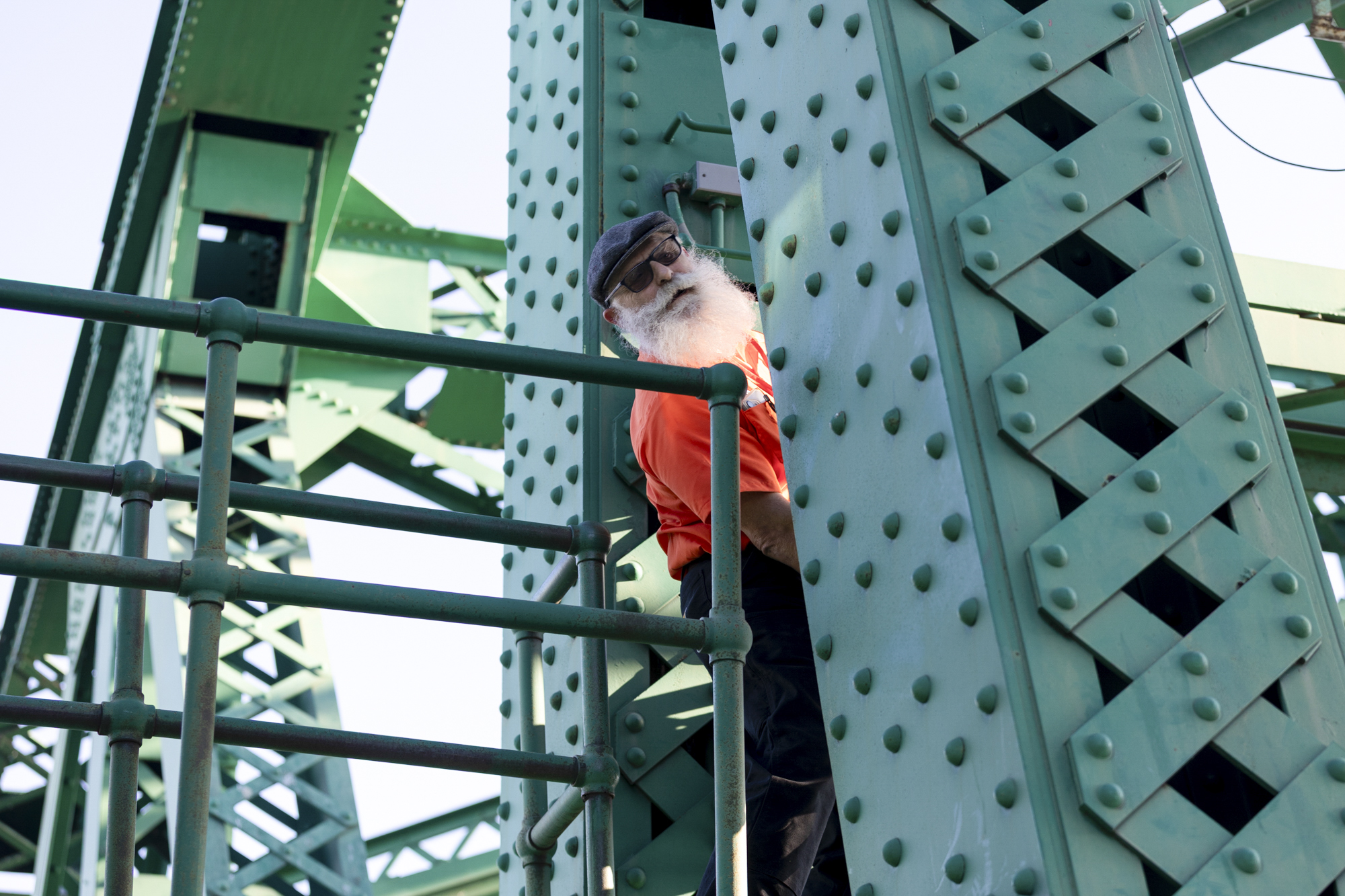
"caption": "John Williams, a bridge utility worker with the Alameda County Public Works Agency, prepares to lift the Park Street Bridge to allow marine traffic through the Oakland-Alameda Estuary on Jan. 13, 2026, in Alameda.",
"credit": "Gustavo Hernandez/KQED",
"altTag": null,
"description": null,
"imgSizes": {
"thumbnail": {
"file": "https://cdn.kqed.org/wp-content/uploads/sites/10/2026/01/011526_ALAMEDABRIDGES_GH_029-KQED-KQED-1-160x107.jpg",
"width": 160,
"height": 107,
"mimeType": "image/jpeg"
},
"1536x1536": {
"file": "https://cdn.kqed.org/wp-content/uploads/sites/10/2026/01/011526_ALAMEDABRIDGES_GH_029-KQED-KQED-1-1536x1024.jpg",
"width": 1536,
"height": 1024,
"mimeType": "image/jpeg"
},
"post-thumbnail": {
"file": "https://cdn.kqed.org/wp-content/uploads/sites/10/2026/01/011526_ALAMEDABRIDGES_GH_029-KQED-KQED-1-672x372.jpg",
"width": 672,
"height": 372,
"mimeType": "image/jpeg"
},
"twentyfourteen-full-width": {
"file": "https://cdn.kqed.org/wp-content/uploads/sites/10/2026/01/011526_ALAMEDABRIDGES_GH_029-KQED-KQED-1-1038x576.jpg",
"width": 1038,
"height": 576,
"mimeType": "image/jpeg"
},
"npr-cds-wide": {
"file": "https://cdn.kqed.org/wp-content/uploads/sites/10/2026/01/011526_ALAMEDABRIDGES_GH_029-KQED-KQED-1-1200x675.jpg",
"width": 1200,
"height": 675,
"mimeType": "image/jpeg"
},
"kqedFullSize": {
"file": "https://cdn.kqed.org/wp-content/uploads/sites/10/2026/01/011526_ALAMEDABRIDGES_GH_029-KQED-KQED-1.jpg",
"width": 2000,
"height": 1333
}
},
"isLoading": false,
"fetchFailed": false
},
"news_12081739": {
"type": "attachments",
"id": "news_12081739",
"meta": {
"index": "attachments_1716263798",
"site": "news",
"id": "12081739",
"found": true
},
"title": "DMVCM1",
"publishDate": 1777479664,
"status": "inherit",
"parent": 12081737,
"modified": 1777479686,
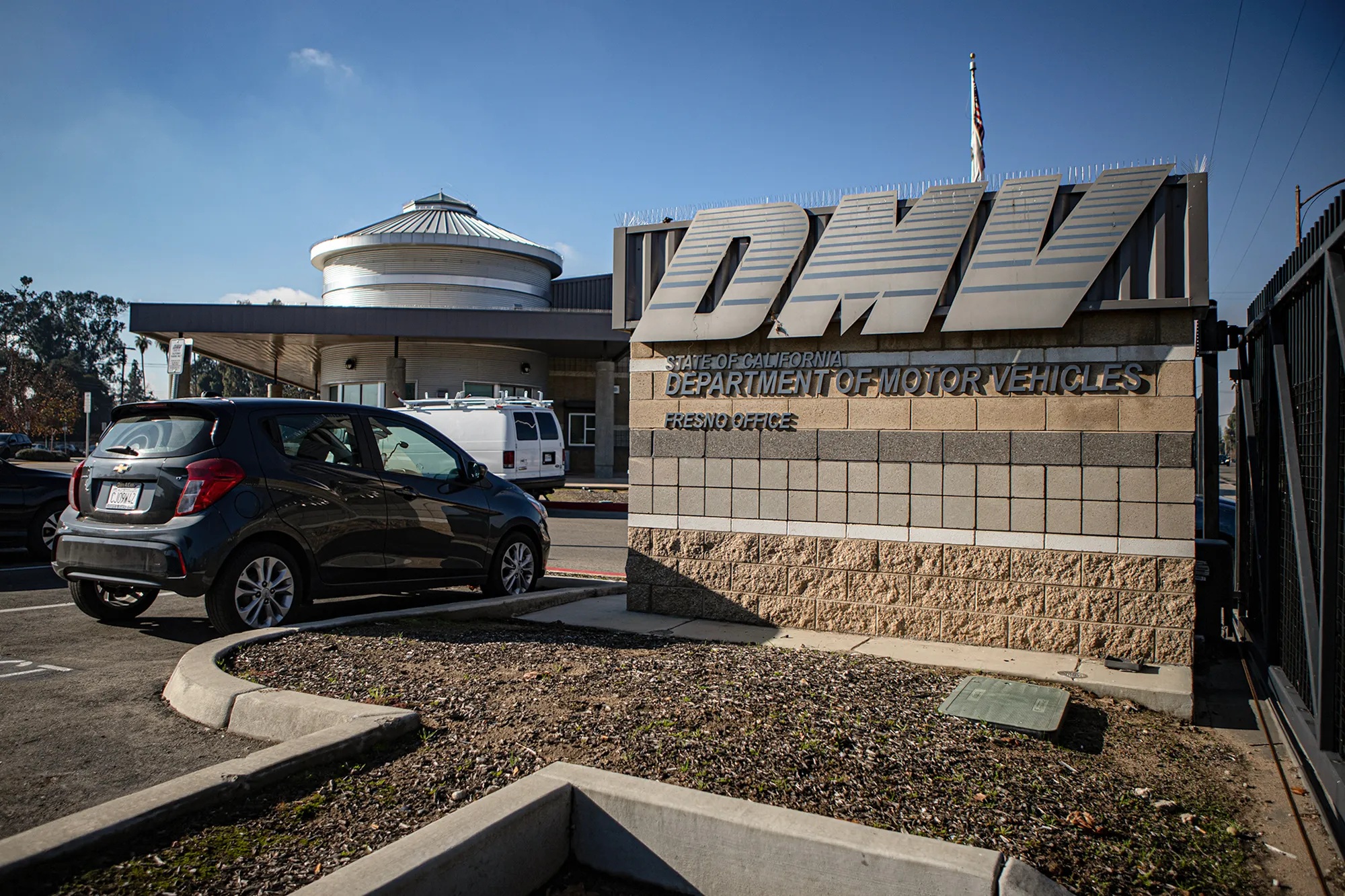
"caption": "The DMV has asked for $55 million to share its driver license data to a national organization. Advocates say the move could endanger unauthorized immigrants. Department of Motor Vehicles parking lot in central Fresno on Dec. 13, 2022. ",
"credit": "Larry Valenzuela for CalMatters",
"altTag": null,
"description": null,
"imgSizes": {
"thumbnail": {
"file": "https://cdn.kqed.org/wp-content/uploads/sites/10/2026/04/DMVCM1-160x107.jpg",
"width": 160,
"height": 107,
"mimeType": "image/jpeg"
},
"1536x1536": {
"file": "https://cdn.kqed.org/wp-content/uploads/sites/10/2026/04/DMVCM1-1536x1024.jpg",
"width": 1536,
"height": 1024,
"mimeType": "image/jpeg"
},
"post-thumbnail": {
"file": "https://cdn.kqed.org/wp-content/uploads/sites/10/2026/04/DMVCM1-672x372.jpg",
"width": 672,
"height": 372,
"mimeType": "image/jpeg"
},
"twentyfourteen-full-width": {
"file": "https://cdn.kqed.org/wp-content/uploads/sites/10/2026/04/DMVCM1-1038x576.jpg",
"width": 1038,
"height": 576,
"mimeType": "image/jpeg"
},
"npr-cds-wide": {
"file": "https://cdn.kqed.org/wp-content/uploads/sites/10/2026/04/DMVCM1-1200x675.jpg",
"width": 1200,
"height": 675,
"mimeType": "image/jpeg"
},
"npr-cds-square": {
"file": "https://cdn.kqed.org/wp-content/uploads/sites/10/2026/04/DMVCM1-600x600.jpg",
"width": 600,
"height": 600,
"mimeType": "image/jpeg"
},
"kqedFullSize": {
"file": "https://cdn.kqed.org/wp-content/uploads/sites/10/2026/04/DMVCM1.jpg",
"width": 2000,
"height": 1333
}
},
"isLoading": false,
"fetchFailed": false
},
"news_12081747": {
"type": "attachments",
"id": "news_12081747",
"meta": {
"index": "attachments_1716263798",
"site": "news",
"id": "12081747",
"found": true
},
"title": "260429-CIF Trans Athletes-01-KQED",
"publishDate": 1777480821,
"status": "inherit",
"parent": 12088215,
"modified": 1782847753,
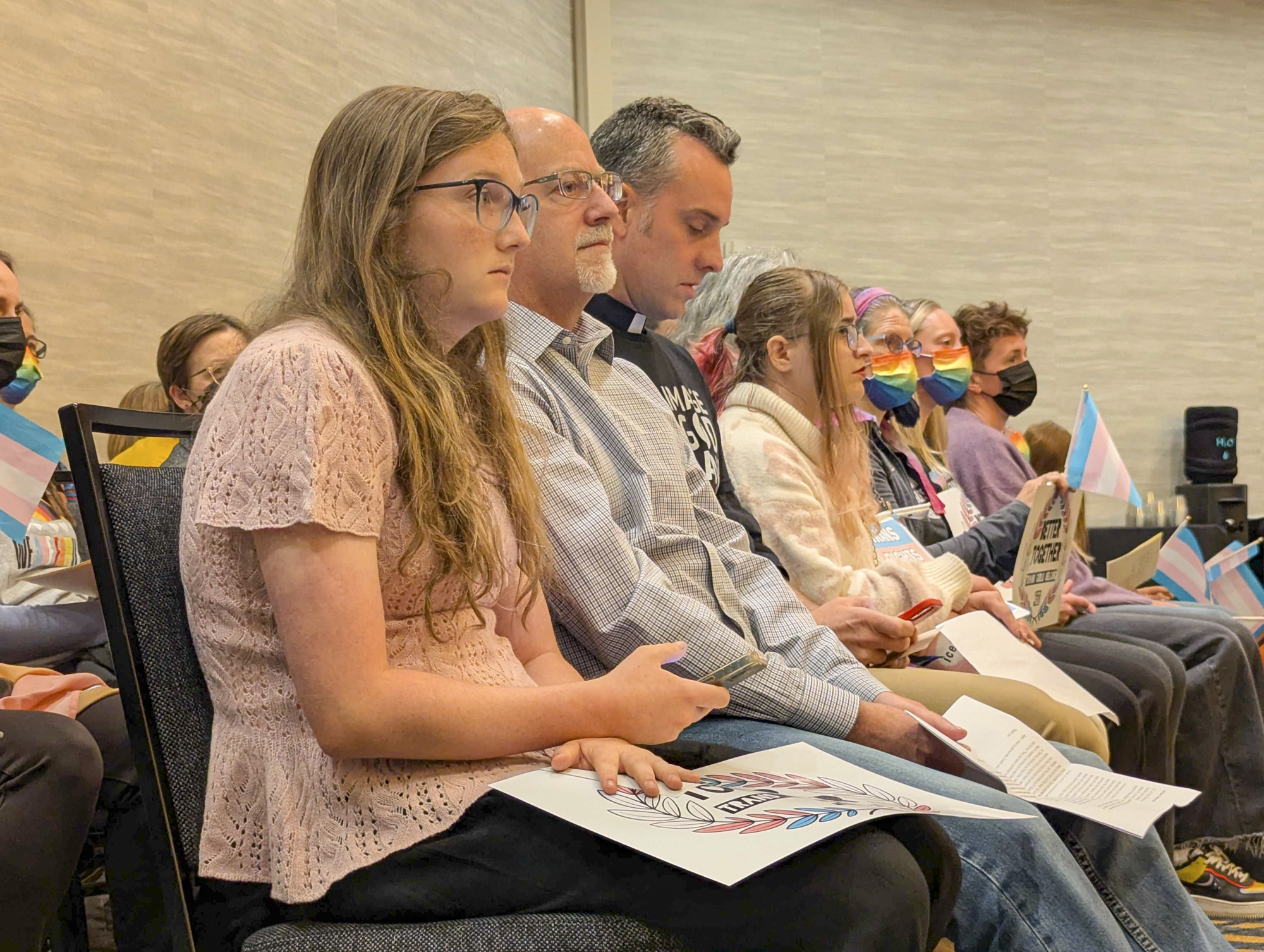
"caption": "Lily, left, and her father, Trevor Norcross, attend a meeting of the California Interscholastic Federation's executive committee in Oakland on April 24, 2026. ",
"credit": "Desmond Meagley/KQED",
"altTag": null,
"description": null,
"imgSizes": {
"thumbnail": {
"file": "https://cdn.kqed.org/wp-content/uploads/sites/10/2026/04/260429-CIF-Trans-Athletes-01-KQED-160x120.jpg",
"width": 160,
"height": 120,
"mimeType": "image/jpeg"
},
"1536x1536": {
"file": "https://cdn.kqed.org/wp-content/uploads/sites/10/2026/04/260429-CIF-Trans-Athletes-01-KQED-1536x1157.jpg",
"width": 1536,
"height": 1157,
"mimeType": "image/jpeg"
},
"post-thumbnail": {
"file": "https://cdn.kqed.org/wp-content/uploads/sites/10/2026/04/260429-CIF-Trans-Athletes-01-KQED-672x372.jpg",
"width": 672,
"height": 372,
"mimeType": "image/jpeg"
},
"twentyfourteen-full-width": {
"file": "https://cdn.kqed.org/wp-content/uploads/sites/10/2026/04/260429-CIF-Trans-Athletes-01-KQED-1038x576.jpg",
"width": 1038,
"height": 576,
"mimeType": "image/jpeg"
},
"npr-cds-wide": {
"file": "https://cdn.kqed.org/wp-content/uploads/sites/10/2026/04/260429-CIF-Trans-Athletes-01-KQED-1200x675.jpg",
"width": 1200,
"height": 675,
"mimeType": "image/jpeg"
},
"npr-cds-square": {
"file": "https://cdn.kqed.org/wp-content/uploads/sites/10/2026/04/260429-CIF-Trans-Athletes-01-KQED-600x600.jpg",
"width": 600,
"height": 600,
"mimeType": "image/jpeg"
},
"kqedFullSize": {
"file": "https://cdn.kqed.org/wp-content/uploads/sites/10/2026/04/260429-CIF-Trans-Athletes-01-KQED.jpg",
"width": 2000,
"height": 1506
}
},
"isLoading": false,
"fetchFailed": false
},
"news_12080500": {
"type": "attachments",
"id": "news_12080500",
"meta": {
"index": "attachments_1716263798",
"site": "news",
"id": "12080500",
"found": true
},
"title": "Payment at checkout register. Customer using credit card at supermarket terminal.",
"publishDate": 1776467962,
"status": "inherit",
"parent": 12079868,
"modified": 1776469331,
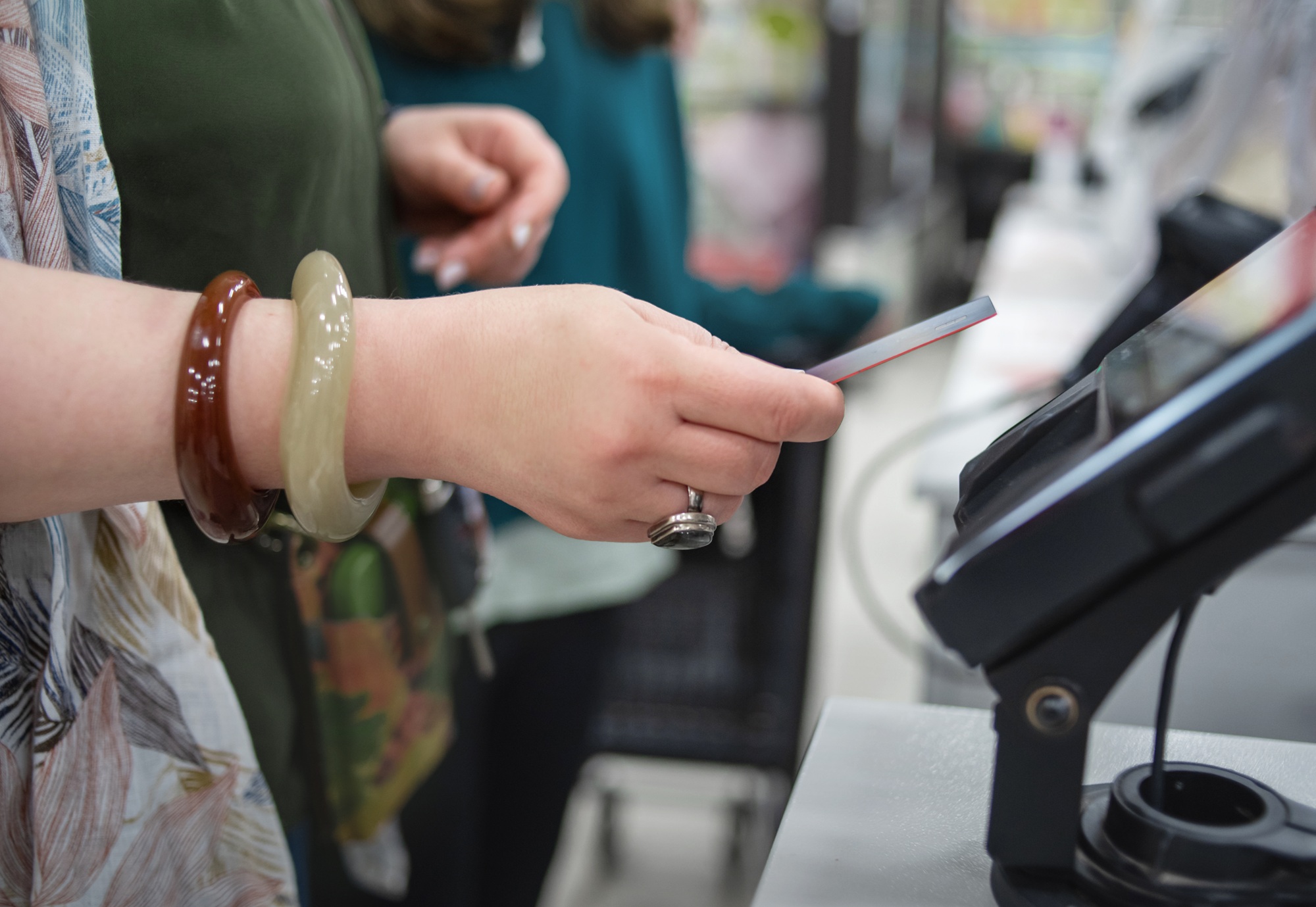
"caption": "Close-up of a hand with jade and brown bracelets, inserting a credit card into a payment terminal at a store checkout. The person is making a purchase at a grocery store or supermarket. The payment device is mounted on a black stand, with other shoppers visible in the blurred background.",
"credit": "Julia Kozlov/Getty Images",
"altTag": null,
"description": null,
"imgSizes": {
"thumbnail": {
"file": "https://cdn.kqed.org/wp-content/uploads/sites/10/2026/04/MiddleClassStimulus-160x110.jpg",
"width": 160,
"height": 110,
"mimeType": "image/jpeg"
},
"1536x1536": {
"file": "https://cdn.kqed.org/wp-content/uploads/sites/10/2026/04/MiddleClassStimulus-1536x1059.jpg",
"width": 1536,
"height": 1059,
"mimeType": "image/jpeg"
},
"post-thumbnail": {
"file": "https://cdn.kqed.org/wp-content/uploads/sites/10/2026/04/MiddleClassStimulus-672x372.jpg",
"width": 672,
"height": 372,
"mimeType": "image/jpeg"
},
"twentyfourteen-full-width": {
"file": "https://cdn.kqed.org/wp-content/uploads/sites/10/2026/04/MiddleClassStimulus-1038x576.jpg",
"width": 1038,
"height": 576,
"mimeType": "image/jpeg"
},
"npr-cds-wide": {
"file": "https://cdn.kqed.org/wp-content/uploads/sites/10/2026/04/MiddleClassStimulus-1200x675.jpg",
"width": 1200,
"height": 675,
"mimeType": "image/jpeg"
},
"npr-cds-square": {
"file": "https://cdn.kqed.org/wp-content/uploads/sites/10/2026/04/MiddleClassStimulus-600x600.jpg",
"width": 600,
"height": 600,
"mimeType": "image/jpeg"
},
"kqedFullSize": {
"file": "https://cdn.kqed.org/wp-content/uploads/sites/10/2026/04/MiddleClassStimulus.jpg",
"width": 2000,
"height": 1379
}
},
"isLoading": false,
"fetchFailed": false
},
"news_12081658": {
"type": "attachments",
"id": "news_12081658",
"meta": {
"index": "attachments_1716263798",
"site": "news",
"id": "12081658",
"found": true
},
"title": "_MG_6573_qed",
"publishDate": 1777410826,
"status": "inherit",
"parent": 12081460,
"modified": 1777411924,
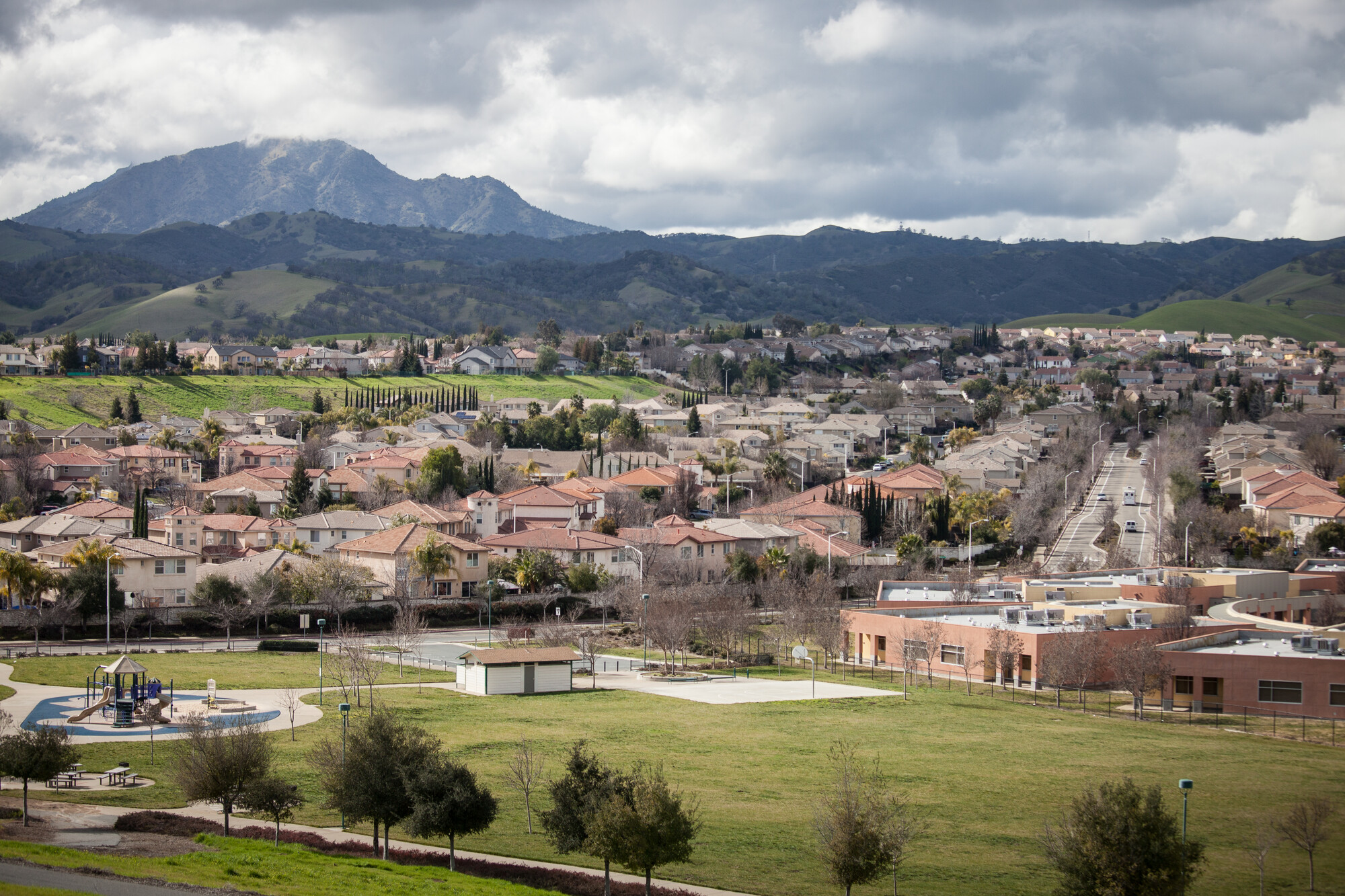
"caption": "A view of a residential part of Antioch with Mount Diablo standing in the background.",
"credit": "Deborah Svoboda/KQED",
"altTag": null,
"description": null,
"imgSizes": {
"thumbnail": {
"file": "https://cdn.kqed.org/wp-content/uploads/sites/10/2026/04/MG_6573_qed-160x107.jpg",
"width": 160,
"height": 107,
"mimeType": "image/jpeg"
},
"1536x1536": {
"file": "https://cdn.kqed.org/wp-content/uploads/sites/10/2026/04/MG_6573_qed-1536x1024.jpg",
"width": 1536,
"height": 1024,
"mimeType": "image/jpeg"
},
"post-thumbnail": {
"file": "https://cdn.kqed.org/wp-content/uploads/sites/10/2026/04/MG_6573_qed-672x372.jpg",
"width": 672,
"height": 372,
"mimeType": "image/jpeg"
},
"twentyfourteen-full-width": {
"file": "https://cdn.kqed.org/wp-content/uploads/sites/10/2026/04/MG_6573_qed-1038x576.jpg",
"width": 1038,
"height": 576,
"mimeType": "image/jpeg"
},
"npr-cds-wide": {
"file": "https://cdn.kqed.org/wp-content/uploads/sites/10/2026/04/MG_6573_qed-1200x675.jpg",
"width": 1200,
"height": 675,
"mimeType": "image/jpeg"
},
"npr-cds-square": {
"file": "https://cdn.kqed.org/wp-content/uploads/sites/10/2026/04/MG_6573_qed-600x600.jpg",
"width": 600,
"height": 600,
"mimeType": "image/jpeg"
},
"kqedFullSize": {
"file": "https://cdn.kqed.org/wp-content/uploads/sites/10/2026/04/MG_6573_qed.jpg",
"width": 2000,
"height": 1333
}
},
"isLoading": false,
"fetchFailed": false
},
"news_12081459": {
"type": "attachments",
"id": "news_12081459",
"meta": {
"index": "attachments_1716263798",
"site": "news",
"id": "12081459",
"found": true
},
"title": "260416-COSTOFDRIVING00282_TV-KQED",
"publishDate": 1777308877,
"status": "inherit",
"parent": 0,
"modified": 1777308888,
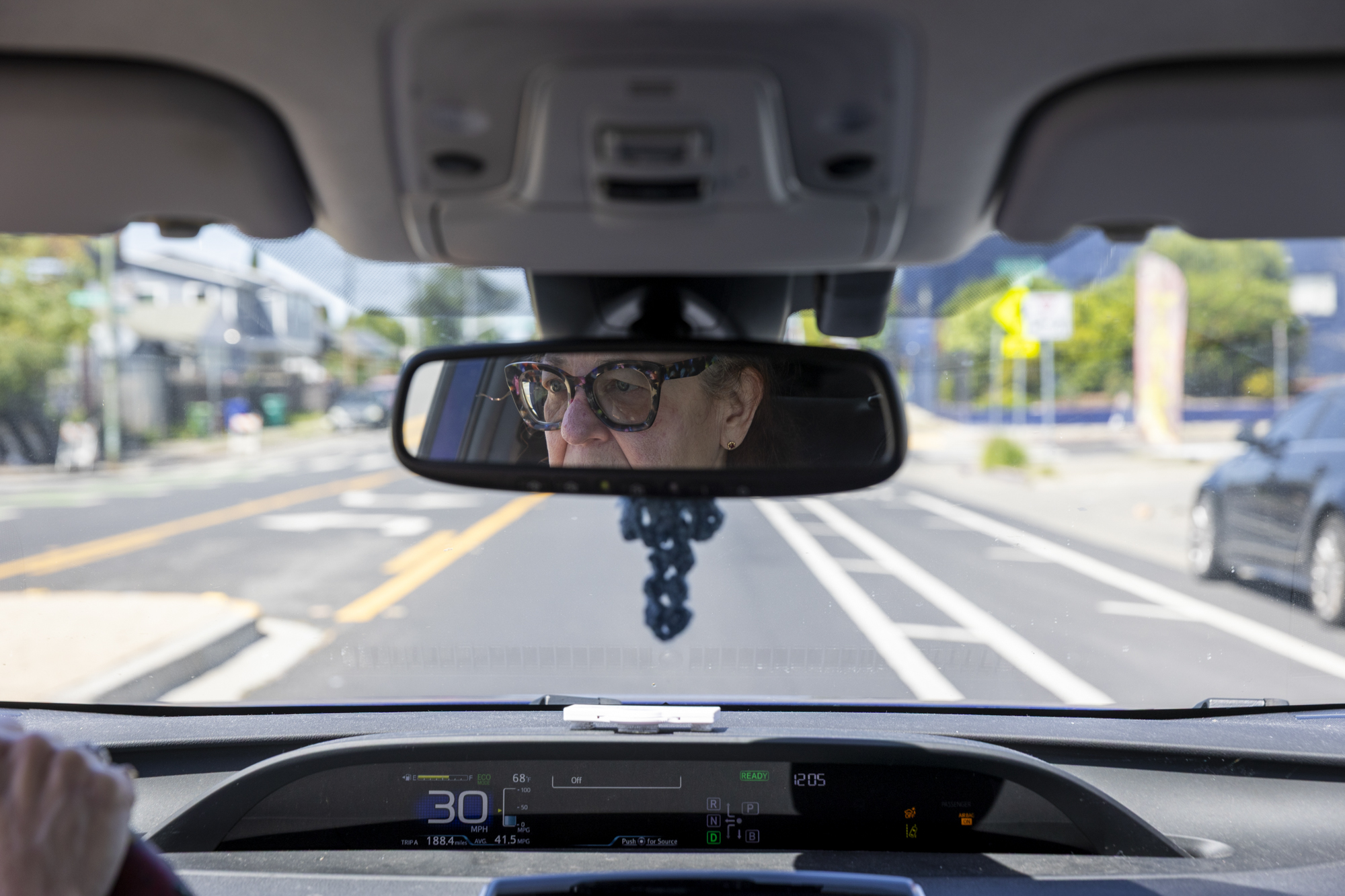
"caption": "Shekinah Samaya-Thomas drives herself and her husband to a food distribution center in Oakland on April 16, 2026.",
"credit": "Tâm Vũ/KQED",
"altTag": null,
"description": null,
"imgSizes": {
"thumbnail": {
"file": "https://cdn.kqed.org/wp-content/uploads/sites/10/2026/04/260416-COSTOFDRIVING00282_TV-KQED-160x107.jpg",
"width": 160,
"height": 107,
"mimeType": "image/jpeg"
},
"1536x1536": {
"file": "https://cdn.kqed.org/wp-content/uploads/sites/10/2026/04/260416-COSTOFDRIVING00282_TV-KQED-1536x1024.jpg",
"width": 1536,
"height": 1024,
"mimeType": "image/jpeg"
},
"post-thumbnail": {
"file": "https://cdn.kqed.org/wp-content/uploads/sites/10/2026/04/260416-COSTOFDRIVING00282_TV-KQED-672x372.jpg",
"width": 672,
"height": 372,
"mimeType": "image/jpeg"
},
"twentyfourteen-full-width": {
"file": "https://cdn.kqed.org/wp-content/uploads/sites/10/2026/04/260416-COSTOFDRIVING00282_TV-KQED-1038x576.jpg",
"width": 1038,
"height": 576,
"mimeType": "image/jpeg"
},
"npr-cds-wide": {
"file": "https://cdn.kqed.org/wp-content/uploads/sites/10/2026/04/260416-COSTOFDRIVING00282_TV-KQED-1200x675.jpg",
"width": 1200,
"height": 675,
"mimeType": "image/jpeg"
},
"npr-cds-square": {
"file": "https://cdn.kqed.org/wp-content/uploads/sites/10/2026/04/260416-COSTOFDRIVING00282_TV-KQED-600x600.jpg",
"width": 600,
"height": 600,
"mimeType": "image/jpeg"
},
"kqedFullSize": {
"file": "https://cdn.kqed.org/wp-content/uploads/sites/10/2026/04/260416-COSTOFDRIVING00282_TV-KQED.jpg",
"width": 2000,
"height": 1333
}
},
"isLoading": false,
"fetchFailed": false
},
"news_12081537": {
"type": "attachments",
"id": "news_12081537",
"meta": {
"index": "attachments_1716263798",
"site": "news",
"id": "12081537",
"found": true
},
"title": "260427-CONSTRUCTIONWORKERS-19-BL-KQED",
"publishDate": 1777323932,
"status": "inherit",
"parent": 0,
"modified": 1777331473,
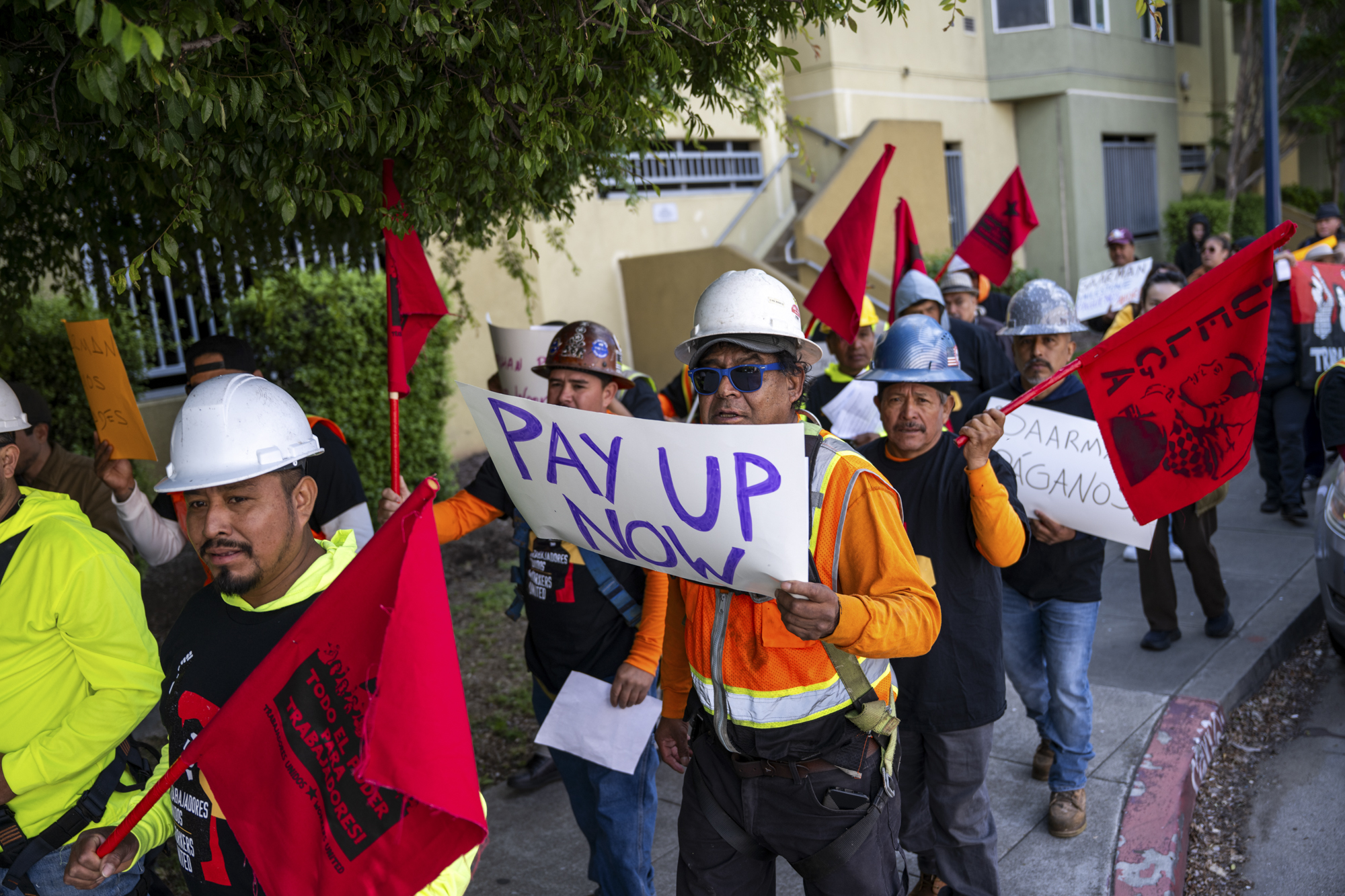
"caption": "Construction workers and supporters march through Oakland to the Lion Creek Crossings, an affordable housing complex, on April 27, 2026, as part of a demonstration calling for more than $300,000 in unpaid wages from Bay Area contractors Milestone Roofing and Saarman Construction.",
"credit": "Beth LaBerge/KQED",
"altTag": null,
"description": null,
"imgSizes": {
"thumbnail": {
"file": "https://cdn.kqed.org/wp-content/uploads/sites/10/2026/04/260427-CONSTRUCTIONWORKERS-19-BL-KQED-160x107.jpg",
"width": 160,
"height": 107,
"mimeType": "image/jpeg"
},
"1536x1536": {
"file": "https://cdn.kqed.org/wp-content/uploads/sites/10/2026/04/260427-CONSTRUCTIONWORKERS-19-BL-KQED-1536x1024.jpg",
"width": 1536,
"height": 1024,
"mimeType": "image/jpeg"
},
"post-thumbnail": {
"file": "https://cdn.kqed.org/wp-content/uploads/sites/10/2026/04/260427-CONSTRUCTIONWORKERS-19-BL-KQED-672x372.jpg",
"width": 672,
"height": 372,
"mimeType": "image/jpeg"
},
"twentyfourteen-full-width": {
"file": "https://cdn.kqed.org/wp-content/uploads/sites/10/2026/04/260427-CONSTRUCTIONWORKERS-19-BL-KQED-1038x576.jpg",
"width": 1038,
"height": 576,
"mimeType": "image/jpeg"
},
"npr-cds-wide": {
"file": "https://cdn.kqed.org/wp-content/uploads/sites/10/2026/04/260427-CONSTRUCTIONWORKERS-19-BL-KQED-1200x675.jpg",
"width": 1200,
"height": 675,
"mimeType": "image/jpeg"
},
"npr-cds-square": {
"file": "https://cdn.kqed.org/wp-content/uploads/sites/10/2026/04/260427-CONSTRUCTIONWORKERS-19-BL-KQED-600x600.jpg",
"width": 600,
"height": 600,
"mimeType": "image/jpeg"
},
"kqedFullSize": {
"file": "https://cdn.kqed.org/wp-content/uploads/sites/10/2026/04/260427-CONSTRUCTIONWORKERS-19-BL-KQED.jpg",
"width": 2000,
"height": 1333
}
},
"isLoading": false,
"fetchFailed": false
},
"news_12081506": {
"type": "attachments",
"id": "news_12081506",
"meta": {
"index": "attachments_1716263798",
"site": "news",
"id": "12081506",
"found": true
},
"title": "US-POLITICS-HEALTH-TAXATION",
"publishDate": 1777319044,
"status": "inherit",
"parent": 12081502,
"modified": 1789514617,
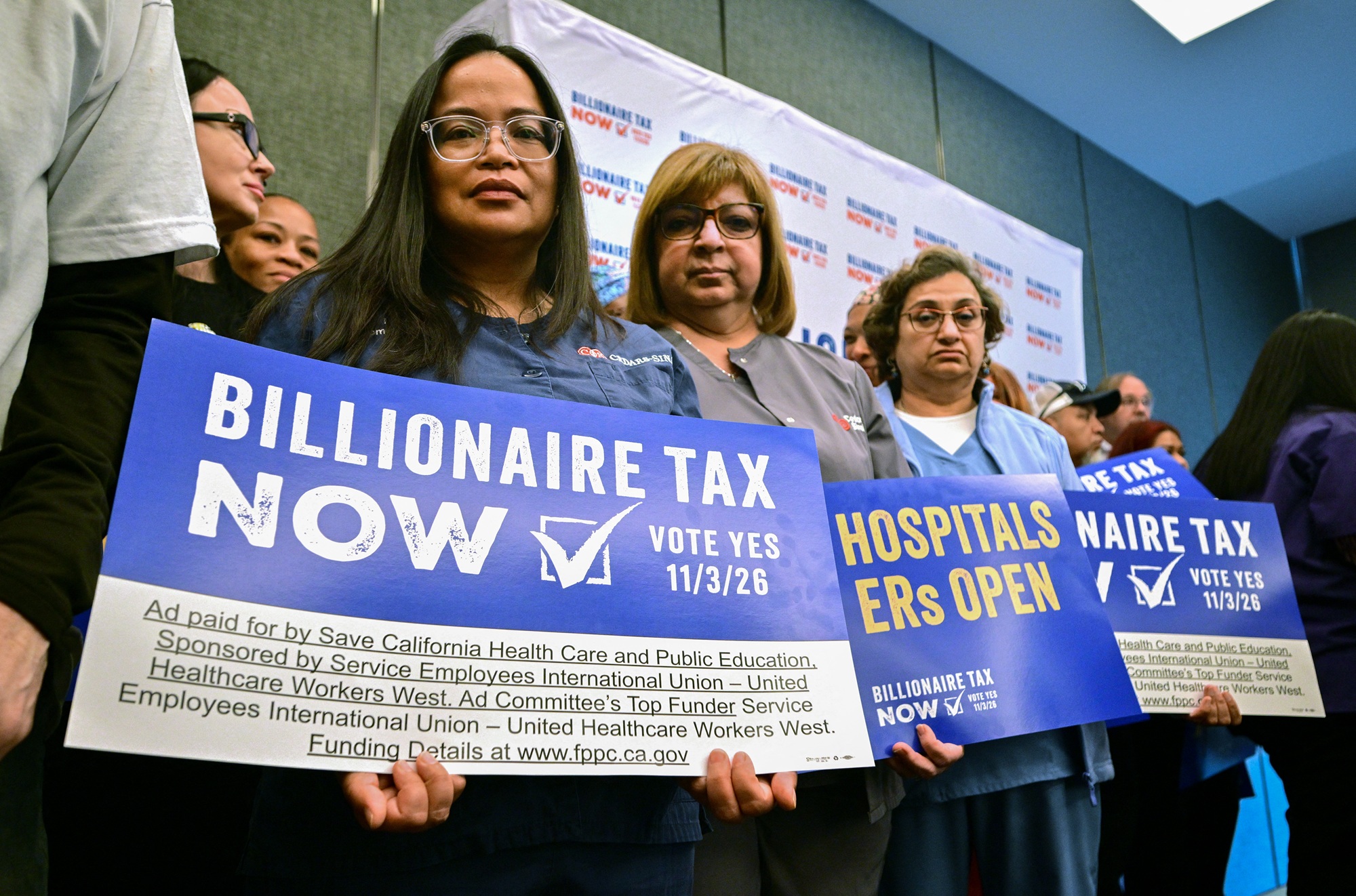
"caption": "Healthcare workers and other supporters with the Billionaire Tax Now coalition hold placards during a media briefing in Los Angeles on April 27, 2026. Healthcare workers and allies outlined the next steps in their effort to get California's Billionaire Tax on the ballot for the November election, with their efforts already exceeding 1,500,000 signatures collected from across the state. The initiative would levy a one-time 5% tax on California billionaires.",
"credit": "Frederic J. Brown/AFP via Getty Images",
"altTag": null,
"description": null,
"imgSizes": {
"thumbnail": {
"file": "https://cdn.kqed.org/wp-content/uploads/sites/10/2026/04/BillionaireTaxGetty-160x106.jpg",
"width": 160,
"height": 106,
"mimeType": "image/jpeg"
},
"1536x1536": {
"file": "https://cdn.kqed.org/wp-content/uploads/sites/10/2026/04/BillionaireTaxGetty-1536x1015.jpg",
"width": 1536,
"height": 1015,
"mimeType": "image/jpeg"
},
"post-thumbnail": {
"file": "https://cdn.kqed.org/wp-content/uploads/sites/10/2026/04/BillionaireTaxGetty-672x372.jpg",
"width": 672,
"height": 372,
"mimeType": "image/jpeg"
},
"twentyfourteen-full-width": {
"file": "https://cdn.kqed.org/wp-content/uploads/sites/10/2026/04/BillionaireTaxGetty-1038x576.jpg",
"width": 1038,
"height": 576,
"mimeType": "image/jpeg"
},
"npr-cds-wide": {
"file": "https://cdn.kqed.org/wp-content/uploads/sites/10/2026/04/BillionaireTaxGetty-1200x675.jpg",
"width": 1200,
"height": 675,
"mimeType": "image/jpeg"
},
"npr-cds-square": {
"file": "https://cdn.kqed.org/wp-content/uploads/sites/10/2026/04/BillionaireTaxGetty-600x600.jpg",
"width": 600,
"height": 600,
"mimeType": "image/jpeg"
},
"kqedFullSize": {
"file": "https://cdn.kqed.org/wp-content/uploads/sites/10/2026/04/BillionaireTaxGetty.jpg",
"width": 2000,
"height": 1322
}
},
"isLoading": false,
"fetchFailed": false
},
"news_12081524": {
"type": "attachments",
"id": "news_12081524",
"meta": {
"index": "attachments_1716263798",
"site": "news",
"id": "12081524",
"found": true
},
"title": "APTOPIX Trump White House Correspondents Dinner",
"publishDate": 1777321779,
"status": "inherit",
"parent": 12081521,
"modified": 1777321894,
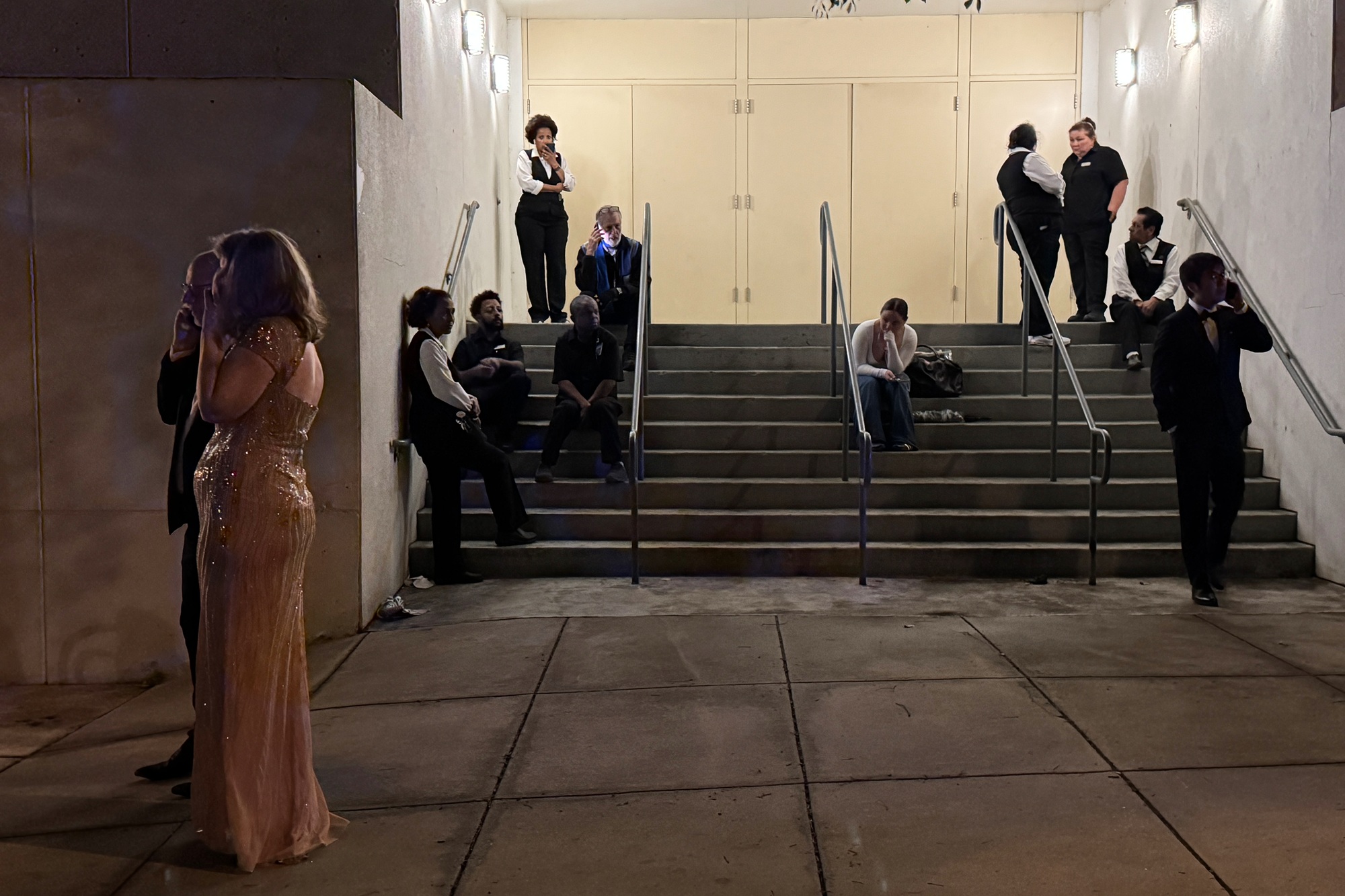
"caption": "Attendees and hotel workers evacuate after an incident at the Washington Hilton during the White House Correspondents Dinner, on Saturday, April 25, 2026, in Washington.",
"credit": "Mark Schiefelbein/AP Photo",
"altTag": null,
"description": null,
"imgSizes": {
"thumbnail": {
"file": "https://cdn.kqed.org/wp-content/uploads/sites/10/2026/04/WHCDAP1-160x107.jpg",
"width": 160,
"height": 107,
"mimeType": "image/jpeg"
},
"1536x1536": {
"file": "https://cdn.kqed.org/wp-content/uploads/sites/10/2026/04/WHCDAP1-1536x1024.jpg",
"width": 1536,
"height": 1024,
"mimeType": "image/jpeg"
},
"post-thumbnail": {
"file": "https://cdn.kqed.org/wp-content/uploads/sites/10/2026/04/WHCDAP1-672x372.jpg",
"width": 672,
"height": 372,
"mimeType": "image/jpeg"
},
"twentyfourteen-full-width": {
"file": "https://cdn.kqed.org/wp-content/uploads/sites/10/2026/04/WHCDAP1-1038x576.jpg",
"width": 1038,
"height": 576,
"mimeType": "image/jpeg"
},
"npr-cds-wide": {
"file": "https://cdn.kqed.org/wp-content/uploads/sites/10/2026/04/WHCDAP1-1200x675.jpg",
"width": 1200,
"height": 675,
"mimeType": "image/jpeg"
},
"npr-cds-square": {
"file": "https://cdn.kqed.org/wp-content/uploads/sites/10/2026/04/WHCDAP1-600x600.jpg",
"width": 600,
"height": 600,
"mimeType": "image/jpeg"
},
"kqedFullSize": {
"file": "https://cdn.kqed.org/wp-content/uploads/sites/10/2026/04/WHCDAP1.jpg",
"width": 2000,
"height": 1333
}
},
"isLoading": false,
"fetchFailed": false
},
"news_11695474": {
"type": "attachments",
"id": "news_11695474",
"meta": {
"index": "attachments_1716263798",
"site": "news",
"id": "11695474",
"found": true
},
"title": null,
"publishDate": 1538246889,
"status": "inherit",
"parent": 11695471,
"modified": 1777297231,
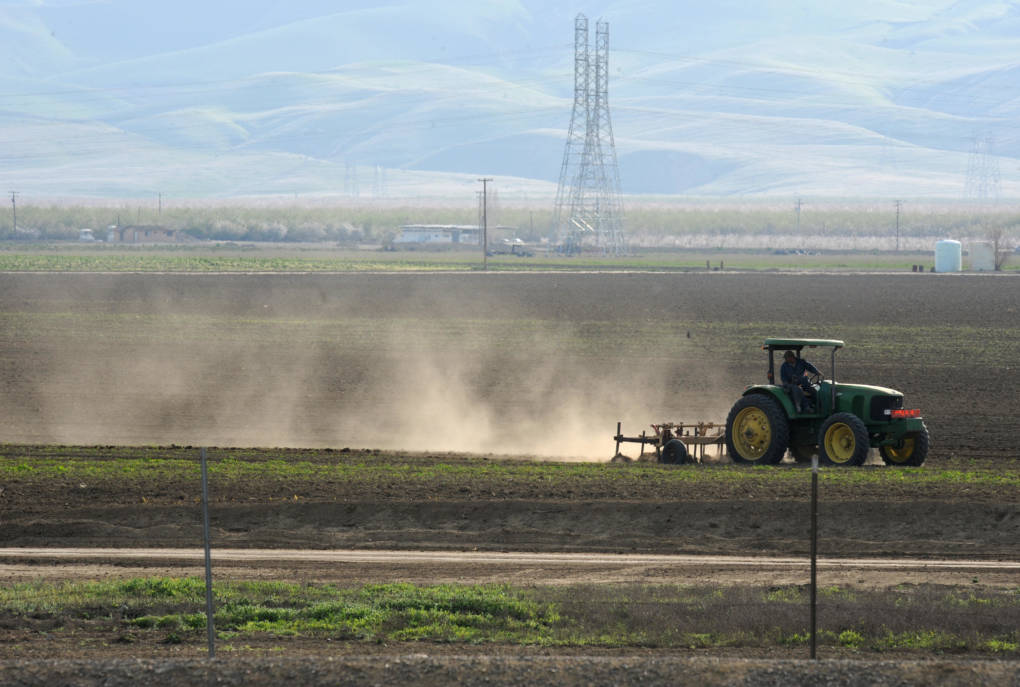
"caption": "Fungal spores are carried in the dust. Activities including farming in the Central Valley contribute to the spread of the spores.",
"credit": "Robin Beck/Getty Images",
"altTag": null,
"description": null,
"imgSizes": {
"thumbnail": {
"file": "https://cdn.kqed.org/wp-content/uploads/sites/10/2018/09/RS6665_85475461-160x108.jpg",
"width": 160,
"height": 108,
"mimeType": "image/jpeg"
},
"medium": {
"file": "https://cdn.kqed.org/wp-content/uploads/sites/10/2018/09/RS6665_85475461-800x539.jpg",
"width": 800,
"height": 539,
"mimeType": "image/jpeg"
},
"large": {
"file": "https://cdn.kqed.org/wp-content/uploads/sites/10/2018/09/RS6665_85475461-1020x687.jpg",
"width": 1020,
"height": 687,
"mimeType": "image/jpeg"
},
"complete_open_graph": {
"file": "https://cdn.kqed.org/wp-content/uploads/sites/10/2018/09/RS6665_85475461-1200x808.jpg",
"width": 1200,
"height": 808,
"mimeType": "image/jpeg"
},
"fd-lrg": {
"file": "https://cdn.kqed.org/wp-content/uploads/sites/10/2018/09/RS6665_85475461-1920x1294.jpg",
"width": 1920,
"height": 1294,
"mimeType": "image/jpeg"
},
"fd-med": {
"file": "https://cdn.kqed.org/wp-content/uploads/sites/10/2018/09/RS6665_85475461-1180x795.jpg",
"width": 1180,
"height": 795,
"mimeType": "image/jpeg"
},
"fd-sm": {
"file": "https://cdn.kqed.org/wp-content/uploads/sites/10/2018/09/RS6665_85475461-960x647.jpg",
"width": 960,
"height": 647,
"mimeType": "image/jpeg"
},
"post-thumbnail": {
"file": "https://cdn.kqed.org/wp-content/uploads/sites/10/2018/09/RS6665_85475461-672x372.jpg",
"width": 672,
"height": 372,
"mimeType": "image/jpeg"
},
"twentyfourteen-full-width": {
"file": "https://cdn.kqed.org/wp-content/uploads/sites/10/2018/09/RS6665_85475461-1038x576.jpg",
"width": 1038,
"height": 576,
"mimeType": "image/jpeg"
},
"xxsmall": {
"file": "https://cdn.kqed.org/wp-content/uploads/sites/10/2018/09/RS6665_85475461-240x162.jpg",
"width": 240,
"height": 162,
"mimeType": "image/jpeg"
},
"xsmall": {
"file": "https://cdn.kqed.org/wp-content/uploads/sites/10/2018/09/RS6665_85475461-375x253.jpg",
"width": 375,
"height": 253,
"mimeType": "image/jpeg"
},
"small": {
"file": "https://cdn.kqed.org/wp-content/uploads/sites/10/2018/09/RS6665_85475461-520x350.jpg",
"width": 520,
"height": 350,
"mimeType": "image/jpeg"
},
"xlarge": {
"file": "https://cdn.kqed.org/wp-content/uploads/sites/10/2018/09/RS6665_85475461-1180x795.jpg",
"width": 1180,
"height": 795,
"mimeType": "image/jpeg"
},
"full-width": {
"file": "https://cdn.kqed.org/wp-content/uploads/sites/10/2018/09/RS6665_85475461-1920x1294.jpg",
"width": 1920,
"height": 1294,
"mimeType": "image/jpeg"
},
"guest-author-32": {
"file": "https://cdn.kqed.org/wp-content/uploads/sites/10/2018/09/RS6665_85475461-32x32.jpg",
"width": 32,
"height": 32,
"mimeType": "image/jpeg"
},
"guest-author-50": {
"file": "https://cdn.kqed.org/wp-content/uploads/sites/10/2018/09/RS6665_85475461-50x50.jpg",
"width": 50,
"height": 50,
"mimeType": "image/jpeg"
},
"guest-author-64": {
"file": "https://cdn.kqed.org/wp-content/uploads/sites/10/2018/09/RS6665_85475461-64x64.jpg",
"width": 64,
"height": 64,
"mimeType": "image/jpeg"
},
"guest-author-96": {
"file": "https://cdn.kqed.org/wp-content/uploads/sites/10/2018/09/RS6665_85475461-96x96.jpg",
"width": 96,
"height": 96,
"mimeType": "image/jpeg"
},
"guest-author-128": {
"file": "https://cdn.kqed.org/wp-content/uploads/sites/10/2018/09/RS6665_85475461-128x128.jpg",
"width": 128,
"height": 128,
"mimeType": "image/jpeg"
},
"detail": {
"file": "https://cdn.kqed.org/wp-content/uploads/sites/10/2018/09/RS6665_85475461-150x150.jpg",
"width": 150,
"height": 150,
"mimeType": "image/jpeg"
},
"kqedFullSize": {
"file": "https://cdn.kqed.org/wp-content/uploads/sites/10/2018/09/RS6665_85475461-e1538246933664.jpg",
"width": 1920,
"height": 1294
}
},
"isLoading": false,
"fetchFailed": false
},
"news_12080929": {
"type": "attachments",
"id": "news_12080929",
"meta": {
"index": "attachments_1716263798",
"site": "news",
"id": "12080929",
"found": true
},
"title": "260422-ALTMANMUSK-MD-01-KQED",
"publishDate": 1776885164,
"status": "inherit",
"parent": 0,
"modified": 1776885551,
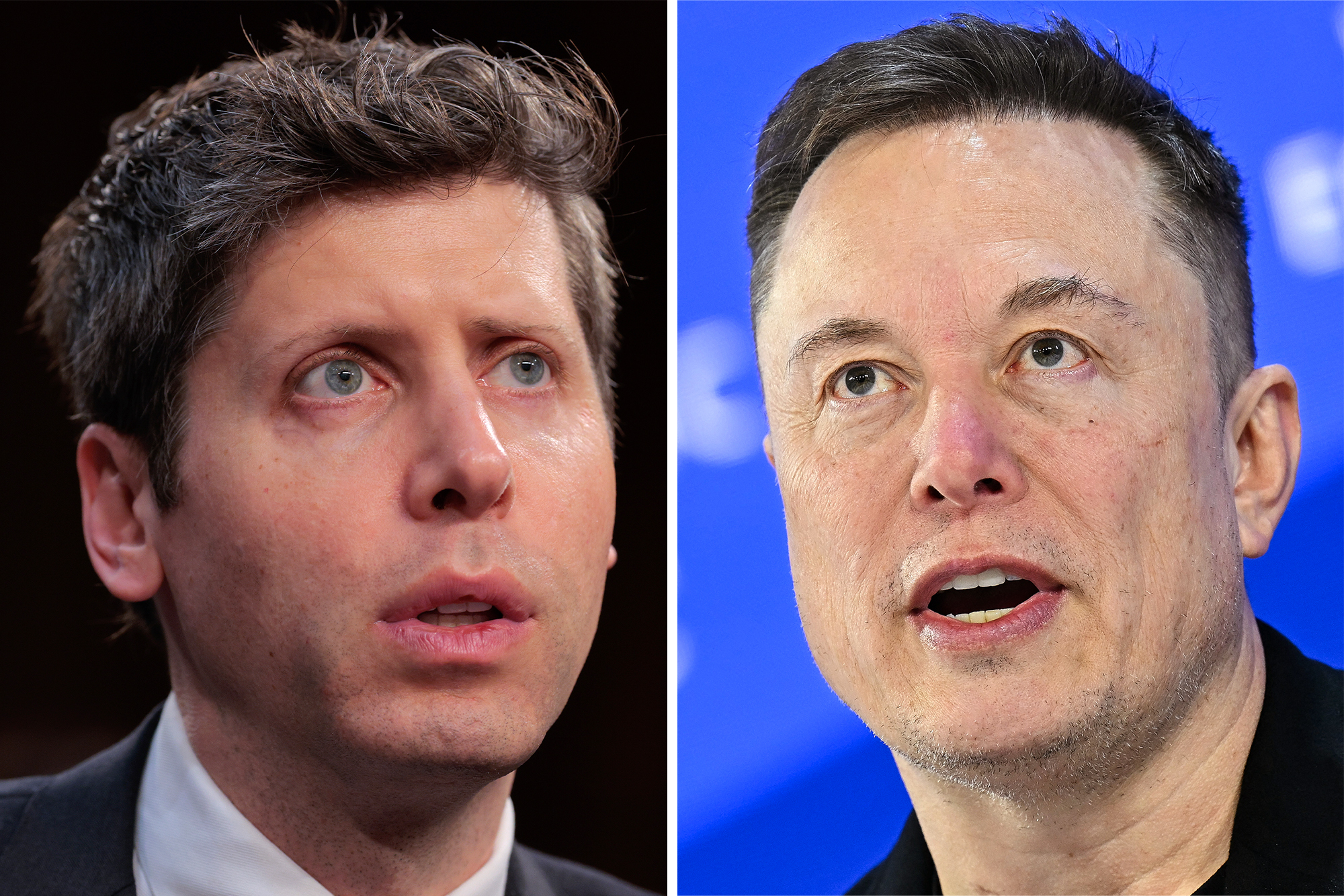
"caption": "Once allies in what they called a mission to develop AI safely for humanity, Elon Musk and Sam Altman will let a federal judge and jury decide what that promise was worth. The trial is slated to begin April 27, 2026.",
"credit": "Left: Chip Somodevilla/Getty Images; Right: Fabrice Coffrini/AFP via Getty Images",
"altTag": null,
"description": null,
"imgSizes": {
"thumbnail": {
"file": "https://cdn.kqed.org/wp-content/uploads/sites/10/2026/04/260422-ALTMANMUSK-MD-01-KQED-160x107.jpg",
"width": 160,
"height": 107,
"mimeType": "image/jpeg"
},
"1536x1536": {
"file": "https://cdn.kqed.org/wp-content/uploads/sites/10/2026/04/260422-ALTMANMUSK-MD-01-KQED-1536x1025.jpg",
"width": 1536,
"height": 1025,
"mimeType": "image/jpeg"
},
"post-thumbnail": {
"file": "https://cdn.kqed.org/wp-content/uploads/sites/10/2026/04/260422-ALTMANMUSK-MD-01-KQED-672x372.jpg",
"width": 672,
"height": 372,
"mimeType": "image/jpeg"
},
"twentyfourteen-full-width": {
"file": "https://cdn.kqed.org/wp-content/uploads/sites/10/2026/04/260422-ALTMANMUSK-MD-01-KQED-1038x576.jpg",
"width": 1038,
"height": 576,
"mimeType": "image/jpeg"
},
"npr-cds-wide": {
"file": "https://cdn.kqed.org/wp-content/uploads/sites/10/2026/04/260422-ALTMANMUSK-MD-01-KQED-1200x675.jpg",
"width": 1200,
"height": 675,
"mimeType": "image/jpeg"
},
"npr-cds-square": {
"file": "https://cdn.kqed.org/wp-content/uploads/sites/10/2026/04/260422-ALTMANMUSK-MD-01-KQED-600x600.jpg",
"width": 600,
"height": 600,
"mimeType": "image/jpeg"
},
"kqedFullSize": {
"file": "https://cdn.kqed.org/wp-content/uploads/sites/10/2026/04/260422-ALTMANMUSK-MD-01-KQED.jpg",
"width": 2000,
"height": 1334
}
},
"isLoading": false,
"fetchFailed": false
},
"news_12081258": {
"type": "attachments",
"id": "news_12081258",
"meta": {
"index": "attachments_1716263798",
"site": "news",
"id": "12081258",
"found": true
},
"title": "260423-CONCORD MOUNDS-MD-08-KQED-3",
"publishDate": 1777036174,
"status": "inherit",
"parent": 0,
"modified": 1777036330,
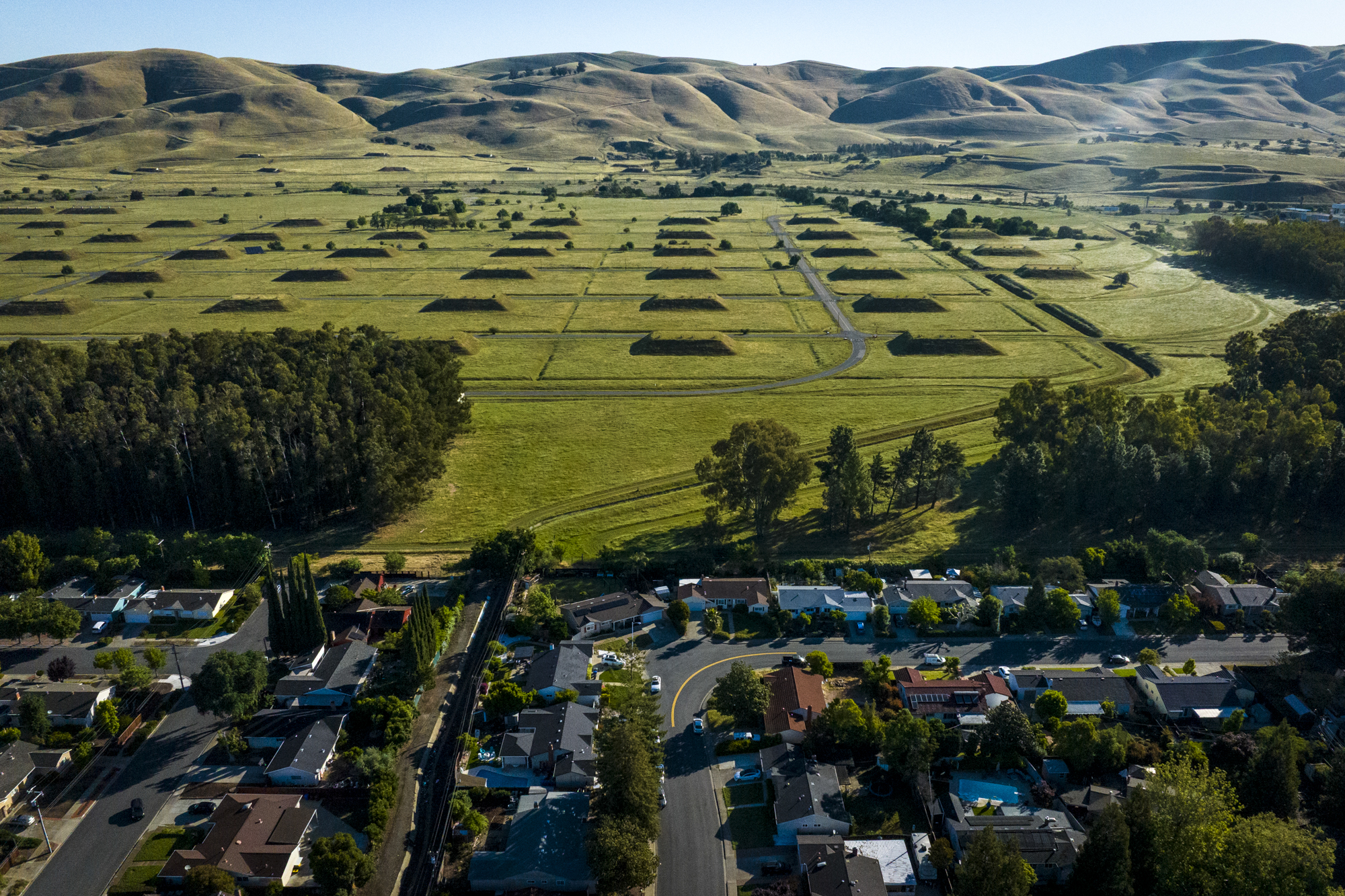
"caption": "Bunkers previously used for storing ammunition at the former Concord Naval Weapons Station abut a residential neighborhood in Concord on April 23, 2026.",
"credit": "Martin do Nascimento/KQED",
"altTag": null,
"description": null,
"imgSizes": {
"thumbnail": {
"file": "https://cdn.kqed.org/wp-content/uploads/sites/10/2026/04/260423-CONCORD-MOUNDS-MD-08-KQED-3-160x107.jpg",
"width": 160,
"height": 107,
"mimeType": "image/jpeg"
},
"1536x1536": {
"file": "https://cdn.kqed.org/wp-content/uploads/sites/10/2026/04/260423-CONCORD-MOUNDS-MD-08-KQED-3-1536x1024.jpg",
"width": 1536,
"height": 1024,
"mimeType": "image/jpeg"
},
"post-thumbnail": {
"file": "https://cdn.kqed.org/wp-content/uploads/sites/10/2026/04/260423-CONCORD-MOUNDS-MD-08-KQED-3-672x372.jpg",
"width": 672,
"height": 372,
"mimeType": "image/jpeg"
},
"twentyfourteen-full-width": {
"file": "https://cdn.kqed.org/wp-content/uploads/sites/10/2026/04/260423-CONCORD-MOUNDS-MD-08-KQED-3-1038x576.jpg",
"width": 1038,
"height": 576,
"mimeType": "image/jpeg"
},
"npr-cds-wide": {
"file": "https://cdn.kqed.org/wp-content/uploads/sites/10/2026/04/260423-CONCORD-MOUNDS-MD-08-KQED-3-1200x675.jpg",
"width": 1200,
"height": 675,
"mimeType": "image/jpeg"
},
"npr-cds-square": {
"file": "https://cdn.kqed.org/wp-content/uploads/sites/10/2026/04/260423-CONCORD-MOUNDS-MD-08-KQED-3-600x600.jpg",
"width": 600,
"height": 600,
"mimeType": "image/jpeg"
},
"kqedFullSize": {
"file": "https://cdn.kqed.org/wp-content/uploads/sites/10/2026/04/260423-CONCORD-MOUNDS-MD-08-KQED-3.jpg",
"width": 2000,
"height": 1333
}
},
"isLoading": false,
"fetchFailed": false
}
},
"audioPlayerReducer": {
"postId": "stream_live",
"isPaused": true,
"isPlaying": false,
"pfsActive": false,
"pledgeModalIsOpen": true,
"playerDrawerIsOpen": false,
"liveAudioPlayStartedAt": 0,
"liveAudioPlayContext": ""
},
"authorsReducer": {
"byline_news_12081737": {
"type": "authors",
"id": "byline_news_12081737",
"meta": {
"override": true
},
"slug": "byline_news_12081737",
"name": "Khari Johnson and Wendy Fry, CalMatters",
"isLoading": false
},
"byline_news_12081521": {
"type": "authors",
"id": "byline_news_12081521",
"meta": {
"override": true
},
"slug": "byline_news_12081521",
"name": "Eric Tucker, Michael Kunzelman and Alanna Durkin Richer, Associated Press",
"isLoading": false
},
"kqed": {
"type": "authors",
"id": "236",
"meta": {
"index": "authors_1716337520",
"id": "236",
"found": true
},
"name": "KQED News Staff",
"firstName": "KQED News Staff",
"lastName": null,
"slug": "kqed",
"email": "faq@kqed.org",
"display_author_email": false,
"staff_mastheads": [],
"title": null,
"bio": null,
"avatar": "https://secure.gravatar.com/avatar/ef0e801a68c4c54afa9180db14084167?s=600&d=blank&r=g",
"twitter": null,
"facebook": null,
"instagram": null,
"linkedin": null,
"sites": [
{
"site": "arts",
"roles": [
"contributor"
]
},
{
"site": "news",
"roles": [
"editor"
]
},
{
"site": "futureofyou",
"roles": [
"author"
]
}
],
"headData": {
"title": "KQED News Staff | KQED",
"description": null,
"ogImgSrc": "https://secure.gravatar.com/avatar/ef0e801a68c4c54afa9180db14084167?s=600&d=blank&r=g",
"twImgSrc": "https://secure.gravatar.com/avatar/ef0e801a68c4c54afa9180db14084167?s=600&d=blank&r=g"
},
"isLoading": false,
"link": "/author/kqed"
},
"rachael-myrow": {
"type": "authors",
"id": "251",
"meta": {
"index": "authors_1716337520",
"id": "251",
"found": true
},
"name": "Rachael Myrow",
"firstName": "Rachael",
"lastName": "Myrow",
"slug": "rachael-myrow",
"email": "rmyrow@kqed.org",
"display_author_email": true,
"staff_mastheads": [
"news"
],
"title": "Senior Editor of KQED's Silicon Valley News Desk",
"bio": "• I write and edit stories about how Silicon Valley power and policies shape everyday life in California. I’m also passionate about making Bay Area history and culture more accessible to a broad public. • I’ve been a journalist for most of my life, starting in high school with The Franklin Press in Los Angeles, where I grew up. While earning my first degree in English at UC Berkeley, I got my start in public radio at KALX-FM. After completing a second degree in journalism at Cal, I landed my first professional job at Marketplace, then moved on to KPCC (now LAist), and then KQED, where I hosted The California Report for more than seven years. • My reporting has appeared on NPR, The World, WBUR’s \u003ci>Here & Now\u003c/i>, and the BBC. I also guest host for KQED’s \u003ci>Forum\u003c/i>, as well as the Commonwealth Club in San Francisco. • I speak periodically on media, democracy and technology issues, and do voiceover work for documentaries and educational video projects. • Outside of the studio, you'll find me hiking Bay Area trails and whipping up Insta-ready meals in my kitchen. • I do not accept gifts, money, or favors from anyone connected to my reporting, I don't pay people for information, and I do not support or donate to political causes. • I strive to treat the people I report on with fairness, honesty, and respect. I also recognize there are often multiple sides to a story and work to verify information through multiple sources and documentation. If I get something wrong, I correct it.",
"avatar": "https://secure.gravatar.com/avatar/3ed8a3c5f26025e4a805ba634cda8cd764906b97438a6d9ce216b044e340da4e?s=600&d=blank&r=g",
"twitter": "rachaelmyrow",
"bluesky": null,
"facebook": null,
"instagram": null,
"linkedin": "https://www.linkedin.com/in/rachaelmyrow/",
"sites": [
{
"site": "arts",
"roles": [
"administrator"
]
},
{
"site": "news",
"roles": [
"edit_others_posts",
"editor"
]
},
{
"site": "futureofyou",
"roles": [
"editor"
]
},
{
"site": "bayareabites",
"roles": [
"editor"
]
},
{
"site": "stateofhealth",
"roles": [
"editor"
]
},
{
"site": "science",
"roles": [
"editor"
]
},
{
"site": "food",
"roles": [
"editor"
]
},
{
"site": "forum",
"roles": [
"editor"
]
},
{
"site": "liveblog",
"roles": [
"author"
]
}
],
"headData": {
"title": "Rachael Myrow | KQED",
"description": "Senior Editor of KQED's Silicon Valley News Desk",
"ogImgSrc": "https://secure.gravatar.com/avatar/3ed8a3c5f26025e4a805ba634cda8cd764906b97438a6d9ce216b044e340da4e?s=600&d=blank&r=g",
"twImgSrc": "https://secure.gravatar.com/avatar/3ed8a3c5f26025e4a805ba634cda8cd764906b97438a6d9ce216b044e340da4e?s=600&d=blank&r=g"
},
"isLoading": false,
"link": "/author/rachael-myrow"
},
"fjhabvala": {
"type": "authors",
"id": "8659",
"meta": {
"index": "authors_1716337520",
"id": "8659",
"found": true
},
"name": "Farida Jhabvala Romero",
"firstName": "Farida",
"lastName": "Jhabvala Romero",
"slug": "fjhabvala",
"email": "fjhabvala@kqed.org",
"display_author_email": true,
"staff_mastheads": [
"news"
],
"title": "KQED Contributor",
"bio": "Farida Jhabvala Romero is a Labor Correspondent for KQED. She previously covered immigration. Farida was \u003ca href=\"https://www.ccnma.org/2022-most-influential-latina-journalists\">named\u003c/a> one of the 10 Most Influential Latina Journalists in California in 2022 by the California Chicano News Media Association. Her work has won awards from the Society of Professional Journalists (Northern California), as well as a national and regional Edward M. Murrow Award for the collaborative reporting projects “Dangerous Air” and “Graying California.” Before joining KQED, Farida worked as a producer at Radio Bilingüe, a national public radio network. Farida earned her master’s degree in journalism from Stanford University.",
"avatar": "https://secure.gravatar.com/avatar/f9f022d4e2609741874222a1e9d41f48fea74011aa7c615eef91d9a50c944ebe?s=600&d=blank&r=g",
"twitter": "FaridaJhabvala",
"bluesky": null,
"facebook": null,
"instagram": null,
"linkedin": "https://www.linkedin.com/in/faridajhabvala/",
"sites": [
{
"site": "news",
"roles": [
"editor"
]
},
{
"site": "stateofhealth",
"roles": [
"author"
]
},
{
"site": "liveblog",
"roles": [
"author"
]
}
],
"headData": {
"title": "Farida Jhabvala Romero | KQED",
"description": "KQED Contributor",
"ogImgSrc": "https://secure.gravatar.com/avatar/f9f022d4e2609741874222a1e9d41f48fea74011aa7c615eef91d9a50c944ebe?s=600&d=blank&r=g",
"twImgSrc": "https://secure.gravatar.com/avatar/f9f022d4e2609741874222a1e9d41f48fea74011aa7c615eef91d9a50c944ebe?s=600&d=blank&r=g"
},
"isLoading": false,
"link": "/author/fjhabvala"
},
"ahall": {
"type": "authors",
"id": "11490",
"meta": {
"index": "authors_1716337520",
"id": "11490",
"found": true
},
"name": "Alex Hall",
"firstName": "Alex",
"lastName": "Hall",
"slug": "ahall",
"email": "ahall@kqed.org",
"display_author_email": false,
"staff_mastheads": [
"news"
],
"title": "KQED Enterprise & Accountability Reporter",
"bio": "Alex Hall is KQED's Enterprise and Accountability Reporter. She previously covered the Central Valley for five years from KQED's bureau in Fresno. Before joining KQED, Alex was an investigative reporting fellow at Wisconsin Public Radio and the Wisconsin Center for Investigative Journalism. She has also worked as a bilingual producer for NPR's investigative unit and freelance video producer for Reuters TV on the Latin America desk. She got her start in journalism in South America, where she worked as a radio producer and Spanish-English translator for CNN Chile. Her documentary and investigation into the series of deadly COVID-19 outbreaks at Foster Farms won a national Edward R. Murrow award and was named an Investigative Reporters & Editors award finalist. Alex's reporting for Reveal on the Wisconsin dairy industry's reliance on undocumented immigrant labor was made into a film, Los Lecheros, which won a regional Edward R. Murrow award for best news documentary.",
"avatar": "https://secure.gravatar.com/avatar/defcbeb88b0bf591ff9af41f22644051?s=600&d=blank&r=g",
"twitter": "@chalexhall",
"facebook": null,
"instagram": null,
"linkedin": null,
"sites": [
{
"site": "news",
"roles": [
"editor"
]
},
{
"site": "liveblog",
"roles": [
"author"
]
}
],
"headData": {
"title": "Alex Hall | KQED",
"description": "KQED Enterprise & Accountability Reporter",
"ogImgSrc": "https://secure.gravatar.com/avatar/defcbeb88b0bf591ff9af41f22644051?s=600&d=blank&r=g",
"twImgSrc": "https://secure.gravatar.com/avatar/defcbeb88b0bf591ff9af41f22644051?s=600&d=blank&r=g"
},
"isLoading": false,
"link": "/author/ahall"
},
"ccabreralomeli": {
"type": "authors",
"id": "11708",
"meta": {
"index": "authors_1716337520",
"id": "11708",
"found": true
},
"name": "Carlos Cabrera-Lomelí",
"firstName": "Carlos",
"lastName": "Cabrera-Lomelí",
"slug": "ccabreralomeli",
"email": "ccabreralomeli@KQED.org",
"display_author_email": true,
"staff_mastheads": [
"news"
],
"title": "Community Reporter",
"bio": "Carlos Cabrera-Lomelí is a community reporter with KQED's digital engagement team. He also reports and co-produces for KQED's bilingual news hub KQED en Español. He grew up in San Francisco's Mission District and has previously worked with Univision, 48 Hills and REFORMA in Mexico City.",
"avatar": "https://secure.gravatar.com/avatar/c309be9665e484f887b818c89e273ecc673004f426f36b24d00a4d813a2e0518?s=600&d=blank&r=g",
"twitter": "@LomeliCabrera",
"bluesky": null,
"facebook": null,
"instagram": null,
"linkedin": null,
"sites": [
{
"site": "arts",
"roles": [
"editor"
]
},
{
"site": "news",
"roles": [
"editor"
]
},
{
"site": "about",
"roles": [
"editor"
]
},
{
"site": "science",
"roles": [
"editor"
]
},
{
"site": "perspectives",
"roles": [
"editor"
]
},
{
"site": "elections",
"roles": [
"editor"
]
},
{
"site": "liveblog",
"roles": [
"contributor"
]
}
],
"headData": {
"title": "Carlos Cabrera-Lomelí | KQED",
"description": "Community Reporter",
"ogImgSrc": "https://secure.gravatar.com/avatar/c309be9665e484f887b818c89e273ecc673004f426f36b24d00a4d813a2e0518?s=600&d=blank&r=g",
"twImgSrc": "https://secure.gravatar.com/avatar/c309be9665e484f887b818c89e273ecc673004f426f36b24d00a4d813a2e0518?s=600&d=blank&r=g"
},
"isLoading": false,
"link": "/author/ccabreralomeli"
},
"adahlstromeckman": {
"type": "authors",
"id": "11785",
"meta": {
"index": "authors_1716337520",
"id": "11785",
"found": true
},
"name": "Azul Dahlstrom-Eckman",
"firstName": "Azul",
"lastName": "Dahlstrom-Eckman",
"slug": "adahlstromeckman",
"email": "adahlstrom-eckman@kqed.org",
"display_author_email": true,
"staff_mastheads": [],
"title": "Reporter",
"bio": "Azul is a reporter for KQED focusing on transportation and features. He joined KQED in 2021 as an alumna of KALW's Audio Academy radio journalism training program.",
"avatar": "https://secure.gravatar.com/avatar/9cb750298435add7815a777f55bf1f46845c1386bb8452555c60a7b820b5aba3?s=600&d=blank&r=g",
"twitter": "@zuliemann",
"bluesky": "@azul415.bsky.social",
"facebook": null,
"instagram": null,
"linkedin": null,
"sites": [
{
"site": "arts",
"roles": [
"editor"
]
},
{
"site": "news",
"roles": [
"editor"
]
},
{
"site": "science",
"roles": [
"editor"
]
},
{
"site": "liveblog",
"roles": [
"author"
]
}
],
"headData": {
"title": "Azul Dahlstrom-Eckman | KQED",
"description": "Reporter",
"ogImgSrc": "https://secure.gravatar.com/avatar/9cb750298435add7815a777f55bf1f46845c1386bb8452555c60a7b820b5aba3?s=600&d=blank&r=g",
"twImgSrc": "https://secure.gravatar.com/avatar/9cb750298435add7815a777f55bf1f46845c1386bb8452555c60a7b820b5aba3?s=600&d=blank&r=g"
},
"isLoading": false,
"link": "/author/adahlstromeckman"
},
"ibloom": {
"type": "authors",
"id": "11805",
"meta": {
"index": "authors_1716337520",
"id": "11805",
"found": true
},
"name": "Izzy Bloom",
"firstName": "Izzy",
"lastName": "Bloom",
"slug": "ibloom",
"email": "ibloom@kqed.org",
"display_author_email": false,
"staff_mastheads": [],
"title": "KQED Reporter & Producer",
"bio": "Izzy is a reporter and producer on KQED's California Politics & Government Desk. She joined the desk in 2024 to produce Political Breakdown, covering local and national elections and attending the RNC and DNC in Milwaukee and Chicago. \r\n\r\nBefore that, Izzy was a producer on The California Report and reported long-form stories for The California Report Magazine. She was a finalist for the Third Coast/Richard H. Driehaus Foundation Competition and was awarded for her reporting on indigenous land back by the Society of Professional Journalists. Izzy received her master's in journalism from the University of California, Berkeley.",
"avatar": "https://secure.gravatar.com/avatar/cc4d272ca430783ee1a8efac470a6b1e0fdd082c3beb61da019801d0ff751c8c?s=600&d=blank&r=g",
"twitter": null,
"bluesky": null,
"facebook": null,
"instagram": null,
"linkedin": null,
"sites": [
{
"site": "news",
"roles": [
"editor"
]
},
{
"site": "perspectives",
"roles": [
"editor"
]
}
],
"headData": {
"title": "Izzy Bloom | KQED",
"description": "KQED Reporter & Producer",
"ogImgSrc": "https://secure.gravatar.com/avatar/cc4d272ca430783ee1a8efac470a6b1e0fdd082c3beb61da019801d0ff751c8c?s=600&d=blank&r=g",
"twImgSrc": "https://secure.gravatar.com/avatar/cc4d272ca430783ee1a8efac470a6b1e0fdd082c3beb61da019801d0ff751c8c?s=600&d=blank&r=g"
},
"isLoading": false,
"link": "/author/ibloom"
},
"pbartolone": {
"type": "authors",
"id": "11879",
"meta": {
"index": "authors_1716337520",
"id": "11879",
"found": true
},
"name": "Pauline Bartolone",
"firstName": "Pauline",
"lastName": "Bartolone",
"slug": "pbartolone",
"email": "pbartolone@kqed.org",
"display_author_email": false,
"staff_mastheads": [],
"title": "KQED Contributor",
"bio": "Pauline Bartolone has been a journalist for two decades, specializing in longform audio storytelling. Before editing and producing for podcasts like Bay Curious, she was a health care journalist for public radio and print outlets such as CalMatters and Kaiser Health News. Her reporting has won several regional Edward R. Murrow awards, national recognition from the Society of Professional Journalists and a first-place prize from the Association of Health Care Journalists.\r\n\r\nPauline’s work has aired frequently on National Public Radio, and bylines have appeared in The Los Angeles Times, CNN.com, Washingtonpost.com, USA Today and Scientific American.\r\n\r\nPauline has lived in Northern California for 20 years. Her other passions are crafts (now done in collaboration with her daughter) and the Brazilian martial art of capoeira.",
"avatar": "https://secure.gravatar.com/avatar/95001c30374b0d3878007af9cf1e120a?s=600&d=blank&r=g",
"twitter": "pbartolone",
"facebook": null,
"instagram": null,
"linkedin": null,
"sites": [
{
"site": "news",
"roles": [
"editor"
]
},
{
"site": "podcasts",
"roles": [
"subscriber"
]
}
],
"headData": {
"title": "Pauline Bartolone | KQED",
"description": "KQED Contributor",
"ogImgSrc": "https://secure.gravatar.com/avatar/95001c30374b0d3878007af9cf1e120a?s=600&d=blank&r=g",
"twImgSrc": "https://secure.gravatar.com/avatar/95001c30374b0d3878007af9cf1e120a?s=600&d=blank&r=g"
},
"isLoading": false,
"link": "/author/pbartolone"
},
"kdebenedetti": {
"type": "authors",
"id": "11913",
"meta": {
"index": "authors_1716337520",
"id": "11913",
"found": true
},
"name": "Katie DeBenedetti",
"firstName": "Katie",
"lastName": "DeBenedetti",
"slug": "kdebenedetti",
"email": "kdebenedetti@kqed.org",
"display_author_email": false,
"staff_mastheads": [
"news",
"science"
],
"title": "KQED Contributor",
"bio": "Katie DeBenedetti is a digital reporter covering daily news for the Express Desk. Prior to joining KQED as a culture reporting intern in January 2024, she covered education and city government for the Napa Valley Register.",
"avatar": "https://secure.gravatar.com/avatar/6e31073cb8f7e4214ab03f42771d0f45?s=600&d=blank&r=g",
"twitter": null,
"facebook": null,
"instagram": null,
"linkedin": null,
"sites": [
{
"site": "news",
"roles": [
"author"
]
},
{
"site": "science",
"roles": [
"author"
]
},
{
"site": "liveblog",
"roles": [
"author"
]
}
],
"headData": {
"title": "Katie DeBenedetti | KQED",
"description": "KQED Contributor",
"ogImgSrc": "https://secure.gravatar.com/avatar/6e31073cb8f7e4214ab03f42771d0f45?s=600&d=blank&r=g",
"twImgSrc": "https://secure.gravatar.com/avatar/6e31073cb8f7e4214ab03f42771d0f45?s=600&d=blank&r=g"
},
"isLoading": false,
"link": "/author/kdebenedetti"
},
"dmeagley": {
"type": "authors",
"id": "12002",
"meta": {
"index": "authors_1716337520",
"id": "12002",
"found": true
},
"name": "Desmond Meagley",
"firstName": "Desmond",
"lastName": "Meagley",
"slug": "dmeagley",
"email": "dmeagley@kqed.org",
"display_author_email": false,
"staff_mastheads": [],
"title": "KQED Contributor",
"bio": null,
"avatar": "https://secure.gravatar.com/avatar/16f71d550a6f42fe4d2195a89ee3ac21649feb17ca382d5cd0ad019d930a00ae?s=600&d=blank&r=g",
"twitter": null,
"bluesky": null,
"facebook": null,
"instagram": null,
"linkedin": null,
"sites": [
{
"site": "news",
"roles": [
"author"
]
}
],
"headData": {
"title": "Desmond Meagley | KQED",
"description": "KQED Contributor",
"ogImgSrc": "https://secure.gravatar.com/avatar/16f71d550a6f42fe4d2195a89ee3ac21649feb17ca382d5cd0ad019d930a00ae?s=600&d=blank&r=g",
"twImgSrc": "https://secure.gravatar.com/avatar/16f71d550a6f42fe4d2195a89ee3ac21649feb17ca382d5cd0ad019d930a00ae?s=600&d=blank&r=g"
},
"isLoading": false,
"link": "/author/dmeagley"
}
},
"pagesReducer": {
"news_tag_california": {
"type": "terms",
"id": "news_18538",
"meta": {
"index": "terms_1716263798",
"site": "news",
"id": "18538",
"score": 6.847839
},
"featImg": null,
"name": "California",
"description": null,
"taxonomy": "tag",
"headData": {
"twImgId": null,
"twTitle": null,
"ogTitle": null,
"ogImgId": null,
"twDescription": null,
"description": null,
"title": "California Archives | KQED News",
"ogDescription": null
},
"ttid": 31,
"slug": "california",
"isLoading": false,
"title": "California",
"pageMeta": {
"site": "news",
"WpPageTemplate": "page-topic-editorial",
"currentPage": 24
},
"blocks": [
{
"blockName": "kqed/post-list",
"attrs": {
"layout": "cardArticle2",
"query": "posts/news?tag=california",
"seeMore": false,
"paginated": true,
"page": 24
}
},
{
"blockName": "kqed/ad"
}
]
}
},
"pfsSessionReducer": {},
"postsReducer": {
"stream_live": {
"type": "live",
"id": "stream_live",
"audioUrl": "https://streams.kqed.org/kqedradio",
"title": "Live Stream",
"excerpt": "Live Stream information currently unavailable.",
"link": "/radio",
"featImg": "",
"label": {
"name": "KQED Live",
"link": "/"
}
},
"stream_kqedNewscast": {
"type": "posts",
"id": "stream_kqedNewscast",
"audioUrl": "https://www.kqed.org/.stream/anon/radio/RDnews/newscast.mp3?_=1",
"title": "KQED Newscast",
"featImg": "",
"label": {
"name": "88.5 FM",
"link": "/"
}
},
"news_12081627": {
"type": "posts",
"id": "news_12081627",
"meta": {
"index": "posts_1716263798",
"site": "news",
"id": "12081627",
"score": null,
"sort": [
1777543226000
]
},
"guestAuthors": [],
"slug": "alameda-relies-on-bridge-tenders-for-safety-on-land-and-sea",
"title": "Alameda Relies on Bridge Tenders for Safety on Land and Sea",
"publishDate": 1777543226,
"format": "audio",
"headTitle": "Alameda Relies on Bridge Tenders for Safety on Land and Sea | KQED",
"labelTerm": {},
"content": "\u003cp>\u003cem>\u003ca href=\"#Viewthefullepisodetranscript\">View the full episode transcript.\u003c/a>\u003c/em>\u003c/p>\n\u003cp>Like many people who travel to and from the city of \u003ca href=\"https://www.kqed.org/news/tag/alameda\">Alameda\u003c/a>, Sarah Reid, one day, found herself facing a bridge that was temporarily disconnected.\u003c/p>\n\u003cp>The Park Street Bridge, a forest green drawbridge, about the length of a football field, had split open, casting the four-lane bridge at a 70-degree angle in the air so a boat could pass underneath.\u003c/p>\n\u003cp>The opening and closing of Alameda’s drawbridges is a familiar ritual for people who travel to the Bay Area’s island city. Alameda is connected to the rest of the Bay Area by six bridges, as well as two underwater tunnels. All but two of the bridges are required to open 24 hours a day, sometimes on very short notice, in order to let ships travel down the Oakland Estuary, which separates Alameda and Oakland.\u003c/p>\n\u003cp>[ad fullwidth]\u003c/p>\n\u003cp>With nothing to do but to wait, Reid peered through her windshield and noticed a little tower connected to the bridge, with a room full of windows at the top. She wondered if someone was inside that room, and what they did up there.\u003c/p>\n\u003cp>“I remember wondering, does someone just sit there all day? And what is that like?” Reid said. “What’s a good day look like? What’s a bad day? What’s the weirdest thing that’s ever happened?”\u003c/p>\n\u003cfigure id=\"attachment_12070402\" class=\"wp-caption aligncenter\" style=\"max-width: 2000px\">\u003ca href=\"https://cdn.kqed.org/wp-content/uploads/sites/10/2026/01/011526_ALAMEDABRIDGES_GH_020-KQED.jpg\">\u003cimg loading=\"lazy\" decoding=\"async\" class=\"size-full wp-image-12070402\" src=\"https://cdn.kqed.org/wp-content/uploads/sites/10/2026/01/011526_ALAMEDABRIDGES_GH_020-KQED.jpg\" alt=\"\" width=\"2000\" height=\"1333\" srcset=\"https://cdn.kqed.org/wp-content/uploads/sites/10/2026/01/011526_ALAMEDABRIDGES_GH_020-KQED.jpg 2000w, https://cdn.kqed.org/wp-content/uploads/sites/10/2026/01/011526_ALAMEDABRIDGES_GH_020-KQED-160x107.jpg 160w, https://cdn.kqed.org/wp-content/uploads/sites/10/2026/01/011526_ALAMEDABRIDGES_GH_020-KQED-1536x1024.jpg 1536w\" sizes=\"auto, (max-width: 2000px) 100vw, 2000px\">\u003c/a>\u003cfigcaption class=\"wp-caption-text\">The High Street Bridge begins to lift over the Oakland-Alameda Estuary on Jan. 15, 2026, in Alameda. \u003ccite>(Gustavo Hernandez/KQED)\u003c/cite>\u003c/figcaption>\u003c/figure>\n\u003cp>There was, in fact, a bridge tender in the control tower of the Park Street Bridge that day, just as there has been for decades. Bridge tenders are the workers responsible for safely opening and closing the bridges, so that people both on land and on water can move through the area. It’s a job that comes with life -or-death public safety risks, stunning views, ample alone time, and a strong connection to the history of the island city itself.\u003c/p>\n\u003ch2>A public service job with risks\u003c/h2>\n\u003cp>“ It’s the best job in the world,” said John Williams, a bridge tender for Alameda County Public Works Agency, who has held the job for 16 years.\u003c/p>\n\u003cp>Williams was the bridge tender on duty at the Park Street Bridge on a sunny winter morning earlier this year. From his perch inside the control tower, Williams could see up and down the estuary, with Berkeley and downtown Oakland in the distance.\u003c/p>\n\u003cp>[aside postID=news_12081386 hero='https://cdn.kqed.org/wp-content/uploads/sites/10/2026/04/260423-CONCORD-MOUNDS-MD-08-KQED-3.jpg']\u003c/p>\n\u003cp>One end of the room is all business: with a control panel for operating the drawbridge, a maritime radio, security cameras, a log book and a laptop. In a corner of the other side of the room is a little kitchenette. On that particular day, there was a French press and an avocado sitting on the counter.\u003c/p>\n\u003cp>Because the bridges are staffed 24/7, with bridge tenders working day, swing and graveyard shifts, each bridge control tower has its own kitchenette and bathroom.\u003c/p>\n\u003cp>Williams said the perks include beautiful sunsets, great wildlife viewing and dedicated colleagues. But he also takes pride in being a public servant.\u003c/p>\n\u003cp>“Our first job is to make sure no one gets hurt while we’re operating these massive machines,” Williams said. “You could crush a car or kill somebody if you’re not following procedure properly.”\u003c/p>\n\u003cp>He said being a bridge tender requires constant vigilance, ensuring nobody is in harm’s way when the bridge is moving. Still, there have been accidents.\u003c/p>\n\u003cp>“People will run on the bridge while it’s moving, and I think twice we’ve had people run their cars through the barrier,” Williams said.\u003c/p>\n\u003cp>That’s just the terrestrial side of his worries. The bridge also needs to be opened in a timely manner so that a boat doesn’t hit it.\u003c/p>\n\u003cp>“You’ll get a call and tug and barge is coming in with 20 tons of gravel, and a fat tide and wind behind them, and you have to open the bridge because it’s very hard for them to stop,” Williams said.\u003c/p>\n\u003cp>Boats can schedule openings ahead of time or call to request one. The bridges don’t open during the morning and afternoon rush hour unless a boat captain makes an appointment at least two hours ahead of time.\u003c/p>\n\u003cp>Williams is relaxed and friendly in his downtime at work, but when it comes time to open the bridge, he gets intensely focused. When opening the bridge, the first thing he does is open all the blinds in the control tower, so he has full visibility. He stops speaking to anyone else around so that he can concentrate.\u003c/p>\n\u003cp>He activates an alarm bell as he makes an announcement over a loudspeaker, telling the public to stand clear. Then he drops the gates that block the road and sidewalk leading to the bridge. He double and triple checks the security cameras and walks out on a little catwalk adjacent to the tower to verify that nobody is on the bridge. Then he initiates the opening.\u003c/p>\n\u003cp>Metal locks underneath the bridge disconnect, an electric motor deep in the bowels below the bridge begins to whir, a massive counterweight sinks into a pit and the bridge begins to rise.\u003c/p>\n\u003cfigure id=\"attachment_12070399\" class=\"wp-caption aligncenter\" style=\"max-width: 2000px\">\u003ca href=\"https://cdn.kqed.org/wp-content/uploads/sites/10/2026/01/011526_ALAMEDABRIDGES_GH_008-KQED.jpg\">\u003cimg loading=\"lazy\" decoding=\"async\" class=\"size-full wp-image-12070399\" src=\"https://cdn.kqed.org/wp-content/uploads/sites/10/2026/01/011526_ALAMEDABRIDGES_GH_008-KQED.jpg\" alt=\"\" width=\"2000\" height=\"1333\" srcset=\"https://cdn.kqed.org/wp-content/uploads/sites/10/2026/01/011526_ALAMEDABRIDGES_GH_008-KQED.jpg 2000w, https://cdn.kqed.org/wp-content/uploads/sites/10/2026/01/011526_ALAMEDABRIDGES_GH_008-KQED-160x107.jpg 160w, https://cdn.kqed.org/wp-content/uploads/sites/10/2026/01/011526_ALAMEDABRIDGES_GH_008-KQED-1536x1024.jpg 1536w\" sizes=\"auto, (max-width: 2000px) 100vw, 2000px\">\u003c/a>\u003cfigcaption class=\"wp-caption-text\">A flock of pigeons flies near the Park Street Bridge over the Oakland Estuary on Jan. 15, 2026, in Alameda. \u003ccite>(Gustavo Hernandez/KQED)\u003c/cite>\u003c/figcaption>\u003c/figure>\n\u003cp>For second-generation bridge tender Damon Wallace, it’s a special moment.\u003c/p>\n\u003cp>“They’re these giant machines, and you don’t realize it until you’re up in the tower the first time and you press that button, and then your world starts to tilt sideways,” Wallace, whose father and uncle worked as bridge tenders, said as he gazed up at the bridge.\u003c/p>\n\u003cp>“For a minute, you get to just sit there and watch this amazing, surreal thing happen right in front of you. It’s one of my favorite things,” Wallace said.\u003c/p>\n\u003cp>After the bridge reaches its apex, Williams repeats the process in reverse until the bridge is back together, and the traffic on the bridge resumes again.\u003c/p>\n\u003ch2>The chaotic past of Alameda’s bridges\u003c/h2>\n\u003cp>Ever since early European settlers founded the city of Alameda, its residents have had to navigate getting across the strip of water and marshland separating it from Oakland, and bridge tenders have been part of that history.\u003c/p>\n\u003cp>“The problem started in the 1870s when people on the west end of Alameda complained, ‘Oakland’s right there, we sure would like to get over there,” Alameda historian Dennis Evanosky said.\u003c/p>\n\u003cp>[aside postID=news_12080794 hero='https://cdn.kqed.org/wp-content/uploads/sites/10/2026/04/260408-baycurioustacobell01913_TV.jpg']\u003c/p>\n\u003cp>Back then, Alameda wasn’t yet an island, but connected to Oakland by a marshy stretch of land at its eastern end. Years later, in 1902, the Army Corps of Engineers would finish work dredging that channel, flooding the area connecting Oakland’s inner harbor with San Leandro Bay, making Alameda an island.\u003c/p>\n\u003cp>Still, even before that, crossing the marshy stretch of land connecting it to Oakland wasn’t easy.\u003c/p>\n\u003cp>The first bridge to connect Alameda to Oakland was the Webster Street bridge, built by Alameda County in 1871. It’s now long gone. And pretty much from the get-go, it had its fair share of tragedies.\u003c/p>\n\u003cp>“The Webster Street Bridge was a disaster,” Evanosky said.\u003c/p>\n\u003cp>It wasn’t a drawbridge, but rather a swing bridge that could turn 90 degrees, out of the way of ship traffic. This was the design of most early Alameda bridges. Evanosky said it was hit by ships multiple times, and in 1900 was the site of a tragic train accident in which 13 people were killed.\u003c/p>\n\u003cp>The Webster Street bridge couldn’t catch a break. It was destroyed and rebuilt three more times, and its successors were the site of more ship collisions, a fire, and an attempted bombing, according to Bernard C. Winn, the author of \u003cem>California Drawbridges\u003c/em>.\u003c/p>\n\u003cp>County officials made the decision to dismantle the bridge in 1928, after the construction of the Webster Street Tube, an underwater tunnel connecting Oakland and Alameda, made it obsolete. This is the pattern most of Alameda’s bridges have followed. Some don’t exist anymore, but the ones that do have been rebuilt at least once.\u003c/p>\n\u003cfigure id=\"attachment_12070403\" class=\"wp-caption aligncenter\" style=\"max-width: 2000px\">\u003ca href=\"https://cdn.kqed.org/wp-content/uploads/sites/10/2026/01/011526_ALAMEDABRIDGES_GH_021-KQED.jpg\">\u003cimg loading=\"lazy\" decoding=\"async\" class=\"size-full wp-image-12070403\" src=\"https://cdn.kqed.org/wp-content/uploads/sites/10/2026/01/011526_ALAMEDABRIDGES_GH_021-KQED.jpg\" alt=\"\" width=\"2000\" height=\"1333\" srcset=\"https://cdn.kqed.org/wp-content/uploads/sites/10/2026/01/011526_ALAMEDABRIDGES_GH_021-KQED.jpg 2000w, https://cdn.kqed.org/wp-content/uploads/sites/10/2026/01/011526_ALAMEDABRIDGES_GH_021-KQED-160x107.jpg 160w, https://cdn.kqed.org/wp-content/uploads/sites/10/2026/01/011526_ALAMEDABRIDGES_GH_021-KQED-1536x1024.jpg 1536w\" sizes=\"auto, (max-width: 2000px) 100vw, 2000px\">\u003c/a>\u003cfigcaption class=\"wp-caption-text\">Vincent Cerletti, the High Street Bridge operator with the Alameda County Public Works Agency, sits at the controls used to raise and lower the drawbridge over the Oakland-Alameda Estuary on Jan. 13, 2026, in Alameda. \u003ccite>(Gustavo Hernandez/KQED)\u003c/cite>\u003c/figcaption>\u003c/figure>\n\u003cp>But it hasn’t been all ship strikes and disasters. Alameda residents have had some fun along the way. Evanosky said early Alameda residents used to “ride the bridges,” clinging on as the bridges swung open and taking them for a ride.\u003c/p>\n\u003cp>People even did this on the current version of the Park Street Bridge. Clinging on as the drawbridge raised open.\u003c/p>\n\u003cp>“That’s pretty dangerous. So they put a stop to that,” Evanosky said.\u003c/p>\n\u003cp>The cities of Alameda and Oakland commemorated the opening of the current version of the Park Street Bridge in 1935, with a wedding between a woman from Alameda, Edith Bird, and a man from Oakland, Edward M. Drotloff.\u003c/p>\n\u003cp>Newspaper clippings from the time describe it as a huge party. There was a parade, marathon runners from Oakland, and the mayors of the two towns clasped hands as hundreds came out to see the new bridge.\u003c/p>\n\u003ch2>What it takes\u003c/h2>\n\u003cp>At the High Street Bridge control tower, just a half-mile down up the estuary from the Park Street Bridge, Vincent Cerletti strummed his ukulele in a moment of downtime during his shift.\u003c/p>\n\u003cp>“ Part of the job is to stare out the window and the ukulele accompanies it pretty good,” Cerletti said. “You have to have somewhat of a little hobby to pass the time.”\u003c/p>\n\u003cfigure id=\"attachment_12070401\" class=\"wp-caption aligncenter\" style=\"max-width: 2000px\">\u003ca href=\"https://cdn.kqed.org/wp-content/uploads/sites/10/2026/01/011526_ALAMEDABRIDGES_GH_018-KQED.jpg\">\u003cimg loading=\"lazy\" decoding=\"async\" class=\"size-full wp-image-12070401\" src=\"https://cdn.kqed.org/wp-content/uploads/sites/10/2026/01/011526_ALAMEDABRIDGES_GH_018-KQED.jpg\" alt=\"\" width=\"2000\" height=\"1333\" srcset=\"https://cdn.kqed.org/wp-content/uploads/sites/10/2026/01/011526_ALAMEDABRIDGES_GH_018-KQED.jpg 2000w, https://cdn.kqed.org/wp-content/uploads/sites/10/2026/01/011526_ALAMEDABRIDGES_GH_018-KQED-160x107.jpg 160w, https://cdn.kqed.org/wp-content/uploads/sites/10/2026/01/011526_ALAMEDABRIDGES_GH_018-KQED-1536x1024.jpg 1536w\" sizes=\"auto, (max-width: 2000px) 100vw, 2000px\">\u003c/a>\u003cfigcaption class=\"wp-caption-text\">Vincent Cerletti, the High Street Bridge operator, looks out from the bridge’s operator tower on Jan. 15, 2026, in Alameda. The Miller-Sweeney Bridge is visible in the distance. \u003ccite>(Gustavo Hernandez/KQED)\u003c/cite>\u003c/figcaption>\u003c/figure>\n\u003cp>He said other bridge tenders paint watercolors or fix small electronics between bridge openings.\u003c/p>\n\u003cp>Cerletti has been a bridge tender since 2014, and said the stability of working for Alameda County has been great, he said. But the job can get a little lonely.\u003c/p>\n\u003cp>“ You have to be able to be comfortable with yourself sitting up here too, because you can get go a little stir crazy being alone all the time,” Cerletti said.\u003c/p>\n\u003ch2>Generations of bridge tenders\u003c/h2>\n\u003cp>The work of being a bridge tender has seeped into Damon Wallace’s bones. Wallace fondly remembers moments from his youth, like when he greeted his father at the door in the morning after a graveyard shift, noticing the smell of oil, grease and work his father would bring home with him.\u003c/p>\n\u003cp>“ I started working here and I was like, ‘oh, that’s that smell,’ I get it now,” Wallace said.\u003c/p>\n\u003cfigure id=\"attachment_12070400\" class=\"wp-caption alignright\" style=\"max-width: 2000px\">\u003ca href=\"https://cdn.kqed.org/wp-content/uploads/sites/10/2026/01/011526_ALAMEDABRIDGES_GH_013-KQED.jpg\">\u003cimg loading=\"lazy\" decoding=\"async\" class=\"size-full wp-image-12070400\" src=\"https://cdn.kqed.org/wp-content/uploads/sites/10/2026/01/011526_ALAMEDABRIDGES_GH_013-KQED.jpg\" alt=\"\" width=\"2000\" height=\"1333\" srcset=\"https://cdn.kqed.org/wp-content/uploads/sites/10/2026/01/011526_ALAMEDABRIDGES_GH_013-KQED.jpg 2000w, https://cdn.kqed.org/wp-content/uploads/sites/10/2026/01/011526_ALAMEDABRIDGES_GH_013-KQED-160x107.jpg 160w, https://cdn.kqed.org/wp-content/uploads/sites/10/2026/01/011526_ALAMEDABRIDGES_GH_013-KQED-1536x1024.jpg 1536w\" sizes=\"auto, (max-width: 2000px) 100vw, 2000px\">\u003c/a>\u003cfigcaption class=\"wp-caption-text\">Steel beams and the roadway deck are seen as the Park Street Bridge lifts over the Oakland-Alameda Estuary on Jan. 15, 2026, in Alameda. The double-leaf bascule bridge spans 372 feet and is raised to about 70 degrees for most openings. \u003ccite>(Gustavo Hernandez/KQED)\u003c/cite>\u003c/figcaption>\u003c/figure>\n\u003cp>Even the sound of rubber car tires driving on the bridges’ metal road deck, a sort of ever-present drone around the bridges, has become soothing for him.\u003c/p>\n\u003cp>“ Over the years, I’ve gotten to actually look and put hands on these things and understand what they are for and why they’re here. My childhood became my adulthood, and my world got bigger somehow,” Wallace said.\u003c/p>\n\u003cp>He said he’s started to bring his children to work with him.\u003c/p>\n\u003cp>“ It’s honest work, and it’s kind of a special thing, this sort of infrastructure, this kind of machinery, this sort of job,” Wallace said. “There’s not a lot of it left, and I’m proud to be part of it.”\u003c/p>\n\u003cp>[baycuriousquestion]\u003c/p>\n\u003ch2>\u003ca id=\"Viewthefullepisodetranscript\">\u003c/a>Episode transcript\u003c/h2>\n\u003cp>\u003cb>Olivia Allen-Price:\u003c/b>\u003cspan style=\"font-weight: 400\"> Hey everyone! This is Bay Curious. I’m Olivia Allen-Price. Crossing bridges can be essential to getting around the Bay Area. No matter what side of the water you live on, odds are, you’re probably going to use a bridge sooner than later. \u003c/span>\u003c/p>\n\u003cp>\u003cspan style=\"font-weight: 400\">And for the people who live, work or just hang out in the City of Alameda, crossing a bridge is almost non-negotiable. The island is connected to the rest of the Bay by six drawbridges, as well as two underwater tunnels, that span the Oakland Estuary. \u003c/span>\u003c/p>\n\u003cp>\u003cspan style=\"font-weight: 400\">When those bridges open to let a boat pass, everybody has to wait. One day, Sarah Reid was in her car, watching the Park Street bridge open, when she noticed a little room attached to one of the bridges. \u003c/span>\u003c/p>\n\u003cp>\u003cb>Sarah Reid:\u003c/b>\u003cspan style=\"font-weight: 400\"> And I remember looking up at those little rooms wondering, does someone just sit up there all day? And what is that like, \u003c/span>\u003c/p>\n\u003cp>\u003cb>Olivia Allen-Price:\u003c/b>\u003cspan style=\"font-weight: 400\"> She also wants to hear some stories …\u003c/span>\u003c/p>\n\u003cp>\u003cb>Sarah Reid:\u003c/b>\u003cspan style=\"font-weight: 400\"> What’s a good day look like? What’s a bad da y? What’s the weirdest thing that’s ever happened \u003c/span>\u003c/p>\n\u003cp>\u003cb>Olivia Allen-Price:\u003c/b>\u003cspan style=\"font-weight: 400\"> Turns out – yeah! There’s a bridge tender sitting in that little room 24/7. And they’ve seen a lot! KQED’s Azul Dahlstrom-Eckman has the story.\u003c/span>\u003c/p>\n\u003cp>\u003cb>\u003ci>Cars on Bridge Noise\u003c/i>\u003c/b>\u003c/p>\n\u003cp>\u003cb>Azul Dahlstrom-Eckman: \u003c/b>\u003cspan style=\"font-weight: 400\">Car tires hum against the steel deck of the Park Street Bridge. This hypnotic drone is the bridge’s soundtrack. \u003c/span>\u003c/p>\n\u003cp>\u003cb>Damon Wallace: \u003c/b>\u003cspan style=\"font-weight: 400\">I grew up on these bridges. Um, the sound of the cars going overhead is, is soothing to me. It’s like a, it’s a comfort thing. \u003c/span>\u003c/p>\n\u003cp>\u003cb>Azul Dahlstrom-Eckman: \u003c/b>\u003cspan style=\"font-weight: 400\">That’s Damon Wallace, he’s a bridge utility worker for Alameda County’s Public Works Agency.\u003c/span>\u003c/p>\n\u003cp>\u003cb>Damon Wallace: \u003c/b>\u003cspan style=\"font-weight: 400\">I’ve been doing that for about two years, and prior to that I was a bridge tender. \u003c/span>\u003c/p>\n\u003cp>\u003cb>Azul Dahlstrom-Eckman: \u003c/b>\u003cspan style=\"font-weight: 400\">Bridge tenders are the people that operate Alameda’s drawbridges. It runs in his family, his father and his uncle both held the job when he was a kid. \u003c/span>\u003c/p>\n\u003cp>\u003cb>Damon Wallace: \u003c/b>\u003cspan style=\"font-weight: 400\">My dad 25 years. Uh, my uncle, uh, a little bit less than that. \u003c/span>\u003c/p>\n\u003cp>\u003cb>Azul Dahlstrom-Eckman: \u003c/b>\u003cspan style=\"font-weight: 400\">We’re standing in the machinery room underneath the Park Street Bridge…its a large concrete bunker full of tools and the giant electrical motor that opens and closes the bridge\u003c/span>\u003c/p>\n\u003cp>\u003cspan style=\"font-weight: 400\">It’s like a little Home Depot in here, just for the bridge, they’ve got everything they need to keep the bridge running which is essential because The Park Street Bridge is the busiest of Alameda’s bridges. Around 40,000 vehicles travel across its four lanes on an average weekday. \u003c/span>\u003c/p>\n\u003cp>\u003cspan style=\"font-weight: 400\">Up on the deck of the bridge, which is about the length of a football field we can see Berkeley, downtown Oakland, and ships at the Port of Oakland. We walk up to the bridge tower. It’s fixed on the Alameda side of the bridge, and almost looks like a little miniature clock tower. \u003c/span>\u003c/p>\n\u003cp>\u003cb>Carl Speaker:\u003c/b>\u003cspan style=\"font-weight: 400\"> Knock, knock. Hello. \u003c/span>\u003c/p>\n\u003cp>\u003cb>John Williams:\u003c/b>\u003cspan style=\"font-weight: 400\"> Come on up. \u003c/span>\u003c/p>\n\u003cp>\u003cb>Carl Speaker:\u003c/b>\u003cspan style=\"font-weight: 400\"> How you doing, John? \u003c/span>\u003c/p>\n\u003cp>\u003cb>John Williams:\u003c/b>\u003cspan style=\"font-weight: 400\"> Good. \u003c/span>\u003c/p>\n\u003cp>\u003cb>Azul Dahlstrom-Eckman: \u003c/b>\u003cspan style=\"font-weight: 400\">We head up a spiral staircase to the top floor. \u003c/span>\u003c/p>\n\u003cp>\u003cb>John Williams: \u003c/b>\u003cspan style=\"font-weight: 400\">Welcome to Park Street Bridge, uh, Alameda County Public Works Agency. How you doing? \u003c/span>\u003c/p>\n\u003cp>\u003cb>Azul Dahlstrom-Eckman: \u003c/b>\u003cspan style=\"font-weight: 400\">John Williams is the bridge tender on duty right now. He’s got a big white beard and his orange public works shirt tucked into his work pants. \u003c/span>\u003c/p>\n\u003cp>\u003cb>John Williams:\u003c/b>\u003cspan style=\"font-weight: 400\"> It’s the best job in the world, you know, I mean, I, it’s really an excellent job \u003c/span>\u003c/p>\n\u003cp>\u003cb>Azul Dahlstrom-Eckman: \u003c/b>\u003cspan style=\"font-weight: 400\">The top floor is just one room with windows all around, giving the operator a 360 degree view of the bridge and the Oakland estuary. One end is all business: with a control panel for operating the drawbridge, \u003c/span>\u003c/p>\n\u003cp>\u003cb>Azul Dahlstrom-Eckman (in scene): \u003c/b>\u003cspan style=\"font-weight: 400\">Wow. There are a lot of big red buttons there, \u003c/span>\u003c/p>\n\u003cp>\u003cb>John Williams: \u003c/b>\u003cspan style=\"font-weight: 400\">right? There are. And you don’t just randomly push them either. \u003c/span>\u003c/p>\n\u003cp>\u003cb>Azul Dahlstrom-Eckman (in scene): \u003c/b>\u003cspan style=\"font-weight: 400\">Oh, that’s too bad. \u003c/span>\u003c/p>\n\u003cp>\u003cb>Azul Dahlstrom-Eckman: \u003c/b>\u003cspan style=\"font-weight: 400\">There’s also a maritime radio, security cameras, a log book and a laptop. In a corner of the other side of the room is a little kitchenette, there’s a french press and an avocado sitting on the counter. \u003c/span>\u003c/p>\n\u003cp>\u003cb>John Williams: \u003c/b>\u003cspan style=\"font-weight: 400\">I’ve seen a lot of wildlife out here over, over the years. You know, way l one time, lot of otters now and then, um, a lot of seabirds.\u003c/span>\u003c/p>\n\u003cp>\u003cb>Azul Dahlstrom-Eckman: \u003c/b>\u003cspan style=\"font-weight: 400\">Some great sunsets too. John says he found the job on Craigslist. Besides the perks, he says this job has some big responsibilities. Public safety is their number one concern. \u003c/span>\u003c/p>\n\u003cp>\u003cb>John Williams:\u003c/b>\u003cspan style=\"font-weight: 400\"> Our first job is to make sure no one gets hurt while we’re operating these massive machines.\u003c/span>\u003c/p>\n\u003cp>\u003cb>Azul Dahlstrom-Eckman: \u003c/b>\u003cspan style=\"font-weight: 400\">A normal opening of the bridge splits the road deck in half, tons of concrete and steel lift into the sky at a 70 degree angle, about 143 feet in the air. The process requires constant vigilance and double, triple checking.\u003c/span>\u003c/p>\n\u003cp>\u003cb>John Williams: \u003c/b>\u003cspan style=\"font-weight: 400\">Cause people will run on the bridge while it’s moving. They’ll go underneath the barriers. I think twice we’ve had people run their cars through the barrier. \u003c/span>\u003c/p>\n\u003cp>\u003cb>Azul Dahlstrom-Eckman: \u003c/b>\u003cspan style=\"font-weight: 400\">And that’s just keeping the PEOPLE safe. The bridge also needs to be opened in a timely manner so that a boat doesn’t hit it.\u003c/span>\u003c/p>\n\u003cp>\u003cb>John Williams: \u003c/b>\u003cspan style=\"font-weight: 400\">You get a call and tug and barge is coming in with like, you know whatever, 20 tons of gravel, you know, with a, a fat tide behind them pushing ’em in, in wind, and you have to open the bridge. You can’t not open the bridge. It’s very hard for ’em to stop. Really hard for ’em to stop.\u003c/span>\u003c/p>\n\u003cp>\u003cb>Azul Dahlstrom-Eckman: \u003c/b>\u003cspan style=\"font-weight: 400\">All but two of Alameda’s drawbridges are staffed around the clock because ships, including the nearby Coast Guard base, need to be able to travel up and down the estuary at all hours. On a busy day, the Park Street bridge might open and close 14 different times. \u003c/span>\u003c/p>\n\u003cp>\u003cb>John Williams: \u003c/b>\u003cspan style=\"font-weight: 400\">I could be in a crowd of a thousand people and if somebody on the other side of that crowd said Park Street Bridge, I would hear them. Because I’m trained to hear it, you know, the radio call.\u003c/span>\u003c/p>\n\u003cp>\u003cb>Azul Dahlstrom-Eckman: \u003c/b>\u003cspan style=\"font-weight: 400\">Boats can schedule openings ahead of time, or just call to request one. The bridges don’t open during the morning and afternoon rush hour unless a boat makes an appointment\u003c/span>\u003c/p>\n\u003cp>\u003cb>Azul Dahlstrom-Eckman: \u003c/b>\u003cspan style=\"font-weight: 400\">John comes off pretty relaxed and friendly, but when it comes time to open the bridge, he gets intensely focused. \u003c/span>\u003c/p>\n\u003cp>\u003cb>Azul Dahlstrom-Eckman: \u003c/b>\u003cspan style=\"font-weight: 400\">Right now, there isn’t a ship passing, this is an operational check, that the tenders do from time to time, to make sure everything is working as it should. John starts by opening all the blinds in the little tower room. He wants full visibility. And he stops talking to me. He says he needs to concentrate. \u003c/span>\u003c/p>\n\u003cp>\u003cb>John Williams (in scene): \u003c/b>\u003cspan style=\"font-weight: 400\">St and clear for bridge opening. Please stand clear for Park Street Bridge opening\u003c/span>\u003c/p>\n\u003cp>\u003cb>Azul Dahlstrom-Eckman: \u003c/b>\u003cspan style=\"font-weight: 400\">First he drops the gates and barriers to keep cars and pedestrians off the bridge, and makes sure all the traffic is stopped. Then he walks out on a little catwalk extending out from the tower, and double checks that nobody is in harms way.\u003c/span>\u003c/p>\n\u003cp>\u003ci>\u003cspan style=\"font-weight: 400\">Sounds of birds\u003c/span>\u003c/i>\u003c/p>\n\u003cp>\u003cb>Azul Dahlstrom-Eckman: \u003c/b>\u003cspan style=\"font-weight: 400\">Just then, recordings of birds play underneath the bridge, in an attempt to shoo nesting pigeons away. \u003c/span>\u003c/p>\n\u003cp>\u003cb>Azul Dahlstrom-Eckman: \u003c/b>\u003cspan style=\"font-weight: 400\">And then it gets pretty quiet. The hum of traffic stops, and the bridge begins to rise. You can hear the electrical motors whirring. For Damon, the second generation bridge worker, it’s a special moment.\u003c/span>\u003c/p>\n\u003cp>\u003cb>Damon Wallace:\u003c/b>\u003cspan style=\"font-weight: 400\"> It’s these giant machines, and you don’t realize they’re machines until you’re up in the tower the first time and you press that button and the your world starts to tilt sideways.\u003c/span>\u003cb> \u003c/b>\u003c/p>\n\u003cp>\u003cb>Azul Dahlstrom-Eckman: \u003c/b>\u003cspan style=\"font-weight: 400\">He says there’s something magical about it. \u003c/span>\u003c/p>\n\u003cp>\u003cb>Damon Wallace:\u003c/b>\u003cspan style=\"font-weight: 400\"> For a minute you get to just sit there and watch this amazing, surreal thing happened right in front of you. And it’s, it’s, it’s one of my favorite things, you know? It always has been. \u003c/span>\u003c/p>\n\u003cp>\u003cb>Azul Dahlstrom-Eckman: \u003c/b>\u003cspan style=\"font-weight: 400\">With the bridge sticking straight up in the air, John checks again before letting it down. \u003c/span>\u003c/p>\n\u003cp>\u003cb>John Williams:\u003c/b>\u003cspan style=\"font-weight: 400\"> Okay, you guys. All right?\u003c/span>\u003c/p>\n\u003cp>\u003cb>Voices: \u003c/b>\u003cspan style=\"font-weight: 400\">good!\u003c/span>\u003c/p>\n\u003cp>\u003cb>John Williams: \u003c/b>\u003cspan style=\"font-weight: 400\">Coming down.\u003c/span>\u003c/p>\n\u003cp>\u003cb>Azul Dahlstrom-Eckman: \u003c/b>\u003cspan style=\"font-weight: 400\">And then, John guides the bridge slowly back down, metal locks click back together underneath the road deck, and the traffic starts again. \u003c/span>\u003c/p>\n\u003cp>\u003cspan style=\"font-weight: 400\">It’s clear the bridge tenders are essential. But in this world of technological innovation, especially artificial intelligence, I wonder, how much longer will these jobs be around? I put that question to John Medlock, he’s the Deputy Director of Maintenance Operation for Alameda County, PublicWorks Agency.\u003c/span>\u003cb> \u003c/b>\u003c/p>\n\u003cp>\u003cb>John Medlock: \u003c/b>\u003cspan style=\"font-weight: 400\">At some point in time, you know, maybe, maybe everything needs to be replaced. We’ll probably find new technology or, or new way of spanning the, uh, the estuary. But right now that’s what we have and love it or hate it. If that’s what we have. \u003c/span>\u003c/p>\n\u003cp>\u003cb>Azul Dahlstrom-Eckman: \u003c/b>\u003cspan style=\"font-weight: 400\">He thinks the bridge tenders, will be around for the foreseeable future. \u003c/span>\u003c/p>\n\u003cp>\u003cb>Olivia Allen-Price:\u003c/b>\u003cspan style=\"font-weight: 400\"> When we return – some history of these drawbridges. And the unique ways bridge tenders pass the time. Stay with us.\u003c/span>\u003c/p>\n\u003cp>\u003cb>SPONSOR MESSAGE\u003c/b>\u003c/p>\n\u003cp>\u003cb>Olivia Allen-Price:\u003c/b>\u003cspan style=\"font-weight: 400\"> Nowadays Alameda’s bridges are a reliable way to get on and off the island. But it wasn’t always that way. Here’s Azul again…\u003c/span>\u003c/p>\n\u003cp>\u003cb>Azul Dahlstrom-Eckman: \u003c/b>\u003cspan style=\"font-weight: 400\">Ever since early European settlers founded the city of Alameda, its residents have had to navigate getting across the strip of water and marshland … separating it from Oakland. And bridge tenders have been part of that history. \u003c/span>\u003c/p>\n\u003cp>\u003cb>Dennis Evanosky: \u003c/b>\u003cspan style=\"font-weight: 400\">The problem started in, in the, in the 1870s when people on the west end of Alameda complained, ‘Boy Oakland’s right over there. We’d like to get over there.’\u003c/span>\u003c/p>\n\u003cp>\u003cb>Azul Dahlstrom-Eckman: \u003c/b>\u003cspan style=\"font-weight: 400\">That’s historian Dennis Evanosky. The first bridge to connect Alameda to what’s now Oakland was the Webster Street bridge, built by Alameda County in 1871. It’s now long gone. And pretty much from the get go, it had its fair share of tragedies. \u003c/span>\u003c/p>\n\u003cp>\u003cb>Dennis Evanosky: \u003c/b>\u003cspan style=\"font-weight: 400\">The Webster Street Bridge was a disaster. \u003c/span>\u003c/p>\n\u003cp>\u003cb>Azul Dahlstrom-Eckman: \u003c/b>\u003cspan style=\"font-weight: 400\">It wasn’t a drawbridge, but rather a swing bridge, that could turn 90 degrees, out of the way of ship traffic. This was the design of most early Alameda bridges. But Evanosky says it was hit by ships multiple times, and in 1900 was the site of a tragic train accident. \u003c/span>\u003c/p>\n\u003cp>\u003cb>Dennis Evanosky: \u003c/b>\u003cspan style=\"font-weight: 400\">They misunderstood a signal and, and the, the whole train dumped into the estuary.\u003c/span>\u003c/p>\n\u003cp>\u003cb>Azul Dahlstrom-Eckman: \u003c/b>\u003cspan style=\"font-weight: 400\">Thirteen people were killed. The Webster Street bridge couldn’t catch a break. It was destroyed and rebuilt 3 more times, and its successors were the site of more ship collisions, a fire, and an attempted bombing. The bridge was dismantled for the last time, shortly after the construction of the Webster Street Tube in 1928., the tube is an underwater tunnel connecting Oakland and Alameda. \u003c/span>\u003c/p>\n\u003cp>\u003cspan style=\"font-weight: 400\">And that’s kind of the story of all of Alameda’s bridges. Some don’t exist anymore, but the ones that do have been rebuilt, at least once.\u003c/span>\u003c/p>\n\u003cp>\u003cb>Dennis Evanosky: \u003c/b>\u003cspan style=\"font-weight: 400\">So each of the bridges has two lives. \u003c/span>\u003c/p>\n\u003cp>\u003cb>Azul Dahlstrom-Eckman: \u003c/b>\u003cspan style=\"font-weight: 400\">And it hasn’t been all ship strikes and disasters. Alameda residents have had some fun along the way. \u003c/span>\u003c/p>\n\u003cp>\u003cb>Dennis Evanosky: \u003c/b>\u003cspan style=\"font-weight: 400\">And then the people, uh, who, who were really close by when they heard the boat toot for permission, they’d all run down there and they’d ride the bridge.\u003c/span>\u003c/p>\n\u003cp>\u003cb>Azul Dahlstrom-Eckman: \u003c/b>\u003cspan style=\"font-weight: 400\">…Climbing on the bridge as it swung open and taking it for a ride. People even did this on the current version of the park street bridge. Clinging on as the drawbridge raised open. \u003c/span>\u003c/p>\n\u003cp>\u003cb>Dennis Evanosky: \u003c/b>\u003cspan style=\"font-weight: 400\">That’s pretty dangerous. So they, they, they put a stop to that. \u003c/span>\u003c/p>\n\u003cp>\u003cb>Azul Dahlstrom-Eckman: \u003c/b>\u003cspan style=\"font-weight: 400\">The cities of Alameda and Oakland commemorated the opening of the latest Park Street Bridge in 1935, with a wedding between a woman from Alameda and a man from Oakland.\u003c/span>\u003c/p>\n\u003cp>\u003cb>Voice over reading newspaper clip: \u003c/b>\u003cspan style=\"font-weight: 400\">Miss Edith Bird of Alameda became Mrs. Edward M. Drotloff of Oakland yesterday afternoon. The ceremony that united them as they stood at the site of the newly-completed Park Street Bridge symbolized the uniting of the two cities by the huge structure. \u003c/span>\u003c/p>\n\u003cp>\u003cb>Azul Dahlstrom-Eckman: \u003c/b>\u003cspan style=\"font-weight: 400\">It was a huge party. There was a parade, marathon runners from oakland, and the mayors of the two towns clasped hands as hundreds came out to see the new bridge. The same one that stands today. \u003c/span>\u003c/p>\n\u003cp>\u003cspan style=\"font-weight: 400\">Today, there are 14 bridge tenders that work the Alameda bridges, and they switch between all 6 of the bridges. \u003c/span>\u003c/p>\n\u003cp>\u003cb>Azul Dahlstrom-Eckman: \u003c/b>\u003cspan style=\"font-weight: 400\">When I go to visit the High Street Bridge, Vincent Cerletti is the bridge tender on duty. He’s wearing orange alameda county coveralls, and a psychedelic trucker hat for a disc golf supply company. This bridge sees less traffic, so has a calmer vibe.. Across the water I can see houseboats bobbing up and down. \u003c/span>\u003c/p>\n\u003cp>\u003cb>Vincent Cerletti:\u003c/b>\u003cspan style=\"font-weight: 400\"> There’s a lot going on out there. It’s peaceful. The birds. Oh man. When you get these huge flocks that come flying in here and settle into the estuary, it’s like a, like a painting.\u003c/span>\u003c/p>\n\u003cp>\u003cb>Azul Dahlstrom-Eckman: \u003c/b>\u003cspan style=\"font-weight: 400\">Vincent has been a bridge tender for more than ten years. \u003c/span>\u003c/p>\n\u003cp>\u003cb>Vincent Cerletti:\u003c/b> \u003cspan style=\"font-weight: 400\">It’s the first regular thing that I got into that gave me a stability working for the county, which has been awesome. \u003c/span>\u003c/p>\n\u003cp>\u003cb>Azul Dahlstrom-Eckman: \u003c/b>\u003cspan style=\"font-weight: 400\">And he’s seen some things. \u003c/span>\u003c/p>\n\u003cp>\u003cb>Vincent Cerletti:\u003c/b>\u003cspan style=\"font-weight: 400\"> Like a guy with a couch once came down with a, a, you know, like the small little trolling motor on the back? I think he was floating on, on a piece of a dock with a couch on it. A little motor. He’s fishing. He was having a good time. \u003c/span>\u003c/p>\n\u003cp>\u003cb>Azul Dahlstrom-Eckman: \u003c/b>\u003cspan style=\"font-weight: 400\">He says that in order to be a bridge tender, you have to be ok with spending a lot of time by yourself.\u003c/span>\u003c/p>\n\u003cp>\u003cb>Vincent Cerletti:\u003c/b>\u003cspan style=\"font-weight: 400\"> Some guys paint, paint, little, uh, pictures, you know, watercolors of the boats and stuff. \u003c/span>\u003c/p>\n\u003cp>\u003cb>Azul Dahlstrom-Eckman: \u003c/b>\u003cspan style=\"font-weight: 400\">He says one bridge tender fixes electronics to pass the time. Vincent, likes to bring his Ukelele. \u003c/span>\u003c/p>\n\u003cp>\u003cb>Vincent Cerletti:\u003c/b>\u003cspan style=\"font-weight: 400\"> Yeah. So I just, uh, yeah. Sit here and.\u003c/span>\u003c/p>\n\u003cp>\u003cb>(Ukelele Music)\u003c/b>\u003c/p>\n\u003cp>\u003cb>Vincent Cerletti: \u003c/b>\u003cspan style=\"font-weight: 400\">And when you’re here on like, you know, Christmas Day and New Year’s Eve and Thanksgiving, I worked all those holidays this year. I dunno, you gotta have somewhat of a little hobby to pass the time. \u003c/span>\u003c/p>\n\u003cp>\u003cb>Azul Dahlstrom-Eckman: \u003c/b>\u003cspan style=\"font-weight: 400\">Do you ever feel lonely? \u003c/span>\u003c/p>\n\u003cp>\u003cb>Vincent Cerletti:\u003c/b>\u003cspan style=\"font-weight: 400\"> Sure. Yeah, it’s kind of hard to have a relationship if you’re doing graveyards, you know, seven nights of the month and you’re on swing shift. So you take off at two o’clock and get home at 11. \u003c/span>\u003c/p>\n\u003cp>\u003cb>Azul Dahlstrom-Eckman: \u003c/b>\u003cspan style=\"font-weight: 400\">Being a bridge tender can be tough, but its also rewarding. Here’s Damon, the bridge tender we heard from in the beginning. \u003c/span>\u003c/p>\n\u003cp>\u003cb>Damon Wallace: \u003c/b>It’s honest work. It’s, uh, and it’s kind of a special thing, these sort of infrastructure, this kind of machinery, this sort of job. It, it does. There’s not a lot of it left, and, uh, I’m proud to be part of it. I am.\u003c/p>\n\u003cp>\u003cb>Azul Dahlstrom-Eckman: \u003c/b>\u003cspan style=\"font-weight: 400\">He says he’s started to bring his kids to work. \u003c/span>\u003c/p>\n\u003cp>\u003cb>Olivia Allen-Price:\u003c/b>\u003cspan style=\"font-weight: 400\"> That was KQED’s Azul Dahlstrom-Eckman.\u003c/span>\u003c/p>\n\u003cp>\u003cspan style=\"font-weight: 400\">If you want to learn more about Alameda, including how it isn’t actually a natural island – hit up our show notes where we’ve linked some other Bay Curious episodes you might enjoy.\u003c/span>\u003c/p>\n\u003cp>\u003cspan style=\"font-weight: 400\">Bay Curious is gearing up for KQED Fest – an all-day open house at KQED’s headquarters in San Francisco. It’s a block party with educational activities, live music, food, and more! I’ll be doing a fireside chat about how we make Bay Curious at 11:15 a.m. Tickets are free, but you do need to register. You can do it at \u003c/span>\u003ca href=\"http://kqed.org/live\">\u003cspan style=\"font-weight: 400\">KQED.org/live\u003c/span>\u003c/a>\u003cspan style=\"font-weight: 400\">. \u003c/span>\u003c/p>\n\u003cp>\u003cspan style=\"font-weight: 400\">Bay Curious is made by Christopher Beale, Katrina Schwartz and me Olivia Allen-Price.\u003c/span>\u003c/p>\n\u003cp>\u003cspan style=\"font-weight: 400\">We get extra support from Katie Sprenger, Maha Sanad, Jen Chien, Ethan Toven-Lindsey and everyone on Team KQED.\u003c/span>\u003c/p>\n\u003cp>\u003cspan style=\"font-weight: 400\">Our show is made in San Francisco at member-supported KQED. Big thanks to all our members out there who help keep Bay Curious going. If you aren’t a member yet – please consider joining at \u003c/span>\u003ca href=\"http://kqed.org/donate\">\u003cspan style=\"font-weight: 400\">KQED.org/donate\u003c/span>\u003c/a>\u003cspan style=\"font-weight: 400\">.\u003c/span>\u003c/p>\n\u003cp>\u003cspan style=\"font-weight: 400\">I’m Olivia Allen-Price. Have a good one. \u003c/span>\u003c/p>\n\u003cp>[ad floatright]\u003c/p>\n",
"blocks": [],
"excerpt": "Alameda’s bridge tenders work around the clock ensuring safe travel around the Bay Area’s island city. The job comes with some great perks and serious consequences. ",
"status": "publish",
"parent": 0,
"modified": 1777506928,
"stats": {
"hasAudio": false,
"hasVideo": false,
"hasChartOrMap": false,
"iframeSrcs": [],
"hasGoogleForm": false,
"hasGallery": false,
"hasHearkenModule": true,
"hasPolis": false,
"paragraphCount": 157,
"wordCount": 5147
},
"headData": {
"title": "Alameda Relies on Bridge Tenders for Safety on Land and Sea | KQED",
"description": "Alameda’s bridge tenders work around the clock ensuring safe travel around the Bay Area’s island city. The job comes with some great perks and serious consequences. ",
"ogTitle": "",
"ogDescription": "",
"ogImgId": "",
"twTitle": "",
"twDescription": "",
"twImgId": "",
"schema": {
"@context": "https://schema.org",
"@type": "NewsArticle",
"headline": "Alameda Relies on Bridge Tenders for Safety on Land and Sea",
"datePublished": "2026-04-30T03:00:26-07:00",
"dateModified": "2026-04-29T16:55:28-07:00",
"image": "https://cdn.kqed.org/wp-content/uploads/2020/02/KQED-OG-Image@1x.png",
"isAccessibleForFree": "True",
"publisher": {
"@type": "NewsMediaOrganization",
"@id": "https://www.kqed.org/#organization",
"name": "KQED",
"logo": "https://cdn.kqed.org/wp-content/uploads/2020/02/KQED-OG-Image@1x.png",
"url": "https://www.kqed.org",
"sameAs": [
"https://www.facebook.com/KQED",
"https://twitter.com/KQED",
"https://www.instagram.com/kqed/",
"https://www.tiktok.com/@kqedofficial",
"https://www.linkedin.com/company/kqed",
"https://www.youtube.com/channel/UCeC0IOo7i1P_61zVUWbJ4nw"
]
}
}
},
"primaryCategory": {
"termId": 33520,
"slug": "podcast",
"name": "Podcast"
},
"source": "Bay Curious",
"sourceUrl": "https://www.kqed.org/podcasts/baycurious",
"audioUrl": "https://dcs-cached.megaphone.fm/KQINC4560622445.mp3?key=e786728785b85bf18c3c472ee01b9741[…]c5b&timetoken=1777497740_991D48E4D4984DCC1FD200FD124B7C5A",
"sticky": false,
"templateType": "standard",
"featuredImageType": "standard",
"excludeFromSiteSearch": "Include",
"articleAge": "0",
"path": "/news/12081627/alameda-relies-on-bridge-tenders-for-safety-on-land-and-sea",
"audioTrackLength": null,
"parsedContent": [
{
"type": "contentString",
"content": "\u003cdiv class=\"post-body\">\u003cp>\u003cp>\u003cem>\u003ca href=\"#Viewthefullepisodetranscript\">View the full episode transcript.\u003c/a>\u003c/em>\u003c/p>\n\u003cp>Like many people who travel to and from the city of \u003ca href=\"https://www.kqed.org/news/tag/alameda\">Alameda\u003c/a>, Sarah Reid, one day, found herself facing a bridge that was temporarily disconnected.\u003c/p>\n\u003cp>The Park Street Bridge, a forest green drawbridge, about the length of a football field, had split open, casting the four-lane bridge at a 70-degree angle in the air so a boat could pass underneath.\u003c/p>\n\u003cp>The opening and closing of Alameda’s drawbridges is a familiar ritual for people who travel to the Bay Area’s island city. Alameda is connected to the rest of the Bay Area by six bridges, as well as two underwater tunnels. All but two of the bridges are required to open 24 hours a day, sometimes on very short notice, in order to let ships travel down the Oakland Estuary, which separates Alameda and Oakland.\u003c/p>\n\u003cp>\u003c/p>\u003c/div>",
"attributes": {
"named": {},
"numeric": []
}
},
{
"type": "component",
"content": "",
"name": "ad",
"attributes": {
"named": {
"label": "fullwidth"
},
"numeric": [
"fullwidth"
]
}
},
{
"type": "contentString",
"content": "\u003cdiv class=\"post-body\">\u003cp>\u003c/p>\n\u003cp>With nothing to do but to wait, Reid peered through her windshield and noticed a little tower connected to the bridge, with a room full of windows at the top. She wondered if someone was inside that room, and what they did up there.\u003c/p>\n\u003cp>“I remember wondering, does someone just sit there all day? And what is that like?” Reid said. “What’s a good day look like? What’s a bad day? What’s the weirdest thing that’s ever happened?”\u003c/p>\n\u003cfigure id=\"attachment_12070402\" class=\"wp-caption aligncenter\" style=\"max-width: 2000px\">\u003ca href=\"https://cdn.kqed.org/wp-content/uploads/sites/10/2026/01/011526_ALAMEDABRIDGES_GH_020-KQED.jpg\">\u003cimg loading=\"lazy\" decoding=\"async\" class=\"size-full wp-image-12070402\" src=\"https://cdn.kqed.org/wp-content/uploads/sites/10/2026/01/011526_ALAMEDABRIDGES_GH_020-KQED.jpg\" alt=\"\" width=\"2000\" height=\"1333\" srcset=\"https://cdn.kqed.org/wp-content/uploads/sites/10/2026/01/011526_ALAMEDABRIDGES_GH_020-KQED.jpg 2000w, https://cdn.kqed.org/wp-content/uploads/sites/10/2026/01/011526_ALAMEDABRIDGES_GH_020-KQED-160x107.jpg 160w, https://cdn.kqed.org/wp-content/uploads/sites/10/2026/01/011526_ALAMEDABRIDGES_GH_020-KQED-1536x1024.jpg 1536w\" sizes=\"auto, (max-width: 2000px) 100vw, 2000px\">\u003c/a>\u003cfigcaption class=\"wp-caption-text\">The High Street Bridge begins to lift over the Oakland-Alameda Estuary on Jan. 15, 2026, in Alameda. \u003ccite>(Gustavo Hernandez/KQED)\u003c/cite>\u003c/figcaption>\u003c/figure>\n\u003cp>There was, in fact, a bridge tender in the control tower of the Park Street Bridge that day, just as there has been for decades. Bridge tenders are the workers responsible for safely opening and closing the bridges, so that people both on land and on water can move through the area. It’s a job that comes with life -or-death public safety risks, stunning views, ample alone time, and a strong connection to the history of the island city itself.\u003c/p>\n\u003ch2>A public service job with risks\u003c/h2>\n\u003cp>“ It’s the best job in the world,” said John Williams, a bridge tender for Alameda County Public Works Agency, who has held the job for 16 years.\u003c/p>\n\u003cp>Williams was the bridge tender on duty at the Park Street Bridge on a sunny winter morning earlier this year. From his perch inside the control tower, Williams could see up and down the estuary, with Berkeley and downtown Oakland in the distance.\u003c/p>\n\u003cp>\u003c/p>\u003c/div>",
"attributes": {
"named": {},
"numeric": []
}
},
{
"type": "component",
"content": "",
"name": "aside",
"attributes": {
"named": {
"postid": "news_12081386",
"hero": "https://cdn.kqed.org/wp-content/uploads/sites/10/2026/04/260423-CONCORD-MOUNDS-MD-08-KQED-3.jpg",
"label": ""
},
"numeric": []
}
},
{
"type": "contentString",
"content": "\u003cdiv class=\"post-body\">\u003cp>\u003c/p>\n\u003cp>One end of the room is all business: with a control panel for operating the drawbridge, a maritime radio, security cameras, a log book and a laptop. In a corner of the other side of the room is a little kitchenette. On that particular day, there was a French press and an avocado sitting on the counter.\u003c/p>\n\u003cp>Because the bridges are staffed 24/7, with bridge tenders working day, swing and graveyard shifts, each bridge control tower has its own kitchenette and bathroom.\u003c/p>\n\u003cp>Williams said the perks include beautiful sunsets, great wildlife viewing and dedicated colleagues. But he also takes pride in being a public servant.\u003c/p>\n\u003cp>“Our first job is to make sure no one gets hurt while we’re operating these massive machines,” Williams said. “You could crush a car or kill somebody if you’re not following procedure properly.”\u003c/p>\n\u003cp>He said being a bridge tender requires constant vigilance, ensuring nobody is in harm’s way when the bridge is moving. Still, there have been accidents.\u003c/p>\n\u003cp>“People will run on the bridge while it’s moving, and I think twice we’ve had people run their cars through the barrier,” Williams said.\u003c/p>\n\u003cp>That’s just the terrestrial side of his worries. The bridge also needs to be opened in a timely manner so that a boat doesn’t hit it.\u003c/p>\n\u003cp>“You’ll get a call and tug and barge is coming in with 20 tons of gravel, and a fat tide and wind behind them, and you have to open the bridge because it’s very hard for them to stop,” Williams said.\u003c/p>\n\u003cp>Boats can schedule openings ahead of time or call to request one. The bridges don’t open during the morning and afternoon rush hour unless a boat captain makes an appointment at least two hours ahead of time.\u003c/p>\n\u003cp>Williams is relaxed and friendly in his downtime at work, but when it comes time to open the bridge, he gets intensely focused. When opening the bridge, the first thing he does is open all the blinds in the control tower, so he has full visibility. He stops speaking to anyone else around so that he can concentrate.\u003c/p>\n\u003cp>He activates an alarm bell as he makes an announcement over a loudspeaker, telling the public to stand clear. Then he drops the gates that block the road and sidewalk leading to the bridge. He double and triple checks the security cameras and walks out on a little catwalk adjacent to the tower to verify that nobody is on the bridge. Then he initiates the opening.\u003c/p>\n\u003cp>Metal locks underneath the bridge disconnect, an electric motor deep in the bowels below the bridge begins to whir, a massive counterweight sinks into a pit and the bridge begins to rise.\u003c/p>\n\u003cfigure id=\"attachment_12070399\" class=\"wp-caption aligncenter\" style=\"max-width: 2000px\">\u003ca href=\"https://cdn.kqed.org/wp-content/uploads/sites/10/2026/01/011526_ALAMEDABRIDGES_GH_008-KQED.jpg\">\u003cimg loading=\"lazy\" decoding=\"async\" class=\"size-full wp-image-12070399\" src=\"https://cdn.kqed.org/wp-content/uploads/sites/10/2026/01/011526_ALAMEDABRIDGES_GH_008-KQED.jpg\" alt=\"\" width=\"2000\" height=\"1333\" srcset=\"https://cdn.kqed.org/wp-content/uploads/sites/10/2026/01/011526_ALAMEDABRIDGES_GH_008-KQED.jpg 2000w, https://cdn.kqed.org/wp-content/uploads/sites/10/2026/01/011526_ALAMEDABRIDGES_GH_008-KQED-160x107.jpg 160w, https://cdn.kqed.org/wp-content/uploads/sites/10/2026/01/011526_ALAMEDABRIDGES_GH_008-KQED-1536x1024.jpg 1536w\" sizes=\"auto, (max-width: 2000px) 100vw, 2000px\">\u003c/a>\u003cfigcaption class=\"wp-caption-text\">A flock of pigeons flies near the Park Street Bridge over the Oakland Estuary on Jan. 15, 2026, in Alameda. \u003ccite>(Gustavo Hernandez/KQED)\u003c/cite>\u003c/figcaption>\u003c/figure>\n\u003cp>For second-generation bridge tender Damon Wallace, it’s a special moment.\u003c/p>\n\u003cp>“They’re these giant machines, and you don’t realize it until you’re up in the tower the first time and you press that button, and then your world starts to tilt sideways,” Wallace, whose father and uncle worked as bridge tenders, said as he gazed up at the bridge.\u003c/p>\n\u003cp>“For a minute, you get to just sit there and watch this amazing, surreal thing happen right in front of you. It’s one of my favorite things,” Wallace said.\u003c/p>\n\u003cp>After the bridge reaches its apex, Williams repeats the process in reverse until the bridge is back together, and the traffic on the bridge resumes again.\u003c/p>\n\u003ch2>The chaotic past of Alameda’s bridges\u003c/h2>\n\u003cp>Ever since early European settlers founded the city of Alameda, its residents have had to navigate getting across the strip of water and marshland separating it from Oakland, and bridge tenders have been part of that history.\u003c/p>\n\u003cp>“The problem started in the 1870s when people on the west end of Alameda complained, ‘Oakland’s right there, we sure would like to get over there,” Alameda historian Dennis Evanosky said.\u003c/p>\n\u003cp>\u003c/p>\u003c/div>",
"attributes": {
"named": {},
"numeric": []
}
},
{
"type": "component",
"content": "",
"name": "aside",
"attributes": {
"named": {
"postid": "news_12080794",
"hero": "https://cdn.kqed.org/wp-content/uploads/sites/10/2026/04/260408-baycurioustacobell01913_TV.jpg",
"label": ""
},
"numeric": []
}
},
{
"type": "contentString",
"content": "\u003cdiv class=\"post-body\">\u003cp>\u003c/p>\n\u003cp>Back then, Alameda wasn’t yet an island, but connected to Oakland by a marshy stretch of land at its eastern end. Years later, in 1902, the Army Corps of Engineers would finish work dredging that channel, flooding the area connecting Oakland’s inner harbor with San Leandro Bay, making Alameda an island.\u003c/p>\n\u003cp>Still, even before that, crossing the marshy stretch of land connecting it to Oakland wasn’t easy.\u003c/p>\n\u003cp>The first bridge to connect Alameda to Oakland was the Webster Street bridge, built by Alameda County in 1871. It’s now long gone. And pretty much from the get-go, it had its fair share of tragedies.\u003c/p>\n\u003cp>“The Webster Street Bridge was a disaster,” Evanosky said.\u003c/p>\n\u003cp>It wasn’t a drawbridge, but rather a swing bridge that could turn 90 degrees, out of the way of ship traffic. This was the design of most early Alameda bridges. Evanosky said it was hit by ships multiple times, and in 1900 was the site of a tragic train accident in which 13 people were killed.\u003c/p>\n\u003cp>The Webster Street bridge couldn’t catch a break. It was destroyed and rebuilt three more times, and its successors were the site of more ship collisions, a fire, and an attempted bombing, according to Bernard C. Winn, the author of \u003cem>California Drawbridges\u003c/em>.\u003c/p>\n\u003cp>County officials made the decision to dismantle the bridge in 1928, after the construction of the Webster Street Tube, an underwater tunnel connecting Oakland and Alameda, made it obsolete. This is the pattern most of Alameda’s bridges have followed. Some don’t exist anymore, but the ones that do have been rebuilt at least once.\u003c/p>\n\u003cfigure id=\"attachment_12070403\" class=\"wp-caption aligncenter\" style=\"max-width: 2000px\">\u003ca href=\"https://cdn.kqed.org/wp-content/uploads/sites/10/2026/01/011526_ALAMEDABRIDGES_GH_021-KQED.jpg\">\u003cimg loading=\"lazy\" decoding=\"async\" class=\"size-full wp-image-12070403\" src=\"https://cdn.kqed.org/wp-content/uploads/sites/10/2026/01/011526_ALAMEDABRIDGES_GH_021-KQED.jpg\" alt=\"\" width=\"2000\" height=\"1333\" srcset=\"https://cdn.kqed.org/wp-content/uploads/sites/10/2026/01/011526_ALAMEDABRIDGES_GH_021-KQED.jpg 2000w, https://cdn.kqed.org/wp-content/uploads/sites/10/2026/01/011526_ALAMEDABRIDGES_GH_021-KQED-160x107.jpg 160w, https://cdn.kqed.org/wp-content/uploads/sites/10/2026/01/011526_ALAMEDABRIDGES_GH_021-KQED-1536x1024.jpg 1536w\" sizes=\"auto, (max-width: 2000px) 100vw, 2000px\">\u003c/a>\u003cfigcaption class=\"wp-caption-text\">Vincent Cerletti, the High Street Bridge operator with the Alameda County Public Works Agency, sits at the controls used to raise and lower the drawbridge over the Oakland-Alameda Estuary on Jan. 13, 2026, in Alameda. \u003ccite>(Gustavo Hernandez/KQED)\u003c/cite>\u003c/figcaption>\u003c/figure>\n\u003cp>But it hasn’t been all ship strikes and disasters. Alameda residents have had some fun along the way. Evanosky said early Alameda residents used to “ride the bridges,” clinging on as the bridges swung open and taking them for a ride.\u003c/p>\n\u003cp>People even did this on the current version of the Park Street Bridge. Clinging on as the drawbridge raised open.\u003c/p>\n\u003cp>“That’s pretty dangerous. So they put a stop to that,” Evanosky said.\u003c/p>\n\u003cp>The cities of Alameda and Oakland commemorated the opening of the current version of the Park Street Bridge in 1935, with a wedding between a woman from Alameda, Edith Bird, and a man from Oakland, Edward M. Drotloff.\u003c/p>\n\u003cp>Newspaper clippings from the time describe it as a huge party. There was a parade, marathon runners from Oakland, and the mayors of the two towns clasped hands as hundreds came out to see the new bridge.\u003c/p>\n\u003ch2>What it takes\u003c/h2>\n\u003cp>At the High Street Bridge control tower, just a half-mile down up the estuary from the Park Street Bridge, Vincent Cerletti strummed his ukulele in a moment of downtime during his shift.\u003c/p>\n\u003cp>“ Part of the job is to stare out the window and the ukulele accompanies it pretty good,” Cerletti said. “You have to have somewhat of a little hobby to pass the time.”\u003c/p>\n\u003cfigure id=\"attachment_12070401\" class=\"wp-caption aligncenter\" style=\"max-width: 2000px\">\u003ca href=\"https://cdn.kqed.org/wp-content/uploads/sites/10/2026/01/011526_ALAMEDABRIDGES_GH_018-KQED.jpg\">\u003cimg loading=\"lazy\" decoding=\"async\" class=\"size-full wp-image-12070401\" src=\"https://cdn.kqed.org/wp-content/uploads/sites/10/2026/01/011526_ALAMEDABRIDGES_GH_018-KQED.jpg\" alt=\"\" width=\"2000\" height=\"1333\" srcset=\"https://cdn.kqed.org/wp-content/uploads/sites/10/2026/01/011526_ALAMEDABRIDGES_GH_018-KQED.jpg 2000w, https://cdn.kqed.org/wp-content/uploads/sites/10/2026/01/011526_ALAMEDABRIDGES_GH_018-KQED-160x107.jpg 160w, https://cdn.kqed.org/wp-content/uploads/sites/10/2026/01/011526_ALAMEDABRIDGES_GH_018-KQED-1536x1024.jpg 1536w\" sizes=\"auto, (max-width: 2000px) 100vw, 2000px\">\u003c/a>\u003cfigcaption class=\"wp-caption-text\">Vincent Cerletti, the High Street Bridge operator, looks out from the bridge’s operator tower on Jan. 15, 2026, in Alameda. The Miller-Sweeney Bridge is visible in the distance. \u003ccite>(Gustavo Hernandez/KQED)\u003c/cite>\u003c/figcaption>\u003c/figure>\n\u003cp>He said other bridge tenders paint watercolors or fix small electronics between bridge openings.\u003c/p>\n\u003cp>Cerletti has been a bridge tender since 2014, and said the stability of working for Alameda County has been great, he said. But the job can get a little lonely.\u003c/p>\n\u003cp>“ You have to be able to be comfortable with yourself sitting up here too, because you can get go a little stir crazy being alone all the time,” Cerletti said.\u003c/p>\n\u003ch2>Generations of bridge tenders\u003c/h2>\n\u003cp>The work of being a bridge tender has seeped into Damon Wallace’s bones. Wallace fondly remembers moments from his youth, like when he greeted his father at the door in the morning after a graveyard shift, noticing the smell of oil, grease and work his father would bring home with him.\u003c/p>\n\u003cp>“ I started working here and I was like, ‘oh, that’s that smell,’ I get it now,” Wallace said.\u003c/p>\n\u003cfigure id=\"attachment_12070400\" class=\"wp-caption alignright\" style=\"max-width: 2000px\">\u003ca href=\"https://cdn.kqed.org/wp-content/uploads/sites/10/2026/01/011526_ALAMEDABRIDGES_GH_013-KQED.jpg\">\u003cimg loading=\"lazy\" decoding=\"async\" class=\"size-full wp-image-12070400\" src=\"https://cdn.kqed.org/wp-content/uploads/sites/10/2026/01/011526_ALAMEDABRIDGES_GH_013-KQED.jpg\" alt=\"\" width=\"2000\" height=\"1333\" srcset=\"https://cdn.kqed.org/wp-content/uploads/sites/10/2026/01/011526_ALAMEDABRIDGES_GH_013-KQED.jpg 2000w, https://cdn.kqed.org/wp-content/uploads/sites/10/2026/01/011526_ALAMEDABRIDGES_GH_013-KQED-160x107.jpg 160w, https://cdn.kqed.org/wp-content/uploads/sites/10/2026/01/011526_ALAMEDABRIDGES_GH_013-KQED-1536x1024.jpg 1536w\" sizes=\"auto, (max-width: 2000px) 100vw, 2000px\">\u003c/a>\u003cfigcaption class=\"wp-caption-text\">Steel beams and the roadway deck are seen as the Park Street Bridge lifts over the Oakland-Alameda Estuary on Jan. 15, 2026, in Alameda. The double-leaf bascule bridge spans 372 feet and is raised to about 70 degrees for most openings. \u003ccite>(Gustavo Hernandez/KQED)\u003c/cite>\u003c/figcaption>\u003c/figure>\n\u003cp>Even the sound of rubber car tires driving on the bridges’ metal road deck, a sort of ever-present drone around the bridges, has become soothing for him.\u003c/p>\n\u003cp>“ Over the years, I’ve gotten to actually look and put hands on these things and understand what they are for and why they’re here. My childhood became my adulthood, and my world got bigger somehow,” Wallace said.\u003c/p>\n\u003cp>He said he’s started to bring his children to work with him.\u003c/p>\n\u003cp>“ It’s honest work, and it’s kind of a special thing, this sort of infrastructure, this kind of machinery, this sort of job,” Wallace said. “There’s not a lot of it left, and I’m proud to be part of it.”\u003c/p>\n\u003cp>\u003c/p>\u003c/div>",
"attributes": {
"named": {},
"numeric": []
}
},
{
"type": "component",
"content": "",
"name": "baycuriousquestion",
"attributes": {
"named": {
"label": ""
},
"numeric": []
}
},
{
"type": "contentString",
"content": "\u003cdiv class=\"post-body\">\u003cp>\u003c/p>\n\u003ch2>\u003ca id=\"Viewthefullepisodetranscript\">\u003c/a>Episode transcript\u003c/h2>\n\u003cp>\u003cb>Olivia Allen-Price:\u003c/b>\u003cspan style=\"font-weight: 400\"> Hey everyone! This is Bay Curious. I’m Olivia Allen-Price. Crossing bridges can be essential to getting around the Bay Area. No matter what side of the water you live on, odds are, you’re probably going to use a bridge sooner than later. \u003c/span>\u003c/p>\n\u003cp>\u003cspan style=\"font-weight: 400\">And for the people who live, work or just hang out in the City of Alameda, crossing a bridge is almost non-negotiable. The island is connected to the rest of the Bay by six drawbridges, as well as two underwater tunnels, that span the Oakland Estuary. \u003c/span>\u003c/p>\n\u003cp>\u003cspan style=\"font-weight: 400\">When those bridges open to let a boat pass, everybody has to wait. One day, Sarah Reid was in her car, watching the Park Street bridge open, when she noticed a little room attached to one of the bridges. \u003c/span>\u003c/p>\n\u003cp>\u003cb>Sarah Reid:\u003c/b>\u003cspan style=\"font-weight: 400\"> And I remember looking up at those little rooms wondering, does someone just sit up there all day? And what is that like, \u003c/span>\u003c/p>\n\u003cp>\u003cb>Olivia Allen-Price:\u003c/b>\u003cspan style=\"font-weight: 400\"> She also wants to hear some stories …\u003c/span>\u003c/p>\n\u003cp>\u003cb>Sarah Reid:\u003c/b>\u003cspan style=\"font-weight: 400\"> What’s a good day look like? What’s a bad da y? What’s the weirdest thing that’s ever happened \u003c/span>\u003c/p>\n\u003cp>\u003cb>Olivia Allen-Price:\u003c/b>\u003cspan style=\"font-weight: 400\"> Turns out – yeah! There’s a bridge tender sitting in that little room 24/7. And they’ve seen a lot! KQED’s Azul Dahlstrom-Eckman has the story.\u003c/span>\u003c/p>\n\u003cp>\u003cb>\u003ci>Cars on Bridge Noise\u003c/i>\u003c/b>\u003c/p>\n\u003cp>\u003cb>Azul Dahlstrom-Eckman: \u003c/b>\u003cspan style=\"font-weight: 400\">Car tires hum against the steel deck of the Park Street Bridge. This hypnotic drone is the bridge’s soundtrack. \u003c/span>\u003c/p>\n\u003cp>\u003cb>Damon Wallace: \u003c/b>\u003cspan style=\"font-weight: 400\">I grew up on these bridges. Um, the sound of the cars going overhead is, is soothing to me. It’s like a, it’s a comfort thing. \u003c/span>\u003c/p>\n\u003cp>\u003cb>Azul Dahlstrom-Eckman: \u003c/b>\u003cspan style=\"font-weight: 400\">That’s Damon Wallace, he’s a bridge utility worker for Alameda County’s Public Works Agency.\u003c/span>\u003c/p>\n\u003cp>\u003cb>Damon Wallace: \u003c/b>\u003cspan style=\"font-weight: 400\">I’ve been doing that for about two years, and prior to that I was a bridge tender. \u003c/span>\u003c/p>\n\u003cp>\u003cb>Azul Dahlstrom-Eckman: \u003c/b>\u003cspan style=\"font-weight: 400\">Bridge tenders are the people that operate Alameda’s drawbridges. It runs in his family, his father and his uncle both held the job when he was a kid. \u003c/span>\u003c/p>\n\u003cp>\u003cb>Damon Wallace: \u003c/b>\u003cspan style=\"font-weight: 400\">My dad 25 years. Uh, my uncle, uh, a little bit less than that. \u003c/span>\u003c/p>\n\u003cp>\u003cb>Azul Dahlstrom-Eckman: \u003c/b>\u003cspan style=\"font-weight: 400\">We’re standing in the machinery room underneath the Park Street Bridge…its a large concrete bunker full of tools and the giant electrical motor that opens and closes the bridge\u003c/span>\u003c/p>\n\u003cp>\u003cspan style=\"font-weight: 400\">It’s like a little Home Depot in here, just for the bridge, they’ve got everything they need to keep the bridge running which is essential because The Park Street Bridge is the busiest of Alameda’s bridges. Around 40,000 vehicles travel across its four lanes on an average weekday. \u003c/span>\u003c/p>\n\u003cp>\u003cspan style=\"font-weight: 400\">Up on the deck of the bridge, which is about the length of a football field we can see Berkeley, downtown Oakland, and ships at the Port of Oakland. We walk up to the bridge tower. It’s fixed on the Alameda side of the bridge, and almost looks like a little miniature clock tower. \u003c/span>\u003c/p>\n\u003cp>\u003cb>Carl Speaker:\u003c/b>\u003cspan style=\"font-weight: 400\"> Knock, knock. Hello. \u003c/span>\u003c/p>\n\u003cp>\u003cb>John Williams:\u003c/b>\u003cspan style=\"font-weight: 400\"> Come on up. \u003c/span>\u003c/p>\n\u003cp>\u003cb>Carl Speaker:\u003c/b>\u003cspan style=\"font-weight: 400\"> How you doing, John? \u003c/span>\u003c/p>\n\u003cp>\u003cb>John Williams:\u003c/b>\u003cspan style=\"font-weight: 400\"> Good. \u003c/span>\u003c/p>\n\u003cp>\u003cb>Azul Dahlstrom-Eckman: \u003c/b>\u003cspan style=\"font-weight: 400\">We head up a spiral staircase to the top floor. \u003c/span>\u003c/p>\n\u003cp>\u003cb>John Williams: \u003c/b>\u003cspan style=\"font-weight: 400\">Welcome to Park Street Bridge, uh, Alameda County Public Works Agency. How you doing? \u003c/span>\u003c/p>\n\u003cp>\u003cb>Azul Dahlstrom-Eckman: \u003c/b>\u003cspan style=\"font-weight: 400\">John Williams is the bridge tender on duty right now. He’s got a big white beard and his orange public works shirt tucked into his work pants. \u003c/span>\u003c/p>\n\u003cp>\u003cb>John Williams:\u003c/b>\u003cspan style=\"font-weight: 400\"> It’s the best job in the world, you know, I mean, I, it’s really an excellent job \u003c/span>\u003c/p>\n\u003cp>\u003cb>Azul Dahlstrom-Eckman: \u003c/b>\u003cspan style=\"font-weight: 400\">The top floor is just one room with windows all around, giving the operator a 360 degree view of the bridge and the Oakland estuary. One end is all business: with a control panel for operating the drawbridge, \u003c/span>\u003c/p>\n\u003cp>\u003cb>Azul Dahlstrom-Eckman (in scene): \u003c/b>\u003cspan style=\"font-weight: 400\">Wow. There are a lot of big red buttons there, \u003c/span>\u003c/p>\n\u003cp>\u003cb>John Williams: \u003c/b>\u003cspan style=\"font-weight: 400\">right? There are. And you don’t just randomly push them either. \u003c/span>\u003c/p>\n\u003cp>\u003cb>Azul Dahlstrom-Eckman (in scene): \u003c/b>\u003cspan style=\"font-weight: 400\">Oh, that’s too bad. \u003c/span>\u003c/p>\n\u003cp>\u003cb>Azul Dahlstrom-Eckman: \u003c/b>\u003cspan style=\"font-weight: 400\">There’s also a maritime radio, security cameras, a log book and a laptop. In a corner of the other side of the room is a little kitchenette, there’s a french press and an avocado sitting on the counter. \u003c/span>\u003c/p>\n\u003cp>\u003cb>John Williams: \u003c/b>\u003cspan style=\"font-weight: 400\">I’ve seen a lot of wildlife out here over, over the years. You know, way l one time, lot of otters now and then, um, a lot of seabirds.\u003c/span>\u003c/p>\n\u003cp>\u003cb>Azul Dahlstrom-Eckman: \u003c/b>\u003cspan style=\"font-weight: 400\">Some great sunsets too. John says he found the job on Craigslist. Besides the perks, he says this job has some big responsibilities. Public safety is their number one concern. \u003c/span>\u003c/p>\n\u003cp>\u003cb>John Williams:\u003c/b>\u003cspan style=\"font-weight: 400\"> Our first job is to make sure no one gets hurt while we’re operating these massive machines.\u003c/span>\u003c/p>\n\u003cp>\u003cb>Azul Dahlstrom-Eckman: \u003c/b>\u003cspan style=\"font-weight: 400\">A normal opening of the bridge splits the road deck in half, tons of concrete and steel lift into the sky at a 70 degree angle, about 143 feet in the air. The process requires constant vigilance and double, triple checking.\u003c/span>\u003c/p>\n\u003cp>\u003cb>John Williams: \u003c/b>\u003cspan style=\"font-weight: 400\">Cause people will run on the bridge while it’s moving. They’ll go underneath the barriers. I think twice we’ve had people run their cars through the barrier. \u003c/span>\u003c/p>\n\u003cp>\u003cb>Azul Dahlstrom-Eckman: \u003c/b>\u003cspan style=\"font-weight: 400\">And that’s just keeping the PEOPLE safe. The bridge also needs to be opened in a timely manner so that a boat doesn’t hit it.\u003c/span>\u003c/p>\n\u003cp>\u003cb>John Williams: \u003c/b>\u003cspan style=\"font-weight: 400\">You get a call and tug and barge is coming in with like, you know whatever, 20 tons of gravel, you know, with a, a fat tide behind them pushing ’em in, in wind, and you have to open the bridge. You can’t not open the bridge. It’s very hard for ’em to stop. Really hard for ’em to stop.\u003c/span>\u003c/p>\n\u003cp>\u003cb>Azul Dahlstrom-Eckman: \u003c/b>\u003cspan style=\"font-weight: 400\">All but two of Alameda’s drawbridges are staffed around the clock because ships, including the nearby Coast Guard base, need to be able to travel up and down the estuary at all hours. On a busy day, the Park Street bridge might open and close 14 different times. \u003c/span>\u003c/p>\n\u003cp>\u003cb>John Williams: \u003c/b>\u003cspan style=\"font-weight: 400\">I could be in a crowd of a thousand people and if somebody on the other side of that crowd said Park Street Bridge, I would hear them. Because I’m trained to hear it, you know, the radio call.\u003c/span>\u003c/p>\n\u003cp>\u003cb>Azul Dahlstrom-Eckman: \u003c/b>\u003cspan style=\"font-weight: 400\">Boats can schedule openings ahead of time, or just call to request one. The bridges don’t open during the morning and afternoon rush hour unless a boat makes an appointment\u003c/span>\u003c/p>\n\u003cp>\u003cb>Azul Dahlstrom-Eckman: \u003c/b>\u003cspan style=\"font-weight: 400\">John comes off pretty relaxed and friendly, but when it comes time to open the bridge, he gets intensely focused. \u003c/span>\u003c/p>\n\u003cp>\u003cb>Azul Dahlstrom-Eckman: \u003c/b>\u003cspan style=\"font-weight: 400\">Right now, there isn’t a ship passing, this is an operational check, that the tenders do from time to time, to make sure everything is working as it should. John starts by opening all the blinds in the little tower room. He wants full visibility. And he stops talking to me. He says he needs to concentrate. \u003c/span>\u003c/p>\n\u003cp>\u003cb>John Williams (in scene): \u003c/b>\u003cspan style=\"font-weight: 400\">St and clear for bridge opening. Please stand clear for Park Street Bridge opening\u003c/span>\u003c/p>\n\u003cp>\u003cb>Azul Dahlstrom-Eckman: \u003c/b>\u003cspan style=\"font-weight: 400\">First he drops the gates and barriers to keep cars and pedestrians off the bridge, and makes sure all the traffic is stopped. Then he walks out on a little catwalk extending out from the tower, and double checks that nobody is in harms way.\u003c/span>\u003c/p>\n\u003cp>\u003ci>\u003cspan style=\"font-weight: 400\">Sounds of birds\u003c/span>\u003c/i>\u003c/p>\n\u003cp>\u003cb>Azul Dahlstrom-Eckman: \u003c/b>\u003cspan style=\"font-weight: 400\">Just then, recordings of birds play underneath the bridge, in an attempt to shoo nesting pigeons away. \u003c/span>\u003c/p>\n\u003cp>\u003cb>Azul Dahlstrom-Eckman: \u003c/b>\u003cspan style=\"font-weight: 400\">And then it gets pretty quiet. The hum of traffic stops, and the bridge begins to rise. You can hear the electrical motors whirring. For Damon, the second generation bridge worker, it’s a special moment.\u003c/span>\u003c/p>\n\u003cp>\u003cb>Damon Wallace:\u003c/b>\u003cspan style=\"font-weight: 400\"> It’s these giant machines, and you don’t realize they’re machines until you’re up in the tower the first time and you press that button and the your world starts to tilt sideways.\u003c/span>\u003cb> \u003c/b>\u003c/p>\n\u003cp>\u003cb>Azul Dahlstrom-Eckman: \u003c/b>\u003cspan style=\"font-weight: 400\">He says there’s something magical about it. \u003c/span>\u003c/p>\n\u003cp>\u003cb>Damon Wallace:\u003c/b>\u003cspan style=\"font-weight: 400\"> For a minute you get to just sit there and watch this amazing, surreal thing happened right in front of you. And it’s, it’s, it’s one of my favorite things, you know? It always has been. \u003c/span>\u003c/p>\n\u003cp>\u003cb>Azul Dahlstrom-Eckman: \u003c/b>\u003cspan style=\"font-weight: 400\">With the bridge sticking straight up in the air, John checks again before letting it down. \u003c/span>\u003c/p>\n\u003cp>\u003cb>John Williams:\u003c/b>\u003cspan style=\"font-weight: 400\"> Okay, you guys. All right?\u003c/span>\u003c/p>\n\u003cp>\u003cb>Voices: \u003c/b>\u003cspan style=\"font-weight: 400\">good!\u003c/span>\u003c/p>\n\u003cp>\u003cb>John Williams: \u003c/b>\u003cspan style=\"font-weight: 400\">Coming down.\u003c/span>\u003c/p>\n\u003cp>\u003cb>Azul Dahlstrom-Eckman: \u003c/b>\u003cspan style=\"font-weight: 400\">And then, John guides the bridge slowly back down, metal locks click back together underneath the road deck, and the traffic starts again. \u003c/span>\u003c/p>\n\u003cp>\u003cspan style=\"font-weight: 400\">It’s clear the bridge tenders are essential. But in this world of technological innovation, especially artificial intelligence, I wonder, how much longer will these jobs be around? I put that question to John Medlock, he’s the Deputy Director of Maintenance Operation for Alameda County, PublicWorks Agency.\u003c/span>\u003cb> \u003c/b>\u003c/p>\n\u003cp>\u003cb>John Medlock: \u003c/b>\u003cspan style=\"font-weight: 400\">At some point in time, you know, maybe, maybe everything needs to be replaced. We’ll probably find new technology or, or new way of spanning the, uh, the estuary. But right now that’s what we have and love it or hate it. If that’s what we have. \u003c/span>\u003c/p>\n\u003cp>\u003cb>Azul Dahlstrom-Eckman: \u003c/b>\u003cspan style=\"font-weight: 400\">He thinks the bridge tenders, will be around for the foreseeable future. \u003c/span>\u003c/p>\n\u003cp>\u003cb>Olivia Allen-Price:\u003c/b>\u003cspan style=\"font-weight: 400\"> When we return – some history of these drawbridges. And the unique ways bridge tenders pass the time. Stay with us.\u003c/span>\u003c/p>\n\u003cp>\u003cb>SPONSOR MESSAGE\u003c/b>\u003c/p>\n\u003cp>\u003cb>Olivia Allen-Price:\u003c/b>\u003cspan style=\"font-weight: 400\"> Nowadays Alameda’s bridges are a reliable way to get on and off the island. But it wasn’t always that way. Here’s Azul again…\u003c/span>\u003c/p>\n\u003cp>\u003cb>Azul Dahlstrom-Eckman: \u003c/b>\u003cspan style=\"font-weight: 400\">Ever since early European settlers founded the city of Alameda, its residents have had to navigate getting across the strip of water and marshland … separating it from Oakland. And bridge tenders have been part of that history. \u003c/span>\u003c/p>\n\u003cp>\u003cb>Dennis Evanosky: \u003c/b>\u003cspan style=\"font-weight: 400\">The problem started in, in the, in the 1870s when people on the west end of Alameda complained, ‘Boy Oakland’s right over there. We’d like to get over there.’\u003c/span>\u003c/p>\n\u003cp>\u003cb>Azul Dahlstrom-Eckman: \u003c/b>\u003cspan style=\"font-weight: 400\">That’s historian Dennis Evanosky. The first bridge to connect Alameda to what’s now Oakland was the Webster Street bridge, built by Alameda County in 1871. It’s now long gone. And pretty much from the get go, it had its fair share of tragedies. \u003c/span>\u003c/p>\n\u003cp>\u003cb>Dennis Evanosky: \u003c/b>\u003cspan style=\"font-weight: 400\">The Webster Street Bridge was a disaster. \u003c/span>\u003c/p>\n\u003cp>\u003cb>Azul Dahlstrom-Eckman: \u003c/b>\u003cspan style=\"font-weight: 400\">It wasn’t a drawbridge, but rather a swing bridge, that could turn 90 degrees, out of the way of ship traffic. This was the design of most early Alameda bridges. But Evanosky says it was hit by ships multiple times, and in 1900 was the site of a tragic train accident. \u003c/span>\u003c/p>\n\u003cp>\u003cb>Dennis Evanosky: \u003c/b>\u003cspan style=\"font-weight: 400\">They misunderstood a signal and, and the, the whole train dumped into the estuary.\u003c/span>\u003c/p>\n\u003cp>\u003cb>Azul Dahlstrom-Eckman: \u003c/b>\u003cspan style=\"font-weight: 400\">Thirteen people were killed. The Webster Street bridge couldn’t catch a break. It was destroyed and rebuilt 3 more times, and its successors were the site of more ship collisions, a fire, and an attempted bombing. The bridge was dismantled for the last time, shortly after the construction of the Webster Street Tube in 1928., the tube is an underwater tunnel connecting Oakland and Alameda. \u003c/span>\u003c/p>\n\u003cp>\u003cspan style=\"font-weight: 400\">And that’s kind of the story of all of Alameda’s bridges. Some don’t exist anymore, but the ones that do have been rebuilt, at least once.\u003c/span>\u003c/p>\n\u003cp>\u003cb>Dennis Evanosky: \u003c/b>\u003cspan style=\"font-weight: 400\">So each of the bridges has two lives. \u003c/span>\u003c/p>\n\u003cp>\u003cb>Azul Dahlstrom-Eckman: \u003c/b>\u003cspan style=\"font-weight: 400\">And it hasn’t been all ship strikes and disasters. Alameda residents have had some fun along the way. \u003c/span>\u003c/p>\n\u003cp>\u003cb>Dennis Evanosky: \u003c/b>\u003cspan style=\"font-weight: 400\">And then the people, uh, who, who were really close by when they heard the boat toot for permission, they’d all run down there and they’d ride the bridge.\u003c/span>\u003c/p>\n\u003cp>\u003cb>Azul Dahlstrom-Eckman: \u003c/b>\u003cspan style=\"font-weight: 400\">…Climbing on the bridge as it swung open and taking it for a ride. People even did this on the current version of the park street bridge. Clinging on as the drawbridge raised open. \u003c/span>\u003c/p>\n\u003cp>\u003cb>Dennis Evanosky: \u003c/b>\u003cspan style=\"font-weight: 400\">That’s pretty dangerous. So they, they, they put a stop to that. \u003c/span>\u003c/p>\n\u003cp>\u003cb>Azul Dahlstrom-Eckman: \u003c/b>\u003cspan style=\"font-weight: 400\">The cities of Alameda and Oakland commemorated the opening of the latest Park Street Bridge in 1935, with a wedding between a woman from Alameda and a man from Oakland.\u003c/span>\u003c/p>\n\u003cp>\u003cb>Voice over reading newspaper clip: \u003c/b>\u003cspan style=\"font-weight: 400\">Miss Edith Bird of Alameda became Mrs. Edward M. Drotloff of Oakland yesterday afternoon. The ceremony that united them as they stood at the site of the newly-completed Park Street Bridge symbolized the uniting of the two cities by the huge structure. \u003c/span>\u003c/p>\n\u003cp>\u003cb>Azul Dahlstrom-Eckman: \u003c/b>\u003cspan style=\"font-weight: 400\">It was a huge party. There was a parade, marathon runners from oakland, and the mayors of the two towns clasped hands as hundreds came out to see the new bridge. The same one that stands today. \u003c/span>\u003c/p>\n\u003cp>\u003cspan style=\"font-weight: 400\">Today, there are 14 bridge tenders that work the Alameda bridges, and they switch between all 6 of the bridges. \u003c/span>\u003c/p>\n\u003cp>\u003cb>Azul Dahlstrom-Eckman: \u003c/b>\u003cspan style=\"font-weight: 400\">When I go to visit the High Street Bridge, Vincent Cerletti is the bridge tender on duty. He’s wearing orange alameda county coveralls, and a psychedelic trucker hat for a disc golf supply company. This bridge sees less traffic, so has a calmer vibe.. Across the water I can see houseboats bobbing up and down. \u003c/span>\u003c/p>\n\u003cp>\u003cb>Vincent Cerletti:\u003c/b>\u003cspan style=\"font-weight: 400\"> There’s a lot going on out there. It’s peaceful. The birds. Oh man. When you get these huge flocks that come flying in here and settle into the estuary, it’s like a, like a painting.\u003c/span>\u003c/p>\n\u003cp>\u003cb>Azul Dahlstrom-Eckman: \u003c/b>\u003cspan style=\"font-weight: 400\">Vincent has been a bridge tender for more than ten years. \u003c/span>\u003c/p>\n\u003cp>\u003cb>Vincent Cerletti:\u003c/b> \u003cspan style=\"font-weight: 400\">It’s the first regular thing that I got into that gave me a stability working for the county, which has been awesome. \u003c/span>\u003c/p>\n\u003cp>\u003cb>Azul Dahlstrom-Eckman: \u003c/b>\u003cspan style=\"font-weight: 400\">And he’s seen some things. \u003c/span>\u003c/p>\n\u003cp>\u003cb>Vincent Cerletti:\u003c/b>\u003cspan style=\"font-weight: 400\"> Like a guy with a couch once came down with a, a, you know, like the small little trolling motor on the back? I think he was floating on, on a piece of a dock with a couch on it. A little motor. He’s fishing. He was having a good time. \u003c/span>\u003c/p>\n\u003cp>\u003cb>Azul Dahlstrom-Eckman: \u003c/b>\u003cspan style=\"font-weight: 400\">He says that in order to be a bridge tender, you have to be ok with spending a lot of time by yourself.\u003c/span>\u003c/p>\n\u003cp>\u003cb>Vincent Cerletti:\u003c/b>\u003cspan style=\"font-weight: 400\"> Some guys paint, paint, little, uh, pictures, you know, watercolors of the boats and stuff. \u003c/span>\u003c/p>\n\u003cp>\u003cb>Azul Dahlstrom-Eckman: \u003c/b>\u003cspan style=\"font-weight: 400\">He says one bridge tender fixes electronics to pass the time. Vincent, likes to bring his Ukelele. \u003c/span>\u003c/p>\n\u003cp>\u003cb>Vincent Cerletti:\u003c/b>\u003cspan style=\"font-weight: 400\"> Yeah. So I just, uh, yeah. Sit here and.\u003c/span>\u003c/p>\n\u003cp>\u003cb>(Ukelele Music)\u003c/b>\u003c/p>\n\u003cp>\u003cb>Vincent Cerletti: \u003c/b>\u003cspan style=\"font-weight: 400\">And when you’re here on like, you know, Christmas Day and New Year’s Eve and Thanksgiving, I worked all those holidays this year. I dunno, you gotta have somewhat of a little hobby to pass the time. \u003c/span>\u003c/p>\n\u003cp>\u003cb>Azul Dahlstrom-Eckman: \u003c/b>\u003cspan style=\"font-weight: 400\">Do you ever feel lonely? \u003c/span>\u003c/p>\n\u003cp>\u003cb>Vincent Cerletti:\u003c/b>\u003cspan style=\"font-weight: 400\"> Sure. Yeah, it’s kind of hard to have a relationship if you’re doing graveyards, you know, seven nights of the month and you’re on swing shift. So you take off at two o’clock and get home at 11. \u003c/span>\u003c/p>\n\u003cp>\u003cb>Azul Dahlstrom-Eckman: \u003c/b>\u003cspan style=\"font-weight: 400\">Being a bridge tender can be tough, but its also rewarding. Here’s Damon, the bridge tender we heard from in the beginning. \u003c/span>\u003c/p>\n\u003cp>\u003cb>Damon Wallace: \u003c/b>It’s honest work. It’s, uh, and it’s kind of a special thing, these sort of infrastructure, this kind of machinery, this sort of job. It, it does. There’s not a lot of it left, and, uh, I’m proud to be part of it. I am.\u003c/p>\n\u003cp>\u003cb>Azul Dahlstrom-Eckman: \u003c/b>\u003cspan style=\"font-weight: 400\">He says he’s started to bring his kids to work. \u003c/span>\u003c/p>\n\u003cp>\u003cb>Olivia Allen-Price:\u003c/b>\u003cspan style=\"font-weight: 400\"> That was KQED’s Azul Dahlstrom-Eckman.\u003c/span>\u003c/p>\n\u003cp>\u003cspan style=\"font-weight: 400\">If you want to learn more about Alameda, including how it isn’t actually a natural island – hit up our show notes where we’ve linked some other Bay Curious episodes you might enjoy.\u003c/span>\u003c/p>\n\u003cp>\u003cspan style=\"font-weight: 400\">Bay Curious is gearing up for KQED Fest – an all-day open house at KQED’s headquarters in San Francisco. It’s a block party with educational activities, live music, food, and more! I’ll be doing a fireside chat about how we make Bay Curious at 11:15 a.m. Tickets are free, but you do need to register. You can do it at \u003c/span>\u003ca href=\"http://kqed.org/live\">\u003cspan style=\"font-weight: 400\">KQED.org/live\u003c/span>\u003c/a>\u003cspan style=\"font-weight: 400\">. \u003c/span>\u003c/p>\n\u003cp>\u003cspan style=\"font-weight: 400\">Bay Curious is made by Christopher Beale, Katrina Schwartz and me Olivia Allen-Price.\u003c/span>\u003c/p>\n\u003cp>\u003cspan style=\"font-weight: 400\">We get extra support from Katie Sprenger, Maha Sanad, Jen Chien, Ethan Toven-Lindsey and everyone on Team KQED.\u003c/span>\u003c/p>\n\u003cp>\u003cspan style=\"font-weight: 400\">Our show is made in San Francisco at member-supported KQED. Big thanks to all our members out there who help keep Bay Curious going. If you aren’t a member yet – please consider joining at \u003c/span>\u003ca href=\"http://kqed.org/donate\">\u003cspan style=\"font-weight: 400\">KQED.org/donate\u003c/span>\u003c/a>\u003cspan style=\"font-weight: 400\">.\u003c/span>\u003c/p>\n\u003cp>\u003cspan style=\"font-weight: 400\">I’m Olivia Allen-Price. Have a good one. \u003c/span>\u003c/p>\n\u003cp>\u003c/p>\u003c/div>",
"attributes": {
"named": {},
"numeric": []
}
},
{
"type": "component",
"content": "",
"name": "ad",
"attributes": {
"named": {
"label": "floatright"
},
"numeric": [
"floatright"
]
}
},
{
"type": "contentString",
"content": "\u003cdiv class=\"post-body\">\u003cp>\u003c/p>\n\u003c/div>\u003c/p>",
"attributes": {
"named": {},
"numeric": []
}
}
],
"link": "/news/12081627/alameda-relies-on-bridge-tenders-for-safety-on-land-and-sea",
"authors": [
"11785"
],
"programs": [
"news_33523",
"news_34552",
"news_28779"
],
"series": [
"news_17986"
],
"categories": [
"news_31795",
"news_8",
"news_33520"
],
"tags": [
"news_18848",
"news_260",
"news_1386",
"news_18426",
"news_30208",
"news_18538",
"news_18352",
"news_27626",
"news_1730"
],
"featImg": "news_12070471",
"label": "source_news_12081627"
},
"news_12081737": {
"type": "posts",
"id": "news_12081737",
"meta": {
"index": "posts_1716263798",
"site": "news",
"id": "12081737",
"score": null,
"sort": [
1777485603000
]
},
"guestAuthors": [],
"slug": "a-betrayal-california-to-share-data-on-immigrant-drivers-nationally",
"title": "‘A Betrayal’: California to Share Data on Immigrant Drivers Nationally",
"publishDate": 1777485603,
"format": "standard",
"headTitle": "‘A Betrayal’: California to Share Data on Immigrant Drivers Nationally | KQED",
"labelTerm": {},
"content": "\u003cp>\u003c!-- Creative Commons Attribution-NonCommercial-NoDerivatives https://creativecommons.org/licenses/by-nc-nd/4.0/ -->\u003c/p>\n\u003cp>\u003cem>This story was originally published by \u003ca href=\"https://calmatters.org/\">CalMatters\u003c/a>. \u003ca href=\"https://calmatters.org/subscribe-to-calmatters/\">Sign up\u003c/a> for their newsletters.\u003c/em>\u003c/p>\n\u003cp>California is preparing to share with an outside organization detailed information about driver’s license holders, including immigrants who do not have legal authorization to live in the U.S.\u003c/p>\n\u003cp>That breaks a promise the state made a decade ago when it began issuing licenses to unauthorized immigrants, advocates say, and it means more than 1 million people may face higher risk of deportation.\u003c/p>\n\u003cp>But if state officials don’t turn over the data, the Department of Homeland Security may refuse to accept California licenses and IDs at airports, the advocates believe, following a briefing with the California Department of Motor Vehicles and the office of Gov. Gavin Newsom earlier this month. State authorities confirmed they plan to share the data to comply with the Real ID Act of 2005, which set requirements for accepting state identification in federal facilities like airports.\u003c/p>\n\u003cp>[ad fullwidth]\u003c/p>\n\u003cp>Representatives from four advocacy groups who participated in the briefing told CalMatters the shared information will show whether a person has a Social Security number, meaning it could be used to identify people in the country without authorization.\u003c/p>\n\u003cp>The state plans to provide the information to the American Association of Motor Vehicle Administrators, a nonprofit organization whose governing board is made up of DMV officials from across the country.\u003c/p>\n\u003cp>The information given to the association will go into the group’s State-to-State Verification system and its platform, known as SPEXS, which allows DMVs and contractors that work with them to verify if someone has more than one license issued in their name. Sharing that data allows agencies that issue driver’s licenses to verify that a person doesn’t have duplicate licenses in multiple states.\u003c/p>\n\u003cfigure id=\"attachment_11265457\" class=\"wp-caption aligncenter\" style=\"max-width: 1920px\">\u003cimg loading=\"lazy\" decoding=\"async\" class=\"wp-image-11265457 size-full\" src=\"https://cdn.kqed.org/wp-content/uploads/sites/10/2017/01/RS23571_GettyImages-84776559-qut.jpg\" alt=\"\" width=\"1920\" height=\"1278\" srcset=\"https://cdn.kqed.org/wp-content/uploads/sites/10/2017/01/RS23571_GettyImages-84776559-qut.jpg 1920w, https://cdn.kqed.org/wp-content/uploads/sites/10/2017/01/RS23571_GettyImages-84776559-qut-160x107.jpg 160w, https://cdn.kqed.org/wp-content/uploads/sites/10/2017/01/RS23571_GettyImages-84776559-qut-800x533.jpg 800w, https://cdn.kqed.org/wp-content/uploads/sites/10/2017/01/RS23571_GettyImages-84776559-qut-1020x679.jpg 1020w, https://cdn.kqed.org/wp-content/uploads/sites/10/2017/01/RS23571_GettyImages-84776559-qut-1180x785.jpg 1180w, https://cdn.kqed.org/wp-content/uploads/sites/10/2017/01/RS23571_GettyImages-84776559-qut-960x639.jpg 960w, https://cdn.kqed.org/wp-content/uploads/sites/10/2017/01/RS23571_GettyImages-84776559-qut-240x160.jpg 240w, https://cdn.kqed.org/wp-content/uploads/sites/10/2017/01/RS23571_GettyImages-84776559-qut-375x250.jpg 375w, https://cdn.kqed.org/wp-content/uploads/sites/10/2017/01/RS23571_GettyImages-84776559-qut-520x346.jpg 520w\" sizes=\"auto, (max-width: 1920px) 100vw, 1920px\">\u003cfigcaption class=\"wp-caption-text\">Advocates say 1 million unauthorized immigrants with California driver’s licenses are at risk under a state plan to share license information to a national database. \u003ccite>(Robyn Beck/AFP/Getty Images)\u003c/cite>\u003c/figcaption>\u003c/figure>\n\u003cp>In the future, an ID database like the one the association maintains could be used to support \u003ca href=\"https://calmatters.org/economy/technology/2024/09/california-digital-id-in-iphones/\">mobile licenses people can use on their iPhones or online age verification\u003c/a> for access to mature content or chatbots.\u003c/p>\n\u003cp>But advocates fear that federal immigration officials will try to gain bulk access to the data and use the fact that a person doesn’t have a Social Security number as a signal that they’re deportable.\u003c/p>\n\u003cp>The state received assurances from the association that safeguards will be added to prevent bulk searches for unauthorized immigrant license holders in the database and to prevent access by the Border Patrol and Immigration and Customs Enforcement, according to people who joined the briefing with the DMV and the governor’s office. But they remain skeptical.\u003c/p>\n\u003cp>“Once this data is uploaded to AAMVA, it’s out of California’s control, no matter what California wants, no matter what protests we may make,” said Ed Hasbrouck with San Francisco civil liberties group The Identity Project, who was on the briefing call.\u003c/p>\n\u003cp>To carry out the plan to share data with the association, the California Legislature will need to approve $55 million to cover the DMV’s costs. It may also need to amend existing law, which \u003ca href=\"https://leginfo.legislature.ca.gov/faces/codes_displayText.xhtml?lawCode=GOV&division=3.&title=2.&part=2.&chapter=5.&article=2.\">states that a Social Security number\u003c/a> obtained by the DMV cannot be shared for any other purpose than to address unpaid taxes, parking tickets, or child support.\u003c/p>\n\u003cp>A spokesperson for the governor’s office declined to confirm details of the call or respond to specific concerns from advocates.\u003c/p>\n\u003cp>“California continues to lead in supporting immigrant families and protecting personal data from federal overreach,” the spokesperson, Diana Crofts-Pelayo, wrote in an email. “The state has taken the same approach to protect Californians’ data during the Real ID implementation, while maintaining Real ID compliance for the benefit of all Californians.”\u003c/p>\n\u003cp>Ian Grossman, the chief executive of the American Association of Motor Vehicle Administrators, told CalMatters that participation in the verification system is voluntary and that only authorized state employees or contractors have access to the system, that bulk searches of the system are not currently allowed, and all searches must contain specific information about an individual, like their name and date of birth.\u003c/p>\n\u003ch2>Social security number ‘99999’\u003c/h2>\n\u003cp>For more than a decade, California and 18 other states invited undocumented people to obtain driver’s licenses in order to support public safety and the economy. Economists say that such laws \u003ca href=\"https://calmatters.org/california-divide/2023/01/drivers-licenses-undocumented-immigrants/\">improve economic activity\u003c/a>, drive billions of dollars in taxes into state coffers, and benefit public safety because people who lack federal authorization to be in the country can feel more comfortable reporting criminal activity.\u003c/p>\n\u003cp>\u003ca href=\"https://calmatters.org/california-divide/2023/01/drivers-licenses-undocumented-immigrants/\">More than 1 million people have obtained driver’s licenses in California\u003c/a> under \u003ca href=\"https://leginfo.legislature.ca.gov/faces/billNavClient.xhtml?bill_id=201320140AB60\">Assembly Bill 60\u003c/a>, a law passed in 2013. The law prohibits the state from using information obtained in the licensure process to consider an individual’s citizenship.[aside postID=news_12080871 hero='https://cdn.kqed.org/wp-content/uploads/sites/10/2026/04/20251028_Immigrant-Mass-_Hernandez-7_qed.jpg']But the multistate verification system can reveal whether a person is an undocumented immigrant. According to an association manual obtained by CalMatters, the database will include the last five digits of a person’s Social Security number, and if that person has no Social Security number, the association allows states to use the placeholder “99999.”\u003c/p>\n\u003cp>Advocates fear that federal immigration officials could gain access to information in the database, including on undocumented Californians, by asking local officials to make requests on their behalf.\u003c/p>\n\u003cp>That sort of end run would not be without precedent.\u003c/p>\n\u003cp>CalMatters reported on \u003ca href=\"https://calmatters.org/justice/2026/02/alpr-border-patrol-caltrans/\">instances last year and this year\u003c/a> where local law enforcement agencies broke state law and shared information gathered by automated license plate readers with ICE or Border Patrol agents.\u003c/p>\n\u003cp>The DMV and the governor’s office say the association will notify California of requests from any entity other than a participating state, including attempts to subpoena the database for information about California license holders, providing them with the opportunity to challenge subpoenas or intervene in other requests. But if a subpoena is accompanied by a gag order, the association could not deliver any such notification. An agreement between the association and the California DMV obtained by CalMatters states that the association will inform California “if legally permitted” if it receives a subpoena “to release, disclose, discuss, or obtain access to S2S information.”\u003c/p>\n\u003cp>Hasbrouck believes the DMV and governor’s office “must have known” the reassurances they got from the association were “hollow, given the possibility of gag orders.”\u003c/p>\n\u003cp>He also said that, as a private entity, the association has less protection from court orders or subpoenas than a government agency. Its data sharing is also more easily hidden, since the association is not subject to Freedom of Information Act requests or open meeting laws.\u003c/p>\n\u003ch2>Advocates see ‘a direct betrayal’\u003c/h2>\n\u003cp>Advocates who spoke with CalMatters said sharing the driver’s license information with the association sells out immigrant license holders. The law that created the program prohibits the state from using information the program gathers to determine citizenship.\u003c/p>\n\u003cp>“It’s unclear how extreme the danger people are being put into by this decision, but there ’s no doubt we told people with AB 60 licenses this would never happen, but it’s happening, and that’s a direct betrayal,” said Tracy Rosenberg, head of advocacy at Oakland Privacy, who was on the call.\u003c/p>\n\u003cp>Linda Nguy, an associate director at the Western Center on Law and Poverty, compared the disclosure to a \u003ca href=\"https://calmatters.org/health/2025/06/newsom-trump-immigrant-data-deportation-medicaid/\">move last summer\u003c/a> by Health and Human Services Secretary Robert F. Kennedy to share data about millions of non-citizens with federal immigration agencies. That was a violation of federal law, \u003ca href=\"https://apnews.com/article/medicaid-deportation-immigrants-trump-4e0f979e4290a4d10a067da0acca8e22\">department officials concluded, according to a memo obtained by the\u003cem> Associated Press\u003c/em>\u003c/a>.[aside postID=news_12081173 hero='https://cdn.kqed.org/wp-content/uploads/sites/10/2025/10/GettyImages-2216992312-2000x1334.jpg']Pedro Rios, director of the \u003ca href=\"https://afsc.org/programs/us-mexico-border-program\">U.S.-Mexico Border Program\u003c/a> at the American Friends Service Committee, was not on the call, but echoed Rosenberg and Nguy, calling the data sharing plan “a betrayal of California’s commitment to protect and defend all its residents, especially those who have an AB 60 driver’s license.”\u003c/p>\n\u003cp>Becca Cramer, who works with privacy and civil liberties groups, questioned why the governor’s office and DMV are in a rush to comply with the Real ID Act two decades after it passed at a time of increased pressure from the Trump administration.\u003c/p>\n\u003cp>“It just seems like we’re missing the bigger picture of this moment in time,” she said\u003c/p>\n\u003cp>The plan to share license information with the database depends on the state budget process because the DMV is requesting $55 million to move the data over to the association’s systems.\u003c/p>\n\u003cp>At a state \u003ca href=\"https://calmatters.digitaldemocracy.org/hearings/279051#t=54&f=32367a4719ea4fc854c2ee4cbcd3795f\">Senate budget hearing last month\u003c/a> to approve the funding, lawmakers questioned why the state should follow a timeline set by a private organization and share part of Californians’ Social Security numbers. They also asked the DMV to explore the reasoning behind \u003ca href=\"https://oksenate.gov/press-releases/oklahoma-legislators-seek-emergency-court-order-halt-transfer-oklahomans-personal\">a lawsuit filed by Oklahoma lawmakers\u003c/a> in January to block data sharing with the association, in which they argued that sharing personal data collected for driver’s licenses violates state law there.\u003c/p>\n\u003cp>DMV director Steve Gordon told them that California unsuccessfully tried to convince the motor vehicle association to consider a unique identifier other than a social security number, and “anybody who has a social security number that’s sharing information, of course, would have a concern,” but told lawmakers, “we need to go. We need to go now.”\u003c/p>\n\u003cp>DMV spokesperson Jaime Garza said that Californians can submit a request to surrender or cancel a driver’s license, but that driving without a license is illegal.\u003c/p>\n\u003cp>Nick Miller, a spokesperson for Assembly Speaker Robert Rivas, told CalMatters that lawmakers continue to work on the policy issue.\u003c/p>\n\u003cp>“Protecting immigrant communities from the Trump administration’s relentless attacks — and ensuring Californians are empowered and defended — continues to be a top priority for the Speaker,” he said in an email.\u003c/p>\n\u003cp>Rosenberg with Oakland Privacy suggested that the state might be better off opting out of the Real ID system than sharing information about its license holders, noting that \u003ca href=\"https://www.newsweek.com/map-us-states-lowest-number-passport-ownership-2117214\">more than 60 percent of Californians already have\u003c/a> passports.\u003c/p>\n\u003cp>“I just wonder what would happen if the state asked Californians to get a passport in order to fly for a couple of years, in order to protect 1 million Californians with AB 60 licenses. Maybe we should give people that opportunity.”\u003c/p>\n\u003cp>\u003cem>This article was \u003ca href=\"https://calmatters.org/economy/technology/2026/04/california-dmv-shares-immigrant-driver-data/\">originally published on CalMatters\u003c/a> and was republished under the \u003ca href=\"https://creativecommons.org/licenses/by-nc-nd/4.0/\">Creative Commons Attribution-NonCommercial-NoDerivatives\u003c/a> license.\u003c/em>\u003c/p>\n\u003cp>[ad floatright]\u003c/p>\n",
"blocks": [],
"excerpt": "Advocates say 1 million unauthorized immigrants with California driver’s licenses are at risk under a state plan to share license information to a national database.",
"status": "publish",
"parent": 0,
"modified": 1777480671,
"stats": {
"hasAudio": false,
"hasVideo": false,
"hasChartOrMap": false,
"iframeSrcs": [],
"hasGoogleForm": false,
"hasGallery": false,
"hasHearkenModule": false,
"hasPolis": false,
"paragraphCount": 40,
"wordCount": 1830
},
"headData": {
"title": "‘A Betrayal’: California to Share Data on Immigrant Drivers Nationally | KQED",
"description": "Advocates say 1 million unauthorized immigrants with California driver’s licenses are at risk under a state plan to share license information to a national database.",
"ogTitle": "",
"ogDescription": "",
"ogImgId": "",
"twTitle": "",
"twDescription": "",
"twImgId": "",
"schema": {
"@context": "https://schema.org",
"@type": "NewsArticle",
"headline": "‘A Betrayal’: California to Share Data on Immigrant Drivers Nationally",
"datePublished": "2026-04-29T11:00:03-07:00",
"dateModified": "2026-04-29T09:37:51-07:00",
"image": "https://cdn.kqed.org/wp-content/uploads/2020/02/KQED-OG-Image@1x.png",
"isAccessibleForFree": "True",
"publisher": {
"@type": "NewsMediaOrganization",
"@id": "https://www.kqed.org/#organization",
"name": "KQED",
"logo": "https://cdn.kqed.org/wp-content/uploads/2020/02/KQED-OG-Image@1x.png",
"url": "https://www.kqed.org",
"sameAs": [
"https://www.facebook.com/KQED",
"https://twitter.com/KQED",
"https://www.instagram.com/kqed/",
"https://www.tiktok.com/@kqedofficial",
"https://www.linkedin.com/company/kqed",
"https://www.youtube.com/channel/UCeC0IOo7i1P_61zVUWbJ4nw"
]
}
}
},
"primaryCategory": {
"termId": 1169,
"slug": "immigration",
"name": "Immigration"
},
"source": "CalMatters",
"sourceUrl": "https://calmatters.org/",
"sticky": false,
"nprByline": "Khari Johnson and Wendy Fry, CalMatters",
"templateType": "standard",
"featuredImageType": "standard",
"excludeFromSiteSearch": "Include",
"showOnAuthorArchivePages": "No",
"articleAge": "0",
"path": "/news/12081737/a-betrayal-california-to-share-data-on-immigrant-drivers-nationally",
"audioTrackLength": null,
"parsedContent": [
{
"type": "contentString",
"content": "\u003cdiv class=\"post-body\">\u003cp>\u003cp>\u003c!-- Creative Commons Attribution-NonCommercial-NoDerivatives https://creativecommons.org/licenses/by-nc-nd/4.0/ -->\u003c/p>\n\u003cp>\u003cem>This story was originally published by \u003ca href=\"https://calmatters.org/\">CalMatters\u003c/a>. \u003ca href=\"https://calmatters.org/subscribe-to-calmatters/\">Sign up\u003c/a> for their newsletters.\u003c/em>\u003c/p>\n\u003cp>California is preparing to share with an outside organization detailed information about driver’s license holders, including immigrants who do not have legal authorization to live in the U.S.\u003c/p>\n\u003cp>That breaks a promise the state made a decade ago when it began issuing licenses to unauthorized immigrants, advocates say, and it means more than 1 million people may face higher risk of deportation.\u003c/p>\n\u003cp>But if state officials don’t turn over the data, the Department of Homeland Security may refuse to accept California licenses and IDs at airports, the advocates believe, following a briefing with the California Department of Motor Vehicles and the office of Gov. Gavin Newsom earlier this month. State authorities confirmed they plan to share the data to comply with the Real ID Act of 2005, which set requirements for accepting state identification in federal facilities like airports.\u003c/p>\n\u003cp>\u003c/p>\u003c/div>",
"attributes": {
"named": {},
"numeric": []
}
},
{
"type": "component",
"content": "",
"name": "ad",
"attributes": {
"named": {
"label": "fullwidth"
},
"numeric": [
"fullwidth"
]
}
},
{
"type": "contentString",
"content": "\u003cdiv class=\"post-body\">\u003cp>\u003c/p>\n\u003cp>Representatives from four advocacy groups who participated in the briefing told CalMatters the shared information will show whether a person has a Social Security number, meaning it could be used to identify people in the country without authorization.\u003c/p>\n\u003cp>The state plans to provide the information to the American Association of Motor Vehicle Administrators, a nonprofit organization whose governing board is made up of DMV officials from across the country.\u003c/p>\n\u003cp>The information given to the association will go into the group’s State-to-State Verification system and its platform, known as SPEXS, which allows DMVs and contractors that work with them to verify if someone has more than one license issued in their name. Sharing that data allows agencies that issue driver’s licenses to verify that a person doesn’t have duplicate licenses in multiple states.\u003c/p>\n\u003cfigure id=\"attachment_11265457\" class=\"wp-caption aligncenter\" style=\"max-width: 1920px\">\u003cimg loading=\"lazy\" decoding=\"async\" class=\"wp-image-11265457 size-full\" src=\"https://cdn.kqed.org/wp-content/uploads/sites/10/2017/01/RS23571_GettyImages-84776559-qut.jpg\" alt=\"\" width=\"1920\" height=\"1278\" srcset=\"https://cdn.kqed.org/wp-content/uploads/sites/10/2017/01/RS23571_GettyImages-84776559-qut.jpg 1920w, https://cdn.kqed.org/wp-content/uploads/sites/10/2017/01/RS23571_GettyImages-84776559-qut-160x107.jpg 160w, https://cdn.kqed.org/wp-content/uploads/sites/10/2017/01/RS23571_GettyImages-84776559-qut-800x533.jpg 800w, https://cdn.kqed.org/wp-content/uploads/sites/10/2017/01/RS23571_GettyImages-84776559-qut-1020x679.jpg 1020w, https://cdn.kqed.org/wp-content/uploads/sites/10/2017/01/RS23571_GettyImages-84776559-qut-1180x785.jpg 1180w, https://cdn.kqed.org/wp-content/uploads/sites/10/2017/01/RS23571_GettyImages-84776559-qut-960x639.jpg 960w, https://cdn.kqed.org/wp-content/uploads/sites/10/2017/01/RS23571_GettyImages-84776559-qut-240x160.jpg 240w, https://cdn.kqed.org/wp-content/uploads/sites/10/2017/01/RS23571_GettyImages-84776559-qut-375x250.jpg 375w, https://cdn.kqed.org/wp-content/uploads/sites/10/2017/01/RS23571_GettyImages-84776559-qut-520x346.jpg 520w\" sizes=\"auto, (max-width: 1920px) 100vw, 1920px\">\u003cfigcaption class=\"wp-caption-text\">Advocates say 1 million unauthorized immigrants with California driver’s licenses are at risk under a state plan to share license information to a national database. \u003ccite>(Robyn Beck/AFP/Getty Images)\u003c/cite>\u003c/figcaption>\u003c/figure>\n\u003cp>In the future, an ID database like the one the association maintains could be used to support \u003ca href=\"https://calmatters.org/economy/technology/2024/09/california-digital-id-in-iphones/\">mobile licenses people can use on their iPhones or online age verification\u003c/a> for access to mature content or chatbots.\u003c/p>\n\u003cp>But advocates fear that federal immigration officials will try to gain bulk access to the data and use the fact that a person doesn’t have a Social Security number as a signal that they’re deportable.\u003c/p>\n\u003cp>The state received assurances from the association that safeguards will be added to prevent bulk searches for unauthorized immigrant license holders in the database and to prevent access by the Border Patrol and Immigration and Customs Enforcement, according to people who joined the briefing with the DMV and the governor’s office. But they remain skeptical.\u003c/p>\n\u003cp>“Once this data is uploaded to AAMVA, it’s out of California’s control, no matter what California wants, no matter what protests we may make,” said Ed Hasbrouck with San Francisco civil liberties group The Identity Project, who was on the briefing call.\u003c/p>\n\u003cp>To carry out the plan to share data with the association, the California Legislature will need to approve $55 million to cover the DMV’s costs. It may also need to amend existing law, which \u003ca href=\"https://leginfo.legislature.ca.gov/faces/codes_displayText.xhtml?lawCode=GOV&division=3.&title=2.&part=2.&chapter=5.&article=2.\">states that a Social Security number\u003c/a> obtained by the DMV cannot be shared for any other purpose than to address unpaid taxes, parking tickets, or child support.\u003c/p>\n\u003cp>A spokesperson for the governor’s office declined to confirm details of the call or respond to specific concerns from advocates.\u003c/p>\n\u003cp>“California continues to lead in supporting immigrant families and protecting personal data from federal overreach,” the spokesperson, Diana Crofts-Pelayo, wrote in an email. “The state has taken the same approach to protect Californians’ data during the Real ID implementation, while maintaining Real ID compliance for the benefit of all Californians.”\u003c/p>\n\u003cp>Ian Grossman, the chief executive of the American Association of Motor Vehicle Administrators, told CalMatters that participation in the verification system is voluntary and that only authorized state employees or contractors have access to the system, that bulk searches of the system are not currently allowed, and all searches must contain specific information about an individual, like their name and date of birth.\u003c/p>\n\u003ch2>Social security number ‘99999’\u003c/h2>\n\u003cp>For more than a decade, California and 18 other states invited undocumented people to obtain driver’s licenses in order to support public safety and the economy. Economists say that such laws \u003ca href=\"https://calmatters.org/california-divide/2023/01/drivers-licenses-undocumented-immigrants/\">improve economic activity\u003c/a>, drive billions of dollars in taxes into state coffers, and benefit public safety because people who lack federal authorization to be in the country can feel more comfortable reporting criminal activity.\u003c/p>\n\u003cp>\u003ca href=\"https://calmatters.org/california-divide/2023/01/drivers-licenses-undocumented-immigrants/\">More than 1 million people have obtained driver’s licenses in California\u003c/a> under \u003ca href=\"https://leginfo.legislature.ca.gov/faces/billNavClient.xhtml?bill_id=201320140AB60\">Assembly Bill 60\u003c/a>, a law passed in 2013. The law prohibits the state from using information obtained in the licensure process to consider an individual’s citizenship.\u003c/p>\u003c/div>",
"attributes": {
"named": {},
"numeric": []
}
},
{
"type": "component",
"content": "",
"name": "aside",
"attributes": {
"named": {
"postid": "news_12080871",
"hero": "https://cdn.kqed.org/wp-content/uploads/sites/10/2026/04/20251028_Immigrant-Mass-_Hernandez-7_qed.jpg",
"label": ""
},
"numeric": []
}
},
{
"type": "contentString",
"content": "\u003cdiv class=\"post-body\">\u003cp>But the multistate verification system can reveal whether a person is an undocumented immigrant. According to an association manual obtained by CalMatters, the database will include the last five digits of a person’s Social Security number, and if that person has no Social Security number, the association allows states to use the placeholder “99999.”\u003c/p>\n\u003cp>Advocates fear that federal immigration officials could gain access to information in the database, including on undocumented Californians, by asking local officials to make requests on their behalf.\u003c/p>\n\u003cp>That sort of end run would not be without precedent.\u003c/p>\n\u003cp>CalMatters reported on \u003ca href=\"https://calmatters.org/justice/2026/02/alpr-border-patrol-caltrans/\">instances last year and this year\u003c/a> where local law enforcement agencies broke state law and shared information gathered by automated license plate readers with ICE or Border Patrol agents.\u003c/p>\n\u003cp>The DMV and the governor’s office say the association will notify California of requests from any entity other than a participating state, including attempts to subpoena the database for information about California license holders, providing them with the opportunity to challenge subpoenas or intervene in other requests. But if a subpoena is accompanied by a gag order, the association could not deliver any such notification. An agreement between the association and the California DMV obtained by CalMatters states that the association will inform California “if legally permitted” if it receives a subpoena “to release, disclose, discuss, or obtain access to S2S information.”\u003c/p>\n\u003cp>Hasbrouck believes the DMV and governor’s office “must have known” the reassurances they got from the association were “hollow, given the possibility of gag orders.”\u003c/p>\n\u003cp>He also said that, as a private entity, the association has less protection from court orders or subpoenas than a government agency. Its data sharing is also more easily hidden, since the association is not subject to Freedom of Information Act requests or open meeting laws.\u003c/p>\n\u003ch2>Advocates see ‘a direct betrayal’\u003c/h2>\n\u003cp>Advocates who spoke with CalMatters said sharing the driver’s license information with the association sells out immigrant license holders. The law that created the program prohibits the state from using information the program gathers to determine citizenship.\u003c/p>\n\u003cp>“It’s unclear how extreme the danger people are being put into by this decision, but there ’s no doubt we told people with AB 60 licenses this would never happen, but it’s happening, and that’s a direct betrayal,” said Tracy Rosenberg, head of advocacy at Oakland Privacy, who was on the call.\u003c/p>\n\u003cp>Linda Nguy, an associate director at the Western Center on Law and Poverty, compared the disclosure to a \u003ca href=\"https://calmatters.org/health/2025/06/newsom-trump-immigrant-data-deportation-medicaid/\">move last summer\u003c/a> by Health and Human Services Secretary Robert F. Kennedy to share data about millions of non-citizens with federal immigration agencies. That was a violation of federal law, \u003ca href=\"https://apnews.com/article/medicaid-deportation-immigrants-trump-4e0f979e4290a4d10a067da0acca8e22\">department officials concluded, according to a memo obtained by the\u003cem> Associated Press\u003c/em>\u003c/a>.\u003c/p>\u003c/div>",
"attributes": {
"named": {},
"numeric": []
}
},
{
"type": "component",
"content": "",
"name": "aside",
"attributes": {
"named": {
"postid": "news_12081173",
"hero": "https://cdn.kqed.org/wp-content/uploads/sites/10/2025/10/GettyImages-2216992312-2000x1334.jpg",
"label": ""
},
"numeric": []
}
},
{
"type": "contentString",
"content": "\u003cdiv class=\"post-body\">\u003cp>Pedro Rios, director of the \u003ca href=\"https://afsc.org/programs/us-mexico-border-program\">U.S.-Mexico Border Program\u003c/a> at the American Friends Service Committee, was not on the call, but echoed Rosenberg and Nguy, calling the data sharing plan “a betrayal of California’s commitment to protect and defend all its residents, especially those who have an AB 60 driver’s license.”\u003c/p>\n\u003cp>Becca Cramer, who works with privacy and civil liberties groups, questioned why the governor’s office and DMV are in a rush to comply with the Real ID Act two decades after it passed at a time of increased pressure from the Trump administration.\u003c/p>\n\u003cp>“It just seems like we’re missing the bigger picture of this moment in time,” she said\u003c/p>\n\u003cp>The plan to share license information with the database depends on the state budget process because the DMV is requesting $55 million to move the data over to the association’s systems.\u003c/p>\n\u003cp>At a state \u003ca href=\"https://calmatters.digitaldemocracy.org/hearings/279051#t=54&f=32367a4719ea4fc854c2ee4cbcd3795f\">Senate budget hearing last month\u003c/a> to approve the funding, lawmakers questioned why the state should follow a timeline set by a private organization and share part of Californians’ Social Security numbers. They also asked the DMV to explore the reasoning behind \u003ca href=\"https://oksenate.gov/press-releases/oklahoma-legislators-seek-emergency-court-order-halt-transfer-oklahomans-personal\">a lawsuit filed by Oklahoma lawmakers\u003c/a> in January to block data sharing with the association, in which they argued that sharing personal data collected for driver’s licenses violates state law there.\u003c/p>\n\u003cp>DMV director Steve Gordon told them that California unsuccessfully tried to convince the motor vehicle association to consider a unique identifier other than a social security number, and “anybody who has a social security number that’s sharing information, of course, would have a concern,” but told lawmakers, “we need to go. We need to go now.”\u003c/p>\n\u003cp>DMV spokesperson Jaime Garza said that Californians can submit a request to surrender or cancel a driver’s license, but that driving without a license is illegal.\u003c/p>\n\u003cp>Nick Miller, a spokesperson for Assembly Speaker Robert Rivas, told CalMatters that lawmakers continue to work on the policy issue.\u003c/p>\n\u003cp>“Protecting immigrant communities from the Trump administration’s relentless attacks — and ensuring Californians are empowered and defended — continues to be a top priority for the Speaker,” he said in an email.\u003c/p>\n\u003cp>Rosenberg with Oakland Privacy suggested that the state might be better off opting out of the Real ID system than sharing information about its license holders, noting that \u003ca href=\"https://www.newsweek.com/map-us-states-lowest-number-passport-ownership-2117214\">more than 60 percent of Californians already have\u003c/a> passports.\u003c/p>\n\u003cp>“I just wonder what would happen if the state asked Californians to get a passport in order to fly for a couple of years, in order to protect 1 million Californians with AB 60 licenses. Maybe we should give people that opportunity.”\u003c/p>\n\u003cp>\u003cem>This article was \u003ca href=\"https://calmatters.org/economy/technology/2026/04/california-dmv-shares-immigrant-driver-data/\">originally published on CalMatters\u003c/a> and was republished under the \u003ca href=\"https://creativecommons.org/licenses/by-nc-nd/4.0/\">Creative Commons Attribution-NonCommercial-NoDerivatives\u003c/a> license.\u003c/em>\u003c/p>\n\u003cp>\u003c/p>\u003c/div>",
"attributes": {
"named": {},
"numeric": []
}
},
{
"type": "component",
"content": "",
"name": "ad",
"attributes": {
"named": {
"label": "floatright"
},
"numeric": [
"floatright"
]
}
},
{
"type": "contentString",
"content": "\u003cdiv class=\"post-body\">\u003cp>\u003c/p>\n\u003c/div>\u003c/p>",
"attributes": {
"named": {},
"numeric": []
}
}
],
"link": "/news/12081737/a-betrayal-california-to-share-data-on-immigrant-drivers-nationally",
"authors": [
"byline_news_12081737"
],
"categories": [
"news_31795",
"news_1169",
"news_8",
"news_13",
"news_248"
],
"tags": [
"news_18538",
"news_35345",
"news_35344",
"news_22844",
"news_17636",
"news_36371",
"news_17940",
"news_20202",
"news_17968"
],
"affiliates": [
"news_18481"
],
"featImg": "news_12081739",
"label": "source_news_12081737"
},
"news_12081357": {
"type": "posts",
"id": "news_12081357",
"meta": {
"index": "posts_1716263798",
"site": "news",
"id": "12081357",
"score": null,
"sort": [
1777481812000
]
},
"guestAuthors": [],
"slug": "they-picked-on-the-wrong-kid-how-families-are-speaking-up-for-trans-athletes",
"title": "‘They Picked on the Wrong Kid’: California Families Speak Up for Trans Athletes",
"publishDate": 1777481812,
"format": "standard",
"headTitle": "‘They Picked on the Wrong Kid’: California Families Speak Up for Trans Athletes | KQED",
"labelTerm": {
"site": "news"
},
"content": "\u003cp>It was last August when \u003ca href=\"https://www.kqed.org/news/12069570/california-advocates-fearful-as-supreme-court-weighs-bans-of-trans-student-athletes\">Trevor Norcross\u003c/a> first made the trip from San Luis Obispo County to Sacramento for the California Interscholastic Federation’s executive committee meeting.\u003c/p>\n\u003cp>During a heated public comment period, dominated by those who were opposed to transgender girls’ participation on sports teams that align with their gender identity, he stood up and spoke.\u003c/p>\n\u003cp>“I started coming to the CIF meetings by myself when I saw that the anti-trans crowd was showing up unopposed,” Norcross told KQED. “I just wanted to be on record that we’re here, we care, and we matter.”\u003c/p>\n\u003cp>Two years earlier, his daughter Lily had come out as transgender just before she entered high school. She joined the track team in her first year and found great joy in competing as a sprinter and long jumper during her first two seasons. But after the Trump administration reentered the White House in 2025, the Norcross family said, it seemed to open the door to a slew of outwardly hateful rhetoric.\u003c/p>\n\u003cp>[ad fullwidth]\u003c/p>\n\u003cp>In their small coastal community of Arroyo Grande, Lily became a target.\u003c/p>\n\u003cp>She said she’s been stalked by a local politician running for state Assembly, targeted by a local church group’s campaign against transgender high school athletes, and is widely known to be “example No. 3” in a U.S. Department of Justice lawsuit filed \u003ca href=\"https://www.kqed.org/news/12047432/us-sues-california-over-its-refusal-to-ban-transgender-athletes-from-girls-sports\">against the California Department of Education and CIF\u003c/a>. The Trump administration’s suit alleges California officials violated Title IX by refusing to sign a resolution agreeing to comply with a federal push to ban transgender athletes from girls’ sports.\u003c/p>\n\u003cp>“I have had people try to dox me. I’ve had people stalk me. I’ve had people threaten to murder me,” Lily told KQED. “I have people just walk up to me and call me slurs during school. Anything that you could imagine, I have dealt with.”\u003c/p>\n\u003cfigure id=\"attachment_12003275\" class=\"wp-caption aligncenter\" style=\"max-width: 2000px\">\u003cimg loading=\"lazy\" decoding=\"async\" class=\"wp-image-12003275 size-full\" src=\"https://cdn.kqed.org/wp-content/uploads/sites/10/2024/09/USDeptofJusticeGetty.jpg\" alt=\"\" width=\"2000\" height=\"1333\" srcset=\"https://cdn.kqed.org/wp-content/uploads/sites/10/2024/09/USDeptofJusticeGetty.jpg 2000w, https://cdn.kqed.org/wp-content/uploads/sites/10/2024/09/USDeptofJusticeGetty-800x533.jpg 800w, https://cdn.kqed.org/wp-content/uploads/sites/10/2024/09/USDeptofJusticeGetty-1020x680.jpg 1020w, https://cdn.kqed.org/wp-content/uploads/sites/10/2024/09/USDeptofJusticeGetty-160x107.jpg 160w, https://cdn.kqed.org/wp-content/uploads/sites/10/2024/09/USDeptofJusticeGetty-1536x1024.jpg 1536w, https://cdn.kqed.org/wp-content/uploads/sites/10/2024/09/USDeptofJusticeGetty-1920x1280.jpg 1920w\" sizes=\"auto, (max-width: 2000px) 100vw, 2000px\">\u003cfigcaption class=\"wp-caption-text\">The U.S. Department of Justice. \u003ccite>(J. David Ake/Getty Images)\u003c/cite>\u003c/figcaption>\u003c/figure>\n\u003cp>Norcross soon discovered that their family’s experience was not unique. Looking through notes from CIF meetings, he found that they had become rife with anti-transgender sentiment. At the first meeting where Norcross spoke, nine people followed him — all opposing teens like Lily being able to participate on school teams that match their gender identity, according to meeting minutes.\u003c/p>\n\u003cp>Since that August meeting in Sacramento, Norcross has attended every one the executive committee has held, plus larger Federated Council meetings, which are rarer and bring together representatives from across the state.\u003c/p>\n\u003cp>At first, he’d show up alone. But over time, Norcross, families of other trans athletes and local advocacy groups have built up a coalition that’s transformed the CIF meeting room.\u003c/p>\n\u003cp>At last week’s executive committee meeting in Oakland, the room was filled wall to wall with transgender rights supporters.\u003c/p>\n\u003cp>“We had 50 people there, and all the speaking slots,” said Arne Johnson, a lead organizer for the Bay Area-based activist group Rainbow Families Action. “We got to take the room ourselves. It was like the first time we got to engage with CIF without feeling gross and having to scrape off some bad feelings after the conversations.”\u003c/p>\n\u003cp>Rainbow Families Action first sent its own representatives to a CIF meeting in October, months after the high school sports governing body \u003ca href=\"https://www.kqed.org/news/12041770/california-tweaks-trans-athlete-rules-after-trump-threatens-to-halt-federal-funding\">piloted new rules\u003c/a> ahead of the state track and field championships that increased the number of girls who could qualify for the finals in events where a transgender athlete was competing.[aside postID=news_12071407 hero='https://cdn.kqed.org/wp-content/uploads/sites/10/2024/11/241120-TransgenderAthletes-01-1020x680.jpg']There, they met Norcross. During the public comment period, he spoke in support of Lily again.\u003c/p>\n\u003cp>“His speech was very moving,” Johnson said. “It just was kind of one of those moments when you suddenly see where you need to be. We just were like, ‘This can’t ever happen again. Trevor can’t come to one of these things by himself.’”\u003c/p>\n\u003cp>Since then, Rainbow Families Action has sent representatives to every CIF meeting, growing their coalition from about a dozen representatives.\u003c/p>\n\u003cp>The group in Oakland included parents, transgender students, a grandmother, multiple clergy members and activists from different trans rights groups.\u003c/p>\n\u003cp>“We’re gaining our momentum,” Norcross said. “The other side came at us hot and heavy, and they intentionally used degrading language on purpose because they want us to be afraid. They want us not to speak out, and we refuse.”\u003c/p>\n\u003cp>Next, he said, he is advocating to meet with Gov. Gavin Newsom, who made headlines last year after he \u003ca href=\"https://www.kqed.org/news/12061591/after-criticism-newsom-urges-clearer-rules-for-trans-girls-in-sports\">called it “deeply unfair”\u003c/a> for transgender athletes to compete in girls sports.\u003c/p>\n\u003cp>Norcross said Newsom has met with activists who oppose transgender athletes’ inclusion and should offer parents like him the same opportunity.\u003c/p>\n\u003cp>In addition to the lack of research proving that trans girls have a biological advantage, Norcross said, “there are all kinds of advantages people have.”\u003c/p>\n\u003cp>“If you can afford a private coach, you’ve got an advantage. One of the things I want to talk to Governor Newsom about is he, like me, is left-handed. He played baseball. Isn’t being left-handed an advantage when you’re playing baseball?” Norcross said.\u003c/p>\n\u003cp>“Entering puberty earlier than others is an advantage. Your birthday, based on cutoffs, is an advantage,” he said. “There’s more research that needs to be done to say if you can statistically prove that those are bigger advantages than being a transgender athlete.”\u003c/p>\n\u003cp>In the meantime, he and Rainbow Families Action plan to continue making their presence known at CIF meetings statewide.\u003c/p>\n\u003cp>“They picked on the wrong kid, and they picked on the wrong family,” Norcross said. They “platformed us, and we will fight back.”\u003c/p>\n\u003cp>\u003c/p>\n",
"blocks": [],
"excerpt": "Public comments at CIF meetings were once dominated by those opposed to transgender students’ participation in girls' sports. A coalition of families and advocates is pushing back.",
"status": "publish",
"parent": 0,
"modified": 1783375338,
"stats": {
"hasAudio": false,
"hasVideo": false,
"hasChartOrMap": false,
"iframeSrcs": [],
"hasGoogleForm": false,
"hasGallery": false,
"hasHearkenModule": false,
"hasPolis": false,
"paragraphCount": 26,
"wordCount": 1015
},
"headData": {
"title": "‘They Picked on the Wrong Kid’: California Families Speak Up for Trans Athletes | KQED",
"description": "Public comments at CIF meetings were once dominated by those opposed to transgender students’ participation in girls' sports. A coalition of families and advocates is pushing back.",
"ogTitle": "",
"ogDescription": "",
"ogImgId": "",
"twTitle": "",
"twDescription": "",
"twImgId": "",
"schema": {
"@context": "https://schema.org",
"@type": "NewsArticle",
"headline": "‘They Picked on the Wrong Kid’: California Families Speak Up for Trans Athletes",
"datePublished": "2026-04-29T09:56:52-07:00",
"dateModified": "2026-07-06T15:02:18-07:00",
"image": "https://cdn.kqed.org/wp-content/uploads/2020/02/KQED-OG-Image@1x.png",
"isAccessibleForFree": "True",
"publisher": {
"@type": "NewsMediaOrganization",
"@id": "https://www.kqed.org/#organization",
"name": "KQED",
"logo": "https://cdn.kqed.org/wp-content/uploads/2020/02/KQED-OG-Image@1x.png",
"url": "https://www.kqed.org",
"sameAs": [
"https://www.facebook.com/KQED",
"https://twitter.com/KQED",
"https://www.instagram.com/kqed/",
"https://www.tiktok.com/@kqedofficial",
"https://www.linkedin.com/company/kqed",
"https://www.youtube.com/channel/UCeC0IOo7i1P_61zVUWbJ4nw"
]
}
}
},
"primaryCategory": {
"termId": 10,
"slug": "sports",
"name": "Sports"
},
"sticky": false,
"nprStoryId": "kqed-12081357",
"templateType": "standard",
"featuredImageType": "standard",
"excludeFromSiteSearch": "Include",
"showOnAuthorArchivePages": "Yes",
"articleAge": "0",
"path": "/news/12081357/they-picked-on-the-wrong-kid-how-families-are-speaking-up-for-trans-athletes",
"audioTrackLength": null,
"parsedContent": [
{
"type": "contentString",
"content": "\u003cdiv class=\"post-body\">\u003cp>\u003cp>It was last August when \u003ca href=\"https://www.kqed.org/news/12069570/california-advocates-fearful-as-supreme-court-weighs-bans-of-trans-student-athletes\">Trevor Norcross\u003c/a> first made the trip from San Luis Obispo County to Sacramento for the California Interscholastic Federation’s executive committee meeting.\u003c/p>\n\u003cp>During a heated public comment period, dominated by those who were opposed to transgender girls’ participation on sports teams that align with their gender identity, he stood up and spoke.\u003c/p>\n\u003cp>“I started coming to the CIF meetings by myself when I saw that the anti-trans crowd was showing up unopposed,” Norcross told KQED. “I just wanted to be on record that we’re here, we care, and we matter.”\u003c/p>\n\u003cp>Two years earlier, his daughter Lily had come out as transgender just before she entered high school. She joined the track team in her first year and found great joy in competing as a sprinter and long jumper during her first two seasons. But after the Trump administration reentered the White House in 2025, the Norcross family said, it seemed to open the door to a slew of outwardly hateful rhetoric.\u003c/p>\n\u003cp>\u003c/p>\u003c/div>",
"attributes": {
"named": {},
"numeric": []
}
},
{
"type": "component",
"content": "",
"name": "ad",
"attributes": {
"named": {
"label": "fullwidth"
},
"numeric": [
"fullwidth"
]
}
},
{
"type": "contentString",
"content": "\u003cdiv class=\"post-body\">\u003cp>\u003c/p>\n\u003cp>In their small coastal community of Arroyo Grande, Lily became a target.\u003c/p>\n\u003cp>She said she’s been stalked by a local politician running for state Assembly, targeted by a local church group’s campaign against transgender high school athletes, and is widely known to be “example No. 3” in a U.S. Department of Justice lawsuit filed \u003ca href=\"https://www.kqed.org/news/12047432/us-sues-california-over-its-refusal-to-ban-transgender-athletes-from-girls-sports\">against the California Department of Education and CIF\u003c/a>. The Trump administration’s suit alleges California officials violated Title IX by refusing to sign a resolution agreeing to comply with a federal push to ban transgender athletes from girls’ sports.\u003c/p>\n\u003cp>“I have had people try to dox me. I’ve had people stalk me. I’ve had people threaten to murder me,” Lily told KQED. “I have people just walk up to me and call me slurs during school. Anything that you could imagine, I have dealt with.”\u003c/p>\n\u003cfigure id=\"attachment_12003275\" class=\"wp-caption aligncenter\" style=\"max-width: 2000px\">\u003cimg loading=\"lazy\" decoding=\"async\" class=\"wp-image-12003275 size-full\" src=\"https://cdn.kqed.org/wp-content/uploads/sites/10/2024/09/USDeptofJusticeGetty.jpg\" alt=\"\" width=\"2000\" height=\"1333\" srcset=\"https://cdn.kqed.org/wp-content/uploads/sites/10/2024/09/USDeptofJusticeGetty.jpg 2000w, https://cdn.kqed.org/wp-content/uploads/sites/10/2024/09/USDeptofJusticeGetty-800x533.jpg 800w, https://cdn.kqed.org/wp-content/uploads/sites/10/2024/09/USDeptofJusticeGetty-1020x680.jpg 1020w, https://cdn.kqed.org/wp-content/uploads/sites/10/2024/09/USDeptofJusticeGetty-160x107.jpg 160w, https://cdn.kqed.org/wp-content/uploads/sites/10/2024/09/USDeptofJusticeGetty-1536x1024.jpg 1536w, https://cdn.kqed.org/wp-content/uploads/sites/10/2024/09/USDeptofJusticeGetty-1920x1280.jpg 1920w\" sizes=\"auto, (max-width: 2000px) 100vw, 2000px\">\u003cfigcaption class=\"wp-caption-text\">The U.S. Department of Justice. \u003ccite>(J. David Ake/Getty Images)\u003c/cite>\u003c/figcaption>\u003c/figure>\n\u003cp>Norcross soon discovered that their family’s experience was not unique. Looking through notes from CIF meetings, he found that they had become rife with anti-transgender sentiment. At the first meeting where Norcross spoke, nine people followed him — all opposing teens like Lily being able to participate on school teams that match their gender identity, according to meeting minutes.\u003c/p>\n\u003cp>Since that August meeting in Sacramento, Norcross has attended every one the executive committee has held, plus larger Federated Council meetings, which are rarer and bring together representatives from across the state.\u003c/p>\n\u003cp>At first, he’d show up alone. But over time, Norcross, families of other trans athletes and local advocacy groups have built up a coalition that’s transformed the CIF meeting room.\u003c/p>\n\u003cp>At last week’s executive committee meeting in Oakland, the room was filled wall to wall with transgender rights supporters.\u003c/p>\n\u003cp>“We had 50 people there, and all the speaking slots,” said Arne Johnson, a lead organizer for the Bay Area-based activist group Rainbow Families Action. “We got to take the room ourselves. It was like the first time we got to engage with CIF without feeling gross and having to scrape off some bad feelings after the conversations.”\u003c/p>\n\u003cp>Rainbow Families Action first sent its own representatives to a CIF meeting in October, months after the high school sports governing body \u003ca href=\"https://www.kqed.org/news/12041770/california-tweaks-trans-athlete-rules-after-trump-threatens-to-halt-federal-funding\">piloted new rules\u003c/a> ahead of the state track and field championships that increased the number of girls who could qualify for the finals in events where a transgender athlete was competing.\u003c/p>\u003c/div>",
"attributes": {
"named": {},
"numeric": []
}
},
{
"type": "component",
"content": "",
"name": "aside",
"attributes": {
"named": {
"postid": "news_12071407",
"hero": "https://cdn.kqed.org/wp-content/uploads/sites/10/2024/11/241120-TransgenderAthletes-01-1020x680.jpg",
"label": ""
},
"numeric": []
}
},
{
"type": "contentString",
"content": "\u003cdiv class=\"post-body\">\u003cp>There, they met Norcross. During the public comment period, he spoke in support of Lily again.\u003c/p>\n\u003cp>“His speech was very moving,” Johnson said. “It just was kind of one of those moments when you suddenly see where you need to be. We just were like, ‘This can’t ever happen again. Trevor can’t come to one of these things by himself.’”\u003c/p>\n\u003cp>Since then, Rainbow Families Action has sent representatives to every CIF meeting, growing their coalition from about a dozen representatives.\u003c/p>\n\u003cp>The group in Oakland included parents, transgender students, a grandmother, multiple clergy members and activists from different trans rights groups.\u003c/p>\n\u003cp>“We’re gaining our momentum,” Norcross said. “The other side came at us hot and heavy, and they intentionally used degrading language on purpose because they want us to be afraid. They want us not to speak out, and we refuse.”\u003c/p>\n\u003cp>Next, he said, he is advocating to meet with Gov. Gavin Newsom, who made headlines last year after he \u003ca href=\"https://www.kqed.org/news/12061591/after-criticism-newsom-urges-clearer-rules-for-trans-girls-in-sports\">called it “deeply unfair”\u003c/a> for transgender athletes to compete in girls sports.\u003c/p>\n\u003cp>Norcross said Newsom has met with activists who oppose transgender athletes’ inclusion and should offer parents like him the same opportunity.\u003c/p>\n\u003cp>In addition to the lack of research proving that trans girls have a biological advantage, Norcross said, “there are all kinds of advantages people have.”\u003c/p>\n\u003cp>“If you can afford a private coach, you’ve got an advantage. One of the things I want to talk to Governor Newsom about is he, like me, is left-handed. He played baseball. Isn’t being left-handed an advantage when you’re playing baseball?” Norcross said.\u003c/p>\n\u003cp>“Entering puberty earlier than others is an advantage. Your birthday, based on cutoffs, is an advantage,” he said. “There’s more research that needs to be done to say if you can statistically prove that those are bigger advantages than being a transgender athlete.”\u003c/p>\n\u003cp>In the meantime, he and Rainbow Families Action plan to continue making their presence known at CIF meetings statewide.\u003c/p>\n\u003cp>“They picked on the wrong kid, and they picked on the wrong family,” Norcross said. They “platformed us, and we will fight back.”\u003c/p>\n\u003cp>\u003c/p>\n\u003c/div>\u003c/p>",
"attributes": {
"named": {},
"numeric": []
}
}
],
"link": "/news/12081357/they-picked-on-the-wrong-kid-how-families-are-speaking-up-for-trans-athletes",
"authors": [
"11913",
"12002"
],
"categories": [
"news_31795",
"news_18540",
"news_6188",
"news_8",
"news_13",
"news_10"
],
"tags": [
"news_18538",
"news_25612",
"news_4750",
"news_20228",
"news_1323",
"news_20013",
"news_17911",
"news_21891",
"news_20004",
"news_19345",
"news_17968",
"news_1405",
"news_5711",
"news_34078",
"news_35615",
"news_2486",
"news_35628",
"news_25293"
],
"featImg": "news_12081747",
"label": "news"
},
"news_12079868": {
"type": "posts",
"id": "news_12079868",
"meta": {
"index": "posts_1716263798",
"site": "news",
"id": "12079868",
"score": null,
"sort": [
1777479919000
]
},
"guestAuthors": [],
"slug": "middle-class-tax-refund-california-when-is-deadline-april-30-mctr-replacement-debit-card",
"title": "You Could Have Unclaimed Cash From the State — but Thursday Is Your Deadline",
"publishDate": 1777479919,
"format": "standard",
"headTitle": "You Could Have Unclaimed Cash From the State — but Thursday Is Your Deadline | KQED",
"labelTerm": {
"site": "news"
},
"content": "\u003cp>Thursday is your last chance to claim any cash you qualify for with \u003ca href=\"https://www.kqed.org/news/11929137/california-gas-rebate-heres-what-you-need-to-know\">California’s Middle Class Tax Refund\u003c/a> — a one-time payment approved by state lawmakers back in 2022.\u003c/p>\n\u003cp>According to the Franchise Tax Board — the California agency responsible for these funds — 32 million residents received a total of $9.2 billion in payments.\u003c/p>\n\u003cp>MCTR payments ranged from $200 to $1,050, and what you got depended on how you filed your 2020 tax return. For example, if you listed yourself as a single filer and made less than $75,000, you qualified for $350. If you filed jointly with your spouse and listed a dependent, and made less than $150,000, you were eligible for $1,050. The program even included taxpayers making up to $500,000 if they filed jointly.\u003c/p>\n\u003cp>[ad fullwidth]\u003c/p>\n\u003cp>Gov. Gavin Newsom and state legislators approved MCTR payments \u003ca href=\"https://calmatters.org/newsletters/whatmatters/2022/03/california-gas-tax-relief/\">as a response\u003c/a> to the jump in gasoline prices that came after the United States banned Russian oil imports at the start of 2022.\u003c/p>\n\u003cp>More than 7 million Californians received the funds through direct deposit — but another 9.6 million people received the rebate through a debit card that was mailed to the address listed on their 2020 tax return.\u003c/p>\n\u003cul>\n\u003cli>\u003cstrong>Jump straight to: \u003ca href=\"#IthinkIlostmyMCTRdebitcardCanIrequestareplacement\">I think I lost my MCTR debit card. Can I request a replacement?\u003c/a>\u003c/strong>\u003c/li>\n\u003c/ul>\n\u003cp>Recent data from the FTB shows that 90% of cards have been activated over the last four years. But around 57% of these activated cards still have some balance on them — meaning around $2.95 billion in total funds have yet to be used by Californians.\u003c/p>\n\u003cp>If you’ve ever received a MCTR card in the mail, you have till Thursday — April 30 — before the card expires and you lose the funds it contains.\u003c/p>\n\u003cp>Keep reading for what to know about claiming your possible MCTR cash before the deadline this week.\u003c/p>\n\u003ch2>How do I know if I qualified for this money?\u003c/h2>\n\u003cp>If you can find them, check your 2020 tax returns — because while the MCTR program began in 2022, what taxpayers received was based on how they filed back in 2020.\u003c/p>\n\u003cp>State officials set up \u003ca href=\"https://dcba.lacounty.gov/newsroom/middle-class-tax-refund/\">several tiers\u003c/a> that decide \u003ca href=\"https://www.ftb.ca.gov/help/state-managed-programs/middle-class-tax-refund/index.html\">how much taxpayers get\u003c/a> from MCTR, based on their income:\u003c/p>\n\u003cfigure id=\"attachment_12031205\" class=\"wp-caption aligncenter\" style=\"max-width: 2000px\">\u003cimg loading=\"lazy\" decoding=\"async\" class=\"wp-image-12031205 size-full\" src=\"https://cdn.kqed.org/wp-content/uploads/sites/10/2025/03/iStock-915488206_qed.jpg\" alt=\"\" width=\"2000\" height=\"1055\" srcset=\"https://cdn.kqed.org/wp-content/uploads/sites/10/2025/03/iStock-915488206_qed.jpg 2000w, https://cdn.kqed.org/wp-content/uploads/sites/10/2025/03/iStock-915488206_qed-800x422.jpg 800w, https://cdn.kqed.org/wp-content/uploads/sites/10/2025/03/iStock-915488206_qed-1020x538.jpg 1020w, https://cdn.kqed.org/wp-content/uploads/sites/10/2025/03/iStock-915488206_qed-160x84.jpg 160w, https://cdn.kqed.org/wp-content/uploads/sites/10/2025/03/iStock-915488206_qed-1536x810.jpg 1536w, https://cdn.kqed.org/wp-content/uploads/sites/10/2025/03/iStock-915488206_qed-1920x1013.jpg 1920w\" sizes=\"auto, (max-width: 2000px) 100vw, 2000px\">\u003cfigcaption class=\"wp-caption-text\">April 30 is the deadline to claim any remaining funds from California’s 2022 Middle Class Tax Refund. The state’s Franchise Tax Board said 32 million residents have already received $9.2 billion in payments. \u003ccite>(Diego Cervo/Getty Images)\u003c/cite>\u003c/figcaption>\u003c/figure>\n\u003cp>\u003cstrong>Tier 1:\u003c/strong> If you \u003cstrong>filed single in 2020 and made up to $75,000\u003c/strong>, you qualified for $350 of MCTR money, plus an additional $350 if you had at least one dependent. If you \u003cstrong>filed jointly and made up to $150,000\u003c/strong> together, you qualified for $700 and an additional $350 if you had at least one dependent.\u003c/p>\n\u003cp>\u003cstrong>Tier 2:\u003c/strong> If you \u003cstrong>filed single in 2020 and made up to $125,000\u003c/strong>, you qualified for $250, plus an additional $250 if you had at least one dependent. If you \u003cstrong>filed jointly and made up to $250,000\u003c/strong> together, you qualified for $500 and an additional $250 if you had at least one dependent.\u003c/p>\n\u003cp>\u003cstrong>Tier 3:\u003c/strong> If you \u003cstrong>filed single in 2020 and made up to $250,000\u003c/strong>, you qualified for $200, plus an additional $200 if you had at least one dependent. If you \u003cstrong>filed jointly and made up to $500,000\u003c/strong> together, you qualified for $200 and an additional $400 if you had at least one dependent.\u003c/p>\n\u003ch2>If I qualified for an MCTR debit card, when did I receive it?\u003c/h2>\n\u003cp>The FTB said it mailed out all debit cards between October 2022 and January 2023 — and that it then sent reminder letters in spring 2023 and spring 2024 to taxpayers who had not activated their cards yet.\u003c/p>\n\u003cfigure id=\"attachment_12080506\" class=\"wp-caption alignleft\" style=\"max-width: 1000px\">\u003cimg loading=\"lazy\" decoding=\"async\" class=\"wp-image-12080506 size-full\" src=\"https://cdn.kqed.org/wp-content/uploads/sites/10/2026/04/MTC-e1776468641800.jpg\" alt=\"\" width=\"1000\" height=\"499\">\u003cfigcaption class=\"wp-caption-text\">After April 30, your card will no longer work anywhere, and you will no longer have access to this money. \u003ccite>(Courtesy of Money Network)\u003c/cite>\u003c/figcaption>\u003c/figure>\n\u003cp>Each card came in its own window envelope with “California Middle Class Tax Refund” printed on the return address.\u003c/p>\n\u003cp>The state flag’s grizzly bear and the state seal are printed on the front side of all MCTR cards, and all have the same expiration date: “04/26”\u003c/p>\n\u003cp>“Cardholders are urged to spend their funds or transfer them to a bank account by April 30, 2026,” a spokesperson for the FTB told KQED in an emailed statement.\u003c/p>\n\u003cp>After Thursday, your card will no longer work anywhere, and you will no longer have access to this money.\u003c/p>\n\u003ch2>How do I know how much money I have left on my card?\u003c/h2>\n\u003cp>The MCTR cards are administered by a private company called Money Network. You can either call Money Network’s customer service line at 1-800-240-0223 or create an account at the \u003ca href=\"https://mctrpayment.com/\">MCTR website\u003c/a> set up by the company.\u003c/p>\n\u003cp>Keep in mind that you will be asked to confirm the number on your card and your entire Social Security number. You can also register your debit card on Money Network’s app.\u003c/p>\n\u003cp>If there are two names printed on your card — which usually happens for taxpayers who filed jointly — you can register your card using the name that appears above the other.\u003c/p>\n\u003ch2>I found my MCTR card, but I’m having trouble using it\u003c/h2>\n\u003cp>While the FTB tracks MCTR funds, Money Network — the private company that made the cards — is now responsible for helping cardholders. If you have never used your card, it’s possible that the security controls on the card placed it on hold.[aside postID=news_12077664 hero='https://cdn.kqed.org/wp-content/uploads/sites/10/2026/03/IRSGetty.jpg']“This is a standard fraud-prevention measure and does not mean the funds are unavailable,” the FTB said.\u003c/p>\n\u003cp>To get rid of the hold and start using your card, you’ll have to contact Money Network’s customer service at 800-240-0223. Customer service representatives are available on weekdays 8 a.m. to 5 p.m.\u003c/p>\n\u003cp>“Callers should have their personal information available to verify their identity,” the FTB wrote. “We advise people to call the Money Network Customer service line as early in the day as possible.”\u003c/p>\n\u003cp>There have been \u003ca href=\"https://abc7news.com/post/act-quick-millions-californians-have-money-inflation-relief-debit-cards-expire-april-30/18853847/\">reported cases\u003c/a> of cardholders calling Money Network and not getting a hold of anyone. State officials did not provide specific information on what other options taxpayers have if they cannot reach Money Network staff. KQED also reached out to Fiserv, the parent company of Money Network, which declined an interview.\u003c/p>\n\u003ch2>\u003ca id=\"IthinkIlostmyMCTRdebitcardCanIrequestareplacement\">\u003c/a>I lost my MCTR debit card. Can I request a replacement?\u003c/h2>\n\u003cp>Unfortunately, not any more, as April 8 was the last day to request a replacement card. State officials say this last day was chosen to ensure recipients would definitely get their new card before the program ends on Thursday.\u003c/p>\n\u003cp>If you do know where your card is, but want to temporarily lock it to prevent anyone else from using it, you can prevent unauthorized transactions by logging into your card’s account at the \u003ca href=\"https://mctrpayment.com/\">MCTR website\u003c/a>.\u003c/p>\n\u003cp>And if you just never got a card, it’s possible that you received this money via direct deposit to the bank account you listed when filing your 2020 taxes.\u003c/p>\n\u003ch2>What will happen to all the money that’s not claimed?\u003c/h2>\n\u003cp>State law \u003ca href=\"https://leginfo.legislature.ca.gov/faces/billStatusClient.xhtml?bill_id=202120220SB192\">requires\u003c/a> that all unused funds still remaining on expired credit cards be transferred to the state’s General Fund, where the money for these payments originally came from.\u003c/p>\n\u003cp>This will affect both activated and unactivated cards.\u003c/p>\n\u003cp>[ad floatright]\u003c/p>\n",
"blocks": [],
"excerpt": "Eligible California residents have till April 30 to claim cash made available by the Middle Class Tax Refund. ",
"status": "publish",
"parent": 0,
"modified": 1777482165,
"stats": {
"hasAudio": false,
"hasVideo": false,
"hasChartOrMap": false,
"iframeSrcs": [],
"hasGoogleForm": false,
"hasGallery": false,
"hasHearkenModule": false,
"hasPolis": false,
"paragraphCount": 32,
"wordCount": 1284
},
"headData": {
"title": "You Could Have Unclaimed Cash From the State — but Thursday Is Your Deadline | KQED",
"description": "Eligible California residents have till April 30 to claim cash made available by the Middle Class Tax Refund. ",
"ogTitle": "",
"ogDescription": "",
"ogImgId": "",
"twTitle": "",
"twDescription": "",
"twImgId": "",
"schema": {
"@context": "https://schema.org",
"@type": "NewsArticle",
"headline": "You Could Have Unclaimed Cash From the State — but Thursday Is Your Deadline",
"datePublished": "2026-04-29T09:25:19-07:00",
"dateModified": "2026-04-29T10:02:45-07:00",
"image": "https://cdn.kqed.org/wp-content/uploads/2020/02/KQED-OG-Image@1x.png",
"isAccessibleForFree": "True",
"publisher": {
"@type": "NewsMediaOrganization",
"@id": "https://www.kqed.org/#organization",
"name": "KQED",
"logo": "https://cdn.kqed.org/wp-content/uploads/2020/02/KQED-OG-Image@1x.png",
"url": "https://www.kqed.org",
"sameAs": [
"https://www.facebook.com/KQED",
"https://twitter.com/KQED",
"https://www.instagram.com/kqed/",
"https://www.tiktok.com/@kqedofficial",
"https://www.linkedin.com/company/kqed",
"https://www.youtube.com/channel/UCeC0IOo7i1P_61zVUWbJ4nw"
]
}
}
},
"primaryCategory": {
"termId": 34168,
"slug": "guides-and-explainers",
"name": "Guides and Explainers"
},
"sticky": false,
"nprStoryId": "kqed-12079868",
"templateType": "standard",
"featuredImageType": "standard",
"excludeFromSiteSearch": "Include",
"articleAge": "0",
"path": "/news/12079868/middle-class-tax-refund-california-when-is-deadline-april-30-mctr-replacement-debit-card",
"audioTrackLength": null,
"parsedContent": [
{
"type": "contentString",
"content": "\u003cdiv class=\"post-body\">\u003cp>\u003cp>Thursday is your last chance to claim any cash you qualify for with \u003ca href=\"https://www.kqed.org/news/11929137/california-gas-rebate-heres-what-you-need-to-know\">California’s Middle Class Tax Refund\u003c/a> — a one-time payment approved by state lawmakers back in 2022.\u003c/p>\n\u003cp>According to the Franchise Tax Board — the California agency responsible for these funds — 32 million residents received a total of $9.2 billion in payments.\u003c/p>\n\u003cp>MCTR payments ranged from $200 to $1,050, and what you got depended on how you filed your 2020 tax return. For example, if you listed yourself as a single filer and made less than $75,000, you qualified for $350. If you filed jointly with your spouse and listed a dependent, and made less than $150,000, you were eligible for $1,050. The program even included taxpayers making up to $500,000 if they filed jointly.\u003c/p>\n\u003cp>\u003c/p>\u003c/div>",
"attributes": {
"named": {},
"numeric": []
}
},
{
"type": "component",
"content": "",
"name": "ad",
"attributes": {
"named": {
"label": "fullwidth"
},
"numeric": [
"fullwidth"
]
}
},
{
"type": "contentString",
"content": "\u003cdiv class=\"post-body\">\u003cp>\u003c/p>\n\u003cp>Gov. Gavin Newsom and state legislators approved MCTR payments \u003ca href=\"https://calmatters.org/newsletters/whatmatters/2022/03/california-gas-tax-relief/\">as a response\u003c/a> to the jump in gasoline prices that came after the United States banned Russian oil imports at the start of 2022.\u003c/p>\n\u003cp>More than 7 million Californians received the funds through direct deposit — but another 9.6 million people received the rebate through a debit card that was mailed to the address listed on their 2020 tax return.\u003c/p>\n\u003cul>\n\u003cli>\u003cstrong>Jump straight to: \u003ca href=\"#IthinkIlostmyMCTRdebitcardCanIrequestareplacement\">I think I lost my MCTR debit card. Can I request a replacement?\u003c/a>\u003c/strong>\u003c/li>\n\u003c/ul>\n\u003cp>Recent data from the FTB shows that 90% of cards have been activated over the last four years. But around 57% of these activated cards still have some balance on them — meaning around $2.95 billion in total funds have yet to be used by Californians.\u003c/p>\n\u003cp>If you’ve ever received a MCTR card in the mail, you have till Thursday — April 30 — before the card expires and you lose the funds it contains.\u003c/p>\n\u003cp>Keep reading for what to know about claiming your possible MCTR cash before the deadline this week.\u003c/p>\n\u003ch2>How do I know if I qualified for this money?\u003c/h2>\n\u003cp>If you can find them, check your 2020 tax returns — because while the MCTR program began in 2022, what taxpayers received was based on how they filed back in 2020.\u003c/p>\n\u003cp>State officials set up \u003ca href=\"https://dcba.lacounty.gov/newsroom/middle-class-tax-refund/\">several tiers\u003c/a> that decide \u003ca href=\"https://www.ftb.ca.gov/help/state-managed-programs/middle-class-tax-refund/index.html\">how much taxpayers get\u003c/a> from MCTR, based on their income:\u003c/p>\n\u003cfigure id=\"attachment_12031205\" class=\"wp-caption aligncenter\" style=\"max-width: 2000px\">\u003cimg loading=\"lazy\" decoding=\"async\" class=\"wp-image-12031205 size-full\" src=\"https://cdn.kqed.org/wp-content/uploads/sites/10/2025/03/iStock-915488206_qed.jpg\" alt=\"\" width=\"2000\" height=\"1055\" srcset=\"https://cdn.kqed.org/wp-content/uploads/sites/10/2025/03/iStock-915488206_qed.jpg 2000w, https://cdn.kqed.org/wp-content/uploads/sites/10/2025/03/iStock-915488206_qed-800x422.jpg 800w, https://cdn.kqed.org/wp-content/uploads/sites/10/2025/03/iStock-915488206_qed-1020x538.jpg 1020w, https://cdn.kqed.org/wp-content/uploads/sites/10/2025/03/iStock-915488206_qed-160x84.jpg 160w, https://cdn.kqed.org/wp-content/uploads/sites/10/2025/03/iStock-915488206_qed-1536x810.jpg 1536w, https://cdn.kqed.org/wp-content/uploads/sites/10/2025/03/iStock-915488206_qed-1920x1013.jpg 1920w\" sizes=\"auto, (max-width: 2000px) 100vw, 2000px\">\u003cfigcaption class=\"wp-caption-text\">April 30 is the deadline to claim any remaining funds from California’s 2022 Middle Class Tax Refund. The state’s Franchise Tax Board said 32 million residents have already received $9.2 billion in payments. \u003ccite>(Diego Cervo/Getty Images)\u003c/cite>\u003c/figcaption>\u003c/figure>\n\u003cp>\u003cstrong>Tier 1:\u003c/strong> If you \u003cstrong>filed single in 2020 and made up to $75,000\u003c/strong>, you qualified for $350 of MCTR money, plus an additional $350 if you had at least one dependent. If you \u003cstrong>filed jointly and made up to $150,000\u003c/strong> together, you qualified for $700 and an additional $350 if you had at least one dependent.\u003c/p>\n\u003cp>\u003cstrong>Tier 2:\u003c/strong> If you \u003cstrong>filed single in 2020 and made up to $125,000\u003c/strong>, you qualified for $250, plus an additional $250 if you had at least one dependent. If you \u003cstrong>filed jointly and made up to $250,000\u003c/strong> together, you qualified for $500 and an additional $250 if you had at least one dependent.\u003c/p>\n\u003cp>\u003cstrong>Tier 3:\u003c/strong> If you \u003cstrong>filed single in 2020 and made up to $250,000\u003c/strong>, you qualified for $200, plus an additional $200 if you had at least one dependent. If you \u003cstrong>filed jointly and made up to $500,000\u003c/strong> together, you qualified for $200 and an additional $400 if you had at least one dependent.\u003c/p>\n\u003ch2>If I qualified for an MCTR debit card, when did I receive it?\u003c/h2>\n\u003cp>The FTB said it mailed out all debit cards between October 2022 and January 2023 — and that it then sent reminder letters in spring 2023 and spring 2024 to taxpayers who had not activated their cards yet.\u003c/p>\n\u003cfigure id=\"attachment_12080506\" class=\"wp-caption alignleft\" style=\"max-width: 1000px\">\u003cimg loading=\"lazy\" decoding=\"async\" class=\"wp-image-12080506 size-full\" src=\"https://cdn.kqed.org/wp-content/uploads/sites/10/2026/04/MTC-e1776468641800.jpg\" alt=\"\" width=\"1000\" height=\"499\">\u003cfigcaption class=\"wp-caption-text\">After April 30, your card will no longer work anywhere, and you will no longer have access to this money. \u003ccite>(Courtesy of Money Network)\u003c/cite>\u003c/figcaption>\u003c/figure>\n\u003cp>Each card came in its own window envelope with “California Middle Class Tax Refund” printed on the return address.\u003c/p>\n\u003cp>The state flag’s grizzly bear and the state seal are printed on the front side of all MCTR cards, and all have the same expiration date: “04/26”\u003c/p>\n\u003cp>“Cardholders are urged to spend their funds or transfer them to a bank account by April 30, 2026,” a spokesperson for the FTB told KQED in an emailed statement.\u003c/p>\n\u003cp>After Thursday, your card will no longer work anywhere, and you will no longer have access to this money.\u003c/p>\n\u003ch2>How do I know how much money I have left on my card?\u003c/h2>\n\u003cp>The MCTR cards are administered by a private company called Money Network. You can either call Money Network’s customer service line at 1-800-240-0223 or create an account at the \u003ca href=\"https://mctrpayment.com/\">MCTR website\u003c/a> set up by the company.\u003c/p>\n\u003cp>Keep in mind that you will be asked to confirm the number on your card and your entire Social Security number. You can also register your debit card on Money Network’s app.\u003c/p>\n\u003cp>If there are two names printed on your card — which usually happens for taxpayers who filed jointly — you can register your card using the name that appears above the other.\u003c/p>\n\u003ch2>I found my MCTR card, but I’m having trouble using it\u003c/h2>\n\u003cp>While the FTB tracks MCTR funds, Money Network — the private company that made the cards — is now responsible for helping cardholders. If you have never used your card, it’s possible that the security controls on the card placed it on hold.\u003c/p>\u003c/div>",
"attributes": {
"named": {},
"numeric": []
}
},
{
"type": "component",
"content": "",
"name": "aside",
"attributes": {
"named": {
"postid": "news_12077664",
"hero": "https://cdn.kqed.org/wp-content/uploads/sites/10/2026/03/IRSGetty.jpg",
"label": ""
},
"numeric": []
}
},
{
"type": "contentString",
"content": "\u003cdiv class=\"post-body\">\u003cp>“This is a standard fraud-prevention measure and does not mean the funds are unavailable,” the FTB said.\u003c/p>\n\u003cp>To get rid of the hold and start using your card, you’ll have to contact Money Network’s customer service at 800-240-0223. Customer service representatives are available on weekdays 8 a.m. to 5 p.m.\u003c/p>\n\u003cp>“Callers should have their personal information available to verify their identity,” the FTB wrote. “We advise people to call the Money Network Customer service line as early in the day as possible.”\u003c/p>\n\u003cp>There have been \u003ca href=\"https://abc7news.com/post/act-quick-millions-californians-have-money-inflation-relief-debit-cards-expire-april-30/18853847/\">reported cases\u003c/a> of cardholders calling Money Network and not getting a hold of anyone. State officials did not provide specific information on what other options taxpayers have if they cannot reach Money Network staff. KQED also reached out to Fiserv, the parent company of Money Network, which declined an interview.\u003c/p>\n\u003ch2>\u003ca id=\"IthinkIlostmyMCTRdebitcardCanIrequestareplacement\">\u003c/a>I lost my MCTR debit card. Can I request a replacement?\u003c/h2>\n\u003cp>Unfortunately, not any more, as April 8 was the last day to request a replacement card. State officials say this last day was chosen to ensure recipients would definitely get their new card before the program ends on Thursday.\u003c/p>\n\u003cp>If you do know where your card is, but want to temporarily lock it to prevent anyone else from using it, you can prevent unauthorized transactions by logging into your card’s account at the \u003ca href=\"https://mctrpayment.com/\">MCTR website\u003c/a>.\u003c/p>\n\u003cp>And if you just never got a card, it’s possible that you received this money via direct deposit to the bank account you listed when filing your 2020 taxes.\u003c/p>\n\u003ch2>What will happen to all the money that’s not claimed?\u003c/h2>\n\u003cp>State law \u003ca href=\"https://leginfo.legislature.ca.gov/faces/billStatusClient.xhtml?bill_id=202120220SB192\">requires\u003c/a> that all unused funds still remaining on expired credit cards be transferred to the state’s General Fund, where the money for these payments originally came from.\u003c/p>\n\u003cp>This will affect both activated and unactivated cards.\u003c/p>\n\u003cp>\u003c/p>\u003c/div>",
"attributes": {
"named": {},
"numeric": []
}
},
{
"type": "component",
"content": "",
"name": "ad",
"attributes": {
"named": {
"label": "floatright"
},
"numeric": [
"floatright"
]
}
},
{
"type": "contentString",
"content": "\u003cdiv class=\"post-body\">\u003cp>\u003c/p>\n\u003c/div>\u003c/p>",
"attributes": {
"named": {},
"numeric": []
}
}
],
"link": "/news/12079868/middle-class-tax-refund-california-when-is-deadline-april-30-mctr-replacement-debit-card",
"authors": [
"11708"
],
"categories": [
"news_1758",
"news_34168"
],
"tags": [
"news_32707",
"news_18538",
"news_18545",
"news_18143",
"news_397",
"news_423"
],
"featImg": "news_12080500",
"label": "news"
},
"news_12081460": {
"type": "posts",
"id": "news_12081460",
"meta": {
"index": "posts_1716263798",
"site": "news",
"id": "12081460",
"score": null,
"sort": [
1777411284000
]
},
"guestAuthors": [],
"slug": "california-bill-ending-tax-break-for-corporate-landlords-fails-to-advance",
"title": "California Bill Ending Tax Break for Corporate Landlords Fails to Advance",
"publishDate": 1777411284,
"format": "standard",
"headTitle": "California Bill Ending Tax Break for Corporate Landlords Fails to Advance | KQED",
"labelTerm": {
"site": "news"
},
"content": "\u003cp>A bill that would have ended tax breaks for owners of 50 or more single-family homes has stalled in the state legislature, despite an earlier promise from the governor to curb corporate overreach.\u003c/p>\n\u003cp>“It’s hard to explain how a bill like this doesn’t move forward,” said Assemblymember Matt Haney, D-San Francisco, who introduced the bill. “Cracking down on corporations buying up homes and gaming the tax code is not a fringe idea; it’s overwhelmingly popular and deeply bipartisan.”\u003c/p>\n\u003cp>Right now, if an individual or company sells a home and then buys another soon after, they can defer paying taxes on the profits from that sale. AB 1611 would have eliminated that benefit for owners of 50 or more single-family homes — whether they own the homes directly or indirectly. The Assembly Revenue and Taxation Committee voted to hold the bill on Monday, essentially killing it.\u003c/p>\n\u003cp>[ad fullwidth]\u003c/p>\n\u003cp>In a unique moment of alignment, both President Donald Trump and California Gov. Gavin Newsom in recent months have expressed support for reining in corporate purchases of single-family homes.\u003c/p>\n\u003cp>In January, Trump \u003ca href=\"https://www.whitehouse.gov/presidential-actions/2026/01/stopping-wall-street-from-competing-with-main-street-homebuyers/\">signed an executive order\u003c/a> directing agencies to promote home sales to individual owner-occupants and the Treasury Secretary to review rules related to large investors acquiring single-family homes.\u003c/p>\n\u003cp>Newsom, that same week in his State of the State speech, criticized institutional investors “snatching up homes by the hundreds and thousands at a time, crushing the dream of home ownership, and forcing rents too damn high for everyone else.”\u003c/p>\n\u003cfigure id=\"attachment_12069110\" class=\"wp-caption aligncenter\" style=\"max-width: 2000px\">\u003cimg loading=\"lazy\" decoding=\"async\" class=\"size-full wp-image-12069110\" src=\"https://cdn.kqed.org/wp-content/uploads/sites/10/2026/01/GavinNewsomStateoftheState2026AP2.jpg\" alt=\"\" width=\"2000\" height=\"1333\" srcset=\"https://cdn.kqed.org/wp-content/uploads/sites/10/2026/01/GavinNewsomStateoftheState2026AP2.jpg 2000w, https://cdn.kqed.org/wp-content/uploads/sites/10/2026/01/GavinNewsomStateoftheState2026AP2-160x107.jpg 160w, https://cdn.kqed.org/wp-content/uploads/sites/10/2026/01/GavinNewsomStateoftheState2026AP2-1536x1024.jpg 1536w\" sizes=\"auto, (max-width: 2000px) 100vw, 2000px\">\u003cfigcaption class=\"wp-caption-text\">California Gov. Gavin Newsom, above right, speaks during his State of the State address on Thursday, Jan. 8, 2026, in Sacramento, California. \u003ccite>(Godofredo A. Vásquez/AP Photo)\u003c/cite>\u003c/figcaption>\u003c/figure>\n\u003cp>“Over the next few weeks, we will work with the Legislature to combat this monopolistic behavior, strengthen accountability, and level the playing field for working families,” Newsom said. “That means more oversight and enforcement and potentially changing the state tax code to make this work.”\u003c/p>\n\u003cp>Newsom’s office declined to comment on the bill’s failure, saying the office doesn’t typically comment on pending legislation.\u003c/p>\n\u003cp>“The governor called on the Legislature to act in his State of the State. This bill was us doing exactly that,” Haney said.\u003c/p>\n\u003cp>A coalition of business and real estate associations led by the California Apartment Association had opposed it. Debra Carlton, a lobbyist and spokesperson for the association, said her organization shares “the goal of improving housing affordability” with the author, but warned about the bill’s “unintended consequences.”[aside postID=news_12069094 hero='https://cdn.kqed.org/wp-content/uploads/sites/10/2026/01/GavinNewsomStateoftheState2026AP.jpg']“AB 1611 would have impacted not just investment activity in housing, but also public pension systems and millions of Californians who rely on them,” she said. “Preserving stable, long-term investment in housing is essential to both affordability and economic security.”\u003c/p>\n\u003cp>\u003ca href=\"https://www.documentcloud.org/documents/28081280-ab-1611/\" target=\"_blank\" rel=\"noopener\">In a March 25 letter\u003c/a>, the coalition — which includes the California Chamber of Commerce, the California Business Properties Association, the California Mortgage Bankers Association and the California Building Industry Association — wrote that many public pension systems, including CalPERS and CalSTRS, pool their retirement savings in Real Estate Investment Trusts (REITs). Eliminating the tax benefit would remove “a tool that these retirement systems use to provide safe returns for individuals and families,” they said.\u003c/p>\n\u003cp>In an interview on Monday before AB 1611 was held in committee, Carlton told KQED that Haney’s bill would do nothing to promote affordable housing.\u003c/p>\n\u003cp>“And if Mr. Haney claims that it’s going to help our budget, this is budget dust,” she said. “This is nothing. It’s really going to, I think, harm the shareholders overall.”\u003c/p>\n\u003cp>A spokesperson for the National Rental Home Council, a lobbying group for large landlords of single-family homes, said before the bill stalled that it would have chilled housing investment at a time when the state urgently needs more options.\u003c/p>\n\u003cp>“Single-family rentals provide hardworking Americans with access to quality homes in good neighborhoods. We look forward to working with lawmakers to advance proposals that increase housing investment, promote responsible development, and support pathways to homeownership,” the spokesperson told KQED.\u003c/p>\n\u003cfigure id=\"attachment_12001627\" class=\"wp-caption aligncenter\" style=\"max-width: 2000px\">\u003cimg loading=\"lazy\" decoding=\"async\" class=\"size-full wp-image-12001627\" src=\"https://cdn.kqed.org/wp-content/uploads/sites/10/2024/08/006_KQED_AlamedaAffordableHousing_01122023_qed.jpg\" alt=\"\" width=\"2000\" height=\"1333\" srcset=\"https://cdn.kqed.org/wp-content/uploads/sites/10/2024/08/006_KQED_AlamedaAffordableHousing_01122023_qed.jpg 2000w, https://cdn.kqed.org/wp-content/uploads/sites/10/2024/08/006_KQED_AlamedaAffordableHousing_01122023_qed-800x533.jpg 800w, https://cdn.kqed.org/wp-content/uploads/sites/10/2024/08/006_KQED_AlamedaAffordableHousing_01122023_qed-1020x680.jpg 1020w, https://cdn.kqed.org/wp-content/uploads/sites/10/2024/08/006_KQED_AlamedaAffordableHousing_01122023_qed-160x107.jpg 160w, https://cdn.kqed.org/wp-content/uploads/sites/10/2024/08/006_KQED_AlamedaAffordableHousing_01122023_qed-1536x1024.jpg 1536w, https://cdn.kqed.org/wp-content/uploads/sites/10/2024/08/006_KQED_AlamedaAffordableHousing_01122023_qed-1920x1280.jpg 1920w\" sizes=\"auto, (max-width: 2000px) 100vw, 2000px\">\u003cfigcaption class=\"wp-caption-text\">Single-family homes in Alameda on Jan. 12, 2023. \u003ccite>(Beth LaBerge/KQED)\u003c/cite>\u003c/figcaption>\u003c/figure>\n\u003cp>Assemblymember Alex Lee, D-Milpitas, last year introduced a separate bill, AB 1240, which would ban investors who own more than 1,000 single-family homes from purchasing additional properties and turning them into rentals.\u003c/p>\n\u003cp>The bill narrowly cleared the Assembly and is now in the Senate Judiciary Committee, Lee said.\u003c/p>\n\u003cp>\u003cstrong>“\u003c/strong>I think there is way too much protection of the Wall Street landlord class,” Lee said in a phone interview on Tuesday. “This is an issue that has incredible bipartisan support of all Americans and of regular Americans and Californians alike who do not want to see Wall Street and private equity move in and swoop in and take over the housing market in that way.”\u003c/p>\n\u003cp>Referring to AB 1611, Lee said, “I think it’s an incredible travesty, and it’s a big disappointment.”\u003c/p>\n\u003cp>\u003c/p>\n",
"blocks": [],
"excerpt": "Despite an earlier promise from Gov. Gavin Newsom to curb corporate overreach, a bill to eliminate a tax break for owners of 50 or more single-family homes failed to advance out of a key committee this week.",
"status": "publish",
"parent": 0,
"modified": 1777413357,
"stats": {
"hasAudio": false,
"hasVideo": false,
"hasChartOrMap": false,
"iframeSrcs": [],
"hasGoogleForm": false,
"hasGallery": false,
"hasHearkenModule": false,
"hasPolis": false,
"paragraphCount": 21,
"wordCount": 886
},
"headData": {
"title": "California Bill Ending Tax Break for Corporate Landlords Fails to Advance | KQED",
"description": "Despite an earlier promise from Gov. Gavin Newsom to curb corporate overreach, a bill to eliminate a tax break for owners of 50 or more single-family homes failed to advance out of a key committee this week.",
"ogTitle": "",
"ogDescription": "",
"ogImgId": "",
"twTitle": "",
"twDescription": "",
"twImgId": "",
"schema": {
"@context": "https://schema.org",
"@type": "NewsArticle",
"headline": "California Bill Ending Tax Break for Corporate Landlords Fails to Advance",
"datePublished": "2026-04-28T14:21:24-07:00",
"dateModified": "2026-04-28T14:55:57-07:00",
"image": "https://cdn.kqed.org/wp-content/uploads/2020/02/KQED-OG-Image@1x.png",
"isAccessibleForFree": "True",
"publisher": {
"@type": "NewsMediaOrganization",
"@id": "https://www.kqed.org/#organization",
"name": "KQED",
"logo": "https://cdn.kqed.org/wp-content/uploads/2020/02/KQED-OG-Image@1x.png",
"url": "https://www.kqed.org",
"sameAs": [
"https://www.facebook.com/KQED",
"https://twitter.com/KQED",
"https://www.instagram.com/kqed/",
"https://www.tiktok.com/@kqedofficial",
"https://www.linkedin.com/company/kqed",
"https://www.youtube.com/channel/UCeC0IOo7i1P_61zVUWbJ4nw"
]
}
}
},
"primaryCategory": {
"termId": 6266,
"slug": "housing",
"name": "Housing"
},
"sticky": false,
"nprStoryId": "kqed-12081460",
"templateType": "standard",
"featuredImageType": "standard",
"excludeFromSiteSearch": "Include",
"articleAge": "0",
"path": "/news/12081460/california-bill-ending-tax-break-for-corporate-landlords-fails-to-advance",
"audioTrackLength": null,
"parsedContent": [
{
"type": "contentString",
"content": "\u003cdiv class=\"post-body\">\u003cp>\u003cp>A bill that would have ended tax breaks for owners of 50 or more single-family homes has stalled in the state legislature, despite an earlier promise from the governor to curb corporate overreach.\u003c/p>\n\u003cp>“It’s hard to explain how a bill like this doesn’t move forward,” said Assemblymember Matt Haney, D-San Francisco, who introduced the bill. “Cracking down on corporations buying up homes and gaming the tax code is not a fringe idea; it’s overwhelmingly popular and deeply bipartisan.”\u003c/p>\n\u003cp>Right now, if an individual or company sells a home and then buys another soon after, they can defer paying taxes on the profits from that sale. AB 1611 would have eliminated that benefit for owners of 50 or more single-family homes — whether they own the homes directly or indirectly. The Assembly Revenue and Taxation Committee voted to hold the bill on Monday, essentially killing it.\u003c/p>\n\u003cp>\u003c/p>\u003c/div>",
"attributes": {
"named": {},
"numeric": []
}
},
{
"type": "component",
"content": "",
"name": "ad",
"attributes": {
"named": {
"label": "fullwidth"
},
"numeric": [
"fullwidth"
]
}
},
{
"type": "contentString",
"content": "\u003cdiv class=\"post-body\">\u003cp>\u003c/p>\n\u003cp>In a unique moment of alignment, both President Donald Trump and California Gov. Gavin Newsom in recent months have expressed support for reining in corporate purchases of single-family homes.\u003c/p>\n\u003cp>In January, Trump \u003ca href=\"https://www.whitehouse.gov/presidential-actions/2026/01/stopping-wall-street-from-competing-with-main-street-homebuyers/\">signed an executive order\u003c/a> directing agencies to promote home sales to individual owner-occupants and the Treasury Secretary to review rules related to large investors acquiring single-family homes.\u003c/p>\n\u003cp>Newsom, that same week in his State of the State speech, criticized institutional investors “snatching up homes by the hundreds and thousands at a time, crushing the dream of home ownership, and forcing rents too damn high for everyone else.”\u003c/p>\n\u003cfigure id=\"attachment_12069110\" class=\"wp-caption aligncenter\" style=\"max-width: 2000px\">\u003cimg loading=\"lazy\" decoding=\"async\" class=\"size-full wp-image-12069110\" src=\"https://cdn.kqed.org/wp-content/uploads/sites/10/2026/01/GavinNewsomStateoftheState2026AP2.jpg\" alt=\"\" width=\"2000\" height=\"1333\" srcset=\"https://cdn.kqed.org/wp-content/uploads/sites/10/2026/01/GavinNewsomStateoftheState2026AP2.jpg 2000w, https://cdn.kqed.org/wp-content/uploads/sites/10/2026/01/GavinNewsomStateoftheState2026AP2-160x107.jpg 160w, https://cdn.kqed.org/wp-content/uploads/sites/10/2026/01/GavinNewsomStateoftheState2026AP2-1536x1024.jpg 1536w\" sizes=\"auto, (max-width: 2000px) 100vw, 2000px\">\u003cfigcaption class=\"wp-caption-text\">California Gov. Gavin Newsom, above right, speaks during his State of the State address on Thursday, Jan. 8, 2026, in Sacramento, California. \u003ccite>(Godofredo A. Vásquez/AP Photo)\u003c/cite>\u003c/figcaption>\u003c/figure>\n\u003cp>“Over the next few weeks, we will work with the Legislature to combat this monopolistic behavior, strengthen accountability, and level the playing field for working families,” Newsom said. “That means more oversight and enforcement and potentially changing the state tax code to make this work.”\u003c/p>\n\u003cp>Newsom’s office declined to comment on the bill’s failure, saying the office doesn’t typically comment on pending legislation.\u003c/p>\n\u003cp>“The governor called on the Legislature to act in his State of the State. This bill was us doing exactly that,” Haney said.\u003c/p>\n\u003cp>A coalition of business and real estate associations led by the California Apartment Association had opposed it. Debra Carlton, a lobbyist and spokesperson for the association, said her organization shares “the goal of improving housing affordability” with the author, but warned about the bill’s “unintended consequences.”\u003c/p>\u003c/div>",
"attributes": {
"named": {},
"numeric": []
}
},
{
"type": "component",
"content": "",
"name": "aside",
"attributes": {
"named": {
"postid": "news_12069094",
"hero": "https://cdn.kqed.org/wp-content/uploads/sites/10/2026/01/GavinNewsomStateoftheState2026AP.jpg",
"label": ""
},
"numeric": []
}
},
{
"type": "contentString",
"content": "\u003cdiv class=\"post-body\">\u003cp>“AB 1611 would have impacted not just investment activity in housing, but also public pension systems and millions of Californians who rely on them,” she said. “Preserving stable, long-term investment in housing is essential to both affordability and economic security.”\u003c/p>\n\u003cp>\u003ca href=\"https://www.documentcloud.org/documents/28081280-ab-1611/\" target=\"_blank\" rel=\"noopener\">In a March 25 letter\u003c/a>, the coalition — which includes the California Chamber of Commerce, the California Business Properties Association, the California Mortgage Bankers Association and the California Building Industry Association — wrote that many public pension systems, including CalPERS and CalSTRS, pool their retirement savings in Real Estate Investment Trusts (REITs). Eliminating the tax benefit would remove “a tool that these retirement systems use to provide safe returns for individuals and families,” they said.\u003c/p>\n\u003cp>In an interview on Monday before AB 1611 was held in committee, Carlton told KQED that Haney’s bill would do nothing to promote affordable housing.\u003c/p>\n\u003cp>“And if Mr. Haney claims that it’s going to help our budget, this is budget dust,” she said. “This is nothing. It’s really going to, I think, harm the shareholders overall.”\u003c/p>\n\u003cp>A spokesperson for the National Rental Home Council, a lobbying group for large landlords of single-family homes, said before the bill stalled that it would have chilled housing investment at a time when the state urgently needs more options.\u003c/p>\n\u003cp>“Single-family rentals provide hardworking Americans with access to quality homes in good neighborhoods. We look forward to working with lawmakers to advance proposals that increase housing investment, promote responsible development, and support pathways to homeownership,” the spokesperson told KQED.\u003c/p>\n\u003cfigure id=\"attachment_12001627\" class=\"wp-caption aligncenter\" style=\"max-width: 2000px\">\u003cimg loading=\"lazy\" decoding=\"async\" class=\"size-full wp-image-12001627\" src=\"https://cdn.kqed.org/wp-content/uploads/sites/10/2024/08/006_KQED_AlamedaAffordableHousing_01122023_qed.jpg\" alt=\"\" width=\"2000\" height=\"1333\" srcset=\"https://cdn.kqed.org/wp-content/uploads/sites/10/2024/08/006_KQED_AlamedaAffordableHousing_01122023_qed.jpg 2000w, https://cdn.kqed.org/wp-content/uploads/sites/10/2024/08/006_KQED_AlamedaAffordableHousing_01122023_qed-800x533.jpg 800w, https://cdn.kqed.org/wp-content/uploads/sites/10/2024/08/006_KQED_AlamedaAffordableHousing_01122023_qed-1020x680.jpg 1020w, https://cdn.kqed.org/wp-content/uploads/sites/10/2024/08/006_KQED_AlamedaAffordableHousing_01122023_qed-160x107.jpg 160w, https://cdn.kqed.org/wp-content/uploads/sites/10/2024/08/006_KQED_AlamedaAffordableHousing_01122023_qed-1536x1024.jpg 1536w, https://cdn.kqed.org/wp-content/uploads/sites/10/2024/08/006_KQED_AlamedaAffordableHousing_01122023_qed-1920x1280.jpg 1920w\" sizes=\"auto, (max-width: 2000px) 100vw, 2000px\">\u003cfigcaption class=\"wp-caption-text\">Single-family homes in Alameda on Jan. 12, 2023. \u003ccite>(Beth LaBerge/KQED)\u003c/cite>\u003c/figcaption>\u003c/figure>\n\u003cp>Assemblymember Alex Lee, D-Milpitas, last year introduced a separate bill, AB 1240, which would ban investors who own more than 1,000 single-family homes from purchasing additional properties and turning them into rentals.\u003c/p>\n\u003cp>The bill narrowly cleared the Assembly and is now in the Senate Judiciary Committee, Lee said.\u003c/p>\n\u003cp>\u003cstrong>“\u003c/strong>I think there is way too much protection of the Wall Street landlord class,” Lee said in a phone interview on Tuesday. “This is an issue that has incredible bipartisan support of all Americans and of regular Americans and Californians alike who do not want to see Wall Street and private equity move in and swoop in and take over the housing market in that way.”\u003c/p>\n\u003cp>Referring to AB 1611, Lee said, “I think it’s an incredible travesty, and it’s a big disappointment.”\u003c/p>\n\u003cp>\u003c/p>\n\u003c/div>\u003c/p>",
"attributes": {
"named": {},
"numeric": []
}
}
],
"link": "/news/12081460/california-bill-ending-tax-break-for-corporate-landlords-fails-to-advance",
"authors": [
"11490"
],
"categories": [
"news_6266",
"news_28250",
"news_8"
],
"tags": [
"news_3921",
"news_1386",
"news_18538",
"news_16",
"news_1775",
"news_28957",
"news_20967",
"news_36360"
],
"featImg": "news_12081658",
"label": "news"
},
"news_12081471": {
"type": "posts",
"id": "news_12081471",
"meta": {
"index": "posts_1716263798",
"site": "news",
"id": "12081471",
"score": null,
"sort": [
1777384839000
]
},
"guestAuthors": [],
"slug": "driving-in-the-bay-area-is-essential-for-many-its-only-gotten-more-expensive",
"title": "Driving in the Bay Area Is Essential for Many. It’s Only Gotten More Expensive",
"publishDate": 1777384839,
"format": "standard",
"headTitle": "Driving in the Bay Area Is Essential for Many. It’s Only Gotten More Expensive | KQED",
"labelTerm": {
"site": "news"
},
"content": "\u003cp>\u003cem>This story is part of \u003c/em>\u003ca href=\"https://www.kqed.org/affordability\">\u003cem>How We Get By\u003c/em>\u003c/a>\u003cem>, a KQED series exploring how people are coping with rising costs in the Bay Area and California. Find the \u003c/em>\u003ca href=\"https://www.kqed.org/affordability\">\u003cem>full series here\u003c/em>\u003c/a>\u003cem>.\u003c/em>\u003c/p>\n\u003cp>Running late between work and school, Naomi Rodriguez pulled her blue 2000 Nissan Quest minivan into one of the most expensive gas stations in the United States.\u003c/p>\n\u003cp>Located in San Francisco’s SoMA neighborhood, the gas station is a last chance for commuters like Rodriguez to fill up before heading east on the Bay Bridge. During the afternoon rush hour in early April, the marquee of the Shell station displayed $6.80 for a gallon of regular gas, about $3 higher than the national average.\u003c/p>\n\u003cp>Rodriguez paid $17 for around two and a half gallons, just enough to make it across the bridge.\u003c/p>\n\u003cp>[ad fullwidth]\u003c/p>\n\u003cp>“ The gas is making it impossible to even survive,” said Rodriguez, a 32-year-old student who graduated with a degree in political science from UC Berkeley last May and is working on a separate degree there in legal studies. “ I can’t even focus on putting my money toward getting a place for myself.”\u003c/p>\n\u003cp>The Bay Area and California have long had some of the country’s highest gas prices, and they’ve soared in recent weeks, driven in part by the war with Iran. But sky-high gas prices are only one piece of a broader surge in driving costs that is reshaping life in the Bay Area, where residents already endure grueling, car-dependent commutes.\u003c/p>\n\u003cfigure id=\"attachment_12081540\" class=\"wp-caption alignleft\" style=\"max-width: 1000px\">\u003cimg loading=\"lazy\" decoding=\"async\" class=\"size-full wp-image-12081540\" src=\"https://cdn.kqed.org/wp-content/uploads/sites/10/2026/04/Blue-Colorful-Illustrative-Buy-Used-Car-Tips-Infographic-Poster_1000px.jpg\" alt=\"\" width=\"1000\" height=\"1889\" srcset=\"https://cdn.kqed.org/wp-content/uploads/sites/10/2026/04/Blue-Colorful-Illustrative-Buy-Used-Car-Tips-Infographic-Poster_1000px.jpg 1000w, https://cdn.kqed.org/wp-content/uploads/sites/10/2026/04/Blue-Colorful-Illustrative-Buy-Used-Car-Tips-Infographic-Poster_1000px-160x302.jpg 160w, https://cdn.kqed.org/wp-content/uploads/sites/10/2026/04/Blue-Colorful-Illustrative-Buy-Used-Car-Tips-Infographic-Poster_1000px-813x1536.jpg 813w\" sizes=\"auto, (max-width: 1000px) 100vw, 1000px\">\u003cfigcaption class=\"wp-caption-text\">The cost breakdown of owning and driving a new car in San Francisco includes multiple factors, such as gas, maintenance and insurance. \u003ccite>(\n\u003cp>Sources: \u003ca href=\"https://www.bankrate.com/insurance/car/average-cost-of-car-insurance-in-california/\" target=\"_blank\" rel=\"noopener noreferrer\">Bankrate\u003c/a>, \u003ca href=\"https://www.aaa.com/autorepair/drivingcosts/\" target=\"_blank\" rel=\"noopener noreferrer\">AAA Driving Costs Calculator\u003c/a>, \u003ca href=\"https://gasprices.aaa.com/\" target=\"_blank\" rel=\"noopener noreferrer\">AAA Gas Prices\u003c/a>, \u003ca href=\"https://www.edmunds.com/\" target=\"_blank\" rel=\"noopener noreferrer\">Edmunds\u003c/a>, \u003ca href=\"https://vitalsigns.mtc.ca.gov/indicators/daily-miles-traveled\" target=\"_blank\" rel=\"noopener noreferrer\">Metropolitan Transportation Commission\u003c/a>. Graphic: Marnette Federis/KQED\u003c/p>\n\u003cp>)\u003c/p>\u003c/cite>\u003c/figcaption>\u003c/figure>\n\u003cp>Rising vehicle prices, insurance, maintenance and loan payments are forcing many drivers to make stark tradeoffs — stretching budgets, delaying major purchases or abandoning car ownership altogether.\u003c/p>\n\u003cp>The total expense of owning a car rose 40% from January 2020 to August 2025, with the sharpest increases associated with insurance, gasoline and repair costs, according to an \u003ca href=\"https://www.navyfederal.org/about/press-releases/2025-press-releases/coco-index-car-costs-rising.html\">index\u003c/a> from Navy Federal Credit Union. In 2025, the average cost to own and operate a new car in the U.S. was $11,577, or nearly $965 a month, according to \u003ca href=\"https://newsroom.aaa.com/wp-content/uploads/2025/09/UPDATE-AAA-Fact-Sheet-Your-Driving-Cost-9.2025-1.pdf\">AAA\u003c/a>.\u003c/p>\n\u003cp>“ The affordability crisis for cars right now is fairly intense,” said Jessica Caldwell, assistant vice president of insights at Edmunds, an automotive analytics company.\u003c/p>\n\u003cp>The outer reaches of the Bay Area have long had some of the country’s highest \u003ca href=\"https://www.arcgis.com/apps/mapviewer/index.html?webmap=9fbef2021ab54de19615985df01ddb49\">populations \u003c/a>of \u003ca href=\"https://www.kqed.org/news/11706621/the-life-of-a-bay-area-on-demand-super-commuter\">super commuters\u003c/a>, people who travel more than 90 minutes one-way. Contra Costa County residents had the longest commutes, averaging over 40 minutes by car or more than an hour on public transit, according to the Metropolitan Transportation Commission.\u003c/p>\n\u003cp>Low-income workers may be more affected by sudden spikes in transportation costs, said Michael Anderson, who researches transportation economics at UC Berkeley. He explained that people with low-income jobs are more likely to be required to work in person and outside of normal business hours, when public transportation is unavailable, forcing them to drive more.\u003c/p>\n\u003cp>For Rodriguez, the rising price of driving means she can’t save for other necessities, like housing.\u003c/p>\n\u003cp>She and her daughter had to move out of on-campus family housing in February and have since been living with friends in Albany, Walnut Creek and Oakland, while Rodriguez commutes into San Francisco for work at a social justice nonprofit.\u003c/p>\n\u003cp>“If you can’t make it to places on time, you lose everything. I can’t lose my job. I can’t not finish school,” Rodriguez said.\u003c/p>\n\u003cp>Rodriguez said her own car is having trouble, and the minivan she pulled into the station is on loan from a friend. If she went shopping for a replacement, she’d likely find a market geared toward selling her something less than ideal for a penny-pinched Bay Area commuter.\u003c/p>\n\u003ch2>Bigger, more expensive cars\u003c/h2>\n\u003cp>People shopping for a budget-friendly new car or truck don’t have a lot of options in today’s market, increasing costs across the entire auto industry, Caldwell said.\u003c/p>\n\u003cp>“ Cars are expensive because Americans want bigger vehicles with more amenities and more features, and automakers are happy to produce them because they make more money on them,” she said.\u003c/p>\n\u003cp>The number of vehicles priced at $60,000 or more has almost doubled since 2017, from 61 to 117, according to Sean Tucker, the managing editor at Kelley Blue Book. Meanwhile, the number of models priced at $25,000 or under has dropped from 36 to four, Tucker said.\u003c/p>\n\u003cfigure id=\"attachment_12033975\" class=\"wp-caption aligncenter\" style=\"max-width: 2000px\">\u003cimg loading=\"lazy\" decoding=\"async\" class=\"wp-image-12033975 size-full\" src=\"https://cdn.kqed.org/wp-content/uploads/sites/10/2025/04/GettyImages-2207060270-scaled-e1777317412637.jpg\" alt=\"\" width=\"2000\" height=\"1309\">\u003cfigcaption class=\"wp-caption-text\">Brand new Toyota trucks are displayed on the sales lot at City Toyota on March 26, 2025, in Daly City, California. \u003ccite>(Justin Sullivan/Getty Images)\u003c/cite>\u003c/figcaption>\u003c/figure>\n\u003cp>The average age of a vehicle on American roads is now nearly 13 years old, a figure that has steadily increased since from almost 9 years in 2020, according to Kelley Blue Book and the U.S. Department of Transportation. Caldwell said this has, in part, led to shrinking inventory in the used car market, making it harder for used car shoppers to find a deal.\u003c/p>\n\u003cp>For Bay Area drivers seeking shelter from the volatility of fuel prices, Tucker said a flood of lightly-used electric vehicles has hit the market, as three-year EV leases are running out for people who took advantage of a federal government tax credit. (Until last year, the federal government offered up to \u003ca href=\"https://www.irs.gov/credits-deductions/credits-for-new-clean-vehicles-purchased-in-2023-or-after\">$7,500\u003c/a>.)\u003c/p>\n\u003cp>Higher prices for new cars and trucks are driving up insurance rates, repair costs and the length of auto loans.[aside postID=news_12080289 hero='https://cdn.kqed.org/wp-content/uploads/sites/10/2026/04/260420-SLEEP-PODS-MD-01-KQED_1.jpg']“ It used to be that if you and I were in a fender bender, we needed a new bumper. Now we need a new bumper, a new radar, a new lidar, and two new cameras. We’re seeing even minor accidents are now costing $10,000,” he said.\u003c/p>\n\u003cp>Insurance rates nationwide are up 12% on average annually over the past five years, according to \u003ca href=\"https://www.coxautoinc.com/insights/replay-available-cox-automotive-q1-2026-industry-insights-and-sales-forecast-call/\">Cox Automotive\u003c/a>, a technology services company for the automotive industry.\u003c/p>\n\u003cp>The average cost of full coverage auto insurance in California is $3,119 per year — or 16% more than the national average — and people in dense cities like San Francisco pay significantly more than the state average, according to \u003ca href=\"https://www.bankrate.com/insurance/car/average-cost-of-car-insurance-in-california/\">Bankrate\u003c/a>, a financial planning website.\u003c/p>\n\u003cp>Additionally, drivers who opt for more expensive cars, or who have a tight budget, may decide to finance their purchase with auto loans over a longer period of time to reduce monthly payments, even if it means they will pay more interest overall, Caldwell said.\u003c/p>\n\u003cp>“ Right or wrong, when most people think about the price of their vehicle, they’re looking at the monthly payment,” she said. “If the average is 70, it’s not unusual to have a loan term of 84 months.”\u003c/p>\n\u003cp>As of March, buyers financing a new vehicle at an average 7% annual percentage rate over about 70 months would pay roughly $10,000 in interest, Caldwell said. For used cars, the average APR was higher, at 11% in March, Caldwell said.\u003c/p>\n\u003ch2>Calculating the cost\u003c/h2>\n\u003cp>As costs associated with cars rise, drivers are keeping their vehicles on the road for longer, driving less or changing how they get around.\u003c/p>\n\u003cp>Erin Rabourn relies on her 2006 Toyota Highlander Hybrid to get her 11-year-old son to school, soccer practice and friend hangouts. The family moved from South Berkeley to Richmond in 2023, when she and her husband bought a home after years of saving.\u003c/p>\n\u003cp>“ We can’t be without a car. I can’t e-bike him from Richmond to South Berkeley. It’s not gonna happen,” she said.\u003c/p>\n\u003cfigure id=\"attachment_12081499\" class=\"wp-caption aligncenter\" style=\"max-width: 2000px\">\u003cimg loading=\"lazy\" decoding=\"async\" class=\"size-full wp-image-12081499\" src=\"https://cdn.kqed.org/wp-content/uploads/sites/10/2026/04/RichmondCaliforniaNewCarsGetty-scaled-e1777318176581.jpg\" alt=\"\" width=\"2000\" height=\"1307\">\u003cfigcaption class=\"wp-caption-text\">A truck carries brand new cars on March 4, 2025, in Richmond, California. \u003ccite>(Justin Sullivan/Getty Images)\u003c/cite>\u003c/figcaption>\u003c/figure>\n\u003cp>Rabourn said her car needs its 120,000-mile service and a new hybrid battery, and that her mechanic estimated it would cost $10,000 to keep it on the road over the next few years, suggesting it may be time to invest in a new vehicle.\u003c/p>\n\u003cp>But Rabourn said she’s leaning toward keeping the Highlander, given the state of the market. Comparable SUVs, like a 2023 Toyota Rav4, would cost between $29,000 and $45,000, according to Kelley Blue Book, not to mention insurance and loan payments.\u003c/p>\n\u003cp>As maintenance costs on his 2011 Volkswagen Jetta grew, Albert Flynn DeSilver decided he had had enough. The resident of Woodacre in Marin County sold his car last year and now gets around on a Class 1 e-bike, though he still keeps a 2017 Honda Fit “mostly sitting in the driveway” for when he or his wife needs a car.\u003c/p>\n\u003cp>“It became too much. I realized I could be saving thousands of dollars every year by just letting go of that car,” DeSilver said, estimating he saves between $3,000 and $5,000 a year. DeSilver commutes eight miles to a coworking space in San Rafael, where he works as a publisher — a journey that takes him around 40 minutes.\u003c/p>\n\u003cfigure id=\"attachment_12081453\" class=\"wp-caption aligncenter\" style=\"max-width: 2000px\">\u003cimg loading=\"lazy\" decoding=\"async\" class=\"size-full wp-image-12081453\" src=\"https://cdn.kqed.org/wp-content/uploads/sites/10/2026/04/260416-COSTOFDRIVING00546_TV-KQED.jpg\" alt=\"\" width=\"2000\" height=\"1333\" srcset=\"https://cdn.kqed.org/wp-content/uploads/sites/10/2026/04/260416-COSTOFDRIVING00546_TV-KQED.jpg 2000w, https://cdn.kqed.org/wp-content/uploads/sites/10/2026/04/260416-COSTOFDRIVING00546_TV-KQED-160x107.jpg 160w, https://cdn.kqed.org/wp-content/uploads/sites/10/2026/04/260416-COSTOFDRIVING00546_TV-KQED-1536x1024.jpg 1536w\" sizes=\"auto, (max-width: 2000px) 100vw, 2000px\">\u003cfigcaption class=\"wp-caption-text\">Shekinah Samaya-Thomas shows her gas log on her phone while she waits in line at a Costco gas station in Oakland on April 16, 2026. \u003ccite>(Tâm Vũ/KQED)\u003c/cite>\u003c/figcaption>\u003c/figure>\n\u003cp>For Shekinah Samaya-Thomas, 61, of East Oakland, the cost of driving is a matter of survival. On a recent March afternoon, she waited in line with other Bay Area drivers at a Costco gas station in San Leandro, where regular was $5.19 for a gallon.\u003c/p>\n\u003cp>“ Every time I have to put an extra $25 or $30 into our car, that’s money I don’t have for food, utility bills, retirement or savings,” she said.\u003c/p>\n\u003cp>Samaya-Thomas, a substitute adult educator, described herself and her husband, who works in security, as “very much under-employed.”\u003c/p>\n\u003cfigure id=\"attachment_12081454\" class=\"wp-caption aligncenter\" style=\"max-width: 2000px\">\u003cimg loading=\"lazy\" decoding=\"async\" class=\"size-full wp-image-12081454\" src=\"https://cdn.kqed.org/wp-content/uploads/sites/10/2026/04/260416-COSTOFDRIVING00574_TV-KQED.jpg\" alt=\"\" width=\"2000\" height=\"1333\" srcset=\"https://cdn.kqed.org/wp-content/uploads/sites/10/2026/04/260416-COSTOFDRIVING00574_TV-KQED.jpg 2000w, https://cdn.kqed.org/wp-content/uploads/sites/10/2026/04/260416-COSTOFDRIVING00574_TV-KQED-160x107.jpg 160w, https://cdn.kqed.org/wp-content/uploads/sites/10/2026/04/260416-COSTOFDRIVING00574_TV-KQED-1536x1024.jpg 1536w\" sizes=\"auto, (max-width: 2000px) 100vw, 2000px\">\u003cfigcaption class=\"wp-caption-text\">Shekinah Samaya-Thomas fills up her gas tank at a Costco gas station in Oakland on April 16, 2026. \u003ccite>(Tâm Vũ/KQED)\u003c/cite>\u003c/figcaption>\u003c/figure>\n\u003cp>She said they have both been searching for full-time work for years. Combined, they made just $34,000 last year, and low housing costs through a partnership with the Oakland Community Land Trust are what keep them from becoming homeless, she said.\u003c/p>\n\u003cp>Samaya-Thomas said when she drives, she bundles her errands into one trip to save.\u003c/p>\n\u003cp>“ Driving is reserved for getting to and from work and getting our basic needs met. I don’t see friends. I don’t go out. I don’t do social things,” Samaya-Thomas said.\u003c/p>\n\u003cfigure id=\"attachment_12081449\" class=\"wp-caption aligncenter\" style=\"max-width: 2000px\">\u003cimg loading=\"lazy\" decoding=\"async\" class=\"size-full wp-image-12081449\" src=\"https://cdn.kqed.org/wp-content/uploads/sites/10/2026/04/260416-COSTOFDRIVING00329_TV-KQED.jpg\" alt=\"\" width=\"2000\" height=\"1333\" srcset=\"https://cdn.kqed.org/wp-content/uploads/sites/10/2026/04/260416-COSTOFDRIVING00329_TV-KQED.jpg 2000w, https://cdn.kqed.org/wp-content/uploads/sites/10/2026/04/260416-COSTOFDRIVING00329_TV-KQED-160x107.jpg 160w, https://cdn.kqed.org/wp-content/uploads/sites/10/2026/04/260416-COSTOFDRIVING00329_TV-KQED-1536x1024.jpg 1536w\" sizes=\"auto, (max-width: 2000px) 100vw, 2000px\">\u003cfigcaption class=\"wp-caption-text\">Shekinah Samaya-Thomas (left) and her husband Christopher Samaya-Thomas (right) walk into a food distribution center to pick up groceries in Oakland on April 16, 2026. \u003ccite>(Tâm Vũ/KQED)\u003c/cite>\u003c/figcaption>\u003c/figure>\n\u003cp>When she or her husband, who share a 2016 Toyota Prius, are offered job opportunities, she said the first consideration is the logistics of showing up.\u003c/p>\n\u003cp>“There are some substitute opportunities that are just too far away from me to feel like I can drive to them with gas prices the way they are,” Samaya-Thomas said.\u003c/p>\n\u003cp>Other times, she said her husband has been unable to take a job because it required showing up at 6 a.m. on a weekend, before BART service begins.\u003c/p>\n\u003cfigure id=\"attachment_12081450\" class=\"wp-caption aligncenter\" style=\"max-width: 2000px\">\u003cimg loading=\"lazy\" decoding=\"async\" class=\"size-full wp-image-12081450\" src=\"https://cdn.kqed.org/wp-content/uploads/sites/10/2026/04/260416-COSTOFDRIVING00385_TV-KQED.jpg\" alt=\"\" width=\"2000\" height=\"1333\" srcset=\"https://cdn.kqed.org/wp-content/uploads/sites/10/2026/04/260416-COSTOFDRIVING00385_TV-KQED.jpg 2000w, https://cdn.kqed.org/wp-content/uploads/sites/10/2026/04/260416-COSTOFDRIVING00385_TV-KQED-160x107.jpg 160w, https://cdn.kqed.org/wp-content/uploads/sites/10/2026/04/260416-COSTOFDRIVING00385_TV-KQED-1536x1024.jpg 1536w\" sizes=\"auto, (max-width: 2000px) 100vw, 2000px\">\u003cfigcaption class=\"wp-caption-text\">Christopher Samaya-Thomas (left) and his wife Shekinah Samaya-Thomas (right) pick up groceries at a food distribution center in Oakland on April 16, 2026. \u003ccite>(Tâm Vũ/KQED)\u003c/cite>\u003c/figcaption>\u003c/figure>\n\u003cp>Waiting to pump her gas at Costco, she said the line was longer than usual.\u003c/p>\n\u003cp>“It’s a constant calculation trying to manage all this. It’s emotionally and physically exhausting, and it’s not easy on a marriage either,” she said, gripping her faded Mickey Mouse steering wheel cover, a reminder of her happy place.\u003c/p>\n\u003cp>Faced with rising transportation costs and what she described as an already “bare bones” lifestyle, she said if prices kept rising, she’d be forced to cut one of the few things left that bring her and her husband joy: their streaming subscriptions.\u003c/p>\n\u003cp>“Other than that, I don’t know what’s left to cut,” she said.\u003c/p>\n\u003cp>[ad floatright]\u003c/p>\n",
"blocks": [],
"excerpt": "Car ownership has gotten more expensive in recent years, and the rising costs have strained many Bay Area drivers who are already stretched thin.",
"status": "publish",
"parent": 0,
"modified": 1777411591,
"stats": {
"hasAudio": false,
"hasVideo": false,
"hasChartOrMap": false,
"iframeSrcs": [],
"hasGoogleForm": false,
"hasGallery": false,
"hasHearkenModule": false,
"hasPolis": false,
"paragraphCount": 50,
"wordCount": 2116
},
"headData": {
"title": "Driving in the Bay Area Is Essential for Many. It’s Only Gotten More Expensive | KQED",
"description": "Car ownership has gotten more expensive in recent years, and the rising costs have strained many Bay Area drivers who are already stretched thin.",
"ogTitle": "",
"ogDescription": "",
"ogImgId": "",
"twTitle": "",
"twDescription": "",
"twImgId": "",
"schema": {
"@context": "https://schema.org",
"@type": "NewsArticle",
"headline": "Driving in the Bay Area Is Essential for Many. It’s Only Gotten More Expensive",
"datePublished": "2026-04-28T07:00:39-07:00",
"dateModified": "2026-04-28T14:26:31-07:00",
"image": "https://cdn.kqed.org/wp-content/uploads/2020/02/KQED-OG-Image@1x.png",
"isAccessibleForFree": "True",
"publisher": {
"@type": "NewsMediaOrganization",
"@id": "https://www.kqed.org/#organization",
"name": "KQED",
"logo": "https://cdn.kqed.org/wp-content/uploads/2020/02/KQED-OG-Image@1x.png",
"url": "https://www.kqed.org",
"sameAs": [
"https://www.facebook.com/KQED",
"https://twitter.com/KQED",
"https://www.instagram.com/kqed/",
"https://www.tiktok.com/@kqedofficial",
"https://www.linkedin.com/company/kqed",
"https://www.youtube.com/channel/UCeC0IOo7i1P_61zVUWbJ4nw"
]
}
}
},
"primaryCategory": {
"termId": 1758,
"slug": "economy",
"name": "Economy"
},
"audioUrl": "https://traffic.omny.fm/d/clips/0af137ef-751e-4b19-a055-aaef00d2d578/ffca7e9f-6831-41c5-bcaf-aaef00f5a073/ba285bb7-c385-483e-914d-b43a010fea33/audio.mp3",
"sticky": false,
"nprStoryId": "kqed-12081471",
"templateType": "standard",
"featuredImageType": "standard",
"excludeFromSiteSearch": "Include",
"articleAge": "0",
"path": "/news/12081471/driving-in-the-bay-area-is-essential-for-many-its-only-gotten-more-expensive",
"audioTrackLength": null,
"parsedContent": [
{
"type": "contentString",
"content": "\u003cdiv class=\"post-body\">\u003cp>\u003cp>\u003cem>This story is part of \u003c/em>\u003ca href=\"https://www.kqed.org/affordability\">\u003cem>How We Get By\u003c/em>\u003c/a>\u003cem>, a KQED series exploring how people are coping with rising costs in the Bay Area and California. Find the \u003c/em>\u003ca href=\"https://www.kqed.org/affordability\">\u003cem>full series here\u003c/em>\u003c/a>\u003cem>.\u003c/em>\u003c/p>\n\u003cp>Running late between work and school, Naomi Rodriguez pulled her blue 2000 Nissan Quest minivan into one of the most expensive gas stations in the United States.\u003c/p>\n\u003cp>Located in San Francisco’s SoMA neighborhood, the gas station is a last chance for commuters like Rodriguez to fill up before heading east on the Bay Bridge. During the afternoon rush hour in early April, the marquee of the Shell station displayed $6.80 for a gallon of regular gas, about $3 higher than the national average.\u003c/p>\n\u003cp>Rodriguez paid $17 for around two and a half gallons, just enough to make it across the bridge.\u003c/p>\n\u003cp>\u003c/p>\u003c/div>",
"attributes": {
"named": {},
"numeric": []
}
},
{
"type": "component",
"content": "",
"name": "ad",
"attributes": {
"named": {
"label": "fullwidth"
},
"numeric": [
"fullwidth"
]
}
},
{
"type": "contentString",
"content": "\u003cdiv class=\"post-body\">\u003cp>\u003c/p>\n\u003cp>“ The gas is making it impossible to even survive,” said Rodriguez, a 32-year-old student who graduated with a degree in political science from UC Berkeley last May and is working on a separate degree there in legal studies. “ I can’t even focus on putting my money toward getting a place for myself.”\u003c/p>\n\u003cp>The Bay Area and California have long had some of the country’s highest gas prices, and they’ve soared in recent weeks, driven in part by the war with Iran. But sky-high gas prices are only one piece of a broader surge in driving costs that is reshaping life in the Bay Area, where residents already endure grueling, car-dependent commutes.\u003c/p>\n\u003cfigure id=\"attachment_12081540\" class=\"wp-caption alignleft\" style=\"max-width: 1000px\">\u003cimg loading=\"lazy\" decoding=\"async\" class=\"size-full wp-image-12081540\" src=\"https://cdn.kqed.org/wp-content/uploads/sites/10/2026/04/Blue-Colorful-Illustrative-Buy-Used-Car-Tips-Infographic-Poster_1000px.jpg\" alt=\"\" width=\"1000\" height=\"1889\" srcset=\"https://cdn.kqed.org/wp-content/uploads/sites/10/2026/04/Blue-Colorful-Illustrative-Buy-Used-Car-Tips-Infographic-Poster_1000px.jpg 1000w, https://cdn.kqed.org/wp-content/uploads/sites/10/2026/04/Blue-Colorful-Illustrative-Buy-Used-Car-Tips-Infographic-Poster_1000px-160x302.jpg 160w, https://cdn.kqed.org/wp-content/uploads/sites/10/2026/04/Blue-Colorful-Illustrative-Buy-Used-Car-Tips-Infographic-Poster_1000px-813x1536.jpg 813w\" sizes=\"auto, (max-width: 1000px) 100vw, 1000px\">\u003cfigcaption class=\"wp-caption-text\">The cost breakdown of owning and driving a new car in San Francisco includes multiple factors, such as gas, maintenance and insurance. \u003ccite>(\n\u003cp>Sources: \u003ca href=\"https://www.bankrate.com/insurance/car/average-cost-of-car-insurance-in-california/\" target=\"_blank\" rel=\"noopener noreferrer\">Bankrate\u003c/a>, \u003ca href=\"https://www.aaa.com/autorepair/drivingcosts/\" target=\"_blank\" rel=\"noopener noreferrer\">AAA Driving Costs Calculator\u003c/a>, \u003ca href=\"https://gasprices.aaa.com/\" target=\"_blank\" rel=\"noopener noreferrer\">AAA Gas Prices\u003c/a>, \u003ca href=\"https://www.edmunds.com/\" target=\"_blank\" rel=\"noopener noreferrer\">Edmunds\u003c/a>, \u003ca href=\"https://vitalsigns.mtc.ca.gov/indicators/daily-miles-traveled\" target=\"_blank\" rel=\"noopener noreferrer\">Metropolitan Transportation Commission\u003c/a>. Graphic: Marnette Federis/KQED\u003c/p>\n\u003cp>)\u003c/p>\u003c/cite>\u003c/figcaption>\u003c/figure>\n\u003cp>Rising vehicle prices, insurance, maintenance and loan payments are forcing many drivers to make stark tradeoffs — stretching budgets, delaying major purchases or abandoning car ownership altogether.\u003c/p>\n\u003cp>The total expense of owning a car rose 40% from January 2020 to August 2025, with the sharpest increases associated with insurance, gasoline and repair costs, according to an \u003ca href=\"https://www.navyfederal.org/about/press-releases/2025-press-releases/coco-index-car-costs-rising.html\">index\u003c/a> from Navy Federal Credit Union. In 2025, the average cost to own and operate a new car in the U.S. was $11,577, or nearly $965 a month, according to \u003ca href=\"https://newsroom.aaa.com/wp-content/uploads/2025/09/UPDATE-AAA-Fact-Sheet-Your-Driving-Cost-9.2025-1.pdf\">AAA\u003c/a>.\u003c/p>\n\u003cp>“ The affordability crisis for cars right now is fairly intense,” said Jessica Caldwell, assistant vice president of insights at Edmunds, an automotive analytics company.\u003c/p>\n\u003cp>The outer reaches of the Bay Area have long had some of the country’s highest \u003ca href=\"https://www.arcgis.com/apps/mapviewer/index.html?webmap=9fbef2021ab54de19615985df01ddb49\">populations \u003c/a>of \u003ca href=\"https://www.kqed.org/news/11706621/the-life-of-a-bay-area-on-demand-super-commuter\">super commuters\u003c/a>, people who travel more than 90 minutes one-way. Contra Costa County residents had the longest commutes, averaging over 40 minutes by car or more than an hour on public transit, according to the Metropolitan Transportation Commission.\u003c/p>\n\u003cp>Low-income workers may be more affected by sudden spikes in transportation costs, said Michael Anderson, who researches transportation economics at UC Berkeley. He explained that people with low-income jobs are more likely to be required to work in person and outside of normal business hours, when public transportation is unavailable, forcing them to drive more.\u003c/p>\n\u003cp>For Rodriguez, the rising price of driving means she can’t save for other necessities, like housing.\u003c/p>\n\u003cp>She and her daughter had to move out of on-campus family housing in February and have since been living with friends in Albany, Walnut Creek and Oakland, while Rodriguez commutes into San Francisco for work at a social justice nonprofit.\u003c/p>\n\u003cp>“If you can’t make it to places on time, you lose everything. I can’t lose my job. I can’t not finish school,” Rodriguez said.\u003c/p>\n\u003cp>Rodriguez said her own car is having trouble, and the minivan she pulled into the station is on loan from a friend. If she went shopping for a replacement, she’d likely find a market geared toward selling her something less than ideal for a penny-pinched Bay Area commuter.\u003c/p>\n\u003ch2>Bigger, more expensive cars\u003c/h2>\n\u003cp>People shopping for a budget-friendly new car or truck don’t have a lot of options in today’s market, increasing costs across the entire auto industry, Caldwell said.\u003c/p>\n\u003cp>“ Cars are expensive because Americans want bigger vehicles with more amenities and more features, and automakers are happy to produce them because they make more money on them,” she said.\u003c/p>\n\u003cp>The number of vehicles priced at $60,000 or more has almost doubled since 2017, from 61 to 117, according to Sean Tucker, the managing editor at Kelley Blue Book. Meanwhile, the number of models priced at $25,000 or under has dropped from 36 to four, Tucker said.\u003c/p>\n\u003cfigure id=\"attachment_12033975\" class=\"wp-caption aligncenter\" style=\"max-width: 2000px\">\u003cimg loading=\"lazy\" decoding=\"async\" class=\"wp-image-12033975 size-full\" src=\"https://cdn.kqed.org/wp-content/uploads/sites/10/2025/04/GettyImages-2207060270-scaled-e1777317412637.jpg\" alt=\"\" width=\"2000\" height=\"1309\">\u003cfigcaption class=\"wp-caption-text\">Brand new Toyota trucks are displayed on the sales lot at City Toyota on March 26, 2025, in Daly City, California. \u003ccite>(Justin Sullivan/Getty Images)\u003c/cite>\u003c/figcaption>\u003c/figure>\n\u003cp>The average age of a vehicle on American roads is now nearly 13 years old, a figure that has steadily increased since from almost 9 years in 2020, according to Kelley Blue Book and the U.S. Department of Transportation. Caldwell said this has, in part, led to shrinking inventory in the used car market, making it harder for used car shoppers to find a deal.\u003c/p>\n\u003cp>For Bay Area drivers seeking shelter from the volatility of fuel prices, Tucker said a flood of lightly-used electric vehicles has hit the market, as three-year EV leases are running out for people who took advantage of a federal government tax credit. (Until last year, the federal government offered up to \u003ca href=\"https://www.irs.gov/credits-deductions/credits-for-new-clean-vehicles-purchased-in-2023-or-after\">$7,500\u003c/a>.)\u003c/p>\n\u003cp>Higher prices for new cars and trucks are driving up insurance rates, repair costs and the length of auto loans.\u003c/p>\u003c/div>",
"attributes": {
"named": {},
"numeric": []
}
},
{
"type": "component",
"content": "",
"name": "aside",
"attributes": {
"named": {
"postid": "news_12080289",
"hero": "https://cdn.kqed.org/wp-content/uploads/sites/10/2026/04/260420-SLEEP-PODS-MD-01-KQED_1.jpg",
"label": ""
},
"numeric": []
}
},
{
"type": "contentString",
"content": "\u003cdiv class=\"post-body\">\u003cp>“ It used to be that if you and I were in a fender bender, we needed a new bumper. Now we need a new bumper, a new radar, a new lidar, and two new cameras. We’re seeing even minor accidents are now costing $10,000,” he said.\u003c/p>\n\u003cp>Insurance rates nationwide are up 12% on average annually over the past five years, according to \u003ca href=\"https://www.coxautoinc.com/insights/replay-available-cox-automotive-q1-2026-industry-insights-and-sales-forecast-call/\">Cox Automotive\u003c/a>, a technology services company for the automotive industry.\u003c/p>\n\u003cp>The average cost of full coverage auto insurance in California is $3,119 per year — or 16% more than the national average — and people in dense cities like San Francisco pay significantly more than the state average, according to \u003ca href=\"https://www.bankrate.com/insurance/car/average-cost-of-car-insurance-in-california/\">Bankrate\u003c/a>, a financial planning website.\u003c/p>\n\u003cp>Additionally, drivers who opt for more expensive cars, or who have a tight budget, may decide to finance their purchase with auto loans over a longer period of time to reduce monthly payments, even if it means they will pay more interest overall, Caldwell said.\u003c/p>\n\u003cp>“ Right or wrong, when most people think about the price of their vehicle, they’re looking at the monthly payment,” she said. “If the average is 70, it’s not unusual to have a loan term of 84 months.”\u003c/p>\n\u003cp>As of March, buyers financing a new vehicle at an average 7% annual percentage rate over about 70 months would pay roughly $10,000 in interest, Caldwell said. For used cars, the average APR was higher, at 11% in March, Caldwell said.\u003c/p>\n\u003ch2>Calculating the cost\u003c/h2>\n\u003cp>As costs associated with cars rise, drivers are keeping their vehicles on the road for longer, driving less or changing how they get around.\u003c/p>\n\u003cp>Erin Rabourn relies on her 2006 Toyota Highlander Hybrid to get her 11-year-old son to school, soccer practice and friend hangouts. The family moved from South Berkeley to Richmond in 2023, when she and her husband bought a home after years of saving.\u003c/p>\n\u003cp>“ We can’t be without a car. I can’t e-bike him from Richmond to South Berkeley. It’s not gonna happen,” she said.\u003c/p>\n\u003cfigure id=\"attachment_12081499\" class=\"wp-caption aligncenter\" style=\"max-width: 2000px\">\u003cimg loading=\"lazy\" decoding=\"async\" class=\"size-full wp-image-12081499\" src=\"https://cdn.kqed.org/wp-content/uploads/sites/10/2026/04/RichmondCaliforniaNewCarsGetty-scaled-e1777318176581.jpg\" alt=\"\" width=\"2000\" height=\"1307\">\u003cfigcaption class=\"wp-caption-text\">A truck carries brand new cars on March 4, 2025, in Richmond, California. \u003ccite>(Justin Sullivan/Getty Images)\u003c/cite>\u003c/figcaption>\u003c/figure>\n\u003cp>Rabourn said her car needs its 120,000-mile service and a new hybrid battery, and that her mechanic estimated it would cost $10,000 to keep it on the road over the next few years, suggesting it may be time to invest in a new vehicle.\u003c/p>\n\u003cp>But Rabourn said she’s leaning toward keeping the Highlander, given the state of the market. Comparable SUVs, like a 2023 Toyota Rav4, would cost between $29,000 and $45,000, according to Kelley Blue Book, not to mention insurance and loan payments.\u003c/p>\n\u003cp>As maintenance costs on his 2011 Volkswagen Jetta grew, Albert Flynn DeSilver decided he had had enough. The resident of Woodacre in Marin County sold his car last year and now gets around on a Class 1 e-bike, though he still keeps a 2017 Honda Fit “mostly sitting in the driveway” for when he or his wife needs a car.\u003c/p>\n\u003cp>“It became too much. I realized I could be saving thousands of dollars every year by just letting go of that car,” DeSilver said, estimating he saves between $3,000 and $5,000 a year. DeSilver commutes eight miles to a coworking space in San Rafael, where he works as a publisher — a journey that takes him around 40 minutes.\u003c/p>\n\u003cfigure id=\"attachment_12081453\" class=\"wp-caption aligncenter\" style=\"max-width: 2000px\">\u003cimg loading=\"lazy\" decoding=\"async\" class=\"size-full wp-image-12081453\" src=\"https://cdn.kqed.org/wp-content/uploads/sites/10/2026/04/260416-COSTOFDRIVING00546_TV-KQED.jpg\" alt=\"\" width=\"2000\" height=\"1333\" srcset=\"https://cdn.kqed.org/wp-content/uploads/sites/10/2026/04/260416-COSTOFDRIVING00546_TV-KQED.jpg 2000w, https://cdn.kqed.org/wp-content/uploads/sites/10/2026/04/260416-COSTOFDRIVING00546_TV-KQED-160x107.jpg 160w, https://cdn.kqed.org/wp-content/uploads/sites/10/2026/04/260416-COSTOFDRIVING00546_TV-KQED-1536x1024.jpg 1536w\" sizes=\"auto, (max-width: 2000px) 100vw, 2000px\">\u003cfigcaption class=\"wp-caption-text\">Shekinah Samaya-Thomas shows her gas log on her phone while she waits in line at a Costco gas station in Oakland on April 16, 2026. \u003ccite>(Tâm Vũ/KQED)\u003c/cite>\u003c/figcaption>\u003c/figure>\n\u003cp>For Shekinah Samaya-Thomas, 61, of East Oakland, the cost of driving is a matter of survival. On a recent March afternoon, she waited in line with other Bay Area drivers at a Costco gas station in San Leandro, where regular was $5.19 for a gallon.\u003c/p>\n\u003cp>“ Every time I have to put an extra $25 or $30 into our car, that’s money I don’t have for food, utility bills, retirement or savings,” she said.\u003c/p>\n\u003cp>Samaya-Thomas, a substitute adult educator, described herself and her husband, who works in security, as “very much under-employed.”\u003c/p>\n\u003cfigure id=\"attachment_12081454\" class=\"wp-caption aligncenter\" style=\"max-width: 2000px\">\u003cimg loading=\"lazy\" decoding=\"async\" class=\"size-full wp-image-12081454\" src=\"https://cdn.kqed.org/wp-content/uploads/sites/10/2026/04/260416-COSTOFDRIVING00574_TV-KQED.jpg\" alt=\"\" width=\"2000\" height=\"1333\" srcset=\"https://cdn.kqed.org/wp-content/uploads/sites/10/2026/04/260416-COSTOFDRIVING00574_TV-KQED.jpg 2000w, https://cdn.kqed.org/wp-content/uploads/sites/10/2026/04/260416-COSTOFDRIVING00574_TV-KQED-160x107.jpg 160w, https://cdn.kqed.org/wp-content/uploads/sites/10/2026/04/260416-COSTOFDRIVING00574_TV-KQED-1536x1024.jpg 1536w\" sizes=\"auto, (max-width: 2000px) 100vw, 2000px\">\u003cfigcaption class=\"wp-caption-text\">Shekinah Samaya-Thomas fills up her gas tank at a Costco gas station in Oakland on April 16, 2026. \u003ccite>(Tâm Vũ/KQED)\u003c/cite>\u003c/figcaption>\u003c/figure>\n\u003cp>She said they have both been searching for full-time work for years. Combined, they made just $34,000 last year, and low housing costs through a partnership with the Oakland Community Land Trust are what keep them from becoming homeless, she said.\u003c/p>\n\u003cp>Samaya-Thomas said when she drives, she bundles her errands into one trip to save.\u003c/p>\n\u003cp>“ Driving is reserved for getting to and from work and getting our basic needs met. I don’t see friends. I don’t go out. I don’t do social things,” Samaya-Thomas said.\u003c/p>\n\u003cfigure id=\"attachment_12081449\" class=\"wp-caption aligncenter\" style=\"max-width: 2000px\">\u003cimg loading=\"lazy\" decoding=\"async\" class=\"size-full wp-image-12081449\" src=\"https://cdn.kqed.org/wp-content/uploads/sites/10/2026/04/260416-COSTOFDRIVING00329_TV-KQED.jpg\" alt=\"\" width=\"2000\" height=\"1333\" srcset=\"https://cdn.kqed.org/wp-content/uploads/sites/10/2026/04/260416-COSTOFDRIVING00329_TV-KQED.jpg 2000w, https://cdn.kqed.org/wp-content/uploads/sites/10/2026/04/260416-COSTOFDRIVING00329_TV-KQED-160x107.jpg 160w, https://cdn.kqed.org/wp-content/uploads/sites/10/2026/04/260416-COSTOFDRIVING00329_TV-KQED-1536x1024.jpg 1536w\" sizes=\"auto, (max-width: 2000px) 100vw, 2000px\">\u003cfigcaption class=\"wp-caption-text\">Shekinah Samaya-Thomas (left) and her husband Christopher Samaya-Thomas (right) walk into a food distribution center to pick up groceries in Oakland on April 16, 2026. \u003ccite>(Tâm Vũ/KQED)\u003c/cite>\u003c/figcaption>\u003c/figure>\n\u003cp>When she or her husband, who share a 2016 Toyota Prius, are offered job opportunities, she said the first consideration is the logistics of showing up.\u003c/p>\n\u003cp>“There are some substitute opportunities that are just too far away from me to feel like I can drive to them with gas prices the way they are,” Samaya-Thomas said.\u003c/p>\n\u003cp>Other times, she said her husband has been unable to take a job because it required showing up at 6 a.m. on a weekend, before BART service begins.\u003c/p>\n\u003cfigure id=\"attachment_12081450\" class=\"wp-caption aligncenter\" style=\"max-width: 2000px\">\u003cimg loading=\"lazy\" decoding=\"async\" class=\"size-full wp-image-12081450\" src=\"https://cdn.kqed.org/wp-content/uploads/sites/10/2026/04/260416-COSTOFDRIVING00385_TV-KQED.jpg\" alt=\"\" width=\"2000\" height=\"1333\" srcset=\"https://cdn.kqed.org/wp-content/uploads/sites/10/2026/04/260416-COSTOFDRIVING00385_TV-KQED.jpg 2000w, https://cdn.kqed.org/wp-content/uploads/sites/10/2026/04/260416-COSTOFDRIVING00385_TV-KQED-160x107.jpg 160w, https://cdn.kqed.org/wp-content/uploads/sites/10/2026/04/260416-COSTOFDRIVING00385_TV-KQED-1536x1024.jpg 1536w\" sizes=\"auto, (max-width: 2000px) 100vw, 2000px\">\u003cfigcaption class=\"wp-caption-text\">Christopher Samaya-Thomas (left) and his wife Shekinah Samaya-Thomas (right) pick up groceries at a food distribution center in Oakland on April 16, 2026. \u003ccite>(Tâm Vũ/KQED)\u003c/cite>\u003c/figcaption>\u003c/figure>\n\u003cp>Waiting to pump her gas at Costco, she said the line was longer than usual.\u003c/p>\n\u003cp>“It’s a constant calculation trying to manage all this. It’s emotionally and physically exhausting, and it’s not easy on a marriage either,” she said, gripping her faded Mickey Mouse steering wheel cover, a reminder of her happy place.\u003c/p>\n\u003cp>Faced with rising transportation costs and what she described as an already “bare bones” lifestyle, she said if prices kept rising, she’d be forced to cut one of the few things left that bring her and her husband joy: their streaming subscriptions.\u003c/p>\n\u003cp>“Other than that, I don’t know what’s left to cut,” she said.\u003c/p>\n\u003cp>\u003c/p>\u003c/div>",
"attributes": {
"named": {},
"numeric": []
}
},
{
"type": "component",
"content": "",
"name": "ad",
"attributes": {
"named": {
"label": "floatright"
},
"numeric": [
"floatright"
]
}
},
{
"type": "contentString",
"content": "\u003cdiv class=\"post-body\">\u003cp>\u003c/p>\n\u003c/div>\u003c/p>",
"attributes": {
"named": {},
"numeric": []
}
}
],
"link": "/news/12081471/driving-in-the-bay-area-is-essential-for-many-its-only-gotten-more-expensive",
"authors": [
"11785"
],
"categories": [
"news_31795",
"news_1758",
"news_34551"
],
"tags": [
"news_26598",
"news_1386",
"news_18538",
"news_3651",
"news_17768",
"news_36371",
"news_18545",
"news_36350",
"news_27626",
"news_641",
"news_19904",
"news_30764"
],
"featImg": "news_12081459",
"label": "news"
},
"news_12081466": {
"type": "posts",
"id": "news_12081466",
"meta": {
"index": "posts_1716263798",
"site": "news",
"id": "12081466",
"score": null,
"sort": [
1777336744000
]
},
"guestAuthors": [],
"slug": "oakland-laborers-allege-over-300000-in-wage-theft-at-public-housing-redevelopment",
"title": "Oakland Laborers Allege Over $300,000 in Wage Theft at Public Housing Redevelopment",
"publishDate": 1777336744,
"format": "standard",
"headTitle": "Oakland Laborers Allege Over $300,000 in Wage Theft at Public Housing Redevelopment | KQED",
"labelTerm": {
"site": "news"
},
"content": "\u003cp>In East Oakland, several construction workers allege that they are owed more than $300,000 in total wages for their roofing \u003ca href=\"https://www.kqed.org/news/tag/labor\">labor\u003c/a> on a large, publicly funded affordable housing development.\u003c/p>\n\u003cp>Partially funded by the Oakland Housing Authority, the renovation project took place last year at Lion Creek Crossings, which has hundreds of affordable housing units near the Coliseum BART station.\u003c/p>\n\u003cp>At least 21 workers said that they were underpaid for weeks, and in some cases months, by Milestone Roofing, a subcontractor of Alameda-based Saarman Construction Ltd. Since last October, more than 10 of those laborers have filed complaints with the California Labor Commissioner’s Office to try to recover pay, according to a legal aid group assisting them.\u003c/p>\n\u003cp>[ad fullwidth]\u003c/p>\n\u003cp>At a press conference on Monday, organized by the nonprofit Trabajadores Unidos Workers United, some of the workers said they struggled to support their families and were forced to deplete their savings while receiving partial or no paychecks from Milestone.\u003c/p>\n\u003cp>“It was extremely difficult when rent came due — especially when it came to paying for gas just to get to work,” said Jesus Martinez, 32, in Spanish. “At the same time, it was incredibly frustrating not having an income — particularly because I was dependent on this job.”\u003c/p>\n\u003cp>Martinez, the father of a 9-year-old girl, estimates his due wages at $18,000.\u003c/p>\n\u003cfigure id=\"attachment_12081538\" class=\"wp-caption alignnone\" style=\"max-width: 2000px\">\u003cimg loading=\"lazy\" decoding=\"async\" class=\"size-full wp-image-12081538\" src=\"https://cdn.kqed.org/wp-content/uploads/sites/10/2026/04/260427-CONSTRUCTIONWORKERS-22-BL-KQED.jpg\" alt=\"\" width=\"2000\" height=\"1333\" srcset=\"https://cdn.kqed.org/wp-content/uploads/sites/10/2026/04/260427-CONSTRUCTIONWORKERS-22-BL-KQED.jpg 2000w, https://cdn.kqed.org/wp-content/uploads/sites/10/2026/04/260427-CONSTRUCTIONWORKERS-22-BL-KQED-160x107.jpg 160w, https://cdn.kqed.org/wp-content/uploads/sites/10/2026/04/260427-CONSTRUCTIONWORKERS-22-BL-KQED-1536x1024.jpg 1536w\" sizes=\"auto, (max-width: 2000px) 100vw, 2000px\">\u003cfigcaption class=\"wp-caption-text\">Construction workers and supporters march through Oakland to the Lion Creek Crossings, an affordable housing complex, on April 27, 2026, as part of a demonstration calling for more than $300,000 in unpaid wages from Bay Area contractors Milestone Roofing and Saarman Construction. \u003ccite>(Beth LaBerge/KQED)\u003c/cite>\u003c/figcaption>\u003c/figure>\n\u003cp>His father, 54-year-old Eusebio Martinez, a foreman in the project, said he himself lost sleep and saw his diabetes worsen because of the alleged wage theft. Despite fielding questions from other roofers who were not receiving their full paychecks, Martinez said he got no clear answers.\u003c/p>\n\u003cp>“The stress made me sick…. I had such severe anxiety that the doctor prescribed medication for it,” said the elder Martinez, who has worked as a roofer for 25 years. “Wage theft is unfair; it is undignified. I felt frustrated. I had no money to bring home.”\u003c/p>\n\u003cp>As part of Monday’s announcement, more than a dozen workers and supporters marched to Saarman’s offices to deliver a follow-up letter demanding they be properly paid.\u003c/p>\n\u003cp>In a statement, a Milestone Roofing representative said the Tracy-based company is investigating the accuracy of the workers’ allegations.[aside postID=news_12046137 hero='https://cdn.kqed.org/wp-content/uploads/sites/10/2025/06/250626-OAKLAND-DAY-LABORERS-MD-06-KQED.jpg']“Negotiations with Saarman Construction, the contracting party, are ongoing,” the spokesperson said, adding that the company is “not in a position to offer further comment” until those matters are settled.\u003c/p>\n\u003cp>General contractor Saarman Construction said the workers alleging underpayment were hired by its subcontractor Milestone Roofing, not Saarman. The construction firm, founded more than 40 years ago, said that it’s also reviewing the allegations against Milestone.\u003c/p>\n\u003cp>“We take wage compliance on all our projects seriously and expect all our subcontractors to do the same,” the company said. “We are working to verify the facts and are engaging with counsel for the workers to address their claims.”\u003c/p>\n\u003cp>A spokesperson with the Labor Commissioner’s Office, which is tasked with enforcing labor laws, confirmed it has received complaints involving Saarman Construction and Milestone Roofing, but declined to comment further.\u003c/p>\n\u003cp>The roofers worked in two phases of the \u003ca href=\"https://www.relatedcalifornia.com/our-company/properties/lion-creek-crossings\">Lion Creek Crossings\u003c/a> project, involving 261 affordable housing units at the site of an older public housing complex called Coliseum Gardens. The transit-oriented development now features a large public park and community center.\u003c/p>\n\u003cp>Alexx Campbell, a senior staff attorney with Legal Aid at Work who represents some of the roofers claiming unpaid wages, said the city referred their query to the project’s private developer, Related California.\u003c/p>\n\u003cp>Campbell said that Related California seems to have deflected any responsibility to Saarman, which oversaw the project, and its subcontractor Milestone.\u003c/p>\n\u003cfigure id=\"attachment_12081535\" class=\"wp-caption aligncenter\" style=\"max-width: 2000px\">\u003cimg loading=\"lazy\" decoding=\"async\" class=\"size-full wp-image-12081535\" src=\"https://cdn.kqed.org/wp-content/uploads/sites/10/2026/04/260427-CONSTRUCTIONWORKERS-06-BL-KQED.jpg\" alt=\"\" width=\"2000\" height=\"1333\" srcset=\"https://cdn.kqed.org/wp-content/uploads/sites/10/2026/04/260427-CONSTRUCTIONWORKERS-06-BL-KQED.jpg 2000w, https://cdn.kqed.org/wp-content/uploads/sites/10/2026/04/260427-CONSTRUCTIONWORKERS-06-BL-KQED-160x107.jpg 160w, https://cdn.kqed.org/wp-content/uploads/sites/10/2026/04/260427-CONSTRUCTIONWORKERS-06-BL-KQED-1536x1024.jpg 1536w\" sizes=\"auto, (max-width: 2000px) 100vw, 2000px\">\u003cfigcaption class=\"wp-caption-text\">Construction workers and supporters march through Oakland to the Lion Creek Crossings, an affordable housing complex, on April 27, 2026, as part of a demonstration calling for more than $300,000 in unpaid wages from Bay Area contractors Milestone Roofing and Saarman Construction. \u003ccite>(Beth LaBerge/KQED)\u003c/cite>\u003c/figcaption>\u003c/figure>\n\u003cp>He added that the workers, undertaking difficult and often dangerous roofing tasks, were entitled to a prevailing wage of $74.78 per hour that they failed to receive. Employers in public works projects are required to pay \u003ca href=\"https://www.dir.ca.gov/public-works/prevailing-wage.html\">prevailing wage\u003c/a> rates set by state regulators, which are higher than the minimum wage for all other workers.\u003c/p>\n\u003cp>Campbell pointed to the publicly funded nature of the project, saying that “it used taxpayer money, and when that happens, it’s even more important that the employers who hire workers to work on that kind of project follow the law.”\u003c/p>\n\u003cp>The Oakland Housing Authority said in a statement that projects like Lion Creek Crossings provide meaningful job opportunities for Oakland workers and hundreds of affordable homes, adding that its development partners hire construction firms that operate separately from the housing authority.\u003c/p>\n\u003cp>“The Oakland Housing Authority (OHA) takes concerns about wage compliance seriously and expects all contractors and subcontractors working on developments that receive public funding to follow all applicable labor laws,” the statement said.\u003c/p>\n\u003cfigure id=\"attachment_12081534\" class=\"wp-caption aligncenter\" style=\"max-width: 2000px\">\u003cimg loading=\"lazy\" decoding=\"async\" class=\"size-full wp-image-12081534\" src=\"https://cdn.kqed.org/wp-content/uploads/sites/10/2026/04/260427-CONSTRUCTIONWORKERS-01-BL-KQED.jpg\" alt=\"\" width=\"2000\" height=\"1333\" srcset=\"https://cdn.kqed.org/wp-content/uploads/sites/10/2026/04/260427-CONSTRUCTIONWORKERS-01-BL-KQED.jpg 2000w, https://cdn.kqed.org/wp-content/uploads/sites/10/2026/04/260427-CONSTRUCTIONWORKERS-01-BL-KQED-160x107.jpg 160w, https://cdn.kqed.org/wp-content/uploads/sites/10/2026/04/260427-CONSTRUCTIONWORKERS-01-BL-KQED-1536x1024.jpg 1536w\" sizes=\"auto, (max-width: 2000px) 100vw, 2000px\">\u003cfigcaption class=\"wp-caption-text\">Construction workers and supporters march through Oakland to the Lion Creek Crossings, an affordable housing complex, on April 27, 2026, as part of a demonstration calling for more than $300,000 in unpaid wages from Bay Area contractors Milestone Roofing and Saarman Construction. \u003ccite>(Beth LaBerge/KQED)\u003c/cite>\u003c/figcaption>\u003c/figure>\n\u003cp>Saarman and Milestone have been involved in previous worker complaints, including other public works projects, Campbell said.\u003c/p>\n\u003cp>In 2023, Saarman Construction agreed to pay a $150,000 settlement to resolve a 2018 lawsuit, filed in San Francisco Superior Court by three workers who alleged that the company failed to pay them and others both prevailing and overtime wages.\u003c/p>\n\u003cp>“I would think that the city of Oakland, the Oakland Housing Authority, would want to see workers on a project like this, on a public housing project, be paid properly,” Campbell said.\u003c/p>\n\u003cp>\u003c/p>\n",
"blocks": [],
"excerpt": "More than 20 workers said they received partial or no pay over the course of weeks and months, with one complainant estimating $18,000 owed for his roofing labor.",
"status": "publish",
"parent": 0,
"modified": 1777409158,
"stats": {
"hasAudio": false,
"hasVideo": false,
"hasChartOrMap": false,
"iframeSrcs": [],
"hasGoogleForm": false,
"hasGallery": false,
"hasHearkenModule": false,
"hasPolis": false,
"paragraphCount": 25,
"wordCount": 1057
},
"headData": {
"title": "Oakland Laborers Allege Over $300,000 in Wage Theft at Public Housing Redevelopment | KQED",
"description": "More than 20 workers said they received partial or no pay over the course of weeks and months, with one complainant estimating $18,000 owed for his roofing labor.",
"ogTitle": "",
"ogDescription": "",
"ogImgId": "",
"twTitle": "",
"twDescription": "",
"twImgId": "",
"schema": {
"@context": "https://schema.org",
"@type": "NewsArticle",
"headline": "Oakland Laborers Allege Over $300,000 in Wage Theft at Public Housing Redevelopment",
"datePublished": "2026-04-27T17:39:04-07:00",
"dateModified": "2026-04-28T13:45:58-07:00",
"image": "https://cdn.kqed.org/wp-content/uploads/2020/02/KQED-OG-Image@1x.png",
"isAccessibleForFree": "True",
"publisher": {
"@type": "NewsMediaOrganization",
"@id": "https://www.kqed.org/#organization",
"name": "KQED",
"logo": "https://cdn.kqed.org/wp-content/uploads/2020/02/KQED-OG-Image@1x.png",
"url": "https://www.kqed.org",
"sameAs": [
"https://www.facebook.com/KQED",
"https://twitter.com/KQED",
"https://www.instagram.com/kqed/",
"https://www.tiktok.com/@kqedofficial",
"https://www.linkedin.com/company/kqed",
"https://www.youtube.com/channel/UCeC0IOo7i1P_61zVUWbJ4nw"
]
}
}
},
"primaryCategory": {
"termId": 34551,
"slug": "labor",
"name": "Labor"
},
"sticky": false,
"nprStoryId": "kqed-12081466",
"templateType": "standard",
"featuredImageType": "standard",
"excludeFromSiteSearch": "Include",
"articleAge": "0",
"path": "/news/12081466/oakland-laborers-allege-over-300000-in-wage-theft-at-public-housing-redevelopment",
"audioTrackLength": null,
"parsedContent": [
{
"type": "contentString",
"content": "\u003cdiv class=\"post-body\">\u003cp>\u003cp>In East Oakland, several construction workers allege that they are owed more than $300,000 in total wages for their roofing \u003ca href=\"https://www.kqed.org/news/tag/labor\">labor\u003c/a> on a large, publicly funded affordable housing development.\u003c/p>\n\u003cp>Partially funded by the Oakland Housing Authority, the renovation project took place last year at Lion Creek Crossings, which has hundreds of affordable housing units near the Coliseum BART station.\u003c/p>\n\u003cp>At least 21 workers said that they were underpaid for weeks, and in some cases months, by Milestone Roofing, a subcontractor of Alameda-based Saarman Construction Ltd. Since last October, more than 10 of those laborers have filed complaints with the California Labor Commissioner’s Office to try to recover pay, according to a legal aid group assisting them.\u003c/p>\n\u003cp>\u003c/p>\u003c/div>",
"attributes": {
"named": {},
"numeric": []
}
},
{
"type": "component",
"content": "",
"name": "ad",
"attributes": {
"named": {
"label": "fullwidth"
},
"numeric": [
"fullwidth"
]
}
},
{
"type": "contentString",
"content": "\u003cdiv class=\"post-body\">\u003cp>\u003c/p>\n\u003cp>At a press conference on Monday, organized by the nonprofit Trabajadores Unidos Workers United, some of the workers said they struggled to support their families and were forced to deplete their savings while receiving partial or no paychecks from Milestone.\u003c/p>\n\u003cp>“It was extremely difficult when rent came due — especially when it came to paying for gas just to get to work,” said Jesus Martinez, 32, in Spanish. “At the same time, it was incredibly frustrating not having an income — particularly because I was dependent on this job.”\u003c/p>\n\u003cp>Martinez, the father of a 9-year-old girl, estimates his due wages at $18,000.\u003c/p>\n\u003cfigure id=\"attachment_12081538\" class=\"wp-caption alignnone\" style=\"max-width: 2000px\">\u003cimg loading=\"lazy\" decoding=\"async\" class=\"size-full wp-image-12081538\" src=\"https://cdn.kqed.org/wp-content/uploads/sites/10/2026/04/260427-CONSTRUCTIONWORKERS-22-BL-KQED.jpg\" alt=\"\" width=\"2000\" height=\"1333\" srcset=\"https://cdn.kqed.org/wp-content/uploads/sites/10/2026/04/260427-CONSTRUCTIONWORKERS-22-BL-KQED.jpg 2000w, https://cdn.kqed.org/wp-content/uploads/sites/10/2026/04/260427-CONSTRUCTIONWORKERS-22-BL-KQED-160x107.jpg 160w, https://cdn.kqed.org/wp-content/uploads/sites/10/2026/04/260427-CONSTRUCTIONWORKERS-22-BL-KQED-1536x1024.jpg 1536w\" sizes=\"auto, (max-width: 2000px) 100vw, 2000px\">\u003cfigcaption class=\"wp-caption-text\">Construction workers and supporters march through Oakland to the Lion Creek Crossings, an affordable housing complex, on April 27, 2026, as part of a demonstration calling for more than $300,000 in unpaid wages from Bay Area contractors Milestone Roofing and Saarman Construction. \u003ccite>(Beth LaBerge/KQED)\u003c/cite>\u003c/figcaption>\u003c/figure>\n\u003cp>His father, 54-year-old Eusebio Martinez, a foreman in the project, said he himself lost sleep and saw his diabetes worsen because of the alleged wage theft. Despite fielding questions from other roofers who were not receiving their full paychecks, Martinez said he got no clear answers.\u003c/p>\n\u003cp>“The stress made me sick…. I had such severe anxiety that the doctor prescribed medication for it,” said the elder Martinez, who has worked as a roofer for 25 years. “Wage theft is unfair; it is undignified. I felt frustrated. I had no money to bring home.”\u003c/p>\n\u003cp>As part of Monday’s announcement, more than a dozen workers and supporters marched to Saarman’s offices to deliver a follow-up letter demanding they be properly paid.\u003c/p>\n\u003cp>In a statement, a Milestone Roofing representative said the Tracy-based company is investigating the accuracy of the workers’ allegations.\u003c/p>\u003c/div>",
"attributes": {
"named": {},
"numeric": []
}
},
{
"type": "component",
"content": "",
"name": "aside",
"attributes": {
"named": {
"postid": "news_12046137",
"hero": "https://cdn.kqed.org/wp-content/uploads/sites/10/2025/06/250626-OAKLAND-DAY-LABORERS-MD-06-KQED.jpg",
"label": ""
},
"numeric": []
}
},
{
"type": "contentString",
"content": "\u003cdiv class=\"post-body\">\u003cp>“Negotiations with Saarman Construction, the contracting party, are ongoing,” the spokesperson said, adding that the company is “not in a position to offer further comment” until those matters are settled.\u003c/p>\n\u003cp>General contractor Saarman Construction said the workers alleging underpayment were hired by its subcontractor Milestone Roofing, not Saarman. The construction firm, founded more than 40 years ago, said that it’s also reviewing the allegations against Milestone.\u003c/p>\n\u003cp>“We take wage compliance on all our projects seriously and expect all our subcontractors to do the same,” the company said. “We are working to verify the facts and are engaging with counsel for the workers to address their claims.”\u003c/p>\n\u003cp>A spokesperson with the Labor Commissioner’s Office, which is tasked with enforcing labor laws, confirmed it has received complaints involving Saarman Construction and Milestone Roofing, but declined to comment further.\u003c/p>\n\u003cp>The roofers worked in two phases of the \u003ca href=\"https://www.relatedcalifornia.com/our-company/properties/lion-creek-crossings\">Lion Creek Crossings\u003c/a> project, involving 261 affordable housing units at the site of an older public housing complex called Coliseum Gardens. The transit-oriented development now features a large public park and community center.\u003c/p>\n\u003cp>Alexx Campbell, a senior staff attorney with Legal Aid at Work who represents some of the roofers claiming unpaid wages, said the city referred their query to the project’s private developer, Related California.\u003c/p>\n\u003cp>Campbell said that Related California seems to have deflected any responsibility to Saarman, which oversaw the project, and its subcontractor Milestone.\u003c/p>\n\u003cfigure id=\"attachment_12081535\" class=\"wp-caption aligncenter\" style=\"max-width: 2000px\">\u003cimg loading=\"lazy\" decoding=\"async\" class=\"size-full wp-image-12081535\" src=\"https://cdn.kqed.org/wp-content/uploads/sites/10/2026/04/260427-CONSTRUCTIONWORKERS-06-BL-KQED.jpg\" alt=\"\" width=\"2000\" height=\"1333\" srcset=\"https://cdn.kqed.org/wp-content/uploads/sites/10/2026/04/260427-CONSTRUCTIONWORKERS-06-BL-KQED.jpg 2000w, https://cdn.kqed.org/wp-content/uploads/sites/10/2026/04/260427-CONSTRUCTIONWORKERS-06-BL-KQED-160x107.jpg 160w, https://cdn.kqed.org/wp-content/uploads/sites/10/2026/04/260427-CONSTRUCTIONWORKERS-06-BL-KQED-1536x1024.jpg 1536w\" sizes=\"auto, (max-width: 2000px) 100vw, 2000px\">\u003cfigcaption class=\"wp-caption-text\">Construction workers and supporters march through Oakland to the Lion Creek Crossings, an affordable housing complex, on April 27, 2026, as part of a demonstration calling for more than $300,000 in unpaid wages from Bay Area contractors Milestone Roofing and Saarman Construction. \u003ccite>(Beth LaBerge/KQED)\u003c/cite>\u003c/figcaption>\u003c/figure>\n\u003cp>He added that the workers, undertaking difficult and often dangerous roofing tasks, were entitled to a prevailing wage of $74.78 per hour that they failed to receive. Employers in public works projects are required to pay \u003ca href=\"https://www.dir.ca.gov/public-works/prevailing-wage.html\">prevailing wage\u003c/a> rates set by state regulators, which are higher than the minimum wage for all other workers.\u003c/p>\n\u003cp>Campbell pointed to the publicly funded nature of the project, saying that “it used taxpayer money, and when that happens, it’s even more important that the employers who hire workers to work on that kind of project follow the law.”\u003c/p>\n\u003cp>The Oakland Housing Authority said in a statement that projects like Lion Creek Crossings provide meaningful job opportunities for Oakland workers and hundreds of affordable homes, adding that its development partners hire construction firms that operate separately from the housing authority.\u003c/p>\n\u003cp>“The Oakland Housing Authority (OHA) takes concerns about wage compliance seriously and expects all contractors and subcontractors working on developments that receive public funding to follow all applicable labor laws,” the statement said.\u003c/p>\n\u003cfigure id=\"attachment_12081534\" class=\"wp-caption aligncenter\" style=\"max-width: 2000px\">\u003cimg loading=\"lazy\" decoding=\"async\" class=\"size-full wp-image-12081534\" src=\"https://cdn.kqed.org/wp-content/uploads/sites/10/2026/04/260427-CONSTRUCTIONWORKERS-01-BL-KQED.jpg\" alt=\"\" width=\"2000\" height=\"1333\" srcset=\"https://cdn.kqed.org/wp-content/uploads/sites/10/2026/04/260427-CONSTRUCTIONWORKERS-01-BL-KQED.jpg 2000w, https://cdn.kqed.org/wp-content/uploads/sites/10/2026/04/260427-CONSTRUCTIONWORKERS-01-BL-KQED-160x107.jpg 160w, https://cdn.kqed.org/wp-content/uploads/sites/10/2026/04/260427-CONSTRUCTIONWORKERS-01-BL-KQED-1536x1024.jpg 1536w\" sizes=\"auto, (max-width: 2000px) 100vw, 2000px\">\u003cfigcaption class=\"wp-caption-text\">Construction workers and supporters march through Oakland to the Lion Creek Crossings, an affordable housing complex, on April 27, 2026, as part of a demonstration calling for more than $300,000 in unpaid wages from Bay Area contractors Milestone Roofing and Saarman Construction. \u003ccite>(Beth LaBerge/KQED)\u003c/cite>\u003c/figcaption>\u003c/figure>\n\u003cp>Saarman and Milestone have been involved in previous worker complaints, including other public works projects, Campbell said.\u003c/p>\n\u003cp>In 2023, Saarman Construction agreed to pay a $150,000 settlement to resolve a 2018 lawsuit, filed in San Francisco Superior Court by three workers who alleged that the company failed to pay them and others both prevailing and overtime wages.\u003c/p>\n\u003cp>“I would think that the city of Oakland, the Oakland Housing Authority, would want to see workers on a project like this, on a public housing project, be paid properly,” Campbell said.\u003c/p>\n\u003cp>\u003c/p>\n\u003c/div>\u003c/p>",
"attributes": {
"named": {},
"numeric": []
}
}
],
"link": "/news/12081466/oakland-laborers-allege-over-300000-in-wage-theft-at-public-housing-redevelopment",
"authors": [
"8659"
],
"categories": [
"news_31795",
"news_6266",
"news_34551",
"news_28250",
"news_8"
],
"tags": [
"news_3921",
"news_260",
"news_1386",
"news_18538",
"news_27626",
"news_1775",
"news_19904",
"news_34054",
"news_18208",
"news_3733"
],
"featImg": "news_12081537",
"label": "news"
},
"news_12081502": {
"type": "posts",
"id": "news_12081502",
"meta": {
"index": "posts_1716263798",
"site": "news",
"id": "12081502",
"score": null,
"sort": [
1777327478000
]
},
"guestAuthors": [],
"slug": "california-billionaire-tax-nears-the-november-ballot",
"title": "California Billionaire Tax Nears the November Ballot",
"publishDate": 1777327478,
"format": "standard",
"headTitle": "California Billionaire Tax Nears the November Ballot | KQED",
"labelTerm": {
"site": "news"
},
"content": "\u003cp>A proposed \u003ca href=\"https://www.kqed.org/news/12077047/california-voters-appear-to-support-a-billionaire-tax-split-on-proposed-voter-id-law\">California billionaire tax\u003c/a> is one step closer to making the November ballot, according to backers of the controversial measure.\u003c/p>\n\u003cp>The healthcare labor union backing the proposal announced Monday that it submitted to election officials more than 1.5 million signatures supporting the measure, nearly twice as many as required.\u003c/p>\n\u003cp>If the secretary of state validates 850,000 signatures of registered California voters, the measure, called the \u003ca href=\"https://oag.ca.gov/system/files/initiatives/pdfs/25-0024A1%20%28Billionaire%20Tax%20%29.pdf\">2026 Billionaire Tax Act\u003c/a>, will appear on the November ballot.\u003c/p>\n\u003cp>[ad fullwidth]\u003c/p>\n\u003cp>Voters will then decide whether to impose a one-time, 5% tax on the assets of California’s roughly 200 billionaires, who would have the option to pay either in a lump sum or over five years.\u003c/p>\n\u003cp>At a press conference on Monday held by the Service Employees International Union-United Healthcare Workers West, which represents more than 120,000 healthcare workers in California, the union’s chief of staff, \u003ca href=\"https://www.kqed.org/news/12070052/proposal-to-tax-billionaires-ignites-a-political-fight-in-california\">Suzanne Jimenez,\u003c/a> said that the measure “is really about solving a problem that is making sure hospitals, clinics, and ERs stay open.”\u003c/p>\n\u003cp>She added that the tax act is a direct response to the federal healthcare cuts in President Donald Trump’s H.R. 1 spending plan.\u003c/p>\n\u003cfigure id=\"attachment_12074131\" class=\"wp-caption aligncenter\" style=\"max-width: 2000px\">\u003cimg loading=\"lazy\" decoding=\"async\" class=\"size-full wp-image-12074131\" src=\"https://cdn.kqed.org/wp-content/uploads/sites/10/2026/02/OneBigBeautifulBillGetty.jpg\" alt=\"\" width=\"2000\" height=\"1251\" srcset=\"https://cdn.kqed.org/wp-content/uploads/sites/10/2026/02/OneBigBeautifulBillGetty.jpg 2000w, https://cdn.kqed.org/wp-content/uploads/sites/10/2026/02/OneBigBeautifulBillGetty-160x100.jpg 160w, https://cdn.kqed.org/wp-content/uploads/sites/10/2026/02/OneBigBeautifulBillGetty-1536x961.jpg 1536w\" sizes=\"auto, (max-width: 2000px) 100vw, 2000px\">\u003cfigcaption class=\"wp-caption-text\">H.R. 1, the One Big Beautiful Bill Act, is seen during an enrollment ceremony at the U.S. Capitol on July 3, 2025, in Washington, D.C. The House passed the sweeping tax and spending bill after winning over fiscal hawks and moderate Republicans. \u003ccite>(Kevin Dietsch/Getty Images)\u003c/cite>\u003c/figcaption>\u003c/figure>\n\u003cp>Most of the revenue from the tax would go toward funding Medi-Cal, with the remainder designated for public K-12 education and community college programs, including food support programs like CalFresh.\u003c/p>\n\u003cp>But opponents plan to submit a \u003ca href=\"https://d8f08c42-a456-49dd-b93d-d14ddd13f417.filesusr.com/ugd/efc08b_306955acff404e79a1bb1681642e8b71.pdf\">rival measure\u003c/a> on Wednesday.\u003c/p>\n\u003cp>Called the Transparency Act of 2026, the measure is funded by Silicon Valley billionaires, including Google co-founder Sergey Brin. As it would require ongoing audits of programs funded by new state special taxes, the act is being framed as a check on wasteful state spending.\u003c/p>\n\u003cp>Notably, the measure includes a provision that directly conflicts with the billionaire tax and could nullify it. If both measures qualify for the November ballot and are passed by voters, the one with more votes will supersede the other.[aside postID=news_12077047 hero='https://cdn.kqed.org/wp-content/uploads/sites/10/2026/03/BillionaireTaxAP.jpg']The dueling measures set up an expensive clash over California’s economic future — pitting those who argue the state’s billionaire class could help shore up its safety net against others who warn that taxing them will drive them out of the state.\u003c/p>\n\u003cp>Pushing back on that argument, Jimenez said that billionaires built their wealth in California, and she’s confident they will stay.\u003c/p>\n\u003cp>“They’re able to figure out how to buy a yacht, how to buy their fifth house,” she said. “We believe that they can pay minimally 1% a year or a 5% lump sum.”\u003c/p>\n\u003cp>The measure has also exposed a rift among Democrats. Among the opposition are Gov. Gavin Newsom and San José Mayor Matt Mahan, who is running for governor, while Silicon Valley Rep. \u003ca href=\"https://www.nytimes.com/2026/01/07/us/politics/ro-khanna-california-wealth-tax.html\">Ro Khanna\u003c/a> and Vermont Sen. Bernie Sanders have voiced their support.\u003c/p>\n\u003cp>“A wealth tax in particular is fundamentally different from other taxes, and it has the highest unintended consequences,” Mahan said in a \u003ca href=\"https://www.kqed.org/news/12075490/san-jose-mayor-matt-mahan-positions-himself-as-a-change-candidate-in-governors-race\">March interview with KQED’s Political Breakdown\u003c/a>. “It will lead to middle-class people having to pay higher taxes in the long run.”\u003c/p>\n\u003cp>\u003c/p>\n",
"blocks": [],
"excerpt": "If passed by voters, the 5% tax on California’s billionaires would go toward funding healthcare. But opponents are preparing a poison-pill measure designed to kill it.",
"status": "publish",
"parent": 0,
"modified": 1777330782,
"stats": {
"hasAudio": false,
"hasVideo": false,
"hasChartOrMap": false,
"iframeSrcs": [],
"hasGoogleForm": false,
"hasGallery": false,
"hasHearkenModule": false,
"hasPolis": false,
"paragraphCount": 16,
"wordCount": 595
},
"headData": {
"title": "California Billionaire Tax Nears the November Ballot | KQED",
"description": "If passed by voters, the 5% tax on California’s billionaires would go toward funding healthcare. But opponents are preparing a poison-pill measure designed to kill it.",
"ogTitle": "",
"ogDescription": "",
"ogImgId": "",
"twTitle": "",
"twDescription": "",
"twImgId": "",
"schema": {
"@context": "https://schema.org",
"@type": "NewsArticle",
"headline": "California Billionaire Tax Nears the November Ballot",
"datePublished": "2026-04-27T15:04:38-07:00",
"dateModified": "2026-04-27T15:59:42-07:00",
"image": "https://cdn.kqed.org/wp-content/uploads/2020/02/KQED-OG-Image@1x.png",
"isAccessibleForFree": "True",
"publisher": {
"@type": "NewsMediaOrganization",
"@id": "https://www.kqed.org/#organization",
"name": "KQED",
"logo": "https://cdn.kqed.org/wp-content/uploads/2020/02/KQED-OG-Image@1x.png",
"url": "https://www.kqed.org",
"sameAs": [
"https://www.facebook.com/KQED",
"https://twitter.com/KQED",
"https://www.instagram.com/kqed/",
"https://www.tiktok.com/@kqedofficial",
"https://www.linkedin.com/company/kqed",
"https://www.youtube.com/channel/UCeC0IOo7i1P_61zVUWbJ4nw"
]
}
}
},
"primaryCategory": {
"termId": 31795,
"slug": "california",
"name": "California"
},
"audioUrl": "https://traffic.omny.fm/d/clips/0af137ef-751e-4b19-a055-aaef00d2d578/ffca7e9f-6831-4[…]f-aaef00f5a073/26c06e26-fcd1-4048-b671-b439016fe77a/audio.mp3",
"sticky": false,
"nprStoryId": "kqed-12081502",
"templateType": "standard",
"featuredImageType": "standard",
"excludeFromSiteSearch": "Include",
"articleAge": "0",
"path": "/news/12081502/california-billionaire-tax-nears-the-november-ballot",
"audioTrackLength": null,
"parsedContent": [
{
"type": "contentString",
"content": "\u003cdiv class=\"post-body\">\u003cp>\u003cp>A proposed \u003ca href=\"https://www.kqed.org/news/12077047/california-voters-appear-to-support-a-billionaire-tax-split-on-proposed-voter-id-law\">California billionaire tax\u003c/a> is one step closer to making the November ballot, according to backers of the controversial measure.\u003c/p>\n\u003cp>The healthcare labor union backing the proposal announced Monday that it submitted to election officials more than 1.5 million signatures supporting the measure, nearly twice as many as required.\u003c/p>\n\u003cp>If the secretary of state validates 850,000 signatures of registered California voters, the measure, called the \u003ca href=\"https://oag.ca.gov/system/files/initiatives/pdfs/25-0024A1%20%28Billionaire%20Tax%20%29.pdf\">2026 Billionaire Tax Act\u003c/a>, will appear on the November ballot.\u003c/p>\n\u003cp>\u003c/p>\u003c/div>",
"attributes": {
"named": {},
"numeric": []
}
},
{
"type": "component",
"content": "",
"name": "ad",
"attributes": {
"named": {
"label": "fullwidth"
},
"numeric": [
"fullwidth"
]
}
},
{
"type": "contentString",
"content": "\u003cdiv class=\"post-body\">\u003cp>\u003c/p>\n\u003cp>Voters will then decide whether to impose a one-time, 5% tax on the assets of California’s roughly 200 billionaires, who would have the option to pay either in a lump sum or over five years.\u003c/p>\n\u003cp>At a press conference on Monday held by the Service Employees International Union-United Healthcare Workers West, which represents more than 120,000 healthcare workers in California, the union’s chief of staff, \u003ca href=\"https://www.kqed.org/news/12070052/proposal-to-tax-billionaires-ignites-a-political-fight-in-california\">Suzanne Jimenez,\u003c/a> said that the measure “is really about solving a problem that is making sure hospitals, clinics, and ERs stay open.”\u003c/p>\n\u003cp>She added that the tax act is a direct response to the federal healthcare cuts in President Donald Trump’s H.R. 1 spending plan.\u003c/p>\n\u003cfigure id=\"attachment_12074131\" class=\"wp-caption aligncenter\" style=\"max-width: 2000px\">\u003cimg loading=\"lazy\" decoding=\"async\" class=\"size-full wp-image-12074131\" src=\"https://cdn.kqed.org/wp-content/uploads/sites/10/2026/02/OneBigBeautifulBillGetty.jpg\" alt=\"\" width=\"2000\" height=\"1251\" srcset=\"https://cdn.kqed.org/wp-content/uploads/sites/10/2026/02/OneBigBeautifulBillGetty.jpg 2000w, https://cdn.kqed.org/wp-content/uploads/sites/10/2026/02/OneBigBeautifulBillGetty-160x100.jpg 160w, https://cdn.kqed.org/wp-content/uploads/sites/10/2026/02/OneBigBeautifulBillGetty-1536x961.jpg 1536w\" sizes=\"auto, (max-width: 2000px) 100vw, 2000px\">\u003cfigcaption class=\"wp-caption-text\">H.R. 1, the One Big Beautiful Bill Act, is seen during an enrollment ceremony at the U.S. Capitol on July 3, 2025, in Washington, D.C. The House passed the sweeping tax and spending bill after winning over fiscal hawks and moderate Republicans. \u003ccite>(Kevin Dietsch/Getty Images)\u003c/cite>\u003c/figcaption>\u003c/figure>\n\u003cp>Most of the revenue from the tax would go toward funding Medi-Cal, with the remainder designated for public K-12 education and community college programs, including food support programs like CalFresh.\u003c/p>\n\u003cp>But opponents plan to submit a \u003ca href=\"https://d8f08c42-a456-49dd-b93d-d14ddd13f417.filesusr.com/ugd/efc08b_306955acff404e79a1bb1681642e8b71.pdf\">rival measure\u003c/a> on Wednesday.\u003c/p>\n\u003cp>Called the Transparency Act of 2026, the measure is funded by Silicon Valley billionaires, including Google co-founder Sergey Brin. As it would require ongoing audits of programs funded by new state special taxes, the act is being framed as a check on wasteful state spending.\u003c/p>\n\u003cp>Notably, the measure includes a provision that directly conflicts with the billionaire tax and could nullify it. If both measures qualify for the November ballot and are passed by voters, the one with more votes will supersede the other.\u003c/p>\u003c/div>",
"attributes": {
"named": {},
"numeric": []
}
},
{
"type": "component",
"content": "",
"name": "aside",
"attributes": {
"named": {
"postid": "news_12077047",
"hero": "https://cdn.kqed.org/wp-content/uploads/sites/10/2026/03/BillionaireTaxAP.jpg",
"label": ""
},
"numeric": []
}
},
{
"type": "contentString",
"content": "\u003cdiv class=\"post-body\">\u003cp>The dueling measures set up an expensive clash over California’s economic future — pitting those who argue the state’s billionaire class could help shore up its safety net against others who warn that taxing them will drive them out of the state.\u003c/p>\n\u003cp>Pushing back on that argument, Jimenez said that billionaires built their wealth in California, and she’s confident they will stay.\u003c/p>\n\u003cp>“They’re able to figure out how to buy a yacht, how to buy their fifth house,” she said. “We believe that they can pay minimally 1% a year or a 5% lump sum.”\u003c/p>\n\u003cp>The measure has also exposed a rift among Democrats. Among the opposition are Gov. Gavin Newsom and San José Mayor Matt Mahan, who is running for governor, while Silicon Valley Rep. \u003ca href=\"https://www.nytimes.com/2026/01/07/us/politics/ro-khanna-california-wealth-tax.html\">Ro Khanna\u003c/a> and Vermont Sen. Bernie Sanders have voiced their support.\u003c/p>\n\u003cp>“A wealth tax in particular is fundamentally different from other taxes, and it has the highest unintended consequences,” Mahan said in a \u003ca href=\"https://www.kqed.org/news/12075490/san-jose-mayor-matt-mahan-positions-himself-as-a-change-candidate-in-governors-race\">March interview with KQED’s Political Breakdown\u003c/a>. “It will lead to middle-class people having to pay higher taxes in the long run.”\u003c/p>\n\u003cp>\u003c/p>\n\u003c/div>\u003c/p>",
"attributes": {
"named": {},
"numeric": []
}
}
],
"link": "/news/12081502/california-billionaire-tax-nears-the-november-ballot",
"authors": [
"11805"
],
"categories": [
"news_31795",
"news_8",
"news_13"
],
"tags": [
"news_34061",
"news_18538",
"news_36336",
"news_34377",
"news_25694",
"news_17968",
"news_423"
],
"featImg": "news_12081506",
"label": "news"
},
"news_12081521": {
"type": "posts",
"id": "news_12081521",
"meta": {
"index": "posts_1716263798",
"site": "news",
"id": "12081521",
"score": null,
"sort": [
1777322052000
]
},
"guestAuthors": [],
"slug": "california-man-charged-with-attempted-assassination-of-trump-in-dc-dinner-shooting",
"title": "California Man Charged With Attempted Assassination of Trump in DC Dinner Shooting",
"publishDate": 1777322052,
"format": "standard",
"headTitle": "California Man Charged With Attempted Assassination of Trump in DC Dinner Shooting | KQED",
"labelTerm": {
"site": "news"
},
"content": "\u003cp>The man who authorities say tried to \u003ca href=\"https://apnews.com/article/white-house-correspondents-dinner-trump-first-amendment-a0a2446832e8596e66c6fccb8426c8aa\">storm the White House Correspondents’ Association dinner\u003c/a> with guns and knives was charged Monday with the attempted assassination of President Donald Trump as federal authorities suggested an attack that disrupted one of Washington’s glitziest events had been planned for at least several weeks.\u003c/p>\n\u003cp>\u003ca href=\"https://apnews.com/article/trump-correspondents-dinner-shooter-cole-tomas-allen-ea98b14e839217985bd7cf5ab169fb65\">Cole Tomas Allen\u003c/a> appeared in court Monday to face federal charges after the chaotic encounter Saturday that resulted in shots being fired, Trump being hurried off the stage unharmed and guests ducking for cover underneath their tables. He was ordered to remain jailed pending additional court hearings, and faces up to life in prison if convicted of the assassination count alone.\u003c/p>\n\u003cp>\u003ca href=\"https://storage.courtlistener.com/recap/gov.uscourts.dcd.291781/gov.uscourts.dcd.291781.1.1.pdf\">An FBI affidavit filed in the case\u003c/a> reveals additional details about the planning behind the assault, with authorities alleging that Allen on April 6 reserved a room for himself at the Washington hotel where the event would be held weeks later under its typical tight security. He traveled by train cross-country from California last week, checking himself into the Washington Hilton one day before the dinner with a room reserved through the weekend.\u003c/p>\n\u003cp>[ad fullwidth]\u003c/p>\n\u003cp>The event had barely begun when officials say the 31-year-old Torrance, California, man, armed with a shotgun and pistol, tried to race past a security barricade near the cavernous ballroom holding hundreds of journalists and their guests, prompting an exchange of gunfire with Secret Service agents tasked with safeguarding the event.\u003c/p>\n\u003cp>“Violence has no place in civic life,” acting Attorney General Todd Blanche said at a news conference. “We will ensure accountability is swift and certain.”\u003c/p>\n\u003cp>Allen was injured but was not shot. A Secret Service officer was shot but was wearing a bullet-resistant vest and survived, officials say. The Justice Department charged Allen with two additional firearms counts, including discharging a weapon during a crime of violence, but the affidavit does not directly say that Allen was responsible for shooting the officer.\u003c/p>\n\u003ch2>Suspect’s email sheds light on motive\u003c/h2>\n\u003cp>The shooting resulted in the cancellation of the dinner, the first Trump had attended as president.\u003c/p>\n\u003cp>White House press secretary Karoline Leavitt on Monday said the night was supposed to be one of joy but instead was “hijacked by a crazed anti-Trump individual who traveled across the country to assassinate the president and as many administration officials as possible.”\u003c/p>\n\u003cp>Allen invoked his constitutional right to remain silent after his arrest, but authorities say an email he sent to family members and a former employer helps shed light on a motive.\u003c/p>\n\u003cfigure id=\"attachment_12081525\" class=\"wp-caption aligncenter\" style=\"max-width: 2000px\">\u003cimg loading=\"lazy\" decoding=\"async\" class=\"size-full wp-image-12081525\" src=\"https://cdn.kqed.org/wp-content/uploads/sites/10/2026/04/WHCDAP2.jpg\" alt=\"\" width=\"2000\" height=\"1333\" srcset=\"https://cdn.kqed.org/wp-content/uploads/sites/10/2026/04/WHCDAP2.jpg 2000w, https://cdn.kqed.org/wp-content/uploads/sites/10/2026/04/WHCDAP2-160x107.jpg 160w, https://cdn.kqed.org/wp-content/uploads/sites/10/2026/04/WHCDAP2-1536x1024.jpg 1536w\" sizes=\"auto, (max-width: 2000px) 100vw, 2000px\">\u003cfigcaption class=\"wp-caption-text\">Acting Attorney General Todd Blanche, with U.S. Attorney Jeanine Pirro, left, and FBI Director Kash Patel, right, speaks during a news conference at the Department of Justice, on Monday, April 27, 2026, in Washington, following the initial appearance in federal court of the suspected White House Correspondents Dinner gunman, Cole Tomas Allen of Torrance, California. \u003ccite>(Manuel Balce Ceneta/AP Photo)\u003c/cite>\u003c/figcaption>\u003c/figure>\n\u003cp>In the message, a copy of which was included in the affidavit, Allen referred to himself as a “Friendly Federal Assassin,” alluded obliquely to grievances over a range of Trump administration actions. The rambling text moves between confession, grievance and farewell, with Allen apologizing to family members, co-workers and even strangers he feared could be caught in the violence while at the same time seeking to explain the attack.\u003c/p>\n\u003cp>A magistrate judge granted a prosecutor’s request to keep Allen locked up pending additional hearings, including a detention hearing set for Thursday.\u003c/p>\n\u003cp>Allen did not speak at length during the quick appearance, as is customary, though one of his lawyers, Texira Abe, noted that he has no criminal record.\u003c/p>\n\u003cp>“He also is presumed innocent at this time,” she said.[aside postID=news_12078913 hero='https://ww2.kqed.org/app/uploads/sites/10/2023/09/GettyImages-1697759766-1020x665.jpg']\u003cem>The Associated Press\u003c/em> called multiple phone numbers listed for Allen and relatives in public records, and there was no answer when a reporter knocked on the door of his home.\u003c/p>\n\u003cp>Records reveal that Allen is a highly educated tutor and amateur video game developer. A social media profile for a man with the same name and a photo that appears to match that of the suspect show he worked part-time for the last six years at a company that offers admissions counseling and test preparation services to aspiring college students.\u003c/p>\n\u003cp>Voter registration records from California lists Allen’s home address as his parent’s house on a tree-lined street in one of the most historic neighborhoods in Torrance, a city within the Los Angeles metro area. No one answered the door Sunday when an Associated Press reporter knocked. By the afternoon, several people who appeared to be law enforcement agents were canvassing the neighborhood, with one wearing an FBI sweatshirt.\u003c/p>\n\u003cp>A yard sign displayed at the family home supported a local candidate for judge who was endorsed by the Los Angeles County Democratic Party. Federal campaign finance records show Cole Allen contributed $25 to a Democratic Party political action committee in support of Kamala Harris for president in 2024 and listed his employer as C2 Education.\u003c/p>\n\u003cp>He earned a bachelor’s degree in 2017 in mechanical engineering from the California Institute of Technology in Pasadena, according to his profile on the social networking site LinkedIn. The small university is academically prestigious with a very low acceptance rate. He also listed his involvement there in a campus group that battled with Nerf guns and a Christian student fellowship.\u003c/p>\n\u003cp>Allen’s profile photo on LinkedIn shows him wearing a cap and gown when graduating with a master’s degree in computer science from California State University, Dominguez Hills. The photo appears to have been taken May 2025.\u003c/p>\n\u003cp>\u003cem>Associated Press writers Gary Fields and Collin Binkley contributed to this report.\u003c/em>\u003c/p>\n\u003cp>\u003c/p>\n",
"blocks": [],
"excerpt": "The man who authorities said tried to storm the White House Correspondents’ Association dinner with guns and knives has been charged with the attempted assassination of President Donald Trump. ",
"status": "publish",
"parent": 0,
"modified": 1777322052,
"stats": {
"hasAudio": false,
"hasVideo": false,
"hasChartOrMap": false,
"iframeSrcs": [],
"hasGoogleForm": false,
"hasGallery": false,
"hasHearkenModule": false,
"hasPolis": false,
"paragraphCount": 21,
"wordCount": 983
},
"headData": {
"title": "California Man Charged With Attempted Assassination of Trump in DC Dinner Shooting | KQED",
"description": "The man who authorities said tried to storm the White House Correspondents’ Association dinner with guns and knives has been charged with the attempted assassination of President Donald Trump. ",
"ogTitle": "",
"ogDescription": "",
"ogImgId": "",
"twTitle": "",
"twDescription": "",
"twImgId": "",
"schema": {
"@context": "https://schema.org",
"@type": "NewsArticle",
"headline": "California Man Charged With Attempted Assassination of Trump in DC Dinner Shooting",
"datePublished": "2026-04-27T13:34:12-07:00",
"dateModified": "2026-04-27T13:34:12-07:00",
"image": "https://cdn.kqed.org/wp-content/uploads/2020/02/KQED-OG-Image@1x.png",
"isAccessibleForFree": "True",
"publisher": {
"@type": "NewsMediaOrganization",
"@id": "https://www.kqed.org/#organization",
"name": "KQED",
"logo": "https://cdn.kqed.org/wp-content/uploads/2020/02/KQED-OG-Image@1x.png",
"url": "https://www.kqed.org",
"sameAs": [
"https://www.facebook.com/KQED",
"https://twitter.com/KQED",
"https://www.instagram.com/kqed/",
"https://www.tiktok.com/@kqedofficial",
"https://www.linkedin.com/company/kqed",
"https://www.youtube.com/channel/UCeC0IOo7i1P_61zVUWbJ4nw"
]
}
}
},
"primaryCategory": {
"termId": 34167,
"slug": "criminal-justice",
"name": "Criminal Justice"
},
"sticky": false,
"nprByline": "Eric Tucker, Michael Kunzelman and Alanna Durkin Richer, Associated Press",
"nprStoryId": "kqed-12081521",
"templateType": "standard",
"featuredImageType": "standard",
"excludeFromSiteSearch": "Include",
"showOnAuthorArchivePages": "No",
"articleAge": "0",
"path": "/news/12081521/california-man-charged-with-attempted-assassination-of-trump-in-dc-dinner-shooting",
"audioTrackLength": null,
"parsedContent": [
{
"type": "contentString",
"content": "\u003cdiv class=\"post-body\">\u003cp>\u003cp>The man who authorities say tried to \u003ca href=\"https://apnews.com/article/white-house-correspondents-dinner-trump-first-amendment-a0a2446832e8596e66c6fccb8426c8aa\">storm the White House Correspondents’ Association dinner\u003c/a> with guns and knives was charged Monday with the attempted assassination of President Donald Trump as federal authorities suggested an attack that disrupted one of Washington’s glitziest events had been planned for at least several weeks.\u003c/p>\n\u003cp>\u003ca href=\"https://apnews.com/article/trump-correspondents-dinner-shooter-cole-tomas-allen-ea98b14e839217985bd7cf5ab169fb65\">Cole Tomas Allen\u003c/a> appeared in court Monday to face federal charges after the chaotic encounter Saturday that resulted in shots being fired, Trump being hurried off the stage unharmed and guests ducking for cover underneath their tables. He was ordered to remain jailed pending additional court hearings, and faces up to life in prison if convicted of the assassination count alone.\u003c/p>\n\u003cp>\u003ca href=\"https://storage.courtlistener.com/recap/gov.uscourts.dcd.291781/gov.uscourts.dcd.291781.1.1.pdf\">An FBI affidavit filed in the case\u003c/a> reveals additional details about the planning behind the assault, with authorities alleging that Allen on April 6 reserved a room for himself at the Washington hotel where the event would be held weeks later under its typical tight security. He traveled by train cross-country from California last week, checking himself into the Washington Hilton one day before the dinner with a room reserved through the weekend.\u003c/p>\n\u003cp>\u003c/p>\u003c/div>",
"attributes": {
"named": {},
"numeric": []
}
},
{
"type": "component",
"content": "",
"name": "ad",
"attributes": {
"named": {
"label": "fullwidth"
},
"numeric": [
"fullwidth"
]
}
},
{
"type": "contentString",
"content": "\u003cdiv class=\"post-body\">\u003cp>\u003c/p>\n\u003cp>The event had barely begun when officials say the 31-year-old Torrance, California, man, armed with a shotgun and pistol, tried to race past a security barricade near the cavernous ballroom holding hundreds of journalists and their guests, prompting an exchange of gunfire with Secret Service agents tasked with safeguarding the event.\u003c/p>\n\u003cp>“Violence has no place in civic life,” acting Attorney General Todd Blanche said at a news conference. “We will ensure accountability is swift and certain.”\u003c/p>\n\u003cp>Allen was injured but was not shot. A Secret Service officer was shot but was wearing a bullet-resistant vest and survived, officials say. The Justice Department charged Allen with two additional firearms counts, including discharging a weapon during a crime of violence, but the affidavit does not directly say that Allen was responsible for shooting the officer.\u003c/p>\n\u003ch2>Suspect’s email sheds light on motive\u003c/h2>\n\u003cp>The shooting resulted in the cancellation of the dinner, the first Trump had attended as president.\u003c/p>\n\u003cp>White House press secretary Karoline Leavitt on Monday said the night was supposed to be one of joy but instead was “hijacked by a crazed anti-Trump individual who traveled across the country to assassinate the president and as many administration officials as possible.”\u003c/p>\n\u003cp>Allen invoked his constitutional right to remain silent after his arrest, but authorities say an email he sent to family members and a former employer helps shed light on a motive.\u003c/p>\n\u003cfigure id=\"attachment_12081525\" class=\"wp-caption aligncenter\" style=\"max-width: 2000px\">\u003cimg loading=\"lazy\" decoding=\"async\" class=\"size-full wp-image-12081525\" src=\"https://cdn.kqed.org/wp-content/uploads/sites/10/2026/04/WHCDAP2.jpg\" alt=\"\" width=\"2000\" height=\"1333\" srcset=\"https://cdn.kqed.org/wp-content/uploads/sites/10/2026/04/WHCDAP2.jpg 2000w, https://cdn.kqed.org/wp-content/uploads/sites/10/2026/04/WHCDAP2-160x107.jpg 160w, https://cdn.kqed.org/wp-content/uploads/sites/10/2026/04/WHCDAP2-1536x1024.jpg 1536w\" sizes=\"auto, (max-width: 2000px) 100vw, 2000px\">\u003cfigcaption class=\"wp-caption-text\">Acting Attorney General Todd Blanche, with U.S. Attorney Jeanine Pirro, left, and FBI Director Kash Patel, right, speaks during a news conference at the Department of Justice, on Monday, April 27, 2026, in Washington, following the initial appearance in federal court of the suspected White House Correspondents Dinner gunman, Cole Tomas Allen of Torrance, California. \u003ccite>(Manuel Balce Ceneta/AP Photo)\u003c/cite>\u003c/figcaption>\u003c/figure>\n\u003cp>In the message, a copy of which was included in the affidavit, Allen referred to himself as a “Friendly Federal Assassin,” alluded obliquely to grievances over a range of Trump administration actions. The rambling text moves between confession, grievance and farewell, with Allen apologizing to family members, co-workers and even strangers he feared could be caught in the violence while at the same time seeking to explain the attack.\u003c/p>\n\u003cp>A magistrate judge granted a prosecutor’s request to keep Allen locked up pending additional hearings, including a detention hearing set for Thursday.\u003c/p>\n\u003cp>Allen did not speak at length during the quick appearance, as is customary, though one of his lawyers, Texira Abe, noted that he has no criminal record.\u003c/p>\n\u003cp>“He also is presumed innocent at this time,” she said.\u003c/p>\u003c/div>",
"attributes": {
"named": {},
"numeric": []
}
},
{
"type": "component",
"content": "",
"name": "aside",
"attributes": {
"named": {
"postid": "news_12078913",
"hero": "https://ww2.kqed.org/app/uploads/sites/10/2023/09/GettyImages-1697759766-1020x665.jpg",
"label": ""
},
"numeric": []
}
},
{
"type": "contentString",
"content": "\u003cdiv class=\"post-body\">\u003cp>\u003cem>The Associated Press\u003c/em> called multiple phone numbers listed for Allen and relatives in public records, and there was no answer when a reporter knocked on the door of his home.\u003c/p>\n\u003cp>Records reveal that Allen is a highly educated tutor and amateur video game developer. A social media profile for a man with the same name and a photo that appears to match that of the suspect show he worked part-time for the last six years at a company that offers admissions counseling and test preparation services to aspiring college students.\u003c/p>\n\u003cp>Voter registration records from California lists Allen’s home address as his parent’s house on a tree-lined street in one of the most historic neighborhoods in Torrance, a city within the Los Angeles metro area. No one answered the door Sunday when an Associated Press reporter knocked. By the afternoon, several people who appeared to be law enforcement agents were canvassing the neighborhood, with one wearing an FBI sweatshirt.\u003c/p>\n\u003cp>A yard sign displayed at the family home supported a local candidate for judge who was endorsed by the Los Angeles County Democratic Party. Federal campaign finance records show Cole Allen contributed $25 to a Democratic Party political action committee in support of Kamala Harris for president in 2024 and listed his employer as C2 Education.\u003c/p>\n\u003cp>He earned a bachelor’s degree in 2017 in mechanical engineering from the California Institute of Technology in Pasadena, according to his profile on the social networking site LinkedIn. The small university is academically prestigious with a very low acceptance rate. He also listed his involvement there in a campus group that battled with Nerf guns and a Christian student fellowship.\u003c/p>\n\u003cp>Allen’s profile photo on LinkedIn shows him wearing a cap and gown when graduating with a master’s degree in computer science from California State University, Dominguez Hills. The photo appears to have been taken May 2025.\u003c/p>\n\u003cp>\u003cem>Associated Press writers Gary Fields and Collin Binkley contributed to this report.\u003c/em>\u003c/p>\n\u003cp>\u003c/p>\n\u003c/div>\u003c/p>",
"attributes": {
"named": {},
"numeric": []
}
}
],
"link": "/news/12081521/california-man-charged-with-attempted-assassination-of-trump-in-dc-dinner-shooting",
"authors": [
"byline_news_12081521"
],
"categories": [
"news_31795",
"news_34167",
"news_6188",
"news_8",
"news_13"
],
"tags": [
"news_18538",
"news_17725",
"news_1323",
"news_35784",
"news_17968",
"news_1322"
],
"featImg": "news_12081524",
"label": "news"
},
"news_12081429": {
"type": "posts",
"id": "news_12081429",
"meta": {
"index": "posts_1716263798",
"site": "news",
"id": "12081429",
"score": null,
"sort": [
1777306225000
]
},
"guestAuthors": [],
"slug": "the-big-impacts-of-small-dust-particles",
"title": "The Big Impacts of Small Dust Particles",
"publishDate": 1777306225,
"format": "audio",
"headTitle": "The Big Impacts of Small Dust Particles | KQED",
"labelTerm": {},
"content": "\u003ch4>Here are the morning’s top stories on Monday, April 27, 2026:\u003c/h4>\n\u003cul>\n\u003cli>State courts will start tracking and reporting on immigration arrests at their facilities, starting in June.\u003c/li>\n\u003cli>Two of the most powerful men in tech are set to face off in a federal courtroom today in Oakland. Elon Musk, the world’s richest man, is suing Sam Altman, the CEO of OpenAI.\u003c/li>\n\u003cli>It’s spring cleaning season. And that can involve wiping off something most of us may not otherwise notice: dust. But for researchers at UC Merced and throughout California, dust is much more top of mind. These particles, they say, affect many parts of life… and not just our health.\u003c/li>\n\u003c/ul>\n\u003ch2>Immigration Arrests Will Be Tracked at CA Courts\u003c/h2>\n\u003cp>California’s Judicial Council, which makes policies for the state’s court system, has decided that courts in the state will be required to collect data on civil arrests inside the state’s courthouses. This comes amidst a rise in arrests by federal immigration officials in or around courthouses throughout the country.\u003c/p>\n\u003cp>Prior to the second Trump Administration, federal policy barred Immigration and Customs Enforcement from arresting people at sensitive locations such as hospitals, schools, and courthouses. The reasoning behind this policy was to avoid discouraging people from going to these places.\u003c/p>\n\u003cp>The goal of tracking this this data is to increase transparency, and to provide more information to the state’s judiciary so that they can assess the impacts these arrests are having on people’s ability to access courts and justice. The data collection will begin May 1st.\u003c/p>\n\u003ch2>Musk and Altman Set to Faceoff in Court\u003c/h2>\n\u003cp>Elon Musk, the world’s richest man, is suing Sam Altman, the CEO of OpenAI. The two are set to faceoff in a courtroom in Oakland today. Musk left OpenAI after a bitter falling out in 2018. Now he’s claiming Altman ran a “long con,” secretly planning to turn OpenAI into a for-profit company, while still asking Musk for millions to support a research lab to benefit all humanity. OpenAI says Musk is trying to kneecap a rival to his own AI company, xAI.\u003c/p>\n\u003cp>The lawsuit was filed in 2024. Today, the jury selection process will begin. Musk is seeking more than $150 billion in damages.\u003c/p>\n\u003ch2>\u003ca href=\"https://www.kvpr.org/health/2026-04-21/uc-merced-researchers-sound-the-alarm-on-dust-what-it-could-mean-for-your-health\">A Deeper Look Into Dust\u003c/a>\u003c/h2>\n\u003cp>For most people, dust is something we only think of when wiping it off counters or windowsills. But researchers at UC Merced and throughout California say these particles affect many parts of life — and it’s crucial to know about the risks they carry.\u003c/p>\n\u003cp>[ad fullwidth]\u003c/p>\n\u003cp>UC Merced professor and immunologist, Katrina Hoyer, and UC Merced researcher, Adeyemi Adebiyi, are finding ways to help people to limit the amount of dust we breathe in. They are part of a team of researchers throughout the state called the \u003ca href=\"https://ucdust.ucsd.edu/\">UC Dust Team\u003c/a>. The consortium started several years ago because of the increasing prevalence of dust in California. Since launching, the team has published research that studied dust’s correlation with health, environmental drivers, and even the meteorology of dust storms in the state. Their goal is to inform people about dust’s impact. In a \u003ca href=\"https://ucdust.ucsd.edu/wp-content/uploads/sites/492/2025/04/UC-Dust-Report-2025.pdf\">report\u003c/a> the team released last year, they cited dust particles contributing to car accidents from dust storms, injuring livestock and even melting snowpack.\u003c/p>\n\u003cp>\u003c/p>\n\u003cp>Members of the UC Dust team feel their work is creating change. Since the team started, Hoyer said, information has slowly started to spread to local leaders.\u003c/p>\n\n",
"blocks": [],
"excerpt": null,
"status": "publish",
"parent": 0,
"modified": 1777306225,
"stats": {
"hasAudio": false,
"hasVideo": false,
"hasChartOrMap": false,
"iframeSrcs": [],
"hasGoogleForm": false,
"hasGallery": false,
"hasHearkenModule": false,
"hasPolis": false,
"paragraphCount": 10,
"wordCount": 592
},
"headData": {
"title": "The Big Impacts of Small Dust Particles | KQED",
"description": "Here are the morning's top stories on Monday, April 27, 2026: State courts will start tracking and reporting on immigration arrests at their facilities, starting in June. Two of the most powerful men in tech are set to face off in a federal courtroom today in Oakland. Elon Musk, the world’s richest man, is suing Sam Altman, the CEO of OpenAI. It’s spring cleaning season. And that can involve wiping off something most of us may not otherwise notice: dust. But for researchers at UC Merced and throughout California, dust is much more top of mind. These particles, they say,",
"ogTitle": "",
"ogDescription": "",
"ogImgId": "",
"twTitle": "",
"twDescription": "",
"twImgId": "",
"schema": {
"@context": "https://schema.org",
"@type": "NewsArticle",
"headline": "The Big Impacts of Small Dust Particles",
"datePublished": "2026-04-27T09:10:25-07:00",
"dateModified": "2026-04-27T09:10:25-07:00",
"image": "https://cdn.kqed.org/wp-content/uploads/2020/02/KQED-OG-Image@1x.png",
"isAccessibleForFree": "True",
"publisher": {
"@type": "NewsMediaOrganization",
"@id": "https://www.kqed.org/#organization",
"name": "KQED",
"logo": "https://cdn.kqed.org/wp-content/uploads/2020/02/KQED-OG-Image@1x.png",
"url": "https://www.kqed.org",
"sameAs": [
"https://www.facebook.com/KQED",
"https://twitter.com/KQED",
"https://www.instagram.com/kqed/",
"https://www.tiktok.com/@kqedofficial",
"https://www.linkedin.com/company/kqed",
"https://www.youtube.com/channel/UCeC0IOo7i1P_61zVUWbJ4nw"
]
}
}
},
"primaryCategory": {
"termId": 33520,
"slug": "podcast",
"name": "Podcast"
},
"source": "The California Report",
"sourceUrl": "https://www.kqed.org/news/tag/tcrarchive/",
"audioUrl": "https://www.podtrac.com/pts/redirect.mp3/traffic.megaphone.fm/KQINC5253752641.mp3?updated=1777297846",
"sticky": false,
"nprStoryId": "kqed-12081429",
"templateType": "standard",
"featuredImageType": "standard",
"excludeFromSiteSearch": "Include",
"articleAge": "0",
"path": "/news/12081429/the-big-impacts-of-small-dust-particles",
"audioTrackLength": null,
"parsedContent": [
{
"type": "contentString",
"content": "\u003cdiv class=\"post-body\">\u003cp>\u003ch4>Here are the morning’s top stories on Monday, April 27, 2026:\u003c/h4>\n\u003cul>\n\u003cli>State courts will start tracking and reporting on immigration arrests at their facilities, starting in June.\u003c/li>\n\u003cli>Two of the most powerful men in tech are set to face off in a federal courtroom today in Oakland. Elon Musk, the world’s richest man, is suing Sam Altman, the CEO of OpenAI.\u003c/li>\n\u003cli>It’s spring cleaning season. And that can involve wiping off something most of us may not otherwise notice: dust. But for researchers at UC Merced and throughout California, dust is much more top of mind. These particles, they say, affect many parts of life… and not just our health.\u003c/li>\n\u003c/ul>\n\u003ch2>Immigration Arrests Will Be Tracked at CA Courts\u003c/h2>\n\u003cp>California’s Judicial Council, which makes policies for the state’s court system, has decided that courts in the state will be required to collect data on civil arrests inside the state’s courthouses. This comes amidst a rise in arrests by federal immigration officials in or around courthouses throughout the country.\u003c/p>\n\u003cp>Prior to the second Trump Administration, federal policy barred Immigration and Customs Enforcement from arresting people at sensitive locations such as hospitals, schools, and courthouses. The reasoning behind this policy was to avoid discouraging people from going to these places.\u003c/p>\n\u003cp>The goal of tracking this this data is to increase transparency, and to provide more information to the state’s judiciary so that they can assess the impacts these arrests are having on people’s ability to access courts and justice. The data collection will begin May 1st.\u003c/p>\n\u003ch2>Musk and Altman Set to Faceoff in Court\u003c/h2>\n\u003cp>Elon Musk, the world’s richest man, is suing Sam Altman, the CEO of OpenAI. The two are set to faceoff in a courtroom in Oakland today. Musk left OpenAI after a bitter falling out in 2018. Now he’s claiming Altman ran a “long con,” secretly planning to turn OpenAI into a for-profit company, while still asking Musk for millions to support a research lab to benefit all humanity. OpenAI says Musk is trying to kneecap a rival to his own AI company, xAI.\u003c/p>\n\u003cp>The lawsuit was filed in 2024. Today, the jury selection process will begin. Musk is seeking more than $150 billion in damages.\u003c/p>\n\u003ch2>\u003ca href=\"https://www.kvpr.org/health/2026-04-21/uc-merced-researchers-sound-the-alarm-on-dust-what-it-could-mean-for-your-health\">A Deeper Look Into Dust\u003c/a>\u003c/h2>\n\u003cp>For most people, dust is something we only think of when wiping it off counters or windowsills. But researchers at UC Merced and throughout California say these particles affect many parts of life — and it’s crucial to know about the risks they carry.\u003c/p>\n\u003cp>\u003c/p>\u003c/div>",
"attributes": {
"named": {},
"numeric": []
}
},
{
"type": "component",
"content": "",
"name": "ad",
"attributes": {
"named": {
"label": "fullwidth"
},
"numeric": [
"fullwidth"
]
}
},
{
"type": "contentString",
"content": "\u003cdiv class=\"post-body\">\u003cp>\u003c/p>\n\u003cp>UC Merced professor and immunologist, Katrina Hoyer, and UC Merced researcher, Adeyemi Adebiyi, are finding ways to help people to limit the amount of dust we breathe in. They are part of a team of researchers throughout the state called the \u003ca href=\"https://ucdust.ucsd.edu/\">UC Dust Team\u003c/a>. The consortium started several years ago because of the increasing prevalence of dust in California. Since launching, the team has published research that studied dust’s correlation with health, environmental drivers, and even the meteorology of dust storms in the state. Their goal is to inform people about dust’s impact. In a \u003ca href=\"https://ucdust.ucsd.edu/wp-content/uploads/sites/492/2025/04/UC-Dust-Report-2025.pdf\">report\u003c/a> the team released last year, they cited dust particles contributing to car accidents from dust storms, injuring livestock and even melting snowpack.\u003c/p>\n\u003cp>\u003c/p>\n\u003cp>Members of the UC Dust team feel their work is creating change. Since the team started, Hoyer said, information has slowly started to spread to local leaders.\u003c/p>\n\n\u003c/div>\u003c/p>",
"attributes": {
"named": {},
"numeric": []
}
}
],
"link": "/news/12081429/the-big-impacts-of-small-dust-particles",
"authors": [
"236"
],
"programs": [
"news_72"
],
"categories": [
"news_33520",
"news_34018"
],
"tags": [
"news_18538",
"news_3897",
"news_18543",
"news_20202",
"news_6238",
"news_21998",
"news_21268"
],
"featImg": "news_11695474",
"label": "source_news_12081429"
},
"news_12081290": {
"type": "posts",
"id": "news_12081290",
"meta": {
"index": "posts_1716263798",
"site": "news",
"id": "12081290",
"score": null,
"sort": [
1777287633000
]
},
"guestAuthors": [],
"slug": "how-to-unscramble-an-omelet-in-silicon-valley-the-musk-v-altman-trial-that-will-try",
"title": "How to Unscramble an Omelet in Silicon Valley: The Musk v. Altman Trial That Will Try",
"publishDate": 1777287633,
"format": "standard",
"headTitle": "How to Unscramble an Omelet in Silicon Valley: The Musk v. Altman Trial That Will Try | KQED",
"labelTerm": {
"site": "news"
},
"content": "\u003cp>Starting Monday in Oakland, a federal judge will consider \u003ca href=\"https://www.kqed.org/forum/2010101912956/its-elon-musks-world-were-just-living-in-it\">Elon Musk\u003c/a>’s claim that Sam Altman and OpenAI abandoned their founding promise to develop AI for the \u003ca href=\"https://www.kqed.org/news/12034916/about-benefiting-humanity-calls-grow-for-openai-to-make-good-on-its-promises\">benefit of humanity\u003c/a>, rather than solely for profit. At stake is not just $134 billion in potential damages, but whether it matters, legally speaking, that one of the most powerful AI companies in the world was built on a lie.\u003c/p>\n\u003cp>Musk and Altman co-founded OpenAI in 2015 as a nonprofit research lab, along with Greg Brockman, an AI researcher and entrepreneur, and others prominent in the field, but Musk left the company after a bitter falling out in 2018.\u003c/p>\n\u003cp>The following year, OpenAI established its first for-profit subsidiary, with investor returns capped at 100 times their investment. This structure would eventually evolve into the nearly trillion-dollar public benefit corporation OpenAI became in 2025. A public benefit corporation is essentially a for-profit company with a mission statement it’s legally required to consider, but not necessarily to prioritize.\u003c/p>\n\u003cp>[ad fullwidth]\u003c/p>\n\u003cp>This\u003ca href=\"https://www.courtlistener.com/docket/69013420/musk-v-altman/\"> lawsuit\u003c/a>, filed in 2024, originally alleged that Altman and Brockman ran a ‘long con,’ conspiring to enrich themselves at Musk’s expense.\u003c/p>\n\u003cp>On the eve of trial, in a move OpenAI called “evasive,” Musk’s lawyers voluntarily dismissed those personal fraud claims. What proceeds to trial today are two claims that go beyond Musk’s personal grievance: unjust enrichment and breach of charitable trust — essentially, the argument that OpenAI betrayed, not just Musk, but the public it promised to serve.\u003c/p>\n\u003cp>OpenAI argues Musk was fully aware the research lab needed to evolve beyond its nonprofit structure, because he participated in those early discussions, and even proposed folding OpenAI into Tesla. Now, OpenAI’s lawyers argue, Musk is disingenuously trying to use the courts to kneecap the most prominent rival to his own weaker and more controversial AI venture, xAI.\u003c/p>\n\u003cfigure id=\"attachment_12075430\" class=\"wp-caption aligncenter\" style=\"max-width: 2000px\">\u003cimg loading=\"lazy\" decoding=\"async\" class=\"size-full wp-image-12075430\" src=\"https://cdn.kqed.org/wp-content/uploads/sites/10/2026/03/260304-Elon-Musk-Trial-03-KQED.jpg\" alt=\"\" width=\"2000\" height=\"1333\" srcset=\"https://cdn.kqed.org/wp-content/uploads/sites/10/2026/03/260304-Elon-Musk-Trial-03-KQED.jpg 2000w, https://cdn.kqed.org/wp-content/uploads/sites/10/2026/03/260304-Elon-Musk-Trial-03-KQED-160x107.jpg 160w, https://cdn.kqed.org/wp-content/uploads/sites/10/2026/03/260304-Elon-Musk-Trial-03-KQED-1536x1024.jpg 1536w\" sizes=\"auto, (max-width: 2000px) 100vw, 2000px\">\u003cfigcaption class=\"wp-caption-text\">A courtroom sketch depicts Elon Musk on the stand on March 4, 2026. \u003ccite>(Vicki Behringer for KQED)\u003c/cite>\u003c/figcaption>\u003c/figure>\n\u003cp>“Motivated by jealousy, regret for walking away from OpenAI and a desire to derail a competing AI company, Elon has spent years harassing OpenAI through baseless lawsuits and public attacks,” the company\u003ca href=\"https://openai.com/index/openai-elon-musk/\"> posted\u003c/a> on its website, where it also offers a\u003ca href=\"https://openai.com/index/elon-musk-wanted-an-openai-for-profit/\"> timeline\u003c/a> that Musk v. Altman et al case watchers will find helpful as they follow what promises to be a barnburner of a trial.\u003c/p>\n\u003cp>\u003ca href=\"https://www.courtlistener.com/docket/69013420/musk-v-altman/?page=3\">Hundreds of court filings\u003c/a> provide a dishy treasure trove of private communications worthy of a telenovela, including some juicy excerpts from Brockman’s personal journal.\u003c/p>\n\u003cp>He writes about Musk, “it’d be wrong to steal the nonprofit from him. … that’d be pretty morally bankrupt. and he’s really not an idiot.”[aside postID=news_12072425 hero='https://cdn.kqed.org/wp-content/uploads/sites/10/2024/05/AP24134775174210-1020x680.jpg']Also, “Financially, what will take me to $1B?”\u003c/p>\n\u003cp>But without a doubt, it is the beef between Musk and Altman that will dominate this show. “They really do not like each other. That part is not fake,” said Charlie Bullock, a senior research fellow at the nonprofit Institute for Law and AI who advises state and federal policy makers on AI governance topics.\u003c/p>\n\u003cp>This trial promises to put on lurid public display a mini-universe of incestuous business relationships between men famous for rewriting rules rather than following them.\u003c/p>\n\u003cp>Personal spite between Musk and Altman aside, Bullock said, “We’re going to learn a lot over the course of this case and from the conclusion of this case about whether the legal system can meaningfully constrain frontier AI labs.”\u003c/p>\n\u003cp>This trial, Bullock told KQED, is “sort of the fallback option” in the absence of other checks on bad behavior in the AI space, such as federal regulation.\u003c/p>\n\u003cp>There is, for instance, a well-established law in California about nonprofits, for-profits, and how transitions between the two should be regulated. Whether and how it applies in this case is up to U.S. District Judge Yvonne Gonzalez Rogers in Oakland to determine over the next month.\u003c/p>\n\u003ch2>OpenAI is like nothing that’s come before\u003c/h2>\n\u003cp>Jill Horwitz, a law professor at Northwestern University and faculty director of the Lowell Milken Center for Philanthropy and Nonprofits at UCLA Law, likens OpenAI’s unique structure to “An enormous tail on a tiny dog.”\u003c/p>\n\u003cp>“The tail is the operating company, which is what everybody thinks of as being OpenAI, and the dog is the nonprofit, and it’s tiny. And it remains to be seen whether that board can be independent enough, because there’s such overlap between the nonprofit board and the for-profit board,” Horwitz said.\u003c/p>\n\u003cfigure id=\"attachment_12054564\" class=\"wp-caption aligncenter\" style=\"max-width: 2000px\">\u003cimg loading=\"lazy\" decoding=\"async\" class=\"wp-image-12054564 size-full\" src=\"https://cdn.kqed.org/wp-content/uploads/sites/10/2025/09/Sam-Altman_chatpgt.jpg\" alt=\"\" width=\"2000\" height=\"1333\" srcset=\"https://cdn.kqed.org/wp-content/uploads/sites/10/2025/09/Sam-Altman_chatpgt.jpg 2000w, https://cdn.kqed.org/wp-content/uploads/sites/10/2025/09/Sam-Altman_chatpgt-160x107.jpg 160w, https://cdn.kqed.org/wp-content/uploads/sites/10/2025/09/Sam-Altman_chatpgt-1536x1024.jpg 1536w\" sizes=\"auto, (max-width: 2000px) 100vw, 2000px\">\u003cfigcaption class=\"wp-caption-text\">Samuel Altman, CEO of OpenAI, testifies before the Senate Judiciary Subcommittee on Privacy, Technology and the Law on May 16, 2023, in Washington, D.C. \u003ccite>(Win McNamee/Getty Images)\u003c/cite>\u003c/figcaption>\u003c/figure>\n\u003cp>“It’s a weird structure. OpenAI isn’t one company. OpenAI is an interconnected group of companies. But it all is supposed to be advancing the nonprofit purpose,” Horwitz told KQED.\u003c/p>\n\u003cp>In 2018, even as OpenAI was privately contemplating the for-profit restructuring, it voluntarily adopted a new charter that restated and even strengthened its commitment to the public mission articulated at its founding.\u003c/p>\n\u003cp>In part, this had to do with the pressure Altman and OpenAI felt to attract top AI researchers, many of whom are concerned about the ethics of unleashing world-changing software on the rest of us. In 2024, 13 current and former OpenAI and Google DeepMind employees took the extraordinary step of publishing an \u003ca href=\"https://righttowarn.ai\">open letter\u003c/a> titled “Right to Warn,” calling out their own industry, and asking for protection if they warned the public.[aside postID=news_12079267 hero='https://cdn.kqed.org/wp-content/uploads/sites/10/2026/04/Hegseth-Side-by-Side-c.jpg']“We are hopeful that these risks can be adequately mitigated with sufficient guidance from the scientific community, policymakers, and the public. However, AI companies have strong financial incentives to avoid effective oversight, and we do not believe bespoke structures of corporate governance are sufficient to change this.”\u003c/p>\n\u003cp>To this day, it remains unclear whether Altman’s talk about benefiting humanity was anything more than a savvy sales pitch designed to attract top AI talent and allay the concerns of \u003ca href=\"https://www.kqed.org/news/11976097/california-lawmakers-take-on-ai-regulation-with-a-host-of-bills\">federal regulators\u003c/a>. This is one of the key questions trial watchers will be most keen to see answered.\u003c/p>\n\u003cp>“It’s quite typical for scientific research organizations to do all the hard work of the research before their IP is sold to a for-profit company for practical purposes,” said Rose Chan Loui, founding executive director of the Lowell Milken Center for Philanthropy and Nonprofits at UCLA Law.\u003c/p>\n\u003cp>What makes OpenAI unusual, Chan Loui said, is how explicitly and repeatedly the AI developer bound itself to promising its AI would be developed safely and for the benefit of all of humanity. “When they opened up to investment and formed the subsidiary, they recommitted to that purpose. They tied themselves even more tightly.”\u003c/p>\n\u003cp>Anthropic, founded by former OpenAI employees who left over concerns about the company’s direction, has cultivated a reputation as the more safety-conscious, ethically serious player in the AI race, the light gray hat to OpenAI’s dark gray one. Anthropic chose to incorporate as a public benefit corporation from the beginning, rather than a nonprofit, because a public benefit corporation has far more legal flexibility. “Anthropic may be behaving in a way that the public thinks is more charitable, but its legal duties to do so are a lot lower than OpenAI’s,” Horwitz said.\u003c/p>\n\u003ch2>But is Musk the right party to bring this suit?\u003c/h2>\n\u003cp>For legal eagles following this case, it’s curious that Musk is the plaintiff, rather than California’s attorney general, who is the primary legal guardian of charitable assets in the state, where most of OpenAI’s assets are located. But in 2025, Attorney General Rob Bonta negotiated a binding \u003ca href=\"https://oag.ca.gov/system/files/attachments/press-docs/Final%20Executed%20MOU%20Between%20OpenAI%20and%20California%20AG%20re%20Notice%20of%20Conditions%20of%20Non-Objection%20%2810.27.2025%29%20%28Signed%20by%20OpenAI%29%20%28Signed%20by%20CA%20DOJ%29.pdf\">memorandum of understanding\u003c/a> with OpenAI. The AG in Delaware, where OpenAI is incorporated, issued a parallel statement of non-objection.\u003c/p>\n\u003cp>A coalition of more than 30 California foundations and nonprofit organizations, including the San Francisco Foundation and TechEquity, \u003ca href=\"https://www.sff.org/Offsite-Media/Charitable-coalition-letter-on-OpenAI-conversion-1-29-25.pdf\">urged Bonta\u003c/a> to take immediate legal action to protect OpenAI’s charitable assets, arguing his office had both the authority and the responsibility to do so.\u003c/p>\n\u003cfigure id=\"attachment_12063671\" class=\"wp-caption aligncenter\" style=\"max-width: 2000px\">\u003cimg loading=\"lazy\" decoding=\"async\" class=\"size-full wp-image-12063671\" src=\"https://cdn.kqed.org/wp-content/uploads/sites/10/2025/11/RobBontaAP.jpg\" alt=\"\" width=\"2000\" height=\"1333\" srcset=\"https://cdn.kqed.org/wp-content/uploads/sites/10/2025/11/RobBontaAP.jpg 2000w, https://cdn.kqed.org/wp-content/uploads/sites/10/2025/11/RobBontaAP-160x107.jpg 160w, https://cdn.kqed.org/wp-content/uploads/sites/10/2025/11/RobBontaAP-1536x1024.jpg 1536w\" sizes=\"auto, (max-width: 2000px) 100vw, 2000px\">\u003cfigcaption class=\"wp-caption-text\">California Attorney General Rob Bonta speaks to reporters as Arizona Attorney General Kris Mayes, left, and Oregon Attorney General Dan Rayfield, right, listen outside the Supreme Court on Wednesday, Nov. 5, 2025, in Washington, D.C. \u003ccite>(Mark Schiefelbein/AP Photo)\u003c/cite>\u003c/figcaption>\u003c/figure>\n\u003cp>\u003ca href=\"https://www.kqed.org/news/12034916/about-benefiting-humanity-calls-grow-for-openai-to-make-good-on-its-promises\">More than 50 organizations\u003c/a> also petitioned Bonta to halt OpenAI’s for-profit conversion until he calculated the full market value of OpenAI’s nonprofit assets, estimated at the time at up to $300 billion, and directed OpenAI to transfer that value to independent nonprofit entities.\u003c/p>\n\u003cp>“It’s not too late for the Attorney General to revisit his agreement with OpenAI,” wrote Catherine Bracy, founder and CEO of TechEquity, an Oakland-based tech accountability organization. “The evidence this trial unearths, especially how OpenAI violated its original charitable mission in pursuit of profit, will likely leave him no choice.”\u003c/p>\n\u003cp>Chan Loui is among those scratching her head over a basic question: why does Musk get to bring this case at all? “He’s a competitor,” she said.\u003c/p>\n\u003cp>A personal fraud claim, that Altman lied to him to get his money, might have given Musk the clearest standing as an injured party. But Musk voluntarily dismissed those claims late last week. What remains rests almost entirely on a public interest argument, one that California’s attorney general, not a billionaire with a rival AI company of his own, would typically make. [aside postID=news_12079896 hero='https://cdn.kqed.org/wp-content/uploads/sites/10/2026/04/Daniel-Moreno-Gama-AP.jpg']Chan Loui worries about what it would mean if Judge Gonzalez Rogers effectively threw out that hard-won agreement between the attorneys general and OpenAI, essentially substituting a billionaire rival’s lawsuit for the state’s own regulatory process, whatever its deficiencies.\u003c/p>\n\u003cp>“You don’t want just anyone, any donor to complain,” Chan Loui said. “We have all this litigation against charities.” She said she sympathizes with those who want OpenAI to recommit as fully as possible to its original ethos, but she worries about what legal precedents this case could set for everybody else.\u003c/p>\n\u003cp>What’s not in dispute is that this trial will be a riveting spectacle for Silicon Valley, which will be watching this case with a mix of curiosity and fear. Judge Gonzalez Rogers has already proven \u003ca href=\"https://oag.ca.gov/news/press-releases/attorney-general-bonta-epic-v-apple-decision-win-california-law-protecting\">she will rule\u003c/a> against powerful tech companies when she determines the law demands it.\u003c/p>\n\u003cp>Also, the documents already unsealed suggest that what gets said in that Oakland courtroom may reveal a lot more about how Silicon Valley’s AI elite actually operates than anything previously said or posted in public.\u003c/p>\n\u003cp>“How much is OpenAI worth? Most of \u003ca href=\"https://www.reuters.com/business/openai-lays-groundwork-juggernaut-ipo-up-1-trillion-valuation-2025-10-29/\">$1 trillion\u003c/a>?” Bullock said. “There are ways that you could unscramble this omelet, but it would be extremely difficult, and it would be a massive headache for everyone involved.” He anticipates that whoever ends up on the losing end of this case will appeal.\u003c/p>\n\u003cp>[ad floatright]\u003c/p>\n",
"blocks": [],
"excerpt": "Two Silicon Valley titans, Elon Musk and Sam Altman, face off in court starting Monday in a case that claims Altman and others enriched themselves by allegedly betraying OpenAI’s founding mission.",
"status": "publish",
"parent": 0,
"modified": 1777313556,
"stats": {
"hasAudio": false,
"hasVideo": false,
"hasChartOrMap": false,
"iframeSrcs": [],
"hasGoogleForm": false,
"hasGallery": false,
"hasHearkenModule": false,
"hasPolis": false,
"paragraphCount": 35,
"wordCount": 1943
},
"headData": {
"title": "How to Unscramble an Omelet in Silicon Valley: The Musk v. Altman Trial That Will Try | KQED",
"description": "Two Silicon Valley titans, Elon Musk and Sam Altman, face off in court starting Monday in a case that claims Altman and others enriched themselves by allegedly betraying OpenAI’s founding mission.",
"ogTitle": "",
"ogDescription": "",
"ogImgId": "",
"twTitle": "",
"twDescription": "",
"twImgId": "",
"schema": {
"@context": "https://schema.org",
"@type": "NewsArticle",
"headline": "How to Unscramble an Omelet in Silicon Valley: The Musk v. Altman Trial That Will Try",
"datePublished": "2026-04-27T04:00:33-07:00",
"dateModified": "2026-04-27T11:12:36-07:00",
"image": "https://cdn.kqed.org/wp-content/uploads/2020/02/KQED-OG-Image@1x.png",
"isAccessibleForFree": "True",
"publisher": {
"@type": "NewsMediaOrganization",
"@id": "https://www.kqed.org/#organization",
"name": "KQED",
"logo": "https://cdn.kqed.org/wp-content/uploads/2020/02/KQED-OG-Image@1x.png",
"url": "https://www.kqed.org",
"sameAs": [
"https://www.facebook.com/KQED",
"https://twitter.com/KQED",
"https://www.instagram.com/kqed/",
"https://www.tiktok.com/@kqedofficial",
"https://www.linkedin.com/company/kqed",
"https://www.youtube.com/channel/UCeC0IOo7i1P_61zVUWbJ4nw"
]
}
}
},
"primaryCategory": {
"termId": 6188,
"slug": "law-and-justice",
"name": "Law and Justice"
},
"audioUrl": "https://traffic.omny.fm/d/clips/0af137ef-751e-4b19-a055-aaef00d2d578/ffca7e9f-6831-41c5-bcaf-aaef00f5a073/a372dc1c-fe90-423e-b5c6-b439011129f7/audio.mp3",
"sticky": false,
"nprStoryId": "kqed-12081290",
"templateType": "standard",
"featuredImageType": "standard",
"excludeFromSiteSearch": "Include",
"articleAge": "0",
"path": "/news/12081290/how-to-unscramble-an-omelet-in-silicon-valley-the-musk-v-altman-trial-that-will-try",
"audioTrackLength": null,
"parsedContent": [
{
"type": "contentString",
"content": "\u003cdiv class=\"post-body\">\u003cp>\u003cp>Starting Monday in Oakland, a federal judge will consider \u003ca href=\"https://www.kqed.org/forum/2010101912956/its-elon-musks-world-were-just-living-in-it\">Elon Musk\u003c/a>’s claim that Sam Altman and OpenAI abandoned their founding promise to develop AI for the \u003ca href=\"https://www.kqed.org/news/12034916/about-benefiting-humanity-calls-grow-for-openai-to-make-good-on-its-promises\">benefit of humanity\u003c/a>, rather than solely for profit. At stake is not just $134 billion in potential damages, but whether it matters, legally speaking, that one of the most powerful AI companies in the world was built on a lie.\u003c/p>\n\u003cp>Musk and Altman co-founded OpenAI in 2015 as a nonprofit research lab, along with Greg Brockman, an AI researcher and entrepreneur, and others prominent in the field, but Musk left the company after a bitter falling out in 2018.\u003c/p>\n\u003cp>The following year, OpenAI established its first for-profit subsidiary, with investor returns capped at 100 times their investment. This structure would eventually evolve into the nearly trillion-dollar public benefit corporation OpenAI became in 2025. A public benefit corporation is essentially a for-profit company with a mission statement it’s legally required to consider, but not necessarily to prioritize.\u003c/p>\n\u003cp>\u003c/p>\u003c/div>",
"attributes": {
"named": {},
"numeric": []
}
},
{
"type": "component",
"content": "",
"name": "ad",
"attributes": {
"named": {
"label": "fullwidth"
},
"numeric": [
"fullwidth"
]
}
},
{
"type": "contentString",
"content": "\u003cdiv class=\"post-body\">\u003cp>\u003c/p>\n\u003cp>This\u003ca href=\"https://www.courtlistener.com/docket/69013420/musk-v-altman/\"> lawsuit\u003c/a>, filed in 2024, originally alleged that Altman and Brockman ran a ‘long con,’ conspiring to enrich themselves at Musk’s expense.\u003c/p>\n\u003cp>On the eve of trial, in a move OpenAI called “evasive,” Musk’s lawyers voluntarily dismissed those personal fraud claims. What proceeds to trial today are two claims that go beyond Musk’s personal grievance: unjust enrichment and breach of charitable trust — essentially, the argument that OpenAI betrayed, not just Musk, but the public it promised to serve.\u003c/p>\n\u003cp>OpenAI argues Musk was fully aware the research lab needed to evolve beyond its nonprofit structure, because he participated in those early discussions, and even proposed folding OpenAI into Tesla. Now, OpenAI’s lawyers argue, Musk is disingenuously trying to use the courts to kneecap the most prominent rival to his own weaker and more controversial AI venture, xAI.\u003c/p>\n\u003cfigure id=\"attachment_12075430\" class=\"wp-caption aligncenter\" style=\"max-width: 2000px\">\u003cimg loading=\"lazy\" decoding=\"async\" class=\"size-full wp-image-12075430\" src=\"https://cdn.kqed.org/wp-content/uploads/sites/10/2026/03/260304-Elon-Musk-Trial-03-KQED.jpg\" alt=\"\" width=\"2000\" height=\"1333\" srcset=\"https://cdn.kqed.org/wp-content/uploads/sites/10/2026/03/260304-Elon-Musk-Trial-03-KQED.jpg 2000w, https://cdn.kqed.org/wp-content/uploads/sites/10/2026/03/260304-Elon-Musk-Trial-03-KQED-160x107.jpg 160w, https://cdn.kqed.org/wp-content/uploads/sites/10/2026/03/260304-Elon-Musk-Trial-03-KQED-1536x1024.jpg 1536w\" sizes=\"auto, (max-width: 2000px) 100vw, 2000px\">\u003cfigcaption class=\"wp-caption-text\">A courtroom sketch depicts Elon Musk on the stand on March 4, 2026. \u003ccite>(Vicki Behringer for KQED)\u003c/cite>\u003c/figcaption>\u003c/figure>\n\u003cp>“Motivated by jealousy, regret for walking away from OpenAI and a desire to derail a competing AI company, Elon has spent years harassing OpenAI through baseless lawsuits and public attacks,” the company\u003ca href=\"https://openai.com/index/openai-elon-musk/\"> posted\u003c/a> on its website, where it also offers a\u003ca href=\"https://openai.com/index/elon-musk-wanted-an-openai-for-profit/\"> timeline\u003c/a> that Musk v. Altman et al case watchers will find helpful as they follow what promises to be a barnburner of a trial.\u003c/p>\n\u003cp>\u003ca href=\"https://www.courtlistener.com/docket/69013420/musk-v-altman/?page=3\">Hundreds of court filings\u003c/a> provide a dishy treasure trove of private communications worthy of a telenovela, including some juicy excerpts from Brockman’s personal journal.\u003c/p>\n\u003cp>He writes about Musk, “it’d be wrong to steal the nonprofit from him. … that’d be pretty morally bankrupt. and he’s really not an idiot.”\u003c/p>\u003c/div>",
"attributes": {
"named": {},
"numeric": []
}
},
{
"type": "component",
"content": "",
"name": "aside",
"attributes": {
"named": {
"postid": "news_12072425",
"hero": "https://cdn.kqed.org/wp-content/uploads/sites/10/2024/05/AP24134775174210-1020x680.jpg",
"label": ""
},
"numeric": []
}
},
{
"type": "contentString",
"content": "\u003cdiv class=\"post-body\">\u003cp>Also, “Financially, what will take me to $1B?”\u003c/p>\n\u003cp>But without a doubt, it is the beef between Musk and Altman that will dominate this show. “They really do not like each other. That part is not fake,” said Charlie Bullock, a senior research fellow at the nonprofit Institute for Law and AI who advises state and federal policy makers on AI governance topics.\u003c/p>\n\u003cp>This trial promises to put on lurid public display a mini-universe of incestuous business relationships between men famous for rewriting rules rather than following them.\u003c/p>\n\u003cp>Personal spite between Musk and Altman aside, Bullock said, “We’re going to learn a lot over the course of this case and from the conclusion of this case about whether the legal system can meaningfully constrain frontier AI labs.”\u003c/p>\n\u003cp>This trial, Bullock told KQED, is “sort of the fallback option” in the absence of other checks on bad behavior in the AI space, such as federal regulation.\u003c/p>\n\u003cp>There is, for instance, a well-established law in California about nonprofits, for-profits, and how transitions between the two should be regulated. Whether and how it applies in this case is up to U.S. District Judge Yvonne Gonzalez Rogers in Oakland to determine over the next month.\u003c/p>\n\u003ch2>OpenAI is like nothing that’s come before\u003c/h2>\n\u003cp>Jill Horwitz, a law professor at Northwestern University and faculty director of the Lowell Milken Center for Philanthropy and Nonprofits at UCLA Law, likens OpenAI’s unique structure to “An enormous tail on a tiny dog.”\u003c/p>\n\u003cp>“The tail is the operating company, which is what everybody thinks of as being OpenAI, and the dog is the nonprofit, and it’s tiny. And it remains to be seen whether that board can be independent enough, because there’s such overlap between the nonprofit board and the for-profit board,” Horwitz said.\u003c/p>\n\u003cfigure id=\"attachment_12054564\" class=\"wp-caption aligncenter\" style=\"max-width: 2000px\">\u003cimg loading=\"lazy\" decoding=\"async\" class=\"wp-image-12054564 size-full\" src=\"https://cdn.kqed.org/wp-content/uploads/sites/10/2025/09/Sam-Altman_chatpgt.jpg\" alt=\"\" width=\"2000\" height=\"1333\" srcset=\"https://cdn.kqed.org/wp-content/uploads/sites/10/2025/09/Sam-Altman_chatpgt.jpg 2000w, https://cdn.kqed.org/wp-content/uploads/sites/10/2025/09/Sam-Altman_chatpgt-160x107.jpg 160w, https://cdn.kqed.org/wp-content/uploads/sites/10/2025/09/Sam-Altman_chatpgt-1536x1024.jpg 1536w\" sizes=\"auto, (max-width: 2000px) 100vw, 2000px\">\u003cfigcaption class=\"wp-caption-text\">Samuel Altman, CEO of OpenAI, testifies before the Senate Judiciary Subcommittee on Privacy, Technology and the Law on May 16, 2023, in Washington, D.C. \u003ccite>(Win McNamee/Getty Images)\u003c/cite>\u003c/figcaption>\u003c/figure>\n\u003cp>“It’s a weird structure. OpenAI isn’t one company. OpenAI is an interconnected group of companies. But it all is supposed to be advancing the nonprofit purpose,” Horwitz told KQED.\u003c/p>\n\u003cp>In 2018, even as OpenAI was privately contemplating the for-profit restructuring, it voluntarily adopted a new charter that restated and even strengthened its commitment to the public mission articulated at its founding.\u003c/p>\n\u003cp>In part, this had to do with the pressure Altman and OpenAI felt to attract top AI researchers, many of whom are concerned about the ethics of unleashing world-changing software on the rest of us. In 2024, 13 current and former OpenAI and Google DeepMind employees took the extraordinary step of publishing an \u003ca href=\"https://righttowarn.ai\">open letter\u003c/a> titled “Right to Warn,” calling out their own industry, and asking for protection if they warned the public.\u003c/p>\u003c/div>",
"attributes": {
"named": {},
"numeric": []
}
},
{
"type": "component",
"content": "",
"name": "aside",
"attributes": {
"named": {
"postid": "news_12079267",
"hero": "https://cdn.kqed.org/wp-content/uploads/sites/10/2026/04/Hegseth-Side-by-Side-c.jpg",
"label": ""
},
"numeric": []
}
},
{
"type": "contentString",
"content": "\u003cdiv class=\"post-body\">\u003cp>“We are hopeful that these risks can be adequately mitigated with sufficient guidance from the scientific community, policymakers, and the public. However, AI companies have strong financial incentives to avoid effective oversight, and we do not believe bespoke structures of corporate governance are sufficient to change this.”\u003c/p>\n\u003cp>To this day, it remains unclear whether Altman’s talk about benefiting humanity was anything more than a savvy sales pitch designed to attract top AI talent and allay the concerns of \u003ca href=\"https://www.kqed.org/news/11976097/california-lawmakers-take-on-ai-regulation-with-a-host-of-bills\">federal regulators\u003c/a>. This is one of the key questions trial watchers will be most keen to see answered.\u003c/p>\n\u003cp>“It’s quite typical for scientific research organizations to do all the hard work of the research before their IP is sold to a for-profit company for practical purposes,” said Rose Chan Loui, founding executive director of the Lowell Milken Center for Philanthropy and Nonprofits at UCLA Law.\u003c/p>\n\u003cp>What makes OpenAI unusual, Chan Loui said, is how explicitly and repeatedly the AI developer bound itself to promising its AI would be developed safely and for the benefit of all of humanity. “When they opened up to investment and formed the subsidiary, they recommitted to that purpose. They tied themselves even more tightly.”\u003c/p>\n\u003cp>Anthropic, founded by former OpenAI employees who left over concerns about the company’s direction, has cultivated a reputation as the more safety-conscious, ethically serious player in the AI race, the light gray hat to OpenAI’s dark gray one. Anthropic chose to incorporate as a public benefit corporation from the beginning, rather than a nonprofit, because a public benefit corporation has far more legal flexibility. “Anthropic may be behaving in a way that the public thinks is more charitable, but its legal duties to do so are a lot lower than OpenAI’s,” Horwitz said.\u003c/p>\n\u003ch2>But is Musk the right party to bring this suit?\u003c/h2>\n\u003cp>For legal eagles following this case, it’s curious that Musk is the plaintiff, rather than California’s attorney general, who is the primary legal guardian of charitable assets in the state, where most of OpenAI’s assets are located. But in 2025, Attorney General Rob Bonta negotiated a binding \u003ca href=\"https://oag.ca.gov/system/files/attachments/press-docs/Final%20Executed%20MOU%20Between%20OpenAI%20and%20California%20AG%20re%20Notice%20of%20Conditions%20of%20Non-Objection%20%2810.27.2025%29%20%28Signed%20by%20OpenAI%29%20%28Signed%20by%20CA%20DOJ%29.pdf\">memorandum of understanding\u003c/a> with OpenAI. The AG in Delaware, where OpenAI is incorporated, issued a parallel statement of non-objection.\u003c/p>\n\u003cp>A coalition of more than 30 California foundations and nonprofit organizations, including the San Francisco Foundation and TechEquity, \u003ca href=\"https://www.sff.org/Offsite-Media/Charitable-coalition-letter-on-OpenAI-conversion-1-29-25.pdf\">urged Bonta\u003c/a> to take immediate legal action to protect OpenAI’s charitable assets, arguing his office had both the authority and the responsibility to do so.\u003c/p>\n\u003cfigure id=\"attachment_12063671\" class=\"wp-caption aligncenter\" style=\"max-width: 2000px\">\u003cimg loading=\"lazy\" decoding=\"async\" class=\"size-full wp-image-12063671\" src=\"https://cdn.kqed.org/wp-content/uploads/sites/10/2025/11/RobBontaAP.jpg\" alt=\"\" width=\"2000\" height=\"1333\" srcset=\"https://cdn.kqed.org/wp-content/uploads/sites/10/2025/11/RobBontaAP.jpg 2000w, https://cdn.kqed.org/wp-content/uploads/sites/10/2025/11/RobBontaAP-160x107.jpg 160w, https://cdn.kqed.org/wp-content/uploads/sites/10/2025/11/RobBontaAP-1536x1024.jpg 1536w\" sizes=\"auto, (max-width: 2000px) 100vw, 2000px\">\u003cfigcaption class=\"wp-caption-text\">California Attorney General Rob Bonta speaks to reporters as Arizona Attorney General Kris Mayes, left, and Oregon Attorney General Dan Rayfield, right, listen outside the Supreme Court on Wednesday, Nov. 5, 2025, in Washington, D.C. \u003ccite>(Mark Schiefelbein/AP Photo)\u003c/cite>\u003c/figcaption>\u003c/figure>\n\u003cp>\u003ca href=\"https://www.kqed.org/news/12034916/about-benefiting-humanity-calls-grow-for-openai-to-make-good-on-its-promises\">More than 50 organizations\u003c/a> also petitioned Bonta to halt OpenAI’s for-profit conversion until he calculated the full market value of OpenAI’s nonprofit assets, estimated at the time at up to $300 billion, and directed OpenAI to transfer that value to independent nonprofit entities.\u003c/p>\n\u003cp>“It’s not too late for the Attorney General to revisit his agreement with OpenAI,” wrote Catherine Bracy, founder and CEO of TechEquity, an Oakland-based tech accountability organization. “The evidence this trial unearths, especially how OpenAI violated its original charitable mission in pursuit of profit, will likely leave him no choice.”\u003c/p>\n\u003cp>Chan Loui is among those scratching her head over a basic question: why does Musk get to bring this case at all? “He’s a competitor,” she said.\u003c/p>\n\u003cp>A personal fraud claim, that Altman lied to him to get his money, might have given Musk the clearest standing as an injured party. But Musk voluntarily dismissed those claims late last week. What remains rests almost entirely on a public interest argument, one that California’s attorney general, not a billionaire with a rival AI company of his own, would typically make. \u003c/p>\u003c/div>",
"attributes": {
"named": {},
"numeric": []
}
},
{
"type": "component",
"content": "",
"name": "aside",
"attributes": {
"named": {
"postid": "news_12079896",
"hero": "https://cdn.kqed.org/wp-content/uploads/sites/10/2026/04/Daniel-Moreno-Gama-AP.jpg",
"label": ""
},
"numeric": []
}
},
{
"type": "contentString",
"content": "\u003cdiv class=\"post-body\">\u003cp>Chan Loui worries about what it would mean if Judge Gonzalez Rogers effectively threw out that hard-won agreement between the attorneys general and OpenAI, essentially substituting a billionaire rival’s lawsuit for the state’s own regulatory process, whatever its deficiencies.\u003c/p>\n\u003cp>“You don’t want just anyone, any donor to complain,” Chan Loui said. “We have all this litigation against charities.” She said she sympathizes with those who want OpenAI to recommit as fully as possible to its original ethos, but she worries about what legal precedents this case could set for everybody else.\u003c/p>\n\u003cp>What’s not in dispute is that this trial will be a riveting spectacle for Silicon Valley, which will be watching this case with a mix of curiosity and fear. Judge Gonzalez Rogers has already proven \u003ca href=\"https://oag.ca.gov/news/press-releases/attorney-general-bonta-epic-v-apple-decision-win-california-law-protecting\">she will rule\u003c/a> against powerful tech companies when she determines the law demands it.\u003c/p>\n\u003cp>Also, the documents already unsealed suggest that what gets said in that Oakland courtroom may reveal a lot more about how Silicon Valley’s AI elite actually operates than anything previously said or posted in public.\u003c/p>\n\u003cp>“How much is OpenAI worth? Most of \u003ca href=\"https://www.reuters.com/business/openai-lays-groundwork-juggernaut-ipo-up-1-trillion-valuation-2025-10-29/\">$1 trillion\u003c/a>?” Bullock said. “There are ways that you could unscramble this omelet, but it would be extremely difficult, and it would be a massive headache for everyone involved.” He anticipates that whoever ends up on the losing end of this case will appeal.\u003c/p>\n\u003cp>\u003c/p>\u003c/div>",
"attributes": {
"named": {},
"numeric": []
}
},
{
"type": "component",
"content": "",
"name": "ad",
"attributes": {
"named": {
"label": "floatright"
},
"numeric": [
"floatright"
]
}
},
{
"type": "contentString",
"content": "\u003cdiv class=\"post-body\">\u003cp>\u003c/p>\n\u003c/div>\u003c/p>",
"attributes": {
"named": {},
"numeric": []
}
}
],
"link": "/news/12081290/how-to-unscramble-an-omelet-in-silicon-valley-the-musk-v-altman-trial-that-will-try",
"authors": [
"251"
],
"categories": [
"news_6188",
"news_8",
"news_248"
],
"tags": [
"news_34755",
"news_1386",
"news_18538",
"news_3897",
"news_27626",
"news_23052",
"news_19954",
"news_34054",
"news_33542",
"news_33543",
"news_38",
"news_34586",
"news_1631"
],
"featImg": "news_12080929",
"label": "news"
},
"news_12081386": {
"type": "posts",
"id": "news_12081386",
"meta": {
"index": "posts_1716263798",
"site": "news",
"id": "12081386",
"score": null,
"sort": [
1777284037000
]
},
"guestAuthors": [],
"slug": "why-its-taken-concord-40-years-to-turn-a-former-bomb-site-into-a-neighborhood",
"title": "Why It’s Taking Concord Decades to Turn a Former Bomb Site into a Neighborhood",
"publishDate": 1777284037,
"format": "audio",
"headTitle": "Why It’s Taking Concord Decades to Turn a Former Bomb Site into a Neighborhood | KQED",
"labelTerm": {},
"content": "\u003cp>\u003cem>\u003ca href=\"#Viewthefullepisodetranscript\">View the full episode transcript.\u003c/a>\u003c/em>\u003c/p>\n\u003cp>Suzanne Howard loves living in \u003ca href=\"https://www.kqed.org/news/tag/east-bay\">Walnut Creek\u003c/a>. She said it’s safe, walkable and she bikes everywhere. The only downside? She lives right next to a 12-lane freeway.\u003c/p>\n\u003cp>“[I’m] super thankful to have a house, but… noise pollution is a little much,” she said.\u003c/p>\n\u003cp>One day, Howard was daydreaming about living near open space and started looking around online for places that fit the bill. Is it even possible to buy a house in the East Bay next to undeveloped land?\u003c/p>\n\u003cp>[ad fullwidth]\u003c/p>\n\u003cp>And there, in Concord, behind a local high school, was a swath of green rolling hills big enough to accommodate a new airport. When she zoomed in, she saw puzzling features, grass mounds in a grid pattern.\u003c/p>\n\u003cp>“What is this?” she wondered to herself. “Could we build housing there? It’s prime real estate, why not?”\u003c/p>\n\u003cp>Those grassy mounds in a grid pattern are huge concrete bunkers, wider than a train car, used by the Navy for more than 60 years to store weapons, bombs and ammunition.\u003c/p>\n\u003ch2>\u003cstrong>What happened at the former Concord Naval Weapons Station\u003c/strong>\u003c/h2>\n\u003cp>Dozens of these ammunition bunkers, grass-covered trapezoids poking up from the landscape, are what’s known as “bunker city,” just one part of a 5,000-acre inland section of a military base called the Concord Naval Weapons Station. The storage units are empty now, but they once stored the weapons of war that the Navy needed to fight wars from the 1940s all the way through the \u003ca href=\"https://www.history.com/articles/persian-gulf-war\">1991 Gulf War\u003c/a>.\u003c/p>\n\u003cp>Railroads connected this inland base to the bay where artillery was loaded onto warships.\u003c/p>\n\u003cfigure id=\"attachment_12081249\" class=\"wp-caption aligncenter\" style=\"max-width: 2000px\">\u003ca href=\"https://cdn.kqed.org/wp-content/uploads/sites/10/2026/04/260423-CONCORD-MOUNDS-MD-07-KQED-2.jpg\">\u003cimg loading=\"lazy\" decoding=\"async\" class=\"size-full wp-image-12081249\" src=\"https://cdn.kqed.org/wp-content/uploads/sites/10/2026/04/260423-CONCORD-MOUNDS-MD-07-KQED-2.jpg\" alt=\"\" width=\"2000\" height=\"1334\" srcset=\"https://cdn.kqed.org/wp-content/uploads/sites/10/2026/04/260423-CONCORD-MOUNDS-MD-07-KQED-2.jpg 2000w, https://cdn.kqed.org/wp-content/uploads/sites/10/2026/04/260423-CONCORD-MOUNDS-MD-07-KQED-2-160x107.jpg 160w, https://cdn.kqed.org/wp-content/uploads/sites/10/2026/04/260423-CONCORD-MOUNDS-MD-07-KQED-2-1536x1025.jpg 1536w\" sizes=\"auto, (max-width: 2000px) 100vw, 2000px\">\u003c/a>\u003cfigcaption class=\"wp-caption-text\">Kathy Gleason looks through her back fence at the former Concord Naval Weapons Station in Concord on April 23, 2026. \u003ccite>(Martin do Nascimento/KQED)\u003c/cite>\u003c/figcaption>\u003c/figure>\n\u003cp>“In years gone by, we could hear trains moving at night out there,” said Kathy Gleason, who moved next to the Naval base back in 1974. “They were moving munitions.”\u003c/p>\n\u003cp>Even though Kathy’s backyard is separated from bunker city by just two fences, you can’t tell she lives next to a military site. By design, the mounds blend into the lush green landscape to camouflage them from enemies coming by air or by foot. Besides the mounds, there aren’t many buildings. And it has always been relatively quiet here, with vistas of sheep and cattle grazing. That’s what drew her here in the first place, 50 years ago.\u003c/p>\n\u003cp>“We used to see tule elk roaming around,” Gleason said. “Now we see turkeys, we hear coyotes, we’ll see deer every now and then. It’s pretty peaceful.”\u003c/p>\n\u003cp>Then in 2005, everything changed. The Concord Naval Weapons Station closed, as part of a federal initiative — the Base Realignment and Closure process (BRAC) — to cut military costs and adapt to new systems of warfare. Through BRAC, hundreds of military sites shuttered nationwide, including \u003ca href=\"https://www.kqed.org/news/12022479/why-are-there-so-many-abandoned-military-bases-in-the-bay-area\">dozens in the Bay Area\u003c/a>.\u003c/p>\n\u003cp>[aside postID=news_12080794 hero='https://cdn.kqed.org/wp-content/uploads/sites/10/2026/04/260408-baycurioustacobell01913_TV.jpg']\u003c/p>\n\u003cp>Immediately, the city of Concord started making plans for redevelopment. The 5,200 acres behind Gleason’s house would change hands. She feared a big developer would swoop in to turn it into a metropolis, and before that, a big, noisy construction zone.\u003c/p>\n\u003cp>“We all kind of panicked,” Gleason said. “We wanted our peace and quiet, and we were concerned about what’s in the soil. What’s going to happen with that when they develop?”\u003c/p>\n\u003cp>Gleason became a key organizer in the Concord Naval Weapons Station Neighborhood Alliance, which tabled at farmers markets, knocked on doors, and showed up at city planning meetings advocating to keep the weapons station land untouched and open.\u003c/p>\n\u003cp>“We were like the old town people that went down Main Street with pitchforks and torches. We were so angry,” Gleason said about their organizing efforts back in 2006.\u003c/p>\n\u003cp>“We told them, we are not going away. We want this preserved.”\u003c/p>\n\u003ch2>\u003cstrong>Reenvisioning ‘Bunker City’ \u003c/strong>\u003c/h2>\n\u003cp>Twenty years later, all the peace and quiet that the Concord Neighborhood Alliance wanted is still there. Not a single permanent structure has been built on the former weapons base yet. What’s the holdup?\u003c/p>\n\u003cp>First, the city went through a seven-year process of engaging residents to come up with a master vision for the site. It culminated in \u003ca href=\"https://concordreuseproject.org/152/The-Area-Plan\">the 2012 area plan\u003c/a>.\u003c/p>\n\u003cfigure id=\"attachment_12081257\" class=\"wp-caption aligncenter\" style=\"max-width: 2000px\">\u003ca href=\"https://cdn.kqed.org/wp-content/uploads/sites/10/2026/04/260423-CONCORD-MOUNDS-MD-12-KQED-1.jpg\">\u003cimg loading=\"lazy\" decoding=\"async\" class=\"size-full wp-image-12081257\" src=\"https://cdn.kqed.org/wp-content/uploads/sites/10/2026/04/260423-CONCORD-MOUNDS-MD-12-KQED-1.jpg\" alt=\"\" width=\"2000\" height=\"1334\" srcset=\"https://cdn.kqed.org/wp-content/uploads/sites/10/2026/04/260423-CONCORD-MOUNDS-MD-12-KQED-1.jpg 2000w, https://cdn.kqed.org/wp-content/uploads/sites/10/2026/04/260423-CONCORD-MOUNDS-MD-12-KQED-1-160x107.jpg 160w, https://cdn.kqed.org/wp-content/uploads/sites/10/2026/04/260423-CONCORD-MOUNDS-MD-12-KQED-1-1536x1025.jpg 1536w\" sizes=\"auto, (max-width: 2000px) 100vw, 2000px\">\u003c/a>\u003cfigcaption class=\"wp-caption-text\">Josh Roden, a developer at Brookfield Residential working with the city of Concord to redevelop the Concord Naval Weapons Station, stands on a hillside overlooking the former naval base in Concord on April 23, 2026. \u003ccite>(Martin do Nascimento/KQED)\u003c/cite>\u003c/figcaption>\u003c/figure>\n\u003cp>All the while, there was a lot of cleanup and bureaucracy. The Navy had to remove \u003ca href=\"https://cumulis.epa.gov/supercpad/SiteProfiles/index.cfm?fuseaction=second.cleanup&id=0902778\">arsenic and lead\u003c/a> from the soil and groundwater. The city had contracts with two developers before the current one. One \u003ca href=\"https://www.nbcbayarea.com/news/local/labor-dispute-stalls-redevelopment-of-concord-naval-weapons-station/2210946/\">jumped ship,\u003c/a> and \u003ca href=\"https://www.cbsnews.com/sanfrancisco/news/deal-for-planned-development-at-concord-naval-weapons-station-collapses/\">one was booted\u003c/a>.\u003c/p>\n\u003cp>But the slow and deliberate pace the Navy and city have been on is not necessarily a bad thing, the current master developer said.\u003c/p>\n\u003cp>“Concord did a really good job of engaging the entire community,” said Josh Roden, president of Brookfield Northern California, which is \u003ca href=\"https://concordreuseproject.org/\">managing the redevelopment of the site\u003c/a>. “It’s a lot of work and effort, and it can be a little painful to manage.”\u003c/p>\n\u003cp>Roden’s team is now tasked with implementing the specifics of the 2012 general plan.\u003c/p>\n\u003cp>“It’s like building a small city,” he said.\u003c/p>\n\u003cp>Concord residents expect 12,000 residential units, which is roughly equivalent to the nearby town of Pleasant Hill, home to 34,000 people.\u003c/p>\n\u003cp>Six million square feet are earmarked for retail, office and institutional space, and businesses such as hotels and restaurants, which will be most dense near the North Concord Bart Station. That’s more space than the footprint of Disneyland.\u003c/p>\n\u003cp>There will be a sports complex and city park, stretching over 175 acres, and a higher education campus, like a college or technical school, along with elementary and middle schools. Fire and police stations will be built, as well as a food bank, and a pedestrian path along Mount Diablo Creek.\u003c/p>\n\u003cp>The plans are grand and exciting, but Concord residents will have to wait a long time.\u003c/p>\n\u003cp>Roden said construction won’t break ground until 2030, and it will probably be “a 40-year build out.”\u003c/p>\n\u003cp>The first phase includes housing near the North Concord BART station. Residents can expect more electric vehicle infrastructure, denser housing, and retail space blended with other leisure activities. How quickly it all moves along depends on the health of the economy, Roden said.\u003c/p>\n\u003cfigure id=\"attachment_12081248\" class=\"wp-caption aligncenter\" style=\"max-width: 2000px\">\u003ca href=\"https://cdn.kqed.org/wp-content/uploads/sites/10/2026/04/260423-CONCORD-MOUNDS-MD-06-KQED-2.jpg\">\u003cimg loading=\"lazy\" decoding=\"async\" class=\"size-full wp-image-12081248\" src=\"https://cdn.kqed.org/wp-content/uploads/sites/10/2026/04/260423-CONCORD-MOUNDS-MD-06-KQED-2.jpg\" alt=\"\" width=\"2000\" height=\"1334\" srcset=\"https://cdn.kqed.org/wp-content/uploads/sites/10/2026/04/260423-CONCORD-MOUNDS-MD-06-KQED-2.jpg 2000w, https://cdn.kqed.org/wp-content/uploads/sites/10/2026/04/260423-CONCORD-MOUNDS-MD-06-KQED-2-160x107.jpg 160w, https://cdn.kqed.org/wp-content/uploads/sites/10/2026/04/260423-CONCORD-MOUNDS-MD-06-KQED-2-1536x1025.jpg 1536w\" sizes=\"auto, (max-width: 2000px) 100vw, 2000px\">\u003c/a>\u003cfigcaption class=\"wp-caption-text\">Kathy Gleason’s home abuts the former Concord Naval Weapons Station in Concord on April 23, 2026. \u003ccite>(Martin do Nascimento/KQED)\u003c/cite>\u003c/figcaption>\u003c/figure>\n\u003cp>Open space advocates like Kathy Gleason have already had a notable win. Half of the inland naval base — roughly 2,500 acres, has already been handed over to East Bay Regional Parks. \u003ca href=\"https://www.ebparks.org/parks/thurgood-marshall-regional-park-home-port-chicago-50\">Thurgood Marshall Regional Park\u003c/a> is not yet open to the public, but when it does, visitors will be able to see the ammunition bunkers during historic tours.\u003c/p>\n\u003cp>“We put years of our time into preserving what we can out here,” said Gleason, who also said she now understands that housing is a critical need in the Bay Area.\u003c/p>\n\u003cp>“Let’s make it as good as we can for future generations. And that’s the best we can do,” she said.\u003c/p>\n\u003cp>Suzanne Howard of Walnut Creek said she’s glad the Concord housing development will be near open space. She just hopes she’s alive when it all comes to fruition.\u003c/p>\n\u003cp>“That’s kind of scary how long it takes,” she said. But sometimes, “good things take time.”\u003c/p>\n\u003cp>[baycuriousquestion]\u003c/p>\n\u003ch2>\u003ca id=\"Viewthefullepisodetranscript\">\u003c/a>Episode transcript\u003c/h2>\n\u003cp>\u003cb>Olivia Allen-Price: \u003c/b>\u003cspan style=\"font-weight: 400\">Hey everyone! This is Bay Curious — the podcast that answers listener questions about the San Francisco Bay Area.\u003c/span>\u003cspan style=\"font-weight: 400\">\u003cbr>\n\u003c/span>\u003cspan style=\"font-weight: 400\">\u003cbr>\n\u003c/span>\u003cspan style=\"font-weight: 400\">We recently got a question from a woman named Suzanne Howard. \u003c/span>\u003cspan style=\"font-weight: 400\">\u003cbr>\n\u003c/span>\u003cspan style=\"font-weight: 400\">\u003cbr>\n\u003c/span>\u003cspan style=\"font-weight: 400\">She bought a house with her husband in Walnut Creek two years ago and she loves the place. How it feels safe and walkable to lots of shops. They bike everywhere. But one thing gives Suzanne a little buyer’s remorse.\u003c/span>\u003c/p>\n\u003cp>\u003cb>Suzanne Howard:\u003c/b>\u003cspan style=\"font-weight: 400\"> It’s right next to the 12 lane freeway. It’s super noisy, super thankful to have a house, but like quality of life noise pollution is a little much.\u003c/span>\u003c/p>\n\u003cp>\u003cb>Olivia Allen-Price:\u003c/b>\u003cspan style=\"font-weight: 400\"> One day, Suzanne was feeling curious, and she started studying online maps, looking for open space in the East Bay. Where could more housing be built near her that might offer a little more peace and quiet?\u003c/span>\u003c/p>\n\u003cp>\u003cb>Suzanne Howard: \u003c/b>\u003cspan style=\"font-weight: 400\">And I found as I zoomed out, I saw east of Concord High School green open fields, gorgeous greenery hillside, some streets. And then little mounds, little grass mounds which, all in a grid pattern. What is this thing? \u003c/span>\u003c/p>\n\u003cp>\u003cb>Olivia Allen-Price:\u003c/b>\u003cspan style=\"font-weight: 400\"> Five thousand acres of open space with seemingly nothing going on. It wasn’t a park or anything. Just a big open area and those mounds. \u003c/span>\u003c/p>\n\u003cp>\u003cb>Suzanne Howard: \u003c/b>\u003cspan style=\"font-weight: 400\">Could we build housing there? It’s prime real estate, why not? \u003c/span>\u003c/p>\n\u003cp>\u003cb>Olivia Allen-Price:\u003c/b>\u003cspan style=\"font-weight: 400\"> I’m Olivia Allen-Price. On today’s episode, we asked KQED’s Pauline Bartolone to scout out that area behind Concord High School. What are those grassy mounds in a grid pattern? \u003c/span>\u003c/p>\n\u003cp>\u003cb>Pauline Bartolone:\u003c/b>\u003cspan style=\"font-weight: 400\"> I’ll give you a hint, it’s not a cemetery. \u003c/span>\u003c/p>\n\u003cp>\u003cb>Olivia Allen-Price:\u003c/b>\u003cspan style=\"font-weight: 400\"> Ok. Is it open to the public? Can I go on a walk there? \u003c/span>\u003c/p>\n\u003cp>\u003cb>Pauline Bartolone:\u003c/b>\u003cspan style=\"font-weight: 400\"> Well, right now, no. In a few years, probably.\u003c/span>\u003c/p>\n\u003cp>\u003cb>Olivia Allen-Price: \u003c/b>\u003cspan style=\"font-weight: 400\">What about Suzanne’s question, could housing be built there?\u003c/span>\u003c/p>\n\u003cp>\u003cb>Pauline Bartolone:\u003c/b>\u003cspan style=\"font-weight: 400\"> Yes, actually that’s in the works, we’ll get to more on that in a minute. \u003c/span>\u003c/p>\n\u003cp>\u003cb>Olivia Allen-Price:\u003c/b>\u003cspan style=\"font-weight: 400\"> Ok, so tell me what you saw when you went out there? \u003c/span>\u003c/p>\n\u003cp>\u003cb>Pauline Bartolone: \u003c/b>\u003cspan style=\"font-weight: 400\">Well I found someone who lives right near Concord High School, and those 5,000 acres of rolling hills are right behind her house. \u003c/span>\u003c/p>\n\u003cp>\u003cb>Kathy Gleason:\u003c/b>\u003cspan style=\"font-weight: 400\"> My name is Kathy Gleason. We’re in Concord in my backyard, and looking at the Concord Naval Weapons Station. \u003c/span>\u003c/p>\n\u003cp>\u003cb>Pauline Bartolone: \u003c/b>\u003cspan style=\"font-weight: 400\">The Concord Naval Weapons Station. That property our listener Suzanne saw on the map, belongs to the Navy. \u003c/span>\u003c/p>\n\u003cp>\u003cb>Pauline Bartolone: \u003c/b>\u003cspan style=\"font-weight: 400\">During World War 2, the navy stored tons of explosives here in huge concrete bunkers camouflaged with earth to look like grassy hills. Those are the mounds Suzanne saw on the map. \u003c/span>\u003c/p>\n\u003cp>\u003cb>Kathy Gleason: \u003c/b>\u003cspan style=\"font-weight: 400\">Go ahead. You can see the bunkers back there. \u003c/span>\u003c/p>\n\u003cp>\u003cb>Pauline Bartolone: \u003c/b>\u003cspan style=\"font-weight: 400\">Over a hundred concrete weapons storage units here supplied bullets, missiles, bombs, anything the military needed for combat all the way up to the first Gulf War. Railroads connected this inland base to the Bay where artillery was loaded onto warships. When Kathy moved here in 1974, it was active.\u003c/span>\u003c/p>\n\u003cp>\u003cb>Kathy Gleason:\u003c/b>\u003cspan style=\"font-weight: 400\"> In years gone by, we could hear trains moving at night out there. So they were moving munitions. \u003c/span>\u003c/p>\n\u003cp>\u003cb>Pauline Bartolone: \u003c/b>\u003cspan style=\"font-weight: 400\">Kathy says she loves living next to a weapons base… because.. it’s quiet. Those ammo bunker mounds…. they’re empty now… and they blend into the lush green landscape… And there aren’t many other buildings there. She says it’s always been pretty calm, part of what drew her here in the first place 50 years ago. \u003c/span>\u003c/p>\n\u003cp>\u003cb>Kathy Gleason:\u003c/b>\u003cspan style=\"font-weight: 400\"> Who wouldn’t like this in their backyard? You can hear that plane, but other than that it’s pretty quiet. When we first moved in, there were a lot of sheep out there. There’s still a lot of cattle out there grazing. So we used to see tule elk roaming around, now we see turkeys, we hear coyotes, we’ll see deer every now and then. It’s pretty peaceful.\u003c/span>\u003c/p>\n\u003cp>\u003cb>Pauline Bartolone:\u003c/b>\u003cspan style=\"font-weight: 400\"> Then Concord residents got news that could change everything. The weapons station would close in 2005. This huge swath of open land, roughly the size of San Francisco International airport, was going to change hands. \u003c/span>\u003c/p>\n\u003cp>\u003cb>Kathy Gleason: \u003c/b>\u003cspan style=\"font-weight: 400\">We all kind of panicked. All the neighbors along here kind of panic.\u003c/span>\u003c/p>\n\u003cp>\u003cb>Pauline Bartolone: \u003c/b>\u003cspan style=\"font-weight: 400\">They worried a developer would swoop in and build a metropolis, a big noisy construction project.\u003c/span>\u003c/p>\n\u003cp>\u003cb>Kathy Gleason: \u003c/b>\u003cspan style=\"font-weight: 400\">We wanted our peace and quiet, and we were concerned about what’s in the soil. What’s going to happen with that when they develop? And the noise and everything that would go with developing a project this big, this is huge.\u003c/span>\u003c/p>\n\u003cp>\u003cb>Pauline Bartolone: \u003c/b>\u003cspan style=\"font-weight: 400\">The Concord Naval Weapons Station closure was part of a federal project to cut military costs. It was called BRAC, the Base Realignment and Closure process. Hundreds of military sites shuttered nationwide. Immediately, the city of Concord started making plans for redevelopment.\u003c/span>\u003c/p>\n\u003cp>\u003cb>Kathy Gleason: \u003c/b>\u003cspan style=\"font-weight: 400\">We were so angry.\u003c/span>\u003c/p>\n\u003cp>\u003cb>Pauline Bartolone: \u003c/b>\u003cspan style=\"font-weight: 400\">Locally, Kathy quickly became a key organizer among neighbors pushing to keep the weapons station land untouched and open.\u003c/span>\u003c/p>\n\u003cp>\u003cb>Kathy Gleason: \u003c/b>\u003cspan style=\"font-weight: 400\">We quickly got a group together, went down the City Hall. Surprised the hell out of the city council members because we were like the old town people that went down Main Street with pitchforks and torches. \u003c/span>\u003c/p>\n\u003cp>\u003cb>Pauline Bartolone:\u003c/b>\u003cspan style=\"font-weight: 400\"> For years, they tabled at farmers markets and knocked on people’s doors to educate Concord residents about the potential for development. And of course, they were squeaky wheels at city council meetings and planning commission hearings.\u003c/span>\u003c/p>\n\u003cp>\u003cb>Kathy Gleason:\u003c/b>\u003cspan style=\"font-weight: 400\"> We told them, we are not going away, you know, listen to us, we’re not going away, we want this preserved.\u003c/span>\u003c/p>\n\u003cp>\u003cb>Pauline Bartolone: \u003c/b>\u003cspan style=\"font-weight: 400\">And they got their wish, in part. Half of the area behind Kathy’s house has been handed over to east bay regional parks. The old ammo bunkers there will become part of historic tours. And when it opens, locals can hike, camp or have a picnic next to protected wildlife areas. \u003c/span>\u003c/p>\n\u003cp>\u003cb>Kathy Gleason: \u003c/b>\u003cspan style=\"font-weight: 400\">We put years of our time into preserving what we can out here. We hope that it works. We slowed down after we got the park. \u003c/span>\u003c/p>\n\u003cp>\u003cb>Olivia Allen-Price: \u003c/b>\u003cspan style=\"font-weight: 400\">Coming up, we’ll learn how the other half of the land will be used. That’s after this quick break. Stay with us.\u003c/span>\u003c/p>\n\u003cp>\u003ci>\u003cspan style=\"font-weight: 400\">Sponsor message\u003c/span>\u003c/i>\u003c/p>\n\u003cp>\u003cb>Olivia Allen-Price:\u003c/b>\u003cspan style=\"font-weight: 400\"> KQED’s Pauline Bartolone takes us back to the Concord mounds, to find out what’s planned here. But this time, from a different vantage point. \u003c/span>\u003c/p>\n\u003cp>\u003cb>Pauline Bartolone: \u003c/b>\u003cspan style=\"font-weight: 400\">Kathy and her neighbors were up in arms about plans to build on the military site next to their homes. That was two decades ago, and all that peace and quiet? It’s still there. \u003c/span>\u003c/p>\n\u003cp>\u003cb>Josh Roden:\u003c/b>\u003cspan style=\"font-weight: 400\"> We are looking out over the valley or floor area of old bunker city.\u003c/span>\u003c/p>\n\u003cp>\u003cb>Pauline Bartolone: \u003c/b>\u003cspan style=\"font-weight: 400\">Josh Roden is a private developer, and he took me onto the old Concord Naval Weapons station. From our vantage point you can see the former weapons storage clearly… dozens of massive trapezoids poking up from the soil. \u003c/span>\u003c/p>\n\u003cp>\u003cb>Josh Roden:\u003c/b>\u003cspan style=\"font-weight: 400\"> They’re mostly concrete bunkers with earth over them.\u003c/span>\u003c/p>\n\u003cp>\u003cb>Pauline Bartolone: \u003c/b>\u003cspan style=\"font-weight: 400\">Josh heads up Brookfield Residential in Northern California, which is working with the city of Concord to redevelop the navy base based on a roadmap Concord residents like Kathy helped create. When it’s done, the site will have housing, businesses, schools and parks. \u003c/span>\u003c/p>\n\u003cp>\u003cb>Josh Roden: \u003c/b>\u003cspan style=\"font-weight: 400\">Concord did a really good job of engaging the entire community, getting a whole bunch of feedback. It’s a lot of work and effort, and it can be a little painful to manage through that, because it’s a lot of opinions. \u003c/span>\u003c/p>\n\u003cp>\u003cb>Pauline Bartolone: \u003c/b>\u003cspan style=\"font-weight: 400\">But so far, it’s been a lot of discussion, 20 years worth. And not a single permanent structure has been built here. \u003c/span>\u003c/p>\n\u003cp>\u003cb>Josh Roden:\u003c/b>\u003cspan style=\"font-weight: 400\"> One of the most important parts is the first, being able to flush a toilet and turn a light on. So we really do have to go bring power. We have to bring potable water, we have to bring storm drains.\u003c/span>\u003c/p>\n\u003cp>\u003cb>Pauline Bartolone: \u003c/b>\u003cspan style=\"font-weight: 400\">So, what’s the hold up? Well, there’s been a lot of clean up and bureaucracy. The Navy had to remove \u003c/span>\u003ca href=\"https://cumulis.epa.gov/supercpad/SiteProfiles/index.cfm?fuseaction=second.cleanup&id=0902778\">\u003cspan style=\"font-weight: 400\">arsenic and lead\u003c/span>\u003c/a>\u003cspan style=\"font-weight: 400\"> from the soil and groundwater. The city had contracts with two developers before the current one. One jumped ship and one was booted. And before all that, Concord spent seven years coming up with a master plan with residents. A vision for the site.\u003c/span>\u003c/p>\n\u003cp>\u003cb>Josh Roden: \u003c/b>\u003cspan style=\"font-weight: 400\">So they ended up coming up with what we think is a very reasonable and good area plan, but it did take some time.\u003c/span>\u003c/p>\n\u003cp>\u003cb>Pauline Bartolone: \u003c/b>\u003cspan style=\"font-weight: 400\">And their plans are grand… just down the hill from where Josh and I are standing, will be some of the 12,000 residential homes. \u003c/span>\u003c/p>\n\u003cp>\u003cb>Josh Roden: \u003c/b>\u003cspan style=\"font-weight: 400\">The number of units, the size of it is similar to Pleasant Hill. So for context the population that it would generate. It’s similar to Pleasant Hill.\u003c/span>\u003c/p>\n\u003cp>\u003cb>Pauline Bartolone: \u003c/b>\u003cspan style=\"font-weight: 400\">That’d be housing for something like 34-thousand people. Also in the plan are retail and office space, most dense near the North Concord Bart Station.\u003c/span>\u003c/p>\n\u003cp>\u003cb>Josh Roden:\u003c/b>\u003cspan style=\"font-weight: 400\"> Hotels and maybe more restaurants and a place people go leisure. \u003c/span>\u003c/p>\n\u003cp>\u003cb>Pauline Bartolone: \u003c/b>\u003cspan style=\"font-weight: 400\">Then there’s the outline for a sports park – stretching over 175 acres – and a higher education campus, like a college or technical school.\u003c/span>\u003c/p>\n\u003cp>\u003cb>Josh Roden: \u003c/b>\u003cspan style=\"font-weight: 400\">We are also coordinating some of the elementary school, middle school potentially to be in that vicinity. \u003c/span>\u003c/p>\n\u003cp>\u003cb>Pauline Bartolone: \u003c/b>\u003cspan style=\"font-weight: 400\">Fire stations, police stations. A food bank and a pedestrian path along Mt Diablo creek, All the amenities of a town.\u003c/span>\u003c/p>\n\u003cp>\u003cb>Josh Roden:\u003c/b>\u003cspan style=\"font-weight: 400\"> It’s like building a small city.\u003c/span>\u003c/p>\n\u003cp>\u003cb>Pauline Bartolone: \u003c/b>\u003cspan style=\"font-weight: 400\">That may sound exciting but it will all take a looong time. Like decades. \u003c/span>\u003c/p>\n\u003cp>\u003cb>Josh Roden:\u003c/b>\u003cspan style=\"font-weight: 400\"> Currently, it’s planned out for probably a 40 year build out.\u003c/span>\u003c/p>\n\u003cp>\u003cb>Pauline Bartolone: \u003c/b>\u003cspan style=\"font-weight: 400\">They won’t even break ground until 2031, and there’s still some bureaucratic hurdles. Ultimately, Josh says how quickly it gets built depends on the health of the economy, Housing is what pays off for the developer, so the the first to go up will be homes close to the North Concord BART station. \u003c/span>\u003c/p>\n\u003cp>\u003cspan style=\"font-weight: 400\">Despite her early reservations about building on the site, Kathy has had a bit of a change of heart about new housing. She says the Bay Area needs it.\u003c/span>\u003c/p>\n\u003cp>\u003cb>Kathy Gleason: \u003c/b>\u003cspan style=\"font-weight: 400\">We were not as panicked as we were. I think I do understand. Let’s do it. Let’s make it as good as we can for future generations. And that’s the best we can do.\u003c/span>\u003c/p>\n\u003cp>\u003cb>Suzanne Howard: \u003c/b>\u003cspan style=\"font-weight: 400\">It’s a long time. Geez. \u003c/span>\u003c/p>\n\u003cp>\u003cb>Pauline Bartolone: \u003c/b>\u003cspan style=\"font-weight: 400\">I took all this back to Suzanne Howard, our question asker. She likes that the Concord development will have open space near it, not a 12 lane highway like the one next to her house. As far as taking more than half a century to finish the new housing? \u003c/span>\u003c/p>\n\u003cp>\u003cb>Suzanne Howard: \u003c/b>\u003cspan style=\"font-weight: 400\">That’s kind of scary how long it takes. But hopefully, you know, assuming positive intent and the cleanup hopefully is being very thorough and good things take time. \u003c/span>\u003c/p>\n\u003cp>\u003cb>Pauline Bartolone: \u003c/b>\u003cspan style=\"font-weight: 400\">She just hopes she’s alive to see it come to fruition. \u003c/span>\u003c/p>\n\u003cp>\u003cb>Olivia Allen-Price:\u003c/b>\u003cspan style=\"font-weight: 400\"> That was KQED’s Pauline Bartolone.\u003c/span>\u003cspan style=\"font-weight: 400\">\u003cbr>\n\u003c/span>\u003cspan style=\"font-weight: 400\">\u003cbr>\n\u003c/span>\u003cspan style=\"font-weight: 400\">Thanks to our question asker this week, Suzanne. \u003c/span>\u003c/p>\n\u003cp>\u003cspan style=\"font-weight: 400\">Did you know that we send a little thank you gift to each question asker? Just one more reason to take a few minutes and send your burning question our way! Ask at \u003c/span>\u003ca href=\"http://baycurious.org\">\u003cspan style=\"font-weight: 400\">BayCurious.org\u003c/span>\u003c/a>\u003cspan style=\"font-weight: 400\">, or shoot us an email at \u003c/span>\u003ca href=\"mailto:baycurious@kqed.org\">\u003cspan style=\"font-weight: 400\">baycurious@kqed.org\u003c/span>\u003c/a>\u003cspan style=\"font-weight: 400\">.\u003c/span>\u003c/p>\n\u003cp>\u003cspan style=\"font-weight: 400\">This is our last Monday episode during our experimental period of dropping two episodes a week. We’ve learned so much — and had a lot of fun answering twice as many of your questions these past few months. We always planned this to be a limited-term trial — so we’re back to our once a week publishing schedule next week. If you have thoughts or feedback for us as we take stock and move forward, email us at \u003c/span>\u003ca href=\"mailto:baycurious@kqed.org\">\u003cspan style=\"font-weight: 400\">baycurious@kqed.org\u003c/span>\u003c/a>\u003cspan style=\"font-weight: 400\">.\u003c/span>\u003c/p>\n\u003cp>\u003cspan style=\"font-weight: 400\">Bay Curious is made in San Francisco at member-supported KQED. Our show is produced by me, Olivia Allen Price, Katrina Schwartz, Christopher Beale and you! Yes you are a producer on this show if you are a member of KQED. Your financial support makes everything possible. \u003c/span>\u003c/p>\n\u003cp>\u003cspan style=\"font-weight: 400\">Deep gratitude to all the KQED members out there, and if you aren’t one yet, join us! Give at \u003c/span>\u003ca href=\"http://kqed.org/donate\">\u003cspan style=\"font-weight: 400\">KQED.org/donate\u003c/span>\u003c/a>\u003cspan style=\"font-weight: 400\">.\u003c/span>\u003c/p>\n\u003cp>\u003cspan style=\"font-weight: 400\">I’m Olivia Allen-Price. Have a great week!\u003c/span>\u003c/p>\n\u003cp>[ad floatright]\u003c/p>\n",
"blocks": [],
"excerpt": "The Concord Naval Weapons Station closed in 2005, but converting the more than 5,000-acre property into housing has been a decadeslong battle.\r\n",
"status": "publish",
"parent": 0,
"modified": 1778619273,
"stats": {
"hasAudio": false,
"hasVideo": false,
"hasChartOrMap": false,
"iframeSrcs": [],
"hasGoogleForm": false,
"hasGallery": false,
"hasHearkenModule": true,
"hasPolis": false,
"paragraphCount": 110,
"wordCount": 3570
},
"headData": {
"title": "Why It’s Taking Concord Decades to Turn a Former Bomb Site into a Neighborhood | KQED",
"description": "The Concord Naval Weapons Station closed in 2005, but converting the more than 5,000-acre property into housing has been a decadeslong battle.\r\n",
"ogTitle": "",
"ogDescription": "",
"ogImgId": "",
"twTitle": "",
"twDescription": "",
"twImgId": "",
"schema": {
"@context": "https://schema.org",
"@type": "NewsArticle",
"headline": "Why It’s Taking Concord Decades to Turn a Former Bomb Site into a Neighborhood",
"datePublished": "2026-04-27T03:00:37-07:00",
"dateModified": "2026-05-12T13:54:33-07:00",
"image": "https://cdn.kqed.org/wp-content/uploads/2020/02/KQED-OG-Image@1x.png",
"isAccessibleForFree": "True",
"publisher": {
"@type": "NewsMediaOrganization",
"@id": "https://www.kqed.org/#organization",
"name": "KQED",
"logo": "https://cdn.kqed.org/wp-content/uploads/2020/02/KQED-OG-Image@1x.png",
"url": "https://www.kqed.org",
"sameAs": [
"https://www.facebook.com/KQED",
"https://twitter.com/KQED",
"https://www.instagram.com/kqed/",
"https://www.tiktok.com/@kqedofficial",
"https://www.linkedin.com/company/kqed",
"https://www.youtube.com/channel/UCeC0IOo7i1P_61zVUWbJ4nw"
]
}
}
},
"primaryCategory": {
"termId": 33520,
"slug": "podcast",
"name": "Podcast"
},
"source": "Bay Curious",
"sourceUrl": "https://www.kqed.org/podcasts/baycurious",
"audioUrl": "https://dcs-cached.megaphone.fm/KQINC1675962083.mp3?key=fd069e87fe5f1237bcc126eacba447f8&request_event_id=593bf0e5-6776-4b59-8438-988b48d12e28&session_id=593bf0e5-6776-4b59-8438-988b48d12e28&timetoken=1776976031_251CB3FD38D44FB08630912EACEC3C89",
"sticky": false,
"templateType": "standard",
"featuredImageType": "standard",
"excludeFromSiteSearch": "Include",
"articleAge": "0",
"path": "/news/12081386/why-its-taken-concord-40-years-to-turn-a-former-bomb-site-into-a-neighborhood",
"audioTrackLength": null,
"parsedContent": [
{
"type": "contentString",
"content": "\u003cdiv class=\"post-body\">\u003cp>\u003cp>\u003cem>\u003ca href=\"#Viewthefullepisodetranscript\">View the full episode transcript.\u003c/a>\u003c/em>\u003c/p>\n\u003cp>Suzanne Howard loves living in \u003ca href=\"https://www.kqed.org/news/tag/east-bay\">Walnut Creek\u003c/a>. She said it’s safe, walkable and she bikes everywhere. The only downside? She lives right next to a 12-lane freeway.\u003c/p>\n\u003cp>“[I’m] super thankful to have a house, but… noise pollution is a little much,” she said.\u003c/p>\n\u003cp>One day, Howard was daydreaming about living near open space and started looking around online for places that fit the bill. Is it even possible to buy a house in the East Bay next to undeveloped land?\u003c/p>\n\u003cp>\u003c/p>\u003c/div>",
"attributes": {
"named": {},
"numeric": []
}
},
{
"type": "component",
"content": "",
"name": "ad",
"attributes": {
"named": {
"label": "fullwidth"
},
"numeric": [
"fullwidth"
]
}
},
{
"type": "contentString",
"content": "\u003cdiv class=\"post-body\">\u003cp>\u003c/p>\n\u003cp>And there, in Concord, behind a local high school, was a swath of green rolling hills big enough to accommodate a new airport. When she zoomed in, she saw puzzling features, grass mounds in a grid pattern.\u003c/p>\n\u003cp>“What is this?” she wondered to herself. “Could we build housing there? It’s prime real estate, why not?”\u003c/p>\n\u003cp>Those grassy mounds in a grid pattern are huge concrete bunkers, wider than a train car, used by the Navy for more than 60 years to store weapons, bombs and ammunition.\u003c/p>\n\u003ch2>\u003cstrong>What happened at the former Concord Naval Weapons Station\u003c/strong>\u003c/h2>\n\u003cp>Dozens of these ammunition bunkers, grass-covered trapezoids poking up from the landscape, are what’s known as “bunker city,” just one part of a 5,000-acre inland section of a military base called the Concord Naval Weapons Station. The storage units are empty now, but they once stored the weapons of war that the Navy needed to fight wars from the 1940s all the way through the \u003ca href=\"https://www.history.com/articles/persian-gulf-war\">1991 Gulf War\u003c/a>.\u003c/p>\n\u003cp>Railroads connected this inland base to the bay where artillery was loaded onto warships.\u003c/p>\n\u003cfigure id=\"attachment_12081249\" class=\"wp-caption aligncenter\" style=\"max-width: 2000px\">\u003ca href=\"https://cdn.kqed.org/wp-content/uploads/sites/10/2026/04/260423-CONCORD-MOUNDS-MD-07-KQED-2.jpg\">\u003cimg loading=\"lazy\" decoding=\"async\" class=\"size-full wp-image-12081249\" src=\"https://cdn.kqed.org/wp-content/uploads/sites/10/2026/04/260423-CONCORD-MOUNDS-MD-07-KQED-2.jpg\" alt=\"\" width=\"2000\" height=\"1334\" srcset=\"https://cdn.kqed.org/wp-content/uploads/sites/10/2026/04/260423-CONCORD-MOUNDS-MD-07-KQED-2.jpg 2000w, https://cdn.kqed.org/wp-content/uploads/sites/10/2026/04/260423-CONCORD-MOUNDS-MD-07-KQED-2-160x107.jpg 160w, https://cdn.kqed.org/wp-content/uploads/sites/10/2026/04/260423-CONCORD-MOUNDS-MD-07-KQED-2-1536x1025.jpg 1536w\" sizes=\"auto, (max-width: 2000px) 100vw, 2000px\">\u003c/a>\u003cfigcaption class=\"wp-caption-text\">Kathy Gleason looks through her back fence at the former Concord Naval Weapons Station in Concord on April 23, 2026. \u003ccite>(Martin do Nascimento/KQED)\u003c/cite>\u003c/figcaption>\u003c/figure>\n\u003cp>“In years gone by, we could hear trains moving at night out there,” said Kathy Gleason, who moved next to the Naval base back in 1974. “They were moving munitions.”\u003c/p>\n\u003cp>Even though Kathy’s backyard is separated from bunker city by just two fences, you can’t tell she lives next to a military site. By design, the mounds blend into the lush green landscape to camouflage them from enemies coming by air or by foot. Besides the mounds, there aren’t many buildings. And it has always been relatively quiet here, with vistas of sheep and cattle grazing. That’s what drew her here in the first place, 50 years ago.\u003c/p>\n\u003cp>“We used to see tule elk roaming around,” Gleason said. “Now we see turkeys, we hear coyotes, we’ll see deer every now and then. It’s pretty peaceful.”\u003c/p>\n\u003cp>Then in 2005, everything changed. The Concord Naval Weapons Station closed, as part of a federal initiative — the Base Realignment and Closure process (BRAC) — to cut military costs and adapt to new systems of warfare. Through BRAC, hundreds of military sites shuttered nationwide, including \u003ca href=\"https://www.kqed.org/news/12022479/why-are-there-so-many-abandoned-military-bases-in-the-bay-area\">dozens in the Bay Area\u003c/a>.\u003c/p>\n\u003cp>\u003c/p>\u003c/div>",
"attributes": {
"named": {},
"numeric": []
}
},
{
"type": "component",
"content": "",
"name": "aside",
"attributes": {
"named": {
"postid": "news_12080794",
"hero": "https://cdn.kqed.org/wp-content/uploads/sites/10/2026/04/260408-baycurioustacobell01913_TV.jpg",
"label": ""
},
"numeric": []
}
},
{
"type": "contentString",
"content": "\u003cdiv class=\"post-body\">\u003cp>\u003c/p>\n\u003cp>Immediately, the city of Concord started making plans for redevelopment. The 5,200 acres behind Gleason’s house would change hands. She feared a big developer would swoop in to turn it into a metropolis, and before that, a big, noisy construction zone.\u003c/p>\n\u003cp>“We all kind of panicked,” Gleason said. “We wanted our peace and quiet, and we were concerned about what’s in the soil. What’s going to happen with that when they develop?”\u003c/p>\n\u003cp>Gleason became a key organizer in the Concord Naval Weapons Station Neighborhood Alliance, which tabled at farmers markets, knocked on doors, and showed up at city planning meetings advocating to keep the weapons station land untouched and open.\u003c/p>\n\u003cp>“We were like the old town people that went down Main Street with pitchforks and torches. We were so angry,” Gleason said about their organizing efforts back in 2006.\u003c/p>\n\u003cp>“We told them, we are not going away. We want this preserved.”\u003c/p>\n\u003ch2>\u003cstrong>Reenvisioning ‘Bunker City’ \u003c/strong>\u003c/h2>\n\u003cp>Twenty years later, all the peace and quiet that the Concord Neighborhood Alliance wanted is still there. Not a single permanent structure has been built on the former weapons base yet. What’s the holdup?\u003c/p>\n\u003cp>First, the city went through a seven-year process of engaging residents to come up with a master vision for the site. It culminated in \u003ca href=\"https://concordreuseproject.org/152/The-Area-Plan\">the 2012 area plan\u003c/a>.\u003c/p>\n\u003cfigure id=\"attachment_12081257\" class=\"wp-caption aligncenter\" style=\"max-width: 2000px\">\u003ca href=\"https://cdn.kqed.org/wp-content/uploads/sites/10/2026/04/260423-CONCORD-MOUNDS-MD-12-KQED-1.jpg\">\u003cimg loading=\"lazy\" decoding=\"async\" class=\"size-full wp-image-12081257\" src=\"https://cdn.kqed.org/wp-content/uploads/sites/10/2026/04/260423-CONCORD-MOUNDS-MD-12-KQED-1.jpg\" alt=\"\" width=\"2000\" height=\"1334\" srcset=\"https://cdn.kqed.org/wp-content/uploads/sites/10/2026/04/260423-CONCORD-MOUNDS-MD-12-KQED-1.jpg 2000w, https://cdn.kqed.org/wp-content/uploads/sites/10/2026/04/260423-CONCORD-MOUNDS-MD-12-KQED-1-160x107.jpg 160w, https://cdn.kqed.org/wp-content/uploads/sites/10/2026/04/260423-CONCORD-MOUNDS-MD-12-KQED-1-1536x1025.jpg 1536w\" sizes=\"auto, (max-width: 2000px) 100vw, 2000px\">\u003c/a>\u003cfigcaption class=\"wp-caption-text\">Josh Roden, a developer at Brookfield Residential working with the city of Concord to redevelop the Concord Naval Weapons Station, stands on a hillside overlooking the former naval base in Concord on April 23, 2026. \u003ccite>(Martin do Nascimento/KQED)\u003c/cite>\u003c/figcaption>\u003c/figure>\n\u003cp>All the while, there was a lot of cleanup and bureaucracy. The Navy had to remove \u003ca href=\"https://cumulis.epa.gov/supercpad/SiteProfiles/index.cfm?fuseaction=second.cleanup&id=0902778\">arsenic and lead\u003c/a> from the soil and groundwater. The city had contracts with two developers before the current one. One \u003ca href=\"https://www.nbcbayarea.com/news/local/labor-dispute-stalls-redevelopment-of-concord-naval-weapons-station/2210946/\">jumped ship,\u003c/a> and \u003ca href=\"https://www.cbsnews.com/sanfrancisco/news/deal-for-planned-development-at-concord-naval-weapons-station-collapses/\">one was booted\u003c/a>.\u003c/p>\n\u003cp>But the slow and deliberate pace the Navy and city have been on is not necessarily a bad thing, the current master developer said.\u003c/p>\n\u003cp>“Concord did a really good job of engaging the entire community,” said Josh Roden, president of Brookfield Northern California, which is \u003ca href=\"https://concordreuseproject.org/\">managing the redevelopment of the site\u003c/a>. “It’s a lot of work and effort, and it can be a little painful to manage.”\u003c/p>\n\u003cp>Roden’s team is now tasked with implementing the specifics of the 2012 general plan.\u003c/p>\n\u003cp>“It’s like building a small city,” he said.\u003c/p>\n\u003cp>Concord residents expect 12,000 residential units, which is roughly equivalent to the nearby town of Pleasant Hill, home to 34,000 people.\u003c/p>\n\u003cp>Six million square feet are earmarked for retail, office and institutional space, and businesses such as hotels and restaurants, which will be most dense near the North Concord Bart Station. That’s more space than the footprint of Disneyland.\u003c/p>\n\u003cp>There will be a sports complex and city park, stretching over 175 acres, and a higher education campus, like a college or technical school, along with elementary and middle schools. Fire and police stations will be built, as well as a food bank, and a pedestrian path along Mount Diablo Creek.\u003c/p>\n\u003cp>The plans are grand and exciting, but Concord residents will have to wait a long time.\u003c/p>\n\u003cp>Roden said construction won’t break ground until 2030, and it will probably be “a 40-year build out.”\u003c/p>\n\u003cp>The first phase includes housing near the North Concord BART station. Residents can expect more electric vehicle infrastructure, denser housing, and retail space blended with other leisure activities. How quickly it all moves along depends on the health of the economy, Roden said.\u003c/p>\n\u003cfigure id=\"attachment_12081248\" class=\"wp-caption aligncenter\" style=\"max-width: 2000px\">\u003ca href=\"https://cdn.kqed.org/wp-content/uploads/sites/10/2026/04/260423-CONCORD-MOUNDS-MD-06-KQED-2.jpg\">\u003cimg loading=\"lazy\" decoding=\"async\" class=\"size-full wp-image-12081248\" src=\"https://cdn.kqed.org/wp-content/uploads/sites/10/2026/04/260423-CONCORD-MOUNDS-MD-06-KQED-2.jpg\" alt=\"\" width=\"2000\" height=\"1334\" srcset=\"https://cdn.kqed.org/wp-content/uploads/sites/10/2026/04/260423-CONCORD-MOUNDS-MD-06-KQED-2.jpg 2000w, https://cdn.kqed.org/wp-content/uploads/sites/10/2026/04/260423-CONCORD-MOUNDS-MD-06-KQED-2-160x107.jpg 160w, https://cdn.kqed.org/wp-content/uploads/sites/10/2026/04/260423-CONCORD-MOUNDS-MD-06-KQED-2-1536x1025.jpg 1536w\" sizes=\"auto, (max-width: 2000px) 100vw, 2000px\">\u003c/a>\u003cfigcaption class=\"wp-caption-text\">Kathy Gleason’s home abuts the former Concord Naval Weapons Station in Concord on April 23, 2026. \u003ccite>(Martin do Nascimento/KQED)\u003c/cite>\u003c/figcaption>\u003c/figure>\n\u003cp>Open space advocates like Kathy Gleason have already had a notable win. Half of the inland naval base — roughly 2,500 acres, has already been handed over to East Bay Regional Parks. \u003ca href=\"https://www.ebparks.org/parks/thurgood-marshall-regional-park-home-port-chicago-50\">Thurgood Marshall Regional Park\u003c/a> is not yet open to the public, but when it does, visitors will be able to see the ammunition bunkers during historic tours.\u003c/p>\n\u003cp>“We put years of our time into preserving what we can out here,” said Gleason, who also said she now understands that housing is a critical need in the Bay Area.\u003c/p>\n\u003cp>“Let’s make it as good as we can for future generations. And that’s the best we can do,” she said.\u003c/p>\n\u003cp>Suzanne Howard of Walnut Creek said she’s glad the Concord housing development will be near open space. She just hopes she’s alive when it all comes to fruition.\u003c/p>\n\u003cp>“That’s kind of scary how long it takes,” she said. But sometimes, “good things take time.”\u003c/p>\n\u003cp>\u003c/p>\u003c/div>",
"attributes": {
"named": {},
"numeric": []
}
},
{
"type": "component",
"content": "",
"name": "baycuriousquestion",
"attributes": {
"named": {
"label": ""
},
"numeric": []
}
},
{
"type": "contentString",
"content": "\u003cdiv class=\"post-body\">\u003cp>\u003c/p>\n\u003ch2>\u003ca id=\"Viewthefullepisodetranscript\">\u003c/a>Episode transcript\u003c/h2>\n\u003cp>\u003cb>Olivia Allen-Price: \u003c/b>\u003cspan style=\"font-weight: 400\">Hey everyone! This is Bay Curious — the podcast that answers listener questions about the San Francisco Bay Area.\u003c/span>\u003cspan style=\"font-weight: 400\">\u003cbr>\n\u003c/span>\u003cspan style=\"font-weight: 400\">\u003cbr>\n\u003c/span>\u003cspan style=\"font-weight: 400\">We recently got a question from a woman named Suzanne Howard. \u003c/span>\u003cspan style=\"font-weight: 400\">\u003cbr>\n\u003c/span>\u003cspan style=\"font-weight: 400\">\u003cbr>\n\u003c/span>\u003cspan style=\"font-weight: 400\">She bought a house with her husband in Walnut Creek two years ago and she loves the place. How it feels safe and walkable to lots of shops. They bike everywhere. But one thing gives Suzanne a little buyer’s remorse.\u003c/span>\u003c/p>\n\u003cp>\u003cb>Suzanne Howard:\u003c/b>\u003cspan style=\"font-weight: 400\"> It’s right next to the 12 lane freeway. It’s super noisy, super thankful to have a house, but like quality of life noise pollution is a little much.\u003c/span>\u003c/p>\n\u003cp>\u003cb>Olivia Allen-Price:\u003c/b>\u003cspan style=\"font-weight: 400\"> One day, Suzanne was feeling curious, and she started studying online maps, looking for open space in the East Bay. Where could more housing be built near her that might offer a little more peace and quiet?\u003c/span>\u003c/p>\n\u003cp>\u003cb>Suzanne Howard: \u003c/b>\u003cspan style=\"font-weight: 400\">And I found as I zoomed out, I saw east of Concord High School green open fields, gorgeous greenery hillside, some streets. And then little mounds, little grass mounds which, all in a grid pattern. What is this thing? \u003c/span>\u003c/p>\n\u003cp>\u003cb>Olivia Allen-Price:\u003c/b>\u003cspan style=\"font-weight: 400\"> Five thousand acres of open space with seemingly nothing going on. It wasn’t a park or anything. Just a big open area and those mounds. \u003c/span>\u003c/p>\n\u003cp>\u003cb>Suzanne Howard: \u003c/b>\u003cspan style=\"font-weight: 400\">Could we build housing there? It’s prime real estate, why not? \u003c/span>\u003c/p>\n\u003cp>\u003cb>Olivia Allen-Price:\u003c/b>\u003cspan style=\"font-weight: 400\"> I’m Olivia Allen-Price. On today’s episode, we asked KQED’s Pauline Bartolone to scout out that area behind Concord High School. What are those grassy mounds in a grid pattern? \u003c/span>\u003c/p>\n\u003cp>\u003cb>Pauline Bartolone:\u003c/b>\u003cspan style=\"font-weight: 400\"> I’ll give you a hint, it’s not a cemetery. \u003c/span>\u003c/p>\n\u003cp>\u003cb>Olivia Allen-Price:\u003c/b>\u003cspan style=\"font-weight: 400\"> Ok. Is it open to the public? Can I go on a walk there? \u003c/span>\u003c/p>\n\u003cp>\u003cb>Pauline Bartolone:\u003c/b>\u003cspan style=\"font-weight: 400\"> Well, right now, no. In a few years, probably.\u003c/span>\u003c/p>\n\u003cp>\u003cb>Olivia Allen-Price: \u003c/b>\u003cspan style=\"font-weight: 400\">What about Suzanne’s question, could housing be built there?\u003c/span>\u003c/p>\n\u003cp>\u003cb>Pauline Bartolone:\u003c/b>\u003cspan style=\"font-weight: 400\"> Yes, actually that’s in the works, we’ll get to more on that in a minute. \u003c/span>\u003c/p>\n\u003cp>\u003cb>Olivia Allen-Price:\u003c/b>\u003cspan style=\"font-weight: 400\"> Ok, so tell me what you saw when you went out there? \u003c/span>\u003c/p>\n\u003cp>\u003cb>Pauline Bartolone: \u003c/b>\u003cspan style=\"font-weight: 400\">Well I found someone who lives right near Concord High School, and those 5,000 acres of rolling hills are right behind her house. \u003c/span>\u003c/p>\n\u003cp>\u003cb>Kathy Gleason:\u003c/b>\u003cspan style=\"font-weight: 400\"> My name is Kathy Gleason. We’re in Concord in my backyard, and looking at the Concord Naval Weapons Station. \u003c/span>\u003c/p>\n\u003cp>\u003cb>Pauline Bartolone: \u003c/b>\u003cspan style=\"font-weight: 400\">The Concord Naval Weapons Station. That property our listener Suzanne saw on the map, belongs to the Navy. \u003c/span>\u003c/p>\n\u003cp>\u003cb>Pauline Bartolone: \u003c/b>\u003cspan style=\"font-weight: 400\">During World War 2, the navy stored tons of explosives here in huge concrete bunkers camouflaged with earth to look like grassy hills. Those are the mounds Suzanne saw on the map. \u003c/span>\u003c/p>\n\u003cp>\u003cb>Kathy Gleason: \u003c/b>\u003cspan style=\"font-weight: 400\">Go ahead. You can see the bunkers back there. \u003c/span>\u003c/p>\n\u003cp>\u003cb>Pauline Bartolone: \u003c/b>\u003cspan style=\"font-weight: 400\">Over a hundred concrete weapons storage units here supplied bullets, missiles, bombs, anything the military needed for combat all the way up to the first Gulf War. Railroads connected this inland base to the Bay where artillery was loaded onto warships. When Kathy moved here in 1974, it was active.\u003c/span>\u003c/p>\n\u003cp>\u003cb>Kathy Gleason:\u003c/b>\u003cspan style=\"font-weight: 400\"> In years gone by, we could hear trains moving at night out there. So they were moving munitions. \u003c/span>\u003c/p>\n\u003cp>\u003cb>Pauline Bartolone: \u003c/b>\u003cspan style=\"font-weight: 400\">Kathy says she loves living next to a weapons base… because.. it’s quiet. Those ammo bunker mounds…. they’re empty now… and they blend into the lush green landscape… And there aren’t many other buildings there. She says it’s always been pretty calm, part of what drew her here in the first place 50 years ago. \u003c/span>\u003c/p>\n\u003cp>\u003cb>Kathy Gleason:\u003c/b>\u003cspan style=\"font-weight: 400\"> Who wouldn’t like this in their backyard? You can hear that plane, but other than that it’s pretty quiet. When we first moved in, there were a lot of sheep out there. There’s still a lot of cattle out there grazing. So we used to see tule elk roaming around, now we see turkeys, we hear coyotes, we’ll see deer every now and then. It’s pretty peaceful.\u003c/span>\u003c/p>\n\u003cp>\u003cb>Pauline Bartolone:\u003c/b>\u003cspan style=\"font-weight: 400\"> Then Concord residents got news that could change everything. The weapons station would close in 2005. This huge swath of open land, roughly the size of San Francisco International airport, was going to change hands. \u003c/span>\u003c/p>\n\u003cp>\u003cb>Kathy Gleason: \u003c/b>\u003cspan style=\"font-weight: 400\">We all kind of panicked. All the neighbors along here kind of panic.\u003c/span>\u003c/p>\n\u003cp>\u003cb>Pauline Bartolone: \u003c/b>\u003cspan style=\"font-weight: 400\">They worried a developer would swoop in and build a metropolis, a big noisy construction project.\u003c/span>\u003c/p>\n\u003cp>\u003cb>Kathy Gleason: \u003c/b>\u003cspan style=\"font-weight: 400\">We wanted our peace and quiet, and we were concerned about what’s in the soil. What’s going to happen with that when they develop? And the noise and everything that would go with developing a project this big, this is huge.\u003c/span>\u003c/p>\n\u003cp>\u003cb>Pauline Bartolone: \u003c/b>\u003cspan style=\"font-weight: 400\">The Concord Naval Weapons Station closure was part of a federal project to cut military costs. It was called BRAC, the Base Realignment and Closure process. Hundreds of military sites shuttered nationwide. Immediately, the city of Concord started making plans for redevelopment.\u003c/span>\u003c/p>\n\u003cp>\u003cb>Kathy Gleason: \u003c/b>\u003cspan style=\"font-weight: 400\">We were so angry.\u003c/span>\u003c/p>\n\u003cp>\u003cb>Pauline Bartolone: \u003c/b>\u003cspan style=\"font-weight: 400\">Locally, Kathy quickly became a key organizer among neighbors pushing to keep the weapons station land untouched and open.\u003c/span>\u003c/p>\n\u003cp>\u003cb>Kathy Gleason: \u003c/b>\u003cspan style=\"font-weight: 400\">We quickly got a group together, went down the City Hall. Surprised the hell out of the city council members because we were like the old town people that went down Main Street with pitchforks and torches. \u003c/span>\u003c/p>\n\u003cp>\u003cb>Pauline Bartolone:\u003c/b>\u003cspan style=\"font-weight: 400\"> For years, they tabled at farmers markets and knocked on people’s doors to educate Concord residents about the potential for development. And of course, they were squeaky wheels at city council meetings and planning commission hearings.\u003c/span>\u003c/p>\n\u003cp>\u003cb>Kathy Gleason:\u003c/b>\u003cspan style=\"font-weight: 400\"> We told them, we are not going away, you know, listen to us, we’re not going away, we want this preserved.\u003c/span>\u003c/p>\n\u003cp>\u003cb>Pauline Bartolone: \u003c/b>\u003cspan style=\"font-weight: 400\">And they got their wish, in part. Half of the area behind Kathy’s house has been handed over to east bay regional parks. The old ammo bunkers there will become part of historic tours. And when it opens, locals can hike, camp or have a picnic next to protected wildlife areas. \u003c/span>\u003c/p>\n\u003cp>\u003cb>Kathy Gleason: \u003c/b>\u003cspan style=\"font-weight: 400\">We put years of our time into preserving what we can out here. We hope that it works. We slowed down after we got the park. \u003c/span>\u003c/p>\n\u003cp>\u003cb>Olivia Allen-Price: \u003c/b>\u003cspan style=\"font-weight: 400\">Coming up, we’ll learn how the other half of the land will be used. That’s after this quick break. Stay with us.\u003c/span>\u003c/p>\n\u003cp>\u003ci>\u003cspan style=\"font-weight: 400\">Sponsor message\u003c/span>\u003c/i>\u003c/p>\n\u003cp>\u003cb>Olivia Allen-Price:\u003c/b>\u003cspan style=\"font-weight: 400\"> KQED’s Pauline Bartolone takes us back to the Concord mounds, to find out what’s planned here. But this time, from a different vantage point. \u003c/span>\u003c/p>\n\u003cp>\u003cb>Pauline Bartolone: \u003c/b>\u003cspan style=\"font-weight: 400\">Kathy and her neighbors were up in arms about plans to build on the military site next to their homes. That was two decades ago, and all that peace and quiet? It’s still there. \u003c/span>\u003c/p>\n\u003cp>\u003cb>Josh Roden:\u003c/b>\u003cspan style=\"font-weight: 400\"> We are looking out over the valley or floor area of old bunker city.\u003c/span>\u003c/p>\n\u003cp>\u003cb>Pauline Bartolone: \u003c/b>\u003cspan style=\"font-weight: 400\">Josh Roden is a private developer, and he took me onto the old Concord Naval Weapons station. From our vantage point you can see the former weapons storage clearly… dozens of massive trapezoids poking up from the soil. \u003c/span>\u003c/p>\n\u003cp>\u003cb>Josh Roden:\u003c/b>\u003cspan style=\"font-weight: 400\"> They’re mostly concrete bunkers with earth over them.\u003c/span>\u003c/p>\n\u003cp>\u003cb>Pauline Bartolone: \u003c/b>\u003cspan style=\"font-weight: 400\">Josh heads up Brookfield Residential in Northern California, which is working with the city of Concord to redevelop the navy base based on a roadmap Concord residents like Kathy helped create. When it’s done, the site will have housing, businesses, schools and parks. \u003c/span>\u003c/p>\n\u003cp>\u003cb>Josh Roden: \u003c/b>\u003cspan style=\"font-weight: 400\">Concord did a really good job of engaging the entire community, getting a whole bunch of feedback. It’s a lot of work and effort, and it can be a little painful to manage through that, because it’s a lot of opinions. \u003c/span>\u003c/p>\n\u003cp>\u003cb>Pauline Bartolone: \u003c/b>\u003cspan style=\"font-weight: 400\">But so far, it’s been a lot of discussion, 20 years worth. And not a single permanent structure has been built here. \u003c/span>\u003c/p>\n\u003cp>\u003cb>Josh Roden:\u003c/b>\u003cspan style=\"font-weight: 400\"> One of the most important parts is the first, being able to flush a toilet and turn a light on. So we really do have to go bring power. We have to bring potable water, we have to bring storm drains.\u003c/span>\u003c/p>\n\u003cp>\u003cb>Pauline Bartolone: \u003c/b>\u003cspan style=\"font-weight: 400\">So, what’s the hold up? Well, there’s been a lot of clean up and bureaucracy. The Navy had to remove \u003c/span>\u003ca href=\"https://cumulis.epa.gov/supercpad/SiteProfiles/index.cfm?fuseaction=second.cleanup&id=0902778\">\u003cspan style=\"font-weight: 400\">arsenic and lead\u003c/span>\u003c/a>\u003cspan style=\"font-weight: 400\"> from the soil and groundwater. The city had contracts with two developers before the current one. One jumped ship and one was booted. And before all that, Concord spent seven years coming up with a master plan with residents. A vision for the site.\u003c/span>\u003c/p>\n\u003cp>\u003cb>Josh Roden: \u003c/b>\u003cspan style=\"font-weight: 400\">So they ended up coming up with what we think is a very reasonable and good area plan, but it did take some time.\u003c/span>\u003c/p>\n\u003cp>\u003cb>Pauline Bartolone: \u003c/b>\u003cspan style=\"font-weight: 400\">And their plans are grand… just down the hill from where Josh and I are standing, will be some of the 12,000 residential homes. \u003c/span>\u003c/p>\n\u003cp>\u003cb>Josh Roden: \u003c/b>\u003cspan style=\"font-weight: 400\">The number of units, the size of it is similar to Pleasant Hill. So for context the population that it would generate. It’s similar to Pleasant Hill.\u003c/span>\u003c/p>\n\u003cp>\u003cb>Pauline Bartolone: \u003c/b>\u003cspan style=\"font-weight: 400\">That’d be housing for something like 34-thousand people. Also in the plan are retail and office space, most dense near the North Concord Bart Station.\u003c/span>\u003c/p>\n\u003cp>\u003cb>Josh Roden:\u003c/b>\u003cspan style=\"font-weight: 400\"> Hotels and maybe more restaurants and a place people go leisure. \u003c/span>\u003c/p>\n\u003cp>\u003cb>Pauline Bartolone: \u003c/b>\u003cspan style=\"font-weight: 400\">Then there’s the outline for a sports park – stretching over 175 acres – and a higher education campus, like a college or technical school.\u003c/span>\u003c/p>\n\u003cp>\u003cb>Josh Roden: \u003c/b>\u003cspan style=\"font-weight: 400\">We are also coordinating some of the elementary school, middle school potentially to be in that vicinity. \u003c/span>\u003c/p>\n\u003cp>\u003cb>Pauline Bartolone: \u003c/b>\u003cspan style=\"font-weight: 400\">Fire stations, police stations. A food bank and a pedestrian path along Mt Diablo creek, All the amenities of a town.\u003c/span>\u003c/p>\n\u003cp>\u003cb>Josh Roden:\u003c/b>\u003cspan style=\"font-weight: 400\"> It’s like building a small city.\u003c/span>\u003c/p>\n\u003cp>\u003cb>Pauline Bartolone: \u003c/b>\u003cspan style=\"font-weight: 400\">That may sound exciting but it will all take a looong time. Like decades. \u003c/span>\u003c/p>\n\u003cp>\u003cb>Josh Roden:\u003c/b>\u003cspan style=\"font-weight: 400\"> Currently, it’s planned out for probably a 40 year build out.\u003c/span>\u003c/p>\n\u003cp>\u003cb>Pauline Bartolone: \u003c/b>\u003cspan style=\"font-weight: 400\">They won’t even break ground until 2031, and there’s still some bureaucratic hurdles. Ultimately, Josh says how quickly it gets built depends on the health of the economy, Housing is what pays off for the developer, so the the first to go up will be homes close to the North Concord BART station. \u003c/span>\u003c/p>\n\u003cp>\u003cspan style=\"font-weight: 400\">Despite her early reservations about building on the site, Kathy has had a bit of a change of heart about new housing. She says the Bay Area needs it.\u003c/span>\u003c/p>\n\u003cp>\u003cb>Kathy Gleason: \u003c/b>\u003cspan style=\"font-weight: 400\">We were not as panicked as we were. I think I do understand. Let’s do it. Let’s make it as good as we can for future generations. And that’s the best we can do.\u003c/span>\u003c/p>\n\u003cp>\u003cb>Suzanne Howard: \u003c/b>\u003cspan style=\"font-weight: 400\">It’s a long time. Geez. \u003c/span>\u003c/p>\n\u003cp>\u003cb>Pauline Bartolone: \u003c/b>\u003cspan style=\"font-weight: 400\">I took all this back to Suzanne Howard, our question asker. She likes that the Concord development will have open space near it, not a 12 lane highway like the one next to her house. As far as taking more than half a century to finish the new housing? \u003c/span>\u003c/p>\n\u003cp>\u003cb>Suzanne Howard: \u003c/b>\u003cspan style=\"font-weight: 400\">That’s kind of scary how long it takes. But hopefully, you know, assuming positive intent and the cleanup hopefully is being very thorough and good things take time. \u003c/span>\u003c/p>\n\u003cp>\u003cb>Pauline Bartolone: \u003c/b>\u003cspan style=\"font-weight: 400\">She just hopes she’s alive to see it come to fruition. \u003c/span>\u003c/p>\n\u003cp>\u003cb>Olivia Allen-Price:\u003c/b>\u003cspan style=\"font-weight: 400\"> That was KQED’s Pauline Bartolone.\u003c/span>\u003cspan style=\"font-weight: 400\">\u003cbr>\n\u003c/span>\u003cspan style=\"font-weight: 400\">\u003cbr>\n\u003c/span>\u003cspan style=\"font-weight: 400\">Thanks to our question asker this week, Suzanne. \u003c/span>\u003c/p>\n\u003cp>\u003cspan style=\"font-weight: 400\">Did you know that we send a little thank you gift to each question asker? Just one more reason to take a few minutes and send your burning question our way! Ask at \u003c/span>\u003ca href=\"http://baycurious.org\">\u003cspan style=\"font-weight: 400\">BayCurious.org\u003c/span>\u003c/a>\u003cspan style=\"font-weight: 400\">, or shoot us an email at \u003c/span>\u003ca href=\"mailto:baycurious@kqed.org\">\u003cspan style=\"font-weight: 400\">baycurious@kqed.org\u003c/span>\u003c/a>\u003cspan style=\"font-weight: 400\">.\u003c/span>\u003c/p>\n\u003cp>\u003cspan style=\"font-weight: 400\">This is our last Monday episode during our experimental period of dropping two episodes a week. We’ve learned so much — and had a lot of fun answering twice as many of your questions these past few months. We always planned this to be a limited-term trial — so we’re back to our once a week publishing schedule next week. If you have thoughts or feedback for us as we take stock and move forward, email us at \u003c/span>\u003ca href=\"mailto:baycurious@kqed.org\">\u003cspan style=\"font-weight: 400\">baycurious@kqed.org\u003c/span>\u003c/a>\u003cspan style=\"font-weight: 400\">.\u003c/span>\u003c/p>\n\u003cp>\u003cspan style=\"font-weight: 400\">Bay Curious is made in San Francisco at member-supported KQED. Our show is produced by me, Olivia Allen Price, Katrina Schwartz, Christopher Beale and you! Yes you are a producer on this show if you are a member of KQED. Your financial support makes everything possible. \u003c/span>\u003c/p>\n\u003cp>\u003cspan style=\"font-weight: 400\">Deep gratitude to all the KQED members out there, and if you aren’t one yet, join us! Give at \u003c/span>\u003ca href=\"http://kqed.org/donate\">\u003cspan style=\"font-weight: 400\">KQED.org/donate\u003c/span>\u003c/a>\u003cspan style=\"font-weight: 400\">.\u003c/span>\u003c/p>\n\u003cp>\u003cspan style=\"font-weight: 400\">I’m Olivia Allen-Price. Have a great week!\u003c/span>\u003c/p>\n\u003cp>\u003c/p>\u003c/div>",
"attributes": {
"named": {},
"numeric": []
}
},
{
"type": "component",
"content": "",
"name": "ad",
"attributes": {
"named": {
"label": "floatright"
},
"numeric": [
"floatright"
]
}
},
{
"type": "contentString",
"content": "\u003cdiv class=\"post-body\">\u003cp>\u003c/p>\n\u003c/div>\u003c/p>",
"attributes": {
"named": {},
"numeric": []
}
}
],
"link": "/news/12081386/why-its-taken-concord-40-years-to-turn-a-former-bomb-site-into-a-neighborhood",
"authors": [
"11879"
],
"programs": [
"news_33523",
"news_34552",
"news_28779"
],
"series": [
"news_17986"
],
"categories": [
"news_31795",
"news_8",
"news_33520"
],
"tags": [
"news_1386",
"news_18426",
"news_18538",
"news_18053",
"news_18352",
"news_27626"
],
"featImg": "news_12081258",
"label": "source_news_12081386"
}
},
"podcastsReducer": {
"isFetching": false,
"fetchFailed": false,
"hasFetched": false,
"podcasts": {}
},
"radioProgramsReducer": {
"isFetching": false,
"fetchFailed": false,
"hasFetched": false,
"radioPrograms": {}
},
"radioSearchSegmentsReducer": {},
"programsReducer": {
"all-things-considered": {
"id": "all-things-considered",
"title": "All Things Considered",
"info": "Every weekday, \u003cem>All Things Considered\u003c/em> hosts Robert Siegel, Audie Cornish, Ari Shapiro, and Kelly McEvers present the program's trademark mix of news, interviews, commentaries, reviews, and offbeat features. Michel Martin hosts on the weekends.",
"airtime": "MON-FRI 1pm-2pm, 4:30pm-6:30pm\u003cbr />SAT-SUN 5pm-6pm",
"imageSrc": "https://cdn.kqed.org/wp-content/uploads/2024/04/All-Things-Considered-Podcast-Tile-360x360-1.jpg",
"officialWebsiteLink": "https://www.npr.org/programs/all-things-considered/",
"meta": {
"site": "news",
"source": "npr"
},
"link": "/radio/program/all-things-considered"
},
"american-suburb-podcast": {
"id": "american-suburb-podcast",
"title": "American Suburb: The Podcast",
"tagline": "The flip side of gentrification, told through one town",
"info": "Gentrification is changing cities across America, forcing people from neighborhoods they have long called home. Call them the displaced. Now those priced out of the Bay Area are looking for a better life in an unlikely place. American Suburb follows this migration to one California town along the Delta, 45 miles from San Francisco. But is this once sleepy suburb ready for them?",
"imageSrc": "https://cdn.kqed.org/wp-content/uploads/2024/04/American-Suburb-Podcast-Tile-703x703-1.jpg",
"officialWebsiteLink": "/news/series/american-suburb-podcast",
"meta": {
"site": "news",
"source": "kqed",
"order": 19
},
"link": "/news/series/american-suburb-podcast/",
"subscribe": {
"npr": "https://rpb3r.app.goo.gl/RBrW",
"apple": "https://itunes.apple.com/WebObjects/MZStore.woa/wa/viewPodcast?mt=2&id=1287748328",
"tuneIn": "https://tunein.com/radio/American-Suburb-p1086805/",
"rss": "https://ww2.kqed.org/news/series/american-suburb-podcast/feed/podcast",
"google": "https://podcasts.google.com/feed/aHR0cHM6Ly9mZWVkcy5tZWdhcGhvbmUuZm0vS1FJTkMzMDExODgxNjA5"
}
},
"baycurious": {
"id": "baycurious",
"title": "Bay Curious",
"tagline": "Exploring the Bay Area, one question at a time",
"info": "KQED’s new podcast, Bay Curious, gets to the bottom of the mysteries — both profound and peculiar — that give the Bay Area its unique identity. And we’ll do it with your help! You ask the questions. You decide what Bay Curious investigates. And you join us on the journey to find the answers.",
"imageSrc": "https://cdn.kqed.org/wp-content/uploads/2024/04/Bay-Curious-Podcast-Tile-703x703-1.jpg",
"imageAlt": "KQED Bay Curious",
"officialWebsiteLink": "/news/series/baycurious",
"meta": {
"site": "news",
"source": "kqed",
"order": 3
},
"link": "/podcasts/baycurious",
"subscribe": {
"apple": "https://podcasts.apple.com/us/podcast/bay-curious/id1172473406",
"npr": "https://www.npr.org/podcasts/500557090/bay-curious",
"rss": "https://ww2.kqed.org/news/category/bay-curious-podcast/feed/podcast",
"amazon": "https://music.amazon.com/podcasts/9a90d476-aa04-455d-9a4c-0871ed6216d4/bay-curious",
"stitcher": "https://www.stitcher.com/podcast/kqed/bay-curious",
"spotify": "https://open.spotify.com/show/6O76IdmhixfijmhTZLIJ8k"
}
},
"bbc-world-service": {
"id": "bbc-world-service",
"title": "BBC World Service",
"info": "The day's top stories from BBC News compiled twice daily in the week, once at weekends.",
"airtime": "MON-FRI 9pm-10pm, TUE-FRI 1am-2am",
"imageSrc": "https://cdn.kqed.org/wp-content/uploads/2024/04/BBC-World-Service-Podcast-Tile-360x360-1.jpg",
"officialWebsiteLink": "https://www.bbc.co.uk/sounds/play/live:bbc_world_service",
"meta": {
"site": "news",
"source": "BBC World Service"
},
"link": "/radio/program/bbc-world-service",
"subscribe": {
"apple": "https://itunes.apple.com/us/podcast/global-news-podcast/id135067274?mt=2",
"tuneIn": "https://tunein.com/radio/BBC-World-Service-p455581/",
"rss": "https://podcasts.files.bbci.co.uk/p02nq0gn.rss"
}
},
"californiareport": {
"id": "californiareport",
"title": "The California Report",
"tagline": "California, day by day",
"info": "KQED’s statewide radio news program providing daily coverage of issues, trends and public policy decisions.",
"imageSrc": "https://cdn.kqed.org/wp-content/uploads/2024/04/The-California-Report-Podcast-Tile-703x703-1.jpg",
"imageAlt": "KQED The California Report",
"officialWebsiteLink": "/californiareport",
"meta": {
"site": "news",
"source": "kqed",
"order": 8
},
"link": "/californiareport",
"subscribe": {
"apple": "https://podcasts.apple.com/us/podcast/kqeds-the-california-report/id79681292",
"amazon": "https://music.amazon.com/podcasts/26099305-72af-4542-9dde-ac1807fe36d5/kqed-s-the-california-report",
"npr": "https://www.npr.org/podcasts/432285393/the-california-report",
"stitcher": "https://www.stitcher.com/podcast/kqedfm-kqeds-the-california-report-podcast-8838",
"rss": "https://ww2.kqed.org/news/tag/tcram/feed/podcast"
}
},
"californiareportmagazine": {
"id": "californiareportmagazine",
"title": "The California Report Magazine",
"tagline": "Your state, your stories",
"info": "Every week, The California Report Magazine takes you on a road trip for the ears: to visit the places and meet the people who make California unique. The in-depth storytelling podcast from the California Report.",
"airtime": "FRI 4:30pm-5pm, 6:30pm-7pm, 11pm-11:30pm",
"imageSrc": "https://cdn.kqed.org/wp-content/uploads/2024/04/The-California-Report-Magazine-Podcast-Tile-703x703-1.jpg",
"imageAlt": "KQED The California Report Magazine",
"officialWebsiteLink": "/californiareportmagazine",
"meta": {
"site": "news",
"source": "kqed",
"order": 10
},
"link": "/californiareportmagazine",
"subscribe": {
"apple": "https://podcasts.apple.com/us/podcast/the-california-report-magazine/id1314750545",
"google": "https://podcasts.google.com/feed/aHR0cHM6Ly9mZWVkcy5tZWdhcGhvbmUuZm0vS1FJTkM3NjkwNjk1OTAz",
"npr": "https://www.npr.org/podcasts/564733126/the-california-report-magazine",
"stitcher": "https://www.stitcher.com/podcast/kqed/the-california-report-magazine",
"rss": "https://ww2.kqed.org/news/tag/tcrmag/feed/podcast"
}
},
"city-arts": {
"id": "city-arts",
"title": "City Arts & Lectures",
"info": "A one-hour radio program to hear celebrated writers, artists and thinkers address contemporary ideas and values, often discussing the creative process. Please note: tapes or transcripts are not available",
"imageSrc": "https://ww2.kqed.org/radio/wp-content/uploads/sites/50/2018/05/cityartsandlecture-300x300.jpg",
"officialWebsiteLink": "https://www.cityarts.net/",
"airtime": "SUN 1pm-2pm, TUE 10pm, WED 1am",
"meta": {
"site": "news",
"source": "City Arts & Lectures"
},
"link": "https://www.cityarts.net",
"subscribe": {
"tuneIn": "https://tunein.com/radio/City-Arts-and-Lectures-p692/",
"rss": "https://www.cityarts.net/feed/"
}
},
"closealltabs": {
"id": "closealltabs",
"title": "Close All Tabs",
"tagline": "Your irreverent guide to the trends redefining our world",
"info": "Close All Tabs breaks down how digital culture shapes our world through thoughtful insights and irreverent humor.",
"imageSrc": "https://cdn.kqed.org/wp-content/uploads/2025/02/CAT_2_Tile-scaled.jpg",
"imageAlt": "KQED Close All Tabs",
"officialWebsiteLink": "/podcasts/closealltabs",
"meta": {
"site": "news",
"source": "kqed",
"order": 1
},
"link": "/podcasts/closealltabs",
"subscribe": {
"apple": "https://podcasts.apple.com/us/podcast/close-all-tabs/id214663465",
"rss": "https://feeds.megaphone.fm/KQINC6993880386",
"amazon": "https://music.amazon.com/podcasts/92d9d4ac-67a3-4eed-b10a-fb45d45b1ef2/close-all-tabs",
"spotify": "https://open.spotify.com/show/6LAJFHnGK1pYXYzv6SIol6?si=deb0cae19813417c"
}
},
"code-switch-life-kit": {
"id": "code-switch-life-kit",
"title": "Code Switch / Life Kit",
"info": "\u003cem>Code Switch\u003c/em>, which listeners will hear in the first part of the hour, has fearless and much-needed conversations about race. Hosted by journalists of color, the show tackles the subject of race head-on, exploring how it impacts every part of society — from politics and pop culture to history, sports and more.\u003cbr />\u003cbr />\u003cem>Life Kit\u003c/em>, which will be in the second part of the hour, guides you through spaces and feelings no one prepares you for — from finances to mental health, from workplace microaggressions to imposter syndrome, from relationships to parenting. The show features experts with real world experience and shares their knowledge. Because everyone needs a little help being human.\u003cbr />\u003cbr />\u003ca href=\"https://www.npr.org/podcasts/510312/codeswitch\">\u003cem>Code Switch\u003c/em> offical site and podcast\u003c/a>\u003cbr />\u003ca href=\"https://www.npr.org/lifekit\">\u003cem>Life Kit\u003c/em> offical site and podcast\u003c/a>\u003cbr />",
"airtime": "SUN 9pm-10pm",
"imageSrc": "https://cdn.kqed.org/wp-content/uploads/2024/04/Code-Switch-Life-Kit-Podcast-Tile-360x360-1.jpg",
"meta": {
"site": "radio",
"source": "npr"
},
"link": "/radio/program/code-switch-life-kit",
"subscribe": {
"apple": "https://podcasts.apple.com/podcast/1112190608?mt=2&at=11l79Y&ct=nprdirectory",
"google": "https://podcasts.google.com/feed/aHR0cHM6Ly93d3cubnByLm9yZy9yc3MvcG9kY2FzdC5waHA_aWQ9NTEwMzEy",
"spotify": "https://open.spotify.com/show/3bExJ9JQpkwNhoHvaIIuyV",
"rss": "https://feeds.npr.org/510312/podcast.xml"
}
},
"commonwealth-club": {
"id": "commonwealth-club",
"title": "Commonwealth Club of California Podcast",
"info": "The Commonwealth Club of California is the nation's oldest and largest public affairs forum. As a non-partisan forum, The Club brings to the public airwaves diverse viewpoints on important topics. The Club's weekly radio broadcast - the oldest in the U.S., dating back to 1924 - is carried across the nation on public radio stations and is now podcasting. Our website archive features audio of our recent programs, as well as selected speeches from our long and distinguished history. This podcast feed is usually updated twice a week and is always un-edited.",
"airtime": "THU 10pm, FRI 1am",
"imageSrc": "https://cdn.kqed.org/wp-content/uploads/2024/04/Commonwealth-Club-Podcast-Tile-360x360-1.jpg",
"officialWebsiteLink": "https://www.commonwealthclub.org/podcasts",
"meta": {
"site": "news",
"source": "Commonwealth Club of California"
},
"link": "/radio/program/commonwealth-club",
"subscribe": {
"apple": "https://itunes.apple.com/us/podcast/commonwealth-club-of-california-podcast/id976334034?mt=2",
"google": "https://podcasts.google.com/feed/aHR0cDovL3d3dy5jb21tb253ZWFsdGhjbHViLm9yZy9hdWRpby9wb2RjYXN0L3dlZWtseS54bWw",
"tuneIn": "https://tunein.com/radio/Commonwealth-Club-of-California-p1060/"
}
},
"forum": {
"id": "forum",
"title": "Forum",
"tagline": "The conversation starts here",
"info": "KQED’s live call-in program discussing local, state, national and international issues, as well as in-depth interviews.",
"airtime": "MON-FRI 9am-11am, 10pm-11pm",
"imageSrc": "https://cdn.kqed.org/wp-content/uploads/2024/04/Forum-Podcast-Tile-703x703-1.jpg",
"imageAlt": "KQED Forum with Mina Kim and Alexis Madrigal",
"officialWebsiteLink": "/forum",
"meta": {
"site": "news",
"source": "kqed",
"order": 9
},
"link": "/forum",
"subscribe": {
"apple": "https://podcasts.apple.com/us/podcast/kqeds-forum/id73329719",
"google": "https://podcasts.google.com/feed/aHR0cHM6Ly9mZWVkcy5tZWdhcGhvbmUuZm0vS1FJTkM5NTU3MzgxNjMz",
"npr": "https://www.npr.org/podcasts/432307980/forum",
"stitcher": "https://www.stitcher.com/podcast/kqedfm-kqeds-forum-podcast",
"rss": "https://feeds.megaphone.fm/KQINC9557381633"
}
},
"freakonomics-radio": {
"id": "freakonomics-radio",
"title": "Freakonomics Radio",
"info": "Freakonomics Radio is a one-hour award-winning podcast and public-radio project hosted by Stephen Dubner, with co-author Steve Levitt as a regular guest. It is produced in partnership with WNYC.",
"imageSrc": "https://ww2.kqed.org/news/wp-content/uploads/sites/10/2018/05/freakonomicsRadio.png",
"officialWebsiteLink": "http://freakonomics.com/",
"airtime": "SUN 1am-2am, SAT 3pm-4pm",
"meta": {
"site": "radio",
"source": "WNYC"
},
"link": "/radio/program/freakonomics-radio",
"subscribe": {
"npr": "https://rpb3r.app.goo.gl/4s8b",
"apple": "https://itunes.apple.com/us/podcast/freakonomics-radio/id354668519",
"tuneIn": "https://tunein.com/podcasts/WNYC-Podcasts/Freakonomics-Radio-p272293/",
"rss": "https://feeds.feedburner.com/freakonomicsradio"
}
},
"fresh-air": {
"id": "fresh-air",
"title": "Fresh Air",
"info": "Hosted by Terry Gross, \u003cem>Fresh Air from WHYY\u003c/em> is the Peabody Award-winning weekday magazine of contemporary arts and issues. One of public radio's most popular programs, Fresh Air features intimate conversations with today's biggest luminaries.",
"airtime": "MON-FRI 7pm-8pm",
"imageSrc": "https://cdn.kqed.org/wp-content/uploads/2024/04/Fresh-Air-Podcast-Tile-360x360-1.jpg",
"officialWebsiteLink": "https://www.npr.org/programs/fresh-air/",
"meta": {
"site": "radio",
"source": "npr"
},
"link": "/radio/program/fresh-air",
"subscribe": {
"npr": "https://rpb3r.app.goo.gl/4s8b",
"apple": "https://itunes.apple.com/WebObjects/MZStore.woa/wa/viewPodcast?s=143441&mt=2&id=214089682&at=11l79Y&ct=nprdirectory",
"tuneIn": "https://tunein.com/radio/Fresh-Air-p17/",
"rss": "https://feeds.npr.org/381444908/podcast.xml"
}
},
"here-and-now": {
"id": "here-and-now",
"title": "Here & Now",
"info": "A live production of NPR and WBUR Boston, in collaboration with stations across the country, Here & Now reflects the fluid world of news as it's happening in the middle of the day, with timely, in-depth news, interviews and conversation. Hosted by Robin Young, Jeremy Hobson and Tonya Mosley.",
"airtime": "MON-THU 11am-12pm",
"imageSrc": "https://cdn.kqed.org/wp-content/uploads/2024/04/Here-And-Now-Podcast-Tile-360x360-1.jpg",
"officialWebsiteLink": "http://www.wbur.org/hereandnow",
"meta": {
"site": "news",
"source": "npr"
},
"link": "/radio/program/here-and-now",
"subsdcribe": {
"apple": "https://itunes.apple.com/WebObjects/MZStore.woa/wa/viewPodcast?mt=2&id=426698661",
"tuneIn": "https://tunein.com/radio/Here--Now-p211/",
"rss": "https://feeds.npr.org/510051/podcast.xml"
}
},
"hidden-brain": {
"id": "hidden-brain",
"title": "Hidden Brain",
"info": "Shankar Vedantam uses science and storytelling to reveal the unconscious patterns that drive human behavior, shape our choices and direct our relationships.",
"imageSrc": "https://ww2.kqed.org/radio/wp-content/uploads/sites/50/2018/05/hiddenbrain.jpg",
"officialWebsiteLink": "https://www.npr.org/series/423302056/hidden-brain",
"airtime": "SUN 7pm-8pm",
"meta": {
"site": "news",
"source": "NPR"
},
"link": "/radio/program/hidden-brain",
"subscribe": {
"apple": "https://itunes.apple.com/us/podcast/hidden-brain/id1028908750?mt=2",
"tuneIn": "https://tunein.com/podcasts/Science-Podcasts/Hidden-Brain-p787503/",
"rss": "https://feeds.npr.org/510308/podcast.xml"
}
},
"how-i-built-this": {
"id": "how-i-built-this",
"title": "How I Built This with Guy Raz",
"info": "Guy Raz dives into the stories behind some of the world's best known companies. How I Built This weaves a narrative journey about innovators, entrepreneurs and idealists—and the movements they built.",
"imageSrc": "https://ww2.kqed.org/news/wp-content/uploads/sites/10/2018/05/howIBuiltThis.png",
"officialWebsiteLink": "https://www.npr.org/podcasts/510313/how-i-built-this",
"airtime": "SUN 7:30pm-8pm",
"meta": {
"site": "news",
"source": "npr"
},
"link": "/radio/program/how-i-built-this",
"subscribe": {
"npr": "https://rpb3r.app.goo.gl/3zxy",
"apple": "https://itunes.apple.com/us/podcast/how-i-built-this-with-guy-raz/id1150510297?mt=2",
"tuneIn": "https://tunein.com/podcasts/Arts--Culture-Podcasts/How-I-Built-This-p910896/",
"rss": "https://feeds.npr.org/510313/podcast.xml"
}
},
"hyphenacion": {
"id": "hyphenacion",
"title": "Hyphenación",
"tagline": "Where conversation and cultura meet",
"info": "What kind of no sabo word is Hyphenación? For us, it’s about living within a hyphenation. Like being a third-gen Mexican-American from the Texas border now living that Bay Area Chicano life. Like Xorje! Each week we bring together a couple of hyphenated Latinos to talk all about personal life choices: family, careers, relationships, belonging … everything is on the table. ",
"imageSrc": "https://cdn.kqed.org/wp-content/uploads/2025/03/Hyphenacion_FinalAssets_PodcastTile.png",
"imageAlt": "KQED Hyphenación",
"officialWebsiteLink": "/podcasts/hyphenacion",
"meta": {
"site": "news",
"source": "kqed",
"order": 15
},
"link": "/podcasts/hyphenacion",
"subscribe": {
"apple": "https://podcasts.apple.com/us/podcast/hyphenaci%C3%B3n/id1191591838",
"spotify": "https://open.spotify.com/show/2p3Fifq96nw9BPcmFdIq0o?si=39209f7b25774f38",
"youtube": "https://www.youtube.com/c/kqedarts",
"amazon": "https://music.amazon.com/podcasts/6c3dd23c-93fb-4aab-97ba-1725fa6315f1/hyphenaci%C3%B3n",
"rss": "https://feeds.megaphone.fm/KQINC2275451163"
}
},
"jerrybrown": {
"id": "jerrybrown",
"title": "The Political Mind of Jerry Brown",
"tagline": "Lessons from a lifetime in politics",
"info": "The Political Mind of Jerry Brown brings listeners the wisdom of the former Governor, Mayor, and presidential candidate. Scott Shafer interviewed Brown for more than 40 hours, covering the former governor's life and half-century in the political game – and Brown has some lessons he'd like to share. ",
"imageSrc": "https://cdn.kqed.org/wp-content/uploads/2024/04/The-Political-Mind-of-Jerry-Brown-Podcast-Tile-703x703-1.jpg",
"imageAlt": "KQED The Political Mind of Jerry Brown",
"officialWebsiteLink": "/podcasts/jerrybrown",
"meta": {
"site": "news",
"source": "kqed",
"order": 18
},
"link": "/podcasts/jerrybrown",
"subscribe": {
"npr": "https://www.npr.org/podcasts/790253322/the-political-mind-of-jerry-brown",
"apple": "https://itunes.apple.com/us/podcast/id1492194549",
"rss": "https://ww2.kqed.org/news/series/jerrybrown/feed/podcast/",
"tuneIn": "http://tun.in/pjGcK",
"stitcher": "https://www.stitcher.com/podcast/kqed/the-political-mind-of-jerry-brown",
"spotify": "https://open.spotify.com/show/54C1dmuyFyKMFttY6X2j6r?si=K8SgRCoISNK6ZbjpXrX5-w",
"amazon": "https://music.amazon.com/podcasts/44420f75-3b0e-4301-ab3b-16da6b09e543/the-political-mind-of-jerry-brown"
}
},
"latino-usa": {
"id": "latino-usa",
"title": "Latino USA",
"airtime": "MON 1am-2am, SUN 6pm-7pm",
"info": "Latino USA, the radio journal of news and culture, is the only national, English-language radio program produced from a Latino perspective.",
"imageSrc": "https://ww2.kqed.org/radio/wp-content/uploads/sites/50/2018/04/latinoUsa.jpg",
"officialWebsiteLink": "http://latinousa.org/",
"meta": {
"site": "news",
"source": "npr"
},
"link": "/radio/program/latino-usa",
"subscribe": {
"npr": "https://rpb3r.app.goo.gl/xtTd",
"apple": "https://itunes.apple.com/WebObjects/MZStore.woa/wa/viewPodcast?s=143441&mt=2&id=79681317&at=11l79Y&ct=nprdirectory",
"tuneIn": "https://tunein.com/radio/Latino-USA-p621/",
"rss": "https://feeds.npr.org/510016/podcast.xml"
}
},
"marketplace": {
"id": "marketplace",
"title": "Marketplace",
"info": "Our flagship program, helmed by Kai Ryssdal, examines what the day in money delivered, through stories, conversations, newsworthy numbers and more. Updated Monday through Friday at about 3:30 p.m. PT.",
"airtime": "MON-FRI 4pm-4:30pm, MON-WED 6:30pm-7pm",
"imageSrc": "https://cdn.kqed.org/wp-content/uploads/2024/04/Marketplace-Podcast-Tile-360x360-1.jpg",
"officialWebsiteLink": "https://www.marketplace.org/",
"meta": {
"site": "news",
"source": "American Public Media"
},
"link": "/radio/program/marketplace",
"subscribe": {
"apple": "https://itunes.apple.com/WebObjects/MZStore.woa/wa/viewPodcast?s=143441&mt=2&id=201853034&at=11l79Y&ct=nprdirectory",
"tuneIn": "https://tunein.com/radio/APM-Marketplace-p88/",
"rss": "https://feeds.publicradio.org/public_feeds/marketplace-pm/rss/rss"
}
},
"masters-of-scale": {
"id": "masters-of-scale",
"title": "Masters of Scale",
"info": "Masters of Scale is an original podcast in which LinkedIn co-founder and Greylock Partner Reid Hoffman sets out to describe and prove theories that explain how great entrepreneurs take their companies from zero to a gazillion in ingenious fashion.",
"airtime": "Every other Wednesday June 12 through October 16 at 8pm (repeats Thursdays at 2am)",
"imageSrc": "https://cdn.kqed.org/wp-content/uploads/2024/04/Masters-of-Scale-Podcast-Tile-360x360-1.jpg",
"officialWebsiteLink": "https://mastersofscale.com/",
"meta": {
"site": "radio",
"source": "WaitWhat"
},
"link": "/radio/program/masters-of-scale",
"subscribe": {
"apple": "http://mastersofscale.app.link/",
"rss": "https://rss.art19.com/masters-of-scale"
}
},
"mindshift": {
"id": "mindshift",
"title": "MindShift",
"tagline": "A podcast about the future of learning and how we raise our kids",
"info": "The MindShift podcast explores the innovations in education that are shaping how kids learn. Hosts Ki Sung and Katrina Schwartz introduce listeners to educators, researchers, parents and students who are developing effective ways to improve how kids learn. We cover topics like how fed-up administrators are developing surprising tactics to deal with classroom disruptions; how listening to podcasts are helping kids develop reading skills; the consequences of overparenting; and why interdisciplinary learning can engage students on all ends of the traditional achievement spectrum. This podcast is part of the MindShift education site, a division of KQED News. KQED is an NPR/PBS member station based in San Francisco. You can also visit the MindShift website for episodes and supplemental blog posts or tweet us \u003ca href=\"https://twitter.com/MindShiftKQED\">@MindShiftKQED\u003c/a> or visit us at \u003ca href=\"/mindshift\">MindShift.KQED.org\u003c/a>",
"imageSrc": "https://cdn.kqed.org/wp-content/uploads/2024/04/Mindshift-Podcast-Tile-703x703-1.jpg",
"imageAlt": "KQED MindShift: How We Will Learn",
"officialWebsiteLink": "/mindshift/",
"meta": {
"site": "news",
"source": "kqed",
"order": 12
},
"link": "/podcasts/mindshift",
"subscribe": {
"apple": "https://podcasts.apple.com/us/podcast/mindshift-podcast/id1078765985",
"google": "https://podcasts.google.com/feed/aHR0cHM6Ly9mZWVkcy5tZWdhcGhvbmUuZm0vS1FJTkM1NzY0NjAwNDI5",
"npr": "https://www.npr.org/podcasts/464615685/mind-shift-podcast",
"stitcher": "https://www.stitcher.com/podcast/kqed/stories-teachers-share",
"spotify": "https://open.spotify.com/show/0MxSpNYZKNprFLCl7eEtyx"
}
},
"morning-edition": {
"id": "morning-edition",
"title": "Morning Edition",
"info": "\u003cem>Morning Edition\u003c/em> takes listeners around the country and the world with multi-faceted stories and commentaries every weekday. Hosts Steve Inskeep, David Greene and Rachel Martin bring you the latest breaking news and features to prepare you for the day.",
"airtime": "MON-FRI 3am-9am",
"imageSrc": "https://cdn.kqed.org/wp-content/uploads/2024/04/Morning-Edition-Podcast-Tile-360x360-1.jpg",
"officialWebsiteLink": "https://www.npr.org/programs/morning-edition/",
"meta": {
"site": "news",
"source": "npr"
},
"link": "/radio/program/morning-edition"
},
"onourwatch": {
"id": "onourwatch",
"title": "On Our Watch",
"tagline": "Deeply-reported investigative journalism",
"info": "For decades, the process for how police police themselves has been inconsistent – if not opaque. In some states, like California, these proceedings were completely hidden. After a new police transparency law unsealed scores of internal affairs files, our reporters set out to examine these cases and the shadow world of police discipline. On Our Watch brings listeners into the rooms where officers are questioned and witnesses are interrogated to find out who this system is really protecting. Is it the officers, or the public they've sworn to serve?",
"imageSrc": "https://cdn.kqed.org/wp-content/uploads/2024/04/On-Our-Watch-Podcast-Tile-703x703-1.jpg",
"imageAlt": "On Our Watch from NPR and KQED",
"officialWebsiteLink": "/podcasts/onourwatch",
"meta": {
"site": "news",
"source": "kqed",
"order": 11
},
"link": "/podcasts/onourwatch",
"subscribe": {
"apple": "https://podcasts.apple.com/podcast/id1567098962",
"google": "https://podcasts.google.com/feed/aHR0cHM6Ly9mZWVkcy5ucHIub3JnLzUxMDM2MC9wb2RjYXN0LnhtbD9zYz1nb29nbGVwb2RjYXN0cw",
"npr": "https://rpb3r.app.goo.gl/onourwatch",
"spotify": "https://open.spotify.com/show/0OLWoyizopu6tY1XiuX70x",
"tuneIn": "https://tunein.com/radio/On-Our-Watch-p1436229/",
"stitcher": "https://www.stitcher.com/show/on-our-watch",
"rss": "https://feeds.npr.org/510360/podcast.xml"
}
},
"on-the-media": {
"id": "on-the-media",
"title": "On The Media",
"info": "Our weekly podcast explores how the media 'sausage' is made, casts an incisive eye on fluctuations in the marketplace of ideas, and examines threats to the freedom of information and expression in America and abroad. For one hour a week, the show tries to lift the veil from the process of \"making media,\" especially news media, because it's through that lens that we see the world and the world sees us",
"airtime": "SUN 2pm-3pm, MON 12am-1am",
"imageSrc": "https://ww2.kqed.org/radio/wp-content/uploads/sites/50/2018/04/onTheMedia.png",
"officialWebsiteLink": "https://www.wnycstudios.org/shows/otm",
"meta": {
"site": "news",
"source": "wnyc"
},
"link": "/radio/program/on-the-media",
"subscribe": {
"apple": "https://itunes.apple.com/us/podcast/on-the-media/id73330715?mt=2",
"tuneIn": "https://tunein.com/radio/On-the-Media-p69/",
"rss": "http://feeds.wnyc.org/onthemedia"
}
},
"pbs-newshour": {
"id": "pbs-newshour",
"title": "PBS NewsHour",
"info": "Analysis, background reports and updates from the PBS NewsHour putting today's news in context.",
"airtime": "MON-FRI 3pm-4pm",
"imageSrc": "https://cdn.kqed.org/wp-content/uploads/2024/04/PBS-News-Hour-Podcast-Tile-360x360-1.jpg",
"officialWebsiteLink": "https://www.pbs.org/newshour/",
"meta": {
"site": "news",
"source": "pbs"
},
"link": "/radio/program/pbs-newshour",
"subscribe": {
"apple": "https://itunes.apple.com/us/podcast/pbs-newshour-full-show/id394432287?mt=2",
"tuneIn": "https://tunein.com/radio/PBS-NewsHour---Full-Show-p425698/",
"rss": "https://www.pbs.org/newshour/feeds/rss/podcasts/show"
}
},
"perspectives": {
"id": "perspectives",
"title": "Perspectives",
"tagline": "KQED's series of daily listener commentaries since 1991",
"info": "KQED's series of daily listener commentaries since 1991.",
"imageSrc": "https://cdn.kqed.org/wp-content/uploads/2025/01/Perspectives_Tile_Final.jpg",
"imageAlt": "KQED Perspectives",
"officialWebsiteLink": "/perspectives/",
"meta": {
"site": "radio",
"source": "kqed",
"order": 14
},
"link": "/perspectives",
"subscribe": {
"apple": "https://podcasts.apple.com/us/podcast/id73801135",
"npr": "https://www.npr.org/podcasts/432309616/perspectives",
"rss": "https://ww2.kqed.org/perspectives/category/perspectives/feed/",
"google": "https://podcasts.google.com/feed/aHR0cHM6Ly93dzIua3FlZC5vcmcvcGVyc3BlY3RpdmVzL2NhdGVnb3J5L3BlcnNwZWN0aXZlcy9mZWVkLw"
}
},
"planet-money": {
"id": "planet-money",
"title": "Planet Money",
"info": "The economy explained. Imagine you could call up a friend and say, Meet me at the bar and tell me what's going on with the economy. Now imagine that's actually a fun evening.",
"airtime": "SUN 3pm-4pm",
"imageSrc": "https://ww2.kqed.org/radio/wp-content/uploads/sites/50/2018/04/planetmoney.jpg",
"officialWebsiteLink": "https://www.npr.org/sections/money/",
"meta": {
"site": "news",
"source": "npr"
},
"link": "/radio/program/planet-money",
"subscribe": {
"npr": "https://rpb3r.app.goo.gl/M4f5",
"apple": "https://itunes.apple.com/us/podcast/planet-money/id290783428?mt=2",
"tuneIn": "https://tunein.com/podcasts/Business--Economics-Podcasts/Planet-Money-p164680/",
"rss": "https://feeds.npr.org/510289/podcast.xml"
}
},
"politicalbreakdown": {
"id": "politicalbreakdown",
"title": "Political Breakdown",
"tagline": "Politics from a personal perspective",
"info": "Political Breakdown is a new series that explores the political intersection of California and the nation. Each week hosts Scott Shafer and Marisa Lagos are joined with a new special guest to unpack politics -- with personality — and offer an insider’s glimpse at how politics happens.",
"airtime": "THU 6:30pm-7pm",
"imageSrc": "https://cdn.kqed.org/wp-content/uploads/2024/04/Political-Breakdown-2024-Podcast-Tile-703x703-1.jpg",
"imageAlt": "KQED Political Breakdown",
"officialWebsiteLink": "/podcasts/politicalbreakdown",
"meta": {
"site": "radio",
"source": "kqed",
"order": 5
},
"link": "/podcasts/politicalbreakdown",
"subscribe": {
"apple": "https://podcasts.apple.com/us/podcast/political-breakdown/id1327641087",
"amazon": "https://music.amazon.com/podcasts/e0c2d153-ad36-4c8d-901d-f1da6a724824/political-breakdown",
"npr": "https://www.npr.org/podcasts/572155894/political-breakdown",
"stitcher": "https://www.stitcher.com/podcast/kqed/political-breakdown",
"spotify": "https://open.spotify.com/show/07RVyIjIdk2WDuVehvBMoN",
"rss": "https://ww2.kqed.org/news/tag/political-breakdown/feed/podcast"
}
},
"possible": {
"id": "possible",
"title": "Possible",
"info": "Possible is hosted by entrepreneur Reid Hoffman and writer Aria Finger. Together in Possible, Hoffman and Finger lead enlightening discussions about building a brighter collective future. The show features interviews with visionary guests like Trevor Noah, Sam Altman and Janette Sadik-Khan. Possible paints an optimistic portrait of the world we can create through science, policy, business, art and our shared humanity. It asks: What if everything goes right for once? How can we get there? Each episode also includes a short fiction story generated by advanced AI GPT-4, serving as a thought-provoking springboard to speculate how humanity could leverage technology for good.",
"airtime": "SUN 2pm",
"imageSrc": "https://cdn.kqed.org/wp-content/uploads/2024/04/Possible-Podcast-Tile-360x360-1.jpg",
"officialWebsiteLink": "https://www.possible.fm/",
"meta": {
"site": "news",
"source": "Possible"
},
"link": "/radio/program/possible",
"subscribe": {
"apple": "https://podcasts.apple.com/us/podcast/possible/id1677184070",
"spotify": "https://open.spotify.com/show/730YpdUSNlMyPQwNnyjp4k"
}
},
"pri-the-world": {
"id": "pri-the-world",
"title": "PRI's The World: Latest Edition",
"info": "Each weekday, host Marco Werman and his team of producers bring you the world's most interesting stories in an hour of radio that reminds us just how small our planet really is.",
"airtime": "MON-FRI 2pm-3pm",
"imageSrc": "https://cdn.kqed.org/wp-content/uploads/2024/04/The-World-Podcast-Tile-360x360-1.jpg",
"officialWebsiteLink": "https://www.pri.org/programs/the-world",
"meta": {
"site": "news",
"source": "PRI"
},
"link": "/radio/program/pri-the-world",
"subscribe": {
"apple": "https://itunes.apple.com/us/podcast/pris-the-world-latest-edition/id278196007?mt=2",
"tuneIn": "https://tunein.com/podcasts/News--Politics-Podcasts/PRIs-The-World-p24/",
"rss": "http://feeds.feedburner.com/pri/theworld"
}
},
"radiolab": {
"id": "radiolab",
"title": "Radiolab",
"info": "A two-time Peabody Award-winner, Radiolab is an investigation told through sounds and stories, and centered around one big idea. In the Radiolab world, information sounds like music and science and culture collide. Hosted by Jad Abumrad and Robert Krulwich, the show is designed for listeners who demand skepticism, but appreciate wonder. WNYC Studios is the producer of other leading podcasts including Freakonomics Radio, Death, Sex & Money, On the Media and many more.",
"airtime": "SUN 12am-1am, SAT 2pm-3pm",
"imageSrc": "https://ww2.kqed.org/radio/wp-content/uploads/sites/50/2018/04/radiolab1400.png",
"officialWebsiteLink": "https://www.wnycstudios.org/shows/radiolab/",
"meta": {
"site": "science",
"source": "WNYC"
},
"link": "/radio/program/radiolab",
"subscribe": {
"apple": "https://itunes.apple.com/us/podcast/radiolab/id152249110?mt=2",
"tuneIn": "https://tunein.com/radio/RadioLab-p68032/",
"rss": "https://feeds.wnyc.org/radiolab"
}
},
"reveal": {
"id": "reveal",
"title": "Reveal",
"info": "Created by The Center for Investigative Reporting and PRX, Reveal is public radios first one-hour weekly radio show and podcast dedicated to investigative reporting. Credible, fact based and without a partisan agenda, Reveal combines the power and artistry of driveway moment storytelling with data-rich reporting on critically important issues. The result is stories that inform and inspire, arming our listeners with information to right injustices, hold the powerful accountable and improve lives.Reveal is hosted by Al Letson and showcases the award-winning work of CIR and newsrooms large and small across the nation. In a radio and podcast market crowded with choices, Reveal focuses on important and often surprising stories that illuminate the world for our listeners.",
"airtime": "SAT 4pm-5pm",
"imageSrc": "https://ww2.kqed.org/radio/wp-content/uploads/sites/50/2018/04/reveal300px.png",
"officialWebsiteLink": "https://www.revealnews.org/episodes/",
"meta": {
"site": "news",
"source": "npr"
},
"link": "/radio/program/reveal",
"subscribe": {
"apple": "https://itunes.apple.com/us/podcast/reveal/id886009669",
"tuneIn": "https://tunein.com/radio/Reveal-p679597/",
"rss": "http://feeds.revealradio.org/revealpodcast"
}
},
"rightnowish": {
"id": "rightnowish",
"title": "Rightnowish",
"tagline": "Art is where you find it",
"info": "Rightnowish digs into life in the Bay Area right now… ish. Journalist Pendarvis Harshaw takes us to galleries painted on the sides of liquor stores in West Oakland. We'll dance in warehouses in the Bayview, make smoothies with kids in South Berkeley, and listen to classical music in a 1984 Cutlass Supreme in Richmond. Every week, Pen talks to movers and shakers about how the Bay Area shapes what they create, and how they shape the place we call home.",
"imageSrc": "https://cdn.kqed.org/wp-content/uploads/2024/04/Rightnowish-Podcast-Tile-500x500-1.jpg",
"imageAlt": "KQED Rightnowish with Pendarvis Harshaw",
"officialWebsiteLink": "/podcasts/rightnowish",
"meta": {
"site": "arts",
"source": "kqed",
"order": 16
},
"link": "/podcasts/rightnowish",
"subscribe": {
"npr": "https://www.npr.org/podcasts/721590300/rightnowish",
"rss": "https://ww2.kqed.org/arts/programs/rightnowish/feed/podcast",
"apple": "https://podcasts.apple.com/us/podcast/rightnowish/id1482187648",
"stitcher": "https://www.stitcher.com/podcast/kqed/rightnowish",
"google": "https://podcasts.google.com/feed/aHR0cHM6Ly9mZWVkcy5tZWdhcGhvbmUuZm0vS1FJTkMxMjU5MTY3NDc4",
"spotify": "https://open.spotify.com/show/7kEJuafTzTVan7B78ttz1I"
}
},
"science-friday": {
"id": "science-friday",
"title": "Science Friday",
"info": "Science Friday is a weekly science talk show, broadcast live over public radio stations nationwide. Each week, the show focuses on science topics that are in the news and tries to bring an educated, balanced discussion to bear on the scientific issues at hand. Panels of expert guests join host Ira Flatow, a veteran science journalist, to discuss science and to take questions from listeners during the call-in portion of the program.",
"airtime": "FRI 11am-1pm",
"imageSrc": "https://cdn.kqed.org/wp-content/uploads/2024/04/Science-Friday-Podcast-Tile-360x360-1.jpg",
"officialWebsiteLink": "https://www.wnycstudios.org/shows/science-friday",
"meta": {
"site": "news",
"source": "npr"
},
"link": "/radio/program/science-friday",
"subscribe": {
"apple": "https://itunes.apple.com/WebObjects/MZStore.woa/wa/viewPodcast?s=143441&mt=2&id=73329284&at=11l79Y&ct=nprdirectory",
"tuneIn": "https://tunein.com/radio/Science-Friday-p394/",
"rss": "http://feeds.wnyc.org/science-friday"
}
},
"snap-judgment": {
"id": "snap-judgment",
"title": "Snap Judgment",
"tagline": "Real stories with killer beats",
"info": "The Snap Judgment radio show and podcast mixes real stories with killer beats to produce cinematic, dramatic radio. Snap's musical brand of storytelling dares listeners to see the world through the eyes of another. This is storytelling... with a BEAT!! Snap first aired on public radio stations nationwide in July 2010. Today, Snap Judgment airs on over 450 public radio stations and is brought to the airwaves by KQED & PRX.",
"airtime": "SAT 1pm-2pm, 9pm-10pm",
"imageSrc": "https://cdn.kqed.org/wp-content/uploads/2024/05/Snap-Judgment-Podcast-Tile-703x703-1.jpg",
"imageAlt": "KQED Snap Judgment",
"officialWebsiteLink": "https://snapjudgment.org",
"meta": {
"site": "arts",
"source": "kqed",
"order": 4
},
"link": "https://snapjudgment.org",
"subscribe": {
"apple": "https://podcasts.apple.com/us/podcast/snap-judgment/id283657561",
"npr": "https://www.npr.org/podcasts/449018144/snap-judgment",
"stitcher": "https://www.pandora.com/podcast/snap-judgment/PC:241?source=stitcher-sunset",
"spotify": "https://open.spotify.com/show/3Cct7ZWmxHNAtLgBTqjC5v",
"rss": "https://snap.feed.snapjudgment.org/"
}
},
"soldout": {
"id": "soldout",
"title": "SOLD OUT: Rethinking Housing in America",
"tagline": "A new future for housing",
"info": "Sold Out: Rethinking Housing in America",
"imageSrc": "https://cdn.kqed.org/wp-content/uploads/2024/04/Sold-Out-Podcast-Tile-703x703-1.jpg",
"imageAlt": "KQED Sold Out: Rethinking Housing in America",
"officialWebsiteLink": "/podcasts/soldout",
"meta": {
"site": "news",
"source": "kqed",
"order": 13
},
"link": "/podcasts/soldout",
"subscribe": {
"npr": "https://www.npr.org/podcasts/911586047/s-o-l-d-o-u-t-a-new-future-for-housing",
"apple": "https://podcasts.apple.com/us/podcast/introducing-sold-out-rethinking-housing-in-america/id1531354937",
"rss": "https://feeds.megaphone.fm/soldout",
"spotify": "https://open.spotify.com/show/38dTBSk2ISFoPiyYNoKn1X",
"stitcher": "https://www.stitcher.com/podcast/kqed/sold-out-rethinking-housing-in-america",
"tunein": "https://tunein.com/radio/SOLD-OUT-Rethinking-Housing-in-America-p1365871/"
}
},
"spooked": {
"id": "spooked",
"title": "Spooked",
"tagline": "True-life supernatural stories",
"info": "",
"imageSrc": "https://cdn.kqed.org/wp-content/uploads/2024/10/Spooked-Podcast-Tile-703x703-1.jpg",
"imageAlt": "KQED Spooked",
"officialWebsiteLink": "https://spookedpodcast.org/",
"meta": {
"site": "news",
"source": "kqed",
"order": 7
},
"link": "https://spookedpodcast.org/",
"subscribe": {
"apple": "https://podcasts.apple.com/us/podcast/spooked/id1279361017",
"npr": "https://www.npr.org/podcasts/549547848/snap-judgment-presents-spooked",
"spotify": "https://open.spotify.com/show/76571Rfl3m7PLJQZKQIGCT",
"rss": "https://feeds.simplecast.com/TBotaapn"
}
},
"tech-nation": {
"id": "tech-nation",
"title": "Tech Nation Radio Podcast",
"info": "Tech Nation is a weekly public radio program, hosted by Dr. Moira Gunn. Founded in 1993, it has grown from a simple interview show to a multi-faceted production, featuring conversations with noted technology and science leaders, and a weekly science and technology-related commentary.",
"airtime": "FRI 10pm",
"imageSrc": "https://cdn.kqed.org/wp-content/uploads/2024/04/Tech-Nation-Radio-Podcast-Tile-360x360-1.jpg",
"officialWebsiteLink": "http://technation.podomatic.com/",
"meta": {
"site": "science",
"source": "Tech Nation Media"
},
"link": "/radio/program/tech-nation",
"subscribe": {
"rss": "https://technation.podomatic.com/rss2.xml"
}
},
"ted-radio-hour": {
"id": "ted-radio-hour",
"title": "TED Radio Hour",
"info": "The TED Radio Hour is a journey through fascinating ideas, astonishing inventions, fresh approaches to old problems, and new ways to think and create.",
"airtime": "SUN 3pm-4pm, SAT 10pm-11pm",
"imageSrc": "https://ww2.kqed.org/radio/wp-content/uploads/sites/50/2018/04/tedRadioHour.jpg",
"officialWebsiteLink": "https://www.npr.org/programs/ted-radio-hour/?showDate=2018-06-22",
"meta": {
"site": "news",
"source": "npr"
},
"link": "/radio/program/ted-radio-hour",
"subscribe": {
"npr": "https://rpb3r.app.goo.gl/8vsS",
"apple": "https://itunes.apple.com/WebObjects/MZStore.woa/wa/viewPodcast?s=143441&mt=2&id=523121474&at=11l79Y&ct=nprdirectory",
"tuneIn": "https://tunein.com/radio/TED-Radio-Hour-p418021/",
"rss": "https://feeds.npr.org/510298/podcast.xml"
}
},
"thebay": {
"id": "thebay",
"title": "The Bay",
"tagline": "Local news to keep you rooted",
"info": "Host Devin Katayama walks you through the biggest story of the day with reporters and newsmakers.",
"imageSrc": "https://cdn.kqed.org/wp-content/uploads/2024/04/The-Bay-Podcast-Tile-703x703-1.jpg",
"imageAlt": "KQED The Bay",
"officialWebsiteLink": "/podcasts/thebay",
"meta": {
"site": "radio",
"source": "kqed",
"order": 2
},
"link": "/podcasts/thebay",
"subscribe": {
"apple": "https://podcasts.apple.com/us/podcast/the-bay/id1350043452",
"amazon": "https://music.amazon.com/podcasts/d800ea4c-7a2c-42f2-b861-edaf78a5db0b/the-bay",
"npr": "https://www.npr.org/podcasts/586725995/the-bay",
"stitcher": "https://www.stitcher.com/podcast/kqed/the-bay",
"spotify": "https://open.spotify.com/show/4BIKBKIujizLHlIlBNaAqQ",
"rss": "https://feeds.megaphone.fm/KQINC8259786327"
}
},
"thelatest": {
"id": "thelatest",
"title": "The Latest",
"tagline": "Trusted local news in real time",
"info": "",
"imageSrc": "https://cdn.kqed.org/wp-content/uploads/2025/05/The-Latest-2025-Podcast-Tile-703x703-1.jpg",
"imageAlt": "KQED The Latest",
"officialWebsiteLink": "/thelatest",
"meta": {
"site": "news",
"source": "kqed",
"order": 6
},
"link": "/thelatest",
"subscribe": {
"apple": "https://podcasts.apple.com/us/podcast/the-latest-from-kqed/id1197721799",
"npr": "https://www.npr.org/podcasts/1257949365/the-latest-from-k-q-e-d",
"spotify": "https://open.spotify.com/show/5KIIXMgM9GTi5AepwOYvIZ?si=bd3053fec7244dba",
"rss": "https://feeds.megaphone.fm/KQINC9137121918"
}
},
"theleap": {
"id": "theleap",
"title": "The Leap",
"tagline": "What if you closed your eyes, and jumped?",
"info": "Stories about people making dramatic, risky changes, told by award-winning public radio reporter Judy Campbell.",
"imageSrc": "https://cdn.kqed.org/wp-content/uploads/2024/04/The-Leap-Podcast-Tile-703x703-1.jpg",
"imageAlt": "KQED The Leap",
"officialWebsiteLink": "/podcasts/theleap",
"meta": {
"site": "news",
"source": "kqed",
"order": 17
},
"link": "/podcasts/theleap",
"subscribe": {
"apple": "https://podcasts.apple.com/us/podcast/the-leap/id1046668171",
"npr": "https://www.npr.org/podcasts/447248267/the-leap",
"stitcher": "https://www.stitcher.com/podcast/kqed/the-leap",
"spotify": "https://open.spotify.com/show/3sSlVHHzU0ytLwuGs1SD1U",
"rss": "https://ww2.kqed.org/news/programs/the-leap/feed/podcast"
}
},
"the-moth-radio-hour": {
"id": "the-moth-radio-hour",
"title": "The Moth Radio Hour",
"info": "Since its launch in 1997, The Moth has presented thousands of true stories, told live and without notes, to standing-room-only crowds worldwide. Moth storytellers stand alone, under a spotlight, with only a microphone and a roomful of strangers. The storyteller and the audience embark on a high-wire act of shared experience which is both terrifying and exhilarating. Since 2008, The Moth podcast has featured many of our favorite stories told live on Moth stages around the country. For information on all of our programs and live events, visit themoth.org.",
"airtime": "SAT 8pm-9pm and SUN 11am-12pm",
"imageSrc": "https://ww2.kqed.org/radio/wp-content/uploads/sites/50/2018/04/theMoth.jpg",
"officialWebsiteLink": "https://themoth.org/",
"meta": {
"site": "arts",
"source": "prx"
},
"link": "/radio/program/the-moth-radio-hour",
"subscribe": {
"apple": "https://itunes.apple.com/us/podcast/the-moth-podcast/id275699983?mt=2",
"tuneIn": "https://tunein.com/radio/The-Moth-p273888/",
"rss": "http://feeds.themoth.org/themothpodcast"
}
},
"the-new-yorker-radio-hour": {
"id": "the-new-yorker-radio-hour",
"title": "The New Yorker Radio Hour",
"info": "The New Yorker Radio Hour is a weekly program presented by the magazine's editor, David Remnick, and produced by WNYC Studios and The New Yorker. Each episode features a diverse mix of interviews, profiles, storytelling, and an occasional burst of humor inspired by the magazine, and shaped by its writers, artists, and editors. This isn't a radio version of a magazine, but something all its own, reflecting the rich possibilities of audio storytelling and conversation. Theme music for the show was composed and performed by Merrill Garbus of tUnE-YArDs.",
"airtime": "SAT 10am-11am",
"imageSrc": "https://cdn.kqed.org/wp-content/uploads/2024/04/The-New-Yorker-Podcast-Tile-360x360-1.jpg",
"officialWebsiteLink": "https://www.wnycstudios.org/shows/tnyradiohour",
"meta": {
"site": "arts",
"source": "WNYC"
},
"link": "/radio/program/the-new-yorker-radio-hour",
"subscribe": {
"apple": "https://itunes.apple.com/us/podcast/id1050430296",
"tuneIn": "https://tunein.com/podcasts/WNYC-Podcasts/New-Yorker-Radio-Hour-p803804/",
"rss": "https://feeds.feedburner.com/newyorkerradiohour"
}
},
"the-sam-sanders-show": {
"id": "the-sam-sanders-show",
"title": "The Sam Sanders Show",
"info": "One of public radio's most dynamic voices, Sam Sanders helped launch The NPR Politics Podcast and hosted NPR's hit show It's Been A Minute. Now, the award-winning host returns with something brand new, The Sam Sanders Show. Every week, Sam Sanders and friends dig into the culture that shapes our lives: what's driving the biggest trends, how artists really think, and even the memes you can't stop scrolling past. Sam is beloved for his way of unpacking the world and bringing you up close to fresh currents and engaging conversations. The Sam Sanders Show is smart, funny and always a good time.",
"airtime": "FRI 12-1pm AND SAT 11am-12pm",
"imageSrc": "https://cdn.kqed.org/wp-content/uploads/2025/11/The-Sam-Sanders-Show-Podcast-Tile-400x400-1.jpg",
"officialWebsiteLink": "https://www.kcrw.com/shows/the-sam-sanders-show/latest",
"meta": {
"site": "arts",
"source": "KCRW"
},
"link": "https://www.kcrw.com/shows/the-sam-sanders-show/latest",
"subscribe": {
"rss": "https://feed.cdnstream1.com/zjb/feed/download/ac/28/59/ac28594c-e1d0-4231-8728-61865cdc80e8.xml"
}
},
"the-splendid-table": {
"id": "the-splendid-table",
"title": "The Splendid Table",
"info": "\u003cem>The Splendid Table\u003c/em> hosts our nation's conversations about cooking, sustainability and food culture.",
"imageSrc": "https://cdn.kqed.org/wp-content/uploads/2024/04/The-Splendid-Table-Podcast-Tile-360x360-1.jpg",
"officialWebsiteLink": "https://www.splendidtable.org/",
"airtime": "SUN 10-11 pm",
"meta": {
"site": "radio",
"source": "npr"
},
"link": "/radio/program/the-splendid-table"
},
"this-american-life": {
"id": "this-american-life",
"title": "This American Life",
"info": "This American Life is a weekly public radio show, heard by 2.2 million people on more than 500 stations. Another 2.5 million people download the weekly podcast. It is hosted by Ira Glass, produced in collaboration with Chicago Public Media, delivered to stations by PRX The Public Radio Exchange, and has won all of the major broadcasting awards.",
"airtime": "SAT 12pm-1pm, 7pm-8pm",
"imageSrc": "https://ww2.kqed.org/radio/wp-content/uploads/sites/50/2018/04/thisAmericanLife.png",
"officialWebsiteLink": "https://www.thisamericanlife.org/",
"meta": {
"site": "news",
"source": "wbez"
},
"link": "/radio/program/this-american-life",
"subscribe": {
"apple": "https://itunes.apple.com/WebObjects/MZStore.woa/wa/viewPodcast?s=143441&mt=2&id=201671138&at=11l79Y&ct=nprdirectory",
"rss": "https://www.thisamericanlife.org/podcast/rss.xml"
}
},
"tinydeskradio": {
"id": "tinydeskradio",
"title": "Tiny Desk Radio",
"info": "We're bringing the best of Tiny Desk to the airwaves, only on public radio.",
"airtime": "SUN 8pm and SAT 9pm",
"imageSrc": "https://cdn.kqed.org/wp-content/uploads/2025/04/300x300-For-Member-Station-Logo-Tiny-Desk-Radio-@2x.png",
"officialWebsiteLink": "https://www.npr.org/series/g-s1-52030/tiny-desk-radio",
"meta": {
"site": "news",
"source": "npr"
},
"link": "/radio/program/tinydeskradio",
"subscribe": {
"rss": "https://feeds.npr.org/g-s1-52030/rss.xml"
}
},
"wait-wait-dont-tell-me": {
"id": "wait-wait-dont-tell-me",
"title": "Wait Wait... Don't Tell Me!",
"info": "Peter Sagal and Bill Kurtis host the weekly NPR News quiz show alongside some of the best and brightest news and entertainment personalities.",
"airtime": "SUN 10am-11am, SAT 11am-12pm, SAT 6pm-7pm",
"imageSrc": "https://cdn.kqed.org/wp-content/uploads/2024/04/Wait-Wait-Podcast-Tile-300x300-1.jpg",
"officialWebsiteLink": "https://www.npr.org/programs/wait-wait-dont-tell-me/",
"meta": {
"site": "news",
"source": "npr"
},
"link": "/radio/program/wait-wait-dont-tell-me",
"subscribe": {
"npr": "https://rpb3r.app.goo.gl/Xogv",
"apple": "https://itunes.apple.com/WebObjects/MZStore.woa/wa/viewPodcast?s=143441&mt=2&id=121493804&at=11l79Y&ct=nprdirectory",
"tuneIn": "https://tunein.com/radio/Wait-Wait-Dont-Tell-Me-p46/",
"rss": "https://feeds.npr.org/344098539/podcast.xml"
}
},
"weekend-edition-saturday": {
"id": "weekend-edition-saturday",
"title": "Weekend Edition Saturday",
"info": "Weekend Edition Saturday wraps up the week's news and offers a mix of analysis and features on a wide range of topics, including arts, sports, entertainment, and human interest stories. The two-hour program is hosted by NPR's Peabody Award-winning Scott Simon.",
"airtime": "SAT 5am-10am",
"imageSrc": "https://cdn.kqed.org/wp-content/uploads/2024/04/Weekend-Edition-Podcast-Tile-360x360-1.jpg",
"officialWebsiteLink": "https://www.npr.org/programs/weekend-edition-saturday/",
"meta": {
"site": "news",
"source": "npr"
},
"link": "/radio/program/weekend-edition-saturday"
},
"weekend-edition-sunday": {
"id": "weekend-edition-sunday",
"title": "Weekend Edition Sunday",
"info": "Weekend Edition Sunday features interviews with newsmakers, artists, scientists, politicians, musicians, writers, theologians and historians. The program has covered news events from Nelson Mandela's 1990 release from a South African prison to the capture of Saddam Hussein.",
"airtime": "SUN 5am-10am",
"imageSrc": "https://cdn.kqed.org/wp-content/uploads/2024/04/Weekend-Edition-Podcast-Tile-360x360-1.jpg",
"officialWebsiteLink": "https://www.npr.org/programs/weekend-edition-sunday/",
"meta": {
"site": "news",
"source": "npr"
},
"link": "/radio/program/weekend-edition-sunday"
}
},
"racesReducer": {},
"racesGenElectionReducer": {},
"racesGenElection2026Reducer": {},
"radioSchedulesReducer": {},
"listsReducer": {
"posts/news?tag=california": {
"isFetching": false,
"latestQuery": {
"from": 276,
"size": 12
},
"vitalsOnly": false,
"totalRequested": 12,
"isLoading": false,
"isLoadingMore": true,
"total": {
"value": 2892,
"relation": "eq"
},
"items": [
"news_12081627",
"news_12081737",
"news_12081357",
"news_12079868",
"news_12081460",
"news_12081471",
"news_12081466",
"news_12081502",
"news_12081521",
"news_12081429",
"news_12081290",
"news_12081386"
],
"complete": true
}
},
"recallGuideReducer": {
"intros": {},
"policy": {},
"candidates": {}
},
"savedArticleReducer": {
"articles": [],
"status": {}
},
"newslettersReducer": {
"isFetching": false,
"fetchFailed": false,
"hasFetched": false,
"newsletters": {},
"isSubscribing": false,
"isUnsubscribing": false,
"subscribedNewsletters": {}
},
"termsReducer": {
"about": {
"name": "About",
"type": "terms",
"id": "about",
"slug": "about",
"link": "/about",
"taxonomy": "site"
},
"arts": {
"name": "Arts & Culture",
"grouping": [
"arts",
"pop",
"trulyca"
],
"description": "KQED Arts provides daily in-depth coverage of the Bay Area's music, art, film, performing arts, literature and arts news, as well as cultural commentary and criticism.",
"type": "terms",
"id": "arts",
"slug": "arts",
"link": "/arts",
"taxonomy": "site"
},
"artschool": {
"name": "Art School",
"parent": "arts",
"type": "terms",
"id": "artschool",
"slug": "artschool",
"link": "/artschool",
"taxonomy": "site"
},
"bayareabites": {
"name": "KQED food",
"grouping": [
"food",
"bayareabites",
"checkplease"
],
"parent": "food",
"type": "terms",
"id": "bayareabites",
"slug": "bayareabites",
"link": "/food",
"taxonomy": "site"
},
"bayareahiphop": {
"name": "Bay Area Hiphop",
"type": "terms",
"id": "bayareahiphop",
"slug": "bayareahiphop",
"link": "/bayareahiphop",
"taxonomy": "site"
},
"campaign21": {
"name": "Campaign 21",
"type": "terms",
"id": "campaign21",
"slug": "campaign21",
"link": "/campaign21",
"taxonomy": "site"
},
"careers": {
"name": "Careers",
"type": "terms",
"id": "careers",
"slug": "careers",
"link": "/careers",
"taxonomy": "site"
},
"checkplease": {
"name": "KQED food",
"grouping": [
"food",
"bayareabites",
"checkplease"
],
"parent": "food",
"type": "terms",
"id": "checkplease",
"slug": "checkplease",
"link": "/food",
"taxonomy": "site"
},
"education": {
"name": "Education",
"grouping": [
"education"
],
"type": "terms",
"id": "education",
"slug": "education",
"link": "/education",
"taxonomy": "site"
},
"elections": {
"name": "Elections",
"type": "terms",
"id": "elections",
"slug": "elections",
"link": "/elections",
"taxonomy": "site"
},
"events": {
"name": "Events",
"type": "terms",
"id": "events",
"slug": "events",
"link": "/events",
"taxonomy": "site"
},
"event": {
"name": "Event",
"alias": "events",
"type": "terms",
"id": "event",
"slug": "event",
"link": "/event",
"taxonomy": "site"
},
"filmschoolshorts": {
"name": "Film School Shorts",
"type": "terms",
"id": "filmschoolshorts",
"slug": "filmschoolshorts",
"link": "/filmschoolshorts",
"taxonomy": "site"
},
"food": {
"name": "KQED food",
"grouping": [
"food",
"bayareabites",
"checkplease"
],
"type": "terms",
"id": "food",
"slug": "food",
"link": "/food",
"taxonomy": "site"
},
"forum": {
"name": "Forum",
"relatedContentQuery": "posts/forum?",
"parent": "news",
"type": "terms",
"id": "forum",
"slug": "forum",
"link": "/forum",
"taxonomy": "site"
},
"futureofyou": {
"name": "Future of You",
"grouping": [
"science",
"futureofyou"
],
"parent": "science",
"type": "terms",
"id": "futureofyou",
"slug": "futureofyou",
"link": "/futureofyou",
"taxonomy": "site"
},
"jpepinheart": {
"name": "KQED food",
"relatedContentQuery": "posts/food,bayareabites,checkplease",
"parent": "food",
"type": "terms",
"id": "jpepinheart",
"slug": "jpepinheart",
"link": "/food",
"taxonomy": "site"
},
"liveblog": {
"name": "Live Blog",
"type": "terms",
"id": "liveblog",
"slug": "liveblog",
"link": "/liveblog",
"taxonomy": "site"
},
"livetv": {
"name": "Live TV",
"parent": "tv",
"type": "terms",
"id": "livetv",
"slug": "livetv",
"link": "/livetv",
"taxonomy": "site"
},
"lowdown": {
"name": "The Lowdown",
"relatedContentQuery": "posts/lowdown?",
"parent": "news",
"type": "terms",
"id": "lowdown",
"slug": "lowdown",
"link": "/lowdown",
"taxonomy": "site"
},
"mindshift": {
"name": "Mindshift",
"parent": "news",
"description": "MindShift explores the future of education by highlighting the innovative – and sometimes counterintuitive – ways educators and parents are helping all children succeed.",
"type": "terms",
"id": "mindshift",
"slug": "mindshift",
"link": "/mindshift",
"taxonomy": "site"
},
"news": {
"name": "News",
"grouping": [
"news",
"forum"
],
"type": "terms",
"id": "news",
"slug": "news",
"link": "/news",
"taxonomy": "site"
},
"newsletters": {
"name": "newsletters",
"type": "terms",
"id": "newsletters",
"slug": "newsletters",
"link": "/newsletters",
"taxonomy": "site"
},
"perspectives": {
"name": "Perspectives",
"parent": "radio",
"type": "terms",
"id": "perspectives",
"slug": "perspectives",
"link": "/perspectives",
"taxonomy": "site"
},
"podcasts": {
"name": "Podcasts",
"type": "terms",
"id": "podcasts",
"slug": "podcasts",
"link": "/podcasts",
"taxonomy": "site"
},
"pop": {
"name": "Pop",
"parent": "arts",
"type": "terms",
"id": "pop",
"slug": "pop",
"link": "/pop",
"taxonomy": "site"
},
"pressroom": {
"name": "Pressroom",
"type": "terms",
"id": "pressroom",
"slug": "pressroom",
"link": "/pressroom",
"taxonomy": "site"
},
"quest": {
"name": "Quest",
"parent": "science",
"type": "terms",
"id": "quest",
"slug": "quest",
"link": "/quest",
"taxonomy": "site"
},
"radio": {
"name": "Radio",
"grouping": [
"forum",
"perspectives"
],
"description": "Listen to KQED Public Radio – home of Forum and The California Report – on 88.5 FM in San Francisco, 89.3 FM in Sacramento, 88.3 FM in Santa Rosa and 88.1 FM in Martinez.",
"type": "terms",
"id": "radio",
"slug": "radio",
"link": "/radio",
"taxonomy": "site"
},
"root": {
"name": "KQED",
"image": "https://ww2.kqed.org/app/uploads/2020/02/KQED-OG-Image@1x.png",
"imageWidth": 1200,
"imageHeight": 630,
"headData": {
"title": "KQED | News, Radio, Podcasts, TV | Public Media for Northern California",
"description": "KQED provides public radio, television, and independent reporting on issues that matter to the Bay Area. We’re the NPR and PBS member station for Northern California."
},
"type": "terms",
"id": "root",
"slug": "root",
"link": "/root",
"taxonomy": "site"
},
"science": {
"name": "Science",
"grouping": [
"science",
"futureofyou"
],
"description": "KQED Science brings you award-winning science and environment coverage from the Bay Area and beyond.",
"type": "terms",
"id": "science",
"slug": "science",
"link": "/science",
"taxonomy": "site"
},
"stateofhealth": {
"name": "State of Health",
"parent": "science",
"type": "terms",
"id": "stateofhealth",
"slug": "stateofhealth",
"link": "/stateofhealth",
"taxonomy": "site"
},
"support": {
"name": "Support",
"type": "terms",
"id": "support",
"slug": "support",
"link": "/support",
"taxonomy": "site"
},
"thedolist": {
"name": "The Do List",
"parent": "arts",
"type": "terms",
"id": "thedolist",
"slug": "thedolist",
"link": "/thedolist",
"taxonomy": "site"
},
"trulyca": {
"name": "Truly CA",
"grouping": [
"arts",
"pop",
"trulyca"
],
"parent": "arts",
"type": "terms",
"id": "trulyca",
"slug": "trulyca",
"link": "/trulyca",
"taxonomy": "site"
},
"tv": {
"name": "TV",
"type": "terms",
"id": "tv",
"slug": "tv",
"link": "/tv",
"taxonomy": "site"
},
"voterguide": {
"name": "Voter Guide",
"parent": "elections",
"alias": "elections",
"type": "terms",
"id": "voterguide",
"slug": "voterguide",
"link": "/voterguide",
"taxonomy": "site"
},
"guiaelectoral": {
"name": "Guia Electoral",
"parent": "elections",
"alias": "elections",
"type": "terms",
"id": "guiaelectoral",
"slug": "guiaelectoral",
"link": "/guiaelectoral",
"taxonomy": "site"
},
"news_tag_california": {
"isLoading": true
},
"news_18538": {
"type": "terms",
"id": "news_18538",
"meta": {
"index": "terms_1716263798",
"site": "news",
"id": "18538",
"found": true
},
"relationships": {},
"featImg": null,
"name": "California",
"description": null,
"taxonomy": "tag",
"headData": {
"twImgId": null,
"twTitle": null,
"ogTitle": null,
"ogImgId": null,
"twDescription": null,
"description": null,
"title": "California Archives | KQED News",
"ogDescription": null
},
"ttid": 31,
"slug": "california",
"isLoading": false,
"link": "/news/tag/california"
},
"source_news_12081627": {
"type": "terms",
"id": "source_news_12081627",
"meta": {
"override": true
},
"name": "Bay Curious",
"link": "https://www.kqed.org/podcasts/baycurious",
"isLoading": false
},
"source_news_12081737": {
"type": "terms",
"id": "source_news_12081737",
"meta": {
"override": true
},
"name": "CalMatters",
"link": "https://calmatters.org/",
"isLoading": false
},
"source_news_12081429": {
"type": "terms",
"id": "source_news_12081429",
"meta": {
"override": true
},
"name": "The California Report",
"link": "https://www.kqed.org/news/tag/tcrarchive/",
"isLoading": false
},
"source_news_12081386": {
"type": "terms",
"id": "source_news_12081386",
"meta": {
"override": true
},
"name": "Bay Curious",
"link": "https://www.kqed.org/podcasts/baycurious",
"isLoading": false
},
"news_33523": {
"type": "terms",
"id": "news_33523",
"meta": {
"index": "terms_1716263798",
"site": "news",
"id": "33523",
"found": true
},
"relationships": {},
"featImg": null,
"name": "Bay Curious",
"description": null,
"taxonomy": "program",
"headData": {
"twImgId": null,
"twTitle": null,
"ogTitle": null,
"ogImgId": null,
"twDescription": null,
"description": null,
"title": "Bay Curious Archives | KQED News",
"ogDescription": null
},
"ttid": 33540,
"slug": "bay-curious",
"isLoading": false,
"link": "/news/program/bay-curious"
},
"news_34552": {
"type": "terms",
"id": "news_34552",
"meta": {
"index": "terms_1716263798",
"site": "news",
"id": "34552",
"found": true
},
"relationships": {},
"name": "baycurious",
"slug": "baycurious",
"taxonomy": "program",
"description": null,
"featImg": null,
"headData": {
"title": "baycurious | KQED News",
"description": null,
"ogTitle": null,
"ogDescription": null,
"ogImgId": null,
"twTitle": null,
"twDescription": null,
"twImgId": null
},
"ttid": 34569,
"isLoading": false,
"link": "/news/program/baycurious"
},
"news_28779": {
"type": "terms",
"id": "news_28779",
"meta": {
"index": "terms_1716263798",
"site": "news",
"id": "28779",
"found": true
},
"relationships": {},
"featImg": null,
"name": "The Bay",
"description": null,
"taxonomy": "program",
"headData": {
"twImgId": null,
"twTitle": null,
"ogTitle": null,
"ogImgId": null,
"twDescription": null,
"description": "The Bay is a daily news and culture program from KQED that covers the latest headlines, trends, and stories that matter to the Bay Area.",
"title": "The Bay Area Archives | KQED",
"ogDescription": null
},
"ttid": 28796,
"slug": "the-bay",
"isLoading": false,
"link": "/news/program/the-bay"
},
"news_17986": {
"type": "terms",
"id": "news_17986",
"meta": {
"index": "terms_1716263798",
"site": "news",
"id": "17986",
"found": true
},
"relationships": {},
"featImg": "https://ww2.kqed.org/app/uploads/sites/10/2016/11/BayCuriousLogoFinal01-e1493662037229.png",
"name": "Bay Curious",
"description": "\u003ch2>A podcast exploring the Bay Area one question at a time\u003c/h2>\r\n\r\n\u003caside>\r\n\u003cdiv style=\"width: 100%; padding-right: 20px;\">\r\n\r\nKQED’s \u003cstrong>Bay Curious\u003c/strong> gets to the bottom of the mysteries — both profound and peculiar — that give the Bay Area its unique identity. And we’ll do it with your help! You ask the questions. You decide what Bay Curious investigates. And you join us on the journey to find the answers.\r\n\u003cbr />\r\n\u003cspan class=\"alignleft\">\u003ca href=\"https://itunes.apple.com/us/podcast/id1172473406\">\u003cimg width=\"75px\" src=\"https://ww2.kqed.org/news/wp-content/uploads/sites/10/2016/11/DownloadOniTunes_100x100.png\">\u003c/a> \u003ca href=\"https://goo.gl/app/playmusic?ibi=com.google.PlayMusic&isi=691797987&ius=googleplaymusic&link=https://play.google.com/music/m/Ipi2mc5aqfen4nr2daayiziiyuy?t%3DBay_Curious\">\u003cimg width=\"75px\" src=\"https://ww2.kqed.org/news/wp-content/uploads/sites/10/2016/11/Google_Play_100x100.png\">\u003c/a>\u003c/span>\u003c/div>\r\n\u003c/aside> \r\n\u003ch2>What's your question?\u003c/h2>\r\n\u003cdiv id=\"huxq6\" class=\"curiosity-module\" data-pym-src=\"//modules.wearehearken.com/kqed/curiosity_modules/133\">\u003c/div>\r\n\u003cscript src=\"//assets.wearehearken.com/production/thirdparty/p.m.js\">\u003c/script>\r\n\u003ch2>Bay Curious monthly newsletter\u003c/h2>\r\nWe're launching it soon! \u003ca href=\"https://docs.google.com/forms/d/e/1FAIpQLSdEtzbyNbSQkRHCCAkKhoGiAl3Bd0zWxhk0ZseJ1KH_o_ZDjQ/viewform\" target=\"_blank\">Sign up\u003c/a> so you don't miss it when it drops.\r\n",
"taxonomy": "series",
"headData": {
"twImgId": null,
"twTitle": null,
"ogTitle": null,
"ogImgId": null,
"twDescription": null,
"description": "A podcast exploring the Bay Area one question at a time KQED’s Bay Curious gets to the bottom of the mysteries — both profound and peculiar — that give the Bay Area its unique identity. And we’ll do it with your help! You ask the questions. You decide what Bay Curious investigates. And you join us on the journey to find the answers. What's your question? Bay Curious monthly newsletter We're launching it soon! Sign up so you don't miss it when it drops.",
"title": "Bay Curious Archives | KQED News",
"ogDescription": null
},
"ttid": 18020,
"slug": "baycurious",
"isLoading": false,
"link": "/news/series/baycurious"
},
"news_31795": {
"type": "terms",
"id": "news_31795",
"meta": {
"index": "terms_1716263798",
"site": "news",
"id": "31795",
"found": true
},
"relationships": {},
"featImg": null,
"name": "California",
"description": null,
"taxonomy": "category",
"headData": {
"twImgId": null,
"twTitle": null,
"ogTitle": null,
"ogImgId": null,
"twDescription": null,
"description": null,
"title": "California Archives | KQED News",
"ogDescription": null
},
"ttid": 31812,
"slug": "california",
"isLoading": false,
"link": "/news/category/california"
},
"news_8": {
"type": "terms",
"id": "news_8",
"meta": {
"index": "terms_1716263798",
"site": "news",
"id": "8",
"found": true
},
"relationships": {},
"featImg": null,
"name": "News",
"description": null,
"taxonomy": "category",
"headData": {
"twImgId": null,
"twTitle": null,
"ogTitle": null,
"ogImgId": null,
"twDescription": null,
"description": null,
"title": "News Archives | KQED News",
"ogDescription": null
},
"ttid": 8,
"slug": "news",
"isLoading": false,
"link": "/news/category/news"
},
"news_33520": {
"type": "terms",
"id": "news_33520",
"meta": {
"index": "terms_1716263798",
"site": "news",
"id": "33520",
"found": true
},
"relationships": {},
"featImg": null,
"name": "Podcast",
"description": null,
"taxonomy": "category",
"headData": {
"twImgId": null,
"twTitle": null,
"ogTitle": null,
"ogImgId": null,
"twDescription": null,
"description": null,
"title": "Podcast Archives | KQED News",
"ogDescription": null
},
"ttid": 33537,
"slug": "podcast",
"isLoading": false,
"link": "/news/category/podcast"
},
"news_18848": {
"type": "terms",
"id": "news_18848",
"meta": {
"index": "terms_1716263798",
"site": "news",
"id": "18848",
"found": true
},
"relationships": {},
"featImg": null,
"name": "Alameda",
"description": null,
"taxonomy": "tag",
"headData": {
"twImgId": null,
"twTitle": null,
"ogTitle": null,
"ogImgId": null,
"twDescription": null,
"description": null,
"title": "Alameda Archives | KQED News",
"ogDescription": null
},
"ttid": 18865,
"slug": "alameda",
"isLoading": false,
"link": "/news/tag/alameda"
},
"news_260": {
"type": "terms",
"id": "news_260",
"meta": {
"index": "terms_1716263798",
"site": "news",
"id": "260",
"found": true
},
"relationships": {},
"featImg": null,
"name": "Alameda County",
"description": null,
"taxonomy": "tag",
"headData": {
"twImgId": null,
"twTitle": null,
"ogTitle": null,
"ogImgId": null,
"twDescription": null,
"description": null,
"title": "Alameda County Archives | KQED News",
"ogDescription": null
},
"ttid": 268,
"slug": "alameda-county",
"isLoading": false,
"link": "/news/tag/alameda-county"
},
"news_1386": {
"type": "terms",
"id": "news_1386",
"meta": {
"index": "terms_1716263798",
"site": "news",
"id": "1386",
"found": true
},
"relationships": {},
"featImg": null,
"name": "Bay Area",
"description": null,
"taxonomy": "tag",
"headData": {
"twImgId": null,
"twTitle": null,
"ogTitle": null,
"ogImgId": null,
"twDescription": null,
"description": null,
"title": "Bay Area Archives | KQED News",
"ogDescription": null
},
"ttid": 1398,
"slug": "bay-area",
"isLoading": false,
"link": "/news/tag/bay-area"
},
"news_18426": {
"type": "terms",
"id": "news_18426",
"meta": {
"index": "terms_1716263798",
"site": "news",
"id": "18426",
"found": true
},
"relationships": {},
"featImg": null,
"name": "Bay Curious",
"description": null,
"taxonomy": "tag",
"headData": {
"twImgId": null,
"twTitle": null,
"ogTitle": null,
"ogImgId": null,
"twDescription": null,
"description": null,
"title": "Bay Curious Archives | KQED News",
"ogDescription": null
},
"ttid": 18460,
"slug": "bay-curious",
"isLoading": false,
"link": "/news/tag/bay-curious"
},
"news_30208": {
"type": "terms",
"id": "news_30208",
"meta": {
"index": "terms_1716263798",
"site": "news",
"id": "30208",
"found": true
},
"relationships": {},
"featImg": null,
"name": "bridges",
"description": null,
"taxonomy": "tag",
"headData": {
"twImgId": null,
"twTitle": null,
"ogTitle": null,
"ogImgId": null,
"twDescription": null,
"description": null,
"title": "bridges Archives | KQED News",
"ogDescription": null
},
"ttid": 30225,
"slug": "bridges",
"isLoading": false,
"link": "/news/tag/bridges"
},
"news_18352": {
"type": "terms",
"id": "news_18352",
"meta": {
"index": "terms_1716263798",
"site": "news",
"id": "18352",
"found": true
},
"relationships": {},
"featImg": null,
"name": "East Bay",
"description": null,
"taxonomy": "tag",
"headData": {
"twImgId": null,
"twTitle": null,
"ogTitle": null,
"ogImgId": null,
"twDescription": null,
"description": null,
"title": "East Bay Archives | KQED News",
"ogDescription": null
},
"ttid": 18386,
"slug": "east-bay",
"isLoading": false,
"link": "/news/tag/east-bay"
},
"news_27626": {
"type": "terms",
"id": "news_27626",
"meta": {
"index": "terms_1716263798",
"site": "news",
"id": "27626",
"found": true
},
"relationships": {},
"featImg": null,
"name": "featured-news",
"description": null,
"taxonomy": "tag",
"headData": {
"twImgId": null,
"twTitle": null,
"ogTitle": null,
"ogImgId": null,
"twDescription": null,
"description": null,
"title": "featured-news Archives | KQED News",
"ogDescription": null
},
"ttid": 27643,
"slug": "featured-news",
"isLoading": false,
"link": "/news/tag/featured-news"
},
"news_1730": {
"type": "terms",
"id": "news_1730",
"meta": {
"index": "terms_1716263798",
"site": "news",
"id": "1730",
"found": true
},
"relationships": {},
"featImg": null,
"name": "infrastructure",
"description": null,
"taxonomy": "tag",
"headData": {
"twImgId": null,
"twTitle": null,
"ogTitle": null,
"ogImgId": null,
"twDescription": null,
"description": null,
"title": "infrastructure Archives | KQED News",
"ogDescription": null
},
"ttid": 1742,
"slug": "infrastructure",
"isLoading": false,
"link": "/news/tag/infrastructure"
},
"news_33738": {
"type": "terms",
"id": "news_33738",
"meta": {
"index": "terms_1716263798",
"site": "news",
"id": "33738",
"found": true
},
"relationships": {},
"featImg": null,
"name": "California",
"description": null,
"taxonomy": "interest",
"headData": {
"twImgId": null,
"twTitle": null,
"ogTitle": null,
"ogImgId": null,
"twDescription": null,
"description": null,
"title": "California Archives | KQED News",
"ogDescription": null
},
"ttid": 33755,
"slug": "california",
"isLoading": false,
"link": "/news/interest/california"
},
"news_33741": {
"type": "terms",
"id": "news_33741",
"meta": {
"index": "terms_1716263798",
"site": "news",
"id": "33741",
"found": true
},
"relationships": {},
"featImg": null,
"name": "East Bay",
"description": null,
"taxonomy": "interest",
"headData": {
"twImgId": null,
"twTitle": null,
"ogTitle": null,
"ogImgId": null,
"twDescription": null,
"description": null,
"title": "East Bay Archives | KQED News",
"ogDescription": null
},
"ttid": 33758,
"slug": "east-bay",
"isLoading": false,
"link": "/news/interest/east-bay"
},
"news_33733": {
"type": "terms",
"id": "news_33733",
"meta": {
"index": "terms_1716263798",
"site": "news",
"id": "33733",
"found": true
},
"relationships": {},
"featImg": null,
"name": "News",
"description": null,
"taxonomy": "interest",
"headData": {
"twImgId": null,
"twTitle": null,
"ogTitle": null,
"ogImgId": null,
"twDescription": null,
"description": null,
"title": "News Archives | KQED News",
"ogDescription": null
},
"ttid": 33750,
"slug": "news",
"isLoading": false,
"link": "/news/interest/news"
},
"news_1169": {
"type": "terms",
"id": "news_1169",
"meta": {
"index": "terms_1716263798",
"site": "news",
"id": "1169",
"found": true
},
"relationships": {},
"featImg": null,
"name": "Immigration",
"description": null,
"taxonomy": "category",
"headData": {
"twImgId": null,
"twTitle": null,
"ogTitle": null,
"ogImgId": null,
"twDescription": null,
"description": null,
"title": "Immigration Archives | KQED News",
"ogDescription": null
},
"ttid": 1180,
"slug": "immigration",
"isLoading": false,
"link": "/news/category/immigration"
},
"news_13": {
"type": "terms",
"id": "news_13",
"meta": {
"index": "terms_1716263798",
"site": "news",
"id": "13",
"found": true
},
"relationships": {},
"name": "Politics",
"slug": "politics",
"taxonomy": "category",
"description": null,
"featImg": null,
"headData": {
"title": "Politics | KQED News",
"description": null,
"ogTitle": null,
"ogDescription": null,
"ogImgId": null,
"twTitle": null,
"twDescription": null,
"twImgId": null
},
"ttid": 13,
"isLoading": false,
"link": "/news/category/politics"
},
"news_248": {
"type": "terms",
"id": "news_248",
"meta": {
"index": "terms_1716263798",
"site": "news",
"id": "248",
"found": true
},
"relationships": {},
"featImg": null,
"name": "Technology",
"description": null,
"taxonomy": "category",
"headData": {
"twImgId": null,
"twTitle": null,
"ogTitle": null,
"ogImgId": null,
"twDescription": null,
"description": null,
"title": "Technology Archives | KQED News",
"ogDescription": null
},
"ttid": 256,
"slug": "technology",
"isLoading": false,
"link": "/news/category/technology"
},
"news_35345": {
"type": "terms",
"id": "news_35345",
"meta": {
"index": "terms_1716263798",
"site": "news",
"id": "35345",
"found": true
},
"relationships": {},
"name": "California Department of Motor Vehicles",
"slug": "california-department-of-motor-vehicles",
"taxonomy": "tag",
"description": null,
"featImg": null,
"headData": {
"title": "California Department of Motor Vehicles | KQED News",
"description": null,
"ogTitle": null,
"ogDescription": null,
"ogImgId": null,
"twTitle": null,
"twDescription": null,
"twImgId": null
},
"ttid": 35362,
"isLoading": false,
"link": "/news/tag/california-department-of-motor-vehicles"
},
"news_35344": {
"type": "terms",
"id": "news_35344",
"meta": {
"index": "terms_1716263798",
"site": "news",
"id": "35344",
"found": true
},
"relationships": {},
"name": "California DMV",
"slug": "california-dmv",
"taxonomy": "tag",
"description": null,
"featImg": null,
"headData": {
"title": "California DMV | KQED News",
"description": null,
"ogTitle": null,
"ogDescription": null,
"ogImgId": null,
"twTitle": null,
"twDescription": null,
"twImgId": null
},
"ttid": 35361,
"isLoading": false,
"link": "/news/tag/california-dmv"
},
"news_22844": {
"type": "terms",
"id": "news_22844",
"meta": {
"index": "terms_1716263798",
"site": "news",
"id": "22844",
"found": true
},
"relationships": {},
"featImg": null,
"name": "Data Privacy",
"description": null,
"taxonomy": "tag",
"headData": {
"twImgId": null,
"twTitle": null,
"ogTitle": null,
"ogImgId": null,
"twDescription": null,
"description": null,
"title": "Data Privacy Archives | KQED News",
"ogDescription": null
},
"ttid": 22861,
"slug": "data-privacy",
"isLoading": false,
"link": "/news/tag/data-privacy"
},
"news_17636": {
"type": "terms",
"id": "news_17636",
"meta": {
"index": "terms_1716263798",
"site": "news",
"id": "17636",
"found": true
},
"relationships": {},
"featImg": null,
"name": "DMV",
"description": null,
"taxonomy": "tag",
"headData": {
"twImgId": null,
"twTitle": null,
"ogTitle": null,
"ogImgId": null,
"twDescription": null,
"description": null,
"title": "DMV Archives | KQED News",
"ogDescription": null
},
"ttid": 17670,
"slug": "dmv",
"isLoading": false,
"link": "/news/tag/dmv"
},
"news_36371": {
"type": "terms",
"id": "news_36371",
"meta": {
"index": "terms_1716263798",
"site": "news",
"id": "36371",
"found": true
},
"relationships": {},
"name": "drivers",
"slug": "drivers",
"taxonomy": "tag",
"description": null,
"featImg": null,
"headData": {
"title": "drivers | KQED News",
"description": null,
"ogTitle": null,
"ogDescription": null,
"ogImgId": null,
"twTitle": null,
"twDescription": null,
"twImgId": null
},
"ttid": 36388,
"isLoading": false,
"link": "/news/tag/drivers"
},
"news_17940": {
"type": "terms",
"id": "news_17940",
"meta": {
"index": "terms_1716263798",
"site": "news",
"id": "17940",
"found": true
},
"relationships": {},
"featImg": null,
"name": "Drivers' Licenses",
"description": null,
"taxonomy": "tag",
"headData": {
"twImgId": null,
"twTitle": null,
"ogTitle": null,
"ogImgId": null,
"twDescription": null,
"description": null,
"title": "Drivers' Licenses Archives | KQED News",
"ogDescription": null
},
"ttid": 17974,
"slug": "drivers-licenses",
"isLoading": false,
"link": "/news/tag/drivers-licenses"
},
"news_20202": {
"type": "terms",
"id": "news_20202",
"meta": {
"index": "terms_1716263798",
"site": "news",
"id": "20202",
"found": true
},
"relationships": {},
"featImg": null,
"name": "immigration",
"description": null,
"taxonomy": "tag",
"headData": {
"twImgId": null,
"twTitle": null,
"ogTitle": null,
"ogImgId": null,
"twDescription": null,
"description": null,
"title": "immigration Archives | KQED News",
"ogDescription": null
},
"ttid": 20219,
"slug": "immigration",
"isLoading": false,
"link": "/news/tag/immigration"
},
"news_17968": {
"type": "terms",
"id": "news_17968",
"meta": {
"index": "terms_1716263798",
"site": "news",
"id": "17968",
"found": true
},
"relationships": {},
"name": "Politics",
"slug": "politics",
"taxonomy": "tag",
"description": null,
"featImg": null,
"headData": {
"title": "Politics | KQED News",
"description": null,
"ogTitle": null,
"ogDescription": null,
"ogImgId": null,
"twTitle": null,
"twDescription": null,
"twImgId": null
},
"ttid": 18002,
"isLoading": false,
"link": "/news/tag/politics"
},
"news_18481": {
"type": "terms",
"id": "news_18481",
"meta": {
"index": "terms_1716263798",
"site": "news",
"id": "18481",
"found": true
},
"relationships": {},
"featImg": null,
"name": "CALmatters",
"description": null,
"taxonomy": "affiliate",
"headData": {
"twImgId": null,
"twTitle": null,
"ogTitle": null,
"ogImgId": null,
"twDescription": null,
"description": null,
"title": "CALmatters Archives | KQED Arts",
"ogDescription": null
},
"ttid": 18515,
"slug": "calmatters",
"isLoading": false,
"link": "/news/affiliate/calmatters"
},
"news_33748": {
"type": "terms",
"id": "news_33748",
"meta": {
"index": "terms_1716263798",
"site": "news",
"id": "33748",
"found": true
},
"relationships": {},
"featImg": null,
"name": "Immigration",
"description": null,
"taxonomy": "interest",
"headData": {
"twImgId": null,
"twTitle": null,
"ogTitle": null,
"ogImgId": null,
"twDescription": null,
"description": null,
"title": "Immigration Archives | KQED News",
"ogDescription": null
},
"ttid": 33765,
"slug": "immigration",
"isLoading": false,
"link": "/news/interest/immigration"
},
"news_18540": {
"type": "terms",
"id": "news_18540",
"meta": {
"index": "terms_1716263798",
"site": "news",
"id": "18540",
"found": true
},
"relationships": {},
"featImg": null,
"name": "Education",
"description": null,
"taxonomy": "category",
"headData": {
"twImgId": null,
"twTitle": null,
"ogTitle": null,
"ogImgId": null,
"twDescription": null,
"description": null,
"title": "Education Archives | KQED News",
"ogDescription": null
},
"ttid": 2595,
"slug": "education",
"isLoading": false,
"link": "/news/category/education"
},
"news_6188": {
"type": "terms",
"id": "news_6188",
"meta": {
"index": "terms_1716263798",
"site": "news",
"id": "6188",
"found": true
},
"relationships": {},
"featImg": null,
"name": "Law and Justice",
"description": null,
"taxonomy": "category",
"headData": {
"twImgId": null,
"twTitle": null,
"ogTitle": null,
"ogImgId": null,
"twDescription": null,
"description": null,
"title": "Law and Justice Archives | KQED News",
"ogDescription": null
},
"ttid": 6212,
"slug": "law-and-justice",
"isLoading": false,
"link": "/news/category/law-and-justice"
},
"news_10": {
"type": "terms",
"id": "news_10",
"meta": {
"index": "terms_1716263798",
"site": "news",
"id": "10",
"found": true
},
"relationships": {},
"featImg": null,
"name": "Sports",
"description": null,
"taxonomy": "category",
"headData": {
"twImgId": null,
"twTitle": null,
"ogTitle": null,
"ogImgId": null,
"twDescription": null,
"description": null,
"title": "Sports Archives | KQED News",
"ogDescription": null
},
"ttid": 10,
"slug": "sports",
"isLoading": false,
"link": "/news/category/sports"
},
"news_25612": {
"type": "terms",
"id": "news_25612",
"meta": {
"index": "terms_1716263798",
"site": "news",
"id": "25612",
"found": true
},
"relationships": {},
"featImg": null,
"name": "California Department of Education",
"description": null,
"taxonomy": "tag",
"headData": {
"twImgId": null,
"twTitle": null,
"ogTitle": null,
"ogImgId": null,
"twDescription": null,
"description": null,
"title": "California Department of Education Archives | KQED News",
"ogDescription": null
},
"ttid": 25629,
"slug": "california-department-of-education",
"isLoading": false,
"link": "/news/tag/california-department-of-education"
},
"news_4750": {
"type": "terms",
"id": "news_4750",
"meta": {
"index": "terms_1716263798",
"site": "news",
"id": "4750",
"found": true
},
"relationships": {},
"featImg": null,
"name": "civil rights",
"description": null,
"taxonomy": "tag",
"headData": {
"twImgId": null,
"twTitle": null,
"ogTitle": null,
"ogImgId": null,
"twDescription": null,
"description": null,
"title": "civil rights Archives | KQED News",
"ogDescription": null
},
"ttid": 4769,
"slug": "civil-rights",
"isLoading": false,
"link": "/news/tag/civil-rights"
},
"news_20228": {
"type": "terms",
"id": "news_20228",
"meta": {
"index": "terms_1716263798",
"site": "news",
"id": "20228",
"found": true
},
"relationships": {},
"featImg": null,
"name": "discrimination",
"description": null,
"taxonomy": "tag",
"headData": {
"twImgId": null,
"twTitle": null,
"ogTitle": null,
"ogImgId": null,
"twDescription": null,
"description": null,
"title": "discrimination Archives | KQED News",
"ogDescription": null
},
"ttid": 20245,
"slug": "discrimination",
"isLoading": false,
"link": "/news/tag/discrimination"
},
"news_1323": {
"type": "terms",
"id": "news_1323",
"meta": {
"index": "terms_1716263798",
"site": "news",
"id": "1323",
"found": true
},
"relationships": {},
"featImg": null,
"name": "Donald Trump",
"description": null,
"taxonomy": "tag",
"headData": {
"twImgId": null,
"twTitle": null,
"ogTitle": null,
"ogImgId": null,
"twDescription": null,
"description": null,
"title": "Donald Trump Archives | KQED News",
"ogDescription": null
},
"ttid": 1335,
"slug": "donald-trump",
"isLoading": false,
"link": "/news/tag/donald-trump"
},
"news_20013": {
"type": "terms",
"id": "news_20013",
"meta": {
"index": "terms_1716263798",
"site": "news",
"id": "20013",
"found": true
},
"relationships": {},
"featImg": null,
"name": "education",
"description": null,
"taxonomy": "tag",
"headData": {
"twImgId": null,
"twTitle": null,
"ogTitle": null,
"ogImgId": null,
"twDescription": null,
"description": null,
"title": "education Archives | KQED News",
"ogDescription": null
},
"ttid": 20030,
"slug": "education",
"isLoading": false,
"link": "/news/tag/education"
},
"news_17911": {
"type": "terms",
"id": "news_17911",
"meta": {
"index": "terms_1716263798",
"site": "news",
"id": "17911",
"found": true
},
"relationships": {},
"featImg": null,
"name": "gender discrimination",
"description": null,
"taxonomy": "tag",
"headData": {
"twImgId": null,
"twTitle": null,
"ogTitle": null,
"ogImgId": null,
"twDescription": null,
"description": null,
"title": "gender discrimination Archives | KQED News",
"ogDescription": null
},
"ttid": 17945,
"slug": "gender-discrimination",
"isLoading": false,
"link": "/news/tag/gender-discrimination"
},
"news_21891": {
"type": "terms",
"id": "news_21891",
"meta": {
"index": "terms_1716263798",
"site": "news",
"id": "21891",
"found": true
},
"relationships": {},
"featImg": null,
"name": "lawsuits",
"description": null,
"taxonomy": "tag",
"headData": {
"twImgId": null,
"twTitle": null,
"ogTitle": null,
"ogImgId": null,
"twDescription": null,
"description": null,
"title": "lawsuits Archives | KQED News",
"ogDescription": null
},
"ttid": 21908,
"slug": "lawsuits",
"isLoading": false,
"link": "/news/tag/lawsuits"
},
"news_20004": {
"type": "terms",
"id": "news_20004",
"meta": {
"index": "terms_1716263798",
"site": "news",
"id": "20004",
"found": true
},
"relationships": {},
"featImg": null,
"name": "LGBTQ",
"description": null,
"taxonomy": "tag",
"headData": {
"twImgId": null,
"twTitle": null,
"ogTitle": null,
"ogImgId": null,
"twDescription": null,
"description": null,
"title": "LGBTQ Archives | KQED News",
"ogDescription": null
},
"ttid": 20021,
"slug": "lgbtq",
"isLoading": false,
"link": "/news/tag/lgbtq"
},
"news_19345": {
"type": "terms",
"id": "news_19345",
"meta": {
"index": "terms_1716263798",
"site": "news",
"id": "19345",
"found": true
},
"relationships": {},
"featImg": null,
"name": "LGBTQ rights",
"description": null,
"taxonomy": "tag",
"headData": {
"twImgId": null,
"twTitle": null,
"ogTitle": null,
"ogImgId": null,
"twDescription": null,
"description": null,
"title": "LGBTQ rights Archives | KQED News",
"ogDescription": null
},
"ttid": 19362,
"slug": "lgbtq-rights",
"isLoading": false,
"link": "/news/tag/lgbtq-rights"
},
"news_1405": {
"type": "terms",
"id": "news_1405",
"meta": {
"index": "terms_1716263798",
"site": "news",
"id": "1405",
"found": true
},
"relationships": {},
"featImg": null,
"name": "San Jose State",
"description": null,
"taxonomy": "tag",
"headData": {
"twImgId": null,
"twTitle": null,
"ogTitle": null,
"ogImgId": null,
"twDescription": null,
"description": null,
"title": "San Jose State Archives | KQED News",
"ogDescription": null
},
"ttid": 1417,
"slug": "san-jose-state",
"isLoading": false,
"link": "/news/tag/san-jose-state"
},
"news_5711": {
"type": "terms",
"id": "news_5711",
"meta": {
"index": "terms_1716263798",
"site": "news",
"id": "5711",
"found": true
},
"relationships": {},
"featImg": null,
"name": "San Jose State University",
"description": null,
"taxonomy": "tag",
"headData": {
"twImgId": null,
"twTitle": null,
"ogTitle": null,
"ogImgId": null,
"twDescription": null,
"description": null,
"title": "San Jose State University Archives | KQED News",
"ogDescription": null
},
"ttid": 5735,
"slug": "san-jose-state-university",
"isLoading": false,
"link": "/news/tag/san-jose-state-university"
},
"news_34078": {
"type": "terms",
"id": "news_34078",
"meta": {
"index": "terms_1716263798",
"site": "news",
"id": "34078",
"found": true
},
"relationships": {},
"featImg": null,
"name": "sports",
"description": null,
"taxonomy": "tag",
"headData": {
"twImgId": null,
"twTitle": null,
"ogTitle": null,
"ogImgId": null,
"twDescription": null,
"description": null,
"title": "sports Archives | KQED News",
"ogDescription": null
},
"ttid": 34095,
"slug": "sports",
"isLoading": false,
"link": "/news/tag/sports"
},
"news_35615": {
"type": "terms",
"id": "news_35615",
"meta": {
"index": "terms_1716263798",
"site": "news",
"id": "35615",
"found": true
},
"relationships": {},
"name": "trans athletes",
"slug": "trans-athletes",
"taxonomy": "tag",
"description": null,
"featImg": null,
"headData": {
"title": "trans athletes | KQED News",
"description": null,
"ogTitle": null,
"ogDescription": null,
"ogImgId": null,
"twTitle": null,
"twDescription": null,
"twImgId": null
},
"ttid": 35632,
"isLoading": false,
"link": "/news/tag/trans-athletes"
},
"news_2486": {
"type": "terms",
"id": "news_2486",
"meta": {
"index": "terms_1716263798",
"site": "news",
"id": "2486",
"found": true
},
"relationships": {},
"featImg": null,
"name": "transgender",
"description": null,
"taxonomy": "tag",
"headData": {
"twImgId": null,
"twTitle": null,
"ogTitle": null,
"ogImgId": null,
"twDescription": null,
"description": null,
"title": "transgender Archives | KQED News",
"ogDescription": null
},
"ttid": 2501,
"slug": "transgender",
"isLoading": false,
"link": "/news/tag/transgender"
},
"news_35628": {
"type": "terms",
"id": "news_35628",
"meta": {
"index": "terms_1716263798",
"site": "news",
"id": "35628",
"found": true
},
"relationships": {},
"name": "transgender rights",
"slug": "transgender-rights",
"taxonomy": "tag",
"description": null,
"featImg": null,
"headData": {
"title": "transgender rights | KQED News",
"description": null,
"ogTitle": null,
"ogDescription": null,
"ogImgId": null,
"twTitle": null,
"twDescription": null,
"twImgId": null
},
"ttid": 35645,
"isLoading": false,
"link": "/news/tag/transgender-rights"
},
"news_25293": {
"type": "terms",
"id": "news_25293",
"meta": {
"index": "terms_1716263798",
"site": "news",
"id": "25293",
"found": true
},
"relationships": {},
"featImg": null,
"name": "women's sports",
"description": null,
"taxonomy": "tag",
"headData": {
"twImgId": null,
"twTitle": null,
"ogTitle": null,
"ogImgId": null,
"twDescription": null,
"description": null,
"title": "women's sports Archives | KQED News",
"ogDescription": null
},
"ttid": 25310,
"slug": "womens-sports",
"isLoading": false,
"link": "/news/tag/womens-sports"
},
"news_33734": {
"type": "terms",
"id": "news_33734",
"meta": {
"index": "terms_1716263798",
"site": "news",
"id": "33734",
"found": true
},
"relationships": {},
"featImg": null,
"name": "Local Politics",
"description": null,
"taxonomy": "interest",
"headData": {
"twImgId": null,
"twTitle": null,
"ogTitle": null,
"ogImgId": null,
"twDescription": null,
"description": null,
"title": "Local Politics Archives | KQED News",
"ogDescription": null
},
"ttid": 33751,
"slug": "local-politics",
"isLoading": false,
"link": "/news/interest/local-politics"
},
"news_1758": {
"type": "terms",
"id": "news_1758",
"meta": {
"index": "terms_1716263798",
"site": "news",
"id": "1758",
"found": true
},
"relationships": {},
"featImg": null,
"name": "Economy",
"description": null,
"taxonomy": "category",
"headData": {
"twImgId": null,
"twTitle": null,
"ogTitle": null,
"ogImgId": null,
"twDescription": null,
"description": "Full coverage of the economy",
"title": "Economy Archives | KQED News",
"ogDescription": null
},
"ttid": 2648,
"slug": "economy",
"isLoading": false,
"link": "/news/category/economy"
},
"news_34168": {
"type": "terms",
"id": "news_34168",
"meta": {
"index": "terms_1716263798",
"site": "news",
"id": "34168",
"found": true
},
"relationships": {},
"name": "Guides and Explainers",
"slug": "guides-and-explainers",
"taxonomy": "category",
"description": null,
"featImg": null,
"headData": {
"title": "Guides and Explainers Archives | KQED News",
"description": null,
"ogTitle": null,
"ogDescription": null,
"ogImgId": null,
"twTitle": null,
"twDescription": null,
"twImgId": null
},
"ttid": 34185,
"isLoading": false,
"link": "/news/category/guides-and-explainers"
},
"news_32707": {
"type": "terms",
"id": "news_32707",
"meta": {
"index": "terms_1716263798",
"site": "news",
"id": "32707",
"found": true
},
"relationships": {},
"featImg": null,
"name": "audience-news",
"description": null,
"taxonomy": "tag",
"headData": {
"twImgId": null,
"twTitle": null,
"ogTitle": null,
"ogImgId": null,
"twDescription": null,
"description": null,
"title": "audience-news Archives | KQED News",
"ogDescription": null
},
"ttid": 32724,
"slug": "audience-news",
"isLoading": false,
"link": "/news/tag/audience-news"
},
"news_18545": {
"type": "terms",
"id": "news_18545",
"meta": {
"index": "terms_1716263798",
"site": "news",
"id": "18545",
"found": true
},
"relationships": {},
"featImg": null,
"name": "Economy",
"description": null,
"taxonomy": "tag",
"headData": {
"twImgId": null,
"twTitle": null,
"ogTitle": null,
"ogImgId": null,
"twDescription": null,
"description": null,
"title": "Economy Archives | KQED News",
"ogDescription": null
},
"ttid": 1771,
"slug": "economy",
"isLoading": false,
"link": "/news/tag/economy"
},
"news_18143": {
"type": "terms",
"id": "news_18143",
"meta": {
"index": "terms_1716263798",
"site": "news",
"id": "18143",
"found": true
},
"relationships": {},
"featImg": null,
"name": "family",
"description": null,
"taxonomy": "tag",
"headData": {
"twImgId": null,
"twTitle": null,
"ogTitle": null,
"ogImgId": null,
"twDescription": null,
"description": null,
"title": "family Archives | KQED News",
"ogDescription": null
},
"ttid": 18177,
"slug": "family",
"isLoading": false,
"link": "/news/tag/family"
},
"news_397": {
"type": "terms",
"id": "news_397",
"meta": {
"index": "terms_1716263798",
"site": "news",
"id": "397",
"found": true
},
"relationships": {},
"featImg": null,
"name": "stimulus",
"description": null,
"taxonomy": "tag",
"headData": {
"twImgId": null,
"twTitle": null,
"ogTitle": null,
"ogImgId": null,
"twDescription": null,
"description": null,
"title": "stimulus Archives | KQED News",
"ogDescription": null
},
"ttid": 405,
"slug": "stimulus",
"isLoading": false,
"link": "/news/tag/stimulus"
},
"news_423": {
"type": "terms",
"id": "news_423",
"meta": {
"index": "terms_1716263798",
"site": "news",
"id": "423",
"found": true
},
"relationships": {},
"featImg": null,
"name": "taxes",
"description": null,
"taxonomy": "tag",
"headData": {
"twImgId": null,
"twTitle": null,
"ogTitle": null,
"ogImgId": null,
"twDescription": null,
"description": null,
"title": "taxes Archives | KQED News",
"ogDescription": null
},
"ttid": 432,
"slug": "taxes",
"isLoading": false,
"link": "/news/tag/taxes"
},
"news_6266": {
"type": "terms",
"id": "news_6266",
"meta": {
"index": "terms_1716263798",
"site": "news",
"id": "6266",
"found": true
},
"relationships": {},
"featImg": null,
"name": "Housing",
"description": null,
"taxonomy": "category",
"headData": {
"twImgId": null,
"twTitle": null,
"ogTitle": null,
"ogImgId": null,
"twDescription": null,
"description": null,
"title": "Housing Archives | KQED News",
"ogDescription": null
},
"ttid": 6290,
"slug": "housing",
"isLoading": false,
"link": "/news/category/housing"
},
"news_28250": {
"type": "terms",
"id": "news_28250",
"meta": {
"index": "terms_1716263798",
"site": "news",
"id": "28250",
"found": true
},
"relationships": {},
"featImg": null,
"name": "Local",
"description": null,
"taxonomy": "category",
"headData": {
"twImgId": null,
"twTitle": null,
"ogTitle": null,
"ogImgId": null,
"twDescription": null,
"description": null,
"title": "Local Archives | KQED News",
"ogDescription": null
},
"ttid": 28267,
"slug": "local",
"isLoading": false,
"link": "/news/category/local"
},
"news_3921": {
"type": "terms",
"id": "news_3921",
"meta": {
"index": "terms_1716263798",
"site": "news",
"id": "3921",
"found": true
},
"relationships": {},
"featImg": null,
"name": "affordable housing",
"description": null,
"taxonomy": "tag",
"headData": {
"twImgId": null,
"twTitle": null,
"ogTitle": null,
"ogImgId": null,
"twDescription": null,
"description": null,
"title": "affordable housing Archives | KQED News",
"ogDescription": null
},
"ttid": 3940,
"slug": "affordable-housing",
"isLoading": false,
"link": "/news/tag/affordable-housing"
},
"news_16": {
"type": "terms",
"id": "news_16",
"meta": {
"index": "terms_1716263798",
"site": "news",
"id": "16",
"found": true
},
"relationships": {},
"featImg": null,
"name": "Gavin Newsom",
"description": null,
"taxonomy": "tag",
"headData": {
"twImgId": null,
"twTitle": null,
"ogTitle": null,
"ogImgId": null,
"twDescription": null,
"description": null,
"title": "Gavin Newsom Archives | KQED News",
"ogDescription": null
},
"ttid": 16,
"slug": "gavin-newsom",
"isLoading": false,
"link": "/news/tag/gavin-newsom"
},
"news_1775": {
"type": "terms",
"id": "news_1775",
"meta": {
"index": "terms_1716263798",
"site": "news",
"id": "1775",
"found": true
},
"relationships": {},
"featImg": null,
"name": "housing",
"description": null,
"taxonomy": "tag",
"headData": {
"twImgId": null,
"twTitle": null,
"ogTitle": null,
"ogImgId": null,
"twDescription": null,
"description": null,
"title": "housing Archives | KQED News",
"ogDescription": null
},
"ttid": 1790,
"slug": "housing",
"isLoading": false,
"link": "/news/tag/housing"
},
"news_28957": {
"type": "terms",
"id": "news_28957",
"meta": {
"index": "terms_1716263798",
"site": "news",
"id": "28957",
"found": true
},
"relationships": {},
"featImg": null,
"name": "landlords",
"description": null,
"taxonomy": "tag",
"headData": {
"twImgId": null,
"twTitle": null,
"ogTitle": null,
"ogImgId": null,
"twDescription": null,
"description": null,
"title": "landlords Archives | KQED News",
"ogDescription": null
},
"ttid": 28974,
"slug": "landlords",
"isLoading": false,
"link": "/news/tag/landlords"
},
"news_20967": {
"type": "terms",
"id": "news_20967",
"meta": {
"index": "terms_1716263798",
"site": "news",
"id": "20967",
"found": true
},
"relationships": {},
"featImg": null,
"name": "Rent",
"description": null,
"taxonomy": "tag",
"headData": {
"twImgId": null,
"twTitle": null,
"ogTitle": null,
"ogImgId": null,
"twDescription": null,
"description": null,
"title": "Rent Archives | KQED News",
"ogDescription": null
},
"ttid": 20984,
"slug": "rent",
"isLoading": false,
"link": "/news/tag/rent"
},
"news_36360": {
"type": "terms",
"id": "news_36360",
"meta": {
"index": "terms_1716263798",
"site": "news",
"id": "36360",
"found": true
},
"relationships": {},
"name": "renter protections",
"slug": "renter-protections",
"taxonomy": "tag",
"description": null,
"featImg": null,
"headData": {
"title": "renter protections | KQED News",
"description": null,
"ogTitle": null,
"ogDescription": null,
"ogImgId": null,
"twTitle": null,
"twDescription": null,
"twImgId": null
},
"ttid": 36377,
"isLoading": false,
"link": "/news/tag/renter-protections"
},
"news_33739": {
"type": "terms",
"id": "news_33739",
"meta": {
"index": "terms_1716263798",
"site": "news",
"id": "33739",
"found": true
},
"relationships": {},
"featImg": null,
"name": "Housing",
"description": null,
"taxonomy": "interest",
"headData": {
"twImgId": null,
"twTitle": null,
"ogTitle": null,
"ogImgId": null,
"twDescription": null,
"description": null,
"title": "Housing Archives | KQED News",
"ogDescription": null
},
"ttid": 33756,
"slug": "housing",
"isLoading": false,
"link": "/news/interest/housing"
},
"news_34551": {
"type": "terms",
"id": "news_34551",
"meta": {
"index": "terms_1716263798",
"site": "news",
"id": "34551",
"found": true
},
"relationships": {},
"name": "Labor",
"slug": "labor",
"taxonomy": "category",
"description": "We examine worker safety, workplace regulation, employment trends and union organizing.",
"featImg": null,
"headData": {
"title": "Labor | KQED News",
"description": "We examine worker safety, workplace regulation, employment trends and union organizing.",
"ogTitle": null,
"ogDescription": null,
"ogImgId": null,
"twTitle": null,
"twDescription": null,
"twImgId": null
},
"ttid": 34568,
"isLoading": false,
"link": "/news/category/labor"
},
"news_26598": {
"type": "terms",
"id": "news_26598",
"meta": {
"index": "terms_1716263798",
"site": "news",
"id": "26598",
"found": true
},
"relationships": {},
"name": "affordability",
"slug": "affordability",
"taxonomy": "tag",
"description": null,
"featImg": null,
"headData": {
"title": "affordability | KQED News",
"description": null,
"ogTitle": null,
"ogDescription": null,
"ogImgId": null,
"twTitle": null,
"twDescription": null,
"twImgId": null,
"metaRobotsNoIndex": "noindex"
},
"ttid": 26615,
"isLoading": false,
"link": "/news/tag/affordability"
},
"news_3651": {
"type": "terms",
"id": "news_3651",
"meta": {
"index": "terms_1716263798",
"site": "news",
"id": "3651",
"found": true
},
"relationships": {},
"featImg": null,
"name": "California economy",
"description": null,
"taxonomy": "tag",
"headData": {
"twImgId": null,
"twTitle": null,
"ogTitle": null,
"ogImgId": null,
"twDescription": null,
"description": null,
"title": "California economy Archives | KQED News",
"ogDescription": null
},
"ttid": 3669,
"slug": "california-economy",
"isLoading": false,
"link": "/news/tag/california-economy"
},
"news_17768": {
"type": "terms",
"id": "news_17768",
"meta": {
"index": "terms_1716263798",
"site": "news",
"id": "17768",
"found": true
},
"relationships": {},
"featImg": null,
"name": "commuting",
"description": null,
"taxonomy": "tag",
"headData": {
"twImgId": null,
"twTitle": null,
"ogTitle": null,
"ogImgId": null,
"twDescription": null,
"description": null,
"title": "commuting Archives | KQED News",
"ogDescription": null
},
"ttid": 17802,
"slug": "commuting",
"isLoading": false,
"link": "/news/tag/commuting"
},
"news_36350": {
"type": "terms",
"id": "news_36350",
"meta": {
"index": "terms_1716263798",
"site": "news",
"id": "36350",
"found": true
},
"relationships": {},
"name": "featured-affordability",
"slug": "featured-affordability",
"taxonomy": "tag",
"description": null,
"featImg": null,
"headData": {
"title": "featured-affordability | KQED News",
"description": null,
"ogTitle": null,
"ogDescription": null,
"ogImgId": null,
"twTitle": null,
"twDescription": null,
"twImgId": null
},
"ttid": 36367,
"isLoading": false,
"link": "/news/tag/featured-affordability"
},
"news_641": {
"type": "terms",
"id": "news_641",
"meta": {
"index": "terms_1716263798",
"site": "news",
"id": "641",
"found": true
},
"relationships": {},
"featImg": null,
"name": "gas prices",
"description": null,
"taxonomy": "tag",
"headData": {
"twImgId": null,
"twTitle": null,
"ogTitle": null,
"ogImgId": null,
"twDescription": null,
"description": null,
"title": "gas prices Archives | KQED News",
"ogDescription": null
},
"ttid": 650,
"slug": "gas-prices",
"isLoading": false,
"link": "/news/tag/gas-prices"
},
"news_19904": {
"type": "terms",
"id": "news_19904",
"meta": {
"index": "terms_1716263798",
"site": "news",
"id": "19904",
"found": true
},
"relationships": {},
"name": "Labor",
"slug": "labor",
"taxonomy": "tag",
"description": null,
"featImg": null,
"headData": {
"title": "Labor | KQED News",
"description": null,
"ogTitle": null,
"ogDescription": null,
"ogImgId": null,
"twTitle": null,
"twDescription": null,
"twImgId": null
},
"ttid": 19921,
"isLoading": false,
"link": "/news/tag/labor"
},
"news_30764": {
"type": "terms",
"id": "news_30764",
"meta": {
"index": "terms_1716263798",
"site": "news",
"id": "30764",
"found": true
},
"relationships": {},
"featImg": null,
"name": "rising gas prices",
"description": null,
"taxonomy": "tag",
"headData": {
"twImgId": null,
"twTitle": null,
"ogTitle": null,
"ogImgId": null,
"twDescription": null,
"description": null,
"title": "rising gas prices Archives | KQED News",
"ogDescription": null
},
"ttid": 30781,
"slug": "rising-gas-prices",
"isLoading": false,
"link": "/news/tag/rising-gas-prices"
},
"news_33729": {
"type": "terms",
"id": "news_33729",
"meta": {
"index": "terms_1716263798",
"site": "news",
"id": "33729",
"found": true
},
"relationships": {},
"featImg": null,
"name": "San Francisco",
"description": null,
"taxonomy": "interest",
"headData": {
"twImgId": null,
"twTitle": null,
"ogTitle": null,
"ogImgId": null,
"twDescription": null,
"description": null,
"title": "San Francisco Archives | KQED News",
"ogDescription": null
},
"ttid": 33746,
"slug": "san-francisco",
"isLoading": false,
"link": "/news/interest/san-francisco"
},
"news_34054": {
"type": "terms",
"id": "news_34054",
"meta": {
"index": "terms_1716263798",
"site": "news",
"id": "34054",
"found": true
},
"relationships": {},
"featImg": null,
"name": "oakland",
"description": null,
"taxonomy": "tag",
"headData": {
"twImgId": null,
"twTitle": null,
"ogTitle": null,
"ogImgId": null,
"twDescription": null,
"description": null,
"title": "oakland Archives | KQED News",
"ogDescription": null
},
"ttid": 34071,
"slug": "oakland",
"isLoading": false,
"link": "/news/tag/oakland"
},
"news_18208": {
"type": "terms",
"id": "news_18208",
"meta": {
"index": "terms_1716263798",
"site": "news",
"id": "18208",
"found": true
},
"relationships": {},
"featImg": null,
"name": "wage theft",
"description": null,
"taxonomy": "tag",
"headData": {
"twImgId": null,
"twTitle": null,
"ogTitle": null,
"ogImgId": null,
"twDescription": null,
"description": null,
"title": "wage theft Archives | KQED News",
"ogDescription": null
},
"ttid": 18242,
"slug": "wage-theft",
"isLoading": false,
"link": "/news/tag/wage-theft"
},
"news_3733": {
"type": "terms",
"id": "news_3733",
"meta": {
"index": "terms_1716263798",
"site": "news",
"id": "3733",
"found": true
},
"relationships": {},
"featImg": null,
"name": "wages",
"description": null,
"taxonomy": "tag",
"headData": {
"twImgId": null,
"twTitle": null,
"ogTitle": null,
"ogImgId": null,
"twDescription": null,
"description": null,
"title": "wages Archives | KQED News",
"ogDescription": null
},
"ttid": 3751,
"slug": "wages",
"isLoading": false,
"link": "/news/tag/wages"
},
"news_33730": {
"type": "terms",
"id": "news_33730",
"meta": {
"index": "terms_1716263798",
"site": "news",
"id": "33730",
"found": true
},
"relationships": {},
"featImg": null,
"name": "Oakland",
"description": null,
"taxonomy": "interest",
"headData": {
"twImgId": null,
"twTitle": null,
"ogTitle": null,
"ogImgId": null,
"twDescription": null,
"description": null,
"title": "Oakland Archives | KQED News",
"ogDescription": null
},
"ttid": 33747,
"slug": "oakland",
"isLoading": false,
"link": "/news/interest/oakland"
},
"news_34061": {
"type": "terms",
"id": "news_34061",
"meta": {
"index": "terms_1716263798",
"site": "news",
"id": "34061",
"found": true
},
"relationships": {},
"featImg": null,
"name": "billionaires",
"description": null,
"taxonomy": "tag",
"headData": {
"twImgId": null,
"twTitle": null,
"ogTitle": null,
"ogImgId": null,
"twDescription": null,
"description": null,
"title": "billionaires Archives | KQED News",
"ogDescription": null
},
"ttid": 34078,
"slug": "billionaires",
"isLoading": false,
"link": "/news/tag/billionaires"
},
"news_36336": {
"type": "terms",
"id": "news_36336",
"meta": {
"index": "terms_1716263798",
"site": "news",
"id": "36336",
"found": true
},
"relationships": {},
"name": "Election 2026",
"slug": "election-2026",
"taxonomy": "tag",
"description": null,
"featImg": null,
"headData": {
"title": "Election 2026 | KQED News",
"description": null,
"ogTitle": null,
"ogDescription": null,
"ogImgId": null,
"twTitle": null,
"twDescription": null,
"twImgId": null
},
"ttid": 36353,
"isLoading": false,
"link": "/news/tag/election-2026"
},
"news_34377": {
"type": "terms",
"id": "news_34377",
"meta": {
"index": "terms_1716263798",
"site": "news",
"id": "34377",
"found": true
},
"relationships": {},
"name": "featured-politics",
"slug": "featured-politics",
"taxonomy": "tag",
"description": null,
"featImg": null,
"headData": {
"title": "featured-politics Archives | KQED News",
"description": null,
"ogTitle": null,
"ogDescription": null,
"ogImgId": null,
"twTitle": null,
"twDescription": null,
"twImgId": null
},
"ttid": 34394,
"isLoading": false,
"link": "/news/tag/featured-politics"
},
"news_25694": {
"type": "terms",
"id": "news_25694",
"meta": {
"index": "terms_1716263798",
"site": "news",
"id": "25694",
"found": true
},
"relationships": {},
"featImg": null,
"name": "income taxes",
"description": null,
"taxonomy": "tag",
"headData": {
"twImgId": null,
"twTitle": null,
"ogTitle": null,
"ogImgId": null,
"twDescription": null,
"description": null,
"title": "income taxes Archives | KQED News",
"ogDescription": null
},
"ttid": 25711,
"slug": "income-taxes",
"isLoading": false,
"link": "/news/tag/income-taxes"
},
"news_34167": {
"type": "terms",
"id": "news_34167",
"meta": {
"index": "terms_1716263798",
"site": "news",
"id": "34167",
"found": true
},
"relationships": {},
"name": "Criminal Justice",
"slug": "criminal-justice",
"taxonomy": "category",
"description": null,
"featImg": null,
"headData": {
"title": "Criminal Justice Archives | KQED News",
"description": null,
"ogTitle": null,
"ogDescription": null,
"ogImgId": null,
"twTitle": null,
"twDescription": null,
"twImgId": null
},
"ttid": 34184,
"isLoading": false,
"link": "/news/category/criminal-justice"
},
"news_17725": {
"type": "terms",
"id": "news_17725",
"meta": {
"index": "terms_1716263798",
"site": "news",
"id": "17725",
"found": true
},
"relationships": {},
"featImg": null,
"name": "criminal justice",
"description": null,
"taxonomy": "tag",
"headData": {
"twImgId": null,
"twTitle": null,
"ogTitle": null,
"ogImgId": null,
"twDescription": null,
"description": null,
"title": "criminal justice Archives | KQED News",
"ogDescription": null
},
"ttid": 17759,
"slug": "criminal-justice",
"isLoading": false,
"link": "/news/tag/criminal-justice"
},
"news_35784": {
"type": "terms",
"id": "news_35784",
"meta": {
"index": "terms_1716263798",
"site": "news",
"id": "35784",
"found": true
},
"relationships": {},
"name": "gun violence",
"slug": "gun-violence",
"taxonomy": "tag",
"description": null,
"featImg": null,
"headData": {
"title": "gun violence | KQED News",
"description": null,
"ogTitle": null,
"ogDescription": null,
"ogImgId": null,
"twTitle": null,
"twDescription": null,
"twImgId": null
},
"ttid": 35801,
"isLoading": false,
"link": "/news/tag/gun-violence"
},
"news_1322": {
"type": "terms",
"id": "news_1322",
"meta": {
"index": "terms_1716263798",
"site": "news",
"id": "1322",
"found": true
},
"relationships": {},
"name": "White House Correspondents Dinner",
"slug": "white-house-correspondents-dinner",
"taxonomy": "tag",
"description": null,
"featImg": null,
"headData": {
"title": "White House Correspondents Dinner | KQED News",
"description": null,
"ogTitle": null,
"ogDescription": null,
"ogImgId": null,
"twTitle": null,
"twDescription": null,
"twImgId": null,
"metaRobotsNoIndex": "noindex"
},
"ttid": 1334,
"isLoading": false,
"link": "/news/tag/white-house-correspondents-dinner"
},
"news_33745": {
"type": "terms",
"id": "news_33745",
"meta": {
"index": "terms_1716263798",
"site": "news",
"id": "33745",
"found": true
},
"relationships": {},
"featImg": null,
"name": "Criminal Justice",
"description": null,
"taxonomy": "interest",
"headData": {
"twImgId": null,
"twTitle": null,
"ogTitle": null,
"ogImgId": null,
"twDescription": null,
"description": null,
"title": "Criminal Justice Archives | KQED News",
"ogDescription": null
},
"ttid": 33762,
"slug": "criminal-justice",
"isLoading": false,
"link": "/news/interest/criminal-justice"
},
"news_72": {
"type": "terms",
"id": "news_72",
"meta": {
"index": "terms_1716263798",
"site": "news",
"id": "72",
"found": true
},
"relationships": {},
"featImg": "https://ww2.kqed.org/app/uploads/sites/10/2014/10/TCR-2-Logo-Web-Banners-03.png",
"name": "The California Report",
"description": null,
"taxonomy": "program",
"headData": {
"twImgId": null,
"twTitle": null,
"ogTitle": null,
"ogImgId": null,
"twDescription": null,
"description": null,
"title": "The California Report Archives | KQED News",
"ogDescription": null
},
"ttid": 6969,
"slug": "the-california-report",
"isLoading": false,
"link": "/news/program/the-california-report"
},
"news_34018": {
"type": "terms",
"id": "news_34018",
"meta": {
"index": "terms_1716263798",
"site": "news",
"id": "34018",
"found": true
},
"relationships": {},
"featImg": null,
"name": "tcr",
"description": null,
"taxonomy": "category",
"headData": {
"twImgId": null,
"twTitle": null,
"ogTitle": null,
"ogImgId": null,
"twDescription": null,
"description": null,
"title": "tcr Archives | KQED News",
"ogDescription": null
},
"ttid": 34035,
"slug": "tcr",
"isLoading": false,
"link": "/news/category/tcr"
},
"news_3897": {
"type": "terms",
"id": "news_3897",
"meta": {
"index": "terms_1716263798",
"site": "news",
"id": "3897",
"found": true
},
"relationships": {},
"featImg": null,
"name": "Elon Musk",
"description": null,
"taxonomy": "tag",
"headData": {
"twImgId": null,
"twTitle": null,
"ogTitle": null,
"ogImgId": null,
"twDescription": null,
"description": null,
"title": "Elon Musk Archives | KQED News",
"ogDescription": null
},
"ttid": 3916,
"slug": "elon-musk",
"isLoading": false,
"link": "/news/tag/elon-musk"
},
"news_18543": {
"type": "terms",
"id": "news_18543",
"meta": {
"index": "terms_1716263798",
"site": "news",
"id": "18543",
"found": true
},
"relationships": {},
"featImg": null,
"name": "Health",
"description": null,
"taxonomy": "tag",
"headData": {
"twImgId": null,
"twTitle": null,
"ogTitle": null,
"ogImgId": null,
"twDescription": null,
"description": null,
"title": "Health Archives | KQED News",
"ogDescription": null
},
"ttid": 466,
"slug": "health",
"isLoading": false,
"link": "/news/tag/health"
},
"news_6238": {
"type": "terms",
"id": "news_6238",
"meta": {
"index": "terms_1716263798",
"site": "news",
"id": "6238",
"found": true
},
"relationships": {},
"featImg": null,
"name": "Ro Khanna",
"description": null,
"taxonomy": "tag",
"headData": {
"twImgId": null,
"twTitle": null,
"ogTitle": null,
"ogImgId": null,
"twDescription": null,
"description": null,
"title": "Ro Khanna Archives | KQED News",
"ogDescription": null
},
"ttid": 6262,
"slug": "ro-khanna",
"isLoading": false,
"link": "/news/tag/ro-khanna"
},
"news_21998": {
"type": "terms",
"id": "news_21998",
"meta": {
"index": "terms_1716263798",
"site": "news",
"id": "21998",
"found": true
},
"relationships": {},
"featImg": null,
"name": "TCRAM",
"description": null,
"taxonomy": "tag",
"headData": {
"twImgId": null,
"twTitle": null,
"ogTitle": null,
"ogImgId": null,
"twDescription": null,
"description": null,
"title": "TCRAM Archives | KQED News",
"ogDescription": null
},
"ttid": 22015,
"slug": "tcram",
"isLoading": false,
"link": "/news/tag/tcram"
},
"news_21268": {
"type": "terms",
"id": "news_21268",
"meta": {
"index": "terms_1716263798",
"site": "news",
"id": "21268",
"found": true
},
"relationships": {},
"featImg": null,
"name": "tcrarchive",
"description": null,
"taxonomy": "tag",
"headData": {
"twImgId": null,
"twTitle": null,
"ogTitle": null,
"ogImgId": null,
"twDescription": null,
"description": null,
"title": "tcrarchive Archives | KQED News",
"ogDescription": null
},
"ttid": 21285,
"slug": "tcrarchive",
"isLoading": false,
"link": "/news/tag/tcrarchive"
},
"news_34755": {
"type": "terms",
"id": "news_34755",
"meta": {
"index": "terms_1716263798",
"site": "news",
"id": "34755",
"found": true
},
"relationships": {},
"name": "artificial intelligence",
"slug": "artificial-intelligence",
"taxonomy": "tag",
"description": null,
"featImg": null,
"headData": {
"title": "artificial intelligence | KQED News",
"description": null,
"ogTitle": null,
"ogDescription": null,
"ogImgId": null,
"twTitle": null,
"twDescription": null,
"twImgId": null
},
"ttid": 34772,
"isLoading": false,
"link": "/news/tag/artificial-intelligence"
},
"news_23052": {
"type": "terms",
"id": "news_23052",
"meta": {
"index": "terms_1716263798",
"site": "news",
"id": "23052",
"found": true
},
"relationships": {},
"featImg": null,
"name": "fraud",
"description": null,
"taxonomy": "tag",
"headData": {
"twImgId": null,
"twTitle": null,
"ogTitle": null,
"ogImgId": null,
"twDescription": null,
"description": null,
"title": "fraud Archives | KQED News",
"ogDescription": null
},
"ttid": 23069,
"slug": "fraud",
"isLoading": false,
"link": "/news/tag/fraud"
},
"news_19954": {
"type": "terms",
"id": "news_19954",
"meta": {
"index": "terms_1716263798",
"site": "news",
"id": "19954",
"found": true
},
"relationships": {},
"featImg": null,
"name": "Law and Justice",
"description": null,
"taxonomy": "tag",
"headData": {
"twImgId": null,
"twTitle": null,
"ogTitle": null,
"ogImgId": null,
"twDescription": null,
"description": null,
"title": "Law and Justice Archives | KQED News",
"ogDescription": null
},
"ttid": 19971,
"slug": "law-and-justice",
"isLoading": false,
"link": "/news/tag/law-and-justice"
},
"news_33542": {
"type": "terms",
"id": "news_33542",
"meta": {
"index": "terms_1716263798",
"site": "news",
"id": "33542",
"found": true
},
"relationships": {},
"featImg": null,
"name": "OpenAI",
"description": null,
"taxonomy": "tag",
"headData": {
"twImgId": null,
"twTitle": null,
"ogTitle": null,
"ogImgId": null,
"twDescription": null,
"description": null,
"title": "OpenAI Archives | KQED News",
"ogDescription": null
},
"ttid": 33559,
"slug": "openai",
"isLoading": false,
"link": "/news/tag/openai"
},
"news_33543": {
"type": "terms",
"id": "news_33543",
"meta": {
"index": "terms_1716263798",
"site": "news",
"id": "33543",
"found": true
},
"relationships": {},
"name": "Sam Altman",
"slug": "sam-altman",
"taxonomy": "tag",
"description": null,
"featImg": null,
"headData": {
"title": "Sam Altman | KQED News",
"description": null,
"ogTitle": null,
"ogDescription": null,
"ogImgId": null,
"twTitle": null,
"twDescription": null,
"twImgId": null,
"metaRobotsNoIndex": "noindex"
},
"ttid": 33560,
"isLoading": false,
"link": "/news/tag/sam-altman"
},
"news_38": {
"type": "terms",
"id": "news_38",
"meta": {
"index": "terms_1716263798",
"site": "news",
"id": "38",
"found": true
},
"relationships": {},
"featImg": null,
"name": "San Francisco",
"description": null,
"taxonomy": "tag",
"headData": {
"twImgId": null,
"twTitle": null,
"ogTitle": null,
"ogImgId": null,
"twDescription": null,
"description": null,
"title": "San Francisco Archives | KQED News",
"ogDescription": null
},
"ttid": 58,
"slug": "san-francisco",
"isLoading": false,
"link": "/news/tag/san-francisco"
},
"news_34586": {
"type": "terms",
"id": "news_34586",
"meta": {
"index": "terms_1716263798",
"site": "news",
"id": "34586",
"found": true
},
"relationships": {},
"name": "Silicon Valley",
"slug": "silicon-valley",
"taxonomy": "tag",
"description": null,
"featImg": null,
"headData": {
"title": "Silicon Valley | KQED News",
"description": null,
"ogTitle": null,
"ogDescription": null,
"ogImgId": null,
"twTitle": null,
"twDescription": null,
"twImgId": null
},
"ttid": 34603,
"isLoading": false,
"link": "/news/tag/silicon-valley"
},
"news_1631": {
"type": "terms",
"id": "news_1631",
"meta": {
"index": "terms_1716263798",
"site": "news",
"id": "1631",
"found": true
},
"relationships": {},
"name": "Technology",
"slug": "technology",
"taxonomy": "tag",
"description": null,
"featImg": null,
"headData": {
"title": "Technology | KQED News",
"description": null,
"ogTitle": null,
"ogDescription": null,
"ogImgId": null,
"twTitle": null,
"twDescription": null,
"twImgId": null
},
"ttid": 1643,
"isLoading": false,
"link": "/news/tag/technology"
},
"news_33732": {
"type": "terms",
"id": "news_33732",
"meta": {
"index": "terms_1716263798",
"site": "news",
"id": "33732",
"found": true
},
"relationships": {},
"featImg": null,
"name": "Technology",
"description": null,
"taxonomy": "interest",
"headData": {
"twImgId": null,
"twTitle": null,
"ogTitle": null,
"ogImgId": null,
"twDescription": null,
"description": null,
"title": "Technology Archives | KQED News",
"ogDescription": null
},
"ttid": 33749,
"slug": "technology",
"isLoading": false,
"link": "/news/interest/technology"
},
"news_18053": {
"type": "terms",
"id": "news_18053",
"meta": {
"index": "terms_1716263798",
"site": "news",
"id": "18053",
"found": true
},
"relationships": {},
"featImg": null,
"name": "Concord",
"description": null,
"taxonomy": "tag",
"headData": {
"twImgId": null,
"twTitle": null,
"ogTitle": null,
"ogImgId": null,
"twDescription": null,
"description": null,
"title": "Concord Archives | KQED News",
"ogDescription": null
},
"ttid": 18087,
"slug": "concord",
"isLoading": false,
"link": "/news/tag/concord"
}
},
"userPermissionsReducer": {
"wpLoggedIn": false
},
"eventsReducer": {},
"fssReducer": {},
"tvDailyScheduleReducer": {},
"tvWeeklyScheduleReducer": {},
"tvPrimetimeScheduleReducer": {},
"tvMonthlyScheduleReducer": {},
"userAccountReducer": {
"user": {
"email": null,
"emailStatus": "EMAIL_UNVALIDATED",
"loggedStatus": "LOGGED_OUT",
"loggingChecked": false,
"articles": [],
"firstName": null,
"lastName": null,
"phoneNumber": null,
"fetchingMembership": false,
"membershipError": false,
"memberships": [
{
"id": null,
"startDate": null,
"firstName": null,
"lastName": null,
"familyNumber": null,
"memberNumber": null,
"memberSince": null,
"expirationDate": null,
"pfsEligible": false,
"isSustaining": false,
"membershipLevel": "Prospect",
"membershipStatus": "Non Member",
"lastGiftDate": null,
"renewalDate": null,
"lastDonationAmount": null
}
]
},
"authModal": {
"isOpen": false,
"view": "LANDING_VIEW"
},
"error": null
},
"youthMediaReducer": {},
"checkPleaseReducer": {
"filterData": {
"region": {
"key": "Restaurant Region",
"filters": [
"Any Region"
]
},
"cuisine": {
"key": "Restaurant Cuisine",
"filters": [
"Any Cuisine"
]
}
},
"restaurantDataById": {},
"restaurantIdsSorted": [],
"error": null
},
"userAgentReducer": {
"userAgent": "Mozilla/5.0 AppleWebKit/537.36 (KHTML, like Gecko; compatible; ClaudeBot/1.0; +claudebot@anthropic.com)",
"isBot": true
},
"requestOutcomesReducer": {
"notFound": []
}
}