window.__IS_SSR__=true
window.__INITIAL_STATE__={
"attachmentsReducer": {
"audio_0": {
"type": "attachments",
"id": "audio_0",
"imgSizes": {
"kqedFullSize": {
"file": "https://ww2.kqed.org/news/wp-content/themes/KQED-unified/img/audio_bgs/background0.jpg"
}
}
},
"audio_1": {
"type": "attachments",
"id": "audio_1",
"imgSizes": {
"kqedFullSize": {
"file": "https://ww2.kqed.org/news/wp-content/themes/KQED-unified/img/audio_bgs/background1.jpg"
}
}
},
"audio_2": {
"type": "attachments",
"id": "audio_2",
"imgSizes": {
"kqedFullSize": {
"file": "https://ww2.kqed.org/news/wp-content/themes/KQED-unified/img/audio_bgs/background2.jpg"
}
}
},
"audio_3": {
"type": "attachments",
"id": "audio_3",
"imgSizes": {
"kqedFullSize": {
"file": "https://ww2.kqed.org/news/wp-content/themes/KQED-unified/img/audio_bgs/background3.jpg"
}
}
},
"audio_4": {
"type": "attachments",
"id": "audio_4",
"imgSizes": {
"kqedFullSize": {
"file": "https://ww2.kqed.org/news/wp-content/themes/KQED-unified/img/audio_bgs/background4.jpg"
}
}
},
"placeholder": {
"type": "attachments",
"id": "placeholder",
"imgSizes": {
"thumbnail": {
"file": "https://cdn.kqed.org/wp-content/uploads/2024/12/KQED-Default-Image-816638274-2000x1333-1-160x107.jpg",
"width": 160,
"height": 107,
"mimeType": "image/jpeg"
},
"medium": {
"file": "https://cdn.kqed.org/wp-content/uploads/2024/12/KQED-Default-Image-816638274-2000x1333-1-800x533.jpg",
"width": 800,
"height": 533,
"mimeType": "image/jpeg"
},
"medium_large": {
"file": "https://cdn.kqed.org/wp-content/uploads/2024/12/KQED-Default-Image-816638274-2000x1333-1-768x512.jpg",
"width": 768,
"height": 512,
"mimeType": "image/jpeg"
},
"large": {
"file": "https://cdn.kqed.org/wp-content/uploads/2024/12/KQED-Default-Image-816638274-2000x1333-1-1020x680.jpg",
"width": 1020,
"height": 680,
"mimeType": "image/jpeg"
},
"1536x1536": {
"file": "https://cdn.kqed.org/wp-content/uploads/2024/12/KQED-Default-Image-816638274-2000x1333-1-1536x1024.jpg",
"width": 1536,
"height": 1024,
"mimeType": "image/jpeg"
},
"fd-lrg": {
"file": "https://cdn.kqed.org/wp-content/uploads/2024/12/KQED-Default-Image-816638274-2000x1333-1-1536x1024.jpg",
"width": 1536,
"height": 1024,
"mimeType": "image/jpeg"
},
"fd-med": {
"file": "https://cdn.kqed.org/wp-content/uploads/2024/12/KQED-Default-Image-816638274-2000x1333-1-1020x680.jpg",
"width": 1020,
"height": 680,
"mimeType": "image/jpeg"
},
"fd-sm": {
"file": "https://cdn.kqed.org/wp-content/uploads/2024/12/KQED-Default-Image-816638274-2000x1333-1-800x533.jpg",
"width": 800,
"height": 533,
"mimeType": "image/jpeg"
},
"post-thumbnail": {
"file": "https://cdn.kqed.org/wp-content/uploads/2024/12/KQED-Default-Image-816638274-2000x1333-1-672x372.jpg",
"width": 672,
"height": 372,
"mimeType": "image/jpeg"
},
"twentyfourteen-full-width": {
"file": "https://cdn.kqed.org/wp-content/uploads/2024/12/KQED-Default-Image-816638274-2000x1333-1-1038x576.jpg",
"width": 1038,
"height": 576,
"mimeType": "image/jpeg"
},
"xxsmall": {
"file": "https://cdn.kqed.org/wp-content/uploads/2024/12/KQED-Default-Image-816638274-2000x1333-1-160x107.jpg",
"width": 160,
"height": 107,
"mimeType": "image/jpeg"
},
"xsmall": {
"file": "https://cdn.kqed.org/wp-content/uploads/2024/12/KQED-Default-Image-816638274-2000x1333-1-672x372.jpg",
"width": 672,
"height": 372,
"mimeType": "image/jpeg"
},
"small": {
"file": "https://cdn.kqed.org/wp-content/uploads/2024/12/KQED-Default-Image-816638274-2000x1333-1-672x372.jpg",
"width": 672,
"height": 372,
"mimeType": "image/jpeg"
},
"xlarge": {
"file": "https://cdn.kqed.org/wp-content/uploads/2024/12/KQED-Default-Image-816638274-2000x1333-1-1020x680.jpg",
"width": 1020,
"height": 680,
"mimeType": "image/jpeg"
},
"full-width": {
"file": "https://cdn.kqed.org/wp-content/uploads/2024/12/KQED-Default-Image-816638274-2000x1333-1-1920x1280.jpg",
"width": 1920,
"height": 1280,
"mimeType": "image/jpeg"
},
"guest-author-32": {
"file": "https://cdn.kqed.org/wp-content/uploads/2025/01/KQED-Default-Image-816638274-1333x1333-1-160x160.jpg",
"width": 32,
"height": 32,
"mimeType": "image/jpeg"
},
"guest-author-50": {
"file": "https://cdn.kqed.org/wp-content/uploads/2025/01/KQED-Default-Image-816638274-1333x1333-1-160x160.jpg",
"width": 50,
"height": 50,
"mimeType": "image/jpeg"
},
"guest-author-64": {
"file": "https://cdn.kqed.org/wp-content/uploads/2025/01/KQED-Default-Image-816638274-1333x1333-1-160x160.jpg",
"width": 64,
"height": 64,
"mimeType": "image/jpeg"
},
"guest-author-96": {
"file": "https://cdn.kqed.org/wp-content/uploads/2025/01/KQED-Default-Image-816638274-1333x1333-1-160x160.jpg",
"width": 96,
"height": 96,
"mimeType": "image/jpeg"
},
"guest-author-128": {
"file": "https://cdn.kqed.org/wp-content/uploads/2025/01/KQED-Default-Image-816638274-1333x1333-1-160x160.jpg",
"width": 128,
"height": 128,
"mimeType": "image/jpeg"
},
"detail": {
"file": "https://cdn.kqed.org/wp-content/uploads/2025/01/KQED-Default-Image-816638274-1333x1333-1-160x160.jpg",
"width": 160,
"height": 160,
"mimeType": "image/jpeg"
},
"kqedFullSize": {
"file": "https://cdn.kqed.org/wp-content/uploads/2024/12/KQED-Default-Image-816638274-2000x1333-1.jpg",
"width": 2000,
"height": 1333
}
}
},
"news_12081473": {
"type": "attachments",
"id": "news_12081473",
"meta": {
"index": "attachments_1716263798",
"site": "news",
"id": "12081473",
"found": true
},
"title": "042506CORA&SANTOSBELOY_GH_004-KQED",
"publishDate": 1777310000,
"status": "inherit",
"parent": 0,
"modified": 1777310846,
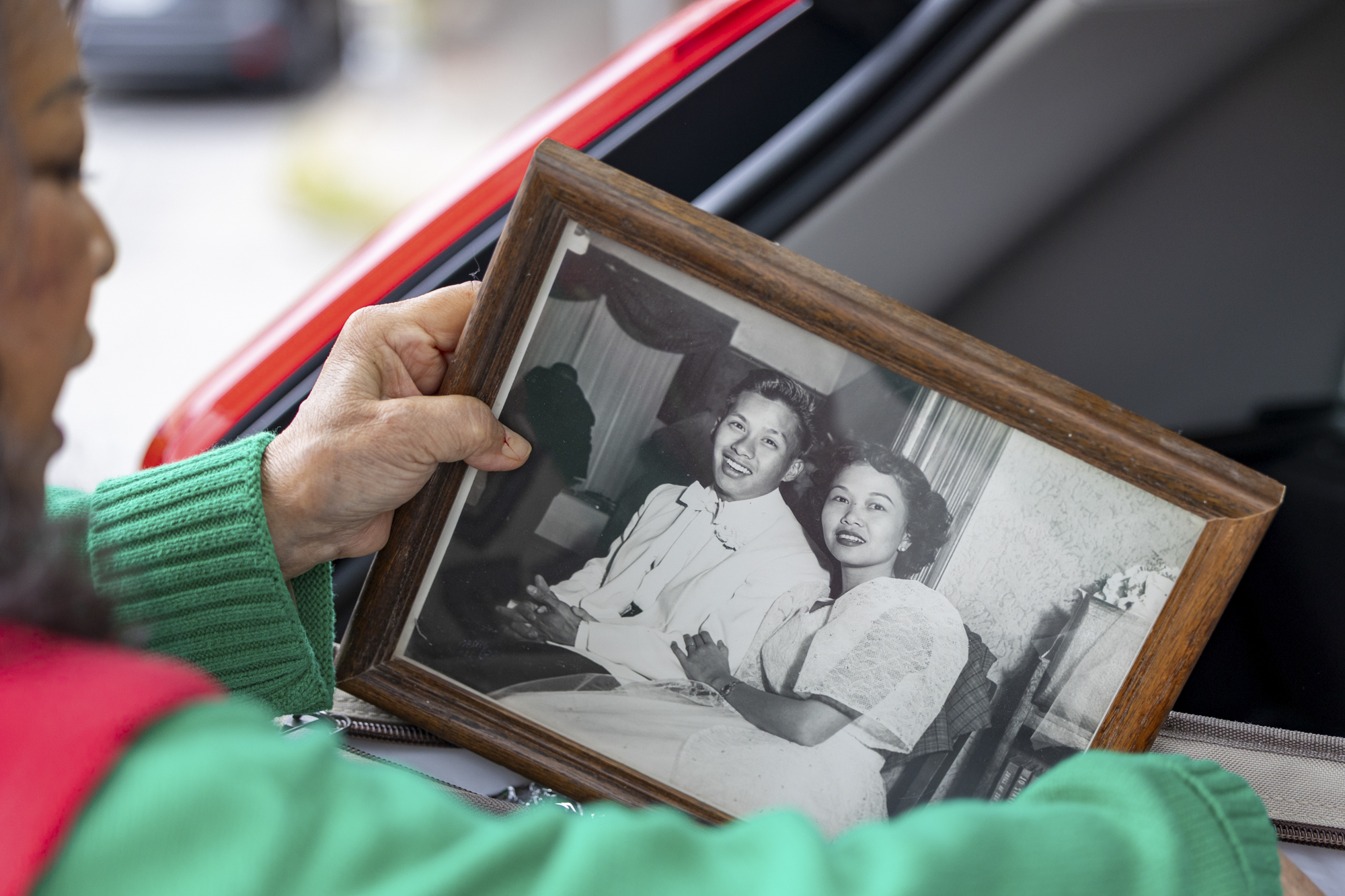
"caption": "Cissy Sherr, daughter of Cora and Santos Beloy, holds a framed photograph of her parents in San Francisco on April 25, 2026.",
"credit": "Gustavo Hernandez/KQED",
"altTag": null,
"description": null,
"imgSizes": {
"thumbnail": {
"file": "https://cdn.kqed.org/wp-content/uploads/sites/10/2026/04/042506CORASANTOSBELOY_GH_004-KQED-160x107.jpg",
"width": 160,
"height": 107,
"mimeType": "image/jpeg"
},
"1536x1536": {
"file": "https://cdn.kqed.org/wp-content/uploads/sites/10/2026/04/042506CORASANTOSBELOY_GH_004-KQED-1536x1024.jpg",
"width": 1536,
"height": 1024,
"mimeType": "image/jpeg"
},
"post-thumbnail": {
"file": "https://cdn.kqed.org/wp-content/uploads/sites/10/2026/04/042506CORASANTOSBELOY_GH_004-KQED-672x372.jpg",
"width": 672,
"height": 372,
"mimeType": "image/jpeg"
},
"twentyfourteen-full-width": {
"file": "https://cdn.kqed.org/wp-content/uploads/sites/10/2026/04/042506CORASANTOSBELOY_GH_004-KQED-1038x576.jpg",
"width": 1038,
"height": 576,
"mimeType": "image/jpeg"
},
"npr-cds-wide": {
"file": "https://cdn.kqed.org/wp-content/uploads/sites/10/2026/04/042506CORASANTOSBELOY_GH_004-KQED-1200x675.jpg",
"width": 1200,
"height": 675,
"mimeType": "image/jpeg"
},
"npr-cds-square": {
"file": "https://cdn.kqed.org/wp-content/uploads/sites/10/2026/04/042506CORASANTOSBELOY_GH_004-KQED-600x600.jpg",
"width": 600,
"height": 600,
"mimeType": "image/jpeg"
},
"kqedFullSize": {
"file": "https://cdn.kqed.org/wp-content/uploads/sites/10/2026/04/042506CORASANTOSBELOY_GH_004-KQED.jpg",
"width": 2000,
"height": 1333
}
},
"isLoading": false,
"fetchFailed": false
},
"news_12046903": {
"type": "attachments",
"id": "news_12046903",
"meta": {
"index": "attachments_1716263798",
"site": "news",
"id": "12046903",
"found": true
},
"title": "A sign for the Rohnert Park Police Station on July 2, 2025.",
"publishDate": 1751492712,
"status": "inherit",
"parent": 12046733,
"modified": 1751495354,
"caption": "A sign for the Rohnert Park Police Station on July 2, 2025.",
"credit": "Beth LaBerge/KQED",
"altTag": null,
"description": null,
"imgSizes": {
"thumbnail": {
"file": "https://cdn.kqed.org/wp-content/uploads/sites/10/2025/07/250702-JOSEPHHUFFAKERTRIAL-05-BL-KQED-160x107.jpg",
"width": 160,
"height": 107,
"mimeType": "image/jpeg"
},
"1536x1536": {
"file": "https://cdn.kqed.org/wp-content/uploads/sites/10/2025/07/250702-JOSEPHHUFFAKERTRIAL-05-BL-KQED-1536x1024.jpg",
"width": 1536,
"height": 1024,
"mimeType": "image/jpeg"
},
"post-thumbnail": {
"file": "https://cdn.kqed.org/wp-content/uploads/sites/10/2025/07/250702-JOSEPHHUFFAKERTRIAL-05-BL-KQED-672x372.jpg",
"width": 672,
"height": 372,
"mimeType": "image/jpeg"
},
"twentyfourteen-full-width": {
"file": "https://cdn.kqed.org/wp-content/uploads/sites/10/2025/07/250702-JOSEPHHUFFAKERTRIAL-05-BL-KQED-1038x576.jpg",
"width": 1038,
"height": 576,
"mimeType": "image/jpeg"
},
"kqedFullSize": {
"file": "https://cdn.kqed.org/wp-content/uploads/sites/10/2025/07/250702-JOSEPHHUFFAKERTRIAL-05-BL-KQED.jpg",
"width": 2000,
"height": 1333
}
},
"isLoading": false,
"fetchFailed": false
},
"news_12082525": {
"type": "attachments",
"id": "news_12082525",
"meta": {
"index": "attachments_1716263798",
"site": "news",
"id": "12082525",
"found": true
},
"title": "OAKRIDGE_11_qed (1)",
"publishDate": 1778090435,
"status": "inherit",
"parent": 12082518,
"modified": 1778090633,
"caption": "Oak Ridge Elementary in Sacramento, California, on March 9, 2016.",
"credit": "Gabriel Salcedo/KQED",
"altTag": null,
"description": null,
"imgSizes": {
"thumbnail": {
"file": "https://cdn.kqed.org/wp-content/uploads/sites/10/2026/05/OAKRIDGE_11_qed-1-160x106.jpg",
"width": 160,
"height": 106,
"mimeType": "image/jpeg"
},
"1536x1536": {
"file": "https://cdn.kqed.org/wp-content/uploads/sites/10/2026/05/OAKRIDGE_11_qed-1-1536x1021.jpg",
"width": 1536,
"height": 1021,
"mimeType": "image/jpeg"
},
"post-thumbnail": {
"file": "https://cdn.kqed.org/wp-content/uploads/sites/10/2026/05/OAKRIDGE_11_qed-1-672x372.jpg",
"width": 672,
"height": 372,
"mimeType": "image/jpeg"
},
"twentyfourteen-full-width": {
"file": "https://cdn.kqed.org/wp-content/uploads/sites/10/2026/05/OAKRIDGE_11_qed-1-1038x576.jpg",
"width": 1038,
"height": 576,
"mimeType": "image/jpeg"
},
"npr-cds-wide": {
"file": "https://cdn.kqed.org/wp-content/uploads/sites/10/2026/05/OAKRIDGE_11_qed-1-1200x675.jpg",
"width": 1200,
"height": 675,
"mimeType": "image/jpeg"
},
"npr-cds-square": {
"file": "https://cdn.kqed.org/wp-content/uploads/sites/10/2026/05/OAKRIDGE_11_qed-1-600x600.jpg",
"width": 600,
"height": 600,
"mimeType": "image/jpeg"
},
"kqedFullSize": {
"file": "https://cdn.kqed.org/wp-content/uploads/sites/10/2026/05/OAKRIDGE_11_qed-1.jpg",
"width": 2000,
"height": 1330
}
},
"isLoading": false,
"fetchFailed": false
},
"news_12081458": {
"type": "attachments",
"id": "news_12081458",
"meta": {
"index": "attachments_1716263798",
"site": "news",
"id": "12081458",
"found": true
},
"title": "260424-COSTOFDRIVING00518_TV-KQED",
"publishDate": 1777308669,
"status": "inherit",
"parent": 12081471,
"modified": 1777316754,
"caption": "Motorcyclists wait at a stop light outside the Shell gas station on 598 Bryant Street in San Francisco on April 24, 2026.",
"credit": "Tâm Vũ/KQED",
"altTag": null,
"description": null,
"imgSizes": {
"thumbnail": {
"file": "https://cdn.kqed.org/wp-content/uploads/sites/10/2026/04/260424-COSTOFDRIVING00518_TV-KQED-160x107.jpg",
"width": 160,
"height": 107,
"mimeType": "image/jpeg"
},
"1536x1536": {
"file": "https://cdn.kqed.org/wp-content/uploads/sites/10/2026/04/260424-COSTOFDRIVING00518_TV-KQED-1536x1024.jpg",
"width": 1536,
"height": 1024,
"mimeType": "image/jpeg"
},
"post-thumbnail": {
"file": "https://cdn.kqed.org/wp-content/uploads/sites/10/2026/04/260424-COSTOFDRIVING00518_TV-KQED-672x372.jpg",
"width": 672,
"height": 372,
"mimeType": "image/jpeg"
},
"twentyfourteen-full-width": {
"file": "https://cdn.kqed.org/wp-content/uploads/sites/10/2026/04/260424-COSTOFDRIVING00518_TV-KQED-1038x576.jpg",
"width": 1038,
"height": 576,
"mimeType": "image/jpeg"
},
"npr-cds-wide": {
"file": "https://cdn.kqed.org/wp-content/uploads/sites/10/2026/04/260424-COSTOFDRIVING00518_TV-KQED-1200x675.jpg",
"width": 1200,
"height": 675,
"mimeType": "image/jpeg"
},
"npr-cds-square": {
"file": "https://cdn.kqed.org/wp-content/uploads/sites/10/2026/04/260424-COSTOFDRIVING00518_TV-KQED-600x600.jpg",
"width": 600,
"height": 600,
"mimeType": "image/jpeg"
},
"kqedFullSize": {
"file": "https://cdn.kqed.org/wp-content/uploads/sites/10/2026/04/260424-COSTOFDRIVING00518_TV-KQED.jpg",
"width": 2000,
"height": 1333
}
},
"isLoading": false,
"fetchFailed": false
},
"news_12082352": {
"type": "attachments",
"id": "news_12082352",
"meta": {
"index": "attachments_1716263798",
"site": "news",
"id": "12082352",
"found": true
},
"title": "20260504_KATIEPORTERTOWNHALL_GC-3-KQED",
"publishDate": 1777952551,
"status": "inherit",
"parent": 0,
"modified": 1777952590,
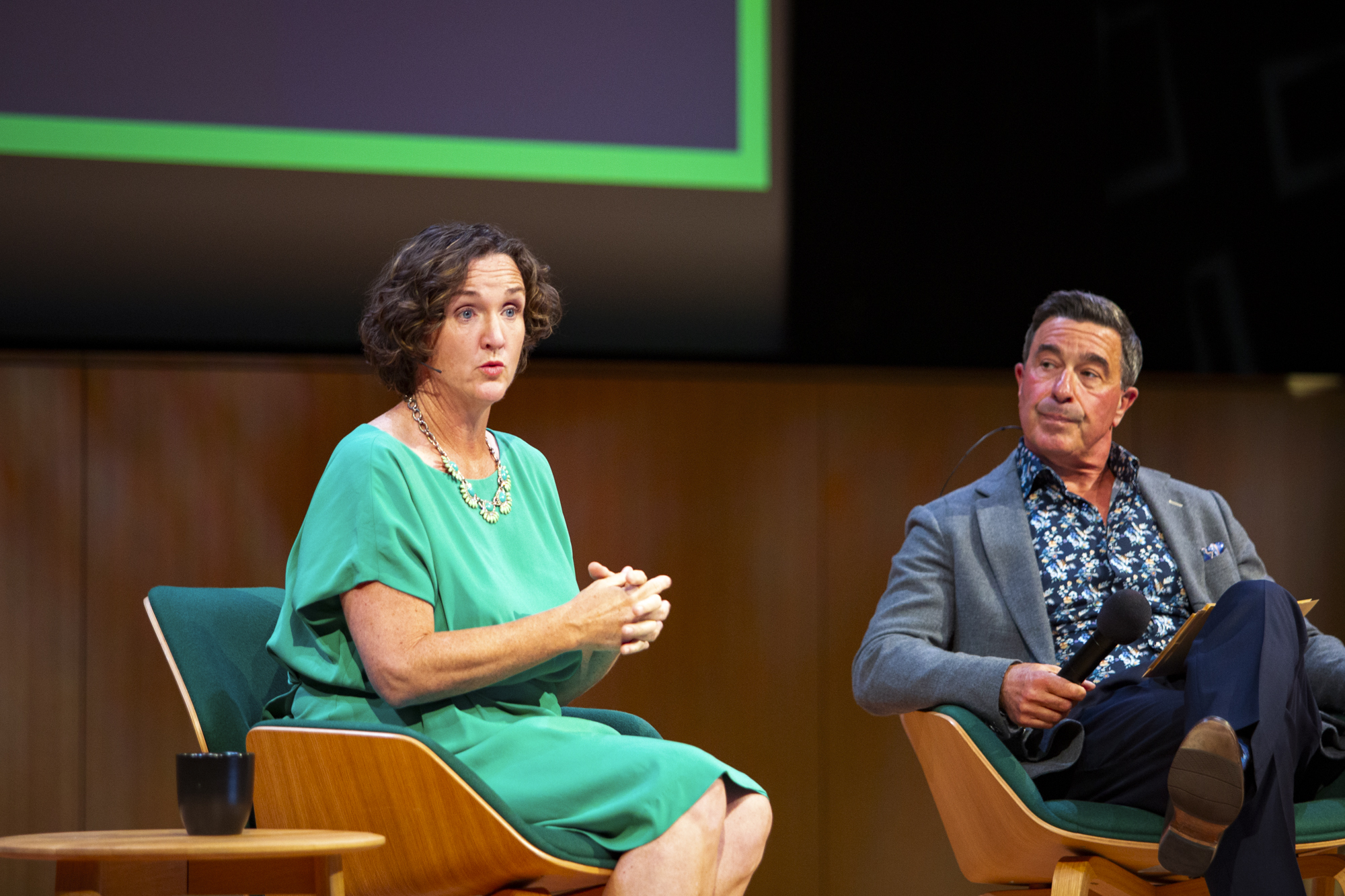
"caption": "Gubernatorial candidate Katie Porter (D), left, speaks during a town hall at KQED on May 4, 2026.",
"credit": "Gina Castro for KQED",
"altTag": null,
"description": null,
"imgSizes": {
"thumbnail": {
"file": "https://cdn.kqed.org/wp-content/uploads/sites/10/2026/05/20260504_KATIEPORTERTOWNHALL_GC-3-KQED-160x107.jpg",
"width": 160,
"height": 107,
"mimeType": "image/jpeg"
},
"1536x1536": {
"file": "https://cdn.kqed.org/wp-content/uploads/sites/10/2026/05/20260504_KATIEPORTERTOWNHALL_GC-3-KQED-1536x1024.jpg",
"width": 1536,
"height": 1024,
"mimeType": "image/jpeg"
},
"post-thumbnail": {
"file": "https://cdn.kqed.org/wp-content/uploads/sites/10/2026/05/20260504_KATIEPORTERTOWNHALL_GC-3-KQED-672x372.jpg",
"width": 672,
"height": 372,
"mimeType": "image/jpeg"
},
"twentyfourteen-full-width": {
"file": "https://cdn.kqed.org/wp-content/uploads/sites/10/2026/05/20260504_KATIEPORTERTOWNHALL_GC-3-KQED-1038x576.jpg",
"width": 1038,
"height": 576,
"mimeType": "image/jpeg"
},
"npr-cds-wide": {
"file": "https://cdn.kqed.org/wp-content/uploads/sites/10/2026/05/20260504_KATIEPORTERTOWNHALL_GC-3-KQED-1200x675.jpg",
"width": 1200,
"height": 675,
"mimeType": "image/jpeg"
},
"npr-cds-square": {
"file": "https://cdn.kqed.org/wp-content/uploads/sites/10/2026/05/20260504_KATIEPORTERTOWNHALL_GC-3-KQED-600x600.jpg",
"width": 600,
"height": 600,
"mimeType": "image/jpeg"
},
"kqedFullSize": {
"file": "https://cdn.kqed.org/wp-content/uploads/sites/10/2026/05/20260504_KATIEPORTERTOWNHALL_GC-3-KQED.jpg",
"width": 2000,
"height": 1333
}
},
"isLoading": false,
"fetchFailed": false
},
"news_12034721": {
"type": "attachments",
"id": "news_12034721",
"meta": {
"index": "attachments_1716263798",
"site": "news",
"id": "12034721",
"found": true
},
"title": "250218-SFDowntown-12-BL_qed",
"publishDate": 1744046019,
"status": "inherit",
"parent": 12034713,
"modified": 1744066001,
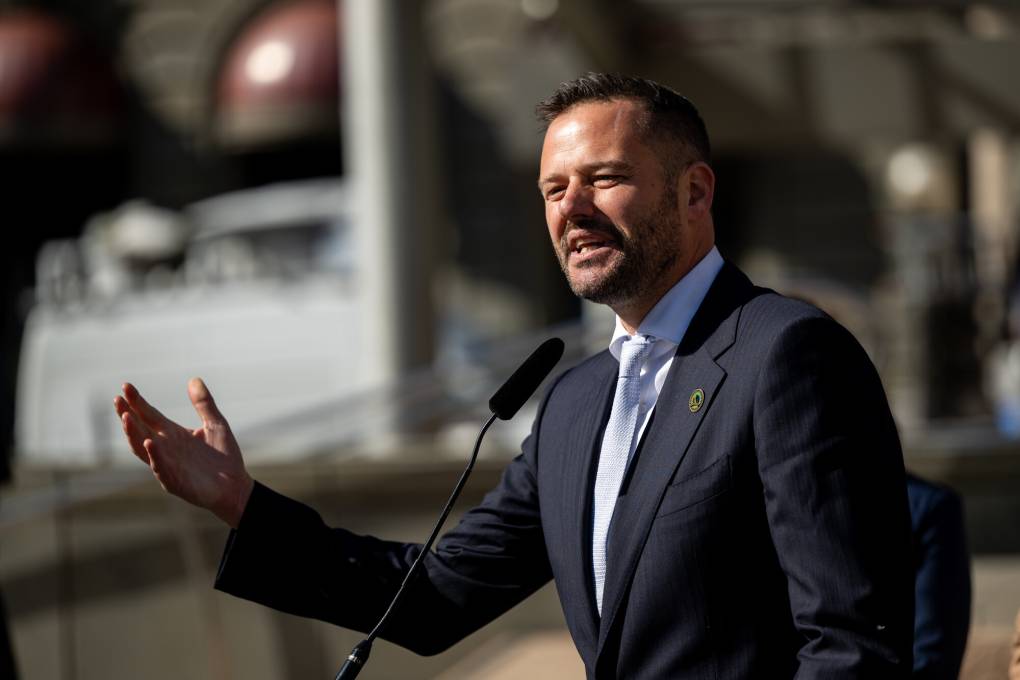
"caption": "Assemblymember Matt Haney speaks during a press conference in Union Square, San Francisco, on Feb. 18, 2025, announcing legislation to increase nightlife in Downtown San Francisco to help the recovery of the neighborhood.",
"credit": "Beth LaBerge/KQED",
"altTag": null,
"description": null,
"imgSizes": {
"medium": {
"file": "https://cdn.kqed.org/wp-content/uploads/sites/10/2025/04/250218-SFDowntown-12-BL_qed-800x533.jpg",
"width": 800,
"height": 533,
"mimeType": "image/jpeg"
},
"large": {
"file": "https://cdn.kqed.org/wp-content/uploads/sites/10/2025/04/250218-SFDowntown-12-BL_qed-1020x680.jpg",
"width": 1020,
"height": 680,
"mimeType": "image/jpeg"
},
"thumbnail": {
"file": "https://cdn.kqed.org/wp-content/uploads/sites/10/2025/04/250218-SFDowntown-12-BL_qed-160x107.jpg",
"width": 160,
"height": 107,
"mimeType": "image/jpeg"
},
"1536x1536": {
"file": "https://cdn.kqed.org/wp-content/uploads/sites/10/2025/04/250218-SFDowntown-12-BL_qed-1536x1024.jpg",
"width": 1536,
"height": 1024,
"mimeType": "image/jpeg"
},
"post-thumbnail": {
"file": "https://cdn.kqed.org/wp-content/uploads/sites/10/2025/04/250218-SFDowntown-12-BL_qed-672x372.jpg",
"width": 672,
"height": 372,
"mimeType": "image/jpeg"
},
"twentyfourteen-full-width": {
"file": "https://cdn.kqed.org/wp-content/uploads/sites/10/2025/04/250218-SFDowntown-12-BL_qed-1038x576.jpg",
"width": 1038,
"height": 576,
"mimeType": "image/jpeg"
},
"full-width": {
"file": "https://cdn.kqed.org/wp-content/uploads/sites/10/2025/04/250218-SFDowntown-12-BL_qed-1920x1280.jpg",
"width": 1920,
"height": 1280,
"mimeType": "image/jpeg"
},
"kqedFullSize": {
"file": "https://cdn.kqed.org/wp-content/uploads/sites/10/2025/04/250218-SFDowntown-12-BL_qed.jpg",
"width": 2000,
"height": 1333
}
},
"isLoading": false,
"fetchFailed": false
},
"news_12082077": {
"type": "attachments",
"id": "news_12082077",
"meta": {
"index": "attachments_1716263798",
"site": "news",
"id": "12082077",
"found": true
},
"title": "007_Oakland_ItzelDiazandFamily_09092021_qed",
"publishDate": 1777658114,
"status": "inherit",
"parent": 12082074,
"modified": 1777658125,
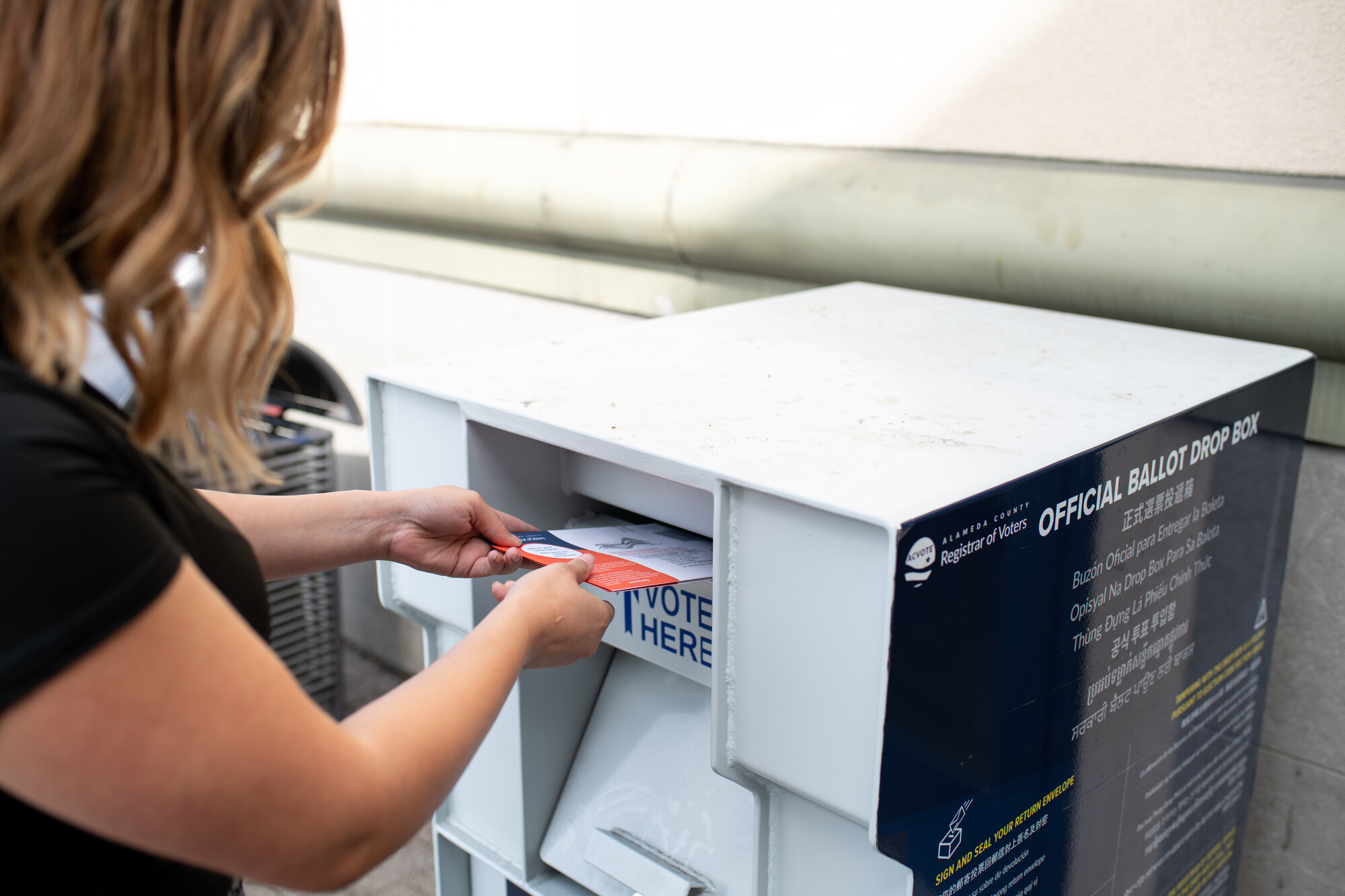
"caption": "Itzel Diaz drops off her ballot for California's gubernatorial recall election at a ballot dropbox in Fruitvale on Sept. 9, 2021.",
"credit": "Beth LaBerge/KQED",
"altTag": null,
"description": null,
"imgSizes": {
"thumbnail": {
"file": "https://cdn.kqed.org/wp-content/uploads/sites/10/2026/05/007_Oakland_ItzelDiazandFamily_09092021_qed-160x107.jpg",
"width": 160,
"height": 107,
"mimeType": "image/jpeg"
},
"1536x1536": {
"file": "https://cdn.kqed.org/wp-content/uploads/sites/10/2026/05/007_Oakland_ItzelDiazandFamily_09092021_qed-1536x1024.jpg",
"width": 1536,
"height": 1024,
"mimeType": "image/jpeg"
},
"post-thumbnail": {
"file": "https://cdn.kqed.org/wp-content/uploads/sites/10/2026/05/007_Oakland_ItzelDiazandFamily_09092021_qed-672x372.jpg",
"width": 672,
"height": 372,
"mimeType": "image/jpeg"
},
"twentyfourteen-full-width": {
"file": "https://cdn.kqed.org/wp-content/uploads/sites/10/2026/05/007_Oakland_ItzelDiazandFamily_09092021_qed-1038x576.jpg",
"width": 1038,
"height": 576,
"mimeType": "image/jpeg"
},
"npr-cds-wide": {
"file": "https://cdn.kqed.org/wp-content/uploads/sites/10/2026/05/007_Oakland_ItzelDiazandFamily_09092021_qed-1200x675.jpg",
"width": 1200,
"height": 675,
"mimeType": "image/jpeg"
},
"npr-cds-square": {
"file": "https://cdn.kqed.org/wp-content/uploads/sites/10/2026/05/007_Oakland_ItzelDiazandFamily_09092021_qed-600x600.jpg",
"width": 600,
"height": 600,
"mimeType": "image/jpeg"
},
"kqedFullSize": {
"file": "https://cdn.kqed.org/wp-content/uploads/sites/10/2026/05/007_Oakland_ItzelDiazandFamily_09092021_qed.jpg",
"width": 2000,
"height": 1333
}
},
"isLoading": false,
"fetchFailed": false
},
"news_12082062": {
"type": "attachments",
"id": "news_12082062",
"meta": {
"index": "attachments_1716263798",
"site": "news",
"id": "12082062",
"found": true
},
"title": "Candidates For Governor Of California Debate In San Francisco",
"publishDate": 1777655103,
"status": "inherit",
"parent": 12082059,
"modified": 1777662131,
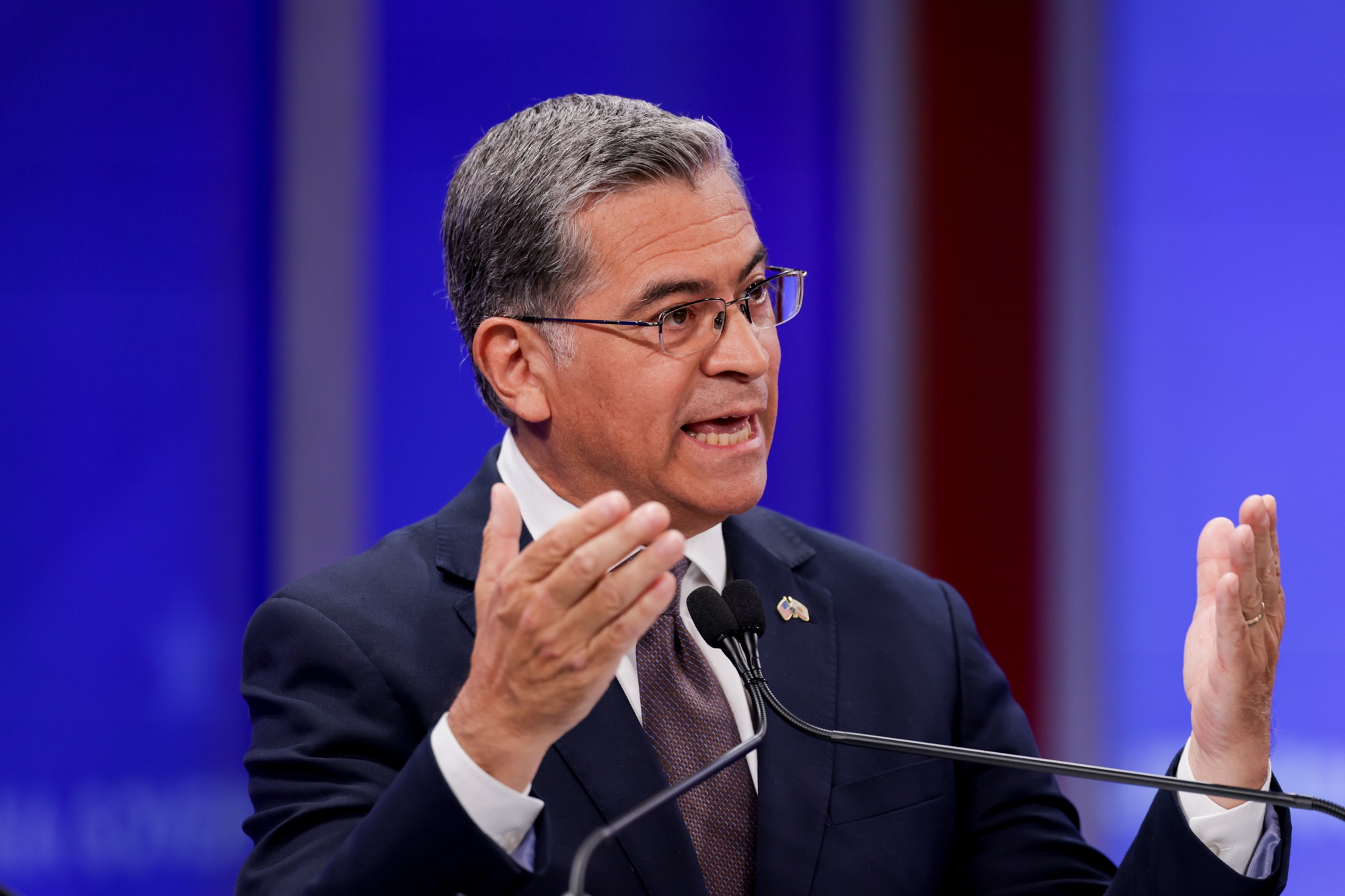
"caption": "Xavier Becerra, Democratic gubernatorial candidate for California, speaks during a gubernatorial debate at KRON Studios in San Francisco on Wednesday, April 22, 2026. California will hold its primary election on June 2, where the top two finishers advance to the general election in November regardless of party affiliation. ",
"credit": "Jason Henry/Nexstar/Bloomberg Pool via Getty Images",
"altTag": null,
"description": null,
"imgSizes": {
"thumbnail": {
"file": "https://cdn.kqed.org/wp-content/uploads/sites/10/2026/05/XavierBecerra-160x107.jpg",
"width": 160,
"height": 107,
"mimeType": "image/jpeg"
},
"1536x1536": {
"file": "https://cdn.kqed.org/wp-content/uploads/sites/10/2026/05/XavierBecerra-1536x1024.jpg",
"width": 1536,
"height": 1024,
"mimeType": "image/jpeg"
},
"post-thumbnail": {
"file": "https://cdn.kqed.org/wp-content/uploads/sites/10/2026/05/XavierBecerra-672x372.jpg",
"width": 672,
"height": 372,
"mimeType": "image/jpeg"
},
"twentyfourteen-full-width": {
"file": "https://cdn.kqed.org/wp-content/uploads/sites/10/2026/05/XavierBecerra-1038x576.jpg",
"width": 1038,
"height": 576,
"mimeType": "image/jpeg"
},
"npr-cds-wide": {
"file": "https://cdn.kqed.org/wp-content/uploads/sites/10/2026/05/XavierBecerra-1200x675.jpg",
"width": 1200,
"height": 675,
"mimeType": "image/jpeg"
},
"npr-cds-square": {
"file": "https://cdn.kqed.org/wp-content/uploads/sites/10/2026/05/XavierBecerra-600x600.jpg",
"width": 600,
"height": 600,
"mimeType": "image/jpeg"
},
"kqedFullSize": {
"file": "https://cdn.kqed.org/wp-content/uploads/sites/10/2026/05/XavierBecerra.jpg",
"width": 2000,
"height": 1333
}
},
"isLoading": false,
"fetchFailed": false
},
"news_12071058": {
"type": "attachments",
"id": "news_12071058",
"meta": {
"index": "attachments_1716263798",
"site": "news",
"id": "12071058",
"found": true
},
"title": "012426_FREEOAKLANDUP_GH_007-KQED",
"publishDate": 1769458344,
"status": "inherit",
"parent": 12078915,
"modified": 1775682035,
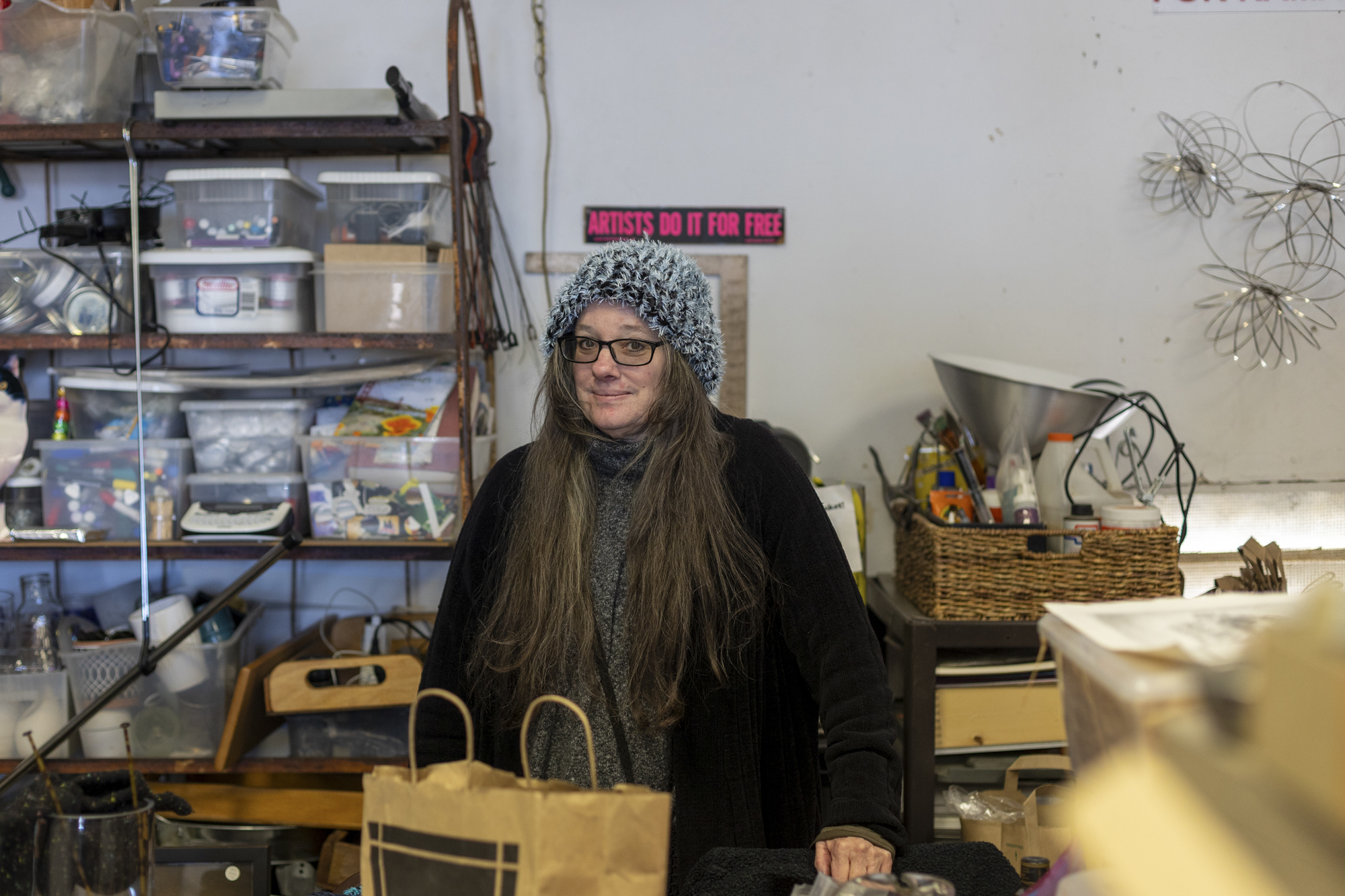
"caption": "Jocelyn Meggait, the creator of Free Oakland UP, poses inside the store where donated items are sorted and future art projects are developed in Oakland on Jan. 24, 2026.",
"credit": "Gustavo Hernandez/KQED",
"altTag": null,
"description": null,
"imgSizes": {
"thumbnail": {
"file": "https://cdn.kqed.org/wp-content/uploads/sites/10/2026/01/012426_FREEOAKLANDUP_GH_007-KQED-160x107.jpg",
"width": 160,
"height": 107,
"mimeType": "image/jpeg"
},
"1536x1536": {
"file": "https://cdn.kqed.org/wp-content/uploads/sites/10/2026/01/012426_FREEOAKLANDUP_GH_007-KQED-1536x1024.jpg",
"width": 1536,
"height": 1024,
"mimeType": "image/jpeg"
},
"post-thumbnail": {
"file": "https://cdn.kqed.org/wp-content/uploads/sites/10/2026/01/012426_FREEOAKLANDUP_GH_007-KQED-672x372.jpg",
"width": 672,
"height": 372,
"mimeType": "image/jpeg"
},
"twentyfourteen-full-width": {
"file": "https://cdn.kqed.org/wp-content/uploads/sites/10/2026/01/012426_FREEOAKLANDUP_GH_007-KQED-1038x576.jpg",
"width": 1038,
"height": 576,
"mimeType": "image/jpeg"
},
"npr-cds-wide": {
"file": "https://cdn.kqed.org/wp-content/uploads/sites/10/2026/01/012426_FREEOAKLANDUP_GH_007-KQED-1200x675.jpg",
"width": 1200,
"height": 675,
"mimeType": "image/jpeg"
},
"kqedFullSize": {
"file": "https://cdn.kqed.org/wp-content/uploads/sites/10/2026/01/012426_FREEOAKLANDUP_GH_007-KQED.jpg",
"width": 2000,
"height": 1333
}
},
"isLoading": false,
"fetchFailed": false
},
"news_12081939": {
"type": "attachments",
"id": "news_12081939",
"meta": {
"index": "attachments_1716263798",
"site": "news",
"id": "12081939",
"found": true
},
"title": "VotingCM",
"publishDate": 1777570480,
"status": "inherit",
"parent": 12081927,
"modified": 1777570517,
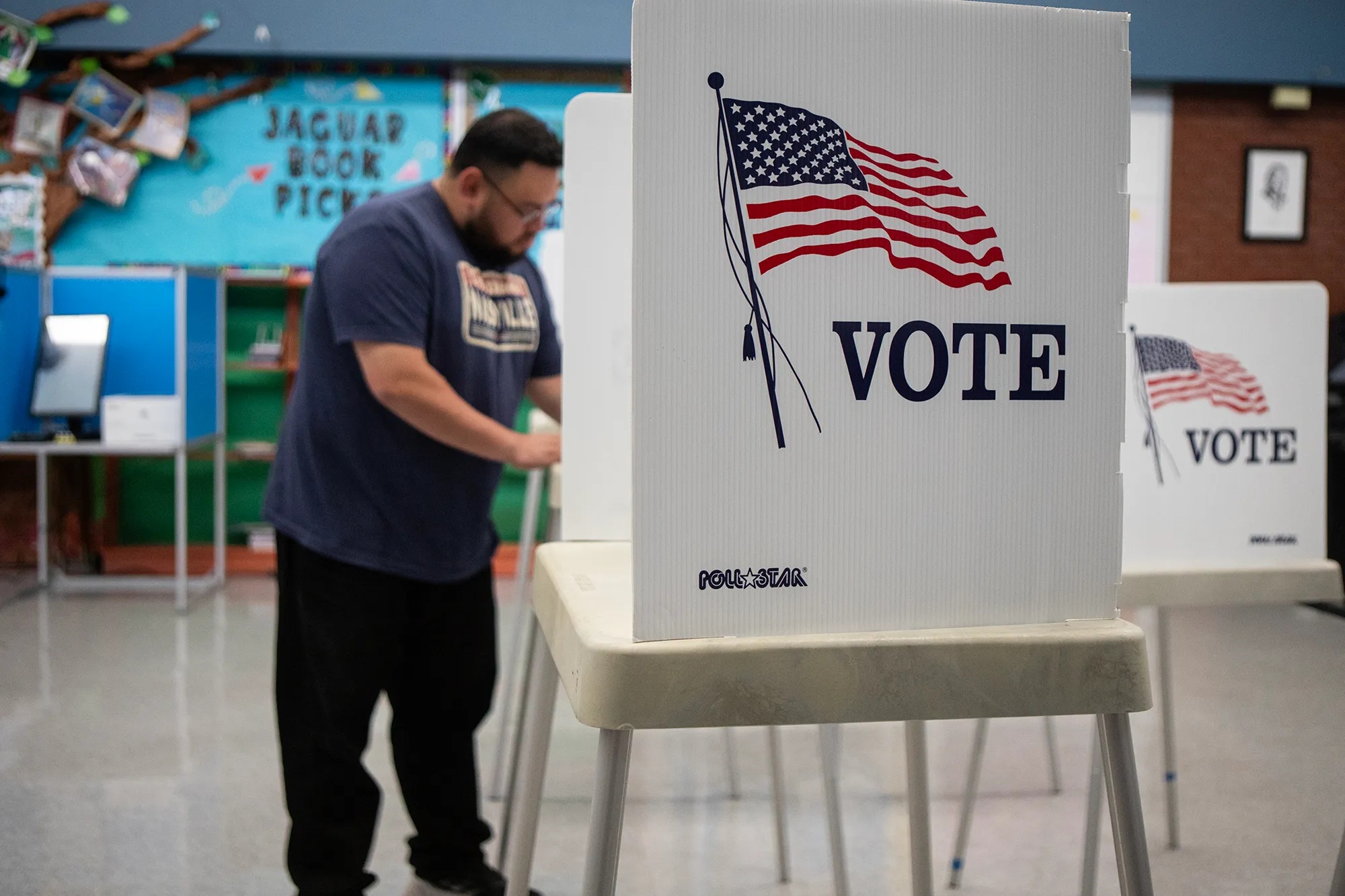
"caption": "A voter fills their ballot at a voting center at Powers-Ginsburg Elementary School in Fresno on March 5, 2024. Residents all over California are participating in the primary elections throughout the state.",
"credit": "Larry Valenzuela/CalMatters via CatchLight Local",
"altTag": null,
"description": null,
"imgSizes": {
"thumbnail": {
"file": "https://cdn.kqed.org/wp-content/uploads/sites/10/2026/04/VotingCM-160x107.jpg",
"width": 160,
"height": 107,
"mimeType": "image/jpeg"
},
"1536x1536": {
"file": "https://cdn.kqed.org/wp-content/uploads/sites/10/2026/04/VotingCM-1536x1024.jpg",
"width": 1536,
"height": 1024,
"mimeType": "image/jpeg"
},
"post-thumbnail": {
"file": "https://cdn.kqed.org/wp-content/uploads/sites/10/2026/04/VotingCM-672x372.jpg",
"width": 672,
"height": 372,
"mimeType": "image/jpeg"
},
"twentyfourteen-full-width": {
"file": "https://cdn.kqed.org/wp-content/uploads/sites/10/2026/04/VotingCM-1038x576.jpg",
"width": 1038,
"height": 576,
"mimeType": "image/jpeg"
},
"npr-cds-wide": {
"file": "https://cdn.kqed.org/wp-content/uploads/sites/10/2026/04/VotingCM-1200x675.jpg",
"width": 1200,
"height": 675,
"mimeType": "image/jpeg"
},
"npr-cds-square": {
"file": "https://cdn.kqed.org/wp-content/uploads/sites/10/2026/04/VotingCM-600x600.jpg",
"width": 600,
"height": 600,
"mimeType": "image/jpeg"
},
"kqedFullSize": {
"file": "https://cdn.kqed.org/wp-content/uploads/sites/10/2026/04/VotingCM.jpg",
"width": 2000,
"height": 1333
}
},
"isLoading": false,
"fetchFailed": false
},
"news_12081820": {
"type": "attachments",
"id": "news_12081820",
"meta": {
"index": "attachments_1716263798",
"site": "news",
"id": "12081820",
"found": true
},
"title": "260428-VallejoChildCare-23-BL",
"publishDate": 1777493596,
"status": "inherit",
"parent": 12083461,
"modified": 1778701509,
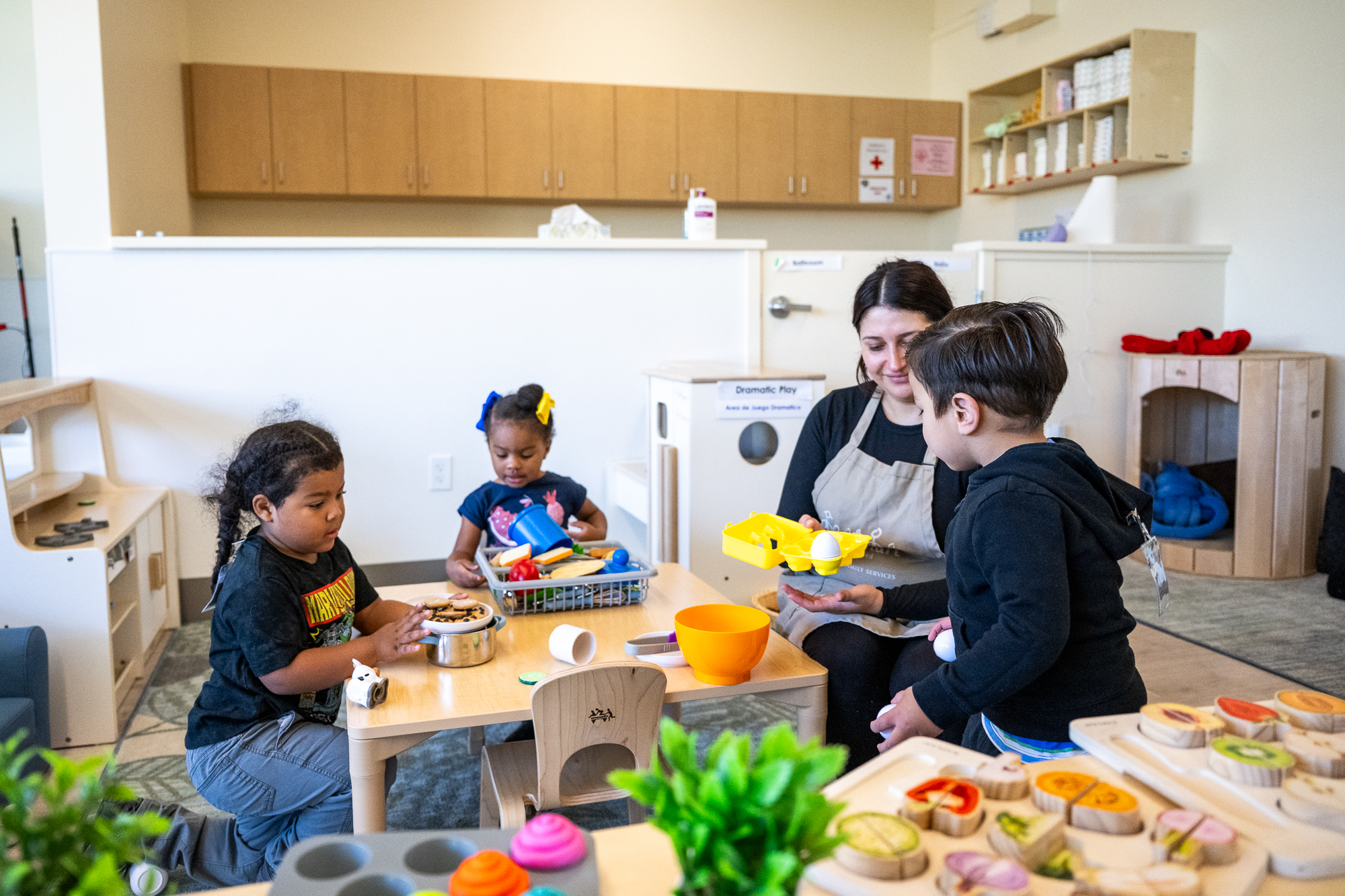
"caption": "Teacher Brianda Casillas works with children in a classroom at Rise Vallejo, an early education center, in Vallejo on April 28, 2026. The center recently opened, repurposing a former elementary school into a campus with classrooms, outdoor areas, and childcare space specifically designed for young children.",
"credit": "Beth LaBerge/KQED",
"altTag": null,
"description": null,
"imgSizes": {
"thumbnail": {
"file": "https://cdn.kqed.org/wp-content/uploads/sites/10/2026/04/260428-VallejoChildCare-23-BL-160x107.jpg",
"width": 160,
"height": 107,
"mimeType": "image/jpeg"
},
"1536x1536": {
"file": "https://cdn.kqed.org/wp-content/uploads/sites/10/2026/04/260428-VallejoChildCare-23-BL-1536x1024.jpg",
"width": 1536,
"height": 1024,
"mimeType": "image/jpeg"
},
"post-thumbnail": {
"file": "https://cdn.kqed.org/wp-content/uploads/sites/10/2026/04/260428-VallejoChildCare-23-BL-672x372.jpg",
"width": 672,
"height": 372,
"mimeType": "image/jpeg"
},
"twentyfourteen-full-width": {
"file": "https://cdn.kqed.org/wp-content/uploads/sites/10/2026/04/260428-VallejoChildCare-23-BL-1038x576.jpg",
"width": 1038,
"height": 576,
"mimeType": "image/jpeg"
},
"npr-cds-wide": {
"file": "https://cdn.kqed.org/wp-content/uploads/sites/10/2026/04/260428-VallejoChildCare-23-BL-1200x675.jpg",
"width": 1200,
"height": 675,
"mimeType": "image/jpeg"
},
"npr-cds-square": {
"file": "https://cdn.kqed.org/wp-content/uploads/sites/10/2026/04/260428-VallejoChildCare-23-BL-600x600.jpg",
"width": 600,
"height": 600,
"mimeType": "image/jpeg"
},
"kqedFullSize": {
"file": "https://cdn.kqed.org/wp-content/uploads/sites/10/2026/04/260428-VallejoChildCare-23-BL.jpg",
"width": 2000,
"height": 1333
}
},
"isLoading": false,
"fetchFailed": false
},
"news_12079720": {
"type": "attachments",
"id": "news_12079720",
"meta": {
"index": "attachments_1716263798",
"site": "news",
"id": "12079720",
"found": true
},
"title": "260325-AFFORDIBILTYYOUNGPARENTS00248_TV-KQED",
"publishDate": 1776112038,
"status": "inherit",
"parent": 0,
"modified": 1777499144,
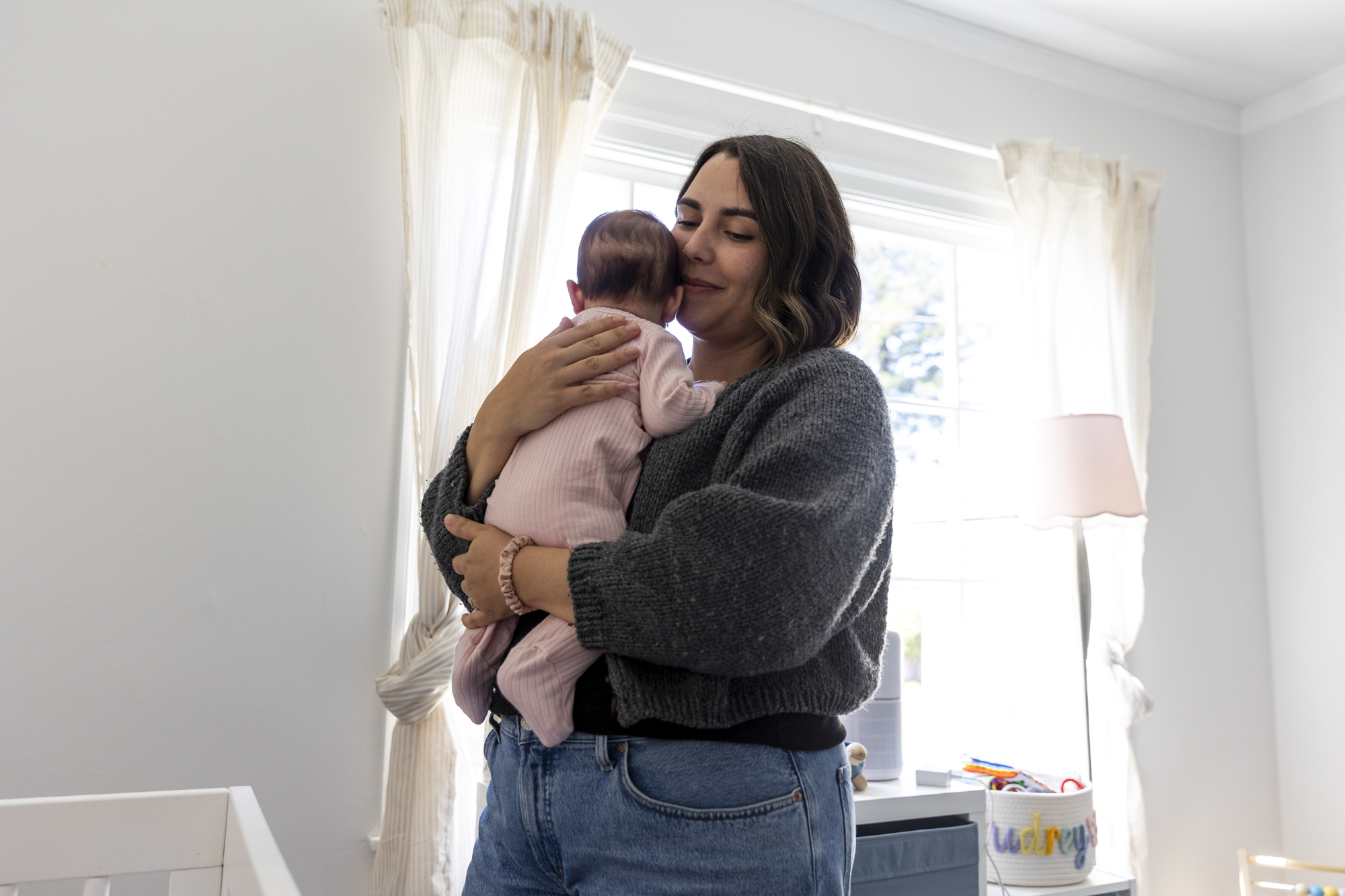
"caption": "Lauren Fierro soothes her daughter, Audrey Fierro-Phillips, for nap time in Oakland on March 25, 2026.",
"credit": "Tâm Vũ/KQED",
"altTag": null,
"description": null,
"imgSizes": {
"thumbnail": {
"file": "https://cdn.kqed.org/wp-content/uploads/sites/10/2026/04/260325-AFFORDIBILTYYOUNGPARENTS00248_TV-KQED-160x107.jpg",
"width": 160,
"height": 107,
"mimeType": "image/jpeg"
},
"1536x1536": {
"file": "https://cdn.kqed.org/wp-content/uploads/sites/10/2026/04/260325-AFFORDIBILTYYOUNGPARENTS00248_TV-KQED-1536x1024.jpg",
"width": 1536,
"height": 1024,
"mimeType": "image/jpeg"
},
"post-thumbnail": {
"file": "https://cdn.kqed.org/wp-content/uploads/sites/10/2026/04/260325-AFFORDIBILTYYOUNGPARENTS00248_TV-KQED-672x372.jpg",
"width": 672,
"height": 372,
"mimeType": "image/jpeg"
},
"twentyfourteen-full-width": {
"file": "https://cdn.kqed.org/wp-content/uploads/sites/10/2026/04/260325-AFFORDIBILTYYOUNGPARENTS00248_TV-KQED-1038x576.jpg",
"width": 1038,
"height": 576,
"mimeType": "image/jpeg"
},
"npr-cds-wide": {
"file": "https://cdn.kqed.org/wp-content/uploads/sites/10/2026/04/260325-AFFORDIBILTYYOUNGPARENTS00248_TV-KQED-1200x675.jpg",
"width": 1200,
"height": 675,
"mimeType": "image/jpeg"
},
"npr-cds-square": {
"file": "https://cdn.kqed.org/wp-content/uploads/sites/10/2026/04/260325-AFFORDIBILTYYOUNGPARENTS00248_TV-KQED-600x600.jpg",
"width": 600,
"height": 600,
"mimeType": "image/jpeg"
},
"kqedFullSize": {
"file": "https://cdn.kqed.org/wp-content/uploads/sites/10/2026/04/260325-AFFORDIBILTYYOUNGPARENTS00248_TV-KQED.jpg",
"width": 2000,
"height": 1333
}
},
"isLoading": false,
"fetchFailed": false
}
},
"audioPlayerReducer": {
"postId": "stream_live",
"isPaused": true,
"isPlaying": false,
"pfsActive": false,
"pledgeModalIsOpen": true,
"playerDrawerIsOpen": false,
"liveAudioPlayStartedAt": 0,
"liveAudioPlayContext": ""
},
"authorsReducer": {
"byline_news_12081927": {
"type": "authors",
"id": "byline_news_12081927",
"meta": {
"override": true
},
"slug": "byline_news_12081927",
"name": "Nigel Duara and Maya C. Miller, CalMatters",
"isLoading": false
},
"gmarzorati": {
"type": "authors",
"id": "227",
"meta": {
"index": "authors_1716337520",
"id": "227",
"found": true
},
"name": "Guy Marzorati",
"firstName": "Guy",
"lastName": "Marzorati",
"slug": "gmarzorati",
"email": "gmarzorati@KQED.org",
"display_author_email": true,
"staff_mastheads": [
"news"
],
"title": "Correspondent",
"bio": "Guy Marzorati is a correspondent on KQED's California Politics and Government Desk, based in San Jose. A graduate of Santa Clara University, Guy joined KQED in 2013. He reports on state and local politics and produces KQED's digital voter guide.",
"avatar": "https://secure.gravatar.com/avatar/e7038b8dbfd55b104369b76b1cd0b9de?s=600&d=blank&r=g",
"twitter": "guymarzorati",
"facebook": null,
"instagram": null,
"linkedin": null,
"sites": [
{
"site": "",
"roles": [
"editor"
]
},
{
"site": "news",
"roles": [
"editor"
]
},
{
"site": "science",
"roles": [
"editor"
]
},
{
"site": "forum",
"roles": [
"editor"
]
},
{
"site": "elections",
"roles": [
"editor"
]
},
{
"site": "liveblog",
"roles": [
"editor"
]
}
],
"headData": {
"title": "Guy Marzorati | KQED",
"description": "Correspondent",
"ogImgSrc": "https://secure.gravatar.com/avatar/e7038b8dbfd55b104369b76b1cd0b9de?s=600&d=blank&r=g",
"twImgSrc": "https://secure.gravatar.com/avatar/e7038b8dbfd55b104369b76b1cd0b9de?s=600&d=blank&r=g"
},
"isLoading": false,
"link": "/author/gmarzorati"
},
"kqed": {
"type": "authors",
"id": "236",
"meta": {
"index": "authors_1716337520",
"id": "236",
"found": true
},
"name": "KQED News Staff",
"firstName": "KQED News Staff",
"lastName": null,
"slug": "kqed",
"email": "faq@kqed.org",
"display_author_email": false,
"staff_mastheads": [],
"title": null,
"bio": null,
"avatar": "https://secure.gravatar.com/avatar/ef0e801a68c4c54afa9180db14084167?s=600&d=blank&r=g",
"twitter": null,
"facebook": null,
"instagram": null,
"linkedin": null,
"sites": [
{
"site": "arts",
"roles": [
"contributor"
]
},
{
"site": "news",
"roles": [
"editor"
]
},
{
"site": "futureofyou",
"roles": [
"author"
]
}
],
"headData": {
"title": "KQED News Staff | KQED",
"description": null,
"ogImgSrc": "https://secure.gravatar.com/avatar/ef0e801a68c4c54afa9180db14084167?s=600&d=blank&r=g",
"twImgSrc": "https://secure.gravatar.com/avatar/ef0e801a68c4c54afa9180db14084167?s=600&d=blank&r=g"
},
"isLoading": false,
"link": "/author/kqed"
},
"adembosky": {
"type": "authors",
"id": "3205",
"meta": {
"index": "authors_1716337520",
"id": "3205",
"found": true
},
"name": "April Dembosky",
"firstName": "April",
"lastName": "Dembosky",
"slug": "adembosky",
"email": "adembosky@kqed.org",
"display_author_email": false,
"staff_mastheads": [
"news",
"science"
],
"title": "KQED Health Correspondent",
"bio": "April Dembosky is the health correspondent for KQED News and a regular contributor to NPR. She specializes in covering altered states of mind, from postpartum depression to methamphetamine-induced psychosis to the insanity defense. Her investigative series on insurance companies sidestepping mental health laws won multiple awards, including first place in beat reporting from the national Association of Health Care Journalists. She is the recipient of numerous other prizes and fellowships, including a national Edward R. Murrow award for investigative reporting, a Society of Professional Journalists award for long-form storytelling, and a Carter Center Fellowship for Mental Health Journalism.\r\n\r\nDembosky reported and produced \u003cem>Soundtrack of Silence\u003c/em>, an audio documentary about music and memory that is currently being made into a feature film by Paramount Pictures.\r\n\r\nBefore joining KQED in 2013, Dembosky covered technology and Silicon Valley for \u003cem>The Financial Times of London,\u003c/em> and contributed business and arts stories to \u003cem>Marketplace \u003c/em>and \u003cem>The New York Times.\u003c/em> She got her undergraduate degree in philosophy from Smith College and her master's in journalism from the University of California, Berkeley. She is a classically trained violinist and proud alum of the first symphony orchestra at Burning Man.",
"avatar": "https://secure.gravatar.com/avatar/ef92999be4ceb9ea60701e7dc276f813?s=600&d=blank&r=g",
"twitter": "adembosky",
"facebook": null,
"instagram": null,
"linkedin": null,
"sites": [
{
"site": "arts",
"roles": [
"author"
]
},
{
"site": "news",
"roles": [
"editor"
]
},
{
"site": "futureofyou",
"roles": [
"author"
]
},
{
"site": "stateofhealth",
"roles": [
"editor"
]
},
{
"site": "science",
"roles": [
"editor"
]
},
{
"site": "forum",
"roles": [
"editor"
]
}
],
"headData": {
"title": "April Dembosky | KQED",
"description": "KQED Health Correspondent",
"ogImgSrc": "https://secure.gravatar.com/avatar/ef92999be4ceb9ea60701e7dc276f813?s=600&d=blank&r=g",
"twImgSrc": "https://secure.gravatar.com/avatar/ef92999be4ceb9ea60701e7dc276f813?s=600&d=blank&r=g"
},
"isLoading": false,
"link": "/author/adembosky"
},
"carlysevern": {
"type": "authors",
"id": "3243",
"meta": {
"index": "authors_1716337520",
"id": "3243",
"found": true
},
"name": "Carly Severn",
"firstName": "Carly",
"lastName": "Severn",
"slug": "carlysevern",
"email": "csevern@kqed.org",
"display_author_email": false,
"staff_mastheads": [
"news"
],
"title": "Senior Editor, Audience News ",
"bio": "Carly is KQED's Senior Editor of Audience News on the Digital News team, and has reported for the California Report Magazine, Bay Curious and KQED Arts. She's formerly the host of \u003ca href=\"http://ww2.kqed.org/pop/category/the-cooler/\" rel=\"noopener noreferrer\">The Cooler\u003c/a> podcast.",
"avatar": "https://secure.gravatar.com/avatar/54037bf5c128fe678f0ef26cec97a93f2e7f220a22d7285703328f12c42c1b1d?s=600&d=blank&r=g",
"twitter": "teacupinthebay",
"bluesky": null,
"facebook": null,
"instagram": null,
"linkedin": null,
"sites": [
{
"site": "",
"roles": [
"editor"
]
},
{
"site": "arts",
"roles": [
"editor"
]
},
{
"site": "news",
"roles": [
"administrator"
]
},
{
"site": "pop",
"roles": [
"editor"
]
},
{
"site": "futureofyou",
"roles": [
"editor"
]
},
{
"site": "about",
"roles": [
"administrator"
]
},
{
"site": "mindshift",
"roles": [
"editor"
]
},
{
"site": "bayareabites",
"roles": [
"editor"
]
},
{
"site": "stateofhealth",
"roles": [
"editor"
]
},
{
"site": "science",
"roles": [
"editor"
]
},
{
"site": "food",
"roles": [
"contributor"
]
},
{
"site": "forum",
"roles": [
"editor"
]
},
{
"site": "perspectives",
"roles": [
"administrator"
]
},
{
"site": "liveblog",
"roles": [
"editor"
]
}
],
"headData": {
"title": "Carly Severn | KQED",
"description": "Senior Editor, Audience News ",
"ogImgSrc": "https://secure.gravatar.com/avatar/54037bf5c128fe678f0ef26cec97a93f2e7f220a22d7285703328f12c42c1b1d?s=600&d=blank&r=g",
"twImgSrc": "https://secure.gravatar.com/avatar/54037bf5c128fe678f0ef26cec97a93f2e7f220a22d7285703328f12c42c1b1d?s=600&d=blank&r=g"
},
"isLoading": false,
"link": "/author/carlysevern"
},
"slewis": {
"type": "authors",
"id": "8676",
"meta": {
"index": "authors_1716337520",
"id": "8676",
"found": true
},
"name": "Sukey Lewis",
"firstName": "Sukey",
"lastName": "Lewis",
"slug": "slewis",
"email": "slewis@kqed.org",
"display_author_email": true,
"staff_mastheads": [
"news"
],
"title": "KQED Contributor",
"bio": "Sukey Lewis is a criminal justice reporter and host of \u003cem>On Our Watch\u003c/em>, a new podcast from NPR and KQED about the shadow world of police discipline. In 2018, she co-founded the California Reporting Project, a coalition of newsrooms across the state focused on obtaining previously sealed internal affairs records from law enforcement. In addition to her reporting on police accountability, Sukey has investigated the bail bonds industry, California's wildfires and the high cost of prison phone calls. Sukey earned a master's degree in journalism from the University of California at Berkeley. Send news tips to slewis@kqed.org.",
"avatar": "https://secure.gravatar.com/avatar/03fd6b21024f99d8b0a1966654586de7?s=600&d=blank&r=g",
"twitter": "SukeyLewis",
"facebook": null,
"instagram": null,
"linkedin": null,
"sites": [
{
"site": "news",
"roles": [
"author",
"edit_others_posts"
]
}
],
"headData": {
"title": "Sukey Lewis | KQED",
"description": "KQED Contributor",
"ogImgSrc": "https://secure.gravatar.com/avatar/03fd6b21024f99d8b0a1966654586de7?s=600&d=blank&r=g",
"twImgSrc": "https://secure.gravatar.com/avatar/03fd6b21024f99d8b0a1966654586de7?s=600&d=blank&r=g"
},
"isLoading": false,
"link": "/author/slewis"
},
"aehsanipour": {
"type": "authors",
"id": "11580",
"meta": {
"index": "authors_1716337520",
"id": "11580",
"found": true
},
"name": "Asal Ehsanipour",
"firstName": "Asal",
"lastName": "Ehsanipour",
"slug": "aehsanipour",
"email": "aehsanipour@kqed.org",
"display_author_email": false,
"staff_mastheads": [],
"title": "Reporter and Producer",
"bio": "Asal Ehsanipour is a producer and reporter for Rightnowish, Bay Curious and The California Report Magazine. She is also a producer for \u003ca href=\"https://www.thedoubleshift.com/\">The Double Shift\u003c/a>, a podcast about a new generation of working mothers. In 2018, Asal was named an Emerging Journalist Fellow by the Journalism and Women’s Symposium. Her work has appeared on KQED, KALW, PRI’s The World, and in several food and travel publications.",
"avatar": "https://secure.gravatar.com/avatar/c0e210438f5dca1b76921ff9f0eada52?s=600&d=blank&r=g",
"twitter": null,
"facebook": null,
"instagram": null,
"linkedin": null,
"sites": [
{
"site": "arts",
"roles": []
},
{
"site": "news",
"roles": [
"author",
"edit_others_posts"
]
}
],
"headData": {
"title": "Asal Ehsanipour | KQED",
"description": "Reporter and Producer",
"ogImgSrc": "https://secure.gravatar.com/avatar/c0e210438f5dca1b76921ff9f0eada52?s=600&d=blank&r=g",
"twImgSrc": "https://secure.gravatar.com/avatar/c0e210438f5dca1b76921ff9f0eada52?s=600&d=blank&r=g"
},
"isLoading": false,
"link": "/author/aehsanipour"
},
"abandlamudi": {
"type": "authors",
"id": "11672",
"meta": {
"index": "authors_1716337520",
"id": "11672",
"found": true
},
"name": "Adhiti Bandlamudi",
"firstName": "Adhiti",
"lastName": "Bandlamudi",
"slug": "abandlamudi",
"email": "abandlamudi@kqed.org",
"display_author_email": false,
"staff_mastheads": [
"news"
],
"title": "KQED Housing Reporter",
"bio": "Adhiti Bandlamudi reports for KQED's Housing desk. She focuses on how housing gets built across the Bay Area. Before joining KQED in 2020, she reported for WUNC in Durham, North Carolina, WABE in Atlanta, Georgia and Capital Public Radio in Sacramento. In 2017, she was awarded a Kroc Fellowship at NPR where she reported on everything from sprinkles to the Golden State Killer's arrest. When she's not reporting, she's baking new recipes in her kitchen or watching movies with friends and family. She's originally from Georgia and has strong opinions about Great British Bake Off.",
"avatar": "https://secure.gravatar.com/avatar/868129c8b257bb99a3500e2c86a65400?s=600&d=mm&r=g",
"twitter": "oddity_adhiti",
"facebook": null,
"instagram": null,
"linkedin": null,
"sites": [
{
"site": "arts",
"roles": [
"author"
]
},
{
"site": "news",
"roles": [
"editor"
]
},
{
"site": "liveblog",
"roles": [
"author"
]
}
],
"headData": {
"title": "Adhiti Bandlamudi | KQED",
"description": "KQED Housing Reporter",
"ogImgSrc": "https://secure.gravatar.com/avatar/868129c8b257bb99a3500e2c86a65400?s=600&d=mm&r=g",
"twImgSrc": "https://secure.gravatar.com/avatar/868129c8b257bb99a3500e2c86a65400?s=600&d=mm&r=g"
},
"isLoading": false,
"link": "/author/abandlamudi"
},
"daisynguyen": {
"type": "authors",
"id": "11829",
"meta": {
"index": "authors_1716337520",
"id": "11829",
"found": true
},
"name": "Daisy Nguyen",
"firstName": "Daisy",
"lastName": "Nguyen",
"slug": "daisynguyen",
"email": "daisynguyen@kqed.org",
"display_author_email": true,
"staff_mastheads": [
"news"
],
"title": "KQED Contributor",
"bio": "I have covered early childhood education and child care for KQED since 2022. I focus on policies aimed at increasing access to early care and education and how they shape individual lives. I've been a journalist for more than two decades, with most of that time devoted to covering breaking news throughout California for The Associated Press. I grew up in San Francisco and studied at UC Davis and Columbia University's Graduate School of Journalism. I live in Oakland with my husband and two kids.",
"avatar": "https://secure.gravatar.com/avatar/2da2127c27f7143b53ebd419800fd55f?s=600&d=blank&r=g",
"twitter": null,
"facebook": null,
"instagram": null,
"linkedin": "https://www.linkedin.com/in/daisynguyen/",
"sites": [
{
"site": "news",
"roles": [
"author"
]
},
{
"site": "liveblog",
"roles": [
"author"
]
}
],
"headData": {
"title": "Daisy Nguyen | KQED",
"description": "KQED Contributor",
"ogImgSrc": "https://secure.gravatar.com/avatar/2da2127c27f7143b53ebd419800fd55f?s=600&d=blank&r=g",
"twImgSrc": "https://secure.gravatar.com/avatar/2da2127c27f7143b53ebd419800fd55f?s=600&d=blank&r=g"
},
"isLoading": false,
"link": "/author/daisynguyen"
},
"mbolanos": {
"type": "authors",
"id": "11895",
"meta": {
"index": "authors_1716337520",
"id": "11895",
"found": true
},
"name": "Madi Bolaños",
"firstName": "Madi",
"lastName": "Bolaños",
"slug": "mbolanos",
"email": "mbolanos@kqed.org",
"display_author_email": false,
"staff_mastheads": [],
"title": "KQED Contributor",
"bio": null,
"avatar": "https://secure.gravatar.com/avatar/e6df5601c1f2d951e46a3fb42764330f?s=600&d=blank&r=g",
"twitter": null,
"bluesky": null,
"facebook": null,
"instagram": null,
"linkedin": null,
"sites": [
{
"site": "news",
"roles": [
"author"
]
}
],
"headData": {
"title": "Madi Bolaños | KQED",
"description": "KQED Contributor",
"ogImgSrc": "https://secure.gravatar.com/avatar/e6df5601c1f2d951e46a3fb42764330f?s=600&d=blank&r=g",
"twImgSrc": "https://secure.gravatar.com/avatar/e6df5601c1f2d951e46a3fb42764330f?s=600&d=blank&r=g"
},
"isLoading": false,
"link": "/author/mbolanos"
},
"kdebenedetti": {
"type": "authors",
"id": "11913",
"meta": {
"index": "authors_1716337520",
"id": "11913",
"found": true
},
"name": "Katie DeBenedetti",
"firstName": "Katie",
"lastName": "DeBenedetti",
"slug": "kdebenedetti",
"email": "kdebenedetti@kqed.org",
"display_author_email": false,
"staff_mastheads": [
"news",
"science"
],
"title": "KQED Contributor",
"bio": "Katie DeBenedetti is a digital reporter covering daily news for the Express Desk. Prior to joining KQED as a culture reporting intern in January 2024, she covered education and city government for the Napa Valley Register.",
"avatar": "https://secure.gravatar.com/avatar/6e31073cb8f7e4214ab03f42771d0f45?s=600&d=blank&r=g",
"twitter": null,
"facebook": null,
"instagram": null,
"linkedin": null,
"sites": [
{
"site": "news",
"roles": [
"author"
]
},
{
"site": "science",
"roles": [
"author"
]
},
{
"site": "liveblog",
"roles": [
"author"
]
}
],
"headData": {
"title": "Katie DeBenedetti | KQED",
"description": "KQED Contributor",
"ogImgSrc": "https://secure.gravatar.com/avatar/6e31073cb8f7e4214ab03f42771d0f45?s=600&d=blank&r=g",
"twImgSrc": "https://secure.gravatar.com/avatar/6e31073cb8f7e4214ab03f42771d0f45?s=600&d=blank&r=g"
},
"isLoading": false,
"link": "/author/kdebenedetti"
},
"ejackson": {
"type": "authors",
"id": "12003",
"meta": {
"index": "authors_1716337520",
"id": "12003",
"found": true
},
"name": "Ella Jackson",
"firstName": "Ella",
"lastName": "Jackson",
"slug": "ejackson",
"email": "ejackson@kqed.org",
"display_author_email": false,
"staff_mastheads": [],
"title": "KQED Contributor",
"bio": null,
"avatar": "https://secure.gravatar.com/avatar/3c688edc62aec1dcae096e1475956d245f72bde99cff316455871c9b22a7205b?s=600&d=blank&r=g",
"twitter": null,
"bluesky": null,
"facebook": null,
"instagram": null,
"linkedin": null,
"sites": [
{
"site": "news",
"roles": [
"author"
]
},
{
"site": "science",
"roles": [
"author"
]
}
],
"headData": {
"title": "Ella Jackson | KQED",
"description": "KQED Contributor",
"ogImgSrc": "https://secure.gravatar.com/avatar/3c688edc62aec1dcae096e1475956d245f72bde99cff316455871c9b22a7205b?s=600&d=blank&r=g",
"twImgSrc": "https://secure.gravatar.com/avatar/3c688edc62aec1dcae096e1475956d245f72bde99cff316455871c9b22a7205b?s=600&d=blank&r=g"
},
"isLoading": false,
"link": "/author/ejackson"
}
},
"pagesReducer": {
"news_tag_california": {
"type": "terms",
"id": "news_18538",
"meta": {
"index": "terms_1716263798",
"site": "news",
"id": "18538",
"score": 6.847839
},
"featImg": null,
"name": "California",
"description": null,
"taxonomy": "tag",
"headData": {
"twImgId": null,
"twTitle": null,
"ogTitle": null,
"ogImgId": null,
"twDescription": null,
"description": null,
"title": "California Archives | KQED News",
"ogDescription": null
},
"ttid": 31,
"slug": "california",
"isLoading": false,
"title": "California",
"pageMeta": {
"site": "news",
"WpPageTemplate": "page-topic-editorial",
"currentPage": 23
},
"blocks": [
{
"blockName": "kqed/post-list",
"attrs": {
"layout": "cardArticle2",
"query": "posts/news?tag=california",
"seeMore": false,
"paginated": true,
"page": 23
}
},
{
"blockName": "kqed/ad"
}
]
}
},
"pfsSessionReducer": {},
"postsReducer": {
"stream_live": {
"type": "live",
"id": "stream_live",
"audioUrl": "https://streams.kqed.org/kqedradio",
"title": "Live Stream",
"excerpt": "Live Stream information currently unavailable.",
"link": "/radio",
"featImg": "",
"label": {
"name": "KQED Live",
"link": "/"
}
},
"stream_kqedNewscast": {
"type": "posts",
"id": "stream_kqedNewscast",
"audioUrl": "https://www.kqed.org/.stream/anon/radio/RDnews/newscast.mp3?_=1",
"title": "KQED Newscast",
"featImg": "",
"label": {
"name": "88.5 FM",
"link": "/"
}
},
"news_12082529": {
"type": "posts",
"id": "news_12082529",
"meta": {
"index": "posts_1716263798",
"site": "news",
"id": "12082529",
"score": null,
"sort": [
1778148045000
]
},
"guestAuthors": [],
"slug": "a-vinyl-found-in-san-francisco-contains-echoes-of-a-filipino-american-love-story",
"title": "A Vinyl Found in San Francisco Contains Echoes of a Filipino American Love Story",
"publishDate": 1778148045,
"format": "audio",
"headTitle": "A Vinyl Found in San Francisco Contains Echoes of a Filipino American Love Story | KQED",
"labelTerm": {},
"content": "\u003cp>\u003cem>\u003ca href=\"#Viewthefullepisodetranscript\">View the full episode transcript.\u003c/a>\u003c/em>\u003c/p>\n\u003cp>Jess Garcia has a little game she and her husband like to play.\u003c/p>\n\u003cp>They’ll enjoy a big pitcher of margaritas on Valencia Street in \u003ca href=\"https://www.kqed.org/news/tag/san-francisco\">San Francisco\u003c/a>, and then wander over to the nearby thrift stores to see what kinds of treasures they’ll find. One day, they were rummaging through the vinyls when they found an album that caught their eye.\u003c/p>\n\u003cp>The cover had hand-painted illustrations of San Francisco landmarks, including cable cars, the Transamerica Building, Coit Tower, and the Golden Gate Bridge — all circling a portrait of a Filipino couple wearing a blue suit and a white lace dress. The album title was etched across the top in thick black letters: \u003cem>Cora and Santos, In Baghdad by the Bay.\u003c/em>\u003c/p>\n\u003cp>[ad fullwidth]\u003c/p>\n\u003cp>“We didn’t really understand what type of album this was at first,” Garcia said. Her first impression was that it was a 50th anniversary album given to their guests as gifts. But when she rushed home to play the record, she realized it was something else.\u003c/p>\n\u003cp>“[When] the music started playing, it just had this really nostalgic feeling to it,” she said. “Their voices were just so vibrant and sentimental. And I’ve never heard of Cora and Santos Beloy before.”\u003c/p>\n\u003cfigure id=\"attachment_12081475\" class=\"wp-caption aligncenter\" style=\"max-width: 2000px\">\u003ca href=\"https://cdn.kqed.org/wp-content/uploads/sites/10/2026/04/042506CORASANTOSBELOY_GH_014-KQED.jpg\">\u003cimg loading=\"lazy\" decoding=\"async\" class=\"size-full wp-image-12081475\" src=\"https://cdn.kqed.org/wp-content/uploads/sites/10/2026/04/042506CORASANTOSBELOY_GH_014-KQED.jpg\" alt=\"\" width=\"2000\" height=\"1333\" srcset=\"https://cdn.kqed.org/wp-content/uploads/sites/10/2026/04/042506CORASANTOSBELOY_GH_014-KQED.jpg 2000w, https://cdn.kqed.org/wp-content/uploads/sites/10/2026/04/042506CORASANTOSBELOY_GH_014-KQED-160x107.jpg 160w, https://cdn.kqed.org/wp-content/uploads/sites/10/2026/04/042506CORASANTOSBELOY_GH_014-KQED-1536x1024.jpg 1536w\" sizes=\"auto, (max-width: 2000px) 100vw, 2000px\">\u003c/a>\u003cfigcaption class=\"wp-caption-text\">Memorabilia from Cora and Santos Beloy, including a 45 rpm record, photographs and album materials, are arranged together in San Francisco on April 25, 2026. \u003ccite>(Gustavo Hernandez/KQED)\u003c/cite>\u003c/figcaption>\u003c/figure>\n\u003cp>Garcia did a little research and discovered the Beloys recorded their album at \u003ca href=\"https://www.hydestreet.com/history.html\">Wally Heider Studio\u003c/a>, which had once hosted iconic Bay Area bands like Creedence Clearwater Revival, Jefferson Airplane, and the Grateful Dead. Garcia had heard of those bands, of course, which made her wonder if there was more to Cora and Santos Beloy’s story.\u003c/p>\n\u003cp>“I was just really interested to know what their life was like, the types of achievements that I can’t find on the internet, and just curious about their legacy overall,” she said.\u003c/p>\n\u003cp>Indeed, a simple internet search of Cora and Santos Beloy doesn’t yield much information. There’s a beautiful obituary for Cora, who died in 2022, but nothing about Santos’ funeral. You might also find a smattering of Facebook posts about the couple’s involvement in their Catholic parish. On the surface, it all feels pretty mundane. But then you’ll find a handful of links to Cora and Santos’ music, especially their rendition of the classic Filipino love song, “\u003ca href=\"https://www.youtube.com/watch?v=yY7o5weu-YE&list=RDiHI2RypmtmI&index=2\">Dahil Sa Iyo\u003c/a>” — an anthem among Filipinos.\u003c/p>\n\u003cp>https://www.youtube.com/watch?v=yY7o5weu-YE&list=RDyY7o5weu-YE&start_radio=1\u003c/p>\n\u003cp>Cora and Santos’ version is a duet, where Santos takes the classic Tagalog, while Cora croons in the lesser-known English translation. According to Cora and Santos’ daughter, Cissy Beloy Sherr, this arrangement was a kind of role reversal because Cora was fluent in Tagalog and Santos was not.\u003c/p>\n\u003cp>“She could sing in seven languages, and Dad could barely remember his Tagalog words in a song,” Sherr said. “So when you say that opposites attract, I think that they were meant to be together.”\u003c/p>\n\u003cp>Cora and Santos also grew up in dramatically different ways. Cora was raised on a sugar plantation in the Philippines, while Santos was raised in San Francisco’s Fillmore District. Cora sang to entertain the Japanese soldiers occupying her town during World War II. Santos was a young soprano who sang on the radio. Cora immigrated to the US alone at 18, while Santos was a veteran.\u003c/p>\n\u003cp>Their paths crossed in the early 1950s when Cora attended a mixer for Filipinos in San Francisco. One night, she heard Santos singing.\u003c/p>\n\u003cp>“I remember her saying, ‘Once I heard your dad’s voice, that was it,’” Sherr said. “It didn’t take a long time for them to fall in love with each other. I know that.”\u003c/p>\n\u003cp>[aside postID=news_12070415 hero='https://cdn.kqed.org/wp-content/uploads/sites/10/2025/12/20251221_JohnColtraneChurch_December_GH-15_qed.jpg']\u003c/p>\n\u003cp>Cora and Santos shared the kind of love where they forgot about everything else when they were together, Sherr said. They had a whole rolodex of special songs, just their own, and a little whistle to catch each other’s attention at parties.\u003c/p>\n\u003cp>After they married, the couple took a long honeymoon to the Philippines so Santos could meet Cora’s family. While there, Cora, under her maiden name “Cora Delfino,” recorded a handful of songs with her brother, who was a well-known musician in the Philippines. Overnight, she became a star. Songs like “\u003ca href=\"https://www.youtube.com/watch?v=HPgSFXm9DeI&list=RDHPgSFXm9DeI&start_radio=1\">Silver Moon\u003c/a>” took over Manila airwaves, and her single “\u003ca href=\"https://www.youtube.com/watch?v=M6bkjT4WQHE\">My Song of Love\u003c/a>” soared to the very top of the Filipino charts in the early 1950s.\u003c/p>\n\u003cp>“People to this day remember their grandparents singing it to them to sleep,” said Sherr. “I mean, I can see where my mom’s voice had that calming lullaby tone to it.”\u003c/p>\n\u003cp>Cora’s singing aligned with the \u003ca href=\"https://open.spotify.com/playlist/4FlxtqjkBY0tKRUUdjAcEb\">classic kundiman style\u003c/a>, a type of Filipino music — mostly smooth, romantic ballads — sung in Tagalog. Cora gave it a modern twist by singing in English, a common trend applied to Filipino folk songs at the time.\u003c/p>\n\u003cp>“There’s something about her songs,” Sherr said. “The way she sang, the minor key of it, the melody. There’s this bittersweet sadness of love and just the emotion with it. It’s kind of in your soul, you know?”\u003c/p>\n\u003ch2>\u003cstrong>‘Truly a performer’\u003c/strong>\u003c/h2>\n\u003cp>When Cora and Santos returned to San Francisco, Cora didn’t try to leverage her mega-hit in the Philippines into a flashy music career stateside. Instead, she prioritized motherhood. Cora was already pregnant with Sherr’s older brother, Chris Beloy, by the time she and Santos returned from their honeymoon. They settled down in the Inner Sunset neighborhood of San Francisco and Santos took a day job as a technician for Bank of America, working on the predecessor to the ATM machine. Cora stayed home, and Cissy came along a few years after Chris.\u003c/p>\n\u003cp>But between the hustle and bustle of potty training and school drop-offs, Cora never stopped playing music.\u003c/p>\n\u003cp>https://www.youtube.com/watch?v=M6bkjT4WQHE\u003c/p>\n\u003cp>“She was just truly a performer,” Sherr said.\u003c/p>\n\u003cp>Cora once confessed a secret to Cissy about this time when the kids were young. While Sherr and her brother were in school, Cora would get dressed up and sneak out to perform for the shoppers at the Hillsdale Mall in San Mateo with a group of musicians. That surprised Sherr, who had no idea of her mom’s secret performances.\u003c/p>\n\u003cp>“Maybe it wasn’t sneaking out,” Cissy said. “Maybe it was fitting it into everything else, you know? Maybe her love of singing … she got to do that as well as be a mom.”\u003c/p>\n\u003cp>The mall gigs were also surprising to Sherr because at the time, her mom was getting offers for other glamorous, high-profile jobs. At one point, the comedian Phyllis Diller approached Cora for a nightly stint at a legendary comedy club in San Francisco called \u003ca href=\"https://www.comedyhistory101.com/comedy-history-101/2019/3/4/history-of-the-purple-onion-comedy-club-in-san-francisco\">The Purple Onion\u003c/a>.\u003c/p>\n\u003cp>But Cissy said her mother turned the job down, claiming it would interfere with her ability to be present with her family. Instead, Cora only took the so-called “casuals,” referring to gigs that were short-term and close to home.\u003c/p>\n\u003cp>Her niche became performing at local hotels, the lead vocalist for big bands.\u003c/p>\n\u003cp>“I never got to see her perform because I was just too little,” Sherr said. “I got to see her get dressed. That was the show for me.”\u003c/p>\n\u003cp>Depending on the night, Cora would don Filipino formalwear or a sparkly evening gown. Sherr’s favorite, though, was her mom’s \u003ca href=\"https://www.imdb.com/name/nm0000544/\">Carmen Miranda\u003c/a> outfit, a reference to the Brazilian pop star famous for wearing a massive hat with fake fruit piled on top. “I don’t know how she even got in the car with that thing,” Sherr said.\u003c/p>\n\u003cp>Her father, Santos, loved the spotlight as much as Cora. Back then he would work a full day, come home, throw on a Hawaiian shirt or a matching band suit and join his wife onstage. Over the years, Cora and Santos played restaurants, weddings, and anniversary parties. In 1964, they even decided to record their music. This record had just two tracks, including their famous duet of “Dahil Sa Iyo.”\u003c/p>\n\u003cp>“To this day people tell me ‘Oh, Cora and Santos, ‘Dahil Sa Iyo,’ that was my favorite,’” Sherr said.\u003c/p>\n\u003cfigure id=\"attachment_12081486\" class=\"wp-caption aligncenter\" style=\"max-width: 2000px\">\u003ca href=\"https://cdn.kqed.org/wp-content/uploads/sites/10/2026/04/260427-CORA-SANTOS-BELOY-04-KQED.jpg\">\u003cimg loading=\"lazy\" decoding=\"async\" class=\"size-full wp-image-12081486\" src=\"https://cdn.kqed.org/wp-content/uploads/sites/10/2026/04/260427-CORA-SANTOS-BELOY-04-KQED.jpg\" alt=\"\" width=\"2000\" height=\"1545\" srcset=\"https://cdn.kqed.org/wp-content/uploads/sites/10/2026/04/260427-CORA-SANTOS-BELOY-04-KQED.jpg 2000w, https://cdn.kqed.org/wp-content/uploads/sites/10/2026/04/260427-CORA-SANTOS-BELOY-04-KQED-160x124.jpg 160w, https://cdn.kqed.org/wp-content/uploads/sites/10/2026/04/260427-CORA-SANTOS-BELOY-04-KQED-1536x1187.jpg 1536w\" sizes=\"auto, (max-width: 2000px) 100vw, 2000px\">\u003c/a>\u003cfigcaption class=\"wp-caption-text\">Cora Beloy poses with fellow musicians. \u003ccite>(Courtesy of Cissy Beloy Sherr)\u003c/cite>\u003c/figcaption>\u003c/figure>\n\u003cp>The Beloys worked on the record with Tom Spinosa, a bandleader who had opened a small music label in the 1950s. To this day, Spinosa is the one typically credited with popularizing “Dahil Sa Iyo” to English speakers in the U.S.\u003c/p>\n\u003cp>“I don’t really want to give him credit because I don’t know that I have a positive recollection of him,” Sherr said.\u003c/p>\n\u003cp>Though her parents loved everybody, they had no desire to work with Spinosa again, Sherr said. Even now, she has a feeling that Spinosa could have helped put her parents on the map in a bigger way.\u003c/p>\n\u003cp>“I feel like that record should have probably made them some money. I don’t think it did,” she said. “Here’s my impression, they were naive about whatever the business of it was. And it wouldn’t surprise me if they just said, ‘Okay, we did it for the love of music.’”\u003c/p>\n\u003cp>Cora and Santos doubled down on their love of music, expanding their reach as a family band around the state, and even performing on cruise ships around the world. Eventually, Cora and Santos landed their most iconic gig as the house band at San Francisco’s Fairmont Hotel.\u003c/p>\n\u003ch2>\u003cstrong>Performing alongside stars\u003c/strong>\u003c/h2>\n\u003cp>From the 1940s to the 1970s, the Fairmont was a nightly destination for live music. Some of the world’s biggest stars performed at the hotel’s Venetian Room, including Ella Fitzgerald and Tony Bennett, who \u003ca href=\"https://www.sfchronicle.com/oursf/article/story-tony-bennett-i-left-heart-san-francisco-18254163.php?utm_source=marketing&utm_medium=google&utm_campaign=content_acquisition&gad_source=1&gad_campaignid=23286310966&gbraid=0AAAAADfW6kE7McpsTc-vgAQgwHkuK5L3i&gclid=CjwKCAiA-__MBhAKEiwASBmsBNb_pn1CBbHh_3UtFLZeN_yEKTDE-9A3pfyvO0TIBS8KFkEkRbrKXhoCWbUQAvD_BwE\">famously sang\u003c/a> “I Left My Heart in San Francisco” during his 1961 residency there.\u003c/p>\n\u003cp>Cora and Santos performed five nights a week at the New Orleans Room, a cocktail lounge adjacent to the Venetian Room. Its high profile location allowed them to befriend people such as Tony Bennett himself.\u003c/p>\n\u003cp>https://www.youtube.com/watch?v=Ysw4svDmcxc\u003c/p>\n\u003cp>Sherr’s godsister, Tisha Ofalsa-Nutter, still remembers arriving at the Beloys’ house for dinner one night, decades ago, to find the music legend sitting in the Beloys’ living room.\u003c/p>\n\u003cp>“[Tony Bennett] just hung out and we were all laughing” she said. “We had Auntie’s chili; she made lumpias and she treated him just like family. It could have been any other night.” And to top it all off, Cora Santos and Tony Bennet played a duet at the living room piano. Ofalsa-Nutter also said that she’d witnessed a similar experience with The Lettermen, whose lead singer \u003ca href=\"https://www.imdb.com/name/nm0124650/bio/?ref_=nm_ov_bio_sm\">Tony Butala\u003c/a> became a good friend to the Beloys. And one night while performing at the Fairmont, the Beloys invited Sammy Davis Jr. to perform onstage with them.\u003c/p>\n\u003cp>Despite never achieving the level of mega stardom that surrounded them, Cora and Santos became “San Francisco famous,” especially through their performances at The Fairmont Hotel’s Polynesian-themed tiki bar, the Tonga Room.\u003c/p>\n\u003cp>Cora and Santos performed their showstopping set on a barge that floated over the Tonga Rooms’s indoor swimming pool, as a synthetic thunderstorm poured around them. Cora knew how to work a crowd, and Santos entranced the audience by playing multiple instruments at once. The performance was so elaborate, it garnered a kind of cult following. One of their fans included the man their niece, Ange Beloy Wesley, was dating.\u003c/p>\n\u003cp>“He went in there once and saw them, and so he just kept going back,” Wesley said. She hadn’t known that her now-husband was a fan of her aunt and uncle until she introduced them for the first time. “‘[Are they] the little Filipino couple on the boat,’” she recalled him asking her. “He’s going, ‘They are a bad ass couple!’”\u003c/p>\n\u003cfigure id=\"attachment_12081484\" class=\"wp-caption aligncenter\" style=\"max-width: 2000px\">\u003ca href=\"https://cdn.kqed.org/wp-content/uploads/sites/10/2026/04/260427-CORA-SANTOS-BELOY-02-KQED.jpg\">\u003cimg loading=\"lazy\" decoding=\"async\" class=\"size-full wp-image-12081484\" src=\"https://cdn.kqed.org/wp-content/uploads/sites/10/2026/04/260427-CORA-SANTOS-BELOY-02-KQED.jpg\" alt=\"\" width=\"2000\" height=\"1545\" srcset=\"https://cdn.kqed.org/wp-content/uploads/sites/10/2026/04/260427-CORA-SANTOS-BELOY-02-KQED.jpg 2000w, https://cdn.kqed.org/wp-content/uploads/sites/10/2026/04/260427-CORA-SANTOS-BELOY-02-KQED-160x124.jpg 160w, https://cdn.kqed.org/wp-content/uploads/sites/10/2026/04/260427-CORA-SANTOS-BELOY-02-KQED-1536x1187.jpg 1536w\" sizes=\"auto, (max-width: 2000px) 100vw, 2000px\">\u003c/a>\u003cfigcaption class=\"wp-caption-text\">Cora and Santos Beloy performing the traditional Filipino bamboo dance. \u003ccite>(Courtesy of Cissy Beloy Sherr)\u003c/cite>\u003c/figcaption>\u003c/figure>\n\u003cp>Wesley’s husband wasn’t the only one taken by Cora and Santos. Sherr said that more than once, her parents would return from a night at the Tonga Room, and tell her about the customers who had jumped into the indoor swimming pool.\u003c/p>\n\u003cp>“They’d have to fish them out of the water because they drank too much,” she said.\u003c/p>\n\u003cp>Though Sherr remembers these performances with nostalgia, she also admits it was a heavy lift for her dad, who was still working his day job at the bank.\u003c/p>\n\u003cp>“It must have been hard to come home, power nap, and then go 9 to 1 at the Fairmont Hotel,” she said. “I think a lot of it he did for Mom because it was Mom’s dream.”\u003c/p>\n\u003ch2>\u003cstrong>Building community out of music\u003c/strong>\u003c/h2>\n\u003cp>Aside from music, Sherr said her mom’s other dream was to have a big family. But since Cora and Santos couldn’t have more children, they volunteered all their free time to St. Anne’s Catholic Church, several blocks away from their house in the Inner Sunset. In the early 1960s, Cora and Santos became advisors for the church teen program, chaperoning dozens of kids to bowling nights and ski trips. Cora also ran the children’s choir, and together, she and Santos taught Filipino folk dancing.\u003c/p>\n\u003cp>“There weren’t any Filipinos – very few Filipino people in the parish,” Sherr said. “So they were really involved in trying to bring the Philippine culture to all those white people,” Cissy said.\u003c/p>\n\u003cp>[aside postID=news_12080794 hero='https://cdn.kqed.org/wp-content/uploads/sites/10/2026/04/260408-baycurioustacobell01913_TV.jpg']\u003c/p>\n\u003cp>Together, Cora and Santos also provided music lessons to countless children around the neighborhood. Oftentimes, the couple would give away instruments for free, just to ensure their students had access to music all the time.\u003c/p>\n\u003cp>Of course, they also taught music to their family.\u003c/p>\n\u003cp>“We had specific lessons. They made sure of that,” said Cora and Santos’ niece, Chelle Lindahl. “There was a set time and then we practiced every day.”\u003c/p>\n\u003cp>Lindahl’s parents divorced when she was about 8 years old. Soon after, her mom left, and her dad was overwhelmed raising three young girls. So Lindahl and her sisters, including Wesley, went to live with their Auntie Cora and Uncle Santos.\u003c/p>\n\u003cp>“They took on the parent roles,” Lindahl said. “They had two children of their own, and to take on three even younger children who are struggling with their mother leaving and all of that … That was incredibly generous on their part.”\u003c/p>\n\u003cp>“Auntie and uncle had taken over so fiercely,” Wesley agreed. “We were living in a good environment, we were fed and clothed, and all our needs were met.”\u003c/p>\n\u003cp>Lindahl and Wesley said that their aunt and uncle made them feel special during a time when they especially needed love and tending to. They performed alongside Cora and Santos at weddings and The Tonga Room. And Cora, who had begun writing jingles for local businesses, invited the girls to record what she had written for a popular local burger chain — Doggie Diner.\u003c/p>\n\u003cp>“They just brought a joy to all of this that we wouldn’t have had otherwise in our life,” said Lindahl. “Just no way. And it was just them.”\u003c/p>\n\u003ch2>\u003cstrong>Recording an album on their own terms\u003c/strong>\u003c/h2>\n\u003cp>In 1974, after several years performing at the Fairmont Hotel, Cora and Santos released their only full-length record — In Baghdad By The Bay. The title is a reference to a nickname for San Francisco given by beloved \u003cem>San Francisco Chronicle\u003c/em> columnist \u003ca href=\"https://www.norcalmediamuseum.org/?page_id=218\">Herb Caen\u003c/a>.\u003c/p>\n\u003cp>The Beloys decided to produce this record on their own terms — no middlemen — under the label Cora & Santos Enterprise. The whole record is a homage to the city where they fell in love and raised their children.\u003c/p>\n\u003cp>Cora and Santos asked a friend to design the cover and invited local musicians to perform with them. Lindahl and Wesley recalled celebrating the album’s release at Cora and Santos’ home in the Inner Sunset.“That was a big, big deal,” Lindahl said. “But Auntie and Uncle singing together, that’s some kind of magic there. They were beautiful together.”\u003c/p>\n\u003cp>Cora and Santos continued singing love songs to each other until Santos died of cancer in 1997.\u003c/p>\n\u003cp>“You know, Mom just sadly carried on,” Sherr said.\u003c/p>\n\u003cfigure id=\"attachment_12081474\" class=\"wp-caption aligncenter\" style=\"max-width: 2000px\">\u003ca href=\"https://cdn.kqed.org/wp-content/uploads/sites/10/2026/04/042506CORASANTOSBELOY_GH_006-KQED.jpg\">\u003cimg loading=\"lazy\" decoding=\"async\" class=\"size-full wp-image-12081474\" src=\"https://cdn.kqed.org/wp-content/uploads/sites/10/2026/04/042506CORASANTOSBELOY_GH_006-KQED.jpg\" alt=\"\" width=\"2000\" height=\"1333\" srcset=\"https://cdn.kqed.org/wp-content/uploads/sites/10/2026/04/042506CORASANTOSBELOY_GH_006-KQED.jpg 2000w, https://cdn.kqed.org/wp-content/uploads/sites/10/2026/04/042506CORASANTOSBELOY_GH_006-KQED-160x107.jpg 160w, https://cdn.kqed.org/wp-content/uploads/sites/10/2026/04/042506CORASANTOSBELOY_GH_006-KQED-1536x1024.jpg 1536w\" sizes=\"auto, (max-width: 2000px) 100vw, 2000px\">\u003c/a>\u003cfigcaption class=\"wp-caption-text\">(From left) Ange Westly, Cissy Sherr and Tisha Nutter, relatives of Cora and Santos Beloy, are photographed with the album In Baghdad By the Bay in the Inner Sunset neighborhood of San Francisco on April 25, 2026. \u003ccite>(Gustavo Hernandez/KQED)\u003c/cite>\u003c/figcaption>\u003c/figure>\n\u003cp>But Cora never stopped performing, taking the stage at nursing homes, birthday parties, and anywhere else she could get her hands on a microphone. Into her nineties, Cora would ask to play the piano at restaurants with in-house entertainment, rather than eat her food. Cora performed her last song in 2022, just weeks before she passed away at 93-years-old.\u003c/p>\n\u003cp>Throughout Cora and Santos’ musical careers in San Francisco, they brushed elbows with the stars that have become household names, but that lifestyle wasn’t what called to them. They wanted their music to make the people around them happy.\u003c/p>\n\u003cp>Sherr acknowledged that people may not have stories about “the famous Cora and Santos,” but they do have stories about the generous couple who wouldn’t accept payment for playing at a wedding or the skillful teachers who instilled a love of music.\u003c/p>\n\u003cp>Cora and Santos Beloy were legends at the Tonga Room and larger than life figures at home. Their legacy may not have made it to the internet, but for the people who knew them, they were stars.\u003c/p>\n\u003cp>[baycuriousquestion]\u003c/p>\n\u003ch2>\u003ca id=\"Viewthefullepisodetranscript\">\u003c/a>Episode transcript\u003c/h2>\n\u003cp>\u003cstrong>Olivia Allen-Price:\u003c/strong> Jess Garcia, has a little game she and her husband like to play…\u003c/p>\n\u003cp>\u003cem>Music starts\u003c/em>\u003c/p>\n\u003cp>\u003cstrong>Olivia Allen-Price: \u003c/strong>They’ll enjoy a big ole pitcher of margaritas on Valencia St in San Francisco, and then wander over to the nearby thrift stores to see what kinds of treasures they’ll find. They were rummaging through the vinyls one day when they saw something that caught their eye.\u003c/p>\n\u003cp>\u003cstrong>Jess Garcia: \u003c/strong>So when we saw this album, obviously it attracted our attention.\u003c/p>\n\u003cp>\u003cstrong>Olivia Allen-Price: \u003c/strong>The album cover has these hand-painted illustrations of San Francisco landmarks. Cable cars, the Transamerica Building, Coit Tower, the Golden Gate Bridge – and they’re all circling this portrait of a Filipino couple. It looks like a wedding photo from the 70s or 80s, maybe. He’s in a blue suit with a purple ruffled shirt underneath. She’s in a white lace dress. And in thick black letters, the album title reads “Cora and Santos, In Baghdad by the Bay.”\u003c/p>\n\u003cp>\u003cem>Music ends\u003c/em>\u003c/p>\n\u003cp>\u003cstrong>Jess Garcia: \u003c/strong>We didn’t really understand like what type of album this was at first. My first impression was that, like maybe it was like a 50th anniversary album that, like they gave out to like friends and family with like just like their favorite songs on it which I thought was like such a cute idea. And then we actually did kind of rush home because we were eager to listen to the album. So when we put it on and the music started playing it just had this like really nostalgic feeling to it.\u003c/p>\n\u003cp>\u003cem>“Spanish Eyes” starts\u003c/em>\u003c/p>\n\u003cp>\u003cstrong>Jess Garcia: \u003c/strong>The very first track is Spanish Eyes. And you know, a couple of seconds into the track, Cora and Santos start singing.\u003c/p>\n\u003cp>\u003cem>“Spanish Eyes” in the clear: “Spanish Eyes. Teardrops are falling from your Spanish Eyes.”\u003c/em>\u003c/p>\n\u003cp>\u003cstrong>Jess Garcia: \u003c/strong>Their voices were just so vibrant and sentimental. And I just thought they were so sweet and I’ve never, you know, I’ve never heard of Cora and Santos Beloy before.\u003c/p>\n\u003cp>\u003cstrong>Olivia Allen-Price: \u003c/strong>The couple recorded at a studio called Wally Heider. Some other Iconic Bay Area bands have recorded there. Like Creedence Clearwater Revival, Jefferson Airplane, the Grateful Dead. Jess had heard of those bands, of course, which made her wonder if there was more to Cora and Santos Beloy’s story.\u003c/p>\n\u003cp>\u003cstrong>Jess Garcia: \u003c/strong>I was just really interested to know what their life was like, the types of achievements that I can’t find on the internet, and just curious about their legacy overall.\u003c/p>\n\u003cp>\u003cstrong>Asal Ehsanipour:\u003c/strong> Jess is right, if you search the names “Cora and Santos Beloy,” you probably won’t find much.\u003c/p>\n\u003cp>\u003cstrong>Olivia Allen-Price:\u003c/strong> Reporter Asal Ehsanipour loves a good mystery.\u003c/p>\n\u003cp>\u003cstrong>Asal Ehsanipour: \u003c/strong>There’s a beautiful obituary for Cora, who died in 2022, but not much about Santos’ funeral. A few Facebook posts about the couple’s involvement in their Catholic parish. It all feels pretty mundane. But then… you’ll find a handful of links to Cora and Santos’ music.\u003c/p>\n\u003cp>\u003cstrong>Olivia Allen-Price:\u003c/strong> And music was everything to this couple. Today we’re digging into the lives and legacy…big and small…of Cora and Santos Beloy. Take it away, Asal.\u003c/p>\n\u003cp>\u003cstrong>Asal Ehsanipour: \u003c/strong>The song that comes up most is Cora and Santos Beloy’s biggest hit – a rendition of the classic Filippino love song, “\u003ca href=\"https://www.youtube.com/watch?v=yY7o5weu-YE&list=RDiHI2RypmtmI&index=2\">Dahil Sa Iyo\u003c/a>.”\u003c/p>\n\u003cp>\u003cem>“Dahil Sa Iyo” in the clear for a moment \u003c/em>\u003c/p>\n\u003cp>\u003cstrong>Asal Ehsanipour: \u003c/strong>Dahil Sa Iyo is a kind of anthem among Filipinos. Cora and Santos’ version is a duet, where Santos takes the classic Tagalog, while Cora croons in the lesser-known English translation… It’s a kind of role reversal – because Cora was fluent in Tagalog, and Santos wasn’t.\u003c/p>\n\u003cp>\u003cstrong>Cissy Beloy Sherr: \u003c/strong>She could sing in seven languages, // And Dad could barely remember his Tagalog words in a song.\u003c/p>\n\u003cp>\u003cstrong>Asal Ehsanipour: \u003c/strong>This is Cora and Santos’ daughter, Cissy Beloy Sherr.\u003c/p>\n\u003cp>\u003cstrong>Cissy Beloy Sherr: \u003c/strong>So, when you say that opposites attract, in some ways, I think that they were meant to be together.\u003c/p>\n\u003cp>\u003cstrong>Asal Ehsanipour: \u003c/strong>Cissy’s parents were also opposite in the way they’d grown up. Cora was raised on a sugar plantation in the Philippines, Santos was raised in the Fillmore. She sang to entertain the Japanese soldiers occupying her town during World War II. He was a young soprano, who sang on the radio. Cora was an immigrant, Santos was a veteran.\u003c/p>\n\u003cp>\u003cstrong>Cissy Beloy Sherr: \u003c/strong>So dad grew up so different from mom.\u003c/p>\n\u003cp>\u003cstrong>Asal Ehsanipour: \u003c/strong>Their paths finally crossed in the early 50s, when Cora attended a mixer for Filipinos in San Francisco. And one night… she heard Santos singing.\u003c/p>\n\u003cp>\u003cstrong>Cissy Beloy Sherr: \u003c/strong>I remember her saying, “once I heard your dad’s voice, that was it.”\u003c/p>\n\u003cp>\u003cem>Cora and Santos’ song “Hawaiian Wedding Song” starts\u003c/em>\u003c/p>\n\u003cp>\u003cstrong>Cissy Beloy Sherr:\u003c/strong> It didn’t take a long time for them to fall in love with each other. I knew that.\u003c/p>\n\u003cp>\u003cstrong>Asal Ehsanipour: \u003c/strong>Cora and Santos were crazy about each other. Cissy says it was the kind of love where they forgot about everything else when they were together… The kind where they had a whole rolodex of special songs, just their own… and a little whistle so they could get each other’s attention at a party. .\u003c/p>\n\u003cp>After they married, the couple took a long honeymoon to the Philippines, so Santos could meet Cora’s family. And while they were there, Cora recorded a handful of songs with her brother – a well-known musician in the Philippines. Overnight, Cora became a star.\u003c/p>\n\u003cp>\u003cem>“My Song of Love” starts\u003c/em>\u003c/p>\n\u003cp>\u003cstrong>Asal Ehsanipour: \u003c/strong>Her single, “\u003ca href=\"https://www.youtube.com/watch?v=M6bkjT4WQHE\">My Song of Love\u003c/a>,” soared to the very top of the Filipino charts in the early 50s.\u003c/p>\n\u003cp>\u003cem>Cora Delphino singing: “My Song of Love”\u003c/em>\u003c/p>\n\u003cp>\u003cstrong>Cissy Beloy Sherr: \u003c/strong>People to this day remember their grandparents singing it to them to sleep. I mean, I can see where my mom’s voice had that calming lullaby tone to it.\u003c/p>\n\u003cp>\u003cstrong>Asal Ehsanipour: \u003c/strong>Cora’s singing was very much in the classic kundiman style. A type of Filipino music – mostly smooth, romantic ballads – sung in Tagalog. Cora gave it a modern twist, singing in English.\u003c/p>\n\u003cp>\u003cstrong>Cissy Beloy Sherr: \u003c/strong>There’s something about her songs. The way she sang, the minor key of it, the melody. There’s this bittersweet sadness of love and just the emotion with it. It’s kind of in your soul, you know?\u003c/p>\n\u003cp>\u003cem>“My Song of Love” ends\u003c/em>\u003c/p>\n\u003cp>\u003cstrong>Asal Ehsanipour:\u003c/strong>Despite her mega hit in the Phillipines, Cora didn’t try to leverage her success into a flashy music career back in San Francisco. Instead, she immediately shifted into mom mode. This was the 1950s. Corae was already pregnant by the time she and Santos got back from their honeymoon. They settled down in the Inner Sunset neighborhood of San Francisco, and Santos took a day job as a technician for Bank of America. He worked on the predecessor to the ATM machine. Cora stayed home, and Cissy came along 14 months later.\u003c/p>\n\u003cp>But between the hustle and bustle of potty training and school drop-offs – Cora never stopped playing music. \u003cstrong> \u003c/strong>\u003c/p>\n\u003cp>\u003cstrong>Cissy Beloy Sherr: \u003c/strong>She was like just truly a performer.\u003c/p>\n\u003cp>\u003cstrong>Asal Ehsanipour: \u003c/strong>Cora once told Cissy a secret about this time. When the kids were in school, she confessed almost wistfully… that she’d sneak out and perform at the Hillsdale Mall in San Mateo with a group of musicians.\u003cstrong> \u003c/strong>\u003c/p>\n\u003cp>\u003cstrong>Cissy Beloy Sherr: \u003c/strong>\u003cstrong> \u003c/strong>They’d pick her up, bring her down to the mall and they’d be all set up for her to sing for the shoppers going through the mall.I would get home before you did and we never knew she did this.\u003c/p>\n\u003cp>\u003cstrong>Asal Ehsanipour: \u003c/strong>Cissy had always thought her mom was doing the dishes and baking cookies while she was in school.\u003c/p>\n\u003cp>\u003cstrong>Cissy Beloy Sherr: \u003c/strong>Maybe it wasn’t sneaking out, maybe it was fitting it into everything else, you know. Maybe her love of singing, she got to do that as well as be a mom.\u003c/p>\n\u003cp>\u003cstrong>Asal Ehsanipour: \u003c/strong>But it wasn’t just mall jobs. Cora also got offers for glamorous, higher profile jobs. At one point, Cissy said her mom had been approached by the comedian Phyllis Diller for a nightly stint at a legendary comedy club in the city, called The Purple Onion.\u003c/p>\n\u003cp>\u003cstrong>Cissy Beloy Sherr: \u003c/strong>I do remember that, because Phylliss Diller, she’s famous, you know. Oh, but mommy’s not gonna do that because that means she won’t be home to cook dinner for us\u003cem>.\u003c/em>\u003c/p>\n\u003cp>\u003cstrong>Asal Ehsanipour: \u003c/strong>Instead, Cora took the so-called “casuals.” Gigs that were short-term and close to home. She started performing at local hotels, singing with the big bands.\u003c/p>\n\u003cp>\u003cem>Big band music starts\u003c/em>\u003c/p>\n\u003cp>\u003cstrong>Cissy Beloy Sherr: \u003c/strong>Oh… my mom sounded great with a big band.\u003cem> \u003c/em>\u003c/p>\n\u003cp>\u003cstrong>Asal Ehsanipour: \u003c/strong>Those huge jazz ensembles – a dozen or more musicians packed onstage together playing a big brassy sound. This was Cora’s niche.\u003c/p>\n\u003cp>\u003cstrong>Cissy Beloy Sherr:\u003c/strong> I never got to see her perform because I was just too little, you know. I got to see her get dressed that was the show for me.\u003c/p>\n\u003cp>\u003cstrong>Asal Ehsanipour: \u003c/strong>Depending on the night, Cora would dress in Filipino formalwear or a sparkly evening gown. Cissy’s favorite, though, was her mom’s Carmen Miranda outfit.\u003c/p>\n\u003cp>\u003cstrong>Cissy Beloy Sherr: \u003c/strong>Because that big hat had a whole bowl of fruit on the top. And I don’t know how she even got in the car with that thing.\u003c/p>\n\u003cp>\u003cstrong>Asal Ehsanipour: \u003c/strong>And Santos loved the spotlight as much as Cora. He would work a full day at the bank, come home, throw on a Hawaiian shirt or a matching band suit – and join his wife on stage. And eventually… once the kids got older… they became the house band at San Francisco’s Fairmont Hotel.\u003c/p>\n\u003cp>\u003cem>Piano music starts\u003c/em>\u003c/p>\n\u003cp>\u003cstrong>Asal Ehsanipour: \u003c/strong>This was during the Fairmont’s heyday… back when it was a nightly destination for live music. The main attraction was the Venetian Room, a glamorous concert hall where some of the world’s biggest stars performed – people like Ella Fitzgerald and Tony Bennett. In fact, \u003ca href=\"https://www.sfchronicle.com/oursf/article/story-tony-bennett-i-left-heart-san-francisco-18254163.php?utm_source=marketing&utm_medium=google&utm_campaign=content_acquisition&gad_source=1&gad_campaignid=23286310966&gbraid=0AAAAADfW6kE7McpsTc-vgAQgwHkuK5L3i&gclid=CjwKCAiA-__MBhAKEiwASBmsBNb_pn1CBbHh_3UtFLZeN_yEKTDE-9A3pfyvO0TIBS8KFkEkRbrKXhoCWbUQAvD_BwE\">Tony Bennett first sang “I Left My Heart in San Francisco” during his 1961 residency at the Venetian Room.\u003c/a>\u003c/p>\n\u003cp>\u003cem>Tony Bennet singing “I Left My Heart In San Francisco”\u003c/em>\u003c/p>\n\u003cp>\u003cstrong>Cissy Beloy Sherr: \u003c/strong>\u003cstrong>\u003cem> \u003c/em>\u003c/strong>And then there was, uh, I think there was a little lounge on each side. There was one to the right, a cocktail lounge with live music. And that’s the one mom and dad played in. And it was called the New Orleans Room. And I feel like it was kind of a staging or maybe a waiting area for either if you couldn’t get tickets for the main show or you were waiting to go in that main show.\u003c/p>\n\u003cp>\u003cstrong>Asal Ehsanipour: \u003c/strong>This regular gig adjacent to the Venetian Room meant Cora and Santos befriended all kinds of people. Including…\u003c/p>\n\u003cp>\u003cstrong>Tisha Ofalsa-Nutter: \u003c/strong>Tony, just Tony.\u003cstrong> \u003c/strong>\u003c/p>\n\u003cp>\u003cstrong>Asal Ehsanipour: \u003c/strong>Cissy’s god sister, Tisha Ofalsa-Nutter, is talking about that very same Tony Bennett. She still remembers one night, decades ago, when her Auntie Cora invited the family over for dinner.\u003c/p>\n\u003cp>\u003cstrong>Tisha Ofalsa-Nutter: \u003c/strong>Just come on over, it’s Monday. Except Tony Bennett was sitting there in the living room. And he just hung out and we were all just laughing. We had Auntie’s chili. She made lumpias and // it was like she treated him just like family. It could have been any other night.\u003c/p>\n\u003cp>\u003cstrong>Asal Ehsanipour: \u003c/strong>Except on this night, Cora sang a duet with Tony Bennet at the piano in her living room. Casual.\u003c/p>\n\u003cp>\u003cstrong>Tisha Ofalsa-Nutter: \u003c/strong>And this not only happened with Tony Bennett, this happened with The Letterman.\u003c/p>\n\u003cp>\u003cstrong>Asal Ehsanipour: \u003c/strong>Cora and Santos became longtime friends with the pop group’s lead singer, Tony Butala. One night, they invited Sammy Davis Jr. to perform onstage with them.\u003c/p>\n\u003cp>Despite never achieving THAT level of stardom, Cora and Santos became “San Francisco famous” … especially through their performances at The Fairmont Hotel’s Tonga Room.\u003c/p>\n\u003cp>\u003cem>Rumbling music begins\u003c/em>\u003c/p>\n\u003cp>\u003cstrong>Asal Ehsanipour: \u003c/strong>For the uninitiated, The Tonga Room is a Polynesian-themed tiki bar known for extravagant umbrella drinks and an indoor thunderstorm.\u003c/p>\n\u003cp>\u003cstrong>Tisha Ofalsa-Nutter: \u003c/strong>When they were about to come out and perform, they would start this thunder and lightning. And then the rain would start coming down. And there would be Auntie Cora, Uncle Santos and they would be on this barge and the barge would come out on this little waterway then the rain would stop and then they would start performing.\u003c/p>\n\u003cp>\u003cem>Cora and Santos start singing: “When I Hear the Church Bells Ringing”\u003c/em>\u003c/p>\n\u003cp>\u003cstrong>Chelle Lindahl: \u003c/strong>I mean, it was just gobsmacking.\u003c/p>\n\u003cp>\u003cstrong>Asal Ehsanipour:\u003c/strong>This is Chelle Lindahl, Cora and Santos’ niece.\u003c/p>\n\u003cp>\u003cstrong>Chelle Lindahl:\u003c/strong> I know we were just all like, oh, oh my God, look at this. And then Auntie and Uncle are on this thing.\u003c/p>\n\u003cp>\u003cstrong> Asal Ehsanipour: \u003c/strong>People would go to the Tonga Room FOR Cora and Santos…they had a bit of a cult following.\u003c/p>\n\u003cp>Cora knew how to work a crowd. And when Santos sang… you couldn’t help but pay attention.\u003c/p>\n\u003cp>\u003cem>Cora and Santos song “Now That Summer Is Gone” starts\u003c/em>\u003c/p>\n\u003cp>\u003cstrong>Cissy Beloy Sherr: \u003c/strong>Oh, he’s so fun. My dad had this way of playing like three instruments at once. Like three quarters of a one-man band. It was great.\u003c/p>\n\u003cp>\u003cstrong>Asal Ehsanipour: \u003c/strong>Cissy says that more than once, her parents would come from a night at the Tonga Room, and tell her about the customers who got a little too swept up in the music, and would jump into the indoor swimming pool.\u003c/p>\n\u003cp>\u003cstrong>Cissy Beloy Sherr: \u003c/strong>They’d have to fish them out of the water because they drank too much.\u003c/p>\n\u003cp>\u003cstrong>Asal Ehsanipour: \u003c/strong>Cissy remembers it all with nostalgia. But she also admits it was a heavy lift for her dad, who was still working his day job.\u003c/p>\n\u003cp>\u003cstrong>Cissy Beloy Sherr: \u003c/strong>\u003cem> \u003c/em>It must have been hard to come home power nap and then go nine to one at the Fairmont hotel or something // and I think a lot of it he did it for mom because it was mom’s dream.\u003c/p>\n\u003cp>\u003cstrong>Asal Ehsanipour: \u003c/strong>But more than anything, they loved to perform together. Cora and Santos played restaurants, anniversary parties, and cruise ships around the world. Back in 1964, they even decided to record their music – this was before the album our question asker found. This one had just two tracks, including their famous duet of “Dahil Sa Iyo.”\u003c/p>\n\u003cp>\u003cstrong>Cissy Beloy Sherr:\u003c/strong> To this day people tell me “Oh, Cora and Santos, “Dahil Sa Iyo” – that was my favorite, you know.”\u003c/p>\n\u003cp>\u003cstrong>Asal Ehsanipour: \u003c/strong>They worked with Tom Spinosa, a big-deal bandleader who’d opened a small music label in the 1950s. To this day, Spinosa – not Cora and Santos – is typically credited with popularizing “Dahil Sa Iyo” to English speakers in the US…\u003c/p>\n\u003cp>\u003cstrong>Cissy Beloy Sherr: \u003c/strong>\u003cem> \u003c/em>I don’t really want to give him credit. Because I don’t know that I have a positive recollection of him to be honest with you.\u003c/p>\n\u003cp>\u003cstrong>Asal Ehsanipour: \u003c/strong>Cissy says her parents loved everybody, but had no desire to work with Spinosa again. She’s got this feeling that the record could have put her parents on the map in a bigger way… Spinosa could have helped with that.\u003c/p>\n\u003cp>\u003cstrong>Cissy Beloy Sherr: \u003c/strong>I feel like that record should have probably made them some money. I don’t think it did\u003cem>. \u003c/em>So I think that maybe they were…here’s my impression, that they were naive about whatever the business of it was. And it wouldn’t surprise me if they just said, okay, you know, we did it for the love of music.\u003c/p>\n\u003cp>\u003cstrong>Asal Ehsanipour:\u003c/strong>And as it turns out…. their love of music, their desire to build community out of music, would be the \u003cem>\u003cu>real\u003c/u>\u003c/em> legacy of their lives.\u003c/p>\n\u003cp>\u003cstrong>Olivia Allen-Price:\u003c/strong> More after this quick break. Stay with us.\u003c/p>\n\u003cp>\u003cem>Sponsor message\u003c/em>\u003c/p>\n\u003cp>\u003cstrong>Olivia Allen-Price: \u003c/strong>Cora and Santos may have had a glamorous onstage life at the Fairmount hotel, befriending famous singers and sparkling under the lights, but Asal Ehsanipour tells us their most lasting legacy may have been on their local community.\u003c/p>\n\u003cp>\u003cstrong>Asal Ehsanipour:\u003c/strong> Cissy says her mom had always dreamt of having a big family. But since Cora and Santos couldn’t have more children, they volunteered all their free time to St. Anne’s Catholic Church – just a few blocks away from their house in the Inner Sunset.\u003c/p>\n\u003cp>Cora ran the children’s choir and together, she and Santos taught Filipino folk dancing.\u003c/p>\n\u003cp>\u003cstrong>Cissy Beloy Sherr: \u003c/strong>There weren’t any Filipinos, very few Filipino people in the parish, so they were teaching the bamboo dance to people, those kids and their parents.\u003c/p>\n\u003cp>\u003cstrong>Asal Ehsanipour: \u003c/strong>By the 1960s, San Francisco had a sizable Filipino population, but not many lived in the Inner Sunset.\u003c/p>\n\u003cp>\u003cstrong>Cissy Beloy Sherr: \u003c/strong>So they were really involved in trying to bring the Philippine culture to all those white people.\u003c/p>\n\u003cp>\u003cstrong>Asal Ehsanipour: \u003c/strong>Cora would teach the moms how to make lumpia, while Santos played poker with the dads. And together the couple gave music lessons to kids all around the neighborhood.\u003c/p>\n\u003cp>\u003cstrong>Asal Ehsanipour: \u003c/strong>How many students would you say they had?\u003c/p>\n\u003cp>\u003cstrong>Cissy Beloy Sherr: \u003c/strong>Oh I could not keep, I have no idea. Countless I would say.\u003c/p>\n\u003cp>\u003cstrong>Asal Ehsanipour: \u003c/strong>Teaching them bass, banjo, piano…\u003c/p>\n\u003cp>\u003cstrong>Cissy Beloy Sherr: \u003c/strong>Guitar, ukulele.\u003c/p>\n\u003cp>Oftentimes, they’d give away instruments for free, just to ensure kids had access to music all the time. And of course, they made sure their nieces knew music.\u003c/p>\n\u003cp>\u003cstrong>Chelle Lindahl: \u003c/strong>We had specific lessons. I mean they made sure of that.\u003c/p>\n\u003cp>\u003cstrong>Asal Ehsanipour: \u003c/strong>Cissy’s cousin, Chelle Lindahl again.\u003c/p>\n\u003cp>\u003cstrong>Chelle Lindahl: \u003c/strong>There was a set time and then we practiced every day.\u003c/p>\n\u003cp>\u003cstrong>Asal Ehsanipour: \u003c/strong>Chelle was Santos’ brother’s kid. Her parents divorced when she was about eight. Then her mom left, and her dad was overwhelmed. So the girls went to live with their Auntie Cora and Uncle Santos.\u003c/p>\n\u003cp>\u003cstrong>Chelle Lindahl: \u003c/strong>And they took on the parent roles. I mean they had two children of their own and to take on three even younger children who are struggling with their mother leaving and all of that. That was incredibly generous on their part.\u003c/p>\n\u003cp>\u003cstrong>Asal Ehsanipour: \u003c/strong>Chelle said her aunt and uncle made the girls feel special during a time when they really needed love and tending to. Music was a big part of that.\u003c/p>\n\u003cp>\u003cstrong>Chelle Lindahl: \u003c/strong>I think the thing that I enjoyed the most was the singing, // And they gave us that opportunity.\u003c/p>\n\u003cp>\u003cstrong>Asal Ehsanipour: \u003c/strong>Cora had started writing jingles for local businesses. So she invited the girls to record what she’d written for a very popular local burger chain, Doggie Diner.\u003c/p>\n\u003cp>\u003cstrong>Chelle Lindahl and Ange Wesley sing together: \u003c/strong>Doggie Diner, nothing’s finer, doggy diners, dog gone good!\u003c/p>\n\u003cp>\u003cstrong>Chelle Lindahl: \u003c/strong>We went down to a radio station and recorded it, and then we were kind of famous at school.\u003c/p>\n\u003cp>\u003cstrong>Asal Ehsanipour: \u003c/strong>Under the care of Cora and Santos, the ragged edges of their broken family began to smooth.\u003c/p>\n\u003cp>\u003cstrong>Chelle Lindahl: \u003c/strong>They, they just brought a joy to all of this that we wouldn’t have had otherwise in our life. Just no way. And it was just them.\u003c/p>\n\u003cp>\u003cstrong>Asal Ehsanipour: \u003c/strong>They modeled what a loving relationship and happy family looks like… It really set the bar for Chelle and her sisters.\u003c/p>\n\u003cp>\u003cstrong>Chelle Lindahl: \u003c/strong>I mean, it sounds corny these days, but. They really were it, you know, they embodied it. They really did.\u003cem> \u003c/em>\u003c/p>\n\u003cp>\u003cstrong>Asal Ehsanipour: \u003c/strong>In 1974… a full decade after “Dahil Sa Iyo” came out, Cora and Santos decided to release their music again.\u003c/p>\n\u003cp>\u003cem>Music starts\u003c/em>\u003c/p>\n\u003cp>\u003cstrong>Asal Ehsanipour: \u003c/strong>This time, they produced it on their own terms… no middlemen… under the label Cora & Santos Enterprise. They called it “In Baghdad By The Bay.”\u003c/p>\n\u003cp>\u003cem>Cora singing: “I know a great old city down California Way. They call it San Francisco or Baghdad By The Bay.” \u003c/em>\u003c/p>\n\u003cp>\u003cstrong>Asal Ehsanipour: \u003c/strong>This is the very same record our question asker Jess Garcia found at the thrift store.\u003c/p>\n\u003cp>\u003cstrong>Chelle Lindahl: \u003cem> \u003c/em>\u003c/strong>I remember just admiring the cover art and they had the cable car on there and I think the bridge is on there.\u003c/p>\n\u003cp>\u003cstrong>Asal Ehsanipour: \u003c/strong>Cora and Santos asked a friend to design the cover, and invited local musicians to perform with them. The whole record is a homage to the city where they fell in love and raised their children. They celebrated in classic Beloy fashion, with a huge party at home.\u003c/p>\n\u003cp>\u003cstrong>Chelle Lindahl: \u003c/strong>I remember being in the living room and like having it presented and everybody’s like ‘oh my god this is amazing.’ you know I mean this was, in this day and age of you can record anything and this and that like to get your songs pressed onto vinyl. That was a big, big deal. But Auntie and Uncle singing together, that’s some kind of magic there. Like their voices, they were beautiful together.\u003c/p>\n\u003cp>\u003cem>“In Baghdad by the Bay” ends \u003c/em>\u003c/p>\n\u003cp>\u003cstrong>Asal Ehsanipour: \u003c/strong>I hope it pans to your parents. I want to see them.\u003c/p>\n\u003cp>\u003cstrong>Cissy Beloy Sherr: \u003c/strong>\u003cstrong>\u003cem> \u003c/em>\u003c/strong>Come on, pan out, pan it out.\u003cem> \u003c/em>\u003c/p>\n\u003cp>\u003cstrong>Asal Ehsanipour: \u003c/strong>Back at Cissy’s house, she’s showing me a home video of her parents in their later years. They’re performing on a lawn together. It’s a stark contrast to the drama of The Tonga Room… This feels light and casual. No pretenses.\u003c/p>\n\u003cp>\u003cstrong>Cissy Beloy Sherr: \u003c/strong>Always the last song they play, this one.\u003c/p>\n\u003cp>\u003cstrong>Asal Ehsanipour: \u003c/strong>What’s this one?\u003c/p>\n\u003cp>\u003cstrong>Cissy Beloy Sherr singing: \u003c/strong>Have I told you lately that I love you? Dear, have I told you…\u003c/p>\n\u003cp>\u003cstrong>Asal Ehsanipour: \u003c/strong>Your mom was looking at your dad.\u003c/p>\n\u003cp>\u003cstrong>Cissy Beloy Sherr: \u003cem> \u003c/em>\u003c/strong>Always. Lookit. Watch.\u003c/p>\n\u003cp>\u003cem>Home movie sound fades out\u003c/em>\u003c/p>\n\u003cp>Cora and Santos continued singing love songs to each other until Santos died of cancer in 1997.\u003c/p>\n\u003cp>\u003cstrong>Cissy Beloy Sherr: \u003cem> \u003c/em>\u003c/strong>You know? Mom just sadly carried on.\u003c/p>\n\u003cp>\u003cstrong>Asal Ehsanipour: \u003c/strong>But she never stopped performing. She played at nursing homes, birthday parties — wherever she could get her hands on a microphone, really.\u003c/p>\n\u003cp>\u003cstrong>Cissy Beloy Sherr: \u003c/strong>We go to a brunch. Boy, my mom was drooling over the piano before the food. She would ask can I play? can I play for everybody? She wanted to play that piano for everybody at the brunch rather than eat, in her 90s.\u003c/p>\n\u003cp>\u003cstrong>Asal Ehsanipour: \u003c/strong>Cora performed her last song in 2022… just weeks before she died at 93 years old.\u003c/p>\n\u003cp>Music fades out\u003c/p>\n\u003cp>\u003cstrong>Asal Ehsanipour:\u003c/strong>Throughout Cora and Santos’ musical career in San Francisco, they brushed elbows with the stars that have become household names. But that lifestyle wasn’t what called to them…they wanted their music to make the people around them happy.\u003c/p>\n\u003cp>\u003cstrong>Cissy Beloy Sherr: \u003c/strong>You will talk to so many people and they might not have this story about, oh, the famous Cora and Santos, but they will have a great story. Oh gosh, they played at my wedding and I couldn’t afford to pay them or they wouldn’t let me pay them, but it made it so special.\u003c/p>\n\u003cp>\u003cstrong>Asal Ehsanipour: \u003c/strong>They were legends at the Tonga Room…larger than life figures at home… their legacy may not have made it to the internet, but for the people who knew them, they were stars.\u003c/p>\n\u003cp>\u003cstrong>Olivia Allen-Price:\u003c/strong> That was reporter Asal Ehsanipour.\u003c/p>\n\n\u003cp>[ad floatright]\u003c/p>\n",
"blocks": [],
"excerpt": "Cora and Santos Beloy were talented local AAPI musicians, who played regularly at the Fairmount Hotel’s Tonga Room in the 1970s. But their most lasting legacy is on their family and friends.\r\n\r\n",
"status": "publish",
"parent": 0,
"modified": 1778177764,
"stats": {
"hasAudio": false,
"hasVideo": true,
"hasChartOrMap": false,
"iframeSrcs": [],
"hasGoogleForm": false,
"hasGallery": false,
"hasHearkenModule": true,
"hasPolis": false,
"paragraphCount": 215,
"wordCount": 7298
},
"headData": {
"title": "A Vinyl Found in San Francisco Contains Echoes of a Filipino American Love Story | KQED",
"description": "Cora and Santos Beloy were talented local AAPI musicians, who played regularly at the Fairmount Hotel’s Tonga Room in the 1970s. But their most lasting legacy is on their family and friends.\r\n\r\n",
"ogTitle": "",
"ogDescription": "",
"ogImgId": "",
"twTitle": "",
"twDescription": "",
"twImgId": "",
"schema": {
"@context": "https://schema.org",
"@type": "NewsArticle",
"headline": "A Vinyl Found in San Francisco Contains Echoes of a Filipino American Love Story",
"datePublished": "2026-05-07T03:00:45-07:00",
"dateModified": "2026-05-07T11:16:04-07:00",
"image": "https://cdn.kqed.org/wp-content/uploads/2020/02/KQED-OG-Image@1x.png",
"isAccessibleForFree": "True",
"publisher": {
"@type": "NewsMediaOrganization",
"@id": "https://www.kqed.org/#organization",
"name": "KQED",
"logo": "https://cdn.kqed.org/wp-content/uploads/2020/02/KQED-OG-Image@1x.png",
"url": "https://www.kqed.org",
"sameAs": [
"https://www.facebook.com/KQED",
"https://twitter.com/KQED",
"https://www.instagram.com/kqed/",
"https://www.tiktok.com/@kqedofficial",
"https://www.linkedin.com/company/kqed",
"https://www.youtube.com/channel/UCeC0IOo7i1P_61zVUWbJ4nw"
]
}
}
},
"primaryCategory": {
"termId": 33520,
"slug": "podcast",
"name": "Podcast"
},
"source": "Bay Curious",
"sourceUrl": "https://www.kqed.org/podcasts/baycurious",
"audioUrl": "https://dcs-cached.megaphone.fm/KQINC6253531497.mp3?key=1ca818ef8cd7a740dcf1991f7c38bd03&request_event_id=76de93dd-4fcd-421d-a3be-013dc98064f1&session_id=76de93dd-4fcd-421d-a3be-013dc98064f1&timetoken=1778123972_7C7820AE982A91AAAD4C52739A2686B9",
"sticky": false,
"templateType": "standard",
"featuredImageType": "standard",
"excludeFromSiteSearch": "Include",
"articleAge": "0",
"path": "/news/12082529/a-vinyl-found-in-san-francisco-contains-echoes-of-a-filipino-american-love-story",
"audioTrackLength": null,
"parsedContent": [
{
"type": "contentString",
"content": "\u003cdiv class=\"post-body\">\u003cp>\u003cp>\u003cem>\u003ca href=\"#Viewthefullepisodetranscript\">View the full episode transcript.\u003c/a>\u003c/em>\u003c/p>\n\u003cp>Jess Garcia has a little game she and her husband like to play.\u003c/p>\n\u003cp>They’ll enjoy a big pitcher of margaritas on Valencia Street in \u003ca href=\"https://www.kqed.org/news/tag/san-francisco\">San Francisco\u003c/a>, and then wander over to the nearby thrift stores to see what kinds of treasures they’ll find. One day, they were rummaging through the vinyls when they found an album that caught their eye.\u003c/p>\n\u003cp>The cover had hand-painted illustrations of San Francisco landmarks, including cable cars, the Transamerica Building, Coit Tower, and the Golden Gate Bridge — all circling a portrait of a Filipino couple wearing a blue suit and a white lace dress. The album title was etched across the top in thick black letters: \u003cem>Cora and Santos, In Baghdad by the Bay.\u003c/em>\u003c/p>\n\u003cp>\u003c/p>\u003c/div>",
"attributes": {
"named": {},
"numeric": []
}
},
{
"type": "component",
"content": "",
"name": "ad",
"attributes": {
"named": {
"label": "fullwidth"
},
"numeric": [
"fullwidth"
]
}
},
{
"type": "contentString",
"content": "\u003cdiv class=\"post-body\">\u003cp>\u003c/p>\n\u003cp>“We didn’t really understand what type of album this was at first,” Garcia said. Her first impression was that it was a 50th anniversary album given to their guests as gifts. But when she rushed home to play the record, she realized it was something else.\u003c/p>\n\u003cp>“[When] the music started playing, it just had this really nostalgic feeling to it,” she said. “Their voices were just so vibrant and sentimental. And I’ve never heard of Cora and Santos Beloy before.”\u003c/p>\n\u003cfigure id=\"attachment_12081475\" class=\"wp-caption aligncenter\" style=\"max-width: 2000px\">\u003ca href=\"https://cdn.kqed.org/wp-content/uploads/sites/10/2026/04/042506CORASANTOSBELOY_GH_014-KQED.jpg\">\u003cimg loading=\"lazy\" decoding=\"async\" class=\"size-full wp-image-12081475\" src=\"https://cdn.kqed.org/wp-content/uploads/sites/10/2026/04/042506CORASANTOSBELOY_GH_014-KQED.jpg\" alt=\"\" width=\"2000\" height=\"1333\" srcset=\"https://cdn.kqed.org/wp-content/uploads/sites/10/2026/04/042506CORASANTOSBELOY_GH_014-KQED.jpg 2000w, https://cdn.kqed.org/wp-content/uploads/sites/10/2026/04/042506CORASANTOSBELOY_GH_014-KQED-160x107.jpg 160w, https://cdn.kqed.org/wp-content/uploads/sites/10/2026/04/042506CORASANTOSBELOY_GH_014-KQED-1536x1024.jpg 1536w\" sizes=\"auto, (max-width: 2000px) 100vw, 2000px\">\u003c/a>\u003cfigcaption class=\"wp-caption-text\">Memorabilia from Cora and Santos Beloy, including a 45 rpm record, photographs and album materials, are arranged together in San Francisco on April 25, 2026. \u003ccite>(Gustavo Hernandez/KQED)\u003c/cite>\u003c/figcaption>\u003c/figure>\n\u003cp>Garcia did a little research and discovered the Beloys recorded their album at \u003ca href=\"https://www.hydestreet.com/history.html\">Wally Heider Studio\u003c/a>, which had once hosted iconic Bay Area bands like Creedence Clearwater Revival, Jefferson Airplane, and the Grateful Dead. Garcia had heard of those bands, of course, which made her wonder if there was more to Cora and Santos Beloy’s story.\u003c/p>\n\u003cp>“I was just really interested to know what their life was like, the types of achievements that I can’t find on the internet, and just curious about their legacy overall,” she said.\u003c/p>\n\u003cp>Indeed, a simple internet search of Cora and Santos Beloy doesn’t yield much information. There’s a beautiful obituary for Cora, who died in 2022, but nothing about Santos’ funeral. You might also find a smattering of Facebook posts about the couple’s involvement in their Catholic parish. On the surface, it all feels pretty mundane. But then you’ll find a handful of links to Cora and Santos’ music, especially their rendition of the classic Filipino love song, “\u003ca href=\"https://www.youtube.com/watch?v=yY7o5weu-YE&list=RDiHI2RypmtmI&index=2\">Dahil Sa Iyo\u003c/a>” — an anthem among Filipinos.\u003c/p>\u003c/p>\u003cp>\u003cspan class='utils-parseShortcode-shortcodes-__youtubeShortcode__embedYoutube'>\n \u003cspan class='utils-parseShortcode-shortcodes-__youtubeShortcode__embedYoutubeInside'>\n \u003ciframe\n loading='lazy'\n class='utils-parseShortcode-shortcodes-__youtubeShortcode__youtubePlayer'\n type='text/html'\n src='//www.youtube.com/embed/yY7o5weu-YE'\n title='//www.youtube.com/embed/yY7o5weu-YE'\n allowfullscreen='true'\n style='border:0;'>\u003c/iframe>\n \u003c/span>\n \u003c/span>\u003c/p>\u003cp>\u003cp>Cora and Santos’ version is a duet, where Santos takes the classic Tagalog, while Cora croons in the lesser-known English translation. According to Cora and Santos’ daughter, Cissy Beloy Sherr, this arrangement was a kind of role reversal because Cora was fluent in Tagalog and Santos was not.\u003c/p>\n\u003cp>“She could sing in seven languages, and Dad could barely remember his Tagalog words in a song,” Sherr said. “So when you say that opposites attract, I think that they were meant to be together.”\u003c/p>\n\u003cp>Cora and Santos also grew up in dramatically different ways. Cora was raised on a sugar plantation in the Philippines, while Santos was raised in San Francisco’s Fillmore District. Cora sang to entertain the Japanese soldiers occupying her town during World War II. Santos was a young soprano who sang on the radio. Cora immigrated to the US alone at 18, while Santos was a veteran.\u003c/p>\n\u003cp>Their paths crossed in the early 1950s when Cora attended a mixer for Filipinos in San Francisco. One night, she heard Santos singing.\u003c/p>\n\u003cp>“I remember her saying, ‘Once I heard your dad’s voice, that was it,’” Sherr said. “It didn’t take a long time for them to fall in love with each other. I know that.”\u003c/p>\n\u003cp>\u003c/p>\u003c/div>",
"attributes": {
"named": {},
"numeric": []
}
},
{
"type": "component",
"content": "",
"name": "aside",
"attributes": {
"named": {
"postid": "news_12070415",
"hero": "https://cdn.kqed.org/wp-content/uploads/sites/10/2025/12/20251221_JohnColtraneChurch_December_GH-15_qed.jpg",
"label": ""
},
"numeric": []
}
},
{
"type": "contentString",
"content": "\u003cdiv class=\"post-body\">\u003cp>\u003c/p>\n\u003cp>Cora and Santos shared the kind of love where they forgot about everything else when they were together, Sherr said. They had a whole rolodex of special songs, just their own, and a little whistle to catch each other’s attention at parties.\u003c/p>\n\u003cp>After they married, the couple took a long honeymoon to the Philippines so Santos could meet Cora’s family. While there, Cora, under her maiden name “Cora Delfino,” recorded a handful of songs with her brother, who was a well-known musician in the Philippines. Overnight, she became a star. Songs like “\u003ca href=\"https://www.youtube.com/watch?v=HPgSFXm9DeI&list=RDHPgSFXm9DeI&start_radio=1\">Silver Moon\u003c/a>” took over Manila airwaves, and her single “\u003ca href=\"https://www.youtube.com/watch?v=M6bkjT4WQHE\">My Song of Love\u003c/a>” soared to the very top of the Filipino charts in the early 1950s.\u003c/p>\n\u003cp>“People to this day remember their grandparents singing it to them to sleep,” said Sherr. “I mean, I can see where my mom’s voice had that calming lullaby tone to it.”\u003c/p>\n\u003cp>Cora’s singing aligned with the \u003ca href=\"https://open.spotify.com/playlist/4FlxtqjkBY0tKRUUdjAcEb\">classic kundiman style\u003c/a>, a type of Filipino music — mostly smooth, romantic ballads — sung in Tagalog. Cora gave it a modern twist by singing in English, a common trend applied to Filipino folk songs at the time.\u003c/p>\n\u003cp>“There’s something about her songs,” Sherr said. “The way she sang, the minor key of it, the melody. There’s this bittersweet sadness of love and just the emotion with it. It’s kind of in your soul, you know?”\u003c/p>\n\u003ch2>\u003cstrong>‘Truly a performer’\u003c/strong>\u003c/h2>\n\u003cp>When Cora and Santos returned to San Francisco, Cora didn’t try to leverage her mega-hit in the Philippines into a flashy music career stateside. Instead, she prioritized motherhood. Cora was already pregnant with Sherr’s older brother, Chris Beloy, by the time she and Santos returned from their honeymoon. They settled down in the Inner Sunset neighborhood of San Francisco and Santos took a day job as a technician for Bank of America, working on the predecessor to the ATM machine. Cora stayed home, and Cissy came along a few years after Chris.\u003c/p>\n\u003cp>But between the hustle and bustle of potty training and school drop-offs, Cora never stopped playing music.\u003c/p>\u003c/p>\u003cp>\u003cspan class='utils-parseShortcode-shortcodes-__youtubeShortcode__embedYoutube'>\n \u003cspan class='utils-parseShortcode-shortcodes-__youtubeShortcode__embedYoutubeInside'>\n \u003ciframe\n loading='lazy'\n class='utils-parseShortcode-shortcodes-__youtubeShortcode__youtubePlayer'\n type='text/html'\n src='//www.youtube.com/embed/M6bkjT4WQHE'\n title='//www.youtube.com/embed/M6bkjT4WQHE'\n allowfullscreen='true'\n style='border:0;'>\u003c/iframe>\n \u003c/span>\n \u003c/span>\u003c/p>\u003cp>\u003cp>“She was just truly a performer,” Sherr said.\u003c/p>\n\u003cp>Cora once confessed a secret to Cissy about this time when the kids were young. While Sherr and her brother were in school, Cora would get dressed up and sneak out to perform for the shoppers at the Hillsdale Mall in San Mateo with a group of musicians. That surprised Sherr, who had no idea of her mom’s secret performances.\u003c/p>\n\u003cp>“Maybe it wasn’t sneaking out,” Cissy said. “Maybe it was fitting it into everything else, you know? Maybe her love of singing … she got to do that as well as be a mom.”\u003c/p>\n\u003cp>The mall gigs were also surprising to Sherr because at the time, her mom was getting offers for other glamorous, high-profile jobs. At one point, the comedian Phyllis Diller approached Cora for a nightly stint at a legendary comedy club in San Francisco called \u003ca href=\"https://www.comedyhistory101.com/comedy-history-101/2019/3/4/history-of-the-purple-onion-comedy-club-in-san-francisco\">The Purple Onion\u003c/a>.\u003c/p>\n\u003cp>But Cissy said her mother turned the job down, claiming it would interfere with her ability to be present with her family. Instead, Cora only took the so-called “casuals,” referring to gigs that were short-term and close to home.\u003c/p>\n\u003cp>Her niche became performing at local hotels, the lead vocalist for big bands.\u003c/p>\n\u003cp>“I never got to see her perform because I was just too little,” Sherr said. “I got to see her get dressed. That was the show for me.”\u003c/p>\n\u003cp>Depending on the night, Cora would don Filipino formalwear or a sparkly evening gown. Sherr’s favorite, though, was her mom’s \u003ca href=\"https://www.imdb.com/name/nm0000544/\">Carmen Miranda\u003c/a> outfit, a reference to the Brazilian pop star famous for wearing a massive hat with fake fruit piled on top. “I don’t know how she even got in the car with that thing,” Sherr said.\u003c/p>\n\u003cp>Her father, Santos, loved the spotlight as much as Cora. Back then he would work a full day, come home, throw on a Hawaiian shirt or a matching band suit and join his wife onstage. Over the years, Cora and Santos played restaurants, weddings, and anniversary parties. In 1964, they even decided to record their music. This record had just two tracks, including their famous duet of “Dahil Sa Iyo.”\u003c/p>\n\u003cp>“To this day people tell me ‘Oh, Cora and Santos, ‘Dahil Sa Iyo,’ that was my favorite,’” Sherr said.\u003c/p>\n\u003cfigure id=\"attachment_12081486\" class=\"wp-caption aligncenter\" style=\"max-width: 2000px\">\u003ca href=\"https://cdn.kqed.org/wp-content/uploads/sites/10/2026/04/260427-CORA-SANTOS-BELOY-04-KQED.jpg\">\u003cimg loading=\"lazy\" decoding=\"async\" class=\"size-full wp-image-12081486\" src=\"https://cdn.kqed.org/wp-content/uploads/sites/10/2026/04/260427-CORA-SANTOS-BELOY-04-KQED.jpg\" alt=\"\" width=\"2000\" height=\"1545\" srcset=\"https://cdn.kqed.org/wp-content/uploads/sites/10/2026/04/260427-CORA-SANTOS-BELOY-04-KQED.jpg 2000w, https://cdn.kqed.org/wp-content/uploads/sites/10/2026/04/260427-CORA-SANTOS-BELOY-04-KQED-160x124.jpg 160w, https://cdn.kqed.org/wp-content/uploads/sites/10/2026/04/260427-CORA-SANTOS-BELOY-04-KQED-1536x1187.jpg 1536w\" sizes=\"auto, (max-width: 2000px) 100vw, 2000px\">\u003c/a>\u003cfigcaption class=\"wp-caption-text\">Cora Beloy poses with fellow musicians. \u003ccite>(Courtesy of Cissy Beloy Sherr)\u003c/cite>\u003c/figcaption>\u003c/figure>\n\u003cp>The Beloys worked on the record with Tom Spinosa, a bandleader who had opened a small music label in the 1950s. To this day, Spinosa is the one typically credited with popularizing “Dahil Sa Iyo” to English speakers in the U.S.\u003c/p>\n\u003cp>“I don’t really want to give him credit because I don’t know that I have a positive recollection of him,” Sherr said.\u003c/p>\n\u003cp>Though her parents loved everybody, they had no desire to work with Spinosa again, Sherr said. Even now, she has a feeling that Spinosa could have helped put her parents on the map in a bigger way.\u003c/p>\n\u003cp>“I feel like that record should have probably made them some money. I don’t think it did,” she said. “Here’s my impression, they were naive about whatever the business of it was. And it wouldn’t surprise me if they just said, ‘Okay, we did it for the love of music.’”\u003c/p>\n\u003cp>Cora and Santos doubled down on their love of music, expanding their reach as a family band around the state, and even performing on cruise ships around the world. Eventually, Cora and Santos landed their most iconic gig as the house band at San Francisco’s Fairmont Hotel.\u003c/p>\n\u003ch2>\u003cstrong>Performing alongside stars\u003c/strong>\u003c/h2>\n\u003cp>From the 1940s to the 1970s, the Fairmont was a nightly destination for live music. Some of the world’s biggest stars performed at the hotel’s Venetian Room, including Ella Fitzgerald and Tony Bennett, who \u003ca href=\"https://www.sfchronicle.com/oursf/article/story-tony-bennett-i-left-heart-san-francisco-18254163.php?utm_source=marketing&utm_medium=google&utm_campaign=content_acquisition&gad_source=1&gad_campaignid=23286310966&gbraid=0AAAAADfW6kE7McpsTc-vgAQgwHkuK5L3i&gclid=CjwKCAiA-__MBhAKEiwASBmsBNb_pn1CBbHh_3UtFLZeN_yEKTDE-9A3pfyvO0TIBS8KFkEkRbrKXhoCWbUQAvD_BwE\">famously sang\u003c/a> “I Left My Heart in San Francisco” during his 1961 residency there.\u003c/p>\n\u003cp>Cora and Santos performed five nights a week at the New Orleans Room, a cocktail lounge adjacent to the Venetian Room. Its high profile location allowed them to befriend people such as Tony Bennett himself.\u003c/p>\u003c/p>\u003cp>\u003cspan class='utils-parseShortcode-shortcodes-__youtubeShortcode__embedYoutube'>\n \u003cspan class='utils-parseShortcode-shortcodes-__youtubeShortcode__embedYoutubeInside'>\n \u003ciframe\n loading='lazy'\n class='utils-parseShortcode-shortcodes-__youtubeShortcode__youtubePlayer'\n type='text/html'\n src='//www.youtube.com/embed/Ysw4svDmcxc'\n title='//www.youtube.com/embed/Ysw4svDmcxc'\n allowfullscreen='true'\n style='border:0;'>\u003c/iframe>\n \u003c/span>\n \u003c/span>\u003c/p>\u003cp>\u003cp>Sherr’s godsister, Tisha Ofalsa-Nutter, still remembers arriving at the Beloys’ house for dinner one night, decades ago, to find the music legend sitting in the Beloys’ living room.\u003c/p>\n\u003cp>“[Tony Bennett] just hung out and we were all laughing” she said. “We had Auntie’s chili; she made lumpias and she treated him just like family. It could have been any other night.” And to top it all off, Cora Santos and Tony Bennet played a duet at the living room piano. Ofalsa-Nutter also said that she’d witnessed a similar experience with The Lettermen, whose lead singer \u003ca href=\"https://www.imdb.com/name/nm0124650/bio/?ref_=nm_ov_bio_sm\">Tony Butala\u003c/a> became a good friend to the Beloys. And one night while performing at the Fairmont, the Beloys invited Sammy Davis Jr. to perform onstage with them.\u003c/p>\n\u003cp>Despite never achieving the level of mega stardom that surrounded them, Cora and Santos became “San Francisco famous,” especially through their performances at The Fairmont Hotel’s Polynesian-themed tiki bar, the Tonga Room.\u003c/p>\n\u003cp>Cora and Santos performed their showstopping set on a barge that floated over the Tonga Rooms’s indoor swimming pool, as a synthetic thunderstorm poured around them. Cora knew how to work a crowd, and Santos entranced the audience by playing multiple instruments at once. The performance was so elaborate, it garnered a kind of cult following. One of their fans included the man their niece, Ange Beloy Wesley, was dating.\u003c/p>\n\u003cp>“He went in there once and saw them, and so he just kept going back,” Wesley said. She hadn’t known that her now-husband was a fan of her aunt and uncle until she introduced them for the first time. “‘[Are they] the little Filipino couple on the boat,’” she recalled him asking her. “He’s going, ‘They are a bad ass couple!’”\u003c/p>\n\u003cfigure id=\"attachment_12081484\" class=\"wp-caption aligncenter\" style=\"max-width: 2000px\">\u003ca href=\"https://cdn.kqed.org/wp-content/uploads/sites/10/2026/04/260427-CORA-SANTOS-BELOY-02-KQED.jpg\">\u003cimg loading=\"lazy\" decoding=\"async\" class=\"size-full wp-image-12081484\" src=\"https://cdn.kqed.org/wp-content/uploads/sites/10/2026/04/260427-CORA-SANTOS-BELOY-02-KQED.jpg\" alt=\"\" width=\"2000\" height=\"1545\" srcset=\"https://cdn.kqed.org/wp-content/uploads/sites/10/2026/04/260427-CORA-SANTOS-BELOY-02-KQED.jpg 2000w, https://cdn.kqed.org/wp-content/uploads/sites/10/2026/04/260427-CORA-SANTOS-BELOY-02-KQED-160x124.jpg 160w, https://cdn.kqed.org/wp-content/uploads/sites/10/2026/04/260427-CORA-SANTOS-BELOY-02-KQED-1536x1187.jpg 1536w\" sizes=\"auto, (max-width: 2000px) 100vw, 2000px\">\u003c/a>\u003cfigcaption class=\"wp-caption-text\">Cora and Santos Beloy performing the traditional Filipino bamboo dance. \u003ccite>(Courtesy of Cissy Beloy Sherr)\u003c/cite>\u003c/figcaption>\u003c/figure>\n\u003cp>Wesley’s husband wasn’t the only one taken by Cora and Santos. Sherr said that more than once, her parents would return from a night at the Tonga Room, and tell her about the customers who had jumped into the indoor swimming pool.\u003c/p>\n\u003cp>“They’d have to fish them out of the water because they drank too much,” she said.\u003c/p>\n\u003cp>Though Sherr remembers these performances with nostalgia, she also admits it was a heavy lift for her dad, who was still working his day job at the bank.\u003c/p>\n\u003cp>“It must have been hard to come home, power nap, and then go 9 to 1 at the Fairmont Hotel,” she said. “I think a lot of it he did for Mom because it was Mom’s dream.”\u003c/p>\n\u003ch2>\u003cstrong>Building community out of music\u003c/strong>\u003c/h2>\n\u003cp>Aside from music, Sherr said her mom’s other dream was to have a big family. But since Cora and Santos couldn’t have more children, they volunteered all their free time to St. Anne’s Catholic Church, several blocks away from their house in the Inner Sunset. In the early 1960s, Cora and Santos became advisors for the church teen program, chaperoning dozens of kids to bowling nights and ski trips. Cora also ran the children’s choir, and together, she and Santos taught Filipino folk dancing.\u003c/p>\n\u003cp>“There weren’t any Filipinos – very few Filipino people in the parish,” Sherr said. “So they were really involved in trying to bring the Philippine culture to all those white people,” Cissy said.\u003c/p>\n\u003cp>\u003c/p>\u003c/div>",
"attributes": {
"named": {},
"numeric": []
}
},
{
"type": "component",
"content": "",
"name": "aside",
"attributes": {
"named": {
"postid": "news_12080794",
"hero": "https://cdn.kqed.org/wp-content/uploads/sites/10/2026/04/260408-baycurioustacobell01913_TV.jpg",
"label": ""
},
"numeric": []
}
},
{
"type": "contentString",
"content": "\u003cdiv class=\"post-body\">\u003cp>\u003c/p>\n\u003cp>Together, Cora and Santos also provided music lessons to countless children around the neighborhood. Oftentimes, the couple would give away instruments for free, just to ensure their students had access to music all the time.\u003c/p>\n\u003cp>Of course, they also taught music to their family.\u003c/p>\n\u003cp>“We had specific lessons. They made sure of that,” said Cora and Santos’ niece, Chelle Lindahl. “There was a set time and then we practiced every day.”\u003c/p>\n\u003cp>Lindahl’s parents divorced when she was about 8 years old. Soon after, her mom left, and her dad was overwhelmed raising three young girls. So Lindahl and her sisters, including Wesley, went to live with their Auntie Cora and Uncle Santos.\u003c/p>\n\u003cp>“They took on the parent roles,” Lindahl said. “They had two children of their own, and to take on three even younger children who are struggling with their mother leaving and all of that … That was incredibly generous on their part.”\u003c/p>\n\u003cp>“Auntie and uncle had taken over so fiercely,” Wesley agreed. “We were living in a good environment, we were fed and clothed, and all our needs were met.”\u003c/p>\n\u003cp>Lindahl and Wesley said that their aunt and uncle made them feel special during a time when they especially needed love and tending to. They performed alongside Cora and Santos at weddings and The Tonga Room. And Cora, who had begun writing jingles for local businesses, invited the girls to record what she had written for a popular local burger chain — Doggie Diner.\u003c/p>\n\u003cp>“They just brought a joy to all of this that we wouldn’t have had otherwise in our life,” said Lindahl. “Just no way. And it was just them.”\u003c/p>\n\u003ch2>\u003cstrong>Recording an album on their own terms\u003c/strong>\u003c/h2>\n\u003cp>In 1974, after several years performing at the Fairmont Hotel, Cora and Santos released their only full-length record — In Baghdad By The Bay. The title is a reference to a nickname for San Francisco given by beloved \u003cem>San Francisco Chronicle\u003c/em> columnist \u003ca href=\"https://www.norcalmediamuseum.org/?page_id=218\">Herb Caen\u003c/a>.\u003c/p>\n\u003cp>The Beloys decided to produce this record on their own terms — no middlemen — under the label Cora & Santos Enterprise. The whole record is a homage to the city where they fell in love and raised their children.\u003c/p>\n\u003cp>Cora and Santos asked a friend to design the cover and invited local musicians to perform with them. Lindahl and Wesley recalled celebrating the album’s release at Cora and Santos’ home in the Inner Sunset.“That was a big, big deal,” Lindahl said. “But Auntie and Uncle singing together, that’s some kind of magic there. They were beautiful together.”\u003c/p>\n\u003cp>Cora and Santos continued singing love songs to each other until Santos died of cancer in 1997.\u003c/p>\n\u003cp>“You know, Mom just sadly carried on,” Sherr said.\u003c/p>\n\u003cfigure id=\"attachment_12081474\" class=\"wp-caption aligncenter\" style=\"max-width: 2000px\">\u003ca href=\"https://cdn.kqed.org/wp-content/uploads/sites/10/2026/04/042506CORASANTOSBELOY_GH_006-KQED.jpg\">\u003cimg loading=\"lazy\" decoding=\"async\" class=\"size-full wp-image-12081474\" src=\"https://cdn.kqed.org/wp-content/uploads/sites/10/2026/04/042506CORASANTOSBELOY_GH_006-KQED.jpg\" alt=\"\" width=\"2000\" height=\"1333\" srcset=\"https://cdn.kqed.org/wp-content/uploads/sites/10/2026/04/042506CORASANTOSBELOY_GH_006-KQED.jpg 2000w, https://cdn.kqed.org/wp-content/uploads/sites/10/2026/04/042506CORASANTOSBELOY_GH_006-KQED-160x107.jpg 160w, https://cdn.kqed.org/wp-content/uploads/sites/10/2026/04/042506CORASANTOSBELOY_GH_006-KQED-1536x1024.jpg 1536w\" sizes=\"auto, (max-width: 2000px) 100vw, 2000px\">\u003c/a>\u003cfigcaption class=\"wp-caption-text\">(From left) Ange Westly, Cissy Sherr and Tisha Nutter, relatives of Cora and Santos Beloy, are photographed with the album In Baghdad By the Bay in the Inner Sunset neighborhood of San Francisco on April 25, 2026. \u003ccite>(Gustavo Hernandez/KQED)\u003c/cite>\u003c/figcaption>\u003c/figure>\n\u003cp>But Cora never stopped performing, taking the stage at nursing homes, birthday parties, and anywhere else she could get her hands on a microphone. Into her nineties, Cora would ask to play the piano at restaurants with in-house entertainment, rather than eat her food. Cora performed her last song in 2022, just weeks before she passed away at 93-years-old.\u003c/p>\n\u003cp>Throughout Cora and Santos’ musical careers in San Francisco, they brushed elbows with the stars that have become household names, but that lifestyle wasn’t what called to them. They wanted their music to make the people around them happy.\u003c/p>\n\u003cp>Sherr acknowledged that people may not have stories about “the famous Cora and Santos,” but they do have stories about the generous couple who wouldn’t accept payment for playing at a wedding or the skillful teachers who instilled a love of music.\u003c/p>\n\u003cp>Cora and Santos Beloy were legends at the Tonga Room and larger than life figures at home. Their legacy may not have made it to the internet, but for the people who knew them, they were stars.\u003c/p>\n\u003cp>\u003c/p>\u003c/div>",
"attributes": {
"named": {},
"numeric": []
}
},
{
"type": "component",
"content": "",
"name": "baycuriousquestion",
"attributes": {
"named": {
"label": ""
},
"numeric": []
}
},
{
"type": "contentString",
"content": "\u003cdiv class=\"post-body\">\u003cp>\u003c/p>\n\u003ch2>\u003ca id=\"Viewthefullepisodetranscript\">\u003c/a>Episode transcript\u003c/h2>\n\u003cp>\u003cstrong>Olivia Allen-Price:\u003c/strong> Jess Garcia, has a little game she and her husband like to play…\u003c/p>\n\u003cp>\u003cem>Music starts\u003c/em>\u003c/p>\n\u003cp>\u003cstrong>Olivia Allen-Price: \u003c/strong>They’ll enjoy a big ole pitcher of margaritas on Valencia St in San Francisco, and then wander over to the nearby thrift stores to see what kinds of treasures they’ll find. They were rummaging through the vinyls one day when they saw something that caught their eye.\u003c/p>\n\u003cp>\u003cstrong>Jess Garcia: \u003c/strong>So when we saw this album, obviously it attracted our attention.\u003c/p>\n\u003cp>\u003cstrong>Olivia Allen-Price: \u003c/strong>The album cover has these hand-painted illustrations of San Francisco landmarks. Cable cars, the Transamerica Building, Coit Tower, the Golden Gate Bridge – and they’re all circling this portrait of a Filipino couple. It looks like a wedding photo from the 70s or 80s, maybe. He’s in a blue suit with a purple ruffled shirt underneath. She’s in a white lace dress. And in thick black letters, the album title reads “Cora and Santos, In Baghdad by the Bay.”\u003c/p>\n\u003cp>\u003cem>Music ends\u003c/em>\u003c/p>\n\u003cp>\u003cstrong>Jess Garcia: \u003c/strong>We didn’t really understand like what type of album this was at first. My first impression was that, like maybe it was like a 50th anniversary album that, like they gave out to like friends and family with like just like their favorite songs on it which I thought was like such a cute idea. And then we actually did kind of rush home because we were eager to listen to the album. So when we put it on and the music started playing it just had this like really nostalgic feeling to it.\u003c/p>\n\u003cp>\u003cem>“Spanish Eyes” starts\u003c/em>\u003c/p>\n\u003cp>\u003cstrong>Jess Garcia: \u003c/strong>The very first track is Spanish Eyes. And you know, a couple of seconds into the track, Cora and Santos start singing.\u003c/p>\n\u003cp>\u003cem>“Spanish Eyes” in the clear: “Spanish Eyes. Teardrops are falling from your Spanish Eyes.”\u003c/em>\u003c/p>\n\u003cp>\u003cstrong>Jess Garcia: \u003c/strong>Their voices were just so vibrant and sentimental. And I just thought they were so sweet and I’ve never, you know, I’ve never heard of Cora and Santos Beloy before.\u003c/p>\n\u003cp>\u003cstrong>Olivia Allen-Price: \u003c/strong>The couple recorded at a studio called Wally Heider. Some other Iconic Bay Area bands have recorded there. Like Creedence Clearwater Revival, Jefferson Airplane, the Grateful Dead. Jess had heard of those bands, of course, which made her wonder if there was more to Cora and Santos Beloy’s story.\u003c/p>\n\u003cp>\u003cstrong>Jess Garcia: \u003c/strong>I was just really interested to know what their life was like, the types of achievements that I can’t find on the internet, and just curious about their legacy overall.\u003c/p>\n\u003cp>\u003cstrong>Asal Ehsanipour:\u003c/strong> Jess is right, if you search the names “Cora and Santos Beloy,” you probably won’t find much.\u003c/p>\n\u003cp>\u003cstrong>Olivia Allen-Price:\u003c/strong> Reporter Asal Ehsanipour loves a good mystery.\u003c/p>\n\u003cp>\u003cstrong>Asal Ehsanipour: \u003c/strong>There’s a beautiful obituary for Cora, who died in 2022, but not much about Santos’ funeral. A few Facebook posts about the couple’s involvement in their Catholic parish. It all feels pretty mundane. But then… you’ll find a handful of links to Cora and Santos’ music.\u003c/p>\n\u003cp>\u003cstrong>Olivia Allen-Price:\u003c/strong> And music was everything to this couple. Today we’re digging into the lives and legacy…big and small…of Cora and Santos Beloy. Take it away, Asal.\u003c/p>\n\u003cp>\u003cstrong>Asal Ehsanipour: \u003c/strong>The song that comes up most is Cora and Santos Beloy’s biggest hit – a rendition of the classic Filippino love song, “\u003ca href=\"https://www.youtube.com/watch?v=yY7o5weu-YE&list=RDiHI2RypmtmI&index=2\">Dahil Sa Iyo\u003c/a>.”\u003c/p>\n\u003cp>\u003cem>“Dahil Sa Iyo” in the clear for a moment \u003c/em>\u003c/p>\n\u003cp>\u003cstrong>Asal Ehsanipour: \u003c/strong>Dahil Sa Iyo is a kind of anthem among Filipinos. Cora and Santos’ version is a duet, where Santos takes the classic Tagalog, while Cora croons in the lesser-known English translation… It’s a kind of role reversal – because Cora was fluent in Tagalog, and Santos wasn’t.\u003c/p>\n\u003cp>\u003cstrong>Cissy Beloy Sherr: \u003c/strong>She could sing in seven languages, // And Dad could barely remember his Tagalog words in a song.\u003c/p>\n\u003cp>\u003cstrong>Asal Ehsanipour: \u003c/strong>This is Cora and Santos’ daughter, Cissy Beloy Sherr.\u003c/p>\n\u003cp>\u003cstrong>Cissy Beloy Sherr: \u003c/strong>So, when you say that opposites attract, in some ways, I think that they were meant to be together.\u003c/p>\n\u003cp>\u003cstrong>Asal Ehsanipour: \u003c/strong>Cissy’s parents were also opposite in the way they’d grown up. Cora was raised on a sugar plantation in the Philippines, Santos was raised in the Fillmore. She sang to entertain the Japanese soldiers occupying her town during World War II. He was a young soprano, who sang on the radio. Cora was an immigrant, Santos was a veteran.\u003c/p>\n\u003cp>\u003cstrong>Cissy Beloy Sherr: \u003c/strong>So dad grew up so different from mom.\u003c/p>\n\u003cp>\u003cstrong>Asal Ehsanipour: \u003c/strong>Their paths finally crossed in the early 50s, when Cora attended a mixer for Filipinos in San Francisco. And one night… she heard Santos singing.\u003c/p>\n\u003cp>\u003cstrong>Cissy Beloy Sherr: \u003c/strong>I remember her saying, “once I heard your dad’s voice, that was it.”\u003c/p>\n\u003cp>\u003cem>Cora and Santos’ song “Hawaiian Wedding Song” starts\u003c/em>\u003c/p>\n\u003cp>\u003cstrong>Cissy Beloy Sherr:\u003c/strong> It didn’t take a long time for them to fall in love with each other. I knew that.\u003c/p>\n\u003cp>\u003cstrong>Asal Ehsanipour: \u003c/strong>Cora and Santos were crazy about each other. Cissy says it was the kind of love where they forgot about everything else when they were together… The kind where they had a whole rolodex of special songs, just their own… and a little whistle so they could get each other’s attention at a party. .\u003c/p>\n\u003cp>After they married, the couple took a long honeymoon to the Philippines, so Santos could meet Cora’s family. And while they were there, Cora recorded a handful of songs with her brother – a well-known musician in the Philippines. Overnight, Cora became a star.\u003c/p>\n\u003cp>\u003cem>“My Song of Love” starts\u003c/em>\u003c/p>\n\u003cp>\u003cstrong>Asal Ehsanipour: \u003c/strong>Her single, “\u003ca href=\"https://www.youtube.com/watch?v=M6bkjT4WQHE\">My Song of Love\u003c/a>,” soared to the very top of the Filipino charts in the early 50s.\u003c/p>\n\u003cp>\u003cem>Cora Delphino singing: “My Song of Love”\u003c/em>\u003c/p>\n\u003cp>\u003cstrong>Cissy Beloy Sherr: \u003c/strong>People to this day remember their grandparents singing it to them to sleep. I mean, I can see where my mom’s voice had that calming lullaby tone to it.\u003c/p>\n\u003cp>\u003cstrong>Asal Ehsanipour: \u003c/strong>Cora’s singing was very much in the classic kundiman style. A type of Filipino music – mostly smooth, romantic ballads – sung in Tagalog. Cora gave it a modern twist, singing in English.\u003c/p>\n\u003cp>\u003cstrong>Cissy Beloy Sherr: \u003c/strong>There’s something about her songs. The way she sang, the minor key of it, the melody. There’s this bittersweet sadness of love and just the emotion with it. It’s kind of in your soul, you know?\u003c/p>\n\u003cp>\u003cem>“My Song of Love” ends\u003c/em>\u003c/p>\n\u003cp>\u003cstrong>Asal Ehsanipour:\u003c/strong>Despite her mega hit in the Phillipines, Cora didn’t try to leverage her success into a flashy music career back in San Francisco. Instead, she immediately shifted into mom mode. This was the 1950s. Corae was already pregnant by the time she and Santos got back from their honeymoon. They settled down in the Inner Sunset neighborhood of San Francisco, and Santos took a day job as a technician for Bank of America. He worked on the predecessor to the ATM machine. Cora stayed home, and Cissy came along 14 months later.\u003c/p>\n\u003cp>But between the hustle and bustle of potty training and school drop-offs – Cora never stopped playing music. \u003cstrong> \u003c/strong>\u003c/p>\n\u003cp>\u003cstrong>Cissy Beloy Sherr: \u003c/strong>She was like just truly a performer.\u003c/p>\n\u003cp>\u003cstrong>Asal Ehsanipour: \u003c/strong>Cora once told Cissy a secret about this time. When the kids were in school, she confessed almost wistfully… that she’d sneak out and perform at the Hillsdale Mall in San Mateo with a group of musicians.\u003cstrong> \u003c/strong>\u003c/p>\n\u003cp>\u003cstrong>Cissy Beloy Sherr: \u003c/strong>\u003cstrong> \u003c/strong>They’d pick her up, bring her down to the mall and they’d be all set up for her to sing for the shoppers going through the mall.I would get home before you did and we never knew she did this.\u003c/p>\n\u003cp>\u003cstrong>Asal Ehsanipour: \u003c/strong>Cissy had always thought her mom was doing the dishes and baking cookies while she was in school.\u003c/p>\n\u003cp>\u003cstrong>Cissy Beloy Sherr: \u003c/strong>Maybe it wasn’t sneaking out, maybe it was fitting it into everything else, you know. Maybe her love of singing, she got to do that as well as be a mom.\u003c/p>\n\u003cp>\u003cstrong>Asal Ehsanipour: \u003c/strong>But it wasn’t just mall jobs. Cora also got offers for glamorous, higher profile jobs. At one point, Cissy said her mom had been approached by the comedian Phyllis Diller for a nightly stint at a legendary comedy club in the city, called The Purple Onion.\u003c/p>\n\u003cp>\u003cstrong>Cissy Beloy Sherr: \u003c/strong>I do remember that, because Phylliss Diller, she’s famous, you know. Oh, but mommy’s not gonna do that because that means she won’t be home to cook dinner for us\u003cem>.\u003c/em>\u003c/p>\n\u003cp>\u003cstrong>Asal Ehsanipour: \u003c/strong>Instead, Cora took the so-called “casuals.” Gigs that were short-term and close to home. She started performing at local hotels, singing with the big bands.\u003c/p>\n\u003cp>\u003cem>Big band music starts\u003c/em>\u003c/p>\n\u003cp>\u003cstrong>Cissy Beloy Sherr: \u003c/strong>Oh… my mom sounded great with a big band.\u003cem> \u003c/em>\u003c/p>\n\u003cp>\u003cstrong>Asal Ehsanipour: \u003c/strong>Those huge jazz ensembles – a dozen or more musicians packed onstage together playing a big brassy sound. This was Cora’s niche.\u003c/p>\n\u003cp>\u003cstrong>Cissy Beloy Sherr:\u003c/strong> I never got to see her perform because I was just too little, you know. I got to see her get dressed that was the show for me.\u003c/p>\n\u003cp>\u003cstrong>Asal Ehsanipour: \u003c/strong>Depending on the night, Cora would dress in Filipino formalwear or a sparkly evening gown. Cissy’s favorite, though, was her mom’s Carmen Miranda outfit.\u003c/p>\n\u003cp>\u003cstrong>Cissy Beloy Sherr: \u003c/strong>Because that big hat had a whole bowl of fruit on the top. And I don’t know how she even got in the car with that thing.\u003c/p>\n\u003cp>\u003cstrong>Asal Ehsanipour: \u003c/strong>And Santos loved the spotlight as much as Cora. He would work a full day at the bank, come home, throw on a Hawaiian shirt or a matching band suit – and join his wife on stage. And eventually… once the kids got older… they became the house band at San Francisco’s Fairmont Hotel.\u003c/p>\n\u003cp>\u003cem>Piano music starts\u003c/em>\u003c/p>\n\u003cp>\u003cstrong>Asal Ehsanipour: \u003c/strong>This was during the Fairmont’s heyday… back when it was a nightly destination for live music. The main attraction was the Venetian Room, a glamorous concert hall where some of the world’s biggest stars performed – people like Ella Fitzgerald and Tony Bennett. In fact, \u003ca href=\"https://www.sfchronicle.com/oursf/article/story-tony-bennett-i-left-heart-san-francisco-18254163.php?utm_source=marketing&utm_medium=google&utm_campaign=content_acquisition&gad_source=1&gad_campaignid=23286310966&gbraid=0AAAAADfW6kE7McpsTc-vgAQgwHkuK5L3i&gclid=CjwKCAiA-__MBhAKEiwASBmsBNb_pn1CBbHh_3UtFLZeN_yEKTDE-9A3pfyvO0TIBS8KFkEkRbrKXhoCWbUQAvD_BwE\">Tony Bennett first sang “I Left My Heart in San Francisco” during his 1961 residency at the Venetian Room.\u003c/a>\u003c/p>\n\u003cp>\u003cem>Tony Bennet singing “I Left My Heart In San Francisco”\u003c/em>\u003c/p>\n\u003cp>\u003cstrong>Cissy Beloy Sherr: \u003c/strong>\u003cstrong>\u003cem> \u003c/em>\u003c/strong>And then there was, uh, I think there was a little lounge on each side. There was one to the right, a cocktail lounge with live music. And that’s the one mom and dad played in. And it was called the New Orleans Room. And I feel like it was kind of a staging or maybe a waiting area for either if you couldn’t get tickets for the main show or you were waiting to go in that main show.\u003c/p>\n\u003cp>\u003cstrong>Asal Ehsanipour: \u003c/strong>This regular gig adjacent to the Venetian Room meant Cora and Santos befriended all kinds of people. Including…\u003c/p>\n\u003cp>\u003cstrong>Tisha Ofalsa-Nutter: \u003c/strong>Tony, just Tony.\u003cstrong> \u003c/strong>\u003c/p>\n\u003cp>\u003cstrong>Asal Ehsanipour: \u003c/strong>Cissy’s god sister, Tisha Ofalsa-Nutter, is talking about that very same Tony Bennett. She still remembers one night, decades ago, when her Auntie Cora invited the family over for dinner.\u003c/p>\n\u003cp>\u003cstrong>Tisha Ofalsa-Nutter: \u003c/strong>Just come on over, it’s Monday. Except Tony Bennett was sitting there in the living room. And he just hung out and we were all just laughing. We had Auntie’s chili. She made lumpias and // it was like she treated him just like family. It could have been any other night.\u003c/p>\n\u003cp>\u003cstrong>Asal Ehsanipour: \u003c/strong>Except on this night, Cora sang a duet with Tony Bennet at the piano in her living room. Casual.\u003c/p>\n\u003cp>\u003cstrong>Tisha Ofalsa-Nutter: \u003c/strong>And this not only happened with Tony Bennett, this happened with The Letterman.\u003c/p>\n\u003cp>\u003cstrong>Asal Ehsanipour: \u003c/strong>Cora and Santos became longtime friends with the pop group’s lead singer, Tony Butala. One night, they invited Sammy Davis Jr. to perform onstage with them.\u003c/p>\n\u003cp>Despite never achieving THAT level of stardom, Cora and Santos became “San Francisco famous” … especially through their performances at The Fairmont Hotel’s Tonga Room.\u003c/p>\n\u003cp>\u003cem>Rumbling music begins\u003c/em>\u003c/p>\n\u003cp>\u003cstrong>Asal Ehsanipour: \u003c/strong>For the uninitiated, The Tonga Room is a Polynesian-themed tiki bar known for extravagant umbrella drinks and an indoor thunderstorm.\u003c/p>\n\u003cp>\u003cstrong>Tisha Ofalsa-Nutter: \u003c/strong>When they were about to come out and perform, they would start this thunder and lightning. And then the rain would start coming down. And there would be Auntie Cora, Uncle Santos and they would be on this barge and the barge would come out on this little waterway then the rain would stop and then they would start performing.\u003c/p>\n\u003cp>\u003cem>Cora and Santos start singing: “When I Hear the Church Bells Ringing”\u003c/em>\u003c/p>\n\u003cp>\u003cstrong>Chelle Lindahl: \u003c/strong>I mean, it was just gobsmacking.\u003c/p>\n\u003cp>\u003cstrong>Asal Ehsanipour:\u003c/strong>This is Chelle Lindahl, Cora and Santos’ niece.\u003c/p>\n\u003cp>\u003cstrong>Chelle Lindahl:\u003c/strong> I know we were just all like, oh, oh my God, look at this. And then Auntie and Uncle are on this thing.\u003c/p>\n\u003cp>\u003cstrong> Asal Ehsanipour: \u003c/strong>People would go to the Tonga Room FOR Cora and Santos…they had a bit of a cult following.\u003c/p>\n\u003cp>Cora knew how to work a crowd. And when Santos sang… you couldn’t help but pay attention.\u003c/p>\n\u003cp>\u003cem>Cora and Santos song “Now That Summer Is Gone” starts\u003c/em>\u003c/p>\n\u003cp>\u003cstrong>Cissy Beloy Sherr: \u003c/strong>Oh, he’s so fun. My dad had this way of playing like three instruments at once. Like three quarters of a one-man band. It was great.\u003c/p>\n\u003cp>\u003cstrong>Asal Ehsanipour: \u003c/strong>Cissy says that more than once, her parents would come from a night at the Tonga Room, and tell her about the customers who got a little too swept up in the music, and would jump into the indoor swimming pool.\u003c/p>\n\u003cp>\u003cstrong>Cissy Beloy Sherr: \u003c/strong>They’d have to fish them out of the water because they drank too much.\u003c/p>\n\u003cp>\u003cstrong>Asal Ehsanipour: \u003c/strong>Cissy remembers it all with nostalgia. But she also admits it was a heavy lift for her dad, who was still working his day job.\u003c/p>\n\u003cp>\u003cstrong>Cissy Beloy Sherr: \u003c/strong>\u003cem> \u003c/em>It must have been hard to come home power nap and then go nine to one at the Fairmont hotel or something // and I think a lot of it he did it for mom because it was mom’s dream.\u003c/p>\n\u003cp>\u003cstrong>Asal Ehsanipour: \u003c/strong>But more than anything, they loved to perform together. Cora and Santos played restaurants, anniversary parties, and cruise ships around the world. Back in 1964, they even decided to record their music – this was before the album our question asker found. This one had just two tracks, including their famous duet of “Dahil Sa Iyo.”\u003c/p>\n\u003cp>\u003cstrong>Cissy Beloy Sherr:\u003c/strong> To this day people tell me “Oh, Cora and Santos, “Dahil Sa Iyo” – that was my favorite, you know.”\u003c/p>\n\u003cp>\u003cstrong>Asal Ehsanipour: \u003c/strong>They worked with Tom Spinosa, a big-deal bandleader who’d opened a small music label in the 1950s. To this day, Spinosa – not Cora and Santos – is typically credited with popularizing “Dahil Sa Iyo” to English speakers in the US…\u003c/p>\n\u003cp>\u003cstrong>Cissy Beloy Sherr: \u003c/strong>\u003cem> \u003c/em>I don’t really want to give him credit. Because I don’t know that I have a positive recollection of him to be honest with you.\u003c/p>\n\u003cp>\u003cstrong>Asal Ehsanipour: \u003c/strong>Cissy says her parents loved everybody, but had no desire to work with Spinosa again. She’s got this feeling that the record could have put her parents on the map in a bigger way… Spinosa could have helped with that.\u003c/p>\n\u003cp>\u003cstrong>Cissy Beloy Sherr: \u003c/strong>I feel like that record should have probably made them some money. I don’t think it did\u003cem>. \u003c/em>So I think that maybe they were…here’s my impression, that they were naive about whatever the business of it was. And it wouldn’t surprise me if they just said, okay, you know, we did it for the love of music.\u003c/p>\n\u003cp>\u003cstrong>Asal Ehsanipour:\u003c/strong>And as it turns out…. their love of music, their desire to build community out of music, would be the \u003cem>\u003cu>real\u003c/u>\u003c/em> legacy of their lives.\u003c/p>\n\u003cp>\u003cstrong>Olivia Allen-Price:\u003c/strong> More after this quick break. Stay with us.\u003c/p>\n\u003cp>\u003cem>Sponsor message\u003c/em>\u003c/p>\n\u003cp>\u003cstrong>Olivia Allen-Price: \u003c/strong>Cora and Santos may have had a glamorous onstage life at the Fairmount hotel, befriending famous singers and sparkling under the lights, but Asal Ehsanipour tells us their most lasting legacy may have been on their local community.\u003c/p>\n\u003cp>\u003cstrong>Asal Ehsanipour:\u003c/strong> Cissy says her mom had always dreamt of having a big family. But since Cora and Santos couldn’t have more children, they volunteered all their free time to St. Anne’s Catholic Church – just a few blocks away from their house in the Inner Sunset.\u003c/p>\n\u003cp>Cora ran the children’s choir and together, she and Santos taught Filipino folk dancing.\u003c/p>\n\u003cp>\u003cstrong>Cissy Beloy Sherr: \u003c/strong>There weren’t any Filipinos, very few Filipino people in the parish, so they were teaching the bamboo dance to people, those kids and their parents.\u003c/p>\n\u003cp>\u003cstrong>Asal Ehsanipour: \u003c/strong>By the 1960s, San Francisco had a sizable Filipino population, but not many lived in the Inner Sunset.\u003c/p>\n\u003cp>\u003cstrong>Cissy Beloy Sherr: \u003c/strong>So they were really involved in trying to bring the Philippine culture to all those white people.\u003c/p>\n\u003cp>\u003cstrong>Asal Ehsanipour: \u003c/strong>Cora would teach the moms how to make lumpia, while Santos played poker with the dads. And together the couple gave music lessons to kids all around the neighborhood.\u003c/p>\n\u003cp>\u003cstrong>Asal Ehsanipour: \u003c/strong>How many students would you say they had?\u003c/p>\n\u003cp>\u003cstrong>Cissy Beloy Sherr: \u003c/strong>Oh I could not keep, I have no idea. Countless I would say.\u003c/p>\n\u003cp>\u003cstrong>Asal Ehsanipour: \u003c/strong>Teaching them bass, banjo, piano…\u003c/p>\n\u003cp>\u003cstrong>Cissy Beloy Sherr: \u003c/strong>Guitar, ukulele.\u003c/p>\n\u003cp>Oftentimes, they’d give away instruments for free, just to ensure kids had access to music all the time. And of course, they made sure their nieces knew music.\u003c/p>\n\u003cp>\u003cstrong>Chelle Lindahl: \u003c/strong>We had specific lessons. I mean they made sure of that.\u003c/p>\n\u003cp>\u003cstrong>Asal Ehsanipour: \u003c/strong>Cissy’s cousin, Chelle Lindahl again.\u003c/p>\n\u003cp>\u003cstrong>Chelle Lindahl: \u003c/strong>There was a set time and then we practiced every day.\u003c/p>\n\u003cp>\u003cstrong>Asal Ehsanipour: \u003c/strong>Chelle was Santos’ brother’s kid. Her parents divorced when she was about eight. Then her mom left, and her dad was overwhelmed. So the girls went to live with their Auntie Cora and Uncle Santos.\u003c/p>\n\u003cp>\u003cstrong>Chelle Lindahl: \u003c/strong>And they took on the parent roles. I mean they had two children of their own and to take on three even younger children who are struggling with their mother leaving and all of that. That was incredibly generous on their part.\u003c/p>\n\u003cp>\u003cstrong>Asal Ehsanipour: \u003c/strong>Chelle said her aunt and uncle made the girls feel special during a time when they really needed love and tending to. Music was a big part of that.\u003c/p>\n\u003cp>\u003cstrong>Chelle Lindahl: \u003c/strong>I think the thing that I enjoyed the most was the singing, // And they gave us that opportunity.\u003c/p>\n\u003cp>\u003cstrong>Asal Ehsanipour: \u003c/strong>Cora had started writing jingles for local businesses. So she invited the girls to record what she’d written for a very popular local burger chain, Doggie Diner.\u003c/p>\n\u003cp>\u003cstrong>Chelle Lindahl and Ange Wesley sing together: \u003c/strong>Doggie Diner, nothing’s finer, doggy diners, dog gone good!\u003c/p>\n\u003cp>\u003cstrong>Chelle Lindahl: \u003c/strong>We went down to a radio station and recorded it, and then we were kind of famous at school.\u003c/p>\n\u003cp>\u003cstrong>Asal Ehsanipour: \u003c/strong>Under the care of Cora and Santos, the ragged edges of their broken family began to smooth.\u003c/p>\n\u003cp>\u003cstrong>Chelle Lindahl: \u003c/strong>They, they just brought a joy to all of this that we wouldn’t have had otherwise in our life. Just no way. And it was just them.\u003c/p>\n\u003cp>\u003cstrong>Asal Ehsanipour: \u003c/strong>They modeled what a loving relationship and happy family looks like… It really set the bar for Chelle and her sisters.\u003c/p>\n\u003cp>\u003cstrong>Chelle Lindahl: \u003c/strong>I mean, it sounds corny these days, but. They really were it, you know, they embodied it. They really did.\u003cem> \u003c/em>\u003c/p>\n\u003cp>\u003cstrong>Asal Ehsanipour: \u003c/strong>In 1974… a full decade after “Dahil Sa Iyo” came out, Cora and Santos decided to release their music again.\u003c/p>\n\u003cp>\u003cem>Music starts\u003c/em>\u003c/p>\n\u003cp>\u003cstrong>Asal Ehsanipour: \u003c/strong>This time, they produced it on their own terms… no middlemen… under the label Cora & Santos Enterprise. They called it “In Baghdad By The Bay.”\u003c/p>\n\u003cp>\u003cem>Cora singing: “I know a great old city down California Way. They call it San Francisco or Baghdad By The Bay.” \u003c/em>\u003c/p>\n\u003cp>\u003cstrong>Asal Ehsanipour: \u003c/strong>This is the very same record our question asker Jess Garcia found at the thrift store.\u003c/p>\n\u003cp>\u003cstrong>Chelle Lindahl: \u003cem> \u003c/em>\u003c/strong>I remember just admiring the cover art and they had the cable car on there and I think the bridge is on there.\u003c/p>\n\u003cp>\u003cstrong>Asal Ehsanipour: \u003c/strong>Cora and Santos asked a friend to design the cover, and invited local musicians to perform with them. The whole record is a homage to the city where they fell in love and raised their children. They celebrated in classic Beloy fashion, with a huge party at home.\u003c/p>\n\u003cp>\u003cstrong>Chelle Lindahl: \u003c/strong>I remember being in the living room and like having it presented and everybody’s like ‘oh my god this is amazing.’ you know I mean this was, in this day and age of you can record anything and this and that like to get your songs pressed onto vinyl. That was a big, big deal. But Auntie and Uncle singing together, that’s some kind of magic there. Like their voices, they were beautiful together.\u003c/p>\n\u003cp>\u003cem>“In Baghdad by the Bay” ends \u003c/em>\u003c/p>\n\u003cp>\u003cstrong>Asal Ehsanipour: \u003c/strong>I hope it pans to your parents. I want to see them.\u003c/p>\n\u003cp>\u003cstrong>Cissy Beloy Sherr: \u003c/strong>\u003cstrong>\u003cem> \u003c/em>\u003c/strong>Come on, pan out, pan it out.\u003cem> \u003c/em>\u003c/p>\n\u003cp>\u003cstrong>Asal Ehsanipour: \u003c/strong>Back at Cissy’s house, she’s showing me a home video of her parents in their later years. They’re performing on a lawn together. It’s a stark contrast to the drama of The Tonga Room… This feels light and casual. No pretenses.\u003c/p>\n\u003cp>\u003cstrong>Cissy Beloy Sherr: \u003c/strong>Always the last song they play, this one.\u003c/p>\n\u003cp>\u003cstrong>Asal Ehsanipour: \u003c/strong>What’s this one?\u003c/p>\n\u003cp>\u003cstrong>Cissy Beloy Sherr singing: \u003c/strong>Have I told you lately that I love you? Dear, have I told you…\u003c/p>\n\u003cp>\u003cstrong>Asal Ehsanipour: \u003c/strong>Your mom was looking at your dad.\u003c/p>\n\u003cp>\u003cstrong>Cissy Beloy Sherr: \u003cem> \u003c/em>\u003c/strong>Always. Lookit. Watch.\u003c/p>\n\u003cp>\u003cem>Home movie sound fades out\u003c/em>\u003c/p>\n\u003cp>Cora and Santos continued singing love songs to each other until Santos died of cancer in 1997.\u003c/p>\n\u003cp>\u003cstrong>Cissy Beloy Sherr: \u003cem> \u003c/em>\u003c/strong>You know? Mom just sadly carried on.\u003c/p>\n\u003cp>\u003cstrong>Asal Ehsanipour: \u003c/strong>But she never stopped performing. She played at nursing homes, birthday parties — wherever she could get her hands on a microphone, really.\u003c/p>\n\u003cp>\u003cstrong>Cissy Beloy Sherr: \u003c/strong>We go to a brunch. Boy, my mom was drooling over the piano before the food. She would ask can I play? can I play for everybody? She wanted to play that piano for everybody at the brunch rather than eat, in her 90s.\u003c/p>\n\u003cp>\u003cstrong>Asal Ehsanipour: \u003c/strong>Cora performed her last song in 2022… just weeks before she died at 93 years old.\u003c/p>\n\u003cp>Music fades out\u003c/p>\n\u003cp>\u003cstrong>Asal Ehsanipour:\u003c/strong>Throughout Cora and Santos’ musical career in San Francisco, they brushed elbows with the stars that have become household names. But that lifestyle wasn’t what called to them…they wanted their music to make the people around them happy.\u003c/p>\n\u003cp>\u003cstrong>Cissy Beloy Sherr: \u003c/strong>You will talk to so many people and they might not have this story about, oh, the famous Cora and Santos, but they will have a great story. Oh gosh, they played at my wedding and I couldn’t afford to pay them or they wouldn’t let me pay them, but it made it so special.\u003c/p>\n\u003cp>\u003cstrong>Asal Ehsanipour: \u003c/strong>They were legends at the Tonga Room…larger than life figures at home… their legacy may not have made it to the internet, but for the people who knew them, they were stars.\u003c/p>\n\u003cp>\u003cstrong>Olivia Allen-Price:\u003c/strong> That was reporter Asal Ehsanipour.\u003c/p>\n\n\u003cp>\u003c/p>\u003c/div>",
"attributes": {
"named": {},
"numeric": []
}
},
{
"type": "component",
"content": "",
"name": "ad",
"attributes": {
"named": {
"label": "floatright"
},
"numeric": [
"floatright"
]
}
},
{
"type": "contentString",
"content": "\u003cdiv class=\"post-body\">\u003cp>\u003c/p>\n\u003c/div>\u003c/p>",
"attributes": {
"named": {},
"numeric": []
}
}
],
"link": "/news/12082529/a-vinyl-found-in-san-francisco-contains-echoes-of-a-filipino-american-love-story",
"authors": [
"11580"
],
"programs": [
"news_33523",
"news_34552"
],
"series": [
"news_17986"
],
"categories": [
"news_31795",
"news_8",
"news_33520"
],
"tags": [
"news_1386",
"news_18426",
"news_18538",
"news_27626",
"news_5056",
"news_1425",
"news_38"
],
"featImg": "news_12081473",
"label": "source_news_12082529"
},
"news_12082387": {
"type": "posts",
"id": "news_12082387",
"meta": {
"index": "posts_1716263798",
"site": "news",
"id": "12082387",
"score": null,
"sort": [
1778119532000
]
},
"guestAuthors": [],
"slug": "former-rohnert-park-officers-who-stole-marijuana-face-federal-sentencing",
"title": "After Sentencing of Ex-Rohnert Park Cops Who Stole Marijuana, Questions Still Remain",
"publishDate": 1778119532,
"format": "standard",
"headTitle": "After Sentencing of Ex-Rohnert Park Cops Who Stole Marijuana, Questions Still Remain | KQED",
"labelTerm": {
"site": "news"
},
"content": "\u003cp>\u003cspan style=\"font-weight: 400\">The \u003ca href=\"https://www.kqed.org/news/12070600/former-bay-area-officers-sentenced-in-scheme-to-steal-weed-during-traffic-stops\">federal sentencing\u003c/a> Wednesday of t\u003c/span>wo former \u003ca href=\"https://www.kqed.org/news/tag/rohnert-park\">Rohnert Park\u003c/a> police officers \u003cspan style=\"font-weight: 400\">involved in \u003c/span>a scheme to steal and resell marijuana \u003cspan style=\"font-weight: 400\">marked the end of a yearslong legal battle, but it closes only p\u003c/span>\u003cspan style=\"font-weight: 400\">art of a scandal that exposed broader failures in Northern California law enforcement during the final years of marijuana prohibition\u003c/span>.\u003c/p>\n\u003cp>KQED \u003ca href=\"https://www.kqed.org/news/11673412/highway-robbery-drivers-allege-rohnert-park-police-illegally-seized-cannabis-cash\">first reported in 2018\u003c/a> on allegations from drivers who said Rohnert Park officers had stolen marijuana from them during traffic stops well outside city limits. In 2020, the city paid out more than \u003ca href=\"https://www.kqed.org/news/11802870/rohnert-park-payouts-set-to-top-1-8-million-over-\">$1.8 million\u003c/a> to settle lawsuits filed by the victims of these officers.\u003c/p>\n\u003cp>In 2021, a federal \u003ca href=\"https://www.kqed.org/news/11889861/ex-rohnert-park-cops-indicted-on-federal-extortion-conspiracy-charges-linked-to-marijuana-seizures\">grand jury indicted \u003c/a>the two officers. Tatum pleaded guilty shortly thereafter and agreed to cooperate with federal prosecutors. Huffaker fought the charges, \u003ca href=\"https://www.kqed.org/news/12046733/trial-begins-for-ex-rohnert-park-officer-accused-of-seizing-marijuana-from-drivers\">but was found guilty by a jury last summer\u003c/a>.\u003c/p>\n\u003cp>[ad fullwidth]\u003c/p>\n\u003cp>Tatum spent three days on the witness stand describing how he used his role leading the department’s interdiction team to steal hundreds of pounds of cannabis during traffic stops between 2014 and 2018, bringing Huffaker into the scheme in late 2017.\u003c/p>\n\u003cp>But trial testimony, public records and interviews revealed questions about how supervisors, investigators and outside agencies failed to stop — or fully investigate — officers who allegedly robbed drivers along Highway 101.\u003c/p>\n\u003cfigure id=\"attachment_11802872\" class=\"wp-caption aligncenter\" style=\"max-width: 1920px\">\u003cimg loading=\"lazy\" decoding=\"async\" class=\"wp-image-11802872 size-full\" src=\"https://cdn.kqed.org/wp-content/uploads/sites/10/2020/02/Rohnert-Park-Jacy-Tatum-Questionable-Marijaua-Cash-Seizures-Highway-101.jpg\" alt=\"Rear-view mirror along Highway 101 near Cloverdale, California.\" width=\"1920\" height=\"1280\" srcset=\"https://cdn.kqed.org/wp-content/uploads/sites/10/2020/02/Rohnert-Park-Jacy-Tatum-Questionable-Marijaua-Cash-Seizures-Highway-101.jpg 1920w, https://cdn.kqed.org/wp-content/uploads/sites/10/2020/02/Rohnert-Park-Jacy-Tatum-Questionable-Marijaua-Cash-Seizures-Highway-101-160x107.jpg 160w, https://cdn.kqed.org/wp-content/uploads/sites/10/2020/02/Rohnert-Park-Jacy-Tatum-Questionable-Marijaua-Cash-Seizures-Highway-101-800x533.jpg 800w, https://cdn.kqed.org/wp-content/uploads/sites/10/2020/02/Rohnert-Park-Jacy-Tatum-Questionable-Marijaua-Cash-Seizures-Highway-101-1020x680.jpg 1020w\" sizes=\"auto, (max-width: 1920px) 100vw, 1920px\">\u003cfigcaption class=\"wp-caption-text\">Former Sgt. Brendon Jacy Tatum and former officer Joseph Huffaker face sentencing in a federal cannabis corruption case involving stolen marijuana, fake reports, illegal Highway 101 traffic stops and questions about FBI and law enforcement oversight in Northern California. \u003ccite>(Adam Grossberg/KQED)\u003c/cite>\u003c/figcaption>\u003c/figure>\n\u003cp>“It kind of bewilders me why there was only two officers that were prosecuted,” said Texas resident Zeke Flatten, a former undercover officer, private investigator and filmmaker.\u003c/p>\n\u003cp>Flatten was among the first people to report being robbed by officers, but eight years later, no one has been prosecuted in his case.\u003c/p>\n\u003ch2>Who stole from Zeke Flatten?\u003c/h2>\n\u003cp>On Dec. 5, 2017, Flatten said he was driving south on Highway 101 in Mendocino County in a rented Kia when he was pulled over by an unmarked SUV. Two white men wearing green tactical pants and black vests marked “police” approached him.\u003c/p>\n\u003cp>“Immediately, things were not feeling right to me,” said Flatten, who honed his intuition working undercover in the 1990s. He said he began noticing other details: the officers were not wearing badges, name tags or insignia that identified the department they worked for.\u003c/p>\n\u003cp>The men asked for his license and the rental agreement, but did not explain why they had stopped him. In interviews with KQED, Flatten said they asked him to get out of the vehicle, patted him down and asked if there were any “money, guns or drugs” in the car.\u003c/p>\n\u003cp>Flatten said he told them he had a medical marijuana license.\u003c/p>\n\u003cfigure id=\"attachment_11706933\" class=\"wp-caption alignleft\" style=\"max-width: 800px\">\u003cimg loading=\"lazy\" decoding=\"async\" class=\"wp-image-11706933 size-medium\" src=\"https://cdn.kqed.org/wp-content/uploads/sites/10/2018/11/RS33972_10643-qut-800x600.jpg\" alt=\"Zeke Flatten in San Francisco on Aug. 16.\" width=\"800\" height=\"600\" srcset=\"https://cdn.kqed.org/wp-content/uploads/sites/10/2018/11/RS33972_10643-qut-800x600.jpg 800w, https://cdn.kqed.org/wp-content/uploads/sites/10/2018/11/RS33972_10643-qut-160x120.jpg 160w, https://cdn.kqed.org/wp-content/uploads/sites/10/2018/11/RS33972_10643-qut-1020x765.jpg 1020w, https://cdn.kqed.org/wp-content/uploads/sites/10/2018/11/RS33972_10643-qut-1200x900.jpg 1200w, https://cdn.kqed.org/wp-content/uploads/sites/10/2018/11/RS33972_10643-qut.jpg 1280w\" sizes=\"auto, (max-width: 800px) 100vw, 800px\">\u003cfigcaption class=\"wp-caption-text\">Zeke Flatten in San Francisco on Aug. 16, 2018 \u003ccite>(Sukey Lewis/KQED)\u003c/cite>\u003c/figcaption>\u003c/figure>\n\u003cp>“He [the officer] immediately opened the hatchback of the vehicle, went for a box that I had in the back,” Flatten said. The officers found three pounds of marijuana that Flatten said he was taking to Santa Rosa for lab testing.\u003c/p>\n\u003cp>The men identified themselves as agents with the Bureau of Alcohol, Tobacco, Firearms and Explosives, according to Flatten.\u003c/p>\n\u003cp>“ Marijuana is taking over in California, like cigarettes. You may get a letter from Washington,” Flatten recalled one of the officers saying as they handed him back his license and rental agreement.\u003c/p>\n\u003cp>They kept the cannabis.\u003c/p>\n\u003cp>“ I knew at that moment that I had been robbed,” Flatten said.\u003c/p>\n\u003cp>Flatten filed complaints with the ATF, the FBI and Mendocino County authorities.\u003c/p>\n\u003cp>FBI Special Agent Jeremy Heinrich testified at Huffaker’s trial that he received Flatten’s complaint on Dec. 11, 2017, and contacted local law enforcement agencies in Mendocino County.\u003c/p>\n\u003cp>Those calls went nowhere, Heinrich testified, and he closed the case eight days later.\u003c/p>\n\u003cp>Even now, the FBI has not identified or arrested the men who stopped Flatten. Flatten said he is certain that Tatum was not involved because both men who stopped him were white and Tatum is Black. Flatten believes Huffaker was involved, though Huffaker has denied it.\u003c/p>\n\u003cp>The U.S. Department of Justice declined to answer questions about the case and denied KQED’s Freedom of Information Act request for documents related to the timeline of their investigation, citing privacy exemptions. KQED appealed the denial.\u003c/p>\n\u003cp>Flatten’s complaint, however, would become key in exposing the scheme.\u003c/p>\n\u003ch2>Barron Lutz\u003c/h2>\n\u003cp>About two weeks after Flatten was robbed, Humboldt County resident Barron Lutz was also driving south on Highway 101 when he was pulled over by two officers in an unmarked black SUV who identified themselves as ATF agents. They seized 23 pounds of cannabis from Lutz and refused to provide an inventory receipt.\u003c/p>\n\u003cp>“I wasn’t sure if I was being robbed or I was being arrested,” Lutz said on the stand.\u003c/p>\n\u003cp>The stop was nearly identical to Flatten’s, with one key difference: California Highway Patrol officers stopped to ask if the officers needed assistance. The CHP’s Scott Baker testified that he recognized Tatum from working with him on a joint narcotics operation in Mendocino County.\u003c/p>\n\u003cfigure id=\"attachment_12047329\" class=\"wp-caption aligncenter\" style=\"max-width: 2000px\">\u003cimg loading=\"lazy\" decoding=\"async\" class=\"size-full wp-image-12047329\" src=\"https://cdn.kqed.org/wp-content/uploads/sites/10/2025/07/JHuffakerTrial9.jpg\" alt=\"\" width=\"2000\" height=\"1305\" srcset=\"https://cdn.kqed.org/wp-content/uploads/sites/10/2025/07/JHuffakerTrial9.jpg 2000w, https://cdn.kqed.org/wp-content/uploads/sites/10/2025/07/JHuffakerTrial9-160x104.jpg 160w, https://cdn.kqed.org/wp-content/uploads/sites/10/2025/07/JHuffakerTrial9-1536x1002.jpg 1536w\" sizes=\"auto, (max-width: 2000px) 100vw, 2000px\">\u003cfigcaption class=\"wp-caption-text\">Barron Lutz, a victim, takes the stand during the criminal trial of former Rohnert Park police officer Joseph Huffaker in San Francisco federal court on Monday, July 7, 2025. \u003ccite>(Vicki Behringer for KQED)\u003c/cite>\u003c/figcaption>\u003c/figure>\n\u003cp>Lutz contacted the Mendocino County Sheriff’s Office the next day, asking whether it had a record of the stop.\u003c/p>\n\u003cp>“They said they would get back to me, and nobody ever got back to me,” Lutz testified.\u003c/p>\n\u003cp>According to Tatum’s testimony, a Mendocino County major crimes sergeant called him later that day about a civilian complaint.\u003c/p>\n\u003cp>“He talked to CHP, and CHP remembered seeing Joe and I up there,” Tatum testified.\u003c/p>\n\u003cp>Rohnert Park is in Sonoma County, about an hour south of where Lutz was pulled over. Tatum told the sergeant the stop was legitimate.\u003c/p>\n\u003cp>Afterward, Tatum said, he began trying to cover his tracks: obtaining an incident number and booking a cardboard box of loose marijuana buds into evidence.\u003c/p>\n\u003cfigure id=\"attachment_12082507\" class=\"wp-caption aligncenter\" style=\"max-width: 1797px\">\u003cimg loading=\"lazy\" decoding=\"async\" class=\"size-full wp-image-12082507\" src=\"https://cdn.kqed.org/wp-content/uploads/sites/10/2026/05/TatumHuffakerPg11.jpg\" alt=\"\" width=\"1797\" height=\"1383\" srcset=\"https://cdn.kqed.org/wp-content/uploads/sites/10/2026/05/TatumHuffakerPg11.jpg 1797w, https://cdn.kqed.org/wp-content/uploads/sites/10/2026/05/TatumHuffakerPg11-160x123.jpg 160w, https://cdn.kqed.org/wp-content/uploads/sites/10/2026/05/TatumHuffakerPg11-1536x1182.jpg 1536w\" sizes=\"auto, (max-width: 1797px) 100vw, 1797px\">\u003cfigcaption class=\"wp-caption-text\">Two former Rohnert Park police officers, Joseph Huffaker and Jacy Tatum, are set to be sentenced in federal court after a yearslong legal battle over a scheme to steal and resell marijuana seized during traffic stops along Highway 101. This evidence photo from a court filing shows a cardboard box filled with loose marijuana buds. \u003ccite>(Courtesy of Rohnert Park Department of Public Safety)\u003c/cite>\u003c/figcaption>\u003c/figure>\n\u003cp>The 23 pounds of cannabis he and Huffaker took from Lutz, including designer strains such as Agent Orange and Serendipity, had already been handed off to Tatum’s “broker” and friend, Billy Timmins. Tatum said Timmins paid about $27,000 for the stolen marijuana, which the officers split and spent on high-end hunting rifles, scopes and ammunition.\u003c/p>\n\u003cp>On Feb. 13, 2018, Tatum received a call from Mendocino County Sheriff Tom Allman.\u003c/p>\n\u003cp>“He called me for a favor,” Tatum testified. “He [Allman] was getting a lot of media press and was pissed off because his department was getting blamed for our traffic stop.”\u003c/p>\n\u003cp>The coverage Allman told Tatum about appeared on the community news site \u003ca href=\"https://kymkemp.com/\">\u003cem>Redheaded Blackbelt\u003c/em>\u003c/a>. On Feb. 11, 2018, the site’s owner, Kym Kemp, published \u003ca href=\"https://kymkemp.com/2018/02/11/former-undercover-officer-involved-in-developing-cannabis-products-accuses-hopland-police-chief-of-theft-corruption-and-civil-rights-violations/\">articles\u003c/a> detailing Flatten’s \u003ca href=\"https://kymkemp.com/2018/02/11/former-undercover-officer-involved-in-developing-cannabis-products-accuses-hopland-police-chief-of-theft-corruption-and-civil-rights-violations/\">allegations\u003c/a>.\u003c/p>\n\u003cp>When Flatten first called her, she had trouble believing his story.\u003c/p>\n\u003cp>“To be honest, if he hadn’t been someone that knew people I knew, which is the way Southern Humboldt works, I probably would not have taken him seriously,” she said.\u003c/p>\n\u003cp>But the deeper she dug into Flatten’s allegations, the more credible his complaints appeared. And the story struck a nerve among residents who had long suspected law enforcement abuses during marijuana prohibition, Kemp said.\u003c/p>\n\u003ch2>False reports\u003c/h2>\n\u003cp>Tatum testified that after receiving that call from the sheriff, he contacted Huffaker, and together, they drafted a \u003ca href=\"https://journaliststudio.google.com/pinpoint/document-view?collection=b770269f56edcc0b&p=1&docid=fd386e41b0df5f08_b770269f56edcc0b&utm_source=highlight_deep_link&tab=documents&dapvm=1&highlight=bbe0056d3298ee94\">press release\u003c/a> taking responsibility for the stop. The release referenced an unspecified stop “in December,” and included the same case number tied to the marijuana Tatum had booked into evidence.\u003c/p>\n\u003cp>“We were both scared and thought that we’d got away with this,” Tatum testified. “But here we are, two months later, having to deal with it again.”\u003c/p>\n\u003cfigure id=\"attachment_12047327\" class=\"wp-caption aligncenter\" style=\"max-width: 2000px\">\u003cimg loading=\"lazy\" decoding=\"async\" class=\"wp-image-12047327 size-full\" src=\"https://cdn.kqed.org/wp-content/uploads/sites/10/2025/07/JHuffakerTrial7.jpg\" alt=\"\" width=\"2000\" height=\"1388\" srcset=\"https://cdn.kqed.org/wp-content/uploads/sites/10/2025/07/JHuffakerTrial7.jpg 2000w, https://cdn.kqed.org/wp-content/uploads/sites/10/2025/07/JHuffakerTrial7-160x111.jpg 160w, https://cdn.kqed.org/wp-content/uploads/sites/10/2025/07/JHuffakerTrial7-1536x1066.jpg 1536w\" sizes=\"auto, (max-width: 2000px) 100vw, 2000px\">\u003cfigcaption class=\"wp-caption-text\">Former Rohnert Park Police Sgt. Brendon “Jacy” Tatum, who worked with Joseph Huffaker, takes the stand in San Francisco federal court on Monday, July 7, 2025. \u003ccite>(Vicki Behringer for KQED)\u003c/cite>\u003c/figcaption>\u003c/figure>\n\u003cp>Once the Mendocino County Sheriff’s Office received the press release, officials forwarded it to the FBI and Kemp.\u003c/p>\n\u003cp>Special Agent Heinrich then asked Tatum for the incident report connected to Flatten’s complaint.\u003c/p>\n\u003cp>But there was no report. Tatum testified that he and Huffaker did not know the driver’s name or the exact stop date. Heinrich, however, had shared those details from the complaint he had received: Zeke Flatten on Dec. 5, 2017.\u003c/p>\n\u003cp>“We just went with that date based upon what the FBI guy — the date that the FBI guy gave us,” Tatum said.[aside postID=news_11673412 hero='https://cdn.kqed.org/wp-content/uploads/sites/10/2018/06/RS31344_IMG_3493-qut-672x372.jpg']But in writing the report, Tatum said he and Huffaker drew on the details they could remember for the illegal stop of Lutz, not realizing they were conflating two different stops.\u003c/p>\n\u003cp>After receiving the report, Heinrich took no further action, despite contradictions with Flatten’s complaint. The FBI declined to answer questions about Heinrich’s handling of the case.\u003c/p>\n\u003cp>Kemp, however, noticed discrepancies in the report after obtaining it through a public records request, including the date, vehicle description, the amount of cannabis seized and the presence of the CHP officer.\u003c/p>\n\u003cp>In April 2018, she \u003ca href=\"https://kymkemp.com/2018/04/26/rohnert-park-police-officers-being-investigated-following-two-incidents-where-humboldt-county-cannabis-was-seized-under-suspicious-circumstances/\">published another story\u003c/a>, showing that Flatten’s stop and the stop described in the report were different incidents.\u003c/p>\n\u003cp>By then, Rohnert Park officials had realized they had a problem.\u003c/p>\n\u003cp>“There were numerous things in the press release that gave me heartburn,” former Police Chief Brian Masterson testified.\u003c/p>\n\u003cp>He placed Huffaker and Tatum on administrative leave and hired an outside investigator.\u003c/p>\n\u003ch2>A pattern emerges\u003c/h2>\n\u003cp>In the days after Kemp’s reporting, KQED received a tip from another driver who said they had also been robbed by Tatum.\u003c/p>\n\u003cp>In June, KQED, in partnership with Kemp and the \u003cem>North Coast Journal,\u003c/em> published a joint \u003ca href=\"https://www.kqed.org/news/11673412/highway-robbery-drivers-allege-rohnert-park-police-illegally-seized-cannabis-cash\">investigation\u003c/a> examining allegations from eight drivers and the role asset forfeiture played in funding the department.\u003c/p>\n\u003cfigure id=\"attachment_12047325\" class=\"wp-caption aligncenter\" style=\"max-width: 2000px\">\u003cimg loading=\"lazy\" decoding=\"async\" class=\"size-full wp-image-12047325\" src=\"https://cdn.kqed.org/wp-content/uploads/sites/10/2025/07/JHuffakerTrial5.jpg\" alt=\"\" width=\"2000\" height=\"1499\" srcset=\"https://cdn.kqed.org/wp-content/uploads/sites/10/2025/07/JHuffakerTrial5.jpg 2000w, https://cdn.kqed.org/wp-content/uploads/sites/10/2025/07/JHuffakerTrial5-160x120.jpg 160w, https://cdn.kqed.org/wp-content/uploads/sites/10/2025/07/JHuffakerTrial5-1536x1151.jpg 1536w\" sizes=\"auto, (max-width: 2000px) 100vw, 2000px\">\u003cfigcaption class=\"wp-caption-text\">Brian Masterson, former chief of the Rohnert Park Department of Public Safety, takes the stand as a witness for the prosecution during the criminal trial of former Rohnert Park police officer Joseph Huffaker in San Francisco federal court on Monday, July 7, 2025. \u003ccite>(Vicki Behringer for KQED)\u003c/cite>\u003c/figcaption>\u003c/figure>\n\u003cp>Within weeks, Tatum left the Rohnert Park Department of Public Safety. The city moved to fire Huffaker, but he fought back, ultimately \u003ca href=\"https://www.kqed.org/news/11735983/probe-into-rohnert-park-cannabis-and-cash-seizures-will-stay-secret-despite-transparency-law#:~:text=Rohnert%20Park%20struck%20a%20deal%20with%20an,way%20of%20'guaranteeing%20he%20is%20never%20reinstated\">securing a $75,000 payout to resign\u003c/a>.\u003c/p>\n\u003cp>In follow-up stories, KQED uncovered \u003ca href=\"https://www.kqed.org/news/11678122/documentation-missing-for-at-least-800-pounds-of-marijuana-seized-by-rohnert-park-police\">missing destruction orders\u003c/a> for hundreds of pounds of seized cannabis, and \u003ca href=\"https://www.kqed.org/news/11768671/rohnert-park-settles-one-lawsuit-over-illegal-pot-seizures-5-more-plaintiffs-sue\">followed the lawsuits\u003c/a> that began to mount.\u003c/p>\n\u003cp>At trial, Tatum testified that officers initially used an official foundry based in San Joaquin to incinerate the excess cannabis. But sometime around 2015, they changed that policy. Instead, they began taking the hundreds of pounds of marijuana to a local farm where they would bury it in the ground.[aside postID=news_12046733 hero='https://cdn.kqed.org/wp-content/uploads/sites/10/2025/07/JHuffakerTrial6.jpg']“We took pictures of Joe on the backhoe digging the holes for the marijuana,” Tatum said, referring to Huffaker.\u003c/p>\n\u003cp>At some point, Tatum testified, he began taking the marijuana home to sell instead of burying it. Investigators never searched the farm, according to testimony from a special agent.\u003c/p>\n\u003cp>“The more drivers I stopped, or we stopped, the more chances we had to steal marijuana,” he testified.\u003c/p>\n\u003cp>Tatum testified that he initially sold the weed through his wife’s uncle Joe Porcaro, splitting the proceeds before the two had a falling out. Porcaro strongly denied any involvement, calling Tatum an “unremorseful, pathological liar” in an email to KQED.\u003c/p>\n\u003cp>Porcaro said he spoke with the FBI, but was never questioned about Tatum’s allegations. Federal prosecutors declined to answer questions about how they verified Tatum’s testimony or why Porcaro was never pursued as a potential accomplice.\u003c/p>\n\u003ch2>‘Robin Hood’\u003c/h2>\n\u003cp>Sometime in 2016, Tatum said he began selling marijuana through his childhood friend Billy Timmins, who later testified against Huffaker in exchange for immunity.\u003c/p>\n\u003cp>Timmins said he initially believed Tatum was growing the marijuana himself, but later realized the volume was too large.\u003c/p>\n\u003cp>“I knew that it wasn’t out of his garage,” Timmins testified. Tatum told him he was “getting it off the highway.”\u003c/p>\n\u003cfigure id=\"attachment_12046904\" class=\"wp-caption aligncenter\" style=\"max-width: 2000px\">\u003cimg loading=\"lazy\" decoding=\"async\" class=\"size-full wp-image-12046904\" src=\"https://cdn.kqed.org/wp-content/uploads/sites/10/2025/07/250702-JOSEPHHUFFAKERTRIAL-10-BL-KQED.jpg\" alt=\"\" width=\"2000\" height=\"1333\" srcset=\"https://cdn.kqed.org/wp-content/uploads/sites/10/2025/07/250702-JOSEPHHUFFAKERTRIAL-10-BL-KQED.jpg 2000w, https://cdn.kqed.org/wp-content/uploads/sites/10/2025/07/250702-JOSEPHHUFFAKERTRIAL-10-BL-KQED-160x107.jpg 160w, https://cdn.kqed.org/wp-content/uploads/sites/10/2025/07/250702-JOSEPHHUFFAKERTRIAL-10-BL-KQED-1536x1024.jpg 1536w\" sizes=\"auto, (max-width: 2000px) 100vw, 2000px\">\u003cfigcaption class=\"wp-caption-text\">Police vehicles are parked in a lot at the Rohnert Park Police Station in Rohnert Park on July 2, 2025. \u003ccite>(Beth LaBerge/KQED)\u003c/cite>\u003c/figcaption>\u003c/figure>\n\u003cp>Tatum said he gave drivers an ultimatum: disclaim ownership of the cannabis or face arrest. If drivers denied ownership, he could classify it as found property.\u003c/p>\n\u003cp>For several years, Tatum testified, the scheme operated without detection.\u003c/p>\n\u003cp>“It was almost like a Robin Hood story,” Timmins testified. “These guys are scumbags, and I’m going to take their weed and that’s that.”\u003c/p>\n\u003cp>In 2017, with legalization approaching under Proposition 64, the chief shut down the interdiction team.\u003c/p>\n\u003ch2>Huffaker\u003c/h2>\n\u003cp>Tatum testified that he and Huffaker became close friends. Their wives got along, and they spent time together after work. Tatum said that in late 2017, over drinks, they joked about the potential profits they could make from seizing marijuana.\u003c/p>\n\u003cp>“We decided that we’d tell people we were the ATF,” Tatum testified. “And not draw attention to the DEA or somebody locally they could complain to or that it could get back to.” Tatum did not tell Huffaker that he had already been stealing for years.\u003c/p>\n\u003cp>In December 2017, Tatum said the pair carried out several illegal stops.\u003c/p>\n\u003cfigure id=\"attachment_12047324\" class=\"wp-caption aligncenter\" style=\"max-width: 2000px\">\u003cimg loading=\"lazy\" decoding=\"async\" class=\"size-full wp-image-12047324\" src=\"https://cdn.kqed.org/wp-content/uploads/sites/10/2025/07/JHuffakerTrial4.jpg\" alt=\"\" width=\"2000\" height=\"1333\" srcset=\"https://cdn.kqed.org/wp-content/uploads/sites/10/2025/07/JHuffakerTrial4.jpg 2000w, https://cdn.kqed.org/wp-content/uploads/sites/10/2025/07/JHuffakerTrial4-160x107.jpg 160w, https://cdn.kqed.org/wp-content/uploads/sites/10/2025/07/JHuffakerTrial4-1536x1024.jpg 1536w\" sizes=\"auto, (max-width: 2000px) 100vw, 2000px\">\u003cfigcaption class=\"wp-caption-text\">Former Rohnert Park police officer Joseph Huffaker (right) during his trial in San Francisco federal court on Monday, July 7, 2025. \u003ccite>(Vicki Behringer for KQED)\u003c/cite>\u003c/figcaption>\u003c/figure>\n\u003cp>Phone records place Tatum and Huffaker in the Hopland area on Dec. 6. Tatum testified they were conducting what he called “illegal interdiction,” stopping drivers and seizing cannabis. He said they met Timmins off Highway 101 near the Commisky exit, where they transferred about eight large trash bags full of marijuana into Timmins’ car so the officers could continue making stops.\u003c/p>\n\u003cp>In late 2023, Tatum told Timmins, his friend of more than three decades, that he planned to implicate him with the FBI. Timmins said he was furious that Tatum had dragged him into his “mess.”\u003c/p>\n\u003cp>Both men said that was the last time they spoke.\u003c/p>\n\u003cp>Shortly before trial, Timmins agreed to cooperate with federal prosecutors.\u003c/p>\n\u003ch2>Rohnert Park Department of Public Safety today\u003c/h2>\n\u003cp>At least six of the peace officers who either worked alongside Tatum and Huffaker or supervised interdiction operations remain in law enforcement, including five with the Rohnert Park Department of Public Safety and one with the Sonoma County Sheriff’s Office.\u003c/p>\n\u003cp>However, incident reports and court filings show that when Tatum broke departmental policies in front of them — giving drivers ultimatums, refusing to give property receipts and issuing citations for felonies — they did not stop him.\u003c/p>\n\u003cp>At trial, Huffaker’s attorney asked Tatum whether supervisors ever reviewed body camera footage that captured seizures of large amounts of marijuana and cash. Tatum said they did not.\u003c/p>\n\u003cfigure id=\"attachment_12046905\" class=\"wp-caption aligncenter\" style=\"max-width: 2000px\">\u003cimg loading=\"lazy\" decoding=\"async\" class=\"size-full wp-image-12046905\" src=\"https://cdn.kqed.org/wp-content/uploads/sites/10/2025/07/250702-JOSEPHHUFFAKERTRIAL-11-BL-KQED.jpg\" alt=\"\" width=\"2000\" height=\"1333\" srcset=\"https://cdn.kqed.org/wp-content/uploads/sites/10/2025/07/250702-JOSEPHHUFFAKERTRIAL-11-BL-KQED.jpg 2000w, https://cdn.kqed.org/wp-content/uploads/sites/10/2025/07/250702-JOSEPHHUFFAKERTRIAL-11-BL-KQED-160x107.jpg 160w, https://cdn.kqed.org/wp-content/uploads/sites/10/2025/07/250702-JOSEPHHUFFAKERTRIAL-11-BL-KQED-1536x1024.jpg 1536w\" sizes=\"auto, (max-width: 2000px) 100vw, 2000px\">\u003cfigcaption class=\"wp-caption-text\">Police vehicles are parked in a lot at the Rohnert Park Police Station in Rohnert Park on July 2, 2025. \u003ccite>(Beth LaBerge/KQED)\u003c/cite>\u003c/figcaption>\u003c/figure>\n\u003cp>Tim Mattos, who became chief of the Rohnert Park Department of Public Safety after the scandal, said in a recent interview that the officers were cleared by internal investigations and the FBI.\u003c/p>\n\u003cp>Mattos said the department has since expanded oversight, implemented a new evidence auditing system, added GPS tracking to vehicles and changed procedures for destroying contraband.\u003c/p>\n\u003cp>“ Let’s not even let this creep into people’s mind because they’re just not gonna be able to do it,” he said.\u003c/p>\n\u003cp>Mattos said the department has spent years “living under this cloud” and hopes the sentencing will allow the city to move forward.\u003c/p>\n\u003cp>Kemp said the case carried significance for cannabis growers who long feared driving their harvest through “the gauntlet” along Highway 101. But there still has not been a full reckoning with police abuses during prohibition.\u003c/p>\n\u003cp>“It wasn’t just those two officers,” Kemp said. “And it wasn’t just Rohnert Park. It was spread throughout the Emerald Triangle. And how bad was it? We may never know.”\u003c/p>\n\u003cp>Flatten is still waiting for justice. He believes that at least one of the men who robbed him remains in law enforcement.\u003c/p>\n\u003cp>[ad floatright]\u003c/p>\n",
"blocks": [],
"excerpt": "Former Rohnert Park police officers Brendon Jacy Tatum and Joseph Huffaker were sentenced to prison in a federal cannabis corruption case involving stolen marijuana, fake reports, illegal Highway 101 traffic stops and questions about FBI and law enforcement oversight in Northern California.",
"status": "publish",
"parent": 0,
"modified": 1778119558,
"stats": {
"hasAudio": false,
"hasVideo": false,
"hasChartOrMap": false,
"iframeSrcs": [],
"hasGoogleForm": false,
"hasGallery": false,
"hasHearkenModule": false,
"hasPolis": false,
"paragraphCount": 85,
"wordCount": 2874
},
"headData": {
"title": "After Sentencing of Ex-Rohnert Park Cops Who Stole Marijuana, Questions Still Remain | KQED",
"description": "Former Rohnert Park police officers Brendon Jacy Tatum and Joseph Huffaker were sentenced to prison in a federal cannabis corruption case involving stolen marijuana, fake reports, illegal Highway 101 traffic stops and questions about FBI and law enforcement oversight in Northern California.",
"ogTitle": "",
"ogDescription": "",
"ogImgId": "",
"twTitle": "",
"twDescription": "",
"twImgId": "",
"schema": {
"@context": "https://schema.org",
"@type": "NewsArticle",
"headline": "After Sentencing of Ex-Rohnert Park Cops Who Stole Marijuana, Questions Still Remain",
"datePublished": "2026-05-06T19:05:32-07:00",
"dateModified": "2026-05-06T19:05:58-07:00",
"image": "https://cdn.kqed.org/wp-content/uploads/2020/02/KQED-OG-Image@1x.png",
"isAccessibleForFree": "True",
"publisher": {
"@type": "NewsMediaOrganization",
"@id": "https://www.kqed.org/#organization",
"name": "KQED",
"logo": "https://cdn.kqed.org/wp-content/uploads/2020/02/KQED-OG-Image@1x.png",
"url": "https://www.kqed.org",
"sameAs": [
"https://www.facebook.com/KQED",
"https://twitter.com/KQED",
"https://www.instagram.com/kqed/",
"https://www.tiktok.com/@kqedofficial",
"https://www.linkedin.com/company/kqed",
"https://www.youtube.com/channel/UCeC0IOo7i1P_61zVUWbJ4nw"
]
}
}
},
"primaryCategory": {
"termId": 34167,
"slug": "criminal-justice",
"name": "Criminal Justice"
},
"sticky": false,
"nprStoryId": "kqed-12082387",
"templateType": "standard",
"featuredImageType": "standard",
"excludeFromSiteSearch": "Include",
"articleAge": "0",
"path": "/news/12082387/former-rohnert-park-officers-who-stole-marijuana-face-federal-sentencing",
"audioTrackLength": null,
"parsedContent": [
{
"type": "contentString",
"content": "\u003cdiv class=\"post-body\">\u003cp>\u003cp>\u003cspan style=\"font-weight: 400\">The \u003ca href=\"https://www.kqed.org/news/12070600/former-bay-area-officers-sentenced-in-scheme-to-steal-weed-during-traffic-stops\">federal sentencing\u003c/a> Wednesday of t\u003c/span>wo former \u003ca href=\"https://www.kqed.org/news/tag/rohnert-park\">Rohnert Park\u003c/a> police officers \u003cspan style=\"font-weight: 400\">involved in \u003c/span>a scheme to steal and resell marijuana \u003cspan style=\"font-weight: 400\">marked the end of a yearslong legal battle, but it closes only p\u003c/span>\u003cspan style=\"font-weight: 400\">art of a scandal that exposed broader failures in Northern California law enforcement during the final years of marijuana prohibition\u003c/span>.\u003c/p>\n\u003cp>KQED \u003ca href=\"https://www.kqed.org/news/11673412/highway-robbery-drivers-allege-rohnert-park-police-illegally-seized-cannabis-cash\">first reported in 2018\u003c/a> on allegations from drivers who said Rohnert Park officers had stolen marijuana from them during traffic stops well outside city limits. In 2020, the city paid out more than \u003ca href=\"https://www.kqed.org/news/11802870/rohnert-park-payouts-set-to-top-1-8-million-over-\">$1.8 million\u003c/a> to settle lawsuits filed by the victims of these officers.\u003c/p>\n\u003cp>In 2021, a federal \u003ca href=\"https://www.kqed.org/news/11889861/ex-rohnert-park-cops-indicted-on-federal-extortion-conspiracy-charges-linked-to-marijuana-seizures\">grand jury indicted \u003c/a>the two officers. Tatum pleaded guilty shortly thereafter and agreed to cooperate with federal prosecutors. Huffaker fought the charges, \u003ca href=\"https://www.kqed.org/news/12046733/trial-begins-for-ex-rohnert-park-officer-accused-of-seizing-marijuana-from-drivers\">but was found guilty by a jury last summer\u003c/a>.\u003c/p>\n\u003cp>\u003c/p>\u003c/div>",
"attributes": {
"named": {},
"numeric": []
}
},
{
"type": "component",
"content": "",
"name": "ad",
"attributes": {
"named": {
"label": "fullwidth"
},
"numeric": [
"fullwidth"
]
}
},
{
"type": "contentString",
"content": "\u003cdiv class=\"post-body\">\u003cp>\u003c/p>\n\u003cp>Tatum spent three days on the witness stand describing how he used his role leading the department’s interdiction team to steal hundreds of pounds of cannabis during traffic stops between 2014 and 2018, bringing Huffaker into the scheme in late 2017.\u003c/p>\n\u003cp>But trial testimony, public records and interviews revealed questions about how supervisors, investigators and outside agencies failed to stop — or fully investigate — officers who allegedly robbed drivers along Highway 101.\u003c/p>\n\u003cfigure id=\"attachment_11802872\" class=\"wp-caption aligncenter\" style=\"max-width: 1920px\">\u003cimg loading=\"lazy\" decoding=\"async\" class=\"wp-image-11802872 size-full\" src=\"https://cdn.kqed.org/wp-content/uploads/sites/10/2020/02/Rohnert-Park-Jacy-Tatum-Questionable-Marijaua-Cash-Seizures-Highway-101.jpg\" alt=\"Rear-view mirror along Highway 101 near Cloverdale, California.\" width=\"1920\" height=\"1280\" srcset=\"https://cdn.kqed.org/wp-content/uploads/sites/10/2020/02/Rohnert-Park-Jacy-Tatum-Questionable-Marijaua-Cash-Seizures-Highway-101.jpg 1920w, https://cdn.kqed.org/wp-content/uploads/sites/10/2020/02/Rohnert-Park-Jacy-Tatum-Questionable-Marijaua-Cash-Seizures-Highway-101-160x107.jpg 160w, https://cdn.kqed.org/wp-content/uploads/sites/10/2020/02/Rohnert-Park-Jacy-Tatum-Questionable-Marijaua-Cash-Seizures-Highway-101-800x533.jpg 800w, https://cdn.kqed.org/wp-content/uploads/sites/10/2020/02/Rohnert-Park-Jacy-Tatum-Questionable-Marijaua-Cash-Seizures-Highway-101-1020x680.jpg 1020w\" sizes=\"auto, (max-width: 1920px) 100vw, 1920px\">\u003cfigcaption class=\"wp-caption-text\">Former Sgt. Brendon Jacy Tatum and former officer Joseph Huffaker face sentencing in a federal cannabis corruption case involving stolen marijuana, fake reports, illegal Highway 101 traffic stops and questions about FBI and law enforcement oversight in Northern California. \u003ccite>(Adam Grossberg/KQED)\u003c/cite>\u003c/figcaption>\u003c/figure>\n\u003cp>“It kind of bewilders me why there was only two officers that were prosecuted,” said Texas resident Zeke Flatten, a former undercover officer, private investigator and filmmaker.\u003c/p>\n\u003cp>Flatten was among the first people to report being robbed by officers, but eight years later, no one has been prosecuted in his case.\u003c/p>\n\u003ch2>Who stole from Zeke Flatten?\u003c/h2>\n\u003cp>On Dec. 5, 2017, Flatten said he was driving south on Highway 101 in Mendocino County in a rented Kia when he was pulled over by an unmarked SUV. Two white men wearing green tactical pants and black vests marked “police” approached him.\u003c/p>\n\u003cp>“Immediately, things were not feeling right to me,” said Flatten, who honed his intuition working undercover in the 1990s. He said he began noticing other details: the officers were not wearing badges, name tags or insignia that identified the department they worked for.\u003c/p>\n\u003cp>The men asked for his license and the rental agreement, but did not explain why they had stopped him. In interviews with KQED, Flatten said they asked him to get out of the vehicle, patted him down and asked if there were any “money, guns or drugs” in the car.\u003c/p>\n\u003cp>Flatten said he told them he had a medical marijuana license.\u003c/p>\n\u003cfigure id=\"attachment_11706933\" class=\"wp-caption alignleft\" style=\"max-width: 800px\">\u003cimg loading=\"lazy\" decoding=\"async\" class=\"wp-image-11706933 size-medium\" src=\"https://cdn.kqed.org/wp-content/uploads/sites/10/2018/11/RS33972_10643-qut-800x600.jpg\" alt=\"Zeke Flatten in San Francisco on Aug. 16.\" width=\"800\" height=\"600\" srcset=\"https://cdn.kqed.org/wp-content/uploads/sites/10/2018/11/RS33972_10643-qut-800x600.jpg 800w, https://cdn.kqed.org/wp-content/uploads/sites/10/2018/11/RS33972_10643-qut-160x120.jpg 160w, https://cdn.kqed.org/wp-content/uploads/sites/10/2018/11/RS33972_10643-qut-1020x765.jpg 1020w, https://cdn.kqed.org/wp-content/uploads/sites/10/2018/11/RS33972_10643-qut-1200x900.jpg 1200w, https://cdn.kqed.org/wp-content/uploads/sites/10/2018/11/RS33972_10643-qut.jpg 1280w\" sizes=\"auto, (max-width: 800px) 100vw, 800px\">\u003cfigcaption class=\"wp-caption-text\">Zeke Flatten in San Francisco on Aug. 16, 2018 \u003ccite>(Sukey Lewis/KQED)\u003c/cite>\u003c/figcaption>\u003c/figure>\n\u003cp>“He [the officer] immediately opened the hatchback of the vehicle, went for a box that I had in the back,” Flatten said. The officers found three pounds of marijuana that Flatten said he was taking to Santa Rosa for lab testing.\u003c/p>\n\u003cp>The men identified themselves as agents with the Bureau of Alcohol, Tobacco, Firearms and Explosives, according to Flatten.\u003c/p>\n\u003cp>“ Marijuana is taking over in California, like cigarettes. You may get a letter from Washington,” Flatten recalled one of the officers saying as they handed him back his license and rental agreement.\u003c/p>\n\u003cp>They kept the cannabis.\u003c/p>\n\u003cp>“ I knew at that moment that I had been robbed,” Flatten said.\u003c/p>\n\u003cp>Flatten filed complaints with the ATF, the FBI and Mendocino County authorities.\u003c/p>\n\u003cp>FBI Special Agent Jeremy Heinrich testified at Huffaker’s trial that he received Flatten’s complaint on Dec. 11, 2017, and contacted local law enforcement agencies in Mendocino County.\u003c/p>\n\u003cp>Those calls went nowhere, Heinrich testified, and he closed the case eight days later.\u003c/p>\n\u003cp>Even now, the FBI has not identified or arrested the men who stopped Flatten. Flatten said he is certain that Tatum was not involved because both men who stopped him were white and Tatum is Black. Flatten believes Huffaker was involved, though Huffaker has denied it.\u003c/p>\n\u003cp>The U.S. Department of Justice declined to answer questions about the case and denied KQED’s Freedom of Information Act request for documents related to the timeline of their investigation, citing privacy exemptions. KQED appealed the denial.\u003c/p>\n\u003cp>Flatten’s complaint, however, would become key in exposing the scheme.\u003c/p>\n\u003ch2>Barron Lutz\u003c/h2>\n\u003cp>About two weeks after Flatten was robbed, Humboldt County resident Barron Lutz was also driving south on Highway 101 when he was pulled over by two officers in an unmarked black SUV who identified themselves as ATF agents. They seized 23 pounds of cannabis from Lutz and refused to provide an inventory receipt.\u003c/p>\n\u003cp>“I wasn’t sure if I was being robbed or I was being arrested,” Lutz said on the stand.\u003c/p>\n\u003cp>The stop was nearly identical to Flatten’s, with one key difference: California Highway Patrol officers stopped to ask if the officers needed assistance. The CHP’s Scott Baker testified that he recognized Tatum from working with him on a joint narcotics operation in Mendocino County.\u003c/p>\n\u003cfigure id=\"attachment_12047329\" class=\"wp-caption aligncenter\" style=\"max-width: 2000px\">\u003cimg loading=\"lazy\" decoding=\"async\" class=\"size-full wp-image-12047329\" src=\"https://cdn.kqed.org/wp-content/uploads/sites/10/2025/07/JHuffakerTrial9.jpg\" alt=\"\" width=\"2000\" height=\"1305\" srcset=\"https://cdn.kqed.org/wp-content/uploads/sites/10/2025/07/JHuffakerTrial9.jpg 2000w, https://cdn.kqed.org/wp-content/uploads/sites/10/2025/07/JHuffakerTrial9-160x104.jpg 160w, https://cdn.kqed.org/wp-content/uploads/sites/10/2025/07/JHuffakerTrial9-1536x1002.jpg 1536w\" sizes=\"auto, (max-width: 2000px) 100vw, 2000px\">\u003cfigcaption class=\"wp-caption-text\">Barron Lutz, a victim, takes the stand during the criminal trial of former Rohnert Park police officer Joseph Huffaker in San Francisco federal court on Monday, July 7, 2025. \u003ccite>(Vicki Behringer for KQED)\u003c/cite>\u003c/figcaption>\u003c/figure>\n\u003cp>Lutz contacted the Mendocino County Sheriff’s Office the next day, asking whether it had a record of the stop.\u003c/p>\n\u003cp>“They said they would get back to me, and nobody ever got back to me,” Lutz testified.\u003c/p>\n\u003cp>According to Tatum’s testimony, a Mendocino County major crimes sergeant called him later that day about a civilian complaint.\u003c/p>\n\u003cp>“He talked to CHP, and CHP remembered seeing Joe and I up there,” Tatum testified.\u003c/p>\n\u003cp>Rohnert Park is in Sonoma County, about an hour south of where Lutz was pulled over. Tatum told the sergeant the stop was legitimate.\u003c/p>\n\u003cp>Afterward, Tatum said, he began trying to cover his tracks: obtaining an incident number and booking a cardboard box of loose marijuana buds into evidence.\u003c/p>\n\u003cfigure id=\"attachment_12082507\" class=\"wp-caption aligncenter\" style=\"max-width: 1797px\">\u003cimg loading=\"lazy\" decoding=\"async\" class=\"size-full wp-image-12082507\" src=\"https://cdn.kqed.org/wp-content/uploads/sites/10/2026/05/TatumHuffakerPg11.jpg\" alt=\"\" width=\"1797\" height=\"1383\" srcset=\"https://cdn.kqed.org/wp-content/uploads/sites/10/2026/05/TatumHuffakerPg11.jpg 1797w, https://cdn.kqed.org/wp-content/uploads/sites/10/2026/05/TatumHuffakerPg11-160x123.jpg 160w, https://cdn.kqed.org/wp-content/uploads/sites/10/2026/05/TatumHuffakerPg11-1536x1182.jpg 1536w\" sizes=\"auto, (max-width: 1797px) 100vw, 1797px\">\u003cfigcaption class=\"wp-caption-text\">Two former Rohnert Park police officers, Joseph Huffaker and Jacy Tatum, are set to be sentenced in federal court after a yearslong legal battle over a scheme to steal and resell marijuana seized during traffic stops along Highway 101. This evidence photo from a court filing shows a cardboard box filled with loose marijuana buds. \u003ccite>(Courtesy of Rohnert Park Department of Public Safety)\u003c/cite>\u003c/figcaption>\u003c/figure>\n\u003cp>The 23 pounds of cannabis he and Huffaker took from Lutz, including designer strains such as Agent Orange and Serendipity, had already been handed off to Tatum’s “broker” and friend, Billy Timmins. Tatum said Timmins paid about $27,000 for the stolen marijuana, which the officers split and spent on high-end hunting rifles, scopes and ammunition.\u003c/p>\n\u003cp>On Feb. 13, 2018, Tatum received a call from Mendocino County Sheriff Tom Allman.\u003c/p>\n\u003cp>“He called me for a favor,” Tatum testified. “He [Allman] was getting a lot of media press and was pissed off because his department was getting blamed for our traffic stop.”\u003c/p>\n\u003cp>The coverage Allman told Tatum about appeared on the community news site \u003ca href=\"https://kymkemp.com/\">\u003cem>Redheaded Blackbelt\u003c/em>\u003c/a>. On Feb. 11, 2018, the site’s owner, Kym Kemp, published \u003ca href=\"https://kymkemp.com/2018/02/11/former-undercover-officer-involved-in-developing-cannabis-products-accuses-hopland-police-chief-of-theft-corruption-and-civil-rights-violations/\">articles\u003c/a> detailing Flatten’s \u003ca href=\"https://kymkemp.com/2018/02/11/former-undercover-officer-involved-in-developing-cannabis-products-accuses-hopland-police-chief-of-theft-corruption-and-civil-rights-violations/\">allegations\u003c/a>.\u003c/p>\n\u003cp>When Flatten first called her, she had trouble believing his story.\u003c/p>\n\u003cp>“To be honest, if he hadn’t been someone that knew people I knew, which is the way Southern Humboldt works, I probably would not have taken him seriously,” she said.\u003c/p>\n\u003cp>But the deeper she dug into Flatten’s allegations, the more credible his complaints appeared. And the story struck a nerve among residents who had long suspected law enforcement abuses during marijuana prohibition, Kemp said.\u003c/p>\n\u003ch2>False reports\u003c/h2>\n\u003cp>Tatum testified that after receiving that call from the sheriff, he contacted Huffaker, and together, they drafted a \u003ca href=\"https://journaliststudio.google.com/pinpoint/document-view?collection=b770269f56edcc0b&p=1&docid=fd386e41b0df5f08_b770269f56edcc0b&utm_source=highlight_deep_link&tab=documents&dapvm=1&highlight=bbe0056d3298ee94\">press release\u003c/a> taking responsibility for the stop. The release referenced an unspecified stop “in December,” and included the same case number tied to the marijuana Tatum had booked into evidence.\u003c/p>\n\u003cp>“We were both scared and thought that we’d got away with this,” Tatum testified. “But here we are, two months later, having to deal with it again.”\u003c/p>\n\u003cfigure id=\"attachment_12047327\" class=\"wp-caption aligncenter\" style=\"max-width: 2000px\">\u003cimg loading=\"lazy\" decoding=\"async\" class=\"wp-image-12047327 size-full\" src=\"https://cdn.kqed.org/wp-content/uploads/sites/10/2025/07/JHuffakerTrial7.jpg\" alt=\"\" width=\"2000\" height=\"1388\" srcset=\"https://cdn.kqed.org/wp-content/uploads/sites/10/2025/07/JHuffakerTrial7.jpg 2000w, https://cdn.kqed.org/wp-content/uploads/sites/10/2025/07/JHuffakerTrial7-160x111.jpg 160w, https://cdn.kqed.org/wp-content/uploads/sites/10/2025/07/JHuffakerTrial7-1536x1066.jpg 1536w\" sizes=\"auto, (max-width: 2000px) 100vw, 2000px\">\u003cfigcaption class=\"wp-caption-text\">Former Rohnert Park Police Sgt. Brendon “Jacy” Tatum, who worked with Joseph Huffaker, takes the stand in San Francisco federal court on Monday, July 7, 2025. \u003ccite>(Vicki Behringer for KQED)\u003c/cite>\u003c/figcaption>\u003c/figure>\n\u003cp>Once the Mendocino County Sheriff’s Office received the press release, officials forwarded it to the FBI and Kemp.\u003c/p>\n\u003cp>Special Agent Heinrich then asked Tatum for the incident report connected to Flatten’s complaint.\u003c/p>\n\u003cp>But there was no report. Tatum testified that he and Huffaker did not know the driver’s name or the exact stop date. Heinrich, however, had shared those details from the complaint he had received: Zeke Flatten on Dec. 5, 2017.\u003c/p>\n\u003cp>“We just went with that date based upon what the FBI guy — the date that the FBI guy gave us,” Tatum said.\u003c/p>\u003c/div>",
"attributes": {
"named": {},
"numeric": []
}
},
{
"type": "component",
"content": "",
"name": "aside",
"attributes": {
"named": {
"postid": "news_11673412",
"hero": "https://cdn.kqed.org/wp-content/uploads/sites/10/2018/06/RS31344_IMG_3493-qut-672x372.jpg",
"label": ""
},
"numeric": []
}
},
{
"type": "contentString",
"content": "\u003cdiv class=\"post-body\">\u003cp>But in writing the report, Tatum said he and Huffaker drew on the details they could remember for the illegal stop of Lutz, not realizing they were conflating two different stops.\u003c/p>\n\u003cp>After receiving the report, Heinrich took no further action, despite contradictions with Flatten’s complaint. The FBI declined to answer questions about Heinrich’s handling of the case.\u003c/p>\n\u003cp>Kemp, however, noticed discrepancies in the report after obtaining it through a public records request, including the date, vehicle description, the amount of cannabis seized and the presence of the CHP officer.\u003c/p>\n\u003cp>In April 2018, she \u003ca href=\"https://kymkemp.com/2018/04/26/rohnert-park-police-officers-being-investigated-following-two-incidents-where-humboldt-county-cannabis-was-seized-under-suspicious-circumstances/\">published another story\u003c/a>, showing that Flatten’s stop and the stop described in the report were different incidents.\u003c/p>\n\u003cp>By then, Rohnert Park officials had realized they had a problem.\u003c/p>\n\u003cp>“There were numerous things in the press release that gave me heartburn,” former Police Chief Brian Masterson testified.\u003c/p>\n\u003cp>He placed Huffaker and Tatum on administrative leave and hired an outside investigator.\u003c/p>\n\u003ch2>A pattern emerges\u003c/h2>\n\u003cp>In the days after Kemp’s reporting, KQED received a tip from another driver who said they had also been robbed by Tatum.\u003c/p>\n\u003cp>In June, KQED, in partnership with Kemp and the \u003cem>North Coast Journal,\u003c/em> published a joint \u003ca href=\"https://www.kqed.org/news/11673412/highway-robbery-drivers-allege-rohnert-park-police-illegally-seized-cannabis-cash\">investigation\u003c/a> examining allegations from eight drivers and the role asset forfeiture played in funding the department.\u003c/p>\n\u003cfigure id=\"attachment_12047325\" class=\"wp-caption aligncenter\" style=\"max-width: 2000px\">\u003cimg loading=\"lazy\" decoding=\"async\" class=\"size-full wp-image-12047325\" src=\"https://cdn.kqed.org/wp-content/uploads/sites/10/2025/07/JHuffakerTrial5.jpg\" alt=\"\" width=\"2000\" height=\"1499\" srcset=\"https://cdn.kqed.org/wp-content/uploads/sites/10/2025/07/JHuffakerTrial5.jpg 2000w, https://cdn.kqed.org/wp-content/uploads/sites/10/2025/07/JHuffakerTrial5-160x120.jpg 160w, https://cdn.kqed.org/wp-content/uploads/sites/10/2025/07/JHuffakerTrial5-1536x1151.jpg 1536w\" sizes=\"auto, (max-width: 2000px) 100vw, 2000px\">\u003cfigcaption class=\"wp-caption-text\">Brian Masterson, former chief of the Rohnert Park Department of Public Safety, takes the stand as a witness for the prosecution during the criminal trial of former Rohnert Park police officer Joseph Huffaker in San Francisco federal court on Monday, July 7, 2025. \u003ccite>(Vicki Behringer for KQED)\u003c/cite>\u003c/figcaption>\u003c/figure>\n\u003cp>Within weeks, Tatum left the Rohnert Park Department of Public Safety. The city moved to fire Huffaker, but he fought back, ultimately \u003ca href=\"https://www.kqed.org/news/11735983/probe-into-rohnert-park-cannabis-and-cash-seizures-will-stay-secret-despite-transparency-law#:~:text=Rohnert%20Park%20struck%20a%20deal%20with%20an,way%20of%20'guaranteeing%20he%20is%20never%20reinstated\">securing a $75,000 payout to resign\u003c/a>.\u003c/p>\n\u003cp>In follow-up stories, KQED uncovered \u003ca href=\"https://www.kqed.org/news/11678122/documentation-missing-for-at-least-800-pounds-of-marijuana-seized-by-rohnert-park-police\">missing destruction orders\u003c/a> for hundreds of pounds of seized cannabis, and \u003ca href=\"https://www.kqed.org/news/11768671/rohnert-park-settles-one-lawsuit-over-illegal-pot-seizures-5-more-plaintiffs-sue\">followed the lawsuits\u003c/a> that began to mount.\u003c/p>\n\u003cp>At trial, Tatum testified that officers initially used an official foundry based in San Joaquin to incinerate the excess cannabis. But sometime around 2015, they changed that policy. Instead, they began taking the hundreds of pounds of marijuana to a local farm where they would bury it in the ground.\u003c/p>\u003c/div>",
"attributes": {
"named": {},
"numeric": []
}
},
{
"type": "component",
"content": "",
"name": "aside",
"attributes": {
"named": {
"postid": "news_12046733",
"hero": "https://cdn.kqed.org/wp-content/uploads/sites/10/2025/07/JHuffakerTrial6.jpg",
"label": ""
},
"numeric": []
}
},
{
"type": "contentString",
"content": "\u003cdiv class=\"post-body\">\u003cp>“We took pictures of Joe on the backhoe digging the holes for the marijuana,” Tatum said, referring to Huffaker.\u003c/p>\n\u003cp>At some point, Tatum testified, he began taking the marijuana home to sell instead of burying it. Investigators never searched the farm, according to testimony from a special agent.\u003c/p>\n\u003cp>“The more drivers I stopped, or we stopped, the more chances we had to steal marijuana,” he testified.\u003c/p>\n\u003cp>Tatum testified that he initially sold the weed through his wife’s uncle Joe Porcaro, splitting the proceeds before the two had a falling out. Porcaro strongly denied any involvement, calling Tatum an “unremorseful, pathological liar” in an email to KQED.\u003c/p>\n\u003cp>Porcaro said he spoke with the FBI, but was never questioned about Tatum’s allegations. Federal prosecutors declined to answer questions about how they verified Tatum’s testimony or why Porcaro was never pursued as a potential accomplice.\u003c/p>\n\u003ch2>‘Robin Hood’\u003c/h2>\n\u003cp>Sometime in 2016, Tatum said he began selling marijuana through his childhood friend Billy Timmins, who later testified against Huffaker in exchange for immunity.\u003c/p>\n\u003cp>Timmins said he initially believed Tatum was growing the marijuana himself, but later realized the volume was too large.\u003c/p>\n\u003cp>“I knew that it wasn’t out of his garage,” Timmins testified. Tatum told him he was “getting it off the highway.”\u003c/p>\n\u003cfigure id=\"attachment_12046904\" class=\"wp-caption aligncenter\" style=\"max-width: 2000px\">\u003cimg loading=\"lazy\" decoding=\"async\" class=\"size-full wp-image-12046904\" src=\"https://cdn.kqed.org/wp-content/uploads/sites/10/2025/07/250702-JOSEPHHUFFAKERTRIAL-10-BL-KQED.jpg\" alt=\"\" width=\"2000\" height=\"1333\" srcset=\"https://cdn.kqed.org/wp-content/uploads/sites/10/2025/07/250702-JOSEPHHUFFAKERTRIAL-10-BL-KQED.jpg 2000w, https://cdn.kqed.org/wp-content/uploads/sites/10/2025/07/250702-JOSEPHHUFFAKERTRIAL-10-BL-KQED-160x107.jpg 160w, https://cdn.kqed.org/wp-content/uploads/sites/10/2025/07/250702-JOSEPHHUFFAKERTRIAL-10-BL-KQED-1536x1024.jpg 1536w\" sizes=\"auto, (max-width: 2000px) 100vw, 2000px\">\u003cfigcaption class=\"wp-caption-text\">Police vehicles are parked in a lot at the Rohnert Park Police Station in Rohnert Park on July 2, 2025. \u003ccite>(Beth LaBerge/KQED)\u003c/cite>\u003c/figcaption>\u003c/figure>\n\u003cp>Tatum said he gave drivers an ultimatum: disclaim ownership of the cannabis or face arrest. If drivers denied ownership, he could classify it as found property.\u003c/p>\n\u003cp>For several years, Tatum testified, the scheme operated without detection.\u003c/p>\n\u003cp>“It was almost like a Robin Hood story,” Timmins testified. “These guys are scumbags, and I’m going to take their weed and that’s that.”\u003c/p>\n\u003cp>In 2017, with legalization approaching under Proposition 64, the chief shut down the interdiction team.\u003c/p>\n\u003ch2>Huffaker\u003c/h2>\n\u003cp>Tatum testified that he and Huffaker became close friends. Their wives got along, and they spent time together after work. Tatum said that in late 2017, over drinks, they joked about the potential profits they could make from seizing marijuana.\u003c/p>\n\u003cp>“We decided that we’d tell people we were the ATF,” Tatum testified. “And not draw attention to the DEA or somebody locally they could complain to or that it could get back to.” Tatum did not tell Huffaker that he had already been stealing for years.\u003c/p>\n\u003cp>In December 2017, Tatum said the pair carried out several illegal stops.\u003c/p>\n\u003cfigure id=\"attachment_12047324\" class=\"wp-caption aligncenter\" style=\"max-width: 2000px\">\u003cimg loading=\"lazy\" decoding=\"async\" class=\"size-full wp-image-12047324\" src=\"https://cdn.kqed.org/wp-content/uploads/sites/10/2025/07/JHuffakerTrial4.jpg\" alt=\"\" width=\"2000\" height=\"1333\" srcset=\"https://cdn.kqed.org/wp-content/uploads/sites/10/2025/07/JHuffakerTrial4.jpg 2000w, https://cdn.kqed.org/wp-content/uploads/sites/10/2025/07/JHuffakerTrial4-160x107.jpg 160w, https://cdn.kqed.org/wp-content/uploads/sites/10/2025/07/JHuffakerTrial4-1536x1024.jpg 1536w\" sizes=\"auto, (max-width: 2000px) 100vw, 2000px\">\u003cfigcaption class=\"wp-caption-text\">Former Rohnert Park police officer Joseph Huffaker (right) during his trial in San Francisco federal court on Monday, July 7, 2025. \u003ccite>(Vicki Behringer for KQED)\u003c/cite>\u003c/figcaption>\u003c/figure>\n\u003cp>Phone records place Tatum and Huffaker in the Hopland area on Dec. 6. Tatum testified they were conducting what he called “illegal interdiction,” stopping drivers and seizing cannabis. He said they met Timmins off Highway 101 near the Commisky exit, where they transferred about eight large trash bags full of marijuana into Timmins’ car so the officers could continue making stops.\u003c/p>\n\u003cp>In late 2023, Tatum told Timmins, his friend of more than three decades, that he planned to implicate him with the FBI. Timmins said he was furious that Tatum had dragged him into his “mess.”\u003c/p>\n\u003cp>Both men said that was the last time they spoke.\u003c/p>\n\u003cp>Shortly before trial, Timmins agreed to cooperate with federal prosecutors.\u003c/p>\n\u003ch2>Rohnert Park Department of Public Safety today\u003c/h2>\n\u003cp>At least six of the peace officers who either worked alongside Tatum and Huffaker or supervised interdiction operations remain in law enforcement, including five with the Rohnert Park Department of Public Safety and one with the Sonoma County Sheriff’s Office.\u003c/p>\n\u003cp>However, incident reports and court filings show that when Tatum broke departmental policies in front of them — giving drivers ultimatums, refusing to give property receipts and issuing citations for felonies — they did not stop him.\u003c/p>\n\u003cp>At trial, Huffaker’s attorney asked Tatum whether supervisors ever reviewed body camera footage that captured seizures of large amounts of marijuana and cash. Tatum said they did not.\u003c/p>\n\u003cfigure id=\"attachment_12046905\" class=\"wp-caption aligncenter\" style=\"max-width: 2000px\">\u003cimg loading=\"lazy\" decoding=\"async\" class=\"size-full wp-image-12046905\" src=\"https://cdn.kqed.org/wp-content/uploads/sites/10/2025/07/250702-JOSEPHHUFFAKERTRIAL-11-BL-KQED.jpg\" alt=\"\" width=\"2000\" height=\"1333\" srcset=\"https://cdn.kqed.org/wp-content/uploads/sites/10/2025/07/250702-JOSEPHHUFFAKERTRIAL-11-BL-KQED.jpg 2000w, https://cdn.kqed.org/wp-content/uploads/sites/10/2025/07/250702-JOSEPHHUFFAKERTRIAL-11-BL-KQED-160x107.jpg 160w, https://cdn.kqed.org/wp-content/uploads/sites/10/2025/07/250702-JOSEPHHUFFAKERTRIAL-11-BL-KQED-1536x1024.jpg 1536w\" sizes=\"auto, (max-width: 2000px) 100vw, 2000px\">\u003cfigcaption class=\"wp-caption-text\">Police vehicles are parked in a lot at the Rohnert Park Police Station in Rohnert Park on July 2, 2025. \u003ccite>(Beth LaBerge/KQED)\u003c/cite>\u003c/figcaption>\u003c/figure>\n\u003cp>Tim Mattos, who became chief of the Rohnert Park Department of Public Safety after the scandal, said in a recent interview that the officers were cleared by internal investigations and the FBI.\u003c/p>\n\u003cp>Mattos said the department has since expanded oversight, implemented a new evidence auditing system, added GPS tracking to vehicles and changed procedures for destroying contraband.\u003c/p>\n\u003cp>“ Let’s not even let this creep into people’s mind because they’re just not gonna be able to do it,” he said.\u003c/p>\n\u003cp>Mattos said the department has spent years “living under this cloud” and hopes the sentencing will allow the city to move forward.\u003c/p>\n\u003cp>Kemp said the case carried significance for cannabis growers who long feared driving their harvest through “the gauntlet” along Highway 101. But there still has not been a full reckoning with police abuses during prohibition.\u003c/p>\n\u003cp>“It wasn’t just those two officers,” Kemp said. “And it wasn’t just Rohnert Park. It was spread throughout the Emerald Triangle. And how bad was it? We may never know.”\u003c/p>\n\u003cp>Flatten is still waiting for justice. He believes that at least one of the men who robbed him remains in law enforcement.\u003c/p>\n\u003cp>\u003c/p>\u003c/div>",
"attributes": {
"named": {},
"numeric": []
}
},
{
"type": "component",
"content": "",
"name": "ad",
"attributes": {
"named": {
"label": "floatright"
},
"numeric": [
"floatright"
]
}
},
{
"type": "contentString",
"content": "\u003cdiv class=\"post-body\">\u003cp>\u003c/p>\n\u003c/div>\u003c/p>",
"attributes": {
"named": {},
"numeric": []
}
}
],
"link": "/news/12082387/former-rohnert-park-officers-who-stole-marijuana-face-federal-sentencing",
"authors": [
"8676"
],
"categories": [
"news_31795",
"news_34167",
"news_8"
],
"tags": [
"news_18538",
"news_36765",
"news_17626",
"news_17725",
"news_102",
"news_28780",
"news_5026"
],
"featImg": "news_12046903",
"label": "news"
},
"news_12082518": {
"type": "posts",
"id": "news_12082518",
"meta": {
"index": "posts_1716263798",
"site": "news",
"id": "12082518",
"score": null,
"sort": [
1778105708000
]
},
"guestAuthors": [],
"slug": "california-school-districts-plead-with-newsom-to-restore-budget",
"title": "California School Districts Plead With Newsom to Restore Budget",
"publishDate": 1778105708,
"format": "standard",
"headTitle": "California School Districts Plead With Newsom to Restore Budget | KQED",
"labelTerm": {
"site": "news"
},
"content": "\u003cp>Education officials across \u003ca href=\"https://www.kqed.org/news/tag/california\">California\u003c/a> are calling on the governor and state Legislature to scrap a plan to withhold billions in education funding that they say means more cuts for students and continues a harmful trend of underfunding.\u003c/p>\n\u003cp>Ahead of Gov. Gavin Newsom’s revised budget proposal, expected next week, school district leaders across the state are pushing for him to allocate the full amount of Proposition 98 funding required by the state.\u003c/p>\n\u003cp>“The proposed withholding would trigger real reductions to student services, academic interventions, mental health services, staffing, and programs that our students rely on every single day,” said Edgar Zazueta, the executive director of the Association of California School Administrators, at a press conference this week. “California has a responsibility right now. It’s to honor the commitment that they’ve made to public education, to protect students and to fully fund Prop. 98.”\u003c/p>\n\u003cp>[ad fullwidth]\u003c/p>\n\u003cp>Proposition 98 requires an annual minimum guarantee of funding for K-12 schools and community colleges, which equates to about 40% of the state’s general fund. In his draft budget released in January, Newsom proposed holding back $5.6 billion earmarked for schools, based on general fund revenue for the 2025-2026 year.\u003c/p>\n\u003cp>While Newsom said the deferral would mitigate the risk of appropriating more resources than end up being available, due to “persistent uncertainty in revenue projections,” school boards, district officials and unions across the state said delaying the funding violates the state constitution, and will mean real losses for districts already strapped for cash.\u003c/p>\n\u003cfigure id=\"attachment_12070630\" class=\"wp-caption aligncenter\" style=\"max-width: 2000px\">\u003cimg loading=\"lazy\" decoding=\"async\" class=\"size-full wp-image-12070630\" src=\"https://cdn.kqed.org/wp-content/uploads/sites/10/2026/01/260116-NewsomLuriePresser-32-BL_qed.jpg\" alt=\"\" width=\"2000\" height=\"1333\" srcset=\"https://cdn.kqed.org/wp-content/uploads/sites/10/2026/01/260116-NewsomLuriePresser-32-BL_qed.jpg 2000w, https://cdn.kqed.org/wp-content/uploads/sites/10/2026/01/260116-NewsomLuriePresser-32-BL_qed-160x107.jpg 160w, https://cdn.kqed.org/wp-content/uploads/sites/10/2026/01/260116-NewsomLuriePresser-32-BL_qed-1536x1024.jpg 1536w\" sizes=\"auto, (max-width: 2000px) 100vw, 2000px\">\u003cfigcaption class=\"wp-caption-text\">Gov. Gavin Newsom speaks during a press conference at the Friendship House Association of American Indians in San Francisco on Jan. 16, 2026. \u003ccite>(Beth LaBerge/KQED)\u003c/cite>\u003c/figcaption>\u003c/figure>\n\u003cp>Though the governor has touted “historic” education allocations over recent years — including an unexpected $22 billion in additional funding for next year — school districts across the Bay Area and beyond are facing massive, multi-year budget shortfalls.\u003c/p>\n\u003cp>Many have lost per-pupil funding due to enrollment declines, and California School Board Association spokesperson Troy Flint said rising costs — for teacher compensation, pension and health care contributions and special education — are outpacing funding gains.\u003c/p>\n\u003cp>“When you add all that up, the idea that schools have more money is, while it’s intuitive, not reflective of reality,” Flint said.\u003c/p>\n\u003cp>According to Barrett Snider, an education lobbyist with Capitol Advisors, the state sees withholding this pool of money, which is an excess of the projected funding for last year, as “No harm, no foul” for school districts, and a possible solution to pay for higher-than-anticipated costs elsewhere in the state budget. The education community disagrees.[aside postID=news_12077803 hero='https://cdn.kqed.org/wp-content/uploads/sites/10/2026/03/260326-SJSchoolClosures-02-BL.jpg']“This is a chronically underfunded system,” Snider said. “We’ve got declining enrollment all over the state. We’ve got pressure from labor because the cost of living has gone up everywhere. We need to solve that problem, so you want to borrow money from us?”\u003c/p>\n\u003cp>CSBA estimates that the delay means losing about $900 per student across the state. Every $1 billion withheld equates to about 9,500 educators who could lose their jobs, according to Doug Knepp, president of the West Sacramento Teachers Association.\u003c/p>\n\u003cp>“We take the position that a dollar deferred is a dollar denied, and IOU is not a guarantee,” Flint said. “The Prop. 98 monies are intended for the current budget year, which is being developed, not for an indeterminate date in the future.”\u003c/p>\n\u003cp>In March, San Francisco Unified School District board leadership sent a letter to Newsom, urging him to restore the Proposition 98 funding. That letter was signed by other district leaders across the Bay Area and state, who said the withholding “represents tens of millions of dollars from each of our districts and will directly harm our schools and the students they serve as soon as next school year.”\u003c/p>\n\u003cp>On Thursday, district officials from Oakland are also expected to join a statewide lobbying day hosted by the California Teachers Association in favor of restoring Proposition 98 funding.\u003c/p>\n\u003cp>As education officials push for Newsom to release the funding in his final budget proposal ahead of the July 1 deadline, Snider and Flint both said, to some extent, the “damage” has already been done.\u003c/p>\n\u003cfigure id=\"attachment_12072507\" class=\"wp-caption aligncenter\" style=\"max-width: 2000px\">\u003cimg loading=\"lazy\" decoding=\"async\" class=\"wp-image-12072507 size-full\" src=\"https://cdn.kqed.org/wp-content/uploads/sites/10/2026/01/02172023_ksuzuki_tkprogress-157_qed-1.jpg\" alt=\"\" width=\"2000\" height=\"1331\" srcset=\"https://cdn.kqed.org/wp-content/uploads/sites/10/2026/01/02172023_ksuzuki_tkprogress-157_qed-1.jpg 2000w, https://cdn.kqed.org/wp-content/uploads/sites/10/2026/01/02172023_ksuzuki_tkprogress-157_qed-1-160x106.jpg 160w, https://cdn.kqed.org/wp-content/uploads/sites/10/2026/01/02172023_ksuzuki_tkprogress-157_qed-1-1536x1022.jpg 1536w\" sizes=\"auto, (max-width: 2000px) 100vw, 2000px\">\u003cfigcaption class=\"wp-caption-text\">Wooden blocks and tiny jackets rest on the rug during playtime at a transitional kindergarten class at Cesar Chavez Elementary School in East San José on Feb. 17, 2023. \u003ccite>(Kori Suzuki/KQED)\u003c/cite>\u003c/figcaption>\u003c/figure>\n\u003cp>“We’re already seeing school districts have had to develop their budget on the assumption that the withholding will go through,” Flint said. “No matter how this resolves, it’s already had a negative impact as school districts have to reduce staffing support and services.”\u003c/p>\n\u003cp>Still, the advocates said it’s not too late to stop the withholding from becoming a precedent. Last year, the state withheld $1.9 billion from schools, which will be repaid in this year’s budget, under similar circumstances.\u003c/p>\n\u003cp>“Precedent is an issue,” Snider said. “Because the effect is that it effectively neuters Prop. 98 from its intent, which is to protect the school portions of the budget from the non-education side pressures.\u003c/p>\n\u003cp>“What’s being proposed by the governor is sort of a clever workaround to that. And if the education community doesn’t speak up and push back, they’ll just keep doing it,” he continued.\u003c/p>\n\u003cp>Currently, CSBA is suing the state over funds withheld last year, and Flint said if this year’s delay is approved in the final state budget, the organization is very likely to litigate again.\u003c/p>\n\u003cp>\u003c/p>\n",
"blocks": [],
"excerpt": "Gov. Gavin Newsom has proposed a delay in $5.6 billion in education funding, as school districts across the Bay Area and throughout the state face massive, multi-year budget shortfalls. \r\n",
"status": "publish",
"parent": 0,
"modified": 1778105708,
"stats": {
"hasAudio": false,
"hasVideo": false,
"hasChartOrMap": false,
"iframeSrcs": [],
"hasGoogleForm": false,
"hasGallery": false,
"hasHearkenModule": false,
"hasPolis": false,
"paragraphCount": 21,
"wordCount": 987
},
"headData": {
"title": "California School Districts Plead With Newsom to Restore Budget | KQED",
"description": "Gov. Gavin Newsom has proposed a delay in $5.6 billion in education funding, as school districts across the Bay Area and throughout the state face massive, multi-year budget shortfalls. \r\n",
"ogTitle": "",
"ogDescription": "",
"ogImgId": "",
"twTitle": "",
"twDescription": "",
"twImgId": "",
"schema": {
"@context": "https://schema.org",
"@type": "NewsArticle",
"headline": "California School Districts Plead With Newsom to Restore Budget",
"datePublished": "2026-05-06T15:15:08-07:00",
"dateModified": "2026-05-06T15:15:08-07:00",
"image": "https://cdn.kqed.org/wp-content/uploads/2020/02/KQED-OG-Image@1x.png",
"isAccessibleForFree": "True",
"publisher": {
"@type": "NewsMediaOrganization",
"@id": "https://www.kqed.org/#organization",
"name": "KQED",
"logo": "https://cdn.kqed.org/wp-content/uploads/2020/02/KQED-OG-Image@1x.png",
"url": "https://www.kqed.org",
"sameAs": [
"https://www.facebook.com/KQED",
"https://twitter.com/KQED",
"https://www.instagram.com/kqed/",
"https://www.tiktok.com/@kqedofficial",
"https://www.linkedin.com/company/kqed",
"https://www.youtube.com/channel/UCeC0IOo7i1P_61zVUWbJ4nw"
]
}
}
},
"primaryCategory": {
"termId": 31795,
"slug": "california",
"name": "California"
},
"sticky": false,
"nprStoryId": "kqed-12082518",
"templateType": "standard",
"featuredImageType": "standard",
"excludeFromSiteSearch": "Include",
"articleAge": "0",
"path": "/news/12082518/california-school-districts-plead-with-newsom-to-restore-budget",
"audioTrackLength": null,
"parsedContent": [
{
"type": "contentString",
"content": "\u003cdiv class=\"post-body\">\u003cp>\u003cp>Education officials across \u003ca href=\"https://www.kqed.org/news/tag/california\">California\u003c/a> are calling on the governor and state Legislature to scrap a plan to withhold billions in education funding that they say means more cuts for students and continues a harmful trend of underfunding.\u003c/p>\n\u003cp>Ahead of Gov. Gavin Newsom’s revised budget proposal, expected next week, school district leaders across the state are pushing for him to allocate the full amount of Proposition 98 funding required by the state.\u003c/p>\n\u003cp>“The proposed withholding would trigger real reductions to student services, academic interventions, mental health services, staffing, and programs that our students rely on every single day,” said Edgar Zazueta, the executive director of the Association of California School Administrators, at a press conference this week. “California has a responsibility right now. It’s to honor the commitment that they’ve made to public education, to protect students and to fully fund Prop. 98.”\u003c/p>\n\u003cp>\u003c/p>\u003c/div>",
"attributes": {
"named": {},
"numeric": []
}
},
{
"type": "component",
"content": "",
"name": "ad",
"attributes": {
"named": {
"label": "fullwidth"
},
"numeric": [
"fullwidth"
]
}
},
{
"type": "contentString",
"content": "\u003cdiv class=\"post-body\">\u003cp>\u003c/p>\n\u003cp>Proposition 98 requires an annual minimum guarantee of funding for K-12 schools and community colleges, which equates to about 40% of the state’s general fund. In his draft budget released in January, Newsom proposed holding back $5.6 billion earmarked for schools, based on general fund revenue for the 2025-2026 year.\u003c/p>\n\u003cp>While Newsom said the deferral would mitigate the risk of appropriating more resources than end up being available, due to “persistent uncertainty in revenue projections,” school boards, district officials and unions across the state said delaying the funding violates the state constitution, and will mean real losses for districts already strapped for cash.\u003c/p>\n\u003cfigure id=\"attachment_12070630\" class=\"wp-caption aligncenter\" style=\"max-width: 2000px\">\u003cimg loading=\"lazy\" decoding=\"async\" class=\"size-full wp-image-12070630\" src=\"https://cdn.kqed.org/wp-content/uploads/sites/10/2026/01/260116-NewsomLuriePresser-32-BL_qed.jpg\" alt=\"\" width=\"2000\" height=\"1333\" srcset=\"https://cdn.kqed.org/wp-content/uploads/sites/10/2026/01/260116-NewsomLuriePresser-32-BL_qed.jpg 2000w, https://cdn.kqed.org/wp-content/uploads/sites/10/2026/01/260116-NewsomLuriePresser-32-BL_qed-160x107.jpg 160w, https://cdn.kqed.org/wp-content/uploads/sites/10/2026/01/260116-NewsomLuriePresser-32-BL_qed-1536x1024.jpg 1536w\" sizes=\"auto, (max-width: 2000px) 100vw, 2000px\">\u003cfigcaption class=\"wp-caption-text\">Gov. Gavin Newsom speaks during a press conference at the Friendship House Association of American Indians in San Francisco on Jan. 16, 2026. \u003ccite>(Beth LaBerge/KQED)\u003c/cite>\u003c/figcaption>\u003c/figure>\n\u003cp>Though the governor has touted “historic” education allocations over recent years — including an unexpected $22 billion in additional funding for next year — school districts across the Bay Area and beyond are facing massive, multi-year budget shortfalls.\u003c/p>\n\u003cp>Many have lost per-pupil funding due to enrollment declines, and California School Board Association spokesperson Troy Flint said rising costs — for teacher compensation, pension and health care contributions and special education — are outpacing funding gains.\u003c/p>\n\u003cp>“When you add all that up, the idea that schools have more money is, while it’s intuitive, not reflective of reality,” Flint said.\u003c/p>\n\u003cp>According to Barrett Snider, an education lobbyist with Capitol Advisors, the state sees withholding this pool of money, which is an excess of the projected funding for last year, as “No harm, no foul” for school districts, and a possible solution to pay for higher-than-anticipated costs elsewhere in the state budget. The education community disagrees.\u003c/p>\u003c/div>",
"attributes": {
"named": {},
"numeric": []
}
},
{
"type": "component",
"content": "",
"name": "aside",
"attributes": {
"named": {
"postid": "news_12077803",
"hero": "https://cdn.kqed.org/wp-content/uploads/sites/10/2026/03/260326-SJSchoolClosures-02-BL.jpg",
"label": ""
},
"numeric": []
}
},
{
"type": "contentString",
"content": "\u003cdiv class=\"post-body\">\u003cp>“This is a chronically underfunded system,” Snider said. “We’ve got declining enrollment all over the state. We’ve got pressure from labor because the cost of living has gone up everywhere. We need to solve that problem, so you want to borrow money from us?”\u003c/p>\n\u003cp>CSBA estimates that the delay means losing about $900 per student across the state. Every $1 billion withheld equates to about 9,500 educators who could lose their jobs, according to Doug Knepp, president of the West Sacramento Teachers Association.\u003c/p>\n\u003cp>“We take the position that a dollar deferred is a dollar denied, and IOU is not a guarantee,” Flint said. “The Prop. 98 monies are intended for the current budget year, which is being developed, not for an indeterminate date in the future.”\u003c/p>\n\u003cp>In March, San Francisco Unified School District board leadership sent a letter to Newsom, urging him to restore the Proposition 98 funding. That letter was signed by other district leaders across the Bay Area and state, who said the withholding “represents tens of millions of dollars from each of our districts and will directly harm our schools and the students they serve as soon as next school year.”\u003c/p>\n\u003cp>On Thursday, district officials from Oakland are also expected to join a statewide lobbying day hosted by the California Teachers Association in favor of restoring Proposition 98 funding.\u003c/p>\n\u003cp>As education officials push for Newsom to release the funding in his final budget proposal ahead of the July 1 deadline, Snider and Flint both said, to some extent, the “damage” has already been done.\u003c/p>\n\u003cfigure id=\"attachment_12072507\" class=\"wp-caption aligncenter\" style=\"max-width: 2000px\">\u003cimg loading=\"lazy\" decoding=\"async\" class=\"wp-image-12072507 size-full\" src=\"https://cdn.kqed.org/wp-content/uploads/sites/10/2026/01/02172023_ksuzuki_tkprogress-157_qed-1.jpg\" alt=\"\" width=\"2000\" height=\"1331\" srcset=\"https://cdn.kqed.org/wp-content/uploads/sites/10/2026/01/02172023_ksuzuki_tkprogress-157_qed-1.jpg 2000w, https://cdn.kqed.org/wp-content/uploads/sites/10/2026/01/02172023_ksuzuki_tkprogress-157_qed-1-160x106.jpg 160w, https://cdn.kqed.org/wp-content/uploads/sites/10/2026/01/02172023_ksuzuki_tkprogress-157_qed-1-1536x1022.jpg 1536w\" sizes=\"auto, (max-width: 2000px) 100vw, 2000px\">\u003cfigcaption class=\"wp-caption-text\">Wooden blocks and tiny jackets rest on the rug during playtime at a transitional kindergarten class at Cesar Chavez Elementary School in East San José on Feb. 17, 2023. \u003ccite>(Kori Suzuki/KQED)\u003c/cite>\u003c/figcaption>\u003c/figure>\n\u003cp>“We’re already seeing school districts have had to develop their budget on the assumption that the withholding will go through,” Flint said. “No matter how this resolves, it’s already had a negative impact as school districts have to reduce staffing support and services.”\u003c/p>\n\u003cp>Still, the advocates said it’s not too late to stop the withholding from becoming a precedent. Last year, the state withheld $1.9 billion from schools, which will be repaid in this year’s budget, under similar circumstances.\u003c/p>\n\u003cp>“Precedent is an issue,” Snider said. “Because the effect is that it effectively neuters Prop. 98 from its intent, which is to protect the school portions of the budget from the non-education side pressures.\u003c/p>\n\u003cp>“What’s being proposed by the governor is sort of a clever workaround to that. And if the education community doesn’t speak up and push back, they’ll just keep doing it,” he continued.\u003c/p>\n\u003cp>Currently, CSBA is suing the state over funds withheld last year, and Flint said if this year’s delay is approved in the final state budget, the organization is very likely to litigate again.\u003c/p>\n\u003cp>\u003c/p>\n\u003c/div>\u003c/p>",
"attributes": {
"named": {},
"numeric": []
}
}
],
"link": "/news/12082518/california-school-districts-plead-with-newsom-to-restore-budget",
"authors": [
"11913"
],
"categories": [
"news_31795",
"news_18540",
"news_8",
"news_13"
],
"tags": [
"news_18538",
"news_402",
"news_22178",
"news_20013",
"news_16",
"news_17968",
"news_20516"
],
"featImg": "news_12082525",
"label": "news"
},
"news_12082454": {
"type": "posts",
"id": "news_12082454",
"meta": {
"index": "posts_1716263798",
"site": "news",
"id": "12082454",
"score": null,
"sort": [
1778076018000
]
},
"guestAuthors": [],
"slug": "officials-say-shoring-up-californias-oil-supply-will-come-at-a-price",
"title": "Officials Say Shoring Up California’s Oil Supply Will Come ‘At a Price’",
"publishDate": 1778076018,
"format": "standard",
"headTitle": "Officials Say Shoring Up California’s Oil Supply Will Come ‘At a Price’ | KQED",
"labelTerm": {
"site": "news"
},
"content": "\u003cp>While officials are not concerned about an immediate oil shortfall, \u003ca href=\"https://www.kqed.org/news/tag/california\">California consumers \u003c/a>are likely to see another price hike in the coming weeks as the war in Iran strains the global market, lawmakers said on Tuesday at a hearing about the uncertain future of the state’s fuel supply.\u003c/p>\n\u003cp>The hearing came after \u003ca href=\"https://www.kqed.org/news/12080093/as-some-oil-deliveries-to-us-stop-flowing-california-braces-for-an-energy-crisis\">the final oil tanker\u003c/a> to pass through the Strait of Hormuz arrived at the Port of Long Beach this week — the last shipment from the Middle East expected to reach California for the foreseeable future.\u003c/p>\n\u003cp>“When this tanker is empty, it’s unclear where the next replacement ship will be coming from,” said Assemblymember Cottie Petrie-Norris, D-Irvine, and Utilities and Energy Committee chair at Tuesday’s hearing.\u003c/p>\n\u003cp>[ad fullwidth]\u003c/p>\n\u003cp>Californians have been feeling the pain at the pump since the U.S.-Israeli war on Iran spiked crude oil prices around the world. Today, drivers pay about $6.13 per gallon compared to the national average of $4.48, according to \u003ca href=\"https://gasprices.aaa.com/?state=CA\">AAA\u003c/a>.\u003c/p>\n\u003cp>While officials do not foresee California running out of oil, consumers should brace for additional price increases.\u003c/p>\n\u003cfigure id=\"attachment_12076853\" class=\"wp-caption aligncenter\" style=\"max-width: 2000px\">\u003cimg loading=\"lazy\" decoding=\"async\" class=\"wp-image-12076853 size-full\" src=\"https://cdn.kqed.org/wp-content/uploads/sites/10/2026/03/GettyImages-2265237194-scaled-e1778026995886.jpg\" alt=\"\" width=\"2000\" height=\"1211\">\u003cfigcaption class=\"wp-caption-text\">High gas prices are listed at a Chevron gas station in Los Angeles on March 9, 2026, as gasoline prices surge amid the ongoing war with Iran. \u003ccite>(Frederic J. BROWN/AFP via Getty Images)\u003c/cite>\u003c/figcaption>\u003c/figure>\n\u003cp>“Based on what we’re hearing from the industry and what we have heard, the pricing will move molecules towards California, but it will come at a price,” Siva Gunda, vice chair of the California Energy Commission, said.\u003c/p>\n\u003cp>Gunda said the costs will come from a bidding war to divert oil from Asian markets to the West Coast.\u003c/p>\n\u003cp>Ahead of Tuesday’s hearing, a California Energy Commission spokesperson said in a statement that the price spike is due to “the rapid escalation of crude oil prices because of the Iran War. These elevated prices are not unique to California, and prices are continuing to rise globally.” [aside postID=news_12081471 hero='https://cdn.kqed.org/wp-content/uploads/sites/10/2026/04/260416-COSTOFDRIVING00282_TV-KQED.jpg']However, Jamie Court, the head of Consumer Watchdog, a consumer protection group, said that California legislators, along with the state’s oil refiners, should take more responsibility for high prices. In a \u003ca href=\"https://consumerwatchdog.org/wp-content/uploads/2026/04/Re-supply-Rules.pdf\">statement\u003c/a>, Consumer Watchdog said oil refiners have been taking advantage of the current war to make record oil-refining profits, and Court said California Gov. Gavin Newsom “chickened out” of price gouging regulation.\u003c/p>\n\u003cp>“Trump can be responsible for about 70 cents of this because of the crude oil increase, but the rest of the two extra dollars we’re paying at the pump … are on Newsom,” Court said.\u003c/p>\n\u003cp>Severin Borenstein, professor and faculty director of The Energy Institute, UC Berkeley’s Haas School of Business, said in the public hearing that the recent spike is just one part of a larger trend.\u003c/p>\n\u003cp>While higher gasoline taxes and stronger environmental regulations in California play a role in the comparatively high prices — adding \u003ca href=\"https://www.eia.gov/todayinenergy/detail.php?id=65184\">about \u003c/a>$0.72 per gallon in taxes and $0.50 per gallon in environmental programs, according to the U.S. Energy Information Administration — a refinery fire in Southern California in 2015 led to a \u003ca href=\"https://www.energy.ca.gov/sites/default/files/2025-10/CEC-900-2025-001.pdf\">“mystery gasoline surcharge”\u003c/a> driving up prices. Bornstein said this adds about $0.50 per gallon, on top of oil and refining costs.\u003c/p>\n\u003cp>The Commission’s Division of Petroleum Market Oversight said in the hearing that it’s also taken steps to deal with “branded” retailers like Chevron that have been overcharging California consumers at the pump.\u003c/p>\n\u003cp>“Everyone should be getting their gas at the generic brands,” Petrie-Norris said.\u003c/p>\n\u003cp>\u003cem>KQED’s \u003c/em>\u003ca href=\"https://www.kqed.org/author/shossaini\">\u003cem>Sara Hossaini\u003c/em>\u003c/a>\u003cem> contributed to this report.\u003c/em>\u003c/p>\n\u003cp>\u003c/p>\n",
"blocks": [],
"excerpt": "While the state is not headed for an immediate oil shortfall, additional price increases are likely if the U.S.-Israeli war with Iran continues.",
"status": "publish",
"parent": 0,
"modified": 1783641542,
"stats": {
"hasAudio": false,
"hasVideo": false,
"hasChartOrMap": false,
"iframeSrcs": [],
"hasGoogleForm": false,
"hasGallery": false,
"hasHearkenModule": false,
"hasPolis": false,
"paragraphCount": 16,
"wordCount": 635
},
"headData": {
"title": "Officials Say Shoring Up California’s Oil Supply Will Come ‘At a Price’ | KQED",
"description": "While the state is not headed for an immediate oil shortfall, additional price increases are likely if the U.S.-Israeli war with Iran continues.",
"ogTitle": "",
"ogDescription": "",
"ogImgId": "",
"twTitle": "",
"twDescription": "",
"twImgId": "",
"schema": {
"@context": "https://schema.org",
"@type": "NewsArticle",
"headline": "Officials Say Shoring Up California’s Oil Supply Will Come ‘At a Price’",
"datePublished": "2026-05-06T07:00:18-07:00",
"dateModified": "2026-07-09T16:59:02-07:00",
"image": "https://cdn.kqed.org/wp-content/uploads/2020/02/KQED-OG-Image@1x.png",
"isAccessibleForFree": "True",
"publisher": {
"@type": "NewsMediaOrganization",
"@id": "https://www.kqed.org/#organization",
"name": "KQED",
"logo": "https://cdn.kqed.org/wp-content/uploads/2020/02/KQED-OG-Image@1x.png",
"url": "https://www.kqed.org",
"sameAs": [
"https://www.facebook.com/KQED",
"https://twitter.com/KQED",
"https://www.instagram.com/kqed/",
"https://www.tiktok.com/@kqedofficial",
"https://www.linkedin.com/company/kqed",
"https://www.youtube.com/channel/UCeC0IOo7i1P_61zVUWbJ4nw"
]
}
}
},
"primaryCategory": {
"termId": 1758,
"slug": "economy",
"name": "Economy"
},
"sticky": false,
"nprStoryId": "kqed-12082454",
"templateType": "standard",
"featuredImageType": "standard",
"excludeFromSiteSearch": "Include",
"showOnAuthorArchivePages": "No",
"articleAge": "0",
"path": "/news/12082454/officials-say-shoring-up-californias-oil-supply-will-come-at-a-price",
"audioTrackLength": null,
"parsedContent": [
{
"type": "contentString",
"content": "\u003cdiv class=\"post-body\">\u003cp>\u003cp>While officials are not concerned about an immediate oil shortfall, \u003ca href=\"https://www.kqed.org/news/tag/california\">California consumers \u003c/a>are likely to see another price hike in the coming weeks as the war in Iran strains the global market, lawmakers said on Tuesday at a hearing about the uncertain future of the state’s fuel supply.\u003c/p>\n\u003cp>The hearing came after \u003ca href=\"https://www.kqed.org/news/12080093/as-some-oil-deliveries-to-us-stop-flowing-california-braces-for-an-energy-crisis\">the final oil tanker\u003c/a> to pass through the Strait of Hormuz arrived at the Port of Long Beach this week — the last shipment from the Middle East expected to reach California for the foreseeable future.\u003c/p>\n\u003cp>“When this tanker is empty, it’s unclear where the next replacement ship will be coming from,” said Assemblymember Cottie Petrie-Norris, D-Irvine, and Utilities and Energy Committee chair at Tuesday’s hearing.\u003c/p>\n\u003cp>\u003c/p>\u003c/div>",
"attributes": {
"named": {},
"numeric": []
}
},
{
"type": "component",
"content": "",
"name": "ad",
"attributes": {
"named": {
"label": "fullwidth"
},
"numeric": [
"fullwidth"
]
}
},
{
"type": "contentString",
"content": "\u003cdiv class=\"post-body\">\u003cp>\u003c/p>\n\u003cp>Californians have been feeling the pain at the pump since the U.S.-Israeli war on Iran spiked crude oil prices around the world. Today, drivers pay about $6.13 per gallon compared to the national average of $4.48, according to \u003ca href=\"https://gasprices.aaa.com/?state=CA\">AAA\u003c/a>.\u003c/p>\n\u003cp>While officials do not foresee California running out of oil, consumers should brace for additional price increases.\u003c/p>\n\u003cfigure id=\"attachment_12076853\" class=\"wp-caption aligncenter\" style=\"max-width: 2000px\">\u003cimg loading=\"lazy\" decoding=\"async\" class=\"wp-image-12076853 size-full\" src=\"https://cdn.kqed.org/wp-content/uploads/sites/10/2026/03/GettyImages-2265237194-scaled-e1778026995886.jpg\" alt=\"\" width=\"2000\" height=\"1211\">\u003cfigcaption class=\"wp-caption-text\">High gas prices are listed at a Chevron gas station in Los Angeles on March 9, 2026, as gasoline prices surge amid the ongoing war with Iran. \u003ccite>(Frederic J. BROWN/AFP via Getty Images)\u003c/cite>\u003c/figcaption>\u003c/figure>\n\u003cp>“Based on what we’re hearing from the industry and what we have heard, the pricing will move molecules towards California, but it will come at a price,” Siva Gunda, vice chair of the California Energy Commission, said.\u003c/p>\n\u003cp>Gunda said the costs will come from a bidding war to divert oil from Asian markets to the West Coast.\u003c/p>\n\u003cp>Ahead of Tuesday’s hearing, a California Energy Commission spokesperson said in a statement that the price spike is due to “the rapid escalation of crude oil prices because of the Iran War. These elevated prices are not unique to California, and prices are continuing to rise globally.” \u003c/p>\u003c/div>",
"attributes": {
"named": {},
"numeric": []
}
},
{
"type": "component",
"content": "",
"name": "aside",
"attributes": {
"named": {
"postid": "news_12081471",
"hero": "https://cdn.kqed.org/wp-content/uploads/sites/10/2026/04/260416-COSTOFDRIVING00282_TV-KQED.jpg",
"label": ""
},
"numeric": []
}
},
{
"type": "contentString",
"content": "\u003cdiv class=\"post-body\">\u003cp>However, Jamie Court, the head of Consumer Watchdog, a consumer protection group, said that California legislators, along with the state’s oil refiners, should take more responsibility for high prices. In a \u003ca href=\"https://consumerwatchdog.org/wp-content/uploads/2026/04/Re-supply-Rules.pdf\">statement\u003c/a>, Consumer Watchdog said oil refiners have been taking advantage of the current war to make record oil-refining profits, and Court said California Gov. Gavin Newsom “chickened out” of price gouging regulation.\u003c/p>\n\u003cp>“Trump can be responsible for about 70 cents of this because of the crude oil increase, but the rest of the two extra dollars we’re paying at the pump … are on Newsom,” Court said.\u003c/p>\n\u003cp>Severin Borenstein, professor and faculty director of The Energy Institute, UC Berkeley’s Haas School of Business, said in the public hearing that the recent spike is just one part of a larger trend.\u003c/p>\n\u003cp>While higher gasoline taxes and stronger environmental regulations in California play a role in the comparatively high prices — adding \u003ca href=\"https://www.eia.gov/todayinenergy/detail.php?id=65184\">about \u003c/a>$0.72 per gallon in taxes and $0.50 per gallon in environmental programs, according to the U.S. Energy Information Administration — a refinery fire in Southern California in 2015 led to a \u003ca href=\"https://www.energy.ca.gov/sites/default/files/2025-10/CEC-900-2025-001.pdf\">“mystery gasoline surcharge”\u003c/a> driving up prices. Bornstein said this adds about $0.50 per gallon, on top of oil and refining costs.\u003c/p>\n\u003cp>The Commission’s Division of Petroleum Market Oversight said in the hearing that it’s also taken steps to deal with “branded” retailers like Chevron that have been overcharging California consumers at the pump.\u003c/p>\n\u003cp>“Everyone should be getting their gas at the generic brands,” Petrie-Norris said.\u003c/p>\n\u003cp>\u003cem>KQED’s \u003c/em>\u003ca href=\"https://www.kqed.org/author/shossaini\">\u003cem>Sara Hossaini\u003c/em>\u003c/a>\u003cem> contributed to this report.\u003c/em>\u003c/p>\n\u003cp>\u003c/p>\n\u003c/div>\u003c/p>",
"attributes": {
"named": {},
"numeric": []
}
}
],
"link": "/news/12082454/officials-say-shoring-up-californias-oil-supply-will-come-at-a-price",
"authors": [
"12003"
],
"categories": [
"news_31795",
"news_1758",
"news_8",
"news_13"
],
"tags": [
"news_18538",
"news_3651",
"news_1323",
"news_18545",
"news_27626",
"news_641",
"news_3273",
"news_339",
"news_36628",
"news_1741",
"news_17968"
],
"featImg": "news_12081458",
"label": "news"
},
"news_12082254": {
"type": "posts",
"id": "news_12082254",
"meta": {
"index": "posts_1716263798",
"site": "news",
"id": "12082254",
"score": null,
"sort": [
1777989656000
]
},
"guestAuthors": [],
"slug": "porter-focuses-on-california-housing-costs-ai-plans-at-kqed-town-hall",
"title": "Porter Focuses on California Housing Costs, AI Plans at KQED Town Hall",
"publishDate": 1777989656,
"format": "standard",
"headTitle": "Porter Focuses on California Housing Costs, AI Plans at KQED Town Hall | KQED",
"labelTerm": {
"site": "news"
},
"content": "\u003cp>Former Orange County Rep. \u003ca href=\"https://www.kqed.org/news/12078450/katie-porters-run-for-governor-centers-tax-cuts-corporate-accountability\">Katie Porter\u003c/a> laid out plans to lower housing costs and regulate Silicon Valley in a KQED town hall on Monday.\u003c/p>\n\u003cp>“We have to make change in California and we have to do it in a smart way, we can’t do it in a reckless way, we can’t do it in a way that’s just about catering to donors,” Porter said. “But we really have to make change because it’s coming, it’s not a choice — AI is coming and the changes are going to be tremendous.”\u003c/p>\n\u003cp>Porter answered questions from Bay Area residents about education, technology, gas prices and rent in a wide-ranging event moderated by KQED’s Scott Shafer.\u003c/p>\n\u003cp>Here are three takeaways from the conversation:\u003c/p>\n\u003cp>[ad fullwidth]\u003c/p>\n\u003ch2>Temperament\u003c/h2>\n\u003cp>Porter \u003ca href=\"https://www.kqed.org/news/12030710/former-southern-california-rep-katie-porter-enters-governors-race\">entered the race\u003c/a> last year as a Democratic frontrunner, after three terms in the House and a third-place finish in the 2024 primary for U.S. Senate.\u003c/p>\n\u003cp>Her \u003ca href=\"https://www.kqed.org/news/12059961/katie-porter-apologizes-for-behavior-in-viral-videos-at-first-public-forum20member%20asks%20U.S.,understand%20that%20I%20value%20them.%E2%80%9D\">campaign drew scrutiny in October\u003c/a> when a video uncovered by POLITICO showed Porter telling a staffer to “get out of my f—ing shot” as they walked behind her during a video conversation.\u003c/p>\n\u003cp>Porter said she apologized to the staffer that day and remains on good terms with her.\u003c/p>\n\u003cp>https://www.youtube.com/watch?v=igIMT5ZSfKc\u003c/p>\n\u003cp>“We are all better than our worst moments — I give that grace to everybody I’ve ever worked with, every staffer who has made a mistake who has kept working the next day,” Porter said. “I’m asking for some of that grace from others.”\u003c/p>\n\u003cp>She also contrasted questions about her demeanor with the early support that many state interest groups showered on former Rep. Eric Swalwell, who \u003ca href=\"https://www.kqed.org/news/12079746/rep-eric-swalwell-says-he-is-resigning-from-congress-amid-sexual-assault-allegations\">ended his campaign and later resigned\u003c/a> from Congress amid sexual assault allegations.\u003c/p>\n\u003cp>“The California establishment, including Sacramento, was very, very quick to hop on board [with] that, and unwilling to believe that Eric Swalwell could have been the kind of person with a bad ‘temperament’ that led him to sexually assault people,” Porter said.\u003c/p>\n\u003ch2>It all comes back to housing\u003c/h2>\n\u003cp>Throughout the conversation, Porter repeatedly returned to housing, calling it “the biggest priority” for the next governor.\u003c/p>\n\u003cp>Margarita Mendez, a public school teacher, asked Porter how she planned to help educators “afford to live in the communities they teach.”\u003c/p>\n\u003cp>Porter recounted a conversation with a rideshare driver earlier in the day, who commuted to the Bay Area from Modesto every day to drop his daughter off at the school she teaches at in Oakland.\u003c/p>\n\u003cfigure id=\"attachment_12082354\" class=\"wp-caption aligncenter\" style=\"max-width: 2000px\">\u003cimg loading=\"lazy\" decoding=\"async\" class=\"size-full wp-image-12082354\" src=\"https://cdn.kqed.org/wp-content/uploads/sites/10/2026/05/20260504_KATIEPORTERTOWNHALL_GC-11-KQED.jpg\" alt=\"\" width=\"2000\" height=\"1307\" srcset=\"https://cdn.kqed.org/wp-content/uploads/sites/10/2026/05/20260504_KATIEPORTERTOWNHALL_GC-11-KQED.jpg 2000w, https://cdn.kqed.org/wp-content/uploads/sites/10/2026/05/20260504_KATIEPORTERTOWNHALL_GC-11-KQED-160x105.jpg 160w, https://cdn.kqed.org/wp-content/uploads/sites/10/2026/05/20260504_KATIEPORTERTOWNHALL_GC-11-KQED-1536x1004.jpg 1536w\" sizes=\"auto, (max-width: 2000px) 100vw, 2000px\">\u003cfigcaption class=\"wp-caption-text\">Gubernatorial candidate Katie Porter speaks during a KQED town hall on May 4, 2026, where she pressed housing affordability plans. \u003ccite>(Gina Castro for KQED)\u003c/cite>\u003c/figcaption>\u003c/figure>\n\u003cp>“That is really, really wrong,” Porter said. “And that is the status quo in California.”\u003c/p>\n\u003cp>In response to a question on housing affordability from Susan Mallon, a San Francisco renter, Porter threw her support behind a down payment assistance bond that would lower the upfront costs for first-time homebuyers.\u003c/p>\n\u003cp>“There’s just no research behind a 20% down payment,” she said. “That is creating a huge class of people who can never get to homeownership.”\u003c/p>\n\u003ch2>Porter Leans Into AI Regulation\u003c/h2>\n\u003cp>Porter was blunt when San Francisco resident Tom Tripp asked about regulating artificial intelligence and its potential impact on wealth inequality and jobs.[aside postID=news_12078450 hero='https://cdn.kqed.org/wp-content/uploads/sites/10/2026/03/260326-KATIE-PORTER-ON-PB-MD-03-KQED.jpg']“We only have a year to two before we are going to suffer a lot of job disruption and job loss because of AI,” Porter said. “We have already — on the job piece — waited too long in my opinion.”\u003c/p>\n\u003cp>Porter floated the idea of restrictions on autonomous semitrucks and school buses. And she dismissed the idea that regulations on the burgeoning technology should be left exclusively to Congress.\u003c/p>\n\u003cp>“California governors and California gubernatorial candidates cannot have it both ways. They try, because they are men, but they can’t have it both ways,” she said.\u003c/p>\n\u003cp>“They cannot pat themselves on the back and say ‘we’re the fourth largest economy in the world,’ and then turn around and say ‘What could we do? We’re only the fourth-largest economy in the world.”\u003c/p>\n\u003cp>\u003c/p>\n",
"blocks": [],
"excerpt": "California gubernatorial candidate Katie Porter discussed housing affordability and artificial intelligence policy during a KQED town hall, highlighting concerns about costs, homeownership access and job disruption.",
"status": "publish",
"parent": 0,
"modified": 1778002839,
"stats": {
"hasAudio": false,
"hasVideo": true,
"hasChartOrMap": false,
"iframeSrcs": [],
"hasGoogleForm": false,
"hasGallery": false,
"hasHearkenModule": false,
"hasPolis": false,
"paragraphCount": 22,
"wordCount": 756
},
"headData": {
"title": "Porter Focuses on California Housing Costs, AI Plans at KQED Town Hall | KQED",
"description": "California gubernatorial candidate Katie Porter discussed housing affordability and artificial intelligence policy during a KQED town hall, highlighting concerns about costs, homeownership access and job disruption.",
"ogTitle": "",
"ogDescription": "",
"ogImgId": "",
"twTitle": "",
"twDescription": "",
"twImgId": "",
"schema": {
"@context": "https://schema.org",
"@type": "NewsArticle",
"headline": "Porter Focuses on California Housing Costs, AI Plans at KQED Town Hall",
"datePublished": "2026-05-05T07:00:56-07:00",
"dateModified": "2026-05-05T10:40:39-07:00",
"image": "https://cdn.kqed.org/wp-content/uploads/2020/02/KQED-OG-Image@1x.png",
"isAccessibleForFree": "True",
"publisher": {
"@type": "NewsMediaOrganization",
"@id": "https://www.kqed.org/#organization",
"name": "KQED",
"logo": "https://cdn.kqed.org/wp-content/uploads/2020/02/KQED-OG-Image@1x.png",
"url": "https://www.kqed.org",
"sameAs": [
"https://www.facebook.com/KQED",
"https://twitter.com/KQED",
"https://www.instagram.com/kqed/",
"https://www.tiktok.com/@kqedofficial",
"https://www.linkedin.com/company/kqed",
"https://www.youtube.com/channel/UCeC0IOo7i1P_61zVUWbJ4nw"
]
}
}
},
"primaryCategory": {
"termId": 13,
"slug": "politics",
"name": "Politics"
},
"sticky": false,
"nprStoryId": "kqed-12082254",
"templateType": "standard",
"featuredImageType": "standard",
"excludeFromSiteSearch": "Include",
"articleAge": "0",
"path": "/news/12082254/porter-focuses-on-california-housing-costs-ai-plans-at-kqed-town-hall",
"audioTrackLength": null,
"parsedContent": [
{
"type": "contentString",
"content": "\u003cdiv class=\"post-body\">\u003cp>\u003cp>Former Orange County Rep. \u003ca href=\"https://www.kqed.org/news/12078450/katie-porters-run-for-governor-centers-tax-cuts-corporate-accountability\">Katie Porter\u003c/a> laid out plans to lower housing costs and regulate Silicon Valley in a KQED town hall on Monday.\u003c/p>\n\u003cp>“We have to make change in California and we have to do it in a smart way, we can’t do it in a reckless way, we can’t do it in a way that’s just about catering to donors,” Porter said. “But we really have to make change because it’s coming, it’s not a choice — AI is coming and the changes are going to be tremendous.”\u003c/p>\n\u003cp>Porter answered questions from Bay Area residents about education, technology, gas prices and rent in a wide-ranging event moderated by KQED’s Scott Shafer.\u003c/p>\n\u003cp>Here are three takeaways from the conversation:\u003c/p>\n\u003cp>\u003c/p>\u003c/div>",
"attributes": {
"named": {},
"numeric": []
}
},
{
"type": "component",
"content": "",
"name": "ad",
"attributes": {
"named": {
"label": "fullwidth"
},
"numeric": [
"fullwidth"
]
}
},
{
"type": "contentString",
"content": "\u003cdiv class=\"post-body\">\u003cp>\u003c/p>\n\u003ch2>Temperament\u003c/h2>\n\u003cp>Porter \u003ca href=\"https://www.kqed.org/news/12030710/former-southern-california-rep-katie-porter-enters-governors-race\">entered the race\u003c/a> last year as a Democratic frontrunner, after three terms in the House and a third-place finish in the 2024 primary for U.S. Senate.\u003c/p>\n\u003cp>Her \u003ca href=\"https://www.kqed.org/news/12059961/katie-porter-apologizes-for-behavior-in-viral-videos-at-first-public-forum20member%20asks%20U.S.,understand%20that%20I%20value%20them.%E2%80%9D\">campaign drew scrutiny in October\u003c/a> when a video uncovered by POLITICO showed Porter telling a staffer to “get out of my f—ing shot” as they walked behind her during a video conversation.\u003c/p>\n\u003cp>Porter said she apologized to the staffer that day and remains on good terms with her.\u003c/p>\u003c/p>\u003cp>\u003cspan class='utils-parseShortcode-shortcodes-__youtubeShortcode__embedYoutube'>\n \u003cspan class='utils-parseShortcode-shortcodes-__youtubeShortcode__embedYoutubeInside'>\n \u003ciframe\n loading='lazy'\n class='utils-parseShortcode-shortcodes-__youtubeShortcode__youtubePlayer'\n type='text/html'\n src='//www.youtube.com/embed/igIMT5ZSfKc'\n title='//www.youtube.com/embed/igIMT5ZSfKc'\n allowfullscreen='true'\n style='border:0;'>\u003c/iframe>\n \u003c/span>\n \u003c/span>\u003c/p>\u003cp>\u003cp>“We are all better than our worst moments — I give that grace to everybody I’ve ever worked with, every staffer who has made a mistake who has kept working the next day,” Porter said. “I’m asking for some of that grace from others.”\u003c/p>\n\u003cp>She also contrasted questions about her demeanor with the early support that many state interest groups showered on former Rep. Eric Swalwell, who \u003ca href=\"https://www.kqed.org/news/12079746/rep-eric-swalwell-says-he-is-resigning-from-congress-amid-sexual-assault-allegations\">ended his campaign and later resigned\u003c/a> from Congress amid sexual assault allegations.\u003c/p>\n\u003cp>“The California establishment, including Sacramento, was very, very quick to hop on board [with] that, and unwilling to believe that Eric Swalwell could have been the kind of person with a bad ‘temperament’ that led him to sexually assault people,” Porter said.\u003c/p>\n\u003ch2>It all comes back to housing\u003c/h2>\n\u003cp>Throughout the conversation, Porter repeatedly returned to housing, calling it “the biggest priority” for the next governor.\u003c/p>\n\u003cp>Margarita Mendez, a public school teacher, asked Porter how she planned to help educators “afford to live in the communities they teach.”\u003c/p>\n\u003cp>Porter recounted a conversation with a rideshare driver earlier in the day, who commuted to the Bay Area from Modesto every day to drop his daughter off at the school she teaches at in Oakland.\u003c/p>\n\u003cfigure id=\"attachment_12082354\" class=\"wp-caption aligncenter\" style=\"max-width: 2000px\">\u003cimg loading=\"lazy\" decoding=\"async\" class=\"size-full wp-image-12082354\" src=\"https://cdn.kqed.org/wp-content/uploads/sites/10/2026/05/20260504_KATIEPORTERTOWNHALL_GC-11-KQED.jpg\" alt=\"\" width=\"2000\" height=\"1307\" srcset=\"https://cdn.kqed.org/wp-content/uploads/sites/10/2026/05/20260504_KATIEPORTERTOWNHALL_GC-11-KQED.jpg 2000w, https://cdn.kqed.org/wp-content/uploads/sites/10/2026/05/20260504_KATIEPORTERTOWNHALL_GC-11-KQED-160x105.jpg 160w, https://cdn.kqed.org/wp-content/uploads/sites/10/2026/05/20260504_KATIEPORTERTOWNHALL_GC-11-KQED-1536x1004.jpg 1536w\" sizes=\"auto, (max-width: 2000px) 100vw, 2000px\">\u003cfigcaption class=\"wp-caption-text\">Gubernatorial candidate Katie Porter speaks during a KQED town hall on May 4, 2026, where she pressed housing affordability plans. \u003ccite>(Gina Castro for KQED)\u003c/cite>\u003c/figcaption>\u003c/figure>\n\u003cp>“That is really, really wrong,” Porter said. “And that is the status quo in California.”\u003c/p>\n\u003cp>In response to a question on housing affordability from Susan Mallon, a San Francisco renter, Porter threw her support behind a down payment assistance bond that would lower the upfront costs for first-time homebuyers.\u003c/p>\n\u003cp>“There’s just no research behind a 20% down payment,” she said. “That is creating a huge class of people who can never get to homeownership.”\u003c/p>\n\u003ch2>Porter Leans Into AI Regulation\u003c/h2>\n\u003cp>Porter was blunt when San Francisco resident Tom Tripp asked about regulating artificial intelligence and its potential impact on wealth inequality and jobs.\u003c/p>\u003c/div>",
"attributes": {
"named": {},
"numeric": []
}
},
{
"type": "component",
"content": "",
"name": "aside",
"attributes": {
"named": {
"postid": "news_12078450",
"hero": "https://cdn.kqed.org/wp-content/uploads/sites/10/2026/03/260326-KATIE-PORTER-ON-PB-MD-03-KQED.jpg",
"label": ""
},
"numeric": []
}
},
{
"type": "contentString",
"content": "\u003cdiv class=\"post-body\">\u003cp>“We only have a year to two before we are going to suffer a lot of job disruption and job loss because of AI,” Porter said. “We have already — on the job piece — waited too long in my opinion.”\u003c/p>\n\u003cp>Porter floated the idea of restrictions on autonomous semitrucks and school buses. And she dismissed the idea that regulations on the burgeoning technology should be left exclusively to Congress.\u003c/p>\n\u003cp>“California governors and California gubernatorial candidates cannot have it both ways. They try, because they are men, but they can’t have it both ways,” she said.\u003c/p>\n\u003cp>“They cannot pat themselves on the back and say ‘we’re the fourth largest economy in the world,’ and then turn around and say ‘What could we do? We’re only the fourth-largest economy in the world.”\u003c/p>\n\u003cp>\u003c/p>\n\u003c/div>\u003c/p>",
"attributes": {
"named": {},
"numeric": []
}
}
],
"link": "/news/12082254/porter-focuses-on-california-housing-costs-ai-plans-at-kqed-town-hall",
"authors": [
"227"
],
"categories": [
"news_31795",
"news_8",
"news_13"
],
"tags": [
"news_35700",
"news_1386",
"news_18538",
"news_29125",
"news_35699",
"news_36336",
"news_34377",
"news_36335",
"news_24206",
"news_17968"
],
"featImg": "news_12082352",
"label": "news"
},
"news_12082132": {
"type": "posts",
"id": "news_12082132",
"meta": {
"index": "posts_1716263798",
"site": "news",
"id": "12082132",
"score": null,
"sort": [
1777919518000
]
},
"guestAuthors": [],
"slug": "following-newsoms-veto-lawmaker-returns-with-drug-free-homeless-housing-bill",
"title": "Following Newsom’s Veto, Lawmaker Returns With Drug-Free Homeless Housing Bill",
"publishDate": 1777919518,
"format": "standard",
"headTitle": "Following Newsom’s Veto, Lawmaker Returns With Drug-Free Homeless Housing Bill | KQED",
"labelTerm": {
"site": "news"
},
"content": "\u003cp>San Francisco Assemblymember Matt Haney is reviving a proposal to allow drug-free housing for people transitioning out of homelessness, months after Gov. Gavin Newsom vetoed a similar bill.\u003c/p>\n\u003cp>Haney’s new proposal, AB 1556, would set rules for how “recovery residences” can operate within California’s Housing First framework, the \u003ca href=\"https://legiscan.com/CA/text/AB1556/id/3425398\">state’s policy\u003c/a> of offering permanent housing without first requiring people to meet conditions like sobriety, mental health treatment or employment.\u003c/p>\n\u003cp>“We should give people who are ready to take the steps to get to recovery and stability an opportunity to do so,” Haney said at a press conference in San Francisco on Monday. “People want to live in housing where they receive the support to be off of and away from drugs with people who will support them in that process.”\u003c/p>\n\u003cp>[ad fullwidth]\u003c/p>\n\u003cp>The legislation comes after Newsom \u003ca href=\"https://www.gov.ca.gov/wp-content/uploads/2025/10/AB-255-Veto.pdf\">rejected \u003c/a>Haney’s \u003ca href=\"https://www.kqed.org/news/12058779/newsoms-veto-of-sober-housing-bill-sparks-a-backlash-in-sf\">AB 255 last year\u003c/a>. That bill would have allowed some state homelessness dollars to support sober housing programs.\u003c/p>\n\u003cp>In his veto message, Newsom said recovery-focused housing is already allowed under state law and argued the bill “wrongly suggests incompatibility with Housing First.” He also raised concerns about creating a separate certification and oversight process that could cost taxpayers money.\u003c/p>\n\u003cp>Housing First has been \u003ca href=\"https://www.kqed.org/news/12054270/trumps-tectonic-shift-on-homelessness-could-have-dire-impacts-in-california\">credited with reducing barriers\u003c/a> for people who might otherwise be denied housing because of substance use, mental health challenges or other issues. But some local officials and advocates argue the policy has also made it harder to fund housing where residents can live away from active drug use.[aside postID=news_12034006 hero='https://cdn.kqed.org/wp-content/uploads/sites/10/2025/03/20250327_SoberHousing_GC-9-1020x680.jpg']Supporters of sober housing have said those environments are especially important as cities like San Francisco continue to \u003ca href=\"https://www.kqed.org/news/12034006/san-francisco-mans-housing-struggle-relapse-put-him-back-on-streets\">confront homelessness and addiction\u003c/a>, including its ongoing fentanyl crisis. But the proposal is likely to face pushback from some homelessness advocates, who have long warned that sobriety requirements can become a pathway to eviction.\u003c/p>\n\u003cp>Haney said the new bill is meant to provide clarity for housing providers, local governments and people in recovery who want a sober living environment. According to Haney’s office, AB 1556 would allow recovery residences to maintain sobriety standards, while requiring a “non-punitive” response when someone relapses, including connecting residents to alternative housing and services rather than kicking them out of the program and pushing them back into homelessness.\u003c/p>\n\u003cp>Housing California, a statewide affordable housing advocacy group, has already listed its opposition to AB 1556, \u003ca href=\"https://housingca.org/policy/policy-priorities-2026/\">citing concerns\u003c/a> about residents being required to choose recovery housing and harm-reduction housing options.\u003c/p>\n\u003cp>Newsom’s veto last year did not dismiss recovery housing outright. Instead, he said the state should continue working on ways to support recovery-focused models without undermining Housing First.\u003c/p>\n\u003cp>\u003c/p>\n",
"blocks": [],
"excerpt": "AB 1556 would set rules for how “recovery residences” can operate within California’s Housing First framework, the state’s policy of offering permanent housing without first requiring people to meet sobriety and other conditions.",
"status": "publish",
"parent": 0,
"modified": 1777921218,
"stats": {
"hasAudio": false,
"hasVideo": false,
"hasChartOrMap": false,
"iframeSrcs": [],
"hasGoogleForm": false,
"hasGallery": false,
"hasHearkenModule": false,
"hasPolis": false,
"paragraphCount": 11,
"wordCount": 474
},
"headData": {
"title": "Following Newsom’s Veto, Lawmaker Returns With Drug-Free Homeless Housing Bill | KQED",
"description": "AB 1556 would set rules for how “recovery residences” can operate within California’s Housing First framework, the state’s policy of offering permanent housing without first requiring people to meet sobriety and other conditions.",
"ogTitle": "",
"ogDescription": "",
"ogImgId": "",
"twTitle": "",
"twDescription": "",
"twImgId": "",
"schema": {
"@context": "https://schema.org",
"@type": "NewsArticle",
"headline": "Following Newsom’s Veto, Lawmaker Returns With Drug-Free Homeless Housing Bill",
"datePublished": "2026-05-04T11:31:58-07:00",
"dateModified": "2026-05-04T12:00:18-07:00",
"image": "https://cdn.kqed.org/wp-content/uploads/2020/02/KQED-OG-Image@1x.png",
"isAccessibleForFree": "True",
"publisher": {
"@type": "NewsMediaOrganization",
"@id": "https://www.kqed.org/#organization",
"name": "KQED",
"logo": "https://cdn.kqed.org/wp-content/uploads/2020/02/KQED-OG-Image@1x.png",
"url": "https://www.kqed.org",
"sameAs": [
"https://www.facebook.com/KQED",
"https://twitter.com/KQED",
"https://www.instagram.com/kqed/",
"https://www.tiktok.com/@kqedofficial",
"https://www.linkedin.com/company/kqed",
"https://www.youtube.com/channel/UCeC0IOo7i1P_61zVUWbJ4nw"
]
}
}
},
"primaryCategory": {
"termId": 6266,
"slug": "housing",
"name": "Housing"
},
"sticky": false,
"nprStoryId": "kqed-12082132",
"templateType": "standard",
"featuredImageType": "standard",
"excludeFromSiteSearch": "Include",
"articleAge": "0",
"path": "/news/12082132/following-newsoms-veto-lawmaker-returns-with-drug-free-homeless-housing-bill",
"audioTrackLength": null,
"parsedContent": [
{
"type": "contentString",
"content": "\u003cdiv class=\"post-body\">\u003cp>\u003cp>San Francisco Assemblymember Matt Haney is reviving a proposal to allow drug-free housing for people transitioning out of homelessness, months after Gov. Gavin Newsom vetoed a similar bill.\u003c/p>\n\u003cp>Haney’s new proposal, AB 1556, would set rules for how “recovery residences” can operate within California’s Housing First framework, the \u003ca href=\"https://legiscan.com/CA/text/AB1556/id/3425398\">state’s policy\u003c/a> of offering permanent housing without first requiring people to meet conditions like sobriety, mental health treatment or employment.\u003c/p>\n\u003cp>“We should give people who are ready to take the steps to get to recovery and stability an opportunity to do so,” Haney said at a press conference in San Francisco on Monday. “People want to live in housing where they receive the support to be off of and away from drugs with people who will support them in that process.”\u003c/p>\n\u003cp>\u003c/p>\u003c/div>",
"attributes": {
"named": {},
"numeric": []
}
},
{
"type": "component",
"content": "",
"name": "ad",
"attributes": {
"named": {
"label": "fullwidth"
},
"numeric": [
"fullwidth"
]
}
},
{
"type": "contentString",
"content": "\u003cdiv class=\"post-body\">\u003cp>\u003c/p>\n\u003cp>The legislation comes after Newsom \u003ca href=\"https://www.gov.ca.gov/wp-content/uploads/2025/10/AB-255-Veto.pdf\">rejected \u003c/a>Haney’s \u003ca href=\"https://www.kqed.org/news/12058779/newsoms-veto-of-sober-housing-bill-sparks-a-backlash-in-sf\">AB 255 last year\u003c/a>. That bill would have allowed some state homelessness dollars to support sober housing programs.\u003c/p>\n\u003cp>In his veto message, Newsom said recovery-focused housing is already allowed under state law and argued the bill “wrongly suggests incompatibility with Housing First.” He also raised concerns about creating a separate certification and oversight process that could cost taxpayers money.\u003c/p>\n\u003cp>Housing First has been \u003ca href=\"https://www.kqed.org/news/12054270/trumps-tectonic-shift-on-homelessness-could-have-dire-impacts-in-california\">credited with reducing barriers\u003c/a> for people who might otherwise be denied housing because of substance use, mental health challenges or other issues. But some local officials and advocates argue the policy has also made it harder to fund housing where residents can live away from active drug use.\u003c/p>\u003c/div>",
"attributes": {
"named": {},
"numeric": []
}
},
{
"type": "component",
"content": "",
"name": "aside",
"attributes": {
"named": {
"postid": "news_12034006",
"hero": "https://cdn.kqed.org/wp-content/uploads/sites/10/2025/03/20250327_SoberHousing_GC-9-1020x680.jpg",
"label": ""
},
"numeric": []
}
},
{
"type": "contentString",
"content": "\u003cdiv class=\"post-body\">\u003cp>Supporters of sober housing have said those environments are especially important as cities like San Francisco continue to \u003ca href=\"https://www.kqed.org/news/12034006/san-francisco-mans-housing-struggle-relapse-put-him-back-on-streets\">confront homelessness and addiction\u003c/a>, including its ongoing fentanyl crisis. But the proposal is likely to face pushback from some homelessness advocates, who have long warned that sobriety requirements can become a pathway to eviction.\u003c/p>\n\u003cp>Haney said the new bill is meant to provide clarity for housing providers, local governments and people in recovery who want a sober living environment. According to Haney’s office, AB 1556 would allow recovery residences to maintain sobriety standards, while requiring a “non-punitive” response when someone relapses, including connecting residents to alternative housing and services rather than kicking them out of the program and pushing them back into homelessness.\u003c/p>\n\u003cp>Housing California, a statewide affordable housing advocacy group, has already listed its opposition to AB 1556, \u003ca href=\"https://housingca.org/policy/policy-priorities-2026/\">citing concerns\u003c/a> about residents being required to choose recovery housing and harm-reduction housing options.\u003c/p>\n\u003cp>Newsom’s veto last year did not dismiss recovery housing outright. Instead, he said the state should continue working on ways to support recovery-focused models without undermining Housing First.\u003c/p>\n\u003cp>\u003c/p>\n\u003c/div>\u003c/p>",
"attributes": {
"named": {},
"numeric": []
}
}
],
"link": "/news/12082132/following-newsoms-veto-lawmaker-returns-with-drug-free-homeless-housing-bill",
"authors": [
"11895"
],
"categories": [
"news_457",
"news_6266",
"news_8",
"news_13"
],
"tags": [
"news_1386",
"news_18538",
"news_25968",
"news_25959",
"news_16",
"news_4020",
"news_1775",
"news_35856",
"news_25468",
"news_29051",
"news_38"
],
"featImg": "news_12034721",
"label": "news"
},
"news_12082074": {
"type": "posts",
"id": "news_12082074",
"meta": {
"index": "posts_1716263798",
"site": "news",
"id": "12082074",
"score": null,
"sort": [
1777892416000
]
},
"guestAuthors": [],
"slug": "california-primary-2026-dropbox-near-me-san-francisco-bay-area-find-my-polling-place-election-day-voter-guide",
"title": "Primary 2026: Where Can I Drop Off My Ballot — or Vote Early?",
"publishDate": 1777892416,
"format": "standard",
"headTitle": "Primary 2026: Where Can I Drop Off My Ballot — or Vote Early? | KQED",
"labelTerm": {
"site": "news"
},
"content": "\u003cp>California voters: the state primary elections are here. And if you’re registered to vote, your ballot will be on its way in the next few days — ahead of Election Day itself on June 2.\u003c/p>\n\u003cp>Wondering where to drop off your completed mail-in ballot in the Bay Area? Or where can you vote in person, and find a polling place near you? What about if you prefer to vote on Election Day itself?\u003c/p>\n\u003cp>Keep reading for everything you need to know about submitting your vote in the California primary elections. And if you’re looking for detailed information about what you’ll be voting on, \u003ca href=\"https://www.kqed.org/voterguide\">take a look at KQED’s Voter Guide.\u003c/a>\u003c/p>\n\u003cp>[ad fullwidth]\u003c/p>\n\u003cp>\u003cstrong>Jump straight to:\u003c/strong>\u003c/p>\n\u003cul>\n\u003cli>\u003cstrong>\u003ca href=\"#Howtofindyourclosestvotinglocationorballotdropoff\">How to find your closest voting location or ballot drop-off\u003c/a>\u003c/strong>\u003c/li>\n\u003cli>\u003cstrong>\u003ca href=\"#HowtofindyourpollingplaceonElectionDay\">How to find your polling place on Election Day\u003c/a>\u003c/strong>\u003c/li>\n\u003cli>\u003cstrong>\u003ca href=\"#Howtocontactyourcountydirectlyaboutvoting\">How to contact your county directly about voting\u003c/a>\u003c/strong>\u003c/li>\n\u003c/ul>\n\u003cp>If you’re concerned you might have made a mistake when filling out your ballot, you can \u003ca href=\"https://www.kqed.org/news/12082075/california-primary-elections-2026-faq-governors-race-vote-ballot-signature-how-to-correct-mistake\">read our guide to addressing common errors on your ballot\u003c/a> (\u003cem>before\u003c/em> you mail it) — and find out \u003ca href=\"https://www.kqed.org/news/12082075/california-primary-elections-2026-faq-governors-race-vote-ballot-signature-how-to-correct-mistake\">how to get a fresh ballot or vote in person\u003c/a> if you really messed up.\u003c/p>\n\u003ch2>Can I mail my ballot through the Postal Service?\u003c/h2>\n\u003cp>Yes, you can mail your completed ballot via the U.S. Postal Service at any regular collection box. The envelope is postage paid, so it doesn’t require a stamp, and it’ll be counted as long as it’s\u003ca href=\"https://www.sos.ca.gov/elections\"> postmarked by Election Day and arrives at your county registrar’s office by June 2\u003c/a>.\u003c/p>\n\u003cfigure id=\"attachment_12082112\" class=\"wp-caption aligncenter\" style=\"max-width: 2000px\">\u003cimg loading=\"lazy\" decoding=\"async\" class=\"size-full wp-image-12082112\" src=\"https://cdn.kqed.org/wp-content/uploads/sites/10/2026/05/004_Oakland_ItzelDiazandFamily_09092021_qed.jpg\" alt=\"\" width=\"2000\" height=\"1333\" srcset=\"https://cdn.kqed.org/wp-content/uploads/sites/10/2026/05/004_Oakland_ItzelDiazandFamily_09092021_qed.jpg 2000w, https://cdn.kqed.org/wp-content/uploads/sites/10/2026/05/004_Oakland_ItzelDiazandFamily_09092021_qed-160x107.jpg 160w, https://cdn.kqed.org/wp-content/uploads/sites/10/2026/05/004_Oakland_ItzelDiazandFamily_09092021_qed-1536x1024.jpg 1536w\" sizes=\"auto, (max-width: 2000px) 100vw, 2000px\">\u003cfigcaption class=\"wp-caption-text\">Porfirio Diaz fills out his mail-in ballot for California’s gubernatorial recall election at his home in Oakland on Sept. 9, 2021. \u003ccite>(Beth LaBerge/KQED)\u003c/cite>\u003c/figcaption>\u003c/figure>\n\u003cp>If you’re planning to mail your ballot on Election Day itself, be \u003cem>very\u003c/em> sure you don’t miss the last collection time for that specific mailbox (which at many locations is 5 p.m. or earlier).\u003c/p>\n\u003cp>You also shouldn’t drop off your ballot on Election Day at a post office that’s already closed. Doing either of these things will mean your ballot will not be postmarked on Election Day and won’t be counted when it reaches your county’s election office.\u003c/p>\n\u003ch2>Can I drop off my ballot in a drop box or at a voting location?\u003c/h2>\n\u003cp>Once you complete your mail-in ballot, you can drop it off at an official drop box or voting location instead of mailing it via a U.S. Postal Service collection box. These drop boxes will \u003ca href=\"https://www.sos.ca.gov/elections/upcoming-elections/primary-election-june-2-2026\">open by May 5.\u003c/a>\u003c/p>\n\u003cp>A few reasons you might prefer to hand-deliver your completed ballot:\u003c/p>\n\u003cul>\n\u003cli>\u003cstrong>Peace of mind:\u003c/strong> There’s a satisfaction that comes with knowing your ballot should now travel straight to your county elections office rather than going through USPS collection and sorting for delivery\u003c/li>\n\u003cli>\u003cstrong>Timing:\u003c/strong> If it’s Election Day itself, using a drop box or a voting location to drop off your ballot is the best way to be sure it’ll reach your county elections office in time to be counted\u003c/li>\n\u003cli>\u003cstrong>Assistance:\u003c/strong> If you drop off your ballot at a voting location during operating hours and you have a few lingering questions about your ballot or the process, chances are good that you’ll find someone there to help answer them\u003c/li>\n\u003c/ul>\n\u003cp>Regardless of how you deliver it, you can\u003ca href=\"https://california.ballottrax.net/voter/\"> sign up to track your ballot’s progress with the “Where’s My Ballot?” online tool\u003c/a> and be reassured it’s on its way to being counted.\u003c/p>\n\u003ch2>\u003ca id=\"HowtofindyourpollingplaceonElectionDay\">\u003c/a>Where can I vote in person on Election Day?\u003c/h2>\n\u003cp>On Election Day, in-person voting is still available at every county registrar’s office (also known as your county’s elections office) in the Bay Area. If you’re a San Francisco voter, this location will be City Hall.\u003ca href=\"https://www.sos.ca.gov/elections/voting-resources/county-elections-offices\"> Find your county registrar’s office and opening hours.\u003c/a>\u003c/p>\n\u003cp>Check your mail-in ballot to see where you can vote and whether you’ve been assigned a specific polling place.\u003c/p>\n\u003cfigure id=\"attachment_12082113\" class=\"wp-caption aligncenter\" style=\"max-width: 2000px\">\u003cimg loading=\"lazy\" decoding=\"async\" class=\"size-full wp-image-12082113\" src=\"https://cdn.kqed.org/wp-content/uploads/sites/10/2026/05/023_KQED_SanFrancisco_Election2020_TanyaYule_10092020_qed.jpg\" alt=\"\" width=\"2000\" height=\"1333\" srcset=\"https://cdn.kqed.org/wp-content/uploads/sites/10/2026/05/023_KQED_SanFrancisco_Election2020_TanyaYule_10092020_qed.jpg 2000w, https://cdn.kqed.org/wp-content/uploads/sites/10/2026/05/023_KQED_SanFrancisco_Election2020_TanyaYule_10092020_qed-160x107.jpg 160w, https://cdn.kqed.org/wp-content/uploads/sites/10/2026/05/023_KQED_SanFrancisco_Election2020_TanyaYule_10092020_qed-1536x1024.jpg 1536w\" sizes=\"auto, (max-width: 2000px) 100vw, 2000px\">\u003cfigcaption class=\"wp-caption-text\">A San Francisco resident hands their mail-in ballot to USPS employee Elmer Padilla on Oct. 9, 2020. \u003ccite>(Beth LaBerge/KQED)\u003c/cite>\u003c/figcaption>\u003c/figure>\n\u003cp>\u003cstrong>If you live in San Francisco, Contra Costa or Solano counties:\u003c/strong>\u003c/p>\n\u003cp>You are assigned a specific polling place, though Contra Costa County election officials say they can process your ballot no matter where you show up to vote.\u003c/p>\n\u003cp>But even if you live in a county that assigns you a particular polling place, you can still vote at\u003ca href=\"https://www.sos.ca.gov/elections/voting-resources/county-elections-offices\"> your county registrar’s office\u003c/a>.\u003c/p>\n\u003cp>\u003cstrong>If you live in Alameda, Marin, Napa, San Mateo, Santa Clara or Sonoma counties:\u003c/strong>\u003c/p>\n\u003cp>You can vote at any voting location — known as Vote Centers — including your county registrar’s office.\u003c/p>\n\u003cp>You can\u003ca href=\"https://caearlyvoting.sos.ca.gov/\"> find your voting location through the state’s lookup tool\u003c/a>.\u003c/p>\n\u003cfigure id=\"attachment_12082088\" class=\"wp-caption aligncenter\" style=\"max-width: 2000px\">\u003cimg loading=\"lazy\" decoding=\"async\" class=\"size-full wp-image-12082088\" src=\"https://cdn.kqed.org/wp-content/uploads/sites/10/2026/05/003_KQED_SanFrancisco_Election2020_MailinBallot_10122020_qed.jpg\" alt=\"\" width=\"2000\" height=\"1333\" srcset=\"https://cdn.kqed.org/wp-content/uploads/sites/10/2026/05/003_KQED_SanFrancisco_Election2020_MailinBallot_10122020_qed.jpg 2000w, https://cdn.kqed.org/wp-content/uploads/sites/10/2026/05/003_KQED_SanFrancisco_Election2020_MailinBallot_10122020_qed-160x107.jpg 160w, https://cdn.kqed.org/wp-content/uploads/sites/10/2026/05/003_KQED_SanFrancisco_Election2020_MailinBallot_10122020_qed-1536x1024.jpg 1536w\" sizes=\"auto, (max-width: 2000px) 100vw, 2000px\">\u003cfigcaption class=\"wp-caption-text\">A San Francisco official mail-in ballot for the Nov. 3, 2020, election. \u003ccite>(Beth LaBerge/KQED)\u003c/cite>\u003c/figcaption>\u003c/figure>\n\u003cp>\u003cstrong>Do I need to bring my ballot with me?\u003c/strong>\u003c/p>\n\u003cp>If you’d like to cast a ballot in person, it’s a good idea to bring the blank ballot you were mailed, as some counties may require you to vote provisionally if you don’t bring it. If you’re issued a new ballot when you vote in person, any ballot you left at home will be canceled.\u003c/p>\n\u003cp>Provisional votes are subject to extra checks — confirming that you’re actually registered to vote in California, or that you didn’t already complete and mail your ballot — and this extra layer of confirmation takes time. That means that although your vote will eventually be counted, it might not be tallied on Election Day itself.\u003c/p>\n\u003ch2>I still need to register to vote. What should I do? Can I do this on Election Day?\u003c/h2>\n\u003cp>The official deadline to\u003ca href=\"https://www.sos.ca.gov/elections/voter-registration/\"> register online to vote \u003c/a>is Monday, May 18.[aside postID=news_12081345 hero='https://cdn.kqed.org/wp-content/uploads/sites/10/2026/04/GettyImages-2272001355-2000x1334.jpg']Remember, if you’ve changed your name or the political party choice you previously registered to vote with, or you’ve moved address, you’ll need to\u003ca href=\"https://www.sos.ca.gov/elections/voter-registration/\"> reregister\u003c/a>.\u003c/p>\n\u003cp>But if you miss the deadline to register, don’t panic: After May 18, you can still complete the\u003ca href=\"https://www.sos.ca.gov/elections/voter-registration/same-day-reg/\"> same-day voter registration\u003c/a> process (also known as “conditional voting”) and request your ballot in person at your county elections office or polling location.\u003c/p>\n\u003cp>This system enables you to fill out and submit your ballot then and there, up until when polls close at 8 p.m. on Election Day.\u003c/p>\n\u003cp>In addition to voter registration, many voting locations also offer replacement ballots, accessible voting machines and language assistance.\u003c/p>\n\u003ch2>\u003ca id=\"Howtofindyourclosestvotinglocationorballotdropoff\">\u003c/a>How can I find my voting location or ballot drop-off?\u003c/h2>\n\u003cp>Secure drop boxes \u003ca href=\"https://www.sos.ca.gov/elections/upcoming-elections/primary-election-june-2-2026\">open by May 5, and the first vote centers open \u003c/a>May 23 in certain counties, with more early voting locations opening May 30.\u003c/p>\n\u003cfigure id=\"attachment_12082116\" class=\"wp-caption aligncenter\" style=\"max-width: 2000px\">\u003cimg loading=\"lazy\" decoding=\"async\" class=\"size-full wp-image-12082116\" src=\"https://cdn.kqed.org/wp-content/uploads/sites/10/2026/05/010_Oakland_ItzelDiazandFamily_09092021_qed.jpg\" alt=\"\" width=\"2000\" height=\"1333\" srcset=\"https://cdn.kqed.org/wp-content/uploads/sites/10/2026/05/010_Oakland_ItzelDiazandFamily_09092021_qed.jpg 2000w, https://cdn.kqed.org/wp-content/uploads/sites/10/2026/05/010_Oakland_ItzelDiazandFamily_09092021_qed-160x107.jpg 160w, https://cdn.kqed.org/wp-content/uploads/sites/10/2026/05/010_Oakland_ItzelDiazandFamily_09092021_qed-1536x1024.jpg 1536w\" sizes=\"auto, (max-width: 2000px) 100vw, 2000px\">\u003cfigcaption class=\"wp-caption-text\">Porfirio Diaz drops off his ballot for California’s gubernatorial recall election at a ballot dropbox in Fruitvale on Sept. 9, 2021. \u003ccite>(Beth LaBerge/KQED)\u003c/cite>\u003c/figcaption>\u003c/figure>\n\u003cp>Visit the\u003ca href=\"https://caearlyvoting.sos.ca.gov/\"> state of California lookup tool\u003c/a>, where you can:\u003c/p>\n\u003cul>\n\u003cli>Enter your county (adding your city or ZIP code will give more localized results, but it’s optional)\u003c/li>\n\u003c/ul>\n\u003cul>\n\u003cli>Check the “Early Voting” and/or “Drop Off Location” boxes\u003c/li>\n\u003c/ul>\n\u003cul>\n\u003cli>Hit “Search” to see all the early voting and drop-off locations in that area\u003c/li>\n\u003c/ul>\n\u003cp>Remember that in-person voting hours may differ by location, and some locations may not be open every day.\u003c/p>\n\u003ch2>\u003ca id=\"Howtocontactyourcountydirectlyaboutvoting\">\u003c/a>How can I contact my county directly about voting?\u003c/h2>\n\u003cp>Across the Bay Area, elections officials are encouraging voters to reach out — early — with any questions or concerns. Here’s the contact information for your county:\u003c/p>\n\u003cul>\n\u003cli>\u003ca href=\"https://acvote.alamedacountyca.gov/index\">\u003cstrong>Alameda\u003c/strong>\u003c/a>: For information about voting by mail, registration and polling place lookup, call 510-267-8683.\u003c/li>\n\u003cli>\u003ca href=\"https://www.contracostavote.gov/elections/\">\u003cstrong>Contra Costa\u003c/strong>\u003c/a>: Call 925-335-7800 or email voter.services@vote.cccounty.us.\u003c/li>\n\u003cli>\u003ca href=\"https://www.marincounty.org/depts/rv\">\u003cstrong>Marin\u003c/strong>\u003c/a>: Call 415-473-6456 or go to the Marin County elections webpage to\u003ca href=\"https://www.marincounty.org/depts/rv/contact-us\"> send a form email\u003c/a>.\u003c/li>\n\u003cli>\u003ca href=\"https://www.countyofnapa.org/396/Elections\">\u003cstrong>Napa\u003c/strong>\u003c/a>: Call 707-253-4321 or email the elections office at elections@countyofnapa.org.\u003c/li>\n\u003cli>\u003ca href=\"https://sfelections.sfgov.org\">\u003cstrong>San Francisco\u003c/strong>\u003c/a>: Call 415-554-4375 or email sfvote@sfgov.org.\u003c/li>\n\u003cli>\u003ca href=\"https://www.smcacre.org/elections\">\u003cstrong>San Mateo\u003c/strong>\u003c/a>: Call 888-762-8683 or email registrar@smcacre.org.\u003c/li>\n\u003cli>\u003ca href=\"https://www.sccgov.org/sites/rov/Pages/Registrar-of-Voters.aspx\">\u003cstrong>Santa Clara\u003c/strong>\u003c/a>: Call toll-free at 866-430-VOTE (8683) or email registrar@rov.sccgov.org.\u003c/li>\n\u003cli>\u003ca href=\"https://www.solanocounty.com/depts/rov/default.asp\">\u003cstrong>Solano\u003c/strong>\u003c/a>\u003cstrong>: \u003c/strong>Call 707-784-6675 or 888-933-VOTE (8683). You can also email elections@solanocounty.com.\u003c/li>\n\u003cli>\u003ca href=\"https://sonomacounty.ca.gov/CRA/Registrar-of-Voters/\">\u003cstrong>Sonoma\u003c/strong>\u003c/a>: Call 707-565-6800 or toll-free at 800-750-8683.\u003c/li>\n\u003c/ul>\n\u003cp>The state also has a full list of \u003ca href=\"https://www.sos.ca.gov/elections/voting-resources/county-elections-offices/\">every county elections office in California\u003c/a>.\u003c/p>\n\u003cp>[ad floatright]\u003c/p>\n",
"blocks": [],
"excerpt": "Where to find a ballot drop box near you in the Bay Area, how to use USPS to mail your primary ballot and where you can vote early.",
"status": "publish",
"parent": 0,
"modified": 1777917468,
"stats": {
"hasAudio": false,
"hasVideo": false,
"hasChartOrMap": false,
"iframeSrcs": [],
"hasGoogleForm": false,
"hasGallery": false,
"hasHearkenModule": false,
"hasPolis": false,
"paragraphCount": 33,
"wordCount": 1471
},
"headData": {
"title": "Primary 2026: Where Can I Drop Off My Ballot — or Vote Early? | KQED",
"description": "Where to find a ballot drop box near you in the Bay Area, how to use USPS to mail your primary ballot and where you can vote early.",
"ogTitle": "",
"ogDescription": "",
"ogImgId": "",
"twTitle": "",
"twDescription": "",
"twImgId": "",
"schema": {
"@context": "https://schema.org",
"@type": "NewsArticle",
"headline": "Primary 2026: Where Can I Drop Off My Ballot — or Vote Early?",
"datePublished": "2026-05-04T04:00:16-07:00",
"dateModified": "2026-05-04T10:57:48-07:00",
"image": "https://cdn.kqed.org/wp-content/uploads/2020/02/KQED-OG-Image@1x.png",
"isAccessibleForFree": "True",
"publisher": {
"@type": "NewsMediaOrganization",
"@id": "https://www.kqed.org/#organization",
"name": "KQED",
"logo": "https://cdn.kqed.org/wp-content/uploads/2020/02/KQED-OG-Image@1x.png",
"url": "https://www.kqed.org",
"sameAs": [
"https://www.facebook.com/KQED",
"https://twitter.com/KQED",
"https://www.instagram.com/kqed/",
"https://www.tiktok.com/@kqedofficial",
"https://www.linkedin.com/company/kqed",
"https://www.youtube.com/channel/UCeC0IOo7i1P_61zVUWbJ4nw"
]
}
}
},
"primaryCategory": {
"termId": 34168,
"slug": "guides-and-explainers",
"name": "Guides and Explainers"
},
"sticky": false,
"nprStoryId": "kqed-12082074",
"templateType": "standard",
"featuredImageType": "standard",
"excludeFromSiteSearch": "Include",
"articleAge": "0",
"path": "/news/12082074/california-primary-2026-dropbox-near-me-san-francisco-bay-area-find-my-polling-place-election-day-voter-guide",
"audioTrackLength": null,
"parsedContent": [
{
"type": "contentString",
"content": "\u003cdiv class=\"post-body\">\u003cp>\u003cp>California voters: the state primary elections are here. And if you’re registered to vote, your ballot will be on its way in the next few days — ahead of Election Day itself on June 2.\u003c/p>\n\u003cp>Wondering where to drop off your completed mail-in ballot in the Bay Area? Or where can you vote in person, and find a polling place near you? What about if you prefer to vote on Election Day itself?\u003c/p>\n\u003cp>Keep reading for everything you need to know about submitting your vote in the California primary elections. And if you’re looking for detailed information about what you’ll be voting on, \u003ca href=\"https://www.kqed.org/voterguide\">take a look at KQED’s Voter Guide.\u003c/a>\u003c/p>\n\u003cp>\u003c/p>\u003c/div>",
"attributes": {
"named": {},
"numeric": []
}
},
{
"type": "component",
"content": "",
"name": "ad",
"attributes": {
"named": {
"label": "fullwidth"
},
"numeric": [
"fullwidth"
]
}
},
{
"type": "contentString",
"content": "\u003cdiv class=\"post-body\">\u003cp>\u003c/p>\n\u003cp>\u003cstrong>Jump straight to:\u003c/strong>\u003c/p>\n\u003cul>\n\u003cli>\u003cstrong>\u003ca href=\"#Howtofindyourclosestvotinglocationorballotdropoff\">How to find your closest voting location or ballot drop-off\u003c/a>\u003c/strong>\u003c/li>\n\u003cli>\u003cstrong>\u003ca href=\"#HowtofindyourpollingplaceonElectionDay\">How to find your polling place on Election Day\u003c/a>\u003c/strong>\u003c/li>\n\u003cli>\u003cstrong>\u003ca href=\"#Howtocontactyourcountydirectlyaboutvoting\">How to contact your county directly about voting\u003c/a>\u003c/strong>\u003c/li>\n\u003c/ul>\n\u003cp>If you’re concerned you might have made a mistake when filling out your ballot, you can \u003ca href=\"https://www.kqed.org/news/12082075/california-primary-elections-2026-faq-governors-race-vote-ballot-signature-how-to-correct-mistake\">read our guide to addressing common errors on your ballot\u003c/a> (\u003cem>before\u003c/em> you mail it) — and find out \u003ca href=\"https://www.kqed.org/news/12082075/california-primary-elections-2026-faq-governors-race-vote-ballot-signature-how-to-correct-mistake\">how to get a fresh ballot or vote in person\u003c/a> if you really messed up.\u003c/p>\n\u003ch2>Can I mail my ballot through the Postal Service?\u003c/h2>\n\u003cp>Yes, you can mail your completed ballot via the U.S. Postal Service at any regular collection box. The envelope is postage paid, so it doesn’t require a stamp, and it’ll be counted as long as it’s\u003ca href=\"https://www.sos.ca.gov/elections\"> postmarked by Election Day and arrives at your county registrar’s office by June 2\u003c/a>.\u003c/p>\n\u003cfigure id=\"attachment_12082112\" class=\"wp-caption aligncenter\" style=\"max-width: 2000px\">\u003cimg loading=\"lazy\" decoding=\"async\" class=\"size-full wp-image-12082112\" src=\"https://cdn.kqed.org/wp-content/uploads/sites/10/2026/05/004_Oakland_ItzelDiazandFamily_09092021_qed.jpg\" alt=\"\" width=\"2000\" height=\"1333\" srcset=\"https://cdn.kqed.org/wp-content/uploads/sites/10/2026/05/004_Oakland_ItzelDiazandFamily_09092021_qed.jpg 2000w, https://cdn.kqed.org/wp-content/uploads/sites/10/2026/05/004_Oakland_ItzelDiazandFamily_09092021_qed-160x107.jpg 160w, https://cdn.kqed.org/wp-content/uploads/sites/10/2026/05/004_Oakland_ItzelDiazandFamily_09092021_qed-1536x1024.jpg 1536w\" sizes=\"auto, (max-width: 2000px) 100vw, 2000px\">\u003cfigcaption class=\"wp-caption-text\">Porfirio Diaz fills out his mail-in ballot for California’s gubernatorial recall election at his home in Oakland on Sept. 9, 2021. \u003ccite>(Beth LaBerge/KQED)\u003c/cite>\u003c/figcaption>\u003c/figure>\n\u003cp>If you’re planning to mail your ballot on Election Day itself, be \u003cem>very\u003c/em> sure you don’t miss the last collection time for that specific mailbox (which at many locations is 5 p.m. or earlier).\u003c/p>\n\u003cp>You also shouldn’t drop off your ballot on Election Day at a post office that’s already closed. Doing either of these things will mean your ballot will not be postmarked on Election Day and won’t be counted when it reaches your county’s election office.\u003c/p>\n\u003ch2>Can I drop off my ballot in a drop box or at a voting location?\u003c/h2>\n\u003cp>Once you complete your mail-in ballot, you can drop it off at an official drop box or voting location instead of mailing it via a U.S. Postal Service collection box. These drop boxes will \u003ca href=\"https://www.sos.ca.gov/elections/upcoming-elections/primary-election-june-2-2026\">open by May 5.\u003c/a>\u003c/p>\n\u003cp>A few reasons you might prefer to hand-deliver your completed ballot:\u003c/p>\n\u003cul>\n\u003cli>\u003cstrong>Peace of mind:\u003c/strong> There’s a satisfaction that comes with knowing your ballot should now travel straight to your county elections office rather than going through USPS collection and sorting for delivery\u003c/li>\n\u003cli>\u003cstrong>Timing:\u003c/strong> If it’s Election Day itself, using a drop box or a voting location to drop off your ballot is the best way to be sure it’ll reach your county elections office in time to be counted\u003c/li>\n\u003cli>\u003cstrong>Assistance:\u003c/strong> If you drop off your ballot at a voting location during operating hours and you have a few lingering questions about your ballot or the process, chances are good that you’ll find someone there to help answer them\u003c/li>\n\u003c/ul>\n\u003cp>Regardless of how you deliver it, you can\u003ca href=\"https://california.ballottrax.net/voter/\"> sign up to track your ballot’s progress with the “Where’s My Ballot?” online tool\u003c/a> and be reassured it’s on its way to being counted.\u003c/p>\n\u003ch2>\u003ca id=\"HowtofindyourpollingplaceonElectionDay\">\u003c/a>Where can I vote in person on Election Day?\u003c/h2>\n\u003cp>On Election Day, in-person voting is still available at every county registrar’s office (also known as your county’s elections office) in the Bay Area. If you’re a San Francisco voter, this location will be City Hall.\u003ca href=\"https://www.sos.ca.gov/elections/voting-resources/county-elections-offices\"> Find your county registrar’s office and opening hours.\u003c/a>\u003c/p>\n\u003cp>Check your mail-in ballot to see where you can vote and whether you’ve been assigned a specific polling place.\u003c/p>\n\u003cfigure id=\"attachment_12082113\" class=\"wp-caption aligncenter\" style=\"max-width: 2000px\">\u003cimg loading=\"lazy\" decoding=\"async\" class=\"size-full wp-image-12082113\" src=\"https://cdn.kqed.org/wp-content/uploads/sites/10/2026/05/023_KQED_SanFrancisco_Election2020_TanyaYule_10092020_qed.jpg\" alt=\"\" width=\"2000\" height=\"1333\" srcset=\"https://cdn.kqed.org/wp-content/uploads/sites/10/2026/05/023_KQED_SanFrancisco_Election2020_TanyaYule_10092020_qed.jpg 2000w, https://cdn.kqed.org/wp-content/uploads/sites/10/2026/05/023_KQED_SanFrancisco_Election2020_TanyaYule_10092020_qed-160x107.jpg 160w, https://cdn.kqed.org/wp-content/uploads/sites/10/2026/05/023_KQED_SanFrancisco_Election2020_TanyaYule_10092020_qed-1536x1024.jpg 1536w\" sizes=\"auto, (max-width: 2000px) 100vw, 2000px\">\u003cfigcaption class=\"wp-caption-text\">A San Francisco resident hands their mail-in ballot to USPS employee Elmer Padilla on Oct. 9, 2020. \u003ccite>(Beth LaBerge/KQED)\u003c/cite>\u003c/figcaption>\u003c/figure>\n\u003cp>\u003cstrong>If you live in San Francisco, Contra Costa or Solano counties:\u003c/strong>\u003c/p>\n\u003cp>You are assigned a specific polling place, though Contra Costa County election officials say they can process your ballot no matter where you show up to vote.\u003c/p>\n\u003cp>But even if you live in a county that assigns you a particular polling place, you can still vote at\u003ca href=\"https://www.sos.ca.gov/elections/voting-resources/county-elections-offices\"> your county registrar’s office\u003c/a>.\u003c/p>\n\u003cp>\u003cstrong>If you live in Alameda, Marin, Napa, San Mateo, Santa Clara or Sonoma counties:\u003c/strong>\u003c/p>\n\u003cp>You can vote at any voting location — known as Vote Centers — including your county registrar’s office.\u003c/p>\n\u003cp>You can\u003ca href=\"https://caearlyvoting.sos.ca.gov/\"> find your voting location through the state’s lookup tool\u003c/a>.\u003c/p>\n\u003cfigure id=\"attachment_12082088\" class=\"wp-caption aligncenter\" style=\"max-width: 2000px\">\u003cimg loading=\"lazy\" decoding=\"async\" class=\"size-full wp-image-12082088\" src=\"https://cdn.kqed.org/wp-content/uploads/sites/10/2026/05/003_KQED_SanFrancisco_Election2020_MailinBallot_10122020_qed.jpg\" alt=\"\" width=\"2000\" height=\"1333\" srcset=\"https://cdn.kqed.org/wp-content/uploads/sites/10/2026/05/003_KQED_SanFrancisco_Election2020_MailinBallot_10122020_qed.jpg 2000w, https://cdn.kqed.org/wp-content/uploads/sites/10/2026/05/003_KQED_SanFrancisco_Election2020_MailinBallot_10122020_qed-160x107.jpg 160w, https://cdn.kqed.org/wp-content/uploads/sites/10/2026/05/003_KQED_SanFrancisco_Election2020_MailinBallot_10122020_qed-1536x1024.jpg 1536w\" sizes=\"auto, (max-width: 2000px) 100vw, 2000px\">\u003cfigcaption class=\"wp-caption-text\">A San Francisco official mail-in ballot for the Nov. 3, 2020, election. \u003ccite>(Beth LaBerge/KQED)\u003c/cite>\u003c/figcaption>\u003c/figure>\n\u003cp>\u003cstrong>Do I need to bring my ballot with me?\u003c/strong>\u003c/p>\n\u003cp>If you’d like to cast a ballot in person, it’s a good idea to bring the blank ballot you were mailed, as some counties may require you to vote provisionally if you don’t bring it. If you’re issued a new ballot when you vote in person, any ballot you left at home will be canceled.\u003c/p>\n\u003cp>Provisional votes are subject to extra checks — confirming that you’re actually registered to vote in California, or that you didn’t already complete and mail your ballot — and this extra layer of confirmation takes time. That means that although your vote will eventually be counted, it might not be tallied on Election Day itself.\u003c/p>\n\u003ch2>I still need to register to vote. What should I do? Can I do this on Election Day?\u003c/h2>\n\u003cp>The official deadline to\u003ca href=\"https://www.sos.ca.gov/elections/voter-registration/\"> register online to vote \u003c/a>is Monday, May 18.\u003c/p>\u003c/div>",
"attributes": {
"named": {},
"numeric": []
}
},
{
"type": "component",
"content": "",
"name": "aside",
"attributes": {
"named": {
"postid": "news_12081345",
"hero": "https://cdn.kqed.org/wp-content/uploads/sites/10/2026/04/GettyImages-2272001355-2000x1334.jpg",
"label": ""
},
"numeric": []
}
},
{
"type": "contentString",
"content": "\u003cdiv class=\"post-body\">\u003cp>Remember, if you’ve changed your name or the political party choice you previously registered to vote with, or you’ve moved address, you’ll need to\u003ca href=\"https://www.sos.ca.gov/elections/voter-registration/\"> reregister\u003c/a>.\u003c/p>\n\u003cp>But if you miss the deadline to register, don’t panic: After May 18, you can still complete the\u003ca href=\"https://www.sos.ca.gov/elections/voter-registration/same-day-reg/\"> same-day voter registration\u003c/a> process (also known as “conditional voting”) and request your ballot in person at your county elections office or polling location.\u003c/p>\n\u003cp>This system enables you to fill out and submit your ballot then and there, up until when polls close at 8 p.m. on Election Day.\u003c/p>\n\u003cp>In addition to voter registration, many voting locations also offer replacement ballots, accessible voting machines and language assistance.\u003c/p>\n\u003ch2>\u003ca id=\"Howtofindyourclosestvotinglocationorballotdropoff\">\u003c/a>How can I find my voting location or ballot drop-off?\u003c/h2>\n\u003cp>Secure drop boxes \u003ca href=\"https://www.sos.ca.gov/elections/upcoming-elections/primary-election-june-2-2026\">open by May 5, and the first vote centers open \u003c/a>May 23 in certain counties, with more early voting locations opening May 30.\u003c/p>\n\u003cfigure id=\"attachment_12082116\" class=\"wp-caption aligncenter\" style=\"max-width: 2000px\">\u003cimg loading=\"lazy\" decoding=\"async\" class=\"size-full wp-image-12082116\" src=\"https://cdn.kqed.org/wp-content/uploads/sites/10/2026/05/010_Oakland_ItzelDiazandFamily_09092021_qed.jpg\" alt=\"\" width=\"2000\" height=\"1333\" srcset=\"https://cdn.kqed.org/wp-content/uploads/sites/10/2026/05/010_Oakland_ItzelDiazandFamily_09092021_qed.jpg 2000w, https://cdn.kqed.org/wp-content/uploads/sites/10/2026/05/010_Oakland_ItzelDiazandFamily_09092021_qed-160x107.jpg 160w, https://cdn.kqed.org/wp-content/uploads/sites/10/2026/05/010_Oakland_ItzelDiazandFamily_09092021_qed-1536x1024.jpg 1536w\" sizes=\"auto, (max-width: 2000px) 100vw, 2000px\">\u003cfigcaption class=\"wp-caption-text\">Porfirio Diaz drops off his ballot for California’s gubernatorial recall election at a ballot dropbox in Fruitvale on Sept. 9, 2021. \u003ccite>(Beth LaBerge/KQED)\u003c/cite>\u003c/figcaption>\u003c/figure>\n\u003cp>Visit the\u003ca href=\"https://caearlyvoting.sos.ca.gov/\"> state of California lookup tool\u003c/a>, where you can:\u003c/p>\n\u003cul>\n\u003cli>Enter your county (adding your city or ZIP code will give more localized results, but it’s optional)\u003c/li>\n\u003c/ul>\n\u003cul>\n\u003cli>Check the “Early Voting” and/or “Drop Off Location” boxes\u003c/li>\n\u003c/ul>\n\u003cul>\n\u003cli>Hit “Search” to see all the early voting and drop-off locations in that area\u003c/li>\n\u003c/ul>\n\u003cp>Remember that in-person voting hours may differ by location, and some locations may not be open every day.\u003c/p>\n\u003ch2>\u003ca id=\"Howtocontactyourcountydirectlyaboutvoting\">\u003c/a>How can I contact my county directly about voting?\u003c/h2>\n\u003cp>Across the Bay Area, elections officials are encouraging voters to reach out — early — with any questions or concerns. Here’s the contact information for your county:\u003c/p>\n\u003cul>\n\u003cli>\u003ca href=\"https://acvote.alamedacountyca.gov/index\">\u003cstrong>Alameda\u003c/strong>\u003c/a>: For information about voting by mail, registration and polling place lookup, call 510-267-8683.\u003c/li>\n\u003cli>\u003ca href=\"https://www.contracostavote.gov/elections/\">\u003cstrong>Contra Costa\u003c/strong>\u003c/a>: Call 925-335-7800 or email voter.services@vote.cccounty.us.\u003c/li>\n\u003cli>\u003ca href=\"https://www.marincounty.org/depts/rv\">\u003cstrong>Marin\u003c/strong>\u003c/a>: Call 415-473-6456 or go to the Marin County elections webpage to\u003ca href=\"https://www.marincounty.org/depts/rv/contact-us\"> send a form email\u003c/a>.\u003c/li>\n\u003cli>\u003ca href=\"https://www.countyofnapa.org/396/Elections\">\u003cstrong>Napa\u003c/strong>\u003c/a>: Call 707-253-4321 or email the elections office at elections@countyofnapa.org.\u003c/li>\n\u003cli>\u003ca href=\"https://sfelections.sfgov.org\">\u003cstrong>San Francisco\u003c/strong>\u003c/a>: Call 415-554-4375 or email sfvote@sfgov.org.\u003c/li>\n\u003cli>\u003ca href=\"https://www.smcacre.org/elections\">\u003cstrong>San Mateo\u003c/strong>\u003c/a>: Call 888-762-8683 or email registrar@smcacre.org.\u003c/li>\n\u003cli>\u003ca href=\"https://www.sccgov.org/sites/rov/Pages/Registrar-of-Voters.aspx\">\u003cstrong>Santa Clara\u003c/strong>\u003c/a>: Call toll-free at 866-430-VOTE (8683) or email registrar@rov.sccgov.org.\u003c/li>\n\u003cli>\u003ca href=\"https://www.solanocounty.com/depts/rov/default.asp\">\u003cstrong>Solano\u003c/strong>\u003c/a>\u003cstrong>: \u003c/strong>Call 707-784-6675 or 888-933-VOTE (8683). You can also email elections@solanocounty.com.\u003c/li>\n\u003cli>\u003ca href=\"https://sonomacounty.ca.gov/CRA/Registrar-of-Voters/\">\u003cstrong>Sonoma\u003c/strong>\u003c/a>: Call 707-565-6800 or toll-free at 800-750-8683.\u003c/li>\n\u003c/ul>\n\u003cp>The state also has a full list of \u003ca href=\"https://www.sos.ca.gov/elections/voting-resources/county-elections-offices/\">every county elections office in California\u003c/a>.\u003c/p>\n\u003cp>\u003c/p>\u003c/div>",
"attributes": {
"named": {},
"numeric": []
}
},
{
"type": "component",
"content": "",
"name": "ad",
"attributes": {
"named": {
"label": "floatright"
},
"numeric": [
"floatright"
]
}
},
{
"type": "contentString",
"content": "\u003cdiv class=\"post-body\">\u003cp>\u003c/p>\n\u003c/div>\u003c/p>",
"attributes": {
"named": {},
"numeric": []
}
}
],
"link": "/news/12082074/california-primary-2026-dropbox-near-me-san-francisco-bay-area-find-my-polling-place-election-day-voter-guide",
"authors": [
"227",
"3243"
],
"categories": [
"news_31795",
"news_34168",
"news_28250",
"news_8",
"news_13"
],
"tags": [
"news_35700",
"news_35796",
"news_32707",
"news_36663",
"news_18538",
"news_27166",
"news_36336",
"news_28639",
"news_35888",
"news_27626",
"news_34377",
"news_36335",
"news_17968"
],
"featImg": "news_12082077",
"label": "news"
},
"news_12082059": {
"type": "posts",
"id": "news_12082059",
"meta": {
"index": "posts_1716263798",
"site": "news",
"id": "12082059",
"score": null,
"sort": [
1777660721000
]
},
"guestAuthors": [],
"slug": "xavier-becerra-backpedals-on-single-payer-as-he-woos-powerful-doctors-lobby",
"title": "Xavier Becerra Backpedals on Single Payer as He Woos Powerful Doctors’ Lobby",
"publishDate": 1777660721,
"format": "standard",
"headTitle": "Xavier Becerra Backpedals on Single Payer as He Woos Powerful Doctors’ Lobby | KQED",
"labelTerm": {
"site": "news"
},
"content": "\u003cp>Democratic candidate Xavier Becerra has softened his support for\u003ca href=\"https://www.kqed.org/forum/2010101887613/single-payer-healthcare-bill-dies-in-state-assembly\"> a single-payer healthcare system\u003c/a> as he secures endorsements in his bid to be California’s next governor, most recently from the powerful doctors’ group, the California Medical Association, which officially backed him this week.\u003c/p>\n\u003cp>The former health secretary under President Joe Biden has advocated for government-run healthcare since he was a congressman thirty years ago. But when doctors with the medical association peppered the candidate with questions on single payer during a recent private meeting, they said Becerra told them he had other priorities.\u003c/p>\n\u003cp>“He said very clearly that, at this point, he wasn’t supportive of single payer,” said Dr. René Bravo, president of the \u003ca href=\"https://www.cmadocs.org/\">California Medical Association\u003c/a>.\u003c/p>\n\u003cp>[ad fullwidth]\u003c/p>\n\u003cp>The trade group for doctors is one of the most influential medical lobbies in California and has\u003ca href=\"https://www.kqed.org/news/11902591/why-do-so-many-doctors-oppose-single-payer-health-care\"> long opposed efforts\u003c/a> to establish a single-payer system in the state, arguing it is not economically feasible and would erode physician autonomy. California lawmakers failed \u003ca href=\"https://advocacy.calchamber.com/policy/issues/single-payer-health-care/\">multiple times\u003c/a> to pass legislation in support of single-payer in recent years. In 2022, legislative analysts estimated the cost of operating such a system \u003ca href=\"https://www.kqed.org/forum/2010101887613/single-payer-healthcare-bill-dies-in-state-assembly\">could top $391 billion a year\u003c/a> and said it would require passing new taxes on California residents and businesses.\u003c/p>\n\u003cp>The association endorsed Becerra in the crowded race for governor on April 28, as he quickly rose to become a frontrunner in the two weeks after\u003ca href=\"https://www.kqed.org/news/12079583/eric-swalwell-ends-california-governor-campaign-after-sexual-assault-allegations\"> Eric Swalwell dropped out\u003c/a>. Becerra’s sudden popularity in the polls and scramble to secure additional campaign financing have forced him to clarify the nuances of his policy positions, including single-payer.\u003c/p>\n\u003cfigure id=\"attachment_12081064\" class=\"wp-caption aligncenter\" style=\"max-width: 1999px\">\u003cimg loading=\"lazy\" decoding=\"async\" class=\"wp-image-12081064 size-full\" src=\"https://cdn.kqed.org/wp-content/uploads/sites/10/2026/04/FTP_9P3A3319_1_qed.jpg\" alt=\"\" width=\"1999\" height=\"1333\" srcset=\"https://cdn.kqed.org/wp-content/uploads/sites/10/2026/04/FTP_9P3A3319_1_qed.jpg 1999w, https://cdn.kqed.org/wp-content/uploads/sites/10/2026/04/FTP_9P3A3319_1_qed-160x107.jpg 160w, https://cdn.kqed.org/wp-content/uploads/sites/10/2026/04/FTP_9P3A3319_1_qed-1536x1024.jpg 1536w\" sizes=\"auto, (max-width: 1999px) 100vw, 1999px\">\u003cfigcaption class=\"wp-caption-text\">Matt Mahan, Democratic gubernatorial candidate for California, from left, Xavier Becerra, Democratic gubernatorial candidate for California, Chad Bianco, Republican gubernatorial candidate for California, Steve Hilton, Republican gubernatorial candidate for California, Tom Steyer, Democratic gubernatorial candidate for California, and Katie Porter, Democratic gubernatorial candidate for California, during a gubernatorial debate at KRON Studios in San Francisco, California, on April 22, 2026. \u003ccite>(Jason Henry/Nexstar/Bloomberg)\u003c/cite>\u003c/figcaption>\u003c/figure>\n\u003cp>Becerra’s\u003ca href=\"https://www.xavierbecerra2026.com/priorities/health-care/\"> campaign website\u003c/a> links to a video of him\u003ca href=\"https://x.com/ddiamond/status/1335788821582147589?ref_src=twsrc%5Etfw%7Ctwcamp%5Etweetembed%7Ctwterm%5E1335788821582147589%7Ctwgr%5E%7Ctwcon%5Es1_&ref_url=https%3A%2F%2Fcaliforniahealthline.org%2Fnews%2Fwith-becerra-as-hhs-pick-california-plots-more-progressive-health-care-agenda%2F\"> testifying before Congress in 1994\u003c/a> in support of a single-payer plan, proclaiming, “healthcare is a right, not a privilege.”\u003c/p>\n\u003cp>On March 23, 2026, the anniversary of the passage of the Affordable Care Act, Becerra wrote in \u003ca href=\"https://www.facebook.com/becerraforgovernor/posts/pfbid037DvVA3jWPySUowTRfmmPBotuNWXjRxE2j8vYd3u55NF1A3VtoWs7dPMmpJWrisbCl\">a social media post\u003c/a>: “I proudly helped write it, pass it, and defend it in court. Now I’m ready to go further as Governor and deliver single-payer health care for our state.”\u003c/p>\n\u003cp>But more recently, his message was significantly subdued.\u003c/p>\n\u003cp>“A single payer system is the right goal — but it’s not possible under this administration, and right now we have a crisis on our hands,” wrote Jonathan Underland, a campaign spokesperson, in a statement to KQED on Thursday. “Trump is slashing Medi-Cal and handing tax breaks to billionaires while millions of Californians risk losing their coverage.”\u003c/p>\n\u003cp>Indeed, Bravo relayed that Becerra said as much in his meeting with the medical association, telling the doctors his top focus was how to cope with the funding losses from H.R.1, President Trump’s Big Beautiful Bill that is\u003ca href=\"https://www.counties.org/news-and-media-article/h-r-1-will-cost-california-counties-up-to-9-5-billion-a-year/\"> expected to drain $9.5 billion\u003c/a> per year from California safety net programs, including Medi-Cal, which provides free health coverage to more than 14 million low-income Californians.[aside postID=science_2000002 hero='https://cdn.kqed.org/wp-content/uploads/sites/35/2026/02/2026_02_10_DELAY_DENY_00147-KQED.jpg']“The most important thing was making sure that we’re all on the same page in terms of how H.R.1 is going to affect the healthcare system in California, and how we’re going to ensure funding mechanisms that allow people to have access to care,” Bravo said.\u003c/p>\n\u003cp>Becerra told the doctors that now was not the time for single payer and that making any kind of progress on it while President Trump was in office was unrealistic.\u003c/p>\n\u003cp>For California to launch a single-payer system, it would need permission from the federal government to reallocate federal funding it receives for Medicaid and Medicare to the state’s new system, which the Trump administration almost certainly wouldn’t grant.\u003c/p>\n\u003cp>Becerra’s backpedaling on single payer is reminiscent of Gov. Gavin Newsom’s retreat on the issue: on the campaign trail for governor in 2018, Newsom touted his support of a single payer system, but once in office, he confronted the obstacles posed by the first Trump administration and shifted talk to universal access instead.\u003c/p>\n\u003cp>He supported legislation that expanded eligibility for insurance coverage to immigrants lacking permanent legal status, only to scale it back last year as the state faced a budget deficit and federal cuts.\u003c/p>\n\u003cp>Other Democratic candidates for governor have continued to voice ardent support of a Medicare-for-all type system, including \u003ca href=\"https://www.facebook.com/officialtomsteyer/videos/1956640335278610/\">Tom Steyer\u003c/a>, \u003ca href=\"https://www.facebook.com/reel/1452374689596051/\">Katie Porter,\u003c/a> and \u003ca href=\"https://www.facebook.com/watch/?v=957300880039752&vanity=tonythurmond\">Tony Thurmond\u003c/a>. The two Republican candidates are steadfastly opposed.\u003c/p>\n\u003cp>State Assemblymember Ash Kalra, D-San José, who has backed recent single-payer bills in Sacramento, said Becerra sketched out a road map of how to set up a single-payer system while he was health secretary and “knows how to get it done.” But Kalra has endorsed Steyer for governor “because of his clear commitment” to advancing single-payer policy.\u003c/p>\n\u003cp>\u003cem>KQED’s \u003c/em>\u003ca href=\"https://www.kqed.org/author/gmarzorati\">\u003cem>Guy Marzorati\u003c/em>\u003c/a>\u003cem> contributed to this story.\u003c/em>\u003c/p>\n\u003cp>\u003c/p>\n",
"blocks": [],
"excerpt": "Becerra indicated that making progress on government-run healthcare while President Donald Trump is in office was unrealistic.",
"status": "publish",
"parent": 0,
"modified": 1777665034,
"stats": {
"hasAudio": false,
"hasVideo": false,
"hasChartOrMap": false,
"iframeSrcs": [],
"hasGoogleForm": false,
"hasGallery": false,
"hasHearkenModule": false,
"hasPolis": false,
"paragraphCount": 19,
"wordCount": 910
},
"headData": {
"title": "Xavier Becerra Backpedals on Single Payer as He Woos Powerful Doctors’ Lobby | KQED",
"description": "Becerra indicated that making progress on government-run healthcare while President Donald Trump is in office was unrealistic.",
"ogTitle": "",
"ogDescription": "",
"ogImgId": "",
"twTitle": "",
"twDescription": "",
"twImgId": "",
"schema": {
"@context": "https://schema.org",
"@type": "NewsArticle",
"headline": "Xavier Becerra Backpedals on Single Payer as He Woos Powerful Doctors’ Lobby",
"datePublished": "2026-05-01T11:38:41-07:00",
"dateModified": "2026-05-01T12:50:34-07:00",
"image": "https://cdn.kqed.org/wp-content/uploads/2020/02/KQED-OG-Image@1x.png",
"isAccessibleForFree": "True",
"publisher": {
"@type": "NewsMediaOrganization",
"@id": "https://www.kqed.org/#organization",
"name": "KQED",
"logo": "https://cdn.kqed.org/wp-content/uploads/2020/02/KQED-OG-Image@1x.png",
"url": "https://www.kqed.org",
"sameAs": [
"https://www.facebook.com/KQED",
"https://twitter.com/KQED",
"https://www.instagram.com/kqed/",
"https://www.tiktok.com/@kqedofficial",
"https://www.linkedin.com/company/kqed",
"https://www.youtube.com/channel/UCeC0IOo7i1P_61zVUWbJ4nw"
]
}
}
},
"primaryCategory": {
"termId": 13,
"slug": "politics",
"name": "Politics"
},
"sticky": false,
"nprStoryId": "kqed-12082059",
"templateType": "standard",
"featuredImageType": "standard",
"excludeFromSiteSearch": "Include",
"articleAge": "0",
"path": "/news/12082059/xavier-becerra-backpedals-on-single-payer-as-he-woos-powerful-doctors-lobby",
"audioTrackLength": null,
"parsedContent": [
{
"type": "contentString",
"content": "\u003cdiv class=\"post-body\">\u003cp>\u003cp>Democratic candidate Xavier Becerra has softened his support for\u003ca href=\"https://www.kqed.org/forum/2010101887613/single-payer-healthcare-bill-dies-in-state-assembly\"> a single-payer healthcare system\u003c/a> as he secures endorsements in his bid to be California’s next governor, most recently from the powerful doctors’ group, the California Medical Association, which officially backed him this week.\u003c/p>\n\u003cp>The former health secretary under President Joe Biden has advocated for government-run healthcare since he was a congressman thirty years ago. But when doctors with the medical association peppered the candidate with questions on single payer during a recent private meeting, they said Becerra told them he had other priorities.\u003c/p>\n\u003cp>“He said very clearly that, at this point, he wasn’t supportive of single payer,” said Dr. René Bravo, president of the \u003ca href=\"https://www.cmadocs.org/\">California Medical Association\u003c/a>.\u003c/p>\n\u003cp>\u003c/p>\u003c/div>",
"attributes": {
"named": {},
"numeric": []
}
},
{
"type": "component",
"content": "",
"name": "ad",
"attributes": {
"named": {
"label": "fullwidth"
},
"numeric": [
"fullwidth"
]
}
},
{
"type": "contentString",
"content": "\u003cdiv class=\"post-body\">\u003cp>\u003c/p>\n\u003cp>The trade group for doctors is one of the most influential medical lobbies in California and has\u003ca href=\"https://www.kqed.org/news/11902591/why-do-so-many-doctors-oppose-single-payer-health-care\"> long opposed efforts\u003c/a> to establish a single-payer system in the state, arguing it is not economically feasible and would erode physician autonomy. California lawmakers failed \u003ca href=\"https://advocacy.calchamber.com/policy/issues/single-payer-health-care/\">multiple times\u003c/a> to pass legislation in support of single-payer in recent years. In 2022, legislative analysts estimated the cost of operating such a system \u003ca href=\"https://www.kqed.org/forum/2010101887613/single-payer-healthcare-bill-dies-in-state-assembly\">could top $391 billion a year\u003c/a> and said it would require passing new taxes on California residents and businesses.\u003c/p>\n\u003cp>The association endorsed Becerra in the crowded race for governor on April 28, as he quickly rose to become a frontrunner in the two weeks after\u003ca href=\"https://www.kqed.org/news/12079583/eric-swalwell-ends-california-governor-campaign-after-sexual-assault-allegations\"> Eric Swalwell dropped out\u003c/a>. Becerra’s sudden popularity in the polls and scramble to secure additional campaign financing have forced him to clarify the nuances of his policy positions, including single-payer.\u003c/p>\n\u003cfigure id=\"attachment_12081064\" class=\"wp-caption aligncenter\" style=\"max-width: 1999px\">\u003cimg loading=\"lazy\" decoding=\"async\" class=\"wp-image-12081064 size-full\" src=\"https://cdn.kqed.org/wp-content/uploads/sites/10/2026/04/FTP_9P3A3319_1_qed.jpg\" alt=\"\" width=\"1999\" height=\"1333\" srcset=\"https://cdn.kqed.org/wp-content/uploads/sites/10/2026/04/FTP_9P3A3319_1_qed.jpg 1999w, https://cdn.kqed.org/wp-content/uploads/sites/10/2026/04/FTP_9P3A3319_1_qed-160x107.jpg 160w, https://cdn.kqed.org/wp-content/uploads/sites/10/2026/04/FTP_9P3A3319_1_qed-1536x1024.jpg 1536w\" sizes=\"auto, (max-width: 1999px) 100vw, 1999px\">\u003cfigcaption class=\"wp-caption-text\">Matt Mahan, Democratic gubernatorial candidate for California, from left, Xavier Becerra, Democratic gubernatorial candidate for California, Chad Bianco, Republican gubernatorial candidate for California, Steve Hilton, Republican gubernatorial candidate for California, Tom Steyer, Democratic gubernatorial candidate for California, and Katie Porter, Democratic gubernatorial candidate for California, during a gubernatorial debate at KRON Studios in San Francisco, California, on April 22, 2026. \u003ccite>(Jason Henry/Nexstar/Bloomberg)\u003c/cite>\u003c/figcaption>\u003c/figure>\n\u003cp>Becerra’s\u003ca href=\"https://www.xavierbecerra2026.com/priorities/health-care/\"> campaign website\u003c/a> links to a video of him\u003ca href=\"https://x.com/ddiamond/status/1335788821582147589?ref_src=twsrc%5Etfw%7Ctwcamp%5Etweetembed%7Ctwterm%5E1335788821582147589%7Ctwgr%5E%7Ctwcon%5Es1_&ref_url=https%3A%2F%2Fcaliforniahealthline.org%2Fnews%2Fwith-becerra-as-hhs-pick-california-plots-more-progressive-health-care-agenda%2F\"> testifying before Congress in 1994\u003c/a> in support of a single-payer plan, proclaiming, “healthcare is a right, not a privilege.”\u003c/p>\n\u003cp>On March 23, 2026, the anniversary of the passage of the Affordable Care Act, Becerra wrote in \u003ca href=\"https://www.facebook.com/becerraforgovernor/posts/pfbid037DvVA3jWPySUowTRfmmPBotuNWXjRxE2j8vYd3u55NF1A3VtoWs7dPMmpJWrisbCl\">a social media post\u003c/a>: “I proudly helped write it, pass it, and defend it in court. Now I’m ready to go further as Governor and deliver single-payer health care for our state.”\u003c/p>\n\u003cp>But more recently, his message was significantly subdued.\u003c/p>\n\u003cp>“A single payer system is the right goal — but it’s not possible under this administration, and right now we have a crisis on our hands,” wrote Jonathan Underland, a campaign spokesperson, in a statement to KQED on Thursday. “Trump is slashing Medi-Cal and handing tax breaks to billionaires while millions of Californians risk losing their coverage.”\u003c/p>\n\u003cp>Indeed, Bravo relayed that Becerra said as much in his meeting with the medical association, telling the doctors his top focus was how to cope with the funding losses from H.R.1, President Trump’s Big Beautiful Bill that is\u003ca href=\"https://www.counties.org/news-and-media-article/h-r-1-will-cost-california-counties-up-to-9-5-billion-a-year/\"> expected to drain $9.5 billion\u003c/a> per year from California safety net programs, including Medi-Cal, which provides free health coverage to more than 14 million low-income Californians.\u003c/p>\u003c/div>",
"attributes": {
"named": {},
"numeric": []
}
},
{
"type": "component",
"content": "",
"name": "aside",
"attributes": {
"named": {
"postid": "science_2000002",
"hero": "https://cdn.kqed.org/wp-content/uploads/sites/35/2026/02/2026_02_10_DELAY_DENY_00147-KQED.jpg",
"label": ""
},
"numeric": []
}
},
{
"type": "contentString",
"content": "\u003cdiv class=\"post-body\">\u003cp>“The most important thing was making sure that we’re all on the same page in terms of how H.R.1 is going to affect the healthcare system in California, and how we’re going to ensure funding mechanisms that allow people to have access to care,” Bravo said.\u003c/p>\n\u003cp>Becerra told the doctors that now was not the time for single payer and that making any kind of progress on it while President Trump was in office was unrealistic.\u003c/p>\n\u003cp>For California to launch a single-payer system, it would need permission from the federal government to reallocate federal funding it receives for Medicaid and Medicare to the state’s new system, which the Trump administration almost certainly wouldn’t grant.\u003c/p>\n\u003cp>Becerra’s backpedaling on single payer is reminiscent of Gov. Gavin Newsom’s retreat on the issue: on the campaign trail for governor in 2018, Newsom touted his support of a single payer system, but once in office, he confronted the obstacles posed by the first Trump administration and shifted talk to universal access instead.\u003c/p>\n\u003cp>He supported legislation that expanded eligibility for insurance coverage to immigrants lacking permanent legal status, only to scale it back last year as the state faced a budget deficit and federal cuts.\u003c/p>\n\u003cp>Other Democratic candidates for governor have continued to voice ardent support of a Medicare-for-all type system, including \u003ca href=\"https://www.facebook.com/officialtomsteyer/videos/1956640335278610/\">Tom Steyer\u003c/a>, \u003ca href=\"https://www.facebook.com/reel/1452374689596051/\">Katie Porter,\u003c/a> and \u003ca href=\"https://www.facebook.com/watch/?v=957300880039752&vanity=tonythurmond\">Tony Thurmond\u003c/a>. The two Republican candidates are steadfastly opposed.\u003c/p>\n\u003cp>State Assemblymember Ash Kalra, D-San José, who has backed recent single-payer bills in Sacramento, said Becerra sketched out a road map of how to set up a single-payer system while he was health secretary and “knows how to get it done.” But Kalra has endorsed Steyer for governor “because of his clear commitment” to advancing single-payer policy.\u003c/p>\n\u003cp>\u003cem>KQED’s \u003c/em>\u003ca href=\"https://www.kqed.org/author/gmarzorati\">\u003cem>Guy Marzorati\u003c/em>\u003c/a>\u003cem> contributed to this story.\u003c/em>\u003c/p>\n\u003cp>\u003c/p>\n\u003c/div>\u003c/p>",
"attributes": {
"named": {},
"numeric": []
}
}
],
"link": "/news/12082059/xavier-becerra-backpedals-on-single-payer-as-he-woos-powerful-doctors-lobby",
"authors": [
"3205"
],
"categories": [
"news_31795",
"news_457",
"news_8",
"news_13"
],
"tags": [
"news_35700",
"news_18538",
"news_29125",
"news_35699",
"news_36336",
"news_27626",
"news_34377",
"news_36335",
"news_18543",
"news_35118",
"news_17968",
"news_22597",
"news_20378"
],
"featImg": "news_12082062",
"label": "news"
},
"news_12081223": {
"type": "posts",
"id": "news_12081223",
"meta": {
"index": "posts_1716263798",
"site": "news",
"id": "12081223",
"score": null,
"sort": [
1777658419000
]
},
"guestAuthors": [],
"slug": "a-wnba-trailblazer-womens-college-hockey-and-an-oakland-store-where-one-thing-is-free",
"title": "A WNBA Trailblazer, Women’s College Hockey and an Oakland Store Where One Thing Is Free",
"publishDate": 1777658419,
"format": "standard",
"headTitle": "A WNBA Trailblazer, Women’s College Hockey and an Oakland Store Where One Thing Is Free | KQED",
"labelTerm": {},
"content": "\u003cp>\u003cem>\u003ca href=\"http://itunes.apple.com/us/podcast/the-california-report-magazine/id1314750545?mt=2\" target=\"_blank\" rel=\"noopener noreferrer\">Listen to this and more in-depth storytelling by subscribing to The California Report Magazine podcast.\u003c/a>\u003c/em>\u003c/p>\n\u003ch2>\u003cb>\u003c/b>\u003ca href=\"https://www.kqed.org/news/12078915/in-east-oakland-a-store-where-1-item-is-always-free\">\u003cb>In East Oakland, a Store Where 1 Item Is Always Free\u003c/b>\u003c/a>\u003c/h2>\n\u003cp>\u003cspan style=\"font-weight: 400\">If you find yourself wandering around Oakland’s Dimond District, you might come across a rather unusual store. The space looks like a hoarder’s attic. It’s crowded with mismatched objects: glassware, old electronics, knitted hats, typewriters and rotary phones. But you don’t need money to shop here, you can actually take one item home for free. Free Oakland UP is both an art installation and mutual aid model, offering commentary on waste and reuse. KQED’s Srishti Prabha brings us the story of this space, and what it means to community members.\u003c/span>\u003c/p>\n\u003ch2>\u003ca href=\"https://www.kqed.org/news/12047979/a-basketball-trailblazer-my-mother-the-wnba-star-youve-never-heard-of\">\u003cb>A Basketball Trailblazer: My Mother, the WNBA Star You’ve Never Heard Of\u003c/b>\u003c/a>\u003c/h2>\n\u003cp>\u003cspan style=\"font-weight: 400\">On May 8th, the WNBA will celebrate the start of its 30th season. Along with a surge in viewership and attention in recent years, players are also celebrating a new collective bargaining agreement. Athletes will receive 20% of gross league and team revenue, resulting in a big bump in salaries. This progress comes after decades of advocacy by early players who worked to carve out space for the women’s professional game. Judy Mosley McAfee was one of them. She was the sixth woman drafted into the WNBA. Last July, her daughter, reporter Audy McAfee looked back at her mom’s career.\u003c/span>\u003c/p>\n\u003ch2>\u003ca href=\"https://www.kcrw.com/shows/kcrw-reports/stories/womens-college-hockey-hooks-players-in-l-a\">\u003cb>In California, Women’s Hockey Is Growing\u003c/b>\u003c/a>\u003c/h2>\n\u003cp>\u003cspan style=\"font-weight: 400\">In February, the U.S. women’s hockey team took home Olympic gold. The win has inspired a new wave of players, including adults. Recently USA Hockey announced that the number of women and girls who’ve signed up to play the sport has surpassed 100,000 for the first time. In California, women’s college hockey is growing too. Much of that momentum comes from grassroots efforts by women who don’t want to hang up their skates. Reporter Susan Valot hit the ice to bring us this story from Los Angeles.\u003c/span>\u003c/p>\n\u003ch2> \u003cspan style=\"font-size: 16px;font-weight: 400\">[ad fullwidth]\u003c/span>\u003c/h2>\n\u003cp>\u003c/p>\n",
"blocks": [],
"excerpt": "This week, an Oakland shop where one item is free and the rise of women’s sports, from the WNBA to hockey.",
"status": "publish",
"parent": 0,
"modified": 1777598315,
"stats": {
"hasAudio": false,
"hasVideo": false,
"hasChartOrMap": false,
"iframeSrcs": [],
"hasGoogleForm": false,
"hasGallery": false,
"hasHearkenModule": false,
"hasPolis": false,
"paragraphCount": 5,
"wordCount": 353
},
"headData": {
"title": "A WNBA Trailblazer, Women’s College Hockey and an Oakland Store Where One Thing Is Free | KQED",
"description": "This week, an Oakland shop where one item is free and the rise of women’s sports, from the WNBA to hockey.",
"ogTitle": "",
"ogDescription": "",
"ogImgId": "",
"twTitle": "",
"twDescription": "",
"twImgId": "",
"schema": {
"@context": "https://schema.org",
"@type": "NewsArticle",
"headline": "A WNBA Trailblazer, Women’s College Hockey and an Oakland Store Where One Thing Is Free",
"datePublished": "2026-05-01T11:00:19-07:00",
"dateModified": "2026-04-30T18:18:35-07:00",
"image": "https://cdn.kqed.org/wp-content/uploads/2020/02/KQED-OG-Image@1x.png",
"isAccessibleForFree": "True",
"publisher": {
"@type": "NewsMediaOrganization",
"@id": "https://www.kqed.org/#organization",
"name": "KQED",
"logo": "https://cdn.kqed.org/wp-content/uploads/2020/02/KQED-OG-Image@1x.png",
"url": "https://www.kqed.org",
"sameAs": [
"https://www.facebook.com/KQED",
"https://twitter.com/KQED",
"https://www.instagram.com/kqed/",
"https://www.tiktok.com/@kqedofficial",
"https://www.linkedin.com/company/kqed",
"https://www.youtube.com/channel/UCeC0IOo7i1P_61zVUWbJ4nw"
]
}
}
},
"primaryCategory": {
"termId": 31795,
"slug": "california",
"name": "California"
},
"source": "The California Report Magazine",
"sourceUrl": "https://www.kqed.org/news/tag/tcrmag/ ",
"audioUrl": "https://www.podtrac.com/pts/redirect.mp3/traffic.megaphone.fm/KQINC3568885564.mp3",
"sticky": false,
"templateType": "standard",
"featuredImageType": "standard",
"excludeFromSiteSearch": "Include",
"articleAge": "0",
"path": "/news/12081223/a-wnba-trailblazer-womens-college-hockey-and-an-oakland-store-where-one-thing-is-free",
"audioTrackLength": null,
"parsedContent": [
{
"type": "contentString",
"content": "\u003cdiv class=\"post-body\">\u003cp>\u003cp>\u003cem>\u003ca href=\"http://itunes.apple.com/us/podcast/the-california-report-magazine/id1314750545?mt=2\" target=\"_blank\" rel=\"noopener noreferrer\">Listen to this and more in-depth storytelling by subscribing to The California Report Magazine podcast.\u003c/a>\u003c/em>\u003c/p>\n\u003ch2>\u003cb>\u003c/b>\u003ca href=\"https://www.kqed.org/news/12078915/in-east-oakland-a-store-where-1-item-is-always-free\">\u003cb>In East Oakland, a Store Where 1 Item Is Always Free\u003c/b>\u003c/a>\u003c/h2>\n\u003cp>\u003cspan style=\"font-weight: 400\">If you find yourself wandering around Oakland’s Dimond District, you might come across a rather unusual store. The space looks like a hoarder’s attic. It’s crowded with mismatched objects: glassware, old electronics, knitted hats, typewriters and rotary phones. But you don’t need money to shop here, you can actually take one item home for free. Free Oakland UP is both an art installation and mutual aid model, offering commentary on waste and reuse. KQED’s Srishti Prabha brings us the story of this space, and what it means to community members.\u003c/span>\u003c/p>\n\u003ch2>\u003ca href=\"https://www.kqed.org/news/12047979/a-basketball-trailblazer-my-mother-the-wnba-star-youve-never-heard-of\">\u003cb>A Basketball Trailblazer: My Mother, the WNBA Star You’ve Never Heard Of\u003c/b>\u003c/a>\u003c/h2>\n\u003cp>\u003cspan style=\"font-weight: 400\">On May 8th, the WNBA will celebrate the start of its 30th season. Along with a surge in viewership and attention in recent years, players are also celebrating a new collective bargaining agreement. Athletes will receive 20% of gross league and team revenue, resulting in a big bump in salaries. This progress comes after decades of advocacy by early players who worked to carve out space for the women’s professional game. Judy Mosley McAfee was one of them. She was the sixth woman drafted into the WNBA. Last July, her daughter, reporter Audy McAfee looked back at her mom’s career.\u003c/span>\u003c/p>\n\u003ch2>\u003ca href=\"https://www.kcrw.com/shows/kcrw-reports/stories/womens-college-hockey-hooks-players-in-l-a\">\u003cb>In California, Women’s Hockey Is Growing\u003c/b>\u003c/a>\u003c/h2>\n\u003cp>\u003cspan style=\"font-weight: 400\">In February, the U.S. women’s hockey team took home Olympic gold. The win has inspired a new wave of players, including adults. Recently USA Hockey announced that the number of women and girls who’ve signed up to play the sport has surpassed 100,000 for the first time. In California, women’s college hockey is growing too. Much of that momentum comes from grassroots efforts by women who don’t want to hang up their skates. Reporter Susan Valot hit the ice to bring us this story from Los Angeles.\u003c/span>\u003c/p>\n\u003ch2> \u003cspan style=\"font-size: 16px;font-weight: 400\">\u003c/p>\u003c/div>",
"attributes": {
"named": {},
"numeric": []
}
},
{
"type": "component",
"content": "",
"name": "ad",
"attributes": {
"named": {
"label": "fullwidth"
},
"numeric": [
"fullwidth"
]
}
},
{
"type": "contentString",
"content": "\u003cdiv class=\"post-body\">\u003cp>\u003c/span>\u003c/h2>\n\u003cp>\u003c/p>\n\u003c/div>\u003c/p>",
"attributes": {
"named": {},
"numeric": []
}
}
],
"link": "/news/12081223/a-wnba-trailblazer-womens-college-hockey-and-an-oakland-store-where-one-thing-is-free",
"authors": [
"236"
],
"programs": [
"news_72",
"news_26731"
],
"categories": [
"news_31795",
"news_33520"
],
"tags": [
"news_18538"
],
"featImg": "news_12071058",
"label": "source_news_12081223"
},
"news_12081927": {
"type": "posts",
"id": "news_12081927",
"meta": {
"index": "posts_1716263798",
"site": "news",
"id": "12081927",
"score": null,
"sort": [
1777575638000
]
},
"guestAuthors": [],
"slug": "supreme-court-ruling-on-voting-wont-change-california-districts-but-could-hurt-democrats",
"title": "Supreme Court Ruling on Voting Won’t Change California Districts, but Could Hurt Democrats",
"publishDate": 1777575638,
"format": "standard",
"headTitle": "Supreme Court Ruling on Voting Won’t Change California Districts, but Could Hurt Democrats | KQED",
"labelTerm": {},
"content": "\u003cp>\u003c!-- Creative Commons Attribution-NonCommercial-NoDerivatives https://creativecommons.org/licenses/by-nc-nd/4.0/ -->\u003c/p>\n\u003cp>\u003cem>This story was originally published by \u003ca href=\"https://calmatters.org/\">CalMatters\u003c/a>. \u003ca href=\"https://calmatters.org/subscribe-to-calmatters/\">Sign up\u003c/a> for their newsletters.\u003c/em>\u003c/p>\n\u003cp>Wednesday’s Supreme Court ruling \u003ca href=\"https://www.supremecourt.gov/opinions/25pdf/24-109_21o3.pdf\">narrowing the Voting Rights Act\u003c/a> undermines legal protections that have helped Latinos gain representation in politics, California Democrats and activists say.\u003c/p>\n\u003cp>The case centered on the boundaries of a Louisiana congressional district. The court found by a 6-3 majority that Louisiana had relied too heavily on race to decide the borders.\u003c/p>\n\u003cp>“One may lament partisan gerrymandering, but … partisan gerrymandering claims are not justiciable in federal court,” wrote Justice Samuel Alito for the majority. “And in a racial gerrymandering case like the one before us, race and politics must be disentangled.”\u003c/p>\n\u003cp>[ad fullwidth]\u003c/p>\n\u003cp>The ruling scales back Section 2 of the Voting Rights Act, which prohibits voting practices that discriminate based on race.\u003c/p>\n\u003cp>The ruling will not change California’s congressional districts, which were redrawn to favor Democrats after \u003ca href=\"https://calmatters.org/politics/2025/11/proposition-50-newsom-election-day/\">voters approved Proposition 50\u003c/a> last November. Partisan gerrymanders are permitted under the Constitution, the Supreme Court has previously ruled.\u003c/p>\n\u003cp>The decision also nullifies the California Republican Party’s “Hail Mary” attempts to \u003ca href=\"https://calmatters.org/politics/2025/12/proposition-50-republican-lawsuit-hearing/\">invalidate the state’s new maps\u003c/a>, which the GOP argued were a racial gerrymander to favor Latinos.\u003c/p>\n\u003cfigure id=\"attachment_12062992\" class=\"wp-caption aligncenter\" style=\"max-width: 1999px\">\u003cimg loading=\"lazy\" decoding=\"async\" class=\"size-full wp-image-12062992\" src=\"https://cdn.kqed.org/wp-content/uploads/sites/10/2025/11/GettyImages-2244069197_qed.jpg\" alt=\"\" width=\"1999\" height=\"1333\" srcset=\"https://cdn.kqed.org/wp-content/uploads/sites/10/2025/11/GettyImages-2244069197_qed.jpg 1999w, https://cdn.kqed.org/wp-content/uploads/sites/10/2025/11/GettyImages-2244069197_qed-160x107.jpg 160w, https://cdn.kqed.org/wp-content/uploads/sites/10/2025/11/GettyImages-2244069197_qed-1536x1024.jpg 1536w\" sizes=\"auto, (max-width: 1999px) 100vw, 1999px\">\u003cfigcaption class=\"wp-caption-text\">California Gov. Gavin Newsom speaks at a “Yes On Prop 50” volunteer event at the LA Convention Center on Nov. 1, 2025, in Los Angeles, California. California’s Proposition 50 is on the ballot to either authorize or deny temporary changes to congressional district maps. Election Day is Nov. 4 \u003ccite>(Jill Connelly/Getty Images)\u003c/cite>\u003c/figcaption>\u003c/figure>\n\u003cp>But when it comes to House majority math in the U.S. Congress and which party clinches a majority in the November election, the curtailing of Section 2 could make Democrats’ Proposition 50 gains moot.\u003c/p>\n\u003cp>Gov. Gavin Newsom put forward the measure after Texas Republicans redrew congressional boundaries to favor the GOP. Prop. 50 was meant to help Democrats pick up five additional California seats.\u003c/p>\n\u003cp>After the new ruling, several southern states in particular could redraw their maps to eliminate “majority-minority” districts that were drawn to magnify the power of nonwhite voters. Such a move could oust as many as 12 Democrats, \u003ca href=\"https://www.nytimes.com/2025/10/15/upshot/supreme-court-voting-rights-gerrymander.html\">according to a New York Times analysis\u003c/a>, and shift the long-term balance of power in the House toward Republicans. The GOP could then control Congress’s lower chamber even if the party loses the popular vote by a wide margin.\u003c/p>\n\u003cp>Newsom called the new ruling “outrageous.” Attorney General Rob Bonta, also a Democrat, said in a statement that while it’s unclear what impacts the changes will have on California, the ruling overall endangers minority voters in other states.[aside postID=news_12081502 hero='https://cdn.kqed.org/wp-content/uploads/sites/10/2026/04/BillionaireTaxGetty.jpg']“While the full impact of this ruling is still uncertain, we know from past experience that decisions striking down, or effectively gutting, provisions of the Voting Rights Act are often followed by new state laws that restrict access to the ballot for voters of color,” Bonta said in a statement.\u003c/p>\n\u003cp>Kristin Nimmers, policy and campaigns manager of the Black Power Network, said in a statement that the decision rolls back “generations of progress.”\u003c/p>\n\u003cp>“The ability of voters to challenge discriminatory districts manipulated to drown out people’s voices based on race is a critical safeguard against being silenced,” Nimmers said.\u003c/p>\n\u003cp>In California, Voting Rights Act violations aren’t only a memento of Civil Rights-era discrimination.\u003ca href=\"https://www.nytimes.com/1990/06/05/us/los-angeles-board-is-said-to-exercise-anti-hispanic-bias.html\"> As recently as 1990\u003c/a>, a federal judge cited Section 2 of the Voting Rights Act in declaring the Los Angeles County Board of Supervisors had unconstitutionally gerrymandered their districts to exclude Latino voters.\u003c/p>\n\u003cp>Section 2 required that redrawn district maps must be “equally open to participation” from protected groups — including racial minorities. The Supreme Court decision on Wednesday left Section 2 intact, but significantly curtailed how it could be applied by \u003ca href=\"https://www.scotusblog.com/2026/04/in-major-voting-rights-act-case-supreme-court-strikes-down-redistricting-map-challenged-as-racia/\">raising the bar\u003c/a> for violations to “a strong inference that intentional discrimination occurred.”\u003c/p>\n\u003cp>The high court’s three-justice liberal minority argued that the changes to Section 2 effectively dismantled the Voting Rights Act. The conservative majority on the court \u003ca href=\"https://www.congress.gov/crs-product/LSB11382\">has been narrowing the law since 2013\u003c/a>.\u003c/p>\n\u003cp>Conservatives in California celebrated the ruling.\u003c/p>\n\u003cfigure id=\"attachment_12063066\" class=\"wp-caption aligncenter\" style=\"max-width: 2000px\">\u003cimg loading=\"lazy\" decoding=\"async\" class=\"size-full wp-image-12063066\" src=\"https://cdn.kqed.org/wp-content/uploads/sites/10/2025/11/AP25309664191702-KQED.jpg\" alt=\"\" width=\"2000\" height=\"1334\" srcset=\"https://cdn.kqed.org/wp-content/uploads/sites/10/2025/11/AP25309664191702-KQED.jpg 2000w, https://cdn.kqed.org/wp-content/uploads/sites/10/2025/11/AP25309664191702-KQED-160x107.jpg 160w, https://cdn.kqed.org/wp-content/uploads/sites/10/2025/11/AP25309664191702-KQED-1536x1025.jpg 1536w\" sizes=\"auto, (max-width: 2000px) 100vw, 2000px\">\u003cfigcaption class=\"wp-caption-text\">Republican Assemblymember David Tangipa speaks to reporters during a press conference announcing a federal lawsuit challenging Proposition 50 in Sacramento on Nov. 5, 2025. \u003ccite>(Godofredo A. Vásquez/AP Photo)\u003c/cite>\u003c/figcaption>\u003c/figure>\n\u003cp>Chris Kieser, senior attorney with the Pacific Legal Foundation, said the ruling was a victory long hoped for by California conservatives who had argued that Section 2 of the Voting Rights Act improperly used race in redistricting.\u003c/p>\n\u003cp>“The very idea of a majority-minority district and having a candidate of their choice is kind of antithetical to democracy,” Kieser said. “Voting is an individual right, it’s not a group right.”\u003c/p>\n\u003cp>The Voting Rights Act has been primarily used to help the state’s growing Latino population achieve political representation from the 1960s to the 1990s. Thomas A. Saenz, president and general counsel of the Mexican American Legal Defense and Educational Fund, said the ruling is unlikely to have much immediate impact in California.\u003c/p>\n\u003cp>The ruling won’t affect California’s recent redistricting effort, he said, nor will it affect the independent state redistricting commission’s decisions.\u003c/p>\n\u003cp>“I don’t believe there is any challengeable gerrymandering in this state,” Saenz said.\u003c/p>\n\u003cp>But Rosalind Gold, chief public policy officer of the National Association of Latino Elected and Appointed Officials Educational Fund, said the ruling has dire long-term implications for Latino representation in California.\u003c/p>\n\u003cp>“By eviscerating the Voting Rights Act, this could open the door to counties and localities looking at how they used Section 2 to draw their maps and challenging those maps,” Gold said.\u003c/p>\n\u003cp>\u003cem>This article was \u003ca href=\"https://calmatters.org/politics/2026/04/voting-rights-supreme-court-ruling/\">originally published on CalMatters\u003c/a> and was republished under the \u003ca href=\"https://creativecommons.org/licenses/by-nc-nd/4.0/\">Creative Commons Attribution-NonCommercial-NoDerivatives\u003c/a> license.\u003c/em>\u003c/p>\n\u003cp>\u003c/p>\n",
"blocks": [],
"excerpt": "The U.S. Supreme Court has narrowed the Voting Rights Act over the past decade. The law in California was primarily used to help Latinos gain political representation.",
"status": "publish",
"parent": 0,
"modified": 1777571052,
"stats": {
"hasAudio": false,
"hasVideo": false,
"hasChartOrMap": false,
"iframeSrcs": [],
"hasGoogleForm": false,
"hasGallery": false,
"hasHearkenModule": false,
"hasPolis": false,
"paragraphCount": 28,
"wordCount": 1012
},
"headData": {
"title": "Supreme Court Ruling on Voting Won’t Change California Districts, but Could Hurt Democrats | KQED",
"description": "The U.S. Supreme Court has narrowed the Voting Rights Act over the past decade. The law in California was primarily used to help Latinos gain political representation.",
"ogTitle": "",
"ogDescription": "",
"ogImgId": "",
"twTitle": "",
"twDescription": "",
"twImgId": "",
"schema": {
"@context": "https://schema.org",
"@type": "NewsArticle",
"headline": "Supreme Court Ruling on Voting Won’t Change California Districts, but Could Hurt Democrats",
"datePublished": "2026-04-30T12:00:38-07:00",
"dateModified": "2026-04-30T10:44:12-07:00",
"image": "https://cdn.kqed.org/wp-content/uploads/2020/02/KQED-OG-Image@1x.png",
"isAccessibleForFree": "True",
"publisher": {
"@type": "NewsMediaOrganization",
"@id": "https://www.kqed.org/#organization",
"name": "KQED",
"logo": "https://cdn.kqed.org/wp-content/uploads/2020/02/KQED-OG-Image@1x.png",
"url": "https://www.kqed.org",
"sameAs": [
"https://www.facebook.com/KQED",
"https://twitter.com/KQED",
"https://www.instagram.com/kqed/",
"https://www.tiktok.com/@kqedofficial",
"https://www.linkedin.com/company/kqed",
"https://www.youtube.com/channel/UCeC0IOo7i1P_61zVUWbJ4nw"
]
}
}
},
"primaryCategory": {
"termId": 13,
"slug": "politics",
"name": "Politics"
},
"source": "CalMatters",
"sourceUrl": "https://calmatters.org/",
"sticky": false,
"nprByline": "Nigel Duara and Maya C. Miller, CalMatters",
"templateType": "standard",
"featuredImageType": "standard",
"excludeFromSiteSearch": "Include",
"showOnAuthorArchivePages": "No",
"articleAge": "0",
"path": "/news/12081927/supreme-court-ruling-on-voting-wont-change-california-districts-but-could-hurt-democrats",
"audioTrackLength": null,
"parsedContent": [
{
"type": "contentString",
"content": "\u003cdiv class=\"post-body\">\u003cp>\u003cp>\u003c!-- Creative Commons Attribution-NonCommercial-NoDerivatives https://creativecommons.org/licenses/by-nc-nd/4.0/ -->\u003c/p>\n\u003cp>\u003cem>This story was originally published by \u003ca href=\"https://calmatters.org/\">CalMatters\u003c/a>. \u003ca href=\"https://calmatters.org/subscribe-to-calmatters/\">Sign up\u003c/a> for their newsletters.\u003c/em>\u003c/p>\n\u003cp>Wednesday’s Supreme Court ruling \u003ca href=\"https://www.supremecourt.gov/opinions/25pdf/24-109_21o3.pdf\">narrowing the Voting Rights Act\u003c/a> undermines legal protections that have helped Latinos gain representation in politics, California Democrats and activists say.\u003c/p>\n\u003cp>The case centered on the boundaries of a Louisiana congressional district. The court found by a 6-3 majority that Louisiana had relied too heavily on race to decide the borders.\u003c/p>\n\u003cp>“One may lament partisan gerrymandering, but … partisan gerrymandering claims are not justiciable in federal court,” wrote Justice Samuel Alito for the majority. “And in a racial gerrymandering case like the one before us, race and politics must be disentangled.”\u003c/p>\n\u003cp>\u003c/p>\u003c/div>",
"attributes": {
"named": {},
"numeric": []
}
},
{
"type": "component",
"content": "",
"name": "ad",
"attributes": {
"named": {
"label": "fullwidth"
},
"numeric": [
"fullwidth"
]
}
},
{
"type": "contentString",
"content": "\u003cdiv class=\"post-body\">\u003cp>\u003c/p>\n\u003cp>The ruling scales back Section 2 of the Voting Rights Act, which prohibits voting practices that discriminate based on race.\u003c/p>\n\u003cp>The ruling will not change California’s congressional districts, which were redrawn to favor Democrats after \u003ca href=\"https://calmatters.org/politics/2025/11/proposition-50-newsom-election-day/\">voters approved Proposition 50\u003c/a> last November. Partisan gerrymanders are permitted under the Constitution, the Supreme Court has previously ruled.\u003c/p>\n\u003cp>The decision also nullifies the California Republican Party’s “Hail Mary” attempts to \u003ca href=\"https://calmatters.org/politics/2025/12/proposition-50-republican-lawsuit-hearing/\">invalidate the state’s new maps\u003c/a>, which the GOP argued were a racial gerrymander to favor Latinos.\u003c/p>\n\u003cfigure id=\"attachment_12062992\" class=\"wp-caption aligncenter\" style=\"max-width: 1999px\">\u003cimg loading=\"lazy\" decoding=\"async\" class=\"size-full wp-image-12062992\" src=\"https://cdn.kqed.org/wp-content/uploads/sites/10/2025/11/GettyImages-2244069197_qed.jpg\" alt=\"\" width=\"1999\" height=\"1333\" srcset=\"https://cdn.kqed.org/wp-content/uploads/sites/10/2025/11/GettyImages-2244069197_qed.jpg 1999w, https://cdn.kqed.org/wp-content/uploads/sites/10/2025/11/GettyImages-2244069197_qed-160x107.jpg 160w, https://cdn.kqed.org/wp-content/uploads/sites/10/2025/11/GettyImages-2244069197_qed-1536x1024.jpg 1536w\" sizes=\"auto, (max-width: 1999px) 100vw, 1999px\">\u003cfigcaption class=\"wp-caption-text\">California Gov. Gavin Newsom speaks at a “Yes On Prop 50” volunteer event at the LA Convention Center on Nov. 1, 2025, in Los Angeles, California. California’s Proposition 50 is on the ballot to either authorize or deny temporary changes to congressional district maps. Election Day is Nov. 4 \u003ccite>(Jill Connelly/Getty Images)\u003c/cite>\u003c/figcaption>\u003c/figure>\n\u003cp>But when it comes to House majority math in the U.S. Congress and which party clinches a majority in the November election, the curtailing of Section 2 could make Democrats’ Proposition 50 gains moot.\u003c/p>\n\u003cp>Gov. Gavin Newsom put forward the measure after Texas Republicans redrew congressional boundaries to favor the GOP. Prop. 50 was meant to help Democrats pick up five additional California seats.\u003c/p>\n\u003cp>After the new ruling, several southern states in particular could redraw their maps to eliminate “majority-minority” districts that were drawn to magnify the power of nonwhite voters. Such a move could oust as many as 12 Democrats, \u003ca href=\"https://www.nytimes.com/2025/10/15/upshot/supreme-court-voting-rights-gerrymander.html\">according to a New York Times analysis\u003c/a>, and shift the long-term balance of power in the House toward Republicans. The GOP could then control Congress’s lower chamber even if the party loses the popular vote by a wide margin.\u003c/p>\n\u003cp>Newsom called the new ruling “outrageous.” Attorney General Rob Bonta, also a Democrat, said in a statement that while it’s unclear what impacts the changes will have on California, the ruling overall endangers minority voters in other states.\u003c/p>\u003c/div>",
"attributes": {
"named": {},
"numeric": []
}
},
{
"type": "component",
"content": "",
"name": "aside",
"attributes": {
"named": {
"postid": "news_12081502",
"hero": "https://cdn.kqed.org/wp-content/uploads/sites/10/2026/04/BillionaireTaxGetty.jpg",
"label": ""
},
"numeric": []
}
},
{
"type": "contentString",
"content": "\u003cdiv class=\"post-body\">\u003cp>“While the full impact of this ruling is still uncertain, we know from past experience that decisions striking down, or effectively gutting, provisions of the Voting Rights Act are often followed by new state laws that restrict access to the ballot for voters of color,” Bonta said in a statement.\u003c/p>\n\u003cp>Kristin Nimmers, policy and campaigns manager of the Black Power Network, said in a statement that the decision rolls back “generations of progress.”\u003c/p>\n\u003cp>“The ability of voters to challenge discriminatory districts manipulated to drown out people’s voices based on race is a critical safeguard against being silenced,” Nimmers said.\u003c/p>\n\u003cp>In California, Voting Rights Act violations aren’t only a memento of Civil Rights-era discrimination.\u003ca href=\"https://www.nytimes.com/1990/06/05/us/los-angeles-board-is-said-to-exercise-anti-hispanic-bias.html\"> As recently as 1990\u003c/a>, a federal judge cited Section 2 of the Voting Rights Act in declaring the Los Angeles County Board of Supervisors had unconstitutionally gerrymandered their districts to exclude Latino voters.\u003c/p>\n\u003cp>Section 2 required that redrawn district maps must be “equally open to participation” from protected groups — including racial minorities. The Supreme Court decision on Wednesday left Section 2 intact, but significantly curtailed how it could be applied by \u003ca href=\"https://www.scotusblog.com/2026/04/in-major-voting-rights-act-case-supreme-court-strikes-down-redistricting-map-challenged-as-racia/\">raising the bar\u003c/a> for violations to “a strong inference that intentional discrimination occurred.”\u003c/p>\n\u003cp>The high court’s three-justice liberal minority argued that the changes to Section 2 effectively dismantled the Voting Rights Act. The conservative majority on the court \u003ca href=\"https://www.congress.gov/crs-product/LSB11382\">has been narrowing the law since 2013\u003c/a>.\u003c/p>\n\u003cp>Conservatives in California celebrated the ruling.\u003c/p>\n\u003cfigure id=\"attachment_12063066\" class=\"wp-caption aligncenter\" style=\"max-width: 2000px\">\u003cimg loading=\"lazy\" decoding=\"async\" class=\"size-full wp-image-12063066\" src=\"https://cdn.kqed.org/wp-content/uploads/sites/10/2025/11/AP25309664191702-KQED.jpg\" alt=\"\" width=\"2000\" height=\"1334\" srcset=\"https://cdn.kqed.org/wp-content/uploads/sites/10/2025/11/AP25309664191702-KQED.jpg 2000w, https://cdn.kqed.org/wp-content/uploads/sites/10/2025/11/AP25309664191702-KQED-160x107.jpg 160w, https://cdn.kqed.org/wp-content/uploads/sites/10/2025/11/AP25309664191702-KQED-1536x1025.jpg 1536w\" sizes=\"auto, (max-width: 2000px) 100vw, 2000px\">\u003cfigcaption class=\"wp-caption-text\">Republican Assemblymember David Tangipa speaks to reporters during a press conference announcing a federal lawsuit challenging Proposition 50 in Sacramento on Nov. 5, 2025. \u003ccite>(Godofredo A. Vásquez/AP Photo)\u003c/cite>\u003c/figcaption>\u003c/figure>\n\u003cp>Chris Kieser, senior attorney with the Pacific Legal Foundation, said the ruling was a victory long hoped for by California conservatives who had argued that Section 2 of the Voting Rights Act improperly used race in redistricting.\u003c/p>\n\u003cp>“The very idea of a majority-minority district and having a candidate of their choice is kind of antithetical to democracy,” Kieser said. “Voting is an individual right, it’s not a group right.”\u003c/p>\n\u003cp>The Voting Rights Act has been primarily used to help the state’s growing Latino population achieve political representation from the 1960s to the 1990s. Thomas A. Saenz, president and general counsel of the Mexican American Legal Defense and Educational Fund, said the ruling is unlikely to have much immediate impact in California.\u003c/p>\n\u003cp>The ruling won’t affect California’s recent redistricting effort, he said, nor will it affect the independent state redistricting commission’s decisions.\u003c/p>\n\u003cp>“I don’t believe there is any challengeable gerrymandering in this state,” Saenz said.\u003c/p>\n\u003cp>But Rosalind Gold, chief public policy officer of the National Association of Latino Elected and Appointed Officials Educational Fund, said the ruling has dire long-term implications for Latino representation in California.\u003c/p>\n\u003cp>“By eviscerating the Voting Rights Act, this could open the door to counties and localities looking at how they used Section 2 to draw their maps and challenging those maps,” Gold said.\u003c/p>\n\u003cp>\u003cem>This article was \u003ca href=\"https://calmatters.org/politics/2026/04/voting-rights-supreme-court-ruling/\">originally published on CalMatters\u003c/a> and was republished under the \u003ca href=\"https://creativecommons.org/licenses/by-nc-nd/4.0/\">Creative Commons Attribution-NonCommercial-NoDerivatives\u003c/a> license.\u003c/em>\u003c/p>\n\u003cp>\u003c/p>\n\u003c/div>\u003c/p>",
"attributes": {
"named": {},
"numeric": []
}
}
],
"link": "/news/12081927/supreme-court-ruling-on-voting-wont-change-california-districts-but-could-hurt-democrats",
"authors": [
"byline_news_12081927"
],
"categories": [
"news_31795",
"news_8",
"news_13"
],
"tags": [
"news_18538",
"news_20251",
"news_3976",
"news_1323",
"news_17968",
"news_201",
"news_18037",
"news_1172"
],
"affiliates": [
"news_18481"
],
"featImg": "news_12081939",
"label": "source_news_12081927"
},
"news_12081587": {
"type": "posts",
"id": "news_12081587",
"meta": {
"index": "posts_1716263798",
"site": "news",
"id": "12081587",
"score": null,
"sort": [
1777561200000
]
},
"guestAuthors": [],
"slug": "struggling-bay-area-schools-get-new-life-as-badly-needed-child-care-centers",
"title": "Struggling Bay Area Schools Get New Life as Badly Needed Child Care Centers",
"publishDate": 1777561200,
"format": "standard",
"headTitle": "Struggling Bay Area Schools Get New Life as Badly Needed Child Care Centers | KQED",
"labelTerm": {
"site": "news"
},
"content": "\u003cp>Over the past six years, a shuttered Vallejo elementary school stood vacant, serving as a visual reminder of the Bay Area city’s declining student population.\u003c/p>\n\u003cp>Whenever a bell rings, residents around the former Beverly Hills Elementary School know that it isn’t the sound of classes starting, but of an alarm triggered by vandals breaking in.\u003c/p>\n\u003cp>But starting earlier this month, a new sound could be heard in the neighborhood: preschoolers playing in the yard. After undergoing a major overhaul, the campus reopened as an early learning center for up to 200 young kids.\u003c/p>\n\u003cp>The new \u003ca href=\"https://www.risevallejo.com/\">Rise Vallejo Early Education center\u003c/a> is the latest example of a school repurposed to provide child care, following similar moves in San Jose and Hayward.\u003c/p>\n\u003cp>[ad fullwidth]\u003c/p>\n\u003cp>As California school districts continue to grapple with rising expenses and falling enrollment — with \u003ca href=\"https://edsource.org/2026/declining-school-enrollment-california/756174\">the sharpest drop since the pandemic \u003c/a>recorded this year — education leaders and child care providers say this kind of conversion could help revitalize communities and create sorely-needed child care spaces.\u003c/p>\n\u003cp>“It’s definitely a project that is scalable in all communities that really want to help meet the need of providing child care,” said Juan Cisneros, executive director of Child Start Inc., which operates Head Start classrooms in the center alongside four other early childhood education and care programs.\u003c/p>\n\u003cp>“We just have to have the resources and the community will to do something like that,” he said.\u003c/p>\n\u003cfigure id=\"attachment_12081808\" class=\"wp-caption aligncenter\" style=\"max-width: 2000px\">\u003cimg loading=\"lazy\" decoding=\"async\" class=\"size-full wp-image-12081808\" src=\"https://cdn.kqed.org/wp-content/uploads/sites/10/2026/04/260428-VallejoChildCare-37-BL.jpg\" alt=\"\" width=\"2000\" height=\"1333\" srcset=\"https://cdn.kqed.org/wp-content/uploads/sites/10/2026/04/260428-VallejoChildCare-37-BL.jpg 2000w, https://cdn.kqed.org/wp-content/uploads/sites/10/2026/04/260428-VallejoChildCare-37-BL-160x107.jpg 160w, https://cdn.kqed.org/wp-content/uploads/sites/10/2026/04/260428-VallejoChildCare-37-BL-1536x1024.jpg 1536w\" sizes=\"auto, (max-width: 2000px) 100vw, 2000px\">\u003cfigcaption class=\"wp-caption-text\">Children play in an outdoor area at Rise Vallejo, an early education center, in Vallejo on April 28, 2026. \u003ccite>(Beth LaBerge/KQED)\u003c/cite>\u003c/figcaption>\u003c/figure>\n\u003cp>Across the Bay Area, other school districts facing declining enrollment, such as Alum Rock and Berryessa Union school districts in San Jose and Hayward Unified School District, are leasing underutilized classrooms to child care operators and family resource centers.\u003c/p>\n\u003cp>This summer, the child care organization Kidango plans to open an early learning center in partnership with the Ravenswood City School District in East Palo Alto.\u003c/p>\n\u003cp>And just last week, the education board of the\u003ca href=\"https://media.edlio.net/4e6ffa79/cb3c8c98/895cb4aa/fd33c949db26461d800dcfc3beb0d387?_=04-21-26RegBdOBpostRev.pdf\"> Los Angeles Unified School District approved\u003c/a> placing more preschool classrooms on elementary school campuses as part of an ambitious plan to open more space for infants and toddlers.\u003c/p>\n\u003cp>The district saw the steepest decline in enrollment in California over the last year — 4.5% compared to 1.3% statewide — and is hoping that families who send their child to a publicly-subsidized preschool program will stay in the same campus when they begin elementary school.[aside postID=news_12075761 hero='https://cdn.kqed.org/wp-content/uploads/sites/10/2026/04/260401-AFFORDABILITYCHILDCARE00263_TV-KQED.jpg']But unlike these arrangements, Solano County transferred ownership of Vallejo Rise to Child Start, allowing the nonprofit to operate five classrooms and lease ten others to privately-owned child care providers.\u003c/p>\n\u003cp>The $20 million project began in 2020, when Child Start needed to vacate a building it was leasing from the county. The agency had a tough time finding a facility in Vallejo that met the needs of its existing students, not to mention a space big enough to accommodate the long waitlist of families hoping to join.\u003c/p>\n\u003cp>Responding to the severe shortage of licensed child care spaces — which were only available for 23% of Solano County children, \u003ca href=\"https://public.tableau.com/app/profile/asr1451/viz/SolanoCountyCommunityIndicators/Home?publish=yes\">according to a 2023 study\u003c/a> — county leaders asked the Vallejo City Unified School District for a few spare rooms. As it happened, the district had an entire school available.\u003c/p>\n\u003cp>All over the state and nation, a declining birth rate and slowing immigration rates have contributed to enrollment loss. In Vallejo, \u003ca href=\"https://www.fcmat.org/PublicationsReports/Vallejo%20City%20FHRA%202025%20final.pdf#:~:text=Between%20the%202014%2D15%20and%202023%2D24%20school%20years%2C%20noncharter%20school%20enrollment%20decreased%20by%2031%25.\">school enrollment fell 30% \u003c/a>between the 2014-15 and 2023-24 school years. The plummeting enrollment fueled a fiscal crisis that has forced the district to downsize.\u003c/p>\n\u003cp>First 5 Solano County, which distributes funds from a statewide tobacco tax to support local early childhood programs, worked with county leaders to buy the school for $2.8 million. Then, they pulled together county, state and federal dollars, along with private donations, to fund the rest of the redesign and renovation.\u003c/p>\n\u003cp>Workers outfitted the classrooms with tiny toilets, sinks and kitchenettes, resurfaced the yards with artificial turf, and installed smaller-scale playgrounds and shade structures. In the hallways, new murals of animals greet the children at their eye level.\u003c/p>\n\u003cfigure id=\"attachment_12081819\" class=\"wp-caption aligncenter\" style=\"max-width: 2000px\">\u003cimg loading=\"lazy\" decoding=\"async\" class=\"size-full wp-image-12081819\" src=\"https://cdn.kqed.org/wp-content/uploads/sites/10/2026/04/260428-VallejoChildCare-17-BL.jpg\" alt=\"\" width=\"2000\" height=\"1333\" srcset=\"https://cdn.kqed.org/wp-content/uploads/sites/10/2026/04/260428-VallejoChildCare-17-BL.jpg 2000w, https://cdn.kqed.org/wp-content/uploads/sites/10/2026/04/260428-VallejoChildCare-17-BL-160x107.jpg 160w, https://cdn.kqed.org/wp-content/uploads/sites/10/2026/04/260428-VallejoChildCare-17-BL-1536x1024.jpg 1536w\" sizes=\"auto, (max-width: 2000px) 100vw, 2000px\">\u003cfigcaption class=\"wp-caption-text\">A classroom at Rise Vallejo, an early education center, in Vallejo on April 28, 2026. The center recently opened, repurposing a former elementary school into a campus with classrooms, outdoor areas, and childcare space specifically designed for young children. \u003ccite>(Beth LaBerge/KQED)\u003c/cite>\u003c/figcaption>\u003c/figure>\n\u003cp>“It really makes sense to take a public asset, make a one-time investment and turn it into something that you know isn’t just sitting empty but can really feed the community,” said Michele Harris, executive director of First 5 Solano.\u003c/p>\n\u003cp>The providers don’t pay facility fees. Instead, they share the costs of utilities and staff to manage the day-to-day operations of the center, allowing them to run their businesses at about half the cost, Cisneros said.\u003c/p>\n\u003cp>\u003cstrong>“\u003c/strong>It helps them expand their business, but it also builds the workforce,” he said. “People who want to teach in this environment now have this space to be able to do it, and it’s going to bring a lot of new jobs into this community.”\u003c/p>\n\u003cp>Cisneros said Vallejo Rise is the only early learning center he knows of that houses multiple programs with their own early education philosophies.\u003c/p>\n\u003cfigure id=\"attachment_12081818\" class=\"wp-caption aligncenter\" style=\"max-width: 2000px\">\u003cimg loading=\"lazy\" decoding=\"async\" class=\"size-full wp-image-12081818\" src=\"https://cdn.kqed.org/wp-content/uploads/sites/10/2026/04/260428-VallejoChildCare-28-BL.jpg\" alt=\"\" width=\"2000\" height=\"1333\" srcset=\"https://cdn.kqed.org/wp-content/uploads/sites/10/2026/04/260428-VallejoChildCare-28-BL.jpg 2000w, https://cdn.kqed.org/wp-content/uploads/sites/10/2026/04/260428-VallejoChildCare-28-BL-160x107.jpg 160w, https://cdn.kqed.org/wp-content/uploads/sites/10/2026/04/260428-VallejoChildCare-28-BL-1536x1024.jpg 1536w\" sizes=\"auto, (max-width: 2000px) 100vw, 2000px\">\u003cfigcaption class=\"wp-caption-text\">A classroom at Rise Vallejo, an early education center, in Vallejo on April 28, 2026. The center recently opened, repurposing a former elementary school into a campus with classrooms, outdoor areas, and childcare space specifically designed for young children.\u003c/figcaption>\u003c/figure>\n\u003cp>For Dionna Perkins, the new center is giving her a chance to grow her home-based Montessori preschool, Joyful Journeys, into something much bigger. She’s currently licensed to serve up to 14 children and often has a waitlist of seven to 10 families.\u003c/p>\n\u003cp>“It’s crazy because I get a lot of parents that [sign up] when their child is in the womb,” Perkins said.\u003c/p>\n\u003cp>Now, she’ll have three classrooms that can serve up to 48 kids.\u003c/p>\n\u003cp>“I can happily say that we do have at least half available right now,” she said.\u003c/p>\n\u003cfigure id=\"attachment_12081809\" class=\"wp-caption aligncenter\" style=\"max-width: 2000px\">\u003cimg loading=\"lazy\" decoding=\"async\" class=\"size-full wp-image-12081809\" src=\"https://cdn.kqed.org/wp-content/uploads/sites/10/2026/04/260428-VallejoChildCare-36-BL.jpg\" alt=\"\" width=\"2000\" height=\"1333\" srcset=\"https://cdn.kqed.org/wp-content/uploads/sites/10/2026/04/260428-VallejoChildCare-36-BL.jpg 2000w, https://cdn.kqed.org/wp-content/uploads/sites/10/2026/04/260428-VallejoChildCare-36-BL-160x107.jpg 160w, https://cdn.kqed.org/wp-content/uploads/sites/10/2026/04/260428-VallejoChildCare-36-BL-1536x1024.jpg 1536w\" sizes=\"auto, (max-width: 2000px) 100vw, 2000px\">\u003cfigcaption class=\"wp-caption-text\">Janet Walton, known as Ms. Janet, holds a child at Rise Vallejo, an early education center, in Vallejo on April 28, 2026. The center recently opened, repurposing a former elementary school into a campus with classrooms, outdoor areas, and childcare space specifically designed for young children. \u003ccite>(Beth LaBerge/KQED)\u003c/cite>\u003c/figcaption>\u003c/figure>\n\u003cp>The providers will share the cost of other resources, like the laundry machines, and save on big purchases, like cribs and classroom furniture.\u003c/p>\n\u003cp>“It’s a huge benefit because if you’re expanding, you have to find all of the funds for that by yourself,” Perkins said. “And in this economy, it’s hard, you know?”\u003c/p>\n\u003cp>Fundraising is underway to build a family resource center near the parking lot for anyone in the community seeking child care, a food pantry, and social services. The county’s Office of Education will also provide on-site coaching to early childhood educators who might need help supporting a child with special needs or developmental concerns, Harris said.\u003c/p>\n\u003cp>“To have that professional development on site where [the coaches] can respond right away, it’s just such a tremendous difference than being in isolation by yourself all day, every day,” she said.\u003c/p>\n\u003cfigure id=\"attachment_12081812\" class=\"wp-caption aligncenter\" style=\"max-width: 2000px\">\u003cimg loading=\"lazy\" decoding=\"async\" class=\"size-full wp-image-12081812\" src=\"https://cdn.kqed.org/wp-content/uploads/sites/10/2026/04/260428-VallejoChildCare-43-BL.jpg\" alt=\"\" width=\"2000\" height=\"1333\" srcset=\"https://cdn.kqed.org/wp-content/uploads/sites/10/2026/04/260428-VallejoChildCare-43-BL.jpg 2000w, https://cdn.kqed.org/wp-content/uploads/sites/10/2026/04/260428-VallejoChildCare-43-BL-160x107.jpg 160w, https://cdn.kqed.org/wp-content/uploads/sites/10/2026/04/260428-VallejoChildCare-43-BL-1536x1024.jpg 1536w\" sizes=\"auto, (max-width: 2000px) 100vw, 2000px\">\u003cfigcaption class=\"wp-caption-text\">An aerial view of Rise Vallejo, an early education center, in Vallejo on April 28, 2026. The center recently opened, repurposing a former elementary school into a campus with classrooms, outdoor areas, and childcare space specifically designed for young children. \u003ccite>(Beth LaBerge/KQED)\u003c/cite>\u003c/figcaption>\u003c/figure>\n\u003cp>For Ruben Aurelio, the superintendent of Vallejo City Unified School District, the partnerships that were formed to create the center give him hope for the future of Vallejo. In its heyday, long before he led the district, more than 22,000 students were enrolled.\u003c/p>\n\u003cp>“We’re currently sitting around 9,000 students,” he said.\u003c/p>\n\u003cp>The closure of Mare Island Naval Shipyard in 1996 devastated the local economy, and the 2008 financial crisis led the city to declare bankruptcy.\u003c/p>\n\u003cp>A high crime rate, police misconduct scandals and neglected infrastructure gave Vallejo a bad reputation. Declining enrollment and overspending also brought the school district to the brink of bankruptcy. After receiving a $60 million bailout from the state, it lost local control for 20 years and is \u003ca href=\"https://www.kqed.org/news/12046637/vallejo-city-unified-takes-back-local-control-of-schools-after-21-years\">emerging from state oversight\u003c/a>.\u003c/p>\n\u003cfigure id=\"attachment_12081814\" class=\"wp-caption aligncenter\" style=\"max-width: 2000px\">\u003cimg loading=\"lazy\" decoding=\"async\" class=\"wp-image-12081814 size-full\" src=\"https://cdn.kqed.org/wp-content/uploads/sites/10/2026/04/260428-VallejoChildCare-12-BL.jpg\" alt=\"\" width=\"2000\" height=\"1333\" srcset=\"https://cdn.kqed.org/wp-content/uploads/sites/10/2026/04/260428-VallejoChildCare-12-BL.jpg 2000w, https://cdn.kqed.org/wp-content/uploads/sites/10/2026/04/260428-VallejoChildCare-12-BL-160x107.jpg 160w, https://cdn.kqed.org/wp-content/uploads/sites/10/2026/04/260428-VallejoChildCare-12-BL-1536x1024.jpg 1536w\" sizes=\"auto, (max-width: 2000px) 100vw, 2000px\">\u003cfigcaption class=\"wp-caption-text\">Students play at Rise Vallejo, an early education center, in Vallejo on April 28, 2026. \u003ccite>(Beth LaBerge/KQED)\u003c/cite>\u003c/figcaption>\u003c/figure>\n\u003cp>Aurelio said the district will close three more elementary schools by the end of this school year as it seeks to “right-size” itself, and is looking at ways to reopen vacant or surplus facilities to benefit the community.\u003c/p>\n\u003cp>\u003cstrong>“\u003c/strong>We just don’t like seeing them sit empty,” he said. “That’s a blight on the community, and it diminishes that sort of pride that the community has.”\u003c/p>\n\u003cp>After touring Rise Vallejo on its opening day celebration, Aurelio said he was heartened to see the school reimagined into something that brings value to the community.\u003c/p>\n\u003cp>But, there’s another benefit, he said, “Those preschoolers will hopefully feed my schools one day.”\u003c/p>\n\u003cp>[ad floatright]\u003c/p>\n",
"blocks": [],
"excerpt": "As school districts across California grapple with falling enrollment and rising expenses, experts say this kind of conversion could help revitalize communities and increase access to child care.",
"status": "publish",
"parent": 0,
"modified": 1778005566,
"stats": {
"hasAudio": false,
"hasVideo": false,
"hasChartOrMap": false,
"iframeSrcs": [],
"hasGoogleForm": false,
"hasGallery": false,
"hasHearkenModule": false,
"hasPolis": false,
"paragraphCount": 38,
"wordCount": 1580
},
"headData": {
"title": "Struggling Bay Area Schools Get New Life as Badly Needed Child Care Centers | KQED",
"description": "As school districts across California grapple with falling enrollment and rising expenses, experts say this kind of conversion could help revitalize communities and increase access to child care.",
"ogTitle": "",
"ogDescription": "",
"ogImgId": "",
"twTitle": "",
"twDescription": "",
"twImgId": "",
"schema": {
"@context": "https://schema.org",
"@type": "NewsArticle",
"headline": "Struggling Bay Area Schools Get New Life as Badly Needed Child Care Centers",
"datePublished": "2026-04-30T08:00:00-07:00",
"dateModified": "2026-05-05T11:26:06-07:00",
"image": "https://cdn.kqed.org/wp-content/uploads/2020/02/KQED-OG-Image@1x.png",
"isAccessibleForFree": "True",
"publisher": {
"@type": "NewsMediaOrganization",
"@id": "https://www.kqed.org/#organization",
"name": "KQED",
"logo": "https://cdn.kqed.org/wp-content/uploads/2020/02/KQED-OG-Image@1x.png",
"url": "https://www.kqed.org",
"sameAs": [
"https://www.facebook.com/KQED",
"https://twitter.com/KQED",
"https://www.instagram.com/kqed/",
"https://www.tiktok.com/@kqedofficial",
"https://www.linkedin.com/company/kqed",
"https://www.youtube.com/channel/UCeC0IOo7i1P_61zVUWbJ4nw"
]
}
}
},
"primaryCategory": {
"termId": 18540,
"slug": "education",
"name": "Education"
},
"audioUrl": "https://traffic.omny.fm/d/clips/0af137ef-751e-4b19-a055-aaef00d2d578/ffca7e9f-6831-41c5-bcaf-aaef00f5a073/c67aceab-53e8-4e6f-8057-b44101127adc/audio.mp3",
"sticky": false,
"nprStoryId": "kqed-12081587",
"templateType": "standard",
"featuredImageType": "standard",
"excludeFromSiteSearch": "Include",
"articleAge": "0",
"path": "/news/12081587/struggling-bay-area-schools-get-new-life-as-badly-needed-child-care-centers",
"audioTrackLength": null,
"parsedContent": [
{
"type": "contentString",
"content": "\u003cdiv class=\"post-body\">\u003cp>\u003cp>Over the past six years, a shuttered Vallejo elementary school stood vacant, serving as a visual reminder of the Bay Area city’s declining student population.\u003c/p>\n\u003cp>Whenever a bell rings, residents around the former Beverly Hills Elementary School know that it isn’t the sound of classes starting, but of an alarm triggered by vandals breaking in.\u003c/p>\n\u003cp>But starting earlier this month, a new sound could be heard in the neighborhood: preschoolers playing in the yard. After undergoing a major overhaul, the campus reopened as an early learning center for up to 200 young kids.\u003c/p>\n\u003cp>The new \u003ca href=\"https://www.risevallejo.com/\">Rise Vallejo Early Education center\u003c/a> is the latest example of a school repurposed to provide child care, following similar moves in San Jose and Hayward.\u003c/p>\n\u003cp>\u003c/p>\u003c/div>",
"attributes": {
"named": {},
"numeric": []
}
},
{
"type": "component",
"content": "",
"name": "ad",
"attributes": {
"named": {
"label": "fullwidth"
},
"numeric": [
"fullwidth"
]
}
},
{
"type": "contentString",
"content": "\u003cdiv class=\"post-body\">\u003cp>\u003c/p>\n\u003cp>As California school districts continue to grapple with rising expenses and falling enrollment — with \u003ca href=\"https://edsource.org/2026/declining-school-enrollment-california/756174\">the sharpest drop since the pandemic \u003c/a>recorded this year — education leaders and child care providers say this kind of conversion could help revitalize communities and create sorely-needed child care spaces.\u003c/p>\n\u003cp>“It’s definitely a project that is scalable in all communities that really want to help meet the need of providing child care,” said Juan Cisneros, executive director of Child Start Inc., which operates Head Start classrooms in the center alongside four other early childhood education and care programs.\u003c/p>\n\u003cp>“We just have to have the resources and the community will to do something like that,” he said.\u003c/p>\n\u003cfigure id=\"attachment_12081808\" class=\"wp-caption aligncenter\" style=\"max-width: 2000px\">\u003cimg loading=\"lazy\" decoding=\"async\" class=\"size-full wp-image-12081808\" src=\"https://cdn.kqed.org/wp-content/uploads/sites/10/2026/04/260428-VallejoChildCare-37-BL.jpg\" alt=\"\" width=\"2000\" height=\"1333\" srcset=\"https://cdn.kqed.org/wp-content/uploads/sites/10/2026/04/260428-VallejoChildCare-37-BL.jpg 2000w, https://cdn.kqed.org/wp-content/uploads/sites/10/2026/04/260428-VallejoChildCare-37-BL-160x107.jpg 160w, https://cdn.kqed.org/wp-content/uploads/sites/10/2026/04/260428-VallejoChildCare-37-BL-1536x1024.jpg 1536w\" sizes=\"auto, (max-width: 2000px) 100vw, 2000px\">\u003cfigcaption class=\"wp-caption-text\">Children play in an outdoor area at Rise Vallejo, an early education center, in Vallejo on April 28, 2026. \u003ccite>(Beth LaBerge/KQED)\u003c/cite>\u003c/figcaption>\u003c/figure>\n\u003cp>Across the Bay Area, other school districts facing declining enrollment, such as Alum Rock and Berryessa Union school districts in San Jose and Hayward Unified School District, are leasing underutilized classrooms to child care operators and family resource centers.\u003c/p>\n\u003cp>This summer, the child care organization Kidango plans to open an early learning center in partnership with the Ravenswood City School District in East Palo Alto.\u003c/p>\n\u003cp>And just last week, the education board of the\u003ca href=\"https://media.edlio.net/4e6ffa79/cb3c8c98/895cb4aa/fd33c949db26461d800dcfc3beb0d387?_=04-21-26RegBdOBpostRev.pdf\"> Los Angeles Unified School District approved\u003c/a> placing more preschool classrooms on elementary school campuses as part of an ambitious plan to open more space for infants and toddlers.\u003c/p>\n\u003cp>The district saw the steepest decline in enrollment in California over the last year — 4.5% compared to 1.3% statewide — and is hoping that families who send their child to a publicly-subsidized preschool program will stay in the same campus when they begin elementary school.\u003c/p>\u003c/div>",
"attributes": {
"named": {},
"numeric": []
}
},
{
"type": "component",
"content": "",
"name": "aside",
"attributes": {
"named": {
"postid": "news_12075761",
"hero": "https://cdn.kqed.org/wp-content/uploads/sites/10/2026/04/260401-AFFORDABILITYCHILDCARE00263_TV-KQED.jpg",
"label": ""
},
"numeric": []
}
},
{
"type": "contentString",
"content": "\u003cdiv class=\"post-body\">\u003cp>But unlike these arrangements, Solano County transferred ownership of Vallejo Rise to Child Start, allowing the nonprofit to operate five classrooms and lease ten others to privately-owned child care providers.\u003c/p>\n\u003cp>The $20 million project began in 2020, when Child Start needed to vacate a building it was leasing from the county. The agency had a tough time finding a facility in Vallejo that met the needs of its existing students, not to mention a space big enough to accommodate the long waitlist of families hoping to join.\u003c/p>\n\u003cp>Responding to the severe shortage of licensed child care spaces — which were only available for 23% of Solano County children, \u003ca href=\"https://public.tableau.com/app/profile/asr1451/viz/SolanoCountyCommunityIndicators/Home?publish=yes\">according to a 2023 study\u003c/a> — county leaders asked the Vallejo City Unified School District for a few spare rooms. As it happened, the district had an entire school available.\u003c/p>\n\u003cp>All over the state and nation, a declining birth rate and slowing immigration rates have contributed to enrollment loss. In Vallejo, \u003ca href=\"https://www.fcmat.org/PublicationsReports/Vallejo%20City%20FHRA%202025%20final.pdf#:~:text=Between%20the%202014%2D15%20and%202023%2D24%20school%20years%2C%20noncharter%20school%20enrollment%20decreased%20by%2031%25.\">school enrollment fell 30% \u003c/a>between the 2014-15 and 2023-24 school years. The plummeting enrollment fueled a fiscal crisis that has forced the district to downsize.\u003c/p>\n\u003cp>First 5 Solano County, which distributes funds from a statewide tobacco tax to support local early childhood programs, worked with county leaders to buy the school for $2.8 million. Then, they pulled together county, state and federal dollars, along with private donations, to fund the rest of the redesign and renovation.\u003c/p>\n\u003cp>Workers outfitted the classrooms with tiny toilets, sinks and kitchenettes, resurfaced the yards with artificial turf, and installed smaller-scale playgrounds and shade structures. In the hallways, new murals of animals greet the children at their eye level.\u003c/p>\n\u003cfigure id=\"attachment_12081819\" class=\"wp-caption aligncenter\" style=\"max-width: 2000px\">\u003cimg loading=\"lazy\" decoding=\"async\" class=\"size-full wp-image-12081819\" src=\"https://cdn.kqed.org/wp-content/uploads/sites/10/2026/04/260428-VallejoChildCare-17-BL.jpg\" alt=\"\" width=\"2000\" height=\"1333\" srcset=\"https://cdn.kqed.org/wp-content/uploads/sites/10/2026/04/260428-VallejoChildCare-17-BL.jpg 2000w, https://cdn.kqed.org/wp-content/uploads/sites/10/2026/04/260428-VallejoChildCare-17-BL-160x107.jpg 160w, https://cdn.kqed.org/wp-content/uploads/sites/10/2026/04/260428-VallejoChildCare-17-BL-1536x1024.jpg 1536w\" sizes=\"auto, (max-width: 2000px) 100vw, 2000px\">\u003cfigcaption class=\"wp-caption-text\">A classroom at Rise Vallejo, an early education center, in Vallejo on April 28, 2026. The center recently opened, repurposing a former elementary school into a campus with classrooms, outdoor areas, and childcare space specifically designed for young children. \u003ccite>(Beth LaBerge/KQED)\u003c/cite>\u003c/figcaption>\u003c/figure>\n\u003cp>“It really makes sense to take a public asset, make a one-time investment and turn it into something that you know isn’t just sitting empty but can really feed the community,” said Michele Harris, executive director of First 5 Solano.\u003c/p>\n\u003cp>The providers don’t pay facility fees. Instead, they share the costs of utilities and staff to manage the day-to-day operations of the center, allowing them to run their businesses at about half the cost, Cisneros said.\u003c/p>\n\u003cp>\u003cstrong>“\u003c/strong>It helps them expand their business, but it also builds the workforce,” he said. “People who want to teach in this environment now have this space to be able to do it, and it’s going to bring a lot of new jobs into this community.”\u003c/p>\n\u003cp>Cisneros said Vallejo Rise is the only early learning center he knows of that houses multiple programs with their own early education philosophies.\u003c/p>\n\u003cfigure id=\"attachment_12081818\" class=\"wp-caption aligncenter\" style=\"max-width: 2000px\">\u003cimg loading=\"lazy\" decoding=\"async\" class=\"size-full wp-image-12081818\" src=\"https://cdn.kqed.org/wp-content/uploads/sites/10/2026/04/260428-VallejoChildCare-28-BL.jpg\" alt=\"\" width=\"2000\" height=\"1333\" srcset=\"https://cdn.kqed.org/wp-content/uploads/sites/10/2026/04/260428-VallejoChildCare-28-BL.jpg 2000w, https://cdn.kqed.org/wp-content/uploads/sites/10/2026/04/260428-VallejoChildCare-28-BL-160x107.jpg 160w, https://cdn.kqed.org/wp-content/uploads/sites/10/2026/04/260428-VallejoChildCare-28-BL-1536x1024.jpg 1536w\" sizes=\"auto, (max-width: 2000px) 100vw, 2000px\">\u003cfigcaption class=\"wp-caption-text\">A classroom at Rise Vallejo, an early education center, in Vallejo on April 28, 2026. The center recently opened, repurposing a former elementary school into a campus with classrooms, outdoor areas, and childcare space specifically designed for young children.\u003c/figcaption>\u003c/figure>\n\u003cp>For Dionna Perkins, the new center is giving her a chance to grow her home-based Montessori preschool, Joyful Journeys, into something much bigger. She’s currently licensed to serve up to 14 children and often has a waitlist of seven to 10 families.\u003c/p>\n\u003cp>“It’s crazy because I get a lot of parents that [sign up] when their child is in the womb,” Perkins said.\u003c/p>\n\u003cp>Now, she’ll have three classrooms that can serve up to 48 kids.\u003c/p>\n\u003cp>“I can happily say that we do have at least half available right now,” she said.\u003c/p>\n\u003cfigure id=\"attachment_12081809\" class=\"wp-caption aligncenter\" style=\"max-width: 2000px\">\u003cimg loading=\"lazy\" decoding=\"async\" class=\"size-full wp-image-12081809\" src=\"https://cdn.kqed.org/wp-content/uploads/sites/10/2026/04/260428-VallejoChildCare-36-BL.jpg\" alt=\"\" width=\"2000\" height=\"1333\" srcset=\"https://cdn.kqed.org/wp-content/uploads/sites/10/2026/04/260428-VallejoChildCare-36-BL.jpg 2000w, https://cdn.kqed.org/wp-content/uploads/sites/10/2026/04/260428-VallejoChildCare-36-BL-160x107.jpg 160w, https://cdn.kqed.org/wp-content/uploads/sites/10/2026/04/260428-VallejoChildCare-36-BL-1536x1024.jpg 1536w\" sizes=\"auto, (max-width: 2000px) 100vw, 2000px\">\u003cfigcaption class=\"wp-caption-text\">Janet Walton, known as Ms. Janet, holds a child at Rise Vallejo, an early education center, in Vallejo on April 28, 2026. The center recently opened, repurposing a former elementary school into a campus with classrooms, outdoor areas, and childcare space specifically designed for young children. \u003ccite>(Beth LaBerge/KQED)\u003c/cite>\u003c/figcaption>\u003c/figure>\n\u003cp>The providers will share the cost of other resources, like the laundry machines, and save on big purchases, like cribs and classroom furniture.\u003c/p>\n\u003cp>“It’s a huge benefit because if you’re expanding, you have to find all of the funds for that by yourself,” Perkins said. “And in this economy, it’s hard, you know?”\u003c/p>\n\u003cp>Fundraising is underway to build a family resource center near the parking lot for anyone in the community seeking child care, a food pantry, and social services. The county’s Office of Education will also provide on-site coaching to early childhood educators who might need help supporting a child with special needs or developmental concerns, Harris said.\u003c/p>\n\u003cp>“To have that professional development on site where [the coaches] can respond right away, it’s just such a tremendous difference than being in isolation by yourself all day, every day,” she said.\u003c/p>\n\u003cfigure id=\"attachment_12081812\" class=\"wp-caption aligncenter\" style=\"max-width: 2000px\">\u003cimg loading=\"lazy\" decoding=\"async\" class=\"size-full wp-image-12081812\" src=\"https://cdn.kqed.org/wp-content/uploads/sites/10/2026/04/260428-VallejoChildCare-43-BL.jpg\" alt=\"\" width=\"2000\" height=\"1333\" srcset=\"https://cdn.kqed.org/wp-content/uploads/sites/10/2026/04/260428-VallejoChildCare-43-BL.jpg 2000w, https://cdn.kqed.org/wp-content/uploads/sites/10/2026/04/260428-VallejoChildCare-43-BL-160x107.jpg 160w, https://cdn.kqed.org/wp-content/uploads/sites/10/2026/04/260428-VallejoChildCare-43-BL-1536x1024.jpg 1536w\" sizes=\"auto, (max-width: 2000px) 100vw, 2000px\">\u003cfigcaption class=\"wp-caption-text\">An aerial view of Rise Vallejo, an early education center, in Vallejo on April 28, 2026. The center recently opened, repurposing a former elementary school into a campus with classrooms, outdoor areas, and childcare space specifically designed for young children. \u003ccite>(Beth LaBerge/KQED)\u003c/cite>\u003c/figcaption>\u003c/figure>\n\u003cp>For Ruben Aurelio, the superintendent of Vallejo City Unified School District, the partnerships that were formed to create the center give him hope for the future of Vallejo. In its heyday, long before he led the district, more than 22,000 students were enrolled.\u003c/p>\n\u003cp>“We’re currently sitting around 9,000 students,” he said.\u003c/p>\n\u003cp>The closure of Mare Island Naval Shipyard in 1996 devastated the local economy, and the 2008 financial crisis led the city to declare bankruptcy.\u003c/p>\n\u003cp>A high crime rate, police misconduct scandals and neglected infrastructure gave Vallejo a bad reputation. Declining enrollment and overspending also brought the school district to the brink of bankruptcy. After receiving a $60 million bailout from the state, it lost local control for 20 years and is \u003ca href=\"https://www.kqed.org/news/12046637/vallejo-city-unified-takes-back-local-control-of-schools-after-21-years\">emerging from state oversight\u003c/a>.\u003c/p>\n\u003cfigure id=\"attachment_12081814\" class=\"wp-caption aligncenter\" style=\"max-width: 2000px\">\u003cimg loading=\"lazy\" decoding=\"async\" class=\"wp-image-12081814 size-full\" src=\"https://cdn.kqed.org/wp-content/uploads/sites/10/2026/04/260428-VallejoChildCare-12-BL.jpg\" alt=\"\" width=\"2000\" height=\"1333\" srcset=\"https://cdn.kqed.org/wp-content/uploads/sites/10/2026/04/260428-VallejoChildCare-12-BL.jpg 2000w, https://cdn.kqed.org/wp-content/uploads/sites/10/2026/04/260428-VallejoChildCare-12-BL-160x107.jpg 160w, https://cdn.kqed.org/wp-content/uploads/sites/10/2026/04/260428-VallejoChildCare-12-BL-1536x1024.jpg 1536w\" sizes=\"auto, (max-width: 2000px) 100vw, 2000px\">\u003cfigcaption class=\"wp-caption-text\">Students play at Rise Vallejo, an early education center, in Vallejo on April 28, 2026. \u003ccite>(Beth LaBerge/KQED)\u003c/cite>\u003c/figcaption>\u003c/figure>\n\u003cp>Aurelio said the district will close three more elementary schools by the end of this school year as it seeks to “right-size” itself, and is looking at ways to reopen vacant or surplus facilities to benefit the community.\u003c/p>\n\u003cp>\u003cstrong>“\u003c/strong>We just don’t like seeing them sit empty,” he said. “That’s a blight on the community, and it diminishes that sort of pride that the community has.”\u003c/p>\n\u003cp>After touring Rise Vallejo on its opening day celebration, Aurelio said he was heartened to see the school reimagined into something that brings value to the community.\u003c/p>\n\u003cp>But, there’s another benefit, he said, “Those preschoolers will hopefully feed my schools one day.”\u003c/p>\n\u003cp>\u003c/p>\u003c/div>",
"attributes": {
"named": {},
"numeric": []
}
},
{
"type": "component",
"content": "",
"name": "ad",
"attributes": {
"named": {
"label": "floatright"
},
"numeric": [
"floatright"
]
}
},
{
"type": "contentString",
"content": "\u003cdiv class=\"post-body\">\u003cp>\u003c/p>\n\u003c/div>\u003c/p>",
"attributes": {
"named": {},
"numeric": []
}
}
],
"link": "/news/12081587/struggling-bay-area-schools-get-new-life-as-badly-needed-child-care-centers",
"authors": [
"11829"
],
"categories": [
"news_31795",
"news_18540",
"news_8"
],
"tags": [
"news_25647",
"news_1386",
"news_18538",
"news_20754",
"news_32102",
"news_32928",
"news_29460",
"news_20013",
"news_23333",
"news_273"
],
"featImg": "news_12081820",
"label": "news"
},
"news_12081761": {
"type": "posts",
"id": "news_12081761",
"meta": {
"index": "posts_1716263798",
"site": "news",
"id": "12081761",
"score": null,
"sort": [
1777557602000
]
},
"guestAuthors": [],
"slug": "in-the-bay-area-raising-kids-comes-with-compromise",
"title": "In the Bay Area, Raising Kids Comes With Compromise",
"publishDate": 1777557602,
"format": "standard",
"headTitle": "In the Bay Area, Raising Kids Comes With Compromise | KQED",
"labelTerm": {
"site": "news"
},
"content": "\u003cp>\u003cem>This story is part of \u003c/em>\u003ca href=\"https://www.kqed.org/affordability\">\u003cem>How We Get By\u003c/em>\u003c/a>\u003cem>, a KQED series exploring how people are coping with rising costs in the Bay Area and California. Find the \u003c/em>\u003ca href=\"https://www.kqed.org/affordability\">\u003cem>full series here\u003c/em>\u003c/a>\u003cem>. \u003c/em>\u003c/p>\n\u003cp>Lauren Fierro and her husband spent years contemplating whether to have children. There were lots of uncertainties, but the biggest was whether they could afford it.\u003c/p>\n\u003cp>When Fierro discovered she was pregnant, her husband thought it was time to buy a home, but she wasn’t so sure. They started weighing their options.\u003c/p>\n\u003cp>Staying in Oakland meant taking on a mortgage they could barely afford. Leaving meant giving up the walkable neighborhoods, proximity to restaurants and other amenities she’d grown to appreciate.\u003c/p>\n\u003cp>“We lived walking distance to the farmers market, so it’s incredibly convenient, and we didn’t really want to give that up,” Fierro said, adding that to leave their apartment, ”It had to be for the perfect location, perfect house.”\u003c/p>\n\u003cp>[ad fullwidth]\u003c/p>\n\u003cp>For decades, Bay Area families have faced the same question: leave in search of affordability or stay and absorb the cost of living in one of the nation’s most expensive regions.\u003c/p>\n\u003cp>Since the pandemic, \u003ca href=\"https://dq.cde.ca.gov/dataquest/\">public school enrollment data\u003c/a> shows many families have moved inland, fueling growth in certain districts within more affordable counties like Sacramento, Placer and Fresno. Meanwhile, many Bay Area districts are shrinking.\u003c/p>\n\u003cp>\u003c!-- iframe plugin v.4.3 wordpress.org/plugins/iframe/ -->\u003cbr>\n\u003ciframe loading=\"lazy\" title=\"Median Home Price in the Bay Area and Central Valley\" aria-label=\"Line chart\" id=\"datawrapper-chart-oDGOJ\" src=\"https://datawrapper.dwcdn.net/oDGOJ/2/\" scrolling=\"no\" frameborder=\"0\" style=\"border: none;\" width=\"600\" height=\"463\" data-external=\"1\" class=\"iframe-class\">\u003c/iframe>\u003c/p>\n\u003cp>And families are still trying to make the Bay Area work — often by sacrificing space, walkability, commute times or financial flexibility.\u003c/p>\n\u003cp>Elk Grove realtor Charles Velasco has seen that tension play out in real time. During the pandemic, when work-from-home policies allowed desk employees to untether from their offices, he noticed a spike in Bay Area families looking for more affordable, family-friendly housing.\u003c/p>\n\u003cp>The data bears that out, with Elk Grove seeing a 2.4% spike in enrollment since 2020, and it was the \u003ca href=\"https://edsource.org/2026/declining-school-enrollment-california/756174\">fastest-growing school district in the state\u003c/a> last year. The county’s median home price — $550,000, or more than $1 million less than San Francisco’s — was an obvious draw.\u003c/p>\n\u003cp>\u003c!-- iframe plugin v.4.3 wordpress.org/plugins/iframe/ -->\u003cbr>\n\u003ciframe loading=\"lazy\" title=\"School Enrollment in the Bay Area and Central Valley\" aria-label=\"Line chart\" id=\"datawrapper-chart-xcC48\" src=\"https://datawrapper.dwcdn.net/xcC48/1/\" scrolling=\"no\" frameborder=\"0\" style=\"border: none;\" width=\"600\" height=\"447\" data-external=\"1\" class=\"iframe-class\">\u003c/iframe>\u003c/p>\n\u003cp>“A lot of people were realizing they’re paying $3,000 to $6,000 a month in rent in the Bay Area,” he said. “With a low interest rate, they could buy out in Elk Grove.”\u003c/p>\n\u003cp>But as mortgage rates have risen and employers have implemented stricter in-office requirements, Velasco said he has seen fewer families looking to leave the Bay Area.\u003c/p>\n\u003cp>For families considering staying in the region, that leaves a familiar question: What are they willing to compromise to continue living here?\u003c/p>\n\u003ch2>Kiara and Gabriel Medina\u003c/h2>\n\u003cp>\u003cstrong>Homeowners or Renters: Homeowners, bought in 2025\u003c/strong>\u003c/p>\n\u003cp>\u003cstrong>Percentage of Income Spent on Housing: 35%\u003c/strong>\u003c/p>\n\u003cp>\u003cstrong>Location: Martinez\u003c/strong>\u003c/p>\n\u003cp>\u003cstrong>What We Sacrificed to Make It Work: Commute\u003c/strong>\u003c/p>\n\u003cp>Kiara Medina and her husband always wanted to be homeowners. Last year, they started looking. At the time, they were living with her husband’s family in Brentwood, but they were eager to live on their own.\u003c/p>\n\u003cp>According to \u003ca href=\"https://www.zillow.com/home-values/403105/bay-area-ca/\">Zillow\u003c/a>, the median sale price for a single-family home in the San Francisco-Oakland-Hayward metro area is a little more than $1 million. Medina and her husband knew they didn’t want to spend more than that.\u003c/p>\n\u003cfigure id=\"attachment_12079730\" class=\"wp-caption aligncenter\" style=\"max-width: 2000px\">\u003cimg loading=\"lazy\" decoding=\"async\" class=\"wp-image-12079730 size-full\" src=\"https://cdn.kqed.org/wp-content/uploads/sites/10/2026/04/260408-AFFORDIBILTYYOUNGPARENTS01248_TV-KQED.jpg\" alt=\"\" width=\"2000\" height=\"1333\" srcset=\"https://cdn.kqed.org/wp-content/uploads/sites/10/2026/04/260408-AFFORDIBILTYYOUNGPARENTS01248_TV-KQED.jpg 2000w, https://cdn.kqed.org/wp-content/uploads/sites/10/2026/04/260408-AFFORDIBILTYYOUNGPARENTS01248_TV-KQED-160x107.jpg 160w, https://cdn.kqed.org/wp-content/uploads/sites/10/2026/04/260408-AFFORDIBILTYYOUNGPARENTS01248_TV-KQED-1536x1024.jpg 1536w\" sizes=\"auto, (max-width: 2000px) 100vw, 2000px\">\u003cfigcaption class=\"wp-caption-text\">Kiara Medina waters her front yard at her home in Martinez on April 9, 2026. The couple, Kiara and Gabriel Medina, bought their single-family Martinez home to start their own family. \u003ccite>(Tâm Vũ/KQED)\u003c/cite>\u003c/figcaption>\u003c/figure>\n\u003cp>The 28-year-old grew up in the East Bay and still has family in Brentwood, so she and her husband wanted to find something nearby. The couple saw a listing in Martinez for an older home with warped floors and termite damage.\u003c/p>\n\u003cp>But it was within their budget and the perfect size to start a family, so they decided to buy. The neighborhood was near restaurants, shops and a historic downtown district. What’s more, it was filled with young families.\u003c/p>\n\u003cp>“There [were] just so many young families, young moms pushing strollers, young dads carrying their kids,” she said. “If you go to the farmers market, there’s a huge spectrum of ages, but a ton of young people with young kids, which was very encouraging and promising.”\u003c/p>\n\u003cfigure id=\"attachment_12079729\" class=\"wp-caption aligncenter\" style=\"max-width: 2000px\">\u003cimg loading=\"lazy\" decoding=\"async\" class=\"size-full wp-image-12079729\" src=\"https://cdn.kqed.org/wp-content/uploads/sites/10/2026/04/260408-AFFORDIBILTYYOUNGPARENTS01213_TV-KQED.jpg\" alt=\"\" width=\"2000\" height=\"1333\" srcset=\"https://cdn.kqed.org/wp-content/uploads/sites/10/2026/04/260408-AFFORDIBILTYYOUNGPARENTS01213_TV-KQED.jpg 2000w, https://cdn.kqed.org/wp-content/uploads/sites/10/2026/04/260408-AFFORDIBILTYYOUNGPARENTS01213_TV-KQED-160x107.jpg 160w, https://cdn.kqed.org/wp-content/uploads/sites/10/2026/04/260408-AFFORDIBILTYYOUNGPARENTS01213_TV-KQED-1536x1024.jpg 1536w\" sizes=\"auto, (max-width: 2000px) 100vw, 2000px\">\u003cfigcaption class=\"wp-caption-text\">Gabriel Medina brushes out spider webs in his front yard at his home in Martinez on April 9, 2026. \u003ccite>(Tâm Vũ/KQED)\u003c/cite>\u003c/figcaption>\u003c/figure>\n\u003cp>During the pandemic, the quaint city on the shore of the Carquinez Strait became a popular destination for eager homebuyers looking for an affordable option. Average home prices surged from about $584,000 in 2017 to $874,000 in June 2022, according to \u003ca href=\"https://www.zillow.com/home-values/12592/martinez-ca/\">Zillow\u003c/a>. Average home prices have since dropped to $761,000 as more people return to the office.\u003c/p>\n\u003cp>Medina and her husband hope to have children soon. When they do, she’s grateful they live only a 30-minute drive from her family. But Medina now faces a three-hour round-trip commute three days a week to San Francisco. It’s worth it, she said, for the opportunity to own a home and gain equity.\u003c/p>\n\u003cp>“People are like, why the heck do you live in Martinez? That commute must be atrocious. And I do it with a smile on my face because I willingly chose not to rent in San Francisco or in Oakland or in Berkeley,” she said. “We chose to buy because that’s what we wanted our future to look like.”\u003c/p>\n\u003ch2>Aparna and Andy Simmons\u003c/h2>\n\u003cp>\u003cstrong>Homeowners or Renters: Homeowners, bought in 2024\u003c/strong>\u003c/p>\n\u003cp>\u003cstrong>Percentage of Income Spent on Housing: 23%\u003c/strong>\u003c/p>\n\u003cp>\u003cstrong>Location: East Oakland\u003c/strong>\u003c/p>\n\u003cp>\u003cstrong>What We Sacrificed to Make It Work: Walkability \u003c/strong>\u003c/p>\n\u003cp>Aparna and Andy Simmons were ready to buy a home in 2024, after spending four years renting an apartment in San Francisco’s Cole Valley neighborhood. They had gotten married the year before and wanted to have children soon. Buying a home seemed like the next logical step.\u003c/p>\n\u003cp>They had hoped to find one in the city, but with a budget of under $1 million, they were quickly priced out of their preferred areas. As they looked, they would send listings to their other recently married friends, hoping they could all find homes nearby.\u003c/p>\n\u003cfigure id=\"attachment_12081897\" class=\"wp-caption aligncenter\" style=\"max-width: 2000px\">\u003cimg loading=\"lazy\" decoding=\"async\" class=\"size-full wp-image-12081897\" src=\"https://cdn.kqed.org/wp-content/uploads/sites/10/2026/04/260325-affordibiltyyoungparents00338_TV_qed.jpg\" alt=\"\" width=\"2000\" height=\"1333\" srcset=\"https://cdn.kqed.org/wp-content/uploads/sites/10/2026/04/260325-affordibiltyyoungparents00338_TV_qed.jpg 2000w, https://cdn.kqed.org/wp-content/uploads/sites/10/2026/04/260325-affordibiltyyoungparents00338_TV_qed-160x107.jpg 160w, https://cdn.kqed.org/wp-content/uploads/sites/10/2026/04/260325-affordibiltyyoungparents00338_TV_qed-1536x1024.jpg 1536w\" sizes=\"auto, (max-width: 2000px) 100vw, 2000px\">\u003cfigcaption class=\"wp-caption-text\">Andy Simmons (right) watches his wife Aparna Simmons (left) hold their son Kiran Cole (center) in their home in Oakland on March 25, 2026. \u003ccite>(Tâm Vũ/KQED)\u003c/cite>\u003c/figcaption>\u003c/figure>\n\u003cp>“We all got married at the same time, within a few months of each other, and wanted to have kids around the same time,” she said, “just having that community and having our kids grow up with friends — like built-in friends.”\u003c/p>\n\u003cp>But the timing didn’t work out. Some friends weren’t quite ready to commit to buying a home. So they decided to look on their own.\u003c/p>\n\u003cp>They found a home in Redwood Heights, a small neighborhood in the hills of East Oakland. The home had everything they wanted for their family: a backyard for a future pet, a pool and great views of San Francisco. Most importantly, it had space for their son, Kiran, who was born in November.\u003c/p>\n\u003cfigure id=\"attachment_12079723\" class=\"wp-caption aligncenter\" style=\"max-width: 2000px\">\u003cimg loading=\"lazy\" decoding=\"async\" class=\"size-full wp-image-12079723\" src=\"https://cdn.kqed.org/wp-content/uploads/sites/10/2026/04/260325-AFFORDIBILTYYOUNGPARENTS00287_TV-KQED.jpg\" alt=\"\" width=\"2000\" height=\"1333\" srcset=\"https://cdn.kqed.org/wp-content/uploads/sites/10/2026/04/260325-AFFORDIBILTYYOUNGPARENTS00287_TV-KQED.jpg 2000w, https://cdn.kqed.org/wp-content/uploads/sites/10/2026/04/260325-AFFORDIBILTYYOUNGPARENTS00287_TV-KQED-160x107.jpg 160w, https://cdn.kqed.org/wp-content/uploads/sites/10/2026/04/260325-AFFORDIBILTYYOUNGPARENTS00287_TV-KQED-1536x1024.jpg 1536w\" sizes=\"auto, (max-width: 2000px) 100vw, 2000px\">\u003cfigcaption class=\"wp-caption-text\">Andy Simmons (left) holds his son Kiran Cole’s (right) foot in their home in Oakland on March 25, 2026. \u003ccite>(Tâm Vũ/KQED)\u003c/cite>\u003c/figcaption>\u003c/figure>\n\u003cp>But the neighborhood isn’t as conveniently located as Simmons would like it to be. When they first moved there almost two years ago, she wasn’t worried about their ability to continue seeing their friends, who live all over the Bay Area. Both of them work from home and have no trouble driving to activities.\u003c/p>\n\u003cp>Now, Aparna Simmons said she is reevaluating her priorities. Some features of the home, like the pool, aren’t as important as living in a neighborhood where they can walk to restaurants, parks, farmers’ markets, yoga classes and other activities.\u003c/p>\n\u003cp>“I realize that is something we really want in our next place,” she said. “There’s things here that we’re like, ‘OK, this isn’t as important actually,’ and we prefer having it be walkable instead.”\u003c/p>\n\u003ch2>Logan and Heidi Truman\u003c/h2>\n\u003cp>\u003cstrong>Homeowners or Renters: Renters\u003c/strong>\u003c/p>\n\u003cp>\u003cstrong>Percentage of Income Spent on Housing: 11%\u003c/strong>\u003c/p>\n\u003cp>\u003cstrong>Location: San Francisco\u003c/strong>\u003c/p>\n\u003cp>\u003cstrong>What We Sacrificed to Make It Work: Space\u003c/strong>\u003c/p>\n\u003cp>Some might say the Truman family has an unconventional living situation. Logan and Heidi Truman, and their two sons, aged 11 and 13, cram into a studio apartment in San Francisco’s Inner Sunset neighborhood.\u003c/p>\n\u003cp>Heidi Truman found the rent-controlled studio near Golden Gate Park when she started a year-long residency program there at UC San Francisco.\u003c/p>\n\u003cp>“Then that year turned into a full-time position,” Logan Truman said. “And so she stayed, and then I moved in. It just was easier to stay and make it work than to try and figure something else out.”\u003c/p>\n\u003cfigure id=\"attachment_12081782\" class=\"wp-caption aligncenter\" style=\"max-width: 2000px\">\u003cimg loading=\"lazy\" decoding=\"async\" class=\"size-full wp-image-12081782\" src=\"https://cdn.kqed.org/wp-content/uploads/sites/10/2026/04/260326-AffordabilitySeriesIntroTrumanFamily-01-BL_qed.jpg\" alt=\"\" width=\"2000\" height=\"1333\" srcset=\"https://cdn.kqed.org/wp-content/uploads/sites/10/2026/04/260326-AffordabilitySeriesIntroTrumanFamily-01-BL_qed.jpg 2000w, https://cdn.kqed.org/wp-content/uploads/sites/10/2026/04/260326-AffordabilitySeriesIntroTrumanFamily-01-BL_qed-160x107.jpg 160w, https://cdn.kqed.org/wp-content/uploads/sites/10/2026/04/260326-AffordabilitySeriesIntroTrumanFamily-01-BL_qed-1536x1024.jpg 1536w\" sizes=\"auto, (max-width: 2000px) 100vw, 2000px\">\u003cfigcaption class=\"wp-caption-text\">Heidi Truman (left) and husband Logan talk in their kitchen in the studio apartment they share with their sons in San Francisco on March 26, 2026. \u003ccite>(Beth LaBerge/KQED)\u003c/cite>\u003c/figcaption>\u003c/figure>\n\u003cp>When they had children, they managed within the tight space. Logan Truman converted a walk-in closet into a room for the boys, with a closet on one end and a bunk bed on the other. He built a fold-up wall bed in their living room, which becomes their bedroom at night.\u003c/p>\n\u003cp>They have considered moving elsewhere, to a home with more space, but the best solution always seems to be to stay put. Because their apartment is rent-controlled, yearly increases are incremental, and they’re protected from big price jumps.\u003c/p>\n\u003cp>“We can afford it,” he said. “So, we take the money that we earn above that, and we’re aggressively saving and maybe someday we can retire and own our own place, but not yet. We stay where we’re at, we keep working.”\u003c/p>\n\u003cp>Logan Truman said sacrificing space has taught his family how to live modestly and value experiences over material objects. Rather than buy books, they borrow from the library. If they want to go camping or skiing, they rent their equipment. They’re judicious about the appliances they keep in their kitchen: an Instant Pot, a toaster and a kettle.\u003c/p>\n\u003cfigure id=\"attachment_12081787\" class=\"wp-caption aligncenter\" style=\"max-width: 1999px\">\u003cimg loading=\"lazy\" decoding=\"async\" class=\"wp-image-12081787 size-full\" src=\"https://cdn.kqed.org/wp-content/uploads/sites/10/2026/04/260326-AffordabilitySeriesIntroTrumanFamily-14-BL_qed.jpg\" alt=\"\" width=\"1999\" height=\"1333\" srcset=\"https://cdn.kqed.org/wp-content/uploads/sites/10/2026/04/260326-AffordabilitySeriesIntroTrumanFamily-14-BL_qed.jpg 1999w, https://cdn.kqed.org/wp-content/uploads/sites/10/2026/04/260326-AffordabilitySeriesIntroTrumanFamily-14-BL_qed-160x107.jpg 160w, https://cdn.kqed.org/wp-content/uploads/sites/10/2026/04/260326-AffordabilitySeriesIntroTrumanFamily-14-BL_qed-1536x1024.jpg 1536w\" sizes=\"auto, (max-width: 1999px) 100vw, 1999px\">\u003cfigcaption class=\"wp-caption-text\">Logan and Heidi Truman and their son, Baron, 11, stand in the walk-in closet converted to a bedroom at their studio apartment in San Francisco on March 26, 2026. \u003ccite>(Beth LaBerge/KQED)\u003c/cite>\u003c/figcaption>\u003c/figure>\n\u003cp>Owning fewer items helps them save money, and it benefits the environment, he said.\u003c/p>\n\u003cp>They spend some of the money they save on family vacations. They recently took a seven-day cruise to Alaska with both sets of grandparents. Before that, they spent two weeks in Britain. Eventually, they’d like to travel to Scandinavia.\u003c/p>\n\u003cp>Logan Truman said their living situation has made his children more grounded.\u003c/p>\n\u003cp>“I’ve told them that there’s no room for animosity in the house — it just doesn’t fit,” he said. “So we have to get along. You can’t get away from anybody. You have to be respectful, you have to be courteous, you have to be kind.”\u003c/p>\n\u003ch2>Kate Knuttel and Matt Quisenberry\u003c/h2>\n\u003cp>\u003cstrong>Homeowners or Renters: Renters\u003c/strong>\u003c/p>\n\u003cp>\u003cstrong>Percentage of Income Spent on Housing: almost 50%\u003c/strong>\u003c/p>\n\u003cp>\u003cstrong>Location: American Canyon\u003c/strong>\u003c/p>\n\u003cp>\u003cstrong>What We Sacrificed to Make It Work: Affordability\u003c/strong>\u003c/p>\n\u003cp>Kate Knuttel and her partner, Matt Quisenberry, wanted to move to American Canyon, even if it meant living paycheck-to-paycheck.\u003c/p>\n\u003cp>Until two years ago, they and their four children crowded into a two-bedroom, one bathroom rental in Vallejo.\u003c/p>\n\u003cp>“There were three kids in one room and then us and the baby in the other room,” she said. “We were all very close. Luckily, there wasn’t too much fighting over the bathroom at that point.”\u003c/p>\n\u003cfigure id=\"attachment_12079726\" class=\"wp-caption aligncenter\" style=\"max-width: 2000px\">\u003cimg loading=\"lazy\" decoding=\"async\" class=\"size-full wp-image-12079726\" src=\"https://cdn.kqed.org/wp-content/uploads/sites/10/2026/04/260331-AFFORDIBILTYYOUNGPARENTS00015_TV-KQED.jpg\" alt=\"\" width=\"2000\" height=\"1333\" srcset=\"https://cdn.kqed.org/wp-content/uploads/sites/10/2026/04/260331-AFFORDIBILTYYOUNGPARENTS00015_TV-KQED.jpg 2000w, https://cdn.kqed.org/wp-content/uploads/sites/10/2026/04/260331-AFFORDIBILTYYOUNGPARENTS00015_TV-KQED-160x107.jpg 160w, https://cdn.kqed.org/wp-content/uploads/sites/10/2026/04/260331-AFFORDIBILTYYOUNGPARENTS00015_TV-KQED-1536x1024.jpg 1536w\" sizes=\"auto, (max-width: 2000px) 100vw, 2000px\">\u003cfigcaption class=\"wp-caption-text\">Kate Knuttel (left) talks to her daughter Chloe (right), 6, about dinner time in their home in American Canyon on March 25, 2026. \u003ccite>(Tâm Vũ/KQED)\u003c/cite>\u003c/figcaption>\u003c/figure>\n\u003cp>Her kids had some friends who lived nearby, but Knuttel didn’t feel safe letting them play in the street unsupervised. She and her partner yearned to find a place near other young families where her kids could thrive. And, they were starting to feel the pinch of living in a small space.\u003c/p>\n\u003cp>In 2022, before her youngest daughter was born, she and her partner, Matt Quisenberry, looked into buying a home in American Canyon, where he grew up.\u003c/p>\n\u003cp>But when they looked into how much their monthly mortgage payments would be, it was more expensive than their rent. So, they scrapped their plans for homeownership and opted to rent there instead.\u003c/p>\n\u003cfigure id=\"attachment_12079727\" class=\"wp-caption aligncenter\" style=\"max-width: 2000px\">\u003cimg loading=\"lazy\" decoding=\"async\" class=\"size-full wp-image-12079727\" src=\"https://cdn.kqed.org/wp-content/uploads/sites/10/2026/04/260331-AFFORDIBILTYYOUNGPARENTS00034_TV-KQED.jpg\" alt=\"\" width=\"2000\" height=\"1333\" srcset=\"https://cdn.kqed.org/wp-content/uploads/sites/10/2026/04/260331-AFFORDIBILTYYOUNGPARENTS00034_TV-KQED.jpg 2000w, https://cdn.kqed.org/wp-content/uploads/sites/10/2026/04/260331-AFFORDIBILTYYOUNGPARENTS00034_TV-KQED-160x107.jpg 160w, https://cdn.kqed.org/wp-content/uploads/sites/10/2026/04/260331-AFFORDIBILTYYOUNGPARENTS00034_TV-KQED-1536x1024.jpg 1536w\" sizes=\"auto, (max-width: 2000px) 100vw, 2000px\">\u003cfigcaption class=\"wp-caption-text\">The Knuttel-Quisenberry home is decorated their children’s photos and art in American Canyon on March 25, 2026. \u003ccite>(Tâm Vũ/KQED)\u003c/cite>\u003c/figcaption>\u003c/figure>\n\u003cp>They found a single-family home with three bedrooms and two bathrooms — a perfect set-up for their teenage children, who wanted more space for themselves. The kids enrolled in American Canyon schools and found others to play with in the neighborhood.\u003c/p>\n\u003cp>“It was so fortuitous to get to this spot,” she said. “We’re so close to everything because it’s a small town. The kids have friends, they can run around in the street. It’s really great, and it feels amazing to have this and it’s not ours forever, but yeah, it feels good.”\u003c/p>\n\u003cp>But their living situation is not without its challenges. Because American Canyon is so suburban, Knuttel said there aren’t many things to do in the area. Their rent is also more expensive than what they were paying in Vallejo.\u003c/p>\n\u003cfigure id=\"attachment_12079728\" class=\"wp-caption aligncenter\" style=\"max-width: 2000px\">\u003cimg loading=\"lazy\" decoding=\"async\" class=\"size-full wp-image-12079728\" src=\"https://cdn.kqed.org/wp-content/uploads/sites/10/2026/04/260331-AFFORDIBILTYYOUNGPARENTS00443_TV-KQED.jpg\" alt=\"\" width=\"2000\" height=\"1333\" srcset=\"https://cdn.kqed.org/wp-content/uploads/sites/10/2026/04/260331-AFFORDIBILTYYOUNGPARENTS00443_TV-KQED.jpg 2000w, https://cdn.kqed.org/wp-content/uploads/sites/10/2026/04/260331-AFFORDIBILTYYOUNGPARENTS00443_TV-KQED-160x107.jpg 160w, https://cdn.kqed.org/wp-content/uploads/sites/10/2026/04/260331-AFFORDIBILTYYOUNGPARENTS00443_TV-KQED-1536x1024.jpg 1536w\" sizes=\"auto, (max-width: 2000px) 100vw, 2000px\">\u003cfigcaption class=\"wp-caption-text\">Matthew Quisenberry (right) helps his kids Landon (left) and Chloe (center) examine a small insect found in strawberries in American Canyon on March 25, 2026. \u003ccite>(Tâm Vũ/KQED)\u003c/cite>\u003c/figcaption>\u003c/figure>\n\u003cp>Quisenberry and Knuttel make just enough for the family to get by, but not enough to save.\u003c/p>\n\u003cp>Over the past two years, Knuttel and Quisenberry said they have spent more than they make. So, they’ve become proficient at managing debt. They use 0% credit cards to give them more time to pay off expenses. But they feel certain this period will pass.\u003c/p>\n\u003cp>“Once [our youngest daughter is] in public school, we will be out of that decline,” Quisenberry said. “We’re just waiting it out. We’re continuing to acquire debt, but we’re managing it more intelligently.”\u003c/p>\n\u003ch2>Lauren Fierro and Jimmy Phillips\u003c/h2>\n\u003cp>\u003cstrong>Homeowners or Renters: Homeowners, bought in 2025\u003c/strong>\u003c/p>\n\u003cp>\u003cstrong>Percentage of Income Spent on Housing: 26.2%\u003c/strong>\u003c/p>\n\u003cp>\u003cstrong>Location: East Oakland\u003c/strong>\u003c/p>\n\u003cp>\u003cstrong>What We Sacrificed to Make It Work: Affordability\u003c/strong>\u003c/p>\n\u003cfigure id=\"attachment_12079719\" class=\"wp-caption aligncenter\" style=\"max-width: 2000px\">\u003cimg loading=\"lazy\" decoding=\"async\" class=\"size-full wp-image-12079719\" src=\"https://cdn.kqed.org/wp-content/uploads/sites/10/2026/04/260325-AFFORDIBILTYYOUNGPARENTS00105_TV-KQED.jpg\" alt=\"\" width=\"2000\" height=\"1333\" srcset=\"https://cdn.kqed.org/wp-content/uploads/sites/10/2026/04/260325-AFFORDIBILTYYOUNGPARENTS00105_TV-KQED.jpg 2000w, https://cdn.kqed.org/wp-content/uploads/sites/10/2026/04/260325-AFFORDIBILTYYOUNGPARENTS00105_TV-KQED-160x107.jpg 160w, https://cdn.kqed.org/wp-content/uploads/sites/10/2026/04/260325-AFFORDIBILTYYOUNGPARENTS00105_TV-KQED-1536x1024.jpg 1536w\" sizes=\"auto, (max-width: 2000px) 100vw, 2000px\">\u003cfigcaption class=\"wp-caption-text\">A photo of Lauren Fierro (left) and Jimmy Phillips (right) on a shelf with baby shoes in their home in Oakland on March 25, 2026. \u003ccite>(Tâm Vũ/KQED)\u003c/cite>\u003c/figcaption>\u003c/figure>\n\u003cp>In September, Fierro and Phillips found what they were looking for: a storybook-style home in East Oakland.\u003c/p>\n\u003cp>Fierro admires its charm and quirky character, but it’s the neighborhood that captured her heart. On the first Friday of every month, neighbors host block parties and regularly check in on Fierro and her baby, Audrey, who was born in January, sharing clothes and toys their children have since outgrown.\u003c/p>\n\u003cp>Their neighborhood gave her family the best of both worlds: The safety and security of living near other young families and proximity to downtown Oakland. But that convenience came at a cost.[aside postID=news_12078480 hero='https://cdn.kqed.org/wp-content/uploads/sites/10/2026/04/AffordabilitySeriesIntro_Lede.jpg']Their mortgage is more expensive than what they were paying in rent. Their utility bill is higher, too. Their 100-year-old home lacks insulation, which became a problem when a \u003ca href=\"https://www.kqed.org/science/2000299/a-delight-mare-bay-area-sizzles-march-heat-wave-could-shatter-records\">recent heat wave\u003c/a> disrupted the region’s normally temperate climate. They bought a portable air conditioner for Audrey’s room so the baby didn’t overheat.\u003c/p>\n\u003cp>“We try to be really mindful about the amount of power and gas that we use, and we also just try to be mindful about really living within our means,” Fierro said.\u003c/p>\n\u003cp>Their family doesn’t eat out or go on trips as often as they did before moving into the house. Though Fierro and Phillips came from big families and would like to have more children, they said it would be impossible on top of their other living expenses.\u003c/p>\n\u003cp>For now, they are doing whatever they can to continue living in the city. It’s not affordable, Fierro said, and it often feels like an unfair burden to shoulder so their daughter can have access to a supportive neighborhood and a big city.\u003c/p>\n\u003cp>“It’s a price that we shouldn’t have to pay, but we are making work because we want this desperately for her,” she said.\u003c/p>\n\u003cp>[ad floatright]\u003c/p>\n",
"blocks": [],
"excerpt": "Fewer Bay Area residents are choosing to have kids. For the ones who do, many have to choose between location, price and size to make it affordable.",
"status": "publish",
"parent": 0,
"modified": 1777915719,
"stats": {
"hasAudio": false,
"hasVideo": false,
"hasChartOrMap": true,
"iframeSrcs": [
"https://datawrapper.dwcdn.net/oDGOJ/2/",
"https://datawrapper.dwcdn.net/xcC48/1/"
],
"hasGoogleForm": false,
"hasGallery": false,
"hasHearkenModule": false,
"hasPolis": false,
"paragraphCount": 83,
"wordCount": 2877
},
"headData": {
"title": "In the Bay Area, Raising Kids Comes With Compromise | KQED",
"description": "Fewer Bay Area residents are choosing to have kids. For the ones who do, many have to choose between location, price and size to make it affordable.",
"ogTitle": "",
"ogDescription": "",
"ogImgId": "",
"twTitle": "",
"twDescription": "",
"twImgId": "",
"schema": {
"@context": "https://schema.org",
"@type": "NewsArticle",
"headline": "In the Bay Area, Raising Kids Comes With Compromise",
"datePublished": "2026-04-30T07:00:02-07:00",
"dateModified": "2026-05-04T10:28:39-07:00",
"image": "https://cdn.kqed.org/wp-content/uploads/2020/02/KQED-OG-Image@1x.png",
"isAccessibleForFree": "True",
"publisher": {
"@type": "NewsMediaOrganization",
"@id": "https://www.kqed.org/#organization",
"name": "KQED",
"logo": "https://cdn.kqed.org/wp-content/uploads/2020/02/KQED-OG-Image@1x.png",
"url": "https://www.kqed.org",
"sameAs": [
"https://www.facebook.com/KQED",
"https://twitter.com/KQED",
"https://www.instagram.com/kqed/",
"https://www.tiktok.com/@kqedofficial",
"https://www.linkedin.com/company/kqed",
"https://www.youtube.com/channel/UCeC0IOo7i1P_61zVUWbJ4nw"
]
}
}
},
"primaryCategory": {
"termId": 6266,
"slug": "housing",
"name": "Housing"
},
"audioUrl": "https://traffic.omny.fm/d/clips/0af137ef-751e-4b19-a055-aaef00d2d578/ffca7e9f-6831-41c5-bcaf-aaef00f5a073/b05a28e5-cad2-4a6d-afc2-b44001129f5b/audio.mp3",
"sticky": false,
"nprStoryId": "kqed-12081761",
"templateType": "standard",
"featuredImageType": "standard",
"excludeFromSiteSearch": "Include",
"articleAge": "0",
"path": "/news/12081761/in-the-bay-area-raising-kids-comes-with-compromise",
"audioTrackLength": null,
"parsedContent": [
{
"type": "contentString",
"content": "\u003cdiv class=\"post-body\">\u003cp>\u003cp>\u003cem>This story is part of \u003c/em>\u003ca href=\"https://www.kqed.org/affordability\">\u003cem>How We Get By\u003c/em>\u003c/a>\u003cem>, a KQED series exploring how people are coping with rising costs in the Bay Area and California. Find the \u003c/em>\u003ca href=\"https://www.kqed.org/affordability\">\u003cem>full series here\u003c/em>\u003c/a>\u003cem>. \u003c/em>\u003c/p>\n\u003cp>Lauren Fierro and her husband spent years contemplating whether to have children. There were lots of uncertainties, but the biggest was whether they could afford it.\u003c/p>\n\u003cp>When Fierro discovered she was pregnant, her husband thought it was time to buy a home, but she wasn’t so sure. They started weighing their options.\u003c/p>\n\u003cp>Staying in Oakland meant taking on a mortgage they could barely afford. Leaving meant giving up the walkable neighborhoods, proximity to restaurants and other amenities she’d grown to appreciate.\u003c/p>\n\u003cp>“We lived walking distance to the farmers market, so it’s incredibly convenient, and we didn’t really want to give that up,” Fierro said, adding that to leave their apartment, ”It had to be for the perfect location, perfect house.”\u003c/p>\n\u003cp>\u003c/p>\u003c/div>",
"attributes": {
"named": {},
"numeric": []
}
},
{
"type": "component",
"content": "",
"name": "ad",
"attributes": {
"named": {
"label": "fullwidth"
},
"numeric": [
"fullwidth"
]
}
},
{
"type": "contentString",
"content": "\u003cdiv class=\"post-body\">\u003cp>\u003c/p>\n\u003cp>For decades, Bay Area families have faced the same question: leave in search of affordability or stay and absorb the cost of living in one of the nation’s most expensive regions.\u003c/p>\n\u003cp>Since the pandemic, \u003ca href=\"https://dq.cde.ca.gov/dataquest/\">public school enrollment data\u003c/a> shows many families have moved inland, fueling growth in certain districts within more affordable counties like Sacramento, Placer and Fresno. Meanwhile, many Bay Area districts are shrinking.\u003c/p>\n\u003cp>\u003c!-- iframe plugin v.4.3 wordpress.org/plugins/iframe/ -->\u003cbr>\n\u003ciframe loading=\"lazy\" title=\"Median Home Price in the Bay Area and Central Valley\" aria-label=\"Line chart\" id=\"datawrapper-chart-oDGOJ\" src=\"https://datawrapper.dwcdn.net/oDGOJ/2/\" scrolling=\"no\" frameborder=\"0\" style=\"border: none;\" width=\"600\" height=\"463\" data-external=\"1\" class=\"iframe-class\">\u003c/iframe>\u003c/p>\n\u003cp>And families are still trying to make the Bay Area work — often by sacrificing space, walkability, commute times or financial flexibility.\u003c/p>\n\u003cp>Elk Grove realtor Charles Velasco has seen that tension play out in real time. During the pandemic, when work-from-home policies allowed desk employees to untether from their offices, he noticed a spike in Bay Area families looking for more affordable, family-friendly housing.\u003c/p>\n\u003cp>The data bears that out, with Elk Grove seeing a 2.4% spike in enrollment since 2020, and it was the \u003ca href=\"https://edsource.org/2026/declining-school-enrollment-california/756174\">fastest-growing school district in the state\u003c/a> last year. The county’s median home price — $550,000, or more than $1 million less than San Francisco’s — was an obvious draw.\u003c/p>\n\u003cp>\u003c!-- iframe plugin v.4.3 wordpress.org/plugins/iframe/ -->\u003cbr>\n\u003ciframe loading=\"lazy\" title=\"School Enrollment in the Bay Area and Central Valley\" aria-label=\"Line chart\" id=\"datawrapper-chart-xcC48\" src=\"https://datawrapper.dwcdn.net/xcC48/1/\" scrolling=\"no\" frameborder=\"0\" style=\"border: none;\" width=\"600\" height=\"447\" data-external=\"1\" class=\"iframe-class\">\u003c/iframe>\u003c/p>\n\u003cp>“A lot of people were realizing they’re paying $3,000 to $6,000 a month in rent in the Bay Area,” he said. “With a low interest rate, they could buy out in Elk Grove.”\u003c/p>\n\u003cp>But as mortgage rates have risen and employers have implemented stricter in-office requirements, Velasco said he has seen fewer families looking to leave the Bay Area.\u003c/p>\n\u003cp>For families considering staying in the region, that leaves a familiar question: What are they willing to compromise to continue living here?\u003c/p>\n\u003ch2>Kiara and Gabriel Medina\u003c/h2>\n\u003cp>\u003cstrong>Homeowners or Renters: Homeowners, bought in 2025\u003c/strong>\u003c/p>\n\u003cp>\u003cstrong>Percentage of Income Spent on Housing: 35%\u003c/strong>\u003c/p>\n\u003cp>\u003cstrong>Location: Martinez\u003c/strong>\u003c/p>\n\u003cp>\u003cstrong>What We Sacrificed to Make It Work: Commute\u003c/strong>\u003c/p>\n\u003cp>Kiara Medina and her husband always wanted to be homeowners. Last year, they started looking. At the time, they were living with her husband’s family in Brentwood, but they were eager to live on their own.\u003c/p>\n\u003cp>According to \u003ca href=\"https://www.zillow.com/home-values/403105/bay-area-ca/\">Zillow\u003c/a>, the median sale price for a single-family home in the San Francisco-Oakland-Hayward metro area is a little more than $1 million. Medina and her husband knew they didn’t want to spend more than that.\u003c/p>\n\u003cfigure id=\"attachment_12079730\" class=\"wp-caption aligncenter\" style=\"max-width: 2000px\">\u003cimg loading=\"lazy\" decoding=\"async\" class=\"wp-image-12079730 size-full\" src=\"https://cdn.kqed.org/wp-content/uploads/sites/10/2026/04/260408-AFFORDIBILTYYOUNGPARENTS01248_TV-KQED.jpg\" alt=\"\" width=\"2000\" height=\"1333\" srcset=\"https://cdn.kqed.org/wp-content/uploads/sites/10/2026/04/260408-AFFORDIBILTYYOUNGPARENTS01248_TV-KQED.jpg 2000w, https://cdn.kqed.org/wp-content/uploads/sites/10/2026/04/260408-AFFORDIBILTYYOUNGPARENTS01248_TV-KQED-160x107.jpg 160w, https://cdn.kqed.org/wp-content/uploads/sites/10/2026/04/260408-AFFORDIBILTYYOUNGPARENTS01248_TV-KQED-1536x1024.jpg 1536w\" sizes=\"auto, (max-width: 2000px) 100vw, 2000px\">\u003cfigcaption class=\"wp-caption-text\">Kiara Medina waters her front yard at her home in Martinez on April 9, 2026. The couple, Kiara and Gabriel Medina, bought their single-family Martinez home to start their own family. \u003ccite>(Tâm Vũ/KQED)\u003c/cite>\u003c/figcaption>\u003c/figure>\n\u003cp>The 28-year-old grew up in the East Bay and still has family in Brentwood, so she and her husband wanted to find something nearby. The couple saw a listing in Martinez for an older home with warped floors and termite damage.\u003c/p>\n\u003cp>But it was within their budget and the perfect size to start a family, so they decided to buy. The neighborhood was near restaurants, shops and a historic downtown district. What’s more, it was filled with young families.\u003c/p>\n\u003cp>“There [were] just so many young families, young moms pushing strollers, young dads carrying their kids,” she said. “If you go to the farmers market, there’s a huge spectrum of ages, but a ton of young people with young kids, which was very encouraging and promising.”\u003c/p>\n\u003cfigure id=\"attachment_12079729\" class=\"wp-caption aligncenter\" style=\"max-width: 2000px\">\u003cimg loading=\"lazy\" decoding=\"async\" class=\"size-full wp-image-12079729\" src=\"https://cdn.kqed.org/wp-content/uploads/sites/10/2026/04/260408-AFFORDIBILTYYOUNGPARENTS01213_TV-KQED.jpg\" alt=\"\" width=\"2000\" height=\"1333\" srcset=\"https://cdn.kqed.org/wp-content/uploads/sites/10/2026/04/260408-AFFORDIBILTYYOUNGPARENTS01213_TV-KQED.jpg 2000w, https://cdn.kqed.org/wp-content/uploads/sites/10/2026/04/260408-AFFORDIBILTYYOUNGPARENTS01213_TV-KQED-160x107.jpg 160w, https://cdn.kqed.org/wp-content/uploads/sites/10/2026/04/260408-AFFORDIBILTYYOUNGPARENTS01213_TV-KQED-1536x1024.jpg 1536w\" sizes=\"auto, (max-width: 2000px) 100vw, 2000px\">\u003cfigcaption class=\"wp-caption-text\">Gabriel Medina brushes out spider webs in his front yard at his home in Martinez on April 9, 2026. \u003ccite>(Tâm Vũ/KQED)\u003c/cite>\u003c/figcaption>\u003c/figure>\n\u003cp>During the pandemic, the quaint city on the shore of the Carquinez Strait became a popular destination for eager homebuyers looking for an affordable option. Average home prices surged from about $584,000 in 2017 to $874,000 in June 2022, according to \u003ca href=\"https://www.zillow.com/home-values/12592/martinez-ca/\">Zillow\u003c/a>. Average home prices have since dropped to $761,000 as more people return to the office.\u003c/p>\n\u003cp>Medina and her husband hope to have children soon. When they do, she’s grateful they live only a 30-minute drive from her family. But Medina now faces a three-hour round-trip commute three days a week to San Francisco. It’s worth it, she said, for the opportunity to own a home and gain equity.\u003c/p>\n\u003cp>“People are like, why the heck do you live in Martinez? That commute must be atrocious. And I do it with a smile on my face because I willingly chose not to rent in San Francisco or in Oakland or in Berkeley,” she said. “We chose to buy because that’s what we wanted our future to look like.”\u003c/p>\n\u003ch2>Aparna and Andy Simmons\u003c/h2>\n\u003cp>\u003cstrong>Homeowners or Renters: Homeowners, bought in 2024\u003c/strong>\u003c/p>\n\u003cp>\u003cstrong>Percentage of Income Spent on Housing: 23%\u003c/strong>\u003c/p>\n\u003cp>\u003cstrong>Location: East Oakland\u003c/strong>\u003c/p>\n\u003cp>\u003cstrong>What We Sacrificed to Make It Work: Walkability \u003c/strong>\u003c/p>\n\u003cp>Aparna and Andy Simmons were ready to buy a home in 2024, after spending four years renting an apartment in San Francisco’s Cole Valley neighborhood. They had gotten married the year before and wanted to have children soon. Buying a home seemed like the next logical step.\u003c/p>\n\u003cp>They had hoped to find one in the city, but with a budget of under $1 million, they were quickly priced out of their preferred areas. As they looked, they would send listings to their other recently married friends, hoping they could all find homes nearby.\u003c/p>\n\u003cfigure id=\"attachment_12081897\" class=\"wp-caption aligncenter\" style=\"max-width: 2000px\">\u003cimg loading=\"lazy\" decoding=\"async\" class=\"size-full wp-image-12081897\" src=\"https://cdn.kqed.org/wp-content/uploads/sites/10/2026/04/260325-affordibiltyyoungparents00338_TV_qed.jpg\" alt=\"\" width=\"2000\" height=\"1333\" srcset=\"https://cdn.kqed.org/wp-content/uploads/sites/10/2026/04/260325-affordibiltyyoungparents00338_TV_qed.jpg 2000w, https://cdn.kqed.org/wp-content/uploads/sites/10/2026/04/260325-affordibiltyyoungparents00338_TV_qed-160x107.jpg 160w, https://cdn.kqed.org/wp-content/uploads/sites/10/2026/04/260325-affordibiltyyoungparents00338_TV_qed-1536x1024.jpg 1536w\" sizes=\"auto, (max-width: 2000px) 100vw, 2000px\">\u003cfigcaption class=\"wp-caption-text\">Andy Simmons (right) watches his wife Aparna Simmons (left) hold their son Kiran Cole (center) in their home in Oakland on March 25, 2026. \u003ccite>(Tâm Vũ/KQED)\u003c/cite>\u003c/figcaption>\u003c/figure>\n\u003cp>“We all got married at the same time, within a few months of each other, and wanted to have kids around the same time,” she said, “just having that community and having our kids grow up with friends — like built-in friends.”\u003c/p>\n\u003cp>But the timing didn’t work out. Some friends weren’t quite ready to commit to buying a home. So they decided to look on their own.\u003c/p>\n\u003cp>They found a home in Redwood Heights, a small neighborhood in the hills of East Oakland. The home had everything they wanted for their family: a backyard for a future pet, a pool and great views of San Francisco. Most importantly, it had space for their son, Kiran, who was born in November.\u003c/p>\n\u003cfigure id=\"attachment_12079723\" class=\"wp-caption aligncenter\" style=\"max-width: 2000px\">\u003cimg loading=\"lazy\" decoding=\"async\" class=\"size-full wp-image-12079723\" src=\"https://cdn.kqed.org/wp-content/uploads/sites/10/2026/04/260325-AFFORDIBILTYYOUNGPARENTS00287_TV-KQED.jpg\" alt=\"\" width=\"2000\" height=\"1333\" srcset=\"https://cdn.kqed.org/wp-content/uploads/sites/10/2026/04/260325-AFFORDIBILTYYOUNGPARENTS00287_TV-KQED.jpg 2000w, https://cdn.kqed.org/wp-content/uploads/sites/10/2026/04/260325-AFFORDIBILTYYOUNGPARENTS00287_TV-KQED-160x107.jpg 160w, https://cdn.kqed.org/wp-content/uploads/sites/10/2026/04/260325-AFFORDIBILTYYOUNGPARENTS00287_TV-KQED-1536x1024.jpg 1536w\" sizes=\"auto, (max-width: 2000px) 100vw, 2000px\">\u003cfigcaption class=\"wp-caption-text\">Andy Simmons (left) holds his son Kiran Cole’s (right) foot in their home in Oakland on March 25, 2026. \u003ccite>(Tâm Vũ/KQED)\u003c/cite>\u003c/figcaption>\u003c/figure>\n\u003cp>But the neighborhood isn’t as conveniently located as Simmons would like it to be. When they first moved there almost two years ago, she wasn’t worried about their ability to continue seeing their friends, who live all over the Bay Area. Both of them work from home and have no trouble driving to activities.\u003c/p>\n\u003cp>Now, Aparna Simmons said she is reevaluating her priorities. Some features of the home, like the pool, aren’t as important as living in a neighborhood where they can walk to restaurants, parks, farmers’ markets, yoga classes and other activities.\u003c/p>\n\u003cp>“I realize that is something we really want in our next place,” she said. “There’s things here that we’re like, ‘OK, this isn’t as important actually,’ and we prefer having it be walkable instead.”\u003c/p>\n\u003ch2>Logan and Heidi Truman\u003c/h2>\n\u003cp>\u003cstrong>Homeowners or Renters: Renters\u003c/strong>\u003c/p>\n\u003cp>\u003cstrong>Percentage of Income Spent on Housing: 11%\u003c/strong>\u003c/p>\n\u003cp>\u003cstrong>Location: San Francisco\u003c/strong>\u003c/p>\n\u003cp>\u003cstrong>What We Sacrificed to Make It Work: Space\u003c/strong>\u003c/p>\n\u003cp>Some might say the Truman family has an unconventional living situation. Logan and Heidi Truman, and their two sons, aged 11 and 13, cram into a studio apartment in San Francisco’s Inner Sunset neighborhood.\u003c/p>\n\u003cp>Heidi Truman found the rent-controlled studio near Golden Gate Park when she started a year-long residency program there at UC San Francisco.\u003c/p>\n\u003cp>“Then that year turned into a full-time position,” Logan Truman said. “And so she stayed, and then I moved in. It just was easier to stay and make it work than to try and figure something else out.”\u003c/p>\n\u003cfigure id=\"attachment_12081782\" class=\"wp-caption aligncenter\" style=\"max-width: 2000px\">\u003cimg loading=\"lazy\" decoding=\"async\" class=\"size-full wp-image-12081782\" src=\"https://cdn.kqed.org/wp-content/uploads/sites/10/2026/04/260326-AffordabilitySeriesIntroTrumanFamily-01-BL_qed.jpg\" alt=\"\" width=\"2000\" height=\"1333\" srcset=\"https://cdn.kqed.org/wp-content/uploads/sites/10/2026/04/260326-AffordabilitySeriesIntroTrumanFamily-01-BL_qed.jpg 2000w, https://cdn.kqed.org/wp-content/uploads/sites/10/2026/04/260326-AffordabilitySeriesIntroTrumanFamily-01-BL_qed-160x107.jpg 160w, https://cdn.kqed.org/wp-content/uploads/sites/10/2026/04/260326-AffordabilitySeriesIntroTrumanFamily-01-BL_qed-1536x1024.jpg 1536w\" sizes=\"auto, (max-width: 2000px) 100vw, 2000px\">\u003cfigcaption class=\"wp-caption-text\">Heidi Truman (left) and husband Logan talk in their kitchen in the studio apartment they share with their sons in San Francisco on March 26, 2026. \u003ccite>(Beth LaBerge/KQED)\u003c/cite>\u003c/figcaption>\u003c/figure>\n\u003cp>When they had children, they managed within the tight space. Logan Truman converted a walk-in closet into a room for the boys, with a closet on one end and a bunk bed on the other. He built a fold-up wall bed in their living room, which becomes their bedroom at night.\u003c/p>\n\u003cp>They have considered moving elsewhere, to a home with more space, but the best solution always seems to be to stay put. Because their apartment is rent-controlled, yearly increases are incremental, and they’re protected from big price jumps.\u003c/p>\n\u003cp>“We can afford it,” he said. “So, we take the money that we earn above that, and we’re aggressively saving and maybe someday we can retire and own our own place, but not yet. We stay where we’re at, we keep working.”\u003c/p>\n\u003cp>Logan Truman said sacrificing space has taught his family how to live modestly and value experiences over material objects. Rather than buy books, they borrow from the library. If they want to go camping or skiing, they rent their equipment. They’re judicious about the appliances they keep in their kitchen: an Instant Pot, a toaster and a kettle.\u003c/p>\n\u003cfigure id=\"attachment_12081787\" class=\"wp-caption aligncenter\" style=\"max-width: 1999px\">\u003cimg loading=\"lazy\" decoding=\"async\" class=\"wp-image-12081787 size-full\" src=\"https://cdn.kqed.org/wp-content/uploads/sites/10/2026/04/260326-AffordabilitySeriesIntroTrumanFamily-14-BL_qed.jpg\" alt=\"\" width=\"1999\" height=\"1333\" srcset=\"https://cdn.kqed.org/wp-content/uploads/sites/10/2026/04/260326-AffordabilitySeriesIntroTrumanFamily-14-BL_qed.jpg 1999w, https://cdn.kqed.org/wp-content/uploads/sites/10/2026/04/260326-AffordabilitySeriesIntroTrumanFamily-14-BL_qed-160x107.jpg 160w, https://cdn.kqed.org/wp-content/uploads/sites/10/2026/04/260326-AffordabilitySeriesIntroTrumanFamily-14-BL_qed-1536x1024.jpg 1536w\" sizes=\"auto, (max-width: 1999px) 100vw, 1999px\">\u003cfigcaption class=\"wp-caption-text\">Logan and Heidi Truman and their son, Baron, 11, stand in the walk-in closet converted to a bedroom at their studio apartment in San Francisco on March 26, 2026. \u003ccite>(Beth LaBerge/KQED)\u003c/cite>\u003c/figcaption>\u003c/figure>\n\u003cp>Owning fewer items helps them save money, and it benefits the environment, he said.\u003c/p>\n\u003cp>They spend some of the money they save on family vacations. They recently took a seven-day cruise to Alaska with both sets of grandparents. Before that, they spent two weeks in Britain. Eventually, they’d like to travel to Scandinavia.\u003c/p>\n\u003cp>Logan Truman said their living situation has made his children more grounded.\u003c/p>\n\u003cp>“I’ve told them that there’s no room for animosity in the house — it just doesn’t fit,” he said. “So we have to get along. You can’t get away from anybody. You have to be respectful, you have to be courteous, you have to be kind.”\u003c/p>\n\u003ch2>Kate Knuttel and Matt Quisenberry\u003c/h2>\n\u003cp>\u003cstrong>Homeowners or Renters: Renters\u003c/strong>\u003c/p>\n\u003cp>\u003cstrong>Percentage of Income Spent on Housing: almost 50%\u003c/strong>\u003c/p>\n\u003cp>\u003cstrong>Location: American Canyon\u003c/strong>\u003c/p>\n\u003cp>\u003cstrong>What We Sacrificed to Make It Work: Affordability\u003c/strong>\u003c/p>\n\u003cp>Kate Knuttel and her partner, Matt Quisenberry, wanted to move to American Canyon, even if it meant living paycheck-to-paycheck.\u003c/p>\n\u003cp>Until two years ago, they and their four children crowded into a two-bedroom, one bathroom rental in Vallejo.\u003c/p>\n\u003cp>“There were three kids in one room and then us and the baby in the other room,” she said. “We were all very close. Luckily, there wasn’t too much fighting over the bathroom at that point.”\u003c/p>\n\u003cfigure id=\"attachment_12079726\" class=\"wp-caption aligncenter\" style=\"max-width: 2000px\">\u003cimg loading=\"lazy\" decoding=\"async\" class=\"size-full wp-image-12079726\" src=\"https://cdn.kqed.org/wp-content/uploads/sites/10/2026/04/260331-AFFORDIBILTYYOUNGPARENTS00015_TV-KQED.jpg\" alt=\"\" width=\"2000\" height=\"1333\" srcset=\"https://cdn.kqed.org/wp-content/uploads/sites/10/2026/04/260331-AFFORDIBILTYYOUNGPARENTS00015_TV-KQED.jpg 2000w, https://cdn.kqed.org/wp-content/uploads/sites/10/2026/04/260331-AFFORDIBILTYYOUNGPARENTS00015_TV-KQED-160x107.jpg 160w, https://cdn.kqed.org/wp-content/uploads/sites/10/2026/04/260331-AFFORDIBILTYYOUNGPARENTS00015_TV-KQED-1536x1024.jpg 1536w\" sizes=\"auto, (max-width: 2000px) 100vw, 2000px\">\u003cfigcaption class=\"wp-caption-text\">Kate Knuttel (left) talks to her daughter Chloe (right), 6, about dinner time in their home in American Canyon on March 25, 2026. \u003ccite>(Tâm Vũ/KQED)\u003c/cite>\u003c/figcaption>\u003c/figure>\n\u003cp>Her kids had some friends who lived nearby, but Knuttel didn’t feel safe letting them play in the street unsupervised. She and her partner yearned to find a place near other young families where her kids could thrive. And, they were starting to feel the pinch of living in a small space.\u003c/p>\n\u003cp>In 2022, before her youngest daughter was born, she and her partner, Matt Quisenberry, looked into buying a home in American Canyon, where he grew up.\u003c/p>\n\u003cp>But when they looked into how much their monthly mortgage payments would be, it was more expensive than their rent. So, they scrapped their plans for homeownership and opted to rent there instead.\u003c/p>\n\u003cfigure id=\"attachment_12079727\" class=\"wp-caption aligncenter\" style=\"max-width: 2000px\">\u003cimg loading=\"lazy\" decoding=\"async\" class=\"size-full wp-image-12079727\" src=\"https://cdn.kqed.org/wp-content/uploads/sites/10/2026/04/260331-AFFORDIBILTYYOUNGPARENTS00034_TV-KQED.jpg\" alt=\"\" width=\"2000\" height=\"1333\" srcset=\"https://cdn.kqed.org/wp-content/uploads/sites/10/2026/04/260331-AFFORDIBILTYYOUNGPARENTS00034_TV-KQED.jpg 2000w, https://cdn.kqed.org/wp-content/uploads/sites/10/2026/04/260331-AFFORDIBILTYYOUNGPARENTS00034_TV-KQED-160x107.jpg 160w, https://cdn.kqed.org/wp-content/uploads/sites/10/2026/04/260331-AFFORDIBILTYYOUNGPARENTS00034_TV-KQED-1536x1024.jpg 1536w\" sizes=\"auto, (max-width: 2000px) 100vw, 2000px\">\u003cfigcaption class=\"wp-caption-text\">The Knuttel-Quisenberry home is decorated their children’s photos and art in American Canyon on March 25, 2026. \u003ccite>(Tâm Vũ/KQED)\u003c/cite>\u003c/figcaption>\u003c/figure>\n\u003cp>They found a single-family home with three bedrooms and two bathrooms — a perfect set-up for their teenage children, who wanted more space for themselves. The kids enrolled in American Canyon schools and found others to play with in the neighborhood.\u003c/p>\n\u003cp>“It was so fortuitous to get to this spot,” she said. “We’re so close to everything because it’s a small town. The kids have friends, they can run around in the street. It’s really great, and it feels amazing to have this and it’s not ours forever, but yeah, it feels good.”\u003c/p>\n\u003cp>But their living situation is not without its challenges. Because American Canyon is so suburban, Knuttel said there aren’t many things to do in the area. Their rent is also more expensive than what they were paying in Vallejo.\u003c/p>\n\u003cfigure id=\"attachment_12079728\" class=\"wp-caption aligncenter\" style=\"max-width: 2000px\">\u003cimg loading=\"lazy\" decoding=\"async\" class=\"size-full wp-image-12079728\" src=\"https://cdn.kqed.org/wp-content/uploads/sites/10/2026/04/260331-AFFORDIBILTYYOUNGPARENTS00443_TV-KQED.jpg\" alt=\"\" width=\"2000\" height=\"1333\" srcset=\"https://cdn.kqed.org/wp-content/uploads/sites/10/2026/04/260331-AFFORDIBILTYYOUNGPARENTS00443_TV-KQED.jpg 2000w, https://cdn.kqed.org/wp-content/uploads/sites/10/2026/04/260331-AFFORDIBILTYYOUNGPARENTS00443_TV-KQED-160x107.jpg 160w, https://cdn.kqed.org/wp-content/uploads/sites/10/2026/04/260331-AFFORDIBILTYYOUNGPARENTS00443_TV-KQED-1536x1024.jpg 1536w\" sizes=\"auto, (max-width: 2000px) 100vw, 2000px\">\u003cfigcaption class=\"wp-caption-text\">Matthew Quisenberry (right) helps his kids Landon (left) and Chloe (center) examine a small insect found in strawberries in American Canyon on March 25, 2026. \u003ccite>(Tâm Vũ/KQED)\u003c/cite>\u003c/figcaption>\u003c/figure>\n\u003cp>Quisenberry and Knuttel make just enough for the family to get by, but not enough to save.\u003c/p>\n\u003cp>Over the past two years, Knuttel and Quisenberry said they have spent more than they make. So, they’ve become proficient at managing debt. They use 0% credit cards to give them more time to pay off expenses. But they feel certain this period will pass.\u003c/p>\n\u003cp>“Once [our youngest daughter is] in public school, we will be out of that decline,” Quisenberry said. “We’re just waiting it out. We’re continuing to acquire debt, but we’re managing it more intelligently.”\u003c/p>\n\u003ch2>Lauren Fierro and Jimmy Phillips\u003c/h2>\n\u003cp>\u003cstrong>Homeowners or Renters: Homeowners, bought in 2025\u003c/strong>\u003c/p>\n\u003cp>\u003cstrong>Percentage of Income Spent on Housing: 26.2%\u003c/strong>\u003c/p>\n\u003cp>\u003cstrong>Location: East Oakland\u003c/strong>\u003c/p>\n\u003cp>\u003cstrong>What We Sacrificed to Make It Work: Affordability\u003c/strong>\u003c/p>\n\u003cfigure id=\"attachment_12079719\" class=\"wp-caption aligncenter\" style=\"max-width: 2000px\">\u003cimg loading=\"lazy\" decoding=\"async\" class=\"size-full wp-image-12079719\" src=\"https://cdn.kqed.org/wp-content/uploads/sites/10/2026/04/260325-AFFORDIBILTYYOUNGPARENTS00105_TV-KQED.jpg\" alt=\"\" width=\"2000\" height=\"1333\" srcset=\"https://cdn.kqed.org/wp-content/uploads/sites/10/2026/04/260325-AFFORDIBILTYYOUNGPARENTS00105_TV-KQED.jpg 2000w, https://cdn.kqed.org/wp-content/uploads/sites/10/2026/04/260325-AFFORDIBILTYYOUNGPARENTS00105_TV-KQED-160x107.jpg 160w, https://cdn.kqed.org/wp-content/uploads/sites/10/2026/04/260325-AFFORDIBILTYYOUNGPARENTS00105_TV-KQED-1536x1024.jpg 1536w\" sizes=\"auto, (max-width: 2000px) 100vw, 2000px\">\u003cfigcaption class=\"wp-caption-text\">A photo of Lauren Fierro (left) and Jimmy Phillips (right) on a shelf with baby shoes in their home in Oakland on March 25, 2026. \u003ccite>(Tâm Vũ/KQED)\u003c/cite>\u003c/figcaption>\u003c/figure>\n\u003cp>In September, Fierro and Phillips found what they were looking for: a storybook-style home in East Oakland.\u003c/p>\n\u003cp>Fierro admires its charm and quirky character, but it’s the neighborhood that captured her heart. On the first Friday of every month, neighbors host block parties and regularly check in on Fierro and her baby, Audrey, who was born in January, sharing clothes and toys their children have since outgrown.\u003c/p>\n\u003cp>Their neighborhood gave her family the best of both worlds: The safety and security of living near other young families and proximity to downtown Oakland. But that convenience came at a cost.\u003c/p>\u003c/div>",
"attributes": {
"named": {},
"numeric": []
}
},
{
"type": "component",
"content": "",
"name": "aside",
"attributes": {
"named": {
"postid": "news_12078480",
"hero": "https://cdn.kqed.org/wp-content/uploads/sites/10/2026/04/AffordabilitySeriesIntro_Lede.jpg",
"label": ""
},
"numeric": []
}
},
{
"type": "contentString",
"content": "\u003cdiv class=\"post-body\">\u003cp>Their mortgage is more expensive than what they were paying in rent. Their utility bill is higher, too. Their 100-year-old home lacks insulation, which became a problem when a \u003ca href=\"https://www.kqed.org/science/2000299/a-delight-mare-bay-area-sizzles-march-heat-wave-could-shatter-records\">recent heat wave\u003c/a> disrupted the region’s normally temperate climate. They bought a portable air conditioner for Audrey’s room so the baby didn’t overheat.\u003c/p>\n\u003cp>“We try to be really mindful about the amount of power and gas that we use, and we also just try to be mindful about really living within our means,” Fierro said.\u003c/p>\n\u003cp>Their family doesn’t eat out or go on trips as often as they did before moving into the house. Though Fierro and Phillips came from big families and would like to have more children, they said it would be impossible on top of their other living expenses.\u003c/p>\n\u003cp>For now, they are doing whatever they can to continue living in the city. It’s not affordable, Fierro said, and it often feels like an unfair burden to shoulder so their daughter can have access to a supportive neighborhood and a big city.\u003c/p>\n\u003cp>“It’s a price that we shouldn’t have to pay, but we are making work because we want this desperately for her,” she said.\u003c/p>\n\u003cp>\u003c/p>\u003c/div>",
"attributes": {
"named": {},
"numeric": []
}
},
{
"type": "component",
"content": "",
"name": "ad",
"attributes": {
"named": {
"label": "floatright"
},
"numeric": [
"floatright"
]
}
},
{
"type": "contentString",
"content": "\u003cdiv class=\"post-body\">\u003cp>\u003c/p>\n\u003c/div>\u003c/p>",
"attributes": {
"named": {},
"numeric": []
}
}
],
"link": "/news/12081761/in-the-bay-area-raising-kids-comes-with-compromise",
"authors": [
"11672"
],
"categories": [
"news_31795",
"news_1758",
"news_6266",
"news_8"
],
"tags": [
"news_26598",
"news_3921",
"news_1386",
"news_18538",
"news_23333",
"news_36350",
"news_27626",
"news_1775",
"news_34054",
"news_2672"
],
"featImg": "news_12079720",
"label": "news"
}
},
"podcastsReducer": {
"isFetching": false,
"fetchFailed": false,
"hasFetched": false,
"podcasts": {}
},
"radioProgramsReducer": {
"isFetching": false,
"fetchFailed": false,
"hasFetched": false,
"radioPrograms": {}
},
"radioSearchSegmentsReducer": {},
"programsReducer": {
"all-things-considered": {
"id": "all-things-considered",
"title": "All Things Considered",
"info": "Every weekday, \u003cem>All Things Considered\u003c/em> hosts Robert Siegel, Audie Cornish, Ari Shapiro, and Kelly McEvers present the program's trademark mix of news, interviews, commentaries, reviews, and offbeat features. Michel Martin hosts on the weekends.",
"airtime": "MON-FRI 1pm-2pm, 4:30pm-6:30pm\u003cbr />SAT-SUN 5pm-6pm",
"imageSrc": "https://cdn.kqed.org/wp-content/uploads/2024/04/All-Things-Considered-Podcast-Tile-360x360-1.jpg",
"officialWebsiteLink": "https://www.npr.org/programs/all-things-considered/",
"meta": {
"site": "news",
"source": "npr"
},
"link": "/radio/program/all-things-considered"
},
"american-suburb-podcast": {
"id": "american-suburb-podcast",
"title": "American Suburb: The Podcast",
"tagline": "The flip side of gentrification, told through one town",
"info": "Gentrification is changing cities across America, forcing people from neighborhoods they have long called home. Call them the displaced. Now those priced out of the Bay Area are looking for a better life in an unlikely place. American Suburb follows this migration to one California town along the Delta, 45 miles from San Francisco. But is this once sleepy suburb ready for them?",
"imageSrc": "https://cdn.kqed.org/wp-content/uploads/2024/04/American-Suburb-Podcast-Tile-703x703-1.jpg",
"officialWebsiteLink": "/news/series/american-suburb-podcast",
"meta": {
"site": "news",
"source": "kqed",
"order": 19
},
"link": "/news/series/american-suburb-podcast/",
"subscribe": {
"npr": "https://rpb3r.app.goo.gl/RBrW",
"apple": "https://itunes.apple.com/WebObjects/MZStore.woa/wa/viewPodcast?mt=2&id=1287748328",
"tuneIn": "https://tunein.com/radio/American-Suburb-p1086805/",
"rss": "https://ww2.kqed.org/news/series/american-suburb-podcast/feed/podcast",
"google": "https://podcasts.google.com/feed/aHR0cHM6Ly9mZWVkcy5tZWdhcGhvbmUuZm0vS1FJTkMzMDExODgxNjA5"
}
},
"baycurious": {
"id": "baycurious",
"title": "Bay Curious",
"tagline": "Exploring the Bay Area, one question at a time",
"info": "KQED’s new podcast, Bay Curious, gets to the bottom of the mysteries — both profound and peculiar — that give the Bay Area its unique identity. And we’ll do it with your help! You ask the questions. You decide what Bay Curious investigates. And you join us on the journey to find the answers.",
"imageSrc": "https://cdn.kqed.org/wp-content/uploads/2024/04/Bay-Curious-Podcast-Tile-703x703-1.jpg",
"imageAlt": "KQED Bay Curious",
"officialWebsiteLink": "/news/series/baycurious",
"meta": {
"site": "news",
"source": "kqed",
"order": 3
},
"link": "/podcasts/baycurious",
"subscribe": {
"apple": "https://podcasts.apple.com/us/podcast/bay-curious/id1172473406",
"npr": "https://www.npr.org/podcasts/500557090/bay-curious",
"rss": "https://ww2.kqed.org/news/category/bay-curious-podcast/feed/podcast",
"amazon": "https://music.amazon.com/podcasts/9a90d476-aa04-455d-9a4c-0871ed6216d4/bay-curious",
"stitcher": "https://www.stitcher.com/podcast/kqed/bay-curious",
"spotify": "https://open.spotify.com/show/6O76IdmhixfijmhTZLIJ8k"
}
},
"bbc-world-service": {
"id": "bbc-world-service",
"title": "BBC World Service",
"info": "The day's top stories from BBC News compiled twice daily in the week, once at weekends.",
"airtime": "MON-FRI 9pm-10pm, TUE-FRI 1am-2am",
"imageSrc": "https://cdn.kqed.org/wp-content/uploads/2024/04/BBC-World-Service-Podcast-Tile-360x360-1.jpg",
"officialWebsiteLink": "https://www.bbc.co.uk/sounds/play/live:bbc_world_service",
"meta": {
"site": "news",
"source": "BBC World Service"
},
"link": "/radio/program/bbc-world-service",
"subscribe": {
"apple": "https://itunes.apple.com/us/podcast/global-news-podcast/id135067274?mt=2",
"tuneIn": "https://tunein.com/radio/BBC-World-Service-p455581/",
"rss": "https://podcasts.files.bbci.co.uk/p02nq0gn.rss"
}
},
"californiareport": {
"id": "californiareport",
"title": "The California Report",
"tagline": "California, day by day",
"info": "KQED’s statewide radio news program providing daily coverage of issues, trends and public policy decisions.",
"imageSrc": "https://cdn.kqed.org/wp-content/uploads/2024/04/The-California-Report-Podcast-Tile-703x703-1.jpg",
"imageAlt": "KQED The California Report",
"officialWebsiteLink": "/californiareport",
"meta": {
"site": "news",
"source": "kqed",
"order": 8
},
"link": "/californiareport",
"subscribe": {
"apple": "https://podcasts.apple.com/us/podcast/kqeds-the-california-report/id79681292",
"amazon": "https://music.amazon.com/podcasts/26099305-72af-4542-9dde-ac1807fe36d5/kqed-s-the-california-report",
"npr": "https://www.npr.org/podcasts/432285393/the-california-report",
"stitcher": "https://www.stitcher.com/podcast/kqedfm-kqeds-the-california-report-podcast-8838",
"rss": "https://ww2.kqed.org/news/tag/tcram/feed/podcast"
}
},
"californiareportmagazine": {
"id": "californiareportmagazine",
"title": "The California Report Magazine",
"tagline": "Your state, your stories",
"info": "Every week, The California Report Magazine takes you on a road trip for the ears: to visit the places and meet the people who make California unique. The in-depth storytelling podcast from the California Report.",
"airtime": "FRI 4:30pm-5pm, 6:30pm-7pm, 11pm-11:30pm",
"imageSrc": "https://cdn.kqed.org/wp-content/uploads/2024/04/The-California-Report-Magazine-Podcast-Tile-703x703-1.jpg",
"imageAlt": "KQED The California Report Magazine",
"officialWebsiteLink": "/californiareportmagazine",
"meta": {
"site": "news",
"source": "kqed",
"order": 10
},
"link": "/californiareportmagazine",
"subscribe": {
"apple": "https://podcasts.apple.com/us/podcast/the-california-report-magazine/id1314750545",
"google": "https://podcasts.google.com/feed/aHR0cHM6Ly9mZWVkcy5tZWdhcGhvbmUuZm0vS1FJTkM3NjkwNjk1OTAz",
"npr": "https://www.npr.org/podcasts/564733126/the-california-report-magazine",
"stitcher": "https://www.stitcher.com/podcast/kqed/the-california-report-magazine",
"rss": "https://ww2.kqed.org/news/tag/tcrmag/feed/podcast"
}
},
"city-arts": {
"id": "city-arts",
"title": "City Arts & Lectures",
"info": "A one-hour radio program to hear celebrated writers, artists and thinkers address contemporary ideas and values, often discussing the creative process. Please note: tapes or transcripts are not available",
"imageSrc": "https://ww2.kqed.org/radio/wp-content/uploads/sites/50/2018/05/cityartsandlecture-300x300.jpg",
"officialWebsiteLink": "https://www.cityarts.net/",
"airtime": "SUN 1pm-2pm, TUE 10pm, WED 1am",
"meta": {
"site": "news",
"source": "City Arts & Lectures"
},
"link": "https://www.cityarts.net",
"subscribe": {
"tuneIn": "https://tunein.com/radio/City-Arts-and-Lectures-p692/",
"rss": "https://www.cityarts.net/feed/"
}
},
"closealltabs": {
"id": "closealltabs",
"title": "Close All Tabs",
"tagline": "Your irreverent guide to the trends redefining our world",
"info": "Close All Tabs breaks down how digital culture shapes our world through thoughtful insights and irreverent humor.",
"imageSrc": "https://cdn.kqed.org/wp-content/uploads/2025/02/CAT_2_Tile-scaled.jpg",
"imageAlt": "KQED Close All Tabs",
"officialWebsiteLink": "/podcasts/closealltabs",
"meta": {
"site": "news",
"source": "kqed",
"order": 1
},
"link": "/podcasts/closealltabs",
"subscribe": {
"apple": "https://podcasts.apple.com/us/podcast/close-all-tabs/id214663465",
"rss": "https://feeds.megaphone.fm/KQINC6993880386",
"amazon": "https://music.amazon.com/podcasts/92d9d4ac-67a3-4eed-b10a-fb45d45b1ef2/close-all-tabs",
"spotify": "https://open.spotify.com/show/6LAJFHnGK1pYXYzv6SIol6?si=deb0cae19813417c"
}
},
"code-switch-life-kit": {
"id": "code-switch-life-kit",
"title": "Code Switch / Life Kit",
"info": "\u003cem>Code Switch\u003c/em>, which listeners will hear in the first part of the hour, has fearless and much-needed conversations about race. Hosted by journalists of color, the show tackles the subject of race head-on, exploring how it impacts every part of society — from politics and pop culture to history, sports and more.\u003cbr />\u003cbr />\u003cem>Life Kit\u003c/em>, which will be in the second part of the hour, guides you through spaces and feelings no one prepares you for — from finances to mental health, from workplace microaggressions to imposter syndrome, from relationships to parenting. The show features experts with real world experience and shares their knowledge. Because everyone needs a little help being human.\u003cbr />\u003cbr />\u003ca href=\"https://www.npr.org/podcasts/510312/codeswitch\">\u003cem>Code Switch\u003c/em> offical site and podcast\u003c/a>\u003cbr />\u003ca href=\"https://www.npr.org/lifekit\">\u003cem>Life Kit\u003c/em> offical site and podcast\u003c/a>\u003cbr />",
"airtime": "SUN 9pm-10pm",
"imageSrc": "https://cdn.kqed.org/wp-content/uploads/2024/04/Code-Switch-Life-Kit-Podcast-Tile-360x360-1.jpg",
"meta": {
"site": "radio",
"source": "npr"
},
"link": "/radio/program/code-switch-life-kit",
"subscribe": {
"apple": "https://podcasts.apple.com/podcast/1112190608?mt=2&at=11l79Y&ct=nprdirectory",
"google": "https://podcasts.google.com/feed/aHR0cHM6Ly93d3cubnByLm9yZy9yc3MvcG9kY2FzdC5waHA_aWQ9NTEwMzEy",
"spotify": "https://open.spotify.com/show/3bExJ9JQpkwNhoHvaIIuyV",
"rss": "https://feeds.npr.org/510312/podcast.xml"
}
},
"commonwealth-club": {
"id": "commonwealth-club",
"title": "Commonwealth Club of California Podcast",
"info": "The Commonwealth Club of California is the nation's oldest and largest public affairs forum. As a non-partisan forum, The Club brings to the public airwaves diverse viewpoints on important topics. The Club's weekly radio broadcast - the oldest in the U.S., dating back to 1924 - is carried across the nation on public radio stations and is now podcasting. Our website archive features audio of our recent programs, as well as selected speeches from our long and distinguished history. This podcast feed is usually updated twice a week and is always un-edited.",
"airtime": "THU 10pm, FRI 1am",
"imageSrc": "https://cdn.kqed.org/wp-content/uploads/2024/04/Commonwealth-Club-Podcast-Tile-360x360-1.jpg",
"officialWebsiteLink": "https://www.commonwealthclub.org/podcasts",
"meta": {
"site": "news",
"source": "Commonwealth Club of California"
},
"link": "/radio/program/commonwealth-club",
"subscribe": {
"apple": "https://itunes.apple.com/us/podcast/commonwealth-club-of-california-podcast/id976334034?mt=2",
"google": "https://podcasts.google.com/feed/aHR0cDovL3d3dy5jb21tb253ZWFsdGhjbHViLm9yZy9hdWRpby9wb2RjYXN0L3dlZWtseS54bWw",
"tuneIn": "https://tunein.com/radio/Commonwealth-Club-of-California-p1060/"
}
},
"forum": {
"id": "forum",
"title": "Forum",
"tagline": "The conversation starts here",
"info": "KQED’s live call-in program discussing local, state, national and international issues, as well as in-depth interviews.",
"airtime": "MON-FRI 9am-11am, 10pm-11pm",
"imageSrc": "https://cdn.kqed.org/wp-content/uploads/2024/04/Forum-Podcast-Tile-703x703-1.jpg",
"imageAlt": "KQED Forum with Mina Kim and Alexis Madrigal",
"officialWebsiteLink": "/forum",
"meta": {
"site": "news",
"source": "kqed",
"order": 9
},
"link": "/forum",
"subscribe": {
"apple": "https://podcasts.apple.com/us/podcast/kqeds-forum/id73329719",
"google": "https://podcasts.google.com/feed/aHR0cHM6Ly9mZWVkcy5tZWdhcGhvbmUuZm0vS1FJTkM5NTU3MzgxNjMz",
"npr": "https://www.npr.org/podcasts/432307980/forum",
"stitcher": "https://www.stitcher.com/podcast/kqedfm-kqeds-forum-podcast",
"rss": "https://feeds.megaphone.fm/KQINC9557381633"
}
},
"freakonomics-radio": {
"id": "freakonomics-radio",
"title": "Freakonomics Radio",
"info": "Freakonomics Radio is a one-hour award-winning podcast and public-radio project hosted by Stephen Dubner, with co-author Steve Levitt as a regular guest. It is produced in partnership with WNYC.",
"imageSrc": "https://ww2.kqed.org/news/wp-content/uploads/sites/10/2018/05/freakonomicsRadio.png",
"officialWebsiteLink": "http://freakonomics.com/",
"airtime": "SUN 1am-2am, SAT 3pm-4pm",
"meta": {
"site": "radio",
"source": "WNYC"
},
"link": "/radio/program/freakonomics-radio",
"subscribe": {
"npr": "https://rpb3r.app.goo.gl/4s8b",
"apple": "https://itunes.apple.com/us/podcast/freakonomics-radio/id354668519",
"tuneIn": "https://tunein.com/podcasts/WNYC-Podcasts/Freakonomics-Radio-p272293/",
"rss": "https://feeds.feedburner.com/freakonomicsradio"
}
},
"fresh-air": {
"id": "fresh-air",
"title": "Fresh Air",
"info": "Hosted by Terry Gross, \u003cem>Fresh Air from WHYY\u003c/em> is the Peabody Award-winning weekday magazine of contemporary arts and issues. One of public radio's most popular programs, Fresh Air features intimate conversations with today's biggest luminaries.",
"airtime": "MON-FRI 7pm-8pm",
"imageSrc": "https://cdn.kqed.org/wp-content/uploads/2024/04/Fresh-Air-Podcast-Tile-360x360-1.jpg",
"officialWebsiteLink": "https://www.npr.org/programs/fresh-air/",
"meta": {
"site": "radio",
"source": "npr"
},
"link": "/radio/program/fresh-air",
"subscribe": {
"npr": "https://rpb3r.app.goo.gl/4s8b",
"apple": "https://itunes.apple.com/WebObjects/MZStore.woa/wa/viewPodcast?s=143441&mt=2&id=214089682&at=11l79Y&ct=nprdirectory",
"tuneIn": "https://tunein.com/radio/Fresh-Air-p17/",
"rss": "https://feeds.npr.org/381444908/podcast.xml"
}
},
"here-and-now": {
"id": "here-and-now",
"title": "Here & Now",
"info": "A live production of NPR and WBUR Boston, in collaboration with stations across the country, Here & Now reflects the fluid world of news as it's happening in the middle of the day, with timely, in-depth news, interviews and conversation. Hosted by Robin Young, Jeremy Hobson and Tonya Mosley.",
"airtime": "MON-THU 11am-12pm",
"imageSrc": "https://cdn.kqed.org/wp-content/uploads/2024/04/Here-And-Now-Podcast-Tile-360x360-1.jpg",
"officialWebsiteLink": "http://www.wbur.org/hereandnow",
"meta": {
"site": "news",
"source": "npr"
},
"link": "/radio/program/here-and-now",
"subsdcribe": {
"apple": "https://itunes.apple.com/WebObjects/MZStore.woa/wa/viewPodcast?mt=2&id=426698661",
"tuneIn": "https://tunein.com/radio/Here--Now-p211/",
"rss": "https://feeds.npr.org/510051/podcast.xml"
}
},
"hidden-brain": {
"id": "hidden-brain",
"title": "Hidden Brain",
"info": "Shankar Vedantam uses science and storytelling to reveal the unconscious patterns that drive human behavior, shape our choices and direct our relationships.",
"imageSrc": "https://ww2.kqed.org/radio/wp-content/uploads/sites/50/2018/05/hiddenbrain.jpg",
"officialWebsiteLink": "https://www.npr.org/series/423302056/hidden-brain",
"airtime": "SUN 7pm-8pm",
"meta": {
"site": "news",
"source": "NPR"
},
"link": "/radio/program/hidden-brain",
"subscribe": {
"apple": "https://itunes.apple.com/us/podcast/hidden-brain/id1028908750?mt=2",
"tuneIn": "https://tunein.com/podcasts/Science-Podcasts/Hidden-Brain-p787503/",
"rss": "https://feeds.npr.org/510308/podcast.xml"
}
},
"how-i-built-this": {
"id": "how-i-built-this",
"title": "How I Built This with Guy Raz",
"info": "Guy Raz dives into the stories behind some of the world's best known companies. How I Built This weaves a narrative journey about innovators, entrepreneurs and idealists—and the movements they built.",
"imageSrc": "https://ww2.kqed.org/news/wp-content/uploads/sites/10/2018/05/howIBuiltThis.png",
"officialWebsiteLink": "https://www.npr.org/podcasts/510313/how-i-built-this",
"airtime": "SUN 7:30pm-8pm",
"meta": {
"site": "news",
"source": "npr"
},
"link": "/radio/program/how-i-built-this",
"subscribe": {
"npr": "https://rpb3r.app.goo.gl/3zxy",
"apple": "https://itunes.apple.com/us/podcast/how-i-built-this-with-guy-raz/id1150510297?mt=2",
"tuneIn": "https://tunein.com/podcasts/Arts--Culture-Podcasts/How-I-Built-This-p910896/",
"rss": "https://feeds.npr.org/510313/podcast.xml"
}
},
"hyphenacion": {
"id": "hyphenacion",
"title": "Hyphenación",
"tagline": "Where conversation and cultura meet",
"info": "What kind of no sabo word is Hyphenación? For us, it’s about living within a hyphenation. Like being a third-gen Mexican-American from the Texas border now living that Bay Area Chicano life. Like Xorje! Each week we bring together a couple of hyphenated Latinos to talk all about personal life choices: family, careers, relationships, belonging … everything is on the table. ",
"imageSrc": "https://cdn.kqed.org/wp-content/uploads/2025/03/Hyphenacion_FinalAssets_PodcastTile.png",
"imageAlt": "KQED Hyphenación",
"officialWebsiteLink": "/podcasts/hyphenacion",
"meta": {
"site": "news",
"source": "kqed",
"order": 15
},
"link": "/podcasts/hyphenacion",
"subscribe": {
"apple": "https://podcasts.apple.com/us/podcast/hyphenaci%C3%B3n/id1191591838",
"spotify": "https://open.spotify.com/show/2p3Fifq96nw9BPcmFdIq0o?si=39209f7b25774f38",
"youtube": "https://www.youtube.com/c/kqedarts",
"amazon": "https://music.amazon.com/podcasts/6c3dd23c-93fb-4aab-97ba-1725fa6315f1/hyphenaci%C3%B3n",
"rss": "https://feeds.megaphone.fm/KQINC2275451163"
}
},
"jerrybrown": {
"id": "jerrybrown",
"title": "The Political Mind of Jerry Brown",
"tagline": "Lessons from a lifetime in politics",
"info": "The Political Mind of Jerry Brown brings listeners the wisdom of the former Governor, Mayor, and presidential candidate. Scott Shafer interviewed Brown for more than 40 hours, covering the former governor's life and half-century in the political game – and Brown has some lessons he'd like to share. ",
"imageSrc": "https://cdn.kqed.org/wp-content/uploads/2024/04/The-Political-Mind-of-Jerry-Brown-Podcast-Tile-703x703-1.jpg",
"imageAlt": "KQED The Political Mind of Jerry Brown",
"officialWebsiteLink": "/podcasts/jerrybrown",
"meta": {
"site": "news",
"source": "kqed",
"order": 18
},
"link": "/podcasts/jerrybrown",
"subscribe": {
"npr": "https://www.npr.org/podcasts/790253322/the-political-mind-of-jerry-brown",
"apple": "https://itunes.apple.com/us/podcast/id1492194549",
"rss": "https://ww2.kqed.org/news/series/jerrybrown/feed/podcast/",
"tuneIn": "http://tun.in/pjGcK",
"stitcher": "https://www.stitcher.com/podcast/kqed/the-political-mind-of-jerry-brown",
"spotify": "https://open.spotify.com/show/54C1dmuyFyKMFttY6X2j6r?si=K8SgRCoISNK6ZbjpXrX5-w",
"amazon": "https://music.amazon.com/podcasts/44420f75-3b0e-4301-ab3b-16da6b09e543/the-political-mind-of-jerry-brown"
}
},
"latino-usa": {
"id": "latino-usa",
"title": "Latino USA",
"airtime": "MON 1am-2am, SUN 6pm-7pm",
"info": "Latino USA, the radio journal of news and culture, is the only national, English-language radio program produced from a Latino perspective.",
"imageSrc": "https://ww2.kqed.org/radio/wp-content/uploads/sites/50/2018/04/latinoUsa.jpg",
"officialWebsiteLink": "http://latinousa.org/",
"meta": {
"site": "news",
"source": "npr"
},
"link": "/radio/program/latino-usa",
"subscribe": {
"npr": "https://rpb3r.app.goo.gl/xtTd",
"apple": "https://itunes.apple.com/WebObjects/MZStore.woa/wa/viewPodcast?s=143441&mt=2&id=79681317&at=11l79Y&ct=nprdirectory",
"tuneIn": "https://tunein.com/radio/Latino-USA-p621/",
"rss": "https://feeds.npr.org/510016/podcast.xml"
}
},
"marketplace": {
"id": "marketplace",
"title": "Marketplace",
"info": "Our flagship program, helmed by Kai Ryssdal, examines what the day in money delivered, through stories, conversations, newsworthy numbers and more. Updated Monday through Friday at about 3:30 p.m. PT.",
"airtime": "MON-FRI 4pm-4:30pm, MON-WED 6:30pm-7pm",
"imageSrc": "https://cdn.kqed.org/wp-content/uploads/2024/04/Marketplace-Podcast-Tile-360x360-1.jpg",
"officialWebsiteLink": "https://www.marketplace.org/",
"meta": {
"site": "news",
"source": "American Public Media"
},
"link": "/radio/program/marketplace",
"subscribe": {
"apple": "https://itunes.apple.com/WebObjects/MZStore.woa/wa/viewPodcast?s=143441&mt=2&id=201853034&at=11l79Y&ct=nprdirectory",
"tuneIn": "https://tunein.com/radio/APM-Marketplace-p88/",
"rss": "https://feeds.publicradio.org/public_feeds/marketplace-pm/rss/rss"
}
},
"masters-of-scale": {
"id": "masters-of-scale",
"title": "Masters of Scale",
"info": "Masters of Scale is an original podcast in which LinkedIn co-founder and Greylock Partner Reid Hoffman sets out to describe and prove theories that explain how great entrepreneurs take their companies from zero to a gazillion in ingenious fashion.",
"airtime": "Every other Wednesday June 12 through October 16 at 8pm (repeats Thursdays at 2am)",
"imageSrc": "https://cdn.kqed.org/wp-content/uploads/2024/04/Masters-of-Scale-Podcast-Tile-360x360-1.jpg",
"officialWebsiteLink": "https://mastersofscale.com/",
"meta": {
"site": "radio",
"source": "WaitWhat"
},
"link": "/radio/program/masters-of-scale",
"subscribe": {
"apple": "http://mastersofscale.app.link/",
"rss": "https://rss.art19.com/masters-of-scale"
}
},
"mindshift": {
"id": "mindshift",
"title": "MindShift",
"tagline": "A podcast about the future of learning and how we raise our kids",
"info": "The MindShift podcast explores the innovations in education that are shaping how kids learn. Hosts Ki Sung and Katrina Schwartz introduce listeners to educators, researchers, parents and students who are developing effective ways to improve how kids learn. We cover topics like how fed-up administrators are developing surprising tactics to deal with classroom disruptions; how listening to podcasts are helping kids develop reading skills; the consequences of overparenting; and why interdisciplinary learning can engage students on all ends of the traditional achievement spectrum. This podcast is part of the MindShift education site, a division of KQED News. KQED is an NPR/PBS member station based in San Francisco. You can also visit the MindShift website for episodes and supplemental blog posts or tweet us \u003ca href=\"https://twitter.com/MindShiftKQED\">@MindShiftKQED\u003c/a> or visit us at \u003ca href=\"/mindshift\">MindShift.KQED.org\u003c/a>",
"imageSrc": "https://cdn.kqed.org/wp-content/uploads/2024/04/Mindshift-Podcast-Tile-703x703-1.jpg",
"imageAlt": "KQED MindShift: How We Will Learn",
"officialWebsiteLink": "/mindshift/",
"meta": {
"site": "news",
"source": "kqed",
"order": 12
},
"link": "/podcasts/mindshift",
"subscribe": {
"apple": "https://podcasts.apple.com/us/podcast/mindshift-podcast/id1078765985",
"google": "https://podcasts.google.com/feed/aHR0cHM6Ly9mZWVkcy5tZWdhcGhvbmUuZm0vS1FJTkM1NzY0NjAwNDI5",
"npr": "https://www.npr.org/podcasts/464615685/mind-shift-podcast",
"stitcher": "https://www.stitcher.com/podcast/kqed/stories-teachers-share",
"spotify": "https://open.spotify.com/show/0MxSpNYZKNprFLCl7eEtyx"
}
},
"morning-edition": {
"id": "morning-edition",
"title": "Morning Edition",
"info": "\u003cem>Morning Edition\u003c/em> takes listeners around the country and the world with multi-faceted stories and commentaries every weekday. Hosts Steve Inskeep, David Greene and Rachel Martin bring you the latest breaking news and features to prepare you for the day.",
"airtime": "MON-FRI 3am-9am",
"imageSrc": "https://cdn.kqed.org/wp-content/uploads/2024/04/Morning-Edition-Podcast-Tile-360x360-1.jpg",
"officialWebsiteLink": "https://www.npr.org/programs/morning-edition/",
"meta": {
"site": "news",
"source": "npr"
},
"link": "/radio/program/morning-edition"
},
"onourwatch": {
"id": "onourwatch",
"title": "On Our Watch",
"tagline": "Deeply-reported investigative journalism",
"info": "For decades, the process for how police police themselves has been inconsistent – if not opaque. In some states, like California, these proceedings were completely hidden. After a new police transparency law unsealed scores of internal affairs files, our reporters set out to examine these cases and the shadow world of police discipline. On Our Watch brings listeners into the rooms where officers are questioned and witnesses are interrogated to find out who this system is really protecting. Is it the officers, or the public they've sworn to serve?",
"imageSrc": "https://cdn.kqed.org/wp-content/uploads/2024/04/On-Our-Watch-Podcast-Tile-703x703-1.jpg",
"imageAlt": "On Our Watch from NPR and KQED",
"officialWebsiteLink": "/podcasts/onourwatch",
"meta": {
"site": "news",
"source": "kqed",
"order": 11
},
"link": "/podcasts/onourwatch",
"subscribe": {
"apple": "https://podcasts.apple.com/podcast/id1567098962",
"google": "https://podcasts.google.com/feed/aHR0cHM6Ly9mZWVkcy5ucHIub3JnLzUxMDM2MC9wb2RjYXN0LnhtbD9zYz1nb29nbGVwb2RjYXN0cw",
"npr": "https://rpb3r.app.goo.gl/onourwatch",
"spotify": "https://open.spotify.com/show/0OLWoyizopu6tY1XiuX70x",
"tuneIn": "https://tunein.com/radio/On-Our-Watch-p1436229/",
"stitcher": "https://www.stitcher.com/show/on-our-watch",
"rss": "https://feeds.npr.org/510360/podcast.xml"
}
},
"on-the-media": {
"id": "on-the-media",
"title": "On The Media",
"info": "Our weekly podcast explores how the media 'sausage' is made, casts an incisive eye on fluctuations in the marketplace of ideas, and examines threats to the freedom of information and expression in America and abroad. For one hour a week, the show tries to lift the veil from the process of \"making media,\" especially news media, because it's through that lens that we see the world and the world sees us",
"airtime": "SUN 2pm-3pm, MON 12am-1am",
"imageSrc": "https://ww2.kqed.org/radio/wp-content/uploads/sites/50/2018/04/onTheMedia.png",
"officialWebsiteLink": "https://www.wnycstudios.org/shows/otm",
"meta": {
"site": "news",
"source": "wnyc"
},
"link": "/radio/program/on-the-media",
"subscribe": {
"apple": "https://itunes.apple.com/us/podcast/on-the-media/id73330715?mt=2",
"tuneIn": "https://tunein.com/radio/On-the-Media-p69/",
"rss": "http://feeds.wnyc.org/onthemedia"
}
},
"pbs-newshour": {
"id": "pbs-newshour",
"title": "PBS NewsHour",
"info": "Analysis, background reports and updates from the PBS NewsHour putting today's news in context.",
"airtime": "MON-FRI 3pm-4pm",
"imageSrc": "https://cdn.kqed.org/wp-content/uploads/2024/04/PBS-News-Hour-Podcast-Tile-360x360-1.jpg",
"officialWebsiteLink": "https://www.pbs.org/newshour/",
"meta": {
"site": "news",
"source": "pbs"
},
"link": "/radio/program/pbs-newshour",
"subscribe": {
"apple": "https://itunes.apple.com/us/podcast/pbs-newshour-full-show/id394432287?mt=2",
"tuneIn": "https://tunein.com/radio/PBS-NewsHour---Full-Show-p425698/",
"rss": "https://www.pbs.org/newshour/feeds/rss/podcasts/show"
}
},
"perspectives": {
"id": "perspectives",
"title": "Perspectives",
"tagline": "KQED's series of daily listener commentaries since 1991",
"info": "KQED's series of daily listener commentaries since 1991.",
"imageSrc": "https://cdn.kqed.org/wp-content/uploads/2025/01/Perspectives_Tile_Final.jpg",
"imageAlt": "KQED Perspectives",
"officialWebsiteLink": "/perspectives/",
"meta": {
"site": "radio",
"source": "kqed",
"order": 14
},
"link": "/perspectives",
"subscribe": {
"apple": "https://podcasts.apple.com/us/podcast/id73801135",
"npr": "https://www.npr.org/podcasts/432309616/perspectives",
"rss": "https://ww2.kqed.org/perspectives/category/perspectives/feed/",
"google": "https://podcasts.google.com/feed/aHR0cHM6Ly93dzIua3FlZC5vcmcvcGVyc3BlY3RpdmVzL2NhdGVnb3J5L3BlcnNwZWN0aXZlcy9mZWVkLw"
}
},
"planet-money": {
"id": "planet-money",
"title": "Planet Money",
"info": "The economy explained. Imagine you could call up a friend and say, Meet me at the bar and tell me what's going on with the economy. Now imagine that's actually a fun evening.",
"airtime": "SUN 3pm-4pm",
"imageSrc": "https://ww2.kqed.org/radio/wp-content/uploads/sites/50/2018/04/planetmoney.jpg",
"officialWebsiteLink": "https://www.npr.org/sections/money/",
"meta": {
"site": "news",
"source": "npr"
},
"link": "/radio/program/planet-money",
"subscribe": {
"npr": "https://rpb3r.app.goo.gl/M4f5",
"apple": "https://itunes.apple.com/us/podcast/planet-money/id290783428?mt=2",
"tuneIn": "https://tunein.com/podcasts/Business--Economics-Podcasts/Planet-Money-p164680/",
"rss": "https://feeds.npr.org/510289/podcast.xml"
}
},
"politicalbreakdown": {
"id": "politicalbreakdown",
"title": "Political Breakdown",
"tagline": "Politics from a personal perspective",
"info": "Political Breakdown is a new series that explores the political intersection of California and the nation. Each week hosts Scott Shafer and Marisa Lagos are joined with a new special guest to unpack politics -- with personality — and offer an insider’s glimpse at how politics happens.",
"airtime": "THU 6:30pm-7pm",
"imageSrc": "https://cdn.kqed.org/wp-content/uploads/2024/04/Political-Breakdown-2024-Podcast-Tile-703x703-1.jpg",
"imageAlt": "KQED Political Breakdown",
"officialWebsiteLink": "/podcasts/politicalbreakdown",
"meta": {
"site": "radio",
"source": "kqed",
"order": 5
},
"link": "/podcasts/politicalbreakdown",
"subscribe": {
"apple": "https://podcasts.apple.com/us/podcast/political-breakdown/id1327641087",
"amazon": "https://music.amazon.com/podcasts/e0c2d153-ad36-4c8d-901d-f1da6a724824/political-breakdown",
"npr": "https://www.npr.org/podcasts/572155894/political-breakdown",
"stitcher": "https://www.stitcher.com/podcast/kqed/political-breakdown",
"spotify": "https://open.spotify.com/show/07RVyIjIdk2WDuVehvBMoN",
"rss": "https://ww2.kqed.org/news/tag/political-breakdown/feed/podcast"
}
},
"possible": {
"id": "possible",
"title": "Possible",
"info": "Possible is hosted by entrepreneur Reid Hoffman and writer Aria Finger. Together in Possible, Hoffman and Finger lead enlightening discussions about building a brighter collective future. The show features interviews with visionary guests like Trevor Noah, Sam Altman and Janette Sadik-Khan. Possible paints an optimistic portrait of the world we can create through science, policy, business, art and our shared humanity. It asks: What if everything goes right for once? How can we get there? Each episode also includes a short fiction story generated by advanced AI GPT-4, serving as a thought-provoking springboard to speculate how humanity could leverage technology for good.",
"airtime": "SUN 2pm",
"imageSrc": "https://cdn.kqed.org/wp-content/uploads/2024/04/Possible-Podcast-Tile-360x360-1.jpg",
"officialWebsiteLink": "https://www.possible.fm/",
"meta": {
"site": "news",
"source": "Possible"
},
"link": "/radio/program/possible",
"subscribe": {
"apple": "https://podcasts.apple.com/us/podcast/possible/id1677184070",
"spotify": "https://open.spotify.com/show/730YpdUSNlMyPQwNnyjp4k"
}
},
"pri-the-world": {
"id": "pri-the-world",
"title": "PRI's The World: Latest Edition",
"info": "Each weekday, host Marco Werman and his team of producers bring you the world's most interesting stories in an hour of radio that reminds us just how small our planet really is.",
"airtime": "MON-FRI 2pm-3pm",
"imageSrc": "https://cdn.kqed.org/wp-content/uploads/2024/04/The-World-Podcast-Tile-360x360-1.jpg",
"officialWebsiteLink": "https://www.pri.org/programs/the-world",
"meta": {
"site": "news",
"source": "PRI"
},
"link": "/radio/program/pri-the-world",
"subscribe": {
"apple": "https://itunes.apple.com/us/podcast/pris-the-world-latest-edition/id278196007?mt=2",
"tuneIn": "https://tunein.com/podcasts/News--Politics-Podcasts/PRIs-The-World-p24/",
"rss": "http://feeds.feedburner.com/pri/theworld"
}
},
"radiolab": {
"id": "radiolab",
"title": "Radiolab",
"info": "A two-time Peabody Award-winner, Radiolab is an investigation told through sounds and stories, and centered around one big idea. In the Radiolab world, information sounds like music and science and culture collide. Hosted by Jad Abumrad and Robert Krulwich, the show is designed for listeners who demand skepticism, but appreciate wonder. WNYC Studios is the producer of other leading podcasts including Freakonomics Radio, Death, Sex & Money, On the Media and many more.",
"airtime": "SUN 12am-1am, SAT 2pm-3pm",
"imageSrc": "https://ww2.kqed.org/radio/wp-content/uploads/sites/50/2018/04/radiolab1400.png",
"officialWebsiteLink": "https://www.wnycstudios.org/shows/radiolab/",
"meta": {
"site": "science",
"source": "WNYC"
},
"link": "/radio/program/radiolab",
"subscribe": {
"apple": "https://itunes.apple.com/us/podcast/radiolab/id152249110?mt=2",
"tuneIn": "https://tunein.com/radio/RadioLab-p68032/",
"rss": "https://feeds.wnyc.org/radiolab"
}
},
"reveal": {
"id": "reveal",
"title": "Reveal",
"info": "Created by The Center for Investigative Reporting and PRX, Reveal is public radios first one-hour weekly radio show and podcast dedicated to investigative reporting. Credible, fact based and without a partisan agenda, Reveal combines the power and artistry of driveway moment storytelling with data-rich reporting on critically important issues. The result is stories that inform and inspire, arming our listeners with information to right injustices, hold the powerful accountable and improve lives.Reveal is hosted by Al Letson and showcases the award-winning work of CIR and newsrooms large and small across the nation. In a radio and podcast market crowded with choices, Reveal focuses on important and often surprising stories that illuminate the world for our listeners.",
"airtime": "SAT 4pm-5pm",
"imageSrc": "https://ww2.kqed.org/radio/wp-content/uploads/sites/50/2018/04/reveal300px.png",
"officialWebsiteLink": "https://www.revealnews.org/episodes/",
"meta": {
"site": "news",
"source": "npr"
},
"link": "/radio/program/reveal",
"subscribe": {
"apple": "https://itunes.apple.com/us/podcast/reveal/id886009669",
"tuneIn": "https://tunein.com/radio/Reveal-p679597/",
"rss": "http://feeds.revealradio.org/revealpodcast"
}
},
"rightnowish": {
"id": "rightnowish",
"title": "Rightnowish",
"tagline": "Art is where you find it",
"info": "Rightnowish digs into life in the Bay Area right now… ish. Journalist Pendarvis Harshaw takes us to galleries painted on the sides of liquor stores in West Oakland. We'll dance in warehouses in the Bayview, make smoothies with kids in South Berkeley, and listen to classical music in a 1984 Cutlass Supreme in Richmond. Every week, Pen talks to movers and shakers about how the Bay Area shapes what they create, and how they shape the place we call home.",
"imageSrc": "https://cdn.kqed.org/wp-content/uploads/2024/04/Rightnowish-Podcast-Tile-500x500-1.jpg",
"imageAlt": "KQED Rightnowish with Pendarvis Harshaw",
"officialWebsiteLink": "/podcasts/rightnowish",
"meta": {
"site": "arts",
"source": "kqed",
"order": 16
},
"link": "/podcasts/rightnowish",
"subscribe": {
"npr": "https://www.npr.org/podcasts/721590300/rightnowish",
"rss": "https://ww2.kqed.org/arts/programs/rightnowish/feed/podcast",
"apple": "https://podcasts.apple.com/us/podcast/rightnowish/id1482187648",
"stitcher": "https://www.stitcher.com/podcast/kqed/rightnowish",
"google": "https://podcasts.google.com/feed/aHR0cHM6Ly9mZWVkcy5tZWdhcGhvbmUuZm0vS1FJTkMxMjU5MTY3NDc4",
"spotify": "https://open.spotify.com/show/7kEJuafTzTVan7B78ttz1I"
}
},
"science-friday": {
"id": "science-friday",
"title": "Science Friday",
"info": "Science Friday is a weekly science talk show, broadcast live over public radio stations nationwide. Each week, the show focuses on science topics that are in the news and tries to bring an educated, balanced discussion to bear on the scientific issues at hand. Panels of expert guests join host Ira Flatow, a veteran science journalist, to discuss science and to take questions from listeners during the call-in portion of the program.",
"airtime": "FRI 11am-1pm",
"imageSrc": "https://cdn.kqed.org/wp-content/uploads/2024/04/Science-Friday-Podcast-Tile-360x360-1.jpg",
"officialWebsiteLink": "https://www.wnycstudios.org/shows/science-friday",
"meta": {
"site": "news",
"source": "npr"
},
"link": "/radio/program/science-friday",
"subscribe": {
"apple": "https://itunes.apple.com/WebObjects/MZStore.woa/wa/viewPodcast?s=143441&mt=2&id=73329284&at=11l79Y&ct=nprdirectory",
"tuneIn": "https://tunein.com/radio/Science-Friday-p394/",
"rss": "http://feeds.wnyc.org/science-friday"
}
},
"snap-judgment": {
"id": "snap-judgment",
"title": "Snap Judgment",
"tagline": "Real stories with killer beats",
"info": "The Snap Judgment radio show and podcast mixes real stories with killer beats to produce cinematic, dramatic radio. Snap's musical brand of storytelling dares listeners to see the world through the eyes of another. This is storytelling... with a BEAT!! Snap first aired on public radio stations nationwide in July 2010. Today, Snap Judgment airs on over 450 public radio stations and is brought to the airwaves by KQED & PRX.",
"airtime": "SAT 1pm-2pm, 9pm-10pm",
"imageSrc": "https://cdn.kqed.org/wp-content/uploads/2024/05/Snap-Judgment-Podcast-Tile-703x703-1.jpg",
"imageAlt": "KQED Snap Judgment",
"officialWebsiteLink": "https://snapjudgment.org",
"meta": {
"site": "arts",
"source": "kqed",
"order": 4
},
"link": "https://snapjudgment.org",
"subscribe": {
"apple": "https://podcasts.apple.com/us/podcast/snap-judgment/id283657561",
"npr": "https://www.npr.org/podcasts/449018144/snap-judgment",
"stitcher": "https://www.pandora.com/podcast/snap-judgment/PC:241?source=stitcher-sunset",
"spotify": "https://open.spotify.com/show/3Cct7ZWmxHNAtLgBTqjC5v",
"rss": "https://snap.feed.snapjudgment.org/"
}
},
"soldout": {
"id": "soldout",
"title": "SOLD OUT: Rethinking Housing in America",
"tagline": "A new future for housing",
"info": "Sold Out: Rethinking Housing in America",
"imageSrc": "https://cdn.kqed.org/wp-content/uploads/2024/04/Sold-Out-Podcast-Tile-703x703-1.jpg",
"imageAlt": "KQED Sold Out: Rethinking Housing in America",
"officialWebsiteLink": "/podcasts/soldout",
"meta": {
"site": "news",
"source": "kqed",
"order": 13
},
"link": "/podcasts/soldout",
"subscribe": {
"npr": "https://www.npr.org/podcasts/911586047/s-o-l-d-o-u-t-a-new-future-for-housing",
"apple": "https://podcasts.apple.com/us/podcast/introducing-sold-out-rethinking-housing-in-america/id1531354937",
"rss": "https://feeds.megaphone.fm/soldout",
"spotify": "https://open.spotify.com/show/38dTBSk2ISFoPiyYNoKn1X",
"stitcher": "https://www.stitcher.com/podcast/kqed/sold-out-rethinking-housing-in-america",
"tunein": "https://tunein.com/radio/SOLD-OUT-Rethinking-Housing-in-America-p1365871/"
}
},
"spooked": {
"id": "spooked",
"title": "Spooked",
"tagline": "True-life supernatural stories",
"info": "",
"imageSrc": "https://cdn.kqed.org/wp-content/uploads/2024/10/Spooked-Podcast-Tile-703x703-1.jpg",
"imageAlt": "KQED Spooked",
"officialWebsiteLink": "https://spookedpodcast.org/",
"meta": {
"site": "news",
"source": "kqed",
"order": 7
},
"link": "https://spookedpodcast.org/",
"subscribe": {
"apple": "https://podcasts.apple.com/us/podcast/spooked/id1279361017",
"npr": "https://www.npr.org/podcasts/549547848/snap-judgment-presents-spooked",
"spotify": "https://open.spotify.com/show/76571Rfl3m7PLJQZKQIGCT",
"rss": "https://feeds.simplecast.com/TBotaapn"
}
},
"tech-nation": {
"id": "tech-nation",
"title": "Tech Nation Radio Podcast",
"info": "Tech Nation is a weekly public radio program, hosted by Dr. Moira Gunn. Founded in 1993, it has grown from a simple interview show to a multi-faceted production, featuring conversations with noted technology and science leaders, and a weekly science and technology-related commentary.",
"airtime": "FRI 10pm",
"imageSrc": "https://cdn.kqed.org/wp-content/uploads/2024/04/Tech-Nation-Radio-Podcast-Tile-360x360-1.jpg",
"officialWebsiteLink": "http://technation.podomatic.com/",
"meta": {
"site": "science",
"source": "Tech Nation Media"
},
"link": "/radio/program/tech-nation",
"subscribe": {
"rss": "https://technation.podomatic.com/rss2.xml"
}
},
"ted-radio-hour": {
"id": "ted-radio-hour",
"title": "TED Radio Hour",
"info": "The TED Radio Hour is a journey through fascinating ideas, astonishing inventions, fresh approaches to old problems, and new ways to think and create.",
"airtime": "SUN 3pm-4pm, SAT 10pm-11pm",
"imageSrc": "https://ww2.kqed.org/radio/wp-content/uploads/sites/50/2018/04/tedRadioHour.jpg",
"officialWebsiteLink": "https://www.npr.org/programs/ted-radio-hour/?showDate=2018-06-22",
"meta": {
"site": "news",
"source": "npr"
},
"link": "/radio/program/ted-radio-hour",
"subscribe": {
"npr": "https://rpb3r.app.goo.gl/8vsS",
"apple": "https://itunes.apple.com/WebObjects/MZStore.woa/wa/viewPodcast?s=143441&mt=2&id=523121474&at=11l79Y&ct=nprdirectory",
"tuneIn": "https://tunein.com/radio/TED-Radio-Hour-p418021/",
"rss": "https://feeds.npr.org/510298/podcast.xml"
}
},
"thebay": {
"id": "thebay",
"title": "The Bay",
"tagline": "Local news to keep you rooted",
"info": "Host Devin Katayama walks you through the biggest story of the day with reporters and newsmakers.",
"imageSrc": "https://cdn.kqed.org/wp-content/uploads/2024/04/The-Bay-Podcast-Tile-703x703-1.jpg",
"imageAlt": "KQED The Bay",
"officialWebsiteLink": "/podcasts/thebay",
"meta": {
"site": "radio",
"source": "kqed",
"order": 2
},
"link": "/podcasts/thebay",
"subscribe": {
"apple": "https://podcasts.apple.com/us/podcast/the-bay/id1350043452",
"amazon": "https://music.amazon.com/podcasts/d800ea4c-7a2c-42f2-b861-edaf78a5db0b/the-bay",
"npr": "https://www.npr.org/podcasts/586725995/the-bay",
"stitcher": "https://www.stitcher.com/podcast/kqed/the-bay",
"spotify": "https://open.spotify.com/show/4BIKBKIujizLHlIlBNaAqQ",
"rss": "https://feeds.megaphone.fm/KQINC8259786327"
}
},
"thelatest": {
"id": "thelatest",
"title": "The Latest",
"tagline": "Trusted local news in real time",
"info": "",
"imageSrc": "https://cdn.kqed.org/wp-content/uploads/2025/05/The-Latest-2025-Podcast-Tile-703x703-1.jpg",
"imageAlt": "KQED The Latest",
"officialWebsiteLink": "/thelatest",
"meta": {
"site": "news",
"source": "kqed",
"order": 6
},
"link": "/thelatest",
"subscribe": {
"apple": "https://podcasts.apple.com/us/podcast/the-latest-from-kqed/id1197721799",
"npr": "https://www.npr.org/podcasts/1257949365/the-latest-from-k-q-e-d",
"spotify": "https://open.spotify.com/show/5KIIXMgM9GTi5AepwOYvIZ?si=bd3053fec7244dba",
"rss": "https://feeds.megaphone.fm/KQINC9137121918"
}
},
"theleap": {
"id": "theleap",
"title": "The Leap",
"tagline": "What if you closed your eyes, and jumped?",
"info": "Stories about people making dramatic, risky changes, told by award-winning public radio reporter Judy Campbell.",
"imageSrc": "https://cdn.kqed.org/wp-content/uploads/2024/04/The-Leap-Podcast-Tile-703x703-1.jpg",
"imageAlt": "KQED The Leap",
"officialWebsiteLink": "/podcasts/theleap",
"meta": {
"site": "news",
"source": "kqed",
"order": 17
},
"link": "/podcasts/theleap",
"subscribe": {
"apple": "https://podcasts.apple.com/us/podcast/the-leap/id1046668171",
"npr": "https://www.npr.org/podcasts/447248267/the-leap",
"stitcher": "https://www.stitcher.com/podcast/kqed/the-leap",
"spotify": "https://open.spotify.com/show/3sSlVHHzU0ytLwuGs1SD1U",
"rss": "https://ww2.kqed.org/news/programs/the-leap/feed/podcast"
}
},
"the-moth-radio-hour": {
"id": "the-moth-radio-hour",
"title": "The Moth Radio Hour",
"info": "Since its launch in 1997, The Moth has presented thousands of true stories, told live and without notes, to standing-room-only crowds worldwide. Moth storytellers stand alone, under a spotlight, with only a microphone and a roomful of strangers. The storyteller and the audience embark on a high-wire act of shared experience which is both terrifying and exhilarating. Since 2008, The Moth podcast has featured many of our favorite stories told live on Moth stages around the country. For information on all of our programs and live events, visit themoth.org.",
"airtime": "SAT 8pm-9pm and SUN 11am-12pm",
"imageSrc": "https://ww2.kqed.org/radio/wp-content/uploads/sites/50/2018/04/theMoth.jpg",
"officialWebsiteLink": "https://themoth.org/",
"meta": {
"site": "arts",
"source": "prx"
},
"link": "/radio/program/the-moth-radio-hour",
"subscribe": {
"apple": "https://itunes.apple.com/us/podcast/the-moth-podcast/id275699983?mt=2",
"tuneIn": "https://tunein.com/radio/The-Moth-p273888/",
"rss": "http://feeds.themoth.org/themothpodcast"
}
},
"the-new-yorker-radio-hour": {
"id": "the-new-yorker-radio-hour",
"title": "The New Yorker Radio Hour",
"info": "The New Yorker Radio Hour is a weekly program presented by the magazine's editor, David Remnick, and produced by WNYC Studios and The New Yorker. Each episode features a diverse mix of interviews, profiles, storytelling, and an occasional burst of humor inspired by the magazine, and shaped by its writers, artists, and editors. This isn't a radio version of a magazine, but something all its own, reflecting the rich possibilities of audio storytelling and conversation. Theme music for the show was composed and performed by Merrill Garbus of tUnE-YArDs.",
"airtime": "SAT 10am-11am",
"imageSrc": "https://cdn.kqed.org/wp-content/uploads/2024/04/The-New-Yorker-Podcast-Tile-360x360-1.jpg",
"officialWebsiteLink": "https://www.wnycstudios.org/shows/tnyradiohour",
"meta": {
"site": "arts",
"source": "WNYC"
},
"link": "/radio/program/the-new-yorker-radio-hour",
"subscribe": {
"apple": "https://itunes.apple.com/us/podcast/id1050430296",
"tuneIn": "https://tunein.com/podcasts/WNYC-Podcasts/New-Yorker-Radio-Hour-p803804/",
"rss": "https://feeds.feedburner.com/newyorkerradiohour"
}
},
"the-sam-sanders-show": {
"id": "the-sam-sanders-show",
"title": "The Sam Sanders Show",
"info": "One of public radio's most dynamic voices, Sam Sanders helped launch The NPR Politics Podcast and hosted NPR's hit show It's Been A Minute. Now, the award-winning host returns with something brand new, The Sam Sanders Show. Every week, Sam Sanders and friends dig into the culture that shapes our lives: what's driving the biggest trends, how artists really think, and even the memes you can't stop scrolling past. Sam is beloved for his way of unpacking the world and bringing you up close to fresh currents and engaging conversations. The Sam Sanders Show is smart, funny and always a good time.",
"airtime": "FRI 12-1pm AND SAT 11am-12pm",
"imageSrc": "https://cdn.kqed.org/wp-content/uploads/2025/11/The-Sam-Sanders-Show-Podcast-Tile-400x400-1.jpg",
"officialWebsiteLink": "https://www.kcrw.com/shows/the-sam-sanders-show/latest",
"meta": {
"site": "arts",
"source": "KCRW"
},
"link": "https://www.kcrw.com/shows/the-sam-sanders-show/latest",
"subscribe": {
"rss": "https://feed.cdnstream1.com/zjb/feed/download/ac/28/59/ac28594c-e1d0-4231-8728-61865cdc80e8.xml"
}
},
"the-splendid-table": {
"id": "the-splendid-table",
"title": "The Splendid Table",
"info": "\u003cem>The Splendid Table\u003c/em> hosts our nation's conversations about cooking, sustainability and food culture.",
"imageSrc": "https://cdn.kqed.org/wp-content/uploads/2024/04/The-Splendid-Table-Podcast-Tile-360x360-1.jpg",
"officialWebsiteLink": "https://www.splendidtable.org/",
"airtime": "SUN 10-11 pm",
"meta": {
"site": "radio",
"source": "npr"
},
"link": "/radio/program/the-splendid-table"
},
"this-american-life": {
"id": "this-american-life",
"title": "This American Life",
"info": "This American Life is a weekly public radio show, heard by 2.2 million people on more than 500 stations. Another 2.5 million people download the weekly podcast. It is hosted by Ira Glass, produced in collaboration with Chicago Public Media, delivered to stations by PRX The Public Radio Exchange, and has won all of the major broadcasting awards.",
"airtime": "SAT 12pm-1pm, 7pm-8pm",
"imageSrc": "https://ww2.kqed.org/radio/wp-content/uploads/sites/50/2018/04/thisAmericanLife.png",
"officialWebsiteLink": "https://www.thisamericanlife.org/",
"meta": {
"site": "news",
"source": "wbez"
},
"link": "/radio/program/this-american-life",
"subscribe": {
"apple": "https://itunes.apple.com/WebObjects/MZStore.woa/wa/viewPodcast?s=143441&mt=2&id=201671138&at=11l79Y&ct=nprdirectory",
"rss": "https://www.thisamericanlife.org/podcast/rss.xml"
}
},
"tinydeskradio": {
"id": "tinydeskradio",
"title": "Tiny Desk Radio",
"info": "We're bringing the best of Tiny Desk to the airwaves, only on public radio.",
"airtime": "SUN 8pm and SAT 9pm",
"imageSrc": "https://cdn.kqed.org/wp-content/uploads/2025/04/300x300-For-Member-Station-Logo-Tiny-Desk-Radio-@2x.png",
"officialWebsiteLink": "https://www.npr.org/series/g-s1-52030/tiny-desk-radio",
"meta": {
"site": "news",
"source": "npr"
},
"link": "/radio/program/tinydeskradio",
"subscribe": {
"rss": "https://feeds.npr.org/g-s1-52030/rss.xml"
}
},
"wait-wait-dont-tell-me": {
"id": "wait-wait-dont-tell-me",
"title": "Wait Wait... Don't Tell Me!",
"info": "Peter Sagal and Bill Kurtis host the weekly NPR News quiz show alongside some of the best and brightest news and entertainment personalities.",
"airtime": "SUN 10am-11am, SAT 11am-12pm, SAT 6pm-7pm",
"imageSrc": "https://cdn.kqed.org/wp-content/uploads/2024/04/Wait-Wait-Podcast-Tile-300x300-1.jpg",
"officialWebsiteLink": "https://www.npr.org/programs/wait-wait-dont-tell-me/",
"meta": {
"site": "news",
"source": "npr"
},
"link": "/radio/program/wait-wait-dont-tell-me",
"subscribe": {
"npr": "https://rpb3r.app.goo.gl/Xogv",
"apple": "https://itunes.apple.com/WebObjects/MZStore.woa/wa/viewPodcast?s=143441&mt=2&id=121493804&at=11l79Y&ct=nprdirectory",
"tuneIn": "https://tunein.com/radio/Wait-Wait-Dont-Tell-Me-p46/",
"rss": "https://feeds.npr.org/344098539/podcast.xml"
}
},
"weekend-edition-saturday": {
"id": "weekend-edition-saturday",
"title": "Weekend Edition Saturday",
"info": "Weekend Edition Saturday wraps up the week's news and offers a mix of analysis and features on a wide range of topics, including arts, sports, entertainment, and human interest stories. The two-hour program is hosted by NPR's Peabody Award-winning Scott Simon.",
"airtime": "SAT 5am-10am",
"imageSrc": "https://cdn.kqed.org/wp-content/uploads/2024/04/Weekend-Edition-Podcast-Tile-360x360-1.jpg",
"officialWebsiteLink": "https://www.npr.org/programs/weekend-edition-saturday/",
"meta": {
"site": "news",
"source": "npr"
},
"link": "/radio/program/weekend-edition-saturday"
},
"weekend-edition-sunday": {
"id": "weekend-edition-sunday",
"title": "Weekend Edition Sunday",
"info": "Weekend Edition Sunday features interviews with newsmakers, artists, scientists, politicians, musicians, writers, theologians and historians. The program has covered news events from Nelson Mandela's 1990 release from a South African prison to the capture of Saddam Hussein.",
"airtime": "SUN 5am-10am",
"imageSrc": "https://cdn.kqed.org/wp-content/uploads/2024/04/Weekend-Edition-Podcast-Tile-360x360-1.jpg",
"officialWebsiteLink": "https://www.npr.org/programs/weekend-edition-sunday/",
"meta": {
"site": "news",
"source": "npr"
},
"link": "/radio/program/weekend-edition-sunday"
}
},
"racesReducer": {},
"racesGenElectionReducer": {},
"racesGenElection2026Reducer": {},
"radioSchedulesReducer": {},
"listsReducer": {
"posts/news?tag=california": {
"isFetching": false,
"latestQuery": {
"from": 264,
"size": 12
},
"vitalsOnly": false,
"totalRequested": 12,
"isLoading": false,
"isLoadingMore": true,
"total": {
"value": 2892,
"relation": "eq"
},
"items": [
"news_12082529",
"news_12082387",
"news_12082518",
"news_12082454",
"news_12082254",
"news_12082132",
"news_12082074",
"news_12082059",
"news_12081223",
"news_12081927",
"news_12081587",
"news_12081761"
],
"complete": true
}
},
"recallGuideReducer": {
"intros": {},
"policy": {},
"candidates": {}
},
"savedArticleReducer": {
"articles": [],
"status": {}
},
"newslettersReducer": {
"isFetching": false,
"fetchFailed": false,
"hasFetched": false,
"newsletters": {},
"isSubscribing": false,
"isUnsubscribing": false,
"subscribedNewsletters": {}
},
"termsReducer": {
"about": {
"name": "About",
"type": "terms",
"id": "about",
"slug": "about",
"link": "/about",
"taxonomy": "site"
},
"arts": {
"name": "Arts & Culture",
"grouping": [
"arts",
"pop",
"trulyca"
],
"description": "KQED Arts provides daily in-depth coverage of the Bay Area's music, art, film, performing arts, literature and arts news, as well as cultural commentary and criticism.",
"type": "terms",
"id": "arts",
"slug": "arts",
"link": "/arts",
"taxonomy": "site"
},
"artschool": {
"name": "Art School",
"parent": "arts",
"type": "terms",
"id": "artschool",
"slug": "artschool",
"link": "/artschool",
"taxonomy": "site"
},
"bayareabites": {
"name": "KQED food",
"grouping": [
"food",
"bayareabites",
"checkplease"
],
"parent": "food",
"type": "terms",
"id": "bayareabites",
"slug": "bayareabites",
"link": "/food",
"taxonomy": "site"
},
"bayareahiphop": {
"name": "Bay Area Hiphop",
"type": "terms",
"id": "bayareahiphop",
"slug": "bayareahiphop",
"link": "/bayareahiphop",
"taxonomy": "site"
},
"campaign21": {
"name": "Campaign 21",
"type": "terms",
"id": "campaign21",
"slug": "campaign21",
"link": "/campaign21",
"taxonomy": "site"
},
"careers": {
"name": "Careers",
"type": "terms",
"id": "careers",
"slug": "careers",
"link": "/careers",
"taxonomy": "site"
},
"checkplease": {
"name": "KQED food",
"grouping": [
"food",
"bayareabites",
"checkplease"
],
"parent": "food",
"type": "terms",
"id": "checkplease",
"slug": "checkplease",
"link": "/food",
"taxonomy": "site"
},
"education": {
"name": "Education",
"grouping": [
"education"
],
"type": "terms",
"id": "education",
"slug": "education",
"link": "/education",
"taxonomy": "site"
},
"elections": {
"name": "Elections",
"type": "terms",
"id": "elections",
"slug": "elections",
"link": "/elections",
"taxonomy": "site"
},
"events": {
"name": "Events",
"type": "terms",
"id": "events",
"slug": "events",
"link": "/events",
"taxonomy": "site"
},
"event": {
"name": "Event",
"alias": "events",
"type": "terms",
"id": "event",
"slug": "event",
"link": "/event",
"taxonomy": "site"
},
"filmschoolshorts": {
"name": "Film School Shorts",
"type": "terms",
"id": "filmschoolshorts",
"slug": "filmschoolshorts",
"link": "/filmschoolshorts",
"taxonomy": "site"
},
"food": {
"name": "KQED food",
"grouping": [
"food",
"bayareabites",
"checkplease"
],
"type": "terms",
"id": "food",
"slug": "food",
"link": "/food",
"taxonomy": "site"
},
"forum": {
"name": "Forum",
"relatedContentQuery": "posts/forum?",
"parent": "news",
"type": "terms",
"id": "forum",
"slug": "forum",
"link": "/forum",
"taxonomy": "site"
},
"futureofyou": {
"name": "Future of You",
"grouping": [
"science",
"futureofyou"
],
"parent": "science",
"type": "terms",
"id": "futureofyou",
"slug": "futureofyou",
"link": "/futureofyou",
"taxonomy": "site"
},
"jpepinheart": {
"name": "KQED food",
"relatedContentQuery": "posts/food,bayareabites,checkplease",
"parent": "food",
"type": "terms",
"id": "jpepinheart",
"slug": "jpepinheart",
"link": "/food",
"taxonomy": "site"
},
"liveblog": {
"name": "Live Blog",
"type": "terms",
"id": "liveblog",
"slug": "liveblog",
"link": "/liveblog",
"taxonomy": "site"
},
"livetv": {
"name": "Live TV",
"parent": "tv",
"type": "terms",
"id": "livetv",
"slug": "livetv",
"link": "/livetv",
"taxonomy": "site"
},
"lowdown": {
"name": "The Lowdown",
"relatedContentQuery": "posts/lowdown?",
"parent": "news",
"type": "terms",
"id": "lowdown",
"slug": "lowdown",
"link": "/lowdown",
"taxonomy": "site"
},
"mindshift": {
"name": "Mindshift",
"parent": "news",
"description": "MindShift explores the future of education by highlighting the innovative – and sometimes counterintuitive – ways educators and parents are helping all children succeed.",
"type": "terms",
"id": "mindshift",
"slug": "mindshift",
"link": "/mindshift",
"taxonomy": "site"
},
"news": {
"name": "News",
"grouping": [
"news",
"forum"
],
"type": "terms",
"id": "news",
"slug": "news",
"link": "/news",
"taxonomy": "site"
},
"newsletters": {
"name": "newsletters",
"type": "terms",
"id": "newsletters",
"slug": "newsletters",
"link": "/newsletters",
"taxonomy": "site"
},
"perspectives": {
"name": "Perspectives",
"parent": "radio",
"type": "terms",
"id": "perspectives",
"slug": "perspectives",
"link": "/perspectives",
"taxonomy": "site"
},
"podcasts": {
"name": "Podcasts",
"type": "terms",
"id": "podcasts",
"slug": "podcasts",
"link": "/podcasts",
"taxonomy": "site"
},
"pop": {
"name": "Pop",
"parent": "arts",
"type": "terms",
"id": "pop",
"slug": "pop",
"link": "/pop",
"taxonomy": "site"
},
"pressroom": {
"name": "Pressroom",
"type": "terms",
"id": "pressroom",
"slug": "pressroom",
"link": "/pressroom",
"taxonomy": "site"
},
"quest": {
"name": "Quest",
"parent": "science",
"type": "terms",
"id": "quest",
"slug": "quest",
"link": "/quest",
"taxonomy": "site"
},
"radio": {
"name": "Radio",
"grouping": [
"forum",
"perspectives"
],
"description": "Listen to KQED Public Radio – home of Forum and The California Report – on 88.5 FM in San Francisco, 89.3 FM in Sacramento, 88.3 FM in Santa Rosa and 88.1 FM in Martinez.",
"type": "terms",
"id": "radio",
"slug": "radio",
"link": "/radio",
"taxonomy": "site"
},
"root": {
"name": "KQED",
"image": "https://ww2.kqed.org/app/uploads/2020/02/KQED-OG-Image@1x.png",
"imageWidth": 1200,
"imageHeight": 630,
"headData": {
"title": "KQED | News, Radio, Podcasts, TV | Public Media for Northern California",
"description": "KQED provides public radio, television, and independent reporting on issues that matter to the Bay Area. We’re the NPR and PBS member station for Northern California."
},
"type": "terms",
"id": "root",
"slug": "root",
"link": "/root",
"taxonomy": "site"
},
"science": {
"name": "Science",
"grouping": [
"science",
"futureofyou"
],
"description": "KQED Science brings you award-winning science and environment coverage from the Bay Area and beyond.",
"type": "terms",
"id": "science",
"slug": "science",
"link": "/science",
"taxonomy": "site"
},
"stateofhealth": {
"name": "State of Health",
"parent": "science",
"type": "terms",
"id": "stateofhealth",
"slug": "stateofhealth",
"link": "/stateofhealth",
"taxonomy": "site"
},
"support": {
"name": "Support",
"type": "terms",
"id": "support",
"slug": "support",
"link": "/support",
"taxonomy": "site"
},
"thedolist": {
"name": "The Do List",
"parent": "arts",
"type": "terms",
"id": "thedolist",
"slug": "thedolist",
"link": "/thedolist",
"taxonomy": "site"
},
"trulyca": {
"name": "Truly CA",
"grouping": [
"arts",
"pop",
"trulyca"
],
"parent": "arts",
"type": "terms",
"id": "trulyca",
"slug": "trulyca",
"link": "/trulyca",
"taxonomy": "site"
},
"tv": {
"name": "TV",
"type": "terms",
"id": "tv",
"slug": "tv",
"link": "/tv",
"taxonomy": "site"
},
"voterguide": {
"name": "Voter Guide",
"parent": "elections",
"alias": "elections",
"type": "terms",
"id": "voterguide",
"slug": "voterguide",
"link": "/voterguide",
"taxonomy": "site"
},
"guiaelectoral": {
"name": "Guia Electoral",
"parent": "elections",
"alias": "elections",
"type": "terms",
"id": "guiaelectoral",
"slug": "guiaelectoral",
"link": "/guiaelectoral",
"taxonomy": "site"
},
"news_tag_california": {
"isLoading": true
},
"news_18538": {
"type": "terms",
"id": "news_18538",
"meta": {
"index": "terms_1716263798",
"site": "news",
"id": "18538",
"found": true
},
"relationships": {},
"featImg": null,
"name": "California",
"description": null,
"taxonomy": "tag",
"headData": {
"twImgId": null,
"twTitle": null,
"ogTitle": null,
"ogImgId": null,
"twDescription": null,
"description": null,
"title": "California Archives | KQED News",
"ogDescription": null
},
"ttid": 31,
"slug": "california",
"isLoading": false,
"link": "/news/tag/california"
},
"source_news_12082529": {
"type": "terms",
"id": "source_news_12082529",
"meta": {
"override": true
},
"name": "Bay Curious",
"link": "https://www.kqed.org/podcasts/baycurious",
"isLoading": false
},
"source_news_12081223": {
"type": "terms",
"id": "source_news_12081223",
"meta": {
"override": true
},
"name": "The California Report Magazine",
"link": "https://www.kqed.org/news/tag/tcrmag/ ",
"isLoading": false
},
"source_news_12081927": {
"type": "terms",
"id": "source_news_12081927",
"meta": {
"override": true
},
"name": "CalMatters",
"link": "https://calmatters.org/",
"isLoading": false
},
"news_33523": {
"type": "terms",
"id": "news_33523",
"meta": {
"index": "terms_1716263798",
"site": "news",
"id": "33523",
"found": true
},
"relationships": {},
"featImg": null,
"name": "Bay Curious",
"description": null,
"taxonomy": "program",
"headData": {
"twImgId": null,
"twTitle": null,
"ogTitle": null,
"ogImgId": null,
"twDescription": null,
"description": null,
"title": "Bay Curious Archives | KQED News",
"ogDescription": null
},
"ttid": 33540,
"slug": "bay-curious",
"isLoading": false,
"link": "/news/program/bay-curious"
},
"news_34552": {
"type": "terms",
"id": "news_34552",
"meta": {
"index": "terms_1716263798",
"site": "news",
"id": "34552",
"found": true
},
"relationships": {},
"name": "baycurious",
"slug": "baycurious",
"taxonomy": "program",
"description": null,
"featImg": null,
"headData": {
"title": "baycurious | KQED News",
"description": null,
"ogTitle": null,
"ogDescription": null,
"ogImgId": null,
"twTitle": null,
"twDescription": null,
"twImgId": null
},
"ttid": 34569,
"isLoading": false,
"link": "/news/program/baycurious"
},
"news_17986": {
"type": "terms",
"id": "news_17986",
"meta": {
"index": "terms_1716263798",
"site": "news",
"id": "17986",
"found": true
},
"relationships": {},
"featImg": "https://ww2.kqed.org/app/uploads/sites/10/2016/11/BayCuriousLogoFinal01-e1493662037229.png",
"name": "Bay Curious",
"description": "\u003ch2>A podcast exploring the Bay Area one question at a time\u003c/h2>\r\n\r\n\u003caside>\r\n\u003cdiv style=\"width: 100%; padding-right: 20px;\">\r\n\r\nKQED’s \u003cstrong>Bay Curious\u003c/strong> gets to the bottom of the mysteries — both profound and peculiar — that give the Bay Area its unique identity. And we’ll do it with your help! You ask the questions. You decide what Bay Curious investigates. And you join us on the journey to find the answers.\r\n\u003cbr />\r\n\u003cspan class=\"alignleft\">\u003ca href=\"https://itunes.apple.com/us/podcast/id1172473406\">\u003cimg width=\"75px\" src=\"https://ww2.kqed.org/news/wp-content/uploads/sites/10/2016/11/DownloadOniTunes_100x100.png\">\u003c/a> \u003ca href=\"https://goo.gl/app/playmusic?ibi=com.google.PlayMusic&isi=691797987&ius=googleplaymusic&link=https://play.google.com/music/m/Ipi2mc5aqfen4nr2daayiziiyuy?t%3DBay_Curious\">\u003cimg width=\"75px\" src=\"https://ww2.kqed.org/news/wp-content/uploads/sites/10/2016/11/Google_Play_100x100.png\">\u003c/a>\u003c/span>\u003c/div>\r\n\u003c/aside> \r\n\u003ch2>What's your question?\u003c/h2>\r\n\u003cdiv id=\"huxq6\" class=\"curiosity-module\" data-pym-src=\"//modules.wearehearken.com/kqed/curiosity_modules/133\">\u003c/div>\r\n\u003cscript src=\"//assets.wearehearken.com/production/thirdparty/p.m.js\">\u003c/script>\r\n\u003ch2>Bay Curious monthly newsletter\u003c/h2>\r\nWe're launching it soon! \u003ca href=\"https://docs.google.com/forms/d/e/1FAIpQLSdEtzbyNbSQkRHCCAkKhoGiAl3Bd0zWxhk0ZseJ1KH_o_ZDjQ/viewform\" target=\"_blank\">Sign up\u003c/a> so you don't miss it when it drops.\r\n",
"taxonomy": "series",
"headData": {
"twImgId": null,
"twTitle": null,
"ogTitle": null,
"ogImgId": null,
"twDescription": null,
"description": "A podcast exploring the Bay Area one question at a time KQED’s Bay Curious gets to the bottom of the mysteries — both profound and peculiar — that give the Bay Area its unique identity. And we’ll do it with your help! You ask the questions. You decide what Bay Curious investigates. And you join us on the journey to find the answers. What's your question? Bay Curious monthly newsletter We're launching it soon! Sign up so you don't miss it when it drops.",
"title": "Bay Curious Archives | KQED News",
"ogDescription": null
},
"ttid": 18020,
"slug": "baycurious",
"isLoading": false,
"link": "/news/series/baycurious"
},
"news_31795": {
"type": "terms",
"id": "news_31795",
"meta": {
"index": "terms_1716263798",
"site": "news",
"id": "31795",
"found": true
},
"relationships": {},
"featImg": null,
"name": "California",
"description": null,
"taxonomy": "category",
"headData": {
"twImgId": null,
"twTitle": null,
"ogTitle": null,
"ogImgId": null,
"twDescription": null,
"description": null,
"title": "California Archives | KQED News",
"ogDescription": null
},
"ttid": 31812,
"slug": "california",
"isLoading": false,
"link": "/news/category/california"
},
"news_8": {
"type": "terms",
"id": "news_8",
"meta": {
"index": "terms_1716263798",
"site": "news",
"id": "8",
"found": true
},
"relationships": {},
"featImg": null,
"name": "News",
"description": null,
"taxonomy": "category",
"headData": {
"twImgId": null,
"twTitle": null,
"ogTitle": null,
"ogImgId": null,
"twDescription": null,
"description": null,
"title": "News Archives | KQED News",
"ogDescription": null
},
"ttid": 8,
"slug": "news",
"isLoading": false,
"link": "/news/category/news"
},
"news_33520": {
"type": "terms",
"id": "news_33520",
"meta": {
"index": "terms_1716263798",
"site": "news",
"id": "33520",
"found": true
},
"relationships": {},
"featImg": null,
"name": "Podcast",
"description": null,
"taxonomy": "category",
"headData": {
"twImgId": null,
"twTitle": null,
"ogTitle": null,
"ogImgId": null,
"twDescription": null,
"description": null,
"title": "Podcast Archives | KQED News",
"ogDescription": null
},
"ttid": 33537,
"slug": "podcast",
"isLoading": false,
"link": "/news/category/podcast"
},
"news_1386": {
"type": "terms",
"id": "news_1386",
"meta": {
"index": "terms_1716263798",
"site": "news",
"id": "1386",
"found": true
},
"relationships": {},
"featImg": null,
"name": "Bay Area",
"description": null,
"taxonomy": "tag",
"headData": {
"twImgId": null,
"twTitle": null,
"ogTitle": null,
"ogImgId": null,
"twDescription": null,
"description": null,
"title": "Bay Area Archives | KQED News",
"ogDescription": null
},
"ttid": 1398,
"slug": "bay-area",
"isLoading": false,
"link": "/news/tag/bay-area"
},
"news_18426": {
"type": "terms",
"id": "news_18426",
"meta": {
"index": "terms_1716263798",
"site": "news",
"id": "18426",
"found": true
},
"relationships": {},
"featImg": null,
"name": "Bay Curious",
"description": null,
"taxonomy": "tag",
"headData": {
"twImgId": null,
"twTitle": null,
"ogTitle": null,
"ogImgId": null,
"twDescription": null,
"description": null,
"title": "Bay Curious Archives | KQED News",
"ogDescription": null
},
"ttid": 18460,
"slug": "bay-curious",
"isLoading": false,
"link": "/news/tag/bay-curious"
},
"news_27626": {
"type": "terms",
"id": "news_27626",
"meta": {
"index": "terms_1716263798",
"site": "news",
"id": "27626",
"found": true
},
"relationships": {},
"featImg": null,
"name": "featured-news",
"description": null,
"taxonomy": "tag",
"headData": {
"twImgId": null,
"twTitle": null,
"ogTitle": null,
"ogImgId": null,
"twDescription": null,
"description": null,
"title": "featured-news Archives | KQED News",
"ogDescription": null
},
"ttid": 27643,
"slug": "featured-news",
"isLoading": false,
"link": "/news/tag/featured-news"
},
"news_5056": {
"type": "terms",
"id": "news_5056",
"meta": {
"index": "terms_1716263798",
"site": "news",
"id": "5056",
"found": true
},
"relationships": {},
"featImg": null,
"name": "Filipino Americans",
"description": null,
"taxonomy": "tag",
"headData": {
"twImgId": null,
"twTitle": null,
"ogTitle": null,
"ogImgId": null,
"twDescription": null,
"description": null,
"title": "Filipino Americans Archives | KQED News",
"ogDescription": null
},
"ttid": 5077,
"slug": "filipino-americans",
"isLoading": false,
"link": "/news/tag/filipino-americans"
},
"news_1425": {
"type": "terms",
"id": "news_1425",
"meta": {
"index": "terms_1716263798",
"site": "news",
"id": "1425",
"found": true
},
"relationships": {},
"featImg": null,
"name": "music",
"description": null,
"taxonomy": "tag",
"headData": {
"twImgId": null,
"twTitle": null,
"ogTitle": null,
"ogImgId": null,
"twDescription": null,
"description": null,
"title": "music Archives | KQED News",
"ogDescription": null
},
"ttid": 1437,
"slug": "music",
"isLoading": false,
"link": "/news/tag/music"
},
"news_38": {
"type": "terms",
"id": "news_38",
"meta": {
"index": "terms_1716263798",
"site": "news",
"id": "38",
"found": true
},
"relationships": {},
"featImg": null,
"name": "San Francisco",
"description": null,
"taxonomy": "tag",
"headData": {
"twImgId": null,
"twTitle": null,
"ogTitle": null,
"ogImgId": null,
"twDescription": null,
"description": null,
"title": "San Francisco Archives | KQED News",
"ogDescription": null
},
"ttid": 58,
"slug": "san-francisco",
"isLoading": false,
"link": "/news/tag/san-francisco"
},
"news_33738": {
"type": "terms",
"id": "news_33738",
"meta": {
"index": "terms_1716263798",
"site": "news",
"id": "33738",
"found": true
},
"relationships": {},
"featImg": null,
"name": "California",
"description": null,
"taxonomy": "interest",
"headData": {
"twImgId": null,
"twTitle": null,
"ogTitle": null,
"ogImgId": null,
"twDescription": null,
"description": null,
"title": "California Archives | KQED News",
"ogDescription": null
},
"ttid": 33755,
"slug": "california",
"isLoading": false,
"link": "/news/interest/california"
},
"news_33733": {
"type": "terms",
"id": "news_33733",
"meta": {
"index": "terms_1716263798",
"site": "news",
"id": "33733",
"found": true
},
"relationships": {},
"featImg": null,
"name": "News",
"description": null,
"taxonomy": "interest",
"headData": {
"twImgId": null,
"twTitle": null,
"ogTitle": null,
"ogImgId": null,
"twDescription": null,
"description": null,
"title": "News Archives | KQED News",
"ogDescription": null
},
"ttid": 33750,
"slug": "news",
"isLoading": false,
"link": "/news/interest/news"
},
"news_33729": {
"type": "terms",
"id": "news_33729",
"meta": {
"index": "terms_1716263798",
"site": "news",
"id": "33729",
"found": true
},
"relationships": {},
"featImg": null,
"name": "San Francisco",
"description": null,
"taxonomy": "interest",
"headData": {
"twImgId": null,
"twTitle": null,
"ogTitle": null,
"ogImgId": null,
"twDescription": null,
"description": null,
"title": "San Francisco Archives | KQED News",
"ogDescription": null
},
"ttid": 33746,
"slug": "san-francisco",
"isLoading": false,
"link": "/news/interest/san-francisco"
},
"news_34167": {
"type": "terms",
"id": "news_34167",
"meta": {
"index": "terms_1716263798",
"site": "news",
"id": "34167",
"found": true
},
"relationships": {},
"name": "Criminal Justice",
"slug": "criminal-justice",
"taxonomy": "category",
"description": null,
"featImg": null,
"headData": {
"title": "Criminal Justice Archives | KQED News",
"description": null,
"ogTitle": null,
"ogDescription": null,
"ogImgId": null,
"twTitle": null,
"twDescription": null,
"twImgId": null
},
"ttid": 34184,
"isLoading": false,
"link": "/news/category/criminal-justice"
},
"news_36765": {
"type": "terms",
"id": "news_36765",
"meta": {
"index": "terms_1716263798",
"site": "news",
"id": "36765",
"found": true
},
"relationships": {},
"name": "California Newsroom",
"slug": "california-newsroom",
"taxonomy": "tag",
"description": "Tag that will file all California Newsroom-related stories to the California Newsroom landing page.",
"featImg": null,
"headData": {
"title": "California Newsroom | KQED News",
"description": "Tag that will file all California Newsroom-related stories to the California Newsroom landing page.",
"ogTitle": null,
"ogDescription": null,
"ogImgId": null,
"twTitle": null,
"twDescription": null,
"twImgId": null
},
"ttid": 36782,
"isLoading": false,
"link": "/news/tag/california-newsroom"
},
"news_17626": {
"type": "terms",
"id": "news_17626",
"meta": {
"index": "terms_1716263798",
"site": "news",
"id": "17626",
"found": true
},
"relationships": {},
"featImg": null,
"name": "crime",
"description": null,
"taxonomy": "tag",
"headData": {
"twImgId": null,
"twTitle": null,
"ogTitle": null,
"ogImgId": null,
"twDescription": null,
"description": null,
"title": "crime Archives | KQED News",
"ogDescription": null
},
"ttid": 17660,
"slug": "crime",
"isLoading": false,
"link": "/news/tag/crime"
},
"news_17725": {
"type": "terms",
"id": "news_17725",
"meta": {
"index": "terms_1716263798",
"site": "news",
"id": "17725",
"found": true
},
"relationships": {},
"featImg": null,
"name": "criminal justice",
"description": null,
"taxonomy": "tag",
"headData": {
"twImgId": null,
"twTitle": null,
"ogTitle": null,
"ogImgId": null,
"twDescription": null,
"description": null,
"title": "criminal justice Archives | KQED News",
"ogDescription": null
},
"ttid": 17759,
"slug": "criminal-justice",
"isLoading": false,
"link": "/news/tag/criminal-justice"
},
"news_102": {
"type": "terms",
"id": "news_102",
"meta": {
"index": "terms_1716263798",
"site": "news",
"id": "102",
"found": true
},
"relationships": {},
"featImg": null,
"name": "marijuana",
"description": null,
"taxonomy": "tag",
"headData": {
"twImgId": null,
"twTitle": null,
"ogTitle": null,
"ogImgId": null,
"twDescription": null,
"description": null,
"title": "marijuana Archives | KQED News",
"ogDescription": null
},
"ttid": 106,
"slug": "marijuana",
"isLoading": false,
"link": "/news/tag/marijuana"
},
"news_28780": {
"type": "terms",
"id": "news_28780",
"meta": {
"index": "terms_1716263798",
"site": "news",
"id": "28780",
"found": true
},
"relationships": {},
"featImg": null,
"name": "police accountability",
"description": null,
"taxonomy": "tag",
"headData": {
"twImgId": null,
"twTitle": null,
"ogTitle": null,
"ogImgId": null,
"twDescription": null,
"description": null,
"title": "police accountability Archives | KQED News",
"ogDescription": null
},
"ttid": 28797,
"slug": "police-accountability",
"isLoading": false,
"link": "/news/tag/police-accountability"
},
"news_5026": {
"type": "terms",
"id": "news_5026",
"meta": {
"index": "terms_1716263798",
"site": "news",
"id": "5026",
"found": true
},
"relationships": {},
"featImg": null,
"name": "Rohnert Park",
"description": null,
"taxonomy": "tag",
"headData": {
"twImgId": null,
"twTitle": null,
"ogTitle": null,
"ogImgId": null,
"twDescription": null,
"description": null,
"title": "Rohnert Park Archives | KQED News",
"ogDescription": null
},
"ttid": 5045,
"slug": "rohnert-park",
"isLoading": false,
"link": "/news/tag/rohnert-park"
},
"news_33745": {
"type": "terms",
"id": "news_33745",
"meta": {
"index": "terms_1716263798",
"site": "news",
"id": "33745",
"found": true
},
"relationships": {},
"featImg": null,
"name": "Criminal Justice",
"description": null,
"taxonomy": "interest",
"headData": {
"twImgId": null,
"twTitle": null,
"ogTitle": null,
"ogImgId": null,
"twDescription": null,
"description": null,
"title": "Criminal Justice Archives | KQED News",
"ogDescription": null
},
"ttid": 33762,
"slug": "criminal-justice",
"isLoading": false,
"link": "/news/interest/criminal-justice"
},
"news_18540": {
"type": "terms",
"id": "news_18540",
"meta": {
"index": "terms_1716263798",
"site": "news",
"id": "18540",
"found": true
},
"relationships": {},
"featImg": null,
"name": "Education",
"description": null,
"taxonomy": "category",
"headData": {
"twImgId": null,
"twTitle": null,
"ogTitle": null,
"ogImgId": null,
"twDescription": null,
"description": null,
"title": "Education Archives | KQED News",
"ogDescription": null
},
"ttid": 2595,
"slug": "education",
"isLoading": false,
"link": "/news/category/education"
},
"news_13": {
"type": "terms",
"id": "news_13",
"meta": {
"index": "terms_1716263798",
"site": "news",
"id": "13",
"found": true
},
"relationships": {},
"name": "Politics",
"slug": "politics",
"taxonomy": "category",
"description": null,
"featImg": null,
"headData": {
"title": "Politics | KQED News",
"description": null,
"ogTitle": null,
"ogDescription": null,
"ogImgId": null,
"twTitle": null,
"twDescription": null,
"twImgId": null
},
"ttid": 13,
"isLoading": false,
"link": "/news/category/politics"
},
"news_402": {
"type": "terms",
"id": "news_402",
"meta": {
"index": "terms_1716263798",
"site": "news",
"id": "402",
"found": true
},
"relationships": {},
"featImg": null,
"name": "California budget",
"description": null,
"taxonomy": "tag",
"headData": {
"twImgId": null,
"twTitle": null,
"ogTitle": null,
"ogImgId": null,
"twDescription": null,
"description": null,
"title": "California budget Archives | KQED News",
"ogDescription": null
},
"ttid": 410,
"slug": "california-budget",
"isLoading": false,
"link": "/news/tag/california-budget"
},
"news_22178": {
"type": "terms",
"id": "news_22178",
"meta": {
"index": "terms_1716263798",
"site": "news",
"id": "22178",
"found": true
},
"relationships": {},
"featImg": null,
"name": "California State Budget",
"description": null,
"taxonomy": "tag",
"headData": {
"twImgId": null,
"twTitle": null,
"ogTitle": null,
"ogImgId": null,
"twDescription": null,
"description": null,
"title": "California State Budget Archives | KQED News",
"ogDescription": null
},
"ttid": 22195,
"slug": "california-state-budget",
"isLoading": false,
"link": "/news/tag/california-state-budget"
},
"news_20013": {
"type": "terms",
"id": "news_20013",
"meta": {
"index": "terms_1716263798",
"site": "news",
"id": "20013",
"found": true
},
"relationships": {},
"featImg": null,
"name": "education",
"description": null,
"taxonomy": "tag",
"headData": {
"twImgId": null,
"twTitle": null,
"ogTitle": null,
"ogImgId": null,
"twDescription": null,
"description": null,
"title": "education Archives | KQED News",
"ogDescription": null
},
"ttid": 20030,
"slug": "education",
"isLoading": false,
"link": "/news/tag/education"
},
"news_16": {
"type": "terms",
"id": "news_16",
"meta": {
"index": "terms_1716263798",
"site": "news",
"id": "16",
"found": true
},
"relationships": {},
"featImg": null,
"name": "Gavin Newsom",
"description": null,
"taxonomy": "tag",
"headData": {
"twImgId": null,
"twTitle": null,
"ogTitle": null,
"ogImgId": null,
"twDescription": null,
"description": null,
"title": "Gavin Newsom Archives | KQED News",
"ogDescription": null
},
"ttid": 16,
"slug": "gavin-newsom",
"isLoading": false,
"link": "/news/tag/gavin-newsom"
},
"news_17968": {
"type": "terms",
"id": "news_17968",
"meta": {
"index": "terms_1716263798",
"site": "news",
"id": "17968",
"found": true
},
"relationships": {},
"name": "Politics",
"slug": "politics",
"taxonomy": "tag",
"description": null,
"featImg": null,
"headData": {
"title": "Politics | KQED News",
"description": null,
"ogTitle": null,
"ogDescription": null,
"ogImgId": null,
"twTitle": null,
"twDescription": null,
"twImgId": null
},
"ttid": 18002,
"isLoading": false,
"link": "/news/tag/politics"
},
"news_20516": {
"type": "terms",
"id": "news_20516",
"meta": {
"index": "terms_1716263798",
"site": "news",
"id": "20516",
"found": true
},
"relationships": {},
"featImg": null,
"name": "public schools",
"description": null,
"taxonomy": "tag",
"headData": {
"twImgId": null,
"twTitle": null,
"ogTitle": null,
"ogImgId": null,
"twDescription": null,
"description": null,
"title": "public schools Archives | KQED News",
"ogDescription": null
},
"ttid": 20533,
"slug": "public-schools",
"isLoading": false,
"link": "/news/tag/public-schools"
},
"news_33746": {
"type": "terms",
"id": "news_33746",
"meta": {
"index": "terms_1716263798",
"site": "news",
"id": "33746",
"found": true
},
"relationships": {},
"featImg": null,
"name": "Education",
"description": null,
"taxonomy": "interest",
"headData": {
"twImgId": null,
"twTitle": null,
"ogTitle": null,
"ogImgId": null,
"twDescription": null,
"description": null,
"title": "Education Archives | KQED News",
"ogDescription": null
},
"ttid": 33763,
"slug": "education",
"isLoading": false,
"link": "/news/interest/education"
},
"news_1758": {
"type": "terms",
"id": "news_1758",
"meta": {
"index": "terms_1716263798",
"site": "news",
"id": "1758",
"found": true
},
"relationships": {},
"featImg": null,
"name": "Economy",
"description": null,
"taxonomy": "category",
"headData": {
"twImgId": null,
"twTitle": null,
"ogTitle": null,
"ogImgId": null,
"twDescription": null,
"description": "Full coverage of the economy",
"title": "Economy Archives | KQED News",
"ogDescription": null
},
"ttid": 2648,
"slug": "economy",
"isLoading": false,
"link": "/news/category/economy"
},
"news_3651": {
"type": "terms",
"id": "news_3651",
"meta": {
"index": "terms_1716263798",
"site": "news",
"id": "3651",
"found": true
},
"relationships": {},
"featImg": null,
"name": "California economy",
"description": null,
"taxonomy": "tag",
"headData": {
"twImgId": null,
"twTitle": null,
"ogTitle": null,
"ogImgId": null,
"twDescription": null,
"description": null,
"title": "California economy Archives | KQED News",
"ogDescription": null
},
"ttid": 3669,
"slug": "california-economy",
"isLoading": false,
"link": "/news/tag/california-economy"
},
"news_1323": {
"type": "terms",
"id": "news_1323",
"meta": {
"index": "terms_1716263798",
"site": "news",
"id": "1323",
"found": true
},
"relationships": {},
"featImg": null,
"name": "Donald Trump",
"description": null,
"taxonomy": "tag",
"headData": {
"twImgId": null,
"twTitle": null,
"ogTitle": null,
"ogImgId": null,
"twDescription": null,
"description": null,
"title": "Donald Trump Archives | KQED News",
"ogDescription": null
},
"ttid": 1335,
"slug": "donald-trump",
"isLoading": false,
"link": "/news/tag/donald-trump"
},
"news_18545": {
"type": "terms",
"id": "news_18545",
"meta": {
"index": "terms_1716263798",
"site": "news",
"id": "18545",
"found": true
},
"relationships": {},
"featImg": null,
"name": "Economy",
"description": null,
"taxonomy": "tag",
"headData": {
"twImgId": null,
"twTitle": null,
"ogTitle": null,
"ogImgId": null,
"twDescription": null,
"description": null,
"title": "Economy Archives | KQED News",
"ogDescription": null
},
"ttid": 1771,
"slug": "economy",
"isLoading": false,
"link": "/news/tag/economy"
},
"news_641": {
"type": "terms",
"id": "news_641",
"meta": {
"index": "terms_1716263798",
"site": "news",
"id": "641",
"found": true
},
"relationships": {},
"featImg": null,
"name": "gas prices",
"description": null,
"taxonomy": "tag",
"headData": {
"twImgId": null,
"twTitle": null,
"ogTitle": null,
"ogImgId": null,
"twDescription": null,
"description": null,
"title": "gas prices Archives | KQED News",
"ogDescription": null
},
"ttid": 650,
"slug": "gas-prices",
"isLoading": false,
"link": "/news/tag/gas-prices"
},
"news_3273": {
"type": "terms",
"id": "news_3273",
"meta": {
"index": "terms_1716263798",
"site": "news",
"id": "3273",
"found": true
},
"relationships": {},
"featImg": null,
"name": "gasoline",
"description": null,
"taxonomy": "tag",
"headData": {
"twImgId": null,
"twTitle": null,
"ogTitle": null,
"ogImgId": null,
"twDescription": null,
"description": null,
"title": "gasoline Archives | KQED News",
"ogDescription": null
},
"ttid": 3291,
"slug": "gasoline",
"isLoading": false,
"link": "/news/tag/gasoline"
},
"news_339": {
"type": "terms",
"id": "news_339",
"meta": {
"index": "terms_1716263798",
"site": "news",
"id": "339",
"found": true
},
"relationships": {},
"featImg": null,
"name": "Iran",
"description": null,
"taxonomy": "tag",
"headData": {
"twImgId": null,
"twTitle": null,
"ogTitle": null,
"ogImgId": null,
"twDescription": null,
"description": null,
"title": "Iran Archives | KQED News",
"ogDescription": null
},
"ttid": 347,
"slug": "iran",
"isLoading": false,
"link": "/news/tag/iran"
},
"news_36628": {
"type": "terms",
"id": "news_36628",
"meta": {
"index": "terms_1716263798",
"site": "news",
"id": "36628",
"found": true
},
"relationships": {},
"name": "Iran war",
"slug": "iran-war",
"taxonomy": "tag",
"description": null,
"featImg": null,
"headData": {
"title": "Iran war | KQED News",
"description": null,
"ogTitle": null,
"ogDescription": null,
"ogImgId": null,
"twTitle": null,
"twDescription": null,
"twImgId": null
},
"ttid": 36645,
"isLoading": false,
"link": "/news/tag/iran-war"
},
"news_1741": {
"type": "terms",
"id": "news_1741",
"meta": {
"index": "terms_1716263798",
"site": "news",
"id": "1741",
"found": true
},
"relationships": {},
"featImg": null,
"name": "Israel",
"description": null,
"taxonomy": "tag",
"headData": {
"twImgId": null,
"twTitle": null,
"ogTitle": null,
"ogImgId": null,
"twDescription": null,
"description": null,
"title": "Israel Archives | KQED News",
"ogDescription": null
},
"ttid": 1753,
"slug": "israel",
"isLoading": false,
"link": "/news/tag/israel"
},
"news_33734": {
"type": "terms",
"id": "news_33734",
"meta": {
"index": "terms_1716263798",
"site": "news",
"id": "33734",
"found": true
},
"relationships": {},
"featImg": null,
"name": "Local Politics",
"description": null,
"taxonomy": "interest",
"headData": {
"twImgId": null,
"twTitle": null,
"ogTitle": null,
"ogImgId": null,
"twDescription": null,
"description": null,
"title": "Local Politics Archives | KQED News",
"ogDescription": null
},
"ttid": 33751,
"slug": "local-politics",
"isLoading": false,
"link": "/news/interest/local-politics"
},
"news_35700": {
"type": "terms",
"id": "news_35700",
"meta": {
"index": "terms_1716263798",
"site": "news",
"id": "35700",
"found": true
},
"relationships": {},
"name": "2026 governor's race",
"slug": "2026-governors-race",
"taxonomy": "tag",
"description": null,
"featImg": null,
"headData": {
"title": "2026 governor's race | KQED News",
"description": null,
"ogTitle": null,
"ogDescription": null,
"ogImgId": null,
"twTitle": null,
"twDescription": null,
"twImgId": null
},
"ttid": 35717,
"isLoading": false,
"link": "/news/tag/2026-governors-race"
},
"news_29125": {
"type": "terms",
"id": "news_29125",
"meta": {
"index": "terms_1716263798",
"site": "news",
"id": "29125",
"found": true
},
"relationships": {},
"featImg": null,
"name": "california governor",
"description": null,
"taxonomy": "tag",
"headData": {
"twImgId": null,
"twTitle": null,
"ogTitle": null,
"ogImgId": null,
"twDescription": null,
"description": null,
"title": "california governor Archives | KQED News",
"ogDescription": null
},
"ttid": 29142,
"slug": "california-governor",
"isLoading": false,
"link": "/news/tag/california-governor"
},
"news_35699": {
"type": "terms",
"id": "news_35699",
"meta": {
"index": "terms_1716263798",
"site": "news",
"id": "35699",
"found": true
},
"relationships": {},
"name": "california governor's race",
"slug": "california-governors-race",
"taxonomy": "tag",
"description": null,
"featImg": null,
"headData": {
"title": "california governor's race | KQED News",
"description": null,
"ogTitle": null,
"ogDescription": null,
"ogImgId": null,
"twTitle": null,
"twDescription": null,
"twImgId": null
},
"ttid": 35716,
"isLoading": false,
"link": "/news/tag/california-governors-race"
},
"news_36336": {
"type": "terms",
"id": "news_36336",
"meta": {
"index": "terms_1716263798",
"site": "news",
"id": "36336",
"found": true
},
"relationships": {},
"name": "Election 2026",
"slug": "election-2026",
"taxonomy": "tag",
"description": null,
"featImg": null,
"headData": {
"title": "Election 2026 | KQED News",
"description": null,
"ogTitle": null,
"ogDescription": null,
"ogImgId": null,
"twTitle": null,
"twDescription": null,
"twImgId": null
},
"ttid": 36353,
"isLoading": false,
"link": "/news/tag/election-2026"
},
"news_34377": {
"type": "terms",
"id": "news_34377",
"meta": {
"index": "terms_1716263798",
"site": "news",
"id": "34377",
"found": true
},
"relationships": {},
"name": "featured-politics",
"slug": "featured-politics",
"taxonomy": "tag",
"description": null,
"featImg": null,
"headData": {
"title": "featured-politics Archives | KQED News",
"description": null,
"ogTitle": null,
"ogDescription": null,
"ogImgId": null,
"twTitle": null,
"twDescription": null,
"twImgId": null
},
"ttid": 34394,
"isLoading": false,
"link": "/news/tag/featured-politics"
},
"news_36335": {
"type": "terms",
"id": "news_36335",
"meta": {
"index": "terms_1716263798",
"site": "news",
"id": "36335",
"found": true
},
"relationships": {},
"name": "Governor 2026",
"slug": "governor-2026",
"taxonomy": "tag",
"description": null,
"featImg": null,
"headData": {
"title": "Governor 2026 | KQED News",
"description": null,
"ogTitle": null,
"ogDescription": null,
"ogImgId": null,
"twTitle": null,
"twDescription": null,
"twImgId": null
},
"ttid": 36352,
"isLoading": false,
"link": "/news/tag/governor-2026"
},
"news_24206": {
"type": "terms",
"id": "news_24206",
"meta": {
"index": "terms_1716263798",
"site": "news",
"id": "24206",
"found": true
},
"relationships": {},
"featImg": null,
"name": "Katie Porter",
"description": null,
"taxonomy": "tag",
"headData": {
"twImgId": null,
"twTitle": null,
"ogTitle": null,
"ogImgId": null,
"twDescription": null,
"description": null,
"title": "Katie Porter Archives | KQED News",
"ogDescription": null
},
"ttid": 24223,
"slug": "katie-porter",
"isLoading": false,
"link": "/news/tag/katie-porter"
},
"news_457": {
"type": "terms",
"id": "news_457",
"meta": {
"index": "terms_1716263798",
"site": "news",
"id": "457",
"found": true
},
"relationships": {},
"featImg": null,
"name": "Health",
"description": null,
"taxonomy": "category",
"headData": {
"twImgId": null,
"twTitle": null,
"ogTitle": null,
"ogImgId": null,
"twDescription": null,
"description": null,
"title": "Health Archives | KQED News",
"ogDescription": null
},
"ttid": 16998,
"slug": "health",
"isLoading": false,
"link": "/news/category/health"
},
"news_6266": {
"type": "terms",
"id": "news_6266",
"meta": {
"index": "terms_1716263798",
"site": "news",
"id": "6266",
"found": true
},
"relationships": {},
"featImg": null,
"name": "Housing",
"description": null,
"taxonomy": "category",
"headData": {
"twImgId": null,
"twTitle": null,
"ogTitle": null,
"ogImgId": null,
"twDescription": null,
"description": null,
"title": "Housing Archives | KQED News",
"ogDescription": null
},
"ttid": 6290,
"slug": "housing",
"isLoading": false,
"link": "/news/category/housing"
},
"news_25968": {
"type": "terms",
"id": "news_25968",
"meta": {
"index": "terms_1716263798",
"site": "news",
"id": "25968",
"found": true
},
"relationships": {},
"featImg": null,
"name": "drug addiction",
"description": null,
"taxonomy": "tag",
"headData": {
"twImgId": null,
"twTitle": null,
"ogTitle": null,
"ogImgId": null,
"twDescription": null,
"description": null,
"title": "drug addiction Archives | KQED News",
"ogDescription": null
},
"ttid": 25985,
"slug": "drug-addiction",
"isLoading": false,
"link": "/news/tag/drug-addiction"
},
"news_25959": {
"type": "terms",
"id": "news_25959",
"meta": {
"index": "terms_1716263798",
"site": "news",
"id": "25959",
"found": true
},
"relationships": {},
"featImg": null,
"name": "drug treatment",
"description": null,
"taxonomy": "tag",
"headData": {
"twImgId": null,
"twTitle": null,
"ogTitle": null,
"ogImgId": null,
"twDescription": null,
"description": null,
"title": "drug treatment Archives | KQED News",
"ogDescription": null
},
"ttid": 25976,
"slug": "drug-treatment",
"isLoading": false,
"link": "/news/tag/drug-treatment"
},
"news_4020": {
"type": "terms",
"id": "news_4020",
"meta": {
"index": "terms_1716263798",
"site": "news",
"id": "4020",
"found": true
},
"relationships": {},
"name": "Homelessness",
"slug": "homelessness",
"taxonomy": "tag",
"description": null,
"featImg": null,
"headData": {
"title": "Homelessness | KQED News",
"description": null,
"ogTitle": null,
"ogDescription": null,
"ogImgId": null,
"twTitle": null,
"twDescription": null,
"twImgId": null,
"metaRobotsNoIndex": "index"
},
"ttid": 4039,
"isLoading": false,
"link": "/news/tag/homelessness"
},
"news_1775": {
"type": "terms",
"id": "news_1775",
"meta": {
"index": "terms_1716263798",
"site": "news",
"id": "1775",
"found": true
},
"relationships": {},
"featImg": null,
"name": "housing",
"description": null,
"taxonomy": "tag",
"headData": {
"twImgId": null,
"twTitle": null,
"ogTitle": null,
"ogImgId": null,
"twDescription": null,
"description": null,
"title": "housing Archives | KQED News",
"ogDescription": null
},
"ttid": 1790,
"slug": "housing",
"isLoading": false,
"link": "/news/tag/housing"
},
"news_35856": {
"type": "terms",
"id": "news_35856",
"meta": {
"index": "terms_1716263798",
"site": "news",
"id": "35856",
"found": true
},
"relationships": {},
"name": "Housing First",
"slug": "housing-first",
"taxonomy": "tag",
"description": null,
"featImg": null,
"headData": {
"title": "Housing First | KQED News",
"description": null,
"ogTitle": null,
"ogDescription": null,
"ogImgId": null,
"twTitle": null,
"twDescription": null,
"twImgId": null
},
"ttid": 35873,
"isLoading": false,
"link": "/news/tag/housing-first"
},
"news_25468": {
"type": "terms",
"id": "news_25468",
"meta": {
"index": "terms_1716263798",
"site": "news",
"id": "25468",
"found": true
},
"relationships": {},
"featImg": null,
"name": "Matt Haney",
"description": null,
"taxonomy": "tag",
"headData": {
"twImgId": null,
"twTitle": null,
"ogTitle": null,
"ogImgId": null,
"twDescription": null,
"description": null,
"title": "Matt Haney Archives | KQED News",
"ogDescription": null
},
"ttid": 25485,
"slug": "matt-haney",
"isLoading": false,
"link": "/news/tag/matt-haney"
},
"news_29051": {
"type": "terms",
"id": "news_29051",
"meta": {
"index": "terms_1716263798",
"site": "news",
"id": "29051",
"found": true
},
"relationships": {},
"featImg": null,
"name": "recovery",
"description": null,
"taxonomy": "tag",
"headData": {
"twImgId": null,
"twTitle": null,
"ogTitle": null,
"ogImgId": null,
"twDescription": null,
"description": null,
"title": "recovery Archives | KQED News",
"ogDescription": null
},
"ttid": 29068,
"slug": "recovery",
"isLoading": false,
"link": "/news/tag/recovery"
},
"news_33739": {
"type": "terms",
"id": "news_33739",
"meta": {
"index": "terms_1716263798",
"site": "news",
"id": "33739",
"found": true
},
"relationships": {},
"featImg": null,
"name": "Housing",
"description": null,
"taxonomy": "interest",
"headData": {
"twImgId": null,
"twTitle": null,
"ogTitle": null,
"ogImgId": null,
"twDescription": null,
"description": null,
"title": "Housing Archives | KQED News",
"ogDescription": null
},
"ttid": 33756,
"slug": "housing",
"isLoading": false,
"link": "/news/interest/housing"
},
"news_34168": {
"type": "terms",
"id": "news_34168",
"meta": {
"index": "terms_1716263798",
"site": "news",
"id": "34168",
"found": true
},
"relationships": {},
"name": "Guides and Explainers",
"slug": "guides-and-explainers",
"taxonomy": "category",
"description": null,
"featImg": null,
"headData": {
"title": "Guides and Explainers Archives | KQED News",
"description": null,
"ogTitle": null,
"ogDescription": null,
"ogImgId": null,
"twTitle": null,
"twDescription": null,
"twImgId": null
},
"ttid": 34185,
"isLoading": false,
"link": "/news/category/guides-and-explainers"
},
"news_28250": {
"type": "terms",
"id": "news_28250",
"meta": {
"index": "terms_1716263798",
"site": "news",
"id": "28250",
"found": true
},
"relationships": {},
"featImg": null,
"name": "Local",
"description": null,
"taxonomy": "category",
"headData": {
"twImgId": null,
"twTitle": null,
"ogTitle": null,
"ogImgId": null,
"twDescription": null,
"description": null,
"title": "Local Archives | KQED News",
"ogDescription": null
},
"ttid": 28267,
"slug": "local",
"isLoading": false,
"link": "/news/category/local"
},
"news_35796": {
"type": "terms",
"id": "news_35796",
"meta": {
"index": "terms_1716263798",
"site": "news",
"id": "35796",
"found": true
},
"relationships": {},
"name": "2026 midterms",
"slug": "2026-midterms",
"taxonomy": "tag",
"description": null,
"featImg": null,
"headData": {
"title": "2026 midterms | KQED News",
"description": null,
"ogTitle": null,
"ogDescription": null,
"ogImgId": null,
"twTitle": null,
"twDescription": null,
"twImgId": null
},
"ttid": 35813,
"isLoading": false,
"link": "/news/tag/2026-midterms"
},
"news_32707": {
"type": "terms",
"id": "news_32707",
"meta": {
"index": "terms_1716263798",
"site": "news",
"id": "32707",
"found": true
},
"relationships": {},
"featImg": null,
"name": "audience-news",
"description": null,
"taxonomy": "tag",
"headData": {
"twImgId": null,
"twTitle": null,
"ogTitle": null,
"ogImgId": null,
"twDescription": null,
"description": null,
"title": "audience-news Archives | KQED News",
"ogDescription": null
},
"ttid": 32724,
"slug": "audience-news",
"isLoading": false,
"link": "/news/tag/audience-news"
},
"news_36663": {
"type": "terms",
"id": "news_36663",
"meta": {
"index": "terms_1716263798",
"site": "news",
"id": "36663",
"found": true
},
"relationships": {},
"name": "ballots",
"slug": "ballots",
"taxonomy": "tag",
"description": null,
"featImg": null,
"headData": {
"title": "ballots | KQED News",
"description": null,
"ogTitle": null,
"ogDescription": null,
"ogImgId": null,
"twTitle": null,
"twDescription": null,
"twImgId": null
},
"ttid": 36680,
"isLoading": false,
"link": "/news/tag/ballots"
},
"news_27166": {
"type": "terms",
"id": "news_27166",
"meta": {
"index": "terms_1716263798",
"site": "news",
"id": "27166",
"found": true
},
"relationships": {},
"featImg": null,
"name": "california voters",
"description": null,
"taxonomy": "tag",
"headData": {
"twImgId": null,
"twTitle": null,
"ogTitle": null,
"ogImgId": null,
"twDescription": null,
"description": null,
"title": "california voters Archives | KQED News",
"ogDescription": null
},
"ttid": 27183,
"slug": "california-voters",
"isLoading": false,
"link": "/news/tag/california-voters"
},
"news_28639": {
"type": "terms",
"id": "news_28639",
"meta": {
"index": "terms_1716263798",
"site": "news",
"id": "28639",
"found": true
},
"relationships": {},
"featImg": null,
"name": "Election Explainers",
"description": null,
"taxonomy": "tag",
"headData": {
"twImgId": null,
"twTitle": null,
"ogTitle": null,
"ogImgId": null,
"twDescription": null,
"description": null,
"title": "Election Explainers Archives | KQED News",
"ogDescription": null
},
"ttid": 28656,
"slug": "election-explainers",
"isLoading": false,
"link": "/news/tag/election-explainers"
},
"news_35888": {
"type": "terms",
"id": "news_35888",
"meta": {
"index": "terms_1716263798",
"site": "news",
"id": "35888",
"found": true
},
"relationships": {},
"name": "featured-audience-news",
"slug": "featured-audience-news",
"taxonomy": "tag",
"description": null,
"featImg": null,
"headData": {
"title": "featured-audience-news | KQED News",
"description": null,
"ogTitle": null,
"ogDescription": null,
"ogImgId": null,
"twTitle": null,
"twDescription": null,
"twImgId": null
},
"ttid": 35905,
"isLoading": false,
"link": "/news/tag/featured-audience-news"
},
"news_18543": {
"type": "terms",
"id": "news_18543",
"meta": {
"index": "terms_1716263798",
"site": "news",
"id": "18543",
"found": true
},
"relationships": {},
"featImg": null,
"name": "Health",
"description": null,
"taxonomy": "tag",
"headData": {
"twImgId": null,
"twTitle": null,
"ogTitle": null,
"ogImgId": null,
"twDescription": null,
"description": null,
"title": "Health Archives | KQED News",
"ogDescription": null
},
"ttid": 466,
"slug": "health",
"isLoading": false,
"link": "/news/tag/health"
},
"news_35118": {
"type": "terms",
"id": "news_35118",
"meta": {
"index": "terms_1716263798",
"site": "news",
"id": "35118",
"found": true
},
"relationships": {},
"name": "health care",
"slug": "health-care",
"taxonomy": "tag",
"description": null,
"featImg": null,
"headData": {
"title": "health care | KQED News",
"description": null,
"ogTitle": null,
"ogDescription": null,
"ogImgId": null,
"twTitle": null,
"twDescription": null,
"twImgId": null
},
"ttid": 35135,
"isLoading": false,
"link": "/news/tag/health-care"
},
"news_22597": {
"type": "terms",
"id": "news_22597",
"meta": {
"index": "terms_1716263798",
"site": "news",
"id": "22597",
"found": true
},
"relationships": {},
"featImg": null,
"name": "single payer",
"description": null,
"taxonomy": "tag",
"headData": {
"twImgId": null,
"twTitle": null,
"ogTitle": null,
"ogImgId": null,
"twDescription": null,
"description": null,
"title": "single payer Archives | KQED News",
"ogDescription": null
},
"ttid": 22614,
"slug": "single-payer",
"isLoading": false,
"link": "/news/tag/single-payer"
},
"news_20378": {
"type": "terms",
"id": "news_20378",
"meta": {
"index": "terms_1716263798",
"site": "news",
"id": "20378",
"found": true
},
"relationships": {},
"featImg": null,
"name": "Xavier Becerra",
"description": null,
"taxonomy": "tag",
"headData": {
"twImgId": null,
"twTitle": null,
"ogTitle": null,
"ogImgId": null,
"twDescription": null,
"description": null,
"title": "Xavier Becerra Archives | KQED News",
"ogDescription": null
},
"ttid": 20395,
"slug": "xavier-becerra",
"isLoading": false,
"link": "/news/tag/xavier-becerra"
},
"news_72": {
"type": "terms",
"id": "news_72",
"meta": {
"index": "terms_1716263798",
"site": "news",
"id": "72",
"found": true
},
"relationships": {},
"featImg": "https://ww2.kqed.org/app/uploads/sites/10/2014/10/TCR-2-Logo-Web-Banners-03.png",
"name": "The California Report",
"description": null,
"taxonomy": "program",
"headData": {
"twImgId": null,
"twTitle": null,
"ogTitle": null,
"ogImgId": null,
"twDescription": null,
"description": null,
"title": "The California Report Archives | KQED News",
"ogDescription": null
},
"ttid": 6969,
"slug": "the-california-report",
"isLoading": false,
"link": "/news/program/the-california-report"
},
"news_26731": {
"type": "terms",
"id": "news_26731",
"meta": {
"index": "terms_1716263798",
"site": "news",
"id": "26731",
"found": true
},
"relationships": {},
"featImg": null,
"name": "The California Report Magazine",
"description": null,
"taxonomy": "program",
"headData": {
"twImgId": null,
"twTitle": null,
"ogTitle": null,
"ogImgId": null,
"twDescription": null,
"description": null,
"title": "The California Report Magazine Archives | KQED News",
"ogDescription": null
},
"ttid": 26748,
"slug": "the-california-report-magazine",
"isLoading": false,
"link": "/news/program/the-california-report-magazine"
},
"news_20251": {
"type": "terms",
"id": "news_20251",
"meta": {
"index": "terms_1716263798",
"site": "news",
"id": "20251",
"found": true
},
"relationships": {},
"featImg": null,
"name": "California Democrats",
"description": null,
"taxonomy": "tag",
"headData": {
"twImgId": null,
"twTitle": null,
"ogTitle": null,
"ogImgId": null,
"twDescription": null,
"description": null,
"title": "California Democrats Archives | KQED News",
"ogDescription": null
},
"ttid": 20268,
"slug": "california-democrats",
"isLoading": false,
"link": "/news/tag/california-democrats"
},
"news_3976": {
"type": "terms",
"id": "news_3976",
"meta": {
"index": "terms_1716263798",
"site": "news",
"id": "3976",
"found": true
},
"relationships": {},
"featImg": null,
"name": "California Republicans",
"description": null,
"taxonomy": "tag",
"headData": {
"twImgId": null,
"twTitle": null,
"ogTitle": null,
"ogImgId": null,
"twDescription": null,
"description": null,
"title": "California Republicans Archives | KQED News",
"ogDescription": null
},
"ttid": 3995,
"slug": "california-republicans",
"isLoading": false,
"link": "/news/tag/california-republicans"
},
"news_201": {
"type": "terms",
"id": "news_201",
"meta": {
"index": "terms_1716263798",
"site": "news",
"id": "201",
"found": true
},
"relationships": {},
"featImg": null,
"name": "SCOTUS",
"description": null,
"taxonomy": "tag",
"headData": {
"twImgId": null,
"twTitle": null,
"ogTitle": null,
"ogImgId": null,
"twDescription": null,
"description": null,
"title": "SCOTUS Archives | KQED News",
"ogDescription": null
},
"ttid": 209,
"slug": "scotus",
"isLoading": false,
"link": "/news/tag/scotus"
},
"news_18037": {
"type": "terms",
"id": "news_18037",
"meta": {
"index": "terms_1716263798",
"site": "news",
"id": "18037",
"found": true
},
"relationships": {},
"featImg": null,
"name": "Supreme Court of the United States",
"description": null,
"taxonomy": "tag",
"headData": {
"twImgId": null,
"twTitle": null,
"ogTitle": null,
"ogImgId": null,
"twDescription": null,
"description": null,
"title": "Supreme Court of the United States Archives | KQED News",
"ogDescription": null
},
"ttid": 18071,
"slug": "supreme-court-of-the-united-states",
"isLoading": false,
"link": "/news/tag/supreme-court-of-the-united-states"
},
"news_1172": {
"type": "terms",
"id": "news_1172",
"meta": {
"index": "terms_1716263798",
"site": "news",
"id": "1172",
"found": true
},
"relationships": {},
"featImg": null,
"name": "U.S. Supreme Court",
"description": null,
"taxonomy": "tag",
"headData": {
"twImgId": null,
"twTitle": null,
"ogTitle": null,
"ogImgId": null,
"twDescription": null,
"description": null,
"title": "U.S. Supreme Court Archives | KQED News",
"ogDescription": null
},
"ttid": 1183,
"slug": "u-s-supreme-court",
"isLoading": false,
"link": "/news/tag/u-s-supreme-court"
},
"news_18481": {
"type": "terms",
"id": "news_18481",
"meta": {
"index": "terms_1716263798",
"site": "news",
"id": "18481",
"found": true
},
"relationships": {},
"featImg": null,
"name": "CALmatters",
"description": null,
"taxonomy": "affiliate",
"headData": {
"twImgId": null,
"twTitle": null,
"ogTitle": null,
"ogImgId": null,
"twDescription": null,
"description": null,
"title": "CALmatters Archives | KQED Arts",
"ogDescription": null
},
"ttid": 18515,
"slug": "calmatters",
"isLoading": false,
"link": "/news/affiliate/calmatters"
},
"news_25647": {
"type": "terms",
"id": "news_25647",
"meta": {
"index": "terms_1716263798",
"site": "news",
"id": "25647",
"found": true
},
"relationships": {},
"name": "affordable child care",
"slug": "affordable-child-care",
"taxonomy": "tag",
"description": null,
"featImg": null,
"headData": {
"title": "affordable child care | KQED News",
"description": null,
"ogTitle": null,
"ogDescription": null,
"ogImgId": null,
"twTitle": null,
"twDescription": null,
"twImgId": null,
"metaRobotsNoIndex": "noindex"
},
"ttid": 25664,
"isLoading": false,
"link": "/news/tag/affordable-child-care"
},
"news_20754": {
"type": "terms",
"id": "news_20754",
"meta": {
"index": "terms_1716263798",
"site": "news",
"id": "20754",
"found": true
},
"relationships": {},
"featImg": null,
"name": "child care",
"description": null,
"taxonomy": "tag",
"headData": {
"twImgId": null,
"twTitle": null,
"ogTitle": null,
"ogImgId": null,
"twDescription": null,
"description": null,
"title": "child care Archives | KQED News",
"ogDescription": null
},
"ttid": 20771,
"slug": "child-care",
"isLoading": false,
"link": "/news/tag/child-care"
},
"news_32102": {
"type": "terms",
"id": "news_32102",
"meta": {
"index": "terms_1716263798",
"site": "news",
"id": "32102",
"found": true
},
"relationships": {},
"featImg": null,
"name": "early childhood education and care",
"description": null,
"taxonomy": "tag",
"headData": {
"twImgId": null,
"twTitle": null,
"ogTitle": null,
"ogImgId": null,
"twDescription": null,
"description": null,
"title": "early childhood education and care Archives | KQED News",
"ogDescription": null
},
"ttid": 32119,
"slug": "early-childhood-education-and-care",
"isLoading": false,
"link": "/news/tag/early-childhood-education-and-care"
},
"news_32928": {
"type": "terms",
"id": "news_32928",
"meta": {
"index": "terms_1716263798",
"site": "news",
"id": "32928",
"found": true
},
"relationships": {},
"featImg": null,
"name": "early childhood services",
"description": null,
"taxonomy": "tag",
"headData": {
"twImgId": null,
"twTitle": null,
"ogTitle": null,
"ogImgId": null,
"twDescription": null,
"description": null,
"title": "early childhood services Archives | KQED News",
"ogDescription": null
},
"ttid": 32945,
"slug": "early-childhood-services",
"isLoading": false,
"link": "/news/tag/early-childhood-services"
},
"news_29460": {
"type": "terms",
"id": "news_29460",
"meta": {
"index": "terms_1716263798",
"site": "news",
"id": "29460",
"found": true
},
"relationships": {},
"featImg": null,
"name": "early education",
"description": null,
"taxonomy": "tag",
"headData": {
"twImgId": null,
"twTitle": null,
"ogTitle": null,
"ogImgId": null,
"twDescription": null,
"description": null,
"title": "early education Archives | KQED News",
"ogDescription": null
},
"ttid": 29477,
"slug": "early-education",
"isLoading": false,
"link": "/news/tag/early-education"
},
"news_23333": {
"type": "terms",
"id": "news_23333",
"meta": {
"index": "terms_1716263798",
"site": "news",
"id": "23333",
"found": true
},
"relationships": {},
"featImg": null,
"name": "families",
"description": null,
"taxonomy": "tag",
"headData": {
"twImgId": null,
"twTitle": null,
"ogTitle": null,
"ogImgId": null,
"twDescription": null,
"description": null,
"title": "families Archives | KQED News",
"ogDescription": null
},
"ttid": 23350,
"slug": "families",
"isLoading": false,
"link": "/news/tag/families"
},
"news_273": {
"type": "terms",
"id": "news_273",
"meta": {
"index": "terms_1716263798",
"site": "news",
"id": "273",
"found": true
},
"relationships": {},
"featImg": null,
"name": "Vallejo",
"description": null,
"taxonomy": "tag",
"headData": {
"twImgId": null,
"twTitle": null,
"ogTitle": null,
"ogImgId": null,
"twDescription": null,
"description": null,
"title": "Vallejo Archives | KQED News",
"ogDescription": null
},
"ttid": 281,
"slug": "vallejo",
"isLoading": false,
"link": "/news/tag/vallejo"
},
"news_26598": {
"type": "terms",
"id": "news_26598",
"meta": {
"index": "terms_1716263798",
"site": "news",
"id": "26598",
"found": true
},
"relationships": {},
"name": "affordability",
"slug": "affordability",
"taxonomy": "tag",
"description": null,
"featImg": null,
"headData": {
"title": "affordability | KQED News",
"description": null,
"ogTitle": null,
"ogDescription": null,
"ogImgId": null,
"twTitle": null,
"twDescription": null,
"twImgId": null,
"metaRobotsNoIndex": "noindex"
},
"ttid": 26615,
"isLoading": false,
"link": "/news/tag/affordability"
},
"news_3921": {
"type": "terms",
"id": "news_3921",
"meta": {
"index": "terms_1716263798",
"site": "news",
"id": "3921",
"found": true
},
"relationships": {},
"featImg": null,
"name": "affordable housing",
"description": null,
"taxonomy": "tag",
"headData": {
"twImgId": null,
"twTitle": null,
"ogTitle": null,
"ogImgId": null,
"twDescription": null,
"description": null,
"title": "affordable housing Archives | KQED News",
"ogDescription": null
},
"ttid": 3940,
"slug": "affordable-housing",
"isLoading": false,
"link": "/news/tag/affordable-housing"
},
"news_36350": {
"type": "terms",
"id": "news_36350",
"meta": {
"index": "terms_1716263798",
"site": "news",
"id": "36350",
"found": true
},
"relationships": {},
"name": "featured-affordability",
"slug": "featured-affordability",
"taxonomy": "tag",
"description": null,
"featImg": null,
"headData": {
"title": "featured-affordability | KQED News",
"description": null,
"ogTitle": null,
"ogDescription": null,
"ogImgId": null,
"twTitle": null,
"twDescription": null,
"twImgId": null
},
"ttid": 36367,
"isLoading": false,
"link": "/news/tag/featured-affordability"
},
"news_34054": {
"type": "terms",
"id": "news_34054",
"meta": {
"index": "terms_1716263798",
"site": "news",
"id": "34054",
"found": true
},
"relationships": {},
"featImg": null,
"name": "oakland",
"description": null,
"taxonomy": "tag",
"headData": {
"twImgId": null,
"twTitle": null,
"ogTitle": null,
"ogImgId": null,
"twDescription": null,
"description": null,
"title": "oakland Archives | KQED News",
"ogDescription": null
},
"ttid": 34071,
"slug": "oakland",
"isLoading": false,
"link": "/news/tag/oakland"
},
"news_2672": {
"type": "terms",
"id": "news_2672",
"meta": {
"index": "terms_1716263798",
"site": "news",
"id": "2672",
"found": true
},
"relationships": {},
"featImg": null,
"name": "Photography",
"description": "Witness the Bay Area through captivating images and compelling narratives. Explore the latest visually-driven storytelling by KQED and immerse yourself in the heart of our community.",
"taxonomy": "tag",
"headData": {
"twImgId": null,
"twTitle": null,
"ogTitle": null,
"ogImgId": null,
"twDescription": null,
"description": "Witness the Bay Area through captivating images and compelling narratives. Explore the latest visually-driven storytelling by KQED and immerse yourself in the heart of our community.",
"title": "Photography Archives | KQED News",
"ogDescription": null
},
"ttid": 2689,
"slug": "photography",
"isLoading": false,
"link": "/news/tag/photography"
}
},
"userPermissionsReducer": {
"wpLoggedIn": false
},
"eventsReducer": {},
"fssReducer": {},
"tvDailyScheduleReducer": {},
"tvWeeklyScheduleReducer": {},
"tvPrimetimeScheduleReducer": {},
"tvMonthlyScheduleReducer": {},
"userAccountReducer": {
"user": {
"email": null,
"emailStatus": "EMAIL_UNVALIDATED",
"loggedStatus": "LOGGED_OUT",
"loggingChecked": false,
"articles": [],
"firstName": null,
"lastName": null,
"phoneNumber": null,
"fetchingMembership": false,
"membershipError": false,
"memberships": [
{
"id": null,
"startDate": null,
"firstName": null,
"lastName": null,
"familyNumber": null,
"memberNumber": null,
"memberSince": null,
"expirationDate": null,
"pfsEligible": false,
"isSustaining": false,
"membershipLevel": "Prospect",
"membershipStatus": "Non Member",
"lastGiftDate": null,
"renewalDate": null,
"lastDonationAmount": null
}
]
},
"authModal": {
"isOpen": false,
"view": "LANDING_VIEW"
},
"error": null
},
"youthMediaReducer": {},
"checkPleaseReducer": {
"filterData": {
"region": {
"key": "Restaurant Region",
"filters": [
"Any Region"
]
},
"cuisine": {
"key": "Restaurant Cuisine",
"filters": [
"Any Cuisine"
]
}
},
"restaurantDataById": {},
"restaurantIdsSorted": [],
"error": null
},
"userAgentReducer": {
"userAgent": "Mozilla/5.0 AppleWebKit/537.36 (KHTML, like Gecko; compatible; ClaudeBot/1.0; +claudebot@anthropic.com)",
"isBot": true
},
"requestOutcomesReducer": {
"notFound": []
}
}