window.__IS_SSR__=true
window.__INITIAL_STATE__={
"attachmentsReducer": {
"audio_0": {
"type": "attachments",
"id": "audio_0",
"imgSizes": {
"kqedFullSize": {
"file": "https://ww2.kqed.org/news/wp-content/themes/KQED-unified/img/audio_bgs/background0.jpg"
}
}
},
"audio_1": {
"type": "attachments",
"id": "audio_1",
"imgSizes": {
"kqedFullSize": {
"file": "https://ww2.kqed.org/news/wp-content/themes/KQED-unified/img/audio_bgs/background1.jpg"
}
}
},
"audio_2": {
"type": "attachments",
"id": "audio_2",
"imgSizes": {
"kqedFullSize": {
"file": "https://ww2.kqed.org/news/wp-content/themes/KQED-unified/img/audio_bgs/background2.jpg"
}
}
},
"audio_3": {
"type": "attachments",
"id": "audio_3",
"imgSizes": {
"kqedFullSize": {
"file": "https://ww2.kqed.org/news/wp-content/themes/KQED-unified/img/audio_bgs/background3.jpg"
}
}
},
"audio_4": {
"type": "attachments",
"id": "audio_4",
"imgSizes": {
"kqedFullSize": {
"file": "https://ww2.kqed.org/news/wp-content/themes/KQED-unified/img/audio_bgs/background4.jpg"
}
}
},
"placeholder": {
"type": "attachments",
"id": "placeholder",
"imgSizes": {
"thumbnail": {
"file": "https://cdn.kqed.org/wp-content/uploads/2024/12/KQED-Default-Image-816638274-2000x1333-1-160x107.jpg",
"width": 160,
"height": 107,
"mimeType": "image/jpeg"
},
"medium": {
"file": "https://cdn.kqed.org/wp-content/uploads/2024/12/KQED-Default-Image-816638274-2000x1333-1-800x533.jpg",
"width": 800,
"height": 533,
"mimeType": "image/jpeg"
},
"medium_large": {
"file": "https://cdn.kqed.org/wp-content/uploads/2024/12/KQED-Default-Image-816638274-2000x1333-1-768x512.jpg",
"width": 768,
"height": 512,
"mimeType": "image/jpeg"
},
"large": {
"file": "https://cdn.kqed.org/wp-content/uploads/2024/12/KQED-Default-Image-816638274-2000x1333-1-1020x680.jpg",
"width": 1020,
"height": 680,
"mimeType": "image/jpeg"
},
"1536x1536": {
"file": "https://cdn.kqed.org/wp-content/uploads/2024/12/KQED-Default-Image-816638274-2000x1333-1-1536x1024.jpg",
"width": 1536,
"height": 1024,
"mimeType": "image/jpeg"
},
"fd-lrg": {
"file": "https://cdn.kqed.org/wp-content/uploads/2024/12/KQED-Default-Image-816638274-2000x1333-1-1536x1024.jpg",
"width": 1536,
"height": 1024,
"mimeType": "image/jpeg"
},
"fd-med": {
"file": "https://cdn.kqed.org/wp-content/uploads/2024/12/KQED-Default-Image-816638274-2000x1333-1-1020x680.jpg",
"width": 1020,
"height": 680,
"mimeType": "image/jpeg"
},
"fd-sm": {
"file": "https://cdn.kqed.org/wp-content/uploads/2024/12/KQED-Default-Image-816638274-2000x1333-1-800x533.jpg",
"width": 800,
"height": 533,
"mimeType": "image/jpeg"
},
"post-thumbnail": {
"file": "https://cdn.kqed.org/wp-content/uploads/2024/12/KQED-Default-Image-816638274-2000x1333-1-672x372.jpg",
"width": 672,
"height": 372,
"mimeType": "image/jpeg"
},
"twentyfourteen-full-width": {
"file": "https://cdn.kqed.org/wp-content/uploads/2024/12/KQED-Default-Image-816638274-2000x1333-1-1038x576.jpg",
"width": 1038,
"height": 576,
"mimeType": "image/jpeg"
},
"xxsmall": {
"file": "https://cdn.kqed.org/wp-content/uploads/2024/12/KQED-Default-Image-816638274-2000x1333-1-160x107.jpg",
"width": 160,
"height": 107,
"mimeType": "image/jpeg"
},
"xsmall": {
"file": "https://cdn.kqed.org/wp-content/uploads/2024/12/KQED-Default-Image-816638274-2000x1333-1-672x372.jpg",
"width": 672,
"height": 372,
"mimeType": "image/jpeg"
},
"small": {
"file": "https://cdn.kqed.org/wp-content/uploads/2024/12/KQED-Default-Image-816638274-2000x1333-1-672x372.jpg",
"width": 672,
"height": 372,
"mimeType": "image/jpeg"
},
"xlarge": {
"file": "https://cdn.kqed.org/wp-content/uploads/2024/12/KQED-Default-Image-816638274-2000x1333-1-1020x680.jpg",
"width": 1020,
"height": 680,
"mimeType": "image/jpeg"
},
"full-width": {
"file": "https://cdn.kqed.org/wp-content/uploads/2024/12/KQED-Default-Image-816638274-2000x1333-1-1920x1280.jpg",
"width": 1920,
"height": 1280,
"mimeType": "image/jpeg"
},
"guest-author-32": {
"file": "https://cdn.kqed.org/wp-content/uploads/2025/01/KQED-Default-Image-816638274-1333x1333-1-160x160.jpg",
"width": 32,
"height": 32,
"mimeType": "image/jpeg"
},
"guest-author-50": {
"file": "https://cdn.kqed.org/wp-content/uploads/2025/01/KQED-Default-Image-816638274-1333x1333-1-160x160.jpg",
"width": 50,
"height": 50,
"mimeType": "image/jpeg"
},
"guest-author-64": {
"file": "https://cdn.kqed.org/wp-content/uploads/2025/01/KQED-Default-Image-816638274-1333x1333-1-160x160.jpg",
"width": 64,
"height": 64,
"mimeType": "image/jpeg"
},
"guest-author-96": {
"file": "https://cdn.kqed.org/wp-content/uploads/2025/01/KQED-Default-Image-816638274-1333x1333-1-160x160.jpg",
"width": 96,
"height": 96,
"mimeType": "image/jpeg"
},
"guest-author-128": {
"file": "https://cdn.kqed.org/wp-content/uploads/2025/01/KQED-Default-Image-816638274-1333x1333-1-160x160.jpg",
"width": 128,
"height": 128,
"mimeType": "image/jpeg"
},
"detail": {
"file": "https://cdn.kqed.org/wp-content/uploads/2025/01/KQED-Default-Image-816638274-1333x1333-1-160x160.jpg",
"width": 160,
"height": 160,
"mimeType": "image/jpeg"
},
"kqedFullSize": {
"file": "https://cdn.kqed.org/wp-content/uploads/2024/12/KQED-Default-Image-816638274-2000x1333-1.jpg",
"width": 2000,
"height": 1333
}
}
},
"news_12083552": {
"type": "attachments",
"id": "news_12083552",
"meta": {
"index": "attachments_1716263798",
"site": "news",
"id": "12083552",
"found": true
},
"title": "Caltrans Locomotive",
"publishDate": 1778715865,
"status": "inherit",
"parent": 12083467,
"modified": 1778715930,
"caption": "A Caltrans locomotive pulls an Amtrak California train in Emeryville, California, on Nov. 12, 2025. Caltrans is studying whether high-speed buses traveling up to 140 mph could provide a faster, lower-cost alternative to driving and complement California’s high-speed rail system by connecting cities, including Los Angeles, San Francisco, Fresno and Bakersfield.\r\n",
"credit": "Smith Collection/Gado via Getty Images",
"altTag": null,
"description": null,
"imgSizes": {
"thumbnail": {
"file": "https://cdn.kqed.org/wp-content/uploads/sites/10/2026/05/CaltransGetty-160x107.jpg",
"width": 160,
"height": 107,
"mimeType": "image/jpeg"
},
"1536x1536": {
"file": "https://cdn.kqed.org/wp-content/uploads/sites/10/2026/05/CaltransGetty-1536x1024.jpg",
"width": 1536,
"height": 1024,
"mimeType": "image/jpeg"
},
"post-thumbnail": {
"file": "https://cdn.kqed.org/wp-content/uploads/sites/10/2026/05/CaltransGetty-672x372.jpg",
"width": 672,
"height": 372,
"mimeType": "image/jpeg"
},
"twentyfourteen-full-width": {
"file": "https://cdn.kqed.org/wp-content/uploads/sites/10/2026/05/CaltransGetty-1038x576.jpg",
"width": 1038,
"height": 576,
"mimeType": "image/jpeg"
},
"npr-cds-wide": {
"file": "https://cdn.kqed.org/wp-content/uploads/sites/10/2026/05/CaltransGetty-1200x675.jpg",
"width": 1200,
"height": 675,
"mimeType": "image/jpeg"
},
"npr-cds-square": {
"file": "https://cdn.kqed.org/wp-content/uploads/sites/10/2026/05/CaltransGetty-600x600.jpg",
"width": 600,
"height": 600,
"mimeType": "image/jpeg"
},
"kqedFullSize": {
"file": "https://cdn.kqed.org/wp-content/uploads/sites/10/2026/05/CaltransGetty.jpg",
"width": 2000,
"height": 1333
}
},
"isLoading": false,
"fetchFailed": false
},
"news_12083484": {
"type": "attachments",
"id": "news_12083484",
"meta": {
"index": "attachments_1716263798",
"site": "news",
"id": "12083484",
"found": true
},
"title": "260428-VallejoChildCare-37-BL_qed",
"publishDate": 1778700409,
"status": "inherit",
"parent": 12083461,
"modified": 1778700520,
"caption": "Children play in an outdoor area at Rise Vallejo, an early education center, in Vallejo on April 28, 2026. The center recently opened, repurposing a former elementary school into a campus with classrooms, outdoor areas and child care space specifically designed for young children.",
"credit": "Beth LaBerge/KQED",
"altTag": null,
"description": null,
"imgSizes": {
"thumbnail": {
"file": "https://cdn.kqed.org/wp-content/uploads/sites/10/2026/05/260428-VallejoChildCare-37-BL_qed-160x107.jpg",
"width": 160,
"height": 107,
"mimeType": "image/jpeg"
},
"1536x1536": {
"file": "https://cdn.kqed.org/wp-content/uploads/sites/10/2026/05/260428-VallejoChildCare-37-BL_qed-1536x1024.jpg",
"width": 1536,
"height": 1024,
"mimeType": "image/jpeg"
},
"post-thumbnail": {
"file": "https://cdn.kqed.org/wp-content/uploads/sites/10/2026/05/260428-VallejoChildCare-37-BL_qed-672x372.jpg",
"width": 672,
"height": 372,
"mimeType": "image/jpeg"
},
"twentyfourteen-full-width": {
"file": "https://cdn.kqed.org/wp-content/uploads/sites/10/2026/05/260428-VallejoChildCare-37-BL_qed-1038x576.jpg",
"width": 1038,
"height": 576,
"mimeType": "image/jpeg"
},
"npr-cds-wide": {
"file": "https://cdn.kqed.org/wp-content/uploads/sites/10/2026/05/260428-VallejoChildCare-37-BL_qed-1200x675.jpg",
"width": 1200,
"height": 675,
"mimeType": "image/jpeg"
},
"npr-cds-square": {
"file": "https://cdn.kqed.org/wp-content/uploads/sites/10/2026/05/260428-VallejoChildCare-37-BL_qed-600x600.jpg",
"width": 600,
"height": 600,
"mimeType": "image/jpeg"
},
"kqedFullSize": {
"file": "https://cdn.kqed.org/wp-content/uploads/sites/10/2026/05/260428-VallejoChildCare-37-BL_qed.jpg",
"width": 2000,
"height": 1333
}
},
"isLoading": false,
"fetchFailed": false
},
"news_12083228": {
"type": "attachments",
"id": "news_12083228",
"meta": {
"index": "attachments_1716263798",
"site": "news",
"id": "12083228",
"found": true
},
"title": "260511-KAISERDACA00192_TV-KQED",
"publishDate": 1778545168,
"status": "inherit",
"parent": 12085305,
"modified": 1779927344,
"caption": "Kevin Mann (center) rallies against Kaiser’s plans to terminate a DACA recipient registered nurse outside of Kaiser Permanente on Geary Street in San Francisco on May 11, 2026.",
"credit": "Tâm Vũ/KQED",
"altTag": null,
"description": null,
"imgSizes": {
"thumbnail": {
"file": "https://cdn.kqed.org/wp-content/uploads/sites/10/2026/05/260511-KAISERDACA00192_TV-KQED-160x107.jpg",
"width": 160,
"height": 107,
"mimeType": "image/jpeg"
},
"1536x1536": {
"file": "https://cdn.kqed.org/wp-content/uploads/sites/10/2026/05/260511-KAISERDACA00192_TV-KQED-1536x1024.jpg",
"width": 1536,
"height": 1024,
"mimeType": "image/jpeg"
},
"post-thumbnail": {
"file": "https://cdn.kqed.org/wp-content/uploads/sites/10/2026/05/260511-KAISERDACA00192_TV-KQED-672x372.jpg",
"width": 672,
"height": 372,
"mimeType": "image/jpeg"
},
"twentyfourteen-full-width": {
"file": "https://cdn.kqed.org/wp-content/uploads/sites/10/2026/05/260511-KAISERDACA00192_TV-KQED-1038x576.jpg",
"width": 1038,
"height": 576,
"mimeType": "image/jpeg"
},
"npr-cds-wide": {
"file": "https://cdn.kqed.org/wp-content/uploads/sites/10/2026/05/260511-KAISERDACA00192_TV-KQED-1200x675.jpg",
"width": 1200,
"height": 675,
"mimeType": "image/jpeg"
},
"npr-cds-square": {
"file": "https://cdn.kqed.org/wp-content/uploads/sites/10/2026/05/260511-KAISERDACA00192_TV-KQED-600x600.jpg",
"width": 600,
"height": 600,
"mimeType": "image/jpeg"
},
"kqedFullSize": {
"file": "https://cdn.kqed.org/wp-content/uploads/sites/10/2026/05/260511-KAISERDACA00192_TV-KQED.jpg",
"width": 2000,
"height": 1333
}
},
"isLoading": false,
"fetchFailed": false
},
"news_12083186": {
"type": "attachments",
"id": "news_12083186",
"meta": {
"index": "attachments_1716263798",
"site": "news",
"id": "12083186",
"found": true
},
"title": "260511-KONDAMAY-03-BL-KQED",
"publishDate": 1778535389,
"status": "inherit",
"parent": 0,
"modified": 1778535423,
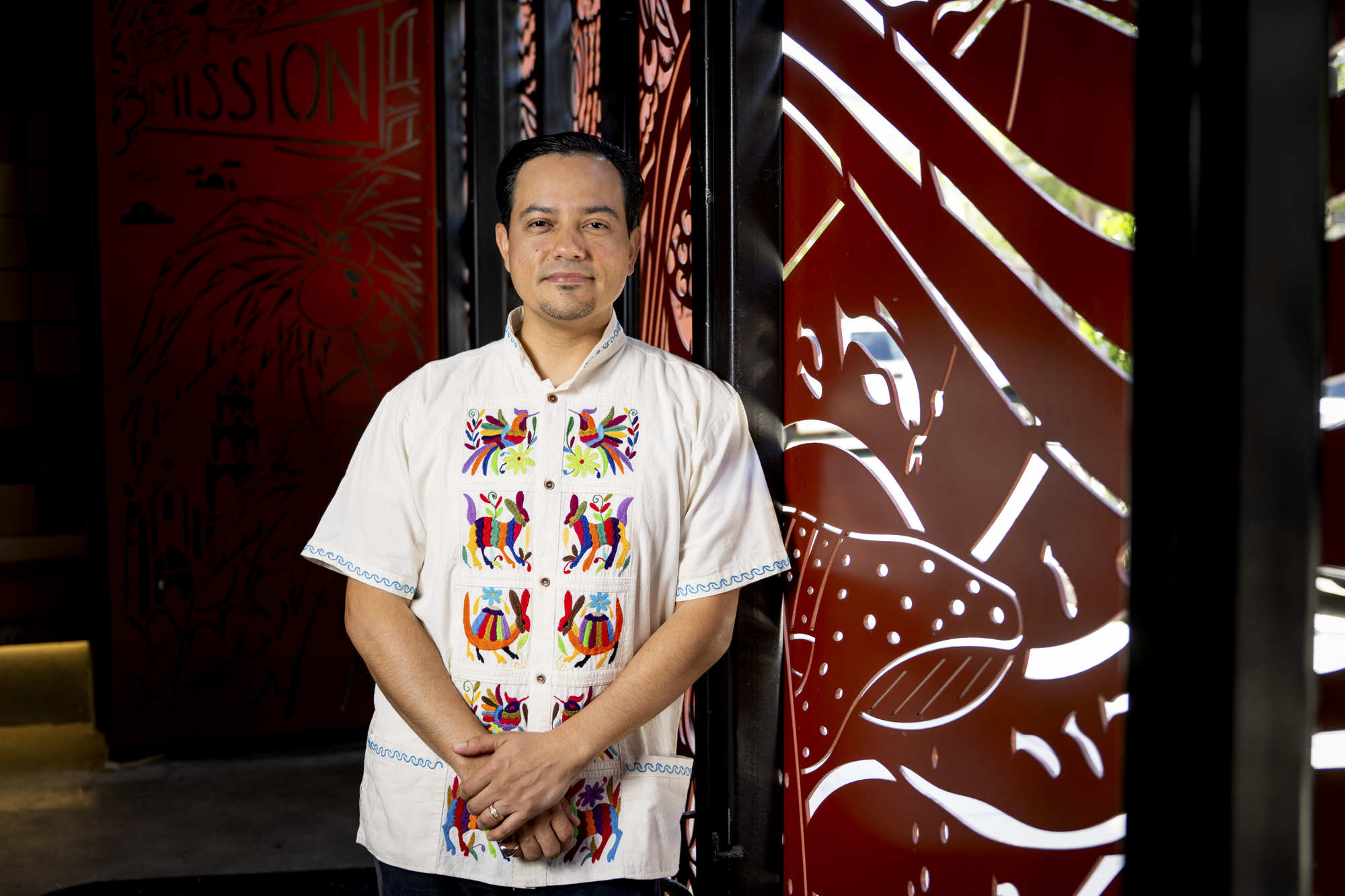
"caption": "Rodrigo Duran, executive director of Carnaval San Francisco, at the organization’s offices in San Francisco’s Mission District on May 11, 2026.",
"credit": "Beth LaBerge/KQED",
"altTag": null,
"description": null,
"imgSizes": {
"thumbnail": {
"file": "https://cdn.kqed.org/wp-content/uploads/sites/10/2026/05/260511-KONDAMAY-03-BL-KQED-160x107.jpg",
"width": 160,
"height": 107,
"mimeType": "image/jpeg"
},
"1536x1536": {
"file": "https://cdn.kqed.org/wp-content/uploads/sites/10/2026/05/260511-KONDAMAY-03-BL-KQED-1536x1024.jpg",
"width": 1536,
"height": 1024,
"mimeType": "image/jpeg"
},
"post-thumbnail": {
"file": "https://cdn.kqed.org/wp-content/uploads/sites/10/2026/05/260511-KONDAMAY-03-BL-KQED-672x372.jpg",
"width": 672,
"height": 372,
"mimeType": "image/jpeg"
},
"twentyfourteen-full-width": {
"file": "https://cdn.kqed.org/wp-content/uploads/sites/10/2026/05/260511-KONDAMAY-03-BL-KQED-1038x576.jpg",
"width": 1038,
"height": 576,
"mimeType": "image/jpeg"
},
"npr-cds-wide": {
"file": "https://cdn.kqed.org/wp-content/uploads/sites/10/2026/05/260511-KONDAMAY-03-BL-KQED-1200x675.jpg",
"width": 1200,
"height": 675,
"mimeType": "image/jpeg"
},
"npr-cds-square": {
"file": "https://cdn.kqed.org/wp-content/uploads/sites/10/2026/05/260511-KONDAMAY-03-BL-KQED-600x600.jpg",
"width": 600,
"height": 600,
"mimeType": "image/jpeg"
},
"kqedFullSize": {
"file": "https://cdn.kqed.org/wp-content/uploads/sites/10/2026/05/260511-KONDAMAY-03-BL-KQED.jpg",
"width": 2000,
"height": 1333
}
},
"isLoading": false,
"fetchFailed": false
},
"news_12082863": {
"type": "attachments",
"id": "news_12082863",
"meta": {
"index": "attachments_1716263798",
"site": "news",
"id": "12082863",
"found": true
},
"title": "CA Teacher Discipline Agan",
"publishDate": 1778255936,
"status": "inherit",
"parent": 0,
"modified": 1778529367,
"caption": "A KQED and ProPublica investigation found that California’s teacher credentialing system allowed some educators accused of misconduct of a sexual nature to continue teaching even after school districts took disciplinary action.",
"credit": "Anna Vignet/KQED",
"altTag": "An illustration of a girl sitting at a desk raising her hand, while behind her, a man partially in the shadows puts his hands on her shoulders. In the background, there is a chalkboard with equations written on it.",
"description": null,
"imgSizes": {
"thumbnail": {
"file": "https://cdn.kqed.org/wp-content/uploads/sites/10/2026/05/CA-Teacher-Discipline-Agan-final-160x120.jpg",
"width": 160,
"height": 120,
"mimeType": "image/jpeg"
},
"1536x1536": {
"file": "https://cdn.kqed.org/wp-content/uploads/sites/10/2026/05/CA-Teacher-Discipline-Agan-final-1536x1152.jpg",
"width": 1536,
"height": 1152,
"mimeType": "image/jpeg"
},
"post-thumbnail": {
"file": "https://cdn.kqed.org/wp-content/uploads/sites/10/2026/05/CA-Teacher-Discipline-Agan-final-672x372.jpg",
"width": 672,
"height": 372,
"mimeType": "image/jpeg"
},
"twentyfourteen-full-width": {
"file": "https://cdn.kqed.org/wp-content/uploads/sites/10/2026/05/CA-Teacher-Discipline-Agan-final-1038x576.jpg",
"width": 1038,
"height": 576,
"mimeType": "image/jpeg"
},
"npr-cds-wide": {
"file": "https://cdn.kqed.org/wp-content/uploads/sites/10/2026/05/CA-Teacher-Discipline-Agan-final-1200x675.jpg",
"width": 1200,
"height": 675,
"mimeType": "image/jpeg"
},
"npr-cds-square": {
"file": "https://cdn.kqed.org/wp-content/uploads/sites/10/2026/05/CA-Teacher-Discipline-Agan-final-600x600.jpg",
"width": 600,
"height": 600,
"mimeType": "image/jpeg"
},
"kqedFullSize": {
"file": "https://cdn.kqed.org/wp-content/uploads/sites/10/2026/05/CA-Teacher-Discipline-Agan-final.jpg",
"width": 2000,
"height": 1500
}
},
"isLoading": false,
"fetchFailed": false
},
"news_12083049": {
"type": "attachments",
"id": "news_12083049",
"meta": {
"index": "attachments_1716263798",
"site": "news",
"id": "12083049",
"found": true
},
"title": "260508-EXPANSIONCONSEQUENCE-TV-05214-KQED",
"publishDate": 1778333970,
"status": "inherit",
"parent": 0,
"modified": 1778334035,
"caption": "Children’s toys scatter across the school yard of Carquinez Garden School in Crockett on May 8, 2026.",
"credit": "Tâm Vũ/KQED",
"altTag": null,
"description": null,
"imgSizes": {
"thumbnail": {
"file": "https://cdn.kqed.org/wp-content/uploads/sites/10/2026/05/260508-EXPANSIONCONSEQUENCE-TV-05214-KQED-160x107.jpg",
"width": 160,
"height": 107,
"mimeType": "image/jpeg"
},
"1536x1536": {
"file": "https://cdn.kqed.org/wp-content/uploads/sites/10/2026/05/260508-EXPANSIONCONSEQUENCE-TV-05214-KQED-1536x1024.jpg",
"width": 1536,
"height": 1024,
"mimeType": "image/jpeg"
},
"post-thumbnail": {
"file": "https://cdn.kqed.org/wp-content/uploads/sites/10/2026/05/260508-EXPANSIONCONSEQUENCE-TV-05214-KQED-672x372.jpg",
"width": 672,
"height": 372,
"mimeType": "image/jpeg"
},
"twentyfourteen-full-width": {
"file": "https://cdn.kqed.org/wp-content/uploads/sites/10/2026/05/260508-EXPANSIONCONSEQUENCE-TV-05214-KQED-1038x576.jpg",
"width": 1038,
"height": 576,
"mimeType": "image/jpeg"
},
"npr-cds-wide": {
"file": "https://cdn.kqed.org/wp-content/uploads/sites/10/2026/05/260508-EXPANSIONCONSEQUENCE-TV-05214-KQED-1200x675.jpg",
"width": 1200,
"height": 675,
"mimeType": "image/jpeg"
},
"npr-cds-square": {
"file": "https://cdn.kqed.org/wp-content/uploads/sites/10/2026/05/260508-EXPANSIONCONSEQUENCE-TV-05214-KQED-600x600.jpg",
"width": 600,
"height": 600,
"mimeType": "image/jpeg"
},
"kqedFullSize": {
"file": "https://cdn.kqed.org/wp-content/uploads/sites/10/2026/05/260508-EXPANSIONCONSEQUENCE-TV-05214-KQED.jpg",
"width": 2000,
"height": 1333
}
},
"isLoading": false,
"fetchFailed": false
},
"news_12082936": {
"type": "attachments",
"id": "news_12082936",
"meta": {
"index": "attachments_1716263798",
"site": "news",
"id": "12082936",
"found": true
},
"title": "--",
"publishDate": 1778267804,
"status": "inherit",
"parent": 0,
"modified": 1778267987,
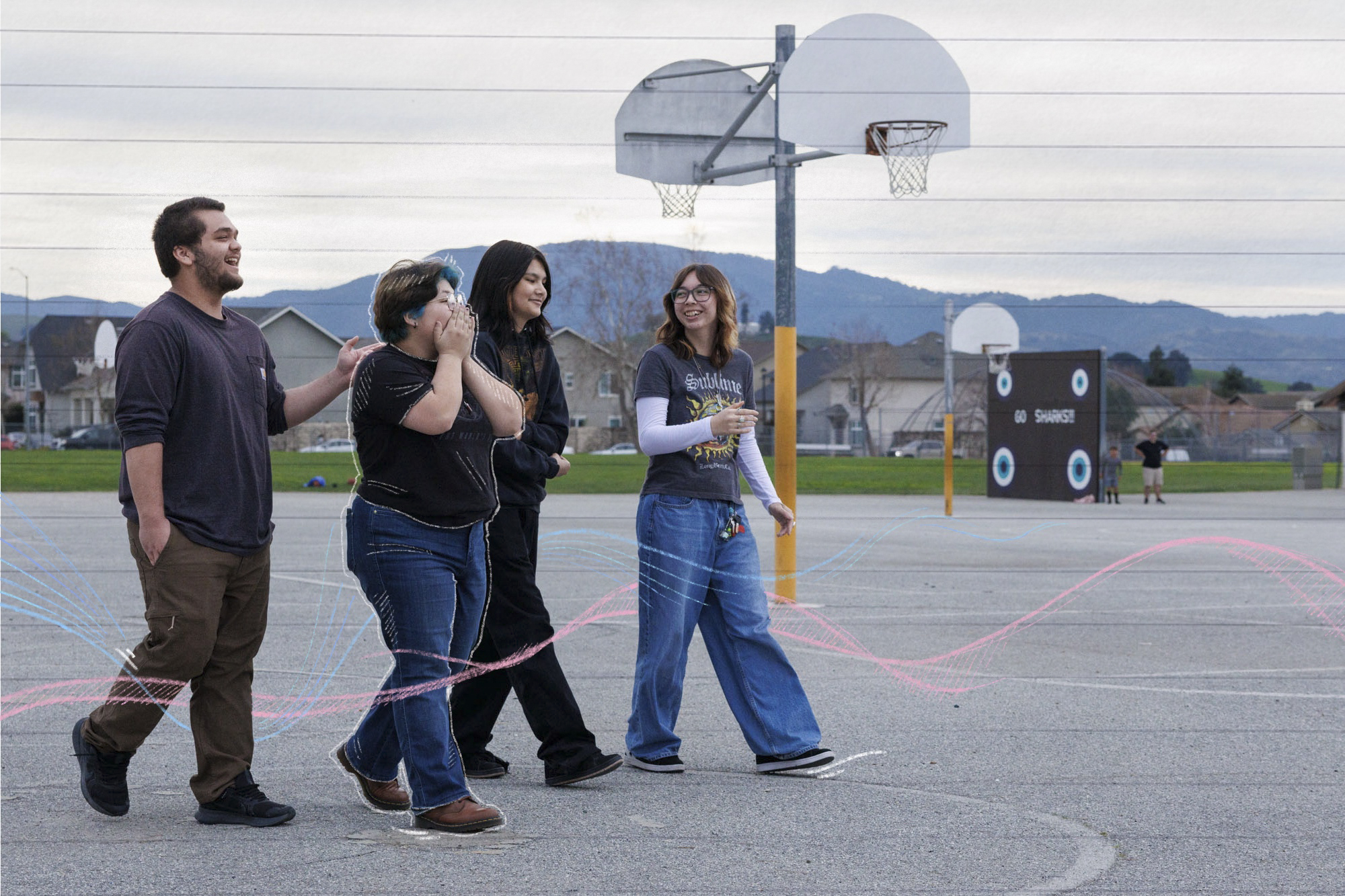
"caption": "(From left) David, Gael Barba-Solis, Haiden Dizon, and Mae walk around a park they like to visit in Hollister, CA on January 20, 2026. Gael, who identifies as a transgender man, says he has found support in his long-time friends and considers them to be like family.",
"credit": null,
"altTag": null,
"description": null,
"imgSizes": {
"thumbnail": {
"file": "https://cdn.kqed.org/wp-content/uploads/sites/10/2026/05/BREA-YOUTH-MENTAL-HEALTH01-KQED-160x107.jpg",
"width": 160,
"height": 107,
"mimeType": "image/jpeg"
},
"1536x1536": {
"file": "https://cdn.kqed.org/wp-content/uploads/sites/10/2026/05/BREA-YOUTH-MENTAL-HEALTH01-KQED-1536x1024.jpg",
"width": 1536,
"height": 1024,
"mimeType": "image/jpeg"
},
"post-thumbnail": {
"file": "https://cdn.kqed.org/wp-content/uploads/sites/10/2026/05/BREA-YOUTH-MENTAL-HEALTH01-KQED-672x372.jpg",
"width": 672,
"height": 372,
"mimeType": "image/jpeg"
},
"twentyfourteen-full-width": {
"file": "https://cdn.kqed.org/wp-content/uploads/sites/10/2026/05/BREA-YOUTH-MENTAL-HEALTH01-KQED-1038x576.jpg",
"width": 1038,
"height": 576,
"mimeType": "image/jpeg"
},
"npr-cds-wide": {
"file": "https://cdn.kqed.org/wp-content/uploads/sites/10/2026/05/BREA-YOUTH-MENTAL-HEALTH01-KQED-1200x675.jpg",
"width": 1200,
"height": 675,
"mimeType": "image/jpeg"
},
"npr-cds-square": {
"file": "https://cdn.kqed.org/wp-content/uploads/sites/10/2026/05/BREA-YOUTH-MENTAL-HEALTH01-KQED-600x600.jpg",
"width": 600,
"height": 600,
"mimeType": "image/jpeg"
},
"kqedFullSize": {
"file": "https://cdn.kqed.org/wp-content/uploads/sites/10/2026/05/BREA-YOUTH-MENTAL-HEALTH01-KQED.jpg",
"width": 2000,
"height": 1333
}
},
"isLoading": false,
"fetchFailed": false
},
"news_12082901": {
"type": "attachments",
"id": "news_12082901",
"meta": {
"index": "attachments_1716263798",
"site": "news",
"id": "12082901",
"found": true
},
"title": "Education-Schools-Canvas-Outage",
"publishDate": 1778263580,
"status": "inherit",
"parent": 12082895,
"modified": 1778263632,
"caption": "An image of a notice sent by Georgia Tech's information technology department warning students, professors and staff about the cybersecurity breach of the Canvas system it uses for assignments and grading is displayed on a phone, on Friday, May 8, 2026, in Decatur, Georgia. ",
"credit": "Michael Warren/AP Photo",
"altTag": null,
"description": null,
"imgSizes": {
"thumbnail": {
"file": "https://cdn.kqed.org/wp-content/uploads/sites/10/2026/05/CanvasDisruptionAP-160x107.jpg",
"width": 160,
"height": 107,
"mimeType": "image/jpeg"
},
"1536x1536": {
"file": "https://cdn.kqed.org/wp-content/uploads/sites/10/2026/05/CanvasDisruptionAP-1536x1024.jpg",
"width": 1536,
"height": 1024,
"mimeType": "image/jpeg"
},
"post-thumbnail": {
"file": "https://cdn.kqed.org/wp-content/uploads/sites/10/2026/05/CanvasDisruptionAP-672x372.jpg",
"width": 672,
"height": 372,
"mimeType": "image/jpeg"
},
"twentyfourteen-full-width": {
"file": "https://cdn.kqed.org/wp-content/uploads/sites/10/2026/05/CanvasDisruptionAP-1038x576.jpg",
"width": 1038,
"height": 576,
"mimeType": "image/jpeg"
},
"npr-cds-wide": {
"file": "https://cdn.kqed.org/wp-content/uploads/sites/10/2026/05/CanvasDisruptionAP-1200x675.jpg",
"width": 1200,
"height": 675,
"mimeType": "image/jpeg"
},
"npr-cds-square": {
"file": "https://cdn.kqed.org/wp-content/uploads/sites/10/2026/05/CanvasDisruptionAP-600x600.jpg",
"width": 600,
"height": 600,
"mimeType": "image/jpeg"
},
"kqedFullSize": {
"file": "https://cdn.kqed.org/wp-content/uploads/sites/10/2026/05/CanvasDisruptionAP.jpg",
"width": 2000,
"height": 1333
}
},
"isLoading": false,
"fetchFailed": false
},
"news_12082127": {
"type": "attachments",
"id": "news_12082127",
"meta": {
"index": "attachments_1716263798",
"site": "news",
"id": "12082127",
"found": true
},
"title": "CA Gubernatorial Candidates Join Debate At Pomona College",
"publishDate": 1777663401,
"status": "inherit",
"parent": 12082125,
"modified": 1777663658,
"caption": "California gubernatorial candidates (L-R) Democrat Tony Thurmond, Republican Chad Bianco, Democrat Tom Steyer, Republican Steve Hilton, Democrat Xavier Becerra, Democrat Katie Porter, Democrat Matt Mahan and Democrat Antonio Villaraigosa stand during a commercial break during the CBS California Gubernatorial Debate at Pomona College on April 28, 2026 in Claremont, California. ",
"credit": "Mario Tama/Getty Images",
"altTag": null,
"description": null,
"imgSizes": {
"medium": {
"file": "https://cdn.kqed.org/wp-content/uploads/sites/10/2026/05/GettyImages-2273634446-2000x1277.jpg",
"width": 2000,
"height": 1277,
"mimeType": "image/jpeg"
},
"large": {
"file": "https://cdn.kqed.org/wp-content/uploads/sites/10/2026/05/GettyImages-2273634446-2000x1277.jpg",
"width": 2000,
"height": 1277,
"mimeType": "image/jpeg"
},
"thumbnail": {
"file": "https://cdn.kqed.org/wp-content/uploads/sites/10/2026/05/GettyImages-2273634446-160x102.jpg",
"width": 160,
"height": 102,
"mimeType": "image/jpeg"
},
"1536x1536": {
"file": "https://cdn.kqed.org/wp-content/uploads/sites/10/2026/05/GettyImages-2273634446-1536x981.jpg",
"width": 1536,
"height": 981,
"mimeType": "image/jpeg"
},
"2048x2048": {
"file": "https://cdn.kqed.org/wp-content/uploads/sites/10/2026/05/GettyImages-2273634446-2048x1308.jpg",
"width": 2048,
"height": 1308,
"mimeType": "image/jpeg"
},
"post-thumbnail": {
"file": "https://cdn.kqed.org/wp-content/uploads/sites/10/2026/05/GettyImages-2273634446-672x372.jpg",
"width": 672,
"height": 372,
"mimeType": "image/jpeg"
},
"twentyfourteen-full-width": {
"file": "https://cdn.kqed.org/wp-content/uploads/sites/10/2026/05/GettyImages-2273634446-1038x576.jpg",
"width": 1038,
"height": 576,
"mimeType": "image/jpeg"
},
"full-width": {
"file": "https://cdn.kqed.org/wp-content/uploads/sites/10/2026/05/GettyImages-2273634446-2000x1277.jpg",
"width": 2000,
"height": 1277,
"mimeType": "image/jpeg"
},
"npr-cds-wide": {
"file": "https://cdn.kqed.org/wp-content/uploads/sites/10/2026/05/GettyImages-2273634446-1200x675.jpg",
"width": 1200,
"height": 675,
"mimeType": "image/jpeg"
},
"npr-cds-square": {
"file": "https://cdn.kqed.org/wp-content/uploads/sites/10/2026/05/GettyImages-2273634446-600x600.jpg",
"width": 600,
"height": 600,
"mimeType": "image/jpeg"
},
"kqedFullSize": {
"file": "https://cdn.kqed.org/wp-content/uploads/sites/10/2026/05/GettyImages-2273634446-scaled.jpg",
"width": 2560,
"height": 1635
}
},
"isLoading": false,
"fetchFailed": false
},
"news_12082759": {
"type": "attachments",
"id": "news_12082759",
"meta": {
"index": "attachments_1716263798",
"site": "news",
"id": "12082759",
"found": true
},
"title": "KQED_RURALMATERNALHEALTH_HIRES_02-KQED",
"publishDate": 1778178604,
"status": "inherit",
"parent": 0,
"modified": 1778178629,
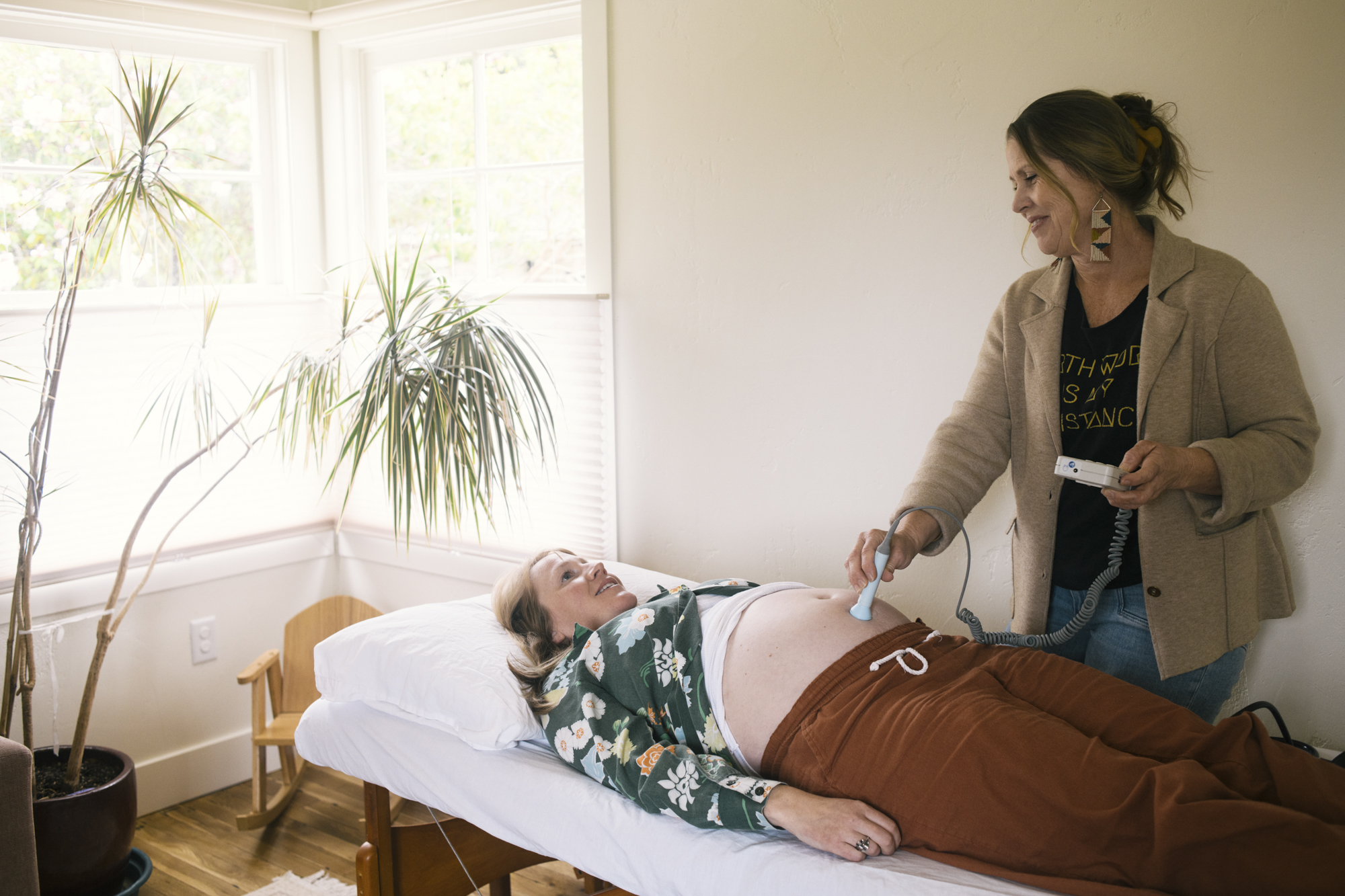
"caption": "Midwife Laura Doyle listens to Leslie Booher’s baby’s heartbeat using a fetal doppler during an exam at Moonstone Midwives Birth Center on Monday, May 4, 2026 in Eureka, Calif. Appointments with the midwives last an hour, unlike the typical 10 to 15 minute checkup with an OB-GYN, and allow the midwives to discuss a comprehensive number of topics with expecting parents.",
"credit": "Alexandra Hootnick for KQED",
"altTag": null,
"description": null,
"imgSizes": {
"thumbnail": {
"file": "https://cdn.kqed.org/wp-content/uploads/sites/10/2026/05/KQED_RURALMATERNALHEALTH_HIRES_02-KQED-160x107.jpg",
"width": 160,
"height": 107,
"mimeType": "image/jpeg"
},
"1536x1536": {
"file": "https://cdn.kqed.org/wp-content/uploads/sites/10/2026/05/KQED_RURALMATERNALHEALTH_HIRES_02-KQED-1536x1024.jpg",
"width": 1536,
"height": 1024,
"mimeType": "image/jpeg"
},
"post-thumbnail": {
"file": "https://cdn.kqed.org/wp-content/uploads/sites/10/2026/05/KQED_RURALMATERNALHEALTH_HIRES_02-KQED-672x372.jpg",
"width": 672,
"height": 372,
"mimeType": "image/jpeg"
},
"twentyfourteen-full-width": {
"file": "https://cdn.kqed.org/wp-content/uploads/sites/10/2026/05/KQED_RURALMATERNALHEALTH_HIRES_02-KQED-1038x576.jpg",
"width": 1038,
"height": 576,
"mimeType": "image/jpeg"
},
"npr-cds-wide": {
"file": "https://cdn.kqed.org/wp-content/uploads/sites/10/2026/05/KQED_RURALMATERNALHEALTH_HIRES_02-KQED-1200x675.jpg",
"width": 1200,
"height": 675,
"mimeType": "image/jpeg"
},
"npr-cds-square": {
"file": "https://cdn.kqed.org/wp-content/uploads/sites/10/2026/05/KQED_RURALMATERNALHEALTH_HIRES_02-KQED-600x600.jpg",
"width": 600,
"height": 600,
"mimeType": "image/jpeg"
},
"kqedFullSize": {
"file": "https://cdn.kqed.org/wp-content/uploads/sites/10/2026/05/KQED_RURALMATERNALHEALTH_HIRES_02-KQED.jpg",
"width": 2000,
"height": 1333
}
},
"isLoading": false,
"fetchFailed": false
},
"news_12079261": {
"type": "attachments",
"id": "news_12079261",
"meta": {
"index": "attachments_1716263798",
"site": "news",
"id": "12079261",
"found": true
},
"title": "040526CheapCamping_GH_017_qed",
"publishDate": 1775755540,
"status": "inherit",
"parent": 12086426,
"modified": 1782154128,
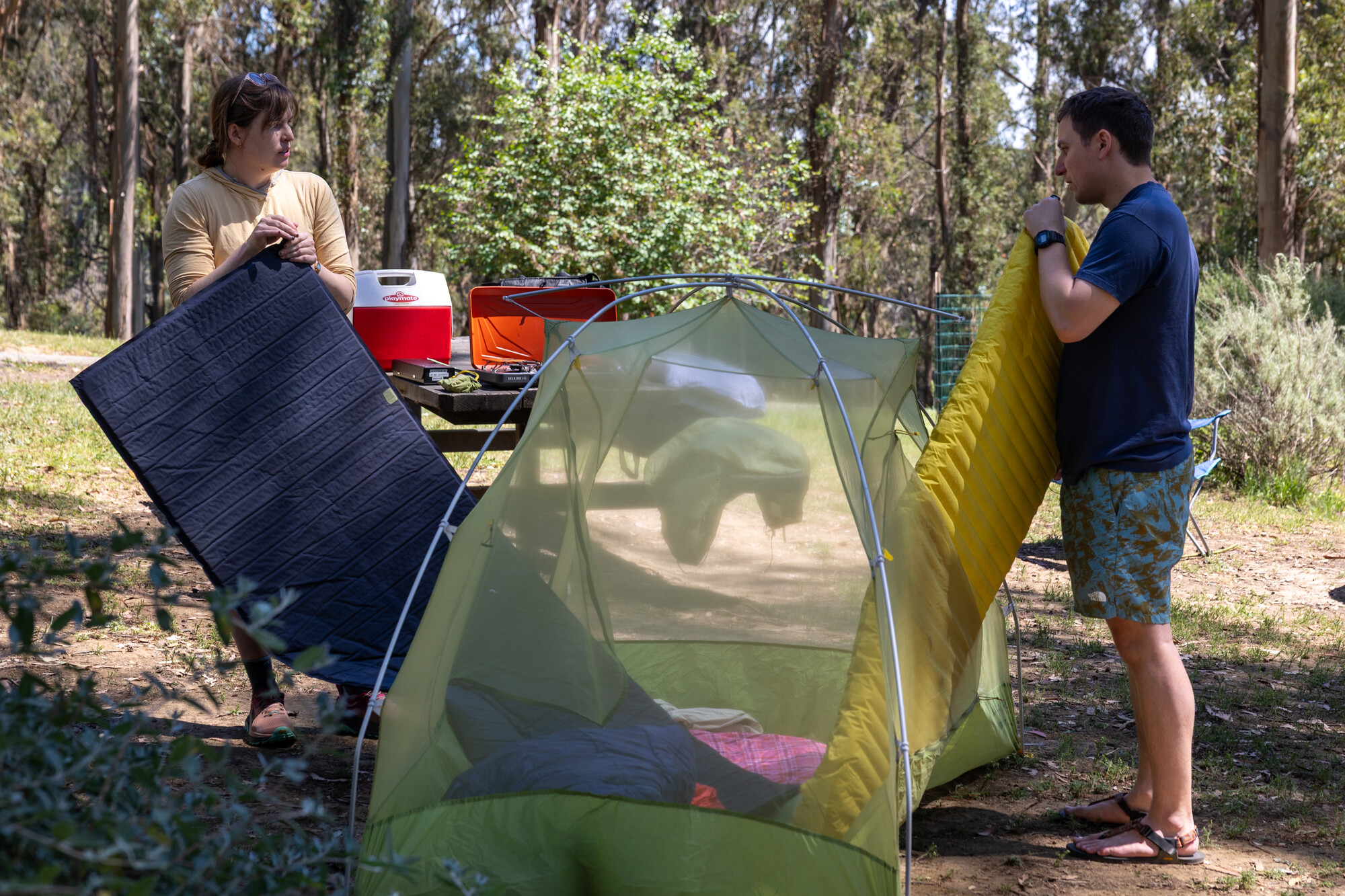
"caption": "Josh Dillen and reporter Sarah Wright, begin setting up a tent at a campsite at Anthony Chabot Family Campground on April 5, 2026, in Castro Valley, California.",
"credit": "Gustavo Hernandez/KQED",
"altTag": null,
"description": null,
"imgSizes": {
"thumbnail": {
"file": "https://cdn.kqed.org/wp-content/uploads/sites/10/2026/04/040526CheapCamping_GH_017_qed-160x107.jpg",
"width": 160,
"height": 107,
"mimeType": "image/jpeg"
},
"1536x1536": {
"file": "https://cdn.kqed.org/wp-content/uploads/sites/10/2026/04/040526CheapCamping_GH_017_qed-1536x1024.jpg",
"width": 1536,
"height": 1024,
"mimeType": "image/jpeg"
},
"post-thumbnail": {
"file": "https://cdn.kqed.org/wp-content/uploads/sites/10/2026/04/040526CheapCamping_GH_017_qed-672x372.jpg",
"width": 672,
"height": 372,
"mimeType": "image/jpeg"
},
"twentyfourteen-full-width": {
"file": "https://cdn.kqed.org/wp-content/uploads/sites/10/2026/04/040526CheapCamping_GH_017_qed-1038x576.jpg",
"width": 1038,
"height": 576,
"mimeType": "image/jpeg"
},
"npr-cds-wide": {
"file": "https://cdn.kqed.org/wp-content/uploads/sites/10/2026/04/040526CheapCamping_GH_017_qed-1200x675.jpg",
"width": 1200,
"height": 675,
"mimeType": "image/jpeg"
},
"npr-cds-square": {
"file": "https://cdn.kqed.org/wp-content/uploads/sites/10/2026/04/040526CheapCamping_GH_017_qed-600x600.jpg",
"width": 600,
"height": 600,
"mimeType": "image/jpeg"
},
"kqedFullSize": {
"file": "https://cdn.kqed.org/wp-content/uploads/sites/10/2026/04/040526CheapCamping_GH_017_qed.jpg",
"width": 2000,
"height": 1333
}
},
"isLoading": false,
"fetchFailed": false
},
"news_12081365": {
"type": "attachments",
"id": "news_12081365",
"meta": {
"index": "attachments_1716263798",
"site": "news",
"id": "12081365",
"found": true
},
"title": "110525-Election-Counting-Fresno-LV-CM-15-1",
"publishDate": 1777068720,
"status": "inherit",
"parent": 12081363,
"modified": 1777068744,
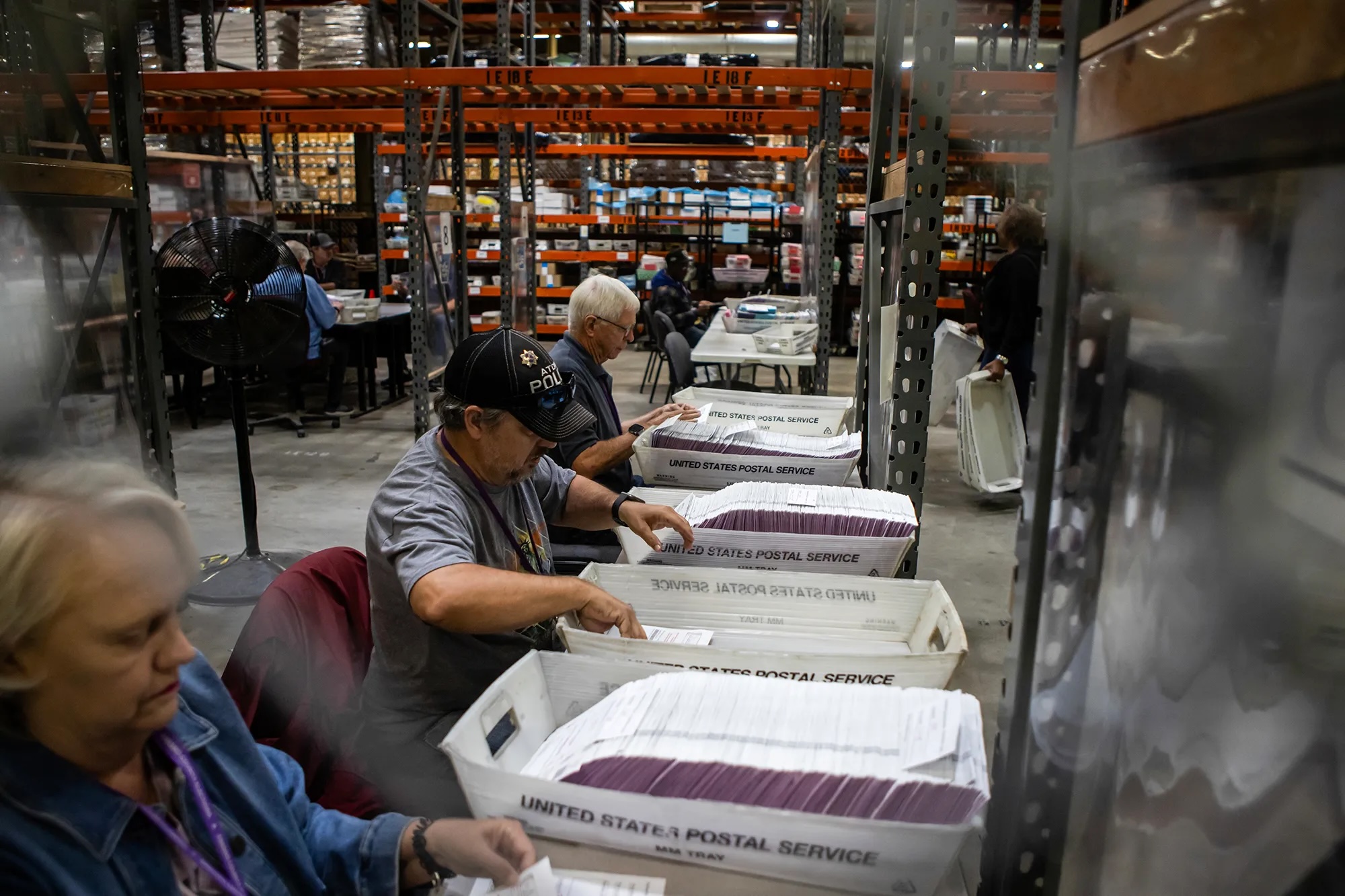
"caption": "Election workers sort ballots at the Fresno County Elections Warehouse in Fresno on Nov. 5, 2025. ",
"credit": "Photo by Larry Valenzuela/CalMatters/CatchLight Local",
"altTag": null,
"description": null,
"imgSizes": {
"thumbnail": {
"file": "https://cdn.kqed.org/wp-content/uploads/sites/10/2026/04/110525-Election-Counting-Fresno-LV-CM-15-1-160x107.jpeg",
"width": 160,
"height": 107,
"mimeType": "image/jpeg"
},
"1536x1536": {
"file": "https://cdn.kqed.org/wp-content/uploads/sites/10/2026/04/110525-Election-Counting-Fresno-LV-CM-15-1-1536x1024.jpeg",
"width": 1536,
"height": 1024,
"mimeType": "image/jpeg"
},
"post-thumbnail": {
"file": "https://cdn.kqed.org/wp-content/uploads/sites/10/2026/04/110525-Election-Counting-Fresno-LV-CM-15-1-672x372.jpeg",
"width": 672,
"height": 372,
"mimeType": "image/jpeg"
},
"twentyfourteen-full-width": {
"file": "https://cdn.kqed.org/wp-content/uploads/sites/10/2026/04/110525-Election-Counting-Fresno-LV-CM-15-1-1038x576.jpeg",
"width": 1038,
"height": 576,
"mimeType": "image/jpeg"
},
"npr-cds-wide": {
"file": "https://cdn.kqed.org/wp-content/uploads/sites/10/2026/04/110525-Election-Counting-Fresno-LV-CM-15-1-1200x675.jpeg",
"width": 1200,
"height": 675,
"mimeType": "image/jpeg"
},
"npr-cds-square": {
"file": "https://cdn.kqed.org/wp-content/uploads/sites/10/2026/04/110525-Election-Counting-Fresno-LV-CM-15-1-600x600.jpeg",
"width": 600,
"height": 600,
"mimeType": "image/jpeg"
},
"kqedFullSize": {
"file": "https://cdn.kqed.org/wp-content/uploads/sites/10/2026/04/110525-Election-Counting-Fresno-LV-CM-15-1.jpeg",
"width": 2000,
"height": 1333
}
},
"isLoading": false,
"fetchFailed": false
}
},
"audioPlayerReducer": {
"postId": "stream_live",
"isPaused": true,
"isPlaying": false,
"pfsActive": false,
"pledgeModalIsOpen": true,
"playerDrawerIsOpen": false,
"liveAudioPlayStartedAt": 0,
"liveAudioPlayContext": ""
},
"authorsReducer": {
"byline_news_12082980": {
"type": "authors",
"id": "byline_news_12082980",
"meta": {
"override": true
},
"slug": "byline_news_12082980",
"name": "Holly McDede, KQED, and Mollie Simon, ProPublica",
"isLoading": false
},
"byline_news_12082903": {
"type": "authors",
"id": "byline_news_12082903",
"meta": {
"override": true
},
"slug": "byline_news_12082903",
"name": "Jessica Parga, BenitoLink/Catchlight",
"isLoading": false
},
"byline_news_12082596": {
"type": "authors",
"id": "byline_news_12082596",
"meta": {
"override": true
},
"slug": "byline_news_12082596",
"name": "Clare Wiley",
"isLoading": false
},
"gmarzorati": {
"type": "authors",
"id": "227",
"meta": {
"index": "authors_1716337520",
"id": "227",
"found": true
},
"name": "Guy Marzorati",
"firstName": "Guy",
"lastName": "Marzorati",
"slug": "gmarzorati",
"email": "gmarzorati@KQED.org",
"display_author_email": true,
"staff_mastheads": [
"news"
],
"title": "Correspondent",
"bio": "Guy Marzorati is a correspondent on KQED's California Politics and Government Desk, based in San Jose. A graduate of Santa Clara University, Guy joined KQED in 2013. He reports on state and local politics and produces KQED's digital voter guide.",
"avatar": "https://secure.gravatar.com/avatar/e7038b8dbfd55b104369b76b1cd0b9de?s=600&d=blank&r=g",
"twitter": "guymarzorati",
"facebook": null,
"instagram": null,
"linkedin": null,
"sites": [
{
"site": "",
"roles": [
"editor"
]
},
{
"site": "news",
"roles": [
"editor"
]
},
{
"site": "science",
"roles": [
"editor"
]
},
{
"site": "forum",
"roles": [
"editor"
]
},
{
"site": "elections",
"roles": [
"editor"
]
},
{
"site": "liveblog",
"roles": [
"editor"
]
}
],
"headData": {
"title": "Guy Marzorati | KQED",
"description": "Correspondent",
"ogImgSrc": "https://secure.gravatar.com/avatar/e7038b8dbfd55b104369b76b1cd0b9de?s=600&d=blank&r=g",
"twImgSrc": "https://secure.gravatar.com/avatar/e7038b8dbfd55b104369b76b1cd0b9de?s=600&d=blank&r=g"
},
"isLoading": false,
"link": "/author/gmarzorati"
},
"kqed": {
"type": "authors",
"id": "236",
"meta": {
"index": "authors_1716337520",
"id": "236",
"found": true
},
"name": "KQED News Staff",
"firstName": "KQED News Staff",
"lastName": null,
"slug": "kqed",
"email": "faq@kqed.org",
"display_author_email": false,
"staff_mastheads": [],
"title": null,
"bio": null,
"avatar": "https://secure.gravatar.com/avatar/ef0e801a68c4c54afa9180db14084167?s=600&d=blank&r=g",
"twitter": null,
"facebook": null,
"instagram": null,
"linkedin": null,
"sites": [
{
"site": "arts",
"roles": [
"contributor"
]
},
{
"site": "news",
"roles": [
"editor"
]
},
{
"site": "futureofyou",
"roles": [
"author"
]
}
],
"headData": {
"title": "KQED News Staff | KQED",
"description": null,
"ogImgSrc": "https://secure.gravatar.com/avatar/ef0e801a68c4c54afa9180db14084167?s=600&d=blank&r=g",
"twImgSrc": "https://secure.gravatar.com/avatar/ef0e801a68c4c54afa9180db14084167?s=600&d=blank&r=g"
},
"isLoading": false,
"link": "/author/kqed"
},
"btorres": {
"type": "authors",
"id": "11666",
"meta": {
"index": "authors_1716337520",
"id": "11666",
"found": true
},
"name": "Blanca Torres",
"firstName": "Blanca",
"lastName": "Torres",
"slug": "btorres",
"email": "btorres@kqed.org",
"display_author_email": true,
"staff_mastheads": [
"news"
],
"title": "Producer, Forum",
"bio": "Blanca Torres brings sharp news judgement and keen sense of lively conversation to her work as producer for Forum. She loves producing shows that leave listeners feeling like they heard distinctive voices, learned something new and gained a fresh perspective.\r\n\r\nShe joined KQED in January of 2020 after 16 years of working as a newspaper reporter most recently at the \u003cem>San Francisco Business Times,\u003c/em> where she wrote about real estate and economic development. Before that, she covered a variety of beats including crime, education, retail, workplace, the economy, consumer issues, and small business for the \u003cem>Contra Costa Times, Baltimore Sun\u003c/em> and\u003cem> The Seattle Times\u003c/em>. In addition to reporting, she worked as an editorial writer and columnist for the \u003cem>Seattle Times\u003c/em>. From 2017 to 2020, Blanca won a total of ten awards from the National Association of Real Estate Editors and won first place for land use reporting from the California News Publishers Association two years in a row. She is also a member and former board member for the National Association of Hispanic Journalists.\r\n\r\nA native of the Pacific Northwest, Blanca earned her bachelor's degree from Vanderbilt University in Nashville and a master's in fine arts in creative writing at Mills College. She lives in the East Bay with her family.",
"avatar": "https://secure.gravatar.com/avatar/50b49d19b14a1eed34f26ebf4681152cdd81574ed21851100871ccd29e578cdc?s=600&d=blank&r=g",
"twitter": "@blancawrites",
"bluesky": null,
"facebook": null,
"instagram": null,
"linkedin": null,
"sites": [
{
"site": "arts",
"roles": [
"editor"
]
},
{
"site": "news",
"roles": [
"editor"
]
},
{
"site": "forum",
"roles": [
"editor"
]
}
],
"headData": {
"title": "Blanca Torres | KQED",
"description": "Producer, Forum",
"ogImgSrc": "https://secure.gravatar.com/avatar/50b49d19b14a1eed34f26ebf4681152cdd81574ed21851100871ccd29e578cdc?s=600&d=blank&r=g",
"twImgSrc": "https://secure.gravatar.com/avatar/50b49d19b14a1eed34f26ebf4681152cdd81574ed21851100871ccd29e578cdc?s=600&d=blank&r=g"
},
"isLoading": false,
"link": "/author/btorres"
},
"adahlstromeckman": {
"type": "authors",
"id": "11785",
"meta": {
"index": "authors_1716337520",
"id": "11785",
"found": true
},
"name": "Azul Dahlstrom-Eckman",
"firstName": "Azul",
"lastName": "Dahlstrom-Eckman",
"slug": "adahlstromeckman",
"email": "adahlstrom-eckman@kqed.org",
"display_author_email": true,
"staff_mastheads": [],
"title": "Reporter",
"bio": "Azul is a reporter for KQED focusing on transportation and features. He joined KQED in 2021 as an alumna of KALW's Audio Academy radio journalism training program.",
"avatar": "https://secure.gravatar.com/avatar/9cb750298435add7815a777f55bf1f46845c1386bb8452555c60a7b820b5aba3?s=600&d=blank&r=g",
"twitter": "@zuliemann",
"bluesky": "@azul415.bsky.social",
"facebook": null,
"instagram": null,
"linkedin": null,
"sites": [
{
"site": "arts",
"roles": [
"editor"
]
},
{
"site": "news",
"roles": [
"editor"
]
},
{
"site": "science",
"roles": [
"editor"
]
},
{
"site": "liveblog",
"roles": [
"author"
]
}
],
"headData": {
"title": "Azul Dahlstrom-Eckman | KQED",
"description": "Reporter",
"ogImgSrc": "https://secure.gravatar.com/avatar/9cb750298435add7815a777f55bf1f46845c1386bb8452555c60a7b820b5aba3?s=600&d=blank&r=g",
"twImgSrc": "https://secure.gravatar.com/avatar/9cb750298435add7815a777f55bf1f46845c1386bb8452555c60a7b820b5aba3?s=600&d=blank&r=g"
},
"isLoading": false,
"link": "/author/adahlstromeckman"
},
"daisynguyen": {
"type": "authors",
"id": "11829",
"meta": {
"index": "authors_1716337520",
"id": "11829",
"found": true
},
"name": "Daisy Nguyen",
"firstName": "Daisy",
"lastName": "Nguyen",
"slug": "daisynguyen",
"email": "daisynguyen@kqed.org",
"display_author_email": true,
"staff_mastheads": [
"news"
],
"title": "KQED Contributor",
"bio": "I have covered early childhood education and child care for KQED since 2022. I focus on policies aimed at increasing access to early care and education and how they shape individual lives. I've been a journalist for more than two decades, with most of that time devoted to covering breaking news throughout California for The Associated Press. I grew up in San Francisco and studied at UC Davis and Columbia University's Graduate School of Journalism. I live in Oakland with my husband and two kids.",
"avatar": "https://secure.gravatar.com/avatar/2da2127c27f7143b53ebd419800fd55f?s=600&d=blank&r=g",
"twitter": null,
"facebook": null,
"instagram": null,
"linkedin": "https://www.linkedin.com/in/daisynguyen/",
"sites": [
{
"site": "news",
"roles": [
"author"
]
},
{
"site": "liveblog",
"roles": [
"author"
]
}
],
"headData": {
"title": "Daisy Nguyen | KQED",
"description": "KQED Contributor",
"ogImgSrc": "https://secure.gravatar.com/avatar/2da2127c27f7143b53ebd419800fd55f?s=600&d=blank&r=g",
"twImgSrc": "https://secure.gravatar.com/avatar/2da2127c27f7143b53ebd419800fd55f?s=600&d=blank&r=g"
},
"isLoading": false,
"link": "/author/daisynguyen"
},
"emanoukian": {
"type": "authors",
"id": "11925",
"meta": {
"index": "authors_1716337520",
"id": "11925",
"found": true
},
"name": "Elize Manoukian",
"firstName": "Elize",
"lastName": "Manoukian",
"slug": "emanoukian",
"email": "emanoukian@KQED.org",
"display_author_email": false,
"staff_mastheads": [
"news"
],
"title": "Digital News Editor",
"bio": "Elize Manoukian is an award-winning audio producer and Senior Editor on the Express Desk, KQED's digital news platform. Her work has appeared on KPFA, Interlochen Public Radio, Oregon Public Broadcast, the New York Daily News, LA Times and the San Diego Union-Tribune.",
"avatar": "https://secure.gravatar.com/avatar/4525f1a8e46ccb30933b32653d9772064cfefe3fa655eb45b3b3a80341f6bdad?s=600&d=blank&r=g",
"twitter": null,
"bluesky": null,
"facebook": null,
"instagram": null,
"linkedin": null,
"sites": [
{
"site": "arts",
"roles": [
"editor"
]
},
{
"site": "news",
"roles": [
"editor"
]
},
{
"site": "science",
"roles": [
"editor"
]
}
],
"headData": {
"title": "Elize Manoukian | KQED",
"description": "Digital News Editor",
"ogImgSrc": "https://secure.gravatar.com/avatar/4525f1a8e46ccb30933b32653d9772064cfefe3fa655eb45b3b3a80341f6bdad?s=600&d=blank&r=g",
"twImgSrc": "https://secure.gravatar.com/avatar/4525f1a8e46ccb30933b32653d9772064cfefe3fa655eb45b3b3a80341f6bdad?s=600&d=blank&r=g"
},
"isLoading": false,
"link": "/author/emanoukian"
},
"sarahwright": {
"type": "authors",
"id": "11956",
"meta": {
"index": "authors_1716337520",
"id": "11956",
"found": true
},
"name": "Sarah Wright",
"firstName": "Sarah",
"lastName": "Wright",
"slug": "sarahwright",
"email": "swright@kqed.org",
"display_author_email": true,
"staff_mastheads": [],
"title": "Outdoors Engagement Reporter",
"bio": "Sarah Wright is KQED's Outdoors Engagement Reporter. Originally from Lake Tahoe, she completed a thru-hike of the Pacific Crest Trail in 2019 and was a U.S. Fulbright Program grantee to Argentina in 2023. Her journalism has appeared in The Guardian, The San Francisco Standard, The Palo Alto Weekly and the Half Moon Bay Review.",
"avatar": "https://secure.gravatar.com/avatar/c161a3d6441865cba25e6db4fa561099ad665799e9432e34da2b84d7e371524c?s=600&d=blank&r=g",
"twitter": null,
"bluesky": null,
"facebook": null,
"instagram": null,
"linkedin": null,
"sites": [
{
"site": "arts",
"roles": [
"editor"
]
},
{
"site": "news",
"roles": [
"editor"
]
},
{
"site": "science",
"roles": [
"contributor",
"author"
]
},
{
"site": "forum",
"roles": [
"editor"
]
}
],
"headData": {
"title": "Sarah Wright | KQED",
"description": "Outdoors Engagement Reporter",
"ogImgSrc": "https://secure.gravatar.com/avatar/c161a3d6441865cba25e6db4fa561099ad665799e9432e34da2b84d7e371524c?s=600&d=blank&r=g",
"twImgSrc": "https://secure.gravatar.com/avatar/c161a3d6441865cba25e6db4fa561099ad665799e9432e34da2b84d7e371524c?s=600&d=blank&r=g"
},
"isLoading": false,
"link": "/author/sarahwright"
},
"aaliahmad": {
"type": "authors",
"id": "11986",
"meta": {
"index": "authors_1716337520",
"id": "11986",
"found": true
},
"name": "Ayah Ali-Ahmad",
"firstName": "Ayah",
"lastName": "Ali-Ahmad",
"slug": "aaliahmad",
"email": "aaliahmad@KQED.org",
"display_author_email": false,
"staff_mastheads": [],
"title": "KQED Contributor",
"bio": null,
"avatar": "https://secure.gravatar.com/avatar/1cf54f187a5e1064b2cfef3f3d2f1e4f93e453395d56912aca6382a6071ec3ed?s=600&d=blank&r=g",
"twitter": "ayahaliahmad",
"bluesky": null,
"facebook": null,
"instagram": null,
"linkedin": null,
"sites": [
{
"site": "news",
"roles": [
"subscriber"
]
}
],
"headData": {
"title": "Ayah Ali-Ahmad | KQED",
"description": "KQED Contributor",
"ogImgSrc": "https://secure.gravatar.com/avatar/1cf54f187a5e1064b2cfef3f3d2f1e4f93e453395d56912aca6382a6071ec3ed?s=600&d=blank&r=g",
"twImgSrc": "https://secure.gravatar.com/avatar/1cf54f187a5e1064b2cfef3f3d2f1e4f93e453395d56912aca6382a6071ec3ed?s=600&d=blank&r=g"
},
"isLoading": false,
"link": "/author/aaliahmad"
}
},
"pagesReducer": {
"news_tag_california": {
"type": "terms",
"id": "news_18538",
"meta": {
"index": "terms_1716263798",
"site": "news",
"id": "18538",
"score": 6.847839
},
"featImg": null,
"name": "California",
"description": null,
"taxonomy": "tag",
"headData": {
"twImgId": null,
"twTitle": null,
"ogTitle": null,
"ogImgId": null,
"twDescription": null,
"description": null,
"title": "California Archives | KQED News",
"ogDescription": null
},
"ttid": 31,
"slug": "california",
"isLoading": false,
"title": "California",
"pageMeta": {
"site": "news",
"WpPageTemplate": "page-topic-editorial",
"currentPage": 22
},
"blocks": [
{
"blockName": "kqed/post-list",
"attrs": {
"layout": "cardArticle2",
"query": "posts/news?tag=california",
"seeMore": false,
"paginated": true,
"page": 22
}
},
{
"blockName": "kqed/ad"
}
]
}
},
"pfsSessionReducer": {},
"postsReducer": {
"stream_live": {
"type": "live",
"id": "stream_live",
"audioUrl": "https://streams.kqed.org/kqedradio",
"title": "Live Stream",
"excerpt": "Live Stream information currently unavailable.",
"link": "/radio",
"featImg": "",
"label": {
"name": "KQED Live",
"link": "/"
}
},
"stream_kqedNewscast": {
"type": "posts",
"id": "stream_kqedNewscast",
"audioUrl": "https://www.kqed.org/.stream/anon/radio/RDnews/newscast.mp3?_=1",
"title": "KQED Newscast",
"featImg": "",
"label": {
"name": "88.5 FM",
"link": "/"
}
},
"news_12083467": {
"type": "posts",
"id": "news_12083467",
"meta": {
"index": "posts_1716263798",
"site": "news",
"id": "12083467",
"score": null,
"sort": [
1778756439000
]
},
"guestAuthors": [],
"slug": "caltrans-explores-high-speed-buses-as-alternative-to-rail-in-california",
"title": "Caltrans Explores High-Speed Bus Network to Complement Rail System",
"publishDate": 1778756439,
"format": "standard",
"headTitle": "Caltrans Explores High-Speed Bus Network to Complement Rail System | KQED",
"labelTerm": {
"site": "news"
},
"content": "\u003cp>While high-speed rail has long captured the imagination of road-weary \u003ca href=\"https://www.kqed.org/news/tag/california\">California\u003c/a> travelers, Caltrans is exploring the feasibility of a different mode of expedited travel: high-speed buses.\u003c/p>\n\u003cp>Caltrans staff on Wednesday shared research on how high-speed buses capable of traveling anywhere from 80 to 140 mph might operate safely if found feasible on California’s freeway system.\u003c/p>\n\u003cp>Ryan Snyder, feasibility studies manager at Caltrans, said the purpose of the presentation was to stimulate a public discussion about how to best use California’s existing freeway system.\u003c/p>\n\u003cp>[ad fullwidth]\u003c/p>\n\u003cp>“Are we using and managing this asset to its highest and best use? And if not, what could we do differently to meet today’s and tomorrow’s goals?” Snyder said, noting that if the freeway system were designed today, it would have been done “very differently.”\u003c/p>\n\u003cp>While the project is still in the research phase, and many questions remain about the significant engineering hurdles necessary to make the idea a reality, Caltrans staff said high-speed buses could transform long-distance travel with a faster, safer and more efficient mobility option for California.\u003c/p>\n\u003cp>The project envisions dedicated high-speed bus lanes, separated from other traffic, running down the middle of freeways and broken up by stations where passengers can get on and off. Snyder said initial designs could offer regional service along State Route 99, connecting communities like Bakersfield, Visalia and Fresno. Ideas for interregional service include using interstates 80, 5 and U.S. Route 101 to connect far-flung destinations like San Diego, Los Angeles and San Francisco.\u003c/p>\n\u003cfigure id=\"attachment_12083557\" class=\"wp-caption aligncenter\" style=\"max-width: 2000px\">\u003cimg loading=\"lazy\" decoding=\"async\" class=\"size-full wp-image-12083557\" src=\"https://cdn.kqed.org/wp-content/uploads/sites/10/2026/05/IMG_4619_qed.jpg\" alt=\"\" width=\"2000\" height=\"1333\" srcset=\"https://cdn.kqed.org/wp-content/uploads/sites/10/2026/05/IMG_4619_qed.jpg 2000w, https://cdn.kqed.org/wp-content/uploads/sites/10/2026/05/IMG_4619_qed-160x107.jpg 160w, https://cdn.kqed.org/wp-content/uploads/sites/10/2026/05/IMG_4619_qed-1536x1024.jpg 1536w\" sizes=\"auto, (max-width: 2000px) 100vw, 2000px\">\u003cfigcaption class=\"wp-caption-text\">A viaduct runs alongside Highway 99 in south Fresno on March 27, 2019. Once leaving the station in downtown Fresno, high-speed rail passengers would zoom by on their way to Bakersfield, the next stop in the Central Valley. \u003ccite>(Alex Hall/KQED)\u003c/cite>\u003c/figcaption>\u003c/figure>\n\u003cp>At 100 mph, a high-speed bus trip from Los Angeles to San Francisco would take 3 hours and 50 minutes, Snyder said, shaving hours off current travel times by a personal vehicle.\u003c/p>\n\u003cp>Far from replacing California’s high-speed rail, Snyder said high-speed buses could complement and improve the value of the section of high-speed rail currently under construction from Merced to Bakersfield while the state works on securing funding to construct the rest of the proposed system from San Francisco to Los Angeles.\u003c/p>\n\u003cp>“ This could connect on the south end and could connect on the north end so that high-speed rail has more value than it would if it were just a disconnected segment of rail,” Snyder said.[aside postID=news_12082380 hero='https://cdn.kqed.org/wp-content/uploads/sites/10/2026/05/023_KQED_SanFrancisco_Coronavirus_03132020__qed.jpg']The research takes inspiration from Adelaide, Australia’s O-Bahn guided busway, where buses reach speeds of 62 mph along a 7-mile dedicated path. But according to a preliminary \u003ca href=\"https://dot.ca.gov/-/media/dot-media/programs/research-innovation-system-information/documents/preliminary-investigations/pi-0399-bus-pi-r1-1-a11y-1.pdf\">investigation\u003c/a> authored by Snyder in 2025, a significant obstacle is the lack of real-world examples of a high-speed bus system like the one envisioned by Caltrans.\u003c/p>\n\u003cp>“ High-speed buses could one day provide a speed advantage at a lower cost using existing freeway corridors once the technology is ready,” said Mehdi Moeinaddini, senior transportation planner at Caltrans. “But for now, trains and other established options remain more practical, and the right choice will depend on future economic analysis and the needs of each corridor.”\u003c/p>\n\u003cp>Moeinaddini said what fuel powers the buses — whether electric, hydrogen fuel cell, natural gas or something else — will depend on future innovations in the field.\u003c/p>\n\u003cp>Next steps include further research and testing on the design of buses, including aerodynamics, improved braking systems and other considerations to make the buses safer at such high speeds.\u003c/p>\n\u003cp>The research project has been submitted and is awaiting funding, according to Tori Kanzler, Chief of Caltrans Research Program Development Branch.\u003c/p>\n\u003cp>\u003c/p>\n",
"blocks": [],
"excerpt": "Caltrans is studying whether high-speed buses traveling up to 140 mph could provide a faster, lower-cost alternative to driving and complement California’s high-speed rail system by connecting cities, including Los Angeles, San Francisco, Fresno and Bakersfield.",
"status": "publish",
"parent": 0,
"modified": 1778772804,
"stats": {
"hasAudio": false,
"hasVideo": false,
"hasChartOrMap": false,
"iframeSrcs": [],
"hasGoogleForm": false,
"hasGallery": false,
"hasHearkenModule": false,
"hasPolis": false,
"paragraphCount": 15,
"wordCount": 654
},
"headData": {
"title": "Caltrans Explores High-Speed Bus Network to Complement Rail System | KQED",
"description": "Caltrans is studying whether high-speed buses traveling up to 140 mph could provide a faster, lower-cost alternative to driving and complement California’s high-speed rail system by connecting cities, including Los Angeles, San Francisco, Fresno and Bakersfield.",
"ogTitle": "",
"ogDescription": "",
"ogImgId": "",
"twTitle": "",
"twDescription": "",
"twImgId": "",
"schema": {
"@context": "https://schema.org",
"@type": "NewsArticle",
"headline": "Caltrans Explores High-Speed Bus Network to Complement Rail System",
"datePublished": "2026-05-14T04:00:39-07:00",
"dateModified": "2026-05-14T08:33:24-07:00",
"image": "https://cdn.kqed.org/wp-content/uploads/2020/02/KQED-OG-Image@1x.png",
"isAccessibleForFree": "True",
"publisher": {
"@type": "NewsMediaOrganization",
"@id": "https://www.kqed.org/#organization",
"name": "KQED",
"logo": "https://cdn.kqed.org/wp-content/uploads/2020/02/KQED-OG-Image@1x.png",
"url": "https://www.kqed.org",
"sameAs": [
"https://www.facebook.com/KQED",
"https://twitter.com/KQED",
"https://www.instagram.com/kqed/",
"https://www.tiktok.com/@kqedofficial",
"https://www.linkedin.com/company/kqed",
"https://www.youtube.com/channel/UCeC0IOo7i1P_61zVUWbJ4nw"
]
}
}
},
"primaryCategory": {
"termId": 1397,
"slug": "transportation",
"name": "Transportation"
},
"sticky": false,
"nprStoryId": "kqed-12083467",
"templateType": "standard",
"featuredImageType": "standard",
"excludeFromSiteSearch": "Include",
"articleAge": "0",
"path": "/news/12083467/caltrans-explores-high-speed-buses-as-alternative-to-rail-in-california",
"audioTrackLength": null,
"parsedContent": [
{
"type": "contentString",
"content": "\u003cdiv class=\"post-body\">\u003cp>\u003cp>While high-speed rail has long captured the imagination of road-weary \u003ca href=\"https://www.kqed.org/news/tag/california\">California\u003c/a> travelers, Caltrans is exploring the feasibility of a different mode of expedited travel: high-speed buses.\u003c/p>\n\u003cp>Caltrans staff on Wednesday shared research on how high-speed buses capable of traveling anywhere from 80 to 140 mph might operate safely if found feasible on California’s freeway system.\u003c/p>\n\u003cp>Ryan Snyder, feasibility studies manager at Caltrans, said the purpose of the presentation was to stimulate a public discussion about how to best use California’s existing freeway system.\u003c/p>\n\u003cp>\u003c/p>\u003c/div>",
"attributes": {
"named": {},
"numeric": []
}
},
{
"type": "component",
"content": "",
"name": "ad",
"attributes": {
"named": {
"label": "fullwidth"
},
"numeric": [
"fullwidth"
]
}
},
{
"type": "contentString",
"content": "\u003cdiv class=\"post-body\">\u003cp>\u003c/p>\n\u003cp>“Are we using and managing this asset to its highest and best use? And if not, what could we do differently to meet today’s and tomorrow’s goals?” Snyder said, noting that if the freeway system were designed today, it would have been done “very differently.”\u003c/p>\n\u003cp>While the project is still in the research phase, and many questions remain about the significant engineering hurdles necessary to make the idea a reality, Caltrans staff said high-speed buses could transform long-distance travel with a faster, safer and more efficient mobility option for California.\u003c/p>\n\u003cp>The project envisions dedicated high-speed bus lanes, separated from other traffic, running down the middle of freeways and broken up by stations where passengers can get on and off. Snyder said initial designs could offer regional service along State Route 99, connecting communities like Bakersfield, Visalia and Fresno. Ideas for interregional service include using interstates 80, 5 and U.S. Route 101 to connect far-flung destinations like San Diego, Los Angeles and San Francisco.\u003c/p>\n\u003cfigure id=\"attachment_12083557\" class=\"wp-caption aligncenter\" style=\"max-width: 2000px\">\u003cimg loading=\"lazy\" decoding=\"async\" class=\"size-full wp-image-12083557\" src=\"https://cdn.kqed.org/wp-content/uploads/sites/10/2026/05/IMG_4619_qed.jpg\" alt=\"\" width=\"2000\" height=\"1333\" srcset=\"https://cdn.kqed.org/wp-content/uploads/sites/10/2026/05/IMG_4619_qed.jpg 2000w, https://cdn.kqed.org/wp-content/uploads/sites/10/2026/05/IMG_4619_qed-160x107.jpg 160w, https://cdn.kqed.org/wp-content/uploads/sites/10/2026/05/IMG_4619_qed-1536x1024.jpg 1536w\" sizes=\"auto, (max-width: 2000px) 100vw, 2000px\">\u003cfigcaption class=\"wp-caption-text\">A viaduct runs alongside Highway 99 in south Fresno on March 27, 2019. Once leaving the station in downtown Fresno, high-speed rail passengers would zoom by on their way to Bakersfield, the next stop in the Central Valley. \u003ccite>(Alex Hall/KQED)\u003c/cite>\u003c/figcaption>\u003c/figure>\n\u003cp>At 100 mph, a high-speed bus trip from Los Angeles to San Francisco would take 3 hours and 50 minutes, Snyder said, shaving hours off current travel times by a personal vehicle.\u003c/p>\n\u003cp>Far from replacing California’s high-speed rail, Snyder said high-speed buses could complement and improve the value of the section of high-speed rail currently under construction from Merced to Bakersfield while the state works on securing funding to construct the rest of the proposed system from San Francisco to Los Angeles.\u003c/p>\n\u003cp>“ This could connect on the south end and could connect on the north end so that high-speed rail has more value than it would if it were just a disconnected segment of rail,” Snyder said.\u003c/p>\u003c/div>",
"attributes": {
"named": {},
"numeric": []
}
},
{
"type": "component",
"content": "",
"name": "aside",
"attributes": {
"named": {
"postid": "news_12082380",
"hero": "https://cdn.kqed.org/wp-content/uploads/sites/10/2026/05/023_KQED_SanFrancisco_Coronavirus_03132020__qed.jpg",
"label": ""
},
"numeric": []
}
},
{
"type": "contentString",
"content": "\u003cdiv class=\"post-body\">\u003cp>The research takes inspiration from Adelaide, Australia’s O-Bahn guided busway, where buses reach speeds of 62 mph along a 7-mile dedicated path. But according to a preliminary \u003ca href=\"https://dot.ca.gov/-/media/dot-media/programs/research-innovation-system-information/documents/preliminary-investigations/pi-0399-bus-pi-r1-1-a11y-1.pdf\">investigation\u003c/a> authored by Snyder in 2025, a significant obstacle is the lack of real-world examples of a high-speed bus system like the one envisioned by Caltrans.\u003c/p>\n\u003cp>“ High-speed buses could one day provide a speed advantage at a lower cost using existing freeway corridors once the technology is ready,” said Mehdi Moeinaddini, senior transportation planner at Caltrans. “But for now, trains and other established options remain more practical, and the right choice will depend on future economic analysis and the needs of each corridor.”\u003c/p>\n\u003cp>Moeinaddini said what fuel powers the buses — whether electric, hydrogen fuel cell, natural gas or something else — will depend on future innovations in the field.\u003c/p>\n\u003cp>Next steps include further research and testing on the design of buses, including aerodynamics, improved braking systems and other considerations to make the buses safer at such high speeds.\u003c/p>\n\u003cp>The research project has been submitted and is awaiting funding, according to Tori Kanzler, Chief of Caltrans Research Program Development Branch.\u003c/p>\n\u003cp>\u003c/p>\n\u003c/div>\u003c/p>",
"attributes": {
"named": {},
"numeric": []
}
}
],
"link": "/news/12083467/caltrans-explores-high-speed-buses-as-alternative-to-rail-in-california",
"authors": [
"11785"
],
"categories": [
"news_31795",
"news_8",
"news_1397"
],
"tags": [
"news_36599",
"news_18538",
"news_17768",
"news_27626",
"news_35069",
"news_1764",
"news_1533",
"news_20517",
"news_1855"
],
"featImg": "news_12083552",
"label": "news"
},
"news_12083461": {
"type": "posts",
"id": "news_12083461",
"meta": {
"index": "posts_1716263798",
"site": "news",
"id": "12083461",
"score": null,
"sort": [
1778701703000
]
},
"guestAuthors": [],
"slug": "california-advocates-want-newsom-to-fulfill-promise-to-fund-child-care-spaces",
"title": "California Advocates Want Newsom to Fulfill Promise to Fund Childcare Spaces",
"publishDate": 1778701703,
"format": "standard",
"headTitle": "California Advocates Want Newsom to Fulfill Promise to Fund Childcare Spaces | KQED",
"labelTerm": {
"site": "news"
},
"content": "\u003cp>On the ground floor of a new affordable housing complex in Redwood City, workers are in the middle of constructing a \u003ca href=\"https://www.kqed.org/early-childhood-education-and-care\">childcare\u003c/a> center.\u003c/p>\n\u003cp>Peninsula Family Service plans to enroll 36 infants and toddlers when the center is scheduled to open next year, using state funds awarded to the nonprofit to provide free or low-cost childcare to income-eligible families.\u003c/p>\n\u003cp>But the fate of that plan will depend on state budget negotiations over the next several weeks.\u003c/p>\n\u003cp>Earlier this year, Gov. Gavin Newsom proposed cutting funding for about 4,200 subsidized childcare spaces — money Peninsula Family Service will need to run the new center. The move would save $98 million, but advocates say it would roll back a pledge he made to expand access to childcare for working families.\u003c/p>\n\u003cp>[ad fullwidth]\u003c/p>\n\u003cp>“Newsom really championed and campaigned on being the early learning and care governor, and I think that there are many promises he made as part of that that have not been fulfilled,” said Nina Buthee, executive director of EveryChild California, which advocates for publicly funded childcare programs.\u003c/p>\n\u003cp>When Newsom presented his spending plan for the next fiscal year in January, the state projected a nearly $3 billion shortfall. The Legislative Analyst’s Office \u003ca href=\"https://lao.ca.gov/Publications/Report/5168\">recommended\u003c/a> cutting funding for “general childcare” spaces because they hadn’t been spent yet and therefore won’t affect families currently receiving subsidized childcare.\u003c/p>\n\u003cfigure id=\"attachment_12070630\" class=\"wp-caption aligncenter\" style=\"max-width: 2000px\">\u003cimg loading=\"lazy\" decoding=\"async\" class=\"size-full wp-image-12070630\" src=\"https://cdn.kqed.org/wp-content/uploads/sites/10/2026/01/260116-NewsomLuriePresser-32-BL_qed.jpg\" alt=\"\" width=\"2000\" height=\"1333\" srcset=\"https://cdn.kqed.org/wp-content/uploads/sites/10/2026/01/260116-NewsomLuriePresser-32-BL_qed.jpg 2000w, https://cdn.kqed.org/wp-content/uploads/sites/10/2026/01/260116-NewsomLuriePresser-32-BL_qed-160x107.jpg 160w, https://cdn.kqed.org/wp-content/uploads/sites/10/2026/01/260116-NewsomLuriePresser-32-BL_qed-1536x1024.jpg 1536w\" sizes=\"auto, (max-width: 2000px) 100vw, 2000px\">\u003cfigcaption class=\"wp-caption-text\">Gov. Gavin Newsom speaks during a press conference at the Friendship House Association of American Indians in San Francisco on Jan. 16, 2026. \u003ccite>(Beth LaBerge/KQED)\u003c/cite>\u003c/figcaption>\u003c/figure>\n\u003cp>But Buthee said at least 16 childcare providers across California haven’t spent the money because they’re still in the process of building or renovating facilities, but meeting state licensing standards and getting approval, especially for the care of infants and toddlers, takes time.\u003c/p>\n\u003cp>“Depending on where you are in California, licensing could take anywhere from a couple of weeks to up to six months or nine months,” she said. “Really, the state is not helping contractors expedite the process.”\u003c/p>\n\u003cp>Some of the affected contractors include Children’s Paradise, a childcare provider in San Diego County, which planned to open two locations in childcare “deserts” — areas where options are too few to meet the demand. The locations would have been large enough to serve 470 children, according to EveryChild California.\u003c/p>\n\u003cp>Peninsula Family Service was awarded $2.7 million to serve nearly 80 children at two new centers, said its CEO, Heather Cleary. If funding from the state goes away, she said, the agency might have to consider charging private tuition.[aside postID=news_12082904 hero='https://cdn.kqed.org/wp-content/uploads/sites/10/2026/05/260508-EXPANSIONCONSEQUENCE-TV-05214-KQED.jpg']“That’s not our intent. We really want to do everything we can to bring a subsidized program to this county, and that involves the state,” she said.\u003c/p>\n\u003cp>\u003cspan style=\"font-weight: 400\"> Subsidized childcare slots were not mentioned in the proposed 2026-2027 state budget, known as the “May Revision,” Newsom released on Thursday. He said the plan would balance California’s budget for the next two years, long after he leaves office. \u003c/span>\u003cspan style=\"font-weight: 400\">“We’re not going to walk away from this state and put the next Legislature and the next governor in a difficult spot,” he said. \u003c/span>\u003c/p>\n\u003cp>\u003cspan style=\"font-weight: 400\">Newsom’s updated plan will set off a busy period of negotiations leading to a final budget that the Legislature must pass by June 15. State Senate leaders have indicated they would not only reject cutting child care slots, but that they’d rather \u003c/span>\u003ca href=\"https://democrats.senate.ca.gov/sites/democrats.senate.ca.gov/files/iu/FINAL-FFTF-Budget.pdf\">\u003cspan style=\"font-weight: 400\">increase\u003c/span>\u003c/a>\u003cspan style=\"font-weight: 400\"> funding to subsidize 44,000 spaces. \u003c/span>\u003c/p>\n\u003cp>In 2021, Newsom pledged to add more than 200,000 subsidized childcare slots, both in contracted centers and in the form of vouchers for low-income families. His administration has funded 130,000 of those slots while making other huge investments in early childhood education and care, like \u003ca href=\"https://www.kqed.org/news/12082904/as-transitional-kindergarten-grows-hundreds-of-child-care-centers-close\">expanding access to transitional kindergarten\u003c/a> for all 4-year-old children and allowing in-home childcare providers who receive the subsidies to unionize. The move has led to \u003ca href=\"https://www.kqed.org/news/12051737/child-care-union-strikes-deal-to-preserve-benefits-bump-up-pay\">healthcare and retirement funds \u003c/a>for a workforce that has historically been underpaid, and the state is slowly working toward improving their wages.\u003c/p>\n\u003cp>“We’ve had the most significant childcare expansion subsidies in the United States. Should be better known. It’s not,” Newsom told MSN in a January interview.\u003c/p>\n\u003cp>Between 2019 and 2024, enrollment in subsidized childcare programs grew by 63%, according to an analysis by the \u003ca href=\"https://calbudgetcenter.org/app/uploads/2026/04/2026-Child-Care-Chart-Book-Designed.pdf\">California Budget & Policy Center\u003c/a>.\u003c/p>\n\u003cfigure id=\"attachment_12081820\" class=\"wp-caption aligncenter\" style=\"max-width: 2000px\">\u003cimg loading=\"lazy\" decoding=\"async\" class=\"wp-image-12081820 size-full\" src=\"https://cdn.kqed.org/wp-content/uploads/sites/10/2026/04/260428-VallejoChildCare-23-BL.jpg\" alt=\"\" width=\"2000\" height=\"1333\" srcset=\"https://cdn.kqed.org/wp-content/uploads/sites/10/2026/04/260428-VallejoChildCare-23-BL.jpg 2000w, https://cdn.kqed.org/wp-content/uploads/sites/10/2026/04/260428-VallejoChildCare-23-BL-160x107.jpg 160w, https://cdn.kqed.org/wp-content/uploads/sites/10/2026/04/260428-VallejoChildCare-23-BL-1536x1024.jpg 1536w\" sizes=\"auto, (max-width: 2000px) 100vw, 2000px\">\u003cfigcaption class=\"wp-caption-text\">Teacher Brianda Casillas works with children in a classroom at Rise Vallejo, an early education center, in Vallejo, on April 28, 2026. \u003ccite>(Beth LaBerge/KQED)\u003c/cite>\u003c/figcaption>\u003c/figure>\n\u003cp>Laura Pryor, a research director at the center, said while the Newsom administration deserves credit for making unprecedented investments in early childhood education, it has fallen short in some areas — like the slots.\u003c/p>\n\u003cp>She estimates that about 1.77 million children qualify for subsidized childcare, but are not enrolled in these programs.\u003c/p>\n\u003cp>“For every individual that gets access to a space, it’s thousands and thousands of dollars saved that expands their budget,” Pryor said. “If our goal is to fund all children that are eligible, we are moving in the right direction.”\u003c/p>\n\u003cp>“If there’s this additional cut, we’re not only walking back on the progress, but walking back on this positive trend that we’ve been seeing in the past several years,” she said.\u003c/p>\n\u003cp>\u003c/p>\n",
"blocks": [],
"excerpt": "Newsom’s office proposed cutting funding in the state budget for about 4,200 subsidized childcare spaces, but advocates say it would roll back a pledge he made to expand access. ",
"status": "publish",
"parent": 0,
"modified": 1778795901,
"stats": {
"hasAudio": false,
"hasVideo": false,
"hasChartOrMap": false,
"iframeSrcs": [],
"hasGoogleForm": false,
"hasGallery": false,
"hasHearkenModule": false,
"hasPolis": false,
"paragraphCount": 20,
"wordCount": 939
},
"headData": {
"title": "California Advocates Want Newsom to Fulfill Promise to Fund Childcare Spaces | KQED",
"description": "Newsom’s office proposed cutting funding in the state budget for about 4,200 subsidized childcare spaces, but advocates say it would roll back a pledge he made to expand access. ",
"ogTitle": "",
"ogDescription": "",
"ogImgId": "",
"twTitle": "",
"twDescription": "",
"twImgId": "",
"schema": {
"@context": "https://schema.org",
"@type": "NewsArticle",
"headline": "California Advocates Want Newsom to Fulfill Promise to Fund Childcare Spaces",
"datePublished": "2026-05-13T12:48:23-07:00",
"dateModified": "2026-05-14T14:58:21-07:00",
"image": "https://cdn.kqed.org/wp-content/uploads/2020/02/KQED-OG-Image@1x.png",
"isAccessibleForFree": "True",
"publisher": {
"@type": "NewsMediaOrganization",
"@id": "https://www.kqed.org/#organization",
"name": "KQED",
"logo": "https://cdn.kqed.org/wp-content/uploads/2020/02/KQED-OG-Image@1x.png",
"url": "https://www.kqed.org",
"sameAs": [
"https://www.facebook.com/KQED",
"https://twitter.com/KQED",
"https://www.instagram.com/kqed/",
"https://www.tiktok.com/@kqedofficial",
"https://www.linkedin.com/company/kqed",
"https://www.youtube.com/channel/UCeC0IOo7i1P_61zVUWbJ4nw"
]
}
}
},
"primaryCategory": {
"termId": 18540,
"slug": "education",
"name": "Education"
},
"sticky": false,
"nprStoryId": "kqed-12083461",
"templateType": "standard",
"featuredImageType": "standard",
"excludeFromSiteSearch": "Include",
"articleAge": "0",
"path": "/news/12083461/california-advocates-want-newsom-to-fulfill-promise-to-fund-child-care-spaces",
"audioTrackLength": null,
"parsedContent": [
{
"type": "contentString",
"content": "\u003cdiv class=\"post-body\">\u003cp>\u003cp>On the ground floor of a new affordable housing complex in Redwood City, workers are in the middle of constructing a \u003ca href=\"https://www.kqed.org/early-childhood-education-and-care\">childcare\u003c/a> center.\u003c/p>\n\u003cp>Peninsula Family Service plans to enroll 36 infants and toddlers when the center is scheduled to open next year, using state funds awarded to the nonprofit to provide free or low-cost childcare to income-eligible families.\u003c/p>\n\u003cp>But the fate of that plan will depend on state budget negotiations over the next several weeks.\u003c/p>\n\u003cp>Earlier this year, Gov. Gavin Newsom proposed cutting funding for about 4,200 subsidized childcare spaces — money Peninsula Family Service will need to run the new center. The move would save $98 million, but advocates say it would roll back a pledge he made to expand access to childcare for working families.\u003c/p>\n\u003cp>\u003c/p>\u003c/div>",
"attributes": {
"named": {},
"numeric": []
}
},
{
"type": "component",
"content": "",
"name": "ad",
"attributes": {
"named": {
"label": "fullwidth"
},
"numeric": [
"fullwidth"
]
}
},
{
"type": "contentString",
"content": "\u003cdiv class=\"post-body\">\u003cp>\u003c/p>\n\u003cp>“Newsom really championed and campaigned on being the early learning and care governor, and I think that there are many promises he made as part of that that have not been fulfilled,” said Nina Buthee, executive director of EveryChild California, which advocates for publicly funded childcare programs.\u003c/p>\n\u003cp>When Newsom presented his spending plan for the next fiscal year in January, the state projected a nearly $3 billion shortfall. The Legislative Analyst’s Office \u003ca href=\"https://lao.ca.gov/Publications/Report/5168\">recommended\u003c/a> cutting funding for “general childcare” spaces because they hadn’t been spent yet and therefore won’t affect families currently receiving subsidized childcare.\u003c/p>\n\u003cfigure id=\"attachment_12070630\" class=\"wp-caption aligncenter\" style=\"max-width: 2000px\">\u003cimg loading=\"lazy\" decoding=\"async\" class=\"size-full wp-image-12070630\" src=\"https://cdn.kqed.org/wp-content/uploads/sites/10/2026/01/260116-NewsomLuriePresser-32-BL_qed.jpg\" alt=\"\" width=\"2000\" height=\"1333\" srcset=\"https://cdn.kqed.org/wp-content/uploads/sites/10/2026/01/260116-NewsomLuriePresser-32-BL_qed.jpg 2000w, https://cdn.kqed.org/wp-content/uploads/sites/10/2026/01/260116-NewsomLuriePresser-32-BL_qed-160x107.jpg 160w, https://cdn.kqed.org/wp-content/uploads/sites/10/2026/01/260116-NewsomLuriePresser-32-BL_qed-1536x1024.jpg 1536w\" sizes=\"auto, (max-width: 2000px) 100vw, 2000px\">\u003cfigcaption class=\"wp-caption-text\">Gov. Gavin Newsom speaks during a press conference at the Friendship House Association of American Indians in San Francisco on Jan. 16, 2026. \u003ccite>(Beth LaBerge/KQED)\u003c/cite>\u003c/figcaption>\u003c/figure>\n\u003cp>But Buthee said at least 16 childcare providers across California haven’t spent the money because they’re still in the process of building or renovating facilities, but meeting state licensing standards and getting approval, especially for the care of infants and toddlers, takes time.\u003c/p>\n\u003cp>“Depending on where you are in California, licensing could take anywhere from a couple of weeks to up to six months or nine months,” she said. “Really, the state is not helping contractors expedite the process.”\u003c/p>\n\u003cp>Some of the affected contractors include Children’s Paradise, a childcare provider in San Diego County, which planned to open two locations in childcare “deserts” — areas where options are too few to meet the demand. The locations would have been large enough to serve 470 children, according to EveryChild California.\u003c/p>\n\u003cp>Peninsula Family Service was awarded $2.7 million to serve nearly 80 children at two new centers, said its CEO, Heather Cleary. If funding from the state goes away, she said, the agency might have to consider charging private tuition.\u003c/p>\u003c/div>",
"attributes": {
"named": {},
"numeric": []
}
},
{
"type": "component",
"content": "",
"name": "aside",
"attributes": {
"named": {
"postid": "news_12082904",
"hero": "https://cdn.kqed.org/wp-content/uploads/sites/10/2026/05/260508-EXPANSIONCONSEQUENCE-TV-05214-KQED.jpg",
"label": ""
},
"numeric": []
}
},
{
"type": "contentString",
"content": "\u003cdiv class=\"post-body\">\u003cp>“That’s not our intent. We really want to do everything we can to bring a subsidized program to this county, and that involves the state,” she said.\u003c/p>\n\u003cp>\u003cspan style=\"font-weight: 400\"> Subsidized childcare slots were not mentioned in the proposed 2026-2027 state budget, known as the “May Revision,” Newsom released on Thursday. He said the plan would balance California’s budget for the next two years, long after he leaves office. \u003c/span>\u003cspan style=\"font-weight: 400\">“We’re not going to walk away from this state and put the next Legislature and the next governor in a difficult spot,” he said. \u003c/span>\u003c/p>\n\u003cp>\u003cspan style=\"font-weight: 400\">Newsom’s updated plan will set off a busy period of negotiations leading to a final budget that the Legislature must pass by June 15. State Senate leaders have indicated they would not only reject cutting child care slots, but that they’d rather \u003c/span>\u003ca href=\"https://democrats.senate.ca.gov/sites/democrats.senate.ca.gov/files/iu/FINAL-FFTF-Budget.pdf\">\u003cspan style=\"font-weight: 400\">increase\u003c/span>\u003c/a>\u003cspan style=\"font-weight: 400\"> funding to subsidize 44,000 spaces. \u003c/span>\u003c/p>\n\u003cp>In 2021, Newsom pledged to add more than 200,000 subsidized childcare slots, both in contracted centers and in the form of vouchers for low-income families. His administration has funded 130,000 of those slots while making other huge investments in early childhood education and care, like \u003ca href=\"https://www.kqed.org/news/12082904/as-transitional-kindergarten-grows-hundreds-of-child-care-centers-close\">expanding access to transitional kindergarten\u003c/a> for all 4-year-old children and allowing in-home childcare providers who receive the subsidies to unionize. The move has led to \u003ca href=\"https://www.kqed.org/news/12051737/child-care-union-strikes-deal-to-preserve-benefits-bump-up-pay\">healthcare and retirement funds \u003c/a>for a workforce that has historically been underpaid, and the state is slowly working toward improving their wages.\u003c/p>\n\u003cp>“We’ve had the most significant childcare expansion subsidies in the United States. Should be better known. It’s not,” Newsom told MSN in a January interview.\u003c/p>\n\u003cp>Between 2019 and 2024, enrollment in subsidized childcare programs grew by 63%, according to an analysis by the \u003ca href=\"https://calbudgetcenter.org/app/uploads/2026/04/2026-Child-Care-Chart-Book-Designed.pdf\">California Budget & Policy Center\u003c/a>.\u003c/p>\n\u003cfigure id=\"attachment_12081820\" class=\"wp-caption aligncenter\" style=\"max-width: 2000px\">\u003cimg loading=\"lazy\" decoding=\"async\" class=\"wp-image-12081820 size-full\" src=\"https://cdn.kqed.org/wp-content/uploads/sites/10/2026/04/260428-VallejoChildCare-23-BL.jpg\" alt=\"\" width=\"2000\" height=\"1333\" srcset=\"https://cdn.kqed.org/wp-content/uploads/sites/10/2026/04/260428-VallejoChildCare-23-BL.jpg 2000w, https://cdn.kqed.org/wp-content/uploads/sites/10/2026/04/260428-VallejoChildCare-23-BL-160x107.jpg 160w, https://cdn.kqed.org/wp-content/uploads/sites/10/2026/04/260428-VallejoChildCare-23-BL-1536x1024.jpg 1536w\" sizes=\"auto, (max-width: 2000px) 100vw, 2000px\">\u003cfigcaption class=\"wp-caption-text\">Teacher Brianda Casillas works with children in a classroom at Rise Vallejo, an early education center, in Vallejo, on April 28, 2026. \u003ccite>(Beth LaBerge/KQED)\u003c/cite>\u003c/figcaption>\u003c/figure>\n\u003cp>Laura Pryor, a research director at the center, said while the Newsom administration deserves credit for making unprecedented investments in early childhood education, it has fallen short in some areas — like the slots.\u003c/p>\n\u003cp>She estimates that about 1.77 million children qualify for subsidized childcare, but are not enrolled in these programs.\u003c/p>\n\u003cp>“For every individual that gets access to a space, it’s thousands and thousands of dollars saved that expands their budget,” Pryor said. “If our goal is to fund all children that are eligible, we are moving in the right direction.”\u003c/p>\n\u003cp>“If there’s this additional cut, we’re not only walking back on the progress, but walking back on this positive trend that we’ve been seeing in the past several years,” she said.\u003c/p>\n\u003cp>\u003c/p>\n\u003c/div>\u003c/p>",
"attributes": {
"named": {},
"numeric": []
}
}
],
"link": "/news/12083461/california-advocates-want-newsom-to-fulfill-promise-to-fund-child-care-spaces",
"authors": [
"11829"
],
"categories": [
"news_31795",
"news_18540",
"news_8"
],
"tags": [
"news_18538",
"news_32102",
"news_32928",
"news_20013",
"news_35760",
"news_16",
"news_17867"
],
"featImg": "news_12083484",
"label": "news"
},
"news_12083142": {
"type": "posts",
"id": "news_12083142",
"meta": {
"index": "posts_1716263798",
"site": "news",
"id": "12083142",
"score": null,
"sort": [
1778605933000
]
},
"guestAuthors": [],
"slug": "san-francisco-nurses-fight-for-kaiser-employee-terminated-over-daca-status",
"title": "San Francisco Nurses Fight for Kaiser Employee Terminated Over DACA Status",
"publishDate": 1778605933,
"format": "standard",
"headTitle": "San Francisco Nurses Fight for Kaiser Employee Terminated Over DACA Status | KQED",
"labelTerm": {
"site": "news"
},
"content": "\u003cp>Dozens of nurses rallied outside \u003ca href=\"https://www.kqed.org/news/tag/kaiser\">Kaiser\u003c/a> San Francisco on Monday to advocate for a San Francisco nurse who is set to lose her job — after the federal government did not process her temporary legal status in time.\u003c/p>\n\u003cp>The surgical nurse, who has lived in the U.S. for most of her life and will remain anonymous due to safety concerns, immigrated from the Philippines when she was two years old. As an employee of Kaiser Permanente San Francisco Medical Center on Geary Boulevard, the nurse filed her DACA, or Deferred Action for Childhood Arrivals, renewal application on Dec.1 — exactly 135 days before her status was set to expire on April 15. Despite applying well within the recommended window, she said she has not heard back.\u003c/p>\n\u003cp>When her status lapsed, Kaiser placed her on 30 days of unpaid leave. That window closes on May 14. In response to her inquiries, Kaiser wrote that “It is your responsibility to keep your work authorization current,” according to \u003ca href=\"https://missionlocal.org/2026/05/kaiser-nurse-daca-renewal-delay-san-francisco/\">\u003cem>Mission Local\u003c/em>\u003c/a>, which first reported her case.\u003c/p>\n\u003cp>[ad fullwidth]\u003c/p>\n\u003cp>In a statement, Kaiser said the organization was evaluating potential solutions. \u003c/p>\n\u003cp>“We have been working directly with our employee to support her through this as best we can. We have been working with the union as well, and appreciate their advocacy on behalf of our employee. We are currently evaluating what potential solutions are available,” a spokesperson said in a statement. \u003c/p>\n\u003cp>Outside of Kaiser on Monday, dozens of nurses chanted: “Defend DACA now,” calling on the hospital to extend the nurse’s unpaid leave. In a statement read aloud by fellow nurses at the rally, the soon-to-be-terminated nurse wrote: “I feel devastated and torn to pieces to be in a position where the fault lies with the innocent.”\u003c/p>\n\u003cp>“So, I ask Kaiser to extend my leave, because I want to thrive, too,” it said.\u003c/p>\n\u003cp>Hers is not an isolated case. According to the Migration Policy Institute, an estimated 500,000 immigrants currently hold DACA status, and many have been caught in a surge of federal processing delays — a trend that advocates told KQED accelerated this year.\u003c/p>\n\u003cfigure id=\"attachment_12083226\" class=\"wp-caption aligncenter\" style=\"max-width: 2000px\">\u003cimg loading=\"lazy\" decoding=\"async\" class=\"size-full wp-image-12083226\" src=\"https://cdn.kqed.org/wp-content/uploads/sites/10/2026/05/260511-KAISERDACA00122_TV-KQED.jpg\" alt=\"\" width=\"2000\" height=\"1334\" srcset=\"https://cdn.kqed.org/wp-content/uploads/sites/10/2026/05/260511-KAISERDACA00122_TV-KQED.jpg 2000w, https://cdn.kqed.org/wp-content/uploads/sites/10/2026/05/260511-KAISERDACA00122_TV-KQED-160x107.jpg 160w, https://cdn.kqed.org/wp-content/uploads/sites/10/2026/05/260511-KAISERDACA00122_TV-KQED-1536x1025.jpg 1536w\" sizes=\"auto, (max-width: 2000px) 100vw, 2000px\">\u003cfigcaption class=\"wp-caption-text\">Diana Alfaro, a registered nurse, rallies against Kaiser’s plans to terminate a DACA recipient registered nurse outside of Kaiser Permanente on Geary Street in San Francisco on May 11, 2026. \u003ccite>(Tâm Vũ/KQED)\u003c/cite>\u003c/figcaption>\u003c/figure>\n\u003cp>The East Bay Sanctuary Covenant, which serves more than 1,000 active DACA clients, said that over half of renewal requests filed since November 2025 remain pending.\u003c/p>\n\u003cp>Lisa Hoffman, the organization’s co-executive director, said delays of 150 days or more are now common.\u003c/p>\n\u003cp>“This is just the latest attack,” Hoffman said. “It feels like DACA is being chipped away at piece by piece every day.”\u003c/p>\n\u003cp>Sydney Simpson, a registered nurse at Kaiser San Francisco, said the hospital’s decision is both morally and practically wrong.[aside postID=news_12082440 hero='https://cdn.kqed.org/wp-content/uploads/sites/10/2024/04/240408-FCIDublin-018-BL_qut-1020x680.jpg']“To replace a nurse with her level of expertise is extremely painful for the organization — it’s expensive, it hurts our morale as nurses and it hurts patient quality of care,” Simpson said. “It seems like a really easy decision, but for whatever reason, they are holding their ground.”\u003c/p>\n\u003cp>Nurses pointed to a stark contrast with the University of California health system. Maureen Dugan, a UCSF registered nurse, said at Monday’s rally that the UC’s union contract explicitly protects DACA nurses from termination during renewal delays — and guarantees recall rights if they are temporarily let go.\u003c/p>\n\u003cp>“UC is committed to supporting DACA staff,” Dugan said. “We won that language in our last contract negotiations.”\u003c/p>\n\u003cp>Last week, a coalition of Bay Area immigrant rights groups — including Justice Action Center, East Bay Sanctuary Covenant, the Immigration Institute of the Bay Area and Cornell Law School’s Path2Papers — filed a Freedom of Information Act request, demanding the Trump administration release data on how it is processing DACA renewals and what, if any, policy changes are driving the delays.\u003c/p>\n\u003cp>Advocates say DACA recipients are now making major life decisions — about their jobs, their housing, their families — without knowing when or whether their renewals will come through.\u003c/p>\n\u003cp>Vanessa Rivas-Bernardy, a staff attorney at Justice Action Center, said the delays reflect a program under sustained administrative pressure.\u003c/p>\n\u003cfigure id=\"attachment_12083229\" class=\"wp-caption aligncenter\" style=\"max-width: 2000px\">\u003cimg loading=\"lazy\" decoding=\"async\" class=\"size-full wp-image-12083229\" src=\"https://cdn.kqed.org/wp-content/uploads/sites/10/2026/05/260511-KAISERDACA00360_TV-KQED.jpg\" alt=\"\" width=\"2000\" height=\"1333\" srcset=\"https://cdn.kqed.org/wp-content/uploads/sites/10/2026/05/260511-KAISERDACA00360_TV-KQED.jpg 2000w, https://cdn.kqed.org/wp-content/uploads/sites/10/2026/05/260511-KAISERDACA00360_TV-KQED-160x107.jpg 160w, https://cdn.kqed.org/wp-content/uploads/sites/10/2026/05/260511-KAISERDACA00360_TV-KQED-1536x1024.jpg 1536w\" sizes=\"auto, (max-width: 2000px) 100vw, 2000px\">\u003cfigcaption class=\"wp-caption-text\">Supervisor Connie Chan rallies against Kaiser’s plans to terminate a DACA recipient registered nurse outside of Kaiser Permanente on Geary Street in San Francisco on May 11, 2026. \u003ccite>(Tâm Vũ/KQED)\u003c/cite>\u003c/figcaption>\u003c/figure>\n\u003cp>“DACA recipients have been living in two-year increments — all their decisions, their whole lives are in these two-year chunks,” Rivas-Bernardy said. “This is just an exacerbation of that uncertainty and risk, but it’s been completely ramping up in recent months in a way we really haven’t seen before.”\u003c/p>\n\u003cp>If the government does not respond to the FOIA request within 20 calendar days, Rivas-Bernardy said the coalition is prepared to file a federal lawsuit to compel disclosure.\u003c/p>\n\u003cp>San Francisco Supervisor Connie Chan attended Monday’s rally and called on Kaiser to change course.\u003c/p>\n\u003cp>“Our nurses — DACA or otherwise — should not be punished for the Trump administration’s incompetence,” Chan said.\u003c/p>\n\u003cp>In her written statement, the nurse said she is still holding on to hope.\u003c/p>\n\u003cp>“I know I am worthy, good enough, an exceptional nurse and member of this society,” she wrote. “I am a DACA recipient — a dreamer.”\u003c/p>\n\u003cp>\u003c/p>\n",
"blocks": [],
"excerpt": "The Bay Area Kaiser employee is just one out of an estimated 500,000 immigrants who currently hold DACA status, with many of their applications for renewal slowed by federal processing delays. ",
"status": "publish",
"parent": 0,
"modified": 1778691944,
"stats": {
"hasAudio": false,
"hasVideo": false,
"hasChartOrMap": false,
"iframeSrcs": [],
"hasGoogleForm": false,
"hasGallery": false,
"hasHearkenModule": false,
"hasPolis": false,
"paragraphCount": 25,
"wordCount": 968
},
"headData": {
"title": "San Francisco Nurses Fight for Kaiser Employee Terminated Over DACA Status | KQED",
"description": "The Bay Area Kaiser employee is just one out of an estimated 500,000 immigrants who currently hold DACA status, with many of their applications for renewal slowed by federal processing delays. ",
"ogTitle": "",
"ogDescription": "",
"ogImgId": "",
"twTitle": "",
"twDescription": "",
"twImgId": "",
"schema": {
"@context": "https://schema.org",
"@type": "NewsArticle",
"headline": "San Francisco Nurses Fight for Kaiser Employee Terminated Over DACA Status",
"datePublished": "2026-05-12T10:12:13-07:00",
"dateModified": "2026-05-13T10:05:44-07:00",
"image": "https://cdn.kqed.org/wp-content/uploads/2020/02/KQED-OG-Image@1x.png",
"isAccessibleForFree": "True",
"publisher": {
"@type": "NewsMediaOrganization",
"@id": "https://www.kqed.org/#organization",
"name": "KQED",
"logo": "https://cdn.kqed.org/wp-content/uploads/2020/02/KQED-OG-Image@1x.png",
"url": "https://www.kqed.org",
"sameAs": [
"https://www.facebook.com/KQED",
"https://twitter.com/KQED",
"https://www.instagram.com/kqed/",
"https://www.tiktok.com/@kqedofficial",
"https://www.linkedin.com/company/kqed",
"https://www.youtube.com/channel/UCeC0IOo7i1P_61zVUWbJ4nw"
]
}
}
},
"primaryCategory": {
"termId": 34551,
"slug": "labor",
"name": "Labor"
},
"sticky": false,
"nprStoryId": "kqed-12083142",
"templateType": "standard",
"featuredImageType": "standard",
"excludeFromSiteSearch": "Include",
"articleAge": "0",
"path": "/news/12083142/san-francisco-nurses-fight-for-kaiser-employee-terminated-over-daca-status",
"audioTrackLength": null,
"parsedContent": [
{
"type": "contentString",
"content": "\u003cdiv class=\"post-body\">\u003cp>\u003cp>Dozens of nurses rallied outside \u003ca href=\"https://www.kqed.org/news/tag/kaiser\">Kaiser\u003c/a> San Francisco on Monday to advocate for a San Francisco nurse who is set to lose her job — after the federal government did not process her temporary legal status in time.\u003c/p>\n\u003cp>The surgical nurse, who has lived in the U.S. for most of her life and will remain anonymous due to safety concerns, immigrated from the Philippines when she was two years old. As an employee of Kaiser Permanente San Francisco Medical Center on Geary Boulevard, the nurse filed her DACA, or Deferred Action for Childhood Arrivals, renewal application on Dec.1 — exactly 135 days before her status was set to expire on April 15. Despite applying well within the recommended window, she said she has not heard back.\u003c/p>\n\u003cp>When her status lapsed, Kaiser placed her on 30 days of unpaid leave. That window closes on May 14. In response to her inquiries, Kaiser wrote that “It is your responsibility to keep your work authorization current,” according to \u003ca href=\"https://missionlocal.org/2026/05/kaiser-nurse-daca-renewal-delay-san-francisco/\">\u003cem>Mission Local\u003c/em>\u003c/a>, which first reported her case.\u003c/p>\n\u003cp>\u003c/p>\u003c/div>",
"attributes": {
"named": {},
"numeric": []
}
},
{
"type": "component",
"content": "",
"name": "ad",
"attributes": {
"named": {
"label": "fullwidth"
},
"numeric": [
"fullwidth"
]
}
},
{
"type": "contentString",
"content": "\u003cdiv class=\"post-body\">\u003cp>\u003c/p>\n\u003cp>In a statement, Kaiser said the organization was evaluating potential solutions. \u003c/p>\n\u003cp>“We have been working directly with our employee to support her through this as best we can. We have been working with the union as well, and appreciate their advocacy on behalf of our employee. We are currently evaluating what potential solutions are available,” a spokesperson said in a statement. \u003c/p>\n\u003cp>Outside of Kaiser on Monday, dozens of nurses chanted: “Defend DACA now,” calling on the hospital to extend the nurse’s unpaid leave. In a statement read aloud by fellow nurses at the rally, the soon-to-be-terminated nurse wrote: “I feel devastated and torn to pieces to be in a position where the fault lies with the innocent.”\u003c/p>\n\u003cp>“So, I ask Kaiser to extend my leave, because I want to thrive, too,” it said.\u003c/p>\n\u003cp>Hers is not an isolated case. According to the Migration Policy Institute, an estimated 500,000 immigrants currently hold DACA status, and many have been caught in a surge of federal processing delays — a trend that advocates told KQED accelerated this year.\u003c/p>\n\u003cfigure id=\"attachment_12083226\" class=\"wp-caption aligncenter\" style=\"max-width: 2000px\">\u003cimg loading=\"lazy\" decoding=\"async\" class=\"size-full wp-image-12083226\" src=\"https://cdn.kqed.org/wp-content/uploads/sites/10/2026/05/260511-KAISERDACA00122_TV-KQED.jpg\" alt=\"\" width=\"2000\" height=\"1334\" srcset=\"https://cdn.kqed.org/wp-content/uploads/sites/10/2026/05/260511-KAISERDACA00122_TV-KQED.jpg 2000w, https://cdn.kqed.org/wp-content/uploads/sites/10/2026/05/260511-KAISERDACA00122_TV-KQED-160x107.jpg 160w, https://cdn.kqed.org/wp-content/uploads/sites/10/2026/05/260511-KAISERDACA00122_TV-KQED-1536x1025.jpg 1536w\" sizes=\"auto, (max-width: 2000px) 100vw, 2000px\">\u003cfigcaption class=\"wp-caption-text\">Diana Alfaro, a registered nurse, rallies against Kaiser’s plans to terminate a DACA recipient registered nurse outside of Kaiser Permanente on Geary Street in San Francisco on May 11, 2026. \u003ccite>(Tâm Vũ/KQED)\u003c/cite>\u003c/figcaption>\u003c/figure>\n\u003cp>The East Bay Sanctuary Covenant, which serves more than 1,000 active DACA clients, said that over half of renewal requests filed since November 2025 remain pending.\u003c/p>\n\u003cp>Lisa Hoffman, the organization’s co-executive director, said delays of 150 days or more are now common.\u003c/p>\n\u003cp>“This is just the latest attack,” Hoffman said. “It feels like DACA is being chipped away at piece by piece every day.”\u003c/p>\n\u003cp>Sydney Simpson, a registered nurse at Kaiser San Francisco, said the hospital’s decision is both morally and practically wrong.\u003c/p>\u003c/div>",
"attributes": {
"named": {},
"numeric": []
}
},
{
"type": "component",
"content": "",
"name": "aside",
"attributes": {
"named": {
"postid": "news_12082440",
"hero": "https://cdn.kqed.org/wp-content/uploads/sites/10/2024/04/240408-FCIDublin-018-BL_qut-1020x680.jpg",
"label": ""
},
"numeric": []
}
},
{
"type": "contentString",
"content": "\u003cdiv class=\"post-body\">\u003cp>“To replace a nurse with her level of expertise is extremely painful for the organization — it’s expensive, it hurts our morale as nurses and it hurts patient quality of care,” Simpson said. “It seems like a really easy decision, but for whatever reason, they are holding their ground.”\u003c/p>\n\u003cp>Nurses pointed to a stark contrast with the University of California health system. Maureen Dugan, a UCSF registered nurse, said at Monday’s rally that the UC’s union contract explicitly protects DACA nurses from termination during renewal delays — and guarantees recall rights if they are temporarily let go.\u003c/p>\n\u003cp>“UC is committed to supporting DACA staff,” Dugan said. “We won that language in our last contract negotiations.”\u003c/p>\n\u003cp>Last week, a coalition of Bay Area immigrant rights groups — including Justice Action Center, East Bay Sanctuary Covenant, the Immigration Institute of the Bay Area and Cornell Law School’s Path2Papers — filed a Freedom of Information Act request, demanding the Trump administration release data on how it is processing DACA renewals and what, if any, policy changes are driving the delays.\u003c/p>\n\u003cp>Advocates say DACA recipients are now making major life decisions — about their jobs, their housing, their families — without knowing when or whether their renewals will come through.\u003c/p>\n\u003cp>Vanessa Rivas-Bernardy, a staff attorney at Justice Action Center, said the delays reflect a program under sustained administrative pressure.\u003c/p>\n\u003cfigure id=\"attachment_12083229\" class=\"wp-caption aligncenter\" style=\"max-width: 2000px\">\u003cimg loading=\"lazy\" decoding=\"async\" class=\"size-full wp-image-12083229\" src=\"https://cdn.kqed.org/wp-content/uploads/sites/10/2026/05/260511-KAISERDACA00360_TV-KQED.jpg\" alt=\"\" width=\"2000\" height=\"1333\" srcset=\"https://cdn.kqed.org/wp-content/uploads/sites/10/2026/05/260511-KAISERDACA00360_TV-KQED.jpg 2000w, https://cdn.kqed.org/wp-content/uploads/sites/10/2026/05/260511-KAISERDACA00360_TV-KQED-160x107.jpg 160w, https://cdn.kqed.org/wp-content/uploads/sites/10/2026/05/260511-KAISERDACA00360_TV-KQED-1536x1024.jpg 1536w\" sizes=\"auto, (max-width: 2000px) 100vw, 2000px\">\u003cfigcaption class=\"wp-caption-text\">Supervisor Connie Chan rallies against Kaiser’s plans to terminate a DACA recipient registered nurse outside of Kaiser Permanente on Geary Street in San Francisco on May 11, 2026. \u003ccite>(Tâm Vũ/KQED)\u003c/cite>\u003c/figcaption>\u003c/figure>\n\u003cp>“DACA recipients have been living in two-year increments — all their decisions, their whole lives are in these two-year chunks,” Rivas-Bernardy said. “This is just an exacerbation of that uncertainty and risk, but it’s been completely ramping up in recent months in a way we really haven’t seen before.”\u003c/p>\n\u003cp>If the government does not respond to the FOIA request within 20 calendar days, Rivas-Bernardy said the coalition is prepared to file a federal lawsuit to compel disclosure.\u003c/p>\n\u003cp>San Francisco Supervisor Connie Chan attended Monday’s rally and called on Kaiser to change course.\u003c/p>\n\u003cp>“Our nurses — DACA or otherwise — should not be punished for the Trump administration’s incompetence,” Chan said.\u003c/p>\n\u003cp>In her written statement, the nurse said she is still holding on to hope.\u003c/p>\n\u003cp>“I know I am worthy, good enough, an exceptional nurse and member of this society,” she wrote. “I am a DACA recipient — a dreamer.”\u003c/p>\n\u003cp>\u003c/p>\n\u003c/div>\u003c/p>",
"attributes": {
"named": {},
"numeric": []
}
}
],
"link": "/news/12083142/san-francisco-nurses-fight-for-kaiser-employee-terminated-over-daca-status",
"authors": [
"11986"
],
"categories": [
"news_457",
"news_1169",
"news_34551",
"news_8"
],
"tags": [
"news_18538",
"news_20226",
"news_21021",
"news_20415",
"news_18543",
"news_35118",
"news_20579",
"news_20202",
"news_21790",
"news_421",
"news_33310",
"news_19904",
"news_745",
"news_38"
],
"featImg": "news_12083228",
"label": "news"
},
"news_12083056": {
"type": "posts",
"id": "news_12083056",
"meta": {
"index": "posts_1716263798",
"site": "news",
"id": "12083056",
"score": null,
"sort": [
1778590834000
]
},
"guestAuthors": [],
"slug": "carnaval-san-francisco-turns-music-memory-and-resistance-into-celebration",
"title": "Carnaval San Francisco Turns Music, Memory and Resistance Into Celebration",
"publishDate": 1778590834,
"format": "standard",
"headTitle": "Carnaval San Francisco Turns Music, Memory and Resistance Into Celebration | KQED",
"labelTerm": {},
"content": "\u003cp>\u003cem>This story was reported for K Onda KQED, a monthly newsletter focused on the Bay Area’s Latinx community. \u003ca href=\"https://www.kqed.org/newsletters/k-onda\">Click here to subscribe\u003c/a>.\u003c/em>\u003c/p>\n\u003cp>Fabian Ramirez remembers going to \u003ca href=\"https://www.kqed.org/news/tag/carnaval\">Carnaval San Francisco\u003c/a> while growing up in the Mission District. He watched musicians perform throughout the festival and wanted to be just like them.\u003c/p>\n\u003cp>Ramirez is now the lead singer of Grupo 415, a regional Mexican music quartet that is among the 60 musical artists performing this year at Carnaval.\u003c/p>\n\u003cp>“Being from San Francisco, being from the Mission, performing at Carnaval means a lot,” the 19-year-old told me. “It’s an honor.”\u003c/p>\n\u003cp>[ad fullwidth]\u003c/p>\n\u003cp>Personal connections like Ramirez’s illustrate why Carnaval embodies the Bay Area. The concept originated in Latin America, but it has taken on distinctly San Franciscan attributes by showcasing local talent and highlighting the many countries of origin that make up the region’s Latine community, all while building on a global tradition.\u003c/p>\n\u003cp>That ethos is even more relevant this year as the federal government has targeted and terrorized immigrant communities.\u003c/p>\n\u003cp>“We’ve been through economic upturns and downturns, gentrification, the pandemic. We’ve gone through these types of anti-immigration policies in the ‘90s in California,” said Rodrigo Durán, executive director of Carnaval San Francisco. “Carnaval was always there, and we’ll still be there to support, to provide a space where people feel protected. And so we’re ready.”\u003c/p>\n\u003cfigure id=\"attachment_12083187\" class=\"wp-caption aligncenter\" style=\"max-width: 1999px\">\u003cimg loading=\"lazy\" decoding=\"async\" class=\"size-full wp-image-12083187\" src=\"https://cdn.kqed.org/wp-content/uploads/sites/10/2026/05/240526-Carnaval-090-BL_qed.jpg\" alt=\"\" width=\"1999\" height=\"1333\" srcset=\"https://cdn.kqed.org/wp-content/uploads/sites/10/2026/05/240526-Carnaval-090-BL_qed.jpg 1999w, https://cdn.kqed.org/wp-content/uploads/sites/10/2026/05/240526-Carnaval-090-BL_qed-160x107.jpg 160w, https://cdn.kqed.org/wp-content/uploads/sites/10/2026/05/240526-Carnaval-090-BL_qed-1536x1024.jpg 1536w\" sizes=\"auto, (max-width: 1999px) 100vw, 1999px\">\u003cfigcaption class=\"wp-caption-text\">Loco Bloco dancers perform during the Carnaval Grand Parade in San Francisco’s Mission District on May 26, 2024. \u003ccite>(Beth LaBerge/KQED)\u003c/cite>\u003c/figcaption>\u003c/figure>\n\u003cp>Carnaval draws about 500,000 people to the Mission each Memorial Day weekend for two days of music, food and arts. The festival, slated for 11 a.m.-6 p.m. May 23-24, will take over 17 city blocks and include a parade, five stages, a kid zone, 300 exhibitors and vendors, and a soccer pavilion to celebrate this year’s theme, “La Copa del Pueblo — The People’s Cup” in alignment with the upcoming World Cup.[aside postID=news_12072776 hero='https://cdn.kqed.org/wp-content/uploads/sites/10/2026/01/DULCETRICOLOR-10-JL-012526-KQED.jpg']The festival, now in its 48th year, is a celebration of Latino culture and immigrants who have infused the Bay Area with rich traditions, food and music. It’s the third-largest annual festival in San Francisco, following Pride and Lunar New Year.\u003c/p>\n\u003cp>This year’s headliner is Su Majestad Mi Banda El Mexicano de Casimiro, a group that popularized the “electrobanda” style of music in the 1990s.\u003c/p>\n\u003cp>“Selfishly, I’m reliving my childhood memories,” Durán said. “And then there’s this new generation that’s tapping into this vintage music and enjoying that rhythm that’s so energetic and that’s nostalgic at the same time.”\u003c/p>\n\u003cp>Mi Banda El Mexicano’s music blended various genres into danceable party bangers that I grew up listening to and still hit hard today. Songs include \u003cem>La Bota\u003c/em> (\u003cem>The Boot\u003c/em>), \u003cem>Feliz, Feliz\u003c/em> (\u003cem>Happy, Happy\u003c/em>) and \u003cem>Mambo Lupita\u003c/em>.\u003c/p>\n\u003cp>They were avant-garde for challenging social norms of the time and unapologetically pushing risqué dance styles such as “quebradita” and “caballito.” Their biggest hit is \u003cem>No Bailes de Caballito\u003c/em> (\u003cem>Don’t Dance to Caballito\u003c/em>), which includes the lyrics: “The king commands and orders you to dance the caballito — even if your mom gets mad!”\u003c/p>\n\u003cp>Banda El Mexicano “will give us a sense of liberty, a sense of freedom to breathe, to reflect, to enjoy, to have joy in a moment when we’re feeling so distressed and so antagonized,” Durán said.\u003c/p>\n\u003cfigure id=\"attachment_11987826\" class=\"wp-caption aligncenter\" style=\"max-width: 2000px\">\u003cimg loading=\"lazy\" decoding=\"async\" class=\"size-full wp-image-11987826\" src=\"https://cdn.kqed.org/wp-content/uploads/sites/10/2024/05/240526-CarnavalParade-02-BL.jpg\" alt=\"Two women dressed in decorative attire for a parade look at each other outside.\" width=\"2000\" height=\"1333\" srcset=\"https://cdn.kqed.org/wp-content/uploads/sites/10/2024/05/240526-CarnavalParade-02-BL.jpg 2000w, https://cdn.kqed.org/wp-content/uploads/sites/10/2024/05/240526-CarnavalParade-02-BL-800x533.jpg 800w, https://cdn.kqed.org/wp-content/uploads/sites/10/2024/05/240526-CarnavalParade-02-BL-1020x680.jpg 1020w, https://cdn.kqed.org/wp-content/uploads/sites/10/2024/05/240526-CarnavalParade-02-BL-160x107.jpg 160w, https://cdn.kqed.org/wp-content/uploads/sites/10/2024/05/240526-CarnavalParade-02-BL-1536x1024.jpg 1536w, https://cdn.kqed.org/wp-content/uploads/sites/10/2024/05/240526-CarnavalParade-02-BL-1920x1280.jpg 1920w\" sizes=\"auto, (max-width: 2000px) 100vw, 2000px\">\u003cfigcaption class=\"wp-caption-text\">Alma Mejia (left) and Sandra Sandoval, from the group Xiuhcoatl Danza Azteca, talk before the 2024 Carnaval Grand Parade in San Francisco’s Mission District. \u003ccite>(Beth LaBerge/KQED)\u003c/cite>\u003c/figcaption>\u003c/figure>\n\u003cp>Carnaval’s roots stretch deep into Latin America and Europe. The idea was to throw a big party and use up excess food and energy before Lent, a religious season promoting fasting and spiritual growth preceding Easter.\u003c/p>\n\u003cp>“In the 1970s, people found themselves realizing that there is this wealth of cultures that share similarities, but that have these distinct ways of expressing their traditions and their cultures,” Durán said.\u003c/p>\n\u003cp>Lent usually starts in February or March, which can be rainy in San Francisco, so early festival organizers decided Memorial Day weekend would be a better time of year, Durán said.[aside postID=news_12062734 hero='https://cdn.kqed.org/wp-content/uploads/sites/10/2025/11/231029_OAKDiadelosMuertosFestival_EG-38.jpg']Jose Carrasco, founder of San Francisco dance and arts organization Loco Bloco, started attending Carnaval as a spectator in the 1980s and organized his first parade performance in 1994. The festival brings back memories from his childhood growing up in Louisiana.\u003c/p>\n\u003cp>“My parents would take me and my siblings to the Mardi Gras parades in New Orleans,” he said. “Those were really astounding, especially as a child, to see these giant floats and the music that was playing and all the beads being thrown and the colors and the costumes. It left a lasting impression.”\u003c/p>\n\u003cp>For this year’s Carnaval, Loco Bloco has assembled about 150 dancers and performers, including a 12-piece band, 50 drummers and an elaborate float that will snake through 20 blocks in San Francisco’s Mission District.\u003c/p>\n\u003cp>Planning for the parade starts almost as soon as the previous parade ends. It takes several months to craft a theme, choreography and music followed by rehearsals.\u003c/p>\n\u003cp>Carnaval is about “expressing art and expressing joy and bringing community together and bringing together a lot of people, who aren’t necessarily professional artists or musicians or dancers,” Carrasco said. “It’s a community ritual in which everyone can participate or watch.”\u003c/p>\n\u003cfigure id=\"attachment_11987839\" class=\"wp-caption aligncenter\" style=\"max-width: 2000px\">\u003cimg loading=\"lazy\" decoding=\"async\" class=\"size-full wp-image-11987839\" src=\"https://cdn.kqed.org/wp-content/uploads/sites/10/2024/05/240526-CarnavalParade-33-BL.jpg\" alt=\"Several women dressed in colorful clothing dance and walk down the street during a parade.\" width=\"2000\" height=\"1333\" srcset=\"https://cdn.kqed.org/wp-content/uploads/sites/10/2024/05/240526-CarnavalParade-33-BL.jpg 2000w, https://cdn.kqed.org/wp-content/uploads/sites/10/2024/05/240526-CarnavalParade-33-BL-800x533.jpg 800w, https://cdn.kqed.org/wp-content/uploads/sites/10/2024/05/240526-CarnavalParade-33-BL-1020x680.jpg 1020w, https://cdn.kqed.org/wp-content/uploads/sites/10/2024/05/240526-CarnavalParade-33-BL-160x107.jpg 160w, https://cdn.kqed.org/wp-content/uploads/sites/10/2024/05/240526-CarnavalParade-33-BL-1536x1024.jpg 1536w, https://cdn.kqed.org/wp-content/uploads/sites/10/2024/05/240526-CarnavalParade-33-BL-1920x1280.jpg 1920w\" sizes=\"auto, (max-width: 2000px) 100vw, 2000px\">\u003cfigcaption class=\"wp-caption-text\">Cathedral City High School Ballet Folklórico performs during the Carnaval Grand Parade in San Francisco’s Mission District on May 26, 2024. \u003ccite>(Beth LaBerge/KQED)\u003c/cite>\u003c/figcaption>\u003c/figure>\n\u003cp>Loco Bloco’s parade theme this year is “Uprising,” drawing inspiration from the native people of Hawaii and volcanoes, Carrasco said.\u003c/p>\n\u003cp>“Uprising also represents what volcanoes do, and the magma exploding and the magma flowing underground is the lifeblood of the planet,” he said. “We’re trying to provide a vehicle to let the steam off as if it’s magma, the heat, the boiling blood. We’re going to channel it and feel joy and move in the street and feel our power, and say something super important while we’re moving our bodies and our hips, legs, hands and our butts.”\u003c/p>\n\u003cp>For Carrasco, the broader purpose of Carnaval is to preserve cultural identity, fight erasure and empower the community, especially young people.\u003c/p>\n\u003cp>That is certainly the case for Ramirez of Grupo 415, who started playing music at age 7. He connected with his bandmates via social media after the pandemic, when posting about music served as an outlet.\u003c/p>\n\u003cp>The group, which plans to release its first album this summer, is performing at Carnaval for the second time this year.\u003c/p>\n\u003cp>“That was a dream for me: to perform at Carnaval, and then I thought, how am I going to get there?” Ramirez said. “I was like, ‘You know what? Let me reach out to Carnaval and see who I could get in touch with to make this happen,’ because that was always a goal for me and the band to get to perform on a big stage, especially for Carnaval.”\u003c/p>\n\u003cp>[ad floatright]\u003c/p>\n",
"blocks": [],
"excerpt": "Carnaval San Francisco returns to the Mission District this Memorial Day weekend with live music, dance, food, a massive parade and celebrations of Latino culture, immigrant communities and Bay Area tradition.",
"status": "publish",
"parent": 0,
"modified": 1778783894,
"stats": {
"hasAudio": false,
"hasVideo": false,
"hasChartOrMap": false,
"iframeSrcs": [],
"hasGoogleForm": false,
"hasGallery": false,
"hasHearkenModule": false,
"hasPolis": false,
"paragraphCount": 28,
"wordCount": 1313
},
"headData": {
"title": "Carnaval San Francisco Turns Music, Memory and Resistance Into Celebration | KQED",
"description": "Carnaval San Francisco returns to the Mission District this Memorial Day weekend with live music, dance, food, a massive parade and celebrations of Latino culture, immigrant communities and Bay Area tradition.",
"ogTitle": "",
"ogDescription": "",
"ogImgId": "",
"twTitle": "",
"twDescription": "",
"twImgId": "",
"schema": {
"@context": "https://schema.org",
"@type": "NewsArticle",
"headline": "Carnaval San Francisco Turns Music, Memory and Resistance Into Celebration",
"datePublished": "2026-05-12T06:00:34-07:00",
"dateModified": "2026-05-14T11:38:14-07:00",
"image": "https://cdn.kqed.org/wp-content/uploads/2020/02/KQED-OG-Image@1x.png",
"isAccessibleForFree": "True",
"publisher": {
"@type": "NewsMediaOrganization",
"@id": "https://www.kqed.org/#organization",
"name": "KQED",
"logo": "https://cdn.kqed.org/wp-content/uploads/2020/02/KQED-OG-Image@1x.png",
"url": "https://www.kqed.org",
"sameAs": [
"https://www.facebook.com/KQED",
"https://twitter.com/KQED",
"https://www.instagram.com/kqed/",
"https://www.tiktok.com/@kqedofficial",
"https://www.linkedin.com/company/kqed",
"https://www.youtube.com/channel/UCeC0IOo7i1P_61zVUWbJ4nw"
]
}
}
},
"primaryCategory": {
"termId": 34169,
"slug": "cultural-commentary",
"name": "Cultural Commentary"
},
"source": "K Onda KQED",
"sourceUrl": "https://www.kqed.org/newsletters/k-onda",
"sticky": false,
"nprStoryId": "kqed-12083056",
"templateType": "standard",
"featuredImageType": "standard",
"excludeFromSiteSearch": "Include",
"articleAge": "0",
"path": "/news/12083056/carnaval-san-francisco-turns-music-memory-and-resistance-into-celebration",
"audioTrackLength": null,
"parsedContent": [
{
"type": "contentString",
"content": "\u003cdiv class=\"post-body\">\u003cp>\u003cp>\u003cem>This story was reported for K Onda KQED, a monthly newsletter focused on the Bay Area’s Latinx community. \u003ca href=\"https://www.kqed.org/newsletters/k-onda\">Click here to subscribe\u003c/a>.\u003c/em>\u003c/p>\n\u003cp>Fabian Ramirez remembers going to \u003ca href=\"https://www.kqed.org/news/tag/carnaval\">Carnaval San Francisco\u003c/a> while growing up in the Mission District. He watched musicians perform throughout the festival and wanted to be just like them.\u003c/p>\n\u003cp>Ramirez is now the lead singer of Grupo 415, a regional Mexican music quartet that is among the 60 musical artists performing this year at Carnaval.\u003c/p>\n\u003cp>“Being from San Francisco, being from the Mission, performing at Carnaval means a lot,” the 19-year-old told me. “It’s an honor.”\u003c/p>\n\u003cp>\u003c/p>\u003c/div>",
"attributes": {
"named": {},
"numeric": []
}
},
{
"type": "component",
"content": "",
"name": "ad",
"attributes": {
"named": {
"label": "fullwidth"
},
"numeric": [
"fullwidth"
]
}
},
{
"type": "contentString",
"content": "\u003cdiv class=\"post-body\">\u003cp>\u003c/p>\n\u003cp>Personal connections like Ramirez’s illustrate why Carnaval embodies the Bay Area. The concept originated in Latin America, but it has taken on distinctly San Franciscan attributes by showcasing local talent and highlighting the many countries of origin that make up the region’s Latine community, all while building on a global tradition.\u003c/p>\n\u003cp>That ethos is even more relevant this year as the federal government has targeted and terrorized immigrant communities.\u003c/p>\n\u003cp>“We’ve been through economic upturns and downturns, gentrification, the pandemic. We’ve gone through these types of anti-immigration policies in the ‘90s in California,” said Rodrigo Durán, executive director of Carnaval San Francisco. “Carnaval was always there, and we’ll still be there to support, to provide a space where people feel protected. And so we’re ready.”\u003c/p>\n\u003cfigure id=\"attachment_12083187\" class=\"wp-caption aligncenter\" style=\"max-width: 1999px\">\u003cimg loading=\"lazy\" decoding=\"async\" class=\"size-full wp-image-12083187\" src=\"https://cdn.kqed.org/wp-content/uploads/sites/10/2026/05/240526-Carnaval-090-BL_qed.jpg\" alt=\"\" width=\"1999\" height=\"1333\" srcset=\"https://cdn.kqed.org/wp-content/uploads/sites/10/2026/05/240526-Carnaval-090-BL_qed.jpg 1999w, https://cdn.kqed.org/wp-content/uploads/sites/10/2026/05/240526-Carnaval-090-BL_qed-160x107.jpg 160w, https://cdn.kqed.org/wp-content/uploads/sites/10/2026/05/240526-Carnaval-090-BL_qed-1536x1024.jpg 1536w\" sizes=\"auto, (max-width: 1999px) 100vw, 1999px\">\u003cfigcaption class=\"wp-caption-text\">Loco Bloco dancers perform during the Carnaval Grand Parade in San Francisco’s Mission District on May 26, 2024. \u003ccite>(Beth LaBerge/KQED)\u003c/cite>\u003c/figcaption>\u003c/figure>\n\u003cp>Carnaval draws about 500,000 people to the Mission each Memorial Day weekend for two days of music, food and arts. The festival, slated for 11 a.m.-6 p.m. May 23-24, will take over 17 city blocks and include a parade, five stages, a kid zone, 300 exhibitors and vendors, and a soccer pavilion to celebrate this year’s theme, “La Copa del Pueblo — The People’s Cup” in alignment with the upcoming World Cup.\u003c/p>\u003c/div>",
"attributes": {
"named": {},
"numeric": []
}
},
{
"type": "component",
"content": "",
"name": "aside",
"attributes": {
"named": {
"postid": "news_12072776",
"hero": "https://cdn.kqed.org/wp-content/uploads/sites/10/2026/01/DULCETRICOLOR-10-JL-012526-KQED.jpg",
"label": ""
},
"numeric": []
}
},
{
"type": "contentString",
"content": "\u003cdiv class=\"post-body\">\u003cp>The festival, now in its 48th year, is a celebration of Latino culture and immigrants who have infused the Bay Area with rich traditions, food and music. It’s the third-largest annual festival in San Francisco, following Pride and Lunar New Year.\u003c/p>\n\u003cp>This year’s headliner is Su Majestad Mi Banda El Mexicano de Casimiro, a group that popularized the “electrobanda” style of music in the 1990s.\u003c/p>\n\u003cp>“Selfishly, I’m reliving my childhood memories,” Durán said. “And then there’s this new generation that’s tapping into this vintage music and enjoying that rhythm that’s so energetic and that’s nostalgic at the same time.”\u003c/p>\n\u003cp>Mi Banda El Mexicano’s music blended various genres into danceable party bangers that I grew up listening to and still hit hard today. Songs include \u003cem>La Bota\u003c/em> (\u003cem>The Boot\u003c/em>), \u003cem>Feliz, Feliz\u003c/em> (\u003cem>Happy, Happy\u003c/em>) and \u003cem>Mambo Lupita\u003c/em>.\u003c/p>\n\u003cp>They were avant-garde for challenging social norms of the time and unapologetically pushing risqué dance styles such as “quebradita” and “caballito.” Their biggest hit is \u003cem>No Bailes de Caballito\u003c/em> (\u003cem>Don’t Dance to Caballito\u003c/em>), which includes the lyrics: “The king commands and orders you to dance the caballito — even if your mom gets mad!”\u003c/p>\n\u003cp>Banda El Mexicano “will give us a sense of liberty, a sense of freedom to breathe, to reflect, to enjoy, to have joy in a moment when we’re feeling so distressed and so antagonized,” Durán said.\u003c/p>\n\u003cfigure id=\"attachment_11987826\" class=\"wp-caption aligncenter\" style=\"max-width: 2000px\">\u003cimg loading=\"lazy\" decoding=\"async\" class=\"size-full wp-image-11987826\" src=\"https://cdn.kqed.org/wp-content/uploads/sites/10/2024/05/240526-CarnavalParade-02-BL.jpg\" alt=\"Two women dressed in decorative attire for a parade look at each other outside.\" width=\"2000\" height=\"1333\" srcset=\"https://cdn.kqed.org/wp-content/uploads/sites/10/2024/05/240526-CarnavalParade-02-BL.jpg 2000w, https://cdn.kqed.org/wp-content/uploads/sites/10/2024/05/240526-CarnavalParade-02-BL-800x533.jpg 800w, https://cdn.kqed.org/wp-content/uploads/sites/10/2024/05/240526-CarnavalParade-02-BL-1020x680.jpg 1020w, https://cdn.kqed.org/wp-content/uploads/sites/10/2024/05/240526-CarnavalParade-02-BL-160x107.jpg 160w, https://cdn.kqed.org/wp-content/uploads/sites/10/2024/05/240526-CarnavalParade-02-BL-1536x1024.jpg 1536w, https://cdn.kqed.org/wp-content/uploads/sites/10/2024/05/240526-CarnavalParade-02-BL-1920x1280.jpg 1920w\" sizes=\"auto, (max-width: 2000px) 100vw, 2000px\">\u003cfigcaption class=\"wp-caption-text\">Alma Mejia (left) and Sandra Sandoval, from the group Xiuhcoatl Danza Azteca, talk before the 2024 Carnaval Grand Parade in San Francisco’s Mission District. \u003ccite>(Beth LaBerge/KQED)\u003c/cite>\u003c/figcaption>\u003c/figure>\n\u003cp>Carnaval’s roots stretch deep into Latin America and Europe. The idea was to throw a big party and use up excess food and energy before Lent, a religious season promoting fasting and spiritual growth preceding Easter.\u003c/p>\n\u003cp>“In the 1970s, people found themselves realizing that there is this wealth of cultures that share similarities, but that have these distinct ways of expressing their traditions and their cultures,” Durán said.\u003c/p>\n\u003cp>Lent usually starts in February or March, which can be rainy in San Francisco, so early festival organizers decided Memorial Day weekend would be a better time of year, Durán said.\u003c/p>\u003c/div>",
"attributes": {
"named": {},
"numeric": []
}
},
{
"type": "component",
"content": "",
"name": "aside",
"attributes": {
"named": {
"postid": "news_12062734",
"hero": "https://cdn.kqed.org/wp-content/uploads/sites/10/2025/11/231029_OAKDiadelosMuertosFestival_EG-38.jpg",
"label": ""
},
"numeric": []
}
},
{
"type": "contentString",
"content": "\u003cdiv class=\"post-body\">\u003cp>Jose Carrasco, founder of San Francisco dance and arts organization Loco Bloco, started attending Carnaval as a spectator in the 1980s and organized his first parade performance in 1994. The festival brings back memories from his childhood growing up in Louisiana.\u003c/p>\n\u003cp>“My parents would take me and my siblings to the Mardi Gras parades in New Orleans,” he said. “Those were really astounding, especially as a child, to see these giant floats and the music that was playing and all the beads being thrown and the colors and the costumes. It left a lasting impression.”\u003c/p>\n\u003cp>For this year’s Carnaval, Loco Bloco has assembled about 150 dancers and performers, including a 12-piece band, 50 drummers and an elaborate float that will snake through 20 blocks in San Francisco’s Mission District.\u003c/p>\n\u003cp>Planning for the parade starts almost as soon as the previous parade ends. It takes several months to craft a theme, choreography and music followed by rehearsals.\u003c/p>\n\u003cp>Carnaval is about “expressing art and expressing joy and bringing community together and bringing together a lot of people, who aren’t necessarily professional artists or musicians or dancers,” Carrasco said. “It’s a community ritual in which everyone can participate or watch.”\u003c/p>\n\u003cfigure id=\"attachment_11987839\" class=\"wp-caption aligncenter\" style=\"max-width: 2000px\">\u003cimg loading=\"lazy\" decoding=\"async\" class=\"size-full wp-image-11987839\" src=\"https://cdn.kqed.org/wp-content/uploads/sites/10/2024/05/240526-CarnavalParade-33-BL.jpg\" alt=\"Several women dressed in colorful clothing dance and walk down the street during a parade.\" width=\"2000\" height=\"1333\" srcset=\"https://cdn.kqed.org/wp-content/uploads/sites/10/2024/05/240526-CarnavalParade-33-BL.jpg 2000w, https://cdn.kqed.org/wp-content/uploads/sites/10/2024/05/240526-CarnavalParade-33-BL-800x533.jpg 800w, https://cdn.kqed.org/wp-content/uploads/sites/10/2024/05/240526-CarnavalParade-33-BL-1020x680.jpg 1020w, https://cdn.kqed.org/wp-content/uploads/sites/10/2024/05/240526-CarnavalParade-33-BL-160x107.jpg 160w, https://cdn.kqed.org/wp-content/uploads/sites/10/2024/05/240526-CarnavalParade-33-BL-1536x1024.jpg 1536w, https://cdn.kqed.org/wp-content/uploads/sites/10/2024/05/240526-CarnavalParade-33-BL-1920x1280.jpg 1920w\" sizes=\"auto, (max-width: 2000px) 100vw, 2000px\">\u003cfigcaption class=\"wp-caption-text\">Cathedral City High School Ballet Folklórico performs during the Carnaval Grand Parade in San Francisco’s Mission District on May 26, 2024. \u003ccite>(Beth LaBerge/KQED)\u003c/cite>\u003c/figcaption>\u003c/figure>\n\u003cp>Loco Bloco’s parade theme this year is “Uprising,” drawing inspiration from the native people of Hawaii and volcanoes, Carrasco said.\u003c/p>\n\u003cp>“Uprising also represents what volcanoes do, and the magma exploding and the magma flowing underground is the lifeblood of the planet,” he said. “We’re trying to provide a vehicle to let the steam off as if it’s magma, the heat, the boiling blood. We’re going to channel it and feel joy and move in the street and feel our power, and say something super important while we’re moving our bodies and our hips, legs, hands and our butts.”\u003c/p>\n\u003cp>For Carrasco, the broader purpose of Carnaval is to preserve cultural identity, fight erasure and empower the community, especially young people.\u003c/p>\n\u003cp>That is certainly the case for Ramirez of Grupo 415, who started playing music at age 7. He connected with his bandmates via social media after the pandemic, when posting about music served as an outlet.\u003c/p>\n\u003cp>The group, which plans to release its first album this summer, is performing at Carnaval for the second time this year.\u003c/p>\n\u003cp>“That was a dream for me: to perform at Carnaval, and then I thought, how am I going to get there?” Ramirez said. “I was like, ‘You know what? Let me reach out to Carnaval and see who I could get in touch with to make this happen,’ because that was always a goal for me and the band to get to perform on a big stage, especially for Carnaval.”\u003c/p>\n\u003cp>\u003c/p>\u003c/div>",
"attributes": {
"named": {},
"numeric": []
}
},
{
"type": "component",
"content": "",
"name": "ad",
"attributes": {
"named": {
"label": "floatright"
},
"numeric": [
"floatright"
]
}
},
{
"type": "contentString",
"content": "\u003cdiv class=\"post-body\">\u003cp>\u003c/p>\n\u003c/div>\u003c/p>",
"attributes": {
"named": {},
"numeric": []
}
}
],
"link": "/news/12083056/carnaval-san-francisco-turns-music-memory-and-resistance-into-celebration",
"authors": [
"11666"
],
"categories": [
"news_223",
"news_31795",
"news_34169",
"news_1169",
"news_8"
],
"tags": [
"news_18538",
"news_1500",
"news_20202",
"news_25409",
"news_38"
],
"featImg": "news_12083186",
"label": "source_news_12083056"
},
"news_12082980": {
"type": "posts",
"id": "news_12082980",
"meta": {
"index": "posts_1716263798",
"site": "news",
"id": "12082980",
"score": null,
"sort": [
1778587223000
]
},
"guestAuthors": [],
"slug": "california-fired-teacher-sexual-harassment",
"title": "He Was Fired for Sexually Harassing Students. California Allowed Him to Keep Teaching Anyway",
"publishDate": 1778587223,
"format": "standard",
"headTitle": "He Was Fired for Sexually Harassing Students. California Allowed Him to Keep Teaching Anyway | KQED",
"labelTerm": {},
"content": "\u003cp>This\u003cem> article was produced for \u003ca href=\"https://www.propublica.org/local-reporting-network\">ProPublica’s Local Reporting Network\u003c/a> in partnership with \u003c/em>\u003cem>KQED\u003c/em>\u003cem>. \u003c/em>\u003ca href=\"https://www.propublica.org/newsletters/dispatches\">\u003cem>Sign up for Dispatches\u003c/em>\u003c/a>\u003cem> to get stories like this one as soon as they are published. \u003c/em>\u003c/p>\n\u003cp>Jason Agan was impossible to miss at Angelo Rodriguez High School. The Bay Area teacher was loud and gregarious, a fixture on campus since the Fairfield school opened in 2001. He ran the student government and called himself the man behind the curtain, organizing pep rallies and prom. He taught AP calculus, so advanced math students ended up in his classroom, jostling for his approval and letters of recommendation. Some considered him a mentor who inspired a love of math — and even a second father.\u003c/p>\n\u003cp>But for years, students also whispered about Agan’s behavior, according to interviews with 14 Rodriguez High graduates, most of whom he had taught. He touched some of them in public in ways that made them uncomfortable, they said, including hugging students and massaging their shoulders. And he seemed fixated on enforcing the dress code, calling out girls whose shorts were too short.\u003c/p>\n\u003cp>Nearly two decades into Agan’s tenure, and on the heels of the #MeToo movement, students had enough. At least 11 students and one parent submitted written complaints about his behavior to school administrators in 2018, drawing at least two warnings to stop, a KQED and \u003cem>ProPublica\u003c/em> investigation found. By January 2019, the Fairfield-Suisun Unified School District had taken steps to fire him, suspending him without pay.\u003c/p>\n\u003cp>[ad fullwidth]\u003c/p>\n\u003cp>Agan pushed back, and nearly a year later, an independent panel convened by the state to hear his case deemed him “unfit to teach.” The panel’s decision meant that the popular educator was officially out of the job where he had spent his entire teaching career.\u003c/p>\n\u003cp>But the panel’s review only addressed his employment at this one school district, and its finding was not shared publicly. It would be up to the state’s teacher licensing agency to determine whether additional discipline would be imposed, including whether Agan could keep teaching in California public schools.\u003c/p>\n\u003cp>Over the next three years, Agan was hired at a second school and then a third. During that period, the state issued a one-week suspension of his teaching license for his behavior at his first school. Then, Agan faced another accusation of unwanted touching — this time, by an eighth grader at his second school, according to school records. The state’s teaching credentialing agency did not inform the other schools or the parents of students in Agan’s classes of the full extent of what went on at Rodriguez High.\u003c/p>\n\u003cfigure id=\"attachment_12082860\" class=\"wp-caption aligncenter\" style=\"max-width: 2000px\">\u003cimg loading=\"lazy\" decoding=\"async\" class=\"wp-image-12082860 size-full\" src=\"https://cdn.kqed.org/wp-content/uploads/sites/10/2026/05/260324-ProPublica-CATeacherDiscipline-12.jpg\" alt=\"A page in a yearbook that includes a photo of a man looking through a doorway and a feature on Jason Agan under the title, “Equations & Headaches.”\" width=\"2000\" height=\"1333\" srcset=\"https://cdn.kqed.org/wp-content/uploads/sites/10/2026/05/260324-ProPublica-CATeacherDiscipline-12.jpg 2000w, https://cdn.kqed.org/wp-content/uploads/sites/10/2026/05/260324-ProPublica-CATeacherDiscipline-12-160x107.jpg 160w, https://cdn.kqed.org/wp-content/uploads/sites/10/2026/05/260324-ProPublica-CATeacherDiscipline-12-1536x1024.jpg 1536w\" sizes=\"auto, (max-width: 2000px) 100vw, 2000px\">\u003cfigcaption class=\"wp-caption-text\">Math teacher Jason Agan, in the 2017-18 Rodriguez High School yearbook, said his goal is to “make RHS a place where all students can feel comfortable and safe.” The school district fired him in 2019 for sexually harassing students. \u003ccite>(Beth LaBerge/KQED)\u003c/cite>\u003c/figcaption>\u003c/figure>\n\u003cp>Agan, now 47, did not respond to multiple requests for an interview, and someone at his address hung up when a reporter rang his apartment buzzer and identified herself. Nor did he respond to questions sent via email or certified mail to his home about students’ accusations and his job history. He previously denied any sexual motivation in touching students, telling the independent panel that he was simply offering students support and encouragement — not massaging them, according to records obtained by the news outlets.\u003c/p>\n\u003cp>A broad look at California’s Commission on Teacher Credentialing by KQED and \u003cem>ProPublica\u003c/em> shows a pattern of delays and inaction, combined with a lack of transparency, that has allowed educators to continue teaching after school districts reported them to the state for sexual harassment or other misconduct of a sexual nature.\u003c/p>\n\u003cp>Agan’s case is one of at least 67 in which the state has not revoked the professional licenses of educators after school districts determined they had sexually harassed students or committed other types of sexual misconduct, according to a review of available records from 2019 through 2025 obtained by the news outlets. At least 14 of those educators were rehired by other schools, and of those, at least 12, including Agan, still work in education, according to a review of school websites and employment records provided by schools.[aside postID=news_12057191 hero='https://cdn.kqed.org/wp-content/uploads/sites/10/2025/09/250924-ASPIRE-SAFETY-CONDITIONS-MD-03_qed.jpg']Anita Fitzhugh, a spokesperson for the Commission on Teacher Credentialing, said the state automatically revokes teachers’ credentials when they are convicted of sexual criminal offenses, but not necessarily when a district determines they have committed sexual misconduct. She said the state Legislature — not the licensing agency — determines the type of misconduct that results in automatic revocation.\u003c/p>\n\u003cp>The agency appoints a committee to assess noncriminal cases of misconduct, she said. Agan has not been accused of a crime.\u003c/p>\n\u003cp>“The Commission’s authority balances protecting students as well as the legal rights of educators who have been accused but not convicted of specific crimes,” Fitzhugh said in a written statement.\u003c/p>\n\u003cp>The agency’s disciplinary process is unique among licensing bodies in California in how much is kept secret, Fitzhugh said. The fact that a teacher has been disciplined is noted on a state website of credentialed educators, but the database does not explain why.\u003c/p>\n\u003cp>In contrast, the licensing bodies governing dozens of other professions in California, including doctors, nurses, police officers and lawyers, make the reasons that disciplinary actions were imposed easily accessible on their websites. And at least 12 states, including Oregon, Washington and Florida, do the same for teachers.\u003c/p>\n\u003cp>“If our job as teachers is to keep children safe, we have to be held accountable for things we do that could harm them,” said Alicia DeRollo, a longtime teacher who served as one of 19 commissioners on California’s teacher licensing agency from 2011 to 2020.\u003c/p>\n\u003cp>Amid this gap in oversight, Agan found two new jobs and remains in the classroom.\u003c/p>\n\u003ch2>Student complaints start piling up\u003c/h2>\n\u003cp>For 17 years, Agan taught at Rodriguez High, a sprawling open-air campus nestled alongside rolling hills where cows graze. The school serves the racially diverse commuter town of Fairfield, halfway between San Francisco and Sacramento.\u003c/p>\n\u003cp>Then, in 2018, several sophomores in his accelerated math class reported him to school administrators.\u003c/p>\n\u003cp>One girl alleged that he took her phone out of her back pocket while she was sitting down taking a test and that he would massage girls’ shoulders in class, according to school records. Assistant principal Gary Hiner cautioned Agan to be careful, sharing that students had told him they were uncomfortable when the teacher walked around class and touched them, according to a summary Hiner wrote about the spoken warning.\u003c/p>\n\u003cfigure id=\"attachment_12082859\" class=\"wp-caption aligncenter\" style=\"max-width: 2000px\">\u003cimg loading=\"lazy\" decoding=\"async\" class=\"size-full wp-image-12082859\" src=\"https://cdn.kqed.org/wp-content/uploads/sites/10/2026/05/260324-ProPublica-CATeacherDiscipline-05.jpg\" alt=\"A sign that reads, “Rodriguez High School” and “Home of the Mustangs” outside surrounded by trees and bushes.\" width=\"2000\" height=\"1333\" srcset=\"https://cdn.kqed.org/wp-content/uploads/sites/10/2026/05/260324-ProPublica-CATeacherDiscipline-05.jpg 2000w, https://cdn.kqed.org/wp-content/uploads/sites/10/2026/05/260324-ProPublica-CATeacherDiscipline-05-160x107.jpg 160w, https://cdn.kqed.org/wp-content/uploads/sites/10/2026/05/260324-ProPublica-CATeacherDiscipline-05-1536x1024.jpg 1536w\" sizes=\"auto, (max-width: 2000px) 100vw, 2000px\">\u003cfigcaption class=\"wp-caption-text\">The entrance to Rodriguez High School in Fairfield, California. \u003ccite>(Beth LaBerge/KQED)\u003c/cite>\u003c/figcaption>\u003c/figure>\n\u003cp>In March 2018, a father emailed another administrator after Agan wore a shirt to school that used the Pi symbol to spell out “Pimp.” The father wrote that a teacher should not be wearing a shirt making light of someone who “sexually exploits people for profit.”\u003c/p>\n\u003cp>This time, assistant principal Allison Klein emailed Agan, reminding him that school was not the place for “physically touching students, inappropriate innuendo, or jokes in poor taste.”\u003c/p>\n\u003cp>But the next school year, more students complained, records show. In October 2018, a student told her school counselor and then Hiner that Agan had come up behind her and started massaging her neck beneath her long hair. The student said she felt violated and froze, unsure of what to do, records show. She talked to her peers about Agan to see if others had similar experiences, and told Hiner that those classmates said he also made inappropriate comments and touched students in his leadership class.\u003c/p>\n\u003cp>The student was so distraught that she asked to transfer out of the math class and had a panic attack two days later in the school psychologist’s office, school records show. Neither Hiner nor Klein agreed to be interviewed.\u003c/p>\n\u003cp>Within weeks, at least nine more students submitted written complaints, alleging that Agan had massaged their shoulders and singled out female students for what they wore.\u003c/p>\n\u003cp>“This was a case of someone overstepping boundaries, and we’re not afraid to call this person out,” said Julia Steed, who was a 15-year-old sophomore when she wrote to school administrators alleging that Agan “had tendencies to touch students,” including palming her head during class. “We were like, ‘Oh no, we’re not dealing with this.’”\u003c/p>\n\u003cfigure id=\"attachment_12082858\" class=\"wp-caption aligncenter\" style=\"max-width: 2000px\">\u003cimg loading=\"lazy\" decoding=\"async\" class=\"wp-image-12082858 size-full\" src=\"https://cdn.kqed.org/wp-content/uploads/sites/10/2026/05/260324-CATeacherDiscipline-17.jpg\" alt=\"A woman in her twenties sits on a sofa and looks at the camera with a serious expression.\" width=\"2000\" height=\"1333\" srcset=\"https://cdn.kqed.org/wp-content/uploads/sites/10/2026/05/260324-CATeacherDiscipline-17.jpg 2000w, https://cdn.kqed.org/wp-content/uploads/sites/10/2026/05/260324-CATeacherDiscipline-17-160x107.jpg 160w, https://cdn.kqed.org/wp-content/uploads/sites/10/2026/05/260324-CATeacherDiscipline-17-1536x1024.jpg 1536w\" sizes=\"auto, (max-width: 2000px) 100vw, 2000px\">\u003cfigcaption class=\"wp-caption-text\">Julia Steed, a Rodriguez High graduate, had complained to school administrators about Agan touching students. \u003ccite>(Beth LaBerge/KQED)\u003c/cite>\u003c/figcaption>\u003c/figure>\n\u003cp>Steed, now 23, told KQED and \u003cem>ProPublica\u003c/em> that she and her classmates were emboldened by the #MeToo movement to speak out as teenagers across the country were gaining more awareness of boundaries and consent. By the end of 2018, the Fairfield-Suisun school board approved the superintendent’s recommendation to fire Agan.\u003c/p>\n\u003cp>Agan objected and demanded a hearing, something tenured California public school teachers facing termination are entitled to. His case would be evaluated by an independent panel, which would decide whether to uphold the district’s recommendation.\u003c/p>\n\u003cp>School districts rarely fire tenured teachers because losing a case is expensive, and the teacher can wind up back in the job. Instead, many districts negotiate settlements that allow teachers to resign.\u003c/p>\n\u003cp>But in Agan’s case, Kris Corey, the Fairfield-Suisun superintendent at the time, said she and the school board believed they had a strong case for termination.\u003c/p>\n\u003cp>“The board said, ‘We don’t care how much this costs. We are going to a hearing,’” Corey said. “It’s the principle of the matter. This is not OK.”\u003c/p>\n\u003cp>For eight days in the Fairfield-Suisun district office beginning in July 2019, the three-member panel, including a teacher selected by Agan, heard testimony from students, teachers and administrators.\u003c/p>\n\u003cp>Seven students, three administrators, a former guidance counselor and a parent spoke against Agan. Six of the students told the panel that Agan made them uncomfortable by touching them or commenting on their clothing, including calling one girl “short shorts.” Four of them, including Steed, said they did not feel comfortable going to Agan for extra help with math because they did not want to be alone with him. Several also said they refrained from speaking in class to avoid attracting his attention.[aside postID=news_12055955 hero='https://cdn.kqed.org/wp-content/uploads/sites/10/2025/09/250909-BERRYESSAUNIONCLOSURES_03248_TV-KQED.jpg']Four former students, three teachers and a staff member spoke on Agan’s behalf. The former students described Agan as a supportive mentor and caring teacher and said they felt at home in his classroom. All four students said he squeezed, rubbed or touched their shoulders, but that his actions did not make them uncomfortable.\u003c/p>\n\u003cp>One of those students told KQED and\u003cem> ProPublica\u003c/em> that her opinion about the teacher’s behavior has changed in recent years. She said she had considered his physical contact normal while in high school. But her perspective shifted as she got older, she said.\u003c/p>\n\u003cp>“I went to college and talked to people and realized it wasn’t normal,” said the former student, now in her 20s. “Looking back at it, I would have jumped to the other side, to be quite honest.”\u003c/p>\n\u003cp>During the hearing, Agan testified that he would have stopped touching students’ shoulders if he had been clearly warned, according to a summary included in the panel’s decision. He said he became comfortable with his leadership students, and his actions carried over to math students even though he wasn’t as close with them. He denied massaging students’ shoulders and said students misinterpreted “squeezes or shakes” as massages. He said he did not intend to make students feel uncomfortable and regretted that some students did not feel safe in his class.\u003c/p>\n\u003cp>One of the administrators, former director of human resources Mike Minahen, told the panel that the details students shared with him during his investigation “weighed heavy” on him. He said it was unusual for high school students to “break the code” and come forward to make a complaint about a teacher, “especially a leadership teacher who has influence over student activities throughout the entire school.” Minahen, who has retired, declined to comment.\u003c/p>\n\u003cp>In November 2019, the panel unanimously decided Agan should lose his job. Even the teacher chosen by Agan agreed.\u003c/p>\n\u003cp>“The likelihood of recurrence is high,” the panel wrote in its decision. “Over time, he has shown that he cannot or will not exercise good judgment.”\u003c/p>\n\u003cp>One of the panelists told KQED and \u003cem>ProPublica\u003c/em> that she voted to terminate Agan’s employment in part because his alleged behavior continued even after administrators issued warnings.\u003c/p>\n\u003cp>“His actions were making students, particularly young women, want to not take advanced math classes. They didn’t want to be touched,” said the panelist, who spoke on the condition of anonymity so as not to jeopardize her job in education. “All that directly impacts their access to good colleges because he was a calculus teacher.”\u003c/p>\n\u003cp>In December 2019, school district officials sent documentation of Agan’s firing, along with details of their investigation, to the Commission on Teacher Credentialing, California’s educator licensing agency, as state law requires for public school teachers who resign or are fired for misconduct. The educator licensing agency would decide whether Agan would be disciplined further, such as receiving a public warning, facing a suspension or losing his license to teach in a California public school.\u003c/p>\n\u003cp>The disciplinary process typically takes one year, according to the agency.\u003c/p>\n\u003cp>It would take the state licensing board nearly 500 days to decide what to do in Agan’s case.\u003c/p>\n\u003ch2>How Agan returned to the classroom\u003cstrong> \u003c/strong>\u003c/h2>\n\u003cp>As the state considered the matter, Agan applied for a job at a Sacramento middle school about an hour away from Rodriguez High in May 2020. It was a time of heightened teacher shortages, especially in subjects like math, during the COVID-19 pandemic.\u003c/p>\n\u003cp>Agan provided stellar letters of recommendation from former teaching colleagues in his application, which school representatives provided to KQED and \u003cem>ProPublica\u003c/em> in response to a public records request.\u003c/p>\n\u003cp>Any school searching Agan’s name on California’s credentialing database would have seen a clean record and valid credentials indicating he was legally fit to teach. That’s because while the state licensing agency knew Agan had been fired for what the district described as sexually harassing students, California law prevented the agency from disclosing information about the case. Nowhere \u003ca href=\"https://educator.ctc.ca.gov/siebel/app/esales/enu?SWECmd=GotoView&SWEView=CTC+Person+Adverse+Action+Public+View+Web&SWERF=1&SWEHo=&SWEBU=1&SWEApplet0=CTC+Public+Person+Detail+Form+Applet+Web&SWERowId0=1-27L-88&SWEApplet1=CTC+Adverse+Action+Applet+Web&SWERowId1=2-499IB5\">in the online public records\u003c/a> did it say that Agan remained under investigation by the agency — let alone any details of his employment record.\u003c/p>\n\u003cp>In his application for the middle school job, Agan acknowledged that he had been fired after being “accused of inappropriately touching students on the shoulders during class.” He wrote that he disagreed with the dismissal and explained that he would often place his hands on students’ shoulders while helping them.\u003c/p>\n\u003cp>“Math is a difficult subject for many and my actions were meant as a means of encouragement; a way to say, ‘It’s OK that you’re having trouble, keep trying,’” Agan wrote, adding that he recognized his actions “made some students feel uncomfortable.”\u003c/p>\n\u003cp>Agan started teaching at Ephraim Williams College Prep Middle School that fall. The 175-person school is part of the Fortune network of charter schools. Administrators at Ephraim Williams at the time of Agan’s hiring did not respond to questions about how the school vetted him.\u003c/p>\n\u003cfigure id=\"attachment_12082857\" class=\"wp-caption aligncenter\" style=\"max-width: 2000px\">\u003cimg loading=\"lazy\" decoding=\"async\" class=\"wp-image-12082857 size-full\" src=\"https://cdn.kqed.org/wp-content/uploads/sites/10/2026/05/260318-ProPublica-CATeacherDiscipline-20.jpg\" alt=\"A school building with a sign in front of it that shows a photograph of a student and text that reads, “Enroll Today! 6-8 grades.”\" width=\"2000\" height=\"1333\" srcset=\"https://cdn.kqed.org/wp-content/uploads/sites/10/2026/05/260318-ProPublica-CATeacherDiscipline-20.jpg 2000w, https://cdn.kqed.org/wp-content/uploads/sites/10/2026/05/260318-ProPublica-CATeacherDiscipline-20-160x107.jpg 160w, https://cdn.kqed.org/wp-content/uploads/sites/10/2026/05/260318-ProPublica-CATeacherDiscipline-20-1536x1024.jpg 1536w\" sizes=\"auto, (max-width: 2000px) 100vw, 2000px\">\u003cfigcaption class=\"wp-caption-text\">Ephraim Williams College Prep Middle School, a charter school in Sacramento. \u003ccite>(Beth LaBerge/KQED)\u003c/cite>\u003c/figcaption>\u003c/figure>\n\u003cp>Former Fortune human resources consultant Rick Rubino, who helped the middle school recruit, interview and hire candidates at the time Agan was applying, said the school was not aware that Agan’s former employer concluded that he had sexually harassed multiple students. “Do you think any reasonable school district or principal would hire that person?” Rubino said. “No. So clearly, Fortune School did not get that information.”\u003c/p>\n\u003cp>Rubino said he “would guarantee that somebody at Fortune called the principal at the school where Jason Agan was teaching in Fairfield and got a good report.” He said he does not remember making that call himself.\u003c/p>\n\u003cp>The former principal at Rodriguez High did not respond to questions about a reference check. But a Fortune School spokesperson, Tiffany Moffatt, said school officials follow “all state guidelines and regulations and conduct thorough vetting, making decisions based on the information available to us.”\u003c/p>\n\u003cp>It wasn’t until near the end of Agan’s first school year at Ephraim Williams that the state licensing agency issued its decision regarding his actions at his first school. In May 2021, the state suspended Agan’s license for seven days; two of those days fell on a weekend. The sanction — along with a red flag icon — appeared in the state’s public database of credentialed educators. This would be the only visible clue schools would have of anything amiss in Agan’s work history.\u003c/p>\n\u003cp>Corey, the former superintendent of Fairfield-Suisun Unified, told KQED and \u003cem>ProPublica\u003c/em> that she was “flabbergasted” that he had only been suspended for seven days.\u003c/p>\n\u003cp>“It was a real mismatch of what happened,” Corey said. “What a disservice it was to those girls.”\u003c/p>\n\u003cp>Steed, one of Agan’s accusers, said students had done the right thing and shared their concerns about Agan with their school, only for adults at the state level to give him the opportunity to teach elsewhere.\u003c/p>\n\u003cp>“What’s even the point of going through this whole process?” she said.\u003c/p>\n\u003ch2>A middle school student details unwanted touching\u003cstrong> \u003c/strong>\u003c/h2>\n\u003cp>In September 2021, a month after Fortune students returned to in-person learning, an eighth grader at Agan’s second school complained about his conduct.\u003c/p>\n\u003cp>The student told her doctor during a routine physical that Agan had touched her lower back, according to a summary of the complaint.\u003c/p>\n\u003cp>The girl’s mother told KQED and \u003cem>ProPublica\u003c/em> that she reported the incident to the principal, who connected mother and daughter with Rubino, Fortune’s human resources consultant. The mother told Rubino that Agan was giving her daughter a disproportionate amount of attention.\u003c/p>\n\u003cp>The girl, who is now 17, spoke to KQED and \u003cem>ProPublica\u003c/em> on the condition that only her middle name, Sherelle, be used because she is a minor. Leslie, the student’s mother, is also being identified by her middle name to protect her daughter’s identity.\u003c/p>\n\u003cfigure id=\"attachment_12082856\" class=\"wp-caption aligncenter\" style=\"max-width: 2000px\">\u003cimg loading=\"lazy\" decoding=\"async\" class=\"wp-image-12082856 size-full\" src=\"https://cdn.kqed.org/wp-content/uploads/sites/10/2026/05/260318-ProPublica-AnonymousPhotos-09.jpg\" alt=\"A 17-year-old girl and a woman stand outside with their backs to the camera. The woman rests her hand on the girl’s back in an embrace.\" width=\"2000\" height=\"1333\" srcset=\"https://cdn.kqed.org/wp-content/uploads/sites/10/2026/05/260318-ProPublica-AnonymousPhotos-09.jpg 2000w, https://cdn.kqed.org/wp-content/uploads/sites/10/2026/05/260318-ProPublica-AnonymousPhotos-09-160x107.jpg 160w, https://cdn.kqed.org/wp-content/uploads/sites/10/2026/05/260318-ProPublica-AnonymousPhotos-09-1536x1024.jpg 1536w\" sizes=\"auto, (max-width: 2000px) 100vw, 2000px\">\u003cfigcaption class=\"wp-caption-text\">Sherelle, left, and her mother, Leslie, at their home. \u003ccite>(Beth LaBerge/KQED)\u003c/cite>\u003c/figcaption>\u003c/figure>\n\u003cp>In that same meeting, Sherelle told Rubino that Agan removed his hand from her lower back after she asked him to stop, and he returned to the front of the classroom. But he came back moments later and placed his hand on her shoulder, according to a letter of warning Rubino wrote to Agan after interviewing the girl.\u003c/p>\n\u003cp>“I felt disrespected. I felt uncomfortable. I felt mad,” Sherelle told the news outlets about the incident. “I felt like even speaking up didn’t matter.”\u003c/p>\n\u003cp>In his letter, Rubino directed Agan to stop touching students and “dial back” his praise for the girl. Rubino also cautioned that failure to comply could result in further disciplinary action, up to suspension or termination.\u003c/p>\n\u003cp>Agan denied the allegations in a written response to Rubino obtained by KQED and \u003cem>ProPublica\u003c/em>. “I would like to be on record that I dispute it being listed as a ‘fact’ that I touched [the student] on the lower back,” Agan wrote. “I have been extremely diligent in avoiding personal contact with scholars due to my previous experience.”\u003c/p>\n\u003cp>Leslie had texted Rubino expressing concern about how Agan was vetted for the job after she said she saw online posts by students at his former school alleging that he had touched them inappropriately.[aside postID=news_12053938 hero='https://cdn.kqed.org/wp-content/uploads/sites/10/2025/08/20230608_ksuzuki_adelanteschool-172_qed.jpg']“Actually, I was the one who investigated the matter in the Fairfield Suisun School District when Mr. Agan was a candidate,” Rubino texted back that same day in messages reviewed by KQED and \u003cem>ProPublica\u003c/em>. “I also checked social media and Google to see if I could find any information about the incident in Fairfield, but I did not find anything.”\u003c/p>\n\u003cp>Rubino did not answer subsequent questions about the details of his investigation or how much he knew about Agan’s conduct at the teacher’s previous school.\u003c/p>\n\u003cp>After the state licensing agency recommends that educators be disciplined, California law allows it to release its findings, which include a summary of the case, to current supervisors and prospective employers who request it within five years. Fortune appears never to have asked for such findings, according to the logs of these requests between 2020 and 2024 provided by the agency to KQED and \u003cem>ProPublica\u003c/em>. A Fortune spokesperson did not say why the charter school did not ask for the information.\u003c/p>\n\u003cp>Leslie said her daughter’s experience at Ephraim Williams only worsened after she reported Agan. Math has always been Sherelle’s favorite subject. But as the school year went on, her grades in Agan’s class plummeted. She needed help but said Agan ignored her.\u003c/p>\n\u003cp>With just weeks left in the school year, Leslie pulled her daughter out of Ephraim Williams to finish eighth grade at another school.\u003c/p>\n\u003cp>She only learned about Agan’s disciplinary history when KQED and \u003cem>ProPublica\u003c/em> contacted her in January. “The whole education system would rather protect him,” Leslie said. “You let him loose on all these kids.”\u003c/p>\n\u003cp>Fitzhugh, spokesperson for the teacher licensing agency, said the commission is “committed to keeping all students and schools safe,” but is bound by the law in how it disciplines teachers. “The Commission stands ready to implement any additional public protections that the Legislature authorizes,” she said.\u003c/p>\n\u003cp>Starting the following year, in 2022, records show that Fortune offered Agan a role supporting new teachers rather than assigning him his own classroom. Fortune administrators did not respond to questions about why he was offered the position, which he declined because he had received another job offer in the Bay Area.\u003c/p>\n\u003cp>“Thank you for the last two years,” Agan wrote, resigning from the school. “It has meant more to me than you could ever know.”\u003c/p>\n\u003cfigure id=\"attachment_12082861\" class=\"wp-caption aligncenter\" style=\"max-width: 2000px\">\u003cimg loading=\"lazy\" decoding=\"async\" class=\"wp-image-12082861 size-full\" src=\"https://cdn.kqed.org/wp-content/uploads/sites/10/2026/05/260417-ProPublica-CATeacherDiscipline-02.jpg\" alt=\"A school building with a sign in front of it that reads, “Clifford School”\" width=\"2000\" height=\"1333\" srcset=\"https://cdn.kqed.org/wp-content/uploads/sites/10/2026/05/260417-ProPublica-CATeacherDiscipline-02.jpg 2000w, https://cdn.kqed.org/wp-content/uploads/sites/10/2026/05/260417-ProPublica-CATeacherDiscipline-02-160x107.jpg 160w, https://cdn.kqed.org/wp-content/uploads/sites/10/2026/05/260417-ProPublica-CATeacherDiscipline-02-1536x1024.jpg 1536w\" sizes=\"auto, (max-width: 2000px) 100vw, 2000px\">\u003cfigcaption class=\"wp-caption-text\">Clifford School, a prekindergarten through eighth grade public school in Redwood City, California. \u003ccite>(Beth LaBerge/KQED)\u003c/cite>\u003c/figcaption>\u003c/figure>\n\u003cp>By August 2022, Agan would begin teaching at Clifford School, which serves students in pre-K through eighth grade in Redwood City. He received tenure in 2024.\u003c/p>\n\u003cp>Wendy Kelly, deputy superintendent at the Redwood City School District, declined to answer questions about Agan’s hiring or say whether the school district was aware he had been accused of misconduct at two previous schools.\u003c/p>\n\u003cp>She told KQED and \u003cem>ProPublica\u003c/em> that the district, when hiring, typically calls candidates’ immediate supervisors and checks the database of licensed educators.\u003c/p>\n\u003cp>She said school districts rely on decisions by the Commission on Teacher Credentialing to “put the best people in the classroom.”\u003c/p>\n\u003cp>“I was pleased to see that the suspension was only seven days,” Kelly said of Agan’s discipline. “I have to trust that when the CTC reinstates the teacher, that the issue has been either resolved, learned from, there’s been consequences in place, which is why they’re employable to the next organization.\u003cem>” \u003c/em>\u003c/p>\n\u003cp>\u003cstrong>***\u003c/strong>\u003c/p>\n\u003ch2>\u003cstrong>How we reported this story\u003c/strong>\u003c/h2>\n\u003cp>KQED and\u003cem> ProPublica\u003c/em> obtained detailed teacher disciplinary records from school districts after filing public records requests with the 300 largest districts in California. We asked for records of sexual misconduct complaints from 2019 through 2025, including any reports to the Commission on Teacher Credentialing. More than 150 districts provided records.\u003c/p>\n\u003cp>If the district determined that an educator had committed misconduct that it characterized as sexual, including sexual harassment by unwanted touching, sending sexual electronic messages and making sexual remarks, we checked the state licensing database to see whether the state had revoked the teacher’s license or imposed other discipline.\u003c/p>\n\u003cp>\u003cstrong>***\u003c/strong>\u003c/p>\n\u003ch2>Help us report on teacher misconduct in California\u003c/h2>\n\u003cp>If you have experience with the state’s opaque teacher disciplinary process, KQED and \u003cem>ProPublica\u003c/em> want to hear from you.\u003c/p>\n\u003cp>You can fill out a brief form or contact KQED reporter Holly McDede on Signal at hollymcdede.68 or via email at \u003ca href=\"mailto:hmcdede@kqed.org\">hmcdede@kqed.org\u003c/a>. \u003ca href=\"https://airtable.com/app0AkyDo9b8r1mFR/pagLr7CSAR8lvPhQz/form\" target=\"_blank\" rel=\"noopener\">\u003cbr>\nShare Your Experience\u003cbr>\n\u003c/a>\u003c/p>\n\u003cp>\u003cstrong>***\u003c/strong>\u003c/p>\n\u003cp>\u003cem>This article was reported with support from the Investigative Reporting Program at UC Berkeley Journalism and the Fund for Investigative Journalism, with reporting contributions from Luiz H. Monticelli.\u003c/em>\u003c/p>\n\u003cp>\u003cem>\u003ca href=\"https://california-newsroom.beehiiv.com/\">The California Newsroom\u003c/a> is a statewide public media collaboration that includes NPR, CalMatters, KQED in San Francisco, LAist and KCRW in Los Angeles, KPBS in San Diego and other partner stations across California.\u003c/em>\u003c/p>\n\u003cp>[ad floatright]\u003c/p>\n",
"blocks": [],
"excerpt": "Math teacher Jason Agan was deemed “unfit to teach.” But the finding was never made public. This is how the state allowed him — and dozens of other educators found to have committed sexual harassment or misconduct — to keep their credentials.",
"status": "publish",
"parent": 0,
"modified": 1778631465,
"stats": {
"hasAudio": false,
"hasVideo": false,
"hasChartOrMap": false,
"iframeSrcs": [],
"hasGoogleForm": false,
"hasGallery": false,
"hasHearkenModule": false,
"hasPolis": false,
"paragraphCount": 90,
"wordCount": 4323
},
"headData": {
"title": "He Was Fired for Sexually Harassing Students. California Allowed Him to Keep Teaching Anyway | KQED",
"description": "Math teacher Jason Agan was deemed “unfit to teach.” But the finding was never made public. This is how the state allowed him — and dozens of other educators found to have committed sexual harassment or misconduct — to keep their credentials.",
"ogTitle": "",
"ogDescription": "",
"ogImgId": "",
"twTitle": "",
"twDescription": "",
"twImgId": "",
"schema": {
"@context": "https://schema.org",
"@type": "NewsArticle",
"headline": "He Was Fired for Sexually Harassing Students. California Allowed Him to Keep Teaching Anyway",
"datePublished": "2026-05-12T05:00:23-07:00",
"dateModified": "2026-05-12T17:17:45-07:00",
"image": "https://cdn.kqed.org/wp-content/uploads/2020/02/KQED-OG-Image@1x.png",
"isAccessibleForFree": "True",
"publisher": {
"@type": "NewsMediaOrganization",
"@id": "https://www.kqed.org/#organization",
"name": "KQED",
"logo": "https://cdn.kqed.org/wp-content/uploads/2020/02/KQED-OG-Image@1x.png",
"url": "https://www.kqed.org",
"sameAs": [
"https://www.facebook.com/KQED",
"https://twitter.com/KQED",
"https://www.instagram.com/kqed/",
"https://www.tiktok.com/@kqedofficial",
"https://www.linkedin.com/company/kqed",
"https://www.youtube.com/channel/UCeC0IOo7i1P_61zVUWbJ4nw"
]
}
}
},
"primaryCategory": {
"termId": 18540,
"slug": "education",
"name": "Education"
},
"source": "The California Newsroom",
"sourceUrl": "https://california-newsroom.beehiiv.com/",
"sticky": false,
"nprByline": "Holly McDede, KQED, and Mollie Simon, ProPublica",
"nprStoryId": "kqed-12082980",
"templateType": "standard",
"featuredImageType": "standard",
"excludeFromSiteSearch": "Include",
"showOnAuthorArchivePages": "Yes",
"articleAge": "0",
"path": "/news/12082980/california-fired-teacher-sexual-harassment",
"audioTrackLength": null,
"parsedContent": [
{
"type": "contentString",
"content": "\u003cdiv class=\"post-body\">\u003cp>\u003cp>This\u003cem> article was produced for \u003ca href=\"https://www.propublica.org/local-reporting-network\">ProPublica’s Local Reporting Network\u003c/a> in partnership with \u003c/em>\u003cem>KQED\u003c/em>\u003cem>. \u003c/em>\u003ca href=\"https://www.propublica.org/newsletters/dispatches\">\u003cem>Sign up for Dispatches\u003c/em>\u003c/a>\u003cem> to get stories like this one as soon as they are published. \u003c/em>\u003c/p>\n\u003cp>Jason Agan was impossible to miss at Angelo Rodriguez High School. The Bay Area teacher was loud and gregarious, a fixture on campus since the Fairfield school opened in 2001. He ran the student government and called himself the man behind the curtain, organizing pep rallies and prom. He taught AP calculus, so advanced math students ended up in his classroom, jostling for his approval and letters of recommendation. Some considered him a mentor who inspired a love of math — and even a second father.\u003c/p>\n\u003cp>But for years, students also whispered about Agan’s behavior, according to interviews with 14 Rodriguez High graduates, most of whom he had taught. He touched some of them in public in ways that made them uncomfortable, they said, including hugging students and massaging their shoulders. And he seemed fixated on enforcing the dress code, calling out girls whose shorts were too short.\u003c/p>\n\u003cp>Nearly two decades into Agan’s tenure, and on the heels of the #MeToo movement, students had enough. At least 11 students and one parent submitted written complaints about his behavior to school administrators in 2018, drawing at least two warnings to stop, a KQED and \u003cem>ProPublica\u003c/em> investigation found. By January 2019, the Fairfield-Suisun Unified School District had taken steps to fire him, suspending him without pay.\u003c/p>\n\u003cp>\u003c/p>\u003c/div>",
"attributes": {
"named": {},
"numeric": []
}
},
{
"type": "component",
"content": "",
"name": "ad",
"attributes": {
"named": {
"label": "fullwidth"
},
"numeric": [
"fullwidth"
]
}
},
{
"type": "contentString",
"content": "\u003cdiv class=\"post-body\">\u003cp>\u003c/p>\n\u003cp>Agan pushed back, and nearly a year later, an independent panel convened by the state to hear his case deemed him “unfit to teach.” The panel’s decision meant that the popular educator was officially out of the job where he had spent his entire teaching career.\u003c/p>\n\u003cp>But the panel’s review only addressed his employment at this one school district, and its finding was not shared publicly. It would be up to the state’s teacher licensing agency to determine whether additional discipline would be imposed, including whether Agan could keep teaching in California public schools.\u003c/p>\n\u003cp>Over the next three years, Agan was hired at a second school and then a third. During that period, the state issued a one-week suspension of his teaching license for his behavior at his first school. Then, Agan faced another accusation of unwanted touching — this time, by an eighth grader at his second school, according to school records. The state’s teaching credentialing agency did not inform the other schools or the parents of students in Agan’s classes of the full extent of what went on at Rodriguez High.\u003c/p>\n\u003cfigure id=\"attachment_12082860\" class=\"wp-caption aligncenter\" style=\"max-width: 2000px\">\u003cimg loading=\"lazy\" decoding=\"async\" class=\"wp-image-12082860 size-full\" src=\"https://cdn.kqed.org/wp-content/uploads/sites/10/2026/05/260324-ProPublica-CATeacherDiscipline-12.jpg\" alt=\"A page in a yearbook that includes a photo of a man looking through a doorway and a feature on Jason Agan under the title, “Equations & Headaches.”\" width=\"2000\" height=\"1333\" srcset=\"https://cdn.kqed.org/wp-content/uploads/sites/10/2026/05/260324-ProPublica-CATeacherDiscipline-12.jpg 2000w, https://cdn.kqed.org/wp-content/uploads/sites/10/2026/05/260324-ProPublica-CATeacherDiscipline-12-160x107.jpg 160w, https://cdn.kqed.org/wp-content/uploads/sites/10/2026/05/260324-ProPublica-CATeacherDiscipline-12-1536x1024.jpg 1536w\" sizes=\"auto, (max-width: 2000px) 100vw, 2000px\">\u003cfigcaption class=\"wp-caption-text\">Math teacher Jason Agan, in the 2017-18 Rodriguez High School yearbook, said his goal is to “make RHS a place where all students can feel comfortable and safe.” The school district fired him in 2019 for sexually harassing students. \u003ccite>(Beth LaBerge/KQED)\u003c/cite>\u003c/figcaption>\u003c/figure>\n\u003cp>Agan, now 47, did not respond to multiple requests for an interview, and someone at his address hung up when a reporter rang his apartment buzzer and identified herself. Nor did he respond to questions sent via email or certified mail to his home about students’ accusations and his job history. He previously denied any sexual motivation in touching students, telling the independent panel that he was simply offering students support and encouragement — not massaging them, according to records obtained by the news outlets.\u003c/p>\n\u003cp>A broad look at California’s Commission on Teacher Credentialing by KQED and \u003cem>ProPublica\u003c/em> shows a pattern of delays and inaction, combined with a lack of transparency, that has allowed educators to continue teaching after school districts reported them to the state for sexual harassment or other misconduct of a sexual nature.\u003c/p>\n\u003cp>Agan’s case is one of at least 67 in which the state has not revoked the professional licenses of educators after school districts determined they had sexually harassed students or committed other types of sexual misconduct, according to a review of available records from 2019 through 2025 obtained by the news outlets. At least 14 of those educators were rehired by other schools, and of those, at least 12, including Agan, still work in education, according to a review of school websites and employment records provided by schools.\u003c/p>\u003c/div>",
"attributes": {
"named": {},
"numeric": []
}
},
{
"type": "component",
"content": "",
"name": "aside",
"attributes": {
"named": {
"postid": "news_12057191",
"hero": "https://cdn.kqed.org/wp-content/uploads/sites/10/2025/09/250924-ASPIRE-SAFETY-CONDITIONS-MD-03_qed.jpg",
"label": ""
},
"numeric": []
}
},
{
"type": "contentString",
"content": "\u003cdiv class=\"post-body\">\u003cp>Anita Fitzhugh, a spokesperson for the Commission on Teacher Credentialing, said the state automatically revokes teachers’ credentials when they are convicted of sexual criminal offenses, but not necessarily when a district determines they have committed sexual misconduct. She said the state Legislature — not the licensing agency — determines the type of misconduct that results in automatic revocation.\u003c/p>\n\u003cp>The agency appoints a committee to assess noncriminal cases of misconduct, she said. Agan has not been accused of a crime.\u003c/p>\n\u003cp>“The Commission’s authority balances protecting students as well as the legal rights of educators who have been accused but not convicted of specific crimes,” Fitzhugh said in a written statement.\u003c/p>\n\u003cp>The agency’s disciplinary process is unique among licensing bodies in California in how much is kept secret, Fitzhugh said. The fact that a teacher has been disciplined is noted on a state website of credentialed educators, but the database does not explain why.\u003c/p>\n\u003cp>In contrast, the licensing bodies governing dozens of other professions in California, including doctors, nurses, police officers and lawyers, make the reasons that disciplinary actions were imposed easily accessible on their websites. And at least 12 states, including Oregon, Washington and Florida, do the same for teachers.\u003c/p>\n\u003cp>“If our job as teachers is to keep children safe, we have to be held accountable for things we do that could harm them,” said Alicia DeRollo, a longtime teacher who served as one of 19 commissioners on California’s teacher licensing agency from 2011 to 2020.\u003c/p>\n\u003cp>Amid this gap in oversight, Agan found two new jobs and remains in the classroom.\u003c/p>\n\u003ch2>Student complaints start piling up\u003c/h2>\n\u003cp>For 17 years, Agan taught at Rodriguez High, a sprawling open-air campus nestled alongside rolling hills where cows graze. The school serves the racially diverse commuter town of Fairfield, halfway between San Francisco and Sacramento.\u003c/p>\n\u003cp>Then, in 2018, several sophomores in his accelerated math class reported him to school administrators.\u003c/p>\n\u003cp>One girl alleged that he took her phone out of her back pocket while she was sitting down taking a test and that he would massage girls’ shoulders in class, according to school records. Assistant principal Gary Hiner cautioned Agan to be careful, sharing that students had told him they were uncomfortable when the teacher walked around class and touched them, according to a summary Hiner wrote about the spoken warning.\u003c/p>\n\u003cfigure id=\"attachment_12082859\" class=\"wp-caption aligncenter\" style=\"max-width: 2000px\">\u003cimg loading=\"lazy\" decoding=\"async\" class=\"size-full wp-image-12082859\" src=\"https://cdn.kqed.org/wp-content/uploads/sites/10/2026/05/260324-ProPublica-CATeacherDiscipline-05.jpg\" alt=\"A sign that reads, “Rodriguez High School” and “Home of the Mustangs” outside surrounded by trees and bushes.\" width=\"2000\" height=\"1333\" srcset=\"https://cdn.kqed.org/wp-content/uploads/sites/10/2026/05/260324-ProPublica-CATeacherDiscipline-05.jpg 2000w, https://cdn.kqed.org/wp-content/uploads/sites/10/2026/05/260324-ProPublica-CATeacherDiscipline-05-160x107.jpg 160w, https://cdn.kqed.org/wp-content/uploads/sites/10/2026/05/260324-ProPublica-CATeacherDiscipline-05-1536x1024.jpg 1536w\" sizes=\"auto, (max-width: 2000px) 100vw, 2000px\">\u003cfigcaption class=\"wp-caption-text\">The entrance to Rodriguez High School in Fairfield, California. \u003ccite>(Beth LaBerge/KQED)\u003c/cite>\u003c/figcaption>\u003c/figure>\n\u003cp>In March 2018, a father emailed another administrator after Agan wore a shirt to school that used the Pi symbol to spell out “Pimp.” The father wrote that a teacher should not be wearing a shirt making light of someone who “sexually exploits people for profit.”\u003c/p>\n\u003cp>This time, assistant principal Allison Klein emailed Agan, reminding him that school was not the place for “physically touching students, inappropriate innuendo, or jokes in poor taste.”\u003c/p>\n\u003cp>But the next school year, more students complained, records show. In October 2018, a student told her school counselor and then Hiner that Agan had come up behind her and started massaging her neck beneath her long hair. The student said she felt violated and froze, unsure of what to do, records show. She talked to her peers about Agan to see if others had similar experiences, and told Hiner that those classmates said he also made inappropriate comments and touched students in his leadership class.\u003c/p>\n\u003cp>The student was so distraught that she asked to transfer out of the math class and had a panic attack two days later in the school psychologist’s office, school records show. Neither Hiner nor Klein agreed to be interviewed.\u003c/p>\n\u003cp>Within weeks, at least nine more students submitted written complaints, alleging that Agan had massaged their shoulders and singled out female students for what they wore.\u003c/p>\n\u003cp>“This was a case of someone overstepping boundaries, and we’re not afraid to call this person out,” said Julia Steed, who was a 15-year-old sophomore when she wrote to school administrators alleging that Agan “had tendencies to touch students,” including palming her head during class. “We were like, ‘Oh no, we’re not dealing with this.’”\u003c/p>\n\u003cfigure id=\"attachment_12082858\" class=\"wp-caption aligncenter\" style=\"max-width: 2000px\">\u003cimg loading=\"lazy\" decoding=\"async\" class=\"wp-image-12082858 size-full\" src=\"https://cdn.kqed.org/wp-content/uploads/sites/10/2026/05/260324-CATeacherDiscipline-17.jpg\" alt=\"A woman in her twenties sits on a sofa and looks at the camera with a serious expression.\" width=\"2000\" height=\"1333\" srcset=\"https://cdn.kqed.org/wp-content/uploads/sites/10/2026/05/260324-CATeacherDiscipline-17.jpg 2000w, https://cdn.kqed.org/wp-content/uploads/sites/10/2026/05/260324-CATeacherDiscipline-17-160x107.jpg 160w, https://cdn.kqed.org/wp-content/uploads/sites/10/2026/05/260324-CATeacherDiscipline-17-1536x1024.jpg 1536w\" sizes=\"auto, (max-width: 2000px) 100vw, 2000px\">\u003cfigcaption class=\"wp-caption-text\">Julia Steed, a Rodriguez High graduate, had complained to school administrators about Agan touching students. \u003ccite>(Beth LaBerge/KQED)\u003c/cite>\u003c/figcaption>\u003c/figure>\n\u003cp>Steed, now 23, told KQED and \u003cem>ProPublica\u003c/em> that she and her classmates were emboldened by the #MeToo movement to speak out as teenagers across the country were gaining more awareness of boundaries and consent. By the end of 2018, the Fairfield-Suisun school board approved the superintendent’s recommendation to fire Agan.\u003c/p>\n\u003cp>Agan objected and demanded a hearing, something tenured California public school teachers facing termination are entitled to. His case would be evaluated by an independent panel, which would decide whether to uphold the district’s recommendation.\u003c/p>\n\u003cp>School districts rarely fire tenured teachers because losing a case is expensive, and the teacher can wind up back in the job. Instead, many districts negotiate settlements that allow teachers to resign.\u003c/p>\n\u003cp>But in Agan’s case, Kris Corey, the Fairfield-Suisun superintendent at the time, said she and the school board believed they had a strong case for termination.\u003c/p>\n\u003cp>“The board said, ‘We don’t care how much this costs. We are going to a hearing,’” Corey said. “It’s the principle of the matter. This is not OK.”\u003c/p>\n\u003cp>For eight days in the Fairfield-Suisun district office beginning in July 2019, the three-member panel, including a teacher selected by Agan, heard testimony from students, teachers and administrators.\u003c/p>\n\u003cp>Seven students, three administrators, a former guidance counselor and a parent spoke against Agan. Six of the students told the panel that Agan made them uncomfortable by touching them or commenting on their clothing, including calling one girl “short shorts.” Four of them, including Steed, said they did not feel comfortable going to Agan for extra help with math because they did not want to be alone with him. Several also said they refrained from speaking in class to avoid attracting his attention.\u003c/p>\u003c/div>",
"attributes": {
"named": {},
"numeric": []
}
},
{
"type": "component",
"content": "",
"name": "aside",
"attributes": {
"named": {
"postid": "news_12055955",
"hero": "https://cdn.kqed.org/wp-content/uploads/sites/10/2025/09/250909-BERRYESSAUNIONCLOSURES_03248_TV-KQED.jpg",
"label": ""
},
"numeric": []
}
},
{
"type": "contentString",
"content": "\u003cdiv class=\"post-body\">\u003cp>Four former students, three teachers and a staff member spoke on Agan’s behalf. The former students described Agan as a supportive mentor and caring teacher and said they felt at home in his classroom. All four students said he squeezed, rubbed or touched their shoulders, but that his actions did not make them uncomfortable.\u003c/p>\n\u003cp>One of those students told KQED and\u003cem> ProPublica\u003c/em> that her opinion about the teacher’s behavior has changed in recent years. She said she had considered his physical contact normal while in high school. But her perspective shifted as she got older, she said.\u003c/p>\n\u003cp>“I went to college and talked to people and realized it wasn’t normal,” said the former student, now in her 20s. “Looking back at it, I would have jumped to the other side, to be quite honest.”\u003c/p>\n\u003cp>During the hearing, Agan testified that he would have stopped touching students’ shoulders if he had been clearly warned, according to a summary included in the panel’s decision. He said he became comfortable with his leadership students, and his actions carried over to math students even though he wasn’t as close with them. He denied massaging students’ shoulders and said students misinterpreted “squeezes or shakes” as massages. He said he did not intend to make students feel uncomfortable and regretted that some students did not feel safe in his class.\u003c/p>\n\u003cp>One of the administrators, former director of human resources Mike Minahen, told the panel that the details students shared with him during his investigation “weighed heavy” on him. He said it was unusual for high school students to “break the code” and come forward to make a complaint about a teacher, “especially a leadership teacher who has influence over student activities throughout the entire school.” Minahen, who has retired, declined to comment.\u003c/p>\n\u003cp>In November 2019, the panel unanimously decided Agan should lose his job. Even the teacher chosen by Agan agreed.\u003c/p>\n\u003cp>“The likelihood of recurrence is high,” the panel wrote in its decision. “Over time, he has shown that he cannot or will not exercise good judgment.”\u003c/p>\n\u003cp>One of the panelists told KQED and \u003cem>ProPublica\u003c/em> that she voted to terminate Agan’s employment in part because his alleged behavior continued even after administrators issued warnings.\u003c/p>\n\u003cp>“His actions were making students, particularly young women, want to not take advanced math classes. They didn’t want to be touched,” said the panelist, who spoke on the condition of anonymity so as not to jeopardize her job in education. “All that directly impacts their access to good colleges because he was a calculus teacher.”\u003c/p>\n\u003cp>In December 2019, school district officials sent documentation of Agan’s firing, along with details of their investigation, to the Commission on Teacher Credentialing, California’s educator licensing agency, as state law requires for public school teachers who resign or are fired for misconduct. The educator licensing agency would decide whether Agan would be disciplined further, such as receiving a public warning, facing a suspension or losing his license to teach in a California public school.\u003c/p>\n\u003cp>The disciplinary process typically takes one year, according to the agency.\u003c/p>\n\u003cp>It would take the state licensing board nearly 500 days to decide what to do in Agan’s case.\u003c/p>\n\u003ch2>How Agan returned to the classroom\u003cstrong> \u003c/strong>\u003c/h2>\n\u003cp>As the state considered the matter, Agan applied for a job at a Sacramento middle school about an hour away from Rodriguez High in May 2020. It was a time of heightened teacher shortages, especially in subjects like math, during the COVID-19 pandemic.\u003c/p>\n\u003cp>Agan provided stellar letters of recommendation from former teaching colleagues in his application, which school representatives provided to KQED and \u003cem>ProPublica\u003c/em> in response to a public records request.\u003c/p>\n\u003cp>Any school searching Agan’s name on California’s credentialing database would have seen a clean record and valid credentials indicating he was legally fit to teach. That’s because while the state licensing agency knew Agan had been fired for what the district described as sexually harassing students, California law prevented the agency from disclosing information about the case. Nowhere \u003ca href=\"https://educator.ctc.ca.gov/siebel/app/esales/enu?SWECmd=GotoView&SWEView=CTC+Person+Adverse+Action+Public+View+Web&SWERF=1&SWEHo=&SWEBU=1&SWEApplet0=CTC+Public+Person+Detail+Form+Applet+Web&SWERowId0=1-27L-88&SWEApplet1=CTC+Adverse+Action+Applet+Web&SWERowId1=2-499IB5\">in the online public records\u003c/a> did it say that Agan remained under investigation by the agency — let alone any details of his employment record.\u003c/p>\n\u003cp>In his application for the middle school job, Agan acknowledged that he had been fired after being “accused of inappropriately touching students on the shoulders during class.” He wrote that he disagreed with the dismissal and explained that he would often place his hands on students’ shoulders while helping them.\u003c/p>\n\u003cp>“Math is a difficult subject for many and my actions were meant as a means of encouragement; a way to say, ‘It’s OK that you’re having trouble, keep trying,’” Agan wrote, adding that he recognized his actions “made some students feel uncomfortable.”\u003c/p>\n\u003cp>Agan started teaching at Ephraim Williams College Prep Middle School that fall. The 175-person school is part of the Fortune network of charter schools. Administrators at Ephraim Williams at the time of Agan’s hiring did not respond to questions about how the school vetted him.\u003c/p>\n\u003cfigure id=\"attachment_12082857\" class=\"wp-caption aligncenter\" style=\"max-width: 2000px\">\u003cimg loading=\"lazy\" decoding=\"async\" class=\"wp-image-12082857 size-full\" src=\"https://cdn.kqed.org/wp-content/uploads/sites/10/2026/05/260318-ProPublica-CATeacherDiscipline-20.jpg\" alt=\"A school building with a sign in front of it that shows a photograph of a student and text that reads, “Enroll Today! 6-8 grades.”\" width=\"2000\" height=\"1333\" srcset=\"https://cdn.kqed.org/wp-content/uploads/sites/10/2026/05/260318-ProPublica-CATeacherDiscipline-20.jpg 2000w, https://cdn.kqed.org/wp-content/uploads/sites/10/2026/05/260318-ProPublica-CATeacherDiscipline-20-160x107.jpg 160w, https://cdn.kqed.org/wp-content/uploads/sites/10/2026/05/260318-ProPublica-CATeacherDiscipline-20-1536x1024.jpg 1536w\" sizes=\"auto, (max-width: 2000px) 100vw, 2000px\">\u003cfigcaption class=\"wp-caption-text\">Ephraim Williams College Prep Middle School, a charter school in Sacramento. \u003ccite>(Beth LaBerge/KQED)\u003c/cite>\u003c/figcaption>\u003c/figure>\n\u003cp>Former Fortune human resources consultant Rick Rubino, who helped the middle school recruit, interview and hire candidates at the time Agan was applying, said the school was not aware that Agan’s former employer concluded that he had sexually harassed multiple students. “Do you think any reasonable school district or principal would hire that person?” Rubino said. “No. So clearly, Fortune School did not get that information.”\u003c/p>\n\u003cp>Rubino said he “would guarantee that somebody at Fortune called the principal at the school where Jason Agan was teaching in Fairfield and got a good report.” He said he does not remember making that call himself.\u003c/p>\n\u003cp>The former principal at Rodriguez High did not respond to questions about a reference check. But a Fortune School spokesperson, Tiffany Moffatt, said school officials follow “all state guidelines and regulations and conduct thorough vetting, making decisions based on the information available to us.”\u003c/p>\n\u003cp>It wasn’t until near the end of Agan’s first school year at Ephraim Williams that the state licensing agency issued its decision regarding his actions at his first school. In May 2021, the state suspended Agan’s license for seven days; two of those days fell on a weekend. The sanction — along with a red flag icon — appeared in the state’s public database of credentialed educators. This would be the only visible clue schools would have of anything amiss in Agan’s work history.\u003c/p>\n\u003cp>Corey, the former superintendent of Fairfield-Suisun Unified, told KQED and \u003cem>ProPublica\u003c/em> that she was “flabbergasted” that he had only been suspended for seven days.\u003c/p>\n\u003cp>“It was a real mismatch of what happened,” Corey said. “What a disservice it was to those girls.”\u003c/p>\n\u003cp>Steed, one of Agan’s accusers, said students had done the right thing and shared their concerns about Agan with their school, only for adults at the state level to give him the opportunity to teach elsewhere.\u003c/p>\n\u003cp>“What’s even the point of going through this whole process?” she said.\u003c/p>\n\u003ch2>A middle school student details unwanted touching\u003cstrong> \u003c/strong>\u003c/h2>\n\u003cp>In September 2021, a month after Fortune students returned to in-person learning, an eighth grader at Agan’s second school complained about his conduct.\u003c/p>\n\u003cp>The student told her doctor during a routine physical that Agan had touched her lower back, according to a summary of the complaint.\u003c/p>\n\u003cp>The girl’s mother told KQED and \u003cem>ProPublica\u003c/em> that she reported the incident to the principal, who connected mother and daughter with Rubino, Fortune’s human resources consultant. The mother told Rubino that Agan was giving her daughter a disproportionate amount of attention.\u003c/p>\n\u003cp>The girl, who is now 17, spoke to KQED and \u003cem>ProPublica\u003c/em> on the condition that only her middle name, Sherelle, be used because she is a minor. Leslie, the student’s mother, is also being identified by her middle name to protect her daughter’s identity.\u003c/p>\n\u003cfigure id=\"attachment_12082856\" class=\"wp-caption aligncenter\" style=\"max-width: 2000px\">\u003cimg loading=\"lazy\" decoding=\"async\" class=\"wp-image-12082856 size-full\" src=\"https://cdn.kqed.org/wp-content/uploads/sites/10/2026/05/260318-ProPublica-AnonymousPhotos-09.jpg\" alt=\"A 17-year-old girl and a woman stand outside with their backs to the camera. The woman rests her hand on the girl’s back in an embrace.\" width=\"2000\" height=\"1333\" srcset=\"https://cdn.kqed.org/wp-content/uploads/sites/10/2026/05/260318-ProPublica-AnonymousPhotos-09.jpg 2000w, https://cdn.kqed.org/wp-content/uploads/sites/10/2026/05/260318-ProPublica-AnonymousPhotos-09-160x107.jpg 160w, https://cdn.kqed.org/wp-content/uploads/sites/10/2026/05/260318-ProPublica-AnonymousPhotos-09-1536x1024.jpg 1536w\" sizes=\"auto, (max-width: 2000px) 100vw, 2000px\">\u003cfigcaption class=\"wp-caption-text\">Sherelle, left, and her mother, Leslie, at their home. \u003ccite>(Beth LaBerge/KQED)\u003c/cite>\u003c/figcaption>\u003c/figure>\n\u003cp>In that same meeting, Sherelle told Rubino that Agan removed his hand from her lower back after she asked him to stop, and he returned to the front of the classroom. But he came back moments later and placed his hand on her shoulder, according to a letter of warning Rubino wrote to Agan after interviewing the girl.\u003c/p>\n\u003cp>“I felt disrespected. I felt uncomfortable. I felt mad,” Sherelle told the news outlets about the incident. “I felt like even speaking up didn’t matter.”\u003c/p>\n\u003cp>In his letter, Rubino directed Agan to stop touching students and “dial back” his praise for the girl. Rubino also cautioned that failure to comply could result in further disciplinary action, up to suspension or termination.\u003c/p>\n\u003cp>Agan denied the allegations in a written response to Rubino obtained by KQED and \u003cem>ProPublica\u003c/em>. “I would like to be on record that I dispute it being listed as a ‘fact’ that I touched [the student] on the lower back,” Agan wrote. “I have been extremely diligent in avoiding personal contact with scholars due to my previous experience.”\u003c/p>\n\u003cp>Leslie had texted Rubino expressing concern about how Agan was vetted for the job after she said she saw online posts by students at his former school alleging that he had touched them inappropriately.\u003c/p>\u003c/div>",
"attributes": {
"named": {},
"numeric": []
}
},
{
"type": "component",
"content": "",
"name": "aside",
"attributes": {
"named": {
"postid": "news_12053938",
"hero": "https://cdn.kqed.org/wp-content/uploads/sites/10/2025/08/20230608_ksuzuki_adelanteschool-172_qed.jpg",
"label": ""
},
"numeric": []
}
},
{
"type": "contentString",
"content": "\u003cdiv class=\"post-body\">\u003cp>“Actually, I was the one who investigated the matter in the Fairfield Suisun School District when Mr. Agan was a candidate,” Rubino texted back that same day in messages reviewed by KQED and \u003cem>ProPublica\u003c/em>. “I also checked social media and Google to see if I could find any information about the incident in Fairfield, but I did not find anything.”\u003c/p>\n\u003cp>Rubino did not answer subsequent questions about the details of his investigation or how much he knew about Agan’s conduct at the teacher’s previous school.\u003c/p>\n\u003cp>After the state licensing agency recommends that educators be disciplined, California law allows it to release its findings, which include a summary of the case, to current supervisors and prospective employers who request it within five years. Fortune appears never to have asked for such findings, according to the logs of these requests between 2020 and 2024 provided by the agency to KQED and \u003cem>ProPublica\u003c/em>. A Fortune spokesperson did not say why the charter school did not ask for the information.\u003c/p>\n\u003cp>Leslie said her daughter’s experience at Ephraim Williams only worsened after she reported Agan. Math has always been Sherelle’s favorite subject. But as the school year went on, her grades in Agan’s class plummeted. She needed help but said Agan ignored her.\u003c/p>\n\u003cp>With just weeks left in the school year, Leslie pulled her daughter out of Ephraim Williams to finish eighth grade at another school.\u003c/p>\n\u003cp>She only learned about Agan’s disciplinary history when KQED and \u003cem>ProPublica\u003c/em> contacted her in January. “The whole education system would rather protect him,” Leslie said. “You let him loose on all these kids.”\u003c/p>\n\u003cp>Fitzhugh, spokesperson for the teacher licensing agency, said the commission is “committed to keeping all students and schools safe,” but is bound by the law in how it disciplines teachers. “The Commission stands ready to implement any additional public protections that the Legislature authorizes,” she said.\u003c/p>\n\u003cp>Starting the following year, in 2022, records show that Fortune offered Agan a role supporting new teachers rather than assigning him his own classroom. Fortune administrators did not respond to questions about why he was offered the position, which he declined because he had received another job offer in the Bay Area.\u003c/p>\n\u003cp>“Thank you for the last two years,” Agan wrote, resigning from the school. “It has meant more to me than you could ever know.”\u003c/p>\n\u003cfigure id=\"attachment_12082861\" class=\"wp-caption aligncenter\" style=\"max-width: 2000px\">\u003cimg loading=\"lazy\" decoding=\"async\" class=\"wp-image-12082861 size-full\" src=\"https://cdn.kqed.org/wp-content/uploads/sites/10/2026/05/260417-ProPublica-CATeacherDiscipline-02.jpg\" alt=\"A school building with a sign in front of it that reads, “Clifford School”\" width=\"2000\" height=\"1333\" srcset=\"https://cdn.kqed.org/wp-content/uploads/sites/10/2026/05/260417-ProPublica-CATeacherDiscipline-02.jpg 2000w, https://cdn.kqed.org/wp-content/uploads/sites/10/2026/05/260417-ProPublica-CATeacherDiscipline-02-160x107.jpg 160w, https://cdn.kqed.org/wp-content/uploads/sites/10/2026/05/260417-ProPublica-CATeacherDiscipline-02-1536x1024.jpg 1536w\" sizes=\"auto, (max-width: 2000px) 100vw, 2000px\">\u003cfigcaption class=\"wp-caption-text\">Clifford School, a prekindergarten through eighth grade public school in Redwood City, California. \u003ccite>(Beth LaBerge/KQED)\u003c/cite>\u003c/figcaption>\u003c/figure>\n\u003cp>By August 2022, Agan would begin teaching at Clifford School, which serves students in pre-K through eighth grade in Redwood City. He received tenure in 2024.\u003c/p>\n\u003cp>Wendy Kelly, deputy superintendent at the Redwood City School District, declined to answer questions about Agan’s hiring or say whether the school district was aware he had been accused of misconduct at two previous schools.\u003c/p>\n\u003cp>She told KQED and \u003cem>ProPublica\u003c/em> that the district, when hiring, typically calls candidates’ immediate supervisors and checks the database of licensed educators.\u003c/p>\n\u003cp>She said school districts rely on decisions by the Commission on Teacher Credentialing to “put the best people in the classroom.”\u003c/p>\n\u003cp>“I was pleased to see that the suspension was only seven days,” Kelly said of Agan’s discipline. “I have to trust that when the CTC reinstates the teacher, that the issue has been either resolved, learned from, there’s been consequences in place, which is why they’re employable to the next organization.\u003cem>” \u003c/em>\u003c/p>\n\u003cp>\u003cstrong>***\u003c/strong>\u003c/p>\n\u003ch2>\u003cstrong>How we reported this story\u003c/strong>\u003c/h2>\n\u003cp>KQED and\u003cem> ProPublica\u003c/em> obtained detailed teacher disciplinary records from school districts after filing public records requests with the 300 largest districts in California. We asked for records of sexual misconduct complaints from 2019 through 2025, including any reports to the Commission on Teacher Credentialing. More than 150 districts provided records.\u003c/p>\n\u003cp>If the district determined that an educator had committed misconduct that it characterized as sexual, including sexual harassment by unwanted touching, sending sexual electronic messages and making sexual remarks, we checked the state licensing database to see whether the state had revoked the teacher’s license or imposed other discipline.\u003c/p>\n\u003cp>\u003cstrong>***\u003c/strong>\u003c/p>\n\u003ch2>Help us report on teacher misconduct in California\u003c/h2>\n\u003cp>If you have experience with the state’s opaque teacher disciplinary process, KQED and \u003cem>ProPublica\u003c/em> want to hear from you.\u003c/p>\n\u003cp>You can fill out a brief form or contact KQED reporter Holly McDede on Signal at hollymcdede.68 or via email at \u003ca href=\"mailto:hmcdede@kqed.org\">hmcdede@kqed.org\u003c/a>. \u003ca href=\"https://airtable.com/app0AkyDo9b8r1mFR/pagLr7CSAR8lvPhQz/form\" target=\"_blank\" rel=\"noopener\">\u003cbr>\nShare Your Experience\u003cbr>\n\u003c/a>\u003c/p>\n\u003cp>\u003cstrong>***\u003c/strong>\u003c/p>\n\u003cp>\u003cem>This article was reported with support from the Investigative Reporting Program at UC Berkeley Journalism and the Fund for Investigative Journalism, with reporting contributions from Luiz H. Monticelli.\u003c/em>\u003c/p>\n\u003cp>\u003cem>\u003ca href=\"https://california-newsroom.beehiiv.com/\">The California Newsroom\u003c/a> is a statewide public media collaboration that includes NPR, CalMatters, KQED in San Francisco, LAist and KCRW in Los Angeles, KPBS in San Diego and other partner stations across California.\u003c/em>\u003c/p>\n\u003cp>\u003c/p>\u003c/div>",
"attributes": {
"named": {},
"numeric": []
}
},
{
"type": "component",
"content": "",
"name": "ad",
"attributes": {
"named": {
"label": "floatright"
},
"numeric": [
"floatright"
]
}
},
{
"type": "contentString",
"content": "\u003cdiv class=\"post-body\">\u003cp>\u003c/p>\n\u003c/div>\u003c/p>",
"attributes": {
"named": {},
"numeric": []
}
}
],
"link": "/news/12082980/california-fired-teacher-sexual-harassment",
"authors": [
"byline_news_12082980"
],
"categories": [
"news_31795",
"news_34167",
"news_18540",
"news_8"
],
"tags": [
"news_18538",
"news_36765",
"news_17626",
"news_17725",
"news_20013",
"news_27626",
"news_2700",
"news_1527",
"news_2838",
"news_20618",
"news_5600"
],
"affiliates": [
"news_22473"
],
"featImg": "news_12082863",
"label": "source_news_12082980"
},
"news_12082904": {
"type": "posts",
"id": "news_12082904",
"meta": {
"index": "posts_1716263798",
"site": "news",
"id": "12082904",
"score": null,
"sort": [
1778540638000
]
},
"guestAuthors": [],
"slug": "as-transitional-kindergarten-grows-hundreds-of-child-care-centers-close",
"title": "As Transitional Kindergarten Grows, Hundreds of Child Care Centers Close",
"publishDate": 1778540638,
"format": "standard",
"headTitle": "As Transitional Kindergarten Grows, Hundreds of Child Care Centers Close | KQED",
"labelTerm": {
"site": "news"
},
"content": "\u003cp>As public school enrollment \u003ca href=\"https://edsource.org/2026/declining-school-enrollment-california/756174\">continues\u003c/a> to \u003ca href=\"https://www.kqed.org/news/12041122/california-public-school-enrollment-continues-post-pandemic-decline\">decline across California\u003c/a>, a remarkable thing is happening in districts: More \u003ca href=\"https://www.kqed.org/news/12052609/as-transitional-kindergarten-opens-to-all-4-year-olds-sf-parents-compete-for-seats\">students are entering\u003c/a> transitional kindergarten. But that growth has come at a cost.\u003c/p>\n\u003cp>Community-based preschools across the state have struggled to compete with free TK, and many have shuttered — worsening the shortage of licensed child care spaces for children younger than 4 years old.\u003c/p>\n\u003cp>Between 2019 and 2025, around 1,100 preschools have closed their doors across California, representing just under 10% of the total, according to research published Monday by UC Berkeley’s Equity and Excellence in Early Childhood. They were licensed to serve around 32,000 young children, and experts say their closures will likely increase prices in a \u003ca href=\"https://www.kqed.org/news/12075761/when-child-care-costs-half-a-paycheck-bay-area-parents-must-choose-kids-or-career\">state where the average annual cost of infant care surpasses $20,000\u003c/a>.\u003c/p>\n\u003cp>“These centers are not coming back. We’re going to lose these places forever,” said Bruce Fuller, an education professor at UC Berkeley and co-author of the report.\u003c/p>\n\u003cp>[ad fullwidth]\u003c/p>\n\u003cp>The closures were not what policymakers had in mind in 2021, when they decided to implement a four-year, multibillion-dollar plan to roll out the largest universal pre-kindergarten program in the nation. Enrollment grew from nearly 117,000 students in the 2022-23 school year to 213,000 students this year. State leaders had hoped the move would free up space in preschools for 3-year-olds and that centers would pivot to caring for more infants and toddlers.\u003c/p>\n\u003cp>The state is making progress, \u003ca href=\"https://learningpolicyinstitute.org/product/ca-universal-prek-expansion-enroll-brief\">though at a slower pace than TK\u003c/a>, in enrolling 3-year-olds into the California State Preschool Program, a subsidized program that can either be provided by school districts or community-based organizations for \u003ca href=\"https://www.cde.ca.gov/sp/cd/ci/mb2603.asp\">income-eligible families\u003c/a>.\u003c/p>\n\u003cp>But Fuller said fewer than one-third of 3-year-olds are enrolled in preschool of any kind, and he’s worried about their shrinking access to early education. Research shows that \u003ca href=\"https://nieer.org/research-library/new-jersey-abbott-preschool-program-longitudinal-effects-study-through-grade-10\">two years of high-quality preschool\u003c/a> is especially beneficial to children from low-income households.\u003c/p>\n\u003cfigure id=\"attachment_12083046\" class=\"wp-caption aligncenter\" style=\"max-width: 2000px\">\u003cimg loading=\"lazy\" decoding=\"async\" class=\"wp-image-12083046 size-full\" src=\"https://cdn.kqed.org/wp-content/uploads/sites/10/2026/05/260508-EXPANSIONCONSEQUENCE-TV-05194-KQED.jpg\" alt=\"\" width=\"2000\" height=\"1333\" srcset=\"https://cdn.kqed.org/wp-content/uploads/sites/10/2026/05/260508-EXPANSIONCONSEQUENCE-TV-05194-KQED.jpg 2000w, https://cdn.kqed.org/wp-content/uploads/sites/10/2026/05/260508-EXPANSIONCONSEQUENCE-TV-05194-KQED-160x107.jpg 160w, https://cdn.kqed.org/wp-content/uploads/sites/10/2026/05/260508-EXPANSIONCONSEQUENCE-TV-05194-KQED-1536x1024.jpg 1536w\" sizes=\"auto, (max-width: 2000px) 100vw, 2000px\">\u003cfigcaption class=\"wp-caption-text\">Heather Posner (center), executive director of Carquinez Garden School, does arts and crafts with children in the school yard of Carquinez Garden School in Crockett on May 8, 2026. \u003ccite>(Tâm Vũ/KQED)\u003c/cite>\u003c/figcaption>\u003c/figure>\n\u003cp>Assemblymember Corey Jackson, a Democrat from Riverside County who chairs a state subcommittee on human services, said legislators are aware that TK pulled children from community-based programs and are trying to address the issue as they negotiate next year’s state budget.\u003c/p>\n\u003cp>“We have to recognize and learn from the lessons of the pandemic,” he said. “There may come a time where we might have to close our schools down again, so what happens when we have decimated our community infrastructure, when we still may need places for our children to go safely?”\u003c/p>\n\u003cp>Community-based preschools \u003ca href=\"https://www.kqed.org/news/11893791/why-californias-universal-transitional-kindergarten-plan-poses-a-threat-to-some-early-childhood-ed-providers\">had long warned they might not be able to survive financially\u003c/a> if they lose 4-year-olds to TK. Their business models are shaped by laws that mandate a ratio of one teacher for every four infants or toddlers, and one teacher for every dozen 4-year-olds. Tuition from the older children helps offset the more expensive care of children under 2.\u003c/p>\n\u003cp>A similar scenario bore out more than a dozen years ago in New York City, when it provided free preschool for 4-year-olds in a “mixed delivery system” that included public schools, private or community-based preschools. Many providers shifted to serving the older kids for the stable income it provided and \u003ca href=\"https://ideas.repec.org/p/pri/indrel/626.html\">cut back on infant and toddler care\u003c/a>.[aside postID=news_12070762 hero='https://cdn.kqed.org/wp-content/uploads/sites/10/2026/01/240911-CHILDCARE-REAX-MD-01_qed.jpg']“We have seen such large benefits of public pre-K that I think it should be a good investment, but you want to be aware of the unintended consequences on the ability to find care for those younger kids, and trying to make sure that the market can still sustain that and that it’s affordable for parents,” said Jessica H. Brown, an economist at the University of South Carolina who studied the impact of New York’s “Pre-K For All” initiative.\u003c/p>\n\u003cp>In California, community-based preschools or child care centers must reconfigure classrooms and meet higher fire safety standards, for example, to serve children younger than 2 years old. These \u003ca href=\"https://www.kqed.org/news/12017819/huge-lack-of-communication-how-a-building-code-update-disrupted-child-care-centers-in-california\">regulatory and financial hurdles\u003c/a> often hinder their ability to shift to infant care, or even shift to providing after-school care, because the cost of transportation and insurance is often prohibitively expensive, said Erin Freschi, director of resource and referral at CoCo Kids, an agency that connects families to child care providers in Contra Costa County.\u003c/p>\n\u003cp>“A lot of the response has been, ‘Oh, just serve infants and toddlers or just do after-school care,’ and it’s not that easy,” she said.\u003c/p>\n\u003cp>Researchers at UC Berkeley found that community-based preschools most vulnerable to closure were based in churches, were small programs serving 30 to 50 children, or ones that relied on state and federal funds to provide subsidized care to lower-income families. Only about 15% made the transition lawmakers had initially envisioned and switched to serving infants and toddlers.\u003c/p>\n\u003cp>“We had expected that a lot of the closures were tuition-charging places in middle or upper middle-class communities, and that is true. Three in five of the places that closed were charging tuition, but two in five were actually publicly financed,” Fuller said.\u003c/p>\n\u003cfigure id=\"attachment_12083053\" class=\"wp-caption aligncenter\" style=\"max-width: 2000px\">\u003cimg loading=\"lazy\" decoding=\"async\" class=\"wp-image-12083053 size-full\" src=\"https://cdn.kqed.org/wp-content/uploads/sites/10/2026/05/260508-EXPANSIONCONSEQUENCE-TV-05237-KQED.jpg\" alt=\"\" width=\"2000\" height=\"1333\" srcset=\"https://cdn.kqed.org/wp-content/uploads/sites/10/2026/05/260508-EXPANSIONCONSEQUENCE-TV-05237-KQED.jpg 2000w, https://cdn.kqed.org/wp-content/uploads/sites/10/2026/05/260508-EXPANSIONCONSEQUENCE-TV-05237-KQED-160x107.jpg 160w, https://cdn.kqed.org/wp-content/uploads/sites/10/2026/05/260508-EXPANSIONCONSEQUENCE-TV-05237-KQED-1536x1024.jpg 1536w\" sizes=\"auto, (max-width: 2000px) 100vw, 2000px\">\u003cfigcaption class=\"wp-caption-text\">A class schedule written on a white board at Carquinez Garden School in Crockett on May 8, 2026. \u003ccite>(Tâm Vũ/KQED)\u003c/cite>\u003c/figcaption>\u003c/figure>\n\u003cp>Transitional kindergarten isn’t the only contributor to these programs’ demise. The pandemic, followed by rising costs of living, destabilized their operations. Centers that provide subsidized care are competing with increased state funding for vouchers, which allow low-income families to choose between licensed care or unlicensed care at home by a family, friend or neighbor.\u003c/p>\n\u003cp>An analysis by the California Budget & Policy Center found that between 2021 and 2024, families increasingly chose unlicensed care, which grew by 110%.\u003c/p>\n\u003cp>“No single program tells the whole story,” said Patricia Lozano, director of the advocacy group Early Edge California.\u003c/p>\n\u003cp>She suggested giving public funds to help more community-based programs pivot to serving babies and toddlers “to make sure no one is left behind.”\u003c/p>\n\u003cp>As budget negotiations get underway in Sacramento, there’s talk of moving some $120 million in funding from Prop 98, which guarantees a minimum funding level for public schools each year, to support community-based organizations in the California State Preschool Program and permanently fund seats for 2-year-olds in that program.[aside postID=news_12069711 hero='https://cdn.kqed.org/wp-content/uploads/sites/10/2026/01/260115-SFCHILDCARESUBSIDIES00057_TV-KQED.jpg']“We are serious about child care, and we know it’s expensive, but that also means that more and more families need relief, and it’s a part of making California affordable again,” Jackson said. “We have to provide these services in order to be able to make sure families are able to make it here and thrive here in California.”\u003c/p>\n\u003cp>A combination of these forces are playing out in preschools like Carquinez Garden School, the only licensed child care center in Crockett, a Bay Area community of 3,600. The school will close on June 12 after enrollment dwindled from more than 30 children two years ago to just 10 this year.\u003c/p>\n\u003cp>“We’ve lost essentially a class of kids every year to TK,” said Heather Posner, the school’s director.\u003c/p>\n\u003cp>She said she expected to serve fewer 4-year-olds as TK rolled out, and that more 2-year-olds would take their spots. The preschool was in a so-called \u003ca href=\"https://www.americanprogress.org/feature/child-care-deserts/\">child care desert\u003c/a> with an insufficient supply of licensed care. The monthly cost for full-time care — $1,870 — didn’t seem to deter demand; the school had a waitlist and enrolled families who qualified for subsidies.\u003c/p>\n\u003cp>“But it seems like the low birth rate is causing a lot of schools to be underenrolled on both ends,” she said. “You’re not getting a lot of 2-year-olds and then you’re not getting any 4-year-olds … so with 10 kids, there’s just no way to really cover the overhead.”\u003c/p>\n\u003cp>Trying to keep the school open felt like performing CPR on a patient, she said, and she barely broke even.\u003c/p>\n\u003cp>“I basically have not paid myself in two years. Literally, I cannot pay my own salary,” she said.\u003c/p>\n\u003cp>Fuller said researchers took California’s declining child population into account when they calculated the effect of TK expansion on thousands of communities. They concluded that for every 200 students who enrolled in public TK, there would be a reduction of 38 seats at community-based programs.\u003c/p>\n\u003cfigure id=\"attachment_12083048\" class=\"wp-caption aligncenter\" style=\"max-width: 2000px\">\u003cimg loading=\"lazy\" decoding=\"async\" class=\"wp-image-12083048 size-full\" src=\"https://cdn.kqed.org/wp-content/uploads/sites/10/2026/05/260508-EXPANSIONCONSEQUENCE-TV-05201-KQED.jpg\" alt=\"\" width=\"2000\" height=\"1333\" srcset=\"https://cdn.kqed.org/wp-content/uploads/sites/10/2026/05/260508-EXPANSIONCONSEQUENCE-TV-05201-KQED.jpg 2000w, https://cdn.kqed.org/wp-content/uploads/sites/10/2026/05/260508-EXPANSIONCONSEQUENCE-TV-05201-KQED-160x107.jpg 160w, https://cdn.kqed.org/wp-content/uploads/sites/10/2026/05/260508-EXPANSIONCONSEQUENCE-TV-05201-KQED-1536x1024.jpg 1536w\" sizes=\"auto, (max-width: 2000px) 100vw, 2000px\">\u003cfigcaption class=\"wp-caption-text\">Grace Dare (center) supervises children digging in the dirt of a planter in the school yard of Carquinez Garden School in Crockett on May 8, 2026. \u003ccite>(Tâm Vũ/KQED)\u003c/cite>\u003c/figcaption>\u003c/figure>\n\u003cp>In Berkeley, a surge in public TK enrollment during the last four years caused The Berkeley School’s early childhood program to lose more than two-thirds of its students, dropping from 90 to about 25. It will close in July after serving local children for more than six decades.\u003c/p>\n\u003cp>“It’s a loss for our community, it’s a loss for our school as a whole,” said Mitch Bostian, head of the private school, which serves kids aged 4 to 14 and practices the Montessori philosophy of mixing children of different ages in the classroom so that younger children learn from observing older peers, and older students develop leadership skills by mentoring younger peers.\u003c/p>\n\u003cp>That model unraveled when the local school district added more TK classrooms.\u003c/p>\n\u003cp>“Really what we saw was the bottom dropped out of our 4- and 5-year-olds,” Bostian said.\u003c/p>\n\u003cp>He said the school began enrolling younger children, including 2-year-olds, added year-round options and extended its hours to attract working families, but couldn’t bring enrollment up to a sustainable level.\u003c/p>\n\u003cfigure id=\"attachment_12083052\" class=\"wp-caption aligncenter\" style=\"max-width: 2000px\">\u003cimg loading=\"lazy\" decoding=\"async\" class=\"wp-image-12083052 size-full\" src=\"https://cdn.kqed.org/wp-content/uploads/sites/10/2026/05/260508-EXPANSIONCONSEQUENCE-TV-05235-KQED.jpg\" alt=\"\" width=\"2000\" height=\"1333\" srcset=\"https://cdn.kqed.org/wp-content/uploads/sites/10/2026/05/260508-EXPANSIONCONSEQUENCE-TV-05235-KQED.jpg 2000w, https://cdn.kqed.org/wp-content/uploads/sites/10/2026/05/260508-EXPANSIONCONSEQUENCE-TV-05235-KQED-160x107.jpg 160w, https://cdn.kqed.org/wp-content/uploads/sites/10/2026/05/260508-EXPANSIONCONSEQUENCE-TV-05235-KQED-1536x1024.jpg 1536w\" sizes=\"auto, (max-width: 2000px) 100vw, 2000px\">\u003cfigcaption class=\"wp-caption-text\">The interior of a classroom at Carquinez Garden School in Crockett on May 8, 2026. \u003ccite>(Tâm Vũ/KQED)\u003c/cite>\u003c/figcaption>\u003c/figure>\n\u003cp>For Posner, the shuttering of Carquinez Garden School represents the loss of a tight-knit community she formed with families. Every Friday, parents hang out in the yard when they come to pick up their children. Once a month, they gather for a potluck.\u003c/p>\n\u003cp>The school takes advantage of being right next to a regional park and lets children learn through playing outdoors.\u003c/p>\n\u003cp>“They’re running, they’re digging, they’re riding bikes, they’re hanging from the climbing structure, they’re being active, they’re using their brains and bodies and they’re with their friends,” she said.\u003c/p>\n\u003cp>Posner fears that when the kids enter TK, they’ll have less time to play outside and develop friendships.\u003c/p>\n\u003cp>“Everything’s truncated,” she said. “And I feel the gift that I can give them is just that languishing outside in the sunshine\u003cem>.\u003c/em>”\u003c/p>\n\u003cp>\u003cem>\u003cstrong>Correction:\u003c/strong> An earlier version of this story misstated the date Carquinez Garden School will close. It is June 12, not July. The story has been updated.\u003c/em>\u003c/p>\n\u003cp>[ad floatright]\u003c/p>\n",
"blocks": [],
"excerpt": "Experts say their closures worsened the shortage of licensed child care space in California for kids younger than 4 years old and will likely increase prices.",
"status": "publish",
"parent": 0,
"modified": 1778540619,
"stats": {
"hasAudio": false,
"hasVideo": false,
"hasChartOrMap": false,
"iframeSrcs": [],
"hasGoogleForm": false,
"hasGallery": false,
"hasHearkenModule": false,
"hasPolis": false,
"paragraphCount": 40,
"wordCount": 1948
},
"headData": {
"title": "As Transitional Kindergarten Grows, Hundreds of Child Care Centers Close | KQED",
"description": "Experts say their closures worsened the shortage of licensed child care space in California for kids younger than 4 years old and will likely increase prices.",
"ogTitle": "",
"ogDescription": "",
"ogImgId": "",
"twTitle": "",
"twDescription": "",
"twImgId": "",
"schema": {
"@context": "https://schema.org",
"@type": "NewsArticle",
"headline": "As Transitional Kindergarten Grows, Hundreds of Child Care Centers Close",
"datePublished": "2026-05-11T16:03:58-07:00",
"dateModified": "2026-05-11T16:03:39-07:00",
"image": "https://cdn.kqed.org/wp-content/uploads/2020/02/KQED-OG-Image@1x.png",
"isAccessibleForFree": "True",
"publisher": {
"@type": "NewsMediaOrganization",
"@id": "https://www.kqed.org/#organization",
"name": "KQED",
"logo": "https://cdn.kqed.org/wp-content/uploads/2020/02/KQED-OG-Image@1x.png",
"url": "https://www.kqed.org",
"sameAs": [
"https://www.facebook.com/KQED",
"https://twitter.com/KQED",
"https://www.instagram.com/kqed/",
"https://www.tiktok.com/@kqedofficial",
"https://www.linkedin.com/company/kqed",
"https://www.youtube.com/channel/UCeC0IOo7i1P_61zVUWbJ4nw"
]
}
}
},
"primaryCategory": {
"termId": 18540,
"slug": "education",
"name": "Education"
},
"audioUrl": "https://traffic.omny.fm/d/clips/0af137ef-751e-4b19-a055-aaef00d2d578/ffca7e9f-6831-41c5-bcaf-aaef00f5a073/f6a2d001-7964-4dac-94cc-b447011b4736/audio.mp3",
"sticky": false,
"nprStoryId": "kqed-12082904",
"templateType": "standard",
"featuredImageType": "standard",
"excludeFromSiteSearch": "Include",
"articleAge": "0",
"path": "/news/12082904/as-transitional-kindergarten-grows-hundreds-of-child-care-centers-close",
"audioTrackLength": null,
"parsedContent": [
{
"type": "contentString",
"content": "\u003cdiv class=\"post-body\">\u003cp>\u003cp>As public school enrollment \u003ca href=\"https://edsource.org/2026/declining-school-enrollment-california/756174\">continues\u003c/a> to \u003ca href=\"https://www.kqed.org/news/12041122/california-public-school-enrollment-continues-post-pandemic-decline\">decline across California\u003c/a>, a remarkable thing is happening in districts: More \u003ca href=\"https://www.kqed.org/news/12052609/as-transitional-kindergarten-opens-to-all-4-year-olds-sf-parents-compete-for-seats\">students are entering\u003c/a> transitional kindergarten. But that growth has come at a cost.\u003c/p>\n\u003cp>Community-based preschools across the state have struggled to compete with free TK, and many have shuttered — worsening the shortage of licensed child care spaces for children younger than 4 years old.\u003c/p>\n\u003cp>Between 2019 and 2025, around 1,100 preschools have closed their doors across California, representing just under 10% of the total, according to research published Monday by UC Berkeley’s Equity and Excellence in Early Childhood. They were licensed to serve around 32,000 young children, and experts say their closures will likely increase prices in a \u003ca href=\"https://www.kqed.org/news/12075761/when-child-care-costs-half-a-paycheck-bay-area-parents-must-choose-kids-or-career\">state where the average annual cost of infant care surpasses $20,000\u003c/a>.\u003c/p>\n\u003cp>“These centers are not coming back. We’re going to lose these places forever,” said Bruce Fuller, an education professor at UC Berkeley and co-author of the report.\u003c/p>\n\u003cp>\u003c/p>\u003c/div>",
"attributes": {
"named": {},
"numeric": []
}
},
{
"type": "component",
"content": "",
"name": "ad",
"attributes": {
"named": {
"label": "fullwidth"
},
"numeric": [
"fullwidth"
]
}
},
{
"type": "contentString",
"content": "\u003cdiv class=\"post-body\">\u003cp>\u003c/p>\n\u003cp>The closures were not what policymakers had in mind in 2021, when they decided to implement a four-year, multibillion-dollar plan to roll out the largest universal pre-kindergarten program in the nation. Enrollment grew from nearly 117,000 students in the 2022-23 school year to 213,000 students this year. State leaders had hoped the move would free up space in preschools for 3-year-olds and that centers would pivot to caring for more infants and toddlers.\u003c/p>\n\u003cp>The state is making progress, \u003ca href=\"https://learningpolicyinstitute.org/product/ca-universal-prek-expansion-enroll-brief\">though at a slower pace than TK\u003c/a>, in enrolling 3-year-olds into the California State Preschool Program, a subsidized program that can either be provided by school districts or community-based organizations for \u003ca href=\"https://www.cde.ca.gov/sp/cd/ci/mb2603.asp\">income-eligible families\u003c/a>.\u003c/p>\n\u003cp>But Fuller said fewer than one-third of 3-year-olds are enrolled in preschool of any kind, and he’s worried about their shrinking access to early education. Research shows that \u003ca href=\"https://nieer.org/research-library/new-jersey-abbott-preschool-program-longitudinal-effects-study-through-grade-10\">two years of high-quality preschool\u003c/a> is especially beneficial to children from low-income households.\u003c/p>\n\u003cfigure id=\"attachment_12083046\" class=\"wp-caption aligncenter\" style=\"max-width: 2000px\">\u003cimg loading=\"lazy\" decoding=\"async\" class=\"wp-image-12083046 size-full\" src=\"https://cdn.kqed.org/wp-content/uploads/sites/10/2026/05/260508-EXPANSIONCONSEQUENCE-TV-05194-KQED.jpg\" alt=\"\" width=\"2000\" height=\"1333\" srcset=\"https://cdn.kqed.org/wp-content/uploads/sites/10/2026/05/260508-EXPANSIONCONSEQUENCE-TV-05194-KQED.jpg 2000w, https://cdn.kqed.org/wp-content/uploads/sites/10/2026/05/260508-EXPANSIONCONSEQUENCE-TV-05194-KQED-160x107.jpg 160w, https://cdn.kqed.org/wp-content/uploads/sites/10/2026/05/260508-EXPANSIONCONSEQUENCE-TV-05194-KQED-1536x1024.jpg 1536w\" sizes=\"auto, (max-width: 2000px) 100vw, 2000px\">\u003cfigcaption class=\"wp-caption-text\">Heather Posner (center), executive director of Carquinez Garden School, does arts and crafts with children in the school yard of Carquinez Garden School in Crockett on May 8, 2026. \u003ccite>(Tâm Vũ/KQED)\u003c/cite>\u003c/figcaption>\u003c/figure>\n\u003cp>Assemblymember Corey Jackson, a Democrat from Riverside County who chairs a state subcommittee on human services, said legislators are aware that TK pulled children from community-based programs and are trying to address the issue as they negotiate next year’s state budget.\u003c/p>\n\u003cp>“We have to recognize and learn from the lessons of the pandemic,” he said. “There may come a time where we might have to close our schools down again, so what happens when we have decimated our community infrastructure, when we still may need places for our children to go safely?”\u003c/p>\n\u003cp>Community-based preschools \u003ca href=\"https://www.kqed.org/news/11893791/why-californias-universal-transitional-kindergarten-plan-poses-a-threat-to-some-early-childhood-ed-providers\">had long warned they might not be able to survive financially\u003c/a> if they lose 4-year-olds to TK. Their business models are shaped by laws that mandate a ratio of one teacher for every four infants or toddlers, and one teacher for every dozen 4-year-olds. Tuition from the older children helps offset the more expensive care of children under 2.\u003c/p>\n\u003cp>A similar scenario bore out more than a dozen years ago in New York City, when it provided free preschool for 4-year-olds in a “mixed delivery system” that included public schools, private or community-based preschools. Many providers shifted to serving the older kids for the stable income it provided and \u003ca href=\"https://ideas.repec.org/p/pri/indrel/626.html\">cut back on infant and toddler care\u003c/a>.\u003c/p>\u003c/div>",
"attributes": {
"named": {},
"numeric": []
}
},
{
"type": "component",
"content": "",
"name": "aside",
"attributes": {
"named": {
"postid": "news_12070762",
"hero": "https://cdn.kqed.org/wp-content/uploads/sites/10/2026/01/240911-CHILDCARE-REAX-MD-01_qed.jpg",
"label": ""
},
"numeric": []
}
},
{
"type": "contentString",
"content": "\u003cdiv class=\"post-body\">\u003cp>“We have seen such large benefits of public pre-K that I think it should be a good investment, but you want to be aware of the unintended consequences on the ability to find care for those younger kids, and trying to make sure that the market can still sustain that and that it’s affordable for parents,” said Jessica H. Brown, an economist at the University of South Carolina who studied the impact of New York’s “Pre-K For All” initiative.\u003c/p>\n\u003cp>In California, community-based preschools or child care centers must reconfigure classrooms and meet higher fire safety standards, for example, to serve children younger than 2 years old. These \u003ca href=\"https://www.kqed.org/news/12017819/huge-lack-of-communication-how-a-building-code-update-disrupted-child-care-centers-in-california\">regulatory and financial hurdles\u003c/a> often hinder their ability to shift to infant care, or even shift to providing after-school care, because the cost of transportation and insurance is often prohibitively expensive, said Erin Freschi, director of resource and referral at CoCo Kids, an agency that connects families to child care providers in Contra Costa County.\u003c/p>\n\u003cp>“A lot of the response has been, ‘Oh, just serve infants and toddlers or just do after-school care,’ and it’s not that easy,” she said.\u003c/p>\n\u003cp>Researchers at UC Berkeley found that community-based preschools most vulnerable to closure were based in churches, were small programs serving 30 to 50 children, or ones that relied on state and federal funds to provide subsidized care to lower-income families. Only about 15% made the transition lawmakers had initially envisioned and switched to serving infants and toddlers.\u003c/p>\n\u003cp>“We had expected that a lot of the closures were tuition-charging places in middle or upper middle-class communities, and that is true. Three in five of the places that closed were charging tuition, but two in five were actually publicly financed,” Fuller said.\u003c/p>\n\u003cfigure id=\"attachment_12083053\" class=\"wp-caption aligncenter\" style=\"max-width: 2000px\">\u003cimg loading=\"lazy\" decoding=\"async\" class=\"wp-image-12083053 size-full\" src=\"https://cdn.kqed.org/wp-content/uploads/sites/10/2026/05/260508-EXPANSIONCONSEQUENCE-TV-05237-KQED.jpg\" alt=\"\" width=\"2000\" height=\"1333\" srcset=\"https://cdn.kqed.org/wp-content/uploads/sites/10/2026/05/260508-EXPANSIONCONSEQUENCE-TV-05237-KQED.jpg 2000w, https://cdn.kqed.org/wp-content/uploads/sites/10/2026/05/260508-EXPANSIONCONSEQUENCE-TV-05237-KQED-160x107.jpg 160w, https://cdn.kqed.org/wp-content/uploads/sites/10/2026/05/260508-EXPANSIONCONSEQUENCE-TV-05237-KQED-1536x1024.jpg 1536w\" sizes=\"auto, (max-width: 2000px) 100vw, 2000px\">\u003cfigcaption class=\"wp-caption-text\">A class schedule written on a white board at Carquinez Garden School in Crockett on May 8, 2026. \u003ccite>(Tâm Vũ/KQED)\u003c/cite>\u003c/figcaption>\u003c/figure>\n\u003cp>Transitional kindergarten isn’t the only contributor to these programs’ demise. The pandemic, followed by rising costs of living, destabilized their operations. Centers that provide subsidized care are competing with increased state funding for vouchers, which allow low-income families to choose between licensed care or unlicensed care at home by a family, friend or neighbor.\u003c/p>\n\u003cp>An analysis by the California Budget & Policy Center found that between 2021 and 2024, families increasingly chose unlicensed care, which grew by 110%.\u003c/p>\n\u003cp>“No single program tells the whole story,” said Patricia Lozano, director of the advocacy group Early Edge California.\u003c/p>\n\u003cp>She suggested giving public funds to help more community-based programs pivot to serving babies and toddlers “to make sure no one is left behind.”\u003c/p>\n\u003cp>As budget negotiations get underway in Sacramento, there’s talk of moving some $120 million in funding from Prop 98, which guarantees a minimum funding level for public schools each year, to support community-based organizations in the California State Preschool Program and permanently fund seats for 2-year-olds in that program.\u003c/p>\u003c/div>",
"attributes": {
"named": {},
"numeric": []
}
},
{
"type": "component",
"content": "",
"name": "aside",
"attributes": {
"named": {
"postid": "news_12069711",
"hero": "https://cdn.kqed.org/wp-content/uploads/sites/10/2026/01/260115-SFCHILDCARESUBSIDIES00057_TV-KQED.jpg",
"label": ""
},
"numeric": []
}
},
{
"type": "contentString",
"content": "\u003cdiv class=\"post-body\">\u003cp>“We are serious about child care, and we know it’s expensive, but that also means that more and more families need relief, and it’s a part of making California affordable again,” Jackson said. “We have to provide these services in order to be able to make sure families are able to make it here and thrive here in California.”\u003c/p>\n\u003cp>A combination of these forces are playing out in preschools like Carquinez Garden School, the only licensed child care center in Crockett, a Bay Area community of 3,600. The school will close on June 12 after enrollment dwindled from more than 30 children two years ago to just 10 this year.\u003c/p>\n\u003cp>“We’ve lost essentially a class of kids every year to TK,” said Heather Posner, the school’s director.\u003c/p>\n\u003cp>She said she expected to serve fewer 4-year-olds as TK rolled out, and that more 2-year-olds would take their spots. The preschool was in a so-called \u003ca href=\"https://www.americanprogress.org/feature/child-care-deserts/\">child care desert\u003c/a> with an insufficient supply of licensed care. The monthly cost for full-time care — $1,870 — didn’t seem to deter demand; the school had a waitlist and enrolled families who qualified for subsidies.\u003c/p>\n\u003cp>“But it seems like the low birth rate is causing a lot of schools to be underenrolled on both ends,” she said. “You’re not getting a lot of 2-year-olds and then you’re not getting any 4-year-olds … so with 10 kids, there’s just no way to really cover the overhead.”\u003c/p>\n\u003cp>Trying to keep the school open felt like performing CPR on a patient, she said, and she barely broke even.\u003c/p>\n\u003cp>“I basically have not paid myself in two years. Literally, I cannot pay my own salary,” she said.\u003c/p>\n\u003cp>Fuller said researchers took California’s declining child population into account when they calculated the effect of TK expansion on thousands of communities. They concluded that for every 200 students who enrolled in public TK, there would be a reduction of 38 seats at community-based programs.\u003c/p>\n\u003cfigure id=\"attachment_12083048\" class=\"wp-caption aligncenter\" style=\"max-width: 2000px\">\u003cimg loading=\"lazy\" decoding=\"async\" class=\"wp-image-12083048 size-full\" src=\"https://cdn.kqed.org/wp-content/uploads/sites/10/2026/05/260508-EXPANSIONCONSEQUENCE-TV-05201-KQED.jpg\" alt=\"\" width=\"2000\" height=\"1333\" srcset=\"https://cdn.kqed.org/wp-content/uploads/sites/10/2026/05/260508-EXPANSIONCONSEQUENCE-TV-05201-KQED.jpg 2000w, https://cdn.kqed.org/wp-content/uploads/sites/10/2026/05/260508-EXPANSIONCONSEQUENCE-TV-05201-KQED-160x107.jpg 160w, https://cdn.kqed.org/wp-content/uploads/sites/10/2026/05/260508-EXPANSIONCONSEQUENCE-TV-05201-KQED-1536x1024.jpg 1536w\" sizes=\"auto, (max-width: 2000px) 100vw, 2000px\">\u003cfigcaption class=\"wp-caption-text\">Grace Dare (center) supervises children digging in the dirt of a planter in the school yard of Carquinez Garden School in Crockett on May 8, 2026. \u003ccite>(Tâm Vũ/KQED)\u003c/cite>\u003c/figcaption>\u003c/figure>\n\u003cp>In Berkeley, a surge in public TK enrollment during the last four years caused The Berkeley School’s early childhood program to lose more than two-thirds of its students, dropping from 90 to about 25. It will close in July after serving local children for more than six decades.\u003c/p>\n\u003cp>“It’s a loss for our community, it’s a loss for our school as a whole,” said Mitch Bostian, head of the private school, which serves kids aged 4 to 14 and practices the Montessori philosophy of mixing children of different ages in the classroom so that younger children learn from observing older peers, and older students develop leadership skills by mentoring younger peers.\u003c/p>\n\u003cp>That model unraveled when the local school district added more TK classrooms.\u003c/p>\n\u003cp>“Really what we saw was the bottom dropped out of our 4- and 5-year-olds,” Bostian said.\u003c/p>\n\u003cp>He said the school began enrolling younger children, including 2-year-olds, added year-round options and extended its hours to attract working families, but couldn’t bring enrollment up to a sustainable level.\u003c/p>\n\u003cfigure id=\"attachment_12083052\" class=\"wp-caption aligncenter\" style=\"max-width: 2000px\">\u003cimg loading=\"lazy\" decoding=\"async\" class=\"wp-image-12083052 size-full\" src=\"https://cdn.kqed.org/wp-content/uploads/sites/10/2026/05/260508-EXPANSIONCONSEQUENCE-TV-05235-KQED.jpg\" alt=\"\" width=\"2000\" height=\"1333\" srcset=\"https://cdn.kqed.org/wp-content/uploads/sites/10/2026/05/260508-EXPANSIONCONSEQUENCE-TV-05235-KQED.jpg 2000w, https://cdn.kqed.org/wp-content/uploads/sites/10/2026/05/260508-EXPANSIONCONSEQUENCE-TV-05235-KQED-160x107.jpg 160w, https://cdn.kqed.org/wp-content/uploads/sites/10/2026/05/260508-EXPANSIONCONSEQUENCE-TV-05235-KQED-1536x1024.jpg 1536w\" sizes=\"auto, (max-width: 2000px) 100vw, 2000px\">\u003cfigcaption class=\"wp-caption-text\">The interior of a classroom at Carquinez Garden School in Crockett on May 8, 2026. \u003ccite>(Tâm Vũ/KQED)\u003c/cite>\u003c/figcaption>\u003c/figure>\n\u003cp>For Posner, the shuttering of Carquinez Garden School represents the loss of a tight-knit community she formed with families. Every Friday, parents hang out in the yard when they come to pick up their children. Once a month, they gather for a potluck.\u003c/p>\n\u003cp>The school takes advantage of being right next to a regional park and lets children learn through playing outdoors.\u003c/p>\n\u003cp>“They’re running, they’re digging, they’re riding bikes, they’re hanging from the climbing structure, they’re being active, they’re using their brains and bodies and they’re with their friends,” she said.\u003c/p>\n\u003cp>Posner fears that when the kids enter TK, they’ll have less time to play outside and develop friendships.\u003c/p>\n\u003cp>“Everything’s truncated,” she said. “And I feel the gift that I can give them is just that languishing outside in the sunshine\u003cem>.\u003c/em>”\u003c/p>\n\u003cp>\u003cem>\u003cstrong>Correction:\u003c/strong> An earlier version of this story misstated the date Carquinez Garden School will close. It is June 12, not July. The story has been updated.\u003c/em>\u003c/p>\n\u003cp>\u003c/p>\u003c/div>",
"attributes": {
"named": {},
"numeric": []
}
},
{
"type": "component",
"content": "",
"name": "ad",
"attributes": {
"named": {
"label": "floatright"
},
"numeric": [
"floatright"
]
}
},
{
"type": "contentString",
"content": "\u003cdiv class=\"post-body\">\u003cp>\u003c/p>\n\u003c/div>\u003c/p>",
"attributes": {
"named": {},
"numeric": []
}
}
],
"link": "/news/12082904/as-transitional-kindergarten-grows-hundreds-of-child-care-centers-close",
"authors": [
"11829"
],
"categories": [
"news_18540",
"news_28250",
"news_8"
],
"tags": [
"news_1386",
"news_18538",
"news_20754",
"news_32768",
"news_32102",
"news_32928",
"news_29460",
"news_20013",
"news_27626",
"news_2252"
],
"featImg": "news_12083049",
"label": "news"
},
"news_12082903": {
"type": "posts",
"id": "news_12082903",
"meta": {
"index": "posts_1716263798",
"site": "news",
"id": "12082903",
"score": null,
"sort": [
1778421651000
]
},
"guestAuthors": [],
"slug": "california-lgbtq-youth-build-safe-spaces-in-rural-san-benito-county",
"title": "California LGBTQ+ Youth Build Safe Spaces in Rural San Benito County",
"publishDate": 1778421651,
"format": "standard",
"headTitle": "California LGBTQ+ Youth Build Safe Spaces in Rural San Benito County | KQED",
"labelTerm": {},
"content": "\u003cp>\u003cem>This story was produced jointly by \u003ca href=\"https://benitolink.com/\">BenitoLink\u003c/a> and CatchLight as part of the \u003ca href=\"https://www.catchlight.io/mental-health\">mental health visual desk\u003c/a>\u003c/em>. \u003cem>\u003cstrong>Jessica Parga\u003c/strong> wrote and photographed for BenitoLink/CatchLight, with illustrations by \u003cstrong>Brea Spencer\u003c/strong>\u003c/em>.\u003c/p>\n\u003cp>On a winter evening, four friends meet to catch up at a local park. Among them is Gael Barba-Solis, a student who created one of the area’s only LGBTQ+ support spaces. They talk about their Dungeons and Dragons campaigns, their classes and teachers, and rehash old stories. They often walk around this spot in their town as it is one of the few areas they like to meet up outside of school.\u003c/p>\n\u003cp>Barba-Solis, 17, identifies as a trans man and pansexual, someone who is attracted to others regardless of their gender or sex. He said he feels very fluid when it comes to gender expression and started exploring his gender identity in middle school.\u003c/p>\n\u003cp>“As time went on, as I continued being called ‘she,’ being called my dead name, I didn’t like it,” Barba-Solis said. “I thought I was okay with it, but it eventually just sort of created like almost this pit in my stomach whenever I was called it. It was putting me in a dark place.”\u003c/p>\n\u003cp>[ad fullwidth]\u003c/p>\n\u003cp>The road was messy. He said he felt overwhelmed with thoughts of his identity and would spend nights in tears. Accepting himself, he said, felt like the easy part.\u003c/p>\n\u003cp>He shared that his closest friends, Haiden Dizon, Mae Pung and David, who wished to not include his last name to protect his privacy, have been there for him whenever he needed them and have been like a family. He said his older sister, who’s also in the LGBTQ+ community, was the first person in his family to use his preferred name and pronouns. Through her, he found the confidence to start a trans club at his high school, he said.\u003c/p>\n\u003cfigure id=\"attachment_12082937\" class=\"wp-caption aligncenter\" style=\"max-width: 2000px\">\u003cimg loading=\"lazy\" decoding=\"async\" class=\"size-full wp-image-12082937\" src=\"https://cdn.kqed.org/wp-content/uploads/sites/10/2026/05/BREA-YOUTH-MENTAL-HEALTH02-KQED.jpg\" alt=\"\" width=\"2000\" height=\"1333\" srcset=\"https://cdn.kqed.org/wp-content/uploads/sites/10/2026/05/BREA-YOUTH-MENTAL-HEALTH02-KQED.jpg 2000w, https://cdn.kqed.org/wp-content/uploads/sites/10/2026/05/BREA-YOUTH-MENTAL-HEALTH02-KQED-160x107.jpg 160w, https://cdn.kqed.org/wp-content/uploads/sites/10/2026/05/BREA-YOUTH-MENTAL-HEALTH02-KQED-1536x1024.jpg 1536w\" sizes=\"auto, (max-width: 2000px) 100vw, 2000px\">\u003cfigcaption class=\"wp-caption-text\">Founder and President Gael Barba-Solis leads a Mariposa Club meeting at Hollister High School on Jan. 14, 2026. Barba-Solis started the club during his sophomore year of high school to build a transgender community. Students now meet every Wednesday during lunch to discuss trans issues, safe spaces and related topics.\u003c/figcaption>\u003c/figure>\n\u003cp>Barba-Solis said he created the Mariposa Club to support transgender teens at Hollister High School and give them the safe space he didn’t feel he always had. Club meetings focus on education, with topics ranging from how to safely use a chest binder (made for flattening the chest for a more masculine appearance) to LGBTQ+-friendly cities for after graduation.\u003c/p>\n\u003cp>“Now it’s like I have breathing room. I can actually be who I am,” Barba-Solis said. “I have friends who support me and who are there for me, as well as my parents and my sister.”\u003c/p>\n\u003cp>In 2024, California approved behavioral health reform through \u003ca href=\"https://www.dhcs.ca.gov/BHT/Pages/FAQ-Prop1.aspx\">Prop 1\u003c/a>. It consists of two parts: the Behavioral Health Services Act and the commitment of $6.4 billion to fund mental health services through the Behavioral Health Bond. BHSA replaces the Mental Health Services Act of 2004 and focuses on substance use disorders, mental illness and housing.\u003c/p>\n\u003cp>San Benito County will receive funding from Prop. 1 dispersed through multiple agencies, including to Youth Recovery Connections and directly to the county’s Behavioral Health Department. While planning continues, LGBTQ+ youth in the county work to build their own safe spaces.\u003c/p>\n\u003cfigure id=\"attachment_12082938\" class=\"wp-caption aligncenter\" style=\"max-width: 2000px\">\u003cimg loading=\"lazy\" decoding=\"async\" class=\"size-full wp-image-12082938\" src=\"https://cdn.kqed.org/wp-content/uploads/sites/10/2026/05/BREA-YOUTH-MENTAL-HEALTH03-KQED.jpg\" alt=\"\" width=\"2000\" height=\"1333\" srcset=\"https://cdn.kqed.org/wp-content/uploads/sites/10/2026/05/BREA-YOUTH-MENTAL-HEALTH03-KQED.jpg 2000w, https://cdn.kqed.org/wp-content/uploads/sites/10/2026/05/BREA-YOUTH-MENTAL-HEALTH03-KQED-160x107.jpg 160w, https://cdn.kqed.org/wp-content/uploads/sites/10/2026/05/BREA-YOUTH-MENTAL-HEALTH03-KQED-1536x1024.jpg 1536w\" sizes=\"auto, (max-width: 2000px) 100vw, 2000px\">\u003cfigcaption class=\"wp-caption-text\">Haiden Dizon carries Mae Pung’s backpack as they walk to a local Dollar Tree after school in Hollister, Calif., on March 10, 2026. Pung said she was diagnosed with depression around seventh grade, but since meeting Dizon a few years ago, she feels her symptoms have become more manageable.\u003c/figcaption>\u003c/figure>\n\u003cp>When it comes to LGBTQ+ awareness and support, San Benito County is lacking compared to nearby areas, said Maxx D’Elia, a trans man who has worked in mental health supporting students in the county.\u003c/p>\n\u003cp>“I worked with kids where they’d say ‘I want to be a boy because I want to date girls,’ And I’m like, ‘Well, you don’t have to be a boy to date a girl. You could date a girl and be a girl,” said D’Elia. “I think that’s where a lot more education needs to come in. I would also want these kids to know that it’s okay to slow down as well and take that time to just figure it out. There’s no rush. We’re all just figuring out life one day at a time.”\u003c/p>\n\u003cp>From 2018-2024, the county’s Behavioral Health Department funded San Benito+, a safe space for the queer community to gather at the \u003ca href=\"https://www.sanbenitocountyca.gov/departments/behavioral-health/esperanza-center\">Esperanza Center\u003c/a> in downtown Hollister.[aside postID=news_12061805 hero='https://cdn.kqed.org/wp-content/uploads/sites/10/2025/10/IMG_1204-scaled.jpg']“There’s a lot of issues that pop up for this population that may need some specialized care, and usually it’s not addressed quickly and efficiently enough,” Interim Behavioral Health Director Rachel White said regarding the San Benito+ program. “And there’s consequences to that.”\u003c/p>\n\u003cp>In 2024, the program was shut down because of a lack of involvement. White said she recognizes that the program missed the mark and that it was just not reaching its community.\u003c/p>\n\u003cp>“Losing San Benito+ was a true setback in our little community and we currently lack quality gender and sexuality affirming care in this area,” D’Elia wrote in an email in May 2025. “That’s not to say it doesn’t exist, but it’s so far and few between. If you head over to Gilroy and Morgan Hill, they only have an LGBTQ support group that runs twice a month in Gilroy and twice a month in Morgan Hill at the libraries which are run by the LGBTQ Youth Space.”\u003c/p>\n\u003cp>D’Elia, who worked at San Benito+ with a handful of other part-time employees, said the program would do better with a full-time leader that could put in time to build outreach.\u003c/p>\n\u003cp>San Benito County Behavioral Health is working to get feedback from youth on what they need for future resources and, depending on those responses, possibly integrate the queer community’s needs into a Transitional Age Youth program, White said.\u003c/p>\n\u003cp>Behavioral Health created a \u003ca href=\"https://docs.google.com/forms/d/e/1FAIpQLSeyrZUJkWOlW0pRDZG1DKwJyun7H36u_KaFm3C9NjiQvSWtUA/viewform\">public survey\u003c/a> to gather input on a possible youth space. It closes on May 1.\u003c/p>\n\u003cfigure id=\"attachment_12082950\" class=\"wp-caption aligncenter\" style=\"max-width: 2000px\">\u003cimg loading=\"lazy\" decoding=\"async\" class=\"size-full wp-image-12082950\" src=\"https://cdn.kqed.org/wp-content/uploads/sites/10/2026/05/JPARGA-EDIT31-KQED.jpg\" alt=\"\" width=\"2000\" height=\"1333\" srcset=\"https://cdn.kqed.org/wp-content/uploads/sites/10/2026/05/JPARGA-EDIT31-KQED.jpg 2000w, https://cdn.kqed.org/wp-content/uploads/sites/10/2026/05/JPARGA-EDIT31-KQED-160x107.jpg 160w, https://cdn.kqed.org/wp-content/uploads/sites/10/2026/05/JPARGA-EDIT31-KQED-1536x1024.jpg 1536w\" sizes=\"auto, (max-width: 2000px) 100vw, 2000px\">\u003cfigcaption class=\"wp-caption-text\">A cyclist passes the Esperanza Center in Hollister, Calif., on April 21, 2026. From about 2018 to 2024, the San Benito County Behavioral Health Department funded San Benito+, a safe space for the queer community to gather at the downtown center.\u003c/figcaption>\u003c/figure>\n\u003cp>San Benito County Behavioral Health has been allocated an average of $4.5 million annually from BHSA under Prop. 1, which goes into effect July 1.\u003c/p>\n\u003cp>In the meantime, Youth Recovery Connections (YRC), a local organization, was approved for funding through Prop 1 and the Behavioral Health Continuum Infrastructure Program bond.\u003c/p>\n\u003cp>YRC does prevention work focused on substance use and mental health. According to YRC Executive Director Michael Salinas, the group is now working on opening a second site in Hollister with expanded services to include treatment delivered by counselors and clinicians—the only place in the county to do so apart from the Behavioral Health Department.\u003c/p>\n\u003cp>BenitoLink interviewed six youths in the LGBTQ+ community for this article. They talked about their lives, the challenges they face and where they find emotional support, be it community organizations, family or significant others. BenitoLink agreed to allow a few to remain unnamed to protect their identity.\u003c/p>\n\u003cfigure id=\"attachment_12082942\" class=\"wp-caption aligncenter\" style=\"max-width: 1334px\">\u003cimg loading=\"lazy\" decoding=\"async\" class=\"size-full wp-image-12082942\" src=\"https://cdn.kqed.org/wp-content/uploads/sites/10/2026/05/BREA-YOUTH-MENTAL-HEALTH06-KQED.jpg\" alt=\"\" width=\"1334\" height=\"2000\" srcset=\"https://cdn.kqed.org/wp-content/uploads/sites/10/2026/05/BREA-YOUTH-MENTAL-HEALTH06-KQED.jpg 1334w, https://cdn.kqed.org/wp-content/uploads/sites/10/2026/05/BREA-YOUTH-MENTAL-HEALTH06-KQED-160x240.jpg 160w, https://cdn.kqed.org/wp-content/uploads/sites/10/2026/05/BREA-YOUTH-MENTAL-HEALTH06-KQED-1025x1536.jpg 1025w\" sizes=\"auto, (max-width: 1334px) 100vw, 1334px\">\u003cfigcaption class=\"wp-caption-text\">Sarabi Grace Muñoz, 14, holds up a post from her friend’s Instagram profile on April 7, 2026. Muñoz said her friend had been struggling with addiction and recently returned to rehab.\u003c/figcaption>\u003c/figure>\n\u003cp>One anonymous local teen, who identifies as gay, said YRC has had a positive impact on his life, supporting him through the loss of loved ones, addiction, self harm and involvement in the juvenile justice system.\u003c/p>\n\u003cp>Both he and his older sister have struggled with addiction. They agreed to go to rehab at the same time but when he finished his program, he learned that his sister took her own life. YRC paid for her funeral, for which he said he was forever grateful.\u003c/p>\n\u003cp>She was the second person he lost to suicide, he said, following the death two years ago of his best friend, who identified as queer.\u003cbr>\nThe Centers for Disease Control and Prevention reports that 41% of LGBTQ+ students have seriously considered suicide compared to 13% of their cisgender — those whose gender corresponds to their sex assigned at birth — and heterosexual peers.\u003c/p>\n\u003cp>After multiple attempts to follow up with this teen, BenitoLink heard from those close to him that he broke parole and returned to rehab. While reporting this story, he also turned 18, qualifying him as a legal adult and thus possibly facing more serious consequences.\u003c/p>\n\u003cfigure id=\"attachment_12082951\" class=\"wp-caption aligncenter\" style=\"max-width: 2000px\">\u003cimg loading=\"lazy\" decoding=\"async\" class=\"size-full wp-image-12082951\" src=\"https://cdn.kqed.org/wp-content/uploads/sites/10/2026/05/JPARGA-EDIT320A-KQED.jpg\" alt=\"\" width=\"2000\" height=\"1334\" srcset=\"https://cdn.kqed.org/wp-content/uploads/sites/10/2026/05/JPARGA-EDIT320A-KQED.jpg 2000w, https://cdn.kqed.org/wp-content/uploads/sites/10/2026/05/JPARGA-EDIT320A-KQED-160x107.jpg 160w, https://cdn.kqed.org/wp-content/uploads/sites/10/2026/05/JPARGA-EDIT320A-KQED-1536x1025.jpg 1536w\" sizes=\"auto, (max-width: 2000px) 100vw, 2000px\">\u003cfigcaption class=\"wp-caption-text\">Sarabi Grace Muñoz, 14, poses for a portrait at a skate park she considers a safe space for herself on April 8, 2026. Muñoz moved to Hollister from San Jos\u003cspan style=\"font-weight: 400;\">é \u003c/span> last year and still travels out to the city to visit a psychologist for mental health support.\u003c/figcaption>\u003c/figure>\n\u003cp>According to The Trevor Project, a leading LGBTQ+ suicide prevention nonprofit whose research is used in peer-reviewed publications, communities themselves have an impact on a person’s mental health.[aside postID=arts_13977595 hero='https://cdn.kqed.org/wp-content/uploads/sites/10/2025/12/2025.04.14_MIDDLETON_SANDYSTONE_15-KQED.jpg']The project’s 2024 survey of nearly 34,000 youth states that “LGBTQ+ young people who reported living in very accepting communities attempted suicide at less than half the rate of those who reported living in very unaccepting communities.”\u003c/p>\n\u003cp>Sarabi Grace Muñoz, 14, identifies as female and as omnisexual, which falls under the bisexual umbrella of sexual preferences. She moved to Hollister last year after living in San Jose and said she feels like the environment is far less welcoming of queer people.\u003c/p>\n\u003cp>“I’ve been called a faggot more times than I can count,” Muñoz said.\u003c/p>\n\u003cp>She recounted a few memories including one where she was denied entry to a church because of her appearance, noting that she was sporting a Pride pin that day. Another time, an acquaintance found out Muñoz had dated a woman and told her to repent while she still could.\u003c/p>\n\u003cp>“You can’t even really express the judgment and, like, disdain that is pushed upon you until you’re just walking the street with your friend and somebody yells out ‘faggot!’ and tries to hit you with a coke can,” Muñoz said, describing an incident she experienced at a Hollister Farmers Market.\u003c/p>\n\u003cfigure id=\"attachment_12082943\" class=\"wp-caption aligncenter\" style=\"max-width: 2000px\">\u003cimg loading=\"lazy\" decoding=\"async\" class=\"size-full wp-image-12082943\" src=\"https://cdn.kqed.org/wp-content/uploads/sites/10/2026/05/BREA-YOUTH-MENTAL-HEALTH07-KQED.jpg\" alt=\"\" width=\"2000\" height=\"1334\" srcset=\"https://cdn.kqed.org/wp-content/uploads/sites/10/2026/05/BREA-YOUTH-MENTAL-HEALTH07-KQED.jpg 2000w, https://cdn.kqed.org/wp-content/uploads/sites/10/2026/05/BREA-YOUTH-MENTAL-HEALTH07-KQED-160x107.jpg 160w, https://cdn.kqed.org/wp-content/uploads/sites/10/2026/05/BREA-YOUTH-MENTAL-HEALTH07-KQED-1536x1025.jpg 1536w\" sizes=\"auto, (max-width: 2000px) 100vw, 2000px\">\u003cfigcaption class=\"wp-caption-text\">Sarabi Grace MuÒoz, 14, at a skate park she considers a safe space for herself on April 8, 2026.\u003c/figcaption>\u003c/figure>\n\u003cp>Muñoz said she told her mom around the age of nine that she liked girls, and was generally accepted by her immediate family. She said she feels that her identity is complicated and harder to understand for her extended family, who are Catholic immigrants.\u003c/p>\n\u003cp>Her family’s religion factored into her guilt about her sexuality and impacted her mental health, she said. At one time, part of her believed that God didn’t love her, that she had disappointed Him because she was in love with somebody that was not a man.\u003c/p>\n\u003cp>Muñoz said she started therapy around the second grade during a tumultuous childhood. A few years ago, she was diagnosed with major depressive disorder by a psychologist in San Jose. Despite trying to find services in Hollister, she said her family faced limited options and decided to make the 50-mile commute to San Jose for providers.\u003c/p>\n\u003cp>The CDC reports 65% of LGBTQ+ students feeling sad or hopeless compared to 31% of cisgender and heterosexual students.\u003c/p>\n\u003cfigure id=\"attachment_12082944\" class=\"wp-caption aligncenter\" style=\"max-width: 1334px\">\u003cimg loading=\"lazy\" decoding=\"async\" class=\"size-full wp-image-12082944\" src=\"https://cdn.kqed.org/wp-content/uploads/sites/10/2026/05/BREA-YOUTH-MENTAL-HEALTH08-KQED.jpg\" alt=\"\" width=\"1334\" height=\"2000\" srcset=\"https://cdn.kqed.org/wp-content/uploads/sites/10/2026/05/BREA-YOUTH-MENTAL-HEALTH08-KQED.jpg 1334w, https://cdn.kqed.org/wp-content/uploads/sites/10/2026/05/BREA-YOUTH-MENTAL-HEALTH08-KQED-160x240.jpg 160w, https://cdn.kqed.org/wp-content/uploads/sites/10/2026/05/BREA-YOUTH-MENTAL-HEALTH08-KQED-1025x1536.jpg 1025w\" sizes=\"auto, (max-width: 1334px) 100vw, 1334px\">\u003cfigcaption class=\"wp-caption-text\">An anonymous teen who identifies as queer sits for a portrait in California in 2026. He said it felt good to talk about his identity with close friends and to have a space where he felt accepted.\u003c/figcaption>\u003c/figure>\n\u003cp>A teen in San Benito County who identifies as queer asked to remain anonymous for this article so he can come out to his family on his own timeline.\u003c/p>\n\u003cp>He shared that when he was about 12, he realized he’s never only been attracted to girls. A few years later, as a sophomore in high school, he started opening up to friends around him.\u003c/p>\n\u003cp>“It just felt good to talk about it with people because it’s something that I’d never talked about with anyone before,” he said. “I’m the kind of person where it feels good to get thoughts outside of my head and out into the world. It just feels like less mental weight on me.”\u003c/p>\n\u003cp>The teen said that he feels especially safe and comfortable when hanging out with his female friends, as some boys his age have a stigma around queer people.\u003c/p>\n\u003cp>“It’s not that they’re necessarily unaccepting,” he said. “It’s just that they’re kind of like, ‘Do your own thing and I’ll do my thing and I don’t really want to be associated with it.’”\u003c/p>\n\u003cfigure id=\"attachment_12082945\" class=\"wp-caption aligncenter\" style=\"max-width: 2000px\">\u003cimg loading=\"lazy\" decoding=\"async\" class=\"size-full wp-image-12082945\" src=\"https://cdn.kqed.org/wp-content/uploads/sites/10/2026/05/BREA-YOUTH-MENTAL-HEALTH09-KQED.jpg\" alt=\"\" width=\"2000\" height=\"1333\" srcset=\"https://cdn.kqed.org/wp-content/uploads/sites/10/2026/05/BREA-YOUTH-MENTAL-HEALTH09-KQED.jpg 2000w, https://cdn.kqed.org/wp-content/uploads/sites/10/2026/05/BREA-YOUTH-MENTAL-HEALTH09-KQED-160x107.jpg 160w, https://cdn.kqed.org/wp-content/uploads/sites/10/2026/05/BREA-YOUTH-MENTAL-HEALTH09-KQED-1536x1024.jpg 1536w\" sizes=\"auto, (max-width: 2000px) 100vw, 2000px\">\u003cfigcaption class=\"wp-caption-text\">An anonymous teen who identifies as queer stands for a portrait in California in 2026. They said they fear for their safety outside of school because they do not know how others feel about queer people.\u003c/figcaption>\u003c/figure>\n\u003cp>A lingering fear exists for a few of the students interviewed.\u003c/p>\n\u003cp>Another teen interviewed for this article asked to remain anonymous to protect their identity from their parents.\u003c/p>\n\u003cp>“They’re very respectful,” they said about their parents. “There’s just some things they don’t really understand.”\u003c/p>\n\u003cp>As someone who is a part of the queer community, they specifically mentioned they fear for their safety outside of school.\u003c/p>\n\u003cp>“I feel like I always kind of have to assume how people feel about, like, queer identities or especially transgender people,” they said. “It’s just because I don’t know, I think it’s just really a safety thing.”\u003c/p>\n\u003cfigure id=\"attachment_12082939\" class=\"wp-caption aligncenter\" style=\"max-width: 2000px\">\u003cimg loading=\"lazy\" decoding=\"async\" class=\"size-full wp-image-12082939\" src=\"https://cdn.kqed.org/wp-content/uploads/sites/10/2026/05/BREA-YOUTH-MENTAL-HEALTH04-KQED.jpg\" alt=\"\" width=\"2000\" height=\"1334\" srcset=\"https://cdn.kqed.org/wp-content/uploads/sites/10/2026/05/BREA-YOUTH-MENTAL-HEALTH04-KQED.jpg 2000w, https://cdn.kqed.org/wp-content/uploads/sites/10/2026/05/BREA-YOUTH-MENTAL-HEALTH04-KQED-160x107.jpg 160w, https://cdn.kqed.org/wp-content/uploads/sites/10/2026/05/BREA-YOUTH-MENTAL-HEALTH04-KQED-1536x1025.jpg 1536w\" sizes=\"auto, (max-width: 2000px) 100vw, 2000px\">\u003cfigcaption class=\"wp-caption-text\">Gael Barba-Solis attends a rehearsal for \u003cem data-start=\"41\" data-end=\"57\">School of Rock\u003c/em> at Hollister High School on Feb. 27, 2026. One of his tasks that afternoon was recording the cast for a montage that would play during the musical.\u003c/figcaption>\u003c/figure>\n\u003cp>Barba-Solis reported being called slurs in middle school, and just outside of Hollister High a stranger threw apples at his back while he carried an LGBTQ+ flag.\u003c/p>\n\u003cp>“My identity, I’m secure in,” Barba-Solis said. “I know who I am. It’s more of the fear of others, I guess, and sort of kind of like how they would react.”\u003c/p>\n\u003cp>Several teens interviewed said their school is where they feel like they can be most open about their sexuality or gender identity. Clubs, and the friends they’ve made through extracurriculars, plus the occasional school counselor or teacher, make up common safe spaces for students.\u003c/p>\n\u003cp>Notably, the theater departments at both Anzar and Hollister High schools provide welcoming organizations for students.\u003c/p>\n\u003cp>“Transgender and nonbinary young people who had access to gender-affirming clothing, gender-neutral bathrooms at school, and had their pronouns respected by the people they live with, had lower rates of attempted suicide compared to those who did not,” according to the Trevor Project 2024 U.S. National Survey on the Mental Health of LGBTQ+ Young People.\u003c/p>\n\u003cfigure id=\"attachment_12082940\" class=\"wp-caption aligncenter\" style=\"max-width: 2000px\">\u003cimg loading=\"lazy\" decoding=\"async\" class=\"size-full wp-image-12082940\" src=\"https://cdn.kqed.org/wp-content/uploads/sites/10/2026/05/BREA-YOUTH-MENTAL-HEALTH05-KQED.jpg\" alt=\"\" width=\"2000\" height=\"1334\" srcset=\"https://cdn.kqed.org/wp-content/uploads/sites/10/2026/05/BREA-YOUTH-MENTAL-HEALTH05-KQED.jpg 2000w, https://cdn.kqed.org/wp-content/uploads/sites/10/2026/05/BREA-YOUTH-MENTAL-HEALTH05-KQED-160x107.jpg 160w, https://cdn.kqed.org/wp-content/uploads/sites/10/2026/05/BREA-YOUTH-MENTAL-HEALTH05-KQED-1536x1025.jpg 1536w\" sizes=\"auto, (max-width: 2000px) 100vw, 2000px\">\u003cfigcaption class=\"wp-caption-text\">Gael Barba-Solis holds a ladder for his friend Xier Perry as he adds graffiti to the \u003cem data-start=\"85\" data-end=\"101\">School of Rock\u003c/em> set at Hollister High School on Feb. 28, 2026. The workday included building and painting set pieces while show tunes played in the background.\u003c/figcaption>\u003c/figure>\n\u003cfigure id=\"attachment_12082935\" class=\"wp-caption aligncenter\" style=\"max-width: 2000px\">\u003cimg loading=\"lazy\" decoding=\"async\" class=\"size-full wp-image-12082935\" src=\"https://cdn.kqed.org/wp-content/uploads/sites/10/2026/05/20260228-JP-YOUTH-MENTAL-HEALTH221-KQED.jpg\" alt=\"\" width=\"2000\" height=\"1333\" srcset=\"https://cdn.kqed.org/wp-content/uploads/sites/10/2026/05/20260228-JP-YOUTH-MENTAL-HEALTH221-KQED.jpg 2000w, https://cdn.kqed.org/wp-content/uploads/sites/10/2026/05/20260228-JP-YOUTH-MENTAL-HEALTH221-KQED-160x107.jpg 160w, https://cdn.kqed.org/wp-content/uploads/sites/10/2026/05/20260228-JP-YOUTH-MENTAL-HEALTH221-KQED-1536x1024.jpg 1536w\" sizes=\"auto, (max-width: 2000px) 100vw, 2000px\">\u003cfigcaption class=\"wp-caption-text\">Students add graffiti to one of the School of Rock set pieces at Hollister High School on Feb. 28, 2026.\u003c/figcaption>\u003c/figure>\n\u003cfigure id=\"attachment_12082946\" class=\"wp-caption aligncenter\" style=\"max-width: 2000px\">\u003cimg loading=\"lazy\" decoding=\"async\" class=\"size-full wp-image-12082946\" src=\"https://cdn.kqed.org/wp-content/uploads/sites/10/2026/05/BREA-YOUTH-MENTAL-HEALTH10-KQED.jpg\" alt=\"\" width=\"2000\" height=\"1333\" srcset=\"https://cdn.kqed.org/wp-content/uploads/sites/10/2026/05/BREA-YOUTH-MENTAL-HEALTH10-KQED.jpg 2000w, https://cdn.kqed.org/wp-content/uploads/sites/10/2026/05/BREA-YOUTH-MENTAL-HEALTH10-KQED-160x107.jpg 160w, https://cdn.kqed.org/wp-content/uploads/sites/10/2026/05/BREA-YOUTH-MENTAL-HEALTH10-KQED-1536x1024.jpg 1536w\" sizes=\"auto, (max-width: 2000px) 100vw, 2000px\">\u003cfigcaption class=\"wp-caption-text\">Mae Pung, 17, poses for a portrait at Hollister High School on Feb. 12, 2026. Pung, who identifies as bisexual, said coming out to her family was a smooth process because several relatives are also part of the LGBTQ community, making it feel normalized.\u003c/figcaption>\u003c/figure>\n\u003cp>Pung, 17, supports her friend, Barba-Solis as vice president of Mariposa Club.\u003c/p>\n\u003cp>Pung identifies as bisexual but said she feels like her identity isn’t something she’s had to explain to her family. She also takes comfort in knowing she has other family members that identify with the LBGTQ+ community.\u003c/p>\n\u003cp>“I think my parents are already like normalized—normal to it—I guess. So it was relatively just smooth for me to just come out as bisexual,” Pung said.\u003c/p>\n\u003cp>Pung said she has struggled with mental health in the past but feels like it’s affected her less in recent years.\u003c/p>\n\u003cp>“I think I was diagnosed in middle school, but then we lost our insurance to our health care,” Pung said. “I couldn’t go to the doctors anymore. So I couldn’t get my prescription for the antidepressants I was taking. And then I met Haiden [Dizon]. I started dating Haiden and it kind of just went away. I think there are still a little bit of, like, remnants of it there, especially with anxiety occasionally. But for the most part, I’m not too bad.”\u003c/p>\n\u003cp>Dizon and Pung have been dating for just over two years, she said.\u003c/p>\n\u003cfigure id=\"attachment_12082947\" class=\"wp-caption aligncenter\" style=\"max-width: 2000px\">\u003cimg loading=\"lazy\" decoding=\"async\" class=\"size-full wp-image-12082947\" src=\"https://cdn.kqed.org/wp-content/uploads/sites/10/2026/05/BREA-YOUTH-MENTAL-HEALTH11-KQED.jpg\" alt=\"\" width=\"2000\" height=\"1333\" srcset=\"https://cdn.kqed.org/wp-content/uploads/sites/10/2026/05/BREA-YOUTH-MENTAL-HEALTH11-KQED.jpg 2000w, https://cdn.kqed.org/wp-content/uploads/sites/10/2026/05/BREA-YOUTH-MENTAL-HEALTH11-KQED-160x107.jpg 160w, https://cdn.kqed.org/wp-content/uploads/sites/10/2026/05/BREA-YOUTH-MENTAL-HEALTH11-KQED-1536x1024.jpg 1536w\" sizes=\"auto, (max-width: 2000px) 100vw, 2000px\">\u003cfigcaption class=\"wp-caption-text\">Haiden Dizon and Mae Pung sit at Hollister High School after getting snacks on March 10, 2026. Pung said she was diagnosed with depression around seventh grade, but since meeting Dizon a few years ago, she feels her symptoms have become less severe.\u003c/figcaption>\u003c/figure>\n\u003cp>D’Elia said hands-on education for community providers and students would be beneficial.\u003c/p>\n\u003cp>Barba-Solis has given presentations to Hollister High staff to help educate them about the LGBTQ+ community. In March, a joint effort of the Gay Straight Alliance and the Mariposa Club resulted in another staff presentation.\u003c/p>\n\u003cp>Youth Alliance, launched its first LGBTQ+-centered meeting in February. It’s currently working with Barba-Solis and the Mariposa Club to create more safe spaces and opportunities for education. The goal is to create two groups, Barba-Solis said, including one for youth and one for parents.\u003c/p>\n\u003cp>“To find that middle ground and that compromise, it kind of has to be accepted that this is both a journey for you and your parents, because it is,” Barba-Solis said. “It’s to help parents recognize that but also help educate them on how to support their child. Because I know some parents do try. It’s the trouble of understanding and then therefore that leads to miscommunication.”\u003c/p>\n\u003cp>Additional consulting work with community members on the use of resources is documented in the Community Planning Process Report. The BHSA Integrated Plan, outlining the use of funds and a proposed budget for 2026-2029 will be submitted in June to the San Benito County Board of Supervisors.\u003c/p>\n\u003cp>A draft is available for virtual public comment until May 21. A public hearing for final community input is also set for May 21. Currently, YRC Director Salinas says the goal is to have YRC treatment services available to the community in early 2027.\u003c/p>\n\u003cfigure id=\"attachment_12082948\" class=\"wp-caption aligncenter\" style=\"max-width: 2000px\">\u003cimg loading=\"lazy\" decoding=\"async\" class=\"size-full wp-image-12082948\" src=\"https://cdn.kqed.org/wp-content/uploads/sites/10/2026/05/BREA-YOUTH-MENTAL-HEALTH12-KQED.jpg\" alt=\"\" width=\"2000\" height=\"1333\" srcset=\"https://cdn.kqed.org/wp-content/uploads/sites/10/2026/05/BREA-YOUTH-MENTAL-HEALTH12-KQED.jpg 2000w, https://cdn.kqed.org/wp-content/uploads/sites/10/2026/05/BREA-YOUTH-MENTAL-HEALTH12-KQED-160x107.jpg 160w, https://cdn.kqed.org/wp-content/uploads/sites/10/2026/05/BREA-YOUTH-MENTAL-HEALTH12-KQED-1536x1024.jpg 1536w\" sizes=\"auto, (max-width: 2000px) 100vw, 2000px\">\u003cfigcaption class=\"wp-caption-text\">(From top left) Mae Pung, Haiden Dizon, David and Gael Barba-Solis laugh during a portrait in Hollister, Calif., on Jan. 20, 2026. Gael, who identifies as a transgender man, said he has found support in his longtime friends, whom he considers family.\u003c/figcaption>\u003c/figure>\n\u003cp>Looking forward, Barba-Solis said he hopes to see centers for students while supporting those who aren’t “out” with discretion.\u003c/p>\n\u003cp>“If we can just start with support groups or even, like, professionals who do specialize in identities with queer youth, I think that that could be a good start, especially in Hollister.”\u003c/p>\n\u003cp>\u003cem>\u003cstrong>\u003ca href=\"https://california-newsroom.beehiiv.com/\">The California Newsroom\u003c/a>\u003c/strong> is a statewide public media collaboration that includes NPR, CalMatters, KQED in San Francisco, LAist and KCRW in Los Angeles, KPBS in San Diego and other partner stations across California.\u003c/em>\u003c/p>\n\u003cp>\u003cstrong>24/7 crisis and suicide resources\u003c/strong>\u003c/p>\n\u003cp>San Benito County Behavioral Health Crisis Line: (831) 902-2911\u003c/p>\n\u003cp>TrevorLifeline: 1-866-488-7386 for 24/7 support via phone, text, or online instant messaging\u003c/p>\n\u003cp>The National Suicide Prevention Lifeline: 9-8-8 is available via call, text and online chat\u003c/p>\n\u003cp>[ad floatright]\u003c/p>\n",
"blocks": [],
"excerpt": "LGBTQ+ youth in San Benito County are building peer-led safe spaces and advocacy networks as local leaders reassess mental health funding, gender-affirming care and support services under California’s Prop. 1 behavioral health reforms.",
"status": "publish",
"parent": 0,
"modified": 1778433322,
"stats": {
"hasAudio": false,
"hasVideo": false,
"hasChartOrMap": false,
"iframeSrcs": [],
"hasGoogleForm": false,
"hasGallery": false,
"hasHearkenModule": false,
"hasPolis": false,
"paragraphCount": 71,
"wordCount": 3506
},
"headData": {
"title": "California LGBTQ+ Youth Build Safe Spaces in Rural San Benito County | KQED",
"description": "LGBTQ+ youth in San Benito County are building peer-led safe spaces and advocacy networks as local leaders reassess mental health funding, gender-affirming care and support services under California’s Prop. 1 behavioral health reforms.",
"ogTitle": "",
"ogDescription": "",
"ogImgId": "",
"twTitle": "",
"twDescription": "",
"twImgId": "",
"schema": {
"@context": "https://schema.org",
"@type": "NewsArticle",
"headline": "California LGBTQ+ Youth Build Safe Spaces in Rural San Benito County",
"datePublished": "2026-05-10T07:00:51-07:00",
"dateModified": "2026-05-10T10:15:22-07:00",
"image": "https://cdn.kqed.org/wp-content/uploads/2020/02/KQED-OG-Image@1x.png",
"isAccessibleForFree": "True",
"publisher": {
"@type": "NewsMediaOrganization",
"@id": "https://www.kqed.org/#organization",
"name": "KQED",
"logo": "https://cdn.kqed.org/wp-content/uploads/2020/02/KQED-OG-Image@1x.png",
"url": "https://www.kqed.org",
"sameAs": [
"https://www.facebook.com/KQED",
"https://twitter.com/KQED",
"https://www.instagram.com/kqed/",
"https://www.tiktok.com/@kqedofficial",
"https://www.linkedin.com/company/kqed",
"https://www.youtube.com/channel/UCeC0IOo7i1P_61zVUWbJ4nw"
]
}
}
},
"primaryCategory": {
"termId": 31795,
"slug": "california",
"name": "California"
},
"source": "The California Newsroom",
"sourceUrl": "https://california-newsroom.beehiiv.com/",
"sticky": false,
"nprByline": "Jessica Parga, BenitoLink/Catchlight",
"nprStoryId": "kqed-12082903",
"templateType": "standard",
"featuredImageType": "standard",
"excludeFromSiteSearch": "Include",
"showOnAuthorArchivePages": "No",
"articleAge": "0",
"path": "/news/12082903/california-lgbtq-youth-build-safe-spaces-in-rural-san-benito-county",
"audioTrackLength": null,
"parsedContent": [
{
"type": "contentString",
"content": "\u003cdiv class=\"post-body\">\u003cp>\u003cp>\u003cem>This story was produced jointly by \u003ca href=\"https://benitolink.com/\">BenitoLink\u003c/a> and CatchLight as part of the \u003ca href=\"https://www.catchlight.io/mental-health\">mental health visual desk\u003c/a>\u003c/em>. \u003cem>\u003cstrong>Jessica Parga\u003c/strong> wrote and photographed for BenitoLink/CatchLight, with illustrations by \u003cstrong>Brea Spencer\u003c/strong>\u003c/em>.\u003c/p>\n\u003cp>On a winter evening, four friends meet to catch up at a local park. Among them is Gael Barba-Solis, a student who created one of the area’s only LGBTQ+ support spaces. They talk about their Dungeons and Dragons campaigns, their classes and teachers, and rehash old stories. They often walk around this spot in their town as it is one of the few areas they like to meet up outside of school.\u003c/p>\n\u003cp>Barba-Solis, 17, identifies as a trans man and pansexual, someone who is attracted to others regardless of their gender or sex. He said he feels very fluid when it comes to gender expression and started exploring his gender identity in middle school.\u003c/p>\n\u003cp>“As time went on, as I continued being called ‘she,’ being called my dead name, I didn’t like it,” Barba-Solis said. “I thought I was okay with it, but it eventually just sort of created like almost this pit in my stomach whenever I was called it. It was putting me in a dark place.”\u003c/p>\n\u003cp>\u003c/p>\u003c/div>",
"attributes": {
"named": {},
"numeric": []
}
},
{
"type": "component",
"content": "",
"name": "ad",
"attributes": {
"named": {
"label": "fullwidth"
},
"numeric": [
"fullwidth"
]
}
},
{
"type": "contentString",
"content": "\u003cdiv class=\"post-body\">\u003cp>\u003c/p>\n\u003cp>The road was messy. He said he felt overwhelmed with thoughts of his identity and would spend nights in tears. Accepting himself, he said, felt like the easy part.\u003c/p>\n\u003cp>He shared that his closest friends, Haiden Dizon, Mae Pung and David, who wished to not include his last name to protect his privacy, have been there for him whenever he needed them and have been like a family. He said his older sister, who’s also in the LGBTQ+ community, was the first person in his family to use his preferred name and pronouns. Through her, he found the confidence to start a trans club at his high school, he said.\u003c/p>\n\u003cfigure id=\"attachment_12082937\" class=\"wp-caption aligncenter\" style=\"max-width: 2000px\">\u003cimg loading=\"lazy\" decoding=\"async\" class=\"size-full wp-image-12082937\" src=\"https://cdn.kqed.org/wp-content/uploads/sites/10/2026/05/BREA-YOUTH-MENTAL-HEALTH02-KQED.jpg\" alt=\"\" width=\"2000\" height=\"1333\" srcset=\"https://cdn.kqed.org/wp-content/uploads/sites/10/2026/05/BREA-YOUTH-MENTAL-HEALTH02-KQED.jpg 2000w, https://cdn.kqed.org/wp-content/uploads/sites/10/2026/05/BREA-YOUTH-MENTAL-HEALTH02-KQED-160x107.jpg 160w, https://cdn.kqed.org/wp-content/uploads/sites/10/2026/05/BREA-YOUTH-MENTAL-HEALTH02-KQED-1536x1024.jpg 1536w\" sizes=\"auto, (max-width: 2000px) 100vw, 2000px\">\u003cfigcaption class=\"wp-caption-text\">Founder and President Gael Barba-Solis leads a Mariposa Club meeting at Hollister High School on Jan. 14, 2026. Barba-Solis started the club during his sophomore year of high school to build a transgender community. Students now meet every Wednesday during lunch to discuss trans issues, safe spaces and related topics.\u003c/figcaption>\u003c/figure>\n\u003cp>Barba-Solis said he created the Mariposa Club to support transgender teens at Hollister High School and give them the safe space he didn’t feel he always had. Club meetings focus on education, with topics ranging from how to safely use a chest binder (made for flattening the chest for a more masculine appearance) to LGBTQ+-friendly cities for after graduation.\u003c/p>\n\u003cp>“Now it’s like I have breathing room. I can actually be who I am,” Barba-Solis said. “I have friends who support me and who are there for me, as well as my parents and my sister.”\u003c/p>\n\u003cp>In 2024, California approved behavioral health reform through \u003ca href=\"https://www.dhcs.ca.gov/BHT/Pages/FAQ-Prop1.aspx\">Prop 1\u003c/a>. It consists of two parts: the Behavioral Health Services Act and the commitment of $6.4 billion to fund mental health services through the Behavioral Health Bond. BHSA replaces the Mental Health Services Act of 2004 and focuses on substance use disorders, mental illness and housing.\u003c/p>\n\u003cp>San Benito County will receive funding from Prop. 1 dispersed through multiple agencies, including to Youth Recovery Connections and directly to the county’s Behavioral Health Department. While planning continues, LGBTQ+ youth in the county work to build their own safe spaces.\u003c/p>\n\u003cfigure id=\"attachment_12082938\" class=\"wp-caption aligncenter\" style=\"max-width: 2000px\">\u003cimg loading=\"lazy\" decoding=\"async\" class=\"size-full wp-image-12082938\" src=\"https://cdn.kqed.org/wp-content/uploads/sites/10/2026/05/BREA-YOUTH-MENTAL-HEALTH03-KQED.jpg\" alt=\"\" width=\"2000\" height=\"1333\" srcset=\"https://cdn.kqed.org/wp-content/uploads/sites/10/2026/05/BREA-YOUTH-MENTAL-HEALTH03-KQED.jpg 2000w, https://cdn.kqed.org/wp-content/uploads/sites/10/2026/05/BREA-YOUTH-MENTAL-HEALTH03-KQED-160x107.jpg 160w, https://cdn.kqed.org/wp-content/uploads/sites/10/2026/05/BREA-YOUTH-MENTAL-HEALTH03-KQED-1536x1024.jpg 1536w\" sizes=\"auto, (max-width: 2000px) 100vw, 2000px\">\u003cfigcaption class=\"wp-caption-text\">Haiden Dizon carries Mae Pung’s backpack as they walk to a local Dollar Tree after school in Hollister, Calif., on March 10, 2026. Pung said she was diagnosed with depression around seventh grade, but since meeting Dizon a few years ago, she feels her symptoms have become more manageable.\u003c/figcaption>\u003c/figure>\n\u003cp>When it comes to LGBTQ+ awareness and support, San Benito County is lacking compared to nearby areas, said Maxx D’Elia, a trans man who has worked in mental health supporting students in the county.\u003c/p>\n\u003cp>“I worked with kids where they’d say ‘I want to be a boy because I want to date girls,’ And I’m like, ‘Well, you don’t have to be a boy to date a girl. You could date a girl and be a girl,” said D’Elia. “I think that’s where a lot more education needs to come in. I would also want these kids to know that it’s okay to slow down as well and take that time to just figure it out. There’s no rush. We’re all just figuring out life one day at a time.”\u003c/p>\n\u003cp>From 2018-2024, the county’s Behavioral Health Department funded San Benito+, a safe space for the queer community to gather at the \u003ca href=\"https://www.sanbenitocountyca.gov/departments/behavioral-health/esperanza-center\">Esperanza Center\u003c/a> in downtown Hollister.\u003c/p>\u003c/div>",
"attributes": {
"named": {},
"numeric": []
}
},
{
"type": "component",
"content": "",
"name": "aside",
"attributes": {
"named": {
"postid": "news_12061805",
"hero": "https://cdn.kqed.org/wp-content/uploads/sites/10/2025/10/IMG_1204-scaled.jpg",
"label": ""
},
"numeric": []
}
},
{
"type": "contentString",
"content": "\u003cdiv class=\"post-body\">\u003cp>“There’s a lot of issues that pop up for this population that may need some specialized care, and usually it’s not addressed quickly and efficiently enough,” Interim Behavioral Health Director Rachel White said regarding the San Benito+ program. “And there’s consequences to that.”\u003c/p>\n\u003cp>In 2024, the program was shut down because of a lack of involvement. White said she recognizes that the program missed the mark and that it was just not reaching its community.\u003c/p>\n\u003cp>“Losing San Benito+ was a true setback in our little community and we currently lack quality gender and sexuality affirming care in this area,” D’Elia wrote in an email in May 2025. “That’s not to say it doesn’t exist, but it’s so far and few between. If you head over to Gilroy and Morgan Hill, they only have an LGBTQ support group that runs twice a month in Gilroy and twice a month in Morgan Hill at the libraries which are run by the LGBTQ Youth Space.”\u003c/p>\n\u003cp>D’Elia, who worked at San Benito+ with a handful of other part-time employees, said the program would do better with a full-time leader that could put in time to build outreach.\u003c/p>\n\u003cp>San Benito County Behavioral Health is working to get feedback from youth on what they need for future resources and, depending on those responses, possibly integrate the queer community’s needs into a Transitional Age Youth program, White said.\u003c/p>\n\u003cp>Behavioral Health created a \u003ca href=\"https://docs.google.com/forms/d/e/1FAIpQLSeyrZUJkWOlW0pRDZG1DKwJyun7H36u_KaFm3C9NjiQvSWtUA/viewform\">public survey\u003c/a> to gather input on a possible youth space. It closes on May 1.\u003c/p>\n\u003cfigure id=\"attachment_12082950\" class=\"wp-caption aligncenter\" style=\"max-width: 2000px\">\u003cimg loading=\"lazy\" decoding=\"async\" class=\"size-full wp-image-12082950\" src=\"https://cdn.kqed.org/wp-content/uploads/sites/10/2026/05/JPARGA-EDIT31-KQED.jpg\" alt=\"\" width=\"2000\" height=\"1333\" srcset=\"https://cdn.kqed.org/wp-content/uploads/sites/10/2026/05/JPARGA-EDIT31-KQED.jpg 2000w, https://cdn.kqed.org/wp-content/uploads/sites/10/2026/05/JPARGA-EDIT31-KQED-160x107.jpg 160w, https://cdn.kqed.org/wp-content/uploads/sites/10/2026/05/JPARGA-EDIT31-KQED-1536x1024.jpg 1536w\" sizes=\"auto, (max-width: 2000px) 100vw, 2000px\">\u003cfigcaption class=\"wp-caption-text\">A cyclist passes the Esperanza Center in Hollister, Calif., on April 21, 2026. From about 2018 to 2024, the San Benito County Behavioral Health Department funded San Benito+, a safe space for the queer community to gather at the downtown center.\u003c/figcaption>\u003c/figure>\n\u003cp>San Benito County Behavioral Health has been allocated an average of $4.5 million annually from BHSA under Prop. 1, which goes into effect July 1.\u003c/p>\n\u003cp>In the meantime, Youth Recovery Connections (YRC), a local organization, was approved for funding through Prop 1 and the Behavioral Health Continuum Infrastructure Program bond.\u003c/p>\n\u003cp>YRC does prevention work focused on substance use and mental health. According to YRC Executive Director Michael Salinas, the group is now working on opening a second site in Hollister with expanded services to include treatment delivered by counselors and clinicians—the only place in the county to do so apart from the Behavioral Health Department.\u003c/p>\n\u003cp>BenitoLink interviewed six youths in the LGBTQ+ community for this article. They talked about their lives, the challenges they face and where they find emotional support, be it community organizations, family or significant others. BenitoLink agreed to allow a few to remain unnamed to protect their identity.\u003c/p>\n\u003cfigure id=\"attachment_12082942\" class=\"wp-caption aligncenter\" style=\"max-width: 1334px\">\u003cimg loading=\"lazy\" decoding=\"async\" class=\"size-full wp-image-12082942\" src=\"https://cdn.kqed.org/wp-content/uploads/sites/10/2026/05/BREA-YOUTH-MENTAL-HEALTH06-KQED.jpg\" alt=\"\" width=\"1334\" height=\"2000\" srcset=\"https://cdn.kqed.org/wp-content/uploads/sites/10/2026/05/BREA-YOUTH-MENTAL-HEALTH06-KQED.jpg 1334w, https://cdn.kqed.org/wp-content/uploads/sites/10/2026/05/BREA-YOUTH-MENTAL-HEALTH06-KQED-160x240.jpg 160w, https://cdn.kqed.org/wp-content/uploads/sites/10/2026/05/BREA-YOUTH-MENTAL-HEALTH06-KQED-1025x1536.jpg 1025w\" sizes=\"auto, (max-width: 1334px) 100vw, 1334px\">\u003cfigcaption class=\"wp-caption-text\">Sarabi Grace Muñoz, 14, holds up a post from her friend’s Instagram profile on April 7, 2026. Muñoz said her friend had been struggling with addiction and recently returned to rehab.\u003c/figcaption>\u003c/figure>\n\u003cp>One anonymous local teen, who identifies as gay, said YRC has had a positive impact on his life, supporting him through the loss of loved ones, addiction, self harm and involvement in the juvenile justice system.\u003c/p>\n\u003cp>Both he and his older sister have struggled with addiction. They agreed to go to rehab at the same time but when he finished his program, he learned that his sister took her own life. YRC paid for her funeral, for which he said he was forever grateful.\u003c/p>\n\u003cp>She was the second person he lost to suicide, he said, following the death two years ago of his best friend, who identified as queer.\u003cbr>\nThe Centers for Disease Control and Prevention reports that 41% of LGBTQ+ students have seriously considered suicide compared to 13% of their cisgender — those whose gender corresponds to their sex assigned at birth — and heterosexual peers.\u003c/p>\n\u003cp>After multiple attempts to follow up with this teen, BenitoLink heard from those close to him that he broke parole and returned to rehab. While reporting this story, he also turned 18, qualifying him as a legal adult and thus possibly facing more serious consequences.\u003c/p>\n\u003cfigure id=\"attachment_12082951\" class=\"wp-caption aligncenter\" style=\"max-width: 2000px\">\u003cimg loading=\"lazy\" decoding=\"async\" class=\"size-full wp-image-12082951\" src=\"https://cdn.kqed.org/wp-content/uploads/sites/10/2026/05/JPARGA-EDIT320A-KQED.jpg\" alt=\"\" width=\"2000\" height=\"1334\" srcset=\"https://cdn.kqed.org/wp-content/uploads/sites/10/2026/05/JPARGA-EDIT320A-KQED.jpg 2000w, https://cdn.kqed.org/wp-content/uploads/sites/10/2026/05/JPARGA-EDIT320A-KQED-160x107.jpg 160w, https://cdn.kqed.org/wp-content/uploads/sites/10/2026/05/JPARGA-EDIT320A-KQED-1536x1025.jpg 1536w\" sizes=\"auto, (max-width: 2000px) 100vw, 2000px\">\u003cfigcaption class=\"wp-caption-text\">Sarabi Grace Muñoz, 14, poses for a portrait at a skate park she considers a safe space for herself on April 8, 2026. Muñoz moved to Hollister from San Jos\u003cspan style=\"font-weight: 400;\">é \u003c/span> last year and still travels out to the city to visit a psychologist for mental health support.\u003c/figcaption>\u003c/figure>\n\u003cp>According to The Trevor Project, a leading LGBTQ+ suicide prevention nonprofit whose research is used in peer-reviewed publications, communities themselves have an impact on a person’s mental health.\u003c/p>\u003c/div>",
"attributes": {
"named": {},
"numeric": []
}
},
{
"type": "component",
"content": "",
"name": "aside",
"attributes": {
"named": {
"postid": "arts_13977595",
"hero": "https://cdn.kqed.org/wp-content/uploads/sites/10/2025/12/2025.04.14_MIDDLETON_SANDYSTONE_15-KQED.jpg",
"label": ""
},
"numeric": []
}
},
{
"type": "contentString",
"content": "\u003cdiv class=\"post-body\">\u003cp>The project’s 2024 survey of nearly 34,000 youth states that “LGBTQ+ young people who reported living in very accepting communities attempted suicide at less than half the rate of those who reported living in very unaccepting communities.”\u003c/p>\n\u003cp>Sarabi Grace Muñoz, 14, identifies as female and as omnisexual, which falls under the bisexual umbrella of sexual preferences. She moved to Hollister last year after living in San Jose and said she feels like the environment is far less welcoming of queer people.\u003c/p>\n\u003cp>“I’ve been called a faggot more times than I can count,” Muñoz said.\u003c/p>\n\u003cp>She recounted a few memories including one where she was denied entry to a church because of her appearance, noting that she was sporting a Pride pin that day. Another time, an acquaintance found out Muñoz had dated a woman and told her to repent while she still could.\u003c/p>\n\u003cp>“You can’t even really express the judgment and, like, disdain that is pushed upon you until you’re just walking the street with your friend and somebody yells out ‘faggot!’ and tries to hit you with a coke can,” Muñoz said, describing an incident she experienced at a Hollister Farmers Market.\u003c/p>\n\u003cfigure id=\"attachment_12082943\" class=\"wp-caption aligncenter\" style=\"max-width: 2000px\">\u003cimg loading=\"lazy\" decoding=\"async\" class=\"size-full wp-image-12082943\" src=\"https://cdn.kqed.org/wp-content/uploads/sites/10/2026/05/BREA-YOUTH-MENTAL-HEALTH07-KQED.jpg\" alt=\"\" width=\"2000\" height=\"1334\" srcset=\"https://cdn.kqed.org/wp-content/uploads/sites/10/2026/05/BREA-YOUTH-MENTAL-HEALTH07-KQED.jpg 2000w, https://cdn.kqed.org/wp-content/uploads/sites/10/2026/05/BREA-YOUTH-MENTAL-HEALTH07-KQED-160x107.jpg 160w, https://cdn.kqed.org/wp-content/uploads/sites/10/2026/05/BREA-YOUTH-MENTAL-HEALTH07-KQED-1536x1025.jpg 1536w\" sizes=\"auto, (max-width: 2000px) 100vw, 2000px\">\u003cfigcaption class=\"wp-caption-text\">Sarabi Grace MuÒoz, 14, at a skate park she considers a safe space for herself on April 8, 2026.\u003c/figcaption>\u003c/figure>\n\u003cp>Muñoz said she told her mom around the age of nine that she liked girls, and was generally accepted by her immediate family. She said she feels that her identity is complicated and harder to understand for her extended family, who are Catholic immigrants.\u003c/p>\n\u003cp>Her family’s religion factored into her guilt about her sexuality and impacted her mental health, she said. At one time, part of her believed that God didn’t love her, that she had disappointed Him because she was in love with somebody that was not a man.\u003c/p>\n\u003cp>Muñoz said she started therapy around the second grade during a tumultuous childhood. A few years ago, she was diagnosed with major depressive disorder by a psychologist in San Jose. Despite trying to find services in Hollister, she said her family faced limited options and decided to make the 50-mile commute to San Jose for providers.\u003c/p>\n\u003cp>The CDC reports 65% of LGBTQ+ students feeling sad or hopeless compared to 31% of cisgender and heterosexual students.\u003c/p>\n\u003cfigure id=\"attachment_12082944\" class=\"wp-caption aligncenter\" style=\"max-width: 1334px\">\u003cimg loading=\"lazy\" decoding=\"async\" class=\"size-full wp-image-12082944\" src=\"https://cdn.kqed.org/wp-content/uploads/sites/10/2026/05/BREA-YOUTH-MENTAL-HEALTH08-KQED.jpg\" alt=\"\" width=\"1334\" height=\"2000\" srcset=\"https://cdn.kqed.org/wp-content/uploads/sites/10/2026/05/BREA-YOUTH-MENTAL-HEALTH08-KQED.jpg 1334w, https://cdn.kqed.org/wp-content/uploads/sites/10/2026/05/BREA-YOUTH-MENTAL-HEALTH08-KQED-160x240.jpg 160w, https://cdn.kqed.org/wp-content/uploads/sites/10/2026/05/BREA-YOUTH-MENTAL-HEALTH08-KQED-1025x1536.jpg 1025w\" sizes=\"auto, (max-width: 1334px) 100vw, 1334px\">\u003cfigcaption class=\"wp-caption-text\">An anonymous teen who identifies as queer sits for a portrait in California in 2026. He said it felt good to talk about his identity with close friends and to have a space where he felt accepted.\u003c/figcaption>\u003c/figure>\n\u003cp>A teen in San Benito County who identifies as queer asked to remain anonymous for this article so he can come out to his family on his own timeline.\u003c/p>\n\u003cp>He shared that when he was about 12, he realized he’s never only been attracted to girls. A few years later, as a sophomore in high school, he started opening up to friends around him.\u003c/p>\n\u003cp>“It just felt good to talk about it with people because it’s something that I’d never talked about with anyone before,” he said. “I’m the kind of person where it feels good to get thoughts outside of my head and out into the world. It just feels like less mental weight on me.”\u003c/p>\n\u003cp>The teen said that he feels especially safe and comfortable when hanging out with his female friends, as some boys his age have a stigma around queer people.\u003c/p>\n\u003cp>“It’s not that they’re necessarily unaccepting,” he said. “It’s just that they’re kind of like, ‘Do your own thing and I’ll do my thing and I don’t really want to be associated with it.’”\u003c/p>\n\u003cfigure id=\"attachment_12082945\" class=\"wp-caption aligncenter\" style=\"max-width: 2000px\">\u003cimg loading=\"lazy\" decoding=\"async\" class=\"size-full wp-image-12082945\" src=\"https://cdn.kqed.org/wp-content/uploads/sites/10/2026/05/BREA-YOUTH-MENTAL-HEALTH09-KQED.jpg\" alt=\"\" width=\"2000\" height=\"1333\" srcset=\"https://cdn.kqed.org/wp-content/uploads/sites/10/2026/05/BREA-YOUTH-MENTAL-HEALTH09-KQED.jpg 2000w, https://cdn.kqed.org/wp-content/uploads/sites/10/2026/05/BREA-YOUTH-MENTAL-HEALTH09-KQED-160x107.jpg 160w, https://cdn.kqed.org/wp-content/uploads/sites/10/2026/05/BREA-YOUTH-MENTAL-HEALTH09-KQED-1536x1024.jpg 1536w\" sizes=\"auto, (max-width: 2000px) 100vw, 2000px\">\u003cfigcaption class=\"wp-caption-text\">An anonymous teen who identifies as queer stands for a portrait in California in 2026. They said they fear for their safety outside of school because they do not know how others feel about queer people.\u003c/figcaption>\u003c/figure>\n\u003cp>A lingering fear exists for a few of the students interviewed.\u003c/p>\n\u003cp>Another teen interviewed for this article asked to remain anonymous to protect their identity from their parents.\u003c/p>\n\u003cp>“They’re very respectful,” they said about their parents. “There’s just some things they don’t really understand.”\u003c/p>\n\u003cp>As someone who is a part of the queer community, they specifically mentioned they fear for their safety outside of school.\u003c/p>\n\u003cp>“I feel like I always kind of have to assume how people feel about, like, queer identities or especially transgender people,” they said. “It’s just because I don’t know, I think it’s just really a safety thing.”\u003c/p>\n\u003cfigure id=\"attachment_12082939\" class=\"wp-caption aligncenter\" style=\"max-width: 2000px\">\u003cimg loading=\"lazy\" decoding=\"async\" class=\"size-full wp-image-12082939\" src=\"https://cdn.kqed.org/wp-content/uploads/sites/10/2026/05/BREA-YOUTH-MENTAL-HEALTH04-KQED.jpg\" alt=\"\" width=\"2000\" height=\"1334\" srcset=\"https://cdn.kqed.org/wp-content/uploads/sites/10/2026/05/BREA-YOUTH-MENTAL-HEALTH04-KQED.jpg 2000w, https://cdn.kqed.org/wp-content/uploads/sites/10/2026/05/BREA-YOUTH-MENTAL-HEALTH04-KQED-160x107.jpg 160w, https://cdn.kqed.org/wp-content/uploads/sites/10/2026/05/BREA-YOUTH-MENTAL-HEALTH04-KQED-1536x1025.jpg 1536w\" sizes=\"auto, (max-width: 2000px) 100vw, 2000px\">\u003cfigcaption class=\"wp-caption-text\">Gael Barba-Solis attends a rehearsal for \u003cem data-start=\"41\" data-end=\"57\">School of Rock\u003c/em> at Hollister High School on Feb. 27, 2026. One of his tasks that afternoon was recording the cast for a montage that would play during the musical.\u003c/figcaption>\u003c/figure>\n\u003cp>Barba-Solis reported being called slurs in middle school, and just outside of Hollister High a stranger threw apples at his back while he carried an LGBTQ+ flag.\u003c/p>\n\u003cp>“My identity, I’m secure in,” Barba-Solis said. “I know who I am. It’s more of the fear of others, I guess, and sort of kind of like how they would react.”\u003c/p>\n\u003cp>Several teens interviewed said their school is where they feel like they can be most open about their sexuality or gender identity. Clubs, and the friends they’ve made through extracurriculars, plus the occasional school counselor or teacher, make up common safe spaces for students.\u003c/p>\n\u003cp>Notably, the theater departments at both Anzar and Hollister High schools provide welcoming organizations for students.\u003c/p>\n\u003cp>“Transgender and nonbinary young people who had access to gender-affirming clothing, gender-neutral bathrooms at school, and had their pronouns respected by the people they live with, had lower rates of attempted suicide compared to those who did not,” according to the Trevor Project 2024 U.S. National Survey on the Mental Health of LGBTQ+ Young People.\u003c/p>\n\u003cfigure id=\"attachment_12082940\" class=\"wp-caption aligncenter\" style=\"max-width: 2000px\">\u003cimg loading=\"lazy\" decoding=\"async\" class=\"size-full wp-image-12082940\" src=\"https://cdn.kqed.org/wp-content/uploads/sites/10/2026/05/BREA-YOUTH-MENTAL-HEALTH05-KQED.jpg\" alt=\"\" width=\"2000\" height=\"1334\" srcset=\"https://cdn.kqed.org/wp-content/uploads/sites/10/2026/05/BREA-YOUTH-MENTAL-HEALTH05-KQED.jpg 2000w, https://cdn.kqed.org/wp-content/uploads/sites/10/2026/05/BREA-YOUTH-MENTAL-HEALTH05-KQED-160x107.jpg 160w, https://cdn.kqed.org/wp-content/uploads/sites/10/2026/05/BREA-YOUTH-MENTAL-HEALTH05-KQED-1536x1025.jpg 1536w\" sizes=\"auto, (max-width: 2000px) 100vw, 2000px\">\u003cfigcaption class=\"wp-caption-text\">Gael Barba-Solis holds a ladder for his friend Xier Perry as he adds graffiti to the \u003cem data-start=\"85\" data-end=\"101\">School of Rock\u003c/em> set at Hollister High School on Feb. 28, 2026. The workday included building and painting set pieces while show tunes played in the background.\u003c/figcaption>\u003c/figure>\n\u003cfigure id=\"attachment_12082935\" class=\"wp-caption aligncenter\" style=\"max-width: 2000px\">\u003cimg loading=\"lazy\" decoding=\"async\" class=\"size-full wp-image-12082935\" src=\"https://cdn.kqed.org/wp-content/uploads/sites/10/2026/05/20260228-JP-YOUTH-MENTAL-HEALTH221-KQED.jpg\" alt=\"\" width=\"2000\" height=\"1333\" srcset=\"https://cdn.kqed.org/wp-content/uploads/sites/10/2026/05/20260228-JP-YOUTH-MENTAL-HEALTH221-KQED.jpg 2000w, https://cdn.kqed.org/wp-content/uploads/sites/10/2026/05/20260228-JP-YOUTH-MENTAL-HEALTH221-KQED-160x107.jpg 160w, https://cdn.kqed.org/wp-content/uploads/sites/10/2026/05/20260228-JP-YOUTH-MENTAL-HEALTH221-KQED-1536x1024.jpg 1536w\" sizes=\"auto, (max-width: 2000px) 100vw, 2000px\">\u003cfigcaption class=\"wp-caption-text\">Students add graffiti to one of the School of Rock set pieces at Hollister High School on Feb. 28, 2026.\u003c/figcaption>\u003c/figure>\n\u003cfigure id=\"attachment_12082946\" class=\"wp-caption aligncenter\" style=\"max-width: 2000px\">\u003cimg loading=\"lazy\" decoding=\"async\" class=\"size-full wp-image-12082946\" src=\"https://cdn.kqed.org/wp-content/uploads/sites/10/2026/05/BREA-YOUTH-MENTAL-HEALTH10-KQED.jpg\" alt=\"\" width=\"2000\" height=\"1333\" srcset=\"https://cdn.kqed.org/wp-content/uploads/sites/10/2026/05/BREA-YOUTH-MENTAL-HEALTH10-KQED.jpg 2000w, https://cdn.kqed.org/wp-content/uploads/sites/10/2026/05/BREA-YOUTH-MENTAL-HEALTH10-KQED-160x107.jpg 160w, https://cdn.kqed.org/wp-content/uploads/sites/10/2026/05/BREA-YOUTH-MENTAL-HEALTH10-KQED-1536x1024.jpg 1536w\" sizes=\"auto, (max-width: 2000px) 100vw, 2000px\">\u003cfigcaption class=\"wp-caption-text\">Mae Pung, 17, poses for a portrait at Hollister High School on Feb. 12, 2026. Pung, who identifies as bisexual, said coming out to her family was a smooth process because several relatives are also part of the LGBTQ community, making it feel normalized.\u003c/figcaption>\u003c/figure>\n\u003cp>Pung, 17, supports her friend, Barba-Solis as vice president of Mariposa Club.\u003c/p>\n\u003cp>Pung identifies as bisexual but said she feels like her identity isn’t something she’s had to explain to her family. She also takes comfort in knowing she has other family members that identify with the LBGTQ+ community.\u003c/p>\n\u003cp>“I think my parents are already like normalized—normal to it—I guess. So it was relatively just smooth for me to just come out as bisexual,” Pung said.\u003c/p>\n\u003cp>Pung said she has struggled with mental health in the past but feels like it’s affected her less in recent years.\u003c/p>\n\u003cp>“I think I was diagnosed in middle school, but then we lost our insurance to our health care,” Pung said. “I couldn’t go to the doctors anymore. So I couldn’t get my prescription for the antidepressants I was taking. And then I met Haiden [Dizon]. I started dating Haiden and it kind of just went away. I think there are still a little bit of, like, remnants of it there, especially with anxiety occasionally. But for the most part, I’m not too bad.”\u003c/p>\n\u003cp>Dizon and Pung have been dating for just over two years, she said.\u003c/p>\n\u003cfigure id=\"attachment_12082947\" class=\"wp-caption aligncenter\" style=\"max-width: 2000px\">\u003cimg loading=\"lazy\" decoding=\"async\" class=\"size-full wp-image-12082947\" src=\"https://cdn.kqed.org/wp-content/uploads/sites/10/2026/05/BREA-YOUTH-MENTAL-HEALTH11-KQED.jpg\" alt=\"\" width=\"2000\" height=\"1333\" srcset=\"https://cdn.kqed.org/wp-content/uploads/sites/10/2026/05/BREA-YOUTH-MENTAL-HEALTH11-KQED.jpg 2000w, https://cdn.kqed.org/wp-content/uploads/sites/10/2026/05/BREA-YOUTH-MENTAL-HEALTH11-KQED-160x107.jpg 160w, https://cdn.kqed.org/wp-content/uploads/sites/10/2026/05/BREA-YOUTH-MENTAL-HEALTH11-KQED-1536x1024.jpg 1536w\" sizes=\"auto, (max-width: 2000px) 100vw, 2000px\">\u003cfigcaption class=\"wp-caption-text\">Haiden Dizon and Mae Pung sit at Hollister High School after getting snacks on March 10, 2026. Pung said she was diagnosed with depression around seventh grade, but since meeting Dizon a few years ago, she feels her symptoms have become less severe.\u003c/figcaption>\u003c/figure>\n\u003cp>D’Elia said hands-on education for community providers and students would be beneficial.\u003c/p>\n\u003cp>Barba-Solis has given presentations to Hollister High staff to help educate them about the LGBTQ+ community. In March, a joint effort of the Gay Straight Alliance and the Mariposa Club resulted in another staff presentation.\u003c/p>\n\u003cp>Youth Alliance, launched its first LGBTQ+-centered meeting in February. It’s currently working with Barba-Solis and the Mariposa Club to create more safe spaces and opportunities for education. The goal is to create two groups, Barba-Solis said, including one for youth and one for parents.\u003c/p>\n\u003cp>“To find that middle ground and that compromise, it kind of has to be accepted that this is both a journey for you and your parents, because it is,” Barba-Solis said. “It’s to help parents recognize that but also help educate them on how to support their child. Because I know some parents do try. It’s the trouble of understanding and then therefore that leads to miscommunication.”\u003c/p>\n\u003cp>Additional consulting work with community members on the use of resources is documented in the Community Planning Process Report. The BHSA Integrated Plan, outlining the use of funds and a proposed budget for 2026-2029 will be submitted in June to the San Benito County Board of Supervisors.\u003c/p>\n\u003cp>A draft is available for virtual public comment until May 21. A public hearing for final community input is also set for May 21. Currently, YRC Director Salinas says the goal is to have YRC treatment services available to the community in early 2027.\u003c/p>\n\u003cfigure id=\"attachment_12082948\" class=\"wp-caption aligncenter\" style=\"max-width: 2000px\">\u003cimg loading=\"lazy\" decoding=\"async\" class=\"size-full wp-image-12082948\" src=\"https://cdn.kqed.org/wp-content/uploads/sites/10/2026/05/BREA-YOUTH-MENTAL-HEALTH12-KQED.jpg\" alt=\"\" width=\"2000\" height=\"1333\" srcset=\"https://cdn.kqed.org/wp-content/uploads/sites/10/2026/05/BREA-YOUTH-MENTAL-HEALTH12-KQED.jpg 2000w, https://cdn.kqed.org/wp-content/uploads/sites/10/2026/05/BREA-YOUTH-MENTAL-HEALTH12-KQED-160x107.jpg 160w, https://cdn.kqed.org/wp-content/uploads/sites/10/2026/05/BREA-YOUTH-MENTAL-HEALTH12-KQED-1536x1024.jpg 1536w\" sizes=\"auto, (max-width: 2000px) 100vw, 2000px\">\u003cfigcaption class=\"wp-caption-text\">(From top left) Mae Pung, Haiden Dizon, David and Gael Barba-Solis laugh during a portrait in Hollister, Calif., on Jan. 20, 2026. Gael, who identifies as a transgender man, said he has found support in his longtime friends, whom he considers family.\u003c/figcaption>\u003c/figure>\n\u003cp>Looking forward, Barba-Solis said he hopes to see centers for students while supporting those who aren’t “out” with discretion.\u003c/p>\n\u003cp>“If we can just start with support groups or even, like, professionals who do specialize in identities with queer youth, I think that that could be a good start, especially in Hollister.”\u003c/p>\n\u003cp>\u003cem>\u003cstrong>\u003ca href=\"https://california-newsroom.beehiiv.com/\">The California Newsroom\u003c/a>\u003c/strong> is a statewide public media collaboration that includes NPR, CalMatters, KQED in San Francisco, LAist and KCRW in Los Angeles, KPBS in San Diego and other partner stations across California.\u003c/em>\u003c/p>\n\u003cp>\u003cstrong>24/7 crisis and suicide resources\u003c/strong>\u003c/p>\n\u003cp>San Benito County Behavioral Health Crisis Line: (831) 902-2911\u003c/p>\n\u003cp>TrevorLifeline: 1-866-488-7386 for 24/7 support via phone, text, or online instant messaging\u003c/p>\n\u003cp>The National Suicide Prevention Lifeline: 9-8-8 is available via call, text and online chat\u003c/p>\n\u003cp>\u003c/p>\u003c/div>",
"attributes": {
"named": {},
"numeric": []
}
},
{
"type": "component",
"content": "",
"name": "ad",
"attributes": {
"named": {
"label": "floatright"
},
"numeric": [
"floatright"
]
}
},
{
"type": "contentString",
"content": "\u003cdiv class=\"post-body\">\u003cp>\u003c/p>\n\u003c/div>\u003c/p>",
"attributes": {
"named": {},
"numeric": []
}
}
],
"link": "/news/12082903/california-lgbtq-youth-build-safe-spaces-in-rural-san-benito-county",
"authors": [
"byline_news_12082903"
],
"categories": [
"news_31795",
"news_457",
"news_8"
],
"tags": [
"news_18538",
"news_36765",
"news_27626",
"news_17896",
"news_20004",
"news_34993",
"news_34934"
],
"featImg": "news_12082936",
"label": "source_news_12082903"
},
"news_12082895": {
"type": "posts",
"id": "news_12082895",
"meta": {
"index": "posts_1716263798",
"site": "news",
"id": "12082895",
"score": null,
"sort": [
1778277565000
]
},
"guestAuthors": [],
"slug": "is-canvas-still-down-bay-area-schools-slowly-restore-access-after-global-hack",
"title": "Is Canvas Still Down? Bay Area Schools Slowly Restore Access After Global Hack",
"publishDate": 1778277565,
"format": "standard",
"headTitle": "Is Canvas Still Down? Bay Area Schools Slowly Restore Access After Global Hack | KQED",
"labelTerm": {
"site": "news"
},
"content": "\u003cp>Bay Area schools were working to restore access to Canvas on Friday after \u003ca href=\"https://www.kqed.org/news/12082828/canvas-hacked-bay-area-colleges-disrupted-by-global-cyberattack-on-learning-platform\">a cyberattack\u003c/a> on the company behind the widely used learning platform left students and teachers around the world without access to homework and exams.\u003c/p>\n\u003cp>Stanford University, the California State University system and the Peralta Colleges — Berkeley City College, College of Alameda, Laney College and Merritt College — were among the institutions that had begun to restore the software’s use on Friday.\u003c/p>\n\u003cp>“The situation has been challenging, but people here in the East Bay are resilient,” Mark Johnson, a spokesperson for the Peralta Community College District, told KQED by email.\u003c/p>\n\u003cp>[ad fullwidth]\u003c/p>\n\u003cp>UC Berkeley said access “has largely been restored and final exams will proceed as scheduled.”\u003c/p>\n\u003cp>In a statement, Foothill and De Anza Colleges in the South Bay said their security team restored Canvas access at 1 p.m. Friday, and said the “attacker did not access core Canvas functionality, downloaded but did not have access to and make any changes to user data, grades, or course content.”\u003c/p>\n\u003cp>Instructure, the Salt Lake City-based company that develops and publishes Canvas, said early Friday that it had brought the platform back online, but many individual schools and groups that use the system were conducting their own checks before restoring access.\u003c/p>\n\u003cp>University officials \u003ca href=\"https://lts.calstate.edu/csu-canvas-incident-reports\">said Friday\u003c/a> that “in an abundance of caution, CSU has not yet fully reintegrated our campus systems or data connections with Canvas,” though they planned to do so by the afternoon after completing security protocols.\u003c/p>\n\u003cp>Students at all 116 California community colleges, along with thousands of K-12 schools, colleges and universities nationwide, rely on the learning software daily to view and submit assignments, take part in class discussions, access syllabi and learning materials, and take exams.\u003c/p>\n\u003cfigure id=\"attachment_12052037\" class=\"wp-caption aligncenter\" style=\"max-width: 2000px\">\u003cimg loading=\"lazy\" decoding=\"async\" class=\"size-full wp-image-12052037\" src=\"https://cdn.kqed.org/wp-content/uploads/sites/10/2025/08/StanfordUniversity.jpg\" alt=\"\" width=\"2000\" height=\"1513\" srcset=\"https://cdn.kqed.org/wp-content/uploads/sites/10/2025/08/StanfordUniversity.jpg 2000w, https://cdn.kqed.org/wp-content/uploads/sites/10/2025/08/StanfordUniversity-160x121.jpg 160w, https://cdn.kqed.org/wp-content/uploads/sites/10/2025/08/StanfordUniversity-1536x1162.jpg 1536w\" sizes=\"auto, (max-width: 2000px) 100vw, 2000px\">\u003cfigcaption class=\"wp-caption-text\">One of the entrances to the Main Quad on the Stanford University campus on April 9, 2019. \u003ccite>(Rachael Myrow/KQED)\u003c/cite>\u003c/figcaption>\u003c/figure>\n\u003cp>A black-hat hacker group named ShinyHunters took credit for the attack, though the group’s role has not yet been confirmed. On Thursday, students like Emily Mills, at City College of San Francisco, were greeted by what appeared to be a ransom note threatening to release sensitive information when they tried logging into Canvas to take their exams.\u003c/p>\n\u003cp>“Maybe it’s scheduled maintenance, maybe it’s ShinyHunters,” Mills joked in a post on \u003ca href=\"https://x.com/sf_mills/status/2052507484565524640\">X\u003c/a>.\u003c/p>\n\u003cp>Heidi Skolnik, part-time faculty at Chabot College in Hayward, said she was teaching an in-person statistics course Thursday when a student showed her the hackers’ message.\u003c/p>\n\u003cp>“I didn’t really read it very carefully other than to see its threatening and really obnoxious tone, and really alarming dark colors on the screen,” she said.[aside postID=news_12082828 hero='https://cdn.kqed.org/wp-content/uploads/sites/10/2025/09/20250929_UCBERKELEY_GC-7-KQED.jpg']Without access to Canvas to share course materials, Skolnik passed around a flash drive to all 20 students to download the data they needed for class to their laptops.\u003c/p>\n\u003cp>Skolnik said the experience made her reflect on how the experience must feel to community college students, particularly those who are only enrolled in online courses.\u003c/p>\n\u003cp>“This is so much a part of their world it seems,” she said,” scams and hacks and all of the privacy issues that come up in online spaces.”\u003c/p>\n\u003cp>In a statement, Instructure said it took Canvas offline Thursday after “the unauthorized actor involved in our ongoing security incident made changes to the pages that appeared when some students and teachers were logged in.”\u003c/p>\n\u003cp>The attack “exploited an issue related to Free-For-Teacher accounts,” company spokesperson Brian Watkins said in an email shortly after 1 a.m. Friday, referring to a demo program for educators whose schools weren’t Canvas users. After temporarily shutting down those accounts, Watkins said, the company restored access to Canvas.\u003c/p>\n\u003cp>According to the California Community Colleges Security Center, Instructure first detected the intrusion April 29, “immediately began containment, and confirmed the incident publicly over the following days.”\u003c/p>\n\u003cfigure id=\"attachment_12038977\" class=\"wp-caption aligncenter\" style=\"max-width: 2000px\">\u003cimg loading=\"lazy\" decoding=\"async\" class=\"size-full wp-image-12038977\" src=\"https://cdn.kqed.org/wp-content/uploads/sites/10/2025/05/250219-CSU-East-Bay-File-MD-09_qed.jpg\" alt=\"\" width=\"2000\" height=\"1333\" srcset=\"https://cdn.kqed.org/wp-content/uploads/sites/10/2025/05/250219-CSU-East-Bay-File-MD-09_qed.jpg 2000w, https://cdn.kqed.org/wp-content/uploads/sites/10/2025/05/250219-CSU-East-Bay-File-MD-09_qed-800x533.jpg 800w, https://cdn.kqed.org/wp-content/uploads/sites/10/2025/05/250219-CSU-East-Bay-File-MD-09_qed-1020x680.jpg 1020w, https://cdn.kqed.org/wp-content/uploads/sites/10/2025/05/250219-CSU-East-Bay-File-MD-09_qed-160x107.jpg 160w, https://cdn.kqed.org/wp-content/uploads/sites/10/2025/05/250219-CSU-East-Bay-File-MD-09_qed-1536x1024.jpg 1536w, https://cdn.kqed.org/wp-content/uploads/sites/10/2025/05/250219-CSU-East-Bay-File-MD-09_qed-1920x1280.jpg 1920w\" sizes=\"auto, (max-width: 2000px) 100vw, 2000px\">\u003cfigcaption class=\"wp-caption-text\">Students make their on campus at CSU East Bay on Feb. 19, 2025. \u003ccite>(Martin do Nascimento/KQED)\u003c/cite>\u003c/figcaption>\u003c/figure>\n\u003cp>On Tuesday, CSU officials said Instructure’s CEO and chief security officer notified them of a data breach potentially compromising Canvas users’ personal information, but Canvas remained up and they said there was “no indication of ongoing risk.”\u003c/p>\n\u003cp>Two days later, it appeared the cyberattackers still had access to Instructure’s systems, posting the ransom messages to Canvas login pages.\u003c/p>\n\u003cp>Based on the investigation to date, there is no evidence that passwords, Social Security numbers, financial information, or dates of birth were involved, community college and CSU officials said.\u003c/p>\n\u003cp>According to \u003ca href=\"https://news.bloomberglaw.com/litigation/kkr-instructure-sued-after-data-breach-of-canvas-edtech-tool?taid=69fe4a284bb6d90001e00489&utm_campaign=trueanthem&utm_medium=social&utm_source=twitter\">\u003cem>Bloomberg\u003c/em>\u003c/a>, Instructure was slapped with at least seven federal suits this week, including six filed in the U.S. District Court for the District of Utah. KKR, a global investment firm that \u003ca href=\"https://www.instructure.com/press-release/instructure-to-be-acquired-by-KKR\">purchased\u003c/a> Instructure in 2024 for about $4.8 billion, is a named defendant in a case filed in the Southern District of New York.\u003c/p>\n\u003cp>Sarah Powazek, a research program director at UC Berkeley’s Center for Long-Term Cybersecurity, said schools are a “treasure trove” of sensitive data, particularly that of minors. They’re also particularly vulnerable because there aren’t many education software vendors like Instructure, and they have a large number of users.\u003c/p>\n\u003cp>“These companies have a very high market share,” Powazek said. “Almost every school in the country at the K-12 level uses some combination of the same tools, which means that there’s a very high value for hackers that are able to intercept or get some sort of access to one of these products — because it means they won’t have access to just one school … they might be able to access the accounts of multiple schools across the country.”\u003c/p>\n\u003cp>Powazek and other cybersecurity experts said the attack highlighted education’s reliance on digital technology, which creates a single point of failure in the supply chain.\u003c/p>\n\u003cp>Cliff Steinhauer, director of Information Security and Engagement at the \u003ca href=\"https://url.us.m.mimecastprotect.com/s/GWxsCyPmRxsAVy4DiZfvUxsEUO?domain=staysafeonline.org/\">National Cybersecurity Alliance\u003c/a>, said it should be a wake-up call.\u003c/p>\n\u003cfigure id=\"attachment_12016604\" class=\"wp-caption aligncenter\" style=\"max-width: 2000px\">\u003cimg loading=\"lazy\" decoding=\"async\" class=\"size-full wp-image-12016604\" src=\"https://cdn.kqed.org/wp-content/uploads/sites/10/2024/12/230817-UC-BERKELEY-CAMPUS-MD-02_qed.jpg\" alt=\"\" width=\"2000\" height=\"1333\" srcset=\"https://cdn.kqed.org/wp-content/uploads/sites/10/2024/12/230817-UC-BERKELEY-CAMPUS-MD-02_qed.jpg 2000w, https://cdn.kqed.org/wp-content/uploads/sites/10/2024/12/230817-UC-BERKELEY-CAMPUS-MD-02_qed-800x533.jpg 800w, https://cdn.kqed.org/wp-content/uploads/sites/10/2024/12/230817-UC-BERKELEY-CAMPUS-MD-02_qed-1020x680.jpg 1020w, https://cdn.kqed.org/wp-content/uploads/sites/10/2024/12/230817-UC-BERKELEY-CAMPUS-MD-02_qed-160x107.jpg 160w, https://cdn.kqed.org/wp-content/uploads/sites/10/2024/12/230817-UC-BERKELEY-CAMPUS-MD-02_qed-1536x1024.jpg 1536w, https://cdn.kqed.org/wp-content/uploads/sites/10/2024/12/230817-UC-BERKELEY-CAMPUS-MD-02_qed-1920x1280.jpg 1920w\" sizes=\"auto, (max-width: 2000px) 100vw, 2000px\">\u003cfigcaption class=\"wp-caption-text\">The UC Berkeley Campus in Berkeley on Aug. 17, 2023. \u003ccite>(Martin do Nascimento/KQED)\u003c/cite>\u003c/figcaption>\u003c/figure>\n\u003cp>“The Canvas breach underscores how deeply schools now depend on centralized digital platforms to keep day-to-day academic operations running,” Steinhauer said. “Even if highly sensitive financial information was not exposed, educational records, communications, and identity data can still be valuable to cybercriminals for phishing, impersonation, and future attacks.”\u003c/p>\n\u003cp>Powazek said the Canvas attack is similar to a 2024 breach of PowerSchool, one of the most widely used student information systems in North America. In that case, a \u003ca href=\"https://apnews.com/article/data-hack-powerschool-assumption-university-31923c3df90f72caff12e2175aa8b37e\">Massachusetts \u003c/a>college student was charged for the ransomware attack.\u003c/p>\n\u003cp>The stakes of both national incidents, she said, should encourage schools and private companies like Instructure to bolster their security profiles.\u003c/p>\n\u003cp>“When these services go down, it can impact the entire country’s day of school, which is a massive responsibility for those products,” Powazek said. “And I think it really hammers home how important it is. Some of these really technical cybersecurity controls on the backend can have a real impact on the day-to-day lives of most Americans.”\u003c/p>\n\u003cp>[ad floatright]\u003c/p>\n",
"blocks": [],
"excerpt": "The crippling cyberattack against Canvas, a widely used online learning platform, underscores the security vulnerabilities of education technology, experts said. ",
"status": "publish",
"parent": 0,
"modified": 1778282399,
"stats": {
"hasAudio": false,
"hasVideo": false,
"hasChartOrMap": false,
"iframeSrcs": [],
"hasGoogleForm": false,
"hasGallery": false,
"hasHearkenModule": false,
"hasPolis": false,
"paragraphCount": 31,
"wordCount": 1245
},
"headData": {
"title": "Is Canvas Still Down? Bay Area Schools Slowly Restore Access After Global Hack | KQED",
"description": "The crippling cyberattack against Canvas, a widely used online learning platform, underscores the security vulnerabilities of education technology, experts said. ",
"ogTitle": "",
"ogDescription": "",
"ogImgId": "",
"twTitle": "",
"twDescription": "",
"twImgId": "",
"schema": {
"@context": "https://schema.org",
"@type": "NewsArticle",
"headline": "Is Canvas Still Down? Bay Area Schools Slowly Restore Access After Global Hack",
"datePublished": "2026-05-08T14:59:25-07:00",
"dateModified": "2026-05-08T16:19:59-07:00",
"image": "https://cdn.kqed.org/wp-content/uploads/2020/02/KQED-OG-Image@1x.png",
"isAccessibleForFree": "True",
"publisher": {
"@type": "NewsMediaOrganization",
"@id": "https://www.kqed.org/#organization",
"name": "KQED",
"logo": "https://cdn.kqed.org/wp-content/uploads/2020/02/KQED-OG-Image@1x.png",
"url": "https://www.kqed.org",
"sameAs": [
"https://www.facebook.com/KQED",
"https://twitter.com/KQED",
"https://www.instagram.com/kqed/",
"https://www.tiktok.com/@kqedofficial",
"https://www.linkedin.com/company/kqed",
"https://www.youtube.com/channel/UCeC0IOo7i1P_61zVUWbJ4nw"
]
}
}
},
"primaryCategory": {
"termId": 18540,
"slug": "education",
"name": "Education"
},
"sticky": false,
"nprStoryId": "kqed-12082895",
"templateType": "standard",
"featuredImageType": "standard",
"excludeFromSiteSearch": "Include",
"articleAge": "0",
"path": "/news/12082895/is-canvas-still-down-bay-area-schools-slowly-restore-access-after-global-hack",
"audioTrackLength": null,
"parsedContent": [
{
"type": "contentString",
"content": "\u003cdiv class=\"post-body\">\u003cp>\u003cp>Bay Area schools were working to restore access to Canvas on Friday after \u003ca href=\"https://www.kqed.org/news/12082828/canvas-hacked-bay-area-colleges-disrupted-by-global-cyberattack-on-learning-platform\">a cyberattack\u003c/a> on the company behind the widely used learning platform left students and teachers around the world without access to homework and exams.\u003c/p>\n\u003cp>Stanford University, the California State University system and the Peralta Colleges — Berkeley City College, College of Alameda, Laney College and Merritt College — were among the institutions that had begun to restore the software’s use on Friday.\u003c/p>\n\u003cp>“The situation has been challenging, but people here in the East Bay are resilient,” Mark Johnson, a spokesperson for the Peralta Community College District, told KQED by email.\u003c/p>\n\u003cp>\u003c/p>\u003c/div>",
"attributes": {
"named": {},
"numeric": []
}
},
{
"type": "component",
"content": "",
"name": "ad",
"attributes": {
"named": {
"label": "fullwidth"
},
"numeric": [
"fullwidth"
]
}
},
{
"type": "contentString",
"content": "\u003cdiv class=\"post-body\">\u003cp>\u003c/p>\n\u003cp>UC Berkeley said access “has largely been restored and final exams will proceed as scheduled.”\u003c/p>\n\u003cp>In a statement, Foothill and De Anza Colleges in the South Bay said their security team restored Canvas access at 1 p.m. Friday, and said the “attacker did not access core Canvas functionality, downloaded but did not have access to and make any changes to user data, grades, or course content.”\u003c/p>\n\u003cp>Instructure, the Salt Lake City-based company that develops and publishes Canvas, said early Friday that it had brought the platform back online, but many individual schools and groups that use the system were conducting their own checks before restoring access.\u003c/p>\n\u003cp>University officials \u003ca href=\"https://lts.calstate.edu/csu-canvas-incident-reports\">said Friday\u003c/a> that “in an abundance of caution, CSU has not yet fully reintegrated our campus systems or data connections with Canvas,” though they planned to do so by the afternoon after completing security protocols.\u003c/p>\n\u003cp>Students at all 116 California community colleges, along with thousands of K-12 schools, colleges and universities nationwide, rely on the learning software daily to view and submit assignments, take part in class discussions, access syllabi and learning materials, and take exams.\u003c/p>\n\u003cfigure id=\"attachment_12052037\" class=\"wp-caption aligncenter\" style=\"max-width: 2000px\">\u003cimg loading=\"lazy\" decoding=\"async\" class=\"size-full wp-image-12052037\" src=\"https://cdn.kqed.org/wp-content/uploads/sites/10/2025/08/StanfordUniversity.jpg\" alt=\"\" width=\"2000\" height=\"1513\" srcset=\"https://cdn.kqed.org/wp-content/uploads/sites/10/2025/08/StanfordUniversity.jpg 2000w, https://cdn.kqed.org/wp-content/uploads/sites/10/2025/08/StanfordUniversity-160x121.jpg 160w, https://cdn.kqed.org/wp-content/uploads/sites/10/2025/08/StanfordUniversity-1536x1162.jpg 1536w\" sizes=\"auto, (max-width: 2000px) 100vw, 2000px\">\u003cfigcaption class=\"wp-caption-text\">One of the entrances to the Main Quad on the Stanford University campus on April 9, 2019. \u003ccite>(Rachael Myrow/KQED)\u003c/cite>\u003c/figcaption>\u003c/figure>\n\u003cp>A black-hat hacker group named ShinyHunters took credit for the attack, though the group’s role has not yet been confirmed. On Thursday, students like Emily Mills, at City College of San Francisco, were greeted by what appeared to be a ransom note threatening to release sensitive information when they tried logging into Canvas to take their exams.\u003c/p>\n\u003cp>“Maybe it’s scheduled maintenance, maybe it’s ShinyHunters,” Mills joked in a post on \u003ca href=\"https://x.com/sf_mills/status/2052507484565524640\">X\u003c/a>.\u003c/p>\n\u003cp>Heidi Skolnik, part-time faculty at Chabot College in Hayward, said she was teaching an in-person statistics course Thursday when a student showed her the hackers’ message.\u003c/p>\n\u003cp>“I didn’t really read it very carefully other than to see its threatening and really obnoxious tone, and really alarming dark colors on the screen,” she said.\u003c/p>\u003c/div>",
"attributes": {
"named": {},
"numeric": []
}
},
{
"type": "component",
"content": "",
"name": "aside",
"attributes": {
"named": {
"postid": "news_12082828",
"hero": "https://cdn.kqed.org/wp-content/uploads/sites/10/2025/09/20250929_UCBERKELEY_GC-7-KQED.jpg",
"label": ""
},
"numeric": []
}
},
{
"type": "contentString",
"content": "\u003cdiv class=\"post-body\">\u003cp>Without access to Canvas to share course materials, Skolnik passed around a flash drive to all 20 students to download the data they needed for class to their laptops.\u003c/p>\n\u003cp>Skolnik said the experience made her reflect on how the experience must feel to community college students, particularly those who are only enrolled in online courses.\u003c/p>\n\u003cp>“This is so much a part of their world it seems,” she said,” scams and hacks and all of the privacy issues that come up in online spaces.”\u003c/p>\n\u003cp>In a statement, Instructure said it took Canvas offline Thursday after “the unauthorized actor involved in our ongoing security incident made changes to the pages that appeared when some students and teachers were logged in.”\u003c/p>\n\u003cp>The attack “exploited an issue related to Free-For-Teacher accounts,” company spokesperson Brian Watkins said in an email shortly after 1 a.m. Friday, referring to a demo program for educators whose schools weren’t Canvas users. After temporarily shutting down those accounts, Watkins said, the company restored access to Canvas.\u003c/p>\n\u003cp>According to the California Community Colleges Security Center, Instructure first detected the intrusion April 29, “immediately began containment, and confirmed the incident publicly over the following days.”\u003c/p>\n\u003cfigure id=\"attachment_12038977\" class=\"wp-caption aligncenter\" style=\"max-width: 2000px\">\u003cimg loading=\"lazy\" decoding=\"async\" class=\"size-full wp-image-12038977\" src=\"https://cdn.kqed.org/wp-content/uploads/sites/10/2025/05/250219-CSU-East-Bay-File-MD-09_qed.jpg\" alt=\"\" width=\"2000\" height=\"1333\" srcset=\"https://cdn.kqed.org/wp-content/uploads/sites/10/2025/05/250219-CSU-East-Bay-File-MD-09_qed.jpg 2000w, https://cdn.kqed.org/wp-content/uploads/sites/10/2025/05/250219-CSU-East-Bay-File-MD-09_qed-800x533.jpg 800w, https://cdn.kqed.org/wp-content/uploads/sites/10/2025/05/250219-CSU-East-Bay-File-MD-09_qed-1020x680.jpg 1020w, https://cdn.kqed.org/wp-content/uploads/sites/10/2025/05/250219-CSU-East-Bay-File-MD-09_qed-160x107.jpg 160w, https://cdn.kqed.org/wp-content/uploads/sites/10/2025/05/250219-CSU-East-Bay-File-MD-09_qed-1536x1024.jpg 1536w, https://cdn.kqed.org/wp-content/uploads/sites/10/2025/05/250219-CSU-East-Bay-File-MD-09_qed-1920x1280.jpg 1920w\" sizes=\"auto, (max-width: 2000px) 100vw, 2000px\">\u003cfigcaption class=\"wp-caption-text\">Students make their on campus at CSU East Bay on Feb. 19, 2025. \u003ccite>(Martin do Nascimento/KQED)\u003c/cite>\u003c/figcaption>\u003c/figure>\n\u003cp>On Tuesday, CSU officials said Instructure’s CEO and chief security officer notified them of a data breach potentially compromising Canvas users’ personal information, but Canvas remained up and they said there was “no indication of ongoing risk.”\u003c/p>\n\u003cp>Two days later, it appeared the cyberattackers still had access to Instructure’s systems, posting the ransom messages to Canvas login pages.\u003c/p>\n\u003cp>Based on the investigation to date, there is no evidence that passwords, Social Security numbers, financial information, or dates of birth were involved, community college and CSU officials said.\u003c/p>\n\u003cp>According to \u003ca href=\"https://news.bloomberglaw.com/litigation/kkr-instructure-sued-after-data-breach-of-canvas-edtech-tool?taid=69fe4a284bb6d90001e00489&utm_campaign=trueanthem&utm_medium=social&utm_source=twitter\">\u003cem>Bloomberg\u003c/em>\u003c/a>, Instructure was slapped with at least seven federal suits this week, including six filed in the U.S. District Court for the District of Utah. KKR, a global investment firm that \u003ca href=\"https://www.instructure.com/press-release/instructure-to-be-acquired-by-KKR\">purchased\u003c/a> Instructure in 2024 for about $4.8 billion, is a named defendant in a case filed in the Southern District of New York.\u003c/p>\n\u003cp>Sarah Powazek, a research program director at UC Berkeley’s Center for Long-Term Cybersecurity, said schools are a “treasure trove” of sensitive data, particularly that of minors. They’re also particularly vulnerable because there aren’t many education software vendors like Instructure, and they have a large number of users.\u003c/p>\n\u003cp>“These companies have a very high market share,” Powazek said. “Almost every school in the country at the K-12 level uses some combination of the same tools, which means that there’s a very high value for hackers that are able to intercept or get some sort of access to one of these products — because it means they won’t have access to just one school … they might be able to access the accounts of multiple schools across the country.”\u003c/p>\n\u003cp>Powazek and other cybersecurity experts said the attack highlighted education’s reliance on digital technology, which creates a single point of failure in the supply chain.\u003c/p>\n\u003cp>Cliff Steinhauer, director of Information Security and Engagement at the \u003ca href=\"https://url.us.m.mimecastprotect.com/s/GWxsCyPmRxsAVy4DiZfvUxsEUO?domain=staysafeonline.org/\">National Cybersecurity Alliance\u003c/a>, said it should be a wake-up call.\u003c/p>\n\u003cfigure id=\"attachment_12016604\" class=\"wp-caption aligncenter\" style=\"max-width: 2000px\">\u003cimg loading=\"lazy\" decoding=\"async\" class=\"size-full wp-image-12016604\" src=\"https://cdn.kqed.org/wp-content/uploads/sites/10/2024/12/230817-UC-BERKELEY-CAMPUS-MD-02_qed.jpg\" alt=\"\" width=\"2000\" height=\"1333\" srcset=\"https://cdn.kqed.org/wp-content/uploads/sites/10/2024/12/230817-UC-BERKELEY-CAMPUS-MD-02_qed.jpg 2000w, https://cdn.kqed.org/wp-content/uploads/sites/10/2024/12/230817-UC-BERKELEY-CAMPUS-MD-02_qed-800x533.jpg 800w, https://cdn.kqed.org/wp-content/uploads/sites/10/2024/12/230817-UC-BERKELEY-CAMPUS-MD-02_qed-1020x680.jpg 1020w, https://cdn.kqed.org/wp-content/uploads/sites/10/2024/12/230817-UC-BERKELEY-CAMPUS-MD-02_qed-160x107.jpg 160w, https://cdn.kqed.org/wp-content/uploads/sites/10/2024/12/230817-UC-BERKELEY-CAMPUS-MD-02_qed-1536x1024.jpg 1536w, https://cdn.kqed.org/wp-content/uploads/sites/10/2024/12/230817-UC-BERKELEY-CAMPUS-MD-02_qed-1920x1280.jpg 1920w\" sizes=\"auto, (max-width: 2000px) 100vw, 2000px\">\u003cfigcaption class=\"wp-caption-text\">The UC Berkeley Campus in Berkeley on Aug. 17, 2023. \u003ccite>(Martin do Nascimento/KQED)\u003c/cite>\u003c/figcaption>\u003c/figure>\n\u003cp>“The Canvas breach underscores how deeply schools now depend on centralized digital platforms to keep day-to-day academic operations running,” Steinhauer said. “Even if highly sensitive financial information was not exposed, educational records, communications, and identity data can still be valuable to cybercriminals for phishing, impersonation, and future attacks.”\u003c/p>\n\u003cp>Powazek said the Canvas attack is similar to a 2024 breach of PowerSchool, one of the most widely used student information systems in North America. In that case, a \u003ca href=\"https://apnews.com/article/data-hack-powerschool-assumption-university-31923c3df90f72caff12e2175aa8b37e\">Massachusetts \u003c/a>college student was charged for the ransomware attack.\u003c/p>\n\u003cp>The stakes of both national incidents, she said, should encourage schools and private companies like Instructure to bolster their security profiles.\u003c/p>\n\u003cp>“When these services go down, it can impact the entire country’s day of school, which is a massive responsibility for those products,” Powazek said. “And I think it really hammers home how important it is. Some of these really technical cybersecurity controls on the backend can have a real impact on the day-to-day lives of most Americans.”\u003c/p>\n\u003cp>\u003c/p>\u003c/div>",
"attributes": {
"named": {},
"numeric": []
}
},
{
"type": "component",
"content": "",
"name": "ad",
"attributes": {
"named": {
"label": "floatright"
},
"numeric": [
"floatright"
]
}
},
{
"type": "contentString",
"content": "\u003cdiv class=\"post-body\">\u003cp>\u003c/p>\n\u003c/div>\u003c/p>",
"attributes": {
"named": {},
"numeric": []
}
}
],
"link": "/news/12082895/is-canvas-still-down-bay-area-schools-slowly-restore-access-after-global-hack",
"authors": [
"11925"
],
"categories": [
"news_31795",
"news_18540",
"news_28250",
"news_8",
"news_248"
],
"tags": [
"news_18538",
"news_32239",
"news_17619",
"news_22844",
"news_20013",
"news_2736",
"news_1432",
"news_17597"
],
"featImg": "news_12082901",
"label": "news"
},
"news_12082174": {
"type": "posts",
"id": "news_12082174",
"meta": {
"index": "posts_1716263798",
"site": "news",
"id": "12082174",
"score": null,
"sort": [
1778268620000
]
},
"guestAuthors": [],
"slug": "californias-fast-moving-governors-race-rural-midwives-create-birth-center-in-eureka",
"title": "California’s Fast-Moving Governor’s Race; Rural Midwives Create Birth Center in Eureka",
"publishDate": 1778268620,
"format": "standard",
"headTitle": "California’s Fast-Moving Governor’s Race; Rural Midwives Create Birth Center in Eureka | KQED",
"labelTerm": {},
"content": "\u003cp>\u003cem>\u003ca href=\"http://itunes.apple.com/us/podcast/the-california-report-magazine/id1314750545?mt=2\" target=\"_blank\" rel=\"noopener noreferrer\">Listen to this and more in-depth storytelling by subscribing to The California Report Magazine podcast.\u003c/a>\u003c/em>\u003c/p>\n\u003ch2 class=\"routes-Site-routes-Post-Title-__Title__title\">\u003ca href=\"https://www.kqed.org/news/12082926/californias-governors-race-remains-wide-open-heres-what-to-know-before-the-primary\">California’s Governor’s Race Remains Wide Open. Here’s What to Know Before the Primary\u003c/a>\u003c/h2>\n\u003cp>\u003cspan style=\"font-weight: 400\">From controversies to campaign promises, California’s governor’s race is national news. And with ballots landing in mailboxes already, the race is still a toss-up — with eight candidates vying for the state’s top job. We sit down with KQED political correspondents Guy Marzorati and Marisa Lagos to hear more about the candidates and what we should look for in the final weeks before Election Day. \u003c/span>\u003c/p>\n\u003ch2>\u003ca href=\"https://www.kqed.org/news/12082596/in-northern-californias-maternity-desert-a-humboldt-midwife-offers-intimate-births\">\u003cb>In Northern California’s Maternity Desert, a Humboldt Midwife Offers Intimate Births\u003c/b>\u003c/a>\u003c/h2>\n\u003cp>\u003cspan style=\"font-weight: 400\">Despite being the nation’s most populous state, there’s increasingly fewer places to give birth. In rural areas, giving birth can be difficult and dangerous as local hospitals shut down maternity wards. In Humboldt County, some women now travel hours in labor to reach the nearest delivery room. One small birth center in Eureka is trying to fill that gap with a different approach to care. There, midwives spend more time with patients and offer a calmer, more personal setting for births. It’s a model that could help address the state’s growing maternity care crisis.\u003c/span>\u003c/p>\n\u003ch2>\u003cspan style=\"font-size: 16px;font-weight: 400\">[ad fullwidth]\u003c/span>\u003c/h2>\n\u003cp>\u003c/p>\n",
"blocks": [],
"excerpt": "This week we get a breakdown of the race for governor and we visit a birthing center offering personalized care in Eureka. ",
"status": "publish",
"parent": 0,
"modified": 1778269496,
"stats": {
"hasAudio": false,
"hasVideo": false,
"hasChartOrMap": false,
"iframeSrcs": [],
"hasGoogleForm": false,
"hasGallery": false,
"hasHearkenModule": false,
"hasPolis": false,
"paragraphCount": 4,
"wordCount": 227
},
"headData": {
"title": "California’s Fast-Moving Governor’s Race; Rural Midwives Create Birth Center in Eureka | KQED",
"description": "This week we get a breakdown of the race for governor and we visit a birthing center offering personalized care in Eureka. ",
"ogTitle": "",
"ogDescription": "",
"ogImgId": "",
"twTitle": "",
"twDescription": "",
"twImgId": "",
"schema": {
"@context": "https://schema.org",
"@type": "NewsArticle",
"headline": "California’s Fast-Moving Governor’s Race; Rural Midwives Create Birth Center in Eureka",
"datePublished": "2026-05-08T12:30:20-07:00",
"dateModified": "2026-05-08T12:44:56-07:00",
"image": "https://cdn.kqed.org/wp-content/uploads/2020/02/KQED-OG-Image@1x.png",
"isAccessibleForFree": "True",
"publisher": {
"@type": "NewsMediaOrganization",
"@id": "https://www.kqed.org/#organization",
"name": "KQED",
"logo": "https://cdn.kqed.org/wp-content/uploads/2020/02/KQED-OG-Image@1x.png",
"url": "https://www.kqed.org",
"sameAs": [
"https://www.facebook.com/KQED",
"https://twitter.com/KQED",
"https://www.instagram.com/kqed/",
"https://www.tiktok.com/@kqedofficial",
"https://www.linkedin.com/company/kqed",
"https://www.youtube.com/channel/UCeC0IOo7i1P_61zVUWbJ4nw"
]
}
}
},
"primaryCategory": {
"termId": 31795,
"slug": "california",
"name": "California"
},
"source": "The California Report Magazine",
"sourceUrl": "https://www.kqed.org/news/tag/tcrmag/ ",
"audioUrl": "https://www.podtrac.com/pts/redirect.mp3/traffic.megaphone.fm/KQINC6169938001.mp3",
"sticky": false,
"templateType": "standard",
"featuredImageType": "standard",
"excludeFromSiteSearch": "Include",
"articleAge": "0",
"path": "/news/12082174/californias-fast-moving-governors-race-rural-midwives-create-birth-center-in-eureka",
"audioTrackLength": null,
"parsedContent": [
{
"type": "contentString",
"content": "\u003cdiv class=\"post-body\">\u003cp>\u003cp>\u003cem>\u003ca href=\"http://itunes.apple.com/us/podcast/the-california-report-magazine/id1314750545?mt=2\" target=\"_blank\" rel=\"noopener noreferrer\">Listen to this and more in-depth storytelling by subscribing to The California Report Magazine podcast.\u003c/a>\u003c/em>\u003c/p>\n\u003ch2 class=\"routes-Site-routes-Post-Title-__Title__title\">\u003ca href=\"https://www.kqed.org/news/12082926/californias-governors-race-remains-wide-open-heres-what-to-know-before-the-primary\">California’s Governor’s Race Remains Wide Open. Here’s What to Know Before the Primary\u003c/a>\u003c/h2>\n\u003cp>\u003cspan style=\"font-weight: 400\">From controversies to campaign promises, California’s governor’s race is national news. And with ballots landing in mailboxes already, the race is still a toss-up — with eight candidates vying for the state’s top job. We sit down with KQED political correspondents Guy Marzorati and Marisa Lagos to hear more about the candidates and what we should look for in the final weeks before Election Day. \u003c/span>\u003c/p>\n\u003ch2>\u003ca href=\"https://www.kqed.org/news/12082596/in-northern-californias-maternity-desert-a-humboldt-midwife-offers-intimate-births\">\u003cb>In Northern California’s Maternity Desert, a Humboldt Midwife Offers Intimate Births\u003c/b>\u003c/a>\u003c/h2>\n\u003cp>\u003cspan style=\"font-weight: 400\">Despite being the nation’s most populous state, there’s increasingly fewer places to give birth. In rural areas, giving birth can be difficult and dangerous as local hospitals shut down maternity wards. In Humboldt County, some women now travel hours in labor to reach the nearest delivery room. One small birth center in Eureka is trying to fill that gap with a different approach to care. There, midwives spend more time with patients and offer a calmer, more personal setting for births. It’s a model that could help address the state’s growing maternity care crisis.\u003c/span>\u003c/p>\n\u003ch2>\u003cspan style=\"font-size: 16px;font-weight: 400\">\u003c/p>\u003c/div>",
"attributes": {
"named": {},
"numeric": []
}
},
{
"type": "component",
"content": "",
"name": "ad",
"attributes": {
"named": {
"label": "fullwidth"
},
"numeric": [
"fullwidth"
]
}
},
{
"type": "contentString",
"content": "\u003cdiv class=\"post-body\">\u003cp>\u003c/span>\u003c/h2>\n\u003cp>\u003c/p>\n\u003c/div>\u003c/p>",
"attributes": {
"named": {},
"numeric": []
}
}
],
"link": "/news/12082174/californias-fast-moving-governors-race-rural-midwives-create-birth-center-in-eureka",
"authors": [
"236"
],
"programs": [
"news_72",
"news_26731"
],
"categories": [
"news_31795",
"news_33520"
],
"tags": [
"news_18538"
],
"featImg": "news_12082127",
"label": "source_news_12082174"
},
"news_12082596": {
"type": "posts",
"id": "news_12082596",
"meta": {
"index": "posts_1716263798",
"site": "news",
"id": "12082596",
"score": null,
"sort": [
1778256002000
]
},
"guestAuthors": [],
"slug": "in-northern-californias-maternity-desert-a-humboldt-midwife-offers-intimate-births",
"title": "In Northern California’s Maternity Desert, a Humboldt Midwife Offers Intimate Births",
"publishDate": 1778256002,
"format": "standard",
"headTitle": "In Northern California’s Maternity Desert, a Humboldt Midwife Offers Intimate Births | KQED",
"labelTerm": {
"term": 26731,
"site": "news"
},
"content": "\u003cp>Between her two young toddlers, her work as a seaweed farmer on \u003ca href=\"https://www.kqed.org/news/tag/humboldt-county\">Humboldt County’s \u003c/a>coast, and a third baby on the way, Leslie Booher doesn’t have a lot of spare time.\u003c/p>\n\u003cp>But her prenatal appointments with her \u003ca href=\"https://midwifemade.com/2509-2/\">midwife, Laura Doyle\u003c/a>, give Booher the opportunity to really focus on the pregnancy.\u003c/p>\n\u003cp>“For me, feeling more informed and curious makes you feel much more empowered in your body,” she said.\u003c/p>\n\u003cp>[ad fullwidth]\u003c/p>\n\u003cp>Unlike the \u003ca href=\"https://www.uclahealth.org/medical-services/birthplace/pregnancy-newborn-health/prenatal-education/your-pregnancy/schedule-prenatal-care\">typical\u003c/a> 10- to 15-minute OB check-up, Booher and Doyle spent a full hour together in early March, chatting on a comfortable sofa at \u003ca href=\"https://www.moonstonemidwives.com/\">Moonstone Midwives Birth Center\u003c/a> in Eureka, California. The cozy room where they met has kids’ toys in one corner, calm pastel-colored paintings on the wall, and feels more like a friend’s living room than a clinic.\u003c/p>\n\u003cp>Doyle listened to the baby’s heartbeat, took Booher’s blood pressure, and reviewed her blood test results. The midwife also asked about Booher’s stress levels, whether she’s exercising, and if she’s getting enough time to herself.\u003c/p>\n\u003cfigure id=\"attachment_12082734\" class=\"wp-caption aligncenter\" style=\"max-width: 2000px\">\u003cimg loading=\"lazy\" decoding=\"async\" class=\"wp-image-12082734 size-full\" src=\"https://cdn.kqed.org/wp-content/uploads/sites/10/2026/05/KQED_RURALMATERNALHEALTH_HIRES_08-KQED.jpg\" alt=\"\" width=\"2000\" height=\"1333\" srcset=\"https://cdn.kqed.org/wp-content/uploads/sites/10/2026/05/KQED_RURALMATERNALHEALTH_HIRES_08-KQED.jpg 2000w, https://cdn.kqed.org/wp-content/uploads/sites/10/2026/05/KQED_RURALMATERNALHEALTH_HIRES_08-KQED-160x107.jpg 160w, https://cdn.kqed.org/wp-content/uploads/sites/10/2026/05/KQED_RURALMATERNALHEALTH_HIRES_08-KQED-1536x1024.jpg 1536w\" sizes=\"auto, (max-width: 2000px) 100vw, 2000px\">\u003cfigcaption class=\"wp-caption-text\">Midwife Laura Doyle measures expecting parent Leslie Booher’s fundal height during an appointment at Moonstone Midwives Birth Center in Eureka on May 4, 2026. \u003ccite>(Alexandra Hootnick for KQED)\u003c/cite>\u003c/figcaption>\u003c/figure>\n\u003cp>“In prenatal care, what I am learning the most is who this person is,” Doyle said. “Yes, I look at blood work. Yes, I’m feeling babies and their growth. More importantly, I’m like: ‘Who are you? What are the relationships like in your life? Are you supported? Are you fearful?’”\u003c/p>\n\u003cp>She continued: “Every little story I get out of somebody is like telling me so much about how they are, and often, how their birth will be.”\u003c/p>\n\u003cp>Across California, and across the U.S., there are now fewer places in which to give birth. Hospitals — facing rising costs, staff shortages and falling birth rates — are \u003ca href=\"https://calmatters.org/health/2024/09/new-maternity-care-closures/\">closing\u003c/a> maternity wards.\u003c/p>\n\u003cp>Rural parts of the state are especially impacted: many women in these regions must travel for hours in labor to give birth, which can cause \u003ca href=\"https://www.sciline.org/public-health/obstetric-care-rural-america/\">serious complications\u003c/a> for moms and babies, including a \u003ca href=\"https://www.sciline.org/public-health/obstetric-care-rural-america/\">higher risk\u003c/a> of pre-term births, c-sections and infant deaths. In California, the \u003ca href=\"https://www.cdph.ca.gov/Programs/CFH/DMCAH/Pages/Health-Topics/Pregnancy-Related-Mortality.aspx\">maternal mortality rate\u003c/a> is higher in rural communities than in urban areas.\u003c/p>\n\u003cp>In Humboldt and other northwestern parts of the state, two hospitals have closed their labor and delivery units in the past five years, leaving the entire county with just one hospital in which to give birth, Providence St. Joseph in Eureka.\u003c/p>\n\u003cp>[aside postID=news_12007627 hero='https://cdn.kqed.org/wp-content/uploads/sites/10/2024/10/AGBontaAP1-1020x680.jpg']\u003c/p>\n\u003cp>“People are coming from a couple hours [away] to have their babies,” Doyle said. “We only have one hospital that is doing deliveries for hours in every direction. It’s super stressful.”\u003c/p>\n\u003cp>Abundant research has shown that midwifery care leads to \u003ca href=\"https://medicine.yale.edu/news-article/the-value-of-midwives-during-prenatal-care-and-birth/\">better\u003c/a> \u003ca href=\"https://pubmed.ncbi.nlm.nih.gov/29944777/\">outcomes\u003c/a> for many of these challenges. As medically-trained healthcare professionals, midwives offer a different kind of care that can help meet this need. They can place IVs, do sutures, and give antibiotics — but they don’t administer epidurals or perform c-sections.\u003c/p>\n\u003cp>“Doing unmedicated birth means we’re relying on preventative care, so good nutrition, really good sleep, low stress and getting these babies in an optimal position,” Doyle said. “Unfortunately, standard medical practice doesn’t have time for that.”\u003c/p>\n\u003cp>And they offer women longer prenatal appointments, safe birth outside a hospital setting, and regular postpartum check-ups —a crucial time, because \u003ca href=\"https://www.ncbi.nlm.nih.gov/books/NBK592630/\">most pregnancy-related deaths\u003c/a> occur in the postpartum period.\u003c/p>\n\u003cp>But the vast majority of people can’t afford midwifery care. Midwives are not covered by most insurers, and incredibly low reimbursement rates mean that most midwives also can’t accept low-income clients on Medi-Cal. Holly Smith, a midwife and co-lead of \u003ca href=\"https://www.midwiferyaccessca.org/\">Midwifery Access California\u003c/a>, estimated that Medi-Cal reimburses around $3,000 per birth.\u003c/p>\n\u003cp>“Midwives across the state have told us that the minimum they need is $7,000-$8,000 per birth, in order to sustain their practice,” said Smith, adding that the actual cost is around $14,000-$15,000.\u003c/p>\n\u003cp>Doyle has found a way to serve low-income families in Humboldt, where the median household income is about 60% of the state median.\u003c/p>\n\u003cp>“I always say, we’re all working hard to be poor,” Doyle said. “The stress is real for most people in this community.”\u003c/p>\n\u003cfigure id=\"attachment_12082736\" class=\"wp-caption aligncenter\" style=\"max-width: 2000px\">\u003ca href=\"https://cdn.kqed.org/wp-content/uploads/sites/10/2026/05/KQED_RURALMATERNALHEALTH_HIRES_16-KQED.jpg\">\u003cimg loading=\"lazy\" decoding=\"async\" class=\"size-full wp-image-12082736\" src=\"https://cdn.kqed.org/wp-content/uploads/sites/10/2026/05/KQED_RURALMATERNALHEALTH_HIRES_16-KQED.jpg\" alt=\"\" width=\"2000\" height=\"1333\" srcset=\"https://cdn.kqed.org/wp-content/uploads/sites/10/2026/05/KQED_RURALMATERNALHEALTH_HIRES_16-KQED.jpg 2000w, https://cdn.kqed.org/wp-content/uploads/sites/10/2026/05/KQED_RURALMATERNALHEALTH_HIRES_16-KQED-160x107.jpg 160w, https://cdn.kqed.org/wp-content/uploads/sites/10/2026/05/KQED_RURALMATERNALHEALTH_HIRES_16-KQED-1536x1024.jpg 1536w\" sizes=\"auto, (max-width: 2000px) 100vw, 2000px\">\u003c/a>\u003cfigcaption class=\"wp-caption-text\">Midwife Laura Doyle at Moonstone Midwives Birth Center in Eureka on May 4, 2026. \u003ccite>(Alexandra Hootnick for KQED)\u003c/cite>\u003c/figcaption>\u003c/figure>\n\u003cfigure id=\"attachment_12082737\" class=\"wp-caption aligncenter\" style=\"max-width: 2000px\">\u003cimg loading=\"lazy\" decoding=\"async\" class=\"wp-image-12082737 size-full\" src=\"https://cdn.kqed.org/wp-content/uploads/sites/10/2026/05/KQED_RURALMATERNALHEALTH_HIRES_29-KQED.jpg\" alt=\"\" width=\"2000\" height=\"1333\" srcset=\"https://cdn.kqed.org/wp-content/uploads/sites/10/2026/05/KQED_RURALMATERNALHEALTH_HIRES_29-KQED.jpg 2000w, https://cdn.kqed.org/wp-content/uploads/sites/10/2026/05/KQED_RURALMATERNALHEALTH_HIRES_29-KQED-160x107.jpg 160w, https://cdn.kqed.org/wp-content/uploads/sites/10/2026/05/KQED_RURALMATERNALHEALTH_HIRES_29-KQED-1536x1024.jpg 1536w\" sizes=\"auto, (max-width: 2000px) 100vw, 2000px\">\u003cfigcaption class=\"wp-caption-text\">Midwife Laura Doyle (right) chats with expecting parent Kaylee Biane and her daughter Josie in the waiting room at Moonstone Midwives Birth Center in Eureka on May 4, 2026. \u003ccite>(Alexandra Hootnick for KQED)\u003c/cite>\u003c/figcaption>\u003c/figure>\n\u003cp>After a year of meetings, Doyle was able to negotiate a better deal with the local Medi-Cal payer in Humboldt, Partnership Healthplan. This makes her birth center one of the very few in California able to accept low-income families. Around 75% of current Moonstone clients are on Medi-Cal.\u003c/p>\n\u003cp>“It’s so frustrating to know that you can only have this if you can afford it,” said Doyle. “That is just wrong. Everybody should have access to good midwifery care. It’s really been the motivator of my career: people should be empowered in their birth experience no matter who they are.”\u003c/p>\n\u003cp>Moonstone is located opposite Humboldt’s last remaining labor and delivery ward, at Providence St. Joseph, so that if a birthing person wants an epidural, needs surgery or the baby has to go to the NICU, the transfer is quick and easy.\u003c/p>\n\u003cp>“We’ve always been able to reach out to doctors and consult with them,” Doyle said, of the hospital staff. “We’ve built that rapport; they trust us and we trust them.”\u003c/p>\n\u003cp>Community midwives, meaning those who don’t work in a hospital, attend around \u003ca href=\"https://www.chcf.org/wp-content/uploads/2023/11/MaternityCareAlmanac2023.pdf\">1% of births\u003c/a> in California — but \u003ca href=\"https://www.chcf.org/wp-content/uploads/2018/09/ListeningMothersCAFullSurveyReport2018.pdf\">research\u003c/a> \u003ca href=\"https://www.chcf.org/resource/advancing-midwifery-birth-equity-california/\">has shown\u003c/a> that more birthing people would like to have this kind of care.\u003c/p>\n\u003cp>Some women seek midwifery care because they’ve had a difficult experience in the hospital. Claire Henderson gave birth at Mad River Community Hospital nearby in Arcata, before it closed its maternity ward in 2024.\u003c/p>\n\u003cp>“They had three birthing rooms and at that time I think nine babies were being born, or were just born, so there was no room for me,” Henderson said. “But I was in full labor, so they stuck me in this little exam room we called a ‘closet,’ and that’s where I had my baby.”\u003c/p>\n\u003cp>Henderson said she felt unheard by the hospital staff, who kept offering her medicine she didn’t want. Even though her baby was born healthy, she felt overwhelmed — so when she got pregnant a second time, she knew she wanted a midwife instead.\u003c/p>\n\u003cp>“I believe in hospital births, but I knew I wanted a natural, physiological birth,” she said, “uninterrupted as much as possible, and to have everything calm down.”\u003c/p>\n\u003cp>[aside postID=news_12080800 hero='https://cdn.kqed.org/wp-content/uploads/sites/10/2026/03/20260309_MIGNON_20-KQED.jpg']\u003c/p>\n\u003cp>At Moonstone, Henderson gave birth in a birth suite with the lights dimmed low. “I was very present in my body and brain. The midwives checked the baby here and there, but I wasn’t on continuous monitoring — they left us alone a lot of the time. I was laughing in between contractions. It felt so natural.”\u003c/p>\n\u003cp>Even so, Henderson said: “Birth is really hard. It was still one of the most intense pains of my life. But I didn’t need anything for [it]. I just needed to feel secure and safe – and that was my team and the environment.”\u003c/p>\n\u003cp>Doyle said she gave birth to her first baby at home in a very remote area, supported by midwives.\u003c/p>\n\u003cp>“The most impactful thing was their patience, and [the way they] really listened to me,” she said.\u003c/p>\n\u003cp>Doyle trained as a midwife herself and after many years of attending home births, she opened Moonstone with \u003cspan style=\"font-weight: 400\">co-owner Calista Young\u003c/span> in 2014. It’s still the county’s only birth center.\u003c/p>\n\u003cp>“I think we have a really unique culture in Humboldt,” she said. “I always call it the ‘707 culture.’ It’s like a different way of being, and a lot of it was driven by the outlaw culture of marijuana growing.”\u003c/p>\n\u003cp>Doyle believes that mindset has influenced birthing people’s approach to their healthcare.\u003c/p>\n\u003cp>“A lot of these women are like, ‘No, I’m not doing that. I’m declining this, I’m declining that,” she said. “‘I want to do it this way.’”\u003c/p>\n\u003cfigure id=\"attachment_12082740\" class=\"wp-caption aligncenter\" style=\"max-width: 2000px\">\u003ca href=\"https://cdn.kqed.org/wp-content/uploads/sites/10/2026/05/KQED_RURALMATERNALHEALTH_HIRES_37-KQED.jpg\">\u003cimg loading=\"lazy\" decoding=\"async\" class=\"size-full wp-image-12082740\" src=\"https://cdn.kqed.org/wp-content/uploads/sites/10/2026/05/KQED_RURALMATERNALHEALTH_HIRES_37-KQED.jpg\" alt=\"\" width=\"2000\" height=\"1333\" srcset=\"https://cdn.kqed.org/wp-content/uploads/sites/10/2026/05/KQED_RURALMATERNALHEALTH_HIRES_37-KQED.jpg 2000w, https://cdn.kqed.org/wp-content/uploads/sites/10/2026/05/KQED_RURALMATERNALHEALTH_HIRES_37-KQED-160x107.jpg 160w, https://cdn.kqed.org/wp-content/uploads/sites/10/2026/05/KQED_RURALMATERNALHEALTH_HIRES_37-KQED-1536x1024.jpg 1536w\" sizes=\"auto, (max-width: 2000px) 100vw, 2000px\">\u003c/a>\u003cfigcaption class=\"wp-caption-text\">The exterior of Moonstone Midwives Birth Center in Eureka on May 4, 2026. The midwives moved to this location in January of 2026 in order to be closer to Providence St. Joseph, the one remaining hospital with a labor and delivery unit in Humboldt county. \u003ccite>(Alexandra Hootnick for KQED)\u003c/cite>\u003c/figcaption>\u003c/figure>\n\u003cp>On a typical day at the birth center, pregnant women will come in for their check-ups or group prenatal classes, while new moms can join postpartum support groups. Moonstone has two birth suites which resemble hotel rooms: comfy queen beds and large tubs for water birth.\u003c/p>\n\u003cp>Occasionally a mom will drop by with her newborn and a box of cookies or muffins for the midwives, as a little token of thanks. Doyle has lost count of how many babies she’s delivered, but estimated she’s passed the 1,000 mark.\u003c/p>\n\u003cp>“You can tell that’s what’s happened when I’m going through the grocery store,” she said, laughing, “because I see everybody and it’s hard to get anywhere, which is the sweet thing about being in a small town.”\u003c/p>\n\u003cp>\u003cem>Clare Wiley is a Los Angeles based reporter covering women’s health. \u003c/em>\u003c/p>\n\u003cp>\u003cem>This story was co-published and supported by the journalism nonprofit the \u003c/em>\u003ca href=\"https://emea01.safelinks.protection.outlook.com/?url=https%3A%2F%2F705e1645.streak-link.com%2FC1mohHHz81VdDMSRUwkUFhI3%2Fhttp%253A%252F%252Fwww.economichardship.org%252F&data=05%7C02%7C%7C2df2b5528d9e466cdb2608de94ebfbf4%7C84df9e7fe9f640afb435aaaaaaaaaaaa%7C1%7C0%7C639111938429288639%7CUnknown%7CTWFpbGZsb3d8eyJFbXB0eU1hcGkiOnRydWUsIlYiOiIwLjAuMDAwMCIsIlAiOiJXaW4zMiIsIkFOIjoiTWFpbCIsIldUIjoyfQ%3D%3D%7C0%7C%7C%7C&sdata=0NPfR6pRTwbXNJHuUbcNiAt3kkjrCO%2Bl7shM6fBqucc%3D&reserved=0\">\u003cem>Economic Hardship Reporting Project\u003c/em>\u003c/a>\u003cem>. \u003c/em>\u003c/p>\n\u003cp> \u003c/p>\n\u003cp> \u003c/p>\n\u003cp>[ad floatright]\u003c/p>\n",
"blocks": [],
"excerpt": "As hospitals across the state shutter, rural midwives provide specialized, and sometimes lifesaving, medical care. \r\n",
"status": "publish",
"parent": 0,
"modified": 1778623020,
"stats": {
"hasAudio": false,
"hasVideo": false,
"hasChartOrMap": false,
"iframeSrcs": [],
"hasGoogleForm": false,
"hasGallery": false,
"hasHearkenModule": false,
"hasPolis": false,
"paragraphCount": 44,
"wordCount": 1760
},
"headData": {
"title": "In Northern California’s Maternity Desert, a Humboldt Midwife Offers Intimate Births | KQED",
"description": "As hospitals across the state shutter, rural midwives provide specialized, and sometimes lifesaving, medical care. \r\n",
"ogTitle": "",
"ogDescription": "",
"ogImgId": "",
"twTitle": "",
"twDescription": "",
"twImgId": "",
"schema": {
"@context": "https://schema.org",
"@type": "NewsArticle",
"headline": "In Northern California’s Maternity Desert, a Humboldt Midwife Offers Intimate Births",
"datePublished": "2026-05-08T09:00:02-07:00",
"dateModified": "2026-05-12T14:57:00-07:00",
"image": "https://cdn.kqed.org/wp-content/uploads/2020/02/KQED-OG-Image@1x.png",
"isAccessibleForFree": "True",
"publisher": {
"@type": "NewsMediaOrganization",
"@id": "https://www.kqed.org/#organization",
"name": "KQED",
"logo": "https://cdn.kqed.org/wp-content/uploads/2020/02/KQED-OG-Image@1x.png",
"url": "https://www.kqed.org",
"sameAs": [
"https://www.facebook.com/KQED",
"https://twitter.com/KQED",
"https://www.instagram.com/kqed/",
"https://www.tiktok.com/@kqedofficial",
"https://www.linkedin.com/company/kqed",
"https://www.youtube.com/channel/UCeC0IOo7i1P_61zVUWbJ4nw"
]
}
}
},
"primaryCategory": {
"termId": 457,
"slug": "health",
"name": "Health"
},
"audioUrl": "https://traffic.omny.fm/d/clips/0af137ef-751e-4b19-a055-aaef00d2d578/ffca7e9f-6831-41c5-bcaf-aaef00f5a073/3a8085e8-931a-4470-b825-b44301594462/audio.mp3",
"sticky": false,
"nprByline": "Clare Wiley",
"nprStoryId": "kqed-12082596",
"templateType": "standard",
"featuredImageType": "standard",
"excludeFromSiteSearch": "Include",
"showOnAuthorArchivePages": "No",
"articleAge": "0",
"path": "/news/12082596/in-northern-californias-maternity-desert-a-humboldt-midwife-offers-intimate-births",
"audioTrackLength": null,
"parsedContent": [
{
"type": "contentString",
"content": "\u003cdiv class=\"post-body\">\u003cp>\u003cp>Between her two young toddlers, her work as a seaweed farmer on \u003ca href=\"https://www.kqed.org/news/tag/humboldt-county\">Humboldt County’s \u003c/a>coast, and a third baby on the way, Leslie Booher doesn’t have a lot of spare time.\u003c/p>\n\u003cp>But her prenatal appointments with her \u003ca href=\"https://midwifemade.com/2509-2/\">midwife, Laura Doyle\u003c/a>, give Booher the opportunity to really focus on the pregnancy.\u003c/p>\n\u003cp>“For me, feeling more informed and curious makes you feel much more empowered in your body,” she said.\u003c/p>\n\u003cp>\u003c/p>\u003c/div>",
"attributes": {
"named": {},
"numeric": []
}
},
{
"type": "component",
"content": "",
"name": "ad",
"attributes": {
"named": {
"label": "fullwidth"
},
"numeric": [
"fullwidth"
]
}
},
{
"type": "contentString",
"content": "\u003cdiv class=\"post-body\">\u003cp>\u003c/p>\n\u003cp>Unlike the \u003ca href=\"https://www.uclahealth.org/medical-services/birthplace/pregnancy-newborn-health/prenatal-education/your-pregnancy/schedule-prenatal-care\">typical\u003c/a> 10- to 15-minute OB check-up, Booher and Doyle spent a full hour together in early March, chatting on a comfortable sofa at \u003ca href=\"https://www.moonstonemidwives.com/\">Moonstone Midwives Birth Center\u003c/a> in Eureka, California. The cozy room where they met has kids’ toys in one corner, calm pastel-colored paintings on the wall, and feels more like a friend’s living room than a clinic.\u003c/p>\n\u003cp>Doyle listened to the baby’s heartbeat, took Booher’s blood pressure, and reviewed her blood test results. The midwife also asked about Booher’s stress levels, whether she’s exercising, and if she’s getting enough time to herself.\u003c/p>\n\u003cfigure id=\"attachment_12082734\" class=\"wp-caption aligncenter\" style=\"max-width: 2000px\">\u003cimg loading=\"lazy\" decoding=\"async\" class=\"wp-image-12082734 size-full\" src=\"https://cdn.kqed.org/wp-content/uploads/sites/10/2026/05/KQED_RURALMATERNALHEALTH_HIRES_08-KQED.jpg\" alt=\"\" width=\"2000\" height=\"1333\" srcset=\"https://cdn.kqed.org/wp-content/uploads/sites/10/2026/05/KQED_RURALMATERNALHEALTH_HIRES_08-KQED.jpg 2000w, https://cdn.kqed.org/wp-content/uploads/sites/10/2026/05/KQED_RURALMATERNALHEALTH_HIRES_08-KQED-160x107.jpg 160w, https://cdn.kqed.org/wp-content/uploads/sites/10/2026/05/KQED_RURALMATERNALHEALTH_HIRES_08-KQED-1536x1024.jpg 1536w\" sizes=\"auto, (max-width: 2000px) 100vw, 2000px\">\u003cfigcaption class=\"wp-caption-text\">Midwife Laura Doyle measures expecting parent Leslie Booher’s fundal height during an appointment at Moonstone Midwives Birth Center in Eureka on May 4, 2026. \u003ccite>(Alexandra Hootnick for KQED)\u003c/cite>\u003c/figcaption>\u003c/figure>\n\u003cp>“In prenatal care, what I am learning the most is who this person is,” Doyle said. “Yes, I look at blood work. Yes, I’m feeling babies and their growth. More importantly, I’m like: ‘Who are you? What are the relationships like in your life? Are you supported? Are you fearful?’”\u003c/p>\n\u003cp>She continued: “Every little story I get out of somebody is like telling me so much about how they are, and often, how their birth will be.”\u003c/p>\n\u003cp>Across California, and across the U.S., there are now fewer places in which to give birth. Hospitals — facing rising costs, staff shortages and falling birth rates — are \u003ca href=\"https://calmatters.org/health/2024/09/new-maternity-care-closures/\">closing\u003c/a> maternity wards.\u003c/p>\n\u003cp>Rural parts of the state are especially impacted: many women in these regions must travel for hours in labor to give birth, which can cause \u003ca href=\"https://www.sciline.org/public-health/obstetric-care-rural-america/\">serious complications\u003c/a> for moms and babies, including a \u003ca href=\"https://www.sciline.org/public-health/obstetric-care-rural-america/\">higher risk\u003c/a> of pre-term births, c-sections and infant deaths. In California, the \u003ca href=\"https://www.cdph.ca.gov/Programs/CFH/DMCAH/Pages/Health-Topics/Pregnancy-Related-Mortality.aspx\">maternal mortality rate\u003c/a> is higher in rural communities than in urban areas.\u003c/p>\n\u003cp>In Humboldt and other northwestern parts of the state, two hospitals have closed their labor and delivery units in the past five years, leaving the entire county with just one hospital in which to give birth, Providence St. Joseph in Eureka.\u003c/p>\n\u003cp>\u003c/p>\u003c/div>",
"attributes": {
"named": {},
"numeric": []
}
},
{
"type": "component",
"content": "",
"name": "aside",
"attributes": {
"named": {
"postid": "news_12007627",
"hero": "https://cdn.kqed.org/wp-content/uploads/sites/10/2024/10/AGBontaAP1-1020x680.jpg",
"label": ""
},
"numeric": []
}
},
{
"type": "contentString",
"content": "\u003cdiv class=\"post-body\">\u003cp>\u003c/p>\n\u003cp>“People are coming from a couple hours [away] to have their babies,” Doyle said. “We only have one hospital that is doing deliveries for hours in every direction. It’s super stressful.”\u003c/p>\n\u003cp>Abundant research has shown that midwifery care leads to \u003ca href=\"https://medicine.yale.edu/news-article/the-value-of-midwives-during-prenatal-care-and-birth/\">better\u003c/a> \u003ca href=\"https://pubmed.ncbi.nlm.nih.gov/29944777/\">outcomes\u003c/a> for many of these challenges. As medically-trained healthcare professionals, midwives offer a different kind of care that can help meet this need. They can place IVs, do sutures, and give antibiotics — but they don’t administer epidurals or perform c-sections.\u003c/p>\n\u003cp>“Doing unmedicated birth means we’re relying on preventative care, so good nutrition, really good sleep, low stress and getting these babies in an optimal position,” Doyle said. “Unfortunately, standard medical practice doesn’t have time for that.”\u003c/p>\n\u003cp>And they offer women longer prenatal appointments, safe birth outside a hospital setting, and regular postpartum check-ups —a crucial time, because \u003ca href=\"https://www.ncbi.nlm.nih.gov/books/NBK592630/\">most pregnancy-related deaths\u003c/a> occur in the postpartum period.\u003c/p>\n\u003cp>But the vast majority of people can’t afford midwifery care. Midwives are not covered by most insurers, and incredibly low reimbursement rates mean that most midwives also can’t accept low-income clients on Medi-Cal. Holly Smith, a midwife and co-lead of \u003ca href=\"https://www.midwiferyaccessca.org/\">Midwifery Access California\u003c/a>, estimated that Medi-Cal reimburses around $3,000 per birth.\u003c/p>\n\u003cp>“Midwives across the state have told us that the minimum they need is $7,000-$8,000 per birth, in order to sustain their practice,” said Smith, adding that the actual cost is around $14,000-$15,000.\u003c/p>\n\u003cp>Doyle has found a way to serve low-income families in Humboldt, where the median household income is about 60% of the state median.\u003c/p>\n\u003cp>“I always say, we’re all working hard to be poor,” Doyle said. “The stress is real for most people in this community.”\u003c/p>\n\u003cfigure id=\"attachment_12082736\" class=\"wp-caption aligncenter\" style=\"max-width: 2000px\">\u003ca href=\"https://cdn.kqed.org/wp-content/uploads/sites/10/2026/05/KQED_RURALMATERNALHEALTH_HIRES_16-KQED.jpg\">\u003cimg loading=\"lazy\" decoding=\"async\" class=\"size-full wp-image-12082736\" src=\"https://cdn.kqed.org/wp-content/uploads/sites/10/2026/05/KQED_RURALMATERNALHEALTH_HIRES_16-KQED.jpg\" alt=\"\" width=\"2000\" height=\"1333\" srcset=\"https://cdn.kqed.org/wp-content/uploads/sites/10/2026/05/KQED_RURALMATERNALHEALTH_HIRES_16-KQED.jpg 2000w, https://cdn.kqed.org/wp-content/uploads/sites/10/2026/05/KQED_RURALMATERNALHEALTH_HIRES_16-KQED-160x107.jpg 160w, https://cdn.kqed.org/wp-content/uploads/sites/10/2026/05/KQED_RURALMATERNALHEALTH_HIRES_16-KQED-1536x1024.jpg 1536w\" sizes=\"auto, (max-width: 2000px) 100vw, 2000px\">\u003c/a>\u003cfigcaption class=\"wp-caption-text\">Midwife Laura Doyle at Moonstone Midwives Birth Center in Eureka on May 4, 2026. \u003ccite>(Alexandra Hootnick for KQED)\u003c/cite>\u003c/figcaption>\u003c/figure>\n\u003cfigure id=\"attachment_12082737\" class=\"wp-caption aligncenter\" style=\"max-width: 2000px\">\u003cimg loading=\"lazy\" decoding=\"async\" class=\"wp-image-12082737 size-full\" src=\"https://cdn.kqed.org/wp-content/uploads/sites/10/2026/05/KQED_RURALMATERNALHEALTH_HIRES_29-KQED.jpg\" alt=\"\" width=\"2000\" height=\"1333\" srcset=\"https://cdn.kqed.org/wp-content/uploads/sites/10/2026/05/KQED_RURALMATERNALHEALTH_HIRES_29-KQED.jpg 2000w, https://cdn.kqed.org/wp-content/uploads/sites/10/2026/05/KQED_RURALMATERNALHEALTH_HIRES_29-KQED-160x107.jpg 160w, https://cdn.kqed.org/wp-content/uploads/sites/10/2026/05/KQED_RURALMATERNALHEALTH_HIRES_29-KQED-1536x1024.jpg 1536w\" sizes=\"auto, (max-width: 2000px) 100vw, 2000px\">\u003cfigcaption class=\"wp-caption-text\">Midwife Laura Doyle (right) chats with expecting parent Kaylee Biane and her daughter Josie in the waiting room at Moonstone Midwives Birth Center in Eureka on May 4, 2026. \u003ccite>(Alexandra Hootnick for KQED)\u003c/cite>\u003c/figcaption>\u003c/figure>\n\u003cp>After a year of meetings, Doyle was able to negotiate a better deal with the local Medi-Cal payer in Humboldt, Partnership Healthplan. This makes her birth center one of the very few in California able to accept low-income families. Around 75% of current Moonstone clients are on Medi-Cal.\u003c/p>\n\u003cp>“It’s so frustrating to know that you can only have this if you can afford it,” said Doyle. “That is just wrong. Everybody should have access to good midwifery care. It’s really been the motivator of my career: people should be empowered in their birth experience no matter who they are.”\u003c/p>\n\u003cp>Moonstone is located opposite Humboldt’s last remaining labor and delivery ward, at Providence St. Joseph, so that if a birthing person wants an epidural, needs surgery or the baby has to go to the NICU, the transfer is quick and easy.\u003c/p>\n\u003cp>“We’ve always been able to reach out to doctors and consult with them,” Doyle said, of the hospital staff. “We’ve built that rapport; they trust us and we trust them.”\u003c/p>\n\u003cp>Community midwives, meaning those who don’t work in a hospital, attend around \u003ca href=\"https://www.chcf.org/wp-content/uploads/2023/11/MaternityCareAlmanac2023.pdf\">1% of births\u003c/a> in California — but \u003ca href=\"https://www.chcf.org/wp-content/uploads/2018/09/ListeningMothersCAFullSurveyReport2018.pdf\">research\u003c/a> \u003ca href=\"https://www.chcf.org/resource/advancing-midwifery-birth-equity-california/\">has shown\u003c/a> that more birthing people would like to have this kind of care.\u003c/p>\n\u003cp>Some women seek midwifery care because they’ve had a difficult experience in the hospital. Claire Henderson gave birth at Mad River Community Hospital nearby in Arcata, before it closed its maternity ward in 2024.\u003c/p>\n\u003cp>“They had three birthing rooms and at that time I think nine babies were being born, or were just born, so there was no room for me,” Henderson said. “But I was in full labor, so they stuck me in this little exam room we called a ‘closet,’ and that’s where I had my baby.”\u003c/p>\n\u003cp>Henderson said she felt unheard by the hospital staff, who kept offering her medicine she didn’t want. Even though her baby was born healthy, she felt overwhelmed — so when she got pregnant a second time, she knew she wanted a midwife instead.\u003c/p>\n\u003cp>“I believe in hospital births, but I knew I wanted a natural, physiological birth,” she said, “uninterrupted as much as possible, and to have everything calm down.”\u003c/p>\n\u003cp>\u003c/p>\u003c/div>",
"attributes": {
"named": {},
"numeric": []
}
},
{
"type": "component",
"content": "",
"name": "aside",
"attributes": {
"named": {
"postid": "news_12080800",
"hero": "https://cdn.kqed.org/wp-content/uploads/sites/10/2026/03/20260309_MIGNON_20-KQED.jpg",
"label": ""
},
"numeric": []
}
},
{
"type": "contentString",
"content": "\u003cdiv class=\"post-body\">\u003cp>\u003c/p>\n\u003cp>At Moonstone, Henderson gave birth in a birth suite with the lights dimmed low. “I was very present in my body and brain. The midwives checked the baby here and there, but I wasn’t on continuous monitoring — they left us alone a lot of the time. I was laughing in between contractions. It felt so natural.”\u003c/p>\n\u003cp>Even so, Henderson said: “Birth is really hard. It was still one of the most intense pains of my life. But I didn’t need anything for [it]. I just needed to feel secure and safe – and that was my team and the environment.”\u003c/p>\n\u003cp>Doyle said she gave birth to her first baby at home in a very remote area, supported by midwives.\u003c/p>\n\u003cp>“The most impactful thing was their patience, and [the way they] really listened to me,” she said.\u003c/p>\n\u003cp>Doyle trained as a midwife herself and after many years of attending home births, she opened Moonstone with \u003cspan style=\"font-weight: 400\">co-owner Calista Young\u003c/span> in 2014. It’s still the county’s only birth center.\u003c/p>\n\u003cp>“I think we have a really unique culture in Humboldt,” she said. “I always call it the ‘707 culture.’ It’s like a different way of being, and a lot of it was driven by the outlaw culture of marijuana growing.”\u003c/p>\n\u003cp>Doyle believes that mindset has influenced birthing people’s approach to their healthcare.\u003c/p>\n\u003cp>“A lot of these women are like, ‘No, I’m not doing that. I’m declining this, I’m declining that,” she said. “‘I want to do it this way.’”\u003c/p>\n\u003cfigure id=\"attachment_12082740\" class=\"wp-caption aligncenter\" style=\"max-width: 2000px\">\u003ca href=\"https://cdn.kqed.org/wp-content/uploads/sites/10/2026/05/KQED_RURALMATERNALHEALTH_HIRES_37-KQED.jpg\">\u003cimg loading=\"lazy\" decoding=\"async\" class=\"size-full wp-image-12082740\" src=\"https://cdn.kqed.org/wp-content/uploads/sites/10/2026/05/KQED_RURALMATERNALHEALTH_HIRES_37-KQED.jpg\" alt=\"\" width=\"2000\" height=\"1333\" srcset=\"https://cdn.kqed.org/wp-content/uploads/sites/10/2026/05/KQED_RURALMATERNALHEALTH_HIRES_37-KQED.jpg 2000w, https://cdn.kqed.org/wp-content/uploads/sites/10/2026/05/KQED_RURALMATERNALHEALTH_HIRES_37-KQED-160x107.jpg 160w, https://cdn.kqed.org/wp-content/uploads/sites/10/2026/05/KQED_RURALMATERNALHEALTH_HIRES_37-KQED-1536x1024.jpg 1536w\" sizes=\"auto, (max-width: 2000px) 100vw, 2000px\">\u003c/a>\u003cfigcaption class=\"wp-caption-text\">The exterior of Moonstone Midwives Birth Center in Eureka on May 4, 2026. The midwives moved to this location in January of 2026 in order to be closer to Providence St. Joseph, the one remaining hospital with a labor and delivery unit in Humboldt county. \u003ccite>(Alexandra Hootnick for KQED)\u003c/cite>\u003c/figcaption>\u003c/figure>\n\u003cp>On a typical day at the birth center, pregnant women will come in for their check-ups or group prenatal classes, while new moms can join postpartum support groups. Moonstone has two birth suites which resemble hotel rooms: comfy queen beds and large tubs for water birth.\u003c/p>\n\u003cp>Occasionally a mom will drop by with her newborn and a box of cookies or muffins for the midwives, as a little token of thanks. Doyle has lost count of how many babies she’s delivered, but estimated she’s passed the 1,000 mark.\u003c/p>\n\u003cp>“You can tell that’s what’s happened when I’m going through the grocery store,” she said, laughing, “because I see everybody and it’s hard to get anywhere, which is the sweet thing about being in a small town.”\u003c/p>\n\u003cp>\u003cem>Clare Wiley is a Los Angeles based reporter covering women’s health. \u003c/em>\u003c/p>\n\u003cp>\u003cem>This story was co-published and supported by the journalism nonprofit the \u003c/em>\u003ca href=\"https://emea01.safelinks.protection.outlook.com/?url=https%3A%2F%2F705e1645.streak-link.com%2FC1mohHHz81VdDMSRUwkUFhI3%2Fhttp%253A%252F%252Fwww.economichardship.org%252F&data=05%7C02%7C%7C2df2b5528d9e466cdb2608de94ebfbf4%7C84df9e7fe9f640afb435aaaaaaaaaaaa%7C1%7C0%7C639111938429288639%7CUnknown%7CTWFpbGZsb3d8eyJFbXB0eU1hcGkiOnRydWUsIlYiOiIwLjAuMDAwMCIsIlAiOiJXaW4zMiIsIkFOIjoiTWFpbCIsIldUIjoyfQ%3D%3D%7C0%7C%7C%7C&sdata=0NPfR6pRTwbXNJHuUbcNiAt3kkjrCO%2Bl7shM6fBqucc%3D&reserved=0\">\u003cem>Economic Hardship Reporting Project\u003c/em>\u003c/a>\u003cem>. \u003c/em>\u003c/p>\n\u003cp> \u003c/p>\n\u003cp> \u003c/p>\n\u003cp>\u003c/p>\u003c/div>",
"attributes": {
"named": {},
"numeric": []
}
},
{
"type": "component",
"content": "",
"name": "ad",
"attributes": {
"named": {
"label": "floatright"
},
"numeric": [
"floatright"
]
}
},
{
"type": "contentString",
"content": "\u003cdiv class=\"post-body\">\u003cp>\u003c/p>\n\u003c/div>\u003c/p>",
"attributes": {
"named": {},
"numeric": []
}
}
],
"link": "/news/12082596/in-northern-californias-maternity-desert-a-humboldt-midwife-offers-intimate-births",
"authors": [
"byline_news_12082596"
],
"programs": [
"news_72",
"news_26731"
],
"categories": [
"news_31795",
"news_457",
"news_8",
"news_33520"
],
"tags": [
"news_18538",
"news_27626",
"news_18543",
"news_34207",
"news_5923",
"news_34540",
"news_21603",
"news_30162",
"news_18077"
],
"featImg": "news_12082759",
"label": "news_26731"
},
"news_12082396": {
"type": "posts",
"id": "news_12082396",
"meta": {
"index": "posts_1716263798",
"site": "news",
"id": "12082396",
"score": null,
"sort": [
1778162452000
]
},
"guestAuthors": [],
"slug": "cheap-camping-near-bay-area-checklist-gear-cookware-tent-rental-sleeping-bag-pad",
"title": "How Cheaply Can You Camp in the Bay Area — Without Sacrificing Comfort?",
"publishDate": 1778162452,
"format": "standard",
"headTitle": "How Cheaply Can You Camp in the Bay Area — Without Sacrificing Comfort? | KQED",
"labelTerm": {
"site": "news"
},
"content": "\u003cp>\u003cem>This story is part of \u003c/em>\u003ca href=\"https://www.kqed.org/affordability\">\u003cem>How We Get By\u003c/em>\u003c/a>\u003cem>, a KQED series exploring how people are coping with rising costs in the Bay Area and California. Find the \u003c/em>\u003ca href=\"https://www.kqed.org/affordability\">\u003cem>full series here\u003c/em>\u003c/a>\u003cem>. \u003c/em>\u003c/p>\n\u003cp>As the \u003ca href=\"https://www.nytimes.com/2026/04/07/travel/airfare-bag-fees-fuel-surcharges.html\">cost of travel\u003c/a> continues to skyrocket, with gas and flight prices rising amid the Iran war, even more Californians than usual might be considering camping as a more achievable way to take a vacation this summer.\u003c/p>\n\u003cp>But as many people discover, the costs of camping can quickly rack up. And once you’ve bought your equipment, acquired the extras and secured those endless groceries, a getaway that originally seemed like the cheapest option can suddenly seem oddly expensive.\u003c/p>\n\u003cp>As it turns out, it doesn’t have to be. In my role as KQED’s Outdoor Reporter, I talked to local experts and set out to test the cheapest camping trip that would still be fun — and comfortable — right here in the Bay Area.\u003c/p>\n\u003cp>[ad fullwidth]\u003c/p>\n\u003ch2>The quest for cheap camping\u003c/h2>\n\u003cp>My aim: To keep costs under $200 — what a person might spend for dinner and a night at a hotel.\u003c/p>\n\u003cp>To run this experiment, I had to set some parameters:\u003c/p>\n\u003cul>\n\u003cli>I couldn’t use the camping gear I already owned\u003c/li>\n\u003cli>Anything I brought would have to be something your average person might have at home\u003c/li>\n\u003cli>Everything else I would have to borrow, rent or buy as affordably as possible\u003c/li>\n\u003c/ul>\n\u003cfigure id=\"attachment_12079258\" class=\"wp-caption aligncenter\" style=\"max-width: 1999px\">\u003cimg loading=\"lazy\" decoding=\"async\" class=\"size-full wp-image-12079258\" src=\"https://cdn.kqed.org/wp-content/uploads/sites/10/2026/04/040526CheapCamping_GH_005_qed.jpg\" alt=\"\" width=\"1999\" height=\"1333\" srcset=\"https://cdn.kqed.org/wp-content/uploads/sites/10/2026/04/040526CheapCamping_GH_005_qed.jpg 1999w, https://cdn.kqed.org/wp-content/uploads/sites/10/2026/04/040526CheapCamping_GH_005_qed-160x107.jpg 160w, https://cdn.kqed.org/wp-content/uploads/sites/10/2026/04/040526CheapCamping_GH_005_qed-1536x1024.jpg 1536w\" sizes=\"auto, (max-width: 1999px) 100vw, 1999px\">\u003cfigcaption class=\"wp-caption-text\">A view of Lake Chabot is seen from Anthony Chabot Family Campground, which sits about 1.5 miles above the lake, on April 5, 2026, in Castro Valley, California. \u003ccite>(Gustavo Hernandez/KQED)\u003c/cite>\u003c/figcaption>\u003c/figure>\n\u003cp>I also brought my partner with me, because camping with others is nearly always more fun.\u003c/p>\n\u003cp>It would take some creativity, but I did it — and for far less than $200. All told, my weekend adventure came in at around $180.\u003c/p>\n\u003cp>Keep reading what I learned about camping as cheaply as possible near the Bay Area, and the tips you can use to make your next weekend away as budget-friendly as possible.\u003c/p>\n\u003cp>\u003cstrong>Jump straight to:\u003c/strong>\u003c/p>\n\u003cul>\n\u003cli>\u003cstrong>\u003ca href=\"#WheretofindfreecampsitesneartheBayArea\">Where to find free campsites near the Bay Area\u003c/a>\u003c/strong>\u003c/li>\n\u003cli>\u003cstrong>\u003ca href=\"#Howtokeepcostsdownwhenrentingcampingequipment\">How to keep costs down when renting camping equipment\u003c/a>\u003c/strong>\u003c/li>\n\u003cli>\u003cstrong>\u003ca href=\"#Wheretobuyorthriftcheapercampingsupplies\">Where to buy (or thrift) cheaper camping supplies\u003c/a>\u003c/strong>\u003c/li>\n\u003c/ul>\n\u003ch2>Try reserving a cheaper ‘walk-in’ campsite …\u003c/h2>\n\u003cp>For my night away, I spent $33 on \u003ca href=\"https://campnab.com/camping-glossary/walk-in-campsite\">a walk-in campsite \u003c/a>— that is, a campsite you have to walk a little way to after parking, as opposed to one where you can pop your tent right next to your vehicle. These are not to be confused with walk-\u003cem>up\u003c/em> campsites, which are “first-come, first-served” and can’t be reserved.\u003c/p>\n\u003cp>I chose a walk-in site because these are usually a few dollars cheaper than drive-up sites. (I even called the reservation office to see if making the $25 campsite reservation by phone could waive the $8 service fee — alas, it did not.)\u003c/p>\n\u003cfigure id=\"attachment_12079262\" class=\"wp-caption aligncenter\" style=\"max-width: 2000px\">\u003cimg loading=\"lazy\" decoding=\"async\" class=\"size-full wp-image-12079262\" src=\"https://cdn.kqed.org/wp-content/uploads/sites/10/2026/04/040526CheapCamping_GH_018_qed.jpg\" alt=\"\" width=\"2000\" height=\"1333\" srcset=\"https://cdn.kqed.org/wp-content/uploads/sites/10/2026/04/040526CheapCamping_GH_018_qed.jpg 2000w, https://cdn.kqed.org/wp-content/uploads/sites/10/2026/04/040526CheapCamping_GH_018_qed-160x107.jpg 160w, https://cdn.kqed.org/wp-content/uploads/sites/10/2026/04/040526CheapCamping_GH_018_qed-1536x1024.jpg 1536w\" sizes=\"auto, (max-width: 2000px) 100vw, 2000px\">\u003cfigcaption class=\"wp-caption-text\">Used and borrowed coolers hold food at a campsite at Anthony Chabot Family Campground on April 5, 2026, in Castro Valley, California. Camper Ernesto Carmona said reusing gear is a key way to keep camping affordable. \u003ccite>(Gustavo Hernandez/KQED)\u003c/cite>\u003c/figcaption>\u003c/figure>\n\u003cp>For the cost of a 5-minute walk with all your stuff, a walk-in site gives you a much more secluded, immersive camping experience. Still, first-time campers may use a regular drive-in site to keep their car close by. Regardless of what you decide, most Bay Area campsites will be in the $30-$50 range per night, including the service fee.\u003c/p>\n\u003cp>I chose the East Bay’s \u003ca href=\"https://www.ebparks.org/parks/anthony-chabot/camping\">Anthony Chabot Campground\u003c/a> because of its beginner-friendly nature, and the short 35-minute drive from downtown Oakland (even closer if you live in Castro Valley or Hayward). Not only did this hillside spot have plenty of available reservations, but it’s beautiful, too: nestled within eucalyptus trees with a view of scenic Lake Chabot.\u003c/p>\n\u003cp>And it has \u003ca href=\"https://www.alltrails.com/parks/us/california/anthony-chabot-regional-park--2\">hiking trails for all levels\u003c/a> — for a relaxed stroll at sunset, we took the easy, mostly flat Towhee Trail, connecting a loop around the campground above Lake Chabot.\u003c/p>\n\u003ch2>\u003ca id=\"WheretofindfreecampsitesneartheBayArea\">\u003c/a>… or choose a dispersed site for even cheaper (or free) camping\u003c/h2>\n\u003cp>Want to keep your costs even lower? You can always “\u003ca href=\"https://www.kqed.org/news/11920867/how-to-find-free-camping-in-californias-national-forests\">dispersed camp\u003c/a>” in national forests or other federal land — meaning you’ll pitch your tent outside a developed campground.\u003c/p>\n\u003cp>Not only is dispersed camping far cheaper — it’s usually free, although certain forests may require a pass that costs a few dollars — it tends to be quieter and doesn’t usually require a permit.\u003c/p>\n\u003cp>Dispersed camping “kind of brings the benefit of backpacking” while still having your car, said Brian Low, general manager at Club Urban Diversion, a Bay Area-based social club that organizes outdoor trips. “You get into the backcountry away from other people and have a really tranquil experience in the wilderness, but you have the benefit of being able to drive right up to your site and camp there.”\u003c/p>\n\u003cfigure id=\"attachment_12082551\" class=\"wp-caption aligncenter\" style=\"max-width: 2000px\">\u003cimg loading=\"lazy\" decoding=\"async\" class=\"size-full wp-image-12082551\" src=\"https://cdn.kqed.org/wp-content/uploads/sites/10/2026/05/HikingJosh.jpg\" alt=\"\" width=\"2000\" height=\"1500\" srcset=\"https://cdn.kqed.org/wp-content/uploads/sites/10/2026/05/HikingJosh.jpg 2000w, https://cdn.kqed.org/wp-content/uploads/sites/10/2026/05/HikingJosh-160x120.jpg 160w, https://cdn.kqed.org/wp-content/uploads/sites/10/2026/05/HikingJosh-1536x1152.jpg 1536w\" sizes=\"auto, (max-width: 2000px) 100vw, 2000px\">\u003cfigcaption class=\"wp-caption-text\">Joshua Dillen hikes the Towhee Trail, which circles Anthony Chabot Campground, on April 5, 2026. \u003ccite>(Sarah Wright/KQED)\u003c/cite>\u003c/figcaption>\u003c/figure>\n\u003cp>But there is a catch: Most of those campsites don’t have any facilities at all, like toilets or showers, and may not be properly marked on maps. Make sure you know you’re camping legally and not on private property beforehand (apps like \u003ca href=\"https://www.gaiagps.com/\">Gaia GPS\u003c/a> and \u003ca href=\"https://www.onxmaps.com/backcountry/app?utm_source=googlesearch&utm_medium=paid_search&utm_campaign=PERF_BC_US_NATION_GOOGLE-AC_WEB_ACQ_BRAND_07-23-2025&https://www.onxmaps.com/backcountry/blog/fatmap-alternative&gad_source=1&gad_campaignid=22520966125&gbraid=0AAAAABs4zQ6QJkac9R-vd5C9tuG0WzE20&gclid=Cj0KCQjwkrzPBhCqARIsAJN460lTK-0LmtCQmpc7Tgsli9ZcuHAFAvNMLcLgGUd-7OSarKtVbhfCukwaAvSyEALw_wcB\">onX Backcountry\u003c/a> can help you navigate).\u003c/p>\n\u003cp>You can also call the local land management office where you’re trying to camp, usually the \u003ca href=\"https://www.fs.usda.gov/r05/offices\">U.S. Forest Service\u003c/a> or \u003ca href=\"https://www.blm.gov/office/central-california-district-office\">Bureau of Land Management\u003c/a>, and ask a ranger or staff member where to camp safely and legally nearby.\u003c/p>\n\u003cp>Make sure you ask about \u003ca href=\"https://www.blm.gov/programs/fire/regional-info/california/fire-restrictions\">any local fire restrictions\u003c/a> or other regulations. You’ll probably also need a \u003ca href=\"http://readyforwildfire.org/permits/campfire-permit/\">California Campfire Permit\u003c/a>, which is free.\u003c/p>\n\u003cfigure id=\"attachment_12082554\" class=\"wp-caption aligncenter\" style=\"max-width: 2000px\">\u003cimg loading=\"lazy\" decoding=\"async\" class=\"size-full wp-image-12082554\" src=\"https://cdn.kqed.org/wp-content/uploads/sites/10/2026/05/TentView.jpeg\" alt=\"\" width=\"2000\" height=\"1500\" srcset=\"https://cdn.kqed.org/wp-content/uploads/sites/10/2026/05/TentView.jpeg 2000w, https://cdn.kqed.org/wp-content/uploads/sites/10/2026/05/TentView-160x120.jpeg 160w, https://cdn.kqed.org/wp-content/uploads/sites/10/2026/05/TentView-1536x1152.jpeg 1536w\" sizes=\"auto, (max-width: 2000px) 100vw, 2000px\">\u003cfigcaption class=\"wp-caption-text\">A tent is set up in the corner of a campsite at Anthony Chabot Campground on April 5, 2026. \u003ccite>(Sarah Wright/KQED)\u003c/cite>\u003c/figcaption>\u003c/figure>\n\u003cp>Dispersed camping also means you’ll have to:\u003c/p>\n\u003cul>\n\u003cli>Bring water in your car (or a\u003ca href=\"https://www.kqed.org/news/12040242/start-backpacking-trails-bay-area-near-me-permits#backpacking-gear\"> water filter\u003c/a>) for the entire weekend\u003c/li>\n\u003cli>Expect to pack out your trash (yes, including toilet paper)\u003c/li>\n\u003cli>Follow other\u003ca href=\"https://lnt.org/why/7-principles/\"> Leave No Trace principles\u003c/a> like camping away from streams …\u003c/li>\n\u003cli>… and burying your poop at least 6 inches deep in the ground.\u003c/li>\n\u003c/ul>\n\u003cp>“It does require a little bit more know-how and skill to camp in those places,” Low said. “So it’s not always the most beginner-friendly.”\u003c/p>\n\u003cp>In short, while dispersed camping will keep reservation costs way down, saving this money might not be worth the stress if you’re more of a beginner camper.\u003c/p>\n\u003ch2>Know the essentials you absolutely \u003cem>shouldn’t \u003c/em>cut corners on\u003c/h2>\n\u003cp>Namely, your “big three”: Your tent, sleeping bag and sleeping pad. These are the essential pieces of gear you 100% need to safely enjoy a night out camping, even if the weather forecast is perfect.\u003c/p>\n\u003cp>“If you go out and you can’t sleep because you’re freezing cold and you’re shivering all night, and then you wake up, tired and groggy and grumpy, you’re just not going to have fun the next day,” Low said.\u003c/p>\n\u003cp>Besides a warm, comfortable sleep setup, you don’t technically \u003cem>need \u003c/em>anything else to camp. But there are some nice-to-haves, and you can borrow, rent or find them at local thrift stores. Which brings us to …\u003c/p>\n\u003ch2>Borrow from your community (before you invest in your own costly gear)\u003c/h2>\n\u003cp>Camping with friends or family is the easiest way to keep costs down. You can carpool, share tents and other gear — and you’ll probably have more fun, too.\u003c/p>\n\u003cp>You can also borrow extra equipment from that one friend who has too much or another who can’t make the trip this time. (Full disclosure: I am usually that one friend — I have lent my gear to pretty much anyone who asked. As far as I’m concerned, the more use my gear gets, the better.)\u003c/p>\n\u003cp>“Lean on your community, friends, family, acquaintances – see if there’s stuff that you can borrow,” Low said. “And then stuff you can’t borrow, see if you can rent it. And \u003cem>then \u003c/em>stuff you can’t rent, consider buying it.”\u003c/p>\n\u003cfigure id=\"attachment_12079264\" class=\"wp-caption aligncenter\" style=\"max-width: 2000px\">\u003cimg loading=\"lazy\" decoding=\"async\" class=\"size-full wp-image-12079264\" src=\"https://cdn.kqed.org/wp-content/uploads/sites/10/2026/04/040526CheapCamping_GH_025_qed.jpg\" alt=\"\" width=\"2000\" height=\"1333\" srcset=\"https://cdn.kqed.org/wp-content/uploads/sites/10/2026/04/040526CheapCamping_GH_025_qed.jpg 2000w, https://cdn.kqed.org/wp-content/uploads/sites/10/2026/04/040526CheapCamping_GH_025_qed-160x107.jpg 160w, https://cdn.kqed.org/wp-content/uploads/sites/10/2026/04/040526CheapCamping_GH_025_qed-1536x1024.jpg 1536w\" sizes=\"auto, (max-width: 2000px) 100vw, 2000px\">\u003cfigcaption class=\"wp-caption-text\">Marcus Johnson, of Hayward, with his family at Anthony Chabot Family Campground on April 5, 2026, in Castro Valley, CA. Bringing used gear and choosing local campsites helps keep trips affordable, according to Mr Johnson. \u003ccite>(Gustavo Hernandez/KQED)\u003c/cite>\u003c/figcaption>\u003c/figure>\n\u003cp>Your local library may also offer \u003ca href=\"https://sfstandard.com/2024/01/01/free-hiking-gear-bay-area-libraries/\">rentals for hiking gear\u003c/a> that you can check out the way you would a book — all for free. You can also reserve and check out \u003ca href=\"https://www.kqed.org/news/11910495/how-to-get-free-entry-to-california-state-parks-with-your-library-card\">free state parks passes\u003c/a> from your library.\u003c/p>\n\u003cp>If you’re associated with a university, check whether your school has an \u003ca href=\"https://chaosberkeley.org/gear-shed/\">outdoors club\u003c/a>, as these organizations often rent gear for cheap to students and faculty.\u003c/p>\n\u003cp>For this trip, I borrowed a lawn chair from my roommate. It’s been sitting in our house for a while, and was the perfect way to relax around the campfire — so who cares if it wasn’t an actual camping chair?\u003c/p>\n\u003ch2>\u003ca id=\"Howtokeepcostsdownwhenrentingcampingequipment\">\u003c/a>How to affordably rent your most crucial gear\u003c/h2>\n\u003cp>If you’re planning on making camping a habit, you may consider buying your “big three” — tent, sleeping bag and sleeping pad — but you’ll want to buy it from a reputable outdoors gear store, advised Low. When you buy from sellers on sites like Amazon, you run the risk of receiving dupes or low-quality gear that hasn’t been field-tested and may not hold up in bad weather.\u003c/p>\n\u003cp>Once you buy it, good gear can last a lifetime. Case in point: I have used my sleeping bag and pad for hundreds of nights outdoors. And you can trust the recommendations of many outfitters’ salespeople, as they generally don’t work on commission, Low said.\u003c/p>\n\u003cfigure id=\"attachment_12079255\" class=\"wp-caption aligncenter\" style=\"max-width: 2000px\">\u003cimg loading=\"lazy\" decoding=\"async\" class=\"size-full wp-image-12079255\" src=\"https://cdn.kqed.org/wp-content/uploads/sites/10/2026/04/040526CheapCamping_GH_001_qed.jpg\" alt=\"\" width=\"2000\" height=\"1333\" srcset=\"https://cdn.kqed.org/wp-content/uploads/sites/10/2026/04/040526CheapCamping_GH_001_qed.jpg 2000w, https://cdn.kqed.org/wp-content/uploads/sites/10/2026/04/040526CheapCamping_GH_001_qed-160x107.jpg 160w, https://cdn.kqed.org/wp-content/uploads/sites/10/2026/04/040526CheapCamping_GH_001_qed-1536x1024.jpg 1536w\" sizes=\"auto, (max-width: 2000px) 100vw, 2000px\">\u003cfigcaption class=\"wp-caption-text\">A sign marks the entrance to Anthony Chabot Regional Park at Marciel Gate along Redwood Road on April 5, 2026, in Castro Valley, California. \u003ccite>(Gustavo Hernandez/KQED)\u003c/cite>\u003c/figcaption>\u003c/figure>\n\u003cp>But what if you’re a more casual camper who’s only planning on sleeping in a tent for a weekend or two per year? In this instance, you don’t have to drop hundreds of dollars on new gear — and if you can’t borrow it as above, you can plan to rent it.\u003c/p>\n\u003cp>For my trip, I rented the big three from Sports Basement in San Francisco, where employees Neil Barbo and Erica Huerta helped me pick up my rentals.\u003c/p>\n\u003cp>\u003ca href=\"https://www.sportsbasement.com/pages/camping-rental-rates\">You can make reservations\u003c/a> for gear rentals online ahead of time, but in this case, I just walked in to find everything I needed right there in the store.[aside postID=news_12035515 hero='https://cdn.kqed.org/wp-content/uploads/sites/10/2025/04/GettyImages-1366211065_qed-1020x681.jpg']As Barbo and Huerta showed me, places like Sports Basement offer bundled \u003ca href=\"https://www.sportsbasement.com/products/sbrents-2-person-car-camping-package-with-duo-sleeping-options\">rental packages\u003c/a> for people who want to go all in. But most campers don’t need \u003cem>everything \u003c/em>in the package, Barbo said — so if keeping costs low is your priority, forget the bundles and just pick and choose what you need.\u003c/p>\n\u003cp>The cost of my setup for the weekend was $108 for a tent, sleeping bag, sleeping pad and camping stove. For the stove, I also had to buy fuel — I bought a refillable one, but most single-use cans go for around $10 (and may be found even cheaper at hardware stores).\u003c/p>\n\u003cp>I hadn’t used the kind of stove I was renting before, so Barbo offered me a demonstration right there in the shop to ensure I’d be able to make dinner when I got to Chabot.\u003c/p>\n\u003cp>You shouldn’t be afraid of asking rental staff how to use an item, stressed Barbo, because the worst case scenario is spending money to rent something you then can’t figure out how to use.\u003c/p>\n\u003cp>Another upside of renting, the pair said, is being able to test out different types of gear to see what you do and don’t like before committing to any one brand or item.\u003c/p>\n\u003cp>“You can kind of figure out, ‘is camping for you?’” Huerta said. “‘Is maybe backpacking more your style?’ There’s different ways to camp, different ways to backpack, and it’s a good way to try out different variations and see what makes you happiest.”\u003c/p>\n\u003ch2>\u003ca id=\"Wheretobuyorthriftcheapercampingsupplies\">\u003c/a>Where to buy or thrift the rest of your camping gear affordably\u003c/h2>\n\u003cp>If you know you want to make camping a habit but don’t want to shell out just yet, online used markets like Craigslist and Facebook Marketplace are great options.\u003c/p>\n\u003cp>You can also visit your local thrift store, like Goodwill. For my trip, I went to the \u003ca href=\"https://www.communitythriftsf.org/\">Community Thrift Store\u003c/a> in the Mission and picked up a small cooler for $3, so I wouldn’t need that entire Sports Basement camping package. For another $3, I also found some solar-powered string lights to hang on my tent at night.\u003c/p>\n\u003cfigure id=\"attachment_12082552\" class=\"wp-caption aligncenter\" style=\"max-width: 2000px\">\u003cimg loading=\"lazy\" decoding=\"async\" class=\"size-full wp-image-12082552\" src=\"https://cdn.kqed.org/wp-content/uploads/sites/10/2026/05/Flashlights.jpeg\" alt=\"\" width=\"2000\" height=\"1500\" srcset=\"https://cdn.kqed.org/wp-content/uploads/sites/10/2026/05/Flashlights.jpeg 2000w, https://cdn.kqed.org/wp-content/uploads/sites/10/2026/05/Flashlights-160x120.jpeg 160w, https://cdn.kqed.org/wp-content/uploads/sites/10/2026/05/Flashlights-1536x1152.jpeg 1536w\" sizes=\"auto, (max-width: 2000px) 100vw, 2000px\">\u003cfigcaption class=\"wp-caption-text\">A bin at the Community Thrift Store in San Francisco’s Mission District holds flashlights for sale. \u003ccite>(Sarah Wright/KQED)\u003c/cite>\u003c/figcaption>\u003c/figure>\n\u003cp>Other items I saw at the thrift store that I already owned but would be great to bring camping were:\u003c/p>\n\u003cul>\n\u003cli>A headlamp and flashlight\u003c/li>\n\u003cli>Tons of cookware, utensils, water bottles and Tupperware\u003c/li>\n\u003cli>Warm beanies, gloves and sun hats\u003c/li>\n\u003cli>Hiking boots and sandals\u003c/li>\n\u003cli>Lawn toys like frisbees, inflatable footballs and bouncy balls\u003c/li>\n\u003cli>Art supplies like colored pencils and paints\u003c/li>\n\u003cli>Board games and books galore\u003c/li>\n\u003c/ul>\n\u003cp>Once I arrived at Chabot, I got chatting to fellow camper Ernesto Carmona, who was there with his family. Lots of their gear was borrowed, said Carmona, but the rest was affordably acquired from places like Costco, Walmart and Target. “As simple as possible is the best way to go,” he said.\u003c/p>\n\u003cp>“The first time we ever camped, we tried to bring a bunch of fancy stuff, and we were more worried about getting it damaged than enjoying the camping trip,” Carmona said. Instead, he advised bringing things you \u003cem>won’t \u003c/em>miss if they get damaged — or stressed out if they get dirty — and particularly suggested a cheap cooler.\u003c/p>\n\u003cp>“You make better memories that way,” he said.\u003c/p>\n\u003cfigure id=\"attachment_12082556\" class=\"wp-caption aligncenter\" style=\"max-width: 2000px\">\u003cimg loading=\"lazy\" decoding=\"async\" class=\"wp-image-12082556 size-full\" src=\"https://cdn.kqed.org/wp-content/uploads/sites/10/2026/05/GamesThrift.jpeg\" alt=\"\" width=\"2000\" height=\"1500\" srcset=\"https://cdn.kqed.org/wp-content/uploads/sites/10/2026/05/GamesThrift.jpeg 2000w, https://cdn.kqed.org/wp-content/uploads/sites/10/2026/05/GamesThrift-160x120.jpeg 160w, https://cdn.kqed.org/wp-content/uploads/sites/10/2026/05/GamesThrift-1536x1152.jpeg 1536w\" sizes=\"auto, (max-width: 2000px) 100vw, 2000px\">\u003cfigcaption class=\"wp-caption-text\">Local thrift stores, including the Community Thrift Store in San Francisco’s Mission District, sell lots of toys and board games that you can bring camping. \u003ccite>(Sarah Wright/KQED)\u003c/cite>\u003c/figcaption>\u003c/figure>\n\u003cp>Carmona even got four or five giant boxes of firewood from Foodmax. He said big box stores fit his needs better than expensive outdoors ones, finding Bass Pro Shop in particular “too purpose-intended.”\u003c/p>\n\u003cp>And if you’re worried about staying warm at night around the campfire or in your tent, Sports Basement’s Huerta suggested you head to your local hardware store to pick up \u003ca href=\"https://www.backpacker.com/survival/survival-skills/emergency-shelters/how-and-when-hikers-should-use-space-blankets-and-survival-blankets/\">a space blanket\u003c/a> — those shiny Mylar emergency blankets used to prevent hypothermia — for just a few dollars. If you put one of these blankets down on your tent floor under your sleeping pad, it will reflect your body heat back up to you at night.\u003c/p>\n\u003cp>“It’s such a simple thing and has been such a great saver for a good night of sleep,” she said.\u003c/p>\n\u003cp>I happened to have one already at home, leftover from a race I participated in years ago, and can attest: wearing mine around the campfire at night kept me extra toasty.\u003c/p>\n\u003ch2>You almost certainly don’t need to buy or rent camping clothes\u003c/h2>\n\u003cp>There’s no need to make this part complicated: You probably already have the right clothes for camping. So just bring whatever is comfortable and that you’re not afraid to get dirty.\u003c/p>\n\u003cp>If you’re planning on hiking, bring gear for that, including sun protection and walking or hiking shoes. Unless you’re planning a major hike, you probably don’t need hiking boots, as regular tennis shoes will perform just fine.\u003c/p>\n\u003cfigure id=\"attachment_12082553\" class=\"wp-caption aligncenter\" style=\"max-width: 2000px\">\u003cimg loading=\"lazy\" decoding=\"async\" class=\"size-full wp-image-12082553\" src=\"https://cdn.kqed.org/wp-content/uploads/sites/10/2026/05/Sunset.jpeg\" alt=\"\" width=\"2000\" height=\"1500\" srcset=\"https://cdn.kqed.org/wp-content/uploads/sites/10/2026/05/Sunset.jpeg 2000w, https://cdn.kqed.org/wp-content/uploads/sites/10/2026/05/Sunset-160x120.jpeg 160w, https://cdn.kqed.org/wp-content/uploads/sites/10/2026/05/Sunset-1536x1152.jpeg 1536w\" sizes=\"auto, (max-width: 2000px) 100vw, 2000px\">\u003cfigcaption class=\"wp-caption-text\">Dusk falls on a campground at Anthony Chabot Regional Park on April 5, 2026. Campers here thrifted string lights to deck out their tent. \u003ccite>(Sarah Wright/KQED)\u003c/cite>\u003c/figcaption>\u003c/figure>\n\u003cp>Always check the weather ahead of time — you might need a rain jacket. And be sure to bring more layers for nighttime, as temperatures in the Bay Area can drop dramatically when the sun goes down. A pair of gloves and a beanie go a long way – and can be easily thrifted, if you need to pick some up.\u003c/p>\n\u003cp>\u003cem>Really \u003c/em>worried about being warm at night? Bring a hard-sided Nalgene bottle, if you own one, and fill it with boiling water before bed to act as a space heater in your sleeping bag.\u003c/p>\n\u003ch2>Camp food can be as cheap as you’d like\u003c/h2>\n\u003cp>For this trip, I spent just $15 at the grocery store for food for two, supplemented by a few pantry items from home (more on that below) — and found we had plenty of food to enjoy during our stay.\u003c/p>\n\u003cp>We purchased buns, hot dogs and grilled zucchini for dinner and brought instant oatmeal packets and instant coffee from home for breakfast to keep things cheap and easy.\u003c/p>\n\u003cfigure id=\"attachment_12082559\" class=\"wp-caption aligncenter\" style=\"max-width: 2000px\">\u003cimg loading=\"lazy\" decoding=\"async\" class=\"size-full wp-image-12082559\" src=\"https://cdn.kqed.org/wp-content/uploads/sites/10/2026/05/Cooking.jpeg\" alt=\"\" width=\"2000\" height=\"1500\" srcset=\"https://cdn.kqed.org/wp-content/uploads/sites/10/2026/05/Cooking.jpeg 2000w, https://cdn.kqed.org/wp-content/uploads/sites/10/2026/05/Cooking-160x120.jpeg 160w, https://cdn.kqed.org/wp-content/uploads/sites/10/2026/05/Cooking-1536x1152.jpeg 1536w\" sizes=\"auto, (max-width: 2000px) 100vw, 2000px\">\u003cfigcaption class=\"wp-caption-text\">Campers at Anthony Chabot Regional Park cook hot dogs on a two-burner camping stove rented at Sports Basement on April 5, 2026. \u003ccite>(Sarah Wright/KQED)\u003c/cite>\u003c/figcaption>\u003c/figure>\n\u003cp>You could easily pack more involved fare, since preparing a somewhat time-consuming meal can be an intrinsic part of the fun when camping. But if you don’t care about making a big meal, some of my go-to cheap and easy camping meals are instant ramen, instant mashed potatoes and boxed mac and cheese — which are all around a dollar at stores like Grocery Outlet.\u003c/p>\n\u003cp>And if you’re not dead set on making s’mores, a simple mug of hot chocolate and tea can be a more budget-friendly campfire treat.\u003c/p>\n\u003cp>My partner and I also purchased a $10 bundle of wood at the campground to make our campfire. For extra thriftiness, we used our paper grocery bag as a firestarter.\u003c/p>\n\u003ch2>Remember: You can bring a ton of stuff from home\u003c/h2>\n\u003cp>While I prefer having a headlamp in a campsite, you can always bring an emergency flashlight from home or use your phone as a flashlight. Just remember, you may not be able to charge it, so airplane mode might be your best bet this trip.\u003c/p>\n\u003cp>And you can skip the fancy camping cookware. While I rented a Coleman-style camping stove from Sports Basement, I brought the pots and pans we used for meals right from my kitchen, as well as mugs, tongs for cooking and utensils, along with that extra food already in our pantry. I also brought a trash bag, dish soap and a sponge from home.\u003c/p>\n\u003cfigure id=\"attachment_12079256\" class=\"wp-caption aligncenter\" style=\"max-width: 1999px\">\u003cimg loading=\"lazy\" decoding=\"async\" class=\"wp-image-12079256 size-full\" src=\"https://cdn.kqed.org/wp-content/uploads/sites/10/2026/04/040526CheapCamping_GH_003_qed.jpg\" alt=\"\" width=\"1999\" height=\"1333\" srcset=\"https://cdn.kqed.org/wp-content/uploads/sites/10/2026/04/040526CheapCamping_GH_003_qed.jpg 1999w, https://cdn.kqed.org/wp-content/uploads/sites/10/2026/04/040526CheapCamping_GH_003_qed-160x107.jpg 160w, https://cdn.kqed.org/wp-content/uploads/sites/10/2026/04/040526CheapCamping_GH_003_qed-1536x1024.jpg 1536w\" sizes=\"auto, (max-width: 1999px) 100vw, 1999px\">\u003cfigcaption class=\"wp-caption-text\">Firewood and charcoal are sold at Anthony Chabot Family Campground on April 5, 2026, in Castro Valley, California. \u003ccite>(Gustavo Hernandez/KQED)\u003c/cite>\u003c/figcaption>\u003c/figure>\n\u003cp>Low also suggested items like takeout containers or Tupperware can be perfect to eat out of or help you prep your food. I took his advice: On my trip, my main eating bowl was a plastic tupperware that I’ve had forever.\u003c/p>\n\u003cp>“Almost everybody usually has something like that at home,” he said. “So you don’t have to go out and buy everything.”\u003c/p>\n\u003ch2>Money left over? Don’t sleep on the fun optional extras\u003c/h2>\n\u003cp>For entertainment around camp, bring a book you have lying around but haven’t gotten to, a deck of cards, a board game or even a frisbee. Sports Basement offers hammocks to rent as well. If you’re by a lake, you can even bring a floaty and a small speaker to lean into the beach vibes.\u003c/p>\n\u003cp>One of Low’s favorite camp games is bocce ball, he said. He even found a set with LEDs so he can play at night with friends.\u003c/p>\n\u003cfigure id=\"attachment_12079263\" class=\"wp-caption aligncenter\" style=\"max-width: 2000px\">\u003cimg loading=\"lazy\" decoding=\"async\" class=\"size-full wp-image-12079263\" src=\"https://cdn.kqed.org/wp-content/uploads/sites/10/2026/04/040526CheapCamping_GH_021_qed.jpg\" alt=\"\" width=\"2000\" height=\"1333\" srcset=\"https://cdn.kqed.org/wp-content/uploads/sites/10/2026/04/040526CheapCamping_GH_021_qed.jpg 2000w, https://cdn.kqed.org/wp-content/uploads/sites/10/2026/04/040526CheapCamping_GH_021_qed-160x107.jpg 160w, https://cdn.kqed.org/wp-content/uploads/sites/10/2026/04/040526CheapCamping_GH_021_qed-1536x1024.jpg 1536w\" sizes=\"auto, (max-width: 2000px) 100vw, 2000px\">\u003cfigcaption class=\"wp-caption-text\">Elena Carmona, 5, holds a toy container with a darkling beetle and a kite at Anthony Chabot Family Campground on April 5, 2026, in Castro Valley, California. \u003ccite>(Gustavo Hernandez/KQED)\u003c/cite>\u003c/figcaption>\u003c/figure>\n\u003cp>“It’s not serious,” he said. “It doesn’t matter if the ground is perfectly level. We’ve played it on a hill before, and it just kind of makes it that much more fun when all the balls roll out there and then roll back towards you.”\u003c/p>\n\u003cp>Low has also had friends bring musical instruments. On my trip, I brought art supplies and a board game from home to pass the time.\u003c/p>\n\u003cp>“If you’re car camping, the world is your oyster,” Low said. “If it fits in the car and you think it’s gonna improve your experience and be kind of fun out there, then bring it.”\u003c/p>\n\u003cp>[ad floatright]\u003c/p>\n",
"blocks": [],
"excerpt": "Feel like a camping trip can quickly become expensive? We got expert tips on how to keep camping cheap — and tried them out. ",
"status": "publish",
"parent": 0,
"modified": 1778697859,
"stats": {
"hasAudio": false,
"hasVideo": false,
"hasChartOrMap": false,
"iframeSrcs": [],
"hasGoogleForm": false,
"hasGallery": false,
"hasHearkenModule": false,
"hasPolis": false,
"paragraphCount": 73,
"wordCount": 3568
},
"headData": {
"title": "How Cheaply Can You Camp in the Bay Area — Without Sacrificing Comfort? | KQED",
"description": "Feel like a camping trip can quickly become expensive? We got expert tips on how to keep camping cheap — and tried them out. ",
"ogTitle": "",
"ogDescription": "",
"ogImgId": "",
"twTitle": "",
"twDescription": "",
"twImgId": "",
"schema": {
"@context": "https://schema.org",
"@type": "NewsArticle",
"headline": "How Cheaply Can You Camp in the Bay Area — Without Sacrificing Comfort?",
"datePublished": "2026-05-07T07:00:52-07:00",
"dateModified": "2026-05-13T11:44:19-07:00",
"image": "https://cdn.kqed.org/wp-content/uploads/2020/02/KQED-OG-Image@1x.png",
"isAccessibleForFree": "True",
"publisher": {
"@type": "NewsMediaOrganization",
"@id": "https://www.kqed.org/#organization",
"name": "KQED",
"logo": "https://cdn.kqed.org/wp-content/uploads/2020/02/KQED-OG-Image@1x.png",
"url": "https://www.kqed.org",
"sameAs": [
"https://www.facebook.com/KQED",
"https://twitter.com/KQED",
"https://www.instagram.com/kqed/",
"https://www.tiktok.com/@kqedofficial",
"https://www.linkedin.com/company/kqed",
"https://www.youtube.com/channel/UCeC0IOo7i1P_61zVUWbJ4nw"
]
}
}
},
"primaryCategory": {
"termId": 34168,
"slug": "guides-and-explainers",
"name": "Guides and Explainers"
},
"audioUrl": "https://traffic.omny.fm/d/clips/0af137ef-751e-4b19-a055-aaef00d2d578/ffca7e9f-6831-41c5-bcaf-aaef00f5a073/4cb51a5b-107c-4763-b226-b44901190e7f/audio.mp3",
"sticky": false,
"nprStoryId": "kqed-12082396",
"templateType": "standard",
"featuredImageType": "standard",
"excludeFromSiteSearch": "Include",
"articleAge": "0",
"path": "/news/12082396/cheap-camping-near-bay-area-checklist-gear-cookware-tent-rental-sleeping-bag-pad",
"audioTrackLength": null,
"parsedContent": [
{
"type": "contentString",
"content": "\u003cdiv class=\"post-body\">\u003cp>\u003cp>\u003cem>This story is part of \u003c/em>\u003ca href=\"https://www.kqed.org/affordability\">\u003cem>How We Get By\u003c/em>\u003c/a>\u003cem>, a KQED series exploring how people are coping with rising costs in the Bay Area and California. Find the \u003c/em>\u003ca href=\"https://www.kqed.org/affordability\">\u003cem>full series here\u003c/em>\u003c/a>\u003cem>. \u003c/em>\u003c/p>\n\u003cp>As the \u003ca href=\"https://www.nytimes.com/2026/04/07/travel/airfare-bag-fees-fuel-surcharges.html\">cost of travel\u003c/a> continues to skyrocket, with gas and flight prices rising amid the Iran war, even more Californians than usual might be considering camping as a more achievable way to take a vacation this summer.\u003c/p>\n\u003cp>But as many people discover, the costs of camping can quickly rack up. And once you’ve bought your equipment, acquired the extras and secured those endless groceries, a getaway that originally seemed like the cheapest option can suddenly seem oddly expensive.\u003c/p>\n\u003cp>As it turns out, it doesn’t have to be. In my role as KQED’s Outdoor Reporter, I talked to local experts and set out to test the cheapest camping trip that would still be fun — and comfortable — right here in the Bay Area.\u003c/p>\n\u003cp>\u003c/p>\u003c/div>",
"attributes": {
"named": {},
"numeric": []
}
},
{
"type": "component",
"content": "",
"name": "ad",
"attributes": {
"named": {
"label": "fullwidth"
},
"numeric": [
"fullwidth"
]
}
},
{
"type": "contentString",
"content": "\u003cdiv class=\"post-body\">\u003cp>\u003c/p>\n\u003ch2>The quest for cheap camping\u003c/h2>\n\u003cp>My aim: To keep costs under $200 — what a person might spend for dinner and a night at a hotel.\u003c/p>\n\u003cp>To run this experiment, I had to set some parameters:\u003c/p>\n\u003cul>\n\u003cli>I couldn’t use the camping gear I already owned\u003c/li>\n\u003cli>Anything I brought would have to be something your average person might have at home\u003c/li>\n\u003cli>Everything else I would have to borrow, rent or buy as affordably as possible\u003c/li>\n\u003c/ul>\n\u003cfigure id=\"attachment_12079258\" class=\"wp-caption aligncenter\" style=\"max-width: 1999px\">\u003cimg loading=\"lazy\" decoding=\"async\" class=\"size-full wp-image-12079258\" src=\"https://cdn.kqed.org/wp-content/uploads/sites/10/2026/04/040526CheapCamping_GH_005_qed.jpg\" alt=\"\" width=\"1999\" height=\"1333\" srcset=\"https://cdn.kqed.org/wp-content/uploads/sites/10/2026/04/040526CheapCamping_GH_005_qed.jpg 1999w, https://cdn.kqed.org/wp-content/uploads/sites/10/2026/04/040526CheapCamping_GH_005_qed-160x107.jpg 160w, https://cdn.kqed.org/wp-content/uploads/sites/10/2026/04/040526CheapCamping_GH_005_qed-1536x1024.jpg 1536w\" sizes=\"auto, (max-width: 1999px) 100vw, 1999px\">\u003cfigcaption class=\"wp-caption-text\">A view of Lake Chabot is seen from Anthony Chabot Family Campground, which sits about 1.5 miles above the lake, on April 5, 2026, in Castro Valley, California. \u003ccite>(Gustavo Hernandez/KQED)\u003c/cite>\u003c/figcaption>\u003c/figure>\n\u003cp>I also brought my partner with me, because camping with others is nearly always more fun.\u003c/p>\n\u003cp>It would take some creativity, but I did it — and for far less than $200. All told, my weekend adventure came in at around $180.\u003c/p>\n\u003cp>Keep reading what I learned about camping as cheaply as possible near the Bay Area, and the tips you can use to make your next weekend away as budget-friendly as possible.\u003c/p>\n\u003cp>\u003cstrong>Jump straight to:\u003c/strong>\u003c/p>\n\u003cul>\n\u003cli>\u003cstrong>\u003ca href=\"#WheretofindfreecampsitesneartheBayArea\">Where to find free campsites near the Bay Area\u003c/a>\u003c/strong>\u003c/li>\n\u003cli>\u003cstrong>\u003ca href=\"#Howtokeepcostsdownwhenrentingcampingequipment\">How to keep costs down when renting camping equipment\u003c/a>\u003c/strong>\u003c/li>\n\u003cli>\u003cstrong>\u003ca href=\"#Wheretobuyorthriftcheapercampingsupplies\">Where to buy (or thrift) cheaper camping supplies\u003c/a>\u003c/strong>\u003c/li>\n\u003c/ul>\n\u003ch2>Try reserving a cheaper ‘walk-in’ campsite …\u003c/h2>\n\u003cp>For my night away, I spent $33 on \u003ca href=\"https://campnab.com/camping-glossary/walk-in-campsite\">a walk-in campsite \u003c/a>— that is, a campsite you have to walk a little way to after parking, as opposed to one where you can pop your tent right next to your vehicle. These are not to be confused with walk-\u003cem>up\u003c/em> campsites, which are “first-come, first-served” and can’t be reserved.\u003c/p>\n\u003cp>I chose a walk-in site because these are usually a few dollars cheaper than drive-up sites. (I even called the reservation office to see if making the $25 campsite reservation by phone could waive the $8 service fee — alas, it did not.)\u003c/p>\n\u003cfigure id=\"attachment_12079262\" class=\"wp-caption aligncenter\" style=\"max-width: 2000px\">\u003cimg loading=\"lazy\" decoding=\"async\" class=\"size-full wp-image-12079262\" src=\"https://cdn.kqed.org/wp-content/uploads/sites/10/2026/04/040526CheapCamping_GH_018_qed.jpg\" alt=\"\" width=\"2000\" height=\"1333\" srcset=\"https://cdn.kqed.org/wp-content/uploads/sites/10/2026/04/040526CheapCamping_GH_018_qed.jpg 2000w, https://cdn.kqed.org/wp-content/uploads/sites/10/2026/04/040526CheapCamping_GH_018_qed-160x107.jpg 160w, https://cdn.kqed.org/wp-content/uploads/sites/10/2026/04/040526CheapCamping_GH_018_qed-1536x1024.jpg 1536w\" sizes=\"auto, (max-width: 2000px) 100vw, 2000px\">\u003cfigcaption class=\"wp-caption-text\">Used and borrowed coolers hold food at a campsite at Anthony Chabot Family Campground on April 5, 2026, in Castro Valley, California. Camper Ernesto Carmona said reusing gear is a key way to keep camping affordable. \u003ccite>(Gustavo Hernandez/KQED)\u003c/cite>\u003c/figcaption>\u003c/figure>\n\u003cp>For the cost of a 5-minute walk with all your stuff, a walk-in site gives you a much more secluded, immersive camping experience. Still, first-time campers may use a regular drive-in site to keep their car close by. Regardless of what you decide, most Bay Area campsites will be in the $30-$50 range per night, including the service fee.\u003c/p>\n\u003cp>I chose the East Bay’s \u003ca href=\"https://www.ebparks.org/parks/anthony-chabot/camping\">Anthony Chabot Campground\u003c/a> because of its beginner-friendly nature, and the short 35-minute drive from downtown Oakland (even closer if you live in Castro Valley or Hayward). Not only did this hillside spot have plenty of available reservations, but it’s beautiful, too: nestled within eucalyptus trees with a view of scenic Lake Chabot.\u003c/p>\n\u003cp>And it has \u003ca href=\"https://www.alltrails.com/parks/us/california/anthony-chabot-regional-park--2\">hiking trails for all levels\u003c/a> — for a relaxed stroll at sunset, we took the easy, mostly flat Towhee Trail, connecting a loop around the campground above Lake Chabot.\u003c/p>\n\u003ch2>\u003ca id=\"WheretofindfreecampsitesneartheBayArea\">\u003c/a>… or choose a dispersed site for even cheaper (or free) camping\u003c/h2>\n\u003cp>Want to keep your costs even lower? You can always “\u003ca href=\"https://www.kqed.org/news/11920867/how-to-find-free-camping-in-californias-national-forests\">dispersed camp\u003c/a>” in national forests or other federal land — meaning you’ll pitch your tent outside a developed campground.\u003c/p>\n\u003cp>Not only is dispersed camping far cheaper — it’s usually free, although certain forests may require a pass that costs a few dollars — it tends to be quieter and doesn’t usually require a permit.\u003c/p>\n\u003cp>Dispersed camping “kind of brings the benefit of backpacking” while still having your car, said Brian Low, general manager at Club Urban Diversion, a Bay Area-based social club that organizes outdoor trips. “You get into the backcountry away from other people and have a really tranquil experience in the wilderness, but you have the benefit of being able to drive right up to your site and camp there.”\u003c/p>\n\u003cfigure id=\"attachment_12082551\" class=\"wp-caption aligncenter\" style=\"max-width: 2000px\">\u003cimg loading=\"lazy\" decoding=\"async\" class=\"size-full wp-image-12082551\" src=\"https://cdn.kqed.org/wp-content/uploads/sites/10/2026/05/HikingJosh.jpg\" alt=\"\" width=\"2000\" height=\"1500\" srcset=\"https://cdn.kqed.org/wp-content/uploads/sites/10/2026/05/HikingJosh.jpg 2000w, https://cdn.kqed.org/wp-content/uploads/sites/10/2026/05/HikingJosh-160x120.jpg 160w, https://cdn.kqed.org/wp-content/uploads/sites/10/2026/05/HikingJosh-1536x1152.jpg 1536w\" sizes=\"auto, (max-width: 2000px) 100vw, 2000px\">\u003cfigcaption class=\"wp-caption-text\">Joshua Dillen hikes the Towhee Trail, which circles Anthony Chabot Campground, on April 5, 2026. \u003ccite>(Sarah Wright/KQED)\u003c/cite>\u003c/figcaption>\u003c/figure>\n\u003cp>But there is a catch: Most of those campsites don’t have any facilities at all, like toilets or showers, and may not be properly marked on maps. Make sure you know you’re camping legally and not on private property beforehand (apps like \u003ca href=\"https://www.gaiagps.com/\">Gaia GPS\u003c/a> and \u003ca href=\"https://www.onxmaps.com/backcountry/app?utm_source=googlesearch&utm_medium=paid_search&utm_campaign=PERF_BC_US_NATION_GOOGLE-AC_WEB_ACQ_BRAND_07-23-2025&https://www.onxmaps.com/backcountry/blog/fatmap-alternative&gad_source=1&gad_campaignid=22520966125&gbraid=0AAAAABs4zQ6QJkac9R-vd5C9tuG0WzE20&gclid=Cj0KCQjwkrzPBhCqARIsAJN460lTK-0LmtCQmpc7Tgsli9ZcuHAFAvNMLcLgGUd-7OSarKtVbhfCukwaAvSyEALw_wcB\">onX Backcountry\u003c/a> can help you navigate).\u003c/p>\n\u003cp>You can also call the local land management office where you’re trying to camp, usually the \u003ca href=\"https://www.fs.usda.gov/r05/offices\">U.S. Forest Service\u003c/a> or \u003ca href=\"https://www.blm.gov/office/central-california-district-office\">Bureau of Land Management\u003c/a>, and ask a ranger or staff member where to camp safely and legally nearby.\u003c/p>\n\u003cp>Make sure you ask about \u003ca href=\"https://www.blm.gov/programs/fire/regional-info/california/fire-restrictions\">any local fire restrictions\u003c/a> or other regulations. You’ll probably also need a \u003ca href=\"http://readyforwildfire.org/permits/campfire-permit/\">California Campfire Permit\u003c/a>, which is free.\u003c/p>\n\u003cfigure id=\"attachment_12082554\" class=\"wp-caption aligncenter\" style=\"max-width: 2000px\">\u003cimg loading=\"lazy\" decoding=\"async\" class=\"size-full wp-image-12082554\" src=\"https://cdn.kqed.org/wp-content/uploads/sites/10/2026/05/TentView.jpeg\" alt=\"\" width=\"2000\" height=\"1500\" srcset=\"https://cdn.kqed.org/wp-content/uploads/sites/10/2026/05/TentView.jpeg 2000w, https://cdn.kqed.org/wp-content/uploads/sites/10/2026/05/TentView-160x120.jpeg 160w, https://cdn.kqed.org/wp-content/uploads/sites/10/2026/05/TentView-1536x1152.jpeg 1536w\" sizes=\"auto, (max-width: 2000px) 100vw, 2000px\">\u003cfigcaption class=\"wp-caption-text\">A tent is set up in the corner of a campsite at Anthony Chabot Campground on April 5, 2026. \u003ccite>(Sarah Wright/KQED)\u003c/cite>\u003c/figcaption>\u003c/figure>\n\u003cp>Dispersed camping also means you’ll have to:\u003c/p>\n\u003cul>\n\u003cli>Bring water in your car (or a\u003ca href=\"https://www.kqed.org/news/12040242/start-backpacking-trails-bay-area-near-me-permits#backpacking-gear\"> water filter\u003c/a>) for the entire weekend\u003c/li>\n\u003cli>Expect to pack out your trash (yes, including toilet paper)\u003c/li>\n\u003cli>Follow other\u003ca href=\"https://lnt.org/why/7-principles/\"> Leave No Trace principles\u003c/a> like camping away from streams …\u003c/li>\n\u003cli>… and burying your poop at least 6 inches deep in the ground.\u003c/li>\n\u003c/ul>\n\u003cp>“It does require a little bit more know-how and skill to camp in those places,” Low said. “So it’s not always the most beginner-friendly.”\u003c/p>\n\u003cp>In short, while dispersed camping will keep reservation costs way down, saving this money might not be worth the stress if you’re more of a beginner camper.\u003c/p>\n\u003ch2>Know the essentials you absolutely \u003cem>shouldn’t \u003c/em>cut corners on\u003c/h2>\n\u003cp>Namely, your “big three”: Your tent, sleeping bag and sleeping pad. These are the essential pieces of gear you 100% need to safely enjoy a night out camping, even if the weather forecast is perfect.\u003c/p>\n\u003cp>“If you go out and you can’t sleep because you’re freezing cold and you’re shivering all night, and then you wake up, tired and groggy and grumpy, you’re just not going to have fun the next day,” Low said.\u003c/p>\n\u003cp>Besides a warm, comfortable sleep setup, you don’t technically \u003cem>need \u003c/em>anything else to camp. But there are some nice-to-haves, and you can borrow, rent or find them at local thrift stores. Which brings us to …\u003c/p>\n\u003ch2>Borrow from your community (before you invest in your own costly gear)\u003c/h2>\n\u003cp>Camping with friends or family is the easiest way to keep costs down. You can carpool, share tents and other gear — and you’ll probably have more fun, too.\u003c/p>\n\u003cp>You can also borrow extra equipment from that one friend who has too much or another who can’t make the trip this time. (Full disclosure: I am usually that one friend — I have lent my gear to pretty much anyone who asked. As far as I’m concerned, the more use my gear gets, the better.)\u003c/p>\n\u003cp>“Lean on your community, friends, family, acquaintances – see if there’s stuff that you can borrow,” Low said. “And then stuff you can’t borrow, see if you can rent it. And \u003cem>then \u003c/em>stuff you can’t rent, consider buying it.”\u003c/p>\n\u003cfigure id=\"attachment_12079264\" class=\"wp-caption aligncenter\" style=\"max-width: 2000px\">\u003cimg loading=\"lazy\" decoding=\"async\" class=\"size-full wp-image-12079264\" src=\"https://cdn.kqed.org/wp-content/uploads/sites/10/2026/04/040526CheapCamping_GH_025_qed.jpg\" alt=\"\" width=\"2000\" height=\"1333\" srcset=\"https://cdn.kqed.org/wp-content/uploads/sites/10/2026/04/040526CheapCamping_GH_025_qed.jpg 2000w, https://cdn.kqed.org/wp-content/uploads/sites/10/2026/04/040526CheapCamping_GH_025_qed-160x107.jpg 160w, https://cdn.kqed.org/wp-content/uploads/sites/10/2026/04/040526CheapCamping_GH_025_qed-1536x1024.jpg 1536w\" sizes=\"auto, (max-width: 2000px) 100vw, 2000px\">\u003cfigcaption class=\"wp-caption-text\">Marcus Johnson, of Hayward, with his family at Anthony Chabot Family Campground on April 5, 2026, in Castro Valley, CA. Bringing used gear and choosing local campsites helps keep trips affordable, according to Mr Johnson. \u003ccite>(Gustavo Hernandez/KQED)\u003c/cite>\u003c/figcaption>\u003c/figure>\n\u003cp>Your local library may also offer \u003ca href=\"https://sfstandard.com/2024/01/01/free-hiking-gear-bay-area-libraries/\">rentals for hiking gear\u003c/a> that you can check out the way you would a book — all for free. You can also reserve and check out \u003ca href=\"https://www.kqed.org/news/11910495/how-to-get-free-entry-to-california-state-parks-with-your-library-card\">free state parks passes\u003c/a> from your library.\u003c/p>\n\u003cp>If you’re associated with a university, check whether your school has an \u003ca href=\"https://chaosberkeley.org/gear-shed/\">outdoors club\u003c/a>, as these organizations often rent gear for cheap to students and faculty.\u003c/p>\n\u003cp>For this trip, I borrowed a lawn chair from my roommate. It’s been sitting in our house for a while, and was the perfect way to relax around the campfire — so who cares if it wasn’t an actual camping chair?\u003c/p>\n\u003ch2>\u003ca id=\"Howtokeepcostsdownwhenrentingcampingequipment\">\u003c/a>How to affordably rent your most crucial gear\u003c/h2>\n\u003cp>If you’re planning on making camping a habit, you may consider buying your “big three” — tent, sleeping bag and sleeping pad — but you’ll want to buy it from a reputable outdoors gear store, advised Low. When you buy from sellers on sites like Amazon, you run the risk of receiving dupes or low-quality gear that hasn’t been field-tested and may not hold up in bad weather.\u003c/p>\n\u003cp>Once you buy it, good gear can last a lifetime. Case in point: I have used my sleeping bag and pad for hundreds of nights outdoors. And you can trust the recommendations of many outfitters’ salespeople, as they generally don’t work on commission, Low said.\u003c/p>\n\u003cfigure id=\"attachment_12079255\" class=\"wp-caption aligncenter\" style=\"max-width: 2000px\">\u003cimg loading=\"lazy\" decoding=\"async\" class=\"size-full wp-image-12079255\" src=\"https://cdn.kqed.org/wp-content/uploads/sites/10/2026/04/040526CheapCamping_GH_001_qed.jpg\" alt=\"\" width=\"2000\" height=\"1333\" srcset=\"https://cdn.kqed.org/wp-content/uploads/sites/10/2026/04/040526CheapCamping_GH_001_qed.jpg 2000w, https://cdn.kqed.org/wp-content/uploads/sites/10/2026/04/040526CheapCamping_GH_001_qed-160x107.jpg 160w, https://cdn.kqed.org/wp-content/uploads/sites/10/2026/04/040526CheapCamping_GH_001_qed-1536x1024.jpg 1536w\" sizes=\"auto, (max-width: 2000px) 100vw, 2000px\">\u003cfigcaption class=\"wp-caption-text\">A sign marks the entrance to Anthony Chabot Regional Park at Marciel Gate along Redwood Road on April 5, 2026, in Castro Valley, California. \u003ccite>(Gustavo Hernandez/KQED)\u003c/cite>\u003c/figcaption>\u003c/figure>\n\u003cp>But what if you’re a more casual camper who’s only planning on sleeping in a tent for a weekend or two per year? In this instance, you don’t have to drop hundreds of dollars on new gear — and if you can’t borrow it as above, you can plan to rent it.\u003c/p>\n\u003cp>For my trip, I rented the big three from Sports Basement in San Francisco, where employees Neil Barbo and Erica Huerta helped me pick up my rentals.\u003c/p>\n\u003cp>\u003ca href=\"https://www.sportsbasement.com/pages/camping-rental-rates\">You can make reservations\u003c/a> for gear rentals online ahead of time, but in this case, I just walked in to find everything I needed right there in the store.\u003c/p>\u003c/div>",
"attributes": {
"named": {},
"numeric": []
}
},
{
"type": "component",
"content": "",
"name": "aside",
"attributes": {
"named": {
"postid": "news_12035515",
"hero": "https://cdn.kqed.org/wp-content/uploads/sites/10/2025/04/GettyImages-1366211065_qed-1020x681.jpg",
"label": ""
},
"numeric": []
}
},
{
"type": "contentString",
"content": "\u003cdiv class=\"post-body\">\u003cp>As Barbo and Huerta showed me, places like Sports Basement offer bundled \u003ca href=\"https://www.sportsbasement.com/products/sbrents-2-person-car-camping-package-with-duo-sleeping-options\">rental packages\u003c/a> for people who want to go all in. But most campers don’t need \u003cem>everything \u003c/em>in the package, Barbo said — so if keeping costs low is your priority, forget the bundles and just pick and choose what you need.\u003c/p>\n\u003cp>The cost of my setup for the weekend was $108 for a tent, sleeping bag, sleeping pad and camping stove. For the stove, I also had to buy fuel — I bought a refillable one, but most single-use cans go for around $10 (and may be found even cheaper at hardware stores).\u003c/p>\n\u003cp>I hadn’t used the kind of stove I was renting before, so Barbo offered me a demonstration right there in the shop to ensure I’d be able to make dinner when I got to Chabot.\u003c/p>\n\u003cp>You shouldn’t be afraid of asking rental staff how to use an item, stressed Barbo, because the worst case scenario is spending money to rent something you then can’t figure out how to use.\u003c/p>\n\u003cp>Another upside of renting, the pair said, is being able to test out different types of gear to see what you do and don’t like before committing to any one brand or item.\u003c/p>\n\u003cp>“You can kind of figure out, ‘is camping for you?’” Huerta said. “‘Is maybe backpacking more your style?’ There’s different ways to camp, different ways to backpack, and it’s a good way to try out different variations and see what makes you happiest.”\u003c/p>\n\u003ch2>\u003ca id=\"Wheretobuyorthriftcheapercampingsupplies\">\u003c/a>Where to buy or thrift the rest of your camping gear affordably\u003c/h2>\n\u003cp>If you know you want to make camping a habit but don’t want to shell out just yet, online used markets like Craigslist and Facebook Marketplace are great options.\u003c/p>\n\u003cp>You can also visit your local thrift store, like Goodwill. For my trip, I went to the \u003ca href=\"https://www.communitythriftsf.org/\">Community Thrift Store\u003c/a> in the Mission and picked up a small cooler for $3, so I wouldn’t need that entire Sports Basement camping package. For another $3, I also found some solar-powered string lights to hang on my tent at night.\u003c/p>\n\u003cfigure id=\"attachment_12082552\" class=\"wp-caption aligncenter\" style=\"max-width: 2000px\">\u003cimg loading=\"lazy\" decoding=\"async\" class=\"size-full wp-image-12082552\" src=\"https://cdn.kqed.org/wp-content/uploads/sites/10/2026/05/Flashlights.jpeg\" alt=\"\" width=\"2000\" height=\"1500\" srcset=\"https://cdn.kqed.org/wp-content/uploads/sites/10/2026/05/Flashlights.jpeg 2000w, https://cdn.kqed.org/wp-content/uploads/sites/10/2026/05/Flashlights-160x120.jpeg 160w, https://cdn.kqed.org/wp-content/uploads/sites/10/2026/05/Flashlights-1536x1152.jpeg 1536w\" sizes=\"auto, (max-width: 2000px) 100vw, 2000px\">\u003cfigcaption class=\"wp-caption-text\">A bin at the Community Thrift Store in San Francisco’s Mission District holds flashlights for sale. \u003ccite>(Sarah Wright/KQED)\u003c/cite>\u003c/figcaption>\u003c/figure>\n\u003cp>Other items I saw at the thrift store that I already owned but would be great to bring camping were:\u003c/p>\n\u003cul>\n\u003cli>A headlamp and flashlight\u003c/li>\n\u003cli>Tons of cookware, utensils, water bottles and Tupperware\u003c/li>\n\u003cli>Warm beanies, gloves and sun hats\u003c/li>\n\u003cli>Hiking boots and sandals\u003c/li>\n\u003cli>Lawn toys like frisbees, inflatable footballs and bouncy balls\u003c/li>\n\u003cli>Art supplies like colored pencils and paints\u003c/li>\n\u003cli>Board games and books galore\u003c/li>\n\u003c/ul>\n\u003cp>Once I arrived at Chabot, I got chatting to fellow camper Ernesto Carmona, who was there with his family. Lots of their gear was borrowed, said Carmona, but the rest was affordably acquired from places like Costco, Walmart and Target. “As simple as possible is the best way to go,” he said.\u003c/p>\n\u003cp>“The first time we ever camped, we tried to bring a bunch of fancy stuff, and we were more worried about getting it damaged than enjoying the camping trip,” Carmona said. Instead, he advised bringing things you \u003cem>won’t \u003c/em>miss if they get damaged — or stressed out if they get dirty — and particularly suggested a cheap cooler.\u003c/p>\n\u003cp>“You make better memories that way,” he said.\u003c/p>\n\u003cfigure id=\"attachment_12082556\" class=\"wp-caption aligncenter\" style=\"max-width: 2000px\">\u003cimg loading=\"lazy\" decoding=\"async\" class=\"wp-image-12082556 size-full\" src=\"https://cdn.kqed.org/wp-content/uploads/sites/10/2026/05/GamesThrift.jpeg\" alt=\"\" width=\"2000\" height=\"1500\" srcset=\"https://cdn.kqed.org/wp-content/uploads/sites/10/2026/05/GamesThrift.jpeg 2000w, https://cdn.kqed.org/wp-content/uploads/sites/10/2026/05/GamesThrift-160x120.jpeg 160w, https://cdn.kqed.org/wp-content/uploads/sites/10/2026/05/GamesThrift-1536x1152.jpeg 1536w\" sizes=\"auto, (max-width: 2000px) 100vw, 2000px\">\u003cfigcaption class=\"wp-caption-text\">Local thrift stores, including the Community Thrift Store in San Francisco’s Mission District, sell lots of toys and board games that you can bring camping. \u003ccite>(Sarah Wright/KQED)\u003c/cite>\u003c/figcaption>\u003c/figure>\n\u003cp>Carmona even got four or five giant boxes of firewood from Foodmax. He said big box stores fit his needs better than expensive outdoors ones, finding Bass Pro Shop in particular “too purpose-intended.”\u003c/p>\n\u003cp>And if you’re worried about staying warm at night around the campfire or in your tent, Sports Basement’s Huerta suggested you head to your local hardware store to pick up \u003ca href=\"https://www.backpacker.com/survival/survival-skills/emergency-shelters/how-and-when-hikers-should-use-space-blankets-and-survival-blankets/\">a space blanket\u003c/a> — those shiny Mylar emergency blankets used to prevent hypothermia — for just a few dollars. If you put one of these blankets down on your tent floor under your sleeping pad, it will reflect your body heat back up to you at night.\u003c/p>\n\u003cp>“It’s such a simple thing and has been such a great saver for a good night of sleep,” she said.\u003c/p>\n\u003cp>I happened to have one already at home, leftover from a race I participated in years ago, and can attest: wearing mine around the campfire at night kept me extra toasty.\u003c/p>\n\u003ch2>You almost certainly don’t need to buy or rent camping clothes\u003c/h2>\n\u003cp>There’s no need to make this part complicated: You probably already have the right clothes for camping. So just bring whatever is comfortable and that you’re not afraid to get dirty.\u003c/p>\n\u003cp>If you’re planning on hiking, bring gear for that, including sun protection and walking or hiking shoes. Unless you’re planning a major hike, you probably don’t need hiking boots, as regular tennis shoes will perform just fine.\u003c/p>\n\u003cfigure id=\"attachment_12082553\" class=\"wp-caption aligncenter\" style=\"max-width: 2000px\">\u003cimg loading=\"lazy\" decoding=\"async\" class=\"size-full wp-image-12082553\" src=\"https://cdn.kqed.org/wp-content/uploads/sites/10/2026/05/Sunset.jpeg\" alt=\"\" width=\"2000\" height=\"1500\" srcset=\"https://cdn.kqed.org/wp-content/uploads/sites/10/2026/05/Sunset.jpeg 2000w, https://cdn.kqed.org/wp-content/uploads/sites/10/2026/05/Sunset-160x120.jpeg 160w, https://cdn.kqed.org/wp-content/uploads/sites/10/2026/05/Sunset-1536x1152.jpeg 1536w\" sizes=\"auto, (max-width: 2000px) 100vw, 2000px\">\u003cfigcaption class=\"wp-caption-text\">Dusk falls on a campground at Anthony Chabot Regional Park on April 5, 2026. Campers here thrifted string lights to deck out their tent. \u003ccite>(Sarah Wright/KQED)\u003c/cite>\u003c/figcaption>\u003c/figure>\n\u003cp>Always check the weather ahead of time — you might need a rain jacket. And be sure to bring more layers for nighttime, as temperatures in the Bay Area can drop dramatically when the sun goes down. A pair of gloves and a beanie go a long way – and can be easily thrifted, if you need to pick some up.\u003c/p>\n\u003cp>\u003cem>Really \u003c/em>worried about being warm at night? Bring a hard-sided Nalgene bottle, if you own one, and fill it with boiling water before bed to act as a space heater in your sleeping bag.\u003c/p>\n\u003ch2>Camp food can be as cheap as you’d like\u003c/h2>\n\u003cp>For this trip, I spent just $15 at the grocery store for food for two, supplemented by a few pantry items from home (more on that below) — and found we had plenty of food to enjoy during our stay.\u003c/p>\n\u003cp>We purchased buns, hot dogs and grilled zucchini for dinner and brought instant oatmeal packets and instant coffee from home for breakfast to keep things cheap and easy.\u003c/p>\n\u003cfigure id=\"attachment_12082559\" class=\"wp-caption aligncenter\" style=\"max-width: 2000px\">\u003cimg loading=\"lazy\" decoding=\"async\" class=\"size-full wp-image-12082559\" src=\"https://cdn.kqed.org/wp-content/uploads/sites/10/2026/05/Cooking.jpeg\" alt=\"\" width=\"2000\" height=\"1500\" srcset=\"https://cdn.kqed.org/wp-content/uploads/sites/10/2026/05/Cooking.jpeg 2000w, https://cdn.kqed.org/wp-content/uploads/sites/10/2026/05/Cooking-160x120.jpeg 160w, https://cdn.kqed.org/wp-content/uploads/sites/10/2026/05/Cooking-1536x1152.jpeg 1536w\" sizes=\"auto, (max-width: 2000px) 100vw, 2000px\">\u003cfigcaption class=\"wp-caption-text\">Campers at Anthony Chabot Regional Park cook hot dogs on a two-burner camping stove rented at Sports Basement on April 5, 2026. \u003ccite>(Sarah Wright/KQED)\u003c/cite>\u003c/figcaption>\u003c/figure>\n\u003cp>You could easily pack more involved fare, since preparing a somewhat time-consuming meal can be an intrinsic part of the fun when camping. But if you don’t care about making a big meal, some of my go-to cheap and easy camping meals are instant ramen, instant mashed potatoes and boxed mac and cheese — which are all around a dollar at stores like Grocery Outlet.\u003c/p>\n\u003cp>And if you’re not dead set on making s’mores, a simple mug of hot chocolate and tea can be a more budget-friendly campfire treat.\u003c/p>\n\u003cp>My partner and I also purchased a $10 bundle of wood at the campground to make our campfire. For extra thriftiness, we used our paper grocery bag as a firestarter.\u003c/p>\n\u003ch2>Remember: You can bring a ton of stuff from home\u003c/h2>\n\u003cp>While I prefer having a headlamp in a campsite, you can always bring an emergency flashlight from home or use your phone as a flashlight. Just remember, you may not be able to charge it, so airplane mode might be your best bet this trip.\u003c/p>\n\u003cp>And you can skip the fancy camping cookware. While I rented a Coleman-style camping stove from Sports Basement, I brought the pots and pans we used for meals right from my kitchen, as well as mugs, tongs for cooking and utensils, along with that extra food already in our pantry. I also brought a trash bag, dish soap and a sponge from home.\u003c/p>\n\u003cfigure id=\"attachment_12079256\" class=\"wp-caption aligncenter\" style=\"max-width: 1999px\">\u003cimg loading=\"lazy\" decoding=\"async\" class=\"wp-image-12079256 size-full\" src=\"https://cdn.kqed.org/wp-content/uploads/sites/10/2026/04/040526CheapCamping_GH_003_qed.jpg\" alt=\"\" width=\"1999\" height=\"1333\" srcset=\"https://cdn.kqed.org/wp-content/uploads/sites/10/2026/04/040526CheapCamping_GH_003_qed.jpg 1999w, https://cdn.kqed.org/wp-content/uploads/sites/10/2026/04/040526CheapCamping_GH_003_qed-160x107.jpg 160w, https://cdn.kqed.org/wp-content/uploads/sites/10/2026/04/040526CheapCamping_GH_003_qed-1536x1024.jpg 1536w\" sizes=\"auto, (max-width: 1999px) 100vw, 1999px\">\u003cfigcaption class=\"wp-caption-text\">Firewood and charcoal are sold at Anthony Chabot Family Campground on April 5, 2026, in Castro Valley, California. \u003ccite>(Gustavo Hernandez/KQED)\u003c/cite>\u003c/figcaption>\u003c/figure>\n\u003cp>Low also suggested items like takeout containers or Tupperware can be perfect to eat out of or help you prep your food. I took his advice: On my trip, my main eating bowl was a plastic tupperware that I’ve had forever.\u003c/p>\n\u003cp>“Almost everybody usually has something like that at home,” he said. “So you don’t have to go out and buy everything.”\u003c/p>\n\u003ch2>Money left over? Don’t sleep on the fun optional extras\u003c/h2>\n\u003cp>For entertainment around camp, bring a book you have lying around but haven’t gotten to, a deck of cards, a board game or even a frisbee. Sports Basement offers hammocks to rent as well. If you’re by a lake, you can even bring a floaty and a small speaker to lean into the beach vibes.\u003c/p>\n\u003cp>One of Low’s favorite camp games is bocce ball, he said. He even found a set with LEDs so he can play at night with friends.\u003c/p>\n\u003cfigure id=\"attachment_12079263\" class=\"wp-caption aligncenter\" style=\"max-width: 2000px\">\u003cimg loading=\"lazy\" decoding=\"async\" class=\"size-full wp-image-12079263\" src=\"https://cdn.kqed.org/wp-content/uploads/sites/10/2026/04/040526CheapCamping_GH_021_qed.jpg\" alt=\"\" width=\"2000\" height=\"1333\" srcset=\"https://cdn.kqed.org/wp-content/uploads/sites/10/2026/04/040526CheapCamping_GH_021_qed.jpg 2000w, https://cdn.kqed.org/wp-content/uploads/sites/10/2026/04/040526CheapCamping_GH_021_qed-160x107.jpg 160w, https://cdn.kqed.org/wp-content/uploads/sites/10/2026/04/040526CheapCamping_GH_021_qed-1536x1024.jpg 1536w\" sizes=\"auto, (max-width: 2000px) 100vw, 2000px\">\u003cfigcaption class=\"wp-caption-text\">Elena Carmona, 5, holds a toy container with a darkling beetle and a kite at Anthony Chabot Family Campground on April 5, 2026, in Castro Valley, California. \u003ccite>(Gustavo Hernandez/KQED)\u003c/cite>\u003c/figcaption>\u003c/figure>\n\u003cp>“It’s not serious,” he said. “It doesn’t matter if the ground is perfectly level. We’ve played it on a hill before, and it just kind of makes it that much more fun when all the balls roll out there and then roll back towards you.”\u003c/p>\n\u003cp>Low has also had friends bring musical instruments. On my trip, I brought art supplies and a board game from home to pass the time.\u003c/p>\n\u003cp>“If you’re car camping, the world is your oyster,” Low said. “If it fits in the car and you think it’s gonna improve your experience and be kind of fun out there, then bring it.”\u003c/p>\n\u003cp>\u003c/p>\u003c/div>",
"attributes": {
"named": {},
"numeric": []
}
},
{
"type": "component",
"content": "",
"name": "ad",
"attributes": {
"named": {
"label": "floatright"
},
"numeric": [
"floatright"
]
}
},
{
"type": "contentString",
"content": "\u003cdiv class=\"post-body\">\u003cp>\u003c/p>\n\u003c/div>\u003c/p>",
"attributes": {
"named": {},
"numeric": []
}
}
],
"link": "/news/12082396/cheap-camping-near-bay-area-checklist-gear-cookware-tent-rental-sleeping-bag-pad",
"authors": [
"11956"
],
"categories": [
"news_31795",
"news_34168",
"news_8"
],
"tags": [
"news_26598",
"news_32707",
"news_1386",
"news_18538",
"news_24345",
"news_36350",
"news_35888",
"news_27626",
"news_2715",
"news_36379",
"news_1855"
],
"featImg": "news_12079261",
"label": "news"
},
"news_12082616": {
"type": "posts",
"id": "news_12082616",
"meta": {
"index": "posts_1716263798",
"site": "news",
"id": "12082616",
"score": null,
"sort": [
1778162425000
]
},
"guestAuthors": [],
"slug": "why-california-wants-faster-election-results",
"title": "Why California Wants Faster Election Results",
"publishDate": 1778162425,
"format": "standard",
"headTitle": "Why California Wants Faster Election Results | KQED",
"labelTerm": {},
"content": "\u003cp>\u003cem>\u003cstrong>This column was reported for Political Breakdown, a bi-monthly newsletter offering analysis and context on Bay Area and California political news. \u003ca href=\"https://www.kqed.org/newsletters/political-breakdown\">Click here to subscribe\u003c/a>.\u003c/strong>\u003c/em>\u003c/p>\n\u003cp>Gov. Gavin Newsom \u003ca href=\"https://www.gov.ca.gov/wp-content/uploads/2026/05/5.4.2026-GGN-Letter-to-ROVs-SIGNED.pdf\">sent a letter\u003c/a> to election officials in California’s 58 counties this week with a simple request: count votes faster.\u003c/p>\n\u003cp>Newsom and state lawmakers have spent years building a vote-by-mail system that maximizes convenience and accessibility for California voters. The tradeoff: a longer vote count that President Donald Trump and Republicans have seized on to \u003ca href=\"https://www.kqed.org/news/12077846/threats-to-californias-vote-by-mail-mount-before-june-primary\">spread false claims of voter fraud\u003c/a>.\u003c/p>\n\u003cp>“We must acknowledge that the longer the voting count takes, the more mis- and disinformation spreads,” Newsom wrote. “That means we must do all that we can to tabulate votes quickly and accurately. Time is of the essence in preventing election lies from taking hold.”\u003c/p>\n\u003cp>[ad fullwidth]\u003c/p>\n\u003cp>More than 80% of California voters cast ballots by mail in the November 2024 election. Unlike in-person voting, where verification happens upfront, \u003ca href=\"https://www.kqed.org/forum/2010101913446/planning-to-vote-by-mail-this-november-what-californians-need-to-know\">mail-in ballots\u003c/a> often arrive in bulk just before or after Election Day. This surge creates a backlog of ballots that must be inspected and have their signatures verified before they can be counted.\u003c/p>\n\u003cp>“Before, you went and you signed it right there at the desk and you voted and that was it, that was all the verification,” said California Secretary of State Shirley Weber at a press conference Tuesday. “Now you have, obviously, vote-by-mail…they take your ballots in, they have to verify every signature on that ballot.”[aside label=\"2026 California Voter Guide\" link1='https://www.kqed.org/voterguide,Learn everything you need to cast an informed ballot for the 2026 primary election' hero=https://cdn.kqed.org/wp-content/uploads/sites/80/2026/04/Aside-California-Voter-Guide-2026-Primary-Election-1200x1200@2x.png]That process has led to notable delays. In 2024, one county reported results for less than a third of its ballots 10 days after the election — and three other counties had less than three-quarters of their ballots counted, according to an analysis by state legislative staff. In the 2025 special election for Oakland mayor, Alameda County did not \u003ca href=\"https://www.kqed.org/news/12036247/the-race-for-oakland-mayor-is-still-far-from-the-finish-line\">report an updated count\u003c/a> for three days after Election Day.\u003c/p>\n\u003cp>Republican House Speaker Mike Johnson claimed California’s vote-counting process is to blame for Republican leads that “magically whittled away” after Election Day. Trump echoed those conspiracy theories when he pushed for a federal takeover of vote-by-mail — an action met with \u003ca href=\"https://www.kqed.org/news/12078711/california-sues-to-block-trumps-order-on-vote-by-mail\">a legal challenge\u003c/a> from California Attorney General Rob Bonta.\u003c/p>\n\u003cp>The balance between speed and accuracy has been a delicate one for California leaders.\u003c/p>\n\u003cp>In previous years, Weber and many election advocates were hesitant to call for a faster count — fearing they would be playing into conservative claims about Democrats being advantaged in a prolonged count.\u003c/p>\n\u003cp>In a now-deleted post on X last year, Weber’s office wrote “Faster counting doesn’t increase accuracy — it only makes it more costly.”\u003c/p>\n\u003cp>But that stance appears to be shifting, ever so slightly.\u003c/p>\n\u003cp>On Tuesday, Weber called Newsom’s letter a “good thing.”\u003c/p>\n\u003cp>“We want to count fast, we want to be effective and efficient,” she said. “But at the same time we want to make sure that we’re accurate.”[aside label=\"2026 Bay Area Voter Guide\" link1='https://www.kqed.org/voterguide/bayarea,Learn about every single race and measure across the nine Bay Area counties' hero=https://cdn.kqed.org/wp-content/uploads/sites/80/2026/04/Aside-Bay-Area-Voter-Guide-2026-Primary-Election-1200x1200@2x.png]The state Legislature is also taking some steps to speed up ballot processing. A new law signed by Newsom last year requires counties to report results for all ballots by the 13th day after the election — with notable exceptions for ballots that arrive late or have a mismatched signature. Another new law allows counties that send out ballots more than a month before the election to begin processing returned ballots immediately.\u003c/p>\n\u003cp>“It is critical that we take full advantage of these tools to accurately count every lawfully cast ballot as quickly as possible to mitigate what are likely to be unprecedented and misleading attempts to undermine faith in the integrity of our election,” Newsom wrote.\u003c/p>\n\u003cp>But those changes may only make a difference around the edges. Election officials argue they need a major investment in workers, machines and larger spaces to handle a voting system their offices were never designed to accommodate.\u003c/p>\n\u003cp>“One of my top priorities in budget talks is to try to get more funding for our counties to be able to buy the equipment they need or get the space that they need or hire the temporary staff that they need to try to count ballots as quickly as possible,” Assemblymember Marc Berman, D-Palo Alto, told me.\u003c/p>\n\u003cp>Meanwhile, the U.S. Supreme Court is weighing a case that could also result in a faster vote count — at the price of ballot access. Justices are considering a challenge to a Mississippi election law that, like California’s, allows ballots postmarked by Election Day to be counted if they arrive days later.\u003c/p>\n\u003cp>A decision is expected in the coming weeks — as California’s primary election is already underway.\u003c/p>\n\u003cp>\u003c/p>\n",
"blocks": [],
"excerpt": "California officials, including Gov. Gavin Newsom, are pushing for faster election results as they respond to delays in vote-by-mail ballot counting and growing political criticism and misinformation about the pace of the state's election reporting.",
"status": "publish",
"parent": 0,
"modified": 1779815610,
"stats": {
"hasAudio": false,
"hasVideo": false,
"hasChartOrMap": false,
"iframeSrcs": [],
"hasGoogleForm": false,
"hasGallery": false,
"hasHearkenModule": false,
"hasPolis": false,
"paragraphCount": 20,
"wordCount": 910
},
"headData": {
"title": "Why California Wants Faster Election Results | KQED",
"description": "California officials, including Gov. Gavin Newsom, are pushing for faster election results as they respond to delays in vote-by-mail ballot counting and growing political criticism and misinformation about the pace of the state's election reporting.",
"ogTitle": "",
"ogDescription": "",
"ogImgId": "",
"twTitle": "",
"twDescription": "",
"twImgId": "",
"schema": {
"@context": "https://schema.org",
"@type": "NewsArticle",
"headline": "Why California Wants Faster Election Results",
"datePublished": "2026-05-07T07:00:25-07:00",
"dateModified": "2026-05-26T10:13:30-07:00",
"image": "https://cdn.kqed.org/wp-content/uploads/2020/02/KQED-OG-Image@1x.png",
"isAccessibleForFree": "True",
"publisher": {
"@type": "NewsMediaOrganization",
"@id": "https://www.kqed.org/#organization",
"name": "KQED",
"logo": "https://cdn.kqed.org/wp-content/uploads/2020/02/KQED-OG-Image@1x.png",
"url": "https://www.kqed.org",
"sameAs": [
"https://www.facebook.com/KQED",
"https://twitter.com/KQED",
"https://www.instagram.com/kqed/",
"https://www.tiktok.com/@kqedofficial",
"https://www.linkedin.com/company/kqed",
"https://www.youtube.com/channel/UCeC0IOo7i1P_61zVUWbJ4nw"
]
}
}
},
"primaryCategory": {
"termId": 13,
"slug": "politics",
"name": "Politics"
},
"source": "Political Breakdown",
"sourceUrl": "https://www.kqed.org/podcasts/politicalbreakdown",
"audioUrl": "https://traffic.omny.fm/d/clips/0af137ef-751e-4b19-a055-aaef00d2d578/ffca7e9f-6831-4[…]f-aaef00f5a073/1cecac3e-cf4a-4003-8815-b4560113db8f/audio.mp3",
"sticky": false,
"nprStoryId": "kqed-12082616",
"templateType": "standard",
"featuredImageType": "standard",
"excludeFromSiteSearch": "Include",
"articleAge": "0",
"path": "/news/12082616/why-california-wants-faster-election-results",
"audioTrackLength": null,
"parsedContent": [
{
"type": "contentString",
"content": "\u003cdiv class=\"post-body\">\u003cp>\u003cp>\u003cem>\u003cstrong>This column was reported for Political Breakdown, a bi-monthly newsletter offering analysis and context on Bay Area and California political news. \u003ca href=\"https://www.kqed.org/newsletters/political-breakdown\">Click here to subscribe\u003c/a>.\u003c/strong>\u003c/em>\u003c/p>\n\u003cp>Gov. Gavin Newsom \u003ca href=\"https://www.gov.ca.gov/wp-content/uploads/2026/05/5.4.2026-GGN-Letter-to-ROVs-SIGNED.pdf\">sent a letter\u003c/a> to election officials in California’s 58 counties this week with a simple request: count votes faster.\u003c/p>\n\u003cp>Newsom and state lawmakers have spent years building a vote-by-mail system that maximizes convenience and accessibility for California voters. The tradeoff: a longer vote count that President Donald Trump and Republicans have seized on to \u003ca href=\"https://www.kqed.org/news/12077846/threats-to-californias-vote-by-mail-mount-before-june-primary\">spread false claims of voter fraud\u003c/a>.\u003c/p>\n\u003cp>“We must acknowledge that the longer the voting count takes, the more mis- and disinformation spreads,” Newsom wrote. “That means we must do all that we can to tabulate votes quickly and accurately. Time is of the essence in preventing election lies from taking hold.”\u003c/p>\n\u003cp>\u003c/p>\u003c/div>",
"attributes": {
"named": {},
"numeric": []
}
},
{
"type": "component",
"content": "",
"name": "ad",
"attributes": {
"named": {
"label": "fullwidth"
},
"numeric": [
"fullwidth"
]
}
},
{
"type": "contentString",
"content": "\u003cdiv class=\"post-body\">\u003cp>\u003c/p>\n\u003cp>More than 80% of California voters cast ballots by mail in the November 2024 election. Unlike in-person voting, where verification happens upfront, \u003ca href=\"https://www.kqed.org/forum/2010101913446/planning-to-vote-by-mail-this-november-what-californians-need-to-know\">mail-in ballots\u003c/a> often arrive in bulk just before or after Election Day. This surge creates a backlog of ballots that must be inspected and have their signatures verified before they can be counted.\u003c/p>\n\u003cp>“Before, you went and you signed it right there at the desk and you voted and that was it, that was all the verification,” said California Secretary of State Shirley Weber at a press conference Tuesday. “Now you have, obviously, vote-by-mail…they take your ballots in, they have to verify every signature on that ballot.”\u003c/p>\u003c/div>",
"attributes": {
"named": {},
"numeric": []
}
},
{
"type": "component",
"content": "",
"name": "aside",
"attributes": {
"named": {
"label": "2026 California Voter Guide ",
"link1": "https://www.kqed.org/voterguide,Learn everything you need to cast an informed ballot for the 2026 primary election",
"hero": "https://cdn.kqed.org/wp-content/uploads/sites/80/2026/04/Aside-California-Voter-Guide-2026-Primary-Election-1200x1200@2x.png"
},
"numeric": []
}
},
{
"type": "contentString",
"content": "\u003cdiv class=\"post-body\">\u003cp>That process has led to notable delays. In 2024, one county reported results for less than a third of its ballots 10 days after the election — and three other counties had less than three-quarters of their ballots counted, according to an analysis by state legislative staff. In the 2025 special election for Oakland mayor, Alameda County did not \u003ca href=\"https://www.kqed.org/news/12036247/the-race-for-oakland-mayor-is-still-far-from-the-finish-line\">report an updated count\u003c/a> for three days after Election Day.\u003c/p>\n\u003cp>Republican House Speaker Mike Johnson claimed California’s vote-counting process is to blame for Republican leads that “magically whittled away” after Election Day. Trump echoed those conspiracy theories when he pushed for a federal takeover of vote-by-mail — an action met with \u003ca href=\"https://www.kqed.org/news/12078711/california-sues-to-block-trumps-order-on-vote-by-mail\">a legal challenge\u003c/a> from California Attorney General Rob Bonta.\u003c/p>\n\u003cp>The balance between speed and accuracy has been a delicate one for California leaders.\u003c/p>\n\u003cp>In previous years, Weber and many election advocates were hesitant to call for a faster count — fearing they would be playing into conservative claims about Democrats being advantaged in a prolonged count.\u003c/p>\n\u003cp>In a now-deleted post on X last year, Weber’s office wrote “Faster counting doesn’t increase accuracy — it only makes it more costly.”\u003c/p>\n\u003cp>But that stance appears to be shifting, ever so slightly.\u003c/p>\n\u003cp>On Tuesday, Weber called Newsom’s letter a “good thing.”\u003c/p>\n\u003cp>“We want to count fast, we want to be effective and efficient,” she said. “But at the same time we want to make sure that we’re accurate.”\u003c/p>\u003c/div>",
"attributes": {
"named": {},
"numeric": []
}
},
{
"type": "component",
"content": "",
"name": "aside",
"attributes": {
"named": {
"label": "2026 Bay Area Voter Guide ",
"link1": "https://www.kqed.org/voterguide/bayarea,Learn about every single race and measure across the nine Bay Area counties",
"hero": "https://cdn.kqed.org/wp-content/uploads/sites/80/2026/04/Aside-Bay-Area-Voter-Guide-2026-Primary-Election-1200x1200@2x.png"
},
"numeric": []
}
},
{
"type": "contentString",
"content": "\u003cdiv class=\"post-body\">\u003cp>The state Legislature is also taking some steps to speed up ballot processing. A new law signed by Newsom last year requires counties to report results for all ballots by the 13th day after the election — with notable exceptions for ballots that arrive late or have a mismatched signature. Another new law allows counties that send out ballots more than a month before the election to begin processing returned ballots immediately.\u003c/p>\n\u003cp>“It is critical that we take full advantage of these tools to accurately count every lawfully cast ballot as quickly as possible to mitigate what are likely to be unprecedented and misleading attempts to undermine faith in the integrity of our election,” Newsom wrote.\u003c/p>\n\u003cp>But those changes may only make a difference around the edges. Election officials argue they need a major investment in workers, machines and larger spaces to handle a voting system their offices were never designed to accommodate.\u003c/p>\n\u003cp>“One of my top priorities in budget talks is to try to get more funding for our counties to be able to buy the equipment they need or get the space that they need or hire the temporary staff that they need to try to count ballots as quickly as possible,” Assemblymember Marc Berman, D-Palo Alto, told me.\u003c/p>\n\u003cp>Meanwhile, the U.S. Supreme Court is weighing a case that could also result in a faster vote count — at the price of ballot access. Justices are considering a challenge to a Mississippi election law that, like California’s, allows ballots postmarked by Election Day to be counted if they arrive days later.\u003c/p>\n\u003cp>A decision is expected in the coming weeks — as California’s primary election is already underway.\u003c/p>\n\u003cp>\u003c/p>\n\u003c/div>\u003c/p>",
"attributes": {
"named": {},
"numeric": []
}
}
],
"link": "/news/12082616/why-california-wants-faster-election-results",
"authors": [
"227"
],
"categories": [
"news_31795",
"news_8",
"news_13"
],
"tags": [
"news_18538",
"news_36336",
"news_34377",
"news_36059",
"news_17968"
],
"featImg": "news_12081365",
"label": "source_news_12082616"
}
},
"podcastsReducer": {
"isFetching": false,
"fetchFailed": false,
"hasFetched": false,
"podcasts": {}
},
"radioProgramsReducer": {
"isFetching": false,
"fetchFailed": false,
"hasFetched": false,
"radioPrograms": {}
},
"radioSearchSegmentsReducer": {},
"programsReducer": {
"all-things-considered": {
"id": "all-things-considered",
"title": "All Things Considered",
"info": "Every weekday, \u003cem>All Things Considered\u003c/em> hosts Robert Siegel, Audie Cornish, Ari Shapiro, and Kelly McEvers present the program's trademark mix of news, interviews, commentaries, reviews, and offbeat features. Michel Martin hosts on the weekends.",
"airtime": "MON-FRI 1pm-2pm, 4:30pm-6:30pm\u003cbr />SAT-SUN 5pm-6pm",
"imageSrc": "https://cdn.kqed.org/wp-content/uploads/2024/04/All-Things-Considered-Podcast-Tile-360x360-1.jpg",
"officialWebsiteLink": "https://www.npr.org/programs/all-things-considered/",
"meta": {
"site": "news",
"source": "npr"
},
"link": "/radio/program/all-things-considered"
},
"american-suburb-podcast": {
"id": "american-suburb-podcast",
"title": "American Suburb: The Podcast",
"tagline": "The flip side of gentrification, told through one town",
"info": "Gentrification is changing cities across America, forcing people from neighborhoods they have long called home. Call them the displaced. Now those priced out of the Bay Area are looking for a better life in an unlikely place. American Suburb follows this migration to one California town along the Delta, 45 miles from San Francisco. But is this once sleepy suburb ready for them?",
"imageSrc": "https://cdn.kqed.org/wp-content/uploads/2024/04/American-Suburb-Podcast-Tile-703x703-1.jpg",
"officialWebsiteLink": "/news/series/american-suburb-podcast",
"meta": {
"site": "news",
"source": "kqed",
"order": 19
},
"link": "/news/series/american-suburb-podcast/",
"subscribe": {
"npr": "https://rpb3r.app.goo.gl/RBrW",
"apple": "https://itunes.apple.com/WebObjects/MZStore.woa/wa/viewPodcast?mt=2&id=1287748328",
"tuneIn": "https://tunein.com/radio/American-Suburb-p1086805/",
"rss": "https://ww2.kqed.org/news/series/american-suburb-podcast/feed/podcast",
"google": "https://podcasts.google.com/feed/aHR0cHM6Ly9mZWVkcy5tZWdhcGhvbmUuZm0vS1FJTkMzMDExODgxNjA5"
}
},
"baycurious": {
"id": "baycurious",
"title": "Bay Curious",
"tagline": "Exploring the Bay Area, one question at a time",
"info": "KQED’s new podcast, Bay Curious, gets to the bottom of the mysteries — both profound and peculiar — that give the Bay Area its unique identity. And we’ll do it with your help! You ask the questions. You decide what Bay Curious investigates. And you join us on the journey to find the answers.",
"imageSrc": "https://cdn.kqed.org/wp-content/uploads/2024/04/Bay-Curious-Podcast-Tile-703x703-1.jpg",
"imageAlt": "KQED Bay Curious",
"officialWebsiteLink": "/news/series/baycurious",
"meta": {
"site": "news",
"source": "kqed",
"order": 3
},
"link": "/podcasts/baycurious",
"subscribe": {
"apple": "https://podcasts.apple.com/us/podcast/bay-curious/id1172473406",
"npr": "https://www.npr.org/podcasts/500557090/bay-curious",
"rss": "https://ww2.kqed.org/news/category/bay-curious-podcast/feed/podcast",
"amazon": "https://music.amazon.com/podcasts/9a90d476-aa04-455d-9a4c-0871ed6216d4/bay-curious",
"stitcher": "https://www.stitcher.com/podcast/kqed/bay-curious",
"spotify": "https://open.spotify.com/show/6O76IdmhixfijmhTZLIJ8k"
}
},
"bbc-world-service": {
"id": "bbc-world-service",
"title": "BBC World Service",
"info": "The day's top stories from BBC News compiled twice daily in the week, once at weekends.",
"airtime": "MON-FRI 9pm-10pm, TUE-FRI 1am-2am",
"imageSrc": "https://cdn.kqed.org/wp-content/uploads/2024/04/BBC-World-Service-Podcast-Tile-360x360-1.jpg",
"officialWebsiteLink": "https://www.bbc.co.uk/sounds/play/live:bbc_world_service",
"meta": {
"site": "news",
"source": "BBC World Service"
},
"link": "/radio/program/bbc-world-service",
"subscribe": {
"apple": "https://itunes.apple.com/us/podcast/global-news-podcast/id135067274?mt=2",
"tuneIn": "https://tunein.com/radio/BBC-World-Service-p455581/",
"rss": "https://podcasts.files.bbci.co.uk/p02nq0gn.rss"
}
},
"californiareport": {
"id": "californiareport",
"title": "The California Report",
"tagline": "California, day by day",
"info": "KQED’s statewide radio news program providing daily coverage of issues, trends and public policy decisions.",
"imageSrc": "https://cdn.kqed.org/wp-content/uploads/2024/04/The-California-Report-Podcast-Tile-703x703-1.jpg",
"imageAlt": "KQED The California Report",
"officialWebsiteLink": "/californiareport",
"meta": {
"site": "news",
"source": "kqed",
"order": 8
},
"link": "/californiareport",
"subscribe": {
"apple": "https://podcasts.apple.com/us/podcast/kqeds-the-california-report/id79681292",
"amazon": "https://music.amazon.com/podcasts/26099305-72af-4542-9dde-ac1807fe36d5/kqed-s-the-california-report",
"npr": "https://www.npr.org/podcasts/432285393/the-california-report",
"stitcher": "https://www.stitcher.com/podcast/kqedfm-kqeds-the-california-report-podcast-8838",
"rss": "https://ww2.kqed.org/news/tag/tcram/feed/podcast"
}
},
"californiareportmagazine": {
"id": "californiareportmagazine",
"title": "The California Report Magazine",
"tagline": "Your state, your stories",
"info": "Every week, The California Report Magazine takes you on a road trip for the ears: to visit the places and meet the people who make California unique. The in-depth storytelling podcast from the California Report.",
"airtime": "FRI 4:30pm-5pm, 6:30pm-7pm, 11pm-11:30pm",
"imageSrc": "https://cdn.kqed.org/wp-content/uploads/2024/04/The-California-Report-Magazine-Podcast-Tile-703x703-1.jpg",
"imageAlt": "KQED The California Report Magazine",
"officialWebsiteLink": "/californiareportmagazine",
"meta": {
"site": "news",
"source": "kqed",
"order": 10
},
"link": "/californiareportmagazine",
"subscribe": {
"apple": "https://podcasts.apple.com/us/podcast/the-california-report-magazine/id1314750545",
"google": "https://podcasts.google.com/feed/aHR0cHM6Ly9mZWVkcy5tZWdhcGhvbmUuZm0vS1FJTkM3NjkwNjk1OTAz",
"npr": "https://www.npr.org/podcasts/564733126/the-california-report-magazine",
"stitcher": "https://www.stitcher.com/podcast/kqed/the-california-report-magazine",
"rss": "https://ww2.kqed.org/news/tag/tcrmag/feed/podcast"
}
},
"city-arts": {
"id": "city-arts",
"title": "City Arts & Lectures",
"info": "A one-hour radio program to hear celebrated writers, artists and thinkers address contemporary ideas and values, often discussing the creative process. Please note: tapes or transcripts are not available",
"imageSrc": "https://ww2.kqed.org/radio/wp-content/uploads/sites/50/2018/05/cityartsandlecture-300x300.jpg",
"officialWebsiteLink": "https://www.cityarts.net/",
"airtime": "SUN 1pm-2pm, TUE 10pm, WED 1am",
"meta": {
"site": "news",
"source": "City Arts & Lectures"
},
"link": "https://www.cityarts.net",
"subscribe": {
"tuneIn": "https://tunein.com/radio/City-Arts-and-Lectures-p692/",
"rss": "https://www.cityarts.net/feed/"
}
},
"closealltabs": {
"id": "closealltabs",
"title": "Close All Tabs",
"tagline": "Your irreverent guide to the trends redefining our world",
"info": "Close All Tabs breaks down how digital culture shapes our world through thoughtful insights and irreverent humor.",
"imageSrc": "https://cdn.kqed.org/wp-content/uploads/2025/02/CAT_2_Tile-scaled.jpg",
"imageAlt": "KQED Close All Tabs",
"officialWebsiteLink": "/podcasts/closealltabs",
"meta": {
"site": "news",
"source": "kqed",
"order": 1
},
"link": "/podcasts/closealltabs",
"subscribe": {
"apple": "https://podcasts.apple.com/us/podcast/close-all-tabs/id214663465",
"rss": "https://feeds.megaphone.fm/KQINC6993880386",
"amazon": "https://music.amazon.com/podcasts/92d9d4ac-67a3-4eed-b10a-fb45d45b1ef2/close-all-tabs",
"spotify": "https://open.spotify.com/show/6LAJFHnGK1pYXYzv6SIol6?si=deb0cae19813417c"
}
},
"code-switch-life-kit": {
"id": "code-switch-life-kit",
"title": "Code Switch / Life Kit",
"info": "\u003cem>Code Switch\u003c/em>, which listeners will hear in the first part of the hour, has fearless and much-needed conversations about race. Hosted by journalists of color, the show tackles the subject of race head-on, exploring how it impacts every part of society — from politics and pop culture to history, sports and more.\u003cbr />\u003cbr />\u003cem>Life Kit\u003c/em>, which will be in the second part of the hour, guides you through spaces and feelings no one prepares you for — from finances to mental health, from workplace microaggressions to imposter syndrome, from relationships to parenting. The show features experts with real world experience and shares their knowledge. Because everyone needs a little help being human.\u003cbr />\u003cbr />\u003ca href=\"https://www.npr.org/podcasts/510312/codeswitch\">\u003cem>Code Switch\u003c/em> offical site and podcast\u003c/a>\u003cbr />\u003ca href=\"https://www.npr.org/lifekit\">\u003cem>Life Kit\u003c/em> offical site and podcast\u003c/a>\u003cbr />",
"airtime": "SUN 9pm-10pm",
"imageSrc": "https://cdn.kqed.org/wp-content/uploads/2024/04/Code-Switch-Life-Kit-Podcast-Tile-360x360-1.jpg",
"meta": {
"site": "radio",
"source": "npr"
},
"link": "/radio/program/code-switch-life-kit",
"subscribe": {
"apple": "https://podcasts.apple.com/podcast/1112190608?mt=2&at=11l79Y&ct=nprdirectory",
"google": "https://podcasts.google.com/feed/aHR0cHM6Ly93d3cubnByLm9yZy9yc3MvcG9kY2FzdC5waHA_aWQ9NTEwMzEy",
"spotify": "https://open.spotify.com/show/3bExJ9JQpkwNhoHvaIIuyV",
"rss": "https://feeds.npr.org/510312/podcast.xml"
}
},
"commonwealth-club": {
"id": "commonwealth-club",
"title": "Commonwealth Club of California Podcast",
"info": "The Commonwealth Club of California is the nation's oldest and largest public affairs forum. As a non-partisan forum, The Club brings to the public airwaves diverse viewpoints on important topics. The Club's weekly radio broadcast - the oldest in the U.S., dating back to 1924 - is carried across the nation on public radio stations and is now podcasting. Our website archive features audio of our recent programs, as well as selected speeches from our long and distinguished history. This podcast feed is usually updated twice a week and is always un-edited.",
"airtime": "THU 10pm, FRI 1am",
"imageSrc": "https://cdn.kqed.org/wp-content/uploads/2024/04/Commonwealth-Club-Podcast-Tile-360x360-1.jpg",
"officialWebsiteLink": "https://www.commonwealthclub.org/podcasts",
"meta": {
"site": "news",
"source": "Commonwealth Club of California"
},
"link": "/radio/program/commonwealth-club",
"subscribe": {
"apple": "https://itunes.apple.com/us/podcast/commonwealth-club-of-california-podcast/id976334034?mt=2",
"google": "https://podcasts.google.com/feed/aHR0cDovL3d3dy5jb21tb253ZWFsdGhjbHViLm9yZy9hdWRpby9wb2RjYXN0L3dlZWtseS54bWw",
"tuneIn": "https://tunein.com/radio/Commonwealth-Club-of-California-p1060/"
}
},
"forum": {
"id": "forum",
"title": "Forum",
"tagline": "The conversation starts here",
"info": "KQED’s live call-in program discussing local, state, national and international issues, as well as in-depth interviews.",
"airtime": "MON-FRI 9am-11am, 10pm-11pm",
"imageSrc": "https://cdn.kqed.org/wp-content/uploads/2024/04/Forum-Podcast-Tile-703x703-1.jpg",
"imageAlt": "KQED Forum with Mina Kim and Alexis Madrigal",
"officialWebsiteLink": "/forum",
"meta": {
"site": "news",
"source": "kqed",
"order": 9
},
"link": "/forum",
"subscribe": {
"apple": "https://podcasts.apple.com/us/podcast/kqeds-forum/id73329719",
"google": "https://podcasts.google.com/feed/aHR0cHM6Ly9mZWVkcy5tZWdhcGhvbmUuZm0vS1FJTkM5NTU3MzgxNjMz",
"npr": "https://www.npr.org/podcasts/432307980/forum",
"stitcher": "https://www.stitcher.com/podcast/kqedfm-kqeds-forum-podcast",
"rss": "https://feeds.megaphone.fm/KQINC9557381633"
}
},
"freakonomics-radio": {
"id": "freakonomics-radio",
"title": "Freakonomics Radio",
"info": "Freakonomics Radio is a one-hour award-winning podcast and public-radio project hosted by Stephen Dubner, with co-author Steve Levitt as a regular guest. It is produced in partnership with WNYC.",
"imageSrc": "https://ww2.kqed.org/news/wp-content/uploads/sites/10/2018/05/freakonomicsRadio.png",
"officialWebsiteLink": "http://freakonomics.com/",
"airtime": "SUN 1am-2am, SAT 3pm-4pm",
"meta": {
"site": "radio",
"source": "WNYC"
},
"link": "/radio/program/freakonomics-radio",
"subscribe": {
"npr": "https://rpb3r.app.goo.gl/4s8b",
"apple": "https://itunes.apple.com/us/podcast/freakonomics-radio/id354668519",
"tuneIn": "https://tunein.com/podcasts/WNYC-Podcasts/Freakonomics-Radio-p272293/",
"rss": "https://feeds.feedburner.com/freakonomicsradio"
}
},
"fresh-air": {
"id": "fresh-air",
"title": "Fresh Air",
"info": "Hosted by Terry Gross, \u003cem>Fresh Air from WHYY\u003c/em> is the Peabody Award-winning weekday magazine of contemporary arts and issues. One of public radio's most popular programs, Fresh Air features intimate conversations with today's biggest luminaries.",
"airtime": "MON-FRI 7pm-8pm",
"imageSrc": "https://cdn.kqed.org/wp-content/uploads/2024/04/Fresh-Air-Podcast-Tile-360x360-1.jpg",
"officialWebsiteLink": "https://www.npr.org/programs/fresh-air/",
"meta": {
"site": "radio",
"source": "npr"
},
"link": "/radio/program/fresh-air",
"subscribe": {
"npr": "https://rpb3r.app.goo.gl/4s8b",
"apple": "https://itunes.apple.com/WebObjects/MZStore.woa/wa/viewPodcast?s=143441&mt=2&id=214089682&at=11l79Y&ct=nprdirectory",
"tuneIn": "https://tunein.com/radio/Fresh-Air-p17/",
"rss": "https://feeds.npr.org/381444908/podcast.xml"
}
},
"here-and-now": {
"id": "here-and-now",
"title": "Here & Now",
"info": "A live production of NPR and WBUR Boston, in collaboration with stations across the country, Here & Now reflects the fluid world of news as it's happening in the middle of the day, with timely, in-depth news, interviews and conversation. Hosted by Robin Young, Jeremy Hobson and Tonya Mosley.",
"airtime": "MON-THU 11am-12pm",
"imageSrc": "https://cdn.kqed.org/wp-content/uploads/2024/04/Here-And-Now-Podcast-Tile-360x360-1.jpg",
"officialWebsiteLink": "http://www.wbur.org/hereandnow",
"meta": {
"site": "news",
"source": "npr"
},
"link": "/radio/program/here-and-now",
"subsdcribe": {
"apple": "https://itunes.apple.com/WebObjects/MZStore.woa/wa/viewPodcast?mt=2&id=426698661",
"tuneIn": "https://tunein.com/radio/Here--Now-p211/",
"rss": "https://feeds.npr.org/510051/podcast.xml"
}
},
"hidden-brain": {
"id": "hidden-brain",
"title": "Hidden Brain",
"info": "Shankar Vedantam uses science and storytelling to reveal the unconscious patterns that drive human behavior, shape our choices and direct our relationships.",
"imageSrc": "https://ww2.kqed.org/radio/wp-content/uploads/sites/50/2018/05/hiddenbrain.jpg",
"officialWebsiteLink": "https://www.npr.org/series/423302056/hidden-brain",
"airtime": "SUN 7pm-8pm",
"meta": {
"site": "news",
"source": "NPR"
},
"link": "/radio/program/hidden-brain",
"subscribe": {
"apple": "https://itunes.apple.com/us/podcast/hidden-brain/id1028908750?mt=2",
"tuneIn": "https://tunein.com/podcasts/Science-Podcasts/Hidden-Brain-p787503/",
"rss": "https://feeds.npr.org/510308/podcast.xml"
}
},
"how-i-built-this": {
"id": "how-i-built-this",
"title": "How I Built This with Guy Raz",
"info": "Guy Raz dives into the stories behind some of the world's best known companies. How I Built This weaves a narrative journey about innovators, entrepreneurs and idealists—and the movements they built.",
"imageSrc": "https://ww2.kqed.org/news/wp-content/uploads/sites/10/2018/05/howIBuiltThis.png",
"officialWebsiteLink": "https://www.npr.org/podcasts/510313/how-i-built-this",
"airtime": "SUN 7:30pm-8pm",
"meta": {
"site": "news",
"source": "npr"
},
"link": "/radio/program/how-i-built-this",
"subscribe": {
"npr": "https://rpb3r.app.goo.gl/3zxy",
"apple": "https://itunes.apple.com/us/podcast/how-i-built-this-with-guy-raz/id1150510297?mt=2",
"tuneIn": "https://tunein.com/podcasts/Arts--Culture-Podcasts/How-I-Built-This-p910896/",
"rss": "https://feeds.npr.org/510313/podcast.xml"
}
},
"hyphenacion": {
"id": "hyphenacion",
"title": "Hyphenación",
"tagline": "Where conversation and cultura meet",
"info": "What kind of no sabo word is Hyphenación? For us, it’s about living within a hyphenation. Like being a third-gen Mexican-American from the Texas border now living that Bay Area Chicano life. Like Xorje! Each week we bring together a couple of hyphenated Latinos to talk all about personal life choices: family, careers, relationships, belonging … everything is on the table. ",
"imageSrc": "https://cdn.kqed.org/wp-content/uploads/2025/03/Hyphenacion_FinalAssets_PodcastTile.png",
"imageAlt": "KQED Hyphenación",
"officialWebsiteLink": "/podcasts/hyphenacion",
"meta": {
"site": "news",
"source": "kqed",
"order": 15
},
"link": "/podcasts/hyphenacion",
"subscribe": {
"apple": "https://podcasts.apple.com/us/podcast/hyphenaci%C3%B3n/id1191591838",
"spotify": "https://open.spotify.com/show/2p3Fifq96nw9BPcmFdIq0o?si=39209f7b25774f38",
"youtube": "https://www.youtube.com/c/kqedarts",
"amazon": "https://music.amazon.com/podcasts/6c3dd23c-93fb-4aab-97ba-1725fa6315f1/hyphenaci%C3%B3n",
"rss": "https://feeds.megaphone.fm/KQINC2275451163"
}
},
"jerrybrown": {
"id": "jerrybrown",
"title": "The Political Mind of Jerry Brown",
"tagline": "Lessons from a lifetime in politics",
"info": "The Political Mind of Jerry Brown brings listeners the wisdom of the former Governor, Mayor, and presidential candidate. Scott Shafer interviewed Brown for more than 40 hours, covering the former governor's life and half-century in the political game – and Brown has some lessons he'd like to share. ",
"imageSrc": "https://cdn.kqed.org/wp-content/uploads/2024/04/The-Political-Mind-of-Jerry-Brown-Podcast-Tile-703x703-1.jpg",
"imageAlt": "KQED The Political Mind of Jerry Brown",
"officialWebsiteLink": "/podcasts/jerrybrown",
"meta": {
"site": "news",
"source": "kqed",
"order": 18
},
"link": "/podcasts/jerrybrown",
"subscribe": {
"npr": "https://www.npr.org/podcasts/790253322/the-political-mind-of-jerry-brown",
"apple": "https://itunes.apple.com/us/podcast/id1492194549",
"rss": "https://ww2.kqed.org/news/series/jerrybrown/feed/podcast/",
"tuneIn": "http://tun.in/pjGcK",
"stitcher": "https://www.stitcher.com/podcast/kqed/the-political-mind-of-jerry-brown",
"spotify": "https://open.spotify.com/show/54C1dmuyFyKMFttY6X2j6r?si=K8SgRCoISNK6ZbjpXrX5-w",
"amazon": "https://music.amazon.com/podcasts/44420f75-3b0e-4301-ab3b-16da6b09e543/the-political-mind-of-jerry-brown"
}
},
"latino-usa": {
"id": "latino-usa",
"title": "Latino USA",
"airtime": "MON 1am-2am, SUN 6pm-7pm",
"info": "Latino USA, the radio journal of news and culture, is the only national, English-language radio program produced from a Latino perspective.",
"imageSrc": "https://ww2.kqed.org/radio/wp-content/uploads/sites/50/2018/04/latinoUsa.jpg",
"officialWebsiteLink": "http://latinousa.org/",
"meta": {
"site": "news",
"source": "npr"
},
"link": "/radio/program/latino-usa",
"subscribe": {
"npr": "https://rpb3r.app.goo.gl/xtTd",
"apple": "https://itunes.apple.com/WebObjects/MZStore.woa/wa/viewPodcast?s=143441&mt=2&id=79681317&at=11l79Y&ct=nprdirectory",
"tuneIn": "https://tunein.com/radio/Latino-USA-p621/",
"rss": "https://feeds.npr.org/510016/podcast.xml"
}
},
"marketplace": {
"id": "marketplace",
"title": "Marketplace",
"info": "Our flagship program, helmed by Kai Ryssdal, examines what the day in money delivered, through stories, conversations, newsworthy numbers and more. Updated Monday through Friday at about 3:30 p.m. PT.",
"airtime": "MON-FRI 4pm-4:30pm, MON-WED 6:30pm-7pm",
"imageSrc": "https://cdn.kqed.org/wp-content/uploads/2024/04/Marketplace-Podcast-Tile-360x360-1.jpg",
"officialWebsiteLink": "https://www.marketplace.org/",
"meta": {
"site": "news",
"source": "American Public Media"
},
"link": "/radio/program/marketplace",
"subscribe": {
"apple": "https://itunes.apple.com/WebObjects/MZStore.woa/wa/viewPodcast?s=143441&mt=2&id=201853034&at=11l79Y&ct=nprdirectory",
"tuneIn": "https://tunein.com/radio/APM-Marketplace-p88/",
"rss": "https://feeds.publicradio.org/public_feeds/marketplace-pm/rss/rss"
}
},
"masters-of-scale": {
"id": "masters-of-scale",
"title": "Masters of Scale",
"info": "Masters of Scale is an original podcast in which LinkedIn co-founder and Greylock Partner Reid Hoffman sets out to describe and prove theories that explain how great entrepreneurs take their companies from zero to a gazillion in ingenious fashion.",
"airtime": "Every other Wednesday June 12 through October 16 at 8pm (repeats Thursdays at 2am)",
"imageSrc": "https://cdn.kqed.org/wp-content/uploads/2024/04/Masters-of-Scale-Podcast-Tile-360x360-1.jpg",
"officialWebsiteLink": "https://mastersofscale.com/",
"meta": {
"site": "radio",
"source": "WaitWhat"
},
"link": "/radio/program/masters-of-scale",
"subscribe": {
"apple": "http://mastersofscale.app.link/",
"rss": "https://rss.art19.com/masters-of-scale"
}
},
"mindshift": {
"id": "mindshift",
"title": "MindShift",
"tagline": "A podcast about the future of learning and how we raise our kids",
"info": "The MindShift podcast explores the innovations in education that are shaping how kids learn. Hosts Ki Sung and Katrina Schwartz introduce listeners to educators, researchers, parents and students who are developing effective ways to improve how kids learn. We cover topics like how fed-up administrators are developing surprising tactics to deal with classroom disruptions; how listening to podcasts are helping kids develop reading skills; the consequences of overparenting; and why interdisciplinary learning can engage students on all ends of the traditional achievement spectrum. This podcast is part of the MindShift education site, a division of KQED News. KQED is an NPR/PBS member station based in San Francisco. You can also visit the MindShift website for episodes and supplemental blog posts or tweet us \u003ca href=\"https://twitter.com/MindShiftKQED\">@MindShiftKQED\u003c/a> or visit us at \u003ca href=\"/mindshift\">MindShift.KQED.org\u003c/a>",
"imageSrc": "https://cdn.kqed.org/wp-content/uploads/2024/04/Mindshift-Podcast-Tile-703x703-1.jpg",
"imageAlt": "KQED MindShift: How We Will Learn",
"officialWebsiteLink": "/mindshift/",
"meta": {
"site": "news",
"source": "kqed",
"order": 12
},
"link": "/podcasts/mindshift",
"subscribe": {
"apple": "https://podcasts.apple.com/us/podcast/mindshift-podcast/id1078765985",
"google": "https://podcasts.google.com/feed/aHR0cHM6Ly9mZWVkcy5tZWdhcGhvbmUuZm0vS1FJTkM1NzY0NjAwNDI5",
"npr": "https://www.npr.org/podcasts/464615685/mind-shift-podcast",
"stitcher": "https://www.stitcher.com/podcast/kqed/stories-teachers-share",
"spotify": "https://open.spotify.com/show/0MxSpNYZKNprFLCl7eEtyx"
}
},
"morning-edition": {
"id": "morning-edition",
"title": "Morning Edition",
"info": "\u003cem>Morning Edition\u003c/em> takes listeners around the country and the world with multi-faceted stories and commentaries every weekday. Hosts Steve Inskeep, David Greene and Rachel Martin bring you the latest breaking news and features to prepare you for the day.",
"airtime": "MON-FRI 3am-9am",
"imageSrc": "https://cdn.kqed.org/wp-content/uploads/2024/04/Morning-Edition-Podcast-Tile-360x360-1.jpg",
"officialWebsiteLink": "https://www.npr.org/programs/morning-edition/",
"meta": {
"site": "news",
"source": "npr"
},
"link": "/radio/program/morning-edition"
},
"onourwatch": {
"id": "onourwatch",
"title": "On Our Watch",
"tagline": "Deeply-reported investigative journalism",
"info": "For decades, the process for how police police themselves has been inconsistent – if not opaque. In some states, like California, these proceedings were completely hidden. After a new police transparency law unsealed scores of internal affairs files, our reporters set out to examine these cases and the shadow world of police discipline. On Our Watch brings listeners into the rooms where officers are questioned and witnesses are interrogated to find out who this system is really protecting. Is it the officers, or the public they've sworn to serve?",
"imageSrc": "https://cdn.kqed.org/wp-content/uploads/2024/04/On-Our-Watch-Podcast-Tile-703x703-1.jpg",
"imageAlt": "On Our Watch from NPR and KQED",
"officialWebsiteLink": "/podcasts/onourwatch",
"meta": {
"site": "news",
"source": "kqed",
"order": 11
},
"link": "/podcasts/onourwatch",
"subscribe": {
"apple": "https://podcasts.apple.com/podcast/id1567098962",
"google": "https://podcasts.google.com/feed/aHR0cHM6Ly9mZWVkcy5ucHIub3JnLzUxMDM2MC9wb2RjYXN0LnhtbD9zYz1nb29nbGVwb2RjYXN0cw",
"npr": "https://rpb3r.app.goo.gl/onourwatch",
"spotify": "https://open.spotify.com/show/0OLWoyizopu6tY1XiuX70x",
"tuneIn": "https://tunein.com/radio/On-Our-Watch-p1436229/",
"stitcher": "https://www.stitcher.com/show/on-our-watch",
"rss": "https://feeds.npr.org/510360/podcast.xml"
}
},
"on-the-media": {
"id": "on-the-media",
"title": "On The Media",
"info": "Our weekly podcast explores how the media 'sausage' is made, casts an incisive eye on fluctuations in the marketplace of ideas, and examines threats to the freedom of information and expression in America and abroad. For one hour a week, the show tries to lift the veil from the process of \"making media,\" especially news media, because it's through that lens that we see the world and the world sees us",
"airtime": "SUN 2pm-3pm, MON 12am-1am",
"imageSrc": "https://ww2.kqed.org/radio/wp-content/uploads/sites/50/2018/04/onTheMedia.png",
"officialWebsiteLink": "https://www.wnycstudios.org/shows/otm",
"meta": {
"site": "news",
"source": "wnyc"
},
"link": "/radio/program/on-the-media",
"subscribe": {
"apple": "https://itunes.apple.com/us/podcast/on-the-media/id73330715?mt=2",
"tuneIn": "https://tunein.com/radio/On-the-Media-p69/",
"rss": "http://feeds.wnyc.org/onthemedia"
}
},
"pbs-newshour": {
"id": "pbs-newshour",
"title": "PBS NewsHour",
"info": "Analysis, background reports and updates from the PBS NewsHour putting today's news in context.",
"airtime": "MON-FRI 3pm-4pm",
"imageSrc": "https://cdn.kqed.org/wp-content/uploads/2024/04/PBS-News-Hour-Podcast-Tile-360x360-1.jpg",
"officialWebsiteLink": "https://www.pbs.org/newshour/",
"meta": {
"site": "news",
"source": "pbs"
},
"link": "/radio/program/pbs-newshour",
"subscribe": {
"apple": "https://itunes.apple.com/us/podcast/pbs-newshour-full-show/id394432287?mt=2",
"tuneIn": "https://tunein.com/radio/PBS-NewsHour---Full-Show-p425698/",
"rss": "https://www.pbs.org/newshour/feeds/rss/podcasts/show"
}
},
"perspectives": {
"id": "perspectives",
"title": "Perspectives",
"tagline": "KQED's series of daily listener commentaries since 1991",
"info": "KQED's series of daily listener commentaries since 1991.",
"imageSrc": "https://cdn.kqed.org/wp-content/uploads/2025/01/Perspectives_Tile_Final.jpg",
"imageAlt": "KQED Perspectives",
"officialWebsiteLink": "/perspectives/",
"meta": {
"site": "radio",
"source": "kqed",
"order": 14
},
"link": "/perspectives",
"subscribe": {
"apple": "https://podcasts.apple.com/us/podcast/id73801135",
"npr": "https://www.npr.org/podcasts/432309616/perspectives",
"rss": "https://ww2.kqed.org/perspectives/category/perspectives/feed/",
"google": "https://podcasts.google.com/feed/aHR0cHM6Ly93dzIua3FlZC5vcmcvcGVyc3BlY3RpdmVzL2NhdGVnb3J5L3BlcnNwZWN0aXZlcy9mZWVkLw"
}
},
"planet-money": {
"id": "planet-money",
"title": "Planet Money",
"info": "The economy explained. Imagine you could call up a friend and say, Meet me at the bar and tell me what's going on with the economy. Now imagine that's actually a fun evening.",
"airtime": "SUN 3pm-4pm",
"imageSrc": "https://ww2.kqed.org/radio/wp-content/uploads/sites/50/2018/04/planetmoney.jpg",
"officialWebsiteLink": "https://www.npr.org/sections/money/",
"meta": {
"site": "news",
"source": "npr"
},
"link": "/radio/program/planet-money",
"subscribe": {
"npr": "https://rpb3r.app.goo.gl/M4f5",
"apple": "https://itunes.apple.com/us/podcast/planet-money/id290783428?mt=2",
"tuneIn": "https://tunein.com/podcasts/Business--Economics-Podcasts/Planet-Money-p164680/",
"rss": "https://feeds.npr.org/510289/podcast.xml"
}
},
"politicalbreakdown": {
"id": "politicalbreakdown",
"title": "Political Breakdown",
"tagline": "Politics from a personal perspective",
"info": "Political Breakdown is a new series that explores the political intersection of California and the nation. Each week hosts Scott Shafer and Marisa Lagos are joined with a new special guest to unpack politics -- with personality — and offer an insider’s glimpse at how politics happens.",
"airtime": "THU 6:30pm-7pm",
"imageSrc": "https://cdn.kqed.org/wp-content/uploads/2024/04/Political-Breakdown-2024-Podcast-Tile-703x703-1.jpg",
"imageAlt": "KQED Political Breakdown",
"officialWebsiteLink": "/podcasts/politicalbreakdown",
"meta": {
"site": "radio",
"source": "kqed",
"order": 5
},
"link": "/podcasts/politicalbreakdown",
"subscribe": {
"apple": "https://podcasts.apple.com/us/podcast/political-breakdown/id1327641087",
"amazon": "https://music.amazon.com/podcasts/e0c2d153-ad36-4c8d-901d-f1da6a724824/political-breakdown",
"npr": "https://www.npr.org/podcasts/572155894/political-breakdown",
"stitcher": "https://www.stitcher.com/podcast/kqed/political-breakdown",
"spotify": "https://open.spotify.com/show/07RVyIjIdk2WDuVehvBMoN",
"rss": "https://ww2.kqed.org/news/tag/political-breakdown/feed/podcast"
}
},
"possible": {
"id": "possible",
"title": "Possible",
"info": "Possible is hosted by entrepreneur Reid Hoffman and writer Aria Finger. Together in Possible, Hoffman and Finger lead enlightening discussions about building a brighter collective future. The show features interviews with visionary guests like Trevor Noah, Sam Altman and Janette Sadik-Khan. Possible paints an optimistic portrait of the world we can create through science, policy, business, art and our shared humanity. It asks: What if everything goes right for once? How can we get there? Each episode also includes a short fiction story generated by advanced AI GPT-4, serving as a thought-provoking springboard to speculate how humanity could leverage technology for good.",
"airtime": "SUN 2pm",
"imageSrc": "https://cdn.kqed.org/wp-content/uploads/2024/04/Possible-Podcast-Tile-360x360-1.jpg",
"officialWebsiteLink": "https://www.possible.fm/",
"meta": {
"site": "news",
"source": "Possible"
},
"link": "/radio/program/possible",
"subscribe": {
"apple": "https://podcasts.apple.com/us/podcast/possible/id1677184070",
"spotify": "https://open.spotify.com/show/730YpdUSNlMyPQwNnyjp4k"
}
},
"pri-the-world": {
"id": "pri-the-world",
"title": "PRI's The World: Latest Edition",
"info": "Each weekday, host Marco Werman and his team of producers bring you the world's most interesting stories in an hour of radio that reminds us just how small our planet really is.",
"airtime": "MON-FRI 2pm-3pm",
"imageSrc": "https://cdn.kqed.org/wp-content/uploads/2024/04/The-World-Podcast-Tile-360x360-1.jpg",
"officialWebsiteLink": "https://www.pri.org/programs/the-world",
"meta": {
"site": "news",
"source": "PRI"
},
"link": "/radio/program/pri-the-world",
"subscribe": {
"apple": "https://itunes.apple.com/us/podcast/pris-the-world-latest-edition/id278196007?mt=2",
"tuneIn": "https://tunein.com/podcasts/News--Politics-Podcasts/PRIs-The-World-p24/",
"rss": "http://feeds.feedburner.com/pri/theworld"
}
},
"radiolab": {
"id": "radiolab",
"title": "Radiolab",
"info": "A two-time Peabody Award-winner, Radiolab is an investigation told through sounds and stories, and centered around one big idea. In the Radiolab world, information sounds like music and science and culture collide. Hosted by Jad Abumrad and Robert Krulwich, the show is designed for listeners who demand skepticism, but appreciate wonder. WNYC Studios is the producer of other leading podcasts including Freakonomics Radio, Death, Sex & Money, On the Media and many more.",
"airtime": "SUN 12am-1am, SAT 2pm-3pm",
"imageSrc": "https://ww2.kqed.org/radio/wp-content/uploads/sites/50/2018/04/radiolab1400.png",
"officialWebsiteLink": "https://www.wnycstudios.org/shows/radiolab/",
"meta": {
"site": "science",
"source": "WNYC"
},
"link": "/radio/program/radiolab",
"subscribe": {
"apple": "https://itunes.apple.com/us/podcast/radiolab/id152249110?mt=2",
"tuneIn": "https://tunein.com/radio/RadioLab-p68032/",
"rss": "https://feeds.wnyc.org/radiolab"
}
},
"reveal": {
"id": "reveal",
"title": "Reveal",
"info": "Created by The Center for Investigative Reporting and PRX, Reveal is public radios first one-hour weekly radio show and podcast dedicated to investigative reporting. Credible, fact based and without a partisan agenda, Reveal combines the power and artistry of driveway moment storytelling with data-rich reporting on critically important issues. The result is stories that inform and inspire, arming our listeners with information to right injustices, hold the powerful accountable and improve lives.Reveal is hosted by Al Letson and showcases the award-winning work of CIR and newsrooms large and small across the nation. In a radio and podcast market crowded with choices, Reveal focuses on important and often surprising stories that illuminate the world for our listeners.",
"airtime": "SAT 4pm-5pm",
"imageSrc": "https://ww2.kqed.org/radio/wp-content/uploads/sites/50/2018/04/reveal300px.png",
"officialWebsiteLink": "https://www.revealnews.org/episodes/",
"meta": {
"site": "news",
"source": "npr"
},
"link": "/radio/program/reveal",
"subscribe": {
"apple": "https://itunes.apple.com/us/podcast/reveal/id886009669",
"tuneIn": "https://tunein.com/radio/Reveal-p679597/",
"rss": "http://feeds.revealradio.org/revealpodcast"
}
},
"rightnowish": {
"id": "rightnowish",
"title": "Rightnowish",
"tagline": "Art is where you find it",
"info": "Rightnowish digs into life in the Bay Area right now… ish. Journalist Pendarvis Harshaw takes us to galleries painted on the sides of liquor stores in West Oakland. We'll dance in warehouses in the Bayview, make smoothies with kids in South Berkeley, and listen to classical music in a 1984 Cutlass Supreme in Richmond. Every week, Pen talks to movers and shakers about how the Bay Area shapes what they create, and how they shape the place we call home.",
"imageSrc": "https://cdn.kqed.org/wp-content/uploads/2024/04/Rightnowish-Podcast-Tile-500x500-1.jpg",
"imageAlt": "KQED Rightnowish with Pendarvis Harshaw",
"officialWebsiteLink": "/podcasts/rightnowish",
"meta": {
"site": "arts",
"source": "kqed",
"order": 16
},
"link": "/podcasts/rightnowish",
"subscribe": {
"npr": "https://www.npr.org/podcasts/721590300/rightnowish",
"rss": "https://ww2.kqed.org/arts/programs/rightnowish/feed/podcast",
"apple": "https://podcasts.apple.com/us/podcast/rightnowish/id1482187648",
"stitcher": "https://www.stitcher.com/podcast/kqed/rightnowish",
"google": "https://podcasts.google.com/feed/aHR0cHM6Ly9mZWVkcy5tZWdhcGhvbmUuZm0vS1FJTkMxMjU5MTY3NDc4",
"spotify": "https://open.spotify.com/show/7kEJuafTzTVan7B78ttz1I"
}
},
"science-friday": {
"id": "science-friday",
"title": "Science Friday",
"info": "Science Friday is a weekly science talk show, broadcast live over public radio stations nationwide. Each week, the show focuses on science topics that are in the news and tries to bring an educated, balanced discussion to bear on the scientific issues at hand. Panels of expert guests join host Ira Flatow, a veteran science journalist, to discuss science and to take questions from listeners during the call-in portion of the program.",
"airtime": "FRI 11am-1pm",
"imageSrc": "https://cdn.kqed.org/wp-content/uploads/2024/04/Science-Friday-Podcast-Tile-360x360-1.jpg",
"officialWebsiteLink": "https://www.wnycstudios.org/shows/science-friday",
"meta": {
"site": "news",
"source": "npr"
},
"link": "/radio/program/science-friday",
"subscribe": {
"apple": "https://itunes.apple.com/WebObjects/MZStore.woa/wa/viewPodcast?s=143441&mt=2&id=73329284&at=11l79Y&ct=nprdirectory",
"tuneIn": "https://tunein.com/radio/Science-Friday-p394/",
"rss": "http://feeds.wnyc.org/science-friday"
}
},
"snap-judgment": {
"id": "snap-judgment",
"title": "Snap Judgment",
"tagline": "Real stories with killer beats",
"info": "The Snap Judgment radio show and podcast mixes real stories with killer beats to produce cinematic, dramatic radio. Snap's musical brand of storytelling dares listeners to see the world through the eyes of another. This is storytelling... with a BEAT!! Snap first aired on public radio stations nationwide in July 2010. Today, Snap Judgment airs on over 450 public radio stations and is brought to the airwaves by KQED & PRX.",
"airtime": "SAT 1pm-2pm, 9pm-10pm",
"imageSrc": "https://cdn.kqed.org/wp-content/uploads/2024/05/Snap-Judgment-Podcast-Tile-703x703-1.jpg",
"imageAlt": "KQED Snap Judgment",
"officialWebsiteLink": "https://snapjudgment.org",
"meta": {
"site": "arts",
"source": "kqed",
"order": 4
},
"link": "https://snapjudgment.org",
"subscribe": {
"apple": "https://podcasts.apple.com/us/podcast/snap-judgment/id283657561",
"npr": "https://www.npr.org/podcasts/449018144/snap-judgment",
"stitcher": "https://www.pandora.com/podcast/snap-judgment/PC:241?source=stitcher-sunset",
"spotify": "https://open.spotify.com/show/3Cct7ZWmxHNAtLgBTqjC5v",
"rss": "https://snap.feed.snapjudgment.org/"
}
},
"soldout": {
"id": "soldout",
"title": "SOLD OUT: Rethinking Housing in America",
"tagline": "A new future for housing",
"info": "Sold Out: Rethinking Housing in America",
"imageSrc": "https://cdn.kqed.org/wp-content/uploads/2024/04/Sold-Out-Podcast-Tile-703x703-1.jpg",
"imageAlt": "KQED Sold Out: Rethinking Housing in America",
"officialWebsiteLink": "/podcasts/soldout",
"meta": {
"site": "news",
"source": "kqed",
"order": 13
},
"link": "/podcasts/soldout",
"subscribe": {
"npr": "https://www.npr.org/podcasts/911586047/s-o-l-d-o-u-t-a-new-future-for-housing",
"apple": "https://podcasts.apple.com/us/podcast/introducing-sold-out-rethinking-housing-in-america/id1531354937",
"rss": "https://feeds.megaphone.fm/soldout",
"spotify": "https://open.spotify.com/show/38dTBSk2ISFoPiyYNoKn1X",
"stitcher": "https://www.stitcher.com/podcast/kqed/sold-out-rethinking-housing-in-america",
"tunein": "https://tunein.com/radio/SOLD-OUT-Rethinking-Housing-in-America-p1365871/"
}
},
"spooked": {
"id": "spooked",
"title": "Spooked",
"tagline": "True-life supernatural stories",
"info": "",
"imageSrc": "https://cdn.kqed.org/wp-content/uploads/2024/10/Spooked-Podcast-Tile-703x703-1.jpg",
"imageAlt": "KQED Spooked",
"officialWebsiteLink": "https://spookedpodcast.org/",
"meta": {
"site": "news",
"source": "kqed",
"order": 7
},
"link": "https://spookedpodcast.org/",
"subscribe": {
"apple": "https://podcasts.apple.com/us/podcast/spooked/id1279361017",
"npr": "https://www.npr.org/podcasts/549547848/snap-judgment-presents-spooked",
"spotify": "https://open.spotify.com/show/76571Rfl3m7PLJQZKQIGCT",
"rss": "https://feeds.simplecast.com/TBotaapn"
}
},
"tech-nation": {
"id": "tech-nation",
"title": "Tech Nation Radio Podcast",
"info": "Tech Nation is a weekly public radio program, hosted by Dr. Moira Gunn. Founded in 1993, it has grown from a simple interview show to a multi-faceted production, featuring conversations with noted technology and science leaders, and a weekly science and technology-related commentary.",
"airtime": "FRI 10pm",
"imageSrc": "https://cdn.kqed.org/wp-content/uploads/2024/04/Tech-Nation-Radio-Podcast-Tile-360x360-1.jpg",
"officialWebsiteLink": "http://technation.podomatic.com/",
"meta": {
"site": "science",
"source": "Tech Nation Media"
},
"link": "/radio/program/tech-nation",
"subscribe": {
"rss": "https://technation.podomatic.com/rss2.xml"
}
},
"ted-radio-hour": {
"id": "ted-radio-hour",
"title": "TED Radio Hour",
"info": "The TED Radio Hour is a journey through fascinating ideas, astonishing inventions, fresh approaches to old problems, and new ways to think and create.",
"airtime": "SUN 3pm-4pm, SAT 10pm-11pm",
"imageSrc": "https://ww2.kqed.org/radio/wp-content/uploads/sites/50/2018/04/tedRadioHour.jpg",
"officialWebsiteLink": "https://www.npr.org/programs/ted-radio-hour/?showDate=2018-06-22",
"meta": {
"site": "news",
"source": "npr"
},
"link": "/radio/program/ted-radio-hour",
"subscribe": {
"npr": "https://rpb3r.app.goo.gl/8vsS",
"apple": "https://itunes.apple.com/WebObjects/MZStore.woa/wa/viewPodcast?s=143441&mt=2&id=523121474&at=11l79Y&ct=nprdirectory",
"tuneIn": "https://tunein.com/radio/TED-Radio-Hour-p418021/",
"rss": "https://feeds.npr.org/510298/podcast.xml"
}
},
"thebay": {
"id": "thebay",
"title": "The Bay",
"tagline": "Local news to keep you rooted",
"info": "Host Devin Katayama walks you through the biggest story of the day with reporters and newsmakers.",
"imageSrc": "https://cdn.kqed.org/wp-content/uploads/2024/04/The-Bay-Podcast-Tile-703x703-1.jpg",
"imageAlt": "KQED The Bay",
"officialWebsiteLink": "/podcasts/thebay",
"meta": {
"site": "radio",
"source": "kqed",
"order": 2
},
"link": "/podcasts/thebay",
"subscribe": {
"apple": "https://podcasts.apple.com/us/podcast/the-bay/id1350043452",
"amazon": "https://music.amazon.com/podcasts/d800ea4c-7a2c-42f2-b861-edaf78a5db0b/the-bay",
"npr": "https://www.npr.org/podcasts/586725995/the-bay",
"stitcher": "https://www.stitcher.com/podcast/kqed/the-bay",
"spotify": "https://open.spotify.com/show/4BIKBKIujizLHlIlBNaAqQ",
"rss": "https://feeds.megaphone.fm/KQINC8259786327"
}
},
"thelatest": {
"id": "thelatest",
"title": "The Latest",
"tagline": "Trusted local news in real time",
"info": "",
"imageSrc": "https://cdn.kqed.org/wp-content/uploads/2025/05/The-Latest-2025-Podcast-Tile-703x703-1.jpg",
"imageAlt": "KQED The Latest",
"officialWebsiteLink": "/thelatest",
"meta": {
"site": "news",
"source": "kqed",
"order": 6
},
"link": "/thelatest",
"subscribe": {
"apple": "https://podcasts.apple.com/us/podcast/the-latest-from-kqed/id1197721799",
"npr": "https://www.npr.org/podcasts/1257949365/the-latest-from-k-q-e-d",
"spotify": "https://open.spotify.com/show/5KIIXMgM9GTi5AepwOYvIZ?si=bd3053fec7244dba",
"rss": "https://feeds.megaphone.fm/KQINC9137121918"
}
},
"theleap": {
"id": "theleap",
"title": "The Leap",
"tagline": "What if you closed your eyes, and jumped?",
"info": "Stories about people making dramatic, risky changes, told by award-winning public radio reporter Judy Campbell.",
"imageSrc": "https://cdn.kqed.org/wp-content/uploads/2024/04/The-Leap-Podcast-Tile-703x703-1.jpg",
"imageAlt": "KQED The Leap",
"officialWebsiteLink": "/podcasts/theleap",
"meta": {
"site": "news",
"source": "kqed",
"order": 17
},
"link": "/podcasts/theleap",
"subscribe": {
"apple": "https://podcasts.apple.com/us/podcast/the-leap/id1046668171",
"npr": "https://www.npr.org/podcasts/447248267/the-leap",
"stitcher": "https://www.stitcher.com/podcast/kqed/the-leap",
"spotify": "https://open.spotify.com/show/3sSlVHHzU0ytLwuGs1SD1U",
"rss": "https://ww2.kqed.org/news/programs/the-leap/feed/podcast"
}
},
"the-moth-radio-hour": {
"id": "the-moth-radio-hour",
"title": "The Moth Radio Hour",
"info": "Since its launch in 1997, The Moth has presented thousands of true stories, told live and without notes, to standing-room-only crowds worldwide. Moth storytellers stand alone, under a spotlight, with only a microphone and a roomful of strangers. The storyteller and the audience embark on a high-wire act of shared experience which is both terrifying and exhilarating. Since 2008, The Moth podcast has featured many of our favorite stories told live on Moth stages around the country. For information on all of our programs and live events, visit themoth.org.",
"airtime": "SAT 8pm-9pm and SUN 11am-12pm",
"imageSrc": "https://ww2.kqed.org/radio/wp-content/uploads/sites/50/2018/04/theMoth.jpg",
"officialWebsiteLink": "https://themoth.org/",
"meta": {
"site": "arts",
"source": "prx"
},
"link": "/radio/program/the-moth-radio-hour",
"subscribe": {
"apple": "https://itunes.apple.com/us/podcast/the-moth-podcast/id275699983?mt=2",
"tuneIn": "https://tunein.com/radio/The-Moth-p273888/",
"rss": "http://feeds.themoth.org/themothpodcast"
}
},
"the-new-yorker-radio-hour": {
"id": "the-new-yorker-radio-hour",
"title": "The New Yorker Radio Hour",
"info": "The New Yorker Radio Hour is a weekly program presented by the magazine's editor, David Remnick, and produced by WNYC Studios and The New Yorker. Each episode features a diverse mix of interviews, profiles, storytelling, and an occasional burst of humor inspired by the magazine, and shaped by its writers, artists, and editors. This isn't a radio version of a magazine, but something all its own, reflecting the rich possibilities of audio storytelling and conversation. Theme music for the show was composed and performed by Merrill Garbus of tUnE-YArDs.",
"airtime": "SAT 10am-11am",
"imageSrc": "https://cdn.kqed.org/wp-content/uploads/2024/04/The-New-Yorker-Podcast-Tile-360x360-1.jpg",
"officialWebsiteLink": "https://www.wnycstudios.org/shows/tnyradiohour",
"meta": {
"site": "arts",
"source": "WNYC"
},
"link": "/radio/program/the-new-yorker-radio-hour",
"subscribe": {
"apple": "https://itunes.apple.com/us/podcast/id1050430296",
"tuneIn": "https://tunein.com/podcasts/WNYC-Podcasts/New-Yorker-Radio-Hour-p803804/",
"rss": "https://feeds.feedburner.com/newyorkerradiohour"
}
},
"the-sam-sanders-show": {
"id": "the-sam-sanders-show",
"title": "The Sam Sanders Show",
"info": "One of public radio's most dynamic voices, Sam Sanders helped launch The NPR Politics Podcast and hosted NPR's hit show It's Been A Minute. Now, the award-winning host returns with something brand new, The Sam Sanders Show. Every week, Sam Sanders and friends dig into the culture that shapes our lives: what's driving the biggest trends, how artists really think, and even the memes you can't stop scrolling past. Sam is beloved for his way of unpacking the world and bringing you up close to fresh currents and engaging conversations. The Sam Sanders Show is smart, funny and always a good time.",
"airtime": "FRI 12-1pm AND SAT 11am-12pm",
"imageSrc": "https://cdn.kqed.org/wp-content/uploads/2025/11/The-Sam-Sanders-Show-Podcast-Tile-400x400-1.jpg",
"officialWebsiteLink": "https://www.kcrw.com/shows/the-sam-sanders-show/latest",
"meta": {
"site": "arts",
"source": "KCRW"
},
"link": "https://www.kcrw.com/shows/the-sam-sanders-show/latest",
"subscribe": {
"rss": "https://feed.cdnstream1.com/zjb/feed/download/ac/28/59/ac28594c-e1d0-4231-8728-61865cdc80e8.xml"
}
},
"the-splendid-table": {
"id": "the-splendid-table",
"title": "The Splendid Table",
"info": "\u003cem>The Splendid Table\u003c/em> hosts our nation's conversations about cooking, sustainability and food culture.",
"imageSrc": "https://cdn.kqed.org/wp-content/uploads/2024/04/The-Splendid-Table-Podcast-Tile-360x360-1.jpg",
"officialWebsiteLink": "https://www.splendidtable.org/",
"airtime": "SUN 10-11 pm",
"meta": {
"site": "radio",
"source": "npr"
},
"link": "/radio/program/the-splendid-table"
},
"this-american-life": {
"id": "this-american-life",
"title": "This American Life",
"info": "This American Life is a weekly public radio show, heard by 2.2 million people on more than 500 stations. Another 2.5 million people download the weekly podcast. It is hosted by Ira Glass, produced in collaboration with Chicago Public Media, delivered to stations by PRX The Public Radio Exchange, and has won all of the major broadcasting awards.",
"airtime": "SAT 12pm-1pm, 7pm-8pm",
"imageSrc": "https://ww2.kqed.org/radio/wp-content/uploads/sites/50/2018/04/thisAmericanLife.png",
"officialWebsiteLink": "https://www.thisamericanlife.org/",
"meta": {
"site": "news",
"source": "wbez"
},
"link": "/radio/program/this-american-life",
"subscribe": {
"apple": "https://itunes.apple.com/WebObjects/MZStore.woa/wa/viewPodcast?s=143441&mt=2&id=201671138&at=11l79Y&ct=nprdirectory",
"rss": "https://www.thisamericanlife.org/podcast/rss.xml"
}
},
"tinydeskradio": {
"id": "tinydeskradio",
"title": "Tiny Desk Radio",
"info": "We're bringing the best of Tiny Desk to the airwaves, only on public radio.",
"airtime": "SUN 8pm and SAT 9pm",
"imageSrc": "https://cdn.kqed.org/wp-content/uploads/2025/04/300x300-For-Member-Station-Logo-Tiny-Desk-Radio-@2x.png",
"officialWebsiteLink": "https://www.npr.org/series/g-s1-52030/tiny-desk-radio",
"meta": {
"site": "news",
"source": "npr"
},
"link": "/radio/program/tinydeskradio",
"subscribe": {
"rss": "https://feeds.npr.org/g-s1-52030/rss.xml"
}
},
"wait-wait-dont-tell-me": {
"id": "wait-wait-dont-tell-me",
"title": "Wait Wait... Don't Tell Me!",
"info": "Peter Sagal and Bill Kurtis host the weekly NPR News quiz show alongside some of the best and brightest news and entertainment personalities.",
"airtime": "SUN 10am-11am, SAT 11am-12pm, SAT 6pm-7pm",
"imageSrc": "https://cdn.kqed.org/wp-content/uploads/2024/04/Wait-Wait-Podcast-Tile-300x300-1.jpg",
"officialWebsiteLink": "https://www.npr.org/programs/wait-wait-dont-tell-me/",
"meta": {
"site": "news",
"source": "npr"
},
"link": "/radio/program/wait-wait-dont-tell-me",
"subscribe": {
"npr": "https://rpb3r.app.goo.gl/Xogv",
"apple": "https://itunes.apple.com/WebObjects/MZStore.woa/wa/viewPodcast?s=143441&mt=2&id=121493804&at=11l79Y&ct=nprdirectory",
"tuneIn": "https://tunein.com/radio/Wait-Wait-Dont-Tell-Me-p46/",
"rss": "https://feeds.npr.org/344098539/podcast.xml"
}
},
"weekend-edition-saturday": {
"id": "weekend-edition-saturday",
"title": "Weekend Edition Saturday",
"info": "Weekend Edition Saturday wraps up the week's news and offers a mix of analysis and features on a wide range of topics, including arts, sports, entertainment, and human interest stories. The two-hour program is hosted by NPR's Peabody Award-winning Scott Simon.",
"airtime": "SAT 5am-10am",
"imageSrc": "https://cdn.kqed.org/wp-content/uploads/2024/04/Weekend-Edition-Podcast-Tile-360x360-1.jpg",
"officialWebsiteLink": "https://www.npr.org/programs/weekend-edition-saturday/",
"meta": {
"site": "news",
"source": "npr"
},
"link": "/radio/program/weekend-edition-saturday"
},
"weekend-edition-sunday": {
"id": "weekend-edition-sunday",
"title": "Weekend Edition Sunday",
"info": "Weekend Edition Sunday features interviews with newsmakers, artists, scientists, politicians, musicians, writers, theologians and historians. The program has covered news events from Nelson Mandela's 1990 release from a South African prison to the capture of Saddam Hussein.",
"airtime": "SUN 5am-10am",
"imageSrc": "https://cdn.kqed.org/wp-content/uploads/2024/04/Weekend-Edition-Podcast-Tile-360x360-1.jpg",
"officialWebsiteLink": "https://www.npr.org/programs/weekend-edition-sunday/",
"meta": {
"site": "news",
"source": "npr"
},
"link": "/radio/program/weekend-edition-sunday"
}
},
"racesReducer": {},
"racesGenElectionReducer": {},
"racesGenElection2026Reducer": {},
"radioSchedulesReducer": {},
"listsReducer": {
"posts/news?tag=california": {
"isFetching": false,
"latestQuery": {
"from": 252,
"size": 12
},
"vitalsOnly": false,
"totalRequested": 12,
"isLoading": false,
"isLoadingMore": true,
"total": {
"value": 2892,
"relation": "eq"
},
"items": [
"news_12083467",
"news_12083461",
"news_12083142",
"news_12083056",
"news_12082980",
"news_12082904",
"news_12082903",
"news_12082895",
"news_12082174",
"news_12082596",
"news_12082396",
"news_12082616"
],
"complete": true
}
},
"recallGuideReducer": {
"intros": {},
"policy": {},
"candidates": {}
},
"savedArticleReducer": {
"articles": [],
"status": {}
},
"newslettersReducer": {
"isFetching": false,
"fetchFailed": false,
"hasFetched": false,
"newsletters": {},
"isSubscribing": false,
"isUnsubscribing": false,
"subscribedNewsletters": {}
},
"termsReducer": {
"about": {
"name": "About",
"type": "terms",
"id": "about",
"slug": "about",
"link": "/about",
"taxonomy": "site"
},
"arts": {
"name": "Arts & Culture",
"grouping": [
"arts",
"pop",
"trulyca"
],
"description": "KQED Arts provides daily in-depth coverage of the Bay Area's music, art, film, performing arts, literature and arts news, as well as cultural commentary and criticism.",
"type": "terms",
"id": "arts",
"slug": "arts",
"link": "/arts",
"taxonomy": "site"
},
"artschool": {
"name": "Art School",
"parent": "arts",
"type": "terms",
"id": "artschool",
"slug": "artschool",
"link": "/artschool",
"taxonomy": "site"
},
"bayareabites": {
"name": "KQED food",
"grouping": [
"food",
"bayareabites",
"checkplease"
],
"parent": "food",
"type": "terms",
"id": "bayareabites",
"slug": "bayareabites",
"link": "/food",
"taxonomy": "site"
},
"bayareahiphop": {
"name": "Bay Area Hiphop",
"type": "terms",
"id": "bayareahiphop",
"slug": "bayareahiphop",
"link": "/bayareahiphop",
"taxonomy": "site"
},
"campaign21": {
"name": "Campaign 21",
"type": "terms",
"id": "campaign21",
"slug": "campaign21",
"link": "/campaign21",
"taxonomy": "site"
},
"careers": {
"name": "Careers",
"type": "terms",
"id": "careers",
"slug": "careers",
"link": "/careers",
"taxonomy": "site"
},
"checkplease": {
"name": "KQED food",
"grouping": [
"food",
"bayareabites",
"checkplease"
],
"parent": "food",
"type": "terms",
"id": "checkplease",
"slug": "checkplease",
"link": "/food",
"taxonomy": "site"
},
"education": {
"name": "Education",
"grouping": [
"education"
],
"type": "terms",
"id": "education",
"slug": "education",
"link": "/education",
"taxonomy": "site"
},
"elections": {
"name": "Elections",
"type": "terms",
"id": "elections",
"slug": "elections",
"link": "/elections",
"taxonomy": "site"
},
"events": {
"name": "Events",
"type": "terms",
"id": "events",
"slug": "events",
"link": "/events",
"taxonomy": "site"
},
"event": {
"name": "Event",
"alias": "events",
"type": "terms",
"id": "event",
"slug": "event",
"link": "/event",
"taxonomy": "site"
},
"filmschoolshorts": {
"name": "Film School Shorts",
"type": "terms",
"id": "filmschoolshorts",
"slug": "filmschoolshorts",
"link": "/filmschoolshorts",
"taxonomy": "site"
},
"food": {
"name": "KQED food",
"grouping": [
"food",
"bayareabites",
"checkplease"
],
"type": "terms",
"id": "food",
"slug": "food",
"link": "/food",
"taxonomy": "site"
},
"forum": {
"name": "Forum",
"relatedContentQuery": "posts/forum?",
"parent": "news",
"type": "terms",
"id": "forum",
"slug": "forum",
"link": "/forum",
"taxonomy": "site"
},
"futureofyou": {
"name": "Future of You",
"grouping": [
"science",
"futureofyou"
],
"parent": "science",
"type": "terms",
"id": "futureofyou",
"slug": "futureofyou",
"link": "/futureofyou",
"taxonomy": "site"
},
"jpepinheart": {
"name": "KQED food",
"relatedContentQuery": "posts/food,bayareabites,checkplease",
"parent": "food",
"type": "terms",
"id": "jpepinheart",
"slug": "jpepinheart",
"link": "/food",
"taxonomy": "site"
},
"liveblog": {
"name": "Live Blog",
"type": "terms",
"id": "liveblog",
"slug": "liveblog",
"link": "/liveblog",
"taxonomy": "site"
},
"livetv": {
"name": "Live TV",
"parent": "tv",
"type": "terms",
"id": "livetv",
"slug": "livetv",
"link": "/livetv",
"taxonomy": "site"
},
"lowdown": {
"name": "The Lowdown",
"relatedContentQuery": "posts/lowdown?",
"parent": "news",
"type": "terms",
"id": "lowdown",
"slug": "lowdown",
"link": "/lowdown",
"taxonomy": "site"
},
"mindshift": {
"name": "Mindshift",
"parent": "news",
"description": "MindShift explores the future of education by highlighting the innovative – and sometimes counterintuitive – ways educators and parents are helping all children succeed.",
"type": "terms",
"id": "mindshift",
"slug": "mindshift",
"link": "/mindshift",
"taxonomy": "site"
},
"news": {
"name": "News",
"grouping": [
"news",
"forum"
],
"type": "terms",
"id": "news",
"slug": "news",
"link": "/news",
"taxonomy": "site"
},
"newsletters": {
"name": "newsletters",
"type": "terms",
"id": "newsletters",
"slug": "newsletters",
"link": "/newsletters",
"taxonomy": "site"
},
"perspectives": {
"name": "Perspectives",
"parent": "radio",
"type": "terms",
"id": "perspectives",
"slug": "perspectives",
"link": "/perspectives",
"taxonomy": "site"
},
"podcasts": {
"name": "Podcasts",
"type": "terms",
"id": "podcasts",
"slug": "podcasts",
"link": "/podcasts",
"taxonomy": "site"
},
"pop": {
"name": "Pop",
"parent": "arts",
"type": "terms",
"id": "pop",
"slug": "pop",
"link": "/pop",
"taxonomy": "site"
},
"pressroom": {
"name": "Pressroom",
"type": "terms",
"id": "pressroom",
"slug": "pressroom",
"link": "/pressroom",
"taxonomy": "site"
},
"quest": {
"name": "Quest",
"parent": "science",
"type": "terms",
"id": "quest",
"slug": "quest",
"link": "/quest",
"taxonomy": "site"
},
"radio": {
"name": "Radio",
"grouping": [
"forum",
"perspectives"
],
"description": "Listen to KQED Public Radio – home of Forum and The California Report – on 88.5 FM in San Francisco, 89.3 FM in Sacramento, 88.3 FM in Santa Rosa and 88.1 FM in Martinez.",
"type": "terms",
"id": "radio",
"slug": "radio",
"link": "/radio",
"taxonomy": "site"
},
"root": {
"name": "KQED",
"image": "https://ww2.kqed.org/app/uploads/2020/02/KQED-OG-Image@1x.png",
"imageWidth": 1200,
"imageHeight": 630,
"headData": {
"title": "KQED | News, Radio, Podcasts, TV | Public Media for Northern California",
"description": "KQED provides public radio, television, and independent reporting on issues that matter to the Bay Area. We’re the NPR and PBS member station for Northern California."
},
"type": "terms",
"id": "root",
"slug": "root",
"link": "/root",
"taxonomy": "site"
},
"science": {
"name": "Science",
"grouping": [
"science",
"futureofyou"
],
"description": "KQED Science brings you award-winning science and environment coverage from the Bay Area and beyond.",
"type": "terms",
"id": "science",
"slug": "science",
"link": "/science",
"taxonomy": "site"
},
"stateofhealth": {
"name": "State of Health",
"parent": "science",
"type": "terms",
"id": "stateofhealth",
"slug": "stateofhealth",
"link": "/stateofhealth",
"taxonomy": "site"
},
"support": {
"name": "Support",
"type": "terms",
"id": "support",
"slug": "support",
"link": "/support",
"taxonomy": "site"
},
"thedolist": {
"name": "The Do List",
"parent": "arts",
"type": "terms",
"id": "thedolist",
"slug": "thedolist",
"link": "/thedolist",
"taxonomy": "site"
},
"trulyca": {
"name": "Truly CA",
"grouping": [
"arts",
"pop",
"trulyca"
],
"parent": "arts",
"type": "terms",
"id": "trulyca",
"slug": "trulyca",
"link": "/trulyca",
"taxonomy": "site"
},
"tv": {
"name": "TV",
"type": "terms",
"id": "tv",
"slug": "tv",
"link": "/tv",
"taxonomy": "site"
},
"voterguide": {
"name": "Voter Guide",
"parent": "elections",
"alias": "elections",
"type": "terms",
"id": "voterguide",
"slug": "voterguide",
"link": "/voterguide",
"taxonomy": "site"
},
"guiaelectoral": {
"name": "Guia Electoral",
"parent": "elections",
"alias": "elections",
"type": "terms",
"id": "guiaelectoral",
"slug": "guiaelectoral",
"link": "/guiaelectoral",
"taxonomy": "site"
},
"news_tag_california": {
"isLoading": true
},
"news_18538": {
"type": "terms",
"id": "news_18538",
"meta": {
"index": "terms_1716263798",
"site": "news",
"id": "18538",
"found": true
},
"relationships": {},
"featImg": null,
"name": "California",
"description": null,
"taxonomy": "tag",
"headData": {
"twImgId": null,
"twTitle": null,
"ogTitle": null,
"ogImgId": null,
"twDescription": null,
"description": null,
"title": "California Archives | KQED News",
"ogDescription": null
},
"ttid": 31,
"slug": "california",
"isLoading": false,
"link": "/news/tag/california"
},
"source_news_12083056": {
"type": "terms",
"id": "source_news_12083056",
"meta": {
"override": true
},
"name": "K Onda KQED",
"link": "https://www.kqed.org/newsletters/k-onda",
"isLoading": false
},
"source_news_12082980": {
"type": "terms",
"id": "source_news_12082980",
"meta": {
"override": true
},
"name": "The California Newsroom",
"link": "https://california-newsroom.beehiiv.com/",
"isLoading": false
},
"source_news_12082903": {
"type": "terms",
"id": "source_news_12082903",
"meta": {
"override": true
},
"name": "The California Newsroom",
"link": "https://california-newsroom.beehiiv.com/",
"isLoading": false
},
"source_news_12082174": {
"type": "terms",
"id": "source_news_12082174",
"meta": {
"override": true
},
"name": "The California Report Magazine",
"link": "https://www.kqed.org/news/tag/tcrmag/ ",
"isLoading": false
},
"source_news_12082616": {
"type": "terms",
"id": "source_news_12082616",
"meta": {
"override": true
},
"name": "Political Breakdown",
"link": "https://www.kqed.org/podcasts/politicalbreakdown",
"isLoading": false
},
"news_31795": {
"type": "terms",
"id": "news_31795",
"meta": {
"index": "terms_1716263798",
"site": "news",
"id": "31795",
"found": true
},
"relationships": {},
"featImg": null,
"name": "California",
"description": null,
"taxonomy": "category",
"headData": {
"twImgId": null,
"twTitle": null,
"ogTitle": null,
"ogImgId": null,
"twDescription": null,
"description": null,
"title": "California Archives | KQED News",
"ogDescription": null
},
"ttid": 31812,
"slug": "california",
"isLoading": false,
"link": "/news/category/california"
},
"news_8": {
"type": "terms",
"id": "news_8",
"meta": {
"index": "terms_1716263798",
"site": "news",
"id": "8",
"found": true
},
"relationships": {},
"featImg": null,
"name": "News",
"description": null,
"taxonomy": "category",
"headData": {
"twImgId": null,
"twTitle": null,
"ogTitle": null,
"ogImgId": null,
"twDescription": null,
"description": null,
"title": "News Archives | KQED News",
"ogDescription": null
},
"ttid": 8,
"slug": "news",
"isLoading": false,
"link": "/news/category/news"
},
"news_1397": {
"type": "terms",
"id": "news_1397",
"meta": {
"index": "terms_1716263798",
"site": "news",
"id": "1397",
"found": true
},
"relationships": {},
"featImg": null,
"name": "Transportation",
"description": null,
"taxonomy": "category",
"headData": {
"twImgId": null,
"twTitle": null,
"ogTitle": null,
"ogImgId": null,
"twDescription": null,
"description": null,
"title": "Transportation Archives | KQED News",
"ogDescription": null
},
"ttid": 1409,
"slug": "transportation",
"isLoading": false,
"link": "/news/category/transportation"
},
"news_36599": {
"type": "terms",
"id": "news_36599",
"meta": {
"index": "terms_1716263798",
"site": "news",
"id": "36599",
"found": true
},
"relationships": {},
"name": "bus",
"slug": "bus",
"taxonomy": "tag",
"description": null,
"featImg": null,
"headData": {
"title": "bus | KQED News",
"description": null,
"ogTitle": null,
"ogDescription": null,
"ogImgId": null,
"twTitle": null,
"twDescription": null,
"twImgId": null
},
"ttid": 36616,
"isLoading": false,
"link": "/news/tag/bus"
},
"news_17768": {
"type": "terms",
"id": "news_17768",
"meta": {
"index": "terms_1716263798",
"site": "news",
"id": "17768",
"found": true
},
"relationships": {},
"featImg": null,
"name": "commuting",
"description": null,
"taxonomy": "tag",
"headData": {
"twImgId": null,
"twTitle": null,
"ogTitle": null,
"ogImgId": null,
"twDescription": null,
"description": null,
"title": "commuting Archives | KQED News",
"ogDescription": null
},
"ttid": 17802,
"slug": "commuting",
"isLoading": false,
"link": "/news/tag/commuting"
},
"news_27626": {
"type": "terms",
"id": "news_27626",
"meta": {
"index": "terms_1716263798",
"site": "news",
"id": "27626",
"found": true
},
"relationships": {},
"featImg": null,
"name": "featured-news",
"description": null,
"taxonomy": "tag",
"headData": {
"twImgId": null,
"twTitle": null,
"ogTitle": null,
"ogImgId": null,
"twDescription": null,
"description": null,
"title": "featured-news Archives | KQED News",
"ogDescription": null
},
"ttid": 27643,
"slug": "featured-news",
"isLoading": false,
"link": "/news/tag/featured-news"
},
"news_35069": {
"type": "terms",
"id": "news_35069",
"meta": {
"index": "terms_1716263798",
"site": "news",
"id": "35069",
"found": true
},
"relationships": {},
"name": "Hyperloop high speed rail",
"slug": "hyperloop-high-speed-rail",
"taxonomy": "tag",
"description": null,
"featImg": null,
"headData": {
"title": "Hyperloop high speed rail | KQED News",
"description": null,
"ogTitle": null,
"ogDescription": null,
"ogImgId": null,
"twTitle": null,
"twDescription": null,
"twImgId": null
},
"ttid": 35086,
"isLoading": false,
"link": "/news/tag/hyperloop-high-speed-rail"
},
"news_1764": {
"type": "terms",
"id": "news_1764",
"meta": {
"index": "terms_1716263798",
"site": "news",
"id": "1764",
"found": true
},
"relationships": {},
"featImg": null,
"name": "public transit",
"description": null,
"taxonomy": "tag",
"headData": {
"twImgId": null,
"twTitle": null,
"ogTitle": null,
"ogImgId": null,
"twDescription": null,
"description": null,
"title": "public transit Archives | KQED News",
"ogDescription": null
},
"ttid": 1777,
"slug": "public-transit",
"isLoading": false,
"link": "/news/tag/public-transit"
},
"news_1533": {
"type": "terms",
"id": "news_1533",
"meta": {
"index": "terms_1716263798",
"site": "news",
"id": "1533",
"found": true
},
"relationships": {},
"featImg": null,
"name": "public transportation",
"description": null,
"taxonomy": "tag",
"headData": {
"twImgId": null,
"twTitle": null,
"ogTitle": null,
"ogImgId": null,
"twDescription": null,
"description": null,
"title": "public transportation Archives | KQED News",
"ogDescription": null
},
"ttid": 1545,
"slug": "public-transportation",
"isLoading": false,
"link": "/news/tag/public-transportation"
},
"news_20517": {
"type": "terms",
"id": "news_20517",
"meta": {
"index": "terms_1716263798",
"site": "news",
"id": "20517",
"found": true
},
"relationships": {},
"featImg": null,
"name": "transportation",
"description": null,
"taxonomy": "tag",
"headData": {
"twImgId": null,
"twTitle": null,
"ogTitle": null,
"ogImgId": null,
"twDescription": null,
"description": null,
"title": "transportation Archives | KQED News",
"ogDescription": null
},
"ttid": 20534,
"slug": "transportation",
"isLoading": false,
"link": "/news/tag/transportation"
},
"news_1855": {
"type": "terms",
"id": "news_1855",
"meta": {
"index": "terms_1716263798",
"site": "news",
"id": "1855",
"found": true
},
"relationships": {},
"featImg": null,
"name": "travel",
"description": null,
"taxonomy": "tag",
"headData": {
"twImgId": null,
"twTitle": null,
"ogTitle": null,
"ogImgId": null,
"twDescription": null,
"description": null,
"title": "travel Archives | KQED News",
"ogDescription": null
},
"ttid": 1870,
"slug": "travel",
"isLoading": false,
"link": "/news/tag/travel"
},
"news_33738": {
"type": "terms",
"id": "news_33738",
"meta": {
"index": "terms_1716263798",
"site": "news",
"id": "33738",
"found": true
},
"relationships": {},
"featImg": null,
"name": "California",
"description": null,
"taxonomy": "interest",
"headData": {
"twImgId": null,
"twTitle": null,
"ogTitle": null,
"ogImgId": null,
"twDescription": null,
"description": null,
"title": "California Archives | KQED News",
"ogDescription": null
},
"ttid": 33755,
"slug": "california",
"isLoading": false,
"link": "/news/interest/california"
},
"news_33733": {
"type": "terms",
"id": "news_33733",
"meta": {
"index": "terms_1716263798",
"site": "news",
"id": "33733",
"found": true
},
"relationships": {},
"featImg": null,
"name": "News",
"description": null,
"taxonomy": "interest",
"headData": {
"twImgId": null,
"twTitle": null,
"ogTitle": null,
"ogImgId": null,
"twDescription": null,
"description": null,
"title": "News Archives | KQED News",
"ogDescription": null
},
"ttid": 33750,
"slug": "news",
"isLoading": false,
"link": "/news/interest/news"
},
"news_18540": {
"type": "terms",
"id": "news_18540",
"meta": {
"index": "terms_1716263798",
"site": "news",
"id": "18540",
"found": true
},
"relationships": {},
"featImg": null,
"name": "Education",
"description": null,
"taxonomy": "category",
"headData": {
"twImgId": null,
"twTitle": null,
"ogTitle": null,
"ogImgId": null,
"twDescription": null,
"description": null,
"title": "Education Archives | KQED News",
"ogDescription": null
},
"ttid": 2595,
"slug": "education",
"isLoading": false,
"link": "/news/category/education"
},
"news_32102": {
"type": "terms",
"id": "news_32102",
"meta": {
"index": "terms_1716263798",
"site": "news",
"id": "32102",
"found": true
},
"relationships": {},
"featImg": null,
"name": "early childhood education and care",
"description": null,
"taxonomy": "tag",
"headData": {
"twImgId": null,
"twTitle": null,
"ogTitle": null,
"ogImgId": null,
"twDescription": null,
"description": null,
"title": "early childhood education and care Archives | KQED News",
"ogDescription": null
},
"ttid": 32119,
"slug": "early-childhood-education-and-care",
"isLoading": false,
"link": "/news/tag/early-childhood-education-and-care"
},
"news_32928": {
"type": "terms",
"id": "news_32928",
"meta": {
"index": "terms_1716263798",
"site": "news",
"id": "32928",
"found": true
},
"relationships": {},
"featImg": null,
"name": "early childhood services",
"description": null,
"taxonomy": "tag",
"headData": {
"twImgId": null,
"twTitle": null,
"ogTitle": null,
"ogImgId": null,
"twDescription": null,
"description": null,
"title": "early childhood services Archives | KQED News",
"ogDescription": null
},
"ttid": 32945,
"slug": "early-childhood-services",
"isLoading": false,
"link": "/news/tag/early-childhood-services"
},
"news_20013": {
"type": "terms",
"id": "news_20013",
"meta": {
"index": "terms_1716263798",
"site": "news",
"id": "20013",
"found": true
},
"relationships": {},
"featImg": null,
"name": "education",
"description": null,
"taxonomy": "tag",
"headData": {
"twImgId": null,
"twTitle": null,
"ogTitle": null,
"ogImgId": null,
"twDescription": null,
"description": null,
"title": "education Archives | KQED News",
"ogDescription": null
},
"ttid": 20030,
"slug": "education",
"isLoading": false,
"link": "/news/tag/education"
},
"news_35760": {
"type": "terms",
"id": "news_35760",
"meta": {
"index": "terms_1716263798",
"site": "news",
"id": "35760",
"found": true
},
"relationships": {},
"name": "funding cuts",
"slug": "funding-cuts",
"taxonomy": "tag",
"description": null,
"featImg": null,
"headData": {
"title": "funding cuts | KQED News",
"description": null,
"ogTitle": null,
"ogDescription": null,
"ogImgId": null,
"twTitle": null,
"twDescription": null,
"twImgId": null
},
"ttid": 35777,
"isLoading": false,
"link": "/news/tag/funding-cuts"
},
"news_16": {
"type": "terms",
"id": "news_16",
"meta": {
"index": "terms_1716263798",
"site": "news",
"id": "16",
"found": true
},
"relationships": {},
"featImg": null,
"name": "Gavin Newsom",
"description": null,
"taxonomy": "tag",
"headData": {
"twImgId": null,
"twTitle": null,
"ogTitle": null,
"ogImgId": null,
"twDescription": null,
"description": null,
"title": "Gavin Newsom Archives | KQED News",
"ogDescription": null
},
"ttid": 16,
"slug": "gavin-newsom",
"isLoading": false,
"link": "/news/tag/gavin-newsom"
},
"news_17867": {
"type": "terms",
"id": "news_17867",
"meta": {
"index": "terms_1716263798",
"site": "news",
"id": "17867",
"found": true
},
"relationships": {},
"featImg": null,
"name": "Redwood City",
"description": null,
"taxonomy": "tag",
"headData": {
"twImgId": null,
"twTitle": null,
"ogTitle": null,
"ogImgId": null,
"twDescription": null,
"description": null,
"title": "Redwood City Archives | KQED News",
"ogDescription": null
},
"ttid": 17901,
"slug": "redwood-city",
"isLoading": false,
"link": "/news/tag/redwood-city"
},
"news_33746": {
"type": "terms",
"id": "news_33746",
"meta": {
"index": "terms_1716263798",
"site": "news",
"id": "33746",
"found": true
},
"relationships": {},
"featImg": null,
"name": "Education",
"description": null,
"taxonomy": "interest",
"headData": {
"twImgId": null,
"twTitle": null,
"ogTitle": null,
"ogImgId": null,
"twDescription": null,
"description": null,
"title": "Education Archives | KQED News",
"ogDescription": null
},
"ttid": 33763,
"slug": "education",
"isLoading": false,
"link": "/news/interest/education"
},
"news_457": {
"type": "terms",
"id": "news_457",
"meta": {
"index": "terms_1716263798",
"site": "news",
"id": "457",
"found": true
},
"relationships": {},
"featImg": null,
"name": "Health",
"description": null,
"taxonomy": "category",
"headData": {
"twImgId": null,
"twTitle": null,
"ogTitle": null,
"ogImgId": null,
"twDescription": null,
"description": null,
"title": "Health Archives | KQED News",
"ogDescription": null
},
"ttid": 16998,
"slug": "health",
"isLoading": false,
"link": "/news/category/health"
},
"news_1169": {
"type": "terms",
"id": "news_1169",
"meta": {
"index": "terms_1716263798",
"site": "news",
"id": "1169",
"found": true
},
"relationships": {},
"featImg": null,
"name": "Immigration",
"description": null,
"taxonomy": "category",
"headData": {
"twImgId": null,
"twTitle": null,
"ogTitle": null,
"ogImgId": null,
"twDescription": null,
"description": null,
"title": "Immigration Archives | KQED News",
"ogDescription": null
},
"ttid": 1180,
"slug": "immigration",
"isLoading": false,
"link": "/news/category/immigration"
},
"news_34551": {
"type": "terms",
"id": "news_34551",
"meta": {
"index": "terms_1716263798",
"site": "news",
"id": "34551",
"found": true
},
"relationships": {},
"name": "Labor",
"slug": "labor",
"taxonomy": "category",
"description": "We examine worker safety, workplace regulation, employment trends and union organizing.",
"featImg": null,
"headData": {
"title": "Labor | KQED News",
"description": "We examine worker safety, workplace regulation, employment trends and union organizing.",
"ogTitle": null,
"ogDescription": null,
"ogImgId": null,
"twTitle": null,
"twDescription": null,
"twImgId": null
},
"ttid": 34568,
"isLoading": false,
"link": "/news/category/labor"
},
"news_20226": {
"type": "terms",
"id": "news_20226",
"meta": {
"index": "terms_1716263798",
"site": "news",
"id": "20226",
"found": true
},
"relationships": {},
"featImg": null,
"name": "DACA",
"description": null,
"taxonomy": "tag",
"headData": {
"twImgId": null,
"twTitle": null,
"ogTitle": null,
"ogImgId": null,
"twDescription": null,
"description": null,
"title": "DACA Archives | KQED News",
"ogDescription": null
},
"ttid": 20243,
"slug": "daca",
"isLoading": false,
"link": "/news/tag/daca"
},
"news_21021": {
"type": "terms",
"id": "news_21021",
"meta": {
"index": "terms_1716263798",
"site": "news",
"id": "21021",
"found": true
},
"relationships": {},
"featImg": null,
"name": "Deferred Action for Childhood Arrivals",
"description": null,
"taxonomy": "tag",
"headData": {
"twImgId": null,
"twTitle": null,
"ogTitle": null,
"ogImgId": null,
"twDescription": null,
"description": null,
"title": "Deferred Action for Childhood Arrivals Archives | KQED News",
"ogDescription": null
},
"ttid": 21038,
"slug": "deferred-action-for-childhood-arrivals",
"isLoading": false,
"link": "/news/tag/deferred-action-for-childhood-arrivals"
},
"news_20415": {
"type": "terms",
"id": "news_20415",
"meta": {
"index": "terms_1716263798",
"site": "news",
"id": "20415",
"found": true
},
"relationships": {},
"featImg": null,
"name": "dreamers",
"description": null,
"taxonomy": "tag",
"headData": {
"twImgId": null,
"twTitle": null,
"ogTitle": null,
"ogImgId": null,
"twDescription": null,
"description": null,
"title": "dreamers Archives | KQED News",
"ogDescription": null
},
"ttid": 20432,
"slug": "dreamers",
"isLoading": false,
"link": "/news/tag/dreamers"
},
"news_18543": {
"type": "terms",
"id": "news_18543",
"meta": {
"index": "terms_1716263798",
"site": "news",
"id": "18543",
"found": true
},
"relationships": {},
"featImg": null,
"name": "Health",
"description": null,
"taxonomy": "tag",
"headData": {
"twImgId": null,
"twTitle": null,
"ogTitle": null,
"ogImgId": null,
"twDescription": null,
"description": null,
"title": "Health Archives | KQED News",
"ogDescription": null
},
"ttid": 466,
"slug": "health",
"isLoading": false,
"link": "/news/tag/health"
},
"news_35118": {
"type": "terms",
"id": "news_35118",
"meta": {
"index": "terms_1716263798",
"site": "news",
"id": "35118",
"found": true
},
"relationships": {},
"name": "health care",
"slug": "health-care",
"taxonomy": "tag",
"description": null,
"featImg": null,
"headData": {
"title": "health care | KQED News",
"description": null,
"ogTitle": null,
"ogDescription": null,
"ogImgId": null,
"twTitle": null,
"twDescription": null,
"twImgId": null
},
"ttid": 35135,
"isLoading": false,
"link": "/news/tag/health-care"
},
"news_20579": {
"type": "terms",
"id": "news_20579",
"meta": {
"index": "terms_1716263798",
"site": "news",
"id": "20579",
"found": true
},
"relationships": {},
"featImg": null,
"name": "immigrant rights",
"description": null,
"taxonomy": "tag",
"headData": {
"twImgId": null,
"twTitle": null,
"ogTitle": null,
"ogImgId": null,
"twDescription": null,
"description": null,
"title": "immigrant rights Archives | KQED News",
"ogDescription": null
},
"ttid": 20596,
"slug": "immigrant-rights",
"isLoading": false,
"link": "/news/tag/immigrant-rights"
},
"news_20202": {
"type": "terms",
"id": "news_20202",
"meta": {
"index": "terms_1716263798",
"site": "news",
"id": "20202",
"found": true
},
"relationships": {},
"featImg": null,
"name": "immigration",
"description": null,
"taxonomy": "tag",
"headData": {
"twImgId": null,
"twTitle": null,
"ogTitle": null,
"ogImgId": null,
"twDescription": null,
"description": null,
"title": "immigration Archives | KQED News",
"ogDescription": null
},
"ttid": 20219,
"slug": "immigration",
"isLoading": false,
"link": "/news/tag/immigration"
},
"news_21790": {
"type": "terms",
"id": "news_21790",
"meta": {
"index": "terms_1716263798",
"site": "news",
"id": "21790",
"found": true
},
"relationships": {},
"featImg": null,
"name": "Kaiser",
"description": null,
"taxonomy": "tag",
"headData": {
"twImgId": null,
"twTitle": null,
"ogTitle": null,
"ogImgId": null,
"twDescription": null,
"description": null,
"title": "Kaiser Archives | KQED News",
"ogDescription": null
},
"ttid": 21807,
"slug": "kaiser",
"isLoading": false,
"link": "/news/tag/kaiser"
},
"news_421": {
"type": "terms",
"id": "news_421",
"meta": {
"index": "terms_1716263798",
"site": "news",
"id": "421",
"found": true
},
"relationships": {},
"featImg": null,
"name": "Kaiser Permanente",
"description": null,
"taxonomy": "tag",
"headData": {
"twImgId": null,
"twTitle": null,
"ogTitle": null,
"ogImgId": null,
"twDescription": null,
"description": null,
"title": "Kaiser Permanente Archives | KQED News",
"ogDescription": null
},
"ttid": 430,
"slug": "kaiser-permanente",
"isLoading": false,
"link": "/news/tag/kaiser-permanente"
},
"news_33310": {
"type": "terms",
"id": "news_33310",
"meta": {
"index": "terms_1716263798",
"site": "news",
"id": "33310",
"found": true
},
"relationships": {},
"name": "kaiser workers",
"slug": "kaiser-workers",
"taxonomy": "tag",
"description": null,
"featImg": null,
"headData": {
"title": "kaiser workers | KQED News",
"description": null,
"ogTitle": null,
"ogDescription": null,
"ogImgId": null,
"twTitle": null,
"twDescription": null,
"twImgId": null,
"metaRobotsNoIndex": "noindex"
},
"ttid": 33327,
"isLoading": false,
"link": "/news/tag/kaiser-workers"
},
"news_19904": {
"type": "terms",
"id": "news_19904",
"meta": {
"index": "terms_1716263798",
"site": "news",
"id": "19904",
"found": true
},
"relationships": {},
"name": "Labor",
"slug": "labor",
"taxonomy": "tag",
"description": null,
"featImg": null,
"headData": {
"title": "Labor | KQED News",
"description": null,
"ogTitle": null,
"ogDescription": null,
"ogImgId": null,
"twTitle": null,
"twDescription": null,
"twImgId": null
},
"ttid": 19921,
"isLoading": false,
"link": "/news/tag/labor"
},
"news_745": {
"type": "terms",
"id": "news_745",
"meta": {
"index": "terms_1716263798",
"site": "news",
"id": "745",
"found": true
},
"relationships": {},
"featImg": null,
"name": "protests",
"description": null,
"taxonomy": "tag",
"headData": {
"twImgId": null,
"twTitle": null,
"ogTitle": null,
"ogImgId": null,
"twDescription": null,
"description": null,
"title": "protests Archives | KQED News",
"ogDescription": null
},
"ttid": 754,
"slug": "protests",
"isLoading": false,
"link": "/news/tag/protests"
},
"news_38": {
"type": "terms",
"id": "news_38",
"meta": {
"index": "terms_1716263798",
"site": "news",
"id": "38",
"found": true
},
"relationships": {},
"featImg": null,
"name": "San Francisco",
"description": null,
"taxonomy": "tag",
"headData": {
"twImgId": null,
"twTitle": null,
"ogTitle": null,
"ogImgId": null,
"twDescription": null,
"description": null,
"title": "San Francisco Archives | KQED News",
"ogDescription": null
},
"ttid": 58,
"slug": "san-francisco",
"isLoading": false,
"link": "/news/tag/san-francisco"
},
"news_33747": {
"type": "terms",
"id": "news_33747",
"meta": {
"index": "terms_1716263798",
"site": "news",
"id": "33747",
"found": true
},
"relationships": {},
"featImg": null,
"name": "Health",
"description": null,
"taxonomy": "interest",
"headData": {
"twImgId": null,
"twTitle": null,
"ogTitle": null,
"ogImgId": null,
"twDescription": null,
"description": null,
"title": "Health Archives | KQED News",
"ogDescription": null
},
"ttid": 33764,
"slug": "health",
"isLoading": false,
"link": "/news/interest/health"
},
"news_33748": {
"type": "terms",
"id": "news_33748",
"meta": {
"index": "terms_1716263798",
"site": "news",
"id": "33748",
"found": true
},
"relationships": {},
"featImg": null,
"name": "Immigration",
"description": null,
"taxonomy": "interest",
"headData": {
"twImgId": null,
"twTitle": null,
"ogTitle": null,
"ogImgId": null,
"twDescription": null,
"description": null,
"title": "Immigration Archives | KQED News",
"ogDescription": null
},
"ttid": 33765,
"slug": "immigration",
"isLoading": false,
"link": "/news/interest/immigration"
},
"news_223": {
"type": "terms",
"id": "news_223",
"meta": {
"index": "terms_1716263798",
"site": "news",
"id": "223",
"found": true
},
"relationships": {},
"featImg": null,
"name": "Arts and Culture",
"description": null,
"taxonomy": "category",
"headData": {
"twImgId": null,
"twTitle": null,
"ogTitle": null,
"ogImgId": null,
"twDescription": null,
"description": null,
"title": "Arts and Culture Archives | KQED News",
"ogDescription": null
},
"ttid": 231,
"slug": "arts-and-culture",
"isLoading": false,
"link": "/news/category/arts-and-culture"
},
"news_34169": {
"type": "terms",
"id": "news_34169",
"meta": {
"index": "terms_1716263798",
"site": "news",
"id": "34169",
"found": true
},
"relationships": {},
"name": "Cultural Commentary",
"slug": "cultural-commentary",
"taxonomy": "category",
"description": null,
"featImg": null,
"headData": {
"title": "Cultural Commentary Archives | KQED News",
"description": null,
"ogTitle": null,
"ogDescription": null,
"ogImgId": null,
"twTitle": null,
"twDescription": null,
"twImgId": null
},
"ttid": 34186,
"isLoading": false,
"link": "/news/category/cultural-commentary"
},
"news_1500": {
"type": "terms",
"id": "news_1500",
"meta": {
"index": "terms_1716263798",
"site": "news",
"id": "1500",
"found": true
},
"relationships": {},
"featImg": null,
"name": "Carnaval",
"description": null,
"taxonomy": "tag",
"headData": {
"twImgId": null,
"twTitle": null,
"ogTitle": null,
"ogImgId": null,
"twDescription": null,
"description": null,
"title": "Carnaval Archives | KQED News",
"ogDescription": null
},
"ttid": 1512,
"slug": "carnaval",
"isLoading": false,
"link": "/news/tag/carnaval"
},
"news_25409": {
"type": "terms",
"id": "news_25409",
"meta": {
"index": "terms_1716263798",
"site": "news",
"id": "25409",
"found": true
},
"relationships": {},
"featImg": null,
"name": "Latinx",
"description": null,
"taxonomy": "tag",
"headData": {
"twImgId": null,
"twTitle": null,
"ogTitle": null,
"ogImgId": null,
"twDescription": null,
"description": null,
"title": "Latinx Archives | KQED News",
"ogDescription": null
},
"ttid": 25426,
"slug": "latinx",
"isLoading": false,
"link": "/news/tag/latinx"
},
"news_33736": {
"type": "terms",
"id": "news_33736",
"meta": {
"index": "terms_1716263798",
"site": "news",
"id": "33736",
"found": true
},
"relationships": {},
"featImg": null,
"name": "Arts and Culture",
"description": null,
"taxonomy": "interest",
"headData": {
"twImgId": null,
"twTitle": null,
"ogTitle": null,
"ogImgId": null,
"twDescription": null,
"description": null,
"title": "Arts and Culture Archives | KQED News",
"ogDescription": null
},
"ttid": 33753,
"slug": "arts-and-culture",
"isLoading": false,
"link": "/news/interest/arts-and-culture"
},
"news_33749": {
"type": "terms",
"id": "news_33749",
"meta": {
"index": "terms_1716263798",
"site": "news",
"id": "33749",
"found": true
},
"relationships": {},
"featImg": null,
"name": "Entertainment",
"description": null,
"taxonomy": "interest",
"headData": {
"twImgId": null,
"twTitle": null,
"ogTitle": null,
"ogImgId": null,
"twDescription": null,
"description": null,
"title": "Entertainment Archives | KQED News",
"ogDescription": null
},
"ttid": 33766,
"slug": "entertainment",
"isLoading": false,
"link": "/news/interest/entertainment"
},
"news_33729": {
"type": "terms",
"id": "news_33729",
"meta": {
"index": "terms_1716263798",
"site": "news",
"id": "33729",
"found": true
},
"relationships": {},
"featImg": null,
"name": "San Francisco",
"description": null,
"taxonomy": "interest",
"headData": {
"twImgId": null,
"twTitle": null,
"ogTitle": null,
"ogImgId": null,
"twDescription": null,
"description": null,
"title": "San Francisco Archives | KQED News",
"ogDescription": null
},
"ttid": 33746,
"slug": "san-francisco",
"isLoading": false,
"link": "/news/interest/san-francisco"
},
"news_34167": {
"type": "terms",
"id": "news_34167",
"meta": {
"index": "terms_1716263798",
"site": "news",
"id": "34167",
"found": true
},
"relationships": {},
"name": "Criminal Justice",
"slug": "criminal-justice",
"taxonomy": "category",
"description": null,
"featImg": null,
"headData": {
"title": "Criminal Justice Archives | KQED News",
"description": null,
"ogTitle": null,
"ogDescription": null,
"ogImgId": null,
"twTitle": null,
"twDescription": null,
"twImgId": null
},
"ttid": 34184,
"isLoading": false,
"link": "/news/category/criminal-justice"
},
"news_36765": {
"type": "terms",
"id": "news_36765",
"meta": {
"index": "terms_1716263798",
"site": "news",
"id": "36765",
"found": true
},
"relationships": {},
"name": "California Newsroom",
"slug": "california-newsroom",
"taxonomy": "tag",
"description": "Tag that will file all California Newsroom-related stories to the California Newsroom landing page.",
"featImg": null,
"headData": {
"title": "California Newsroom | KQED News",
"description": "Tag that will file all California Newsroom-related stories to the California Newsroom landing page.",
"ogTitle": null,
"ogDescription": null,
"ogImgId": null,
"twTitle": null,
"twDescription": null,
"twImgId": null
},
"ttid": 36782,
"isLoading": false,
"link": "/news/tag/california-newsroom"
},
"news_17626": {
"type": "terms",
"id": "news_17626",
"meta": {
"index": "terms_1716263798",
"site": "news",
"id": "17626",
"found": true
},
"relationships": {},
"featImg": null,
"name": "crime",
"description": null,
"taxonomy": "tag",
"headData": {
"twImgId": null,
"twTitle": null,
"ogTitle": null,
"ogImgId": null,
"twDescription": null,
"description": null,
"title": "crime Archives | KQED News",
"ogDescription": null
},
"ttid": 17660,
"slug": "crime",
"isLoading": false,
"link": "/news/tag/crime"
},
"news_17725": {
"type": "terms",
"id": "news_17725",
"meta": {
"index": "terms_1716263798",
"site": "news",
"id": "17725",
"found": true
},
"relationships": {},
"featImg": null,
"name": "criminal justice",
"description": null,
"taxonomy": "tag",
"headData": {
"twImgId": null,
"twTitle": null,
"ogTitle": null,
"ogImgId": null,
"twDescription": null,
"description": null,
"title": "criminal justice Archives | KQED News",
"ogDescription": null
},
"ttid": 17759,
"slug": "criminal-justice",
"isLoading": false,
"link": "/news/tag/criminal-justice"
},
"news_2700": {
"type": "terms",
"id": "news_2700",
"meta": {
"index": "terms_1716263798",
"site": "news",
"id": "2700",
"found": true
},
"relationships": {},
"featImg": null,
"name": "sexual abuse",
"description": null,
"taxonomy": "tag",
"headData": {
"twImgId": null,
"twTitle": null,
"ogTitle": null,
"ogImgId": null,
"twDescription": null,
"description": null,
"title": "sexual abuse Archives | KQED News",
"ogDescription": null
},
"ttid": 2718,
"slug": "sexual-abuse",
"isLoading": false,
"link": "/news/tag/sexual-abuse"
},
"news_1527": {
"type": "terms",
"id": "news_1527",
"meta": {
"index": "terms_1716263798",
"site": "news",
"id": "1527",
"found": true
},
"relationships": {},
"featImg": null,
"name": "sexual assault",
"description": null,
"taxonomy": "tag",
"headData": {
"twImgId": null,
"twTitle": null,
"ogTitle": null,
"ogImgId": null,
"twDescription": null,
"description": null,
"title": "sexual assault Archives | KQED News",
"ogDescription": null
},
"ttid": 1539,
"slug": "sexual-assault",
"isLoading": false,
"link": "/news/tag/sexual-assault"
},
"news_2838": {
"type": "terms",
"id": "news_2838",
"meta": {
"index": "terms_1716263798",
"site": "news",
"id": "2838",
"found": true
},
"relationships": {},
"featImg": null,
"name": "sexual harassment",
"description": null,
"taxonomy": "tag",
"headData": {
"twImgId": null,
"twTitle": null,
"ogTitle": null,
"ogImgId": null,
"twDescription": null,
"description": null,
"title": "sexual harassment Archives | KQED News",
"ogDescription": null
},
"ttid": 2856,
"slug": "sexual-harassment",
"isLoading": false,
"link": "/news/tag/sexual-harassment"
},
"news_20618": {
"type": "terms",
"id": "news_20618",
"meta": {
"index": "terms_1716263798",
"site": "news",
"id": "20618",
"found": true
},
"relationships": {},
"featImg": null,
"name": "sexual misconduct",
"description": null,
"taxonomy": "tag",
"headData": {
"twImgId": null,
"twTitle": null,
"ogTitle": null,
"ogImgId": null,
"twDescription": null,
"description": null,
"title": "sexual misconduct Archives | KQED News",
"ogDescription": null
},
"ttid": 20635,
"slug": "sexual-misconduct",
"isLoading": false,
"link": "/news/tag/sexual-misconduct"
},
"news_5600": {
"type": "terms",
"id": "news_5600",
"meta": {
"index": "terms_1716263798",
"site": "news",
"id": "5600",
"found": true
},
"relationships": {},
"name": "teacher evaluations",
"slug": "teacher-evaluations",
"taxonomy": "tag",
"description": null,
"featImg": null,
"headData": {
"title": "teacher evaluations | KQED News",
"description": null,
"ogTitle": null,
"ogDescription": null,
"ogImgId": null,
"twTitle": null,
"twDescription": null,
"twImgId": null,
"metaRobotsNoIndex": "noindex"
},
"ttid": 5624,
"isLoading": false,
"link": "/news/tag/teacher-evaluations"
},
"news_22473": {
"type": "terms",
"id": "news_22473",
"meta": {
"index": "terms_1716263798",
"site": "news",
"id": "22473",
"found": true
},
"relationships": {},
"featImg": null,
"name": "ProPublica",
"description": null,
"taxonomy": "affiliate",
"headData": {
"twImgId": null,
"twTitle": null,
"ogTitle": null,
"ogImgId": null,
"twDescription": null,
"description": null,
"title": "ProPublica Archives | KQED Arts",
"ogDescription": null
},
"ttid": 22490,
"slug": "propublica",
"isLoading": false,
"link": "/news/affiliate/propublica"
},
"news_33745": {
"type": "terms",
"id": "news_33745",
"meta": {
"index": "terms_1716263798",
"site": "news",
"id": "33745",
"found": true
},
"relationships": {},
"featImg": null,
"name": "Criminal Justice",
"description": null,
"taxonomy": "interest",
"headData": {
"twImgId": null,
"twTitle": null,
"ogTitle": null,
"ogImgId": null,
"twDescription": null,
"description": null,
"title": "Criminal Justice Archives | KQED News",
"ogDescription": null
},
"ttid": 33762,
"slug": "criminal-justice",
"isLoading": false,
"link": "/news/interest/criminal-justice"
},
"news_28250": {
"type": "terms",
"id": "news_28250",
"meta": {
"index": "terms_1716263798",
"site": "news",
"id": "28250",
"found": true
},
"relationships": {},
"featImg": null,
"name": "Local",
"description": null,
"taxonomy": "category",
"headData": {
"twImgId": null,
"twTitle": null,
"ogTitle": null,
"ogImgId": null,
"twDescription": null,
"description": null,
"title": "Local Archives | KQED News",
"ogDescription": null
},
"ttid": 28267,
"slug": "local",
"isLoading": false,
"link": "/news/category/local"
},
"news_1386": {
"type": "terms",
"id": "news_1386",
"meta": {
"index": "terms_1716263798",
"site": "news",
"id": "1386",
"found": true
},
"relationships": {},
"featImg": null,
"name": "Bay Area",
"description": null,
"taxonomy": "tag",
"headData": {
"twImgId": null,
"twTitle": null,
"ogTitle": null,
"ogImgId": null,
"twDescription": null,
"description": null,
"title": "Bay Area Archives | KQED News",
"ogDescription": null
},
"ttid": 1398,
"slug": "bay-area",
"isLoading": false,
"link": "/news/tag/bay-area"
},
"news_20754": {
"type": "terms",
"id": "news_20754",
"meta": {
"index": "terms_1716263798",
"site": "news",
"id": "20754",
"found": true
},
"relationships": {},
"featImg": null,
"name": "child care",
"description": null,
"taxonomy": "tag",
"headData": {
"twImgId": null,
"twTitle": null,
"ogTitle": null,
"ogImgId": null,
"twDescription": null,
"description": null,
"title": "child care Archives | KQED News",
"ogDescription": null
},
"ttid": 20771,
"slug": "child-care",
"isLoading": false,
"link": "/news/tag/child-care"
},
"news_32768": {
"type": "terms",
"id": "news_32768",
"meta": {
"index": "terms_1716263798",
"site": "news",
"id": "32768",
"found": true
},
"relationships": {},
"featImg": null,
"name": "child care centers",
"description": null,
"taxonomy": "tag",
"headData": {
"twImgId": null,
"twTitle": null,
"ogTitle": null,
"ogImgId": null,
"twDescription": null,
"description": null,
"title": "child care centers Archives | KQED News",
"ogDescription": null
},
"ttid": 32785,
"slug": "child-care-centers",
"isLoading": false,
"link": "/news/tag/child-care-centers"
},
"news_29460": {
"type": "terms",
"id": "news_29460",
"meta": {
"index": "terms_1716263798",
"site": "news",
"id": "29460",
"found": true
},
"relationships": {},
"featImg": null,
"name": "early education",
"description": null,
"taxonomy": "tag",
"headData": {
"twImgId": null,
"twTitle": null,
"ogTitle": null,
"ogImgId": null,
"twDescription": null,
"description": null,
"title": "early education Archives | KQED News",
"ogDescription": null
},
"ttid": 29477,
"slug": "early-education",
"isLoading": false,
"link": "/news/tag/early-education"
},
"news_2252": {
"type": "terms",
"id": "news_2252",
"meta": {
"index": "terms_1716263798",
"site": "news",
"id": "2252",
"found": true
},
"relationships": {},
"featImg": null,
"name": "transitional kindergarten",
"description": null,
"taxonomy": "tag",
"headData": {
"twImgId": null,
"twTitle": null,
"ogTitle": null,
"ogImgId": null,
"twDescription": null,
"description": null,
"title": "transitional kindergarten Archives | KQED News",
"ogDescription": null
},
"ttid": 2267,
"slug": "transitional-kindergarten",
"isLoading": false,
"link": "/news/tag/transitional-kindergarten"
},
"news_17896": {
"type": "terms",
"id": "news_17896",
"meta": {
"index": "terms_1716263798",
"site": "news",
"id": "17896",
"found": true
},
"relationships": {},
"featImg": null,
"name": "LGBT rights",
"description": null,
"taxonomy": "tag",
"headData": {
"twImgId": null,
"twTitle": null,
"ogTitle": null,
"ogImgId": null,
"twDescription": null,
"description": null,
"title": "LGBT rights Archives | KQED News",
"ogDescription": null
},
"ttid": 17930,
"slug": "lgbt-rights",
"isLoading": false,
"link": "/news/tag/lgbt-rights"
},
"news_20004": {
"type": "terms",
"id": "news_20004",
"meta": {
"index": "terms_1716263798",
"site": "news",
"id": "20004",
"found": true
},
"relationships": {},
"featImg": null,
"name": "LGBTQ",
"description": null,
"taxonomy": "tag",
"headData": {
"twImgId": null,
"twTitle": null,
"ogTitle": null,
"ogImgId": null,
"twDescription": null,
"description": null,
"title": "LGBTQ Archives | KQED News",
"ogDescription": null
},
"ttid": 20021,
"slug": "lgbtq",
"isLoading": false,
"link": "/news/tag/lgbtq"
},
"news_34993": {
"type": "terms",
"id": "news_34993",
"meta": {
"index": "terms_1716263798",
"site": "news",
"id": "34993",
"found": true
},
"relationships": {},
"name": "trans",
"slug": "trans",
"taxonomy": "tag",
"description": null,
"featImg": null,
"headData": {
"title": "trans | KQED News",
"description": null,
"ogTitle": null,
"ogDescription": null,
"ogImgId": null,
"twTitle": null,
"twDescription": null,
"twImgId": null
},
"ttid": 35010,
"isLoading": false,
"link": "/news/tag/trans"
},
"news_34934": {
"type": "terms",
"id": "news_34934",
"meta": {
"index": "terms_1716263798",
"site": "news",
"id": "34934",
"found": true
},
"relationships": {},
"name": "trans rights",
"slug": "trans-rights",
"taxonomy": "tag",
"description": null,
"featImg": null,
"headData": {
"title": "trans rights | KQED News",
"description": null,
"ogTitle": null,
"ogDescription": null,
"ogImgId": null,
"twTitle": null,
"twDescription": null,
"twImgId": null
},
"ttid": 34951,
"isLoading": false,
"link": "/news/tag/trans-rights"
},
"news_248": {
"type": "terms",
"id": "news_248",
"meta": {
"index": "terms_1716263798",
"site": "news",
"id": "248",
"found": true
},
"relationships": {},
"featImg": null,
"name": "Technology",
"description": null,
"taxonomy": "category",
"headData": {
"twImgId": null,
"twTitle": null,
"ogTitle": null,
"ogImgId": null,
"twDescription": null,
"description": null,
"title": "Technology Archives | KQED News",
"ogDescription": null
},
"ttid": 256,
"slug": "technology",
"isLoading": false,
"link": "/news/category/technology"
},
"news_32239": {
"type": "terms",
"id": "news_32239",
"meta": {
"index": "terms_1716263798",
"site": "news",
"id": "32239",
"found": true
},
"relationships": {},
"featImg": null,
"name": "colleges",
"description": null,
"taxonomy": "tag",
"headData": {
"twImgId": null,
"twTitle": null,
"ogTitle": null,
"ogImgId": null,
"twDescription": null,
"description": null,
"title": "colleges Archives | KQED News",
"ogDescription": null
},
"ttid": 32256,
"slug": "colleges",
"isLoading": false,
"link": "/news/tag/colleges"
},
"news_17619": {
"type": "terms",
"id": "news_17619",
"meta": {
"index": "terms_1716263798",
"site": "news",
"id": "17619",
"found": true
},
"relationships": {},
"featImg": null,
"name": "cybersecurity",
"description": null,
"taxonomy": "tag",
"headData": {
"twImgId": null,
"twTitle": null,
"ogTitle": null,
"ogImgId": null,
"twDescription": null,
"description": null,
"title": "cybersecurity Archives | KQED News",
"ogDescription": null
},
"ttid": 17653,
"slug": "cybersecurity",
"isLoading": false,
"link": "/news/tag/cybersecurity"
},
"news_22844": {
"type": "terms",
"id": "news_22844",
"meta": {
"index": "terms_1716263798",
"site": "news",
"id": "22844",
"found": true
},
"relationships": {},
"featImg": null,
"name": "Data Privacy",
"description": null,
"taxonomy": "tag",
"headData": {
"twImgId": null,
"twTitle": null,
"ogTitle": null,
"ogImgId": null,
"twDescription": null,
"description": null,
"title": "Data Privacy Archives | KQED News",
"ogDescription": null
},
"ttid": 22861,
"slug": "data-privacy",
"isLoading": false,
"link": "/news/tag/data-privacy"
},
"news_2736": {
"type": "terms",
"id": "news_2736",
"meta": {
"index": "terms_1716263798",
"site": "news",
"id": "2736",
"found": true
},
"relationships": {},
"featImg": null,
"name": "hackers",
"description": null,
"taxonomy": "tag",
"headData": {
"twImgId": null,
"twTitle": null,
"ogTitle": null,
"ogImgId": null,
"twDescription": null,
"description": null,
"title": "hackers Archives | KQED News",
"ogDescription": null
},
"ttid": 2754,
"slug": "hackers",
"isLoading": false,
"link": "/news/tag/hackers"
},
"news_1432": {
"type": "terms",
"id": "news_1432",
"meta": {
"index": "terms_1716263798",
"site": "news",
"id": "1432",
"found": true
},
"relationships": {},
"featImg": null,
"name": "identity theft",
"description": null,
"taxonomy": "tag",
"headData": {
"twImgId": null,
"twTitle": null,
"ogTitle": null,
"ogImgId": null,
"twDescription": null,
"description": null,
"title": "identity theft Archives | KQED News",
"ogDescription": null
},
"ttid": 1444,
"slug": "identity-theft",
"isLoading": false,
"link": "/news/tag/identity-theft"
},
"news_17597": {
"type": "terms",
"id": "news_17597",
"meta": {
"index": "terms_1716263798",
"site": "news",
"id": "17597",
"found": true
},
"relationships": {},
"featImg": null,
"name": "UC Berkeley",
"description": null,
"taxonomy": "tag",
"headData": {
"twImgId": null,
"twTitle": null,
"ogTitle": null,
"ogImgId": null,
"twDescription": null,
"description": null,
"title": "UC Berkeley Archives | KQED News",
"ogDescription": null
},
"ttid": 17631,
"slug": "uc-berkeley",
"isLoading": false,
"link": "/news/tag/uc-berkeley"
},
"news_33732": {
"type": "terms",
"id": "news_33732",
"meta": {
"index": "terms_1716263798",
"site": "news",
"id": "33732",
"found": true
},
"relationships": {},
"featImg": null,
"name": "Technology",
"description": null,
"taxonomy": "interest",
"headData": {
"twImgId": null,
"twTitle": null,
"ogTitle": null,
"ogImgId": null,
"twDescription": null,
"description": null,
"title": "Technology Archives | KQED News",
"ogDescription": null
},
"ttid": 33749,
"slug": "technology",
"isLoading": false,
"link": "/news/interest/technology"
},
"news_72": {
"type": "terms",
"id": "news_72",
"meta": {
"index": "terms_1716263798",
"site": "news",
"id": "72",
"found": true
},
"relationships": {},
"featImg": "https://ww2.kqed.org/app/uploads/sites/10/2014/10/TCR-2-Logo-Web-Banners-03.png",
"name": "The California Report",
"description": null,
"taxonomy": "program",
"headData": {
"twImgId": null,
"twTitle": null,
"ogTitle": null,
"ogImgId": null,
"twDescription": null,
"description": null,
"title": "The California Report Archives | KQED News",
"ogDescription": null
},
"ttid": 6969,
"slug": "the-california-report",
"isLoading": false,
"link": "/news/program/the-california-report"
},
"news_26731": {
"type": "terms",
"id": "news_26731",
"meta": {
"index": "terms_1716263798",
"site": "news",
"id": "26731",
"found": true
},
"relationships": {},
"featImg": null,
"name": "The California Report Magazine",
"description": null,
"taxonomy": "program",
"headData": {
"twImgId": null,
"twTitle": null,
"ogTitle": null,
"ogImgId": null,
"twDescription": null,
"description": null,
"title": "The California Report Magazine Archives | KQED News",
"ogDescription": null
},
"ttid": 26748,
"slug": "the-california-report-magazine",
"isLoading": false,
"link": "/news/program/the-california-report-magazine"
},
"news_33520": {
"type": "terms",
"id": "news_33520",
"meta": {
"index": "terms_1716263798",
"site": "news",
"id": "33520",
"found": true
},
"relationships": {},
"featImg": null,
"name": "Podcast",
"description": null,
"taxonomy": "category",
"headData": {
"twImgId": null,
"twTitle": null,
"ogTitle": null,
"ogImgId": null,
"twDescription": null,
"description": null,
"title": "Podcast Archives | KQED News",
"ogDescription": null
},
"ttid": 33537,
"slug": "podcast",
"isLoading": false,
"link": "/news/category/podcast"
},
"news_34207": {
"type": "terms",
"id": "news_34207",
"meta": {
"index": "terms_1716263798",
"site": "news",
"id": "34207",
"found": true
},
"relationships": {},
"name": "Humboldt",
"slug": "humboldt",
"taxonomy": "tag",
"description": null,
"featImg": null,
"headData": {
"title": "Humboldt Archives | KQED News",
"description": null,
"ogTitle": null,
"ogDescription": null,
"ogImgId": null,
"twTitle": null,
"twDescription": null,
"twImgId": null
},
"ttid": 34224,
"isLoading": false,
"link": "/news/tag/humboldt"
},
"news_5923": {
"type": "terms",
"id": "news_5923",
"meta": {
"index": "terms_1716263798",
"site": "news",
"id": "5923",
"found": true
},
"relationships": {},
"featImg": null,
"name": "Humboldt County",
"description": null,
"taxonomy": "tag",
"headData": {
"twImgId": null,
"twTitle": null,
"ogTitle": null,
"ogImgId": null,
"twDescription": null,
"description": null,
"title": "Humboldt County Archives | KQED News",
"ogDescription": null
},
"ttid": 5947,
"slug": "humboldt-county",
"isLoading": false,
"link": "/news/tag/humboldt-county"
},
"news_34540": {
"type": "terms",
"id": "news_34540",
"meta": {
"index": "terms_1716263798",
"site": "news",
"id": "34540",
"found": true
},
"relationships": {},
"name": "maternal mortality",
"slug": "maternal-mortality",
"taxonomy": "tag",
"description": null,
"featImg": null,
"headData": {
"title": "maternal mortality | KQED News",
"description": null,
"ogTitle": null,
"ogDescription": null,
"ogImgId": null,
"twTitle": null,
"twDescription": null,
"twImgId": null,
"metaRobotsNoIndex": "noindex"
},
"ttid": 34557,
"isLoading": false,
"link": "/news/tag/maternal-mortality"
},
"news_21603": {
"type": "terms",
"id": "news_21603",
"meta": {
"index": "terms_1716263798",
"site": "news",
"id": "21603",
"found": true
},
"relationships": {},
"featImg": null,
"name": "rural California",
"description": null,
"taxonomy": "tag",
"headData": {
"twImgId": null,
"twTitle": null,
"ogTitle": null,
"ogImgId": null,
"twDescription": null,
"description": null,
"title": "rural California Archives | KQED News",
"ogDescription": null
},
"ttid": 21620,
"slug": "rural-california",
"isLoading": false,
"link": "/news/tag/rural-california"
},
"news_30162": {
"type": "terms",
"id": "news_30162",
"meta": {
"index": "terms_1716263798",
"site": "news",
"id": "30162",
"found": true
},
"relationships": {},
"featImg": null,
"name": "The California Report Magazine",
"description": null,
"taxonomy": "tag",
"headData": {
"twImgId": null,
"twTitle": null,
"ogTitle": null,
"ogImgId": null,
"twDescription": null,
"description": null,
"title": "The California Report Magazine Archives | KQED News",
"ogDescription": null
},
"ttid": 30179,
"slug": "the-california-report-magazine",
"isLoading": false,
"link": "/news/tag/the-california-report-magazine"
},
"news_18077": {
"type": "terms",
"id": "news_18077",
"meta": {
"index": "terms_1716263798",
"site": "news",
"id": "18077",
"found": true
},
"relationships": {},
"featImg": null,
"name": "Women's Health",
"description": null,
"taxonomy": "tag",
"headData": {
"twImgId": null,
"twTitle": null,
"ogTitle": null,
"ogImgId": null,
"twDescription": null,
"description": null,
"title": "Women's Health Archives | KQED News",
"ogDescription": null
},
"ttid": 18111,
"slug": "womens-health",
"isLoading": false,
"link": "/news/tag/womens-health"
},
"news_34168": {
"type": "terms",
"id": "news_34168",
"meta": {
"index": "terms_1716263798",
"site": "news",
"id": "34168",
"found": true
},
"relationships": {},
"name": "Guides and Explainers",
"slug": "guides-and-explainers",
"taxonomy": "category",
"description": null,
"featImg": null,
"headData": {
"title": "Guides and Explainers Archives | KQED News",
"description": null,
"ogTitle": null,
"ogDescription": null,
"ogImgId": null,
"twTitle": null,
"twDescription": null,
"twImgId": null
},
"ttid": 34185,
"isLoading": false,
"link": "/news/category/guides-and-explainers"
},
"news_26598": {
"type": "terms",
"id": "news_26598",
"meta": {
"index": "terms_1716263798",
"site": "news",
"id": "26598",
"found": true
},
"relationships": {},
"name": "affordability",
"slug": "affordability",
"taxonomy": "tag",
"description": null,
"featImg": null,
"headData": {
"title": "affordability | KQED News",
"description": null,
"ogTitle": null,
"ogDescription": null,
"ogImgId": null,
"twTitle": null,
"twDescription": null,
"twImgId": null,
"metaRobotsNoIndex": "noindex"
},
"ttid": 26615,
"isLoading": false,
"link": "/news/tag/affordability"
},
"news_32707": {
"type": "terms",
"id": "news_32707",
"meta": {
"index": "terms_1716263798",
"site": "news",
"id": "32707",
"found": true
},
"relationships": {},
"featImg": null,
"name": "audience-news",
"description": null,
"taxonomy": "tag",
"headData": {
"twImgId": null,
"twTitle": null,
"ogTitle": null,
"ogImgId": null,
"twDescription": null,
"description": null,
"title": "audience-news Archives | KQED News",
"ogDescription": null
},
"ttid": 32724,
"slug": "audience-news",
"isLoading": false,
"link": "/news/tag/audience-news"
},
"news_24345": {
"type": "terms",
"id": "news_24345",
"meta": {
"index": "terms_1716263798",
"site": "news",
"id": "24345",
"found": true
},
"relationships": {},
"featImg": null,
"name": "California State Parks",
"description": null,
"taxonomy": "tag",
"headData": {
"twImgId": null,
"twTitle": null,
"ogTitle": null,
"ogImgId": null,
"twDescription": null,
"description": null,
"title": "California State Parks Archives | KQED News",
"ogDescription": null
},
"ttid": 24362,
"slug": "california-state-parks",
"isLoading": false,
"link": "/news/tag/california-state-parks"
},
"news_36350": {
"type": "terms",
"id": "news_36350",
"meta": {
"index": "terms_1716263798",
"site": "news",
"id": "36350",
"found": true
},
"relationships": {},
"name": "featured-affordability",
"slug": "featured-affordability",
"taxonomy": "tag",
"description": null,
"featImg": null,
"headData": {
"title": "featured-affordability | KQED News",
"description": null,
"ogTitle": null,
"ogDescription": null,
"ogImgId": null,
"twTitle": null,
"twDescription": null,
"twImgId": null
},
"ttid": 36367,
"isLoading": false,
"link": "/news/tag/featured-affordability"
},
"news_35888": {
"type": "terms",
"id": "news_35888",
"meta": {
"index": "terms_1716263798",
"site": "news",
"id": "35888",
"found": true
},
"relationships": {},
"name": "featured-audience-news",
"slug": "featured-audience-news",
"taxonomy": "tag",
"description": null,
"featImg": null,
"headData": {
"title": "featured-audience-news | KQED News",
"description": null,
"ogTitle": null,
"ogDescription": null,
"ogImgId": null,
"twTitle": null,
"twDescription": null,
"twImgId": null
},
"ttid": 35905,
"isLoading": false,
"link": "/news/tag/featured-audience-news"
},
"news_2715": {
"type": "terms",
"id": "news_2715",
"meta": {
"index": "terms_1716263798",
"site": "news",
"id": "2715",
"found": true
},
"relationships": {},
"featImg": null,
"name": "national parks",
"description": null,
"taxonomy": "tag",
"headData": {
"twImgId": null,
"twTitle": null,
"ogTitle": null,
"ogImgId": null,
"twDescription": null,
"description": null,
"title": "national parks Archives | KQED News",
"ogDescription": null
},
"ttid": 2733,
"slug": "national-parks",
"isLoading": false,
"link": "/news/tag/national-parks"
},
"news_36379": {
"type": "terms",
"id": "news_36379",
"meta": {
"index": "terms_1716263798",
"site": "news",
"id": "36379",
"found": true
},
"relationships": {},
"name": "outdoors",
"slug": "outdoors",
"taxonomy": "tag",
"description": null,
"featImg": null,
"headData": {
"title": "outdoors | KQED News",
"description": null,
"ogTitle": null,
"ogDescription": null,
"ogImgId": null,
"twTitle": null,
"twDescription": null,
"twImgId": null
},
"ttid": 36396,
"isLoading": false,
"link": "/news/tag/outdoors"
},
"news_13": {
"type": "terms",
"id": "news_13",
"meta": {
"index": "terms_1716263798",
"site": "news",
"id": "13",
"found": true
},
"relationships": {},
"name": "Politics",
"slug": "politics",
"taxonomy": "category",
"description": null,
"featImg": null,
"headData": {
"title": "Politics | KQED News",
"description": null,
"ogTitle": null,
"ogDescription": null,
"ogImgId": null,
"twTitle": null,
"twDescription": null,
"twImgId": null
},
"ttid": 13,
"isLoading": false,
"link": "/news/category/politics"
},
"news_36336": {
"type": "terms",
"id": "news_36336",
"meta": {
"index": "terms_1716263798",
"site": "news",
"id": "36336",
"found": true
},
"relationships": {},
"name": "Election 2026",
"slug": "election-2026",
"taxonomy": "tag",
"description": null,
"featImg": null,
"headData": {
"title": "Election 2026 | KQED News",
"description": null,
"ogTitle": null,
"ogDescription": null,
"ogImgId": null,
"twTitle": null,
"twDescription": null,
"twImgId": null
},
"ttid": 36353,
"isLoading": false,
"link": "/news/tag/election-2026"
},
"news_34377": {
"type": "terms",
"id": "news_34377",
"meta": {
"index": "terms_1716263798",
"site": "news",
"id": "34377",
"found": true
},
"relationships": {},
"name": "featured-politics",
"slug": "featured-politics",
"taxonomy": "tag",
"description": null,
"featImg": null,
"headData": {
"title": "featured-politics Archives | KQED News",
"description": null,
"ogTitle": null,
"ogDescription": null,
"ogImgId": null,
"twTitle": null,
"twDescription": null,
"twImgId": null
},
"ttid": 34394,
"isLoading": false,
"link": "/news/tag/featured-politics"
},
"news_36059": {
"type": "terms",
"id": "news_36059",
"meta": {
"index": "terms_1716263798",
"site": "news",
"id": "36059",
"found": true
},
"relationships": {},
"name": "Gov. Gavin Newsom",
"slug": "gov-gavin-newsom",
"taxonomy": "tag",
"description": null,
"featImg": null,
"headData": {
"title": "Gov. Gavin Newsom | KQED News",
"description": null,
"ogTitle": null,
"ogDescription": null,
"ogImgId": null,
"twTitle": null,
"twDescription": null,
"twImgId": null
},
"ttid": 36076,
"isLoading": false,
"link": "/news/tag/gov-gavin-newsom"
},
"news_17968": {
"type": "terms",
"id": "news_17968",
"meta": {
"index": "terms_1716263798",
"site": "news",
"id": "17968",
"found": true
},
"relationships": {},
"name": "Politics",
"slug": "politics",
"taxonomy": "tag",
"description": null,
"featImg": null,
"headData": {
"title": "Politics | KQED News",
"description": null,
"ogTitle": null,
"ogDescription": null,
"ogImgId": null,
"twTitle": null,
"twDescription": null,
"twImgId": null
},
"ttid": 18002,
"isLoading": false,
"link": "/news/tag/politics"
},
"news_33734": {
"type": "terms",
"id": "news_33734",
"meta": {
"index": "terms_1716263798",
"site": "news",
"id": "33734",
"found": true
},
"relationships": {},
"featImg": null,
"name": "Local Politics",
"description": null,
"taxonomy": "interest",
"headData": {
"twImgId": null,
"twTitle": null,
"ogTitle": null,
"ogImgId": null,
"twDescription": null,
"description": null,
"title": "Local Politics Archives | KQED News",
"ogDescription": null
},
"ttid": 33751,
"slug": "local-politics",
"isLoading": false,
"link": "/news/interest/local-politics"
}
},
"userPermissionsReducer": {
"wpLoggedIn": false
},
"eventsReducer": {},
"fssReducer": {},
"tvDailyScheduleReducer": {},
"tvWeeklyScheduleReducer": {},
"tvPrimetimeScheduleReducer": {},
"tvMonthlyScheduleReducer": {},
"userAccountReducer": {
"user": {
"email": null,
"emailStatus": "EMAIL_UNVALIDATED",
"loggedStatus": "LOGGED_OUT",
"loggingChecked": false,
"articles": [],
"firstName": null,
"lastName": null,
"phoneNumber": null,
"fetchingMembership": false,
"membershipError": false,
"memberships": [
{
"id": null,
"startDate": null,
"firstName": null,
"lastName": null,
"familyNumber": null,
"memberNumber": null,
"memberSince": null,
"expirationDate": null,
"pfsEligible": false,
"isSustaining": false,
"membershipLevel": "Prospect",
"membershipStatus": "Non Member",
"lastGiftDate": null,
"renewalDate": null,
"lastDonationAmount": null
}
]
},
"authModal": {
"isOpen": false,
"view": "LANDING_VIEW"
},
"error": null
},
"youthMediaReducer": {},
"checkPleaseReducer": {
"filterData": {
"region": {
"key": "Restaurant Region",
"filters": [
"Any Region"
]
},
"cuisine": {
"key": "Restaurant Cuisine",
"filters": [
"Any Cuisine"
]
}
},
"restaurantDataById": {},
"restaurantIdsSorted": [],
"error": null
},
"userAgentReducer": {
"userAgent": "Mozilla/5.0 AppleWebKit/537.36 (KHTML, like Gecko; compatible; ClaudeBot/1.0; +claudebot@anthropic.com)",
"isBot": true
},
"requestOutcomesReducer": {
"notFound": []
}
}