Unaccompanied Migrant Kids May Face Legal Gaps as Bay Area Groups Lose Federal Funding

Legal aid groups said they will continue to represent unaccompanied immigrant children in the Bay Area even after the Trump administration shifted federal funding away from seasoned service providers to a controversial anti-trafficking group.
Earlier this month, the U.S. Department of Health and Human Services awarded a $158 million contract — which could grow to $244 million — to Our Rescue, a Utah-based anti-human-trafficking group whose founder was accused of sexual exploitation and whose current director led Homeland Security Investigations, a branch of U.S. Immigration and Customs Enforcement, during the first Trump administration. The group touts its expertise assisting law enforcement with sting operations, but advocates say it lacks experience representing children in immigration court.
Katrina Logan, executive director of Community Legal Services in East Palo Alto, said her team of lawyers and social workers is not walking away from the 33 children they represent, even though their contract funded by the U.S. Department of Health and Human Services expired July 31.
Immigration cases can go on for years and can involve complex forms of humanitarian relief, especially for children, she said.

“Our attorneys have been doing this type of law for many years. They’ve developed the expertise,” Logan said. “They understand how to support clients. So it’s definitely tough to be losing this funding.”
Logan’s organization is the lead plaintiff in a federal lawsuit that blocked HHS last year when it tried to terminate funding for lawyers to represent more than 20,000 children — including more than 4,000 in California.
On Aug. 6, an Oakland federal judge ordered HHS to release $65 million in back-due payments to the network of legal service providers, including Logan’s group and several others in California. The agency had stopped cutting checks in December, after the groups refused to comply with a new requirement to turn over information about the children and their cases.
U.S. District Judge Araceli Martínez-Olguín rejected the information-sharing requirement — which was not part of the original contract — and said the government was violating her 2025 order to pay for legal services, as Congress intended.

A 2008 law, the Trafficking Victims Protection Reauthorization Act, requires the government to ensure that unaccompanied migrant children “have counsel to represent them in legal proceedings or matters and protect them from mistreatment, exploitation, and trafficking,” Martínez-Olguín wrote. She noted that Congress has funded those services through 2027.
The $65 million — with interest — has now been paid, said Bilal Askaryar, spokesperson for the Acacia Center for Justice, which holds the master contract on behalf of Community Legal Services in East Palo Alto and roughly 100 other nonprofits.
With the contract now expired, he said, HHS’s Office of Refugee Resettlement, which is tasked with the welfare of unaccompanied migrant children, made the sharing of what he called confidential information — including the children’s alien numbers and their lawyers’ plans for arguing their cases — a requirement to renew.
“We told ORR that we would be happy to continue providing these services because we are the network with the trauma-informed lawyers who know how to work with children,” Askaryar said. “And we would not hand over our clients’ sensitive, confidential, privileged data in exchange for considering that work. ORR made that a requirement, and that was a red line that we would not cross.”
Acacia did not apply to renew the contract under those terms, and, with the expiration of the old contract, Martínez-Olguín said the government seemed to be scrambling to meet its legal obligation to ensure kids have lawyers.
“It appears to the Court that no mechanism presently exists by which Defendants are complying with the preliminary injunction,” she wrote in her Aug. 6 ruling, and ordered the government to explain how it would comply with the law.
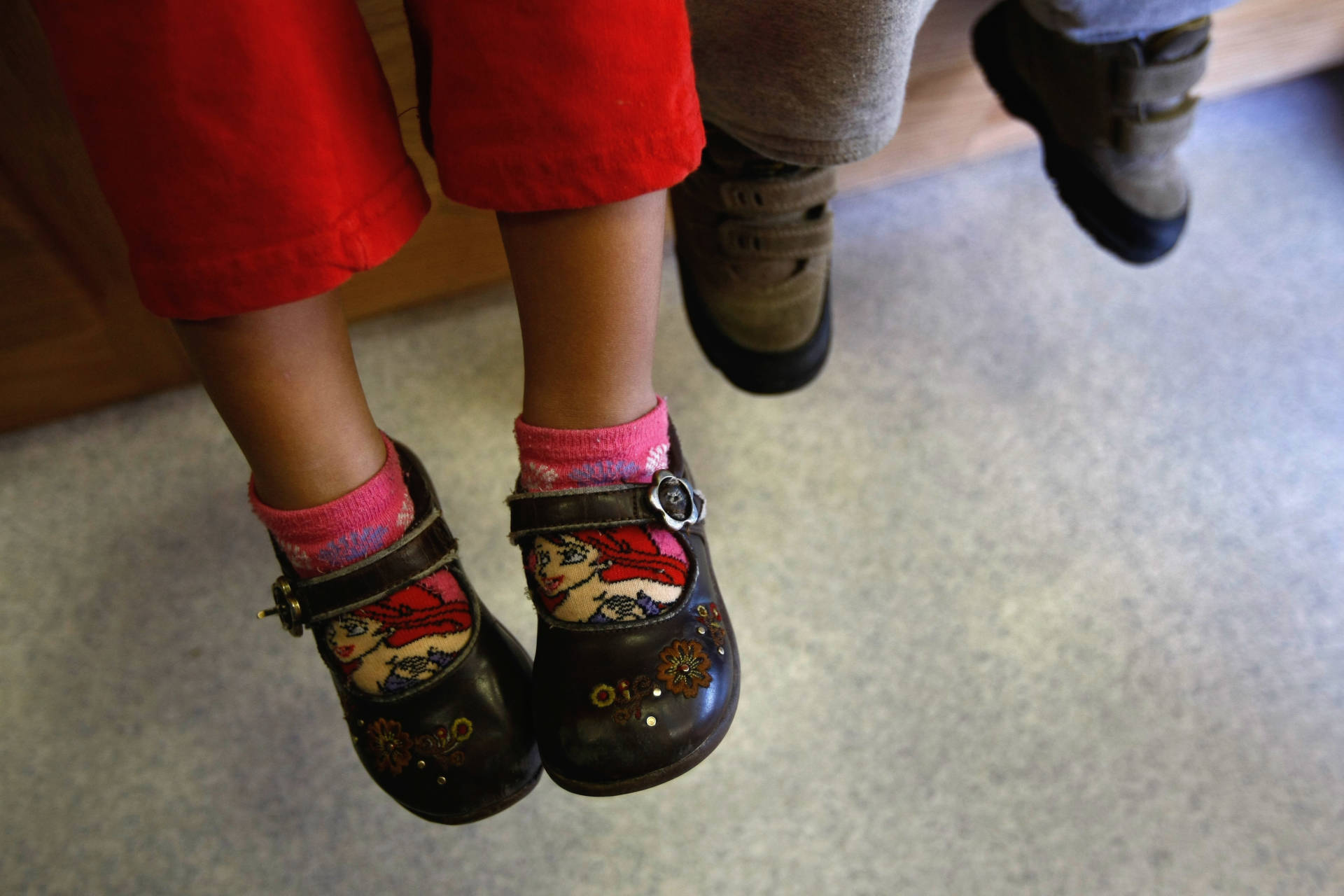
In a declaration last week, the government said it was looking for additional contractors to provide legal representation for kids and trying to work out a transitional contract with Acacia to “support an orderly transition of cases to new legal service providers, including Our Rescue.”
It also said it had engaged the U.S. Committee for Refugees and Immigrants on a short-term $20 million contract to provide legal services for the 1,800 children who are in ORR shelters. The Virginia-based nonprofit has performed immigration legal services for Afghan arrivals and helped settle white South Africans granted refugee status in an expedited process last year.
“These interim measures are intended to ensure that eligible children appearing without counsel have immediate access to representation while successor contracts are being negotiated,” attorneys for the government wrote.

But lawyers representing Community Legal Services in East Palo Alto and the other legal aid groups in the suit say they anticipate gaps — that could have big consequences for unaccompanied children, who are navigating an often-bewildering legal system without a parent for guidance.
“It really does unfortunately mean that a lot of children may have court next week and may not have an attorney by their side,” said Álvaro Huerta, with Los Angeles-based Immigrant Defenders Law Center, which represents children in immigration court and is also fighting the lawsuit.
As the advocates wait for Martínez-Olguín’s next move in the case, leaders like Logan, at Community Legal Services in East Palo Alto, say they’ll keep forging ahead, in spite of uncertainty.
“We’re just in that mode of being ready for whatever is going to come and hopefully having the capacity to continue to do the important work that we’ve been doing,” she said.
Askaryar said the stakes of the work are greater than a contract or a federal program.
“This is about what kind of country the United States of America wants to be … when a child stumbles onto our doorstep asking for help,” he said. “Do we offer them a lawyer that knows how to work with kids in a child-friendly way to help them rebuild their life, or do we offer them someone who is just going to rubber stamp their deportation?”