window.__IS_SSR__=true
window.__INITIAL_STATE__={
"attachmentsReducer": {
"audio_0": {
"type": "attachments",
"id": "audio_0",
"imgSizes": {
"kqedFullSize": {
"file": "https://ww2.kqed.org/news/wp-content/themes/KQED-unified/img/audio_bgs/background0.jpg"
}
}
},
"audio_1": {
"type": "attachments",
"id": "audio_1",
"imgSizes": {
"kqedFullSize": {
"file": "https://ww2.kqed.org/news/wp-content/themes/KQED-unified/img/audio_bgs/background1.jpg"
}
}
},
"audio_2": {
"type": "attachments",
"id": "audio_2",
"imgSizes": {
"kqedFullSize": {
"file": "https://ww2.kqed.org/news/wp-content/themes/KQED-unified/img/audio_bgs/background2.jpg"
}
}
},
"audio_3": {
"type": "attachments",
"id": "audio_3",
"imgSizes": {
"kqedFullSize": {
"file": "https://ww2.kqed.org/news/wp-content/themes/KQED-unified/img/audio_bgs/background3.jpg"
}
}
},
"audio_4": {
"type": "attachments",
"id": "audio_4",
"imgSizes": {
"kqedFullSize": {
"file": "https://ww2.kqed.org/news/wp-content/themes/KQED-unified/img/audio_bgs/background4.jpg"
}
}
},
"placeholder": {
"type": "attachments",
"id": "placeholder",
"imgSizes": {
"thumbnail": {
"file": "https://cdn.kqed.org/wp-content/uploads/2024/12/KQED-Default-Image-816638274-2000x1333-1-160x107.jpg",
"width": 160,
"height": 107,
"mimeType": "image/jpeg"
},
"medium": {
"file": "https://cdn.kqed.org/wp-content/uploads/2024/12/KQED-Default-Image-816638274-2000x1333-1-800x533.jpg",
"width": 800,
"height": 533,
"mimeType": "image/jpeg"
},
"medium_large": {
"file": "https://cdn.kqed.org/wp-content/uploads/2024/12/KQED-Default-Image-816638274-2000x1333-1-768x512.jpg",
"width": 768,
"height": 512,
"mimeType": "image/jpeg"
},
"large": {
"file": "https://cdn.kqed.org/wp-content/uploads/2024/12/KQED-Default-Image-816638274-2000x1333-1-1020x680.jpg",
"width": 1020,
"height": 680,
"mimeType": "image/jpeg"
},
"1536x1536": {
"file": "https://cdn.kqed.org/wp-content/uploads/2024/12/KQED-Default-Image-816638274-2000x1333-1-1536x1024.jpg",
"width": 1536,
"height": 1024,
"mimeType": "image/jpeg"
},
"fd-lrg": {
"file": "https://cdn.kqed.org/wp-content/uploads/2024/12/KQED-Default-Image-816638274-2000x1333-1-1536x1024.jpg",
"width": 1536,
"height": 1024,
"mimeType": "image/jpeg"
},
"fd-med": {
"file": "https://cdn.kqed.org/wp-content/uploads/2024/12/KQED-Default-Image-816638274-2000x1333-1-1020x680.jpg",
"width": 1020,
"height": 680,
"mimeType": "image/jpeg"
},
"fd-sm": {
"file": "https://cdn.kqed.org/wp-content/uploads/2024/12/KQED-Default-Image-816638274-2000x1333-1-800x533.jpg",
"width": 800,
"height": 533,
"mimeType": "image/jpeg"
},
"post-thumbnail": {
"file": "https://cdn.kqed.org/wp-content/uploads/2024/12/KQED-Default-Image-816638274-2000x1333-1-672x372.jpg",
"width": 672,
"height": 372,
"mimeType": "image/jpeg"
},
"twentyfourteen-full-width": {
"file": "https://cdn.kqed.org/wp-content/uploads/2024/12/KQED-Default-Image-816638274-2000x1333-1-1038x576.jpg",
"width": 1038,
"height": 576,
"mimeType": "image/jpeg"
},
"xxsmall": {
"file": "https://cdn.kqed.org/wp-content/uploads/2024/12/KQED-Default-Image-816638274-2000x1333-1-160x107.jpg",
"width": 160,
"height": 107,
"mimeType": "image/jpeg"
},
"xsmall": {
"file": "https://cdn.kqed.org/wp-content/uploads/2024/12/KQED-Default-Image-816638274-2000x1333-1-672x372.jpg",
"width": 672,
"height": 372,
"mimeType": "image/jpeg"
},
"small": {
"file": "https://cdn.kqed.org/wp-content/uploads/2024/12/KQED-Default-Image-816638274-2000x1333-1-672x372.jpg",
"width": 672,
"height": 372,
"mimeType": "image/jpeg"
},
"xlarge": {
"file": "https://cdn.kqed.org/wp-content/uploads/2024/12/KQED-Default-Image-816638274-2000x1333-1-1020x680.jpg",
"width": 1020,
"height": 680,
"mimeType": "image/jpeg"
},
"full-width": {
"file": "https://cdn.kqed.org/wp-content/uploads/2024/12/KQED-Default-Image-816638274-2000x1333-1-1920x1280.jpg",
"width": 1920,
"height": 1280,
"mimeType": "image/jpeg"
},
"guest-author-32": {
"file": "https://cdn.kqed.org/wp-content/uploads/2025/01/KQED-Default-Image-816638274-1333x1333-1-160x160.jpg",
"width": 32,
"height": 32,
"mimeType": "image/jpeg"
},
"guest-author-50": {
"file": "https://cdn.kqed.org/wp-content/uploads/2025/01/KQED-Default-Image-816638274-1333x1333-1-160x160.jpg",
"width": 50,
"height": 50,
"mimeType": "image/jpeg"
},
"guest-author-64": {
"file": "https://cdn.kqed.org/wp-content/uploads/2025/01/KQED-Default-Image-816638274-1333x1333-1-160x160.jpg",
"width": 64,
"height": 64,
"mimeType": "image/jpeg"
},
"guest-author-96": {
"file": "https://cdn.kqed.org/wp-content/uploads/2025/01/KQED-Default-Image-816638274-1333x1333-1-160x160.jpg",
"width": 96,
"height": 96,
"mimeType": "image/jpeg"
},
"guest-author-128": {
"file": "https://cdn.kqed.org/wp-content/uploads/2025/01/KQED-Default-Image-816638274-1333x1333-1-160x160.jpg",
"width": 128,
"height": 128,
"mimeType": "image/jpeg"
},
"detail": {
"file": "https://cdn.kqed.org/wp-content/uploads/2025/01/KQED-Default-Image-816638274-1333x1333-1-160x160.jpg",
"width": 160,
"height": 160,
"mimeType": "image/jpeg"
},
"kqedFullSize": {
"file": "https://cdn.kqed.org/wp-content/uploads/2024/12/KQED-Default-Image-816638274-2000x1333-1.jpg",
"width": 2000,
"height": 1333
}
}
},
"news_12081365": {
"type": "attachments",
"id": "news_12081365",
"meta": {
"index": "attachments_1716263798",
"site": "news",
"id": "12081365",
"found": true
},
"title": "110525-Election-Counting-Fresno-LV-CM-15-1",
"publishDate": 1777068720,
"status": "inherit",
"parent": 12081363,
"modified": 1777068744,
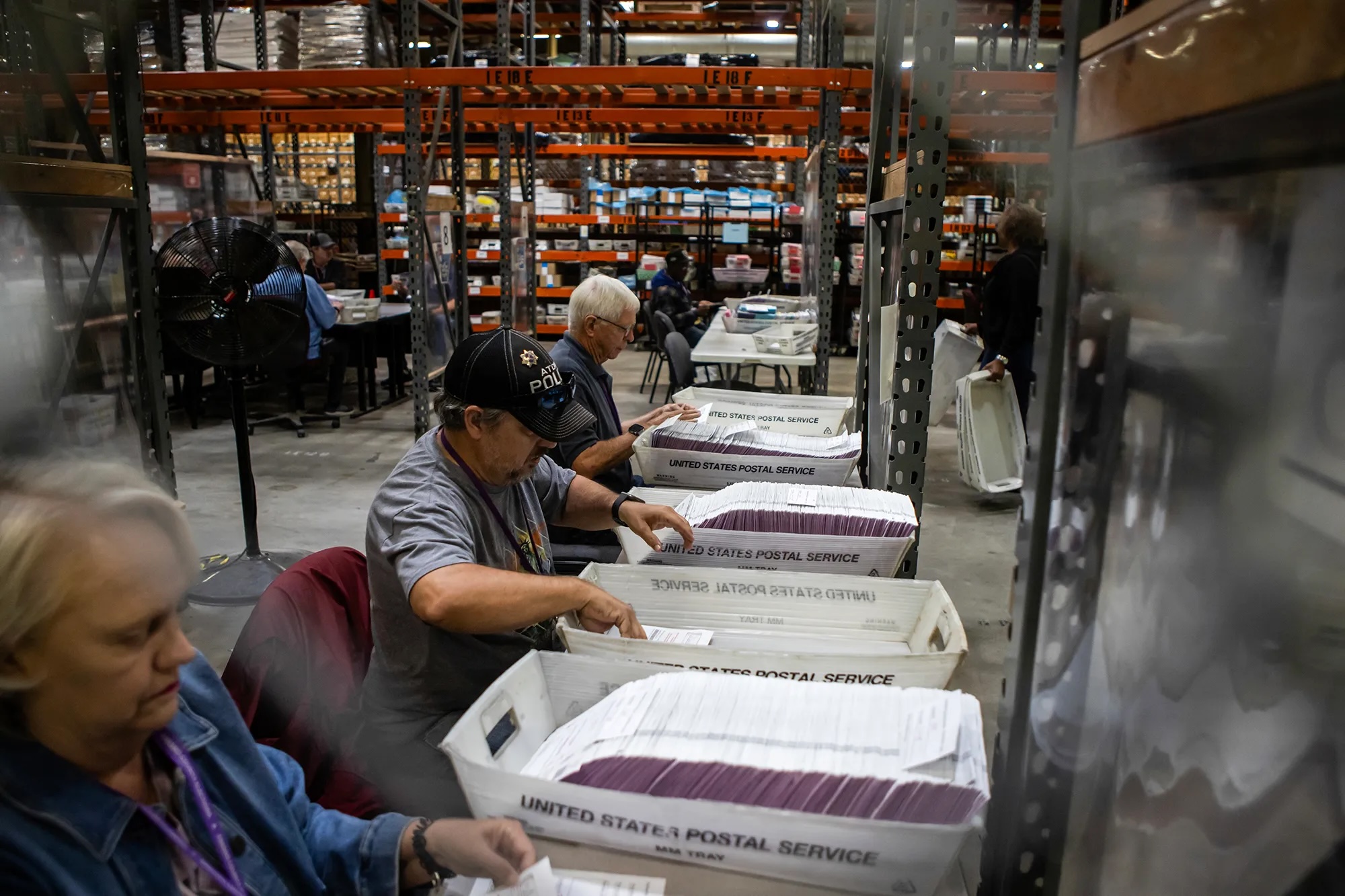
"caption": "Election workers sort ballots at the Fresno County Elections Warehouse in Fresno on Nov. 5, 2025. ",
"credit": "Photo by Larry Valenzuela/CalMatters/CatchLight Local",
"altTag": null,
"description": null,
"imgSizes": {
"thumbnail": {
"file": "https://cdn.kqed.org/wp-content/uploads/sites/10/2026/04/110525-Election-Counting-Fresno-LV-CM-15-1-160x107.jpeg",
"width": 160,
"height": 107,
"mimeType": "image/jpeg"
},
"1536x1536": {
"file": "https://cdn.kqed.org/wp-content/uploads/sites/10/2026/04/110525-Election-Counting-Fresno-LV-CM-15-1-1536x1024.jpeg",
"width": 1536,
"height": 1024,
"mimeType": "image/jpeg"
},
"post-thumbnail": {
"file": "https://cdn.kqed.org/wp-content/uploads/sites/10/2026/04/110525-Election-Counting-Fresno-LV-CM-15-1-672x372.jpeg",
"width": 672,
"height": 372,
"mimeType": "image/jpeg"
},
"twentyfourteen-full-width": {
"file": "https://cdn.kqed.org/wp-content/uploads/sites/10/2026/04/110525-Election-Counting-Fresno-LV-CM-15-1-1038x576.jpeg",
"width": 1038,
"height": 576,
"mimeType": "image/jpeg"
},
"npr-cds-wide": {
"file": "https://cdn.kqed.org/wp-content/uploads/sites/10/2026/04/110525-Election-Counting-Fresno-LV-CM-15-1-1200x675.jpeg",
"width": 1200,
"height": 675,
"mimeType": "image/jpeg"
},
"npr-cds-square": {
"file": "https://cdn.kqed.org/wp-content/uploads/sites/10/2026/04/110525-Election-Counting-Fresno-LV-CM-15-1-600x600.jpeg",
"width": 600,
"height": 600,
"mimeType": "image/jpeg"
},
"kqedFullSize": {
"file": "https://cdn.kqed.org/wp-content/uploads/sites/10/2026/04/110525-Election-Counting-Fresno-LV-CM-15-1.jpeg",
"width": 2000,
"height": 1333
}
},
"isLoading": false,
"fetchFailed": false
},
"news_12081405": {
"type": "attachments",
"id": "news_12081405",
"meta": {
"index": "attachments_1716263798",
"site": "news",
"id": "12081405",
"found": true
},
"title": "110425_OC-Voting_JH_CM_23",
"publishDate": 1777074107,
"status": "inherit",
"parent": 12081404,
"modified": 1777074126,
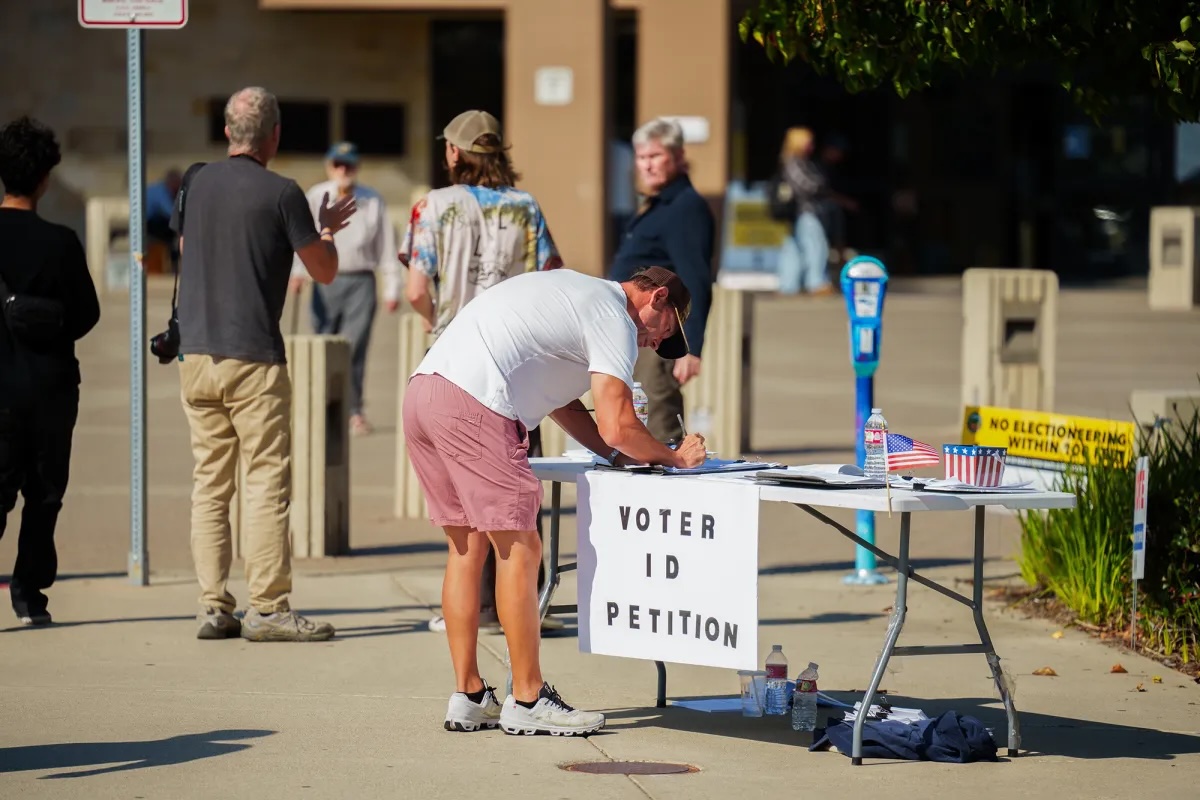
"caption": "A person signs one of several different petitions at a vote center at the Huntington Beach Central Library in Huntington Beach on Nov. 4, 2025. ",
"credit": "Jules Hotz/CalMatters",
"altTag": null,
"description": null,
"imgSizes": {
"thumbnail": {
"file": "https://cdn.kqed.org/wp-content/uploads/sites/10/2026/04/110425_OC-Voting_JH_CM_23-160x107.jpeg",
"width": 160,
"height": 107,
"mimeType": "image/jpeg"
},
"post-thumbnail": {
"file": "https://cdn.kqed.org/wp-content/uploads/sites/10/2026/04/110425_OC-Voting_JH_CM_23-672x372.jpeg",
"width": 672,
"height": 372,
"mimeType": "image/jpeg"
},
"twentyfourteen-full-width": {
"file": "https://cdn.kqed.org/wp-content/uploads/sites/10/2026/04/110425_OC-Voting_JH_CM_23-1038x576.jpeg",
"width": 1038,
"height": 576,
"mimeType": "image/jpeg"
},
"npr-cds-wide": {
"file": "https://cdn.kqed.org/wp-content/uploads/sites/10/2026/04/110425_OC-Voting_JH_CM_23-1200x675.jpeg",
"width": 1200,
"height": 675,
"mimeType": "image/jpeg"
},
"npr-cds-square": {
"file": "https://cdn.kqed.org/wp-content/uploads/sites/10/2026/04/110425_OC-Voting_JH_CM_23-600x600.jpeg",
"width": 600,
"height": 600,
"mimeType": "image/jpeg"
},
"kqedFullSize": {
"file": "https://cdn.kqed.org/wp-content/uploads/sites/10/2026/04/110425_OC-Voting_JH_CM_23.jpeg",
"width": 1200,
"height": 800
}
},
"isLoading": false,
"fetchFailed": false
},
"news_12081287": {
"type": "attachments",
"id": "news_12081287",
"meta": {
"index": "attachments_1716263798",
"site": "news",
"id": "12081287",
"found": true
},
"title": "070824-McFarland-GEO-Facility-LV_09-CM",
"publishDate": 1777050539,
"status": "inherit",
"parent": 12081286,
"modified": 1777050568,
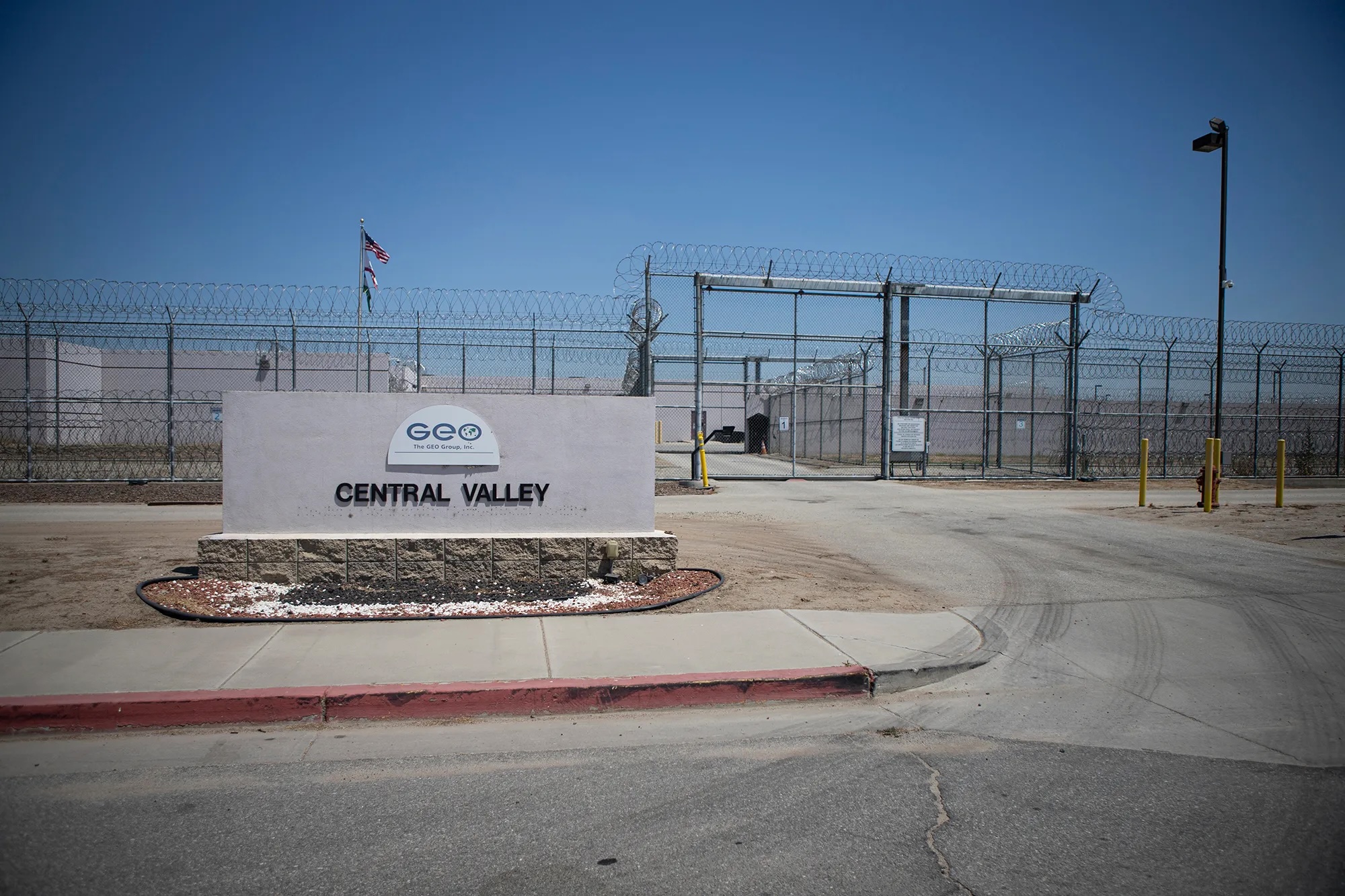
"caption": "The Central Valley Annex in McFarland on July 8, 2024.",
"credit": "Larry Valenzuela/CalMatters/CatchLight Local",
"altTag": null,
"description": null,
"imgSizes": {
"thumbnail": {
"file": "https://cdn.kqed.org/wp-content/uploads/sites/10/2026/04/070824-McFarland-GEO-Facility-LV_09-CM-160x107.jpeg",
"width": 160,
"height": 107,
"mimeType": "image/jpeg"
},
"1536x1536": {
"file": "https://cdn.kqed.org/wp-content/uploads/sites/10/2026/04/070824-McFarland-GEO-Facility-LV_09-CM-1536x1024.jpeg",
"width": 1536,
"height": 1024,
"mimeType": "image/jpeg"
},
"post-thumbnail": {
"file": "https://cdn.kqed.org/wp-content/uploads/sites/10/2026/04/070824-McFarland-GEO-Facility-LV_09-CM-672x372.jpeg",
"width": 672,
"height": 372,
"mimeType": "image/jpeg"
},
"twentyfourteen-full-width": {
"file": "https://cdn.kqed.org/wp-content/uploads/sites/10/2026/04/070824-McFarland-GEO-Facility-LV_09-CM-1038x576.jpeg",
"width": 1038,
"height": 576,
"mimeType": "image/jpeg"
},
"npr-cds-wide": {
"file": "https://cdn.kqed.org/wp-content/uploads/sites/10/2026/04/070824-McFarland-GEO-Facility-LV_09-CM-1200x675.jpeg",
"width": 1200,
"height": 675,
"mimeType": "image/jpeg"
},
"npr-cds-square": {
"file": "https://cdn.kqed.org/wp-content/uploads/sites/10/2026/04/070824-McFarland-GEO-Facility-LV_09-CM-600x600.jpeg",
"width": 600,
"height": 600,
"mimeType": "image/jpeg"
},
"kqedFullSize": {
"file": "https://cdn.kqed.org/wp-content/uploads/sites/10/2026/04/070824-McFarland-GEO-Facility-LV_09-CM.jpeg",
"width": 2000,
"height": 1333
}
},
"isLoading": false,
"fetchFailed": false
},
"news_12076578": {
"type": "attachments",
"id": "news_12076578",
"meta": {
"index": "attachments_1716263798",
"site": "news",
"id": "12076578",
"found": true
},
"title": "20260309_MIGNON_20-KQED",
"publishDate": 1773679184,
"status": "inherit",
"parent": 12080800,
"modified": 1777075707,
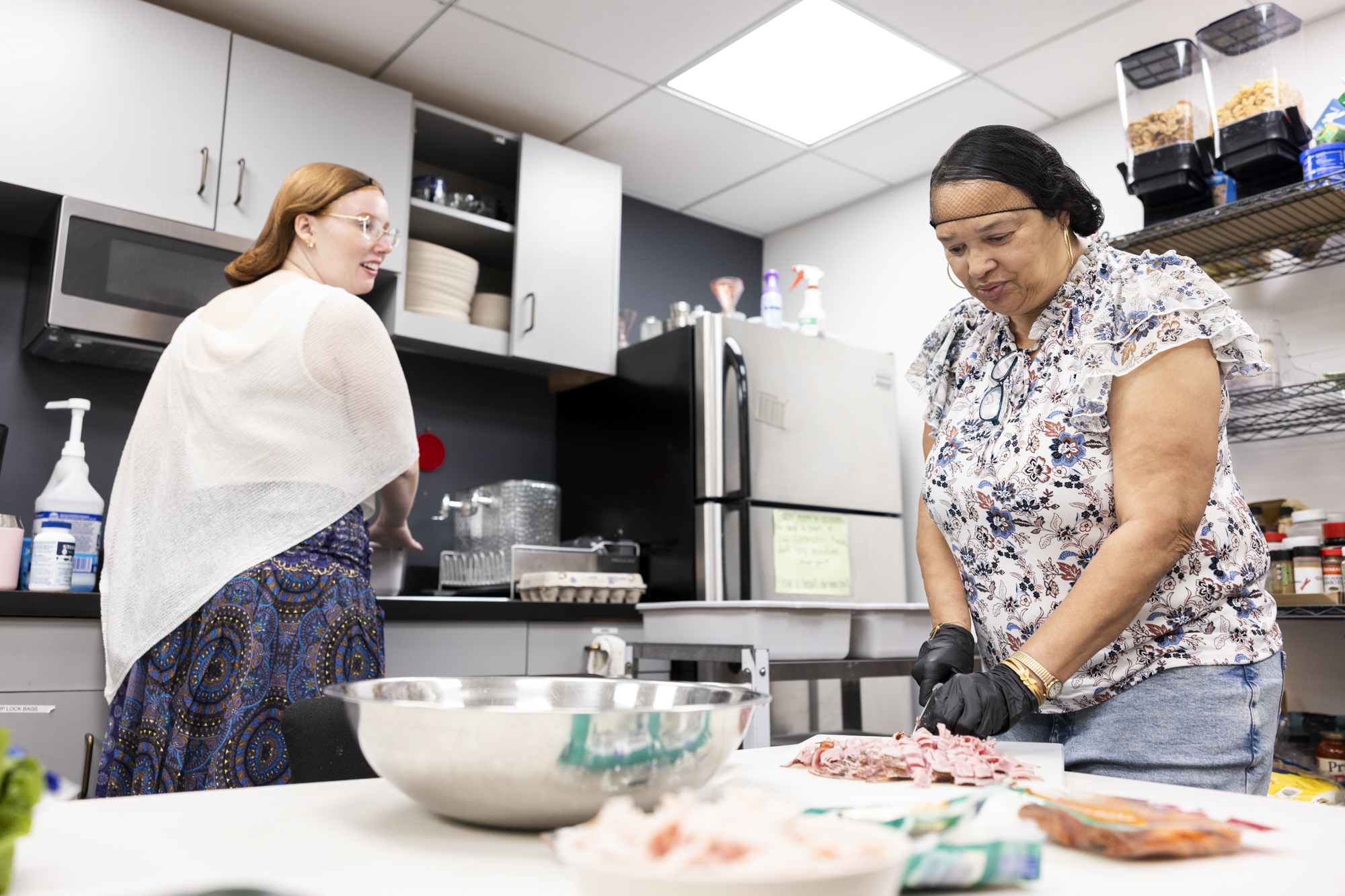
"caption": "Program director McKenzie Dowdle, left, helps Mignon Annette Poon prepare lunch for members and staff in the kitchen at Fountain House Hollywood, also known as “the clubhouse” in Los Angeles, on March 9, 2026. The clubhouse provides a non-clinical community for people living with serious mental illness who receive assistance in the Hollywood area. Poon works on the hospitality team, helping prepare meals for any members who want to stop in for lunch.",
"credit": "Alisha Jucevic/KQED",
"altTag": null,
"description": null,
"imgSizes": {
"thumbnail": {
"file": "https://cdn.kqed.org/wp-content/uploads/sites/10/2026/03/20260309_MIGNON_20-KQED-160x107.jpg",
"width": 160,
"height": 107,
"mimeType": "image/jpeg"
},
"1536x1536": {
"file": "https://cdn.kqed.org/wp-content/uploads/sites/10/2026/03/20260309_MIGNON_20-KQED-1536x1024.jpg",
"width": 1536,
"height": 1024,
"mimeType": "image/jpeg"
},
"post-thumbnail": {
"file": "https://cdn.kqed.org/wp-content/uploads/sites/10/2026/03/20260309_MIGNON_20-KQED-672x372.jpg",
"width": 672,
"height": 372,
"mimeType": "image/jpeg"
},
"twentyfourteen-full-width": {
"file": "https://cdn.kqed.org/wp-content/uploads/sites/10/2026/03/20260309_MIGNON_20-KQED-1038x576.jpg",
"width": 1038,
"height": 576,
"mimeType": "image/jpeg"
},
"npr-cds-wide": {
"file": "https://cdn.kqed.org/wp-content/uploads/sites/10/2026/03/20260309_MIGNON_20-KQED-1200x675.jpg",
"width": 1200,
"height": 675,
"mimeType": "image/jpeg"
},
"kqedFullSize": {
"file": "https://cdn.kqed.org/wp-content/uploads/sites/10/2026/03/20260309_MIGNON_20-KQED.jpg",
"width": 2000,
"height": 1333
}
},
"isLoading": false,
"fetchFailed": false
},
"news_12060987": {
"type": "attachments",
"id": "news_12060987",
"meta": {
"index": "attachments_1716263798",
"site": "news",
"id": "12060987",
"found": true
},
"title": "ICE at Court",
"publishDate": 1761141188,
"status": "inherit",
"parent": 12060986,
"modified": 1776991855,
"caption": "The rule being considered on Friday comes as immigration arrests rise at state courts, discouraging victims, witnesses, and others from showing up, according to lawyers and advocates.",
"credit": "Carlin Stiehl/Los Angeles Times via Getty Images",
"altTag": null,
"description": null,
"imgSizes": {
"medium": {
"file": "https://cdn.kqed.org/wp-content/uploads/sites/10/2025/10/GettyImages-2216992312-2000x1334.jpg",
"width": 2000,
"height": 1334,
"mimeType": "image/jpeg"
},
"large": {
"file": "https://cdn.kqed.org/wp-content/uploads/sites/10/2025/10/GettyImages-2216992312-2000x1334.jpg",
"width": 2000,
"height": 1334,
"mimeType": "image/jpeg"
},
"thumbnail": {
"file": "https://cdn.kqed.org/wp-content/uploads/sites/10/2025/10/GettyImages-2216992312-160x107.jpg",
"width": 160,
"height": 107,
"mimeType": "image/jpeg"
},
"1536x1536": {
"file": "https://cdn.kqed.org/wp-content/uploads/sites/10/2025/10/GettyImages-2216992312-1536x1025.jpg",
"width": 1536,
"height": 1025,
"mimeType": "image/jpeg"
},
"2048x2048": {
"file": "https://cdn.kqed.org/wp-content/uploads/sites/10/2025/10/GettyImages-2216992312-2048x1366.jpg",
"width": 2048,
"height": 1366,
"mimeType": "image/jpeg"
},
"post-thumbnail": {
"file": "https://cdn.kqed.org/wp-content/uploads/sites/10/2025/10/GettyImages-2216992312-672x372.jpg",
"width": 672,
"height": 372,
"mimeType": "image/jpeg"
},
"twentyfourteen-full-width": {
"file": "https://cdn.kqed.org/wp-content/uploads/sites/10/2025/10/GettyImages-2216992312-1038x576.jpg",
"width": 1038,
"height": 576,
"mimeType": "image/jpeg"
},
"full-width": {
"file": "https://cdn.kqed.org/wp-content/uploads/sites/10/2025/10/GettyImages-2216992312-2000x1334.jpg",
"width": 2000,
"height": 1334,
"mimeType": "image/jpeg"
},
"kqedFullSize": {
"file": "https://cdn.kqed.org/wp-content/uploads/sites/10/2025/10/GettyImages-2216992312-scaled-e1761161311555.jpg",
"width": 2000,
"height": 1334
}
},
"isLoading": false,
"fetchFailed": false
},
"news_12079748": {
"type": "attachments",
"id": "news_12079748",
"meta": {
"index": "attachments_1716263798",
"site": "news",
"id": "12079748",
"found": true
},
"title": "Election 2026 California Governor",
"publishDate": 1776117572,
"status": "inherit",
"parent": 12079746,
"modified": 1776120247,
"caption": "Rep. Eric Swalwell, D-California, appears at a town hall meeting in Sacramento, California, on Tuesday, April 7, 2026. ",
"credit": "Rich Pedroncelli/AP Photo",
"altTag": null,
"description": null,
"imgSizes": {
"thumbnail": {
"file": "https://cdn.kqed.org/wp-content/uploads/sites/10/2026/04/EricSwalwellGetty-160x110.jpg",
"width": 160,
"height": 110,
"mimeType": "image/jpeg"
},
"1536x1536": {
"file": "https://cdn.kqed.org/wp-content/uploads/sites/10/2026/04/EricSwalwellGetty-1536x1056.jpg",
"width": 1536,
"height": 1056,
"mimeType": "image/jpeg"
},
"post-thumbnail": {
"file": "https://cdn.kqed.org/wp-content/uploads/sites/10/2026/04/EricSwalwellGetty-672x372.jpg",
"width": 672,
"height": 372,
"mimeType": "image/jpeg"
},
"twentyfourteen-full-width": {
"file": "https://cdn.kqed.org/wp-content/uploads/sites/10/2026/04/EricSwalwellGetty-1038x576.jpg",
"width": 1038,
"height": 576,
"mimeType": "image/jpeg"
},
"npr-cds-wide": {
"file": "https://cdn.kqed.org/wp-content/uploads/sites/10/2026/04/EricSwalwellGetty-1200x675.jpg",
"width": 1200,
"height": 675,
"mimeType": "image/jpeg"
},
"npr-cds-square": {
"file": "https://cdn.kqed.org/wp-content/uploads/sites/10/2026/04/EricSwalwellGetty-600x600.jpg",
"width": 600,
"height": 600,
"mimeType": "image/jpeg"
},
"kqedFullSize": {
"file": "https://cdn.kqed.org/wp-content/uploads/sites/10/2026/04/EricSwalwellGetty.jpg",
"width": 2000,
"height": 1375
}
},
"isLoading": false,
"fetchFailed": false
},
"news_12080846": {
"type": "attachments",
"id": "news_12080846",
"meta": {
"index": "attachments_1716263798",
"site": "news",
"id": "12080846",
"found": true
},
"title": "260120-HarmonySanPablo-03-BL",
"publishDate": 1776875278,
"status": "inherit",
"parent": 0,
"modified": 1776878151,
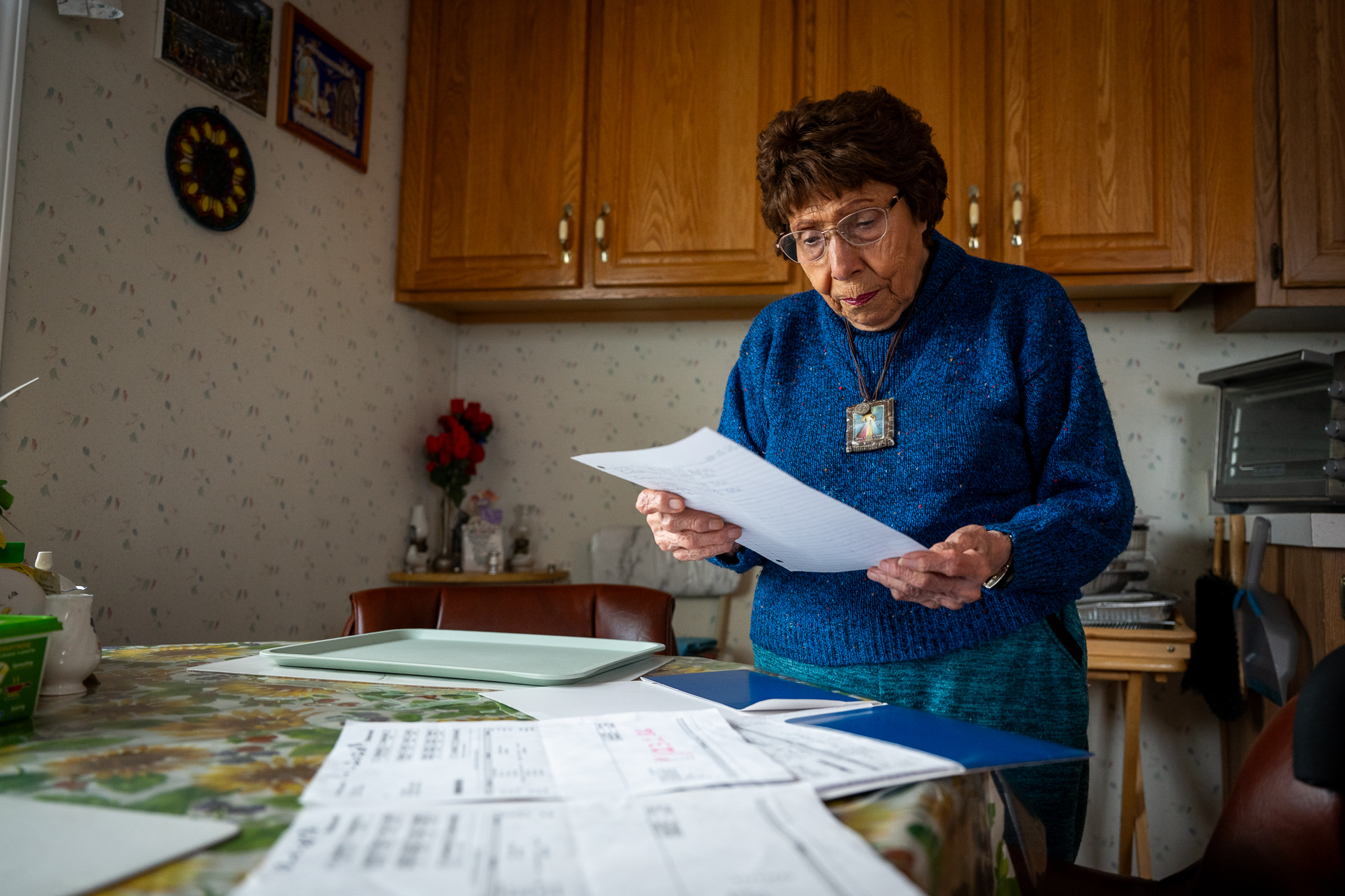
"caption": "Clara Faria, 91, looks through paperwork and notices documenting rent increases for the lot where her mobile home sits at Willow Mobile Home Park in San Pablo on Jan. 20, 2026, ahead of a San Pablo City Council meeting where she plans to give public comment about potential rent control measures.",
"credit": "Beth LaBerge/KQED",
"altTag": null,
"description": null,
"imgSizes": {
"thumbnail": {
"file": "https://cdn.kqed.org/wp-content/uploads/sites/10/2026/04/260120-HarmonySanPablo-03-BL-160x107.jpg",
"width": 160,
"height": 107,
"mimeType": "image/jpeg"
},
"1536x1536": {
"file": "https://cdn.kqed.org/wp-content/uploads/sites/10/2026/04/260120-HarmonySanPablo-03-BL-1536x1024.jpg",
"width": 1536,
"height": 1024,
"mimeType": "image/jpeg"
},
"post-thumbnail": {
"file": "https://cdn.kqed.org/wp-content/uploads/sites/10/2026/04/260120-HarmonySanPablo-03-BL-672x372.jpg",
"width": 672,
"height": 372,
"mimeType": "image/jpeg"
},
"twentyfourteen-full-width": {
"file": "https://cdn.kqed.org/wp-content/uploads/sites/10/2026/04/260120-HarmonySanPablo-03-BL-1038x576.jpg",
"width": 1038,
"height": 576,
"mimeType": "image/jpeg"
},
"npr-cds-wide": {
"file": "https://cdn.kqed.org/wp-content/uploads/sites/10/2026/04/260120-HarmonySanPablo-03-BL-1200x675.jpg",
"width": 1200,
"height": 675,
"mimeType": "image/jpeg"
},
"npr-cds-square": {
"file": "https://cdn.kqed.org/wp-content/uploads/sites/10/2026/04/260120-HarmonySanPablo-03-BL-600x600.jpg",
"width": 600,
"height": 600,
"mimeType": "image/jpeg"
},
"kqedFullSize": {
"file": "https://cdn.kqed.org/wp-content/uploads/sites/10/2026/04/260120-HarmonySanPablo-03-BL.jpg",
"width": 2000,
"height": 1333
}
},
"isLoading": false,
"fetchFailed": false
},
"news_12079605": {
"type": "attachments",
"id": "news_12079605",
"meta": {
"index": "attachments_1716263798",
"site": "news",
"id": "12079605",
"found": true
},
"title": "260408-baycurioustacobell01913_TV",
"publishDate": 1776042722,
"status": "inherit",
"parent": 0,
"modified": 1776889503,
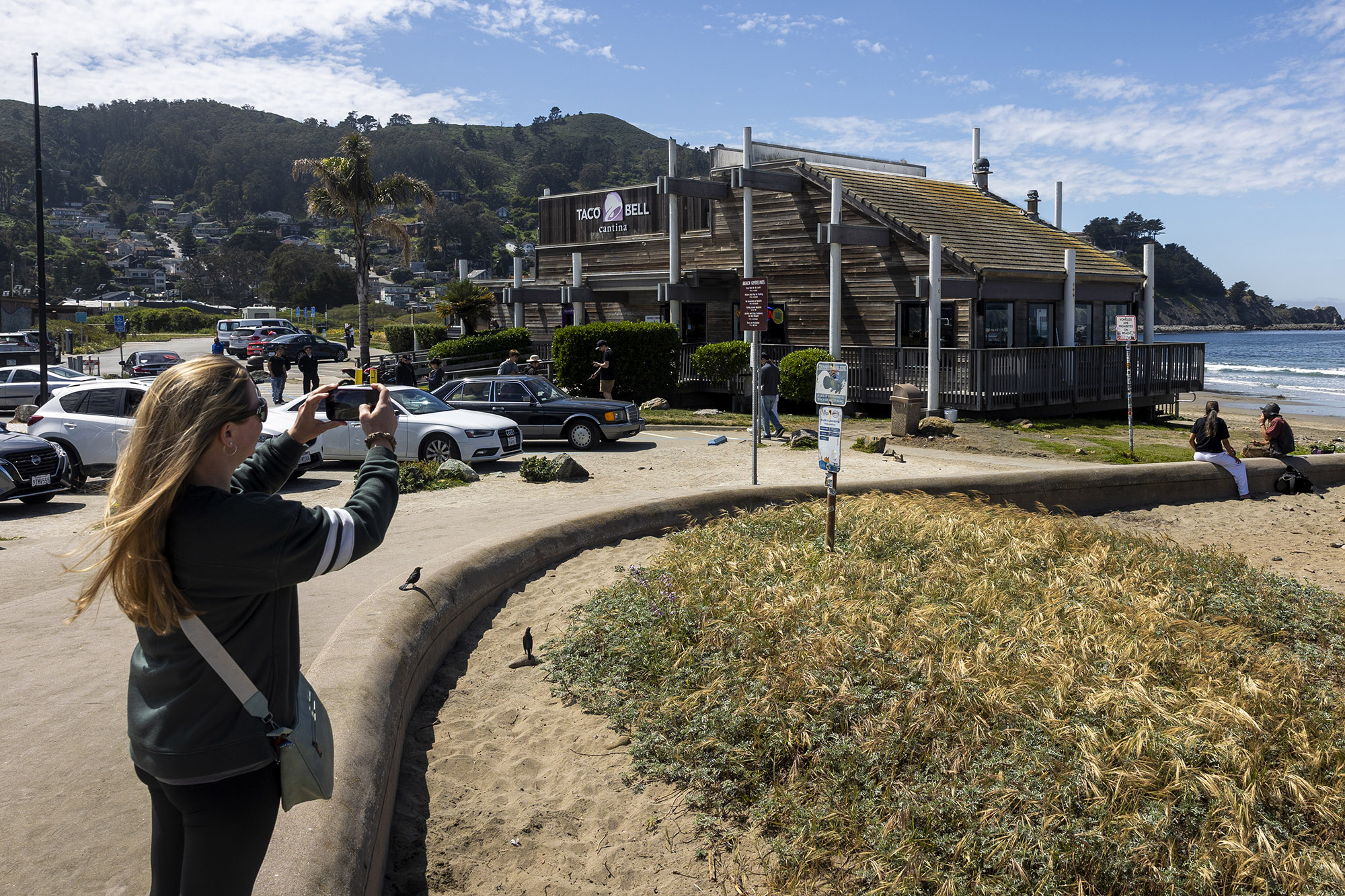
"caption": "A person takes a photo of Pacifica State Beach outside the Taco Bell Cantina in Pacifica, California, on April 8, 2026. The Pacifica Taco Bell, just outside of San Francisco, is legendary for its beachfront views and retro architecture. How did a fast food chain end up with such prime real estate? ",
"credit": "Tâm Vũ/KQED",
"altTag": null,
"description": null,
"imgSizes": {
"thumbnail": {
"file": "https://cdn.kqed.org/wp-content/uploads/sites/10/2026/04/260408-baycurioustacobell01913_TV-160x107.jpg",
"width": 160,
"height": 107,
"mimeType": "image/jpeg"
},
"1536x1536": {
"file": "https://cdn.kqed.org/wp-content/uploads/sites/10/2026/04/260408-baycurioustacobell01913_TV-1536x1024.jpg",
"width": 1536,
"height": 1024,
"mimeType": "image/jpeg"
},
"post-thumbnail": {
"file": "https://cdn.kqed.org/wp-content/uploads/sites/10/2026/04/260408-baycurioustacobell01913_TV-672x372.jpg",
"width": 672,
"height": 372,
"mimeType": "image/jpeg"
},
"twentyfourteen-full-width": {
"file": "https://cdn.kqed.org/wp-content/uploads/sites/10/2026/04/260408-baycurioustacobell01913_TV-1038x576.jpg",
"width": 1038,
"height": 576,
"mimeType": "image/jpeg"
},
"npr-cds-wide": {
"file": "https://cdn.kqed.org/wp-content/uploads/sites/10/2026/04/260408-baycurioustacobell01913_TV-1200x675.jpg",
"width": 1200,
"height": 675,
"mimeType": "image/jpeg"
},
"npr-cds-square": {
"file": "https://cdn.kqed.org/wp-content/uploads/sites/10/2026/04/260408-baycurioustacobell01913_TV-600x600.jpg",
"width": 600,
"height": 600,
"mimeType": "image/jpeg"
},
"kqedFullSize": {
"file": "https://cdn.kqed.org/wp-content/uploads/sites/10/2026/04/260408-baycurioustacobell01913_TV.jpg",
"width": 2000,
"height": 1333
}
},
"isLoading": false,
"fetchFailed": false
},
"news_12081064": {
"type": "attachments",
"id": "news_12081064",
"meta": {
"index": "attachments_1716263798",
"site": "news",
"id": "12081064",
"found": true
},
"title": "FTP_9P3A3319_1_qed",
"publishDate": 1776915743,
"status": "inherit",
"parent": 12082059,
"modified": 1778868137,
"caption": "Matt Mahan, Democratic gubernatorial candidate for California, from left, Xavier Becerra, Democratic gubernatorial candidate for California, Chad Bianco, Republican gubernatorial candidate for California, Steve Hilton, Republican gubernatorial candidate for California, Tom Steyer, Democratic gubernatorial candidate for California, and Katie Porter, Democratic gubernatorial candidate for California, during a gubernatorial debate at KRON Studios in San Francisco, California, on April 22, 2026. California will hold its primary election on June 2, where the top two finishers advance to the general election in November regardless of party affiliation. ",
"credit": "Jason Henry/Nexstar/Bloomberg",
"altTag": null,
"description": null,
"imgSizes": {
"thumbnail": {
"file": "https://cdn.kqed.org/wp-content/uploads/sites/10/2026/04/FTP_9P3A3319_1_qed-160x107.jpg",
"width": 160,
"height": 107,
"mimeType": "image/jpeg"
},
"1536x1536": {
"file": "https://cdn.kqed.org/wp-content/uploads/sites/10/2026/04/FTP_9P3A3319_1_qed-1536x1024.jpg",
"width": 1536,
"height": 1024,
"mimeType": "image/jpeg"
},
"post-thumbnail": {
"file": "https://cdn.kqed.org/wp-content/uploads/sites/10/2026/04/FTP_9P3A3319_1_qed-672x372.jpg",
"width": 672,
"height": 372,
"mimeType": "image/jpeg"
},
"twentyfourteen-full-width": {
"file": "https://cdn.kqed.org/wp-content/uploads/sites/10/2026/04/FTP_9P3A3319_1_qed-1038x576.jpg",
"width": 1038,
"height": 576,
"mimeType": "image/jpeg"
},
"npr-cds-wide": {
"file": "https://cdn.kqed.org/wp-content/uploads/sites/10/2026/04/FTP_9P3A3319_1_qed-1200x675.jpg",
"width": 1200,
"height": 675,
"mimeType": "image/jpeg"
},
"npr-cds-square": {
"file": "https://cdn.kqed.org/wp-content/uploads/sites/10/2026/04/FTP_9P3A3319_1_qed-600x600.jpg",
"width": 600,
"height": 600,
"mimeType": "image/jpeg"
},
"kqedFullSize": {
"file": "https://cdn.kqed.org/wp-content/uploads/sites/10/2026/04/FTP_9P3A3319_1_qed.jpg",
"width": 1999,
"height": 1333
}
},
"isLoading": false,
"fetchFailed": false
},
"news_12080887": {
"type": "attachments",
"id": "news_12080887",
"meta": {
"index": "attachments_1716263798",
"site": "news",
"id": "12080887",
"found": true
},
"title": "20251028_Immigrant Mass-_Hernandez-7_qed",
"publishDate": 1776878726,
"status": "inherit",
"parent": 12080871,
"modified": 1776878744,
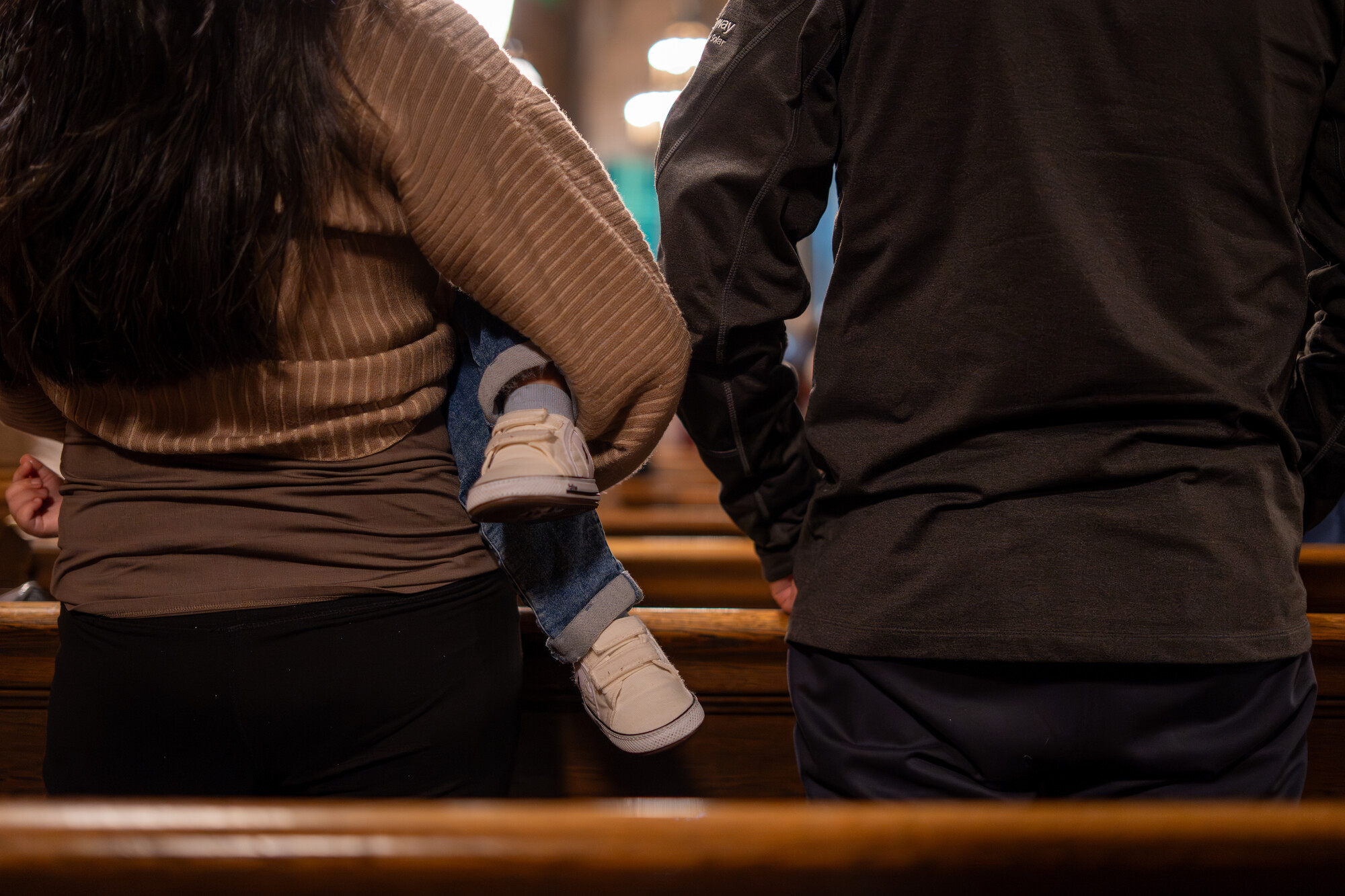
"caption": "A family attends Mass at St. Jarlath’s Church in Oakland during a vigil for immigrant families on Oct. 28, 2025.",
"credit": "Gustavo Hernandez/KQED",
"altTag": null,
"description": null,
"imgSizes": {
"thumbnail": {
"file": "https://cdn.kqed.org/wp-content/uploads/sites/10/2026/04/20251028_Immigrant-Mass-_Hernandez-7_qed-160x107.jpg",
"width": 160,
"height": 107,
"mimeType": "image/jpeg"
},
"1536x1536": {
"file": "https://cdn.kqed.org/wp-content/uploads/sites/10/2026/04/20251028_Immigrant-Mass-_Hernandez-7_qed-1536x1024.jpg",
"width": 1536,
"height": 1024,
"mimeType": "image/jpeg"
},
"post-thumbnail": {
"file": "https://cdn.kqed.org/wp-content/uploads/sites/10/2026/04/20251028_Immigrant-Mass-_Hernandez-7_qed-672x372.jpg",
"width": 672,
"height": 372,
"mimeType": "image/jpeg"
},
"twentyfourteen-full-width": {
"file": "https://cdn.kqed.org/wp-content/uploads/sites/10/2026/04/20251028_Immigrant-Mass-_Hernandez-7_qed-1038x576.jpg",
"width": 1038,
"height": 576,
"mimeType": "image/jpeg"
},
"npr-cds-wide": {
"file": "https://cdn.kqed.org/wp-content/uploads/sites/10/2026/04/20251028_Immigrant-Mass-_Hernandez-7_qed-1200x675.jpg",
"width": 1200,
"height": 675,
"mimeType": "image/jpeg"
},
"npr-cds-square": {
"file": "https://cdn.kqed.org/wp-content/uploads/sites/10/2026/04/20251028_Immigrant-Mass-_Hernandez-7_qed-600x600.jpg",
"width": 600,
"height": 600,
"mimeType": "image/jpeg"
},
"kqedFullSize": {
"file": "https://cdn.kqed.org/wp-content/uploads/sites/10/2026/04/20251028_Immigrant-Mass-_Hernandez-7_qed.jpg",
"width": 2000,
"height": 1333
}
},
"isLoading": false,
"fetchFailed": false
},
"news_12080989": {
"type": "attachments",
"id": "news_12080989",
"meta": {
"index": "attachments_1716263798",
"site": "news",
"id": "12080989",
"found": true
},
"title": "070725-MacArthur-Park-Feds-JW-CM-27",
"publishDate": 1776896193,
"status": "inherit",
"parent": 12080962,
"modified": 1776897913,
"caption": "Federal agents descend on MacArthur Park in Los Angeles on July 7, 2025. ",
"credit": "J.W. Hendricks/CalMatters",
"altTag": null,
"description": null,
"imgSizes": {
"thumbnail": {
"file": "https://cdn.kqed.org/wp-content/uploads/sites/10/2026/04/070725-MacArthur-Park-Feds-JW-CM-27-160x107.jpeg",
"width": 160,
"height": 107,
"mimeType": "image/jpeg"
},
"1536x1536": {
"file": "https://cdn.kqed.org/wp-content/uploads/sites/10/2026/04/070725-MacArthur-Park-Feds-JW-CM-27-1536x1025.jpeg",
"width": 1536,
"height": 1025,
"mimeType": "image/jpeg"
},
"post-thumbnail": {
"file": "https://cdn.kqed.org/wp-content/uploads/sites/10/2026/04/070725-MacArthur-Park-Feds-JW-CM-27-672x372.jpeg",
"width": 672,
"height": 372,
"mimeType": "image/jpeg"
},
"twentyfourteen-full-width": {
"file": "https://cdn.kqed.org/wp-content/uploads/sites/10/2026/04/070725-MacArthur-Park-Feds-JW-CM-27-1038x576.jpeg",
"width": 1038,
"height": 576,
"mimeType": "image/jpeg"
},
"npr-cds-wide": {
"file": "https://cdn.kqed.org/wp-content/uploads/sites/10/2026/04/070725-MacArthur-Park-Feds-JW-CM-27-1200x675.jpeg",
"width": 1200,
"height": 675,
"mimeType": "image/jpeg"
},
"npr-cds-square": {
"file": "https://cdn.kqed.org/wp-content/uploads/sites/10/2026/04/070725-MacArthur-Park-Feds-JW-CM-27-600x600.jpeg",
"width": 600,
"height": 600,
"mimeType": "image/jpeg"
},
"kqedFullSize": {
"file": "https://cdn.kqed.org/wp-content/uploads/sites/10/2026/04/070725-MacArthur-Park-Feds-JW-CM-27.jpeg",
"width": 2000,
"height": 1334
}
},
"isLoading": false,
"fetchFailed": false
},
"news_12077855": {
"type": "attachments",
"id": "news_12077855",
"meta": {
"index": "attachments_1716263798",
"site": "news",
"id": "12077855",
"found": true
},
"title": "Gubernatorial Candidate Riverside County Sheriff Chad Bianco Event",
"publishDate": 1774638443,
"status": "inherit",
"parent": 12077846,
"modified": 1775847179,
"caption": "Gubernatorial Candidate Riverside County Sheriff Chad Bianco speaks at an event in downtown Los Angeles on March 24, 2026. ",
"credit": "Eric Thayer/Los Angeles Times via Getty Images",
"altTag": null,
"description": null,
"imgSizes": {
"medium": {
"file": "https://cdn.kqed.org/wp-content/uploads/sites/10/2026/03/GettyImages-2267789591-2000x1333.jpg",
"width": 2000,
"height": 1333,
"mimeType": "image/jpeg"
},
"large": {
"file": "https://cdn.kqed.org/wp-content/uploads/sites/10/2026/03/GettyImages-2267789591-2000x1333.jpg",
"width": 2000,
"height": 1333,
"mimeType": "image/jpeg"
},
"thumbnail": {
"file": "https://cdn.kqed.org/wp-content/uploads/sites/10/2026/03/GettyImages-2267789591-160x107.jpg",
"width": 160,
"height": 107,
"mimeType": "image/jpeg"
},
"1536x1536": {
"file": "https://cdn.kqed.org/wp-content/uploads/sites/10/2026/03/GettyImages-2267789591-1536x1024.jpg",
"width": 1536,
"height": 1024,
"mimeType": "image/jpeg"
},
"2048x2048": {
"file": "https://cdn.kqed.org/wp-content/uploads/sites/10/2026/03/GettyImages-2267789591-2048x1365.jpg",
"width": 2048,
"height": 1365,
"mimeType": "image/jpeg"
},
"post-thumbnail": {
"file": "https://cdn.kqed.org/wp-content/uploads/sites/10/2026/03/GettyImages-2267789591-672x372.jpg",
"width": 672,
"height": 372,
"mimeType": "image/jpeg"
},
"twentyfourteen-full-width": {
"file": "https://cdn.kqed.org/wp-content/uploads/sites/10/2026/03/GettyImages-2267789591-1038x576.jpg",
"width": 1038,
"height": 576,
"mimeType": "image/jpeg"
},
"full-width": {
"file": "https://cdn.kqed.org/wp-content/uploads/sites/10/2026/03/GettyImages-2267789591-2000x1333.jpg",
"width": 2000,
"height": 1333,
"mimeType": "image/jpeg"
},
"npr-cds-wide": {
"file": "https://cdn.kqed.org/wp-content/uploads/sites/10/2026/03/GettyImages-2267789591-1200x675.jpg",
"width": 1200,
"height": 675,
"mimeType": "image/jpeg"
},
"npr-cds-square": {
"file": "https://cdn.kqed.org/wp-content/uploads/sites/10/2026/03/GettyImages-2267789591-600x600.jpg",
"width": 600,
"height": 600,
"mimeType": "image/jpeg"
},
"kqedFullSize": {
"file": "https://cdn.kqed.org/wp-content/uploads/sites/10/2026/03/GettyImages-2267789591-scaled-e1775847167430.jpg",
"width": 2000,
"height": 1334
}
},
"isLoading": false,
"fetchFailed": false
}
},
"audioPlayerReducer": {
"postId": "stream_live",
"isPaused": true,
"isPlaying": false,
"pfsActive": false,
"pledgeModalIsOpen": true,
"playerDrawerIsOpen": false,
"liveAudioPlayStartedAt": 0,
"liveAudioPlayContext": ""
},
"authorsReducer": {
"byline_news_12081363": {
"type": "authors",
"id": "byline_news_12081363",
"meta": {
"override": true
},
"slug": "byline_news_12081363",
"name": "\u003ca>Maya C. Miller\u003c/a>, CalMatters",
"isLoading": false
},
"byline_news_12081404": {
"type": "authors",
"id": "byline_news_12081404",
"meta": {
"override": true
},
"slug": "byline_news_12081404",
"name": "\u003ca href=\"https://calmatters.org/author/nadia-lathan/\">Nadia Lathan\u003c/a>, CalMatters",
"isLoading": false
},
"byline_news_12081286": {
"type": "authors",
"id": "byline_news_12081286",
"meta": {
"override": true
},
"slug": "byline_news_12081286",
"name": "\u003ca href=\"https://calmatters.org/author/wendy-fry/\">Wendy Fry\u003c/a>, CalMatters",
"isLoading": false
},
"byline_news_12080800": {
"type": "authors",
"id": "byline_news_12080800",
"meta": {
"override": true
},
"slug": "byline_news_12080800",
"name": "Lee Romney",
"isLoading": false
},
"byline_news_12080962": {
"type": "authors",
"id": "byline_news_12080962",
"meta": {
"override": true
},
"slug": "byline_news_12080962",
"name": "\u003ca href=\"https://calmatters.org/author/nigelduara/\">Nigel Duara\u003c/a>, CalMatters",
"isLoading": false
},
"byline_news_12080702": {
"type": "authors",
"id": "byline_news_12080702",
"meta": {
"override": true
},
"slug": "byline_news_12080702",
"name": "\u003ca href=\"https://calmatters.org/author/anat-rubin/\">Anat Rubin\u003c/a> , \u003ca href=\"https://calmatters.org/author/jessica-pishko/\">Jessica Pishko\u003c/a>, CalMatters",
"isLoading": false
},
"gmarzorati": {
"type": "authors",
"id": "227",
"meta": {
"index": "authors_1716337520",
"id": "227",
"found": true
},
"name": "Guy Marzorati",
"firstName": "Guy",
"lastName": "Marzorati",
"slug": "gmarzorati",
"email": "gmarzorati@KQED.org",
"display_author_email": true,
"staff_mastheads": [
"news"
],
"title": "Correspondent",
"bio": "Guy Marzorati is a correspondent on KQED's California Politics and Government Desk, based in San Jose. A graduate of Santa Clara University, Guy joined KQED in 2013. He reports on state and local politics and produces KQED's digital voter guide.",
"avatar": "https://secure.gravatar.com/avatar/e7038b8dbfd55b104369b76b1cd0b9de?s=600&d=blank&r=g",
"twitter": "guymarzorati",
"facebook": null,
"instagram": null,
"linkedin": null,
"sites": [
{
"site": "",
"roles": [
"editor"
]
},
{
"site": "news",
"roles": [
"editor"
]
},
{
"site": "science",
"roles": [
"editor"
]
},
{
"site": "forum",
"roles": [
"editor"
]
},
{
"site": "elections",
"roles": [
"editor"
]
},
{
"site": "liveblog",
"roles": [
"editor"
]
}
],
"headData": {
"title": "Guy Marzorati | KQED",
"description": "Correspondent",
"ogImgSrc": "https://secure.gravatar.com/avatar/e7038b8dbfd55b104369b76b1cd0b9de?s=600&d=blank&r=g",
"twImgSrc": "https://secure.gravatar.com/avatar/e7038b8dbfd55b104369b76b1cd0b9de?s=600&d=blank&r=g"
},
"isLoading": false,
"link": "/author/gmarzorati"
},
"mlagos": {
"type": "authors",
"id": "3239",
"meta": {
"index": "authors_1716337520",
"id": "3239",
"found": true
},
"name": "Marisa Lagos",
"firstName": "Marisa",
"lastName": "Lagos",
"slug": "mlagos",
"email": "mlagos@kqed.org",
"display_author_email": false,
"staff_mastheads": [
"news"
],
"title": "KQED Contributor",
"bio": "Marisa Lagos is a correspondent for KQED’s California Politics and Government Desk and co-hosts the award-winning show and podcast, Political Breakdown. At KQED, Lagos also conducts reporting, analysis and investigations into state, local and national politics for radio, TV, online and onstage. In 2022, she and co-host, Scott Shafer, moderated the only gubernatorial debate in California. In 2020, the \u003ci>Washington Post\u003c/i> named her one of the top political journalists in California; she was nominated for a Peabody and won several other awards for her work investigating the 2017 California wildfires. She has worked at the \u003ci>San Francisco Chronicle\u003c/i>, \u003ci>San Francisco Examiner\u003c/i> and \u003ci>Los Angeles Times\u003c/i>. A UC Santa Barbara graduate, she lives in San Francisco with her two sons and husband.",
"avatar": "https://secure.gravatar.com/avatar/a261a0d3696fc066871ef96b85b5e7d2?s=600&d=blank&r=g",
"twitter": "@mlagos",
"facebook": null,
"instagram": null,
"linkedin": null,
"sites": [
{
"site": "arts",
"roles": [
"author"
]
},
{
"site": "news",
"roles": [
"editor"
]
},
{
"site": "science",
"roles": [
"editor"
]
},
{
"site": "forum",
"roles": [
"author"
]
},
{
"site": "liveblog",
"roles": [
"author"
]
}
],
"headData": {
"title": "Marisa Lagos | KQED",
"description": "KQED Contributor",
"ogImgSrc": "https://secure.gravatar.com/avatar/a261a0d3696fc066871ef96b85b5e7d2?s=600&d=blank&r=g",
"twImgSrc": "https://secure.gravatar.com/avatar/a261a0d3696fc066871ef96b85b5e7d2?s=600&d=blank&r=g"
},
"isLoading": false,
"link": "/author/mlagos"
},
"fjhabvala": {
"type": "authors",
"id": "8659",
"meta": {
"index": "authors_1716337520",
"id": "8659",
"found": true
},
"name": "Farida Jhabvala Romero",
"firstName": "Farida",
"lastName": "Jhabvala Romero",
"slug": "fjhabvala",
"email": "fjhabvala@kqed.org",
"display_author_email": true,
"staff_mastheads": [
"news"
],
"title": "KQED Contributor",
"bio": "Farida Jhabvala Romero is a Labor Correspondent for KQED. She previously covered immigration. Farida was \u003ca href=\"https://www.ccnma.org/2022-most-influential-latina-journalists\">named\u003c/a> one of the 10 Most Influential Latina Journalists in California in 2022 by the California Chicano News Media Association. Her work has won awards from the Society of Professional Journalists (Northern California), as well as a national and regional Edward M. Murrow Award for the collaborative reporting projects “Dangerous Air” and “Graying California.” Before joining KQED, Farida worked as a producer at Radio Bilingüe, a national public radio network. Farida earned her master’s degree in journalism from Stanford University.",
"avatar": "https://secure.gravatar.com/avatar/f9f022d4e2609741874222a1e9d41f48fea74011aa7c615eef91d9a50c944ebe?s=600&d=blank&r=g",
"twitter": "FaridaJhabvala",
"bluesky": null,
"facebook": null,
"instagram": null,
"linkedin": "https://www.linkedin.com/in/faridajhabvala/",
"sites": [
{
"site": "news",
"roles": [
"editor"
]
},
{
"site": "stateofhealth",
"roles": [
"author"
]
},
{
"site": "liveblog",
"roles": [
"author"
]
}
],
"headData": {
"title": "Farida Jhabvala Romero | KQED",
"description": "KQED Contributor",
"ogImgSrc": "https://secure.gravatar.com/avatar/f9f022d4e2609741874222a1e9d41f48fea74011aa7c615eef91d9a50c944ebe?s=600&d=blank&r=g",
"twImgSrc": "https://secure.gravatar.com/avatar/f9f022d4e2609741874222a1e9d41f48fea74011aa7c615eef91d9a50c944ebe?s=600&d=blank&r=g"
},
"isLoading": false,
"link": "/author/fjhabvala"
},
"mbolanos": {
"type": "authors",
"id": "11895",
"meta": {
"index": "authors_1716337520",
"id": "11895",
"found": true
},
"name": "Madi Bolaños",
"firstName": "Madi",
"lastName": "Bolaños",
"slug": "mbolanos",
"email": "mbolanos@kqed.org",
"display_author_email": false,
"staff_mastheads": [],
"title": "KQED Contributor",
"bio": null,
"avatar": "https://secure.gravatar.com/avatar/e6df5601c1f2d951e46a3fb42764330f?s=600&d=blank&r=g",
"twitter": null,
"bluesky": null,
"facebook": null,
"instagram": null,
"linkedin": null,
"sites": [
{
"site": "news",
"roles": [
"author"
]
}
],
"headData": {
"title": "Madi Bolaños | KQED",
"description": "KQED Contributor",
"ogImgSrc": "https://secure.gravatar.com/avatar/e6df5601c1f2d951e46a3fb42764330f?s=600&d=blank&r=g",
"twImgSrc": "https://secure.gravatar.com/avatar/e6df5601c1f2d951e46a3fb42764330f?s=600&d=blank&r=g"
},
"isLoading": false,
"link": "/author/mbolanos"
},
"kdebenedetti": {
"type": "authors",
"id": "11913",
"meta": {
"index": "authors_1716337520",
"id": "11913",
"found": true
},
"name": "Katie DeBenedetti",
"firstName": "Katie",
"lastName": "DeBenedetti",
"slug": "kdebenedetti",
"email": "kdebenedetti@kqed.org",
"display_author_email": false,
"staff_mastheads": [
"news",
"science"
],
"title": "KQED Contributor",
"bio": "Katie DeBenedetti is a digital reporter covering daily news for the Express Desk. Prior to joining KQED as a culture reporting intern in January 2024, she covered education and city government for the Napa Valley Register.",
"avatar": "https://secure.gravatar.com/avatar/6e31073cb8f7e4214ab03f42771d0f45?s=600&d=blank&r=g",
"twitter": null,
"facebook": null,
"instagram": null,
"linkedin": null,
"sites": [
{
"site": "news",
"roles": [
"author"
]
},
{
"site": "science",
"roles": [
"author"
]
},
{
"site": "liveblog",
"roles": [
"author"
]
}
],
"headData": {
"title": "Katie DeBenedetti | KQED",
"description": "KQED Contributor",
"ogImgSrc": "https://secure.gravatar.com/avatar/6e31073cb8f7e4214ab03f42771d0f45?s=600&d=blank&r=g",
"twImgSrc": "https://secure.gravatar.com/avatar/6e31073cb8f7e4214ab03f42771d0f45?s=600&d=blank&r=g"
},
"isLoading": false,
"link": "/author/kdebenedetti"
},
"gglueck": {
"type": "authors",
"id": "11946",
"meta": {
"index": "authors_1716337520",
"id": "11946",
"found": true
},
"name": "Gabriela Glueck",
"firstName": "Gabriela",
"lastName": "Glueck",
"slug": "gglueck",
"email": "gglueck@kqed.org",
"display_author_email": false,
"staff_mastheads": [
"news"
],
"title": "KQED Contributor",
"bio": null,
"avatar": "https://secure.gravatar.com/avatar/ec62b7e3f7727ce1070cc7046dde80271d1e63cf2178d6194f68bb8d1440f841?s=600&d=blank&r=g",
"twitter": null,
"bluesky": null,
"facebook": null,
"instagram": null,
"linkedin": null,
"sites": [
{
"site": "news",
"roles": [
"editor"
]
}
],
"headData": {
"title": "Gabriela Glueck | KQED",
"description": "KQED Contributor",
"ogImgSrc": "https://secure.gravatar.com/avatar/ec62b7e3f7727ce1070cc7046dde80271d1e63cf2178d6194f68bb8d1440f841?s=600&d=blank&r=g",
"twImgSrc": "https://secure.gravatar.com/avatar/ec62b7e3f7727ce1070cc7046dde80271d1e63cf2178d6194f68bb8d1440f841?s=600&d=blank&r=g"
},
"isLoading": false,
"link": "/author/gglueck"
}
},
"pagesReducer": {
"news_tag_california": {
"type": "terms",
"id": "news_18538",
"meta": {
"index": "terms_1716263798",
"site": "news",
"id": "18538",
"score": 6.847819
},
"featImg": null,
"name": "California",
"description": null,
"taxonomy": "tag",
"headData": {
"twImgId": null,
"twTitle": null,
"ogTitle": null,
"ogImgId": null,
"twDescription": null,
"description": null,
"title": "California Archives | KQED News",
"ogDescription": null
},
"ttid": 31,
"slug": "california",
"isLoading": false,
"title": "California",
"pageMeta": {
"site": "news",
"WpPageTemplate": "page-topic-editorial",
"currentPage": 25
},
"blocks": [
{
"blockName": "kqed/post-list",
"attrs": {
"layout": "cardArticle2",
"query": "posts/news?tag=california",
"seeMore": false,
"paginated": true,
"page": 25
}
},
{
"blockName": "kqed/ad"
}
]
}
},
"pfsSessionReducer": {},
"postsReducer": {
"stream_live": {
"type": "live",
"id": "stream_live",
"audioUrl": "https://streams.kqed.org/kqedradio",
"title": "Live Stream",
"excerpt": "Live Stream information currently unavailable.",
"link": "/radio",
"featImg": "",
"label": {
"name": "KQED Live",
"link": "/"
}
},
"stream_kqedNewscast": {
"type": "posts",
"id": "stream_kqedNewscast",
"audioUrl": "https://www.kqed.org/.stream/anon/radio/RDnews/newscast.mp3?_=1",
"title": "KQED Newscast",
"featImg": "",
"label": {
"name": "88.5 FM",
"link": "/"
}
},
"news_12081363": {
"type": "posts",
"id": "news_12081363",
"meta": {
"index": "posts_1716263798",
"site": "news",
"id": "12081363",
"score": null,
"sort": [
1777143616000
]
},
"guestAuthors": [],
"slug": "california-election-officials-face-false-choice-count-votes-quickly-or-count-them-right",
"title": "California Election Officials Face False Choice: Count Votes Quickly or Count Them Right",
"publishDate": 1777143616,
"format": "standard",
"headTitle": "California Election Officials Face False Choice: Count Votes Quickly or Count Them Right | KQED",
"labelTerm": {
"term": 18481,
"site": "news"
},
"content": "\u003cp>\u003cem>This story was originally published by \u003ca href=\"https://calmatters.org/\">CalMatters\u003c/a>. \u003ca href=\"https://calmatters.org/subscribe-to-calmatters/\">Sign up\u003c/a> for their newsletters.\u003c/em>\u003c/p>\n\u003cp>Political persecution, threats of violence and the seizure of sensitive documents might sound like a plot line for a heist or thriller movie.\u003c/p>\n\u003cp>For \u003ca href=\"https://www.kqed.org/news/tag/california\">California\u003c/a> election officials tasked with enabling participatory democracy, these are now everyday realities — from Riverside County, where \u003ca href=\"https://www.kqed.org/news/12080702/internal-emails-show-how-fringe-groups-fueled-sheriff-chad-biancos-ballot-seizure\">Sheriff Chad Bianco seized more than 650,000 ballots\u003c/a> from his own county’s registrar of voters, to Shasta County, where threats of violence \u003ca href=\"https://www.kqed.org/news/11931157/yes-threats-against-election-officials-and-voters-are-real-but-the-law-is-fighting-back-says-california-election-expert\">forced the longtime registrar to retire early\u003c/a>.\u003c/p>\n\u003cp>The integrity of the state’s voting systems will be under intense scrutiny this year with control of the U.S. House on the line, as Californians could play a decisive role in which party wins the majority. Yet while timely and decisive results are more crucial than ever, California is famous for its ploddingly slow vote count.\u003c/p>\n\u003cp>[ad fullwidth]\u003c/p>\n\u003cp>That lengthy wait has increasingly sown distrust in the accuracy of California’s results, especially among Republicans, and particularly in races where a candidate leading on election day falls behind as more ballots are processed in subsequent days.\u003c/p>\n\u003cp>“Every day matters,” said Kim Alexander, president of the nonpartisan California Voter Foundation. “Election security is about security in reality and also security in perception, and they’re both equally important.”\u003c/p>\n\u003cfigure id=\"attachment_12011762\" class=\"wp-caption aligncenter\" style=\"max-width: 2000px\">\u003ca href=\"https://cdn.kqed.org/wp-content/uploads/sites/10/2024/10/241004-ShastaCountyElections-86-BL.jpg\">\u003cimg loading=\"lazy\" decoding=\"async\" class=\"size-full wp-image-12011762\" src=\"https://cdn.kqed.org/wp-content/uploads/sites/10/2024/10/241004-ShastaCountyElections-86-BL.jpg\" alt=\"\" width=\"2000\" height=\"1333\" srcset=\"https://cdn.kqed.org/wp-content/uploads/sites/10/2024/10/241004-ShastaCountyElections-86-BL.jpg 2000w, https://cdn.kqed.org/wp-content/uploads/sites/10/2024/10/241004-ShastaCountyElections-86-BL-800x533.jpg 800w, https://cdn.kqed.org/wp-content/uploads/sites/10/2024/10/241004-ShastaCountyElections-86-BL-1020x680.jpg 1020w, https://cdn.kqed.org/wp-content/uploads/sites/10/2024/10/241004-ShastaCountyElections-86-BL-160x107.jpg 160w, https://cdn.kqed.org/wp-content/uploads/sites/10/2024/10/241004-ShastaCountyElections-86-BL-1536x1024.jpg 1536w, https://cdn.kqed.org/wp-content/uploads/sites/10/2024/10/241004-ShastaCountyElections-86-BL-1920x1280.jpg 1920w\" sizes=\"auto, (max-width: 2000px) 100vw, 2000px\">\u003c/a>\u003cfigcaption class=\"wp-caption-text\">Joanna Francescut, assistant registrar of voters, opens a metal doorway at the Shasta County Clerk and Registrar of Voters offices. \u003ccite>(Beth LaBerge/KQED)\u003c/cite>\u003c/figcaption>\u003c/figure>\n\u003cp>During a panel Thursday on election integrity, presented by CalMatters and the UC Student and Policy Center, Alexander argued that election administrators are boxing themselves into a “false choice” if they sacrifice timeliness in the name of accuracy. When winners aren’t decided for days, sometimes weeks, the ensuing uncertainty leaves room for doubt to take root, speculation to grow and misinformation to spread.\u003c/p>\n\u003cp>It took eight days in 2024 for The Associated Press to be able to declare Republicans had won control of the U.S. House, partly because of outstanding votes in California races, Alexander said. Two years earlier, it took nine days. In 2020, it took the AP seven days to determine that Democrats would retain the House, she said. Each time, outcomes in California swing districts played a decisive role.\u003c/p>\n\u003cp>“We’re creating a window of opportunity for people to make these claims,” Alexander said, referring to largely unfounded claims of systemic voter fraud and election rigging. “We have to acknowledge that.”\u003c/p>\n\u003cp>Fellow panelists defended California’s meticulousness as crucial to its election integrity. \u003ca href=\"https://calmatters.digitaldemocracy.org/legislators/gail-pellerin-149519\">Assemblymember Gail Pellerin\u003c/a>, Democratic chair of the Assembly elections committee and former Santa Cruz County registrar of voters, argued that county officials need time to verify voters’ signatures on vote-by-mail envelopes “so people don’t get disenfranchised for penmanship or for failure to sign.”\u003c/p>\n\u003cp>“There’s nothing in law that says, I need to meet your deadline,” Pellerin said of media outlets and journalists who are eager to call races on election night. “What the law says is that I need to count the votes accurately, securely. I need to check them, and double-check them, and audit them, and then I certify them.”\u003c/p>\n\u003cp>Matt Barreto, director of the UCLA Voting Rights Center, noted that counties have 30 days post-election to certify their results and submit them to the secretary of state. That process, he said, should be completed as quickly as possible but “not at the expense of the county registrars doing their job effectively to make sure every vote is counted.”\u003c/p>\n\u003cp>Catharine Baker, head of the UC Center, emphasized — pointedly to Pellerin — that counties need more money to make sure they’re sufficiently staffed and have the equipment they need to count efficiently.\u003c/p>\n\u003cp>They all agreed that voters can do one thing to speed up the count: turn in their mail ballots early so counties can process them before election day.\u003c/p>\n\u003ch2>\u003cstrong>Large partisan divide over election integrity\u003c/strong>\u003c/h2>\n\u003cp>California voters are highly polarized in their views on the status of democracy in their state and country, largely along party lines.\u003c/p>\n\u003cp>A new survey from the UC Berkeley Institute of Governmental Studies found a third of Democrats said they are “extremely satisfied” or “very satisfied” with the way democracy works in California, while only 4% of Republicans said they felt that way. Conversely, more than two-thirds of Republicans are not satisfied at all, compared to 10% of Democrats. [aside postID=news_12079315 hero='https://cdn.kqed.org/wp-content/uploads/sites/10/2026/04/NancyPelosiGetty.jpg'] Those results are practically unchanged from voters’ responses in 2024, despite several major political events, including a presidential election that President Donald Trump won, a new presidential administration and a \u003ca href=\"https://calmatters.org/politics/2025/11/proposition-50-newsom-election-day/\">special election in California\u003c/a> in which voters adopted more partisan gerrymandered congressional districts.\u003c/p>\n\u003cp>“It speaks to the fact that in a lot of ways our democracy is stuck,” said Eric Schickler, a UC Berkeley political science professor and co-director of the institute. “Republicans have one perspective on what’s wrong — they make claims of voter fraud and slow ballot counts,” he said, “and Democrats have another, which is concerns about voter suppression.”\u003c/p>\n\u003cp>The poll also highlighted the partisan divide over a \u003ca href=\"https://calmatters.org/politics/2026/03/california-voter-id-initiative/\">proposed ballot initiative\u003c/a> from \u003ca href=\"https://calmatters.org/politics/2026/03/california-republican-endorsements/\">Republican Assemblymember Carl DeMaio\u003c/a> of San Diego that would require Californians to show photo identification to vote. When asked whether they would support the measure, but without any context about who was for and against it, 56% of survey respondents said they strongly or moderately supported it, while 39% were strongly or moderately opposed.\u003c/p>\n\u003cp>But those shifted the more information voters were given. When told that DeMaio was the main proponent of preventing fraud and that Democrats argue the measure is part of Trump’s agenda to keep people of color from voting, the support flipped, with only 39% supporting the measure and 52% opposed.\u003c/p>\n\u003cp>\u003cem>This article was \u003ca href=\"https://calmatters.org/politics/2026/04/election-integrity-california/\">originally published on CalMatters\u003c/a> and was republished under the \u003ca href=\"https://creativecommons.org/licenses/by-nc-nd/4.0/\">Creative Commons Attribution-NonCommercial-NoDerivatives\u003c/a> license.\u003c/em>\u003c/p>\n\u003cp>\u003c/p>\n",
"blocks": [],
"excerpt": "California is famous for its slow ballot counting. That’s because of the state’s security fixtures and efforts to ensure every vote is counted. Experts don’t agree on a fix.",
"status": "publish",
"parent": 0,
"modified": 1777069379,
"stats": {
"hasAudio": false,
"hasVideo": false,
"hasChartOrMap": false,
"iframeSrcs": [],
"hasGoogleForm": false,
"hasGallery": false,
"hasHearkenModule": false,
"hasPolis": false,
"paragraphCount": 22,
"wordCount": 1028
},
"headData": {
"title": "California Election Officials Face False Choice: Count Votes Quickly or Count Them Right | KQED",
"description": "California is famous for its slow ballot counting. That’s because of the state’s security fixtures and efforts to ensure every vote is counted. Experts don’t agree on a fix.",
"ogTitle": "",
"ogDescription": "",
"ogImgId": "",
"twTitle": "",
"twDescription": "",
"twImgId": "",
"schema": {
"@context": "https://schema.org",
"@type": "NewsArticle",
"headline": "California Election Officials Face False Choice: Count Votes Quickly or Count Them Right",
"datePublished": "2026-04-25T12:00:16-07:00",
"dateModified": "2026-04-24T15:22:59-07:00",
"image": "https://cdn.kqed.org/wp-content/uploads/2020/02/KQED-OG-Image@1x.png",
"isAccessibleForFree": "True",
"publisher": {
"@type": "NewsMediaOrganization",
"@id": "https://www.kqed.org/#organization",
"name": "KQED",
"logo": "https://cdn.kqed.org/wp-content/uploads/2020/02/KQED-OG-Image@1x.png",
"url": "https://www.kqed.org",
"sameAs": [
"https://www.facebook.com/KQED",
"https://twitter.com/KQED",
"https://www.instagram.com/kqed/",
"https://www.tiktok.com/@kqedofficial",
"https://www.linkedin.com/company/kqed",
"https://www.youtube.com/channel/UCeC0IOo7i1P_61zVUWbJ4nw"
]
}
}
},
"primaryCategory": {
"termId": 31795,
"slug": "california",
"name": "California"
},
"sticky": false,
"nprByline": "\u003ca>Maya C. Miller\u003c/a>, CalMatters",
"nprStoryId": "kqed-12081286",
"templateType": "standard",
"featuredImageType": "standard",
"excludeFromSiteSearch": "Include",
"showOnAuthorArchivePages": "No",
"articleAge": "0",
"path": "/news/12081363/california-election-officials-face-false-choice-count-votes-quickly-or-count-them-right",
"audioTrackLength": null,
"parsedContent": [
{
"type": "contentString",
"content": "\u003cdiv class=\"post-body\">\u003cp>\u003cp>\u003cem>This story was originally published by \u003ca href=\"https://calmatters.org/\">CalMatters\u003c/a>. \u003ca href=\"https://calmatters.org/subscribe-to-calmatters/\">Sign up\u003c/a> for their newsletters.\u003c/em>\u003c/p>\n\u003cp>Political persecution, threats of violence and the seizure of sensitive documents might sound like a plot line for a heist or thriller movie.\u003c/p>\n\u003cp>For \u003ca href=\"https://www.kqed.org/news/tag/california\">California\u003c/a> election officials tasked with enabling participatory democracy, these are now everyday realities — from Riverside County, where \u003ca href=\"https://www.kqed.org/news/12080702/internal-emails-show-how-fringe-groups-fueled-sheriff-chad-biancos-ballot-seizure\">Sheriff Chad Bianco seized more than 650,000 ballots\u003c/a> from his own county’s registrar of voters, to Shasta County, where threats of violence \u003ca href=\"https://www.kqed.org/news/11931157/yes-threats-against-election-officials-and-voters-are-real-but-the-law-is-fighting-back-says-california-election-expert\">forced the longtime registrar to retire early\u003c/a>.\u003c/p>\n\u003cp>The integrity of the state’s voting systems will be under intense scrutiny this year with control of the U.S. House on the line, as Californians could play a decisive role in which party wins the majority. Yet while timely and decisive results are more crucial than ever, California is famous for its ploddingly slow vote count.\u003c/p>\n\u003cp>\u003c/p>\u003c/div>",
"attributes": {
"named": {},
"numeric": []
}
},
{
"type": "component",
"content": "",
"name": "ad",
"attributes": {
"named": {
"label": "fullwidth"
},
"numeric": [
"fullwidth"
]
}
},
{
"type": "contentString",
"content": "\u003cdiv class=\"post-body\">\u003cp>\u003c/p>\n\u003cp>That lengthy wait has increasingly sown distrust in the accuracy of California’s results, especially among Republicans, and particularly in races where a candidate leading on election day falls behind as more ballots are processed in subsequent days.\u003c/p>\n\u003cp>“Every day matters,” said Kim Alexander, president of the nonpartisan California Voter Foundation. “Election security is about security in reality and also security in perception, and they’re both equally important.”\u003c/p>\n\u003cfigure id=\"attachment_12011762\" class=\"wp-caption aligncenter\" style=\"max-width: 2000px\">\u003ca href=\"https://cdn.kqed.org/wp-content/uploads/sites/10/2024/10/241004-ShastaCountyElections-86-BL.jpg\">\u003cimg loading=\"lazy\" decoding=\"async\" class=\"size-full wp-image-12011762\" src=\"https://cdn.kqed.org/wp-content/uploads/sites/10/2024/10/241004-ShastaCountyElections-86-BL.jpg\" alt=\"\" width=\"2000\" height=\"1333\" srcset=\"https://cdn.kqed.org/wp-content/uploads/sites/10/2024/10/241004-ShastaCountyElections-86-BL.jpg 2000w, https://cdn.kqed.org/wp-content/uploads/sites/10/2024/10/241004-ShastaCountyElections-86-BL-800x533.jpg 800w, https://cdn.kqed.org/wp-content/uploads/sites/10/2024/10/241004-ShastaCountyElections-86-BL-1020x680.jpg 1020w, https://cdn.kqed.org/wp-content/uploads/sites/10/2024/10/241004-ShastaCountyElections-86-BL-160x107.jpg 160w, https://cdn.kqed.org/wp-content/uploads/sites/10/2024/10/241004-ShastaCountyElections-86-BL-1536x1024.jpg 1536w, https://cdn.kqed.org/wp-content/uploads/sites/10/2024/10/241004-ShastaCountyElections-86-BL-1920x1280.jpg 1920w\" sizes=\"auto, (max-width: 2000px) 100vw, 2000px\">\u003c/a>\u003cfigcaption class=\"wp-caption-text\">Joanna Francescut, assistant registrar of voters, opens a metal doorway at the Shasta County Clerk and Registrar of Voters offices. \u003ccite>(Beth LaBerge/KQED)\u003c/cite>\u003c/figcaption>\u003c/figure>\n\u003cp>During a panel Thursday on election integrity, presented by CalMatters and the UC Student and Policy Center, Alexander argued that election administrators are boxing themselves into a “false choice” if they sacrifice timeliness in the name of accuracy. When winners aren’t decided for days, sometimes weeks, the ensuing uncertainty leaves room for doubt to take root, speculation to grow and misinformation to spread.\u003c/p>\n\u003cp>It took eight days in 2024 for The Associated Press to be able to declare Republicans had won control of the U.S. House, partly because of outstanding votes in California races, Alexander said. Two years earlier, it took nine days. In 2020, it took the AP seven days to determine that Democrats would retain the House, she said. Each time, outcomes in California swing districts played a decisive role.\u003c/p>\n\u003cp>“We’re creating a window of opportunity for people to make these claims,” Alexander said, referring to largely unfounded claims of systemic voter fraud and election rigging. “We have to acknowledge that.”\u003c/p>\n\u003cp>Fellow panelists defended California’s meticulousness as crucial to its election integrity. \u003ca href=\"https://calmatters.digitaldemocracy.org/legislators/gail-pellerin-149519\">Assemblymember Gail Pellerin\u003c/a>, Democratic chair of the Assembly elections committee and former Santa Cruz County registrar of voters, argued that county officials need time to verify voters’ signatures on vote-by-mail envelopes “so people don’t get disenfranchised for penmanship or for failure to sign.”\u003c/p>\n\u003cp>“There’s nothing in law that says, I need to meet your deadline,” Pellerin said of media outlets and journalists who are eager to call races on election night. “What the law says is that I need to count the votes accurately, securely. I need to check them, and double-check them, and audit them, and then I certify them.”\u003c/p>\n\u003cp>Matt Barreto, director of the UCLA Voting Rights Center, noted that counties have 30 days post-election to certify their results and submit them to the secretary of state. That process, he said, should be completed as quickly as possible but “not at the expense of the county registrars doing their job effectively to make sure every vote is counted.”\u003c/p>\n\u003cp>Catharine Baker, head of the UC Center, emphasized — pointedly to Pellerin — that counties need more money to make sure they’re sufficiently staffed and have the equipment they need to count efficiently.\u003c/p>\n\u003cp>They all agreed that voters can do one thing to speed up the count: turn in their mail ballots early so counties can process them before election day.\u003c/p>\n\u003ch2>\u003cstrong>Large partisan divide over election integrity\u003c/strong>\u003c/h2>\n\u003cp>California voters are highly polarized in their views on the status of democracy in their state and country, largely along party lines.\u003c/p>\n\u003cp>A new survey from the UC Berkeley Institute of Governmental Studies found a third of Democrats said they are “extremely satisfied” or “very satisfied” with the way democracy works in California, while only 4% of Republicans said they felt that way. Conversely, more than two-thirds of Republicans are not satisfied at all, compared to 10% of Democrats. \u003c/p>\u003c/div>",
"attributes": {
"named": {},
"numeric": []
}
},
{
"type": "component",
"content": "",
"name": "aside",
"attributes": {
"named": {
"postid": "news_12079315",
"hero": "https://cdn.kqed.org/wp-content/uploads/sites/10/2026/04/NancyPelosiGetty.jpg",
"label": ""
},
"numeric": []
}
},
{
"type": "contentString",
"content": "\u003cdiv class=\"post-body\">\u003cp> Those results are practically unchanged from voters’ responses in 2024, despite several major political events, including a presidential election that President Donald Trump won, a new presidential administration and a \u003ca href=\"https://calmatters.org/politics/2025/11/proposition-50-newsom-election-day/\">special election in California\u003c/a> in which voters adopted more partisan gerrymandered congressional districts.\u003c/p>\n\u003cp>“It speaks to the fact that in a lot of ways our democracy is stuck,” said Eric Schickler, a UC Berkeley political science professor and co-director of the institute. “Republicans have one perspective on what’s wrong — they make claims of voter fraud and slow ballot counts,” he said, “and Democrats have another, which is concerns about voter suppression.”\u003c/p>\n\u003cp>The poll also highlighted the partisan divide over a \u003ca href=\"https://calmatters.org/politics/2026/03/california-voter-id-initiative/\">proposed ballot initiative\u003c/a> from \u003ca href=\"https://calmatters.org/politics/2026/03/california-republican-endorsements/\">Republican Assemblymember Carl DeMaio\u003c/a> of San Diego that would require Californians to show photo identification to vote. When asked whether they would support the measure, but without any context about who was for and against it, 56% of survey respondents said they strongly or moderately supported it, while 39% were strongly or moderately opposed.\u003c/p>\n\u003cp>But those shifted the more information voters were given. When told that DeMaio was the main proponent of preventing fraud and that Democrats argue the measure is part of Trump’s agenda to keep people of color from voting, the support flipped, with only 39% supporting the measure and 52% opposed.\u003c/p>\n\u003cp>\u003cem>This article was \u003ca href=\"https://calmatters.org/politics/2026/04/election-integrity-california/\">originally published on CalMatters\u003c/a> and was republished under the \u003ca href=\"https://creativecommons.org/licenses/by-nc-nd/4.0/\">Creative Commons Attribution-NonCommercial-NoDerivatives\u003c/a> license.\u003c/em>\u003c/p>\n\u003cp>\u003c/p>\n\u003c/div>\u003c/p>",
"attributes": {
"named": {},
"numeric": []
}
}
],
"link": "/news/12081363/california-election-officials-face-false-choice-count-votes-quickly-or-count-them-right",
"authors": [
"byline_news_12081363"
],
"categories": [
"news_31795",
"news_8",
"news_13"
],
"tags": [
"news_35700",
"news_18538",
"news_22772",
"news_23394",
"news_17968"
],
"affiliates": [
"news_18481"
],
"featImg": "news_12081365",
"label": "news_18481"
},
"news_12081404": {
"type": "posts",
"id": "news_12081404",
"meta": {
"index": "posts_1716263798",
"site": "news",
"id": "12081404",
"score": null,
"sort": [
1777074559000
]
},
"guestAuthors": [],
"slug": "voter-id-initiative-qualifies-for-californias-november-election",
"title": "Voter ID Initiative Qualifies for California’s November Election",
"publishDate": 1777074559,
"format": "standard",
"headTitle": "Voter ID Initiative Qualifies for California’s November Election | KQED",
"labelTerm": {
"term": 18481,
"site": "news"
},
"content": "\u003cp>\u003cem>This story was originally published by \u003ca href=\"https://calmatters.org/\">CalMatters\u003c/a>. \u003ca href=\"https://calmatters.org/subscribe-to-calmatters/\">Sign up\u003c/a> for their newsletters.\u003c/em>\u003c/p>\n\u003cp>\u003ca href=\"https://www.kqed.org/news/tag/california\">Californians\u003c/a> this fall will decide whether to require voters to show proof of citizenship before casting ballots.\u003c/p>\n\u003cp>A GOP-backed \u003ca href=\"https://www.kqed.org/forum/2010101913284/should-californians-have-to-show-id-to-vote\">voter ID ballot initiative\u003c/a> on Friday qualified for the Nov. 3 ballot, marking a significant win for San Diego Assemblymember \u003ca href=\"https://calmatters.digitaldemocracy.org/legislators/carl-demaio-161014\">Carl DeMaio\u003c/a>, who led the signature-gathering campaign. DeMaio and other Republican operatives have pushed for tighter voter restrictions in deep-blue California for years.\u003c/p>\n\u003cp>If voters approve it, they would be required to show a government-issued ID each time they go to the polls, while mail-in ballots would need the last-four digits of an ID, such as a driver’s license. The secretary of state and county election offices would also be required to verify voters’ registration each time they vote.\u003c/p>\n\u003cp>[ad fullwidth]\u003c/p>\n\u003cp>Currently, voters only need to provide an ID and Social Security number when they register to vote. Thirty-six states require or recommend voters show some form of identification at the polls, according to a 2025 report by the \u003ca href=\"https://www.ncsl.org/elections-and-campaigns/voter-id\">National Conference of State Legislatures\u003c/a>.\u003c/p>\n\u003cp>“This is an initiative that’s incredibly popular amongst Democrats and Republicans,” GOP state Sen. \u003ca href=\"https://calmatters.digitaldemocracy.org/legislators/tony-strickland-188489\">Tony Strickland\u003c/a> of Huntington Beach told CalMatters. “I think the only way we don’t get this passed is if we get (outspent). So we’re working very hard with an on-the-ground campaign apparatus.”\u003c/p>\n\u003cp>[aside postID=news_12077047 hero='https://cdn.kqed.org/wp-content/uploads/sites/10/2026/03/BillionaireTaxAP.jpg']\u003c/p>\n\u003cp>Strickland and others who have helped lead the campaign attribute the initiative’s rapid certification to Julie Luckey, mother of tech billionaire Palmer Luckey who helped seed the majority of the $10 million the campaign committee has raised in the past year.\u003c/p>\n\u003cp>Voting rights groups say the initiative will suppress turnout among eligible voters who don’t have the documents on hand, many of whom are disproportionately poor and people of color.\u003c/p>\n\u003cp>Opponents, including the state’s most powerful labor unions, plan to campaign heavily against it.\u003c/p>\n\u003cp>Voter fraud is rare in California. However, claims of fraud and concerns about election integrity have risen since President Donald Trump touted false claims that the 2020 election was stolen.\u003c/p>\n\u003cp>Californians broadly support voter identification at the polls but are split along ideological lines when given specific details about the ballot measure, according to a \u003ca href=\"https://escholarship.org/uc/item/2d964377\">2026 poll from the UC Berkeley Institute of Government Studies\u003c/a>. When told the measure is meant to combat voter fraud and that it could suppress eligible votes, support dipped to 37%.\u003c/p>\n\u003cp>\u003cem>This article was \u003ca href=\"https://calmatters.org/politics/2026/04/voter-id-initiative-qualifies/\">originally published on CalMatters\u003c/a> and was republished under the \u003ca href=\"https://creativecommons.org/licenses/by-nc-nd/4.0/\">Creative Commons Attribution-NonCommercial-NoDerivatives\u003c/a> license.\u003c/em>\u003c/p>\n\u003cp>\u003c/p>\n",
"blocks": [],
"excerpt": "California makes it easy to vote, with mail-in ballots and registration at the DMV. An upcoming ballot measure would add new voter ID requirements compelling people to prove their citizenship before they cast a ballot.\r\n",
"status": "publish",
"parent": 0,
"modified": 1777074559,
"stats": {
"hasAudio": false,
"hasVideo": false,
"hasChartOrMap": false,
"iframeSrcs": [],
"hasGoogleForm": false,
"hasGallery": false,
"hasHearkenModule": false,
"hasPolis": false,
"paragraphCount": 15,
"wordCount": 454
},
"headData": {
"title": "Voter ID Initiative Qualifies for California’s November Election | KQED",
"description": "California makes it easy to vote, with mail-in ballots and registration at the DMV. An upcoming ballot measure would add new voter ID requirements compelling people to prove their citizenship before they cast a ballot.\r\n",
"ogTitle": "",
"ogDescription": "",
"ogImgId": "",
"twTitle": "",
"twDescription": "",
"twImgId": "",
"schema": {
"@context": "https://schema.org",
"@type": "NewsArticle",
"headline": "Voter ID Initiative Qualifies for California’s November Election",
"datePublished": "2026-04-24T16:49:19-07:00",
"dateModified": "2026-04-24T16:49:19-07:00",
"image": "https://cdn.kqed.org/wp-content/uploads/2020/02/KQED-OG-Image@1x.png",
"isAccessibleForFree": "True",
"publisher": {
"@type": "NewsMediaOrganization",
"@id": "https://www.kqed.org/#organization",
"name": "KQED",
"logo": "https://cdn.kqed.org/wp-content/uploads/2020/02/KQED-OG-Image@1x.png",
"url": "https://www.kqed.org",
"sameAs": [
"https://www.facebook.com/KQED",
"https://twitter.com/KQED",
"https://www.instagram.com/kqed/",
"https://www.tiktok.com/@kqedofficial",
"https://www.linkedin.com/company/kqed",
"https://www.youtube.com/channel/UCeC0IOo7i1P_61zVUWbJ4nw"
]
}
}
},
"primaryCategory": {
"termId": 31795,
"slug": "california",
"name": "California"
},
"sticky": false,
"nprByline": "\u003ca href=\"https://calmatters.org/author/nadia-lathan/\">Nadia Lathan\u003c/a>, CalMatters",
"nprStoryId": "kqed-12081404",
"templateType": "standard",
"featuredImageType": "standard",
"excludeFromSiteSearch": "Include",
"showOnAuthorArchivePages": "No",
"articleAge": "0",
"path": "/news/12081404/voter-id-initiative-qualifies-for-californias-november-election",
"audioTrackLength": null,
"parsedContent": [
{
"type": "contentString",
"content": "\u003cdiv class=\"post-body\">\u003cp>\u003cp>\u003cem>This story was originally published by \u003ca href=\"https://calmatters.org/\">CalMatters\u003c/a>. \u003ca href=\"https://calmatters.org/subscribe-to-calmatters/\">Sign up\u003c/a> for their newsletters.\u003c/em>\u003c/p>\n\u003cp>\u003ca href=\"https://www.kqed.org/news/tag/california\">Californians\u003c/a> this fall will decide whether to require voters to show proof of citizenship before casting ballots.\u003c/p>\n\u003cp>A GOP-backed \u003ca href=\"https://www.kqed.org/forum/2010101913284/should-californians-have-to-show-id-to-vote\">voter ID ballot initiative\u003c/a> on Friday qualified for the Nov. 3 ballot, marking a significant win for San Diego Assemblymember \u003ca href=\"https://calmatters.digitaldemocracy.org/legislators/carl-demaio-161014\">Carl DeMaio\u003c/a>, who led the signature-gathering campaign. DeMaio and other Republican operatives have pushed for tighter voter restrictions in deep-blue California for years.\u003c/p>\n\u003cp>If voters approve it, they would be required to show a government-issued ID each time they go to the polls, while mail-in ballots would need the last-four digits of an ID, such as a driver’s license. The secretary of state and county election offices would also be required to verify voters’ registration each time they vote.\u003c/p>\n\u003cp>\u003c/p>\u003c/div>",
"attributes": {
"named": {},
"numeric": []
}
},
{
"type": "component",
"content": "",
"name": "ad",
"attributes": {
"named": {
"label": "fullwidth"
},
"numeric": [
"fullwidth"
]
}
},
{
"type": "contentString",
"content": "\u003cdiv class=\"post-body\">\u003cp>\u003c/p>\n\u003cp>Currently, voters only need to provide an ID and Social Security number when they register to vote. Thirty-six states require or recommend voters show some form of identification at the polls, according to a 2025 report by the \u003ca href=\"https://www.ncsl.org/elections-and-campaigns/voter-id\">National Conference of State Legislatures\u003c/a>.\u003c/p>\n\u003cp>“This is an initiative that’s incredibly popular amongst Democrats and Republicans,” GOP state Sen. \u003ca href=\"https://calmatters.digitaldemocracy.org/legislators/tony-strickland-188489\">Tony Strickland\u003c/a> of Huntington Beach told CalMatters. “I think the only way we don’t get this passed is if we get (outspent). So we’re working very hard with an on-the-ground campaign apparatus.”\u003c/p>\n\u003cp>\u003c/p>\u003c/div>",
"attributes": {
"named": {},
"numeric": []
}
},
{
"type": "component",
"content": "",
"name": "aside",
"attributes": {
"named": {
"postid": "news_12077047",
"hero": "https://cdn.kqed.org/wp-content/uploads/sites/10/2026/03/BillionaireTaxAP.jpg",
"label": ""
},
"numeric": []
}
},
{
"type": "contentString",
"content": "\u003cdiv class=\"post-body\">\u003cp>\u003c/p>\n\u003cp>Strickland and others who have helped lead the campaign attribute the initiative’s rapid certification to Julie Luckey, mother of tech billionaire Palmer Luckey who helped seed the majority of the $10 million the campaign committee has raised in the past year.\u003c/p>\n\u003cp>Voting rights groups say the initiative will suppress turnout among eligible voters who don’t have the documents on hand, many of whom are disproportionately poor and people of color.\u003c/p>\n\u003cp>Opponents, including the state’s most powerful labor unions, plan to campaign heavily against it.\u003c/p>\n\u003cp>Voter fraud is rare in California. However, claims of fraud and concerns about election integrity have risen since President Donald Trump touted false claims that the 2020 election was stolen.\u003c/p>\n\u003cp>Californians broadly support voter identification at the polls but are split along ideological lines when given specific details about the ballot measure, according to a \u003ca href=\"https://escholarship.org/uc/item/2d964377\">2026 poll from the UC Berkeley Institute of Government Studies\u003c/a>. When told the measure is meant to combat voter fraud and that it could suppress eligible votes, support dipped to 37%.\u003c/p>\n\u003cp>\u003cem>This article was \u003ca href=\"https://calmatters.org/politics/2026/04/voter-id-initiative-qualifies/\">originally published on CalMatters\u003c/a> and was republished under the \u003ca href=\"https://creativecommons.org/licenses/by-nc-nd/4.0/\">Creative Commons Attribution-NonCommercial-NoDerivatives\u003c/a> license.\u003c/em>\u003c/p>\n\u003cp>\u003c/p>\n\u003c/div>\u003c/p>",
"attributes": {
"named": {},
"numeric": []
}
}
],
"link": "/news/12081404/voter-id-initiative-qualifies-for-californias-november-election",
"authors": [
"byline_news_12081404"
],
"categories": [
"news_31795",
"news_8",
"news_13"
],
"tags": [
"news_18538",
"news_22772",
"news_28843",
"news_23394",
"news_20202",
"news_17968",
"news_2027"
],
"affiliates": [
"news_18481"
],
"featImg": "news_12081405",
"label": "news_18481"
},
"news_12081286": {
"type": "posts",
"id": "news_12081286",
"meta": {
"index": "posts_1716263798",
"site": "news",
"id": "12081286",
"score": null,
"sort": [
1777051336000
]
},
"guestAuthors": [],
"slug": "ice-quietly-opens-another-detention-center-in-a-former-california-prison",
"title": "ICE Quietly Opens Another Detention Center in a Former California Prison",
"publishDate": 1777051336,
"format": "standard",
"headTitle": "ICE Quietly Opens Another Detention Center in a Former California Prison | KQED",
"labelTerm": {
"term": 18481,
"site": "news"
},
"content": "\u003cp>\u003cem>This story was originally published by \u003ca href=\"https://calmatters.org/\">CalMatters\u003c/a>. \u003ca href=\"https://calmatters.org/subscribe-to-calmatters/\">Sign up\u003c/a> for their newsletters.\u003c/em>\u003c/p>\n\u003cp>\u003ca href=\"https://www.kqed.org/news/tag/u-s-immigration-and-customs-enforcement\">Immigration and Customs Enforcement\u003c/a> again has \u003ca href=\"https://www.kqed.org/forum/2010101913163/ice-looks-to-expand-detention-centers-including-in-california\">expanded in California’s Central Valley,\u003c/a> activating a new 700-bed detention facility operated by the for-profit prison company GEO Group.\u003c/p>\n\u003cp>Advocates say the agency began transferring immigrant detainees to the McFarland facility last week.\u003c/p>\n\u003cp>The facility, called \u003ca href=\"https://www.ice.gov/detain/detention-facilities/central-valley-annex\">Central Valley Annex\u003c/a>, brings the total number of active detention centers in California to eight, up from six at the beginning of 2025. They are all operated by private companies and they have a total capacity of nearly 10,000 beds.\u003c/p>\n\u003cp>[ad fullwidth]\u003c/p>\n\u003cp>Both of the detention centers that opened since \u003ca href=\"https://www.kqed.org/news/tag/donald-trump\">President Donald Trump\u003c/a> took office had been used as private prisons until \u003ca href=\"https://www.kqed.org/forum/2010101911292/whats-driving-californias-shrinking-prison-population\">California’s incarcerated population\u003c/a> fell to a level that allowed the Newsom administration to end those contracts.\u003c/p>\n\u003cp>The latest figures show an average of about 5,337 people are being held in California immigration detention facilities, according to \u003ca href=\"http://detentionreports.com\">DetentionReports.com\u003c/a>. That number is up 72% from the average daily population of about 3,104 individuals being held in California in April 2025.\u003c/p>\n\u003cp>This newest facility is part of a \u003ca href=\"https://calmatters.org/justice/2025/10/ice-detention-center-inspections/\">cluster of detention centers in Kern County\u003c/a>, which includes the Golden State Annex in McFarland. It is unclear if GEO obtained conditional use permits or business licenses from the city of McFarland to start detaining immigrants at Central Valley Annex.\u003c/p>\n\u003cfigure id=\"attachment_12038090\" class=\"wp-caption aligncenter\" style=\"max-width: 2000px\">\u003ca href=\"https://cdn.kqed.org/wp-content/uploads/sites/10/2025/04/CMDetentionICE1.jpg\">\u003cimg loading=\"lazy\" decoding=\"async\" class=\"size-full wp-image-12038090\" src=\"https://cdn.kqed.org/wp-content/uploads/sites/10/2025/04/CMDetentionICE1.jpg\" alt=\"\" width=\"2000\" height=\"1333\" srcset=\"https://cdn.kqed.org/wp-content/uploads/sites/10/2025/04/CMDetentionICE1.jpg 2000w, https://cdn.kqed.org/wp-content/uploads/sites/10/2025/04/CMDetentionICE1-800x533.jpg 800w, https://cdn.kqed.org/wp-content/uploads/sites/10/2025/04/CMDetentionICE1-1020x680.jpg 1020w, https://cdn.kqed.org/wp-content/uploads/sites/10/2025/04/CMDetentionICE1-160x107.jpg 160w, https://cdn.kqed.org/wp-content/uploads/sites/10/2025/04/CMDetentionICE1-1536x1024.jpg 1536w, https://cdn.kqed.org/wp-content/uploads/sites/10/2025/04/CMDetentionICE1-1920x1280.jpg 1920w\" sizes=\"auto, (max-width: 2000px) 100vw, 2000px\">\u003c/a>\u003cfigcaption class=\"wp-caption-text\">People detained inside the Golden State Annex, a U.S. Immigration and Customs Enforcement detention facility run by The GEO Group, in McFarland on March 9, 2025. \u003ccite>(Larry Valenzuela/CalMatters/CatchLight Local)\u003c/cite>\u003c/figcaption>\u003c/figure>\n\u003cp>Advocates for detained immigrants said they did not have an opportunity to raise their concerns at public hearings before ICE began using the new site.\u003c/p>\n\u003cp>“We don’t want another ICE detention center in California, or anywhere else for that matter,” said anti-ICE detention advocate Edwin Carmona-Cruz about the new Central Valley Annex.\u003c/p>\n\u003cp>The Central Valley Annex is adjacent to Geo Group’s Golden State Annex, which is holding an average daily population of 565 people.\u003c/p>\n\u003cp>Until 2020, GEO Group operated a cluster of private prisons in McFarland for the California Department of Corrections and Rehabilitation. The writing was on the wall for their closure as private prisons because Gov. Gavin Newsom \u003ca href=\"https://www.cdcr.ca.gov/news/2019/09/27/california-department-of-corrections-and-rehabilitation-ends-contract-with-private-prison/\">had committed to ending those contracts\u003c/a>.\u003c/p>\n\u003cp>California Democrats in 2019 tried to stop GEO Group from turning the sites into immigrant detention facilities by \u003ca href=\"https://www.gov.ca.gov/2019/10/11/governor-newsom-signs-ab-32-to-halt-private-for-profit-prisons-and-immigration-detention-facilities-in-california/\">passing a law to prohibit that use\u003c/a>.\u003c/p>\n\u003cp>ICE signed a 15-year contract worth $1.5 billion with GEO for two McFarland sites and one in Bakersfield just weeks before the law went into effect. In 2023, a federal court found the state law unconstitutional, ruling it infringed on federal authority to enforce immigration law.\u003c/p>\n\u003cp>In 2020, the McFarland mayor resigned because the city’s planning commission deadlocked on GEO’s proposal to convert two of its sites there into immigration detention facilities. Then-Mayor Manuel Cantu Jr. \u003ca href=\"https://www.desertsun.com/story/news/politics/immigration/2020/02/19/mcfarland-denies-geo-plan-convert-prisons-into-immigration-detention-centers/4792122002/\">told the Desert Sun the day after the vote\u003c/a> that the small city relies on the approximately $2 million annually that GEO pays in property taxes and utility fees to provide vital municipal services like water, sewer and public safety. [aside postID=news_12072450 hero='https://cdn.kqed.org/wp-content/uploads/sites/10/2025/09/CoreCivicKernCountyGetty.jpg']The private prison company appealed, though, and eventually was able to move forward in 2020 with opening Golden State Annex for its work with ICE.\u003c/p>\n\u003cp>GEO told the planning commission in 2020 that opening both the Golden State and Central Valley annexes would bring the town $511,000 annually in mitigation payments, along with well-paying jobs.\u003c/p>\n\u003cp>California \u003ca href=\"https://leginfo.legislature.ca.gov/faces/billTextClient.xhtml?bill_id=201720180SB29\">state law requires\u003c/a> a city or county to provide a 180-day notice and hold public hearings before approving or allowing the reuse of a facility for immigration detention.\u003c/p>\n\u003cp>The city clerk and city manager of McFarland, a small agricultural town with a population of about 15,000, did not immediately respond to phone calls and questions from CalMatters.\u003c/p>\n\u003cp>Jason Sweeney, a spokesperson for Immigration and Customs Enforcement, said the facility opened “under an existing intergovernmental services agreement” that “has been in place for several years.” He said the Central Valley Annex began housing detainees within the last two weeks and that the agency would add the new site to its bi-weekly reports.\u003c/p>\n\u003ch2>California’s newest detention centers\u003c/h2>\n\u003cp>Last year, CoreCivic, another private prison operator, opened a 2,560-bed immigrant detention center in California City, in eastern Kern County, on the site of another shuttered state prison. It’s the largest ICE detention center in the state. The company began detaining immigrants there in late August 2025 without acquiring necessary paperwork from California City, contributing to \u003ca href=\"https://calmatters.org/justice/2025/11/ice-california-city-detainee-lawsuit/\">legal and community opposition\u003c/a>.\u003c/p>\n\u003cp>According to GEO Group’s website, the newly activated Central Valley Annex facility is accredited by the American Correctional Association and the National Commission on Correctional Health Care. It previously housed detainees from the U.S. Marshals Service.\u003c/p>\n\u003cp>ICE did not immediately respond to a question about whether the facility is now holding both U.S. Marshal and immigrant detainees.\u003c/p>\n\u003cp>The unprecedented growth in people being held in ICE detention centers nationwide has been fueled by an influx of $45 billion delivered through the spending law Trump signed last year that he referred to as the “One Big Beautiful Bill.” The Trump administration is aiming to hold more than 100,000 immigrant detainees on any given day as part of his massive deportation campaign. When he took office in 2025, ICE was holding an average of about 40,000 people per day.\u003c/p>\n\u003ch2>State oversight of conditions inside\u003c/h2>\n\u003cp>Carmona-Cruz, the co-executive director of the California Collaborative for Immigrant Justice, said people being sent to Central Valley Annex “are at risk of the same terrible abuses and inhumane conditions that people in the ICE detention center next door have faced for years.”\u003c/p>\n\u003cp>For years, detainees at the Mesa Verde and Golden State Annex facilities — the others under the same contract as Central Valley Annex — have alleged abuse and dangerous conditions, including medical neglect, \u003ca href=\"https://calmatters.org/politics/capitol/2024/07/detainees-immigrants-labor-rights/\">being paid only $1 a day for labor\u003c/a>, being held in solitary confinement after reporting sexual abuse and inadequate food.\u003c/p>\n\u003cp>In response to some of those previous allegations, Chris V. Ferreira, the spokesman for GEO Group, has previously told CalMatters that his company “strongly disagrees with these baseless allegations, which are part of a long-standing, politically motivated, and radical campaign to abolish ICE and end federal immigration detention by attacking the federal government’s immigration facility contractors.” He did not immediately respond to a request for comment for this story.\u003c/p>\n\u003cp>“The people being sent there are our community members, neighbors, family members,” Carmona-Cruz said. “ICE and GEO Group are incapable of meeting the human needs of the people they detain. ICE detention is not only unjust and unnecessary — it is deadly. Nearly 50 people have died in ICE detention since Trump took office again, and it’s only getting worse.”\u003c/p>\n\u003cp>Last year, the California Attorney General’s Office \u003ca href=\"https://calmatters.org/justice/2025/04/ice-detention-center-investigation/\">released a report\u003c/a> raising concerns about health care inside ICE facilities. At that time, there were only \u003ca href=\"https://oag.ca.gov/system/files/media/immigration-detention-2025.pdf\">six detention centers operating in the state\u003c/a>.\u003c/p>\n\u003cp>\u003cem>This story was updated on April 24 to include comment from Immigration and Customs Enforcement.\u003c/em>\u003c/p>\n\u003cp>\u003cem>CalMatters reporters Sergio Olmos and Nigel Duara contributed to this report.\u003c/em>\u003c/p>\n\u003cp>\u003cem>This article was \u003ca href=\"https://calmatters.org/justice/2026/04/new-ice-detention-center-mcfarland/\">originally published on CalMatters\u003c/a> and was republished under the \u003ca href=\"https://creativecommons.org/licenses/by-nc-nd/4.0/\">Creative Commons Attribution-NonCommercial-NoDerivatives\u003c/a> license.\u003c/em>\u003c/p>\n\u003cp>[ad floatright]\u003c/p>\n",
"blocks": [],
"excerpt": "California now has eight ICE detention centers. Two opened since President Trump took office in 2025, with both operating in former state prisons.\r\n",
"status": "publish",
"parent": 0,
"modified": 1777051639,
"stats": {
"hasAudio": false,
"hasVideo": false,
"hasChartOrMap": false,
"iframeSrcs": [],
"hasGoogleForm": false,
"hasGallery": false,
"hasHearkenModule": false,
"hasPolis": false,
"paragraphCount": 32,
"wordCount": 1270
},
"headData": {
"title": "ICE Quietly Opens Another Detention Center in a Former California Prison | KQED",
"description": "California now has eight ICE detention centers. Two opened since President Trump took office in 2025, with both operating in former state prisons.\r\n",
"ogTitle": "",
"ogDescription": "",
"ogImgId": "",
"twTitle": "",
"twDescription": "",
"twImgId": "",
"schema": {
"@context": "https://schema.org",
"@type": "NewsArticle",
"headline": "ICE Quietly Opens Another Detention Center in a Former California Prison",
"datePublished": "2026-04-24T10:22:16-07:00",
"dateModified": "2026-04-24T10:27:19-07:00",
"image": "https://cdn.kqed.org/wp-content/uploads/2020/02/KQED-OG-Image@1x.png",
"isAccessibleForFree": "True",
"publisher": {
"@type": "NewsMediaOrganization",
"@id": "https://www.kqed.org/#organization",
"name": "KQED",
"logo": "https://cdn.kqed.org/wp-content/uploads/2020/02/KQED-OG-Image@1x.png",
"url": "https://www.kqed.org",
"sameAs": [
"https://www.facebook.com/KQED",
"https://twitter.com/KQED",
"https://www.instagram.com/kqed/",
"https://www.tiktok.com/@kqedofficial",
"https://www.linkedin.com/company/kqed",
"https://www.youtube.com/channel/UCeC0IOo7i1P_61zVUWbJ4nw"
]
}
}
},
"primaryCategory": {
"termId": 1169,
"slug": "immigration",
"name": "Immigration"
},
"sticky": false,
"nprByline": "\u003ca href=\"https://calmatters.org/author/wendy-fry/\">Wendy Fry\u003c/a>, CalMatters",
"nprStoryId": "kqed-12081286",
"templateType": "standard",
"featuredImageType": "standard",
"excludeFromSiteSearch": "Include",
"showOnAuthorArchivePages": "No",
"articleAge": "0",
"path": "/news/12081286/ice-quietly-opens-another-detention-center-in-a-former-california-prison",
"audioTrackLength": null,
"parsedContent": [
{
"type": "contentString",
"content": "\u003cdiv class=\"post-body\">\u003cp>\u003cp>\u003cem>This story was originally published by \u003ca href=\"https://calmatters.org/\">CalMatters\u003c/a>. \u003ca href=\"https://calmatters.org/subscribe-to-calmatters/\">Sign up\u003c/a> for their newsletters.\u003c/em>\u003c/p>\n\u003cp>\u003ca href=\"https://www.kqed.org/news/tag/u-s-immigration-and-customs-enforcement\">Immigration and Customs Enforcement\u003c/a> again has \u003ca href=\"https://www.kqed.org/forum/2010101913163/ice-looks-to-expand-detention-centers-including-in-california\">expanded in California’s Central Valley,\u003c/a> activating a new 700-bed detention facility operated by the for-profit prison company GEO Group.\u003c/p>\n\u003cp>Advocates say the agency began transferring immigrant detainees to the McFarland facility last week.\u003c/p>\n\u003cp>The facility, called \u003ca href=\"https://www.ice.gov/detain/detention-facilities/central-valley-annex\">Central Valley Annex\u003c/a>, brings the total number of active detention centers in California to eight, up from six at the beginning of 2025. They are all operated by private companies and they have a total capacity of nearly 10,000 beds.\u003c/p>\n\u003cp>\u003c/p>\u003c/div>",
"attributes": {
"named": {},
"numeric": []
}
},
{
"type": "component",
"content": "",
"name": "ad",
"attributes": {
"named": {
"label": "fullwidth"
},
"numeric": [
"fullwidth"
]
}
},
{
"type": "contentString",
"content": "\u003cdiv class=\"post-body\">\u003cp>\u003c/p>\n\u003cp>Both of the detention centers that opened since \u003ca href=\"https://www.kqed.org/news/tag/donald-trump\">President Donald Trump\u003c/a> took office had been used as private prisons until \u003ca href=\"https://www.kqed.org/forum/2010101911292/whats-driving-californias-shrinking-prison-population\">California’s incarcerated population\u003c/a> fell to a level that allowed the Newsom administration to end those contracts.\u003c/p>\n\u003cp>The latest figures show an average of about 5,337 people are being held in California immigration detention facilities, according to \u003ca href=\"http://detentionreports.com\">DetentionReports.com\u003c/a>. That number is up 72% from the average daily population of about 3,104 individuals being held in California in April 2025.\u003c/p>\n\u003cp>This newest facility is part of a \u003ca href=\"https://calmatters.org/justice/2025/10/ice-detention-center-inspections/\">cluster of detention centers in Kern County\u003c/a>, which includes the Golden State Annex in McFarland. It is unclear if GEO obtained conditional use permits or business licenses from the city of McFarland to start detaining immigrants at Central Valley Annex.\u003c/p>\n\u003cfigure id=\"attachment_12038090\" class=\"wp-caption aligncenter\" style=\"max-width: 2000px\">\u003ca href=\"https://cdn.kqed.org/wp-content/uploads/sites/10/2025/04/CMDetentionICE1.jpg\">\u003cimg loading=\"lazy\" decoding=\"async\" class=\"size-full wp-image-12038090\" src=\"https://cdn.kqed.org/wp-content/uploads/sites/10/2025/04/CMDetentionICE1.jpg\" alt=\"\" width=\"2000\" height=\"1333\" srcset=\"https://cdn.kqed.org/wp-content/uploads/sites/10/2025/04/CMDetentionICE1.jpg 2000w, https://cdn.kqed.org/wp-content/uploads/sites/10/2025/04/CMDetentionICE1-800x533.jpg 800w, https://cdn.kqed.org/wp-content/uploads/sites/10/2025/04/CMDetentionICE1-1020x680.jpg 1020w, https://cdn.kqed.org/wp-content/uploads/sites/10/2025/04/CMDetentionICE1-160x107.jpg 160w, https://cdn.kqed.org/wp-content/uploads/sites/10/2025/04/CMDetentionICE1-1536x1024.jpg 1536w, https://cdn.kqed.org/wp-content/uploads/sites/10/2025/04/CMDetentionICE1-1920x1280.jpg 1920w\" sizes=\"auto, (max-width: 2000px) 100vw, 2000px\">\u003c/a>\u003cfigcaption class=\"wp-caption-text\">People detained inside the Golden State Annex, a U.S. Immigration and Customs Enforcement detention facility run by The GEO Group, in McFarland on March 9, 2025. \u003ccite>(Larry Valenzuela/CalMatters/CatchLight Local)\u003c/cite>\u003c/figcaption>\u003c/figure>\n\u003cp>Advocates for detained immigrants said they did not have an opportunity to raise their concerns at public hearings before ICE began using the new site.\u003c/p>\n\u003cp>“We don’t want another ICE detention center in California, or anywhere else for that matter,” said anti-ICE detention advocate Edwin Carmona-Cruz about the new Central Valley Annex.\u003c/p>\n\u003cp>The Central Valley Annex is adjacent to Geo Group’s Golden State Annex, which is holding an average daily population of 565 people.\u003c/p>\n\u003cp>Until 2020, GEO Group operated a cluster of private prisons in McFarland for the California Department of Corrections and Rehabilitation. The writing was on the wall for their closure as private prisons because Gov. Gavin Newsom \u003ca href=\"https://www.cdcr.ca.gov/news/2019/09/27/california-department-of-corrections-and-rehabilitation-ends-contract-with-private-prison/\">had committed to ending those contracts\u003c/a>.\u003c/p>\n\u003cp>California Democrats in 2019 tried to stop GEO Group from turning the sites into immigrant detention facilities by \u003ca href=\"https://www.gov.ca.gov/2019/10/11/governor-newsom-signs-ab-32-to-halt-private-for-profit-prisons-and-immigration-detention-facilities-in-california/\">passing a law to prohibit that use\u003c/a>.\u003c/p>\n\u003cp>ICE signed a 15-year contract worth $1.5 billion with GEO for two McFarland sites and one in Bakersfield just weeks before the law went into effect. In 2023, a federal court found the state law unconstitutional, ruling it infringed on federal authority to enforce immigration law.\u003c/p>\n\u003cp>In 2020, the McFarland mayor resigned because the city’s planning commission deadlocked on GEO’s proposal to convert two of its sites there into immigration detention facilities. Then-Mayor Manuel Cantu Jr. \u003ca href=\"https://www.desertsun.com/story/news/politics/immigration/2020/02/19/mcfarland-denies-geo-plan-convert-prisons-into-immigration-detention-centers/4792122002/\">told the Desert Sun the day after the vote\u003c/a> that the small city relies on the approximately $2 million annually that GEO pays in property taxes and utility fees to provide vital municipal services like water, sewer and public safety. \u003c/p>\u003c/div>",
"attributes": {
"named": {},
"numeric": []
}
},
{
"type": "component",
"content": "",
"name": "aside",
"attributes": {
"named": {
"postid": "news_12072450",
"hero": "https://cdn.kqed.org/wp-content/uploads/sites/10/2025/09/CoreCivicKernCountyGetty.jpg",
"label": ""
},
"numeric": []
}
},
{
"type": "contentString",
"content": "\u003cdiv class=\"post-body\">\u003cp>The private prison company appealed, though, and eventually was able to move forward in 2020 with opening Golden State Annex for its work with ICE.\u003c/p>\n\u003cp>GEO told the planning commission in 2020 that opening both the Golden State and Central Valley annexes would bring the town $511,000 annually in mitigation payments, along with well-paying jobs.\u003c/p>\n\u003cp>California \u003ca href=\"https://leginfo.legislature.ca.gov/faces/billTextClient.xhtml?bill_id=201720180SB29\">state law requires\u003c/a> a city or county to provide a 180-day notice and hold public hearings before approving or allowing the reuse of a facility for immigration detention.\u003c/p>\n\u003cp>The city clerk and city manager of McFarland, a small agricultural town with a population of about 15,000, did not immediately respond to phone calls and questions from CalMatters.\u003c/p>\n\u003cp>Jason Sweeney, a spokesperson for Immigration and Customs Enforcement, said the facility opened “under an existing intergovernmental services agreement” that “has been in place for several years.” He said the Central Valley Annex began housing detainees within the last two weeks and that the agency would add the new site to its bi-weekly reports.\u003c/p>\n\u003ch2>California’s newest detention centers\u003c/h2>\n\u003cp>Last year, CoreCivic, another private prison operator, opened a 2,560-bed immigrant detention center in California City, in eastern Kern County, on the site of another shuttered state prison. It’s the largest ICE detention center in the state. The company began detaining immigrants there in late August 2025 without acquiring necessary paperwork from California City, contributing to \u003ca href=\"https://calmatters.org/justice/2025/11/ice-california-city-detainee-lawsuit/\">legal and community opposition\u003c/a>.\u003c/p>\n\u003cp>According to GEO Group’s website, the newly activated Central Valley Annex facility is accredited by the American Correctional Association and the National Commission on Correctional Health Care. It previously housed detainees from the U.S. Marshals Service.\u003c/p>\n\u003cp>ICE did not immediately respond to a question about whether the facility is now holding both U.S. Marshal and immigrant detainees.\u003c/p>\n\u003cp>The unprecedented growth in people being held in ICE detention centers nationwide has been fueled by an influx of $45 billion delivered through the spending law Trump signed last year that he referred to as the “One Big Beautiful Bill.” The Trump administration is aiming to hold more than 100,000 immigrant detainees on any given day as part of his massive deportation campaign. When he took office in 2025, ICE was holding an average of about 40,000 people per day.\u003c/p>\n\u003ch2>State oversight of conditions inside\u003c/h2>\n\u003cp>Carmona-Cruz, the co-executive director of the California Collaborative for Immigrant Justice, said people being sent to Central Valley Annex “are at risk of the same terrible abuses and inhumane conditions that people in the ICE detention center next door have faced for years.”\u003c/p>\n\u003cp>For years, detainees at the Mesa Verde and Golden State Annex facilities — the others under the same contract as Central Valley Annex — have alleged abuse and dangerous conditions, including medical neglect, \u003ca href=\"https://calmatters.org/politics/capitol/2024/07/detainees-immigrants-labor-rights/\">being paid only $1 a day for labor\u003c/a>, being held in solitary confinement after reporting sexual abuse and inadequate food.\u003c/p>\n\u003cp>In response to some of those previous allegations, Chris V. Ferreira, the spokesman for GEO Group, has previously told CalMatters that his company “strongly disagrees with these baseless allegations, which are part of a long-standing, politically motivated, and radical campaign to abolish ICE and end federal immigration detention by attacking the federal government’s immigration facility contractors.” He did not immediately respond to a request for comment for this story.\u003c/p>\n\u003cp>“The people being sent there are our community members, neighbors, family members,” Carmona-Cruz said. “ICE and GEO Group are incapable of meeting the human needs of the people they detain. ICE detention is not only unjust and unnecessary — it is deadly. Nearly 50 people have died in ICE detention since Trump took office again, and it’s only getting worse.”\u003c/p>\n\u003cp>Last year, the California Attorney General’s Office \u003ca href=\"https://calmatters.org/justice/2025/04/ice-detention-center-investigation/\">released a report\u003c/a> raising concerns about health care inside ICE facilities. At that time, there were only \u003ca href=\"https://oag.ca.gov/system/files/media/immigration-detention-2025.pdf\">six detention centers operating in the state\u003c/a>.\u003c/p>\n\u003cp>\u003cem>This story was updated on April 24 to include comment from Immigration and Customs Enforcement.\u003c/em>\u003c/p>\n\u003cp>\u003cem>CalMatters reporters Sergio Olmos and Nigel Duara contributed to this report.\u003c/em>\u003c/p>\n\u003cp>\u003cem>This article was \u003ca href=\"https://calmatters.org/justice/2026/04/new-ice-detention-center-mcfarland/\">originally published on CalMatters\u003c/a> and was republished under the \u003ca href=\"https://creativecommons.org/licenses/by-nc-nd/4.0/\">Creative Commons Attribution-NonCommercial-NoDerivatives\u003c/a> license.\u003c/em>\u003c/p>\n\u003cp>\u003c/p>\u003c/div>",
"attributes": {
"named": {},
"numeric": []
}
},
{
"type": "component",
"content": "",
"name": "ad",
"attributes": {
"named": {
"label": "floatright"
},
"numeric": [
"floatright"
]
}
},
{
"type": "contentString",
"content": "\u003cdiv class=\"post-body\">\u003cp>\u003c/p>\n\u003c/div>\u003c/p>",
"attributes": {
"named": {},
"numeric": []
}
}
],
"link": "/news/12081286/ice-quietly-opens-another-detention-center-in-a-former-california-prison",
"authors": [
"byline_news_12081286"
],
"categories": [
"news_31795",
"news_1169",
"news_8"
],
"tags": [
"news_18538",
"news_22772",
"news_1323",
"news_24238",
"news_20202",
"news_2728",
"news_20529"
],
"affiliates": [
"news_18481"
],
"featImg": "news_12081287",
"label": "news_18481"
},
"news_12080800": {
"type": "posts",
"id": "news_12080800",
"meta": {
"index": "posts_1716263798",
"site": "news",
"id": "12080800",
"score": null,
"sort": [
1777046449000
]
},
"guestAuthors": [],
"slug": "a-los-angeles-woman-was-lost-an-ambitious-mental-health-program-gave-her-a-sense-of-purpose",
"title": "A Los Angeles Woman Was Lost. An Ambitious Mental Health Program Gave Her a Sense of Purpose",
"publishDate": 1777046449,
"format": "standard",
"headTitle": "A Los Angeles Woman Was Lost. An Ambitious Mental Health Program Gave Her a Sense of Purpose | KQED",
"labelTerm": {
"term": 26731,
"site": "news"
},
"content": "\u003cp>When Mignon Poon strode into the small clubhouse kitchen \u003ca href=\"https://www.kqed.org/news/tag/los-angeles-county\">in Hollywood\u003c/a> on a morning in late November, a lunch recipe waited on the table: for barbecued chicken, mac and cheese and collard greens.\u003c/p>\n\u003cp>She pulled on a pair of hygienic gloves and, with Motown vibes wafting from a Bluetooth speaker, got to work with two fellow members of the clubhouse, called \u003ca href=\"https://www.fountainhouse.org/services/hollywood\">Fountain House Hollywood\u003c/a>, chatting and singing along as they cooked.\u003c/p>\n\u003cp>For Poon, 66, this easy camaraderie was nearly unimaginable just three years ago.\u003c/p>\n\u003cp>[ad fullwidth]\u003c/p>\n\u003cp>She’d spent decades living with severe, untreated mental illness, bouncing from the streets to homeless shelters. To quiet her mind, she self-medicated with alcohol and, sometimes, hard drugs. It all led to countless nights spent sleeping on the hard ground.\u003c/p>\n\u003cp>“This place right here saved me,” Poon, whose caramel eyes shine with playful mischief, said at the clubhouse, a bustling collective that operates out of a repurposed Sunset Boulevard office space. “Besides get up and start drinking, I get dressed and come here. It gives me something to look forward to.”\u003c/p>\n\u003cfigure id=\"attachment_12076577\" class=\"wp-caption aligncenter\" style=\"max-width: 2000px\">\u003ca href=\"https://cdn.kqed.org/wp-content/uploads/sites/10/2026/03/20260309_MIGNON_13-KQED.jpg\">\u003cimg loading=\"lazy\" decoding=\"async\" class=\"size-full wp-image-12076577\" src=\"https://cdn.kqed.org/wp-content/uploads/sites/10/2026/03/20260309_MIGNON_13-KQED.jpg\" alt=\"\" width=\"2000\" height=\"1333\" srcset=\"https://cdn.kqed.org/wp-content/uploads/sites/10/2026/03/20260309_MIGNON_13-KQED.jpg 2000w, https://cdn.kqed.org/wp-content/uploads/sites/10/2026/03/20260309_MIGNON_13-KQED-160x107.jpg 160w, https://cdn.kqed.org/wp-content/uploads/sites/10/2026/03/20260309_MIGNON_13-KQED-1536x1024.jpg 1536w\" sizes=\"auto, (max-width: 2000px) 100vw, 2000px\">\u003c/a>\u003cfigcaption class=\"wp-caption-text\">Mignon Annette Poon is pictured at Fountain House Hollywood, also known as “the clubhouse” in Los Angeles, on March 9, 2026. \u003ccite>(Alisha Jucevic/KQED)\u003c/cite>\u003c/figcaption>\u003c/figure>\n\u003cp>The private, nonprofit clubhouse is open to anyone diagnosed with a serious mental illness who lives, works or receives mental health treatment in Hollywood. The Los Angeles County Department of Mental Health doesn’t run it. In fact, there are no clinicians on staff.\u003c/p>\n\u003cp>County mental health leaders partnered with a \u003ca href=\"https://www.fountainhouse.org/about\">storied New York-based nonprofit\u003c/a> to bring the clubhouse to Los Angeles, so their clients could participate. It’s part of an ambitious multilayered pilot project — which seeks to collaborate with community organizations to build an ecosystem of care that goes well beyond conventional clinical treatment.\u003c/p>\n\u003cp>Fountain House Hollywood is just one piece of that project to remake mental health care in the neighborhood, which officials termed “\u003ca href=\"https://www.hollywood4wrd.org/hollywood-2-0\">Hollywood 2.0.\u003c/a>”\u003c/p>\n\u003cp>Hollywood 2.0 architects say intensive intervention by clinical teams, who deliver treatment on the streets and in shelters, is a must for people like Poon, who’ve survived unhoused and untreated for years, often with \u003ca href=\"http://www.samhsa.gov/substance-use/treatment/co-occurring-disorders\">co-occurring addictions\u003c/a>. So is safe and stable housing. But true recovery, they maintain, requires more: a sense of agency, purpose, belonging and joy, in community.\u003c/p>\n\u003cp>Poon, one of Hollywood 2.0’s earliest clients, is thriving. And when it comes to that sense of belonging, she and her care team agree: the clubhouse has been key.\u003c/p>\n\u003cp>Those who choose to join come on weekdays, set the agenda and commit to one of two work assignments to keep the place running. Poon picked the hospitality team, which does all the shopping, meal planning, cooking and serving.\u003c/p>\n\u003cp>“We respect each other,” she said of her peers. “It’s a family. It’s a community. It’s love.”\u003c/p>\n\u003ch2>\u003cstrong>A core trauma \u003c/strong>\u003c/h2>\n\u003cp>Poon is an elegant dresser who favors rose-tinted glasses that lend her an air of celebrity. She grew up in Albany, Georgia, three hours south of Atlanta. Her mom was born to a Black mother and white father; Her dad was Seminole Indian. “That made me international flavors,” she said, smiling.\u003c/p>\n\u003cp>Her mother earned four college degrees, but was often absent, Poon said, and alcoholism haunted the family for generations. At age 17, Poon ran away from home with a man she described as a pimp and a dope dealer.[aside postID=news_12075065 hero='https://cdn.kqed.org/wp-content/uploads/sites/10/2026/01/260116-NewsomLuriePresser-32-BL_qed.jpg'] “I didn’t know what sex trafficking meant,” she said. “No one talked about it back then.”\u003c/p>\n\u003cp>He put her on a plane to San Francisco, where she peddled her body and his drugs. In time, she was jailed for selling drugs to an undercover cop. She got out, had a brief relationship, got pregnant, then moved to Los Angeles and was jailed again.\u003c/p>\n\u003cp>“I wanted my daughter,” Poon said softly, “so I had her.”\u003c/p>\n\u003cp>At 20 years old, Poon gave birth on May 8, 1980, just before Mother’s Day, in the jail ward of the county hospital. Her little girl, who she named Sabrina, was premature and drug addicted, and went straight to an incubator. Soon after, Poon lost her child to the foster care system.\u003c/p>\n\u003cp>This is a trauma, Poon said she revisits every Mother’s Day, every Christmas — practically every day. A few years after her daughter was taken from her, she said she called the county to try to get her back.\u003c/p>\n\u003cp>“They said, ‘Oh, she’s been adopted,’” Poon said. “That screwed me up. I was depressed and didn’t even know I was depressed. Didn’t take no medication.”\u003c/p>\n\u003cp>She didn’t know it, but in addition to depression, she was experiencing cycles of mania and psychosis. Early each morning, as years turned to decades, she’d start drinking. She’d argue with shelter roommates and neighbors, she said, disputes she called “misunderstandings.”\u003c/p>\n\u003cfigure id=\"attachment_12076576\" class=\"wp-caption aligncenter\" style=\"max-width: 2000px\">\u003ca href=\"https://cdn.kqed.org/wp-content/uploads/sites/10/2026/03/20260309_MIGNON_07-KQED.jpg\">\u003cimg loading=\"lazy\" decoding=\"async\" class=\"size-full wp-image-12076576\" src=\"https://cdn.kqed.org/wp-content/uploads/sites/10/2026/03/20260309_MIGNON_07-KQED.jpg\" alt=\"\" width=\"2000\" height=\"1333\" srcset=\"https://cdn.kqed.org/wp-content/uploads/sites/10/2026/03/20260309_MIGNON_07-KQED.jpg 2000w, https://cdn.kqed.org/wp-content/uploads/sites/10/2026/03/20260309_MIGNON_07-KQED-160x107.jpg 160w, https://cdn.kqed.org/wp-content/uploads/sites/10/2026/03/20260309_MIGNON_07-KQED-1536x1024.jpg 1536w\" sizes=\"auto, (max-width: 2000px) 100vw, 2000px\">\u003c/a>\u003cfigcaption class=\"wp-caption-text\">Mignon Annette Poon leads a morning meeting with the hospitality team at Fountain House Hollywood, also known as “the clubhouse” in Los Angeles, on March 9, 2026. \u003ccite>(Alisha Jucevic/KQED)\u003c/cite>\u003c/figcaption>\u003c/figure>\n\u003cp>“I would get places and lose them,” said Poon. “I was homeless.”\u003c/p>\n\u003cp>Her eldest sister, Rosemary Swan, 69, kept track of Poon’s journey whenever she could: a decade or more in Washington D.C., a long stint on the streets of Atlanta, and through Poon’s travels in the Midwest.\u003c/p>\n\u003cp>“For a long time she was like a \u003ca href=\"https://www.nami.org/blog/understanding-dual-diagnosis/\">dual-diagnosis\u003c/a> case,” said Swan, who noted that mental illness, like alcoholism, also runs in the family. “It just went unmanaged.”\u003c/p>\n\u003cp>Every time she spoke to her younger sister, that core trauma came up: the loss of her daughter. So, Swan tried to help Poon find Sabrina.\u003c/p>\n\u003cp>“For over 25 years, she worried me about it,” Swan said. “I kept telling her, I’m trying, I’m trying. It hurt me that I couldn’t find the child. It’s probably why she went back to California. She never gave up.”\u003c/p>\n\u003ch2>\u003cstrong>A reunion\u003c/strong>\u003c/h2>\n\u003cp>In 2016, Poon returned to the streets of Los Angeles. Then, in 2018, while staying at a shelter in South Los Angeles, she picked up her cell phone and went down a rabbit hole.\u003c/p>\n\u003cp>She knew her daughter’s first name and birthdate. A Google search yielded gold, because Sabrina Bradley — her adoptive father’s last name — had a booming \u003ca href=\"https://www.skinbysabrina.com/?srsltid=AfmBOorTkD-tr6DmSKh_JklKwcdqZpILJyuVhp4J6FhOfmwPo95nQJS5\">skin care business\u003c/a> and big \u003ca href=\"https://www.instagram.com/sabrinatoday/\">online presence\u003c/a>.\u003c/p>\n\u003cfigure id=\"attachment_12080804\" class=\"wp-caption alignright\" style=\"max-width: 1920px\">\u003ca href=\"https://cdn.kqed.org/wp-content/uploads/sites/10/2026/04/MignonSabrinaReuniteOct2018-scaled.jpeg\">\u003cimg loading=\"lazy\" decoding=\"async\" class=\"size-full wp-image-12080804\" src=\"https://cdn.kqed.org/wp-content/uploads/sites/10/2026/04/MignonSabrinaReuniteOct2018-scaled.jpeg\" alt=\"\" width=\"1920\" height=\"2560\" srcset=\"https://cdn.kqed.org/wp-content/uploads/sites/10/2026/04/MignonSabrinaReuniteOct2018-scaled.jpeg 1920w, https://cdn.kqed.org/wp-content/uploads/sites/10/2026/04/MignonSabrinaReuniteOct2018-2000x2667.jpeg 2000w, https://cdn.kqed.org/wp-content/uploads/sites/10/2026/04/MignonSabrinaReuniteOct2018-160x213.jpeg 160w, https://cdn.kqed.org/wp-content/uploads/sites/10/2026/04/MignonSabrinaReuniteOct2018-1152x1536.jpeg 1152w, https://cdn.kqed.org/wp-content/uploads/sites/10/2026/04/MignonSabrinaReuniteOct2018-1536x2048.jpeg 1536w\" sizes=\"auto, (max-width: 1920px) 100vw, 1920px\">\u003c/a>\u003cfigcaption class=\"wp-caption-text\">Sabrina Bradley and her birth mother, Mignon Poon, embrace after reuniting in October 2018. Today, with Poon in recovery, they’re bonding. \u003ccite>(Courtesy of Sabrina Bradley)\u003c/cite>\u003c/figcaption>\u003c/figure>\n\u003cp>As a child, Bradley said, she’d tell her dad, “The angels are around me, my mom is near me. And everyone would be, like, ‘there she goes in her fantasy world.”\u003c/p>\n\u003cp>By age 29, while living in Portland, she made a vow.\u003c/p>\n\u003cp>“I told myself, I’m going to move [back] to Los Angeles, and I’m going to do two things,” said Bradley, now 45. “Find my mother and create a name for myself in the beauty business.”\u003c/p>\n\u003cp>She achieved her second goal, and on a Sunday in 2018, was praying on the first.\u003c/p>\n\u003cp>“I said God, if you’re real, just give me a sign, just show me that my mom is near me,” Bradley recalled. “I won’t ask for anything else. But if you’re real, please show me. Please show me.”\u003c/p>\n\u003cp>That evening, after a schedule packed with clients, her phone rang. The woman on the line asked for “Sabrina, the esthetician.” Bradley assumed she wanted to book a facial. “No,’ the caller responded. “My name’s Mignon Poon. I’m your mom.”\u003c/p>\n\u003cp>Bradley went straight to the shelter and brought Poon into her home. But her mother was still using drugs, Bradley said, and her mental illness remained untreated. Police showed up at the house more than once when Poon was having what appeared to be a manic episode, banging on the doors of random neighbors.\u003c/p>\n\u003cp>They’d been together for just three weeks. Then, Bradley put her mom in a cab, and communications between them went dark.\u003c/p>\n\u003cp>“Me and her had a misunderstanding,” said Poon. “I had to go back to the shelter.”\u003c/p>\n\u003cp>As Poon returned to her old life, something was happening in LA County mental health offices and nonprofit community meeting spaces. The project that would come to be known as Hollywood 2.0 was taking shape.\u003c/p>\n\u003ch2>\u003cstrong>The right to a whole life\u003c/strong>\u003c/h2>\n\u003cp>The seed was planted more than a dozen years ago. The Hollywood neighborhood was benefiting from a burst of investment — hotels, housing and retail. But homelessness was also on the rise. \u003ca href=\"https://www.heartforwardla.org/our-staff\">Kerry Morrison\u003c/a>, who then ran Hollywood’s business improvement district, said she came face to face daily with people “that stayed for months if not years in the same alley or the same bus bench.”\u003c/p>\n\u003cp>Morrison was not a mental health expert, but she was a community leader. She had helped pull together a \u003ca href=\"https://www.hollywood4wrd.org/about\">coalition \u003c/a>of Hollywood homeless service providers and nonprofits, and in 2013, they identified the people outside “most likely to die unless we intervened.” All were living with serious mental illness.\u003c/p>\n\u003cfigure id=\"attachment_12076575\" class=\"wp-caption aligncenter\" style=\"max-width: 2000px\">\u003ca href=\"https://cdn.kqed.org/wp-content/uploads/sites/10/2026/03/20260309_MIGNON_05-KQED.jpg\">\u003cimg loading=\"lazy\" decoding=\"async\" class=\"size-full wp-image-12076575\" src=\"https://cdn.kqed.org/wp-content/uploads/sites/10/2026/03/20260309_MIGNON_05-KQED.jpg\" alt=\"\" width=\"2000\" height=\"1333\" srcset=\"https://cdn.kqed.org/wp-content/uploads/sites/10/2026/03/20260309_MIGNON_05-KQED.jpg 2000w, https://cdn.kqed.org/wp-content/uploads/sites/10/2026/03/20260309_MIGNON_05-KQED-160x107.jpg 160w, https://cdn.kqed.org/wp-content/uploads/sites/10/2026/03/20260309_MIGNON_05-KQED-1536x1024.jpg 1536w\" sizes=\"auto, (max-width: 2000px) 100vw, 2000px\">\u003c/a>\u003cfigcaption class=\"wp-caption-text\">The meditation room and library at Fountain House Hollywood, also known as “the clubhouse” in Los Angeles, on March 9, 2026. \u003ccite>(Alisha Jucevic/KQED)\u003c/cite>\u003c/figcaption>\u003c/figure>\n\u003cp>In 2015, she applied for a fellowship to study one question: “Why is it so hard to help people with serious mental illness move from the streets into a safe place, and who is doing it better?”\u003c/p>\n\u003cp>Her research took her all the way to \u003ca href=\"https://mindsitenews.org/2021/09/29/the-old-asylum-is-gone-today-a-mental-health-system-serves-all/\">Trieste\u003c/a>, Italy, a port city on the Adriatic coast. Trieste had emptied its psychiatric hospital system decades earlier, just like \u003ca href=\"https://pubmed.ncbi.nlm.nih.gov/7356002/\">California did\u003c/a> starting in the late 1960s. But Trieste shifted instead towards something more holistic.\u003c/p>\n\u003cp>Rather than the U.S. top-down approach of “experts” dictating treatment, Morrison said, she witnessed respectful collaboration in Trieste.\u003c/p>\n\u003cp>“They talk more about life plans and life aspirations than diagnoses or symptoms,” she said, “and when you operate with that kind of cultural predisposition, all the edges get softened, trust begins to emerge.”\u003c/p>\n\u003cp>Social collectives provide paid jobs and community connections to those living with serious mental illness. The hospital’s small psychiatric ward was unlocked, not even full, and Morrison saw no one living on the streets with untreated psychosis. The community clinics, where staff and clients share meals, she said, felt “incredibly warm and open and free. You can come anytime to talk to anyone, without an appointment.”\u003c/p>\n\u003cfigure id=\"attachment_12076574\" class=\"wp-caption aligncenter\" style=\"max-width: 2000px\">\u003ca href=\"https://cdn.kqed.org/wp-content/uploads/sites/10/2026/03/20260309_MIGNON_03-KQED.jpg\">\u003cimg loading=\"lazy\" decoding=\"async\" class=\"size-full wp-image-12076574\" src=\"https://cdn.kqed.org/wp-content/uploads/sites/10/2026/03/20260309_MIGNON_03-KQED.jpg\" alt=\"\" width=\"2000\" height=\"1333\" srcset=\"https://cdn.kqed.org/wp-content/uploads/sites/10/2026/03/20260309_MIGNON_03-KQED.jpg 2000w, https://cdn.kqed.org/wp-content/uploads/sites/10/2026/03/20260309_MIGNON_03-KQED-160x107.jpg 160w, https://cdn.kqed.org/wp-content/uploads/sites/10/2026/03/20260309_MIGNON_03-KQED-1536x1024.jpg 1536w\" sizes=\"auto, (max-width: 2000px) 100vw, 2000px\">\u003c/a>\u003cfigcaption class=\"wp-caption-text\">Mignon Annette Poon shows off the small store area at Fountain House Hollywood, also known as “the clubhouse” in Los Angeles, on March 9, 2026. \u003ccite>(Alisha Jucevic/KQED)\u003c/cite>\u003c/figcaption>\u003c/figure>\n\u003cp>Morrison said she wept as her first visit came to an end.\u003c/p>\n\u003cp>“I don’t know what to do with this,” she told her guide. “I run a business improvement district. No one is ever gonna believe me that you guys are so kind and compassionate.”\u003c/p>\n\u003cp>She was wrong. She cold-called Jonathan Sherin, the then-head of the Los Angeles County Department of Mental Health, and he went all in. In 2017, he and Morrison traveled back to Italy for \u003ca href=\"https://www.youtube.com/watch?v=gnYydKZzIGM\">a tour and a conference \u003c/a>focused on the importance of nurturing aspirations, relationships and personal fulfillment in those living with mental illness. Joining them was a small group of Los Angeles County leaders, mental health advocates, law enforcement representatives and a judge.\u003c/p>\n\u003cp>“Everybody was gobsmacked,” Morrison said. “And that’s how it started.”\u003c/p>\n\u003cp>The region served by Trieste’s mental health system is home to fewer than 300,000 people, compared to Los Angeles County’s population of nearly 10 million. Italy has socialized medicine. The U.S. does not. And here, with a crisis on the streets, so many public health officials stress that \u003ca href=\"https://link.springer.com/article/10.1007/s00127-020-01849-1\">getting people inside \u003c/a>is paramount.\u003c/p>\n\u003cp>The small group of travelers knew they had to adapt their approach to those realities, and for a true community solution, they had to concentrate the effort. They settled on Hollywood.\u003c/p>\n\u003cp>In 2022, the California Mental Health Oversight and Accountability Commission awarded the county a \u003ca href=\"https://file.lacounty.gov/SDSInter/bos/supdocs/6e2457e0-2310-4564-a15a-e1c249bbbee2.pdf\">grant of nearly $117 million \u003c/a>for a five-year pilot. The goal: to seed a new culture of recovery in the community.\u003c/p>\n\u003ch2>\u003cstrong>A crossroads\u003c/strong>\u003c/h2>\n\u003cp>That summer, another “misunderstanding.”\u003c/p>\n\u003cp>Poon was arrested for assaulting a drinking buddy, an elderly neighbor at an East Los Angeles apartment building where she’d finally found herself a place. She was facing felony charges and possible state prison time. From jail, she called Swan, who tapped her life savings to get her sister out on bond.\u003c/p>\n\u003cp>But once Mignon walked free, she refused contact with the family, Swan said, so she wrote the public defender.\u003c/p>\n\u003cp>“Drug testing, mental health treatment, anything but prison,” she pleaded in a letter, and she begged him to get her sister a diagnosis. “She [has] been needing one for about fifty years, if not sixty,” she said. “I told him!”\u003c/p>\n\u003cp>Meanwhile, Poon was back on \u003ca href=\"https://homeless.lacounty.gov/skid-row-2/\">Skid Row\u003c/a>. She was feeling the weight of her age, so she made a choice to head to Hollywood, where neighborhood homeless outreach teams regularly “wake you up and ask you, ‘Why you not housed?’” she said. “Then you explain your situation, and they try to help you get into a shelter.”\u003c/p>\n\u003cp>This was her big break. Poon landed at a Hollywood women’s shelter where staff reached out to the Los Angeles County Mental Health Department on her behalf — just as they were layering key pieces of the Hollywood 2.0 pilot into place.\u003c/p>\n\u003cp>“That’s when I got my social worker, therapist and my psychiatrist,” said Poon.\u003c/p>\n\u003cp>Today, as two of her Hollywood 2.0 clinicians put it, Poon’s inner spirit shines through. Dr. Jonathan Gomez, her first psychiatrist under the program, and Eleanor Bray, her current social worker, described her as charismatic, sweet, welcoming and warm, with a dose of sass and a sense of humor.\u003c/p>\n\u003cp>But when Gomez first visited Poon in August of 2023 at the shelter, she struck him as “one of the most symptomatically-distressed people I’ve seen.”\u003c/p>\n\u003cp>Poon believed the neighbor she’d assaulted was part of a conspiracy to electronically monitor her and had implanted a device in her foot, he said. She was so focused on this violation that she could hardly finish a sentence.\u003c/p>\n\u003cp>“I was like, yeah, let’s look at your foot,” he said. “Let’s also talk about how much of this comes and goes with your sleep pattern and with the substance use.”\u003c/p>\n\u003cp>Poon has a diagnosis now: schizoaffective disorder, bipolar type. Mania from bipolar disorder can cause psychosis. Poon’s diagnosis is schizoaffective because she sometimes experiences psychosis when she\u003cem> isn’t\u003c/em> manic. But what matters more than that diagnostic label is alleviating distress.\u003c/p>\n\u003cfigure id=\"attachment_12076579\" class=\"wp-caption aligncenter\" style=\"max-width: 2000px\">\u003ca href=\"https://cdn.kqed.org/wp-content/uploads/sites/10/2026/03/20260309_MIGNON_22-KQED.jpg\">\u003cimg loading=\"lazy\" decoding=\"async\" class=\"size-full wp-image-12076579\" src=\"https://cdn.kqed.org/wp-content/uploads/sites/10/2026/03/20260309_MIGNON_22-KQED.jpg\" alt=\"\" width=\"2000\" height=\"1333\" srcset=\"https://cdn.kqed.org/wp-content/uploads/sites/10/2026/03/20260309_MIGNON_22-KQED.jpg 2000w, https://cdn.kqed.org/wp-content/uploads/sites/10/2026/03/20260309_MIGNON_22-KQED-160x107.jpg 160w, https://cdn.kqed.org/wp-content/uploads/sites/10/2026/03/20260309_MIGNON_22-KQED-1536x1024.jpg 1536w\" sizes=\"auto, (max-width: 2000px) 100vw, 2000px\">\u003c/a>\u003cfigcaption class=\"wp-caption-text\">Program director McKenzie Dowdle, left, helps Mignon Annette Poon prepare lunch for members and staff in the kitchen at Fountain House Hollywood, also known as “the clubhouse” in Los Angeles, on March 9, 2026. \u003ccite>(Alisha Jucevic/KQED)\u003c/cite>\u003c/figcaption>\u003c/figure>\n\u003cp>The Hollywood 2.0 approach had him visiting her at the shelter once a week. It allowed them to work together to fine-tune her medication regimen.\u003c/p>\n\u003cp>“I think they help me stay focused, stay positive, stay uplifted,” Poon said of the meds, “helping my thoughts to be clear.”\u003c/p>\n\u003cp>Soon, Poon was ready to move to transitional housing. But she was feeling paranoid about her shelter roommate, Gomez said, and told him she might head back to the streets. With his input, her care team got her into \u003ca href=\"https://homeless.lacounty.gov/news/help-at-a-hollywood-hotel/\">The Mark Twain Hotel\u003c/a>, which had just been repurposed as Hollywood 2.0 transitional housing with intensive onsite support — and single rooms.\u003c/p>\n\u003cp>It was there, more than two and a half years ago, that Poon took her last sip of alcohol. Five months later, to her sister’s delight, a judge granted her mental health diversion. If she stayed on course, the felony charges against her would be dismissed. And in September 2024, Mignon’s team helped her move into her very own subsidized apartment.\u003c/p>\n\u003ch2>\u003cstrong>“Community will heal us all”\u003c/strong>\u003c/h2>\n\u003cp>Getting a client medicated, sober and permanently housed is often considered the pinnacle of success. But after years in survival mode, said Bray, Poon’s social worker, finding oneself alone without all the support of transitional housing programs “can be quite shocking.”\u003c/p>\n\u003cp>The Fountain House Hollywood clubhouse had opened its doors on Sunset Boulevard in July of 2024, joining more than 300 others \u003ca href=\"https://clubhouse-intl.org/\">worldwide\u003c/a> that hew to the same philosophy: empowering members to take ownership of their own recovery.[aside postID=news_12074674 hero='https://cdn.kqed.org/wp-content/uploads/sites/10/2026/01/012326_SINGINGHEALTH_GH_011-KQED.jpg'] When Poon moved into her own apartment two months later, Bray encouraged her to check it out, and said it’s been “monumental in her recovery.” There, she said, Poon is making friends, collaborating on a common purpose, learning to follow recipes.\u003c/p>\n\u003cp>Her thoughts still return to memories of that conspiracy to electronically monitor her. In the lexicon of psychiatry, that’s known as a \u003ca href=\"https://my.clevelandclinic.org/health/diseases/9599-delusional-disorder\">fixed delusion\u003c/a>.\u003c/p>\n\u003cp>To Poon, it’s truth. But she said her medication appears to be helping. Meanwhile, she is embracing the coping mechanisms that she and Bray have worked on together: distraction from the inner life with a focus on the here and now.\u003c/p>\n\u003cp>“Something like cooking is very grounding,” Bray said. “You’re very out of your head, you’re very in your body. Plus the aspect of community, I mean, I think community is really the thing that will heal us all.”\u003c/p>\n\u003ch2>\u003cstrong>Final pieces\u003c/strong>\u003c/h2>\n\u003cp>So far, Hollywood 2.0 has moved more than 700 people off the streets, helping to slash the neighborhood’s homelessness by \u003ca href=\"https://www.rand.org/news/press/2025/07/number-of-unhoused-residents-drops-across-three-la.html\">nearly half\u003c/a> in 2024 alone.\u003c/p>\n\u003cfigure id=\"attachment_12076580\" class=\"wp-caption aligncenter\" style=\"max-width: 2000px\">\u003ca href=\"https://cdn.kqed.org/wp-content/uploads/sites/10/2026/03/20260309_MIGNON_23-KQED.jpg\">\u003cimg loading=\"lazy\" decoding=\"async\" class=\"size-full wp-image-12076580\" src=\"https://cdn.kqed.org/wp-content/uploads/sites/10/2026/03/20260309_MIGNON_23-KQED.jpg\" alt=\"\" width=\"2000\" height=\"1333\" srcset=\"https://cdn.kqed.org/wp-content/uploads/sites/10/2026/03/20260309_MIGNON_23-KQED.jpg 2000w, https://cdn.kqed.org/wp-content/uploads/sites/10/2026/03/20260309_MIGNON_23-KQED-160x107.jpg 160w, https://cdn.kqed.org/wp-content/uploads/sites/10/2026/03/20260309_MIGNON_23-KQED-1536x1024.jpg 1536w\" sizes=\"auto, (max-width: 2000px) 100vw, 2000px\">\u003c/a>\u003cfigcaption class=\"wp-caption-text\">Program director McKenzie Dowdle, left, chats with Mignon Annette Poon as they prepare lunch for members and staff in the kitchen at Fountain House Hollywood, also known as “the clubhouse” in Los Angeles, on March 9, 2026. \u003ccite>(Alisha Jucevic/KQED)\u003c/cite>\u003c/figcaption>\u003c/figure>\n\u003cp>There’s job counseling, and a new welcoming clinic for clients well enough to get there on their own. Poon will soon join them. An urgent care drop-in and peer-respite center is scheduled to open later this year, so those in crisis can be stabilized without the trauma of hospitalization.\u003c/p>\n\u003cp>And this fall, at more than 170 members and counting, Fountain House Hollywood will move to a much larger space.\u003c/p>\n\u003cp>A final step is now taking shape: persuading Hollywood businesses and residents \u003ca href=\"https://www.hollywood4wrd.org/hollywood-2-0/volunteer\">to take part\u003c/a>, by donating, hiring participants or committing to spend quality time with them by volunteering, leading classes and more.\u003c/p>\n\u003cp>“It’s such a big, big change we’re looking to achieve,” said Morrison, “and that’s why I keep calling it a generational change. This is just the beginning of something.”\u003c/p>\n\u003ch2>\u003cstrong>A calm life\u003c/strong>\u003c/h2>\n\u003cfigure id=\"attachment_12081244\" class=\"wp-caption alignright\" style=\"max-width: 731px\">\u003ca href=\"https://cdn.kqed.org/wp-content/uploads/sites/10/2026/04/SabrinaMignonOriginalPhoto.jpeg\">\u003cimg loading=\"lazy\" decoding=\"async\" class=\"size-full wp-image-12081244\" src=\"https://cdn.kqed.org/wp-content/uploads/sites/10/2026/04/SabrinaMignonOriginalPhoto.jpeg\" alt=\"\" width=\"731\" height=\"1280\" srcset=\"https://cdn.kqed.org/wp-content/uploads/sites/10/2026/04/SabrinaMignonOriginalPhoto.jpeg 731w, https://cdn.kqed.org/wp-content/uploads/sites/10/2026/04/SabrinaMignonOriginalPhoto-160x280.jpeg 160w\" sizes=\"auto, (max-width: 731px) 100vw, 731px\">\u003c/a>\u003cfigcaption class=\"wp-caption-text\">Sabrina Bradley and her birth mother, Mignon Poon, attended the clubhouse’s 2024 Thanksgiving celebration. \u003ccite>(Courtesy of Sabrina Bradley)\u003c/cite>\u003c/figcaption>\u003c/figure>\n\u003cp>Last month, Poon returned to criminal court for the last time, for dismissal of her charges. Her life is calm, she said, anchored by the clubhouse — and a budding relationship with her daughter.\u003c/p>\n\u003cp>Poon reached out to her daughter again once she was treated and sober.\u003c/p>\n\u003cp>“She likes strawberry milkshakes, so I would take her to Mel’s Diner,” Bradley said of her mother.\u003c/p>\n\u003cp>Together, they’ve taken two road trips to Las Vegas and are discovering common passions: butterflies, the colors pink — “girly stuff,” Bradley said.\u003c/p>\n\u003cp>“Her bathroom and my bathroom are like the same, you know, beauty products all over the place, hair products all over the place.”\u003c/p>\n\u003cp>“We still bonding,” said Poon. “We still working on our relationship.”\u003c/p>\n\u003cp>The state grant for the Hollywood 2.0 pilot program runs out next year. And MediCal, which has helped fund the program, is \u003ca href=\"https://www.kqed.org/news/12051681/local-health-providers-prepare-for-medi-cal-cuts\">threatened by big federal cuts\u003c/a>. But Los Angeles County mental health leaders said they’ll find ways to keep the successful parts of the project going.\u003c/p>\n\u003cp>Already, they have plans to open clubhouses in six more neighborhoods. Each, they said, could become a hub for community-based healing.\u003c/p>\n\u003cp>\u003cem>This reporting was supported in part by California Humanities, the California Health Care Foundation and the California Endowment. It’s part of \u003c/em>\u003ca href=\"http://novemberinmysoul.com\">\u003cem>November In My Soul\u003c/em>\u003c/a>\u003cem>, a narrative podcast co-created by Lee Romney and former public defender Jenny Johnson that is slated for release in 2027\u003c/em>\u003c/p>\n\u003cp>[ad floatright]\u003c/p>\n",
"blocks": [],
"excerpt": "The novel experiment in community care, concentrated in Hollywood, was inspired by the mental health system in Trieste, Italy.",
"status": "publish",
"parent": 0,
"modified": 1777075711,
"stats": {
"hasAudio": false,
"hasVideo": false,
"hasChartOrMap": false,
"iframeSrcs": [],
"hasGoogleForm": false,
"hasGallery": false,
"hasHearkenModule": false,
"hasPolis": false,
"paragraphCount": 88,
"wordCount": 3613
},
"headData": {
"title": "A Los Angeles Woman Was Lost. An Ambitious Mental Health Program Gave Her a Sense of Purpose | KQED",
"description": "The novel experiment in community care, concentrated in Hollywood, was inspired by the mental health system in Trieste, Italy.",
"ogTitle": "",
"ogDescription": "",
"ogImgId": "",
"twTitle": "",
"twDescription": "",
"twImgId": "",
"schema": {
"@context": "https://schema.org",
"@type": "NewsArticle",
"headline": "A Los Angeles Woman Was Lost. An Ambitious Mental Health Program Gave Her a Sense of Purpose",
"datePublished": "2026-04-24T09:00:49-07:00",
"dateModified": "2026-04-24T17:08:31-07:00",
"image": "https://cdn.kqed.org/wp-content/uploads/2020/02/KQED-OG-Image@1x.png",
"isAccessibleForFree": "True",
"publisher": {
"@type": "NewsMediaOrganization",
"@id": "https://www.kqed.org/#organization",
"name": "KQED",
"logo": "https://cdn.kqed.org/wp-content/uploads/2020/02/KQED-OG-Image@1x.png",
"url": "https://www.kqed.org",
"sameAs": [
"https://www.facebook.com/KQED",
"https://twitter.com/KQED",
"https://www.instagram.com/kqed/",
"https://www.tiktok.com/@kqedofficial",
"https://www.linkedin.com/company/kqed",
"https://www.youtube.com/channel/UCeC0IOo7i1P_61zVUWbJ4nw"
]
}
}
},
"primaryCategory": {
"termId": 457,
"slug": "health",
"name": "Health"
},
"audioUrl": "https://www.podtrac.com/pts/redirect.mp3/traffic.megaphone.fm/KQINC2695410328.mp3",
"sticky": false,
"nprByline": "Lee Romney",
"nprStoryId": "kqed-12080800",
"templateType": "standard",
"featuredImageType": "standard",
"excludeFromSiteSearch": "Include",
"showOnAuthorArchivePages": "No",
"articleAge": "0",
"path": "/news/12080800/a-los-angeles-woman-was-lost-an-ambitious-mental-health-program-gave-her-a-sense-of-purpose",
"audioTrackLength": null,
"parsedContent": [
{
"type": "contentString",
"content": "\u003cdiv class=\"post-body\">\u003cp>\u003cp>When Mignon Poon strode into the small clubhouse kitchen \u003ca href=\"https://www.kqed.org/news/tag/los-angeles-county\">in Hollywood\u003c/a> on a morning in late November, a lunch recipe waited on the table: for barbecued chicken, mac and cheese and collard greens.\u003c/p>\n\u003cp>She pulled on a pair of hygienic gloves and, with Motown vibes wafting from a Bluetooth speaker, got to work with two fellow members of the clubhouse, called \u003ca href=\"https://www.fountainhouse.org/services/hollywood\">Fountain House Hollywood\u003c/a>, chatting and singing along as they cooked.\u003c/p>\n\u003cp>For Poon, 66, this easy camaraderie was nearly unimaginable just three years ago.\u003c/p>\n\u003cp>\u003c/p>\u003c/div>",
"attributes": {
"named": {},
"numeric": []
}
},
{
"type": "component",
"content": "",
"name": "ad",
"attributes": {
"named": {
"label": "fullwidth"
},
"numeric": [
"fullwidth"
]
}
},
{
"type": "contentString",
"content": "\u003cdiv class=\"post-body\">\u003cp>\u003c/p>\n\u003cp>She’d spent decades living with severe, untreated mental illness, bouncing from the streets to homeless shelters. To quiet her mind, she self-medicated with alcohol and, sometimes, hard drugs. It all led to countless nights spent sleeping on the hard ground.\u003c/p>\n\u003cp>“This place right here saved me,” Poon, whose caramel eyes shine with playful mischief, said at the clubhouse, a bustling collective that operates out of a repurposed Sunset Boulevard office space. “Besides get up and start drinking, I get dressed and come here. It gives me something to look forward to.”\u003c/p>\n\u003cfigure id=\"attachment_12076577\" class=\"wp-caption aligncenter\" style=\"max-width: 2000px\">\u003ca href=\"https://cdn.kqed.org/wp-content/uploads/sites/10/2026/03/20260309_MIGNON_13-KQED.jpg\">\u003cimg loading=\"lazy\" decoding=\"async\" class=\"size-full wp-image-12076577\" src=\"https://cdn.kqed.org/wp-content/uploads/sites/10/2026/03/20260309_MIGNON_13-KQED.jpg\" alt=\"\" width=\"2000\" height=\"1333\" srcset=\"https://cdn.kqed.org/wp-content/uploads/sites/10/2026/03/20260309_MIGNON_13-KQED.jpg 2000w, https://cdn.kqed.org/wp-content/uploads/sites/10/2026/03/20260309_MIGNON_13-KQED-160x107.jpg 160w, https://cdn.kqed.org/wp-content/uploads/sites/10/2026/03/20260309_MIGNON_13-KQED-1536x1024.jpg 1536w\" sizes=\"auto, (max-width: 2000px) 100vw, 2000px\">\u003c/a>\u003cfigcaption class=\"wp-caption-text\">Mignon Annette Poon is pictured at Fountain House Hollywood, also known as “the clubhouse” in Los Angeles, on March 9, 2026. \u003ccite>(Alisha Jucevic/KQED)\u003c/cite>\u003c/figcaption>\u003c/figure>\n\u003cp>The private, nonprofit clubhouse is open to anyone diagnosed with a serious mental illness who lives, works or receives mental health treatment in Hollywood. The Los Angeles County Department of Mental Health doesn’t run it. In fact, there are no clinicians on staff.\u003c/p>\n\u003cp>County mental health leaders partnered with a \u003ca href=\"https://www.fountainhouse.org/about\">storied New York-based nonprofit\u003c/a> to bring the clubhouse to Los Angeles, so their clients could participate. It’s part of an ambitious multilayered pilot project — which seeks to collaborate with community organizations to build an ecosystem of care that goes well beyond conventional clinical treatment.\u003c/p>\n\u003cp>Fountain House Hollywood is just one piece of that project to remake mental health care in the neighborhood, which officials termed “\u003ca href=\"https://www.hollywood4wrd.org/hollywood-2-0\">Hollywood 2.0.\u003c/a>”\u003c/p>\n\u003cp>Hollywood 2.0 architects say intensive intervention by clinical teams, who deliver treatment on the streets and in shelters, is a must for people like Poon, who’ve survived unhoused and untreated for years, often with \u003ca href=\"http://www.samhsa.gov/substance-use/treatment/co-occurring-disorders\">co-occurring addictions\u003c/a>. So is safe and stable housing. But true recovery, they maintain, requires more: a sense of agency, purpose, belonging and joy, in community.\u003c/p>\n\u003cp>Poon, one of Hollywood 2.0’s earliest clients, is thriving. And when it comes to that sense of belonging, she and her care team agree: the clubhouse has been key.\u003c/p>\n\u003cp>Those who choose to join come on weekdays, set the agenda and commit to one of two work assignments to keep the place running. Poon picked the hospitality team, which does all the shopping, meal planning, cooking and serving.\u003c/p>\n\u003cp>“We respect each other,” she said of her peers. “It’s a family. It’s a community. It’s love.”\u003c/p>\n\u003ch2>\u003cstrong>A core trauma \u003c/strong>\u003c/h2>\n\u003cp>Poon is an elegant dresser who favors rose-tinted glasses that lend her an air of celebrity. She grew up in Albany, Georgia, three hours south of Atlanta. Her mom was born to a Black mother and white father; Her dad was Seminole Indian. “That made me international flavors,” she said, smiling.\u003c/p>\n\u003cp>Her mother earned four college degrees, but was often absent, Poon said, and alcoholism haunted the family for generations. At age 17, Poon ran away from home with a man she described as a pimp and a dope dealer.\u003c/p>\u003c/div>",
"attributes": {
"named": {},
"numeric": []
}
},
{
"type": "component",
"content": "",
"name": "aside",
"attributes": {
"named": {
"postid": "news_12075065",
"hero": "https://cdn.kqed.org/wp-content/uploads/sites/10/2026/01/260116-NewsomLuriePresser-32-BL_qed.jpg",
"label": ""
},
"numeric": []
}
},
{
"type": "contentString",
"content": "\u003cdiv class=\"post-body\">\u003cp> “I didn’t know what sex trafficking meant,” she said. “No one talked about it back then.”\u003c/p>\n\u003cp>He put her on a plane to San Francisco, where she peddled her body and his drugs. In time, she was jailed for selling drugs to an undercover cop. She got out, had a brief relationship, got pregnant, then moved to Los Angeles and was jailed again.\u003c/p>\n\u003cp>“I wanted my daughter,” Poon said softly, “so I had her.”\u003c/p>\n\u003cp>At 20 years old, Poon gave birth on May 8, 1980, just before Mother’s Day, in the jail ward of the county hospital. Her little girl, who she named Sabrina, was premature and drug addicted, and went straight to an incubator. Soon after, Poon lost her child to the foster care system.\u003c/p>\n\u003cp>This is a trauma, Poon said she revisits every Mother’s Day, every Christmas — practically every day. A few years after her daughter was taken from her, she said she called the county to try to get her back.\u003c/p>\n\u003cp>“They said, ‘Oh, she’s been adopted,’” Poon said. “That screwed me up. I was depressed and didn’t even know I was depressed. Didn’t take no medication.”\u003c/p>\n\u003cp>She didn’t know it, but in addition to depression, she was experiencing cycles of mania and psychosis. Early each morning, as years turned to decades, she’d start drinking. She’d argue with shelter roommates and neighbors, she said, disputes she called “misunderstandings.”\u003c/p>\n\u003cfigure id=\"attachment_12076576\" class=\"wp-caption aligncenter\" style=\"max-width: 2000px\">\u003ca href=\"https://cdn.kqed.org/wp-content/uploads/sites/10/2026/03/20260309_MIGNON_07-KQED.jpg\">\u003cimg loading=\"lazy\" decoding=\"async\" class=\"size-full wp-image-12076576\" src=\"https://cdn.kqed.org/wp-content/uploads/sites/10/2026/03/20260309_MIGNON_07-KQED.jpg\" alt=\"\" width=\"2000\" height=\"1333\" srcset=\"https://cdn.kqed.org/wp-content/uploads/sites/10/2026/03/20260309_MIGNON_07-KQED.jpg 2000w, https://cdn.kqed.org/wp-content/uploads/sites/10/2026/03/20260309_MIGNON_07-KQED-160x107.jpg 160w, https://cdn.kqed.org/wp-content/uploads/sites/10/2026/03/20260309_MIGNON_07-KQED-1536x1024.jpg 1536w\" sizes=\"auto, (max-width: 2000px) 100vw, 2000px\">\u003c/a>\u003cfigcaption class=\"wp-caption-text\">Mignon Annette Poon leads a morning meeting with the hospitality team at Fountain House Hollywood, also known as “the clubhouse” in Los Angeles, on March 9, 2026. \u003ccite>(Alisha Jucevic/KQED)\u003c/cite>\u003c/figcaption>\u003c/figure>\n\u003cp>“I would get places and lose them,” said Poon. “I was homeless.”\u003c/p>\n\u003cp>Her eldest sister, Rosemary Swan, 69, kept track of Poon’s journey whenever she could: a decade or more in Washington D.C., a long stint on the streets of Atlanta, and through Poon’s travels in the Midwest.\u003c/p>\n\u003cp>“For a long time she was like a \u003ca href=\"https://www.nami.org/blog/understanding-dual-diagnosis/\">dual-diagnosis\u003c/a> case,” said Swan, who noted that mental illness, like alcoholism, also runs in the family. “It just went unmanaged.”\u003c/p>\n\u003cp>Every time she spoke to her younger sister, that core trauma came up: the loss of her daughter. So, Swan tried to help Poon find Sabrina.\u003c/p>\n\u003cp>“For over 25 years, she worried me about it,” Swan said. “I kept telling her, I’m trying, I’m trying. It hurt me that I couldn’t find the child. It’s probably why she went back to California. She never gave up.”\u003c/p>\n\u003ch2>\u003cstrong>A reunion\u003c/strong>\u003c/h2>\n\u003cp>In 2016, Poon returned to the streets of Los Angeles. Then, in 2018, while staying at a shelter in South Los Angeles, she picked up her cell phone and went down a rabbit hole.\u003c/p>\n\u003cp>She knew her daughter’s first name and birthdate. A Google search yielded gold, because Sabrina Bradley — her adoptive father’s last name — had a booming \u003ca href=\"https://www.skinbysabrina.com/?srsltid=AfmBOorTkD-tr6DmSKh_JklKwcdqZpILJyuVhp4J6FhOfmwPo95nQJS5\">skin care business\u003c/a> and big \u003ca href=\"https://www.instagram.com/sabrinatoday/\">online presence\u003c/a>.\u003c/p>\n\u003cfigure id=\"attachment_12080804\" class=\"wp-caption alignright\" style=\"max-width: 1920px\">\u003ca href=\"https://cdn.kqed.org/wp-content/uploads/sites/10/2026/04/MignonSabrinaReuniteOct2018-scaled.jpeg\">\u003cimg loading=\"lazy\" decoding=\"async\" class=\"size-full wp-image-12080804\" src=\"https://cdn.kqed.org/wp-content/uploads/sites/10/2026/04/MignonSabrinaReuniteOct2018-scaled.jpeg\" alt=\"\" width=\"1920\" height=\"2560\" srcset=\"https://cdn.kqed.org/wp-content/uploads/sites/10/2026/04/MignonSabrinaReuniteOct2018-scaled.jpeg 1920w, https://cdn.kqed.org/wp-content/uploads/sites/10/2026/04/MignonSabrinaReuniteOct2018-2000x2667.jpeg 2000w, https://cdn.kqed.org/wp-content/uploads/sites/10/2026/04/MignonSabrinaReuniteOct2018-160x213.jpeg 160w, https://cdn.kqed.org/wp-content/uploads/sites/10/2026/04/MignonSabrinaReuniteOct2018-1152x1536.jpeg 1152w, https://cdn.kqed.org/wp-content/uploads/sites/10/2026/04/MignonSabrinaReuniteOct2018-1536x2048.jpeg 1536w\" sizes=\"auto, (max-width: 1920px) 100vw, 1920px\">\u003c/a>\u003cfigcaption class=\"wp-caption-text\">Sabrina Bradley and her birth mother, Mignon Poon, embrace after reuniting in October 2018. Today, with Poon in recovery, they’re bonding. \u003ccite>(Courtesy of Sabrina Bradley)\u003c/cite>\u003c/figcaption>\u003c/figure>\n\u003cp>As a child, Bradley said, she’d tell her dad, “The angels are around me, my mom is near me. And everyone would be, like, ‘there she goes in her fantasy world.”\u003c/p>\n\u003cp>By age 29, while living in Portland, she made a vow.\u003c/p>\n\u003cp>“I told myself, I’m going to move [back] to Los Angeles, and I’m going to do two things,” said Bradley, now 45. “Find my mother and create a name for myself in the beauty business.”\u003c/p>\n\u003cp>She achieved her second goal, and on a Sunday in 2018, was praying on the first.\u003c/p>\n\u003cp>“I said God, if you’re real, just give me a sign, just show me that my mom is near me,” Bradley recalled. “I won’t ask for anything else. But if you’re real, please show me. Please show me.”\u003c/p>\n\u003cp>That evening, after a schedule packed with clients, her phone rang. The woman on the line asked for “Sabrina, the esthetician.” Bradley assumed she wanted to book a facial. “No,’ the caller responded. “My name’s Mignon Poon. I’m your mom.”\u003c/p>\n\u003cp>Bradley went straight to the shelter and brought Poon into her home. But her mother was still using drugs, Bradley said, and her mental illness remained untreated. Police showed up at the house more than once when Poon was having what appeared to be a manic episode, banging on the doors of random neighbors.\u003c/p>\n\u003cp>They’d been together for just three weeks. Then, Bradley put her mom in a cab, and communications between them went dark.\u003c/p>\n\u003cp>“Me and her had a misunderstanding,” said Poon. “I had to go back to the shelter.”\u003c/p>\n\u003cp>As Poon returned to her old life, something was happening in LA County mental health offices and nonprofit community meeting spaces. The project that would come to be known as Hollywood 2.0 was taking shape.\u003c/p>\n\u003ch2>\u003cstrong>The right to a whole life\u003c/strong>\u003c/h2>\n\u003cp>The seed was planted more than a dozen years ago. The Hollywood neighborhood was benefiting from a burst of investment — hotels, housing and retail. But homelessness was also on the rise. \u003ca href=\"https://www.heartforwardla.org/our-staff\">Kerry Morrison\u003c/a>, who then ran Hollywood’s business improvement district, said she came face to face daily with people “that stayed for months if not years in the same alley or the same bus bench.”\u003c/p>\n\u003cp>Morrison was not a mental health expert, but she was a community leader. She had helped pull together a \u003ca href=\"https://www.hollywood4wrd.org/about\">coalition \u003c/a>of Hollywood homeless service providers and nonprofits, and in 2013, they identified the people outside “most likely to die unless we intervened.” All were living with serious mental illness.\u003c/p>\n\u003cfigure id=\"attachment_12076575\" class=\"wp-caption aligncenter\" style=\"max-width: 2000px\">\u003ca href=\"https://cdn.kqed.org/wp-content/uploads/sites/10/2026/03/20260309_MIGNON_05-KQED.jpg\">\u003cimg loading=\"lazy\" decoding=\"async\" class=\"size-full wp-image-12076575\" src=\"https://cdn.kqed.org/wp-content/uploads/sites/10/2026/03/20260309_MIGNON_05-KQED.jpg\" alt=\"\" width=\"2000\" height=\"1333\" srcset=\"https://cdn.kqed.org/wp-content/uploads/sites/10/2026/03/20260309_MIGNON_05-KQED.jpg 2000w, https://cdn.kqed.org/wp-content/uploads/sites/10/2026/03/20260309_MIGNON_05-KQED-160x107.jpg 160w, https://cdn.kqed.org/wp-content/uploads/sites/10/2026/03/20260309_MIGNON_05-KQED-1536x1024.jpg 1536w\" sizes=\"auto, (max-width: 2000px) 100vw, 2000px\">\u003c/a>\u003cfigcaption class=\"wp-caption-text\">The meditation room and library at Fountain House Hollywood, also known as “the clubhouse” in Los Angeles, on March 9, 2026. \u003ccite>(Alisha Jucevic/KQED)\u003c/cite>\u003c/figcaption>\u003c/figure>\n\u003cp>In 2015, she applied for a fellowship to study one question: “Why is it so hard to help people with serious mental illness move from the streets into a safe place, and who is doing it better?”\u003c/p>\n\u003cp>Her research took her all the way to \u003ca href=\"https://mindsitenews.org/2021/09/29/the-old-asylum-is-gone-today-a-mental-health-system-serves-all/\">Trieste\u003c/a>, Italy, a port city on the Adriatic coast. Trieste had emptied its psychiatric hospital system decades earlier, just like \u003ca href=\"https://pubmed.ncbi.nlm.nih.gov/7356002/\">California did\u003c/a> starting in the late 1960s. But Trieste shifted instead towards something more holistic.\u003c/p>\n\u003cp>Rather than the U.S. top-down approach of “experts” dictating treatment, Morrison said, she witnessed respectful collaboration in Trieste.\u003c/p>\n\u003cp>“They talk more about life plans and life aspirations than diagnoses or symptoms,” she said, “and when you operate with that kind of cultural predisposition, all the edges get softened, trust begins to emerge.”\u003c/p>\n\u003cp>Social collectives provide paid jobs and community connections to those living with serious mental illness. The hospital’s small psychiatric ward was unlocked, not even full, and Morrison saw no one living on the streets with untreated psychosis. The community clinics, where staff and clients share meals, she said, felt “incredibly warm and open and free. You can come anytime to talk to anyone, without an appointment.”\u003c/p>\n\u003cfigure id=\"attachment_12076574\" class=\"wp-caption aligncenter\" style=\"max-width: 2000px\">\u003ca href=\"https://cdn.kqed.org/wp-content/uploads/sites/10/2026/03/20260309_MIGNON_03-KQED.jpg\">\u003cimg loading=\"lazy\" decoding=\"async\" class=\"size-full wp-image-12076574\" src=\"https://cdn.kqed.org/wp-content/uploads/sites/10/2026/03/20260309_MIGNON_03-KQED.jpg\" alt=\"\" width=\"2000\" height=\"1333\" srcset=\"https://cdn.kqed.org/wp-content/uploads/sites/10/2026/03/20260309_MIGNON_03-KQED.jpg 2000w, https://cdn.kqed.org/wp-content/uploads/sites/10/2026/03/20260309_MIGNON_03-KQED-160x107.jpg 160w, https://cdn.kqed.org/wp-content/uploads/sites/10/2026/03/20260309_MIGNON_03-KQED-1536x1024.jpg 1536w\" sizes=\"auto, (max-width: 2000px) 100vw, 2000px\">\u003c/a>\u003cfigcaption class=\"wp-caption-text\">Mignon Annette Poon shows off the small store area at Fountain House Hollywood, also known as “the clubhouse” in Los Angeles, on March 9, 2026. \u003ccite>(Alisha Jucevic/KQED)\u003c/cite>\u003c/figcaption>\u003c/figure>\n\u003cp>Morrison said she wept as her first visit came to an end.\u003c/p>\n\u003cp>“I don’t know what to do with this,” she told her guide. “I run a business improvement district. No one is ever gonna believe me that you guys are so kind and compassionate.”\u003c/p>\n\u003cp>She was wrong. She cold-called Jonathan Sherin, the then-head of the Los Angeles County Department of Mental Health, and he went all in. In 2017, he and Morrison traveled back to Italy for \u003ca href=\"https://www.youtube.com/watch?v=gnYydKZzIGM\">a tour and a conference \u003c/a>focused on the importance of nurturing aspirations, relationships and personal fulfillment in those living with mental illness. Joining them was a small group of Los Angeles County leaders, mental health advocates, law enforcement representatives and a judge.\u003c/p>\n\u003cp>“Everybody was gobsmacked,” Morrison said. “And that’s how it started.”\u003c/p>\n\u003cp>The region served by Trieste’s mental health system is home to fewer than 300,000 people, compared to Los Angeles County’s population of nearly 10 million. Italy has socialized medicine. The U.S. does not. And here, with a crisis on the streets, so many public health officials stress that \u003ca href=\"https://link.springer.com/article/10.1007/s00127-020-01849-1\">getting people inside \u003c/a>is paramount.\u003c/p>\n\u003cp>The small group of travelers knew they had to adapt their approach to those realities, and for a true community solution, they had to concentrate the effort. They settled on Hollywood.\u003c/p>\n\u003cp>In 2022, the California Mental Health Oversight and Accountability Commission awarded the county a \u003ca href=\"https://file.lacounty.gov/SDSInter/bos/supdocs/6e2457e0-2310-4564-a15a-e1c249bbbee2.pdf\">grant of nearly $117 million \u003c/a>for a five-year pilot. The goal: to seed a new culture of recovery in the community.\u003c/p>\n\u003ch2>\u003cstrong>A crossroads\u003c/strong>\u003c/h2>\n\u003cp>That summer, another “misunderstanding.”\u003c/p>\n\u003cp>Poon was arrested for assaulting a drinking buddy, an elderly neighbor at an East Los Angeles apartment building where she’d finally found herself a place. She was facing felony charges and possible state prison time. From jail, she called Swan, who tapped her life savings to get her sister out on bond.\u003c/p>\n\u003cp>But once Mignon walked free, she refused contact with the family, Swan said, so she wrote the public defender.\u003c/p>\n\u003cp>“Drug testing, mental health treatment, anything but prison,” she pleaded in a letter, and she begged him to get her sister a diagnosis. “She [has] been needing one for about fifty years, if not sixty,” she said. “I told him!”\u003c/p>\n\u003cp>Meanwhile, Poon was back on \u003ca href=\"https://homeless.lacounty.gov/skid-row-2/\">Skid Row\u003c/a>. She was feeling the weight of her age, so she made a choice to head to Hollywood, where neighborhood homeless outreach teams regularly “wake you up and ask you, ‘Why you not housed?’” she said. “Then you explain your situation, and they try to help you get into a shelter.”\u003c/p>\n\u003cp>This was her big break. Poon landed at a Hollywood women’s shelter where staff reached out to the Los Angeles County Mental Health Department on her behalf — just as they were layering key pieces of the Hollywood 2.0 pilot into place.\u003c/p>\n\u003cp>“That’s when I got my social worker, therapist and my psychiatrist,” said Poon.\u003c/p>\n\u003cp>Today, as two of her Hollywood 2.0 clinicians put it, Poon’s inner spirit shines through. Dr. Jonathan Gomez, her first psychiatrist under the program, and Eleanor Bray, her current social worker, described her as charismatic, sweet, welcoming and warm, with a dose of sass and a sense of humor.\u003c/p>\n\u003cp>But when Gomez first visited Poon in August of 2023 at the shelter, she struck him as “one of the most symptomatically-distressed people I’ve seen.”\u003c/p>\n\u003cp>Poon believed the neighbor she’d assaulted was part of a conspiracy to electronically monitor her and had implanted a device in her foot, he said. She was so focused on this violation that she could hardly finish a sentence.\u003c/p>\n\u003cp>“I was like, yeah, let’s look at your foot,” he said. “Let’s also talk about how much of this comes and goes with your sleep pattern and with the substance use.”\u003c/p>\n\u003cp>Poon has a diagnosis now: schizoaffective disorder, bipolar type. Mania from bipolar disorder can cause psychosis. Poon’s diagnosis is schizoaffective because she sometimes experiences psychosis when she\u003cem> isn’t\u003c/em> manic. But what matters more than that diagnostic label is alleviating distress.\u003c/p>\n\u003cfigure id=\"attachment_12076579\" class=\"wp-caption aligncenter\" style=\"max-width: 2000px\">\u003ca href=\"https://cdn.kqed.org/wp-content/uploads/sites/10/2026/03/20260309_MIGNON_22-KQED.jpg\">\u003cimg loading=\"lazy\" decoding=\"async\" class=\"size-full wp-image-12076579\" src=\"https://cdn.kqed.org/wp-content/uploads/sites/10/2026/03/20260309_MIGNON_22-KQED.jpg\" alt=\"\" width=\"2000\" height=\"1333\" srcset=\"https://cdn.kqed.org/wp-content/uploads/sites/10/2026/03/20260309_MIGNON_22-KQED.jpg 2000w, https://cdn.kqed.org/wp-content/uploads/sites/10/2026/03/20260309_MIGNON_22-KQED-160x107.jpg 160w, https://cdn.kqed.org/wp-content/uploads/sites/10/2026/03/20260309_MIGNON_22-KQED-1536x1024.jpg 1536w\" sizes=\"auto, (max-width: 2000px) 100vw, 2000px\">\u003c/a>\u003cfigcaption class=\"wp-caption-text\">Program director McKenzie Dowdle, left, helps Mignon Annette Poon prepare lunch for members and staff in the kitchen at Fountain House Hollywood, also known as “the clubhouse” in Los Angeles, on March 9, 2026. \u003ccite>(Alisha Jucevic/KQED)\u003c/cite>\u003c/figcaption>\u003c/figure>\n\u003cp>The Hollywood 2.0 approach had him visiting her at the shelter once a week. It allowed them to work together to fine-tune her medication regimen.\u003c/p>\n\u003cp>“I think they help me stay focused, stay positive, stay uplifted,” Poon said of the meds, “helping my thoughts to be clear.”\u003c/p>\n\u003cp>Soon, Poon was ready to move to transitional housing. But she was feeling paranoid about her shelter roommate, Gomez said, and told him she might head back to the streets. With his input, her care team got her into \u003ca href=\"https://homeless.lacounty.gov/news/help-at-a-hollywood-hotel/\">The Mark Twain Hotel\u003c/a>, which had just been repurposed as Hollywood 2.0 transitional housing with intensive onsite support — and single rooms.\u003c/p>\n\u003cp>It was there, more than two and a half years ago, that Poon took her last sip of alcohol. Five months later, to her sister’s delight, a judge granted her mental health diversion. If she stayed on course, the felony charges against her would be dismissed. And in September 2024, Mignon’s team helped her move into her very own subsidized apartment.\u003c/p>\n\u003ch2>\u003cstrong>“Community will heal us all”\u003c/strong>\u003c/h2>\n\u003cp>Getting a client medicated, sober and permanently housed is often considered the pinnacle of success. But after years in survival mode, said Bray, Poon’s social worker, finding oneself alone without all the support of transitional housing programs “can be quite shocking.”\u003c/p>\n\u003cp>The Fountain House Hollywood clubhouse had opened its doors on Sunset Boulevard in July of 2024, joining more than 300 others \u003ca href=\"https://clubhouse-intl.org/\">worldwide\u003c/a> that hew to the same philosophy: empowering members to take ownership of their own recovery.\u003c/p>\u003c/div>",
"attributes": {
"named": {},
"numeric": []
}
},
{
"type": "component",
"content": "",
"name": "aside",
"attributes": {
"named": {
"postid": "news_12074674",
"hero": "https://cdn.kqed.org/wp-content/uploads/sites/10/2026/01/012326_SINGINGHEALTH_GH_011-KQED.jpg",
"label": ""
},
"numeric": []
}
},
{
"type": "contentString",
"content": "\u003cdiv class=\"post-body\">\u003cp> When Poon moved into her own apartment two months later, Bray encouraged her to check it out, and said it’s been “monumental in her recovery.” There, she said, Poon is making friends, collaborating on a common purpose, learning to follow recipes.\u003c/p>\n\u003cp>Her thoughts still return to memories of that conspiracy to electronically monitor her. In the lexicon of psychiatry, that’s known as a \u003ca href=\"https://my.clevelandclinic.org/health/diseases/9599-delusional-disorder\">fixed delusion\u003c/a>.\u003c/p>\n\u003cp>To Poon, it’s truth. But she said her medication appears to be helping. Meanwhile, she is embracing the coping mechanisms that she and Bray have worked on together: distraction from the inner life with a focus on the here and now.\u003c/p>\n\u003cp>“Something like cooking is very grounding,” Bray said. “You’re very out of your head, you’re very in your body. Plus the aspect of community, I mean, I think community is really the thing that will heal us all.”\u003c/p>\n\u003ch2>\u003cstrong>Final pieces\u003c/strong>\u003c/h2>\n\u003cp>So far, Hollywood 2.0 has moved more than 700 people off the streets, helping to slash the neighborhood’s homelessness by \u003ca href=\"https://www.rand.org/news/press/2025/07/number-of-unhoused-residents-drops-across-three-la.html\">nearly half\u003c/a> in 2024 alone.\u003c/p>\n\u003cfigure id=\"attachment_12076580\" class=\"wp-caption aligncenter\" style=\"max-width: 2000px\">\u003ca href=\"https://cdn.kqed.org/wp-content/uploads/sites/10/2026/03/20260309_MIGNON_23-KQED.jpg\">\u003cimg loading=\"lazy\" decoding=\"async\" class=\"size-full wp-image-12076580\" src=\"https://cdn.kqed.org/wp-content/uploads/sites/10/2026/03/20260309_MIGNON_23-KQED.jpg\" alt=\"\" width=\"2000\" height=\"1333\" srcset=\"https://cdn.kqed.org/wp-content/uploads/sites/10/2026/03/20260309_MIGNON_23-KQED.jpg 2000w, https://cdn.kqed.org/wp-content/uploads/sites/10/2026/03/20260309_MIGNON_23-KQED-160x107.jpg 160w, https://cdn.kqed.org/wp-content/uploads/sites/10/2026/03/20260309_MIGNON_23-KQED-1536x1024.jpg 1536w\" sizes=\"auto, (max-width: 2000px) 100vw, 2000px\">\u003c/a>\u003cfigcaption class=\"wp-caption-text\">Program director McKenzie Dowdle, left, chats with Mignon Annette Poon as they prepare lunch for members and staff in the kitchen at Fountain House Hollywood, also known as “the clubhouse” in Los Angeles, on March 9, 2026. \u003ccite>(Alisha Jucevic/KQED)\u003c/cite>\u003c/figcaption>\u003c/figure>\n\u003cp>There’s job counseling, and a new welcoming clinic for clients well enough to get there on their own. Poon will soon join them. An urgent care drop-in and peer-respite center is scheduled to open later this year, so those in crisis can be stabilized without the trauma of hospitalization.\u003c/p>\n\u003cp>And this fall, at more than 170 members and counting, Fountain House Hollywood will move to a much larger space.\u003c/p>\n\u003cp>A final step is now taking shape: persuading Hollywood businesses and residents \u003ca href=\"https://www.hollywood4wrd.org/hollywood-2-0/volunteer\">to take part\u003c/a>, by donating, hiring participants or committing to spend quality time with them by volunteering, leading classes and more.\u003c/p>\n\u003cp>“It’s such a big, big change we’re looking to achieve,” said Morrison, “and that’s why I keep calling it a generational change. This is just the beginning of something.”\u003c/p>\n\u003ch2>\u003cstrong>A calm life\u003c/strong>\u003c/h2>\n\u003cfigure id=\"attachment_12081244\" class=\"wp-caption alignright\" style=\"max-width: 731px\">\u003ca href=\"https://cdn.kqed.org/wp-content/uploads/sites/10/2026/04/SabrinaMignonOriginalPhoto.jpeg\">\u003cimg loading=\"lazy\" decoding=\"async\" class=\"size-full wp-image-12081244\" src=\"https://cdn.kqed.org/wp-content/uploads/sites/10/2026/04/SabrinaMignonOriginalPhoto.jpeg\" alt=\"\" width=\"731\" height=\"1280\" srcset=\"https://cdn.kqed.org/wp-content/uploads/sites/10/2026/04/SabrinaMignonOriginalPhoto.jpeg 731w, https://cdn.kqed.org/wp-content/uploads/sites/10/2026/04/SabrinaMignonOriginalPhoto-160x280.jpeg 160w\" sizes=\"auto, (max-width: 731px) 100vw, 731px\">\u003c/a>\u003cfigcaption class=\"wp-caption-text\">Sabrina Bradley and her birth mother, Mignon Poon, attended the clubhouse’s 2024 Thanksgiving celebration. \u003ccite>(Courtesy of Sabrina Bradley)\u003c/cite>\u003c/figcaption>\u003c/figure>\n\u003cp>Last month, Poon returned to criminal court for the last time, for dismissal of her charges. Her life is calm, she said, anchored by the clubhouse — and a budding relationship with her daughter.\u003c/p>\n\u003cp>Poon reached out to her daughter again once she was treated and sober.\u003c/p>\n\u003cp>“She likes strawberry milkshakes, so I would take her to Mel’s Diner,” Bradley said of her mother.\u003c/p>\n\u003cp>Together, they’ve taken two road trips to Las Vegas and are discovering common passions: butterflies, the colors pink — “girly stuff,” Bradley said.\u003c/p>\n\u003cp>“Her bathroom and my bathroom are like the same, you know, beauty products all over the place, hair products all over the place.”\u003c/p>\n\u003cp>“We still bonding,” said Poon. “We still working on our relationship.”\u003c/p>\n\u003cp>The state grant for the Hollywood 2.0 pilot program runs out next year. And MediCal, which has helped fund the program, is \u003ca href=\"https://www.kqed.org/news/12051681/local-health-providers-prepare-for-medi-cal-cuts\">threatened by big federal cuts\u003c/a>. But Los Angeles County mental health leaders said they’ll find ways to keep the successful parts of the project going.\u003c/p>\n\u003cp>Already, they have plans to open clubhouses in six more neighborhoods. Each, they said, could become a hub for community-based healing.\u003c/p>\n\u003cp>\u003cem>This reporting was supported in part by California Humanities, the California Health Care Foundation and the California Endowment. It’s part of \u003c/em>\u003ca href=\"http://novemberinmysoul.com\">\u003cem>November In My Soul\u003c/em>\u003c/a>\u003cem>, a narrative podcast co-created by Lee Romney and former public defender Jenny Johnson that is slated for release in 2027\u003c/em>\u003c/p>\n\u003cp>\u003c/p>\u003c/div>",
"attributes": {
"named": {},
"numeric": []
}
},
{
"type": "component",
"content": "",
"name": "ad",
"attributes": {
"named": {
"label": "floatright"
},
"numeric": [
"floatright"
]
}
},
{
"type": "contentString",
"content": "\u003cdiv class=\"post-body\">\u003cp>\u003c/p>\n\u003c/div>\u003c/p>",
"attributes": {
"named": {},
"numeric": []
}
}
],
"link": "/news/12080800/a-los-angeles-woman-was-lost-an-ambitious-mental-health-program-gave-her-a-sense-of-purpose",
"authors": [
"byline_news_12080800"
],
"programs": [
"news_26731"
],
"categories": [
"news_31795",
"news_457",
"news_8",
"news_33520"
],
"tags": [
"news_18538",
"news_27626",
"news_18543",
"news_5396",
"news_1775",
"news_21238",
"news_2109",
"news_30162"
],
"featImg": "news_12076578",
"label": "news_26731"
},
"news_12081173": {
"type": "posts",
"id": "news_12081173",
"meta": {
"index": "posts_1716263798",
"site": "news",
"id": "12081173",
"score": null,
"sort": [
1777035644000
]
},
"guestAuthors": [],
"slug": "california-courts-could-soon-begin-tracking-ice-arrests-at-their-facilities",
"title": "California Courts Will Begin Tracking ICE Arrests at Their Facilities",
"publishDate": 1777035644,
"format": "standard",
"headTitle": "California Courts Will Begin Tracking ICE Arrests at Their Facilities | KQED",
"labelTerm": {
"site": "news"
},
"content": "\u003cp>California’s trial courts will have to collect and report data on civil arrests at their facilities, including those by federal immigration agents, under \u003ca href=\"https://www.kqed.org/news/12080832/tracking-ice-arrests-inside-california-courts\">a rule approved Friday\u003c/a> by the state’s judicial policymaking body.\u003c/p>\n\u003cp>The new requirement by the Judicial Council of California comes in response to an unprecedented rise in detentions by U.S. Immigration and Customs Enforcement officers \u003ca href=\"https://www.kqed.org/news/12071732/california-chief-justice-steps-up-monitoring-of-immigration-arrests-at-courthouses\">at superior courts across California’s judicial system\u003c/a>, the nation’s largest. Attorneys, judges and public safety advocates have criticized the practice.\u003c/p>\n\u003cp>“Our court users have expressed concern and hesitation about coming to court. That concern has been amplified by additional visits to the Oroville courthouse by federal officers,” Sharif Elmallah, the court executive officer of the Superior Court of Butte County, told the council of mostly judges and attorneys Friday. “We know that when individuals fear potential arrest and enforcement actions, many will choose not to appear, even when required to by court order.”\u003c/p>\n\u003cp>[ad fullwidth]\u003c/p>\n\u003cp>Elmallah said immigration enforcement officers apprehended several people who had cases before the court in Oroville on a single day in July. The agents have kept operating at the court, he added, including as recently as Wednesday of this week.\u003c/p>\n\u003cp>Victims of crimes such as domestic violence, sexual abuse and wage theft, advocates say, are declining to seek relief in court out of fear of encountering immigration enforcement there, hurting people’s access to justice.\u003c/p>\n\u003cp>“Making courthouses a focus of immigration enforcement hinders, rather than helps, the administration of justice by deterring witnesses and victims from coming forward and discouraging individuals from asserting their rights,” California Supreme Court Chief Justice Patricia Guerrero said in earlier \u003ca href=\"https://newsroom.courts.ca.gov/news/california-chief-justice-issues-statement-immigration-enforcement-california-courthouses\">statements\u003c/a>.\u003c/p>\n\u003cfigure id=\"attachment_11737489\" class=\"wp-caption aligncenter\" style=\"max-width: 1920px\">\u003cimg loading=\"lazy\" decoding=\"async\" class=\"size-full wp-image-11737489\" src=\"https://cdn.kqed.org/wp-content/uploads/sites/10/2019/04/ghost-ship-trial-2.jpg\" alt=\"The Alameda County Superior Courthouse, pictured on April 2, 2019.\" width=\"1920\" height=\"1281\" srcset=\"https://cdn.kqed.org/wp-content/uploads/sites/10/2019/04/ghost-ship-trial-2.jpg 1920w, https://cdn.kqed.org/wp-content/uploads/sites/10/2019/04/ghost-ship-trial-2-160x107.jpg 160w, https://cdn.kqed.org/wp-content/uploads/sites/10/2019/04/ghost-ship-trial-2-800x534.jpg 800w, https://cdn.kqed.org/wp-content/uploads/sites/10/2019/04/ghost-ship-trial-2-1020x681.jpg 1020w, https://cdn.kqed.org/wp-content/uploads/sites/10/2019/04/ghost-ship-trial-2-1200x801.jpg 1200w\" sizes=\"auto, (max-width: 1920px) 100vw, 1920px\">\u003cfigcaption class=\"wp-caption-text\">The Alameda County Superior Courthouse in Oakland, seen on April 2, 2019. \u003ccite>(Stephanie Lister/KQED)\u003c/cite>\u003c/figcaption>\u003c/figure>\n\u003cp>California \u003ca href=\"https://leginfo.legislature.ca.gov/faces/billTextClient.xhtml?bill_id=201920200AB668\">already prohibits\u003c/a> arrests related to immigration offenses and other civil law violations at court buildings, except when the enforcement agency has a written order signed by a judge, known as a judicial warrant. But immigrant advocates, public defenders and others say the state law lacks teeth, arguing that ICE has flouted it without any repercussions so far.\u003c/p>\n\u003cp>Meanwhile, a bill working its way through the state Legislature aims to strengthen the ban on courthouse civil arrests and expand protections for people going to and from courts.\u003c/p>\n\u003cp>Under the Judicial Council’s separate new rule, the state’s 58 trial courts starting in June will be required to track and report whether officers identified themselves, presented a warrant or took an individual into custody, as well as the date and location of each incident.\u003c/p>\n\u003cp>While the move will help state officials understand the scope of the issue, it won’t protect people’s fundamental right to access the courts, said Tina Rosales-Torres, a policy advocate with the Western Center on Law and Poverty who estimates that ICE has conducted hundreds of arrests at California courts since January 2025, when President Donald Trump took office.\u003c/p>\n\u003cp>“That’s a good first step. It is good to have data. I do not think it is sufficient to meet the crisis that we are in,” she said.\u003c/p>\n\u003cp>“So it is going to be helpful to kind of see at least a snippet of what is happening,” Rosales-Torres added. “But then what? The Judicial Council hasn’t proposed a solution, and data is only as effective as we use it.”\u003c/p>\n\u003cp>Immigration arrests at California courthouses used to be rare, reserved for cases involving national security or other significant threats. As recently as 2021, during the first year of the Biden administration, top ICE officials \u003ca href=\"https://www.ice.gov/sites/default/files/documents/ciEnforcementActionsCourthouses.pdf\">recognized\u003c/a> that routinely apprehending people in or near courts would spread fear and hurt the fair administration of justice.[aside postID=news_12080871 hero='https://cdn.kqed.org/wp-content/uploads/sites/10/2026/04/20251028_Immigrant-Mass-_Hernandez-7_qed.jpg']Since last year, as authorities moved to fulfill Trump’s mass deportation promises, federal officers have approached and handcuffed at least dozens of people at court hallways, exits and parking lots in Alameda, Fresno, Los Angeles, Sacramento and other counties. In San Bernardino, \u003ca href=\"https://abc7.com/post/advocates-raise-alarm-federal-arrests-rancho-cucamonga-courthouse/18863326/\">TV cameras filmed\u003c/a> agents in black vests restraining several men at the Rancho Cucamonga court parking lot in a single day this month.\u003c/p>\n\u003cp>Some attorneys now warn clients they could see immigration enforcement in court.\u003c/p>\n\u003cp>Witnesses are failing to show up, and others are opting out of fighting legitimate cases, said Kate Chatfield, executive director of the California Public Defenders Association. She and Alameda County Public Defender Brendon Woods wrote an \u003ca href=\"https://capitolweekly.net/ice-raids-in-our-courts-must-stop-now/\">opinion piece\u003c/a> condemning ICE’s presence in state courts after the agency \u003ca href=\"https://www.kqed.org/news/12057368/unprecedented-ice-arrest-inside-oakland-courthouse-draws-backlash\">arrested a man\u003c/a> leaving a court hearing in Oakland in September.\u003c/p>\n\u003cp>“It’s a foundational element of democracy to have a functioning court system,” Chatfield said. “And when people are afraid to go to court for whatever reason, you’ve really denied justice to an entire segment of our residents.”\u003c/p>\n\u003cp>SB 873, the bill that would strengthen California’s ban on civil arrests at courthouses, would also authorize the attorney general and those who are arrested to sue over violations. People would be entitled to damages of $10,000. The bill, by state Sen. Eloise Gómez Reyes, D–San Bernardino, is supported by the California Public Defenders Association, the Western Center on Law and Poverty and other groups.\u003c/p>\n\u003cp>It is part of a larger pushback in California against a surge in immigration enforcement netting more people without criminal convictions in cities’ public areas, parking lots of stores like Home Depot and at routine immigration check-ins. \u003ca href=\"https://leginfo.legislature.ca.gov/faces/billNavClient.xhtml?bill_id=202520260SB1103\">SB 1103\u003c/a>, for instance, would require big-box home improvement retailers to report ICE enforcement activity at their facilities.\u003c/p>\n\u003cp>Other states, such as New York, also prohibit the civil arrests of people at courthouses or those traveling to and from such facilities unless an officer has a judicial warrant. The Trump administration challenged New York’s law last year, but a federal judge dismissed the lawsuit.\u003c/p>\n\u003cp>\u003c/p>\n",
"blocks": [],
"excerpt": "The rule approved Friday comes as immigration arrests have risen at state courts, discouraging victims, witnesses and others from showing up, according to lawyers and advocates.",
"status": "publish",
"parent": 0,
"modified": 1777062314,
"stats": {
"hasAudio": false,
"hasVideo": false,
"hasChartOrMap": false,
"iframeSrcs": [],
"hasGoogleForm": false,
"hasGallery": false,
"hasHearkenModule": false,
"hasPolis": false,
"paragraphCount": 21,
"wordCount": 1014
},
"headData": {
"title": "California Courts Will Begin Tracking ICE Arrests at Their Facilities | KQED",
"description": "The rule approved Friday comes as immigration arrests have risen at state courts, discouraging victims, witnesses and others from showing up, according to lawyers and advocates.",
"ogTitle": "",
"ogDescription": "",
"ogImgId": "",
"twTitle": "",
"twDescription": "",
"twImgId": "",
"schema": {
"@context": "https://schema.org",
"@type": "NewsArticle",
"headline": "California Courts Will Begin Tracking ICE Arrests at Their Facilities",
"datePublished": "2026-04-24T06:00:44-07:00",
"dateModified": "2026-04-24T13:25:14-07:00",
"image": "https://cdn.kqed.org/wp-content/uploads/2020/02/KQED-OG-Image@1x.png",
"isAccessibleForFree": "True",
"publisher": {
"@type": "NewsMediaOrganization",
"@id": "https://www.kqed.org/#organization",
"name": "KQED",
"logo": "https://cdn.kqed.org/wp-content/uploads/2020/02/KQED-OG-Image@1x.png",
"url": "https://www.kqed.org",
"sameAs": [
"https://www.facebook.com/KQED",
"https://twitter.com/KQED",
"https://www.instagram.com/kqed/",
"https://www.tiktok.com/@kqedofficial",
"https://www.linkedin.com/company/kqed",
"https://www.youtube.com/channel/UCeC0IOo7i1P_61zVUWbJ4nw"
]
}
}
},
"primaryCategory": {
"termId": 1169,
"slug": "immigration",
"name": "Immigration"
},
"sticky": false,
"nprStoryId": "kqed-12081173",
"templateType": "standard",
"featuredImageType": "standard",
"excludeFromSiteSearch": "Include",
"articleAge": "0",
"path": "/news/12081173/california-courts-could-soon-begin-tracking-ice-arrests-at-their-facilities",
"audioTrackLength": null,
"parsedContent": [
{
"type": "contentString",
"content": "\u003cdiv class=\"post-body\">\u003cp>\u003cp>California’s trial courts will have to collect and report data on civil arrests at their facilities, including those by federal immigration agents, under \u003ca href=\"https://www.kqed.org/news/12080832/tracking-ice-arrests-inside-california-courts\">a rule approved Friday\u003c/a> by the state’s judicial policymaking body.\u003c/p>\n\u003cp>The new requirement by the Judicial Council of California comes in response to an unprecedented rise in detentions by U.S. Immigration and Customs Enforcement officers \u003ca href=\"https://www.kqed.org/news/12071732/california-chief-justice-steps-up-monitoring-of-immigration-arrests-at-courthouses\">at superior courts across California’s judicial system\u003c/a>, the nation’s largest. Attorneys, judges and public safety advocates have criticized the practice.\u003c/p>\n\u003cp>“Our court users have expressed concern and hesitation about coming to court. That concern has been amplified by additional visits to the Oroville courthouse by federal officers,” Sharif Elmallah, the court executive officer of the Superior Court of Butte County, told the council of mostly judges and attorneys Friday. “We know that when individuals fear potential arrest and enforcement actions, many will choose not to appear, even when required to by court order.”\u003c/p>\n\u003cp>\u003c/p>\u003c/div>",
"attributes": {
"named": {},
"numeric": []
}
},
{
"type": "component",
"content": "",
"name": "ad",
"attributes": {
"named": {
"label": "fullwidth"
},
"numeric": [
"fullwidth"
]
}
},
{
"type": "contentString",
"content": "\u003cdiv class=\"post-body\">\u003cp>\u003c/p>\n\u003cp>Elmallah said immigration enforcement officers apprehended several people who had cases before the court in Oroville on a single day in July. The agents have kept operating at the court, he added, including as recently as Wednesday of this week.\u003c/p>\n\u003cp>Victims of crimes such as domestic violence, sexual abuse and wage theft, advocates say, are declining to seek relief in court out of fear of encountering immigration enforcement there, hurting people’s access to justice.\u003c/p>\n\u003cp>“Making courthouses a focus of immigration enforcement hinders, rather than helps, the administration of justice by deterring witnesses and victims from coming forward and discouraging individuals from asserting their rights,” California Supreme Court Chief Justice Patricia Guerrero said in earlier \u003ca href=\"https://newsroom.courts.ca.gov/news/california-chief-justice-issues-statement-immigration-enforcement-california-courthouses\">statements\u003c/a>.\u003c/p>\n\u003cfigure id=\"attachment_11737489\" class=\"wp-caption aligncenter\" style=\"max-width: 1920px\">\u003cimg loading=\"lazy\" decoding=\"async\" class=\"size-full wp-image-11737489\" src=\"https://cdn.kqed.org/wp-content/uploads/sites/10/2019/04/ghost-ship-trial-2.jpg\" alt=\"The Alameda County Superior Courthouse, pictured on April 2, 2019.\" width=\"1920\" height=\"1281\" srcset=\"https://cdn.kqed.org/wp-content/uploads/sites/10/2019/04/ghost-ship-trial-2.jpg 1920w, https://cdn.kqed.org/wp-content/uploads/sites/10/2019/04/ghost-ship-trial-2-160x107.jpg 160w, https://cdn.kqed.org/wp-content/uploads/sites/10/2019/04/ghost-ship-trial-2-800x534.jpg 800w, https://cdn.kqed.org/wp-content/uploads/sites/10/2019/04/ghost-ship-trial-2-1020x681.jpg 1020w, https://cdn.kqed.org/wp-content/uploads/sites/10/2019/04/ghost-ship-trial-2-1200x801.jpg 1200w\" sizes=\"auto, (max-width: 1920px) 100vw, 1920px\">\u003cfigcaption class=\"wp-caption-text\">The Alameda County Superior Courthouse in Oakland, seen on April 2, 2019. \u003ccite>(Stephanie Lister/KQED)\u003c/cite>\u003c/figcaption>\u003c/figure>\n\u003cp>California \u003ca href=\"https://leginfo.legislature.ca.gov/faces/billTextClient.xhtml?bill_id=201920200AB668\">already prohibits\u003c/a> arrests related to immigration offenses and other civil law violations at court buildings, except when the enforcement agency has a written order signed by a judge, known as a judicial warrant. But immigrant advocates, public defenders and others say the state law lacks teeth, arguing that ICE has flouted it without any repercussions so far.\u003c/p>\n\u003cp>Meanwhile, a bill working its way through the state Legislature aims to strengthen the ban on courthouse civil arrests and expand protections for people going to and from courts.\u003c/p>\n\u003cp>Under the Judicial Council’s separate new rule, the state’s 58 trial courts starting in June will be required to track and report whether officers identified themselves, presented a warrant or took an individual into custody, as well as the date and location of each incident.\u003c/p>\n\u003cp>While the move will help state officials understand the scope of the issue, it won’t protect people’s fundamental right to access the courts, said Tina Rosales-Torres, a policy advocate with the Western Center on Law and Poverty who estimates that ICE has conducted hundreds of arrests at California courts since January 2025, when President Donald Trump took office.\u003c/p>\n\u003cp>“That’s a good first step. It is good to have data. I do not think it is sufficient to meet the crisis that we are in,” she said.\u003c/p>\n\u003cp>“So it is going to be helpful to kind of see at least a snippet of what is happening,” Rosales-Torres added. “But then what? The Judicial Council hasn’t proposed a solution, and data is only as effective as we use it.”\u003c/p>\n\u003cp>Immigration arrests at California courthouses used to be rare, reserved for cases involving national security or other significant threats. As recently as 2021, during the first year of the Biden administration, top ICE officials \u003ca href=\"https://www.ice.gov/sites/default/files/documents/ciEnforcementActionsCourthouses.pdf\">recognized\u003c/a> that routinely apprehending people in or near courts would spread fear and hurt the fair administration of justice.\u003c/p>\u003c/div>",
"attributes": {
"named": {},
"numeric": []
}
},
{
"type": "component",
"content": "",
"name": "aside",
"attributes": {
"named": {
"postid": "news_12080871",
"hero": "https://cdn.kqed.org/wp-content/uploads/sites/10/2026/04/20251028_Immigrant-Mass-_Hernandez-7_qed.jpg",
"label": ""
},
"numeric": []
}
},
{
"type": "contentString",
"content": "\u003cdiv class=\"post-body\">\u003cp>Since last year, as authorities moved to fulfill Trump’s mass deportation promises, federal officers have approached and handcuffed at least dozens of people at court hallways, exits and parking lots in Alameda, Fresno, Los Angeles, Sacramento and other counties. In San Bernardino, \u003ca href=\"https://abc7.com/post/advocates-raise-alarm-federal-arrests-rancho-cucamonga-courthouse/18863326/\">TV cameras filmed\u003c/a> agents in black vests restraining several men at the Rancho Cucamonga court parking lot in a single day this month.\u003c/p>\n\u003cp>Some attorneys now warn clients they could see immigration enforcement in court.\u003c/p>\n\u003cp>Witnesses are failing to show up, and others are opting out of fighting legitimate cases, said Kate Chatfield, executive director of the California Public Defenders Association. She and Alameda County Public Defender Brendon Woods wrote an \u003ca href=\"https://capitolweekly.net/ice-raids-in-our-courts-must-stop-now/\">opinion piece\u003c/a> condemning ICE’s presence in state courts after the agency \u003ca href=\"https://www.kqed.org/news/12057368/unprecedented-ice-arrest-inside-oakland-courthouse-draws-backlash\">arrested a man\u003c/a> leaving a court hearing in Oakland in September.\u003c/p>\n\u003cp>“It’s a foundational element of democracy to have a functioning court system,” Chatfield said. “And when people are afraid to go to court for whatever reason, you’ve really denied justice to an entire segment of our residents.”\u003c/p>\n\u003cp>SB 873, the bill that would strengthen California’s ban on civil arrests at courthouses, would also authorize the attorney general and those who are arrested to sue over violations. People would be entitled to damages of $10,000. The bill, by state Sen. Eloise Gómez Reyes, D–San Bernardino, is supported by the California Public Defenders Association, the Western Center on Law and Poverty and other groups.\u003c/p>\n\u003cp>It is part of a larger pushback in California against a surge in immigration enforcement netting more people without criminal convictions in cities’ public areas, parking lots of stores like Home Depot and at routine immigration check-ins. \u003ca href=\"https://leginfo.legislature.ca.gov/faces/billNavClient.xhtml?bill_id=202520260SB1103\">SB 1103\u003c/a>, for instance, would require big-box home improvement retailers to report ICE enforcement activity at their facilities.\u003c/p>\n\u003cp>Other states, such as New York, also prohibit the civil arrests of people at courthouses or those traveling to and from such facilities unless an officer has a judicial warrant. The Trump administration challenged New York’s law last year, but a federal judge dismissed the lawsuit.\u003c/p>\n\u003cp>\u003c/p>\n\u003c/div>\u003c/p>",
"attributes": {
"named": {},
"numeric": []
}
}
],
"link": "/news/12081173/california-courts-could-soon-begin-tracking-ice-arrests-at-their-facilities",
"authors": [
"8659"
],
"categories": [
"news_31795",
"news_1169",
"news_6188",
"news_8"
],
"tags": [
"news_1386",
"news_18538",
"news_4750",
"news_36299",
"news_36298",
"news_20579",
"news_20202",
"news_6883",
"news_19954",
"news_20529"
],
"featImg": "news_12060987",
"label": "news"
},
"news_12081014": {
"type": "posts",
"id": "news_12081014",
"meta": {
"index": "posts_1716263798",
"site": "news",
"id": "12081014",
"score": null,
"sort": [
1776952822000
]
},
"guestAuthors": [],
"slug": "from-chavez-to-swalwell-metoo-shapes-fallout-in-california-politics",
"title": "From Chavez to Swalwell, #MeToo Shapes Fallout in California Politics",
"publishDate": 1776952822,
"format": "standard",
"headTitle": "From Chavez to Swalwell, #MeToo Shapes Fallout in California Politics | KQED",
"labelTerm": {},
"content": "\u003cp>\u003cem>\u003cstrong>[This column was reported for Political Breakdown, a bi-monthly newsletter offering analysis and context on Bay Area and California political news. \u003ca href=\"https://www.kqed.org/newsletters/political-breakdown\">Click here to subscribe\u003c/a>.]\u003c/strong>\u003c/em>\u003c/p>\n\u003cp>One of the striking things about Eric Swalwell’s \u003ca href=\"https://www.kqed.org/news/12079911/the-rise-and-fall-of-eric-swalwell\">meteoric rise and fall\u003c/a> in the California governor’s race after numerous women accused him of sexual assault and harassment is how widely those women’s stories were believed.\u003c/p>\n\u003cp>“I am encouraged by how swiftly people acted,” said Adama Iwu, a former Capitol lobbyist who helped lead the \u003ca href=\"https://www.npr.org/2017/10/18/558513045/-enough-california-s-women-in-politics-call-out-sexual-harassment\">“We Said Enough” movement\u003c/a> in Sacramento in 2017, which called out a \u003ca href=\"https://embed.documentcloud.org/documents/4111753-Women-s-Letter-Final/\">pervasive culture of sexual harassment\u003c/a> in politics.\u003c/p>\n\u003cp>And it’s not just the reaction to the allegations against Swalwell, which he denies. Iwu and Christine Pelosi, a longtime Democratic Party activist and state Senate candidate who \u003ca href=\"https://www.facebook.com/photo/?fbid=124035184936565&set=a.496067909346036\">also helped lead\u003c/a> the We Said Enough movement, pointed toward the public reaction to another shocking set of allegations: sexual assault accusations against labor icon Cesar Chavez.\u003c/p>\n\u003cp>[ad fullwidth]\u003c/p>\n\u003cp>A \u003ca href=\"https://www.nytimes.com/2026/03/18/us/cesar-chavez-sexual-abuse-allegations-ufw.html\">\u003cem>New York Times\u003c/em> investigation\u003c/a> published last month detailed numerous allegations against Chavez, including by two women who were young girls at the time of the alleged sexual abuse and by one of the movement’s most prominent voices: Dolores Huerta.\u003c/p>\n\u003cp>The fallout was immediate. A mad scramble to \u003ca href=\"https://www.kqed.org/news/12077059/san-francisco-fought-to-name-a-major-street-after-cesar-chavez-will-it-be-renamed-again\">remove Chavez’s name\u003c/a> from streets, holidays, buildings and other public spaces followed that report. Pelosi said that the swift response was due to the groundwork laid a decade ago during #MeToo, when women from all industries and walks of life came forward to detail what they’ve endured.\u003c/p>\n\u003cp>“I think it happened quickly because of the first round #MeToo politics. People were like, I am not doing this,” she said.\u003c/p>\n\u003cfigure id=\"attachment_12079944\" class=\"wp-caption aligncenter\" style=\"max-width: 2000px\">\u003cimg loading=\"lazy\" decoding=\"async\" class=\"size-full wp-image-12079944\" src=\"https://cdn.kqed.org/wp-content/uploads/sites/10/2026/04/GettyImages-2271341028-scaled-e1776276443587.jpg\" alt=\"\" width=\"2000\" height=\"1327\">\u003cfigcaption class=\"wp-caption-text\">Attorney Lisa Bloom, right, comforts Lonna Drewes during a news conference in which Drewes accused former Rep. Eric Swalwell of sexual assault, on April 14, 2026, in Beverly Hills, Calif. \u003ccite>(Justin Sullivan/Getty Images)\u003c/cite>\u003c/figcaption>\u003c/figure>\n\u003cp>Both women said there’s still a lot of work to do — and it doesn’t stop with Swalwell and Chavez. The same week Swalwell stepped down, Rep. Tony Mendoza, R-Texas, also \u003ca href=\"https://www.bbc.com/news/articles/c0700pd0xx1o\">resigned\u003c/a> after admitting to an affair with an aide who took her own life. Former Virginia Lt. Gov. Justin Fairfax, whose political career ended after allegations of sexual assault, recently \u003ca href=\"https://www.washingtonpost.com/dc-md-va/2026/04/18/justin-fairfax-wife-murder-suicide/\">shot and killed his estranged wife\u003c/a> and then turned the gun on himself.\u003c/p>\n\u003cp>“Unfortunately, it’s not just one thing, not just one person, one incident,” Iwu said. “We keep seeing this with people we thought were better, we thought knew better, who we thought were capable of changing behavior. This whole thing has been really frustrating, and made us realize there are still questions that need to be answered, processes that need to be integrated, change that needs to be pushed for.”\u003c/p>\n\u003cp>The good news, both women told me, is that there have been changes in many institutions. Pelosi listed some of them: Lawmakers and staff members in both Sacramento and Washington, D.C. must undergo annual sexual harassment training; the state Legislature has a \u003ca href=\"https://wcu.legislature.ca.gov/\">Workplace Conduct Unit\u003c/a> where complaints can be filed; and any campaign that receives money from the national or state Democratic Party must abide by a code of conduct.\u003c/p>\n\u003cp>But that’s not enough. Iwu and Pelosi said those systems still have flaws — and they’re pushing for updates, noting that the digital age has created opportunities for new predatory behaviors.\u003c/p>\n\u003cp>To fix it, they offered five concrete suggestions:\u003c/p>\n\u003col>\n\u003cli>Update codes of conduct for the digital age.\u003c/li>\n\u003cli>Define consequences in advance.\u003c/li>\n\u003cli>Mandate reporting by everyone — to take the pressure off survivors.\u003c/li>\n\u003cli>See something, say something — normalize hard conversations in the moment.\u003c/li>\n\u003cli>Create independent reporting pathways — and track patterns, not just incidents.\u003c/li>\n\u003c/ol>\n\u003cp>“Of course, there has been progress made, I don’t discount that,” Iwu said. ”But we really need to get down to some brass tacks at this point. We have not answered the questions: What is actionable behavior? And when you know something, who do you tell?”\u003c/p>\n\u003cp>That’s especially true, she said, for people who work in gray areas around politics: lobbyists, consultants, journalists and others outside of government.\u003c/p>\n\u003cp>“There’s a system in place if you are in the Legislature, if you are staff or an elected official or in an administration,” Iwu said. “But if (you’re not) — who do you go to? There’s a lot of gaps in the system.”\u003c/p>\n\u003cp>\u003cstrong>\u003cem>Before you go: \u003c/em>\u003c/strong>\u003cem>We spoke with one of the reporters who broke the Swalwell investigation. \u003ca href=\"https://www.youtube.com/watch?v=IohGPv7K8Xg&t=270s\">Watch our interview here\u003c/a>\u003c/em>.\u003c/p>\n\u003cp>\u003c/p>\n",
"blocks": [],
"excerpt": "In California, swift fallout from allegations against Eric Swalwell and Cesar Chavez reflects #MeToo’s impact while advocates say gaps in accountability remain.",
"status": "publish",
"parent": 0,
"modified": 1776965863,
"stats": {
"hasAudio": false,
"hasVideo": false,
"hasChartOrMap": false,
"iframeSrcs": [],
"hasGoogleForm": false,
"hasGallery": false,
"hasHearkenModule": false,
"hasPolis": false,
"paragraphCount": 18,
"wordCount": 788
},
"headData": {
"title": "From Chavez to Swalwell, #MeToo Shapes Fallout in California Politics | KQED",
"description": "In California, swift fallout from allegations against Eric Swalwell and Cesar Chavez reflects #MeToo’s impact while advocates say gaps in accountability remain.",
"ogTitle": "",
"ogDescription": "",
"ogImgId": "",
"twTitle": "",
"twDescription": "",
"twImgId": "",
"schema": {
"@context": "https://schema.org",
"@type": "NewsArticle",
"headline": "From Chavez to Swalwell, #MeToo Shapes Fallout in California Politics",
"datePublished": "2026-04-23T07:00:22-07:00",
"dateModified": "2026-04-23T10:37:43-07:00",
"image": "https://cdn.kqed.org/wp-content/uploads/2020/02/KQED-OG-Image@1x.png",
"isAccessibleForFree": "True",
"publisher": {
"@type": "NewsMediaOrganization",
"@id": "https://www.kqed.org/#organization",
"name": "KQED",
"logo": "https://cdn.kqed.org/wp-content/uploads/2020/02/KQED-OG-Image@1x.png",
"url": "https://www.kqed.org",
"sameAs": [
"https://www.facebook.com/KQED",
"https://twitter.com/KQED",
"https://www.instagram.com/kqed/",
"https://www.tiktok.com/@kqedofficial",
"https://www.linkedin.com/company/kqed",
"https://www.youtube.com/channel/UCeC0IOo7i1P_61zVUWbJ4nw"
]
}
}
},
"primaryCategory": {
"termId": 13,
"slug": "politics",
"name": "Politics"
},
"source": "Political Breakdown",
"sourceUrl": "https://www.kqed.org/podcasts/politicalbreakdown",
"audioUrl": "https://traffic.omny.fm/d/clips/0af137ef-751e-4b19-a055-aaef00d2d578/ffca7e9f-6831-41c5-bcaf-aaef00f5a073/7db38184-e3a7-493f-ad2a-b4350116baa6/audio.mp3",
"sticky": false,
"nprStoryId": "kqed-12081014",
"templateType": "standard",
"featuredImageType": "standard",
"excludeFromSiteSearch": "Include",
"articleAge": "0",
"path": "/news/12081014/from-chavez-to-swalwell-metoo-shapes-fallout-in-california-politics",
"audioTrackLength": null,
"parsedContent": [
{
"type": "contentString",
"content": "\u003cdiv class=\"post-body\">\u003cp>\u003cp>\u003cem>\u003cstrong>[This column was reported for Political Breakdown, a bi-monthly newsletter offering analysis and context on Bay Area and California political news. \u003ca href=\"https://www.kqed.org/newsletters/political-breakdown\">Click here to subscribe\u003c/a>.]\u003c/strong>\u003c/em>\u003c/p>\n\u003cp>One of the striking things about Eric Swalwell’s \u003ca href=\"https://www.kqed.org/news/12079911/the-rise-and-fall-of-eric-swalwell\">meteoric rise and fall\u003c/a> in the California governor’s race after numerous women accused him of sexual assault and harassment is how widely those women’s stories were believed.\u003c/p>\n\u003cp>“I am encouraged by how swiftly people acted,” said Adama Iwu, a former Capitol lobbyist who helped lead the \u003ca href=\"https://www.npr.org/2017/10/18/558513045/-enough-california-s-women-in-politics-call-out-sexual-harassment\">“We Said Enough” movement\u003c/a> in Sacramento in 2017, which called out a \u003ca href=\"https://embed.documentcloud.org/documents/4111753-Women-s-Letter-Final/\">pervasive culture of sexual harassment\u003c/a> in politics.\u003c/p>\n\u003cp>And it’s not just the reaction to the allegations against Swalwell, which he denies. Iwu and Christine Pelosi, a longtime Democratic Party activist and state Senate candidate who \u003ca href=\"https://www.facebook.com/photo/?fbid=124035184936565&set=a.496067909346036\">also helped lead\u003c/a> the We Said Enough movement, pointed toward the public reaction to another shocking set of allegations: sexual assault accusations against labor icon Cesar Chavez.\u003c/p>\n\u003cp>\u003c/p>\u003c/div>",
"attributes": {
"named": {},
"numeric": []
}
},
{
"type": "component",
"content": "",
"name": "ad",
"attributes": {
"named": {
"label": "fullwidth"
},
"numeric": [
"fullwidth"
]
}
},
{
"type": "contentString",
"content": "\u003cdiv class=\"post-body\">\u003cp>\u003c/p>\n\u003cp>A \u003ca href=\"https://www.nytimes.com/2026/03/18/us/cesar-chavez-sexual-abuse-allegations-ufw.html\">\u003cem>New York Times\u003c/em> investigation\u003c/a> published last month detailed numerous allegations against Chavez, including by two women who were young girls at the time of the alleged sexual abuse and by one of the movement’s most prominent voices: Dolores Huerta.\u003c/p>\n\u003cp>The fallout was immediate. A mad scramble to \u003ca href=\"https://www.kqed.org/news/12077059/san-francisco-fought-to-name-a-major-street-after-cesar-chavez-will-it-be-renamed-again\">remove Chavez’s name\u003c/a> from streets, holidays, buildings and other public spaces followed that report. Pelosi said that the swift response was due to the groundwork laid a decade ago during #MeToo, when women from all industries and walks of life came forward to detail what they’ve endured.\u003c/p>\n\u003cp>“I think it happened quickly because of the first round #MeToo politics. People were like, I am not doing this,” she said.\u003c/p>\n\u003cfigure id=\"attachment_12079944\" class=\"wp-caption aligncenter\" style=\"max-width: 2000px\">\u003cimg loading=\"lazy\" decoding=\"async\" class=\"size-full wp-image-12079944\" src=\"https://cdn.kqed.org/wp-content/uploads/sites/10/2026/04/GettyImages-2271341028-scaled-e1776276443587.jpg\" alt=\"\" width=\"2000\" height=\"1327\">\u003cfigcaption class=\"wp-caption-text\">Attorney Lisa Bloom, right, comforts Lonna Drewes during a news conference in which Drewes accused former Rep. Eric Swalwell of sexual assault, on April 14, 2026, in Beverly Hills, Calif. \u003ccite>(Justin Sullivan/Getty Images)\u003c/cite>\u003c/figcaption>\u003c/figure>\n\u003cp>Both women said there’s still a lot of work to do — and it doesn’t stop with Swalwell and Chavez. The same week Swalwell stepped down, Rep. Tony Mendoza, R-Texas, also \u003ca href=\"https://www.bbc.com/news/articles/c0700pd0xx1o\">resigned\u003c/a> after admitting to an affair with an aide who took her own life. Former Virginia Lt. Gov. Justin Fairfax, whose political career ended after allegations of sexual assault, recently \u003ca href=\"https://www.washingtonpost.com/dc-md-va/2026/04/18/justin-fairfax-wife-murder-suicide/\">shot and killed his estranged wife\u003c/a> and then turned the gun on himself.\u003c/p>\n\u003cp>“Unfortunately, it’s not just one thing, not just one person, one incident,” Iwu said. “We keep seeing this with people we thought were better, we thought knew better, who we thought were capable of changing behavior. This whole thing has been really frustrating, and made us realize there are still questions that need to be answered, processes that need to be integrated, change that needs to be pushed for.”\u003c/p>\n\u003cp>The good news, both women told me, is that there have been changes in many institutions. Pelosi listed some of them: Lawmakers and staff members in both Sacramento and Washington, D.C. must undergo annual sexual harassment training; the state Legislature has a \u003ca href=\"https://wcu.legislature.ca.gov/\">Workplace Conduct Unit\u003c/a> where complaints can be filed; and any campaign that receives money from the national or state Democratic Party must abide by a code of conduct.\u003c/p>\n\u003cp>But that’s not enough. Iwu and Pelosi said those systems still have flaws — and they’re pushing for updates, noting that the digital age has created opportunities for new predatory behaviors.\u003c/p>\n\u003cp>To fix it, they offered five concrete suggestions:\u003c/p>\n\u003col>\n\u003cli>Update codes of conduct for the digital age.\u003c/li>\n\u003cli>Define consequences in advance.\u003c/li>\n\u003cli>Mandate reporting by everyone — to take the pressure off survivors.\u003c/li>\n\u003cli>See something, say something — normalize hard conversations in the moment.\u003c/li>\n\u003cli>Create independent reporting pathways — and track patterns, not just incidents.\u003c/li>\n\u003c/ol>\n\u003cp>“Of course, there has been progress made, I don’t discount that,” Iwu said. ”But we really need to get down to some brass tacks at this point. We have not answered the questions: What is actionable behavior? And when you know something, who do you tell?”\u003c/p>\n\u003cp>That’s especially true, she said, for people who work in gray areas around politics: lobbyists, consultants, journalists and others outside of government.\u003c/p>\n\u003cp>“There’s a system in place if you are in the Legislature, if you are staff or an elected official or in an administration,” Iwu said. “But if (you’re not) — who do you go to? There’s a lot of gaps in the system.”\u003c/p>\n\u003cp>\u003cstrong>\u003cem>Before you go: \u003c/em>\u003c/strong>\u003cem>We spoke with one of the reporters who broke the Swalwell investigation. \u003ca href=\"https://www.youtube.com/watch?v=IohGPv7K8Xg&t=270s\">Watch our interview here\u003c/a>\u003c/em>.\u003c/p>\n\u003cp>\u003c/p>\n\u003c/div>\u003c/p>",
"attributes": {
"named": {},
"numeric": []
}
}
],
"link": "/news/12081014/from-chavez-to-swalwell-metoo-shapes-fallout-in-california-politics",
"authors": [
"3239"
],
"categories": [
"news_31795",
"news_8",
"news_13"
],
"tags": [
"news_18538",
"news_18352",
"news_20910",
"news_34377"
],
"featImg": "news_12079748",
"label": "source_news_12081014"
},
"news_12079706": {
"type": "posts",
"id": "news_12079706",
"meta": {
"index": "posts_1716263798",
"site": "news",
"id": "12079706",
"score": null,
"sort": [
1776942037000
]
},
"guestAuthors": [],
"slug": "theyre-bleeding-us-dry-seniors-struggle-with-rent-hikes-evictions-in-california-mobile-home-parks",
"title": "‘They’re Bleeding Us Dry’: Rent Hikes, Evictions in California Mobile Home Parks",
"publishDate": 1776942037,
"format": "standard",
"headTitle": "‘They’re Bleeding Us Dry’: Rent Hikes, Evictions in California Mobile Home Parks | KQED",
"labelTerm": {
"site": "news"
},
"content": "\u003cp>\u003cem>This story is part of \u003c/em>\u003ca href=\"https://www.kqed.org/affordability\">\u003cem>How We Get By\u003c/em>\u003c/a>\u003cem>, a KQED series exploring how people are coping with rising costs in the Bay Area and California. Find the \u003c/em>\u003ca href=\"https://www.kqed.org/affordability\">\u003cem>full series here\u003c/em>\u003c/a>\u003cem>.\u003c/em>\u003c/p>\n\u003cp>When Clara Faria read her \u003ca href=\"https://www.kqed.org/news/tag/rent\">rent\u003c/a> statement, her heart stopped. Her monthly payment would more than triple, rising from $297 per month to $995. She had four days to make the payment or be charged a $50 late fee.\u003c/p>\n\u003cp>She sank into the brown leather chair next to her formica-coated kitchen table, where she’d opened her mail for decades. She had heard neighbors were getting rent increases, but said she hadn’t received a notice herself. She had hoped she would be spared, but the reality was worse than she had imagined.\u003c/p>\n\u003cp>“I thought ‘I don’t have the money,’” Faria said of the statement, issued on Dec. 31, 2024, and due by Jan. 5, 2025. “I figured by the end of the year, I’m going to be homeless.”\u003c/p>\n\u003cp>[ad fullwidth]\u003c/p>\n\u003cp>Faria, 91, lives alone on a fixed income in a one-bedroom manufactured home at the Willow Mobile Home Park in the East Bay town of San Pablo. Old family photos, crucifixes and saints adorn her living room walls. An oversized photo of an American flag peaks out from the hallway, declaring, “The lord is my strength and my shield; my heart trusts him, and I am helped.”\u003c/p>\n\u003cp>Faria’s experience is part of a growing pattern across California, where mobile home residents — many of whom own their homes but rent the land beneath them — are increasingly vulnerable to steep and repeated rent hikes. Harmony Communities, which manages her park in San Pablo, has faced criticism from residents, advocates and local officials for aggressive rent increases and opaque ownership structures.\u003c/p>\n\u003cfigure id=\"attachment_12080893\" class=\"wp-caption aligncenter\" style=\"max-width: 2000px\">\u003cimg loading=\"lazy\" decoding=\"async\" class=\"size-full wp-image-12080893\" src=\"https://cdn.kqed.org/wp-content/uploads/sites/10/2026/04/260120-HarmonySanPablo-11-BL.jpg\" alt=\"\" width=\"2000\" height=\"1333\" srcset=\"https://cdn.kqed.org/wp-content/uploads/sites/10/2026/04/260120-HarmonySanPablo-11-BL.jpg 2000w, https://cdn.kqed.org/wp-content/uploads/sites/10/2026/04/260120-HarmonySanPablo-11-BL-160x107.jpg 160w, https://cdn.kqed.org/wp-content/uploads/sites/10/2026/04/260120-HarmonySanPablo-11-BL-1536x1024.jpg 1536w\" sizes=\"auto, (max-width: 2000px) 100vw, 2000px\">\u003cfigcaption class=\"wp-caption-text\">Clara Faria, 91, gets help putting on her coat from a home health aid at her home in Willow Mobile Home Park in San Pablo on Jan. 20, 2026. \u003ccite>(Beth LaBerge/KQED)\u003c/cite>\u003c/figcaption>\u003c/figure>\n\u003cfigure id=\"attachment_12080847\" class=\"wp-caption aligncenter\" style=\"max-width: 2560px\">\u003cimg loading=\"lazy\" decoding=\"async\" class=\"size-full wp-image-12080847\" src=\"https://cdn.kqed.org/wp-content/uploads/sites/10/2026/04/260120-HarmonySanPablo-01-BL-scaled.jpg\" alt=\"\" width=\"2560\" height=\"848\" srcset=\"https://cdn.kqed.org/wp-content/uploads/sites/10/2026/04/260120-HarmonySanPablo-01-BL-scaled.jpg 2560w, https://cdn.kqed.org/wp-content/uploads/sites/10/2026/04/260120-HarmonySanPablo-01-BL-2000x663.jpg 2000w, https://cdn.kqed.org/wp-content/uploads/sites/10/2026/04/260120-HarmonySanPablo-01-BL-160x53.jpg 160w, https://cdn.kqed.org/wp-content/uploads/sites/10/2026/04/260120-HarmonySanPablo-01-BL-1536x509.jpg 1536w, https://cdn.kqed.org/wp-content/uploads/sites/10/2026/04/260120-HarmonySanPablo-01-BL-2048x678.jpg 2048w\" sizes=\"auto, (max-width: 2560px) 100vw, 2560px\">\u003cfigcaption class=\"wp-caption-text\">Left: Clara Faria’s kitchen at her home in Willow Mobile Home Park. Right: Photos of family fill the walls of Clara Faria’s home. \u003ccite>(Beth LaBerge/KQED)\u003c/cite>\u003c/figcaption>\u003c/figure>\n\u003cp>In a state where just \u003ca href=\"https://www.car.org/marketdata/data/haitraditional\">18% \u003c/a>of people can afford to own their homes, mobile home parks offer a rare bastion of affordable ownership. But advocates say people living in these communities have become more exposed as investors seek higher returns.\u003c/p>\n\u003cp>Faria said she moved into her home in 1997 using an insurance payout after a previous mobile home burned down, drawn by the park’s affordability and its designation for seniors.\u003c/p>\n\u003cp>That changed when the rent increase notice from Stockton-based Harmony Communities arrived. It was the first signal that more aggressive tactics were replacing the quiet stability of Willow Mobile Home Park.\u003c/p>\n\u003cp>A KQED analysis of property records reveals Harmony Communities has grown into a major player in the industry. The property-management company has managed operations of around 100 parks since 2004, and as of 2025, was actively managing roughly 80 parks statewide.\u003c/p>\n\u003cp>\u003c!-- iframe plugin v.4.3 wordpress.org/plugins/iframe/ -->\u003cbr>\n\u003ciframe loading=\"lazy\" width=\"900\" height=\"600\" frameborder=\"0\" src=\"https://arcg.is/vTef9\" scrolling=\"yes\" class=\"iframe-class\">\u003c/iframe>\u003c/p>\n\u003cp>While the company claims its practices ensure “long-term viability,” interviews with nearly two dozen residents and lawyers point to a recurring pattern: Harmony assumes control, substantially raises rents, and in some cases, employs tactics residents and advocates describe as aggressive, leaving low-income tenants susceptible to displacement.\u003c/p>\n\u003cp>While a representative from Harmony said the company sent a notice of the rent increase to Faria in September 2024, Faria maintains she did not receive it until just a few days before the rent was due.\u003c/p>\n\u003cp>Then, about nine months later, in September 2025, Harmony sent a new notice informing residents their rent would again \u003ca href=\"https://docs.google.com/spreadsheets/d/1vN9w8VJB3FWsQJavcTXiCqeBxPELlL68jzc4ME3Rsa4/edit?usp=sharing\">increase\u003c/a> in January 2026 — this time by an average of 30%, according to rent statements reviewed by KQED. Harmony said credits, in some cases, reduced the amount residents ultimately paid.\u003c/p>\n\u003cp>For Faria, the repeated increases were crippling. For residents interviewed by KQED, it was a pattern.[aside postID=news_12058015 hero='https://cdn.kqed.org/wp-content/uploads/sites/10/2025/09/250926-HARMONYSANRAFAEL00417_TV-KQED.jpg']The company disputes that these cases reflect a broader pattern and described Faria’s example as unique, adding that each case is fact-specific and shaped by complex local regulations. In an email response to KQED, company representative Nick Ubaldi said Harmony is “committed to providing safe, clean, and affordable housing that remains sustainable for the long term.”\u003c/p>\n\u003cp>“Achieving this mission requires carefully balancing all relevant factors for success,” he said. “This includes respecting tenants’ strong preference for the lowest possible rents while also ensuring property owners receive a fair and reasonable return on their investment, allowing the business to succeed.”\u003c/p>\n\u003cp>When rent increases do come, the mobile home ownership structure makes relocating extremely expensive for residents and, in some cases, impossible, said Teri Williams, a mobile home resident in southern California who leads the nonprofit Mobile Home Resident Coalition.\u003c/p>\n\u003cp>“These residents are captive,” Williams said. “We’re at the mercy of park owners, and they know it.”\u003c/p>\n\u003cp>Meanwhile, Ubaldi said park operating costs are rising rapidly, with significant increases in insurance premiums and labor, while rental income is lagging behind.\u003c/p>\n\u003cp>“California is one of the most expensive states in which to live and operate a business,” he said. “While no one wants to see residents displaced from their homes, the financial burden of addressing affordability challenges should not fall solely on individual property owners.”\u003c/p>\n\u003cfigure id=\"attachment_12080859\" class=\"wp-caption aligncenter\" style=\"max-width: 1999px\">\u003cimg loading=\"lazy\" decoding=\"async\" class=\"size-full wp-image-12080859\" src=\"https://cdn.kqed.org/wp-content/uploads/sites/10/2026/04/260117-HarmonySanPablo-09-BL_qed.jpg\" alt=\"\" width=\"1999\" height=\"1333\" srcset=\"https://cdn.kqed.org/wp-content/uploads/sites/10/2026/04/260117-HarmonySanPablo-09-BL_qed.jpg 1999w, https://cdn.kqed.org/wp-content/uploads/sites/10/2026/04/260117-HarmonySanPablo-09-BL_qed-160x107.jpg 160w, https://cdn.kqed.org/wp-content/uploads/sites/10/2026/04/260117-HarmonySanPablo-09-BL_qed-1536x1024.jpg 1536w\" sizes=\"auto, (max-width: 1999px) 100vw, 1999px\">\u003cfigcaption class=\"wp-caption-text\">Residents of Willow Mobile Home Park and the neighboring Creekside Village Mobile Home Park to discuss rent increases at the parks. Residents are calling on the city to adopt rent protections as they face rising and unpredictable rent hikes. \u003ccite>(Beth LaBerge/KQED)\u003c/cite>\u003c/figcaption>\u003c/figure>\n\u003cp>Lawmakers in Sacramento, however, are considering several proposals this year to strengthen protections for mobile home residents, including \u003ca href=\"http://billtrack50.com/billdetail/1921239\">limits on rent increases\u003c/a>. Some cities have adopted local rent caps, while residents themselves have organized tenant associations to fight rent hikes and, in some cases, are negotiating to buy the parks Harmony manages.\u003c/p>\n\u003cp>Willow residents said the second rent increase in two years was distressing, and that anxiety was compounded by confusing and conflicting messaging from Harmony.\u003c/p>\n\u003cp>Shortly after the company announced the second increase, Willow residents received \u003ca href=\"https://drive.google.com/drive/folders/1DT336OGQUmqFT1TEAPWJDBd1by8ClUSn\" target=\"_blank\" rel=\"noopener\">a new document\u003c/a> that appeared to contradict the first: “At the same time the rent increase becomes effective, the park will be issuing you a rent credit that is equal to the rent increase amount.”\u003c/p>\n\u003cp>Faria was baffled. She was initially told her rent would increase by $300. Now, it seemed her rent would stay the same. While Harmony said they had no plans to rescind the credit, it also described it as “discretionary” and said it could be “revoked or modified” with no apparent safeguards.\u003c/p>\n\u003cfigure id=\"attachment_12080856\" class=\"wp-caption aligncenter\" style=\"max-width: 2000px\">\u003cimg loading=\"lazy\" decoding=\"async\" class=\"size-full wp-image-12080856\" src=\"https://cdn.kqed.org/wp-content/uploads/sites/10/2026/04/260120-HarmonySanPablo-02-BL.jpg\" alt=\"\" width=\"2000\" height=\"1333\" srcset=\"https://cdn.kqed.org/wp-content/uploads/sites/10/2026/04/260120-HarmonySanPablo-02-BL.jpg 2000w, https://cdn.kqed.org/wp-content/uploads/sites/10/2026/04/260120-HarmonySanPablo-02-BL-160x107.jpg 160w, https://cdn.kqed.org/wp-content/uploads/sites/10/2026/04/260120-HarmonySanPablo-02-BL-1536x1024.jpg 1536w\" sizes=\"auto, (max-width: 2000px) 100vw, 2000px\">\u003cfigcaption class=\"wp-caption-text\">Clara Faria holds a note she wrote about rent increases for the lot where her mobile home sits. \u003ccite>(Beth LaBerge/KQED)\u003c/cite>\u003c/figcaption>\u003c/figure>\n\u003cp>In an emailed response to questions from KQED, Harmony Communities said some rent increases cited in notices were offset by credits or arbitration processes, resulting in lower effective rents paid by residents. The company provided tenant ledgers, which it said reflect the reduced amounts.\u003c/p>\n\u003cp>Ubaldi acknowledged the conflicting messages and said the first notice was sent in error.\u003c/p>\n\u003cp>“When we identified the issue, we promptly sent a corrected letter that clearly outlined each resident’s credit amount and net increase,” he wrote in an email to KQED. “Any confusion was not intended, and the second letter was sent to resolve it.”\u003c/p>\n\u003cp>Matthew Davies, \u003ca href=\"https://www.linkedin.com/in/matthew-davies-stockton/\">co-founder\u003c/a> of Harmony Communities, said the company purchased Willow nearly a decade ago and agreed to provide “rent subsidies” to residents for five years and has since invested “hundreds of thousands of dollars” into improvements at the park.[aside postID=news_11977464 hero='https://cdn.kqed.org/wp-content/uploads/sites/10/2024/02/IMG_2976-1020x765.jpg']Faria said that when she called Harmony about the first rent increase, she was told she’d have to pay or face eviction, an account the company did not directly address in its response to KQED’s questions. By the time the second notice arrived, followed by the mixed messaging, she felt helpless and afraid.\u003c/p>\n\u003cp>“Those people are completely bleeding us,” she said. “And they don’t care.”\u003c/p>\n\u003cp>A week later, she got a new letter in the mail.\u003c/p>\n\u003cp>This one told her that despite the credit, her rent would still increase by $100, bringing her total rent up from $995 to $1,095.\u003c/p>\n\u003cp>The letterhead listed Creekside Village MHC LLC, while contact information directed residents to Harmony Communities, reflecting a centralized management structure. Madeline Bankson, a housing researcher with the Private Equity Stakeholder Project, said this type of ownership is part of a broader industry pattern.\u003c/p>\n\u003cp>“The LLC does three things,” Bankson said. “It reduces liability, adds tax benefits under the tax code; the sort of secret added bonus is obscuring ownership.”\u003c/p>\n\u003cp>Davies started investing in mobile home parks in 2004 with his father, Bruce Davies, according to Ubaldi and a \u003ca href=\"https://www.youtube.com/watch?v=PCYLvB6HxhQ\">2024 interview\u003c/a> Matthew Davies conducted with a YouTube vlogger. Davies said Harmony had amassed a nearly $700 million portfolio in its first 20 years of operations.\u003c/p>\n\u003cp>In a 2021 interview with Multi-Housing News, Davies \u003ca href=\"https://www.multihousingnews.com/improving-manufactured-housing-communities-with-purpose/\">described \u003c/a>Harmony’s approach as improving communities while keeping housing attainable.\u003c/p>\n\u003cfigure id=\"attachment_12080872\" class=\"wp-caption aligncenter\" style=\"max-width: 2000px\">\u003cimg loading=\"lazy\" decoding=\"async\" class=\"size-full wp-image-12080872\" src=\"https://cdn.kqed.org/wp-content/uploads/sites/10/2026/04/260120-HarmonySanPablo-09-BL_qed.jpg\" alt=\"\" width=\"2000\" height=\"1333\" srcset=\"https://cdn.kqed.org/wp-content/uploads/sites/10/2026/04/260120-HarmonySanPablo-09-BL_qed.jpg 2000w, https://cdn.kqed.org/wp-content/uploads/sites/10/2026/04/260120-HarmonySanPablo-09-BL_qed-160x107.jpg 160w, https://cdn.kqed.org/wp-content/uploads/sites/10/2026/04/260120-HarmonySanPablo-09-BL_qed-1536x1024.jpg 1536w\" sizes=\"auto, (max-width: 2000px) 100vw, 2000px\">\u003cfigcaption class=\"wp-caption-text\">Clara Faria puts on makeup in her bathroom. \u003ccite>(Beth LaBerge/KQED)\u003c/cite>\u003c/figcaption>\u003c/figure>\n\u003cp>“We look for communities we think will have long-term stability in areas where there’s a strong need for affordable housing and where we believe the local jurisdictions will be supportive of our efforts,” Davies told the trade publication.\u003c/p>\n\u003cp>Harmony operates dozens of mobile home parks across California, but individual LLCs and family trusts own the parks themselves. Documents filed with the California Secretary of State show the managers and members controlling the LLCs are often family members, relatives and Harmony employees.\u003c/p>\n\u003cp>[ad fullwidth]\u003c/p>\n\u003cp>As of November 2025, Harmony listed 29 mobile home parks it manages on its website. That list has since been removed. A broader search of property records identified about 100 parks associated with the company. Those include properties that had previously been listed on its website and where the owners’ principal address matched Harmony’s Stockton headquarters.\u003c/p>\n\u003cp>An analysis of business filings with the California Secretary of State found employees and family members tied to Harmony have an ownership stake in at least 84 of those parks. That includes parks owned or co-owned by members of the Ubaldi family and the Ubaldi Living Trust, whose successor trustee is Harmony spokesperson Nick Ubaldi.\u003c/p>\n\u003cfigure id=\"attachment_12080873\" class=\"wp-caption aligncenter\" style=\"max-width: 2000px\">\u003cimg loading=\"lazy\" decoding=\"async\" class=\"size-full wp-image-12080873\" src=\"https://cdn.kqed.org/wp-content/uploads/sites/10/2026/04/260120-HarmonySanPablo-12-BL_qed.jpg\" alt=\"\" width=\"2000\" height=\"1333\" srcset=\"https://cdn.kqed.org/wp-content/uploads/sites/10/2026/04/260120-HarmonySanPablo-12-BL_qed.jpg 2000w, https://cdn.kqed.org/wp-content/uploads/sites/10/2026/04/260120-HarmonySanPablo-12-BL_qed-160x107.jpg 160w, https://cdn.kqed.org/wp-content/uploads/sites/10/2026/04/260120-HarmonySanPablo-12-BL_qed-1536x1024.jpg 1536w\" sizes=\"auto, (max-width: 2000px) 100vw, 2000px\">\u003cfigcaption class=\"wp-caption-text\">Clara Faria rearranges photos of family and friends on her refrigerator. \u003ccite>(Beth LaBerge/KQED)\u003c/cite>\u003c/figcaption>\u003c/figure>\n\u003cp>“As an employee of Harmony Communities, and as a park owner myself, I manage the day-to-day operations of these parks,” Ubaldi said. “Our involvement in the industry dates back to the early 1980s, long before Harmony existed.”\u003c/p>\n\u003cp>According to Ubaldi, Harmony is responsible for day-to-day operations, including setting rents, managing leases, maintaining properties and handling tenant issues. For many residents, the company serves as the primary point of contact.\u003c/p>\n\u003cp>Records show at least 10 LLCs managed by Molly Thompson, Davies’ ex-wife. Bruce Davies shows up as the manager for 41 LLCs.\u003c/p>\n\u003cp>Bankson said that the lack of transparency can make it harder for residents like Faria to challenge decisions or for regulators to step in, especially when ownership and management are intertwined.\u003c/p>\n\u003cfigure id=\"attachment_12080877\" class=\"wp-caption aligncenter\" style=\"max-width: 1999px\">\u003cimg loading=\"lazy\" decoding=\"async\" class=\"size-full wp-image-12080877\" src=\"https://cdn.kqed.org/wp-content/uploads/sites/10/2026/04/260120-HarmonySanPablo-15-BL_qed.jpg\" alt=\"\" width=\"1999\" height=\"1333\" srcset=\"https://cdn.kqed.org/wp-content/uploads/sites/10/2026/04/260120-HarmonySanPablo-15-BL_qed.jpg 1999w, https://cdn.kqed.org/wp-content/uploads/sites/10/2026/04/260120-HarmonySanPablo-15-BL_qed-160x107.jpg 160w, https://cdn.kqed.org/wp-content/uploads/sites/10/2026/04/260120-HarmonySanPablo-15-BL_qed-1536x1024.jpg 1536w\" sizes=\"auto, (max-width: 1999px) 100vw, 1999px\">\u003cfigcaption class=\"wp-caption-text\">Willow Mobile Home Park in San Pablo on Jan. 20, 2026. \u003ccite>(Beth LaBerge/KQED)\u003c/cite>\u003c/figcaption>\u003c/figure>\n\u003cp>Harmony said its ownership structure is standard and publicly disclosed. Willow reflects the same pattern. Creekside Village Mobile Home Park LLC owns the park. Business filings name Bruce Davies as the LLC’s manager and list the owner’s mailing address as Harmony’s headquarters.\u003c/p>\n\u003cp>As Harmony grew its portfolio, it continued to raise rents on mobile home park residents — or facilitate the sale of their parks. Meanwhile, residents and local officials from Santa Barbara to \u003ca href=\"https://www.pressdemocrat.com/2025/11/06/windsor-extends-rent-freeze-for-mobile-home-residents-facing-125-hike-as-park-owner-files-federal-lawsuit/\">Sonoma County\u003c/a> have pushed back against proposed rent increases and park closures.\u003c/p>\n\u003cp>Ubaldi said these measures often have the opposite of their intended effect: By limiting rent increases, he said, the underlying land becomes more valuable as vacant property than it is as a park. He pointed to a property in Thousand Oaks, which he said has an estimated land value of $20 million if it were cleared for redevelopment, but only $4 million as an occupied mobile home park.\u003c/p>\n\u003cp>“This dramatic disparity illustrates how such policies can incentivize park closures, sales to developers, or conversions, ultimately reducing the stock of affordable housing rather than expanding it,” he said.\u003c/p>\n\u003cfigure id=\"attachment_12080879\" class=\"wp-caption aligncenter\" style=\"max-width: 2000px\">\u003cimg loading=\"lazy\" decoding=\"async\" class=\"size-full wp-image-12080879\" src=\"https://cdn.kqed.org/wp-content/uploads/sites/10/2026/04/260117-HarmonySanPablo-07-BL_qed.jpg\" alt=\"\" width=\"2000\" height=\"1333\" srcset=\"https://cdn.kqed.org/wp-content/uploads/sites/10/2026/04/260117-HarmonySanPablo-07-BL_qed.jpg 2000w, https://cdn.kqed.org/wp-content/uploads/sites/10/2026/04/260117-HarmonySanPablo-07-BL_qed-160x107.jpg 160w, https://cdn.kqed.org/wp-content/uploads/sites/10/2026/04/260117-HarmonySanPablo-07-BL_qed-1536x1024.jpg 1536w\" sizes=\"auto, (max-width: 2000px) 100vw, 2000px\">\u003cfigcaption class=\"wp-caption-text\">Willow Mobile Home Park in San Pablo on Jan. 17, 2026. The park is a privately owned 55-and-older community owned by Harmony Communities. \u003ccite>(Beth LaBerge/KQED)\u003c/cite>\u003c/figcaption>\u003c/figure>\n\u003cp>Officials in several cities haven’t seen it that way. In San Luis Obispo County, supervisors \u003ca href=\"https://www.newtimesslo.com/slo-county-supervisors-reject-rent-increase-for-harmony-managed-mobile-home-parks/?utm_source=chatgpt.com\">unanimously rejected\u003c/a> a hardship petition filed on behalf of two Harmony-managed parks, concluding the company did not meet the standard needed to justify higher rents.\u003c/p>\n\u003cp>San José housing officials similarly \u003ca href=\"https://sanjosespotlight.com/san-jose-says-mobile-home-park-owner-cant-raise-rent/\">denied a proposed rent increase\u003c/a> at the Golden Wheel Mobile Home Park — another park owned by the Ubaldi family and managed by Harmony Communities — saying the owner failed to justify raising rents by about 10% for some of the park’s lowest-income tenants.\u003c/p>\n\u003cp>“They are a very well-known park owner, and these tactics, or this behavior, is pretty typical for them across the state,” Emily Hislop, rent stabilization and eviction prevention manager for the city, said at a \u003ca href=\"https://sanjose.legistar.com/View.ashx?M=A&ID=1281814&GUID=AA407BB7-8FAE-4DD2-9A07-07D3A2CAEDC5\">Housing and Community Development Commission\u003c/a> meeting in February 2025.\u003c/p>\n\u003cp>At Willow, Ubaldi said the two increases were intended to “bring rents to market.”\u003c/p>\n\u003cfigure id=\"attachment_12080896\" class=\"wp-caption aligncenter\" style=\"max-width: 2000px\">\u003cimg loading=\"lazy\" decoding=\"async\" class=\"wp-image-12080896 size-full\" src=\"https://cdn.kqed.org/wp-content/uploads/sites/10/2026/04/260120-HarmonySanPablo-22-BL_qed.jpg\" alt=\"\" width=\"2000\" height=\"1333\" srcset=\"https://cdn.kqed.org/wp-content/uploads/sites/10/2026/04/260120-HarmonySanPablo-22-BL_qed.jpg 2000w, https://cdn.kqed.org/wp-content/uploads/sites/10/2026/04/260120-HarmonySanPablo-22-BL_qed-160x107.jpg 160w, https://cdn.kqed.org/wp-content/uploads/sites/10/2026/04/260120-HarmonySanPablo-22-BL_qed-1536x1024.jpg 1536w\" sizes=\"auto, (max-width: 2000px) 100vw, 2000px\">\u003cfigcaption class=\"wp-caption-text\">A spokesperson for Harmony Communities gives public comment at San Pablo City Hall on Jan. 20, 2026, during a city council meeting about potential rent control measures. \u003ccite>(Beth LaBerge/KQED)\u003c/cite>\u003c/figcaption>\u003c/figure>\n\u003cp>“We do our best to review all available data and metrics, including comparable properties, occupancy rates, local economic conditions, and recent leasing and sales activity, to arrive at a fair and competitive market rent for Willow,” he said.\u003c/p>\n\u003cp>Faria and her neighbors were fed up with the higher charges and confusing messaging. They began to organize.\u003c/p>\n\u003cp>Linda Jackson, another senior at the park, was the spearhead. She learned that Creekside Mobile Home Park, another Harmony-managed property in San Pablo, was also facing increases.\u003c/p>\n\u003cp>Jackson spread the word: “I said, ‘I need five people to stand with me so that we can get [Harmony] off our backs and make it so that we can live more comfortably.’ I swear to God, the next day, I had 35 people.”\u003c/p>\n\u003cfigure id=\"attachment_12080857\" class=\"wp-caption aligncenter\" style=\"max-width: 2000px\">\u003cimg loading=\"lazy\" decoding=\"async\" class=\"size-full wp-image-12080857\" src=\"https://cdn.kqed.org/wp-content/uploads/sites/10/2026/04/260120-HarmonySanPablo-30-BL_qed.jpg\" alt=\"\" width=\"2000\" height=\"1333\" srcset=\"https://cdn.kqed.org/wp-content/uploads/sites/10/2026/04/260120-HarmonySanPablo-30-BL_qed.jpg 2000w, https://cdn.kqed.org/wp-content/uploads/sites/10/2026/04/260120-HarmonySanPablo-30-BL_qed-160x107.jpg 160w, https://cdn.kqed.org/wp-content/uploads/sites/10/2026/04/260120-HarmonySanPablo-30-BL_qed-1536x1024.jpg 1536w\" sizes=\"auto, (max-width: 2000px) 100vw, 2000px\">\u003cfigcaption class=\"wp-caption-text\">Linda Jackson (right) helps Clara Faria, 91, get back to her seat after giving public comment at San Pablo City Hall on Jan. 20, 2026, during a city council meeting about potential rent control measures. \u003ccite>(Beth LaBerge/KQED)\u003c/cite>\u003c/figcaption>\u003c/figure>\n\u003cfigure id=\"attachment_12080863\" class=\"wp-caption aligncenter\" style=\"max-width: 2560px\">\u003cimg loading=\"lazy\" decoding=\"async\" class=\"size-full wp-image-12080863\" src=\"https://cdn.kqed.org/wp-content/uploads/sites/10/2026/04/260120-HarmonySanPablo-28-BL-scaled.jpg\" alt=\"\" width=\"2560\" height=\"847\" srcset=\"https://cdn.kqed.org/wp-content/uploads/sites/10/2026/04/260120-HarmonySanPablo-28-BL-scaled.jpg 2560w, https://cdn.kqed.org/wp-content/uploads/sites/10/2026/04/260120-HarmonySanPablo-28-BL-2000x661.jpg 2000w, https://cdn.kqed.org/wp-content/uploads/sites/10/2026/04/260120-HarmonySanPablo-28-BL-160x53.jpg 160w, https://cdn.kqed.org/wp-content/uploads/sites/10/2026/04/260120-HarmonySanPablo-28-BL-1536x508.jpg 1536w, https://cdn.kqed.org/wp-content/uploads/sites/10/2026/04/260120-HarmonySanPablo-28-BL-2048x677.jpg 2048w\" sizes=\"auto, (max-width: 2560px) 100vw, 2560px\">\u003cfigcaption class=\"wp-caption-text\">Left: Linda Jackson (right) sits with Clara Faria and fellow residents of Willow Mobile Home Park and Creekside Village Mobile Home Park at San Pablo City Hall on Jan. 20, 2026, for a city council meeting where they plan to give public comment about potential rent control measures. Right: Councilmember Arturo Cruz and San Pablo mayor Elizabeth Pabon-Alvarado listen to public comment from Clara Faria. \u003ccite>(Beth LaBerge/KQED)\u003c/cite>\u003c/figcaption>\u003c/figure>\n\u003cp>Faria was one of them. She quickly became a leading voice at San Pablo City Council meetings, where residents urged local leaders to adopt a measure that would limit rent increases for mobile home park tenants.\u003c/p>\n\u003cp>“I never imagined at my age I would be choosing between paying rent, buying food and getting my medication,” Faria told council members on Dec. 1. “I cut back everything I can, but these rent hikes are more than I can bear.”\u003c/p>\n\u003cp>At the following meeting on Dec. 15, the council approved a \u003ca href=\"https://www.sanpabloca.gov/DocumentCenter/View/18565/Mobile-Home-Assistance-Guidelines\">Mobile Home Assistance Program,\u003c/a> offering a one-time, $1,000 grant to help offset rent hikes. But residents said the relief, while welcome, fell short.\u003c/p>\n\u003cp>\u003cstrong>“\u003c/strong>This Band-Aid is giving us more stress,” Jackson said.\u003c/p>\n\u003cp>With only short-term help on the horizon, Faria said it’s difficult to plan for the future.\u003c/p>\n\u003cfigure id=\"attachment_12080867\" class=\"wp-caption aligncenter\" style=\"max-width: 2000px\">\u003cimg loading=\"lazy\" decoding=\"async\" class=\"size-full wp-image-12080867\" src=\"https://cdn.kqed.org/wp-content/uploads/sites/10/2026/04/260120-HarmonySanPablo-41-BL.jpg\" alt=\"\" width=\"2000\" height=\"1333\" srcset=\"https://cdn.kqed.org/wp-content/uploads/sites/10/2026/04/260120-HarmonySanPablo-41-BL.jpg 2000w, https://cdn.kqed.org/wp-content/uploads/sites/10/2026/04/260120-HarmonySanPablo-41-BL-160x107.jpg 160w, https://cdn.kqed.org/wp-content/uploads/sites/10/2026/04/260120-HarmonySanPablo-41-BL-1536x1024.jpg 1536w\" sizes=\"auto, (max-width: 2000px) 100vw, 2000px\">\u003cfigcaption class=\"wp-caption-text\">Clara Faria stands in her home at Willow Mobile Home Park. \u003ccite>(Beth LaBerge/KQED)\u003c/cite>\u003c/figcaption>\u003c/figure>\n\u003cp>\u003cstrong>“\u003c/strong>I live on Social Security alone,” she said. “I just can’t pay that extra money.”\u003c/p>\n\u003cp>As disputes like the one at Willow unfold across California, it is drawing attention to the vulnerability of mobile home park residents and the patchwork of local protections. Some state lawmakers are working to bolster protections, even as industry groups challenge some efforts in court.\u003c/p>\n\u003cp>“It has shined an unfortunate light on the fact that the whole layer of rental opportunity has sort of gone without heightened scrutiny or a lot of targeted political action,” said Tyler Pullen with UC Berkeley’s Terner Labs.\u003c/p>\n\u003cp>Unlike most apartment renters who have a statewide rent cap and standard protections, mobile home park residents are only protected by \u003ca href=\"https://mhphoa.com/ca/rso/\">local ordinances\u003c/a> that vary widely from city to city. Some communities cap rent increases or require park owners to justify higher rents. Others have few protections, leaving residents subject to large increases.[aside postID=news_12078480 hero='https://cdn.kqed.org/wp-content/uploads/sites/10/2026/04/AffordabilitySeriesIntro_Lede.jpg']In January, state Assemblymember Sharon Quirk-Silva, D-Fullerton, introduced \u003ca href=\"https://leginfo.legislature.ca.gov/faces/billHistoryClient.xhtml?bill_id=202520260AB1543\">AB 1543\u003c/a>, a bill that would impose a statewide rent cap on all mobile home parks, limiting annual increases to the lower of 3% plus inflation or 5%.\u003c/p>\n\u003cp>\u003cstrong>“\u003c/strong>It’s designed to help the owners of these mobile homes who make that initial investment and then their rents are increased substantially more than other renters across California,” Quirk-Silva said.\u003c/p>\n\u003cp>It’s the second time she’s tried to pass such legislation. The first was \u003ca href=\"https://leginfo.legislature.ca.gov/faces/billNavClient.xhtml?bill_id=202120220AB978\">AB 978\u003c/a> in 2021, which got whittled down during committee hearings to narrowly apply to mobile home parks that straddle two jurisdictions. Only a handful exist across the state.\u003c/p>\n\u003cp>Ubaldi said rent caps are not the solution, maintaining that they discourage investment and reduce housing supply over time.\u003c/p>\n\u003cp>He recognized that tenants might see things differently and argued it should be up to local governments to fill the gap between the rising costs that park owners face and the plight of low-income tenants who can’t afford rent increases.\u003c/p>\n\u003cp>Many mobile home residents — including Faria and her neighbors — aren’t waiting for state legislation. Where local ordinances and state legislation fall short, they’re building tenant associations, challenging Harmony Communities in court, and, in at least one case, buying their park.\u003c/p>\n\u003cp>In Petaluma, residents at a mobile home park managed by Harmony faced proposed \u003ca href=\"https://www.ktvu.com/news/petaluma-mobile-home-park-residents-facing-300-rent-increase\">rent hikes\u003c/a> of up to 300% in a single year, prompting city-mandated arbitration and ongoing \u003ca href=\"https://drive.google.com/file/d/1O4xRTe48fFLb2-EmM7_fV6DvTpTgBhgd/view?usp=sharing\">legal disputes\u003c/a> involving the city, park owners and residents.\u003c/p>\n\u003cfigure id=\"attachment_12080892\" class=\"wp-caption aligncenter\" style=\"max-width: 1570px\">\u003cimg loading=\"lazy\" decoding=\"async\" class=\"size-full wp-image-12080892\" src=\"https://cdn.kqed.org/wp-content/uploads/sites/10/2026/04/260120-HarmonySanPablo-08-BL.jpg\" alt=\"\" width=\"1570\" height=\"1047\" srcset=\"https://cdn.kqed.org/wp-content/uploads/sites/10/2026/04/260120-HarmonySanPablo-08-BL.jpg 1570w, https://cdn.kqed.org/wp-content/uploads/sites/10/2026/04/260120-HarmonySanPablo-08-BL-160x107.jpg 160w, https://cdn.kqed.org/wp-content/uploads/sites/10/2026/04/260120-HarmonySanPablo-08-BL-1536x1024.jpg 1536w\" sizes=\"auto, (max-width: 1570px) 100vw, 1570px\">\u003cfigcaption class=\"wp-caption-text\">Clara Faria, 91, looks through paperwork and notices documenting rent increases for the lot where her mobile home sits at Willow Mobile Home Park in San Pablo on Jan. 20, 2026. \u003ccite>(Beth LaBerge/KQED)\u003c/cite>\u003c/figcaption>\u003c/figure>\n\u003cp>At the San Rafael RV park, owned by Harmony, residents organized a tenants union and \u003ca href=\"https://www.kqed.org/news/12058015/in-san-rafael-residents-of-a-mobile-home-park-are-fighting-to-keep-their-homes\">filed a lawsuit\u003c/a> in late 2025 alleging unlawful rent increases, harassment and retaliatory behavior.\u003c/p>\n\u003cp>At a park in Fresno County, residents took a different approach. After five years of organizing and fighting rising rents, a group of mostly Oaxacan farmworkers \u003ca href=\"https://www.kqed.org/news/11977464/to-fight-rising-rents-these-fresno-county-residents-bought-their-mobile-home-park\">purchased\u003c/a> the park from Harmony and converted it into a limited-equity housing cooperative. Harmony said the Fresno property had longstanding safety and infrastructure issues before its involvement, citing fires, code violations and government intervention.\u003c/p>\n\u003cp>In San Pablo, residents at Willow and Creekside mobile home parks are weighing their own options, including forming a formal tenants’ association. Jackson said the group is also working with the local nonprofit Rising Juntos to place a measure limiting rent increases at mobile home parks on San Pablo’s November ballot.\u003c/p>\n\u003cp>The $1,095 Faria now pays for rent, along with other fees, including sewer, trash and drainage, amounts to about 55% of her Social Security income. She considered cutting her cable TV to save money.\u003c/p>\n\u003cp>At her age, she thought she’d be settled. Instead, she said, she feels like she’s bracing for the worst.\u003c/p>\n\u003cp>In February, she wrote a letter to Harmony: “I ask God to please let me die before you evict me.”\u003c/p>\n\u003cp>As of mid-April, Faria is still waiting for a response.\u003c/p>\n\u003cp>[ad floatright]\u003c/p>\n",
"blocks": [],
"excerpt": "A KQED investigation finds California mobile home park residents — including seniors in San Pablo — face steep rent hikes from Stockton-based Harmony Communities, which has consolidated dozens of parks, forcing residents to navigate a patchwork of legal protections amid statewide affordability challenges.",
"status": "publish",
"parent": 0,
"modified": 1776970910,
"stats": {
"hasAudio": false,
"hasVideo": false,
"hasChartOrMap": true,
"iframeSrcs": [
"https://arcg.is/vTef9"
],
"hasGoogleForm": false,
"hasGallery": false,
"hasHearkenModule": false,
"hasPolis": false,
"paragraphCount": 80,
"wordCount": 3494
},
"headData": {
"title": "‘They’re Bleeding Us Dry’: Rent Hikes, Evictions in California Mobile Home Parks | KQED",
"description": "A KQED investigation finds California mobile home park residents — including seniors in San Pablo — face steep rent hikes from Stockton-based Harmony Communities, which has consolidated dozens of parks, forcing residents to navigate a patchwork of legal protections amid statewide affordability challenges.",
"ogTitle": "",
"ogDescription": "",
"ogImgId": "",
"twTitle": "",
"twDescription": "",
"twImgId": "",
"schema": {
"@context": "https://schema.org",
"@type": "NewsArticle",
"headline": "‘They’re Bleeding Us Dry’: Rent Hikes, Evictions in California Mobile Home Parks",
"datePublished": "2026-04-23T04:00:37-07:00",
"dateModified": "2026-04-23T12:01:50-07:00",
"image": "https://cdn.kqed.org/wp-content/uploads/2020/02/KQED-OG-Image@1x.png",
"isAccessibleForFree": "True",
"publisher": {
"@type": "NewsMediaOrganization",
"@id": "https://www.kqed.org/#organization",
"name": "KQED",
"logo": "https://cdn.kqed.org/wp-content/uploads/2020/02/KQED-OG-Image@1x.png",
"url": "https://www.kqed.org",
"sameAs": [
"https://www.facebook.com/KQED",
"https://twitter.com/KQED",
"https://www.instagram.com/kqed/",
"https://www.tiktok.com/@kqedofficial",
"https://www.linkedin.com/company/kqed",
"https://www.youtube.com/channel/UCeC0IOo7i1P_61zVUWbJ4nw"
]
}
}
},
"primaryCategory": {
"termId": 6266,
"slug": "housing",
"name": "Housing"
},
"audioUrl": "https://traffic.omny.fm/d/clips/0af137ef-751e-4b19-a055-aaef00d2d578/ffca7e9f-6831-41c5-bcaf-aaef00f5a073/1fded9aa-173e-4201-8abe-b4350116baa6/audio.mp3",
"sticky": false,
"nprStoryId": "kqed-12079706",
"templateType": "standard",
"featuredImageType": "standard",
"excludeFromSiteSearch": "Include",
"articleAge": "0",
"path": "/news/12079706/theyre-bleeding-us-dry-seniors-struggle-with-rent-hikes-evictions-in-california-mobile-home-parks",
"audioTrackLength": null,
"parsedContent": [
{
"type": "contentString",
"content": "\u003cdiv class=\"post-body\">\u003cp>\u003cp>\u003cem>This story is part of \u003c/em>\u003ca href=\"https://www.kqed.org/affordability\">\u003cem>How We Get By\u003c/em>\u003c/a>\u003cem>, a KQED series exploring how people are coping with rising costs in the Bay Area and California. Find the \u003c/em>\u003ca href=\"https://www.kqed.org/affordability\">\u003cem>full series here\u003c/em>\u003c/a>\u003cem>.\u003c/em>\u003c/p>\n\u003cp>When Clara Faria read her \u003ca href=\"https://www.kqed.org/news/tag/rent\">rent\u003c/a> statement, her heart stopped. Her monthly payment would more than triple, rising from $297 per month to $995. She had four days to make the payment or be charged a $50 late fee.\u003c/p>\n\u003cp>She sank into the brown leather chair next to her formica-coated kitchen table, where she’d opened her mail for decades. She had heard neighbors were getting rent increases, but said she hadn’t received a notice herself. She had hoped she would be spared, but the reality was worse than she had imagined.\u003c/p>\n\u003cp>“I thought ‘I don’t have the money,’” Faria said of the statement, issued on Dec. 31, 2024, and due by Jan. 5, 2025. “I figured by the end of the year, I’m going to be homeless.”\u003c/p>\n\u003cp>\u003c/p>\u003c/div>",
"attributes": {
"named": {},
"numeric": []
}
},
{
"type": "component",
"content": "",
"name": "ad",
"attributes": {
"named": {
"label": "fullwidth"
},
"numeric": [
"fullwidth"
]
}
},
{
"type": "contentString",
"content": "\u003cdiv class=\"post-body\">\u003cp>\u003c/p>\n\u003cp>Faria, 91, lives alone on a fixed income in a one-bedroom manufactured home at the Willow Mobile Home Park in the East Bay town of San Pablo. Old family photos, crucifixes and saints adorn her living room walls. An oversized photo of an American flag peaks out from the hallway, declaring, “The lord is my strength and my shield; my heart trusts him, and I am helped.”\u003c/p>\n\u003cp>Faria’s experience is part of a growing pattern across California, where mobile home residents — many of whom own their homes but rent the land beneath them — are increasingly vulnerable to steep and repeated rent hikes. Harmony Communities, which manages her park in San Pablo, has faced criticism from residents, advocates and local officials for aggressive rent increases and opaque ownership structures.\u003c/p>\n\u003cfigure id=\"attachment_12080893\" class=\"wp-caption aligncenter\" style=\"max-width: 2000px\">\u003cimg loading=\"lazy\" decoding=\"async\" class=\"size-full wp-image-12080893\" src=\"https://cdn.kqed.org/wp-content/uploads/sites/10/2026/04/260120-HarmonySanPablo-11-BL.jpg\" alt=\"\" width=\"2000\" height=\"1333\" srcset=\"https://cdn.kqed.org/wp-content/uploads/sites/10/2026/04/260120-HarmonySanPablo-11-BL.jpg 2000w, https://cdn.kqed.org/wp-content/uploads/sites/10/2026/04/260120-HarmonySanPablo-11-BL-160x107.jpg 160w, https://cdn.kqed.org/wp-content/uploads/sites/10/2026/04/260120-HarmonySanPablo-11-BL-1536x1024.jpg 1536w\" sizes=\"auto, (max-width: 2000px) 100vw, 2000px\">\u003cfigcaption class=\"wp-caption-text\">Clara Faria, 91, gets help putting on her coat from a home health aid at her home in Willow Mobile Home Park in San Pablo on Jan. 20, 2026. \u003ccite>(Beth LaBerge/KQED)\u003c/cite>\u003c/figcaption>\u003c/figure>\n\u003cfigure id=\"attachment_12080847\" class=\"wp-caption aligncenter\" style=\"max-width: 2560px\">\u003cimg loading=\"lazy\" decoding=\"async\" class=\"size-full wp-image-12080847\" src=\"https://cdn.kqed.org/wp-content/uploads/sites/10/2026/04/260120-HarmonySanPablo-01-BL-scaled.jpg\" alt=\"\" width=\"2560\" height=\"848\" srcset=\"https://cdn.kqed.org/wp-content/uploads/sites/10/2026/04/260120-HarmonySanPablo-01-BL-scaled.jpg 2560w, https://cdn.kqed.org/wp-content/uploads/sites/10/2026/04/260120-HarmonySanPablo-01-BL-2000x663.jpg 2000w, https://cdn.kqed.org/wp-content/uploads/sites/10/2026/04/260120-HarmonySanPablo-01-BL-160x53.jpg 160w, https://cdn.kqed.org/wp-content/uploads/sites/10/2026/04/260120-HarmonySanPablo-01-BL-1536x509.jpg 1536w, https://cdn.kqed.org/wp-content/uploads/sites/10/2026/04/260120-HarmonySanPablo-01-BL-2048x678.jpg 2048w\" sizes=\"auto, (max-width: 2560px) 100vw, 2560px\">\u003cfigcaption class=\"wp-caption-text\">Left: Clara Faria’s kitchen at her home in Willow Mobile Home Park. Right: Photos of family fill the walls of Clara Faria’s home. \u003ccite>(Beth LaBerge/KQED)\u003c/cite>\u003c/figcaption>\u003c/figure>\n\u003cp>In a state where just \u003ca href=\"https://www.car.org/marketdata/data/haitraditional\">18% \u003c/a>of people can afford to own their homes, mobile home parks offer a rare bastion of affordable ownership. But advocates say people living in these communities have become more exposed as investors seek higher returns.\u003c/p>\n\u003cp>Faria said she moved into her home in 1997 using an insurance payout after a previous mobile home burned down, drawn by the park’s affordability and its designation for seniors.\u003c/p>\n\u003cp>That changed when the rent increase notice from Stockton-based Harmony Communities arrived. It was the first signal that more aggressive tactics were replacing the quiet stability of Willow Mobile Home Park.\u003c/p>\n\u003cp>A KQED analysis of property records reveals Harmony Communities has grown into a major player in the industry. The property-management company has managed operations of around 100 parks since 2004, and as of 2025, was actively managing roughly 80 parks statewide.\u003c/p>\n\u003cp>\u003c!-- iframe plugin v.4.3 wordpress.org/plugins/iframe/ -->\u003cbr>\n\u003ciframe loading=\"lazy\" width=\"900\" height=\"600\" frameborder=\"0\" src=\"https://arcg.is/vTef9\" scrolling=\"yes\" class=\"iframe-class\">\u003c/iframe>\u003c/p>\n\u003cp>While the company claims its practices ensure “long-term viability,” interviews with nearly two dozen residents and lawyers point to a recurring pattern: Harmony assumes control, substantially raises rents, and in some cases, employs tactics residents and advocates describe as aggressive, leaving low-income tenants susceptible to displacement.\u003c/p>\n\u003cp>While a representative from Harmony said the company sent a notice of the rent increase to Faria in September 2024, Faria maintains she did not receive it until just a few days before the rent was due.\u003c/p>\n\u003cp>Then, about nine months later, in September 2025, Harmony sent a new notice informing residents their rent would again \u003ca href=\"https://docs.google.com/spreadsheets/d/1vN9w8VJB3FWsQJavcTXiCqeBxPELlL68jzc4ME3Rsa4/edit?usp=sharing\">increase\u003c/a> in January 2026 — this time by an average of 30%, according to rent statements reviewed by KQED. Harmony said credits, in some cases, reduced the amount residents ultimately paid.\u003c/p>\n\u003cp>For Faria, the repeated increases were crippling. For residents interviewed by KQED, it was a pattern.\u003c/p>\u003c/div>",
"attributes": {
"named": {},
"numeric": []
}
},
{
"type": "component",
"content": "",
"name": "aside",
"attributes": {
"named": {
"postid": "news_12058015",
"hero": "https://cdn.kqed.org/wp-content/uploads/sites/10/2025/09/250926-HARMONYSANRAFAEL00417_TV-KQED.jpg",
"label": ""
},
"numeric": []
}
},
{
"type": "contentString",
"content": "\u003cdiv class=\"post-body\">\u003cp>The company disputes that these cases reflect a broader pattern and described Faria’s example as unique, adding that each case is fact-specific and shaped by complex local regulations. In an email response to KQED, company representative Nick Ubaldi said Harmony is “committed to providing safe, clean, and affordable housing that remains sustainable for the long term.”\u003c/p>\n\u003cp>“Achieving this mission requires carefully balancing all relevant factors for success,” he said. “This includes respecting tenants’ strong preference for the lowest possible rents while also ensuring property owners receive a fair and reasonable return on their investment, allowing the business to succeed.”\u003c/p>\n\u003cp>When rent increases do come, the mobile home ownership structure makes relocating extremely expensive for residents and, in some cases, impossible, said Teri Williams, a mobile home resident in southern California who leads the nonprofit Mobile Home Resident Coalition.\u003c/p>\n\u003cp>“These residents are captive,” Williams said. “We’re at the mercy of park owners, and they know it.”\u003c/p>\n\u003cp>Meanwhile, Ubaldi said park operating costs are rising rapidly, with significant increases in insurance premiums and labor, while rental income is lagging behind.\u003c/p>\n\u003cp>“California is one of the most expensive states in which to live and operate a business,” he said. “While no one wants to see residents displaced from their homes, the financial burden of addressing affordability challenges should not fall solely on individual property owners.”\u003c/p>\n\u003cfigure id=\"attachment_12080859\" class=\"wp-caption aligncenter\" style=\"max-width: 1999px\">\u003cimg loading=\"lazy\" decoding=\"async\" class=\"size-full wp-image-12080859\" src=\"https://cdn.kqed.org/wp-content/uploads/sites/10/2026/04/260117-HarmonySanPablo-09-BL_qed.jpg\" alt=\"\" width=\"1999\" height=\"1333\" srcset=\"https://cdn.kqed.org/wp-content/uploads/sites/10/2026/04/260117-HarmonySanPablo-09-BL_qed.jpg 1999w, https://cdn.kqed.org/wp-content/uploads/sites/10/2026/04/260117-HarmonySanPablo-09-BL_qed-160x107.jpg 160w, https://cdn.kqed.org/wp-content/uploads/sites/10/2026/04/260117-HarmonySanPablo-09-BL_qed-1536x1024.jpg 1536w\" sizes=\"auto, (max-width: 1999px) 100vw, 1999px\">\u003cfigcaption class=\"wp-caption-text\">Residents of Willow Mobile Home Park and the neighboring Creekside Village Mobile Home Park to discuss rent increases at the parks. Residents are calling on the city to adopt rent protections as they face rising and unpredictable rent hikes. \u003ccite>(Beth LaBerge/KQED)\u003c/cite>\u003c/figcaption>\u003c/figure>\n\u003cp>Lawmakers in Sacramento, however, are considering several proposals this year to strengthen protections for mobile home residents, including \u003ca href=\"http://billtrack50.com/billdetail/1921239\">limits on rent increases\u003c/a>. Some cities have adopted local rent caps, while residents themselves have organized tenant associations to fight rent hikes and, in some cases, are negotiating to buy the parks Harmony manages.\u003c/p>\n\u003cp>Willow residents said the second rent increase in two years was distressing, and that anxiety was compounded by confusing and conflicting messaging from Harmony.\u003c/p>\n\u003cp>Shortly after the company announced the second increase, Willow residents received \u003ca href=\"https://drive.google.com/drive/folders/1DT336OGQUmqFT1TEAPWJDBd1by8ClUSn\" target=\"_blank\" rel=\"noopener\">a new document\u003c/a> that appeared to contradict the first: “At the same time the rent increase becomes effective, the park will be issuing you a rent credit that is equal to the rent increase amount.”\u003c/p>\n\u003cp>Faria was baffled. She was initially told her rent would increase by $300. Now, it seemed her rent would stay the same. While Harmony said they had no plans to rescind the credit, it also described it as “discretionary” and said it could be “revoked or modified” with no apparent safeguards.\u003c/p>\n\u003cfigure id=\"attachment_12080856\" class=\"wp-caption aligncenter\" style=\"max-width: 2000px\">\u003cimg loading=\"lazy\" decoding=\"async\" class=\"size-full wp-image-12080856\" src=\"https://cdn.kqed.org/wp-content/uploads/sites/10/2026/04/260120-HarmonySanPablo-02-BL.jpg\" alt=\"\" width=\"2000\" height=\"1333\" srcset=\"https://cdn.kqed.org/wp-content/uploads/sites/10/2026/04/260120-HarmonySanPablo-02-BL.jpg 2000w, https://cdn.kqed.org/wp-content/uploads/sites/10/2026/04/260120-HarmonySanPablo-02-BL-160x107.jpg 160w, https://cdn.kqed.org/wp-content/uploads/sites/10/2026/04/260120-HarmonySanPablo-02-BL-1536x1024.jpg 1536w\" sizes=\"auto, (max-width: 2000px) 100vw, 2000px\">\u003cfigcaption class=\"wp-caption-text\">Clara Faria holds a note she wrote about rent increases for the lot where her mobile home sits. \u003ccite>(Beth LaBerge/KQED)\u003c/cite>\u003c/figcaption>\u003c/figure>\n\u003cp>In an emailed response to questions from KQED, Harmony Communities said some rent increases cited in notices were offset by credits or arbitration processes, resulting in lower effective rents paid by residents. The company provided tenant ledgers, which it said reflect the reduced amounts.\u003c/p>\n\u003cp>Ubaldi acknowledged the conflicting messages and said the first notice was sent in error.\u003c/p>\n\u003cp>“When we identified the issue, we promptly sent a corrected letter that clearly outlined each resident’s credit amount and net increase,” he wrote in an email to KQED. “Any confusion was not intended, and the second letter was sent to resolve it.”\u003c/p>\n\u003cp>Matthew Davies, \u003ca href=\"https://www.linkedin.com/in/matthew-davies-stockton/\">co-founder\u003c/a> of Harmony Communities, said the company purchased Willow nearly a decade ago and agreed to provide “rent subsidies” to residents for five years and has since invested “hundreds of thousands of dollars” into improvements at the park.\u003c/p>\u003c/div>",
"attributes": {
"named": {},
"numeric": []
}
},
{
"type": "component",
"content": "",
"name": "aside",
"attributes": {
"named": {
"postid": "news_11977464",
"hero": "https://cdn.kqed.org/wp-content/uploads/sites/10/2024/02/IMG_2976-1020x765.jpg",
"label": ""
},
"numeric": []
}
},
{
"type": "contentString",
"content": "\u003cdiv class=\"post-body\">\u003cp>Faria said that when she called Harmony about the first rent increase, she was told she’d have to pay or face eviction, an account the company did not directly address in its response to KQED’s questions. By the time the second notice arrived, followed by the mixed messaging, she felt helpless and afraid.\u003c/p>\n\u003cp>“Those people are completely bleeding us,” she said. “And they don’t care.”\u003c/p>\n\u003cp>A week later, she got a new letter in the mail.\u003c/p>\n\u003cp>This one told her that despite the credit, her rent would still increase by $100, bringing her total rent up from $995 to $1,095.\u003c/p>\n\u003cp>The letterhead listed Creekside Village MHC LLC, while contact information directed residents to Harmony Communities, reflecting a centralized management structure. Madeline Bankson, a housing researcher with the Private Equity Stakeholder Project, said this type of ownership is part of a broader industry pattern.\u003c/p>\n\u003cp>“The LLC does three things,” Bankson said. “It reduces liability, adds tax benefits under the tax code; the sort of secret added bonus is obscuring ownership.”\u003c/p>\n\u003cp>Davies started investing in mobile home parks in 2004 with his father, Bruce Davies, according to Ubaldi and a \u003ca href=\"https://www.youtube.com/watch?v=PCYLvB6HxhQ\">2024 interview\u003c/a> Matthew Davies conducted with a YouTube vlogger. Davies said Harmony had amassed a nearly $700 million portfolio in its first 20 years of operations.\u003c/p>\n\u003cp>In a 2021 interview with Multi-Housing News, Davies \u003ca href=\"https://www.multihousingnews.com/improving-manufactured-housing-communities-with-purpose/\">described \u003c/a>Harmony’s approach as improving communities while keeping housing attainable.\u003c/p>\n\u003cfigure id=\"attachment_12080872\" class=\"wp-caption aligncenter\" style=\"max-width: 2000px\">\u003cimg loading=\"lazy\" decoding=\"async\" class=\"size-full wp-image-12080872\" src=\"https://cdn.kqed.org/wp-content/uploads/sites/10/2026/04/260120-HarmonySanPablo-09-BL_qed.jpg\" alt=\"\" width=\"2000\" height=\"1333\" srcset=\"https://cdn.kqed.org/wp-content/uploads/sites/10/2026/04/260120-HarmonySanPablo-09-BL_qed.jpg 2000w, https://cdn.kqed.org/wp-content/uploads/sites/10/2026/04/260120-HarmonySanPablo-09-BL_qed-160x107.jpg 160w, https://cdn.kqed.org/wp-content/uploads/sites/10/2026/04/260120-HarmonySanPablo-09-BL_qed-1536x1024.jpg 1536w\" sizes=\"auto, (max-width: 2000px) 100vw, 2000px\">\u003cfigcaption class=\"wp-caption-text\">Clara Faria puts on makeup in her bathroom. \u003ccite>(Beth LaBerge/KQED)\u003c/cite>\u003c/figcaption>\u003c/figure>\n\u003cp>“We look for communities we think will have long-term stability in areas where there’s a strong need for affordable housing and where we believe the local jurisdictions will be supportive of our efforts,” Davies told the trade publication.\u003c/p>\n\u003cp>Harmony operates dozens of mobile home parks across California, but individual LLCs and family trusts own the parks themselves. Documents filed with the California Secretary of State show the managers and members controlling the LLCs are often family members, relatives and Harmony employees.\u003c/p>\n\u003cp>\u003c/p>\u003c/div>",
"attributes": {
"named": {},
"numeric": []
}
},
{
"type": "component",
"content": "",
"name": "ad",
"attributes": {
"named": {
"label": "fullwidth"
},
"numeric": [
"fullwidth"
]
}
},
{
"type": "contentString",
"content": "\u003cdiv class=\"post-body\">\u003cp>\u003c/p>\n\u003cp>As of November 2025, Harmony listed 29 mobile home parks it manages on its website. That list has since been removed. A broader search of property records identified about 100 parks associated with the company. Those include properties that had previously been listed on its website and where the owners’ principal address matched Harmony’s Stockton headquarters.\u003c/p>\n\u003cp>An analysis of business filings with the California Secretary of State found employees and family members tied to Harmony have an ownership stake in at least 84 of those parks. That includes parks owned or co-owned by members of the Ubaldi family and the Ubaldi Living Trust, whose successor trustee is Harmony spokesperson Nick Ubaldi.\u003c/p>\n\u003cfigure id=\"attachment_12080873\" class=\"wp-caption aligncenter\" style=\"max-width: 2000px\">\u003cimg loading=\"lazy\" decoding=\"async\" class=\"size-full wp-image-12080873\" src=\"https://cdn.kqed.org/wp-content/uploads/sites/10/2026/04/260120-HarmonySanPablo-12-BL_qed.jpg\" alt=\"\" width=\"2000\" height=\"1333\" srcset=\"https://cdn.kqed.org/wp-content/uploads/sites/10/2026/04/260120-HarmonySanPablo-12-BL_qed.jpg 2000w, https://cdn.kqed.org/wp-content/uploads/sites/10/2026/04/260120-HarmonySanPablo-12-BL_qed-160x107.jpg 160w, https://cdn.kqed.org/wp-content/uploads/sites/10/2026/04/260120-HarmonySanPablo-12-BL_qed-1536x1024.jpg 1536w\" sizes=\"auto, (max-width: 2000px) 100vw, 2000px\">\u003cfigcaption class=\"wp-caption-text\">Clara Faria rearranges photos of family and friends on her refrigerator. \u003ccite>(Beth LaBerge/KQED)\u003c/cite>\u003c/figcaption>\u003c/figure>\n\u003cp>“As an employee of Harmony Communities, and as a park owner myself, I manage the day-to-day operations of these parks,” Ubaldi said. “Our involvement in the industry dates back to the early 1980s, long before Harmony existed.”\u003c/p>\n\u003cp>According to Ubaldi, Harmony is responsible for day-to-day operations, including setting rents, managing leases, maintaining properties and handling tenant issues. For many residents, the company serves as the primary point of contact.\u003c/p>\n\u003cp>Records show at least 10 LLCs managed by Molly Thompson, Davies’ ex-wife. Bruce Davies shows up as the manager for 41 LLCs.\u003c/p>\n\u003cp>Bankson said that the lack of transparency can make it harder for residents like Faria to challenge decisions or for regulators to step in, especially when ownership and management are intertwined.\u003c/p>\n\u003cfigure id=\"attachment_12080877\" class=\"wp-caption aligncenter\" style=\"max-width: 1999px\">\u003cimg loading=\"lazy\" decoding=\"async\" class=\"size-full wp-image-12080877\" src=\"https://cdn.kqed.org/wp-content/uploads/sites/10/2026/04/260120-HarmonySanPablo-15-BL_qed.jpg\" alt=\"\" width=\"1999\" height=\"1333\" srcset=\"https://cdn.kqed.org/wp-content/uploads/sites/10/2026/04/260120-HarmonySanPablo-15-BL_qed.jpg 1999w, https://cdn.kqed.org/wp-content/uploads/sites/10/2026/04/260120-HarmonySanPablo-15-BL_qed-160x107.jpg 160w, https://cdn.kqed.org/wp-content/uploads/sites/10/2026/04/260120-HarmonySanPablo-15-BL_qed-1536x1024.jpg 1536w\" sizes=\"auto, (max-width: 1999px) 100vw, 1999px\">\u003cfigcaption class=\"wp-caption-text\">Willow Mobile Home Park in San Pablo on Jan. 20, 2026. \u003ccite>(Beth LaBerge/KQED)\u003c/cite>\u003c/figcaption>\u003c/figure>\n\u003cp>Harmony said its ownership structure is standard and publicly disclosed. Willow reflects the same pattern. Creekside Village Mobile Home Park LLC owns the park. Business filings name Bruce Davies as the LLC’s manager and list the owner’s mailing address as Harmony’s headquarters.\u003c/p>\n\u003cp>As Harmony grew its portfolio, it continued to raise rents on mobile home park residents — or facilitate the sale of their parks. Meanwhile, residents and local officials from Santa Barbara to \u003ca href=\"https://www.pressdemocrat.com/2025/11/06/windsor-extends-rent-freeze-for-mobile-home-residents-facing-125-hike-as-park-owner-files-federal-lawsuit/\">Sonoma County\u003c/a> have pushed back against proposed rent increases and park closures.\u003c/p>\n\u003cp>Ubaldi said these measures often have the opposite of their intended effect: By limiting rent increases, he said, the underlying land becomes more valuable as vacant property than it is as a park. He pointed to a property in Thousand Oaks, which he said has an estimated land value of $20 million if it were cleared for redevelopment, but only $4 million as an occupied mobile home park.\u003c/p>\n\u003cp>“This dramatic disparity illustrates how such policies can incentivize park closures, sales to developers, or conversions, ultimately reducing the stock of affordable housing rather than expanding it,” he said.\u003c/p>\n\u003cfigure id=\"attachment_12080879\" class=\"wp-caption aligncenter\" style=\"max-width: 2000px\">\u003cimg loading=\"lazy\" decoding=\"async\" class=\"size-full wp-image-12080879\" src=\"https://cdn.kqed.org/wp-content/uploads/sites/10/2026/04/260117-HarmonySanPablo-07-BL_qed.jpg\" alt=\"\" width=\"2000\" height=\"1333\" srcset=\"https://cdn.kqed.org/wp-content/uploads/sites/10/2026/04/260117-HarmonySanPablo-07-BL_qed.jpg 2000w, https://cdn.kqed.org/wp-content/uploads/sites/10/2026/04/260117-HarmonySanPablo-07-BL_qed-160x107.jpg 160w, https://cdn.kqed.org/wp-content/uploads/sites/10/2026/04/260117-HarmonySanPablo-07-BL_qed-1536x1024.jpg 1536w\" sizes=\"auto, (max-width: 2000px) 100vw, 2000px\">\u003cfigcaption class=\"wp-caption-text\">Willow Mobile Home Park in San Pablo on Jan. 17, 2026. The park is a privately owned 55-and-older community owned by Harmony Communities. \u003ccite>(Beth LaBerge/KQED)\u003c/cite>\u003c/figcaption>\u003c/figure>\n\u003cp>Officials in several cities haven’t seen it that way. In San Luis Obispo County, supervisors \u003ca href=\"https://www.newtimesslo.com/slo-county-supervisors-reject-rent-increase-for-harmony-managed-mobile-home-parks/?utm_source=chatgpt.com\">unanimously rejected\u003c/a> a hardship petition filed on behalf of two Harmony-managed parks, concluding the company did not meet the standard needed to justify higher rents.\u003c/p>\n\u003cp>San José housing officials similarly \u003ca href=\"https://sanjosespotlight.com/san-jose-says-mobile-home-park-owner-cant-raise-rent/\">denied a proposed rent increase\u003c/a> at the Golden Wheel Mobile Home Park — another park owned by the Ubaldi family and managed by Harmony Communities — saying the owner failed to justify raising rents by about 10% for some of the park’s lowest-income tenants.\u003c/p>\n\u003cp>“They are a very well-known park owner, and these tactics, or this behavior, is pretty typical for them across the state,” Emily Hislop, rent stabilization and eviction prevention manager for the city, said at a \u003ca href=\"https://sanjose.legistar.com/View.ashx?M=A&ID=1281814&GUID=AA407BB7-8FAE-4DD2-9A07-07D3A2CAEDC5\">Housing and Community Development Commission\u003c/a> meeting in February 2025.\u003c/p>\n\u003cp>At Willow, Ubaldi said the two increases were intended to “bring rents to market.”\u003c/p>\n\u003cfigure id=\"attachment_12080896\" class=\"wp-caption aligncenter\" style=\"max-width: 2000px\">\u003cimg loading=\"lazy\" decoding=\"async\" class=\"wp-image-12080896 size-full\" src=\"https://cdn.kqed.org/wp-content/uploads/sites/10/2026/04/260120-HarmonySanPablo-22-BL_qed.jpg\" alt=\"\" width=\"2000\" height=\"1333\" srcset=\"https://cdn.kqed.org/wp-content/uploads/sites/10/2026/04/260120-HarmonySanPablo-22-BL_qed.jpg 2000w, https://cdn.kqed.org/wp-content/uploads/sites/10/2026/04/260120-HarmonySanPablo-22-BL_qed-160x107.jpg 160w, https://cdn.kqed.org/wp-content/uploads/sites/10/2026/04/260120-HarmonySanPablo-22-BL_qed-1536x1024.jpg 1536w\" sizes=\"auto, (max-width: 2000px) 100vw, 2000px\">\u003cfigcaption class=\"wp-caption-text\">A spokesperson for Harmony Communities gives public comment at San Pablo City Hall on Jan. 20, 2026, during a city council meeting about potential rent control measures. \u003ccite>(Beth LaBerge/KQED)\u003c/cite>\u003c/figcaption>\u003c/figure>\n\u003cp>“We do our best to review all available data and metrics, including comparable properties, occupancy rates, local economic conditions, and recent leasing and sales activity, to arrive at a fair and competitive market rent for Willow,” he said.\u003c/p>\n\u003cp>Faria and her neighbors were fed up with the higher charges and confusing messaging. They began to organize.\u003c/p>\n\u003cp>Linda Jackson, another senior at the park, was the spearhead. She learned that Creekside Mobile Home Park, another Harmony-managed property in San Pablo, was also facing increases.\u003c/p>\n\u003cp>Jackson spread the word: “I said, ‘I need five people to stand with me so that we can get [Harmony] off our backs and make it so that we can live more comfortably.’ I swear to God, the next day, I had 35 people.”\u003c/p>\n\u003cfigure id=\"attachment_12080857\" class=\"wp-caption aligncenter\" style=\"max-width: 2000px\">\u003cimg loading=\"lazy\" decoding=\"async\" class=\"size-full wp-image-12080857\" src=\"https://cdn.kqed.org/wp-content/uploads/sites/10/2026/04/260120-HarmonySanPablo-30-BL_qed.jpg\" alt=\"\" width=\"2000\" height=\"1333\" srcset=\"https://cdn.kqed.org/wp-content/uploads/sites/10/2026/04/260120-HarmonySanPablo-30-BL_qed.jpg 2000w, https://cdn.kqed.org/wp-content/uploads/sites/10/2026/04/260120-HarmonySanPablo-30-BL_qed-160x107.jpg 160w, https://cdn.kqed.org/wp-content/uploads/sites/10/2026/04/260120-HarmonySanPablo-30-BL_qed-1536x1024.jpg 1536w\" sizes=\"auto, (max-width: 2000px) 100vw, 2000px\">\u003cfigcaption class=\"wp-caption-text\">Linda Jackson (right) helps Clara Faria, 91, get back to her seat after giving public comment at San Pablo City Hall on Jan. 20, 2026, during a city council meeting about potential rent control measures. \u003ccite>(Beth LaBerge/KQED)\u003c/cite>\u003c/figcaption>\u003c/figure>\n\u003cfigure id=\"attachment_12080863\" class=\"wp-caption aligncenter\" style=\"max-width: 2560px\">\u003cimg loading=\"lazy\" decoding=\"async\" class=\"size-full wp-image-12080863\" src=\"https://cdn.kqed.org/wp-content/uploads/sites/10/2026/04/260120-HarmonySanPablo-28-BL-scaled.jpg\" alt=\"\" width=\"2560\" height=\"847\" srcset=\"https://cdn.kqed.org/wp-content/uploads/sites/10/2026/04/260120-HarmonySanPablo-28-BL-scaled.jpg 2560w, https://cdn.kqed.org/wp-content/uploads/sites/10/2026/04/260120-HarmonySanPablo-28-BL-2000x661.jpg 2000w, https://cdn.kqed.org/wp-content/uploads/sites/10/2026/04/260120-HarmonySanPablo-28-BL-160x53.jpg 160w, https://cdn.kqed.org/wp-content/uploads/sites/10/2026/04/260120-HarmonySanPablo-28-BL-1536x508.jpg 1536w, https://cdn.kqed.org/wp-content/uploads/sites/10/2026/04/260120-HarmonySanPablo-28-BL-2048x677.jpg 2048w\" sizes=\"auto, (max-width: 2560px) 100vw, 2560px\">\u003cfigcaption class=\"wp-caption-text\">Left: Linda Jackson (right) sits with Clara Faria and fellow residents of Willow Mobile Home Park and Creekside Village Mobile Home Park at San Pablo City Hall on Jan. 20, 2026, for a city council meeting where they plan to give public comment about potential rent control measures. Right: Councilmember Arturo Cruz and San Pablo mayor Elizabeth Pabon-Alvarado listen to public comment from Clara Faria. \u003ccite>(Beth LaBerge/KQED)\u003c/cite>\u003c/figcaption>\u003c/figure>\n\u003cp>Faria was one of them. She quickly became a leading voice at San Pablo City Council meetings, where residents urged local leaders to adopt a measure that would limit rent increases for mobile home park tenants.\u003c/p>\n\u003cp>“I never imagined at my age I would be choosing between paying rent, buying food and getting my medication,” Faria told council members on Dec. 1. “I cut back everything I can, but these rent hikes are more than I can bear.”\u003c/p>\n\u003cp>At the following meeting on Dec. 15, the council approved a \u003ca href=\"https://www.sanpabloca.gov/DocumentCenter/View/18565/Mobile-Home-Assistance-Guidelines\">Mobile Home Assistance Program,\u003c/a> offering a one-time, $1,000 grant to help offset rent hikes. But residents said the relief, while welcome, fell short.\u003c/p>\n\u003cp>\u003cstrong>“\u003c/strong>This Band-Aid is giving us more stress,” Jackson said.\u003c/p>\n\u003cp>With only short-term help on the horizon, Faria said it’s difficult to plan for the future.\u003c/p>\n\u003cfigure id=\"attachment_12080867\" class=\"wp-caption aligncenter\" style=\"max-width: 2000px\">\u003cimg loading=\"lazy\" decoding=\"async\" class=\"size-full wp-image-12080867\" src=\"https://cdn.kqed.org/wp-content/uploads/sites/10/2026/04/260120-HarmonySanPablo-41-BL.jpg\" alt=\"\" width=\"2000\" height=\"1333\" srcset=\"https://cdn.kqed.org/wp-content/uploads/sites/10/2026/04/260120-HarmonySanPablo-41-BL.jpg 2000w, https://cdn.kqed.org/wp-content/uploads/sites/10/2026/04/260120-HarmonySanPablo-41-BL-160x107.jpg 160w, https://cdn.kqed.org/wp-content/uploads/sites/10/2026/04/260120-HarmonySanPablo-41-BL-1536x1024.jpg 1536w\" sizes=\"auto, (max-width: 2000px) 100vw, 2000px\">\u003cfigcaption class=\"wp-caption-text\">Clara Faria stands in her home at Willow Mobile Home Park. \u003ccite>(Beth LaBerge/KQED)\u003c/cite>\u003c/figcaption>\u003c/figure>\n\u003cp>\u003cstrong>“\u003c/strong>I live on Social Security alone,” she said. “I just can’t pay that extra money.”\u003c/p>\n\u003cp>As disputes like the one at Willow unfold across California, it is drawing attention to the vulnerability of mobile home park residents and the patchwork of local protections. Some state lawmakers are working to bolster protections, even as industry groups challenge some efforts in court.\u003c/p>\n\u003cp>“It has shined an unfortunate light on the fact that the whole layer of rental opportunity has sort of gone without heightened scrutiny or a lot of targeted political action,” said Tyler Pullen with UC Berkeley’s Terner Labs.\u003c/p>\n\u003cp>Unlike most apartment renters who have a statewide rent cap and standard protections, mobile home park residents are only protected by \u003ca href=\"https://mhphoa.com/ca/rso/\">local ordinances\u003c/a> that vary widely from city to city. Some communities cap rent increases or require park owners to justify higher rents. Others have few protections, leaving residents subject to large increases.\u003c/p>\u003c/div>",
"attributes": {
"named": {},
"numeric": []
}
},
{
"type": "component",
"content": "",
"name": "aside",
"attributes": {
"named": {
"postid": "news_12078480",
"hero": "https://cdn.kqed.org/wp-content/uploads/sites/10/2026/04/AffordabilitySeriesIntro_Lede.jpg",
"label": ""
},
"numeric": []
}
},
{
"type": "contentString",
"content": "\u003cdiv class=\"post-body\">\u003cp>In January, state Assemblymember Sharon Quirk-Silva, D-Fullerton, introduced \u003ca href=\"https://leginfo.legislature.ca.gov/faces/billHistoryClient.xhtml?bill_id=202520260AB1543\">AB 1543\u003c/a>, a bill that would impose a statewide rent cap on all mobile home parks, limiting annual increases to the lower of 3% plus inflation or 5%.\u003c/p>\n\u003cp>\u003cstrong>“\u003c/strong>It’s designed to help the owners of these mobile homes who make that initial investment and then their rents are increased substantially more than other renters across California,” Quirk-Silva said.\u003c/p>\n\u003cp>It’s the second time she’s tried to pass such legislation. The first was \u003ca href=\"https://leginfo.legislature.ca.gov/faces/billNavClient.xhtml?bill_id=202120220AB978\">AB 978\u003c/a> in 2021, which got whittled down during committee hearings to narrowly apply to mobile home parks that straddle two jurisdictions. Only a handful exist across the state.\u003c/p>\n\u003cp>Ubaldi said rent caps are not the solution, maintaining that they discourage investment and reduce housing supply over time.\u003c/p>\n\u003cp>He recognized that tenants might see things differently and argued it should be up to local governments to fill the gap between the rising costs that park owners face and the plight of low-income tenants who can’t afford rent increases.\u003c/p>\n\u003cp>Many mobile home residents — including Faria and her neighbors — aren’t waiting for state legislation. Where local ordinances and state legislation fall short, they’re building tenant associations, challenging Harmony Communities in court, and, in at least one case, buying their park.\u003c/p>\n\u003cp>In Petaluma, residents at a mobile home park managed by Harmony faced proposed \u003ca href=\"https://www.ktvu.com/news/petaluma-mobile-home-park-residents-facing-300-rent-increase\">rent hikes\u003c/a> of up to 300% in a single year, prompting city-mandated arbitration and ongoing \u003ca href=\"https://drive.google.com/file/d/1O4xRTe48fFLb2-EmM7_fV6DvTpTgBhgd/view?usp=sharing\">legal disputes\u003c/a> involving the city, park owners and residents.\u003c/p>\n\u003cfigure id=\"attachment_12080892\" class=\"wp-caption aligncenter\" style=\"max-width: 1570px\">\u003cimg loading=\"lazy\" decoding=\"async\" class=\"size-full wp-image-12080892\" src=\"https://cdn.kqed.org/wp-content/uploads/sites/10/2026/04/260120-HarmonySanPablo-08-BL.jpg\" alt=\"\" width=\"1570\" height=\"1047\" srcset=\"https://cdn.kqed.org/wp-content/uploads/sites/10/2026/04/260120-HarmonySanPablo-08-BL.jpg 1570w, https://cdn.kqed.org/wp-content/uploads/sites/10/2026/04/260120-HarmonySanPablo-08-BL-160x107.jpg 160w, https://cdn.kqed.org/wp-content/uploads/sites/10/2026/04/260120-HarmonySanPablo-08-BL-1536x1024.jpg 1536w\" sizes=\"auto, (max-width: 1570px) 100vw, 1570px\">\u003cfigcaption class=\"wp-caption-text\">Clara Faria, 91, looks through paperwork and notices documenting rent increases for the lot where her mobile home sits at Willow Mobile Home Park in San Pablo on Jan. 20, 2026. \u003ccite>(Beth LaBerge/KQED)\u003c/cite>\u003c/figcaption>\u003c/figure>\n\u003cp>At the San Rafael RV park, owned by Harmony, residents organized a tenants union and \u003ca href=\"https://www.kqed.org/news/12058015/in-san-rafael-residents-of-a-mobile-home-park-are-fighting-to-keep-their-homes\">filed a lawsuit\u003c/a> in late 2025 alleging unlawful rent increases, harassment and retaliatory behavior.\u003c/p>\n\u003cp>At a park in Fresno County, residents took a different approach. After five years of organizing and fighting rising rents, a group of mostly Oaxacan farmworkers \u003ca href=\"https://www.kqed.org/news/11977464/to-fight-rising-rents-these-fresno-county-residents-bought-their-mobile-home-park\">purchased\u003c/a> the park from Harmony and converted it into a limited-equity housing cooperative. Harmony said the Fresno property had longstanding safety and infrastructure issues before its involvement, citing fires, code violations and government intervention.\u003c/p>\n\u003cp>In San Pablo, residents at Willow and Creekside mobile home parks are weighing their own options, including forming a formal tenants’ association. Jackson said the group is also working with the local nonprofit Rising Juntos to place a measure limiting rent increases at mobile home parks on San Pablo’s November ballot.\u003c/p>\n\u003cp>The $1,095 Faria now pays for rent, along with other fees, including sewer, trash and drainage, amounts to about 55% of her Social Security income. She considered cutting her cable TV to save money.\u003c/p>\n\u003cp>At her age, she thought she’d be settled. Instead, she said, she feels like she’s bracing for the worst.\u003c/p>\n\u003cp>In February, she wrote a letter to Harmony: “I ask God to please let me die before you evict me.”\u003c/p>\n\u003cp>As of mid-April, Faria is still waiting for a response.\u003c/p>\n\u003cp>\u003c/p>\u003c/div>",
"attributes": {
"named": {},
"numeric": []
}
},
{
"type": "component",
"content": "",
"name": "ad",
"attributes": {
"named": {
"label": "floatright"
},
"numeric": [
"floatright"
]
}
},
{
"type": "contentString",
"content": "\u003cdiv class=\"post-body\">\u003cp>\u003c/p>\n\u003c/div>\u003c/p>",
"attributes": {
"named": {},
"numeric": []
}
}
],
"link": "/news/12079706/theyre-bleeding-us-dry-seniors-struggle-with-rent-hikes-evictions-in-california-mobile-home-parks",
"authors": [
"11895"
],
"categories": [
"news_31795",
"news_6266",
"news_8"
],
"tags": [
"news_26598",
"news_3921",
"news_1386",
"news_18538",
"news_22072",
"news_36350",
"news_27626",
"news_1775",
"news_35920",
"news_4652",
"news_20967"
],
"featImg": "news_12080846",
"label": "news"
},
"news_12080794": {
"type": "posts",
"id": "news_12080794",
"meta": {
"index": "posts_1716263798",
"site": "news",
"id": "12080794",
"score": null,
"sort": [
1776938407000
]
},
"guestAuthors": [],
"slug": "its-the-most-beautiful-taco-bell-in-the-world-heres-why-it-could-never-be-built-today",
"title": "It’s the Most Beautiful Taco Bell in the World. Here’s Why It Could Never Be Built Today",
"publishDate": 1776938407,
"format": "audio",
"headTitle": "It’s the Most Beautiful Taco Bell in the World. Here’s Why It Could Never Be Built Today | KQED",
"labelTerm": {},
"content": "\u003cp>\u003cem>\u003ca href=\"#Viewthefullepisodetranscript\">View the full episode transcript.\u003c/a>\u003c/em>\u003c/p>\n\u003cp>If you’ve ever driven south from\u003ca href=\"https://www.kqed.org/news/tag/san-francisco\"> San Francisco\u003c/a> on California Highway 1 towards Pacifica, you know that moment.\u003c/p>\n\u003cp>You round a curve, and there it is all of a sudden: the glorious Pacific Ocean. Five minutes ago, you could have been on any highway in America. But now, it’s clear. You’re in California.\u003c/p>\n\u003cp>“You’re seeing the ocean to your right, and all these little hamlets located in these small, little valleys on your left,” said Henry Lie, who was born and raised in Pacifica. “And that’s all Pacifica, just a stringlet of various neighborhoods [tucked] into smaller valleys.”\u003c/p>\n\u003cp>[ad fullwidth]\u003c/p>\n\u003cp>Soon enough, you’ll see Pacifica State Beach stretching out before you. Locals call it Linda Mar beach, but back in the day, it was San Pedro Beach.\u003c/p>\n\u003cp>“It’s very picturesque, and it just so happens, at the very center is a Taco Bell,” Lie said. “But it’s not a standard Taco Bell. It’s different.”\u003c/p>\n\u003cfigure id=\"attachment_12079611\" class=\"wp-caption aligncenter\" style=\"max-width: 1999px\">\u003ca href=\"https://cdn.kqed.org/wp-content/uploads/sites/10/2026/04/260408-baycurioustacobell02363_TV_qed.jpg\">\u003cimg loading=\"lazy\" decoding=\"async\" class=\"size-full wp-image-12079611\" src=\"https://cdn.kqed.org/wp-content/uploads/sites/10/2026/04/260408-baycurioustacobell02363_TV_qed.jpg\" alt=\"\" width=\"1999\" height=\"1333\" srcset=\"https://cdn.kqed.org/wp-content/uploads/sites/10/2026/04/260408-baycurioustacobell02363_TV_qed.jpg 1999w, https://cdn.kqed.org/wp-content/uploads/sites/10/2026/04/260408-baycurioustacobell02363_TV_qed-160x107.jpg 160w, https://cdn.kqed.org/wp-content/uploads/sites/10/2026/04/260408-baycurioustacobell02363_TV_qed-1536x1024.jpg 1536w\" sizes=\"auto, (max-width: 1999px) 100vw, 1999px\">\u003c/a>\u003cfigcaption class=\"wp-caption-text\">People enter the Taco Bell Cantina in Pacifica, California, on April 8, 2026. \u003ccite>(Tâm Vũ/KQED)\u003c/cite>\u003c/figcaption>\u003c/figure>\n\u003cp>Sitting in a prime location nearly touching the sand, this Taco Bell is a little more stately than the average fast-food restaurant. It’s got dark brown wood siding, a deck looking out over the Pacific Ocean and a lot of history.\u003c/p>\n\u003cp>Lie has always wondered how this Taco Bell ended up with such an incredible spot on the beach.\u003c/p>\n\u003ch2>\u003cstrong>A restaurant on the beach\u003c/strong>\u003c/h2>\n\u003cp>The town we now know as Pacifica was incorporated in 1957, but back in the day, it used to be a collection of distinct coastal communities — places like Sharp Park, Rockaway Beach, and Vallemar. After World War II, the new city served as a bedroom community for San Francisco, home to families and a slower pace of life.\u003c/p>\n\u003cp>Local historian Deb Wong said that baby boomers in Pacifica were craving something more than what the sleepy town had to offer. So, in the 1960s, a real estate agent named Bud Wiechers offered up a possible solution: a beachside restaurant.\u003c/p>\n\u003cp>[aside postID=news_11983182 hero='https://cdn.kqed.org/wp-content/uploads/sites/10/2024/04/Crowds-flee.jpg']\u003c/p>\n\u003cp>Back then, Linda Mar beach was a quiet, sandy strip. “Just a really nice beach with a few structures on it,” Wong said. To Pacifica locals, the Wander Inn was the mainstay — its motto says it all: “Wander Inn, Stagger Out.”\u003c/p>\n\u003cp>Wiechers planned to turn a small lot he owned nearby on Linda Mar beach into an A&W franchise.\u003c/p>\n\u003cp>But not everyone was excited by the prospect.\u003c/p>\n\u003cp>“The A&W attracted a lot of attention,” Wong said. “And it gave people ideas about businesses that they could build on the beach.”\u003c/p>\n\u003cp>That made the Pacifica planning commission wary of the idea.\u003c/p>\n\u003cp>“They were uneasy about private property on the beach and too much building on the beach,” Wong said.\u003c/p>\n\u003cp>Despite their reservations, the city did eventually grant Wiechers permission to build his restaurant, on the condition that he deed some land to the public to ensure access.\u003c/p>\n\u003cp>The beachside establishment \u003ca href=\"https://www.newspapers.com/image/744727110/?match=1&terms=A%26W\">opened\u003c/a> in the spring of 1972. And late in April, the restaurant held an official grand opening celebration. Miss Pacifica even made an appearance to help cut the ribbon.\u003c/p>\n\u003cp>Former A&W employee Nancy Cook Long said the building had a “rustic-looking kind of design.” The exterior was covered in wood siding. A local paper described the intention: “blend with its marine location.”\u003c/p>\n\u003cp>Inside the restaurant, though, \u003cem>different\u003c/em> aesthetic choices had been made.\u003c/p>\n\u003cp>“It was totally 70s; it was orange and brown,” Pacifica local Kelly Rose said. As a teen, Rose worked at the A&W.\u003c/p>\n\u003cp>“It had a brown shag carpet, dark wood paneling; it had a fireplace. The tables were dark wood, and they had a very thick layer of varithane on them.”\u003c/p>\n\u003cfigure id=\"attachment_12079602\" class=\"wp-caption aligncenter\" style=\"max-width: 1913px\">\u003ca href=\"https://cdn.kqed.org/wp-content/uploads/sites/10/2026/04/260408-baycurioustacobell01610_TV_qed.jpg\">\u003cimg loading=\"lazy\" decoding=\"async\" class=\"size-full wp-image-12079602\" src=\"https://cdn.kqed.org/wp-content/uploads/sites/10/2026/04/260408-baycurioustacobell01610_TV_qed.jpg\" alt=\"\" width=\"1913\" height=\"1275\" srcset=\"https://cdn.kqed.org/wp-content/uploads/sites/10/2026/04/260408-baycurioustacobell01610_TV_qed.jpg 1913w, https://cdn.kqed.org/wp-content/uploads/sites/10/2026/04/260408-baycurioustacobell01610_TV_qed-160x107.jpg 160w, https://cdn.kqed.org/wp-content/uploads/sites/10/2026/04/260408-baycurioustacobell01610_TV_qed-1536x1024.jpg 1536w\" sizes=\"auto, (max-width: 1913px) 100vw, 1913px\">\u003c/a>\u003cfigcaption class=\"wp-caption-text\">Customers walk out of Taco Bell Cantina with their orders in Pacifica, California, on April 8, 2026. \u003ccite>(Tâm Vũ/KQED)\u003c/cite>\u003c/figcaption>\u003c/figure>\n\u003cp>Rose remembered a long counter — typical of a fast food restaurant — and then two sets of doors. One leads to the parking lot, the other to the beach. The back patio was built on stilts.\u003c/p>\n\u003cp>“They told us it was built on stilts, because twice a year the water would come up and go under it,” Cook Long said. ”And that was absolutely unbelievable to a lot of us, like, are you kidding?”\u003c/p>\n\u003cp>Even back then — before Taco Bell and internet fame — the restaurant managed to achieve its own version of virality.\u003c/p>\n\u003cp>“It received recognition in a surfing magazine as the best located fast food restaurant in California,” Wong said.\u003c/p>\n\u003cp>But the A&W wouldn’t last forever. In 1985, it closed its doors. The reasons for the closure, as reported in a local newspaper at the time, included the owner-operator’s scheduling constraints and plans for the opening of Wendy’s restaurant nearby.\u003c/p>\n\u003ch2>\u003cstrong>What’s next for the primo locale?\u003c/strong>\u003c/h2>\n\u003cp>For decades, locals had lined up at the beachside A&W — but a new chapter was about to begin.\u003c/p>\n\u003cp>“The owner of the San Pedro Beach land on which the A&W Restaurant has stood for many years has bought out the lease and is completing negotiations with another firm which contemplates replacing it with a Taco Bell restaurant,” the \u003cem>Pacifica Tribune\u003c/em> said on July 31, 1985.\u003c/p>\n\u003cp>[aside postID=news_12079104 hero='https://cdn.kqed.org/wp-content/uploads/sites/10/2026/04/040726Bay-Curious_Cambrian-Plaza_GH_019_qed.jpg']\u003c/p>\n\u003cp>That year, the restaurant transitioned to a Taco Bell. For locals who grew up with the A&W, the change was bittersweet.\u003c/p>\n\u003cp>“I was really sad about it,” Long said. “Because A&W [was] unique. It was just not like every other fast food place. It was an institution for a long time.”\u003c/p>\n\u003cp>For the past 40 years, the Taco Bell here has thrived. Dubbed by news outlets and influencers alike as “‘the world’s most beautiful Taco Bell,”’ it has attracted visitors from around the globe. Taco Bell even lists it on their \u003ca href=\"https://www.tacobell.com/stories/Coolesttacobells\">website\u003c/a> as the number one most beautiful Taco Bell you never knew existed. American surfer Kai Lenny said that every time he surfs at nearby Mavericks, he stops by the \u003ca href=\"https://www.youtube.com/watch?v=3Hl2M9BpEdg\">Taco Bell for a burrito.\u003c/a>\u003c/p>\n\u003cp>And then, in 2019, the Taco Bell became a Cantina, an establishment that can legally sell alcohol. The change has only helped make it more popular.\u003c/p>\n\u003cp>Lie, our question-asker, said it’s one of his go-to spots when friends visit the Bay Area. “I feel like it’s a Bay Area landmark that really only locals know,” Lie said. “It is fun because it’s an interesting quirk of our hometown, and it’s something that makes Pacifica unique.”\u003c/p>\n\u003cp>At the end of the day, it’s the location that does the heavy lifting. You can get a spicy potato soft taco anywhere — but how often can you eat it while watching surfers take on the rolling waves of the Pacific?\u003c/p>\n\u003cp>Not very often. The reason? California’s Coastal Commission.\u003c/p>\n\u003ch2>\u003cstrong>The Coastal Act and the Taco Bell\u003c/strong>\u003c/h2>\n\u003cp>Charles Lester is a coastal policy expert. And when he looks at the Taco Bell, he sees evidence of a very different time in California.\u003c/p>\n\u003cp>“When I see it, I go, oh, that must be from the ‘60s or the ‘70s, without knowing for sure,” Lester said. “It looks like a lot of other developments in different places in California that were some of the reasons why we have a Coastal Act and why we decided to protect the coasts.”\u003c/p>\n\u003cfigure id=\"attachment_12079609\" class=\"wp-caption aligncenter\" style=\"max-width: 2000px\">\u003ca href=\"https://cdn.kqed.org/wp-content/uploads/sites/10/2026/04/260408-baycurioustacobell02215_TV_qed.jpg\">\u003cimg loading=\"lazy\" decoding=\"async\" class=\"size-full wp-image-12079609\" src=\"https://cdn.kqed.org/wp-content/uploads/sites/10/2026/04/260408-baycurioustacobell02215_TV_qed.jpg\" alt=\"\" width=\"2000\" height=\"1333\" srcset=\"https://cdn.kqed.org/wp-content/uploads/sites/10/2026/04/260408-baycurioustacobell02215_TV_qed.jpg 2000w, https://cdn.kqed.org/wp-content/uploads/sites/10/2026/04/260408-baycurioustacobell02215_TV_qed-160x107.jpg 160w, https://cdn.kqed.org/wp-content/uploads/sites/10/2026/04/260408-baycurioustacobell02215_TV_qed-1536x1024.jpg 1536w\" sizes=\"auto, (max-width: 2000px) 100vw, 2000px\">\u003c/a>\u003cfigcaption class=\"wp-caption-text\">Informational signs at Pacifica State Beach in Pacifica, California, on April 8, 2026. \u003ccite>(Tâm Vũ/KQED)\u003c/cite>\u003c/figcaption>\u003c/figure>\n\u003cp>Around the same time Pacifica locals were raising their concerns about private businesses on public beaches, similar battles were playing out up and down California’s coast. Reactions to the Sea Ranch development and a proposed nuclear plant at Bodega Head, both in Sonoma County, are just two examples.\u003c/p>\n\u003cp>“Places like Malibu were already starting to see this cheek-to-jowl residential development along the beach,” Lester said. “People were getting concerned about not being able to get to the beach or see it from Highway 1 the way they used to.”\u003c/p>\n\u003cp>Citizens took their concerns to local and state officials, but Sacramento was slow to respond. The growing unease spurred a grassroots movement that would come to impact California forever. In 1972 — the same year the A&W opened its doors — California voters passed Proposition 20. It established the California Coastal Commission, a body whose mandate is to regulate development and protect public access along the coastline.\u003c/p>\n\u003cp>California now has one of the most protected coastlines in the world.\u003c/p>\n\u003cp>The A&W — and by extension the Taco Bell — snuck in before regulations went into effect.\u003c/p>\n\u003ch2>\u003cstrong>A future hanging in balance\u003c/strong>\u003c/h2>\n\u003cp>For Lester, the bigger question now is of the building’s future. When I met up with him at his home, he’d come prepared. His 40-inch television screen turned monitor showed an aerial view of Linda Mar beach.\u003c/p>\n\u003cp>“I wanted to look at this 2023 photo because it shows you where the wave run-up was at the time,” Lester points to a line in the sand. “You can see that at some point, right before this photo was taken, the waves were coming up right to the toe of that structure.”\u003c/p>\n\u003cfigure id=\"attachment_12079612\" class=\"wp-caption aligncenter\" style=\"max-width: 2000px\">\u003ca href=\"https://cdn.kqed.org/wp-content/uploads/sites/10/2026/04/260408-baycurioustacobell02401_TV_qed.jpg\">\u003cimg loading=\"lazy\" decoding=\"async\" class=\"size-full wp-image-12079612\" src=\"https://cdn.kqed.org/wp-content/uploads/sites/10/2026/04/260408-baycurioustacobell02401_TV_qed.jpg\" alt=\"\" width=\"2000\" height=\"1333\" srcset=\"https://cdn.kqed.org/wp-content/uploads/sites/10/2026/04/260408-baycurioustacobell02401_TV_qed.jpg 2000w, https://cdn.kqed.org/wp-content/uploads/sites/10/2026/04/260408-baycurioustacobell02401_TV_qed-160x107.jpg 160w, https://cdn.kqed.org/wp-content/uploads/sites/10/2026/04/260408-baycurioustacobell02401_TV_qed-1536x1024.jpg 1536w\" sizes=\"auto, (max-width: 2000px) 100vw, 2000px\">\u003c/a>\u003cfigcaption class=\"wp-caption-text\">Families and individuals enjoy a day at Pacifica State Beach in Pacifica, California, on April 8, 2026. \u003ccite>(Tâm Vũ/KQED)\u003c/cite>\u003c/figcaption>\u003c/figure>\n\u003cp>With just two meters of sea level rise, he said, the ocean could push right up against the restaurant regularly. Throw in a storm, and the waves could inundate it. \u003cem>When\u003c/em> that will happen is still unclear — some extreme estimates say in\u003ca href=\"https://scripps.ucsd.edu/research/climate-change-resources/faq-sea-level-rise-and-california\"> 75 years, \u003c/a>but most projections put it 100 to 200 years away, depending on emissions.”\u003c/p>\n\u003cp>“In my mind, it’s inevitable that at some point you’ll be spending so much time responding to the wave attack and the wave damage and the storms that it won’t make any more sense economically,” Lester said.\u003c/p>\n\u003cp>The Taco Bell might qualify as an ‘existing structure’ under the Coastal Act, Lester said, potentially entitling it to some form of protection. If he could, though, he’d pick it up and move it inland. This form of managed retreat, he said, is our best option.\u003c/p>\n\u003cp>“A lot of people are thinking, given the inevitability of sea level rise and the immense energy we’re talking about in the ocean, that it’s going to be retreat, planned or unplanned, in a lot of places,” he said.\u003c/p>\n\u003cp>Right now, the Pacifica Taco Bell exists as an anomaly. It was built before modern rules, giving it a prime spot on the sand and very little competition.\u003c/p>\n\u003cp>“Whatever you put there is going to be popular,” Wong said. “But the thing is, you can’t put anything else there, and Taco Bell isn’t giving it up, and they are famous now.”\u003c/p>\n\u003cp>[baycuriousquestion]\u003c/p>\n\u003ch2>\u003ca id=\"Viewthefullepisodetranscript\">\u003c/a>Episode transcript\u003c/h2>\n\u003cp>\u003cstrong>Olivia Allen-Price in tape: \u003c/strong>We are on Highway One, officially coming off 280 onto Highway One. And oh my gosh, there she is, the mighty Pacific.\u003c/p>\n\u003cp>\u003cstrong>Henry Lie in tape: \u003c/strong>And you’re seeing, like the ocean to your right, and all these little like hamlets on your left and and that whole that’s all Pacifica, just a stringlet of various neighborhoods nooked into smaller valleys.\u003c/p>\n\u003cp>\u003cstrong>Olivia Allen-Price in studio:\u003c/strong> Bay Curious reporter Gabriela Glueck and I are following directions from question asker Henry Lie.\u003c/p>\n\u003cp>\u003cstrong>Gabriela Glueck: \u003c/strong>We pass neighborhoods like Sharp Park and Rockaway Beach on our way to an iconic Pacifica landmark.\u003c/p>\n\u003cp>\u003cstrong>Olivia Allen-Price in tape:\u003c/strong> I love this drive in…. I mean, right now, it’s like, sun soaked, which is actually rare. Usually, I feel like, as you come to Pacifica, you’re like stepping into the fog.\u003c/p>\n\u003cp>\u003cstrong>Henry Lie in tape:\u003c/strong> And so you get further south, and you come across this crest.\u003c/p>\n\u003cp>\u003cstrong>Olivia Allen-Price in tape: \u003c/strong>Wow! Okay, so we’re passing over where the pier juts out into the ocean, seeing some jagged rocks on the horizon as we make our way toward the beach. Which beach are we going to?\u003c/p>\n\u003cp>\u003cstrong>Henry Lie in tape:\u003c/strong> I think it’s technically called Pacifica State Beach, but everyone calls it Linda Mar. And then you notice this one big brown building…and all of a sudden you see that it’s a Taco Bell, on the beach!\u003c/p>\n\u003cp>\u003cstrong>Gabriela Glueck: \u003c/strong>This Taco Bell is legendary. Tiktokers can’t resist it, and Bay Area locals are no different. It’s a fast food restaurant like any other… but the views! The weathered wood exterior has an organic feel, blending in with the natural beauty around it. There’s a palm tree right next to the parking lot and the back porch of the restaurant is built on stilts right on the sand.\u003c/p>\n\u003cp>\u003cstrong>Olivia Allen-Price in studio: \u003c/strong>Henry wanted to know more about this Taco Bell. How did it end up on the beach like this? And what’s gonna happen to it in the future? It’s a story that goes beyond Pacifica and asks who are California beaches for? Who gets to use them and how.\u003c/p>\n\u003cp>\u003cstrong>Gabriela Glueck: \u003c/strong>Even though the Taco Bell parking lot is packed today, back in the 1960s and 70s Pacifica was pretty quiet.\u003c/p>\n\u003cp>\u003cstrong>Nancy Cook Long: \u003c/strong>I’d say it was mostly middle-class families who were just starting out post war.\u003c/p>\n\u003cp>\u003cstrong>Gabriela Glueck: \u003c/strong>Nancy Cook Long grew up here back when it was not a place on most people’s radar.\u003c/p>\n\u003cp>\u003cstrong>Nancy Cook Long: \u003c/strong>Everybody knew everybody. You played outside, kick the can and freeze tag, and you rode cardboard boxes down the sides of hills. …it was just a little hometown.\u003c/p>\n\u003cp>\u003cstrong>Gabriela Glueck: \u003c/strong>The beach at Linda Mar, known back in the day as San Pedro beach – was pretty bare.\u003c/p>\n\u003cp>\u003cstrong>Nancy Cook Long: \u003c/strong>Certainly in high school, people would go hang out at the beach. But before that, it was just, I’m going to say, almost something we took for granted and I don’t think it had anywhere near the popularity for surfing that it does now.\u003c/p>\n\u003cp>\u003cstrong>Gabriela Glueck: \u003c/strong>There were a few small buildings, but all in all, mostly a stretch of sand. Until that is, a man by the name of “Bud” Wikers got an idea to turn a small oceanside lot he owned into a restaurant.\u003c/p>\n\u003cp>\u003cstrong>Deb Wong: \u003c/strong>He knew that with the baby boomers out there who were demanding something more than what we had in Pacifica at the time, he thought it would be a great idea.\u003c/p>\n\u003cp>\u003cstrong>Gabriela Glueck: \u003c/strong>As local historian Deb Wong tells it, Bud got in touch with A&W, the root beer company, to set up a franchise. Back in the day their restaurants were really popular.\u003c/p>\n\u003cp>\u003cem>A&W Advertising Song\u003c/em>\u003c/p>\n\u003cp>\u003cstrong>Gabriela Glueck: \u003c/strong>But not everyone in Pacifica was totally into the idea of a restaurant on the beach. Weicher’s plan to build so close to the water sparked a big debate in the community. Who are the beaches for?\u003c/p>\n\u003cp>\u003cstrong>Deb Wong:\u003c/strong> The restaurant was like an open invitation for others who wish to park their businesses on the beach. So you know, let one build there, and others will follow.\u003c/p>\n\u003cp>\u003cstrong>Gabriela Glueck: \u003c/strong>The Pacifica planning commission wasn’t that jazzed about people building commercial structures on the beach at all, Deb says.\u003c/p>\n\u003cp>\u003cstrong>Deb Wong:\u003c/strong> The A&W on the beach was the main example of what could happen if beach property were privately owned.\u003c/p>\n\u003cp>\u003cstrong>Gabriela Glueck: \u003c/strong>Despite concerns, the commission approved the plan, but required Weichers to deed some strips of land near the building to the public to ensure access and public use.\u003c/p>\n\u003cp>The beachside establishment opened in the spring of 1972. And late in April, the restaurant held an official grand opening celebration. Miss Pacifica even made an appearance to help cut the ribbon.\u003c/p>\n\u003cp>\u003cem>Music\u003c/em>\u003c/p>\n\u003cp>\u003cstrong>Gabriela Glueck: \u003c/strong>The outside may have been meant to blend in with the dunes, but the inside made no such concessions.\u003c/p>\n\u003cp>\u003cstrong>Kelly Rose: \u003c/strong>It was totally 70s. It was orange and brown.\u003c/p>\n\u003cp>\u003cstrong>Gabriela Glueck: \u003c/strong>Pacifica local Kelly Rose worked at the restaurant.\u003c/p>\n\u003cp>\u003cstrong>Kelly Rose: \u003c/strong>Oh my gosh, I can remember it so well. The image of it is burned into my memory banks. It had a shag a brown shag carpet., dark wood paneling. It had a fireplace. The tables were dark wood and they had a very thick layer of varathane on them.\u003c/p>\n\u003cp>\u003cstrong>Gabriela Glueck: \u003c/strong>Kelly remembers a long counter and two sets of glass doors. One led to the parking lot, the other, to the beach. She says the counter was staffed mostly by high school girls, also donning the orange and brown. Slip over aprons paired with triangular head scarves.\u003c/p>\n\u003cp>\u003cstrong>Kelly Rose: \u003c/strong>When the weather was nice, which wasn’t often, there would be times when every cashier would be working, taking orders. So I imagine it was probably grossing a lot for them.\u003c/p>\n\u003cp>\u003cstrong>Gabriela Glueck: \u003c/strong>The beachside location was a big draw.\u003c/p>\n\u003cp>\u003cstrong>Nancy Cook Long: \u003c/strong>They told us it was built on stilts, because twice a year the water would come up and go under it. And I worked there one night and you could see it come out onto the parking lot, out in front. It was crazy. We just couldn’t believe it.\u003c/p>\n\u003cp>\u003cstrong>Gabriela Glueck: \u003c/strong>Even in those pre-internet days, the A&W achieved its own version of virality.\u003c/p>\n\u003cp>\u003cstrong>Deb Wong: \u003c/strong>It received recognition in a surfing magazine as the best located fast food restaurant in California.\u003c/p>\n\u003cp>\u003cstrong>Gabriela Glueck: \u003c/strong>But the A&W didn’t last forever…\u003c/p>\n\u003cp>\u003cstrong>Voiceover: \u003c/strong>Pacifica Tribune, July 1985 – Beachfront A&W to be replaced by a Taco Bell.\u003c/p>\n\u003cp>\u003cstrong>Deb Wong: \u003c/strong>Well, you know what it is, location, location, location, and that’s it. Whatever you put there is going to be popular.\u003c/p>\n\u003cp>\u003cstrong>Gabriela Glueck: \u003c/strong>For locals like Nancy who grew up with the burger joint, the shift to a Taco Bell was bittersweet.\u003c/p>\n\u003cp>\u003cstrong>Nancy Cook Long:\u003c/strong> I was really sad about it, because A&W is unique. It was just not like every other fast food place. It was there for a long time. It was an institution for a long time.\u003c/p>\n\u003cp>\u003cstrong>Gabriela Glueck: \u003c/strong>In 2019, the Taco Bell became a “cantina” and now serves alcohol. When Olivia and I visit, we put that part of the menu to the test.\u003c/p>\n\u003cp>\u003cstrong>Olivia Allen-Price in scene: \u003c/strong>OK, so we went with the frozen margarita with premium tequila, because that’s how we roll on Bay Curious. We have two potato …\u003c/p>\n\u003cp>\u003cstrong>Gabriela Glueck in scene: \u003c/strong>spicy potato soft tacos…\u003c/p>\n\u003cp>\u003cstrong>Gabriela Glueck: \u003c/strong>Even on a weekday afternoon, the Taco Bell is packed. There are people waiting to place their orders on the self-service tablets, kids munching tacos and groups hanging out on the back deck enjoying 32 ounce slushy margaritas out of novelty cups.\u003c/p>\n\u003cp>\u003cstrong>Olivia Allen-Price in scene:\u003c/strong> A yard, 32 ounces? Oh my god, no. Thank you. Regular! (laughs)\u003c/p>\n\u003cp>\u003cstrong>Olivia Allen-Price in studio:\u003c/strong> We’re going to take a quick break, but when we come back we’ll learn why you don’t see many other restaurants on beaches in California. And what sea level rise could mean for this beachside spot.\u003c/p>\n\u003cp>Oh, and while we’re on break, maybe take a moment to donate to KQED? It takes just a few minutes and helps keep shows ours running. \u003ca href=\"http://kqed.org/donate\">KQED.org/donate\u003c/a> is the place to do it.\u003c/p>\n\u003cp>\u003cem>Sponsor Message\u003c/em>\u003c/p>\n\u003cp>\u003cstrong>Olivia Allen-Price: \u003c/strong>We’re talking about *THAT* Taco Bell in Pacifica – a cantina that’s literally right on the beach. Some people love it, but others have fought hard to prevent places like it from popping up along the California coast. Reporter Gabriela Glueck takes it from here.\u003c/p>\n\u003cp>\u003cstrong>Gabriela Glueck: \u003c/strong>Around the same time Pacificans were raising concerns about the A&W, similar battles were playing out up and down the coast.\u003c/p>\n\u003cp>\u003cstrong>Charles Lester: \u003c/strong>People were getting concerned about not being able to get to the beach or see it from Highway One, the way they used to.\u003c/p>\n\u003cp>\u003cstrong>Gabriela Glueck: \u003c/strong>This is Charles Lester. He worked for the State of California and the California Coastal Commission for twenty years.\u003c/p>\n\u003cp>\u003cstrong>Charles Lester: \u003c/strong>And places like Malibu were already starting to see kind of this cheek to jowl residential development along the beach.\u003c/p>\n\u003cp>\u003cstrong>Gabriela Glueck: \u003c/strong>Efforts to rein in coastal developments were slow going. But out of these local fights, a broader grassroots response was taking shape: the “save our coast” movement. Californians put an initiative on the ballot, and it passed.\u003c/p>\n\u003cp>\u003cstrong>Newsclip: \u003c/strong>The passage of Proposition 20 on November the 8th has signaled the beginning of the most ambitious and comprehensive effort ever mounted in this nation and perhaps the world. For the purpose of developing a process for managing coastal zone resources.\u003c/p>\n\u003cp>\u003cstrong>Charles Lester: \u003c/strong>The reason why we have an initiative is because there was failed efforts in the legislature to do anything about it.\u003c/p>\n\u003cp>\u003cstrong>Gabriela Glueck: \u003c/strong>Proposition 20 established the California Coastal Commission to regulate development and protect public access along the coastline. California now has one of the most protected coastlines in the world.\u003c/p>\n\u003cp>\u003cstrong>Newsclip:\u003c/strong> It has taken many hard lessons for us here in California to begin to understand the need for land and marine resource conversation.\u003c/p>\n\u003cp>\u003cstrong>Gabriela Glueck: \u003c/strong>Approved by voters in 1972, the proposition didn’t go into effect until 1973. That’s a year after the A&W opened.\u003c/p>\n\u003cp>\u003cstrong>Charles Lester: \u003c/strong>When I see it I go, oh, that must be from the 60s or the 70s, it looks like a lot of other developments in different places in California that were some of the reasons why we have a Coastal Act and why we decided to protect the coast.\u003c/p>\n\u003cp>\u003cstrong>Gabriela Glueck: \u003c/strong>That old A&W made it onto the beach in the nick of time. The building that would later become the Taco Bell, was grandfathered in. And thanks to prop 20, competition in the beachside fast food scene is scarce.\u003c/p>\n\u003cp>\u003cstrong>Gabriela Glueck: \u003c/strong>For Charles, the bigger question now is of the building’s future.\u003c/p>\n\u003cp>\u003cstrong>Charles Lester: \u003c/strong>It’s a challenging location when you’re that close to the surf zone and you get big storms, the waves are going to come up, and eventually, with sea level rise, you’re going to have some serious issues.\u003c/p>\n\u003cp>\u003cstrong>Gabriela Glueck: \u003c/strong>With just two meters of sea level rise, he says, the ocean would push right up against the restaurant. \u003cem>When\u003c/em> that will happen is still unclear—but some estimates put that at 75 years from now, but most projections put it 100 to 200 years away, depending on emissions.\u003c/p>\n\u003cp>\u003cstrong>Charles Lester: \u003c/strong>In my mind, yeah, it’s inevitable that at some point you’ll be spending so much time, you know, responding to the wave attack and the wave damage and the storms that it won’t make any more sense economically.\u003c/p>\n\u003cp>\u003cstrong>Gabriela Glueck: \u003c/strong>Charles says the Taco Bell would likely qualify as an ‘existing structure’ under the Coastal Act. That could make it eligible for a protective structure. Think sea wall or some other form of shoreline protection. But…\u003c/p>\n\u003cp>\u003cstrong>Charles Lester:\u003c/strong> …. a lot of people are thinking given the inevitability of sea level rise and the immense energy we’re talking about in the ocean, that it’s going to be retreat, planned or unplanned in a lot of places.\u003c/p>\n\u003cp>\u003cem>Ambi of inside the Taco Bell\u003c/em>\u003c/p>\n\u003cp>\u003cstrong>Olivia Allen-Price and Gabriela Glueck in scene: \u003c/strong>Mmm. It’s like a lighter churro. It tastes like Cinnamon Toast Crunch.\u003cbr>\n\u003cstrong>\u003cbr>\nGabriela Glueck: \u003c/strong>Back at the Taco Bell, on this gloriously sunny day, it’s hard to imagine this place not being here. For now though, for as long as it lasts, it’s safe to say it will remain iconic.\u003c/p>\n\u003cp>\u003cstrong>Olivia Allen-Price: \u003c/strong>That was Bay Curious reporter Gabriela Glueck.\u003c/p>\n\u003cp>Bay Curious is made in San Francisco at member-supported KQED.\u003c/p>\n\u003cp>Our show is produced by Katrina Schwartz, Christopher Beale and me, Olivia Allen-Price. Additional support from Maha Sanad, Jen Chien, Ethan Toven-Lindsey, Katie Sprenger, and everyone on Team KQED.\u003c/p>\n\u003cp>Some members of the KQED podcast team are represented by The Screen Actors Guild, American Federation of Television and Radio Artists, San Francisco Northern California Local.\u003c/p>\n\u003cp>I’m Olivia Allen-Price. Have a great week!\u003c/p>\n\u003cp>[ad floatright]\u003c/p>\n",
"blocks": [],
"excerpt": "The Pacifica Taco Bell, just outside of San Francisco, is legendary for its beachfront views and retro architecture. How did a fast food chain end up with such prime real estate? ",
"status": "publish",
"parent": 0,
"modified": 1776891148,
"stats": {
"hasAudio": false,
"hasVideo": false,
"hasChartOrMap": false,
"iframeSrcs": [],
"hasGoogleForm": false,
"hasGallery": false,
"hasHearkenModule": true,
"hasPolis": false,
"paragraphCount": 132,
"wordCount": 4270
},
"headData": {
"title": "It’s the Most Beautiful Taco Bell in the World. Here’s Why It Could Never Be Built Today | KQED",
"description": "The Pacifica Taco Bell, just outside of San Francisco, is legendary for its beachfront views and retro architecture. How did a fast food chain end up with such prime real estate? ",
"ogTitle": "",
"ogDescription": "",
"ogImgId": "",
"twTitle": "",
"twDescription": "",
"twImgId": "",
"schema": {
"@context": "https://schema.org",
"@type": "NewsArticle",
"headline": "It’s the Most Beautiful Taco Bell in the World. Here’s Why It Could Never Be Built Today",
"datePublished": "2026-04-23T03:00:07-07:00",
"dateModified": "2026-04-22T13:52:28-07:00",
"image": "https://cdn.kqed.org/wp-content/uploads/2020/02/KQED-OG-Image@1x.png",
"isAccessibleForFree": "True",
"publisher": {
"@type": "NewsMediaOrganization",
"@id": "https://www.kqed.org/#organization",
"name": "KQED",
"logo": "https://cdn.kqed.org/wp-content/uploads/2020/02/KQED-OG-Image@1x.png",
"url": "https://www.kqed.org",
"sameAs": [
"https://www.facebook.com/KQED",
"https://twitter.com/KQED",
"https://www.instagram.com/kqed/",
"https://www.tiktok.com/@kqedofficial",
"https://www.linkedin.com/company/kqed",
"https://www.youtube.com/channel/UCeC0IOo7i1P_61zVUWbJ4nw"
]
}
}
},
"primaryCategory": {
"termId": 19906,
"slug": "environment",
"name": "Environment"
},
"source": "Bay Curious",
"sourceUrl": "https://www.kqed.org/podcasts/baycurious",
"audioUrl": "https://www.podtrac.com/pts/redirect.mp3/pdst.fm/e/traffic.megaphone.fm/KQINC1842051924.mp3?updated=1776880378",
"sticky": false,
"templateType": "standard",
"featuredImageType": "standard",
"excludeFromSiteSearch": "Include",
"articleAge": "0",
"path": "/news/12080794/its-the-most-beautiful-taco-bell-in-the-world-heres-why-it-could-never-be-built-today",
"audioTrackLength": null,
"parsedContent": [
{
"type": "contentString",
"content": "\u003cdiv class=\"post-body\">\u003cp>\u003cp>\u003cem>\u003ca href=\"#Viewthefullepisodetranscript\">View the full episode transcript.\u003c/a>\u003c/em>\u003c/p>\n\u003cp>If you’ve ever driven south from\u003ca href=\"https://www.kqed.org/news/tag/san-francisco\"> San Francisco\u003c/a> on California Highway 1 towards Pacifica, you know that moment.\u003c/p>\n\u003cp>You round a curve, and there it is all of a sudden: the glorious Pacific Ocean. Five minutes ago, you could have been on any highway in America. But now, it’s clear. You’re in California.\u003c/p>\n\u003cp>“You’re seeing the ocean to your right, and all these little hamlets located in these small, little valleys on your left,” said Henry Lie, who was born and raised in Pacifica. “And that’s all Pacifica, just a stringlet of various neighborhoods [tucked] into smaller valleys.”\u003c/p>\n\u003cp>\u003c/p>\u003c/div>",
"attributes": {
"named": {},
"numeric": []
}
},
{
"type": "component",
"content": "",
"name": "ad",
"attributes": {
"named": {
"label": "fullwidth"
},
"numeric": [
"fullwidth"
]
}
},
{
"type": "contentString",
"content": "\u003cdiv class=\"post-body\">\u003cp>\u003c/p>\n\u003cp>Soon enough, you’ll see Pacifica State Beach stretching out before you. Locals call it Linda Mar beach, but back in the day, it was San Pedro Beach.\u003c/p>\n\u003cp>“It’s very picturesque, and it just so happens, at the very center is a Taco Bell,” Lie said. “But it’s not a standard Taco Bell. It’s different.”\u003c/p>\n\u003cfigure id=\"attachment_12079611\" class=\"wp-caption aligncenter\" style=\"max-width: 1999px\">\u003ca href=\"https://cdn.kqed.org/wp-content/uploads/sites/10/2026/04/260408-baycurioustacobell02363_TV_qed.jpg\">\u003cimg loading=\"lazy\" decoding=\"async\" class=\"size-full wp-image-12079611\" src=\"https://cdn.kqed.org/wp-content/uploads/sites/10/2026/04/260408-baycurioustacobell02363_TV_qed.jpg\" alt=\"\" width=\"1999\" height=\"1333\" srcset=\"https://cdn.kqed.org/wp-content/uploads/sites/10/2026/04/260408-baycurioustacobell02363_TV_qed.jpg 1999w, https://cdn.kqed.org/wp-content/uploads/sites/10/2026/04/260408-baycurioustacobell02363_TV_qed-160x107.jpg 160w, https://cdn.kqed.org/wp-content/uploads/sites/10/2026/04/260408-baycurioustacobell02363_TV_qed-1536x1024.jpg 1536w\" sizes=\"auto, (max-width: 1999px) 100vw, 1999px\">\u003c/a>\u003cfigcaption class=\"wp-caption-text\">People enter the Taco Bell Cantina in Pacifica, California, on April 8, 2026. \u003ccite>(Tâm Vũ/KQED)\u003c/cite>\u003c/figcaption>\u003c/figure>\n\u003cp>Sitting in a prime location nearly touching the sand, this Taco Bell is a little more stately than the average fast-food restaurant. It’s got dark brown wood siding, a deck looking out over the Pacific Ocean and a lot of history.\u003c/p>\n\u003cp>Lie has always wondered how this Taco Bell ended up with such an incredible spot on the beach.\u003c/p>\n\u003ch2>\u003cstrong>A restaurant on the beach\u003c/strong>\u003c/h2>\n\u003cp>The town we now know as Pacifica was incorporated in 1957, but back in the day, it used to be a collection of distinct coastal communities — places like Sharp Park, Rockaway Beach, and Vallemar. After World War II, the new city served as a bedroom community for San Francisco, home to families and a slower pace of life.\u003c/p>\n\u003cp>Local historian Deb Wong said that baby boomers in Pacifica were craving something more than what the sleepy town had to offer. So, in the 1960s, a real estate agent named Bud Wiechers offered up a possible solution: a beachside restaurant.\u003c/p>\n\u003cp>\u003c/p>\u003c/div>",
"attributes": {
"named": {},
"numeric": []
}
},
{
"type": "component",
"content": "",
"name": "aside",
"attributes": {
"named": {
"postid": "news_11983182",
"hero": "https://cdn.kqed.org/wp-content/uploads/sites/10/2024/04/Crowds-flee.jpg",
"label": ""
},
"numeric": []
}
},
{
"type": "contentString",
"content": "\u003cdiv class=\"post-body\">\u003cp>\u003c/p>\n\u003cp>Back then, Linda Mar beach was a quiet, sandy strip. “Just a really nice beach with a few structures on it,” Wong said. To Pacifica locals, the Wander Inn was the mainstay — its motto says it all: “Wander Inn, Stagger Out.”\u003c/p>\n\u003cp>Wiechers planned to turn a small lot he owned nearby on Linda Mar beach into an A&W franchise.\u003c/p>\n\u003cp>But not everyone was excited by the prospect.\u003c/p>\n\u003cp>“The A&W attracted a lot of attention,” Wong said. “And it gave people ideas about businesses that they could build on the beach.”\u003c/p>\n\u003cp>That made the Pacifica planning commission wary of the idea.\u003c/p>\n\u003cp>“They were uneasy about private property on the beach and too much building on the beach,” Wong said.\u003c/p>\n\u003cp>Despite their reservations, the city did eventually grant Wiechers permission to build his restaurant, on the condition that he deed some land to the public to ensure access.\u003c/p>\n\u003cp>The beachside establishment \u003ca href=\"https://www.newspapers.com/image/744727110/?match=1&terms=A%26W\">opened\u003c/a> in the spring of 1972. And late in April, the restaurant held an official grand opening celebration. Miss Pacifica even made an appearance to help cut the ribbon.\u003c/p>\n\u003cp>Former A&W employee Nancy Cook Long said the building had a “rustic-looking kind of design.” The exterior was covered in wood siding. A local paper described the intention: “blend with its marine location.”\u003c/p>\n\u003cp>Inside the restaurant, though, \u003cem>different\u003c/em> aesthetic choices had been made.\u003c/p>\n\u003cp>“It was totally 70s; it was orange and brown,” Pacifica local Kelly Rose said. As a teen, Rose worked at the A&W.\u003c/p>\n\u003cp>“It had a brown shag carpet, dark wood paneling; it had a fireplace. The tables were dark wood, and they had a very thick layer of varithane on them.”\u003c/p>\n\u003cfigure id=\"attachment_12079602\" class=\"wp-caption aligncenter\" style=\"max-width: 1913px\">\u003ca href=\"https://cdn.kqed.org/wp-content/uploads/sites/10/2026/04/260408-baycurioustacobell01610_TV_qed.jpg\">\u003cimg loading=\"lazy\" decoding=\"async\" class=\"size-full wp-image-12079602\" src=\"https://cdn.kqed.org/wp-content/uploads/sites/10/2026/04/260408-baycurioustacobell01610_TV_qed.jpg\" alt=\"\" width=\"1913\" height=\"1275\" srcset=\"https://cdn.kqed.org/wp-content/uploads/sites/10/2026/04/260408-baycurioustacobell01610_TV_qed.jpg 1913w, https://cdn.kqed.org/wp-content/uploads/sites/10/2026/04/260408-baycurioustacobell01610_TV_qed-160x107.jpg 160w, https://cdn.kqed.org/wp-content/uploads/sites/10/2026/04/260408-baycurioustacobell01610_TV_qed-1536x1024.jpg 1536w\" sizes=\"auto, (max-width: 1913px) 100vw, 1913px\">\u003c/a>\u003cfigcaption class=\"wp-caption-text\">Customers walk out of Taco Bell Cantina with their orders in Pacifica, California, on April 8, 2026. \u003ccite>(Tâm Vũ/KQED)\u003c/cite>\u003c/figcaption>\u003c/figure>\n\u003cp>Rose remembered a long counter — typical of a fast food restaurant — and then two sets of doors. One leads to the parking lot, the other to the beach. The back patio was built on stilts.\u003c/p>\n\u003cp>“They told us it was built on stilts, because twice a year the water would come up and go under it,” Cook Long said. ”And that was absolutely unbelievable to a lot of us, like, are you kidding?”\u003c/p>\n\u003cp>Even back then — before Taco Bell and internet fame — the restaurant managed to achieve its own version of virality.\u003c/p>\n\u003cp>“It received recognition in a surfing magazine as the best located fast food restaurant in California,” Wong said.\u003c/p>\n\u003cp>But the A&W wouldn’t last forever. In 1985, it closed its doors. The reasons for the closure, as reported in a local newspaper at the time, included the owner-operator’s scheduling constraints and plans for the opening of Wendy’s restaurant nearby.\u003c/p>\n\u003ch2>\u003cstrong>What’s next for the primo locale?\u003c/strong>\u003c/h2>\n\u003cp>For decades, locals had lined up at the beachside A&W — but a new chapter was about to begin.\u003c/p>\n\u003cp>“The owner of the San Pedro Beach land on which the A&W Restaurant has stood for many years has bought out the lease and is completing negotiations with another firm which contemplates replacing it with a Taco Bell restaurant,” the \u003cem>Pacifica Tribune\u003c/em> said on July 31, 1985.\u003c/p>\n\u003cp>\u003c/p>\u003c/div>",
"attributes": {
"named": {},
"numeric": []
}
},
{
"type": "component",
"content": "",
"name": "aside",
"attributes": {
"named": {
"postid": "news_12079104",
"hero": "https://cdn.kqed.org/wp-content/uploads/sites/10/2026/04/040726Bay-Curious_Cambrian-Plaza_GH_019_qed.jpg",
"label": ""
},
"numeric": []
}
},
{
"type": "contentString",
"content": "\u003cdiv class=\"post-body\">\u003cp>\u003c/p>\n\u003cp>That year, the restaurant transitioned to a Taco Bell. For locals who grew up with the A&W, the change was bittersweet.\u003c/p>\n\u003cp>“I was really sad about it,” Long said. “Because A&W [was] unique. It was just not like every other fast food place. It was an institution for a long time.”\u003c/p>\n\u003cp>For the past 40 years, the Taco Bell here has thrived. Dubbed by news outlets and influencers alike as “‘the world’s most beautiful Taco Bell,”’ it has attracted visitors from around the globe. Taco Bell even lists it on their \u003ca href=\"https://www.tacobell.com/stories/Coolesttacobells\">website\u003c/a> as the number one most beautiful Taco Bell you never knew existed. American surfer Kai Lenny said that every time he surfs at nearby Mavericks, he stops by the \u003ca href=\"https://www.youtube.com/watch?v=3Hl2M9BpEdg\">Taco Bell for a burrito.\u003c/a>\u003c/p>\n\u003cp>And then, in 2019, the Taco Bell became a Cantina, an establishment that can legally sell alcohol. The change has only helped make it more popular.\u003c/p>\n\u003cp>Lie, our question-asker, said it’s one of his go-to spots when friends visit the Bay Area. “I feel like it’s a Bay Area landmark that really only locals know,” Lie said. “It is fun because it’s an interesting quirk of our hometown, and it’s something that makes Pacifica unique.”\u003c/p>\n\u003cp>At the end of the day, it’s the location that does the heavy lifting. You can get a spicy potato soft taco anywhere — but how often can you eat it while watching surfers take on the rolling waves of the Pacific?\u003c/p>\n\u003cp>Not very often. The reason? California’s Coastal Commission.\u003c/p>\n\u003ch2>\u003cstrong>The Coastal Act and the Taco Bell\u003c/strong>\u003c/h2>\n\u003cp>Charles Lester is a coastal policy expert. And when he looks at the Taco Bell, he sees evidence of a very different time in California.\u003c/p>\n\u003cp>“When I see it, I go, oh, that must be from the ‘60s or the ‘70s, without knowing for sure,” Lester said. “It looks like a lot of other developments in different places in California that were some of the reasons why we have a Coastal Act and why we decided to protect the coasts.”\u003c/p>\n\u003cfigure id=\"attachment_12079609\" class=\"wp-caption aligncenter\" style=\"max-width: 2000px\">\u003ca href=\"https://cdn.kqed.org/wp-content/uploads/sites/10/2026/04/260408-baycurioustacobell02215_TV_qed.jpg\">\u003cimg loading=\"lazy\" decoding=\"async\" class=\"size-full wp-image-12079609\" src=\"https://cdn.kqed.org/wp-content/uploads/sites/10/2026/04/260408-baycurioustacobell02215_TV_qed.jpg\" alt=\"\" width=\"2000\" height=\"1333\" srcset=\"https://cdn.kqed.org/wp-content/uploads/sites/10/2026/04/260408-baycurioustacobell02215_TV_qed.jpg 2000w, https://cdn.kqed.org/wp-content/uploads/sites/10/2026/04/260408-baycurioustacobell02215_TV_qed-160x107.jpg 160w, https://cdn.kqed.org/wp-content/uploads/sites/10/2026/04/260408-baycurioustacobell02215_TV_qed-1536x1024.jpg 1536w\" sizes=\"auto, (max-width: 2000px) 100vw, 2000px\">\u003c/a>\u003cfigcaption class=\"wp-caption-text\">Informational signs at Pacifica State Beach in Pacifica, California, on April 8, 2026. \u003ccite>(Tâm Vũ/KQED)\u003c/cite>\u003c/figcaption>\u003c/figure>\n\u003cp>Around the same time Pacifica locals were raising their concerns about private businesses on public beaches, similar battles were playing out up and down California’s coast. Reactions to the Sea Ranch development and a proposed nuclear plant at Bodega Head, both in Sonoma County, are just two examples.\u003c/p>\n\u003cp>“Places like Malibu were already starting to see this cheek-to-jowl residential development along the beach,” Lester said. “People were getting concerned about not being able to get to the beach or see it from Highway 1 the way they used to.”\u003c/p>\n\u003cp>Citizens took their concerns to local and state officials, but Sacramento was slow to respond. The growing unease spurred a grassroots movement that would come to impact California forever. In 1972 — the same year the A&W opened its doors — California voters passed Proposition 20. It established the California Coastal Commission, a body whose mandate is to regulate development and protect public access along the coastline.\u003c/p>\n\u003cp>California now has one of the most protected coastlines in the world.\u003c/p>\n\u003cp>The A&W — and by extension the Taco Bell — snuck in before regulations went into effect.\u003c/p>\n\u003ch2>\u003cstrong>A future hanging in balance\u003c/strong>\u003c/h2>\n\u003cp>For Lester, the bigger question now is of the building’s future. When I met up with him at his home, he’d come prepared. His 40-inch television screen turned monitor showed an aerial view of Linda Mar beach.\u003c/p>\n\u003cp>“I wanted to look at this 2023 photo because it shows you where the wave run-up was at the time,” Lester points to a line in the sand. “You can see that at some point, right before this photo was taken, the waves were coming up right to the toe of that structure.”\u003c/p>\n\u003cfigure id=\"attachment_12079612\" class=\"wp-caption aligncenter\" style=\"max-width: 2000px\">\u003ca href=\"https://cdn.kqed.org/wp-content/uploads/sites/10/2026/04/260408-baycurioustacobell02401_TV_qed.jpg\">\u003cimg loading=\"lazy\" decoding=\"async\" class=\"size-full wp-image-12079612\" src=\"https://cdn.kqed.org/wp-content/uploads/sites/10/2026/04/260408-baycurioustacobell02401_TV_qed.jpg\" alt=\"\" width=\"2000\" height=\"1333\" srcset=\"https://cdn.kqed.org/wp-content/uploads/sites/10/2026/04/260408-baycurioustacobell02401_TV_qed.jpg 2000w, https://cdn.kqed.org/wp-content/uploads/sites/10/2026/04/260408-baycurioustacobell02401_TV_qed-160x107.jpg 160w, https://cdn.kqed.org/wp-content/uploads/sites/10/2026/04/260408-baycurioustacobell02401_TV_qed-1536x1024.jpg 1536w\" sizes=\"auto, (max-width: 2000px) 100vw, 2000px\">\u003c/a>\u003cfigcaption class=\"wp-caption-text\">Families and individuals enjoy a day at Pacifica State Beach in Pacifica, California, on April 8, 2026. \u003ccite>(Tâm Vũ/KQED)\u003c/cite>\u003c/figcaption>\u003c/figure>\n\u003cp>With just two meters of sea level rise, he said, the ocean could push right up against the restaurant regularly. Throw in a storm, and the waves could inundate it. \u003cem>When\u003c/em> that will happen is still unclear — some extreme estimates say in\u003ca href=\"https://scripps.ucsd.edu/research/climate-change-resources/faq-sea-level-rise-and-california\"> 75 years, \u003c/a>but most projections put it 100 to 200 years away, depending on emissions.”\u003c/p>\n\u003cp>“In my mind, it’s inevitable that at some point you’ll be spending so much time responding to the wave attack and the wave damage and the storms that it won’t make any more sense economically,” Lester said.\u003c/p>\n\u003cp>The Taco Bell might qualify as an ‘existing structure’ under the Coastal Act, Lester said, potentially entitling it to some form of protection. If he could, though, he’d pick it up and move it inland. This form of managed retreat, he said, is our best option.\u003c/p>\n\u003cp>“A lot of people are thinking, given the inevitability of sea level rise and the immense energy we’re talking about in the ocean, that it’s going to be retreat, planned or unplanned, in a lot of places,” he said.\u003c/p>\n\u003cp>Right now, the Pacifica Taco Bell exists as an anomaly. It was built before modern rules, giving it a prime spot on the sand and very little competition.\u003c/p>\n\u003cp>“Whatever you put there is going to be popular,” Wong said. “But the thing is, you can’t put anything else there, and Taco Bell isn’t giving it up, and they are famous now.”\u003c/p>\n\u003cp>\u003c/p>\u003c/div>",
"attributes": {
"named": {},
"numeric": []
}
},
{
"type": "component",
"content": "",
"name": "baycuriousquestion",
"attributes": {
"named": {
"label": ""
},
"numeric": []
}
},
{
"type": "contentString",
"content": "\u003cdiv class=\"post-body\">\u003cp>\u003c/p>\n\u003ch2>\u003ca id=\"Viewthefullepisodetranscript\">\u003c/a>Episode transcript\u003c/h2>\n\u003cp>\u003cstrong>Olivia Allen-Price in tape: \u003c/strong>We are on Highway One, officially coming off 280 onto Highway One. And oh my gosh, there she is, the mighty Pacific.\u003c/p>\n\u003cp>\u003cstrong>Henry Lie in tape: \u003c/strong>And you’re seeing, like the ocean to your right, and all these little like hamlets on your left and and that whole that’s all Pacifica, just a stringlet of various neighborhoods nooked into smaller valleys.\u003c/p>\n\u003cp>\u003cstrong>Olivia Allen-Price in studio:\u003c/strong> Bay Curious reporter Gabriela Glueck and I are following directions from question asker Henry Lie.\u003c/p>\n\u003cp>\u003cstrong>Gabriela Glueck: \u003c/strong>We pass neighborhoods like Sharp Park and Rockaway Beach on our way to an iconic Pacifica landmark.\u003c/p>\n\u003cp>\u003cstrong>Olivia Allen-Price in tape:\u003c/strong> I love this drive in…. I mean, right now, it’s like, sun soaked, which is actually rare. Usually, I feel like, as you come to Pacifica, you’re like stepping into the fog.\u003c/p>\n\u003cp>\u003cstrong>Henry Lie in tape:\u003c/strong> And so you get further south, and you come across this crest.\u003c/p>\n\u003cp>\u003cstrong>Olivia Allen-Price in tape: \u003c/strong>Wow! Okay, so we’re passing over where the pier juts out into the ocean, seeing some jagged rocks on the horizon as we make our way toward the beach. Which beach are we going to?\u003c/p>\n\u003cp>\u003cstrong>Henry Lie in tape:\u003c/strong> I think it’s technically called Pacifica State Beach, but everyone calls it Linda Mar. And then you notice this one big brown building…and all of a sudden you see that it’s a Taco Bell, on the beach!\u003c/p>\n\u003cp>\u003cstrong>Gabriela Glueck: \u003c/strong>This Taco Bell is legendary. Tiktokers can’t resist it, and Bay Area locals are no different. It’s a fast food restaurant like any other… but the views! The weathered wood exterior has an organic feel, blending in with the natural beauty around it. There’s a palm tree right next to the parking lot and the back porch of the restaurant is built on stilts right on the sand.\u003c/p>\n\u003cp>\u003cstrong>Olivia Allen-Price in studio: \u003c/strong>Henry wanted to know more about this Taco Bell. How did it end up on the beach like this? And what’s gonna happen to it in the future? It’s a story that goes beyond Pacifica and asks who are California beaches for? Who gets to use them and how.\u003c/p>\n\u003cp>\u003cstrong>Gabriela Glueck: \u003c/strong>Even though the Taco Bell parking lot is packed today, back in the 1960s and 70s Pacifica was pretty quiet.\u003c/p>\n\u003cp>\u003cstrong>Nancy Cook Long: \u003c/strong>I’d say it was mostly middle-class families who were just starting out post war.\u003c/p>\n\u003cp>\u003cstrong>Gabriela Glueck: \u003c/strong>Nancy Cook Long grew up here back when it was not a place on most people’s radar.\u003c/p>\n\u003cp>\u003cstrong>Nancy Cook Long: \u003c/strong>Everybody knew everybody. You played outside, kick the can and freeze tag, and you rode cardboard boxes down the sides of hills. …it was just a little hometown.\u003c/p>\n\u003cp>\u003cstrong>Gabriela Glueck: \u003c/strong>The beach at Linda Mar, known back in the day as San Pedro beach – was pretty bare.\u003c/p>\n\u003cp>\u003cstrong>Nancy Cook Long: \u003c/strong>Certainly in high school, people would go hang out at the beach. But before that, it was just, I’m going to say, almost something we took for granted and I don’t think it had anywhere near the popularity for surfing that it does now.\u003c/p>\n\u003cp>\u003cstrong>Gabriela Glueck: \u003c/strong>There were a few small buildings, but all in all, mostly a stretch of sand. Until that is, a man by the name of “Bud” Wikers got an idea to turn a small oceanside lot he owned into a restaurant.\u003c/p>\n\u003cp>\u003cstrong>Deb Wong: \u003c/strong>He knew that with the baby boomers out there who were demanding something more than what we had in Pacifica at the time, he thought it would be a great idea.\u003c/p>\n\u003cp>\u003cstrong>Gabriela Glueck: \u003c/strong>As local historian Deb Wong tells it, Bud got in touch with A&W, the root beer company, to set up a franchise. Back in the day their restaurants were really popular.\u003c/p>\n\u003cp>\u003cem>A&W Advertising Song\u003c/em>\u003c/p>\n\u003cp>\u003cstrong>Gabriela Glueck: \u003c/strong>But not everyone in Pacifica was totally into the idea of a restaurant on the beach. Weicher’s plan to build so close to the water sparked a big debate in the community. Who are the beaches for?\u003c/p>\n\u003cp>\u003cstrong>Deb Wong:\u003c/strong> The restaurant was like an open invitation for others who wish to park their businesses on the beach. So you know, let one build there, and others will follow.\u003c/p>\n\u003cp>\u003cstrong>Gabriela Glueck: \u003c/strong>The Pacifica planning commission wasn’t that jazzed about people building commercial structures on the beach at all, Deb says.\u003c/p>\n\u003cp>\u003cstrong>Deb Wong:\u003c/strong> The A&W on the beach was the main example of what could happen if beach property were privately owned.\u003c/p>\n\u003cp>\u003cstrong>Gabriela Glueck: \u003c/strong>Despite concerns, the commission approved the plan, but required Weichers to deed some strips of land near the building to the public to ensure access and public use.\u003c/p>\n\u003cp>The beachside establishment opened in the spring of 1972. And late in April, the restaurant held an official grand opening celebration. Miss Pacifica even made an appearance to help cut the ribbon.\u003c/p>\n\u003cp>\u003cem>Music\u003c/em>\u003c/p>\n\u003cp>\u003cstrong>Gabriela Glueck: \u003c/strong>The outside may have been meant to blend in with the dunes, but the inside made no such concessions.\u003c/p>\n\u003cp>\u003cstrong>Kelly Rose: \u003c/strong>It was totally 70s. It was orange and brown.\u003c/p>\n\u003cp>\u003cstrong>Gabriela Glueck: \u003c/strong>Pacifica local Kelly Rose worked at the restaurant.\u003c/p>\n\u003cp>\u003cstrong>Kelly Rose: \u003c/strong>Oh my gosh, I can remember it so well. The image of it is burned into my memory banks. It had a shag a brown shag carpet., dark wood paneling. It had a fireplace. The tables were dark wood and they had a very thick layer of varathane on them.\u003c/p>\n\u003cp>\u003cstrong>Gabriela Glueck: \u003c/strong>Kelly remembers a long counter and two sets of glass doors. One led to the parking lot, the other, to the beach. She says the counter was staffed mostly by high school girls, also donning the orange and brown. Slip over aprons paired with triangular head scarves.\u003c/p>\n\u003cp>\u003cstrong>Kelly Rose: \u003c/strong>When the weather was nice, which wasn’t often, there would be times when every cashier would be working, taking orders. So I imagine it was probably grossing a lot for them.\u003c/p>\n\u003cp>\u003cstrong>Gabriela Glueck: \u003c/strong>The beachside location was a big draw.\u003c/p>\n\u003cp>\u003cstrong>Nancy Cook Long: \u003c/strong>They told us it was built on stilts, because twice a year the water would come up and go under it. And I worked there one night and you could see it come out onto the parking lot, out in front. It was crazy. We just couldn’t believe it.\u003c/p>\n\u003cp>\u003cstrong>Gabriela Glueck: \u003c/strong>Even in those pre-internet days, the A&W achieved its own version of virality.\u003c/p>\n\u003cp>\u003cstrong>Deb Wong: \u003c/strong>It received recognition in a surfing magazine as the best located fast food restaurant in California.\u003c/p>\n\u003cp>\u003cstrong>Gabriela Glueck: \u003c/strong>But the A&W didn’t last forever…\u003c/p>\n\u003cp>\u003cstrong>Voiceover: \u003c/strong>Pacifica Tribune, July 1985 – Beachfront A&W to be replaced by a Taco Bell.\u003c/p>\n\u003cp>\u003cstrong>Deb Wong: \u003c/strong>Well, you know what it is, location, location, location, and that’s it. Whatever you put there is going to be popular.\u003c/p>\n\u003cp>\u003cstrong>Gabriela Glueck: \u003c/strong>For locals like Nancy who grew up with the burger joint, the shift to a Taco Bell was bittersweet.\u003c/p>\n\u003cp>\u003cstrong>Nancy Cook Long:\u003c/strong> I was really sad about it, because A&W is unique. It was just not like every other fast food place. It was there for a long time. It was an institution for a long time.\u003c/p>\n\u003cp>\u003cstrong>Gabriela Glueck: \u003c/strong>In 2019, the Taco Bell became a “cantina” and now serves alcohol. When Olivia and I visit, we put that part of the menu to the test.\u003c/p>\n\u003cp>\u003cstrong>Olivia Allen-Price in scene: \u003c/strong>OK, so we went with the frozen margarita with premium tequila, because that’s how we roll on Bay Curious. We have two potato …\u003c/p>\n\u003cp>\u003cstrong>Gabriela Glueck in scene: \u003c/strong>spicy potato soft tacos…\u003c/p>\n\u003cp>\u003cstrong>Gabriela Glueck: \u003c/strong>Even on a weekday afternoon, the Taco Bell is packed. There are people waiting to place their orders on the self-service tablets, kids munching tacos and groups hanging out on the back deck enjoying 32 ounce slushy margaritas out of novelty cups.\u003c/p>\n\u003cp>\u003cstrong>Olivia Allen-Price in scene:\u003c/strong> A yard, 32 ounces? Oh my god, no. Thank you. Regular! (laughs)\u003c/p>\n\u003cp>\u003cstrong>Olivia Allen-Price in studio:\u003c/strong> We’re going to take a quick break, but when we come back we’ll learn why you don’t see many other restaurants on beaches in California. And what sea level rise could mean for this beachside spot.\u003c/p>\n\u003cp>Oh, and while we’re on break, maybe take a moment to donate to KQED? It takes just a few minutes and helps keep shows ours running. \u003ca href=\"http://kqed.org/donate\">KQED.org/donate\u003c/a> is the place to do it.\u003c/p>\n\u003cp>\u003cem>Sponsor Message\u003c/em>\u003c/p>\n\u003cp>\u003cstrong>Olivia Allen-Price: \u003c/strong>We’re talking about *THAT* Taco Bell in Pacifica – a cantina that’s literally right on the beach. Some people love it, but others have fought hard to prevent places like it from popping up along the California coast. Reporter Gabriela Glueck takes it from here.\u003c/p>\n\u003cp>\u003cstrong>Gabriela Glueck: \u003c/strong>Around the same time Pacificans were raising concerns about the A&W, similar battles were playing out up and down the coast.\u003c/p>\n\u003cp>\u003cstrong>Charles Lester: \u003c/strong>People were getting concerned about not being able to get to the beach or see it from Highway One, the way they used to.\u003c/p>\n\u003cp>\u003cstrong>Gabriela Glueck: \u003c/strong>This is Charles Lester. He worked for the State of California and the California Coastal Commission for twenty years.\u003c/p>\n\u003cp>\u003cstrong>Charles Lester: \u003c/strong>And places like Malibu were already starting to see kind of this cheek to jowl residential development along the beach.\u003c/p>\n\u003cp>\u003cstrong>Gabriela Glueck: \u003c/strong>Efforts to rein in coastal developments were slow going. But out of these local fights, a broader grassroots response was taking shape: the “save our coast” movement. Californians put an initiative on the ballot, and it passed.\u003c/p>\n\u003cp>\u003cstrong>Newsclip: \u003c/strong>The passage of Proposition 20 on November the 8th has signaled the beginning of the most ambitious and comprehensive effort ever mounted in this nation and perhaps the world. For the purpose of developing a process for managing coastal zone resources.\u003c/p>\n\u003cp>\u003cstrong>Charles Lester: \u003c/strong>The reason why we have an initiative is because there was failed efforts in the legislature to do anything about it.\u003c/p>\n\u003cp>\u003cstrong>Gabriela Glueck: \u003c/strong>Proposition 20 established the California Coastal Commission to regulate development and protect public access along the coastline. California now has one of the most protected coastlines in the world.\u003c/p>\n\u003cp>\u003cstrong>Newsclip:\u003c/strong> It has taken many hard lessons for us here in California to begin to understand the need for land and marine resource conversation.\u003c/p>\n\u003cp>\u003cstrong>Gabriela Glueck: \u003c/strong>Approved by voters in 1972, the proposition didn’t go into effect until 1973. That’s a year after the A&W opened.\u003c/p>\n\u003cp>\u003cstrong>Charles Lester: \u003c/strong>When I see it I go, oh, that must be from the 60s or the 70s, it looks like a lot of other developments in different places in California that were some of the reasons why we have a Coastal Act and why we decided to protect the coast.\u003c/p>\n\u003cp>\u003cstrong>Gabriela Glueck: \u003c/strong>That old A&W made it onto the beach in the nick of time. The building that would later become the Taco Bell, was grandfathered in. And thanks to prop 20, competition in the beachside fast food scene is scarce.\u003c/p>\n\u003cp>\u003cstrong>Gabriela Glueck: \u003c/strong>For Charles, the bigger question now is of the building’s future.\u003c/p>\n\u003cp>\u003cstrong>Charles Lester: \u003c/strong>It’s a challenging location when you’re that close to the surf zone and you get big storms, the waves are going to come up, and eventually, with sea level rise, you’re going to have some serious issues.\u003c/p>\n\u003cp>\u003cstrong>Gabriela Glueck: \u003c/strong>With just two meters of sea level rise, he says, the ocean would push right up against the restaurant. \u003cem>When\u003c/em> that will happen is still unclear—but some estimates put that at 75 years from now, but most projections put it 100 to 200 years away, depending on emissions.\u003c/p>\n\u003cp>\u003cstrong>Charles Lester: \u003c/strong>In my mind, yeah, it’s inevitable that at some point you’ll be spending so much time, you know, responding to the wave attack and the wave damage and the storms that it won’t make any more sense economically.\u003c/p>\n\u003cp>\u003cstrong>Gabriela Glueck: \u003c/strong>Charles says the Taco Bell would likely qualify as an ‘existing structure’ under the Coastal Act. That could make it eligible for a protective structure. Think sea wall or some other form of shoreline protection. But…\u003c/p>\n\u003cp>\u003cstrong>Charles Lester:\u003c/strong> …. a lot of people are thinking given the inevitability of sea level rise and the immense energy we’re talking about in the ocean, that it’s going to be retreat, planned or unplanned in a lot of places.\u003c/p>\n\u003cp>\u003cem>Ambi of inside the Taco Bell\u003c/em>\u003c/p>\n\u003cp>\u003cstrong>Olivia Allen-Price and Gabriela Glueck in scene: \u003c/strong>Mmm. It’s like a lighter churro. It tastes like Cinnamon Toast Crunch.\u003cbr>\n\u003cstrong>\u003cbr>\nGabriela Glueck: \u003c/strong>Back at the Taco Bell, on this gloriously sunny day, it’s hard to imagine this place not being here. For now though, for as long as it lasts, it’s safe to say it will remain iconic.\u003c/p>\n\u003cp>\u003cstrong>Olivia Allen-Price: \u003c/strong>That was Bay Curious reporter Gabriela Glueck.\u003c/p>\n\u003cp>Bay Curious is made in San Francisco at member-supported KQED.\u003c/p>\n\u003cp>Our show is produced by Katrina Schwartz, Christopher Beale and me, Olivia Allen-Price. Additional support from Maha Sanad, Jen Chien, Ethan Toven-Lindsey, Katie Sprenger, and everyone on Team KQED.\u003c/p>\n\u003cp>Some members of the KQED podcast team are represented by The Screen Actors Guild, American Federation of Television and Radio Artists, San Francisco Northern California Local.\u003c/p>\n\u003cp>I’m Olivia Allen-Price. Have a great week!\u003c/p>\n\u003cp>\u003c/p>\u003c/div>",
"attributes": {
"named": {},
"numeric": []
}
},
{
"type": "component",
"content": "",
"name": "ad",
"attributes": {
"named": {
"label": "floatright"
},
"numeric": [
"floatright"
]
}
},
{
"type": "contentString",
"content": "\u003cdiv class=\"post-body\">\u003cp>\u003c/p>\n\u003c/div>\u003c/p>",
"attributes": {
"named": {},
"numeric": []
}
}
],
"link": "/news/12080794/its-the-most-beautiful-taco-bell-in-the-world-heres-why-it-could-never-be-built-today",
"authors": [
"11946"
],
"programs": [
"news_33523",
"news_34552",
"news_28779"
],
"series": [
"news_17986"
],
"categories": [
"news_19906",
"news_8",
"news_33520"
],
"tags": [
"news_1386",
"news_24312",
"news_18426",
"news_18538",
"news_6301",
"news_31573",
"news_27626",
"news_5521"
],
"featImg": "news_12079605",
"label": "source_news_12080794"
},
"news_12080843": {
"type": "posts",
"id": "news_12080843",
"meta": {
"index": "posts_1716263798",
"site": "news",
"id": "12080843",
"score": null,
"sort": [
1776920793000
]
},
"guestAuthors": [],
"slug": "rivals-target-steyer-becerra-in-debate-as-california-governor-race-tightens",
"title": "Rivals Target Steyer, Becerra in Debate as California Governor Race Tightens",
"publishDate": 1776920793,
"format": "standard",
"headTitle": "Rivals Target Steyer, Becerra in Debate as California Governor Race Tightens | KQED",
"labelTerm": {
"site": "news"
},
"content": "\u003cp>Six leading \u003ca href=\"https://www.kqed.org/news/12080415/california-governor-candidates-compete-for-swalwells-endorsements-donors-and-voters\">candidates\u003c/a> for California governor broke largely along party lines on questions related to taxes, homelessness and the Trump administration at a fast-moving televised debate in San Francisco on Wednesday evening.\u003c/p>\n\u003cp>The debate, broadcast statewide on Nexstar stations, marked a major test for former U.S. Health and Human Services Secretary Xavier Becerra and billionaire investor Tom Steyer, who have emerged as the top polling Democrats after former Rep. Eric Swalwell \u003ca href=\"https://www.kqed.org/news/12079583/eric-swalwell-ends-california-governor-campaign-after-sexual-assault-allegations\">ended his campaign\u003c/a> amid \u003ca href=\"https://www.kqed.org/news/12079502/rep-eric-swalwell-candidate-for-california-governor-is-accused-of-sexual-assault\">sexual assault allegations\u003c/a>.\u003c/p>\n\u003cp>Throughout a largely tame event, Steyer and Becerra at times came under fire from fellow Democrats on stage, former Rep. Katie Porter and San José Mayor Matt Mahan.\u003c/p>\n\u003cp>[ad fullwidth]\u003c/p>\n\u003cp>By contrast, the two Republicans onstage, businessman and conservative commentator Steve Hilton and Riverside County Sheriff Chad Bianco, avoided criticizing each other, instead focusing on what they called Democratic failures.\u003c/p>\n\u003cp>Steyer faced the most attacks of the night — largely centered on his wealth and the investments he made in private prisons and the oil industry as a hedge fund manager decades ago. Porter poked at Steyer’s personal fortune while also jabbing Becerra for his backing by corporate interests and a lack of policy details.\u003c/p>\n\u003cfigure id=\"attachment_12081067\" class=\"wp-caption aligncenter\" style=\"max-width: 2560px\">\u003cimg loading=\"lazy\" decoding=\"async\" class=\"size-full wp-image-12081067\" src=\"https://cdn.kqed.org/wp-content/uploads/sites/10/2026/04/FTP_9P3A3742_1-1-scaled.jpg\" alt=\"\" width=\"2560\" height=\"1707\" srcset=\"https://cdn.kqed.org/wp-content/uploads/sites/10/2026/04/FTP_9P3A3742_1-1-scaled.jpg 2560w, https://cdn.kqed.org/wp-content/uploads/sites/10/2026/04/FTP_9P3A3742_1-1-2000x1334.jpg 2000w, https://cdn.kqed.org/wp-content/uploads/sites/10/2026/04/FTP_9P3A3742_1-1-160x107.jpg 160w, https://cdn.kqed.org/wp-content/uploads/sites/10/2026/04/FTP_9P3A3742_1-1-1536x1024.jpg 1536w, https://cdn.kqed.org/wp-content/uploads/sites/10/2026/04/FTP_9P3A3742_1-1-2048x1366.jpg 2048w\" sizes=\"auto, (max-width: 2560px) 100vw, 2560px\">\u003cfigcaption class=\"wp-caption-text\">Tom Steyer, a Democratic candidate for California governor, defended his record and pitched himself as a “change agent” during a televised debate at KRON Studios in San Francisco on April 22, 2026. \u003ccite>(Jason Henry/Nexstar/Bloomberg)\u003c/cite>\u003c/figcaption>\u003c/figure>\n\u003cp>And she stressed her own experience as a consumer advocate and single mom who understands the struggles of everyday Californians.\u003c/p>\n\u003cp>“One candidate is a billionaire who got rich off polluters and ICE prisons and is now using that money to fund this election,” Porter said, even as she and every other Democrat pledged to support whichever Democrat makes it to a November runoff. “Another candidate for nearly 40 years cashed corporate checks and then lacked the courage to take them on. I’m not like them — I have never taken corporate money.”\u003c/p>\n\u003cp>Mahan echoed the former Orange County congresswoman, calling Steyer “a billionaire who made his money in private prisons” and Becerra “a D.C. insider who the Sacramento establishment is now rallying around.”\u003c/p>\n\u003cfigure id=\"attachment_12081061\" class=\"wp-caption aligncenter\" style=\"max-width: 1999px\">\u003cimg loading=\"lazy\" decoding=\"async\" class=\"size-full wp-image-12081061\" src=\"https://cdn.kqed.org/wp-content/uploads/sites/10/2026/04/FTP_9P3A3948_1_qed.jpg\" alt=\"\" width=\"1999\" height=\"1333\" srcset=\"https://cdn.kqed.org/wp-content/uploads/sites/10/2026/04/FTP_9P3A3948_1_qed.jpg 1999w, https://cdn.kqed.org/wp-content/uploads/sites/10/2026/04/FTP_9P3A3948_1_qed-160x107.jpg 160w, https://cdn.kqed.org/wp-content/uploads/sites/10/2026/04/FTP_9P3A3948_1_qed-1536x1024.jpg 1536w\" sizes=\"auto, (max-width: 1999px) 100vw, 1999px\">\u003cfigcaption class=\"wp-caption-text\">Katie Porter, right, sharpened her attacks on rival Tom Steyer over his wealth and past investments during a televised debate at KRON Studios in San Francisco on April 22, 2026. \u003ccite>(Jason Henry/Nexstar/Bloomberg)\u003c/cite>\u003c/figcaption>\u003c/figure>\n\u003cp>In general, though, the Democrats focused more on defining their own platforms than criticizing one another — perhaps because, with ballots set to reach voters in less than two weeks, Californians \u003ca href=\"https://www.kqed.org/news/12079947/with-swalwell-out-who-will-bay-area-voters-support-for-california-governor\">seem to just be tuning in,\u003c/a> and the crowded field is still working to introduce themselves to the electorate.\u003c/p>\n\u003cp>Becerra, who has seen the largest uptick in polling and endorsements since Swalwell’s exit, pitched his candidacy as a steady hand in the wake of the shocking scandal. On Tuesday, Becerra was endorsed by Democratic Assembly Speaker Robert Rivas.\u003c/p>\n\u003cp>“We need someone with experience, someone who doesn’t need on-the-job training,” he said.\u003c/p>\n\u003cfigure id=\"attachment_12081060\" class=\"wp-caption aligncenter\" style=\"max-width: 1999px\">\u003cimg loading=\"lazy\" decoding=\"async\" class=\"size-full wp-image-12081060\" src=\"https://cdn.kqed.org/wp-content/uploads/sites/10/2026/04/FTP_9P3A3222_1_qed.jpg\" alt=\"\" width=\"1999\" height=\"1333\" srcset=\"https://cdn.kqed.org/wp-content/uploads/sites/10/2026/04/FTP_9P3A3222_1_qed.jpg 1999w, https://cdn.kqed.org/wp-content/uploads/sites/10/2026/04/FTP_9P3A3222_1_qed-160x107.jpg 160w, https://cdn.kqed.org/wp-content/uploads/sites/10/2026/04/FTP_9P3A3222_1_qed-1536x1024.jpg 1536w\" sizes=\"auto, (max-width: 1999px) 100vw, 1999px\">\u003cfigcaption class=\"wp-caption-text\">San José Mayor Matt Mahan, left, and Xavier Becerra, both Democratic candidates for California governor, shook hands before a televised debate at KRON Studios in San Francisco on April 22, 2026. \u003ccite>(Jason Henry/Nexstar/Bloomberg)\u003c/cite>\u003c/figcaption>\u003c/figure>\n\u003cp>Steyer parried criticisms of his career in finance by pointing to the wealthy interests opposing his campaign. In recent days, PG&E has poured millions into an anti-Steyer super-PAC that has also received funding from groups representing realtors and prison guards.\u003c/p>\n\u003cp>“The people raising the costs for California don’t want me to be governor,” he said. “I’m the change agent here, and they don’t want change.”\u003c/p>\n\u003cp>Steyer has put more than $120 million of his own money into his campaign and has blanketed the state in digital and television ads.[aside postID=news_12080415 hero='https://cdn.kqed.org/wp-content/uploads/sites/10/2026/02/CAGovDebateAP1.jpg']The gubernatorial candidates will appear on the ballot together in the June 2 primary. Under California’s top-two primary system, the top two finishers advance to November, regardless of party.\u003c/p>\n\u003cp>That left Democrats concerned that two Republicans could make it into a runoff, in a state where no GOP candidate has won statewide in two decades.\u003c/p>\n\u003cp>For months, the Democratic field has remained crowded, without a clear frontrunner, and Swalwell’s dramatic exit less than two weeks ago scrambled the race again.\u003c/p>\n\u003cp>On Wednesday evening, the partisan divide between the frontrunners on stage was particularly evident when the conversation turned to homelessness.\u003c/p>\n\u003cp>The four Democrats largely praised Gov. Gavin Newsom’s efforts on the issue and agreed on the need to spend more money on preventing homelessness, through programs such as rental assistance.\u003c/p>\n\u003cp>Bianco and Hilton said homelessness was instead an issue best addressed through substance use treatment.\u003c/p>\n\u003cfigure id=\"attachment_12081062\" class=\"wp-caption aligncenter\" style=\"max-width: 1999px\">\u003cimg loading=\"lazy\" decoding=\"async\" class=\"size-full wp-image-12081062\" src=\"https://cdn.kqed.org/wp-content/uploads/sites/10/2026/04/FTP_9P3A3852_1_qed.jpg\" alt=\"\" width=\"1999\" height=\"1333\" srcset=\"https://cdn.kqed.org/wp-content/uploads/sites/10/2026/04/FTP_9P3A3852_1_qed.jpg 1999w, https://cdn.kqed.org/wp-content/uploads/sites/10/2026/04/FTP_9P3A3852_1_qed-160x107.jpg 160w, https://cdn.kqed.org/wp-content/uploads/sites/10/2026/04/FTP_9P3A3852_1_qed-1536x1024.jpg 1536w\" sizes=\"auto, (max-width: 1999px) 100vw, 1999px\">\u003cfigcaption class=\"wp-caption-text\">At a televised gubernatorial debate at KRON Studios in San Francisco on Wednesday, April 22, 2026, Riverside County Sheriff Chad Bianco, a Republican candidate for California governor, argued that homelessness is driven by substance abuse. \u003ccite>(Jason Henry/Nexstar/Bloomberg)\u003c/cite>\u003c/figcaption>\u003c/figure>\n\u003cp>“This is drug and alcohol induced psychosis,” Bianco said. “This has nothing to do with a home.”\u003c/p>\n\u003cp>Mahan, who entered the race late and is polling below the other candidates onstage, sought to draw a contrast with the other Democrats onstage by vowing to suspend the state gas tax — referencing his working-class childhood in the farming town of Watsonville.\u003c/p>\n\u003cp>“I know what it means when gas prices go up a dollar or two unnecessarily,” Mahan said. “I’ll reform the gas tax so it’s no longer the poorest, hardest working people in our state who are paying an unfair share to maintain our infrastructure.”\u003c/p>\n\u003cfigure id=\"attachment_12081063\" class=\"wp-caption aligncenter\" style=\"max-width: 1999px\">\u003cimg loading=\"lazy\" decoding=\"async\" class=\"size-full wp-image-12081063\" src=\"https://cdn.kqed.org/wp-content/uploads/sites/10/2026/04/FTP_9P3A3423_1_qed.jpg\" alt=\"\" width=\"1999\" height=\"1333\" srcset=\"https://cdn.kqed.org/wp-content/uploads/sites/10/2026/04/FTP_9P3A3423_1_qed.jpg 1999w, https://cdn.kqed.org/wp-content/uploads/sites/10/2026/04/FTP_9P3A3423_1_qed-160x107.jpg 160w, https://cdn.kqed.org/wp-content/uploads/sites/10/2026/04/FTP_9P3A3423_1_qed-1536x1024.jpg 1536w\" sizes=\"auto, (max-width: 1999px) 100vw, 1999px\">\u003cfigcaption class=\"wp-caption-text\">Steve Hilton, a Republican candidate for California governor, leaned into President Donald Trump’s endorsement — calling it “a deep honor” — during a televised debate at KRON Studios in San Francisco on April 22, 2026. \u003ccite>(Jason Henry/Nexstar/Bloomberg)\u003c/cite>\u003c/figcaption>\u003c/figure>\n\u003cp>None of the other Democratic candidates would commit to suspending the gas tax, something both Hilton and Bianco have been campaigning on.\u003c/p>\n\u003cp>Hilton did not shy away from President Donald Trump, who’s deeply unpopular in this heavily Democratic state. Trump recently endorsed Hilton, a former Fox News host who emigrated from the United Kingdom.\u003c/p>\n\u003cp>“One of the proudest days of my life is the day I became an American citizen … so it is a deep honor for me to be endorsed by the President of the United States,” Hilton said, adding that Democratic attacks on Trump are only hurting the state. “Here’s what will help every Californian: when I am governor, we will have a deep, constructive relationship.”\u003c/p>\n\u003cp>[ad floatright]\u003c/p>\n",
"blocks": [],
"excerpt": "Tom Steyer and Xavier Becerra faced repeated criticism during a San Francisco debate as the California gubernatorial candidates tried to distinguish themselves ahead of the June primary.",
"status": "publish",
"parent": 0,
"modified": 1776982957,
"stats": {
"hasAudio": false,
"hasVideo": false,
"hasChartOrMap": false,
"iframeSrcs": [],
"hasGoogleForm": false,
"hasGallery": false,
"hasHearkenModule": false,
"hasPolis": false,
"paragraphCount": 27,
"wordCount": 1150
},
"headData": {
"title": "Rivals Target Steyer, Becerra in Debate as California Governor Race Tightens | KQED",
"description": "Tom Steyer and Xavier Becerra faced repeated criticism during a San Francisco debate as the California gubernatorial candidates tried to distinguish themselves ahead of the June primary.",
"ogTitle": "",
"ogDescription": "",
"ogImgId": "",
"twTitle": "",
"twDescription": "",
"twImgId": "",
"schema": {
"@context": "https://schema.org",
"@type": "NewsArticle",
"headline": "Rivals Target Steyer, Becerra in Debate as California Governor Race Tightens",
"datePublished": "2026-04-22T22:06:33-07:00",
"dateModified": "2026-04-23T15:22:37-07:00",
"image": "https://cdn.kqed.org/wp-content/uploads/2020/02/KQED-OG-Image@1x.png",
"isAccessibleForFree": "True",
"publisher": {
"@type": "NewsMediaOrganization",
"@id": "https://www.kqed.org/#organization",
"name": "KQED",
"logo": "https://cdn.kqed.org/wp-content/uploads/2020/02/KQED-OG-Image@1x.png",
"url": "https://www.kqed.org",
"sameAs": [
"https://www.facebook.com/KQED",
"https://twitter.com/KQED",
"https://www.instagram.com/kqed/",
"https://www.tiktok.com/@kqedofficial",
"https://www.linkedin.com/company/kqed",
"https://www.youtube.com/channel/UCeC0IOo7i1P_61zVUWbJ4nw"
]
}
}
},
"primaryCategory": {
"termId": 13,
"slug": "politics",
"name": "Politics"
},
"audioUrl": "https://traffic.omny.fm/d/clips/0af137ef-751e-4b19-a055-aaef00d2d578/ffca7e9f-6831-41c5-bcaf-aaef00f5a073/5d887310-a3a6-4bcb-8207-b4350116baa7/audio.mp3",
"sticky": false,
"nprStoryId": "kqed-12080843",
"templateType": "standard",
"featuredImageType": "standard",
"excludeFromSiteSearch": "Include",
"articleAge": "0",
"path": "/news/12080843/rivals-target-steyer-becerra-in-debate-as-california-governor-race-tightens",
"audioTrackLength": null,
"parsedContent": [
{
"type": "contentString",
"content": "\u003cdiv class=\"post-body\">\u003cp>\u003cp>Six leading \u003ca href=\"https://www.kqed.org/news/12080415/california-governor-candidates-compete-for-swalwells-endorsements-donors-and-voters\">candidates\u003c/a> for California governor broke largely along party lines on questions related to taxes, homelessness and the Trump administration at a fast-moving televised debate in San Francisco on Wednesday evening.\u003c/p>\n\u003cp>The debate, broadcast statewide on Nexstar stations, marked a major test for former U.S. Health and Human Services Secretary Xavier Becerra and billionaire investor Tom Steyer, who have emerged as the top polling Democrats after former Rep. Eric Swalwell \u003ca href=\"https://www.kqed.org/news/12079583/eric-swalwell-ends-california-governor-campaign-after-sexual-assault-allegations\">ended his campaign\u003c/a> amid \u003ca href=\"https://www.kqed.org/news/12079502/rep-eric-swalwell-candidate-for-california-governor-is-accused-of-sexual-assault\">sexual assault allegations\u003c/a>.\u003c/p>\n\u003cp>Throughout a largely tame event, Steyer and Becerra at times came under fire from fellow Democrats on stage, former Rep. Katie Porter and San José Mayor Matt Mahan.\u003c/p>\n\u003cp>\u003c/p>\u003c/div>",
"attributes": {
"named": {},
"numeric": []
}
},
{
"type": "component",
"content": "",
"name": "ad",
"attributes": {
"named": {
"label": "fullwidth"
},
"numeric": [
"fullwidth"
]
}
},
{
"type": "contentString",
"content": "\u003cdiv class=\"post-body\">\u003cp>\u003c/p>\n\u003cp>By contrast, the two Republicans onstage, businessman and conservative commentator Steve Hilton and Riverside County Sheriff Chad Bianco, avoided criticizing each other, instead focusing on what they called Democratic failures.\u003c/p>\n\u003cp>Steyer faced the most attacks of the night — largely centered on his wealth and the investments he made in private prisons and the oil industry as a hedge fund manager decades ago. Porter poked at Steyer’s personal fortune while also jabbing Becerra for his backing by corporate interests and a lack of policy details.\u003c/p>\n\u003cfigure id=\"attachment_12081067\" class=\"wp-caption aligncenter\" style=\"max-width: 2560px\">\u003cimg loading=\"lazy\" decoding=\"async\" class=\"size-full wp-image-12081067\" src=\"https://cdn.kqed.org/wp-content/uploads/sites/10/2026/04/FTP_9P3A3742_1-1-scaled.jpg\" alt=\"\" width=\"2560\" height=\"1707\" srcset=\"https://cdn.kqed.org/wp-content/uploads/sites/10/2026/04/FTP_9P3A3742_1-1-scaled.jpg 2560w, https://cdn.kqed.org/wp-content/uploads/sites/10/2026/04/FTP_9P3A3742_1-1-2000x1334.jpg 2000w, https://cdn.kqed.org/wp-content/uploads/sites/10/2026/04/FTP_9P3A3742_1-1-160x107.jpg 160w, https://cdn.kqed.org/wp-content/uploads/sites/10/2026/04/FTP_9P3A3742_1-1-1536x1024.jpg 1536w, https://cdn.kqed.org/wp-content/uploads/sites/10/2026/04/FTP_9P3A3742_1-1-2048x1366.jpg 2048w\" sizes=\"auto, (max-width: 2560px) 100vw, 2560px\">\u003cfigcaption class=\"wp-caption-text\">Tom Steyer, a Democratic candidate for California governor, defended his record and pitched himself as a “change agent” during a televised debate at KRON Studios in San Francisco on April 22, 2026. \u003ccite>(Jason Henry/Nexstar/Bloomberg)\u003c/cite>\u003c/figcaption>\u003c/figure>\n\u003cp>And she stressed her own experience as a consumer advocate and single mom who understands the struggles of everyday Californians.\u003c/p>\n\u003cp>“One candidate is a billionaire who got rich off polluters and ICE prisons and is now using that money to fund this election,” Porter said, even as she and every other Democrat pledged to support whichever Democrat makes it to a November runoff. “Another candidate for nearly 40 years cashed corporate checks and then lacked the courage to take them on. I’m not like them — I have never taken corporate money.”\u003c/p>\n\u003cp>Mahan echoed the former Orange County congresswoman, calling Steyer “a billionaire who made his money in private prisons” and Becerra “a D.C. insider who the Sacramento establishment is now rallying around.”\u003c/p>\n\u003cfigure id=\"attachment_12081061\" class=\"wp-caption aligncenter\" style=\"max-width: 1999px\">\u003cimg loading=\"lazy\" decoding=\"async\" class=\"size-full wp-image-12081061\" src=\"https://cdn.kqed.org/wp-content/uploads/sites/10/2026/04/FTP_9P3A3948_1_qed.jpg\" alt=\"\" width=\"1999\" height=\"1333\" srcset=\"https://cdn.kqed.org/wp-content/uploads/sites/10/2026/04/FTP_9P3A3948_1_qed.jpg 1999w, https://cdn.kqed.org/wp-content/uploads/sites/10/2026/04/FTP_9P3A3948_1_qed-160x107.jpg 160w, https://cdn.kqed.org/wp-content/uploads/sites/10/2026/04/FTP_9P3A3948_1_qed-1536x1024.jpg 1536w\" sizes=\"auto, (max-width: 1999px) 100vw, 1999px\">\u003cfigcaption class=\"wp-caption-text\">Katie Porter, right, sharpened her attacks on rival Tom Steyer over his wealth and past investments during a televised debate at KRON Studios in San Francisco on April 22, 2026. \u003ccite>(Jason Henry/Nexstar/Bloomberg)\u003c/cite>\u003c/figcaption>\u003c/figure>\n\u003cp>In general, though, the Democrats focused more on defining their own platforms than criticizing one another — perhaps because, with ballots set to reach voters in less than two weeks, Californians \u003ca href=\"https://www.kqed.org/news/12079947/with-swalwell-out-who-will-bay-area-voters-support-for-california-governor\">seem to just be tuning in,\u003c/a> and the crowded field is still working to introduce themselves to the electorate.\u003c/p>\n\u003cp>Becerra, who has seen the largest uptick in polling and endorsements since Swalwell’s exit, pitched his candidacy as a steady hand in the wake of the shocking scandal. On Tuesday, Becerra was endorsed by Democratic Assembly Speaker Robert Rivas.\u003c/p>\n\u003cp>“We need someone with experience, someone who doesn’t need on-the-job training,” he said.\u003c/p>\n\u003cfigure id=\"attachment_12081060\" class=\"wp-caption aligncenter\" style=\"max-width: 1999px\">\u003cimg loading=\"lazy\" decoding=\"async\" class=\"size-full wp-image-12081060\" src=\"https://cdn.kqed.org/wp-content/uploads/sites/10/2026/04/FTP_9P3A3222_1_qed.jpg\" alt=\"\" width=\"1999\" height=\"1333\" srcset=\"https://cdn.kqed.org/wp-content/uploads/sites/10/2026/04/FTP_9P3A3222_1_qed.jpg 1999w, https://cdn.kqed.org/wp-content/uploads/sites/10/2026/04/FTP_9P3A3222_1_qed-160x107.jpg 160w, https://cdn.kqed.org/wp-content/uploads/sites/10/2026/04/FTP_9P3A3222_1_qed-1536x1024.jpg 1536w\" sizes=\"auto, (max-width: 1999px) 100vw, 1999px\">\u003cfigcaption class=\"wp-caption-text\">San José Mayor Matt Mahan, left, and Xavier Becerra, both Democratic candidates for California governor, shook hands before a televised debate at KRON Studios in San Francisco on April 22, 2026. \u003ccite>(Jason Henry/Nexstar/Bloomberg)\u003c/cite>\u003c/figcaption>\u003c/figure>\n\u003cp>Steyer parried criticisms of his career in finance by pointing to the wealthy interests opposing his campaign. In recent days, PG&E has poured millions into an anti-Steyer super-PAC that has also received funding from groups representing realtors and prison guards.\u003c/p>\n\u003cp>“The people raising the costs for California don’t want me to be governor,” he said. “I’m the change agent here, and they don’t want change.”\u003c/p>\n\u003cp>Steyer has put more than $120 million of his own money into his campaign and has blanketed the state in digital and television ads.\u003c/p>\u003c/div>",
"attributes": {
"named": {},
"numeric": []
}
},
{
"type": "component",
"content": "",
"name": "aside",
"attributes": {
"named": {
"postid": "news_12080415",
"hero": "https://cdn.kqed.org/wp-content/uploads/sites/10/2026/02/CAGovDebateAP1.jpg",
"label": ""
},
"numeric": []
}
},
{
"type": "contentString",
"content": "\u003cdiv class=\"post-body\">\u003cp>The gubernatorial candidates will appear on the ballot together in the June 2 primary. Under California’s top-two primary system, the top two finishers advance to November, regardless of party.\u003c/p>\n\u003cp>That left Democrats concerned that two Republicans could make it into a runoff, in a state where no GOP candidate has won statewide in two decades.\u003c/p>\n\u003cp>For months, the Democratic field has remained crowded, without a clear frontrunner, and Swalwell’s dramatic exit less than two weeks ago scrambled the race again.\u003c/p>\n\u003cp>On Wednesday evening, the partisan divide between the frontrunners on stage was particularly evident when the conversation turned to homelessness.\u003c/p>\n\u003cp>The four Democrats largely praised Gov. Gavin Newsom’s efforts on the issue and agreed on the need to spend more money on preventing homelessness, through programs such as rental assistance.\u003c/p>\n\u003cp>Bianco and Hilton said homelessness was instead an issue best addressed through substance use treatment.\u003c/p>\n\u003cfigure id=\"attachment_12081062\" class=\"wp-caption aligncenter\" style=\"max-width: 1999px\">\u003cimg loading=\"lazy\" decoding=\"async\" class=\"size-full wp-image-12081062\" src=\"https://cdn.kqed.org/wp-content/uploads/sites/10/2026/04/FTP_9P3A3852_1_qed.jpg\" alt=\"\" width=\"1999\" height=\"1333\" srcset=\"https://cdn.kqed.org/wp-content/uploads/sites/10/2026/04/FTP_9P3A3852_1_qed.jpg 1999w, https://cdn.kqed.org/wp-content/uploads/sites/10/2026/04/FTP_9P3A3852_1_qed-160x107.jpg 160w, https://cdn.kqed.org/wp-content/uploads/sites/10/2026/04/FTP_9P3A3852_1_qed-1536x1024.jpg 1536w\" sizes=\"auto, (max-width: 1999px) 100vw, 1999px\">\u003cfigcaption class=\"wp-caption-text\">At a televised gubernatorial debate at KRON Studios in San Francisco on Wednesday, April 22, 2026, Riverside County Sheriff Chad Bianco, a Republican candidate for California governor, argued that homelessness is driven by substance abuse. \u003ccite>(Jason Henry/Nexstar/Bloomberg)\u003c/cite>\u003c/figcaption>\u003c/figure>\n\u003cp>“This is drug and alcohol induced psychosis,” Bianco said. “This has nothing to do with a home.”\u003c/p>\n\u003cp>Mahan, who entered the race late and is polling below the other candidates onstage, sought to draw a contrast with the other Democrats onstage by vowing to suspend the state gas tax — referencing his working-class childhood in the farming town of Watsonville.\u003c/p>\n\u003cp>“I know what it means when gas prices go up a dollar or two unnecessarily,” Mahan said. “I’ll reform the gas tax so it’s no longer the poorest, hardest working people in our state who are paying an unfair share to maintain our infrastructure.”\u003c/p>\n\u003cfigure id=\"attachment_12081063\" class=\"wp-caption aligncenter\" style=\"max-width: 1999px\">\u003cimg loading=\"lazy\" decoding=\"async\" class=\"size-full wp-image-12081063\" src=\"https://cdn.kqed.org/wp-content/uploads/sites/10/2026/04/FTP_9P3A3423_1_qed.jpg\" alt=\"\" width=\"1999\" height=\"1333\" srcset=\"https://cdn.kqed.org/wp-content/uploads/sites/10/2026/04/FTP_9P3A3423_1_qed.jpg 1999w, https://cdn.kqed.org/wp-content/uploads/sites/10/2026/04/FTP_9P3A3423_1_qed-160x107.jpg 160w, https://cdn.kqed.org/wp-content/uploads/sites/10/2026/04/FTP_9P3A3423_1_qed-1536x1024.jpg 1536w\" sizes=\"auto, (max-width: 1999px) 100vw, 1999px\">\u003cfigcaption class=\"wp-caption-text\">Steve Hilton, a Republican candidate for California governor, leaned into President Donald Trump’s endorsement — calling it “a deep honor” — during a televised debate at KRON Studios in San Francisco on April 22, 2026. \u003ccite>(Jason Henry/Nexstar/Bloomberg)\u003c/cite>\u003c/figcaption>\u003c/figure>\n\u003cp>None of the other Democratic candidates would commit to suspending the gas tax, something both Hilton and Bianco have been campaigning on.\u003c/p>\n\u003cp>Hilton did not shy away from President Donald Trump, who’s deeply unpopular in this heavily Democratic state. Trump recently endorsed Hilton, a former Fox News host who emigrated from the United Kingdom.\u003c/p>\n\u003cp>“One of the proudest days of my life is the day I became an American citizen … so it is a deep honor for me to be endorsed by the President of the United States,” Hilton said, adding that Democratic attacks on Trump are only hurting the state. “Here’s what will help every Californian: when I am governor, we will have a deep, constructive relationship.”\u003c/p>\n\u003cp>\u003c/p>\u003c/div>",
"attributes": {
"named": {},
"numeric": []
}
},
{
"type": "component",
"content": "",
"name": "ad",
"attributes": {
"named": {
"label": "floatright"
},
"numeric": [
"floatright"
]
}
},
{
"type": "contentString",
"content": "\u003cdiv class=\"post-body\">\u003cp>\u003c/p>\n\u003c/div>\u003c/p>",
"attributes": {
"named": {},
"numeric": []
}
}
],
"link": "/news/12080843/rivals-target-steyer-becerra-in-debate-as-california-governor-race-tightens",
"authors": [
"3239",
"227"
],
"categories": [
"news_31795",
"news_8",
"news_13"
],
"tags": [
"news_35700",
"news_18538",
"news_29125",
"news_35699",
"news_27626",
"news_34377",
"news_36335",
"news_17968"
],
"featImg": "news_12081064",
"label": "news"
},
"news_12080871": {
"type": "posts",
"id": "news_12080871",
"meta": {
"index": "posts_1716263798",
"site": "news",
"id": "12080871",
"score": null,
"sort": [
1776901568000
]
},
"guestAuthors": [],
"slug": "california-demands-trump-withdraw-proposal-targeting-housing-for-mixed-status-families",
"title": "California Demands Trump Withdraw Proposal Targeting Housing for Mixed-Status Families",
"publishDate": 1776901568,
"format": "standard",
"headTitle": "California Demands Trump Withdraw Proposal Targeting Housing for Mixed-Status Families | KQED",
"labelTerm": {
"site": "news"
},
"content": "\u003cp>\u003ca href=\"https://www.kqed.org/news/tag/california\">California\u003c/a>’s Civil Rights Department is warning that the Trump administration’s crackdown on federal housing assistance for families with mixed immigration status could leave up to 30,000 people in the state at risk of eviction.\u003c/p>\n\u003cp>In a letter this week, the state agency called on the U.S. Department of Housing and Urban Development to walk back the proposal, which it said would force thousands to confront “inhumane choices” between facing eviction or separating from their loved ones.\u003c/p>\n\u003cp>‘We want them to withdraw this rule in its entirety,” CRD Director Kevin Kish said. “It doesn’t make sense. It’s going to harm people. It’s not going to help anyone.”\u003c/p>\n\u003cp>[ad fullwidth]\u003c/p>\n\u003cp>In February, HUD proposed a change to federal housing policy requiring that every person in housing that receives the assistance submit proof of U.S. citizenship or of their eligibility as a noncitizen (as a refugee, asylum seeker or lawful resident). Those unable to do so could be evicted from HUD-supported programs, like public housing or Section 8 vouchers.\u003c/p>\n\u003cp>“We have zero tolerance for pushing aside hardworking U.S. citizens while enabling others to exploit decades-old loopholes,” HUD Secretary Scott Turner said at the time, adding that currently, only about a quarter of eligible Americans have access to HUD resources.\u003c/p>\n\u003cp>On Tuesday, a coalition of nearly 20 U.S. cities and counties, including San Francisco, Oakland and Marin County, also submitted a comment opposing the change, warning it would destabilize affordable housing operations. The National Housing Conference, which also submitted a letter, said the proposal “doesn’t fix a problem — it creates one.”\u003c/p>\n\u003cfigure id=\"attachment_11738375\" class=\"wp-caption aligncenter\" style=\"max-width: 1920px\">\u003cimg loading=\"lazy\" decoding=\"async\" class=\"wp-image-11738375 size-full\" src=\"https://cdn.kqed.org/wp-content/uploads/sites/10/2019/04/RS36430_GettyImages-978854834-qut.jpg\" alt=\"A young girl holds a sign during a demonstration outside of the San Francisco office of the Immigration and Customs Enforcement (ICE) on June 19, 2018 in San Francisco over the Trump administration family separation policy.\" width=\"1920\" height=\"1276\" srcset=\"https://cdn.kqed.org/wp-content/uploads/sites/10/2019/04/RS36430_GettyImages-978854834-qut.jpg 1920w, https://cdn.kqed.org/wp-content/uploads/sites/10/2019/04/RS36430_GettyImages-978854834-qut-160x106.jpg 160w, https://cdn.kqed.org/wp-content/uploads/sites/10/2019/04/RS36430_GettyImages-978854834-qut-800x532.jpg 800w, https://cdn.kqed.org/wp-content/uploads/sites/10/2019/04/RS36430_GettyImages-978854834-qut-1020x678.jpg 1020w, https://cdn.kqed.org/wp-content/uploads/sites/10/2019/04/RS36430_GettyImages-978854834-qut-1200x798.jpg 1200w\" sizes=\"auto, (max-width: 1920px) 100vw, 1920px\">\u003cfigcaption class=\"wp-caption-text\">A young girl holds a sign during a demonstration outside of the San Francisco office of the Immigration and Customs Enforcement (ICE) on June 19, 2018, in San Francisco over the Trump administration’s family separation policy. \u003ccite>(Justin Sullivan/Getty Images)\u003c/cite>\u003c/figcaption>\u003c/figure>\n\u003cp>“It’s a step backward that undermines decades of policy precedent that already balanced statutory compliance, family stability, administrative feasibility, and prudent stewardship of scarce federal housing resources,” the letter reads.\u003c/p>\n\u003cp>HUD policy already prorates housing subsidies for mixed-status households to ensure that the benefit only applies to family members who have confirmed their immigration status. Eliminating those prorated subsidies, Kish wrote in the CDR letter on Tuesday, would cause the number and quality of public housing units to decline.\u003c/p>\n\u003cp>“HUD says that the goal is to make more housing available to eligible people, but its own analysis shows that won’t happen,” he told KQED.\u003c/p>\n\u003cp>Currently, household members who aren’t eligible for HUD assistance still contribute to the cost of housing. Kish said that HUD has estimated the proposed rule would require spending an additional $2,100 per household, which it anticipates would be paid for by reducing the number of households served by federal housing programs or by reducing the average spending on housing assistance.[aside postID=news_12079829 hero='https://cdn.kqed.org/wp-content/uploads/sites/10/2026/04/ImmigrantTaxes-GilsTaxServices.jpg']California has the highest percentage of mixed-status households in the U.S., accounting for about 36% of those that could be impacted.\u003c/p>\n\u003cp>About three-fourths of those families consist of children who are of eligible status, and parents who are not.\u003c/p>\n\u003cp>“Separation is not a viable option for these families, and they will therefore be forced out of their homes,” the letter continues.\u003c/p>\n\u003cp>In San Francisco, of an estimated 645 tenants who could be affected, about 210 are children and 40 are seniors.\u003c/p>\n\u003cp>“The federal government should be helping to prevent homelessness, not making it worse,” San Francisco City Attorney David Chiu said. “This rule would destabilize affordable housing nationwide, increase homelessness, and punish eligible people simply because of who lives in their household.”\u003c/p>\n\u003cp>Since 70% of residents in mixed-status households have an eligible immigration status, the letter from the cities argues that the policy would be most harmful to people who are eligible for housing assistance.\u003c/p>\n\u003cp>CRD also alleges that the proposed rule could lead to eligible seniors and people with disabilities losing their access to housing assistance, since all family members will have to submit to new verification procedures.\u003c/p>\n\u003cp>“Significant numbers of senior citizens, citizens of color, citizens with disabilities, transgender citizens, and citizens with low incomes may be disproportionately affected,” the letter reads.\u003c/p>\n\u003cfigure id=\"attachment_11888806\" class=\"wp-caption aligncenter\" style=\"max-width: 2000px\">\u003cimg loading=\"lazy\" decoding=\"async\" class=\"wp-image-11888806 size-full\" src=\"https://cdn.kqed.org/wp-content/uploads/sites/10/2021/09/GettyImages-1031228044-scaled-e1776901494677.jpg\" alt=\"A man and young boy hold hands as they walk in silhouette on an urban sidewalk in early morning sun.\" width=\"2000\" height=\"1334\">\u003cfigcaption class=\"wp-caption-text\">A Honduran father and his 6-year-old son walk to Sunday Mass on Sept. 9, 2018, in Oakland, California. They were one of almost 2,600 families separated due to the Trump administration’s “zero tolerance” immigration policy. \u003ccite>(Mario Tama/Getty Images)\u003c/cite>\u003c/figcaption>\u003c/figure>\n\u003cp>Kish said that the department’s intent in filing the letter is to establish a record of opposition — and require HUD to respond.\u003c/p>\n\u003cp>“We want to hear what they have to say in response to our arguments,” he said. “And then if the rule goes forward, our letter helps us set up a challenge because we also believe that the rule is unlawful.”\u003c/p>\n\u003cp>Kish wrote in his letter that the rule is unlawful under intentional discrimination and disparate impact analyses. He said what a legal challenge could look like is not yet known, and would be a conversation with the attorney general’s office.\u003c/p>\n\u003cp>“It represents a glaring example of HUD’s failure to abide by its duty under the [Fair Housing Act of 1968]to administer housing programs in ways that ‘mov[e] the nation toward a more integrated society,’” Kish wrote.\u003c/p>\n\u003cp>\u003cem>KQED’s \u003c/em>\u003ca href=\"https://www.kqed.org/author/ahall\">\u003cem>Alex Hall\u003c/em>\u003c/a>\u003cem> contributed to this report.\u003c/em>\u003c/p>\n\u003cp>\u003c/p>\n",
"blocks": [],
"excerpt": "A state civil rights agency said the proposed change to the U.S. housing assistance policy would force families with mixed-immigration status to choose between facing eviction or separation from their loved ones.",
"status": "publish",
"parent": 0,
"modified": 1776903106,
"stats": {
"hasAudio": false,
"hasVideo": false,
"hasChartOrMap": false,
"iframeSrcs": [],
"hasGoogleForm": false,
"hasGallery": false,
"hasHearkenModule": false,
"hasPolis": false,
"paragraphCount": 24,
"wordCount": 959
},
"headData": {
"title": "California Demands Trump Withdraw Proposal Targeting Housing for Mixed-Status Families | KQED",
"description": "A state civil rights agency said the proposed change to the U.S. housing assistance policy would force families with mixed-immigration status to choose between facing eviction or separation from their loved ones.",
"ogTitle": "",
"ogDescription": "",
"ogImgId": "",
"twTitle": "",
"twDescription": "",
"twImgId": "",
"schema": {
"@context": "https://schema.org",
"@type": "NewsArticle",
"headline": "California Demands Trump Withdraw Proposal Targeting Housing for Mixed-Status Families",
"datePublished": "2026-04-22T16:46:08-07:00",
"dateModified": "2026-04-22T17:11:46-07:00",
"image": "https://cdn.kqed.org/wp-content/uploads/2020/02/KQED-OG-Image@1x.png",
"isAccessibleForFree": "True",
"publisher": {
"@type": "NewsMediaOrganization",
"@id": "https://www.kqed.org/#organization",
"name": "KQED",
"logo": "https://cdn.kqed.org/wp-content/uploads/2020/02/KQED-OG-Image@1x.png",
"url": "https://www.kqed.org",
"sameAs": [
"https://www.facebook.com/KQED",
"https://twitter.com/KQED",
"https://www.instagram.com/kqed/",
"https://www.tiktok.com/@kqedofficial",
"https://www.linkedin.com/company/kqed",
"https://www.youtube.com/channel/UCeC0IOo7i1P_61zVUWbJ4nw"
]
}
}
},
"primaryCategory": {
"termId": 1169,
"slug": "immigration",
"name": "Immigration"
},
"sticky": false,
"nprStoryId": "kqed-12080871",
"templateType": "standard",
"featuredImageType": "standard",
"excludeFromSiteSearch": "Include",
"articleAge": "0",
"path": "/news/12080871/california-demands-trump-withdraw-proposal-targeting-housing-for-mixed-status-families",
"audioTrackLength": null,
"parsedContent": [
{
"type": "contentString",
"content": "\u003cdiv class=\"post-body\">\u003cp>\u003cp>\u003ca href=\"https://www.kqed.org/news/tag/california\">California\u003c/a>’s Civil Rights Department is warning that the Trump administration’s crackdown on federal housing assistance for families with mixed immigration status could leave up to 30,000 people in the state at risk of eviction.\u003c/p>\n\u003cp>In a letter this week, the state agency called on the U.S. Department of Housing and Urban Development to walk back the proposal, which it said would force thousands to confront “inhumane choices” between facing eviction or separating from their loved ones.\u003c/p>\n\u003cp>‘We want them to withdraw this rule in its entirety,” CRD Director Kevin Kish said. “It doesn’t make sense. It’s going to harm people. It’s not going to help anyone.”\u003c/p>\n\u003cp>\u003c/p>\u003c/div>",
"attributes": {
"named": {},
"numeric": []
}
},
{
"type": "component",
"content": "",
"name": "ad",
"attributes": {
"named": {
"label": "fullwidth"
},
"numeric": [
"fullwidth"
]
}
},
{
"type": "contentString",
"content": "\u003cdiv class=\"post-body\">\u003cp>\u003c/p>\n\u003cp>In February, HUD proposed a change to federal housing policy requiring that every person in housing that receives the assistance submit proof of U.S. citizenship or of their eligibility as a noncitizen (as a refugee, asylum seeker or lawful resident). Those unable to do so could be evicted from HUD-supported programs, like public housing or Section 8 vouchers.\u003c/p>\n\u003cp>“We have zero tolerance for pushing aside hardworking U.S. citizens while enabling others to exploit decades-old loopholes,” HUD Secretary Scott Turner said at the time, adding that currently, only about a quarter of eligible Americans have access to HUD resources.\u003c/p>\n\u003cp>On Tuesday, a coalition of nearly 20 U.S. cities and counties, including San Francisco, Oakland and Marin County, also submitted a comment opposing the change, warning it would destabilize affordable housing operations. The National Housing Conference, which also submitted a letter, said the proposal “doesn’t fix a problem — it creates one.”\u003c/p>\n\u003cfigure id=\"attachment_11738375\" class=\"wp-caption aligncenter\" style=\"max-width: 1920px\">\u003cimg loading=\"lazy\" decoding=\"async\" class=\"wp-image-11738375 size-full\" src=\"https://cdn.kqed.org/wp-content/uploads/sites/10/2019/04/RS36430_GettyImages-978854834-qut.jpg\" alt=\"A young girl holds a sign during a demonstration outside of the San Francisco office of the Immigration and Customs Enforcement (ICE) on June 19, 2018 in San Francisco over the Trump administration family separation policy.\" width=\"1920\" height=\"1276\" srcset=\"https://cdn.kqed.org/wp-content/uploads/sites/10/2019/04/RS36430_GettyImages-978854834-qut.jpg 1920w, https://cdn.kqed.org/wp-content/uploads/sites/10/2019/04/RS36430_GettyImages-978854834-qut-160x106.jpg 160w, https://cdn.kqed.org/wp-content/uploads/sites/10/2019/04/RS36430_GettyImages-978854834-qut-800x532.jpg 800w, https://cdn.kqed.org/wp-content/uploads/sites/10/2019/04/RS36430_GettyImages-978854834-qut-1020x678.jpg 1020w, https://cdn.kqed.org/wp-content/uploads/sites/10/2019/04/RS36430_GettyImages-978854834-qut-1200x798.jpg 1200w\" sizes=\"auto, (max-width: 1920px) 100vw, 1920px\">\u003cfigcaption class=\"wp-caption-text\">A young girl holds a sign during a demonstration outside of the San Francisco office of the Immigration and Customs Enforcement (ICE) on June 19, 2018, in San Francisco over the Trump administration’s family separation policy. \u003ccite>(Justin Sullivan/Getty Images)\u003c/cite>\u003c/figcaption>\u003c/figure>\n\u003cp>“It’s a step backward that undermines decades of policy precedent that already balanced statutory compliance, family stability, administrative feasibility, and prudent stewardship of scarce federal housing resources,” the letter reads.\u003c/p>\n\u003cp>HUD policy already prorates housing subsidies for mixed-status households to ensure that the benefit only applies to family members who have confirmed their immigration status. Eliminating those prorated subsidies, Kish wrote in the CDR letter on Tuesday, would cause the number and quality of public housing units to decline.\u003c/p>\n\u003cp>“HUD says that the goal is to make more housing available to eligible people, but its own analysis shows that won’t happen,” he told KQED.\u003c/p>\n\u003cp>Currently, household members who aren’t eligible for HUD assistance still contribute to the cost of housing. Kish said that HUD has estimated the proposed rule would require spending an additional $2,100 per household, which it anticipates would be paid for by reducing the number of households served by federal housing programs or by reducing the average spending on housing assistance.\u003c/p>\u003c/div>",
"attributes": {
"named": {},
"numeric": []
}
},
{
"type": "component",
"content": "",
"name": "aside",
"attributes": {
"named": {
"postid": "news_12079829",
"hero": "https://cdn.kqed.org/wp-content/uploads/sites/10/2026/04/ImmigrantTaxes-GilsTaxServices.jpg",
"label": ""
},
"numeric": []
}
},
{
"type": "contentString",
"content": "\u003cdiv class=\"post-body\">\u003cp>California has the highest percentage of mixed-status households in the U.S., accounting for about 36% of those that could be impacted.\u003c/p>\n\u003cp>About three-fourths of those families consist of children who are of eligible status, and parents who are not.\u003c/p>\n\u003cp>“Separation is not a viable option for these families, and they will therefore be forced out of their homes,” the letter continues.\u003c/p>\n\u003cp>In San Francisco, of an estimated 645 tenants who could be affected, about 210 are children and 40 are seniors.\u003c/p>\n\u003cp>“The federal government should be helping to prevent homelessness, not making it worse,” San Francisco City Attorney David Chiu said. “This rule would destabilize affordable housing nationwide, increase homelessness, and punish eligible people simply because of who lives in their household.”\u003c/p>\n\u003cp>Since 70% of residents in mixed-status households have an eligible immigration status, the letter from the cities argues that the policy would be most harmful to people who are eligible for housing assistance.\u003c/p>\n\u003cp>CRD also alleges that the proposed rule could lead to eligible seniors and people with disabilities losing their access to housing assistance, since all family members will have to submit to new verification procedures.\u003c/p>\n\u003cp>“Significant numbers of senior citizens, citizens of color, citizens with disabilities, transgender citizens, and citizens with low incomes may be disproportionately affected,” the letter reads.\u003c/p>\n\u003cfigure id=\"attachment_11888806\" class=\"wp-caption aligncenter\" style=\"max-width: 2000px\">\u003cimg loading=\"lazy\" decoding=\"async\" class=\"wp-image-11888806 size-full\" src=\"https://cdn.kqed.org/wp-content/uploads/sites/10/2021/09/GettyImages-1031228044-scaled-e1776901494677.jpg\" alt=\"A man and young boy hold hands as they walk in silhouette on an urban sidewalk in early morning sun.\" width=\"2000\" height=\"1334\">\u003cfigcaption class=\"wp-caption-text\">A Honduran father and his 6-year-old son walk to Sunday Mass on Sept. 9, 2018, in Oakland, California. They were one of almost 2,600 families separated due to the Trump administration’s “zero tolerance” immigration policy. \u003ccite>(Mario Tama/Getty Images)\u003c/cite>\u003c/figcaption>\u003c/figure>\n\u003cp>Kish said that the department’s intent in filing the letter is to establish a record of opposition — and require HUD to respond.\u003c/p>\n\u003cp>“We want to hear what they have to say in response to our arguments,” he said. “And then if the rule goes forward, our letter helps us set up a challenge because we also believe that the rule is unlawful.”\u003c/p>\n\u003cp>Kish wrote in his letter that the rule is unlawful under intentional discrimination and disparate impact analyses. He said what a legal challenge could look like is not yet known, and would be a conversation with the attorney general’s office.\u003c/p>\n\u003cp>“It represents a glaring example of HUD’s failure to abide by its duty under the [Fair Housing Act of 1968]to administer housing programs in ways that ‘mov[e] the nation toward a more integrated society,’” Kish wrote.\u003c/p>\n\u003cp>\u003cem>KQED’s \u003c/em>\u003ca href=\"https://www.kqed.org/author/ahall\">\u003cem>Alex Hall\u003c/em>\u003c/a>\u003cem> contributed to this report.\u003c/em>\u003c/p>\n\u003cp>\u003c/p>\n\u003c/div>\u003c/p>",
"attributes": {
"named": {},
"numeric": []
}
}
],
"link": "/news/12080871/california-demands-trump-withdraw-proposal-targeting-housing-for-mixed-status-families",
"authors": [
"11913"
],
"categories": [
"news_31795",
"news_6266",
"news_1169",
"news_8",
"news_13"
],
"tags": [
"news_3921",
"news_18538",
"news_31774",
"news_1323",
"news_1775",
"news_35718",
"news_35558",
"news_20579",
"news_20202",
"news_17968",
"news_244",
"news_23943"
],
"featImg": "news_12080887",
"label": "news"
},
"news_12080962": {
"type": "posts",
"id": "news_12080962",
"meta": {
"index": "posts_1716263798",
"site": "news",
"id": "12080962",
"score": null,
"sort": [
1776896531000
]
},
"guestAuthors": [],
"slug": "californias-ban-on-masked-immigration-agents-struck-down-by-federal-appeals-court",
"title": "9th Circuit Blocks California Limits on Anonymous Immigration Agents",
"publishDate": 1776896531,
"format": "standard",
"headTitle": "9th Circuit Blocks California Limits on Anonymous Immigration Agents | KQED",
"labelTerm": {
"term": 18481,
"site": "news"
},
"content": "\u003cp>\u003cem>This story was originally published by \u003ca href=\"https://calmatters.org/\">CalMatters\u003c/a>. \u003ca href=\"https://calmatters.org/subscribe-to-calmatters/\">Sign up\u003c/a> for their newsletters.\u003c/em>\u003c/p>\n\u003cp>A federal appeals court on Wednesday struck down \u003ca href=\"https://www.kqed.org/news/12058936/masking-bill-fuels-california-legal-battle-over-federal-immigration-agents\">California’s requirement that masked federal agents identify themselves\u003c/a>, a blow to the state’s ongoing resistance to the Trump administration’s deportation program.\u003c/p>\n\u003cp>A 9th U.S. Circuit Court of Appeals panel \u003ca href=\"https://cdn.ca9.uscourts.gov/datastore/opinions/2026/04/22/26-926.pdf\">handed down a ruling\u003c/a> prohibiting California from enforcing a section of the 2025 law that mandates federal law enforcement officers visibly display identification while carrying out their duties.\u003c/p>\n\u003cp>The law was \u003ca href=\"https://calmatters.org/justice/2025/12/immigration-mask-ban-new-law/\">destined\u003c/a> to face critical scrutiny from the federal judiciary. An \u003ca href=\"https://www.oyez.org/cases/1850-1900/135us1\">1890 Supreme Court case\u003c/a> provides that a state cannot prosecute federal law enforcement officers acting in the course of their duties.\u003c/p>\n\u003cp>[ad fullwidth]\u003c/p>\n\u003cp>The law also ran headlong into the Supremacy Clause of the Constitution, which holds that states may not regulate the operations of the federal government.\u003c/p>\n\u003cp>Gov. Gavin Newsom signed it in connection with a law that banned federal immigration agents from wearing masks. The \u003ca href=\"https://calmatters.org/tag/donald-trump/\">Trump administration\u003c/a> sued to challenge both of them.\u003c/p>\n\u003cfigure id=\"attachment_12073780\" class=\"wp-caption aligncenter\" style=\"max-width: 2000px\">\u003ca href=\"https://cdn.kqed.org/wp-content/uploads/sites/10/2026/02/GETTYIMAGES-2224603707-KQED.jpg\">\u003cimg loading=\"lazy\" decoding=\"async\" class=\"size-full wp-image-12073780\" src=\"https://cdn.kqed.org/wp-content/uploads/sites/10/2026/02/GETTYIMAGES-2224603707-KQED.jpg\" alt=\"\" width=\"2000\" height=\"1351\" srcset=\"https://cdn.kqed.org/wp-content/uploads/sites/10/2026/02/GETTYIMAGES-2224603707-KQED.jpg 2000w, https://cdn.kqed.org/wp-content/uploads/sites/10/2026/02/GETTYIMAGES-2224603707-KQED-160x108.jpg 160w, https://cdn.kqed.org/wp-content/uploads/sites/10/2026/02/GETTYIMAGES-2224603707-KQED-1536x1038.jpg 1536w\" sizes=\"auto, (max-width: 2000px) 100vw, 2000px\">\u003c/a>\u003cfigcaption class=\"wp-caption-text\">Federal agents at an immigration raid near Camarillo in Southern California on July 10, 2025. \u003ccite>(Mario Tama/Getty Images)\u003c/cite>\u003c/figcaption>\u003c/figure>\n\u003cp>On Feb. 19, a federal judge \u003ca href=\"https://calmatters.org/newsletter/law-enforcement-mask-ruling/\">issued an injunction against the mask law\u003c/a>. The new ruling by a 3-0 decision focuses on the identification requirement.\u003c/p>\n\u003cp>“If a state law directly regulates the conduct of the United States, it is void irrespective of whether the regulated activities are essential to federal functions or operations, and irrespective of the degree to which the state law interferes with federal functions or operations,” wrote judge Mark J. Bennett.\u003c/p>\n\u003cp>California’s lawyers argued that, even if the law does violate the Supremacy Clause, the court should have also considered the state government’s concerns about federal immigration enforcement’s effect on public safety.\u003c/p>\n\u003cp>“We decline to do so,” Bennett wrote. “Because the United States has shown a likelihood that the Act violates the Supremacy Clause, it has also shown that both the public interest and balance of the equities tip ‘decisively in…favor’ of a preliminary injunction.”\u003c/p>\n\u003cp>Democrats passed the law, called the “No Vigilantes Act”, to rein in the federal officers who showed up in masks and without visible identification as they carried out the Trump administration’s immigration crackdown.\u003c/p>\n\u003cp>Lawmakers this year are advancing more bills targeting the administration’s immigration agents, including proposals that \u003ca href=\"https://calmatters.org/newsletter/ban-on-ice-in-california-police/\">would bar them from employment\u003c/a> in California law enforcement agencies and a measure that would make it easier for people to\u003ca href=\"https://calmatters.org/newsletter/wiener-bill-federal-agents-bivens/\"> sue federal agents\u003c/a> over civil rights violations.\u003c/p>\n\u003cp>Acting U.S. Attorney General Todd Blanche crowed about the 9th Circuit ruling on social media.\u003c/p>\n\u003cp>“This Department of Justice stands in unwavering and total support of the brave men and women of ICE who put their lives on the line everyday to enforce our immigration laws and keep American citizens safe,” he wrote. :Today’s legal victory in the 9th Circuit halts enforcement of California’s mask ban for ICE agents and is a big win to protect law enforcement.”\u003c/p>\n\u003cp>\u003cem>This article was \u003ca href=\"https://calmatters.org/justice/2026/04/immigration-mask-ban-9th-circuit/\">originally published on CalMatters\u003c/a> and was republished under the \u003ca href=\"https://creativecommons.org/licenses/by-nc-nd/4.0/\">Creative Commons Attribution-NonCommercial-NoDerivatives\u003c/a> license.\u003c/em>\u003c/p>\n\u003cp>\u003c/p>\n",
"blocks": [],
"excerpt": "The 9th Circuit Court of Appeals sided with the Trump administration in striking down a California law banning immigration agents from wearing masks.",
"status": "publish",
"parent": 0,
"modified": 1776964447,
"stats": {
"hasAudio": false,
"hasVideo": false,
"hasChartOrMap": false,
"iframeSrcs": [],
"hasGoogleForm": false,
"hasGallery": false,
"hasHearkenModule": false,
"hasPolis": false,
"paragraphCount": 17,
"wordCount": 541
},
"headData": {
"title": "9th Circuit Blocks California Limits on Anonymous Immigration Agents | KQED",
"description": "The 9th Circuit Court of Appeals sided with the Trump administration in striking down a California law banning immigration agents from wearing masks.",
"ogTitle": "",
"ogDescription": "",
"ogImgId": "",
"twTitle": "",
"twDescription": "",
"twImgId": "",
"schema": {
"@context": "https://schema.org",
"@type": "NewsArticle",
"headline": "9th Circuit Blocks California Limits on Anonymous Immigration Agents",
"datePublished": "2026-04-22T15:22:11-07:00",
"dateModified": "2026-04-23T10:14:07-07:00",
"image": "https://cdn.kqed.org/wp-content/uploads/2020/02/KQED-OG-Image@1x.png",
"isAccessibleForFree": "True",
"publisher": {
"@type": "NewsMediaOrganization",
"@id": "https://www.kqed.org/#organization",
"name": "KQED",
"logo": "https://cdn.kqed.org/wp-content/uploads/2020/02/KQED-OG-Image@1x.png",
"url": "https://www.kqed.org",
"sameAs": [
"https://www.facebook.com/KQED",
"https://twitter.com/KQED",
"https://www.instagram.com/kqed/",
"https://www.tiktok.com/@kqedofficial",
"https://www.linkedin.com/company/kqed",
"https://www.youtube.com/channel/UCeC0IOo7i1P_61zVUWbJ4nw"
]
}
}
},
"primaryCategory": {
"termId": 1169,
"slug": "immigration",
"name": "Immigration"
},
"sticky": false,
"nprByline": "\u003ca href=\"https://calmatters.org/author/nigelduara/\">Nigel Duara\u003c/a>, CalMatters",
"nprStoryId": "kqed-12080962",
"templateType": "standard",
"featuredImageType": "standard",
"excludeFromSiteSearch": "Include",
"showOnAuthorArchivePages": "No",
"articleAge": "0",
"path": "/news/12080962/californias-ban-on-masked-immigration-agents-struck-down-by-federal-appeals-court",
"audioTrackLength": null,
"parsedContent": [
{
"type": "contentString",
"content": "\u003cdiv class=\"post-body\">\u003cp>\u003cp>\u003cem>This story was originally published by \u003ca href=\"https://calmatters.org/\">CalMatters\u003c/a>. \u003ca href=\"https://calmatters.org/subscribe-to-calmatters/\">Sign up\u003c/a> for their newsletters.\u003c/em>\u003c/p>\n\u003cp>A federal appeals court on Wednesday struck down \u003ca href=\"https://www.kqed.org/news/12058936/masking-bill-fuels-california-legal-battle-over-federal-immigration-agents\">California’s requirement that masked federal agents identify themselves\u003c/a>, a blow to the state’s ongoing resistance to the Trump administration’s deportation program.\u003c/p>\n\u003cp>A 9th U.S. Circuit Court of Appeals panel \u003ca href=\"https://cdn.ca9.uscourts.gov/datastore/opinions/2026/04/22/26-926.pdf\">handed down a ruling\u003c/a> prohibiting California from enforcing a section of the 2025 law that mandates federal law enforcement officers visibly display identification while carrying out their duties.\u003c/p>\n\u003cp>The law was \u003ca href=\"https://calmatters.org/justice/2025/12/immigration-mask-ban-new-law/\">destined\u003c/a> to face critical scrutiny from the federal judiciary. An \u003ca href=\"https://www.oyez.org/cases/1850-1900/135us1\">1890 Supreme Court case\u003c/a> provides that a state cannot prosecute federal law enforcement officers acting in the course of their duties.\u003c/p>\n\u003cp>\u003c/p>\u003c/div>",
"attributes": {
"named": {},
"numeric": []
}
},
{
"type": "component",
"content": "",
"name": "ad",
"attributes": {
"named": {
"label": "fullwidth"
},
"numeric": [
"fullwidth"
]
}
},
{
"type": "contentString",
"content": "\u003cdiv class=\"post-body\">\u003cp>\u003c/p>\n\u003cp>The law also ran headlong into the Supremacy Clause of the Constitution, which holds that states may not regulate the operations of the federal government.\u003c/p>\n\u003cp>Gov. Gavin Newsom signed it in connection with a law that banned federal immigration agents from wearing masks. The \u003ca href=\"https://calmatters.org/tag/donald-trump/\">Trump administration\u003c/a> sued to challenge both of them.\u003c/p>\n\u003cfigure id=\"attachment_12073780\" class=\"wp-caption aligncenter\" style=\"max-width: 2000px\">\u003ca href=\"https://cdn.kqed.org/wp-content/uploads/sites/10/2026/02/GETTYIMAGES-2224603707-KQED.jpg\">\u003cimg loading=\"lazy\" decoding=\"async\" class=\"size-full wp-image-12073780\" src=\"https://cdn.kqed.org/wp-content/uploads/sites/10/2026/02/GETTYIMAGES-2224603707-KQED.jpg\" alt=\"\" width=\"2000\" height=\"1351\" srcset=\"https://cdn.kqed.org/wp-content/uploads/sites/10/2026/02/GETTYIMAGES-2224603707-KQED.jpg 2000w, https://cdn.kqed.org/wp-content/uploads/sites/10/2026/02/GETTYIMAGES-2224603707-KQED-160x108.jpg 160w, https://cdn.kqed.org/wp-content/uploads/sites/10/2026/02/GETTYIMAGES-2224603707-KQED-1536x1038.jpg 1536w\" sizes=\"auto, (max-width: 2000px) 100vw, 2000px\">\u003c/a>\u003cfigcaption class=\"wp-caption-text\">Federal agents at an immigration raid near Camarillo in Southern California on July 10, 2025. \u003ccite>(Mario Tama/Getty Images)\u003c/cite>\u003c/figcaption>\u003c/figure>\n\u003cp>On Feb. 19, a federal judge \u003ca href=\"https://calmatters.org/newsletter/law-enforcement-mask-ruling/\">issued an injunction against the mask law\u003c/a>. The new ruling by a 3-0 decision focuses on the identification requirement.\u003c/p>\n\u003cp>“If a state law directly regulates the conduct of the United States, it is void irrespective of whether the regulated activities are essential to federal functions or operations, and irrespective of the degree to which the state law interferes with federal functions or operations,” wrote judge Mark J. Bennett.\u003c/p>\n\u003cp>California’s lawyers argued that, even if the law does violate the Supremacy Clause, the court should have also considered the state government’s concerns about federal immigration enforcement’s effect on public safety.\u003c/p>\n\u003cp>“We decline to do so,” Bennett wrote. “Because the United States has shown a likelihood that the Act violates the Supremacy Clause, it has also shown that both the public interest and balance of the equities tip ‘decisively in…favor’ of a preliminary injunction.”\u003c/p>\n\u003cp>Democrats passed the law, called the “No Vigilantes Act”, to rein in the federal officers who showed up in masks and without visible identification as they carried out the Trump administration’s immigration crackdown.\u003c/p>\n\u003cp>Lawmakers this year are advancing more bills targeting the administration’s immigration agents, including proposals that \u003ca href=\"https://calmatters.org/newsletter/ban-on-ice-in-california-police/\">would bar them from employment\u003c/a> in California law enforcement agencies and a measure that would make it easier for people to\u003ca href=\"https://calmatters.org/newsletter/wiener-bill-federal-agents-bivens/\"> sue federal agents\u003c/a> over civil rights violations.\u003c/p>\n\u003cp>Acting U.S. Attorney General Todd Blanche crowed about the 9th Circuit ruling on social media.\u003c/p>\n\u003cp>“This Department of Justice stands in unwavering and total support of the brave men and women of ICE who put their lives on the line everyday to enforce our immigration laws and keep American citizens safe,” he wrote. :Today’s legal victory in the 9th Circuit halts enforcement of California’s mask ban for ICE agents and is a big win to protect law enforcement.”\u003c/p>\n\u003cp>\u003cem>This article was \u003ca href=\"https://calmatters.org/justice/2026/04/immigration-mask-ban-9th-circuit/\">originally published on CalMatters\u003c/a> and was republished under the \u003ca href=\"https://creativecommons.org/licenses/by-nc-nd/4.0/\">Creative Commons Attribution-NonCommercial-NoDerivatives\u003c/a> license.\u003c/em>\u003c/p>\n\u003cp>\u003c/p>\n\u003c/div>\u003c/p>",
"attributes": {
"named": {},
"numeric": []
}
}
],
"link": "/news/12080962/californias-ban-on-masked-immigration-agents-struck-down-by-federal-appeals-court",
"authors": [
"byline_news_12080962"
],
"categories": [
"news_31795",
"news_1169",
"news_6188",
"news_8",
"news_13"
],
"tags": [
"news_18538",
"news_3716",
"news_1323",
"news_20202"
],
"affiliates": [
"news_18481"
],
"featImg": "news_12080989",
"label": "news_18481"
},
"news_12080702": {
"type": "posts",
"id": "news_12080702",
"meta": {
"index": "posts_1716263798",
"site": "news",
"id": "12080702",
"score": null,
"sort": [
1776801656000
]
},
"guestAuthors": [],
"slug": "internal-emails-show-how-fringe-groups-fueled-sheriff-chad-biancos-ballot-seizure",
"title": "Internal Emails Show How Fringe Groups Fueled Sheriff Chad Bianco’s Ballot Seizure",
"publishDate": 1776801656,
"format": "image",
"headTitle": "Internal Emails Show How Fringe Groups Fueled Sheriff Chad Bianco’s Ballot Seizure | KQED",
"labelTerm": {
"term": 18481,
"site": "news"
},
"content": "\u003cp>\u003cem>This story was originally published by \u003ca href=\"https://calmatters.org/\">CalMatters\u003c/a>. \u003ca href=\"https://calmatters.org/subscribe-to-calmatters/\">Sign up\u003c/a> for their newsletters.\u003c/em>\u003c/p>\n\u003cp>In the spring of 2022, a woman named Shelby Bunch began appearing at government hearings in \u003ca href=\"https://www.kqed.org/news/tag/riverside-county\">Riverside County\u003c/a>, demanding that officials there address what she believed was an epidemic of fraud in local elections.\u003c/p>\n\u003cp>Bunch often introduced herself as a representative of New California, a secessionist movement that seeks to break away from what it describes as the tyranny of a Democratic-controlled state.\u003c/p>\n\u003cp>She accused Riverside officials of colluding in criminal activity and warned that they would soon “be answering to law enforcement.” She once closed her comments by telling the Riverside County Board of Supervisors to “have a crappy day.”\u003c/p>\n\u003cp>[ad fullwidth]\u003c/p>\n\u003cp>The supervisors didn’t seem to take Bunch seriously, but she found a powerful ally in \u003ca href=\"https://www.kqed.org/news/tag/chad-bianco\">Riverside Sheriff Chad Bianco.\u003c/a>\u003c/p>\n\u003cp>Based on her various claims, including that the county’s electronic voting machines had been remotely manipulated, the sheriff put one of his senior investigators in charge of a criminal probe into the registrar of voters.\u003c/p>\n\u003cfigure id=\"attachment_12080718\" class=\"wp-caption aligncenter\" style=\"max-width: 1536px\">\u003ca href=\"https://cdn.kqed.org/wp-content/uploads/sites/10/2026/04/032026-Chad-Bianco-GETTY-CM.jpeg\">\u003cimg loading=\"lazy\" decoding=\"async\" class=\"size-full wp-image-12080718\" src=\"https://cdn.kqed.org/wp-content/uploads/sites/10/2026/04/032026-Chad-Bianco-GETTY-CM.jpeg\" alt=\"\" width=\"1536\" height=\"1024\" srcset=\"https://cdn.kqed.org/wp-content/uploads/sites/10/2026/04/032026-Chad-Bianco-GETTY-CM.jpeg 1536w, https://cdn.kqed.org/wp-content/uploads/sites/10/2026/04/032026-Chad-Bianco-GETTY-CM-160x107.jpeg 160w\" sizes=\"auto, (max-width: 1536px) 100vw, 1536px\">\u003c/a>\u003cfigcaption class=\"wp-caption-text\">Riverside County Sheriff Chad Bianco speaks during a news conference about his department’s investigation into alleged election fraud in the county on March 20, 2026. \u003ccite>(Anjali Sharif-Paul/The Sun via Getty Images)\u003c/cite>\u003c/figcaption>\u003c/figure>\n\u003cp>The investigator, Christopher Poznanski, quickly came to the conclusion that there was no evidence of a crime. On July 20, 2022, he sent Bunch an email letting her know he was closing the case.\u003c/p>\n\u003cp>“I understand this may not be the desired outcome,” \u003ca href=\"https://www.documentcloud.org/documents/28059055-email-poznanski-on-closing-investigation/#document/p1\">he wrote\u003c/a>. “But know that I did not take this case lightly and considered all of the information.”\u003c/p>\n\u003cp>Bunch was furious. She demanded that Poznanski investigate the “corrupt machines.”\u003c/p>\n\u003cp>But Poznanski was unmoved. “I respect your passion for this cause, but I will conduct no further investigation into the matter,” \u003ca href=\"https://www.documentcloud.org/documents/28059059-emails-bunchpoznanski/#document/p1/a2812000\">he wrote\u003c/a>.\u003c/p>\n\u003cp>Bunch continued to write Bianco directly, urging him to reopen the case. Then, in early September, she got some help.\u003c/p>\n\u003cp>A figure in the “constitutional sheriff” movement, which asserts that elected sheriffs are more powerful than anyone — including the president and the courts — sent Bianco an email. [aside postID=news_12079441 hero='https://cdn.kqed.org/wp-content/uploads/sites/10/2026/04/260226-GovRaceForum-49-BL_qed.jpg'] “I just heard this past week that a group of your constituents requested that you investigate election fraud in Riverside County and that your investigator was unable to find anything and you closed your investigation,” Steve Tuminello \u003ca href=\"https://www.documentcloud.org/documents/28059057-email-from-cspoa-to-bianco/#document/p1/a2811996\">wrote to Bianco\u003c/a>. “I know that as a Constitutional Sheriff you realize how extremely important Election Integrity is, and that you would welcome any assistance in these investigations.”\u003c/p>\n\u003cp>Bianco, whose career has been guided by the movement, wrote back to say he had launched another, more ambitious investigation.\u003c/p>\n\u003cp>Emails obtained by CalMatters trace the development of a years-long case that ultimately led to Bianco’s unprecedented seizure of 650,000 ballots in March. They reveal that his sprawling investigation was based on the thinnest of evidence and raise alarms over how the November elections could be disrupted by the unproven claims of fringe groups and ideologically aligned officials.\u003c/p>\n\u003cp>That scenario is particularly troubling in Riverside County, which is home to one of a few dozen congressional districts in the country that could determine control of the U.S. House of Representatives in the midterm elections.\u003c/p>\n\u003cp>Bianco’s emails with Bunch also show that he doubted some of her group’s allegations.\u003c/p>\n\u003cp>In one exchange in 2023, Bunch suggested the county supervisors were complicit in election fraud and might have ties to drug cartels.\u003c/p>\n\u003cp>“This is absolutely ridiculous,” \u003ca href=\"https://www.documentcloud.org/documents/28059058-email-from-bianco-to-bunch-good-grief/?mode=document#document/p1/a2811992\">Bianco responded\u003c/a>. “Just because ‘someone’ convinced themselves of something doesn’t mean its reality.”\u003c/p>\n\u003cp>Bianco told Bunch her group was “acting stupid.”\u003c/p>\n\u003cp>“I actually cant believe I took the time to respond,” he wrote.\u003c/p>\n\u003cp>Still, he pushed the investigation forward.\u003c/p>\n\u003cp>In a 2024 podcast interview, Bunch said the sheriff had been hamstrung by the courts. She told her host that Bianco had “tried to get a search warrant on the machines … but the judge, he just laughed. He said, ‘I’m not giving you anything.’”\u003c/p>\n\u003cp>Her coalition, she said, needed a judge who was ideologically aligned with Bianco.\u003c/p>\n\u003cp>“If we can get just one judge,” she said, “the whole dam will break.”\u003c/p>\n\u003cp>“Who’s gonna be the one judge that steps up?”\u003c/p>\n\u003cp>In 2026, she would get her answer.\u003c/p>\n\u003ch2>‘Don’t have to ask permission from anybody’\u003c/h2>\n\u003cp>The “constitutional sheriff” movement is rooted in the beliefs of a \u003ca href=\"https://www.nytimes.com/2002/11/17/books/chapters/the-terrorist-next-door.html\">Southern California-based white supremacist\u003c/a> who was active in the 1970s and 1980s and argued that sheriffs were the country’s only legitimate law enforcement officials. Its members cite the 10th Amendment, which says that powers not specifically delegated to the federal government fall to the states. The amendment, however, makes no mention of sheriffs.\u003c/p>\n\u003cp>The main organization behind the movement, the Constitutional Sheriffs and Peace Officers Association, is led by a former sheriff named Richard Mack. [aside postID=news_12080603 hero='https://cdn.kqed.org/wp-content/uploads/sites/10/2026/01/260226-GOVRACEFORUM-67-BL-KQED.jpg'] Since 2020, Mack has held a series of events alongside prominent election conspiracy theorists, encouraging sheriffs to investigate voter fraud in their own counties. Sheriffs, \u003ca href=\"https://www.reuters.com/world/us/right-wing-us-sheriffs-vow-probe-2020-voter-fraud-claims-2022-07-20/\">he said\u003c/a>, “don’t have to ask permission from anybody.” As a result, many conspiracy-minded local groups have flocked to their county sheriffs for support when other officials have rejected their theories of election fraud.\u003c/p>\n\u003cp>Even though claims of widespread voter fraud have been \u003ca href=\"https://www.brennancenter.org/topics/voting-elections/vote-suppression/myth-voter-fraud\">debunked\u003c/a>, these sheriffs have used their discretionary power to open investigations, many of them based on allegations that echo President Donald Trump’s false claims about the 2020 election.\u003c/p>\n\u003cp>Bianco, who could not be reached for comment for this story, describes himself as a constitutional sheriff and agrees with the movement’s core tenets.\u003c/p>\n\u003cp>He has maintained power in Riverside even as the county’s shifting demographics have altered its historically conservative political landscape. Today there are more registered Democrats in Riverside than there are Republicans. But that shift to the left has coincided with a religiously fueled radicalization on the right.\u003c/p>\n\u003cp>One of the key figures of that movement is Tim Thompson, the pastor of a powerful Riverside church and Bianco’s political ally. Thompson has led an effort to stack local school boards with members who have rolled back transgender student rights and rejected textbooks that mention Harvey Milk, one of the nation’s first openly gay elected officials. He recently \u003ca href=\"https://www.kvcrnews.org/local-news/2025-01-27/temecula-church-celebrates-man-pardoned-for-jan-6-crimes\">celebrated a parishioner\u003c/a> who was pardoned by Trump after being convicted for his role in the Jan. 6, 2021, attack on the Capitol.\u003c/p>\n\u003cp>Thompson has also taken an interest in the local judiciary. In 2022, he supported a former prosecutor named Jay Kiel, who was running to fill a seat on Riverside’s Superior Court.\u003c/p>\n\u003cp>When Kiel joined Thompson on his popular podcast, he promised to “bring a little balance back to the bench” to counteract the state’s liberal Legislature. Kiel also praised Bianco and said Riverside needed “judges that are willing to stand up and say, this is the law, and I’m going to follow it.”\u003c/p>\n\u003cp>He won the election.\u003c/p>\n\u003ch2>A new group emerges\u003c/h2>\n\u003cp>By late 2024, a new group had taken control of the effort to prove voter fraud in Riverside County. The Riverside Election Integrity Team included many of the same people who had been working closely with Bunch, but they had very different tactics.\u003c/p>\n\u003cp>The group’s leader, Greg Langworthy, had testified alongside Bunch for years. While he was part of the same Christian conservative circles, he rejected her antagonistic approach. Langworthy is soft-spoken and polite. [aside postID=news_12080415 hero='https://cdn.kqed.org/wp-content/uploads/sites/10/2026/02/CAGovDebateAP1.jpg'] At board hearings, he wears button-down shirts and the occasional pocket protector. If Bunch was the movement’s firebrand, Langworthy is its genial middle school math teacher. He focused his group’s efforts on ballot counting, conducting audits of past elections to prove to local officials that the county’s voting system is rife with error.\u003c/p>\n\u003cp>Langworthy’s group asked the county registrar for records from the November 2025 election for California’s redistricting measure, Proposition 50, which passed with overwhelming support across the state and by a wide margin in Riverside. The measure redrew California’s congressional maps and gave Democrats a chance to pick up several House seats in the midterms.\u003c/p>\n\u003cp>Langworthy said he reviewed the data and found that the registrar’s office had counted 45,896 more ballots than it had received. His group demanded meetings with individual supervisors and asked the district attorney and the sheriff to look into the matter.\u003c/p>\n\u003cp>The alleged discrepancy wasn’t enough to change the election results in Riverside, and Langworthy said he was not interested in overturning the measure. “Prop. 50 just happened to be the next election,” he said.\u003c/p>\n\u003cp>On Feb. 10, the Riverside supervisors held a special hearing on the issue. Langworthy’s group had met with several officials but wanted to present its findings to the full board.\u003c/p>\n\u003cp>Hoping to lay the matter to rest, the board asked the Riverside registrar, Art Tinoco, to show the group that it had misread the data his office had provided. Tinoco said Langworthy and others had relied on raw data that did not include provisional and other ballots. The actual discrepancy between ballots cast and ballots counted, he said, was 103 — a figure independently \u003ca href=\"https://riversiderecord.org/riverside-county-sheriffs-office-investigating-alleged-election-irregularities/\">confirmed by the Riverside Record\u003c/a>.\u003c/p>\n\u003cp>Tinoco spoke for more than an hour, but members of the Riverside Election Integrity Team were not convinced. One by one they approached the podium with prepared statements, laying out their audit.\u003c/p>\n\u003cp>The supervisors struggled to hide their frustration. But Langworthy didn’t need the board; he had Bianco. Just one day before that hearing, an investigator from the sheriff’s office had appeared in court asking for a warrant to take hundreds of thousands of ballots from Tinoco’s office.\u003c/p>\n\u003cp>The judge handling the matter was Jay Kiel.\u003c/p>\n\u003cp>The investigator’s sworn statement, intended to justify the warrant, focused almost entirely on Langworthy’s audit and Bunch’s claims. In three years of investigating the matter, the sheriff’s office had failed to produce any of its own evidence to support a case.\u003c/p>\n\u003cp>Kiel signed off on the warrant and sealed it, preventing the public from seeing the justification for Bianco’s seizure of the ballots.\u003c/p>\n\u003cp>Over the next few weeks, Bianco’s office removed 1,500 boxes of election materials from the registrar’s office. If stacked, they would rise as high as the Empire State Building.\u003c/p>\n\u003cp>It was the first time in the nation’s history that a sheriff took possession of previously cast ballots.\u003c/p>\n\u003ch2>‘You intend to ignore my directives’\u003c/h2>\n\u003cp>The California attorney general, Rob Bonta, appears to have been caught off guard.\u003c/p>\n\u003cp>A day after Bianco seized the first batch of ballots, Bonta sent him a letter asking him to “pause” his investigation. Bonta wrote that he was “concerned” that Bianco had taken the boxes without probable cause that a crime had occurred.\u003c/p>\n\u003cp>Bianco ignored him.\u003c/p>\n\u003cfigure id=\"attachment_12032361\" class=\"wp-caption aligncenter\" style=\"max-width: 1568px\">\u003ca href=\"https://cdn.kqed.org/wp-content/uploads/sites/10/2025/03/020425-Rob-Bonta-Presser-FG-CM-04-copy.jpg\">\u003cimg loading=\"lazy\" decoding=\"async\" class=\"size-full wp-image-12032361\" src=\"https://cdn.kqed.org/wp-content/uploads/sites/10/2025/03/020425-Rob-Bonta-Presser-FG-CM-04-copy.jpg\" alt=\"\" width=\"1568\" height=\"1045\" srcset=\"https://cdn.kqed.org/wp-content/uploads/sites/10/2025/03/020425-Rob-Bonta-Presser-FG-CM-04-copy.jpg 1568w, https://cdn.kqed.org/wp-content/uploads/sites/10/2025/03/020425-Rob-Bonta-Presser-FG-CM-04-copy-800x533.jpg 800w, https://cdn.kqed.org/wp-content/uploads/sites/10/2025/03/020425-Rob-Bonta-Presser-FG-CM-04-copy-1020x680.jpg 1020w, https://cdn.kqed.org/wp-content/uploads/sites/10/2025/03/020425-Rob-Bonta-Presser-FG-CM-04-copy-160x107.jpg 160w, https://cdn.kqed.org/wp-content/uploads/sites/10/2025/03/020425-Rob-Bonta-Presser-FG-CM-04-copy-1536x1024.jpg 1536w\" sizes=\"auto, (max-width: 1568px) 100vw, 1568px\">\u003c/a>\u003cfigcaption class=\"wp-caption-text\">California Attorney General Rob Bonta addresses the media during a press conference at the California Department of Justice in Sacramento on Feb. 4, 2025. \u003ccite>(Fred Greaves/CalMatters)\u003c/cite>\u003c/figcaption>\u003c/figure>\n\u003cp>A few days later Bonta sent another letter. “I learned that you intend to ignore my directives and plan to start counting the seized ballots tomorrow,” Bonta wrote. “Let me be clear: this is unacceptable.”\u003c/p>\n\u003cp>Bianco called a press conference to tell reporters he would continue counting ballots and that the attorney general did not have the authority to stop him. What had been a behind-the-scenes battle immediately became national news.\u003c/p>\n\u003cp>“I will carry out my constitutional duty to pursue justice,” Bianco said. He called the attorney general “an embarrassment to law enforcement.”\u003c/p>\n\u003cp>According to the \u003ca href=\"https://law.justia.com/constitution/california/article-v/section-13/\">California Constitution\u003c/a>, the attorney general has “direct supervision over every district attorney and sheriff … in all matters pertaining to the duties of their respective offices.” There is no California case law directly addressing this provision.\u003c/p>\n\u003cp>Bianco believes he is the final authority on everything that happens in his county. In flouting Bonta’s orders, he has sparked a high-stakes legal showdown testing the constitutional separation of powers. The case is currently in front of the state Supreme Court.\u003c/p>\n\u003cp>Bonta didn’t file a lawsuit to try to stop Bianco until almost a month after he first learned about the ballot seizure, and only after the story exploded in the national press. At that point, according to sworn statements by investigators, Bianco’s office had already begun counting the ballots, opening about 22 boxes.\u003c/p>\n\u003cp>During that same period, Bonta filed at least a dozen lawsuits on other issues, many of them against the Trump administration.\u003c/p>\n\u003cp>A spokesperson for Bonta said the attorney general was trying to “work cooperatively with the sheriff’s office in order to better understand the basis for its investigation,” and that Bonta believed Bianco was complying with his directives.\u003c/p>\n\u003cp>The state’s initially tepid response, and its inability, thus far, to get Bianco to return the ballots raise concerns about how officials here will be able to protect future elections.\u003c/p>\n\u003cp>Bianco has already said he wouldn’t hesitate to \u003ca href=\"https://www.washingtonpost.com/politics/2026/04/07/chad-bianco-riverside-ballot-seizure/\">seize ballots again\u003c/a>, even in the June primary for California governor, when his own name will be on the ballot.\u003c/p>\n\u003cp>And there’s another critical election that Bianco could throw into flux: In the November midterms, the Riverside registrar will be responsible for counting a significant percentage of the ballots in California’s 48th Congressional District. Last year’s redistricting effort made the district competitive for Democrats. Of the 435 House seats nationwide, it’s one of fewer than three dozen that analysts consider too close to call. These races will ultimately determine which party controls the U.S. House of Representatives.\u003c/p>\n\u003cp>If Bianco takes ballots cast in the race for the California 48th, the ensuing chaos could transcend Riverside County.\u003c/p>\n\u003ch2>A broader network\u003c/h2>\n\u003cp>In the months before Bianco’s ballot seizure, the FBI seized reams of paper ballots cast in Fulton County, Georgia, based on debunked claims from citizen election-deniers, and sought electronic voter data from Maricopa County, Arizona, \u003ca href=\"https://www.azcentral.com/story/news/politics/elections/2021/02/23/maricopa-countys-election-audits-show-2020-votes-counted-correctly/4550644001/?gnt-cfr=1&gca-cat=p&gca-uir=false&gca-epti=z1177xxe1177xxv000096&gca-ft=209&gca-ds=sophi\">despite multiple investigations\u003c/a> that have turned up no evidence of fraud.\u003c/p>\n\u003cp>The Justice Department has demanded voter information in dozens of states, leaving many attorneys general to fight those demands in court. In speeches and on social media, Trump has escalated his voter fraud claims. He has said Republicans should “nationalize the voting.”\u003c/p>\n\u003cp>Some of the administration officials pushing these efforts are associated with the Claremont Institute, a conservative think tank that has consistently supported unverified election conspiracy theories. The founding director of the institute’s Center for Constitutional Jurisprudence, John Eastman, was \u003ca href=\"https://apnews.com/article/john-eastman-trump-2020-election-loss-disbarred-abf3b3ab8f83a692992615c59db73c92\">disbarred in California\u003c/a> last week for being one of the legal masterminds behind the attempt to stop the certification of the 2020 presidential election.\u003c/p>\n\u003cp>Several years ago, the Claremont Institute set its sights on sheriffs and began hosting week-long education sessions to provide them with a roadmap for promoting Trump’s brand of conservatism in their counties. Bianco attended the training, and the institute later gave him its “Sheriff of the Year” award — a bust of John Wayne — at a fundraiser in Huntington Beach.\u003c/p>\n\u003cp>Other sheriffs who were trained at the institute have since dedicated the resources of their offices to investigate baseless allegations of election fraud, but all of those efforts have failed.\u003c/p>\n\u003cp>In 2022, when it seemed as though Bianco’s investigation into Bunch’s claims had also reached a dead end, Mack’s constitutional sheriff’s organization offered the services of “an expert in cyber crimes” who could “provide Sheriffs with immutable evidence of election fraud” to help them push their investigations forward.\u003c/p>\n\u003cp>That expert was Gregg Phillips. Before Trump tapped him to lead emergency services at FEMA, he had \u003ca href=\"https://revealnews.org/article/true-the-vote-big-lie-election-fraud/\">a history\u003c/a> of profiting from unfounded allegations of voter fraud, asking donors to fund his pursuit of concrete evidence and pocketing much of the money.\u003c/p>\n\u003cp>Recently, Phillips was back in the news with \u003ca href=\"https://www.nytimes.com/2026/04/03/us/fema-gregg-phillips-waffle-house-teleportation.html\">a different claim\u003c/a>: He said he had been “teleported” against his will to a Waffle House in Rome, Georgia.\u003c/p>\n\u003cp>\u003cem>Jeanne Kuang contributed reporting for this story.\u003c/em>\u003c/p>\n\u003cp>This article was \u003ca href=\"https://calmatters.org/investigation/2026/04/chad-bianco-emails/\">originally published on CalMatters\u003c/a> and was republished under the \u003ca href=\"https://creativecommons.org/licenses/by-nc-nd/4.0/\">Creative Commons Attribution-NonCommercial-NoDerivatives\u003c/a> license.\u003c/p>\n\u003cp>[ad floatright]\u003c/p>\n",
"blocks": [],
"excerpt": "Records reveal that the unprecedented taking of 650,000 ballots was based on the thinnest of evidence, raising alarms over how the November election could be disrupted.\r\n\r\n",
"status": "publish",
"parent": 0,
"modified": 1776799921,
"stats": {
"hasAudio": false,
"hasVideo": false,
"hasChartOrMap": false,
"iframeSrcs": [],
"hasGoogleForm": false,
"hasGallery": false,
"hasHearkenModule": false,
"hasPolis": false,
"paragraphCount": 76,
"wordCount": 2864
},
"headData": {
"title": "Internal Emails Show How Fringe Groups Fueled Sheriff Chad Bianco’s Ballot Seizure | KQED",
"description": "Records reveal that the unprecedented taking of 650,000 ballots was based on the thinnest of evidence, raising alarms over how the November election could be disrupted.\r\n\r\n",
"ogTitle": "",
"ogDescription": "",
"ogImgId": "",
"twTitle": "",
"twDescription": "",
"twImgId": "",
"schema": {
"@context": "https://schema.org",
"@type": "NewsArticle",
"headline": "Internal Emails Show How Fringe Groups Fueled Sheriff Chad Bianco’s Ballot Seizure",
"datePublished": "2026-04-21T13:00:56-07:00",
"dateModified": "2026-04-21T12:32:01-07:00",
"image": "https://cdn.kqed.org/wp-content/uploads/2020/02/KQED-OG-Image@1x.png",
"isAccessibleForFree": "True",
"publisher": {
"@type": "NewsMediaOrganization",
"@id": "https://www.kqed.org/#organization",
"name": "KQED",
"logo": "https://cdn.kqed.org/wp-content/uploads/2020/02/KQED-OG-Image@1x.png",
"url": "https://www.kqed.org",
"sameAs": [
"https://www.facebook.com/KQED",
"https://twitter.com/KQED",
"https://www.instagram.com/kqed/",
"https://www.tiktok.com/@kqedofficial",
"https://www.linkedin.com/company/kqed",
"https://www.youtube.com/channel/UCeC0IOo7i1P_61zVUWbJ4nw"
]
}
}
},
"primaryCategory": {
"termId": 13,
"slug": "politics",
"name": "Politics"
},
"sticky": false,
"nprByline": "\u003ca href=\"https://calmatters.org/author/anat-rubin/\">Anat Rubin\u003c/a> , \u003ca href=\"https://calmatters.org/author/jessica-pishko/\">Jessica Pishko\u003c/a>, CalMatters",
"nprStoryId": "kqed-12077674",
"templateType": "standard",
"featuredImageType": "standard",
"excludeFromSiteSearch": "Include",
"showOnAuthorArchivePages": "No",
"articleAge": "0",
"path": "/news/12080702/internal-emails-show-how-fringe-groups-fueled-sheriff-chad-biancos-ballot-seizure",
"audioTrackLength": null,
"parsedContent": [
{
"type": "contentString",
"content": "\u003cdiv class=\"post-body\">\u003cp>\u003cp>\u003cem>This story was originally published by \u003ca href=\"https://calmatters.org/\">CalMatters\u003c/a>. \u003ca href=\"https://calmatters.org/subscribe-to-calmatters/\">Sign up\u003c/a> for their newsletters.\u003c/em>\u003c/p>\n\u003cp>In the spring of 2022, a woman named Shelby Bunch began appearing at government hearings in \u003ca href=\"https://www.kqed.org/news/tag/riverside-county\">Riverside County\u003c/a>, demanding that officials there address what she believed was an epidemic of fraud in local elections.\u003c/p>\n\u003cp>Bunch often introduced herself as a representative of New California, a secessionist movement that seeks to break away from what it describes as the tyranny of a Democratic-controlled state.\u003c/p>\n\u003cp>She accused Riverside officials of colluding in criminal activity and warned that they would soon “be answering to law enforcement.” She once closed her comments by telling the Riverside County Board of Supervisors to “have a crappy day.”\u003c/p>\n\u003cp>\u003c/p>\u003c/div>",
"attributes": {
"named": {},
"numeric": []
}
},
{
"type": "component",
"content": "",
"name": "ad",
"attributes": {
"named": {
"label": "fullwidth"
},
"numeric": [
"fullwidth"
]
}
},
{
"type": "contentString",
"content": "\u003cdiv class=\"post-body\">\u003cp>\u003c/p>\n\u003cp>The supervisors didn’t seem to take Bunch seriously, but she found a powerful ally in \u003ca href=\"https://www.kqed.org/news/tag/chad-bianco\">Riverside Sheriff Chad Bianco.\u003c/a>\u003c/p>\n\u003cp>Based on her various claims, including that the county’s electronic voting machines had been remotely manipulated, the sheriff put one of his senior investigators in charge of a criminal probe into the registrar of voters.\u003c/p>\n\u003cfigure id=\"attachment_12080718\" class=\"wp-caption aligncenter\" style=\"max-width: 1536px\">\u003ca href=\"https://cdn.kqed.org/wp-content/uploads/sites/10/2026/04/032026-Chad-Bianco-GETTY-CM.jpeg\">\u003cimg loading=\"lazy\" decoding=\"async\" class=\"size-full wp-image-12080718\" src=\"https://cdn.kqed.org/wp-content/uploads/sites/10/2026/04/032026-Chad-Bianco-GETTY-CM.jpeg\" alt=\"\" width=\"1536\" height=\"1024\" srcset=\"https://cdn.kqed.org/wp-content/uploads/sites/10/2026/04/032026-Chad-Bianco-GETTY-CM.jpeg 1536w, https://cdn.kqed.org/wp-content/uploads/sites/10/2026/04/032026-Chad-Bianco-GETTY-CM-160x107.jpeg 160w\" sizes=\"auto, (max-width: 1536px) 100vw, 1536px\">\u003c/a>\u003cfigcaption class=\"wp-caption-text\">Riverside County Sheriff Chad Bianco speaks during a news conference about his department’s investigation into alleged election fraud in the county on March 20, 2026. \u003ccite>(Anjali Sharif-Paul/The Sun via Getty Images)\u003c/cite>\u003c/figcaption>\u003c/figure>\n\u003cp>The investigator, Christopher Poznanski, quickly came to the conclusion that there was no evidence of a crime. On July 20, 2022, he sent Bunch an email letting her know he was closing the case.\u003c/p>\n\u003cp>“I understand this may not be the desired outcome,” \u003ca href=\"https://www.documentcloud.org/documents/28059055-email-poznanski-on-closing-investigation/#document/p1\">he wrote\u003c/a>. “But know that I did not take this case lightly and considered all of the information.”\u003c/p>\n\u003cp>Bunch was furious. She demanded that Poznanski investigate the “corrupt machines.”\u003c/p>\n\u003cp>But Poznanski was unmoved. “I respect your passion for this cause, but I will conduct no further investigation into the matter,” \u003ca href=\"https://www.documentcloud.org/documents/28059059-emails-bunchpoznanski/#document/p1/a2812000\">he wrote\u003c/a>.\u003c/p>\n\u003cp>Bunch continued to write Bianco directly, urging him to reopen the case. Then, in early September, she got some help.\u003c/p>\n\u003cp>A figure in the “constitutional sheriff” movement, which asserts that elected sheriffs are more powerful than anyone — including the president and the courts — sent Bianco an email. \u003c/p>\u003c/div>",
"attributes": {
"named": {},
"numeric": []
}
},
{
"type": "component",
"content": "",
"name": "aside",
"attributes": {
"named": {
"postid": "news_12079441",
"hero": "https://cdn.kqed.org/wp-content/uploads/sites/10/2026/04/260226-GovRaceForum-49-BL_qed.jpg",
"label": ""
},
"numeric": []
}
},
{
"type": "contentString",
"content": "\u003cdiv class=\"post-body\">\u003cp> “I just heard this past week that a group of your constituents requested that you investigate election fraud in Riverside County and that your investigator was unable to find anything and you closed your investigation,” Steve Tuminello \u003ca href=\"https://www.documentcloud.org/documents/28059057-email-from-cspoa-to-bianco/#document/p1/a2811996\">wrote to Bianco\u003c/a>. “I know that as a Constitutional Sheriff you realize how extremely important Election Integrity is, and that you would welcome any assistance in these investigations.”\u003c/p>\n\u003cp>Bianco, whose career has been guided by the movement, wrote back to say he had launched another, more ambitious investigation.\u003c/p>\n\u003cp>Emails obtained by CalMatters trace the development of a years-long case that ultimately led to Bianco’s unprecedented seizure of 650,000 ballots in March. They reveal that his sprawling investigation was based on the thinnest of evidence and raise alarms over how the November elections could be disrupted by the unproven claims of fringe groups and ideologically aligned officials.\u003c/p>\n\u003cp>That scenario is particularly troubling in Riverside County, which is home to one of a few dozen congressional districts in the country that could determine control of the U.S. House of Representatives in the midterm elections.\u003c/p>\n\u003cp>Bianco’s emails with Bunch also show that he doubted some of her group’s allegations.\u003c/p>\n\u003cp>In one exchange in 2023, Bunch suggested the county supervisors were complicit in election fraud and might have ties to drug cartels.\u003c/p>\n\u003cp>“This is absolutely ridiculous,” \u003ca href=\"https://www.documentcloud.org/documents/28059058-email-from-bianco-to-bunch-good-grief/?mode=document#document/p1/a2811992\">Bianco responded\u003c/a>. “Just because ‘someone’ convinced themselves of something doesn’t mean its reality.”\u003c/p>\n\u003cp>Bianco told Bunch her group was “acting stupid.”\u003c/p>\n\u003cp>“I actually cant believe I took the time to respond,” he wrote.\u003c/p>\n\u003cp>Still, he pushed the investigation forward.\u003c/p>\n\u003cp>In a 2024 podcast interview, Bunch said the sheriff had been hamstrung by the courts. She told her host that Bianco had “tried to get a search warrant on the machines … but the judge, he just laughed. He said, ‘I’m not giving you anything.’”\u003c/p>\n\u003cp>Her coalition, she said, needed a judge who was ideologically aligned with Bianco.\u003c/p>\n\u003cp>“If we can get just one judge,” she said, “the whole dam will break.”\u003c/p>\n\u003cp>“Who’s gonna be the one judge that steps up?”\u003c/p>\n\u003cp>In 2026, she would get her answer.\u003c/p>\n\u003ch2>‘Don’t have to ask permission from anybody’\u003c/h2>\n\u003cp>The “constitutional sheriff” movement is rooted in the beliefs of a \u003ca href=\"https://www.nytimes.com/2002/11/17/books/chapters/the-terrorist-next-door.html\">Southern California-based white supremacist\u003c/a> who was active in the 1970s and 1980s and argued that sheriffs were the country’s only legitimate law enforcement officials. Its members cite the 10th Amendment, which says that powers not specifically delegated to the federal government fall to the states. The amendment, however, makes no mention of sheriffs.\u003c/p>\n\u003cp>The main organization behind the movement, the Constitutional Sheriffs and Peace Officers Association, is led by a former sheriff named Richard Mack. \u003c/p>\u003c/div>",
"attributes": {
"named": {},
"numeric": []
}
},
{
"type": "component",
"content": "",
"name": "aside",
"attributes": {
"named": {
"postid": "news_12080603",
"hero": "https://cdn.kqed.org/wp-content/uploads/sites/10/2026/01/260226-GOVRACEFORUM-67-BL-KQED.jpg",
"label": ""
},
"numeric": []
}
},
{
"type": "contentString",
"content": "\u003cdiv class=\"post-body\">\u003cp> Since 2020, Mack has held a series of events alongside prominent election conspiracy theorists, encouraging sheriffs to investigate voter fraud in their own counties. Sheriffs, \u003ca href=\"https://www.reuters.com/world/us/right-wing-us-sheriffs-vow-probe-2020-voter-fraud-claims-2022-07-20/\">he said\u003c/a>, “don’t have to ask permission from anybody.” As a result, many conspiracy-minded local groups have flocked to their county sheriffs for support when other officials have rejected their theories of election fraud.\u003c/p>\n\u003cp>Even though claims of widespread voter fraud have been \u003ca href=\"https://www.brennancenter.org/topics/voting-elections/vote-suppression/myth-voter-fraud\">debunked\u003c/a>, these sheriffs have used their discretionary power to open investigations, many of them based on allegations that echo President Donald Trump’s false claims about the 2020 election.\u003c/p>\n\u003cp>Bianco, who could not be reached for comment for this story, describes himself as a constitutional sheriff and agrees with the movement’s core tenets.\u003c/p>\n\u003cp>He has maintained power in Riverside even as the county’s shifting demographics have altered its historically conservative political landscape. Today there are more registered Democrats in Riverside than there are Republicans. But that shift to the left has coincided with a religiously fueled radicalization on the right.\u003c/p>\n\u003cp>One of the key figures of that movement is Tim Thompson, the pastor of a powerful Riverside church and Bianco’s political ally. Thompson has led an effort to stack local school boards with members who have rolled back transgender student rights and rejected textbooks that mention Harvey Milk, one of the nation’s first openly gay elected officials. He recently \u003ca href=\"https://www.kvcrnews.org/local-news/2025-01-27/temecula-church-celebrates-man-pardoned-for-jan-6-crimes\">celebrated a parishioner\u003c/a> who was pardoned by Trump after being convicted for his role in the Jan. 6, 2021, attack on the Capitol.\u003c/p>\n\u003cp>Thompson has also taken an interest in the local judiciary. In 2022, he supported a former prosecutor named Jay Kiel, who was running to fill a seat on Riverside’s Superior Court.\u003c/p>\n\u003cp>When Kiel joined Thompson on his popular podcast, he promised to “bring a little balance back to the bench” to counteract the state’s liberal Legislature. Kiel also praised Bianco and said Riverside needed “judges that are willing to stand up and say, this is the law, and I’m going to follow it.”\u003c/p>\n\u003cp>He won the election.\u003c/p>\n\u003ch2>A new group emerges\u003c/h2>\n\u003cp>By late 2024, a new group had taken control of the effort to prove voter fraud in Riverside County. The Riverside Election Integrity Team included many of the same people who had been working closely with Bunch, but they had very different tactics.\u003c/p>\n\u003cp>The group’s leader, Greg Langworthy, had testified alongside Bunch for years. While he was part of the same Christian conservative circles, he rejected her antagonistic approach. Langworthy is soft-spoken and polite. \u003c/p>\u003c/div>",
"attributes": {
"named": {},
"numeric": []
}
},
{
"type": "component",
"content": "",
"name": "aside",
"attributes": {
"named": {
"postid": "news_12080415",
"hero": "https://cdn.kqed.org/wp-content/uploads/sites/10/2026/02/CAGovDebateAP1.jpg",
"label": ""
},
"numeric": []
}
},
{
"type": "contentString",
"content": "\u003cdiv class=\"post-body\">\u003cp> At board hearings, he wears button-down shirts and the occasional pocket protector. If Bunch was the movement’s firebrand, Langworthy is its genial middle school math teacher. He focused his group’s efforts on ballot counting, conducting audits of past elections to prove to local officials that the county’s voting system is rife with error.\u003c/p>\n\u003cp>Langworthy’s group asked the county registrar for records from the November 2025 election for California’s redistricting measure, Proposition 50, which passed with overwhelming support across the state and by a wide margin in Riverside. The measure redrew California’s congressional maps and gave Democrats a chance to pick up several House seats in the midterms.\u003c/p>\n\u003cp>Langworthy said he reviewed the data and found that the registrar’s office had counted 45,896 more ballots than it had received. His group demanded meetings with individual supervisors and asked the district attorney and the sheriff to look into the matter.\u003c/p>\n\u003cp>The alleged discrepancy wasn’t enough to change the election results in Riverside, and Langworthy said he was not interested in overturning the measure. “Prop. 50 just happened to be the next election,” he said.\u003c/p>\n\u003cp>On Feb. 10, the Riverside supervisors held a special hearing on the issue. Langworthy’s group had met with several officials but wanted to present its findings to the full board.\u003c/p>\n\u003cp>Hoping to lay the matter to rest, the board asked the Riverside registrar, Art Tinoco, to show the group that it had misread the data his office had provided. Tinoco said Langworthy and others had relied on raw data that did not include provisional and other ballots. The actual discrepancy between ballots cast and ballots counted, he said, was 103 — a figure independently \u003ca href=\"https://riversiderecord.org/riverside-county-sheriffs-office-investigating-alleged-election-irregularities/\">confirmed by the Riverside Record\u003c/a>.\u003c/p>\n\u003cp>Tinoco spoke for more than an hour, but members of the Riverside Election Integrity Team were not convinced. One by one they approached the podium with prepared statements, laying out their audit.\u003c/p>\n\u003cp>The supervisors struggled to hide their frustration. But Langworthy didn’t need the board; he had Bianco. Just one day before that hearing, an investigator from the sheriff’s office had appeared in court asking for a warrant to take hundreds of thousands of ballots from Tinoco’s office.\u003c/p>\n\u003cp>The judge handling the matter was Jay Kiel.\u003c/p>\n\u003cp>The investigator’s sworn statement, intended to justify the warrant, focused almost entirely on Langworthy’s audit and Bunch’s claims. In three years of investigating the matter, the sheriff’s office had failed to produce any of its own evidence to support a case.\u003c/p>\n\u003cp>Kiel signed off on the warrant and sealed it, preventing the public from seeing the justification for Bianco’s seizure of the ballots.\u003c/p>\n\u003cp>Over the next few weeks, Bianco’s office removed 1,500 boxes of election materials from the registrar’s office. If stacked, they would rise as high as the Empire State Building.\u003c/p>\n\u003cp>It was the first time in the nation’s history that a sheriff took possession of previously cast ballots.\u003c/p>\n\u003ch2>‘You intend to ignore my directives’\u003c/h2>\n\u003cp>The California attorney general, Rob Bonta, appears to have been caught off guard.\u003c/p>\n\u003cp>A day after Bianco seized the first batch of ballots, Bonta sent him a letter asking him to “pause” his investigation. Bonta wrote that he was “concerned” that Bianco had taken the boxes without probable cause that a crime had occurred.\u003c/p>\n\u003cp>Bianco ignored him.\u003c/p>\n\u003cfigure id=\"attachment_12032361\" class=\"wp-caption aligncenter\" style=\"max-width: 1568px\">\u003ca href=\"https://cdn.kqed.org/wp-content/uploads/sites/10/2025/03/020425-Rob-Bonta-Presser-FG-CM-04-copy.jpg\">\u003cimg loading=\"lazy\" decoding=\"async\" class=\"size-full wp-image-12032361\" src=\"https://cdn.kqed.org/wp-content/uploads/sites/10/2025/03/020425-Rob-Bonta-Presser-FG-CM-04-copy.jpg\" alt=\"\" width=\"1568\" height=\"1045\" srcset=\"https://cdn.kqed.org/wp-content/uploads/sites/10/2025/03/020425-Rob-Bonta-Presser-FG-CM-04-copy.jpg 1568w, https://cdn.kqed.org/wp-content/uploads/sites/10/2025/03/020425-Rob-Bonta-Presser-FG-CM-04-copy-800x533.jpg 800w, https://cdn.kqed.org/wp-content/uploads/sites/10/2025/03/020425-Rob-Bonta-Presser-FG-CM-04-copy-1020x680.jpg 1020w, https://cdn.kqed.org/wp-content/uploads/sites/10/2025/03/020425-Rob-Bonta-Presser-FG-CM-04-copy-160x107.jpg 160w, https://cdn.kqed.org/wp-content/uploads/sites/10/2025/03/020425-Rob-Bonta-Presser-FG-CM-04-copy-1536x1024.jpg 1536w\" sizes=\"auto, (max-width: 1568px) 100vw, 1568px\">\u003c/a>\u003cfigcaption class=\"wp-caption-text\">California Attorney General Rob Bonta addresses the media during a press conference at the California Department of Justice in Sacramento on Feb. 4, 2025. \u003ccite>(Fred Greaves/CalMatters)\u003c/cite>\u003c/figcaption>\u003c/figure>\n\u003cp>A few days later Bonta sent another letter. “I learned that you intend to ignore my directives and plan to start counting the seized ballots tomorrow,” Bonta wrote. “Let me be clear: this is unacceptable.”\u003c/p>\n\u003cp>Bianco called a press conference to tell reporters he would continue counting ballots and that the attorney general did not have the authority to stop him. What had been a behind-the-scenes battle immediately became national news.\u003c/p>\n\u003cp>“I will carry out my constitutional duty to pursue justice,” Bianco said. He called the attorney general “an embarrassment to law enforcement.”\u003c/p>\n\u003cp>According to the \u003ca href=\"https://law.justia.com/constitution/california/article-v/section-13/\">California Constitution\u003c/a>, the attorney general has “direct supervision over every district attorney and sheriff … in all matters pertaining to the duties of their respective offices.” There is no California case law directly addressing this provision.\u003c/p>\n\u003cp>Bianco believes he is the final authority on everything that happens in his county. In flouting Bonta’s orders, he has sparked a high-stakes legal showdown testing the constitutional separation of powers. The case is currently in front of the state Supreme Court.\u003c/p>\n\u003cp>Bonta didn’t file a lawsuit to try to stop Bianco until almost a month after he first learned about the ballot seizure, and only after the story exploded in the national press. At that point, according to sworn statements by investigators, Bianco’s office had already begun counting the ballots, opening about 22 boxes.\u003c/p>\n\u003cp>During that same period, Bonta filed at least a dozen lawsuits on other issues, many of them against the Trump administration.\u003c/p>\n\u003cp>A spokesperson for Bonta said the attorney general was trying to “work cooperatively with the sheriff’s office in order to better understand the basis for its investigation,” and that Bonta believed Bianco was complying with his directives.\u003c/p>\n\u003cp>The state’s initially tepid response, and its inability, thus far, to get Bianco to return the ballots raise concerns about how officials here will be able to protect future elections.\u003c/p>\n\u003cp>Bianco has already said he wouldn’t hesitate to \u003ca href=\"https://www.washingtonpost.com/politics/2026/04/07/chad-bianco-riverside-ballot-seizure/\">seize ballots again\u003c/a>, even in the June primary for California governor, when his own name will be on the ballot.\u003c/p>\n\u003cp>And there’s another critical election that Bianco could throw into flux: In the November midterms, the Riverside registrar will be responsible for counting a significant percentage of the ballots in California’s 48th Congressional District. Last year’s redistricting effort made the district competitive for Democrats. Of the 435 House seats nationwide, it’s one of fewer than three dozen that analysts consider too close to call. These races will ultimately determine which party controls the U.S. House of Representatives.\u003c/p>\n\u003cp>If Bianco takes ballots cast in the race for the California 48th, the ensuing chaos could transcend Riverside County.\u003c/p>\n\u003ch2>A broader network\u003c/h2>\n\u003cp>In the months before Bianco’s ballot seizure, the FBI seized reams of paper ballots cast in Fulton County, Georgia, based on debunked claims from citizen election-deniers, and sought electronic voter data from Maricopa County, Arizona, \u003ca href=\"https://www.azcentral.com/story/news/politics/elections/2021/02/23/maricopa-countys-election-audits-show-2020-votes-counted-correctly/4550644001/?gnt-cfr=1&gca-cat=p&gca-uir=false&gca-epti=z1177xxe1177xxv000096&gca-ft=209&gca-ds=sophi\">despite multiple investigations\u003c/a> that have turned up no evidence of fraud.\u003c/p>\n\u003cp>The Justice Department has demanded voter information in dozens of states, leaving many attorneys general to fight those demands in court. In speeches and on social media, Trump has escalated his voter fraud claims. He has said Republicans should “nationalize the voting.”\u003c/p>\n\u003cp>Some of the administration officials pushing these efforts are associated with the Claremont Institute, a conservative think tank that has consistently supported unverified election conspiracy theories. The founding director of the institute’s Center for Constitutional Jurisprudence, John Eastman, was \u003ca href=\"https://apnews.com/article/john-eastman-trump-2020-election-loss-disbarred-abf3b3ab8f83a692992615c59db73c92\">disbarred in California\u003c/a> last week for being one of the legal masterminds behind the attempt to stop the certification of the 2020 presidential election.\u003c/p>\n\u003cp>Several years ago, the Claremont Institute set its sights on sheriffs and began hosting week-long education sessions to provide them with a roadmap for promoting Trump’s brand of conservatism in their counties. Bianco attended the training, and the institute later gave him its “Sheriff of the Year” award — a bust of John Wayne — at a fundraiser in Huntington Beach.\u003c/p>\n\u003cp>Other sheriffs who were trained at the institute have since dedicated the resources of their offices to investigate baseless allegations of election fraud, but all of those efforts have failed.\u003c/p>\n\u003cp>In 2022, when it seemed as though Bianco’s investigation into Bunch’s claims had also reached a dead end, Mack’s constitutional sheriff’s organization offered the services of “an expert in cyber crimes” who could “provide Sheriffs with immutable evidence of election fraud” to help them push their investigations forward.\u003c/p>\n\u003cp>That expert was Gregg Phillips. Before Trump tapped him to lead emergency services at FEMA, he had \u003ca href=\"https://revealnews.org/article/true-the-vote-big-lie-election-fraud/\">a history\u003c/a> of profiting from unfounded allegations of voter fraud, asking donors to fund his pursuit of concrete evidence and pocketing much of the money.\u003c/p>\n\u003cp>Recently, Phillips was back in the news with \u003ca href=\"https://www.nytimes.com/2026/04/03/us/fema-gregg-phillips-waffle-house-teleportation.html\">a different claim\u003c/a>: He said he had been “teleported” against his will to a Waffle House in Rome, Georgia.\u003c/p>\n\u003cp>\u003cem>Jeanne Kuang contributed reporting for this story.\u003c/em>\u003c/p>\n\u003cp>This article was \u003ca href=\"https://calmatters.org/investigation/2026/04/chad-bianco-emails/\">originally published on CalMatters\u003c/a> and was republished under the \u003ca href=\"https://creativecommons.org/licenses/by-nc-nd/4.0/\">Creative Commons Attribution-NonCommercial-NoDerivatives\u003c/a> license.\u003c/p>\n\u003cp>\u003c/p>\u003c/div>",
"attributes": {
"named": {},
"numeric": []
}
},
{
"type": "component",
"content": "",
"name": "ad",
"attributes": {
"named": {
"label": "floatright"
},
"numeric": [
"floatright"
]
}
},
{
"type": "contentString",
"content": "\u003cdiv class=\"post-body\">\u003cp>\u003c/p>\n\u003c/div>\u003c/p>",
"attributes": {
"named": {},
"numeric": []
}
}
],
"link": "/news/12080702/internal-emails-show-how-fringe-groups-fueled-sheriff-chad-biancos-ballot-seizure",
"authors": [
"byline_news_12080702"
],
"categories": [
"news_31795",
"news_8",
"news_13"
],
"tags": [
"news_35700",
"news_18538",
"news_22772",
"news_27626",
"news_17968",
"news_20859"
],
"affiliates": [
"news_18481"
],
"featImg": "news_12077855",
"label": "news_18481"
}
},
"podcastsReducer": {
"isFetching": false,
"fetchFailed": false,
"hasFetched": false,
"podcasts": {}
},
"radioProgramsReducer": {
"isFetching": false,
"fetchFailed": false,
"hasFetched": false,
"radioPrograms": {}
},
"radioSearchSegmentsReducer": {},
"programsReducer": {
"all-things-considered": {
"id": "all-things-considered",
"title": "All Things Considered",
"info": "Every weekday, \u003cem>All Things Considered\u003c/em> hosts Robert Siegel, Audie Cornish, Ari Shapiro, and Kelly McEvers present the program's trademark mix of news, interviews, commentaries, reviews, and offbeat features. Michel Martin hosts on the weekends.",
"airtime": "MON-FRI 1pm-2pm, 4:30pm-6:30pm\u003cbr />SAT-SUN 5pm-6pm",
"imageSrc": "https://cdn.kqed.org/wp-content/uploads/2024/04/All-Things-Considered-Podcast-Tile-360x360-1.jpg",
"officialWebsiteLink": "https://www.npr.org/programs/all-things-considered/",
"meta": {
"site": "news",
"source": "npr"
},
"link": "/radio/program/all-things-considered"
},
"american-suburb-podcast": {
"id": "american-suburb-podcast",
"title": "American Suburb: The Podcast",
"tagline": "The flip side of gentrification, told through one town",
"info": "Gentrification is changing cities across America, forcing people from neighborhoods they have long called home. Call them the displaced. Now those priced out of the Bay Area are looking for a better life in an unlikely place. American Suburb follows this migration to one California town along the Delta, 45 miles from San Francisco. But is this once sleepy suburb ready for them?",
"imageSrc": "https://cdn.kqed.org/wp-content/uploads/2024/04/American-Suburb-Podcast-Tile-703x703-1.jpg",
"officialWebsiteLink": "/news/series/american-suburb-podcast",
"meta": {
"site": "news",
"source": "kqed",
"order": 19
},
"link": "/news/series/american-suburb-podcast/",
"subscribe": {
"npr": "https://rpb3r.app.goo.gl/RBrW",
"apple": "https://itunes.apple.com/WebObjects/MZStore.woa/wa/viewPodcast?mt=2&id=1287748328",
"tuneIn": "https://tunein.com/radio/American-Suburb-p1086805/",
"rss": "https://ww2.kqed.org/news/series/american-suburb-podcast/feed/podcast",
"google": "https://podcasts.google.com/feed/aHR0cHM6Ly9mZWVkcy5tZWdhcGhvbmUuZm0vS1FJTkMzMDExODgxNjA5"
}
},
"baycurious": {
"id": "baycurious",
"title": "Bay Curious",
"tagline": "Exploring the Bay Area, one question at a time",
"info": "KQED’s new podcast, Bay Curious, gets to the bottom of the mysteries — both profound and peculiar — that give the Bay Area its unique identity. And we’ll do it with your help! You ask the questions. You decide what Bay Curious investigates. And you join us on the journey to find the answers.",
"imageSrc": "https://cdn.kqed.org/wp-content/uploads/2024/04/Bay-Curious-Podcast-Tile-703x703-1.jpg",
"imageAlt": "KQED Bay Curious",
"officialWebsiteLink": "/news/series/baycurious",
"meta": {
"site": "news",
"source": "kqed",
"order": 3
},
"link": "/podcasts/baycurious",
"subscribe": {
"apple": "https://podcasts.apple.com/us/podcast/bay-curious/id1172473406",
"npr": "https://www.npr.org/podcasts/500557090/bay-curious",
"rss": "https://ww2.kqed.org/news/category/bay-curious-podcast/feed/podcast",
"amazon": "https://music.amazon.com/podcasts/9a90d476-aa04-455d-9a4c-0871ed6216d4/bay-curious",
"stitcher": "https://www.stitcher.com/podcast/kqed/bay-curious",
"spotify": "https://open.spotify.com/show/6O76IdmhixfijmhTZLIJ8k"
}
},
"bbc-world-service": {
"id": "bbc-world-service",
"title": "BBC World Service",
"info": "The day's top stories from BBC News compiled twice daily in the week, once at weekends.",
"airtime": "MON-FRI 9pm-10pm, TUE-FRI 1am-2am",
"imageSrc": "https://cdn.kqed.org/wp-content/uploads/2024/04/BBC-World-Service-Podcast-Tile-360x360-1.jpg",
"officialWebsiteLink": "https://www.bbc.co.uk/sounds/play/live:bbc_world_service",
"meta": {
"site": "news",
"source": "BBC World Service"
},
"link": "/radio/program/bbc-world-service",
"subscribe": {
"apple": "https://itunes.apple.com/us/podcast/global-news-podcast/id135067274?mt=2",
"tuneIn": "https://tunein.com/radio/BBC-World-Service-p455581/",
"rss": "https://podcasts.files.bbci.co.uk/p02nq0gn.rss"
}
},
"californiareport": {
"id": "californiareport",
"title": "The California Report",
"tagline": "California, day by day",
"info": "KQED’s statewide radio news program providing daily coverage of issues, trends and public policy decisions.",
"imageSrc": "https://cdn.kqed.org/wp-content/uploads/2024/04/The-California-Report-Podcast-Tile-703x703-1.jpg",
"imageAlt": "KQED The California Report",
"officialWebsiteLink": "/californiareport",
"meta": {
"site": "news",
"source": "kqed",
"order": 8
},
"link": "/californiareport",
"subscribe": {
"apple": "https://podcasts.apple.com/us/podcast/kqeds-the-california-report/id79681292",
"amazon": "https://music.amazon.com/podcasts/26099305-72af-4542-9dde-ac1807fe36d5/kqed-s-the-california-report",
"npr": "https://www.npr.org/podcasts/432285393/the-california-report",
"stitcher": "https://www.stitcher.com/podcast/kqedfm-kqeds-the-california-report-podcast-8838",
"rss": "https://ww2.kqed.org/news/tag/tcram/feed/podcast"
}
},
"californiareportmagazine": {
"id": "californiareportmagazine",
"title": "The California Report Magazine",
"tagline": "Your state, your stories",
"info": "Every week, The California Report Magazine takes you on a road trip for the ears: to visit the places and meet the people who make California unique. The in-depth storytelling podcast from the California Report.",
"airtime": "FRI 4:30pm-5pm, 6:30pm-7pm, 11pm-11:30pm",
"imageSrc": "https://cdn.kqed.org/wp-content/uploads/2024/04/The-California-Report-Magazine-Podcast-Tile-703x703-1.jpg",
"imageAlt": "KQED The California Report Magazine",
"officialWebsiteLink": "/californiareportmagazine",
"meta": {
"site": "news",
"source": "kqed",
"order": 10
},
"link": "/californiareportmagazine",
"subscribe": {
"apple": "https://podcasts.apple.com/us/podcast/the-california-report-magazine/id1314750545",
"google": "https://podcasts.google.com/feed/aHR0cHM6Ly9mZWVkcy5tZWdhcGhvbmUuZm0vS1FJTkM3NjkwNjk1OTAz",
"npr": "https://www.npr.org/podcasts/564733126/the-california-report-magazine",
"stitcher": "https://www.stitcher.com/podcast/kqed/the-california-report-magazine",
"rss": "https://ww2.kqed.org/news/tag/tcrmag/feed/podcast"
}
},
"city-arts": {
"id": "city-arts",
"title": "City Arts & Lectures",
"info": "A one-hour radio program to hear celebrated writers, artists and thinkers address contemporary ideas and values, often discussing the creative process. Please note: tapes or transcripts are not available",
"imageSrc": "https://ww2.kqed.org/radio/wp-content/uploads/sites/50/2018/05/cityartsandlecture-300x300.jpg",
"officialWebsiteLink": "https://www.cityarts.net/",
"airtime": "SUN 1pm-2pm, TUE 10pm, WED 1am",
"meta": {
"site": "news",
"source": "City Arts & Lectures"
},
"link": "https://www.cityarts.net",
"subscribe": {
"tuneIn": "https://tunein.com/radio/City-Arts-and-Lectures-p692/",
"rss": "https://www.cityarts.net/feed/"
}
},
"closealltabs": {
"id": "closealltabs",
"title": "Close All Tabs",
"tagline": "Your irreverent guide to the trends redefining our world",
"info": "Close All Tabs breaks down how digital culture shapes our world through thoughtful insights and irreverent humor.",
"imageSrc": "https://cdn.kqed.org/wp-content/uploads/2025/02/CAT_2_Tile-scaled.jpg",
"imageAlt": "KQED Close All Tabs",
"officialWebsiteLink": "/podcasts/closealltabs",
"meta": {
"site": "news",
"source": "kqed",
"order": 1
},
"link": "/podcasts/closealltabs",
"subscribe": {
"apple": "https://podcasts.apple.com/us/podcast/close-all-tabs/id214663465",
"rss": "https://feeds.megaphone.fm/KQINC6993880386",
"amazon": "https://music.amazon.com/podcasts/92d9d4ac-67a3-4eed-b10a-fb45d45b1ef2/close-all-tabs",
"spotify": "https://open.spotify.com/show/6LAJFHnGK1pYXYzv6SIol6?si=deb0cae19813417c"
}
},
"code-switch-life-kit": {
"id": "code-switch-life-kit",
"title": "Code Switch / Life Kit",
"info": "\u003cem>Code Switch\u003c/em>, which listeners will hear in the first part of the hour, has fearless and much-needed conversations about race. Hosted by journalists of color, the show tackles the subject of race head-on, exploring how it impacts every part of society — from politics and pop culture to history, sports and more.\u003cbr />\u003cbr />\u003cem>Life Kit\u003c/em>, which will be in the second part of the hour, guides you through spaces and feelings no one prepares you for — from finances to mental health, from workplace microaggressions to imposter syndrome, from relationships to parenting. The show features experts with real world experience and shares their knowledge. Because everyone needs a little help being human.\u003cbr />\u003cbr />\u003ca href=\"https://www.npr.org/podcasts/510312/codeswitch\">\u003cem>Code Switch\u003c/em> offical site and podcast\u003c/a>\u003cbr />\u003ca href=\"https://www.npr.org/lifekit\">\u003cem>Life Kit\u003c/em> offical site and podcast\u003c/a>\u003cbr />",
"airtime": "SUN 9pm-10pm",
"imageSrc": "https://cdn.kqed.org/wp-content/uploads/2024/04/Code-Switch-Life-Kit-Podcast-Tile-360x360-1.jpg",
"meta": {
"site": "radio",
"source": "npr"
},
"link": "/radio/program/code-switch-life-kit",
"subscribe": {
"apple": "https://podcasts.apple.com/podcast/1112190608?mt=2&at=11l79Y&ct=nprdirectory",
"google": "https://podcasts.google.com/feed/aHR0cHM6Ly93d3cubnByLm9yZy9yc3MvcG9kY2FzdC5waHA_aWQ9NTEwMzEy",
"spotify": "https://open.spotify.com/show/3bExJ9JQpkwNhoHvaIIuyV",
"rss": "https://feeds.npr.org/510312/podcast.xml"
}
},
"commonwealth-club": {
"id": "commonwealth-club",
"title": "Commonwealth Club of California Podcast",
"info": "The Commonwealth Club of California is the nation's oldest and largest public affairs forum. As a non-partisan forum, The Club brings to the public airwaves diverse viewpoints on important topics. The Club's weekly radio broadcast - the oldest in the U.S., dating back to 1924 - is carried across the nation on public radio stations and is now podcasting. Our website archive features audio of our recent programs, as well as selected speeches from our long and distinguished history. This podcast feed is usually updated twice a week and is always un-edited.",
"airtime": "THU 10pm, FRI 1am",
"imageSrc": "https://cdn.kqed.org/wp-content/uploads/2024/04/Commonwealth-Club-Podcast-Tile-360x360-1.jpg",
"officialWebsiteLink": "https://www.commonwealthclub.org/podcasts",
"meta": {
"site": "news",
"source": "Commonwealth Club of California"
},
"link": "/radio/program/commonwealth-club",
"subscribe": {
"apple": "https://itunes.apple.com/us/podcast/commonwealth-club-of-california-podcast/id976334034?mt=2",
"google": "https://podcasts.google.com/feed/aHR0cDovL3d3dy5jb21tb253ZWFsdGhjbHViLm9yZy9hdWRpby9wb2RjYXN0L3dlZWtseS54bWw",
"tuneIn": "https://tunein.com/radio/Commonwealth-Club-of-California-p1060/"
}
},
"forum": {
"id": "forum",
"title": "Forum",
"tagline": "The conversation starts here",
"info": "KQED’s live call-in program discussing local, state, national and international issues, as well as in-depth interviews.",
"airtime": "MON-FRI 9am-11am, 10pm-11pm",
"imageSrc": "https://cdn.kqed.org/wp-content/uploads/2024/04/Forum-Podcast-Tile-703x703-1.jpg",
"imageAlt": "KQED Forum with Mina Kim and Alexis Madrigal",
"officialWebsiteLink": "/forum",
"meta": {
"site": "news",
"source": "kqed",
"order": 9
},
"link": "/forum",
"subscribe": {
"apple": "https://podcasts.apple.com/us/podcast/kqeds-forum/id73329719",
"google": "https://podcasts.google.com/feed/aHR0cHM6Ly9mZWVkcy5tZWdhcGhvbmUuZm0vS1FJTkM5NTU3MzgxNjMz",
"npr": "https://www.npr.org/podcasts/432307980/forum",
"stitcher": "https://www.stitcher.com/podcast/kqedfm-kqeds-forum-podcast",
"rss": "https://feeds.megaphone.fm/KQINC9557381633"
}
},
"freakonomics-radio": {
"id": "freakonomics-radio",
"title": "Freakonomics Radio",
"info": "Freakonomics Radio is a one-hour award-winning podcast and public-radio project hosted by Stephen Dubner, with co-author Steve Levitt as a regular guest. It is produced in partnership with WNYC.",
"imageSrc": "https://ww2.kqed.org/news/wp-content/uploads/sites/10/2018/05/freakonomicsRadio.png",
"officialWebsiteLink": "http://freakonomics.com/",
"airtime": "SUN 1am-2am, SAT 3pm-4pm",
"meta": {
"site": "radio",
"source": "WNYC"
},
"link": "/radio/program/freakonomics-radio",
"subscribe": {
"npr": "https://rpb3r.app.goo.gl/4s8b",
"apple": "https://itunes.apple.com/us/podcast/freakonomics-radio/id354668519",
"tuneIn": "https://tunein.com/podcasts/WNYC-Podcasts/Freakonomics-Radio-p272293/",
"rss": "https://feeds.feedburner.com/freakonomicsradio"
}
},
"fresh-air": {
"id": "fresh-air",
"title": "Fresh Air",
"info": "Hosted by Terry Gross, \u003cem>Fresh Air from WHYY\u003c/em> is the Peabody Award-winning weekday magazine of contemporary arts and issues. One of public radio's most popular programs, Fresh Air features intimate conversations with today's biggest luminaries.",
"airtime": "MON-FRI 7pm-8pm",
"imageSrc": "https://cdn.kqed.org/wp-content/uploads/2024/04/Fresh-Air-Podcast-Tile-360x360-1.jpg",
"officialWebsiteLink": "https://www.npr.org/programs/fresh-air/",
"meta": {
"site": "radio",
"source": "npr"
},
"link": "/radio/program/fresh-air",
"subscribe": {
"npr": "https://rpb3r.app.goo.gl/4s8b",
"apple": "https://itunes.apple.com/WebObjects/MZStore.woa/wa/viewPodcast?s=143441&mt=2&id=214089682&at=11l79Y&ct=nprdirectory",
"tuneIn": "https://tunein.com/radio/Fresh-Air-p17/",
"rss": "https://feeds.npr.org/381444908/podcast.xml"
}
},
"here-and-now": {
"id": "here-and-now",
"title": "Here & Now",
"info": "A live production of NPR and WBUR Boston, in collaboration with stations across the country, Here & Now reflects the fluid world of news as it's happening in the middle of the day, with timely, in-depth news, interviews and conversation. Hosted by Robin Young, Jeremy Hobson and Tonya Mosley.",
"airtime": "MON-THU 11am-12pm",
"imageSrc": "https://cdn.kqed.org/wp-content/uploads/2024/04/Here-And-Now-Podcast-Tile-360x360-1.jpg",
"officialWebsiteLink": "http://www.wbur.org/hereandnow",
"meta": {
"site": "news",
"source": "npr"
},
"link": "/radio/program/here-and-now",
"subsdcribe": {
"apple": "https://itunes.apple.com/WebObjects/MZStore.woa/wa/viewPodcast?mt=2&id=426698661",
"tuneIn": "https://tunein.com/radio/Here--Now-p211/",
"rss": "https://feeds.npr.org/510051/podcast.xml"
}
},
"hidden-brain": {
"id": "hidden-brain",
"title": "Hidden Brain",
"info": "Shankar Vedantam uses science and storytelling to reveal the unconscious patterns that drive human behavior, shape our choices and direct our relationships.",
"imageSrc": "https://ww2.kqed.org/radio/wp-content/uploads/sites/50/2018/05/hiddenbrain.jpg",
"officialWebsiteLink": "https://www.npr.org/series/423302056/hidden-brain",
"airtime": "SUN 7pm-8pm",
"meta": {
"site": "news",
"source": "NPR"
},
"link": "/radio/program/hidden-brain",
"subscribe": {
"apple": "https://itunes.apple.com/us/podcast/hidden-brain/id1028908750?mt=2",
"tuneIn": "https://tunein.com/podcasts/Science-Podcasts/Hidden-Brain-p787503/",
"rss": "https://feeds.npr.org/510308/podcast.xml"
}
},
"how-i-built-this": {
"id": "how-i-built-this",
"title": "How I Built This with Guy Raz",
"info": "Guy Raz dives into the stories behind some of the world's best known companies. How I Built This weaves a narrative journey about innovators, entrepreneurs and idealists—and the movements they built.",
"imageSrc": "https://ww2.kqed.org/news/wp-content/uploads/sites/10/2018/05/howIBuiltThis.png",
"officialWebsiteLink": "https://www.npr.org/podcasts/510313/how-i-built-this",
"airtime": "SUN 7:30pm-8pm",
"meta": {
"site": "news",
"source": "npr"
},
"link": "/radio/program/how-i-built-this",
"subscribe": {
"npr": "https://rpb3r.app.goo.gl/3zxy",
"apple": "https://itunes.apple.com/us/podcast/how-i-built-this-with-guy-raz/id1150510297?mt=2",
"tuneIn": "https://tunein.com/podcasts/Arts--Culture-Podcasts/How-I-Built-This-p910896/",
"rss": "https://feeds.npr.org/510313/podcast.xml"
}
},
"hyphenacion": {
"id": "hyphenacion",
"title": "Hyphenación",
"tagline": "Where conversation and cultura meet",
"info": "What kind of no sabo word is Hyphenación? For us, it’s about living within a hyphenation. Like being a third-gen Mexican-American from the Texas border now living that Bay Area Chicano life. Like Xorje! Each week we bring together a couple of hyphenated Latinos to talk all about personal life choices: family, careers, relationships, belonging … everything is on the table. ",
"imageSrc": "https://cdn.kqed.org/wp-content/uploads/2025/03/Hyphenacion_FinalAssets_PodcastTile.png",
"imageAlt": "KQED Hyphenación",
"officialWebsiteLink": "/podcasts/hyphenacion",
"meta": {
"site": "news",
"source": "kqed",
"order": 15
},
"link": "/podcasts/hyphenacion",
"subscribe": {
"apple": "https://podcasts.apple.com/us/podcast/hyphenaci%C3%B3n/id1191591838",
"spotify": "https://open.spotify.com/show/2p3Fifq96nw9BPcmFdIq0o?si=39209f7b25774f38",
"youtube": "https://www.youtube.com/c/kqedarts",
"amazon": "https://music.amazon.com/podcasts/6c3dd23c-93fb-4aab-97ba-1725fa6315f1/hyphenaci%C3%B3n",
"rss": "https://feeds.megaphone.fm/KQINC2275451163"
}
},
"jerrybrown": {
"id": "jerrybrown",
"title": "The Political Mind of Jerry Brown",
"tagline": "Lessons from a lifetime in politics",
"info": "The Political Mind of Jerry Brown brings listeners the wisdom of the former Governor, Mayor, and presidential candidate. Scott Shafer interviewed Brown for more than 40 hours, covering the former governor's life and half-century in the political game – and Brown has some lessons he'd like to share. ",
"imageSrc": "https://cdn.kqed.org/wp-content/uploads/2024/04/The-Political-Mind-of-Jerry-Brown-Podcast-Tile-703x703-1.jpg",
"imageAlt": "KQED The Political Mind of Jerry Brown",
"officialWebsiteLink": "/podcasts/jerrybrown",
"meta": {
"site": "news",
"source": "kqed",
"order": 18
},
"link": "/podcasts/jerrybrown",
"subscribe": {
"npr": "https://www.npr.org/podcasts/790253322/the-political-mind-of-jerry-brown",
"apple": "https://itunes.apple.com/us/podcast/id1492194549",
"rss": "https://ww2.kqed.org/news/series/jerrybrown/feed/podcast/",
"tuneIn": "http://tun.in/pjGcK",
"stitcher": "https://www.stitcher.com/podcast/kqed/the-political-mind-of-jerry-brown",
"spotify": "https://open.spotify.com/show/54C1dmuyFyKMFttY6X2j6r?si=K8SgRCoISNK6ZbjpXrX5-w",
"amazon": "https://music.amazon.com/podcasts/44420f75-3b0e-4301-ab3b-16da6b09e543/the-political-mind-of-jerry-brown"
}
},
"latino-usa": {
"id": "latino-usa",
"title": "Latino USA",
"airtime": "MON 1am-2am, SUN 6pm-7pm",
"info": "Latino USA, the radio journal of news and culture, is the only national, English-language radio program produced from a Latino perspective.",
"imageSrc": "https://ww2.kqed.org/radio/wp-content/uploads/sites/50/2018/04/latinoUsa.jpg",
"officialWebsiteLink": "http://latinousa.org/",
"meta": {
"site": "news",
"source": "npr"
},
"link": "/radio/program/latino-usa",
"subscribe": {
"npr": "https://rpb3r.app.goo.gl/xtTd",
"apple": "https://itunes.apple.com/WebObjects/MZStore.woa/wa/viewPodcast?s=143441&mt=2&id=79681317&at=11l79Y&ct=nprdirectory",
"tuneIn": "https://tunein.com/radio/Latino-USA-p621/",
"rss": "https://feeds.npr.org/510016/podcast.xml"
}
},
"marketplace": {
"id": "marketplace",
"title": "Marketplace",
"info": "Our flagship program, helmed by Kai Ryssdal, examines what the day in money delivered, through stories, conversations, newsworthy numbers and more. Updated Monday through Friday at about 3:30 p.m. PT.",
"airtime": "MON-FRI 4pm-4:30pm, MON-WED 6:30pm-7pm",
"imageSrc": "https://cdn.kqed.org/wp-content/uploads/2024/04/Marketplace-Podcast-Tile-360x360-1.jpg",
"officialWebsiteLink": "https://www.marketplace.org/",
"meta": {
"site": "news",
"source": "American Public Media"
},
"link": "/radio/program/marketplace",
"subscribe": {
"apple": "https://itunes.apple.com/WebObjects/MZStore.woa/wa/viewPodcast?s=143441&mt=2&id=201853034&at=11l79Y&ct=nprdirectory",
"tuneIn": "https://tunein.com/radio/APM-Marketplace-p88/",
"rss": "https://feeds.publicradio.org/public_feeds/marketplace-pm/rss/rss"
}
},
"masters-of-scale": {
"id": "masters-of-scale",
"title": "Masters of Scale",
"info": "Masters of Scale is an original podcast in which LinkedIn co-founder and Greylock Partner Reid Hoffman sets out to describe and prove theories that explain how great entrepreneurs take their companies from zero to a gazillion in ingenious fashion.",
"airtime": "Every other Wednesday June 12 through October 16 at 8pm (repeats Thursdays at 2am)",
"imageSrc": "https://cdn.kqed.org/wp-content/uploads/2024/04/Masters-of-Scale-Podcast-Tile-360x360-1.jpg",
"officialWebsiteLink": "https://mastersofscale.com/",
"meta": {
"site": "radio",
"source": "WaitWhat"
},
"link": "/radio/program/masters-of-scale",
"subscribe": {
"apple": "http://mastersofscale.app.link/",
"rss": "https://rss.art19.com/masters-of-scale"
}
},
"mindshift": {
"id": "mindshift",
"title": "MindShift",
"tagline": "A podcast about the future of learning and how we raise our kids",
"info": "The MindShift podcast explores the innovations in education that are shaping how kids learn. Hosts Ki Sung and Katrina Schwartz introduce listeners to educators, researchers, parents and students who are developing effective ways to improve how kids learn. We cover topics like how fed-up administrators are developing surprising tactics to deal with classroom disruptions; how listening to podcasts are helping kids develop reading skills; the consequences of overparenting; and why interdisciplinary learning can engage students on all ends of the traditional achievement spectrum. This podcast is part of the MindShift education site, a division of KQED News. KQED is an NPR/PBS member station based in San Francisco. You can also visit the MindShift website for episodes and supplemental blog posts or tweet us \u003ca href=\"https://twitter.com/MindShiftKQED\">@MindShiftKQED\u003c/a> or visit us at \u003ca href=\"/mindshift\">MindShift.KQED.org\u003c/a>",
"imageSrc": "https://cdn.kqed.org/wp-content/uploads/2024/04/Mindshift-Podcast-Tile-703x703-1.jpg",
"imageAlt": "KQED MindShift: How We Will Learn",
"officialWebsiteLink": "/mindshift/",
"meta": {
"site": "news",
"source": "kqed",
"order": 12
},
"link": "/podcasts/mindshift",
"subscribe": {
"apple": "https://podcasts.apple.com/us/podcast/mindshift-podcast/id1078765985",
"google": "https://podcasts.google.com/feed/aHR0cHM6Ly9mZWVkcy5tZWdhcGhvbmUuZm0vS1FJTkM1NzY0NjAwNDI5",
"npr": "https://www.npr.org/podcasts/464615685/mind-shift-podcast",
"stitcher": "https://www.stitcher.com/podcast/kqed/stories-teachers-share",
"spotify": "https://open.spotify.com/show/0MxSpNYZKNprFLCl7eEtyx"
}
},
"morning-edition": {
"id": "morning-edition",
"title": "Morning Edition",
"info": "\u003cem>Morning Edition\u003c/em> takes listeners around the country and the world with multi-faceted stories and commentaries every weekday. Hosts Steve Inskeep, David Greene and Rachel Martin bring you the latest breaking news and features to prepare you for the day.",
"airtime": "MON-FRI 3am-9am",
"imageSrc": "https://cdn.kqed.org/wp-content/uploads/2024/04/Morning-Edition-Podcast-Tile-360x360-1.jpg",
"officialWebsiteLink": "https://www.npr.org/programs/morning-edition/",
"meta": {
"site": "news",
"source": "npr"
},
"link": "/radio/program/morning-edition"
},
"onourwatch": {
"id": "onourwatch",
"title": "On Our Watch",
"tagline": "Deeply-reported investigative journalism",
"info": "For decades, the process for how police police themselves has been inconsistent – if not opaque. In some states, like California, these proceedings were completely hidden. After a new police transparency law unsealed scores of internal affairs files, our reporters set out to examine these cases and the shadow world of police discipline. On Our Watch brings listeners into the rooms where officers are questioned and witnesses are interrogated to find out who this system is really protecting. Is it the officers, or the public they've sworn to serve?",
"imageSrc": "https://cdn.kqed.org/wp-content/uploads/2024/04/On-Our-Watch-Podcast-Tile-703x703-1.jpg",
"imageAlt": "On Our Watch from NPR and KQED",
"officialWebsiteLink": "/podcasts/onourwatch",
"meta": {
"site": "news",
"source": "kqed",
"order": 11
},
"link": "/podcasts/onourwatch",
"subscribe": {
"apple": "https://podcasts.apple.com/podcast/id1567098962",
"google": "https://podcasts.google.com/feed/aHR0cHM6Ly9mZWVkcy5ucHIub3JnLzUxMDM2MC9wb2RjYXN0LnhtbD9zYz1nb29nbGVwb2RjYXN0cw",
"npr": "https://rpb3r.app.goo.gl/onourwatch",
"spotify": "https://open.spotify.com/show/0OLWoyizopu6tY1XiuX70x",
"tuneIn": "https://tunein.com/radio/On-Our-Watch-p1436229/",
"stitcher": "https://www.stitcher.com/show/on-our-watch",
"rss": "https://feeds.npr.org/510360/podcast.xml"
}
},
"on-the-media": {
"id": "on-the-media",
"title": "On The Media",
"info": "Our weekly podcast explores how the media 'sausage' is made, casts an incisive eye on fluctuations in the marketplace of ideas, and examines threats to the freedom of information and expression in America and abroad. For one hour a week, the show tries to lift the veil from the process of \"making media,\" especially news media, because it's through that lens that we see the world and the world sees us",
"airtime": "SUN 2pm-3pm, MON 12am-1am",
"imageSrc": "https://ww2.kqed.org/radio/wp-content/uploads/sites/50/2018/04/onTheMedia.png",
"officialWebsiteLink": "https://www.wnycstudios.org/shows/otm",
"meta": {
"site": "news",
"source": "wnyc"
},
"link": "/radio/program/on-the-media",
"subscribe": {
"apple": "https://itunes.apple.com/us/podcast/on-the-media/id73330715?mt=2",
"tuneIn": "https://tunein.com/radio/On-the-Media-p69/",
"rss": "http://feeds.wnyc.org/onthemedia"
}
},
"pbs-newshour": {
"id": "pbs-newshour",
"title": "PBS NewsHour",
"info": "Analysis, background reports and updates from the PBS NewsHour putting today's news in context.",
"airtime": "MON-FRI 3pm-4pm",
"imageSrc": "https://cdn.kqed.org/wp-content/uploads/2024/04/PBS-News-Hour-Podcast-Tile-360x360-1.jpg",
"officialWebsiteLink": "https://www.pbs.org/newshour/",
"meta": {
"site": "news",
"source": "pbs"
},
"link": "/radio/program/pbs-newshour",
"subscribe": {
"apple": "https://itunes.apple.com/us/podcast/pbs-newshour-full-show/id394432287?mt=2",
"tuneIn": "https://tunein.com/radio/PBS-NewsHour---Full-Show-p425698/",
"rss": "https://www.pbs.org/newshour/feeds/rss/podcasts/show"
}
},
"perspectives": {
"id": "perspectives",
"title": "Perspectives",
"tagline": "KQED's series of daily listener commentaries since 1991",
"info": "KQED's series of daily listener commentaries since 1991.",
"imageSrc": "https://cdn.kqed.org/wp-content/uploads/2025/01/Perspectives_Tile_Final.jpg",
"imageAlt": "KQED Perspectives",
"officialWebsiteLink": "/perspectives/",
"meta": {
"site": "radio",
"source": "kqed",
"order": 14
},
"link": "/perspectives",
"subscribe": {
"apple": "https://podcasts.apple.com/us/podcast/id73801135",
"npr": "https://www.npr.org/podcasts/432309616/perspectives",
"rss": "https://ww2.kqed.org/perspectives/category/perspectives/feed/",
"google": "https://podcasts.google.com/feed/aHR0cHM6Ly93dzIua3FlZC5vcmcvcGVyc3BlY3RpdmVzL2NhdGVnb3J5L3BlcnNwZWN0aXZlcy9mZWVkLw"
}
},
"planet-money": {
"id": "planet-money",
"title": "Planet Money",
"info": "The economy explained. Imagine you could call up a friend and say, Meet me at the bar and tell me what's going on with the economy. Now imagine that's actually a fun evening.",
"airtime": "SUN 3pm-4pm",
"imageSrc": "https://ww2.kqed.org/radio/wp-content/uploads/sites/50/2018/04/planetmoney.jpg",
"officialWebsiteLink": "https://www.npr.org/sections/money/",
"meta": {
"site": "news",
"source": "npr"
},
"link": "/radio/program/planet-money",
"subscribe": {
"npr": "https://rpb3r.app.goo.gl/M4f5",
"apple": "https://itunes.apple.com/us/podcast/planet-money/id290783428?mt=2",
"tuneIn": "https://tunein.com/podcasts/Business--Economics-Podcasts/Planet-Money-p164680/",
"rss": "https://feeds.npr.org/510289/podcast.xml"
}
},
"politicalbreakdown": {
"id": "politicalbreakdown",
"title": "Political Breakdown",
"tagline": "Politics from a personal perspective",
"info": "Political Breakdown is a new series that explores the political intersection of California and the nation. Each week hosts Scott Shafer and Marisa Lagos are joined with a new special guest to unpack politics -- with personality — and offer an insider’s glimpse at how politics happens.",
"airtime": "THU 6:30pm-7pm",
"imageSrc": "https://cdn.kqed.org/wp-content/uploads/2024/04/Political-Breakdown-2024-Podcast-Tile-703x703-1.jpg",
"imageAlt": "KQED Political Breakdown",
"officialWebsiteLink": "/podcasts/politicalbreakdown",
"meta": {
"site": "radio",
"source": "kqed",
"order": 5
},
"link": "/podcasts/politicalbreakdown",
"subscribe": {
"apple": "https://podcasts.apple.com/us/podcast/political-breakdown/id1327641087",
"amazon": "https://music.amazon.com/podcasts/e0c2d153-ad36-4c8d-901d-f1da6a724824/political-breakdown",
"npr": "https://www.npr.org/podcasts/572155894/political-breakdown",
"stitcher": "https://www.stitcher.com/podcast/kqed/political-breakdown",
"spotify": "https://open.spotify.com/show/07RVyIjIdk2WDuVehvBMoN",
"rss": "https://ww2.kqed.org/news/tag/political-breakdown/feed/podcast"
}
},
"possible": {
"id": "possible",
"title": "Possible",
"info": "Possible is hosted by entrepreneur Reid Hoffman and writer Aria Finger. Together in Possible, Hoffman and Finger lead enlightening discussions about building a brighter collective future. The show features interviews with visionary guests like Trevor Noah, Sam Altman and Janette Sadik-Khan. Possible paints an optimistic portrait of the world we can create through science, policy, business, art and our shared humanity. It asks: What if everything goes right for once? How can we get there? Each episode also includes a short fiction story generated by advanced AI GPT-4, serving as a thought-provoking springboard to speculate how humanity could leverage technology for good.",
"airtime": "SUN 2pm",
"imageSrc": "https://cdn.kqed.org/wp-content/uploads/2024/04/Possible-Podcast-Tile-360x360-1.jpg",
"officialWebsiteLink": "https://www.possible.fm/",
"meta": {
"site": "news",
"source": "Possible"
},
"link": "/radio/program/possible",
"subscribe": {
"apple": "https://podcasts.apple.com/us/podcast/possible/id1677184070",
"spotify": "https://open.spotify.com/show/730YpdUSNlMyPQwNnyjp4k"
}
},
"pri-the-world": {
"id": "pri-the-world",
"title": "PRI's The World: Latest Edition",
"info": "Each weekday, host Marco Werman and his team of producers bring you the world's most interesting stories in an hour of radio that reminds us just how small our planet really is.",
"airtime": "MON-FRI 2pm-3pm",
"imageSrc": "https://cdn.kqed.org/wp-content/uploads/2024/04/The-World-Podcast-Tile-360x360-1.jpg",
"officialWebsiteLink": "https://www.pri.org/programs/the-world",
"meta": {
"site": "news",
"source": "PRI"
},
"link": "/radio/program/pri-the-world",
"subscribe": {
"apple": "https://itunes.apple.com/us/podcast/pris-the-world-latest-edition/id278196007?mt=2",
"tuneIn": "https://tunein.com/podcasts/News--Politics-Podcasts/PRIs-The-World-p24/",
"rss": "http://feeds.feedburner.com/pri/theworld"
}
},
"radiolab": {
"id": "radiolab",
"title": "Radiolab",
"info": "A two-time Peabody Award-winner, Radiolab is an investigation told through sounds and stories, and centered around one big idea. In the Radiolab world, information sounds like music and science and culture collide. Hosted by Jad Abumrad and Robert Krulwich, the show is designed for listeners who demand skepticism, but appreciate wonder. WNYC Studios is the producer of other leading podcasts including Freakonomics Radio, Death, Sex & Money, On the Media and many more.",
"airtime": "SUN 12am-1am, SAT 2pm-3pm",
"imageSrc": "https://ww2.kqed.org/radio/wp-content/uploads/sites/50/2018/04/radiolab1400.png",
"officialWebsiteLink": "https://www.wnycstudios.org/shows/radiolab/",
"meta": {
"site": "science",
"source": "WNYC"
},
"link": "/radio/program/radiolab",
"subscribe": {
"apple": "https://itunes.apple.com/us/podcast/radiolab/id152249110?mt=2",
"tuneIn": "https://tunein.com/radio/RadioLab-p68032/",
"rss": "https://feeds.wnyc.org/radiolab"
}
},
"reveal": {
"id": "reveal",
"title": "Reveal",
"info": "Created by The Center for Investigative Reporting and PRX, Reveal is public radios first one-hour weekly radio show and podcast dedicated to investigative reporting. Credible, fact based and without a partisan agenda, Reveal combines the power and artistry of driveway moment storytelling with data-rich reporting on critically important issues. The result is stories that inform and inspire, arming our listeners with information to right injustices, hold the powerful accountable and improve lives.Reveal is hosted by Al Letson and showcases the award-winning work of CIR and newsrooms large and small across the nation. In a radio and podcast market crowded with choices, Reveal focuses on important and often surprising stories that illuminate the world for our listeners.",
"airtime": "SAT 4pm-5pm",
"imageSrc": "https://ww2.kqed.org/radio/wp-content/uploads/sites/50/2018/04/reveal300px.png",
"officialWebsiteLink": "https://www.revealnews.org/episodes/",
"meta": {
"site": "news",
"source": "npr"
},
"link": "/radio/program/reveal",
"subscribe": {
"apple": "https://itunes.apple.com/us/podcast/reveal/id886009669",
"tuneIn": "https://tunein.com/radio/Reveal-p679597/",
"rss": "http://feeds.revealradio.org/revealpodcast"
}
},
"rightnowish": {
"id": "rightnowish",
"title": "Rightnowish",
"tagline": "Art is where you find it",
"info": "Rightnowish digs into life in the Bay Area right now… ish. Journalist Pendarvis Harshaw takes us to galleries painted on the sides of liquor stores in West Oakland. We'll dance in warehouses in the Bayview, make smoothies with kids in South Berkeley, and listen to classical music in a 1984 Cutlass Supreme in Richmond. Every week, Pen talks to movers and shakers about how the Bay Area shapes what they create, and how they shape the place we call home.",
"imageSrc": "https://cdn.kqed.org/wp-content/uploads/2024/04/Rightnowish-Podcast-Tile-500x500-1.jpg",
"imageAlt": "KQED Rightnowish with Pendarvis Harshaw",
"officialWebsiteLink": "/podcasts/rightnowish",
"meta": {
"site": "arts",
"source": "kqed",
"order": 16
},
"link": "/podcasts/rightnowish",
"subscribe": {
"npr": "https://www.npr.org/podcasts/721590300/rightnowish",
"rss": "https://ww2.kqed.org/arts/programs/rightnowish/feed/podcast",
"apple": "https://podcasts.apple.com/us/podcast/rightnowish/id1482187648",
"stitcher": "https://www.stitcher.com/podcast/kqed/rightnowish",
"google": "https://podcasts.google.com/feed/aHR0cHM6Ly9mZWVkcy5tZWdhcGhvbmUuZm0vS1FJTkMxMjU5MTY3NDc4",
"spotify": "https://open.spotify.com/show/7kEJuafTzTVan7B78ttz1I"
}
},
"science-friday": {
"id": "science-friday",
"title": "Science Friday",
"info": "Science Friday is a weekly science talk show, broadcast live over public radio stations nationwide. Each week, the show focuses on science topics that are in the news and tries to bring an educated, balanced discussion to bear on the scientific issues at hand. Panels of expert guests join host Ira Flatow, a veteran science journalist, to discuss science and to take questions from listeners during the call-in portion of the program.",
"airtime": "FRI 11am-1pm",
"imageSrc": "https://cdn.kqed.org/wp-content/uploads/2024/04/Science-Friday-Podcast-Tile-360x360-1.jpg",
"officialWebsiteLink": "https://www.wnycstudios.org/shows/science-friday",
"meta": {
"site": "news",
"source": "npr"
},
"link": "/radio/program/science-friday",
"subscribe": {
"apple": "https://itunes.apple.com/WebObjects/MZStore.woa/wa/viewPodcast?s=143441&mt=2&id=73329284&at=11l79Y&ct=nprdirectory",
"tuneIn": "https://tunein.com/radio/Science-Friday-p394/",
"rss": "http://feeds.wnyc.org/science-friday"
}
},
"snap-judgment": {
"id": "snap-judgment",
"title": "Snap Judgment",
"tagline": "Real stories with killer beats",
"info": "The Snap Judgment radio show and podcast mixes real stories with killer beats to produce cinematic, dramatic radio. Snap's musical brand of storytelling dares listeners to see the world through the eyes of another. This is storytelling... with a BEAT!! Snap first aired on public radio stations nationwide in July 2010. Today, Snap Judgment airs on over 450 public radio stations and is brought to the airwaves by KQED & PRX.",
"airtime": "SAT 1pm-2pm, 9pm-10pm",
"imageSrc": "https://cdn.kqed.org/wp-content/uploads/2024/05/Snap-Judgment-Podcast-Tile-703x703-1.jpg",
"imageAlt": "KQED Snap Judgment",
"officialWebsiteLink": "https://snapjudgment.org",
"meta": {
"site": "arts",
"source": "kqed",
"order": 4
},
"link": "https://snapjudgment.org",
"subscribe": {
"apple": "https://podcasts.apple.com/us/podcast/snap-judgment/id283657561",
"npr": "https://www.npr.org/podcasts/449018144/snap-judgment",
"stitcher": "https://www.pandora.com/podcast/snap-judgment/PC:241?source=stitcher-sunset",
"spotify": "https://open.spotify.com/show/3Cct7ZWmxHNAtLgBTqjC5v",
"rss": "https://snap.feed.snapjudgment.org/"
}
},
"soldout": {
"id": "soldout",
"title": "SOLD OUT: Rethinking Housing in America",
"tagline": "A new future for housing",
"info": "Sold Out: Rethinking Housing in America",
"imageSrc": "https://cdn.kqed.org/wp-content/uploads/2024/04/Sold-Out-Podcast-Tile-703x703-1.jpg",
"imageAlt": "KQED Sold Out: Rethinking Housing in America",
"officialWebsiteLink": "/podcasts/soldout",
"meta": {
"site": "news",
"source": "kqed",
"order": 13
},
"link": "/podcasts/soldout",
"subscribe": {
"npr": "https://www.npr.org/podcasts/911586047/s-o-l-d-o-u-t-a-new-future-for-housing",
"apple": "https://podcasts.apple.com/us/podcast/introducing-sold-out-rethinking-housing-in-america/id1531354937",
"rss": "https://feeds.megaphone.fm/soldout",
"spotify": "https://open.spotify.com/show/38dTBSk2ISFoPiyYNoKn1X",
"stitcher": "https://www.stitcher.com/podcast/kqed/sold-out-rethinking-housing-in-america",
"tunein": "https://tunein.com/radio/SOLD-OUT-Rethinking-Housing-in-America-p1365871/"
}
},
"spooked": {
"id": "spooked",
"title": "Spooked",
"tagline": "True-life supernatural stories",
"info": "",
"imageSrc": "https://cdn.kqed.org/wp-content/uploads/2024/10/Spooked-Podcast-Tile-703x703-1.jpg",
"imageAlt": "KQED Spooked",
"officialWebsiteLink": "https://spookedpodcast.org/",
"meta": {
"site": "news",
"source": "kqed",
"order": 7
},
"link": "https://spookedpodcast.org/",
"subscribe": {
"apple": "https://podcasts.apple.com/us/podcast/spooked/id1279361017",
"npr": "https://www.npr.org/podcasts/549547848/snap-judgment-presents-spooked",
"spotify": "https://open.spotify.com/show/76571Rfl3m7PLJQZKQIGCT",
"rss": "https://feeds.simplecast.com/TBotaapn"
}
},
"tech-nation": {
"id": "tech-nation",
"title": "Tech Nation Radio Podcast",
"info": "Tech Nation is a weekly public radio program, hosted by Dr. Moira Gunn. Founded in 1993, it has grown from a simple interview show to a multi-faceted production, featuring conversations with noted technology and science leaders, and a weekly science and technology-related commentary.",
"airtime": "FRI 10pm",
"imageSrc": "https://cdn.kqed.org/wp-content/uploads/2024/04/Tech-Nation-Radio-Podcast-Tile-360x360-1.jpg",
"officialWebsiteLink": "http://technation.podomatic.com/",
"meta": {
"site": "science",
"source": "Tech Nation Media"
},
"link": "/radio/program/tech-nation",
"subscribe": {
"rss": "https://technation.podomatic.com/rss2.xml"
}
},
"ted-radio-hour": {
"id": "ted-radio-hour",
"title": "TED Radio Hour",
"info": "The TED Radio Hour is a journey through fascinating ideas, astonishing inventions, fresh approaches to old problems, and new ways to think and create.",
"airtime": "SUN 3pm-4pm, SAT 10pm-11pm",
"imageSrc": "https://ww2.kqed.org/radio/wp-content/uploads/sites/50/2018/04/tedRadioHour.jpg",
"officialWebsiteLink": "https://www.npr.org/programs/ted-radio-hour/?showDate=2018-06-22",
"meta": {
"site": "news",
"source": "npr"
},
"link": "/radio/program/ted-radio-hour",
"subscribe": {
"npr": "https://rpb3r.app.goo.gl/8vsS",
"apple": "https://itunes.apple.com/WebObjects/MZStore.woa/wa/viewPodcast?s=143441&mt=2&id=523121474&at=11l79Y&ct=nprdirectory",
"tuneIn": "https://tunein.com/radio/TED-Radio-Hour-p418021/",
"rss": "https://feeds.npr.org/510298/podcast.xml"
}
},
"thebay": {
"id": "thebay",
"title": "The Bay",
"tagline": "Local news to keep you rooted",
"info": "Host Devin Katayama walks you through the biggest story of the day with reporters and newsmakers.",
"imageSrc": "https://cdn.kqed.org/wp-content/uploads/2024/04/The-Bay-Podcast-Tile-703x703-1.jpg",
"imageAlt": "KQED The Bay",
"officialWebsiteLink": "/podcasts/thebay",
"meta": {
"site": "radio",
"source": "kqed",
"order": 2
},
"link": "/podcasts/thebay",
"subscribe": {
"apple": "https://podcasts.apple.com/us/podcast/the-bay/id1350043452",
"amazon": "https://music.amazon.com/podcasts/d800ea4c-7a2c-42f2-b861-edaf78a5db0b/the-bay",
"npr": "https://www.npr.org/podcasts/586725995/the-bay",
"stitcher": "https://www.stitcher.com/podcast/kqed/the-bay",
"spotify": "https://open.spotify.com/show/4BIKBKIujizLHlIlBNaAqQ",
"rss": "https://feeds.megaphone.fm/KQINC8259786327"
}
},
"thelatest": {
"id": "thelatest",
"title": "The Latest",
"tagline": "Trusted local news in real time",
"info": "",
"imageSrc": "https://cdn.kqed.org/wp-content/uploads/2025/05/The-Latest-2025-Podcast-Tile-703x703-1.jpg",
"imageAlt": "KQED The Latest",
"officialWebsiteLink": "/thelatest",
"meta": {
"site": "news",
"source": "kqed",
"order": 6
},
"link": "/thelatest",
"subscribe": {
"apple": "https://podcasts.apple.com/us/podcast/the-latest-from-kqed/id1197721799",
"npr": "https://www.npr.org/podcasts/1257949365/the-latest-from-k-q-e-d",
"spotify": "https://open.spotify.com/show/5KIIXMgM9GTi5AepwOYvIZ?si=bd3053fec7244dba",
"rss": "https://feeds.megaphone.fm/KQINC9137121918"
}
},
"theleap": {
"id": "theleap",
"title": "The Leap",
"tagline": "What if you closed your eyes, and jumped?",
"info": "Stories about people making dramatic, risky changes, told by award-winning public radio reporter Judy Campbell.",
"imageSrc": "https://cdn.kqed.org/wp-content/uploads/2024/04/The-Leap-Podcast-Tile-703x703-1.jpg",
"imageAlt": "KQED The Leap",
"officialWebsiteLink": "/podcasts/theleap",
"meta": {
"site": "news",
"source": "kqed",
"order": 17
},
"link": "/podcasts/theleap",
"subscribe": {
"apple": "https://podcasts.apple.com/us/podcast/the-leap/id1046668171",
"npr": "https://www.npr.org/podcasts/447248267/the-leap",
"stitcher": "https://www.stitcher.com/podcast/kqed/the-leap",
"spotify": "https://open.spotify.com/show/3sSlVHHzU0ytLwuGs1SD1U",
"rss": "https://ww2.kqed.org/news/programs/the-leap/feed/podcast"
}
},
"the-moth-radio-hour": {
"id": "the-moth-radio-hour",
"title": "The Moth Radio Hour",
"info": "Since its launch in 1997, The Moth has presented thousands of true stories, told live and without notes, to standing-room-only crowds worldwide. Moth storytellers stand alone, under a spotlight, with only a microphone and a roomful of strangers. The storyteller and the audience embark on a high-wire act of shared experience which is both terrifying and exhilarating. Since 2008, The Moth podcast has featured many of our favorite stories told live on Moth stages around the country. For information on all of our programs and live events, visit themoth.org.",
"airtime": "SAT 8pm-9pm and SUN 11am-12pm",
"imageSrc": "https://ww2.kqed.org/radio/wp-content/uploads/sites/50/2018/04/theMoth.jpg",
"officialWebsiteLink": "https://themoth.org/",
"meta": {
"site": "arts",
"source": "prx"
},
"link": "/radio/program/the-moth-radio-hour",
"subscribe": {
"apple": "https://itunes.apple.com/us/podcast/the-moth-podcast/id275699983?mt=2",
"tuneIn": "https://tunein.com/radio/The-Moth-p273888/",
"rss": "http://feeds.themoth.org/themothpodcast"
}
},
"the-new-yorker-radio-hour": {
"id": "the-new-yorker-radio-hour",
"title": "The New Yorker Radio Hour",
"info": "The New Yorker Radio Hour is a weekly program presented by the magazine's editor, David Remnick, and produced by WNYC Studios and The New Yorker. Each episode features a diverse mix of interviews, profiles, storytelling, and an occasional burst of humor inspired by the magazine, and shaped by its writers, artists, and editors. This isn't a radio version of a magazine, but something all its own, reflecting the rich possibilities of audio storytelling and conversation. Theme music for the show was composed and performed by Merrill Garbus of tUnE-YArDs.",
"airtime": "SAT 10am-11am",
"imageSrc": "https://cdn.kqed.org/wp-content/uploads/2024/04/The-New-Yorker-Podcast-Tile-360x360-1.jpg",
"officialWebsiteLink": "https://www.wnycstudios.org/shows/tnyradiohour",
"meta": {
"site": "arts",
"source": "WNYC"
},
"link": "/radio/program/the-new-yorker-radio-hour",
"subscribe": {
"apple": "https://itunes.apple.com/us/podcast/id1050430296",
"tuneIn": "https://tunein.com/podcasts/WNYC-Podcasts/New-Yorker-Radio-Hour-p803804/",
"rss": "https://feeds.feedburner.com/newyorkerradiohour"
}
},
"the-sam-sanders-show": {
"id": "the-sam-sanders-show",
"title": "The Sam Sanders Show",
"info": "One of public radio's most dynamic voices, Sam Sanders helped launch The NPR Politics Podcast and hosted NPR's hit show It's Been A Minute. Now, the award-winning host returns with something brand new, The Sam Sanders Show. Every week, Sam Sanders and friends dig into the culture that shapes our lives: what's driving the biggest trends, how artists really think, and even the memes you can't stop scrolling past. Sam is beloved for his way of unpacking the world and bringing you up close to fresh currents and engaging conversations. The Sam Sanders Show is smart, funny and always a good time.",
"airtime": "FRI 12-1pm AND SAT 11am-12pm",
"imageSrc": "https://cdn.kqed.org/wp-content/uploads/2025/11/The-Sam-Sanders-Show-Podcast-Tile-400x400-1.jpg",
"officialWebsiteLink": "https://www.kcrw.com/shows/the-sam-sanders-show/latest",
"meta": {
"site": "arts",
"source": "KCRW"
},
"link": "https://www.kcrw.com/shows/the-sam-sanders-show/latest",
"subscribe": {
"rss": "https://feed.cdnstream1.com/zjb/feed/download/ac/28/59/ac28594c-e1d0-4231-8728-61865cdc80e8.xml"
}
},
"the-splendid-table": {
"id": "the-splendid-table",
"title": "The Splendid Table",
"info": "\u003cem>The Splendid Table\u003c/em> hosts our nation's conversations about cooking, sustainability and food culture.",
"imageSrc": "https://cdn.kqed.org/wp-content/uploads/2024/04/The-Splendid-Table-Podcast-Tile-360x360-1.jpg",
"officialWebsiteLink": "https://www.splendidtable.org/",
"airtime": "SUN 10-11 pm",
"meta": {
"site": "radio",
"source": "npr"
},
"link": "/radio/program/the-splendid-table"
},
"this-american-life": {
"id": "this-american-life",
"title": "This American Life",
"info": "This American Life is a weekly public radio show, heard by 2.2 million people on more than 500 stations. Another 2.5 million people download the weekly podcast. It is hosted by Ira Glass, produced in collaboration with Chicago Public Media, delivered to stations by PRX The Public Radio Exchange, and has won all of the major broadcasting awards.",
"airtime": "SAT 12pm-1pm, 7pm-8pm",
"imageSrc": "https://ww2.kqed.org/radio/wp-content/uploads/sites/50/2018/04/thisAmericanLife.png",
"officialWebsiteLink": "https://www.thisamericanlife.org/",
"meta": {
"site": "news",
"source": "wbez"
},
"link": "/radio/program/this-american-life",
"subscribe": {
"apple": "https://itunes.apple.com/WebObjects/MZStore.woa/wa/viewPodcast?s=143441&mt=2&id=201671138&at=11l79Y&ct=nprdirectory",
"rss": "https://www.thisamericanlife.org/podcast/rss.xml"
}
},
"tinydeskradio": {
"id": "tinydeskradio",
"title": "Tiny Desk Radio",
"info": "We're bringing the best of Tiny Desk to the airwaves, only on public radio.",
"airtime": "SUN 8pm and SAT 9pm",
"imageSrc": "https://cdn.kqed.org/wp-content/uploads/2025/04/300x300-For-Member-Station-Logo-Tiny-Desk-Radio-@2x.png",
"officialWebsiteLink": "https://www.npr.org/series/g-s1-52030/tiny-desk-radio",
"meta": {
"site": "news",
"source": "npr"
},
"link": "/radio/program/tinydeskradio",
"subscribe": {
"rss": "https://feeds.npr.org/g-s1-52030/rss.xml"
}
},
"wait-wait-dont-tell-me": {
"id": "wait-wait-dont-tell-me",
"title": "Wait Wait... Don't Tell Me!",
"info": "Peter Sagal and Bill Kurtis host the weekly NPR News quiz show alongside some of the best and brightest news and entertainment personalities.",
"airtime": "SUN 10am-11am, SAT 11am-12pm, SAT 6pm-7pm",
"imageSrc": "https://cdn.kqed.org/wp-content/uploads/2024/04/Wait-Wait-Podcast-Tile-300x300-1.jpg",
"officialWebsiteLink": "https://www.npr.org/programs/wait-wait-dont-tell-me/",
"meta": {
"site": "news",
"source": "npr"
},
"link": "/radio/program/wait-wait-dont-tell-me",
"subscribe": {
"npr": "https://rpb3r.app.goo.gl/Xogv",
"apple": "https://itunes.apple.com/WebObjects/MZStore.woa/wa/viewPodcast?s=143441&mt=2&id=121493804&at=11l79Y&ct=nprdirectory",
"tuneIn": "https://tunein.com/radio/Wait-Wait-Dont-Tell-Me-p46/",
"rss": "https://feeds.npr.org/344098539/podcast.xml"
}
},
"weekend-edition-saturday": {
"id": "weekend-edition-saturday",
"title": "Weekend Edition Saturday",
"info": "Weekend Edition Saturday wraps up the week's news and offers a mix of analysis and features on a wide range of topics, including arts, sports, entertainment, and human interest stories. The two-hour program is hosted by NPR's Peabody Award-winning Scott Simon.",
"airtime": "SAT 5am-10am",
"imageSrc": "https://cdn.kqed.org/wp-content/uploads/2024/04/Weekend-Edition-Podcast-Tile-360x360-1.jpg",
"officialWebsiteLink": "https://www.npr.org/programs/weekend-edition-saturday/",
"meta": {
"site": "news",
"source": "npr"
},
"link": "/radio/program/weekend-edition-saturday"
},
"weekend-edition-sunday": {
"id": "weekend-edition-sunday",
"title": "Weekend Edition Sunday",
"info": "Weekend Edition Sunday features interviews with newsmakers, artists, scientists, politicians, musicians, writers, theologians and historians. The program has covered news events from Nelson Mandela's 1990 release from a South African prison to the capture of Saddam Hussein.",
"airtime": "SUN 5am-10am",
"imageSrc": "https://cdn.kqed.org/wp-content/uploads/2024/04/Weekend-Edition-Podcast-Tile-360x360-1.jpg",
"officialWebsiteLink": "https://www.npr.org/programs/weekend-edition-sunday/",
"meta": {
"site": "news",
"source": "npr"
},
"link": "/radio/program/weekend-edition-sunday"
}
},
"racesReducer": {},
"racesGenElectionReducer": {},
"racesGenElection2026Reducer": {},
"radioSchedulesReducer": {},
"listsReducer": {
"posts/news?tag=california": {
"isFetching": false,
"latestQuery": {
"from": 288,
"size": 12
},
"vitalsOnly": false,
"totalRequested": 12,
"isLoading": false,
"isLoadingMore": true,
"total": {
"value": 2892,
"relation": "eq"
},
"items": [
"news_12081363",
"news_12081404",
"news_12081286",
"news_12080800",
"news_12081173",
"news_12081014",
"news_12079706",
"news_12080794",
"news_12080843",
"news_12080871",
"news_12080962",
"news_12080702"
],
"complete": true
}
},
"recallGuideReducer": {
"intros": {},
"policy": {},
"candidates": {}
},
"savedArticleReducer": {
"articles": [],
"status": {}
},
"newslettersReducer": {
"isFetching": false,
"fetchFailed": false,
"hasFetched": false,
"newsletters": {},
"isSubscribing": false,
"isUnsubscribing": false,
"subscribedNewsletters": {}
},
"termsReducer": {
"about": {
"name": "About",
"type": "terms",
"id": "about",
"slug": "about",
"link": "/about",
"taxonomy": "site"
},
"arts": {
"name": "Arts & Culture",
"grouping": [
"arts",
"pop",
"trulyca"
],
"description": "KQED Arts provides daily in-depth coverage of the Bay Area's music, art, film, performing arts, literature and arts news, as well as cultural commentary and criticism.",
"type": "terms",
"id": "arts",
"slug": "arts",
"link": "/arts",
"taxonomy": "site"
},
"artschool": {
"name": "Art School",
"parent": "arts",
"type": "terms",
"id": "artschool",
"slug": "artschool",
"link": "/artschool",
"taxonomy": "site"
},
"bayareabites": {
"name": "KQED food",
"grouping": [
"food",
"bayareabites",
"checkplease"
],
"parent": "food",
"type": "terms",
"id": "bayareabites",
"slug": "bayareabites",
"link": "/food",
"taxonomy": "site"
},
"bayareahiphop": {
"name": "Bay Area Hiphop",
"type": "terms",
"id": "bayareahiphop",
"slug": "bayareahiphop",
"link": "/bayareahiphop",
"taxonomy": "site"
},
"campaign21": {
"name": "Campaign 21",
"type": "terms",
"id": "campaign21",
"slug": "campaign21",
"link": "/campaign21",
"taxonomy": "site"
},
"careers": {
"name": "Careers",
"type": "terms",
"id": "careers",
"slug": "careers",
"link": "/careers",
"taxonomy": "site"
},
"checkplease": {
"name": "KQED food",
"grouping": [
"food",
"bayareabites",
"checkplease"
],
"parent": "food",
"type": "terms",
"id": "checkplease",
"slug": "checkplease",
"link": "/food",
"taxonomy": "site"
},
"education": {
"name": "Education",
"grouping": [
"education"
],
"type": "terms",
"id": "education",
"slug": "education",
"link": "/education",
"taxonomy": "site"
},
"elections": {
"name": "Elections",
"type": "terms",
"id": "elections",
"slug": "elections",
"link": "/elections",
"taxonomy": "site"
},
"events": {
"name": "Events",
"type": "terms",
"id": "events",
"slug": "events",
"link": "/events",
"taxonomy": "site"
},
"event": {
"name": "Event",
"alias": "events",
"type": "terms",
"id": "event",
"slug": "event",
"link": "/event",
"taxonomy": "site"
},
"filmschoolshorts": {
"name": "Film School Shorts",
"type": "terms",
"id": "filmschoolshorts",
"slug": "filmschoolshorts",
"link": "/filmschoolshorts",
"taxonomy": "site"
},
"food": {
"name": "KQED food",
"grouping": [
"food",
"bayareabites",
"checkplease"
],
"type": "terms",
"id": "food",
"slug": "food",
"link": "/food",
"taxonomy": "site"
},
"forum": {
"name": "Forum",
"relatedContentQuery": "posts/forum?",
"parent": "news",
"type": "terms",
"id": "forum",
"slug": "forum",
"link": "/forum",
"taxonomy": "site"
},
"futureofyou": {
"name": "Future of You",
"grouping": [
"science",
"futureofyou"
],
"parent": "science",
"type": "terms",
"id": "futureofyou",
"slug": "futureofyou",
"link": "/futureofyou",
"taxonomy": "site"
},
"jpepinheart": {
"name": "KQED food",
"relatedContentQuery": "posts/food,bayareabites,checkplease",
"parent": "food",
"type": "terms",
"id": "jpepinheart",
"slug": "jpepinheart",
"link": "/food",
"taxonomy": "site"
},
"liveblog": {
"name": "Live Blog",
"type": "terms",
"id": "liveblog",
"slug": "liveblog",
"link": "/liveblog",
"taxonomy": "site"
},
"livetv": {
"name": "Live TV",
"parent": "tv",
"type": "terms",
"id": "livetv",
"slug": "livetv",
"link": "/livetv",
"taxonomy": "site"
},
"lowdown": {
"name": "The Lowdown",
"relatedContentQuery": "posts/lowdown?",
"parent": "news",
"type": "terms",
"id": "lowdown",
"slug": "lowdown",
"link": "/lowdown",
"taxonomy": "site"
},
"mindshift": {
"name": "Mindshift",
"parent": "news",
"description": "MindShift explores the future of education by highlighting the innovative – and sometimes counterintuitive – ways educators and parents are helping all children succeed.",
"type": "terms",
"id": "mindshift",
"slug": "mindshift",
"link": "/mindshift",
"taxonomy": "site"
},
"news": {
"name": "News",
"grouping": [
"news",
"forum"
],
"type": "terms",
"id": "news",
"slug": "news",
"link": "/news",
"taxonomy": "site"
},
"newsletters": {
"name": "newsletters",
"type": "terms",
"id": "newsletters",
"slug": "newsletters",
"link": "/newsletters",
"taxonomy": "site"
},
"perspectives": {
"name": "Perspectives",
"parent": "radio",
"type": "terms",
"id": "perspectives",
"slug": "perspectives",
"link": "/perspectives",
"taxonomy": "site"
},
"podcasts": {
"name": "Podcasts",
"type": "terms",
"id": "podcasts",
"slug": "podcasts",
"link": "/podcasts",
"taxonomy": "site"
},
"pop": {
"name": "Pop",
"parent": "arts",
"type": "terms",
"id": "pop",
"slug": "pop",
"link": "/pop",
"taxonomy": "site"
},
"pressroom": {
"name": "Pressroom",
"type": "terms",
"id": "pressroom",
"slug": "pressroom",
"link": "/pressroom",
"taxonomy": "site"
},
"quest": {
"name": "Quest",
"parent": "science",
"type": "terms",
"id": "quest",
"slug": "quest",
"link": "/quest",
"taxonomy": "site"
},
"radio": {
"name": "Radio",
"grouping": [
"forum",
"perspectives"
],
"description": "Listen to KQED Public Radio – home of Forum and The California Report – on 88.5 FM in San Francisco, 89.3 FM in Sacramento, 88.3 FM in Santa Rosa and 88.1 FM in Martinez.",
"type": "terms",
"id": "radio",
"slug": "radio",
"link": "/radio",
"taxonomy": "site"
},
"root": {
"name": "KQED",
"image": "https://ww2.kqed.org/app/uploads/2020/02/KQED-OG-Image@1x.png",
"imageWidth": 1200,
"imageHeight": 630,
"headData": {
"title": "KQED | News, Radio, Podcasts, TV | Public Media for Northern California",
"description": "KQED provides public radio, television, and independent reporting on issues that matter to the Bay Area. We’re the NPR and PBS member station for Northern California."
},
"type": "terms",
"id": "root",
"slug": "root",
"link": "/root",
"taxonomy": "site"
},
"science": {
"name": "Science",
"grouping": [
"science",
"futureofyou"
],
"description": "KQED Science brings you award-winning science and environment coverage from the Bay Area and beyond.",
"type": "terms",
"id": "science",
"slug": "science",
"link": "/science",
"taxonomy": "site"
},
"stateofhealth": {
"name": "State of Health",
"parent": "science",
"type": "terms",
"id": "stateofhealth",
"slug": "stateofhealth",
"link": "/stateofhealth",
"taxonomy": "site"
},
"support": {
"name": "Support",
"type": "terms",
"id": "support",
"slug": "support",
"link": "/support",
"taxonomy": "site"
},
"thedolist": {
"name": "The Do List",
"parent": "arts",
"type": "terms",
"id": "thedolist",
"slug": "thedolist",
"link": "/thedolist",
"taxonomy": "site"
},
"trulyca": {
"name": "Truly CA",
"grouping": [
"arts",
"pop",
"trulyca"
],
"parent": "arts",
"type": "terms",
"id": "trulyca",
"slug": "trulyca",
"link": "/trulyca",
"taxonomy": "site"
},
"tv": {
"name": "TV",
"type": "terms",
"id": "tv",
"slug": "tv",
"link": "/tv",
"taxonomy": "site"
},
"voterguide": {
"name": "Voter Guide",
"parent": "elections",
"alias": "elections",
"type": "terms",
"id": "voterguide",
"slug": "voterguide",
"link": "/voterguide",
"taxonomy": "site"
},
"guiaelectoral": {
"name": "Guia Electoral",
"parent": "elections",
"alias": "elections",
"type": "terms",
"id": "guiaelectoral",
"slug": "guiaelectoral",
"link": "/guiaelectoral",
"taxonomy": "site"
},
"news_tag_california": {
"isLoading": true
},
"news_18538": {
"type": "terms",
"id": "news_18538",
"meta": {
"index": "terms_1716263798",
"site": "news",
"id": "18538",
"found": true
},
"relationships": {},
"featImg": null,
"name": "California",
"description": null,
"taxonomy": "tag",
"headData": {
"twImgId": null,
"twTitle": null,
"ogTitle": null,
"ogImgId": null,
"twDescription": null,
"description": null,
"title": "California Archives | KQED News",
"ogDescription": null
},
"ttid": 31,
"slug": "california",
"isLoading": false,
"link": "/news/tag/california"
},
"source_news_12081014": {
"type": "terms",
"id": "source_news_12081014",
"meta": {
"override": true
},
"name": "Political Breakdown",
"link": "https://www.kqed.org/podcasts/politicalbreakdown",
"isLoading": false
},
"source_news_12080794": {
"type": "terms",
"id": "source_news_12080794",
"meta": {
"override": true
},
"name": "Bay Curious",
"link": "https://www.kqed.org/podcasts/baycurious",
"isLoading": false
},
"news_31795": {
"type": "terms",
"id": "news_31795",
"meta": {
"index": "terms_1716263798",
"site": "news",
"id": "31795",
"found": true
},
"relationships": {},
"featImg": null,
"name": "California",
"description": null,
"taxonomy": "category",
"headData": {
"twImgId": null,
"twTitle": null,
"ogTitle": null,
"ogImgId": null,
"twDescription": null,
"description": null,
"title": "California Archives | KQED News",
"ogDescription": null
},
"ttid": 31812,
"slug": "california",
"isLoading": false,
"link": "/news/category/california"
},
"news_8": {
"type": "terms",
"id": "news_8",
"meta": {
"index": "terms_1716263798",
"site": "news",
"id": "8",
"found": true
},
"relationships": {},
"featImg": null,
"name": "News",
"description": null,
"taxonomy": "category",
"headData": {
"twImgId": null,
"twTitle": null,
"ogTitle": null,
"ogImgId": null,
"twDescription": null,
"description": null,
"title": "News Archives | KQED News",
"ogDescription": null
},
"ttid": 8,
"slug": "news",
"isLoading": false,
"link": "/news/category/news"
},
"news_13": {
"type": "terms",
"id": "news_13",
"meta": {
"index": "terms_1716263798",
"site": "news",
"id": "13",
"found": true
},
"relationships": {},
"name": "Politics",
"slug": "politics",
"taxonomy": "category",
"description": null,
"featImg": null,
"headData": {
"title": "Politics | KQED News",
"description": null,
"ogTitle": null,
"ogDescription": null,
"ogImgId": null,
"twTitle": null,
"twDescription": null,
"twImgId": null
},
"ttid": 13,
"isLoading": false,
"link": "/news/category/politics"
},
"news_35700": {
"type": "terms",
"id": "news_35700",
"meta": {
"index": "terms_1716263798",
"site": "news",
"id": "35700",
"found": true
},
"relationships": {},
"name": "2026 governor's race",
"slug": "2026-governors-race",
"taxonomy": "tag",
"description": null,
"featImg": null,
"headData": {
"title": "2026 governor's race | KQED News",
"description": null,
"ogTitle": null,
"ogDescription": null,
"ogImgId": null,
"twTitle": null,
"twDescription": null,
"twImgId": null
},
"ttid": 35717,
"isLoading": false,
"link": "/news/tag/2026-governors-race"
},
"news_22772": {
"type": "terms",
"id": "news_22772",
"meta": {
"index": "terms_1716263798",
"site": "news",
"id": "22772",
"found": true
},
"relationships": {},
"featImg": null,
"name": "CALmatters",
"description": null,
"taxonomy": "tag",
"headData": {
"twImgId": null,
"twTitle": null,
"ogTitle": null,
"ogImgId": null,
"twDescription": null,
"description": null,
"title": "CALmatters Archives | KQED News",
"ogDescription": null
},
"ttid": 22789,
"slug": "calmatters",
"isLoading": false,
"link": "/news/tag/calmatters"
},
"news_23394": {
"type": "terms",
"id": "news_23394",
"meta": {
"index": "terms_1716263798",
"site": "news",
"id": "23394",
"found": true
},
"relationships": {},
"featImg": null,
"name": "elections",
"description": null,
"taxonomy": "tag",
"headData": {
"twImgId": null,
"twTitle": null,
"ogTitle": null,
"ogImgId": null,
"twDescription": null,
"description": null,
"title": "elections Archives | KQED News",
"ogDescription": null
},
"ttid": 23411,
"slug": "elections",
"isLoading": false,
"link": "/news/tag/elections"
},
"news_17968": {
"type": "terms",
"id": "news_17968",
"meta": {
"index": "terms_1716263798",
"site": "news",
"id": "17968",
"found": true
},
"relationships": {},
"name": "Politics",
"slug": "politics",
"taxonomy": "tag",
"description": null,
"featImg": null,
"headData": {
"title": "Politics | KQED News",
"description": null,
"ogTitle": null,
"ogDescription": null,
"ogImgId": null,
"twTitle": null,
"twDescription": null,
"twImgId": null
},
"ttid": 18002,
"isLoading": false,
"link": "/news/tag/politics"
},
"news_18481": {
"type": "terms",
"id": "news_18481",
"meta": {
"index": "terms_1716263798",
"site": "news",
"id": "18481",
"found": true
},
"relationships": {},
"featImg": null,
"name": "CALmatters",
"description": null,
"taxonomy": "affiliate",
"headData": {
"twImgId": null,
"twTitle": null,
"ogTitle": null,
"ogImgId": null,
"twDescription": null,
"description": null,
"title": "CALmatters Archives | KQED Arts",
"ogDescription": null
},
"ttid": 18515,
"slug": "calmatters",
"isLoading": false,
"link": "/news/affiliate/calmatters"
},
"news_33738": {
"type": "terms",
"id": "news_33738",
"meta": {
"index": "terms_1716263798",
"site": "news",
"id": "33738",
"found": true
},
"relationships": {},
"featImg": null,
"name": "California",
"description": null,
"taxonomy": "interest",
"headData": {
"twImgId": null,
"twTitle": null,
"ogTitle": null,
"ogImgId": null,
"twDescription": null,
"description": null,
"title": "California Archives | KQED News",
"ogDescription": null
},
"ttid": 33755,
"slug": "california",
"isLoading": false,
"link": "/news/interest/california"
},
"news_33734": {
"type": "terms",
"id": "news_33734",
"meta": {
"index": "terms_1716263798",
"site": "news",
"id": "33734",
"found": true
},
"relationships": {},
"featImg": null,
"name": "Local Politics",
"description": null,
"taxonomy": "interest",
"headData": {
"twImgId": null,
"twTitle": null,
"ogTitle": null,
"ogImgId": null,
"twDescription": null,
"description": null,
"title": "Local Politics Archives | KQED News",
"ogDescription": null
},
"ttid": 33751,
"slug": "local-politics",
"isLoading": false,
"link": "/news/interest/local-politics"
},
"news_33733": {
"type": "terms",
"id": "news_33733",
"meta": {
"index": "terms_1716263798",
"site": "news",
"id": "33733",
"found": true
},
"relationships": {},
"featImg": null,
"name": "News",
"description": null,
"taxonomy": "interest",
"headData": {
"twImgId": null,
"twTitle": null,
"ogTitle": null,
"ogImgId": null,
"twDescription": null,
"description": null,
"title": "News Archives | KQED News",
"ogDescription": null
},
"ttid": 33750,
"slug": "news",
"isLoading": false,
"link": "/news/interest/news"
},
"news_28843": {
"type": "terms",
"id": "news_28843",
"meta": {
"index": "terms_1716263798",
"site": "news",
"id": "28843",
"found": true
},
"relationships": {},
"featImg": null,
"name": "democracy",
"description": null,
"taxonomy": "tag",
"headData": {
"twImgId": null,
"twTitle": null,
"ogTitle": null,
"ogImgId": null,
"twDescription": null,
"description": null,
"title": "democracy Archives | KQED News",
"ogDescription": null
},
"ttid": 28860,
"slug": "democracy",
"isLoading": false,
"link": "/news/tag/democracy"
},
"news_20202": {
"type": "terms",
"id": "news_20202",
"meta": {
"index": "terms_1716263798",
"site": "news",
"id": "20202",
"found": true
},
"relationships": {},
"featImg": null,
"name": "immigration",
"description": null,
"taxonomy": "tag",
"headData": {
"twImgId": null,
"twTitle": null,
"ogTitle": null,
"ogImgId": null,
"twDescription": null,
"description": null,
"title": "immigration Archives | KQED News",
"ogDescription": null
},
"ttid": 20219,
"slug": "immigration",
"isLoading": false,
"link": "/news/tag/immigration"
},
"news_2027": {
"type": "terms",
"id": "news_2027",
"meta": {
"index": "terms_1716263798",
"site": "news",
"id": "2027",
"found": true
},
"relationships": {},
"featImg": null,
"name": "voting",
"description": null,
"taxonomy": "tag",
"headData": {
"twImgId": null,
"twTitle": null,
"ogTitle": null,
"ogImgId": null,
"twDescription": null,
"description": null,
"title": "voting Archives | KQED News",
"ogDescription": null
},
"ttid": 2042,
"slug": "voting",
"isLoading": false,
"link": "/news/tag/voting"
},
"news_1169": {
"type": "terms",
"id": "news_1169",
"meta": {
"index": "terms_1716263798",
"site": "news",
"id": "1169",
"found": true
},
"relationships": {},
"featImg": null,
"name": "Immigration",
"description": null,
"taxonomy": "category",
"headData": {
"twImgId": null,
"twTitle": null,
"ogTitle": null,
"ogImgId": null,
"twDescription": null,
"description": null,
"title": "Immigration Archives | KQED News",
"ogDescription": null
},
"ttid": 1180,
"slug": "immigration",
"isLoading": false,
"link": "/news/category/immigration"
},
"news_1323": {
"type": "terms",
"id": "news_1323",
"meta": {
"index": "terms_1716263798",
"site": "news",
"id": "1323",
"found": true
},
"relationships": {},
"featImg": null,
"name": "Donald Trump",
"description": null,
"taxonomy": "tag",
"headData": {
"twImgId": null,
"twTitle": null,
"ogTitle": null,
"ogImgId": null,
"twDescription": null,
"description": null,
"title": "Donald Trump Archives | KQED News",
"ogDescription": null
},
"ttid": 1335,
"slug": "donald-trump",
"isLoading": false,
"link": "/news/tag/donald-trump"
},
"news_24238": {
"type": "terms",
"id": "news_24238",
"meta": {
"index": "terms_1716263798",
"site": "news",
"id": "24238",
"found": true
},
"relationships": {},
"featImg": null,
"name": "GEO Group",
"description": null,
"taxonomy": "tag",
"headData": {
"twImgId": null,
"twTitle": null,
"ogTitle": null,
"ogImgId": null,
"twDescription": null,
"description": null,
"title": "GEO Group Archives | KQED News",
"ogDescription": null
},
"ttid": 24255,
"slug": "geo-group",
"isLoading": false,
"link": "/news/tag/geo-group"
},
"news_2728": {
"type": "terms",
"id": "news_2728",
"meta": {
"index": "terms_1716263798",
"site": "news",
"id": "2728",
"found": true
},
"relationships": {},
"featImg": null,
"name": "private prisons",
"description": null,
"taxonomy": "tag",
"headData": {
"twImgId": null,
"twTitle": null,
"ogTitle": null,
"ogImgId": null,
"twDescription": null,
"description": null,
"title": "private prisons Archives | KQED News",
"ogDescription": null
},
"ttid": 2746,
"slug": "private-prisons",
"isLoading": false,
"link": "/news/tag/private-prisons"
},
"news_20529": {
"type": "terms",
"id": "news_20529",
"meta": {
"index": "terms_1716263798",
"site": "news",
"id": "20529",
"found": true
},
"relationships": {},
"featImg": null,
"name": "U.S. Immigration and Customs Enforcement",
"description": null,
"taxonomy": "tag",
"headData": {
"twImgId": null,
"twTitle": null,
"ogTitle": null,
"ogImgId": null,
"twDescription": null,
"description": null,
"title": "U.S. Immigration and Customs Enforcement Archives | KQED News",
"ogDescription": null
},
"ttid": 20546,
"slug": "u-s-immigration-and-customs-enforcement",
"isLoading": false,
"link": "/news/tag/u-s-immigration-and-customs-enforcement"
},
"news_33748": {
"type": "terms",
"id": "news_33748",
"meta": {
"index": "terms_1716263798",
"site": "news",
"id": "33748",
"found": true
},
"relationships": {},
"featImg": null,
"name": "Immigration",
"description": null,
"taxonomy": "interest",
"headData": {
"twImgId": null,
"twTitle": null,
"ogTitle": null,
"ogImgId": null,
"twDescription": null,
"description": null,
"title": "Immigration Archives | KQED News",
"ogDescription": null
},
"ttid": 33765,
"slug": "immigration",
"isLoading": false,
"link": "/news/interest/immigration"
},
"news_26731": {
"type": "terms",
"id": "news_26731",
"meta": {
"index": "terms_1716263798",
"site": "news",
"id": "26731",
"found": true
},
"relationships": {},
"featImg": null,
"name": "The California Report Magazine",
"description": null,
"taxonomy": "program",
"headData": {
"twImgId": null,
"twTitle": null,
"ogTitle": null,
"ogImgId": null,
"twDescription": null,
"description": null,
"title": "The California Report Magazine Archives | KQED News",
"ogDescription": null
},
"ttid": 26748,
"slug": "the-california-report-magazine",
"isLoading": false,
"link": "/news/program/the-california-report-magazine"
},
"news_457": {
"type": "terms",
"id": "news_457",
"meta": {
"index": "terms_1716263798",
"site": "news",
"id": "457",
"found": true
},
"relationships": {},
"featImg": null,
"name": "Health",
"description": null,
"taxonomy": "category",
"headData": {
"twImgId": null,
"twTitle": null,
"ogTitle": null,
"ogImgId": null,
"twDescription": null,
"description": null,
"title": "Health Archives | KQED News",
"ogDescription": null
},
"ttid": 16998,
"slug": "health",
"isLoading": false,
"link": "/news/category/health"
},
"news_33520": {
"type": "terms",
"id": "news_33520",
"meta": {
"index": "terms_1716263798",
"site": "news",
"id": "33520",
"found": true
},
"relationships": {},
"featImg": null,
"name": "Podcast",
"description": null,
"taxonomy": "category",
"headData": {
"twImgId": null,
"twTitle": null,
"ogTitle": null,
"ogImgId": null,
"twDescription": null,
"description": null,
"title": "Podcast Archives | KQED News",
"ogDescription": null
},
"ttid": 33537,
"slug": "podcast",
"isLoading": false,
"link": "/news/category/podcast"
},
"news_27626": {
"type": "terms",
"id": "news_27626",
"meta": {
"index": "terms_1716263798",
"site": "news",
"id": "27626",
"found": true
},
"relationships": {},
"featImg": null,
"name": "featured-news",
"description": null,
"taxonomy": "tag",
"headData": {
"twImgId": null,
"twTitle": null,
"ogTitle": null,
"ogImgId": null,
"twDescription": null,
"description": null,
"title": "featured-news Archives | KQED News",
"ogDescription": null
},
"ttid": 27643,
"slug": "featured-news",
"isLoading": false,
"link": "/news/tag/featured-news"
},
"news_18543": {
"type": "terms",
"id": "news_18543",
"meta": {
"index": "terms_1716263798",
"site": "news",
"id": "18543",
"found": true
},
"relationships": {},
"featImg": null,
"name": "Health",
"description": null,
"taxonomy": "tag",
"headData": {
"twImgId": null,
"twTitle": null,
"ogTitle": null,
"ogImgId": null,
"twDescription": null,
"description": null,
"title": "Health Archives | KQED News",
"ogDescription": null
},
"ttid": 466,
"slug": "health",
"isLoading": false,
"link": "/news/tag/health"
},
"news_5396": {
"type": "terms",
"id": "news_5396",
"meta": {
"index": "terms_1716263798",
"site": "news",
"id": "5396",
"found": true
},
"relationships": {},
"featImg": null,
"name": "hollywood",
"description": null,
"taxonomy": "tag",
"headData": {
"twImgId": null,
"twTitle": null,
"ogTitle": null,
"ogImgId": null,
"twDescription": null,
"description": null,
"title": "hollywood Archives | KQED News",
"ogDescription": null
},
"ttid": 5419,
"slug": "hollywood",
"isLoading": false,
"link": "/news/tag/hollywood"
},
"news_1775": {
"type": "terms",
"id": "news_1775",
"meta": {
"index": "terms_1716263798",
"site": "news",
"id": "1775",
"found": true
},
"relationships": {},
"featImg": null,
"name": "housing",
"description": null,
"taxonomy": "tag",
"headData": {
"twImgId": null,
"twTitle": null,
"ogTitle": null,
"ogImgId": null,
"twDescription": null,
"description": null,
"title": "housing Archives | KQED News",
"ogDescription": null
},
"ttid": 1790,
"slug": "housing",
"isLoading": false,
"link": "/news/tag/housing"
},
"news_21238": {
"type": "terms",
"id": "news_21238",
"meta": {
"index": "terms_1716263798",
"site": "news",
"id": "21238",
"found": true
},
"relationships": {},
"featImg": null,
"name": "Los Angeles County",
"description": null,
"taxonomy": "tag",
"headData": {
"twImgId": null,
"twTitle": null,
"ogTitle": null,
"ogImgId": null,
"twDescription": null,
"description": null,
"title": "Los Angeles County Archives | KQED News",
"ogDescription": null
},
"ttid": 21255,
"slug": "los-angeles-county",
"isLoading": false,
"link": "/news/tag/los-angeles-county"
},
"news_2109": {
"type": "terms",
"id": "news_2109",
"meta": {
"index": "terms_1716263798",
"site": "news",
"id": "2109",
"found": true
},
"relationships": {},
"featImg": null,
"name": "mental health",
"description": null,
"taxonomy": "tag",
"headData": {
"twImgId": null,
"twTitle": null,
"ogTitle": null,
"ogImgId": null,
"twDescription": null,
"description": null,
"title": "mental health Archives | KQED News",
"ogDescription": null
},
"ttid": 2124,
"slug": "mental-health",
"isLoading": false,
"link": "/news/tag/mental-health"
},
"news_30162": {
"type": "terms",
"id": "news_30162",
"meta": {
"index": "terms_1716263798",
"site": "news",
"id": "30162",
"found": true
},
"relationships": {},
"featImg": null,
"name": "The California Report Magazine",
"description": null,
"taxonomy": "tag",
"headData": {
"twImgId": null,
"twTitle": null,
"ogTitle": null,
"ogImgId": null,
"twDescription": null,
"description": null,
"title": "The California Report Magazine Archives | KQED News",
"ogDescription": null
},
"ttid": 30179,
"slug": "the-california-report-magazine",
"isLoading": false,
"link": "/news/tag/the-california-report-magazine"
},
"news_33747": {
"type": "terms",
"id": "news_33747",
"meta": {
"index": "terms_1716263798",
"site": "news",
"id": "33747",
"found": true
},
"relationships": {},
"featImg": null,
"name": "Health",
"description": null,
"taxonomy": "interest",
"headData": {
"twImgId": null,
"twTitle": null,
"ogTitle": null,
"ogImgId": null,
"twDescription": null,
"description": null,
"title": "Health Archives | KQED News",
"ogDescription": null
},
"ttid": 33764,
"slug": "health",
"isLoading": false,
"link": "/news/interest/health"
},
"news_6188": {
"type": "terms",
"id": "news_6188",
"meta": {
"index": "terms_1716263798",
"site": "news",
"id": "6188",
"found": true
},
"relationships": {},
"featImg": null,
"name": "Law and Justice",
"description": null,
"taxonomy": "category",
"headData": {
"twImgId": null,
"twTitle": null,
"ogTitle": null,
"ogImgId": null,
"twDescription": null,
"description": null,
"title": "Law and Justice Archives | KQED News",
"ogDescription": null
},
"ttid": 6212,
"slug": "law-and-justice",
"isLoading": false,
"link": "/news/category/law-and-justice"
},
"news_1386": {
"type": "terms",
"id": "news_1386",
"meta": {
"index": "terms_1716263798",
"site": "news",
"id": "1386",
"found": true
},
"relationships": {},
"featImg": null,
"name": "Bay Area",
"description": null,
"taxonomy": "tag",
"headData": {
"twImgId": null,
"twTitle": null,
"ogTitle": null,
"ogImgId": null,
"twDescription": null,
"description": null,
"title": "Bay Area Archives | KQED News",
"ogDescription": null
},
"ttid": 1398,
"slug": "bay-area",
"isLoading": false,
"link": "/news/tag/bay-area"
},
"news_4750": {
"type": "terms",
"id": "news_4750",
"meta": {
"index": "terms_1716263798",
"site": "news",
"id": "4750",
"found": true
},
"relationships": {},
"featImg": null,
"name": "civil rights",
"description": null,
"taxonomy": "tag",
"headData": {
"twImgId": null,
"twTitle": null,
"ogTitle": null,
"ogImgId": null,
"twDescription": null,
"description": null,
"title": "civil rights Archives | KQED News",
"ogDescription": null
},
"ttid": 4769,
"slug": "civil-rights",
"isLoading": false,
"link": "/news/tag/civil-rights"
},
"news_36299": {
"type": "terms",
"id": "news_36299",
"meta": {
"index": "terms_1716263798",
"site": "news",
"id": "36299",
"found": true
},
"relationships": {},
"name": "courthouse arrests",
"slug": "courthouse-arrests",
"taxonomy": "tag",
"description": null,
"featImg": null,
"headData": {
"title": "courthouse arrests | KQED News",
"description": null,
"ogTitle": null,
"ogDescription": null,
"ogImgId": null,
"twTitle": null,
"twDescription": null,
"twImgId": null
},
"ttid": 36316,
"isLoading": false,
"link": "/news/tag/courthouse-arrests"
},
"news_36298": {
"type": "terms",
"id": "news_36298",
"meta": {
"index": "terms_1716263798",
"site": "news",
"id": "36298",
"found": true
},
"relationships": {},
"name": "ICE arrests",
"slug": "ice-arrests",
"taxonomy": "tag",
"description": null,
"featImg": null,
"headData": {
"title": "ICE arrests | KQED News",
"description": null,
"ogTitle": null,
"ogDescription": null,
"ogImgId": null,
"twTitle": null,
"twDescription": null,
"twImgId": null
},
"ttid": 36315,
"isLoading": false,
"link": "/news/tag/ice-arrests"
},
"news_20579": {
"type": "terms",
"id": "news_20579",
"meta": {
"index": "terms_1716263798",
"site": "news",
"id": "20579",
"found": true
},
"relationships": {},
"featImg": null,
"name": "immigrant rights",
"description": null,
"taxonomy": "tag",
"headData": {
"twImgId": null,
"twTitle": null,
"ogTitle": null,
"ogImgId": null,
"twDescription": null,
"description": null,
"title": "immigrant rights Archives | KQED News",
"ogDescription": null
},
"ttid": 20596,
"slug": "immigrant-rights",
"isLoading": false,
"link": "/news/tag/immigrant-rights"
},
"news_6883": {
"type": "terms",
"id": "news_6883",
"meta": {
"index": "terms_1716263798",
"site": "news",
"id": "6883",
"found": true
},
"relationships": {},
"featImg": null,
"name": "immigration courts",
"description": null,
"taxonomy": "tag",
"headData": {
"twImgId": null,
"twTitle": null,
"ogTitle": null,
"ogImgId": null,
"twDescription": null,
"description": null,
"title": "immigration courts Archives | KQED News",
"ogDescription": null
},
"ttid": 6907,
"slug": "immigration-courts",
"isLoading": false,
"link": "/news/tag/immigration-courts"
},
"news_19954": {
"type": "terms",
"id": "news_19954",
"meta": {
"index": "terms_1716263798",
"site": "news",
"id": "19954",
"found": true
},
"relationships": {},
"featImg": null,
"name": "Law and Justice",
"description": null,
"taxonomy": "tag",
"headData": {
"twImgId": null,
"twTitle": null,
"ogTitle": null,
"ogImgId": null,
"twDescription": null,
"description": null,
"title": "Law and Justice Archives | KQED News",
"ogDescription": null
},
"ttid": 19971,
"slug": "law-and-justice",
"isLoading": false,
"link": "/news/tag/law-and-justice"
},
"news_18352": {
"type": "terms",
"id": "news_18352",
"meta": {
"index": "terms_1716263798",
"site": "news",
"id": "18352",
"found": true
},
"relationships": {},
"featImg": null,
"name": "East Bay",
"description": null,
"taxonomy": "tag",
"headData": {
"twImgId": null,
"twTitle": null,
"ogTitle": null,
"ogImgId": null,
"twDescription": null,
"description": null,
"title": "East Bay Archives | KQED News",
"ogDescription": null
},
"ttid": 18386,
"slug": "east-bay",
"isLoading": false,
"link": "/news/tag/east-bay"
},
"news_20910": {
"type": "terms",
"id": "news_20910",
"meta": {
"index": "terms_1716263798",
"site": "news",
"id": "20910",
"found": true
},
"relationships": {},
"featImg": null,
"name": "Eric Swalwell",
"description": null,
"taxonomy": "tag",
"headData": {
"twImgId": null,
"twTitle": null,
"ogTitle": null,
"ogImgId": null,
"twDescription": null,
"description": null,
"title": "Eric Swalwell Archives | KQED News",
"ogDescription": null
},
"ttid": 20927,
"slug": "eric-swalwell",
"isLoading": false,
"link": "/news/tag/eric-swalwell"
},
"news_34377": {
"type": "terms",
"id": "news_34377",
"meta": {
"index": "terms_1716263798",
"site": "news",
"id": "34377",
"found": true
},
"relationships": {},
"name": "featured-politics",
"slug": "featured-politics",
"taxonomy": "tag",
"description": null,
"featImg": null,
"headData": {
"title": "featured-politics Archives | KQED News",
"description": null,
"ogTitle": null,
"ogDescription": null,
"ogImgId": null,
"twTitle": null,
"twDescription": null,
"twImgId": null
},
"ttid": 34394,
"isLoading": false,
"link": "/news/tag/featured-politics"
},
"news_33741": {
"type": "terms",
"id": "news_33741",
"meta": {
"index": "terms_1716263798",
"site": "news",
"id": "33741",
"found": true
},
"relationships": {},
"featImg": null,
"name": "East Bay",
"description": null,
"taxonomy": "interest",
"headData": {
"twImgId": null,
"twTitle": null,
"ogTitle": null,
"ogImgId": null,
"twDescription": null,
"description": null,
"title": "East Bay Archives | KQED News",
"ogDescription": null
},
"ttid": 33758,
"slug": "east-bay",
"isLoading": false,
"link": "/news/interest/east-bay"
},
"news_6266": {
"type": "terms",
"id": "news_6266",
"meta": {
"index": "terms_1716263798",
"site": "news",
"id": "6266",
"found": true
},
"relationships": {},
"featImg": null,
"name": "Housing",
"description": null,
"taxonomy": "category",
"headData": {
"twImgId": null,
"twTitle": null,
"ogTitle": null,
"ogImgId": null,
"twDescription": null,
"description": null,
"title": "Housing Archives | KQED News",
"ogDescription": null
},
"ttid": 6290,
"slug": "housing",
"isLoading": false,
"link": "/news/category/housing"
},
"news_26598": {
"type": "terms",
"id": "news_26598",
"meta": {
"index": "terms_1716263798",
"site": "news",
"id": "26598",
"found": true
},
"relationships": {},
"name": "affordability",
"slug": "affordability",
"taxonomy": "tag",
"description": null,
"featImg": null,
"headData": {
"title": "affordability | KQED News",
"description": null,
"ogTitle": null,
"ogDescription": null,
"ogImgId": null,
"twTitle": null,
"twDescription": null,
"twImgId": null,
"metaRobotsNoIndex": "noindex"
},
"ttid": 26615,
"isLoading": false,
"link": "/news/tag/affordability"
},
"news_3921": {
"type": "terms",
"id": "news_3921",
"meta": {
"index": "terms_1716263798",
"site": "news",
"id": "3921",
"found": true
},
"relationships": {},
"featImg": null,
"name": "affordable housing",
"description": null,
"taxonomy": "tag",
"headData": {
"twImgId": null,
"twTitle": null,
"ogTitle": null,
"ogImgId": null,
"twDescription": null,
"description": null,
"title": "affordable housing Archives | KQED News",
"ogDescription": null
},
"ttid": 3940,
"slug": "affordable-housing",
"isLoading": false,
"link": "/news/tag/affordable-housing"
},
"news_22072": {
"type": "terms",
"id": "news_22072",
"meta": {
"index": "terms_1716263798",
"site": "news",
"id": "22072",
"found": true
},
"relationships": {},
"featImg": null,
"name": "elderly",
"description": null,
"taxonomy": "tag",
"headData": {
"twImgId": null,
"twTitle": null,
"ogTitle": null,
"ogImgId": null,
"twDescription": null,
"description": null,
"title": "elderly Archives | KQED News",
"ogDescription": null
},
"ttid": 22089,
"slug": "elderly",
"isLoading": false,
"link": "/news/tag/elderly"
},
"news_36350": {
"type": "terms",
"id": "news_36350",
"meta": {
"index": "terms_1716263798",
"site": "news",
"id": "36350",
"found": true
},
"relationships": {},
"name": "featured-affordability",
"slug": "featured-affordability",
"taxonomy": "tag",
"description": null,
"featImg": null,
"headData": {
"title": "featured-affordability | KQED News",
"description": null,
"ogTitle": null,
"ogDescription": null,
"ogImgId": null,
"twTitle": null,
"twDescription": null,
"twImgId": null
},
"ttid": 36367,
"isLoading": false,
"link": "/news/tag/featured-affordability"
},
"news_35920": {
"type": "terms",
"id": "news_35920",
"meta": {
"index": "terms_1716263798",
"site": "news",
"id": "35920",
"found": true
},
"relationships": {},
"name": "mobile home park",
"slug": "mobile-home-park",
"taxonomy": "tag",
"description": null,
"featImg": null,
"headData": {
"title": "mobile home park | KQED News",
"description": null,
"ogTitle": null,
"ogDescription": null,
"ogImgId": null,
"twTitle": null,
"twDescription": null,
"twImgId": null
},
"ttid": 35937,
"isLoading": false,
"link": "/news/tag/mobile-home-park"
},
"news_4652": {
"type": "terms",
"id": "news_4652",
"meta": {
"index": "terms_1716263798",
"site": "news",
"id": "4652",
"found": true
},
"relationships": {},
"featImg": null,
"name": "mobile homes",
"description": null,
"taxonomy": "tag",
"headData": {
"twImgId": null,
"twTitle": null,
"ogTitle": null,
"ogImgId": null,
"twDescription": null,
"description": null,
"title": "mobile homes Archives | KQED News",
"ogDescription": null
},
"ttid": 4671,
"slug": "mobile-homes",
"isLoading": false,
"link": "/news/tag/mobile-homes"
},
"news_20967": {
"type": "terms",
"id": "news_20967",
"meta": {
"index": "terms_1716263798",
"site": "news",
"id": "20967",
"found": true
},
"relationships": {},
"featImg": null,
"name": "Rent",
"description": null,
"taxonomy": "tag",
"headData": {
"twImgId": null,
"twTitle": null,
"ogTitle": null,
"ogImgId": null,
"twDescription": null,
"description": null,
"title": "Rent Archives | KQED News",
"ogDescription": null
},
"ttid": 20984,
"slug": "rent",
"isLoading": false,
"link": "/news/tag/rent"
},
"news_33739": {
"type": "terms",
"id": "news_33739",
"meta": {
"index": "terms_1716263798",
"site": "news",
"id": "33739",
"found": true
},
"relationships": {},
"featImg": null,
"name": "Housing",
"description": null,
"taxonomy": "interest",
"headData": {
"twImgId": null,
"twTitle": null,
"ogTitle": null,
"ogImgId": null,
"twDescription": null,
"description": null,
"title": "Housing Archives | KQED News",
"ogDescription": null
},
"ttid": 33756,
"slug": "housing",
"isLoading": false,
"link": "/news/interest/housing"
},
"news_33523": {
"type": "terms",
"id": "news_33523",
"meta": {
"index": "terms_1716263798",
"site": "news",
"id": "33523",
"found": true
},
"relationships": {},
"featImg": null,
"name": "Bay Curious",
"description": null,
"taxonomy": "program",
"headData": {
"twImgId": null,
"twTitle": null,
"ogTitle": null,
"ogImgId": null,
"twDescription": null,
"description": null,
"title": "Bay Curious Archives | KQED News",
"ogDescription": null
},
"ttid": 33540,
"slug": "bay-curious",
"isLoading": false,
"link": "/news/program/bay-curious"
},
"news_34552": {
"type": "terms",
"id": "news_34552",
"meta": {
"index": "terms_1716263798",
"site": "news",
"id": "34552",
"found": true
},
"relationships": {},
"name": "baycurious",
"slug": "baycurious",
"taxonomy": "program",
"description": null,
"featImg": null,
"headData": {
"title": "baycurious | KQED News",
"description": null,
"ogTitle": null,
"ogDescription": null,
"ogImgId": null,
"twTitle": null,
"twDescription": null,
"twImgId": null
},
"ttid": 34569,
"isLoading": false,
"link": "/news/program/baycurious"
},
"news_28779": {
"type": "terms",
"id": "news_28779",
"meta": {
"index": "terms_1716263798",
"site": "news",
"id": "28779",
"found": true
},
"relationships": {},
"featImg": null,
"name": "The Bay",
"description": null,
"taxonomy": "program",
"headData": {
"twImgId": null,
"twTitle": null,
"ogTitle": null,
"ogImgId": null,
"twDescription": null,
"description": "The Bay is a daily news and culture program from KQED that covers the latest headlines, trends, and stories that matter to the Bay Area.",
"title": "The Bay Area Archives | KQED",
"ogDescription": null
},
"ttid": 28796,
"slug": "the-bay",
"isLoading": false,
"link": "/news/program/the-bay"
},
"news_17986": {
"type": "terms",
"id": "news_17986",
"meta": {
"index": "terms_1716263798",
"site": "news",
"id": "17986",
"found": true
},
"relationships": {},
"featImg": "https://ww2.kqed.org/app/uploads/sites/10/2016/11/BayCuriousLogoFinal01-e1493662037229.png",
"name": "Bay Curious",
"description": "\u003ch2>A podcast exploring the Bay Area one question at a time\u003c/h2>\r\n\r\n\u003caside>\r\n\u003cdiv style=\"width: 100%; padding-right: 20px;\">\r\n\r\nKQED’s \u003cstrong>Bay Curious\u003c/strong> gets to the bottom of the mysteries — both profound and peculiar — that give the Bay Area its unique identity. And we’ll do it with your help! You ask the questions. You decide what Bay Curious investigates. And you join us on the journey to find the answers.\r\n\u003cbr />\r\n\u003cspan class=\"alignleft\">\u003ca href=\"https://itunes.apple.com/us/podcast/id1172473406\">\u003cimg width=\"75px\" src=\"https://ww2.kqed.org/news/wp-content/uploads/sites/10/2016/11/DownloadOniTunes_100x100.png\">\u003c/a> \u003ca href=\"https://goo.gl/app/playmusic?ibi=com.google.PlayMusic&isi=691797987&ius=googleplaymusic&link=https://play.google.com/music/m/Ipi2mc5aqfen4nr2daayiziiyuy?t%3DBay_Curious\">\u003cimg width=\"75px\" src=\"https://ww2.kqed.org/news/wp-content/uploads/sites/10/2016/11/Google_Play_100x100.png\">\u003c/a>\u003c/span>\u003c/div>\r\n\u003c/aside> \r\n\u003ch2>What's your question?\u003c/h2>\r\n\u003cdiv id=\"huxq6\" class=\"curiosity-module\" data-pym-src=\"//modules.wearehearken.com/kqed/curiosity_modules/133\">\u003c/div>\r\n\u003cscript src=\"//assets.wearehearken.com/production/thirdparty/p.m.js\">\u003c/script>\r\n\u003ch2>Bay Curious monthly newsletter\u003c/h2>\r\nWe're launching it soon! \u003ca href=\"https://docs.google.com/forms/d/e/1FAIpQLSdEtzbyNbSQkRHCCAkKhoGiAl3Bd0zWxhk0ZseJ1KH_o_ZDjQ/viewform\" target=\"_blank\">Sign up\u003c/a> so you don't miss it when it drops.\r\n",
"taxonomy": "series",
"headData": {
"twImgId": null,
"twTitle": null,
"ogTitle": null,
"ogImgId": null,
"twDescription": null,
"description": "A podcast exploring the Bay Area one question at a time KQED’s Bay Curious gets to the bottom of the mysteries — both profound and peculiar — that give the Bay Area its unique identity. And we’ll do it with your help! You ask the questions. You decide what Bay Curious investigates. And you join us on the journey to find the answers. What's your question? Bay Curious monthly newsletter We're launching it soon! Sign up so you don't miss it when it drops.",
"title": "Bay Curious Archives | KQED News",
"ogDescription": null
},
"ttid": 18020,
"slug": "baycurious",
"isLoading": false,
"link": "/news/series/baycurious"
},
"news_19906": {
"type": "terms",
"id": "news_19906",
"meta": {
"index": "terms_1716263798",
"site": "news",
"id": "19906",
"found": true
},
"relationships": {},
"featImg": null,
"name": "Environment",
"description": null,
"taxonomy": "category",
"headData": {
"twImgId": null,
"twTitle": null,
"ogTitle": null,
"ogImgId": null,
"twDescription": null,
"description": null,
"title": "Environment Archives | KQED News",
"ogDescription": null
},
"ttid": 19923,
"slug": "environment",
"isLoading": false,
"link": "/news/category/environment"
},
"news_24312": {
"type": "terms",
"id": "news_24312",
"meta": {
"index": "terms_1716263798",
"site": "news",
"id": "24312",
"found": true
},
"relationships": {},
"featImg": null,
"name": "Bay Area Food",
"description": null,
"taxonomy": "tag",
"headData": {
"twImgId": null,
"twTitle": null,
"ogTitle": null,
"ogImgId": null,
"twDescription": null,
"description": null,
"title": "Bay Area Food Archives | KQED News",
"ogDescription": null
},
"ttid": 24329,
"slug": "bay-area-food",
"isLoading": false,
"link": "/news/tag/bay-area-food"
},
"news_18426": {
"type": "terms",
"id": "news_18426",
"meta": {
"index": "terms_1716263798",
"site": "news",
"id": "18426",
"found": true
},
"relationships": {},
"featImg": null,
"name": "Bay Curious",
"description": null,
"taxonomy": "tag",
"headData": {
"twImgId": null,
"twTitle": null,
"ogTitle": null,
"ogImgId": null,
"twDescription": null,
"description": null,
"title": "Bay Curious Archives | KQED News",
"ogDescription": null
},
"ttid": 18460,
"slug": "bay-curious",
"isLoading": false,
"link": "/news/tag/bay-curious"
},
"news_6301": {
"type": "terms",
"id": "news_6301",
"meta": {
"index": "terms_1716263798",
"site": "news",
"id": "6301",
"found": true
},
"relationships": {},
"featImg": null,
"name": "California Coastal Commission",
"description": null,
"taxonomy": "tag",
"headData": {
"twImgId": null,
"twTitle": null,
"ogTitle": null,
"ogImgId": null,
"twDescription": null,
"description": null,
"title": "California Coastal Commission Archives | KQED News",
"ogDescription": null
},
"ttid": 6325,
"slug": "california-coastal-commission",
"isLoading": false,
"link": "/news/tag/california-coastal-commission"
},
"news_31573": {
"type": "terms",
"id": "news_31573",
"meta": {
"index": "terms_1716263798",
"site": "news",
"id": "31573",
"found": true
},
"relationships": {},
"featImg": null,
"name": "fast food",
"description": null,
"taxonomy": "tag",
"headData": {
"twImgId": null,
"twTitle": null,
"ogTitle": null,
"ogImgId": null,
"twDescription": null,
"description": null,
"title": "fast food Archives | KQED News",
"ogDescription": null
},
"ttid": 31590,
"slug": "fast-food",
"isLoading": false,
"link": "/news/tag/fast-food"
},
"news_5521": {
"type": "terms",
"id": "news_5521",
"meta": {
"index": "terms_1716263798",
"site": "news",
"id": "5521",
"found": true
},
"relationships": {},
"featImg": null,
"name": "Pacifica",
"description": null,
"taxonomy": "tag",
"headData": {
"twImgId": null,
"twTitle": null,
"ogTitle": null,
"ogImgId": null,
"twDescription": null,
"description": null,
"title": "Pacifica Archives | KQED News",
"ogDescription": null
},
"ttid": 5544,
"slug": "pacifica",
"isLoading": false,
"link": "/news/tag/pacifica"
},
"news_33750": {
"type": "terms",
"id": "news_33750",
"meta": {
"index": "terms_1716263798",
"site": "news",
"id": "33750",
"found": true
},
"relationships": {},
"featImg": null,
"name": "Climate",
"description": null,
"taxonomy": "interest",
"headData": {
"twImgId": null,
"twTitle": null,
"ogTitle": null,
"ogImgId": null,
"twDescription": null,
"description": null,
"title": "Climate Archives | KQED News",
"ogDescription": null
},
"ttid": 33767,
"slug": "climate",
"isLoading": false,
"link": "/news/interest/climate"
},
"news_29125": {
"type": "terms",
"id": "news_29125",
"meta": {
"index": "terms_1716263798",
"site": "news",
"id": "29125",
"found": true
},
"relationships": {},
"featImg": null,
"name": "california governor",
"description": null,
"taxonomy": "tag",
"headData": {
"twImgId": null,
"twTitle": null,
"ogTitle": null,
"ogImgId": null,
"twDescription": null,
"description": null,
"title": "california governor Archives | KQED News",
"ogDescription": null
},
"ttid": 29142,
"slug": "california-governor",
"isLoading": false,
"link": "/news/tag/california-governor"
},
"news_35699": {
"type": "terms",
"id": "news_35699",
"meta": {
"index": "terms_1716263798",
"site": "news",
"id": "35699",
"found": true
},
"relationships": {},
"name": "california governor's race",
"slug": "california-governors-race",
"taxonomy": "tag",
"description": null,
"featImg": null,
"headData": {
"title": "california governor's race | KQED News",
"description": null,
"ogTitle": null,
"ogDescription": null,
"ogImgId": null,
"twTitle": null,
"twDescription": null,
"twImgId": null
},
"ttid": 35716,
"isLoading": false,
"link": "/news/tag/california-governors-race"
},
"news_36335": {
"type": "terms",
"id": "news_36335",
"meta": {
"index": "terms_1716263798",
"site": "news",
"id": "36335",
"found": true
},
"relationships": {},
"name": "Governor 2026",
"slug": "governor-2026",
"taxonomy": "tag",
"description": null,
"featImg": null,
"headData": {
"title": "Governor 2026 | KQED News",
"description": null,
"ogTitle": null,
"ogDescription": null,
"ogImgId": null,
"twTitle": null,
"twDescription": null,
"twImgId": null
},
"ttid": 36352,
"isLoading": false,
"link": "/news/tag/governor-2026"
},
"news_31774": {
"type": "terms",
"id": "news_31774",
"meta": {
"index": "terms_1716263798",
"site": "news",
"id": "31774",
"found": true
},
"relationships": {},
"name": "Department of Housing and Urban Development",
"slug": "department-of-housing-and-urban-development",
"taxonomy": "tag",
"description": null,
"featImg": null,
"headData": {
"title": "Department of Housing and Urban Development | KQED News",
"description": null,
"ogTitle": null,
"ogDescription": null,
"ogImgId": null,
"twTitle": null,
"twDescription": null,
"twImgId": null,
"metaRobotsNoIndex": "noindex"
},
"ttid": 31791,
"isLoading": false,
"link": "/news/tag/department-of-housing-and-urban-development"
},
"news_35718": {
"type": "terms",
"id": "news_35718",
"meta": {
"index": "terms_1716263798",
"site": "news",
"id": "35718",
"found": true
},
"relationships": {},
"name": "housing assistance",
"slug": "housing-assistance",
"taxonomy": "tag",
"description": null,
"featImg": null,
"headData": {
"title": "housing assistance | KQED News",
"description": null,
"ogTitle": null,
"ogDescription": null,
"ogImgId": null,
"twTitle": null,
"twDescription": null,
"twImgId": null
},
"ttid": 35735,
"isLoading": false,
"link": "/news/tag/housing-assistance"
},
"news_35558": {
"type": "terms",
"id": "news_35558",
"meta": {
"index": "terms_1716263798",
"site": "news",
"id": "35558",
"found": true
},
"relationships": {},
"name": "immigrant families",
"slug": "immigrant-families",
"taxonomy": "tag",
"description": null,
"featImg": null,
"headData": {
"title": "immigrant families | KQED News",
"description": null,
"ogTitle": null,
"ogDescription": null,
"ogImgId": null,
"twTitle": null,
"twDescription": null,
"twImgId": null
},
"ttid": 35575,
"isLoading": false,
"link": "/news/tag/immigrant-families"
},
"news_244": {
"type": "terms",
"id": "news_244",
"meta": {
"index": "terms_1716263798",
"site": "news",
"id": "244",
"found": true
},
"relationships": {},
"featImg": null,
"name": "undocumented immigrants",
"description": null,
"taxonomy": "tag",
"headData": {
"twImgId": null,
"twTitle": null,
"ogTitle": null,
"ogImgId": null,
"twDescription": null,
"description": null,
"title": "undocumented immigrants Archives | KQED News",
"ogDescription": null
},
"ttid": 252,
"slug": "undocumented-immigrants",
"isLoading": false,
"link": "/news/tag/undocumented-immigrants"
},
"news_23943": {
"type": "terms",
"id": "news_23943",
"meta": {
"index": "terms_1716263798",
"site": "news",
"id": "23943",
"found": true
},
"relationships": {},
"featImg": null,
"name": "US Department of Housing and Urban Development",
"description": null,
"taxonomy": "tag",
"headData": {
"twImgId": null,
"twTitle": null,
"ogTitle": null,
"ogImgId": null,
"twDescription": null,
"description": null,
"title": "US Department of Housing and Urban Development Archives | KQED News",
"ogDescription": null
},
"ttid": 23960,
"slug": "us-department-of-housing-and-urban-development",
"isLoading": false,
"link": "/news/tag/us-department-of-housing-and-urban-development"
},
"news_3716": {
"type": "terms",
"id": "news_3716",
"meta": {
"index": "terms_1716263798",
"site": "news",
"id": "3716",
"found": true
},
"relationships": {},
"featImg": null,
"name": "Department of Homeland Security",
"description": null,
"taxonomy": "tag",
"headData": {
"twImgId": null,
"twTitle": null,
"ogTitle": null,
"ogImgId": null,
"twDescription": null,
"description": null,
"title": "Department of Homeland Security Archives | KQED News",
"ogDescription": null
},
"ttid": 3734,
"slug": "department-of-homeland-security",
"isLoading": false,
"link": "/news/tag/department-of-homeland-security"
},
"news_20859": {
"type": "terms",
"id": "news_20859",
"meta": {
"index": "terms_1716263798",
"site": "news",
"id": "20859",
"found": true
},
"relationships": {},
"featImg": null,
"name": "Riverside County",
"description": null,
"taxonomy": "tag",
"headData": {
"twImgId": null,
"twTitle": null,
"ogTitle": null,
"ogImgId": null,
"twDescription": null,
"description": null,
"title": "Riverside County Archives | KQED News",
"ogDescription": null
},
"ttid": 20876,
"slug": "riverside-county",
"isLoading": false,
"link": "/news/tag/riverside-county"
}
},
"userPermissionsReducer": {
"wpLoggedIn": false
},
"eventsReducer": {},
"fssReducer": {},
"tvDailyScheduleReducer": {},
"tvWeeklyScheduleReducer": {},
"tvPrimetimeScheduleReducer": {},
"tvMonthlyScheduleReducer": {},
"userAccountReducer": {
"user": {
"email": null,
"emailStatus": "EMAIL_UNVALIDATED",
"loggedStatus": "LOGGED_OUT",
"loggingChecked": false,
"articles": [],
"firstName": null,
"lastName": null,
"phoneNumber": null,
"fetchingMembership": false,
"membershipError": false,
"memberships": [
{
"id": null,
"startDate": null,
"firstName": null,
"lastName": null,
"familyNumber": null,
"memberNumber": null,
"memberSince": null,
"expirationDate": null,
"pfsEligible": false,
"isSustaining": false,
"membershipLevel": "Prospect",
"membershipStatus": "Non Member",
"lastGiftDate": null,
"renewalDate": null,
"lastDonationAmount": null
}
]
},
"authModal": {
"isOpen": false,
"view": "LANDING_VIEW"
},
"error": null
},
"youthMediaReducer": {},
"checkPleaseReducer": {
"filterData": {
"region": {
"key": "Restaurant Region",
"filters": [
"Any Region"
]
},
"cuisine": {
"key": "Restaurant Cuisine",
"filters": [
"Any Cuisine"
]
}
},
"restaurantDataById": {},
"restaurantIdsSorted": [],
"error": null
},
"userAgentReducer": {
"userAgent": "Mozilla/5.0 AppleWebKit/537.36 (KHTML, like Gecko; compatible; ClaudeBot/1.0; +claudebot@anthropic.com)",
"isBot": true
},
"requestOutcomesReducer": {
"notFound": []
}
}