Californians Vow to Fight ‘Federal Takeover’ of Coastline for Oil Drilling
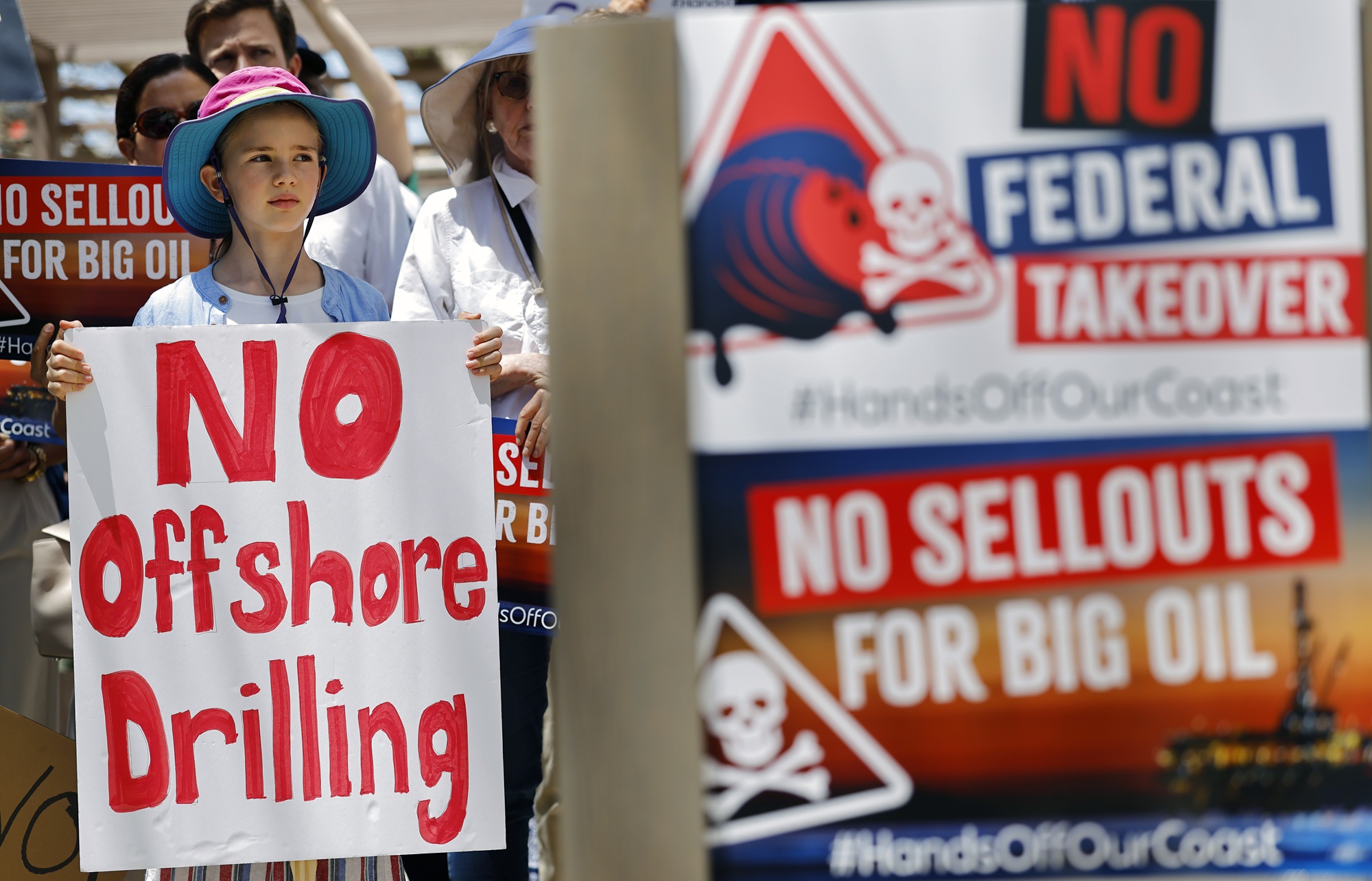
State lawmakers, Indigenous leaders, advocates and business groups gathered in Santa Monica on Monday to challenge the Trump administration’s efforts to open the California coast for oil drilling and other industrial projects.
The stakeholders rallied ahead of an in-person meeting held by the National Oceanic and Atmospheric Administration reviewing California’s Coastal Management Program, which speakers at the press conference considered to be an attack on California’s right to protect its coastline.
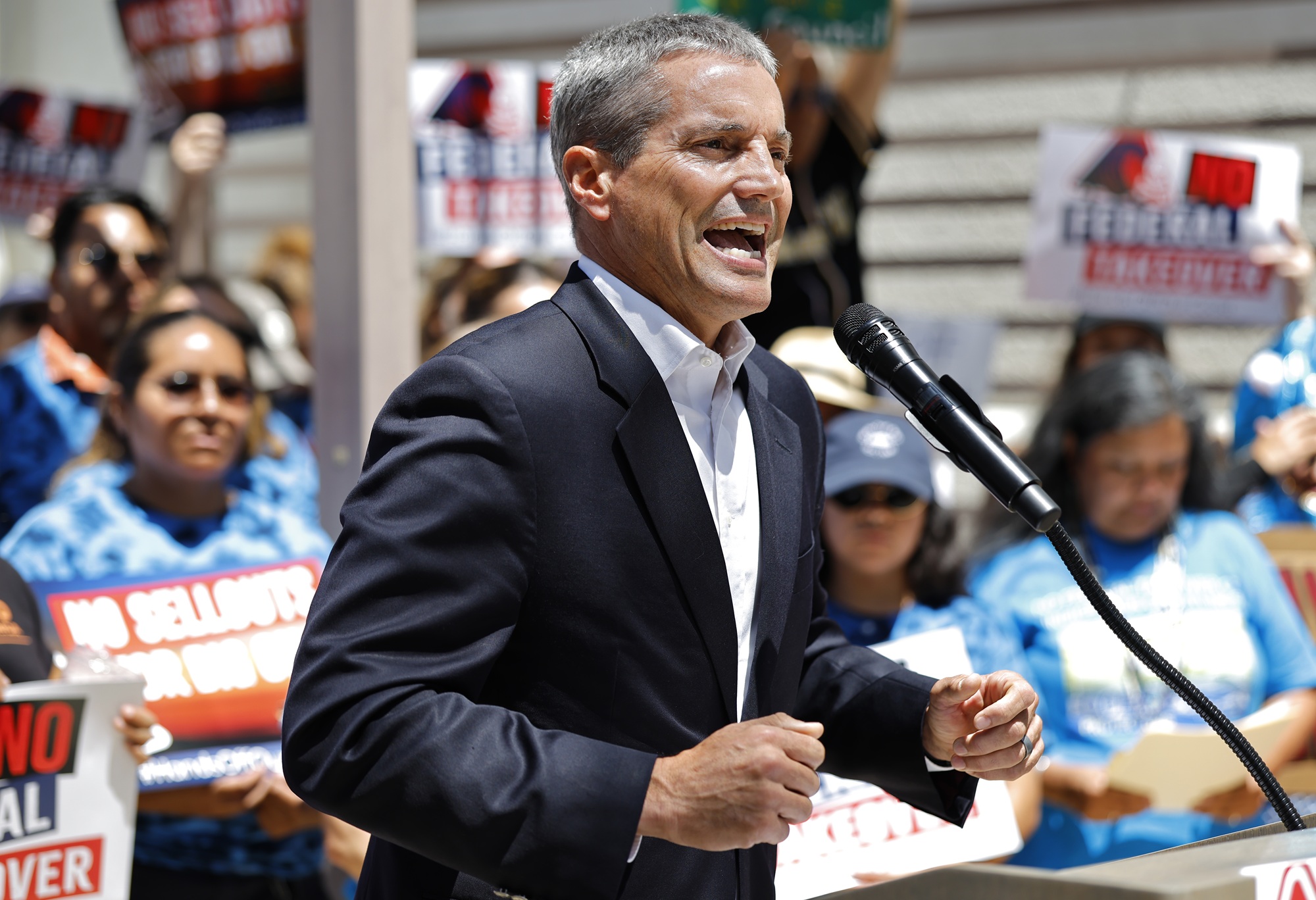
“This federal administration is bent on industrializing our coast,” California’s Natural Resources Secretary Wade Crowfoot said, addressing a crowd of dozens, many of whom brandished protest signs or wore oceanic blue T-shirts with the slogan “No Federal Takeover.”
“For the first time in over four decades, through Republican and Democratic presidential administrations, this is the first administration moving aggressively to expand new offshore oil drilling,” Crowfoot said.
The rally and meeting come just over a month after NOAA began the regulatory process with a notice in the Federal Register about its plans to study California’s Coastal Management Program. Following Monday’s in-person meeting, there will be opportunities for public comment at virtual meetings on Tuesday and Wednesday afternoon.
Crowfoot told the crowd of protesters on Monday that this review has no legal basis and that state leaders will go to court to keep President Donald Trump out of state matters.
Other speakers spoke about the predicted harms to the environment, the economy and the cultural norms that would come from opening more of California’s waters and beaches to the oil industry and other business interests.
“California’s coasts are for the people, not for crony capitalism,” said Marcela Gutiérrez-Graudiņš, a board member of the California State Coastal Conservancy who founded the marine-conservation group Azul.
Gutiérrez-Graudiņš said that California’s coasts are a place for people to come together as equals. She said the Trump administration’s plans go against California policies that have protected the state’s beaches from becoming a luxury commodity.
While critics see the move as part of Trump’s broader goals to increase oil and gas production, those in Trump’s cabinet say there are economic costs to coastal-protection schemes.
“America must continue to lead in innovation, space exploration, and economic strength,” U.S. Commerce Secretary Howard Lutnick said in May. “Obstructionist policies that delay critical national infrastructure in the name of environmental extremism are unacceptable.”
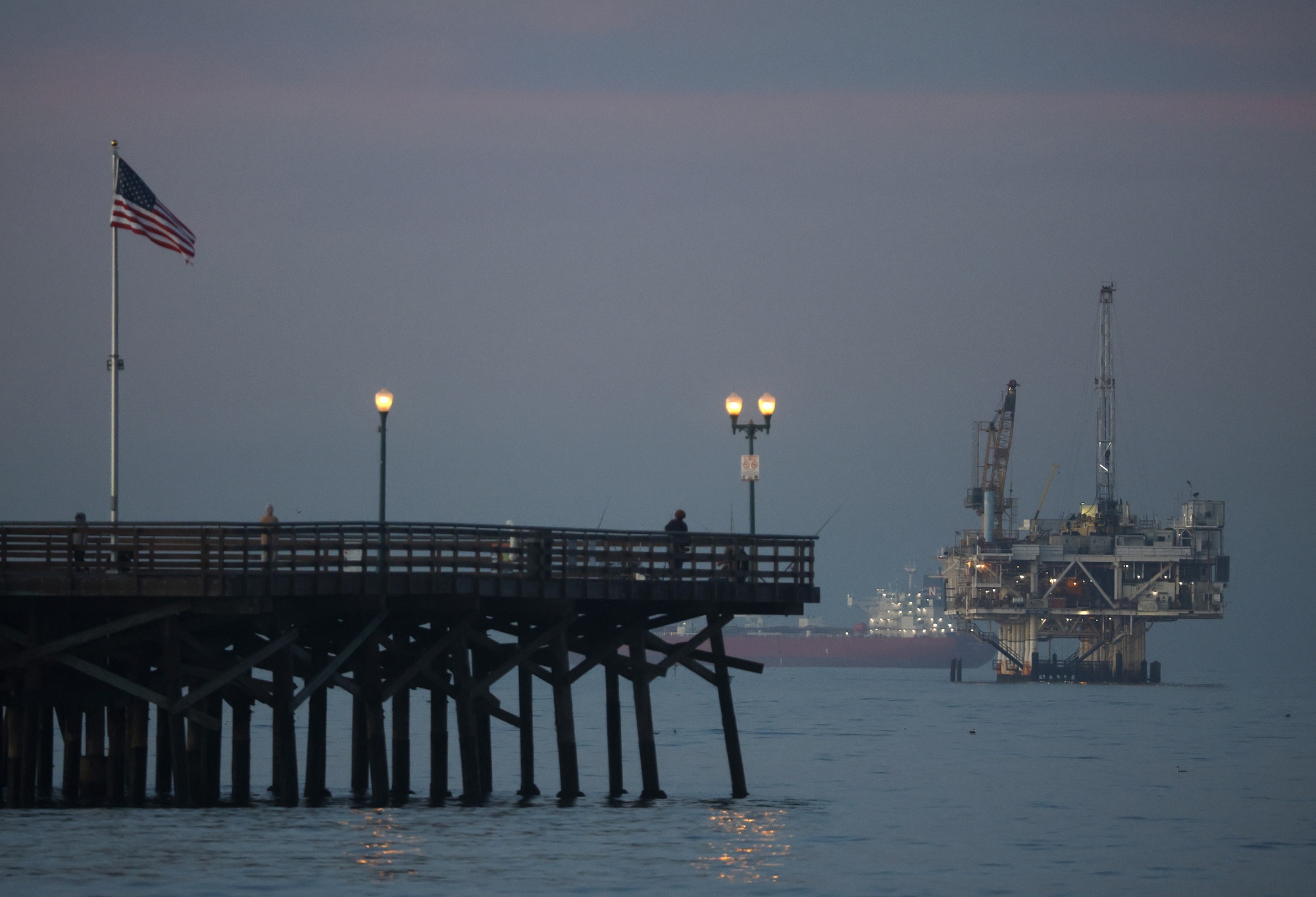
Outside the NOAA’s meeting at Hilton Santa Monica on Monday, meanwhile, speakers emphasized the destructive economic and environmental impact of major oil spills along the coast since 1970.
“Clean beaches, clean water and a coast that’s open for business — an offshore oil spill shuts all of that down,” said Grant Bixby, who helped found the group Business Alliance for Protecting the Coast.
Bixby said that the coastal economy generates over $50 billion in annual revenue, with offshore oil making up just 1% of that figure today.
“Should we put 99% of other employment at risk for the benefit of one dirty industry that can close and devastate all other businesses? I don’t think so,” Bixby said. “It’s pretty simple math.”
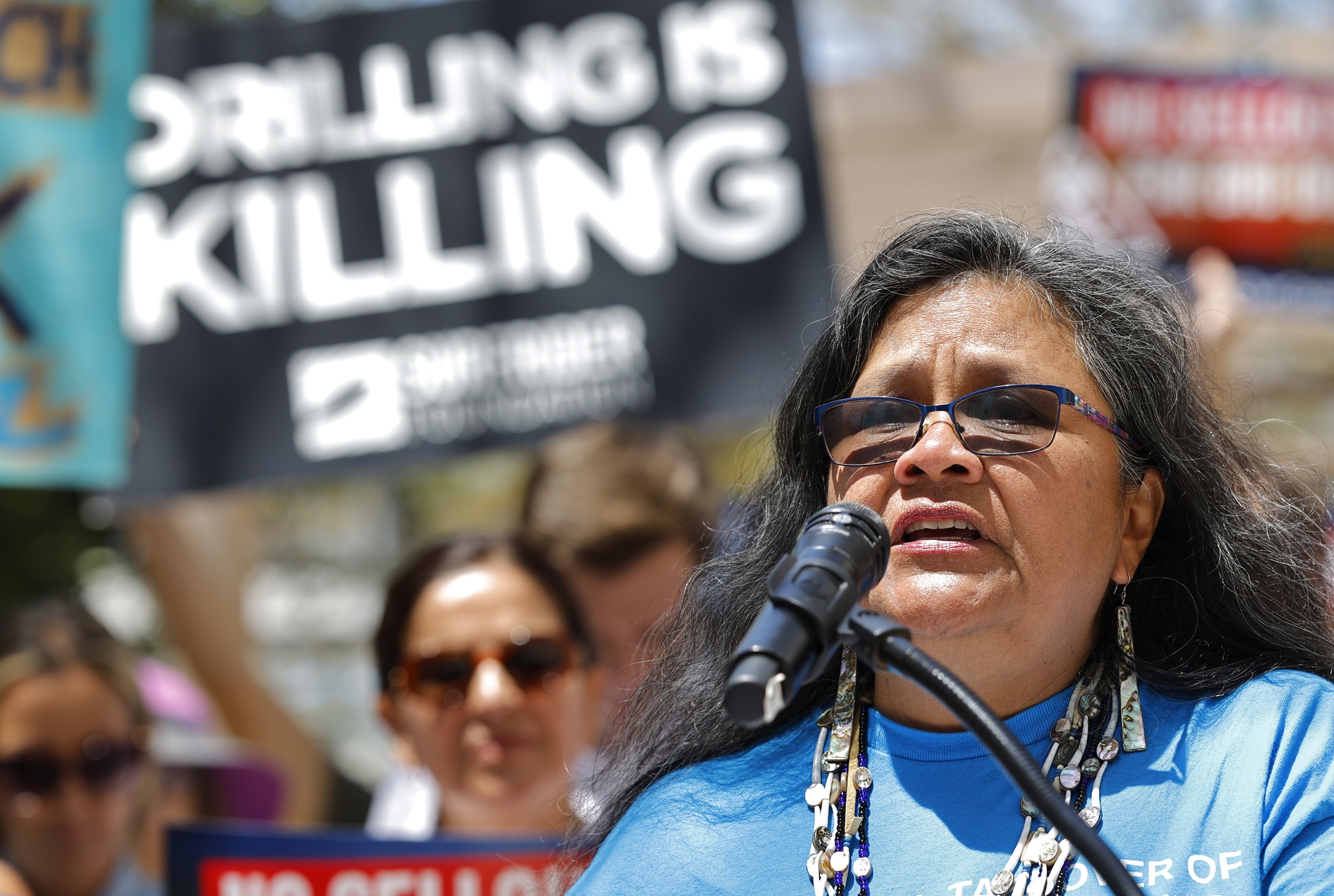
Indigenous leaders said California’s waters are sacred and have been subject to enough harm.
“The ocean provides for us as a mother provides for her children,” said Antonette Cordero, board member of the groups Sacred Places Institute for Indigenous Peoples, Surfrider Foundation and Environmental Defense Center.
“We will continue to stand up for our mother ocean and for all of her relatives, all of her inhabitants and all of those who call this coast home,” Cordero said.