window.__IS_SSR__=true
window.__INITIAL_STATE__={
"attachmentsReducer": {
"audio_0": {
"type": "attachments",
"id": "audio_0",
"imgSizes": {
"kqedFullSize": {
"file": "https://ww2.kqed.org/news/wp-content/themes/KQED-unified/img/audio_bgs/background0.jpg"
}
}
},
"audio_1": {
"type": "attachments",
"id": "audio_1",
"imgSizes": {
"kqedFullSize": {
"file": "https://ww2.kqed.org/news/wp-content/themes/KQED-unified/img/audio_bgs/background1.jpg"
}
}
},
"audio_2": {
"type": "attachments",
"id": "audio_2",
"imgSizes": {
"kqedFullSize": {
"file": "https://ww2.kqed.org/news/wp-content/themes/KQED-unified/img/audio_bgs/background2.jpg"
}
}
},
"audio_3": {
"type": "attachments",
"id": "audio_3",
"imgSizes": {
"kqedFullSize": {
"file": "https://ww2.kqed.org/news/wp-content/themes/KQED-unified/img/audio_bgs/background3.jpg"
}
}
},
"audio_4": {
"type": "attachments",
"id": "audio_4",
"imgSizes": {
"kqedFullSize": {
"file": "https://ww2.kqed.org/news/wp-content/themes/KQED-unified/img/audio_bgs/background4.jpg"
}
}
},
"placeholder": {
"type": "attachments",
"id": "placeholder",
"imgSizes": {
"thumbnail": {
"file": "https://cdn.kqed.org/wp-content/uploads/2024/12/KQED-Default-Image-816638274-2000x1333-1-160x107.jpg",
"width": 160,
"height": 107,
"mimeType": "image/jpeg"
},
"medium": {
"file": "https://cdn.kqed.org/wp-content/uploads/2024/12/KQED-Default-Image-816638274-2000x1333-1-800x533.jpg",
"width": 800,
"height": 533,
"mimeType": "image/jpeg"
},
"medium_large": {
"file": "https://cdn.kqed.org/wp-content/uploads/2024/12/KQED-Default-Image-816638274-2000x1333-1-768x512.jpg",
"width": 768,
"height": 512,
"mimeType": "image/jpeg"
},
"large": {
"file": "https://cdn.kqed.org/wp-content/uploads/2024/12/KQED-Default-Image-816638274-2000x1333-1-1020x680.jpg",
"width": 1020,
"height": 680,
"mimeType": "image/jpeg"
},
"1536x1536": {
"file": "https://cdn.kqed.org/wp-content/uploads/2024/12/KQED-Default-Image-816638274-2000x1333-1-1536x1024.jpg",
"width": 1536,
"height": 1024,
"mimeType": "image/jpeg"
},
"fd-lrg": {
"file": "https://cdn.kqed.org/wp-content/uploads/2024/12/KQED-Default-Image-816638274-2000x1333-1-1536x1024.jpg",
"width": 1536,
"height": 1024,
"mimeType": "image/jpeg"
},
"fd-med": {
"file": "https://cdn.kqed.org/wp-content/uploads/2024/12/KQED-Default-Image-816638274-2000x1333-1-1020x680.jpg",
"width": 1020,
"height": 680,
"mimeType": "image/jpeg"
},
"fd-sm": {
"file": "https://cdn.kqed.org/wp-content/uploads/2024/12/KQED-Default-Image-816638274-2000x1333-1-800x533.jpg",
"width": 800,
"height": 533,
"mimeType": "image/jpeg"
},
"post-thumbnail": {
"file": "https://cdn.kqed.org/wp-content/uploads/2024/12/KQED-Default-Image-816638274-2000x1333-1-672x372.jpg",
"width": 672,
"height": 372,
"mimeType": "image/jpeg"
},
"twentyfourteen-full-width": {
"file": "https://cdn.kqed.org/wp-content/uploads/2024/12/KQED-Default-Image-816638274-2000x1333-1-1038x576.jpg",
"width": 1038,
"height": 576,
"mimeType": "image/jpeg"
},
"xxsmall": {
"file": "https://cdn.kqed.org/wp-content/uploads/2024/12/KQED-Default-Image-816638274-2000x1333-1-160x107.jpg",
"width": 160,
"height": 107,
"mimeType": "image/jpeg"
},
"xsmall": {
"file": "https://cdn.kqed.org/wp-content/uploads/2024/12/KQED-Default-Image-816638274-2000x1333-1-672x372.jpg",
"width": 672,
"height": 372,
"mimeType": "image/jpeg"
},
"small": {
"file": "https://cdn.kqed.org/wp-content/uploads/2024/12/KQED-Default-Image-816638274-2000x1333-1-672x372.jpg",
"width": 672,
"height": 372,
"mimeType": "image/jpeg"
},
"xlarge": {
"file": "https://cdn.kqed.org/wp-content/uploads/2024/12/KQED-Default-Image-816638274-2000x1333-1-1020x680.jpg",
"width": 1020,
"height": 680,
"mimeType": "image/jpeg"
},
"full-width": {
"file": "https://cdn.kqed.org/wp-content/uploads/2024/12/KQED-Default-Image-816638274-2000x1333-1-1920x1280.jpg",
"width": 1920,
"height": 1280,
"mimeType": "image/jpeg"
},
"guest-author-32": {
"file": "https://cdn.kqed.org/wp-content/uploads/2025/01/KQED-Default-Image-816638274-1333x1333-1-160x160.jpg",
"width": 32,
"height": 32,
"mimeType": "image/jpeg"
},
"guest-author-50": {
"file": "https://cdn.kqed.org/wp-content/uploads/2025/01/KQED-Default-Image-816638274-1333x1333-1-160x160.jpg",
"width": 50,
"height": 50,
"mimeType": "image/jpeg"
},
"guest-author-64": {
"file": "https://cdn.kqed.org/wp-content/uploads/2025/01/KQED-Default-Image-816638274-1333x1333-1-160x160.jpg",
"width": 64,
"height": 64,
"mimeType": "image/jpeg"
},
"guest-author-96": {
"file": "https://cdn.kqed.org/wp-content/uploads/2025/01/KQED-Default-Image-816638274-1333x1333-1-160x160.jpg",
"width": 96,
"height": 96,
"mimeType": "image/jpeg"
},
"guest-author-128": {
"file": "https://cdn.kqed.org/wp-content/uploads/2025/01/KQED-Default-Image-816638274-1333x1333-1-160x160.jpg",
"width": 128,
"height": 128,
"mimeType": "image/jpeg"
},
"detail": {
"file": "https://cdn.kqed.org/wp-content/uploads/2025/01/KQED-Default-Image-816638274-1333x1333-1-160x160.jpg",
"width": 160,
"height": 160,
"mimeType": "image/jpeg"
},
"kqedFullSize": {
"file": "https://cdn.kqed.org/wp-content/uploads/2024/12/KQED-Default-Image-816638274-2000x1333-1.jpg",
"width": 2000,
"height": 1333
}
}
},
"news_12085820": {
"type": "attachments",
"id": "news_12085820",
"meta": {
"index": "attachments_1716263798",
"site": "news",
"id": "12085820",
"found": true
},
"title": "260602-PRIMARYVOTERVOX-14-BL-KQED",
"publishDate": 1780423676,
"status": "inherit",
"parent": 0,
"modified": 1780423738,
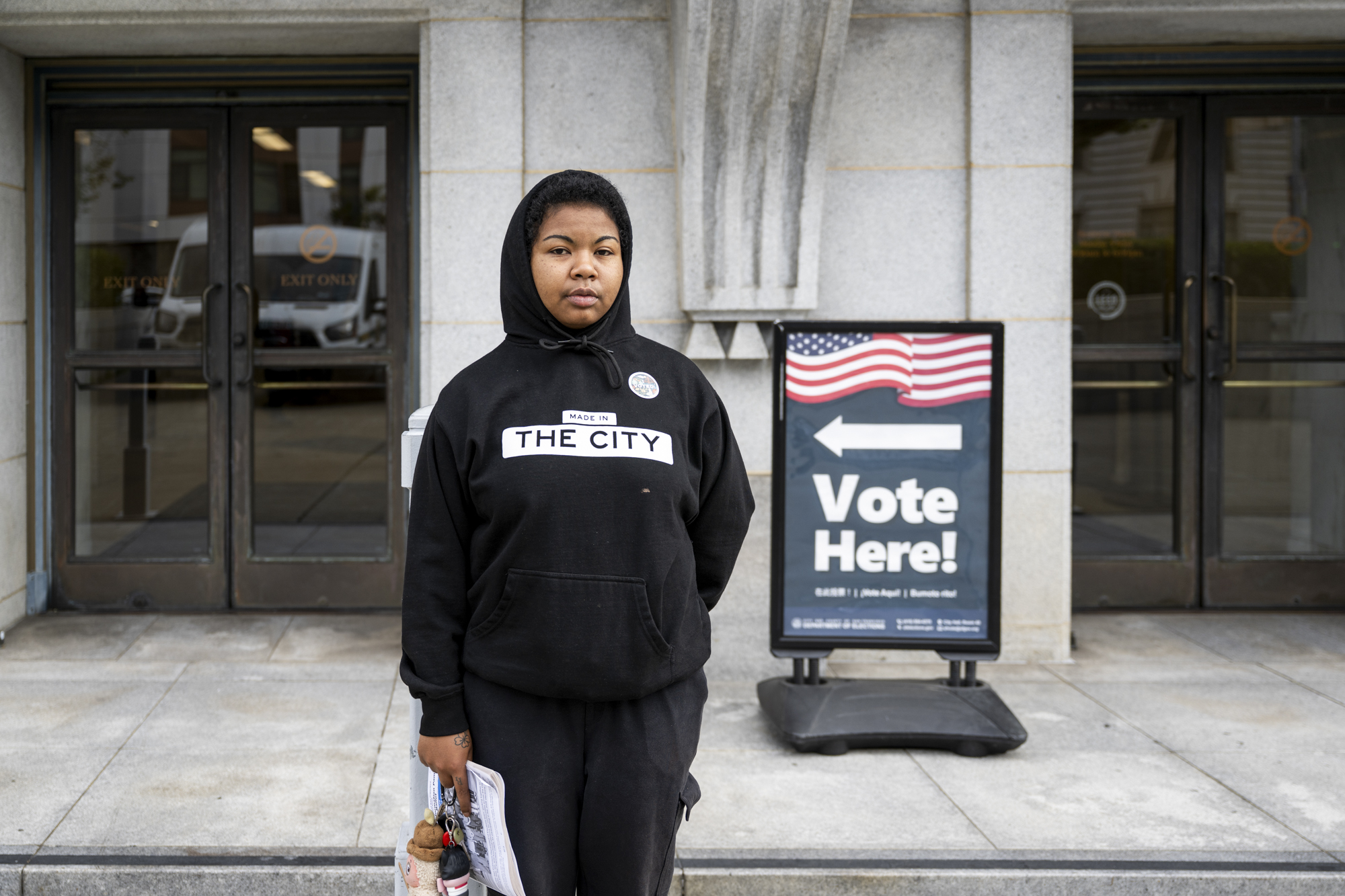
"caption": "Widya Batin leaves the City Hall Voting Center in San Francisco after casting their ballot on June 2, 2026.",
"credit": "Beth LaBerge/KQED",
"altTag": null,
"description": null,
"imgSizes": {
"thumbnail": {
"file": "https://cdn.kqed.org/wp-content/uploads/sites/10/2026/06/260602-PRIMARYVOTERVOX-14-BL-KQED-160x107.jpg",
"width": 160,
"height": 107,
"mimeType": "image/jpeg"
},
"1536x1536": {
"file": "https://cdn.kqed.org/wp-content/uploads/sites/10/2026/06/260602-PRIMARYVOTERVOX-14-BL-KQED-1536x1024.jpg",
"width": 1536,
"height": 1024,
"mimeType": "image/jpeg"
},
"post-thumbnail": {
"file": "https://cdn.kqed.org/wp-content/uploads/sites/10/2026/06/260602-PRIMARYVOTERVOX-14-BL-KQED-672x372.jpg",
"width": 672,
"height": 372,
"mimeType": "image/jpeg"
},
"twentyfourteen-full-width": {
"file": "https://cdn.kqed.org/wp-content/uploads/sites/10/2026/06/260602-PRIMARYVOTERVOX-14-BL-KQED-1038x576.jpg",
"width": 1038,
"height": 576,
"mimeType": "image/jpeg"
},
"npr-cds-wide": {
"file": "https://cdn.kqed.org/wp-content/uploads/sites/10/2026/06/260602-PRIMARYVOTERVOX-14-BL-KQED-1200x675.jpg",
"width": 1200,
"height": 675,
"mimeType": "image/jpeg"
},
"npr-cds-square": {
"file": "https://cdn.kqed.org/wp-content/uploads/sites/10/2026/06/260602-PRIMARYVOTERVOX-14-BL-KQED-600x600.jpg",
"width": 600,
"height": 600,
"mimeType": "image/jpeg"
},
"kqedFullSize": {
"file": "https://cdn.kqed.org/wp-content/uploads/sites/10/2026/06/260602-PRIMARYVOTERVOX-14-BL-KQED.jpg",
"width": 2000,
"height": 1333
}
},
"isLoading": false,
"fetchFailed": false
},
"news_12082335": {
"type": "attachments",
"id": "news_12082335",
"meta": {
"index": "attachments_1716263798",
"site": "news",
"id": "12082335",
"found": true
},
"title": "20260423_ XAVIERBECERRA_EG_012-KQED",
"publishDate": 1777935062,
"status": "inherit",
"parent": 0,
"modified": 1780436511,
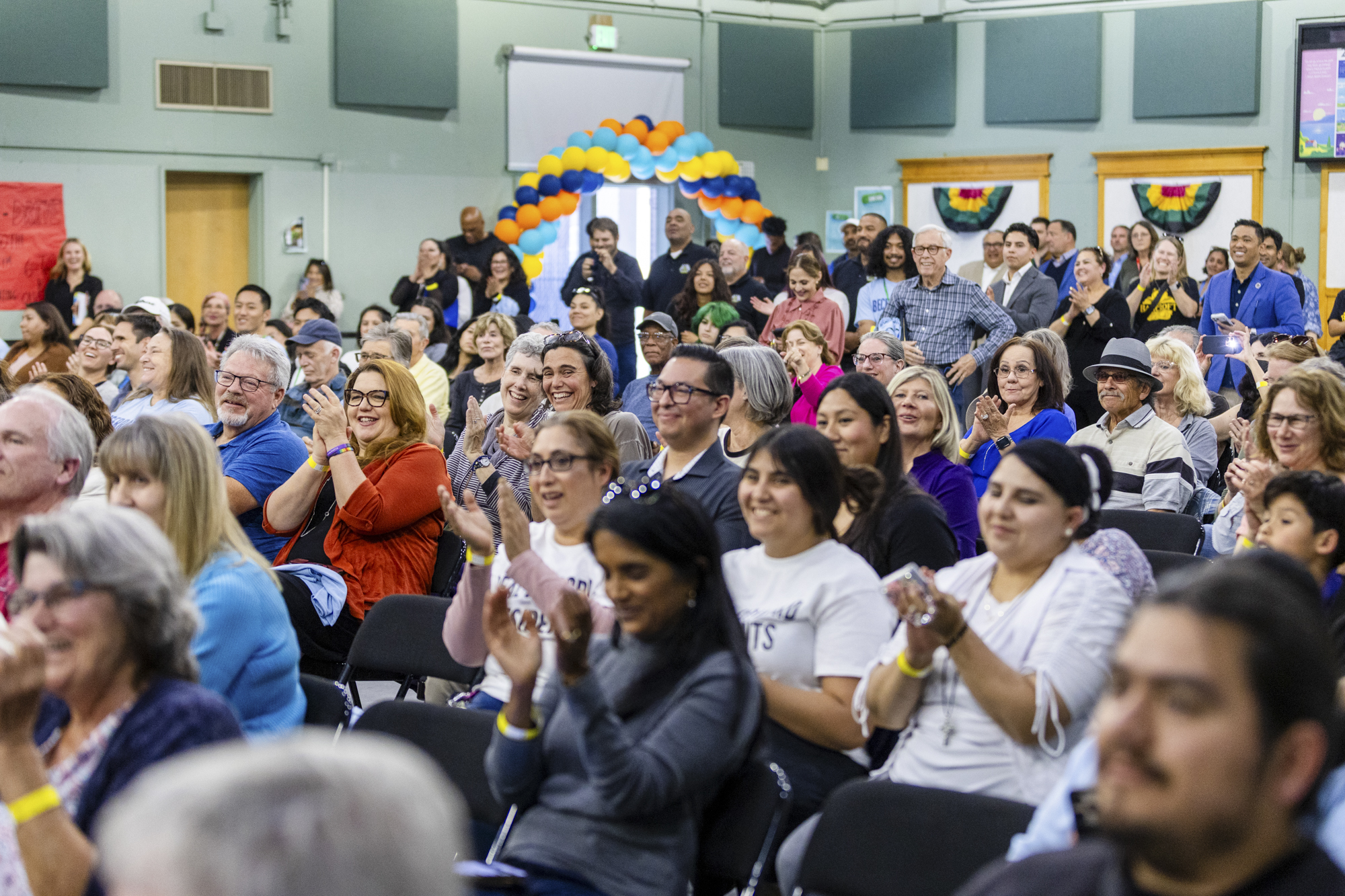
"caption": "Dozens of people listen as Xavier Becerra speaks at Mount Diablo High School in Concord on Thursday, April 23, 2026. Becerra, an attorney and politician who formerly served as the United States secretary of health and human services, is among the several candidates running in the 2026 California gubernatorial election to succeed term-limited Governor Gavin Newsom.",
"credit": null,
"altTag": null,
"description": null,
"imgSizes": {
"thumbnail": {
"file": "https://cdn.kqed.org/wp-content/uploads/sites/10/2026/05/20260423_-XAVIERBECERRA_EG_012-KQED-160x107.jpg",
"width": 160,
"height": 107,
"mimeType": "image/jpeg"
},
"1536x1536": {
"file": "https://cdn.kqed.org/wp-content/uploads/sites/10/2026/05/20260423_-XAVIERBECERRA_EG_012-KQED-1536x1024.jpg",
"width": 1536,
"height": 1024,
"mimeType": "image/jpeg"
},
"post-thumbnail": {
"file": "https://cdn.kqed.org/wp-content/uploads/sites/10/2026/05/20260423_-XAVIERBECERRA_EG_012-KQED-672x372.jpg",
"width": 672,
"height": 372,
"mimeType": "image/jpeg"
},
"twentyfourteen-full-width": {
"file": "https://cdn.kqed.org/wp-content/uploads/sites/10/2026/05/20260423_-XAVIERBECERRA_EG_012-KQED-1038x576.jpg",
"width": 1038,
"height": 576,
"mimeType": "image/jpeg"
},
"npr-cds-wide": {
"file": "https://cdn.kqed.org/wp-content/uploads/sites/10/2026/05/20260423_-XAVIERBECERRA_EG_012-KQED-1200x675.jpg",
"width": 1200,
"height": 675,
"mimeType": "image/jpeg"
},
"npr-cds-square": {
"file": "https://cdn.kqed.org/wp-content/uploads/sites/10/2026/05/20260423_-XAVIERBECERRA_EG_012-KQED-600x600.jpg",
"width": 600,
"height": 600,
"mimeType": "image/jpeg"
},
"kqedFullSize": {
"file": "https://cdn.kqed.org/wp-content/uploads/sites/10/2026/05/20260423_-XAVIERBECERRA_EG_012-KQED.jpg",
"width": 2000,
"height": 1333
}
},
"isLoading": false,
"fetchFailed": false
},
"news_12085720": {
"type": "attachments",
"id": "news_12085720",
"meta": {
"index": "attachments_1716263798",
"site": "news",
"id": "12085720",
"found": true
},
"title": "voter",
"publishDate": 1780339732,
"status": "inherit",
"parent": 12085513,
"modified": 1780339815,
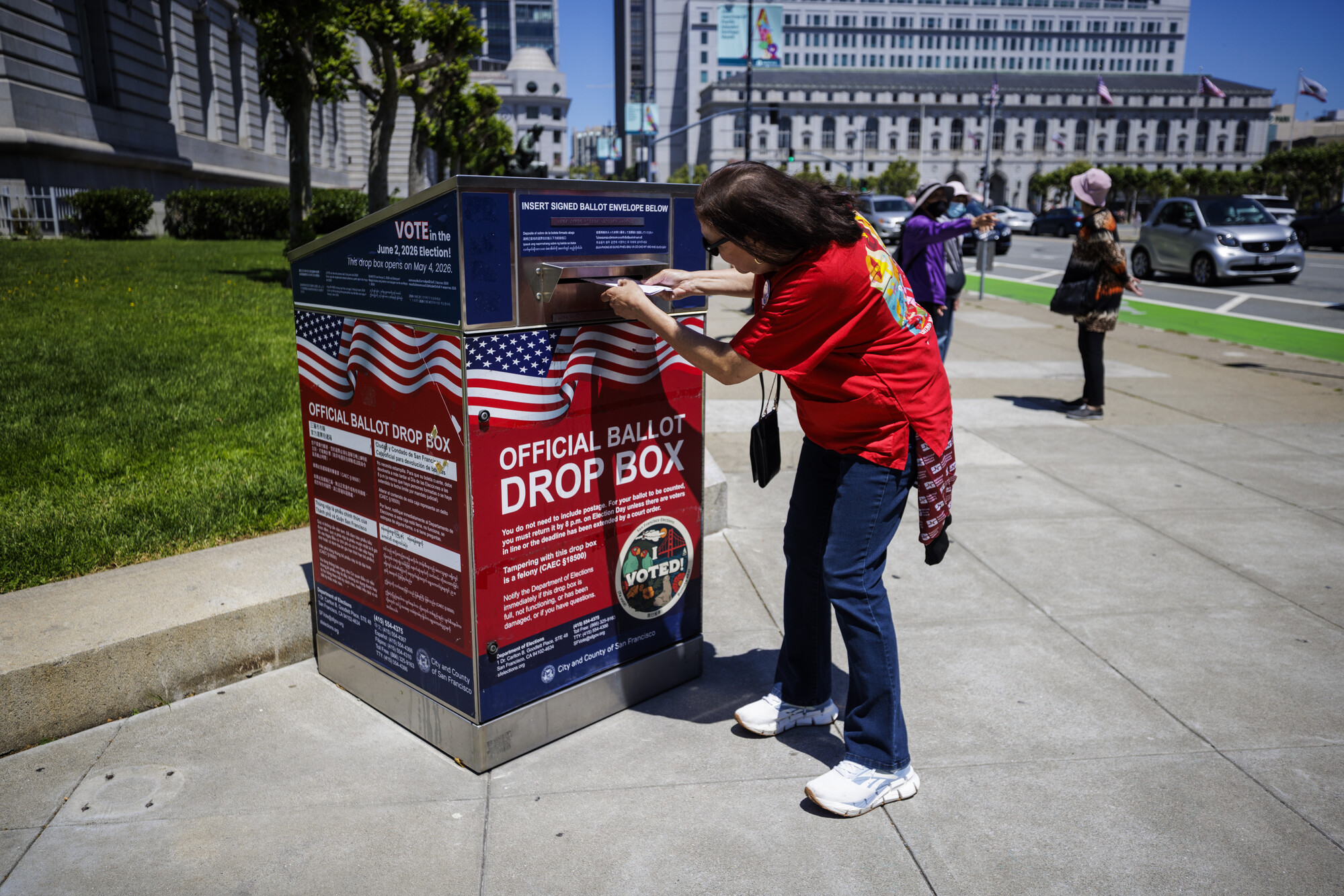
"caption": "Monica Holguin places a ballot in support of San Francisco City Supervisor and Congressional candidate Connie Chan following a get-out-the-vote rally at City Hall in San Francisco on May 15, 2026.",
"credit": "Martin do Nascimento/KQED",
"altTag": null,
"description": null,
"imgSizes": {
"thumbnail": {
"file": "https://cdn.kqed.org/wp-content/uploads/sites/10/2026/06/voter-160x107.jpg",
"width": 160,
"height": 107,
"mimeType": "image/jpeg"
},
"1536x1536": {
"file": "https://cdn.kqed.org/wp-content/uploads/sites/10/2026/06/voter-1536x1024.jpg",
"width": 1536,
"height": 1024,
"mimeType": "image/jpeg"
},
"post-thumbnail": {
"file": "https://cdn.kqed.org/wp-content/uploads/sites/10/2026/06/voter-672x372.jpg",
"width": 672,
"height": 372,
"mimeType": "image/jpeg"
},
"twentyfourteen-full-width": {
"file": "https://cdn.kqed.org/wp-content/uploads/sites/10/2026/06/voter-1038x576.jpg",
"width": 1038,
"height": 576,
"mimeType": "image/jpeg"
},
"npr-cds-wide": {
"file": "https://cdn.kqed.org/wp-content/uploads/sites/10/2026/06/voter-1200x675.jpg",
"width": 1200,
"height": 675,
"mimeType": "image/jpeg"
},
"npr-cds-square": {
"file": "https://cdn.kqed.org/wp-content/uploads/sites/10/2026/06/voter-600x600.jpg",
"width": 600,
"height": 600,
"mimeType": "image/jpeg"
},
"kqedFullSize": {
"file": "https://cdn.kqed.org/wp-content/uploads/sites/10/2026/06/voter.jpg",
"width": 1999,
"height": 1333
}
},
"isLoading": false,
"fetchFailed": false
},
"news_12085531": {
"type": "attachments",
"id": "news_12085531",
"meta": {
"index": "attachments_1716263798",
"site": "news",
"id": "12085531",
"found": true
},
"title": "San Francisco Ballot Box",
"publishDate": 1780077355,
"status": "inherit",
"parent": 12085528,
"modified": 1780077374,
"caption": "Ballot drop box with bilingual sign promoting June 2, 2026 election and opening date, on residential street, San Francisco, California, May 20, 2026. ",
"credit": "Smith Collection/Gado/Getty Images",
"altTag": null,
"description": null,
"imgSizes": {
"thumbnail": {
"file": "https://cdn.kqed.org/wp-content/uploads/sites/10/2026/05/GettyImages-2277984200-160x107.jpg",
"width": 160,
"height": 107,
"mimeType": "image/jpeg"
},
"1536x1536": {
"file": "https://cdn.kqed.org/wp-content/uploads/sites/10/2026/05/GettyImages-2277984200-1536x1024.jpg",
"width": 1536,
"height": 1024,
"mimeType": "image/jpeg"
},
"post-thumbnail": {
"file": "https://cdn.kqed.org/wp-content/uploads/sites/10/2026/05/GettyImages-2277984200-672x372.jpg",
"width": 672,
"height": 372,
"mimeType": "image/jpeg"
},
"twentyfourteen-full-width": {
"file": "https://cdn.kqed.org/wp-content/uploads/sites/10/2026/05/GettyImages-2277984200-1038x576.jpg",
"width": 1038,
"height": 576,
"mimeType": "image/jpeg"
},
"npr-cds-wide": {
"file": "https://cdn.kqed.org/wp-content/uploads/sites/10/2026/05/GettyImages-2277984200-1200x675.jpg",
"width": 1200,
"height": 675,
"mimeType": "image/jpeg"
},
"npr-cds-square": {
"file": "https://cdn.kqed.org/wp-content/uploads/sites/10/2026/05/GettyImages-2277984200-600x600.jpg",
"width": 600,
"height": 600,
"mimeType": "image/jpeg"
},
"kqedFullSize": {
"file": "https://cdn.kqed.org/wp-content/uploads/sites/10/2026/05/GettyImages-2277984200.jpg",
"width": 1980,
"height": 1320
}
},
"isLoading": false,
"fetchFailed": false
},
"news_12085722": {
"type": "attachments",
"id": "news_12085722",
"meta": {
"index": "attachments_1716263798",
"site": "news",
"id": "12085722",
"found": true
},
"title": "Prediction Markets Face Increased Scrutiny Over Insider Trading Allegations",
"publishDate": 1780339914,
"status": "inherit",
"parent": 12084937,
"modified": 1780340315,
"caption": "In this photo illustration, prediction market sites are shown on electronic devices on Feb. 25, 2026, in Chicago, Illinois. ",
"credit": "Scott Olson/Getty Images",
"altTag": null,
"description": null,
"imgSizes": {
"thumbnail": {
"file": "https://cdn.kqed.org/wp-content/uploads/sites/10/2026/06/KalshiPolymarketGetty-160x106.jpg",
"width": 160,
"height": 106,
"mimeType": "image/jpeg"
},
"1536x1536": {
"file": "https://cdn.kqed.org/wp-content/uploads/sites/10/2026/06/KalshiPolymarketGetty-1536x1022.jpg",
"width": 1536,
"height": 1022,
"mimeType": "image/jpeg"
},
"post-thumbnail": {
"file": "https://cdn.kqed.org/wp-content/uploads/sites/10/2026/06/KalshiPolymarketGetty-672x372.jpg",
"width": 672,
"height": 372,
"mimeType": "image/jpeg"
},
"twentyfourteen-full-width": {
"file": "https://cdn.kqed.org/wp-content/uploads/sites/10/2026/06/KalshiPolymarketGetty-1038x576.jpg",
"width": 1038,
"height": 576,
"mimeType": "image/jpeg"
},
"npr-cds-wide": {
"file": "https://cdn.kqed.org/wp-content/uploads/sites/10/2026/06/KalshiPolymarketGetty-1200x675.jpg",
"width": 1200,
"height": 675,
"mimeType": "image/jpeg"
},
"npr-cds-square": {
"file": "https://cdn.kqed.org/wp-content/uploads/sites/10/2026/06/KalshiPolymarketGetty-600x600.jpg",
"width": 600,
"height": 600,
"mimeType": "image/jpeg"
},
"kqedFullSize": {
"file": "https://cdn.kqed.org/wp-content/uploads/sites/10/2026/06/KalshiPolymarketGetty.jpg",
"width": 2000,
"height": 1331
}
},
"isLoading": false,
"fetchFailed": false
},
"news_12084721": {
"type": "attachments",
"id": "news_12084721",
"meta": {
"index": "attachments_1716263798",
"site": "news",
"id": "12084721",
"found": true
},
"title": "260507-IMMIGRATIONCOURTVOLUNTEERS-02-BL-KQED",
"publishDate": 1779393694,
"status": "inherit",
"parent": 0,
"modified": 1780178250,
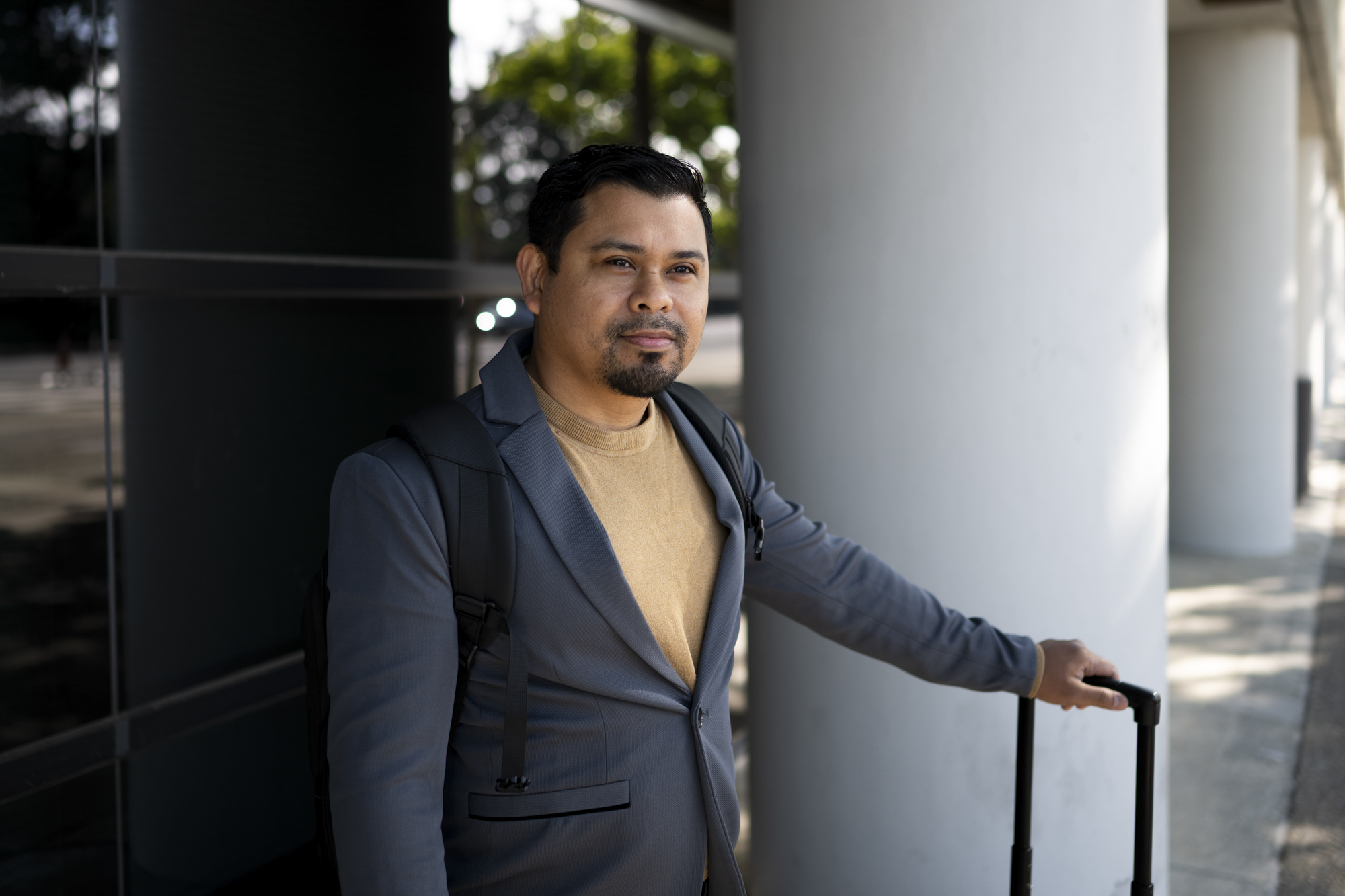
"caption": "Sergio Jaime Lopez, community defense program manager for the SAFE Center, outside the Concord immigration court on May 7, 2026. Jaime helps people in deportation proceedings navigate the court and connect with resources and legal representation.",
"credit": "Beth LaBerge/KQED",
"altTag": null,
"description": null,
"imgSizes": {
"thumbnail": {
"file": "https://cdn.kqed.org/wp-content/uploads/sites/10/2026/05/260507-IMMIGRATIONCOURTVOLUNTEERS-02-BL-KQED-160x107.jpg",
"width": 160,
"height": 107,
"mimeType": "image/jpeg"
},
"1536x1536": {
"file": "https://cdn.kqed.org/wp-content/uploads/sites/10/2026/05/260507-IMMIGRATIONCOURTVOLUNTEERS-02-BL-KQED-1536x1024.jpg",
"width": 1536,
"height": 1024,
"mimeType": "image/jpeg"
},
"post-thumbnail": {
"file": "https://cdn.kqed.org/wp-content/uploads/sites/10/2026/05/260507-IMMIGRATIONCOURTVOLUNTEERS-02-BL-KQED-672x372.jpg",
"width": 672,
"height": 372,
"mimeType": "image/jpeg"
},
"twentyfourteen-full-width": {
"file": "https://cdn.kqed.org/wp-content/uploads/sites/10/2026/05/260507-IMMIGRATIONCOURTVOLUNTEERS-02-BL-KQED-1038x576.jpg",
"width": 1038,
"height": 576,
"mimeType": "image/jpeg"
},
"npr-cds-wide": {
"file": "https://cdn.kqed.org/wp-content/uploads/sites/10/2026/05/260507-IMMIGRATIONCOURTVOLUNTEERS-02-BL-KQED-1200x675.jpg",
"width": 1200,
"height": 675,
"mimeType": "image/jpeg"
},
"npr-cds-square": {
"file": "https://cdn.kqed.org/wp-content/uploads/sites/10/2026/05/260507-IMMIGRATIONCOURTVOLUNTEERS-02-BL-KQED-600x600.jpg",
"width": 600,
"height": 600,
"mimeType": "image/jpeg"
},
"kqedFullSize": {
"file": "https://cdn.kqed.org/wp-content/uploads/sites/10/2026/05/260507-IMMIGRATIONCOURTVOLUNTEERS-02-BL-KQED.jpg",
"width": 2000,
"height": 1333
}
},
"isLoading": false,
"fetchFailed": false
},
"news_12001347": {
"type": "attachments",
"id": "news_12001347",
"meta": {
"index": "attachments_1716263798",
"site": "news",
"id": "12001347",
"found": true
},
"title": "240822-ACHAINSAW_TRUNK_DATED-KQED",
"publishDate": 1724345023,
"status": "inherit",
"parent": 0,
"modified": 1724364600,
"caption": "A tree lies fallen alongside the Johnstone Trail in Tomales Bay State Park. Emmanuel Serrier clears the trail as part of his maintenance work, and dates the trunks with a permanent marker as a memento of his effort.",
"credit": "Lusen Mendel/KQED",
"altTag": null,
"description": null,
"imgSizes": {
"medium": {
"file": "https://cdn.kqed.org/wp-content/uploads/sites/10/2024/08/240822-ACHAINSAW_TRUNK_DATED-KQED-800x1067.jpg",
"width": 800,
"height": 1067,
"mimeType": "image/jpeg"
},
"large": {
"file": "https://cdn.kqed.org/wp-content/uploads/sites/10/2024/08/240822-ACHAINSAW_TRUNK_DATED-KQED-1020x1360.jpg",
"width": 1020,
"height": 1360,
"mimeType": "image/jpeg"
},
"thumbnail": {
"file": "https://cdn.kqed.org/wp-content/uploads/sites/10/2024/08/240822-ACHAINSAW_TRUNK_DATED-KQED-160x213.jpg",
"width": 160,
"height": 213,
"mimeType": "image/jpeg"
},
"1536x1536": {
"file": "https://cdn.kqed.org/wp-content/uploads/sites/10/2024/08/240822-ACHAINSAW_TRUNK_DATED-KQED-1152x1536.jpg",
"width": 1152,
"height": 1536,
"mimeType": "image/jpeg"
},
"post-thumbnail": {
"file": "https://cdn.kqed.org/wp-content/uploads/sites/10/2024/08/240822-ACHAINSAW_TRUNK_DATED-KQED-672x372.jpg",
"width": 672,
"height": 372,
"mimeType": "image/jpeg"
},
"twentyfourteen-full-width": {
"file": "https://cdn.kqed.org/wp-content/uploads/sites/10/2024/08/240822-ACHAINSAW_TRUNK_DATED-KQED-1038x576.jpg",
"width": 1038,
"height": 576,
"mimeType": "image/jpeg"
},
"kqedFullSize": {
"file": "https://cdn.kqed.org/wp-content/uploads/sites/10/2024/08/240822-ACHAINSAW_TRUNK_DATED-KQED.jpg",
"width": 1500,
"height": 2000
}
},
"isLoading": false,
"fetchFailed": false
},
"news_12085255": {
"type": "attachments",
"id": "news_12085255",
"meta": {
"index": "attachments_1716263798",
"site": "news",
"id": "12085255",
"found": true
},
"title": "20260526-SteyerTownHall-JY-11_qed",
"publishDate": 1779852034,
"status": "inherit",
"parent": 12084744,
"modified": 1779902518,
"caption": "California Democratic gubernatorial candidate Tom Steyer answers questions alongside KQED Politics Correspondent Guy Marzorati during a town hall at KQED in San Francisco on Tuesday, May 26, 2026.",
"credit": null,
"altTag": null,
"description": null,
"imgSizes": {
"thumbnail": {
"file": "https://cdn.kqed.org/wp-content/uploads/sites/10/2026/05/20260526-SteyerTownHall-JY-11_qed-160x107.jpg",
"width": 160,
"height": 107,
"mimeType": "image/jpeg"
},
"1536x1536": {
"file": "https://cdn.kqed.org/wp-content/uploads/sites/10/2026/05/20260526-SteyerTownHall-JY-11_qed-1536x1024.jpg",
"width": 1536,
"height": 1024,
"mimeType": "image/jpeg"
},
"post-thumbnail": {
"file": "https://cdn.kqed.org/wp-content/uploads/sites/10/2026/05/20260526-SteyerTownHall-JY-11_qed-672x372.jpg",
"width": 672,
"height": 372,
"mimeType": "image/jpeg"
},
"twentyfourteen-full-width": {
"file": "https://cdn.kqed.org/wp-content/uploads/sites/10/2026/05/20260526-SteyerTownHall-JY-11_qed-1038x576.jpg",
"width": 1038,
"height": 576,
"mimeType": "image/jpeg"
},
"npr-cds-wide": {
"file": "https://cdn.kqed.org/wp-content/uploads/sites/10/2026/05/20260526-SteyerTownHall-JY-11_qed-1200x675.jpg",
"width": 1200,
"height": 675,
"mimeType": "image/jpeg"
},
"npr-cds-square": {
"file": "https://cdn.kqed.org/wp-content/uploads/sites/10/2026/05/20260526-SteyerTownHall-JY-11_qed-600x600.jpg",
"width": 600,
"height": 600,
"mimeType": "image/jpeg"
},
"kqedFullSize": {
"file": "https://cdn.kqed.org/wp-content/uploads/sites/10/2026/05/20260526-SteyerTownHall-JY-11_qed.jpg",
"width": 2000,
"height": 1333
}
},
"isLoading": false,
"fetchFailed": false
},
"news_12084764": {
"type": "attachments",
"id": "news_12084764",
"meta": {
"index": "attachments_1716263798",
"site": "news",
"id": "12084764",
"found": true
},
"title": "IMG_1522",
"publishDate": 1779397447,
"status": "inherit",
"parent": 12084761,
"modified": 1779397507,
"caption": "Living in the Bay Area means spending more on everything from childcare to groceries to housing — leaving younger residents wondering if it’s possible to retire here. ",
"credit": "Anna Vignet/KQED",
"altTag": null,
"description": null,
"imgSizes": {
"medium": {
"file": "https://cdn.kqed.org/wp-content/uploads/sites/10/2026/05/IMG_1522-2000x1500.jpg",
"width": 2000,
"height": 1500,
"mimeType": "image/jpeg"
},
"large": {
"file": "https://cdn.kqed.org/wp-content/uploads/sites/10/2026/05/IMG_1522-2000x1500.jpg",
"width": 2000,
"height": 1500,
"mimeType": "image/jpeg"
},
"thumbnail": {
"file": "https://cdn.kqed.org/wp-content/uploads/sites/10/2026/05/IMG_1522-160x120.jpg",
"width": 160,
"height": 120,
"mimeType": "image/jpeg"
},
"1536x1536": {
"file": "https://cdn.kqed.org/wp-content/uploads/sites/10/2026/05/IMG_1522-1536x1152.jpg",
"width": 1536,
"height": 1152,
"mimeType": "image/jpeg"
},
"2048x2048": {
"file": "https://cdn.kqed.org/wp-content/uploads/sites/10/2026/05/IMG_1522-2048x1536.jpg",
"width": 2048,
"height": 1536,
"mimeType": "image/jpeg"
},
"post-thumbnail": {
"file": "https://cdn.kqed.org/wp-content/uploads/sites/10/2026/05/IMG_1522-672x372.jpg",
"width": 672,
"height": 372,
"mimeType": "image/jpeg"
},
"twentyfourteen-full-width": {
"file": "https://cdn.kqed.org/wp-content/uploads/sites/10/2026/05/IMG_1522-1038x576.jpg",
"width": 1038,
"height": 576,
"mimeType": "image/jpeg"
},
"full-width": {
"file": "https://cdn.kqed.org/wp-content/uploads/sites/10/2026/05/IMG_1522-2000x1500.jpg",
"width": 2000,
"height": 1500,
"mimeType": "image/jpeg"
},
"npr-cds-wide": {
"file": "https://cdn.kqed.org/wp-content/uploads/sites/10/2026/05/IMG_1522-1200x675.jpg",
"width": 1200,
"height": 675,
"mimeType": "image/jpeg"
},
"npr-cds-square": {
"file": "https://cdn.kqed.org/wp-content/uploads/sites/10/2026/05/IMG_1522-600x600.jpg",
"width": 600,
"height": 600,
"mimeType": "image/jpeg"
},
"kqedFullSize": {
"file": "https://cdn.kqed.org/wp-content/uploads/sites/10/2026/05/IMG_1522.jpg",
"width": 2560,
"height": 1920
}
},
"isLoading": false,
"fetchFailed": false
},
"news_12084719": {
"type": "attachments",
"id": "news_12084719",
"meta": {
"index": "attachments_1716263798",
"site": "news",
"id": "12084719",
"found": true
},
"title": "050726-Native-Students-JAH-CM-19 (1)",
"publishDate": 1779393567,
"status": "inherit",
"parent": 12084712,
"modified": 1779393613,
"caption": "Celestina Castillo sits on the porch of her home in Los Angeles on May 7, 2026.",
"credit": "Jules Hotz/CalMatters",
"altTag": null,
"description": null,
"imgSizes": {
"thumbnail": {
"file": "https://cdn.kqed.org/wp-content/uploads/sites/10/2026/05/050726-Native-Students-JAH-CM-19-1-160x107.jpg",
"width": 160,
"height": 107,
"mimeType": "image/jpeg"
},
"1536x1536": {
"file": "https://cdn.kqed.org/wp-content/uploads/sites/10/2026/05/050726-Native-Students-JAH-CM-19-1-1536x1024.jpg",
"width": 1536,
"height": 1024,
"mimeType": "image/jpeg"
},
"post-thumbnail": {
"file": "https://cdn.kqed.org/wp-content/uploads/sites/10/2026/05/050726-Native-Students-JAH-CM-19-1-672x372.jpg",
"width": 672,
"height": 372,
"mimeType": "image/jpeg"
},
"twentyfourteen-full-width": {
"file": "https://cdn.kqed.org/wp-content/uploads/sites/10/2026/05/050726-Native-Students-JAH-CM-19-1-1038x576.jpg",
"width": 1038,
"height": 576,
"mimeType": "image/jpeg"
},
"npr-cds-wide": {
"file": "https://cdn.kqed.org/wp-content/uploads/sites/10/2026/05/050726-Native-Students-JAH-CM-19-1-1200x675.jpg",
"width": 1200,
"height": 675,
"mimeType": "image/jpeg"
},
"npr-cds-square": {
"file": "https://cdn.kqed.org/wp-content/uploads/sites/10/2026/05/050726-Native-Students-JAH-CM-19-1-600x600.jpg",
"width": 600,
"height": 600,
"mimeType": "image/jpeg"
},
"kqedFullSize": {
"file": "https://cdn.kqed.org/wp-content/uploads/sites/10/2026/05/050726-Native-Students-JAH-CM-19-1.jpg",
"width": 2000,
"height": 1333
}
},
"isLoading": false,
"fetchFailed": false
},
"news_12080978": {
"type": "attachments",
"id": "news_12080978",
"meta": {
"index": "attachments_1716263798",
"site": "news",
"id": "12080978",
"found": true
},
"title": "Hike & Sew",
"publishDate": 1776891065,
"status": "inherit",
"parent": 12083851,
"modified": 1778865296,
"caption": "A community-driven, mobile crafting group combines, hiking, and outdoor sewing in Los Angeles. ",
"credit": "Courtesy of Kim Silverstein",
"altTag": null,
"description": null,
"imgSizes": {
"thumbnail": {
"file": "https://cdn.kqed.org/wp-content/uploads/sites/10/2026/04/260422-HIKENSEW-11-KQED-160x107.jpg",
"width": 160,
"height": 107,
"mimeType": "image/jpeg"
},
"1536x1536": {
"file": "https://cdn.kqed.org/wp-content/uploads/sites/10/2026/04/260422-HIKENSEW-11-KQED-1536x1024.jpg",
"width": 1536,
"height": 1024,
"mimeType": "image/jpeg"
},
"post-thumbnail": {
"file": "https://cdn.kqed.org/wp-content/uploads/sites/10/2026/04/260422-HIKENSEW-11-KQED-672x372.jpg",
"width": 672,
"height": 372,
"mimeType": "image/jpeg"
},
"twentyfourteen-full-width": {
"file": "https://cdn.kqed.org/wp-content/uploads/sites/10/2026/04/260422-HIKENSEW-11-KQED-1038x576.jpg",
"width": 1038,
"height": 576,
"mimeType": "image/jpeg"
},
"npr-cds-wide": {
"file": "https://cdn.kqed.org/wp-content/uploads/sites/10/2026/04/260422-HIKENSEW-11-KQED-1200x675.jpg",
"width": 1200,
"height": 675,
"mimeType": "image/jpeg"
},
"npr-cds-square": {
"file": "https://cdn.kqed.org/wp-content/uploads/sites/10/2026/04/260422-HIKENSEW-11-KQED-600x600.jpg",
"width": 600,
"height": 600,
"mimeType": "image/jpeg"
},
"kqedFullSize": {
"file": "https://cdn.kqed.org/wp-content/uploads/sites/10/2026/04/260422-HIKENSEW-11-KQED.jpg",
"width": 2000,
"height": 1333
}
},
"isLoading": false,
"fetchFailed": false
},
"news_12081645": {
"type": "attachments",
"id": "news_12081645",
"meta": {
"index": "attachments_1716263798",
"site": "news",
"id": "12081645",
"found": true
},
"title": "260428-TRANSITRIDERSHIPREBOUND00197_TV-KQED",
"publishDate": 1777410513,
"status": "inherit",
"parent": 12081663,
"modified": 1777419805,
"caption": "Trains are stationed at the Caltrain station on King Street and 4th Street in San Francisco on April 27, 2026.",
"credit": "Tâm Vũ/KQED",
"altTag": null,
"description": null,
"imgSizes": {
"thumbnail": {
"file": "https://cdn.kqed.org/wp-content/uploads/sites/10/2026/04/260428-TRANSITRIDERSHIPREBOUND00197_TV-KQED-160x107.jpg",
"width": 160,
"height": 107,
"mimeType": "image/jpeg"
},
"1536x1536": {
"file": "https://cdn.kqed.org/wp-content/uploads/sites/10/2026/04/260428-TRANSITRIDERSHIPREBOUND00197_TV-KQED-1536x1024.jpg",
"width": 1536,
"height": 1024,
"mimeType": "image/jpeg"
},
"post-thumbnail": {
"file": "https://cdn.kqed.org/wp-content/uploads/sites/10/2026/04/260428-TRANSITRIDERSHIPREBOUND00197_TV-KQED-672x372.jpg",
"width": 672,
"height": 372,
"mimeType": "image/jpeg"
},
"twentyfourteen-full-width": {
"file": "https://cdn.kqed.org/wp-content/uploads/sites/10/2026/04/260428-TRANSITRIDERSHIPREBOUND00197_TV-KQED-1038x576.jpg",
"width": 1038,
"height": 576,
"mimeType": "image/jpeg"
},
"npr-cds-wide": {
"file": "https://cdn.kqed.org/wp-content/uploads/sites/10/2026/04/260428-TRANSITRIDERSHIPREBOUND00197_TV-KQED-1200x675.jpg",
"width": 1200,
"height": 675,
"mimeType": "image/jpeg"
},
"npr-cds-square": {
"file": "https://cdn.kqed.org/wp-content/uploads/sites/10/2026/04/260428-TRANSITRIDERSHIPREBOUND00197_TV-KQED-600x600.jpg",
"width": 600,
"height": 600,
"mimeType": "image/jpeg"
},
"kqedFullSize": {
"file": "https://cdn.kqed.org/wp-content/uploads/sites/10/2026/04/260428-TRANSITRIDERSHIPREBOUND00197_TV-KQED.jpg",
"width": 2000,
"height": 1333
}
},
"isLoading": false,
"fetchFailed": false
}
},
"audioPlayerReducer": {
"postId": "stream_live",
"isPaused": true,
"isPlaying": false,
"pfsActive": false,
"pledgeModalIsOpen": true,
"playerDrawerIsOpen": false,
"liveAudioPlayStartedAt": 0,
"liveAudioPlayContext": ""
},
"authorsReducer": {
"byline_news_12085504": {
"type": "authors",
"id": "byline_news_12085504",
"meta": {
"override": true
},
"slug": "byline_news_12085504",
"name": "Ella Jackson",
"isLoading": false
},
"byline_news_12085513": {
"type": "authors",
"id": "byline_news_12085513",
"meta": {
"override": true
},
"slug": "byline_news_12085513",
"name": "Claire Morgan and Queena Kim, The California Newsroom",
"isLoading": false
},
"byline_news_12084712": {
"type": "authors",
"id": "byline_news_12084712",
"meta": {
"override": true
},
"slug": "byline_news_12084712",
"name": "Carolyn Jones, CalMatters",
"isLoading": false
},
"gmarzorati": {
"type": "authors",
"id": "227",
"meta": {
"index": "authors_1716337520",
"id": "227",
"found": true
},
"name": "Guy Marzorati",
"firstName": "Guy",
"lastName": "Marzorati",
"slug": "gmarzorati",
"email": "gmarzorati@KQED.org",
"display_author_email": true,
"staff_mastheads": [
"news"
],
"title": "Correspondent",
"bio": "Guy Marzorati is a correspondent on KQED's California Politics and Government Desk, based in San Jose. A graduate of Santa Clara University, Guy joined KQED in 2013. He reports on state and local politics and produces KQED's digital voter guide.",
"avatar": "https://secure.gravatar.com/avatar/e7038b8dbfd55b104369b76b1cd0b9de?s=600&d=blank&r=g",
"twitter": "guymarzorati",
"facebook": null,
"instagram": null,
"linkedin": null,
"sites": [
{
"site": "",
"roles": [
"editor"
]
},
{
"site": "news",
"roles": [
"editor"
]
},
{
"site": "science",
"roles": [
"editor"
]
},
{
"site": "forum",
"roles": [
"editor"
]
},
{
"site": "elections",
"roles": [
"editor"
]
},
{
"site": "liveblog",
"roles": [
"editor"
]
}
],
"headData": {
"title": "Guy Marzorati | KQED",
"description": "Correspondent",
"ogImgSrc": "https://secure.gravatar.com/avatar/e7038b8dbfd55b104369b76b1cd0b9de?s=600&d=blank&r=g",
"twImgSrc": "https://secure.gravatar.com/avatar/e7038b8dbfd55b104369b76b1cd0b9de?s=600&d=blank&r=g"
},
"isLoading": false,
"link": "/author/gmarzorati"
},
"kqed": {
"type": "authors",
"id": "236",
"meta": {
"index": "authors_1716337520",
"id": "236",
"found": true
},
"name": "KQED News Staff",
"firstName": "KQED News Staff",
"lastName": null,
"slug": "kqed",
"email": "faq@kqed.org",
"display_author_email": false,
"staff_mastheads": [],
"title": null,
"bio": null,
"avatar": "https://secure.gravatar.com/avatar/ef0e801a68c4c54afa9180db14084167?s=600&d=blank&r=g",
"twitter": null,
"facebook": null,
"instagram": null,
"linkedin": null,
"sites": [
{
"site": "arts",
"roles": [
"contributor"
]
},
{
"site": "news",
"roles": [
"editor"
]
},
{
"site": "futureofyou",
"roles": [
"author"
]
}
],
"headData": {
"title": "KQED News Staff | KQED",
"description": null,
"ogImgSrc": "https://secure.gravatar.com/avatar/ef0e801a68c4c54afa9180db14084167?s=600&d=blank&r=g",
"twImgSrc": "https://secure.gravatar.com/avatar/ef0e801a68c4c54afa9180db14084167?s=600&d=blank&r=g"
},
"isLoading": false,
"link": "/author/kqed"
},
"mlagos": {
"type": "authors",
"id": "3239",
"meta": {
"index": "authors_1716337520",
"id": "3239",
"found": true
},
"name": "Marisa Lagos",
"firstName": "Marisa",
"lastName": "Lagos",
"slug": "mlagos",
"email": "mlagos@kqed.org",
"display_author_email": false,
"staff_mastheads": [
"news"
],
"title": "KQED Contributor",
"bio": "Marisa Lagos is a correspondent for KQED’s California Politics and Government Desk and co-hosts the award-winning show and podcast, Political Breakdown. At KQED, Lagos also conducts reporting, analysis and investigations into state, local and national politics for radio, TV, online and onstage. In 2022, she and co-host, Scott Shafer, moderated the only gubernatorial debate in California. In 2020, the \u003ci>Washington Post\u003c/i> named her one of the top political journalists in California; she was nominated for a Peabody and won several other awards for her work investigating the 2017 California wildfires. She has worked at the \u003ci>San Francisco Chronicle\u003c/i>, \u003ci>San Francisco Examiner\u003c/i> and \u003ci>Los Angeles Times\u003c/i>. A UC Santa Barbara graduate, she lives in San Francisco with her two sons and husband.",
"avatar": "https://secure.gravatar.com/avatar/a261a0d3696fc066871ef96b85b5e7d2?s=600&d=blank&r=g",
"twitter": "@mlagos",
"facebook": null,
"instagram": null,
"linkedin": null,
"sites": [
{
"site": "arts",
"roles": [
"author"
]
},
{
"site": "news",
"roles": [
"editor"
]
},
{
"site": "science",
"roles": [
"editor"
]
},
{
"site": "forum",
"roles": [
"author"
]
},
{
"site": "liveblog",
"roles": [
"author"
]
}
],
"headData": {
"title": "Marisa Lagos | KQED",
"description": "KQED Contributor",
"ogImgSrc": "https://secure.gravatar.com/avatar/a261a0d3696fc066871ef96b85b5e7d2?s=600&d=blank&r=g",
"twImgSrc": "https://secure.gravatar.com/avatar/a261a0d3696fc066871ef96b85b5e7d2?s=600&d=blank&r=g"
},
"isLoading": false,
"link": "/author/mlagos"
},
"carlysevern": {
"type": "authors",
"id": "3243",
"meta": {
"index": "authors_1716337520",
"id": "3243",
"found": true
},
"name": "Carly Severn",
"firstName": "Carly",
"lastName": "Severn",
"slug": "carlysevern",
"email": "csevern@kqed.org",
"display_author_email": false,
"staff_mastheads": [
"news"
],
"title": "Senior Editor, Audience News ",
"bio": "Carly is KQED's Senior Editor of Audience News on the Digital News team, and has reported for the California Report Magazine, Bay Curious and KQED Arts. She's formerly the host of \u003ca href=\"http://ww2.kqed.org/pop/category/the-cooler/\" rel=\"noopener noreferrer\">The Cooler\u003c/a> podcast.",
"avatar": "https://secure.gravatar.com/avatar/54037bf5c128fe678f0ef26cec97a93f2e7f220a22d7285703328f12c42c1b1d?s=600&d=blank&r=g",
"twitter": "teacupinthebay",
"bluesky": null,
"facebook": null,
"instagram": null,
"linkedin": null,
"sites": [
{
"site": "",
"roles": [
"editor"
]
},
{
"site": "arts",
"roles": [
"editor"
]
},
{
"site": "news",
"roles": [
"administrator"
]
},
{
"site": "pop",
"roles": [
"editor"
]
},
{
"site": "futureofyou",
"roles": [
"editor"
]
},
{
"site": "about",
"roles": [
"administrator"
]
},
{
"site": "mindshift",
"roles": [
"editor"
]
},
{
"site": "bayareabites",
"roles": [
"editor"
]
},
{
"site": "stateofhealth",
"roles": [
"editor"
]
},
{
"site": "science",
"roles": [
"editor"
]
},
{
"site": "food",
"roles": [
"contributor"
]
},
{
"site": "forum",
"roles": [
"editor"
]
},
{
"site": "perspectives",
"roles": [
"administrator"
]
},
{
"site": "liveblog",
"roles": [
"editor"
]
}
],
"headData": {
"title": "Carly Severn | KQED",
"description": "Senior Editor, Audience News ",
"ogImgSrc": "https://secure.gravatar.com/avatar/54037bf5c128fe678f0ef26cec97a93f2e7f220a22d7285703328f12c42c1b1d?s=600&d=blank&r=g",
"twImgSrc": "https://secure.gravatar.com/avatar/54037bf5c128fe678f0ef26cec97a93f2e7f220a22d7285703328f12c42c1b1d?s=600&d=blank&r=g"
},
"isLoading": false,
"link": "/author/carlysevern"
},
"vrancano": {
"type": "authors",
"id": "11276",
"meta": {
"index": "authors_1716337520",
"id": "11276",
"found": true
},
"name": "Vanessa Rancaño",
"firstName": "Vanessa",
"lastName": "Rancaño",
"slug": "vrancano",
"email": "vrancano@kqed.org",
"display_author_email": false,
"staff_mastheads": [
"news"
],
"title": "Reporter",
"bio": "Vanessa Rancaño is a features reporter for KQED. She’s also covered homelessness and education for the station and reported from the Central Valley. Her work has aired across public radio, from flagship national news shows to longform narrative podcasts. Before taking up a mic, she worked as a freelance print journalist. She’s been recognized with a number of national and regional awards. Vanessa grew up in California's Central Valley. She's a former NPR Kroc Fellow, and a graduate of the UC Berkeley Graduate School of Journalism.",
"avatar": "https://secure.gravatar.com/avatar/b3a383dfb0e7ee1c17568f2cf067904ab654d6e3de9743fc661f3c788ade1bed?s=600&d=blank&r=g",
"twitter": "vanessarancano",
"bluesky": null,
"facebook": null,
"instagram": null,
"linkedin": null,
"sites": [
{
"site": "arts",
"roles": [
"editor"
]
},
{
"site": "news",
"roles": [
"editor"
]
},
{
"site": "liveblog",
"roles": [
"contributor"
]
}
],
"headData": {
"title": "Vanessa Rancaño | KQED",
"description": "Reporter",
"ogImgSrc": "https://secure.gravatar.com/avatar/b3a383dfb0e7ee1c17568f2cf067904ab654d6e3de9743fc661f3c788ade1bed?s=600&d=blank&r=g",
"twImgSrc": "https://secure.gravatar.com/avatar/b3a383dfb0e7ee1c17568f2cf067904ab654d6e3de9743fc661f3c788ade1bed?s=600&d=blank&r=g"
},
"isLoading": false,
"link": "/author/vrancano"
},
"abandlamudi": {
"type": "authors",
"id": "11672",
"meta": {
"index": "authors_1716337520",
"id": "11672",
"found": true
},
"name": "Adhiti Bandlamudi",
"firstName": "Adhiti",
"lastName": "Bandlamudi",
"slug": "abandlamudi",
"email": "abandlamudi@kqed.org",
"display_author_email": false,
"staff_mastheads": [
"news"
],
"title": "KQED Housing Reporter",
"bio": "Adhiti Bandlamudi reports for KQED's Housing desk. She focuses on how housing gets built across the Bay Area. Before joining KQED in 2020, she reported for WUNC in Durham, North Carolina, WABE in Atlanta, Georgia and Capital Public Radio in Sacramento. In 2017, she was awarded a Kroc Fellowship at NPR where she reported on everything from sprinkles to the Golden State Killer's arrest. When she's not reporting, she's baking new recipes in her kitchen or watching movies with friends and family. She's originally from Georgia and has strong opinions about Great British Bake Off.",
"avatar": "https://secure.gravatar.com/avatar/868129c8b257bb99a3500e2c86a65400?s=600&d=mm&r=g",
"twitter": "oddity_adhiti",
"facebook": null,
"instagram": null,
"linkedin": null,
"sites": [
{
"site": "arts",
"roles": [
"author"
]
},
{
"site": "news",
"roles": [
"editor"
]
},
{
"site": "liveblog",
"roles": [
"author"
]
}
],
"headData": {
"title": "Adhiti Bandlamudi | KQED",
"description": "KQED Housing Reporter",
"ogImgSrc": "https://secure.gravatar.com/avatar/868129c8b257bb99a3500e2c86a65400?s=600&d=mm&r=g",
"twImgSrc": "https://secure.gravatar.com/avatar/868129c8b257bb99a3500e2c86a65400?s=600&d=mm&r=g"
},
"isLoading": false,
"link": "/author/abandlamudi"
},
"ccabreralomeli": {
"type": "authors",
"id": "11708",
"meta": {
"index": "authors_1716337520",
"id": "11708",
"found": true
},
"name": "Carlos Cabrera-Lomelí",
"firstName": "Carlos",
"lastName": "Cabrera-Lomelí",
"slug": "ccabreralomeli",
"email": "ccabreralomeli@KQED.org",
"display_author_email": true,
"staff_mastheads": [
"news"
],
"title": "Community Reporter",
"bio": "Carlos Cabrera-Lomelí is a community reporter with KQED's digital engagement team. He also reports and co-produces for KQED's bilingual news hub KQED en Español. He grew up in San Francisco's Mission District and has previously worked with Univision, 48 Hills and REFORMA in Mexico City.",
"avatar": "https://secure.gravatar.com/avatar/c309be9665e484f887b818c89e273ecc673004f426f36b24d00a4d813a2e0518?s=600&d=blank&r=g",
"twitter": "@LomeliCabrera",
"bluesky": null,
"facebook": null,
"instagram": null,
"linkedin": null,
"sites": [
{
"site": "arts",
"roles": [
"editor"
]
},
{
"site": "news",
"roles": [
"editor"
]
},
{
"site": "about",
"roles": [
"editor"
]
},
{
"site": "science",
"roles": [
"editor"
]
},
{
"site": "perspectives",
"roles": [
"editor"
]
},
{
"site": "elections",
"roles": [
"editor"
]
},
{
"site": "liveblog",
"roles": [
"contributor"
]
}
],
"headData": {
"title": "Carlos Cabrera-Lomelí | KQED",
"description": "Community Reporter",
"ogImgSrc": "https://secure.gravatar.com/avatar/c309be9665e484f887b818c89e273ecc673004f426f36b24d00a4d813a2e0518?s=600&d=blank&r=g",
"twImgSrc": "https://secure.gravatar.com/avatar/c309be9665e484f887b818c89e273ecc673004f426f36b24d00a4d813a2e0518?s=600&d=blank&r=g"
},
"isLoading": false,
"link": "/author/ccabreralomeli"
}
},
"pagesReducer": {
"news_tag_california": {
"type": "terms",
"id": "news_18538",
"meta": {
"index": "terms_1716263798",
"site": "news",
"id": "18538",
"score": 6.847819
},
"featImg": null,
"name": "California",
"description": null,
"taxonomy": "tag",
"headData": {
"twImgId": null,
"twTitle": null,
"ogTitle": null,
"ogImgId": null,
"twDescription": null,
"description": null,
"title": "California Archives | KQED News",
"ogDescription": null
},
"ttid": 31,
"slug": "california",
"isLoading": false,
"title": "California",
"pageMeta": {
"site": "news",
"WpPageTemplate": "page-topic-editorial",
"currentPage": 19
},
"blocks": [
{
"blockName": "kqed/post-list",
"attrs": {
"layout": "cardArticle2",
"query": "posts/news?tag=california",
"seeMore": false,
"paginated": true,
"page": 19
}
},
{
"blockName": "kqed/ad"
}
]
}
},
"pfsSessionReducer": {},
"postsReducer": {
"stream_live": {
"type": "live",
"id": "stream_live",
"audioUrl": "https://streams.kqed.org/kqedradio",
"title": "Live Stream",
"excerpt": "Live Stream information currently unavailable.",
"link": "/radio",
"featImg": "",
"label": {
"name": "KQED Live",
"link": "/"
}
},
"stream_kqedNewscast": {
"type": "posts",
"id": "stream_kqedNewscast",
"audioUrl": "https://www.kqed.org/.stream/anon/radio/RDnews/newscast.mp3?_=1",
"title": "KQED Newscast",
"featImg": "",
"label": {
"name": "88.5 FM",
"link": "/"
}
},
"news_12085504": {
"type": "posts",
"id": "news_12085504",
"meta": {
"index": "posts_1716263798",
"site": "news",
"id": "12085504",
"score": null,
"sort": [
1780436607000
]
},
"guestAuthors": [],
"slug": "whats-the-election-vibe-at-bay-area-polling-places-on-california-primary-day",
"title": "What’s the Election Vibe at Bay Area Polling Places on California Primary Day?",
"publishDate": 1780436607,
"format": "standard",
"headTitle": "What’s the Election Vibe at Bay Area Polling Places on California Primary Day? | KQED",
"labelTerm": {
"site": "news"
},
"content": "\u003cp>California’s \u003ca href=\"https://www.kqed.org/news/12085513/california-primary-2026-key-congressional-races-to-watch-today\">primary\u003c/a> is coming to a close — with voters casting their final ballots to decide on the state’s future.\u003c/p>\n\u003cp>Their long list of choices included an unusually \u003ca href=\"https://www.kqed.org/news/12085576/governors-race-enters-the-final-stretch-and-down-ballot-races-to-watch\">close\u003c/a> governor’s race and consequential local races, including the fight to replace Rep. Nancy Pelosi’s seat.\u003c/p>\n\u003cp>But on Tuesday morning, polling places across the Bay Area were quiet, reflecting some of the uneasiness of constituents. At North and West Oakland satellite locations, poll workers said turnout was lower than expected.\u003c/p>\n\u003cp>[ad fullwidth]\u003c/p>\n\u003cp>“This is probably the least hopeful I felt in an election, to be completely frank,” said Oakland resident Josh Adams, 35, who said he’s most concerned about the governor’s race. Adams, whose partner is an educator, said he researched the candidates’ policies to see who would support funding public education and infrastructure.\u003c/p>\n\u003cp>“I don’t know if there is a right answer — someone who scratches all of the itches of the state,” Adams said, after voting at the Oakland Main Branch Library. “I hope I made the right decision.”\u003c/p>\n\u003cfigure id=\"attachment_12085812\" class=\"wp-caption aligncenter\" style=\"max-width: 2000px\">\u003cimg loading=\"lazy\" decoding=\"async\" class=\"size-full wp-image-12085812\" src=\"https://cdn.kqed.org/wp-content/uploads/sites/10/2026/06/20260602-PRIMARYVOTERVOX-JY-02-KQED.jpg\" alt=\"\" width=\"2000\" height=\"1333\" srcset=\"https://cdn.kqed.org/wp-content/uploads/sites/10/2026/06/20260602-PRIMARYVOTERVOX-JY-02-KQED.jpg 2000w, https://cdn.kqed.org/wp-content/uploads/sites/10/2026/06/20260602-PRIMARYVOTERVOX-JY-02-KQED-160x107.jpg 160w, https://cdn.kqed.org/wp-content/uploads/sites/10/2026/06/20260602-PRIMARYVOTERVOX-JY-02-KQED-1536x1024.jpg 1536w\" sizes=\"auto, (max-width: 2000px) 100vw, 2000px\">\u003cfigcaption class=\"wp-caption-text\">Josh Adams stands outside the Oakland Main Library after casting his ballot in Oakland, California, on Tuesday, June 2, 2026. \u003ccite>(Juliana Yamada for KQED)\u003c/cite>\u003c/figcaption>\u003c/figure>\n\u003cp>KQED spoke with voters at multiple Bay Area polling places to hear from them about the Election Day vibes. Those who did turn out said they were invested in the results.\u003c/p>\n\u003cp>Over in San Francisco, Chiraag Hebbar, 26, cast his ballot at City Hall.\u003c/p>\n\u003cp>“With both Gavin Newsom and Pelosi leaving, I think it’s a critical election,” he said.\u003c/p>\n\u003cfigure id=\"attachment_12085818\" class=\"wp-caption aligncenter\" style=\"max-width: 2000px\">\u003cimg loading=\"lazy\" decoding=\"async\" class=\"size-full wp-image-12085818\" src=\"https://cdn.kqed.org/wp-content/uploads/sites/10/2026/06/260602-PRIMARYVOTERVOX-02-BL-KQED.jpg\" alt=\"\" width=\"2000\" height=\"1333\" srcset=\"https://cdn.kqed.org/wp-content/uploads/sites/10/2026/06/260602-PRIMARYVOTERVOX-02-BL-KQED.jpg 2000w, https://cdn.kqed.org/wp-content/uploads/sites/10/2026/06/260602-PRIMARYVOTERVOX-02-BL-KQED-160x107.jpg 160w, https://cdn.kqed.org/wp-content/uploads/sites/10/2026/06/260602-PRIMARYVOTERVOX-02-BL-KQED-1536x1024.jpg 1536w\" sizes=\"auto, (max-width: 2000px) 100vw, 2000px\">\u003cfigcaption class=\"wp-caption-text\">Voters fill out their ballots at the City Hall Voting Center in San Francisco on June 2, 2026. \u003ccite>(Beth LaBerge/KQED)\u003c/cite>\u003c/figcaption>\u003c/figure>\n\u003cp>Big money has poured into campaigns, with major financial backing from tech and oil for \u003ca href=\"https://www.kqed.org/news/12085483/whos-backing-californias-next-governor-and-why\">Xavier Becerra\u003c/a>, the Democratic frontrunner, and for \u003ca href=\"https://www.kqed.org/news/12084959/after-pelosi-young-sf-voters-want-change-two-progressives-are-competing-to-offer-it\">Saikat Chakrabarti\u003c/a>, who is vying against state Sen. Scott Wiener and Supervisor Connie Chan for Pelosi’s seat.\u003c/p>\n\u003cp>“There’s a lot of money getting thrown around,” said Gwynn Beasley, a Lower Haight resident, who said she votes at City Hall to feel more “civic.” Beasley said she saw a lot of major donors “putting money behind candidates they don’t necessarily support to [get others] out of the race.”\u003c/p>\n\u003cp>Widya Batin, a 27-year-old Fillmore resident, said the political moment can feel discouraging, so she wanted to vote in the primary to exercise her civil right as a citizen.\u003c/p>\n\u003cfigure id=\"attachment_12085822\" class=\"wp-caption aligncenter\" style=\"max-width: 2000px\">\u003cimg loading=\"lazy\" decoding=\"async\" class=\"size-full wp-image-12085822\" src=\"https://cdn.kqed.org/wp-content/uploads/sites/10/2026/06/260602-PRIMARYVOTERVOX-20-BL-KQED.jpg\" alt=\"\" width=\"2000\" height=\"1333\" srcset=\"https://cdn.kqed.org/wp-content/uploads/sites/10/2026/06/260602-PRIMARYVOTERVOX-20-BL-KQED.jpg 2000w, https://cdn.kqed.org/wp-content/uploads/sites/10/2026/06/260602-PRIMARYVOTERVOX-20-BL-KQED-160x107.jpg 160w, https://cdn.kqed.org/wp-content/uploads/sites/10/2026/06/260602-PRIMARYVOTERVOX-20-BL-KQED-1536x1024.jpg 1536w\" sizes=\"auto, (max-width: 2000px) 100vw, 2000px\">\u003cfigcaption class=\"wp-caption-text\">A polling place at SOMArts Cultural Center in San Francisco on June 2, 2026. \u003ccite>(Beth LaBerge/KQED)\u003c/cite>\u003c/figcaption>\u003c/figure>\n\u003cp>“We don’t really get educated on how our vote works or how the political system works. That’s why I get discouraged. If you don’t really go into the measures or candidates yourself, you can easily be caught up in the ads they run before the election.”\u003c/p>\n\u003cp>Batin said she will vote for candidates that she’s seen in action, but “for the propositions, I kind of rely on the homies and what we are sharing around in our groups.”\u003c/p>\n\u003cp>Democracy was in full swing down in East San José, where the Dr. Robert Cruz Alum Rock Library had a steady stream of voters. Every few minutes, someone walked through the double doors to drop off a ballot or vote in person, though most came to drop off.\u003c/p>\n\u003cfigure id=\"attachment_12085824\" class=\"wp-caption aligncenter\" style=\"max-width: 2000px\">\u003cimg loading=\"lazy\" decoding=\"async\" class=\"size-full wp-image-12085824\" src=\"https://cdn.kqed.org/wp-content/uploads/sites/10/2026/06/260602-PRIMARYVOTERVOX-22-BL-KQED.jpg\" alt=\"\" width=\"2000\" height=\"1333\" srcset=\"https://cdn.kqed.org/wp-content/uploads/sites/10/2026/06/260602-PRIMARYVOTERVOX-22-BL-KQED.jpg 2000w, https://cdn.kqed.org/wp-content/uploads/sites/10/2026/06/260602-PRIMARYVOTERVOX-22-BL-KQED-160x107.jpg 160w, https://cdn.kqed.org/wp-content/uploads/sites/10/2026/06/260602-PRIMARYVOTERVOX-22-BL-KQED-1536x1024.jpg 1536w\" sizes=\"auto, (max-width: 2000px) 100vw, 2000px\">\u003cfigcaption class=\"wp-caption-text\">The Shireman Ichikawa family leaves the Bernal Heights Library polling place in San Francisco after casting their ballots on June 2, 2026. \u003ccite>(Beth LaBerge/KQED)\u003c/cite>\u003c/figcaption>\u003c/figure>\n\u003cp>No two voters looked alike — old, young, Hispanic, Black, Asian, white — pushing strollers, holding a partner’s hand, or pulling their dog’s leash. Staff who have worked at the location for years say this is the busiest voting site in the area.\u003c/p>\n\u003cp>Melissa Martinez came to drop off both her and her sister’s ballots. Martinez, born and raised in the South Bay, started voting as soon as she turned 18. A child of immigrants, she said she’s been politically active since high school.[aside postID=news_12085513 hero='https://cdn.kqed.org/wp-content/uploads/sites/10/2026/06/voter.jpg']“I just always knew that if I wanted to keep them safe, in some ways, it depends on how I voted and who I voted for,” Martinez said.\u003c/p>\n\u003cp>San José resident Pam Payton, whose dad was planning commissioner for the city, and who was part of the campaign to elect Norman Mineta as mayor, said voting has been ingrained in her family.\u003c/p>\n\u003cp>“If you want to make a change, it’s not going to happen if you don’t vote.”\u003c/p>\n\u003cp>For Payton, the economy was top of mind.\u003c/p>\n\u003cp>“California is a hot mess right now,” she said, laughing. “I don’t know that there’s anything the potential governors will do to lower the price of gas.”\u003c/p>\n\u003cp>She described going to the store and buying one bag of groceries without meat, and spending $80. “That’s crazy,” Payton said.\u003c/p>\n\u003cp>Still, Payton did her patriotic duty. For those who didn’t vote Tuesday, Payton had simple advice: “Don’t complain.”\u003c/p>\n\u003cp>\u003cem>KQED’s \u003c/em>\u003ca href=\"https://www.kqed.org/author/aaliahmad\">\u003cem>Ayah Ali-Ahmad\u003c/em>\u003c/a>\u003cem>, Desmond Meagley, \u003c/em>\u003ca href=\"https://www.kqed.org/author/psibulo\">\u003cem>Paula Sibulo\u003c/em>\u003c/a>\u003cem> and \u003c/em>\u003ca href=\"https://www.kqed.org/author/emanoukian\">\u003cem>Elize Manoukian\u003c/em>\u003c/a>\u003cem> contributed to this report.\u003c/em>\u003c/p>\n\u003cp>\u003c/p>\n",
"blocks": [],
"excerpt": "KQED spoke with voters at multiple Bay Area polling places to hear about what races they’re watching and what issues matter to them. Those who did turn out said they were invested in the results. ",
"status": "publish",
"parent": 0,
"modified": 1780502717,
"stats": {
"hasAudio": false,
"hasVideo": false,
"hasChartOrMap": false,
"iframeSrcs": [],
"hasGoogleForm": false,
"hasGallery": false,
"hasHearkenModule": false,
"hasPolis": false,
"paragraphCount": 25,
"wordCount": 916
},
"headData": {
"title": "What’s the Election Vibe at Bay Area Polling Places on California Primary Day? | KQED",
"description": "KQED spoke with voters at multiple Bay Area polling places to hear about what races they’re watching and what issues matter to them. Those who did turn out said they were invested in the results. ",
"ogTitle": "",
"ogDescription": "",
"ogImgId": "",
"twTitle": "",
"twDescription": "",
"twImgId": "",
"schema": {
"@context": "https://schema.org",
"@type": "NewsArticle",
"headline": "What’s the Election Vibe at Bay Area Polling Places on California Primary Day?",
"datePublished": "2026-06-02T14:43:27-07:00",
"dateModified": "2026-06-03T09:05:17-07:00",
"image": "https://cdn.kqed.org/wp-content/uploads/2020/02/KQED-OG-Image@1x.png",
"isAccessibleForFree": "True",
"publisher": {
"@type": "NewsMediaOrganization",
"@id": "https://www.kqed.org/#organization",
"name": "KQED",
"logo": "https://cdn.kqed.org/wp-content/uploads/2020/02/KQED-OG-Image@1x.png",
"url": "https://www.kqed.org",
"sameAs": [
"https://www.facebook.com/KQED",
"https://twitter.com/KQED",
"https://www.instagram.com/kqed/",
"https://www.tiktok.com/@kqedofficial",
"https://www.linkedin.com/company/kqed",
"https://www.youtube.com/channel/UCeC0IOo7i1P_61zVUWbJ4nw"
]
}
}
},
"primaryCategory": {
"termId": 13,
"slug": "politics",
"name": "Politics"
},
"sticky": false,
"nprByline": "Ella Jackson",
"nprStoryId": "kqed-12085504",
"templateType": "standard",
"featuredImageType": "standard",
"excludeFromSiteSearch": "Include",
"showOnAuthorArchivePages": "Yes",
"articleAge": "0",
"path": "/news/12085504/whats-the-election-vibe-at-bay-area-polling-places-on-california-primary-day",
"audioTrackLength": null,
"parsedContent": [
{
"type": "contentString",
"content": "\u003cdiv class=\"post-body\">\u003cp>\u003cp>California’s \u003ca href=\"https://www.kqed.org/news/12085513/california-primary-2026-key-congressional-races-to-watch-today\">primary\u003c/a> is coming to a close — with voters casting their final ballots to decide on the state’s future.\u003c/p>\n\u003cp>Their long list of choices included an unusually \u003ca href=\"https://www.kqed.org/news/12085576/governors-race-enters-the-final-stretch-and-down-ballot-races-to-watch\">close\u003c/a> governor’s race and consequential local races, including the fight to replace Rep. Nancy Pelosi’s seat.\u003c/p>\n\u003cp>But on Tuesday morning, polling places across the Bay Area were quiet, reflecting some of the uneasiness of constituents. At North and West Oakland satellite locations, poll workers said turnout was lower than expected.\u003c/p>\n\u003cp>\u003c/p>\u003c/div>",
"attributes": {
"named": {},
"numeric": []
}
},
{
"type": "component",
"content": "",
"name": "ad",
"attributes": {
"named": {
"label": "fullwidth"
},
"numeric": [
"fullwidth"
]
}
},
{
"type": "contentString",
"content": "\u003cdiv class=\"post-body\">\u003cp>\u003c/p>\n\u003cp>“This is probably the least hopeful I felt in an election, to be completely frank,” said Oakland resident Josh Adams, 35, who said he’s most concerned about the governor’s race. Adams, whose partner is an educator, said he researched the candidates’ policies to see who would support funding public education and infrastructure.\u003c/p>\n\u003cp>“I don’t know if there is a right answer — someone who scratches all of the itches of the state,” Adams said, after voting at the Oakland Main Branch Library. “I hope I made the right decision.”\u003c/p>\n\u003cfigure id=\"attachment_12085812\" class=\"wp-caption aligncenter\" style=\"max-width: 2000px\">\u003cimg loading=\"lazy\" decoding=\"async\" class=\"size-full wp-image-12085812\" src=\"https://cdn.kqed.org/wp-content/uploads/sites/10/2026/06/20260602-PRIMARYVOTERVOX-JY-02-KQED.jpg\" alt=\"\" width=\"2000\" height=\"1333\" srcset=\"https://cdn.kqed.org/wp-content/uploads/sites/10/2026/06/20260602-PRIMARYVOTERVOX-JY-02-KQED.jpg 2000w, https://cdn.kqed.org/wp-content/uploads/sites/10/2026/06/20260602-PRIMARYVOTERVOX-JY-02-KQED-160x107.jpg 160w, https://cdn.kqed.org/wp-content/uploads/sites/10/2026/06/20260602-PRIMARYVOTERVOX-JY-02-KQED-1536x1024.jpg 1536w\" sizes=\"auto, (max-width: 2000px) 100vw, 2000px\">\u003cfigcaption class=\"wp-caption-text\">Josh Adams stands outside the Oakland Main Library after casting his ballot in Oakland, California, on Tuesday, June 2, 2026. \u003ccite>(Juliana Yamada for KQED)\u003c/cite>\u003c/figcaption>\u003c/figure>\n\u003cp>KQED spoke with voters at multiple Bay Area polling places to hear from them about the Election Day vibes. Those who did turn out said they were invested in the results.\u003c/p>\n\u003cp>Over in San Francisco, Chiraag Hebbar, 26, cast his ballot at City Hall.\u003c/p>\n\u003cp>“With both Gavin Newsom and Pelosi leaving, I think it’s a critical election,” he said.\u003c/p>\n\u003cfigure id=\"attachment_12085818\" class=\"wp-caption aligncenter\" style=\"max-width: 2000px\">\u003cimg loading=\"lazy\" decoding=\"async\" class=\"size-full wp-image-12085818\" src=\"https://cdn.kqed.org/wp-content/uploads/sites/10/2026/06/260602-PRIMARYVOTERVOX-02-BL-KQED.jpg\" alt=\"\" width=\"2000\" height=\"1333\" srcset=\"https://cdn.kqed.org/wp-content/uploads/sites/10/2026/06/260602-PRIMARYVOTERVOX-02-BL-KQED.jpg 2000w, https://cdn.kqed.org/wp-content/uploads/sites/10/2026/06/260602-PRIMARYVOTERVOX-02-BL-KQED-160x107.jpg 160w, https://cdn.kqed.org/wp-content/uploads/sites/10/2026/06/260602-PRIMARYVOTERVOX-02-BL-KQED-1536x1024.jpg 1536w\" sizes=\"auto, (max-width: 2000px) 100vw, 2000px\">\u003cfigcaption class=\"wp-caption-text\">Voters fill out their ballots at the City Hall Voting Center in San Francisco on June 2, 2026. \u003ccite>(Beth LaBerge/KQED)\u003c/cite>\u003c/figcaption>\u003c/figure>\n\u003cp>Big money has poured into campaigns, with major financial backing from tech and oil for \u003ca href=\"https://www.kqed.org/news/12085483/whos-backing-californias-next-governor-and-why\">Xavier Becerra\u003c/a>, the Democratic frontrunner, and for \u003ca href=\"https://www.kqed.org/news/12084959/after-pelosi-young-sf-voters-want-change-two-progressives-are-competing-to-offer-it\">Saikat Chakrabarti\u003c/a>, who is vying against state Sen. Scott Wiener and Supervisor Connie Chan for Pelosi’s seat.\u003c/p>\n\u003cp>“There’s a lot of money getting thrown around,” said Gwynn Beasley, a Lower Haight resident, who said she votes at City Hall to feel more “civic.” Beasley said she saw a lot of major donors “putting money behind candidates they don’t necessarily support to [get others] out of the race.”\u003c/p>\n\u003cp>Widya Batin, a 27-year-old Fillmore resident, said the political moment can feel discouraging, so she wanted to vote in the primary to exercise her civil right as a citizen.\u003c/p>\n\u003cfigure id=\"attachment_12085822\" class=\"wp-caption aligncenter\" style=\"max-width: 2000px\">\u003cimg loading=\"lazy\" decoding=\"async\" class=\"size-full wp-image-12085822\" src=\"https://cdn.kqed.org/wp-content/uploads/sites/10/2026/06/260602-PRIMARYVOTERVOX-20-BL-KQED.jpg\" alt=\"\" width=\"2000\" height=\"1333\" srcset=\"https://cdn.kqed.org/wp-content/uploads/sites/10/2026/06/260602-PRIMARYVOTERVOX-20-BL-KQED.jpg 2000w, https://cdn.kqed.org/wp-content/uploads/sites/10/2026/06/260602-PRIMARYVOTERVOX-20-BL-KQED-160x107.jpg 160w, https://cdn.kqed.org/wp-content/uploads/sites/10/2026/06/260602-PRIMARYVOTERVOX-20-BL-KQED-1536x1024.jpg 1536w\" sizes=\"auto, (max-width: 2000px) 100vw, 2000px\">\u003cfigcaption class=\"wp-caption-text\">A polling place at SOMArts Cultural Center in San Francisco on June 2, 2026. \u003ccite>(Beth LaBerge/KQED)\u003c/cite>\u003c/figcaption>\u003c/figure>\n\u003cp>“We don’t really get educated on how our vote works or how the political system works. That’s why I get discouraged. If you don’t really go into the measures or candidates yourself, you can easily be caught up in the ads they run before the election.”\u003c/p>\n\u003cp>Batin said she will vote for candidates that she’s seen in action, but “for the propositions, I kind of rely on the homies and what we are sharing around in our groups.”\u003c/p>\n\u003cp>Democracy was in full swing down in East San José, where the Dr. Robert Cruz Alum Rock Library had a steady stream of voters. Every few minutes, someone walked through the double doors to drop off a ballot or vote in person, though most came to drop off.\u003c/p>\n\u003cfigure id=\"attachment_12085824\" class=\"wp-caption aligncenter\" style=\"max-width: 2000px\">\u003cimg loading=\"lazy\" decoding=\"async\" class=\"size-full wp-image-12085824\" src=\"https://cdn.kqed.org/wp-content/uploads/sites/10/2026/06/260602-PRIMARYVOTERVOX-22-BL-KQED.jpg\" alt=\"\" width=\"2000\" height=\"1333\" srcset=\"https://cdn.kqed.org/wp-content/uploads/sites/10/2026/06/260602-PRIMARYVOTERVOX-22-BL-KQED.jpg 2000w, https://cdn.kqed.org/wp-content/uploads/sites/10/2026/06/260602-PRIMARYVOTERVOX-22-BL-KQED-160x107.jpg 160w, https://cdn.kqed.org/wp-content/uploads/sites/10/2026/06/260602-PRIMARYVOTERVOX-22-BL-KQED-1536x1024.jpg 1536w\" sizes=\"auto, (max-width: 2000px) 100vw, 2000px\">\u003cfigcaption class=\"wp-caption-text\">The Shireman Ichikawa family leaves the Bernal Heights Library polling place in San Francisco after casting their ballots on June 2, 2026. \u003ccite>(Beth LaBerge/KQED)\u003c/cite>\u003c/figcaption>\u003c/figure>\n\u003cp>No two voters looked alike — old, young, Hispanic, Black, Asian, white — pushing strollers, holding a partner’s hand, or pulling their dog’s leash. Staff who have worked at the location for years say this is the busiest voting site in the area.\u003c/p>\n\u003cp>Melissa Martinez came to drop off both her and her sister’s ballots. Martinez, born and raised in the South Bay, started voting as soon as she turned 18. A child of immigrants, she said she’s been politically active since high school.\u003c/p>\u003c/div>",
"attributes": {
"named": {},
"numeric": []
}
},
{
"type": "component",
"content": "",
"name": "aside",
"attributes": {
"named": {
"postid": "news_12085513",
"hero": "https://cdn.kqed.org/wp-content/uploads/sites/10/2026/06/voter.jpg",
"label": ""
},
"numeric": []
}
},
{
"type": "contentString",
"content": "\u003cdiv class=\"post-body\">\u003cp>“I just always knew that if I wanted to keep them safe, in some ways, it depends on how I voted and who I voted for,” Martinez said.\u003c/p>\n\u003cp>San José resident Pam Payton, whose dad was planning commissioner for the city, and who was part of the campaign to elect Norman Mineta as mayor, said voting has been ingrained in her family.\u003c/p>\n\u003cp>“If you want to make a change, it’s not going to happen if you don’t vote.”\u003c/p>\n\u003cp>For Payton, the economy was top of mind.\u003c/p>\n\u003cp>“California is a hot mess right now,” she said, laughing. “I don’t know that there’s anything the potential governors will do to lower the price of gas.”\u003c/p>\n\u003cp>She described going to the store and buying one bag of groceries without meat, and spending $80. “That’s crazy,” Payton said.\u003c/p>\n\u003cp>Still, Payton did her patriotic duty. For those who didn’t vote Tuesday, Payton had simple advice: “Don’t complain.”\u003c/p>\n\u003cp>\u003cem>KQED’s \u003c/em>\u003ca href=\"https://www.kqed.org/author/aaliahmad\">\u003cem>Ayah Ali-Ahmad\u003c/em>\u003c/a>\u003cem>, Desmond Meagley, \u003c/em>\u003ca href=\"https://www.kqed.org/author/psibulo\">\u003cem>Paula Sibulo\u003c/em>\u003c/a>\u003cem> and \u003c/em>\u003ca href=\"https://www.kqed.org/author/emanoukian\">\u003cem>Elize Manoukian\u003c/em>\u003c/a>\u003cem> contributed to this report.\u003c/em>\u003c/p>\n\u003cp>\u003c/p>\n\u003c/div>\u003c/p>",
"attributes": {
"named": {},
"numeric": []
}
}
],
"link": "/news/12085504/whats-the-election-vibe-at-bay-area-polling-places-on-california-primary-day",
"authors": [
"byline_news_12085504"
],
"categories": [
"news_31795",
"news_28250",
"news_8",
"news_13"
],
"tags": [
"news_35700",
"news_1386",
"news_18538",
"news_36336",
"news_27626",
"news_34377",
"news_36335",
"news_34054",
"news_17968",
"news_38",
"news_18541",
"news_21285",
"news_20147"
],
"featImg": "news_12085820",
"label": "news"
},
"news_12085535": {
"type": "posts",
"id": "news_12085535",
"meta": {
"index": "posts_1716263798",
"site": "news",
"id": "12085535",
"score": null,
"sort": [
1780426823000
]
},
"guestAuthors": [],
"slug": "election-day-is-here-from-governor-to-la-mayor-these-are-the-races-to-watch",
"title": "Polls Are Closed in California. From Governor to LA Mayor, These Are the Races to Watch",
"publishDate": 1780426823,
"format": "standard",
"headTitle": "Polls Are Closed in California. From Governor to LA Mayor, These Are the Races to Watch | KQED",
"labelTerm": {
"site": "news"
},
"content": "\u003cp>\u003cspan style=\"font-weight: 400\">Polls are now closed in California’s primary election, and \u003ca href=\"https://www.kqed.org/elections/results\">the first tallies\u003c/a> are starting to trickle in from some counties. \u003c/span>\u003c/p>\n\u003cp>The \u003ca href=\"https://www.kqed.org/voterguide/california/governor\">race to succeed Gov. Gavin Newsom\u003c/a> has loomed large in media coverage and political advertisements, but there’s a lot more on the ballot. Here’s what we will be watching closely on election night and in the days to come as votes continue to be counted.\u003c/p>\n\u003cp>First, one reminder: California has a \u003ca href=\"https://www.kqed.org/news/12083839/what-is-californias-jungle-primary-and-why-does-it-matter-so-much-for-the-governors-race\">top-two primary system\u003c/a>, meaning the top two vote-getters in statewide races and congressional races move on to the November runoff — regardless of party affiliation.\u003c/p>\n\u003cp>[ad fullwidth]\u003c/p>\n\u003ch2>A messy, confusing race for California governor\u003c/h2>\n\u003cp>California’s first truly open governor’s race in more than two decades has remained unsettled to the end.\u003c/p>\n\u003cp>Polls now show three candidates likely competing for the two spots in the November general election: Democratic former Health and Human Services Secretary \u003ca href=\"https://www.kqed.org/news/tag/xavier-becerra\">Xavier Becerra\u003c/a>, Republican businessman and former Fox News host \u003ca href=\"https://www.kqed.org/news/tag/steve-hilton\">Steve Hilton\u003c/a> and billionaire Democratic activist \u003ca href=\"https://www.kqed.org/news/tag/tom-steyer\">Tom Steyer\u003c/a>.\u003c/p>\n\u003cp>If Becerra secures one of the top spots, \u003ca href=\"https://www.kqed.org/news/12085276/becerra-hilton-lead-in-california-governors-race-poll-ahead-of-june-primary\">as the latest polling suggests\u003c/a>, it would cap one of the most surprising and dramatic comebacks in recent state political history. As recently as April, polls were showing Becerra — also a former member of Congress and California attorney general — languishing in single digits in a crowded field.\u003c/p>\n\u003cfigure id=\"attachment_12082916\" class=\"wp-caption aligncenter\" style=\"max-width: 2000px\">\u003cimg loading=\"lazy\" decoding=\"async\" class=\"size-full wp-image-12082916\" src=\"https://cdn.kqed.org/wp-content/uploads/sites/10/2026/05/GettyImages-2274719112-scaled-e1778887506369.jpg\" alt=\"\" width=\"2000\" height=\"1316\">\u003cfigcaption class=\"wp-caption-text\">California gubernatorial candidates former U.S. Rep. Katie Porter, businessman Tom Steyer, businessman Steve Hilton, Riverside County Sheriff Chad Bianco, former U.S. Secretary of Health and Human Services Xavier Becerra, San José Mayor Matt Mahan look on during a CNN California Governor Primary Debate at East Los Angeles College on May 5, 2026, in Monterey Park, California. \u003ccite>(Justin Sullivan/Getty Images)\u003c/cite>\u003c/figcaption>\u003c/figure>\n\u003cp>But Becerra’s campaign was boosted after former Democratic Rep. Eric Swalwell dropped out of the race and resigned from Congress following multiple accusations of \u003ca href=\"https://www.kqed.org/news/12079502/rep-eric-swalwell-candidate-for-california-governor-is-accused-of-sexual-assault\">sexual assault and harassment\u003c/a>. Shortly after Swalwell’s exit, Becerra began rising in the polls, outpacing most of his Democratic rivals.\u003c/p>\n\u003cp>President Donald Trump also \u003ca href=\"https://www.kqed.org/news/12078793/trump-endorses-steve-hilton-for-california-governor-giving-gop-a-front-runner\">endorsed Hilton\u003c/a> in April, propelling him to the top of the field alongside Becerra. But neither has cracked more than 25% support in most public polls — and Steyer, who’s spent more than $213 million of his own fortune in the race, remains within striking distance of the top two in \u003ca href=\"https://www.kqed.org/news/12085443/new-california-governor-poll-shows-a-slim-but-growing-chance-of-2-democrats-advancing\">recent surveys\u003c/a>.\u003c/p>\n\u003cp>That state of play helped quell fears among Democrats that a crowded field without a superstar candidate could result in two Republicans moving on to the general election, locking out Democrats entirely.\u003c/p>\n\u003ch2>An open congressional seat in San Francisco\u003c/h2>\n\u003cp>With the \u003ca href=\"https://www.kqed.org/news/12062796/nancy-pelosi-leaves-congress-after-38-years-defining-generations-of-democratic-power\">retirement\u003c/a> of Democratic powerhouse Nancy Pelosi, most San Francisco voters are facing an open congressional seat for the first time since 1987.\u003c/p>\n\u003cp>Pelosi’s exit has spurred a tight and spirited contest among three leading Democrats to replace her: state Sen. \u003ca href=\"https://www.kqed.org/news/tag/scott-wiener\">Scott Wiener\u003c/a>, San Francisco Supervisor \u003ca href=\"https://www.kqed.org/news/tag/connie-chan\">Connie Chan\u003c/a> and \u003ca href=\"https://www.kqed.org/news/tag/saikat-chakrabarti\">Saikat Chakrabarti\u003c/a>, a former tech engineer who previously worked as chief of staff for Rep. Alexandria Ocasio-Cortez.\u003c/p>\n\u003cfigure id=\"attachment_12078159\" class=\"wp-caption aligncenter\" style=\"max-width: 2000px\">\u003cimg loading=\"lazy\" decoding=\"async\" class=\"wp-image-12078159 size-full\" src=\"https://cdn.kqed.org/wp-content/uploads/sites/10/2026/03/260107-SFCongressionalCandidateForum-19-BL_qed.jpg\" alt=\"\" width=\"2000\" height=\"1333\" srcset=\"https://cdn.kqed.org/wp-content/uploads/sites/10/2026/03/260107-SFCongressionalCandidateForum-19-BL_qed.jpg 2000w, https://cdn.kqed.org/wp-content/uploads/sites/10/2026/03/260107-SFCongressionalCandidateForum-19-BL_qed-160x107.jpg 160w, https://cdn.kqed.org/wp-content/uploads/sites/10/2026/03/260107-SFCongressionalCandidateForum-19-BL_qed-1536x1024.jpg 1536w\" sizes=\"auto, (max-width: 2000px) 100vw, 2000px\">\u003cfigcaption class=\"wp-caption-text\">Candidates running for California’s 11th Congressional District (from left) Saikat Chakrabarti, state Sen. Scott Wiener and San Francisco Supervisor Connie Chan take part in a forum at UC Law San Francisco on Jan. 7, 2026. \u003ccite>(Beth LaBerge/KQED)\u003c/cite>\u003c/figcaption>\u003c/figure>\n\u003cp>Polls show the race boiling down to \u003ca href=\"https://www.kqed.org/news/12084959/after-pelosi-young-sf-voters-want-change-two-progressives-are-competing-to-offer-it\">a fight for the No. 2 spot\u003c/a>, with Wiener leading and expected to make the November runoff. He’s made a name for himself as a staunch champion of increasing housing development and funding public transit, and defending gay rights. Wiener is seen as the more business-friendly moderate in the race — though on the national stage, he’d be considered incredibly liberal.\u003c/p>\n\u003cp>Chan has racked up the endorsements of labor groups and \u003ca href=\"https://www.kqed.org/news/12084132/nancy-pelosi-endorses-san-francisco-supervisor-connie-chan-for-congress\">Pelosi\u003c/a>, as well as some other big-name Democrats, including U.S. Sen. Adam Schiff and former San Francisco Mayor Willie Brown. She’s running as a tried-and-true San Francisco progressive and has leaned on her personal story as an immigrant and mother.\u003c/p>\n\u003cp>Chakrabarti, who’s used his own personal wealth to help fund his upstart campaign, is \u003ca href=\"https://www.kqed.org/news/12084959/after-pelosi-young-sf-voters-want-change-two-progressives-are-competing-to-offer-it\">running as an outsider\u003c/a> who will shake things up. He’s had to introduce himself to an electorate unfamiliar with him and is banking on frustration with the Democratic Party establishment to help fuel his run.\u003c/p>\n\u003ch2>Other congressional races\u003c/h2>\n\u003cp>The real action in California’s congressional swing seats won’t start until the fall, when Democrats are hoping to \u003ca href=\"https://www.kqed.org/news/12085418/two-democrats-are-fighting-for-the-chance-to-flip-californias-only-toss-up-house-race\">flip multiple Republican-held districts\u003c/a> in their push to retake the House of Representatives.\u003c/p>\n\u003cp>But a pair of primaries Tuesday will set the stage for those battles. In the Bakersfield-area 22nd District, Democrats Jasmeet Bains, a moderate state Assembly member and Randy Villegas, a progressive school board member, are competing to \u003ca href=\"https://www.kqed.org/news/12085466/two-democrats-battling-to-unseat-longtime-central-valley-congressman\">challenge incumbent Republican Rep. David Valadao\u003c/a>.\u003c/p>\n\u003cfigure id=\"attachment_12071887\" class=\"wp-caption aligncenter\" style=\"max-width: 2000px\">\u003cimg loading=\"lazy\" decoding=\"async\" class=\"size-full wp-image-12071887\" src=\"https://cdn.kqed.org/wp-content/uploads/sites/10/2026/02/092222-DAVID-VALADAO-REUTERS-GS-CM.jpeg\" alt=\"\" width=\"2000\" height=\"1333\" srcset=\"https://cdn.kqed.org/wp-content/uploads/sites/10/2026/02/092222-DAVID-VALADAO-REUTERS-GS-CM.jpeg 2000w, https://cdn.kqed.org/wp-content/uploads/sites/10/2026/02/092222-DAVID-VALADAO-REUTERS-GS-CM-160x107.jpeg 160w, https://cdn.kqed.org/wp-content/uploads/sites/10/2026/02/092222-DAVID-VALADAO-REUTERS-GS-CM-1536x1024.jpeg 1536w\" sizes=\"auto, (max-width: 2000px) 100vw, 2000px\">\u003cfigcaption class=\"wp-caption-text\">Rep. David Valadao of California speaks at the U.S. Capitol in Washington, D.C., on March 17, 2021. \u003ccite>(Graeme Sloan/Sipa USA via Reuters)\u003c/cite>\u003c/figcaption>\u003c/figure>\n\u003cp>And in the newly drawn 48th District, San Diego City Councilmember Marni von Wilpert and Navy Reserve officer Ammar Campa-Najjar are among the Democrats vying to make the general election, where they will likely face Republican Jim Desmond, a San Diego County supervisor.\u003c/p>\n\u003cp>In safe Democratic seats, a handful of primaries are dividing along generational lines. Longtime incumbents Mike Thompson, Doris Matsui and Brad Sherman are all facing youthful challengers arguing for a changing of the guard.\u003c/p>\n\u003ch2>An important race for insurance commissioner\u003c/h2>\n\u003cp>\u003ca href=\"https://www.kqed.org/voterguide/california/insurance-commissioner\">\u003cstrong>\u003cem>Compare insurance commissioner candidates in the KQED Voter Guide \u003c/em>\u003c/strong>\u003c/a>\u003c/p>\n\u003cp>Outside of governor, the primary for California’s insurance commissioner is the statewide election with the highest stakes. The next commissioner will assume \u003ca href=\"https://www.kqed.org/science/2000611/california-insurance-commissioner-candidates-debate-solutions-to-wildfire-driven-crisis\">oversight of an insurance market in crisis\u003c/a> — with insurers issuing nonrenewals and limiting new policies in the face of \u003ca href=\"https://www.kqed.org/science/2000990/california-must-move-faster-on-wildfire-risk-experts-warn\">massive wildfire threats and liabilities\u003c/a>.\u003c/p>\n\u003cp>The field of Democrats running includes state Sen. Ben Allen and former state Sen. Steven Bradford, along with former San Francisco Supervisor Jane Kim and financial analyst Patrick Wolff.\u003c/p>\n\u003cp>Five Republicans are also on the ballot, though unlikely to win statewide election. Insurance agent Stacy Korsgaden has won the party’s official endorsement.\u003c/p>\n\u003ch2>Local taxes as cities face budget crunches\u003c/h2>\n\u003cp>Voters in the Bay Area’s three largest cities will decide whether to approve new taxes to help bolster struggling local budgets.\u003c/p>\n\u003cp>In San Francisco and Oakland, the tax votes could provide a key measure of the political clout of Mayors Daniel Lurie and Barbara Lee a year into their terms.\u003c/p>\n\u003cfigure id=\"attachment_12078516\" class=\"wp-caption aligncenter\" style=\"max-width: 1999px\">\u003cimg loading=\"lazy\" decoding=\"async\" class=\"size-full wp-image-12078516\" src=\"https://cdn.kqed.org/wp-content/uploads/sites/10/2026/04/260402-OAKTEACHERHOUSING-12-BL_QED-KQED.jpg\" alt=\"\" width=\"1999\" height=\"1333\" srcset=\"https://cdn.kqed.org/wp-content/uploads/sites/10/2026/04/260402-OAKTEACHERHOUSING-12-BL_QED-KQED.jpg 1999w, https://cdn.kqed.org/wp-content/uploads/sites/10/2026/04/260402-OAKTEACHERHOUSING-12-BL_QED-KQED-160x107.jpg 160w, https://cdn.kqed.org/wp-content/uploads/sites/10/2026/04/260402-OAKTEACHERHOUSING-12-BL_QED-KQED-1536x1024.jpg 1536w\" sizes=\"auto, (max-width: 1999px) 100vw, 1999px\">\u003cfigcaption class=\"wp-caption-text\">Mayor Barbara Lee speaks during a press conference announcing new affordable housing for Oakland Unified School District teachers and school employees at a recently purchased residential building in Oakland on April 2, 2026. \u003ccite>(Beth LaBerge/KQED)\u003c/cite>\u003c/figcaption>\u003c/figure>\n\u003cp>Lee is \u003ca href=\"https://www.kqed.org/news/12084482/oakland-mayor-barbara-lee-signals-shell-run-for-full-term-in-november\">pushing for the passage of Measure E\u003c/a>, a parcel tax of $192 a year for single-family properties that is expected to raise $34 million annually. Across the bay, Lurie is asking voters to reject \u003ca href=\"https://www.kqed.org/voterguide/sanfrancisco/proposition-d\">Proposition D\u003c/a>, a union-backed measure that would increase business taxes on corporations whose CEOs make 100 times more than their median San Francisco employee.\u003c/p>\n\u003cp>In San José, \u003ca href=\"https://www.kqed.org/voterguide/santaclara/measure-a\">Measure A\u003c/a> has been met with less debate: The city’s entire political establishment is behind the idea of increasing the hotel tax from 10% to 12% to bring in $10 million a year for the general fund.\u003c/p>\n\u003ch2>Los Angeles mayor’s race takes statewide spotlight\u003c/h2>\n\u003cp>The L.A. mayor’s race has emerged after the governor’s race as one of the most surprising contests in California.\u003c/p>\n\u003cp>Mayor Karen Bass, a longtime fixture in L.A. Democratic politics, is facing challenges from both the left and the right: City Councilmember Nithya Raman, a former Bass ally, is running as a more progressive alternative; and former reality TV star and Republican Spencer Pratt is running on an anti-establishment platform.\u003c/p>\n\u003cp>Much of the race has been fueled by lingering anger over Bass’ response to the 2025 L.A. wildfires; Pratt lost his Pacific Palisades home in one of the blazes. Polls show a \u003ca href=\"https://www.politico.com/news/2026/05/28/la-mayor-poll-bass-vulnerable-close-race-raman-pratt-00941128\">close race among all three candidates\u003c/a>, a remarkable turn for Bass, who has represented L.A. in Congress and the state Legislature for decades.\u003c/p>\n\u003ch2>How much will we know on election night?\u003c/h2>\n\u003cp>As always, Californians’ reliance on vote-by-mail will mean a longer wait for definitive results. That’s especially true if many voters wait until Tuesday to return their ballot.[aside label=\"2026 California Voter Guide\" link1='https://www.kqed.org/voterguide,Learn everything you need to cast an informed ballot for the 2026 primary election' hero=https://cdn.kqed.org/wp-content/uploads/sites/80/2026/04/Aside-California-Voter-Guide-2026-Primary-Election-1200x1200@2x.png]If the leading candidates in the race for governor remain separated by just a handful of percentage points, the top two finishers may not become clear for days or even weeks as ballots are counted.\u003c/p>\n\u003cp>And the results could shift — data suggests the early vote has been more heavily Republican than in previous primaries, meaning the ballots that remain to be counted could be more heavily Democratic.\u003c/p>\n\u003cp>In 2022, the second- and third-place finishers in the statewide race for insurance commissioner were separated by less than a percentage point. The race was not decided \u003ca href=\"https://www.latimes.com/politics/story/2022-07-06/marc-levine-concedes-in-primary-race-for-state-insurance-commissioner\">until a month\u003c/a> after Election Day.\u003c/p>\n\u003cp>For state and federal races, KQED relies on the Associated Press to “call” the winner, which is determined through an analysis of surveys, results and remaining ballots to declare when a trailing candidate or measure cannot catch the leader.\u003c/p>\n\u003cp>[ad floatright]\u003c/p>\n",
"blocks": [],
"excerpt": "California’s primary election includes a number of races worth following on election night and in the days to come as ballots continue to be counted.",
"status": "publish",
"parent": 0,
"modified": 1780517510,
"stats": {
"hasAudio": false,
"hasVideo": false,
"hasChartOrMap": false,
"iframeSrcs": [],
"hasGoogleForm": false,
"hasGallery": false,
"hasHearkenModule": false,
"hasPolis": false,
"paragraphCount": 35,
"wordCount": 1616
},
"headData": {
"title": "Polls Are Closed in California. From Governor to LA Mayor, These Are the Races to Watch | KQED",
"description": "California’s primary election includes a number of races worth following on election night and in the days to come as ballots continue to be counted.",
"ogTitle": "",
"ogDescription": "",
"ogImgId": "",
"twTitle": "",
"twDescription": "",
"twImgId": "",
"schema": {
"@context": "https://schema.org",
"@type": "NewsArticle",
"headline": "Polls Are Closed in California. From Governor to LA Mayor, These Are the Races to Watch",
"datePublished": "2026-06-02T12:00:23-07:00",
"dateModified": "2026-06-03T13:11:50-07:00",
"image": "https://cdn.kqed.org/wp-content/uploads/2020/02/KQED-OG-Image@1x.png",
"isAccessibleForFree": "True",
"publisher": {
"@type": "NewsMediaOrganization",
"@id": "https://www.kqed.org/#organization",
"name": "KQED",
"logo": "https://cdn.kqed.org/wp-content/uploads/2020/02/KQED-OG-Image@1x.png",
"url": "https://www.kqed.org",
"sameAs": [
"https://www.facebook.com/KQED",
"https://twitter.com/KQED",
"https://www.instagram.com/kqed/",
"https://www.tiktok.com/@kqedofficial",
"https://www.linkedin.com/company/kqed",
"https://www.youtube.com/channel/UCeC0IOo7i1P_61zVUWbJ4nw"
]
}
}
},
"primaryCategory": {
"termId": 13,
"slug": "politics",
"name": "Politics"
},
"sticky": false,
"nprStoryId": "kqed-12085535",
"templateType": "standard",
"featuredImageType": "standard",
"excludeFromSiteSearch": "Include",
"articleAge": "0",
"path": "/news/12085535/election-day-is-here-from-governor-to-la-mayor-these-are-the-races-to-watch",
"audioTrackLength": null,
"parsedContent": [
{
"type": "contentString",
"content": "\u003cdiv class=\"post-body\">\u003cp>\u003cp>\u003cspan style=\"font-weight: 400\">Polls are now closed in California’s primary election, and \u003ca href=\"https://www.kqed.org/elections/results\">the first tallies\u003c/a> are starting to trickle in from some counties. \u003c/span>\u003c/p>\n\u003cp>The \u003ca href=\"https://www.kqed.org/voterguide/california/governor\">race to succeed Gov. Gavin Newsom\u003c/a> has loomed large in media coverage and political advertisements, but there’s a lot more on the ballot. Here’s what we will be watching closely on election night and in the days to come as votes continue to be counted.\u003c/p>\n\u003cp>First, one reminder: California has a \u003ca href=\"https://www.kqed.org/news/12083839/what-is-californias-jungle-primary-and-why-does-it-matter-so-much-for-the-governors-race\">top-two primary system\u003c/a>, meaning the top two vote-getters in statewide races and congressional races move on to the November runoff — regardless of party affiliation.\u003c/p>\n\u003cp>\u003c/p>\u003c/div>",
"attributes": {
"named": {},
"numeric": []
}
},
{
"type": "component",
"content": "",
"name": "ad",
"attributes": {
"named": {
"label": "fullwidth"
},
"numeric": [
"fullwidth"
]
}
},
{
"type": "contentString",
"content": "\u003cdiv class=\"post-body\">\u003cp>\u003c/p>\n\u003ch2>A messy, confusing race for California governor\u003c/h2>\n\u003cp>California’s first truly open governor’s race in more than two decades has remained unsettled to the end.\u003c/p>\n\u003cp>Polls now show three candidates likely competing for the two spots in the November general election: Democratic former Health and Human Services Secretary \u003ca href=\"https://www.kqed.org/news/tag/xavier-becerra\">Xavier Becerra\u003c/a>, Republican businessman and former Fox News host \u003ca href=\"https://www.kqed.org/news/tag/steve-hilton\">Steve Hilton\u003c/a> and billionaire Democratic activist \u003ca href=\"https://www.kqed.org/news/tag/tom-steyer\">Tom Steyer\u003c/a>.\u003c/p>\n\u003cp>If Becerra secures one of the top spots, \u003ca href=\"https://www.kqed.org/news/12085276/becerra-hilton-lead-in-california-governors-race-poll-ahead-of-june-primary\">as the latest polling suggests\u003c/a>, it would cap one of the most surprising and dramatic comebacks in recent state political history. As recently as April, polls were showing Becerra — also a former member of Congress and California attorney general — languishing in single digits in a crowded field.\u003c/p>\n\u003cfigure id=\"attachment_12082916\" class=\"wp-caption aligncenter\" style=\"max-width: 2000px\">\u003cimg loading=\"lazy\" decoding=\"async\" class=\"size-full wp-image-12082916\" src=\"https://cdn.kqed.org/wp-content/uploads/sites/10/2026/05/GettyImages-2274719112-scaled-e1778887506369.jpg\" alt=\"\" width=\"2000\" height=\"1316\">\u003cfigcaption class=\"wp-caption-text\">California gubernatorial candidates former U.S. Rep. Katie Porter, businessman Tom Steyer, businessman Steve Hilton, Riverside County Sheriff Chad Bianco, former U.S. Secretary of Health and Human Services Xavier Becerra, San José Mayor Matt Mahan look on during a CNN California Governor Primary Debate at East Los Angeles College on May 5, 2026, in Monterey Park, California. \u003ccite>(Justin Sullivan/Getty Images)\u003c/cite>\u003c/figcaption>\u003c/figure>\n\u003cp>But Becerra’s campaign was boosted after former Democratic Rep. Eric Swalwell dropped out of the race and resigned from Congress following multiple accusations of \u003ca href=\"https://www.kqed.org/news/12079502/rep-eric-swalwell-candidate-for-california-governor-is-accused-of-sexual-assault\">sexual assault and harassment\u003c/a>. Shortly after Swalwell’s exit, Becerra began rising in the polls, outpacing most of his Democratic rivals.\u003c/p>\n\u003cp>President Donald Trump also \u003ca href=\"https://www.kqed.org/news/12078793/trump-endorses-steve-hilton-for-california-governor-giving-gop-a-front-runner\">endorsed Hilton\u003c/a> in April, propelling him to the top of the field alongside Becerra. But neither has cracked more than 25% support in most public polls — and Steyer, who’s spent more than $213 million of his own fortune in the race, remains within striking distance of the top two in \u003ca href=\"https://www.kqed.org/news/12085443/new-california-governor-poll-shows-a-slim-but-growing-chance-of-2-democrats-advancing\">recent surveys\u003c/a>.\u003c/p>\n\u003cp>That state of play helped quell fears among Democrats that a crowded field without a superstar candidate could result in two Republicans moving on to the general election, locking out Democrats entirely.\u003c/p>\n\u003ch2>An open congressional seat in San Francisco\u003c/h2>\n\u003cp>With the \u003ca href=\"https://www.kqed.org/news/12062796/nancy-pelosi-leaves-congress-after-38-years-defining-generations-of-democratic-power\">retirement\u003c/a> of Democratic powerhouse Nancy Pelosi, most San Francisco voters are facing an open congressional seat for the first time since 1987.\u003c/p>\n\u003cp>Pelosi’s exit has spurred a tight and spirited contest among three leading Democrats to replace her: state Sen. \u003ca href=\"https://www.kqed.org/news/tag/scott-wiener\">Scott Wiener\u003c/a>, San Francisco Supervisor \u003ca href=\"https://www.kqed.org/news/tag/connie-chan\">Connie Chan\u003c/a> and \u003ca href=\"https://www.kqed.org/news/tag/saikat-chakrabarti\">Saikat Chakrabarti\u003c/a>, a former tech engineer who previously worked as chief of staff for Rep. Alexandria Ocasio-Cortez.\u003c/p>\n\u003cfigure id=\"attachment_12078159\" class=\"wp-caption aligncenter\" style=\"max-width: 2000px\">\u003cimg loading=\"lazy\" decoding=\"async\" class=\"wp-image-12078159 size-full\" src=\"https://cdn.kqed.org/wp-content/uploads/sites/10/2026/03/260107-SFCongressionalCandidateForum-19-BL_qed.jpg\" alt=\"\" width=\"2000\" height=\"1333\" srcset=\"https://cdn.kqed.org/wp-content/uploads/sites/10/2026/03/260107-SFCongressionalCandidateForum-19-BL_qed.jpg 2000w, https://cdn.kqed.org/wp-content/uploads/sites/10/2026/03/260107-SFCongressionalCandidateForum-19-BL_qed-160x107.jpg 160w, https://cdn.kqed.org/wp-content/uploads/sites/10/2026/03/260107-SFCongressionalCandidateForum-19-BL_qed-1536x1024.jpg 1536w\" sizes=\"auto, (max-width: 2000px) 100vw, 2000px\">\u003cfigcaption class=\"wp-caption-text\">Candidates running for California’s 11th Congressional District (from left) Saikat Chakrabarti, state Sen. Scott Wiener and San Francisco Supervisor Connie Chan take part in a forum at UC Law San Francisco on Jan. 7, 2026. \u003ccite>(Beth LaBerge/KQED)\u003c/cite>\u003c/figcaption>\u003c/figure>\n\u003cp>Polls show the race boiling down to \u003ca href=\"https://www.kqed.org/news/12084959/after-pelosi-young-sf-voters-want-change-two-progressives-are-competing-to-offer-it\">a fight for the No. 2 spot\u003c/a>, with Wiener leading and expected to make the November runoff. He’s made a name for himself as a staunch champion of increasing housing development and funding public transit, and defending gay rights. Wiener is seen as the more business-friendly moderate in the race — though on the national stage, he’d be considered incredibly liberal.\u003c/p>\n\u003cp>Chan has racked up the endorsements of labor groups and \u003ca href=\"https://www.kqed.org/news/12084132/nancy-pelosi-endorses-san-francisco-supervisor-connie-chan-for-congress\">Pelosi\u003c/a>, as well as some other big-name Democrats, including U.S. Sen. Adam Schiff and former San Francisco Mayor Willie Brown. She’s running as a tried-and-true San Francisco progressive and has leaned on her personal story as an immigrant and mother.\u003c/p>\n\u003cp>Chakrabarti, who’s used his own personal wealth to help fund his upstart campaign, is \u003ca href=\"https://www.kqed.org/news/12084959/after-pelosi-young-sf-voters-want-change-two-progressives-are-competing-to-offer-it\">running as an outsider\u003c/a> who will shake things up. He’s had to introduce himself to an electorate unfamiliar with him and is banking on frustration with the Democratic Party establishment to help fuel his run.\u003c/p>\n\u003ch2>Other congressional races\u003c/h2>\n\u003cp>The real action in California’s congressional swing seats won’t start until the fall, when Democrats are hoping to \u003ca href=\"https://www.kqed.org/news/12085418/two-democrats-are-fighting-for-the-chance-to-flip-californias-only-toss-up-house-race\">flip multiple Republican-held districts\u003c/a> in their push to retake the House of Representatives.\u003c/p>\n\u003cp>But a pair of primaries Tuesday will set the stage for those battles. In the Bakersfield-area 22nd District, Democrats Jasmeet Bains, a moderate state Assembly member and Randy Villegas, a progressive school board member, are competing to \u003ca href=\"https://www.kqed.org/news/12085466/two-democrats-battling-to-unseat-longtime-central-valley-congressman\">challenge incumbent Republican Rep. David Valadao\u003c/a>.\u003c/p>\n\u003cfigure id=\"attachment_12071887\" class=\"wp-caption aligncenter\" style=\"max-width: 2000px\">\u003cimg loading=\"lazy\" decoding=\"async\" class=\"size-full wp-image-12071887\" src=\"https://cdn.kqed.org/wp-content/uploads/sites/10/2026/02/092222-DAVID-VALADAO-REUTERS-GS-CM.jpeg\" alt=\"\" width=\"2000\" height=\"1333\" srcset=\"https://cdn.kqed.org/wp-content/uploads/sites/10/2026/02/092222-DAVID-VALADAO-REUTERS-GS-CM.jpeg 2000w, https://cdn.kqed.org/wp-content/uploads/sites/10/2026/02/092222-DAVID-VALADAO-REUTERS-GS-CM-160x107.jpeg 160w, https://cdn.kqed.org/wp-content/uploads/sites/10/2026/02/092222-DAVID-VALADAO-REUTERS-GS-CM-1536x1024.jpeg 1536w\" sizes=\"auto, (max-width: 2000px) 100vw, 2000px\">\u003cfigcaption class=\"wp-caption-text\">Rep. David Valadao of California speaks at the U.S. Capitol in Washington, D.C., on March 17, 2021. \u003ccite>(Graeme Sloan/Sipa USA via Reuters)\u003c/cite>\u003c/figcaption>\u003c/figure>\n\u003cp>And in the newly drawn 48th District, San Diego City Councilmember Marni von Wilpert and Navy Reserve officer Ammar Campa-Najjar are among the Democrats vying to make the general election, where they will likely face Republican Jim Desmond, a San Diego County supervisor.\u003c/p>\n\u003cp>In safe Democratic seats, a handful of primaries are dividing along generational lines. Longtime incumbents Mike Thompson, Doris Matsui and Brad Sherman are all facing youthful challengers arguing for a changing of the guard.\u003c/p>\n\u003ch2>An important race for insurance commissioner\u003c/h2>\n\u003cp>\u003ca href=\"https://www.kqed.org/voterguide/california/insurance-commissioner\">\u003cstrong>\u003cem>Compare insurance commissioner candidates in the KQED Voter Guide \u003c/em>\u003c/strong>\u003c/a>\u003c/p>\n\u003cp>Outside of governor, the primary for California’s insurance commissioner is the statewide election with the highest stakes. The next commissioner will assume \u003ca href=\"https://www.kqed.org/science/2000611/california-insurance-commissioner-candidates-debate-solutions-to-wildfire-driven-crisis\">oversight of an insurance market in crisis\u003c/a> — with insurers issuing nonrenewals and limiting new policies in the face of \u003ca href=\"https://www.kqed.org/science/2000990/california-must-move-faster-on-wildfire-risk-experts-warn\">massive wildfire threats and liabilities\u003c/a>.\u003c/p>\n\u003cp>The field of Democrats running includes state Sen. Ben Allen and former state Sen. Steven Bradford, along with former San Francisco Supervisor Jane Kim and financial analyst Patrick Wolff.\u003c/p>\n\u003cp>Five Republicans are also on the ballot, though unlikely to win statewide election. Insurance agent Stacy Korsgaden has won the party’s official endorsement.\u003c/p>\n\u003ch2>Local taxes as cities face budget crunches\u003c/h2>\n\u003cp>Voters in the Bay Area’s three largest cities will decide whether to approve new taxes to help bolster struggling local budgets.\u003c/p>\n\u003cp>In San Francisco and Oakland, the tax votes could provide a key measure of the political clout of Mayors Daniel Lurie and Barbara Lee a year into their terms.\u003c/p>\n\u003cfigure id=\"attachment_12078516\" class=\"wp-caption aligncenter\" style=\"max-width: 1999px\">\u003cimg loading=\"lazy\" decoding=\"async\" class=\"size-full wp-image-12078516\" src=\"https://cdn.kqed.org/wp-content/uploads/sites/10/2026/04/260402-OAKTEACHERHOUSING-12-BL_QED-KQED.jpg\" alt=\"\" width=\"1999\" height=\"1333\" srcset=\"https://cdn.kqed.org/wp-content/uploads/sites/10/2026/04/260402-OAKTEACHERHOUSING-12-BL_QED-KQED.jpg 1999w, https://cdn.kqed.org/wp-content/uploads/sites/10/2026/04/260402-OAKTEACHERHOUSING-12-BL_QED-KQED-160x107.jpg 160w, https://cdn.kqed.org/wp-content/uploads/sites/10/2026/04/260402-OAKTEACHERHOUSING-12-BL_QED-KQED-1536x1024.jpg 1536w\" sizes=\"auto, (max-width: 1999px) 100vw, 1999px\">\u003cfigcaption class=\"wp-caption-text\">Mayor Barbara Lee speaks during a press conference announcing new affordable housing for Oakland Unified School District teachers and school employees at a recently purchased residential building in Oakland on April 2, 2026. \u003ccite>(Beth LaBerge/KQED)\u003c/cite>\u003c/figcaption>\u003c/figure>\n\u003cp>Lee is \u003ca href=\"https://www.kqed.org/news/12084482/oakland-mayor-barbara-lee-signals-shell-run-for-full-term-in-november\">pushing for the passage of Measure E\u003c/a>, a parcel tax of $192 a year for single-family properties that is expected to raise $34 million annually. Across the bay, Lurie is asking voters to reject \u003ca href=\"https://www.kqed.org/voterguide/sanfrancisco/proposition-d\">Proposition D\u003c/a>, a union-backed measure that would increase business taxes on corporations whose CEOs make 100 times more than their median San Francisco employee.\u003c/p>\n\u003cp>In San José, \u003ca href=\"https://www.kqed.org/voterguide/santaclara/measure-a\">Measure A\u003c/a> has been met with less debate: The city’s entire political establishment is behind the idea of increasing the hotel tax from 10% to 12% to bring in $10 million a year for the general fund.\u003c/p>\n\u003ch2>Los Angeles mayor’s race takes statewide spotlight\u003c/h2>\n\u003cp>The L.A. mayor’s race has emerged after the governor’s race as one of the most surprising contests in California.\u003c/p>\n\u003cp>Mayor Karen Bass, a longtime fixture in L.A. Democratic politics, is facing challenges from both the left and the right: City Councilmember Nithya Raman, a former Bass ally, is running as a more progressive alternative; and former reality TV star and Republican Spencer Pratt is running on an anti-establishment platform.\u003c/p>\n\u003cp>Much of the race has been fueled by lingering anger over Bass’ response to the 2025 L.A. wildfires; Pratt lost his Pacific Palisades home in one of the blazes. Polls show a \u003ca href=\"https://www.politico.com/news/2026/05/28/la-mayor-poll-bass-vulnerable-close-race-raman-pratt-00941128\">close race among all three candidates\u003c/a>, a remarkable turn for Bass, who has represented L.A. in Congress and the state Legislature for decades.\u003c/p>\n\u003ch2>How much will we know on election night?\u003c/h2>\n\u003cp>As always, Californians’ reliance on vote-by-mail will mean a longer wait for definitive results. That’s especially true if many voters wait until Tuesday to return their ballot.\u003c/p>\u003c/div>",
"attributes": {
"named": {},
"numeric": []
}
},
{
"type": "component",
"content": "",
"name": "aside",
"attributes": {
"named": {
"label": "2026 California Voter Guide ",
"link1": "https://www.kqed.org/voterguide,Learn everything you need to cast an informed ballot for the 2026 primary election",
"hero": "https://cdn.kqed.org/wp-content/uploads/sites/80/2026/04/Aside-California-Voter-Guide-2026-Primary-Election-1200x1200@2x.png"
},
"numeric": []
}
},
{
"type": "contentString",
"content": "\u003cdiv class=\"post-body\">\u003cp>If the leading candidates in the race for governor remain separated by just a handful of percentage points, the top two finishers may not become clear for days or even weeks as ballots are counted.\u003c/p>\n\u003cp>And the results could shift — data suggests the early vote has been more heavily Republican than in previous primaries, meaning the ballots that remain to be counted could be more heavily Democratic.\u003c/p>\n\u003cp>In 2022, the second- and third-place finishers in the statewide race for insurance commissioner were separated by less than a percentage point. The race was not decided \u003ca href=\"https://www.latimes.com/politics/story/2022-07-06/marc-levine-concedes-in-primary-race-for-state-insurance-commissioner\">until a month\u003c/a> after Election Day.\u003c/p>\n\u003cp>For state and federal races, KQED relies on the Associated Press to “call” the winner, which is determined through an analysis of surveys, results and remaining ballots to declare when a trailing candidate or measure cannot catch the leader.\u003c/p>\n\u003cp>\u003c/p>\u003c/div>",
"attributes": {
"named": {},
"numeric": []
}
},
{
"type": "component",
"content": "",
"name": "ad",
"attributes": {
"named": {
"label": "floatright"
},
"numeric": [
"floatright"
]
}
},
{
"type": "contentString",
"content": "\u003cdiv class=\"post-body\">\u003cp>\u003c/p>\n\u003c/div>\u003c/p>",
"attributes": {
"named": {},
"numeric": []
}
}
],
"link": "/news/12085535/election-day-is-here-from-governor-to-la-mayor-these-are-the-races-to-watch",
"authors": [
"3239",
"227"
],
"categories": [
"news_31795",
"news_8",
"news_13"
],
"tags": [
"news_35700",
"news_5563",
"news_1386",
"news_18538",
"news_36137",
"news_36336",
"news_27626",
"news_34377",
"news_36335",
"news_177",
"news_17968",
"news_35209",
"news_1217",
"news_35821",
"news_19930",
"news_20378"
],
"featImg": "news_12082335",
"label": "news"
},
"news_12085513": {
"type": "posts",
"id": "news_12085513",
"meta": {
"index": "posts_1716263798",
"site": "news",
"id": "12085513",
"score": null,
"sort": [
1780401630000
]
},
"guestAuthors": [],
"slug": "california-primary-2026-key-congressional-races-to-watch-today",
"title": "California Primary 2026: Key Congressional Races to Watch on Election Day",
"publishDate": 1780401630,
"format": "standard",
"headTitle": "California Primary 2026: Key Congressional Races to Watch on Election Day | KQED",
"labelTerm": {},
"content": "\u003cp>It’s Primary \u003ca href=\"https://www.kqed.org/voterguide\">Election Day\u003c/a> in California. Polls are open between 7 a.m. and 8 p.m., and hundreds of thousands of Californians are expected to cast — or mail in — their votes in a host of federal, state and local races.\u003c/p>\n\u003cp>Unlike ordinary primaries, which Californians often approach with a shrug, this election has all the makings of a Trump-era dogfight. It’s the first election California has seen since approving \u003ca href=\"https://www.kqed.org/news/12062781/proposition-50-passes-in-california-boosting-democrats-in-fight-for-us-house-control\">Proposition 50\u003c/a> last year, which redrew U.S. congressional districts to favor Democrats and allow voters to flip up to five seats currently held by Republicans.\u003c/p>\n\u003cp>Republicans currently control both chambers of Congress, but by small margins — if they lose two House seats, Democrats will reclaim power in at least one chamber of government.\u003c/p>\n\u003cp>[ad fullwidth]\u003c/p>\n\u003cp>California uses a top-two primary system, in which the two candidates with the most votes — regardless of party preference — proceed to a runoff race in November’s general election.\u003c/p>\n\u003cp>NPR member stations across California have been tracking these changes to the state’s congressional map, the candidates and the issues in their communities.\u003c/p>\n\u003ch2>Congressional District 48\u003c/h2>\n\u003cp>Republican Rep. Darrell Issa has represented the San Diego area in Congress for about a quarter of a century. Democrats have long dreamed of ousting Issa, and Proposition 50 may have given Democrats the edge they’ve long needed.\u003c/p>\n\u003cp>With the passage of the controversial measure, Issa’s reelection race flipped from a double-digit Republican advantage to a 10-point lead for Democrats. In March, Issa announced he wasn’t seeking reelection.\u003c/p>\n\u003cfigure id=\"attachment_12056383\" class=\"wp-caption aligncenter\" style=\"max-width: 2000px\">\u003cimg loading=\"lazy\" decoding=\"async\" class=\"size-full wp-image-12056383\" src=\"https://cdn.kqed.org/wp-content/uploads/sites/10/2025/09/Newsom-Gerry_CalMatters.jpg\" alt=\"\" width=\"2000\" height=\"1333\" srcset=\"https://cdn.kqed.org/wp-content/uploads/sites/10/2025/09/Newsom-Gerry_CalMatters.jpg 2000w, https://cdn.kqed.org/wp-content/uploads/sites/10/2025/09/Newsom-Gerry_CalMatters-160x107.jpg 160w, https://cdn.kqed.org/wp-content/uploads/sites/10/2025/09/Newsom-Gerry_CalMatters-1536x1024.jpg 1536w\" sizes=\"auto, (max-width: 2000px) 100vw, 2000px\">\u003cfigcaption class=\"wp-caption-text\">U.S. Rep. Darrell Issa speaks to media outside of a House Republican meeting at the U.S. Capitol in Washington, D.C. on Sept. 14, 2023. \u003ccite>(Graeme Sloan/Sipa USA via Reuters)\u003c/cite>\u003c/figcaption>\u003c/figure>\n\u003cp>Despite Proposition 50, the question remains: Can the Democrats flip the 48th Congressional District?\u003c/p>\n\u003cp>Twelve candidates are in the race for Issa’s seat, including San Diego County Supervisor Jim Desmond, who’s running as a Republican; San Diego City Councilmember Marni Von Wilpert, who is running as a Democrat; and former Obama official Ammar Campa-Najjar, also a Democrat.\u003c/p>\n\u003cp>\u003cstrong>Read more from KPBS:\u003c/strong>\u003c/p>\n\u003cp>\u003ca href=\"https://www.kpbs.org/news/politics/2026/05/22/48th-congressional-district-campaigns-find-ways-around-campaign-finance-rules\">48th Congressional District campaigns find ways around campaign finance rules\u003c/a>\u003c/p>\n\u003cp>\u003ca href=\"https://www.kpbs.org/podcasts/kpbs-midday-edition/californias-48th-congressional-district-race-ammar-campa-najjar\">California’s 48th Congressional District race: Ammar Campa-Najjar\u003c/a>\u003c/p>\n\u003cp>\u003ca href=\"https://www.kpbs.org/podcasts/kpbs-midday-edition/californias-48th-congressional-district-race-marni-von-wilpert\">California’s 48th Congressional District race: Marni Von Wilpert\u003c/a>\u003c/p>\n\u003cp>\u003ca href=\"https://www.kpbs.org/podcasts/kpbs-midday-edition/californias-48th-congressional-district-race-brandon-riker\">California’s 48th Congressional District race: Brandon Riker\u003c/a>\u003c/p>\n\u003ch2>Congressional District 22\u003c/h2>\n\u003cp>One of the country’s most competitive primary races for Congress this year — and the only California race rated as a toss-up by the Cook Political Report — is a swing district in the Central Valley, where Democrats are hoping to flip a seat long held by Republican Rep. David Valadao.\u003c/p>\n\u003cp>While District 22 has been trending purple, Valadao has held his seat. But since the passage of Proposition 50, former dairy farmer Valadao faces another headwind: Californians voted to redraw his district narrowly in favor of Democrats.\u003c/p>\n\u003cfigure id=\"attachment_12071887\" class=\"wp-caption aligncenter\" style=\"max-width: 2000px\">\u003cimg loading=\"lazy\" decoding=\"async\" class=\"size-full wp-image-12071887\" src=\"https://cdn.kqed.org/wp-content/uploads/sites/10/2026/02/092222-DAVID-VALADAO-REUTERS-GS-CM.jpeg\" alt=\"\" width=\"2000\" height=\"1333\" srcset=\"https://cdn.kqed.org/wp-content/uploads/sites/10/2026/02/092222-DAVID-VALADAO-REUTERS-GS-CM.jpeg 2000w, https://cdn.kqed.org/wp-content/uploads/sites/10/2026/02/092222-DAVID-VALADAO-REUTERS-GS-CM-160x107.jpeg 160w, https://cdn.kqed.org/wp-content/uploads/sites/10/2026/02/092222-DAVID-VALADAO-REUTERS-GS-CM-1536x1024.jpeg 1536w\" sizes=\"auto, (max-width: 2000px) 100vw, 2000px\">\u003cfigcaption class=\"wp-caption-text\">Rep. David Valadao of California speaks at the U.S. Capitol in Washington, D.C., on March 17, 2021. \u003ccite>(Graeme Sloan/Sipa USA via Reuters)\u003c/cite>\u003c/figcaption>\u003c/figure>\n\u003cp>While Valadao is the last remaining House Republican who voted to impeach President Donald Trump in 2021, he did vote in favor of Trump’s “Big Beautiful Bill.”\u003c/p>\n\u003cp>The bill slashed Medicaid funding, and Valadao’s congressional district has one of the highest Medicaid enrollment rates in the country. Democratic opponents are trying to rally voters to hold him accountable for his vote to cut healthcare.\u003c/p>\n\u003cp>This congressional race is also one of many emerging around the country where progressive Democrats are challenging their party’s establishment.[aside label=\"2026 California Voter Guide\" link1='https://www.kqed.org/voterguide,Learn everything you need to cast an informed ballot for the 2026 primary election' hero=https://cdn.kqed.org/wp-content/uploads/sites/80/2026/04/Aside-California-Voter-Guide-2026-Primary-Election-1200x1200@2x.png]Democrat Randy Villegas has been endorsed by Sen. Bernie Sanders and Rep. Alexandria Ocasio-Cortez.\u003c/p>\n\u003cp>Villegas is a political science professor at a local community college and an elected trustee of the Visalia Unified School District.\u003c/p>\n\u003cp>Also vying for the number 2 spot in California’s top-two primary is state Assemblymember Dr. Jasmeet Bains. She’s been endorsed by the Democratic Congressional Campaign Committee.\u003c/p>\n\u003cp>\u003cstrong>Read more from KVPR:\u003c/strong>\u003cem> \u003c/em>\u003c/p>\n\u003cp>\u003ca href=\"https://www.kvpr.org/local-news/2026-05-27/a-tug-of-war-for-the-identity-of-the-party-why-a-valley-congressional-race-is-key-for-democrats\">‘A tug of war for the identity of the party’: Why a Valley congressional race is key for Democrats\u003c/a>\u003c/p>\n\u003cp>\u003cstrong>Read more from CalMatters:\u003c/strong>\u003c/p>\n\u003cp>\u003ca href=\"https://calmatters.org/politics/2026/05/central-valley-congress-dccc/\">National Democrats said they’d stay out of this California race. Then they picked a side\u003c/a>\u003c/p>\n\u003cp>\u003ca href=\"https://calmatters.org/politics/2026/02/bains-villegas-democrats-central-valley/\">‘Valleycrat’ or Mamdani wannabe?: California Democrats are split on how to win swing votes\u003c/a>\u003c/p>\n\u003ch2>Congressional District 11\u003c/h2>\n\u003cp>Speaker Emerita Nancy Pelosi has held her seat representing San Francisco for nearly 40 years. But with the former House speaker \u003ca href=\"https://www.kqed.org/news/12062796/nancy-pelosi-leaves-congress-after-38-years-defining-generations-of-democratic-power\">retiring\u003c/a>, all eyes are on the race to succeed her. The frontrunner is state Sen. Scott Wiener, a moderate Democrat by San Francisco standards. He’s polling at about 40% with likely voters.\u003c/p>\n\u003cp>The race to face off against Wiener includes two Democrats appealing to more progressive voters in the liberal city: San Francisco Supervisor Connie Chan and former tech engineer Saikat Chakrabarti.\u003c/p>\n\u003cfigure id=\"attachment_12067934\" class=\"wp-caption aligncenter\" style=\"max-width: 2000px\">\u003cimg loading=\"lazy\" decoding=\"async\" class=\"size-full wp-image-12067934\" src=\"https://cdn.kqed.org/wp-content/uploads/sites/10/2025/12/251218-PELOSIS-SEAT-MD-01.jpg\" alt=\"\" width=\"2000\" height=\"1334\" srcset=\"https://cdn.kqed.org/wp-content/uploads/sites/10/2025/12/251218-PELOSIS-SEAT-MD-01.jpg 2000w, https://cdn.kqed.org/wp-content/uploads/sites/10/2025/12/251218-PELOSIS-SEAT-MD-01-160x107.jpg 160w, https://cdn.kqed.org/wp-content/uploads/sites/10/2025/12/251218-PELOSIS-SEAT-MD-01-1536x1025.jpg 1536w\" sizes=\"auto, (max-width: 2000px) 100vw, 2000px\">\u003cfigcaption class=\"wp-caption-text\">(From left) San Francisco Supervisor Connie Chan, Saikat Chakrabarti and State Senator Scott Wiener. \u003ccite>(Martin do Nascimento/KQED; Beth LaBerge/KQED)\u003c/cite>\u003c/figcaption>\u003c/figure>\n\u003cp>Pelosi has \u003ca href=\"https://www.kqed.org/news/12084132/nancy-pelosi-endorses-san-francisco-supervisor-connie-chan-for-congress\">endorsed\u003c/a> Chan. Chan was born in Hong Kong and moved to San Francisco’s Chinatown as a child. She has centered her campaign on her background as an immigrant, mother and longtime civil servant.\u003c/p>\n\u003cp>Chan is running neck and neck with Chakrabarti, who has poured nearly $10 million of his own money into the race. Chakrabarti was the former chief of staff to Rep. Alexandria Ocasio-Cortez and a key organizer of Sen. Bernie Sanders’ 2020 presidential campaign.\u003c/p>\n\u003cp>\u003cstrong>Read more from KQED:\u003c/strong>\u003c/p>\n\u003cp>\u003ca href=\"https://www.kqed.org/news/12084959/after-pelosi-young-sf-voters-want-change-two-progressives-are-competing-to-offer-it\">After Pelosi, young SF voters want change. 2 progressives are competing to offer it\u003c/a>\u003c/p>\n\u003cp>\u003ca href=\"https://www.kqed.org/news/12080294/big-money-pours-into-san-francisco-race-to-replace-rep-nancy-pelosi\">Big money pours into San Francisco race to replace Rep. Nancy Pelosi\u003c/a>\u003c/p>\n\u003cp>\u003ca href=\"https://www.kqed.org/news/12078152/in-bid-to-succeed-pelosi-san-francisco-house-candidates-set-to-debate\">SF House Candidates Clash on Taxes, Transit in Debate to Replace Pelosi\u003c/a>\u003c/p>\n\u003ch2>Congressional District 1\u003c/h2>\n\u003cp>When longtime Republican Rep. \u003ca href=\"https://www.mynspr.org/news/2026-01-06/heres-what-to-know-about-congressman-doug-lamalfa-death-cause-special-election-trump\">Doug LaMalfa unexpectedly died\u003c/a> in emergency surgery earlier this year, he left his seat vacant. Gov. Gavin Newsom called for a special election to replace LaMalfa, which also falls on the day of California’s primary election.\u003c/p>\n\u003cp>Because LaMalfa’s seat was set to expire in January 2027, the winner of the special election will serve only the remaining months of his term. Some voters in the district will see these candidates on their ballots twice: once for the special election to fill the vacancy, and again in the regular primary to determine who represents the redrawn district for the full term when Congress begins in January 2027.\u003c/p>\n\u003cfigure id=\"attachment_12064004\" class=\"wp-caption aligncenter\" style=\"max-width: 2000px\">\u003cimg loading=\"lazy\" decoding=\"async\" class=\"size-full wp-image-12064004\" src=\"https://cdn.kqed.org/wp-content/uploads/sites/10/2025/11/082125_Redistricting-Newsom_MG_CM_20.jpg\" alt=\"\" width=\"2000\" height=\"1333\" srcset=\"https://cdn.kqed.org/wp-content/uploads/sites/10/2025/11/082125_Redistricting-Newsom_MG_CM_20.jpg 2000w, https://cdn.kqed.org/wp-content/uploads/sites/10/2025/11/082125_Redistricting-Newsom_MG_CM_20-160x107.jpg 160w, https://cdn.kqed.org/wp-content/uploads/sites/10/2025/11/082125_Redistricting-Newsom_MG_CM_20-1536x1024.jpg 1536w\" sizes=\"auto, (max-width: 2000px) 100vw, 2000px\">\u003cfigcaption class=\"wp-caption-text\">Sen. Mike McGuire speaks during a press conference, before Gov. Gavin Newsom signs the Election Rigging Response Act in Sacramento on Aug. 21, 2025. \u003ccite>(Miguel Gutierrez Jr./CalMatters)\u003c/cite>\u003c/figcaption>\u003c/figure>\n\u003cp>This district — which covers much of rural, inland Northern California, including Chico and Redding — has historically voted red. But the redrawn lines bring in more liberal areas like Sonoma County.\u003c/p>\n\u003cp>One long-tenured Democrat has thrown his hat into the race: Mike McGuire, who currently represents a stretch of coast from the North Bay up to the Oregon border in California’s state Senate. He’s running against fellow state Assemblymember James Gallagher, a Republican who represents the northern Sacramento Valley.\u003c/p>\n\u003cp>Democrat Audrey Denney, an educator from Chico, is also running in District 1 — for the third time. (She ran in 2018 and 2020.)\u003c/p>\n\u003cp>\u003cstrong>Read more from North State Public Radio:\u003c/strong>\u003cem> \u003c/em>\u003c/p>\n\u003cp>\u003ca href=\"https://www.mynspr.org/news/2026-01-14/james-gallagher-runs-for-doug-lamalfa-congress-seat-special-election-newsom\">What to know about James Gallagher’s run for Congress\u003c/a>\u003c/p>\n\u003cp>\u003ca href=\"https://www.mynspr.org/news/2026-05-05/james-gallagher-interview-california-1st-congressional-district-2026-primary-election\">Gallagher targets rising cost of living in 1st Congressional District\u003c/a>\u003c/p>\n\u003cp>\u003ca href=\"https://www.mynspr.org/news/2026-05-05/mike-mcguire-interview-california-1st-congressional-district-2026\">McGuire says healthcare is at a ‘crisis point’ in 1st Congressional District\u003c/a>\u003c/p>\n\u003cp>\u003ca href=\"https://www.mynspr.org/news/2026-05-05/audrey-denney-interview-california-1st-congressional-district-2026\">Denney links affordability crisis to corporate influence in 1st Congressional District\u003c/a>\u003c/p>\n\u003ch2>Congressional District 7\u003c/h2>\n\u003cp>Democrat Doris Matsui has represented California’s 7th Congressional District for over two decades. She stepped into the role in 2005, winning a special election after her husband, Robert T. Matsui, died and left the seat vacant. Prior to his death, Robert Matsui represented the district — which covers the Sacramento County area — for over 25 years.\u003c/p>\n\u003cp>Doris Matsui has easily won in past elections, but now faces her most serious challenge. Mai Vang, a Sacramento City Council member and more progressive Democrat, has pledged not to take donations from corporations or political action committees.\u003c/p>\n\u003cfigure id=\"attachment_12085750\" class=\"wp-caption aligncenter\" style=\"max-width: 1980px\">\u003cimg loading=\"lazy\" decoding=\"async\" class=\"size-full wp-image-12085750\" src=\"https://cdn.kqed.org/wp-content/uploads/sites/10/2026/06/GettyImages-2271050812.jpg\" alt=\"\" width=\"1980\" height=\"1320\" srcset=\"https://cdn.kqed.org/wp-content/uploads/sites/10/2026/06/GettyImages-2271050812.jpg 1980w, https://cdn.kqed.org/wp-content/uploads/sites/10/2026/06/GettyImages-2271050812-160x107.jpg 160w, https://cdn.kqed.org/wp-content/uploads/sites/10/2026/06/GettyImages-2271050812-1536x1024.jpg 1536w\" sizes=\"auto, (max-width: 1980px) 100vw, 1980px\">\u003cfigcaption class=\"wp-caption-text\">Rep. Doris Matsui listens during the House Energy and Commerce Subcommittee on Energy hearing on Thursday, April 16, 2026. \u003ccite>(Bill Clark/CQ-Roll Call, Inc via Getty Images)\u003c/cite>\u003c/figcaption>\u003c/figure>\n\u003cp>Several other candidates hope to unseat Matsui, including faith-based housing nonprofit employee and Sacramento State student Zachariah Wooden, who is running as a Republican; small manufacturing business owner Robby Morin, who is running as a Democrat; and entrepreneur Enayat Nazhat, also running as a Democrat.\u003c/p>\n\u003cp>The 7th Congressional District has also shifted under Proposition 50 to include some rural areas in El Dorado and San Joaquin counties, which could shift the district more red.\u003c/p>\n\u003cp>\u003cstrong>Read more from CapRadio:\u003c/strong>\u003c/p>\n\u003cp>\u003ca href=\"https://www.capradio.org/articles/2026/05/08/how-campaign-money-is-shaping-sacramentos-7th-congressional-district-race/\">How campaign money is shaping Sacramento’s 7th Congressional District race\u003c/a>\u003c/p>\n\u003cp>\u003cstrong>Read more from CalMatters:\u003cem> \u003c/em>\u003c/strong>\u003c/p>\n\u003cp>\u003ca href=\"https://calmatters.org/politics/2026/02/california-democrats-endorsements/https:/calmatters.org/politics/2026/02/california-democrats-endorsements/\">California Democrats back establishment candidates despite progressive pushback\u003c/a>\u003c/p>\n\u003cp>\u003cem>\u003ca href=\"https://california-newsroom.beehiiv.com/\">The California Newsroom\u003c/a> is a statewide public media collaboration that includes NPR, CalMatters, KQED in San Francisco, LAist and KCRW in Los Angeles, KPBS in San Diego and other partner stations across California.\u003c/em>\u003c/p>\n\u003cp>[ad floatright]\u003c/p>\n",
"blocks": [],
"excerpt": "California’s 2026 primary is the first since voters passed Proposition 50, which redrew congressional maps to give Democrats a shot at flipping up to five Republican-held seats. From the Central Valley to San Diego, here’s what’s at stake.",
"status": "publish",
"parent": 0,
"modified": 1780425572,
"stats": {
"hasAudio": false,
"hasVideo": false,
"hasChartOrMap": false,
"iframeSrcs": [],
"hasGoogleForm": false,
"hasGallery": false,
"hasHearkenModule": false,
"hasPolis": false,
"paragraphCount": 55,
"wordCount": 1606
},
"headData": {
"title": "California Primary 2026: Key Congressional Races to Watch on Election Day | KQED",
"description": "California’s 2026 primary is the first since voters passed Proposition 50, which redrew congressional maps to give Democrats a shot at flipping up to five Republican-held seats. From the Central Valley to San Diego, here’s what’s at stake.",
"ogTitle": "",
"ogDescription": "",
"ogImgId": "",
"twTitle": "",
"twDescription": "",
"twImgId": "",
"schema": {
"@context": "https://schema.org",
"@type": "NewsArticle",
"headline": "California Primary 2026: Key Congressional Races to Watch on Election Day",
"datePublished": "2026-06-02T05:00:30-07:00",
"dateModified": "2026-06-02T11:39:32-07:00",
"image": "https://cdn.kqed.org/wp-content/uploads/2020/02/KQED-OG-Image@1x.png",
"isAccessibleForFree": "True",
"publisher": {
"@type": "NewsMediaOrganization",
"@id": "https://www.kqed.org/#organization",
"name": "KQED",
"logo": "https://cdn.kqed.org/wp-content/uploads/2020/02/KQED-OG-Image@1x.png",
"url": "https://www.kqed.org",
"sameAs": [
"https://www.facebook.com/KQED",
"https://twitter.com/KQED",
"https://www.instagram.com/kqed/",
"https://www.tiktok.com/@kqedofficial",
"https://www.linkedin.com/company/kqed",
"https://www.youtube.com/channel/UCeC0IOo7i1P_61zVUWbJ4nw"
]
}
}
},
"primaryCategory": {
"termId": 13,
"slug": "politics",
"name": "Politics"
},
"source": "The California Newsroom",
"sourceUrl": "https://california-newsroom.beehiiv.com/",
"sticky": false,
"nprByline": "Claire Morgan and Queena Kim, The California Newsroom",
"nprStoryId": "kqed-12085513",
"templateType": "standard",
"featuredImageType": "standard",
"excludeFromSiteSearch": "Include",
"showOnAuthorArchivePages": "Yes",
"articleAge": "0",
"path": "/news/12085513/california-primary-2026-key-congressional-races-to-watch-today",
"audioTrackLength": null,
"parsedContent": [
{
"type": "contentString",
"content": "\u003cdiv class=\"post-body\">\u003cp>\u003cp>It’s Primary \u003ca href=\"https://www.kqed.org/voterguide\">Election Day\u003c/a> in California. Polls are open between 7 a.m. and 8 p.m., and hundreds of thousands of Californians are expected to cast — or mail in — their votes in a host of federal, state and local races.\u003c/p>\n\u003cp>Unlike ordinary primaries, which Californians often approach with a shrug, this election has all the makings of a Trump-era dogfight. It’s the first election California has seen since approving \u003ca href=\"https://www.kqed.org/news/12062781/proposition-50-passes-in-california-boosting-democrats-in-fight-for-us-house-control\">Proposition 50\u003c/a> last year, which redrew U.S. congressional districts to favor Democrats and allow voters to flip up to five seats currently held by Republicans.\u003c/p>\n\u003cp>Republicans currently control both chambers of Congress, but by small margins — if they lose two House seats, Democrats will reclaim power in at least one chamber of government.\u003c/p>\n\u003cp>\u003c/p>\u003c/div>",
"attributes": {
"named": {},
"numeric": []
}
},
{
"type": "component",
"content": "",
"name": "ad",
"attributes": {
"named": {
"label": "fullwidth"
},
"numeric": [
"fullwidth"
]
}
},
{
"type": "contentString",
"content": "\u003cdiv class=\"post-body\">\u003cp>\u003c/p>\n\u003cp>California uses a top-two primary system, in which the two candidates with the most votes — regardless of party preference — proceed to a runoff race in November’s general election.\u003c/p>\n\u003cp>NPR member stations across California have been tracking these changes to the state’s congressional map, the candidates and the issues in their communities.\u003c/p>\n\u003ch2>Congressional District 48\u003c/h2>\n\u003cp>Republican Rep. Darrell Issa has represented the San Diego area in Congress for about a quarter of a century. Democrats have long dreamed of ousting Issa, and Proposition 50 may have given Democrats the edge they’ve long needed.\u003c/p>\n\u003cp>With the passage of the controversial measure, Issa’s reelection race flipped from a double-digit Republican advantage to a 10-point lead for Democrats. In March, Issa announced he wasn’t seeking reelection.\u003c/p>\n\u003cfigure id=\"attachment_12056383\" class=\"wp-caption aligncenter\" style=\"max-width: 2000px\">\u003cimg loading=\"lazy\" decoding=\"async\" class=\"size-full wp-image-12056383\" src=\"https://cdn.kqed.org/wp-content/uploads/sites/10/2025/09/Newsom-Gerry_CalMatters.jpg\" alt=\"\" width=\"2000\" height=\"1333\" srcset=\"https://cdn.kqed.org/wp-content/uploads/sites/10/2025/09/Newsom-Gerry_CalMatters.jpg 2000w, https://cdn.kqed.org/wp-content/uploads/sites/10/2025/09/Newsom-Gerry_CalMatters-160x107.jpg 160w, https://cdn.kqed.org/wp-content/uploads/sites/10/2025/09/Newsom-Gerry_CalMatters-1536x1024.jpg 1536w\" sizes=\"auto, (max-width: 2000px) 100vw, 2000px\">\u003cfigcaption class=\"wp-caption-text\">U.S. Rep. Darrell Issa speaks to media outside of a House Republican meeting at the U.S. Capitol in Washington, D.C. on Sept. 14, 2023. \u003ccite>(Graeme Sloan/Sipa USA via Reuters)\u003c/cite>\u003c/figcaption>\u003c/figure>\n\u003cp>Despite Proposition 50, the question remains: Can the Democrats flip the 48th Congressional District?\u003c/p>\n\u003cp>Twelve candidates are in the race for Issa’s seat, including San Diego County Supervisor Jim Desmond, who’s running as a Republican; San Diego City Councilmember Marni Von Wilpert, who is running as a Democrat; and former Obama official Ammar Campa-Najjar, also a Democrat.\u003c/p>\n\u003cp>\u003cstrong>Read more from KPBS:\u003c/strong>\u003c/p>\n\u003cp>\u003ca href=\"https://www.kpbs.org/news/politics/2026/05/22/48th-congressional-district-campaigns-find-ways-around-campaign-finance-rules\">48th Congressional District campaigns find ways around campaign finance rules\u003c/a>\u003c/p>\n\u003cp>\u003ca href=\"https://www.kpbs.org/podcasts/kpbs-midday-edition/californias-48th-congressional-district-race-ammar-campa-najjar\">California’s 48th Congressional District race: Ammar Campa-Najjar\u003c/a>\u003c/p>\n\u003cp>\u003ca href=\"https://www.kpbs.org/podcasts/kpbs-midday-edition/californias-48th-congressional-district-race-marni-von-wilpert\">California’s 48th Congressional District race: Marni Von Wilpert\u003c/a>\u003c/p>\n\u003cp>\u003ca href=\"https://www.kpbs.org/podcasts/kpbs-midday-edition/californias-48th-congressional-district-race-brandon-riker\">California’s 48th Congressional District race: Brandon Riker\u003c/a>\u003c/p>\n\u003ch2>Congressional District 22\u003c/h2>\n\u003cp>One of the country’s most competitive primary races for Congress this year — and the only California race rated as a toss-up by the Cook Political Report — is a swing district in the Central Valley, where Democrats are hoping to flip a seat long held by Republican Rep. David Valadao.\u003c/p>\n\u003cp>While District 22 has been trending purple, Valadao has held his seat. But since the passage of Proposition 50, former dairy farmer Valadao faces another headwind: Californians voted to redraw his district narrowly in favor of Democrats.\u003c/p>\n\u003cfigure id=\"attachment_12071887\" class=\"wp-caption aligncenter\" style=\"max-width: 2000px\">\u003cimg loading=\"lazy\" decoding=\"async\" class=\"size-full wp-image-12071887\" src=\"https://cdn.kqed.org/wp-content/uploads/sites/10/2026/02/092222-DAVID-VALADAO-REUTERS-GS-CM.jpeg\" alt=\"\" width=\"2000\" height=\"1333\" srcset=\"https://cdn.kqed.org/wp-content/uploads/sites/10/2026/02/092222-DAVID-VALADAO-REUTERS-GS-CM.jpeg 2000w, https://cdn.kqed.org/wp-content/uploads/sites/10/2026/02/092222-DAVID-VALADAO-REUTERS-GS-CM-160x107.jpeg 160w, https://cdn.kqed.org/wp-content/uploads/sites/10/2026/02/092222-DAVID-VALADAO-REUTERS-GS-CM-1536x1024.jpeg 1536w\" sizes=\"auto, (max-width: 2000px) 100vw, 2000px\">\u003cfigcaption class=\"wp-caption-text\">Rep. David Valadao of California speaks at the U.S. Capitol in Washington, D.C., on March 17, 2021. \u003ccite>(Graeme Sloan/Sipa USA via Reuters)\u003c/cite>\u003c/figcaption>\u003c/figure>\n\u003cp>While Valadao is the last remaining House Republican who voted to impeach President Donald Trump in 2021, he did vote in favor of Trump’s “Big Beautiful Bill.”\u003c/p>\n\u003cp>The bill slashed Medicaid funding, and Valadao’s congressional district has one of the highest Medicaid enrollment rates in the country. Democratic opponents are trying to rally voters to hold him accountable for his vote to cut healthcare.\u003c/p>\n\u003cp>This congressional race is also one of many emerging around the country where progressive Democrats are challenging their party’s establishment.\u003c/p>\u003c/div>",
"attributes": {
"named": {},
"numeric": []
}
},
{
"type": "component",
"content": "",
"name": "aside",
"attributes": {
"named": {
"label": "2026 California Voter Guide ",
"link1": "https://www.kqed.org/voterguide,Learn everything you need to cast an informed ballot for the 2026 primary election",
"hero": "https://cdn.kqed.org/wp-content/uploads/sites/80/2026/04/Aside-California-Voter-Guide-2026-Primary-Election-1200x1200@2x.png"
},
"numeric": []
}
},
{
"type": "contentString",
"content": "\u003cdiv class=\"post-body\">\u003cp>Democrat Randy Villegas has been endorsed by Sen. Bernie Sanders and Rep. Alexandria Ocasio-Cortez.\u003c/p>\n\u003cp>Villegas is a political science professor at a local community college and an elected trustee of the Visalia Unified School District.\u003c/p>\n\u003cp>Also vying for the number 2 spot in California’s top-two primary is state Assemblymember Dr. Jasmeet Bains. She’s been endorsed by the Democratic Congressional Campaign Committee.\u003c/p>\n\u003cp>\u003cstrong>Read more from KVPR:\u003c/strong>\u003cem> \u003c/em>\u003c/p>\n\u003cp>\u003ca href=\"https://www.kvpr.org/local-news/2026-05-27/a-tug-of-war-for-the-identity-of-the-party-why-a-valley-congressional-race-is-key-for-democrats\">‘A tug of war for the identity of the party’: Why a Valley congressional race is key for Democrats\u003c/a>\u003c/p>\n\u003cp>\u003cstrong>Read more from CalMatters:\u003c/strong>\u003c/p>\n\u003cp>\u003ca href=\"https://calmatters.org/politics/2026/05/central-valley-congress-dccc/\">National Democrats said they’d stay out of this California race. Then they picked a side\u003c/a>\u003c/p>\n\u003cp>\u003ca href=\"https://calmatters.org/politics/2026/02/bains-villegas-democrats-central-valley/\">‘Valleycrat’ or Mamdani wannabe?: California Democrats are split on how to win swing votes\u003c/a>\u003c/p>\n\u003ch2>Congressional District 11\u003c/h2>\n\u003cp>Speaker Emerita Nancy Pelosi has held her seat representing San Francisco for nearly 40 years. But with the former House speaker \u003ca href=\"https://www.kqed.org/news/12062796/nancy-pelosi-leaves-congress-after-38-years-defining-generations-of-democratic-power\">retiring\u003c/a>, all eyes are on the race to succeed her. The frontrunner is state Sen. Scott Wiener, a moderate Democrat by San Francisco standards. He’s polling at about 40% with likely voters.\u003c/p>\n\u003cp>The race to face off against Wiener includes two Democrats appealing to more progressive voters in the liberal city: San Francisco Supervisor Connie Chan and former tech engineer Saikat Chakrabarti.\u003c/p>\n\u003cfigure id=\"attachment_12067934\" class=\"wp-caption aligncenter\" style=\"max-width: 2000px\">\u003cimg loading=\"lazy\" decoding=\"async\" class=\"size-full wp-image-12067934\" src=\"https://cdn.kqed.org/wp-content/uploads/sites/10/2025/12/251218-PELOSIS-SEAT-MD-01.jpg\" alt=\"\" width=\"2000\" height=\"1334\" srcset=\"https://cdn.kqed.org/wp-content/uploads/sites/10/2025/12/251218-PELOSIS-SEAT-MD-01.jpg 2000w, https://cdn.kqed.org/wp-content/uploads/sites/10/2025/12/251218-PELOSIS-SEAT-MD-01-160x107.jpg 160w, https://cdn.kqed.org/wp-content/uploads/sites/10/2025/12/251218-PELOSIS-SEAT-MD-01-1536x1025.jpg 1536w\" sizes=\"auto, (max-width: 2000px) 100vw, 2000px\">\u003cfigcaption class=\"wp-caption-text\">(From left) San Francisco Supervisor Connie Chan, Saikat Chakrabarti and State Senator Scott Wiener. \u003ccite>(Martin do Nascimento/KQED; Beth LaBerge/KQED)\u003c/cite>\u003c/figcaption>\u003c/figure>\n\u003cp>Pelosi has \u003ca href=\"https://www.kqed.org/news/12084132/nancy-pelosi-endorses-san-francisco-supervisor-connie-chan-for-congress\">endorsed\u003c/a> Chan. Chan was born in Hong Kong and moved to San Francisco’s Chinatown as a child. She has centered her campaign on her background as an immigrant, mother and longtime civil servant.\u003c/p>\n\u003cp>Chan is running neck and neck with Chakrabarti, who has poured nearly $10 million of his own money into the race. Chakrabarti was the former chief of staff to Rep. Alexandria Ocasio-Cortez and a key organizer of Sen. Bernie Sanders’ 2020 presidential campaign.\u003c/p>\n\u003cp>\u003cstrong>Read more from KQED:\u003c/strong>\u003c/p>\n\u003cp>\u003ca href=\"https://www.kqed.org/news/12084959/after-pelosi-young-sf-voters-want-change-two-progressives-are-competing-to-offer-it\">After Pelosi, young SF voters want change. 2 progressives are competing to offer it\u003c/a>\u003c/p>\n\u003cp>\u003ca href=\"https://www.kqed.org/news/12080294/big-money-pours-into-san-francisco-race-to-replace-rep-nancy-pelosi\">Big money pours into San Francisco race to replace Rep. Nancy Pelosi\u003c/a>\u003c/p>\n\u003cp>\u003ca href=\"https://www.kqed.org/news/12078152/in-bid-to-succeed-pelosi-san-francisco-house-candidates-set-to-debate\">SF House Candidates Clash on Taxes, Transit in Debate to Replace Pelosi\u003c/a>\u003c/p>\n\u003ch2>Congressional District 1\u003c/h2>\n\u003cp>When longtime Republican Rep. \u003ca href=\"https://www.mynspr.org/news/2026-01-06/heres-what-to-know-about-congressman-doug-lamalfa-death-cause-special-election-trump\">Doug LaMalfa unexpectedly died\u003c/a> in emergency surgery earlier this year, he left his seat vacant. Gov. Gavin Newsom called for a special election to replace LaMalfa, which also falls on the day of California’s primary election.\u003c/p>\n\u003cp>Because LaMalfa’s seat was set to expire in January 2027, the winner of the special election will serve only the remaining months of his term. Some voters in the district will see these candidates on their ballots twice: once for the special election to fill the vacancy, and again in the regular primary to determine who represents the redrawn district for the full term when Congress begins in January 2027.\u003c/p>\n\u003cfigure id=\"attachment_12064004\" class=\"wp-caption aligncenter\" style=\"max-width: 2000px\">\u003cimg loading=\"lazy\" decoding=\"async\" class=\"size-full wp-image-12064004\" src=\"https://cdn.kqed.org/wp-content/uploads/sites/10/2025/11/082125_Redistricting-Newsom_MG_CM_20.jpg\" alt=\"\" width=\"2000\" height=\"1333\" srcset=\"https://cdn.kqed.org/wp-content/uploads/sites/10/2025/11/082125_Redistricting-Newsom_MG_CM_20.jpg 2000w, https://cdn.kqed.org/wp-content/uploads/sites/10/2025/11/082125_Redistricting-Newsom_MG_CM_20-160x107.jpg 160w, https://cdn.kqed.org/wp-content/uploads/sites/10/2025/11/082125_Redistricting-Newsom_MG_CM_20-1536x1024.jpg 1536w\" sizes=\"auto, (max-width: 2000px) 100vw, 2000px\">\u003cfigcaption class=\"wp-caption-text\">Sen. Mike McGuire speaks during a press conference, before Gov. Gavin Newsom signs the Election Rigging Response Act in Sacramento on Aug. 21, 2025. \u003ccite>(Miguel Gutierrez Jr./CalMatters)\u003c/cite>\u003c/figcaption>\u003c/figure>\n\u003cp>This district — which covers much of rural, inland Northern California, including Chico and Redding — has historically voted red. But the redrawn lines bring in more liberal areas like Sonoma County.\u003c/p>\n\u003cp>One long-tenured Democrat has thrown his hat into the race: Mike McGuire, who currently represents a stretch of coast from the North Bay up to the Oregon border in California’s state Senate. He’s running against fellow state Assemblymember James Gallagher, a Republican who represents the northern Sacramento Valley.\u003c/p>\n\u003cp>Democrat Audrey Denney, an educator from Chico, is also running in District 1 — for the third time. (She ran in 2018 and 2020.)\u003c/p>\n\u003cp>\u003cstrong>Read more from North State Public Radio:\u003c/strong>\u003cem> \u003c/em>\u003c/p>\n\u003cp>\u003ca href=\"https://www.mynspr.org/news/2026-01-14/james-gallagher-runs-for-doug-lamalfa-congress-seat-special-election-newsom\">What to know about James Gallagher’s run for Congress\u003c/a>\u003c/p>\n\u003cp>\u003ca href=\"https://www.mynspr.org/news/2026-05-05/james-gallagher-interview-california-1st-congressional-district-2026-primary-election\">Gallagher targets rising cost of living in 1st Congressional District\u003c/a>\u003c/p>\n\u003cp>\u003ca href=\"https://www.mynspr.org/news/2026-05-05/mike-mcguire-interview-california-1st-congressional-district-2026\">McGuire says healthcare is at a ‘crisis point’ in 1st Congressional District\u003c/a>\u003c/p>\n\u003cp>\u003ca href=\"https://www.mynspr.org/news/2026-05-05/audrey-denney-interview-california-1st-congressional-district-2026\">Denney links affordability crisis to corporate influence in 1st Congressional District\u003c/a>\u003c/p>\n\u003ch2>Congressional District 7\u003c/h2>\n\u003cp>Democrat Doris Matsui has represented California’s 7th Congressional District for over two decades. She stepped into the role in 2005, winning a special election after her husband, Robert T. Matsui, died and left the seat vacant. Prior to his death, Robert Matsui represented the district — which covers the Sacramento County area — for over 25 years.\u003c/p>\n\u003cp>Doris Matsui has easily won in past elections, but now faces her most serious challenge. Mai Vang, a Sacramento City Council member and more progressive Democrat, has pledged not to take donations from corporations or political action committees.\u003c/p>\n\u003cfigure id=\"attachment_12085750\" class=\"wp-caption aligncenter\" style=\"max-width: 1980px\">\u003cimg loading=\"lazy\" decoding=\"async\" class=\"size-full wp-image-12085750\" src=\"https://cdn.kqed.org/wp-content/uploads/sites/10/2026/06/GettyImages-2271050812.jpg\" alt=\"\" width=\"1980\" height=\"1320\" srcset=\"https://cdn.kqed.org/wp-content/uploads/sites/10/2026/06/GettyImages-2271050812.jpg 1980w, https://cdn.kqed.org/wp-content/uploads/sites/10/2026/06/GettyImages-2271050812-160x107.jpg 160w, https://cdn.kqed.org/wp-content/uploads/sites/10/2026/06/GettyImages-2271050812-1536x1024.jpg 1536w\" sizes=\"auto, (max-width: 1980px) 100vw, 1980px\">\u003cfigcaption class=\"wp-caption-text\">Rep. Doris Matsui listens during the House Energy and Commerce Subcommittee on Energy hearing on Thursday, April 16, 2026. \u003ccite>(Bill Clark/CQ-Roll Call, Inc via Getty Images)\u003c/cite>\u003c/figcaption>\u003c/figure>\n\u003cp>Several other candidates hope to unseat Matsui, including faith-based housing nonprofit employee and Sacramento State student Zachariah Wooden, who is running as a Republican; small manufacturing business owner Robby Morin, who is running as a Democrat; and entrepreneur Enayat Nazhat, also running as a Democrat.\u003c/p>\n\u003cp>The 7th Congressional District has also shifted under Proposition 50 to include some rural areas in El Dorado and San Joaquin counties, which could shift the district more red.\u003c/p>\n\u003cp>\u003cstrong>Read more from CapRadio:\u003c/strong>\u003c/p>\n\u003cp>\u003ca href=\"https://www.capradio.org/articles/2026/05/08/how-campaign-money-is-shaping-sacramentos-7th-congressional-district-race/\">How campaign money is shaping Sacramento’s 7th Congressional District race\u003c/a>\u003c/p>\n\u003cp>\u003cstrong>Read more from CalMatters:\u003cem> \u003c/em>\u003c/strong>\u003c/p>\n\u003cp>\u003ca href=\"https://calmatters.org/politics/2026/02/california-democrats-endorsements/https:/calmatters.org/politics/2026/02/california-democrats-endorsements/\">California Democrats back establishment candidates despite progressive pushback\u003c/a>\u003c/p>\n\u003cp>\u003cem>\u003ca href=\"https://california-newsroom.beehiiv.com/\">The California Newsroom\u003c/a> is a statewide public media collaboration that includes NPR, CalMatters, KQED in San Francisco, LAist and KCRW in Los Angeles, KPBS in San Diego and other partner stations across California.\u003c/em>\u003c/p>\n\u003cp>\u003c/p>\u003c/div>",
"attributes": {
"named": {},
"numeric": []
}
},
{
"type": "component",
"content": "",
"name": "ad",
"attributes": {
"named": {
"label": "floatright"
},
"numeric": [
"floatright"
]
}
},
{
"type": "contentString",
"content": "\u003cdiv class=\"post-body\">\u003cp>\u003c/p>\n\u003c/div>\u003c/p>",
"attributes": {
"named": {},
"numeric": []
}
}
],
"link": "/news/12085513/california-primary-2026-key-congressional-races-to-watch-today",
"authors": [
"byline_news_12085513"
],
"categories": [
"news_31795",
"news_28250",
"news_8",
"news_13"
],
"tags": [
"news_18538",
"news_36765",
"news_36336",
"news_27626",
"news_34377",
"news_177",
"news_17968",
"news_186",
"news_387",
"news_20147"
],
"featImg": "news_12085720",
"label": "source_news_12085513"
},
"news_12085688": {
"type": "posts",
"id": "news_12085688",
"meta": {
"index": "posts_1716263798",
"site": "news",
"id": "12085688",
"score": null,
"sort": [
1780398033000
]
},
"guestAuthors": [],
"slug": "where-to-vote-election-day-california-primary-governor-find-dropbox-near-me-where-is-my-polling-place",
"title": "Primary 2026: Still Need to Vote on Election Day? Here’s Where to Do It (and Why You Shouldn’t Mail Your Ballot)",
"publishDate": 1780398033,
"format": "standard",
"headTitle": "Primary 2026: Still Need to Vote on Election Day? Here’s Where to Do It (and Why You Shouldn’t Mail Your Ballot) | KQED",
"labelTerm": {
"site": "news"
},
"content": "\u003cp>Tuesday is \u003ca href=\"https://www.kqed.org/electionsnews\">Election Day\u003c/a> in California, so it’s your last chance to vote in the state primary election — and to cast your vote for who should be the next governor.\u003c/p>\n\u003cp>But if you still need to vote before 8 p.m., you’re not alone. As of Sunday, less than\u003ca href=\"https://elections.cdn.sos.ca.gov/statewide-elections/2026-primary/bsr-statistics.pdf\"> 17%\u003c/a> of registered voters in California returned their ballots, according to \u003ca href=\"https://www.sos.ca.gov/elections/upcoming-elections/primary-election-june-2-2026\">data\u003c/a> from the Secretary of State.\u003c/p>\n\u003cp>Luckily, you have lots of options for how to cast your vote on Election Day itself. One big thing to know: At this stage, officials say \u003ca href=\"https://www.kqed.org/news/12085378/usps-changes-ballot-drop-box-near-me-deadline-california-primary-vote-for-governor\">you should definitely \u003cem>not \u003c/em>mail your ballot\u003c/a> using a United States Postal Service mail collection box, since it now runs the risk of being postmarked too late to be counted.\u003c/p>\n\u003cp>[ad fullwidth]\u003c/p>\n\u003cp>Keep reading for all the ways you can vote on Tuesday. If you still want to learn more about the candidates and measures on your ballot, including the candidates vying for state governor, \u003ca href=\"https://www.kqed.org/voterguide\">take a look at our comprehensive KQED voter guide.\u003c/a>\u003c/p>\n\u003cp>And if you’ve already filled out your ballot but you’re worried you’ve made a mistake, read \u003ca href=\"https://www.kqed.org/news/12082075/california-primary-elections-2026-faq-governors-race-vote-ballot-signature-how-to-correct-mistake\">our guide on addressing common ballot errors\u003c/a> before you submit it. The good news: If you’re \u003cem>really \u003c/em>concerned, you still have options to get a fresh ballot or vote in person, even on Tuesday.\u003c/p>\n\u003ch2>I’ve filled out my ballot. Where can I submit it?\u003c/h2>\n\u003cp>First, \u003ca href=\"https://www.kqed.org/news/12082075/california-primary-elections-2026-faq-governors-race-vote-ballot-signature-how-to-correct-mistake\">make sure you’ve signed the back\u003c/a> of your ballot and included the right date and your address. (It can be easy to forget when you’re rushing.) Then:\u003c/p>\n\u003cp>\u003cstrong>Find a secure election drop box near you\u003c/strong>\u003c/p>\n\u003cp>Visit the\u003ca href=\"https://caearlyvoting.sos.ca.gov/\"> state of California lookup tool\u003c/a>, where you can:\u003c/p>\n\u003cul>\n\u003cli>Enter your county (adding your city or ZIP code will give more localized results, but it’s optional).\u003c/li>\n\u003cli>Check the “Drop Off Location” box.\u003c/li>\n\u003cli>Hit “Search” to see all the drop-off locations in that area.\u003c/li>\n\u003c/ul>\n\u003cfigure id=\"attachment_11847168\" class=\"wp-caption aligncenter\" style=\"max-width: 1920px\">\u003cimg loading=\"lazy\" decoding=\"async\" class=\"size-full wp-image-11847168\" src=\"https://cdn.kqed.org/wp-content/uploads/sites/10/2020/11/RS45623_026_KQED_SanFrancisco_BallotDropOff_10312020-qut.jpg\" alt=\"Voters drop off their mail-in ballots at the Chase Center official ballot drop-off location on Oct. 31, 2020.\" width=\"1920\" height=\"1280\" srcset=\"https://cdn.kqed.org/wp-content/uploads/sites/10/2020/11/RS45623_026_KQED_SanFrancisco_BallotDropOff_10312020-qut.jpg 1920w, https://cdn.kqed.org/wp-content/uploads/sites/10/2020/11/RS45623_026_KQED_SanFrancisco_BallotDropOff_10312020-qut-800x533.jpg 800w, https://cdn.kqed.org/wp-content/uploads/sites/10/2020/11/RS45623_026_KQED_SanFrancisco_BallotDropOff_10312020-qut-1020x680.jpg 1020w, https://cdn.kqed.org/wp-content/uploads/sites/10/2020/11/RS45623_026_KQED_SanFrancisco_BallotDropOff_10312020-qut-160x107.jpg 160w, https://cdn.kqed.org/wp-content/uploads/sites/10/2020/11/RS45623_026_KQED_SanFrancisco_BallotDropOff_10312020-qut-1536x1024.jpg 1536w\" sizes=\"auto, (max-width: 1920px) 100vw, 1920px\">\u003cfigcaption class=\"wp-caption-text\">Voters drop off their mail-in ballots at the Chase Center official ballot drop-off location on Oct. 31, 2020. \u003ccite>(Beth LaBerge/KQED)\u003c/cite>\u003c/figcaption>\u003c/figure>\n\u003cp>\u003cstrong>Submit it at a voting location near you\u003c/strong>\u003c/p>\n\u003cp>Use the\u003ca href=\"https://caearlyvoting.sos.ca.gov/\"> state of California lookup tool\u003c/a> and check the “Early Voting” box to see all the Election Day voting locations near you. You can then take your ballot to one of these locations and hand-deliver it there.\u003c/p>\n\u003cp>Another perk of dropping off your ballot at a voting location during operating hours: If you have a few lingering questions about your ballot or the process, chances are good that you’ll find someone there to help answer them.\u003c/p>\n\u003cp>\u003cstrong>Don’t mail your ballot using USPS on Tuesday\u003c/strong>\u003c/p>\n\u003cp>Remember: State officials — and USPS — stress that \u003ca href=\"https://www.kqed.org/news/12082075/california-primary-elections-2026-faq-governors-race-vote-ballot-signature-how-to-correct-mistake\">you shouldn’t \u003cem>mail \u003c/em>your ballot on Election Day\u003c/a>, because there’s a real risk it might be postmarked too late for it to be counted at this stage.\u003c/p>\n\u003cp>Instead, find a secure official election drop box or take it to an open voting location and submit it there. You can also take it to the counter at an open post office on Tuesday and ask them to postmark it today.\u003c/p>\n\u003cp>Regardless of how you deliver it, you can\u003ca href=\"https://california.ballottrax.net/voter/\"> sign up to track your ballot’s progress with the “Where’s My Ballot?” online tool\u003c/a>, for reassurance that it’s on its way to being counted.\u003c/p>\n\u003ch2>Where can I vote in person on Election Day?\u003c/h2>\n\u003cp>Until 8 p.m. on Election Day, in-person voting is still available at every county registrar’s office (also known as your county’s elections office) in the Bay Area. If you’re a San Francisco voter, this location will be City Hall.\u003ca href=\"https://www.sos.ca.gov/elections/voting-resources/county-elections-offices\"> Find your county registrar’s office and opening hours.\u003c/a>\u003c/p>\n\u003cp>Check your mail-in ballot to see where you can vote and whether you’ve been assigned a specific polling place.\u003c/p>\n\u003cfigure id=\"attachment_11846400\" class=\"wp-caption aligncenter\" style=\"max-width: 1920px\">\u003cimg loading=\"lazy\" decoding=\"async\" class=\"size-full wp-image-11846400\" src=\"https://cdn.kqed.org/wp-content/uploads/sites/10/2020/11/002_KQED_SanFrancisco_PollingPlaces_Columbarium_11032020.jpg\" alt=\"\" width=\"1920\" height=\"1280\" srcset=\"https://cdn.kqed.org/wp-content/uploads/sites/10/2020/11/002_KQED_SanFrancisco_PollingPlaces_Columbarium_11032020.jpg 1920w, https://cdn.kqed.org/wp-content/uploads/sites/10/2020/11/002_KQED_SanFrancisco_PollingPlaces_Columbarium_11032020-800x533.jpg 800w, https://cdn.kqed.org/wp-content/uploads/sites/10/2020/11/002_KQED_SanFrancisco_PollingPlaces_Columbarium_11032020-1020x680.jpg 1020w, https://cdn.kqed.org/wp-content/uploads/sites/10/2020/11/002_KQED_SanFrancisco_PollingPlaces_Columbarium_11032020-160x107.jpg 160w, https://cdn.kqed.org/wp-content/uploads/sites/10/2020/11/002_KQED_SanFrancisco_PollingPlaces_Columbarium_11032020-1536x1024.jpg 1536w\" sizes=\"auto, (max-width: 1920px) 100vw, 1920px\">\u003cfigcaption class=\"wp-caption-text\">The San Francisco Columbarium and Funeral Home polling place on Nov. 3, 2020 \u003ccite>(Beth LaBerge/KQED)\u003c/cite>\u003c/figcaption>\u003c/figure>\n\u003cp>\u003cstrong>If you live in San Francisco, Contra Costa or Solano counties:\u003c/strong>\u003c/p>\n\u003cp>You are assigned a specific polling place, though Contra Costa County election officials say they can process your ballot no matter where you show up to vote.\u003c/p>\n\u003cp>But even if you live in a county that assigns you a particular polling place, you can still vote at\u003ca href=\"https://www.sos.ca.gov/elections/voting-resources/county-elections-offices\"> your county registrar’s office\u003c/a>.[aside label=\"2026 California Voter Guide\" link1='https://www.kqed.org/voterguide,Learn everything you need to cast an informed ballot for the 2026 primary election' hero=https://cdn.kqed.org/wp-content/uploads/sites/80/2026/04/Aside-California-Voter-Guide-2026-Primary-Election-1200x1200@2x.png]\u003c/p>\n\u003cp>\u003cstrong>If you live in Alameda, Marin, Napa, San Mateo, Santa Clara or Sonoma counties:\u003c/strong>\u003c/p>\n\u003cp>You can vote at any voting location — known as Vote Centers — including your county registrar’s office.\u003c/p>\n\u003cp>You can\u003ca href=\"https://caearlyvoting.sos.ca.gov/\"> find your voting location through the state’s lookup tool\u003c/a>.\u003c/p>\n\u003cp>\u003cstrong>Do I need to bring my ballot with me?\u003c/strong>\u003c/p>\n\u003cp>If you’d like to cast a ballot in person, it’s a good idea to bring the blank ballot you were mailed, as some counties may require you to vote provisionally if you don’t bring it. If you’re issued a new ballot when you vote in person, any ballot you left at home will be canceled.\u003c/p>\n\u003cp>Provisional votes are subject to extra checks — confirming that you’re actually registered to vote in California, or that you didn’t already complete and mail your ballot — and this extra layer of confirmation takes time. That means that although your vote will eventually be counted, it might not be tallied on Election Day itself.\u003c/p>\n\u003ch2>I still need to register to vote. Can I do this on Election Day?\u003c/h2>\n\u003cp>If you’ve changed your name or the political party choice that you previously registered to vote with, or you’ve moved addresses, you’ll need to\u003ca href=\"https://www.sos.ca.gov/elections/voter-registration/\"> reregister\u003c/a>.\u003c/p>\n\u003cp>You can’t do this online on Election Day, but you can still complete the\u003ca href=\"https://www.sos.ca.gov/elections/voter-registration/same-day-reg/\"> same-day voter registration\u003c/a> process (also known as “conditional voting”) and request your ballot in person at your county elections office or polling location. This system enables you to fill out and submit your ballot then and there, up until polls close at 8 p.m. on Tuesday.\u003c/p>\n\u003cp>In addition to voter registration, many voting locations also offer replacement ballots, accessible voting machines and language assistance.\u003c/p>\n\u003ch2>How can I contact my county directly about voting?\u003c/h2>\n\u003cul>\n\u003cli>\u003ca href=\"https://acvote.alamedacountyca.gov/index\">\u003cstrong>Alameda\u003c/strong>\u003c/a>: For information about voting by mail, registration and polling place lookup, call 510-267-8683.\u003c/li>\n\u003cli>\u003ca href=\"https://www.contracostavote.gov/elections/\">\u003cstrong>Contra Costa\u003c/strong>\u003c/a>: Call 925-335-7800 or email voter.services@vote.cccounty.us.\u003c/li>\n\u003cli>\u003ca href=\"https://www.marincounty.org/depts/rv\">\u003cstrong>Marin\u003c/strong>\u003c/a>: Call 415-473-6456 or go to the Marin County elections webpage to\u003ca href=\"https://www.marincounty.org/depts/rv/contact-us\"> send a form email\u003c/a>.\u003c/li>\n\u003cli>\u003ca href=\"https://www.countyofnapa.org/396/Elections\">\u003cstrong>Napa\u003c/strong>\u003c/a>: Call 707-253-4321 or email the elections office at elections@countyofnapa.org.\u003c/li>\n\u003cli>\u003ca href=\"https://sfelections.sfgov.org\">\u003cstrong>San Francisco\u003c/strong>\u003c/a>: Call 415-554-4375 or email sfvote@sfgov.org.\u003c/li>\n\u003cli>\u003ca href=\"https://www.smcacre.org/elections\">\u003cstrong>San Mateo\u003c/strong>\u003c/a>: Call 888-762-8683 or email registrar@smcacre.org.\u003c/li>\n\u003cli>\u003ca href=\"https://www.sccgov.org/sites/rov/Pages/Registrar-of-Voters.aspx\">\u003cstrong>Santa Clara\u003c/strong>\u003c/a>: Call toll-free at 866-430-VOTE (8683) or email registrar@rov.sccgov.org.\u003c/li>\n\u003cli>\u003ca href=\"https://www.solanocounty.com/depts/rov/default.asp\">\u003cstrong>Solano\u003c/strong>\u003c/a>\u003cstrong>: \u003c/strong>Call 707-784-6675 or 888-933-VOTE (8683). You can also email elections@solanocounty.com.\u003c/li>\n\u003cli>\u003ca href=\"https://sonomacounty.ca.gov/CRA/Registrar-of-Voters/\">\u003cstrong>Sonoma\u003c/strong>\u003c/a>: Call 707-565-6800 or toll-free at 800-750-8683.\u003c/li>\n\u003c/ul>\n\u003cp>The state also has a full list of \u003ca href=\"https://www.sos.ca.gov/elections/voting-resources/county-elections-offices/\">every county elections office in California\u003c/a>.\u003c/p>\n\u003cp>[ad floatright]\u003c/p>\n",
"blocks": [],
"excerpt": "Where to vote on Tuesday — and how to make sure you submit your ballot in time to be counted.",
"status": "publish",
"parent": 0,
"modified": 1780345058,
"stats": {
"hasAudio": false,
"hasVideo": false,
"hasChartOrMap": false,
"iframeSrcs": [],
"hasGoogleForm": false,
"hasGallery": false,
"hasHearkenModule": false,
"hasPolis": false,
"paragraphCount": 32,
"wordCount": 1254
},
"headData": {
"title": "Primary 2026: Still Need to Vote on Election Day? Here’s Where to Do It (and Why You Shouldn’t Mail Your Ballot) | KQED",
"description": "Where to vote on Tuesday — and how to make sure you submit your ballot in time to be counted.",
"ogTitle": "",
"ogDescription": "",
"ogImgId": "",
"twTitle": "",
"twDescription": "",
"twImgId": "",
"schema": {
"@context": "https://schema.org",
"@type": "NewsArticle",
"headline": "Primary 2026: Still Need to Vote on Election Day? Here’s Where to Do It (and Why You Shouldn’t Mail Your Ballot)",
"datePublished": "2026-06-02T04:00:33-07:00",
"dateModified": "2026-06-01T13:17:38-07:00",
"image": "https://cdn.kqed.org/wp-content/uploads/2020/02/KQED-OG-Image@1x.png",
"isAccessibleForFree": "True",
"publisher": {
"@type": "NewsMediaOrganization",
"@id": "https://www.kqed.org/#organization",
"name": "KQED",
"logo": "https://cdn.kqed.org/wp-content/uploads/2020/02/KQED-OG-Image@1x.png",
"url": "https://www.kqed.org",
"sameAs": [
"https://www.facebook.com/KQED",
"https://twitter.com/KQED",
"https://www.instagram.com/kqed/",
"https://www.tiktok.com/@kqedofficial",
"https://www.linkedin.com/company/kqed",
"https://www.youtube.com/channel/UCeC0IOo7i1P_61zVUWbJ4nw"
]
}
}
},
"primaryCategory": {
"termId": 34168,
"slug": "guides-and-explainers",
"name": "Guides and Explainers"
},
"sticky": false,
"templateType": "standard",
"featuredImageType": "standard",
"excludeFromSiteSearch": "Include",
"articleAge": "0",
"path": "/news/12085688/where-to-vote-election-day-california-primary-governor-find-dropbox-near-me-where-is-my-polling-place",
"audioTrackLength": null,
"parsedContent": [
{
"type": "contentString",
"content": "\u003cdiv class=\"post-body\">\u003cp>\u003cp>Tuesday is \u003ca href=\"https://www.kqed.org/electionsnews\">Election Day\u003c/a> in California, so it’s your last chance to vote in the state primary election — and to cast your vote for who should be the next governor.\u003c/p>\n\u003cp>But if you still need to vote before 8 p.m., you’re not alone. As of Sunday, less than\u003ca href=\"https://elections.cdn.sos.ca.gov/statewide-elections/2026-primary/bsr-statistics.pdf\"> 17%\u003c/a> of registered voters in California returned their ballots, according to \u003ca href=\"https://www.sos.ca.gov/elections/upcoming-elections/primary-election-june-2-2026\">data\u003c/a> from the Secretary of State.\u003c/p>\n\u003cp>Luckily, you have lots of options for how to cast your vote on Election Day itself. One big thing to know: At this stage, officials say \u003ca href=\"https://www.kqed.org/news/12085378/usps-changes-ballot-drop-box-near-me-deadline-california-primary-vote-for-governor\">you should definitely \u003cem>not \u003c/em>mail your ballot\u003c/a> using a United States Postal Service mail collection box, since it now runs the risk of being postmarked too late to be counted.\u003c/p>\n\u003cp>\u003c/p>\u003c/div>",
"attributes": {
"named": {},
"numeric": []
}
},
{
"type": "component",
"content": "",
"name": "ad",
"attributes": {
"named": {
"label": "fullwidth"
},
"numeric": [
"fullwidth"
]
}
},
{
"type": "contentString",
"content": "\u003cdiv class=\"post-body\">\u003cp>\u003c/p>\n\u003cp>Keep reading for all the ways you can vote on Tuesday. If you still want to learn more about the candidates and measures on your ballot, including the candidates vying for state governor, \u003ca href=\"https://www.kqed.org/voterguide\">take a look at our comprehensive KQED voter guide.\u003c/a>\u003c/p>\n\u003cp>And if you’ve already filled out your ballot but you’re worried you’ve made a mistake, read \u003ca href=\"https://www.kqed.org/news/12082075/california-primary-elections-2026-faq-governors-race-vote-ballot-signature-how-to-correct-mistake\">our guide on addressing common ballot errors\u003c/a> before you submit it. The good news: If you’re \u003cem>really \u003c/em>concerned, you still have options to get a fresh ballot or vote in person, even on Tuesday.\u003c/p>\n\u003ch2>I’ve filled out my ballot. Where can I submit it?\u003c/h2>\n\u003cp>First, \u003ca href=\"https://www.kqed.org/news/12082075/california-primary-elections-2026-faq-governors-race-vote-ballot-signature-how-to-correct-mistake\">make sure you’ve signed the back\u003c/a> of your ballot and included the right date and your address. (It can be easy to forget when you’re rushing.) Then:\u003c/p>\n\u003cp>\u003cstrong>Find a secure election drop box near you\u003c/strong>\u003c/p>\n\u003cp>Visit the\u003ca href=\"https://caearlyvoting.sos.ca.gov/\"> state of California lookup tool\u003c/a>, where you can:\u003c/p>\n\u003cul>\n\u003cli>Enter your county (adding your city or ZIP code will give more localized results, but it’s optional).\u003c/li>\n\u003cli>Check the “Drop Off Location” box.\u003c/li>\n\u003cli>Hit “Search” to see all the drop-off locations in that area.\u003c/li>\n\u003c/ul>\n\u003cfigure id=\"attachment_11847168\" class=\"wp-caption aligncenter\" style=\"max-width: 1920px\">\u003cimg loading=\"lazy\" decoding=\"async\" class=\"size-full wp-image-11847168\" src=\"https://cdn.kqed.org/wp-content/uploads/sites/10/2020/11/RS45623_026_KQED_SanFrancisco_BallotDropOff_10312020-qut.jpg\" alt=\"Voters drop off their mail-in ballots at the Chase Center official ballot drop-off location on Oct. 31, 2020.\" width=\"1920\" height=\"1280\" srcset=\"https://cdn.kqed.org/wp-content/uploads/sites/10/2020/11/RS45623_026_KQED_SanFrancisco_BallotDropOff_10312020-qut.jpg 1920w, https://cdn.kqed.org/wp-content/uploads/sites/10/2020/11/RS45623_026_KQED_SanFrancisco_BallotDropOff_10312020-qut-800x533.jpg 800w, https://cdn.kqed.org/wp-content/uploads/sites/10/2020/11/RS45623_026_KQED_SanFrancisco_BallotDropOff_10312020-qut-1020x680.jpg 1020w, https://cdn.kqed.org/wp-content/uploads/sites/10/2020/11/RS45623_026_KQED_SanFrancisco_BallotDropOff_10312020-qut-160x107.jpg 160w, https://cdn.kqed.org/wp-content/uploads/sites/10/2020/11/RS45623_026_KQED_SanFrancisco_BallotDropOff_10312020-qut-1536x1024.jpg 1536w\" sizes=\"auto, (max-width: 1920px) 100vw, 1920px\">\u003cfigcaption class=\"wp-caption-text\">Voters drop off their mail-in ballots at the Chase Center official ballot drop-off location on Oct. 31, 2020. \u003ccite>(Beth LaBerge/KQED)\u003c/cite>\u003c/figcaption>\u003c/figure>\n\u003cp>\u003cstrong>Submit it at a voting location near you\u003c/strong>\u003c/p>\n\u003cp>Use the\u003ca href=\"https://caearlyvoting.sos.ca.gov/\"> state of California lookup tool\u003c/a> and check the “Early Voting” box to see all the Election Day voting locations near you. You can then take your ballot to one of these locations and hand-deliver it there.\u003c/p>\n\u003cp>Another perk of dropping off your ballot at a voting location during operating hours: If you have a few lingering questions about your ballot or the process, chances are good that you’ll find someone there to help answer them.\u003c/p>\n\u003cp>\u003cstrong>Don’t mail your ballot using USPS on Tuesday\u003c/strong>\u003c/p>\n\u003cp>Remember: State officials — and USPS — stress that \u003ca href=\"https://www.kqed.org/news/12082075/california-primary-elections-2026-faq-governors-race-vote-ballot-signature-how-to-correct-mistake\">you shouldn’t \u003cem>mail \u003c/em>your ballot on Election Day\u003c/a>, because there’s a real risk it might be postmarked too late for it to be counted at this stage.\u003c/p>\n\u003cp>Instead, find a secure official election drop box or take it to an open voting location and submit it there. You can also take it to the counter at an open post office on Tuesday and ask them to postmark it today.\u003c/p>\n\u003cp>Regardless of how you deliver it, you can\u003ca href=\"https://california.ballottrax.net/voter/\"> sign up to track your ballot’s progress with the “Where’s My Ballot?” online tool\u003c/a>, for reassurance that it’s on its way to being counted.\u003c/p>\n\u003ch2>Where can I vote in person on Election Day?\u003c/h2>\n\u003cp>Until 8 p.m. on Election Day, in-person voting is still available at every county registrar’s office (also known as your county’s elections office) in the Bay Area. If you’re a San Francisco voter, this location will be City Hall.\u003ca href=\"https://www.sos.ca.gov/elections/voting-resources/county-elections-offices\"> Find your county registrar’s office and opening hours.\u003c/a>\u003c/p>\n\u003cp>Check your mail-in ballot to see where you can vote and whether you’ve been assigned a specific polling place.\u003c/p>\n\u003cfigure id=\"attachment_11846400\" class=\"wp-caption aligncenter\" style=\"max-width: 1920px\">\u003cimg loading=\"lazy\" decoding=\"async\" class=\"size-full wp-image-11846400\" src=\"https://cdn.kqed.org/wp-content/uploads/sites/10/2020/11/002_KQED_SanFrancisco_PollingPlaces_Columbarium_11032020.jpg\" alt=\"\" width=\"1920\" height=\"1280\" srcset=\"https://cdn.kqed.org/wp-content/uploads/sites/10/2020/11/002_KQED_SanFrancisco_PollingPlaces_Columbarium_11032020.jpg 1920w, https://cdn.kqed.org/wp-content/uploads/sites/10/2020/11/002_KQED_SanFrancisco_PollingPlaces_Columbarium_11032020-800x533.jpg 800w, https://cdn.kqed.org/wp-content/uploads/sites/10/2020/11/002_KQED_SanFrancisco_PollingPlaces_Columbarium_11032020-1020x680.jpg 1020w, https://cdn.kqed.org/wp-content/uploads/sites/10/2020/11/002_KQED_SanFrancisco_PollingPlaces_Columbarium_11032020-160x107.jpg 160w, https://cdn.kqed.org/wp-content/uploads/sites/10/2020/11/002_KQED_SanFrancisco_PollingPlaces_Columbarium_11032020-1536x1024.jpg 1536w\" sizes=\"auto, (max-width: 1920px) 100vw, 1920px\">\u003cfigcaption class=\"wp-caption-text\">The San Francisco Columbarium and Funeral Home polling place on Nov. 3, 2020 \u003ccite>(Beth LaBerge/KQED)\u003c/cite>\u003c/figcaption>\u003c/figure>\n\u003cp>\u003cstrong>If you live in San Francisco, Contra Costa or Solano counties:\u003c/strong>\u003c/p>\n\u003cp>You are assigned a specific polling place, though Contra Costa County election officials say they can process your ballot no matter where you show up to vote.\u003c/p>\n\u003cp>But even if you live in a county that assigns you a particular polling place, you can still vote at\u003ca href=\"https://www.sos.ca.gov/elections/voting-resources/county-elections-offices\"> your county registrar’s office\u003c/a>.\u003c/p>\u003c/div>",
"attributes": {
"named": {},
"numeric": []
}
},
{
"type": "component",
"content": "",
"name": "aside",
"attributes": {
"named": {
"label": "2026 California Voter Guide ",
"link1": "https://www.kqed.org/voterguide,Learn everything you need to cast an informed ballot for the 2026 primary election",
"hero": "https://cdn.kqed.org/wp-content/uploads/sites/80/2026/04/Aside-California-Voter-Guide-2026-Primary-Election-1200x1200@2x.png"
},
"numeric": []
}
},
{
"type": "contentString",
"content": "\u003cdiv class=\"post-body\">\u003cp>\u003c/p>\n\u003cp>\u003cstrong>If you live in Alameda, Marin, Napa, San Mateo, Santa Clara or Sonoma counties:\u003c/strong>\u003c/p>\n\u003cp>You can vote at any voting location — known as Vote Centers — including your county registrar’s office.\u003c/p>\n\u003cp>You can\u003ca href=\"https://caearlyvoting.sos.ca.gov/\"> find your voting location through the state’s lookup tool\u003c/a>.\u003c/p>\n\u003cp>\u003cstrong>Do I need to bring my ballot with me?\u003c/strong>\u003c/p>\n\u003cp>If you’d like to cast a ballot in person, it’s a good idea to bring the blank ballot you were mailed, as some counties may require you to vote provisionally if you don’t bring it. If you’re issued a new ballot when you vote in person, any ballot you left at home will be canceled.\u003c/p>\n\u003cp>Provisional votes are subject to extra checks — confirming that you’re actually registered to vote in California, or that you didn’t already complete and mail your ballot — and this extra layer of confirmation takes time. That means that although your vote will eventually be counted, it might not be tallied on Election Day itself.\u003c/p>\n\u003ch2>I still need to register to vote. Can I do this on Election Day?\u003c/h2>\n\u003cp>If you’ve changed your name or the political party choice that you previously registered to vote with, or you’ve moved addresses, you’ll need to\u003ca href=\"https://www.sos.ca.gov/elections/voter-registration/\"> reregister\u003c/a>.\u003c/p>\n\u003cp>You can’t do this online on Election Day, but you can still complete the\u003ca href=\"https://www.sos.ca.gov/elections/voter-registration/same-day-reg/\"> same-day voter registration\u003c/a> process (also known as “conditional voting”) and request your ballot in person at your county elections office or polling location. This system enables you to fill out and submit your ballot then and there, up until polls close at 8 p.m. on Tuesday.\u003c/p>\n\u003cp>In addition to voter registration, many voting locations also offer replacement ballots, accessible voting machines and language assistance.\u003c/p>\n\u003ch2>How can I contact my county directly about voting?\u003c/h2>\n\u003cul>\n\u003cli>\u003ca href=\"https://acvote.alamedacountyca.gov/index\">\u003cstrong>Alameda\u003c/strong>\u003c/a>: For information about voting by mail, registration and polling place lookup, call 510-267-8683.\u003c/li>\n\u003cli>\u003ca href=\"https://www.contracostavote.gov/elections/\">\u003cstrong>Contra Costa\u003c/strong>\u003c/a>: Call 925-335-7800 or email voter.services@vote.cccounty.us.\u003c/li>\n\u003cli>\u003ca href=\"https://www.marincounty.org/depts/rv\">\u003cstrong>Marin\u003c/strong>\u003c/a>: Call 415-473-6456 or go to the Marin County elections webpage to\u003ca href=\"https://www.marincounty.org/depts/rv/contact-us\"> send a form email\u003c/a>.\u003c/li>\n\u003cli>\u003ca href=\"https://www.countyofnapa.org/396/Elections\">\u003cstrong>Napa\u003c/strong>\u003c/a>: Call 707-253-4321 or email the elections office at elections@countyofnapa.org.\u003c/li>\n\u003cli>\u003ca href=\"https://sfelections.sfgov.org\">\u003cstrong>San Francisco\u003c/strong>\u003c/a>: Call 415-554-4375 or email sfvote@sfgov.org.\u003c/li>\n\u003cli>\u003ca href=\"https://www.smcacre.org/elections\">\u003cstrong>San Mateo\u003c/strong>\u003c/a>: Call 888-762-8683 or email registrar@smcacre.org.\u003c/li>\n\u003cli>\u003ca href=\"https://www.sccgov.org/sites/rov/Pages/Registrar-of-Voters.aspx\">\u003cstrong>Santa Clara\u003c/strong>\u003c/a>: Call toll-free at 866-430-VOTE (8683) or email registrar@rov.sccgov.org.\u003c/li>\n\u003cli>\u003ca href=\"https://www.solanocounty.com/depts/rov/default.asp\">\u003cstrong>Solano\u003c/strong>\u003c/a>\u003cstrong>: \u003c/strong>Call 707-784-6675 or 888-933-VOTE (8683). You can also email elections@solanocounty.com.\u003c/li>\n\u003cli>\u003ca href=\"https://sonomacounty.ca.gov/CRA/Registrar-of-Voters/\">\u003cstrong>Sonoma\u003c/strong>\u003c/a>: Call 707-565-6800 or toll-free at 800-750-8683.\u003c/li>\n\u003c/ul>\n\u003cp>The state also has a full list of \u003ca href=\"https://www.sos.ca.gov/elections/voting-resources/county-elections-offices/\">every county elections office in California\u003c/a>.\u003c/p>\n\u003cp>\u003c/p>\u003c/div>",
"attributes": {
"named": {},
"numeric": []
}
},
{
"type": "component",
"content": "",
"name": "ad",
"attributes": {
"named": {
"label": "floatright"
},
"numeric": [
"floatright"
]
}
},
{
"type": "contentString",
"content": "\u003cdiv class=\"post-body\">\u003cp>\u003c/p>\n\u003c/div>\u003c/p>",
"attributes": {
"named": {},
"numeric": []
}
}
],
"link": "/news/12085688/where-to-vote-election-day-california-primary-governor-find-dropbox-near-me-where-is-my-polling-place",
"authors": [
"3243",
"227"
],
"categories": [
"news_31795",
"news_34168",
"news_8",
"news_13"
],
"tags": [
"news_35700",
"news_32707",
"news_34218",
"news_1386",
"news_18538",
"news_36336",
"news_35888",
"news_27626",
"news_36335",
"news_17968",
"news_2027"
],
"featImg": "news_12085531",
"label": "news"
},
"news_12084937": {
"type": "posts",
"id": "news_12084937",
"meta": {
"index": "posts_1716263798",
"site": "news",
"id": "12084937",
"score": null,
"sort": [
1780339156000
]
},
"guestAuthors": [],
"slug": "polymarket-kalshi-prediction-markets-elections-california-primary-governor-vote",
"title": "What Can Prediction Markets Tell Us About the California Governor’s Race?",
"publishDate": 1780339156,
"format": "standard",
"headTitle": "What Can Prediction Markets Tell Us About the California Governor’s Race? | KQED",
"labelTerm": {
"site": "news"
},
"content": "\u003cp>California’s \u003ca href=\"https://www.kqed.org/voterguide/california/governor%5C\">top-two primary for governor\u003c/a> is coming down to the final turn.\u003c/p>\n\u003cp>In the last few polls before Election Day, Democrat Xavier Becerra has kept a steady — but small — lead. One survey \u003ca href=\"https://www.kqed.org/news/12085443/new-california-governor-poll-shows-a-slim-but-growing-chance-of-2-democrats-advancing\">showed\u003c/a> Becerra leading with 25% support among likely voters, followed closely by Republican Steve Hilton with 21%. Another poll \u003ca href=\"https://emersoncollegepolling.com/california-2026-poll-becerra-leads-steyer-and-hilton-toss-up-for-second-spot/\">published\u003c/a> last Saturday also had Becerra ahead, but with Democrat Tom Steyer in second position instead.\u003c/p>\n\u003cp>Polls ask likely voters who they think they will vote for. But what if instead you ask voters who they think \u003cem>will win\u003c/em> the race? Two different questions, two different kinds of information.\u003c/p>\n\u003cp>[ad fullwidth]\u003c/p>\n\u003cp>As Californians follow this year’s governor’s race, they have access not only to polls but also to data from prediction markets like Kalshi and Polymarket. Major media outlets like \u003ca href=\"https://news.kalshi.com/p/kalshi-cnn-prediction-market-partnership\">CNN\u003c/a> and \u003ca href=\"https://news.kalshi.com/p/fox-kalshi-partnership-prediction-market-data-integration\">Fox News\u003c/a> now include the probabilities listed on Kalshi as part of their election coverage.\u003c/p>\n\u003cp>And earlier this year, Polymarket \u003ca href=\"https://x.com/Polymarket/status/2024217326065783058\">announced\u003c/a> an exclusive partnership with the newsletter platform Substack, claiming that “journalism is better when it’s backed by live markets.”\u003c/p>\n\u003cp>As of this story’s publishing, Becerra’s odds are listed at 74% on Polymarket and 72% on Kalshi. Steyer comes in second position on both sites, just shy of 20%.\u003c/p>\n\u003cfigure id=\"attachment_12071100\" class=\"wp-caption aligncenter\" style=\"max-width: 2000px\">\u003cimg loading=\"lazy\" decoding=\"async\" class=\"size-full wp-image-12071100\" src=\"https://cdn.kqed.org/wp-content/uploads/sites/10/2026/01/260226-GOVRACEFORUM-04-BL-KQED.jpg\" alt=\"\" width=\"2000\" height=\"1333\" srcset=\"https://cdn.kqed.org/wp-content/uploads/sites/10/2026/01/260226-GOVRACEFORUM-04-BL-KQED.jpg 2000w, https://cdn.kqed.org/wp-content/uploads/sites/10/2026/01/260226-GOVRACEFORUM-04-BL-KQED-160x107.jpg 160w, https://cdn.kqed.org/wp-content/uploads/sites/10/2026/01/260226-GOVRACEFORUM-04-BL-KQED-1536x1024.jpg 1536w\" sizes=\"auto, (max-width: 2000px) 100vw, 2000px\">\u003cfigcaption class=\"wp-caption-text\">Former U.S. Secretary of Health and Human Services Xavier Becerra speaks during a gubernatorial candidate forum at the UCSF Mission Bay campus in San Francisco on Jan. 26, 2026. \u003ccite>(Beth LaBerge/KQED)\u003c/cite>\u003c/figcaption>\u003c/figure>\n\u003cp>Becerra’s odds on both prediction markets have steadily increased as more traders put money down on him becoming the next governor. The more people believe something will happen, the more valuable those “shares” become — unlike traditional betting, in which oddsmakers set odds.\u003c/p>\n\u003cp>But just how good are prediction markets and what can they tell us that polls can’t?\u003c/p>\n\u003cp>While prediction markets have advertised themselves as \u003ca href=\"https://www.youtube.com/watch?v=ZA5bY4K9XPs\">powerful tools\u003c/a> to predict what will happen in the future, the experts KQED spoke with recommended looking at predictions on the governor’s race with a critical eye, as these markets can be informative but remain vulnerable to inefficiencies and manipulation.\u003c/p>\n\u003ch2>What markets know (and don’t)\u003c/h2>\n\u003cp>Kalshi and Polymarket let people become “traders” and make predictions about future events by putting money down on a specific outcome. There are wagers for almost anything that involves some uncertainty: whether the United States and Iran will \u003ca href=\"https://kalshi.com/markets/kxusairanagreement/us-iran-nuclear-deal/kxusairanagreement-27\">sign a new nuclear deal\u003c/a>, which nation will win the \u003ca href=\"https://kalshi.com/markets/kxmenworldcup/mens-world-cup-winner/kxmenworldcup-26\">FIFA Men’s World Cup\u003c/a> and even whether Jesus Christ \u003ca href=\"https://polymarket.com/event/will-jesus-christ-return-before-2027\">will return\u003c/a> — before 2027.\u003c/p>\n\u003cp>(But just don’t call it “betting” — both sites avoid that terminology as \u003ca href=\"https://www.cbssports.com/betting/news/u-s-sports-betting-where-all-50-states-stand-on-legalizing-online-sports-betting-sites-proposed-legislation/\">most states\u003c/a> prohibit online sports gambling, which makes up the bulk of the billions of dollars traded.)\u003c/p>\n\u003cp>Prediction markets listing Becerra’s odds at 70% does not mean he will end up with 70% of the vote on Tuesday. Rather, this number lets traders know how much each share costs and the expected payout if he’s elected governor. If you were to buy the “yes” position on Becerra becoming the next governor, you would essentially be entering into a contract that pays $1 if he wins and $0 if he doesn’t. With 70% odds, each contract for a Becerra win will cost $.70.\u003c/p>\n\u003cfigure id=\"attachment_12082916\" class=\"wp-caption aligncenter\" style=\"max-width: 2000px\">\u003cimg loading=\"lazy\" decoding=\"async\" class=\"size-full wp-image-12082916\" src=\"https://cdn.kqed.org/wp-content/uploads/sites/10/2026/05/GettyImages-2274719112-scaled-e1778887506369.jpg\" alt=\"\" width=\"2000\" height=\"1316\">\u003cfigcaption class=\"wp-caption-text\">California gubernatorial candidates former U.S. Rep. Katie Porter, businessman Tom Steyer, businessman Steve Hilton, Riverside County Sheriff Chad Bianco, former U.S. Secretary of Health and Human Services Xavier Becerra, San José Mayor Matt Mahan look on during a CNN California Governor Primary Debate at East Los Angeles College on May 5, 2026, in Monterey Park, California. \u003ccite>(Justin Sullivan/Getty Images)\u003c/cite>\u003c/figcaption>\u003c/figure>\n\u003cp>As more users — and their money — join Polymarket and Kalshi to trade on the \u003ca href=\"https://www.npr.org/2025/12/23/nx-s1-5647749/rise-of-prediction-markets\">outcomes of elections\u003c/a>, both sites have sought to brand themselves as more effective alternatives to polls. A spokesperson for Polymarket told KQED that the platform “has proved to be an accurate tool for political forecasting, oftentimes even more so than traditional polling data.”\u003c/p>\n\u003cp>And while Kalshi did not respond to KQED’s questions, CEO Tarek Mansour said in a \u003ca href=\"https://www.youtube.com/watch?v=ztDWEjW8xNg&t=21s\">recent interview\u003c/a> that people tend to be more truthful when they have money on the line. “I think there’s a little bit of elegance in the idea that markets don’t lie,” he said.\u003c/p>\n\u003cp>Prediction markets can aggregate a lot of different information at once, as traders are usually keeping up with the news and different polls, said Neil Malhotra, professor of political economy at the Stanford Graduate School of Business. The assumption, he said, “is that people are incentivized to make good predictions because if they don’t, they’ll lose money.”[aside label=\"From the 2026 Voter Guide\" link1='https://www.kqed.org/voterguide/california/governor,Learn about the California Governor Election' hero=https://cdn.kqed.org/wp-content/uploads/sites/80/2026/04/Aside-California-Governor-2026-Primary-Election-1200x1200@2x.png]Traders can sell and buy shares of a race at any given time before election officials announce results. So the odds for a candidate can reflect changes on the campaign trail a lot faster than what it would take pollsters to conduct a survey.\u003c/p>\n\u003cp>Back in March, for example, then-Congressman Eric Swalwell saw his odds on Kalshi reach 75% but then quickly sink as more women \u003ca href=\"https://www.kqed.org/news/12079505/sexual-assault-allegations-against-rep-eric-swalwell-could-upend-california-governors-race\">spoke up\u003c/a> to accuse him of sexual harassment. The day before he announced his exit from the race, Swalwell’s odds were almost at zero.\u003c/p>\n\u003cp>But Malhotra also cautioned that it’s still unclear how much the actions of a single trader could influence the probabilities listed on the platform. A single person could pump tens of thousands of dollars into the market for a specific outcome and potentially make one candidate look like they have a much stronger chance of victory. Earlier this year, major Democratic donor Stephen Cloobeck \u003ca href=\"https://www.politico.com/news/2026/02/24/swalwell-ally-blocked-from-prediction-market-in-california-governors-race-00796988\">was blocked\u003c/a> from Kalshi after trying to place approximately $1,000 on ally and close friend Swalwell.\u003c/p>\n\u003cp>And if traders are looking at different polls to make their predictions, any problems in polling, Malhotra said, “might be reflected in the prediction markets as well.”\u003c/p>\n\u003cp>That’s why other researchers believe that prediction markets are flawed tools.\u003c/p>\n\u003cp>“I think that the movements that we see day to day in these markets oftentimes should be purely ignored,” said Eben Lazarus, assistant professor of finance at the Haas School of Business at UC Berkeley.\u003c/p>\n\u003cp>“Markets move so much in response to small trades and small pieces of news,” he said. “That adds to the uncertainty that you should attach to the numbers that you see in them.”\u003c/p>\n\u003cfigure id=\"attachment_11989914\" class=\"wp-caption aligncenter\" style=\"max-width: 2000px\">\u003cimg loading=\"lazy\" decoding=\"async\" class=\"wp-image-11989914 size-full\" src=\"https://cdn.kqed.org/wp-content/uploads/sites/10/2024/06/AP24164510666254-scaled-e1780339017880.jpg\" alt=\"A logo of a blue, white and red silhouette with a man dribbling a basketball.\" width=\"2000\" height=\"1334\">\u003cfigcaption class=\"wp-caption-text\">The NBA logo is shown on a basketball court in Lake Buena Vista, Florida, on Aug. 28, 2020. \u003ccite>(Ashley Landis/The Associated Press)\u003c/cite>\u003c/figcaption>\u003c/figure>\n\u003cp>Let’s run that back — on the basketball court.\u003c/p>\n\u003cp>By studying how basketball fans bet over NBA games, Lazarus \u003ca href=\"https://newsroom.haas.berkeley.edu/sports-betting-and-financial-market-data-show-how-people-misinterpret-new-information-in-predictable-ways/\">found\u003c/a> that individuals can be heavily influenced by small, insignificant news and actually underestimate much more important pieces of information. Participants in his study would place a lot of importance on things that would happen during the first quarter and underreact during the last few minutes of the game — when the game’s actual outcome is decided.\u003c/p>\n\u003cp>Traders might get really excited that Stephen Curry hits a three-pointer for the Golden State Warriors early in the first quarter, but, Lazarus said, “that means very little for the eventual outcome.”\u003c/p>\n\u003cp>Similar behavior comes up in other types of markets that wager on predictions, he said. “People tend to treat pieces of information as sort of too similar to one another,” he said. “Then you’re going to overreact to basically useless stuff and often underreact to stuff that matters a lot.”\u003c/p>\n\u003cp>That means that the odds listed in prediction markets are dependent not just on \u003cem>who’s\u003c/em> betting on what outcome, but \u003cem>how\u003c/em> traders process the information they’re being exposed to throughout the race. A flashy debate performance or big policy announcement may not actually move voters as much as it could influence traders who may be constantly consuming a lot more election coverage.\u003c/p>\n\u003ch2>What’s the price of knowing?\u003c/h2>\n\u003cp>It’s important to remember that prediction markets have also been wrong many times, said Julian Vogel, assistant professor of finance at San José State University and \u003ca href=\"https://career.rady.ucsd.edu/blog/2023/01/24/what-is-a-chartered-financial-analyst-cfa/\">chartered financial analyst\u003c/a>. “This doesn’t show you what will actually happen; it shows you what most people — who invest in this platform in particular — think might happen,” he said.\u003c/p>\n\u003cp>These platforms \u003ca href=\"https://news.kalshi.com/p/fox-kalshi-partnership-prediction-market-data-integration\">may insist\u003c/a> that they offer data that’s accurate and unbiased, but for markets to be a “truth machine”, Vogel said, “there have to be insiders who know the truth [also] trading.”\u003c/p>\n\u003cp>He pointed to the case of the U.S. soldier \u003ca href=\"https://www.justice.gov/opa/pr/us-soldier-charged-using-classified-information-profit-prediction-market-bets\">charged\u003c/a> with using classified information about the capture of Venezuelan leader Nicolás Maduro to make more than $400,000 \u003ca href=\"https://www.npr.org/2026/04/23/nx-s1-5797957/maduro-raid-charges-polymarket-insider\">on Polymarket\u003c/a>. Having someone with access to real, classified information “tipped the scales in favor of what turned out to be the correct outcome,” he said.\u003c/p>\n\u003cfigure id=\"attachment_12068661\" class=\"wp-caption aligncenter\" style=\"max-width: 2000px\">\u003cimg loading=\"lazy\" decoding=\"async\" class=\"size-full wp-image-12068661\" src=\"https://cdn.kqed.org/wp-content/uploads/sites/10/2026/01/NicolasMaduroGetty.jpg\" alt=\"\" width=\"2000\" height=\"1485\" srcset=\"https://cdn.kqed.org/wp-content/uploads/sites/10/2026/01/NicolasMaduroGetty.jpg 2000w, https://cdn.kqed.org/wp-content/uploads/sites/10/2026/01/NicolasMaduroGetty-160x119.jpg 160w, https://cdn.kqed.org/wp-content/uploads/sites/10/2026/01/NicolasMaduroGetty-1536x1140.jpg 1536w\" sizes=\"auto, (max-width: 2000px) 100vw, 2000px\">\u003cfigcaption class=\"wp-caption-text\">Nicolas Maduro and his wife, Cilia Flores, are seen in handcuffs after landing at a Manhattan helipad, escorted by heavily armed Federal agents as they make their way into an armored car en route to a Federal courthouse in Manhattan on Jan. 5, 2026, in New York City. \u003ccite>(XNY/Star Max via GC Images)\u003c/cite>\u003c/figcaption>\u003c/figure>\n\u003cp>“If that person would not have traded, then it would have been anybody’s best guess,” he said.\u003c/p>\n\u003cp>But having people with access to delicate information trade — and profit — from this knowledge raises both ethical and legal questions. The Senate \u003ca href=\"https://www.npr.org/2026/05/19/g-s1-121820/house-holds-off-on-prediction-market-ban-despite-bipartisan-calls-for-prohibition\">banned\u003c/a> earlier this year staff and Senators from using prediction markets, including buying shares related to federal policy. And in April, Kalshi \u003ca href=\"https://www.pbs.org/newshour/politics/kalshi-fines-and-suspends-3-congressional-candidates-for-betting-on-their-own-elections\">suspended\u003c/a> the accounts of three users who were also congressional candidates and wagered on the outcome of their own elections.\u003c/p>\n\u003cp>As more money flows into these sites, individual states have stepped up regulation. Last month, Minnesota became the \u003ca href=\"https://www.npr.org/2026/05/19/nx-s1-5821265/minnesota-ban-prediction-markets\">first state\u003c/a> to specifically ban prediction markets — including wagers over the outcome of “a federal, state, or local election.” However, the Commodity Futures Trading Commission, the federal agency tasked with regulating prediction markets, almost immediately filed \u003ca href=\"https://www.cftc.gov/PressRoom/PressReleases/9233-26\">a lawsuit\u003c/a> against Minnesota over the new law, claiming the legislation undermines federal authority.[aside label=\"2026 California Voter Guide\" link1='https://www.kqed.org/voterguide,Learn everything you need to cast an informed ballot for the 2026 primary election' hero=https://cdn.kqed.org/wp-content/uploads/sites/80/2026/04/Aside-California-Voter-Guide-2026-Primary-Election-1200x1200@2x.png]President Donald Trump, in a recent \u003ca href=\"https://truthsocial.com/@realDonaldTrump/posts/116642964849373081\">Truth Social post\u003c/a>, sided with the CFTC, insisting that the agency maintains “exclusive authority” over prediction markets and that it’s “critically important” that these companies “thrive.” Trump’s eldest son, Donald Trump, Jr., is an advisor for both Kalshi and Polymarket — a relationship that independent experts \u003ca href=\"https://www.nytimes.com/2026/05/24/us/how-prediction-markets-and-crypto-firms-steamrolled-a-watchdog-agency.html\">have questioned\u003c/a>.\u003c/p>\n\u003cp>And even in California, prediction market companies are flexing their own muscles. As first \u003ca href=\"https://calmatters.org/politics/2026/06/kalshi-becerra-prediction-governor/\">reported\u003c/a> by CalMatters on Monday, Kalshi donated $39,200 to Becerra’s campaign, one of the company’s largest political contributions to date.\u003c/p>\n\u003cp>As for individual voters looking at prediction markets now, they should consider if the people making wagers are actually “learning from other people’s wisdom,” Malhotra said.\u003c/p>\n\u003cp>But this strategy comes with its own risks, he said. The wisdom of crowds doesn’t work when the judgment of each individual is correlated, meaning that the same outside factor influences us.\u003c/p>\n\u003cp>“If we’re judging a candidate by how handsome they are or something like that, rather than their quality or their policy issues … then you might actually not have the wisdom of crowds because our mistakes might be correlated with each other,” Malhotra said.\u003c/p>\n\u003cp>Financial markets help us understand the price of almost anything — something economists call “price discovery.” How much you pay to fill up your car’s gas tank is \u003ca href=\"https://www.eia.gov/energyexplained/oil-and-petroleum-products/prices-and-outlook.php\">directly correlated\u003c/a> with the actions of investors in petroleum markets worldwide. But with prediction data now available alongside polls, voters have the power to decide how much markets will influence \u003cem>their \u003c/em>individual decisions when filling out a ballot, Malhotra said.\u003c/p>\n\u003cp>“A big social question we have to ask: Is the price discovery about things that are important to us as a society — like who’s going to win an election — should that be put in the same category as what’s the price of an apple?” he said.\u003c/p>\n\u003cp>“That’s something we have to struggle with,” he said. “What are the pros and cons of these prediction markets on our democracy?”\u003c/p>\n\u003cp>[ad floatright]\u003c/p>\n",
"blocks": [],
"excerpt": "Kalshi and Polymarket have promoted themselves as more accurate alternatives to opinion polls. But just how good are prediction markets — and what can they tell us that opinion polls can’t?",
"status": "publish",
"parent": 0,
"modified": 1780358173,
"stats": {
"hasAudio": false,
"hasVideo": false,
"hasChartOrMap": false,
"iframeSrcs": [],
"hasGoogleForm": false,
"hasGallery": false,
"hasHearkenModule": false,
"hasPolis": false,
"paragraphCount": 41,
"wordCount": 2202
},
"headData": {
"title": "What Can Prediction Markets Tell Us About the California Governor’s Race? | KQED",
"description": "Kalshi and Polymarket have promoted themselves as more accurate alternatives to opinion polls. But just how good are prediction markets — and what can they tell us that opinion polls can’t?",
"ogTitle": "",
"ogDescription": "",
"ogImgId": "",
"twTitle": "",
"twDescription": "",
"twImgId": "",
"schema": {
"@context": "https://schema.org",
"@type": "NewsArticle",
"headline": "What Can Prediction Markets Tell Us About the California Governor’s Race?",
"datePublished": "2026-06-01T11:39:16-07:00",
"dateModified": "2026-06-01T16:56:13-07:00",
"image": "https://cdn.kqed.org/wp-content/uploads/2020/02/KQED-OG-Image@1x.png",
"isAccessibleForFree": "True",
"publisher": {
"@type": "NewsMediaOrganization",
"@id": "https://www.kqed.org/#organization",
"name": "KQED",
"logo": "https://cdn.kqed.org/wp-content/uploads/2020/02/KQED-OG-Image@1x.png",
"url": "https://www.kqed.org",
"sameAs": [
"https://www.facebook.com/KQED",
"https://twitter.com/KQED",
"https://www.instagram.com/kqed/",
"https://www.tiktok.com/@kqedofficial",
"https://www.linkedin.com/company/kqed",
"https://www.youtube.com/channel/UCeC0IOo7i1P_61zVUWbJ4nw"
]
}
}
},
"primaryCategory": {
"termId": 34168,
"slug": "guides-and-explainers",
"name": "Guides and Explainers"
},
"sticky": false,
"nprStoryId": "kqed-12084937",
"templateType": "standard",
"featuredImageType": "standard",
"excludeFromSiteSearch": "Include",
"articleAge": "0",
"path": "/news/12084937/polymarket-kalshi-prediction-markets-elections-california-primary-governor-vote",
"audioTrackLength": null,
"parsedContent": [
{
"type": "contentString",
"content": "\u003cdiv class=\"post-body\">\u003cp>\u003cp>California’s \u003ca href=\"https://www.kqed.org/voterguide/california/governor%5C\">top-two primary for governor\u003c/a> is coming down to the final turn.\u003c/p>\n\u003cp>In the last few polls before Election Day, Democrat Xavier Becerra has kept a steady — but small — lead. One survey \u003ca href=\"https://www.kqed.org/news/12085443/new-california-governor-poll-shows-a-slim-but-growing-chance-of-2-democrats-advancing\">showed\u003c/a> Becerra leading with 25% support among likely voters, followed closely by Republican Steve Hilton with 21%. Another poll \u003ca href=\"https://emersoncollegepolling.com/california-2026-poll-becerra-leads-steyer-and-hilton-toss-up-for-second-spot/\">published\u003c/a> last Saturday also had Becerra ahead, but with Democrat Tom Steyer in second position instead.\u003c/p>\n\u003cp>Polls ask likely voters who they think they will vote for. But what if instead you ask voters who they think \u003cem>will win\u003c/em> the race? Two different questions, two different kinds of information.\u003c/p>\n\u003cp>\u003c/p>\u003c/div>",
"attributes": {
"named": {},
"numeric": []
}
},
{
"type": "component",
"content": "",
"name": "ad",
"attributes": {
"named": {
"label": "fullwidth"
},
"numeric": [
"fullwidth"
]
}
},
{
"type": "contentString",
"content": "\u003cdiv class=\"post-body\">\u003cp>\u003c/p>\n\u003cp>As Californians follow this year’s governor’s race, they have access not only to polls but also to data from prediction markets like Kalshi and Polymarket. Major media outlets like \u003ca href=\"https://news.kalshi.com/p/kalshi-cnn-prediction-market-partnership\">CNN\u003c/a> and \u003ca href=\"https://news.kalshi.com/p/fox-kalshi-partnership-prediction-market-data-integration\">Fox News\u003c/a> now include the probabilities listed on Kalshi as part of their election coverage.\u003c/p>\n\u003cp>And earlier this year, Polymarket \u003ca href=\"https://x.com/Polymarket/status/2024217326065783058\">announced\u003c/a> an exclusive partnership with the newsletter platform Substack, claiming that “journalism is better when it’s backed by live markets.”\u003c/p>\n\u003cp>As of this story’s publishing, Becerra’s odds are listed at 74% on Polymarket and 72% on Kalshi. Steyer comes in second position on both sites, just shy of 20%.\u003c/p>\n\u003cfigure id=\"attachment_12071100\" class=\"wp-caption aligncenter\" style=\"max-width: 2000px\">\u003cimg loading=\"lazy\" decoding=\"async\" class=\"size-full wp-image-12071100\" src=\"https://cdn.kqed.org/wp-content/uploads/sites/10/2026/01/260226-GOVRACEFORUM-04-BL-KQED.jpg\" alt=\"\" width=\"2000\" height=\"1333\" srcset=\"https://cdn.kqed.org/wp-content/uploads/sites/10/2026/01/260226-GOVRACEFORUM-04-BL-KQED.jpg 2000w, https://cdn.kqed.org/wp-content/uploads/sites/10/2026/01/260226-GOVRACEFORUM-04-BL-KQED-160x107.jpg 160w, https://cdn.kqed.org/wp-content/uploads/sites/10/2026/01/260226-GOVRACEFORUM-04-BL-KQED-1536x1024.jpg 1536w\" sizes=\"auto, (max-width: 2000px) 100vw, 2000px\">\u003cfigcaption class=\"wp-caption-text\">Former U.S. Secretary of Health and Human Services Xavier Becerra speaks during a gubernatorial candidate forum at the UCSF Mission Bay campus in San Francisco on Jan. 26, 2026. \u003ccite>(Beth LaBerge/KQED)\u003c/cite>\u003c/figcaption>\u003c/figure>\n\u003cp>Becerra’s odds on both prediction markets have steadily increased as more traders put money down on him becoming the next governor. The more people believe something will happen, the more valuable those “shares” become — unlike traditional betting, in which oddsmakers set odds.\u003c/p>\n\u003cp>But just how good are prediction markets and what can they tell us that polls can’t?\u003c/p>\n\u003cp>While prediction markets have advertised themselves as \u003ca href=\"https://www.youtube.com/watch?v=ZA5bY4K9XPs\">powerful tools\u003c/a> to predict what will happen in the future, the experts KQED spoke with recommended looking at predictions on the governor’s race with a critical eye, as these markets can be informative but remain vulnerable to inefficiencies and manipulation.\u003c/p>\n\u003ch2>What markets know (and don’t)\u003c/h2>\n\u003cp>Kalshi and Polymarket let people become “traders” and make predictions about future events by putting money down on a specific outcome. There are wagers for almost anything that involves some uncertainty: whether the United States and Iran will \u003ca href=\"https://kalshi.com/markets/kxusairanagreement/us-iran-nuclear-deal/kxusairanagreement-27\">sign a new nuclear deal\u003c/a>, which nation will win the \u003ca href=\"https://kalshi.com/markets/kxmenworldcup/mens-world-cup-winner/kxmenworldcup-26\">FIFA Men’s World Cup\u003c/a> and even whether Jesus Christ \u003ca href=\"https://polymarket.com/event/will-jesus-christ-return-before-2027\">will return\u003c/a> — before 2027.\u003c/p>\n\u003cp>(But just don’t call it “betting” — both sites avoid that terminology as \u003ca href=\"https://www.cbssports.com/betting/news/u-s-sports-betting-where-all-50-states-stand-on-legalizing-online-sports-betting-sites-proposed-legislation/\">most states\u003c/a> prohibit online sports gambling, which makes up the bulk of the billions of dollars traded.)\u003c/p>\n\u003cp>Prediction markets listing Becerra’s odds at 70% does not mean he will end up with 70% of the vote on Tuesday. Rather, this number lets traders know how much each share costs and the expected payout if he’s elected governor. If you were to buy the “yes” position on Becerra becoming the next governor, you would essentially be entering into a contract that pays $1 if he wins and $0 if he doesn’t. With 70% odds, each contract for a Becerra win will cost $.70.\u003c/p>\n\u003cfigure id=\"attachment_12082916\" class=\"wp-caption aligncenter\" style=\"max-width: 2000px\">\u003cimg loading=\"lazy\" decoding=\"async\" class=\"size-full wp-image-12082916\" src=\"https://cdn.kqed.org/wp-content/uploads/sites/10/2026/05/GettyImages-2274719112-scaled-e1778887506369.jpg\" alt=\"\" width=\"2000\" height=\"1316\">\u003cfigcaption class=\"wp-caption-text\">California gubernatorial candidates former U.S. Rep. Katie Porter, businessman Tom Steyer, businessman Steve Hilton, Riverside County Sheriff Chad Bianco, former U.S. Secretary of Health and Human Services Xavier Becerra, San José Mayor Matt Mahan look on during a CNN California Governor Primary Debate at East Los Angeles College on May 5, 2026, in Monterey Park, California. \u003ccite>(Justin Sullivan/Getty Images)\u003c/cite>\u003c/figcaption>\u003c/figure>\n\u003cp>As more users — and their money — join Polymarket and Kalshi to trade on the \u003ca href=\"https://www.npr.org/2025/12/23/nx-s1-5647749/rise-of-prediction-markets\">outcomes of elections\u003c/a>, both sites have sought to brand themselves as more effective alternatives to polls. A spokesperson for Polymarket told KQED that the platform “has proved to be an accurate tool for political forecasting, oftentimes even more so than traditional polling data.”\u003c/p>\n\u003cp>And while Kalshi did not respond to KQED’s questions, CEO Tarek Mansour said in a \u003ca href=\"https://www.youtube.com/watch?v=ztDWEjW8xNg&t=21s\">recent interview\u003c/a> that people tend to be more truthful when they have money on the line. “I think there’s a little bit of elegance in the idea that markets don’t lie,” he said.\u003c/p>\n\u003cp>Prediction markets can aggregate a lot of different information at once, as traders are usually keeping up with the news and different polls, said Neil Malhotra, professor of political economy at the Stanford Graduate School of Business. The assumption, he said, “is that people are incentivized to make good predictions because if they don’t, they’ll lose money.”\u003c/p>\u003c/div>",
"attributes": {
"named": {},
"numeric": []
}
},
{
"type": "component",
"content": "",
"name": "aside",
"attributes": {
"named": {
"label": "From the 2026 Voter Guide ",
"link1": "https://www.kqed.org/voterguide/california/governor,Learn about the California Governor Election",
"hero": "https://cdn.kqed.org/wp-content/uploads/sites/80/2026/04/Aside-California-Governor-2026-Primary-Election-1200x1200@2x.png"
},
"numeric": []
}
},
{
"type": "contentString",
"content": "\u003cdiv class=\"post-body\">\u003cp>Traders can sell and buy shares of a race at any given time before election officials announce results. So the odds for a candidate can reflect changes on the campaign trail a lot faster than what it would take pollsters to conduct a survey.\u003c/p>\n\u003cp>Back in March, for example, then-Congressman Eric Swalwell saw his odds on Kalshi reach 75% but then quickly sink as more women \u003ca href=\"https://www.kqed.org/news/12079505/sexual-assault-allegations-against-rep-eric-swalwell-could-upend-california-governors-race\">spoke up\u003c/a> to accuse him of sexual harassment. The day before he announced his exit from the race, Swalwell’s odds were almost at zero.\u003c/p>\n\u003cp>But Malhotra also cautioned that it’s still unclear how much the actions of a single trader could influence the probabilities listed on the platform. A single person could pump tens of thousands of dollars into the market for a specific outcome and potentially make one candidate look like they have a much stronger chance of victory. Earlier this year, major Democratic donor Stephen Cloobeck \u003ca href=\"https://www.politico.com/news/2026/02/24/swalwell-ally-blocked-from-prediction-market-in-california-governors-race-00796988\">was blocked\u003c/a> from Kalshi after trying to place approximately $1,000 on ally and close friend Swalwell.\u003c/p>\n\u003cp>And if traders are looking at different polls to make their predictions, any problems in polling, Malhotra said, “might be reflected in the prediction markets as well.”\u003c/p>\n\u003cp>That’s why other researchers believe that prediction markets are flawed tools.\u003c/p>\n\u003cp>“I think that the movements that we see day to day in these markets oftentimes should be purely ignored,” said Eben Lazarus, assistant professor of finance at the Haas School of Business at UC Berkeley.\u003c/p>\n\u003cp>“Markets move so much in response to small trades and small pieces of news,” he said. “That adds to the uncertainty that you should attach to the numbers that you see in them.”\u003c/p>\n\u003cfigure id=\"attachment_11989914\" class=\"wp-caption aligncenter\" style=\"max-width: 2000px\">\u003cimg loading=\"lazy\" decoding=\"async\" class=\"wp-image-11989914 size-full\" src=\"https://cdn.kqed.org/wp-content/uploads/sites/10/2024/06/AP24164510666254-scaled-e1780339017880.jpg\" alt=\"A logo of a blue, white and red silhouette with a man dribbling a basketball.\" width=\"2000\" height=\"1334\">\u003cfigcaption class=\"wp-caption-text\">The NBA logo is shown on a basketball court in Lake Buena Vista, Florida, on Aug. 28, 2020. \u003ccite>(Ashley Landis/The Associated Press)\u003c/cite>\u003c/figcaption>\u003c/figure>\n\u003cp>Let’s run that back — on the basketball court.\u003c/p>\n\u003cp>By studying how basketball fans bet over NBA games, Lazarus \u003ca href=\"https://newsroom.haas.berkeley.edu/sports-betting-and-financial-market-data-show-how-people-misinterpret-new-information-in-predictable-ways/\">found\u003c/a> that individuals can be heavily influenced by small, insignificant news and actually underestimate much more important pieces of information. Participants in his study would place a lot of importance on things that would happen during the first quarter and underreact during the last few minutes of the game — when the game’s actual outcome is decided.\u003c/p>\n\u003cp>Traders might get really excited that Stephen Curry hits a three-pointer for the Golden State Warriors early in the first quarter, but, Lazarus said, “that means very little for the eventual outcome.”\u003c/p>\n\u003cp>Similar behavior comes up in other types of markets that wager on predictions, he said. “People tend to treat pieces of information as sort of too similar to one another,” he said. “Then you’re going to overreact to basically useless stuff and often underreact to stuff that matters a lot.”\u003c/p>\n\u003cp>That means that the odds listed in prediction markets are dependent not just on \u003cem>who’s\u003c/em> betting on what outcome, but \u003cem>how\u003c/em> traders process the information they’re being exposed to throughout the race. A flashy debate performance or big policy announcement may not actually move voters as much as it could influence traders who may be constantly consuming a lot more election coverage.\u003c/p>\n\u003ch2>What’s the price of knowing?\u003c/h2>\n\u003cp>It’s important to remember that prediction markets have also been wrong many times, said Julian Vogel, assistant professor of finance at San José State University and \u003ca href=\"https://career.rady.ucsd.edu/blog/2023/01/24/what-is-a-chartered-financial-analyst-cfa/\">chartered financial analyst\u003c/a>. “This doesn’t show you what will actually happen; it shows you what most people — who invest in this platform in particular — think might happen,” he said.\u003c/p>\n\u003cp>These platforms \u003ca href=\"https://news.kalshi.com/p/fox-kalshi-partnership-prediction-market-data-integration\">may insist\u003c/a> that they offer data that’s accurate and unbiased, but for markets to be a “truth machine”, Vogel said, “there have to be insiders who know the truth [also] trading.”\u003c/p>\n\u003cp>He pointed to the case of the U.S. soldier \u003ca href=\"https://www.justice.gov/opa/pr/us-soldier-charged-using-classified-information-profit-prediction-market-bets\">charged\u003c/a> with using classified information about the capture of Venezuelan leader Nicolás Maduro to make more than $400,000 \u003ca href=\"https://www.npr.org/2026/04/23/nx-s1-5797957/maduro-raid-charges-polymarket-insider\">on Polymarket\u003c/a>. Having someone with access to real, classified information “tipped the scales in favor of what turned out to be the correct outcome,” he said.\u003c/p>\n\u003cfigure id=\"attachment_12068661\" class=\"wp-caption aligncenter\" style=\"max-width: 2000px\">\u003cimg loading=\"lazy\" decoding=\"async\" class=\"size-full wp-image-12068661\" src=\"https://cdn.kqed.org/wp-content/uploads/sites/10/2026/01/NicolasMaduroGetty.jpg\" alt=\"\" width=\"2000\" height=\"1485\" srcset=\"https://cdn.kqed.org/wp-content/uploads/sites/10/2026/01/NicolasMaduroGetty.jpg 2000w, https://cdn.kqed.org/wp-content/uploads/sites/10/2026/01/NicolasMaduroGetty-160x119.jpg 160w, https://cdn.kqed.org/wp-content/uploads/sites/10/2026/01/NicolasMaduroGetty-1536x1140.jpg 1536w\" sizes=\"auto, (max-width: 2000px) 100vw, 2000px\">\u003cfigcaption class=\"wp-caption-text\">Nicolas Maduro and his wife, Cilia Flores, are seen in handcuffs after landing at a Manhattan helipad, escorted by heavily armed Federal agents as they make their way into an armored car en route to a Federal courthouse in Manhattan on Jan. 5, 2026, in New York City. \u003ccite>(XNY/Star Max via GC Images)\u003c/cite>\u003c/figcaption>\u003c/figure>\n\u003cp>“If that person would not have traded, then it would have been anybody’s best guess,” he said.\u003c/p>\n\u003cp>But having people with access to delicate information trade — and profit — from this knowledge raises both ethical and legal questions. The Senate \u003ca href=\"https://www.npr.org/2026/05/19/g-s1-121820/house-holds-off-on-prediction-market-ban-despite-bipartisan-calls-for-prohibition\">banned\u003c/a> earlier this year staff and Senators from using prediction markets, including buying shares related to federal policy. And in April, Kalshi \u003ca href=\"https://www.pbs.org/newshour/politics/kalshi-fines-and-suspends-3-congressional-candidates-for-betting-on-their-own-elections\">suspended\u003c/a> the accounts of three users who were also congressional candidates and wagered on the outcome of their own elections.\u003c/p>\n\u003cp>As more money flows into these sites, individual states have stepped up regulation. Last month, Minnesota became the \u003ca href=\"https://www.npr.org/2026/05/19/nx-s1-5821265/minnesota-ban-prediction-markets\">first state\u003c/a> to specifically ban prediction markets — including wagers over the outcome of “a federal, state, or local election.” However, the Commodity Futures Trading Commission, the federal agency tasked with regulating prediction markets, almost immediately filed \u003ca href=\"https://www.cftc.gov/PressRoom/PressReleases/9233-26\">a lawsuit\u003c/a> against Minnesota over the new law, claiming the legislation undermines federal authority.\u003c/p>\u003c/div>",
"attributes": {
"named": {},
"numeric": []
}
},
{
"type": "component",
"content": "",
"name": "aside",
"attributes": {
"named": {
"label": "2026 California Voter Guide ",
"link1": "https://www.kqed.org/voterguide,Learn everything you need to cast an informed ballot for the 2026 primary election",
"hero": "https://cdn.kqed.org/wp-content/uploads/sites/80/2026/04/Aside-California-Voter-Guide-2026-Primary-Election-1200x1200@2x.png"
},
"numeric": []
}
},
{
"type": "contentString",
"content": "\u003cdiv class=\"post-body\">\u003cp>President Donald Trump, in a recent \u003ca href=\"https://truthsocial.com/@realDonaldTrump/posts/116642964849373081\">Truth Social post\u003c/a>, sided with the CFTC, insisting that the agency maintains “exclusive authority” over prediction markets and that it’s “critically important” that these companies “thrive.” Trump’s eldest son, Donald Trump, Jr., is an advisor for both Kalshi and Polymarket — a relationship that independent experts \u003ca href=\"https://www.nytimes.com/2026/05/24/us/how-prediction-markets-and-crypto-firms-steamrolled-a-watchdog-agency.html\">have questioned\u003c/a>.\u003c/p>\n\u003cp>And even in California, prediction market companies are flexing their own muscles. As first \u003ca href=\"https://calmatters.org/politics/2026/06/kalshi-becerra-prediction-governor/\">reported\u003c/a> by CalMatters on Monday, Kalshi donated $39,200 to Becerra’s campaign, one of the company’s largest political contributions to date.\u003c/p>\n\u003cp>As for individual voters looking at prediction markets now, they should consider if the people making wagers are actually “learning from other people’s wisdom,” Malhotra said.\u003c/p>\n\u003cp>But this strategy comes with its own risks, he said. The wisdom of crowds doesn’t work when the judgment of each individual is correlated, meaning that the same outside factor influences us.\u003c/p>\n\u003cp>“If we’re judging a candidate by how handsome they are or something like that, rather than their quality or their policy issues … then you might actually not have the wisdom of crowds because our mistakes might be correlated with each other,” Malhotra said.\u003c/p>\n\u003cp>Financial markets help us understand the price of almost anything — something economists call “price discovery.” How much you pay to fill up your car’s gas tank is \u003ca href=\"https://www.eia.gov/energyexplained/oil-and-petroleum-products/prices-and-outlook.php\">directly correlated\u003c/a> with the actions of investors in petroleum markets worldwide. But with prediction data now available alongside polls, voters have the power to decide how much markets will influence \u003cem>their \u003c/em>individual decisions when filling out a ballot, Malhotra said.\u003c/p>\n\u003cp>“A big social question we have to ask: Is the price discovery about things that are important to us as a society — like who’s going to win an election — should that be put in the same category as what’s the price of an apple?” he said.\u003c/p>\n\u003cp>“That’s something we have to struggle with,” he said. “What are the pros and cons of these prediction markets on our democracy?”\u003c/p>\n\u003cp>\u003c/p>\u003c/div>",
"attributes": {
"named": {},
"numeric": []
}
},
{
"type": "component",
"content": "",
"name": "ad",
"attributes": {
"named": {
"label": "floatright"
},
"numeric": [
"floatright"
]
}
},
{
"type": "contentString",
"content": "\u003cdiv class=\"post-body\">\u003cp>\u003c/p>\n\u003c/div>\u003c/p>",
"attributes": {
"named": {},
"numeric": []
}
}
],
"link": "/news/12084937/polymarket-kalshi-prediction-markets-elections-california-primary-governor-vote",
"authors": [
"11708"
],
"categories": [
"news_31795",
"news_34168",
"news_8",
"news_13"
],
"tags": [
"news_35700",
"news_32707",
"news_1386",
"news_18538",
"news_6317",
"news_36336",
"news_35888",
"news_36335",
"news_17968",
"news_36793"
],
"featImg": "news_12085722",
"label": "news"
},
"news_12084687": {
"type": "posts",
"id": "news_12084687",
"meta": {
"index": "posts_1716263798",
"site": "news",
"id": "12084687",
"score": null,
"sort": [
1780149647000
]
},
"guestAuthors": [],
"slug": "like-an-angel-meet-the-helpers-working-at-bay-area-immigration-court",
"title": "‘Like an Angel’: Meet the Helpers Working at Bay Area Immigration Court",
"publishDate": 1780149647,
"format": "standard",
"headTitle": "‘Like an Angel’: Meet the Helpers Working at Bay Area Immigration Court | KQED",
"labelTerm": {
"site": "news"
},
"content": "\u003cp>The woman nodded nervously as the judge told her, through a Spanish interpreter, that this was her last chance to apply for \u003ca href=\"https://www.kqed.org/news/tag/asylum\">asylum\u003c/a>. She’d already been given two opportunities. Now she had until July.\u003c/p>\n\u003cp>“Thank you,” the woman said.\u003c/p>\n\u003cp>Outside the immigration courtroom in Concord, Sergio Jaime Lopez greeted her with a smile. Sharply dressed and warm, the 39-year-old explained he was there to help.\u003c/p>\n\u003cp>The woman, Rosaura, was from Mexico. Small, middle-aged and visibly flustered, she stumbled through an explanation in Spanish. “It’s just that sometimes — I mean, how would I know?” she said. “I told my daughters, but — well, no. So where do I go to apply for that, then? Or — I don’t know.”\u003c/p>\n\u003cp>[ad fullwidth]\u003c/p>\n\u003cp>“What I want is to help you,” Jaime said, handing her an asylum application.\u003c/p>\n\u003cp>Rosaura, who, like other asylum seekers KQED spoke to, asked to use only her first name for fear of retribution, told him she lived far away, in a small town near the southern end of the Central Valley. He handed her a packet listing free and low-cost legal resources by region, then offered to connect her with a volunteer who could help her fill out the paperwork — aware that, with most \u003ca href=\"https://www.kqed.org/news/12078868/as-legal-aid-groups-face-budget-cuts-san-francisco-awards-1-group-millions\">immigration legal aid groups\u003c/a> overwhelmed by calls, she’d be unlikely to get a lawyer in time.\u003c/p>\n\u003cp>“You have to show up with the application in hand,” he told her, referring to her next court date. “Otherwise, the judge told you, ‘I will deport you if you don’t bring me anything.’ OK?”\u003c/p>\n\u003cfigure id=\"attachment_12065491\" class=\"wp-caption aligncenter\" style=\"max-width: 2000px\">\u003cimg loading=\"lazy\" decoding=\"async\" class=\"size-full wp-image-12065491\" src=\"https://cdn.kqed.org/wp-content/uploads/sites/10/2025/11/112823_DACA-Students_AE_CM_20.jpeg\" alt=\"\" width=\"2000\" height=\"1333\" srcset=\"https://cdn.kqed.org/wp-content/uploads/sites/10/2025/11/112823_DACA-Students_AE_CM_20.jpeg 2000w, https://cdn.kqed.org/wp-content/uploads/sites/10/2025/11/112823_DACA-Students_AE_CM_20-160x107.jpeg 160w, https://cdn.kqed.org/wp-content/uploads/sites/10/2025/11/112823_DACA-Students_AE_CM_20-1536x1024.jpeg 1536w\" sizes=\"auto, (max-width: 2000px) 100vw, 2000px\">\u003cfigcaption class=\"wp-caption-text\">Stickers and flyers on a table in the Undocumented Community Center at the College of San Mateo in San Mateo, on Nov. 28, 2023. At this center, students without legal status can access financial and legal aid as well as guidance in navigating grant applications. \u003ccite>(Photo by Amaya Edwards for CalMatters)\u003c/cite>\u003c/figcaption>\u003c/figure>\n\u003cp>He took down her phone number and told her to expect a call.\u003c/p>\n\u003cp>Jaime’s days are filled with Rosauras — people navigating the complex bureaucracy of immigration court, often without attorneys, interpreters or a clear sense of what judges are asking of them.\u003c/p>\n\u003cp>“In my experience, people are too afraid in that courtroom to understand what is happening,” said Jaime, the community defense program manager for the \u003ca href=\"https://www.oursafecenter.org/\">SAFE Center\u003c/a> in Contra Costa County.\u003c/p>\n\u003cp>His work to help people understand has taken on new urgency as the Trump administration aggressively reshapes the nation’s immigration system, including by \u003ca href=\"https://www.kqed.org/news/12082287/trump-closes-san-franciscos-immigration-court-for-good\">shutting down San Francisco’s longtime immigration court\u003c/a>.\u003c/p>\n\u003cp>For decades, it was Northern California’s principal immigration court. Over time, advocates built around it one of the most extensive immigrant-defense networks in the U.S. — a web of nonprofit legal organizations, volunteer court companions, rapid-response groups and pro bono attorneys who help immigrants find their way through a system where they’re not guaranteed legal representation.\u003c/p>\n\u003cp>But by the end of this year, thousands of cases handled at the downtown courtroom on Montgomery Street are expected to be transferred to Concord, about 30 miles to the northeast, where \u003ca href=\"https://www.kqed.org/news/11975904/new-bay-area-immigration-court-opens-aims-to-tackle-deportation-backlog\">the immigration court is only a couple of years old\u003c/a> and the support infrastructure around it is still developing.\u003c/p>\n\u003cp>Jaime knows the importance of building up that network. He once stood in front of an immigration judge himself.\u003c/p>\n\u003ch2>A firsthand look at a complex system\u003c/h2>\n\u003cp>Growing up in Granada, a picturesque colonial city on the shores of Nicaragua’s largest lake, Jaime studied business administration, worked in sales, married and started a family. Then, he said, the political situation changed. “It was not safe.”\u003c/p>\n\u003cp>Out of concern for relatives still in Nicaragua, he spoke only cautiously about why he fled. “People in power … want to remain in power no matter what,” he said. “And that’s when it’s really dangerous for other people to speak against them.”\u003c/p>\n\u003cp>In 2019, he left behind his pregnant wife and began a six-month journey north through Honduras, Guatemala and Mexico. Along the way, he spent two weeks in a derelict jail in Chiapas and was slashed by a stranger with a knife.\u003c/p>\n\u003cfigure id=\"attachment_12011934\" class=\"wp-caption aligncenter\" style=\"max-width: 2000px\">\u003cimg loading=\"lazy\" decoding=\"async\" class=\"size-full wp-image-12011934\" src=\"https://cdn.kqed.org/wp-content/uploads/sites/10/2024/10/241031-BORDER-CROSSINGS-ZM-02-KQED.jpg\" alt=\"\" width=\"2000\" height=\"1333\" srcset=\"https://cdn.kqed.org/wp-content/uploads/sites/10/2024/10/241031-BORDER-CROSSINGS-ZM-02-KQED.jpg 2000w, https://cdn.kqed.org/wp-content/uploads/sites/10/2024/10/241031-BORDER-CROSSINGS-ZM-02-KQED-800x533.jpg 800w, https://cdn.kqed.org/wp-content/uploads/sites/10/2024/10/241031-BORDER-CROSSINGS-ZM-02-KQED-1020x680.jpg 1020w, https://cdn.kqed.org/wp-content/uploads/sites/10/2024/10/241031-BORDER-CROSSINGS-ZM-02-KQED-160x107.jpg 160w, https://cdn.kqed.org/wp-content/uploads/sites/10/2024/10/241031-BORDER-CROSSINGS-ZM-02-KQED-1536x1024.jpg 1536w, https://cdn.kqed.org/wp-content/uploads/sites/10/2024/10/241031-BORDER-CROSSINGS-ZM-02-KQED-1920x1280.jpg 1920w\" sizes=\"auto, (max-width: 2000px) 100vw, 2000px\">\u003cfigcaption class=\"wp-caption-text\">The heavily fortified U.S.-Mexico border fence ends in the Pacific Ocean between the Playas de Tijuana neighborhood and Border Field State Park in San Diego, Sept. 16, 2024. \u003ccite>(Zoë Meyers for KQED)\u003c/cite>\u003c/figcaption>\u003c/figure>\n\u003cp>At the U.S. border, he applied for asylum from Tijuana under the Trump administration’s \u003ca href=\"https://www.americanimmigrationcouncil.org/fact-sheet/migrant-protection-protocols/\">“Remain in Mexico” program\u003c/a>.\u003c/p>\n\u003cp>After one of his hearings, he was unexpectedly detained while returning to Tijuana and spent six months in a San Diego detention facility. There, he began teaching himself the intricacies of the U.S. immigration system, studying books and case law in the library.\u003c/p>\n\u003cp>“At that point I realized, oh my God, this is so complex,” he said. “Because even with my education level, I couldn’t understand much.”\u003c/p>\n\u003cp>He wrote letters to immigration legal aid organizations until one agreed to take his case. After his release, he moved to the Bay Area, where a woman with extra space in her Piedmont home offered him a place to stay through an immigrant support network.[aside postID=news_12082287 hero='https://cdn.kqed.org/wp-content/uploads/sites/10/2026/01/250820-ICEActivity-05_qed.jpg']He lived there until 2023, when he was granted asylum. “It felt so good … because I had the hope that I’m going to see my family soon,” he said. The following year, his wife and two children joined him in California. So when Jaime learned about a new job helping immigrants like him navigate the Concord court, he immediately felt drawn to it.\u003c/p>\n\u003cp>Today, he’s at the court nearly every day it’s open, helping people find their courtrooms, understand judges’ instructions and connect with services, while training a growing cohort of volunteers to do the same. He runs the volunteer \u003ca href=\"https://www.im4humanintegrity.org/2025/03/welcome-navigator-bienvenidos-navegadores/\">welcome navigator program\u003c/a> at the court, a collaboration between various community and legal services organizations.\u003c/p>\n\u003cp>Most of the people appearing in Concord immigration court were released into the United States after crossing the border and issued notices to appear before an immigration judge. Many are seeking asylum. Their first hearings are often brief procedural appearances where judges explain charges, deadlines and legal rights. Individual asylum hearings, where a judge decides whether someone can remain in the country, are typically scheduled years into the future.\u003c/p>\n\u003cp>According to the Transactional Records Access Clearinghouse, or TRAC, at Syracuse University, \u003ca href=\"https://tracreports.org/phptools/immigration/backlog/\">more than 3 million\u003c/a> cases are pending in immigration courts across the country. Concord alone already has nearly 60,000 such cases.\u003c/p>\n\u003cfigure id=\"attachment_12084722\" class=\"wp-caption aligncenter\" style=\"max-width: 2000px\">\u003cimg loading=\"lazy\" decoding=\"async\" class=\"wp-image-12084722 size-full\" src=\"https://cdn.kqed.org/wp-content/uploads/sites/10/2026/05/260507-IMMIGRATIONCOURTVOLUNTEERS-07-BL-KQED.jpg\" alt=\"\" width=\"2000\" height=\"1333\" srcset=\"https://cdn.kqed.org/wp-content/uploads/sites/10/2026/05/260507-IMMIGRATIONCOURTVOLUNTEERS-07-BL-KQED.jpg 2000w, https://cdn.kqed.org/wp-content/uploads/sites/10/2026/05/260507-IMMIGRATIONCOURTVOLUNTEERS-07-BL-KQED-160x107.jpg 160w, https://cdn.kqed.org/wp-content/uploads/sites/10/2026/05/260507-IMMIGRATIONCOURTVOLUNTEERS-07-BL-KQED-1536x1024.jpg 1536w\" sizes=\"auto, (max-width: 2000px) 100vw, 2000px\">\u003cfigcaption class=\"wp-caption-text\">The office building that houses the immigration court in Concord on May 7, 2026. \u003ccite>(Beth LaBerge/KQED)\u003c/cite>\u003c/figcaption>\u003c/figure>\n\u003cp>With thousands more cases coming from San Francisco, the backlog means “people are going to have longer and longer waits to actually have their day in court,” said Milli Atkinson, who runs the San Francisco Bar Association’s Immigrant Legal Defense Program.\u003c/p>\n\u003cp>Many immigration advocates and legal observers see the restructuring of the Bay Area courts as part of a \u003ca href=\"https://www.kqed.org/news/12068969/sf-immigration-courts-looming-closure-raises-concerns-about-path-to-asylum\">broader shift in the culture of the immigration court system\u003c/a> under the Trump administration.\u003c/p>\n\u003cp>“By closing courts and reassigning cases — and in this case, to Concord — the Executive Office for Immigration Review is thinking, ‘How do we change that pro-immigrant culture that we saw in the immigration courts for many years?’” UC Davis law professor Kevin Johnson said.\u003c/p>\n\u003ch2>‘The kids feel their fear’\u003c/h2>\n\u003cp>On a morning in late April, Jaime stood near the door of a packed courtroom. Next to him, a volunteer court observer took careful notes on the proceedings, sweat stippling his forehead.\u003c/p>\n\u003cp>The judge sat behind two computer screens, the top of her head barely visible above them. Lawyers from around the state appeared remotely on large monitors while their neatly dressed clients sat in person before the judge, one after another.\u003c/p>\n\u003cp>An hour in, it was hot, and the kids in the audience were starting to squirm. Jaime spotted a girl, maybe 5 years old, with dark bushy bangs, in the back row of the gallery, and he quietly squeezed through the aisle to hand her a picture book.\u003c/p>\n\u003cfigure id=\"attachment_12085604\" class=\"wp-caption aligncenter\" style=\"max-width: 1999px\">\u003cimg loading=\"lazy\" decoding=\"async\" class=\"wp-image-12085604 size-full\" src=\"https://cdn.kqed.org/wp-content/uploads/sites/10/2026/05/260507-ImmigrationCourtVolunteers-01-BL_qed.jpg\" alt=\"\" width=\"1999\" height=\"1333\" srcset=\"https://cdn.kqed.org/wp-content/uploads/sites/10/2026/05/260507-ImmigrationCourtVolunteers-01-BL_qed.jpg 1999w, https://cdn.kqed.org/wp-content/uploads/sites/10/2026/05/260507-ImmigrationCourtVolunteers-01-BL_qed-160x107.jpg 160w, https://cdn.kqed.org/wp-content/uploads/sites/10/2026/05/260507-ImmigrationCourtVolunteers-01-BL_qed-1536x1024.jpg 1536w\" sizes=\"auto, (max-width: 1999px) 100vw, 1999px\">\u003cfigcaption class=\"wp-caption-text\">Sergio Jaime Lopez, community defense program manager for the SAFE Center, outside the Concord immigration court on May 7, 2026. Jaime helps people in deportation proceedings navigate the court and connect with resources and legal representation. \u003ccite>(Beth LaBerge/KQED)\u003c/cite>\u003c/figcaption>\u003c/figure>\n\u003cp>The girl looked through the book a few times, then turned her attention to grooming her father’s hair.\u003c/p>\n\u003cp>For Jaime, seeing these children is one of the hardest parts of the work. “Sometimes they smile, they’re really happy, they don’t care about what is going on. But sometimes also, I can see the fathers are terrified,” he said. “The kids feel their fear.”\u003c/p>\n\u003cp>Soon, the young girl was lying on the floor between benches while a man in an orange jumpsuit appeared by video from a detention facility in Louisiana. Amid confusion about his arrest record, which appeared to include a conviction for leaving the scene of an accident, the government attorney asked for additional time to prepare.\u003c/p>\n\u003cp>The judge addressed the man: “Do you want more time to find an attorney?”\u003c/p>\n\u003cp>“Locked up in here, I can’t get one,” he said, explaining that he’d tried calling around, but nobody answered.\u003c/p>\n\u003cp>She repeated her question.\u003c/p>\n\u003cp>“No, I don’t want anything,” he said.\u003c/p>\n\u003cp>In the back of the room, Jaime’s colleague crouched down to offer the girl more books. When her family was finally called before the judge, alongside several other people without attorneys, she carried one with her to the front of the courtroom.\u003c/p>\n\u003cp>As the judge explained that the proceedings would determine whether the family had a right to remain in the United States, the girl sat cross-legged on the floor, paging through the comic book. Her parents took the judge up on her offer of more time to find an attorney.\u003c/p>\n\u003cfigure id=\"attachment_12024761\" class=\"wp-caption aligncenter\" style=\"max-width: 2000px\">\u003cimg loading=\"lazy\" decoding=\"async\" class=\"size-full wp-image-12024761\" src=\"https://cdn.kqed.org/wp-content/uploads/sites/10/2025/01/20250125_Immigration-Forum_DB_02022.jpg\" alt=\"\" width=\"2000\" height=\"1333\" srcset=\"https://cdn.kqed.org/wp-content/uploads/sites/10/2025/01/20250125_Immigration-Forum_DB_02022.jpg 2000w, https://cdn.kqed.org/wp-content/uploads/sites/10/2025/01/20250125_Immigration-Forum_DB_02022-800x533.jpg 800w, https://cdn.kqed.org/wp-content/uploads/sites/10/2025/01/20250125_Immigration-Forum_DB_02022-1020x680.jpg 1020w, https://cdn.kqed.org/wp-content/uploads/sites/10/2025/01/20250125_Immigration-Forum_DB_02022-160x107.jpg 160w, https://cdn.kqed.org/wp-content/uploads/sites/10/2025/01/20250125_Immigration-Forum_DB_02022-1536x1024.jpg 1536w, https://cdn.kqed.org/wp-content/uploads/sites/10/2025/01/20250125_Immigration-Forum_DB_02022-1920x1280.jpg 1920w\" sizes=\"auto, (max-width: 2000px) 100vw, 2000px\">\u003cfigcaption class=\"wp-caption-text\">Ixchel Barragán, left, and Maria Zavaleta, associate attorney with Bean, Lloyd, Mukherji, & Taylor, LLP, at an informational session about immigration services at Willow Cove Elementary in Pittsburg, California, Jan. 29, 2025. More than 300 people attended the event organized by Stand Together Contra Costa and the Pittsburg Unified School District, which offered free, private consultations with immigration attorneys, medical services and a resource fair. \u003ccite>(David M. Barreda/KQED)\u003c/cite>\u003c/figcaption>\u003c/figure>\n\u003cp>Afterward, Jaime walked them out of the courtroom and offered a free consultation with the attorney of the day — a position staffed by lawyers who volunteer their time and attorneys with \u003ca href=\"https://standtogethercontracosta.org/\">Stand Together Contra Costa\u003c/a>, a collaboration between the county and other organizations.\u003c/p>\n\u003cp>The Concord courthouse now has attorneys of the day on hand about 70% of the time, and advocates say they’re working to get to full-time coverage.\u003c/p>\n\u003cp>Volunteers who aren’t attorneys have also been trained to help people complete asylum applications when they have nowhere else to turn — as in Rosaura’s case.\u003c/p>\n\u003ch2>Reciprocating life-changing support\u003c/h2>\n\u003cp>The Concord immigration court is housed in a modern, mirrored office building near downtown. Often, a line forms outside before it opens at 8, serenaded by a makeshift chorus made up of congregants from around the region.\u003c/p>\n\u003cp>On a Tuesday morning, a small group from Kehilla Community Synagogue in Oakland and Mt. Diablo Unitarian Universalist Church in Walnut Creek stood on the sidewalk singing “This Little Light of Mine” in alternating Spanish and English verses.\u003c/p>\n\u003cp>They held signs that read “Keep families together,” “Don’t lose hope,” and “We are here with you.” Cars honked as they passed.\u003c/p>\n\u003cfigure id=\"attachment_12084723\" class=\"wp-caption aligncenter\" style=\"max-width: 2000px\">\u003cimg loading=\"lazy\" decoding=\"async\" class=\"wp-image-12084723 size-full\" src=\"https://cdn.kqed.org/wp-content/uploads/sites/10/2026/05/260508-IMMIGRATIONCOURTVOLUNTEERS-01-BL-KQED.jpg\" alt=\"\" width=\"2000\" height=\"1333\" srcset=\"https://cdn.kqed.org/wp-content/uploads/sites/10/2026/05/260508-IMMIGRATIONCOURTVOLUNTEERS-01-BL-KQED.jpg 2000w, https://cdn.kqed.org/wp-content/uploads/sites/10/2026/05/260508-IMMIGRATIONCOURTVOLUNTEERS-01-BL-KQED-160x107.jpg 160w, https://cdn.kqed.org/wp-content/uploads/sites/10/2026/05/260508-IMMIGRATIONCOURTVOLUNTEERS-01-BL-KQED-1536x1024.jpg 1536w\" sizes=\"auto, (max-width: 2000px) 100vw, 2000px\">\u003cfigcaption class=\"wp-caption-text\">Mary Rae, a volunteer at the Concord immigration court, at her home in Oakland on May 8, 2026. \u003ccite>(Beth LaBerge/KQED)\u003c/cite>\u003c/figcaption>\u003c/figure>\n\u003cp>“People have come up to us, hugged us, thanked us, sometimes in tears,” said Penny Rosenwasser, of Kehilla. “The lawyers come up, too, and just thank us, because it gives them support as well. We’re all part of it together, a team.”\u003c/p>\n\u003cp>Mary Rae, a volunteer in training, started her work at the court out on the sidewalk. Today, she stood in the lobby preparing to begin a day of learning alongside Jaime. She’d already watched the required videos and tagged along with other volunteers; now she was here to learn from the man in charge.\u003c/p>\n\u003cp>Rae, 73 with silver shoulder-length hair and metal-framed glasses, is a former emergency medicine doctor from Texas who moved to California after retiring in 2020. “I just feel the need to help these people. They’re coming here to start a better life,” she said.\u003c/p>\n\u003cp>The court occupies the top three floors of the 10-story building, also home to an urgent care center and various businesses. When Rae emerged on the top floor, she encountered a security line curled around the narrow elevator bank.\u003c/p>\n\u003cp>One by one, people fed their bags into the X-ray scanner and stepped through the metal detector. Rae, with her replacement hip and knee, got a thorough wanding.\u003c/p>\n\u003cp>“Much more rigorous than TSA,” she said.\u003c/p>\n\u003cp>Inside, the walls, ceiling and linoleum floors were white. Fluorescent lights blazed down on notices tacked to the walls with warnings about asylum fraud and the “benefits and consequences” of self-deportation.\u003c/p>\n\u003cfigure id=\"attachment_12024763\" class=\"wp-caption aligncenter\" style=\"max-width: 2000px\">\u003cimg loading=\"lazy\" decoding=\"async\" class=\"size-full wp-image-12024763\" src=\"https://cdn.kqed.org/wp-content/uploads/sites/10/2025/01/20250125_Immigration-Forum_DB_02190.jpg\" alt=\"\" width=\"2000\" height=\"1333\" srcset=\"https://cdn.kqed.org/wp-content/uploads/sites/10/2025/01/20250125_Immigration-Forum_DB_02190.jpg 2000w, https://cdn.kqed.org/wp-content/uploads/sites/10/2025/01/20250125_Immigration-Forum_DB_02190-800x533.jpg 800w, https://cdn.kqed.org/wp-content/uploads/sites/10/2025/01/20250125_Immigration-Forum_DB_02190-1020x680.jpg 1020w, https://cdn.kqed.org/wp-content/uploads/sites/10/2025/01/20250125_Immigration-Forum_DB_02190-160x107.jpg 160w, https://cdn.kqed.org/wp-content/uploads/sites/10/2025/01/20250125_Immigration-Forum_DB_02190-1536x1024.jpg 1536w, https://cdn.kqed.org/wp-content/uploads/sites/10/2025/01/20250125_Immigration-Forum_DB_02190-1920x1280.jpg 1920w\" sizes=\"auto, (max-width: 2000px) 100vw, 2000px\">\u003cfigcaption class=\"wp-caption-text\">Attorneys provide simultaneous translation for a member of the public attending an informational session about immigration services at Willow Cove Elementary in Pittsburg, California, Jan. 29, 2025. More than 300 people attended the event organized by Stand Together Contra Costa and the Pittsburg Unified School District, which offered free, private consultations with immigration attorneys, medical services and a resource fair. \u003ccite>(David M. Barreda/KQED)\u003c/cite>\u003c/figcaption>\u003c/figure>\n\u003cp>Jaime, in an azure blazer and black-rimmed glasses, greeted Rae and launched into a tutorial. He described the role of volunteers: Be present, supportive and smile; give people resource packets and connect them with the attorney of the day. He showed her where he stores the box of donated children’s books in various languages and explained that there’s limited grant funding available to cover the $100 annual asylum application fee. He reminded her not to give legal advice.\u003c/p>\n\u003cp>Every couple of minutes, he stopped to attend to a need, speaking in Spanish to people looking for help.\u003c/p>\n\u003cp>“Do you have court?” he asked a lost-looking woman, then showed her to courtroom 17.\u003c/p>\n\u003cp>Volunteers wearing baby blue lanyards or blue vests that read “Contra Costa Civil Rights Alliance” stepped in and out of courtrooms, ushering people to the pro bono attorney room and explaining judges’ instructions.\u003c/p>\n\u003cp>“What’s this?” a man asked Jaime upon emerging from the courtroom with a document in hand.\u003c/p>\n\u003cp>“The judge gave you more time to get an attorney,” Jaime said. “It’s not a requirement, but it helps.”\u003c/p>\n\u003cp>He offered the man a consultation with the attorney volunteering that day.\u003c/p>\n\u003cfigure id=\"attachment_12059883\" class=\"wp-caption aligncenter\" style=\"max-width: 2000px\">\u003cimg loading=\"lazy\" decoding=\"async\" class=\"size-full wp-image-12059883\" src=\"https://cdn.kqed.org/wp-content/uploads/sites/10/2025/10/251014-ANTIFAROUNDTABLEFOLO-20-BL-KQED.jpg\" alt=\"\" width=\"2000\" height=\"1333\" srcset=\"https://cdn.kqed.org/wp-content/uploads/sites/10/2025/10/251014-ANTIFAROUNDTABLEFOLO-20-BL-KQED.jpg 2000w, https://cdn.kqed.org/wp-content/uploads/sites/10/2025/10/251014-ANTIFAROUNDTABLEFOLO-20-BL-KQED-160x107.jpg 160w, https://cdn.kqed.org/wp-content/uploads/sites/10/2025/10/251014-ANTIFAROUNDTABLEFOLO-20-BL-KQED-1536x1024.jpg 1536w\" sizes=\"auto, (max-width: 2000px) 100vw, 2000px\">\u003cfigcaption class=\"wp-caption-text\">Ernesto Reyes holds a sign outside the San Francisco Immigration Court in downtown San Francisco on Oct. 14, 2025. \u003ccite>(Beth LaBerge/KQED)\u003c/cite>\u003c/figcaption>\u003c/figure>\n\u003cp>“Is it free?” the man said.\u003c/p>\n\u003cp>Jaime assured him it was and showed him to a waiting area.\u003c/p>\n\u003cp>“I have court in September. What should I do?” another man said.\u003c/p>\n\u003cp>Then a woman with a black ponytail reaching down her back asked: “Do I have to come back with an attorney?” He explained that she — like everyone else seeking asylum — would have to prove to the judge that she had a well-founded fear of persecution.\u003c/p>\n\u003cp>“You know it because you lived it, but the judge doesn’t know any of that. It’s up to you to explain it and provide evidence,” Jaime said. “An attorney can help with that.”\u003c/p>\n\u003cp>Rae stood beside him, doing her best to take notes.\u003c/p>\n\u003cp>“I don’t expect you to do all that,” Jaime said with a smile. He could tell Rae was a bit overwhelmed. “It’s a lot of information. You don’t need to know everything right now.”[aside postID=news_12085305 hero='https://cdn.kqed.org/wp-content/uploads/sites/10/2025/11/251124-SJHUDCUTS-JG-07-KQED.jpg']Rae is one of more than 100 volunteers Jaime has trained to do this work.\u003c/p>\n\u003cp>Many of them have provided life-changing support for the people they serve — among them a weary-eyed woman from El Salvador named Janet.\u003c/p>\n\u003cp>Shortly after arriving in the United States, Janet found someone she believed was an attorney and paid her about $4,500 to shepherd her asylum case. But when she went to court, the judge had no record of her application.\u003c/p>\n\u003cp>When Janet reached back out to the woman she had hired, the woman assured her she would resubmit the application before Janet’s next hearing. But that day, there was still no application on file.\u003c/p>\n\u003cp>A welcome navigator at the Concord court encouraged her to speak with the attorney of the day. Unable to reach the person Janet had hired, or find her online, the attorney delivered a hard truth: “‘I’m going to be honest with you, she’s a scammer,’” Janet said. “I didn’t know what to do, whether to cry or — I don’t know.”\u003c/p>\n\u003cp>The judge gave her one final opportunity to apply for asylum.\u003c/p>\n\u003cp>“That’s when I found a volunteer here,” Janet said. The volunteer helped her fill out the application, and Janet’s case is now back on track after the scam cost her a year and a half. She’s scheduled to return to court in 2029 for a decision on her asylum claim and can apply for a work permit in the meantime.\u003c/p>\n\u003cp>“She was like an angel placed in my path,” Janet said of the volunteer who worked with her.\u003c/p>\n\u003cfigure id=\"attachment_12085605\" class=\"wp-caption aligncenter\" style=\"max-width: 2000px\">\u003cimg loading=\"lazy\" decoding=\"async\" class=\"wp-image-12085605 size-full\" src=\"https://cdn.kqed.org/wp-content/uploads/sites/10/2026/05/260508-ImmigrationCourtVolunteers-03-BL_qed.jpg\" alt=\"\" width=\"2000\" height=\"1333\" srcset=\"https://cdn.kqed.org/wp-content/uploads/sites/10/2026/05/260508-ImmigrationCourtVolunteers-03-BL_qed.jpg 2000w, https://cdn.kqed.org/wp-content/uploads/sites/10/2026/05/260508-ImmigrationCourtVolunteers-03-BL_qed-160x107.jpg 160w, https://cdn.kqed.org/wp-content/uploads/sites/10/2026/05/260508-ImmigrationCourtVolunteers-03-BL_qed-1536x1024.jpg 1536w\" sizes=\"auto, (max-width: 2000px) 100vw, 2000px\">\u003cfigcaption class=\"wp-caption-text\">Mary Rae, a volunteer at the Concord immigration court, at her home in Oakland on May 8, 2026. \u003ccite>(Beth LaBerge/KQED)\u003c/cite>\u003c/figcaption>\u003c/figure>\n\u003cp>Jaime had his own angels helping him on his asylum journey. Now, his work is a way of honoring all the support he got and reciprocating it.\u003c/p>\n\u003cp>“As many people help me, I want to help too,” he said.\u003c/p>\n\u003cp>Even changing one life would make the effort worthwhile in his eyes. But it’s clear that the network of volunteers he’s empowered with the empathy and savvy required of the job has gone far beyond that.\u003c/p>\n\u003cp>Outside in the sunshine, he offered Rae a final piece of advice: “Be kind with everybody.” Not just people in deportation proceedings, but the guards, the judges and the government attorneys.\u003c/p>\n\u003cp>“The system is not perfect, but it’s the only one right now,” he said, and “people are still winning asylum, even in this really bad scenario.”\u003c/p>\n\u003cp>[ad floatright]\u003c/p>\n",
"blocks": [],
"excerpt": "After San Francisco’s immigration court closed, advocates are bracing for an influx of cases in Concord and building up a support system there — and one man is at the heart of the effort.",
"status": "publish",
"parent": 0,
"modified": 1780937728,
"stats": {
"hasAudio": false,
"hasVideo": false,
"hasChartOrMap": false,
"iframeSrcs": [],
"hasGoogleForm": false,
"hasGallery": false,
"hasHearkenModule": false,
"hasPolis": false,
"paragraphCount": 80,
"wordCount": 3266
},
"headData": {
"title": "‘Like an Angel’: Meet the Helpers Working at Bay Area Immigration Court | KQED",
"description": "After San Francisco’s immigration court closed, advocates are bracing for an influx of cases in Concord and building up a support system there — and one man is at the heart of the effort.",
"ogTitle": "",
"ogDescription": "",
"ogImgId": "",
"twTitle": "",
"twDescription": "",
"twImgId": "",
"schema": {
"@context": "https://schema.org",
"@type": "NewsArticle",
"headline": "‘Like an Angel’: Meet the Helpers Working at Bay Area Immigration Court",
"datePublished": "2026-05-30T07:00:47-07:00",
"dateModified": "2026-06-08T09:55:28-07:00",
"image": "https://cdn.kqed.org/wp-content/uploads/2020/02/KQED-OG-Image@1x.png",
"isAccessibleForFree": "True",
"publisher": {
"@type": "NewsMediaOrganization",
"@id": "https://www.kqed.org/#organization",
"name": "KQED",
"logo": "https://cdn.kqed.org/wp-content/uploads/2020/02/KQED-OG-Image@1x.png",
"url": "https://www.kqed.org",
"sameAs": [
"https://www.facebook.com/KQED",
"https://twitter.com/KQED",
"https://www.instagram.com/kqed/",
"https://www.tiktok.com/@kqedofficial",
"https://www.linkedin.com/company/kqed",
"https://www.youtube.com/channel/UCeC0IOo7i1P_61zVUWbJ4nw"
]
}
}
},
"primaryCategory": {
"termId": 1169,
"slug": "immigration",
"name": "Immigration"
},
"audioUrl": "https://traffic.omny.fm/d/clips/0af137ef-751e-4b19-a055-aaef00d2d578/ffca7e9f-6831-41c5-bcaf-aaef00f5a073/01d0413d-80d9-4fac-b134-b46301125d4e/audio.mp3",
"sticky": false,
"nprStoryId": "kqed-12084687",
"templateType": "standard",
"featuredImageType": "standard",
"excludeFromSiteSearch": "Include",
"articleAge": "0",
"path": "/news/12084687/like-an-angel-meet-the-helpers-working-at-bay-area-immigration-court",
"audioTrackLength": null,
"parsedContent": [
{
"type": "contentString",
"content": "\u003cdiv class=\"post-body\">\u003cp>\u003cp>The woman nodded nervously as the judge told her, through a Spanish interpreter, that this was her last chance to apply for \u003ca href=\"https://www.kqed.org/news/tag/asylum\">asylum\u003c/a>. She’d already been given two opportunities. Now she had until July.\u003c/p>\n\u003cp>“Thank you,” the woman said.\u003c/p>\n\u003cp>Outside the immigration courtroom in Concord, Sergio Jaime Lopez greeted her with a smile. Sharply dressed and warm, the 39-year-old explained he was there to help.\u003c/p>\n\u003cp>The woman, Rosaura, was from Mexico. Small, middle-aged and visibly flustered, she stumbled through an explanation in Spanish. “It’s just that sometimes — I mean, how would I know?” she said. “I told my daughters, but — well, no. So where do I go to apply for that, then? Or — I don’t know.”\u003c/p>\n\u003cp>\u003c/p>\u003c/div>",
"attributes": {
"named": {},
"numeric": []
}
},
{
"type": "component",
"content": "",
"name": "ad",
"attributes": {
"named": {
"label": "fullwidth"
},
"numeric": [
"fullwidth"
]
}
},
{
"type": "contentString",
"content": "\u003cdiv class=\"post-body\">\u003cp>\u003c/p>\n\u003cp>“What I want is to help you,” Jaime said, handing her an asylum application.\u003c/p>\n\u003cp>Rosaura, who, like other asylum seekers KQED spoke to, asked to use only her first name for fear of retribution, told him she lived far away, in a small town near the southern end of the Central Valley. He handed her a packet listing free and low-cost legal resources by region, then offered to connect her with a volunteer who could help her fill out the paperwork — aware that, with most \u003ca href=\"https://www.kqed.org/news/12078868/as-legal-aid-groups-face-budget-cuts-san-francisco-awards-1-group-millions\">immigration legal aid groups\u003c/a> overwhelmed by calls, she’d be unlikely to get a lawyer in time.\u003c/p>\n\u003cp>“You have to show up with the application in hand,” he told her, referring to her next court date. “Otherwise, the judge told you, ‘I will deport you if you don’t bring me anything.’ OK?”\u003c/p>\n\u003cfigure id=\"attachment_12065491\" class=\"wp-caption aligncenter\" style=\"max-width: 2000px\">\u003cimg loading=\"lazy\" decoding=\"async\" class=\"size-full wp-image-12065491\" src=\"https://cdn.kqed.org/wp-content/uploads/sites/10/2025/11/112823_DACA-Students_AE_CM_20.jpeg\" alt=\"\" width=\"2000\" height=\"1333\" srcset=\"https://cdn.kqed.org/wp-content/uploads/sites/10/2025/11/112823_DACA-Students_AE_CM_20.jpeg 2000w, https://cdn.kqed.org/wp-content/uploads/sites/10/2025/11/112823_DACA-Students_AE_CM_20-160x107.jpeg 160w, https://cdn.kqed.org/wp-content/uploads/sites/10/2025/11/112823_DACA-Students_AE_CM_20-1536x1024.jpeg 1536w\" sizes=\"auto, (max-width: 2000px) 100vw, 2000px\">\u003cfigcaption class=\"wp-caption-text\">Stickers and flyers on a table in the Undocumented Community Center at the College of San Mateo in San Mateo, on Nov. 28, 2023. At this center, students without legal status can access financial and legal aid as well as guidance in navigating grant applications. \u003ccite>(Photo by Amaya Edwards for CalMatters)\u003c/cite>\u003c/figcaption>\u003c/figure>\n\u003cp>He took down her phone number and told her to expect a call.\u003c/p>\n\u003cp>Jaime’s days are filled with Rosauras — people navigating the complex bureaucracy of immigration court, often without attorneys, interpreters or a clear sense of what judges are asking of them.\u003c/p>\n\u003cp>“In my experience, people are too afraid in that courtroom to understand what is happening,” said Jaime, the community defense program manager for the \u003ca href=\"https://www.oursafecenter.org/\">SAFE Center\u003c/a> in Contra Costa County.\u003c/p>\n\u003cp>His work to help people understand has taken on new urgency as the Trump administration aggressively reshapes the nation’s immigration system, including by \u003ca href=\"https://www.kqed.org/news/12082287/trump-closes-san-franciscos-immigration-court-for-good\">shutting down San Francisco’s longtime immigration court\u003c/a>.\u003c/p>\n\u003cp>For decades, it was Northern California’s principal immigration court. Over time, advocates built around it one of the most extensive immigrant-defense networks in the U.S. — a web of nonprofit legal organizations, volunteer court companions, rapid-response groups and pro bono attorneys who help immigrants find their way through a system where they’re not guaranteed legal representation.\u003c/p>\n\u003cp>But by the end of this year, thousands of cases handled at the downtown courtroom on Montgomery Street are expected to be transferred to Concord, about 30 miles to the northeast, where \u003ca href=\"https://www.kqed.org/news/11975904/new-bay-area-immigration-court-opens-aims-to-tackle-deportation-backlog\">the immigration court is only a couple of years old\u003c/a> and the support infrastructure around it is still developing.\u003c/p>\n\u003cp>Jaime knows the importance of building up that network. He once stood in front of an immigration judge himself.\u003c/p>\n\u003ch2>A firsthand look at a complex system\u003c/h2>\n\u003cp>Growing up in Granada, a picturesque colonial city on the shores of Nicaragua’s largest lake, Jaime studied business administration, worked in sales, married and started a family. Then, he said, the political situation changed. “It was not safe.”\u003c/p>\n\u003cp>Out of concern for relatives still in Nicaragua, he spoke only cautiously about why he fled. “People in power … want to remain in power no matter what,” he said. “And that’s when it’s really dangerous for other people to speak against them.”\u003c/p>\n\u003cp>In 2019, he left behind his pregnant wife and began a six-month journey north through Honduras, Guatemala and Mexico. Along the way, he spent two weeks in a derelict jail in Chiapas and was slashed by a stranger with a knife.\u003c/p>\n\u003cfigure id=\"attachment_12011934\" class=\"wp-caption aligncenter\" style=\"max-width: 2000px\">\u003cimg loading=\"lazy\" decoding=\"async\" class=\"size-full wp-image-12011934\" src=\"https://cdn.kqed.org/wp-content/uploads/sites/10/2024/10/241031-BORDER-CROSSINGS-ZM-02-KQED.jpg\" alt=\"\" width=\"2000\" height=\"1333\" srcset=\"https://cdn.kqed.org/wp-content/uploads/sites/10/2024/10/241031-BORDER-CROSSINGS-ZM-02-KQED.jpg 2000w, https://cdn.kqed.org/wp-content/uploads/sites/10/2024/10/241031-BORDER-CROSSINGS-ZM-02-KQED-800x533.jpg 800w, https://cdn.kqed.org/wp-content/uploads/sites/10/2024/10/241031-BORDER-CROSSINGS-ZM-02-KQED-1020x680.jpg 1020w, https://cdn.kqed.org/wp-content/uploads/sites/10/2024/10/241031-BORDER-CROSSINGS-ZM-02-KQED-160x107.jpg 160w, https://cdn.kqed.org/wp-content/uploads/sites/10/2024/10/241031-BORDER-CROSSINGS-ZM-02-KQED-1536x1024.jpg 1536w, https://cdn.kqed.org/wp-content/uploads/sites/10/2024/10/241031-BORDER-CROSSINGS-ZM-02-KQED-1920x1280.jpg 1920w\" sizes=\"auto, (max-width: 2000px) 100vw, 2000px\">\u003cfigcaption class=\"wp-caption-text\">The heavily fortified U.S.-Mexico border fence ends in the Pacific Ocean between the Playas de Tijuana neighborhood and Border Field State Park in San Diego, Sept. 16, 2024. \u003ccite>(Zoë Meyers for KQED)\u003c/cite>\u003c/figcaption>\u003c/figure>\n\u003cp>At the U.S. border, he applied for asylum from Tijuana under the Trump administration’s \u003ca href=\"https://www.americanimmigrationcouncil.org/fact-sheet/migrant-protection-protocols/\">“Remain in Mexico” program\u003c/a>.\u003c/p>\n\u003cp>After one of his hearings, he was unexpectedly detained while returning to Tijuana and spent six months in a San Diego detention facility. There, he began teaching himself the intricacies of the U.S. immigration system, studying books and case law in the library.\u003c/p>\n\u003cp>“At that point I realized, oh my God, this is so complex,” he said. “Because even with my education level, I couldn’t understand much.”\u003c/p>\n\u003cp>He wrote letters to immigration legal aid organizations until one agreed to take his case. After his release, he moved to the Bay Area, where a woman with extra space in her Piedmont home offered him a place to stay through an immigrant support network.\u003c/p>\u003c/div>",
"attributes": {
"named": {},
"numeric": []
}
},
{
"type": "component",
"content": "",
"name": "aside",
"attributes": {
"named": {
"postid": "news_12082287",
"hero": "https://cdn.kqed.org/wp-content/uploads/sites/10/2026/01/250820-ICEActivity-05_qed.jpg",
"label": ""
},
"numeric": []
}
},
{
"type": "contentString",
"content": "\u003cdiv class=\"post-body\">\u003cp>He lived there until 2023, when he was granted asylum. “It felt so good … because I had the hope that I’m going to see my family soon,” he said. The following year, his wife and two children joined him in California. So when Jaime learned about a new job helping immigrants like him navigate the Concord court, he immediately felt drawn to it.\u003c/p>\n\u003cp>Today, he’s at the court nearly every day it’s open, helping people find their courtrooms, understand judges’ instructions and connect with services, while training a growing cohort of volunteers to do the same. He runs the volunteer \u003ca href=\"https://www.im4humanintegrity.org/2025/03/welcome-navigator-bienvenidos-navegadores/\">welcome navigator program\u003c/a> at the court, a collaboration between various community and legal services organizations.\u003c/p>\n\u003cp>Most of the people appearing in Concord immigration court were released into the United States after crossing the border and issued notices to appear before an immigration judge. Many are seeking asylum. Their first hearings are often brief procedural appearances where judges explain charges, deadlines and legal rights. Individual asylum hearings, where a judge decides whether someone can remain in the country, are typically scheduled years into the future.\u003c/p>\n\u003cp>According to the Transactional Records Access Clearinghouse, or TRAC, at Syracuse University, \u003ca href=\"https://tracreports.org/phptools/immigration/backlog/\">more than 3 million\u003c/a> cases are pending in immigration courts across the country. Concord alone already has nearly 60,000 such cases.\u003c/p>\n\u003cfigure id=\"attachment_12084722\" class=\"wp-caption aligncenter\" style=\"max-width: 2000px\">\u003cimg loading=\"lazy\" decoding=\"async\" class=\"wp-image-12084722 size-full\" src=\"https://cdn.kqed.org/wp-content/uploads/sites/10/2026/05/260507-IMMIGRATIONCOURTVOLUNTEERS-07-BL-KQED.jpg\" alt=\"\" width=\"2000\" height=\"1333\" srcset=\"https://cdn.kqed.org/wp-content/uploads/sites/10/2026/05/260507-IMMIGRATIONCOURTVOLUNTEERS-07-BL-KQED.jpg 2000w, https://cdn.kqed.org/wp-content/uploads/sites/10/2026/05/260507-IMMIGRATIONCOURTVOLUNTEERS-07-BL-KQED-160x107.jpg 160w, https://cdn.kqed.org/wp-content/uploads/sites/10/2026/05/260507-IMMIGRATIONCOURTVOLUNTEERS-07-BL-KQED-1536x1024.jpg 1536w\" sizes=\"auto, (max-width: 2000px) 100vw, 2000px\">\u003cfigcaption class=\"wp-caption-text\">The office building that houses the immigration court in Concord on May 7, 2026. \u003ccite>(Beth LaBerge/KQED)\u003c/cite>\u003c/figcaption>\u003c/figure>\n\u003cp>With thousands more cases coming from San Francisco, the backlog means “people are going to have longer and longer waits to actually have their day in court,” said Milli Atkinson, who runs the San Francisco Bar Association’s Immigrant Legal Defense Program.\u003c/p>\n\u003cp>Many immigration advocates and legal observers see the restructuring of the Bay Area courts as part of a \u003ca href=\"https://www.kqed.org/news/12068969/sf-immigration-courts-looming-closure-raises-concerns-about-path-to-asylum\">broader shift in the culture of the immigration court system\u003c/a> under the Trump administration.\u003c/p>\n\u003cp>“By closing courts and reassigning cases — and in this case, to Concord — the Executive Office for Immigration Review is thinking, ‘How do we change that pro-immigrant culture that we saw in the immigration courts for many years?’” UC Davis law professor Kevin Johnson said.\u003c/p>\n\u003ch2>‘The kids feel their fear’\u003c/h2>\n\u003cp>On a morning in late April, Jaime stood near the door of a packed courtroom. Next to him, a volunteer court observer took careful notes on the proceedings, sweat stippling his forehead.\u003c/p>\n\u003cp>The judge sat behind two computer screens, the top of her head barely visible above them. Lawyers from around the state appeared remotely on large monitors while their neatly dressed clients sat in person before the judge, one after another.\u003c/p>\n\u003cp>An hour in, it was hot, and the kids in the audience were starting to squirm. Jaime spotted a girl, maybe 5 years old, with dark bushy bangs, in the back row of the gallery, and he quietly squeezed through the aisle to hand her a picture book.\u003c/p>\n\u003cfigure id=\"attachment_12085604\" class=\"wp-caption aligncenter\" style=\"max-width: 1999px\">\u003cimg loading=\"lazy\" decoding=\"async\" class=\"wp-image-12085604 size-full\" src=\"https://cdn.kqed.org/wp-content/uploads/sites/10/2026/05/260507-ImmigrationCourtVolunteers-01-BL_qed.jpg\" alt=\"\" width=\"1999\" height=\"1333\" srcset=\"https://cdn.kqed.org/wp-content/uploads/sites/10/2026/05/260507-ImmigrationCourtVolunteers-01-BL_qed.jpg 1999w, https://cdn.kqed.org/wp-content/uploads/sites/10/2026/05/260507-ImmigrationCourtVolunteers-01-BL_qed-160x107.jpg 160w, https://cdn.kqed.org/wp-content/uploads/sites/10/2026/05/260507-ImmigrationCourtVolunteers-01-BL_qed-1536x1024.jpg 1536w\" sizes=\"auto, (max-width: 1999px) 100vw, 1999px\">\u003cfigcaption class=\"wp-caption-text\">Sergio Jaime Lopez, community defense program manager for the SAFE Center, outside the Concord immigration court on May 7, 2026. Jaime helps people in deportation proceedings navigate the court and connect with resources and legal representation. \u003ccite>(Beth LaBerge/KQED)\u003c/cite>\u003c/figcaption>\u003c/figure>\n\u003cp>The girl looked through the book a few times, then turned her attention to grooming her father’s hair.\u003c/p>\n\u003cp>For Jaime, seeing these children is one of the hardest parts of the work. “Sometimes they smile, they’re really happy, they don’t care about what is going on. But sometimes also, I can see the fathers are terrified,” he said. “The kids feel their fear.”\u003c/p>\n\u003cp>Soon, the young girl was lying on the floor between benches while a man in an orange jumpsuit appeared by video from a detention facility in Louisiana. Amid confusion about his arrest record, which appeared to include a conviction for leaving the scene of an accident, the government attorney asked for additional time to prepare.\u003c/p>\n\u003cp>The judge addressed the man: “Do you want more time to find an attorney?”\u003c/p>\n\u003cp>“Locked up in here, I can’t get one,” he said, explaining that he’d tried calling around, but nobody answered.\u003c/p>\n\u003cp>She repeated her question.\u003c/p>\n\u003cp>“No, I don’t want anything,” he said.\u003c/p>\n\u003cp>In the back of the room, Jaime’s colleague crouched down to offer the girl more books. When her family was finally called before the judge, alongside several other people without attorneys, she carried one with her to the front of the courtroom.\u003c/p>\n\u003cp>As the judge explained that the proceedings would determine whether the family had a right to remain in the United States, the girl sat cross-legged on the floor, paging through the comic book. Her parents took the judge up on her offer of more time to find an attorney.\u003c/p>\n\u003cfigure id=\"attachment_12024761\" class=\"wp-caption aligncenter\" style=\"max-width: 2000px\">\u003cimg loading=\"lazy\" decoding=\"async\" class=\"size-full wp-image-12024761\" src=\"https://cdn.kqed.org/wp-content/uploads/sites/10/2025/01/20250125_Immigration-Forum_DB_02022.jpg\" alt=\"\" width=\"2000\" height=\"1333\" srcset=\"https://cdn.kqed.org/wp-content/uploads/sites/10/2025/01/20250125_Immigration-Forum_DB_02022.jpg 2000w, https://cdn.kqed.org/wp-content/uploads/sites/10/2025/01/20250125_Immigration-Forum_DB_02022-800x533.jpg 800w, https://cdn.kqed.org/wp-content/uploads/sites/10/2025/01/20250125_Immigration-Forum_DB_02022-1020x680.jpg 1020w, https://cdn.kqed.org/wp-content/uploads/sites/10/2025/01/20250125_Immigration-Forum_DB_02022-160x107.jpg 160w, https://cdn.kqed.org/wp-content/uploads/sites/10/2025/01/20250125_Immigration-Forum_DB_02022-1536x1024.jpg 1536w, https://cdn.kqed.org/wp-content/uploads/sites/10/2025/01/20250125_Immigration-Forum_DB_02022-1920x1280.jpg 1920w\" sizes=\"auto, (max-width: 2000px) 100vw, 2000px\">\u003cfigcaption class=\"wp-caption-text\">Ixchel Barragán, left, and Maria Zavaleta, associate attorney with Bean, Lloyd, Mukherji, & Taylor, LLP, at an informational session about immigration services at Willow Cove Elementary in Pittsburg, California, Jan. 29, 2025. More than 300 people attended the event organized by Stand Together Contra Costa and the Pittsburg Unified School District, which offered free, private consultations with immigration attorneys, medical services and a resource fair. \u003ccite>(David M. Barreda/KQED)\u003c/cite>\u003c/figcaption>\u003c/figure>\n\u003cp>Afterward, Jaime walked them out of the courtroom and offered a free consultation with the attorney of the day — a position staffed by lawyers who volunteer their time and attorneys with \u003ca href=\"https://standtogethercontracosta.org/\">Stand Together Contra Costa\u003c/a>, a collaboration between the county and other organizations.\u003c/p>\n\u003cp>The Concord courthouse now has attorneys of the day on hand about 70% of the time, and advocates say they’re working to get to full-time coverage.\u003c/p>\n\u003cp>Volunteers who aren’t attorneys have also been trained to help people complete asylum applications when they have nowhere else to turn — as in Rosaura’s case.\u003c/p>\n\u003ch2>Reciprocating life-changing support\u003c/h2>\n\u003cp>The Concord immigration court is housed in a modern, mirrored office building near downtown. Often, a line forms outside before it opens at 8, serenaded by a makeshift chorus made up of congregants from around the region.\u003c/p>\n\u003cp>On a Tuesday morning, a small group from Kehilla Community Synagogue in Oakland and Mt. Diablo Unitarian Universalist Church in Walnut Creek stood on the sidewalk singing “This Little Light of Mine” in alternating Spanish and English verses.\u003c/p>\n\u003cp>They held signs that read “Keep families together,” “Don’t lose hope,” and “We are here with you.” Cars honked as they passed.\u003c/p>\n\u003cfigure id=\"attachment_12084723\" class=\"wp-caption aligncenter\" style=\"max-width: 2000px\">\u003cimg loading=\"lazy\" decoding=\"async\" class=\"wp-image-12084723 size-full\" src=\"https://cdn.kqed.org/wp-content/uploads/sites/10/2026/05/260508-IMMIGRATIONCOURTVOLUNTEERS-01-BL-KQED.jpg\" alt=\"\" width=\"2000\" height=\"1333\" srcset=\"https://cdn.kqed.org/wp-content/uploads/sites/10/2026/05/260508-IMMIGRATIONCOURTVOLUNTEERS-01-BL-KQED.jpg 2000w, https://cdn.kqed.org/wp-content/uploads/sites/10/2026/05/260508-IMMIGRATIONCOURTVOLUNTEERS-01-BL-KQED-160x107.jpg 160w, https://cdn.kqed.org/wp-content/uploads/sites/10/2026/05/260508-IMMIGRATIONCOURTVOLUNTEERS-01-BL-KQED-1536x1024.jpg 1536w\" sizes=\"auto, (max-width: 2000px) 100vw, 2000px\">\u003cfigcaption class=\"wp-caption-text\">Mary Rae, a volunteer at the Concord immigration court, at her home in Oakland on May 8, 2026. \u003ccite>(Beth LaBerge/KQED)\u003c/cite>\u003c/figcaption>\u003c/figure>\n\u003cp>“People have come up to us, hugged us, thanked us, sometimes in tears,” said Penny Rosenwasser, of Kehilla. “The lawyers come up, too, and just thank us, because it gives them support as well. We’re all part of it together, a team.”\u003c/p>\n\u003cp>Mary Rae, a volunteer in training, started her work at the court out on the sidewalk. Today, she stood in the lobby preparing to begin a day of learning alongside Jaime. She’d already watched the required videos and tagged along with other volunteers; now she was here to learn from the man in charge.\u003c/p>\n\u003cp>Rae, 73 with silver shoulder-length hair and metal-framed glasses, is a former emergency medicine doctor from Texas who moved to California after retiring in 2020. “I just feel the need to help these people. They’re coming here to start a better life,” she said.\u003c/p>\n\u003cp>The court occupies the top three floors of the 10-story building, also home to an urgent care center and various businesses. When Rae emerged on the top floor, she encountered a security line curled around the narrow elevator bank.\u003c/p>\n\u003cp>One by one, people fed their bags into the X-ray scanner and stepped through the metal detector. Rae, with her replacement hip and knee, got a thorough wanding.\u003c/p>\n\u003cp>“Much more rigorous than TSA,” she said.\u003c/p>\n\u003cp>Inside, the walls, ceiling and linoleum floors were white. Fluorescent lights blazed down on notices tacked to the walls with warnings about asylum fraud and the “benefits and consequences” of self-deportation.\u003c/p>\n\u003cfigure id=\"attachment_12024763\" class=\"wp-caption aligncenter\" style=\"max-width: 2000px\">\u003cimg loading=\"lazy\" decoding=\"async\" class=\"size-full wp-image-12024763\" src=\"https://cdn.kqed.org/wp-content/uploads/sites/10/2025/01/20250125_Immigration-Forum_DB_02190.jpg\" alt=\"\" width=\"2000\" height=\"1333\" srcset=\"https://cdn.kqed.org/wp-content/uploads/sites/10/2025/01/20250125_Immigration-Forum_DB_02190.jpg 2000w, https://cdn.kqed.org/wp-content/uploads/sites/10/2025/01/20250125_Immigration-Forum_DB_02190-800x533.jpg 800w, https://cdn.kqed.org/wp-content/uploads/sites/10/2025/01/20250125_Immigration-Forum_DB_02190-1020x680.jpg 1020w, https://cdn.kqed.org/wp-content/uploads/sites/10/2025/01/20250125_Immigration-Forum_DB_02190-160x107.jpg 160w, https://cdn.kqed.org/wp-content/uploads/sites/10/2025/01/20250125_Immigration-Forum_DB_02190-1536x1024.jpg 1536w, https://cdn.kqed.org/wp-content/uploads/sites/10/2025/01/20250125_Immigration-Forum_DB_02190-1920x1280.jpg 1920w\" sizes=\"auto, (max-width: 2000px) 100vw, 2000px\">\u003cfigcaption class=\"wp-caption-text\">Attorneys provide simultaneous translation for a member of the public attending an informational session about immigration services at Willow Cove Elementary in Pittsburg, California, Jan. 29, 2025. More than 300 people attended the event organized by Stand Together Contra Costa and the Pittsburg Unified School District, which offered free, private consultations with immigration attorneys, medical services and a resource fair. \u003ccite>(David M. Barreda/KQED)\u003c/cite>\u003c/figcaption>\u003c/figure>\n\u003cp>Jaime, in an azure blazer and black-rimmed glasses, greeted Rae and launched into a tutorial. He described the role of volunteers: Be present, supportive and smile; give people resource packets and connect them with the attorney of the day. He showed her where he stores the box of donated children’s books in various languages and explained that there’s limited grant funding available to cover the $100 annual asylum application fee. He reminded her not to give legal advice.\u003c/p>\n\u003cp>Every couple of minutes, he stopped to attend to a need, speaking in Spanish to people looking for help.\u003c/p>\n\u003cp>“Do you have court?” he asked a lost-looking woman, then showed her to courtroom 17.\u003c/p>\n\u003cp>Volunteers wearing baby blue lanyards or blue vests that read “Contra Costa Civil Rights Alliance” stepped in and out of courtrooms, ushering people to the pro bono attorney room and explaining judges’ instructions.\u003c/p>\n\u003cp>“What’s this?” a man asked Jaime upon emerging from the courtroom with a document in hand.\u003c/p>\n\u003cp>“The judge gave you more time to get an attorney,” Jaime said. “It’s not a requirement, but it helps.”\u003c/p>\n\u003cp>He offered the man a consultation with the attorney volunteering that day.\u003c/p>\n\u003cfigure id=\"attachment_12059883\" class=\"wp-caption aligncenter\" style=\"max-width: 2000px\">\u003cimg loading=\"lazy\" decoding=\"async\" class=\"size-full wp-image-12059883\" src=\"https://cdn.kqed.org/wp-content/uploads/sites/10/2025/10/251014-ANTIFAROUNDTABLEFOLO-20-BL-KQED.jpg\" alt=\"\" width=\"2000\" height=\"1333\" srcset=\"https://cdn.kqed.org/wp-content/uploads/sites/10/2025/10/251014-ANTIFAROUNDTABLEFOLO-20-BL-KQED.jpg 2000w, https://cdn.kqed.org/wp-content/uploads/sites/10/2025/10/251014-ANTIFAROUNDTABLEFOLO-20-BL-KQED-160x107.jpg 160w, https://cdn.kqed.org/wp-content/uploads/sites/10/2025/10/251014-ANTIFAROUNDTABLEFOLO-20-BL-KQED-1536x1024.jpg 1536w\" sizes=\"auto, (max-width: 2000px) 100vw, 2000px\">\u003cfigcaption class=\"wp-caption-text\">Ernesto Reyes holds a sign outside the San Francisco Immigration Court in downtown San Francisco on Oct. 14, 2025. \u003ccite>(Beth LaBerge/KQED)\u003c/cite>\u003c/figcaption>\u003c/figure>\n\u003cp>“Is it free?” the man said.\u003c/p>\n\u003cp>Jaime assured him it was and showed him to a waiting area.\u003c/p>\n\u003cp>“I have court in September. What should I do?” another man said.\u003c/p>\n\u003cp>Then a woman with a black ponytail reaching down her back asked: “Do I have to come back with an attorney?” He explained that she — like everyone else seeking asylum — would have to prove to the judge that she had a well-founded fear of persecution.\u003c/p>\n\u003cp>“You know it because you lived it, but the judge doesn’t know any of that. It’s up to you to explain it and provide evidence,” Jaime said. “An attorney can help with that.”\u003c/p>\n\u003cp>Rae stood beside him, doing her best to take notes.\u003c/p>\n\u003cp>“I don’t expect you to do all that,” Jaime said with a smile. He could tell Rae was a bit overwhelmed. “It’s a lot of information. You don’t need to know everything right now.”\u003c/p>\u003c/div>",
"attributes": {
"named": {},
"numeric": []
}
},
{
"type": "component",
"content": "",
"name": "aside",
"attributes": {
"named": {
"postid": "news_12085305",
"hero": "https://cdn.kqed.org/wp-content/uploads/sites/10/2025/11/251124-SJHUDCUTS-JG-07-KQED.jpg",
"label": ""
},
"numeric": []
}
},
{
"type": "contentString",
"content": "\u003cdiv class=\"post-body\">\u003cp>Rae is one of more than 100 volunteers Jaime has trained to do this work.\u003c/p>\n\u003cp>Many of them have provided life-changing support for the people they serve — among them a weary-eyed woman from El Salvador named Janet.\u003c/p>\n\u003cp>Shortly after arriving in the United States, Janet found someone she believed was an attorney and paid her about $4,500 to shepherd her asylum case. But when she went to court, the judge had no record of her application.\u003c/p>\n\u003cp>When Janet reached back out to the woman she had hired, the woman assured her she would resubmit the application before Janet’s next hearing. But that day, there was still no application on file.\u003c/p>\n\u003cp>A welcome navigator at the Concord court encouraged her to speak with the attorney of the day. Unable to reach the person Janet had hired, or find her online, the attorney delivered a hard truth: “‘I’m going to be honest with you, she’s a scammer,’” Janet said. “I didn’t know what to do, whether to cry or — I don’t know.”\u003c/p>\n\u003cp>The judge gave her one final opportunity to apply for asylum.\u003c/p>\n\u003cp>“That’s when I found a volunteer here,” Janet said. The volunteer helped her fill out the application, and Janet’s case is now back on track after the scam cost her a year and a half. She’s scheduled to return to court in 2029 for a decision on her asylum claim and can apply for a work permit in the meantime.\u003c/p>\n\u003cp>“She was like an angel placed in my path,” Janet said of the volunteer who worked with her.\u003c/p>\n\u003cfigure id=\"attachment_12085605\" class=\"wp-caption aligncenter\" style=\"max-width: 2000px\">\u003cimg loading=\"lazy\" decoding=\"async\" class=\"wp-image-12085605 size-full\" src=\"https://cdn.kqed.org/wp-content/uploads/sites/10/2026/05/260508-ImmigrationCourtVolunteers-03-BL_qed.jpg\" alt=\"\" width=\"2000\" height=\"1333\" srcset=\"https://cdn.kqed.org/wp-content/uploads/sites/10/2026/05/260508-ImmigrationCourtVolunteers-03-BL_qed.jpg 2000w, https://cdn.kqed.org/wp-content/uploads/sites/10/2026/05/260508-ImmigrationCourtVolunteers-03-BL_qed-160x107.jpg 160w, https://cdn.kqed.org/wp-content/uploads/sites/10/2026/05/260508-ImmigrationCourtVolunteers-03-BL_qed-1536x1024.jpg 1536w\" sizes=\"auto, (max-width: 2000px) 100vw, 2000px\">\u003cfigcaption class=\"wp-caption-text\">Mary Rae, a volunteer at the Concord immigration court, at her home in Oakland on May 8, 2026. \u003ccite>(Beth LaBerge/KQED)\u003c/cite>\u003c/figcaption>\u003c/figure>\n\u003cp>Jaime had his own angels helping him on his asylum journey. Now, his work is a way of honoring all the support he got and reciprocating it.\u003c/p>\n\u003cp>“As many people help me, I want to help too,” he said.\u003c/p>\n\u003cp>Even changing one life would make the effort worthwhile in his eyes. But it’s clear that the network of volunteers he’s empowered with the empathy and savvy required of the job has gone far beyond that.\u003c/p>\n\u003cp>Outside in the sunshine, he offered Rae a final piece of advice: “Be kind with everybody.” Not just people in deportation proceedings, but the guards, the judges and the government attorneys.\u003c/p>\n\u003cp>“The system is not perfect, but it’s the only one right now,” he said, and “people are still winning asylum, even in this really bad scenario.”\u003c/p>\n\u003cp>\u003c/p>\u003c/div>",
"attributes": {
"named": {},
"numeric": []
}
},
{
"type": "component",
"content": "",
"name": "ad",
"attributes": {
"named": {
"label": "floatright"
},
"numeric": [
"floatright"
]
}
},
{
"type": "contentString",
"content": "\u003cdiv class=\"post-body\">\u003cp>\u003c/p>\n\u003c/div>\u003c/p>",
"attributes": {
"named": {},
"numeric": []
}
}
],
"link": "/news/12084687/like-an-angel-meet-the-helpers-working-at-bay-area-immigration-court",
"authors": [
"11276"
],
"categories": [
"news_31795",
"news_1169",
"news_6188",
"news_8"
],
"tags": [
"news_1386",
"news_18538",
"news_4750",
"news_27626",
"news_20579",
"news_20202",
"news_6883",
"news_19954",
"news_21221"
],
"featImg": "news_12084721",
"label": "news"
},
"news_12085413": {
"type": "posts",
"id": "news_12085413",
"meta": {
"index": "posts_1716263798",
"site": "news",
"id": "12085413",
"score": null,
"sort": [
1780074011000
]
},
"guestAuthors": [],
"slug": "the-history-behind-some-of-californias-hidden-gems",
"title": "The History Behind Some of California's Hidden Gems",
"publishDate": 1780074011,
"format": "standard",
"headTitle": "The History Behind Some of California’s Hidden Gems | KQED",
"labelTerm": {},
"content": "\u003cp>\u003cem>\u003ca href=\"http://itunes.apple.com/us/podcast/the-california-report-magazine/id1314750545?mt=2\" target=\"_blank\" rel=\"noopener noreferrer\">Listen to this and more in-depth storytelling by subscribing to The California Report Magazine podcast.\u003c/a>\u003c/em>\u003c/p>\n\u003ch2>\u003ca href=\"https://www.kqed.org/news/12007126/uncovering-women-miners-forgotten-legacy-in-the-swiss-alps-of-sequoia-national-park\">\u003cb>Uncovering Women Miners’ Forgotten Legacy in the ‘Swiss Alps’ of Sequoia National Park \u003c/b>\u003c/a>\u003c/h2>\n\u003cp>\u003cspan style=\"font-weight: 400\">Mineral King is located in the southern part of Sequoia National Park but its remote location means it gets fewer visitors than other parts of the park. So the campers and backpackers that make the trek are rewarded with a spectacular mountain range with rushing waterfalls. There are only a handful of buildings here, including some historic wooden cabins that belong to a few families who’ve been here long before this was a national park. One of those cabins belongs to Laile Di Silvestro’s family. Her connection to Mineral King goes back to the 1870s. Today, she’s an archeologist, and she’s looking for the stories she didn’t hear growing up. In 2024, as part of our Hidden Gems series, host Sasha Khokha hiked Mineral King with Di Silvestro to learn about some surprising trail blazers in the California Gold Rush, and the discrimination some people faced during those boom times.\u003c/span>\u003cspan style=\"font-weight: 400\">\u003cbr>\n\u003c/span>\u003cb>\u003c/b>\u003c/p>\n\u003ch2>\u003ca href=\"https://www.kqed.org/news/12001437/meet-the-pesky-but-lovable-bishop-pine-native-to-the-northern-california-coast\">\u003cb>The World’s Largest Bishop Pine Forest Is in Point Reyes\u003c/b>\u003c/a>\u003c/h2>\n\u003cp>\u003cspan style=\"font-weight: 400\">California is home to a lot of iconic trees, including giant sequoias, windswept Monterey cypresses, and Joshua trees. The bishop pine doesn’t have that kind of celebrity status. But if you live on the Point Reyes Peninsula in west Marin County you’re all too familiar with it. These indigenous trees are so well-suited to growing here, that to locals they’re notorious pests, not because of how easily they grow, but because of how they die. In 2024, reporter Lusen Mendel took us to Tomales Bay State Park to meet someone who’s made it his mission to deal with the pesky and strangely loveable pines.\u003cbr>\n\u003c/span>\u003c/p>\n\u003ch2>\u003cb>\u003c/b>\u003cb>\u003c/b>\u003ca href=\"https://www.kqed.org/news/11627401/welcome-to-rough-and-ready-the-tiny-town-that-used-to-be-a-republic\">\u003cb>Welcome to Rough and Ready, the Tiny Town That Used to Be a Republic\u003c/b>\u003c/a>\u003c/h2>\n\u003cp>\u003cspan style=\"font-weight: 400\">We head to the Nevada County town of Rough and Ready, about 5 miles west of Grass Valley. In 1850, it seceded from the nation and temporarily became its own republic. In 2017, KQED’s Bianca Taylor spoke to a proud resident of Rough and Ready to learn more about the town’s history, and how it got its name. \u003c/span>\u003c/p>\n\u003ch2> \u003cspan style=\"font-size: 16px;font-weight: 400\">[ad fullwidth]\u003c/span>\u003c/h2>\n\u003cp>\u003c/p>\n",
"blocks": [],
"excerpt": "This week we're on a road trip to visit Mineral King, Tomales Bay and the town of Rough and Ready.\r\n",
"status": "publish",
"parent": 0,
"modified": 1780002605,
"stats": {
"hasAudio": false,
"hasVideo": false,
"hasChartOrMap": false,
"iframeSrcs": [],
"hasGoogleForm": false,
"hasGallery": false,
"hasHearkenModule": false,
"hasPolis": false,
"paragraphCount": 5,
"wordCount": 398
},
"headData": {
"title": "The History Behind Some of California's Hidden Gems | KQED",
"description": "This week we're on a road trip to visit Mineral King, Tomales Bay and the town of Rough and Ready.\r\n",
"ogTitle": "",
"ogDescription": "",
"ogImgId": "",
"twTitle": "",
"twDescription": "",
"twImgId": "",
"schema": {
"@context": "https://schema.org",
"@type": "NewsArticle",
"headline": "The History Behind Some of California's Hidden Gems",
"datePublished": "2026-05-29T10:00:11-07:00",
"dateModified": "2026-05-28T14:10:05-07:00",
"image": "https://cdn.kqed.org/wp-content/uploads/2020/02/KQED-OG-Image@1x.png",
"isAccessibleForFree": "True",
"publisher": {
"@type": "NewsMediaOrganization",
"@id": "https://www.kqed.org/#organization",
"name": "KQED",
"logo": "https://cdn.kqed.org/wp-content/uploads/2020/02/KQED-OG-Image@1x.png",
"url": "https://www.kqed.org",
"sameAs": [
"https://www.facebook.com/KQED",
"https://twitter.com/KQED",
"https://www.instagram.com/kqed/",
"https://www.tiktok.com/@kqedofficial",
"https://www.linkedin.com/company/kqed",
"https://www.youtube.com/channel/UCeC0IOo7i1P_61zVUWbJ4nw"
]
}
}
},
"primaryCategory": {
"termId": 31795,
"slug": "california",
"name": "California"
},
"source": "The California Report Magazine",
"sourceUrl": "https://www.kqed.org/news/tag/tcrmag/ ",
"audioUrl": "https://www.podtrac.com/pts/redirect.mp3/traffic.megaphone.fm/KQINC6337685054.mp3",
"sticky": false,
"templateType": "standard",
"featuredImageType": "standard",
"excludeFromSiteSearch": "Include",
"articleAge": "0",
"path": "/news/12085413/the-history-behind-some-of-californias-hidden-gems",
"audioTrackLength": null,
"parsedContent": [
{
"type": "contentString",
"content": "\u003cdiv class=\"post-body\">\u003cp>\u003cp>\u003cem>\u003ca href=\"http://itunes.apple.com/us/podcast/the-california-report-magazine/id1314750545?mt=2\" target=\"_blank\" rel=\"noopener noreferrer\">Listen to this and more in-depth storytelling by subscribing to The California Report Magazine podcast.\u003c/a>\u003c/em>\u003c/p>\n\u003ch2>\u003ca href=\"https://www.kqed.org/news/12007126/uncovering-women-miners-forgotten-legacy-in-the-swiss-alps-of-sequoia-national-park\">\u003cb>Uncovering Women Miners’ Forgotten Legacy in the ‘Swiss Alps’ of Sequoia National Park \u003c/b>\u003c/a>\u003c/h2>\n\u003cp>\u003cspan style=\"font-weight: 400\">Mineral King is located in the southern part of Sequoia National Park but its remote location means it gets fewer visitors than other parts of the park. So the campers and backpackers that make the trek are rewarded with a spectacular mountain range with rushing waterfalls. There are only a handful of buildings here, including some historic wooden cabins that belong to a few families who’ve been here long before this was a national park. One of those cabins belongs to Laile Di Silvestro’s family. Her connection to Mineral King goes back to the 1870s. Today, she’s an archeologist, and she’s looking for the stories she didn’t hear growing up. In 2024, as part of our Hidden Gems series, host Sasha Khokha hiked Mineral King with Di Silvestro to learn about some surprising trail blazers in the California Gold Rush, and the discrimination some people faced during those boom times.\u003c/span>\u003cspan style=\"font-weight: 400\">\u003cbr>\n\u003c/span>\u003cb>\u003c/b>\u003c/p>\n\u003ch2>\u003ca href=\"https://www.kqed.org/news/12001437/meet-the-pesky-but-lovable-bishop-pine-native-to-the-northern-california-coast\">\u003cb>The World’s Largest Bishop Pine Forest Is in Point Reyes\u003c/b>\u003c/a>\u003c/h2>\n\u003cp>\u003cspan style=\"font-weight: 400\">California is home to a lot of iconic trees, including giant sequoias, windswept Monterey cypresses, and Joshua trees. The bishop pine doesn’t have that kind of celebrity status. But if you live on the Point Reyes Peninsula in west Marin County you’re all too familiar with it. These indigenous trees are so well-suited to growing here, that to locals they’re notorious pests, not because of how easily they grow, but because of how they die. In 2024, reporter Lusen Mendel took us to Tomales Bay State Park to meet someone who’s made it his mission to deal with the pesky and strangely loveable pines.\u003cbr>\n\u003c/span>\u003c/p>\n\u003ch2>\u003cb>\u003c/b>\u003cb>\u003c/b>\u003ca href=\"https://www.kqed.org/news/11627401/welcome-to-rough-and-ready-the-tiny-town-that-used-to-be-a-republic\">\u003cb>Welcome to Rough and Ready, the Tiny Town That Used to Be a Republic\u003c/b>\u003c/a>\u003c/h2>\n\u003cp>\u003cspan style=\"font-weight: 400\">We head to the Nevada County town of Rough and Ready, about 5 miles west of Grass Valley. In 1850, it seceded from the nation and temporarily became its own republic. In 2017, KQED’s Bianca Taylor spoke to a proud resident of Rough and Ready to learn more about the town’s history, and how it got its name. \u003c/span>\u003c/p>\n\u003ch2> \u003cspan style=\"font-size: 16px;font-weight: 400\">\u003c/p>\u003c/div>",
"attributes": {
"named": {},
"numeric": []
}
},
{
"type": "component",
"content": "",
"name": "ad",
"attributes": {
"named": {
"label": "fullwidth"
},
"numeric": [
"fullwidth"
]
}
},
{
"type": "contentString",
"content": "\u003cdiv class=\"post-body\">\u003cp>\u003c/span>\u003c/h2>\n\u003cp>\u003c/p>\n\u003c/div>\u003c/p>",
"attributes": {
"named": {},
"numeric": []
}
}
],
"link": "/news/12085413/the-history-behind-some-of-californias-hidden-gems",
"authors": [
"236"
],
"programs": [
"news_72",
"news_26731"
],
"categories": [
"news_31795",
"news_33520"
],
"tags": [
"news_18538"
],
"featImg": "news_12001347",
"label": "source_news_12085413"
},
"news_12084744": {
"type": "posts",
"id": "news_12084744",
"meta": {
"index": "posts_1716263798",
"site": "news",
"id": "12084744",
"score": null,
"sort": [
1779879615000
]
},
"guestAuthors": [],
"slug": "tom-steyers-closing-pitch-at-kqed-takes-on-affordability-crisis-corporate-enemies",
"title": "Tom Steyer’s Closing Pitch at KQED Takes on Affordability Crisis, Corporate ‘Enemies’",
"publishDate": 1779879615,
"format": "standard",
"headTitle": "Tom Steyer’s Closing Pitch at KQED Takes on Affordability Crisis, Corporate ‘Enemies’ | KQED",
"labelTerm": {
"site": "news"
},
"content": "\u003cp>With one week until voting ends in \u003ca href=\"https://www.kqed.org/voterguide\">California’s June primary\u003c/a>, Democratic candidate for governor Tom Steyer sold himself as a populist who will use his experience in finance to squeeze more out of corporations and help average Californians with rising costs.\u003c/p>\n\u003cp>Steyer, one of the race’s three leading candidates, is a former hedge fund manager who has spent hundreds of millions of dollars of his fortune in recent years pushing progressive causes, including fighting climate change, opposing President Trump and, now, running for governor. At a KQED town hall on Tuesday night, he returned to his campaign’s central theme of affordability.\u003c/p>\n\u003cp>“If you want change in this state, if you believe this state is unaffordable for Californians, if you want to take on the corporate interests, there’s only one person,” Steyer told a live audience at KQED’s San Francisco headquarters. “I’m the change person. I’m the person who’s going to take on the corporate interests, and I’m the person that working people are behind. That is the choice in this election.”\u003c/p>\n\u003cp>[ad fullwidth]\u003c/p>\n\u003cp>Steyer fielded questions from both the audience and KQED’s Guy Marzorati. It was the third in a \u003ca href=\"https://www.kqed.org/news/12084065/chad-bianco-pitches-deregulation-and-a-focus-on-fraud-at-kqed-govern\">series\u003c/a> of town hall events KQED hosted with top-polling \u003ca href=\"https://www.kqed.org/news/12082254/porter-focuses-on-california-housing-costs-ai-plans-at-kqed-town-hall\">candidates\u003c/a> for governor this election season.\u003c/p>\n\u003cp>Here are three takeaways from the hourlong conversation.\u003c/p>\n\u003ch2>Steyer’s ‘enemies’\u003c/h2>\n\u003cp>Part of Steyer’s closing pitch to voters: \u003ca href=\"https://www.instagram.com/reels/DYxnu_QSnFc/\">Judge me by those who oppose my candidacy\u003c/a>. He lists off big oil companies, investor-owned utilities and tech companies that have \u003ca href=\"https://www.kqed.org/news/12083747/pge-spends-millions-against-tom-steyer-whats-behind-clash\">all spent big to defeat him\u003c/a>.\u003c/p>\n\u003cp>https://www.youtube.com/watch?v=gj3WP7MknWk\u003c/p>\n\u003cp>So, how would he work with those companies to actually govern?\u003c/p>\n\u003cp>“I would start by not using the word ‘enemy,’” he said. “I don’t look at them as doing something evil. I look at them as following their interests rigorously against the interests of working people, and I’m on that side of working people.”\u003c/p>\n\u003cp>Steyer, who made his fortune making bets on high-risk assets, said a company like PG&E is simply following the rules California has set up. But he said those rules have resulted in Californians paying double what residents in other states pay for their electricity.\u003c/p>\n\u003cp>[aside postID=news_12083747 hero='https://cdn.kqed.org/wp-content/uploads/sites/10/2026/05/043006TOMSTEYER_GH_013-KQED.jpg']\u003c/p>\n\u003cp>“So I’m going to change the rules to the extent I can so we drive down prices,” he said. “ I don’t believe in monopolies…. When there’s competition in the world, that’s how we keep prices down and that’s how we take advantage of new innovation and the ability of people to do things cheaper.”\u003c/p>\n\u003cp>Steyer cast the company’s opposition to his campaign as a badge of honor — but one that’s not personal, just political. He said he just wants corporations to pay “their fair share.”\u003c/p>\n\u003cp>“None of these corporations invest because they like someone, they spend money because they don’t like what I am going to do,” he said, adding that the companies backing his competitors in the governor’s race are doing so because they “believe for sure [those candidates] are going to do their bidding.”\u003c/p>\n\u003ch2>Taxes and affordability\u003c/h2>\n\u003cp>Steyer has promised that one of his first acts as governor would be to call a special election asking voters to increase taxes on commercially held properties in California.\u003c/p>\n\u003cp>https://www.youtube.com/watch?v=hukSxP2tqgs\u003c/p>\n\u003cp>The state’s landmark property tax law, Proposition 13, was passed in 1978 and, since then, has severely limited annual increases to all property taxes, whether they are owned by individuals or corporations. Steyer wants to split off commercially owned properties from Proposition 13 protections, a change \u003ca href=\"https://www.tomsteyer.com/issues/tax-loopholes\">he said would bring up to $20 billion a year \u003c/a>into state coffers.\u003c/p>\n\u003cp>Voters \u003ca href=\"https://www.latimes.com/california/story/2020-11-10/proposition-15-commercial-property-tax-defeated\">rejected a similar proposal in 2020\u003c/a>, but Steyer thinks the timing is right and has indicated \u003ca href=\"https://www.politico.com/news/2026/02/18/tom-steyer-wants-a-special-election-to-hike-corporate-taxes-in-2027-00786876\">he would help fund \u003c/a>a 2027 campaign on the matter.\u003c/p>\n\u003cp>When asked by audience member Bathsheba Turnage how he will balance keeping businesses in the state while raising their taxes to bring in more resources for housing and education, Steyer leaned on his experience in the private sector and as a political activist.\u003c/p>\n\u003cp>Steyer said he’s been on the other side of oil and tobacco companies in numerous ballot measure fights over the past 15 years, and said none of those initiatives have hurt California’s economy. He rejected the argument that increasing commercial property taxes would push businesses to move elsewhere, reframing it as a tax loophole that is allowing businesses to avoid paying their fair share.\u003c/p>\n\u003cp>“Nobody is moving Disneyland to Austin, Texas, or Miami, Florida, or Reno, Nevada,” he said. “I went to Stanford Business School, I built a business from zero to $38 billion. I think I know something about business. And so I’m going to be very intent on making sure that we do this in a way that works and works for business. … I’m for shared prosperity. And you know what? You can’t share prosperity if there’s no prosperity.”\u003c/p>\n\u003ch2>Artificial intelligence\u003c/h2>\n\u003cp>Steyer was also asked about another balancing act: which specific policies he would implement to protect workers while ensuring California remains a leader in the development of artificial intelligence.\u003c/p>\n\u003cp>https://www.youtube.com/watch?v=kFpglgavFeA\u003c/p>\n\u003cp>He started by noting what he called “one of the biggest policy failures of my lifetime”: The decimation of Midwest industrial jobs because of globalization and mechanization. Steyer said that era should offer lessons as AI rises.\u003c/p>\n\u003cp>“It’s something we cannot let happen in the state of California,” he said. “We have to protect workers…. We want [AI] to be a tool for workers, not a replacement of workers. We have to have a huge government effort to make sure we have training for people to get good jobs.”\u003c/p>\n\u003cp>Steyer said he would create a “gigantic” training program at community colleges in a collaboration between government and the private sector. It should be paid for, he said, by a \u003ca href=\"https://www.tomsteyer.com/issues/ai-policy\">small fee imposed on every calculation done by an AI company\u003c/a> — an idea he joked that he “shamelessly” stole from Anthropic CEO Dario Amodei.\u003c/p>\n\u003cp>Noting that Pope Leo XIV just issued an encyclical about artificial intelligence, Steyer associated himself with the religious leader’s approach to the profound moral and existential questions the technology poses. He dismissed an idea pushed by billionaire Elon Musk that the federal government should cut checks to counter unemployment caused by AI.\u003c/p>\n\u003cp>“I’m going to come out on the side of the pope instead of on the side of Elon Musk. The pope is talking about the dignity of human beings, the dignity of work, the meaning of purpose, supporting people in having a meaningful life. And that’s what I’m in favor of,” he said. “Healthy societies have people participating, building things together … that’s what California’s always been about.”\u003c/p>\n\u003cp>[ad floatright]\u003c/p>\n",
"blocks": [],
"excerpt": "At KQED’s third town hall with top-polling candidates for California governor, the former hedge fund manager spoke about squeezing more out of corporations and protecting good jobs.",
"status": "publish",
"parent": 0,
"modified": 1779917024,
"stats": {
"hasAudio": false,
"hasVideo": true,
"hasChartOrMap": false,
"iframeSrcs": [],
"hasGoogleForm": false,
"hasGallery": false,
"hasHearkenModule": false,
"hasPolis": false,
"paragraphCount": 27,
"wordCount": 1244
},
"headData": {
"title": "Tom Steyer’s Closing Pitch at KQED Takes on Affordability Crisis, Corporate ‘Enemies’ | KQED",
"description": "At KQED’s third town hall with top-polling candidates for California governor, the former hedge fund manager spoke about squeezing more out of corporations and protecting good jobs.",
"ogTitle": "",
"ogDescription": "",
"ogImgId": "",
"twTitle": "",
"twDescription": "",
"twImgId": "",
"schema": {
"@context": "https://schema.org",
"@type": "NewsArticle",
"headline": "Tom Steyer’s Closing Pitch at KQED Takes on Affordability Crisis, Corporate ‘Enemies’",
"datePublished": "2026-05-27T04:00:15-07:00",
"dateModified": "2026-05-27T14:23:44-07:00",
"image": "https://cdn.kqed.org/wp-content/uploads/2020/02/KQED-OG-Image@1x.png",
"isAccessibleForFree": "True",
"publisher": {
"@type": "NewsMediaOrganization",
"@id": "https://www.kqed.org/#organization",
"name": "KQED",
"logo": "https://cdn.kqed.org/wp-content/uploads/2020/02/KQED-OG-Image@1x.png",
"url": "https://www.kqed.org",
"sameAs": [
"https://www.facebook.com/KQED",
"https://twitter.com/KQED",
"https://www.instagram.com/kqed/",
"https://www.tiktok.com/@kqedofficial",
"https://www.linkedin.com/company/kqed",
"https://www.youtube.com/channel/UCeC0IOo7i1P_61zVUWbJ4nw"
]
}
}
},
"primaryCategory": {
"termId": 13,
"slug": "politics",
"name": "Politics"
},
"sticky": false,
"nprStoryId": "kqed-12084744",
"templateType": "standard",
"featuredImageType": "standard",
"excludeFromSiteSearch": "Include",
"articleAge": "0",
"path": "/news/12084744/tom-steyers-closing-pitch-at-kqed-takes-on-affordability-crisis-corporate-enemies",
"audioTrackLength": null,
"parsedContent": [
{
"type": "contentString",
"content": "\u003cdiv class=\"post-body\">\u003cp>\u003cp>With one week until voting ends in \u003ca href=\"https://www.kqed.org/voterguide\">California’s June primary\u003c/a>, Democratic candidate for governor Tom Steyer sold himself as a populist who will use his experience in finance to squeeze more out of corporations and help average Californians with rising costs.\u003c/p>\n\u003cp>Steyer, one of the race’s three leading candidates, is a former hedge fund manager who has spent hundreds of millions of dollars of his fortune in recent years pushing progressive causes, including fighting climate change, opposing President Trump and, now, running for governor. At a KQED town hall on Tuesday night, he returned to his campaign’s central theme of affordability.\u003c/p>\n\u003cp>“If you want change in this state, if you believe this state is unaffordable for Californians, if you want to take on the corporate interests, there’s only one person,” Steyer told a live audience at KQED’s San Francisco headquarters. “I’m the change person. I’m the person who’s going to take on the corporate interests, and I’m the person that working people are behind. That is the choice in this election.”\u003c/p>\n\u003cp>\u003c/p>\u003c/div>",
"attributes": {
"named": {},
"numeric": []
}
},
{
"type": "component",
"content": "",
"name": "ad",
"attributes": {
"named": {
"label": "fullwidth"
},
"numeric": [
"fullwidth"
]
}
},
{
"type": "contentString",
"content": "\u003cdiv class=\"post-body\">\u003cp>\u003c/p>\n\u003cp>Steyer fielded questions from both the audience and KQED’s Guy Marzorati. It was the third in a \u003ca href=\"https://www.kqed.org/news/12084065/chad-bianco-pitches-deregulation-and-a-focus-on-fraud-at-kqed-govern\">series\u003c/a> of town hall events KQED hosted with top-polling \u003ca href=\"https://www.kqed.org/news/12082254/porter-focuses-on-california-housing-costs-ai-plans-at-kqed-town-hall\">candidates\u003c/a> for governor this election season.\u003c/p>\n\u003cp>Here are three takeaways from the hourlong conversation.\u003c/p>\n\u003ch2>Steyer’s ‘enemies’\u003c/h2>\n\u003cp>Part of Steyer’s closing pitch to voters: \u003ca href=\"https://www.instagram.com/reels/DYxnu_QSnFc/\">Judge me by those who oppose my candidacy\u003c/a>. He lists off big oil companies, investor-owned utilities and tech companies that have \u003ca href=\"https://www.kqed.org/news/12083747/pge-spends-millions-against-tom-steyer-whats-behind-clash\">all spent big to defeat him\u003c/a>.\u003c/p>\u003c/p>\u003cp>\u003cspan class='utils-parseShortcode-shortcodes-__youtubeShortcode__embedYoutube'>\n \u003cspan class='utils-parseShortcode-shortcodes-__youtubeShortcode__embedYoutubeInside'>\n \u003ciframe\n loading='lazy'\n class='utils-parseShortcode-shortcodes-__youtubeShortcode__youtubePlayer'\n type='text/html'\n src='//www.youtube.com/embed/gj3WP7MknWk'\n title='//www.youtube.com/embed/gj3WP7MknWk'\n allowfullscreen='true'\n style='border:0;'>\u003c/iframe>\n \u003c/span>\n \u003c/span>\u003c/p>\u003cp>\u003cp>So, how would he work with those companies to actually govern?\u003c/p>\n\u003cp>“I would start by not using the word ‘enemy,’” he said. “I don’t look at them as doing something evil. I look at them as following their interests rigorously against the interests of working people, and I’m on that side of working people.”\u003c/p>\n\u003cp>Steyer, who made his fortune making bets on high-risk assets, said a company like PG&E is simply following the rules California has set up. But he said those rules have resulted in Californians paying double what residents in other states pay for their electricity.\u003c/p>\n\u003cp>\u003c/p>\u003c/div>",
"attributes": {
"named": {},
"numeric": []
}
},
{
"type": "component",
"content": "",
"name": "aside",
"attributes": {
"named": {
"postid": "news_12083747",
"hero": "https://cdn.kqed.org/wp-content/uploads/sites/10/2026/05/043006TOMSTEYER_GH_013-KQED.jpg",
"label": ""
},
"numeric": []
}
},
{
"type": "contentString",
"content": "\u003cdiv class=\"post-body\">\u003cp>\u003c/p>\n\u003cp>“So I’m going to change the rules to the extent I can so we drive down prices,” he said. “ I don’t believe in monopolies…. When there’s competition in the world, that’s how we keep prices down and that’s how we take advantage of new innovation and the ability of people to do things cheaper.”\u003c/p>\n\u003cp>Steyer cast the company’s opposition to his campaign as a badge of honor — but one that’s not personal, just political. He said he just wants corporations to pay “their fair share.”\u003c/p>\n\u003cp>“None of these corporations invest because they like someone, they spend money because they don’t like what I am going to do,” he said, adding that the companies backing his competitors in the governor’s race are doing so because they “believe for sure [those candidates] are going to do their bidding.”\u003c/p>\n\u003ch2>Taxes and affordability\u003c/h2>\n\u003cp>Steyer has promised that one of his first acts as governor would be to call a special election asking voters to increase taxes on commercially held properties in California.\u003c/p>\u003c/p>\u003cp>\u003cspan class='utils-parseShortcode-shortcodes-__youtubeShortcode__embedYoutube'>\n \u003cspan class='utils-parseShortcode-shortcodes-__youtubeShortcode__embedYoutubeInside'>\n \u003ciframe\n loading='lazy'\n class='utils-parseShortcode-shortcodes-__youtubeShortcode__youtubePlayer'\n type='text/html'\n src='//www.youtube.com/embed/hukSxP2tqgs'\n title='//www.youtube.com/embed/hukSxP2tqgs'\n allowfullscreen='true'\n style='border:0;'>\u003c/iframe>\n \u003c/span>\n \u003c/span>\u003c/p>\u003cp>\u003cp>The state’s landmark property tax law, Proposition 13, was passed in 1978 and, since then, has severely limited annual increases to all property taxes, whether they are owned by individuals or corporations. Steyer wants to split off commercially owned properties from Proposition 13 protections, a change \u003ca href=\"https://www.tomsteyer.com/issues/tax-loopholes\">he said would bring up to $20 billion a year \u003c/a>into state coffers.\u003c/p>\n\u003cp>Voters \u003ca href=\"https://www.latimes.com/california/story/2020-11-10/proposition-15-commercial-property-tax-defeated\">rejected a similar proposal in 2020\u003c/a>, but Steyer thinks the timing is right and has indicated \u003ca href=\"https://www.politico.com/news/2026/02/18/tom-steyer-wants-a-special-election-to-hike-corporate-taxes-in-2027-00786876\">he would help fund \u003c/a>a 2027 campaign on the matter.\u003c/p>\n\u003cp>When asked by audience member Bathsheba Turnage how he will balance keeping businesses in the state while raising their taxes to bring in more resources for housing and education, Steyer leaned on his experience in the private sector and as a political activist.\u003c/p>\n\u003cp>Steyer said he’s been on the other side of oil and tobacco companies in numerous ballot measure fights over the past 15 years, and said none of those initiatives have hurt California’s economy. He rejected the argument that increasing commercial property taxes would push businesses to move elsewhere, reframing it as a tax loophole that is allowing businesses to avoid paying their fair share.\u003c/p>\n\u003cp>“Nobody is moving Disneyland to Austin, Texas, or Miami, Florida, or Reno, Nevada,” he said. “I went to Stanford Business School, I built a business from zero to $38 billion. I think I know something about business. And so I’m going to be very intent on making sure that we do this in a way that works and works for business. … I’m for shared prosperity. And you know what? You can’t share prosperity if there’s no prosperity.”\u003c/p>\n\u003ch2>Artificial intelligence\u003c/h2>\n\u003cp>Steyer was also asked about another balancing act: which specific policies he would implement to protect workers while ensuring California remains a leader in the development of artificial intelligence.\u003c/p>\u003c/p>\u003cp>\u003cspan class='utils-parseShortcode-shortcodes-__youtubeShortcode__embedYoutube'>\n \u003cspan class='utils-parseShortcode-shortcodes-__youtubeShortcode__embedYoutubeInside'>\n \u003ciframe\n loading='lazy'\n class='utils-parseShortcode-shortcodes-__youtubeShortcode__youtubePlayer'\n type='text/html'\n src='//www.youtube.com/embed/kFpglgavFeA'\n title='//www.youtube.com/embed/kFpglgavFeA'\n allowfullscreen='true'\n style='border:0;'>\u003c/iframe>\n \u003c/span>\n \u003c/span>\u003c/p>\u003cp>\u003cp>He started by noting what he called “one of the biggest policy failures of my lifetime”: The decimation of Midwest industrial jobs because of globalization and mechanization. Steyer said that era should offer lessons as AI rises.\u003c/p>\n\u003cp>“It’s something we cannot let happen in the state of California,” he said. “We have to protect workers…. We want [AI] to be a tool for workers, not a replacement of workers. We have to have a huge government effort to make sure we have training for people to get good jobs.”\u003c/p>\n\u003cp>Steyer said he would create a “gigantic” training program at community colleges in a collaboration between government and the private sector. It should be paid for, he said, by a \u003ca href=\"https://www.tomsteyer.com/issues/ai-policy\">small fee imposed on every calculation done by an AI company\u003c/a> — an idea he joked that he “shamelessly” stole from Anthropic CEO Dario Amodei.\u003c/p>\n\u003cp>Noting that Pope Leo XIV just issued an encyclical about artificial intelligence, Steyer associated himself with the religious leader’s approach to the profound moral and existential questions the technology poses. He dismissed an idea pushed by billionaire Elon Musk that the federal government should cut checks to counter unemployment caused by AI.\u003c/p>\n\u003cp>“I’m going to come out on the side of the pope instead of on the side of Elon Musk. The pope is talking about the dignity of human beings, the dignity of work, the meaning of purpose, supporting people in having a meaningful life. And that’s what I’m in favor of,” he said. “Healthy societies have people participating, building things together … that’s what California’s always been about.”\u003c/p>\n\u003cp>\u003c/p>\u003c/div>",
"attributes": {
"named": {},
"numeric": []
}
},
{
"type": "component",
"content": "",
"name": "ad",
"attributes": {
"named": {
"label": "floatright"
},
"numeric": [
"floatright"
]
}
},
{
"type": "contentString",
"content": "\u003cdiv class=\"post-body\">\u003cp>\u003c/p>\n\u003c/div>\u003c/p>",
"attributes": {
"named": {},
"numeric": []
}
}
],
"link": "/news/12084744/tom-steyers-closing-pitch-at-kqed-takes-on-affordability-crisis-corporate-enemies",
"authors": [
"3239"
],
"categories": [
"news_31795",
"news_8",
"news_13"
],
"tags": [
"news_35700",
"news_18538",
"news_6317",
"news_36336",
"news_27626",
"news_34377",
"news_36335",
"news_17968",
"news_19930"
],
"featImg": "news_12085255",
"label": "news"
},
"news_12084761": {
"type": "posts",
"id": "news_12084761",
"meta": {
"index": "posts_1716263798",
"site": "news",
"id": "12084761",
"score": null,
"sort": [
1779804008000
]
},
"guestAuthors": [],
"slug": "retiring-savings-retirement-planning-california-bay-area",
"title": "Didn’t Save Enough for Retirement? Here’s How to Afford Aging in the Bay Area",
"publishDate": 1779804008,
"format": "standard",
"headTitle": "Didn’t Save Enough for Retirement? Here’s How to Afford Aging in the Bay Area | KQED",
"labelTerm": {
"site": "news"
},
"content": "\u003cp>\u003cem>This story is part of \u003c/em>\u003ca href=\"https://www.kqed.org/affordability\">\u003cem>How We Get By\u003c/em>\u003c/a>\u003cem>, a KQED series exploring how people are coping with rising costs in the Bay Area and California. Find the \u003c/em>\u003ca href=\"https://www.kqed.org/affordability\">\u003cem>full series here\u003c/em>\u003c/a>\u003cem>.\u003c/em>\u003c/p>\n\u003cp>At 74, Teresa Chan is still working.\u003c/p>\n\u003cp>When she started thinking about retirement about a decade ago, Chan realized that financially, she still didn’t feel ready to live without a regular income. “I did not prepare,” she said. “I had no money. If I had money, I would have bought a home, but that was not possible.”\u003c/p>\n\u003cp>For more than 30 years, Chan has worked in various administrative jobs in San Francisco — most recently in a remote data entry role. Through it all, paying rent and healthcare — for her family, as well as herself— were always her biggest expenses.\u003c/p>\n\u003cp>“I had nothing to save after paying my bills,” she said, even with her Social Security benefits, which she began receiving at 66 after she reached full retirement age.\u003c/p>\n\u003cp>[ad fullwidth]\u003c/p>\n\u003cp>Last year, Chan moved from San Francisco to an apartment in Contra Costa County to save on housing costs. And she doesn’t plan to ever stop working. It’s her best way to support herself and hopefully save enough to one day visit her mother — who is now in her 90s — in Hong Kong, she said.\u003c/p>\n\u003cp>“While I can still have the job, then I want to work,” Chan said, although she said that she wishes she had another option. “Maybe I’ll quit if I win the lottery.”\u003c/p>\n\u003cfigure id=\"attachment_11953002\" class=\"wp-caption aligncenter\" style=\"max-width: 2000px\">\u003cimg loading=\"lazy\" decoding=\"async\" class=\"size-full wp-image-11953002\" src=\"https://cdn.kqed.org/wp-content/uploads/sites/10/2023/06/RS66300_230613-SFMarinFoodPantry-11-BL-KQED.jpg\" alt=\"A woman with white hair and a warm coat picks through a huge box of ears of corn in a paved outdoor area where lots of other people are also circulating.\" width=\"2000\" height=\"1333\" srcset=\"https://cdn.kqed.org/wp-content/uploads/sites/10/2023/06/RS66300_230613-SFMarinFoodPantry-11-BL-KQED.jpg 2000w, https://cdn.kqed.org/wp-content/uploads/sites/10/2023/06/RS66300_230613-SFMarinFoodPantry-11-BL-KQED-800x533.jpg 800w, https://cdn.kqed.org/wp-content/uploads/sites/10/2023/06/RS66300_230613-SFMarinFoodPantry-11-BL-KQED-1020x680.jpg 1020w, https://cdn.kqed.org/wp-content/uploads/sites/10/2023/06/RS66300_230613-SFMarinFoodPantry-11-BL-KQED-160x107.jpg 160w, https://cdn.kqed.org/wp-content/uploads/sites/10/2023/06/RS66300_230613-SFMarinFoodPantry-11-BL-KQED-1536x1024.jpg 1536w, https://cdn.kqed.org/wp-content/uploads/sites/10/2023/06/RS66300_230613-SFMarinFoodPantry-11-BL-KQED-1920x1280.jpg 1920w\" sizes=\"auto, (max-width: 2000px) 100vw, 2000px\">\u003cfigcaption class=\"wp-caption-text\">Volunteers distribute food items at a San Francisco-Marin Food Bank pop-up pantry in the Richmond District of San Francisco on June 13, 2023. \u003ccite>(Beth LaBerge/KQED)\u003c/cite>\u003c/figcaption>\u003c/figure>\n\u003cp>Chan is not alone. According to federal data from the \u003ca href=\"https://www.gao.gov/financial-security-older-americans\">Government Accountability Office\u003c/a> (GAO), about half of households nationwide with a worker aged 55 or older had no retirement savings. And like her, more seniors are \u003ca href=\"https://www.gao.gov/blog/older-americans-are-working-longer-how-do-we-support-them\">staying in the workforce longer\u003c/a>, downsizing and depending more than ever on family and social services to meet essential needs.\u003c/p>\n\u003cp>But if you’re already approaching your 60s and don’t have much saved, what options are available for potentially changing that?\u003c/p>\n\u003cp>KQED reached out to financial advisers and groups that serve seniors to better understand what older adults with fewer savings in the Bay Area are doing to make retirement possible.\u003c/p>\n\u003ch2>In the Bay Area, inequalities before and after retirement\u003c/h2>\n\u003cp>Planning for retirement is even more difficult for low-income older adults — \u003ca href=\"https://www.gao.gov/assets/gao-23-105342.pdf\">only 15%\u003c/a> of this group report having anything saved at all.\u003c/p>\n\u003cp>The GAO also found that \u003ca href=\"https://www.gao.gov/assets/gao-23-105342.pdf\">lower-income workers are effectively shut out\u003c/a> from workplace retirement accounts, such as 401(k)s. By contrast, higher earners consistently have greater access to these kinds of accounts and usually receive larger employer contributions.\u003c/p>\n\u003cp>And the Bay Area’s high cost of living makes preparing for retirement even more complicated, said Vanessa Merlano Sittauer, director of Santa Clara County’s Department of Aging and Adult Services. “We need to talk about retirement [in] the greater context of what it’s like to live in a place like the Bay Area,” she said.\u003c/p>\n\u003cfigure id=\"attachment_11986980\" class=\"wp-caption aligncenter\" style=\"max-width: 1920px\">\u003cimg loading=\"lazy\" decoding=\"async\" class=\"wp-image-11986980 size-full\" src=\"https://cdn.kqed.org/wp-content/uploads/sites/10/2024/05/PXL_20240520_185856861_qut.jpg\" alt=\"\" width=\"1920\" height=\"1446\" srcset=\"https://cdn.kqed.org/wp-content/uploads/sites/10/2024/05/PXL_20240520_185856861_qut.jpg 1920w, https://cdn.kqed.org/wp-content/uploads/sites/10/2024/05/PXL_20240520_185856861_qut-800x603.jpg 800w, https://cdn.kqed.org/wp-content/uploads/sites/10/2024/05/PXL_20240520_185856861_qut-1020x768.jpg 1020w, https://cdn.kqed.org/wp-content/uploads/sites/10/2024/05/PXL_20240520_185856861_qut-160x121.jpg 160w, https://cdn.kqed.org/wp-content/uploads/sites/10/2024/05/PXL_20240520_185856861_qut-1536x1157.jpg 1536w\" sizes=\"auto, (max-width: 1920px) 100vw, 1920px\">\u003cfigcaption class=\"wp-caption-text\">People gathered at a rally on May 20, 2024, in support of a San Francisco proposal to expand funding for affordable housing for seniors and others with low incomes. \u003ccite>(Joe Fitzgerald Rodriguez/KQED)\u003c/cite>\u003c/figcaption>\u003c/figure>\n\u003cp>Sittauer points to data from the research publication \u003ca href=\"https://jointventure.org/images/stories/pdf/index2026-jvsv.pdf\">Silicon Valley Index\u003c/a> that shows that more that 40% of renters ages 18-64 across the South Bay and the Peninsula are severely rent burdened — meaning that at least half of their monthly income pays housing costs. For residents older than 65, that number climbs to 67%.\u003c/p>\n\u003cp>But if living in the Bay Area means spending more on housing — along with \u003ca href=\"https://www.kqed.org/news/12075761/when-child-care-costs-half-a-paycheck-bay-area-parents-must-choose-kids-or-career\">childcare\u003c/a>, \u003ca href=\"https://www.kqed.org/news/12081471/driving-in-the-bay-area-is-essential-for-many-its-only-gotten-more-expensive\">transportation\u003c/a>, \u003ca href=\"https://www.kqed.org/news/12082251/after-the-one-big-beautiful-bill-free-clinics-are-stepping-up\">healthcare\u003c/a> and almost everything else — younger people \u003ca href=\"https://www.reddit.com/r/AskSF/comments/1t5or0s/retirement_in_sf_as_a_lifelong_renter_whats_the\">are asking\u003c/a> if it’s even \u003cem>possible \u003c/em>to retire here when not much is left over at the end of every month.\u003c/p>\n\u003ch2>What does retirement planning with less time look like?\u003c/h2>\n\u003cp>Starting to plan for retirement in your 50s can feel overwhelming, said Matt Gellene, head of Specialized Consumer Client Solutions for Bank of America. “But the first and most important step is to be honest about your full financial picture,” he said.\u003c/p>\n\u003cp>“Take a full inventory: what you have saved, what you owe, what you expect from Social Security, and what you want retirement to look like,” he said.\u003c/p>\n\u003ch2>Plan out your spending — and debt payments\u003c/h2>\n\u003cp>Think carefully about the debt you have \u003cem>now\u003c/em>, Gellene said. “High-interest debt can erode retirement readiness faster than many people realize,” he said. “Paying down that debt in the years before retirement reduces the monthly income you’ll need to cover fixed costs once you stop working.”\u003c/p>\n\u003cp>Even setting a realistic monthly budget now that limits lifestyle expenses can help down the road. Many Bay Area public libraries offer \u003ca href=\"https://advisersgiveback.org/sf-library/\">free workshops with financial advisers\u003c/a> who can help you figure out what you can start cutting back on now.\u003c/p>\n\u003cfigure id=\"attachment_11946480\" class=\"wp-caption aligncenter\" style=\"max-width: 2000px\">\u003cimg loading=\"lazy\" decoding=\"async\" class=\"wp-image-11946480 size-full\" src=\"https://cdn.kqed.org/wp-content/uploads/sites/10/2023/04/GettyImages-1400799758-scaled-e1779405949186.jpg\" alt=\"A woman sits at her kitchen table and sifts through documents, looking concerned. Next to her is her opened laptop.\" width=\"2000\" height=\"1334\">\u003cfigcaption class=\"wp-caption-text\">According to federal data from the Government Accountability Office (GAO), about half of households nationwide with a worker aged 55 or older had no retirement savings. \u003ccite>(MoMo Productions/Getty Images)\u003c/cite>\u003c/figcaption>\u003c/figure>\n\u003cp>United Way Bay Area, known by many in the region for its\u003ca href=\"https://www.kqed.org/news/11909786/how-to-find-free-tax-help-near-you-and-prepare-everything-you-need-for-your-appointment\"> free tax filing services\u003c/a>, also runs a network of free financial coaching centers known as \u003ca href=\"https://uwba.org/what-we-do/sparkpoint-program/\">SparkPoint\u003c/a>.\u003c/p>\n\u003cp>There are centers in San Francisco, Alameda, Contra Costa, San Mateo and Marin counties, where financial coaches can help with making plans to achieve long-term goals like reducing debt and growing savings.\u003c/p>\n\u003ch2>Know your options if you need to continue working\u003c/h2>\n\u003cp>Seniors who feel they are not ready to leave the workforce but are looking for a job with more flexibility can also contact \u003ca href=\"https://www.selfhelpelderly.org/\">Self-Help for the Elderly\u003c/a>, a nonprofit organization that provides seniors in San Francisco, Santa Clara and San Mateo counties with housing, food and other social services.\u003c/p>\n\u003cp>“We train older workers as home health aides, housekeepers and restaurant workers,” CEO Anni Chung said. Seniors who are trained as housekeepers, for example, can work a few hours a week for several different clients. Multiple trainings for \u003ca href=\"https://www.selfhelpelderly.org/our-services/employment-services/job-placements-and-employment-training\">this older worker program\u003c/a> are held throughout the year.\u003c/p>\n\u003ch2>Remember healthcare costs\u003c/h2>\n\u003cp>Another huge retirement expense to consider is healthcare costs. Seniors with Medicare may still have to pay monthly premiums and deductibles, depending on what coverage plan they sign up for. Medicare Part A, which does not charge monthly premiums and covers major hospital bills, \u003ca href=\"https://www.cms.gov/newsroom/fact-sheets/2026-medicare-parts-b-premiums-deductibles\">still comes with deductibles\u003c/a> that beneficiaries pay if they are admitted to the hospital.\u003c/p>\n\u003cp>Other Medicare options can cover additional medical expenses, like lab tests and medication, but those plans come with monthly premiums. And researchers have found that out-of-pocket healthcare expenses increase significantly \u003ca href=\"https://pmc.ncbi.nlm.nih.gov/articles/PMC3614143/\">for Medicare recipients\u003c/a> in the last years of life, and most individuals are considered \u003ca href=\"https://jamanetwork.com/journals/jama/fullarticle/2686318\">high-need, high-cost patients\u003c/a> prior to death.\u003c/p>\n\u003cfigure id=\"attachment_12058933\" class=\"wp-caption aligncenter\" style=\"max-width: 1829px\">\u003cimg loading=\"lazy\" decoding=\"async\" class=\"wp-image-12058933 size-full\" src=\"https://cdn.kqed.org/wp-content/uploads/sites/10/2025/10/125841436_qed.jpg\" alt=\"\" width=\"1829\" height=\"1333\" srcset=\"https://cdn.kqed.org/wp-content/uploads/sites/10/2025/10/125841436_qed.jpg 1829w, https://cdn.kqed.org/wp-content/uploads/sites/10/2025/10/125841436_qed-160x117.jpg 160w, https://cdn.kqed.org/wp-content/uploads/sites/10/2025/10/125841436_qed-1536x1119.jpg 1536w\" sizes=\"auto, (max-width: 1829px) 100vw, 1829px\">\u003cfigcaption class=\"wp-caption-text\">Protestors carry signs as they demonstrate against proposed cuts to Medi-Cal and Medicare outside San Francisco city hall on Sept. 21, 2011, in San Francisco, California. \u003ccite>(Justin Sullivan/Getty Images)\u003c/cite>\u003c/figcaption>\u003c/figure>\n\u003cp>You can start preparing for medical expenses now with a health savings account, or HSA. This kind of savings account “offers what we call triple tax savings,” said Gellene from Bank of America. “Your money goes in pre-tax, it can grow tax-free if you invest it and you can withdraw it tax-free for qualified medical expenses.”\u003c/p>\n\u003cp>And if you can save a little more in the next few years, there may still be some options to make what you have grow. If you have one, Gellene recommends maxing out your 401(k) — that is, contributing as much as the IRS allows you to — especially if your employer offers a match.\u003c/p>\n\u003cp>“That’s essentially free money, and you don’t want to leave any of it on the table,” he said.\u003c/p>\n\u003ch2>Think about where you’ll live\u003c/h2>\n\u003cp>At a recent \u003ca href=\"https://www.instagram.com/p/DWlMAlHFX9N/\">affordable housing fair\u003c/a> in San Francisco, several seniors had the same question for Anni Chung, from Self-Help for the Elderly. “Either their spouse or other family members have passed away, and they can’t keep up with the rent just on their own.”\u003c/p>\n\u003cp>When the biggest expense is housing, Chung and her team help seniors apply for affordable housing via \u003ca href=\"https://housing.sfgov.org/\">San Francisco’s Dahlia portal\u003c/a>, where eligible residents can enter different lotteries for affordable apartments or studios. The available units listed can sometimes be smaller than where seniors lived when they had a full-time job, Chung said.[aside postID=news_12082251 hero='https://cdn.kqed.org/wp-content/uploads/sites/10/2026/04/033126Free-Clinics-Brentwood_GH_012_qed.jpg']Some financial advisers shared with KQED that often, clients are able to bring their living expenses way down when they plan for retirement far from California. The state consistently ranks as one of the most expensive places for long-term care services. For example, the \u003ca href=\"https://assets.carescout.com/x/5c90319b6a/298701.pdf\">median monthly price\u003c/a> for a private room in a nursing home in California is about $15,000 — compared to roughly $10,000 in Ohio and $7,600 in Texas.\u003c/p>\n\u003cp>Another option for some seniors is moving in with their adult children. In many circumstances, this is an ideal arrangement for all parties. “They take care of each other, and it’s one big happy family,” Chung said. But even in these cases, she said it’s important to set up clear expectations about living together — especially if a family is already living in a smaller Bay Area apartment.\u003c/p>\n\u003cp>And even if actual cohabitation isn’t on the table, it’s still important to maintain family connections and support, Chung said. “If living with family is complicated, then the seniors would rather have their own place but still have a good relationship with the family,” she said.\u003c/p>\n\u003cp>If someone has little savings in the bank but was able to buy a home earlier in their life, they can also look into home-sharing programs like \u003ca href=\"https://frontporch.net/live/home-match/#request-info\">Home Match\u003c/a>. This program in San Francisco, Alameda, Contra Costa and Marin counties connects homeowners with folks looking to rent a room or an accessory dwelling unit on their property.\u003c/p>\n\u003cp>As they figure out next steps, Bay Area seniors should remember they can consult — and lean on — groups like Self-Help for the Elderly, Chung said. “We need our seniors. We don’t want to see them have to move,” she said.\u003c/p>\n\u003cp>“They worked hard here. They should enjoy their golden years here.”\u003c/p>\n\u003cp>[ad floatright]\u003c/p>\n",
"blocks": [],
"excerpt": "Many older adults in the region are working longer, moving to smaller homes in cheaper places and depending more than ever on social services.",
"status": "publish",
"parent": 0,
"modified": 1780601112,
"stats": {
"hasAudio": false,
"hasVideo": false,
"hasChartOrMap": false,
"iframeSrcs": [],
"hasGoogleForm": false,
"hasGallery": false,
"hasHearkenModule": false,
"hasPolis": false,
"paragraphCount": 37,
"wordCount": 1807
},
"headData": {
"title": "Didn’t Save Enough for Retirement? Here’s How to Afford Aging in the Bay Area | KQED",
"description": "Many older adults in the region are working longer, moving to smaller homes in cheaper places and depending more than ever on social services.",
"ogTitle": "",
"ogDescription": "",
"ogImgId": "",
"twTitle": "",
"twDescription": "",
"twImgId": "",
"schema": {
"@context": "https://schema.org",
"@type": "NewsArticle",
"headline": "Didn’t Save Enough for Retirement? Here’s How to Afford Aging in the Bay Area",
"datePublished": "2026-05-26T07:00:08-07:00",
"dateModified": "2026-06-04T12:25:12-07:00",
"image": "https://cdn.kqed.org/wp-content/uploads/2020/02/KQED-OG-Image@1x.png",
"isAccessibleForFree": "True",
"publisher": {
"@type": "NewsMediaOrganization",
"@id": "https://www.kqed.org/#organization",
"name": "KQED",
"logo": "https://cdn.kqed.org/wp-content/uploads/2020/02/KQED-OG-Image@1x.png",
"url": "https://www.kqed.org",
"sameAs": [
"https://www.facebook.com/KQED",
"https://twitter.com/KQED",
"https://www.instagram.com/kqed/",
"https://www.tiktok.com/@kqedofficial",
"https://www.linkedin.com/company/kqed",
"https://www.youtube.com/channel/UCeC0IOo7i1P_61zVUWbJ4nw"
]
}
}
},
"primaryCategory": {
"termId": 34168,
"slug": "guides-and-explainers",
"name": "Guides and Explainers"
},
"sticky": false,
"nprStoryId": "kqed-12084761",
"templateType": "standard",
"featuredImageType": "standard",
"excludeFromSiteSearch": "Include",
"articleAge": "0",
"path": "/news/12084761/retiring-savings-retirement-planning-california-bay-area",
"audioTrackLength": null,
"parsedContent": [
{
"type": "contentString",
"content": "\u003cdiv class=\"post-body\">\u003cp>\u003cp>\u003cem>This story is part of \u003c/em>\u003ca href=\"https://www.kqed.org/affordability\">\u003cem>How We Get By\u003c/em>\u003c/a>\u003cem>, a KQED series exploring how people are coping with rising costs in the Bay Area and California. Find the \u003c/em>\u003ca href=\"https://www.kqed.org/affordability\">\u003cem>full series here\u003c/em>\u003c/a>\u003cem>.\u003c/em>\u003c/p>\n\u003cp>At 74, Teresa Chan is still working.\u003c/p>\n\u003cp>When she started thinking about retirement about a decade ago, Chan realized that financially, she still didn’t feel ready to live without a regular income. “I did not prepare,” she said. “I had no money. If I had money, I would have bought a home, but that was not possible.”\u003c/p>\n\u003cp>For more than 30 years, Chan has worked in various administrative jobs in San Francisco — most recently in a remote data entry role. Through it all, paying rent and healthcare — for her family, as well as herself— were always her biggest expenses.\u003c/p>\n\u003cp>“I had nothing to save after paying my bills,” she said, even with her Social Security benefits, which she began receiving at 66 after she reached full retirement age.\u003c/p>\n\u003cp>\u003c/p>\u003c/div>",
"attributes": {
"named": {},
"numeric": []
}
},
{
"type": "component",
"content": "",
"name": "ad",
"attributes": {
"named": {
"label": "fullwidth"
},
"numeric": [
"fullwidth"
]
}
},
{
"type": "contentString",
"content": "\u003cdiv class=\"post-body\">\u003cp>\u003c/p>\n\u003cp>Last year, Chan moved from San Francisco to an apartment in Contra Costa County to save on housing costs. And she doesn’t plan to ever stop working. It’s her best way to support herself and hopefully save enough to one day visit her mother — who is now in her 90s — in Hong Kong, she said.\u003c/p>\n\u003cp>“While I can still have the job, then I want to work,” Chan said, although she said that she wishes she had another option. “Maybe I’ll quit if I win the lottery.”\u003c/p>\n\u003cfigure id=\"attachment_11953002\" class=\"wp-caption aligncenter\" style=\"max-width: 2000px\">\u003cimg loading=\"lazy\" decoding=\"async\" class=\"size-full wp-image-11953002\" src=\"https://cdn.kqed.org/wp-content/uploads/sites/10/2023/06/RS66300_230613-SFMarinFoodPantry-11-BL-KQED.jpg\" alt=\"A woman with white hair and a warm coat picks through a huge box of ears of corn in a paved outdoor area where lots of other people are also circulating.\" width=\"2000\" height=\"1333\" srcset=\"https://cdn.kqed.org/wp-content/uploads/sites/10/2023/06/RS66300_230613-SFMarinFoodPantry-11-BL-KQED.jpg 2000w, https://cdn.kqed.org/wp-content/uploads/sites/10/2023/06/RS66300_230613-SFMarinFoodPantry-11-BL-KQED-800x533.jpg 800w, https://cdn.kqed.org/wp-content/uploads/sites/10/2023/06/RS66300_230613-SFMarinFoodPantry-11-BL-KQED-1020x680.jpg 1020w, https://cdn.kqed.org/wp-content/uploads/sites/10/2023/06/RS66300_230613-SFMarinFoodPantry-11-BL-KQED-160x107.jpg 160w, https://cdn.kqed.org/wp-content/uploads/sites/10/2023/06/RS66300_230613-SFMarinFoodPantry-11-BL-KQED-1536x1024.jpg 1536w, https://cdn.kqed.org/wp-content/uploads/sites/10/2023/06/RS66300_230613-SFMarinFoodPantry-11-BL-KQED-1920x1280.jpg 1920w\" sizes=\"auto, (max-width: 2000px) 100vw, 2000px\">\u003cfigcaption class=\"wp-caption-text\">Volunteers distribute food items at a San Francisco-Marin Food Bank pop-up pantry in the Richmond District of San Francisco on June 13, 2023. \u003ccite>(Beth LaBerge/KQED)\u003c/cite>\u003c/figcaption>\u003c/figure>\n\u003cp>Chan is not alone. According to federal data from the \u003ca href=\"https://www.gao.gov/financial-security-older-americans\">Government Accountability Office\u003c/a> (GAO), about half of households nationwide with a worker aged 55 or older had no retirement savings. And like her, more seniors are \u003ca href=\"https://www.gao.gov/blog/older-americans-are-working-longer-how-do-we-support-them\">staying in the workforce longer\u003c/a>, downsizing and depending more than ever on family and social services to meet essential needs.\u003c/p>\n\u003cp>But if you’re already approaching your 60s and don’t have much saved, what options are available for potentially changing that?\u003c/p>\n\u003cp>KQED reached out to financial advisers and groups that serve seniors to better understand what older adults with fewer savings in the Bay Area are doing to make retirement possible.\u003c/p>\n\u003ch2>In the Bay Area, inequalities before and after retirement\u003c/h2>\n\u003cp>Planning for retirement is even more difficult for low-income older adults — \u003ca href=\"https://www.gao.gov/assets/gao-23-105342.pdf\">only 15%\u003c/a> of this group report having anything saved at all.\u003c/p>\n\u003cp>The GAO also found that \u003ca href=\"https://www.gao.gov/assets/gao-23-105342.pdf\">lower-income workers are effectively shut out\u003c/a> from workplace retirement accounts, such as 401(k)s. By contrast, higher earners consistently have greater access to these kinds of accounts and usually receive larger employer contributions.\u003c/p>\n\u003cp>And the Bay Area’s high cost of living makes preparing for retirement even more complicated, said Vanessa Merlano Sittauer, director of Santa Clara County’s Department of Aging and Adult Services. “We need to talk about retirement [in] the greater context of what it’s like to live in a place like the Bay Area,” she said.\u003c/p>\n\u003cfigure id=\"attachment_11986980\" class=\"wp-caption aligncenter\" style=\"max-width: 1920px\">\u003cimg loading=\"lazy\" decoding=\"async\" class=\"wp-image-11986980 size-full\" src=\"https://cdn.kqed.org/wp-content/uploads/sites/10/2024/05/PXL_20240520_185856861_qut.jpg\" alt=\"\" width=\"1920\" height=\"1446\" srcset=\"https://cdn.kqed.org/wp-content/uploads/sites/10/2024/05/PXL_20240520_185856861_qut.jpg 1920w, https://cdn.kqed.org/wp-content/uploads/sites/10/2024/05/PXL_20240520_185856861_qut-800x603.jpg 800w, https://cdn.kqed.org/wp-content/uploads/sites/10/2024/05/PXL_20240520_185856861_qut-1020x768.jpg 1020w, https://cdn.kqed.org/wp-content/uploads/sites/10/2024/05/PXL_20240520_185856861_qut-160x121.jpg 160w, https://cdn.kqed.org/wp-content/uploads/sites/10/2024/05/PXL_20240520_185856861_qut-1536x1157.jpg 1536w\" sizes=\"auto, (max-width: 1920px) 100vw, 1920px\">\u003cfigcaption class=\"wp-caption-text\">People gathered at a rally on May 20, 2024, in support of a San Francisco proposal to expand funding for affordable housing for seniors and others with low incomes. \u003ccite>(Joe Fitzgerald Rodriguez/KQED)\u003c/cite>\u003c/figcaption>\u003c/figure>\n\u003cp>Sittauer points to data from the research publication \u003ca href=\"https://jointventure.org/images/stories/pdf/index2026-jvsv.pdf\">Silicon Valley Index\u003c/a> that shows that more that 40% of renters ages 18-64 across the South Bay and the Peninsula are severely rent burdened — meaning that at least half of their monthly income pays housing costs. For residents older than 65, that number climbs to 67%.\u003c/p>\n\u003cp>But if living in the Bay Area means spending more on housing — along with \u003ca href=\"https://www.kqed.org/news/12075761/when-child-care-costs-half-a-paycheck-bay-area-parents-must-choose-kids-or-career\">childcare\u003c/a>, \u003ca href=\"https://www.kqed.org/news/12081471/driving-in-the-bay-area-is-essential-for-many-its-only-gotten-more-expensive\">transportation\u003c/a>, \u003ca href=\"https://www.kqed.org/news/12082251/after-the-one-big-beautiful-bill-free-clinics-are-stepping-up\">healthcare\u003c/a> and almost everything else — younger people \u003ca href=\"https://www.reddit.com/r/AskSF/comments/1t5or0s/retirement_in_sf_as_a_lifelong_renter_whats_the\">are asking\u003c/a> if it’s even \u003cem>possible \u003c/em>to retire here when not much is left over at the end of every month.\u003c/p>\n\u003ch2>What does retirement planning with less time look like?\u003c/h2>\n\u003cp>Starting to plan for retirement in your 50s can feel overwhelming, said Matt Gellene, head of Specialized Consumer Client Solutions for Bank of America. “But the first and most important step is to be honest about your full financial picture,” he said.\u003c/p>\n\u003cp>“Take a full inventory: what you have saved, what you owe, what you expect from Social Security, and what you want retirement to look like,” he said.\u003c/p>\n\u003ch2>Plan out your spending — and debt payments\u003c/h2>\n\u003cp>Think carefully about the debt you have \u003cem>now\u003c/em>, Gellene said. “High-interest debt can erode retirement readiness faster than many people realize,” he said. “Paying down that debt in the years before retirement reduces the monthly income you’ll need to cover fixed costs once you stop working.”\u003c/p>\n\u003cp>Even setting a realistic monthly budget now that limits lifestyle expenses can help down the road. Many Bay Area public libraries offer \u003ca href=\"https://advisersgiveback.org/sf-library/\">free workshops with financial advisers\u003c/a> who can help you figure out what you can start cutting back on now.\u003c/p>\n\u003cfigure id=\"attachment_11946480\" class=\"wp-caption aligncenter\" style=\"max-width: 2000px\">\u003cimg loading=\"lazy\" decoding=\"async\" class=\"wp-image-11946480 size-full\" src=\"https://cdn.kqed.org/wp-content/uploads/sites/10/2023/04/GettyImages-1400799758-scaled-e1779405949186.jpg\" alt=\"A woman sits at her kitchen table and sifts through documents, looking concerned. Next to her is her opened laptop.\" width=\"2000\" height=\"1334\">\u003cfigcaption class=\"wp-caption-text\">According to federal data from the Government Accountability Office (GAO), about half of households nationwide with a worker aged 55 or older had no retirement savings. \u003ccite>(MoMo Productions/Getty Images)\u003c/cite>\u003c/figcaption>\u003c/figure>\n\u003cp>United Way Bay Area, known by many in the region for its\u003ca href=\"https://www.kqed.org/news/11909786/how-to-find-free-tax-help-near-you-and-prepare-everything-you-need-for-your-appointment\"> free tax filing services\u003c/a>, also runs a network of free financial coaching centers known as \u003ca href=\"https://uwba.org/what-we-do/sparkpoint-program/\">SparkPoint\u003c/a>.\u003c/p>\n\u003cp>There are centers in San Francisco, Alameda, Contra Costa, San Mateo and Marin counties, where financial coaches can help with making plans to achieve long-term goals like reducing debt and growing savings.\u003c/p>\n\u003ch2>Know your options if you need to continue working\u003c/h2>\n\u003cp>Seniors who feel they are not ready to leave the workforce but are looking for a job with more flexibility can also contact \u003ca href=\"https://www.selfhelpelderly.org/\">Self-Help for the Elderly\u003c/a>, a nonprofit organization that provides seniors in San Francisco, Santa Clara and San Mateo counties with housing, food and other social services.\u003c/p>\n\u003cp>“We train older workers as home health aides, housekeepers and restaurant workers,” CEO Anni Chung said. Seniors who are trained as housekeepers, for example, can work a few hours a week for several different clients. Multiple trainings for \u003ca href=\"https://www.selfhelpelderly.org/our-services/employment-services/job-placements-and-employment-training\">this older worker program\u003c/a> are held throughout the year.\u003c/p>\n\u003ch2>Remember healthcare costs\u003c/h2>\n\u003cp>Another huge retirement expense to consider is healthcare costs. Seniors with Medicare may still have to pay monthly premiums and deductibles, depending on what coverage plan they sign up for. Medicare Part A, which does not charge monthly premiums and covers major hospital bills, \u003ca href=\"https://www.cms.gov/newsroom/fact-sheets/2026-medicare-parts-b-premiums-deductibles\">still comes with deductibles\u003c/a> that beneficiaries pay if they are admitted to the hospital.\u003c/p>\n\u003cp>Other Medicare options can cover additional medical expenses, like lab tests and medication, but those plans come with monthly premiums. And researchers have found that out-of-pocket healthcare expenses increase significantly \u003ca href=\"https://pmc.ncbi.nlm.nih.gov/articles/PMC3614143/\">for Medicare recipients\u003c/a> in the last years of life, and most individuals are considered \u003ca href=\"https://jamanetwork.com/journals/jama/fullarticle/2686318\">high-need, high-cost patients\u003c/a> prior to death.\u003c/p>\n\u003cfigure id=\"attachment_12058933\" class=\"wp-caption aligncenter\" style=\"max-width: 1829px\">\u003cimg loading=\"lazy\" decoding=\"async\" class=\"wp-image-12058933 size-full\" src=\"https://cdn.kqed.org/wp-content/uploads/sites/10/2025/10/125841436_qed.jpg\" alt=\"\" width=\"1829\" height=\"1333\" srcset=\"https://cdn.kqed.org/wp-content/uploads/sites/10/2025/10/125841436_qed.jpg 1829w, https://cdn.kqed.org/wp-content/uploads/sites/10/2025/10/125841436_qed-160x117.jpg 160w, https://cdn.kqed.org/wp-content/uploads/sites/10/2025/10/125841436_qed-1536x1119.jpg 1536w\" sizes=\"auto, (max-width: 1829px) 100vw, 1829px\">\u003cfigcaption class=\"wp-caption-text\">Protestors carry signs as they demonstrate against proposed cuts to Medi-Cal and Medicare outside San Francisco city hall on Sept. 21, 2011, in San Francisco, California. \u003ccite>(Justin Sullivan/Getty Images)\u003c/cite>\u003c/figcaption>\u003c/figure>\n\u003cp>You can start preparing for medical expenses now with a health savings account, or HSA. This kind of savings account “offers what we call triple tax savings,” said Gellene from Bank of America. “Your money goes in pre-tax, it can grow tax-free if you invest it and you can withdraw it tax-free for qualified medical expenses.”\u003c/p>\n\u003cp>And if you can save a little more in the next few years, there may still be some options to make what you have grow. If you have one, Gellene recommends maxing out your 401(k) — that is, contributing as much as the IRS allows you to — especially if your employer offers a match.\u003c/p>\n\u003cp>“That’s essentially free money, and you don’t want to leave any of it on the table,” he said.\u003c/p>\n\u003ch2>Think about where you’ll live\u003c/h2>\n\u003cp>At a recent \u003ca href=\"https://www.instagram.com/p/DWlMAlHFX9N/\">affordable housing fair\u003c/a> in San Francisco, several seniors had the same question for Anni Chung, from Self-Help for the Elderly. “Either their spouse or other family members have passed away, and they can’t keep up with the rent just on their own.”\u003c/p>\n\u003cp>When the biggest expense is housing, Chung and her team help seniors apply for affordable housing via \u003ca href=\"https://housing.sfgov.org/\">San Francisco’s Dahlia portal\u003c/a>, where eligible residents can enter different lotteries for affordable apartments or studios. The available units listed can sometimes be smaller than where seniors lived when they had a full-time job, Chung said.\u003c/p>\u003c/div>",
"attributes": {
"named": {},
"numeric": []
}
},
{
"type": "component",
"content": "",
"name": "aside",
"attributes": {
"named": {
"postid": "news_12082251",
"hero": "https://cdn.kqed.org/wp-content/uploads/sites/10/2026/04/033126Free-Clinics-Brentwood_GH_012_qed.jpg",
"label": ""
},
"numeric": []
}
},
{
"type": "contentString",
"content": "\u003cdiv class=\"post-body\">\u003cp>Some financial advisers shared with KQED that often, clients are able to bring their living expenses way down when they plan for retirement far from California. The state consistently ranks as one of the most expensive places for long-term care services. For example, the \u003ca href=\"https://assets.carescout.com/x/5c90319b6a/298701.pdf\">median monthly price\u003c/a> for a private room in a nursing home in California is about $15,000 — compared to roughly $10,000 in Ohio and $7,600 in Texas.\u003c/p>\n\u003cp>Another option for some seniors is moving in with their adult children. In many circumstances, this is an ideal arrangement for all parties. “They take care of each other, and it’s one big happy family,” Chung said. But even in these cases, she said it’s important to set up clear expectations about living together — especially if a family is already living in a smaller Bay Area apartment.\u003c/p>\n\u003cp>And even if actual cohabitation isn’t on the table, it’s still important to maintain family connections and support, Chung said. “If living with family is complicated, then the seniors would rather have their own place but still have a good relationship with the family,” she said.\u003c/p>\n\u003cp>If someone has little savings in the bank but was able to buy a home earlier in their life, they can also look into home-sharing programs like \u003ca href=\"https://frontporch.net/live/home-match/#request-info\">Home Match\u003c/a>. This program in San Francisco, Alameda, Contra Costa and Marin counties connects homeowners with folks looking to rent a room or an accessory dwelling unit on their property.\u003c/p>\n\u003cp>As they figure out next steps, Bay Area seniors should remember they can consult — and lean on — groups like Self-Help for the Elderly, Chung said. “We need our seniors. We don’t want to see them have to move,” she said.\u003c/p>\n\u003cp>“They worked hard here. They should enjoy their golden years here.”\u003c/p>\n\u003cp>\u003c/p>\u003c/div>",
"attributes": {
"named": {},
"numeric": []
}
},
{
"type": "component",
"content": "",
"name": "ad",
"attributes": {
"named": {
"label": "floatright"
},
"numeric": [
"floatright"
]
}
},
{
"type": "contentString",
"content": "\u003cdiv class=\"post-body\">\u003cp>\u003c/p>\n\u003c/div>\u003c/p>",
"attributes": {
"named": {},
"numeric": []
}
}
],
"link": "/news/12084761/retiring-savings-retirement-planning-california-bay-area",
"authors": [
"11708"
],
"categories": [
"news_1758",
"news_34168",
"news_8"
],
"tags": [
"news_26598",
"news_32707",
"news_18538",
"news_3651",
"news_18545",
"news_35888",
"news_27626",
"news_35118",
"news_3735"
],
"featImg": "news_12084764",
"label": "news"
},
"news_12084712": {
"type": "posts",
"id": "news_12084712",
"meta": {
"index": "posts_1716263798",
"site": "news",
"id": "12084712",
"score": null,
"sort": [
1779562835000
]
},
"guestAuthors": [],
"slug": "feels-like-erasure-why-native-american-students-may-be-undercounted-by-90-in-california-schools",
"title": "‘Feels Like Erasure’: Why Native American Students May Be Undercounted by 90% in California Schools",
"publishDate": 1779562835,
"format": "standard",
"headTitle": "‘Feels Like Erasure’: Why Native American Students May Be Undercounted by 90% in California Schools | KQED",
"labelTerm": {},
"content": "\u003cp>\u003cem>This story was originally published by \u003ca href=\"https://calmatters.org/\">CalMatters\u003c/a>. \u003ca href=\"https://calmatters.org/subscribe-to-calmatters/\">Sign up\u003c/a> for their newsletters.\u003c/em>\u003c/p>\n\u003cp>When Celestina Castillo filled out the ethnicity forms at her children’s school, she’d always check \u003ca href=\"https://www.kqed.org/news/tag/latino\">Latino\u003c/a> and \u003ca href=\"https://www.kqed.org/news/tag/native-american\">Native American\u003c/a>. After all, the family is proud of both its heritages.\u003c/p>\n\u003cp>But because of a loophole in the state’s data collection system, checking Latino or Hispanic meant that her children’s Native American identity was not counted at all, and they would not receive the extra services they’re entitled to. When Castillo learned of this, she stopped checking the Latino box altogether.\u003c/p>\n\u003cp>According to the arcane way California counts its 5.8 million students, students who say they are Hispanic and Native American get counted as solely Hispanic. Native American students who also identify as another race, such as Black, white or Asian, are counted as “two or more races,” not Native American.\u003c/p>\n\u003cp>[ad fullwidth]\u003c/p>\n\u003cp>The problem affects all multiracial students, but it’s especially pronounced among Native Americans because the majority are multiracial. It’s resulted in an undercount of Native American students by as much as 90%, advocates said.\u003c/p>\n\u003cp>“If someone is Black, or Asian, or white, they’re counted that way,” said Castillo, a director of a college learning center who lives in Los Angeles. “Why does it not count if someone is Native American? That’s not OK. It feels like erasure.”\u003c/p>\n\u003ch2>More services, fewer stereotypes\u003c/h2>\n\u003cp>Last year, California schools said they had 24,822 Native American students, but the actual number may be as high as 156,000, according to an Assembly report on a new measure, \u003ca href=\"https://calmatters.digitaldemocracy.org/bills/ca_202520260ab1581\">Assembly Bill 1581\u003c/a>, that seeks to fix the problem. If those students were identified, they’d be entitled to cultural services and other programs that could help them succeed in school.\u003c/p>\n\u003cp>A more accurate count could also change the public perception of Native Americans generally, according to Assemblymember James Ramos, the San Bernardino Democrat who authored the bill. Instead of being thought of as rare or even extinct, the public could see that Native Americans are everywhere, Ramos said.\u003c/p>\n\u003cp>“We’ll start to see the true picture of Native Americans in California,” said Ramos, a member of the Serrano/Cahuilla tribe. “Native American students should be able to stand up in the classroom and say who they are and be proud of it.”\u003c/p>\n\u003ch2>Changes in the U.S. Census\u003c/h2>\n\u003cp>There’s a long history of the government marginalizing Native Americans in California, particularly in schools. In the late 19th and 20th centuries, not long after \u003ca href=\"https://nahc.ca.gov/native-americans/california-indian-history/\">90% of California’s Native American population was murdered or killed by disease\u003c/a>, the federal government forced thousands of Native American children in California into \u003ca href=\"https://docs.house.gov/meetings/II/II24/20220512/114732/HHRG-117-II24-20220512-SD054.pdf?fbclid=IwZXh0bgNhZW0CMTEAAR0Rk4M_Oha8vdrx8seDjhPKAEDkJN1t4sIXtVHBvjqQz3uc3CFsKdO3aRE_aem_QNCcqOg4MiwccxyrqjJlfQ\">boarding schools\u003c/a>, where they were forced to speak English and abandon their cultures.\u003c/p>\n\u003cp>Things started to change in 1970 when the U.S. Census Bureau started improving the way it counted Native Americans. Now, Native Americans can write in their tribal affiliation or list themselves as multiracial, and still be counted as Native American. Although Native Americans are \u003ca href=\"https://census.ca.gov/resource/tribal_gov/\">still undercounted\u003c/a> more than any other ethnic group, the census changes resulted in a tenfold increase in the official number of Native Americans in the U.S. In 1960, Native Americans only made up .3% of the population. In 2020, they were almost 3%.\u003c/p>\n\u003cfigure id=\"attachment_12084724\" class=\"wp-caption aligncenter\" style=\"max-width: 2000px\">\u003cimg loading=\"lazy\" decoding=\"async\" class=\"wp-image-12084724 size-full\" src=\"https://cdn.kqed.org/wp-content/uploads/sites/10/2026/05/092223-Native-American-Day-MG-CM-17.jpg\" alt=\"\" width=\"2000\" height=\"1333\" srcset=\"https://cdn.kqed.org/wp-content/uploads/sites/10/2026/05/092223-Native-American-Day-MG-CM-17.jpg 2000w, https://cdn.kqed.org/wp-content/uploads/sites/10/2026/05/092223-Native-American-Day-MG-CM-17-160x107.jpg 160w, https://cdn.kqed.org/wp-content/uploads/sites/10/2026/05/092223-Native-American-Day-MG-CM-17-1536x1024.jpg 1536w\" sizes=\"auto, (max-width: 2000px) 100vw, 2000px\">\u003cfigcaption class=\"wp-caption-text\">Indigenous studies materials at a booth for California State University during the California Native American Day celebration at the state Capitol in Sacramento on Sept. 22, 2023. \u003ccite>(Miguel Gutierrez Jr./CalMatters)\u003c/cite>\u003c/figcaption>\u003c/figure>\n\u003cp>The improved census data also revealed that California has more Native Americans than any other state. More than 760,000 people in California identify as Native American, with most living in urban areas like Los Angeles.\u003c/p>\n\u003cp>Ramos’ bill would allow Native American students to write in the name of their tribe on school forms and identify as Native American plus another race, if applicable. The hope is to give a more comprehensive, more nuanced view of California’s Native American student population, allowing them to get extra services regardless of their biracial identity. So far, the bill has no opposition.\u003c/p>\n\u003ch2>‘We’re in the modern world, too’\u003c/h2>\n\u003cp>Shannon Rivers, who works on education issues for the Los Angeles-based California Native Vote Project, said an accurate count of Native Americans is essential to dispel stereotypes and bring public awareness to issues affecting Native American communities.\u003c/p>\n\u003cp>“In the eyes of many Americans, there’s still this image of Native American people from the past, from the 1800s,” said Rivers, who is a member of the Akimel Oʼodham tribe in Arizona. “That history is important, but we’re in the modern world, too. We’re doctors, lawyers, scientists, artists, educators.”\u003c/p>\n\u003cfigure id=\"attachment_12040725\" class=\"wp-caption aligncenter\" style=\"max-width: 2000px\">\u003cimg loading=\"lazy\" decoding=\"async\" class=\"size-full wp-image-12040725\" src=\"https://cdn.kqed.org/wp-content/uploads/sites/10/2025/05/041822-James-Ramos-RL-CM-01.jpg\" alt=\"A closeup side image of a man wearing glasses and a suit.\" width=\"2000\" height=\"1333\" srcset=\"https://cdn.kqed.org/wp-content/uploads/sites/10/2025/05/041822-James-Ramos-RL-CM-01.jpg 2000w, https://cdn.kqed.org/wp-content/uploads/sites/10/2025/05/041822-James-Ramos-RL-CM-01-800x533.jpg 800w, https://cdn.kqed.org/wp-content/uploads/sites/10/2025/05/041822-James-Ramos-RL-CM-01-1020x680.jpg 1020w, https://cdn.kqed.org/wp-content/uploads/sites/10/2025/05/041822-James-Ramos-RL-CM-01-160x107.jpg 160w, https://cdn.kqed.org/wp-content/uploads/sites/10/2025/05/041822-James-Ramos-RL-CM-01-1536x1024.jpg 1536w, https://cdn.kqed.org/wp-content/uploads/sites/10/2025/05/041822-James-Ramos-RL-CM-01-1920x1280.jpg 1920w\" sizes=\"auto, (max-width: 2000px) 100vw, 2000px\">\u003cfigcaption class=\"wp-caption-text\">Assemblymember James Ramos, a Democrat from Rancho Cucamonga, speaks during an assembly floor meeting at the state Capitol in Sacramento, on April 18, 2022. \u003ccite>(Rahul Lal/CalMatters)\u003c/cite>\u003c/figcaption>\u003c/figure>\n\u003cp>He’s hopeful that Ramos’ bill will improve conditions generally for Native American students in California schools. With more accurate student counts, schools could get more \u003ca href=\"https://www.ed.gov/grants-and-programs/formula-grants/formula-grants-special-populations/indian-education-formula-grants-formula\">federal and state funding\u003c/a> to provide extra services, such as tutoring, to Native American children. More schools could host events and curriculum centered on Native American history and culture.\u003c/p>\n\u003cp>When Ramos was growing up in San Bernardino, he remembers staring at the ethnicity form at school and not knowing what bubble to fill. His mother was Native American, but she was labeled “white” on her birth certificate. His father, also Native American, was labeled “Hispanic.”\u003c/p>\n\u003cp>“Were we white or Latino? I didn’t know. We had to accept whatever the school told us we were,” Ramos said. “I’d go home and ask, ‘Are we Caucasian?’ That started a whole other conversation. It was confusing.”[aside postID=news_12083595 hero='https://cdn.kqed.org/wp-content/uploads/sites/10/2026/02/02122026_LBR3_3SISGDN-86-KQED.jpg']Castillo, a descendant of the Tohono O’odham tribe in Arizona and Sonora, Mexico, said that as a child, she thought everyone was Native American. But when she started school, she realized that very few people identified as she did, and worse, it was stigmatized.\u003c/p>\n\u003cp>Years later, she saw her own children singled out as oddities. One day, her son, who had long hair, was dressed for a Native American dance, and another child pointed and said, “Look, Mom, it’s an Indian!”\u003c/p>\n\u003cp>“My son felt like a dinosaur or a unicorn, like we didn’t exist,” Castillo said.\u003c/p>\n\u003cp>By leaving the ethnicity question blank on school forms, Castillo knew it meant her children would not receive extra services they’re entitled to, either at the charter school they attend or through Los Angeles Unified.\u003c/p>\n\u003cp>“That angered me,” Castillo said. “I’m hoping that this bill will help make Native students visible to local and state education policy makers.”\u003c/p>\n\u003cp>\u003cem>This article was \u003ca href=\"https://calmatters.org/education/k-12-education/2026/05/native-american-students-california-2/\">originally published on CalMatters\u003c/a> and was republished under the \u003ca href=\"https://creativecommons.org/licenses/by-nc-nd/4.0/\">Creative Commons Attribution-NonCommercial-NoDerivatives\u003c/a> license.\u003c/em>\u003c/p>\n\u003cp>[ad floatright]\u003c/p>\n",
"blocks": [],
"excerpt": "Native American students who also identify as another race, such as Black, white or Asian, are counted as “two or more races,” not Native American.",
"status": "publish",
"parent": 0,
"modified": 1779812167,
"stats": {
"hasAudio": false,
"hasVideo": false,
"hasChartOrMap": false,
"iframeSrcs": [],
"hasGoogleForm": false,
"hasGallery": false,
"hasHearkenModule": false,
"hasPolis": false,
"paragraphCount": 25,
"wordCount": 1207
},
"headData": {
"title": "‘Feels Like Erasure’: Why Native American Students May Be Undercounted by 90% in California Schools | KQED",
"description": "Native American students who also identify as another race, such as Black, white or Asian, are counted as “two or more races,” not Native American.",
"ogTitle": "",
"ogDescription": "",
"ogImgId": "",
"twTitle": "",
"twDescription": "",
"twImgId": "",
"schema": {
"@context": "https://schema.org",
"@type": "NewsArticle",
"headline": "‘Feels Like Erasure’: Why Native American Students May Be Undercounted by 90% in California Schools",
"datePublished": "2026-05-23T12:00:35-07:00",
"dateModified": "2026-05-26T09:16:07-07:00",
"image": "https://cdn.kqed.org/wp-content/uploads/2020/02/KQED-OG-Image@1x.png",
"isAccessibleForFree": "True",
"publisher": {
"@type": "NewsMediaOrganization",
"@id": "https://www.kqed.org/#organization",
"name": "KQED",
"logo": "https://cdn.kqed.org/wp-content/uploads/2020/02/KQED-OG-Image@1x.png",
"url": "https://www.kqed.org",
"sameAs": [
"https://www.facebook.com/KQED",
"https://twitter.com/KQED",
"https://www.instagram.com/kqed/",
"https://www.tiktok.com/@kqedofficial",
"https://www.linkedin.com/company/kqed",
"https://www.youtube.com/channel/UCeC0IOo7i1P_61zVUWbJ4nw"
]
}
}
},
"primaryCategory": {
"termId": 18540,
"slug": "education",
"name": "Education"
},
"source": "CalMatters",
"sourceUrl": "https://calmatters.org/",
"sticky": false,
"nprByline": "Carolyn Jones, CalMatters",
"nprStoryId": "kqed-12084712",
"templateType": "standard",
"featuredImageType": "standard",
"excludeFromSiteSearch": "Include",
"showOnAuthorArchivePages": "No",
"articleAge": "0",
"path": "/news/12084712/feels-like-erasure-why-native-american-students-may-be-undercounted-by-90-in-california-schools",
"audioTrackLength": null,
"parsedContent": [
{
"type": "contentString",
"content": "\u003cdiv class=\"post-body\">\u003cp>\u003cp>\u003cem>This story was originally published by \u003ca href=\"https://calmatters.org/\">CalMatters\u003c/a>. \u003ca href=\"https://calmatters.org/subscribe-to-calmatters/\">Sign up\u003c/a> for their newsletters.\u003c/em>\u003c/p>\n\u003cp>When Celestina Castillo filled out the ethnicity forms at her children’s school, she’d always check \u003ca href=\"https://www.kqed.org/news/tag/latino\">Latino\u003c/a> and \u003ca href=\"https://www.kqed.org/news/tag/native-american\">Native American\u003c/a>. After all, the family is proud of both its heritages.\u003c/p>\n\u003cp>But because of a loophole in the state’s data collection system, checking Latino or Hispanic meant that her children’s Native American identity was not counted at all, and they would not receive the extra services they’re entitled to. When Castillo learned of this, she stopped checking the Latino box altogether.\u003c/p>\n\u003cp>According to the arcane way California counts its 5.8 million students, students who say they are Hispanic and Native American get counted as solely Hispanic. Native American students who also identify as another race, such as Black, white or Asian, are counted as “two or more races,” not Native American.\u003c/p>\n\u003cp>\u003c/p>\u003c/div>",
"attributes": {
"named": {},
"numeric": []
}
},
{
"type": "component",
"content": "",
"name": "ad",
"attributes": {
"named": {
"label": "fullwidth"
},
"numeric": [
"fullwidth"
]
}
},
{
"type": "contentString",
"content": "\u003cdiv class=\"post-body\">\u003cp>\u003c/p>\n\u003cp>The problem affects all multiracial students, but it’s especially pronounced among Native Americans because the majority are multiracial. It’s resulted in an undercount of Native American students by as much as 90%, advocates said.\u003c/p>\n\u003cp>“If someone is Black, or Asian, or white, they’re counted that way,” said Castillo, a director of a college learning center who lives in Los Angeles. “Why does it not count if someone is Native American? That’s not OK. It feels like erasure.”\u003c/p>\n\u003ch2>More services, fewer stereotypes\u003c/h2>\n\u003cp>Last year, California schools said they had 24,822 Native American students, but the actual number may be as high as 156,000, according to an Assembly report on a new measure, \u003ca href=\"https://calmatters.digitaldemocracy.org/bills/ca_202520260ab1581\">Assembly Bill 1581\u003c/a>, that seeks to fix the problem. If those students were identified, they’d be entitled to cultural services and other programs that could help them succeed in school.\u003c/p>\n\u003cp>A more accurate count could also change the public perception of Native Americans generally, according to Assemblymember James Ramos, the San Bernardino Democrat who authored the bill. Instead of being thought of as rare or even extinct, the public could see that Native Americans are everywhere, Ramos said.\u003c/p>\n\u003cp>“We’ll start to see the true picture of Native Americans in California,” said Ramos, a member of the Serrano/Cahuilla tribe. “Native American students should be able to stand up in the classroom and say who they are and be proud of it.”\u003c/p>\n\u003ch2>Changes in the U.S. Census\u003c/h2>\n\u003cp>There’s a long history of the government marginalizing Native Americans in California, particularly in schools. In the late 19th and 20th centuries, not long after \u003ca href=\"https://nahc.ca.gov/native-americans/california-indian-history/\">90% of California’s Native American population was murdered or killed by disease\u003c/a>, the federal government forced thousands of Native American children in California into \u003ca href=\"https://docs.house.gov/meetings/II/II24/20220512/114732/HHRG-117-II24-20220512-SD054.pdf?fbclid=IwZXh0bgNhZW0CMTEAAR0Rk4M_Oha8vdrx8seDjhPKAEDkJN1t4sIXtVHBvjqQz3uc3CFsKdO3aRE_aem_QNCcqOg4MiwccxyrqjJlfQ\">boarding schools\u003c/a>, where they were forced to speak English and abandon their cultures.\u003c/p>\n\u003cp>Things started to change in 1970 when the U.S. Census Bureau started improving the way it counted Native Americans. Now, Native Americans can write in their tribal affiliation or list themselves as multiracial, and still be counted as Native American. Although Native Americans are \u003ca href=\"https://census.ca.gov/resource/tribal_gov/\">still undercounted\u003c/a> more than any other ethnic group, the census changes resulted in a tenfold increase in the official number of Native Americans in the U.S. In 1960, Native Americans only made up .3% of the population. In 2020, they were almost 3%.\u003c/p>\n\u003cfigure id=\"attachment_12084724\" class=\"wp-caption aligncenter\" style=\"max-width: 2000px\">\u003cimg loading=\"lazy\" decoding=\"async\" class=\"wp-image-12084724 size-full\" src=\"https://cdn.kqed.org/wp-content/uploads/sites/10/2026/05/092223-Native-American-Day-MG-CM-17.jpg\" alt=\"\" width=\"2000\" height=\"1333\" srcset=\"https://cdn.kqed.org/wp-content/uploads/sites/10/2026/05/092223-Native-American-Day-MG-CM-17.jpg 2000w, https://cdn.kqed.org/wp-content/uploads/sites/10/2026/05/092223-Native-American-Day-MG-CM-17-160x107.jpg 160w, https://cdn.kqed.org/wp-content/uploads/sites/10/2026/05/092223-Native-American-Day-MG-CM-17-1536x1024.jpg 1536w\" sizes=\"auto, (max-width: 2000px) 100vw, 2000px\">\u003cfigcaption class=\"wp-caption-text\">Indigenous studies materials at a booth for California State University during the California Native American Day celebration at the state Capitol in Sacramento on Sept. 22, 2023. \u003ccite>(Miguel Gutierrez Jr./CalMatters)\u003c/cite>\u003c/figcaption>\u003c/figure>\n\u003cp>The improved census data also revealed that California has more Native Americans than any other state. More than 760,000 people in California identify as Native American, with most living in urban areas like Los Angeles.\u003c/p>\n\u003cp>Ramos’ bill would allow Native American students to write in the name of their tribe on school forms and identify as Native American plus another race, if applicable. The hope is to give a more comprehensive, more nuanced view of California’s Native American student population, allowing them to get extra services regardless of their biracial identity. So far, the bill has no opposition.\u003c/p>\n\u003ch2>‘We’re in the modern world, too’\u003c/h2>\n\u003cp>Shannon Rivers, who works on education issues for the Los Angeles-based California Native Vote Project, said an accurate count of Native Americans is essential to dispel stereotypes and bring public awareness to issues affecting Native American communities.\u003c/p>\n\u003cp>“In the eyes of many Americans, there’s still this image of Native American people from the past, from the 1800s,” said Rivers, who is a member of the Akimel Oʼodham tribe in Arizona. “That history is important, but we’re in the modern world, too. We’re doctors, lawyers, scientists, artists, educators.”\u003c/p>\n\u003cfigure id=\"attachment_12040725\" class=\"wp-caption aligncenter\" style=\"max-width: 2000px\">\u003cimg loading=\"lazy\" decoding=\"async\" class=\"size-full wp-image-12040725\" src=\"https://cdn.kqed.org/wp-content/uploads/sites/10/2025/05/041822-James-Ramos-RL-CM-01.jpg\" alt=\"A closeup side image of a man wearing glasses and a suit.\" width=\"2000\" height=\"1333\" srcset=\"https://cdn.kqed.org/wp-content/uploads/sites/10/2025/05/041822-James-Ramos-RL-CM-01.jpg 2000w, https://cdn.kqed.org/wp-content/uploads/sites/10/2025/05/041822-James-Ramos-RL-CM-01-800x533.jpg 800w, https://cdn.kqed.org/wp-content/uploads/sites/10/2025/05/041822-James-Ramos-RL-CM-01-1020x680.jpg 1020w, https://cdn.kqed.org/wp-content/uploads/sites/10/2025/05/041822-James-Ramos-RL-CM-01-160x107.jpg 160w, https://cdn.kqed.org/wp-content/uploads/sites/10/2025/05/041822-James-Ramos-RL-CM-01-1536x1024.jpg 1536w, https://cdn.kqed.org/wp-content/uploads/sites/10/2025/05/041822-James-Ramos-RL-CM-01-1920x1280.jpg 1920w\" sizes=\"auto, (max-width: 2000px) 100vw, 2000px\">\u003cfigcaption class=\"wp-caption-text\">Assemblymember James Ramos, a Democrat from Rancho Cucamonga, speaks during an assembly floor meeting at the state Capitol in Sacramento, on April 18, 2022. \u003ccite>(Rahul Lal/CalMatters)\u003c/cite>\u003c/figcaption>\u003c/figure>\n\u003cp>He’s hopeful that Ramos’ bill will improve conditions generally for Native American students in California schools. With more accurate student counts, schools could get more \u003ca href=\"https://www.ed.gov/grants-and-programs/formula-grants/formula-grants-special-populations/indian-education-formula-grants-formula\">federal and state funding\u003c/a> to provide extra services, such as tutoring, to Native American children. More schools could host events and curriculum centered on Native American history and culture.\u003c/p>\n\u003cp>When Ramos was growing up in San Bernardino, he remembers staring at the ethnicity form at school and not knowing what bubble to fill. His mother was Native American, but she was labeled “white” on her birth certificate. His father, also Native American, was labeled “Hispanic.”\u003c/p>\n\u003cp>“Were we white or Latino? I didn’t know. We had to accept whatever the school told us we were,” Ramos said. “I’d go home and ask, ‘Are we Caucasian?’ That started a whole other conversation. It was confusing.”\u003c/p>\u003c/div>",
"attributes": {
"named": {},
"numeric": []
}
},
{
"type": "component",
"content": "",
"name": "aside",
"attributes": {
"named": {
"postid": "news_12083595",
"hero": "https://cdn.kqed.org/wp-content/uploads/sites/10/2026/02/02122026_LBR3_3SISGDN-86-KQED.jpg",
"label": ""
},
"numeric": []
}
},
{
"type": "contentString",
"content": "\u003cdiv class=\"post-body\">\u003cp>Castillo, a descendant of the Tohono O’odham tribe in Arizona and Sonora, Mexico, said that as a child, she thought everyone was Native American. But when she started school, she realized that very few people identified as she did, and worse, it was stigmatized.\u003c/p>\n\u003cp>Years later, she saw her own children singled out as oddities. One day, her son, who had long hair, was dressed for a Native American dance, and another child pointed and said, “Look, Mom, it’s an Indian!”\u003c/p>\n\u003cp>“My son felt like a dinosaur or a unicorn, like we didn’t exist,” Castillo said.\u003c/p>\n\u003cp>By leaving the ethnicity question blank on school forms, Castillo knew it meant her children would not receive extra services they’re entitled to, either at the charter school they attend or through Los Angeles Unified.\u003c/p>\n\u003cp>“That angered me,” Castillo said. “I’m hoping that this bill will help make Native students visible to local and state education policy makers.”\u003c/p>\n\u003cp>\u003cem>This article was \u003ca href=\"https://calmatters.org/education/k-12-education/2026/05/native-american-students-california-2/\">originally published on CalMatters\u003c/a> and was republished under the \u003ca href=\"https://creativecommons.org/licenses/by-nc-nd/4.0/\">Creative Commons Attribution-NonCommercial-NoDerivatives\u003c/a> license.\u003c/em>\u003c/p>\n\u003cp>\u003c/p>\u003c/div>",
"attributes": {
"named": {},
"numeric": []
}
},
{
"type": "component",
"content": "",
"name": "ad",
"attributes": {
"named": {
"label": "floatright"
},
"numeric": [
"floatright"
]
}
},
{
"type": "contentString",
"content": "\u003cdiv class=\"post-body\">\u003cp>\u003c/p>\n\u003c/div>\u003c/p>",
"attributes": {
"named": {},
"numeric": []
}
}
],
"link": "/news/12084712/feels-like-erasure-why-native-american-students-may-be-undercounted-by-90-in-california-schools",
"authors": [
"byline_news_12084712"
],
"categories": [
"news_31795",
"news_18540",
"news_8"
],
"tags": [
"news_18538",
"news_20013",
"news_27966",
"news_21512"
],
"affiliates": [
"news_18481"
],
"featImg": "news_12084719",
"label": "source_news_12084712"
},
"news_12084680": {
"type": "posts",
"id": "news_12084680",
"meta": {
"index": "posts_1716263798",
"site": "news",
"id": "12084680",
"score": null,
"sort": [
1779476373000
]
},
"guestAuthors": [],
"slug": "creative-ways-to-hike-california-trails",
"title": "Creative Ways to Hike California Trails",
"publishDate": 1779476373,
"format": "standard",
"headTitle": "Creative Ways to Hike California Trails | KQED",
"labelTerm": {},
"content": "\u003cp>\u003cem>\u003ca href=\"http://itunes.apple.com/us/podcast/the-california-report-magazine/id1314750545?mt=2\" target=\"_blank\" rel=\"noopener noreferrer\">Listen to this and more in-depth storytelling by subscribing to The California Report Magazine podcast.\u003c/a>\u003c/em>\u003c/p>\n\u003ch2>\u003ca href=\"https://www.kqed.org/news/12083851/going-for-a-hike-in-a-california-park-dont-forget-your-sewing-supplies\">Going for a Hike in a California Park? Don’t Forget Your Sewing Supplies\u003c/a>\u003c/h2>\n\u003cp>\u003cspan style=\"font-weight: 400;\">Hiking clubs are nothing new. But a group in Los Angeles is now trying to stretch their creative muscles while making new community. Los Angeles’ Hike and Sew members gather every other week in Los Angeles to get into nature with their needle and thread. Reporter Clare Wiley joined the group as part of our Community Connections series, highlighting Californians who are bringing joy to their neighbors in big and small ways. \u003c/span>\u003c/p>\n\u003ch2 class=\"routes-Site-routes-Post-Title-__Title__title\">\u003ca href=\"https://www.kcrw.com/shows/kcrw-reports/stories/back-woods-hiking-in-a-wheelchair\">\u003cb>Motorized Wheelchairs Making Back Country Hiking More Accessible \u003c/b>\u003c/a>\u003c/h2>\n\u003cp>California is home to more than 18,000 miles of hiking trails. But many of them are out of reach for people with physical disabilities. In Southern California, the city of Burbank is trying to change that. Susan Valot reports that a new program there lets people borrow motorized, off-road wheelchairs to explore rugged trails that were once inaccessible. Advocates are hoping to open up this option to thousands more people in the state.\u003c/p>\n\u003ch2 class=\"routes-Site-routes-Post-Title-__Title__title\">\u003ca href=\"https://www.kqed.org/news/12081094/muir-woods-night-tour-tickets-reservations-behind-the-scenes\">\u003cb>How to Explore Muir Woods After Dark\u003c/b>\u003c/a>\u003c/h2>\n\u003cp>\u003cspan style=\"font-weight: 400;\">Marin County is home to Muir Woods – known for its historic redwood trees. It’s one of the most visited national parks sites in the country, even though you can’t camp there. But as KQED’s outdoors reporter Sarah Wright tells us, once a month, park-goers who nab a ticket can experience the wonders of the park at night. \u003c/span>\u003c/p>\n\u003ch2 class=\"routes-Site-routes-Post-Title-__Title__title\">\u003ca href=\"https://www.kqed.org/news/12082092/an-american-werewolf-in-altadena-how-a-local-monster-sparked-community-tensions\">An American Werewolf in Altadena? How a Local Monster Sparked Community Tensions\u003c/a>\u003c/h2>\n\u003cp>\u003cspan style=\"font-weight: 400;\">After the Eaton Fire burned through Altadena a year and half ago\u003c/span>\u003cspan style=\"font-weight: 400;\">,\u003c/span>\u003cspan style=\"font-weight: 400;\"> an unusual sight reappeared amid the ashes and debris: a giant werewolf wearing a t-shirt with a big rainbow-colored heart that said “I Love Altadena”. The mysterious lycanthrope became a source of inspiration and resilience as the community continued to recover and rebuild. And then, as with any good werewolf story, the full moon appeared, a transformation happened and the pitchforks came out. But in the end, peace prevailed. Reporter Steven Cuevas has the story.\u003c/span>\u003c/p>\n\u003ch2> \u003cspan style=\"font-size: 16px; font-weight: 400;\">[ad fullwidth]\u003c/span>\u003c/h2>\n\u003cp>\u003c/p>\n",
"blocks": [],
"excerpt": "This week we explore three special hiking experiences helping to build community. Plus, the twisted tale of the Altadena Werewolf. \r\n",
"status": "publish",
"parent": 0,
"modified": 1781211131,
"stats": {
"hasAudio": false,
"hasVideo": false,
"hasChartOrMap": false,
"iframeSrcs": [],
"hasGoogleForm": false,
"hasGallery": false,
"hasHearkenModule": false,
"hasPolis": false,
"paragraphCount": 6,
"wordCount": 367
},
"headData": {
"title": "Creative Ways to Hike California Trails | KQED",
"description": "This week we explore three special hiking experiences helping to build community. Plus, the twisted tale of the Altadena Werewolf. \r\n",
"ogTitle": "",
"ogDescription": "",
"ogImgId": "",
"twTitle": "",
"twDescription": "",
"twImgId": "",
"schema": {
"@context": "https://schema.org",
"@type": "NewsArticle",
"headline": "Creative Ways to Hike California Trails",
"datePublished": "2026-05-22T11:59:33-07:00",
"dateModified": "2026-06-11T13:52:11-07:00",
"image": "https://cdn.kqed.org/wp-content/uploads/2020/02/KQED-OG-Image@1x.png",
"isAccessibleForFree": "True",
"publisher": {
"@type": "NewsMediaOrganization",
"@id": "https://www.kqed.org/#organization",
"name": "KQED",
"logo": "https://cdn.kqed.org/wp-content/uploads/2020/02/KQED-OG-Image@1x.png",
"url": "https://www.kqed.org",
"sameAs": [
"https://www.facebook.com/KQED",
"https://twitter.com/KQED",
"https://www.instagram.com/kqed/",
"https://www.tiktok.com/@kqedofficial",
"https://www.linkedin.com/company/kqed",
"https://www.youtube.com/channel/UCeC0IOo7i1P_61zVUWbJ4nw"
]
}
}
},
"primaryCategory": {
"termId": 31795,
"slug": "california",
"name": "California"
},
"source": "The California Report Magazine",
"sourceUrl": "https://www.kqed.org/news/tag/tcrmag/ ",
"audioUrl": "https://www.podtrac.com/pts/redirect.mp3/traffic.megaphone.fm/KQINC9125524407.mp3",
"sticky": false,
"templateType": "standard",
"featuredImageType": "standard",
"excludeFromSiteSearch": "Include",
"articleAge": "0",
"path": "/news/12084680/creative-ways-to-hike-california-trails",
"audioTrackLength": null,
"parsedContent": [
{
"type": "contentString",
"content": "\u003cdiv class=\"post-body\">\u003cp>\u003cp>\u003cem>\u003ca href=\"http://itunes.apple.com/us/podcast/the-california-report-magazine/id1314750545?mt=2\" target=\"_blank\" rel=\"noopener noreferrer\">Listen to this and more in-depth storytelling by subscribing to The California Report Magazine podcast.\u003c/a>\u003c/em>\u003c/p>\n\u003ch2>\u003ca href=\"https://www.kqed.org/news/12083851/going-for-a-hike-in-a-california-park-dont-forget-your-sewing-supplies\">Going for a Hike in a California Park? Don’t Forget Your Sewing Supplies\u003c/a>\u003c/h2>\n\u003cp>\u003cspan style=\"font-weight: 400;\">Hiking clubs are nothing new. But a group in Los Angeles is now trying to stretch their creative muscles while making new community. Los Angeles’ Hike and Sew members gather every other week in Los Angeles to get into nature with their needle and thread. Reporter Clare Wiley joined the group as part of our Community Connections series, highlighting Californians who are bringing joy to their neighbors in big and small ways. \u003c/span>\u003c/p>\n\u003ch2 class=\"routes-Site-routes-Post-Title-__Title__title\">\u003ca href=\"https://www.kcrw.com/shows/kcrw-reports/stories/back-woods-hiking-in-a-wheelchair\">\u003cb>Motorized Wheelchairs Making Back Country Hiking More Accessible \u003c/b>\u003c/a>\u003c/h2>\n\u003cp>California is home to more than 18,000 miles of hiking trails. But many of them are out of reach for people with physical disabilities. In Southern California, the city of Burbank is trying to change that. Susan Valot reports that a new program there lets people borrow motorized, off-road wheelchairs to explore rugged trails that were once inaccessible. Advocates are hoping to open up this option to thousands more people in the state.\u003c/p>\n\u003ch2 class=\"routes-Site-routes-Post-Title-__Title__title\">\u003ca href=\"https://www.kqed.org/news/12081094/muir-woods-night-tour-tickets-reservations-behind-the-scenes\">\u003cb>How to Explore Muir Woods After Dark\u003c/b>\u003c/a>\u003c/h2>\n\u003cp>\u003cspan style=\"font-weight: 400;\">Marin County is home to Muir Woods – known for its historic redwood trees. It’s one of the most visited national parks sites in the country, even though you can’t camp there. But as KQED’s outdoors reporter Sarah Wright tells us, once a month, park-goers who nab a ticket can experience the wonders of the park at night. \u003c/span>\u003c/p>\n\u003ch2 class=\"routes-Site-routes-Post-Title-__Title__title\">\u003ca href=\"https://www.kqed.org/news/12082092/an-american-werewolf-in-altadena-how-a-local-monster-sparked-community-tensions\">An American Werewolf in Altadena? How a Local Monster Sparked Community Tensions\u003c/a>\u003c/h2>\n\u003cp>\u003cspan style=\"font-weight: 400;\">After the Eaton Fire burned through Altadena a year and half ago\u003c/span>\u003cspan style=\"font-weight: 400;\">,\u003c/span>\u003cspan style=\"font-weight: 400;\"> an unusual sight reappeared amid the ashes and debris: a giant werewolf wearing a t-shirt with a big rainbow-colored heart that said “I Love Altadena”. The mysterious lycanthrope became a source of inspiration and resilience as the community continued to recover and rebuild. And then, as with any good werewolf story, the full moon appeared, a transformation happened and the pitchforks came out. But in the end, peace prevailed. Reporter Steven Cuevas has the story.\u003c/span>\u003c/p>\n\u003ch2> \u003cspan style=\"font-size: 16px; font-weight: 400;\">\u003c/p>\u003c/div>",
"attributes": {
"named": {},
"numeric": []
}
},
{
"type": "component",
"content": "",
"name": "ad",
"attributes": {
"named": {
"label": "fullwidth"
},
"numeric": [
"fullwidth"
]
}
},
{
"type": "contentString",
"content": "\u003cdiv class=\"post-body\">\u003cp>\u003c/span>\u003c/h2>\n\u003cp>\u003c/p>\n\u003c/div>\u003c/p>",
"attributes": {
"named": {},
"numeric": []
}
}
],
"link": "/news/12084680/creative-ways-to-hike-california-trails",
"authors": [
"236"
],
"programs": [
"news_72",
"news_26731"
],
"categories": [
"news_31795",
"news_33520"
],
"tags": [
"news_18538"
],
"featImg": "news_12080978",
"label": "source_news_12084680"
},
"news_12084766": {
"type": "posts",
"id": "news_12084766",
"meta": {
"index": "posts_1716263798",
"site": "news",
"id": "12084766",
"score": null,
"sort": [
1779473442000
]
},
"guestAuthors": [],
"slug": "bay-area-transit-agencies-saved-1-billion-since-2020-can-they-sustain-those-savings",
"title": "Bay Area Transit Agencies Saved $1 Billion Since 2020. Can They Sustain Those Savings?",
"publishDate": 1779473442,
"format": "standard",
"headTitle": "Bay Area Transit Agencies Saved $1 Billion Since 2020. Can They Sustain Those Savings? | KQED",
"labelTerm": {
"site": "news"
},
"content": "\u003cp>The \u003ca href=\"https://www.kqed.org/news/tag/bay-area\">Bay Area’s \u003c/a>four major\u003ca href=\"https://www.kqed.org/news/tag/public-transit\"> public transit\u003c/a> agencies — BART, Muni, Caltrain and AC Transit — collectively saved more than $1 billion since 2020 as they responded to changes in travel patterns during and after the pandemic, according to a new report.\u003c/p>\n\u003cp>“BART has really dialed back on spending and doing [service] increases at a time of great unknown, while also wanting to keep a nice quality of service running so that we can continue to attract riders,” BART spokesperson Alicia Trost said.\u003c/p>\n\u003cp>The state-required financial \u003ca href=\"https://cdn.kqed.org/wp-content/uploads/sites/10/2026/05/4a_26-0635_3_Attachment_B_Phase_One_FER_Proposed_Final_Report.pdf\" target=\"_blank\" rel=\"noopener\">efficiency review report\u003c/a>, released Friday, credits the operating cost savings to temporary service reductions, wage and hiring freezes and scaling back or deferring new projects. For BART, that meant $516 million in savings, for SFMTA, nearly $300 million, for AC transit, $200 million and for Caltrain, $76 million.\u003c/p>\n\u003cp>[ad fullwidth]\u003c/p>\n\u003cp>It comes as the four transit operators, which collectively represent 80% of public transit ridership in the region, stare down a fiscal cliff. Operators hope \u003ca href=\"https://www.kqed.org/news/12070685/campaign-to-avert-bay-area-public-transit-death-spiral-gets-underway\">a funding measure\u003c/a> making its way to the November ballot, which could generate $1 billion annually, comes to the rescue.\u003c/p>\n\u003cp>But critics argue the measure could reward bad behavior by bailing out fiscally irresponsible agencies.\u003c/p>\n\u003cp>Steve Glazer, a former state senator who represented most of Contra Costa County and parts of Alameda County, has been a vocal critic of BART’s financial management and argued the regional agency hasn’t understood where long-term service reductions need to be made and cut operations accordingly.\u003c/p>\n\u003cfigure id=\"attachment_11997867\" class=\"wp-caption aligncenter\" style=\"max-width: 2000px\">\u003cimg loading=\"lazy\" decoding=\"async\" class=\"wp-image-11997867 size-full\" src=\"https://cdn.kqed.org/wp-content/uploads/sites/10/2024/07/007_KQED_PublicTransit_03102020_6511_qed.jpg\" alt=\"\" width=\"2000\" height=\"1333\" srcset=\"https://cdn.kqed.org/wp-content/uploads/sites/10/2024/07/007_KQED_PublicTransit_03102020_6511_qed.jpg 2000w, https://cdn.kqed.org/wp-content/uploads/sites/10/2024/07/007_KQED_PublicTransit_03102020_6511_qed-800x533.jpg 800w, https://cdn.kqed.org/wp-content/uploads/sites/10/2024/07/007_KQED_PublicTransit_03102020_6511_qed-1020x680.jpg 1020w, https://cdn.kqed.org/wp-content/uploads/sites/10/2024/07/007_KQED_PublicTransit_03102020_6511_qed-160x107.jpg 160w, https://cdn.kqed.org/wp-content/uploads/sites/10/2024/07/007_KQED_PublicTransit_03102020_6511_qed-1536x1024.jpg 1536w, https://cdn.kqed.org/wp-content/uploads/sites/10/2024/07/007_KQED_PublicTransit_03102020_6511_qed-1920x1280.jpg 1920w\" sizes=\"auto, (max-width: 2000px) 100vw, 2000px\">\u003cfigcaption class=\"wp-caption-text\">A new financial efficiency report comes as a measure makes its way to the November ballot, aiming to prevent the region’s public transportation from falling off a fiscal cliff. \u003ccite>(Beth LaBerge/KQED)\u003c/cite>\u003c/figcaption>\u003c/figure>\n\u003cp>“They’ve had four years to anticipate this fiscal cliff that they claim they’re going over and yet have taken none of the more substantial steps necessary to financially right-size the system, so that the revenues are matching the expenditure[s],” Glazer said.\u003c/p>\n\u003cp>Trost pushed back, arguing that cutting service before allowing voters to decide on the measure would lead to a decrease in ridership and could send BART down a deeper financial spiral.\u003c/p>\n\u003cp>“We don’t believe cutting service is going to serve the Bay Area … the Bay Area relies on the service level we’re providing now,” she said. “Right now, if you come from Dublin, you’re waiting 20 minutes for a train… [state] Sen. Glazer is saying that people should be waiting more, and we disagree.”\u003c/p>\n\u003cp>Earlier this year, Gov. Gavin Newsom authorized a \u003ca href=\"https://www.kqed.org/news/12073891/newsom-signs-590-million-loan-to-avert-drastic-bay-area-transit-cuts\">$590 million emergency bridge loan\u003c/a> to prevent Bay Area agencies from shuttering stations and slashing service. Trost said BART officials predicted they would run out of those funds next month.[aside postID=news_12074874 hero='https://cdn.kqed.org/wp-content/uploads/sites/10/2026/03/260303-MUNIFUNDINGKICKOFF-14-BL-KQED.jpg']“But because of all of these efficiency measures, we’ve been able to carry that money over into fiscal year [20]27, which is going to help us reduce our deficit,” she told KQED.\u003c/p>\n\u003cp>Before the pandemic, regional population and job growth led transit agencies to expand service and make large capital investments, the report states. But the pandemic disrupted that trend and forced agencies to cut back service, freeze hiring and hold back on investing in new lines and schedules.\u003c/p>\n\u003cp>Even as riders have returned, commuting patterns have changed for the foreseeable future.\u003c/p>\n\u003cp>The report also details ways transit agencies could improve ridership and customer experience without incurring new costs. BART and Muni, for example, could improve fare compliance and enforcement and implement demand-based pricing for parking at their stations.\u003c/p>\n\u003cp>Parisa Safarzadeh, a San Francisco Municipal Transit Agency spokesperson, said that while many of the cuts detailed in the report represented one-time cost savings, they also illustrate how the agency managed its finances with precision in a time of uncertainty.\u003c/p>\n\u003cp>“We understand it’s not enough to rely on one-time sources or stop-gap cuts as a sustainable way to address our financial challenges,” she said to KQED in an emailed statement. “We appreciate how this review underscores the need to establish a ‘new normal’ in how we continue the hard work to build on this momentum.”\u003c/p>\n\u003cp>Last October, \u003ca href=\"https://www.kqed.org/news/12039394/last-ditch-effort-fund-bay-area-transit-tries-pick-up-support\">Newsom signed a bill\u003c/a> that allowed advocates to start fundraising and gathering signatures for the measure to appear on the November ballot. \u003ca href=\"https://leginfo.legislature.ca.gov/faces/billTextClient.xhtml?bill_id=202520260SB63\">SB 63\u003c/a> also required a third party to conduct a two-phase financial efficiency review. This report marks the first phase of that process. If voters approve the measure in November, a second review would be required to evaluate further cost-saving strategies and financial sustainability.\u003c/p>\n\u003cp>The law also requires the agencies to adopt some of the recommendations to improve service and ridership experience by July 1. BART’s Board is expected to vote on it during its first meeting in June.\u003c/p>\n\u003cp>\u003c/p>\n",
"blocks": [],
"excerpt": "A new financial efficiency report comes as a measure makes its way to the November ballot, aiming to prevent the region’s public transportation from falling off a fiscal cliff. ",
"status": "publish",
"parent": 0,
"modified": 1779478472,
"stats": {
"hasAudio": false,
"hasVideo": false,
"hasChartOrMap": false,
"iframeSrcs": [],
"hasGoogleForm": false,
"hasGallery": false,
"hasHearkenModule": false,
"hasPolis": false,
"paragraphCount": 19,
"wordCount": 838
},
"headData": {
"title": "Bay Area Transit Agencies Saved $1 Billion Since 2020. Can They Sustain Those Savings? | KQED",
"description": "A new financial efficiency report comes as a measure makes its way to the November ballot, aiming to prevent the region’s public transportation from falling off a fiscal cliff. ",
"ogTitle": "",
"ogDescription": "",
"ogImgId": "",
"twTitle": "",
"twDescription": "",
"twImgId": "",
"schema": {
"@context": "https://schema.org",
"@type": "NewsArticle",
"headline": "Bay Area Transit Agencies Saved $1 Billion Since 2020. Can They Sustain Those Savings?",
"datePublished": "2026-05-22T11:10:42-07:00",
"dateModified": "2026-05-22T12:34:32-07:00",
"image": "https://cdn.kqed.org/wp-content/uploads/2020/02/KQED-OG-Image@1x.png",
"isAccessibleForFree": "True",
"publisher": {
"@type": "NewsMediaOrganization",
"@id": "https://www.kqed.org/#organization",
"name": "KQED",
"logo": "https://cdn.kqed.org/wp-content/uploads/2020/02/KQED-OG-Image@1x.png",
"url": "https://www.kqed.org",
"sameAs": [
"https://www.facebook.com/KQED",
"https://twitter.com/KQED",
"https://www.instagram.com/kqed/",
"https://www.tiktok.com/@kqedofficial",
"https://www.linkedin.com/company/kqed",
"https://www.youtube.com/channel/UCeC0IOo7i1P_61zVUWbJ4nw"
]
}
}
},
"primaryCategory": {
"termId": 1397,
"slug": "transportation",
"name": "Transportation"
},
"sticky": false,
"nprStoryId": "kqed-12084766",
"templateType": "standard",
"featuredImageType": "standard",
"excludeFromSiteSearch": "Include",
"articleAge": "0",
"path": "/news/12084766/bay-area-transit-agencies-saved-1-billion-since-2020-can-they-sustain-those-savings",
"audioTrackLength": null,
"parsedContent": [
{
"type": "contentString",
"content": "\u003cdiv class=\"post-body\">\u003cp>\u003cp>The \u003ca href=\"https://www.kqed.org/news/tag/bay-area\">Bay Area’s \u003c/a>four major\u003ca href=\"https://www.kqed.org/news/tag/public-transit\"> public transit\u003c/a> agencies — BART, Muni, Caltrain and AC Transit — collectively saved more than $1 billion since 2020 as they responded to changes in travel patterns during and after the pandemic, according to a new report.\u003c/p>\n\u003cp>“BART has really dialed back on spending and doing [service] increases at a time of great unknown, while also wanting to keep a nice quality of service running so that we can continue to attract riders,” BART spokesperson Alicia Trost said.\u003c/p>\n\u003cp>The state-required financial \u003ca href=\"https://cdn.kqed.org/wp-content/uploads/sites/10/2026/05/4a_26-0635_3_Attachment_B_Phase_One_FER_Proposed_Final_Report.pdf\" target=\"_blank\" rel=\"noopener\">efficiency review report\u003c/a>, released Friday, credits the operating cost savings to temporary service reductions, wage and hiring freezes and scaling back or deferring new projects. For BART, that meant $516 million in savings, for SFMTA, nearly $300 million, for AC transit, $200 million and for Caltrain, $76 million.\u003c/p>\n\u003cp>\u003c/p>\u003c/div>",
"attributes": {
"named": {},
"numeric": []
}
},
{
"type": "component",
"content": "",
"name": "ad",
"attributes": {
"named": {
"label": "fullwidth"
},
"numeric": [
"fullwidth"
]
}
},
{
"type": "contentString",
"content": "\u003cdiv class=\"post-body\">\u003cp>\u003c/p>\n\u003cp>It comes as the four transit operators, which collectively represent 80% of public transit ridership in the region, stare down a fiscal cliff. Operators hope \u003ca href=\"https://www.kqed.org/news/12070685/campaign-to-avert-bay-area-public-transit-death-spiral-gets-underway\">a funding measure\u003c/a> making its way to the November ballot, which could generate $1 billion annually, comes to the rescue.\u003c/p>\n\u003cp>But critics argue the measure could reward bad behavior by bailing out fiscally irresponsible agencies.\u003c/p>\n\u003cp>Steve Glazer, a former state senator who represented most of Contra Costa County and parts of Alameda County, has been a vocal critic of BART’s financial management and argued the regional agency hasn’t understood where long-term service reductions need to be made and cut operations accordingly.\u003c/p>\n\u003cfigure id=\"attachment_11997867\" class=\"wp-caption aligncenter\" style=\"max-width: 2000px\">\u003cimg loading=\"lazy\" decoding=\"async\" class=\"wp-image-11997867 size-full\" src=\"https://cdn.kqed.org/wp-content/uploads/sites/10/2024/07/007_KQED_PublicTransit_03102020_6511_qed.jpg\" alt=\"\" width=\"2000\" height=\"1333\" srcset=\"https://cdn.kqed.org/wp-content/uploads/sites/10/2024/07/007_KQED_PublicTransit_03102020_6511_qed.jpg 2000w, https://cdn.kqed.org/wp-content/uploads/sites/10/2024/07/007_KQED_PublicTransit_03102020_6511_qed-800x533.jpg 800w, https://cdn.kqed.org/wp-content/uploads/sites/10/2024/07/007_KQED_PublicTransit_03102020_6511_qed-1020x680.jpg 1020w, https://cdn.kqed.org/wp-content/uploads/sites/10/2024/07/007_KQED_PublicTransit_03102020_6511_qed-160x107.jpg 160w, https://cdn.kqed.org/wp-content/uploads/sites/10/2024/07/007_KQED_PublicTransit_03102020_6511_qed-1536x1024.jpg 1536w, https://cdn.kqed.org/wp-content/uploads/sites/10/2024/07/007_KQED_PublicTransit_03102020_6511_qed-1920x1280.jpg 1920w\" sizes=\"auto, (max-width: 2000px) 100vw, 2000px\">\u003cfigcaption class=\"wp-caption-text\">A new financial efficiency report comes as a measure makes its way to the November ballot, aiming to prevent the region’s public transportation from falling off a fiscal cliff. \u003ccite>(Beth LaBerge/KQED)\u003c/cite>\u003c/figcaption>\u003c/figure>\n\u003cp>“They’ve had four years to anticipate this fiscal cliff that they claim they’re going over and yet have taken none of the more substantial steps necessary to financially right-size the system, so that the revenues are matching the expenditure[s],” Glazer said.\u003c/p>\n\u003cp>Trost pushed back, arguing that cutting service before allowing voters to decide on the measure would lead to a decrease in ridership and could send BART down a deeper financial spiral.\u003c/p>\n\u003cp>“We don’t believe cutting service is going to serve the Bay Area … the Bay Area relies on the service level we’re providing now,” she said. “Right now, if you come from Dublin, you’re waiting 20 minutes for a train… [state] Sen. Glazer is saying that people should be waiting more, and we disagree.”\u003c/p>\n\u003cp>Earlier this year, Gov. Gavin Newsom authorized a \u003ca href=\"https://www.kqed.org/news/12073891/newsom-signs-590-million-loan-to-avert-drastic-bay-area-transit-cuts\">$590 million emergency bridge loan\u003c/a> to prevent Bay Area agencies from shuttering stations and slashing service. Trost said BART officials predicted they would run out of those funds next month.\u003c/p>\u003c/div>",
"attributes": {
"named": {},
"numeric": []
}
},
{
"type": "component",
"content": "",
"name": "aside",
"attributes": {
"named": {
"postid": "news_12074874",
"hero": "https://cdn.kqed.org/wp-content/uploads/sites/10/2026/03/260303-MUNIFUNDINGKICKOFF-14-BL-KQED.jpg",
"label": ""
},
"numeric": []
}
},
{
"type": "contentString",
"content": "\u003cdiv class=\"post-body\">\u003cp>“But because of all of these efficiency measures, we’ve been able to carry that money over into fiscal year [20]27, which is going to help us reduce our deficit,” she told KQED.\u003c/p>\n\u003cp>Before the pandemic, regional population and job growth led transit agencies to expand service and make large capital investments, the report states. But the pandemic disrupted that trend and forced agencies to cut back service, freeze hiring and hold back on investing in new lines and schedules.\u003c/p>\n\u003cp>Even as riders have returned, commuting patterns have changed for the foreseeable future.\u003c/p>\n\u003cp>The report also details ways transit agencies could improve ridership and customer experience without incurring new costs. BART and Muni, for example, could improve fare compliance and enforcement and implement demand-based pricing for parking at their stations.\u003c/p>\n\u003cp>Parisa Safarzadeh, a San Francisco Municipal Transit Agency spokesperson, said that while many of the cuts detailed in the report represented one-time cost savings, they also illustrate how the agency managed its finances with precision in a time of uncertainty.\u003c/p>\n\u003cp>“We understand it’s not enough to rely on one-time sources or stop-gap cuts as a sustainable way to address our financial challenges,” she said to KQED in an emailed statement. “We appreciate how this review underscores the need to establish a ‘new normal’ in how we continue the hard work to build on this momentum.”\u003c/p>\n\u003cp>Last October, \u003ca href=\"https://www.kqed.org/news/12039394/last-ditch-effort-fund-bay-area-transit-tries-pick-up-support\">Newsom signed a bill\u003c/a> that allowed advocates to start fundraising and gathering signatures for the measure to appear on the November ballot. \u003ca href=\"https://leginfo.legislature.ca.gov/faces/billTextClient.xhtml?bill_id=202520260SB63\">SB 63\u003c/a> also required a third party to conduct a two-phase financial efficiency review. This report marks the first phase of that process. If voters approve the measure in November, a second review would be required to evaluate further cost-saving strategies and financial sustainability.\u003c/p>\n\u003cp>The law also requires the agencies to adopt some of the recommendations to improve service and ridership experience by July 1. BART’s Board is expected to vote on it during its first meeting in June.\u003c/p>\n\u003cp>\u003c/p>\n\u003c/div>\u003c/p>",
"attributes": {
"named": {},
"numeric": []
}
}
],
"link": "/news/12084766/bay-area-transit-agencies-saved-1-billion-since-2020-can-they-sustain-those-savings",
"authors": [
"11672"
],
"categories": [
"news_28250",
"news_8",
"news_1397"
],
"tags": [
"news_2505",
"news_269",
"news_1386",
"news_1759",
"news_18538",
"news_510",
"news_17768",
"news_16",
"news_320",
"news_1764",
"news_1533",
"news_20517"
],
"featImg": "news_12081645",
"label": "news"
}
},
"podcastsReducer": {
"isFetching": false,
"fetchFailed": false,
"hasFetched": false,
"podcasts": {}
},
"radioProgramsReducer": {
"isFetching": false,
"fetchFailed": false,
"hasFetched": false,
"radioPrograms": {}
},
"radioSearchSegmentsReducer": {},
"programsReducer": {
"all-things-considered": {
"id": "all-things-considered",
"title": "All Things Considered",
"info": "Every weekday, \u003cem>All Things Considered\u003c/em> hosts Robert Siegel, Audie Cornish, Ari Shapiro, and Kelly McEvers present the program's trademark mix of news, interviews, commentaries, reviews, and offbeat features. Michel Martin hosts on the weekends.",
"airtime": "MON-FRI 1pm-2pm, 4:30pm-6:30pm\u003cbr />SAT-SUN 5pm-6pm",
"imageSrc": "https://cdn.kqed.org/wp-content/uploads/2024/04/All-Things-Considered-Podcast-Tile-360x360-1.jpg",
"officialWebsiteLink": "https://www.npr.org/programs/all-things-considered/",
"meta": {
"site": "news",
"source": "npr"
},
"link": "/radio/program/all-things-considered"
},
"american-suburb-podcast": {
"id": "american-suburb-podcast",
"title": "American Suburb: The Podcast",
"tagline": "The flip side of gentrification, told through one town",
"info": "Gentrification is changing cities across America, forcing people from neighborhoods they have long called home. Call them the displaced. Now those priced out of the Bay Area are looking for a better life in an unlikely place. American Suburb follows this migration to one California town along the Delta, 45 miles from San Francisco. But is this once sleepy suburb ready for them?",
"imageSrc": "https://cdn.kqed.org/wp-content/uploads/2024/04/American-Suburb-Podcast-Tile-703x703-1.jpg",
"officialWebsiteLink": "/news/series/american-suburb-podcast",
"meta": {
"site": "news",
"source": "kqed",
"order": 19
},
"link": "/news/series/american-suburb-podcast/",
"subscribe": {
"npr": "https://rpb3r.app.goo.gl/RBrW",
"apple": "https://itunes.apple.com/WebObjects/MZStore.woa/wa/viewPodcast?mt=2&id=1287748328",
"tuneIn": "https://tunein.com/radio/American-Suburb-p1086805/",
"rss": "https://ww2.kqed.org/news/series/american-suburb-podcast/feed/podcast",
"google": "https://podcasts.google.com/feed/aHR0cHM6Ly9mZWVkcy5tZWdhcGhvbmUuZm0vS1FJTkMzMDExODgxNjA5"
}
},
"baycurious": {
"id": "baycurious",
"title": "Bay Curious",
"tagline": "Exploring the Bay Area, one question at a time",
"info": "KQED’s new podcast, Bay Curious, gets to the bottom of the mysteries — both profound and peculiar — that give the Bay Area its unique identity. And we’ll do it with your help! You ask the questions. You decide what Bay Curious investigates. And you join us on the journey to find the answers.",
"imageSrc": "https://cdn.kqed.org/wp-content/uploads/2024/04/Bay-Curious-Podcast-Tile-703x703-1.jpg",
"imageAlt": "KQED Bay Curious",
"officialWebsiteLink": "/news/series/baycurious",
"meta": {
"site": "news",
"source": "kqed",
"order": 3
},
"link": "/podcasts/baycurious",
"subscribe": {
"apple": "https://podcasts.apple.com/us/podcast/bay-curious/id1172473406",
"npr": "https://www.npr.org/podcasts/500557090/bay-curious",
"rss": "https://ww2.kqed.org/news/category/bay-curious-podcast/feed/podcast",
"amazon": "https://music.amazon.com/podcasts/9a90d476-aa04-455d-9a4c-0871ed6216d4/bay-curious",
"stitcher": "https://www.stitcher.com/podcast/kqed/bay-curious",
"spotify": "https://open.spotify.com/show/6O76IdmhixfijmhTZLIJ8k"
}
},
"bbc-world-service": {
"id": "bbc-world-service",
"title": "BBC World Service",
"info": "The day's top stories from BBC News compiled twice daily in the week, once at weekends.",
"airtime": "MON-FRI 9pm-10pm, TUE-FRI 1am-2am",
"imageSrc": "https://cdn.kqed.org/wp-content/uploads/2024/04/BBC-World-Service-Podcast-Tile-360x360-1.jpg",
"officialWebsiteLink": "https://www.bbc.co.uk/sounds/play/live:bbc_world_service",
"meta": {
"site": "news",
"source": "BBC World Service"
},
"link": "/radio/program/bbc-world-service",
"subscribe": {
"apple": "https://itunes.apple.com/us/podcast/global-news-podcast/id135067274?mt=2",
"tuneIn": "https://tunein.com/radio/BBC-World-Service-p455581/",
"rss": "https://podcasts.files.bbci.co.uk/p02nq0gn.rss"
}
},
"californiareport": {
"id": "californiareport",
"title": "The California Report",
"tagline": "California, day by day",
"info": "KQED’s statewide radio news program providing daily coverage of issues, trends and public policy decisions.",
"imageSrc": "https://cdn.kqed.org/wp-content/uploads/2024/04/The-California-Report-Podcast-Tile-703x703-1.jpg",
"imageAlt": "KQED The California Report",
"officialWebsiteLink": "/californiareport",
"meta": {
"site": "news",
"source": "kqed",
"order": 8
},
"link": "/californiareport",
"subscribe": {
"apple": "https://podcasts.apple.com/us/podcast/kqeds-the-california-report/id79681292",
"amazon": "https://music.amazon.com/podcasts/26099305-72af-4542-9dde-ac1807fe36d5/kqed-s-the-california-report",
"npr": "https://www.npr.org/podcasts/432285393/the-california-report",
"stitcher": "https://www.stitcher.com/podcast/kqedfm-kqeds-the-california-report-podcast-8838",
"rss": "https://ww2.kqed.org/news/tag/tcram/feed/podcast"
}
},
"californiareportmagazine": {
"id": "californiareportmagazine",
"title": "The California Report Magazine",
"tagline": "Your state, your stories",
"info": "Every week, The California Report Magazine takes you on a road trip for the ears: to visit the places and meet the people who make California unique. The in-depth storytelling podcast from the California Report.",
"airtime": "FRI 4:30pm-5pm, 6:30pm-7pm, 11pm-11:30pm",
"imageSrc": "https://cdn.kqed.org/wp-content/uploads/2024/04/The-California-Report-Magazine-Podcast-Tile-703x703-1.jpg",
"imageAlt": "KQED The California Report Magazine",
"officialWebsiteLink": "/californiareportmagazine",
"meta": {
"site": "news",
"source": "kqed",
"order": 10
},
"link": "/californiareportmagazine",
"subscribe": {
"apple": "https://podcasts.apple.com/us/podcast/the-california-report-magazine/id1314750545",
"google": "https://podcasts.google.com/feed/aHR0cHM6Ly9mZWVkcy5tZWdhcGhvbmUuZm0vS1FJTkM3NjkwNjk1OTAz",
"npr": "https://www.npr.org/podcasts/564733126/the-california-report-magazine",
"stitcher": "https://www.stitcher.com/podcast/kqed/the-california-report-magazine",
"rss": "https://ww2.kqed.org/news/tag/tcrmag/feed/podcast"
}
},
"city-arts": {
"id": "city-arts",
"title": "City Arts & Lectures",
"info": "A one-hour radio program to hear celebrated writers, artists and thinkers address contemporary ideas and values, often discussing the creative process. Please note: tapes or transcripts are not available",
"imageSrc": "https://ww2.kqed.org/radio/wp-content/uploads/sites/50/2018/05/cityartsandlecture-300x300.jpg",
"officialWebsiteLink": "https://www.cityarts.net/",
"airtime": "SUN 1pm-2pm, TUE 10pm, WED 1am",
"meta": {
"site": "news",
"source": "City Arts & Lectures"
},
"link": "https://www.cityarts.net",
"subscribe": {
"tuneIn": "https://tunein.com/radio/City-Arts-and-Lectures-p692/",
"rss": "https://www.cityarts.net/feed/"
}
},
"closealltabs": {
"id": "closealltabs",
"title": "Close All Tabs",
"tagline": "Your irreverent guide to the trends redefining our world",
"info": "Close All Tabs breaks down how digital culture shapes our world through thoughtful insights and irreverent humor.",
"imageSrc": "https://cdn.kqed.org/wp-content/uploads/2025/02/CAT_2_Tile-scaled.jpg",
"imageAlt": "KQED Close All Tabs",
"officialWebsiteLink": "/podcasts/closealltabs",
"meta": {
"site": "news",
"source": "kqed",
"order": 1
},
"link": "/podcasts/closealltabs",
"subscribe": {
"apple": "https://podcasts.apple.com/us/podcast/close-all-tabs/id214663465",
"rss": "https://feeds.megaphone.fm/KQINC6993880386",
"amazon": "https://music.amazon.com/podcasts/92d9d4ac-67a3-4eed-b10a-fb45d45b1ef2/close-all-tabs",
"spotify": "https://open.spotify.com/show/6LAJFHnGK1pYXYzv6SIol6?si=deb0cae19813417c"
}
},
"code-switch-life-kit": {
"id": "code-switch-life-kit",
"title": "Code Switch / Life Kit",
"info": "\u003cem>Code Switch\u003c/em>, which listeners will hear in the first part of the hour, has fearless and much-needed conversations about race. Hosted by journalists of color, the show tackles the subject of race head-on, exploring how it impacts every part of society — from politics and pop culture to history, sports and more.\u003cbr />\u003cbr />\u003cem>Life Kit\u003c/em>, which will be in the second part of the hour, guides you through spaces and feelings no one prepares you for — from finances to mental health, from workplace microaggressions to imposter syndrome, from relationships to parenting. The show features experts with real world experience and shares their knowledge. Because everyone needs a little help being human.\u003cbr />\u003cbr />\u003ca href=\"https://www.npr.org/podcasts/510312/codeswitch\">\u003cem>Code Switch\u003c/em> offical site and podcast\u003c/a>\u003cbr />\u003ca href=\"https://www.npr.org/lifekit\">\u003cem>Life Kit\u003c/em> offical site and podcast\u003c/a>\u003cbr />",
"airtime": "SUN 9pm-10pm",
"imageSrc": "https://cdn.kqed.org/wp-content/uploads/2024/04/Code-Switch-Life-Kit-Podcast-Tile-360x360-1.jpg",
"meta": {
"site": "radio",
"source": "npr"
},
"link": "/radio/program/code-switch-life-kit",
"subscribe": {
"apple": "https://podcasts.apple.com/podcast/1112190608?mt=2&at=11l79Y&ct=nprdirectory",
"google": "https://podcasts.google.com/feed/aHR0cHM6Ly93d3cubnByLm9yZy9yc3MvcG9kY2FzdC5waHA_aWQ9NTEwMzEy",
"spotify": "https://open.spotify.com/show/3bExJ9JQpkwNhoHvaIIuyV",
"rss": "https://feeds.npr.org/510312/podcast.xml"
}
},
"commonwealth-club": {
"id": "commonwealth-club",
"title": "Commonwealth Club of California Podcast",
"info": "The Commonwealth Club of California is the nation's oldest and largest public affairs forum. As a non-partisan forum, The Club brings to the public airwaves diverse viewpoints on important topics. The Club's weekly radio broadcast - the oldest in the U.S., dating back to 1924 - is carried across the nation on public radio stations and is now podcasting. Our website archive features audio of our recent programs, as well as selected speeches from our long and distinguished history. This podcast feed is usually updated twice a week and is always un-edited.",
"airtime": "THU 10pm, FRI 1am",
"imageSrc": "https://cdn.kqed.org/wp-content/uploads/2024/04/Commonwealth-Club-Podcast-Tile-360x360-1.jpg",
"officialWebsiteLink": "https://www.commonwealthclub.org/podcasts",
"meta": {
"site": "news",
"source": "Commonwealth Club of California"
},
"link": "/radio/program/commonwealth-club",
"subscribe": {
"apple": "https://itunes.apple.com/us/podcast/commonwealth-club-of-california-podcast/id976334034?mt=2",
"google": "https://podcasts.google.com/feed/aHR0cDovL3d3dy5jb21tb253ZWFsdGhjbHViLm9yZy9hdWRpby9wb2RjYXN0L3dlZWtseS54bWw",
"tuneIn": "https://tunein.com/radio/Commonwealth-Club-of-California-p1060/"
}
},
"forum": {
"id": "forum",
"title": "Forum",
"tagline": "The conversation starts here",
"info": "KQED’s live call-in program discussing local, state, national and international issues, as well as in-depth interviews.",
"airtime": "MON-FRI 9am-11am, 10pm-11pm",
"imageSrc": "https://cdn.kqed.org/wp-content/uploads/2024/04/Forum-Podcast-Tile-703x703-1.jpg",
"imageAlt": "KQED Forum with Mina Kim and Alexis Madrigal",
"officialWebsiteLink": "/forum",
"meta": {
"site": "news",
"source": "kqed",
"order": 9
},
"link": "/forum",
"subscribe": {
"apple": "https://podcasts.apple.com/us/podcast/kqeds-forum/id73329719",
"google": "https://podcasts.google.com/feed/aHR0cHM6Ly9mZWVkcy5tZWdhcGhvbmUuZm0vS1FJTkM5NTU3MzgxNjMz",
"npr": "https://www.npr.org/podcasts/432307980/forum",
"stitcher": "https://www.stitcher.com/podcast/kqedfm-kqeds-forum-podcast",
"rss": "https://feeds.megaphone.fm/KQINC9557381633"
}
},
"freakonomics-radio": {
"id": "freakonomics-radio",
"title": "Freakonomics Radio",
"info": "Freakonomics Radio is a one-hour award-winning podcast and public-radio project hosted by Stephen Dubner, with co-author Steve Levitt as a regular guest. It is produced in partnership with WNYC.",
"imageSrc": "https://ww2.kqed.org/news/wp-content/uploads/sites/10/2018/05/freakonomicsRadio.png",
"officialWebsiteLink": "http://freakonomics.com/",
"airtime": "SUN 1am-2am, SAT 3pm-4pm",
"meta": {
"site": "radio",
"source": "WNYC"
},
"link": "/radio/program/freakonomics-radio",
"subscribe": {
"npr": "https://rpb3r.app.goo.gl/4s8b",
"apple": "https://itunes.apple.com/us/podcast/freakonomics-radio/id354668519",
"tuneIn": "https://tunein.com/podcasts/WNYC-Podcasts/Freakonomics-Radio-p272293/",
"rss": "https://feeds.feedburner.com/freakonomicsradio"
}
},
"fresh-air": {
"id": "fresh-air",
"title": "Fresh Air",
"info": "Hosted by Terry Gross, \u003cem>Fresh Air from WHYY\u003c/em> is the Peabody Award-winning weekday magazine of contemporary arts and issues. One of public radio's most popular programs, Fresh Air features intimate conversations with today's biggest luminaries.",
"airtime": "MON-FRI 7pm-8pm",
"imageSrc": "https://cdn.kqed.org/wp-content/uploads/2024/04/Fresh-Air-Podcast-Tile-360x360-1.jpg",
"officialWebsiteLink": "https://www.npr.org/programs/fresh-air/",
"meta": {
"site": "radio",
"source": "npr"
},
"link": "/radio/program/fresh-air",
"subscribe": {
"npr": "https://rpb3r.app.goo.gl/4s8b",
"apple": "https://itunes.apple.com/WebObjects/MZStore.woa/wa/viewPodcast?s=143441&mt=2&id=214089682&at=11l79Y&ct=nprdirectory",
"tuneIn": "https://tunein.com/radio/Fresh-Air-p17/",
"rss": "https://feeds.npr.org/381444908/podcast.xml"
}
},
"here-and-now": {
"id": "here-and-now",
"title": "Here & Now",
"info": "A live production of NPR and WBUR Boston, in collaboration with stations across the country, Here & Now reflects the fluid world of news as it's happening in the middle of the day, with timely, in-depth news, interviews and conversation. Hosted by Robin Young, Jeremy Hobson and Tonya Mosley.",
"airtime": "MON-THU 11am-12pm",
"imageSrc": "https://cdn.kqed.org/wp-content/uploads/2024/04/Here-And-Now-Podcast-Tile-360x360-1.jpg",
"officialWebsiteLink": "http://www.wbur.org/hereandnow",
"meta": {
"site": "news",
"source": "npr"
},
"link": "/radio/program/here-and-now",
"subsdcribe": {
"apple": "https://itunes.apple.com/WebObjects/MZStore.woa/wa/viewPodcast?mt=2&id=426698661",
"tuneIn": "https://tunein.com/radio/Here--Now-p211/",
"rss": "https://feeds.npr.org/510051/podcast.xml"
}
},
"hidden-brain": {
"id": "hidden-brain",
"title": "Hidden Brain",
"info": "Shankar Vedantam uses science and storytelling to reveal the unconscious patterns that drive human behavior, shape our choices and direct our relationships.",
"imageSrc": "https://ww2.kqed.org/radio/wp-content/uploads/sites/50/2018/05/hiddenbrain.jpg",
"officialWebsiteLink": "https://www.npr.org/series/423302056/hidden-brain",
"airtime": "SUN 7pm-8pm",
"meta": {
"site": "news",
"source": "NPR"
},
"link": "/radio/program/hidden-brain",
"subscribe": {
"apple": "https://itunes.apple.com/us/podcast/hidden-brain/id1028908750?mt=2",
"tuneIn": "https://tunein.com/podcasts/Science-Podcasts/Hidden-Brain-p787503/",
"rss": "https://feeds.npr.org/510308/podcast.xml"
}
},
"how-i-built-this": {
"id": "how-i-built-this",
"title": "How I Built This with Guy Raz",
"info": "Guy Raz dives into the stories behind some of the world's best known companies. How I Built This weaves a narrative journey about innovators, entrepreneurs and idealists—and the movements they built.",
"imageSrc": "https://ww2.kqed.org/news/wp-content/uploads/sites/10/2018/05/howIBuiltThis.png",
"officialWebsiteLink": "https://www.npr.org/podcasts/510313/how-i-built-this",
"airtime": "SUN 7:30pm-8pm",
"meta": {
"site": "news",
"source": "npr"
},
"link": "/radio/program/how-i-built-this",
"subscribe": {
"npr": "https://rpb3r.app.goo.gl/3zxy",
"apple": "https://itunes.apple.com/us/podcast/how-i-built-this-with-guy-raz/id1150510297?mt=2",
"tuneIn": "https://tunein.com/podcasts/Arts--Culture-Podcasts/How-I-Built-This-p910896/",
"rss": "https://feeds.npr.org/510313/podcast.xml"
}
},
"hyphenacion": {
"id": "hyphenacion",
"title": "Hyphenación",
"tagline": "Where conversation and cultura meet",
"info": "What kind of no sabo word is Hyphenación? For us, it’s about living within a hyphenation. Like being a third-gen Mexican-American from the Texas border now living that Bay Area Chicano life. Like Xorje! Each week we bring together a couple of hyphenated Latinos to talk all about personal life choices: family, careers, relationships, belonging … everything is on the table. ",
"imageSrc": "https://cdn.kqed.org/wp-content/uploads/2025/03/Hyphenacion_FinalAssets_PodcastTile.png",
"imageAlt": "KQED Hyphenación",
"officialWebsiteLink": "/podcasts/hyphenacion",
"meta": {
"site": "news",
"source": "kqed",
"order": 15
},
"link": "/podcasts/hyphenacion",
"subscribe": {
"apple": "https://podcasts.apple.com/us/podcast/hyphenaci%C3%B3n/id1191591838",
"spotify": "https://open.spotify.com/show/2p3Fifq96nw9BPcmFdIq0o?si=39209f7b25774f38",
"youtube": "https://www.youtube.com/c/kqedarts",
"amazon": "https://music.amazon.com/podcasts/6c3dd23c-93fb-4aab-97ba-1725fa6315f1/hyphenaci%C3%B3n",
"rss": "https://feeds.megaphone.fm/KQINC2275451163"
}
},
"jerrybrown": {
"id": "jerrybrown",
"title": "The Political Mind of Jerry Brown",
"tagline": "Lessons from a lifetime in politics",
"info": "The Political Mind of Jerry Brown brings listeners the wisdom of the former Governor, Mayor, and presidential candidate. Scott Shafer interviewed Brown for more than 40 hours, covering the former governor's life and half-century in the political game – and Brown has some lessons he'd like to share. ",
"imageSrc": "https://cdn.kqed.org/wp-content/uploads/2024/04/The-Political-Mind-of-Jerry-Brown-Podcast-Tile-703x703-1.jpg",
"imageAlt": "KQED The Political Mind of Jerry Brown",
"officialWebsiteLink": "/podcasts/jerrybrown",
"meta": {
"site": "news",
"source": "kqed",
"order": 18
},
"link": "/podcasts/jerrybrown",
"subscribe": {
"npr": "https://www.npr.org/podcasts/790253322/the-political-mind-of-jerry-brown",
"apple": "https://itunes.apple.com/us/podcast/id1492194549",
"rss": "https://ww2.kqed.org/news/series/jerrybrown/feed/podcast/",
"tuneIn": "http://tun.in/pjGcK",
"stitcher": "https://www.stitcher.com/podcast/kqed/the-political-mind-of-jerry-brown",
"spotify": "https://open.spotify.com/show/54C1dmuyFyKMFttY6X2j6r?si=K8SgRCoISNK6ZbjpXrX5-w",
"amazon": "https://music.amazon.com/podcasts/44420f75-3b0e-4301-ab3b-16da6b09e543/the-political-mind-of-jerry-brown"
}
},
"latino-usa": {
"id": "latino-usa",
"title": "Latino USA",
"airtime": "MON 1am-2am, SUN 6pm-7pm",
"info": "Latino USA, the radio journal of news and culture, is the only national, English-language radio program produced from a Latino perspective.",
"imageSrc": "https://ww2.kqed.org/radio/wp-content/uploads/sites/50/2018/04/latinoUsa.jpg",
"officialWebsiteLink": "http://latinousa.org/",
"meta": {
"site": "news",
"source": "npr"
},
"link": "/radio/program/latino-usa",
"subscribe": {
"npr": "https://rpb3r.app.goo.gl/xtTd",
"apple": "https://itunes.apple.com/WebObjects/MZStore.woa/wa/viewPodcast?s=143441&mt=2&id=79681317&at=11l79Y&ct=nprdirectory",
"tuneIn": "https://tunein.com/radio/Latino-USA-p621/",
"rss": "https://feeds.npr.org/510016/podcast.xml"
}
},
"marketplace": {
"id": "marketplace",
"title": "Marketplace",
"info": "Our flagship program, helmed by Kai Ryssdal, examines what the day in money delivered, through stories, conversations, newsworthy numbers and more. Updated Monday through Friday at about 3:30 p.m. PT.",
"airtime": "MON-FRI 4pm-4:30pm, MON-WED 6:30pm-7pm",
"imageSrc": "https://cdn.kqed.org/wp-content/uploads/2024/04/Marketplace-Podcast-Tile-360x360-1.jpg",
"officialWebsiteLink": "https://www.marketplace.org/",
"meta": {
"site": "news",
"source": "American Public Media"
},
"link": "/radio/program/marketplace",
"subscribe": {
"apple": "https://itunes.apple.com/WebObjects/MZStore.woa/wa/viewPodcast?s=143441&mt=2&id=201853034&at=11l79Y&ct=nprdirectory",
"tuneIn": "https://tunein.com/radio/APM-Marketplace-p88/",
"rss": "https://feeds.publicradio.org/public_feeds/marketplace-pm/rss/rss"
}
},
"masters-of-scale": {
"id": "masters-of-scale",
"title": "Masters of Scale",
"info": "Masters of Scale is an original podcast in which LinkedIn co-founder and Greylock Partner Reid Hoffman sets out to describe and prove theories that explain how great entrepreneurs take their companies from zero to a gazillion in ingenious fashion.",
"airtime": "Every other Wednesday June 12 through October 16 at 8pm (repeats Thursdays at 2am)",
"imageSrc": "https://cdn.kqed.org/wp-content/uploads/2024/04/Masters-of-Scale-Podcast-Tile-360x360-1.jpg",
"officialWebsiteLink": "https://mastersofscale.com/",
"meta": {
"site": "radio",
"source": "WaitWhat"
},
"link": "/radio/program/masters-of-scale",
"subscribe": {
"apple": "http://mastersofscale.app.link/",
"rss": "https://rss.art19.com/masters-of-scale"
}
},
"mindshift": {
"id": "mindshift",
"title": "MindShift",
"tagline": "A podcast about the future of learning and how we raise our kids",
"info": "The MindShift podcast explores the innovations in education that are shaping how kids learn. Hosts Ki Sung and Katrina Schwartz introduce listeners to educators, researchers, parents and students who are developing effective ways to improve how kids learn. We cover topics like how fed-up administrators are developing surprising tactics to deal with classroom disruptions; how listening to podcasts are helping kids develop reading skills; the consequences of overparenting; and why interdisciplinary learning can engage students on all ends of the traditional achievement spectrum. This podcast is part of the MindShift education site, a division of KQED News. KQED is an NPR/PBS member station based in San Francisco. You can also visit the MindShift website for episodes and supplemental blog posts or tweet us \u003ca href=\"https://twitter.com/MindShiftKQED\">@MindShiftKQED\u003c/a> or visit us at \u003ca href=\"/mindshift\">MindShift.KQED.org\u003c/a>",
"imageSrc": "https://cdn.kqed.org/wp-content/uploads/2024/04/Mindshift-Podcast-Tile-703x703-1.jpg",
"imageAlt": "KQED MindShift: How We Will Learn",
"officialWebsiteLink": "/mindshift/",
"meta": {
"site": "news",
"source": "kqed",
"order": 12
},
"link": "/podcasts/mindshift",
"subscribe": {
"apple": "https://podcasts.apple.com/us/podcast/mindshift-podcast/id1078765985",
"google": "https://podcasts.google.com/feed/aHR0cHM6Ly9mZWVkcy5tZWdhcGhvbmUuZm0vS1FJTkM1NzY0NjAwNDI5",
"npr": "https://www.npr.org/podcasts/464615685/mind-shift-podcast",
"stitcher": "https://www.stitcher.com/podcast/kqed/stories-teachers-share",
"spotify": "https://open.spotify.com/show/0MxSpNYZKNprFLCl7eEtyx"
}
},
"morning-edition": {
"id": "morning-edition",
"title": "Morning Edition",
"info": "\u003cem>Morning Edition\u003c/em> takes listeners around the country and the world with multi-faceted stories and commentaries every weekday. Hosts Steve Inskeep, David Greene and Rachel Martin bring you the latest breaking news and features to prepare you for the day.",
"airtime": "MON-FRI 3am-9am",
"imageSrc": "https://cdn.kqed.org/wp-content/uploads/2024/04/Morning-Edition-Podcast-Tile-360x360-1.jpg",
"officialWebsiteLink": "https://www.npr.org/programs/morning-edition/",
"meta": {
"site": "news",
"source": "npr"
},
"link": "/radio/program/morning-edition"
},
"onourwatch": {
"id": "onourwatch",
"title": "On Our Watch",
"tagline": "Deeply-reported investigative journalism",
"info": "For decades, the process for how police police themselves has been inconsistent – if not opaque. In some states, like California, these proceedings were completely hidden. After a new police transparency law unsealed scores of internal affairs files, our reporters set out to examine these cases and the shadow world of police discipline. On Our Watch brings listeners into the rooms where officers are questioned and witnesses are interrogated to find out who this system is really protecting. Is it the officers, or the public they've sworn to serve?",
"imageSrc": "https://cdn.kqed.org/wp-content/uploads/2024/04/On-Our-Watch-Podcast-Tile-703x703-1.jpg",
"imageAlt": "On Our Watch from NPR and KQED",
"officialWebsiteLink": "/podcasts/onourwatch",
"meta": {
"site": "news",
"source": "kqed",
"order": 11
},
"link": "/podcasts/onourwatch",
"subscribe": {
"apple": "https://podcasts.apple.com/podcast/id1567098962",
"google": "https://podcasts.google.com/feed/aHR0cHM6Ly9mZWVkcy5ucHIub3JnLzUxMDM2MC9wb2RjYXN0LnhtbD9zYz1nb29nbGVwb2RjYXN0cw",
"npr": "https://rpb3r.app.goo.gl/onourwatch",
"spotify": "https://open.spotify.com/show/0OLWoyizopu6tY1XiuX70x",
"tuneIn": "https://tunein.com/radio/On-Our-Watch-p1436229/",
"stitcher": "https://www.stitcher.com/show/on-our-watch",
"rss": "https://feeds.npr.org/510360/podcast.xml"
}
},
"on-the-media": {
"id": "on-the-media",
"title": "On The Media",
"info": "Our weekly podcast explores how the media 'sausage' is made, casts an incisive eye on fluctuations in the marketplace of ideas, and examines threats to the freedom of information and expression in America and abroad. For one hour a week, the show tries to lift the veil from the process of \"making media,\" especially news media, because it's through that lens that we see the world and the world sees us",
"airtime": "SUN 2pm-3pm, MON 12am-1am",
"imageSrc": "https://ww2.kqed.org/radio/wp-content/uploads/sites/50/2018/04/onTheMedia.png",
"officialWebsiteLink": "https://www.wnycstudios.org/shows/otm",
"meta": {
"site": "news",
"source": "wnyc"
},
"link": "/radio/program/on-the-media",
"subscribe": {
"apple": "https://itunes.apple.com/us/podcast/on-the-media/id73330715?mt=2",
"tuneIn": "https://tunein.com/radio/On-the-Media-p69/",
"rss": "http://feeds.wnyc.org/onthemedia"
}
},
"pbs-newshour": {
"id": "pbs-newshour",
"title": "PBS NewsHour",
"info": "Analysis, background reports and updates from the PBS NewsHour putting today's news in context.",
"airtime": "MON-FRI 3pm-4pm",
"imageSrc": "https://cdn.kqed.org/wp-content/uploads/2024/04/PBS-News-Hour-Podcast-Tile-360x360-1.jpg",
"officialWebsiteLink": "https://www.pbs.org/newshour/",
"meta": {
"site": "news",
"source": "pbs"
},
"link": "/radio/program/pbs-newshour",
"subscribe": {
"apple": "https://itunes.apple.com/us/podcast/pbs-newshour-full-show/id394432287?mt=2",
"tuneIn": "https://tunein.com/radio/PBS-NewsHour---Full-Show-p425698/",
"rss": "https://www.pbs.org/newshour/feeds/rss/podcasts/show"
}
},
"perspectives": {
"id": "perspectives",
"title": "Perspectives",
"tagline": "KQED's series of daily listener commentaries since 1991",
"info": "KQED's series of daily listener commentaries since 1991.",
"imageSrc": "https://cdn.kqed.org/wp-content/uploads/2025/01/Perspectives_Tile_Final.jpg",
"imageAlt": "KQED Perspectives",
"officialWebsiteLink": "/perspectives/",
"meta": {
"site": "radio",
"source": "kqed",
"order": 14
},
"link": "/perspectives",
"subscribe": {
"apple": "https://podcasts.apple.com/us/podcast/id73801135",
"npr": "https://www.npr.org/podcasts/432309616/perspectives",
"rss": "https://ww2.kqed.org/perspectives/category/perspectives/feed/",
"google": "https://podcasts.google.com/feed/aHR0cHM6Ly93dzIua3FlZC5vcmcvcGVyc3BlY3RpdmVzL2NhdGVnb3J5L3BlcnNwZWN0aXZlcy9mZWVkLw"
}
},
"planet-money": {
"id": "planet-money",
"title": "Planet Money",
"info": "The economy explained. Imagine you could call up a friend and say, Meet me at the bar and tell me what's going on with the economy. Now imagine that's actually a fun evening.",
"airtime": "SUN 3pm-4pm",
"imageSrc": "https://ww2.kqed.org/radio/wp-content/uploads/sites/50/2018/04/planetmoney.jpg",
"officialWebsiteLink": "https://www.npr.org/sections/money/",
"meta": {
"site": "news",
"source": "npr"
},
"link": "/radio/program/planet-money",
"subscribe": {
"npr": "https://rpb3r.app.goo.gl/M4f5",
"apple": "https://itunes.apple.com/us/podcast/planet-money/id290783428?mt=2",
"tuneIn": "https://tunein.com/podcasts/Business--Economics-Podcasts/Planet-Money-p164680/",
"rss": "https://feeds.npr.org/510289/podcast.xml"
}
},
"politicalbreakdown": {
"id": "politicalbreakdown",
"title": "Political Breakdown",
"tagline": "Politics from a personal perspective",
"info": "Political Breakdown is a new series that explores the political intersection of California and the nation. Each week hosts Scott Shafer and Marisa Lagos are joined with a new special guest to unpack politics -- with personality — and offer an insider’s glimpse at how politics happens.",
"airtime": "THU 6:30pm-7pm",
"imageSrc": "https://cdn.kqed.org/wp-content/uploads/2024/04/Political-Breakdown-2024-Podcast-Tile-703x703-1.jpg",
"imageAlt": "KQED Political Breakdown",
"officialWebsiteLink": "/podcasts/politicalbreakdown",
"meta": {
"site": "radio",
"source": "kqed",
"order": 5
},
"link": "/podcasts/politicalbreakdown",
"subscribe": {
"apple": "https://podcasts.apple.com/us/podcast/political-breakdown/id1327641087",
"amazon": "https://music.amazon.com/podcasts/e0c2d153-ad36-4c8d-901d-f1da6a724824/political-breakdown",
"npr": "https://www.npr.org/podcasts/572155894/political-breakdown",
"stitcher": "https://www.stitcher.com/podcast/kqed/political-breakdown",
"spotify": "https://open.spotify.com/show/07RVyIjIdk2WDuVehvBMoN",
"rss": "https://ww2.kqed.org/news/tag/political-breakdown/feed/podcast"
}
},
"possible": {
"id": "possible",
"title": "Possible",
"info": "Possible is hosted by entrepreneur Reid Hoffman and writer Aria Finger. Together in Possible, Hoffman and Finger lead enlightening discussions about building a brighter collective future. The show features interviews with visionary guests like Trevor Noah, Sam Altman and Janette Sadik-Khan. Possible paints an optimistic portrait of the world we can create through science, policy, business, art and our shared humanity. It asks: What if everything goes right for once? How can we get there? Each episode also includes a short fiction story generated by advanced AI GPT-4, serving as a thought-provoking springboard to speculate how humanity could leverage technology for good.",
"airtime": "SUN 2pm",
"imageSrc": "https://cdn.kqed.org/wp-content/uploads/2024/04/Possible-Podcast-Tile-360x360-1.jpg",
"officialWebsiteLink": "https://www.possible.fm/",
"meta": {
"site": "news",
"source": "Possible"
},
"link": "/radio/program/possible",
"subscribe": {
"apple": "https://podcasts.apple.com/us/podcast/possible/id1677184070",
"spotify": "https://open.spotify.com/show/730YpdUSNlMyPQwNnyjp4k"
}
},
"pri-the-world": {
"id": "pri-the-world",
"title": "PRI's The World: Latest Edition",
"info": "Each weekday, host Marco Werman and his team of producers bring you the world's most interesting stories in an hour of radio that reminds us just how small our planet really is.",
"airtime": "MON-FRI 2pm-3pm",
"imageSrc": "https://cdn.kqed.org/wp-content/uploads/2024/04/The-World-Podcast-Tile-360x360-1.jpg",
"officialWebsiteLink": "https://www.pri.org/programs/the-world",
"meta": {
"site": "news",
"source": "PRI"
},
"link": "/radio/program/pri-the-world",
"subscribe": {
"apple": "https://itunes.apple.com/us/podcast/pris-the-world-latest-edition/id278196007?mt=2",
"tuneIn": "https://tunein.com/podcasts/News--Politics-Podcasts/PRIs-The-World-p24/",
"rss": "http://feeds.feedburner.com/pri/theworld"
}
},
"radiolab": {
"id": "radiolab",
"title": "Radiolab",
"info": "A two-time Peabody Award-winner, Radiolab is an investigation told through sounds and stories, and centered around one big idea. In the Radiolab world, information sounds like music and science and culture collide. Hosted by Jad Abumrad and Robert Krulwich, the show is designed for listeners who demand skepticism, but appreciate wonder. WNYC Studios is the producer of other leading podcasts including Freakonomics Radio, Death, Sex & Money, On the Media and many more.",
"airtime": "SUN 12am-1am, SAT 2pm-3pm",
"imageSrc": "https://ww2.kqed.org/radio/wp-content/uploads/sites/50/2018/04/radiolab1400.png",
"officialWebsiteLink": "https://www.wnycstudios.org/shows/radiolab/",
"meta": {
"site": "science",
"source": "WNYC"
},
"link": "/radio/program/radiolab",
"subscribe": {
"apple": "https://itunes.apple.com/us/podcast/radiolab/id152249110?mt=2",
"tuneIn": "https://tunein.com/radio/RadioLab-p68032/",
"rss": "https://feeds.wnyc.org/radiolab"
}
},
"reveal": {
"id": "reveal",
"title": "Reveal",
"info": "Created by The Center for Investigative Reporting and PRX, Reveal is public radios first one-hour weekly radio show and podcast dedicated to investigative reporting. Credible, fact based and without a partisan agenda, Reveal combines the power and artistry of driveway moment storytelling with data-rich reporting on critically important issues. The result is stories that inform and inspire, arming our listeners with information to right injustices, hold the powerful accountable and improve lives.Reveal is hosted by Al Letson and showcases the award-winning work of CIR and newsrooms large and small across the nation. In a radio and podcast market crowded with choices, Reveal focuses on important and often surprising stories that illuminate the world for our listeners.",
"airtime": "SAT 4pm-5pm",
"imageSrc": "https://ww2.kqed.org/radio/wp-content/uploads/sites/50/2018/04/reveal300px.png",
"officialWebsiteLink": "https://www.revealnews.org/episodes/",
"meta": {
"site": "news",
"source": "npr"
},
"link": "/radio/program/reveal",
"subscribe": {
"apple": "https://itunes.apple.com/us/podcast/reveal/id886009669",
"tuneIn": "https://tunein.com/radio/Reveal-p679597/",
"rss": "http://feeds.revealradio.org/revealpodcast"
}
},
"rightnowish": {
"id": "rightnowish",
"title": "Rightnowish",
"tagline": "Art is where you find it",
"info": "Rightnowish digs into life in the Bay Area right now… ish. Journalist Pendarvis Harshaw takes us to galleries painted on the sides of liquor stores in West Oakland. We'll dance in warehouses in the Bayview, make smoothies with kids in South Berkeley, and listen to classical music in a 1984 Cutlass Supreme in Richmond. Every week, Pen talks to movers and shakers about how the Bay Area shapes what they create, and how they shape the place we call home.",
"imageSrc": "https://cdn.kqed.org/wp-content/uploads/2024/04/Rightnowish-Podcast-Tile-500x500-1.jpg",
"imageAlt": "KQED Rightnowish with Pendarvis Harshaw",
"officialWebsiteLink": "/podcasts/rightnowish",
"meta": {
"site": "arts",
"source": "kqed",
"order": 16
},
"link": "/podcasts/rightnowish",
"subscribe": {
"npr": "https://www.npr.org/podcasts/721590300/rightnowish",
"rss": "https://ww2.kqed.org/arts/programs/rightnowish/feed/podcast",
"apple": "https://podcasts.apple.com/us/podcast/rightnowish/id1482187648",
"stitcher": "https://www.stitcher.com/podcast/kqed/rightnowish",
"google": "https://podcasts.google.com/feed/aHR0cHM6Ly9mZWVkcy5tZWdhcGhvbmUuZm0vS1FJTkMxMjU5MTY3NDc4",
"spotify": "https://open.spotify.com/show/7kEJuafTzTVan7B78ttz1I"
}
},
"science-friday": {
"id": "science-friday",
"title": "Science Friday",
"info": "Science Friday is a weekly science talk show, broadcast live over public radio stations nationwide. Each week, the show focuses on science topics that are in the news and tries to bring an educated, balanced discussion to bear on the scientific issues at hand. Panels of expert guests join host Ira Flatow, a veteran science journalist, to discuss science and to take questions from listeners during the call-in portion of the program.",
"airtime": "FRI 11am-1pm",
"imageSrc": "https://cdn.kqed.org/wp-content/uploads/2024/04/Science-Friday-Podcast-Tile-360x360-1.jpg",
"officialWebsiteLink": "https://www.wnycstudios.org/shows/science-friday",
"meta": {
"site": "news",
"source": "npr"
},
"link": "/radio/program/science-friday",
"subscribe": {
"apple": "https://itunes.apple.com/WebObjects/MZStore.woa/wa/viewPodcast?s=143441&mt=2&id=73329284&at=11l79Y&ct=nprdirectory",
"tuneIn": "https://tunein.com/radio/Science-Friday-p394/",
"rss": "http://feeds.wnyc.org/science-friday"
}
},
"snap-judgment": {
"id": "snap-judgment",
"title": "Snap Judgment",
"tagline": "Real stories with killer beats",
"info": "The Snap Judgment radio show and podcast mixes real stories with killer beats to produce cinematic, dramatic radio. Snap's musical brand of storytelling dares listeners to see the world through the eyes of another. This is storytelling... with a BEAT!! Snap first aired on public radio stations nationwide in July 2010. Today, Snap Judgment airs on over 450 public radio stations and is brought to the airwaves by KQED & PRX.",
"airtime": "SAT 1pm-2pm, 9pm-10pm",
"imageSrc": "https://cdn.kqed.org/wp-content/uploads/2024/05/Snap-Judgment-Podcast-Tile-703x703-1.jpg",
"imageAlt": "KQED Snap Judgment",
"officialWebsiteLink": "https://snapjudgment.org",
"meta": {
"site": "arts",
"source": "kqed",
"order": 4
},
"link": "https://snapjudgment.org",
"subscribe": {
"apple": "https://podcasts.apple.com/us/podcast/snap-judgment/id283657561",
"npr": "https://www.npr.org/podcasts/449018144/snap-judgment",
"stitcher": "https://www.pandora.com/podcast/snap-judgment/PC:241?source=stitcher-sunset",
"spotify": "https://open.spotify.com/show/3Cct7ZWmxHNAtLgBTqjC5v",
"rss": "https://snap.feed.snapjudgment.org/"
}
},
"soldout": {
"id": "soldout",
"title": "SOLD OUT: Rethinking Housing in America",
"tagline": "A new future for housing",
"info": "Sold Out: Rethinking Housing in America",
"imageSrc": "https://cdn.kqed.org/wp-content/uploads/2024/04/Sold-Out-Podcast-Tile-703x703-1.jpg",
"imageAlt": "KQED Sold Out: Rethinking Housing in America",
"officialWebsiteLink": "/podcasts/soldout",
"meta": {
"site": "news",
"source": "kqed",
"order": 13
},
"link": "/podcasts/soldout",
"subscribe": {
"npr": "https://www.npr.org/podcasts/911586047/s-o-l-d-o-u-t-a-new-future-for-housing",
"apple": "https://podcasts.apple.com/us/podcast/introducing-sold-out-rethinking-housing-in-america/id1531354937",
"rss": "https://feeds.megaphone.fm/soldout",
"spotify": "https://open.spotify.com/show/38dTBSk2ISFoPiyYNoKn1X",
"stitcher": "https://www.stitcher.com/podcast/kqed/sold-out-rethinking-housing-in-america",
"tunein": "https://tunein.com/radio/SOLD-OUT-Rethinking-Housing-in-America-p1365871/"
}
},
"spooked": {
"id": "spooked",
"title": "Spooked",
"tagline": "True-life supernatural stories",
"info": "",
"imageSrc": "https://cdn.kqed.org/wp-content/uploads/2024/10/Spooked-Podcast-Tile-703x703-1.jpg",
"imageAlt": "KQED Spooked",
"officialWebsiteLink": "https://spookedpodcast.org/",
"meta": {
"site": "news",
"source": "kqed",
"order": 7
},
"link": "https://spookedpodcast.org/",
"subscribe": {
"apple": "https://podcasts.apple.com/us/podcast/spooked/id1279361017",
"npr": "https://www.npr.org/podcasts/549547848/snap-judgment-presents-spooked",
"spotify": "https://open.spotify.com/show/76571Rfl3m7PLJQZKQIGCT",
"rss": "https://feeds.simplecast.com/TBotaapn"
}
},
"tech-nation": {
"id": "tech-nation",
"title": "Tech Nation Radio Podcast",
"info": "Tech Nation is a weekly public radio program, hosted by Dr. Moira Gunn. Founded in 1993, it has grown from a simple interview show to a multi-faceted production, featuring conversations with noted technology and science leaders, and a weekly science and technology-related commentary.",
"airtime": "FRI 10pm",
"imageSrc": "https://cdn.kqed.org/wp-content/uploads/2024/04/Tech-Nation-Radio-Podcast-Tile-360x360-1.jpg",
"officialWebsiteLink": "http://technation.podomatic.com/",
"meta": {
"site": "science",
"source": "Tech Nation Media"
},
"link": "/radio/program/tech-nation",
"subscribe": {
"rss": "https://technation.podomatic.com/rss2.xml"
}
},
"ted-radio-hour": {
"id": "ted-radio-hour",
"title": "TED Radio Hour",
"info": "The TED Radio Hour is a journey through fascinating ideas, astonishing inventions, fresh approaches to old problems, and new ways to think and create.",
"airtime": "SUN 3pm-4pm, SAT 10pm-11pm",
"imageSrc": "https://ww2.kqed.org/radio/wp-content/uploads/sites/50/2018/04/tedRadioHour.jpg",
"officialWebsiteLink": "https://www.npr.org/programs/ted-radio-hour/?showDate=2018-06-22",
"meta": {
"site": "news",
"source": "npr"
},
"link": "/radio/program/ted-radio-hour",
"subscribe": {
"npr": "https://rpb3r.app.goo.gl/8vsS",
"apple": "https://itunes.apple.com/WebObjects/MZStore.woa/wa/viewPodcast?s=143441&mt=2&id=523121474&at=11l79Y&ct=nprdirectory",
"tuneIn": "https://tunein.com/radio/TED-Radio-Hour-p418021/",
"rss": "https://feeds.npr.org/510298/podcast.xml"
}
},
"thebay": {
"id": "thebay",
"title": "The Bay",
"tagline": "Local news to keep you rooted",
"info": "Host Devin Katayama walks you through the biggest story of the day with reporters and newsmakers.",
"imageSrc": "https://cdn.kqed.org/wp-content/uploads/2024/04/The-Bay-Podcast-Tile-703x703-1.jpg",
"imageAlt": "KQED The Bay",
"officialWebsiteLink": "/podcasts/thebay",
"meta": {
"site": "radio",
"source": "kqed",
"order": 2
},
"link": "/podcasts/thebay",
"subscribe": {
"apple": "https://podcasts.apple.com/us/podcast/the-bay/id1350043452",
"amazon": "https://music.amazon.com/podcasts/d800ea4c-7a2c-42f2-b861-edaf78a5db0b/the-bay",
"npr": "https://www.npr.org/podcasts/586725995/the-bay",
"stitcher": "https://www.stitcher.com/podcast/kqed/the-bay",
"spotify": "https://open.spotify.com/show/4BIKBKIujizLHlIlBNaAqQ",
"rss": "https://feeds.megaphone.fm/KQINC8259786327"
}
},
"thelatest": {
"id": "thelatest",
"title": "The Latest",
"tagline": "Trusted local news in real time",
"info": "",
"imageSrc": "https://cdn.kqed.org/wp-content/uploads/2025/05/The-Latest-2025-Podcast-Tile-703x703-1.jpg",
"imageAlt": "KQED The Latest",
"officialWebsiteLink": "/thelatest",
"meta": {
"site": "news",
"source": "kqed",
"order": 6
},
"link": "/thelatest",
"subscribe": {
"apple": "https://podcasts.apple.com/us/podcast/the-latest-from-kqed/id1197721799",
"npr": "https://www.npr.org/podcasts/1257949365/the-latest-from-k-q-e-d",
"spotify": "https://open.spotify.com/show/5KIIXMgM9GTi5AepwOYvIZ?si=bd3053fec7244dba",
"rss": "https://feeds.megaphone.fm/KQINC9137121918"
}
},
"theleap": {
"id": "theleap",
"title": "The Leap",
"tagline": "What if you closed your eyes, and jumped?",
"info": "Stories about people making dramatic, risky changes, told by award-winning public radio reporter Judy Campbell.",
"imageSrc": "https://cdn.kqed.org/wp-content/uploads/2024/04/The-Leap-Podcast-Tile-703x703-1.jpg",
"imageAlt": "KQED The Leap",
"officialWebsiteLink": "/podcasts/theleap",
"meta": {
"site": "news",
"source": "kqed",
"order": 17
},
"link": "/podcasts/theleap",
"subscribe": {
"apple": "https://podcasts.apple.com/us/podcast/the-leap/id1046668171",
"npr": "https://www.npr.org/podcasts/447248267/the-leap",
"stitcher": "https://www.stitcher.com/podcast/kqed/the-leap",
"spotify": "https://open.spotify.com/show/3sSlVHHzU0ytLwuGs1SD1U",
"rss": "https://ww2.kqed.org/news/programs/the-leap/feed/podcast"
}
},
"the-moth-radio-hour": {
"id": "the-moth-radio-hour",
"title": "The Moth Radio Hour",
"info": "Since its launch in 1997, The Moth has presented thousands of true stories, told live and without notes, to standing-room-only crowds worldwide. Moth storytellers stand alone, under a spotlight, with only a microphone and a roomful of strangers. The storyteller and the audience embark on a high-wire act of shared experience which is both terrifying and exhilarating. Since 2008, The Moth podcast has featured many of our favorite stories told live on Moth stages around the country. For information on all of our programs and live events, visit themoth.org.",
"airtime": "SAT 8pm-9pm and SUN 11am-12pm",
"imageSrc": "https://ww2.kqed.org/radio/wp-content/uploads/sites/50/2018/04/theMoth.jpg",
"officialWebsiteLink": "https://themoth.org/",
"meta": {
"site": "arts",
"source": "prx"
},
"link": "/radio/program/the-moth-radio-hour",
"subscribe": {
"apple": "https://itunes.apple.com/us/podcast/the-moth-podcast/id275699983?mt=2",
"tuneIn": "https://tunein.com/radio/The-Moth-p273888/",
"rss": "http://feeds.themoth.org/themothpodcast"
}
},
"the-new-yorker-radio-hour": {
"id": "the-new-yorker-radio-hour",
"title": "The New Yorker Radio Hour",
"info": "The New Yorker Radio Hour is a weekly program presented by the magazine's editor, David Remnick, and produced by WNYC Studios and The New Yorker. Each episode features a diverse mix of interviews, profiles, storytelling, and an occasional burst of humor inspired by the magazine, and shaped by its writers, artists, and editors. This isn't a radio version of a magazine, but something all its own, reflecting the rich possibilities of audio storytelling and conversation. Theme music for the show was composed and performed by Merrill Garbus of tUnE-YArDs.",
"airtime": "SAT 10am-11am",
"imageSrc": "https://cdn.kqed.org/wp-content/uploads/2024/04/The-New-Yorker-Podcast-Tile-360x360-1.jpg",
"officialWebsiteLink": "https://www.wnycstudios.org/shows/tnyradiohour",
"meta": {
"site": "arts",
"source": "WNYC"
},
"link": "/radio/program/the-new-yorker-radio-hour",
"subscribe": {
"apple": "https://itunes.apple.com/us/podcast/id1050430296",
"tuneIn": "https://tunein.com/podcasts/WNYC-Podcasts/New-Yorker-Radio-Hour-p803804/",
"rss": "https://feeds.feedburner.com/newyorkerradiohour"
}
},
"the-sam-sanders-show": {
"id": "the-sam-sanders-show",
"title": "The Sam Sanders Show",
"info": "One of public radio's most dynamic voices, Sam Sanders helped launch The NPR Politics Podcast and hosted NPR's hit show It's Been A Minute. Now, the award-winning host returns with something brand new, The Sam Sanders Show. Every week, Sam Sanders and friends dig into the culture that shapes our lives: what's driving the biggest trends, how artists really think, and even the memes you can't stop scrolling past. Sam is beloved for his way of unpacking the world and bringing you up close to fresh currents and engaging conversations. The Sam Sanders Show is smart, funny and always a good time.",
"airtime": "FRI 12-1pm AND SAT 11am-12pm",
"imageSrc": "https://cdn.kqed.org/wp-content/uploads/2025/11/The-Sam-Sanders-Show-Podcast-Tile-400x400-1.jpg",
"officialWebsiteLink": "https://www.kcrw.com/shows/the-sam-sanders-show/latest",
"meta": {
"site": "arts",
"source": "KCRW"
},
"link": "https://www.kcrw.com/shows/the-sam-sanders-show/latest",
"subscribe": {
"rss": "https://feed.cdnstream1.com/zjb/feed/download/ac/28/59/ac28594c-e1d0-4231-8728-61865cdc80e8.xml"
}
},
"the-splendid-table": {
"id": "the-splendid-table",
"title": "The Splendid Table",
"info": "\u003cem>The Splendid Table\u003c/em> hosts our nation's conversations about cooking, sustainability and food culture.",
"imageSrc": "https://cdn.kqed.org/wp-content/uploads/2024/04/The-Splendid-Table-Podcast-Tile-360x360-1.jpg",
"officialWebsiteLink": "https://www.splendidtable.org/",
"airtime": "SUN 10-11 pm",
"meta": {
"site": "radio",
"source": "npr"
},
"link": "/radio/program/the-splendid-table"
},
"this-american-life": {
"id": "this-american-life",
"title": "This American Life",
"info": "This American Life is a weekly public radio show, heard by 2.2 million people on more than 500 stations. Another 2.5 million people download the weekly podcast. It is hosted by Ira Glass, produced in collaboration with Chicago Public Media, delivered to stations by PRX The Public Radio Exchange, and has won all of the major broadcasting awards.",
"airtime": "SAT 12pm-1pm, 7pm-8pm",
"imageSrc": "https://ww2.kqed.org/radio/wp-content/uploads/sites/50/2018/04/thisAmericanLife.png",
"officialWebsiteLink": "https://www.thisamericanlife.org/",
"meta": {
"site": "news",
"source": "wbez"
},
"link": "/radio/program/this-american-life",
"subscribe": {
"apple": "https://itunes.apple.com/WebObjects/MZStore.woa/wa/viewPodcast?s=143441&mt=2&id=201671138&at=11l79Y&ct=nprdirectory",
"rss": "https://www.thisamericanlife.org/podcast/rss.xml"
}
},
"tinydeskradio": {
"id": "tinydeskradio",
"title": "Tiny Desk Radio",
"info": "We're bringing the best of Tiny Desk to the airwaves, only on public radio.",
"airtime": "SUN 8pm and SAT 9pm",
"imageSrc": "https://cdn.kqed.org/wp-content/uploads/2025/04/300x300-For-Member-Station-Logo-Tiny-Desk-Radio-@2x.png",
"officialWebsiteLink": "https://www.npr.org/series/g-s1-52030/tiny-desk-radio",
"meta": {
"site": "news",
"source": "npr"
},
"link": "/radio/program/tinydeskradio",
"subscribe": {
"rss": "https://feeds.npr.org/g-s1-52030/rss.xml"
}
},
"wait-wait-dont-tell-me": {
"id": "wait-wait-dont-tell-me",
"title": "Wait Wait... Don't Tell Me!",
"info": "Peter Sagal and Bill Kurtis host the weekly NPR News quiz show alongside some of the best and brightest news and entertainment personalities.",
"airtime": "SUN 10am-11am, SAT 11am-12pm, SAT 6pm-7pm",
"imageSrc": "https://cdn.kqed.org/wp-content/uploads/2024/04/Wait-Wait-Podcast-Tile-300x300-1.jpg",
"officialWebsiteLink": "https://www.npr.org/programs/wait-wait-dont-tell-me/",
"meta": {
"site": "news",
"source": "npr"
},
"link": "/radio/program/wait-wait-dont-tell-me",
"subscribe": {
"npr": "https://rpb3r.app.goo.gl/Xogv",
"apple": "https://itunes.apple.com/WebObjects/MZStore.woa/wa/viewPodcast?s=143441&mt=2&id=121493804&at=11l79Y&ct=nprdirectory",
"tuneIn": "https://tunein.com/radio/Wait-Wait-Dont-Tell-Me-p46/",
"rss": "https://feeds.npr.org/344098539/podcast.xml"
}
},
"weekend-edition-saturday": {
"id": "weekend-edition-saturday",
"title": "Weekend Edition Saturday",
"info": "Weekend Edition Saturday wraps up the week's news and offers a mix of analysis and features on a wide range of topics, including arts, sports, entertainment, and human interest stories. The two-hour program is hosted by NPR's Peabody Award-winning Scott Simon.",
"airtime": "SAT 5am-10am",
"imageSrc": "https://cdn.kqed.org/wp-content/uploads/2024/04/Weekend-Edition-Podcast-Tile-360x360-1.jpg",
"officialWebsiteLink": "https://www.npr.org/programs/weekend-edition-saturday/",
"meta": {
"site": "news",
"source": "npr"
},
"link": "/radio/program/weekend-edition-saturday"
},
"weekend-edition-sunday": {
"id": "weekend-edition-sunday",
"title": "Weekend Edition Sunday",
"info": "Weekend Edition Sunday features interviews with newsmakers, artists, scientists, politicians, musicians, writers, theologians and historians. The program has covered news events from Nelson Mandela's 1990 release from a South African prison to the capture of Saddam Hussein.",
"airtime": "SUN 5am-10am",
"imageSrc": "https://cdn.kqed.org/wp-content/uploads/2024/04/Weekend-Edition-Podcast-Tile-360x360-1.jpg",
"officialWebsiteLink": "https://www.npr.org/programs/weekend-edition-sunday/",
"meta": {
"site": "news",
"source": "npr"
},
"link": "/radio/program/weekend-edition-sunday"
}
},
"racesReducer": {},
"racesGenElectionReducer": {},
"racesGenElection2026Reducer": {},
"radioSchedulesReducer": {},
"listsReducer": {
"posts/news?tag=california": {
"isFetching": false,
"latestQuery": {
"from": 216,
"size": 12
},
"vitalsOnly": false,
"totalRequested": 12,
"isLoading": false,
"isLoadingMore": true,
"total": {
"value": 2891,
"relation": "eq"
},
"items": [
"news_12085504",
"news_12085535",
"news_12085513",
"news_12085688",
"news_12084937",
"news_12084687",
"news_12085413",
"news_12084744",
"news_12084761",
"news_12084712",
"news_12084680",
"news_12084766"
],
"complete": true
}
},
"recallGuideReducer": {
"intros": {},
"policy": {},
"candidates": {}
},
"savedArticleReducer": {
"articles": [],
"status": {}
},
"newslettersReducer": {
"isFetching": false,
"fetchFailed": false,
"hasFetched": false,
"newsletters": {},
"isSubscribing": false,
"isUnsubscribing": false,
"subscribedNewsletters": {}
},
"termsReducer": {
"about": {
"name": "About",
"type": "terms",
"id": "about",
"slug": "about",
"link": "/about",
"taxonomy": "site"
},
"arts": {
"name": "Arts & Culture",
"grouping": [
"arts",
"pop",
"trulyca"
],
"description": "KQED Arts provides daily in-depth coverage of the Bay Area's music, art, film, performing arts, literature and arts news, as well as cultural commentary and criticism.",
"type": "terms",
"id": "arts",
"slug": "arts",
"link": "/arts",
"taxonomy": "site"
},
"artschool": {
"name": "Art School",
"parent": "arts",
"type": "terms",
"id": "artschool",
"slug": "artschool",
"link": "/artschool",
"taxonomy": "site"
},
"bayareabites": {
"name": "KQED food",
"grouping": [
"food",
"bayareabites",
"checkplease"
],
"parent": "food",
"type": "terms",
"id": "bayareabites",
"slug": "bayareabites",
"link": "/food",
"taxonomy": "site"
},
"bayareahiphop": {
"name": "Bay Area Hiphop",
"type": "terms",
"id": "bayareahiphop",
"slug": "bayareahiphop",
"link": "/bayareahiphop",
"taxonomy": "site"
},
"campaign21": {
"name": "Campaign 21",
"type": "terms",
"id": "campaign21",
"slug": "campaign21",
"link": "/campaign21",
"taxonomy": "site"
},
"careers": {
"name": "Careers",
"type": "terms",
"id": "careers",
"slug": "careers",
"link": "/careers",
"taxonomy": "site"
},
"checkplease": {
"name": "KQED food",
"grouping": [
"food",
"bayareabites",
"checkplease"
],
"parent": "food",
"type": "terms",
"id": "checkplease",
"slug": "checkplease",
"link": "/food",
"taxonomy": "site"
},
"education": {
"name": "Education",
"grouping": [
"education"
],
"type": "terms",
"id": "education",
"slug": "education",
"link": "/education",
"taxonomy": "site"
},
"elections": {
"name": "Elections",
"type": "terms",
"id": "elections",
"slug": "elections",
"link": "/elections",
"taxonomy": "site"
},
"events": {
"name": "Events",
"type": "terms",
"id": "events",
"slug": "events",
"link": "/events",
"taxonomy": "site"
},
"event": {
"name": "Event",
"alias": "events",
"type": "terms",
"id": "event",
"slug": "event",
"link": "/event",
"taxonomy": "site"
},
"filmschoolshorts": {
"name": "Film School Shorts",
"type": "terms",
"id": "filmschoolshorts",
"slug": "filmschoolshorts",
"link": "/filmschoolshorts",
"taxonomy": "site"
},
"food": {
"name": "KQED food",
"grouping": [
"food",
"bayareabites",
"checkplease"
],
"type": "terms",
"id": "food",
"slug": "food",
"link": "/food",
"taxonomy": "site"
},
"forum": {
"name": "Forum",
"relatedContentQuery": "posts/forum?",
"parent": "news",
"type": "terms",
"id": "forum",
"slug": "forum",
"link": "/forum",
"taxonomy": "site"
},
"futureofyou": {
"name": "Future of You",
"grouping": [
"science",
"futureofyou"
],
"parent": "science",
"type": "terms",
"id": "futureofyou",
"slug": "futureofyou",
"link": "/futureofyou",
"taxonomy": "site"
},
"jpepinheart": {
"name": "KQED food",
"relatedContentQuery": "posts/food,bayareabites,checkplease",
"parent": "food",
"type": "terms",
"id": "jpepinheart",
"slug": "jpepinheart",
"link": "/food",
"taxonomy": "site"
},
"liveblog": {
"name": "Live Blog",
"type": "terms",
"id": "liveblog",
"slug": "liveblog",
"link": "/liveblog",
"taxonomy": "site"
},
"livetv": {
"name": "Live TV",
"parent": "tv",
"type": "terms",
"id": "livetv",
"slug": "livetv",
"link": "/livetv",
"taxonomy": "site"
},
"lowdown": {
"name": "The Lowdown",
"relatedContentQuery": "posts/lowdown?",
"parent": "news",
"type": "terms",
"id": "lowdown",
"slug": "lowdown",
"link": "/lowdown",
"taxonomy": "site"
},
"mindshift": {
"name": "Mindshift",
"parent": "news",
"description": "MindShift explores the future of education by highlighting the innovative – and sometimes counterintuitive – ways educators and parents are helping all children succeed.",
"type": "terms",
"id": "mindshift",
"slug": "mindshift",
"link": "/mindshift",
"taxonomy": "site"
},
"news": {
"name": "News",
"grouping": [
"news",
"forum"
],
"type": "terms",
"id": "news",
"slug": "news",
"link": "/news",
"taxonomy": "site"
},
"newsletters": {
"name": "newsletters",
"type": "terms",
"id": "newsletters",
"slug": "newsletters",
"link": "/newsletters",
"taxonomy": "site"
},
"perspectives": {
"name": "Perspectives",
"parent": "radio",
"type": "terms",
"id": "perspectives",
"slug": "perspectives",
"link": "/perspectives",
"taxonomy": "site"
},
"podcasts": {
"name": "Podcasts",
"type": "terms",
"id": "podcasts",
"slug": "podcasts",
"link": "/podcasts",
"taxonomy": "site"
},
"pop": {
"name": "Pop",
"parent": "arts",
"type": "terms",
"id": "pop",
"slug": "pop",
"link": "/pop",
"taxonomy": "site"
},
"pressroom": {
"name": "Pressroom",
"type": "terms",
"id": "pressroom",
"slug": "pressroom",
"link": "/pressroom",
"taxonomy": "site"
},
"quest": {
"name": "Quest",
"parent": "science",
"type": "terms",
"id": "quest",
"slug": "quest",
"link": "/quest",
"taxonomy": "site"
},
"radio": {
"name": "Radio",
"grouping": [
"forum",
"perspectives"
],
"description": "Listen to KQED Public Radio – home of Forum and The California Report – on 88.5 FM in San Francisco, 89.3 FM in Sacramento, 88.3 FM in Santa Rosa and 88.1 FM in Martinez.",
"type": "terms",
"id": "radio",
"slug": "radio",
"link": "/radio",
"taxonomy": "site"
},
"root": {
"name": "KQED",
"image": "https://ww2.kqed.org/app/uploads/2020/02/KQED-OG-Image@1x.png",
"imageWidth": 1200,
"imageHeight": 630,
"headData": {
"title": "KQED | News, Radio, Podcasts, TV | Public Media for Northern California",
"description": "KQED provides public radio, television, and independent reporting on issues that matter to the Bay Area. We’re the NPR and PBS member station for Northern California."
},
"type": "terms",
"id": "root",
"slug": "root",
"link": "/root",
"taxonomy": "site"
},
"science": {
"name": "Science",
"grouping": [
"science",
"futureofyou"
],
"description": "KQED Science brings you award-winning science and environment coverage from the Bay Area and beyond.",
"type": "terms",
"id": "science",
"slug": "science",
"link": "/science",
"taxonomy": "site"
},
"stateofhealth": {
"name": "State of Health",
"parent": "science",
"type": "terms",
"id": "stateofhealth",
"slug": "stateofhealth",
"link": "/stateofhealth",
"taxonomy": "site"
},
"support": {
"name": "Support",
"type": "terms",
"id": "support",
"slug": "support",
"link": "/support",
"taxonomy": "site"
},
"thedolist": {
"name": "The Do List",
"parent": "arts",
"type": "terms",
"id": "thedolist",
"slug": "thedolist",
"link": "/thedolist",
"taxonomy": "site"
},
"trulyca": {
"name": "Truly CA",
"grouping": [
"arts",
"pop",
"trulyca"
],
"parent": "arts",
"type": "terms",
"id": "trulyca",
"slug": "trulyca",
"link": "/trulyca",
"taxonomy": "site"
},
"tv": {
"name": "TV",
"type": "terms",
"id": "tv",
"slug": "tv",
"link": "/tv",
"taxonomy": "site"
},
"voterguide": {
"name": "Voter Guide",
"parent": "elections",
"alias": "elections",
"type": "terms",
"id": "voterguide",
"slug": "voterguide",
"link": "/voterguide",
"taxonomy": "site"
},
"guiaelectoral": {
"name": "Guia Electoral",
"parent": "elections",
"alias": "elections",
"type": "terms",
"id": "guiaelectoral",
"slug": "guiaelectoral",
"link": "/guiaelectoral",
"taxonomy": "site"
},
"news_tag_california": {
"isLoading": true
},
"news_18538": {
"type": "terms",
"id": "news_18538",
"meta": {
"index": "terms_1716263798",
"site": "news",
"id": "18538",
"found": true
},
"relationships": {},
"featImg": null,
"name": "California",
"description": null,
"taxonomy": "tag",
"headData": {
"twImgId": null,
"twTitle": null,
"ogTitle": null,
"ogImgId": null,
"twDescription": null,
"description": null,
"title": "California Archives | KQED News",
"ogDescription": null
},
"ttid": 31,
"slug": "california",
"isLoading": false,
"link": "/news/tag/california"
},
"source_news_12085513": {
"type": "terms",
"id": "source_news_12085513",
"meta": {
"override": true
},
"name": "The California Newsroom",
"link": "https://california-newsroom.beehiiv.com/",
"isLoading": false
},
"source_news_12085413": {
"type": "terms",
"id": "source_news_12085413",
"meta": {
"override": true
},
"name": "The California Report Magazine",
"link": "https://www.kqed.org/news/tag/tcrmag/ ",
"isLoading": false
},
"source_news_12084712": {
"type": "terms",
"id": "source_news_12084712",
"meta": {
"override": true
},
"name": "CalMatters",
"link": "https://calmatters.org/",
"isLoading": false
},
"source_news_12084680": {
"type": "terms",
"id": "source_news_12084680",
"meta": {
"override": true
},
"name": "The California Report Magazine",
"link": "https://www.kqed.org/news/tag/tcrmag/ ",
"isLoading": false
},
"news_31795": {
"type": "terms",
"id": "news_31795",
"meta": {
"index": "terms_1716263798",
"site": "news",
"id": "31795",
"found": true
},
"relationships": {},
"featImg": null,
"name": "California",
"description": null,
"taxonomy": "category",
"headData": {
"twImgId": null,
"twTitle": null,
"ogTitle": null,
"ogImgId": null,
"twDescription": null,
"description": null,
"title": "California Archives | KQED News",
"ogDescription": null
},
"ttid": 31812,
"slug": "california",
"isLoading": false,
"link": "/news/category/california"
},
"news_28250": {
"type": "terms",
"id": "news_28250",
"meta": {
"index": "terms_1716263798",
"site": "news",
"id": "28250",
"found": true
},
"relationships": {},
"featImg": null,
"name": "Local",
"description": null,
"taxonomy": "category",
"headData": {
"twImgId": null,
"twTitle": null,
"ogTitle": null,
"ogImgId": null,
"twDescription": null,
"description": null,
"title": "Local Archives | KQED News",
"ogDescription": null
},
"ttid": 28267,
"slug": "local",
"isLoading": false,
"link": "/news/category/local"
},
"news_8": {
"type": "terms",
"id": "news_8",
"meta": {
"index": "terms_1716263798",
"site": "news",
"id": "8",
"found": true
},
"relationships": {},
"featImg": null,
"name": "News",
"description": null,
"taxonomy": "category",
"headData": {
"twImgId": null,
"twTitle": null,
"ogTitle": null,
"ogImgId": null,
"twDescription": null,
"description": null,
"title": "News Archives | KQED News",
"ogDescription": null
},
"ttid": 8,
"slug": "news",
"isLoading": false,
"link": "/news/category/news"
},
"news_13": {
"type": "terms",
"id": "news_13",
"meta": {
"index": "terms_1716263798",
"site": "news",
"id": "13",
"found": true
},
"relationships": {},
"name": "Politics",
"slug": "politics",
"taxonomy": "category",
"description": null,
"featImg": null,
"headData": {
"title": "Politics | KQED News",
"description": null,
"ogTitle": null,
"ogDescription": null,
"ogImgId": null,
"twTitle": null,
"twDescription": null,
"twImgId": null
},
"ttid": 13,
"isLoading": false,
"link": "/news/category/politics"
},
"news_35700": {
"type": "terms",
"id": "news_35700",
"meta": {
"index": "terms_1716263798",
"site": "news",
"id": "35700",
"found": true
},
"relationships": {},
"name": "2026 governor's race",
"slug": "2026-governors-race",
"taxonomy": "tag",
"description": null,
"featImg": null,
"headData": {
"title": "2026 governor's race | KQED News",
"description": null,
"ogTitle": null,
"ogDescription": null,
"ogImgId": null,
"twTitle": null,
"twDescription": null,
"twImgId": null
},
"ttid": 35717,
"isLoading": false,
"link": "/news/tag/2026-governors-race"
},
"news_1386": {
"type": "terms",
"id": "news_1386",
"meta": {
"index": "terms_1716263798",
"site": "news",
"id": "1386",
"found": true
},
"relationships": {},
"featImg": null,
"name": "Bay Area",
"description": null,
"taxonomy": "tag",
"headData": {
"twImgId": null,
"twTitle": null,
"ogTitle": null,
"ogImgId": null,
"twDescription": null,
"description": null,
"title": "Bay Area Archives | KQED News",
"ogDescription": null
},
"ttid": 1398,
"slug": "bay-area",
"isLoading": false,
"link": "/news/tag/bay-area"
},
"news_36336": {
"type": "terms",
"id": "news_36336",
"meta": {
"index": "terms_1716263798",
"site": "news",
"id": "36336",
"found": true
},
"relationships": {},
"name": "Election 2026",
"slug": "election-2026",
"taxonomy": "tag",
"description": null,
"featImg": null,
"headData": {
"title": "Election 2026 | KQED News",
"description": null,
"ogTitle": null,
"ogDescription": null,
"ogImgId": null,
"twTitle": null,
"twDescription": null,
"twImgId": null
},
"ttid": 36353,
"isLoading": false,
"link": "/news/tag/election-2026"
},
"news_27626": {
"type": "terms",
"id": "news_27626",
"meta": {
"index": "terms_1716263798",
"site": "news",
"id": "27626",
"found": true
},
"relationships": {},
"featImg": null,
"name": "featured-news",
"description": null,
"taxonomy": "tag",
"headData": {
"twImgId": null,
"twTitle": null,
"ogTitle": null,
"ogImgId": null,
"twDescription": null,
"description": null,
"title": "featured-news Archives | KQED News",
"ogDescription": null
},
"ttid": 27643,
"slug": "featured-news",
"isLoading": false,
"link": "/news/tag/featured-news"
},
"news_34377": {
"type": "terms",
"id": "news_34377",
"meta": {
"index": "terms_1716263798",
"site": "news",
"id": "34377",
"found": true
},
"relationships": {},
"name": "featured-politics",
"slug": "featured-politics",
"taxonomy": "tag",
"description": null,
"featImg": null,
"headData": {
"title": "featured-politics Archives | KQED News",
"description": null,
"ogTitle": null,
"ogDescription": null,
"ogImgId": null,
"twTitle": null,
"twDescription": null,
"twImgId": null
},
"ttid": 34394,
"isLoading": false,
"link": "/news/tag/featured-politics"
},
"news_36335": {
"type": "terms",
"id": "news_36335",
"meta": {
"index": "terms_1716263798",
"site": "news",
"id": "36335",
"found": true
},
"relationships": {},
"name": "Governor 2026",
"slug": "governor-2026",
"taxonomy": "tag",
"description": null,
"featImg": null,
"headData": {
"title": "Governor 2026 | KQED News",
"description": null,
"ogTitle": null,
"ogDescription": null,
"ogImgId": null,
"twTitle": null,
"twDescription": null,
"twImgId": null
},
"ttid": 36352,
"isLoading": false,
"link": "/news/tag/governor-2026"
},
"news_34054": {
"type": "terms",
"id": "news_34054",
"meta": {
"index": "terms_1716263798",
"site": "news",
"id": "34054",
"found": true
},
"relationships": {},
"featImg": null,
"name": "oakland",
"description": null,
"taxonomy": "tag",
"headData": {
"twImgId": null,
"twTitle": null,
"ogTitle": null,
"ogImgId": null,
"twDescription": null,
"description": null,
"title": "oakland Archives | KQED News",
"ogDescription": null
},
"ttid": 34071,
"slug": "oakland",
"isLoading": false,
"link": "/news/tag/oakland"
},
"news_17968": {
"type": "terms",
"id": "news_17968",
"meta": {
"index": "terms_1716263798",
"site": "news",
"id": "17968",
"found": true
},
"relationships": {},
"name": "Politics",
"slug": "politics",
"taxonomy": "tag",
"description": null,
"featImg": null,
"headData": {
"title": "Politics | KQED News",
"description": null,
"ogTitle": null,
"ogDescription": null,
"ogImgId": null,
"twTitle": null,
"twDescription": null,
"twImgId": null
},
"ttid": 18002,
"isLoading": false,
"link": "/news/tag/politics"
},
"news_38": {
"type": "terms",
"id": "news_38",
"meta": {
"index": "terms_1716263798",
"site": "news",
"id": "38",
"found": true
},
"relationships": {},
"featImg": null,
"name": "San Francisco",
"description": null,
"taxonomy": "tag",
"headData": {
"twImgId": null,
"twTitle": null,
"ogTitle": null,
"ogImgId": null,
"twDescription": null,
"description": null,
"title": "San Francisco Archives | KQED News",
"ogDescription": null
},
"ttid": 58,
"slug": "san-francisco",
"isLoading": false,
"link": "/news/tag/san-francisco"
},
"news_18541": {
"type": "terms",
"id": "news_18541",
"meta": {
"index": "terms_1716263798",
"site": "news",
"id": "18541",
"found": true
},
"relationships": {},
"featImg": null,
"name": "San Jose",
"description": null,
"taxonomy": "tag",
"headData": {
"twImgId": null,
"twTitle": null,
"ogTitle": null,
"ogImgId": null,
"twDescription": null,
"description": null,
"title": "San Jose Archives | KQED News",
"ogDescription": null
},
"ttid": 91,
"slug": "san-jose",
"isLoading": false,
"link": "/news/tag/san-jose"
},
"news_21285": {
"type": "terms",
"id": "news_21285",
"meta": {
"index": "terms_1716263798",
"site": "news",
"id": "21285",
"found": true
},
"relationships": {},
"featImg": null,
"name": "South Bay",
"description": null,
"taxonomy": "tag",
"headData": {
"twImgId": null,
"twTitle": null,
"ogTitle": null,
"ogImgId": null,
"twDescription": null,
"description": null,
"title": "South Bay Archives | KQED News",
"ogDescription": null
},
"ttid": 21302,
"slug": "south-bay",
"isLoading": false,
"link": "/news/tag/south-bay"
},
"news_20147": {
"type": "terms",
"id": "news_20147",
"meta": {
"index": "terms_1716263798",
"site": "news",
"id": "20147",
"found": true
},
"relationships": {},
"featImg": null,
"name": "voters",
"description": null,
"taxonomy": "tag",
"headData": {
"twImgId": null,
"twTitle": null,
"ogTitle": null,
"ogImgId": null,
"twDescription": null,
"description": null,
"title": "voters Archives | KQED News",
"ogDescription": null
},
"ttid": 20164,
"slug": "voters",
"isLoading": false,
"link": "/news/tag/voters"
},
"news_33738": {
"type": "terms",
"id": "news_33738",
"meta": {
"index": "terms_1716263798",
"site": "news",
"id": "33738",
"found": true
},
"relationships": {},
"featImg": null,
"name": "California",
"description": null,
"taxonomy": "interest",
"headData": {
"twImgId": null,
"twTitle": null,
"ogTitle": null,
"ogImgId": null,
"twDescription": null,
"description": null,
"title": "California Archives | KQED News",
"ogDescription": null
},
"ttid": 33755,
"slug": "california",
"isLoading": false,
"link": "/news/interest/california"
},
"news_33734": {
"type": "terms",
"id": "news_33734",
"meta": {
"index": "terms_1716263798",
"site": "news",
"id": "33734",
"found": true
},
"relationships": {},
"featImg": null,
"name": "Local Politics",
"description": null,
"taxonomy": "interest",
"headData": {
"twImgId": null,
"twTitle": null,
"ogTitle": null,
"ogImgId": null,
"twDescription": null,
"description": null,
"title": "Local Politics Archives | KQED News",
"ogDescription": null
},
"ttid": 33751,
"slug": "local-politics",
"isLoading": false,
"link": "/news/interest/local-politics"
},
"news_33733": {
"type": "terms",
"id": "news_33733",
"meta": {
"index": "terms_1716263798",
"site": "news",
"id": "33733",
"found": true
},
"relationships": {},
"featImg": null,
"name": "News",
"description": null,
"taxonomy": "interest",
"headData": {
"twImgId": null,
"twTitle": null,
"ogTitle": null,
"ogImgId": null,
"twDescription": null,
"description": null,
"title": "News Archives | KQED News",
"ogDescription": null
},
"ttid": 33750,
"slug": "news",
"isLoading": false,
"link": "/news/interest/news"
},
"news_5563": {
"type": "terms",
"id": "news_5563",
"meta": {
"index": "terms_1716263798",
"site": "news",
"id": "5563",
"found": true
},
"relationships": {},
"featImg": null,
"name": "Bakersfield",
"description": null,
"taxonomy": "tag",
"headData": {
"twImgId": null,
"twTitle": null,
"ogTitle": null,
"ogImgId": null,
"twDescription": null,
"description": null,
"title": "Bakersfield Archives | KQED News",
"ogDescription": null
},
"ttid": 5587,
"slug": "bakersfield",
"isLoading": false,
"link": "/news/tag/bakersfield"
},
"news_36137": {
"type": "terms",
"id": "news_36137",
"meta": {
"index": "terms_1716263798",
"site": "news",
"id": "36137",
"found": true
},
"relationships": {},
"name": "connie chan",
"slug": "connie-chan",
"taxonomy": "tag",
"description": null,
"featImg": null,
"headData": {
"title": "connie chan | KQED News",
"description": null,
"ogTitle": null,
"ogDescription": null,
"ogImgId": null,
"twTitle": null,
"twDescription": null,
"twImgId": null
},
"ttid": 36154,
"isLoading": false,
"link": "/news/tag/connie-chan"
},
"news_177": {
"type": "terms",
"id": "news_177",
"meta": {
"index": "terms_1716263798",
"site": "news",
"id": "177",
"found": true
},
"relationships": {},
"featImg": null,
"name": "Nancy Pelosi",
"description": null,
"taxonomy": "tag",
"headData": {
"twImgId": null,
"twTitle": null,
"ogTitle": null,
"ogImgId": null,
"twDescription": null,
"description": null,
"title": "Nancy Pelosi Archives | KQED News",
"ogDescription": null
},
"ttid": 184,
"slug": "nancy-pelosi",
"isLoading": false,
"link": "/news/tag/nancy-pelosi"
},
"news_35209": {
"type": "terms",
"id": "news_35209",
"meta": {
"index": "terms_1716263798",
"site": "news",
"id": "35209",
"found": true
},
"relationships": {},
"name": "saikat chakrabarti",
"slug": "saikat-chakrabarti",
"taxonomy": "tag",
"description": null,
"featImg": null,
"headData": {
"title": "saikat chakrabarti | KQED News",
"description": null,
"ogTitle": null,
"ogDescription": null,
"ogImgId": null,
"twTitle": null,
"twDescription": null,
"twImgId": null
},
"ttid": 35226,
"isLoading": false,
"link": "/news/tag/saikat-chakrabarti"
},
"news_1217": {
"type": "terms",
"id": "news_1217",
"meta": {
"index": "terms_1716263798",
"site": "news",
"id": "1217",
"found": true
},
"relationships": {},
"featImg": null,
"name": "Scott Wiener",
"description": null,
"taxonomy": "tag",
"headData": {
"twImgId": null,
"twTitle": null,
"ogTitle": null,
"ogImgId": null,
"twDescription": null,
"description": null,
"title": "Scott Wiener Archives | KQED News",
"ogDescription": null
},
"ttid": 1229,
"slug": "scott-wiener",
"isLoading": false,
"link": "/news/tag/scott-wiener"
},
"news_35821": {
"type": "terms",
"id": "news_35821",
"meta": {
"index": "terms_1716263798",
"site": "news",
"id": "35821",
"found": true
},
"relationships": {},
"name": "Steve Hilton",
"slug": "steve-hilton",
"taxonomy": "tag",
"description": null,
"featImg": null,
"headData": {
"title": "Steve Hilton | KQED News",
"description": null,
"ogTitle": null,
"ogDescription": null,
"ogImgId": null,
"twTitle": null,
"twDescription": null,
"twImgId": null
},
"ttid": 35838,
"isLoading": false,
"link": "/news/tag/steve-hilton"
},
"news_19930": {
"type": "terms",
"id": "news_19930",
"meta": {
"index": "terms_1716263798",
"site": "news",
"id": "19930",
"found": true
},
"relationships": {},
"featImg": null,
"name": "Tom Steyer",
"description": null,
"taxonomy": "tag",
"headData": {
"twImgId": null,
"twTitle": null,
"ogTitle": null,
"ogImgId": null,
"twDescription": null,
"description": null,
"title": "Tom Steyer Archives | KQED News",
"ogDescription": null
},
"ttid": 19947,
"slug": "tom-steyer",
"isLoading": false,
"link": "/news/tag/tom-steyer"
},
"news_20378": {
"type": "terms",
"id": "news_20378",
"meta": {
"index": "terms_1716263798",
"site": "news",
"id": "20378",
"found": true
},
"relationships": {},
"featImg": null,
"name": "Xavier Becerra",
"description": null,
"taxonomy": "tag",
"headData": {
"twImgId": null,
"twTitle": null,
"ogTitle": null,
"ogImgId": null,
"twDescription": null,
"description": null,
"title": "Xavier Becerra Archives | KQED News",
"ogDescription": null
},
"ttid": 20395,
"slug": "xavier-becerra",
"isLoading": false,
"link": "/news/tag/xavier-becerra"
},
"news_36765": {
"type": "terms",
"id": "news_36765",
"meta": {
"index": "terms_1716263798",
"site": "news",
"id": "36765",
"found": true
},
"relationships": {},
"name": "California Newsroom",
"slug": "california-newsroom",
"taxonomy": "tag",
"description": "Tag that will file all California Newsroom-related stories to the California Newsroom landing page.",
"featImg": null,
"headData": {
"title": "California Newsroom | KQED News",
"description": "Tag that will file all California Newsroom-related stories to the California Newsroom landing page.",
"ogTitle": null,
"ogDescription": null,
"ogImgId": null,
"twTitle": null,
"twDescription": null,
"twImgId": null
},
"ttid": 36782,
"isLoading": false,
"link": "/news/tag/california-newsroom"
},
"news_186": {
"type": "terms",
"id": "news_186",
"meta": {
"index": "terms_1716263798",
"site": "news",
"id": "186",
"found": true
},
"relationships": {},
"featImg": null,
"name": "San Francisco District 11",
"description": null,
"taxonomy": "tag",
"headData": {
"twImgId": null,
"twTitle": null,
"ogTitle": null,
"ogImgId": null,
"twDescription": null,
"description": null,
"title": "San Francisco District 11 Archives | KQED News",
"ogDescription": null
},
"ttid": 193,
"slug": "san-francisco-district-11",
"isLoading": false,
"link": "/news/tag/san-francisco-district-11"
},
"news_387": {
"type": "terms",
"id": "news_387",
"meta": {
"index": "terms_1716263798",
"site": "news",
"id": "387",
"found": true
},
"relationships": {},
"featImg": null,
"name": "U.S. House of Representatives",
"description": null,
"taxonomy": "tag",
"headData": {
"twImgId": null,
"twTitle": null,
"ogTitle": null,
"ogImgId": null,
"twDescription": null,
"description": null,
"title": "U.S. House of Representatives Archives | KQED News",
"ogDescription": null
},
"ttid": 395,
"slug": "u-s-house-of-representatives",
"isLoading": false,
"link": "/news/tag/u-s-house-of-representatives"
},
"news_34168": {
"type": "terms",
"id": "news_34168",
"meta": {
"index": "terms_1716263798",
"site": "news",
"id": "34168",
"found": true
},
"relationships": {},
"name": "Guides and Explainers",
"slug": "guides-and-explainers",
"taxonomy": "category",
"description": null,
"featImg": null,
"headData": {
"title": "Guides and Explainers Archives | KQED News",
"description": null,
"ogTitle": null,
"ogDescription": null,
"ogImgId": null,
"twTitle": null,
"twDescription": null,
"twImgId": null
},
"ttid": 34185,
"isLoading": false,
"link": "/news/category/guides-and-explainers"
},
"news_32707": {
"type": "terms",
"id": "news_32707",
"meta": {
"index": "terms_1716263798",
"site": "news",
"id": "32707",
"found": true
},
"relationships": {},
"featImg": null,
"name": "audience-news",
"description": null,
"taxonomy": "tag",
"headData": {
"twImgId": null,
"twTitle": null,
"ogTitle": null,
"ogImgId": null,
"twDescription": null,
"description": null,
"title": "audience-news Archives | KQED News",
"ogDescription": null
},
"ttid": 32724,
"slug": "audience-news",
"isLoading": false,
"link": "/news/tag/audience-news"
},
"news_34218": {
"type": "terms",
"id": "news_34218",
"meta": {
"index": "terms_1716263798",
"site": "news",
"id": "34218",
"found": true
},
"relationships": {},
"name": "ballot",
"slug": "ballot",
"taxonomy": "tag",
"description": null,
"featImg": null,
"headData": {
"title": "ballot | KQED News",
"description": null,
"ogTitle": null,
"ogDescription": null,
"ogImgId": null,
"twTitle": null,
"twDescription": null,
"twImgId": null,
"metaRobotsNoIndex": "noindex"
},
"ttid": 34235,
"isLoading": false,
"link": "/news/tag/ballot"
},
"news_35888": {
"type": "terms",
"id": "news_35888",
"meta": {
"index": "terms_1716263798",
"site": "news",
"id": "35888",
"found": true
},
"relationships": {},
"name": "featured-audience-news",
"slug": "featured-audience-news",
"taxonomy": "tag",
"description": null,
"featImg": null,
"headData": {
"title": "featured-audience-news | KQED News",
"description": null,
"ogTitle": null,
"ogDescription": null,
"ogImgId": null,
"twTitle": null,
"twDescription": null,
"twImgId": null
},
"ttid": 35905,
"isLoading": false,
"link": "/news/tag/featured-audience-news"
},
"news_2027": {
"type": "terms",
"id": "news_2027",
"meta": {
"index": "terms_1716263798",
"site": "news",
"id": "2027",
"found": true
},
"relationships": {},
"featImg": null,
"name": "voting",
"description": null,
"taxonomy": "tag",
"headData": {
"twImgId": null,
"twTitle": null,
"ogTitle": null,
"ogImgId": null,
"twDescription": null,
"description": null,
"title": "voting Archives | KQED News",
"ogDescription": null
},
"ttid": 2042,
"slug": "voting",
"isLoading": false,
"link": "/news/tag/voting"
},
"news_6317": {
"type": "terms",
"id": "news_6317",
"meta": {
"index": "terms_1716263798",
"site": "news",
"id": "6317",
"found": true
},
"relationships": {},
"featImg": null,
"name": "California primary",
"description": null,
"taxonomy": "tag",
"headData": {
"twImgId": null,
"twTitle": null,
"ogTitle": null,
"ogImgId": null,
"twDescription": null,
"description": null,
"title": "California primary Archives | KQED News",
"ogDescription": null
},
"ttid": 6341,
"slug": "california-primary",
"isLoading": false,
"link": "/news/tag/california-primary"
},
"news_36793": {
"type": "terms",
"id": "news_36793",
"meta": {
"index": "terms_1716263798",
"site": "news",
"id": "36793",
"found": true
},
"relationships": {},
"name": "prediction markets",
"slug": "prediction-markets",
"taxonomy": "tag",
"description": null,
"featImg": null,
"headData": {
"title": "prediction markets | KQED News",
"description": null,
"ogTitle": null,
"ogDescription": null,
"ogImgId": null,
"twTitle": null,
"twDescription": null,
"twImgId": null
},
"ttid": 36810,
"isLoading": false,
"link": "/news/tag/prediction-markets"
},
"news_1169": {
"type": "terms",
"id": "news_1169",
"meta": {
"index": "terms_1716263798",
"site": "news",
"id": "1169",
"found": true
},
"relationships": {},
"featImg": null,
"name": "Immigration",
"description": null,
"taxonomy": "category",
"headData": {
"twImgId": null,
"twTitle": null,
"ogTitle": null,
"ogImgId": null,
"twDescription": null,
"description": null,
"title": "Immigration Archives | KQED News",
"ogDescription": null
},
"ttid": 1180,
"slug": "immigration",
"isLoading": false,
"link": "/news/category/immigration"
},
"news_6188": {
"type": "terms",
"id": "news_6188",
"meta": {
"index": "terms_1716263798",
"site": "news",
"id": "6188",
"found": true
},
"relationships": {},
"featImg": null,
"name": "Law and Justice",
"description": null,
"taxonomy": "category",
"headData": {
"twImgId": null,
"twTitle": null,
"ogTitle": null,
"ogImgId": null,
"twDescription": null,
"description": null,
"title": "Law and Justice Archives | KQED News",
"ogDescription": null
},
"ttid": 6212,
"slug": "law-and-justice",
"isLoading": false,
"link": "/news/category/law-and-justice"
},
"news_4750": {
"type": "terms",
"id": "news_4750",
"meta": {
"index": "terms_1716263798",
"site": "news",
"id": "4750",
"found": true
},
"relationships": {},
"featImg": null,
"name": "civil rights",
"description": null,
"taxonomy": "tag",
"headData": {
"twImgId": null,
"twTitle": null,
"ogTitle": null,
"ogImgId": null,
"twDescription": null,
"description": null,
"title": "civil rights Archives | KQED News",
"ogDescription": null
},
"ttid": 4769,
"slug": "civil-rights",
"isLoading": false,
"link": "/news/tag/civil-rights"
},
"news_20579": {
"type": "terms",
"id": "news_20579",
"meta": {
"index": "terms_1716263798",
"site": "news",
"id": "20579",
"found": true
},
"relationships": {},
"featImg": null,
"name": "immigrant rights",
"description": null,
"taxonomy": "tag",
"headData": {
"twImgId": null,
"twTitle": null,
"ogTitle": null,
"ogImgId": null,
"twDescription": null,
"description": null,
"title": "immigrant rights Archives | KQED News",
"ogDescription": null
},
"ttid": 20596,
"slug": "immigrant-rights",
"isLoading": false,
"link": "/news/tag/immigrant-rights"
},
"news_20202": {
"type": "terms",
"id": "news_20202",
"meta": {
"index": "terms_1716263798",
"site": "news",
"id": "20202",
"found": true
},
"relationships": {},
"featImg": null,
"name": "immigration",
"description": null,
"taxonomy": "tag",
"headData": {
"twImgId": null,
"twTitle": null,
"ogTitle": null,
"ogImgId": null,
"twDescription": null,
"description": null,
"title": "immigration Archives | KQED News",
"ogDescription": null
},
"ttid": 20219,
"slug": "immigration",
"isLoading": false,
"link": "/news/tag/immigration"
},
"news_6883": {
"type": "terms",
"id": "news_6883",
"meta": {
"index": "terms_1716263798",
"site": "news",
"id": "6883",
"found": true
},
"relationships": {},
"featImg": null,
"name": "immigration courts",
"description": null,
"taxonomy": "tag",
"headData": {
"twImgId": null,
"twTitle": null,
"ogTitle": null,
"ogImgId": null,
"twDescription": null,
"description": null,
"title": "immigration courts Archives | KQED News",
"ogDescription": null
},
"ttid": 6907,
"slug": "immigration-courts",
"isLoading": false,
"link": "/news/tag/immigration-courts"
},
"news_19954": {
"type": "terms",
"id": "news_19954",
"meta": {
"index": "terms_1716263798",
"site": "news",
"id": "19954",
"found": true
},
"relationships": {},
"featImg": null,
"name": "Law and Justice",
"description": null,
"taxonomy": "tag",
"headData": {
"twImgId": null,
"twTitle": null,
"ogTitle": null,
"ogImgId": null,
"twDescription": null,
"description": null,
"title": "Law and Justice Archives | KQED News",
"ogDescription": null
},
"ttid": 19971,
"slug": "law-and-justice",
"isLoading": false,
"link": "/news/tag/law-and-justice"
},
"news_21221": {
"type": "terms",
"id": "news_21221",
"meta": {
"index": "terms_1716263798",
"site": "news",
"id": "21221",
"found": true
},
"relationships": {},
"featImg": null,
"name": "volunteers",
"description": null,
"taxonomy": "tag",
"headData": {
"twImgId": null,
"twTitle": null,
"ogTitle": null,
"ogImgId": null,
"twDescription": null,
"description": null,
"title": "volunteers Archives | KQED News",
"ogDescription": null
},
"ttid": 21238,
"slug": "volunteers",
"isLoading": false,
"link": "/news/tag/volunteers"
},
"news_33748": {
"type": "terms",
"id": "news_33748",
"meta": {
"index": "terms_1716263798",
"site": "news",
"id": "33748",
"found": true
},
"relationships": {},
"featImg": null,
"name": "Immigration",
"description": null,
"taxonomy": "interest",
"headData": {
"twImgId": null,
"twTitle": null,
"ogTitle": null,
"ogImgId": null,
"twDescription": null,
"description": null,
"title": "Immigration Archives | KQED News",
"ogDescription": null
},
"ttid": 33765,
"slug": "immigration",
"isLoading": false,
"link": "/news/interest/immigration"
},
"news_72": {
"type": "terms",
"id": "news_72",
"meta": {
"index": "terms_1716263798",
"site": "news",
"id": "72",
"found": true
},
"relationships": {},
"featImg": "https://ww2.kqed.org/app/uploads/sites/10/2014/10/TCR-2-Logo-Web-Banners-03.png",
"name": "The California Report",
"description": null,
"taxonomy": "program",
"headData": {
"twImgId": null,
"twTitle": null,
"ogTitle": null,
"ogImgId": null,
"twDescription": null,
"description": null,
"title": "The California Report Archives | KQED News",
"ogDescription": null
},
"ttid": 6969,
"slug": "the-california-report",
"isLoading": false,
"link": "/news/program/the-california-report"
},
"news_26731": {
"type": "terms",
"id": "news_26731",
"meta": {
"index": "terms_1716263798",
"site": "news",
"id": "26731",
"found": true
},
"relationships": {},
"featImg": null,
"name": "The California Report Magazine",
"description": null,
"taxonomy": "program",
"headData": {
"twImgId": null,
"twTitle": null,
"ogTitle": null,
"ogImgId": null,
"twDescription": null,
"description": null,
"title": "The California Report Magazine Archives | KQED News",
"ogDescription": null
},
"ttid": 26748,
"slug": "the-california-report-magazine",
"isLoading": false,
"link": "/news/program/the-california-report-magazine"
},
"news_33520": {
"type": "terms",
"id": "news_33520",
"meta": {
"index": "terms_1716263798",
"site": "news",
"id": "33520",
"found": true
},
"relationships": {},
"featImg": null,
"name": "Podcast",
"description": null,
"taxonomy": "category",
"headData": {
"twImgId": null,
"twTitle": null,
"ogTitle": null,
"ogImgId": null,
"twDescription": null,
"description": null,
"title": "Podcast Archives | KQED News",
"ogDescription": null
},
"ttid": 33537,
"slug": "podcast",
"isLoading": false,
"link": "/news/category/podcast"
},
"news_1758": {
"type": "terms",
"id": "news_1758",
"meta": {
"index": "terms_1716263798",
"site": "news",
"id": "1758",
"found": true
},
"relationships": {},
"featImg": null,
"name": "Economy",
"description": null,
"taxonomy": "category",
"headData": {
"twImgId": null,
"twTitle": null,
"ogTitle": null,
"ogImgId": null,
"twDescription": null,
"description": "Full coverage of the economy",
"title": "Economy Archives | KQED News",
"ogDescription": null
},
"ttid": 2648,
"slug": "economy",
"isLoading": false,
"link": "/news/category/economy"
},
"news_26598": {
"type": "terms",
"id": "news_26598",
"meta": {
"index": "terms_1716263798",
"site": "news",
"id": "26598",
"found": true
},
"relationships": {},
"name": "affordability",
"slug": "affordability",
"taxonomy": "tag",
"description": null,
"featImg": null,
"headData": {
"title": "affordability | KQED News",
"description": null,
"ogTitle": null,
"ogDescription": null,
"ogImgId": null,
"twTitle": null,
"twDescription": null,
"twImgId": null,
"metaRobotsNoIndex": "noindex"
},
"ttid": 26615,
"isLoading": false,
"link": "/news/tag/affordability"
},
"news_3651": {
"type": "terms",
"id": "news_3651",
"meta": {
"index": "terms_1716263798",
"site": "news",
"id": "3651",
"found": true
},
"relationships": {},
"featImg": null,
"name": "California economy",
"description": null,
"taxonomy": "tag",
"headData": {
"twImgId": null,
"twTitle": null,
"ogTitle": null,
"ogImgId": null,
"twDescription": null,
"description": null,
"title": "California economy Archives | KQED News",
"ogDescription": null
},
"ttid": 3669,
"slug": "california-economy",
"isLoading": false,
"link": "/news/tag/california-economy"
},
"news_18545": {
"type": "terms",
"id": "news_18545",
"meta": {
"index": "terms_1716263798",
"site": "news",
"id": "18545",
"found": true
},
"relationships": {},
"featImg": null,
"name": "Economy",
"description": null,
"taxonomy": "tag",
"headData": {
"twImgId": null,
"twTitle": null,
"ogTitle": null,
"ogImgId": null,
"twDescription": null,
"description": null,
"title": "Economy Archives | KQED News",
"ogDescription": null
},
"ttid": 1771,
"slug": "economy",
"isLoading": false,
"link": "/news/tag/economy"
},
"news_35118": {
"type": "terms",
"id": "news_35118",
"meta": {
"index": "terms_1716263798",
"site": "news",
"id": "35118",
"found": true
},
"relationships": {},
"name": "health care",
"slug": "health-care",
"taxonomy": "tag",
"description": null,
"featImg": null,
"headData": {
"title": "health care | KQED News",
"description": null,
"ogTitle": null,
"ogDescription": null,
"ogImgId": null,
"twTitle": null,
"twDescription": null,
"twImgId": null
},
"ttid": 35135,
"isLoading": false,
"link": "/news/tag/health-care"
},
"news_3735": {
"type": "terms",
"id": "news_3735",
"meta": {
"index": "terms_1716263798",
"site": "news",
"id": "3735",
"found": true
},
"relationships": {},
"featImg": null,
"name": "retirement",
"description": null,
"taxonomy": "tag",
"headData": {
"twImgId": null,
"twTitle": null,
"ogTitle": null,
"ogImgId": null,
"twDescription": null,
"description": null,
"title": "retirement Archives | KQED News",
"ogDescription": null
},
"ttid": 3753,
"slug": "retirement",
"isLoading": false,
"link": "/news/tag/retirement"
},
"news_18540": {
"type": "terms",
"id": "news_18540",
"meta": {
"index": "terms_1716263798",
"site": "news",
"id": "18540",
"found": true
},
"relationships": {},
"featImg": null,
"name": "Education",
"description": null,
"taxonomy": "category",
"headData": {
"twImgId": null,
"twTitle": null,
"ogTitle": null,
"ogImgId": null,
"twDescription": null,
"description": null,
"title": "Education Archives | KQED News",
"ogDescription": null
},
"ttid": 2595,
"slug": "education",
"isLoading": false,
"link": "/news/category/education"
},
"news_20013": {
"type": "terms",
"id": "news_20013",
"meta": {
"index": "terms_1716263798",
"site": "news",
"id": "20013",
"found": true
},
"relationships": {},
"featImg": null,
"name": "education",
"description": null,
"taxonomy": "tag",
"headData": {
"twImgId": null,
"twTitle": null,
"ogTitle": null,
"ogImgId": null,
"twDescription": null,
"description": null,
"title": "education Archives | KQED News",
"ogDescription": null
},
"ttid": 20030,
"slug": "education",
"isLoading": false,
"link": "/news/tag/education"
},
"news_27966": {
"type": "terms",
"id": "news_27966",
"meta": {
"index": "terms_1716263798",
"site": "news",
"id": "27966",
"found": true
},
"relationships": {},
"featImg": null,
"name": "indigenous",
"description": null,
"taxonomy": "tag",
"headData": {
"twImgId": null,
"twTitle": null,
"ogTitle": null,
"ogImgId": null,
"twDescription": null,
"description": null,
"title": "indigenous Archives | KQED News",
"ogDescription": null
},
"ttid": 27983,
"slug": "indigenous",
"isLoading": false,
"link": "/news/tag/indigenous"
},
"news_21512": {
"type": "terms",
"id": "news_21512",
"meta": {
"index": "terms_1716263798",
"site": "news",
"id": "21512",
"found": true
},
"relationships": {},
"featImg": null,
"name": "Native American",
"description": null,
"taxonomy": "tag",
"headData": {
"twImgId": null,
"twTitle": null,
"ogTitle": null,
"ogImgId": null,
"twDescription": null,
"description": null,
"title": "Native American Archives | KQED News",
"ogDescription": null
},
"ttid": 21529,
"slug": "native-american",
"isLoading": false,
"link": "/news/tag/native-american"
},
"news_18481": {
"type": "terms",
"id": "news_18481",
"meta": {
"index": "terms_1716263798",
"site": "news",
"id": "18481",
"found": true
},
"relationships": {},
"featImg": null,
"name": "CALmatters",
"description": null,
"taxonomy": "affiliate",
"headData": {
"twImgId": null,
"twTitle": null,
"ogTitle": null,
"ogImgId": null,
"twDescription": null,
"description": null,
"title": "CALmatters Archives | KQED Arts",
"ogDescription": null
},
"ttid": 18515,
"slug": "calmatters",
"isLoading": false,
"link": "/news/affiliate/calmatters"
},
"news_33746": {
"type": "terms",
"id": "news_33746",
"meta": {
"index": "terms_1716263798",
"site": "news",
"id": "33746",
"found": true
},
"relationships": {},
"featImg": null,
"name": "Education",
"description": null,
"taxonomy": "interest",
"headData": {
"twImgId": null,
"twTitle": null,
"ogTitle": null,
"ogImgId": null,
"twDescription": null,
"description": null,
"title": "Education Archives | KQED News",
"ogDescription": null
},
"ttid": 33763,
"slug": "education",
"isLoading": false,
"link": "/news/interest/education"
},
"news_1397": {
"type": "terms",
"id": "news_1397",
"meta": {
"index": "terms_1716263798",
"site": "news",
"id": "1397",
"found": true
},
"relationships": {},
"featImg": null,
"name": "Transportation",
"description": null,
"taxonomy": "category",
"headData": {
"twImgId": null,
"twTitle": null,
"ogTitle": null,
"ogImgId": null,
"twDescription": null,
"description": null,
"title": "Transportation Archives | KQED News",
"ogDescription": null
},
"ttid": 1409,
"slug": "transportation",
"isLoading": false,
"link": "/news/category/transportation"
},
"news_2505": {
"type": "terms",
"id": "news_2505",
"meta": {
"index": "terms_1716263798",
"site": "news",
"id": "2505",
"found": true
},
"relationships": {},
"featImg": null,
"name": "AC Transit",
"description": null,
"taxonomy": "tag",
"headData": {
"twImgId": null,
"twTitle": null,
"ogTitle": null,
"ogImgId": null,
"twDescription": null,
"description": null,
"title": "AC Transit Archives | KQED News",
"ogDescription": null
},
"ttid": 2520,
"slug": "ac-transit",
"isLoading": false,
"link": "/news/tag/ac-transit"
},
"news_269": {
"type": "terms",
"id": "news_269",
"meta": {
"index": "terms_1716263798",
"site": "news",
"id": "269",
"found": true
},
"relationships": {},
"featImg": null,
"name": "BART",
"description": null,
"taxonomy": "tag",
"headData": {
"twImgId": null,
"twTitle": null,
"ogTitle": null,
"ogImgId": null,
"twDescription": null,
"description": null,
"title": "BART Archives | KQED News",
"ogDescription": null
},
"ttid": 277,
"slug": "bart",
"isLoading": false,
"link": "/news/tag/bart"
},
"news_1759": {
"type": "terms",
"id": "news_1759",
"meta": {
"index": "terms_1716263798",
"site": "news",
"id": "1759",
"found": true
},
"relationships": {},
"featImg": null,
"name": "budget",
"description": null,
"taxonomy": "tag",
"headData": {
"twImgId": null,
"twTitle": null,
"ogTitle": null,
"ogImgId": null,
"twDescription": null,
"description": null,
"title": "budget Archives | KQED News",
"ogDescription": null
},
"ttid": 1772,
"slug": "budget",
"isLoading": false,
"link": "/news/tag/budget"
},
"news_510": {
"type": "terms",
"id": "news_510",
"meta": {
"index": "terms_1716263798",
"site": "news",
"id": "510",
"found": true
},
"relationships": {},
"featImg": null,
"name": "Caltrain",
"description": null,
"taxonomy": "tag",
"headData": {
"twImgId": null,
"twTitle": null,
"ogTitle": null,
"ogImgId": null,
"twDescription": null,
"description": null,
"title": "Caltrain Archives | KQED News",
"ogDescription": null
},
"ttid": 519,
"slug": "caltrain",
"isLoading": false,
"link": "/news/tag/caltrain"
},
"news_17768": {
"type": "terms",
"id": "news_17768",
"meta": {
"index": "terms_1716263798",
"site": "news",
"id": "17768",
"found": true
},
"relationships": {},
"featImg": null,
"name": "commuting",
"description": null,
"taxonomy": "tag",
"headData": {
"twImgId": null,
"twTitle": null,
"ogTitle": null,
"ogImgId": null,
"twDescription": null,
"description": null,
"title": "commuting Archives | KQED News",
"ogDescription": null
},
"ttid": 17802,
"slug": "commuting",
"isLoading": false,
"link": "/news/tag/commuting"
},
"news_16": {
"type": "terms",
"id": "news_16",
"meta": {
"index": "terms_1716263798",
"site": "news",
"id": "16",
"found": true
},
"relationships": {},
"featImg": null,
"name": "Gavin Newsom",
"description": null,
"taxonomy": "tag",
"headData": {
"twImgId": null,
"twTitle": null,
"ogTitle": null,
"ogImgId": null,
"twDescription": null,
"description": null,
"title": "Gavin Newsom Archives | KQED News",
"ogDescription": null
},
"ttid": 16,
"slug": "gavin-newsom",
"isLoading": false,
"link": "/news/tag/gavin-newsom"
},
"news_320": {
"type": "terms",
"id": "news_320",
"meta": {
"index": "terms_1716263798",
"site": "news",
"id": "320",
"found": true
},
"relationships": {},
"featImg": null,
"name": "Muni",
"description": null,
"taxonomy": "tag",
"headData": {
"twImgId": null,
"twTitle": null,
"ogTitle": null,
"ogImgId": null,
"twDescription": null,
"description": null,
"title": "Muni Archives | KQED News",
"ogDescription": null
},
"ttid": 328,
"slug": "muni",
"isLoading": false,
"link": "/news/tag/muni"
},
"news_1764": {
"type": "terms",
"id": "news_1764",
"meta": {
"index": "terms_1716263798",
"site": "news",
"id": "1764",
"found": true
},
"relationships": {},
"featImg": null,
"name": "public transit",
"description": null,
"taxonomy": "tag",
"headData": {
"twImgId": null,
"twTitle": null,
"ogTitle": null,
"ogImgId": null,
"twDescription": null,
"description": null,
"title": "public transit Archives | KQED News",
"ogDescription": null
},
"ttid": 1777,
"slug": "public-transit",
"isLoading": false,
"link": "/news/tag/public-transit"
},
"news_1533": {
"type": "terms",
"id": "news_1533",
"meta": {
"index": "terms_1716263798",
"site": "news",
"id": "1533",
"found": true
},
"relationships": {},
"featImg": null,
"name": "public transportation",
"description": null,
"taxonomy": "tag",
"headData": {
"twImgId": null,
"twTitle": null,
"ogTitle": null,
"ogImgId": null,
"twDescription": null,
"description": null,
"title": "public transportation Archives | KQED News",
"ogDescription": null
},
"ttid": 1545,
"slug": "public-transportation",
"isLoading": false,
"link": "/news/tag/public-transportation"
},
"news_20517": {
"type": "terms",
"id": "news_20517",
"meta": {
"index": "terms_1716263798",
"site": "news",
"id": "20517",
"found": true
},
"relationships": {},
"featImg": null,
"name": "transportation",
"description": null,
"taxonomy": "tag",
"headData": {
"twImgId": null,
"twTitle": null,
"ogTitle": null,
"ogImgId": null,
"twDescription": null,
"description": null,
"title": "transportation Archives | KQED News",
"ogDescription": null
},
"ttid": 20534,
"slug": "transportation",
"isLoading": false,
"link": "/news/tag/transportation"
},
"news_33741": {
"type": "terms",
"id": "news_33741",
"meta": {
"index": "terms_1716263798",
"site": "news",
"id": "33741",
"found": true
},
"relationships": {},
"featImg": null,
"name": "East Bay",
"description": null,
"taxonomy": "interest",
"headData": {
"twImgId": null,
"twTitle": null,
"ogTitle": null,
"ogImgId": null,
"twDescription": null,
"description": null,
"title": "East Bay Archives | KQED News",
"ogDescription": null
},
"ttid": 33758,
"slug": "east-bay",
"isLoading": false,
"link": "/news/interest/east-bay"
},
"news_33729": {
"type": "terms",
"id": "news_33729",
"meta": {
"index": "terms_1716263798",
"site": "news",
"id": "33729",
"found": true
},
"relationships": {},
"featImg": null,
"name": "San Francisco",
"description": null,
"taxonomy": "interest",
"headData": {
"twImgId": null,
"twTitle": null,
"ogTitle": null,
"ogImgId": null,
"twDescription": null,
"description": null,
"title": "San Francisco Archives | KQED News",
"ogDescription": null
},
"ttid": 33746,
"slug": "san-francisco",
"isLoading": false,
"link": "/news/interest/san-francisco"
}
},
"userPermissionsReducer": {
"wpLoggedIn": false
},
"eventsReducer": {},
"fssReducer": {},
"tvDailyScheduleReducer": {},
"tvWeeklyScheduleReducer": {},
"tvPrimetimeScheduleReducer": {},
"tvMonthlyScheduleReducer": {},
"userAccountReducer": {
"user": {
"email": null,
"emailStatus": "EMAIL_UNVALIDATED",
"loggedStatus": "LOGGED_OUT",
"loggingChecked": false,
"articles": [],
"firstName": null,
"lastName": null,
"phoneNumber": null,
"fetchingMembership": false,
"membershipError": false,
"memberships": [
{
"id": null,
"startDate": null,
"firstName": null,
"lastName": null,
"familyNumber": null,
"memberNumber": null,
"memberSince": null,
"expirationDate": null,
"pfsEligible": false,
"isSustaining": false,
"membershipLevel": "Prospect",
"membershipStatus": "Non Member",
"lastGiftDate": null,
"renewalDate": null,
"lastDonationAmount": null
}
]
},
"authModal": {
"isOpen": false,
"view": "LANDING_VIEW"
},
"error": null
},
"youthMediaReducer": {},
"checkPleaseReducer": {
"filterData": {
"region": {
"key": "Restaurant Region",
"filters": [
"Any Region"
]
},
"cuisine": {
"key": "Restaurant Cuisine",
"filters": [
"Any Cuisine"
]
}
},
"restaurantDataById": {},
"restaurantIdsSorted": [],
"error": null
},
"userAgentReducer": {
"userAgent": "Mozilla/5.0 AppleWebKit/537.36 (KHTML, like Gecko; compatible; ClaudeBot/1.0; +claudebot@anthropic.com)",
"isBot": true
},
"requestOutcomesReducer": {
"notFound": []
}
}