Republican Steve Hilton Finds Some Distance Between Himself and Trump
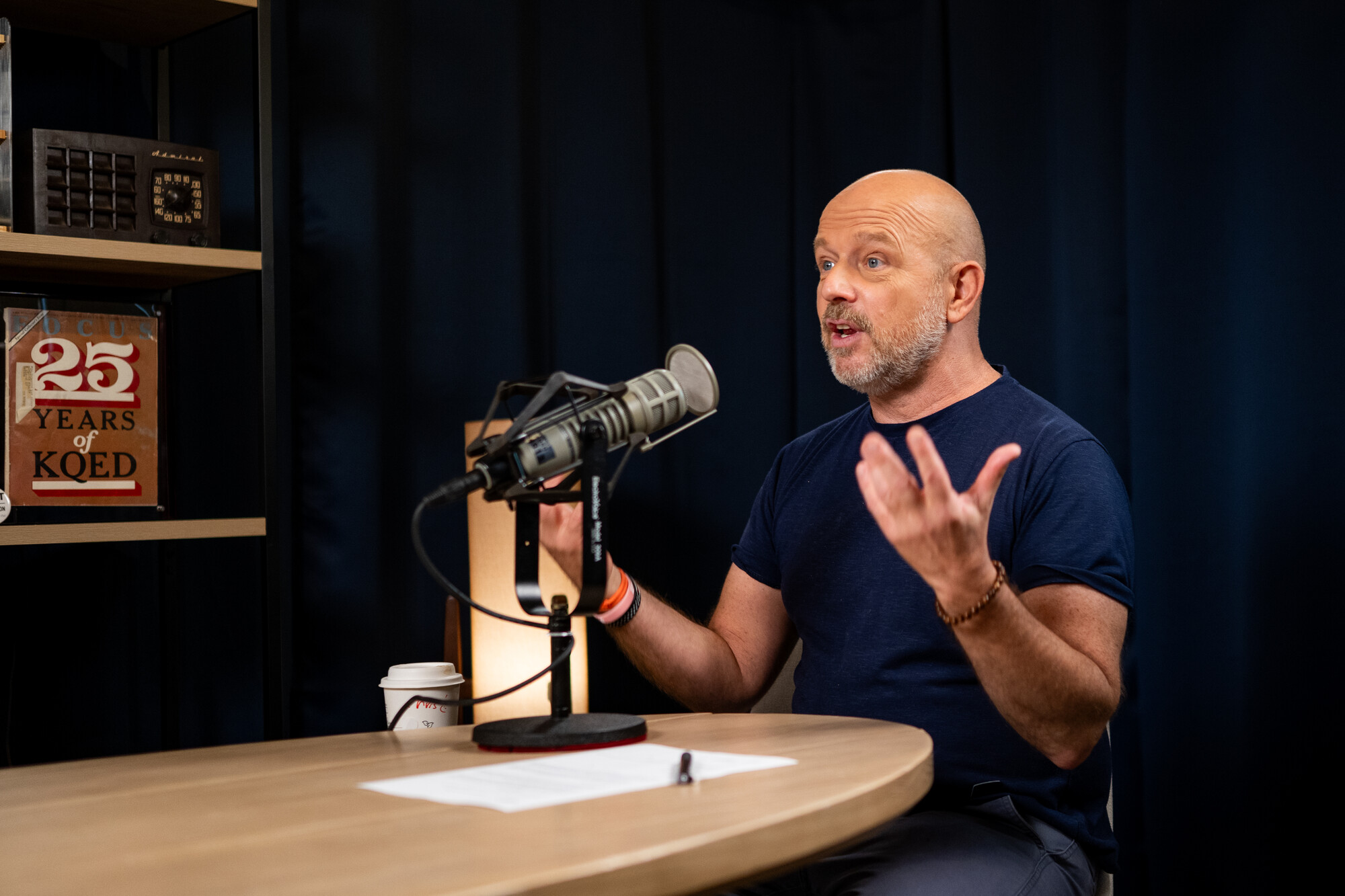
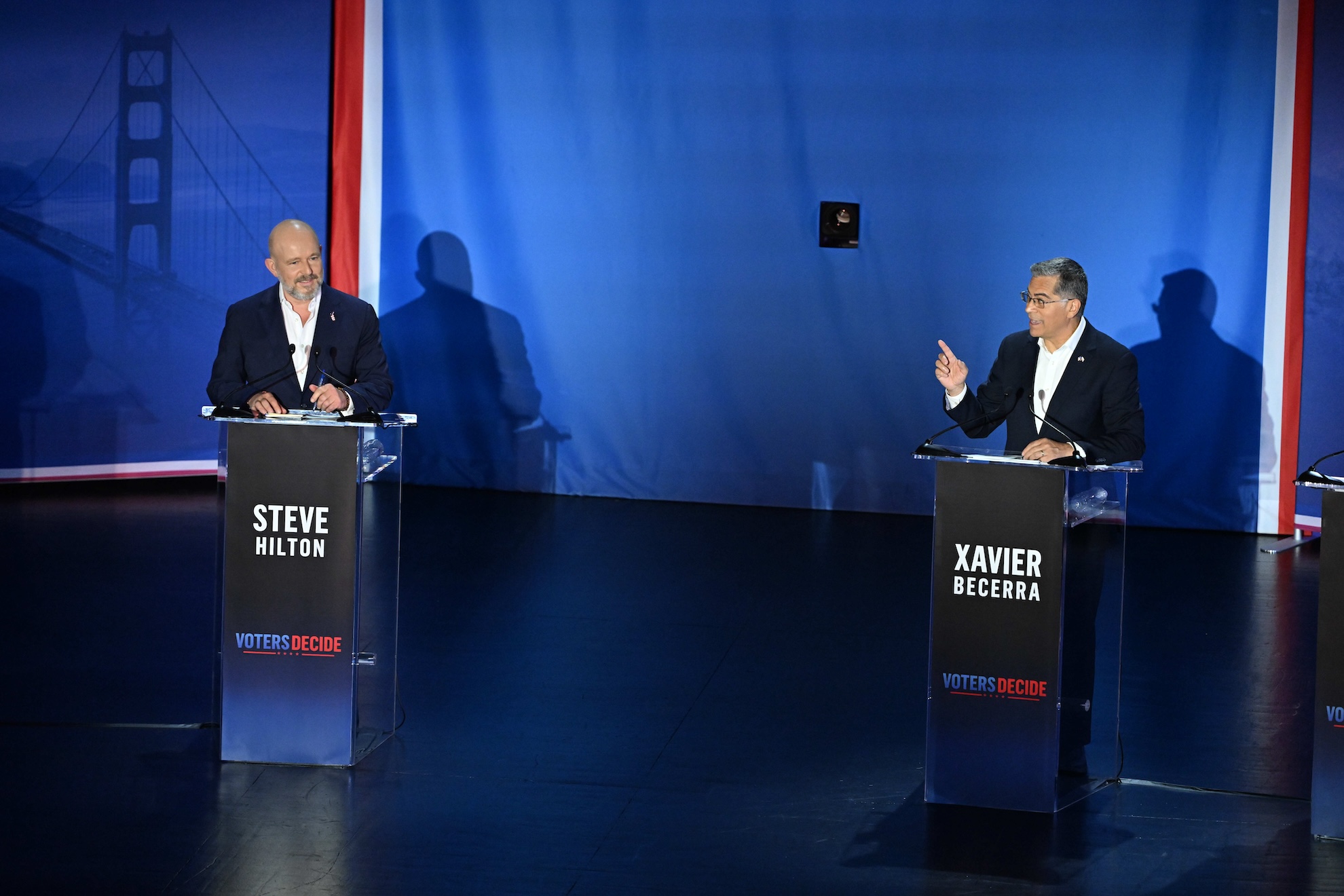
Steve Hilton, California’s Republican candidate for governor, put daylight between himself and President Donald Trump this week in an attempt to thread the needle to appeal to the state’s anti-Trump voters.
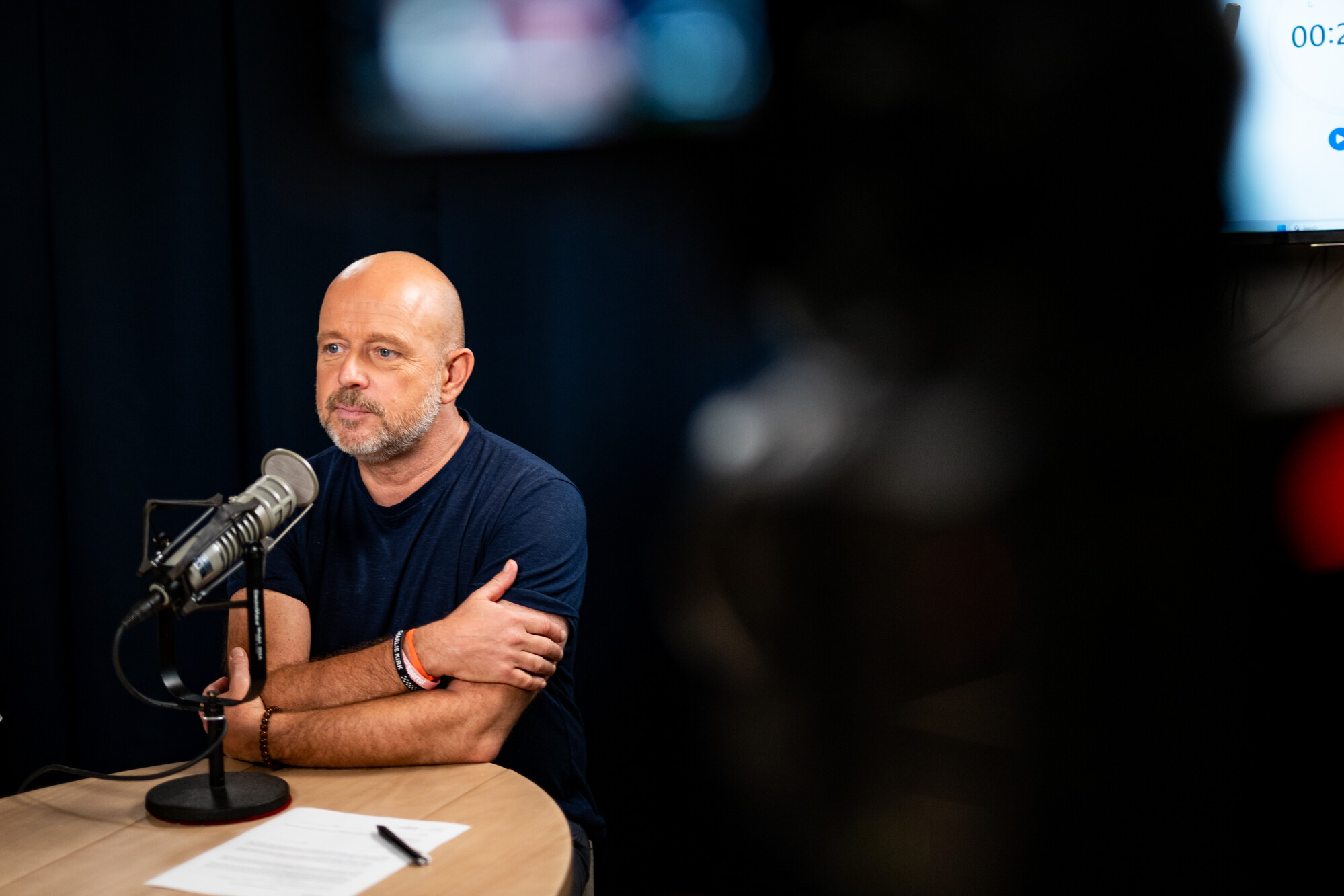
In an interview with KQED’s Political Breakdown podcast released Thursday, Hilton refused to explicitly drag the president, but he decisively distanced himself from Trump’s election denialism and some of the president’s most unpopular views.
“I’ve never been an ideologue; I’ve never been tribal,” Hilton, a British-born former Fox News commentator, told host Marisa Lagos.
Although Trump’s endorsement boosted Hilton in June’s primary election, the Republican candidate has since been trying to make the difficult case to voters in the blue state that they can support his campaign despite the president. In July, Hilton took out full-page newspaper ads and began running a video campaign telling voters that November’s election “isn’t about who you hate in Washington.”
Hilton gave the starkest rebuke to questions of election safety in this week’s interview, rejecting concerns that the November election would not move forward in a free and fair manner. Trump, on the other hand, appears to be laying the groundwork to raise doubts, following his repeated refusal to accept the results of the 2020 presidential election.
In a July address, Trump claimed without evidence that the country’s voting system is vulnerable to being “rigged and stolen,” and urged Congress to pass the SAVE America Act, which would tighten identification requirements and end most mail-in voting.
Trump suggested that “the only reason” Democrats wouldn’t support the legislation is because “you want to cheat because your policies are so bad, and your candidates are so pathetic that you can’t get away or can’t get elected any other way.”
Hilton said he plans to accept the results of his race.
“This is the system,” Hilton said. “It’s our job, if we want to win, to get more votes than the other guy using this system. … Let’s make sure we are playing by the same rules, instead of just sulking and saying we don’t like it.”
Hilton also objected to Trump’s campaign to restrict mail-in voting, days after a whistleblower who is a federal official raised concerns that the U.S. Postal Service plans to release a “sloppy and rushed” online voter information system that could jeopardize the voting method used by one-third of Americans.
“I don’t agree with that,” Hilton said of efforts to disrupt mail-in voting. “It’s clearly popular, so many people use it.”
The Postal Service said in a statement Tuesday that it has been developing a system to comply with Trump’s March executive order requiring states and the Department of Homeland Security to create approved voter lists and send mail-in ballots only to people on those lists. A federal judge temporarily halted order, but the Trump administration on Thursday again appealed to the Supreme Court.
Hilton, who admitted that he used to dislike mail-in and early voting, said he’d come around to its benefits.
“It’s actually helpful to campaigns,” Hilton told KQED. “We need to encourage as many people to vote as possible.”
He also took a measured stance on data centers, as many Republicans try to separate themselves from the rapid, and unpopular, expansion unabashedly backed by Trump.
Hilton dodged the idea that California will see a significant number of these centers crop up, saying “the real problem is no one wants to build anything” in the state. But, he said, they shouldn’t be close to residential neighborhoods.
“The most important point and the most legitimate criticism is where our data center is so close to a residential neighborhood, it’s directly affecting people who live there in a day-to-day way,” he said. “We can’t have that.”
Trump said on social media that data centers would face opposition only from communities that “want to end up being backwards and poor.”
While Hilton has suggested a “California DOGE” to cut state spending throughout his campaign, he criticized the Department of Governmental Efficiency set up in the early days of this Trump administration, calling the Elon Musk-led initiative to eliminate fraud and abuse “a bit of a bull in a China shop.”
“In terms of the stated goal of saving money and making the government more efficient, I think there’s no question that that hasn’t [happened],” Hilton told KQED. “Certainly it’s not apparent to people.”
Still, Hilton said as governor he’d focus on cutting $25 billion from California’s budget to eliminate state income tax on residents’ first $150,000 in annual earnings. He didn’t elaborate on where that funding could come from.
Hilton also remains aligned with the president on a number of culture-war issues — calling in campaign ads for Californians to “stop the insanity” of providing “free health care for illegal immigrants” and supporting “boys in girls’ sports.”
“We’ve had 16 years of one party running everything, and the results are just obviously disappointing,” Hilton told KQED. “Clearly there’s a case for change.”