window.__IS_SSR__=true
window.__INITIAL_STATE__={
"attachmentsReducer": {
"audio_0": {
"type": "attachments",
"id": "audio_0",
"imgSizes": {
"kqedFullSize": {
"file": "https://ww2.kqed.org/news/wp-content/themes/KQED-unified/img/audio_bgs/background0.jpg"
}
}
},
"audio_1": {
"type": "attachments",
"id": "audio_1",
"imgSizes": {
"kqedFullSize": {
"file": "https://ww2.kqed.org/news/wp-content/themes/KQED-unified/img/audio_bgs/background1.jpg"
}
}
},
"audio_2": {
"type": "attachments",
"id": "audio_2",
"imgSizes": {
"kqedFullSize": {
"file": "https://ww2.kqed.org/news/wp-content/themes/KQED-unified/img/audio_bgs/background2.jpg"
}
}
},
"audio_3": {
"type": "attachments",
"id": "audio_3",
"imgSizes": {
"kqedFullSize": {
"file": "https://ww2.kqed.org/news/wp-content/themes/KQED-unified/img/audio_bgs/background3.jpg"
}
}
},
"audio_4": {
"type": "attachments",
"id": "audio_4",
"imgSizes": {
"kqedFullSize": {
"file": "https://ww2.kqed.org/news/wp-content/themes/KQED-unified/img/audio_bgs/background4.jpg"
}
}
},
"placeholder": {
"type": "attachments",
"id": "placeholder",
"imgSizes": {
"thumbnail": {
"file": "https://cdn.kqed.org/wp-content/uploads/2024/12/KQED-Default-Image-816638274-2000x1333-1-160x107.jpg",
"width": 160,
"height": 107,
"mimeType": "image/jpeg"
},
"medium": {
"file": "https://cdn.kqed.org/wp-content/uploads/2024/12/KQED-Default-Image-816638274-2000x1333-1-800x533.jpg",
"width": 800,
"height": 533,
"mimeType": "image/jpeg"
},
"medium_large": {
"file": "https://cdn.kqed.org/wp-content/uploads/2024/12/KQED-Default-Image-816638274-2000x1333-1-768x512.jpg",
"width": 768,
"height": 512,
"mimeType": "image/jpeg"
},
"large": {
"file": "https://cdn.kqed.org/wp-content/uploads/2024/12/KQED-Default-Image-816638274-2000x1333-1-1020x680.jpg",
"width": 1020,
"height": 680,
"mimeType": "image/jpeg"
},
"1536x1536": {
"file": "https://cdn.kqed.org/wp-content/uploads/2024/12/KQED-Default-Image-816638274-2000x1333-1-1536x1024.jpg",
"width": 1536,
"height": 1024,
"mimeType": "image/jpeg"
},
"fd-lrg": {
"file": "https://cdn.kqed.org/wp-content/uploads/2024/12/KQED-Default-Image-816638274-2000x1333-1-1536x1024.jpg",
"width": 1536,
"height": 1024,
"mimeType": "image/jpeg"
},
"fd-med": {
"file": "https://cdn.kqed.org/wp-content/uploads/2024/12/KQED-Default-Image-816638274-2000x1333-1-1020x680.jpg",
"width": 1020,
"height": 680,
"mimeType": "image/jpeg"
},
"fd-sm": {
"file": "https://cdn.kqed.org/wp-content/uploads/2024/12/KQED-Default-Image-816638274-2000x1333-1-800x533.jpg",
"width": 800,
"height": 533,
"mimeType": "image/jpeg"
},
"post-thumbnail": {
"file": "https://cdn.kqed.org/wp-content/uploads/2024/12/KQED-Default-Image-816638274-2000x1333-1-672x372.jpg",
"width": 672,
"height": 372,
"mimeType": "image/jpeg"
},
"twentyfourteen-full-width": {
"file": "https://cdn.kqed.org/wp-content/uploads/2024/12/KQED-Default-Image-816638274-2000x1333-1-1038x576.jpg",
"width": 1038,
"height": 576,
"mimeType": "image/jpeg"
},
"xxsmall": {
"file": "https://cdn.kqed.org/wp-content/uploads/2024/12/KQED-Default-Image-816638274-2000x1333-1-160x107.jpg",
"width": 160,
"height": 107,
"mimeType": "image/jpeg"
},
"xsmall": {
"file": "https://cdn.kqed.org/wp-content/uploads/2024/12/KQED-Default-Image-816638274-2000x1333-1-672x372.jpg",
"width": 672,
"height": 372,
"mimeType": "image/jpeg"
},
"small": {
"file": "https://cdn.kqed.org/wp-content/uploads/2024/12/KQED-Default-Image-816638274-2000x1333-1-672x372.jpg",
"width": 672,
"height": 372,
"mimeType": "image/jpeg"
},
"xlarge": {
"file": "https://cdn.kqed.org/wp-content/uploads/2024/12/KQED-Default-Image-816638274-2000x1333-1-1020x680.jpg",
"width": 1020,
"height": 680,
"mimeType": "image/jpeg"
},
"full-width": {
"file": "https://cdn.kqed.org/wp-content/uploads/2024/12/KQED-Default-Image-816638274-2000x1333-1-1920x1280.jpg",
"width": 1920,
"height": 1280,
"mimeType": "image/jpeg"
},
"guest-author-32": {
"file": "https://cdn.kqed.org/wp-content/uploads/2025/01/KQED-Default-Image-816638274-1333x1333-1-160x160.jpg",
"width": 32,
"height": 32,
"mimeType": "image/jpeg"
},
"guest-author-50": {
"file": "https://cdn.kqed.org/wp-content/uploads/2025/01/KQED-Default-Image-816638274-1333x1333-1-160x160.jpg",
"width": 50,
"height": 50,
"mimeType": "image/jpeg"
},
"guest-author-64": {
"file": "https://cdn.kqed.org/wp-content/uploads/2025/01/KQED-Default-Image-816638274-1333x1333-1-160x160.jpg",
"width": 64,
"height": 64,
"mimeType": "image/jpeg"
},
"guest-author-96": {
"file": "https://cdn.kqed.org/wp-content/uploads/2025/01/KQED-Default-Image-816638274-1333x1333-1-160x160.jpg",
"width": 96,
"height": 96,
"mimeType": "image/jpeg"
},
"guest-author-128": {
"file": "https://cdn.kqed.org/wp-content/uploads/2025/01/KQED-Default-Image-816638274-1333x1333-1-160x160.jpg",
"width": 128,
"height": 128,
"mimeType": "image/jpeg"
},
"detail": {
"file": "https://cdn.kqed.org/wp-content/uploads/2025/01/KQED-Default-Image-816638274-1333x1333-1-160x160.jpg",
"width": 160,
"height": 160,
"mimeType": "image/jpeg"
},
"kqedFullSize": {
"file": "https://cdn.kqed.org/wp-content/uploads/2024/12/KQED-Default-Image-816638274-2000x1333-1.jpg",
"width": 2000,
"height": 1333
}
}
},
"news_11876748": {
"type": "attachments",
"id": "news_11876748",
"meta": {
"index": "attachments_1716263798",
"site": "news",
"id": "11876748",
"found": true
},
"parent": 11876529,
"imgSizes": {
"twentyfourteen-full-width": {
"file": "https://ww2.kqed.org/app/uploads/sites/10/2021/06/RS49661_GettyImages-1216198284-qut-1038x576.jpg",
"width": 1038,
"mimeType": "image/jpeg",
"height": 576
},
"thumbnail": {
"file": "https://ww2.kqed.org/app/uploads/sites/10/2021/06/RS49661_GettyImages-1216198284-qut-160x103.jpg",
"width": 160,
"mimeType": "image/jpeg",
"height": 103
},
"post-thumbnail": {
"file": "https://ww2.kqed.org/app/uploads/sites/10/2021/06/RS49661_GettyImages-1216198284-qut-672x372.jpg",
"width": 672,
"mimeType": "image/jpeg",
"height": 372
},
"kqedFullSize": {
"file": "https://ww2.kqed.org/app/uploads/sites/10/2021/06/RS49661_GettyImages-1216198284-qut.jpg",
"width": 1920,
"height": 1239
},
"large": {
"file": "https://ww2.kqed.org/app/uploads/sites/10/2021/06/RS49661_GettyImages-1216198284-qut-1020x658.jpg",
"width": 1020,
"mimeType": "image/jpeg",
"height": 658
},
"1536x1536": {
"file": "https://ww2.kqed.org/app/uploads/sites/10/2021/06/RS49661_GettyImages-1216198284-qut-1536x991.jpg",
"width": 1536,
"mimeType": "image/jpeg",
"height": 991
},
"medium": {
"file": "https://ww2.kqed.org/app/uploads/sites/10/2021/06/RS49661_GettyImages-1216198284-qut-800x516.jpg",
"width": 800,
"mimeType": "image/jpeg",
"height": 516
}
},
"publishDate": 1622835983,
"modified": 1627930995,
"caption": "Masked servers deliver food to customers seated outdoors at a restaurant. ",
"description": "Masked servers deliver food to customers seated outdoors at a restaurant. ",
"title": "US-HEALTH-VIRUS-BUSINESS-REOPEN",
"credit": "SAUL LOEB/AFP via Getty Images",
"status": "inherit",
"altTag": null,
"isLoading": false,
"fetchFailed": false
},
"news_11876348": {
"type": "attachments",
"id": "news_11876348",
"meta": {
"index": "attachments_1716263798",
"site": "news",
"id": "11876348",
"found": true
},
"parent": 11875988,
"imgSizes": {
"twentyfourteen-full-width": {
"file": "https://ww2.kqed.org/app/uploads/sites/10/2021/06/RS49630_GettyImages-1231067411-qut-1038x576.jpg",
"width": 1038,
"mimeType": "image/jpeg",
"height": 576
},
"thumbnail": {
"file": "https://ww2.kqed.org/app/uploads/sites/10/2021/06/RS49630_GettyImages-1231067411-qut-160x94.jpg",
"width": 160,
"mimeType": "image/jpeg",
"height": 94
},
"post-thumbnail": {
"file": "https://ww2.kqed.org/app/uploads/sites/10/2021/06/RS49630_GettyImages-1231067411-qut-672x372.jpg",
"width": 672,
"mimeType": "image/jpeg",
"height": 372
},
"kqedFullSize": {
"file": "https://ww2.kqed.org/app/uploads/sites/10/2021/06/RS49630_GettyImages-1231067411-qut.jpg",
"width": 1920,
"height": 1130
},
"large": {
"file": "https://ww2.kqed.org/app/uploads/sites/10/2021/06/RS49630_GettyImages-1231067411-qut-1020x600.jpg",
"width": 1020,
"mimeType": "image/jpeg",
"height": 600
},
"1536x1536": {
"file": "https://ww2.kqed.org/app/uploads/sites/10/2021/06/RS49630_GettyImages-1231067411-qut-1536x904.jpg",
"width": 1536,
"mimeType": "image/jpeg",
"height": 904
},
"medium": {
"file": "https://ww2.kqed.org/app/uploads/sites/10/2021/06/RS49630_GettyImages-1231067411-qut-800x471.jpg",
"width": 800,
"mimeType": "image/jpeg",
"height": 471
}
},
"publishDate": 1622665917,
"modified": 1622666197,
"caption": "A demonstrator joins fast-food workers and their supporters on Feb. 9, 2021 in Los Angeles to protest unsafe working conditions and campaigns of intimidation against workers who call out their employers due to job safety concerns during the coronavirus pandemic. ",
"description": "A demonstrator joins fast-food workers and their supporters on Feb. 9, 2021 in Los Angeles to protest unsafe working conditions and campaigns of intimidation against workers who call out their employers due to job safety concerns during the coronavirus pandemic. ",
"title": "US-HEALTH-VIRUS-STRIKE",
"credit": "FREDERIC J. BROWN/AFP via Getty Images",
"status": "inherit",
"altTag": null,
"isLoading": false,
"fetchFailed": false
},
"news_11875813": {
"type": "attachments",
"id": "news_11875813",
"meta": {
"index": "attachments_1716263798",
"site": "news",
"id": "11875813",
"found": true
},
"parent": 11875511,
"imgSizes": {
"twentyfourteen-full-width": {
"file": "https://ww2.kqed.org/app/uploads/sites/10/2021/05/Fuel-Tank-Husk-Detail-1038x576.jpg",
"width": 1038,
"mimeType": "image/jpeg",
"height": 576
},
"thumbnail": {
"file": "https://ww2.kqed.org/app/uploads/sites/10/2021/05/Fuel-Tank-Husk-Detail-160x126.jpg",
"width": 160,
"mimeType": "image/jpeg",
"height": 126
},
"post-thumbnail": {
"file": "https://ww2.kqed.org/app/uploads/sites/10/2021/05/Fuel-Tank-Husk-Detail-672x372.jpg",
"width": 672,
"mimeType": "image/jpeg",
"height": 372
},
"kqedFullSize": {
"file": "https://ww2.kqed.org/app/uploads/sites/10/2021/05/Fuel-Tank-Husk-Detail.jpg",
"width": 1920,
"height": 1512
},
"large": {
"file": "https://ww2.kqed.org/app/uploads/sites/10/2021/05/Fuel-Tank-Husk-Detail-1020x803.jpg",
"width": 1020,
"mimeType": "image/jpeg",
"height": 803
},
"1536x1536": {
"file": "https://ww2.kqed.org/app/uploads/sites/10/2021/05/Fuel-Tank-Husk-Detail-1536x1210.jpg",
"width": 1536,
"mimeType": "image/jpeg",
"height": 1210
},
"medium": {
"file": "https://ww2.kqed.org/app/uploads/sites/10/2021/05/Fuel-Tank-Husk-Detail-800x630.jpg",
"width": 800,
"mimeType": "image/jpeg",
"height": 630
}
},
"publishDate": 1622220595,
"modified": 1622220791,
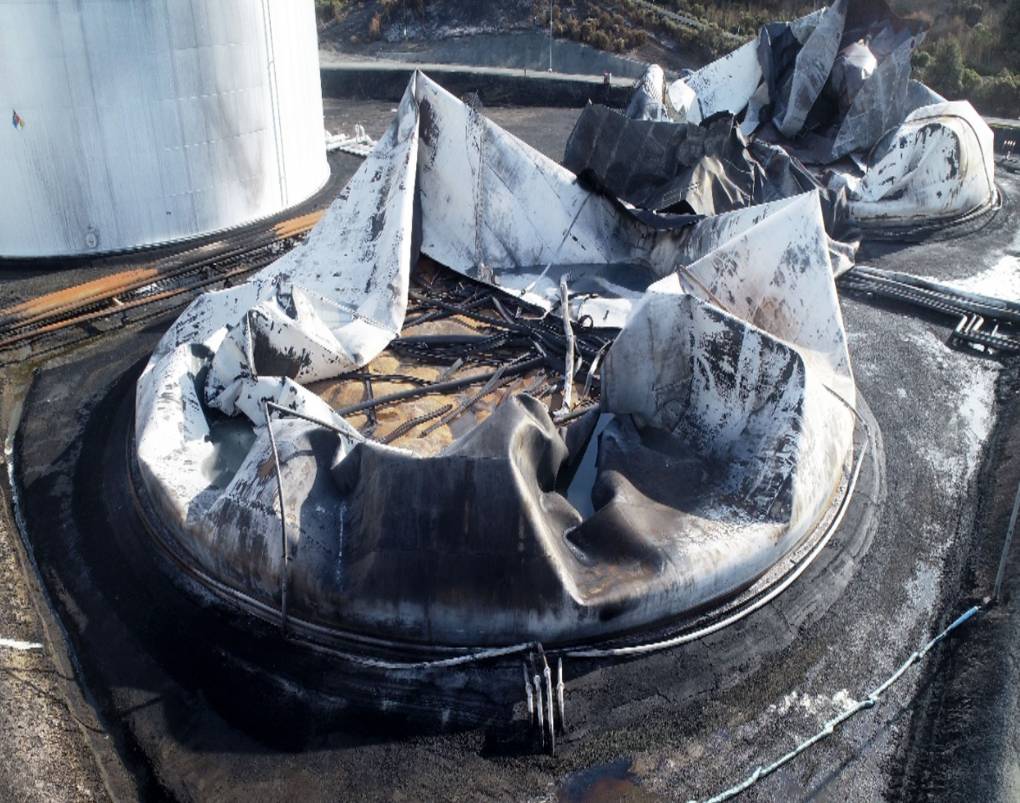
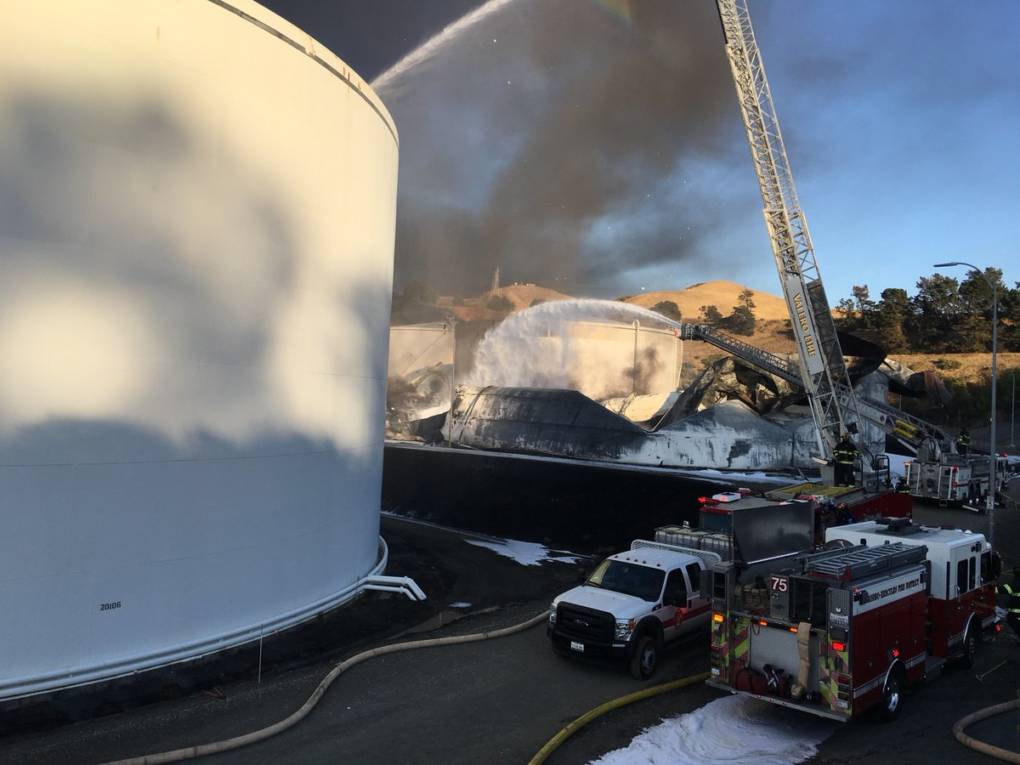
"caption": "Two massive fuel storage tanks were destroyed in a 2019 explosion at the NuStar Energy tank farm near Crockett.",
"description": "Two massive fuel storage tanks were destroyed in a 2019 explosion at the NuStar Energy tank farm near Crockett.",
"title": "Fuel-Tank-Husk-Detail",
"credit": "Contra Costa County Fire Protection District",
"status": "inherit",
"altTag": "Crushed and burned remnants of two huge fuel storage tanks",
"isLoading": false,
"fetchFailed": false
},
"news_11860538": {
"type": "attachments",
"id": "news_11860538",
"meta": {
"index": "attachments_1716263798",
"site": "news",
"id": "11860538",
"found": true
},
"parent": 11860536,
"imgSizes": {
"apple_news_ca_landscape_5_5": {
"file": "https://ww2.kqed.org/app/uploads/sites/10/2021/02/RS42202_001_KQED_Richmond_Kaiser_03192020_9419-qut-1044x783.jpg",
"width": 1044,
"mimeType": "image/jpeg",
"height": 783
},
"apple_news_ca_square_4_0": {
"file": "https://ww2.kqed.org/app/uploads/sites/10/2021/02/RS42202_001_KQED_Richmond_Kaiser_03192020_9419-qut-470x470.jpg",
"width": 470,
"mimeType": "image/jpeg",
"height": 470
},
"twentyfourteen-full-width": {
"file": "https://ww2.kqed.org/app/uploads/sites/10/2021/02/RS42202_001_KQED_Richmond_Kaiser_03192020_9419-qut-1038x576.jpg",
"width": 1038,
"mimeType": "image/jpeg",
"height": 576
},
"thumbnail": {
"file": "https://ww2.kqed.org/app/uploads/sites/10/2021/02/RS42202_001_KQED_Richmond_Kaiser_03192020_9419-qut-160x107.jpg",
"width": 160,
"mimeType": "image/jpeg",
"height": 107
},
"post-thumbnail": {
"file": "https://ww2.kqed.org/app/uploads/sites/10/2021/02/RS42202_001_KQED_Richmond_Kaiser_03192020_9419-qut-672x372.jpg",
"width": 672,
"mimeType": "image/jpeg",
"height": 372
},
"kqedFullSize": {
"file": "https://ww2.kqed.org/app/uploads/sites/10/2021/02/RS42202_001_KQED_Richmond_Kaiser_03192020_9419-qut.jpg",
"width": 1920,
"height": 1280
},
"apple_news_ca_landscape_4_7": {
"file": "https://ww2.kqed.org/app/uploads/sites/10/2021/02/RS42202_001_KQED_Richmond_Kaiser_03192020_9419-qut-632x474.jpg",
"width": 632,
"mimeType": "image/jpeg",
"height": 474
},
"large": {
"file": "https://ww2.kqed.org/app/uploads/sites/10/2021/02/RS42202_001_KQED_Richmond_Kaiser_03192020_9419-qut-1020x680.jpg",
"width": 1020,
"mimeType": "image/jpeg",
"height": 680
},
"apple_news_ca_landscape_4_0": {
"file": "https://ww2.kqed.org/app/uploads/sites/10/2021/02/RS42202_001_KQED_Richmond_Kaiser_03192020_9419-qut-536x402.jpg",
"width": 536,
"mimeType": "image/jpeg",
"height": 402
},
"apple_news_ca_portrait_12_9": {
"file": "https://ww2.kqed.org/app/uploads/sites/10/2021/02/RS42202_001_KQED_Richmond_Kaiser_03192020_9419-qut-1122x1280.jpg",
"width": 1122,
"mimeType": "image/jpeg",
"height": 1280
},
"medium": {
"file": "https://ww2.kqed.org/app/uploads/sites/10/2021/02/RS42202_001_KQED_Richmond_Kaiser_03192020_9419-qut-800x533.jpg",
"width": 800,
"mimeType": "image/jpeg",
"height": 533
},
"apple_news_ca_portrait_4_0": {
"file": "https://ww2.kqed.org/app/uploads/sites/10/2021/02/RS42202_001_KQED_Richmond_Kaiser_03192020_9419-qut-354x472.jpg",
"width": 354,
"mimeType": "image/jpeg",
"height": 472
},
"apple_news_ca_portrait_9_7": {
"file": "https://ww2.kqed.org/app/uploads/sites/10/2021/02/RS42202_001_KQED_Richmond_Kaiser_03192020_9419-qut-840x1120.jpg",
"width": 840,
"mimeType": "image/jpeg",
"height": 1120
},
"apple_news_ca_landscape_12_9": {
"file": "https://ww2.kqed.org/app/uploads/sites/10/2021/02/RS42202_001_KQED_Richmond_Kaiser_03192020_9419-qut-1832x1280.jpg",
"width": 1832,
"mimeType": "image/jpeg",
"height": 1280
},
"apple_news_ca_square_9_7": {
"file": "https://ww2.kqed.org/app/uploads/sites/10/2021/02/RS42202_001_KQED_Richmond_Kaiser_03192020_9419-qut-1104x1104.jpg",
"width": 1104,
"mimeType": "image/jpeg",
"height": 1104
},
"1536x1536": {
"file": "https://ww2.kqed.org/app/uploads/sites/10/2021/02/RS42202_001_KQED_Richmond_Kaiser_03192020_9419-qut-1536x1024.jpg",
"width": 1536,
"mimeType": "image/jpeg",
"height": 1024
},
"apple_news_ca_portrait_4_7": {
"file": "https://ww2.kqed.org/app/uploads/sites/10/2021/02/RS42202_001_KQED_Richmond_Kaiser_03192020_9419-qut-414x552.jpg",
"width": 414,
"mimeType": "image/jpeg",
"height": 552
},
"apple_news_ca_square_12_9": {
"file": "https://ww2.kqed.org/app/uploads/sites/10/2021/02/RS42202_001_KQED_Richmond_Kaiser_03192020_9419-qut-1472x1280.jpg",
"width": 1472,
"mimeType": "image/jpeg",
"height": 1280
},
"apple_news_ca_portrait_5_5": {
"file": "https://ww2.kqed.org/app/uploads/sites/10/2021/02/RS42202_001_KQED_Richmond_Kaiser_03192020_9419-qut-687x916.jpg",
"width": 687,
"mimeType": "image/jpeg",
"height": 916
},
"apple_news_ca_square_4_7": {
"file": "https://ww2.kqed.org/app/uploads/sites/10/2021/02/RS42202_001_KQED_Richmond_Kaiser_03192020_9419-qut-550x550.jpg",
"width": 550,
"mimeType": "image/jpeg",
"height": 550
},
"apple_news_ca_landscape_9_7": {
"file": "https://ww2.kqed.org/app/uploads/sites/10/2021/02/RS42202_001_KQED_Richmond_Kaiser_03192020_9419-qut-1376x1032.jpg",
"width": 1376,
"mimeType": "image/jpeg",
"height": 1032
},
"apple_news_ca_square_5_5": {
"file": "https://ww2.kqed.org/app/uploads/sites/10/2021/02/RS42202_001_KQED_Richmond_Kaiser_03192020_9419-qut-912x912.jpg",
"width": 912,
"mimeType": "image/jpeg",
"height": 912
}
},
"publishDate": 1613508686,
"modified": 1613518814,
"caption": "Tents at a Kaiser Permanente facility in Richmond, where patients with respiratory symptoms were being triaged on March 19, 2020.",
"description": "Tents at a Kaiser Permanente facility in Richmond where patients with respiratory symptoms were being triaged, on Mar. 19, 2020.",
"title": "RS42202_001_KQED_Richmond_Kaiser_03192020_9419-qut",
"credit": "Beth LaBerge/KQED",
"status": "inherit",
"altTag": null,
"isLoading": false,
"fetchFailed": false
},
"news_11858842": {
"type": "attachments",
"id": "news_11858842",
"meta": {
"index": "attachments_1716263798",
"site": "news",
"id": "11858842",
"found": true
},
"parent": 11858631,
"imgSizes": {
"apple_news_ca_landscape_5_5": {
"file": "https://ww2.kqed.org/app/uploads/sites/10/2021/02/IMG_7177-1044x783.jpg",
"width": 1044,
"mimeType": "image/jpeg",
"height": 783
},
"apple_news_ca_square_4_0": {
"file": "https://ww2.kqed.org/app/uploads/sites/10/2021/02/IMG_7177-470x470.jpg",
"width": 470,
"mimeType": "image/jpeg",
"height": 470
},
"twentyfourteen-full-width": {
"file": "https://ww2.kqed.org/app/uploads/sites/10/2021/02/IMG_7177-1038x576.jpg",
"width": 1038,
"mimeType": "image/jpeg",
"height": 576
},
"thumbnail": {
"file": "https://ww2.kqed.org/app/uploads/sites/10/2021/02/IMG_7177-160x107.jpg",
"width": 160,
"mimeType": "image/jpeg",
"height": 107
},
"post-thumbnail": {
"file": "https://ww2.kqed.org/app/uploads/sites/10/2021/02/IMG_7177-672x372.jpg",
"width": 672,
"mimeType": "image/jpeg",
"height": 372
},
"kqedFullSize": {
"file": "https://ww2.kqed.org/app/uploads/sites/10/2021/02/IMG_7177-scaled.jpg",
"width": 2560,
"height": 1707
},
"2048x2048": {
"file": "https://ww2.kqed.org/app/uploads/sites/10/2021/02/IMG_7177-2048x1365.jpg",
"width": 2048,
"mimeType": "image/jpeg",
"height": 1365
},
"apple_news_ca_landscape_4_7": {
"file": "https://ww2.kqed.org/app/uploads/sites/10/2021/02/IMG_7177-632x474.jpg",
"width": 632,
"mimeType": "image/jpeg",
"height": 474
},
"large": {
"file": "https://ww2.kqed.org/app/uploads/sites/10/2021/02/IMG_7177-1020x680.jpg",
"width": 1020,
"mimeType": "image/jpeg",
"height": 680
},
"apple_news_ca_landscape_4_0": {
"file": "https://ww2.kqed.org/app/uploads/sites/10/2021/02/IMG_7177-536x402.jpg",
"width": 536,
"mimeType": "image/jpeg",
"height": 402
},
"apple_news_ca_portrait_12_9": {
"file": "https://ww2.kqed.org/app/uploads/sites/10/2021/02/IMG_7177-1122x1496.jpg",
"width": 1122,
"mimeType": "image/jpeg",
"height": 1496
},
"medium": {
"file": "https://ww2.kqed.org/app/uploads/sites/10/2021/02/IMG_7177-800x533.jpg",
"width": 800,
"mimeType": "image/jpeg",
"height": 533
},
"apple_news_ca_portrait_4_0": {
"file": "https://ww2.kqed.org/app/uploads/sites/10/2021/02/IMG_7177-354x472.jpg",
"width": 354,
"mimeType": "image/jpeg",
"height": 472
},
"apple_news_ca_portrait_9_7": {
"file": "https://ww2.kqed.org/app/uploads/sites/10/2021/02/IMG_7177-840x1120.jpg",
"width": 840,
"mimeType": "image/jpeg",
"height": 1120
},
"apple_news_ca_landscape_12_9": {
"file": "https://ww2.kqed.org/app/uploads/sites/10/2021/02/IMG_7177-1832x1374.jpg",
"width": 1832,
"mimeType": "image/jpeg",
"height": 1374
},
"apple_news_ca_square_9_7": {
"file": "https://ww2.kqed.org/app/uploads/sites/10/2021/02/IMG_7177-1104x1104.jpg",
"width": 1104,
"mimeType": "image/jpeg",
"height": 1104
},
"1536x1536": {
"file": "https://ww2.kqed.org/app/uploads/sites/10/2021/02/IMG_7177-1536x1024.jpg",
"width": 1536,
"mimeType": "image/jpeg",
"height": 1024
},
"apple_news_ca_portrait_4_7": {
"file": "https://ww2.kqed.org/app/uploads/sites/10/2021/02/IMG_7177-414x552.jpg",
"width": 414,
"mimeType": "image/jpeg",
"height": 552
},
"apple_news_ca_square_12_9": {
"file": "https://ww2.kqed.org/app/uploads/sites/10/2021/02/IMG_7177-1472x1472.jpg",
"width": 1472,
"mimeType": "image/jpeg",
"height": 1472
},
"apple_news_ca_portrait_5_5": {
"file": "https://ww2.kqed.org/app/uploads/sites/10/2021/02/IMG_7177-687x916.jpg",
"width": 687,
"mimeType": "image/jpeg",
"height": 916
},
"full-width": {
"file": "https://ww2.kqed.org/app/uploads/sites/10/2021/02/IMG_7177-1920x1280.jpg",
"width": 1920,
"mimeType": "image/jpeg",
"height": 1280
},
"apple_news_ca_square_4_7": {
"file": "https://ww2.kqed.org/app/uploads/sites/10/2021/02/IMG_7177-550x550.jpg",
"width": 550,
"mimeType": "image/jpeg",
"height": 550
},
"apple_news_ca_landscape_9_7": {
"file": "https://ww2.kqed.org/app/uploads/sites/10/2021/02/IMG_7177-1376x1032.jpg",
"width": 1376,
"mimeType": "image/jpeg",
"height": 1032
},
"apple_news_ca_square_5_5": {
"file": "https://ww2.kqed.org/app/uploads/sites/10/2021/02/IMG_7177-912x912.jpg",
"width": 912,
"mimeType": "image/jpeg",
"height": 912
}
},
"publishDate": 1612549580,
"modified": 1612575911,
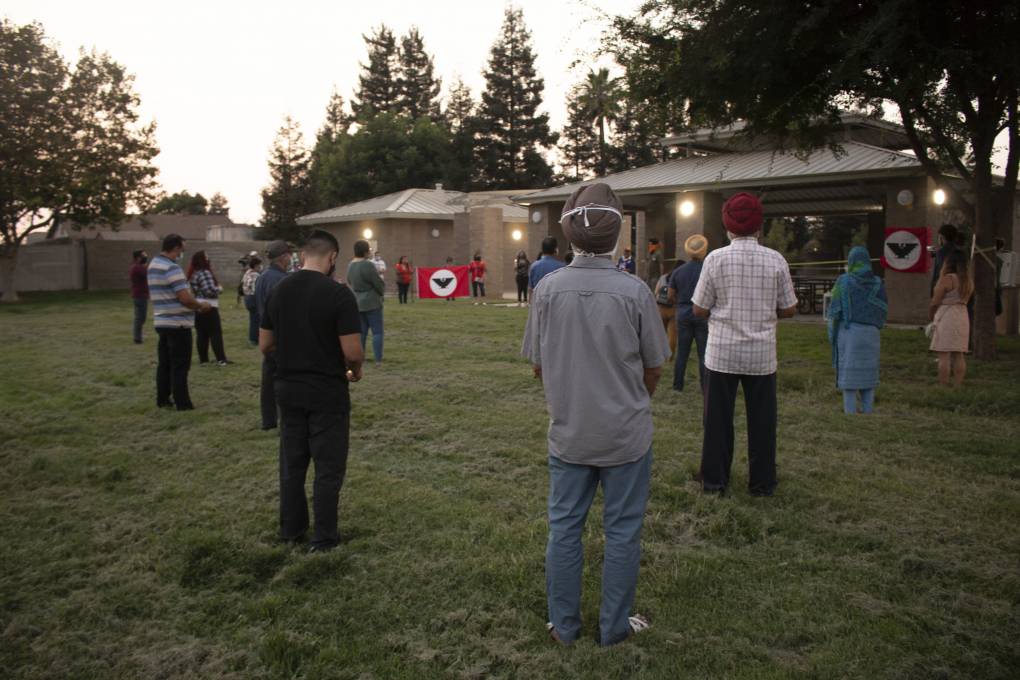
"caption": "Community members attend a memorial in Livingston, California for workers who died in connection to a major COVID-19 outbreak at a nearby Foster Farms plant.",
"description": "Community members attend a memorial in Livingston, California for workers who died in connection to a major COVID-19 outbreak at a nearby Foster Farms plant.",
"title": "IMG_7177",
"credit": "Alexandra Hall/KQED",
"status": "inherit",
"altTag": null,
"isLoading": false,
"fetchFailed": false
},
"news_11848400": {
"type": "attachments",
"id": "news_11848400",
"meta": {
"index": "attachments_1716263798",
"site": "news",
"id": "11848400",
"found": true
},
"parent": 11848307,
"imgSizes": {
"apple_news_ca_landscape_5_5": {
"file": "https://ww2.kqed.org/app/uploads/sites/10/2020/11/Farmworkers-Harvest-Partitions-COVID-1044x783.jpg",
"width": 1044,
"mimeType": "image/jpeg",
"height": 783
},
"apple_news_ca_square_4_0": {
"file": "https://ww2.kqed.org/app/uploads/sites/10/2020/11/Farmworkers-Harvest-Partitions-COVID-470x470.jpg",
"width": 470,
"mimeType": "image/jpeg",
"height": 470
},
"twentyfourteen-full-width": {
"file": "https://ww2.kqed.org/app/uploads/sites/10/2020/11/Farmworkers-Harvest-Partitions-COVID-1038x576.jpg",
"width": 1038,
"mimeType": "image/jpeg",
"height": 576
},
"thumbnail": {
"file": "https://ww2.kqed.org/app/uploads/sites/10/2020/11/Farmworkers-Harvest-Partitions-COVID-160x105.jpg",
"width": 160,
"mimeType": "image/jpeg",
"height": 105
},
"post-thumbnail": {
"file": "https://ww2.kqed.org/app/uploads/sites/10/2020/11/Farmworkers-Harvest-Partitions-COVID-672x372.jpg",
"width": 672,
"mimeType": "image/jpeg",
"height": 372
},
"kqedFullSize": {
"file": "https://ww2.kqed.org/app/uploads/sites/10/2020/11/Farmworkers-Harvest-Partitions-COVID.jpg",
"width": 1920,
"height": 1263
},
"apple_news_ca_landscape_4_7": {
"file": "https://ww2.kqed.org/app/uploads/sites/10/2020/11/Farmworkers-Harvest-Partitions-COVID-632x474.jpg",
"width": 632,
"mimeType": "image/jpeg",
"height": 474
},
"large": {
"file": "https://ww2.kqed.org/app/uploads/sites/10/2020/11/Farmworkers-Harvest-Partitions-COVID-1020x671.jpg",
"width": 1020,
"mimeType": "image/jpeg",
"height": 671
},
"apple_news_ca_landscape_4_0": {
"file": "https://ww2.kqed.org/app/uploads/sites/10/2020/11/Farmworkers-Harvest-Partitions-COVID-536x402.jpg",
"width": 536,
"mimeType": "image/jpeg",
"height": 402
},
"apple_news_ca_portrait_12_9": {
"file": "https://ww2.kqed.org/app/uploads/sites/10/2020/11/Farmworkers-Harvest-Partitions-COVID-1122x1263.jpg",
"width": 1122,
"mimeType": "image/jpeg",
"height": 1263
},
"medium": {
"file": "https://ww2.kqed.org/app/uploads/sites/10/2020/11/Farmworkers-Harvest-Partitions-COVID-800x526.jpg",
"width": 800,
"mimeType": "image/jpeg",
"height": 526
},
"apple_news_ca_portrait_4_0": {
"file": "https://ww2.kqed.org/app/uploads/sites/10/2020/11/Farmworkers-Harvest-Partitions-COVID-354x472.jpg",
"width": 354,
"mimeType": "image/jpeg",
"height": 472
},
"apple_news_ca_portrait_9_7": {
"file": "https://ww2.kqed.org/app/uploads/sites/10/2020/11/Farmworkers-Harvest-Partitions-COVID-840x1120.jpg",
"width": 840,
"mimeType": "image/jpeg",
"height": 1120
},
"apple_news_ca_landscape_12_9": {
"file": "https://ww2.kqed.org/app/uploads/sites/10/2020/11/Farmworkers-Harvest-Partitions-COVID-1832x1263.jpg",
"width": 1832,
"mimeType": "image/jpeg",
"height": 1263
},
"apple_news_ca_square_9_7": {
"file": "https://ww2.kqed.org/app/uploads/sites/10/2020/11/Farmworkers-Harvest-Partitions-COVID-1104x1104.jpg",
"width": 1104,
"mimeType": "image/jpeg",
"height": 1104
},
"1536x1536": {
"file": "https://ww2.kqed.org/app/uploads/sites/10/2020/11/Farmworkers-Harvest-Partitions-COVID-1536x1010.jpg",
"width": 1536,
"mimeType": "image/jpeg",
"height": 1010
},
"apple_news_ca_portrait_4_7": {
"file": "https://ww2.kqed.org/app/uploads/sites/10/2020/11/Farmworkers-Harvest-Partitions-COVID-414x552.jpg",
"width": 414,
"mimeType": "image/jpeg",
"height": 552
},
"apple_news_ca_square_12_9": {
"file": "https://ww2.kqed.org/app/uploads/sites/10/2020/11/Farmworkers-Harvest-Partitions-COVID-1472x1263.jpg",
"width": 1472,
"mimeType": "image/jpeg",
"height": 1263
},
"apple_news_ca_portrait_5_5": {
"file": "https://ww2.kqed.org/app/uploads/sites/10/2020/11/Farmworkers-Harvest-Partitions-COVID-687x916.jpg",
"width": 687,
"mimeType": "image/jpeg",
"height": 916
},
"apple_news_ca_square_4_7": {
"file": "https://ww2.kqed.org/app/uploads/sites/10/2020/11/Farmworkers-Harvest-Partitions-COVID-550x550.jpg",
"width": 550,
"mimeType": "image/jpeg",
"height": 550
},
"apple_news_ca_landscape_9_7": {
"file": "https://ww2.kqed.org/app/uploads/sites/10/2020/11/Farmworkers-Harvest-Partitions-COVID-1376x1032.jpg",
"width": 1376,
"mimeType": "image/jpeg",
"height": 1032
},
"apple_news_ca_square_5_5": {
"file": "https://ww2.kqed.org/app/uploads/sites/10/2020/11/Farmworkers-Harvest-Partitions-COVID-912x912.jpg",
"width": 912,
"mimeType": "image/jpeg",
"height": 912
}
},
"publishDate": 1605920484,
"modified": 1605920541,
"caption": "Farmworkers harvest lettuce using a machine with heavy plastic dividers that separate workers from each other on April 27, 2020 in Greenfield, California.",
"description": null,
"title": "Farmworkers-Harvest-Partitions-COVID",
"credit": "Brent Stirton/Getty Images",
"status": "inherit",
"isLoading": false,
"fetchFailed": false
},
"news_11785111": {
"type": "attachments",
"id": "news_11785111",
"meta": {
"index": "attachments_1716263798",
"site": "news",
"id": "11785111",
"found": true
},
"parent": 11784966,
"imgSizes": {
"apple_news_ca_landscape_5_5": {
"file": "https://ww2.kqed.org/app/uploads/sites/10/2019/11/Kincade-Fire-Firefighter-1044x783.jpg",
"width": 1044,
"mimeType": "image/jpeg",
"height": 783
},
"apple_news_ca_square_4_0": {
"file": "https://ww2.kqed.org/app/uploads/sites/10/2019/11/Kincade-Fire-Firefighter-470x470.jpg",
"width": 470,
"mimeType": "image/jpeg",
"height": 470
},
"twentyfourteen-full-width": {
"file": "https://ww2.kqed.org/app/uploads/sites/10/2019/11/Kincade-Fire-Firefighter-1038x576.jpg",
"width": 1038,
"mimeType": "image/jpeg",
"height": 576
},
"thumbnail": {
"file": "https://ww2.kqed.org/app/uploads/sites/10/2019/11/Kincade-Fire-Firefighter-160x107.jpg",
"width": 160,
"mimeType": "image/jpeg",
"height": 107
},
"post-thumbnail": {
"file": "https://ww2.kqed.org/app/uploads/sites/10/2019/11/Kincade-Fire-Firefighter-672x372.jpg",
"width": 672,
"mimeType": "image/jpeg",
"height": 372
},
"kqedFullSize": {
"file": "https://ww2.kqed.org/app/uploads/sites/10/2019/11/Kincade-Fire-Firefighter.jpg",
"width": 1920,
"height": 1280
},
"apple_news_ca_landscape_4_7": {
"file": "https://ww2.kqed.org/app/uploads/sites/10/2019/11/Kincade-Fire-Firefighter-632x474.jpg",
"width": 632,
"mimeType": "image/jpeg",
"height": 474
},
"large": {
"file": "https://ww2.kqed.org/app/uploads/sites/10/2019/11/Kincade-Fire-Firefighter-1020x680.jpg",
"width": 1020,
"mimeType": "image/jpeg",
"height": 680
},
"complete_open_graph": {
"file": "https://ww2.kqed.org/app/uploads/sites/10/2019/11/Kincade-Fire-Firefighter-1200x800.jpg",
"width": 1200,
"mimeType": "image/jpeg",
"height": 800
},
"apple_news_ca_landscape_4_0": {
"file": "https://ww2.kqed.org/app/uploads/sites/10/2019/11/Kincade-Fire-Firefighter-536x402.jpg",
"width": 536,
"mimeType": "image/jpeg",
"height": 402
},
"apple_news_ca_portrait_12_9": {
"file": "https://ww2.kqed.org/app/uploads/sites/10/2019/11/Kincade-Fire-Firefighter-1122x1280.jpg",
"width": 1122,
"mimeType": "image/jpeg",
"height": 1280
},
"medium": {
"file": "https://ww2.kqed.org/app/uploads/sites/10/2019/11/Kincade-Fire-Firefighter-800x533.jpg",
"width": 800,
"mimeType": "image/jpeg",
"height": 533
},
"apple_news_ca_portrait_4_0": {
"file": "https://ww2.kqed.org/app/uploads/sites/10/2019/11/Kincade-Fire-Firefighter-354x472.jpg",
"width": 354,
"mimeType": "image/jpeg",
"height": 472
},
"apple_news_ca_portrait_9_7": {
"file": "https://ww2.kqed.org/app/uploads/sites/10/2019/11/Kincade-Fire-Firefighter-840x1120.jpg",
"width": 840,
"mimeType": "image/jpeg",
"height": 1120
},
"apple_news_ca_landscape_12_9": {
"file": "https://ww2.kqed.org/app/uploads/sites/10/2019/11/Kincade-Fire-Firefighter-1832x1280.jpg",
"width": 1832,
"mimeType": "image/jpeg",
"height": 1280
},
"apple_news_ca_square_9_7": {
"file": "https://ww2.kqed.org/app/uploads/sites/10/2019/11/Kincade-Fire-Firefighter-1104x1104.jpg",
"width": 1104,
"mimeType": "image/jpeg",
"height": 1104
},
"apple_news_ca_portrait_4_7": {
"file": "https://ww2.kqed.org/app/uploads/sites/10/2019/11/Kincade-Fire-Firefighter-414x552.jpg",
"width": 414,
"mimeType": "image/jpeg",
"height": 552
},
"apple_news_ca_square_12_9": {
"file": "https://ww2.kqed.org/app/uploads/sites/10/2019/11/Kincade-Fire-Firefighter-1472x1280.jpg",
"width": 1472,
"mimeType": "image/jpeg",
"height": 1280
},
"apple_news_ca_portrait_5_5": {
"file": "https://ww2.kqed.org/app/uploads/sites/10/2019/11/Kincade-Fire-Firefighter-687x916.jpg",
"width": 687,
"mimeType": "image/jpeg",
"height": 916
},
"full-width": {
"file": "https://ww2.kqed.org/app/uploads/sites/10/2019/11/Kincade-Fire-Firefighter-1920x1280.jpg",
"width": 1920,
"mimeType": "image/jpeg",
"height": 1280
},
"apple_news_ca_square_4_7": {
"file": "https://ww2.kqed.org/app/uploads/sites/10/2019/11/Kincade-Fire-Firefighter-550x550.jpg",
"width": 550,
"mimeType": "image/jpeg",
"height": 550
},
"apple_news_ca_landscape_9_7": {
"file": "https://ww2.kqed.org/app/uploads/sites/10/2019/11/Kincade-Fire-Firefighter-1376x1032.jpg",
"width": 1376,
"mimeType": "image/jpeg",
"height": 1032
},
"apple_news_ca_square_5_5": {
"file": "https://ww2.kqed.org/app/uploads/sites/10/2019/11/Kincade-Fire-Firefighter-912x912.jpg",
"width": 912,
"mimeType": "image/jpeg",
"height": 912
}
},
"publishDate": 1573003041,
"modified": 1573003135,
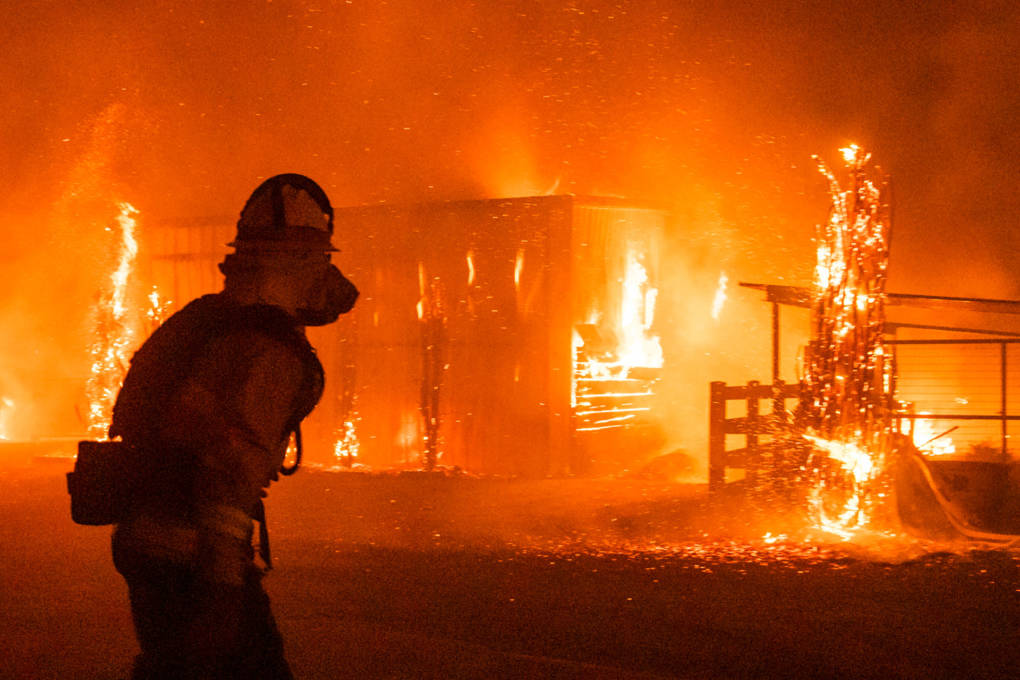
"caption": "A firefighter battles the Kincade Fire as it burns a structure on a farm near Windsor on Oct. 27, 2019. A firefighter badly injured while battling the same fire on the same day was working for a private company.",
"description": "A firefighter battles the Kincade Fire as it burns a structure on a farm near Windsor on Oct. 27, 2019. A firefighter badly injured while battling the same fire on the same day was working for a private company.",
"title": "Kincade-Fire-Firefighter",
"credit": "PHILIP PACHECO/AFP via Getty Images",
"status": "inherit",
"isLoading": false,
"fetchFailed": false
},
"news_11783927": {
"type": "attachments",
"id": "news_11783927",
"meta": {
"index": "attachments_1716263798",
"site": "news",
"id": "11783927",
"found": true
},
"parent": 11783857,
"imgSizes": {
"apple_news_ca_landscape_5_5": {
"file": "https://ww2.kqed.org/app/uploads/sites/10/2019/10/Firefighters-battle-barn-fire-kincade-fire-1044x783.jpg",
"width": 1044,
"mimeType": "image/jpeg",
"height": 783
},
"apple_news_ca_square_4_0": {
"file": "https://ww2.kqed.org/app/uploads/sites/10/2019/10/Firefighters-battle-barn-fire-kincade-fire-470x470.jpg",
"width": 470,
"mimeType": "image/jpeg",
"height": 470
},
"twentyfourteen-full-width": {
"file": "https://ww2.kqed.org/app/uploads/sites/10/2019/10/Firefighters-battle-barn-fire-kincade-fire-1038x576.jpg",
"width": 1038,
"mimeType": "image/jpeg",
"height": 576
},
"thumbnail": {
"file": "https://ww2.kqed.org/app/uploads/sites/10/2019/10/Firefighters-battle-barn-fire-kincade-fire-160x104.jpg",
"width": 160,
"mimeType": "image/jpeg",
"height": 104
},
"post-thumbnail": {
"file": "https://ww2.kqed.org/app/uploads/sites/10/2019/10/Firefighters-battle-barn-fire-kincade-fire-672x372.jpg",
"width": 672,
"mimeType": "image/jpeg",
"height": 372
},
"kqedFullSize": {
"file": "https://ww2.kqed.org/app/uploads/sites/10/2019/10/Firefighters-battle-barn-fire-kincade-fire.jpg",
"width": 1920,
"height": 1251
},
"apple_news_ca_landscape_4_7": {
"file": "https://ww2.kqed.org/app/uploads/sites/10/2019/10/Firefighters-battle-barn-fire-kincade-fire-632x474.jpg",
"width": 632,
"mimeType": "image/jpeg",
"height": 474
},
"large": {
"file": "https://ww2.kqed.org/app/uploads/sites/10/2019/10/Firefighters-battle-barn-fire-kincade-fire-1020x665.jpg",
"width": 1020,
"mimeType": "image/jpeg",
"height": 665
},
"complete_open_graph": {
"file": "https://ww2.kqed.org/app/uploads/sites/10/2019/10/Firefighters-battle-barn-fire-kincade-fire-1200x782.jpg",
"width": 1200,
"mimeType": "image/jpeg",
"height": 782
},
"apple_news_ca_landscape_4_0": {
"file": "https://ww2.kqed.org/app/uploads/sites/10/2019/10/Firefighters-battle-barn-fire-kincade-fire-536x402.jpg",
"width": 536,
"mimeType": "image/jpeg",
"height": 402
},
"apple_news_ca_portrait_12_9": {
"file": "https://ww2.kqed.org/app/uploads/sites/10/2019/10/Firefighters-battle-barn-fire-kincade-fire-1122x1251.jpg",
"width": 1122,
"mimeType": "image/jpeg",
"height": 1251
},
"medium": {
"file": "https://ww2.kqed.org/app/uploads/sites/10/2019/10/Firefighters-battle-barn-fire-kincade-fire-800x521.jpg",
"width": 800,
"mimeType": "image/jpeg",
"height": 521
},
"apple_news_ca_portrait_4_0": {
"file": "https://ww2.kqed.org/app/uploads/sites/10/2019/10/Firefighters-battle-barn-fire-kincade-fire-354x472.jpg",
"width": 354,
"mimeType": "image/jpeg",
"height": 472
},
"apple_news_ca_portrait_9_7": {
"file": "https://ww2.kqed.org/app/uploads/sites/10/2019/10/Firefighters-battle-barn-fire-kincade-fire-840x1120.jpg",
"width": 840,
"mimeType": "image/jpeg",
"height": 1120
},
"apple_news_ca_landscape_12_9": {
"file": "https://ww2.kqed.org/app/uploads/sites/10/2019/10/Firefighters-battle-barn-fire-kincade-fire-1832x1251.jpg",
"width": 1832,
"mimeType": "image/jpeg",
"height": 1251
},
"apple_news_ca_square_9_7": {
"file": "https://ww2.kqed.org/app/uploads/sites/10/2019/10/Firefighters-battle-barn-fire-kincade-fire-1104x1104.jpg",
"width": 1104,
"mimeType": "image/jpeg",
"height": 1104
},
"apple_news_ca_portrait_4_7": {
"file": "https://ww2.kqed.org/app/uploads/sites/10/2019/10/Firefighters-battle-barn-fire-kincade-fire-414x552.jpg",
"width": 414,
"mimeType": "image/jpeg",
"height": 552
},
"apple_news_ca_square_12_9": {
"file": "https://ww2.kqed.org/app/uploads/sites/10/2019/10/Firefighters-battle-barn-fire-kincade-fire-1472x1251.jpg",
"width": 1472,
"mimeType": "image/jpeg",
"height": 1251
},
"apple_news_ca_portrait_5_5": {
"file": "https://ww2.kqed.org/app/uploads/sites/10/2019/10/Firefighters-battle-barn-fire-kincade-fire-687x916.jpg",
"width": 687,
"mimeType": "image/jpeg",
"height": 916
},
"full-width": {
"file": "https://ww2.kqed.org/app/uploads/sites/10/2019/10/Firefighters-battle-barn-fire-kincade-fire-1920x1251.jpg",
"width": 1920,
"mimeType": "image/jpeg",
"height": 1251
},
"apple_news_ca_square_4_7": {
"file": "https://ww2.kqed.org/app/uploads/sites/10/2019/10/Firefighters-battle-barn-fire-kincade-fire-550x550.jpg",
"width": 550,
"mimeType": "image/jpeg",
"height": 550
},
"apple_news_ca_landscape_9_7": {
"file": "https://ww2.kqed.org/app/uploads/sites/10/2019/10/Firefighters-battle-barn-fire-kincade-fire-1376x1032.jpg",
"width": 1376,
"mimeType": "image/jpeg",
"height": 1032
},
"apple_news_ca_square_5_5": {
"file": "https://ww2.kqed.org/app/uploads/sites/10/2019/10/Firefighters-battle-barn-fire-kincade-fire-912x912.jpg",
"width": 912,
"mimeType": "image/jpeg",
"height": 912
}
},
"publishDate": 1572475359,
"modified": 1572475488,
"caption": "Firefighters battle the Kincade Fire as it burns a barn on Oct. 27, 2019. A firefighter badly injured while battling the same fire on the same day was working for a private company.",
"description": "Firefighters battle the Kincade Fire as it burns a barn on Oct. 27, 2019. A firefighter badly injured while battling the same fire on the same day was working for a private company.",
"title": "Firefighters-battle-barn-fire-kincade-fire",
"credit": "Justin Sullivan/Getty Images",
"status": "inherit",
"isLoading": false,
"fetchFailed": false
},
"news_11781125": {
"type": "attachments",
"id": "news_11781125",
"meta": {
"index": "attachments_1716263798",
"site": "news",
"id": "11781125",
"found": true
},
"parent": 11780972,
"imgSizes": {
"apple_news_ca_landscape_5_5": {
"file": "https://ww2.kqed.org/app/uploads/sites/10/2019/10/nustar-1044x783.jpeg",
"width": 1044,
"mimeType": "image/jpeg",
"height": 783
},
"apple_news_ca_square_4_0": {
"file": "https://ww2.kqed.org/app/uploads/sites/10/2019/10/nustar-470x470.jpeg",
"width": 470,
"mimeType": "image/jpeg",
"height": 470
},
"twentyfourteen-full-width": {
"file": "https://ww2.kqed.org/app/uploads/sites/10/2019/10/nustar-1038x576.jpeg",
"width": 1038,
"mimeType": "image/jpeg",
"height": 576
},
"thumbnail": {
"file": "https://ww2.kqed.org/app/uploads/sites/10/2019/10/nustar-160x120.jpeg",
"width": 160,
"mimeType": "image/jpeg",
"height": 120
},
"post-thumbnail": {
"file": "https://ww2.kqed.org/app/uploads/sites/10/2019/10/nustar-672x372.jpeg",
"width": 672,
"mimeType": "image/jpeg",
"height": 372
},
"kqedFullSize": {
"file": "https://ww2.kqed.org/app/uploads/sites/10/2019/10/nustar.jpeg",
"width": 1200,
"height": 900
},
"apple_news_ca_landscape_4_7": {
"file": "https://ww2.kqed.org/app/uploads/sites/10/2019/10/nustar-632x474.jpeg",
"width": 632,
"mimeType": "image/jpeg",
"height": 474
},
"large": {
"file": "https://ww2.kqed.org/app/uploads/sites/10/2019/10/nustar-1020x765.jpeg",
"width": 1020,
"mimeType": "image/jpeg",
"height": 765
},
"complete_open_graph": {
"file": "https://ww2.kqed.org/app/uploads/sites/10/2019/10/nustar-1200x900.jpeg",
"width": 1200,
"mimeType": "image/jpeg",
"height": 900
},
"apple_news_ca_landscape_4_0": {
"file": "https://ww2.kqed.org/app/uploads/sites/10/2019/10/nustar-536x402.jpeg",
"width": 536,
"mimeType": "image/jpeg",
"height": 402
},
"apple_news_ca_portrait_12_9": {
"file": "https://ww2.kqed.org/app/uploads/sites/10/2019/10/nustar-1122x900.jpeg",
"width": 1122,
"mimeType": "image/jpeg",
"height": 900
},
"medium": {
"file": "https://ww2.kqed.org/app/uploads/sites/10/2019/10/nustar-800x600.jpeg",
"width": 800,
"mimeType": "image/jpeg",
"height": 600
},
"apple_news_ca_portrait_4_0": {
"file": "https://ww2.kqed.org/app/uploads/sites/10/2019/10/nustar-354x472.jpeg",
"width": 354,
"mimeType": "image/jpeg",
"height": 472
},
"apple_news_ca_portrait_9_7": {
"file": "https://ww2.kqed.org/app/uploads/sites/10/2019/10/nustar-840x900.jpeg",
"width": 840,
"mimeType": "image/jpeg",
"height": 900
},
"apple_news_ca_square_9_7": {
"file": "https://ww2.kqed.org/app/uploads/sites/10/2019/10/nustar-1104x900.jpeg",
"width": 1104,
"mimeType": "image/jpeg",
"height": 900
},
"apple_news_ca_portrait_4_7": {
"file": "https://ww2.kqed.org/app/uploads/sites/10/2019/10/nustar-414x552.jpeg",
"width": 414,
"mimeType": "image/jpeg",
"height": 552
},
"apple_news_ca_portrait_5_5": {
"file": "https://ww2.kqed.org/app/uploads/sites/10/2019/10/nustar-687x900.jpeg",
"width": 687,
"mimeType": "image/jpeg",
"height": 900
},
"apple_news_ca_square_4_7": {
"file": "https://ww2.kqed.org/app/uploads/sites/10/2019/10/nustar-550x550.jpeg",
"width": 550,
"mimeType": "image/jpeg",
"height": 550
},
"apple_news_ca_square_5_5": {
"file": "https://ww2.kqed.org/app/uploads/sites/10/2019/10/nustar-912x900.jpeg",
"width": 912,
"mimeType": "image/jpeg",
"height": 900
}
},
"publishDate": 1571439797,
"modified": 1571440000,
"caption": "Firefighters hose down adjacent storage tanks after a fire and explosion at NuStar Energy's facility in Crockett on Oct 15, 2019.",
"description": null,
"title": "nustar",
"credit": "Contra Costa County Fire Protection District/Twitter",
"status": "inherit",
"isLoading": false,
"fetchFailed": false
},
"news_11776302": {
"type": "attachments",
"id": "news_11776302",
"meta": {
"index": "attachments_1716263798",
"site": "news",
"id": "11776302",
"found": true
},
"parent": 11774981,
"imgSizes": {
"apple_news_ca_landscape_5_5": {
"file": "https://ww2.kqed.org/app/uploads/sites/10/2019/09/Stanford_Medical_Center-1044x783.jpeg",
"width": 1044,
"mimeType": "image/jpeg",
"height": 783
},
"apple_news_ca_square_4_0": {
"file": "https://ww2.kqed.org/app/uploads/sites/10/2019/09/Stanford_Medical_Center-470x470.jpeg",
"width": 470,
"mimeType": "image/jpeg",
"height": 470
},
"twentyfourteen-full-width": {
"file": "https://ww2.kqed.org/app/uploads/sites/10/2019/09/Stanford_Medical_Center-1038x576.jpeg",
"width": 1038,
"mimeType": "image/jpeg",
"height": 576
},
"thumbnail": {
"file": "https://ww2.kqed.org/app/uploads/sites/10/2019/09/Stanford_Medical_Center-160x118.jpeg",
"width": 160,
"mimeType": "image/jpeg",
"height": 118
},
"post-thumbnail": {
"file": "https://ww2.kqed.org/app/uploads/sites/10/2019/09/Stanford_Medical_Center-672x372.jpeg",
"width": 672,
"mimeType": "image/jpeg",
"height": 372
},
"kqedFullSize": {
"file": "https://ww2.kqed.org/app/uploads/sites/10/2019/09/Stanford_Medical_Center-e1569360316151.jpeg",
"width": 1920,
"height": 1413
},
"apple_news_ca_landscape_4_7": {
"file": "https://ww2.kqed.org/app/uploads/sites/10/2019/09/Stanford_Medical_Center-632x474.jpeg",
"width": 632,
"mimeType": "image/jpeg",
"height": 474
},
"large": {
"file": "https://ww2.kqed.org/app/uploads/sites/10/2019/09/Stanford_Medical_Center-1020x750.jpeg",
"width": 1020,
"mimeType": "image/jpeg",
"height": 750
},
"complete_open_graph": {
"file": "https://ww2.kqed.org/app/uploads/sites/10/2019/09/Stanford_Medical_Center-1200x883.jpeg",
"width": 1200,
"mimeType": "image/jpeg",
"height": 883
},
"apple_news_ca_landscape_4_0": {
"file": "https://ww2.kqed.org/app/uploads/sites/10/2019/09/Stanford_Medical_Center-536x402.jpeg",
"width": 536,
"mimeType": "image/jpeg",
"height": 402
},
"apple_news_ca_portrait_12_9": {
"file": "https://ww2.kqed.org/app/uploads/sites/10/2019/09/Stanford_Medical_Center-1122x1496.jpeg",
"width": 1122,
"mimeType": "image/jpeg",
"height": 1496
},
"medium": {
"file": "https://ww2.kqed.org/app/uploads/sites/10/2019/09/Stanford_Medical_Center-800x589.jpeg",
"width": 800,
"mimeType": "image/jpeg",
"height": 589
},
"apple_news_ca_portrait_4_0": {
"file": "https://ww2.kqed.org/app/uploads/sites/10/2019/09/Stanford_Medical_Center-354x472.jpeg",
"width": 354,
"mimeType": "image/jpeg",
"height": 472
},
"apple_news_ca_portrait_9_7": {
"file": "https://ww2.kqed.org/app/uploads/sites/10/2019/09/Stanford_Medical_Center-840x1120.jpeg",
"width": 840,
"mimeType": "image/jpeg",
"height": 1120
},
"apple_news_ca_landscape_12_9": {
"file": "https://ww2.kqed.org/app/uploads/sites/10/2019/09/Stanford_Medical_Center-1832x1374.jpeg",
"width": 1832,
"mimeType": "image/jpeg",
"height": 1374
},
"apple_news_ca_square_9_7": {
"file": "https://ww2.kqed.org/app/uploads/sites/10/2019/09/Stanford_Medical_Center-1104x1104.jpeg",
"width": 1104,
"mimeType": "image/jpeg",
"height": 1104
},
"apple_news_ca_portrait_4_7": {
"file": "https://ww2.kqed.org/app/uploads/sites/10/2019/09/Stanford_Medical_Center-414x552.jpeg",
"width": 414,
"mimeType": "image/jpeg",
"height": 552
},
"apple_news_ca_square_12_9": {
"file": "https://ww2.kqed.org/app/uploads/sites/10/2019/09/Stanford_Medical_Center-1472x1472.jpeg",
"width": 1472,
"mimeType": "image/jpeg",
"height": 1472
},
"apple_news_ca_portrait_5_5": {
"file": "https://ww2.kqed.org/app/uploads/sites/10/2019/09/Stanford_Medical_Center-687x916.jpeg",
"width": 687,
"mimeType": "image/jpeg",
"height": 916
},
"full-width": {
"file": "https://ww2.kqed.org/app/uploads/sites/10/2019/09/Stanford_Medical_Center-1920x1412.jpeg",
"width": 1920,
"mimeType": "image/jpeg",
"height": 1412
},
"apple_news_ca_square_4_7": {
"file": "https://ww2.kqed.org/app/uploads/sites/10/2019/09/Stanford_Medical_Center-550x550.jpeg",
"width": 550,
"mimeType": "image/jpeg",
"height": 550
},
"apple_news_ca_landscape_9_7": {
"file": "https://ww2.kqed.org/app/uploads/sites/10/2019/09/Stanford_Medical_Center-1376x1032.jpeg",
"width": 1376,
"mimeType": "image/jpeg",
"height": 1032
},
"apple_news_ca_square_5_5": {
"file": "https://ww2.kqed.org/app/uploads/sites/10/2019/09/Stanford_Medical_Center-912x912.jpeg",
"width": 912,
"mimeType": "image/jpeg",
"height": 912
}
},
"publishDate": 1569360293,
"modified": 1569360663,
"caption": "Stanford Hospital, where a 70-year-old nurse was attacked and seriously injured by a psychiatric unit patient in March 2019.",
"description": null,
"title": "Stanford_Medical_Center",
"credit": "\u003ca href=\"https://commons.wikimedia.org/wiki/File:Stanford_Medical_Center.JPG\">Robert Skolmen/Wikimedia Commons\u003c/a>",
"status": "inherit",
"isLoading": false,
"fetchFailed": false
},
"news_11734726": {
"type": "attachments",
"id": "news_11734726",
"meta": {
"index": "attachments_1716263798",
"site": "news",
"id": "11734726",
"found": true
},
"parent": 11734674,
"imgSizes": {
"post-thumbnail": {
"file": "https://ww2.kqed.org/app/uploads/sites/10/2019/03/Stanford-Boswell-Building-672x372.jpg",
"width": 672,
"mimeType": "image/jpeg",
"height": 372
},
"kqedFullSize": {
"file": "https://ww2.kqed.org/app/uploads/sites/10/2019/03/Stanford-Boswell-Building.jpg",
"width": 1920,
"height": 1263
},
"guest-author-50": {
"file": "https://ww2.kqed.org/app/uploads/sites/10/2019/03/Stanford-Boswell-Building-50x50.jpg",
"width": 50,
"mimeType": "image/jpeg",
"height": 50
},
"guest-author-96": {
"file": "https://ww2.kqed.org/app/uploads/sites/10/2019/03/Stanford-Boswell-Building-96x96.jpg",
"width": 96,
"mimeType": "image/jpeg",
"height": 96
},
"apple_news_ca_portrait_12_9": {
"file": "https://ww2.kqed.org/app/uploads/sites/10/2019/03/Stanford-Boswell-Building-1122x1263.jpg",
"width": 1122,
"mimeType": "image/jpeg",
"height": 1263
},
"medium": {
"file": "https://ww2.kqed.org/app/uploads/sites/10/2019/03/Stanford-Boswell-Building-800x526.jpg",
"width": 800,
"mimeType": "image/jpeg",
"height": 526
},
"guest-author-32": {
"file": "https://ww2.kqed.org/app/uploads/sites/10/2019/03/Stanford-Boswell-Building-32x32.jpg",
"width": 32,
"mimeType": "image/jpeg",
"height": 32
},
"apple_news_ca_portrait_9_7": {
"file": "https://ww2.kqed.org/app/uploads/sites/10/2019/03/Stanford-Boswell-Building-840x1120.jpg",
"width": 840,
"mimeType": "image/jpeg",
"height": 1120
},
"apple_news_ca_square_9_7": {
"file": "https://ww2.kqed.org/app/uploads/sites/10/2019/03/Stanford-Boswell-Building-1104x1104.jpg",
"width": 1104,
"mimeType": "image/jpeg",
"height": 1104
},
"apple_news_ca_portrait_4_7": {
"file": "https://ww2.kqed.org/app/uploads/sites/10/2019/03/Stanford-Boswell-Building-414x552.jpg",
"width": 414,
"mimeType": "image/jpeg",
"height": 552
},
"apple_news_ca_square_12_9": {
"file": "https://ww2.kqed.org/app/uploads/sites/10/2019/03/Stanford-Boswell-Building-1472x1263.jpg",
"width": 1472,
"mimeType": "image/jpeg",
"height": 1263
},
"apple_news_ca_portrait_5_5": {
"file": "https://ww2.kqed.org/app/uploads/sites/10/2019/03/Stanford-Boswell-Building-687x916.jpg",
"width": 687,
"mimeType": "image/jpeg",
"height": 916
},
"apple_news_ca_square_4_7": {
"file": "https://ww2.kqed.org/app/uploads/sites/10/2019/03/Stanford-Boswell-Building-550x550.jpg",
"width": 550,
"mimeType": "image/jpeg",
"height": 550
},
"apple_news_ca_square_5_5": {
"file": "https://ww2.kqed.org/app/uploads/sites/10/2019/03/Stanford-Boswell-Building-912x912.jpg",
"width": 912,
"mimeType": "image/jpeg",
"height": 912
},
"apple_news_ca_landscape_5_5": {
"file": "https://ww2.kqed.org/app/uploads/sites/10/2019/03/Stanford-Boswell-Building-1044x783.jpg",
"width": 1044,
"mimeType": "image/jpeg",
"height": 783
},
"apple_news_ca_square_4_0": {
"file": "https://ww2.kqed.org/app/uploads/sites/10/2019/03/Stanford-Boswell-Building-470x470.jpg",
"width": 470,
"mimeType": "image/jpeg",
"height": 470
},
"twentyfourteen-full-width": {
"file": "https://ww2.kqed.org/app/uploads/sites/10/2019/03/Stanford-Boswell-Building-1038x576.jpg",
"width": 1038,
"mimeType": "image/jpeg",
"height": 576
},
"thumbnail": {
"file": "https://ww2.kqed.org/app/uploads/sites/10/2019/03/Stanford-Boswell-Building-160x105.jpg",
"width": 160,
"mimeType": "image/jpeg",
"height": 105
},
"apple_news_ca_landscape_4_7": {
"file": "https://ww2.kqed.org/app/uploads/sites/10/2019/03/Stanford-Boswell-Building-632x474.jpg",
"width": 632,
"mimeType": "image/jpeg",
"height": 474
},
"large": {
"file": "https://ww2.kqed.org/app/uploads/sites/10/2019/03/Stanford-Boswell-Building-1020x671.jpg",
"width": 1020,
"mimeType": "image/jpeg",
"height": 671
},
"complete_open_graph": {
"file": "https://ww2.kqed.org/app/uploads/sites/10/2019/03/Stanford-Boswell-Building-1200x789.jpg",
"width": 1200,
"mimeType": "image/jpeg",
"height": 789
},
"apple_news_ca_landscape_4_0": {
"file": "https://ww2.kqed.org/app/uploads/sites/10/2019/03/Stanford-Boswell-Building-536x402.jpg",
"width": 536,
"mimeType": "image/jpeg",
"height": 402
},
"guest-author-64": {
"file": "https://ww2.kqed.org/app/uploads/sites/10/2019/03/Stanford-Boswell-Building-64x64.jpg",
"width": 64,
"mimeType": "image/jpeg",
"height": 64
},
"apple_news_ca_portrait_4_0": {
"file": "https://ww2.kqed.org/app/uploads/sites/10/2019/03/Stanford-Boswell-Building-354x472.jpg",
"width": 354,
"mimeType": "image/jpeg",
"height": 472
},
"apple_news_ca_landscape_12_9": {
"file": "https://ww2.kqed.org/app/uploads/sites/10/2019/03/Stanford-Boswell-Building-1832x1263.jpg",
"width": 1832,
"mimeType": "image/jpeg",
"height": 1263
},
"full-width": {
"file": "https://ww2.kqed.org/app/uploads/sites/10/2019/03/Stanford-Boswell-Building-1920x1263.jpg",
"width": 1920,
"mimeType": "image/jpeg",
"height": 1263
},
"guest-author-128": {
"file": "https://ww2.kqed.org/app/uploads/sites/10/2019/03/Stanford-Boswell-Building-128x128.jpg",
"width": 128,
"mimeType": "image/jpeg",
"height": 128
},
"apple_news_ca_landscape_9_7": {
"file": "https://ww2.kqed.org/app/uploads/sites/10/2019/03/Stanford-Boswell-Building-1376x1032.jpg",
"width": 1376,
"mimeType": "image/jpeg",
"height": 1032
}
},
"publishDate": 1553288799,
"modified": 1553297927,
"caption": "Stanford Hospital's Boswell Building houses the facility's Inpatient psychiatry clinic.",
"description": "Stanford Hospital's Boswell Building which houses the facility's Inpatient Psychiatry Clinic.",
"title": "Stanford-Boswell-Building",
"credit": "Google Street View",
"status": "inherit",
"isLoading": false,
"fetchFailed": false
},
"news_11706158": {
"type": "attachments",
"id": "news_11706158",
"meta": {
"index": "attachments_1716263798",
"site": "news",
"id": "11706158",
"found": true
},
"parent": 11706149,
"imgSizes": {
"twentyfourteen-full-width": {
"file": "https://ww2.kqed.org/app/uploads/sites/10/2018/11/46099036_10156835977944031_7059055608862867456_o-e1542164854282-1038x576.jpg",
"width": 1038,
"mimeType": "image/jpeg",
"height": 576
},
"thumbnail": {
"file": "https://ww2.kqed.org/app/uploads/sites/10/2018/11/46099036_10156835977944031_7059055608862867456_o-e1542164854282-160x120.jpg",
"width": 160,
"mimeType": "image/jpeg",
"height": 120
},
"post-thumbnail": {
"file": "https://ww2.kqed.org/app/uploads/sites/10/2018/11/46099036_10156835977944031_7059055608862867456_o-e1542164854282-672x372.jpg",
"width": 672,
"mimeType": "image/jpeg",
"height": 372
},
"kqedFullSize": {
"file": "https://ww2.kqed.org/app/uploads/sites/10/2018/11/46099036_10156835977944031_7059055608862867456_o-e1542164854282.jpg",
"width": 1920,
"height": 1440
},
"large": {
"file": "https://ww2.kqed.org/app/uploads/sites/10/2018/11/46099036_10156835977944031_7059055608862867456_o-e1542164854282-1020x765.jpg",
"width": 1020,
"mimeType": "image/jpeg",
"height": 765
},
"complete_open_graph": {
"file": "https://ww2.kqed.org/app/uploads/sites/10/2018/11/46099036_10156835977944031_7059055608862867456_o-e1542164854282-1200x900.jpg",
"width": 1200,
"mimeType": "image/jpeg",
"height": 900
},
"guest-author-50": {
"file": "https://ww2.kqed.org/app/uploads/sites/10/2018/11/46099036_10156835977944031_7059055608862867456_o-e1542164854282-50x50.jpg",
"width": 50,
"mimeType": "image/jpeg",
"height": 50
},
"guest-author-96": {
"file": "https://ww2.kqed.org/app/uploads/sites/10/2018/11/46099036_10156835977944031_7059055608862867456_o-e1542164854282-96x96.jpg",
"width": 96,
"mimeType": "image/jpeg",
"height": 96
},
"medium": {
"file": "https://ww2.kqed.org/app/uploads/sites/10/2018/11/46099036_10156835977944031_7059055608862867456_o-e1542164854282-800x600.jpg",
"width": 800,
"mimeType": "image/jpeg",
"height": 600
},
"guest-author-64": {
"file": "https://ww2.kqed.org/app/uploads/sites/10/2018/11/46099036_10156835977944031_7059055608862867456_o-e1542164854282-64x64.jpg",
"width": 64,
"mimeType": "image/jpeg",
"height": 64
},
"guest-author-32": {
"file": "https://ww2.kqed.org/app/uploads/sites/10/2018/11/46099036_10156835977944031_7059055608862867456_o-e1542164854282-32x32.jpg",
"width": 32,
"mimeType": "image/jpeg",
"height": 32
},
"full-width": {
"file": "https://ww2.kqed.org/app/uploads/sites/10/2018/11/46099036_10156835977944031_7059055608862867456_o-e1542164854282-1920x1440.jpg",
"width": 1920,
"mimeType": "image/jpeg",
"height": 1440
},
"detail": {
"file": "https://ww2.kqed.org/app/uploads/sites/10/2018/11/46099036_10156835977944031_7059055608862867456_o-e1542164854282-150x150.jpg",
"width": 150,
"mimeType": "image/jpeg",
"height": 150
},
"guest-author-128": {
"file": "https://ww2.kqed.org/app/uploads/sites/10/2018/11/46099036_10156835977944031_7059055608862867456_o-e1542164854282-128x128.jpg",
"width": 128,
"mimeType": "image/jpeg",
"height": 128
}
},
"publishDate": 1542160587,
"modified": 1542228154,
"caption": "Staff from the UC Davis School of Veterinary Medicine treat a dog at Butte County Fairgrounds.",
"description": null,
"title": "46099036_10156835977944031_7059055608862867456_o",
"credit": "Courtesy of UC Davis School of Veterinary Medicine",
"status": "inherit",
"isLoading": false,
"fetchFailed": false
}
},
"audioPlayerReducer": {
"postId": "stream_live",
"isPaused": true,
"isPlaying": false,
"pfsActive": false,
"pledgeModalIsOpen": true,
"playerDrawerIsOpen": false,
"liveAudioPlayStartedAt": 0,
"liveAudioPlayContext": ""
},
"authorsReducer": {
"byline_news_11860536": {
"type": "authors",
"id": "byline_news_11860536",
"meta": {
"override": true
},
"slug": "byline_news_11860536",
"name": "\u003ca href=\"https://calmatters.org/author/anaibarra/\">Ana B. Ibarra\u003c/a>",
"isLoading": false
},
"kqednewsstaffandwires": {
"type": "authors",
"id": "237",
"meta": {
"index": "authors_1716337520",
"id": "237",
"found": true
},
"name": "KQED News Staff and Wires",
"firstName": "KQED News Staff and Wires",
"lastName": null,
"slug": "kqednewsstaffandwires",
"email": "onlinenewsstaff@kqed.org",
"display_author_email": false,
"staff_mastheads": [],
"title": null,
"bio": null,
"avatar": "https://secure.gravatar.com/avatar/72295af8ebbfbd19a4948f5271285664?s=600&d=blank&r=g",
"twitter": null,
"facebook": null,
"instagram": null,
"linkedin": null,
"sites": [
{
"site": "arts",
"roles": [
"contributor"
]
},
{
"site": "news",
"roles": [
"contributor"
]
},
{
"site": "lowdown",
"roles": [
"author"
]
},
{
"site": "stateofhealth",
"roles": [
"contributor"
]
},
{
"site": "food",
"roles": [
"author"
]
}
],
"headData": {
"title": "KQED News Staff and Wires | KQED",
"description": null,
"ogImgSrc": "https://secure.gravatar.com/avatar/72295af8ebbfbd19a4948f5271285664?s=600&d=blank&r=g",
"twImgSrc": "https://secure.gravatar.com/avatar/72295af8ebbfbd19a4948f5271285664?s=600&d=blank&r=g"
},
"isLoading": false,
"link": "/author/kqednewsstaffandwires"
},
"tgoldberg": {
"type": "authors",
"id": "258",
"meta": {
"index": "authors_1716337520",
"id": "258",
"found": true
},
"name": "Ted Goldberg",
"firstName": "Ted",
"lastName": "Goldberg",
"slug": "tgoldberg",
"email": "tgoldberg@kqed.org",
"display_author_email": true,
"staff_mastheads": [
"news"
],
"title": "KQED Managing Editor, News and Newscasts",
"bio": "Ted Goldberg is Managing Editor of News and Newscasts at KQED. His main reporting beat is the Bay Area's oil refining industry.\r\n\r\nPrior to joining KQED in 2014, Ted worked at CBS News and WCBS AM in New York and Bay City News and KCBS Radio in San Francisco. He graduated from Oberlin College in Ohio in 1998.",
"avatar": "https://secure.gravatar.com/avatar/30ce2e4fe89135e104f89be2394d16225b9d36c121b5b3cb7651ce642978b96f?s=600&d=blank&r=g",
"twitter": "TedrickG",
"bluesky": null,
"facebook": null,
"instagram": null,
"linkedin": null,
"sites": [
{
"site": "news",
"roles": [
"editor"
]
},
{
"site": "science",
"roles": [
"editor"
]
}
],
"headData": {
"title": "Ted Goldberg | KQED",
"description": "KQED Managing Editor, News and Newscasts",
"ogImgSrc": "https://secure.gravatar.com/avatar/30ce2e4fe89135e104f89be2394d16225b9d36c121b5b3cb7651ce642978b96f?s=600&d=blank&r=g",
"twImgSrc": "https://secure.gravatar.com/avatar/30ce2e4fe89135e104f89be2394d16225b9d36c121b5b3cb7651ce642978b96f?s=600&d=blank&r=g"
},
"isLoading": false,
"link": "/author/tgoldberg"
},
"fjhabvala": {
"type": "authors",
"id": "8659",
"meta": {
"index": "authors_1716337520",
"id": "8659",
"found": true
},
"name": "Farida Jhabvala Romero",
"firstName": "Farida",
"lastName": "Jhabvala Romero",
"slug": "fjhabvala",
"email": "fjhabvala@kqed.org",
"display_author_email": true,
"staff_mastheads": [
"news"
],
"title": "KQED Contributor",
"bio": "Farida Jhabvala Romero is a Labor Correspondent for KQED. She previously covered immigration. Farida was \u003ca href=\"https://www.ccnma.org/2022-most-influential-latina-journalists\">named\u003c/a> one of the 10 Most Influential Latina Journalists in California in 2022 by the California Chicano News Media Association. Her work has won awards from the Society of Professional Journalists (Northern California), as well as a national and regional Edward M. Murrow Award for the collaborative reporting projects “Dangerous Air” and “Graying California.” Before joining KQED, Farida worked as a producer at Radio Bilingüe, a national public radio network. Farida earned her master’s degree in journalism from Stanford University.",
"avatar": "https://secure.gravatar.com/avatar/f9f022d4e2609741874222a1e9d41f48fea74011aa7c615eef91d9a50c944ebe?s=600&d=blank&r=g",
"twitter": "FaridaJhabvala",
"bluesky": null,
"facebook": null,
"instagram": null,
"linkedin": "https://www.linkedin.com/in/faridajhabvala/",
"sites": [
{
"site": "news",
"roles": [
"editor"
]
},
{
"site": "stateofhealth",
"roles": [
"author"
]
},
{
"site": "liveblog",
"roles": [
"author"
]
}
],
"headData": {
"title": "Farida Jhabvala Romero | KQED",
"description": "KQED Contributor",
"ogImgSrc": "https://secure.gravatar.com/avatar/f9f022d4e2609741874222a1e9d41f48fea74011aa7c615eef91d9a50c944ebe?s=600&d=blank&r=g",
"twImgSrc": "https://secure.gravatar.com/avatar/f9f022d4e2609741874222a1e9d41f48fea74011aa7c615eef91d9a50c944ebe?s=600&d=blank&r=g"
},
"isLoading": false,
"link": "/author/fjhabvala"
},
"ahall": {
"type": "authors",
"id": "11490",
"meta": {
"index": "authors_1716337520",
"id": "11490",
"found": true
},
"name": "Alex Hall",
"firstName": "Alex",
"lastName": "Hall",
"slug": "ahall",
"email": "ahall@kqed.org",
"display_author_email": false,
"staff_mastheads": [
"news"
],
"title": "KQED Enterprise & Accountability Reporter",
"bio": "Alex Hall is KQED's Enterprise and Accountability Reporter. She previously covered the Central Valley for five years from KQED's bureau in Fresno. Before joining KQED, Alex was an investigative reporting fellow at Wisconsin Public Radio and the Wisconsin Center for Investigative Journalism. She has also worked as a bilingual producer for NPR's investigative unit and freelance video producer for Reuters TV on the Latin America desk. She got her start in journalism in South America, where she worked as a radio producer and Spanish-English translator for CNN Chile. Her documentary and investigation into the series of deadly COVID-19 outbreaks at Foster Farms won a national Edward R. Murrow award and was named an Investigative Reporters & Editors award finalist. Alex's reporting for Reveal on the Wisconsin dairy industry's reliance on undocumented immigrant labor was made into a film, Los Lecheros, which won a regional Edward R. Murrow award for best news documentary.",
"avatar": "https://secure.gravatar.com/avatar/defcbeb88b0bf591ff9af41f22644051?s=600&d=blank&r=g",
"twitter": "@chalexhall",
"facebook": null,
"instagram": null,
"linkedin": null,
"sites": [
{
"site": "news",
"roles": [
"editor"
]
},
{
"site": "liveblog",
"roles": [
"author"
]
}
],
"headData": {
"title": "Alex Hall | KQED",
"description": "KQED Enterprise & Accountability Reporter",
"ogImgSrc": "https://secure.gravatar.com/avatar/defcbeb88b0bf591ff9af41f22644051?s=600&d=blank&r=g",
"twImgSrc": "https://secure.gravatar.com/avatar/defcbeb88b0bf591ff9af41f22644051?s=600&d=blank&r=g"
},
"isLoading": false,
"link": "/author/ahall"
},
"mshieh": {
"type": "authors",
"id": "11527",
"meta": {
"index": "authors_1716337520",
"id": "11527",
"found": true
},
"name": "Marissa Shieh",
"firstName": "Marissa",
"lastName": "Shieh",
"slug": "mshieh",
"email": "mshieh@kqed.org",
"display_author_email": false,
"staff_mastheads": [],
"title": null,
"bio": null,
"avatar": "https://secure.gravatar.com/avatar/4828e5ea53953052aedfca196384e8aa?s=600&d=blank&r=g",
"twitter": null,
"facebook": null,
"instagram": null,
"linkedin": null,
"sites": [
{
"site": "news",
"roles": [
"author"
]
}
],
"headData": {
"title": "Marissa Shieh | KQED",
"description": null,
"ogImgSrc": "https://secure.gravatar.com/avatar/4828e5ea53953052aedfca196384e8aa?s=600&d=blank&r=g",
"twImgSrc": "https://secure.gravatar.com/avatar/4828e5ea53953052aedfca196384e8aa?s=600&d=blank&r=g"
},
"isLoading": false,
"link": "/author/mshieh"
},
"awoelfle": {
"type": "authors",
"id": "11630",
"meta": {
"index": "authors_1716337520",
"id": "11630",
"found": true
},
"name": "Alice Woelfle",
"firstName": "Alice",
"lastName": "Woelfle",
"slug": "awoelfle",
"email": "awoelfle@KQED.org",
"display_author_email": false,
"staff_mastheads": [],
"title": null,
"bio": null,
"avatar": "https://secure.gravatar.com/avatar/00e46668235dc71f4a7513cf5eb31df3?s=600&d=blank&r=g",
"twitter": null,
"facebook": null,
"instagram": null,
"linkedin": null,
"sites": [
{
"site": "news",
"roles": [
"subscriber"
]
}
],
"headData": {
"title": "Alice Woelfle | KQED",
"description": null,
"ogImgSrc": "https://secure.gravatar.com/avatar/00e46668235dc71f4a7513cf5eb31df3?s=600&d=blank&r=g",
"twImgSrc": "https://secure.gravatar.com/avatar/00e46668235dc71f4a7513cf5eb31df3?s=600&d=blank&r=g"
},
"isLoading": false,
"link": "/author/awoelfle"
}
},
"pagesReducer": {
"news_tag_cal-osha": {
"type": "terms",
"id": "news_6145",
"meta": {
"index": "terms_1716263798",
"site": "news",
"id": "6145",
"score": 10.403188
},
"featImg": null,
"name": "Cal-OSHA",
"description": null,
"taxonomy": "tag",
"headData": {
"twImgId": null,
"twTitle": null,
"ogTitle": null,
"ogImgId": null,
"twDescription": null,
"description": null,
"title": "Cal-OSHA Archives | KQED News",
"ogDescription": null
},
"ttid": 6169,
"slug": "cal-osha",
"isLoading": false,
"title": "Cal-OSHA",
"pageMeta": {
"site": "news",
"WpPageTemplate": "page-topic-editorial",
"currentPage": 4
},
"blocks": [
{
"blockName": "kqed/post-list",
"attrs": {
"layout": "cardArticle2",
"query": "posts/news?tag=cal-osha",
"seeMore": false,
"paginated": true,
"page": 4
}
},
{
"blockName": "kqed/ad"
}
]
}
},
"pfsSessionReducer": {},
"postsReducer": {
"stream_live": {
"type": "live",
"id": "stream_live",
"audioUrl": "https://streams.kqed.org/kqedradio",
"title": "Live Stream",
"excerpt": "Live Stream information currently unavailable.",
"link": "/radio",
"featImg": "",
"label": {
"name": "KQED Live",
"link": "/"
}
},
"stream_kqedNewscast": {
"type": "posts",
"id": "stream_kqedNewscast",
"audioUrl": "https://www.kqed.org/.stream/anon/radio/RDnews/newscast.mp3?_=1",
"title": "KQED Newscast",
"featImg": "",
"label": {
"name": "88.5 FM",
"link": "/"
}
},
"news_11876529": {
"type": "posts",
"id": "news_11876529",
"meta": {
"index": "posts_1716263798",
"site": "news",
"id": "11876529",
"score": null,
"sort": [
1622770986000
]
},
"parent": 0,
"labelTerm": {
"site": "news"
},
"blocks": [],
"publishDate": 1622770986,
"format": "standard",
"disqusTitle": "Most California Workers Have to Keep Masks on After June 15 Reopening",
"title": "Most California Workers Have to Keep Masks on After June 15 Reopening",
"headTitle": "KQED News",
"content": "\u003cp>\u003cem>Updated 10 a.m. Friday\u003c/em>\u003c/p>\n\u003cp>Vaccinated or not, workers in California will still be required to keep their masks on unless every employee in the room is fully inoculated against the coronavirus — even after the state more broadly reopens on June 15.\u003c/p>\n\u003cp>That's the new mandate under \u003ca href=\"https://www.dir.ca.gov/OSHSB/documents/Jun032021-COVID-19-Prevention-Emergency-FOE-Readoption.pdf\">revised rules\u003c/a> approved Thursday night by a sharply divided group of California workplace regulators. Still, the seven-member California Occupational Safety and Health Standards Board, which sets standards for Cal/OSHA, made clear the regulations are only a stopgap while they consider further easing pandemic rules in the coming weeks or months.\u003c/p>\n\u003cp>After hearing more than seven hours of impassioned public comment, mostly from opponents of the revisions, the board initially rejected the new rules on a 4-3 vote.\u003c/p>\n\u003cp>\"We have to create reasonable and enforceable standards,\" said board member Nola Kennedy, who at first voted against adopting the changes. \"I just don’t think this proposal is there yet.\"\u003c/p>\n\u003cp>But board members quickly reconsidered after realizing that not adopting the changes would leave workers subject to the current standards, which require masks for all employees, along with social distancing and partitions between employees in some circumstances.\u003c/p>\n\u003cp>\"We don’t want to leave the last one in place when this is better than that,\" said board chairman David Thomas, acknowledging the revised rules were far from perfect.\u003c/p>\n\u003cp>The board then unanimously — if reluctantly — adopted the changes, while appointing a three-member subcommittee to consider additional revisions.\u003c/p>\n\u003cp>Without further changes, the revised workplace rules could remain in place into early next year, although the board is likely to take up the issue again when it meets next on June 17.\u003c/p>\n\u003cp>[ad fullwidth]\u003c/p>\n\u003cp>The updated rules will apply to almost every non-home workplace in the state, from offices and retail stores to factories and farms.\u003c/p>\n\u003cp>People working in rooms in which everyone is vaccinated would not have to wear masks, nor would vaccinated employees without symptoms who work outside. However, to sanction that, employers would need to have and be able to show documentation of their workers’ vaccination status.\u003c/p>\n\u003cp>The new requirements contrast with California's plan to do away with virtually all mask and distancing requirements for vaccinated people on June 15, in accordance with recently revised guidelines from the \u003ca href=\"https://www.kqed.org/news/11873527/cdc-says-no-masks-needed-indoors-for-fully-vaccinated-with-a-few-caveats\">U.S. Centers for Disease Control and Prevention\u003c/a>.\u003c/p>\n\u003ch3>'This Will Create a Two-Class Environment'\u003c/h3>\n\u003cp>The prospect of ongoing worker mask mandates has a slew of business groups and employers, among many others, extremely perturbed, as was clearly evidenced during the onslaught of public testimony Thursday.\u003c/p>\n\u003cp>\"Cal/OSHA is out of step with the rest of the country,\" said Andrew Sommer on behalf of the California Employers COVID-19 Prevention Coalition.\u003c/p>\n\u003cp>Many critics pointed to the state's rising vaccination rate and low COVID-19 case count as reason enough to drop the precautions, emphasizing that the new rules will place undue burden on employers and deprive workers of their right to determine how best to protect themselves.\u003c/p>\n\u003cp>\"People who are sitting behind desks and pulling a paycheck are making decisions for those who have to wear masks eight hours a day, and it's not right,\" Michelle Richardson, a small business owner, told the board. \"This regulation will create a two-class environment and create extreme pressure on the unvaccinated to get vaccinated.\"\u003c/p>\n\u003cp>[aside label=\"related coverage\" tag=\"cal-osha\"]Katie Hansen, senior legislative director for the California Restaurant Association, told board members that the proposed rules would be both confusing and illogical, creating an inconsistent standard between workers and other members of the public. \"A fully vaccinated server could work a lunch shift at a restaurant,\" she said, \"and then go out to dinner with their family or friends at the same restaurant in the evening and not be required to wear a mask, even though they had to wear a mask earlier in the day while at work.\"\u003c/p>\n\u003cp>Numerous employer groups also sharply criticized another rule, included in the board's approved revision, which requires employers starting July 31 to offer N95 respirator masks to all workers who are not fully vaccinated and work indoors or at large outdoor events.\u003c/p>\n\u003cp>Many said that requirement will be impractical, expensive and tie up millions of masks needed by health care workers — and likely to be in high demand during the state's wildfire season.\u003c/p>\n\u003cp>\"Logistically I’m just unclear how a business determines how many, how much,\" said Chris Laszcz-Davis, a management representative on the board who initially voted to reject the revised regulations.\u003c/p>\n\u003cp>But state safety board staff member Eric Berg said the revised rules as a whole incorporate the latest scientific evidence and have been reviewed and supported by the state Department of Public Health.\u003c/p>\n\u003cp>The changes, he said, reflect key differences between employees and the public at large, particularly factoring in that employees have \"longer cumulative exposures\" in the workplace than during casual social contact, and that a large percentage of Californians are still not fully vaccinated. Additionally, he added, allowing some workers to wear masks and others to go unmasked would create significant enforcement issues for employers and Cal/OSHA.\u003c/p>\n\u003cp>More than 17.5 million of California’s nearly 40 million residents are fully vaccinated, state health officials reported Thursday, and the positivity rate for the virus is 0.9%.\u003c/p>\n\u003cp>Gov. Gavin Newsom, who established the state reopening date of June 15, was noncommittal on Thursday when asked about what he would do if the board's rules are adopted. Newsom, who is facing an upcoming recall election, has the power to override it with an executive order.\u003c/p>\n\u003cp>He spoke outside Tommy’s Mexican Restaurant in San Francisco while \u003ca href=\"https://www.kqed.org/news/11876617/california-to-allow-sale-of-to-go-cocktails-through-2021\">announcing renewed efforts to help restaurants\u003c/a>.\u003c/p>\n\u003cp>\"We’ll see where they land on the rulemaking before making a determination of next steps,\" Newsom said, adding that Cal/OSHA must apply its rules to a wide variety of businesses, including places like meatpacking facilities that were hit especially hard by the virus.\u003c/p>\n\u003ch3>'People Are Still Getting Sick and Dying'\u003c/h3>\n\u003cp>While most commenters at Thursday's hearing opposed the board's revised rules, the idea of a continued mask mandate was broadly supported by a range of unions representing teamsters, nurses, machinists, utility workers, engineers and school employees.\u003c/p>\n\u003cp>[pullquote size=\"medium\" align=\"right\" citation=\"Mitch Steiger, California Labor Federation\"]'I'm a little shocked by all these calls to do away with masks at work — people are still getting sick and dying.'[/pullquote]Many advocates stressed that the pandemic is not over, and that low-wage frontline workers have been \u003ca href=\"https://www.kqed.org/news/11875988/minimal-to-non-existent-safety-inspector-shortage-worsened-in-pandemic-leaving-california-workers-vulnerable\">disproportionately impacted\u003c/a>.\u003c/p>\n\u003cp>As COVID-19 cases, and deaths, spiked across the state last fall and winter, Cal/OSHA received thousands of worker complaints related to the virus. Yet the vacancy rate for field inspectors doubled to 26% as of late February, compared to 13% two years earlier.\u003c/p>\n\u003cp>\"Worksite outbreaks are still occurring,” said Maggie Robbins, an occupational health specialist with Worksafe Inc., an Oakland-based worker-advocacy group.\u003c/p>\n\u003cp>\"The workplace is not the same as deciding to go to a dinner party or the gym or go to a movie,\" she said. \"There’s a lot of work to be done before we have a substantially immune population where we can relax more of the controls.\"\u003c/p>\n\u003cp>[aside postID=news_11875988 hero='https://ww2.kqed.org/app/uploads/sites/10/2021/06/RS49630_GettyImages-1231067411-qut-1020x600.jpg']Liz Ortega, executive secretary-treasurer of the Alameda Labor Council Essential, said the workers she advocates for have put themselves at risk for the last year and a half, \"making sure the rest of us could survive during the pandemic.\"\u003c/p>\n\u003cp>\"We’ve spent the last 18 months fighting for and winning worker safety, hazard pay, and sick leave,\" Ortega said in an email. \"We aren’t going to now criticize Cal/OSHA for proceeding with caution.\"\u003c/p>\n\u003cp>Mitch Steiger, a legislative advocate for the California Labor Federation, said that while his organization had some concerns about the proposed rules, calling them somewhat vague and undefined, he still strongly urged the board to accept them.\u003c/p>\n\u003cp>\"Frankly, I'm a little shocked by all these calls to do away with masks at work — people are still getting sick and dying,\" he said. \"We have the opportunity here to be smarter and make a good choice about how to protect workers.\"\u003c/p>\n\u003cp>\u003cem>This post includes reporting from KQED's Matthew Green and Don Thompson of the Associated Press.\u003c/em>\u003c/p>\n\u003cp>[ad floatright]\u003c/p>\n",
"disqusIdentifier": "11876529 https://ww2.kqed.org/news/?p=11876529",
"disqusUrl": "https://ww2.kqed.org/news/2021/06/03/californians-may-need-masks-at-work-unless-all-employees-are-vaccinated/",
"stats": {
"hasVideo": false,
"hasChartOrMap": false,
"hasAudio": false,
"hasPolis": false,
"wordCount": 1419,
"hasGoogleForm": false,
"hasGallery": false,
"hasHearkenModule": false,
"iframeSrcs": [],
"paragraphCount": 38
},
"modified": 1622842497,
"excerpt": "The California Occupational Safety and Health Standards Board approved new statewide workplace rules requiring all workers to continue wearing masks unless everyone in the room is fully vaccinated against the coronavirus.",
"headData": {
"twImgId": "",
"twTitle": "",
"ogTitle": "",
"ogImgId": "",
"twDescription": "",
"description": "The California Occupational Safety and Health Standards Board approved new statewide workplace rules requiring all workers to continue wearing masks unless everyone in the room is fully vaccinated against the coronavirus.",
"title": "Most California Workers Have to Keep Masks on After June 15 Reopening | KQED",
"ogDescription": "",
"schema": {
"@context": "https://schema.org",
"@type": "NewsArticle",
"headline": "Most California Workers Have to Keep Masks on After June 15 Reopening",
"datePublished": "2021-06-03T18:43:06-07:00",
"dateModified": "2021-06-04T14:34:57-07:00",
"image": "https://cdn.kqed.org/wp-content/uploads/2020/02/KQED-OG-Image@1x.png",
"isAccessibleForFree": "True",
"publisher": {
"@type": "NewsMediaOrganization",
"@id": "https://www.kqed.org/#organization",
"name": "KQED",
"logo": "https://cdn.kqed.org/wp-content/uploads/2020/02/KQED-OG-Image@1x.png",
"url": "https://www.kqed.org",
"sameAs": [
"https://www.facebook.com/KQED",
"https://twitter.com/KQED",
"https://www.instagram.com/kqed/",
"https://www.tiktok.com/@kqedofficial",
"https://www.linkedin.com/company/kqed",
"https://www.youtube.com/channel/UCeC0IOo7i1P_61zVUWbJ4nw"
]
}
}
},
"guestAuthors": [],
"slug": "californians-may-need-masks-at-work-unless-all-employees-are-vaccinated",
"status": "publish",
"audioUrl": "https://traffic.omny.fm/d/clips/0af137ef-751e-4b19-a055-aaef00d2d578/ffca7e9f-6831-41c5-bcaf-aaef00f5a073/f1cb49b4-a274-4940-9b95-ad3c011fbe9c/audio.mp3",
"path": "/news/11876529/californians-may-need-masks-at-work-unless-all-employees-are-vaccinated",
"audioTrackLength": null,
"parsedContent": [
{
"type": "contentString",
"content": "\u003cdiv class=\"post-body\">\u003cp>\u003cp>\u003cem>Updated 10 a.m. Friday\u003c/em>\u003c/p>\n\u003cp>Vaccinated or not, workers in California will still be required to keep their masks on unless every employee in the room is fully inoculated against the coronavirus — even after the state more broadly reopens on June 15.\u003c/p>\n\u003cp>That's the new mandate under \u003ca href=\"https://www.dir.ca.gov/OSHSB/documents/Jun032021-COVID-19-Prevention-Emergency-FOE-Readoption.pdf\">revised rules\u003c/a> approved Thursday night by a sharply divided group of California workplace regulators. Still, the seven-member California Occupational Safety and Health Standards Board, which sets standards for Cal/OSHA, made clear the regulations are only a stopgap while they consider further easing pandemic rules in the coming weeks or months.\u003c/p>\n\u003cp>After hearing more than seven hours of impassioned public comment, mostly from opponents of the revisions, the board initially rejected the new rules on a 4-3 vote.\u003c/p>\n\u003cp>\"We have to create reasonable and enforceable standards,\" said board member Nola Kennedy, who at first voted against adopting the changes. \"I just don’t think this proposal is there yet.\"\u003c/p>\n\u003cp>But board members quickly reconsidered after realizing that not adopting the changes would leave workers subject to the current standards, which require masks for all employees, along with social distancing and partitions between employees in some circumstances.\u003c/p>\n\u003cp>\"We don’t want to leave the last one in place when this is better than that,\" said board chairman David Thomas, acknowledging the revised rules were far from perfect.\u003c/p>\n\u003cp>The board then unanimously — if reluctantly — adopted the changes, while appointing a three-member subcommittee to consider additional revisions.\u003c/p>\n\u003cp>Without further changes, the revised workplace rules could remain in place into early next year, although the board is likely to take up the issue again when it meets next on June 17.\u003c/p>\n\u003cp>\u003c/p>\u003c/div>",
"attributes": {
"named": {},
"numeric": []
}
},
{
"type": "component",
"content": "",
"name": "ad",
"attributes": {
"named": {
"label": "fullwidth"
},
"numeric": [
"fullwidth"
]
}
},
{
"type": "contentString",
"content": "\u003cdiv class=\"post-body\">\u003cp>\u003c/p>\n\u003cp>The updated rules will apply to almost every non-home workplace in the state, from offices and retail stores to factories and farms.\u003c/p>\n\u003cp>People working in rooms in which everyone is vaccinated would not have to wear masks, nor would vaccinated employees without symptoms who work outside. However, to sanction that, employers would need to have and be able to show documentation of their workers’ vaccination status.\u003c/p>\n\u003cp>The new requirements contrast with California's plan to do away with virtually all mask and distancing requirements for vaccinated people on June 15, in accordance with recently revised guidelines from the \u003ca href=\"https://www.kqed.org/news/11873527/cdc-says-no-masks-needed-indoors-for-fully-vaccinated-with-a-few-caveats\">U.S. Centers for Disease Control and Prevention\u003c/a>.\u003c/p>\n\u003ch3>'This Will Create a Two-Class Environment'\u003c/h3>\n\u003cp>The prospect of ongoing worker mask mandates has a slew of business groups and employers, among many others, extremely perturbed, as was clearly evidenced during the onslaught of public testimony Thursday.\u003c/p>\n\u003cp>\"Cal/OSHA is out of step with the rest of the country,\" said Andrew Sommer on behalf of the California Employers COVID-19 Prevention Coalition.\u003c/p>\n\u003cp>Many critics pointed to the state's rising vaccination rate and low COVID-19 case count as reason enough to drop the precautions, emphasizing that the new rules will place undue burden on employers and deprive workers of their right to determine how best to protect themselves.\u003c/p>\n\u003cp>\"People who are sitting behind desks and pulling a paycheck are making decisions for those who have to wear masks eight hours a day, and it's not right,\" Michelle Richardson, a small business owner, told the board. \"This regulation will create a two-class environment and create extreme pressure on the unvaccinated to get vaccinated.\"\u003c/p>\n\u003cp>\u003c/p>\u003c/div>",
"attributes": {
"named": {},
"numeric": []
}
},
{
"type": "component",
"content": "",
"name": "aside",
"attributes": {
"named": {
"label": "related coverage ",
"tag": "cal-osha"
},
"numeric": []
}
},
{
"type": "contentString",
"content": "\u003cdiv class=\"post-body\">\u003cp>Katie Hansen, senior legislative director for the California Restaurant Association, told board members that the proposed rules would be both confusing and illogical, creating an inconsistent standard between workers and other members of the public. \"A fully vaccinated server could work a lunch shift at a restaurant,\" she said, \"and then go out to dinner with their family or friends at the same restaurant in the evening and not be required to wear a mask, even though they had to wear a mask earlier in the day while at work.\"\u003c/p>\n\u003cp>Numerous employer groups also sharply criticized another rule, included in the board's approved revision, which requires employers starting July 31 to offer N95 respirator masks to all workers who are not fully vaccinated and work indoors or at large outdoor events.\u003c/p>\n\u003cp>Many said that requirement will be impractical, expensive and tie up millions of masks needed by health care workers — and likely to be in high demand during the state's wildfire season.\u003c/p>\n\u003cp>\"Logistically I’m just unclear how a business determines how many, how much,\" said Chris Laszcz-Davis, a management representative on the board who initially voted to reject the revised regulations.\u003c/p>\n\u003cp>But state safety board staff member Eric Berg said the revised rules as a whole incorporate the latest scientific evidence and have been reviewed and supported by the state Department of Public Health.\u003c/p>\n\u003cp>The changes, he said, reflect key differences between employees and the public at large, particularly factoring in that employees have \"longer cumulative exposures\" in the workplace than during casual social contact, and that a large percentage of Californians are still not fully vaccinated. Additionally, he added, allowing some workers to wear masks and others to go unmasked would create significant enforcement issues for employers and Cal/OSHA.\u003c/p>\n\u003cp>More than 17.5 million of California’s nearly 40 million residents are fully vaccinated, state health officials reported Thursday, and the positivity rate for the virus is 0.9%.\u003c/p>\n\u003cp>Gov. Gavin Newsom, who established the state reopening date of June 15, was noncommittal on Thursday when asked about what he would do if the board's rules are adopted. Newsom, who is facing an upcoming recall election, has the power to override it with an executive order.\u003c/p>\n\u003cp>He spoke outside Tommy’s Mexican Restaurant in San Francisco while \u003ca href=\"https://www.kqed.org/news/11876617/california-to-allow-sale-of-to-go-cocktails-through-2021\">announcing renewed efforts to help restaurants\u003c/a>.\u003c/p>\n\u003cp>\"We’ll see where they land on the rulemaking before making a determination of next steps,\" Newsom said, adding that Cal/OSHA must apply its rules to a wide variety of businesses, including places like meatpacking facilities that were hit especially hard by the virus.\u003c/p>\n\u003ch3>'People Are Still Getting Sick and Dying'\u003c/h3>\n\u003cp>While most commenters at Thursday's hearing opposed the board's revised rules, the idea of a continued mask mandate was broadly supported by a range of unions representing teamsters, nurses, machinists, utility workers, engineers and school employees.\u003c/p>\n\u003cp>\u003c/p>\u003c/div>",
"attributes": {
"named": {},
"numeric": []
}
},
{
"type": "component",
"content": "'I'm a little shocked by all these calls to do away with masks at work — people are still getting sick and dying.'",
"name": "pullquote",
"attributes": {
"named": {
"size": "medium",
"align": "right",
"citation": "Mitch Steiger, California Labor Federation",
"label": ""
},
"numeric": []
}
},
{
"type": "contentString",
"content": "\u003cdiv class=\"post-body\">\u003cp>Many advocates stressed that the pandemic is not over, and that low-wage frontline workers have been \u003ca href=\"https://www.kqed.org/news/11875988/minimal-to-non-existent-safety-inspector-shortage-worsened-in-pandemic-leaving-california-workers-vulnerable\">disproportionately impacted\u003c/a>.\u003c/p>\n\u003cp>As COVID-19 cases, and deaths, spiked across the state last fall and winter, Cal/OSHA received thousands of worker complaints related to the virus. Yet the vacancy rate for field inspectors doubled to 26% as of late February, compared to 13% two years earlier.\u003c/p>\n\u003cp>\"Worksite outbreaks are still occurring,” said Maggie Robbins, an occupational health specialist with Worksafe Inc., an Oakland-based worker-advocacy group.\u003c/p>\n\u003cp>\"The workplace is not the same as deciding to go to a dinner party or the gym or go to a movie,\" she said. \"There’s a lot of work to be done before we have a substantially immune population where we can relax more of the controls.\"\u003c/p>\n\u003cp>\u003c/p>\u003c/div>",
"attributes": {
"named": {},
"numeric": []
}
},
{
"type": "component",
"content": "",
"name": "aside",
"attributes": {
"named": {
"postid": "news_11875988",
"hero": "https://ww2.kqed.org/app/uploads/sites/10/2021/06/RS49630_GettyImages-1231067411-qut-1020x600.jpg",
"label": ""
},
"numeric": []
}
},
{
"type": "contentString",
"content": "\u003cdiv class=\"post-body\">\u003cp>Liz Ortega, executive secretary-treasurer of the Alameda Labor Council Essential, said the workers she advocates for have put themselves at risk for the last year and a half, \"making sure the rest of us could survive during the pandemic.\"\u003c/p>\n\u003cp>\"We’ve spent the last 18 months fighting for and winning worker safety, hazard pay, and sick leave,\" Ortega said in an email. \"We aren’t going to now criticize Cal/OSHA for proceeding with caution.\"\u003c/p>\n\u003cp>Mitch Steiger, a legislative advocate for the California Labor Federation, said that while his organization had some concerns about the proposed rules, calling them somewhat vague and undefined, he still strongly urged the board to accept them.\u003c/p>\n\u003cp>\"Frankly, I'm a little shocked by all these calls to do away with masks at work — people are still getting sick and dying,\" he said. \"We have the opportunity here to be smarter and make a good choice about how to protect workers.\"\u003c/p>\n\u003cp>\u003cem>This post includes reporting from KQED's Matthew Green and Don Thompson of the Associated Press.\u003c/em>\u003c/p>\n\u003cp>\u003c/p>\u003c/div>",
"attributes": {
"named": {},
"numeric": []
}
},
{
"type": "component",
"content": "",
"name": "ad",
"attributes": {
"named": {
"label": "floatright"
},
"numeric": [
"floatright"
]
}
},
{
"type": "contentString",
"content": "\u003cdiv class=\"post-body\">\u003cp>\u003c/p>\n\u003c/div>\u003c/p>",
"attributes": {
"named": {},
"numeric": []
}
}
],
"link": "/news/11876529/californians-may-need-masks-at-work-unless-all-employees-are-vaccinated",
"authors": [
"237"
],
"categories": [
"news_457",
"news_8"
],
"tags": [
"news_6145",
"news_27804",
"news_27626",
"news_29534",
"news_29535",
"news_23063"
],
"featImg": "news_11876748",
"label": "news"
},
"news_11875988": {
"type": "posts",
"id": "news_11875988",
"meta": {
"index": "posts_1716263798",
"site": "news",
"id": "11875988",
"score": null,
"sort": [
1622667528000
]
},
"guestAuthors": [],
"slug": "minimal-to-non-existent-safety-inspector-shortage-worsened-in-pandemic-leaving-california-workers-vulnerable",
"title": "'Minimal to Non-Existent': Safety Inspector Shortage Worsened in Pandemic, Leaving California Workers Vulnerable",
"publishDate": 1622667528,
"format": "audio",
"headTitle": "‘Minimal to Non-Existent’: Safety Inspector Shortage Worsened in Pandemic, Leaving California Workers Vulnerable | KQED",
"labelTerm": {
"term": 72,
"site": "news"
},
"content": "\u003cp>Last summer, Imelda Arroyo and a co-worker at an Oakland fast food restaurant filed a complaint with the California agency in charge of enforcing health and safety regulations in the workplace. Colleagues had been diagnosed with COVID-19, but their boss hadn’t notified staff and had failed to ensure all employees and customers wore face masks, Arroyo said.\u003c/p>\n\u003cp>“I felt like they were putting us and customers at too great of a risk,” she said, in Spanish. “I was afraid. I knew that at any moment I could get sick at work, and get my family sick.”\u003c/p>\n\u003cp>The mother of three worried about bringing the coronavirus home to her kids and a diabetic sister with a higher risk of severe illness. Arroyo wanted state inspectors from Cal/OSHA to come investigate quickly and make her workplace safer.\u003c/p>\n\u003cp>But in the months that followed, her employers at the restaurant still failed to follow state \u003ca href=\"https://www.dir.ca.gov/dosh/dosh_publications/COVIDOnePageFS.pdf\">rules\u003c/a> to prevent exposure to the virus, and more co-workers got infected, she said.\u003c/p>\n\u003cp>[pullquote size=\"medium\" align=\"right\" citation=\"Imelda Arroyo, Oakland fast food worker\"]‘I was asking for protection. But they didn’t listen to me, and they took too long.’[/pullquote]“I was asking for protection,” Arroyo said. She submitted her complaint to Cal/OSHA in June 2020 after trying unsuccessfully to get her manager to address the concerns. “But they didn’t listen to me, and they took too long.”\u003c/p>\n\u003cp>When Arroyo finally heard back from Cal/OSHA nine months later, on Feb. 22, 2021, officials said their inspection had found no violations at the restaurant. Yet no Cal/OSHA inspector had ever interviewed her, she said.\u003c/p>\n\u003cp>For years, Cal/OSHA, more formally known as the Division of Occupational Safety and Health, has been understaffed. But vacancies in the ranks of field inspectors, who conduct investigations, only worsened during the pandemic, crippling the agency’s ability to protect millions of workers who faced new risks from COVID-19.\u003c/p>\n\u003cp>Now, as the head of Cal/OSHA and the state’s labor secretary are in line for top positions in the Biden administration, the lack of enforcement in California is facing new scrutiny.\u003c/p>\n\u003cp>“Enforcement of health and safety regulations has been minimal to non-existent due to the lack of occupational health inspectors,” staffers of a California Senate committee wrote in a February 2021 \u003ca href=\"https://assets.documentcloud.org/documents/20792875/02252021_sub-5-agenda-final.pdf\">report on Cal/OSHA\u003c/a>. “As a result, workers in California continue to be exposed to COVID-related and other health hazards, and sustain serious illnesses and injuries, including death.”\u003c/p>\n\u003cp>[ad fullwidth]\u003c/p>\n\u003cp>The federal government has also identified deficiencies. The U.S. Occupational Safety and Health Administration has long criticized low staffing levels at Cal/OSHA which have resulted in delays in issuing citations for violations, according to the same report by the California Senate Committee on Budget and Fiscal Review.\u003c/p>\n\u003cp>As COVID-19 cases, and deaths, spiked across the state last fall and winter, Cal/OSHA received thousands of worker complaints related to the virus. Yet the vacancy rate for field inspectors doubled to 26% as of late February, compared to 13% two years earlier.\u003c/p>\n\u003cp>[pullquote size=\"medium\" align=\"right\" citation=\"Garrett Brown, former Cal/OSHA field inspector\"]‘It’s a very sad situation. It has never been this bad.’[/pullquote]In recent months, the agency has hired some new inspectors, but others have left, and 52 positions — 22% of the total — remained vacant statewide as of April 30, according to officials with the Department of Industrial Relations, which oversees Cal/OSHA.\u003c/p>\n\u003cp>“It’s a very sad situation. It has never been this bad,” said Garrett Brown, a former field inspector who worked for more than two decades at Cal/OSHA, and who has been \u003ca href=\"https://insidecalosha.org/staffing/\">tracking\u003c/a> low staffing levels at the agency since the 1990s. “And it has just a tremendously adverse, harmful impact on the health, safety and rights of workers in California.”\u003c/p>\n\u003cp>Since the pandemic began, Cal/OSHA has received 13,000 complaints related to COVID-19, out of about 18,500 complaints overall. The agency conducted on-site, workplace inspections in 18% of the coronavirus cases, while responding to the rest with letters requiring employers to address safety and health concerns. As of May 20, the agency had issued \u003ca href=\"https://www.dir.ca.gov/dosh/COVID19citations.html\">citations\u003c/a> for 550 violations, assessing $5.1 million in proposed penalties.\u003c/p>\n\u003cp>A spokeswoman with the Department of Industrial Relations said both agencies “have been working hard” to find qualified candidates for field inspector positions.\u003c/p>\n\u003cp>“Over the past several months, we have conducted a nationwide recruitment campaign in order to fill industrial hygienist and safety engineer positions,” DIR spokeswoman Erika Monterroza said, in a statement. “Cal/OSHA’s goal is to fill all enforcement positions as quickly as possible.”\u003c/p>\n\u003cp>But for most of the last two years, the hiring process has been slower than normal, in part because the Department of Industrial Relations lost its authority to make hires directly due to a nepotism \u003ca href=\"https://www.sfchronicle.com/business/networth/article/Major-California-labor-official-accused-of-13728257.php\">scandal\u003c/a> involving former director Christine Baker, who retired in 2018. From April 2019 to March 2021, DIR required pre-approval from the California Human Resources Department to hire staffers, Monterroza said.\u003c/p>\n\u003cp>[aside label='Related Coverage' tag='calosha']Brown, the former Cal/OSHA inspector, said the dysfunction in hiring dates back many years. He faulted the current agency director, Doug Parker, and especially state Labor Secretary Julie Su, who previously served as state \u003ca href=\"https://www.dir.ca.gov/dlse/\">labor commissioner\u003c/a>, for not doing more to solve it. Both officials could soon leave their positions, Parker to head federal OSHA and Su to become deputy secretary at the U.S. Department of Labor.\u003c/p>\n\u003cp>“It’s very disappointing, is all I can say,” said Brown. “Julie Su had quite a successful record of protecting worker rights as labor commissioner, but as labor secretary, she presided over the hollowing out of Cal/OSHA.”\u003c/p>\n\u003cp>Through her special assistant, Colton Stadtmiller, Su declined to comment.\u003c/p>\n\u003cp>But Assemblymember Ash Kalra, D-San Jose, who heads the state Assembly Committee on Labor and Employment, was less critical of Su and Parker.\u003c/p>\n\u003cp>“I don’t think this falls necessarily with one individual including the department heads, I think this is something that has been long-standing,” said Kalra.\u003c/p>\n\u003cp>Kalra said the pandemic has made hiring a challenge for all sorts of employers, and it’s difficult to recruit qualified personnel to inspector positions. But he is hopeful that Cal/OSHA can begin to do a better job of enforcing safety and health regulations, because worker protection is getting fresh attention from the governor.\u003c/p>\n\u003cp>Gov. Gavin Newsom has \u003ca href=\"https://esd.dof.ca.gov/Documents/bcp/2122/FY2122_ORG7350_BCP4475.pdf\">proposed\u003c/a> to increase funding for the agency to create 70 new positions, including 33 inspectors, with potentially more in coming years.\u003c/p>\n\u003cp>“That’s a great sign,” Kalra said. “If that’s the governor’s intention…I think it gives us momentum to fill these positions.”\u003c/p>\n\u003cp>As Cal/OSHA staffs up, he said, it should hire inspectors who speak different languages, because many of the state’s nearly 6 million frontline workers are immigrants.\u003c/p>\n\u003cp>[ad floatright]\u003c/p>\n",
"blocks": [],
"excerpt": "Cal/OSHA got thousands of worker complaints as COVID deaths spiked last year, but it had fewer field inspectors than just two years earlier.",
"status": "publish",
"parent": 0,
"modified": 1740182309,
"stats": {
"hasAudio": false,
"hasVideo": false,
"hasChartOrMap": false,
"iframeSrcs": [],
"hasGoogleForm": false,
"hasGallery": false,
"hasHearkenModule": false,
"hasPolis": false,
"paragraphCount": 28,
"wordCount": 1209
},
"headData": {
"title": "'Minimal to Non-Existent': Safety Inspector Shortage Worsened in Pandemic, Leaving California Workers Vulnerable | KQED",
"description": "Cal/OSHA got thousands of worker complaints as COVID deaths spiked last year – but it had fewer field inspectors than just two years earlier.",
"ogTitle": "",
"ogDescription": "",
"ogImgId": "",
"twTitle": "",
"twDescription": "",
"twImgId": "",
"socialDescription": "Cal/OSHA got thousands of worker complaints as COVID deaths spiked last year – but it had fewer field inspectors than just two years earlier.",
"schema": {
"@context": "https://schema.org",
"@type": "NewsArticle",
"headline": "'Minimal to Non-Existent': Safety Inspector Shortage Worsened in Pandemic, Leaving California Workers Vulnerable",
"datePublished": "2021-06-02T13:58:48-07:00",
"dateModified": "2025-02-21T15:58:29-08:00",
"image": "https://cdn.kqed.org/wp-content/uploads/2020/02/KQED-OG-Image@1x.png",
"isAccessibleForFree": "True",
"publisher": {
"@type": "NewsMediaOrganization",
"@id": "https://www.kqed.org/#organization",
"name": "KQED",
"logo": "https://cdn.kqed.org/wp-content/uploads/2020/02/KQED-OG-Image@1x.png",
"url": "https://www.kqed.org",
"sameAs": [
"https://www.facebook.com/KQED",
"https://twitter.com/KQED",
"https://www.instagram.com/kqed/",
"https://www.tiktok.com/@kqedofficial",
"https://www.linkedin.com/company/kqed",
"https://www.youtube.com/channel/UCeC0IOo7i1P_61zVUWbJ4nw"
]
}
}
},
"audioUrl": "https://traffic.omny.fm/d/clips/0af137ef-751e-4b19-a055-aaef00d2d578/ffca7e9f-6831-41c5-bcaf-aaef00f5a073/64b85073-0479-4a62-a7b4-ad3b0100ec66/audio.mp3",
"sticky": false,
"path": "/news/11875988/minimal-to-non-existent-safety-inspector-shortage-worsened-in-pandemic-leaving-california-workers-vulnerable",
"audioTrackLength": null,
"parsedContent": [
{
"type": "contentString",
"content": "\u003cdiv class=\"post-body\">\u003cp>\u003cp>Last summer, Imelda Arroyo and a co-worker at an Oakland fast food restaurant filed a complaint with the California agency in charge of enforcing health and safety regulations in the workplace. Colleagues had been diagnosed with COVID-19, but their boss hadn’t notified staff and had failed to ensure all employees and customers wore face masks, Arroyo said.\u003c/p>\n\u003cp>“I felt like they were putting us and customers at too great of a risk,” she said, in Spanish. “I was afraid. I knew that at any moment I could get sick at work, and get my family sick.”\u003c/p>\n\u003cp>The mother of three worried about bringing the coronavirus home to her kids and a diabetic sister with a higher risk of severe illness. Arroyo wanted state inspectors from Cal/OSHA to come investigate quickly and make her workplace safer.\u003c/p>\n\u003cp>But in the months that followed, her employers at the restaurant still failed to follow state \u003ca href=\"https://www.dir.ca.gov/dosh/dosh_publications/COVIDOnePageFS.pdf\">rules\u003c/a> to prevent exposure to the virus, and more co-workers got infected, she said.\u003c/p>\n\u003cp>\u003c/p>\u003c/div>",
"attributes": {
"named": {},
"numeric": []
}
},
{
"type": "component",
"content": "‘I was asking for protection. But they didn’t listen to me, and they took too long.’",
"name": "pullquote",
"attributes": {
"named": {
"size": "medium",
"align": "right",
"citation": "Imelda Arroyo, Oakland fast food worker",
"label": ""
},
"numeric": []
}
},
{
"type": "contentString",
"content": "\u003cdiv class=\"post-body\">\u003cp>“I was asking for protection,” Arroyo said. She submitted her complaint to Cal/OSHA in June 2020 after trying unsuccessfully to get her manager to address the concerns. “But they didn’t listen to me, and they took too long.”\u003c/p>\n\u003cp>When Arroyo finally heard back from Cal/OSHA nine months later, on Feb. 22, 2021, officials said their inspection had found no violations at the restaurant. Yet no Cal/OSHA inspector had ever interviewed her, she said.\u003c/p>\n\u003cp>For years, Cal/OSHA, more formally known as the Division of Occupational Safety and Health, has been understaffed. But vacancies in the ranks of field inspectors, who conduct investigations, only worsened during the pandemic, crippling the agency’s ability to protect millions of workers who faced new risks from COVID-19.\u003c/p>\n\u003cp>Now, as the head of Cal/OSHA and the state’s labor secretary are in line for top positions in the Biden administration, the lack of enforcement in California is facing new scrutiny.\u003c/p>\n\u003cp>“Enforcement of health and safety regulations has been minimal to non-existent due to the lack of occupational health inspectors,” staffers of a California Senate committee wrote in a February 2021 \u003ca href=\"https://assets.documentcloud.org/documents/20792875/02252021_sub-5-agenda-final.pdf\">report on Cal/OSHA\u003c/a>. “As a result, workers in California continue to be exposed to COVID-related and other health hazards, and sustain serious illnesses and injuries, including death.”\u003c/p>\n\u003cp>\u003c/p>\u003c/div>",
"attributes": {
"named": {},
"numeric": []
}
},
{
"type": "component",
"content": "",
"name": "ad",
"attributes": {
"named": {
"label": "fullwidth"
},
"numeric": [
"fullwidth"
]
}
},
{
"type": "contentString",
"content": "\u003cdiv class=\"post-body\">\u003cp>\u003c/p>\n\u003cp>The federal government has also identified deficiencies. The U.S. Occupational Safety and Health Administration has long criticized low staffing levels at Cal/OSHA which have resulted in delays in issuing citations for violations, according to the same report by the California Senate Committee on Budget and Fiscal Review.\u003c/p>\n\u003cp>As COVID-19 cases, and deaths, spiked across the state last fall and winter, Cal/OSHA received thousands of worker complaints related to the virus. Yet the vacancy rate for field inspectors doubled to 26% as of late February, compared to 13% two years earlier.\u003c/p>\n\u003cp>\u003c/p>\u003c/div>",
"attributes": {
"named": {},
"numeric": []
}
},
{
"type": "component",
"content": "‘It’s a very sad situation. It has never been this bad.’",
"name": "pullquote",
"attributes": {
"named": {
"size": "medium",
"align": "right",
"citation": "Garrett Brown, former Cal/OSHA field inspector",
"label": ""
},
"numeric": []
}
},
{
"type": "contentString",
"content": "\u003cdiv class=\"post-body\">\u003cp>In recent months, the agency has hired some new inspectors, but others have left, and 52 positions — 22% of the total — remained vacant statewide as of April 30, according to officials with the Department of Industrial Relations, which oversees Cal/OSHA.\u003c/p>\n\u003cp>“It’s a very sad situation. It has never been this bad,” said Garrett Brown, a former field inspector who worked for more than two decades at Cal/OSHA, and who has been \u003ca href=\"https://insidecalosha.org/staffing/\">tracking\u003c/a> low staffing levels at the agency since the 1990s. “And it has just a tremendously adverse, harmful impact on the health, safety and rights of workers in California.”\u003c/p>\n\u003cp>Since the pandemic began, Cal/OSHA has received 13,000 complaints related to COVID-19, out of about 18,500 complaints overall. The agency conducted on-site, workplace inspections in 18% of the coronavirus cases, while responding to the rest with letters requiring employers to address safety and health concerns. As of May 20, the agency had issued \u003ca href=\"https://www.dir.ca.gov/dosh/COVID19citations.html\">citations\u003c/a> for 550 violations, assessing $5.1 million in proposed penalties.\u003c/p>\n\u003cp>A spokeswoman with the Department of Industrial Relations said both agencies “have been working hard” to find qualified candidates for field inspector positions.\u003c/p>\n\u003cp>“Over the past several months, we have conducted a nationwide recruitment campaign in order to fill industrial hygienist and safety engineer positions,” DIR spokeswoman Erika Monterroza said, in a statement. “Cal/OSHA’s goal is to fill all enforcement positions as quickly as possible.”\u003c/p>\n\u003cp>But for most of the last two years, the hiring process has been slower than normal, in part because the Department of Industrial Relations lost its authority to make hires directly due to a nepotism \u003ca href=\"https://www.sfchronicle.com/business/networth/article/Major-California-labor-official-accused-of-13728257.php\">scandal\u003c/a> involving former director Christine Baker, who retired in 2018. From April 2019 to March 2021, DIR required pre-approval from the California Human Resources Department to hire staffers, Monterroza said.\u003c/p>\n\u003cp>\u003c/p>\u003c/div>",
"attributes": {
"named": {},
"numeric": []
}
},
{
"type": "component",
"content": "",
"name": "aside",
"attributes": {
"named": {
"label": "Related Coverage ",
"tag": "calosha"
},
"numeric": []
}
},
{
"type": "contentString",
"content": "\u003cdiv class=\"post-body\">\u003cp>Brown, the former Cal/OSHA inspector, said the dysfunction in hiring dates back many years. He faulted the current agency director, Doug Parker, and especially state Labor Secretary Julie Su, who previously served as state \u003ca href=\"https://www.dir.ca.gov/dlse/\">labor commissioner\u003c/a>, for not doing more to solve it. Both officials could soon leave their positions, Parker to head federal OSHA and Su to become deputy secretary at the U.S. Department of Labor.\u003c/p>\n\u003cp>“It’s very disappointing, is all I can say,” said Brown. “Julie Su had quite a successful record of protecting worker rights as labor commissioner, but as labor secretary, she presided over the hollowing out of Cal/OSHA.”\u003c/p>\n\u003cp>Through her special assistant, Colton Stadtmiller, Su declined to comment.\u003c/p>\n\u003cp>But Assemblymember Ash Kalra, D-San Jose, who heads the state Assembly Committee on Labor and Employment, was less critical of Su and Parker.\u003c/p>\n\u003cp>“I don’t think this falls necessarily with one individual including the department heads, I think this is something that has been long-standing,” said Kalra.\u003c/p>\n\u003cp>Kalra said the pandemic has made hiring a challenge for all sorts of employers, and it’s difficult to recruit qualified personnel to inspector positions. But he is hopeful that Cal/OSHA can begin to do a better job of enforcing safety and health regulations, because worker protection is getting fresh attention from the governor.\u003c/p>\n\u003cp>Gov. Gavin Newsom has \u003ca href=\"https://esd.dof.ca.gov/Documents/bcp/2122/FY2122_ORG7350_BCP4475.pdf\">proposed\u003c/a> to increase funding for the agency to create 70 new positions, including 33 inspectors, with potentially more in coming years.\u003c/p>\n\u003cp>“That’s a great sign,” Kalra said. “If that’s the governor’s intention…I think it gives us momentum to fill these positions.”\u003c/p>\n\u003cp>As Cal/OSHA staffs up, he said, it should hire inspectors who speak different languages, because many of the state’s nearly 6 million frontline workers are immigrants.\u003c/p>\n\u003cp>\u003c/p>\u003c/div>",
"attributes": {
"named": {},
"numeric": []
}
},
{
"type": "component",
"content": "",
"name": "ad",
"attributes": {
"named": {
"label": "floatright"
},
"numeric": [
"floatright"
]
}
},
{
"type": "contentString",
"content": "\u003cdiv class=\"post-body\">\u003cp>\u003c/p>\n\u003c/div>\u003c/p>",
"attributes": {
"named": {},
"numeric": []
}
}
],
"link": "/news/11875988/minimal-to-non-existent-safety-inspector-shortage-worsened-in-pandemic-leaving-california-workers-vulnerable",
"authors": [
"8659"
],
"programs": [
"news_72"
],
"categories": [
"news_457",
"news_1169",
"news_34551",
"news_8",
"news_33520"
],
"tags": [
"news_6145",
"news_18538",
"news_5043",
"news_27350",
"news_27626",
"news_20202",
"news_19904",
"news_23063"
],
"featImg": "news_11876348",
"label": "news_72"
},
"news_11875511": {
"type": "posts",
"id": "news_11875511",
"meta": {
"index": "posts_1716263798",
"site": "news",
"id": "11875511",
"score": null,
"sort": [
1622225641000
]
},
"guestAuthors": [],
"slug": "contra-costa-officials-call-for-improved-safety-oversight-in-wake-of-2019-fuel-tank-blast",
"title": "Contra Costa Officials Call for Improved Safety Oversight in Wake of 2019 Fuel Tank Blast",
"publishDate": 1622225641,
"format": "standard",
"headTitle": "Contra Costa Officials Call for Improved Safety Oversight in Wake of 2019 Fuel Tank Blast | KQED",
"labelTerm": {
"site": "news"
},
"content": "\u003cp>Contra Costa County fire investigators and elected officials say that a \u003ca href=\"https://www.kqed.org/news/11780224/shelter-in-place-order-issued-for-rodeo-crockett-following-fire-at-nustar-energy-facility\">massive 2019 explosion and blaze\u003c/a> at a fuel storage facility near Crockett shows the need for tighter safety regulations and improved inspections of such sites.\u003c/p>\n\u003cp>A \u003ca href=\"https://assets.documentcloud.org/documents/20792658/1853_industrial-safety-ord-cws-hazmat-commission-5252021-mtg-agenda-packet.pdf\">report\u003c/a> from Contra Costa County Fire Protection District investigators made public Tuesday found the Oct. 15, 2019, blast at the NuStar Energy tank farm was most likely caused by an electrical spark that touched off ethanol vapors in a huge storage tank.\u003c/p>\n\u003cp>The 18-month investigation also said improper ventilation in the tank also played a role in the incident. The initial explosion destroyed one tank, and the force of that blast demolished an adjacent tank and sparked a fire that burned for several hours and shut down nearby Interstate 80.\u003c/p>\n\u003cp>[pullquote size=\"medium\" align=\"right\" citation=\"John Gioia, member of the Contra Costa County Board of Supervisors\"]‘There’s a reason that we require electrical permits on the construction of property. It should be no different with a highly explosive tank.’[/pullquote]Each tank could hold 8.4 million gallons of fuel, but at the time of the blast they were both at 1% capacity, holding about 84,000 gallons of ethanol each.\u003c/p>\n\u003cp>No injuries of employees, firefighters or residents were reported. One contractor working at the site was \u003ca href=\"https://www.kqed.org/news/11780972/lone-worker-found-inside-nustar-plant-during-massive-blaze-was-a-contractor\">briefly trapped by the fire\u003c/a>, but escaped unharmed. \u003c/p>\n\u003cp>The explosion of the second tank can be seen at the 12-second mark in a video tweeted by Vallejo Fire:\u003c/p>\n\u003cp>https://twitter.com/VallejoFire/status/1184253063185358848?s=20\u003c/p>\n\u003cp>The report estimated the incident caused $25 million in damage. Workplace safety regulator Cal/OSHA fined NuStar $225 for failing to identify unsafe working conditions.\u003c/p>\n\u003cp>Inspections prior to the fire and the investigation following the incident both found that measurement equipment inside the tank where the incident started was not properly grounded. Investigators also found the tank’s floor was coated with material that inhibited grounding and contributed to a build-up of static electricity.\u003c/p>\n\u003cp>[ad fullwidth]\u003c/p>\n\u003cp>The NuStar facility passed an inspection less than a year before the fire occurred, and recommended repairs were completed. But Contra Costa fire investigators said that such fuel storage facilities, often called tank farms, operate without the relatively strict safety regulations governing oil refineries.\u003c/p>\n\u003cp>Capt. Ryan Graham of the Contra Costa Fire District Investigation Unit said most inspections at fuel storage facilities like NuStar’s lack comprehensive safety oversight.\u003c/p>\n\u003cp>For instance, Graham said, most tank farm inspections are conducted by an industry body, the American Petroleum Institute. But there’s no central authority that oversees safety at storage facilities.\u003c/p>\n\u003cp>“There is no single agency that oversees everything, there are several agencies that look at their part, but no one that brings it all together,” Graham said.\u003c/p>\n\u003cfigure id=\"attachment_11780515\" class=\"wp-caption aligncenter\" style=\"max-width: 1920px\">\u003cimg loading=\"lazy\" decoding=\"async\" src=\"https://ww2.kqed.org/app/uploads/sites/10/2019/10/NuStar-Flareup-Fire-Crockett.jpg\" alt=\"Firefighters work to protect adjacent storage tanks after a flare-up at NuStar Energy's facility in Crockett on Tuesday evening.\" width=\"1920\" height=\"1379\" class=\"size-full wp-image-11780515\" srcset=\"https://cdn.kqed.org/wp-content/uploads/sites/10/2019/10/NuStar-Flareup-Fire-Crockett.jpg 1920w, https://cdn.kqed.org/wp-content/uploads/sites/10/2019/10/NuStar-Flareup-Fire-Crockett-160x115.jpg 160w, https://cdn.kqed.org/wp-content/uploads/sites/10/2019/10/NuStar-Flareup-Fire-Crockett-800x575.jpg 800w, https://cdn.kqed.org/wp-content/uploads/sites/10/2019/10/NuStar-Flareup-Fire-Crockett-1020x733.jpg 1020w, https://cdn.kqed.org/wp-content/uploads/sites/10/2019/10/NuStar-Flareup-Fire-Crockett-1200x862.jpg 1200w\" sizes=\"(max-width: 1920px) 100vw, 1920px\">\u003cfigcaption class=\"wp-caption-text\">Firefighters work to protect adjacent storage tanks after an explosion touched off a blaze at the NuStar Energy fuel facility near Crockett. \u003ccite>(Contra Costa County Fire Dept./Twitter)\u003c/cite>\u003c/figcaption>\u003c/figure>\n\u003cp>Crockett-Carquinez Fire Chief Dean Colombo said the storage industry’s current safety standards are inadequate.\u003c/p>\n\u003cp>“This facility has been inspected a number of times and it had an excellent rating,” despite potential electrical hazards, Colombo said. “The industry needs to accept that in their current configuration, the grounding is not safe or adequate.”\u003c/p>\n\u003cp>Since the incident, the Contra Costa County Fire Protection District has appointed an inspector to begin investigating tank farms for code compliance and to determine where industry standards are lacking.\u003c/p>\n\u003cp>County officials are beginning to explore what steps are necessary to increase oversight to make fuel storage facilities safer.\u003c/p>\n\u003cp>“It comes down to fire inspectors, code developers and other industry representatives coming together and deciding what that standard is going to be, and who ultimately is going to be the authority,” said Randy Sawyer, the county’s chief environmental health and hazardous materials officer.\u003c/p>\n\u003cp>[aside label='Related Coverage' tag='nustar']Officials were also concerned with the apparent lack of building plans and permits for several tanks at the site, including the two that were destroyed.\u003c/p>\n\u003cp>The Contra Costa County Conservation and Development Department said it found no records of plans or permits for an expansion of the site that was completed in 1991.\u003c/p>\n\u003cp>John Gioia, a member of the Contra Costa County Board of Supervisors, said homeowners in the county face a tougher permit and inspection process than the one in place for fuel storage facilities.\u003c/p>\n\u003cp>“There’s a reason that we require electrical permits on the construction of property,” Gioia said. “It should be no different with a highly explosive tank. To have an industry self-certify grounding, when we require homeowners get an inspector to make sure they’ve met all the electrical code, seems incongruous. For anyone out there that says, ‘let’s have industry tell us what to do …’ No. We don’t have homeowners tell us how to ground. We inspect. How can we do otherwise in a large tank facility like this?”\u003c/p>\n\u003cp>Supervisor Federal Glover echoed his concern.\u003c/p>\n\u003cp>“There needs to be a regulatory body looking at this,” he said. “To not have regulatory guidance in a tank farm, we’re really missing the boat on that.”\u003c/p>\n\u003cp>County officials said further analysis of the report will take several months, and that another public meeting will be held to discuss further action.\u003c/p>\n\u003cp>\u003c/p>\n",
"blocks": [],
"excerpt": "Fire investigators say that an electrical fault touched off an October 2019 explosion near Crockett that shut down Interstate 80 for several hours.",
"status": "publish",
"parent": 0,
"modified": 1721148060,
"stats": {
"hasAudio": false,
"hasVideo": false,
"hasChartOrMap": false,
"iframeSrcs": [],
"hasGoogleForm": false,
"hasGallery": false,
"hasHearkenModule": false,
"hasPolis": false,
"paragraphCount": 26,
"wordCount": 908
},
"headData": {
"title": "Contra Costa Officials Call for Improved Safety Oversight in Wake of 2019 Fuel Tank Blast | KQED",
"description": "Fire investigators say that an electrical fault touched off an October 2019 explosion near Crockett that shut down Interstate 80 for several hours.",
"ogTitle": "",
"ogDescription": "",
"ogImgId": "",
"twTitle": "",
"twDescription": "",
"twImgId": "",
"schema": {
"@context": "https://schema.org",
"@type": "NewsArticle",
"headline": "Contra Costa Officials Call for Improved Safety Oversight in Wake of 2019 Fuel Tank Blast",
"datePublished": "2021-05-28T11:14:01-07:00",
"dateModified": "2024-07-16T09:41:00-07:00",
"image": "https://cdn.kqed.org/wp-content/uploads/2020/02/KQED-OG-Image@1x.png",
"isAccessibleForFree": "True",
"publisher": {
"@type": "NewsMediaOrganization",
"@id": "https://www.kqed.org/#organization",
"name": "KQED",
"logo": "https://cdn.kqed.org/wp-content/uploads/2020/02/KQED-OG-Image@1x.png",
"url": "https://www.kqed.org",
"sameAs": [
"https://www.facebook.com/KQED",
"https://twitter.com/KQED",
"https://www.instagram.com/kqed/",
"https://www.tiktok.com/@kqedofficial",
"https://www.linkedin.com/company/kqed",
"https://www.youtube.com/channel/UCeC0IOo7i1P_61zVUWbJ4nw"
]
}
}
},
"sticky": false,
"path": "/news/11875511/contra-costa-officials-call-for-improved-safety-oversight-in-wake-of-2019-fuel-tank-blast",
"audioTrackLength": null,
"parsedContent": [
{
"type": "contentString",
"content": "\u003cdiv class=\"post-body\">\u003cp>\u003cp>Contra Costa County fire investigators and elected officials say that a \u003ca href=\"https://www.kqed.org/news/11780224/shelter-in-place-order-issued-for-rodeo-crockett-following-fire-at-nustar-energy-facility\">massive 2019 explosion and blaze\u003c/a> at a fuel storage facility near Crockett shows the need for tighter safety regulations and improved inspections of such sites.\u003c/p>\n\u003cp>A \u003ca href=\"https://assets.documentcloud.org/documents/20792658/1853_industrial-safety-ord-cws-hazmat-commission-5252021-mtg-agenda-packet.pdf\">report\u003c/a> from Contra Costa County Fire Protection District investigators made public Tuesday found the Oct. 15, 2019, blast at the NuStar Energy tank farm was most likely caused by an electrical spark that touched off ethanol vapors in a huge storage tank.\u003c/p>\n\u003cp>The 18-month investigation also said improper ventilation in the tank also played a role in the incident. The initial explosion destroyed one tank, and the force of that blast demolished an adjacent tank and sparked a fire that burned for several hours and shut down nearby Interstate 80.\u003c/p>\n\u003cp>\u003c/p>\u003c/div>",
"attributes": {
"named": {},
"numeric": []
}
},
{
"type": "component",
"content": "‘There’s a reason that we require electrical permits on the construction of property. It should be no different with a highly explosive tank.’",
"name": "pullquote",
"attributes": {
"named": {
"size": "medium",
"align": "right",
"citation": "John Gioia, member of the Contra Costa County Board of Supervisors",
"label": ""
},
"numeric": []
}
},
{
"type": "contentString",
"content": "\u003cdiv class=\"post-body\">\u003cp>Each tank could hold 8.4 million gallons of fuel, but at the time of the blast they were both at 1% capacity, holding about 84,000 gallons of ethanol each.\u003c/p>\n\u003cp>No injuries of employees, firefighters or residents were reported. One contractor working at the site was \u003ca href=\"https://www.kqed.org/news/11780972/lone-worker-found-inside-nustar-plant-during-massive-blaze-was-a-contractor\">briefly trapped by the fire\u003c/a>, but escaped unharmed. \u003c/p>\n\u003cp>The explosion of the second tank can be seen at the 12-second mark in a video tweeted by Vallejo Fire:\u003c/p>\u003c/p>\u003c/div>",
"attributes": {
"named": {},
"numeric": []
}
},
{
"type": "component",
"content": "",
"name": "singleTwitterStatus",
"attributes": {
"named": {
"id": "1184253063185358848"
},
"numeric": []
}
},
{
"type": "contentString",
"content": "\u003cdiv class=\"post-body\">\u003cp>\n\u003cp>The report estimated the incident caused $25 million in damage. Workplace safety regulator Cal/OSHA fined NuStar $225 for failing to identify unsafe working conditions.\u003c/p>\n\u003cp>Inspections prior to the fire and the investigation following the incident both found that measurement equipment inside the tank where the incident started was not properly grounded. Investigators also found the tank’s floor was coated with material that inhibited grounding and contributed to a build-up of static electricity.\u003c/p>\n\u003cp>\u003c/p>\u003c/div>",
"attributes": {
"named": {},
"numeric": []
}
},
{
"type": "component",
"content": "",
"name": "ad",
"attributes": {
"named": {
"label": "fullwidth"
},
"numeric": [
"fullwidth"
]
}
},
{
"type": "contentString",
"content": "\u003cdiv class=\"post-body\">\u003cp>\u003c/p>\n\u003cp>The NuStar facility passed an inspection less than a year before the fire occurred, and recommended repairs were completed. But Contra Costa fire investigators said that such fuel storage facilities, often called tank farms, operate without the relatively strict safety regulations governing oil refineries.\u003c/p>\n\u003cp>Capt. Ryan Graham of the Contra Costa Fire District Investigation Unit said most inspections at fuel storage facilities like NuStar’s lack comprehensive safety oversight.\u003c/p>\n\u003cp>For instance, Graham said, most tank farm inspections are conducted by an industry body, the American Petroleum Institute. But there’s no central authority that oversees safety at storage facilities.\u003c/p>\n\u003cp>“There is no single agency that oversees everything, there are several agencies that look at their part, but no one that brings it all together,” Graham said.\u003c/p>\n\u003cfigure id=\"attachment_11780515\" class=\"wp-caption aligncenter\" style=\"max-width: 1920px\">\u003cimg loading=\"lazy\" decoding=\"async\" src=\"https://ww2.kqed.org/app/uploads/sites/10/2019/10/NuStar-Flareup-Fire-Crockett.jpg\" alt=\"Firefighters work to protect adjacent storage tanks after a flare-up at NuStar Energy's facility in Crockett on Tuesday evening.\" width=\"1920\" height=\"1379\" class=\"size-full wp-image-11780515\" srcset=\"https://cdn.kqed.org/wp-content/uploads/sites/10/2019/10/NuStar-Flareup-Fire-Crockett.jpg 1920w, https://cdn.kqed.org/wp-content/uploads/sites/10/2019/10/NuStar-Flareup-Fire-Crockett-160x115.jpg 160w, https://cdn.kqed.org/wp-content/uploads/sites/10/2019/10/NuStar-Flareup-Fire-Crockett-800x575.jpg 800w, https://cdn.kqed.org/wp-content/uploads/sites/10/2019/10/NuStar-Flareup-Fire-Crockett-1020x733.jpg 1020w, https://cdn.kqed.org/wp-content/uploads/sites/10/2019/10/NuStar-Flareup-Fire-Crockett-1200x862.jpg 1200w\" sizes=\"(max-width: 1920px) 100vw, 1920px\">\u003cfigcaption class=\"wp-caption-text\">Firefighters work to protect adjacent storage tanks after an explosion touched off a blaze at the NuStar Energy fuel facility near Crockett. \u003ccite>(Contra Costa County Fire Dept./Twitter)\u003c/cite>\u003c/figcaption>\u003c/figure>\n\u003cp>Crockett-Carquinez Fire Chief Dean Colombo said the storage industry’s current safety standards are inadequate.\u003c/p>\n\u003cp>“This facility has been inspected a number of times and it had an excellent rating,” despite potential electrical hazards, Colombo said. “The industry needs to accept that in their current configuration, the grounding is not safe or adequate.”\u003c/p>\n\u003cp>Since the incident, the Contra Costa County Fire Protection District has appointed an inspector to begin investigating tank farms for code compliance and to determine where industry standards are lacking.\u003c/p>\n\u003cp>County officials are beginning to explore what steps are necessary to increase oversight to make fuel storage facilities safer.\u003c/p>\n\u003cp>“It comes down to fire inspectors, code developers and other industry representatives coming together and deciding what that standard is going to be, and who ultimately is going to be the authority,” said Randy Sawyer, the county’s chief environmental health and hazardous materials officer.\u003c/p>\n\u003cp>\u003c/p>\u003c/div>",
"attributes": {
"named": {},
"numeric": []
}
},
{
"type": "component",
"content": "",
"name": "aside",
"attributes": {
"named": {
"label": "Related Coverage ",
"tag": "nustar"
},
"numeric": []
}
},
{
"type": "contentString",
"content": "\u003cdiv class=\"post-body\">\u003cp>Officials were also concerned with the apparent lack of building plans and permits for several tanks at the site, including the two that were destroyed.\u003c/p>\n\u003cp>The Contra Costa County Conservation and Development Department said it found no records of plans or permits for an expansion of the site that was completed in 1991.\u003c/p>\n\u003cp>John Gioia, a member of the Contra Costa County Board of Supervisors, said homeowners in the county face a tougher permit and inspection process than the one in place for fuel storage facilities.\u003c/p>\n\u003cp>“There’s a reason that we require electrical permits on the construction of property,” Gioia said. “It should be no different with a highly explosive tank. To have an industry self-certify grounding, when we require homeowners get an inspector to make sure they’ve met all the electrical code, seems incongruous. For anyone out there that says, ‘let’s have industry tell us what to do …’ No. We don’t have homeowners tell us how to ground. We inspect. How can we do otherwise in a large tank facility like this?”\u003c/p>\n\u003cp>Supervisor Federal Glover echoed his concern.\u003c/p>\n\u003cp>“There needs to be a regulatory body looking at this,” he said. “To not have regulatory guidance in a tank farm, we’re really missing the boat on that.”\u003c/p>\n\u003cp>County officials said further analysis of the report will take several months, and that another public meeting will be held to discuss further action.\u003c/p>\n\u003cp>\u003c/p>\n\u003c/div>\u003c/p>",
"attributes": {
"named": {},
"numeric": []
}
}
],
"link": "/news/11875511/contra-costa-officials-call-for-improved-safety-oversight-in-wake-of-2019-fuel-tank-blast",
"authors": [
"11630"
],
"categories": [
"news_19906",
"news_8"
],
"tags": [
"news_6145",
"news_5043",
"news_1467"
],
"featImg": "news_11875813",
"label": "news"
},
"news_11860536": {
"type": "posts",
"id": "news_11860536",
"meta": {
"index": "posts_1716263798",
"site": "news",
"id": "11860536",
"score": null,
"sort": [
1613516439000
]
},
"guestAuthors": [],
"slug": "california-fines-kaiser-499k-for-covid-19-worker-safety-violations",
"title": "California Fines Kaiser $499K for COVID-19 Worker Safety Violations",
"publishDate": 1613516439,
"format": "standard",
"headTitle": "California Fines Kaiser $499K for COVID-19 Worker Safety Violations | KQED",
"labelTerm": {},
"content": "\u003cp>California officials gave a nod to Kaiser Permanente’s reputation for efficiency when they \u003ca href=\"https://calmatters.org/wp-content/uploads/2021/02/Letter-of-Intent-with-Kaiser.pdf?_gl=1*18hxzr7*_ga*NzI4NDMzNTEuMTU4MjA0NjY1NQ..\" target=\"_blank\" rel=\"noopener noreferrer\">recently selected\u003c/a> it to help speed vaccine rollout. But a review of worker safety citations shows Kaiser has had its own pandemic troubles, failing to adequately protect its employees early on.\u003c/p>\n\u003cp>Kaiser Permanente has on multiple occasions failed to provide hospital employees the gear or training needed to protect them from COVID-19, \u003ca href=\"https://www.dir.ca.gov/dosh/COVID19citations.html\" target=\"_blank\" rel=\"noopener noreferrer\">according to 12 citations\u003c/a> issued by California’s enforcer of workplace safety laws, Cal/OSHA.\u003c/p>\n\u003cp>The agency has issued more citations against Kaiser than any other health care employer in California, fining it almost $500,000. In addition, Santa Clara County has separately penalized the hospital for not immediately reporting an outbreak in December.\u003c/p>\n\u003cp>Kaiser is appealing all 12 of the state’s citations, as well as the county-issued fine.\u003c/p>\n\u003cp>“It’s misleading to interpret these citations to signal any ongoing serious infractions of current public health guidelines at Kaiser Permanente,” Marc Brown, a Kaiser spokesman, said in an emailed statement. “In fact, these citations stem mainly from allegations much earlier in the pandemic, as health care systems including ours grappled with national shortages and evolving public health guidance.”\u003c/p>\n\u003cp>[ad fullwidth]\u003c/p>\n\u003cp>Kaiser’s medical centers, he added, are a safe place to work and receive care.\u003c/p>\n\u003cp>CalMatters \u003ca href=\"https://calmatters.org/health/2020/10/kaiser-cal-osha-citation-failing-to-treat-covid-airborne/\" target=\"_blank\" rel=\"noopener noreferrer\">first reported\u003c/a> an incoming wave of citations for Kaiser in October, following the first fine issued to its psychiatric hospital in Santa Clara.\u003c/p>\n\u003cp>The state imposed the largest penalty, $87,500, on Kaiser’s San Leandro Medical Center for not immediately reporting to Cal/OSHA when one employee was hospitalized in May and for not limiting the reuse of N95 respirators, among several other violations.\u003c/p>\n\u003cp>\u003c!-- iframe plugin v.4.3 wordpress.org/plugins/iframe/ -->\u003cbr>\n\u003ciframe loading=\"lazy\" src=\"https://e.infogram.com/9b5ce597-4fd5-43f5-bce6-57f47e20af6d?src=embed\" title=\"kaiser citations\" width=\"800\" height=\"712\" scrolling=\"no\" frameborder=\"0\" style=\"border:none;\" class=\"iframe-class\">\u003c/iframe>\u003c/p>\n\u003cp>Cal/OSHA began citing Kaiser facilities in October, months after receiving complaints. The short-staffed agency has been inundated with COVID-related complaints. Between February and September of last year, it conducted \u003ca href=\"https://calmatters.org/california-divide/2020/10/cal-osha-response-covid-complaints/\" target=\"_blank\" rel=\"noopener noreferrer\">on-site inspections for only 5%\u003c/a> of almost 7,000 pandemic complaints.\u003c/p>\n\u003cp>Almost half of Cal/OSHA’s citations to hospitals are directed at Kaiser. But it’s difficult to know for sure why Kaiser has been disciplined the most, said Laura Stock, director of the Labor Occupational Health Program at UC Berkeley. It could be its practices, but also its size, and its employees may be more willing to speak up about hazards, Stock said.\u003c/p>\n\u003cp>“If there is a citation it’s probably because someone filed an OSHA complaint,” Stock said. “Kaiser is a unionized workplace and there are workers who are educated on these issues and really on top of these things.”\u003c/p>\n\u003cp>One violation labeled as “serious” in Cal/OSHA’s citation to Oakland Medical Center, for example, found that the hospital did not provide employees from an oncology unit with N95 respirators when they entered an area with patients confirmed or suspected of having COVID-19. The hospital also failed to ensure each employee passed a “fit test” to ensure employees’ respirators fit properly, \u003ca href=\"https://www.dir.ca.gov/dosh/coronavirus/citations/11.06.2020_Kaiser-Permanente-Oakland-Medical-Center_1474630.pdf\" target=\"_blank\" rel=\"noopener noreferrer\">according to the citation.\u003c/a>\u003c/p>\n\u003cp>Cal/OSHA also found that Kaiser’s Redwood City Medical Center did not inform and train employees that surgical masks do not protect against inhalation of infectious aerosols — N95 respirators are needed instead.\u003c/p>\n\u003cp>Kaiser’s San Jose Medical Center failed to notify employees “with significant exposures in a reasonable timeframe” and didn’t provide a medical evaluation to those exposed, \u003ca href=\"https://www.dir.ca.gov/dosh/coronavirus/citations/11.23.2020-Kaiser-Foundation-Hospital-DBA-Kaiser-San-Jose-Medical-Center_1476073.pdf\">according to the citation\u003c/a>.\u003c/p>\n\u003cp>For a later and separate incident, Santa Clara County fined the San Jose hospital $43,000 for not immediately reporting an outbreak in its emergency department on Christmas Day. \u003ca href=\"https://www.mercurynews.com/2021/01/07/kaiser-san-jose-fined-43000-as-investigation-into-christmas-costume-covid-outbreak-continues/\">That incident\u003c/a> has been linked to an employee dressed in an air-powered inflatable tree costume, who was COVID positive but unaware of that. Kaiser is appealing that fine, too.\u003c/p>\n\u003cp>[aside tag=\"kaiser, kaiser permanente, health\" label=\"Related Stories\"]Federal health guidance about COVID-19 safety has evolved throughout the pandemic. Yet California already had strict workplace safety rules in place for hospitals and other health settings that should have protected employees from the very beginning, even when little was known about the virus, experts say.\u003c/p>\n\u003cp>In spring 2009, California adopted the Aerosol Transmissible Diseases (ATD) standard. Under development for several years, it was \u003ca href=\"https://www.dir.ca.gov/title8/5199.html\">unanimously approved\u003c/a> by the Cal/OSHA Standards Board soon after the first cases of the H1N1 virus were detected in the state. According to this \u003ca href=\"https://www.dir.ca.gov/title8/5199.html\">ATD standard\u003c/a>, any novel or unknown pathogen is to be handled as if it could be transmitted by aerosols until proven otherwise.\u003c/p>\n\u003cp>California is the only state in the country with this standard. And experts say this standard has helped Cal/OSHA hold health employers accountable during the pandemic.\u003c/p>\n\u003cp>The state’s aerosol standard requires employers to provide personal protective equipment that protects against aerosols, train employees about this type of transmission and notify them of any possible exposure. This state standard went beyond early pandemic guidance from the Centers for Disease Control and Prevention, which didn’t formally acknowledge the \u003ca href=\"https://www.cdc.gov/coronavirus/2019-ncov/more/scientific-brief-sars-cov-2.html\">airborne transmission\u003c/a> of coronavirus until October. For months, the federal agency focused on droplet transmission.\u003c/p>\n\u003cp>Special protection is required to protect against viruses that can transmit via smaller aerosolized particles. For example, in Cal/OSHA’s citation to Kaiser San Francisco, the agency notes that the hospital did not require employees to use \u003ca href=\"https://www.cdc.gov/coronavirus/2019-ncov/images/hcp/N95-infographic-What-Are-APR-508.png?noicon\">powered air-purifying respirators\u003c/a> during “high hazard” procedures that generate aerosols, like intubations. According to the ATD standard, N95 masks are not enough protection for those types of procedures.\u003c/p>\n\u003cp>At the San Leandro location, employees who were given powered air-purifying respirators were handed defective units held together by tape, \u003ca href=\"https://www.dir.ca.gov/dosh/coronavirus/citations/01.04.2021-Kaiser-Foundation-KaiserPermanenteSanLeandro_1479549.pdf\">according to the citation\u003c/a>. That same hospital also failed to investigate exposure incidents between May and August, the citation reads.\u003c/p>\n\u003cp>Throughout most of last year, nurses and other health workers organized rallies and protests demanding more protection from Kaiser and other hospitals. Amy Arlund, an intensive care nurse at Kaiser Fresno Medical Center and member of the California Nurses Association, said nurses aren’t as interested in fines as they are in enforcement and improvement.\u003c/p>\n\u003cp>She alleged that at her hospital, for example, when their battery-operated respirators break down, it’s hard to get replacements.\u003c/p>\n\u003cp>“A lot of nurses are carrying around their own rolls of duct tape to put these things back together when they’re falling apart,” Arlund told CalMatters in November. “We use what we have way beyond its usage.”\u003c/p>\n\u003cp>Employees at Kaiser Fresno have filed several complaints. Arlund said Cal/OSHA inspectors have visited her hospital, but as of Friday, no citations had been issued against Kaiser’s Fresno hospital.\u003c/p>\n\u003cp>[ad floatright]\u003c/p>\n\u003cp>\u003cem>CalMatters COVID-19 coverage, translation and distribution is supported by generous grants from the Blue Shield of California Foundation, the California Wellness Foundation and the California Health Care Foundation.\u003c/em>\u003c/p>\n\n",
"blocks": [],
"excerpt": "Kaiser Permanente has been cited more than any other California health system for violations of worker safety during the pandemic.",
"status": "publish",
"parent": 0,
"modified": 1726006757,
"stats": {
"hasAudio": false,
"hasVideo": false,
"hasChartOrMap": true,
"iframeSrcs": [
"https://e.infogram.com/9b5ce597-4fd5-43f5-bce6-57f47e20af6d"
],
"hasGoogleForm": false,
"hasGallery": false,
"hasHearkenModule": false,
"hasPolis": false,
"paragraphCount": 29,
"wordCount": 1157
},
"headData": {
"title": "California Fines Kaiser $499K for COVID-19 Worker Safety Violations | KQED",
"description": "Kaiser Permanente has been cited more than any other California health system for violations of worker safety during the pandemic.",
"ogTitle": "",
"ogDescription": "",
"ogImgId": "",
"twTitle": "",
"twDescription": "",
"twImgId": "",
"canonicalUrl": "https://calmatters.org/health/coronavirus/2021/02/kaiser-fined-covid-worker-safety-violations/",
"schema": {
"@context": "https://schema.org",
"@type": "NewsArticle",
"headline": "California Fines Kaiser $499K for COVID-19 Worker Safety Violations",
"datePublished": "2021-02-16T15:00:39-08:00",
"dateModified": "2024-09-10T15:19:17-07:00",
"image": "https://cdn.kqed.org/wp-content/uploads/2020/02/KQED-OG-Image@1x.png",
"isAccessibleForFree": "True",
"publisher": {
"@type": "NewsMediaOrganization",
"@id": "https://www.kqed.org/#organization",
"name": "KQED",
"logo": "https://cdn.kqed.org/wp-content/uploads/2020/02/KQED-OG-Image@1x.png",
"url": "https://www.kqed.org",
"sameAs": [
"https://www.facebook.com/KQED",
"https://twitter.com/KQED",
"https://www.instagram.com/kqed/",
"https://www.tiktok.com/@kqedofficial",
"https://www.linkedin.com/company/kqed",
"https://www.youtube.com/channel/UCeC0IOo7i1P_61zVUWbJ4nw"
]
}
}
},
"source": "CalMatters",
"sourceUrl": "https://calmatters.org/",
"sticky": false,
"nprByline": "\u003ca href=\"https://calmatters.org/author/anaibarra/\">Ana B. Ibarra\u003c/a>",
"path": "https://calmatters.org/health/coronavirus/2021/02/kaiser-fined-covid-worker-safety-violations/",
"redirect": {
"type": "external",
"url": "https://calmatters.org/health/coronavirus/2021/02/kaiser-fined-covid-worker-safety-violations/"
},
"audioTrackLength": null,
"parsedContent": [
{
"type": "contentString",
"content": "\u003cdiv class=\"post-body\">\u003cp>\u003cp>California officials gave a nod to Kaiser Permanente’s reputation for efficiency when they \u003ca href=\"https://calmatters.org/wp-content/uploads/2021/02/Letter-of-Intent-with-Kaiser.pdf?_gl=1*18hxzr7*_ga*NzI4NDMzNTEuMTU4MjA0NjY1NQ..\" target=\"_blank\" rel=\"noopener noreferrer\">recently selected\u003c/a> it to help speed vaccine rollout. But a review of worker safety citations shows Kaiser has had its own pandemic troubles, failing to adequately protect its employees early on.\u003c/p>\n\u003cp>Kaiser Permanente has on multiple occasions failed to provide hospital employees the gear or training needed to protect them from COVID-19, \u003ca href=\"https://www.dir.ca.gov/dosh/COVID19citations.html\" target=\"_blank\" rel=\"noopener noreferrer\">according to 12 citations\u003c/a> issued by California’s enforcer of workplace safety laws, Cal/OSHA.\u003c/p>\n\u003cp>The agency has issued more citations against Kaiser than any other health care employer in California, fining it almost $500,000. In addition, Santa Clara County has separately penalized the hospital for not immediately reporting an outbreak in December.\u003c/p>\n\u003cp>Kaiser is appealing all 12 of the state’s citations, as well as the county-issued fine.\u003c/p>\n\u003cp>“It’s misleading to interpret these citations to signal any ongoing serious infractions of current public health guidelines at Kaiser Permanente,” Marc Brown, a Kaiser spokesman, said in an emailed statement. “In fact, these citations stem mainly from allegations much earlier in the pandemic, as health care systems including ours grappled with national shortages and evolving public health guidance.”\u003c/p>\n\u003cp>\u003c/p>\u003c/div>",
"attributes": {
"named": {},
"numeric": []
}
},
{
"type": "component",
"content": "",
"name": "ad",
"attributes": {
"named": {
"label": "fullwidth"
},
"numeric": [
"fullwidth"
]
}
},
{
"type": "contentString",
"content": "\u003cdiv class=\"post-body\">\u003cp>\u003c/p>\n\u003cp>Kaiser’s medical centers, he added, are a safe place to work and receive care.\u003c/p>\n\u003cp>CalMatters \u003ca href=\"https://calmatters.org/health/2020/10/kaiser-cal-osha-citation-failing-to-treat-covid-airborne/\" target=\"_blank\" rel=\"noopener noreferrer\">first reported\u003c/a> an incoming wave of citations for Kaiser in October, following the first fine issued to its psychiatric hospital in Santa Clara.\u003c/p>\n\u003cp>The state imposed the largest penalty, $87,500, on Kaiser’s San Leandro Medical Center for not immediately reporting to Cal/OSHA when one employee was hospitalized in May and for not limiting the reuse of N95 respirators, among several other violations.\u003c/p>\n\u003cp>\u003c!-- iframe plugin v.4.3 wordpress.org/plugins/iframe/ -->\u003cbr>\n\u003ciframe loading=\"lazy\" src=\"https://e.infogram.com/9b5ce597-4fd5-43f5-bce6-57f47e20af6d?src=embed\" title=\"kaiser citations\" width=\"800\" height=\"712\" scrolling=\"no\" frameborder=\"0\" style=\"border:none;\" class=\"iframe-class\">\u003c/iframe>\u003c/p>\n\u003cp>Cal/OSHA began citing Kaiser facilities in October, months after receiving complaints. The short-staffed agency has been inundated with COVID-related complaints. Between February and September of last year, it conducted \u003ca href=\"https://calmatters.org/california-divide/2020/10/cal-osha-response-covid-complaints/\" target=\"_blank\" rel=\"noopener noreferrer\">on-site inspections for only 5%\u003c/a> of almost 7,000 pandemic complaints.\u003c/p>\n\u003cp>Almost half of Cal/OSHA’s citations to hospitals are directed at Kaiser. But it’s difficult to know for sure why Kaiser has been disciplined the most, said Laura Stock, director of the Labor Occupational Health Program at UC Berkeley. It could be its practices, but also its size, and its employees may be more willing to speak up about hazards, Stock said.\u003c/p>\n\u003cp>“If there is a citation it’s probably because someone filed an OSHA complaint,” Stock said. “Kaiser is a unionized workplace and there are workers who are educated on these issues and really on top of these things.”\u003c/p>\n\u003cp>One violation labeled as “serious” in Cal/OSHA’s citation to Oakland Medical Center, for example, found that the hospital did not provide employees from an oncology unit with N95 respirators when they entered an area with patients confirmed or suspected of having COVID-19. The hospital also failed to ensure each employee passed a “fit test” to ensure employees’ respirators fit properly, \u003ca href=\"https://www.dir.ca.gov/dosh/coronavirus/citations/11.06.2020_Kaiser-Permanente-Oakland-Medical-Center_1474630.pdf\" target=\"_blank\" rel=\"noopener noreferrer\">according to the citation.\u003c/a>\u003c/p>\n\u003cp>Cal/OSHA also found that Kaiser’s Redwood City Medical Center did not inform and train employees that surgical masks do not protect against inhalation of infectious aerosols — N95 respirators are needed instead.\u003c/p>\n\u003cp>Kaiser’s San Jose Medical Center failed to notify employees “with significant exposures in a reasonable timeframe” and didn’t provide a medical evaluation to those exposed, \u003ca href=\"https://www.dir.ca.gov/dosh/coronavirus/citations/11.23.2020-Kaiser-Foundation-Hospital-DBA-Kaiser-San-Jose-Medical-Center_1476073.pdf\">according to the citation\u003c/a>.\u003c/p>\n\u003cp>For a later and separate incident, Santa Clara County fined the San Jose hospital $43,000 for not immediately reporting an outbreak in its emergency department on Christmas Day. \u003ca href=\"https://www.mercurynews.com/2021/01/07/kaiser-san-jose-fined-43000-as-investigation-into-christmas-costume-covid-outbreak-continues/\">That incident\u003c/a> has been linked to an employee dressed in an air-powered inflatable tree costume, who was COVID positive but unaware of that. Kaiser is appealing that fine, too.\u003c/p>\n\u003cp>\u003c/p>\u003c/div>",
"attributes": {
"named": {},
"numeric": []
}
},
{
"type": "component",
"content": "",
"name": "aside",
"attributes": {
"named": {
"tag": "kaiser, kaiser permanente, health",
"label": "Related Stories "
},
"numeric": []
}
},
{
"type": "contentString",
"content": "\u003cdiv class=\"post-body\">\u003cp>Federal health guidance about COVID-19 safety has evolved throughout the pandemic. Yet California already had strict workplace safety rules in place for hospitals and other health settings that should have protected employees from the very beginning, even when little was known about the virus, experts say.\u003c/p>\n\u003cp>In spring 2009, California adopted the Aerosol Transmissible Diseases (ATD) standard. Under development for several years, it was \u003ca href=\"https://www.dir.ca.gov/title8/5199.html\">unanimously approved\u003c/a> by the Cal/OSHA Standards Board soon after the first cases of the H1N1 virus were detected in the state. According to this \u003ca href=\"https://www.dir.ca.gov/title8/5199.html\">ATD standard\u003c/a>, any novel or unknown pathogen is to be handled as if it could be transmitted by aerosols until proven otherwise.\u003c/p>\n\u003cp>California is the only state in the country with this standard. And experts say this standard has helped Cal/OSHA hold health employers accountable during the pandemic.\u003c/p>\n\u003cp>The state’s aerosol standard requires employers to provide personal protective equipment that protects against aerosols, train employees about this type of transmission and notify them of any possible exposure. This state standard went beyond early pandemic guidance from the Centers for Disease Control and Prevention, which didn’t formally acknowledge the \u003ca href=\"https://www.cdc.gov/coronavirus/2019-ncov/more/scientific-brief-sars-cov-2.html\">airborne transmission\u003c/a> of coronavirus until October. For months, the federal agency focused on droplet transmission.\u003c/p>\n\u003cp>Special protection is required to protect against viruses that can transmit via smaller aerosolized particles. For example, in Cal/OSHA’s citation to Kaiser San Francisco, the agency notes that the hospital did not require employees to use \u003ca href=\"https://www.cdc.gov/coronavirus/2019-ncov/images/hcp/N95-infographic-What-Are-APR-508.png?noicon\">powered air-purifying respirators\u003c/a> during “high hazard” procedures that generate aerosols, like intubations. According to the ATD standard, N95 masks are not enough protection for those types of procedures.\u003c/p>\n\u003cp>At the San Leandro location, employees who were given powered air-purifying respirators were handed defective units held together by tape, \u003ca href=\"https://www.dir.ca.gov/dosh/coronavirus/citations/01.04.2021-Kaiser-Foundation-KaiserPermanenteSanLeandro_1479549.pdf\">according to the citation\u003c/a>. That same hospital also failed to investigate exposure incidents between May and August, the citation reads.\u003c/p>\n\u003cp>Throughout most of last year, nurses and other health workers organized rallies and protests demanding more protection from Kaiser and other hospitals. Amy Arlund, an intensive care nurse at Kaiser Fresno Medical Center and member of the California Nurses Association, said nurses aren’t as interested in fines as they are in enforcement and improvement.\u003c/p>\n\u003cp>She alleged that at her hospital, for example, when their battery-operated respirators break down, it’s hard to get replacements.\u003c/p>\n\u003cp>“A lot of nurses are carrying around their own rolls of duct tape to put these things back together when they’re falling apart,” Arlund told CalMatters in November. “We use what we have way beyond its usage.”\u003c/p>\n\u003cp>Employees at Kaiser Fresno have filed several complaints. Arlund said Cal/OSHA inspectors have visited her hospital, but as of Friday, no citations had been issued against Kaiser’s Fresno hospital.\u003c/p>\n\u003cp>\u003c/p>\u003c/div>",
"attributes": {
"named": {},
"numeric": []
}
},
{
"type": "component",
"content": "",
"name": "ad",
"attributes": {
"named": {
"label": "floatright"
},
"numeric": [
"floatright"
]
}
},
{
"type": "contentString",
"content": "\u003cdiv class=\"post-body\">\u003cp>\u003c/p>\n\u003cp>\u003cem>CalMatters COVID-19 coverage, translation and distribution is supported by generous grants from the Blue Shield of California Foundation, the California Wellness Foundation and the California Health Care Foundation.\u003c/em>\u003c/p>\n\n\u003c/div>\u003c/p>",
"attributes": {
"named": {},
"numeric": []
}
}
],
"link": "https://calmatters.org/health/coronavirus/2021/02/kaiser-fined-covid-worker-safety-violations/",
"authors": [
"byline_news_11860536"
],
"categories": [
"news_1758",
"news_457",
"news_6188",
"news_8"
],
"tags": [
"news_6145",
"news_22772",
"news_5043",
"news_27350",
"news_27504",
"news_18543",
"news_21790",
"news_421",
"news_23007",
"news_23063"
],
"featImg": "news_11860538",
"label": "source_news_11860536"
},
"news_11858631": {
"type": "posts",
"id": "news_11858631",
"meta": {
"index": "posts_1716263798",
"site": "news",
"id": "11858631",
"score": null,
"sort": [
1612573304000
]
},
"guestAuthors": [],
"slug": "these-numbers-seem-suspect-officials-didnt-trust-foster-farms-covid-19-data-during-plant-outbreak-emails-show",
"title": "‘These Numbers Seem Suspect’: Officials Didn’t Trust Foster Farms’ COVID-19 Data During Plant Outbreak, Emails Show",
"publishDate": 1612573304,
"format": "standard",
"headTitle": "‘These Numbers Seem Suspect’: Officials Didn’t Trust Foster Farms’ COVID-19 Data During Plant Outbreak, Emails Show | KQED",
"labelTerm": {},
"content": "\u003cp>[dropcap]B[/dropcap]y the time Merced County public health officials were able to track down accurate information about a COVID-19 outbreak at a local Foster Farms plant last year, seven workers were already dead, and more would die in the following weeks.\u003c/p>\n\u003cp>In mid-August, when the California Department of Public Health requested the number of positive cases, hospitalizations and deaths that were tied to the growing outbreak at the company’s plant in Livingston, Merced County’s supervising epidemiologist Kristynn Sullivan passed along the data, with the disclaimer that officials had just learned of five previously unreported deaths on Aug. 14.\u003c/p>\n\u003cp>“They [Foster Farms] did not inform us of any hospitalizations prior to 8/14, and as you know they did not inform the additional five fatalities until 8/14,” Sullivan wrote in an \u003ca href=\"https://beta.documentcloud.org/documents/20471636-sullivan-additional-five\" target=\"_blank\" rel=\"noopener noreferrer\">Aug. 20 email\u003c/a>.[pullquote align=\"right\" size=\"medium\" citation=\"Dr. Rebecca Nanyonjo-Kemp, Merced County public health director\"]‘This is one of the largest occupational fatalities experienced during COVID-19 in the state of California.’[/pullquote]Minutes later, Dr. Salvador Sandoval, the county’s health officer, sent a \u003ca class=\"c-link\" href=\"https://beta.documentcloud.org/documents/20471634-sandoval-eight\" target=\"_blank\" rel=\"noopener noreferrer\" data-stringify-link=\"https://beta.documentcloud.org/documents/20471634-sandoval-eight\" data-sk=\"tooltip_parent\">follow-up \u003c/a>email saying he’d just been informed by a union representative that another worker at the plant had died the night before: “Foster Farms hasn’t let us know about him. So now we have 8 deaths.”\u003c/p>\n\u003cp>In newly released emails from that time period, Merced County health officials repeatedly expressed skepticism about the outbreak information they were receiving from the poultry company, saying they believed the company hadn’t tested its entire workforce and was not providing reliable data. Ultimately, nearly 400 workers were sickened in connection to the \u003ca href=\"https://www.kqed.org/news/11833224/3-deaths-more-than-200-infections-in-coronavirus-outbreak-at-foster-farms-plant-livingston\" target=\"_blank\" rel=\"noopener noreferrer\">Livingston outbreak, \u003c/a>nine of whom died.\u003c/p>\n\u003cp>The information comes to light as Foster Farms argues, in an\u003ca href=\"https://www.kqed.org/news/11852681/judge-orders-foster-farms-to-comply-with-covid-19-safety-rules\"> ongoing court case,\u003c/a> that further oversight of the company’s efforts to protect its workers from COVID-19 is unwarranted. It also arises amid recently confirmed reports of another major outbreak at one of the company’s plants in Fresno, where at least 193 workers were infected late last year. Two of those workers died from complications related to COVID-19 in January, according to a California Division of Occupational Safety and Health (Cal/OSHA) spokesperson, raising that facility’s COVID-19 death toll to at least five.\u003c/p>\n\u003cp>The company argues it has aggressively implemented safety and testing protocols, and says it recently began administering the Moderna vaccine to 1,000 workers at the Fresno plant in partnership with the county’s public health department and Vons Pharmacy.\u003c/p>\n\u003cp>Foster Farms did not respond to questions about the emails. An earlier statement from the company said it is committed to the health and welfare of its employees.\u003c/p>\n\u003cp>The emails, obtained by KQED through public records requests, show a county health department struggling to coerce Foster Farms to fulfill its obligations under California law and report the deaths of its employees to Cal/OSHA.\u003c/p>\n\u003cp>In one of the obtained emails, sent in July, a county health official urged the company to report a recent fatality to the state.\u003c/p>\n\u003cp>“I have been trying to reach out to you about this matter. It is required that this information be shared with Cal OSHA within 24 hours of the death,” county Epidemiologist Sydney Loewen \u003ca href=\"https://beta.documentcloud.org/documents/20471631-first-death\" target=\"_blank\" rel=\"noopener noreferrer\">wrote in an email to the company\u003c/a> on July 22. “Please reach out to us ASAP. If we do not hear from you we will need to report the death ourselves.”\u003c/p>\n\u003cp>Two weeks later, on Aug. 5, a Merced County Department of Public Health \u003ca href=\"https://beta.documentcloud.org/documents/20469518-aug-5-directive-split\" target=\"_blank\" rel=\"noopener noreferrer\">directive\u003c/a> instructed Foster Farms to implement a new COVID-19 testing protocol and report any hospitalizations to the county. The following week, after consulting state health officials, it asked the company to also report any known deaths. A day later, on Aug. 14, the company reported five more deaths.\u003c/p>\n\u003cp>Records show that prior to Aug. 14, county health officials had been made aware of some deaths tied to the outbreak, but not all.\u003c/p>\n\u003cp>Merced County Public Health Director Dr. Rebecca Nanyonjo-Kemp later \u003ca href=\"https://mercedcountyca.new.swagit.com/videos/75731\">told the county Board of Supervisors\u003c/a> that the number of known COVID-19 deaths connected to the Livingston plant more than tripled that day.\u003c/p>\n\u003cp>[aside label=\"related coverage\" tag=\"foster-farms\"]“This is one of the largest occupational fatalities experienced during COVID-19 in the state of California,” she said at the mid-September meeting. “This is not \u003cem>not\u003c/em> a big deal. This is a significantly large deal.”\u003c/p>\n\u003cp>It’s unclear if, or when, the company reported the deaths and hospitalizations of its employees to Cal/OSHA. The agency provided the number of deaths and hospitalizations reported last year in connection to Foster Farms’ facilities in the region. KQED has requested and is waiting for clarification on which reports are specific to the Livingston plant. Failure to immediately report a workplace fatality, serious injury or illness to Cal/OSHA is punishable by a fine of at least $5,000.\u003c/p>\n\u003cp>The agency has recently come under fire from labor advocates and state legislators who say California’s system, which relies on employers self-reporting COVID-19 deaths and hospitalizations to regulators, has led to severe undercounting and inadequate data about outbreaks tied to workplaces. In an interview with \u003ca href=\"https://www.sacbee.com/news/coronavirus/article248847034.html\" target=\"_blank\" rel=\"noopener noreferrer\">The Sacramento Bee\u003c/a> this week, a Foster Farms spokesman defended the company’s record, insisting it had reported to the state at least 21 COVID-19 deaths tied to its California facilities.\u003c/p>\n\u003cp>Cal/OSHA has multiple open inspections at Foster Farms’ California facilities and has yet to issue any violations or penalties in connection with the outbreaks at the plants in Livingston or Fresno.\u003c/p>\n\u003cp>[ad fullwidth] “The emails demonstrate that it was a challenge to get accurate workplace data from the employer,” Ana Padilla, executive director of UC Merced’s Community and Labor Center, said. “We can’t wait for there to already be a massive workplace outbreak before any reporting happens. Workers deserve to know if their lives are at risk.”\u003c/p>\n\u003cp>[dropcap]A[/dropcap] preliminary injunction issued by a Merced County judge on Jan. 29 requires Foster Farms to continue complying with 20 COVID-19 workplace safety rules, the latest development in a \u003ca href=\"https://www.kqed.org/news/11851959/lawsuit-foster-farms-plant-operating-in-naked-disregard-of-covid-19-safety-rules\" target=\"_blank\" rel=\"noopener noreferrer\">lawsuit\u003c/a> filed against the company in December by the United Farm Workers union and two Livingston plant employees.\u003c/p>\n\u003cp>\u003cb>\u003c/b>Foster Farms’ attorneys have argued the \u003ca href=\"https://www.kqed.org/news/11852681/judge-orders-foster-farms-to-comply-with-covid-19-safety-rules\" target=\"_blank\" rel=\"noopener noreferrer\">court order\u003c/a> is an unnecessary overstep because Merced County’s health department and Cal/OSHA already exercise oversight of the plant.\u003c/p>\n\u003cp>But emails exchanged between late July and August show county health officials repeatedly expressed distrust of the information Foster Farms has reported about worker fatalities and infections.\u003c/p>\n\u003cp>State and county health officials involved in the July and August email exchanges did not respond to requests for comment. A CDPH spokesperson said the agency communicated at the time with local public health officials in all other counties where there are Foster Farms plants, “to offer technical assistance for workers protection and current or future outbreaks at other facilities.”\u003c/p>\n\u003cp>A Merced County spokesperson said the health department did not have anyone available to provide a response.\u003c/p>\n\u003cp>“The fact that these documents show pretty clearly that the county itself is concerned about their lack of transparency and the full truth of what they’re hearing, and the fact that they didn’t bother to report these deaths, is astonishing,” said Monique Alonso, one of the attorneys representing UFW in the civil suit against the company.\u003c/p>\n\u003cp>As of this week, 560 workers at the plant who were represented by the UFW voted to decertify the union. Elizabeth Strater, a UFW spokeswoman, said its civil case against the poultry company “will proceed.”\u003c/p>\n\u003cfigure id=\"attachment_11858934\" class=\"wp-caption aligncenter\" style=\"max-width: 1920px\">\u003ca href=\"https://ww2.kqed.org/app/uploads/sites/10/2021/02/RS47071_IMG_7323-qut.jpg\">\u003cimg loading=\"lazy\" decoding=\"async\" class=\"size-full wp-image-11858934\" src=\"https://ww2.kqed.org/app/uploads/sites/10/2021/02/RS47071_IMG_7323-qut.jpg\" alt=\"\" width=\"1920\" height=\"1280\" srcset=\"https://cdn.kqed.org/wp-content/uploads/sites/10/2021/02/RS47071_IMG_7323-qut.jpg 1920w, https://cdn.kqed.org/wp-content/uploads/sites/10/2021/02/RS47071_IMG_7323-qut-800x533.jpg 800w, https://cdn.kqed.org/wp-content/uploads/sites/10/2021/02/RS47071_IMG_7323-qut-1020x680.jpg 1020w, https://cdn.kqed.org/wp-content/uploads/sites/10/2021/02/RS47071_IMG_7323-qut-160x107.jpg 160w, https://cdn.kqed.org/wp-content/uploads/sites/10/2021/02/RS47071_IMG_7323-qut-1536x1024.jpg 1536w\" sizes=\"(max-width: 1920px) 100vw, 1920px\">\u003c/a>\u003cfigcaption class=\"wp-caption-text\">A truck rolls into Foster Farms’ S. Cherry Avenue facility in Fresno on Dec. 9, 2020. A major outbreak at the plant late last year infected at least 193 people. A Cal/OSHA spokesman recently confirmed two more employees of the facility have died from complications due to COVID-19 infection. \u003ccite>(Alexandra Hall/KQED)\u003c/cite>\u003c/figcaption>\u003c/figure>\n\u003cp>On Aug. 21, the day after county health officials learned of the eight total deaths, Foster Farms sent an email reporting that five workers at its Livingston plant had so far tested positive, of the 1,449 employees that it tested. But it said over a third of those test results were still pending. Robert O’Connor, the company’s veterinarian and senior vice president of technical operations, wrote to county health officials that “the prevalence detected is quite low.”\u003c/p>\n\u003cp>Several days later, Dr. Sandoval, Merced County’s health officer, \u003ca href=\"https://beta.documentcloud.org/documents/20471629-suspect-chart\" target=\"_blank\" rel=\"noopener noreferrer\">wrote\u003c/a> to colleagues, “These numbers seem suspect. I will try to find out if they are only checking regular employees, and not temporary workers, which I suspect.” He added, “The positivity rate is also way below our testing positivity rate of 12.1% overall in the county.”\u003c/p>\n\u003cp>Foster Farms has argued in court filings that, despite outbreaks tied to its workplaces, the testing positivity rate of its workers has been lower than the surrounding community.\u003c/p>\n\u003cp>That same day, while relaying to state officials the number of hospitalizations that Foster Farms had reported during a two-week period, Sullivan, the county’s epidemiologist, \u003ca href=\"https://beta.documentcloud.org/documents/20471637-sullivan-trust-the-least\" target=\"_blank\" rel=\"noopener noreferrer\">wrote\u003c/a>, “These are the numbers I trust the least. Because I don’t believe they have a consistent way of gathering this information.”\u003c/p>\n\u003cp>The emails show California’s public health department discussed reaching out to other local health departments where Foster Farms operates since it seemed to be difficult for county health officials to get information directly from the company.[pullquote align=\"right\" size=\"medium\" citation=\"Stephen Knight, executive director of Worksafe\"]‘This is pretty basic. We are trying to manage an infectious disease epidemic and the state public health department and the counties need good information to do that.’[/pullquote]“We’re thinking about putting out some messaging from CDPH to counties that have a FF facility in or around them to have them ask about employment at FF during case interviews,” Dr. Christina Armatas, a CDPH public health officer, wrote to county health officials on Aug. 22.\u003c/p>\n\u003cp>“It is darkly remarkable to see health officials discussing screening the public for Foster Farms employment as a risk factor in case interviews,” UFW spokeswoman Strater said. “This also shows that no outbreak is purely just a worksite issue — an outbreak is a public health issue that affects all of us. Workers and their communities deserve better. Essential should not mean sacrificial.”\u003c/p>\n\u003cp>Merced County personnel also requested that Foster Farms apply the more thorough testing efforts now being administered in Livingston to the company’s other plants.\u003c/p>\n\u003cp>“We are creating a Statewide standard for managing COVID-19 outbreaks in food processing facilities,” Merced County Environmental Health Division Director Vicki Jones wrote to the company on Aug. 13. “It would be very beneficial and appreciated if you could share these protocols with the other Foster Farms processing facilities in California, as I understand they are now beginning to deal with similar challenges.”\u003c/p>\n\u003cp>A new law, \u003ca href=\"https://leginfo.legislature.ca.gov/faces/billTextClient.xhtml?bill_id=201920200AB685\" target=\"_blank\" rel=\"noopener noreferrer\">AB 685\u003c/a>, which went into effect on Jan. 1, requires California employers to notify local health departments of COVID-19 outbreaks, positive cases and fatalities.\u003c/p>\n\u003cp>“We learned more and more, the longer that we were involved in that bill, the need for a clear, statewide reporting standard and a clear, publicly available database of where outbreaks were occurring. And we didn’t have either one of those,” said Mitch Steiger, legislative advocate with the California Labor Federation, which co-sponsored and helped develop the legislation.\u003c/p>\n\u003cp>The new law also requires local health departments to send the state all employer-reported COVID-19 outbreak data. To date, CDHP has \u003ca href=\"https://www.cdph.ca.gov/Programs/CID/DCDC/Pages/COVID-19/COVID-19-Outbreak-Data.aspx\">not posted any on its site\u003c/a>.\u003c/p>\n\u003cp>“The obligation to report to local health departments began recently and we will be providing information soon,” a CDPH spokesperson said.\u003c/p>\n\u003cp>“This is pretty basic. We are trying to manage an infectious disease epidemic and the state public health department and the counties need good information to do that,” said Stephen Knight, executive director of Worksafe, an advocacy group. “This data needs to be collected and reported properly. It’s increasingly clear and very concerning that that’s not happening.”\u003c/p>\n\u003cp>[ad floatright]\u003c/p>\n",
"blocks": [],
"excerpt": "Newly released records show public health officials doubted the information the poultry company provided during a COVID-19 outbreak last year that resulted in close to 400 infections and nine deaths.",
"status": "publish",
"parent": 0,
"modified": 1721124982,
"stats": {
"hasAudio": false,
"hasVideo": false,
"hasChartOrMap": false,
"iframeSrcs": [],
"hasGoogleForm": false,
"hasGallery": false,
"hasHearkenModule": false,
"hasPolis": false,
"paragraphCount": 39,
"wordCount": 2100
},
"headData": {
"title": "‘These Numbers Seem Suspect’: Officials Didn’t Trust Foster Farms’ COVID-19 Data During Plant Outbreak, Emails Show | KQED",
"description": "Newly released records show public health officials doubted the information the poultry company provided during a COVID-19 outbreak last year that resulted in close to 400 infections and nine deaths.",
"ogTitle": "",
"ogDescription": "",
"ogImgId": "",
"twTitle": "",
"twDescription": "",
"twImgId": "",
"schema": {
"@context": "https://schema.org",
"@type": "NewsArticle",
"headline": "‘These Numbers Seem Suspect’: Officials Didn’t Trust Foster Farms’ COVID-19 Data During Plant Outbreak, Emails Show",
"datePublished": "2021-02-05T17:01:44-08:00",
"dateModified": "2024-07-16T03:16:22-07:00",
"image": "https://cdn.kqed.org/wp-content/uploads/2020/02/KQED-OG-Image@1x.png",
"isAccessibleForFree": "True",
"publisher": {
"@type": "NewsMediaOrganization",
"@id": "https://www.kqed.org/#organization",
"name": "KQED",
"logo": "https://cdn.kqed.org/wp-content/uploads/2020/02/KQED-OG-Image@1x.png",
"url": "https://www.kqed.org",
"sameAs": [
"https://www.facebook.com/KQED",
"https://twitter.com/KQED",
"https://www.instagram.com/kqed/",
"https://www.tiktok.com/@kqedofficial",
"https://www.linkedin.com/company/kqed",
"https://www.youtube.com/channel/UCeC0IOo7i1P_61zVUWbJ4nw"
]
}
}
},
"sticky": false,
"path": "/news/11858631/these-numbers-seem-suspect-officials-didnt-trust-foster-farms-covid-19-data-during-plant-outbreak-emails-show",
"audioTrackLength": null,
"parsedContent": [
{
"type": "contentString",
"content": "\u003cdiv class=\"post-body\">\u003cp>\u003cp>\u003c/p>\u003cp>\u003cspan class=\"utils-parseShortcode-shortcodes-__dropcapShortcode__dropcap\">B\u003c/span>\u003c/p>\u003cp>y the time Merced County public health officials were able to track down accurate information about a COVID-19 outbreak at a local Foster Farms plant last year, seven workers were already dead, and more would die in the following weeks.\u003c/p>\n\u003cp>In mid-August, when the California Department of Public Health requested the number of positive cases, hospitalizations and deaths that were tied to the growing outbreak at the company’s plant in Livingston, Merced County’s supervising epidemiologist Kristynn Sullivan passed along the data, with the disclaimer that officials had just learned of five previously unreported deaths on Aug. 14.\u003c/p>\n\u003cp>“They [Foster Farms] did not inform us of any hospitalizations prior to 8/14, and as you know they did not inform the additional five fatalities until 8/14,” Sullivan wrote in an \u003ca href=\"https://beta.documentcloud.org/documents/20471636-sullivan-additional-five\" target=\"_blank\" rel=\"noopener noreferrer\">Aug. 20 email\u003c/a>.\u003c/p>\u003c/div>",
"attributes": {
"named": {},
"numeric": []
}
},
{
"type": "component",
"content": "‘This is one of the largest occupational fatalities experienced during COVID-19 in the state of California.’",
"name": "pullquote",
"attributes": {
"named": {
"align": "right",
"size": "medium",
"citation": "Dr. Rebecca Nanyonjo-Kemp, Merced County public health director",
"label": ""
},
"numeric": []
}
},
{
"type": "contentString",
"content": "\u003cdiv class=\"post-body\">\u003cp>Minutes later, Dr. Salvador Sandoval, the county’s health officer, sent a \u003ca class=\"c-link\" href=\"https://beta.documentcloud.org/documents/20471634-sandoval-eight\" target=\"_blank\" rel=\"noopener noreferrer\" data-stringify-link=\"https://beta.documentcloud.org/documents/20471634-sandoval-eight\" data-sk=\"tooltip_parent\">follow-up \u003c/a>email saying he’d just been informed by a union representative that another worker at the plant had died the night before: “Foster Farms hasn’t let us know about him. So now we have 8 deaths.”\u003c/p>\n\u003cp>In newly released emails from that time period, Merced County health officials repeatedly expressed skepticism about the outbreak information they were receiving from the poultry company, saying they believed the company hadn’t tested its entire workforce and was not providing reliable data. Ultimately, nearly 400 workers were sickened in connection to the \u003ca href=\"https://www.kqed.org/news/11833224/3-deaths-more-than-200-infections-in-coronavirus-outbreak-at-foster-farms-plant-livingston\" target=\"_blank\" rel=\"noopener noreferrer\">Livingston outbreak, \u003c/a>nine of whom died.\u003c/p>\n\u003cp>The information comes to light as Foster Farms argues, in an\u003ca href=\"https://www.kqed.org/news/11852681/judge-orders-foster-farms-to-comply-with-covid-19-safety-rules\"> ongoing court case,\u003c/a> that further oversight of the company’s efforts to protect its workers from COVID-19 is unwarranted. It also arises amid recently confirmed reports of another major outbreak at one of the company’s plants in Fresno, where at least 193 workers were infected late last year. Two of those workers died from complications related to COVID-19 in January, according to a California Division of Occupational Safety and Health (Cal/OSHA) spokesperson, raising that facility’s COVID-19 death toll to at least five.\u003c/p>\n\u003cp>The company argues it has aggressively implemented safety and testing protocols, and says it recently began administering the Moderna vaccine to 1,000 workers at the Fresno plant in partnership with the county’s public health department and Vons Pharmacy.\u003c/p>\n\u003cp>Foster Farms did not respond to questions about the emails. An earlier statement from the company said it is committed to the health and welfare of its employees.\u003c/p>\n\u003cp>The emails, obtained by KQED through public records requests, show a county health department struggling to coerce Foster Farms to fulfill its obligations under California law and report the deaths of its employees to Cal/OSHA.\u003c/p>\n\u003cp>In one of the obtained emails, sent in July, a county health official urged the company to report a recent fatality to the state.\u003c/p>\n\u003cp>“I have been trying to reach out to you about this matter. It is required that this information be shared with Cal OSHA within 24 hours of the death,” county Epidemiologist Sydney Loewen \u003ca href=\"https://beta.documentcloud.org/documents/20471631-first-death\" target=\"_blank\" rel=\"noopener noreferrer\">wrote in an email to the company\u003c/a> on July 22. “Please reach out to us ASAP. If we do not hear from you we will need to report the death ourselves.”\u003c/p>\n\u003cp>Two weeks later, on Aug. 5, a Merced County Department of Public Health \u003ca href=\"https://beta.documentcloud.org/documents/20469518-aug-5-directive-split\" target=\"_blank\" rel=\"noopener noreferrer\">directive\u003c/a> instructed Foster Farms to implement a new COVID-19 testing protocol and report any hospitalizations to the county. The following week, after consulting state health officials, it asked the company to also report any known deaths. A day later, on Aug. 14, the company reported five more deaths.\u003c/p>\n\u003cp>Records show that prior to Aug. 14, county health officials had been made aware of some deaths tied to the outbreak, but not all.\u003c/p>\n\u003cp>Merced County Public Health Director Dr. Rebecca Nanyonjo-Kemp later \u003ca href=\"https://mercedcountyca.new.swagit.com/videos/75731\">told the county Board of Supervisors\u003c/a> that the number of known COVID-19 deaths connected to the Livingston plant more than tripled that day.\u003c/p>\n\u003cp>\u003c/p>\u003c/div>",
"attributes": {
"named": {},
"numeric": []
}
},
{
"type": "component",
"content": "",
"name": "aside",
"attributes": {
"named": {
"label": "related coverage ",
"tag": "foster-farms"
},
"numeric": []
}
},
{
"type": "contentString",
"content": "\u003cdiv class=\"post-body\">\u003cp>“This is one of the largest occupational fatalities experienced during COVID-19 in the state of California,” she said at the mid-September meeting. “This is not \u003cem>not\u003c/em> a big deal. This is a significantly large deal.”\u003c/p>\n\u003cp>It’s unclear if, or when, the company reported the deaths and hospitalizations of its employees to Cal/OSHA. The agency provided the number of deaths and hospitalizations reported last year in connection to Foster Farms’ facilities in the region. KQED has requested and is waiting for clarification on which reports are specific to the Livingston plant. Failure to immediately report a workplace fatality, serious injury or illness to Cal/OSHA is punishable by a fine of at least $5,000.\u003c/p>\n\u003cp>The agency has recently come under fire from labor advocates and state legislators who say California’s system, which relies on employers self-reporting COVID-19 deaths and hospitalizations to regulators, has led to severe undercounting and inadequate data about outbreaks tied to workplaces. In an interview with \u003ca href=\"https://www.sacbee.com/news/coronavirus/article248847034.html\" target=\"_blank\" rel=\"noopener noreferrer\">The Sacramento Bee\u003c/a> this week, a Foster Farms spokesman defended the company’s record, insisting it had reported to the state at least 21 COVID-19 deaths tied to its California facilities.\u003c/p>\n\u003cp>Cal/OSHA has multiple open inspections at Foster Farms’ California facilities and has yet to issue any violations or penalties in connection with the outbreaks at the plants in Livingston or Fresno.\u003c/p>\n\u003cp>\u003c/p>\u003c/div>",
"attributes": {
"named": {},
"numeric": []
}
},
{
"type": "component",
"content": "",
"name": "ad",
"attributes": {
"named": {
"label": "fullwidth"
},
"numeric": [
"fullwidth"
]
}
},
{
"type": "contentString",
"content": "\u003cdiv class=\"post-body\">\u003cp> “The emails demonstrate that it was a challenge to get accurate workplace data from the employer,” Ana Padilla, executive director of UC Merced’s Community and Labor Center, said. “We can’t wait for there to already be a massive workplace outbreak before any reporting happens. Workers deserve to know if their lives are at risk.”\u003c/p>\n\u003cp>\u003c/p>\u003cp>\u003cspan class=\"utils-parseShortcode-shortcodes-__dropcapShortcode__dropcap\">A\u003c/span>\u003c/p>\u003cp> preliminary injunction issued by a Merced County judge on Jan. 29 requires Foster Farms to continue complying with 20 COVID-19 workplace safety rules, the latest development in a \u003ca href=\"https://www.kqed.org/news/11851959/lawsuit-foster-farms-plant-operating-in-naked-disregard-of-covid-19-safety-rules\" target=\"_blank\" rel=\"noopener noreferrer\">lawsuit\u003c/a> filed against the company in December by the United Farm Workers union and two Livingston plant employees.\u003c/p>\n\u003cp>\u003cb>\u003c/b>Foster Farms’ attorneys have argued the \u003ca href=\"https://www.kqed.org/news/11852681/judge-orders-foster-farms-to-comply-with-covid-19-safety-rules\" target=\"_blank\" rel=\"noopener noreferrer\">court order\u003c/a> is an unnecessary overstep because Merced County’s health department and Cal/OSHA already exercise oversight of the plant.\u003c/p>\n\u003cp>But emails exchanged between late July and August show county health officials repeatedly expressed distrust of the information Foster Farms has reported about worker fatalities and infections.\u003c/p>\n\u003cp>State and county health officials involved in the July and August email exchanges did not respond to requests for comment. A CDPH spokesperson said the agency communicated at the time with local public health officials in all other counties where there are Foster Farms plants, “to offer technical assistance for workers protection and current or future outbreaks at other facilities.”\u003c/p>\n\u003cp>A Merced County spokesperson said the health department did not have anyone available to provide a response.\u003c/p>\n\u003cp>“The fact that these documents show pretty clearly that the county itself is concerned about their lack of transparency and the full truth of what they’re hearing, and the fact that they didn’t bother to report these deaths, is astonishing,” said Monique Alonso, one of the attorneys representing UFW in the civil suit against the company.\u003c/p>\n\u003cp>As of this week, 560 workers at the plant who were represented by the UFW voted to decertify the union. Elizabeth Strater, a UFW spokeswoman, said its civil case against the poultry company “will proceed.”\u003c/p>\n\u003cfigure id=\"attachment_11858934\" class=\"wp-caption aligncenter\" style=\"max-width: 1920px\">\u003ca href=\"https://ww2.kqed.org/app/uploads/sites/10/2021/02/RS47071_IMG_7323-qut.jpg\">\u003cimg loading=\"lazy\" decoding=\"async\" class=\"size-full wp-image-11858934\" src=\"https://ww2.kqed.org/app/uploads/sites/10/2021/02/RS47071_IMG_7323-qut.jpg\" alt=\"\" width=\"1920\" height=\"1280\" srcset=\"https://cdn.kqed.org/wp-content/uploads/sites/10/2021/02/RS47071_IMG_7323-qut.jpg 1920w, https://cdn.kqed.org/wp-content/uploads/sites/10/2021/02/RS47071_IMG_7323-qut-800x533.jpg 800w, https://cdn.kqed.org/wp-content/uploads/sites/10/2021/02/RS47071_IMG_7323-qut-1020x680.jpg 1020w, https://cdn.kqed.org/wp-content/uploads/sites/10/2021/02/RS47071_IMG_7323-qut-160x107.jpg 160w, https://cdn.kqed.org/wp-content/uploads/sites/10/2021/02/RS47071_IMG_7323-qut-1536x1024.jpg 1536w\" sizes=\"(max-width: 1920px) 100vw, 1920px\">\u003c/a>\u003cfigcaption class=\"wp-caption-text\">A truck rolls into Foster Farms’ S. Cherry Avenue facility in Fresno on Dec. 9, 2020. A major outbreak at the plant late last year infected at least 193 people. A Cal/OSHA spokesman recently confirmed two more employees of the facility have died from complications due to COVID-19 infection. \u003ccite>(Alexandra Hall/KQED)\u003c/cite>\u003c/figcaption>\u003c/figure>\n\u003cp>On Aug. 21, the day after county health officials learned of the eight total deaths, Foster Farms sent an email reporting that five workers at its Livingston plant had so far tested positive, of the 1,449 employees that it tested. But it said over a third of those test results were still pending. Robert O’Connor, the company’s veterinarian and senior vice president of technical operations, wrote to county health officials that “the prevalence detected is quite low.”\u003c/p>\n\u003cp>Several days later, Dr. Sandoval, Merced County’s health officer, \u003ca href=\"https://beta.documentcloud.org/documents/20471629-suspect-chart\" target=\"_blank\" rel=\"noopener noreferrer\">wrote\u003c/a> to colleagues, “These numbers seem suspect. I will try to find out if they are only checking regular employees, and not temporary workers, which I suspect.” He added, “The positivity rate is also way below our testing positivity rate of 12.1% overall in the county.”\u003c/p>\n\u003cp>Foster Farms has argued in court filings that, despite outbreaks tied to its workplaces, the testing positivity rate of its workers has been lower than the surrounding community.\u003c/p>\n\u003cp>That same day, while relaying to state officials the number of hospitalizations that Foster Farms had reported during a two-week period, Sullivan, the county’s epidemiologist, \u003ca href=\"https://beta.documentcloud.org/documents/20471637-sullivan-trust-the-least\" target=\"_blank\" rel=\"noopener noreferrer\">wrote\u003c/a>, “These are the numbers I trust the least. Because I don’t believe they have a consistent way of gathering this information.”\u003c/p>\n\u003cp>The emails show California’s public health department discussed reaching out to other local health departments where Foster Farms operates since it seemed to be difficult for county health officials to get information directly from the company.\u003c/p>\u003c/div>",
"attributes": {
"named": {},
"numeric": []
}
},
{
"type": "component",
"content": "‘This is pretty basic. We are trying to manage an infectious disease epidemic and the state public health department and the counties need good information to do that.’",
"name": "pullquote",
"attributes": {
"named": {
"align": "right",
"size": "medium",
"citation": "Stephen Knight, executive director of Worksafe",
"label": ""
},
"numeric": []
}
},
{
"type": "contentString",
"content": "\u003cdiv class=\"post-body\">\u003cp>“We’re thinking about putting out some messaging from CDPH to counties that have a FF facility in or around them to have them ask about employment at FF during case interviews,” Dr. Christina Armatas, a CDPH public health officer, wrote to county health officials on Aug. 22.\u003c/p>\n\u003cp>“It is darkly remarkable to see health officials discussing screening the public for Foster Farms employment as a risk factor in case interviews,” UFW spokeswoman Strater said. “This also shows that no outbreak is purely just a worksite issue — an outbreak is a public health issue that affects all of us. Workers and their communities deserve better. Essential should not mean sacrificial.”\u003c/p>\n\u003cp>Merced County personnel also requested that Foster Farms apply the more thorough testing efforts now being administered in Livingston to the company’s other plants.\u003c/p>\n\u003cp>“We are creating a Statewide standard for managing COVID-19 outbreaks in food processing facilities,” Merced County Environmental Health Division Director Vicki Jones wrote to the company on Aug. 13. “It would be very beneficial and appreciated if you could share these protocols with the other Foster Farms processing facilities in California, as I understand they are now beginning to deal with similar challenges.”\u003c/p>\n\u003cp>A new law, \u003ca href=\"https://leginfo.legislature.ca.gov/faces/billTextClient.xhtml?bill_id=201920200AB685\" target=\"_blank\" rel=\"noopener noreferrer\">AB 685\u003c/a>, which went into effect on Jan. 1, requires California employers to notify local health departments of COVID-19 outbreaks, positive cases and fatalities.\u003c/p>\n\u003cp>“We learned more and more, the longer that we were involved in that bill, the need for a clear, statewide reporting standard and a clear, publicly available database of where outbreaks were occurring. And we didn’t have either one of those,” said Mitch Steiger, legislative advocate with the California Labor Federation, which co-sponsored and helped develop the legislation.\u003c/p>\n\u003cp>The new law also requires local health departments to send the state all employer-reported COVID-19 outbreak data. To date, CDHP has \u003ca href=\"https://www.cdph.ca.gov/Programs/CID/DCDC/Pages/COVID-19/COVID-19-Outbreak-Data.aspx\">not posted any on its site\u003c/a>.\u003c/p>\n\u003cp>“The obligation to report to local health departments began recently and we will be providing information soon,” a CDPH spokesperson said.\u003c/p>\n\u003cp>“This is pretty basic. We are trying to manage an infectious disease epidemic and the state public health department and the counties need good information to do that,” said Stephen Knight, executive director of Worksafe, an advocacy group. “This data needs to be collected and reported properly. It’s increasingly clear and very concerning that that’s not happening.”\u003c/p>\n\u003cp>\u003c/p>\u003c/div>",
"attributes": {
"named": {},
"numeric": []
}
},
{
"type": "component",
"content": "",
"name": "ad",
"attributes": {
"named": {
"label": "floatright"
},
"numeric": [
"floatright"
]
}
},
{
"type": "contentString",
"content": "\u003cdiv class=\"post-body\">\u003cp>\u003c/p>\n\u003c/div>\u003c/p>",
"attributes": {
"named": {},
"numeric": []
}
}
],
"link": "/news/11858631/these-numbers-seem-suspect-officials-didnt-trust-foster-farms-covid-19-data-during-plant-outbreak-emails-show",
"authors": [
"11490"
],
"programs": [
"news_72"
],
"categories": [
"news_24114",
"news_457",
"news_8"
],
"tags": [
"news_6145",
"news_5043",
"news_27504",
"news_28005",
"news_28400",
"news_37",
"news_21216",
"news_21328",
"news_23063"
],
"featImg": "news_11858842",
"label": "news"
},
"news_11848307": {
"type": "posts",
"id": "news_11848307",
"meta": {
"index": "posts_1716263798",
"site": "news",
"id": "11848307",
"score": null,
"sort": [
1605923165000
]
},
"parent": 0,
"labelTerm": {
"site": "news",
"term": 72
},
"blocks": [],
"publishDate": 1605923165,
"format": "audio",
"disqusTitle": "California Approves New Emergency COVID-19 Workplace Protections",
"title": "California Approves New Emergency COVID-19 Workplace Protections",
"headTitle": "The California Report | KQED News",
"content": "\u003cp>The board that oversees California’s Division of Occupational Safety and Health, known as Cal/OSHA, voted unanimously late Thursday in favor of new rules that expand how far California employers must go to protect employees from COVID-19 at work.\u003c/p>\n\u003cp>The temporary emergency standard requires employers to create a COVID-19 prevention program, investigate, track and respond to COVID-19 cases in the workplace and provide free testing to workers in cases of outbreaks, among many other requirements. The state's Office of Administrative Law now has 10 working days to review and approve the rules. If approved, the rules would go into effect immediately.\u003c/p>\n\u003cp>Current state workplace safety regulations require employers to keep workers safe from hazards – but they don't specifically mention COVID-19.\u003c/p>\n\u003cp>[pullquote size=\"medium\" align=\"right\" citation=\"David Thomas, Occupational Safety and Health Standards Board chair\"]'We’ve got to lead at some point ... I don’t want to have this on my conscience that we didn’t do something when we actually had the chance to do it.'[/pullquote]\u003c/p>\n\u003cp>Under the new rules, employers would be required to:\u003c/p>\n\u003cul>\n\u003cli>Identify and correct COVID-19 hazards\u003c/li>\n\u003cli>Ensure all employees are separated from others by at least 6 feet, except where not possible\u003c/li>\n\u003cli>Provide face coverings and ensure employees wear them\u003c/li>\n\u003cli>Install partitions to reduce aerosol transmission where distancing isn't possible\u003c/li>\n\u003cli>Investigate and respond to workplace COVID-19 cases\u003c/li>\n\u003cli>Report information about cases to the local health department whenever required by law\u003c/li>\n\u003cli>Ensure workers who become infected don't come to work until certain criteria are met\u003c/li>\n\u003cli>Provide no-cost COVID-19 testing to all employees who may have been exposed, in case of outbreak. In a major outbreak, provide testing every two weeks until there are no new cases for a 14-day period\u003c/li>\n\u003cli>In employer-provided housing, ensure beds are spaced at least 6 feet apart in all directions\u003c/li>\n\u003cli>In employer-provided transportation, ensure vehicle operator and passengers are separated by 3 feet in all directions\u003c/li>\n\u003cli>Provide training and instruction to employees on COVID-19 policies and procedures and information regarding COVID-19-related benefits to which the employee may be entitled\u003c/li>\n\u003c/ul>\n\u003cp>The vote on whether to adopt the standard came after more than seven hours of fervent public comment from supporters and critics on both sides.\u003c/p>\n\u003cp>Members of the seven-person board listened to statements from workers in agriculture, the garment industry, food service and retail, as well as teachers and union organizers who urged the board to approve the rules, which they considered to be long overdue.\u003c/p>\n\u003cp>Employers, attorneys and business representatives also urged the board to reject the standard or delay its approval so employers had more time to prepare.\u003c/p>\n\u003cp>At one point, over 550 attendees were participating in the meeting – four times the usual amount, it was noted – as, one by one, each person waited for their turn to speak.\u003c/p>\n\u003cp>Patrick Kirby, a janitor at the Westin St. Francis Hotel in San Francisco, told the board that some hotel workers were notified they had been exposed to the coronavirus, while others who had worked at the same party were not informed.\u003c/p>\n\u003cp>“I’ve never been formally trained in any of the new cleaning protocols for coronavirus,” Kirby added. “And I really hope that the way I’m using them works.”\u003c/p>\n\u003cp>[aside postID=news_11838543 hero='https://ww2.kqed.org/app/uploads/sites/10/2020/09/GettyImages-1213575009-1020x702.jpg']One Spanish-speaking garment worker told the board that existing unsanitary conditions have only gotten worse with the pandemic.\u003c/p>\n\u003cp>“This is an old factory. They have problems with rats and cockroaches. And now with this virus, with this pandemic, COVID-19, social distancing is nonexistent. There is no soap. There is no distancing,” he said through an interpreter.\u003c/p>\n\u003cp>Comucha King, who said she worked in room service at a five-star hotel, said she sometimes had so many breakfast deliveries to make in the morning that she didn’t have time to sanitize the delivery cart.\u003c/p>\n\u003cp>\"It doesn’t matter how much they clean the guest areas if they don’t clean the worker area,\" she said. \"The virus doesn’t care if you are a guest or a worker.\"\u003c/p>\n\u003cp>King also said she was concerned because guests sometimes open the door to their rooms without wearing a mask.\u003c/p>\n\u003cp>[ad fullwidth]\u003c/p>\n\u003cp>Participants who opposed the standard argued it creates an unrealistic and infeasible burden on California employers. Some said certain elements of the standard go beyond the agency’s authority.\u003c/p>\n\u003cp>“We have outstanding concerns,” Robert Moutrie of the California Chamber of Commerce told the board in reference to one section of the standard that describes how employers must send workers with COVID-19 home, while continuing to pay them.\u003c/p>\n\u003cp>“We do not believe that such wage issues and paid time off issues, frankly, fall under Cal/OSHA’s jurisdiction,” Moutrie said.\u003c/p>\n\u003cp>A \u003ca href=\"https://www.dir.ca.gov/oshsb/documents/COVID-19-Prevention-Emergency-txtbrdconsider.pdf\">draft text\u003c/a> of the rules presented to the board spanned 21 pages, and included mandates that employers provide workers with information about COVID-19 benefits they may be entitled to.\u003c/p>\n\u003cp>After listening to the public comments that started at 10 a.m. and didn’t conclude until after dark, Board Chair David Thomas told fellow board members that delaying a decision on the rules wouldn’t help.\u003c/p>\n\u003cp>“I don’t want to have this on my conscience that we didn’t do something when we actually had the chance to do it,” Thomas said, pointing to a recent uptick in COVID-19 fatalities.\u003c/p>\n\u003cp>“We’re seeing the worst of this right now. It’s not going to get anything but worse. We’ve got to lead at some point,\" he said. \"Nobody else is doing it... We know what we need to do.”\u003c/p>\n\u003ch3>'Simply Not Economically Viable'\u003c/h3>\n\u003cp>Since the pandemic began, Cal/OSHA has issued guidance on how employers can protect workers from COVID-19 in different industries. But some say the agency has been weak on enforcement.\u003c/p>\n\u003cp>Maggie Robbins, occupational and environmental health specialist for Worksafe, the labor group that submitted a petition to Cal/OSHA in May calling for the emergency rules, said specific rules would make it easier for the agency to enforce protections.\u003c/p>\n\u003cp>“It’s much easier for a policeman to say 'You exceeded 30 miles an hour, see that sign that says the speed limit is 30 miles an hour?' It’s a little harder if what the sign says is ‘Go as fast as is safe for this roadway,” Robbins said.\u003c/p>\n\u003cp>“It makes it clearer what the expectations on the employer are,” Robbins said. “And it will therefore make it easier for them to make citations and take less time for them to do that. The other thing is, by having those standards, it does set up more of an expectation on employers, that, ‘Oh, maybe I really need to pay attention to this more than I might have been otherwise because I was distracted by the other realities of keeping my business open during a pandemic.'”\u003c/p>\n\u003cp>But many employers argue they are already following the guidelines while struggling to adjust to a constantly evolving health crisis.\u003c/p>\n\u003cp>“It’s clear many on the labor side have complaints about non-compliant, unsafe workplaces,\" said Guadalupe Sandoval of the California Farm Labor Contractors Association. \"It is also clear the proposed emergency regulation is being rushed through despite several provisions of questionable legality and enforceability. This includes compensation issues for paid sick leave in the proposed rule which are clearly outside the purview of Cal/OSHA. Cal/OSHA should simply enforce the applicable workplace safety regulations, primarily Section 3203, Injury & Illness Prevention Program requirements.”\u003c/p>\n\u003cp>In response to the many comments delivered to the board on Thursday, Sandoval said, “[Cal/OSHA] should start with the workplaces that employ the individuals who were complaining today. There seems to be plenty there to keep Cal OSHA’s inspectors busy for quite a while.”\u003c/p>\n\u003cp>The emergency standard also includes requirements for employer-provided housing and transportation, which would impact farmers and other agricultural employers who bring foreign guest workers to California through the H-2A visa program.\u003c/p>\n\u003cp>Matt Rogers, general manager and co-founder of AgSocio, a farm labor contracting business in the Salinas Valley, said at the meeting that those requirements would threaten his company’s ability to survive and would not meaningfully improve worker protection.\u003c/p>\n\u003cp>“The reality is many of us in agriculture utilize 15-passenger vans,” Rogers said, citing one example. “But the way that the standard is written, 'three feet between all passengers,' you’re talking about a van with a driver and three people in it... which is simply not economically viable.”\u003c/p>\n\u003cp>[ad floatright]\u003c/p>\n",
"disqusIdentifier": "11848307 https://ww2.kqed.org/news/?p=11848307",
"disqusUrl": "https://ww2.kqed.org/news/2020/11/20/california-approves-new-emergency-covid-19-workplace-protections/",
"stats": {
"hasVideo": false,
"hasChartOrMap": false,
"hasAudio": false,
"hasPolis": false,
"wordCount": 1498,
"hasGoogleForm": false,
"hasGallery": false,
"hasHearkenModule": false,
"iframeSrcs": [],
"paragraphCount": 35
},
"modified": 1605925120,
"excerpt": "Protections approved by Cal/OSHA's governing board significantly expand the responsibility of employers to keep workers safe from COVID-19 while at work.",
"headData": {
"twImgId": "",
"twTitle": "",
"ogTitle": "",
"ogImgId": "",
"twDescription": "",
"description": "Protections approved by Cal/OSHA's governing board significantly expand the responsibility of employers to keep workers safe from COVID-19 while at work.",
"title": "California Approves New Emergency COVID-19 Workplace Protections | KQED",
"ogDescription": "",
"schema": {
"@context": "https://schema.org",
"@type": "NewsArticle",
"headline": "California Approves New Emergency COVID-19 Workplace Protections",
"datePublished": "2020-11-20T17:46:05-08:00",
"dateModified": "2020-11-20T18:18:40-08:00",
"image": "https://cdn.kqed.org/wp-content/uploads/2020/02/KQED-OG-Image@1x.png",
"isAccessibleForFree": "True",
"publisher": {
"@type": "NewsMediaOrganization",
"@id": "https://www.kqed.org/#organization",
"name": "KQED",
"logo": "https://cdn.kqed.org/wp-content/uploads/2020/02/KQED-OG-Image@1x.png",
"url": "https://www.kqed.org",
"sameAs": [
"https://www.facebook.com/KQED",
"https://twitter.com/KQED",
"https://www.instagram.com/kqed/",
"https://www.tiktok.com/@kqedofficial",
"https://www.linkedin.com/company/kqed",
"https://www.youtube.com/channel/UCeC0IOo7i1P_61zVUWbJ4nw"
]
}
}
},
"guestAuthors": [],
"slug": "california-approves-new-emergency-covid-19-workplace-protections",
"status": "publish",
"audioUrl": "https://traffic.omny.fm/d/clips/0af137ef-751e-4b19-a055-aaef00d2d578/ffca7e9f-6831-41c5-bcaf-aaef00f5a073/935cad49-bdb5-4e04-a3a3-ac79013cf0f6/audio.mp3",
"path": "/news/11848307/california-approves-new-emergency-covid-19-workplace-protections",
"audioDuration": 112000,
"audioTrackLength": null,
"parsedContent": [
{
"type": "contentString",
"content": "\u003cdiv class=\"post-body\">\u003cp>\u003cp>The board that oversees California’s Division of Occupational Safety and Health, known as Cal/OSHA, voted unanimously late Thursday in favor of new rules that expand how far California employers must go to protect employees from COVID-19 at work.\u003c/p>\n\u003cp>The temporary emergency standard requires employers to create a COVID-19 prevention program, investigate, track and respond to COVID-19 cases in the workplace and provide free testing to workers in cases of outbreaks, among many other requirements. The state's Office of Administrative Law now has 10 working days to review and approve the rules. If approved, the rules would go into effect immediately.\u003c/p>\n\u003cp>Current state workplace safety regulations require employers to keep workers safe from hazards – but they don't specifically mention COVID-19.\u003c/p>\n\u003cp>\u003c/p>\u003c/div>",
"attributes": {
"named": {},
"numeric": []
}
},
{
"type": "component",
"content": "'We’ve got to lead at some point ... I don’t want to have this on my conscience that we didn’t do something when we actually had the chance to do it.'",
"name": "pullquote",
"attributes": {
"named": {
"size": "medium",
"align": "right",
"citation": "David Thomas, Occupational Safety and Health Standards Board chair",
"label": ""
},
"numeric": []
}
},
{
"type": "contentString",
"content": "\u003cdiv class=\"post-body\">\u003cp>\u003c/p>\n\u003cp>Under the new rules, employers would be required to:\u003c/p>\n\u003cul>\n\u003cli>Identify and correct COVID-19 hazards\u003c/li>\n\u003cli>Ensure all employees are separated from others by at least 6 feet, except where not possible\u003c/li>\n\u003cli>Provide face coverings and ensure employees wear them\u003c/li>\n\u003cli>Install partitions to reduce aerosol transmission where distancing isn't possible\u003c/li>\n\u003cli>Investigate and respond to workplace COVID-19 cases\u003c/li>\n\u003cli>Report information about cases to the local health department whenever required by law\u003c/li>\n\u003cli>Ensure workers who become infected don't come to work until certain criteria are met\u003c/li>\n\u003cli>Provide no-cost COVID-19 testing to all employees who may have been exposed, in case of outbreak. In a major outbreak, provide testing every two weeks until there are no new cases for a 14-day period\u003c/li>\n\u003cli>In employer-provided housing, ensure beds are spaced at least 6 feet apart in all directions\u003c/li>\n\u003cli>In employer-provided transportation, ensure vehicle operator and passengers are separated by 3 feet in all directions\u003c/li>\n\u003cli>Provide training and instruction to employees on COVID-19 policies and procedures and information regarding COVID-19-related benefits to which the employee may be entitled\u003c/li>\n\u003c/ul>\n\u003cp>The vote on whether to adopt the standard came after more than seven hours of fervent public comment from supporters and critics on both sides.\u003c/p>\n\u003cp>Members of the seven-person board listened to statements from workers in agriculture, the garment industry, food service and retail, as well as teachers and union organizers who urged the board to approve the rules, which they considered to be long overdue.\u003c/p>\n\u003cp>Employers, attorneys and business representatives also urged the board to reject the standard or delay its approval so employers had more time to prepare.\u003c/p>\n\u003cp>At one point, over 550 attendees were participating in the meeting – four times the usual amount, it was noted – as, one by one, each person waited for their turn to speak.\u003c/p>\n\u003cp>Patrick Kirby, a janitor at the Westin St. Francis Hotel in San Francisco, told the board that some hotel workers were notified they had been exposed to the coronavirus, while others who had worked at the same party were not informed.\u003c/p>\n\u003cp>“I’ve never been formally trained in any of the new cleaning protocols for coronavirus,” Kirby added. “And I really hope that the way I’m using them works.”\u003c/p>\n\u003cp>\u003c/p>\u003c/div>",
"attributes": {
"named": {},
"numeric": []
}
},
{
"type": "component",
"content": "",
"name": "aside",
"attributes": {
"named": {
"postid": "news_11838543",
"hero": "https://ww2.kqed.org/app/uploads/sites/10/2020/09/GettyImages-1213575009-1020x702.jpg",
"label": ""
},
"numeric": []
}
},
{
"type": "contentString",
"content": "\u003cdiv class=\"post-body\">\u003cp>One Spanish-speaking garment worker told the board that existing unsanitary conditions have only gotten worse with the pandemic.\u003c/p>\n\u003cp>“This is an old factory. They have problems with rats and cockroaches. And now with this virus, with this pandemic, COVID-19, social distancing is nonexistent. There is no soap. There is no distancing,” he said through an interpreter.\u003c/p>\n\u003cp>Comucha King, who said she worked in room service at a five-star hotel, said she sometimes had so many breakfast deliveries to make in the morning that she didn’t have time to sanitize the delivery cart.\u003c/p>\n\u003cp>\"It doesn’t matter how much they clean the guest areas if they don’t clean the worker area,\" she said. \"The virus doesn’t care if you are a guest or a worker.\"\u003c/p>\n\u003cp>King also said she was concerned because guests sometimes open the door to their rooms without wearing a mask.\u003c/p>\n\u003cp>\u003c/p>\u003c/div>",
"attributes": {
"named": {},
"numeric": []
}
},
{
"type": "component",
"content": "",
"name": "ad",
"attributes": {
"named": {
"label": "fullwidth"
},
"numeric": [
"fullwidth"
]
}
},
{
"type": "contentString",
"content": "\u003cdiv class=\"post-body\">\u003cp>\u003c/p>\n\u003cp>Participants who opposed the standard argued it creates an unrealistic and infeasible burden on California employers. Some said certain elements of the standard go beyond the agency’s authority.\u003c/p>\n\u003cp>“We have outstanding concerns,” Robert Moutrie of the California Chamber of Commerce told the board in reference to one section of the standard that describes how employers must send workers with COVID-19 home, while continuing to pay them.\u003c/p>\n\u003cp>“We do not believe that such wage issues and paid time off issues, frankly, fall under Cal/OSHA’s jurisdiction,” Moutrie said.\u003c/p>\n\u003cp>A \u003ca href=\"https://www.dir.ca.gov/oshsb/documents/COVID-19-Prevention-Emergency-txtbrdconsider.pdf\">draft text\u003c/a> of the rules presented to the board spanned 21 pages, and included mandates that employers provide workers with information about COVID-19 benefits they may be entitled to.\u003c/p>\n\u003cp>After listening to the public comments that started at 10 a.m. and didn’t conclude until after dark, Board Chair David Thomas told fellow board members that delaying a decision on the rules wouldn’t help.\u003c/p>\n\u003cp>“I don’t want to have this on my conscience that we didn’t do something when we actually had the chance to do it,” Thomas said, pointing to a recent uptick in COVID-19 fatalities.\u003c/p>\n\u003cp>“We’re seeing the worst of this right now. It’s not going to get anything but worse. We’ve got to lead at some point,\" he said. \"Nobody else is doing it... We know what we need to do.”\u003c/p>\n\u003ch3>'Simply Not Economically Viable'\u003c/h3>\n\u003cp>Since the pandemic began, Cal/OSHA has issued guidance on how employers can protect workers from COVID-19 in different industries. But some say the agency has been weak on enforcement.\u003c/p>\n\u003cp>Maggie Robbins, occupational and environmental health specialist for Worksafe, the labor group that submitted a petition to Cal/OSHA in May calling for the emergency rules, said specific rules would make it easier for the agency to enforce protections.\u003c/p>\n\u003cp>“It’s much easier for a policeman to say 'You exceeded 30 miles an hour, see that sign that says the speed limit is 30 miles an hour?' It’s a little harder if what the sign says is ‘Go as fast as is safe for this roadway,” Robbins said.\u003c/p>\n\u003cp>“It makes it clearer what the expectations on the employer are,” Robbins said. “And it will therefore make it easier for them to make citations and take less time for them to do that. The other thing is, by having those standards, it does set up more of an expectation on employers, that, ‘Oh, maybe I really need to pay attention to this more than I might have been otherwise because I was distracted by the other realities of keeping my business open during a pandemic.'”\u003c/p>\n\u003cp>But many employers argue they are already following the guidelines while struggling to adjust to a constantly evolving health crisis.\u003c/p>\n\u003cp>“It’s clear many on the labor side have complaints about non-compliant, unsafe workplaces,\" said Guadalupe Sandoval of the California Farm Labor Contractors Association. \"It is also clear the proposed emergency regulation is being rushed through despite several provisions of questionable legality and enforceability. This includes compensation issues for paid sick leave in the proposed rule which are clearly outside the purview of Cal/OSHA. Cal/OSHA should simply enforce the applicable workplace safety regulations, primarily Section 3203, Injury & Illness Prevention Program requirements.”\u003c/p>\n\u003cp>In response to the many comments delivered to the board on Thursday, Sandoval said, “[Cal/OSHA] should start with the workplaces that employ the individuals who were complaining today. There seems to be plenty there to keep Cal OSHA’s inspectors busy for quite a while.”\u003c/p>\n\u003cp>The emergency standard also includes requirements for employer-provided housing and transportation, which would impact farmers and other agricultural employers who bring foreign guest workers to California through the H-2A visa program.\u003c/p>\n\u003cp>Matt Rogers, general manager and co-founder of AgSocio, a farm labor contracting business in the Salinas Valley, said at the meeting that those requirements would threaten his company’s ability to survive and would not meaningfully improve worker protection.\u003c/p>\n\u003cp>“The reality is many of us in agriculture utilize 15-passenger vans,” Rogers said, citing one example. “But the way that the standard is written, 'three feet between all passengers,' you’re talking about a van with a driver and three people in it... which is simply not economically viable.”\u003c/p>\n\u003cp>\u003c/p>\u003c/div>",
"attributes": {
"named": {},
"numeric": []
}
},
{
"type": "component",
"content": "",
"name": "ad",
"attributes": {
"named": {
"label": "floatright"
},
"numeric": [
"floatright"
]
}
},
{
"type": "contentString",
"content": "\u003cdiv class=\"post-body\">\u003cp>\u003c/p>\n\u003c/div>\u003c/p>",
"attributes": {
"named": {},
"numeric": []
}
}
],
"link": "/news/11848307/california-approves-new-emergency-covid-19-workplace-protections",
"authors": [
"11490"
],
"programs": [
"news_72"
],
"categories": [
"news_457",
"news_8"
],
"tags": [
"news_6145",
"news_5043",
"news_27350",
"news_27504",
"news_18269",
"news_19904"
],
"featImg": "news_11848400",
"label": "news_72"
},
"news_11784966": {
"type": "posts",
"id": "news_11784966",
"meta": {
"index": "posts_1716263798",
"site": "news",
"id": "11784966",
"score": null,
"sort": [
1573047022000
]
},
"guestAuthors": [],
"slug": "injuries-to-2-contractors-1-inmate-firefighter-in-kincade-blaze-prompt-state-investigation",
"title": "Injuries to 2 Contractors, 1 Inmate Firefighter in Kincade Blaze Prompt State Investigations",
"publishDate": 1573047022,
"format": "standard",
"headTitle": "Injuries to 2 Contractors, 1 Inmate Firefighter in Kincade Blaze Prompt State Investigations | KQED",
"labelTerm": {
"term": 72,
"site": "news"
},
"content": "\u003cp>State workplace regulators have launched investigations into three separate incidents that injured two private contractors and an inmate firefighter in the massive \u003ca href=\"https://www.kqed.org/news/11782314/what-you-need-to-know-sonoma-countys-kincade-fire\" target=\"_blank\" rel=\"noopener\">Kincade Fire\u003c/a> that has ravaged parts of Sonoma County over the last two weeks.\u003c/p>\n\u003cp>The contractors were employed by two Oregon-based firms, and their injuries have raised concerns among one of California’s leading firefighter advocacy organizations.\u003c/p>\n\u003cp>“The presence of private fire crews in California puts our public safety responders at greater risk, since they are the ones who are ultimately responsible for the safety of those contractors,” said Carroll Wills, a representative for California Professional Firefighters, a leading advocacy organization for public employee, career firefighters.\u003c/p>\n\u003cp>[aside label=\"The Kincade Fire\" tag=\"kincade-fire\"]\u003c/p>\n\u003cp>The most recent injury involved a private firefighter on a handcrew run by the Sutherlin, Oregon-based company, Diamond Fire Inc. The unidentified contractor was hurt last Wednesday after he was struck in the face and head by an object during a fireline assignment, according to a preliminary Cal Fire review.\u003c/p>\n\u003cp>That report, known as a Blue Sheet, says the Diamond Fire crew was assigned to work on Division E of the fire, located in the southeast portion of the blaze, northwest of Calistoga.\u003c/p>\n\u003cp>Mike Sulffridge, general manager at Diamond Fire, said the worker was mopping up — a firefighting term used to describe work like extinguishing or removing burning material near a control line — when the injury took place.\u003c/p>\n\u003cp>The firefighter pulled on a limb attached to a small log when the log turned, forcing the limb to flip up and hit the worker in the face, knocking him over. He suffered moderate injuries to his face and head.\u003c/p>\n\u003cp>The firefighter was treated near the site of the injury, driven to a hospital in Santa Rosa and released a day later, according to Sulffridge.\u003c/p>\n\u003cp>The Diamond Fire crew was part of a contingent of out-of-state firefighters brought in through coordination from the California Office of Emergency Services and the U.S. Forest Service, according to Cal Fire spokesman Scott McLean.\u003c/p>\n\u003cp>[ad fullwidth]\u003c/p>\n\u003cp>On Oct. 27 a firefighter identified as 29-year-old Titan Cheatham, who was hired by the Ashland-Oregon based firm Pacific Oasis, was \u003ca href=\"https://www.kqed.org/news/11783857/firefighter-injured-in-kincade-blaze-was-working-for-a-private-company\" target=\"_blank\" rel=\"noopener\">seriously injured\u003c/a> in the Kincade Fire. Cheatham’s identity was first revealed by \u003ca href=\"https://www.ijpr.org/post/firefighter-ashland-contractor-injured-kincade-fire#stream/0\" target=\"_blank\" rel=\"noopener\">Jefferson Public Radio\u003c/a> and later confirmed by a Pacific Oasis official.\u003c/p>\n\u003cp>State workplace regulators said Cheatham was operating a chainsaw when the device’s fuel cap came off and splashed his pants with fuel, which then ignited from a nearby spot fire.\u003c/p>\n\u003cp>Cheatham received second- and third-degree burns to his legs and was taken to UC Davis Medical Center.\u003c/p>\n\u003cp>“This accident resulted in severe burns to Titan’s lower legs,” said Steve Dodds, who co-owns Pacific Oasis, in an email. “Our main concerns remain his physical and mental condition and his recovery.”\u003c/p>\n\u003cp>[aside postID=news_11783857 hero=\"https://ww2.kqed.org/news/wp-content/uploads/sites/10/2019/10/Firefighters-battle-barn-fire-kincade-fire-1020x665.jpg\"]\u003c/p>\n\u003cp>The Pacific Oasis crew was hired under an interagency agreement administered by the Oregon Department of Forestry and the U.S. Forest Service, according to Dodds.\u003c/p>\n\u003cp>Wills, with California Professional Firefighters, said the injuries raise worries about the potential of more contract firefighters being used in the state.\u003c/p>\n\u003cp>“We would be concerned about any increase in deployment of private firefighting crews in California,” Wills said.\u003c/p>\n\u003cp>“When private crews are sent into California from other states, there is no guarantee they have the proper training, experience and safety standards required of California’s paid and volunteer firefighters,” he said. “This is especially dangerous given the number and intensity of wildfires in California.”\u003c/p>\n\u003cp>Dodds, of Pacific Oasis, said his company has a long history of working for state agencies, the federal government and private landowners.\u003c/p>\n\u003cp>“Over the past 15 years we have provided wildland firefighting resources on almost every notable wildland fire incident in the western United States. Hundreds of wildland fires,” Dodds said.\u003c/p>\n\u003cp>[aside postID=news_11784042 hero=\"https://ww2.kqed.org/news/wp-content/uploads/sites/10/2019/10/kincade-fire-inmates-1920-1038x576.jpg\"]The third injury involved an inmate firefighter working through a program run by the California Department of Corrections and Rehabilitation (CDCR), according to Frank Polizzi, a spokesman for California’s Division of Occupational Safety and Health (Cal/OSHA). Cal/OSHA is investigating all three incidents, Polizzi said.\u003c/p>\n\u003cp>The prisoner was cutting a fireline in the Healdsburg area on Oct. 28 when he or she was struck by a rolling dead tree and suffered a broken ankle. CDCR and Cal Fire officials did not have more details on that injury.\u003c/p>\n\u003cp>The inmate firefighter was one of more than \u003ca href=\"https://www.kqed.org/news/11784042/inmates-saved-homes-in-the-kincade-fire-theyll-face-an-uphill-battle-getting-firefighting-jobs-after-release\" target=\"_blank\" rel=\"noopener\">400 state prisoners\u003c/a> who helped Cal Fire get a handle on the Kincade Fire.\u003c/p>\n\u003cp>In all, four firefighters were injured in the Kincade Fire. The other injury involved an eye injury to a firefighter, McLean said. No other details have been released about that case.\u003c/p>\n\u003cp>The \u003ca href=\"https://www.fire.ca.gov/incidents/2019/10/23/kincade-fire/\" target=\"_blank\" rel=\"noopener\">Kincade blaze\u003c/a>, which has burned close to 78,000 acres and destroyed 374 structures, is 84 percent contained, according to Cal Fire.\u003c/p>\n\u003cp>\u003c/p>\n",
"blocks": [],
"excerpt": "The private contractors were employed by Oregon-based companies, and their injuries have raised concerns among one of California's leading firefighter advocacy organizations.",
"status": "publish",
"parent": 0,
"modified": 1721120248,
"stats": {
"hasAudio": false,
"hasVideo": false,
"hasChartOrMap": false,
"iframeSrcs": [],
"hasGoogleForm": false,
"hasGallery": false,
"hasHearkenModule": false,
"hasPolis": false,
"paragraphCount": 28,
"wordCount": 870
},
"headData": {
"title": "Injuries to 2 Contractors, 1 Inmate Firefighter in Kincade Blaze Prompt State Investigations | KQED",
"description": "The private contractors were employed by Oregon-based companies, and their injuries have raised concerns among one of California's leading firefighter advocacy organizations.",
"ogTitle": "",
"ogDescription": "",
"ogImgId": "",
"twTitle": "",
"twDescription": "",
"twImgId": "",
"schema": {
"@context": "https://schema.org",
"@type": "NewsArticle",
"headline": "Injuries to 2 Contractors, 1 Inmate Firefighter in Kincade Blaze Prompt State Investigations",
"datePublished": "2019-11-06T05:30:22-08:00",
"dateModified": "2024-07-16T01:57:28-07:00",
"image": "https://cdn.kqed.org/wp-content/uploads/2020/02/KQED-OG-Image@1x.png",
"isAccessibleForFree": "True",
"publisher": {
"@type": "NewsMediaOrganization",
"@id": "https://www.kqed.org/#organization",
"name": "KQED",
"logo": "https://cdn.kqed.org/wp-content/uploads/2020/02/KQED-OG-Image@1x.png",
"url": "https://www.kqed.org",
"sameAs": [
"https://www.facebook.com/KQED",
"https://twitter.com/KQED",
"https://www.instagram.com/kqed/",
"https://www.tiktok.com/@kqedofficial",
"https://www.linkedin.com/company/kqed",
"https://www.youtube.com/channel/UCeC0IOo7i1P_61zVUWbJ4nw"
]
}
}
},
"sticky": false,
"path": "/news/11784966/injuries-to-2-contractors-1-inmate-firefighter-in-kincade-blaze-prompt-state-investigation",
"audioTrackLength": null,
"parsedContent": [
{
"type": "contentString",
"content": "\u003cdiv class=\"post-body\">\u003cp>\u003cp>State workplace regulators have launched investigations into three separate incidents that injured two private contractors and an inmate firefighter in the massive \u003ca href=\"https://www.kqed.org/news/11782314/what-you-need-to-know-sonoma-countys-kincade-fire\" target=\"_blank\" rel=\"noopener\">Kincade Fire\u003c/a> that has ravaged parts of Sonoma County over the last two weeks.\u003c/p>\n\u003cp>The contractors were employed by two Oregon-based firms, and their injuries have raised concerns among one of California’s leading firefighter advocacy organizations.\u003c/p>\n\u003cp>“The presence of private fire crews in California puts our public safety responders at greater risk, since they are the ones who are ultimately responsible for the safety of those contractors,” said Carroll Wills, a representative for California Professional Firefighters, a leading advocacy organization for public employee, career firefighters.\u003c/p>\n\u003cp>\u003c/p>\u003c/div>",
"attributes": {
"named": {},
"numeric": []
}
},
{
"type": "component",
"content": "",
"name": "aside",
"attributes": {
"named": {
"label": "The Kincade Fire ",
"tag": "kincade-fire"
},
"numeric": []
}
},
{
"type": "contentString",
"content": "\u003cdiv class=\"post-body\">\u003cp>\u003c/p>\n\u003cp>The most recent injury involved a private firefighter on a handcrew run by the Sutherlin, Oregon-based company, Diamond Fire Inc. The unidentified contractor was hurt last Wednesday after he was struck in the face and head by an object during a fireline assignment, according to a preliminary Cal Fire review.\u003c/p>\n\u003cp>That report, known as a Blue Sheet, says the Diamond Fire crew was assigned to work on Division E of the fire, located in the southeast portion of the blaze, northwest of Calistoga.\u003c/p>\n\u003cp>Mike Sulffridge, general manager at Diamond Fire, said the worker was mopping up — a firefighting term used to describe work like extinguishing or removing burning material near a control line — when the injury took place.\u003c/p>\n\u003cp>The firefighter pulled on a limb attached to a small log when the log turned, forcing the limb to flip up and hit the worker in the face, knocking him over. He suffered moderate injuries to his face and head.\u003c/p>\n\u003cp>The firefighter was treated near the site of the injury, driven to a hospital in Santa Rosa and released a day later, according to Sulffridge.\u003c/p>\n\u003cp>The Diamond Fire crew was part of a contingent of out-of-state firefighters brought in through coordination from the California Office of Emergency Services and the U.S. Forest Service, according to Cal Fire spokesman Scott McLean.\u003c/p>\n\u003cp>\u003c/p>\u003c/div>",
"attributes": {
"named": {},
"numeric": []
}
},
{
"type": "component",
"content": "",
"name": "ad",
"attributes": {
"named": {
"label": "fullwidth"
},
"numeric": [
"fullwidth"
]
}
},
{
"type": "contentString",
"content": "\u003cdiv class=\"post-body\">\u003cp>\u003c/p>\n\u003cp>On Oct. 27 a firefighter identified as 29-year-old Titan Cheatham, who was hired by the Ashland-Oregon based firm Pacific Oasis, was \u003ca href=\"https://www.kqed.org/news/11783857/firefighter-injured-in-kincade-blaze-was-working-for-a-private-company\" target=\"_blank\" rel=\"noopener\">seriously injured\u003c/a> in the Kincade Fire. Cheatham’s identity was first revealed by \u003ca href=\"https://www.ijpr.org/post/firefighter-ashland-contractor-injured-kincade-fire#stream/0\" target=\"_blank\" rel=\"noopener\">Jefferson Public Radio\u003c/a> and later confirmed by a Pacific Oasis official.\u003c/p>\n\u003cp>State workplace regulators said Cheatham was operating a chainsaw when the device’s fuel cap came off and splashed his pants with fuel, which then ignited from a nearby spot fire.\u003c/p>\n\u003cp>Cheatham received second- and third-degree burns to his legs and was taken to UC Davis Medical Center.\u003c/p>\n\u003cp>“This accident resulted in severe burns to Titan’s lower legs,” said Steve Dodds, who co-owns Pacific Oasis, in an email. “Our main concerns remain his physical and mental condition and his recovery.”\u003c/p>\n\u003cp>\u003c/p>\u003c/div>",
"attributes": {
"named": {},
"numeric": []
}
},
{
"type": "component",
"content": "",
"name": "aside",
"attributes": {
"named": {
"postid": "news_11783857",
"hero": "https://ww2.kqed.org/news/wp-content/uploads/sites/10/2019/10/Firefighters-battle-barn-fire-kincade-fire-1020x665.jpg",
"label": ""
},
"numeric": []
}
},
{
"type": "contentString",
"content": "\u003cdiv class=\"post-body\">\u003cp>\u003c/p>\n\u003cp>The Pacific Oasis crew was hired under an interagency agreement administered by the Oregon Department of Forestry and the U.S. Forest Service, according to Dodds.\u003c/p>\n\u003cp>Wills, with California Professional Firefighters, said the injuries raise worries about the potential of more contract firefighters being used in the state.\u003c/p>\n\u003cp>“We would be concerned about any increase in deployment of private firefighting crews in California,” Wills said.\u003c/p>\n\u003cp>“When private crews are sent into California from other states, there is no guarantee they have the proper training, experience and safety standards required of California’s paid and volunteer firefighters,” he said. “This is especially dangerous given the number and intensity of wildfires in California.”\u003c/p>\n\u003cp>Dodds, of Pacific Oasis, said his company has a long history of working for state agencies, the federal government and private landowners.\u003c/p>\n\u003cp>“Over the past 15 years we have provided wildland firefighting resources on almost every notable wildland fire incident in the western United States. Hundreds of wildland fires,” Dodds said.\u003c/p>\n\u003cp>\u003c/p>\u003c/div>",
"attributes": {
"named": {},
"numeric": []
}
},
{
"type": "component",
"content": "",
"name": "aside",
"attributes": {
"named": {
"postid": "news_11784042",
"hero": "https://ww2.kqed.org/news/wp-content/uploads/sites/10/2019/10/kincade-fire-inmates-1920-1038x576.jpg",
"label": ""
},
"numeric": []
}
},
{
"type": "contentString",
"content": "\u003cdiv class=\"post-body\">\u003cp>The third injury involved an inmate firefighter working through a program run by the California Department of Corrections and Rehabilitation (CDCR), according to Frank Polizzi, a spokesman for California’s Division of Occupational Safety and Health (Cal/OSHA). Cal/OSHA is investigating all three incidents, Polizzi said.\u003c/p>\n\u003cp>The prisoner was cutting a fireline in the Healdsburg area on Oct. 28 when he or she was struck by a rolling dead tree and suffered a broken ankle. CDCR and Cal Fire officials did not have more details on that injury.\u003c/p>\n\u003cp>The inmate firefighter was one of more than \u003ca href=\"https://www.kqed.org/news/11784042/inmates-saved-homes-in-the-kincade-fire-theyll-face-an-uphill-battle-getting-firefighting-jobs-after-release\" target=\"_blank\" rel=\"noopener\">400 state prisoners\u003c/a> who helped Cal Fire get a handle on the Kincade Fire.\u003c/p>\n\u003cp>In all, four firefighters were injured in the Kincade Fire. The other injury involved an eye injury to a firefighter, McLean said. No other details have been released about that case.\u003c/p>\n\u003cp>The \u003ca href=\"https://www.fire.ca.gov/incidents/2019/10/23/kincade-fire/\" target=\"_blank\" rel=\"noopener\">Kincade blaze\u003c/a>, which has burned close to 78,000 acres and destroyed 374 structures, is 84 percent contained, according to Cal Fire.\u003c/p>\n\u003cp>\u003c/p>\n\u003c/div>\u003c/p>",
"attributes": {
"named": {},
"numeric": []
}
}
],
"link": "/news/11784966/injuries-to-2-contractors-1-inmate-firefighter-in-kincade-blaze-prompt-state-investigation",
"authors": [
"258"
],
"programs": [
"news_72"
],
"categories": [
"news_19906",
"news_8",
"news_356"
],
"tags": [
"news_6383",
"news_6145",
"news_5043",
"news_212",
"news_18512",
"news_21241",
"news_26914",
"news_19904",
"news_4463"
],
"featImg": "news_11785111",
"label": "news_72"
},
"news_11783857": {
"type": "posts",
"id": "news_11783857",
"meta": {
"index": "posts_1716263798",
"site": "news",
"id": "11783857",
"score": null,
"sort": [
1572476506000
]
},
"parent": 0,
"labelTerm": {
"site": "news",
"term": 72
},
"blocks": [],
"publishDate": 1572476506,
"format": "standard",
"disqusTitle": "Firefighter Injured in Kincade Blaze Was Working for a Private Company",
"title": "Firefighter Injured in Kincade Blaze Was Working for a Private Company",
"headTitle": "The California Report | KQED News",
"content": "\u003cp>State workplace regulators said Wednesday they are investigating the serious injury of a private wildland firefighter that took place during the \u003ca href=\"https://www.kqed.org/news/11782314/what-you-need-to-know-sonoma-countys-kincade-fire\" target=\"_blank\" rel=\"noopener\">Kincade Fire\u003c/a> in Sonoma County on Sunday.\u003c/p>\n\u003cp>The unidentified firefighter was employed by the Ashland, Oregon-based firm \u003ca href=\"https://www.pacificoasisinc.com/\" target=\"_blank\" rel=\"noopener\">Pacific Oasis\u003c/a>, which runs fire hand crews and conducts fire training. He was operating a chainsaw on Sunday when the device's fuel cap came off, splashing the man's pants with fuel, which then ignited from a nearby spot fire, according to California's Division of Occupational Safety and Health (Cal/OSHA).\u003c/p>\n\u003cp>[aside label=\"The Kincade Fire\" tag=\"kincade-fire\"]\u003c/p>\n\u003cp>The firefighter received second- and third-degree burns to his legs and was taken to UC Davis Medical Center, said Cal/OSHA spokesman Frank Polizzi.\u003c/p>\n\u003cp>It's unclear where exactly the incident took place. Cal Fire spokesman Scott McLean said the injured firefighter was part of a hand crew working within the perimeter of the fire.\u003c/p>\n\u003cp>But unlike cases in which Cal Fire employees or workers employed by companies hired by the agency are injured during fire incidents, state fire officials do not plan to conduct safety reviews of the accident — reports known as blue and green sheets — McLean said.\u003c/p>\n\u003cp>An employee at Pacific Oasis declined to comment or identify the firefighter who was injured.\u003c/p>\n\u003cp>[ad fullwidth]\u003c/p>\n\u003cp>The lead advocacy group for public firefighters says private firefighters should not be involved in battling big wildfires.\u003c/p>\n\u003cp>\"Our overall view of private firefighting companies is that they are not first responders and should not be viewed as such,\" said Carroll Wills, spokesman for the California Professional Firefighters.\u003c/p>\n\u003cp>\"Their appropriate place is in fire prevention, pre-incident preparation and fuels mitigation, not in direct firefighting or emergency response,\" Wills said.\u003c/p>\n\u003cp>Some private fire crews do that kind of preventative work for insurers that offer expensive homeowner insurance plans. But several insurance executives said that Pacific Oasis was not used in that capacity.\u003c/p>\n\u003cp>It's unclear who hired Pacific Oasis firefighters. State officials who have coordinated the response to the Kincade Fire say they did not hire the company to help battle the blaze.\u003c/p>\n\u003cp>\"Cal OES only coordinates with local governments,\" said Jonathan Gudel, a spokesman for the Governor's Office of Emergency Services.\u003c/p>\n\u003cp>\u003c/p>\n",
"disqusIdentifier": "11783857 https://ww2.kqed.org/news/?p=11783857",
"disqusUrl": "https://ww2.kqed.org/news/2019/10/30/firefighter-injured-in-kincade-blaze-was-working-for-a-private-company/",
"stats": {
"hasVideo": false,
"hasChartOrMap": false,
"hasAudio": false,
"hasPolis": false,
"wordCount": 373,
"hasGoogleForm": false,
"hasGallery": false,
"hasHearkenModule": false,
"iframeSrcs": [],
"paragraphCount": 15
},
"modified": 1572479621,
"excerpt": "Cal/OSHA has launched an investigation into a severe burn injury the unidentified firefighter sustained after splashing himself with fuel while operating a chainsaw.",
"headData": {
"twImgId": "",
"twTitle": "",
"ogTitle": "",
"ogImgId": "",
"twDescription": "",
"description": "Cal/OSHA has launched an investigation into a severe burn injury the unidentified firefighter sustained after splashing himself with fuel while operating a chainsaw.",
"title": "Firefighter Injured in Kincade Blaze Was Working for a Private Company | KQED",
"ogDescription": "",
"schema": {
"@context": "https://schema.org",
"@type": "NewsArticle",
"headline": "Firefighter Injured in Kincade Blaze Was Working for a Private Company",
"datePublished": "2019-10-30T16:01:46-07:00",
"dateModified": "2019-10-30T16:53:41-07:00",
"image": "https://cdn.kqed.org/wp-content/uploads/2020/02/KQED-OG-Image@1x.png",
"isAccessibleForFree": "True",
"publisher": {
"@type": "NewsMediaOrganization",
"@id": "https://www.kqed.org/#organization",
"name": "KQED",
"logo": "https://cdn.kqed.org/wp-content/uploads/2020/02/KQED-OG-Image@1x.png",
"url": "https://www.kqed.org",
"sameAs": [
"https://www.facebook.com/KQED",
"https://twitter.com/KQED",
"https://www.instagram.com/kqed/",
"https://www.tiktok.com/@kqedofficial",
"https://www.linkedin.com/company/kqed",
"https://www.youtube.com/channel/UCeC0IOo7i1P_61zVUWbJ4nw"
]
}
}
},
"guestAuthors": [],
"slug": "firefighter-injured-in-kincade-blaze-was-working-for-a-private-company",
"status": "publish",
"path": "/news/11783857/firefighter-injured-in-kincade-blaze-was-working-for-a-private-company",
"audioTrackLength": null,
"parsedContent": [
{
"type": "contentString",
"content": "\u003cdiv class=\"post-body\">\u003cp>\u003cp>State workplace regulators said Wednesday they are investigating the serious injury of a private wildland firefighter that took place during the \u003ca href=\"https://www.kqed.org/news/11782314/what-you-need-to-know-sonoma-countys-kincade-fire\" target=\"_blank\" rel=\"noopener\">Kincade Fire\u003c/a> in Sonoma County on Sunday.\u003c/p>\n\u003cp>The unidentified firefighter was employed by the Ashland, Oregon-based firm \u003ca href=\"https://www.pacificoasisinc.com/\" target=\"_blank\" rel=\"noopener\">Pacific Oasis\u003c/a>, which runs fire hand crews and conducts fire training. He was operating a chainsaw on Sunday when the device's fuel cap came off, splashing the man's pants with fuel, which then ignited from a nearby spot fire, according to California's Division of Occupational Safety and Health (Cal/OSHA).\u003c/p>\n\u003cp>\u003c/p>\u003c/div>",
"attributes": {
"named": {},
"numeric": []
}
},
{
"type": "component",
"content": "",
"name": "aside",
"attributes": {
"named": {
"label": "The Kincade Fire ",
"tag": "kincade-fire"
},
"numeric": []
}
},
{
"type": "contentString",
"content": "\u003cdiv class=\"post-body\">\u003cp>\u003c/p>\n\u003cp>The firefighter received second- and third-degree burns to his legs and was taken to UC Davis Medical Center, said Cal/OSHA spokesman Frank Polizzi.\u003c/p>\n\u003cp>It's unclear where exactly the incident took place. Cal Fire spokesman Scott McLean said the injured firefighter was part of a hand crew working within the perimeter of the fire.\u003c/p>\n\u003cp>But unlike cases in which Cal Fire employees or workers employed by companies hired by the agency are injured during fire incidents, state fire officials do not plan to conduct safety reviews of the accident — reports known as blue and green sheets — McLean said.\u003c/p>\n\u003cp>An employee at Pacific Oasis declined to comment or identify the firefighter who was injured.\u003c/p>\n\u003cp>\u003c/p>\u003c/div>",
"attributes": {
"named": {},
"numeric": []
}
},
{
"type": "component",
"content": "",
"name": "ad",
"attributes": {
"named": {
"label": "fullwidth"
},
"numeric": [
"fullwidth"
]
}
},
{
"type": "contentString",
"content": "\u003cdiv class=\"post-body\">\u003cp>\u003c/p>\n\u003cp>The lead advocacy group for public firefighters says private firefighters should not be involved in battling big wildfires.\u003c/p>\n\u003cp>\"Our overall view of private firefighting companies is that they are not first responders and should not be viewed as such,\" said Carroll Wills, spokesman for the California Professional Firefighters.\u003c/p>\n\u003cp>\"Their appropriate place is in fire prevention, pre-incident preparation and fuels mitigation, not in direct firefighting or emergency response,\" Wills said.\u003c/p>\n\u003cp>Some private fire crews do that kind of preventative work for insurers that offer expensive homeowner insurance plans. But several insurance executives said that Pacific Oasis was not used in that capacity.\u003c/p>\n\u003cp>It's unclear who hired Pacific Oasis firefighters. State officials who have coordinated the response to the Kincade Fire say they did not hire the company to help battle the blaze.\u003c/p>\n\u003cp>\"Cal OES only coordinates with local governments,\" said Jonathan Gudel, a spokesman for the Governor's Office of Emergency Services.\u003c/p>\n\u003cp>\u003c/p>\n\u003c/div>\u003c/p>",
"attributes": {
"named": {},
"numeric": []
}
}
],
"link": "/news/11783857/firefighter-injured-in-kincade-blaze-was-working-for-a-private-company",
"authors": [
"258"
],
"programs": [
"news_72"
],
"categories": [
"news_19906",
"news_8"
],
"tags": [
"news_6145",
"news_5043",
"news_18512",
"news_26914",
"news_4463"
],
"featImg": "news_11783927",
"label": "news_72"
},
"news_11780972": {
"type": "posts",
"id": "news_11780972",
"meta": {
"index": "posts_1716263798",
"site": "news",
"id": "11780972",
"score": null,
"sort": [
1571440756000
]
},
"guestAuthors": [],
"slug": "lone-worker-found-inside-nustar-plant-during-massive-blaze-was-a-contractor",
"title": "Lone Worker Found Inside NuStar Plant During Massive Blaze Was a Contractor",
"publishDate": 1571440756,
"format": "standard",
"headTitle": "Lone Worker Found Inside NuStar Plant During Massive Blaze Was a Contractor | KQED",
"labelTerm": {
"site": "news"
},
"content": "\u003cp>After responding to a \u003ca href=\"https://www.kqed.org/news/11780224/shelter-in-place-order-issued-for-rodeo-crockett-following-fire-at-nustar-energy-facility\" target=\"_blank\" rel=\"noopener\">major explosion and fire\u003c/a> at the NuStar Energy plant in Crockett on Tuesday, rescue workers found only one person inside the facility — a contract worker who had been brought in to perform maintenance and was reportedly unable to tell firefighters what material was inside the tanks that were ablaze.\u003c/p>\n\u003cp>A spokesman for California’s Department of Occupational Safety and Health (Cal/OSHA) said the worker was found trapped at the plant and had to be rescued by firefighters in the moments after emergency responders arrived.\u003c/p>\n\u003cp>Chris Cho, a NuStar representative, confirmed on Friday that the worker was not employed by the energy company, but declined to reveal the name of the worker’s employer.\u003c/p>\n\u003cp>“Unfortunately, since the contractor is not our employee, and part of the ongoing investigation, we are not at liberty to release that information. The contractor was at our terminal that day performing scheduled routine maintenance,” Cho said in an email.\u003c/p>\n\u003cp>An \u003ca href=\"https://w3.calema.ca.gov/operational/malhaz.nsf/f1841a103c102734882563e200760c4a/52c3efd17595df98882584940076d9f2?OpenDocument&Highlight=0,crockett\" target=\"_blank\" rel=\"noopener\">entry\u003c/a>, added just an hour after the fire, to a California Office of Emergency Services hazardous spills database, described the situation before the worker was rescued.[aside postID=\"news_11780224\" label=\"Related Coverage\"]\u003c/p>\n\u003cp>“The facility was evacuated but there is one contract employee that could not get out of the building and they are in the back of the facility. Caller stated that the fire department is aware of the contractor location,” the entry stated.\u003c/p>\n\u003cp>The worker was not seriously injured, Cal/OSHA spokesman Frank Polizzi said Friday.\u003c/p>\n\u003cp>NuStar on Friday afternoon released its \u003ca href=\"https://ww2.kqed.org/news/wp-content/uploads/sites/10/2019/10/CCHS-HazMat-Incident-Notification-Att.-B-submittal-10-18-2019.pdf\" target=\"_blank\" rel=\"noopener\">72-hour follow-up report \u003c/a>to the county. The report notes the cause of the fire, which started at approximately 1:48 p.m. on Tuesday and was abated at about 9 p.m., is still unknown and under investigation. There were less than 3,000 barrels of denatured ethanol in each of the two tanks that caught fire, plus “an unknown quantity of other potential fuels (diesel and jet) released through broken lines,” according to the report.\u003c/p>\n\u003cp>The report also states that the terminal was evacuated within approximately two minutes, with the exception of the lone contractor, who was rescued within 20 minutes. There were no employee or contractor injuries and one firefighter sustained a minor burn injury.\u003c/p>\n\u003cp>“I think it’s important to understand what training workers, whether they be contractors or employees, went through,” said Contra Costa County Supervisor John Gioia, who said the contractor was unable to give emergency workers any information about the tanks’ contents.\u003c/p>\n\u003cp>A petrochemical facility, he added, needs to have a system in place for people who understand the plant to meet with first responders on arrival during emergencies.\u003c/p>\n\u003cp>“It’s less important whether it’s a contractor or an employee and more about ensuring everybody there, however long they’ve worked there, is sufficiently trained to maximize safety and reduce harm at the facility,” said Gioia, who sits on the board of the Bay Area Air Quality Management District and the California Air Resources Board.\u003c/p>\n\u003cp>Gioia said the front gate of the NuStar facility was locked when firefighters arrived and that its emergency fire suppression system was not activated.\u003c/p>\n\u003cp>NuStar has said there was “initial confusion” about which tanks were involved because the explosion and fire erupted so quickly.\u003c/p>\n\u003cp>https://twitter.com/VallejoFire/status/1184253063185358848?s=20\u003c/p>\n\u003cp>“Given the intensity of the fire during the first few minutes, they could not get close enough to verify which tanks were on fire,” Cho said.\u003c/p>\n\u003cp>Company officials say the power at the terminal has been restored. But Cal/OSHA, earlier this week, ordered that operations at the facility be suspended.\u003c/p>\n\u003cp>“All movements of product into and out of the terminal are halted, as we assess the damage and develop a plan for repairs,” Cho said, adding that he didn’t know when operations would resume or how much the fire and suspension of operations would cost the company.\u003c/p>\n\u003cp>Cal/OSHA inspectors issued an order to preserve evidence in the two tanks and the pipes involved in the blaze. They also issued an order to cease operations at the facility “until we can confirm that operations can resume safely,” said Erika Monterroza, another Cal/OSHA representative.\u003c/p>\n\u003cp>“Cal/OSHA is working expeditiously to identify and correct hazards that may impact workers’ safety at the NuStar Energy facility or that of the surrounding community,” she said.\u003c/p>\n\u003cp>The fire sent up a huge plume of smoke for hours, prompting a shelter-in-place order for nearby communities and the closure of a section of Interstate 80.\u003c/p>\n\u003cp>[ad fullwidth]\u003c/p>\n\u003cp>Contra Costa County health officials detected elevated levels of particulate matter at the time of the fire, according to Randy Sawyer, the county’s chief environmental health and hazardous materials officer.\u003c/p>\n\u003cp>However, that agency and the Air District have yet to release data on the air quality tests taken during the emergency.\u003c/p>\n\u003cp>Seven patients who complained of respiratory distress went to the emergency room at Sutter Solano Medical Center in Vallejo, according to a hospital spokesperson.\u003c/p>\n\u003cp>The emergency rooms at Kaiser’s Richmond, Oakland and Vallejo hospitals did not see a significant increase in the number of patients as a result of the fire, said Kaiser representative Deniene Erickson.\u003c/p>\n\u003cp>The fire is under investigation by the Contra Costa County Fire Department, the Air District and Cal/OSHA. However, the Chemical Safety Board, an independent federal agency that investigates serious industrial chemical accidents, confirmed that it was not investigating the blaze.\u003c/p>\n\u003cp>\u003c/p>\n",
"blocks": [],
"excerpt": "The lone contract worker at the plant had to be rescued by emergency workers and reportedly could not tell firefighters what type of materials were inside the tanks that were on fire.",
"status": "publish",
"parent": 0,
"modified": 1721148070,
"stats": {
"hasAudio": false,
"hasVideo": false,
"hasChartOrMap": false,
"iframeSrcs": [],
"hasGoogleForm": false,
"hasGallery": false,
"hasHearkenModule": false,
"hasPolis": false,
"paragraphCount": 27,
"wordCount": 936
},
"headData": {
"title": "Lone Worker Found Inside NuStar Plant During Massive Blaze Was a Contractor | KQED",
"description": "The lone contract worker at the plant had to be rescued by emergency workers and reportedly could not tell firefighters what type of materials were inside the tanks that were on fire.",
"ogTitle": "",
"ogDescription": "",
"ogImgId": "",
"twTitle": "",
"twDescription": "",
"twImgId": "",
"schema": {
"@context": "https://schema.org",
"@type": "NewsArticle",
"headline": "Lone Worker Found Inside NuStar Plant During Massive Blaze Was a Contractor",
"datePublished": "2019-10-18T16:19:16-07:00",
"dateModified": "2024-07-16T09:41:10-07:00",
"image": "https://cdn.kqed.org/wp-content/uploads/2020/02/KQED-OG-Image@1x.png",
"isAccessibleForFree": "True",
"publisher": {
"@type": "NewsMediaOrganization",
"@id": "https://www.kqed.org/#organization",
"name": "KQED",
"logo": "https://cdn.kqed.org/wp-content/uploads/2020/02/KQED-OG-Image@1x.png",
"url": "https://www.kqed.org",
"sameAs": [
"https://www.facebook.com/KQED",
"https://twitter.com/KQED",
"https://www.instagram.com/kqed/",
"https://www.tiktok.com/@kqedofficial",
"https://www.linkedin.com/company/kqed",
"https://www.youtube.com/channel/UCeC0IOo7i1P_61zVUWbJ4nw"
]
}
}
},
"sticky": false,
"path": "/news/11780972/lone-worker-found-inside-nustar-plant-during-massive-blaze-was-a-contractor",
"audioTrackLength": null,
"parsedContent": [
{
"type": "contentString",
"content": "\u003cdiv class=\"post-body\">\u003cp>\u003cp>After responding to a \u003ca href=\"https://www.kqed.org/news/11780224/shelter-in-place-order-issued-for-rodeo-crockett-following-fire-at-nustar-energy-facility\" target=\"_blank\" rel=\"noopener\">major explosion and fire\u003c/a> at the NuStar Energy plant in Crockett on Tuesday, rescue workers found only one person inside the facility — a contract worker who had been brought in to perform maintenance and was reportedly unable to tell firefighters what material was inside the tanks that were ablaze.\u003c/p>\n\u003cp>A spokesman for California’s Department of Occupational Safety and Health (Cal/OSHA) said the worker was found trapped at the plant and had to be rescued by firefighters in the moments after emergency responders arrived.\u003c/p>\n\u003cp>Chris Cho, a NuStar representative, confirmed on Friday that the worker was not employed by the energy company, but declined to reveal the name of the worker’s employer.\u003c/p>\n\u003cp>“Unfortunately, since the contractor is not our employee, and part of the ongoing investigation, we are not at liberty to release that information. The contractor was at our terminal that day performing scheduled routine maintenance,” Cho said in an email.\u003c/p>\n\u003cp>An \u003ca href=\"https://w3.calema.ca.gov/operational/malhaz.nsf/f1841a103c102734882563e200760c4a/52c3efd17595df98882584940076d9f2?OpenDocument&Highlight=0,crockett\" target=\"_blank\" rel=\"noopener\">entry\u003c/a>, added just an hour after the fire, to a California Office of Emergency Services hazardous spills database, described the situation before the worker was rescued.\u003c/p>\u003c/div>",
"attributes": {
"named": {},
"numeric": []
}
},
{
"type": "component",
"content": "",
"name": "aside",
"attributes": {
"named": {
"postid": "news_11780224",
"label": "Related Coverage "
},
"numeric": []
}
},
{
"type": "contentString",
"content": "\u003cdiv class=\"post-body\">\u003cp>\u003c/p>\n\u003cp>“The facility was evacuated but there is one contract employee that could not get out of the building and they are in the back of the facility. Caller stated that the fire department is aware of the contractor location,” the entry stated.\u003c/p>\n\u003cp>The worker was not seriously injured, Cal/OSHA spokesman Frank Polizzi said Friday.\u003c/p>\n\u003cp>NuStar on Friday afternoon released its \u003ca href=\"https://ww2.kqed.org/news/wp-content/uploads/sites/10/2019/10/CCHS-HazMat-Incident-Notification-Att.-B-submittal-10-18-2019.pdf\" target=\"_blank\" rel=\"noopener\">72-hour follow-up report \u003c/a>to the county. The report notes the cause of the fire, which started at approximately 1:48 p.m. on Tuesday and was abated at about 9 p.m., is still unknown and under investigation. There were less than 3,000 barrels of denatured ethanol in each of the two tanks that caught fire, plus “an unknown quantity of other potential fuels (diesel and jet) released through broken lines,” according to the report.\u003c/p>\n\u003cp>The report also states that the terminal was evacuated within approximately two minutes, with the exception of the lone contractor, who was rescued within 20 minutes. There were no employee or contractor injuries and one firefighter sustained a minor burn injury.\u003c/p>\n\u003cp>“I think it’s important to understand what training workers, whether they be contractors or employees, went through,” said Contra Costa County Supervisor John Gioia, who said the contractor was unable to give emergency workers any information about the tanks’ contents.\u003c/p>\n\u003cp>A petrochemical facility, he added, needs to have a system in place for people who understand the plant to meet with first responders on arrival during emergencies.\u003c/p>\n\u003cp>“It’s less important whether it’s a contractor or an employee and more about ensuring everybody there, however long they’ve worked there, is sufficiently trained to maximize safety and reduce harm at the facility,” said Gioia, who sits on the board of the Bay Area Air Quality Management District and the California Air Resources Board.\u003c/p>\n\u003cp>Gioia said the front gate of the NuStar facility was locked when firefighters arrived and that its emergency fire suppression system was not activated.\u003c/p>\n\u003cp>NuStar has said there was “initial confusion” about which tanks were involved because the explosion and fire erupted so quickly.\u003c/p>\u003c/p>\u003c/div>",
"attributes": {
"named": {},
"numeric": []
}
},
{
"type": "component",
"content": "",
"name": "singleTwitterStatus",
"attributes": {
"named": {
"id": "1184253063185358848"
},
"numeric": []
}
},
{
"type": "contentString",
"content": "\u003cdiv class=\"post-body\">\u003cp>\n\u003cp>“Given the intensity of the fire during the first few minutes, they could not get close enough to verify which tanks were on fire,” Cho said.\u003c/p>\n\u003cp>Company officials say the power at the terminal has been restored. But Cal/OSHA, earlier this week, ordered that operations at the facility be suspended.\u003c/p>\n\u003cp>“All movements of product into and out of the terminal are halted, as we assess the damage and develop a plan for repairs,” Cho said, adding that he didn’t know when operations would resume or how much the fire and suspension of operations would cost the company.\u003c/p>\n\u003cp>Cal/OSHA inspectors issued an order to preserve evidence in the two tanks and the pipes involved in the blaze. They also issued an order to cease operations at the facility “until we can confirm that operations can resume safely,” said Erika Monterroza, another Cal/OSHA representative.\u003c/p>\n\u003cp>“Cal/OSHA is working expeditiously to identify and correct hazards that may impact workers’ safety at the NuStar Energy facility or that of the surrounding community,” she said.\u003c/p>\n\u003cp>The fire sent up a huge plume of smoke for hours, prompting a shelter-in-place order for nearby communities and the closure of a section of Interstate 80.\u003c/p>\n\u003cp>\u003c/p>\u003c/div>",
"attributes": {
"named": {},
"numeric": []
}
},
{
"type": "component",
"content": "",
"name": "ad",
"attributes": {
"named": {
"label": "fullwidth"
},
"numeric": [
"fullwidth"
]
}
},
{
"type": "contentString",
"content": "\u003cdiv class=\"post-body\">\u003cp>\u003c/p>\n\u003cp>Contra Costa County health officials detected elevated levels of particulate matter at the time of the fire, according to Randy Sawyer, the county’s chief environmental health and hazardous materials officer.\u003c/p>\n\u003cp>However, that agency and the Air District have yet to release data on the air quality tests taken during the emergency.\u003c/p>\n\u003cp>Seven patients who complained of respiratory distress went to the emergency room at Sutter Solano Medical Center in Vallejo, according to a hospital spokesperson.\u003c/p>\n\u003cp>The emergency rooms at Kaiser’s Richmond, Oakland and Vallejo hospitals did not see a significant increase in the number of patients as a result of the fire, said Kaiser representative Deniene Erickson.\u003c/p>\n\u003cp>The fire is under investigation by the Contra Costa County Fire Department, the Air District and Cal/OSHA. However, the Chemical Safety Board, an independent federal agency that investigates serious industrial chemical accidents, confirmed that it was not investigating the blaze.\u003c/p>\n\u003cp>\u003c/p>\n\u003c/div>\u003c/p>",
"attributes": {
"named": {},
"numeric": []
}
}
],
"link": "/news/11780972/lone-worker-found-inside-nustar-plant-during-massive-blaze-was-a-contractor",
"authors": [
"258"
],
"categories": [
"news_19906",
"news_457",
"news_8"
],
"tags": [
"news_20628",
"news_6145",
"news_26838",
"news_3111",
"news_21390",
"news_17968"
],
"featImg": "news_11781125",
"label": "news"
},
"news_11774981": {
"type": "posts",
"id": "news_11774981",
"meta": {
"index": "posts_1716263798",
"site": "news",
"id": "11774981",
"score": null,
"sort": [
1569416413000
]
},
"parent": 0,
"labelTerm": {
"site": "news"
},
"blocks": [],
"publishDate": 1569416413,
"format": "standard",
"disqusTitle": "State Cites Stanford Hospital in Attack That Injured Two Psych Nurses",
"title": "State Cites Stanford Hospital in Attack That Injured Two Psych Nurses",
"headTitle": "KQED News",
"content": "\u003cp>\u003ca href=\"#anchor\">\u003cem>This story was updated May 14, 2021\u003c/em>\u003c/a>\u003c/p>\n\u003cp>A series of security lapses at Stanford Hospital allowed a patient in a locked psychiatric unit to attack a 70-year-old nurse earlier this year, state workplace regulators said.\u003c/p>\n\u003cp>The \u003ca href=\"https://www.kqed.org/news/11734674/cal-osha-launches-probe-into-attack-that-injured-two-stanford-hospital-psych-nurses\" target=\"_blank\" rel=\"noopener noreferrer\">assault\u003c/a> occurred on March 12 in a part of the Palo Alto facility that lacked security, despite an order calling for the patient to be accompanied by guards, according to an \u003ca href=\"https://ww2.kqed.org/news/wp-content/uploads/sites/10/2019/09/Stanford-Health-Care-1389056-Narrative-Summary.pdf\" target=\"_blank\" rel=\"noopener noreferrer\">investigation\u003c/a> by the California Division of Occupational Safety and Health.\u003c/p>\n\u003cp>Catherine Kennedy, a registered nurse who had worked at the hospital for 17 years and had 30 years of psychiatry experience, suffered serious injuries from the attack. She told police that the patient threw her to the ground and beat her, punching her up to 20 times on her head and body, according to court documents. Her right knee was \"shattered\" and her lower leg fractured. Another nurse, who tried to separate the victim and the agitated patient, was also injured.\u003c/p>\n\u003cp>[pullquote size='medium' align='right' citation=\"Rachel Odes, nurse at John George Psychiatric Hospital\"]'This type of serious injury should never be part of the job.'[/pullquote]\u003c/p>\n\u003cp>Cal/OSHA issued an $18,000 citation to the hospital earlier this month for failing to effectively implement its workplace violence prevention plan.\u003c/p>\n\u003cp>\"This type of serious injury should never be part of the job,\" said Rachel Odes, a staff nurse at John George Psychiatric Hospital in San Leandro.\u003c/p>\n\u003cp>On the night of the attack, there were four nurses on duty at the hospital's psychiatric unit to handle 14 patients. The attack took place during a shift change, when visitors were allowed in the facility.\u003c/p>\n\u003cp>\"It was chaotic and disorganized with visitor(s) congregating around the nurses station,\" the Cal/OSHA summary states.\u003c/p>\n\u003cp>The 36-year-old patient involved in the attack had checked himself into the hospital two days earlier. Although it's unclear what specific mental illness he was suffering from at the time, there was an order in place that he be accompanied by security.\u003c/p>\n\u003cp>\"Due to staff shortage the security supervisor needed to pull the security officer assigned to the patient,\" the summary stated.\u003c/p>\n\u003cp>One of the visitors on the night of the attack was the patient's girlfriend. When she had visited him previously at the hospital, he became agitated, hospital staff told state inspectors.\u003c/p>\n\u003cp>One nurse, Sampaguita Pino, told a Palo Alto police investigator that the patient had been \"loud, agitated, and intrusive all day,\" according to the incident's police report.\u003c/p>\n\u003cp>That night, the patient began pacing back and forth and took off his shirt. His behavior prompted one nurse to retreat into the nurses station, where patients are not allowed. The patient then walked into the station and confronted another nurse. A third nurse then pulled a panic alarm and called security.\u003c/p>\n\u003cp>Kennedy, who was hours into her overnight shift at the time, told police that the patient was \"not directable, irritable, had been wandering in rooms, was disorganized.\"\u003c/p>\n\u003cp>Kennedy began administering medication to the patient to calm him down and gave him his shirt back and told him to put it back on. Instead he \"threw me to the ground, tackled me and then beat me,\" she told police.\u003c/p>\n\u003cp>He allegedly lunged at Kennedy with a \"scissor kick\" and began striking her, according to the investigation. Pino tried to restrain the patient but was struck as well, at which point security officers and other staff entered the unit and restrained the patient. Kennedy was taken to the emergency room.\u003c/p>\n\u003cp>A security guard later told a police investigator that \"security made no attempt to call the police, but that the family was advised they could call the police on their own.\" The attending psychiatric physician told the investigator that police were not called \"because he did not consider this a crime due to the patient's me(n)tal condition at the time of the assault.\"\u003c/p>\n\u003cp>Cal/OHSA says the hospital made several mistakes the night of the attack, which included failing to ensure that staff were documenting and communicating information to each other between shifts \"regarding conditions that may increase the potential for workplace violence incidents.\"\u003c/p>\n\u003cp>State workplace regulators also said there was not adequate security staffing in the psychiatric unit.\u003c/p>\n\u003cp>\"The security staff were not available due to other assignments preventing them from immediately responding to an alarm,\" Cal/OHSA's report said.\u003c/p>\n\u003cp>[aside label=\"related coverage\" tag=\"stanford-hospital\"]\u003c/p>\n\u003cp>In May the Santa Clara County District Attorney's Office charged the patient with felony battery, causing serious bodily injury and misdemeanor battery at a hospital. The patient pleaded not guilty in August.\u003c/p>\n\u003cp>A judge is expected to set a date for a preliminary hearing in the case next Monday.\u003c/p>\n\u003cp>The patient's lawyer, Trisha Luciano, declined to comment.\u003c/p>\n\u003cp>In the meantime, the hospital is fighting the state penalty.\u003c/p>\n\u003cp>\"The safety of our patients and staff is the highest priority at Stanford Health Care. We are proceeding to file a formal appeal while working with Cal/OSHA to schedule an information conference during which we will review the circumstances to resolve this issue,\" said Stanford Health Care spokeswoman Julie Greicius in an email.\u003c/p>\n\u003cp>The attack came several weeks before some 4,000 unionized nurses employed at the facility and at Lucile Packard Children's Hospital voted to \u003ca href=\"https://www.kqed.org/news/11739404/nurses-at-stanford-and-lucile-packard-hospitals-vote-overwhelmingly-to-authorize-strike\" target=\"_blank\" rel=\"noopener noreferrer\">authorize a strike\u003c/a>. That walkout was later \u003ca href=\"https://www.kqed.org/news/11743833/tentative-deal-reached-to-avert-nurses-strike-at-stanford-and-lucile-packard-hospitals\" target=\"_blank\" rel=\"noopener noreferrer\">averted\u003c/a> by a deal that included wage increases, bonuses and improved workplace violence prevention plans.\u003c/p>\n\u003cp>A top official at the nurses union, the Committee for Recognition of Nursing Achievement (CRONA), said the Cal/OSHA report reveals a number of workplace safety deficiencies.\u003c/p>\n\u003cp>\"These include findings that Stanford did not maintain sufficient numbers of security staff in the psychiatric unit and that security staff were not available due to other assignments, and thus were not able to respond immediately to an alarm,\" said CRONA Vice President Kathy Stormberg in an email.\u003c/p>\n\u003cp>\"The state also found that Stanford's employee communication procedures regarding questions of workplace violence were lacking, a concern previously raised by CRONA,\" Stormberg said.\u003c/p>\n\u003cp>Odes, the expert in hospital work safety, said Cal/OSHA's findings point to the importance of safe staffing.\u003c/p>\n\u003cp>\"Nursing staff did not have adequate support at the time of the incident,\" she said.\u003c/p>\n\u003cp>Odes also pointed to the victim's age.\u003c/p>\n\u003cp>\"As the nursing workforce ages, it is going to be increasingly important for health organizations to proactively prevent injuries on the job,\" she said. \"Even a very experienced provider can be victimized in the wrong situation.\"\u003c/p>\n\u003chr>\n\u003cp>\u003ca id=\"anchor\">\u003c/a>\u003cem>Editor's note: We have updated this story to remove the name of the then-patient who was charged with attacking a nurse at Stanford Hospital after checking himself in for treatment. We decided to make this change after receiving a request from the patient to do so. KQED considers it part of our journalistic responsibility to protect people and their identities when they’re in a vulnerable state, and particularly when our coverage may induce further harm. In this case, the patient in question was seeking treatment, and we published his name after it was made available in a public record. We are re-evaluating our policy around vulnerable sources and have decided that removing the patient’s name is the ethical decision. We will be updating our newsroom’s policy accordingly.\u003c/em>\u003c/p>\n\u003cp>[ad fullwidth]\u003c/p>\n\u003cp>[ad floatright]\u003c/p>\n",
"disqusIdentifier": "11774981 https://ww2.kqed.org/news/?p=11774981",
"disqusUrl": "https://ww2.kqed.org/news/2019/09/25/state-cites-stanford-hospital-in-attack-that-injured-two-psych-nurses/",
"stats": {
"hasVideo": false,
"hasChartOrMap": false,
"hasAudio": false,
"hasPolis": false,
"wordCount": 1230,
"hasGoogleForm": false,
"hasGallery": false,
"hasHearkenModule": false,
"iframeSrcs": [],
"paragraphCount": 38
},
"modified": 1621015890,
"excerpt": "State regulators blame the hospital for a series of major security lapses, including a lack of guards in the unit, that enabled the attack to happen. ",
"headData": {
"twImgId": "",
"twTitle": "",
"ogTitle": "",
"ogImgId": "",
"twDescription": "",
"description": "State regulators blame the hospital for a series of major security lapses, including a lack of guards in the unit, that enabled the attack to happen. ",
"title": "State Cites Stanford Hospital in Attack That Injured Two Psych Nurses | KQED",
"ogDescription": "",
"schema": {
"@context": "https://schema.org",
"@type": "NewsArticle",
"headline": "State Cites Stanford Hospital in Attack That Injured Two Psych Nurses",
"datePublished": "2019-09-25T06:00:13-07:00",
"dateModified": "2021-05-14T11:11:30-07:00",
"image": "https://cdn.kqed.org/wp-content/uploads/2020/02/KQED-OG-Image@1x.png",
"isAccessibleForFree": "True",
"publisher": {
"@type": "NewsMediaOrganization",
"@id": "https://www.kqed.org/#organization",
"name": "KQED",
"logo": "https://cdn.kqed.org/wp-content/uploads/2020/02/KQED-OG-Image@1x.png",
"url": "https://www.kqed.org",
"sameAs": [
"https://www.facebook.com/KQED",
"https://twitter.com/KQED",
"https://www.instagram.com/kqed/",
"https://www.tiktok.com/@kqedofficial",
"https://www.linkedin.com/company/kqed",
"https://www.youtube.com/channel/UCeC0IOo7i1P_61zVUWbJ4nw"
]
}
}
},
"guestAuthors": [],
"slug": "state-cites-stanford-hospital-in-attack-that-injured-two-psych-nurses",
"status": "publish",
"path": "/news/11774981/state-cites-stanford-hospital-in-attack-that-injured-two-psych-nurses",
"audioTrackLength": null,
"parsedContent": [
{
"type": "contentString",
"content": "\u003cdiv class=\"post-body\">\u003cp>\u003cp>\u003ca href=\"#anchor\">\u003cem>This story was updated May 14, 2021\u003c/em>\u003c/a>\u003c/p>\n\u003cp>A series of security lapses at Stanford Hospital allowed a patient in a locked psychiatric unit to attack a 70-year-old nurse earlier this year, state workplace regulators said.\u003c/p>\n\u003cp>The \u003ca href=\"https://www.kqed.org/news/11734674/cal-osha-launches-probe-into-attack-that-injured-two-stanford-hospital-psych-nurses\" target=\"_blank\" rel=\"noopener noreferrer\">assault\u003c/a> occurred on March 12 in a part of the Palo Alto facility that lacked security, despite an order calling for the patient to be accompanied by guards, according to an \u003ca href=\"https://ww2.kqed.org/news/wp-content/uploads/sites/10/2019/09/Stanford-Health-Care-1389056-Narrative-Summary.pdf\" target=\"_blank\" rel=\"noopener noreferrer\">investigation\u003c/a> by the California Division of Occupational Safety and Health.\u003c/p>\n\u003cp>Catherine Kennedy, a registered nurse who had worked at the hospital for 17 years and had 30 years of psychiatry experience, suffered serious injuries from the attack. She told police that the patient threw her to the ground and beat her, punching her up to 20 times on her head and body, according to court documents. Her right knee was \"shattered\" and her lower leg fractured. Another nurse, who tried to separate the victim and the agitated patient, was also injured.\u003c/p>\n\u003cp>\u003c/p>\u003c/div>",
"attributes": {
"named": {},
"numeric": []
}
},
{
"type": "component",
"content": "'This type of serious injury should never be part of the job.'",
"name": "pullquote",
"attributes": {
"named": {
"size": "medium",
"align": "right",
"citation": "Rachel Odes, nurse at John George Psychiatric Hospital",
"label": ""
},
"numeric": []
}
},
{
"type": "contentString",
"content": "\u003cdiv class=\"post-body\">\u003cp>\u003c/p>\n\u003cp>Cal/OSHA issued an $18,000 citation to the hospital earlier this month for failing to effectively implement its workplace violence prevention plan.\u003c/p>\n\u003cp>\"This type of serious injury should never be part of the job,\" said Rachel Odes, a staff nurse at John George Psychiatric Hospital in San Leandro.\u003c/p>\n\u003cp>On the night of the attack, there were four nurses on duty at the hospital's psychiatric unit to handle 14 patients. The attack took place during a shift change, when visitors were allowed in the facility.\u003c/p>\n\u003cp>\"It was chaotic and disorganized with visitor(s) congregating around the nurses station,\" the Cal/OSHA summary states.\u003c/p>\n\u003cp>The 36-year-old patient involved in the attack had checked himself into the hospital two days earlier. Although it's unclear what specific mental illness he was suffering from at the time, there was an order in place that he be accompanied by security.\u003c/p>\n\u003cp>\"Due to staff shortage the security supervisor needed to pull the security officer assigned to the patient,\" the summary stated.\u003c/p>\n\u003cp>One of the visitors on the night of the attack was the patient's girlfriend. When she had visited him previously at the hospital, he became agitated, hospital staff told state inspectors.\u003c/p>\n\u003cp>One nurse, Sampaguita Pino, told a Palo Alto police investigator that the patient had been \"loud, agitated, and intrusive all day,\" according to the incident's police report.\u003c/p>\n\u003cp>That night, the patient began pacing back and forth and took off his shirt. His behavior prompted one nurse to retreat into the nurses station, where patients are not allowed. The patient then walked into the station and confronted another nurse. A third nurse then pulled a panic alarm and called security.\u003c/p>\n\u003cp>Kennedy, who was hours into her overnight shift at the time, told police that the patient was \"not directable, irritable, had been wandering in rooms, was disorganized.\"\u003c/p>\n\u003cp>Kennedy began administering medication to the patient to calm him down and gave him his shirt back and told him to put it back on. Instead he \"threw me to the ground, tackled me and then beat me,\" she told police.\u003c/p>\n\u003cp>He allegedly lunged at Kennedy with a \"scissor kick\" and began striking her, according to the investigation. Pino tried to restrain the patient but was struck as well, at which point security officers and other staff entered the unit and restrained the patient. Kennedy was taken to the emergency room.\u003c/p>\n\u003cp>A security guard later told a police investigator that \"security made no attempt to call the police, but that the family was advised they could call the police on their own.\" The attending psychiatric physician told the investigator that police were not called \"because he did not consider this a crime due to the patient's me(n)tal condition at the time of the assault.\"\u003c/p>\n\u003cp>Cal/OHSA says the hospital made several mistakes the night of the attack, which included failing to ensure that staff were documenting and communicating information to each other between shifts \"regarding conditions that may increase the potential for workplace violence incidents.\"\u003c/p>\n\u003cp>State workplace regulators also said there was not adequate security staffing in the psychiatric unit.\u003c/p>\n\u003cp>\"The security staff were not available due to other assignments preventing them from immediately responding to an alarm,\" Cal/OHSA's report said.\u003c/p>\n\u003cp>\u003c/p>\u003c/div>",
"attributes": {
"named": {},
"numeric": []
}
},
{
"type": "component",
"content": "",
"name": "aside",
"attributes": {
"named": {
"label": "related coverage ",
"tag": "stanford-hospital"
},
"numeric": []
}
},
{
"type": "contentString",
"content": "\u003cdiv class=\"post-body\">\u003cp>\u003c/p>\n\u003cp>In May the Santa Clara County District Attorney's Office charged the patient with felony battery, causing serious bodily injury and misdemeanor battery at a hospital. The patient pleaded not guilty in August.\u003c/p>\n\u003cp>A judge is expected to set a date for a preliminary hearing in the case next Monday.\u003c/p>\n\u003cp>The patient's lawyer, Trisha Luciano, declined to comment.\u003c/p>\n\u003cp>In the meantime, the hospital is fighting the state penalty.\u003c/p>\n\u003cp>\"The safety of our patients and staff is the highest priority at Stanford Health Care. We are proceeding to file a formal appeal while working with Cal/OSHA to schedule an information conference during which we will review the circumstances to resolve this issue,\" said Stanford Health Care spokeswoman Julie Greicius in an email.\u003c/p>\n\u003cp>The attack came several weeks before some 4,000 unionized nurses employed at the facility and at Lucile Packard Children's Hospital voted to \u003ca href=\"https://www.kqed.org/news/11739404/nurses-at-stanford-and-lucile-packard-hospitals-vote-overwhelmingly-to-authorize-strike\" target=\"_blank\" rel=\"noopener noreferrer\">authorize a strike\u003c/a>. That walkout was later \u003ca href=\"https://www.kqed.org/news/11743833/tentative-deal-reached-to-avert-nurses-strike-at-stanford-and-lucile-packard-hospitals\" target=\"_blank\" rel=\"noopener noreferrer\">averted\u003c/a> by a deal that included wage increases, bonuses and improved workplace violence prevention plans.\u003c/p>\n\u003cp>A top official at the nurses union, the Committee for Recognition of Nursing Achievement (CRONA), said the Cal/OSHA report reveals a number of workplace safety deficiencies.\u003c/p>\n\u003cp>\"These include findings that Stanford did not maintain sufficient numbers of security staff in the psychiatric unit and that security staff were not available due to other assignments, and thus were not able to respond immediately to an alarm,\" said CRONA Vice President Kathy Stormberg in an email.\u003c/p>\n\u003cp>\"The state also found that Stanford's employee communication procedures regarding questions of workplace violence were lacking, a concern previously raised by CRONA,\" Stormberg said.\u003c/p>\n\u003cp>Odes, the expert in hospital work safety, said Cal/OSHA's findings point to the importance of safe staffing.\u003c/p>\n\u003cp>\"Nursing staff did not have adequate support at the time of the incident,\" she said.\u003c/p>\n\u003cp>Odes also pointed to the victim's age.\u003c/p>\n\u003cp>\"As the nursing workforce ages, it is going to be increasingly important for health organizations to proactively prevent injuries on the job,\" she said. \"Even a very experienced provider can be victimized in the wrong situation.\"\u003c/p>\n\u003chr>\n\u003cp>\u003ca id=\"anchor\">\u003c/a>\u003cem>Editor's note: We have updated this story to remove the name of the then-patient who was charged with attacking a nurse at Stanford Hospital after checking himself in for treatment. We decided to make this change after receiving a request from the patient to do so. KQED considers it part of our journalistic responsibility to protect people and their identities when they’re in a vulnerable state, and particularly when our coverage may induce further harm. In this case, the patient in question was seeking treatment, and we published his name after it was made available in a public record. We are re-evaluating our policy around vulnerable sources and have decided that removing the patient’s name is the ethical decision. We will be updating our newsroom’s policy accordingly.\u003c/em>\u003c/p>\n\u003cp>\u003c/p>\u003c/div>",
"attributes": {
"named": {},
"numeric": []
}
},
{
"type": "component",
"content": "",
"name": "ad",
"attributes": {
"named": {
"label": "fullwidth"
},
"numeric": [
"fullwidth"
]
}
},
{
"type": "contentString",
"content": "\u003cdiv class=\"post-body\">\u003cp>\u003c/p>\n\u003cp>\u003c/p>\u003c/div>",
"attributes": {
"named": {},
"numeric": []
}
},
{
"type": "component",
"content": "",
"name": "ad",
"attributes": {
"named": {
"label": "floatright"
},
"numeric": [
"floatright"
]
}
},
{
"type": "contentString",
"content": "\u003cdiv class=\"post-body\">\u003cp>\u003c/p>\n\u003c/div>\u003c/p>",
"attributes": {
"named": {},
"numeric": []
}
}
],
"link": "/news/11774981/state-cites-stanford-hospital-in-attack-that-injured-two-psych-nurses",
"authors": [
"258"
],
"categories": [
"news_457",
"news_6188",
"news_8"
],
"tags": [
"news_6145",
"news_25434",
"news_23063"
],
"featImg": "news_11776302",
"label": "news"
},
"news_11734674": {
"type": "posts",
"id": "news_11734674",
"meta": {
"index": "posts_1716263798",
"site": "news",
"id": "11734674",
"score": null,
"sort": [
1553298133000
]
},
"parent": 0,
"labelTerm": {
"site": "news"
},
"blocks": [],
"publishDate": 1553298133,
"format": "standard",
"disqusTitle": "Cal/OSHA Launches Probe Into Attack That Injured Two Stanford Hospital Psych Nurses",
"title": "Cal/OSHA Launches Probe Into Attack That Injured Two Stanford Hospital Psych Nurses",
"headTitle": "KQED News",
"content": "\u003cp>State workplace regulators are investigating Stanford Hospital after a nurse in her 70s was attacked by a patient in a psychiatric unit earlier this month in an incident police learned of two days later.\u003c/p>\n\u003cp>The attack, which left the nurse with serious injuries, took place on March 12, but Palo Alto police did not learn of the \u003ca href=\"https://www.cityofpaloalto.org/civicax/filebank/documents/14734\" target=\"_blank\" rel=\"noopener\">incident\u003c/a> until March 14.\u003c/p>\n\u003cp>Another nurse was injured in the incident as she tried to break up the assault, according to Frank Polizzi, a spokesman for the California Division of Occupational Safety and Health (Cal/OSHA).\u003c/p>\n\u003cp>Palo Alto police spokeswoman Janine De la Vega said investigators have conducted interviews into the incident and plan to refer the case to the Santa Clara County District Attorney's Office next week. Prosecutors could charge the patient with battery and elder abuse, De la Vega said.\u003c/p>\n\u003cp>So far, the victims and the patient involved in the assault, first reported by the \u003ca href=\"https://www.stanforddaily.com/2019/03/19/psychiatric-patient-assaults-stanford-hospital-nurse-investigation-underway/\" target=\"_blank\" rel=\"noopener\">Stanford Daily\u003c/a>, have not been identified.\u003c/p>\n\u003cp>[ad fullwidth]\u003c/p>\n\u003cp>Lisa Kim, a Stanford Health Care spokeswoman, declined to release any information about the case, citing patient privacy.\u003c/p>\n\u003cp>It's unclear why police were called to investigate the incident two days after it happened.\u003c/p>\n\u003cp>\"We always want to know immediately when a crime occurs,\" De la Vega said. \"Unfortunately, we can't control when someone decides to report an incident to us.\"\u003c/p>\n\u003cp>Nurses at Stanford Health Care and Lucile Packard Children's Hospital are represented by the Committee for Recognition of Nursing Achievement (\u003ca href=\"http://crona.org/\" target=\"_blank\" rel=\"noopener\">CRONA\u003c/a>), a union that's currently in contract talks with hospital managers.\u003c/p>\n\u003cp>CRONA president Colleen Borges, in an emailed statement, declined to comment on the recent attack but emphasized that nurses should be protected from workplace violence.\u003c/p>\n\u003cp>\"Nurses deserve to be safe at work,\" Borges said, adding that health care employees are more likely to experience violence on the job than the average U.S. worker.\u003c/p>\n\u003cp>She said the union's opening proposal calls on the hospitals to improve their workplace safety practices.\u003c/p>\n\u003cp>\"CRONA wants to see effective violence prevention plans implemented in the hospitals, and to ensure that nurses have the right to request a change in patient assignment after any violence or threat,\" Borges said.\u003c/p>\n\u003cp>\"Stanford and Packard hospitals serve many high-needs patients, and must have adequate staffing, support staff and security measures in place to keep all patients and staff members safe,\" she said.\u003c/p>\n\u003cp>\u003c/p>\n\u003cp>Kim, the Stanford Health Care spokeswoman, did not respond to a request for comment on the union talks.\u003c/p>\n\n",
"disqusIdentifier": "11734674 https://ww2.kqed.org/news/?p=11734674",
"disqusUrl": "https://ww2.kqed.org/news/2019/03/22/cal-osha-launches-probe-into-attack-that-injured-two-stanford-hospital-psych-nurses/",
"stats": {
"hasVideo": false,
"hasChartOrMap": false,
"hasAudio": false,
"hasPolis": false,
"wordCount": 416,
"hasGoogleForm": false,
"hasGallery": false,
"hasHearkenModule": false,
"iframeSrcs": [],
"paragraphCount": 17
},
"modified": 1569362320,
"excerpt": "Palo Alto police began investigating the attack two days after it took place. ",
"headData": {
"twImgId": "",
"twTitle": "",
"ogTitle": "",
"ogImgId": "",
"twDescription": "",
"description": "Palo Alto police began investigating the attack two days after it took place. ",
"title": "Cal/OSHA Launches Probe Into Attack That Injured Two Stanford Hospital Psych Nurses | KQED",
"ogDescription": "",
"schema": {
"@context": "https://schema.org",
"@type": "NewsArticle",
"headline": "Cal/OSHA Launches Probe Into Attack That Injured Two Stanford Hospital Psych Nurses",
"datePublished": "2019-03-22T16:42:13-07:00",
"dateModified": "2019-09-24T14:58:40-07:00",
"image": "https://cdn.kqed.org/wp-content/uploads/2020/02/KQED-OG-Image@1x.png",
"isAccessibleForFree": "True",
"publisher": {
"@type": "NewsMediaOrganization",
"@id": "https://www.kqed.org/#organization",
"name": "KQED",
"logo": "https://cdn.kqed.org/wp-content/uploads/2020/02/KQED-OG-Image@1x.png",
"url": "https://www.kqed.org",
"sameAs": [
"https://www.facebook.com/KQED",
"https://twitter.com/KQED",
"https://www.instagram.com/kqed/",
"https://www.tiktok.com/@kqedofficial",
"https://www.linkedin.com/company/kqed",
"https://www.youtube.com/channel/UCeC0IOo7i1P_61zVUWbJ4nw"
]
}
}
},
"guestAuthors": [],
"slug": "cal-osha-launches-probe-into-attack-that-injured-two-stanford-hospital-psych-nurses",
"status": "publish",
"path": "/news/11734674/cal-osha-launches-probe-into-attack-that-injured-two-stanford-hospital-psych-nurses",
"audioTrackLength": null,
"parsedContent": [
{
"type": "contentString",
"content": "\u003cdiv class=\"post-body\">\u003cp>\u003cp>State workplace regulators are investigating Stanford Hospital after a nurse in her 70s was attacked by a patient in a psychiatric unit earlier this month in an incident police learned of two days later.\u003c/p>\n\u003cp>The attack, which left the nurse with serious injuries, took place on March 12, but Palo Alto police did not learn of the \u003ca href=\"https://www.cityofpaloalto.org/civicax/filebank/documents/14734\" target=\"_blank\" rel=\"noopener\">incident\u003c/a> until March 14.\u003c/p>\n\u003cp>Another nurse was injured in the incident as she tried to break up the assault, according to Frank Polizzi, a spokesman for the California Division of Occupational Safety and Health (Cal/OSHA).\u003c/p>\n\u003cp>Palo Alto police spokeswoman Janine De la Vega said investigators have conducted interviews into the incident and plan to refer the case to the Santa Clara County District Attorney's Office next week. Prosecutors could charge the patient with battery and elder abuse, De la Vega said.\u003c/p>\n\u003cp>So far, the victims and the patient involved in the assault, first reported by the \u003ca href=\"https://www.stanforddaily.com/2019/03/19/psychiatric-patient-assaults-stanford-hospital-nurse-investigation-underway/\" target=\"_blank\" rel=\"noopener\">Stanford Daily\u003c/a>, have not been identified.\u003c/p>\n\u003cp>\u003c/p>\u003c/div>",
"attributes": {
"named": {},
"numeric": []
}
},
{
"type": "component",
"content": "",
"name": "ad",
"attributes": {
"named": {
"label": "fullwidth"
},
"numeric": [
"fullwidth"
]
}
},
{
"type": "contentString",
"content": "\u003cdiv class=\"post-body\">\u003cp>\u003c/p>\n\u003cp>Lisa Kim, a Stanford Health Care spokeswoman, declined to release any information about the case, citing patient privacy.\u003c/p>\n\u003cp>It's unclear why police were called to investigate the incident two days after it happened.\u003c/p>\n\u003cp>\"We always want to know immediately when a crime occurs,\" De la Vega said. \"Unfortunately, we can't control when someone decides to report an incident to us.\"\u003c/p>\n\u003cp>Nurses at Stanford Health Care and Lucile Packard Children's Hospital are represented by the Committee for Recognition of Nursing Achievement (\u003ca href=\"http://crona.org/\" target=\"_blank\" rel=\"noopener\">CRONA\u003c/a>), a union that's currently in contract talks with hospital managers.\u003c/p>\n\u003cp>CRONA president Colleen Borges, in an emailed statement, declined to comment on the recent attack but emphasized that nurses should be protected from workplace violence.\u003c/p>\n\u003cp>\"Nurses deserve to be safe at work,\" Borges said, adding that health care employees are more likely to experience violence on the job than the average U.S. worker.\u003c/p>\n\u003cp>She said the union's opening proposal calls on the hospitals to improve their workplace safety practices.\u003c/p>\n\u003cp>\"CRONA wants to see effective violence prevention plans implemented in the hospitals, and to ensure that nurses have the right to request a change in patient assignment after any violence or threat,\" Borges said.\u003c/p>\n\u003cp>\"Stanford and Packard hospitals serve many high-needs patients, and must have adequate staffing, support staff and security measures in place to keep all patients and staff members safe,\" she said.\u003c/p>\n\u003cp>\u003c/p>\n\u003cp>Kim, the Stanford Health Care spokeswoman, did not respond to a request for comment on the union talks.\u003c/p>\n\n\u003c/div>\u003c/p>",
"attributes": {
"named": {},
"numeric": []
}
}
],
"link": "/news/11734674/cal-osha-launches-probe-into-attack-that-injured-two-stanford-hospital-psych-nurses",
"authors": [
"258"
],
"categories": [
"news_457",
"news_6188",
"news_8"
],
"tags": [
"news_6145",
"news_25434"
],
"featImg": "news_11734726",
"label": "news"
},
"news_11706160": {
"type": "posts",
"id": "news_11706160",
"meta": {
"index": "posts_1716263798",
"site": "news",
"id": "11706160",
"score": null,
"sort": [
1542234457000
]
},
"guestAuthors": [],
"slug": "how-particulate-respirator-masks-work",
"title": "How Particulate Respirator Masks Work",
"publishDate": 1542234457,
"format": "standard",
"headTitle": "How Particulate Respirator Masks Work | KQED",
"labelTerm": {
"term": 72,
"site": "news"
},
"content": "\u003cp>\u003cem>This story is no longer being updated. Please visit \u003ca href=\"http://kqed.org/wildfires\">kqed.org/wildfires\u003c/a> for our latest wildfire-related stories and guides. \u003c/em>\u003c/p>\n\u003cp>Smoke from the deadly \u003ca href=\"https://www.kqed.org/news/11705243/california-wildfires-what-you-need-to-know\" target=\"_blank\" rel=\"noopener\">Camp Fire\u003c/a> in Butte County continues to pour into the Bay Area, with a Spare the Air Alert extended until at least the end of the week. In response, the \u003ca href=\"https://www.cdph.ca.gov/\" target=\"_blank\" rel=\"noopener\">California Department of Public Health\u003c/a> \u003ca href=\"http://www.bepreparedcalifornia.ca.gov/ResourcesAndLinks/Languages/Documents/English/ENG_ProtectLungsSmoke7208color.pdf\" target=\"_blank\" rel=\"noopener\">recommends\u003c/a> the public wear particulate respirator masks labeled N95 or P100 to protect against polluted air.\u003c/p>\n\u003cp>These masks are used widely outside our current poor-air-quality recommendations, from medical to industrial to consumer settings. So, what are these masks and how are they protecting us?\u003c/p>\n\u003cp>Particulate respirator masks cover your nose and mouth, providing a physical barrier between you and the polluted air. A mask labeled N95 filters out at least 95 percent of the airborne particles. A P100 filters out at least 99.7 percent. The\u003ca href=\"https://www.cdc.gov/niosh/index.htm\" target=\"_blank\" rel=\"noopener\"> National Institute for Occupational Safety and Health\u003c/a> tests and approves the filters.\u003c/p>\n\u003cp>The filters are made of fine strands of plastic blown onto a screen. This creates a complex netting. Manufacturers then take these filters of fine plastic fibers and form them into masks, said Jeffrey Birkner, vice president of technical services at \u003ca href=\"https://www.moldex.com/\" target=\"_blank\" rel=\"noopener\">Moldex-Metric\u003c/a>, a company that makes respirator masks mostly for industrial use.\u003c/p>\n\u003cp>The netting creates a physical barrier, catching particles as they try to fly through. The N95 and P100 respirators can catch particles as small as 0.3 microns wide — particles far too small for the eye to see. For reference, \u003ca href=\"https://www-ssrl.slac.stanford.edu/content/sites/default/files/documents/nano-lab-safety.pdf\" target=\"_blank\" rel=\"noopener\">red blood cells are 7 to 8 microns wide\u003c/a>.\u003c/p>\n\u003cp>Their ability to filter out fine particles from poor-quality air is important because wildfire smoke contains particles of just the right size that can irritate the respiratory system and worsen chronic heart and lung diseases.\u003c/p>\n\u003cp>[ad fullwidth]\u003c/p>\n\u003cp>Particulate respirators do not protect wearers from dangerous gases and vapors, but the Bay Area is far enough from the wildfire that this is not a concern, said Brandon Hart, a program manager at the state’s \u003ca href=\"https://www.dir.ca.gov/dosh/\" target=\"_blank\" rel=\"noopener\">Division of Occupational Safety and Health\u003c/a> (Cal/OSHA).\u003c/p>\n\u003cp>Additionally, many of these masks also use static electricity. An electric charge from the fibers attracts the particles like magnets, said Birkner. And unlike rubbing your socks against the carpet and touching a doorknob, the charge doesn’t cancel out when pollution sticks to the masks. The fibers retain their electric charge, allowing them to keep pulling particles out of the air.\u003c/p>\n\u003cp>However, manufacturers list expiration dates on their masks. That’s because there could be other issues with the masks over time, even if the filters are still electrically charged. Straps could lose their elasticity over time, or the plastic could be affected by ozone, said Birkner.\u003c/p>\n\u003cp>The California Department of Public Health also recommends that people stop using the masks when they become difficult to breathe through or if the inside gets dirty. They recommend using a new mask every day, if possible.\u003c/p>\n\u003cp>And the filters aren’t the only important part of these masks.\u003c/p>\n\u003cp>“You can have the best filter in the world, but if the mask doesn’t fit … you’re probably getting no protection at all,” Birkner said. “If you have a large leak, you may be breathing through the leak.”\u003c/p>\n\u003cp>Hart, from Cal/OSHA, echoed this concern. “If you have facial hair, try to remove as much as you can to ensure that you have a nice tight-fitting seal.” He also advised against wearing a mask while wearing a baseball hat. That’s because the cap extends from the head and causes the straps to stretch away from the head by the temples. This also prevents a good seal.\u003c/p>\n\u003cp>As for the valves on some of the masks, they’re there to help wearers exhale. “They’re made in such a way that the amount of air drawn in on the inhale is minuscule,” Birkner said.\u003c/p>\n\u003cp>Regardless, wearers may feel exhausted wearing and breathing through masks.\u003c/p>\n\u003cp>“It can be fatiguing,” Hart said. If you find yourself breathing heavily or short of breath, take breaks, he said. “Those are typical signs that maybe you need to slow down, go indoors, remove the respirator, and just get some air into your lungs.”\u003c/p>\n\u003cp>\u003c/p>\n",
"blocks": [],
"excerpt": "The California Department of Public Health recommends the public wear particulate respirator masks labeled N95 or P100 to protect themselves from polluted air.",
"status": "publish",
"parent": 0,
"modified": 1719349897,
"stats": {
"hasAudio": false,
"hasVideo": false,
"hasChartOrMap": false,
"iframeSrcs": [],
"hasGoogleForm": false,
"hasGallery": false,
"hasHearkenModule": false,
"hasPolis": false,
"paragraphCount": 19,
"wordCount": 724
},
"headData": {
"title": "How Particulate Respirator Masks Work | KQED",
"description": "The California Department of Public Health recommends the public wear particulate respirator masks labeled N95 or P100 to protect themselves from polluted air.",
"ogTitle": "",
"ogDescription": "",
"ogImgId": "",
"twTitle": "",
"twDescription": "",
"twImgId": "",
"schema": {
"@context": "https://schema.org",
"@type": "NewsArticle",
"headline": "How Particulate Respirator Masks Work",
"datePublished": "2018-11-14T14:27:37-08:00",
"dateModified": "2024-06-25T14:11:37-07:00",
"image": "https://cdn.kqed.org/wp-content/uploads/2020/02/KQED-OG-Image@1x.png",
"isAccessibleForFree": "True",
"publisher": {
"@type": "NewsMediaOrganization",
"@id": "https://www.kqed.org/#organization",
"name": "KQED",
"logo": "https://cdn.kqed.org/wp-content/uploads/2020/02/KQED-OG-Image@1x.png",
"url": "https://www.kqed.org",
"sameAs": [
"https://www.facebook.com/KQED",
"https://twitter.com/KQED",
"https://www.instagram.com/kqed/",
"https://www.tiktok.com/@kqedofficial",
"https://www.linkedin.com/company/kqed",
"https://www.youtube.com/channel/UCeC0IOo7i1P_61zVUWbJ4nw"
]
}
}
},
"sticky": false,
"nprStoryId": "kqed-11706160",
"excludeFromSiteSearch": "Include",
"articleAge": "0",
"path": "/news/11706160/how-particulate-respirator-masks-work",
"audioTrackLength": null,
"parsedContent": [
{
"type": "contentString",
"content": "\u003cdiv class=\"post-body\">\u003cp>\u003cp>\u003cem>This story is no longer being updated. Please visit \u003ca href=\"http://kqed.org/wildfires\">kqed.org/wildfires\u003c/a> for our latest wildfire-related stories and guides. \u003c/em>\u003c/p>\n\u003cp>Smoke from the deadly \u003ca href=\"https://www.kqed.org/news/11705243/california-wildfires-what-you-need-to-know\" target=\"_blank\" rel=\"noopener\">Camp Fire\u003c/a> in Butte County continues to pour into the Bay Area, with a Spare the Air Alert extended until at least the end of the week. In response, the \u003ca href=\"https://www.cdph.ca.gov/\" target=\"_blank\" rel=\"noopener\">California Department of Public Health\u003c/a> \u003ca href=\"http://www.bepreparedcalifornia.ca.gov/ResourcesAndLinks/Languages/Documents/English/ENG_ProtectLungsSmoke7208color.pdf\" target=\"_blank\" rel=\"noopener\">recommends\u003c/a> the public wear particulate respirator masks labeled N95 or P100 to protect against polluted air.\u003c/p>\n\u003cp>These masks are used widely outside our current poor-air-quality recommendations, from medical to industrial to consumer settings. So, what are these masks and how are they protecting us?\u003c/p>\n\u003cp>Particulate respirator masks cover your nose and mouth, providing a physical barrier between you and the polluted air. A mask labeled N95 filters out at least 95 percent of the airborne particles. A P100 filters out at least 99.7 percent. The\u003ca href=\"https://www.cdc.gov/niosh/index.htm\" target=\"_blank\" rel=\"noopener\"> National Institute for Occupational Safety and Health\u003c/a> tests and approves the filters.\u003c/p>\n\u003cp>The filters are made of fine strands of plastic blown onto a screen. This creates a complex netting. Manufacturers then take these filters of fine plastic fibers and form them into masks, said Jeffrey Birkner, vice president of technical services at \u003ca href=\"https://www.moldex.com/\" target=\"_blank\" rel=\"noopener\">Moldex-Metric\u003c/a>, a company that makes respirator masks mostly for industrial use.\u003c/p>\n\u003cp>The netting creates a physical barrier, catching particles as they try to fly through. The N95 and P100 respirators can catch particles as small as 0.3 microns wide — particles far too small for the eye to see. For reference, \u003ca href=\"https://www-ssrl.slac.stanford.edu/content/sites/default/files/documents/nano-lab-safety.pdf\" target=\"_blank\" rel=\"noopener\">red blood cells are 7 to 8 microns wide\u003c/a>.\u003c/p>\n\u003cp>Their ability to filter out fine particles from poor-quality air is important because wildfire smoke contains particles of just the right size that can irritate the respiratory system and worsen chronic heart and lung diseases.\u003c/p>\n\u003cp>\u003c/p>\u003c/div>",
"attributes": {
"named": {},
"numeric": []
}
},
{
"type": "component",
"content": "",
"name": "ad",
"attributes": {
"named": {
"label": "fullwidth"
},
"numeric": [
"fullwidth"
]
}
},
{
"type": "contentString",
"content": "\u003cdiv class=\"post-body\">\u003cp>\u003c/p>\n\u003cp>Particulate respirators do not protect wearers from dangerous gases and vapors, but the Bay Area is far enough from the wildfire that this is not a concern, said Brandon Hart, a program manager at the state’s \u003ca href=\"https://www.dir.ca.gov/dosh/\" target=\"_blank\" rel=\"noopener\">Division of Occupational Safety and Health\u003c/a> (Cal/OSHA).\u003c/p>\n\u003cp>Additionally, many of these masks also use static electricity. An electric charge from the fibers attracts the particles like magnets, said Birkner. And unlike rubbing your socks against the carpet and touching a doorknob, the charge doesn’t cancel out when pollution sticks to the masks. The fibers retain their electric charge, allowing them to keep pulling particles out of the air.\u003c/p>\n\u003cp>However, manufacturers list expiration dates on their masks. That’s because there could be other issues with the masks over time, even if the filters are still electrically charged. Straps could lose their elasticity over time, or the plastic could be affected by ozone, said Birkner.\u003c/p>\n\u003cp>The California Department of Public Health also recommends that people stop using the masks when they become difficult to breathe through or if the inside gets dirty. They recommend using a new mask every day, if possible.\u003c/p>\n\u003cp>And the filters aren’t the only important part of these masks.\u003c/p>\n\u003cp>“You can have the best filter in the world, but if the mask doesn’t fit … you’re probably getting no protection at all,” Birkner said. “If you have a large leak, you may be breathing through the leak.”\u003c/p>\n\u003cp>Hart, from Cal/OSHA, echoed this concern. “If you have facial hair, try to remove as much as you can to ensure that you have a nice tight-fitting seal.” He also advised against wearing a mask while wearing a baseball hat. That’s because the cap extends from the head and causes the straps to stretch away from the head by the temples. This also prevents a good seal.\u003c/p>\n\u003cp>As for the valves on some of the masks, they’re there to help wearers exhale. “They’re made in such a way that the amount of air drawn in on the inhale is minuscule,” Birkner said.\u003c/p>\n\u003cp>Regardless, wearers may feel exhausted wearing and breathing through masks.\u003c/p>\n\u003cp>“It can be fatiguing,” Hart said. If you find yourself breathing heavily or short of breath, take breaks, he said. “Those are typical signs that maybe you need to slow down, go indoors, remove the respirator, and just get some air into your lungs.”\u003c/p>\n\u003cp>\u003c/p>\n\u003c/div>\u003c/p>",
"attributes": {
"named": {},
"numeric": []
}
}
],
"link": "/news/11706160/how-particulate-respirator-masks-work",
"authors": [
"11527"
],
"programs": [
"news_72"
],
"categories": [
"news_19906",
"news_8",
"news_356"
],
"tags": [
"news_6145",
"news_4463"
],
"featImg": "news_11706158",
"label": "news_72"
}
},
"podcastsReducer": {
"isFetching": false,
"fetchFailed": false,
"hasFetched": false,
"podcasts": {}
},
"radioProgramsReducer": {
"isFetching": false,
"fetchFailed": false,
"hasFetched": false,
"radioPrograms": {}
},
"radioSearchSegmentsReducer": {},
"programsReducer": {
"all-things-considered": {
"id": "all-things-considered",
"title": "All Things Considered",
"info": "Every weekday, \u003cem>All Things Considered\u003c/em> hosts Robert Siegel, Audie Cornish, Ari Shapiro, and Kelly McEvers present the program's trademark mix of news, interviews, commentaries, reviews, and offbeat features. Michel Martin hosts on the weekends.",
"airtime": "MON-FRI 1pm-2pm, 4:30pm-6:30pm\u003cbr />SAT-SUN 5pm-6pm",
"imageSrc": "https://cdn.kqed.org/wp-content/uploads/2024/04/All-Things-Considered-Podcast-Tile-360x360-1.jpg",
"officialWebsiteLink": "https://www.npr.org/programs/all-things-considered/",
"meta": {
"site": "news",
"source": "npr"
},
"link": "/radio/program/all-things-considered"
},
"american-suburb-podcast": {
"id": "american-suburb-podcast",
"title": "American Suburb: The Podcast",
"tagline": "The flip side of gentrification, told through one town",
"info": "Gentrification is changing cities across America, forcing people from neighborhoods they have long called home. Call them the displaced. Now those priced out of the Bay Area are looking for a better life in an unlikely place. American Suburb follows this migration to one California town along the Delta, 45 miles from San Francisco. But is this once sleepy suburb ready for them?",
"imageSrc": "https://cdn.kqed.org/wp-content/uploads/2024/04/American-Suburb-Podcast-Tile-703x703-1.jpg",
"officialWebsiteLink": "/news/series/american-suburb-podcast",
"meta": {
"site": "news",
"source": "kqed",
"order": 19
},
"link": "/news/series/american-suburb-podcast/",
"subscribe": {
"npr": "https://rpb3r.app.goo.gl/RBrW",
"apple": "https://itunes.apple.com/WebObjects/MZStore.woa/wa/viewPodcast?mt=2&id=1287748328",
"tuneIn": "https://tunein.com/radio/American-Suburb-p1086805/",
"rss": "https://ww2.kqed.org/news/series/american-suburb-podcast/feed/podcast",
"google": "https://podcasts.google.com/feed/aHR0cHM6Ly9mZWVkcy5tZWdhcGhvbmUuZm0vS1FJTkMzMDExODgxNjA5"
}
},
"baycurious": {
"id": "baycurious",
"title": "Bay Curious",
"tagline": "Exploring the Bay Area, one question at a time",
"info": "KQED’s new podcast, Bay Curious, gets to the bottom of the mysteries — both profound and peculiar — that give the Bay Area its unique identity. And we’ll do it with your help! You ask the questions. You decide what Bay Curious investigates. And you join us on the journey to find the answers.",
"imageSrc": "https://cdn.kqed.org/wp-content/uploads/2024/04/Bay-Curious-Podcast-Tile-703x703-1.jpg",
"imageAlt": "KQED Bay Curious",
"officialWebsiteLink": "/news/series/baycurious",
"meta": {
"site": "news",
"source": "kqed",
"order": 3
},
"link": "/podcasts/baycurious",
"subscribe": {
"apple": "https://podcasts.apple.com/us/podcast/bay-curious/id1172473406",
"npr": "https://www.npr.org/podcasts/500557090/bay-curious",
"rss": "https://ww2.kqed.org/news/category/bay-curious-podcast/feed/podcast",
"amazon": "https://music.amazon.com/podcasts/9a90d476-aa04-455d-9a4c-0871ed6216d4/bay-curious",
"stitcher": "https://www.stitcher.com/podcast/kqed/bay-curious",
"spotify": "https://open.spotify.com/show/6O76IdmhixfijmhTZLIJ8k"
}
},
"bbc-world-service": {
"id": "bbc-world-service",
"title": "BBC World Service",
"info": "The day's top stories from BBC News compiled twice daily in the week, once at weekends.",
"airtime": "MON-FRI 9pm-10pm, TUE-FRI 1am-2am",
"imageSrc": "https://cdn.kqed.org/wp-content/uploads/2024/04/BBC-World-Service-Podcast-Tile-360x360-1.jpg",
"officialWebsiteLink": "https://www.bbc.co.uk/sounds/play/live:bbc_world_service",
"meta": {
"site": "news",
"source": "BBC World Service"
},
"link": "/radio/program/bbc-world-service",
"subscribe": {
"apple": "https://itunes.apple.com/us/podcast/global-news-podcast/id135067274?mt=2",
"tuneIn": "https://tunein.com/radio/BBC-World-Service-p455581/",
"rss": "https://podcasts.files.bbci.co.uk/p02nq0gn.rss"
}
},
"californiareport": {
"id": "californiareport",
"title": "The California Report",
"tagline": "California, day by day",
"info": "KQED’s statewide radio news program providing daily coverage of issues, trends and public policy decisions.",
"imageSrc": "https://cdn.kqed.org/wp-content/uploads/2024/04/The-California-Report-Podcast-Tile-703x703-1.jpg",
"imageAlt": "KQED The California Report",
"officialWebsiteLink": "/californiareport",
"meta": {
"site": "news",
"source": "kqed",
"order": 8
},
"link": "/californiareport",
"subscribe": {
"apple": "https://podcasts.apple.com/us/podcast/kqeds-the-california-report/id79681292",
"amazon": "https://music.amazon.com/podcasts/26099305-72af-4542-9dde-ac1807fe36d5/kqed-s-the-california-report",
"npr": "https://www.npr.org/podcasts/432285393/the-california-report",
"stitcher": "https://www.stitcher.com/podcast/kqedfm-kqeds-the-california-report-podcast-8838",
"rss": "https://ww2.kqed.org/news/tag/tcram/feed/podcast"
}
},
"californiareportmagazine": {
"id": "californiareportmagazine",
"title": "The California Report Magazine",
"tagline": "Your state, your stories",
"info": "Every week, The California Report Magazine takes you on a road trip for the ears: to visit the places and meet the people who make California unique. The in-depth storytelling podcast from the California Report.",
"airtime": "FRI 4:30pm-5pm, 6:30pm-7pm, 11pm-11:30pm",
"imageSrc": "https://cdn.kqed.org/wp-content/uploads/2024/04/The-California-Report-Magazine-Podcast-Tile-703x703-1.jpg",
"imageAlt": "KQED The California Report Magazine",
"officialWebsiteLink": "/californiareportmagazine",
"meta": {
"site": "news",
"source": "kqed",
"order": 10
},
"link": "/californiareportmagazine",
"subscribe": {
"apple": "https://podcasts.apple.com/us/podcast/the-california-report-magazine/id1314750545",
"google": "https://podcasts.google.com/feed/aHR0cHM6Ly9mZWVkcy5tZWdhcGhvbmUuZm0vS1FJTkM3NjkwNjk1OTAz",
"npr": "https://www.npr.org/podcasts/564733126/the-california-report-magazine",
"stitcher": "https://www.stitcher.com/podcast/kqed/the-california-report-magazine",
"rss": "https://ww2.kqed.org/news/tag/tcrmag/feed/podcast"
}
},
"city-arts": {
"id": "city-arts",
"title": "City Arts & Lectures",
"info": "A one-hour radio program to hear celebrated writers, artists and thinkers address contemporary ideas and values, often discussing the creative process. Please note: tapes or transcripts are not available",
"imageSrc": "https://ww2.kqed.org/radio/wp-content/uploads/sites/50/2018/05/cityartsandlecture-300x300.jpg",
"officialWebsiteLink": "https://www.cityarts.net/",
"airtime": "SUN 1pm-2pm, TUE 10pm, WED 1am",
"meta": {
"site": "news",
"source": "City Arts & Lectures"
},
"link": "https://www.cityarts.net",
"subscribe": {
"tuneIn": "https://tunein.com/radio/City-Arts-and-Lectures-p692/",
"rss": "https://www.cityarts.net/feed/"
}
},
"closealltabs": {
"id": "closealltabs",
"title": "Close All Tabs",
"tagline": "Your irreverent guide to the trends redefining our world",
"info": "Close All Tabs breaks down how digital culture shapes our world through thoughtful insights and irreverent humor.",
"imageSrc": "https://cdn.kqed.org/wp-content/uploads/2025/02/CAT_2_Tile-scaled.jpg",
"imageAlt": "KQED Close All Tabs",
"officialWebsiteLink": "/podcasts/closealltabs",
"meta": {
"site": "news",
"source": "kqed",
"order": 1
},
"link": "/podcasts/closealltabs",
"subscribe": {
"apple": "https://podcasts.apple.com/us/podcast/close-all-tabs/id214663465",
"rss": "https://feeds.megaphone.fm/KQINC6993880386",
"amazon": "https://music.amazon.com/podcasts/92d9d4ac-67a3-4eed-b10a-fb45d45b1ef2/close-all-tabs",
"spotify": "https://open.spotify.com/show/6LAJFHnGK1pYXYzv6SIol6?si=deb0cae19813417c"
}
},
"code-switch-life-kit": {
"id": "code-switch-life-kit",
"title": "Code Switch / Life Kit",
"info": "\u003cem>Code Switch\u003c/em>, which listeners will hear in the first part of the hour, has fearless and much-needed conversations about race. Hosted by journalists of color, the show tackles the subject of race head-on, exploring how it impacts every part of society — from politics and pop culture to history, sports and more.\u003cbr />\u003cbr />\u003cem>Life Kit\u003c/em>, which will be in the second part of the hour, guides you through spaces and feelings no one prepares you for — from finances to mental health, from workplace microaggressions to imposter syndrome, from relationships to parenting. The show features experts with real world experience and shares their knowledge. Because everyone needs a little help being human.\u003cbr />\u003cbr />\u003ca href=\"https://www.npr.org/podcasts/510312/codeswitch\">\u003cem>Code Switch\u003c/em> offical site and podcast\u003c/a>\u003cbr />\u003ca href=\"https://www.npr.org/lifekit\">\u003cem>Life Kit\u003c/em> offical site and podcast\u003c/a>\u003cbr />",
"airtime": "SUN 9pm-10pm",
"imageSrc": "https://cdn.kqed.org/wp-content/uploads/2024/04/Code-Switch-Life-Kit-Podcast-Tile-360x360-1.jpg",
"meta": {
"site": "radio",
"source": "npr"
},
"link": "/radio/program/code-switch-life-kit",
"subscribe": {
"apple": "https://podcasts.apple.com/podcast/1112190608?mt=2&at=11l79Y&ct=nprdirectory",
"google": "https://podcasts.google.com/feed/aHR0cHM6Ly93d3cubnByLm9yZy9yc3MvcG9kY2FzdC5waHA_aWQ9NTEwMzEy",
"spotify": "https://open.spotify.com/show/3bExJ9JQpkwNhoHvaIIuyV",
"rss": "https://feeds.npr.org/510312/podcast.xml"
}
},
"commonwealth-club": {
"id": "commonwealth-club",
"title": "Commonwealth Club of California Podcast",
"info": "The Commonwealth Club of California is the nation's oldest and largest public affairs forum. As a non-partisan forum, The Club brings to the public airwaves diverse viewpoints on important topics. The Club's weekly radio broadcast - the oldest in the U.S., dating back to 1924 - is carried across the nation on public radio stations and is now podcasting. Our website archive features audio of our recent programs, as well as selected speeches from our long and distinguished history. This podcast feed is usually updated twice a week and is always un-edited.",
"airtime": "THU 10pm, FRI 1am",
"imageSrc": "https://cdn.kqed.org/wp-content/uploads/2024/04/Commonwealth-Club-Podcast-Tile-360x360-1.jpg",
"officialWebsiteLink": "https://www.commonwealthclub.org/podcasts",
"meta": {
"site": "news",
"source": "Commonwealth Club of California"
},
"link": "/radio/program/commonwealth-club",
"subscribe": {
"apple": "https://itunes.apple.com/us/podcast/commonwealth-club-of-california-podcast/id976334034?mt=2",
"google": "https://podcasts.google.com/feed/aHR0cDovL3d3dy5jb21tb253ZWFsdGhjbHViLm9yZy9hdWRpby9wb2RjYXN0L3dlZWtseS54bWw",
"tuneIn": "https://tunein.com/radio/Commonwealth-Club-of-California-p1060/"
}
},
"forum": {
"id": "forum",
"title": "Forum",
"tagline": "The conversation starts here",
"info": "KQED’s live call-in program discussing local, state, national and international issues, as well as in-depth interviews.",
"airtime": "MON-FRI 9am-11am, 10pm-11pm",
"imageSrc": "https://cdn.kqed.org/wp-content/uploads/2024/04/Forum-Podcast-Tile-703x703-1.jpg",
"imageAlt": "KQED Forum with Mina Kim and Alexis Madrigal",
"officialWebsiteLink": "/forum",
"meta": {
"site": "news",
"source": "kqed",
"order": 9
},
"link": "/forum",
"subscribe": {
"apple": "https://podcasts.apple.com/us/podcast/kqeds-forum/id73329719",
"google": "https://podcasts.google.com/feed/aHR0cHM6Ly9mZWVkcy5tZWdhcGhvbmUuZm0vS1FJTkM5NTU3MzgxNjMz",
"npr": "https://www.npr.org/podcasts/432307980/forum",
"stitcher": "https://www.stitcher.com/podcast/kqedfm-kqeds-forum-podcast",
"rss": "https://feeds.megaphone.fm/KQINC9557381633"
}
},
"freakonomics-radio": {
"id": "freakonomics-radio",
"title": "Freakonomics Radio",
"info": "Freakonomics Radio is a one-hour award-winning podcast and public-radio project hosted by Stephen Dubner, with co-author Steve Levitt as a regular guest. It is produced in partnership with WNYC.",
"imageSrc": "https://ww2.kqed.org/news/wp-content/uploads/sites/10/2018/05/freakonomicsRadio.png",
"officialWebsiteLink": "http://freakonomics.com/",
"airtime": "SUN 1am-2am, SAT 3pm-4pm",
"meta": {
"site": "radio",
"source": "WNYC"
},
"link": "/radio/program/freakonomics-radio",
"subscribe": {
"npr": "https://rpb3r.app.goo.gl/4s8b",
"apple": "https://itunes.apple.com/us/podcast/freakonomics-radio/id354668519",
"tuneIn": "https://tunein.com/podcasts/WNYC-Podcasts/Freakonomics-Radio-p272293/",
"rss": "https://feeds.feedburner.com/freakonomicsradio"
}
},
"fresh-air": {
"id": "fresh-air",
"title": "Fresh Air",
"info": "Hosted by Terry Gross, \u003cem>Fresh Air from WHYY\u003c/em> is the Peabody Award-winning weekday magazine of contemporary arts and issues. One of public radio's most popular programs, Fresh Air features intimate conversations with today's biggest luminaries.",
"airtime": "MON-FRI 7pm-8pm",
"imageSrc": "https://cdn.kqed.org/wp-content/uploads/2024/04/Fresh-Air-Podcast-Tile-360x360-1.jpg",
"officialWebsiteLink": "https://www.npr.org/programs/fresh-air/",
"meta": {
"site": "radio",
"source": "npr"
},
"link": "/radio/program/fresh-air",
"subscribe": {
"npr": "https://rpb3r.app.goo.gl/4s8b",
"apple": "https://itunes.apple.com/WebObjects/MZStore.woa/wa/viewPodcast?s=143441&mt=2&id=214089682&at=11l79Y&ct=nprdirectory",
"tuneIn": "https://tunein.com/radio/Fresh-Air-p17/",
"rss": "https://feeds.npr.org/381444908/podcast.xml"
}
},
"here-and-now": {
"id": "here-and-now",
"title": "Here & Now",
"info": "A live production of NPR and WBUR Boston, in collaboration with stations across the country, Here & Now reflects the fluid world of news as it's happening in the middle of the day, with timely, in-depth news, interviews and conversation. Hosted by Robin Young, Jeremy Hobson and Tonya Mosley.",
"airtime": "MON-THU 11am-12pm",
"imageSrc": "https://cdn.kqed.org/wp-content/uploads/2024/04/Here-And-Now-Podcast-Tile-360x360-1.jpg",
"officialWebsiteLink": "http://www.wbur.org/hereandnow",
"meta": {
"site": "news",
"source": "npr"
},
"link": "/radio/program/here-and-now",
"subsdcribe": {
"apple": "https://itunes.apple.com/WebObjects/MZStore.woa/wa/viewPodcast?mt=2&id=426698661",
"tuneIn": "https://tunein.com/radio/Here--Now-p211/",
"rss": "https://feeds.npr.org/510051/podcast.xml"
}
},
"hidden-brain": {
"id": "hidden-brain",
"title": "Hidden Brain",
"info": "Shankar Vedantam uses science and storytelling to reveal the unconscious patterns that drive human behavior, shape our choices and direct our relationships.",
"imageSrc": "https://ww2.kqed.org/radio/wp-content/uploads/sites/50/2018/05/hiddenbrain.jpg",
"officialWebsiteLink": "https://www.npr.org/series/423302056/hidden-brain",
"airtime": "SUN 7pm-8pm",
"meta": {
"site": "news",
"source": "NPR"
},
"link": "/radio/program/hidden-brain",
"subscribe": {
"apple": "https://itunes.apple.com/us/podcast/hidden-brain/id1028908750?mt=2",
"tuneIn": "https://tunein.com/podcasts/Science-Podcasts/Hidden-Brain-p787503/",
"rss": "https://feeds.npr.org/510308/podcast.xml"
}
},
"how-i-built-this": {
"id": "how-i-built-this",
"title": "How I Built This with Guy Raz",
"info": "Guy Raz dives into the stories behind some of the world's best known companies. How I Built This weaves a narrative journey about innovators, entrepreneurs and idealists—and the movements they built.",
"imageSrc": "https://ww2.kqed.org/news/wp-content/uploads/sites/10/2018/05/howIBuiltThis.png",
"officialWebsiteLink": "https://www.npr.org/podcasts/510313/how-i-built-this",
"airtime": "SUN 7:30pm-8pm",
"meta": {
"site": "news",
"source": "npr"
},
"link": "/radio/program/how-i-built-this",
"subscribe": {
"npr": "https://rpb3r.app.goo.gl/3zxy",
"apple": "https://itunes.apple.com/us/podcast/how-i-built-this-with-guy-raz/id1150510297?mt=2",
"tuneIn": "https://tunein.com/podcasts/Arts--Culture-Podcasts/How-I-Built-This-p910896/",
"rss": "https://feeds.npr.org/510313/podcast.xml"
}
},
"hyphenacion": {
"id": "hyphenacion",
"title": "Hyphenación",
"tagline": "Where conversation and cultura meet",
"info": "What kind of no sabo word is Hyphenación? For us, it’s about living within a hyphenation. Like being a third-gen Mexican-American from the Texas border now living that Bay Area Chicano life. Like Xorje! Each week we bring together a couple of hyphenated Latinos to talk all about personal life choices: family, careers, relationships, belonging … everything is on the table. ",
"imageSrc": "https://cdn.kqed.org/wp-content/uploads/2025/03/Hyphenacion_FinalAssets_PodcastTile.png",
"imageAlt": "KQED Hyphenación",
"officialWebsiteLink": "/podcasts/hyphenacion",
"meta": {
"site": "news",
"source": "kqed",
"order": 15
},
"link": "/podcasts/hyphenacion",
"subscribe": {
"apple": "https://podcasts.apple.com/us/podcast/hyphenaci%C3%B3n/id1191591838",
"spotify": "https://open.spotify.com/show/2p3Fifq96nw9BPcmFdIq0o?si=39209f7b25774f38",
"youtube": "https://www.youtube.com/c/kqedarts",
"amazon": "https://music.amazon.com/podcasts/6c3dd23c-93fb-4aab-97ba-1725fa6315f1/hyphenaci%C3%B3n",
"rss": "https://feeds.megaphone.fm/KQINC2275451163"
}
},
"jerrybrown": {
"id": "jerrybrown",
"title": "The Political Mind of Jerry Brown",
"tagline": "Lessons from a lifetime in politics",
"info": "The Political Mind of Jerry Brown brings listeners the wisdom of the former Governor, Mayor, and presidential candidate. Scott Shafer interviewed Brown for more than 40 hours, covering the former governor's life and half-century in the political game – and Brown has some lessons he'd like to share. ",
"imageSrc": "https://cdn.kqed.org/wp-content/uploads/2024/04/The-Political-Mind-of-Jerry-Brown-Podcast-Tile-703x703-1.jpg",
"imageAlt": "KQED The Political Mind of Jerry Brown",
"officialWebsiteLink": "/podcasts/jerrybrown",
"meta": {
"site": "news",
"source": "kqed",
"order": 18
},
"link": "/podcasts/jerrybrown",
"subscribe": {
"npr": "https://www.npr.org/podcasts/790253322/the-political-mind-of-jerry-brown",
"apple": "https://itunes.apple.com/us/podcast/id1492194549",
"rss": "https://ww2.kqed.org/news/series/jerrybrown/feed/podcast/",
"tuneIn": "http://tun.in/pjGcK",
"stitcher": "https://www.stitcher.com/podcast/kqed/the-political-mind-of-jerry-brown",
"spotify": "https://open.spotify.com/show/54C1dmuyFyKMFttY6X2j6r?si=K8SgRCoISNK6ZbjpXrX5-w",
"amazon": "https://music.amazon.com/podcasts/44420f75-3b0e-4301-ab3b-16da6b09e543/the-political-mind-of-jerry-brown"
}
},
"latino-usa": {
"id": "latino-usa",
"title": "Latino USA",
"airtime": "MON 1am-2am, SUN 6pm-7pm",
"info": "Latino USA, the radio journal of news and culture, is the only national, English-language radio program produced from a Latino perspective.",
"imageSrc": "https://ww2.kqed.org/radio/wp-content/uploads/sites/50/2018/04/latinoUsa.jpg",
"officialWebsiteLink": "http://latinousa.org/",
"meta": {
"site": "news",
"source": "npr"
},
"link": "/radio/program/latino-usa",
"subscribe": {
"npr": "https://rpb3r.app.goo.gl/xtTd",
"apple": "https://itunes.apple.com/WebObjects/MZStore.woa/wa/viewPodcast?s=143441&mt=2&id=79681317&at=11l79Y&ct=nprdirectory",
"tuneIn": "https://tunein.com/radio/Latino-USA-p621/",
"rss": "https://feeds.npr.org/510016/podcast.xml"
}
},
"marketplace": {
"id": "marketplace",
"title": "Marketplace",
"info": "Our flagship program, helmed by Kai Ryssdal, examines what the day in money delivered, through stories, conversations, newsworthy numbers and more. Updated Monday through Friday at about 3:30 p.m. PT.",
"airtime": "MON-FRI 4pm-4:30pm, MON-WED 6:30pm-7pm",
"imageSrc": "https://cdn.kqed.org/wp-content/uploads/2024/04/Marketplace-Podcast-Tile-360x360-1.jpg",
"officialWebsiteLink": "https://www.marketplace.org/",
"meta": {
"site": "news",
"source": "American Public Media"
},
"link": "/radio/program/marketplace",
"subscribe": {
"apple": "https://itunes.apple.com/WebObjects/MZStore.woa/wa/viewPodcast?s=143441&mt=2&id=201853034&at=11l79Y&ct=nprdirectory",
"tuneIn": "https://tunein.com/radio/APM-Marketplace-p88/",
"rss": "https://feeds.publicradio.org/public_feeds/marketplace-pm/rss/rss"
}
},
"masters-of-scale": {
"id": "masters-of-scale",
"title": "Masters of Scale",
"info": "Masters of Scale is an original podcast in which LinkedIn co-founder and Greylock Partner Reid Hoffman sets out to describe and prove theories that explain how great entrepreneurs take their companies from zero to a gazillion in ingenious fashion.",
"airtime": "Every other Wednesday June 12 through October 16 at 8pm (repeats Thursdays at 2am)",
"imageSrc": "https://cdn.kqed.org/wp-content/uploads/2024/04/Masters-of-Scale-Podcast-Tile-360x360-1.jpg",
"officialWebsiteLink": "https://mastersofscale.com/",
"meta": {
"site": "radio",
"source": "WaitWhat"
},
"link": "/radio/program/masters-of-scale",
"subscribe": {
"apple": "http://mastersofscale.app.link/",
"rss": "https://rss.art19.com/masters-of-scale"
}
},
"mindshift": {
"id": "mindshift",
"title": "MindShift",
"tagline": "A podcast about the future of learning and how we raise our kids",
"info": "The MindShift podcast explores the innovations in education that are shaping how kids learn. Hosts Ki Sung and Katrina Schwartz introduce listeners to educators, researchers, parents and students who are developing effective ways to improve how kids learn. We cover topics like how fed-up administrators are developing surprising tactics to deal with classroom disruptions; how listening to podcasts are helping kids develop reading skills; the consequences of overparenting; and why interdisciplinary learning can engage students on all ends of the traditional achievement spectrum. This podcast is part of the MindShift education site, a division of KQED News. KQED is an NPR/PBS member station based in San Francisco. You can also visit the MindShift website for episodes and supplemental blog posts or tweet us \u003ca href=\"https://twitter.com/MindShiftKQED\">@MindShiftKQED\u003c/a> or visit us at \u003ca href=\"/mindshift\">MindShift.KQED.org\u003c/a>",
"imageSrc": "https://cdn.kqed.org/wp-content/uploads/2024/04/Mindshift-Podcast-Tile-703x703-1.jpg",
"imageAlt": "KQED MindShift: How We Will Learn",
"officialWebsiteLink": "/mindshift/",
"meta": {
"site": "news",
"source": "kqed",
"order": 12
},
"link": "/podcasts/mindshift",
"subscribe": {
"apple": "https://podcasts.apple.com/us/podcast/mindshift-podcast/id1078765985",
"google": "https://podcasts.google.com/feed/aHR0cHM6Ly9mZWVkcy5tZWdhcGhvbmUuZm0vS1FJTkM1NzY0NjAwNDI5",
"npr": "https://www.npr.org/podcasts/464615685/mind-shift-podcast",
"stitcher": "https://www.stitcher.com/podcast/kqed/stories-teachers-share",
"spotify": "https://open.spotify.com/show/0MxSpNYZKNprFLCl7eEtyx"
}
},
"morning-edition": {
"id": "morning-edition",
"title": "Morning Edition",
"info": "\u003cem>Morning Edition\u003c/em> takes listeners around the country and the world with multi-faceted stories and commentaries every weekday. Hosts Steve Inskeep, David Greene and Rachel Martin bring you the latest breaking news and features to prepare you for the day.",
"airtime": "MON-FRI 3am-9am",
"imageSrc": "https://cdn.kqed.org/wp-content/uploads/2024/04/Morning-Edition-Podcast-Tile-360x360-1.jpg",
"officialWebsiteLink": "https://www.npr.org/programs/morning-edition/",
"meta": {
"site": "news",
"source": "npr"
},
"link": "/radio/program/morning-edition"
},
"onourwatch": {
"id": "onourwatch",
"title": "On Our Watch",
"tagline": "Deeply-reported investigative journalism",
"info": "For decades, the process for how police police themselves has been inconsistent – if not opaque. In some states, like California, these proceedings were completely hidden. After a new police transparency law unsealed scores of internal affairs files, our reporters set out to examine these cases and the shadow world of police discipline. On Our Watch brings listeners into the rooms where officers are questioned and witnesses are interrogated to find out who this system is really protecting. Is it the officers, or the public they've sworn to serve?",
"imageSrc": "https://cdn.kqed.org/wp-content/uploads/2024/04/On-Our-Watch-Podcast-Tile-703x703-1.jpg",
"imageAlt": "On Our Watch from NPR and KQED",
"officialWebsiteLink": "/podcasts/onourwatch",
"meta": {
"site": "news",
"source": "kqed",
"order": 11
},
"link": "/podcasts/onourwatch",
"subscribe": {
"apple": "https://podcasts.apple.com/podcast/id1567098962",
"google": "https://podcasts.google.com/feed/aHR0cHM6Ly9mZWVkcy5ucHIub3JnLzUxMDM2MC9wb2RjYXN0LnhtbD9zYz1nb29nbGVwb2RjYXN0cw",
"npr": "https://rpb3r.app.goo.gl/onourwatch",
"spotify": "https://open.spotify.com/show/0OLWoyizopu6tY1XiuX70x",
"tuneIn": "https://tunein.com/radio/On-Our-Watch-p1436229/",
"stitcher": "https://www.stitcher.com/show/on-our-watch",
"rss": "https://feeds.npr.org/510360/podcast.xml"
}
},
"on-the-media": {
"id": "on-the-media",
"title": "On The Media",
"info": "Our weekly podcast explores how the media 'sausage' is made, casts an incisive eye on fluctuations in the marketplace of ideas, and examines threats to the freedom of information and expression in America and abroad. For one hour a week, the show tries to lift the veil from the process of \"making media,\" especially news media, because it's through that lens that we see the world and the world sees us",
"airtime": "SUN 2pm-3pm, MON 12am-1am",
"imageSrc": "https://ww2.kqed.org/radio/wp-content/uploads/sites/50/2018/04/onTheMedia.png",
"officialWebsiteLink": "https://www.wnycstudios.org/shows/otm",
"meta": {
"site": "news",
"source": "wnyc"
},
"link": "/radio/program/on-the-media",
"subscribe": {
"apple": "https://itunes.apple.com/us/podcast/on-the-media/id73330715?mt=2",
"tuneIn": "https://tunein.com/radio/On-the-Media-p69/",
"rss": "http://feeds.wnyc.org/onthemedia"
}
},
"pbs-newshour": {
"id": "pbs-newshour",
"title": "PBS NewsHour",
"info": "Analysis, background reports and updates from the PBS NewsHour putting today's news in context.",
"airtime": "MON-FRI 3pm-4pm",
"imageSrc": "https://cdn.kqed.org/wp-content/uploads/2024/04/PBS-News-Hour-Podcast-Tile-360x360-1.jpg",
"officialWebsiteLink": "https://www.pbs.org/newshour/",
"meta": {
"site": "news",
"source": "pbs"
},
"link": "/radio/program/pbs-newshour",
"subscribe": {
"apple": "https://itunes.apple.com/us/podcast/pbs-newshour-full-show/id394432287?mt=2",
"tuneIn": "https://tunein.com/radio/PBS-NewsHour---Full-Show-p425698/",
"rss": "https://www.pbs.org/newshour/feeds/rss/podcasts/show"
}
},
"perspectives": {
"id": "perspectives",
"title": "Perspectives",
"tagline": "KQED's series of daily listener commentaries since 1991",
"info": "KQED's series of daily listener commentaries since 1991.",
"imageSrc": "https://cdn.kqed.org/wp-content/uploads/2025/01/Perspectives_Tile_Final.jpg",
"imageAlt": "KQED Perspectives",
"officialWebsiteLink": "/perspectives/",
"meta": {
"site": "radio",
"source": "kqed",
"order": 14
},
"link": "/perspectives",
"subscribe": {
"apple": "https://podcasts.apple.com/us/podcast/id73801135",
"npr": "https://www.npr.org/podcasts/432309616/perspectives",
"rss": "https://ww2.kqed.org/perspectives/category/perspectives/feed/",
"google": "https://podcasts.google.com/feed/aHR0cHM6Ly93dzIua3FlZC5vcmcvcGVyc3BlY3RpdmVzL2NhdGVnb3J5L3BlcnNwZWN0aXZlcy9mZWVkLw"
}
},
"planet-money": {
"id": "planet-money",
"title": "Planet Money",
"info": "The economy explained. Imagine you could call up a friend and say, Meet me at the bar and tell me what's going on with the economy. Now imagine that's actually a fun evening.",
"airtime": "SUN 3pm-4pm",
"imageSrc": "https://ww2.kqed.org/radio/wp-content/uploads/sites/50/2018/04/planetmoney.jpg",
"officialWebsiteLink": "https://www.npr.org/sections/money/",
"meta": {
"site": "news",
"source": "npr"
},
"link": "/radio/program/planet-money",
"subscribe": {
"npr": "https://rpb3r.app.goo.gl/M4f5",
"apple": "https://itunes.apple.com/us/podcast/planet-money/id290783428?mt=2",
"tuneIn": "https://tunein.com/podcasts/Business--Economics-Podcasts/Planet-Money-p164680/",
"rss": "https://feeds.npr.org/510289/podcast.xml"
}
},
"politicalbreakdown": {
"id": "politicalbreakdown",
"title": "Political Breakdown",
"tagline": "Politics from a personal perspective",
"info": "Political Breakdown is a new series that explores the political intersection of California and the nation. Each week hosts Scott Shafer and Marisa Lagos are joined with a new special guest to unpack politics -- with personality — and offer an insider’s glimpse at how politics happens.",
"airtime": "THU 6:30pm-7pm",
"imageSrc": "https://cdn.kqed.org/wp-content/uploads/2024/04/Political-Breakdown-2024-Podcast-Tile-703x703-1.jpg",
"imageAlt": "KQED Political Breakdown",
"officialWebsiteLink": "/podcasts/politicalbreakdown",
"meta": {
"site": "radio",
"source": "kqed",
"order": 5
},
"link": "/podcasts/politicalbreakdown",
"subscribe": {
"apple": "https://podcasts.apple.com/us/podcast/political-breakdown/id1327641087",
"amazon": "https://music.amazon.com/podcasts/e0c2d153-ad36-4c8d-901d-f1da6a724824/political-breakdown",
"npr": "https://www.npr.org/podcasts/572155894/political-breakdown",
"stitcher": "https://www.stitcher.com/podcast/kqed/political-breakdown",
"spotify": "https://open.spotify.com/show/07RVyIjIdk2WDuVehvBMoN",
"rss": "https://ww2.kqed.org/news/tag/political-breakdown/feed/podcast"
}
},
"possible": {
"id": "possible",
"title": "Possible",
"info": "Possible is hosted by entrepreneur Reid Hoffman and writer Aria Finger. Together in Possible, Hoffman and Finger lead enlightening discussions about building a brighter collective future. The show features interviews with visionary guests like Trevor Noah, Sam Altman and Janette Sadik-Khan. Possible paints an optimistic portrait of the world we can create through science, policy, business, art and our shared humanity. It asks: What if everything goes right for once? How can we get there? Each episode also includes a short fiction story generated by advanced AI GPT-4, serving as a thought-provoking springboard to speculate how humanity could leverage technology for good.",
"airtime": "SUN 2pm",
"imageSrc": "https://cdn.kqed.org/wp-content/uploads/2024/04/Possible-Podcast-Tile-360x360-1.jpg",
"officialWebsiteLink": "https://www.possible.fm/",
"meta": {
"site": "news",
"source": "Possible"
},
"link": "/radio/program/possible",
"subscribe": {
"apple": "https://podcasts.apple.com/us/podcast/possible/id1677184070",
"spotify": "https://open.spotify.com/show/730YpdUSNlMyPQwNnyjp4k"
}
},
"pri-the-world": {
"id": "pri-the-world",
"title": "PRI's The World: Latest Edition",
"info": "Each weekday, host Marco Werman and his team of producers bring you the world's most interesting stories in an hour of radio that reminds us just how small our planet really is.",
"airtime": "MON-FRI 2pm-3pm",
"imageSrc": "https://cdn.kqed.org/wp-content/uploads/2024/04/The-World-Podcast-Tile-360x360-1.jpg",
"officialWebsiteLink": "https://www.pri.org/programs/the-world",
"meta": {
"site": "news",
"source": "PRI"
},
"link": "/radio/program/pri-the-world",
"subscribe": {
"apple": "https://itunes.apple.com/us/podcast/pris-the-world-latest-edition/id278196007?mt=2",
"tuneIn": "https://tunein.com/podcasts/News--Politics-Podcasts/PRIs-The-World-p24/",
"rss": "http://feeds.feedburner.com/pri/theworld"
}
},
"radiolab": {
"id": "radiolab",
"title": "Radiolab",
"info": "A two-time Peabody Award-winner, Radiolab is an investigation told through sounds and stories, and centered around one big idea. In the Radiolab world, information sounds like music and science and culture collide. Hosted by Jad Abumrad and Robert Krulwich, the show is designed for listeners who demand skepticism, but appreciate wonder. WNYC Studios is the producer of other leading podcasts including Freakonomics Radio, Death, Sex & Money, On the Media and many more.",
"airtime": "SUN 12am-1am, SAT 2pm-3pm",
"imageSrc": "https://ww2.kqed.org/radio/wp-content/uploads/sites/50/2018/04/radiolab1400.png",
"officialWebsiteLink": "https://www.wnycstudios.org/shows/radiolab/",
"meta": {
"site": "science",
"source": "WNYC"
},
"link": "/radio/program/radiolab",
"subscribe": {
"apple": "https://itunes.apple.com/us/podcast/radiolab/id152249110?mt=2",
"tuneIn": "https://tunein.com/radio/RadioLab-p68032/",
"rss": "https://feeds.wnyc.org/radiolab"
}
},
"reveal": {
"id": "reveal",
"title": "Reveal",
"info": "Created by The Center for Investigative Reporting and PRX, Reveal is public radios first one-hour weekly radio show and podcast dedicated to investigative reporting. Credible, fact based and without a partisan agenda, Reveal combines the power and artistry of driveway moment storytelling with data-rich reporting on critically important issues. The result is stories that inform and inspire, arming our listeners with information to right injustices, hold the powerful accountable and improve lives.Reveal is hosted by Al Letson and showcases the award-winning work of CIR and newsrooms large and small across the nation. In a radio and podcast market crowded with choices, Reveal focuses on important and often surprising stories that illuminate the world for our listeners.",
"airtime": "SAT 4pm-5pm",
"imageSrc": "https://ww2.kqed.org/radio/wp-content/uploads/sites/50/2018/04/reveal300px.png",
"officialWebsiteLink": "https://www.revealnews.org/episodes/",
"meta": {
"site": "news",
"source": "npr"
},
"link": "/radio/program/reveal",
"subscribe": {
"apple": "https://itunes.apple.com/us/podcast/reveal/id886009669",
"tuneIn": "https://tunein.com/radio/Reveal-p679597/",
"rss": "http://feeds.revealradio.org/revealpodcast"
}
},
"rightnowish": {
"id": "rightnowish",
"title": "Rightnowish",
"tagline": "Art is where you find it",
"info": "Rightnowish digs into life in the Bay Area right now… ish. Journalist Pendarvis Harshaw takes us to galleries painted on the sides of liquor stores in West Oakland. We'll dance in warehouses in the Bayview, make smoothies with kids in South Berkeley, and listen to classical music in a 1984 Cutlass Supreme in Richmond. Every week, Pen talks to movers and shakers about how the Bay Area shapes what they create, and how they shape the place we call home.",
"imageSrc": "https://cdn.kqed.org/wp-content/uploads/2024/04/Rightnowish-Podcast-Tile-500x500-1.jpg",
"imageAlt": "KQED Rightnowish with Pendarvis Harshaw",
"officialWebsiteLink": "/podcasts/rightnowish",
"meta": {
"site": "arts",
"source": "kqed",
"order": 16
},
"link": "/podcasts/rightnowish",
"subscribe": {
"npr": "https://www.npr.org/podcasts/721590300/rightnowish",
"rss": "https://ww2.kqed.org/arts/programs/rightnowish/feed/podcast",
"apple": "https://podcasts.apple.com/us/podcast/rightnowish/id1482187648",
"stitcher": "https://www.stitcher.com/podcast/kqed/rightnowish",
"google": "https://podcasts.google.com/feed/aHR0cHM6Ly9mZWVkcy5tZWdhcGhvbmUuZm0vS1FJTkMxMjU5MTY3NDc4",
"spotify": "https://open.spotify.com/show/7kEJuafTzTVan7B78ttz1I"
}
},
"science-friday": {
"id": "science-friday",
"title": "Science Friday",
"info": "Science Friday is a weekly science talk show, broadcast live over public radio stations nationwide. Each week, the show focuses on science topics that are in the news and tries to bring an educated, balanced discussion to bear on the scientific issues at hand. Panels of expert guests join host Ira Flatow, a veteran science journalist, to discuss science and to take questions from listeners during the call-in portion of the program.",
"airtime": "FRI 11am-1pm",
"imageSrc": "https://cdn.kqed.org/wp-content/uploads/2024/04/Science-Friday-Podcast-Tile-360x360-1.jpg",
"officialWebsiteLink": "https://www.wnycstudios.org/shows/science-friday",
"meta": {
"site": "news",
"source": "npr"
},
"link": "/radio/program/science-friday",
"subscribe": {
"apple": "https://itunes.apple.com/WebObjects/MZStore.woa/wa/viewPodcast?s=143441&mt=2&id=73329284&at=11l79Y&ct=nprdirectory",
"tuneIn": "https://tunein.com/radio/Science-Friday-p394/",
"rss": "http://feeds.wnyc.org/science-friday"
}
},
"snap-judgment": {
"id": "snap-judgment",
"title": "Snap Judgment",
"tagline": "Real stories with killer beats",
"info": "The Snap Judgment radio show and podcast mixes real stories with killer beats to produce cinematic, dramatic radio. Snap's musical brand of storytelling dares listeners to see the world through the eyes of another. This is storytelling... with a BEAT!! Snap first aired on public radio stations nationwide in July 2010. Today, Snap Judgment airs on over 450 public radio stations and is brought to the airwaves by KQED & PRX.",
"airtime": "SAT 1pm-2pm, 9pm-10pm",
"imageSrc": "https://cdn.kqed.org/wp-content/uploads/2024/05/Snap-Judgment-Podcast-Tile-703x703-1.jpg",
"imageAlt": "KQED Snap Judgment",
"officialWebsiteLink": "https://snapjudgment.org",
"meta": {
"site": "arts",
"source": "kqed",
"order": 4
},
"link": "https://snapjudgment.org",
"subscribe": {
"apple": "https://podcasts.apple.com/us/podcast/snap-judgment/id283657561",
"npr": "https://www.npr.org/podcasts/449018144/snap-judgment",
"stitcher": "https://www.pandora.com/podcast/snap-judgment/PC:241?source=stitcher-sunset",
"spotify": "https://open.spotify.com/show/3Cct7ZWmxHNAtLgBTqjC5v",
"rss": "https://snap.feed.snapjudgment.org/"
}
},
"soldout": {
"id": "soldout",
"title": "SOLD OUT: Rethinking Housing in America",
"tagline": "A new future for housing",
"info": "Sold Out: Rethinking Housing in America",
"imageSrc": "https://cdn.kqed.org/wp-content/uploads/2024/04/Sold-Out-Podcast-Tile-703x703-1.jpg",
"imageAlt": "KQED Sold Out: Rethinking Housing in America",
"officialWebsiteLink": "/podcasts/soldout",
"meta": {
"site": "news",
"source": "kqed",
"order": 13
},
"link": "/podcasts/soldout",
"subscribe": {
"npr": "https://www.npr.org/podcasts/911586047/s-o-l-d-o-u-t-a-new-future-for-housing",
"apple": "https://podcasts.apple.com/us/podcast/introducing-sold-out-rethinking-housing-in-america/id1531354937",
"rss": "https://feeds.megaphone.fm/soldout",
"spotify": "https://open.spotify.com/show/38dTBSk2ISFoPiyYNoKn1X",
"stitcher": "https://www.stitcher.com/podcast/kqed/sold-out-rethinking-housing-in-america",
"tunein": "https://tunein.com/radio/SOLD-OUT-Rethinking-Housing-in-America-p1365871/"
}
},
"spooked": {
"id": "spooked",
"title": "Spooked",
"tagline": "True-life supernatural stories",
"info": "",
"imageSrc": "https://cdn.kqed.org/wp-content/uploads/2024/10/Spooked-Podcast-Tile-703x703-1.jpg",
"imageAlt": "KQED Spooked",
"officialWebsiteLink": "https://spookedpodcast.org/",
"meta": {
"site": "news",
"source": "kqed",
"order": 7
},
"link": "https://spookedpodcast.org/",
"subscribe": {
"apple": "https://podcasts.apple.com/us/podcast/spooked/id1279361017",
"npr": "https://www.npr.org/podcasts/549547848/snap-judgment-presents-spooked",
"spotify": "https://open.spotify.com/show/76571Rfl3m7PLJQZKQIGCT",
"rss": "https://feeds.simplecast.com/TBotaapn"
}
},
"tech-nation": {
"id": "tech-nation",
"title": "Tech Nation Radio Podcast",
"info": "Tech Nation is a weekly public radio program, hosted by Dr. Moira Gunn. Founded in 1993, it has grown from a simple interview show to a multi-faceted production, featuring conversations with noted technology and science leaders, and a weekly science and technology-related commentary.",
"airtime": "FRI 10pm",
"imageSrc": "https://cdn.kqed.org/wp-content/uploads/2024/04/Tech-Nation-Radio-Podcast-Tile-360x360-1.jpg",
"officialWebsiteLink": "http://technation.podomatic.com/",
"meta": {
"site": "science",
"source": "Tech Nation Media"
},
"link": "/radio/program/tech-nation",
"subscribe": {
"rss": "https://technation.podomatic.com/rss2.xml"
}
},
"ted-radio-hour": {
"id": "ted-radio-hour",
"title": "TED Radio Hour",
"info": "The TED Radio Hour is a journey through fascinating ideas, astonishing inventions, fresh approaches to old problems, and new ways to think and create.",
"airtime": "SUN 3pm-4pm, SAT 10pm-11pm",
"imageSrc": "https://ww2.kqed.org/radio/wp-content/uploads/sites/50/2018/04/tedRadioHour.jpg",
"officialWebsiteLink": "https://www.npr.org/programs/ted-radio-hour/?showDate=2018-06-22",
"meta": {
"site": "news",
"source": "npr"
},
"link": "/radio/program/ted-radio-hour",
"subscribe": {
"npr": "https://rpb3r.app.goo.gl/8vsS",
"apple": "https://itunes.apple.com/WebObjects/MZStore.woa/wa/viewPodcast?s=143441&mt=2&id=523121474&at=11l79Y&ct=nprdirectory",
"tuneIn": "https://tunein.com/radio/TED-Radio-Hour-p418021/",
"rss": "https://feeds.npr.org/510298/podcast.xml"
}
},
"thebay": {
"id": "thebay",
"title": "The Bay",
"tagline": "Local news to keep you rooted",
"info": "Host Devin Katayama walks you through the biggest story of the day with reporters and newsmakers.",
"imageSrc": "https://cdn.kqed.org/wp-content/uploads/2024/04/The-Bay-Podcast-Tile-703x703-1.jpg",
"imageAlt": "KQED The Bay",
"officialWebsiteLink": "/podcasts/thebay",
"meta": {
"site": "radio",
"source": "kqed",
"order": 2
},
"link": "/podcasts/thebay",
"subscribe": {
"apple": "https://podcasts.apple.com/us/podcast/the-bay/id1350043452",
"amazon": "https://music.amazon.com/podcasts/d800ea4c-7a2c-42f2-b861-edaf78a5db0b/the-bay",
"npr": "https://www.npr.org/podcasts/586725995/the-bay",
"stitcher": "https://www.stitcher.com/podcast/kqed/the-bay",
"spotify": "https://open.spotify.com/show/4BIKBKIujizLHlIlBNaAqQ",
"rss": "https://feeds.megaphone.fm/KQINC8259786327"
}
},
"thelatest": {
"id": "thelatest",
"title": "The Latest",
"tagline": "Trusted local news in real time",
"info": "",
"imageSrc": "https://cdn.kqed.org/wp-content/uploads/2025/05/The-Latest-2025-Podcast-Tile-703x703-1.jpg",
"imageAlt": "KQED The Latest",
"officialWebsiteLink": "/thelatest",
"meta": {
"site": "news",
"source": "kqed",
"order": 6
},
"link": "/thelatest",
"subscribe": {
"apple": "https://podcasts.apple.com/us/podcast/the-latest-from-kqed/id1197721799",
"npr": "https://www.npr.org/podcasts/1257949365/the-latest-from-k-q-e-d",
"spotify": "https://open.spotify.com/show/5KIIXMgM9GTi5AepwOYvIZ?si=bd3053fec7244dba",
"rss": "https://feeds.megaphone.fm/KQINC9137121918"
}
},
"theleap": {
"id": "theleap",
"title": "The Leap",
"tagline": "What if you closed your eyes, and jumped?",
"info": "Stories about people making dramatic, risky changes, told by award-winning public radio reporter Judy Campbell.",
"imageSrc": "https://cdn.kqed.org/wp-content/uploads/2024/04/The-Leap-Podcast-Tile-703x703-1.jpg",
"imageAlt": "KQED The Leap",
"officialWebsiteLink": "/podcasts/theleap",
"meta": {
"site": "news",
"source": "kqed",
"order": 17
},
"link": "/podcasts/theleap",
"subscribe": {
"apple": "https://podcasts.apple.com/us/podcast/the-leap/id1046668171",
"npr": "https://www.npr.org/podcasts/447248267/the-leap",
"stitcher": "https://www.stitcher.com/podcast/kqed/the-leap",
"spotify": "https://open.spotify.com/show/3sSlVHHzU0ytLwuGs1SD1U",
"rss": "https://ww2.kqed.org/news/programs/the-leap/feed/podcast"
}
},
"the-moth-radio-hour": {
"id": "the-moth-radio-hour",
"title": "The Moth Radio Hour",
"info": "Since its launch in 1997, The Moth has presented thousands of true stories, told live and without notes, to standing-room-only crowds worldwide. Moth storytellers stand alone, under a spotlight, with only a microphone and a roomful of strangers. The storyteller and the audience embark on a high-wire act of shared experience which is both terrifying and exhilarating. Since 2008, The Moth podcast has featured many of our favorite stories told live on Moth stages around the country. For information on all of our programs and live events, visit themoth.org.",
"airtime": "SAT 8pm-9pm and SUN 11am-12pm",
"imageSrc": "https://ww2.kqed.org/radio/wp-content/uploads/sites/50/2018/04/theMoth.jpg",
"officialWebsiteLink": "https://themoth.org/",
"meta": {
"site": "arts",
"source": "prx"
},
"link": "/radio/program/the-moth-radio-hour",
"subscribe": {
"apple": "https://itunes.apple.com/us/podcast/the-moth-podcast/id275699983?mt=2",
"tuneIn": "https://tunein.com/radio/The-Moth-p273888/",
"rss": "http://feeds.themoth.org/themothpodcast"
}
},
"the-new-yorker-radio-hour": {
"id": "the-new-yorker-radio-hour",
"title": "The New Yorker Radio Hour",
"info": "The New Yorker Radio Hour is a weekly program presented by the magazine's editor, David Remnick, and produced by WNYC Studios and The New Yorker. Each episode features a diverse mix of interviews, profiles, storytelling, and an occasional burst of humor inspired by the magazine, and shaped by its writers, artists, and editors. This isn't a radio version of a magazine, but something all its own, reflecting the rich possibilities of audio storytelling and conversation. Theme music for the show was composed and performed by Merrill Garbus of tUnE-YArDs.",
"airtime": "SAT 10am-11am",
"imageSrc": "https://cdn.kqed.org/wp-content/uploads/2024/04/The-New-Yorker-Podcast-Tile-360x360-1.jpg",
"officialWebsiteLink": "https://www.wnycstudios.org/shows/tnyradiohour",
"meta": {
"site": "arts",
"source": "WNYC"
},
"link": "/radio/program/the-new-yorker-radio-hour",
"subscribe": {
"apple": "https://itunes.apple.com/us/podcast/id1050430296",
"tuneIn": "https://tunein.com/podcasts/WNYC-Podcasts/New-Yorker-Radio-Hour-p803804/",
"rss": "https://feeds.feedburner.com/newyorkerradiohour"
}
},
"the-sam-sanders-show": {
"id": "the-sam-sanders-show",
"title": "The Sam Sanders Show",
"info": "One of public radio's most dynamic voices, Sam Sanders helped launch The NPR Politics Podcast and hosted NPR's hit show It's Been A Minute. Now, the award-winning host returns with something brand new, The Sam Sanders Show. Every week, Sam Sanders and friends dig into the culture that shapes our lives: what's driving the biggest trends, how artists really think, and even the memes you can't stop scrolling past. Sam is beloved for his way of unpacking the world and bringing you up close to fresh currents and engaging conversations. The Sam Sanders Show is smart, funny and always a good time.",
"airtime": "FRI 12-1pm AND SAT 11am-12pm",
"imageSrc": "https://cdn.kqed.org/wp-content/uploads/2025/11/The-Sam-Sanders-Show-Podcast-Tile-400x400-1.jpg",
"officialWebsiteLink": "https://www.kcrw.com/shows/the-sam-sanders-show/latest",
"meta": {
"site": "arts",
"source": "KCRW"
},
"link": "https://www.kcrw.com/shows/the-sam-sanders-show/latest",
"subscribe": {
"rss": "https://feed.cdnstream1.com/zjb/feed/download/ac/28/59/ac28594c-e1d0-4231-8728-61865cdc80e8.xml"
}
},
"the-splendid-table": {
"id": "the-splendid-table",
"title": "The Splendid Table",
"info": "\u003cem>The Splendid Table\u003c/em> hosts our nation's conversations about cooking, sustainability and food culture.",
"imageSrc": "https://cdn.kqed.org/wp-content/uploads/2024/04/The-Splendid-Table-Podcast-Tile-360x360-1.jpg",
"officialWebsiteLink": "https://www.splendidtable.org/",
"airtime": "SUN 10-11 pm",
"meta": {
"site": "radio",
"source": "npr"
},
"link": "/radio/program/the-splendid-table"
},
"this-american-life": {
"id": "this-american-life",
"title": "This American Life",
"info": "This American Life is a weekly public radio show, heard by 2.2 million people on more than 500 stations. Another 2.5 million people download the weekly podcast. It is hosted by Ira Glass, produced in collaboration with Chicago Public Media, delivered to stations by PRX The Public Radio Exchange, and has won all of the major broadcasting awards.",
"airtime": "SAT 12pm-1pm, 7pm-8pm",
"imageSrc": "https://ww2.kqed.org/radio/wp-content/uploads/sites/50/2018/04/thisAmericanLife.png",
"officialWebsiteLink": "https://www.thisamericanlife.org/",
"meta": {
"site": "news",
"source": "wbez"
},
"link": "/radio/program/this-american-life",
"subscribe": {
"apple": "https://itunes.apple.com/WebObjects/MZStore.woa/wa/viewPodcast?s=143441&mt=2&id=201671138&at=11l79Y&ct=nprdirectory",
"rss": "https://www.thisamericanlife.org/podcast/rss.xml"
}
},
"tinydeskradio": {
"id": "tinydeskradio",
"title": "Tiny Desk Radio",
"info": "We're bringing the best of Tiny Desk to the airwaves, only on public radio.",
"airtime": "SUN 8pm and SAT 9pm",
"imageSrc": "https://cdn.kqed.org/wp-content/uploads/2025/04/300x300-For-Member-Station-Logo-Tiny-Desk-Radio-@2x.png",
"officialWebsiteLink": "https://www.npr.org/series/g-s1-52030/tiny-desk-radio",
"meta": {
"site": "news",
"source": "npr"
},
"link": "/radio/program/tinydeskradio",
"subscribe": {
"rss": "https://feeds.npr.org/g-s1-52030/rss.xml"
}
},
"wait-wait-dont-tell-me": {
"id": "wait-wait-dont-tell-me",
"title": "Wait Wait... Don't Tell Me!",
"info": "Peter Sagal and Bill Kurtis host the weekly NPR News quiz show alongside some of the best and brightest news and entertainment personalities.",
"airtime": "SUN 10am-11am, SAT 11am-12pm, SAT 6pm-7pm",
"imageSrc": "https://cdn.kqed.org/wp-content/uploads/2024/04/Wait-Wait-Podcast-Tile-300x300-1.jpg",
"officialWebsiteLink": "https://www.npr.org/programs/wait-wait-dont-tell-me/",
"meta": {
"site": "news",
"source": "npr"
},
"link": "/radio/program/wait-wait-dont-tell-me",
"subscribe": {
"npr": "https://rpb3r.app.goo.gl/Xogv",
"apple": "https://itunes.apple.com/WebObjects/MZStore.woa/wa/viewPodcast?s=143441&mt=2&id=121493804&at=11l79Y&ct=nprdirectory",
"tuneIn": "https://tunein.com/radio/Wait-Wait-Dont-Tell-Me-p46/",
"rss": "https://feeds.npr.org/344098539/podcast.xml"
}
},
"weekend-edition-saturday": {
"id": "weekend-edition-saturday",
"title": "Weekend Edition Saturday",
"info": "Weekend Edition Saturday wraps up the week's news and offers a mix of analysis and features on a wide range of topics, including arts, sports, entertainment, and human interest stories. The two-hour program is hosted by NPR's Peabody Award-winning Scott Simon.",
"airtime": "SAT 5am-10am",
"imageSrc": "https://cdn.kqed.org/wp-content/uploads/2024/04/Weekend-Edition-Podcast-Tile-360x360-1.jpg",
"officialWebsiteLink": "https://www.npr.org/programs/weekend-edition-saturday/",
"meta": {
"site": "news",
"source": "npr"
},
"link": "/radio/program/weekend-edition-saturday"
},
"weekend-edition-sunday": {
"id": "weekend-edition-sunday",
"title": "Weekend Edition Sunday",
"info": "Weekend Edition Sunday features interviews with newsmakers, artists, scientists, politicians, musicians, writers, theologians and historians. The program has covered news events from Nelson Mandela's 1990 release from a South African prison to the capture of Saddam Hussein.",
"airtime": "SUN 5am-10am",
"imageSrc": "https://cdn.kqed.org/wp-content/uploads/2024/04/Weekend-Edition-Podcast-Tile-360x360-1.jpg",
"officialWebsiteLink": "https://www.npr.org/programs/weekend-edition-sunday/",
"meta": {
"site": "news",
"source": "npr"
},
"link": "/radio/program/weekend-edition-sunday"
}
},
"racesReducer": {},
"racesGenElectionReducer": {},
"racesGenElection2026Reducer": {},
"radioSchedulesReducer": {},
"listsReducer": {
"posts/news?tag=cal-osha": {
"isFetching": false,
"latestQuery": {
"from": 36,
"size": 12
},
"vitalsOnly": false,
"totalRequested": 12,
"isLoading": false,
"isLoadingMore": true,
"total": {
"value": 52,
"relation": "eq"
},
"items": [
"news_11876529",
"news_11875988",
"news_11875511",
"news_11860536",
"news_11858631",
"news_11848307",
"news_11784966",
"news_11783857",
"news_11780972",
"news_11774981",
"news_11734674",
"news_11706160"
],
"complete": true
}
},
"recallGuideReducer": {
"intros": {},
"policy": {},
"candidates": {}
},
"savedArticleReducer": {
"articles": [],
"status": {}
},
"newslettersReducer": {
"isFetching": false,
"fetchFailed": false,
"hasFetched": false,
"newsletters": {},
"isSubscribing": false,
"isUnsubscribing": false,
"subscribedNewsletters": {}
},
"termsReducer": {
"about": {
"name": "About",
"type": "terms",
"id": "about",
"slug": "about",
"link": "/about",
"taxonomy": "site"
},
"arts": {
"name": "Arts & Culture",
"grouping": [
"arts",
"pop",
"trulyca"
],
"description": "KQED Arts provides daily in-depth coverage of the Bay Area's music, art, film, performing arts, literature and arts news, as well as cultural commentary and criticism.",
"type": "terms",
"id": "arts",
"slug": "arts",
"link": "/arts",
"taxonomy": "site"
},
"artschool": {
"name": "Art School",
"parent": "arts",
"type": "terms",
"id": "artschool",
"slug": "artschool",
"link": "/artschool",
"taxonomy": "site"
},
"bayareabites": {
"name": "KQED food",
"grouping": [
"food",
"bayareabites",
"checkplease"
],
"parent": "food",
"type": "terms",
"id": "bayareabites",
"slug": "bayareabites",
"link": "/food",
"taxonomy": "site"
},
"bayareahiphop": {
"name": "Bay Area Hiphop",
"type": "terms",
"id": "bayareahiphop",
"slug": "bayareahiphop",
"link": "/bayareahiphop",
"taxonomy": "site"
},
"campaign21": {
"name": "Campaign 21",
"type": "terms",
"id": "campaign21",
"slug": "campaign21",
"link": "/campaign21",
"taxonomy": "site"
},
"careers": {
"name": "Careers",
"type": "terms",
"id": "careers",
"slug": "careers",
"link": "/careers",
"taxonomy": "site"
},
"checkplease": {
"name": "KQED food",
"grouping": [
"food",
"bayareabites",
"checkplease"
],
"parent": "food",
"type": "terms",
"id": "checkplease",
"slug": "checkplease",
"link": "/food",
"taxonomy": "site"
},
"education": {
"name": "Education",
"grouping": [
"education"
],
"type": "terms",
"id": "education",
"slug": "education",
"link": "/education",
"taxonomy": "site"
},
"elections": {
"name": "Elections",
"type": "terms",
"id": "elections",
"slug": "elections",
"link": "/elections",
"taxonomy": "site"
},
"events": {
"name": "Events",
"type": "terms",
"id": "events",
"slug": "events",
"link": "/events",
"taxonomy": "site"
},
"event": {
"name": "Event",
"alias": "events",
"type": "terms",
"id": "event",
"slug": "event",
"link": "/event",
"taxonomy": "site"
},
"filmschoolshorts": {
"name": "Film School Shorts",
"type": "terms",
"id": "filmschoolshorts",
"slug": "filmschoolshorts",
"link": "/filmschoolshorts",
"taxonomy": "site"
},
"food": {
"name": "KQED food",
"grouping": [
"food",
"bayareabites",
"checkplease"
],
"type": "terms",
"id": "food",
"slug": "food",
"link": "/food",
"taxonomy": "site"
},
"forum": {
"name": "Forum",
"relatedContentQuery": "posts/forum?",
"parent": "news",
"type": "terms",
"id": "forum",
"slug": "forum",
"link": "/forum",
"taxonomy": "site"
},
"futureofyou": {
"name": "Future of You",
"grouping": [
"science",
"futureofyou"
],
"parent": "science",
"type": "terms",
"id": "futureofyou",
"slug": "futureofyou",
"link": "/futureofyou",
"taxonomy": "site"
},
"jpepinheart": {
"name": "KQED food",
"relatedContentQuery": "posts/food,bayareabites,checkplease",
"parent": "food",
"type": "terms",
"id": "jpepinheart",
"slug": "jpepinheart",
"link": "/food",
"taxonomy": "site"
},
"liveblog": {
"name": "Live Blog",
"type": "terms",
"id": "liveblog",
"slug": "liveblog",
"link": "/liveblog",
"taxonomy": "site"
},
"livetv": {
"name": "Live TV",
"parent": "tv",
"type": "terms",
"id": "livetv",
"slug": "livetv",
"link": "/livetv",
"taxonomy": "site"
},
"lowdown": {
"name": "The Lowdown",
"relatedContentQuery": "posts/lowdown?",
"parent": "news",
"type": "terms",
"id": "lowdown",
"slug": "lowdown",
"link": "/lowdown",
"taxonomy": "site"
},
"mindshift": {
"name": "Mindshift",
"parent": "news",
"description": "MindShift explores the future of education by highlighting the innovative – and sometimes counterintuitive – ways educators and parents are helping all children succeed.",
"type": "terms",
"id": "mindshift",
"slug": "mindshift",
"link": "/mindshift",
"taxonomy": "site"
},
"news": {
"name": "News",
"grouping": [
"news",
"forum"
],
"type": "terms",
"id": "news",
"slug": "news",
"link": "/news",
"taxonomy": "site"
},
"newsletters": {
"name": "newsletters",
"type": "terms",
"id": "newsletters",
"slug": "newsletters",
"link": "/newsletters",
"taxonomy": "site"
},
"perspectives": {
"name": "Perspectives",
"parent": "radio",
"type": "terms",
"id": "perspectives",
"slug": "perspectives",
"link": "/perspectives",
"taxonomy": "site"
},
"podcasts": {
"name": "Podcasts",
"type": "terms",
"id": "podcasts",
"slug": "podcasts",
"link": "/podcasts",
"taxonomy": "site"
},
"pop": {
"name": "Pop",
"parent": "arts",
"type": "terms",
"id": "pop",
"slug": "pop",
"link": "/pop",
"taxonomy": "site"
},
"pressroom": {
"name": "Pressroom",
"type": "terms",
"id": "pressroom",
"slug": "pressroom",
"link": "/pressroom",
"taxonomy": "site"
},
"quest": {
"name": "Quest",
"parent": "science",
"type": "terms",
"id": "quest",
"slug": "quest",
"link": "/quest",
"taxonomy": "site"
},
"radio": {
"name": "Radio",
"grouping": [
"forum",
"perspectives"
],
"description": "Listen to KQED Public Radio – home of Forum and The California Report – on 88.5 FM in San Francisco, 89.3 FM in Sacramento, 88.3 FM in Santa Rosa and 88.1 FM in Martinez.",
"type": "terms",
"id": "radio",
"slug": "radio",
"link": "/radio",
"taxonomy": "site"
},
"root": {
"name": "KQED",
"image": "https://ww2.kqed.org/app/uploads/2020/02/KQED-OG-Image@1x.png",
"imageWidth": 1200,
"imageHeight": 630,
"headData": {
"title": "KQED | News, Radio, Podcasts, TV | Public Media for Northern California",
"description": "KQED provides public radio, television, and independent reporting on issues that matter to the Bay Area. We’re the NPR and PBS member station for Northern California."
},
"type": "terms",
"id": "root",
"slug": "root",
"link": "/root",
"taxonomy": "site"
},
"science": {
"name": "Science",
"grouping": [
"science",
"futureofyou"
],
"description": "KQED Science brings you award-winning science and environment coverage from the Bay Area and beyond.",
"type": "terms",
"id": "science",
"slug": "science",
"link": "/science",
"taxonomy": "site"
},
"stateofhealth": {
"name": "State of Health",
"parent": "science",
"type": "terms",
"id": "stateofhealth",
"slug": "stateofhealth",
"link": "/stateofhealth",
"taxonomy": "site"
},
"support": {
"name": "Support",
"type": "terms",
"id": "support",
"slug": "support",
"link": "/support",
"taxonomy": "site"
},
"thedolist": {
"name": "The Do List",
"parent": "arts",
"type": "terms",
"id": "thedolist",
"slug": "thedolist",
"link": "/thedolist",
"taxonomy": "site"
},
"trulyca": {
"name": "Truly CA",
"grouping": [
"arts",
"pop",
"trulyca"
],
"parent": "arts",
"type": "terms",
"id": "trulyca",
"slug": "trulyca",
"link": "/trulyca",
"taxonomy": "site"
},
"tv": {
"name": "TV",
"type": "terms",
"id": "tv",
"slug": "tv",
"link": "/tv",
"taxonomy": "site"
},
"voterguide": {
"name": "Voter Guide",
"parent": "elections",
"alias": "elections",
"type": "terms",
"id": "voterguide",
"slug": "voterguide",
"link": "/voterguide",
"taxonomy": "site"
},
"guiaelectoral": {
"name": "Guia Electoral",
"parent": "elections",
"alias": "elections",
"type": "terms",
"id": "guiaelectoral",
"slug": "guiaelectoral",
"link": "/guiaelectoral",
"taxonomy": "site"
},
"news_tag_cal-osha": {
"isLoading": true
},
"news_6145": {
"type": "terms",
"id": "news_6145",
"meta": {
"index": "terms_1716263798",
"site": "news",
"id": "6145",
"found": true
},
"relationships": {},
"featImg": null,
"name": "Cal-OSHA",
"description": null,
"taxonomy": "tag",
"headData": {
"twImgId": null,
"twTitle": null,
"ogTitle": null,
"ogImgId": null,
"twDescription": null,
"description": null,
"title": "Cal-OSHA Archives | KQED News",
"ogDescription": null
},
"ttid": 6169,
"slug": "cal-osha",
"isLoading": false,
"link": "/news/tag/cal-osha"
},
"source_news_11860536": {
"type": "terms",
"id": "source_news_11860536",
"meta": {
"override": true
},
"name": "CalMatters",
"link": "https://calmatters.org/",
"isLoading": false
},
"news_457": {
"type": "terms",
"id": "news_457",
"meta": {
"index": "terms_1716263798",
"site": "news",
"id": "457",
"found": true
},
"relationships": {},
"featImg": null,
"name": "Health",
"description": null,
"taxonomy": "category",
"headData": {
"twImgId": null,
"twTitle": null,
"ogTitle": null,
"ogImgId": null,
"twDescription": null,
"description": null,
"title": "Health Archives | KQED News",
"ogDescription": null
},
"ttid": 16998,
"slug": "health",
"isLoading": false,
"link": "/news/category/health"
},
"news_8": {
"type": "terms",
"id": "news_8",
"meta": {
"index": "terms_1716263798",
"site": "news",
"id": "8",
"found": true
},
"relationships": {},
"featImg": null,
"name": "News",
"description": null,
"taxonomy": "category",
"headData": {
"twImgId": null,
"twTitle": null,
"ogTitle": null,
"ogImgId": null,
"twDescription": null,
"description": null,
"title": "News Archives | KQED News",
"ogDescription": null
},
"ttid": 8,
"slug": "news",
"isLoading": false,
"link": "/news/category/news"
},
"news_27804": {
"type": "terms",
"id": "news_27804",
"meta": {
"index": "terms_1716263798",
"site": "news",
"id": "27804",
"found": true
},
"relationships": {},
"featImg": null,
"name": "face masks",
"description": null,
"taxonomy": "tag",
"headData": {
"twImgId": null,
"twTitle": null,
"ogTitle": null,
"ogImgId": null,
"twDescription": null,
"description": null,
"title": "face masks Archives | KQED News",
"ogDescription": null
},
"ttid": 27821,
"slug": "face-masks",
"isLoading": false,
"link": "/news/tag/face-masks"
},
"news_27626": {
"type": "terms",
"id": "news_27626",
"meta": {
"index": "terms_1716263798",
"site": "news",
"id": "27626",
"found": true
},
"relationships": {},
"featImg": null,
"name": "featured-news",
"description": null,
"taxonomy": "tag",
"headData": {
"twImgId": null,
"twTitle": null,
"ogTitle": null,
"ogImgId": null,
"twDescription": null,
"description": null,
"title": "featured-news Archives | KQED News",
"ogDescription": null
},
"ttid": 27643,
"slug": "featured-news",
"isLoading": false,
"link": "/news/tag/featured-news"
},
"news_29535": {
"type": "terms",
"id": "news_29535",
"meta": {
"index": "terms_1716263798",
"site": "news",
"id": "29535",
"found": true
},
"relationships": {},
"featImg": null,
"name": "mask mandate",
"description": null,
"taxonomy": "tag",
"headData": {
"twImgId": null,
"twTitle": null,
"ogTitle": null,
"ogImgId": null,
"twDescription": null,
"description": null,
"title": "mask mandate Archives | KQED News",
"ogDescription": null
},
"ttid": 29552,
"slug": "mask-mandate",
"isLoading": false,
"link": "/news/tag/mask-mandate"
},
"news_23063": {
"type": "terms",
"id": "news_23063",
"meta": {
"index": "terms_1716263798",
"site": "news",
"id": "23063",
"found": true
},
"relationships": {},
"featImg": null,
"name": "workplace safety",
"description": null,
"taxonomy": "tag",
"headData": {
"twImgId": null,
"twTitle": null,
"ogTitle": null,
"ogImgId": null,
"twDescription": null,
"description": null,
"title": "workplace safety Archives | KQED News",
"ogDescription": null
},
"ttid": 23080,
"slug": "workplace-safety",
"isLoading": false,
"link": "/news/tag/workplace-safety"
},
"news_72": {
"type": "terms",
"id": "news_72",
"meta": {
"index": "terms_1716263798",
"site": "news",
"id": "72",
"found": true
},
"relationships": {},
"featImg": "https://ww2.kqed.org/app/uploads/sites/10/2014/10/TCR-2-Logo-Web-Banners-03.png",
"name": "The California Report",
"description": null,
"taxonomy": "program",
"headData": {
"twImgId": null,
"twTitle": null,
"ogTitle": null,
"ogImgId": null,
"twDescription": null,
"description": null,
"title": "The California Report Archives | KQED News",
"ogDescription": null
},
"ttid": 6969,
"slug": "the-california-report",
"isLoading": false,
"link": "/news/program/the-california-report"
},
"news_1169": {
"type": "terms",
"id": "news_1169",
"meta": {
"index": "terms_1716263798",
"site": "news",
"id": "1169",
"found": true
},
"relationships": {},
"featImg": null,
"name": "Immigration",
"description": null,
"taxonomy": "category",
"headData": {
"twImgId": null,
"twTitle": null,
"ogTitle": null,
"ogImgId": null,
"twDescription": null,
"description": null,
"title": "Immigration Archives | KQED News",
"ogDescription": null
},
"ttid": 1180,
"slug": "immigration",
"isLoading": false,
"link": "/news/category/immigration"
},
"news_34551": {
"type": "terms",
"id": "news_34551",
"meta": {
"index": "terms_1716263798",
"site": "news",
"id": "34551",
"found": true
},
"relationships": {},
"name": "Labor",
"slug": "labor",
"taxonomy": "category",
"description": "We examine worker safety, workplace regulation, employment trends and union organizing.",
"featImg": null,
"headData": {
"title": "Labor | KQED News",
"description": "We examine worker safety, workplace regulation, employment trends and union organizing.",
"ogTitle": null,
"ogDescription": null,
"ogImgId": null,
"twTitle": null,
"twDescription": null,
"twImgId": null
},
"ttid": 34568,
"isLoading": false,
"link": "/news/category/labor"
},
"news_33520": {
"type": "terms",
"id": "news_33520",
"meta": {
"index": "terms_1716263798",
"site": "news",
"id": "33520",
"found": true
},
"relationships": {},
"featImg": null,
"name": "Podcast",
"description": null,
"taxonomy": "category",
"headData": {
"twImgId": null,
"twTitle": null,
"ogTitle": null,
"ogImgId": null,
"twDescription": null,
"description": null,
"title": "Podcast Archives | KQED News",
"ogDescription": null
},
"ttid": 33537,
"slug": "podcast",
"isLoading": false,
"link": "/news/category/podcast"
},
"news_18538": {
"type": "terms",
"id": "news_18538",
"meta": {
"index": "terms_1716263798",
"site": "news",
"id": "18538",
"found": true
},
"relationships": {},
"featImg": null,
"name": "California",
"description": null,
"taxonomy": "tag",
"headData": {
"twImgId": null,
"twTitle": null,
"ogTitle": null,
"ogImgId": null,
"twDescription": null,
"description": null,
"title": "California Archives | KQED News",
"ogDescription": null
},
"ttid": 31,
"slug": "california",
"isLoading": false,
"link": "/news/tag/california"
},
"news_5043": {
"type": "terms",
"id": "news_5043",
"meta": {
"index": "terms_1716263798",
"site": "news",
"id": "5043",
"found": true
},
"relationships": {},
"featImg": null,
"name": "CalOSHA",
"description": null,
"taxonomy": "tag",
"headData": {
"twImgId": null,
"twTitle": null,
"ogTitle": null,
"ogImgId": null,
"twDescription": null,
"description": null,
"title": "CalOSHA Archives | KQED News",
"ogDescription": null
},
"ttid": 5063,
"slug": "calosha",
"isLoading": false,
"link": "/news/tag/calosha"
},
"news_27350": {
"type": "terms",
"id": "news_27350",
"meta": {
"index": "terms_1716263798",
"site": "news",
"id": "27350",
"found": true
},
"relationships": {},
"featImg": null,
"name": "coronavirus",
"description": null,
"taxonomy": "tag",
"headData": {
"twImgId": null,
"twTitle": null,
"ogTitle": null,
"ogImgId": null,
"twDescription": null,
"description": null,
"title": "coronavirus Archives | KQED News",
"ogDescription": null
},
"ttid": 27367,
"slug": "coronavirus",
"isLoading": false,
"link": "/news/tag/coronavirus"
},
"news_20202": {
"type": "terms",
"id": "news_20202",
"meta": {
"index": "terms_1716263798",
"site": "news",
"id": "20202",
"found": true
},
"relationships": {},
"featImg": null,
"name": "immigration",
"description": null,
"taxonomy": "tag",
"headData": {
"twImgId": null,
"twTitle": null,
"ogTitle": null,
"ogImgId": null,
"twDescription": null,
"description": null,
"title": "immigration Archives | KQED News",
"ogDescription": null
},
"ttid": 20219,
"slug": "immigration",
"isLoading": false,
"link": "/news/tag/immigration"
},
"news_19904": {
"type": "terms",
"id": "news_19904",
"meta": {
"index": "terms_1716263798",
"site": "news",
"id": "19904",
"found": true
},
"relationships": {},
"name": "Labor",
"slug": "labor",
"taxonomy": "tag",
"description": null,
"featImg": null,
"headData": {
"title": "Labor | KQED News",
"description": null,
"ogTitle": null,
"ogDescription": null,
"ogImgId": null,
"twTitle": null,
"twDescription": null,
"twImgId": null
},
"ttid": 19921,
"isLoading": false,
"link": "/news/tag/labor"
},
"news_19906": {
"type": "terms",
"id": "news_19906",
"meta": {
"index": "terms_1716263798",
"site": "news",
"id": "19906",
"found": true
},
"relationships": {},
"featImg": null,
"name": "Environment",
"description": null,
"taxonomy": "category",
"headData": {
"twImgId": null,
"twTitle": null,
"ogTitle": null,
"ogImgId": null,
"twDescription": null,
"description": null,
"title": "Environment Archives | KQED News",
"ogDescription": null
},
"ttid": 19923,
"slug": "environment",
"isLoading": false,
"link": "/news/category/environment"
},
"news_1467": {
"type": "terms",
"id": "news_1467",
"meta": {
"index": "terms_1716263798",
"site": "news",
"id": "1467",
"found": true
},
"relationships": {},
"featImg": null,
"name": "Contra Costa County",
"description": null,
"taxonomy": "tag",
"headData": {
"twImgId": null,
"twTitle": null,
"ogTitle": null,
"ogImgId": null,
"twDescription": null,
"description": null,
"title": "Contra Costa County Archives | KQED News",
"ogDescription": null
},
"ttid": 1479,
"slug": "contra-costa-county",
"isLoading": false,
"link": "/news/tag/contra-costa-county"
},
"news_1758": {
"type": "terms",
"id": "news_1758",
"meta": {
"index": "terms_1716263798",
"site": "news",
"id": "1758",
"found": true
},
"relationships": {},
"featImg": null,
"name": "Economy",
"description": null,
"taxonomy": "category",
"headData": {
"twImgId": null,
"twTitle": null,
"ogTitle": null,
"ogImgId": null,
"twDescription": null,
"description": "Full coverage of the economy",
"title": "Economy Archives | KQED News",
"ogDescription": null
},
"ttid": 2648,
"slug": "economy",
"isLoading": false,
"link": "/news/category/economy"
},
"news_6188": {
"type": "terms",
"id": "news_6188",
"meta": {
"index": "terms_1716263798",
"site": "news",
"id": "6188",
"found": true
},
"relationships": {},
"featImg": null,
"name": "Law and Justice",
"description": null,
"taxonomy": "category",
"headData": {
"twImgId": null,
"twTitle": null,
"ogTitle": null,
"ogImgId": null,
"twDescription": null,
"description": null,
"title": "Law and Justice Archives | KQED News",
"ogDescription": null
},
"ttid": 6212,
"slug": "law-and-justice",
"isLoading": false,
"link": "/news/category/law-and-justice"
},
"news_22772": {
"type": "terms",
"id": "news_22772",
"meta": {
"index": "terms_1716263798",
"site": "news",
"id": "22772",
"found": true
},
"relationships": {},
"featImg": null,
"name": "CALmatters",
"description": null,
"taxonomy": "tag",
"headData": {
"twImgId": null,
"twTitle": null,
"ogTitle": null,
"ogImgId": null,
"twDescription": null,
"description": null,
"title": "CALmatters Archives | KQED News",
"ogDescription": null
},
"ttid": 22789,
"slug": "calmatters",
"isLoading": false,
"link": "/news/tag/calmatters"
},
"news_27504": {
"type": "terms",
"id": "news_27504",
"meta": {
"index": "terms_1716263798",
"site": "news",
"id": "27504",
"found": true
},
"relationships": {},
"featImg": null,
"name": "covid-19",
"description": null,
"taxonomy": "tag",
"headData": {
"twImgId": null,
"twTitle": null,
"ogTitle": null,
"ogImgId": null,
"twDescription": null,
"description": null,
"title": "covid-19 Archives | KQED News",
"ogDescription": null
},
"ttid": 27521,
"slug": "covid-19",
"isLoading": false,
"link": "/news/tag/covid-19"
},
"news_18543": {
"type": "terms",
"id": "news_18543",
"meta": {
"index": "terms_1716263798",
"site": "news",
"id": "18543",
"found": true
},
"relationships": {},
"featImg": null,
"name": "Health",
"description": null,
"taxonomy": "tag",
"headData": {
"twImgId": null,
"twTitle": null,
"ogTitle": null,
"ogImgId": null,
"twDescription": null,
"description": null,
"title": "Health Archives | KQED News",
"ogDescription": null
},
"ttid": 466,
"slug": "health",
"isLoading": false,
"link": "/news/tag/health"
},
"news_21790": {
"type": "terms",
"id": "news_21790",
"meta": {
"index": "terms_1716263798",
"site": "news",
"id": "21790",
"found": true
},
"relationships": {},
"featImg": null,
"name": "Kaiser",
"description": null,
"taxonomy": "tag",
"headData": {
"twImgId": null,
"twTitle": null,
"ogTitle": null,
"ogImgId": null,
"twDescription": null,
"description": null,
"title": "Kaiser Archives | KQED News",
"ogDescription": null
},
"ttid": 21807,
"slug": "kaiser",
"isLoading": false,
"link": "/news/tag/kaiser"
},
"news_421": {
"type": "terms",
"id": "news_421",
"meta": {
"index": "terms_1716263798",
"site": "news",
"id": "421",
"found": true
},
"relationships": {},
"featImg": null,
"name": "Kaiser Permanente",
"description": null,
"taxonomy": "tag",
"headData": {
"twImgId": null,
"twTitle": null,
"ogTitle": null,
"ogImgId": null,
"twDescription": null,
"description": null,
"title": "Kaiser Permanente Archives | KQED News",
"ogDescription": null
},
"ttid": 430,
"slug": "kaiser-permanente",
"isLoading": false,
"link": "/news/tag/kaiser-permanente"
},
"news_23007": {
"type": "terms",
"id": "news_23007",
"meta": {
"index": "terms_1716263798",
"site": "news",
"id": "23007",
"found": true
},
"relationships": {},
"featImg": null,
"name": "worker safety",
"description": null,
"taxonomy": "tag",
"headData": {
"twImgId": null,
"twTitle": null,
"ogTitle": null,
"ogImgId": null,
"twDescription": null,
"description": null,
"title": "worker safety Archives | KQED News",
"ogDescription": null
},
"ttid": 23024,
"slug": "worker-safety",
"isLoading": false,
"link": "/news/tag/worker-safety"
},
"news_24114": {
"type": "terms",
"id": "news_24114",
"meta": {
"index": "terms_1716263798",
"site": "news",
"id": "24114",
"found": true
},
"relationships": {},
"featImg": null,
"name": "Food",
"description": null,
"taxonomy": "category",
"headData": {
"twImgId": null,
"twTitle": null,
"ogTitle": null,
"ogImgId": null,
"twDescription": null,
"description": null,
"title": "Food Archives | KQED News",
"ogDescription": null
},
"ttid": 24131,
"slug": "food",
"isLoading": false,
"link": "/news/category/food"
},
"news_28005": {
"type": "terms",
"id": "news_28005",
"meta": {
"index": "terms_1716263798",
"site": "news",
"id": "28005",
"found": true
},
"relationships": {},
"featImg": null,
"name": "covid-19 deaths",
"description": null,
"taxonomy": "tag",
"headData": {
"twImgId": null,
"twTitle": null,
"ogTitle": null,
"ogImgId": null,
"twDescription": null,
"description": null,
"title": "covid-19 deaths Archives | KQED News",
"ogDescription": null
},
"ttid": 28022,
"slug": "covid-19-deaths",
"isLoading": false,
"link": "/news/tag/covid-19-deaths"
},
"news_28400": {
"type": "terms",
"id": "news_28400",
"meta": {
"index": "terms_1716263798",
"site": "news",
"id": "28400",
"found": true
},
"relationships": {},
"featImg": null,
"name": "Foster Farms",
"description": null,
"taxonomy": "tag",
"headData": {
"twImgId": null,
"twTitle": null,
"ogTitle": null,
"ogImgId": null,
"twDescription": null,
"description": null,
"title": "Foster Farms Archives | KQED News",
"ogDescription": null
},
"ttid": 28417,
"slug": "foster-farms",
"isLoading": false,
"link": "/news/tag/foster-farms"
},
"news_37": {
"type": "terms",
"id": "news_37",
"meta": {
"index": "terms_1716263798",
"site": "news",
"id": "37",
"found": true
},
"relationships": {},
"featImg": null,
"name": "Fresno",
"description": null,
"taxonomy": "tag",
"headData": {
"twImgId": null,
"twTitle": null,
"ogTitle": null,
"ogImgId": null,
"twDescription": null,
"description": null,
"title": "Fresno Archives | KQED News",
"ogDescription": null
},
"ttid": 37,
"slug": "fresno",
"isLoading": false,
"link": "/news/tag/fresno"
},
"news_21216": {
"type": "terms",
"id": "news_21216",
"meta": {
"index": "terms_1716263798",
"site": "news",
"id": "21216",
"found": true
},
"relationships": {},
"featImg": null,
"name": "Fresno County",
"description": null,
"taxonomy": "tag",
"headData": {
"twImgId": null,
"twTitle": null,
"ogTitle": null,
"ogImgId": null,
"twDescription": null,
"description": null,
"title": "Fresno County Archives | KQED News",
"ogDescription": null
},
"ttid": 21233,
"slug": "fresno-county",
"isLoading": false,
"link": "/news/tag/fresno-county"
},
"news_21328": {
"type": "terms",
"id": "news_21328",
"meta": {
"index": "terms_1716263798",
"site": "news",
"id": "21328",
"found": true
},
"relationships": {},
"featImg": null,
"name": "Merced County",
"description": null,
"taxonomy": "tag",
"headData": {
"twImgId": null,
"twTitle": null,
"ogTitle": null,
"ogImgId": null,
"twDescription": null,
"description": null,
"title": "Merced County Archives | KQED News",
"ogDescription": null
},
"ttid": 21345,
"slug": "merced-county",
"isLoading": false,
"link": "/news/tag/merced-county"
},
"news_18269": {
"type": "terms",
"id": "news_18269",
"meta": {
"index": "terms_1716263798",
"site": "news",
"id": "18269",
"found": true
},
"relationships": {},
"featImg": null,
"name": "farmworkers",
"description": null,
"taxonomy": "tag",
"headData": {
"twImgId": null,
"twTitle": null,
"ogTitle": null,
"ogImgId": null,
"twDescription": null,
"description": null,
"title": "farmworkers Archives | KQED News",
"ogDescription": null
},
"ttid": 18303,
"slug": "farmworkers",
"isLoading": false,
"link": "/news/tag/farmworkers"
},
"news_356": {
"type": "terms",
"id": "news_356",
"meta": {
"index": "terms_1716263798",
"site": "news",
"id": "356",
"found": true
},
"relationships": {},
"featImg": null,
"name": "Science",
"description": null,
"taxonomy": "category",
"headData": {
"twImgId": null,
"twTitle": null,
"ogTitle": null,
"ogImgId": null,
"twDescription": null,
"description": null,
"title": "Science Archives | KQED News",
"ogDescription": null
},
"ttid": 364,
"slug": "science",
"isLoading": false,
"link": "/news/category/science"
},
"news_6383": {
"type": "terms",
"id": "news_6383",
"meta": {
"index": "terms_1716263798",
"site": "news",
"id": "6383",
"found": true
},
"relationships": {},
"featImg": null,
"name": "Cal Fire",
"description": null,
"taxonomy": "tag",
"headData": {
"twImgId": null,
"twTitle": null,
"ogTitle": null,
"ogImgId": null,
"twDescription": null,
"description": null,
"title": "Cal Fire Archives | KQED News",
"ogDescription": null
},
"ttid": 6407,
"slug": "cal-fire",
"isLoading": false,
"link": "/news/tag/cal-fire"
},
"news_212": {
"type": "terms",
"id": "news_212",
"meta": {
"index": "terms_1716263798",
"site": "news",
"id": "212",
"found": true
},
"relationships": {},
"featImg": null,
"name": "Fire",
"description": null,
"taxonomy": "tag",
"headData": {
"twImgId": null,
"twTitle": null,
"ogTitle": null,
"ogImgId": null,
"twDescription": null,
"description": null,
"title": "Fire Archives | KQED News",
"ogDescription": null
},
"ttid": 220,
"slug": "fire",
"isLoading": false,
"link": "/news/tag/fire"
},
"news_18512": {
"type": "terms",
"id": "news_18512",
"meta": {
"index": "terms_1716263798",
"site": "news",
"id": "18512",
"found": true
},
"relationships": {},
"featImg": null,
"name": "firefighters",
"description": null,
"taxonomy": "tag",
"headData": {
"twImgId": null,
"twTitle": null,
"ogTitle": null,
"ogImgId": null,
"twDescription": null,
"description": null,
"title": "firefighters Archives | KQED News",
"ogDescription": null
},
"ttid": 18546,
"slug": "firefighters",
"isLoading": false,
"link": "/news/tag/firefighters"
},
"news_21241": {
"type": "terms",
"id": "news_21241",
"meta": {
"index": "terms_1716263798",
"site": "news",
"id": "21241",
"found": true
},
"relationships": {},
"featImg": null,
"name": "Inmate firefighters",
"description": null,
"taxonomy": "tag",
"headData": {
"twImgId": null,
"twTitle": null,
"ogTitle": null,
"ogImgId": null,
"twDescription": null,
"description": null,
"title": "Inmate firefighters Archives | KQED News",
"ogDescription": null
},
"ttid": 21258,
"slug": "inmate-firefighters",
"isLoading": false,
"link": "/news/tag/inmate-firefighters"
},
"news_26914": {
"type": "terms",
"id": "news_26914",
"meta": {
"index": "terms_1716263798",
"site": "news",
"id": "26914",
"found": true
},
"relationships": {},
"featImg": null,
"name": "Kincade Fire",
"description": null,
"taxonomy": "tag",
"headData": {
"twImgId": null,
"twTitle": null,
"ogTitle": null,
"ogImgId": null,
"twDescription": null,
"description": null,
"title": "Kincade Fire Archives | KQED News",
"ogDescription": null
},
"ttid": 26931,
"slug": "kincade-fire",
"isLoading": false,
"link": "/news/tag/kincade-fire"
},
"news_4463": {
"type": "terms",
"id": "news_4463",
"meta": {
"index": "terms_1716263798",
"site": "news",
"id": "4463",
"found": true
},
"relationships": {},
"featImg": null,
"name": "wildfires",
"description": null,
"taxonomy": "tag",
"headData": {
"twImgId": null,
"twTitle": null,
"ogTitle": null,
"ogImgId": null,
"twDescription": null,
"description": null,
"title": "wildfires Archives | KQED News",
"ogDescription": null
},
"ttid": 4482,
"slug": "wildfires",
"isLoading": false,
"link": "/news/tag/wildfires"
},
"news_20628": {
"type": "terms",
"id": "news_20628",
"meta": {
"index": "terms_1716263798",
"site": "news",
"id": "20628",
"found": true
},
"relationships": {},
"featImg": null,
"name": "Bay Area Air Quality Management District",
"description": null,
"taxonomy": "tag",
"headData": {
"twImgId": null,
"twTitle": null,
"ogTitle": null,
"ogImgId": null,
"twDescription": null,
"description": null,
"title": "Bay Area Air Quality Management District Archives | KQED News",
"ogDescription": null
},
"ttid": 20645,
"slug": "bay-area-air-quality-management-district",
"isLoading": false,
"link": "/news/tag/bay-area-air-quality-management-district"
},
"news_26838": {
"type": "terms",
"id": "news_26838",
"meta": {
"index": "terms_1716263798",
"site": "news",
"id": "26838",
"found": true
},
"relationships": {},
"featImg": null,
"name": "crockett",
"description": null,
"taxonomy": "tag",
"headData": {
"twImgId": null,
"twTitle": null,
"ogTitle": null,
"ogImgId": null,
"twDescription": null,
"description": null,
"title": "crockett Archives | KQED News",
"ogDescription": null
},
"ttid": 26855,
"slug": "crockett",
"isLoading": false,
"link": "/news/tag/crockett"
},
"news_3111": {
"type": "terms",
"id": "news_3111",
"meta": {
"index": "terms_1716263798",
"site": "news",
"id": "3111",
"found": true
},
"relationships": {},
"featImg": null,
"name": "oil",
"description": null,
"taxonomy": "tag",
"headData": {
"twImgId": null,
"twTitle": null,
"ogTitle": null,
"ogImgId": null,
"twDescription": null,
"description": null,
"title": "oil Archives | KQED News",
"ogDescription": null
},
"ttid": 3129,
"slug": "oil",
"isLoading": false,
"link": "/news/tag/oil"
},
"news_21390": {
"type": "terms",
"id": "news_21390",
"meta": {
"index": "terms_1716263798",
"site": "news",
"id": "21390",
"found": true
},
"relationships": {},
"featImg": null,
"name": "oil industry",
"description": null,
"taxonomy": "tag",
"headData": {
"twImgId": null,
"twTitle": null,
"ogTitle": null,
"ogImgId": null,
"twDescription": null,
"description": null,
"title": "oil industry Archives | KQED News",
"ogDescription": null
},
"ttid": 21407,
"slug": "oil-industry",
"isLoading": false,
"link": "/news/tag/oil-industry"
},
"news_17968": {
"type": "terms",
"id": "news_17968",
"meta": {
"index": "terms_1716263798",
"site": "news",
"id": "17968",
"found": true
},
"relationships": {},
"name": "Politics",
"slug": "politics",
"taxonomy": "tag",
"description": null,
"featImg": null,
"headData": {
"title": "Politics | KQED News",
"description": null,
"ogTitle": null,
"ogDescription": null,
"ogImgId": null,
"twTitle": null,
"twDescription": null,
"twImgId": null
},
"ttid": 18002,
"isLoading": false,
"link": "/news/tag/politics"
},
"news_25434": {
"type": "terms",
"id": "news_25434",
"meta": {
"index": "terms_1716263798",
"site": "news",
"id": "25434",
"found": true
},
"relationships": {},
"featImg": null,
"name": "Stanford Hospital",
"description": null,
"taxonomy": "tag",
"headData": {
"twImgId": null,
"twTitle": null,
"ogTitle": null,
"ogImgId": null,
"twDescription": null,
"description": null,
"title": "Stanford Hospital Archives | KQED News",
"ogDescription": null
},
"ttid": 25451,
"slug": "stanford-hospital",
"isLoading": false,
"link": "/news/tag/stanford-hospital"
}
},
"userPermissionsReducer": {
"wpLoggedIn": false
},
"eventsReducer": {},
"fssReducer": {},
"tvDailyScheduleReducer": {},
"tvWeeklyScheduleReducer": {},
"tvPrimetimeScheduleReducer": {},
"tvMonthlyScheduleReducer": {},
"userAccountReducer": {
"user": {
"email": null,
"emailStatus": "EMAIL_UNVALIDATED",
"loggedStatus": "LOGGED_OUT",
"loggingChecked": false,
"articles": [],
"firstName": null,
"lastName": null,
"phoneNumber": null,
"fetchingMembership": false,
"membershipError": false,
"memberships": [
{
"id": null,
"startDate": null,
"firstName": null,
"lastName": null,
"familyNumber": null,
"memberNumber": null,
"memberSince": null,
"expirationDate": null,
"pfsEligible": false,
"isSustaining": false,
"membershipLevel": "Prospect",
"membershipStatus": "Non Member",
"lastGiftDate": null,
"renewalDate": null,
"lastDonationAmount": null
}
]
},
"authModal": {
"isOpen": false,
"view": "LANDING_VIEW"
},
"error": null
},
"youthMediaReducer": {},
"checkPleaseReducer": {
"filterData": {
"region": {
"key": "Restaurant Region",
"filters": [
"Any Region"
]
},
"cuisine": {
"key": "Restaurant Cuisine",
"filters": [
"Any Cuisine"
]
}
},
"restaurantDataById": {},
"restaurantIdsSorted": [],
"error": null
},
"userAgentReducer": {
"userAgent": "Mozilla/5.0 AppleWebKit/537.36 (KHTML, like Gecko; compatible; ClaudeBot/1.0; +claudebot@anthropic.com)",
"isBot": true
},
"requestOutcomesReducer": {
"notFound": []
}
}