window.__IS_SSR__=true
window.__INITIAL_STATE__={
"attachmentsReducer": {
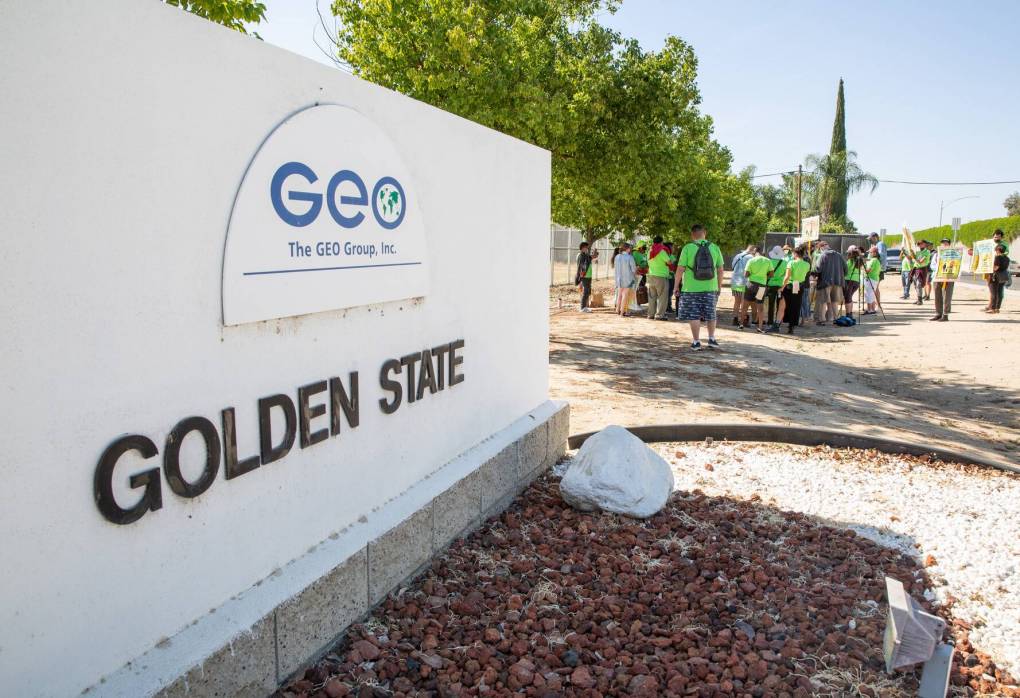
"audio_0": {
"type": "attachments",
"id": "audio_0",
"imgSizes": {
"kqedFullSize": {
"file": "https://ww2.kqed.org/news/wp-content/themes/KQED-unified/img/audio_bgs/background0.jpg"
}
}
},
"audio_1": {
"type": "attachments",
"id": "audio_1",
"imgSizes": {
"kqedFullSize": {
"file": "https://ww2.kqed.org/news/wp-content/themes/KQED-unified/img/audio_bgs/background1.jpg"
}
}
},
"audio_2": {
"type": "attachments",
"id": "audio_2",
"imgSizes": {
"kqedFullSize": {
"file": "https://ww2.kqed.org/news/wp-content/themes/KQED-unified/img/audio_bgs/background2.jpg"
}
}
},
"audio_3": {
"type": "attachments",
"id": "audio_3",
"imgSizes": {
"kqedFullSize": {
"file": "https://ww2.kqed.org/news/wp-content/themes/KQED-unified/img/audio_bgs/background3.jpg"
}
}
},
"audio_4": {
"type": "attachments",
"id": "audio_4",
"imgSizes": {
"kqedFullSize": {
"file": "https://ww2.kqed.org/news/wp-content/themes/KQED-unified/img/audio_bgs/background4.jpg"
}
}
},
"placeholder": {
"type": "attachments",
"id": "placeholder",
"imgSizes": {
"thumbnail": {
"file": "https://cdn.kqed.org/wp-content/uploads/2024/12/KQED-Default-Image-816638274-2000x1333-1-160x107.jpg",
"width": 160,
"height": 107,
"mimeType": "image/jpeg"
},
"medium": {
"file": "https://cdn.kqed.org/wp-content/uploads/2024/12/KQED-Default-Image-816638274-2000x1333-1-800x533.jpg",
"width": 800,
"height": 533,
"mimeType": "image/jpeg"
},
"medium_large": {
"file": "https://cdn.kqed.org/wp-content/uploads/2024/12/KQED-Default-Image-816638274-2000x1333-1-768x512.jpg",
"width": 768,
"height": 512,
"mimeType": "image/jpeg"
},
"large": {
"file": "https://cdn.kqed.org/wp-content/uploads/2024/12/KQED-Default-Image-816638274-2000x1333-1-1020x680.jpg",
"width": 1020,
"height": 680,
"mimeType": "image/jpeg"
},
"1536x1536": {
"file": "https://cdn.kqed.org/wp-content/uploads/2024/12/KQED-Default-Image-816638274-2000x1333-1-1536x1024.jpg",
"width": 1536,
"height": 1024,
"mimeType": "image/jpeg"
},
"fd-lrg": {
"file": "https://cdn.kqed.org/wp-content/uploads/2024/12/KQED-Default-Image-816638274-2000x1333-1-1536x1024.jpg",
"width": 1536,
"height": 1024,
"mimeType": "image/jpeg"
},
"fd-med": {
"file": "https://cdn.kqed.org/wp-content/uploads/2024/12/KQED-Default-Image-816638274-2000x1333-1-1020x680.jpg",
"width": 1020,
"height": 680,
"mimeType": "image/jpeg"
},
"fd-sm": {
"file": "https://cdn.kqed.org/wp-content/uploads/2024/12/KQED-Default-Image-816638274-2000x1333-1-800x533.jpg",
"width": 800,
"height": 533,
"mimeType": "image/jpeg"
},
"post-thumbnail": {
"file": "https://cdn.kqed.org/wp-content/uploads/2024/12/KQED-Default-Image-816638274-2000x1333-1-672x372.jpg",
"width": 672,
"height": 372,
"mimeType": "image/jpeg"
},
"twentyfourteen-full-width": {
"file": "https://cdn.kqed.org/wp-content/uploads/2024/12/KQED-Default-Image-816638274-2000x1333-1-1038x576.jpg",
"width": 1038,
"height": 576,
"mimeType": "image/jpeg"
},
"xxsmall": {
"file": "https://cdn.kqed.org/wp-content/uploads/2024/12/KQED-Default-Image-816638274-2000x1333-1-160x107.jpg",
"width": 160,
"height": 107,
"mimeType": "image/jpeg"
},
"xsmall": {
"file": "https://cdn.kqed.org/wp-content/uploads/2024/12/KQED-Default-Image-816638274-2000x1333-1-672x372.jpg",
"width": 672,
"height": 372,
"mimeType": "image/jpeg"
},
"small": {
"file": "https://cdn.kqed.org/wp-content/uploads/2024/12/KQED-Default-Image-816638274-2000x1333-1-672x372.jpg",
"width": 672,
"height": 372,
"mimeType": "image/jpeg"
},
"xlarge": {
"file": "https://cdn.kqed.org/wp-content/uploads/2024/12/KQED-Default-Image-816638274-2000x1333-1-1020x680.jpg",
"width": 1020,
"height": 680,
"mimeType": "image/jpeg"
},
"full-width": {
"file": "https://cdn.kqed.org/wp-content/uploads/2024/12/KQED-Default-Image-816638274-2000x1333-1-1920x1280.jpg",
"width": 1920,
"height": 1280,
"mimeType": "image/jpeg"
},
"guest-author-32": {
"file": "https://cdn.kqed.org/wp-content/uploads/2025/01/KQED-Default-Image-816638274-1333x1333-1-160x160.jpg",
"width": 32,
"height": 32,
"mimeType": "image/jpeg"
},
"guest-author-50": {
"file": "https://cdn.kqed.org/wp-content/uploads/2025/01/KQED-Default-Image-816638274-1333x1333-1-160x160.jpg",
"width": 50,
"height": 50,
"mimeType": "image/jpeg"
},
"guest-author-64": {
"file": "https://cdn.kqed.org/wp-content/uploads/2025/01/KQED-Default-Image-816638274-1333x1333-1-160x160.jpg",
"width": 64,
"height": 64,
"mimeType": "image/jpeg"
},
"guest-author-96": {
"file": "https://cdn.kqed.org/wp-content/uploads/2025/01/KQED-Default-Image-816638274-1333x1333-1-160x160.jpg",
"width": 96,
"height": 96,
"mimeType": "image/jpeg"
},
"guest-author-128": {
"file": "https://cdn.kqed.org/wp-content/uploads/2025/01/KQED-Default-Image-816638274-1333x1333-1-160x160.jpg",
"width": 128,
"height": 128,
"mimeType": "image/jpeg"
},
"detail": {
"file": "https://cdn.kqed.org/wp-content/uploads/2025/01/KQED-Default-Image-816638274-1333x1333-1-160x160.jpg",
"width": 160,
"height": 160,
"mimeType": "image/jpeg"
},
"kqedFullSize": {
"file": "https://cdn.kqed.org/wp-content/uploads/2024/12/KQED-Default-Image-816638274-2000x1333-1.jpg",
"width": 2000,
"height": 1333
}
}
},
"news_11917627": {
"type": "attachments",
"id": "news_11917627",
"meta": {
"index": "attachments_1716263798",
"site": "news",
"id": "11917627",
"found": true
},
"parent": 11917597,
"imgSizes": {
"twentyfourteen-full-width": {
"file": "https://ww2.kqed.org/app/uploads/sites/10/2022/06/GoldenStateAnnex-1038x576.jpg",
"width": 1038,
"mimeType": "image/jpeg",
"height": 576
},
"thumbnail": {
"file": "https://ww2.kqed.org/app/uploads/sites/10/2022/06/GoldenStateAnnex-160x110.jpg",
"width": 160,
"mimeType": "image/jpeg",
"height": 110
},
"post-thumbnail": {
"file": "https://ww2.kqed.org/app/uploads/sites/10/2022/06/GoldenStateAnnex-672x372.jpg",
"width": 672,
"mimeType": "image/jpeg",
"height": 372
},
"kqedFullSize": {
"file": "https://ww2.kqed.org/app/uploads/sites/10/2022/06/GoldenStateAnnex.jpg",
"width": 1778,
"height": 1217
},
"large": {
"file": "https://ww2.kqed.org/app/uploads/sites/10/2022/06/GoldenStateAnnex-1020x698.jpg",
"width": 1020,
"mimeType": "image/jpeg",
"height": 698
},
"1536x1536": {
"file": "https://ww2.kqed.org/app/uploads/sites/10/2022/06/GoldenStateAnnex-1536x1051.jpg",
"width": 1536,
"mimeType": "image/jpeg",
"height": 1051
},
"medium": {
"file": "https://ww2.kqed.org/app/uploads/sites/10/2022/06/GoldenStateAnnex-800x548.jpg",
"width": 800,
"mimeType": "image/jpeg",
"height": 548
}
},
"publishDate": 1655939837,
"modified": 1655940831,
"caption": "Protesters gathered outside the Golden State Annex immigrant detention center in McFarland, Calif. on May 29, 2022. The event was part of a statewide effort to call attention to conditions for immigrant detainees.",
"description": null,
"title": "Golden State Annex",
"credit": "Courtesy of Joyce Xi and the Dignity Not Detention coalition",
"status": "inherit",
"altTag": "Signage for The Golden State Annex immigrant detention center in the forefront. Protesters are in the background.",
"isLoading": false,
"fetchFailed": false
},
"news_11913908": {
"type": "attachments",
"id": "news_11913908",
"meta": {
"index": "attachments_1716263798",
"site": "news",
"id": "11913908",
"found": true
},
"parent": 11913837,
"imgSizes": {
"twentyfourteen-full-width": {
"file": "https://ww2.kqed.org/app/uploads/sites/10/2022/05/GettyImages-1368210589-1024x576.jpg",
"width": 1024,
"mimeType": "image/jpeg",
"height": 576
},
"thumbnail": {
"file": "https://ww2.kqed.org/app/uploads/sites/10/2022/05/GettyImages-1368210589-160x120.jpg",
"width": 160,
"mimeType": "image/jpeg",
"height": 120
},
"post-thumbnail": {
"file": "https://ww2.kqed.org/app/uploads/sites/10/2022/05/GettyImages-1368210589-672x372.jpg",
"width": 672,
"mimeType": "image/jpeg",
"height": 372
},
"kqedFullSize": {
"file": "https://ww2.kqed.org/app/uploads/sites/10/2022/05/GettyImages-1368210589.jpg",
"width": 1024,
"height": 768
},
"large": {
"file": "https://ww2.kqed.org/app/uploads/sites/10/2022/05/GettyImages-1368210589-1020x765.jpg",
"width": 1020,
"mimeType": "image/jpeg",
"height": 765
},
"medium": {
"file": "https://ww2.kqed.org/app/uploads/sites/10/2022/05/GettyImages-1368210589-800x600.jpg",
"width": 800,
"mimeType": "image/jpeg",
"height": 600
}
},
"publishDate": 1652308732,
"modified": 1652316014,
"caption": "Smokestacks and machinery are visible at Valero's Benicia Refinery, in February 2022. The Bay area plant processes crude oil.",
"description": null,
"title": "Valero Benicia Refinery",
"credit": "Smith Collection/Gado/Getty Images",
"status": "inherit",
"altTag": "Tall stacks at a refinery spew clouds of smoke.",
"isLoading": false,
"fetchFailed": false
},
"news_11912041": {
"type": "attachments",
"id": "news_11912041",
"meta": {
"index": "attachments_1716263798",
"site": "news",
"id": "11912041",
"found": true
},
"parent": 11911991,
"imgSizes": {
"twentyfourteen-full-width": {
"file": "https://ww2.kqed.org/app/uploads/sites/10/2022/04/GettyImages-1239580366-1024x576.jpg",
"width": 1024,
"mimeType": "image/jpeg",
"height": 576
},
"thumbnail": {
"file": "https://ww2.kqed.org/app/uploads/sites/10/2022/04/GettyImages-1239580366-160x110.jpg",
"width": 160,
"mimeType": "image/jpeg",
"height": 110
},
"post-thumbnail": {
"file": "https://ww2.kqed.org/app/uploads/sites/10/2022/04/GettyImages-1239580366-672x372.jpg",
"width": 672,
"mimeType": "image/jpeg",
"height": 372
},
"kqedFullSize": {
"file": "https://ww2.kqed.org/app/uploads/sites/10/2022/04/GettyImages-1239580366.jpg",
"width": 1024,
"height": 706
},
"large": {
"file": "https://ww2.kqed.org/app/uploads/sites/10/2022/04/GettyImages-1239580366-1020x703.jpg",
"width": 1020,
"mimeType": "image/jpeg",
"height": 703
},
"medium": {
"file": "https://ww2.kqed.org/app/uploads/sites/10/2022/04/GettyImages-1239580366-800x552.jpg",
"width": 800,
"mimeType": "image/jpeg",
"height": 552
}
},
"publishDate": 1650669686,
"modified": 1650920792,
"caption": "Crews work to remove mud from Silverado Canyon Road and Olive Drive south of Los Angeles after a storm passed through on March 28, 2022.",
"description": null,
"title": "Rainstorm Brings Mud FLows In Orange County Burn Scar",
"credit": "Mindy Schauer/MediaNews Group/Orange County Register via Getty Images",
"status": "inherit",
"altTag": "Two construction workers wearing neon yellow jackets and hard hats stand on a damp road on a sunny day, working near a red dump truck and a yellow tractor. The construction worker in the foreground shovels mud from the verge of the bright, damp road. The other, blurry in the background, looks up into the window of the red truck, both hands on the body of the truck.",
"isLoading": false,
"fetchFailed": false
},
"news_11884983": {
"type": "attachments",
"id": "news_11884983",
"meta": {
"index": "attachments_1716263798",
"site": "news",
"id": "11884983",
"found": true
},
"parent": 11884967,
"imgSizes": {
"twentyfourteen-full-width": {
"file": "https://ww2.kqed.org/app/uploads/sites/10/2021/08/RS50544_012_SanFrancisco_IndoorMasks_07302021-qut-1038x576.jpeg",
"width": 1038,
"mimeType": "image/jpeg",
"height": 576
},
"thumbnail": {
"file": "https://ww2.kqed.org/app/uploads/sites/10/2021/08/RS50544_012_SanFrancisco_IndoorMasks_07302021-qut-160x107.jpeg",
"width": 160,
"mimeType": "image/jpeg",
"height": 107
},
"post-thumbnail": {
"file": "https://ww2.kqed.org/app/uploads/sites/10/2021/08/RS50544_012_SanFrancisco_IndoorMasks_07302021-qut-672x372.jpeg",
"width": 672,
"mimeType": "image/jpeg",
"height": 372
},
"kqedFullSize": {
"file": "https://ww2.kqed.org/app/uploads/sites/10/2021/08/RS50544_012_SanFrancisco_IndoorMasks_07302021-qut.jpeg",
"width": 1920,
"height": 1280
},
"large": {
"file": "https://ww2.kqed.org/app/uploads/sites/10/2021/08/RS50544_012_SanFrancisco_IndoorMasks_07302021-qut-1020x680.jpeg",
"width": 1020,
"mimeType": "image/jpeg",
"height": 680
},
"1536x1536": {
"file": "https://ww2.kqed.org/app/uploads/sites/10/2021/08/RS50544_012_SanFrancisco_IndoorMasks_07302021-qut-1536x1024.jpeg",
"width": 1536,
"mimeType": "image/jpeg",
"height": 1024
},
"medium": {
"file": "https://ww2.kqed.org/app/uploads/sites/10/2021/08/RS50544_012_SanFrancisco_IndoorMasks_07302021-qut-800x533.jpeg",
"width": 800,
"mimeType": "image/jpeg",
"height": 533
}
},
"publishDate": 1628876004,
"modified": 1639686096,
"caption": "Masked employees at La Copa Loca Gelato in San Francisco serve customers, on July 30, 2021.",
"description": null,
"title": "RS50544_012_SanFrancisco_IndoorMasks_07302021-qut",
"credit": "Beth LaBerge/KQED",
"status": "inherit",
"altTag": "Workers in masks behind a counter serve ice cream to a customer.",
"isLoading": false,
"fetchFailed": false
},
"news_11897794": {
"type": "attachments",
"id": "news_11897794",
"meta": {
"index": "attachments_1716263798",
"site": "news",
"id": "11897794",
"found": true
},
"parent": 11897789,
"imgSizes": {
"twentyfourteen-full-width": {
"file": "https://ww2.kqed.org/app/uploads/sites/10/2021/12/Smoke-Protections-Main-1038x576.jpg",
"width": 1038,
"mimeType": "image/jpeg",
"height": 576
},
"thumbnail": {
"file": "https://ww2.kqed.org/app/uploads/sites/10/2021/12/Smoke-Protections-Main-160x102.jpg",
"width": 160,
"mimeType": "image/jpeg",
"height": 102
},
"post-thumbnail": {
"file": "https://ww2.kqed.org/app/uploads/sites/10/2021/12/Smoke-Protections-Main-672x372.jpg",
"width": 672,
"mimeType": "image/jpeg",
"height": 372
},
"kqedFullSize": {
"file": "https://ww2.kqed.org/app/uploads/sites/10/2021/12/Smoke-Protections-Main.jpg",
"width": 1920,
"height": 1228
},
"large": {
"file": "https://ww2.kqed.org/app/uploads/sites/10/2021/12/Smoke-Protections-Main-1020x652.jpg",
"width": 1020,
"mimeType": "image/jpeg",
"height": 652
},
"1536x1536": {
"file": "https://ww2.kqed.org/app/uploads/sites/10/2021/12/Smoke-Protections-Main-1536x982.jpg",
"width": 1536,
"mimeType": "image/jpeg",
"height": 982
},
"medium": {
"file": "https://ww2.kqed.org/app/uploads/sites/10/2021/12/Smoke-Protections-Main-800x512.jpg",
"width": 800,
"mimeType": "image/jpeg",
"height": 512
}
},
"publishDate": 1638390355,
"modified": 1638411790,
"caption": "A worker pulls dry grapevines from a field in Fresno County on Oct. 13, 2021. He labored regular shifts in thick smoke the week before, he said, but was not provided with an N95 mask, moved indoors or offered any of the protections required by the state.",
"description": "A worker pulls dry grapevines from a field in Fresno County on Oct 13, 2021. He labored regular shifts in thick smoke the week before, he said, but was not provided an N95 mask, moved indoors or offered any of the protections required by the state.",
"title": "Smoke-Protections-Main",
"credit": "Farida Jhabvala Romero/KQED",
"status": "inherit",
"altTag": "Beneath a bright sun, a man wearing a light purple long-sleeved shirt, jeans, work boots, and a wide-brimmed hat stands in a dried tractor rut and leans over as he pulls at dry grapevines. The entire field around him is brown and dry, with a line of trees visible in the distance.",
"isLoading": false,
"fetchFailed": false
},
"news_11859737": {
"type": "attachments",
"id": "news_11859737",
"meta": {
"index": "attachments_1716263798",
"site": "news",
"id": "11859737",
"found": true
},
"parent": 11859660,
"imgSizes": {
"apple_news_ca_landscape_5_5": {
"file": "https://ww2.kqed.org/app/uploads/sites/10/2021/02/Chevron-Spill-e1614135246604-1044x783.jpg",
"width": 1044,
"mimeType": "image/jpeg",
"height": 783
},
"apple_news_ca_square_4_0": {
"file": "https://ww2.kqed.org/app/uploads/sites/10/2021/02/Chevron-Spill-e1614135246604-470x470.jpg",
"width": 470,
"mimeType": "image/jpeg",
"height": 470
},
"twentyfourteen-full-width": {
"file": "https://ww2.kqed.org/app/uploads/sites/10/2021/02/Chevron-Spill-e1614135246604-1038x576.jpg",
"width": 1038,
"mimeType": "image/jpeg",
"height": 576
},
"thumbnail": {
"file": "https://ww2.kqed.org/app/uploads/sites/10/2021/02/Chevron-Spill-e1614135246604-160x108.jpg",
"width": 160,
"mimeType": "image/jpeg",
"height": 108
},
"post-thumbnail": {
"file": "https://ww2.kqed.org/app/uploads/sites/10/2021/02/Chevron-Spill-e1614135246604-672x372.jpg",
"width": 672,
"mimeType": "image/jpeg",
"height": 372
},
"kqedFullSize": {
"file": "https://ww2.kqed.org/app/uploads/sites/10/2021/02/Chevron-Spill-e1614135246604.jpg",
"width": 1440,
"height": 974
},
"apple_news_ca_landscape_4_7": {
"file": "https://ww2.kqed.org/app/uploads/sites/10/2021/02/Chevron-Spill-e1614135246604-632x474.jpg",
"width": 632,
"mimeType": "image/jpeg",
"height": 474
},
"large": {
"file": "https://ww2.kqed.org/app/uploads/sites/10/2021/02/Chevron-Spill-e1614135246604-1020x690.jpg",
"width": 1020,
"mimeType": "image/jpeg",
"height": 690
},
"apple_news_ca_landscape_4_0": {
"file": "https://ww2.kqed.org/app/uploads/sites/10/2021/02/Chevron-Spill-e1614135246604-536x402.jpg",
"width": 536,
"mimeType": "image/jpeg",
"height": 402
},
"apple_news_ca_portrait_12_9": {
"file": "https://ww2.kqed.org/app/uploads/sites/10/2021/02/Chevron-Spill-e1614135246604-1122x974.jpg",
"width": 1122,
"mimeType": "image/jpeg",
"height": 974
},
"medium": {
"file": "https://ww2.kqed.org/app/uploads/sites/10/2021/02/Chevron-Spill-e1614135246604-800x541.jpg",
"width": 800,
"mimeType": "image/jpeg",
"height": 541
},
"apple_news_ca_portrait_4_0": {
"file": "https://ww2.kqed.org/app/uploads/sites/10/2021/02/Chevron-Spill-e1614135246604-354x472.jpg",
"width": 354,
"mimeType": "image/jpeg",
"height": 472
},
"apple_news_ca_portrait_9_7": {
"file": "https://ww2.kqed.org/app/uploads/sites/10/2021/02/Chevron-Spill-e1614135246604-840x974.jpg",
"width": 840,
"mimeType": "image/jpeg",
"height": 974
},
"apple_news_ca_landscape_12_9": {
"file": "https://ww2.kqed.org/app/uploads/sites/10/2021/02/Chevron-Spill-1832x1099.jpg",
"width": 1832,
"mimeType": "image/jpeg",
"height": 1099
},
"apple_news_ca_square_9_7": {
"file": "https://ww2.kqed.org/app/uploads/sites/10/2021/02/Chevron-Spill-e1614135246604-1104x974.jpg",
"width": 1104,
"mimeType": "image/jpeg",
"height": 974
},
"1536x1536": {
"file": "https://ww2.kqed.org/app/uploads/sites/10/2021/02/Chevron-Spill-1536x879.jpg",
"width": 1536,
"mimeType": "image/jpeg",
"height": 879
},
"apple_news_ca_portrait_4_7": {
"file": "https://ww2.kqed.org/app/uploads/sites/10/2021/02/Chevron-Spill-e1614135246604-414x552.jpg",
"width": 414,
"mimeType": "image/jpeg",
"height": 552
},
"apple_news_ca_square_12_9": {
"file": "https://ww2.kqed.org/app/uploads/sites/10/2021/02/Chevron-Spill-1472x1099.jpg",
"width": 1472,
"mimeType": "image/jpeg",
"height": 1099
},
"apple_news_ca_portrait_5_5": {
"file": "https://ww2.kqed.org/app/uploads/sites/10/2021/02/Chevron-Spill-e1614135246604-687x916.jpg",
"width": 687,
"mimeType": "image/jpeg",
"height": 916
},
"apple_news_ca_square_4_7": {
"file": "https://ww2.kqed.org/app/uploads/sites/10/2021/02/Chevron-Spill-e1614135246604-550x550.jpg",
"width": 550,
"mimeType": "image/jpeg",
"height": 550
},
"apple_news_ca_landscape_9_7": {
"file": "https://ww2.kqed.org/app/uploads/sites/10/2021/02/Chevron-Spill-e1614135246604-1376x974.jpg",
"width": 1376,
"mimeType": "image/jpeg",
"height": 974
},
"apple_news_ca_square_5_5": {
"file": "https://ww2.kqed.org/app/uploads/sites/10/2021/02/Chevron-Spill-e1614135246604-912x912.jpg",
"width": 912,
"mimeType": "image/jpeg",
"height": 912
}
},
"publishDate": 1612994604,
"modified": 1667598387,
"caption": "An oily sheen spreads across bay waters to Point Richmond after a pipeline leaked at Chevron's Richmond refinery on Feb. 9, 2021.",
"description": "Frame grab from drone video shows oily sheen that spread across bay waters to Point Richmond after a pipeline began leaking at Chevron's Richmond refinery on Tuesday. ",
"title": "Chevron-Spill",
"credit": "Courtesy of San Francisco Baykeeper",
"status": "inherit",
"altTag": "A large oil slick on water off a shore lit by lights at the refinery there.",
"isLoading": false,
"fetchFailed": false
},
"news_11889298": {
"type": "attachments",
"id": "news_11889298",
"meta": {
"index": "attachments_1716263798",
"site": "news",
"id": "11889298",
"found": true
},
"parent": 11889263,
"imgSizes": {
"twentyfourteen-full-width": {
"file": "https://ww2.kqed.org/app/uploads/sites/10/2021/09/Firefighter-Cover-1038x576.jpg",
"width": 1038,
"mimeType": "image/jpeg",
"height": 576
},
"thumbnail": {
"file": "https://ww2.kqed.org/app/uploads/sites/10/2021/09/Firefighter-Cover-160x107.jpg",
"width": 160,
"mimeType": "image/jpeg",
"height": 107
},
"post-thumbnail": {
"file": "https://ww2.kqed.org/app/uploads/sites/10/2021/09/Firefighter-Cover-672x372.jpg",
"width": 672,
"mimeType": "image/jpeg",
"height": 372
},
"kqedFullSize": {
"file": "https://ww2.kqed.org/app/uploads/sites/10/2021/09/Firefighter-Cover.jpg",
"width": 1396,
"height": 931
},
"large": {
"file": "https://ww2.kqed.org/app/uploads/sites/10/2021/09/Firefighter-Cover-1020x680.jpg",
"width": 1020,
"mimeType": "image/jpeg",
"height": 680
},
"medium": {
"file": "https://ww2.kqed.org/app/uploads/sites/10/2021/09/Firefighter-Cover-800x534.jpg",
"width": 800,
"mimeType": "image/jpeg",
"height": 534
}
},
"publishDate": 1632260245,
"modified": 1632345893,
"caption": "Over the last year and a half, almost four dozen Cal Fire firefighters\nhave suffered from heat illness during training, and since 2003, five have died.",
"description": "Over the last year and a half, almost four dozen Cal Fire firefighters\nhave suffered from heat illness during training, and since 2003, five have died.",
"title": "Firefighter Cover",
"credit": "Illustration by Alborz Kamalizad / Photography courtesy of Cal Fire",
"status": "inherit",
"altTag": "A black-and-white photo of a group of firefighters lying on the grass, overlaid with a graphic of a dotted red line.",
"isLoading": false,
"fetchFailed": false
},
"news_11889338": {
"type": "attachments",
"id": "news_11889338",
"meta": {
"index": "attachments_1716263798",
"site": "news",
"id": "11889338",
"found": true
},
"parent": 11889336,
"imgSizes": {
"twentyfourteen-full-width": {
"file": "https://ww2.kqed.org/app/uploads/sites/10/2021/09/RS50579_002_SanFrancisco_HeatWaveImpacts_08062021-qut-1-1038x576.jpg",
"width": 1038,
"mimeType": "image/jpeg",
"height": 576
},
"thumbnail": {
"file": "https://ww2.kqed.org/app/uploads/sites/10/2021/09/RS50579_002_SanFrancisco_HeatWaveImpacts_08062021-qut-1-160x107.jpg",
"width": 160,
"mimeType": "image/jpeg",
"height": 107
},
"post-thumbnail": {
"file": "https://ww2.kqed.org/app/uploads/sites/10/2021/09/RS50579_002_SanFrancisco_HeatWaveImpacts_08062021-qut-1-672x372.jpg",
"width": 672,
"mimeType": "image/jpeg",
"height": 372
},
"kqedFullSize": {
"file": "https://ww2.kqed.org/app/uploads/sites/10/2021/09/RS50579_002_SanFrancisco_HeatWaveImpacts_08062021-qut-1.jpg",
"width": 1920,
"height": 1280
},
"large": {
"file": "https://ww2.kqed.org/app/uploads/sites/10/2021/09/RS50579_002_SanFrancisco_HeatWaveImpacts_08062021-qut-1-1020x680.jpg",
"width": 1020,
"mimeType": "image/jpeg",
"height": 680
},
"1536x1536": {
"file": "https://ww2.kqed.org/app/uploads/sites/10/2021/09/RS50579_002_SanFrancisco_HeatWaveImpacts_08062021-qut-1-1536x1024.jpg",
"width": 1536,
"mimeType": "image/jpeg",
"height": 1024
},
"medium": {
"file": "https://ww2.kqed.org/app/uploads/sites/10/2021/09/RS50579_002_SanFrancisco_HeatWaveImpacts_08062021-qut-1-800x533.jpg",
"width": 800,
"mimeType": "image/jpeg",
"height": 533
}
},
"publishDate": 1632270705,
"modified": 1632334684,
"caption": "A vendor removes beans from their pod while sitting under a tarp to protect them from the sun in San Francisco's Mission District on Aug. 6, 2021.",
"description": "A vendor removes beans from their pod while sitting under a tarp to protect from the sun in San Francisco's Mission District on August 6, 2021.",
"title": "RS50579_002_SanFrancisco_HeatWaveImpacts_08062021-qut (1)",
"credit": "Beth LaBerge/KQED",
"status": "inherit",
"altTag": "A close-up of a pair of hands shelling a bean.",
"isLoading": false,
"fetchFailed": false
},
"news_11878603": {
"type": "attachments",
"id": "news_11878603",
"meta": {
"index": "attachments_1716263798",
"site": "news",
"id": "11878603",
"found": true
},
"parent": 11878591,
"imgSizes": {
"twentyfourteen-full-width": {
"file": "https://ww2.kqed.org/app/uploads/sites/10/2021/06/GettyImages-1232312321-1-1038x576.jpg",
"width": 1038,
"mimeType": "image/jpeg",
"height": 576
},
"thumbnail": {
"file": "https://ww2.kqed.org/app/uploads/sites/10/2021/06/GettyImages-1232312321-1-160x107.jpg",
"width": 160,
"mimeType": "image/jpeg",
"height": 107
},
"post-thumbnail": {
"file": "https://ww2.kqed.org/app/uploads/sites/10/2021/06/GettyImages-1232312321-1-672x372.jpg",
"width": 672,
"mimeType": "image/jpeg",
"height": 372
},
"kqedFullSize": {
"file": "https://ww2.kqed.org/app/uploads/sites/10/2021/06/GettyImages-1232312321-1.jpg",
"width": 1920,
"height": 1280
},
"large": {
"file": "https://ww2.kqed.org/app/uploads/sites/10/2021/06/GettyImages-1232312321-1-1020x680.jpg",
"width": 1020,
"mimeType": "image/jpeg",
"height": 680
},
"1536x1536": {
"file": "https://ww2.kqed.org/app/uploads/sites/10/2021/06/GettyImages-1232312321-1-1536x1024.jpg",
"width": 1536,
"mimeType": "image/jpeg",
"height": 1024
},
"medium": {
"file": "https://ww2.kqed.org/app/uploads/sites/10/2021/06/GettyImages-1232312321-1-800x533.jpg",
"width": 800,
"mimeType": "image/jpeg",
"height": 533
}
},
"publishDate": 1624038113,
"modified": 1624038279,
"caption": "Californians will be able to acquire a digital record of their coronavirus vaccination to access spaces that require proof of inoculation.",
"description": "Californians will be able to acquire a digital record of their coronavirus vaccination to access spaces that require proof of inoculation.",
"title": "US-HEALTH-VIRUS-VACCINE",
"credit": "Chandan Khanna/AFP via Getty Images",
"status": "inherit",
"altTag": null,
"isLoading": false,
"fetchFailed": false
},
"news_11878523": {
"type": "attachments",
"id": "news_11878523",
"meta": {
"index": "attachments_1716263798",
"site": "news",
"id": "11878523",
"found": true
},
"parent": 11878490,
"imgSizes": {
"twentyfourteen-full-width": {
"file": "https://ww2.kqed.org/app/uploads/sites/10/2021/06/Getty-workplacemasks-1038x576.jpg",
"width": 1038,
"mimeType": "image/jpeg",
"height": 576
},
"thumbnail": {
"file": "https://ww2.kqed.org/app/uploads/sites/10/2021/06/Getty-workplacemasks-160x98.jpg",
"width": 160,
"mimeType": "image/jpeg",
"height": 98
},
"post-thumbnail": {
"file": "https://ww2.kqed.org/app/uploads/sites/10/2021/06/Getty-workplacemasks-672x372.jpg",
"width": 672,
"mimeType": "image/jpeg",
"height": 372
},
"kqedFullSize": {
"file": "https://ww2.kqed.org/app/uploads/sites/10/2021/06/Getty-workplacemasks.jpg",
"width": 1080,
"height": 662
},
"large": {
"file": "https://ww2.kqed.org/app/uploads/sites/10/2021/06/Getty-workplacemasks-1020x625.jpg",
"width": 1020,
"mimeType": "image/jpeg",
"height": 625
},
"medium": {
"file": "https://ww2.kqed.org/app/uploads/sites/10/2021/06/Getty-workplacemasks-800x490.jpg",
"width": 800,
"mimeType": "image/jpeg",
"height": 490
}
},
"publishDate": 1623969831,
"modified": 1623975326,
"caption": "Kitchen staff prepare breakfast at the reopening of Langer's Delicatessen-Restaurant in Los Angeles on June 15, 2021, as California re-opens, lifting its COVID-19 restrictions. ",
"description": "Kitchen staff prepare breakfast at the reopening of Langer's Delicatessen-Restaurant in Los Angeles on June 15, 2021, as California re-opens, lifting its COVID-19 restrictions. ",
"title": "Getty-workplacemasks",
"credit": "Frederic J. Brown/AFP via Getty Images",
"status": "inherit",
"altTag": "Restaurant kitchen staff wear masks while they serve a plat of food.",
"isLoading": false,
"fetchFailed": false
},
"news_11877996": {
"type": "attachments",
"id": "news_11877996",
"meta": {
"index": "attachments_1716263798",
"site": "news",
"id": "11877996",
"found": true
},
"parent": 11877992,
"imgSizes": {
"twentyfourteen-full-width": {
"file": "https://ww2.kqed.org/app/uploads/sites/10/2021/06/0692021_ReopeningJune15_PU_Sized_15-1038x576.jpg",
"width": 1038,
"mimeType": "image/jpeg",
"height": 576
},
"thumbnail": {
"file": "https://ww2.kqed.org/app/uploads/sites/10/2021/06/0692021_ReopeningJune15_PU_Sized_15-160x107.jpg",
"width": 160,
"mimeType": "image/jpeg",
"height": 107
},
"post-thumbnail": {
"file": "https://ww2.kqed.org/app/uploads/sites/10/2021/06/0692021_ReopeningJune15_PU_Sized_15-672x372.jpg",
"width": 672,
"mimeType": "image/jpeg",
"height": 372
},
"kqedFullSize": {
"file": "https://ww2.kqed.org/app/uploads/sites/10/2021/06/0692021_ReopeningJune15_PU_Sized_15.jpg",
"width": 1536,
"height": 1024
},
"large": {
"file": "https://ww2.kqed.org/app/uploads/sites/10/2021/06/0692021_ReopeningJune15_PU_Sized_15-1020x680.jpg",
"width": 1020,
"mimeType": "image/jpeg",
"height": 680
},
"medium": {
"file": "https://ww2.kqed.org/app/uploads/sites/10/2021/06/0692021_ReopeningJune15_PU_Sized_15-800x533.jpg",
"width": 800,
"mimeType": "image/jpeg",
"height": 533
}
},
"publishDate": 1623784733,
"modified": 1623784855,
"caption": "Carlos Hernandez holds his mask while getting a haircut by Sarah Cordiey at Spiros Barber Shop in Long Beach, on June 9, 2021. \"During the pandemic, I got depression and anxiety,\" said Hernandez, who saw his family for the first time last week in more than one year. \"But then when I got [fully] vaccinated I felt a lot better.\"",
"description": "Carlos Hernandez holds his mask while getting a haircut by Sarah Cordiey at Spiros Barber Shop in Long Beach, on June 9, 2021.",
"title": "0692021_ReopeningJune15_PU_Sized_15",
"credit": "Pablo Unzueta for CalMatters",
"status": "inherit",
"altTag": "Carlos Hernandez holds his mask whilera getting a haircut. The razor passes by his sideburns.",
"isLoading": false,
"fetchFailed": false
},
"news_11877701": {
"type": "attachments",
"id": "news_11877701",
"meta": {
"index": "attachments_1716263798",
"site": "news",
"id": "11877701",
"found": true
},
"parent": 11877688,
"imgSizes": {
"twentyfourteen-full-width": {
"file": "https://ww2.kqed.org/app/uploads/sites/10/2021/06/employeesmust_061121_final-1038x576.png",
"width": 1038,
"mimeType": "image/png",
"height": 576
},
"thumbnail": {
"file": "https://ww2.kqed.org/app/uploads/sites/10/2021/06/employeesmust_061121_final-160x122.png",
"width": 160,
"mimeType": "image/png",
"height": 122
},
"post-thumbnail": {
"file": "https://ww2.kqed.org/app/uploads/sites/10/2021/06/employeesmust_061121_final-672x372.png",
"width": 672,
"mimeType": "image/png",
"height": 372
},
"kqedFullSize": {
"file": "https://ww2.kqed.org/app/uploads/sites/10/2021/06/employeesmust_061121_final.png",
"width": 1920,
"height": 1464
},
"large": {
"file": "https://ww2.kqed.org/app/uploads/sites/10/2021/06/employeesmust_061121_final-1020x778.png",
"width": 1020,
"mimeType": "image/png",
"height": 778
},
"1536x1536": {
"file": "https://ww2.kqed.org/app/uploads/sites/10/2021/06/employeesmust_061121_final-1536x1171.png",
"width": 1536,
"mimeType": "image/png",
"height": 1171
},
"medium": {
"file": "https://ww2.kqed.org/app/uploads/sites/10/2021/06/employeesmust_061121_final-800x610.png",
"width": 800,
"mimeType": "image/png",
"height": 610
}
},
"publishDate": 1623418184,
"modified": 1623418279,
"caption": null,
"description": null,
"title": "employeesmust_061121_final",
"credit": null,
"status": "inherit",
"altTag": "A Mark Fiore cartoon that looks like a sign, that reads: Notice, by order of Cal/OSHA, all employees must wear a face mask (which is crossed out), can unmask if all are vaccinated (crossed out), await further instructions, hang tight. There is a yellow sticky note next to the last bullet point that says \"wear a mask.\"",
"isLoading": false,
"fetchFailed": false
}
},
"audioPlayerReducer": {
"postId": "stream_live",
"isPaused": true,
"isPlaying": false,
"pfsActive": false,
"pledgeModalIsOpen": true,
"playerDrawerIsOpen": false,
"liveAudioPlayStartedAt": 0,
"liveAudioPlayContext": ""
},
"authorsReducer": {
"byline_news_11911991": {
"type": "authors",
"id": "byline_news_11911991",
"meta": {
"override": true
},
"slug": "byline_news_11911991",
"name": "Don Thompson, Associated Press",
"isLoading": false
},
"byline_news_11899392": {
"type": "authors",
"id": "byline_news_11899392",
"meta": {
"override": true
},
"slug": "byline_news_11899392",
"name": "Don Thompson\u003cbr>Associated Press",
"isLoading": false
},
"byline_news_11889263": {
"type": "authors",
"id": "byline_news_11889263",
"meta": {
"override": true
},
"slug": "byline_news_11889263",
"name": "Brian Edwards and Jacob Margolis",
"isLoading": false
},
"byline_news_11889336": {
"type": "authors",
"id": "byline_news_11889336",
"meta": {
"override": true
},
"slug": "byline_news_11889336",
"name": "Julia Shipley, Brian Edwards, David Nickerson",
"isLoading": false
},
"byline_news_11878591": {
"type": "authors",
"id": "byline_news_11878591",
"meta": {
"override": true
},
"slug": "byline_news_11878591",
"name": "Don Thompson",
"isLoading": false
},
"byline_news_11878490": {
"type": "authors",
"id": "byline_news_11878490",
"meta": {
"override": true
},
"slug": "byline_news_11878490",
"name": "Don Thompson",
"isLoading": false
},
"byline_news_11877992": {
"type": "authors",
"id": "byline_news_11877992",
"meta": {
"override": true
},
"slug": "byline_news_11877992",
"name": "\u003ca href=\"https://calmatters.org/author/ben-christopher/\">Ben Christopher\u003c/a>",
"isLoading": false
},
"tgoldberg": {
"type": "authors",
"id": "258",
"meta": {
"index": "authors_1716337520",
"id": "258",
"found": true
},
"name": "Ted Goldberg",
"firstName": "Ted",
"lastName": "Goldberg",
"slug": "tgoldberg",
"email": "tgoldberg@kqed.org",
"display_author_email": true,
"staff_mastheads": [
"news"
],
"title": "KQED Managing Editor, News and Newscasts",
"bio": "Ted Goldberg is Managing Editor of News and Newscasts at KQED. His main reporting beat is the Bay Area's oil refining industry.\r\n\r\nPrior to joining KQED in 2014, Ted worked at CBS News and WCBS AM in New York and Bay City News and KCBS Radio in San Francisco. He graduated from Oberlin College in Ohio in 1998.",
"avatar": "https://secure.gravatar.com/avatar/30ce2e4fe89135e104f89be2394d16225b9d36c121b5b3cb7651ce642978b96f?s=600&d=blank&r=g",
"twitter": "TedrickG",
"bluesky": null,
"facebook": null,
"instagram": null,
"linkedin": null,
"sites": [
{
"site": "news",
"roles": [
"editor"
]
},
{
"site": "science",
"roles": [
"editor"
]
}
],
"headData": {
"title": "Ted Goldberg | KQED",
"description": "KQED Managing Editor, News and Newscasts",
"ogImgSrc": "https://secure.gravatar.com/avatar/30ce2e4fe89135e104f89be2394d16225b9d36c121b5b3cb7651ce642978b96f?s=600&d=blank&r=g",
"twImgSrc": "https://secure.gravatar.com/avatar/30ce2e4fe89135e104f89be2394d16225b9d36c121b5b3cb7651ce642978b96f?s=600&d=blank&r=g"
},
"isLoading": false,
"link": "/author/tgoldberg"
},
"markfiore": {
"type": "authors",
"id": "3236",
"meta": {
"index": "authors_1716337520",
"id": "3236",
"found": true
},
"name": "Mark Fiore",
"firstName": "Mark",
"lastName": "Fiore",
"slug": "markfiore",
"email": "mark@markfiore.com",
"display_author_email": false,
"staff_mastheads": [
"news"
],
"title": "KQED News Cartoonist",
"bio": "\u003ca href=\"http://www.MarkFiore.com\">MarkFiore.com\u003c/a> | \u003ca href=\"https://twitter.com/markfiore\">Follow on Twitter\u003c/a> | \u003ca href=\"https://www.facebook.com/pages/Mark-Fiore-Animated-Political-Cartoons/94451707396?ref=bookmarks\">Facebook\u003c/a> | \u003ca href=\"mailto:mark@markfiore.com\">email\u003c/a>\r\n\r\nPulitzer Prize-winner, Mark Fiore, who the Wall Street Journal has called “the undisputed guru of the form,” creates animated political cartoons in San Francisco, where his work has been featured regularly on the San Francisco Chronicle’s web site, SFGate.com. His work has appeared on Newsweek.com, Slate.com, CBSNews.com, MotherJones.com, DailyKos.com and NPR’s web site. Fiore’s political animation has appeared on CNN, Frontline, Bill Moyers Journal, Salon.com and cable and broadcast outlets across the globe.\r\n\r\nBeginning his professional life by drawing traditional political cartoons for newspapers, Fiore’s work appeared in publications ranging from the Washington Post to the Los Angeles Times. In the late 1990s, he began to experiment with animating political cartoons and, after a short stint at the San Jose Mercury News as their staff cartoonist, Fiore devoted all his energies to animation.\r\nGrowing up in California, Fiore also spent a good portion of his life in the backwoods of Idaho. It was this combination that shaped him politically. Mark majored in political science at Colorado College, where, in a perfect send-off for a cartoonist, he received his diploma in 1991 as commencement speaker Dick Cheney smiled approvingly.\r\nMark Fiore was awarded the Pulitzer Prize for political cartooning in 2010, a Robert F. Kennedy Journalism Award in 2004 and has twice received an Online Journalism Award for commentary from the Online News Association (2002, 2008). Fiore has received two awards for his work in new media from the National Cartoonists Society (2001, 2002), and in 2006 received The James Madison Freedom of Information Award from The Society of Professional Journalists.",
"avatar": "https://secure.gravatar.com/avatar/fc4e2a612b15b67bad0c6f0e1db4ca9b?s=600&d=blank&r=g",
"twitter": "MarkFiore",
"facebook": null,
"instagram": "https://www.instagram.com/markfiore/?hl=en",
"linkedin": null,
"sites": [
{
"site": "arts",
"roles": [
"contributor"
]
},
{
"site": "news",
"roles": [
"editor"
]
},
{
"site": "futureofyou",
"roles": [
"editor"
]
},
{
"site": "science",
"roles": [
"editor"
]
}
],
"headData": {
"title": "Mark Fiore | KQED",
"description": "KQED News Cartoonist",
"ogImgSrc": "https://secure.gravatar.com/avatar/fc4e2a612b15b67bad0c6f0e1db4ca9b?s=600&d=blank&r=g",
"twImgSrc": "https://secure.gravatar.com/avatar/fc4e2a612b15b67bad0c6f0e1db4ca9b?s=600&d=blank&r=g"
},
"isLoading": false,
"link": "/author/markfiore"
},
"fjhabvala": {
"type": "authors",
"id": "8659",
"meta": {
"index": "authors_1716337520",
"id": "8659",
"found": true
},
"name": "Farida Jhabvala Romero",
"firstName": "Farida",
"lastName": "Jhabvala Romero",
"slug": "fjhabvala",
"email": "fjhabvala@kqed.org",
"display_author_email": true,
"staff_mastheads": [
"news"
],
"title": "KQED Contributor",
"bio": "Farida Jhabvala Romero is a Labor Correspondent for KQED. She previously covered immigration. Farida was \u003ca href=\"https://www.ccnma.org/2022-most-influential-latina-journalists\">named\u003c/a> one of the 10 Most Influential Latina Journalists in California in 2022 by the California Chicano News Media Association. Her work has won awards from the Society of Professional Journalists (Northern California), as well as a national and regional Edward M. Murrow Award for the collaborative reporting projects “Dangerous Air” and “Graying California.” Before joining KQED, Farida worked as a producer at Radio Bilingüe, a national public radio network. Farida earned her master’s degree in journalism from Stanford University.",
"avatar": "https://secure.gravatar.com/avatar/f9f022d4e2609741874222a1e9d41f48fea74011aa7c615eef91d9a50c944ebe?s=600&d=blank&r=g",
"twitter": "FaridaJhabvala",
"bluesky": null,
"facebook": null,
"instagram": null,
"linkedin": "https://www.linkedin.com/in/faridajhabvala/",
"sites": [
{
"site": "news",
"roles": [
"editor"
]
},
{
"site": "stateofhealth",
"roles": [
"author"
]
},
{
"site": "liveblog",
"roles": [
"author"
]
}
],
"headData": {
"title": "Farida Jhabvala Romero | KQED",
"description": "KQED Contributor",
"ogImgSrc": "https://secure.gravatar.com/avatar/f9f022d4e2609741874222a1e9d41f48fea74011aa7c615eef91d9a50c944ebe?s=600&d=blank&r=g",
"twImgSrc": "https://secure.gravatar.com/avatar/f9f022d4e2609741874222a1e9d41f48fea74011aa7c615eef91d9a50c944ebe?s=600&d=blank&r=g"
},
"isLoading": false,
"link": "/author/fjhabvala"
}
},
"pagesReducer": {
"news_tag_cal-osha": {
"type": "terms",
"id": "news_6145",
"meta": {
"index": "terms_1716263798",
"site": "news",
"id": "6145",
"score": 10.403188
},
"featImg": null,
"name": "Cal-OSHA",
"description": null,
"taxonomy": "tag",
"headData": {
"twImgId": null,
"twTitle": null,
"ogTitle": null,
"ogImgId": null,
"twDescription": null,
"description": null,
"title": "Cal-OSHA Archives | KQED News",
"ogDescription": null
},
"ttid": 6169,
"slug": "cal-osha",
"isLoading": false,
"title": "Cal-OSHA",
"pageMeta": {
"site": "news",
"WpPageTemplate": "page-topic-editorial",
"currentPage": 3
},
"blocks": [
{
"blockName": "kqed/post-list",
"attrs": {
"layout": "cardArticle2",
"query": "posts/news?tag=cal-osha",
"seeMore": false,
"paginated": true,
"page": 3
}
},
{
"blockName": "kqed/ad"
}
]
}
},
"pfsSessionReducer": {},
"postsReducer": {
"stream_live": {
"type": "live",
"id": "stream_live",
"audioUrl": "https://streams.kqed.org/kqedradio",
"title": "Live Stream",
"excerpt": "Live Stream information currently unavailable.",
"link": "/radio",
"featImg": "",
"label": {
"name": "KQED Live",
"link": "/"
}
},
"stream_kqedNewscast": {
"type": "posts",
"id": "stream_kqedNewscast",
"audioUrl": "https://www.kqed.org/.stream/anon/radio/RDnews/newscast.mp3?_=1",
"title": "KQED Newscast",
"featImg": "",
"label": {
"name": "88.5 FM",
"link": "/"
}
},
"news_11917597": {
"type": "posts",
"id": "news_11917597",
"meta": {
"index": "posts_1716263798",
"site": "news",
"id": "11917597",
"score": null,
"sort": [
1655944579000
]
},
"guestAuthors": [],
"slug": "immigrant-detainees-strike-over-working-conditions-california-regulators-investigate",
"title": "Immigrant Detainees Strike Over Working Conditions, California Regulators Investigate",
"publishDate": 1655944579,
"format": "standard",
"headTitle": "Immigrant Detainees Strike Over Working Conditions, California Regulators Investigate | KQED",
"labelTerm": {
"site": "news"
},
"content": "\u003cp>Dozens of immigrants who clean dormitories and bathrooms for just $1 a day while locked up at federal detention centers in California are waging a labor strike.\u003c/p>\n\u003cp>The detainees, who are being held at two privately run facilities in the Bakersfield area as they fight deportation, have been protesting compensation well below the state’s $15/hour minimum wage for weeks. These workers, known as “housing porters,” are also demanding the private operator of these facilities address alleged hazardous conditions, inedible food and other issues.\u003c/p>\n\u003cp>[pullquote size='medium' align='right' citation=\"Statement from Golden State Annex strikers\"]‘We are being exploited for our labor and are being paid $1 per day to clean the dormitories. Meanwhile, private prison corporations like The GEO Group receive tens of millions each year to accommodate us detained in ICE custody.’[/pullquote]\u003c/p>\n\u003cp>Both of the U.S. Immigration and Customs Enforcement facilities facing a work stoppage — Golden State Annex in McFarland since June 6 and the Mesa Verde ICE Processing Center in Bakersfield for 55 days, according to immigrant advocates — are operated by \u003ca href=\"https://www.geogroup.com/\">The GEO Group\u003c/a>, one of the largest for-profit prison companies in the U.S.\u003c/p>\n\u003cp>“We are being exploited for our labor and are being paid $1 per day to clean the dormitories,” strikers at Golden State Annex said in a statement released last week. “Meanwhile, private prison corporations like The GEO Group receive tens of millions each year to accommodate us detained in ICE custody.”\u003c/p>\n\u003cp>Many detainees participate in the volunteer working program to afford what they say are high-cost phone calls and commissary items such as dental floss and tortillas.\u003c/p>\n\u003cp>GEO, which runs four out of seven active immigration detention centers in California, \u003ca href=\"https://www.businesswire.com/news/home/20220502005931/en/The-GEO-Group-Reports-First-Quarter-2022-Results\">reported\u003c/a> total revenues of $551 million in the first quarter of 2022. The Florida-based company also operates secure facilities in the United Kingdom, Australia and South Africa.\u003c/p>\n\u003cp>[ad fullwidth]\u003c/p>\n\u003ch3>State regulators launch investigation\u003c/h3>\n\u003cp>The labor strikes come as California’s Division of Occupational Safety and Health, also known as Cal/OSHA, is investigating conditions for workers detained at Golden State Annex, in response to a complaint alleging serious violations at the facility.\u003c/p>\n\u003cp>The complaint to Cal/OSHA, which was filed by the California Collaborative for Immigrant Justice last month on behalf of seven detainees, charges that they work and live in a toxic environment that includes black mold patches up to 10 inches wide in the showers, and black fibrous dust particles that HVAC vents spew into the dormitories.\u003c/p>\n\u003cp>The company has also allegedly failed to provide these workers with proper protective equipment, cleaning materials and training on how to handle mold-infested areas, according to the complaint.\u003c/p>\n\u003cp>“The environment here is very, very unsanitary,” said Garcia, one of the housing porters who complained to state regulators. “The mold in the showers… is very dangerous, we shouldn’t be cleaning there. We’ve raised the issue countless times with the administration with no result, no solution.”\u003c/p>\n\u003cp>[pullquote size='medium' align='left' citation=\"Housing Porter Garcia\"]‘The environment here is very, very unsanitary. The mold in the showers… is very dangerous, we shouldn’t be cleaning there. We’ve raised the issue countless times with the administration with no result, no solution.’[/pullquote]\u003c/p>\n\u003cp>KQED is not using the full names of complainants, who have requested anonymity from Cal/OSHA during its investigation because they fear retaliation during detention.\u003c/p>\n\u003cp>The agency, which declined to comment on its inspection, has six months to issue citations if any violations are found.\u003c/p>\n\u003cp>A California bill enacted last year, \u003ca href=\"https://leginfo.legislature.ca.gov/faces/billTextClient.xhtml?bill_id=202120220AB263\">AB 263\u003c/a>, clarifies that private operators of immigrant detention centers must follow all state occupational health and safety regulations and public health orders.\u003c/p>\n\u003cp>Vladimir, who was included in the complaint, said he developed a persistent cough and shortness of breath while working at Golden State Annex. He said X-ray images revealed a dark spot in one of his lungs, but it remains undiagnosed. He fears it is connected to exposure to mold.\u003c/p>\n\u003cp>Breathing mold spores can lead to asthma, respiratory infections, cough and difficulty breathing, according to the \u003ca href=\"https://www.cdph.ca.gov/Programs/CCDPHP/DEODC/EHLB/AQS/Pages/Mold.aspx#HealthEffects\">California Department of Public Health\u003c/a>.\u003c/p>\n\u003cp>“I am afraid because my lung has been impacted. I have problems breathing,” the father of five said in Spanish. “The dust and mold are bad for our health and unfortunately, we are in a place where it feels that they don’t care about our health.”\u003c/p>\n\u003ch3>The GEO Group responds\u003c/h3>\n\u003cp>A spokesperson for GEO said the company strongly rejects the allegations while also denying a strike is taking place.\u003c/p>\n\u003cp>“Our ICE Processing Centers, including the Golden State Annex, are maintained in accordance with all applicable federal sanitation standards, with or without the contributions of Voluntary Work Program participants,” the spokesman said in a statement. “Choosing not to participate in a voluntary program cannot constitute a labor strike.”\u003c/p>\n\u003cp>[pullquote size='medium' align='right' citation=\"Legal Director Lisa Knox, California Collaborative for Immigrant Justice\"]‘We want California to use its authority to protect the health and safety of these workers. And that means going in to inspect the facility. And we want them to take appropriate action, be that fines, be that requiring GEO to address some of these issues.”’[/pullquote]\u003c/p>\n\u003cp>The company also rejected the allegation that Golden State Annex has not adequately implemented COVID-19 protections required for employers in California. State \u003ca href=\"https://www.dir.ca.gov/title8/3205.html\">rules\u003c/a> include notifying employees within one business day if they were exposed to an infected person, and training workers on the employer’s policies to protect them from virus hazards.\u003c/p>\n\u003cp>Attorney Lisa Knox, who helped detainees submit the Cal/OSHA complaint, said GEO’s health and safety record shows the company can’t be trusted to fix current problems at detention centers on its own.\u003c/p>\n\u003cp>“We want California to use its authority to protect the health and safety of these workers. And that means going in to inspect the facility,” said Knox, legal director at the California Collaborative for Immigrant Justice. “And we want them to take appropriate action, be that fines, be that requiring GEO to address some of these issues.”\u003c/p>\n\u003cp>Knox and other advocates have requested that California’s attorney general investigate additional potential labor issues at the detention center, such as minimum wage violations.\u003c/p>\n\u003cp>A spokesperson for California Attorney General Rob Bonta’s Office said the office is reviewing that request, but declined to comment further.\u003c/p>\n\u003cp>“To protect its integrity, we’re unable to comment on a potential or ongoing investigation,” the spokesperson wrote in an email.\u003c/p>\n\u003cp>A federal judge in Riverside ruled earlier this year that detainees working at another GEO-run facility in Southern California are considered employees under state law, Knox said.\u003c/p>\n\u003ch3>Is it wage theft? Dispute playing out in other states\u003c/h3>\n\u003cp>Last fall, a federal judge in Washington state ordered GEO to pay \u003ca href=\"https://www.seattletimes.com/business/private-prison-company-ordered-to-pay-23-2m-in-tacoma-detainee-minimum-wage-cases/#:~:text=The%20first%20trial%20ended%20in,and%20awarding%20the%20back%20pay\">$23.2 million\u003c/a> for failing to pay minimum wage to immigrant detainees who volunteered to cook and clean for $1 a day while held at a facility in Tacoma. The lawsuit was brought by Washington state’s attorney general and other plaintiffs.\u003c/p>\n\u003cp>GEO responded to the ruling by \u003ca href=\"https://www.knkx.org/law/2021-11-05/geo-group-halts-work-program-at-tacoma-jail-instead-of-upping-detainee-pay\">reportedly\u003c/a> closing its worker program at the Tacoma detention center. The company is seeking to reverse the judge’s order before the 9th U.S. Circuit Court of Appeals, arguing that states lack the authority to dictate how much to pay detainees because the work program they volunteer for is established by the federal government and is paid for by federal dollars.\u003c/p>\n\u003cp>[aside label=\"More Stories\" tag=\"immigrant-detention\"]\u003c/p>\n\u003cp>Last month, Bonta joined more than a dozen other attorney generals to support the state of Washington in the ongoing lawsuit against GEO.\u003c/p>\n\u003cp>“Washington’s Minimum Wage Act advances the important public interest states have in protecting their workers and the broader community from the economic burdens that result from unscrupulous and exploitative employment practices,” according to the \u003ca href=\"https://oag.ca.gov/news/press-releases/attorney-general-bonta-leads-multistate-coalition-defense-state-minimum-wage\">brief\u003c/a> filed with the Ninth Circuit Court of Appeals last month.\u003c/p>\n\u003cp>Cal/OSHA has inspected at least one other immigration detention center in the state for worksite violations. After a guard at the Otay Mesa Detention Center in San Diego died of COVID-19 last year, the agency \u003ca href=\"https://www.osha.gov/pls/imis/establishment.inspection_detail?id=1530188.015\">fined\u003c/a> the facility’s operator, CoreCivic Inc., more than $23,000 for, in part, failing to meet reporting requirements about the death, according to agency records. CoreCivic contested the fines, and the case remains open.\u003c/p>\n\u003cp>Immigrant advocates say Cal/OSHA’s inspection of Golden State Annex is the first in California to be prompted by a complaint on behalf of detained workers.\u003c/p>\n\u003cp>[ad floatright]\u003c/p>\n",
"blocks": [],
"excerpt": "The detainees, known as 'housing porters,' clean dormitories and bathrooms for $1 a day. They are demanding that the company operating the detention facilities address alleged hazardous conditions, inedible food and other issues.",
"status": "publish",
"parent": 0,
"modified": 1721158757,
"stats": {
"hasAudio": false,
"hasVideo": false,
"hasChartOrMap": false,
"iframeSrcs": [],
"hasGoogleForm": false,
"hasGallery": false,
"hasHearkenModule": false,
"hasPolis": false,
"paragraphCount": 37,
"wordCount": 1468
},
"headData": {
"title": "Immigrant Detainees Strike Over Working Conditions, California Regulators Investigate | KQED",
"description": "The detainees, known as 'housing porters,' clean dormitories and bathrooms for $1 a day. They are demanding that the company operating the detention facilities address alleged hazardous conditions, inedible food and other issues.",
"ogTitle": "",
"ogDescription": "",
"ogImgId": "",
"twTitle": "",
"twDescription": "",
"twImgId": "",
"schema": {
"@context": "https://schema.org",
"@type": "NewsArticle",
"headline": "Immigrant Detainees Strike Over Working Conditions, California Regulators Investigate",
"datePublished": "2022-06-22T17:36:19-07:00",
"dateModified": "2024-07-16T12:39:17-07:00",
"image": "https://cdn.kqed.org/wp-content/uploads/2020/02/KQED-OG-Image@1x.png",
"isAccessibleForFree": "True",
"publisher": {
"@type": "NewsMediaOrganization",
"@id": "https://www.kqed.org/#organization",
"name": "KQED",
"logo": "https://cdn.kqed.org/wp-content/uploads/2020/02/KQED-OG-Image@1x.png",
"url": "https://www.kqed.org",
"sameAs": [
"https://www.facebook.com/KQED",
"https://twitter.com/KQED",
"https://www.instagram.com/kqed/",
"https://www.tiktok.com/@kqedofficial",
"https://www.linkedin.com/company/kqed",
"https://www.youtube.com/channel/UCeC0IOo7i1P_61zVUWbJ4nw"
]
}
}
},
"audioUrl": "https://traffic.omny.fm/d/clips/0af137ef-751e-4b19-a055-aaef00d2d578/ffca7e9f-6831-4[…]f-aaef00f5a073/1dde7aae-33a6-423f-bbff-aeb700fc13da/audio.mp3",
"sticky": false,
"excludeFromSiteSearch": "Include",
"path": "/news/11917597/immigrant-detainees-strike-over-working-conditions-california-regulators-investigate",
"audioTrackLength": null,
"parsedContent": [
{
"type": "contentString",
"content": "\u003cdiv class=\"post-body\">\u003cp>\u003cp>Dozens of immigrants who clean dormitories and bathrooms for just $1 a day while locked up at federal detention centers in California are waging a labor strike.\u003c/p>\n\u003cp>The detainees, who are being held at two privately run facilities in the Bakersfield area as they fight deportation, have been protesting compensation well below the state’s $15/hour minimum wage for weeks. These workers, known as “housing porters,” are also demanding the private operator of these facilities address alleged hazardous conditions, inedible food and other issues.\u003c/p>\n\u003cp>\u003c/p>\u003c/div>",
"attributes": {
"named": {},
"numeric": []
}
},
{
"type": "component",
"content": "‘We are being exploited for our labor and are being paid $1 per day to clean the dormitories. Meanwhile, private prison corporations like The GEO Group receive tens of millions each year to accommodate us detained in ICE custody.’",
"name": "pullquote",
"attributes": {
"named": {
"size": "medium",
"align": "right",
"citation": "Statement from Golden State Annex strikers",
"label": ""
},
"numeric": []
}
},
{
"type": "contentString",
"content": "\u003cdiv class=\"post-body\">\u003cp>\u003c/p>\n\u003cp>Both of the U.S. Immigration and Customs Enforcement facilities facing a work stoppage — Golden State Annex in McFarland since June 6 and the Mesa Verde ICE Processing Center in Bakersfield for 55 days, according to immigrant advocates — are operated by \u003ca href=\"https://www.geogroup.com/\">The GEO Group\u003c/a>, one of the largest for-profit prison companies in the U.S.\u003c/p>\n\u003cp>“We are being exploited for our labor and are being paid $1 per day to clean the dormitories,” strikers at Golden State Annex said in a statement released last week. “Meanwhile, private prison corporations like The GEO Group receive tens of millions each year to accommodate us detained in ICE custody.”\u003c/p>\n\u003cp>Many detainees participate in the volunteer working program to afford what they say are high-cost phone calls and commissary items such as dental floss and tortillas.\u003c/p>\n\u003cp>GEO, which runs four out of seven active immigration detention centers in California, \u003ca href=\"https://www.businesswire.com/news/home/20220502005931/en/The-GEO-Group-Reports-First-Quarter-2022-Results\">reported\u003c/a> total revenues of $551 million in the first quarter of 2022. The Florida-based company also operates secure facilities in the United Kingdom, Australia and South Africa.\u003c/p>\n\u003cp>\u003c/p>\u003c/div>",
"attributes": {
"named": {},
"numeric": []
}
},
{
"type": "component",
"content": "",
"name": "ad",
"attributes": {
"named": {
"label": "fullwidth"
},
"numeric": [
"fullwidth"
]
}
},
{
"type": "contentString",
"content": "\u003cdiv class=\"post-body\">\u003cp>\u003c/p>\n\u003ch3>State regulators launch investigation\u003c/h3>\n\u003cp>The labor strikes come as California’s Division of Occupational Safety and Health, also known as Cal/OSHA, is investigating conditions for workers detained at Golden State Annex, in response to a complaint alleging serious violations at the facility.\u003c/p>\n\u003cp>The complaint to Cal/OSHA, which was filed by the California Collaborative for Immigrant Justice last month on behalf of seven detainees, charges that they work and live in a toxic environment that includes black mold patches up to 10 inches wide in the showers, and black fibrous dust particles that HVAC vents spew into the dormitories.\u003c/p>\n\u003cp>The company has also allegedly failed to provide these workers with proper protective equipment, cleaning materials and training on how to handle mold-infested areas, according to the complaint.\u003c/p>\n\u003cp>“The environment here is very, very unsanitary,” said Garcia, one of the housing porters who complained to state regulators. “The mold in the showers… is very dangerous, we shouldn’t be cleaning there. We’ve raised the issue countless times with the administration with no result, no solution.”\u003c/p>\n\u003cp>\u003c/p>\u003c/div>",
"attributes": {
"named": {},
"numeric": []
}
},
{
"type": "component",
"content": "‘The environment here is very, very unsanitary. The mold in the showers… is very dangerous, we shouldn’t be cleaning there. We’ve raised the issue countless times with the administration with no result, no solution.’",
"name": "pullquote",
"attributes": {
"named": {
"size": "medium",
"align": "left",
"citation": "Housing Porter Garcia",
"label": ""
},
"numeric": []
}
},
{
"type": "contentString",
"content": "\u003cdiv class=\"post-body\">\u003cp>\u003c/p>\n\u003cp>KQED is not using the full names of complainants, who have requested anonymity from Cal/OSHA during its investigation because they fear retaliation during detention.\u003c/p>\n\u003cp>The agency, which declined to comment on its inspection, has six months to issue citations if any violations are found.\u003c/p>\n\u003cp>A California bill enacted last year, \u003ca href=\"https://leginfo.legislature.ca.gov/faces/billTextClient.xhtml?bill_id=202120220AB263\">AB 263\u003c/a>, clarifies that private operators of immigrant detention centers must follow all state occupational health and safety regulations and public health orders.\u003c/p>\n\u003cp>Vladimir, who was included in the complaint, said he developed a persistent cough and shortness of breath while working at Golden State Annex. He said X-ray images revealed a dark spot in one of his lungs, but it remains undiagnosed. He fears it is connected to exposure to mold.\u003c/p>\n\u003cp>Breathing mold spores can lead to asthma, respiratory infections, cough and difficulty breathing, according to the \u003ca href=\"https://www.cdph.ca.gov/Programs/CCDPHP/DEODC/EHLB/AQS/Pages/Mold.aspx#HealthEffects\">California Department of Public Health\u003c/a>.\u003c/p>\n\u003cp>“I am afraid because my lung has been impacted. I have problems breathing,” the father of five said in Spanish. “The dust and mold are bad for our health and unfortunately, we are in a place where it feels that they don’t care about our health.”\u003c/p>\n\u003ch3>The GEO Group responds\u003c/h3>\n\u003cp>A spokesperson for GEO said the company strongly rejects the allegations while also denying a strike is taking place.\u003c/p>\n\u003cp>“Our ICE Processing Centers, including the Golden State Annex, are maintained in accordance with all applicable federal sanitation standards, with or without the contributions of Voluntary Work Program participants,” the spokesman said in a statement. “Choosing not to participate in a voluntary program cannot constitute a labor strike.”\u003c/p>\n\u003cp>\u003c/p>\u003c/div>",
"attributes": {
"named": {},
"numeric": []
}
},
{
"type": "component",
"content": "‘We want California to use its authority to protect the health and safety of these workers. And that means going in to inspect the facility. And we want them to take appropriate action, be that fines, be that requiring GEO to address some of these issues.”’",
"name": "pullquote",
"attributes": {
"named": {
"size": "medium",
"align": "right",
"citation": "Legal Director Lisa Knox, California Collaborative for Immigrant Justice",
"label": ""
},
"numeric": []
}
},
{
"type": "contentString",
"content": "\u003cdiv class=\"post-body\">\u003cp>\u003c/p>\n\u003cp>The company also rejected the allegation that Golden State Annex has not adequately implemented COVID-19 protections required for employers in California. State \u003ca href=\"https://www.dir.ca.gov/title8/3205.html\">rules\u003c/a> include notifying employees within one business day if they were exposed to an infected person, and training workers on the employer’s policies to protect them from virus hazards.\u003c/p>\n\u003cp>Attorney Lisa Knox, who helped detainees submit the Cal/OSHA complaint, said GEO’s health and safety record shows the company can’t be trusted to fix current problems at detention centers on its own.\u003c/p>\n\u003cp>“We want California to use its authority to protect the health and safety of these workers. And that means going in to inspect the facility,” said Knox, legal director at the California Collaborative for Immigrant Justice. “And we want them to take appropriate action, be that fines, be that requiring GEO to address some of these issues.”\u003c/p>\n\u003cp>Knox and other advocates have requested that California’s attorney general investigate additional potential labor issues at the detention center, such as minimum wage violations.\u003c/p>\n\u003cp>A spokesperson for California Attorney General Rob Bonta’s Office said the office is reviewing that request, but declined to comment further.\u003c/p>\n\u003cp>“To protect its integrity, we’re unable to comment on a potential or ongoing investigation,” the spokesperson wrote in an email.\u003c/p>\n\u003cp>A federal judge in Riverside ruled earlier this year that detainees working at another GEO-run facility in Southern California are considered employees under state law, Knox said.\u003c/p>\n\u003ch3>Is it wage theft? Dispute playing out in other states\u003c/h3>\n\u003cp>Last fall, a federal judge in Washington state ordered GEO to pay \u003ca href=\"https://www.seattletimes.com/business/private-prison-company-ordered-to-pay-23-2m-in-tacoma-detainee-minimum-wage-cases/#:~:text=The%20first%20trial%20ended%20in,and%20awarding%20the%20back%20pay\">$23.2 million\u003c/a> for failing to pay minimum wage to immigrant detainees who volunteered to cook and clean for $1 a day while held at a facility in Tacoma. The lawsuit was brought by Washington state’s attorney general and other plaintiffs.\u003c/p>\n\u003cp>GEO responded to the ruling by \u003ca href=\"https://www.knkx.org/law/2021-11-05/geo-group-halts-work-program-at-tacoma-jail-instead-of-upping-detainee-pay\">reportedly\u003c/a> closing its worker program at the Tacoma detention center. The company is seeking to reverse the judge’s order before the 9th U.S. Circuit Court of Appeals, arguing that states lack the authority to dictate how much to pay detainees because the work program they volunteer for is established by the federal government and is paid for by federal dollars.\u003c/p>\n\u003cp>\u003c/p>\u003c/div>",
"attributes": {
"named": {},
"numeric": []
}
},
{
"type": "component",
"content": "",
"name": "aside",
"attributes": {
"named": {
"label": "More Stories ",
"tag": "immigrant-detention"
},
"numeric": []
}
},
{
"type": "contentString",
"content": "\u003cdiv class=\"post-body\">\u003cp>\u003c/p>\n\u003cp>Last month, Bonta joined more than a dozen other attorney generals to support the state of Washington in the ongoing lawsuit against GEO.\u003c/p>\n\u003cp>“Washington’s Minimum Wage Act advances the important public interest states have in protecting their workers and the broader community from the economic burdens that result from unscrupulous and exploitative employment practices,” according to the \u003ca href=\"https://oag.ca.gov/news/press-releases/attorney-general-bonta-leads-multistate-coalition-defense-state-minimum-wage\">brief\u003c/a> filed with the Ninth Circuit Court of Appeals last month.\u003c/p>\n\u003cp>Cal/OSHA has inspected at least one other immigration detention center in the state for worksite violations. After a guard at the Otay Mesa Detention Center in San Diego died of COVID-19 last year, the agency \u003ca href=\"https://www.osha.gov/pls/imis/establishment.inspection_detail?id=1530188.015\">fined\u003c/a> the facility’s operator, CoreCivic Inc., more than $23,000 for, in part, failing to meet reporting requirements about the death, according to agency records. CoreCivic contested the fines, and the case remains open.\u003c/p>\n\u003cp>Immigrant advocates say Cal/OSHA’s inspection of Golden State Annex is the first in California to be prompted by a complaint on behalf of detained workers.\u003c/p>\n\u003cp>\u003c/p>\u003c/div>",
"attributes": {
"named": {},
"numeric": []
}
},
{
"type": "component",
"content": "",
"name": "ad",
"attributes": {
"named": {
"label": "floatright"
},
"numeric": [
"floatright"
]
}
},
{
"type": "contentString",
"content": "\u003cdiv class=\"post-body\">\u003cp>\u003c/p>\n\u003c/div>\u003c/p>",
"attributes": {
"named": {},
"numeric": []
}
}
],
"link": "/news/11917597/immigrant-detainees-strike-over-working-conditions-california-regulators-investigate",
"authors": [
"8659"
],
"categories": [
"news_1169",
"news_8"
],
"tags": [
"news_6145",
"news_27626",
"news_24238",
"news_21027",
"news_6884",
"news_23687",
"news_22215",
"news_20202"
],
"featImg": "news_11917627",
"label": "news"
},
"news_11913837": {
"type": "posts",
"id": "news_11913837",
"meta": {
"index": "posts_1716263798",
"site": "news",
"id": "11913837",
"score": null,
"sort": [
1652308589000
]
},
"parent": 0,
"labelTerm": {
"site": "news"
},
"blocks": [],
"publishDate": 1652308589,
"format": "standard",
"disqusTitle": "Safety Agency Issues $1.75 Million in Fines Over Worker's Death at Valero Refinery",
"title": "Safety Agency Issues $1.75 Million in Fines Over Worker's Death at Valero Refinery",
"headTitle": "KQED News",
"content": "\u003cp>State workplace regulators have issued $1.75 million in fines to Valero and three other companies, alleging dozens of safety violations in connection with the death of a contract worker at Valero's Benicia refinery last fall.\u003c/p>\n\u003cp>California's Division of Occupational Safety and Health said the fines are the highest it's ever levied in connection with a refinery worker's death.\u003c/p>\n\u003cp>Cal/OSHA said it discovered the violations after investigating the Nov. 12 death of 35-year-old Luis Gutierrez. The agency said Gutierrez died from asphyxiation when a broken welding torch leaked argon gas into an enclosed \"oxygen-deficient\" area he had just entered.\u003c/p>\n\u003cp>The agency issued a $528,000 fine to Valero and a $988,000 fine to the Houston-based company Total Safety, one of the outside firms that works in the refinery. It also issued a $135,000 fine to J.T. Thorpe and Son, the Richmond-based company that employed Gutierrez, and a $101,000 fine to T.R.S.C., a Vallejo-based firm.\u003c/p>\n\u003cp>The firms were cited for varying numbers of violations, with three of the four companies alleged to have committed \"serious and willful\" violations — Cal/OSHA's most severe category of infraction. [aside label=\"related coverage\" tag=\"valero-refinery\"]\u003c/p>\n\u003cp>The alleged safety breaches include failure to repair the broken welding apparatus; failure to test and monitor conditions in the enclosed space where Gutierrez died; and failure to equip the team that retrieved Gutierrez with the appropriate breathing apparatus and other safety equipment.\u003c/p>\n\u003cp>\"It appears that this was a classic case of poor communications and poor attention to details,\" said Craig Peters, an attorney specializing in workplace accidents at San Francisco's Altair Law, who reviewed the state investigation's summary.\u003c/p>\n\u003cp>\"The circumstances indicate a serious inattention to basic safety protocols when dealing with dangerous confined spaces and gases that can be deadly,\" he said.\u003c/p>\n\u003cp>According to Cal/OSHA's summary of the incident, night-shift crews were getting ready to do welding in a part of the refinery called a regenerator, and the welding area needed to be cleaned up first. Gutierrez, a member of the union Laborers' Local 130, based in Southern California, entered the regenerator at about 11:15 p.m. to see how much cleanup was needed.\u003c/p>\n\u003cp>Gutierrez apparently lost consciousness as he climbed down a ladder into the regenerator. He fell backward, was caught by a retractable lanyard connected to his work harness, and was then suspended in midair.\u003c/p>\n\u003cp>Fellow workers tried to wake him by shaking the lanyard, Cal/OSHA's report said. They called a refinery emergency rescue team, who retrieved him. That team, along with Benicia firefighters, tried unsuccessfully to resuscitate him.\u003c/p>\n\u003cp>Federal workplace regulators say argon — the gas that allegedly leaked from a broken welding torch — \"\u003ca href=\"https://www.osha.gov/sites/default/files/publications/OSHA_FS-3647_Welding.pdf\" target=\"_blank\" rel=\"noopener noreferrer\">can lead to suffocation\u003c/a>\" when it's used for welding in enclosed spaces.\u003c/p>\n\u003cp>Cal/OSHA said Valero knew at some point that an employee inside the enclosed area where the accident took place had felt dizzy. Regulators say the refinery failed to ensure the use of respiratory protective equipment in the area and failed to identify respiratory hazards in its workplace, among other violations.\u003c/p>\n\u003cp>The agency said Total Safety failed to provide the proper equipment at the work site and did not ensure the area was safe for crews. It also said the company did not keep track of who was at the site and allowed unauthorized people in the area.\u003c/p>\n\u003cp>Regulators say T.R.S.C. should have made sure the welding torch was repaired or moved it away from where crews were working. They say J.T. Thorpe should have tested conditions in the area before allowing Gutierrez to enter the area where he died.\u003c/p>\n\u003cp>Thomas B. Song, an attorney representing T.R.S.C., said in an email the company is \"currently considering its options, including appeal of the citations.\" He added that the company \"believes very strongly that the safety and health of its employees is of paramount importance and concern, and is confident in its safety protocols.\"\u003c/p>\n\u003cp>The three other companies cited in Cal/OSHA's investigation did not reply immediately to requests for comment.\u003c/p>\n\u003cp>The last fatal oil refinery incident in California took place in July 2019 at the Torrance Refining Co. facility in suburban Los Angeles.\u003c/p>\n\u003cp>In that incident, a J.T. Thorpe worker was doing maintenance and repairs on a storage tank when part of a device used to lift the tank's roof struck and killed him. Cal/OSHA fined J.T. Thorpe $70,000. The company filed an appeal, which is ongoing.[ad fullwidth]\u003c/p>\n\u003cp>\u003c/p>\n",
"disqusIdentifier": "11913837 https://ww2.kqed.org/news/?p=11913837",
"disqusUrl": "https://ww2.kqed.org/news/2022/05/11/state-issues-1-75m-in-fines-over-worker-death-at-valero-refinery/",
"stats": {
"hasVideo": false,
"hasChartOrMap": false,
"hasAudio": false,
"hasPolis": false,
"wordCount": 772,
"hasGoogleForm": false,
"hasGallery": false,
"hasHearkenModule": false,
"iframeSrcs": [],
"paragraphCount": 20
},
"modified": 1652381533,
"excerpt": "Cal/OSHA cited Valero and three other firms for a wide range of alleged safety violations in connection with the death of a contract worker at Valero's Benicia refinery in November 2021. The safety agency says it's the single largest fine it's ever assessed in connection with a refinery worker's death.",
"headData": {
"twImgId": "",
"twTitle": "",
"ogTitle": "",
"ogImgId": "",
"twDescription": "",
"description": "Cal/OSHA cited Valero and three other firms for a wide range of alleged safety violations in connection with the death of a contract worker at Valero's Benicia refinery in November 2021. The safety agency says it's the single largest fine it's ever assessed in connection with a refinery worker's death.",
"title": "Safety Agency Issues $1.75 Million in Fines Over Worker's Death at Valero Refinery | KQED",
"ogDescription": "",
"schema": {
"@context": "https://schema.org",
"@type": "NewsArticle",
"headline": "Safety Agency Issues $1.75 Million in Fines Over Worker's Death at Valero Refinery",
"datePublished": "2022-05-11T15:36:29-07:00",
"dateModified": "2022-05-12T11:52:13-07:00",
"image": "https://cdn.kqed.org/wp-content/uploads/2020/02/KQED-OG-Image@1x.png",
"isAccessibleForFree": "True",
"publisher": {
"@type": "NewsMediaOrganization",
"@id": "https://www.kqed.org/#organization",
"name": "KQED",
"logo": "https://cdn.kqed.org/wp-content/uploads/2020/02/KQED-OG-Image@1x.png",
"url": "https://www.kqed.org",
"sameAs": [
"https://www.facebook.com/KQED",
"https://twitter.com/KQED",
"https://www.instagram.com/kqed/",
"https://www.tiktok.com/@kqedofficial",
"https://www.linkedin.com/company/kqed",
"https://www.youtube.com/channel/UCeC0IOo7i1P_61zVUWbJ4nw"
]
}
}
},
"guestAuthors": [],
"slug": "state-issues-1-75m-in-fines-over-worker-death-at-valero-refinery",
"status": "publish",
"excludeFromSiteSearch": "Include",
"subhead": "Oil company and three contractors hit with dozens of citations.",
"path": "/news/11913837/state-issues-1-75m-in-fines-over-worker-death-at-valero-refinery",
"audioTrackLength": null,
"parsedContent": [
{
"type": "contentString",
"content": "\u003cdiv class=\"post-body\">\u003cp>\u003cp>State workplace regulators have issued $1.75 million in fines to Valero and three other companies, alleging dozens of safety violations in connection with the death of a contract worker at Valero's Benicia refinery last fall.\u003c/p>\n\u003cp>California's Division of Occupational Safety and Health said the fines are the highest it's ever levied in connection with a refinery worker's death.\u003c/p>\n\u003cp>Cal/OSHA said it discovered the violations after investigating the Nov. 12 death of 35-year-old Luis Gutierrez. The agency said Gutierrez died from asphyxiation when a broken welding torch leaked argon gas into an enclosed \"oxygen-deficient\" area he had just entered.\u003c/p>\n\u003cp>The agency issued a $528,000 fine to Valero and a $988,000 fine to the Houston-based company Total Safety, one of the outside firms that works in the refinery. It also issued a $135,000 fine to J.T. Thorpe and Son, the Richmond-based company that employed Gutierrez, and a $101,000 fine to T.R.S.C., a Vallejo-based firm.\u003c/p>\n\u003cp>The firms were cited for varying numbers of violations, with three of the four companies alleged to have committed \"serious and willful\" violations — Cal/OSHA's most severe category of infraction. \u003c/p>\u003c/div>",
"attributes": {
"named": {},
"numeric": []
}
},
{
"type": "component",
"content": "",
"name": "aside",
"attributes": {
"named": {
"label": "related coverage ",
"tag": "valero-refinery"
},
"numeric": []
}
},
{
"type": "contentString",
"content": "\u003cdiv class=\"post-body\">\u003cp>\u003c/p>\n\u003cp>The alleged safety breaches include failure to repair the broken welding apparatus; failure to test and monitor conditions in the enclosed space where Gutierrez died; and failure to equip the team that retrieved Gutierrez with the appropriate breathing apparatus and other safety equipment.\u003c/p>\n\u003cp>\"It appears that this was a classic case of poor communications and poor attention to details,\" said Craig Peters, an attorney specializing in workplace accidents at San Francisco's Altair Law, who reviewed the state investigation's summary.\u003c/p>\n\u003cp>\"The circumstances indicate a serious inattention to basic safety protocols when dealing with dangerous confined spaces and gases that can be deadly,\" he said.\u003c/p>\n\u003cp>According to Cal/OSHA's summary of the incident, night-shift crews were getting ready to do welding in a part of the refinery called a regenerator, and the welding area needed to be cleaned up first. Gutierrez, a member of the union Laborers' Local 130, based in Southern California, entered the regenerator at about 11:15 p.m. to see how much cleanup was needed.\u003c/p>\n\u003cp>Gutierrez apparently lost consciousness as he climbed down a ladder into the regenerator. He fell backward, was caught by a retractable lanyard connected to his work harness, and was then suspended in midair.\u003c/p>\n\u003cp>Fellow workers tried to wake him by shaking the lanyard, Cal/OSHA's report said. They called a refinery emergency rescue team, who retrieved him. That team, along with Benicia firefighters, tried unsuccessfully to resuscitate him.\u003c/p>\n\u003cp>Federal workplace regulators say argon — the gas that allegedly leaked from a broken welding torch — \"\u003ca href=\"https://www.osha.gov/sites/default/files/publications/OSHA_FS-3647_Welding.pdf\" target=\"_blank\" rel=\"noopener noreferrer\">can lead to suffocation\u003c/a>\" when it's used for welding in enclosed spaces.\u003c/p>\n\u003cp>Cal/OSHA said Valero knew at some point that an employee inside the enclosed area where the accident took place had felt dizzy. Regulators say the refinery failed to ensure the use of respiratory protective equipment in the area and failed to identify respiratory hazards in its workplace, among other violations.\u003c/p>\n\u003cp>The agency said Total Safety failed to provide the proper equipment at the work site and did not ensure the area was safe for crews. It also said the company did not keep track of who was at the site and allowed unauthorized people in the area.\u003c/p>\n\u003cp>Regulators say T.R.S.C. should have made sure the welding torch was repaired or moved it away from where crews were working. They say J.T. Thorpe should have tested conditions in the area before allowing Gutierrez to enter the area where he died.\u003c/p>\n\u003cp>Thomas B. Song, an attorney representing T.R.S.C., said in an email the company is \"currently considering its options, including appeal of the citations.\" He added that the company \"believes very strongly that the safety and health of its employees is of paramount importance and concern, and is confident in its safety protocols.\"\u003c/p>\n\u003cp>The three other companies cited in Cal/OSHA's investigation did not reply immediately to requests for comment.\u003c/p>\n\u003cp>The last fatal oil refinery incident in California took place in July 2019 at the Torrance Refining Co. facility in suburban Los Angeles.\u003c/p>\n\u003cp>In that incident, a J.T. Thorpe worker was doing maintenance and repairs on a storage tank when part of a device used to lift the tank's roof struck and killed him. Cal/OSHA fined J.T. Thorpe $70,000. The company filed an appeal, which is ongoing.\u003c/p>\u003c/div>",
"attributes": {
"named": {},
"numeric": []
}
},
{
"type": "component",
"content": "",
"name": "ad",
"attributes": {
"named": {
"label": "fullwidth"
},
"numeric": [
"fullwidth"
]
}
},
{
"type": "contentString",
"content": "\u003cdiv class=\"post-body\">\u003cp>\u003c/p>\n\u003cp>\u003c/p>\n\u003c/div>\u003c/p>",
"attributes": {
"named": {},
"numeric": []
}
}
],
"link": "/news/11913837/state-issues-1-75m-in-fines-over-worker-death-at-valero-refinery",
"authors": [
"258"
],
"categories": [
"news_1758",
"news_19906",
"news_457",
"news_6188",
"news_8"
],
"tags": [
"news_20902",
"news_6145",
"news_26179",
"news_20022",
"news_21030",
"news_23063"
],
"featImg": "news_11913908",
"label": "news"
},
"news_11911991": {
"type": "posts",
"id": "news_11911991",
"meta": {
"index": "posts_1716263798",
"site": "news",
"id": "11911991",
"score": null,
"sort": [
1650672004000
]
},
"parent": 0,
"labelTerm": {
"site": "news"
},
"blocks": [],
"publishDate": 1650672004,
"format": "standard",
"disqusTitle": "COVID Pay Rules for Workers in California Extended Through End of Year",
"title": "COVID Pay Rules for Workers in California Extended Through End of Year",
"headTitle": "KQED News",
"content": "\u003cp>California workplace regulators on Thursday extended mandatory pay for workers affected by the coronavirus through the end of 2022, acting more than two months after state lawmakers restored similar benefits through September.\u003c/p>\n\u003cp>The decision again pitted management against labor as the Occupational Safety and Health Standards Board renewed revised workplace safety rules that would otherwise have expired in early May.\u003c/p>\n\u003cp>“I don’t think we’re done with this yet,” board chair David Thomas said of the pandemic.\u003c/p>\n\u003cp>“There’s going to be a surge in a week or so,” he added. \"This is the best … protection we have.”\u003c/p>\n\u003cp>Laura Stock, an occupational safety representative on the board, echoed employee advocates who lobbied board members to continue special protections for workers even as health officials ease mask, quarantine and other requirements for the general public.\u003c/p>\n\u003cp>[ad fullwidth]\u003c/p>\n\u003cp>Unlike members of the public who can choose their own risk tolerance, Stock said, “people who are in the workplace … have no choice but to be there.”\u003c/p>\n\u003cp>Management representative Kate Crawford said the rules have caused confusion as she cast the only “no” in a 6-1 vote.\u003c/p>\n\u003cp>Keeping what is known as “exclusion pay” for workers who are sent home due to the coronavirus is both costly and confusing, particularly since \u003ca href=\"https://apnews.com/article/coronavirus-pandemic-health-california-legislature-state-legislature-99c22806db26b6eecf40076de293c929\">the Legislature recently approved COVID-19 sick leave\u003c/a>, said Rob Moutrie, a policy advocate with the California Chamber of Commerce.\u003c/p>\n\u003cp>[aside postID='news_11904834' label='COVID Sick Pay in California: How to Claim This New Paid Leave']\u003c/p>\n\u003cp>Small businesses have particularly struggled with the obligation, Moutrie said. The Cal/OSHA rule applies in almost every workplace in the state, covering workers in offices, factories and retail businesses, while the state sick leave law applies only to companies with 26 or more employees.\u003c/p>\n\u003cp>The debate comes as the highly transmissible omicron variant BA.2 becomes dominant \u003ca href=\"https://apnews.com/article/covid-business-health-california-education-08ae106d505d68ae7a5f14198c66a284\">in California\u003c/a> and \u003ca href=\"https://apnews.com/article/covid-science-health-infectious-diseases-4b298e5339d399572e8f70bec118bde0\">across the U.S.\u003c/a>, threatening a new wave of infections.\u003c/p>\n\u003cp>The state's case rate is up by one-third, and test positivity has doubled since late March. \u003ca href=\"https://public.tableau.com/views/COVID-19HospitalsDashboard/Hospitals?:embed=y&:showVizHome=no\">Rates of hospitalizations and intensive care intakes\u003c/a> remain at or near their lows for the pandemic. But the state's models predict \u003ca href=\"https://calcat.covid19.ca.gov/cacovidmodels/\">hospitalizations will increase\u003c/a> from fewer than 1,000 now to nearly 1,400 in another month, while ICU admissions will begin to climb in early May.\u003c/p>\n\u003cp>In another sign of California’s changing response to the pandemic, public health officials are canceling the state’s contract with diagnostics company PerkinElmer Health Sciences Inc. as of May 15, ahead of schedule. The company had been operating \u003ca href=\"https://apnews.com/article/d4cba741a44fdaea1cb7c59f11cbae18\">the state’s new $25 million COVID testing lab\u003c/a> in Valencia, opened in November 2020, under a no-bid contract initially worth up to $1.4 billion. The state renewed the contract in October.\u003c/p>\n\u003cp>Republican state lawmakers hailed the cancelation, citing repeated problems reported at the facility, including testing delays and quality control.\u003c/p>\n\u003cp>“This lab failed to serve Californians, and the state delayed accountability for months,” Senate Republican Leader Scott Wilk said.\u003c/p>\n\u003cp>State health officials said Thursday they are now relying more on a different form of testing and efforts that link positive test results to immediate treatment. But they said the state will maintain the ability to test up to 500,000 people a day through a network of labs as part of \u003ca href=\"https://apnews.com/article/coronavirus-pandemic-health-california-pandemics-7fe43acafdedeeb334fe1448e87fb74a\">the state’s rapid response plan for future coronavirus outbreaks\u003c/a>.\u003c/p>\n\u003cp>Los Angeles County said Thursday that it will continue requiring masks for travelers aboard public transit and inside indoor transportation hubs, including Los Angeles International and other airports along with bus terminals and train stations.\u003c/p>\n\u003cp>Also Thursday, Los Angeles City Attorney Mike Feuer and LA County District Attorney George Gascón announced two settlements totaling nearly $26.5 million related to allegations of fake COVID-19 testing and false advertising by Venice, California-based Sameday Technologies, doing business as Sameday Health, which operates 55 testing locations nationwide.\u003c/p>\n\u003cp>Sameday Health said the problems arose \"amidst the chaos of massive surges in demand for services\" early in the pandemic, but said it has since corrected the problems.\u003c/p>\n\u003cp>The \u003ca href=\"https://www.dir.ca.gov/oshsb/documents/Apr212022-COVID-19-Prevention-Emergency-FOE-3rd-Readoption.pdf\">renewed workplace regulation\u003c/a> requires employers to keep paying workers' wages and maintain their seniority and other benefits for as long as they can't work because of a coronavirus exposure or infection, unless they receive disability payments or the employer can prove the close contact wasn't work-related.\u003c/p>\n\u003cp>\"It is important that employees who are COVID-19 cases do not come to work,\" Cal/OSHA said.\u003c/p>\n\u003cp>The state's sick leave law differs in that it provides employees with up to one week of paid time off if they get the coronavirus or are caring for a sick family member. They qualify for a second week off only if they or their family members test positive.\u003c/p>\n\u003cp>There's a troubling provision in the revised Cal/OSHA paid leave rules that isn't in \u003ca href=\"https://apnews.com/article/coronavirus-pandemic-business-health-california-f9884e3dd404a93b5ce1668078cce4e5\">current regulations\u003c/a>, said Mitch Steiger, a legislative advocate for the California Labor Federation.\u003c/p>\n\u003cp>Currently, an employee who has had close contact with an infected worker also is sent home, with pay. But the revised rules can keep them on the job until they test positive.\u003c/p>\n\u003cp>“The employer could force that person to stay at work and interact with co-workers, members of the public and immunocompromised people and whomever until that person tests positive,” Steiger said before the board's decision.\u003c/p>\n\u003cp>“The more that we walk that back, the more space we give the virus to spread,” he said.\u003c/p>\n\u003cp>Agribusiness representatives objected that the workplace rules give employers two choices when dealing with an outbreak of three or more coronavirus cases if an employee comes in close contact. The employee must either test negative, or be given a week off with pay if they decline to be tested.\u003c/p>\n\u003cp>“You’re encouraging people to not get tested,” Michael Miiller, the California Association of Winegrape Growers’ government relations director, told the board.\u003c/p>\n\u003cp>\u003c/p>\n\u003cp>\u003cem>Associated Press writer Stefanie Dazio contributed to this story from Los Angeles.\u003c/em>\u003c/p>\n\n",
"disqusIdentifier": "11911991 https://ww2.kqed.org/news/?p=11911991",
"disqusUrl": "https://ww2.kqed.org/news/2022/04/22/covid-pay-rules-for-workers-in-california-extended-through-end-of-year/",
"stats": {
"hasVideo": false,
"hasChartOrMap": false,
"hasAudio": false,
"hasPolis": false,
"wordCount": 1030,
"hasGoogleForm": false,
"hasGallery": false,
"hasHearkenModule": false,
"iframeSrcs": [],
"paragraphCount": 31
},
"modified": 1650920794,
"excerpt": "The renewed rules require employers to maintain the status and pay of workers who can't work because of COVID.",
"headData": {
"twImgId": "",
"twTitle": "",
"ogTitle": "",
"ogImgId": "",
"twDescription": "",
"description": "The renewed rules require employers to maintain the status and pay of workers who can't work because of COVID.",
"title": "COVID Pay Rules for Workers in California Extended Through End of Year | KQED",
"ogDescription": "",
"schema": {
"@context": "https://schema.org",
"@type": "NewsArticle",
"headline": "COVID Pay Rules for Workers in California Extended Through End of Year",
"datePublished": "2022-04-22T17:00:04-07:00",
"dateModified": "2022-04-25T14:06:34-07:00",
"image": "https://cdn.kqed.org/wp-content/uploads/2020/02/KQED-OG-Image@1x.png",
"isAccessibleForFree": "True",
"publisher": {
"@type": "NewsMediaOrganization",
"@id": "https://www.kqed.org/#organization",
"name": "KQED",
"logo": "https://cdn.kqed.org/wp-content/uploads/2020/02/KQED-OG-Image@1x.png",
"url": "https://www.kqed.org",
"sameAs": [
"https://www.facebook.com/KQED",
"https://twitter.com/KQED",
"https://www.instagram.com/kqed/",
"https://www.tiktok.com/@kqedofficial",
"https://www.linkedin.com/company/kqed",
"https://www.youtube.com/channel/UCeC0IOo7i1P_61zVUWbJ4nw"
]
}
}
},
"guestAuthors": [],
"slug": "covid-pay-rules-for-workers-in-california-extended-through-end-of-year",
"status": "publish",
"nprByline": "Don Thompson, Associated Press",
"excludeFromSiteSearch": "Include",
"showOnAuthorArchivePages": "No",
"path": "/news/11911991/covid-pay-rules-for-workers-in-california-extended-through-end-of-year",
"audioTrackLength": null,
"parsedContent": [
{
"type": "contentString",
"content": "\u003cdiv class=\"post-body\">\u003cp>\u003cp>California workplace regulators on Thursday extended mandatory pay for workers affected by the coronavirus through the end of 2022, acting more than two months after state lawmakers restored similar benefits through September.\u003c/p>\n\u003cp>The decision again pitted management against labor as the Occupational Safety and Health Standards Board renewed revised workplace safety rules that would otherwise have expired in early May.\u003c/p>\n\u003cp>“I don’t think we’re done with this yet,” board chair David Thomas said of the pandemic.\u003c/p>\n\u003cp>“There’s going to be a surge in a week or so,” he added. \"This is the best … protection we have.”\u003c/p>\n\u003cp>Laura Stock, an occupational safety representative on the board, echoed employee advocates who lobbied board members to continue special protections for workers even as health officials ease mask, quarantine and other requirements for the general public.\u003c/p>\n\u003cp>\u003c/p>\u003c/div>",
"attributes": {
"named": {},
"numeric": []
}
},
{
"type": "component",
"content": "",
"name": "ad",
"attributes": {
"named": {
"label": "fullwidth"
},
"numeric": [
"fullwidth"
]
}
},
{
"type": "contentString",
"content": "\u003cdiv class=\"post-body\">\u003cp>\u003c/p>\n\u003cp>Unlike members of the public who can choose their own risk tolerance, Stock said, “people who are in the workplace … have no choice but to be there.”\u003c/p>\n\u003cp>Management representative Kate Crawford said the rules have caused confusion as she cast the only “no” in a 6-1 vote.\u003c/p>\n\u003cp>Keeping what is known as “exclusion pay” for workers who are sent home due to the coronavirus is both costly and confusing, particularly since \u003ca href=\"https://apnews.com/article/coronavirus-pandemic-health-california-legislature-state-legislature-99c22806db26b6eecf40076de293c929\">the Legislature recently approved COVID-19 sick leave\u003c/a>, said Rob Moutrie, a policy advocate with the California Chamber of Commerce.\u003c/p>\n\u003cp>\u003c/p>\u003c/div>",
"attributes": {
"named": {},
"numeric": []
}
},
{
"type": "component",
"content": "",
"name": "aside",
"attributes": {
"named": {
"postid": "news_11904834",
"label": "COVID Sick Pay in California: How to Claim This New Paid Leave "
},
"numeric": []
}
},
{
"type": "contentString",
"content": "\u003cdiv class=\"post-body\">\u003cp>\u003c/p>\n\u003cp>Small businesses have particularly struggled with the obligation, Moutrie said. The Cal/OSHA rule applies in almost every workplace in the state, covering workers in offices, factories and retail businesses, while the state sick leave law applies only to companies with 26 or more employees.\u003c/p>\n\u003cp>The debate comes as the highly transmissible omicron variant BA.2 becomes dominant \u003ca href=\"https://apnews.com/article/covid-business-health-california-education-08ae106d505d68ae7a5f14198c66a284\">in California\u003c/a> and \u003ca href=\"https://apnews.com/article/covid-science-health-infectious-diseases-4b298e5339d399572e8f70bec118bde0\">across the U.S.\u003c/a>, threatening a new wave of infections.\u003c/p>\n\u003cp>The state's case rate is up by one-third, and test positivity has doubled since late March. \u003ca href=\"https://public.tableau.com/views/COVID-19HospitalsDashboard/Hospitals?:embed=y&:showVizHome=no\">Rates of hospitalizations and intensive care intakes\u003c/a> remain at or near their lows for the pandemic. But the state's models predict \u003ca href=\"https://calcat.covid19.ca.gov/cacovidmodels/\">hospitalizations will increase\u003c/a> from fewer than 1,000 now to nearly 1,400 in another month, while ICU admissions will begin to climb in early May.\u003c/p>\n\u003cp>In another sign of California’s changing response to the pandemic, public health officials are canceling the state’s contract with diagnostics company PerkinElmer Health Sciences Inc. as of May 15, ahead of schedule. The company had been operating \u003ca href=\"https://apnews.com/article/d4cba741a44fdaea1cb7c59f11cbae18\">the state’s new $25 million COVID testing lab\u003c/a> in Valencia, opened in November 2020, under a no-bid contract initially worth up to $1.4 billion. The state renewed the contract in October.\u003c/p>\n\u003cp>Republican state lawmakers hailed the cancelation, citing repeated problems reported at the facility, including testing delays and quality control.\u003c/p>\n\u003cp>“This lab failed to serve Californians, and the state delayed accountability for months,” Senate Republican Leader Scott Wilk said.\u003c/p>\n\u003cp>State health officials said Thursday they are now relying more on a different form of testing and efforts that link positive test results to immediate treatment. But they said the state will maintain the ability to test up to 500,000 people a day through a network of labs as part of \u003ca href=\"https://apnews.com/article/coronavirus-pandemic-health-california-pandemics-7fe43acafdedeeb334fe1448e87fb74a\">the state’s rapid response plan for future coronavirus outbreaks\u003c/a>.\u003c/p>\n\u003cp>Los Angeles County said Thursday that it will continue requiring masks for travelers aboard public transit and inside indoor transportation hubs, including Los Angeles International and other airports along with bus terminals and train stations.\u003c/p>\n\u003cp>Also Thursday, Los Angeles City Attorney Mike Feuer and LA County District Attorney George Gascón announced two settlements totaling nearly $26.5 million related to allegations of fake COVID-19 testing and false advertising by Venice, California-based Sameday Technologies, doing business as Sameday Health, which operates 55 testing locations nationwide.\u003c/p>\n\u003cp>Sameday Health said the problems arose \"amidst the chaos of massive surges in demand for services\" early in the pandemic, but said it has since corrected the problems.\u003c/p>\n\u003cp>The \u003ca href=\"https://www.dir.ca.gov/oshsb/documents/Apr212022-COVID-19-Prevention-Emergency-FOE-3rd-Readoption.pdf\">renewed workplace regulation\u003c/a> requires employers to keep paying workers' wages and maintain their seniority and other benefits for as long as they can't work because of a coronavirus exposure or infection, unless they receive disability payments or the employer can prove the close contact wasn't work-related.\u003c/p>\n\u003cp>\"It is important that employees who are COVID-19 cases do not come to work,\" Cal/OSHA said.\u003c/p>\n\u003cp>The state's sick leave law differs in that it provides employees with up to one week of paid time off if they get the coronavirus or are caring for a sick family member. They qualify for a second week off only if they or their family members test positive.\u003c/p>\n\u003cp>There's a troubling provision in the revised Cal/OSHA paid leave rules that isn't in \u003ca href=\"https://apnews.com/article/coronavirus-pandemic-business-health-california-f9884e3dd404a93b5ce1668078cce4e5\">current regulations\u003c/a>, said Mitch Steiger, a legislative advocate for the California Labor Federation.\u003c/p>\n\u003cp>Currently, an employee who has had close contact with an infected worker also is sent home, with pay. But the revised rules can keep them on the job until they test positive.\u003c/p>\n\u003cp>“The employer could force that person to stay at work and interact with co-workers, members of the public and immunocompromised people and whomever until that person tests positive,” Steiger said before the board's decision.\u003c/p>\n\u003cp>“The more that we walk that back, the more space we give the virus to spread,” he said.\u003c/p>\n\u003cp>Agribusiness representatives objected that the workplace rules give employers two choices when dealing with an outbreak of three or more coronavirus cases if an employee comes in close contact. The employee must either test negative, or be given a week off with pay if they decline to be tested.\u003c/p>\n\u003cp>“You’re encouraging people to not get tested,” Michael Miiller, the California Association of Winegrape Growers’ government relations director, told the board.\u003c/p>\n\u003cp>\u003c/p>\n\u003cp>\u003cem>Associated Press writer Stefanie Dazio contributed to this story from Los Angeles.\u003c/em>\u003c/p>\n\n\u003c/div>\u003c/p>",
"attributes": {
"named": {},
"numeric": []
}
}
],
"link": "/news/11911991/covid-pay-rules-for-workers-in-california-extended-through-end-of-year",
"authors": [
"byline_news_11911991"
],
"categories": [
"news_8"
],
"tags": [
"news_6145",
"news_27989",
"news_30561"
],
"featImg": "news_11912041",
"label": "news"
},
"news_11899392": {
"type": "posts",
"id": "news_11899392",
"meta": {
"index": "posts_1716263798",
"site": "news",
"id": "11899392",
"score": null,
"sort": [
1639689313000
]
},
"parent": 0,
"labelTerm": {
"site": "news"
},
"blocks": [],
"publishDate": 1639689313,
"format": "standard",
"disqusTitle": "California Regulators Extend COVID-19 Workplace Safety Rules, With Some Key Revisions",
"title": "California Regulators Extend COVID-19 Workplace Safety Rules, With Some Key Revisions",
"headTitle": "KQED News",
"content": "\u003cp>California workplace regulators on Thursday extended the state's coronavirus pandemic regulations into next year, with some revisions that business groups say could worsen the labor shortage.\u003c/p>\n\u003cp>The revised temporary rules from the California Occupational Safety and Health Standards Board erase current distinctions between vaccinated and unvaccinated employees.\u003c/p>\n\u003cp>Both will be prohibited from the workplace if they come in close contact with someone infected with the virus, under rules that will be in effect from Jan. 14 through April 14.\u003c/p>\n\u003cp>The \u003ca href=\"https://www.dir.ca.gov/dosh/DoshReg/covid-19-emergency-standards/Proposed-second-readoption.pdf\">revised temporary rules \u003c/a>require that exposed vaccinated workers with no symptoms stay home for 14 days even if they test negative or, if they return to work, wear masks and stay 6 feet away from others for two weeks.\u003c/p>\n\u003cp>The rules apply to almost every workplace in the state, including offices, factories and retail locations.\u003c/p>\n\u003cp>[ad fullwidth]\u003c/p>\n\u003cp>The seven-member safety board is the policymaking arm of what is known as Cal/OSHA. It adopted the revised rules without discussion on a 6-1 vote, with only management representative Kate Crawford opposed.\u003c/p>\n\u003cp>The California Chamber of Commerce opposes the revisions, said Rob Moutrie, a policy advocate for the group.\u003c/p>\n\u003cp>“Treating vaccinated and unvaccinated people similarly really denies the scientific value of the vaccine and disincentivizes vaccination,” he said.\u003c/p>\n\u003cp>But groups representing workers support the change. Mitch Steiger, a legislative advocate for the California Labor Federation, said regulators were foolish to loosen the restrictions in June, under pressure from employers, and are smart to tighten them now.\u003c/p>\n\u003cp>[aside label=\"Related Stories\" postID=\"news_11892838,news_11848307,news_11878490\"]“It’s good that we’re realizing that vaccines aren’t the silver bullet to get us out of this,” Steiger said. “There’s never a good time to start disarming against COVID-19.”\u003c/p>\n\u003cp>The safety board’s adoption of the revised rules comes a day after California reinstituted a temporary indoor masking mandate for vaccinated and unvaccinated people — \u003ca href=\"https://www.kqed.org/news/11899150/california-mask-mandate-update-these-bay-area-counties-are-exempt-state-now-says\">with plenty of exemptions\u003c/a> — in a bid to slow the spread of the virus as people prepare to travel and gather for the holidays.\u003c/p>\n\u003cp>The proposed California workplace rule changes recognize \"the science that vaccinated people can transmit the virus, and early reports show that to be especially true with omicron,” said Saskia Kim, regulatory policy specialist with the California Nurses Association.\u003c/p>\n\u003cp>Under the state's current workplace rules, vaccinated employees can keep working even if they've been exposed, unless they show symptoms — under the assumption that the vaccine generally will protect them.\u003c/p>\n\u003cp>Other states besides California that adopted emergency COVID-19 workplace safety measures include Michigan, Oregon and Virginia.\u003c/p>\n\u003cp>The Biden administration has ordered all U.S. employers with more than 100 workers to require their employees to be vaccinated, to be tested regularly or to wear masks at work, starting Jan. 4. But the order is stalled amid court challenges from Republican-led states and fears among employers that the rules could make the labor shortage worse.\u003c/p>\n\u003cp>The California Chamber of Commerce led a coalition of about 60 business groups arguing in a letter to the state safety board that vaccinations are still largely effective and usually prevent serious illness and death even if there are breakthrough infections.\u003c/p>\n\u003cp>The new rules that require testing, even of vaccinated workers with no symptoms, could also strain the availability of rapid tests and boost employers’ costs, said the groups, which include agribusiness, retailers, home builders, restaurateurs and manufacturers, along with some cities and counties.\u003c/p>\n\u003cp>The stricter safeguards “will only worsen the present labor shortage affecting California workplaces,” Moutrie predicted. “Moreover, reinstituting social distancing on a per-person basis is just not feasible in many workplaces” that would have to physically move workstations or equipment.\u003c/p>\n\u003cp>Motion Picture Association of America Vice President and Senior Counsel Melissa Patack told the board that the rules aren’t feasible for filming movies, television shows or commercials because “actors cannot wear masks while performing.”\u003c/p>\n\u003cp>She added that workers doing hair and makeup for actors can't stay 6 feet apart, adding that proposed rules “could result in the shutdown of many productions.”\u003c/p>\n\u003cp>The safety board conformed its \u003ca href=\"https://www.dir.ca.gov/oshsb/COVID-19-Prevention-Emergency.html\">current regulations\u003c/a> to general statewide standards imposed by Gov. Gavin Newsom in June, after weeks of intrigue during which the board first postponed, then rejected, then adopted, then rescinded earlier proposed rules that would have conflicted with Newsom’s broader directive.\u003c/p>\n\u003cp>Labor groups generally have not objected to the latest changes.\u003c/p>\n\u003cp>But they are upset that other \u003ca href=\"https://www.dir.ca.gov/dosh/DoshReg/covid-19-emergency-standards/COVID-19_Prevention-Regulatory-Language-Discussion-DRAFT-AF.pdf\">proposed rules that the board plans to consider\u003c/a> in March 2022 would eliminate employer-paid sick leave for workers who are exposed to or contract the virus.\u003c/p>\n\u003cp>If the proposed elimination stands, “workers will be forced to make the impossible decision of going to work while sick or staying home without pay,\" Stephen Knight, executive director of the labor advocacy group \u003ca href=\"https://worksafe.org/\">Worksafe\u003c/a>, said in an \u003ca href=\"https://actionnetwork.org/petitions/reinstate-exclusion-pay-support-frontline-essential-workers-today\">online petition\u003c/a> to the Cal/OSHA board.\u003c/p>\n\u003cp>The board on Thursday also hosted a panel discussion on how it should handle future pandemic regulations, prompted by a proposal last month by the Western Steel Council.\u003c/p>\n\u003cp>\u003c/p>\n\u003cp>The group suggested in \u003ca href=\"https://www.dir.ca.gov/oshsb/documents/petition-594.pdf\">a letter to the board\u003c/a> that the whole regulatory process has become so complicated, and the nature of the pandemic is so ever-changing, that the board should stop trying to set its own workplace rules, and instead simply instruct businesses to follow the state Department of Public Health’s evolving guidelines.\u003c/p>\n\n",
"disqusIdentifier": "11899392 https://ww2.kqed.org/news/?p=11899392",
"disqusUrl": "https://ww2.kqed.org/news/2021/12/16/new-california-workplace-safety-rules-will-scrap-distinctions-between-vaccinated-and-unvaccinated-workers/",
"stats": {
"hasVideo": false,
"hasChartOrMap": false,
"hasAudio": false,
"hasPolis": false,
"wordCount": 923,
"hasGoogleForm": false,
"hasGallery": false,
"hasHearkenModule": false,
"iframeSrcs": [],
"paragraphCount": 28
},
"modified": 1639701689,
"excerpt": "Under the revised temporary rules, in effect from Jan. 14 through April 14, both vaccinated and unvaccinated workers who have come in close contact with someone infected with the virus have to either stay home for two weeks or wear a mask and keep 6 feet apart from others.",
"headData": {
"twImgId": "",
"twTitle": "",
"ogTitle": "",
"ogImgId": "",
"twDescription": "",
"description": "Under the revised temporary rules, in effect from Jan. 14 through April 14, both vaccinated and unvaccinated workers who have come in close contact with someone infected with the virus have to either stay home for two weeks or wear a mask and keep 6 feet apart from others.",
"title": "California Regulators Extend COVID-19 Workplace Safety Rules, With Some Key Revisions | KQED",
"ogDescription": "",
"schema": {
"@context": "https://schema.org",
"@type": "NewsArticle",
"headline": "California Regulators Extend COVID-19 Workplace Safety Rules, With Some Key Revisions",
"datePublished": "2021-12-16T13:15:13-08:00",
"dateModified": "2021-12-16T16:41:29-08:00",
"image": "https://cdn.kqed.org/wp-content/uploads/2020/02/KQED-OG-Image@1x.png",
"isAccessibleForFree": "True",
"publisher": {
"@type": "NewsMediaOrganization",
"@id": "https://www.kqed.org/#organization",
"name": "KQED",
"logo": "https://cdn.kqed.org/wp-content/uploads/2020/02/KQED-OG-Image@1x.png",
"url": "https://www.kqed.org",
"sameAs": [
"https://www.facebook.com/KQED",
"https://twitter.com/KQED",
"https://www.instagram.com/kqed/",
"https://www.tiktok.com/@kqedofficial",
"https://www.linkedin.com/company/kqed",
"https://www.youtube.com/channel/UCeC0IOo7i1P_61zVUWbJ4nw"
]
}
}
},
"guestAuthors": [],
"slug": "new-california-workplace-safety-rules-will-scrap-distinctions-between-vaccinated-and-unvaccinated-workers",
"status": "publish",
"nprByline": "Don Thompson\u003cbr>Associated Press",
"excludeFromSiteSearch": "Include",
"showOnAuthorArchivePages": "No",
"path": "/news/11899392/new-california-workplace-safety-rules-will-scrap-distinctions-between-vaccinated-and-unvaccinated-workers",
"audioTrackLength": null,
"parsedContent": [
{
"type": "contentString",
"content": "\u003cdiv class=\"post-body\">\u003cp>\u003cp>California workplace regulators on Thursday extended the state's coronavirus pandemic regulations into next year, with some revisions that business groups say could worsen the labor shortage.\u003c/p>\n\u003cp>The revised temporary rules from the California Occupational Safety and Health Standards Board erase current distinctions between vaccinated and unvaccinated employees.\u003c/p>\n\u003cp>Both will be prohibited from the workplace if they come in close contact with someone infected with the virus, under rules that will be in effect from Jan. 14 through April 14.\u003c/p>\n\u003cp>The \u003ca href=\"https://www.dir.ca.gov/dosh/DoshReg/covid-19-emergency-standards/Proposed-second-readoption.pdf\">revised temporary rules \u003c/a>require that exposed vaccinated workers with no symptoms stay home for 14 days even if they test negative or, if they return to work, wear masks and stay 6 feet away from others for two weeks.\u003c/p>\n\u003cp>The rules apply to almost every workplace in the state, including offices, factories and retail locations.\u003c/p>\n\u003cp>\u003c/p>\u003c/div>",
"attributes": {
"named": {},
"numeric": []
}
},
{
"type": "component",
"content": "",
"name": "ad",
"attributes": {
"named": {
"label": "fullwidth"
},
"numeric": [
"fullwidth"
]
}
},
{
"type": "contentString",
"content": "\u003cdiv class=\"post-body\">\u003cp>\u003c/p>\n\u003cp>The seven-member safety board is the policymaking arm of what is known as Cal/OSHA. It adopted the revised rules without discussion on a 6-1 vote, with only management representative Kate Crawford opposed.\u003c/p>\n\u003cp>The California Chamber of Commerce opposes the revisions, said Rob Moutrie, a policy advocate for the group.\u003c/p>\n\u003cp>“Treating vaccinated and unvaccinated people similarly really denies the scientific value of the vaccine and disincentivizes vaccination,” he said.\u003c/p>\n\u003cp>But groups representing workers support the change. Mitch Steiger, a legislative advocate for the California Labor Federation, said regulators were foolish to loosen the restrictions in June, under pressure from employers, and are smart to tighten them now.\u003c/p>\n\u003cp>\u003c/p>\u003c/div>",
"attributes": {
"named": {},
"numeric": []
}
},
{
"type": "component",
"content": "",
"name": "aside",
"attributes": {
"named": {
"label": "Related Stories ",
"postid": "news_11892838,news_11848307,news_11878490"
},
"numeric": []
}
},
{
"type": "contentString",
"content": "\u003cdiv class=\"post-body\">\u003cp>“It’s good that we’re realizing that vaccines aren’t the silver bullet to get us out of this,” Steiger said. “There’s never a good time to start disarming against COVID-19.”\u003c/p>\n\u003cp>The safety board’s adoption of the revised rules comes a day after California reinstituted a temporary indoor masking mandate for vaccinated and unvaccinated people — \u003ca href=\"https://www.kqed.org/news/11899150/california-mask-mandate-update-these-bay-area-counties-are-exempt-state-now-says\">with plenty of exemptions\u003c/a> — in a bid to slow the spread of the virus as people prepare to travel and gather for the holidays.\u003c/p>\n\u003cp>The proposed California workplace rule changes recognize \"the science that vaccinated people can transmit the virus, and early reports show that to be especially true with omicron,” said Saskia Kim, regulatory policy specialist with the California Nurses Association.\u003c/p>\n\u003cp>Under the state's current workplace rules, vaccinated employees can keep working even if they've been exposed, unless they show symptoms — under the assumption that the vaccine generally will protect them.\u003c/p>\n\u003cp>Other states besides California that adopted emergency COVID-19 workplace safety measures include Michigan, Oregon and Virginia.\u003c/p>\n\u003cp>The Biden administration has ordered all U.S. employers with more than 100 workers to require their employees to be vaccinated, to be tested regularly or to wear masks at work, starting Jan. 4. But the order is stalled amid court challenges from Republican-led states and fears among employers that the rules could make the labor shortage worse.\u003c/p>\n\u003cp>The California Chamber of Commerce led a coalition of about 60 business groups arguing in a letter to the state safety board that vaccinations are still largely effective and usually prevent serious illness and death even if there are breakthrough infections.\u003c/p>\n\u003cp>The new rules that require testing, even of vaccinated workers with no symptoms, could also strain the availability of rapid tests and boost employers’ costs, said the groups, which include agribusiness, retailers, home builders, restaurateurs and manufacturers, along with some cities and counties.\u003c/p>\n\u003cp>The stricter safeguards “will only worsen the present labor shortage affecting California workplaces,” Moutrie predicted. “Moreover, reinstituting social distancing on a per-person basis is just not feasible in many workplaces” that would have to physically move workstations or equipment.\u003c/p>\n\u003cp>Motion Picture Association of America Vice President and Senior Counsel Melissa Patack told the board that the rules aren’t feasible for filming movies, television shows or commercials because “actors cannot wear masks while performing.”\u003c/p>\n\u003cp>She added that workers doing hair and makeup for actors can't stay 6 feet apart, adding that proposed rules “could result in the shutdown of many productions.”\u003c/p>\n\u003cp>The safety board conformed its \u003ca href=\"https://www.dir.ca.gov/oshsb/COVID-19-Prevention-Emergency.html\">current regulations\u003c/a> to general statewide standards imposed by Gov. Gavin Newsom in June, after weeks of intrigue during which the board first postponed, then rejected, then adopted, then rescinded earlier proposed rules that would have conflicted with Newsom’s broader directive.\u003c/p>\n\u003cp>Labor groups generally have not objected to the latest changes.\u003c/p>\n\u003cp>But they are upset that other \u003ca href=\"https://www.dir.ca.gov/dosh/DoshReg/covid-19-emergency-standards/COVID-19_Prevention-Regulatory-Language-Discussion-DRAFT-AF.pdf\">proposed rules that the board plans to consider\u003c/a> in March 2022 would eliminate employer-paid sick leave for workers who are exposed to or contract the virus.\u003c/p>\n\u003cp>If the proposed elimination stands, “workers will be forced to make the impossible decision of going to work while sick or staying home without pay,\" Stephen Knight, executive director of the labor advocacy group \u003ca href=\"https://worksafe.org/\">Worksafe\u003c/a>, said in an \u003ca href=\"https://actionnetwork.org/petitions/reinstate-exclusion-pay-support-frontline-essential-workers-today\">online petition\u003c/a> to the Cal/OSHA board.\u003c/p>\n\u003cp>The board on Thursday also hosted a panel discussion on how it should handle future pandemic regulations, prompted by a proposal last month by the Western Steel Council.\u003c/p>\n\u003cp>\u003c/p>\n\u003cp>The group suggested in \u003ca href=\"https://www.dir.ca.gov/oshsb/documents/petition-594.pdf\">a letter to the board\u003c/a> that the whole regulatory process has become so complicated, and the nature of the pandemic is so ever-changing, that the board should stop trying to set its own workplace rules, and instead simply instruct businesses to follow the state Department of Public Health’s evolving guidelines.\u003c/p>\n\n\u003c/div>\u003c/p>",
"attributes": {
"named": {},
"numeric": []
}
}
],
"link": "/news/11899392/new-california-workplace-safety-rules-will-scrap-distinctions-between-vaccinated-and-unvaccinated-workers",
"authors": [
"byline_news_11899392"
],
"categories": [
"news_8"
],
"tags": [
"news_6145",
"news_29593",
"news_27504",
"news_19904",
"news_30305",
"news_23063"
],
"featImg": "news_11884983",
"label": "news"
},
"news_11897789": {
"type": "posts",
"id": "news_11897789",
"meta": {
"index": "posts_1716263798",
"site": "news",
"id": "11897789",
"score": null,
"sort": [
1638453706000
]
},
"parent": 0,
"labelTerm": {},
"blocks": [],
"publishDate": 1638453706,
"format": "image",
"disqusTitle": "California Failed to Protect Outdoor Workers from Wildfire Smoke Under Biden's New OSHA Chief",
"title": "California Failed to Protect Outdoor Workers from Wildfire Smoke Under Biden's New OSHA Chief",
"headTitle": "The California Report | KQED News",
"content": "\u003cp>President Joe Biden’s pick to lead the nation’s worker health and safety efforts largely failed in his previous job to enforce protections for California outdoor workers exposed to toxic wildfire smoke. That’s according to an investigation by KQED and The California Newsroom.\u003c/p>\n\u003cp>As the state faced its largest wildfire seasons on record, \u003ca href=\"https://www.dir.ca.gov/title8/5141_1.html\">employers were required to take steps to prevent millions of outdoor workers from breathing harmful levels of smoke\u003c/a> — such as by providing N95 masks or moving them indoors on days with unhealthy air.\u003c/p>\n\u003cp>But under the leadership of Douglas Parker, who joined the Biden administration last month, the California agency tasked with enforcing the smoke regulations rarely penalized employers for breaking the rules.\u003c/p>\n\u003cp>\u003ca href=\"https://www.labormarketinfo.edd.ca.gov/data/industry-employment-and-unemployment-rates-for-counties.html\">Nearly 4 million Californians labor in agriculture, construction, utilities and other industries with outdoor jobs\u003c/a>, an analysis of state employment figures shows. Parker led the California Division of Occupational Health and Safety, known as Cal/OSHA, as it cited employers just 11 times in the more than two years between July 2019, when the smoke protections went into effect, and October 5, 2021, according to data provided by the agency.\u003c/p>\n\u003cp>Last month Parker joined the Biden administration to lead OSHA at the federal level, as assistant secretary for the U.S. Department of Labor.\u003c/p>\n\u003cp>In interviews and advocate surveys, vulnerable workers in the state’s $60 billion agricultural industry reported they labored in heavy smoke without any of the required safeguards, pointing to a potentially widespread problem of employers not following the first-in-the-nation requirements.\u003c/p>\n\u003cp>\u003cimg class=\"alignright size-full wp-image-11897839\" src=\"https://ww2.kqed.org/app/uploads/sites/10/2021/12/workers_citations-3.png\" alt=\"\" width=\"1434\" height=\"968\" srcset=\"https://ww2.kqed.org/app/uploads/sites/10/2021/12/workers_citations-3.png 1434w, https://ww2.kqed.org/app/uploads/sites/10/2021/12/workers_citations-3-800x540.png 800w, https://ww2.kqed.org/app/uploads/sites/10/2021/12/workers_citations-3-1020x689.png 1020w, https://ww2.kqed.org/app/uploads/sites/10/2021/12/workers_citations-3-160x108.png 160w\" sizes=\"(max-width: 1434px) 100vw, 1434px\">\u003c/p>\n\u003cp>The smoke “affects me on my chest, and I get a very hoarse voice and a lot of cough,” said Alejandra Beltran, 44, who harvested raisins in Fresno County during this year’s wildfire season.\u003c/p>\n\u003cp>[ad fullwidth]\u003c/p>\n\u003cp>As she browsed boxes of groceries at a food bank in the small town of Biola, Beltran said she had never heard of the regulations that are meant to protect her, despite a provision mandating that employers educate workers about the health risks of breathing wildfire smoke “in a language and manner readily understandable by employees.” Beltran said she also was never offered an N95 mask, or other protections required by the smoke regulations.\u003c/p>\n\u003ch3>'We have to do a better job'\u003c/h3>\n\u003cp>In an interview, state Assemblymember Robert Rivas (D-Salinas), chair of the Assembly Agriculture Committee, called the state’s enforcement to date “disappointing.”\u003c/p>\n\u003cp>“Eleven violations is obviously a very low number, but it's certainly, in my opinion, not a true reflection of potential issues that are out there,” he said. “We have to do a better job.”\u003c/p>\n\u003cp>Rivas proposed a bill that would have stepped up enforcement by establishing dedicated Cal/OSHA “strike teams” of inspectors that would be deployed to agricultural worksites on days with unhealthy air. \u003ca href=\"https://leginfo.legislature.ca.gov/faces/billVersionsCompareClient.xhtml?bill_id=202120220AB73&cversion=20210AB7399INT\">It was gutted in August after generating opposition from Gov. Gavin Newsom’s administration\u003c/a>, according to documents viewed by The California Newsroom and people close to the negotiations.\u003c/p>\n\u003cp>The documents show the California Labor and Workforce Development Agency, which oversees Cal/OSHA, requesting amendments to the bill, including deleting the “strike teams” provision. Rivas ultimately agreed to take it out.\u003c/p>\n\u003cp>“Having a mechanism of enforcement is incredibly important,” said Rivas, who grew up in a farmworker family. “My effort here was not trying to penalize growers in any way or the agricultural industry, but it was to achieve a level of accountability.”\u003c/p>\n\u003cfigure id=\"attachment_11897803\" class=\"wp-caption alignright\" style=\"max-width: 800px\">\u003cimg class=\"wp-image-11897803 size-full\" src=\"https://ww2.kqed.org/app/uploads/sites/10/2021/12/DougParker.jpg\" alt=\"A professional head shot of a smiling, middle-aged White man with medium-short brown hair, a gray suit jacket, pink shirt, and darker pink tie.\" width=\"800\" height=\"848\" srcset=\"https://ww2.kqed.org/app/uploads/sites/10/2021/12/DougParker.jpg 800w, https://ww2.kqed.org/app/uploads/sites/10/2021/12/DougParker-160x170.jpg 160w\" sizes=\"(max-width: 800px) 100vw, 800px\">\u003cfigcaption class=\"wp-caption-text\">President Joe Biden recently appointed Douglas L. Parker, former chief of Cal/OSHA, as assistant secretary for the U.S. Department of Labor. Parker was sworn in Nov. 3, 2021. \u003ccite>(Courtesy U.S. Department of Labor)\u003c/cite>\u003c/figcaption>\u003c/figure>\n\u003cp>Spokespeople for the Labor and Workforce Development Agency and Newsom’s press office did not respond to multiple inquiries. In an email, Parker alluded to his new position in the Biden administration and declined to comment, saying he wanted “the chance to study more about what has been happening outside of California.” He referred our inquiry back to Cal/OSHA.\u003c/p>\n\u003cp>The agency’s acting chief, Danielle 'Dan' Lucido, defended Cal/OSHA’s record.\u003c/p>\n\u003cp>“We are a leader in providing worker protection, including against smoke,” she said. “We care very much about enforcement of this regulation.”\u003c/p>\n\u003cp>It was Parker himself who petitioned Cal/OSHA to create the protections. In December 2018, prior to his tenure at the agency, Parker joined with labor advocates, \u003ca href=\"https://www.documentcloud.org/documents/21120192-petition-573\">writing\u003c/a> that “an emergency standard needs to be put in place as soon as possible, since wildfires are now occurring during many months of the year.”\u003c/p>\n\u003ch3>Little outreach, few complaints, fewer inspections\u003c/h3>\n\u003cp>Breathing dangerous particulate matter in wildfire smoke can cause eye and throat irritation, persistent coughing, wheezing or difficulty breathing. Exposure to so-called PM 2.5 also can lead to more serious health problems, such as reduced lung function, heart failure and early death.\u003c/p>\n\u003cp>A September investigation by \u003ca href=\"https://www.kqed.org/news/11890211/dangerous-air-as-california-burns-america-breathes-toxic-smoke\">The California Newsroom linked the rise of wildfire smoke to sharp increases in hospitalizations for heart and lung conditions in the state\u003c/a>. It also found a dramatic rise in prescriptions for the asthma medication albuterol as the number of “smoke days” increased.\u003c/p>\n\u003cp>[aside postID=news_11890211 hero='https://ww2.kqed.org/app/uploads/sites/10/2021/09/Leadphoto-1038x576.png']Beltran and other farmworkers in Fresno County told KQED and The California Newsroom their employers never mentioned the required protections against smoke.\u003c/p>\n\u003cp>“Some things they just like to keep to themselves,” said Beltran, the mother of six children. “And obviously we are the ones put at risk.”\u003c/p>\n\u003cp>The experience of Beltran and other farmworkers who labor outside expose a Catch-22 scenario on the enforcement of the wildfire smoke regulations.\u003c/p>\n\u003cfigure id=\"attachment_11897805\" class=\"wp-caption aligncenter\" style=\"max-width: 1920px\">\u003cimg class=\"wp-image-11897805 size-full\" src=\"https://ww2.kqed.org/app/uploads/sites/10/2021/12/Alejandra-Beltran.jpg\" alt=\"A light-complected woman with long blond hair looks frankly at the camera, her right elbow propped on top of a car, her head tipped to her right. She wears a white mask that covers her face from nose to chin, a teal and white sweatshirt, and a dark blue jacket. Beyond her and beneath a leafy tree, a couple other parked cars are visible, and beyond a chain link fence lies a field with brown dirt and bright green leafy crops.\" width=\"1920\" height=\"1280\" srcset=\"https://ww2.kqed.org/app/uploads/sites/10/2021/12/Alejandra-Beltran.jpg 1920w, https://ww2.kqed.org/app/uploads/sites/10/2021/12/Alejandra-Beltran-800x533.jpg 800w, https://ww2.kqed.org/app/uploads/sites/10/2021/12/Alejandra-Beltran-1020x680.jpg 1020w, https://ww2.kqed.org/app/uploads/sites/10/2021/12/Alejandra-Beltran-160x107.jpg 160w, https://ww2.kqed.org/app/uploads/sites/10/2021/12/Alejandra-Beltran-1536x1024.jpg 1536w\" sizes=\"(max-width: 1920px) 100vw, 1920px\">\u003cfigcaption class=\"wp-caption-text\">Farmworker Alejandra Beltran, 44, leans on her truck near vineyards in Biola, California, on Oct. 13, 2021. Beltran said she worked outdoors in heavy smoke conditions as recently as Oct. 4 and 5, but wasn’t aware of the required worker protections. \u003ccite>(Farida Jhabvala Romero/KQED)\u003c/cite>\u003c/figcaption>\u003c/figure>\n\u003cp>Without strike teams of inspectors in the field, Cal/OSHA typically only shows up to worksites following a complaint. But the lack of awareness about required protections and workers opting to not report problems because they fear retaliation means Cal/OSHA has carried out very few inspections.\u003c/p>\n\u003cp>The agency received only 221 complaints related to wildfire smoke and visited worksites for just 26 employers between July 2019 and October 5, 2021, the data shows.\u003c/p>\n\u003cp>\u003cimg class=\"alignright size-full wp-image-11897872\" src=\"https://ww2.kqed.org/app/uploads/sites/10/2021/12/AQITable.jpg\" alt=\"\" width=\"1240\" height=\"1446\" srcset=\"https://ww2.kqed.org/app/uploads/sites/10/2021/12/AQITable.jpg 1240w, https://ww2.kqed.org/app/uploads/sites/10/2021/12/AQITable-800x933.jpg 800w, https://ww2.kqed.org/app/uploads/sites/10/2021/12/AQITable-1020x1189.jpg 1020w, https://ww2.kqed.org/app/uploads/sites/10/2021/12/AQITable-160x187.jpg 160w\" sizes=\"(max-width: 1240px) 100vw, 1240px\">\u003c/p>\n\u003cp>Lucido said the small number of inspections did not indicate a problem. “Whenever we are put on notice through a complaint, we do what we're supposed to do and roll out to investigate, if there’s a serious complaint,” she said.\u003c/p>\n\u003cp>The agency responded to most of the rest of those complaints by sending a letter to employers, asking them to respond to concerns in writing. Observers say that rarely leads to fines.\u003c/p>\n\u003cp>[pullquote size=\"medium\" align=\"right\" citation=\"Nayamin Martinez, executive director of the Central California Environmental Justice Network\"]'I always find it very ironic when the agencies brag, 'Oh, we have more stringent rules [than] the entire nation.' Well, those rules are out there. But if you don't enforce them, then there's nothing good out of them.'[/pullquote]The California Farm Bureau Federation, the state’s largest agricultural trade group, has been working tirelessly to ensure agricultural employers know about the rules and to help them comply, a representative said.\u003c/p>\n\u003cp>“Having workers who are not healthy is not a very good way to get the work done,” said Bryan Little, who directs human resources policy for the federation. He has led many trainings on wildfire smoke regulations for the organization’s 33,000 members, he said.\u003c/p>\n\u003cp>“The people that I've talked to certainly leave me with the impression that they're trying very hard to make sure that they get their compliance issues right,” said Little.\u003c/p>\n\u003cp>But workers’ statements to KQED and The California Newsroom coincide with the findings of a recent survey of more than 300 agricultural workers in the San Joaquin Valley conducted by the nonprofit Central California Environmental Justice Network.\u003c/p>\n\u003cp>“The rule is not working,” said Nayamin Martinez, the network’s executive director. “I always find it very ironic when the agencies brag, ‘Oh, we have more stringent rules [than] the entire nation.’ Well, those rules are out there. But if you don’t enforce them, then there's nothing good out of them.”\u003c/p>\n\u003cp>Nearly 60% of farmworkers surveyed in Fresno, Kern, Kings, Madera and Tulare counties said that their employers did not provide N95 masks or that they did not know what N95s were. About 45% reported they were not aware of California’s wildfire smoke protections, said Martinez, whose small nonprofit developed wallet cards in Spanish to educate workers about the rules.\u003c/p>\n\u003cp>Industries where workers labor outdoors — such as agriculture, construction and landscaping — depend on a significant proportion of undocumented workers who are especially fearful of retaliation if they report problems. These workers may also face language and other barriers that make it more difficult to alert Cal/OSHA about conditions at their worksites, said Anne Katten, who directs the California Rural Legal Assistance Foundation’s pesticide and work safety project.\u003c/p>\n\u003cp>“There needs to be much more outreach and it needs to be linguistically and culturally appropriate for workers,” said Katten, who joined Parker in petitioning Cal/OSHA for the protections. “It needs to be more high-profile. There needs to be a real, proactive program of having public service announcements and information.”\u003c/p>\n\u003cp>Martinez suspects many small employers, especially Spanish-speaking farm labor contractors, also are unaware of the regulations. Others have difficulty monitoring the air quality index, or AQI, as prominent air quality websites are in English only, she said.\u003c/p>\n\u003cp>Only two agricultural employers were issued fines by Cal/OSHA inspectors for failing to provide enough respirators or effective training to employees exposed to wildfire smoke, agency data shows.\u003c/p>\n\u003ch3>Cal/OSHA's troubled history\u003c/h3>\n\u003cp>The paltry enforcement of the state smoke standard is just the latest example of the agency being slow to act on regulations that respond to crises made worse by climate change.\u003c/p>\n\u003cp>In 2015, \u003ca href=\"https://www.latimes.com/business/la-fi-cal-osha-farm-workers-20150612-story.html\">Cal/OSHA settled a lawsuit brought by five farmworkers and the United Farm Workers union\u003c/a> that accused the agency of neglecting its duty to enforce a 2005 law that protects outdoor workers from excessive heat. Farmworkers had died from heat-related illnesses while on the job.\u003c/p>\n\u003cp>The agency agreed to increase its scrutiny of workplaces during high-heat months, and also \u003ca href=\"https://www.dir.ca.gov/DIRNews/2021/2021-61.html\">waged a massive education campaign about the protections\u003c/a>, which require employers to provide basics like access to fresh water and shade, said Kevin Riley, who directs UCLA’s Labor Occupational Safety and Health Program.\u003c/p>\n\u003cp>The result said, Martinez, are radio announcements about the heat standard broadcast in multiple languages. “You can see billboards everywhere,” she said. “Compared to that, I didn’t see as much education, public education about the wildfire rule.”\u003c/p>\n\u003cp>[aside postID=news_11886628 hero='https://ww2.kqed.org/app/uploads/sites/10/2021/08/RS50596_019_SanFrancisco_HeatWaveImpacts_08062021-qut-1020x680.jpg']Meanwhile, Cal/OSHA also struggled with staffing shortages that worsened during the pandemic. The \u003ca href=\"https://www.kqed.org/news/11875988/minimal-to-non-existent-safety-inspector-shortage-worsened-in-pandemic-leaving-california-workers-vulnerable\">vacancy rate for inspectors statewide reached 26% in February\u003c/a>, according to Cal/OSHA, but the agency was able to hire dozens of safety engineers and industrial hygienists. \u003ca href=\"https://www.dir.ca.gov/dosh/DOSH-Recruitment-Hiring.html\">Its vacancy rate for those positions is now just 16%.\u003c/a> Still, the agency has been overwhelmed by COVID-19 related complaints, say labor advocates, and cut down on in-person visits to worksites for months.\u003c/p>\n\u003cp>Lucido, the current head of Cal/OSHA, acknowledged that the pandemic undercut the agency’s ability to increase awareness about the rule, but pushed back against the notion that enforcing the wildfire smoke protections is not a priority for the agency.\u003c/p>\n\u003cp>“We are determined to enforce this regulation and educate workers about their rights,” she said. “Having the pandemic in play for a year and a half of this new regulation impacted our ability to create materials and do other things that we would have wanted to do to engage in outreach.”\u003c/p>\n\u003cp>In the last six months, the agency has posted \u003ca href=\"https://www.dir.ca.gov/dosh/worker-health-and-safety-in-wildfire-regions.html\">videos\u003c/a> and other training materials on its website about the regulations in Spanish and English and met with community-based organizations that can help workers file complaints, she added. But there has been no massive public outreach campaign.\u003c/p>\n\u003ch3>One worker's story\u003c/h3>\n\u003cp>California’s wildfire smoke requirements for employers are activated only when outdoor workers may be exposed to wildfire smoke and the \u003ca href=\"https://www.airnow.gov/\">air quality index\u003c/a> for PM 2.5 reaches 151 or above, which the federal Environmental Protection Agency deems “unhealthy.” At that level, employers must offer workers N95 masks or make changes to reduce workers’ exposure to the smoke. Wearing N95 masks is compulsory when the AQI hits 500 or more, a level rarely reached during even the worst wildfires and 200 points higher than the standard for “hazardous” set by the federal government.\u003c/p>\n\u003cp>Out of the \u003ca href=\"https://www.nass.usda.gov/Statistics_by_State/California/Publications/AgComm/2019/CAC_2019_actual_final.pdf\">top 10 agricultural counties in the state\u003c/a>, most of which lie in the San Joaquin Valley, Fresno has experienced the most wildfire season days with an AQI greater than 150, according to an analysis by KQED and The California Newsroom of \u003ca href=\"https://www.epa.gov/outdoor-air-quality-data/air-data-daily-air-quality-tracker\">EPA historical air quality data\u003c/a>. Since the smoke rule went into effect, Fresno has seen a total of 45 “unhealthy” air days during peak wildfire season.\u003c/p>\n\u003cfigure id=\"attachment_11897816\" class=\"wp-caption aligncenter\" style=\"max-width: 1114px\">\u003cimg class=\"wp-image-11897816 size-full\" src=\"https://ww2.kqed.org/app/uploads/sites/10/2021/12/Smoke-Fresno-Oct-5-NOAA.jpg\" alt=\"A map of Northern California counties, outlined in white, with a red overlay in the middle, with a U around the central area in orange, then a U of yellow around that, and finally green outside the yellow on the left, where the ocean is.\" width=\"1114\" height=\"620\" srcset=\"https://ww2.kqed.org/app/uploads/sites/10/2021/12/Smoke-Fresno-Oct-5-NOAA.jpg 1114w, https://ww2.kqed.org/app/uploads/sites/10/2021/12/Smoke-Fresno-Oct-5-NOAA-800x445.jpg 800w, https://ww2.kqed.org/app/uploads/sites/10/2021/12/Smoke-Fresno-Oct-5-NOAA-1020x568.jpg 1020w, https://ww2.kqed.org/app/uploads/sites/10/2021/12/Smoke-Fresno-Oct-5-NOAA-160x89.jpg 160w\" sizes=\"(max-width: 1114px) 100vw, 1114px\">\u003cfigcaption class=\"wp-caption-text\">An analysis of satellite images by the National Oceanic and Atmospheric Administration shows that heavy smoke inundated Fresno and other parts of the San Joaquin Valley on Oct. 5, 2021, including fields where farmworkers interviewed by KQED and The California Report said they labored that day. Most of the smoke emanated from the KNP Complex Fire that was raging in nearby Sequoia National Park. \u003ccite>(Courtesy NOAA)\u003c/cite>\u003c/figcaption>\u003c/figure>\n\u003cp>On one of those days, Oct. 5, 2021, a 33-year-old immigrant from Mexico said he worked a regular shift pulling dry grapevines from the soil by a Fresno highway. The AQI hovered around 160 in the county, according to the EPA, while federal satellite images showed intense smoke blanketing the field where he worked.\u003c/p>\n\u003cp>“The smoke was really thick, you could really feel it,” said the worker, who has labored in the U.S. for 15 years, in Spanish. “My throat hurt that day.”\u003c/p>\n\u003cp>But his employer, a farm labor contractor that he identified as Can II Ag Mgt. Inc., has never offered training or N95 masks on smoky days, he said. A large banner for the company was tied to a portable toilet in the field where he toiled.\u003c/p>\n\u003cp>“At work they haven’t given us masks at all,” said the worker, who was surprised to learn about the safeguards. “They’ve never given us classes on what to do when there’s a lot of pollution because of the smoke.”\u003c/p>\n\u003cp>KQED is withholding the man’s name because he fears retaliation from his employer and, \u003ca href=\"https://www.dol.gov/agencies/eta/national-agricultural-workers-survey/research/data-tables\">like more than 40% of agricultural workers in the state, is undocumented\u003c/a>. A second farmworker who said he also was employed by Can II Ag Mgt., which is based in Kerman, provided similar testimony.\u003c/p>\n\u003cfigure id=\"attachment_11897819\" class=\"wp-caption aligncenter\" style=\"max-width: 1920px\">\u003cimg class=\"wp-image-11897819 size-full\" src=\"https://ww2.kqed.org/app/uploads/sites/10/2021/12/Can-II-sign.jpg\" alt=\"Backlit by bright sun on a four-wheeled extended trailer are a red portable toilet with a hand-washing station on the left and an olive-colored company sign nearly the height of the toilet and three times as long on the right. The trailer sits on a dirt road beside a field.\" width=\"1920\" height=\"1194\" srcset=\"https://ww2.kqed.org/app/uploads/sites/10/2021/12/Can-II-sign.jpg 1920w, https://ww2.kqed.org/app/uploads/sites/10/2021/12/Can-II-sign-800x498.jpg 800w, https://ww2.kqed.org/app/uploads/sites/10/2021/12/Can-II-sign-1020x634.jpg 1020w, https://ww2.kqed.org/app/uploads/sites/10/2021/12/Can-II-sign-160x100.jpg 160w, https://ww2.kqed.org/app/uploads/sites/10/2021/12/Can-II-sign-1536x955.jpg 1536w\" sizes=\"(max-width: 1920px) 100vw, 1920px\">\u003cfigcaption class=\"wp-caption-text\">A banner for Can II Ag Mgt. stands next to a portable toilet at a field in Fresno County where farmworkers said the company failed to offer them N95 masks or other required protections during heavy smoke days. \u003ccite>(Farida Jhabvala Romero/KQED)\u003c/cite>\u003c/figcaption>\u003c/figure>\n\u003cp>Several attempts to reach Guillermo Cantu, Can II Ag Mgt.’s chief executive officer according to California corporate filings, were unsuccessful. But his wife and co-worker, Angie Garcia, said they were aware of the wildfire smoke rule and referred questions to their attorney.\u003c/p>\n\u003cp>“We provide everything necessary to use while they are working,” she said.\u003c/p>\n\u003cp>The company’s attorney, Anthony Raimondo, denied the allegations made by farmworkers, but declined to provide evidence that Can II Ag Mgt. had taken any steps to reduce workers’ exposure to wildfire smoke.\u003c/p>\n\u003cp>“The company is in compliance with all the rules of the state of California. We deny the allegations 100%,” said Raimondo, president of Raimondo & Associates in the city of Fresno. “These are uncorroborated, unsubstantiated statements. And there’ll be no further comment.”\u003c/p>\n\u003cp>The data provided by Cal/OSHA show no workers filed a complaint against this company.\u003c/p>\n\u003cp>\u003cem>Farida Jhabvala Romero is a reporter for KQED in San Francisco. She produced this investigation for The California Newsroom. Aaron Glantz, senior investigations editor for the newsroom, edited this story with managing editor Adriene Hill. It was edited by David Marks and copy edited by Jenny Pritchett of KQED.\u003c/em>\u003c/p>\n\u003cp>\u003cem>The California Newsroom is a collaboration of NPR, 17 public radio stations across the state, from San Diego to the Oregon border, and CalMatters.\u003c/em>\u003c/p>\n\u003cp>[ad floatright]\u003c/p>\n",
"disqusIdentifier": "11897789 https://ww2.kqed.org/news/?p=11897789",
"disqusUrl": "https://ww2.kqed.org/news/2021/12/02/california-largely-failed-to-enforce-worker-smoke-protections-under-bidens-new-osha-pick/",
"stats": {
"hasVideo": false,
"hasChartOrMap": false,
"hasAudio": false,
"hasPolis": false,
"wordCount": 2868,
"hasGoogleForm": false,
"hasGallery": false,
"hasHearkenModule": false,
"iframeSrcs": [],
"paragraphCount": 62
},
"modified": 1662486721,
"excerpt": "The state rarely penalized employers for breaking the rules under Douglas Parker, who now leads the federal agency charged with ensuring worker safety, according to an investigation by KQED and The California Newsroom.",
"headData": {
"twImgId": "",
"twTitle": "",
"ogTitle": "",
"ogImgId": "",
"twDescription": "",
"description": "The state rarely penalized employers for breaking the rules under Douglas Parker, who now leads the federal agency charged with ensuring worker safety, according to an investigation by KQED and The California Newsroom.",
"title": "California Failed to Protect Outdoor Workers from Wildfire Smoke Under Biden's New OSHA Chief | KQED",
"ogDescription": "",
"schema": {
"@context": "https://schema.org",
"@type": "NewsArticle",
"headline": "California Failed to Protect Outdoor Workers from Wildfire Smoke Under Biden's New OSHA Chief",
"datePublished": "2021-12-02T06:01:46-08:00",
"dateModified": "2022-09-06T10:52:01-07:00",
"image": "https://cdn.kqed.org/wp-content/uploads/2020/02/KQED-OG-Image@1x.png",
"isAccessibleForFree": "True",
"publisher": {
"@type": "NewsMediaOrganization",
"@id": "https://www.kqed.org/#organization",
"name": "KQED",
"logo": "https://cdn.kqed.org/wp-content/uploads/2020/02/KQED-OG-Image@1x.png",
"url": "https://www.kqed.org",
"sameAs": [
"https://www.facebook.com/KQED",
"https://twitter.com/KQED",
"https://www.instagram.com/kqed/",
"https://www.tiktok.com/@kqedofficial",
"https://www.linkedin.com/company/kqed",
"https://www.youtube.com/channel/UCeC0IOo7i1P_61zVUWbJ4nw"
]
}
}
},
"guestAuthors": [],
"slug": "california-largely-failed-to-enforce-worker-smoke-protections-under-bidens-new-osha-pick",
"status": "publish",
"audioUrl": "https://traffic.omny.fm/d/clips/0af137ef-751e-4b19-a055-aaef00d2d578/ffca7e9f-6831-41c5-bcaf-aaef00f5a073/1ffd184b-3feb-44cf-9079-adf201017d42/audio.mp3",
"excludeFromSiteSearch": "Include",
"source": "California Newsroom",
"path": "/news/11897789/california-largely-failed-to-enforce-worker-smoke-protections-under-bidens-new-osha-pick",
"audioTrackLength": null,
"parsedContent": [
{
"type": "contentString",
"content": "\u003cdiv class=\"post-body\">\u003cp>\u003cp>President Joe Biden’s pick to lead the nation’s worker health and safety efforts largely failed in his previous job to enforce protections for California outdoor workers exposed to toxic wildfire smoke. That’s according to an investigation by KQED and The California Newsroom.\u003c/p>\n\u003cp>As the state faced its largest wildfire seasons on record, \u003ca href=\"https://www.dir.ca.gov/title8/5141_1.html\">employers were required to take steps to prevent millions of outdoor workers from breathing harmful levels of smoke\u003c/a> — such as by providing N95 masks or moving them indoors on days with unhealthy air.\u003c/p>\n\u003cp>But under the leadership of Douglas Parker, who joined the Biden administration last month, the California agency tasked with enforcing the smoke regulations rarely penalized employers for breaking the rules.\u003c/p>\n\u003cp>\u003ca href=\"https://www.labormarketinfo.edd.ca.gov/data/industry-employment-and-unemployment-rates-for-counties.html\">Nearly 4 million Californians labor in agriculture, construction, utilities and other industries with outdoor jobs\u003c/a>, an analysis of state employment figures shows. Parker led the California Division of Occupational Health and Safety, known as Cal/OSHA, as it cited employers just 11 times in the more than two years between July 2019, when the smoke protections went into effect, and October 5, 2021, according to data provided by the agency.\u003c/p>\n\u003cp>Last month Parker joined the Biden administration to lead OSHA at the federal level, as assistant secretary for the U.S. Department of Labor.\u003c/p>\n\u003cp>In interviews and advocate surveys, vulnerable workers in the state’s $60 billion agricultural industry reported they labored in heavy smoke without any of the required safeguards, pointing to a potentially widespread problem of employers not following the first-in-the-nation requirements.\u003c/p>\n\u003cp>\u003cimg class=\"alignright size-full wp-image-11897839\" src=\"https://ww2.kqed.org/app/uploads/sites/10/2021/12/workers_citations-3.png\" alt=\"\" width=\"1434\" height=\"968\" srcset=\"https://ww2.kqed.org/app/uploads/sites/10/2021/12/workers_citations-3.png 1434w, https://ww2.kqed.org/app/uploads/sites/10/2021/12/workers_citations-3-800x540.png 800w, https://ww2.kqed.org/app/uploads/sites/10/2021/12/workers_citations-3-1020x689.png 1020w, https://ww2.kqed.org/app/uploads/sites/10/2021/12/workers_citations-3-160x108.png 160w\" sizes=\"(max-width: 1434px) 100vw, 1434px\">\u003c/p>\n\u003cp>The smoke “affects me on my chest, and I get a very hoarse voice and a lot of cough,” said Alejandra Beltran, 44, who harvested raisins in Fresno County during this year’s wildfire season.\u003c/p>\n\u003cp>\u003c/p>\u003c/div>",
"attributes": {
"named": {},
"numeric": []
}
},
{
"type": "component",
"content": "",
"name": "ad",
"attributes": {
"named": {
"label": "fullwidth"
},
"numeric": [
"fullwidth"
]
}
},
{
"type": "contentString",
"content": "\u003cdiv class=\"post-body\">\u003cp>\u003c/p>\n\u003cp>As she browsed boxes of groceries at a food bank in the small town of Biola, Beltran said she had never heard of the regulations that are meant to protect her, despite a provision mandating that employers educate workers about the health risks of breathing wildfire smoke “in a language and manner readily understandable by employees.” Beltran said she also was never offered an N95 mask, or other protections required by the smoke regulations.\u003c/p>\n\u003ch3>'We have to do a better job'\u003c/h3>\n\u003cp>In an interview, state Assemblymember Robert Rivas (D-Salinas), chair of the Assembly Agriculture Committee, called the state’s enforcement to date “disappointing.”\u003c/p>\n\u003cp>“Eleven violations is obviously a very low number, but it's certainly, in my opinion, not a true reflection of potential issues that are out there,” he said. “We have to do a better job.”\u003c/p>\n\u003cp>Rivas proposed a bill that would have stepped up enforcement by establishing dedicated Cal/OSHA “strike teams” of inspectors that would be deployed to agricultural worksites on days with unhealthy air. \u003ca href=\"https://leginfo.legislature.ca.gov/faces/billVersionsCompareClient.xhtml?bill_id=202120220AB73&cversion=20210AB7399INT\">It was gutted in August after generating opposition from Gov. Gavin Newsom’s administration\u003c/a>, according to documents viewed by The California Newsroom and people close to the negotiations.\u003c/p>\n\u003cp>The documents show the California Labor and Workforce Development Agency, which oversees Cal/OSHA, requesting amendments to the bill, including deleting the “strike teams” provision. Rivas ultimately agreed to take it out.\u003c/p>\n\u003cp>“Having a mechanism of enforcement is incredibly important,” said Rivas, who grew up in a farmworker family. “My effort here was not trying to penalize growers in any way or the agricultural industry, but it was to achieve a level of accountability.”\u003c/p>\n\u003cfigure id=\"attachment_11897803\" class=\"wp-caption alignright\" style=\"max-width: 800px\">\u003cimg class=\"wp-image-11897803 size-full\" src=\"https://ww2.kqed.org/app/uploads/sites/10/2021/12/DougParker.jpg\" alt=\"A professional head shot of a smiling, middle-aged White man with medium-short brown hair, a gray suit jacket, pink shirt, and darker pink tie.\" width=\"800\" height=\"848\" srcset=\"https://ww2.kqed.org/app/uploads/sites/10/2021/12/DougParker.jpg 800w, https://ww2.kqed.org/app/uploads/sites/10/2021/12/DougParker-160x170.jpg 160w\" sizes=\"(max-width: 800px) 100vw, 800px\">\u003cfigcaption class=\"wp-caption-text\">President Joe Biden recently appointed Douglas L. Parker, former chief of Cal/OSHA, as assistant secretary for the U.S. Department of Labor. Parker was sworn in Nov. 3, 2021. \u003ccite>(Courtesy U.S. Department of Labor)\u003c/cite>\u003c/figcaption>\u003c/figure>\n\u003cp>Spokespeople for the Labor and Workforce Development Agency and Newsom’s press office did not respond to multiple inquiries. In an email, Parker alluded to his new position in the Biden administration and declined to comment, saying he wanted “the chance to study more about what has been happening outside of California.” He referred our inquiry back to Cal/OSHA.\u003c/p>\n\u003cp>The agency’s acting chief, Danielle 'Dan' Lucido, defended Cal/OSHA’s record.\u003c/p>\n\u003cp>“We are a leader in providing worker protection, including against smoke,” she said. “We care very much about enforcement of this regulation.”\u003c/p>\n\u003cp>It was Parker himself who petitioned Cal/OSHA to create the protections. In December 2018, prior to his tenure at the agency, Parker joined with labor advocates, \u003ca href=\"https://www.documentcloud.org/documents/21120192-petition-573\">writing\u003c/a> that “an emergency standard needs to be put in place as soon as possible, since wildfires are now occurring during many months of the year.”\u003c/p>\n\u003ch3>Little outreach, few complaints, fewer inspections\u003c/h3>\n\u003cp>Breathing dangerous particulate matter in wildfire smoke can cause eye and throat irritation, persistent coughing, wheezing or difficulty breathing. Exposure to so-called PM 2.5 also can lead to more serious health problems, such as reduced lung function, heart failure and early death.\u003c/p>\n\u003cp>A September investigation by \u003ca href=\"https://www.kqed.org/news/11890211/dangerous-air-as-california-burns-america-breathes-toxic-smoke\">The California Newsroom linked the rise of wildfire smoke to sharp increases in hospitalizations for heart and lung conditions in the state\u003c/a>. It also found a dramatic rise in prescriptions for the asthma medication albuterol as the number of “smoke days” increased.\u003c/p>\n\u003cp>\u003c/p>\u003c/div>",
"attributes": {
"named": {},
"numeric": []
}
},
{
"type": "component",
"content": "",
"name": "aside",
"attributes": {
"named": {
"postid": "news_11890211",
"hero": "https://ww2.kqed.org/app/uploads/sites/10/2021/09/Leadphoto-1038x576.png",
"label": ""
},
"numeric": []
}
},
{
"type": "contentString",
"content": "\u003cdiv class=\"post-body\">\u003cp>Beltran and other farmworkers in Fresno County told KQED and The California Newsroom their employers never mentioned the required protections against smoke.\u003c/p>\n\u003cp>“Some things they just like to keep to themselves,” said Beltran, the mother of six children. “And obviously we are the ones put at risk.”\u003c/p>\n\u003cp>The experience of Beltran and other farmworkers who labor outside expose a Catch-22 scenario on the enforcement of the wildfire smoke regulations.\u003c/p>\n\u003cfigure id=\"attachment_11897805\" class=\"wp-caption aligncenter\" style=\"max-width: 1920px\">\u003cimg class=\"wp-image-11897805 size-full\" src=\"https://ww2.kqed.org/app/uploads/sites/10/2021/12/Alejandra-Beltran.jpg\" alt=\"A light-complected woman with long blond hair looks frankly at the camera, her right elbow propped on top of a car, her head tipped to her right. She wears a white mask that covers her face from nose to chin, a teal and white sweatshirt, and a dark blue jacket. Beyond her and beneath a leafy tree, a couple other parked cars are visible, and beyond a chain link fence lies a field with brown dirt and bright green leafy crops.\" width=\"1920\" height=\"1280\" srcset=\"https://ww2.kqed.org/app/uploads/sites/10/2021/12/Alejandra-Beltran.jpg 1920w, https://ww2.kqed.org/app/uploads/sites/10/2021/12/Alejandra-Beltran-800x533.jpg 800w, https://ww2.kqed.org/app/uploads/sites/10/2021/12/Alejandra-Beltran-1020x680.jpg 1020w, https://ww2.kqed.org/app/uploads/sites/10/2021/12/Alejandra-Beltran-160x107.jpg 160w, https://ww2.kqed.org/app/uploads/sites/10/2021/12/Alejandra-Beltran-1536x1024.jpg 1536w\" sizes=\"(max-width: 1920px) 100vw, 1920px\">\u003cfigcaption class=\"wp-caption-text\">Farmworker Alejandra Beltran, 44, leans on her truck near vineyards in Biola, California, on Oct. 13, 2021. Beltran said she worked outdoors in heavy smoke conditions as recently as Oct. 4 and 5, but wasn’t aware of the required worker protections. \u003ccite>(Farida Jhabvala Romero/KQED)\u003c/cite>\u003c/figcaption>\u003c/figure>\n\u003cp>Without strike teams of inspectors in the field, Cal/OSHA typically only shows up to worksites following a complaint. But the lack of awareness about required protections and workers opting to not report problems because they fear retaliation means Cal/OSHA has carried out very few inspections.\u003c/p>\n\u003cp>The agency received only 221 complaints related to wildfire smoke and visited worksites for just 26 employers between July 2019 and October 5, 2021, the data shows.\u003c/p>\n\u003cp>\u003cimg class=\"alignright size-full wp-image-11897872\" src=\"https://ww2.kqed.org/app/uploads/sites/10/2021/12/AQITable.jpg\" alt=\"\" width=\"1240\" height=\"1446\" srcset=\"https://ww2.kqed.org/app/uploads/sites/10/2021/12/AQITable.jpg 1240w, https://ww2.kqed.org/app/uploads/sites/10/2021/12/AQITable-800x933.jpg 800w, https://ww2.kqed.org/app/uploads/sites/10/2021/12/AQITable-1020x1189.jpg 1020w, https://ww2.kqed.org/app/uploads/sites/10/2021/12/AQITable-160x187.jpg 160w\" sizes=\"(max-width: 1240px) 100vw, 1240px\">\u003c/p>\n\u003cp>Lucido said the small number of inspections did not indicate a problem. “Whenever we are put on notice through a complaint, we do what we're supposed to do and roll out to investigate, if there’s a serious complaint,” she said.\u003c/p>\n\u003cp>The agency responded to most of the rest of those complaints by sending a letter to employers, asking them to respond to concerns in writing. Observers say that rarely leads to fines.\u003c/p>\n\u003cp>\u003c/p>\u003c/div>",
"attributes": {
"named": {},
"numeric": []
}
},
{
"type": "component",
"content": "'I always find it very ironic when the agencies brag, 'Oh, we have more stringent rules [than] the entire nation.' Well, those rules are out there. But if you don't enforce them, then there's nothing good out of them.'",
"name": "pullquote",
"attributes": {
"named": {
"size": "medium",
"align": "right",
"citation": "Nayamin Martinez, executive director of the Central California Environmental Justice Network",
"label": ""
},
"numeric": []
}
},
{
"type": "contentString",
"content": "\u003cdiv class=\"post-body\">\u003cp>The California Farm Bureau Federation, the state’s largest agricultural trade group, has been working tirelessly to ensure agricultural employers know about the rules and to help them comply, a representative said.\u003c/p>\n\u003cp>“Having workers who are not healthy is not a very good way to get the work done,” said Bryan Little, who directs human resources policy for the federation. He has led many trainings on wildfire smoke regulations for the organization’s 33,000 members, he said.\u003c/p>\n\u003cp>“The people that I've talked to certainly leave me with the impression that they're trying very hard to make sure that they get their compliance issues right,” said Little.\u003c/p>\n\u003cp>But workers’ statements to KQED and The California Newsroom coincide with the findings of a recent survey of more than 300 agricultural workers in the San Joaquin Valley conducted by the nonprofit Central California Environmental Justice Network.\u003c/p>\n\u003cp>“The rule is not working,” said Nayamin Martinez, the network’s executive director. “I always find it very ironic when the agencies brag, ‘Oh, we have more stringent rules [than] the entire nation.’ Well, those rules are out there. But if you don’t enforce them, then there's nothing good out of them.”\u003c/p>\n\u003cp>Nearly 60% of farmworkers surveyed in Fresno, Kern, Kings, Madera and Tulare counties said that their employers did not provide N95 masks or that they did not know what N95s were. About 45% reported they were not aware of California’s wildfire smoke protections, said Martinez, whose small nonprofit developed wallet cards in Spanish to educate workers about the rules.\u003c/p>\n\u003cp>Industries where workers labor outdoors — such as agriculture, construction and landscaping — depend on a significant proportion of undocumented workers who are especially fearful of retaliation if they report problems. These workers may also face language and other barriers that make it more difficult to alert Cal/OSHA about conditions at their worksites, said Anne Katten, who directs the California Rural Legal Assistance Foundation’s pesticide and work safety project.\u003c/p>\n\u003cp>“There needs to be much more outreach and it needs to be linguistically and culturally appropriate for workers,” said Katten, who joined Parker in petitioning Cal/OSHA for the protections. “It needs to be more high-profile. There needs to be a real, proactive program of having public service announcements and information.”\u003c/p>\n\u003cp>Martinez suspects many small employers, especially Spanish-speaking farm labor contractors, also are unaware of the regulations. Others have difficulty monitoring the air quality index, or AQI, as prominent air quality websites are in English only, she said.\u003c/p>\n\u003cp>Only two agricultural employers were issued fines by Cal/OSHA inspectors for failing to provide enough respirators or effective training to employees exposed to wildfire smoke, agency data shows.\u003c/p>\n\u003ch3>Cal/OSHA's troubled history\u003c/h3>\n\u003cp>The paltry enforcement of the state smoke standard is just the latest example of the agency being slow to act on regulations that respond to crises made worse by climate change.\u003c/p>\n\u003cp>In 2015, \u003ca href=\"https://www.latimes.com/business/la-fi-cal-osha-farm-workers-20150612-story.html\">Cal/OSHA settled a lawsuit brought by five farmworkers and the United Farm Workers union\u003c/a> that accused the agency of neglecting its duty to enforce a 2005 law that protects outdoor workers from excessive heat. Farmworkers had died from heat-related illnesses while on the job.\u003c/p>\n\u003cp>The agency agreed to increase its scrutiny of workplaces during high-heat months, and also \u003ca href=\"https://www.dir.ca.gov/DIRNews/2021/2021-61.html\">waged a massive education campaign about the protections\u003c/a>, which require employers to provide basics like access to fresh water and shade, said Kevin Riley, who directs UCLA’s Labor Occupational Safety and Health Program.\u003c/p>\n\u003cp>The result said, Martinez, are radio announcements about the heat standard broadcast in multiple languages. “You can see billboards everywhere,” she said. “Compared to that, I didn’t see as much education, public education about the wildfire rule.”\u003c/p>\n\u003cp>\u003c/p>\u003c/div>",
"attributes": {
"named": {},
"numeric": []
}
},
{
"type": "component",
"content": "",
"name": "aside",
"attributes": {
"named": {
"postid": "news_11886628",
"hero": "https://ww2.kqed.org/app/uploads/sites/10/2021/08/RS50596_019_SanFrancisco_HeatWaveImpacts_08062021-qut-1020x680.jpg",
"label": ""
},
"numeric": []
}
},
{
"type": "contentString",
"content": "\u003cdiv class=\"post-body\">\u003cp>Meanwhile, Cal/OSHA also struggled with staffing shortages that worsened during the pandemic. The \u003ca href=\"https://www.kqed.org/news/11875988/minimal-to-non-existent-safety-inspector-shortage-worsened-in-pandemic-leaving-california-workers-vulnerable\">vacancy rate for inspectors statewide reached 26% in February\u003c/a>, according to Cal/OSHA, but the agency was able to hire dozens of safety engineers and industrial hygienists. \u003ca href=\"https://www.dir.ca.gov/dosh/DOSH-Recruitment-Hiring.html\">Its vacancy rate for those positions is now just 16%.\u003c/a> Still, the agency has been overwhelmed by COVID-19 related complaints, say labor advocates, and cut down on in-person visits to worksites for months.\u003c/p>\n\u003cp>Lucido, the current head of Cal/OSHA, acknowledged that the pandemic undercut the agency’s ability to increase awareness about the rule, but pushed back against the notion that enforcing the wildfire smoke protections is not a priority for the agency.\u003c/p>\n\u003cp>“We are determined to enforce this regulation and educate workers about their rights,” she said. “Having the pandemic in play for a year and a half of this new regulation impacted our ability to create materials and do other things that we would have wanted to do to engage in outreach.”\u003c/p>\n\u003cp>In the last six months, the agency has posted \u003ca href=\"https://www.dir.ca.gov/dosh/worker-health-and-safety-in-wildfire-regions.html\">videos\u003c/a> and other training materials on its website about the regulations in Spanish and English and met with community-based organizations that can help workers file complaints, she added. But there has been no massive public outreach campaign.\u003c/p>\n\u003ch3>One worker's story\u003c/h3>\n\u003cp>California’s wildfire smoke requirements for employers are activated only when outdoor workers may be exposed to wildfire smoke and the \u003ca href=\"https://www.airnow.gov/\">air quality index\u003c/a> for PM 2.5 reaches 151 or above, which the federal Environmental Protection Agency deems “unhealthy.” At that level, employers must offer workers N95 masks or make changes to reduce workers’ exposure to the smoke. Wearing N95 masks is compulsory when the AQI hits 500 or more, a level rarely reached during even the worst wildfires and 200 points higher than the standard for “hazardous” set by the federal government.\u003c/p>\n\u003cp>Out of the \u003ca href=\"https://www.nass.usda.gov/Statistics_by_State/California/Publications/AgComm/2019/CAC_2019_actual_final.pdf\">top 10 agricultural counties in the state\u003c/a>, most of which lie in the San Joaquin Valley, Fresno has experienced the most wildfire season days with an AQI greater than 150, according to an analysis by KQED and The California Newsroom of \u003ca href=\"https://www.epa.gov/outdoor-air-quality-data/air-data-daily-air-quality-tracker\">EPA historical air quality data\u003c/a>. Since the smoke rule went into effect, Fresno has seen a total of 45 “unhealthy” air days during peak wildfire season.\u003c/p>\n\u003cfigure id=\"attachment_11897816\" class=\"wp-caption aligncenter\" style=\"max-width: 1114px\">\u003cimg class=\"wp-image-11897816 size-full\" src=\"https://ww2.kqed.org/app/uploads/sites/10/2021/12/Smoke-Fresno-Oct-5-NOAA.jpg\" alt=\"A map of Northern California counties, outlined in white, with a red overlay in the middle, with a U around the central area in orange, then a U of yellow around that, and finally green outside the yellow on the left, where the ocean is.\" width=\"1114\" height=\"620\" srcset=\"https://ww2.kqed.org/app/uploads/sites/10/2021/12/Smoke-Fresno-Oct-5-NOAA.jpg 1114w, https://ww2.kqed.org/app/uploads/sites/10/2021/12/Smoke-Fresno-Oct-5-NOAA-800x445.jpg 800w, https://ww2.kqed.org/app/uploads/sites/10/2021/12/Smoke-Fresno-Oct-5-NOAA-1020x568.jpg 1020w, https://ww2.kqed.org/app/uploads/sites/10/2021/12/Smoke-Fresno-Oct-5-NOAA-160x89.jpg 160w\" sizes=\"(max-width: 1114px) 100vw, 1114px\">\u003cfigcaption class=\"wp-caption-text\">An analysis of satellite images by the National Oceanic and Atmospheric Administration shows that heavy smoke inundated Fresno and other parts of the San Joaquin Valley on Oct. 5, 2021, including fields where farmworkers interviewed by KQED and The California Report said they labored that day. Most of the smoke emanated from the KNP Complex Fire that was raging in nearby Sequoia National Park. \u003ccite>(Courtesy NOAA)\u003c/cite>\u003c/figcaption>\u003c/figure>\n\u003cp>On one of those days, Oct. 5, 2021, a 33-year-old immigrant from Mexico said he worked a regular shift pulling dry grapevines from the soil by a Fresno highway. The AQI hovered around 160 in the county, according to the EPA, while federal satellite images showed intense smoke blanketing the field where he worked.\u003c/p>\n\u003cp>“The smoke was really thick, you could really feel it,” said the worker, who has labored in the U.S. for 15 years, in Spanish. “My throat hurt that day.”\u003c/p>\n\u003cp>But his employer, a farm labor contractor that he identified as Can II Ag Mgt. Inc., has never offered training or N95 masks on smoky days, he said. A large banner for the company was tied to a portable toilet in the field where he toiled.\u003c/p>\n\u003cp>“At work they haven’t given us masks at all,” said the worker, who was surprised to learn about the safeguards. “They’ve never given us classes on what to do when there’s a lot of pollution because of the smoke.”\u003c/p>\n\u003cp>KQED is withholding the man’s name because he fears retaliation from his employer and, \u003ca href=\"https://www.dol.gov/agencies/eta/national-agricultural-workers-survey/research/data-tables\">like more than 40% of agricultural workers in the state, is undocumented\u003c/a>. A second farmworker who said he also was employed by Can II Ag Mgt., which is based in Kerman, provided similar testimony.\u003c/p>\n\u003cfigure id=\"attachment_11897819\" class=\"wp-caption aligncenter\" style=\"max-width: 1920px\">\u003cimg class=\"wp-image-11897819 size-full\" src=\"https://ww2.kqed.org/app/uploads/sites/10/2021/12/Can-II-sign.jpg\" alt=\"Backlit by bright sun on a four-wheeled extended trailer are a red portable toilet with a hand-washing station on the left and an olive-colored company sign nearly the height of the toilet and three times as long on the right. The trailer sits on a dirt road beside a field.\" width=\"1920\" height=\"1194\" srcset=\"https://ww2.kqed.org/app/uploads/sites/10/2021/12/Can-II-sign.jpg 1920w, https://ww2.kqed.org/app/uploads/sites/10/2021/12/Can-II-sign-800x498.jpg 800w, https://ww2.kqed.org/app/uploads/sites/10/2021/12/Can-II-sign-1020x634.jpg 1020w, https://ww2.kqed.org/app/uploads/sites/10/2021/12/Can-II-sign-160x100.jpg 160w, https://ww2.kqed.org/app/uploads/sites/10/2021/12/Can-II-sign-1536x955.jpg 1536w\" sizes=\"(max-width: 1920px) 100vw, 1920px\">\u003cfigcaption class=\"wp-caption-text\">A banner for Can II Ag Mgt. stands next to a portable toilet at a field in Fresno County where farmworkers said the company failed to offer them N95 masks or other required protections during heavy smoke days. \u003ccite>(Farida Jhabvala Romero/KQED)\u003c/cite>\u003c/figcaption>\u003c/figure>\n\u003cp>Several attempts to reach Guillermo Cantu, Can II Ag Mgt.’s chief executive officer according to California corporate filings, were unsuccessful. But his wife and co-worker, Angie Garcia, said they were aware of the wildfire smoke rule and referred questions to their attorney.\u003c/p>\n\u003cp>“We provide everything necessary to use while they are working,” she said.\u003c/p>\n\u003cp>The company’s attorney, Anthony Raimondo, denied the allegations made by farmworkers, but declined to provide evidence that Can II Ag Mgt. had taken any steps to reduce workers’ exposure to wildfire smoke.\u003c/p>\n\u003cp>“The company is in compliance with all the rules of the state of California. We deny the allegations 100%,” said Raimondo, president of Raimondo & Associates in the city of Fresno. “These are uncorroborated, unsubstantiated statements. And there’ll be no further comment.”\u003c/p>\n\u003cp>The data provided by Cal/OSHA show no workers filed a complaint against this company.\u003c/p>\n\u003cp>\u003cem>Farida Jhabvala Romero is a reporter for KQED in San Francisco. She produced this investigation for The California Newsroom. Aaron Glantz, senior investigations editor for the newsroom, edited this story with managing editor Adriene Hill. It was edited by David Marks and copy edited by Jenny Pritchett of KQED.\u003c/em>\u003c/p>\n\u003cp>\u003cem>The California Newsroom is a collaboration of NPR, 17 public radio stations across the state, from San Diego to the Oregon border, and CalMatters.\u003c/em>\u003c/p>\n\u003cp>\u003c/p>\u003c/div>",
"attributes": {
"named": {},
"numeric": []
}
},
{
"type": "component",
"content": "",
"name": "ad",
"attributes": {
"named": {
"label": "floatright"
},
"numeric": [
"floatright"
]
}
},
{
"type": "contentString",
"content": "\u003cdiv class=\"post-body\">\u003cp>\u003c/p>\n\u003c/div>\u003c/p>",
"attributes": {
"named": {},
"numeric": []
}
}
],
"link": "/news/11897789/california-largely-failed-to-enforce-worker-smoke-protections-under-bidens-new-osha-pick",
"authors": [
"8659"
],
"programs": [
"news_72"
],
"categories": [
"news_19906",
"news_457",
"news_8",
"news_13",
"news_356"
],
"tags": [
"news_6145",
"news_18538",
"news_5043",
"news_18269",
"news_27626",
"news_28199",
"news_19904",
"news_25409",
"news_2936",
"news_29851"
],
"featImg": "news_11897794",
"label": "source_news_11897789"
},
"news_11891252": {
"type": "posts",
"id": "news_11891252",
"meta": {
"index": "posts_1716263798",
"site": "news",
"id": "11891252",
"score": null,
"sort": [
1634855613000
]
},
"parent": 0,
"labelTerm": {
"site": "news"
},
"blocks": [],
"publishDate": 1634855613,
"format": "standard",
"disqusTitle": "8 Months After Chevron Oil Refinery Spill, Few Answers Surface About Cause",
"title": "8 Months After Chevron Oil Refinery Spill, Few Answers Surface About Cause",
"headTitle": "KQED News",
"content": "\u003cp>In the eight months since hundreds of gallons of fuel from Chevron's Richmond oil refinery spilled into the bay, local air regulators and the state's workplace safety agency have issued a handful of violation notices against the oil giant.\u003c/p>\n\u003cp>But neither Chevron nor the agencies investigating \u003ca href=\"https://www.kqed.org/news/11859660/chevron-richmond-refinery-spill-as-crews-mop-up-investigators-move-in\" target=\"_blank\" rel=\"noopener noreferrer\">the Feb. 9 incident\u003c/a> has provided details about exactly what caused a pipeline on the refinery's wharf to spill as many as 750 gallons of low-sulfur diesel fuel, creating a sheen that spread for several miles across the bay.\u003c/p>\n\u003cp>[pullquote align=\"right\" size=\"medium\" citation=\"Richmond Councilmember Claudia Jimenez\"]'It's taking so long. They haven't even come out with any partial information.'[/pullquote]\u003c/p>\n\u003cp>A top Richmond city official and a leading local environmental group say that lack of answers is unacceptable.\u003c/p>\n\u003cp>\"It's taking so long,\" said Richmond Councilmember Claudia Jimenez. \"They haven't even come out with any partial information.\"\u003c/p>\n\u003cp>Sejal Choksi-Chugh, executive director of San Francisco Baykeeper, says the slow pace in getting answers from Chevron is a tactic that the fossil-fuel industry has long used.\u003c/p>\n\u003cp>\"Time and again, we've seen oil companies stall investigations into spills and limit information sharing so that public pressure will subside and everyone will forget about the incident,\" Choksi-Chugh said. \"Unfortunately for the environment and public health, there's a critical window to learn from mistakes and prevent future oil spills, and sadly that window may be closing.\"\u003c/p>\n\u003cp>The Chevron spill led to a health advisory and the closure of a local beach.\u003c/p>\n\u003cp>Two months later, the Bay Area Air Quality Management District issued a public nuisance notice of violation against the company, which it posted on the \u003ca href=\"https://www.baaqmd.gov/~/media/files/board-of-directors/2021/bod_agenda_061621_rv_op-pdf.pdf?la=en\">agenda\u003c/a> for its June board meeting.\u003c/p>\n\u003cp>District spokesperson Ralph Borrmann said the agency's investigation into the spill is ongoing.\u003c/p>\n\u003cp>In August, California's Division of Occupational Safety and Health (Cal/OSHA) issued a $315 \u003ca href=\"https://www.osha.gov/pls/imis/establishment.inspection_detail?id=1514445.015\" target=\"_blank\" rel=\"noopener noreferrer\">citation\u003c/a> against Chevron for failing to \"develop, implement and maintain effective written procedures to ensure the ongoing integrity of process equipment.\" The company has appealed that penalty.\u003c/p>\n\u003cp>\"The initial $315 citation is nonsense, just pennies to the multibillion-dollar corporation that doesn't mind paying to pollute,\" Choksi-Chugh said.\u003c/p>\n\u003cp>Among the multiple entities looking into the cause of the spill, only the U.S. Coast Guard has completed its investigation. The agency issued a notice of violation to a \"responsible party,\" according to Coast Guard representative Lt. Stephanie Cardenas, who declined to provide more details on the agency's work.\u003c/p>\n\u003cp>Chevron has filed \u003ca href=\"https://cchealth.org/hazmat/\" target=\"_blank\" rel=\"noopener noreferrer\">six follow-up reports\u003c/a> with the county's hazardous materials program and none has offered any new insight into the cause of the pipeline break. The \u003ca href=\"https://cchealth.org/hazmat/pdf/chevron-incident-2021-0209-30day-followup-2021-0812.pdf\" target=\"_blank\" rel=\"noopener noreferrer\">latest report\u003c/a>, sent Aug. 12, says \"it remains unclear\" when the investigation will be completed.\u003c/p>\n\u003cp>Initially, Contra Costa County officials said they would hire a contractor to do an independent investigation of the spill. But they changed course months later, deciding to have the contractor review Chevron's probe of the incident along with the investigations conducted by state and federal agencies.\u003c/p>\n\u003cp>That change did not go over well with Councilmember Jimenez.\u003c/p>\n\u003cp>\"We don't need a peer review. We need another set of eyes to give us the conclusions,\" she said. \"It doesn't really seem independent. It doesn't build trust with the community.\"\u003c/p>\n\u003cp>County health officials have said that the best time to do an investigation is immediately after an incident.\u003c/p>\n\u003cp>\"Since the process to hire a third-party consultant takes time, a good incident investigation is compromised,\" said Randy Sawyer, the county's deputy director of health services. \"This is why it was decided to review the investigation done by Chevron [to] determine the accuracy of their investigation.\"\u003cbr>\n[aside postID=\"news_11859660,news_11861741,news_11856920\" label=\"Related Coverage\"]In late August, the county signed a $95,000 contract with AcuTech Consulting Group, a company based in Virginia, which has \u003ca href=\"https://acutech-consulting.com/services/case-studies/process-safety-support-for-chevrons-capital-projects/\" target=\"_blank\" rel=\"noopener noreferrer\">worked with Chevron on several projects\u003c/a>.\u003c/p>\n\u003cp>The firm could receive the refinery's root-cause analysis soon. Chevron representative Linsi Crain, along with Matt Kaufmann, the head of the county's hazardous materials program, both say the company is finalizing its findings.\u003c/p>\n\u003cp>Crain says the company's investigation was slowed, in part, by the necessity to get permits to cut the portion of broken pipe before it could be taken out of the water and inspected.\u003c/p>\n\u003cp>County health officials have said that if there are any gaps or questions that come from reviewing Chevron's findings, the county can still conduct its own investigation.\u003c/p>\n\u003cp>The California Department of Fish and Wildlife's Office of Spill Prevention and Response is conducting yet another investigation into the spill. The agency is looking into whether the conditions resulting in the spill may have been in violation of state laws, and agency spokesperson Eric Laughlin said once the probe is complete, the findings will be forwarded to the Contra Costa County District Attorney's Office.\u003c/p>\n\u003cp>A leading pipeline safety expert said it's not a surprise the investigations are taking so long.\u003c/p>\n\u003cp>\"Pipeline failure investigations routinely take many months before they are completed and released,\" said Rebecca Craven, program director of Pipeline Safety Trust, a Washington state-based nonprofit.\u003c/p>\n\u003cp>\"It's always frustrating for the public and for regulators and legislators who want to know if there needs to be changes made in the regulatory structure to prevent a similar incident in the future,\" Craven said. \"The length of time is frustrating, but not unusual.\"\u003c/p>\n\u003cp>[ad fullwidth]The spill took place along the Richmond refinery's Long Wharf, which extends 4,000 feet into the bay from the Chevron complex.\u003c/p>\n\u003cp>Local air regulators have said the refinery was alerted to a sheen on the water by a member of the community. According to the agency's \u003ca href=\"https://www.baaqmd.gov/~/media/files/compliance-and-enforcement/incident-reports/2021/chevron-incident-02_09_2021-pdf.pdf\" target=\"_blank\" rel=\"noopener noreferrer\">incident statement\u003c/a>, the fuel was spurting out of a hole in the pipeline and was leaking for as long as 2 1/2 hours before the line was clamped shut.\u003c/p>\n\u003cp>Contra Costa officials issued a temporary advisory, warning residents with \"respiratory sensitivities\" in Richmond, North Richmond and San Pablo to stay indoors.\u003c/p>\n\u003cp>Cal/OSHA says when the spill was discovered, it immediately issued an order to halt use of the ruptured line until it was repaired. Investigators found a hole the size of a nickel on the line that appeared to be blown outward, according to the agency.\u003c/p>\n\u003cp>Cal/OSHA officials say they reviewed Chevron's testing data for all of the so-called \"process lines\" running to and from the refinery to the Richmond Long Wharf terminal. They say the Chevron test results detected no problems on any of those lines, including the one that ruptured.\u003c/p>\n\u003cp>[ad floatright]\u003c/p>\n",
"disqusIdentifier": "11891252 https://ww2.kqed.org/news/?p=11891252",
"disqusUrl": "https://ww2.kqed.org/news/2021/10/21/8-months-after-chevron-oil-refinery-spill-few-answers-surface-about-cause/",
"stats": {
"hasVideo": false,
"hasChartOrMap": false,
"hasAudio": false,
"hasPolis": false,
"wordCount": 1110,
"hasGoogleForm": false,
"hasGallery": false,
"hasHearkenModule": false,
"iframeSrcs": [],
"paragraphCount": 32
},
"modified": 1634863594,
"excerpt": "Neither Chevron nor any of the agencies investigating the Feb. 9 incident has provided details about exactly what caused the refinery pipeline to break, spilling as much as 750 gallons of fuel into the bay.",
"headData": {
"twImgId": "",
"twTitle": "",
"ogTitle": "",
"ogImgId": "",
"twDescription": "",
"description": "Neither Chevron nor any of the agencies investigating the Feb. 9 incident has provided details about exactly what caused the refinery pipeline to break, spilling as much as 750 gallons of fuel into the bay.",
"title": "8 Months After Chevron Oil Refinery Spill, Few Answers Surface About Cause | KQED",
"ogDescription": "",
"schema": {
"@context": "https://schema.org",
"@type": "NewsArticle",
"headline": "8 Months After Chevron Oil Refinery Spill, Few Answers Surface About Cause",
"datePublished": "2021-10-21T15:33:33-07:00",
"dateModified": "2021-10-21T17:46:34-07:00",
"image": "https://cdn.kqed.org/wp-content/uploads/2020/02/KQED-OG-Image@1x.png",
"isAccessibleForFree": "True",
"publisher": {
"@type": "NewsMediaOrganization",
"@id": "https://www.kqed.org/#organization",
"name": "KQED",
"logo": "https://cdn.kqed.org/wp-content/uploads/2020/02/KQED-OG-Image@1x.png",
"url": "https://www.kqed.org",
"sameAs": [
"https://www.facebook.com/KQED",
"https://twitter.com/KQED",
"https://www.instagram.com/kqed/",
"https://www.tiktok.com/@kqedofficial",
"https://www.linkedin.com/company/kqed",
"https://www.youtube.com/channel/UCeC0IOo7i1P_61zVUWbJ4nw"
]
}
}
},
"guestAuthors": [],
"slug": "8-months-after-chevron-oil-refinery-spill-few-answers-surface-about-cause",
"status": "publish",
"path": "/news/11891252/8-months-after-chevron-oil-refinery-spill-few-answers-surface-about-cause",
"audioTrackLength": null,
"parsedContent": [
{
"type": "contentString",
"content": "\u003cdiv class=\"post-body\">\u003cp>\u003cp>In the eight months since hundreds of gallons of fuel from Chevron's Richmond oil refinery spilled into the bay, local air regulators and the state's workplace safety agency have issued a handful of violation notices against the oil giant.\u003c/p>\n\u003cp>But neither Chevron nor the agencies investigating \u003ca href=\"https://www.kqed.org/news/11859660/chevron-richmond-refinery-spill-as-crews-mop-up-investigators-move-in\" target=\"_blank\" rel=\"noopener noreferrer\">the Feb. 9 incident\u003c/a> has provided details about exactly what caused a pipeline on the refinery's wharf to spill as many as 750 gallons of low-sulfur diesel fuel, creating a sheen that spread for several miles across the bay.\u003c/p>\n\u003cp>\u003c/p>\u003c/div>",
"attributes": {
"named": {},
"numeric": []
}
},
{
"type": "component",
"content": "'It's taking so long. They haven't even come out with any partial information.'",
"name": "pullquote",
"attributes": {
"named": {
"align": "right",
"size": "medium",
"citation": "Richmond Councilmember Claudia Jimenez",
"label": ""
},
"numeric": []
}
},
{
"type": "contentString",
"content": "\u003cdiv class=\"post-body\">\u003cp>\u003c/p>\n\u003cp>A top Richmond city official and a leading local environmental group say that lack of answers is unacceptable.\u003c/p>\n\u003cp>\"It's taking so long,\" said Richmond Councilmember Claudia Jimenez. \"They haven't even come out with any partial information.\"\u003c/p>\n\u003cp>Sejal Choksi-Chugh, executive director of San Francisco Baykeeper, says the slow pace in getting answers from Chevron is a tactic that the fossil-fuel industry has long used.\u003c/p>\n\u003cp>\"Time and again, we've seen oil companies stall investigations into spills and limit information sharing so that public pressure will subside and everyone will forget about the incident,\" Choksi-Chugh said. \"Unfortunately for the environment and public health, there's a critical window to learn from mistakes and prevent future oil spills, and sadly that window may be closing.\"\u003c/p>\n\u003cp>The Chevron spill led to a health advisory and the closure of a local beach.\u003c/p>\n\u003cp>Two months later, the Bay Area Air Quality Management District issued a public nuisance notice of violation against the company, which it posted on the \u003ca href=\"https://www.baaqmd.gov/~/media/files/board-of-directors/2021/bod_agenda_061621_rv_op-pdf.pdf?la=en\">agenda\u003c/a> for its June board meeting.\u003c/p>\n\u003cp>District spokesperson Ralph Borrmann said the agency's investigation into the spill is ongoing.\u003c/p>\n\u003cp>In August, California's Division of Occupational Safety and Health (Cal/OSHA) issued a $315 \u003ca href=\"https://www.osha.gov/pls/imis/establishment.inspection_detail?id=1514445.015\" target=\"_blank\" rel=\"noopener noreferrer\">citation\u003c/a> against Chevron for failing to \"develop, implement and maintain effective written procedures to ensure the ongoing integrity of process equipment.\" The company has appealed that penalty.\u003c/p>\n\u003cp>\"The initial $315 citation is nonsense, just pennies to the multibillion-dollar corporation that doesn't mind paying to pollute,\" Choksi-Chugh said.\u003c/p>\n\u003cp>Among the multiple entities looking into the cause of the spill, only the U.S. Coast Guard has completed its investigation. The agency issued a notice of violation to a \"responsible party,\" according to Coast Guard representative Lt. Stephanie Cardenas, who declined to provide more details on the agency's work.\u003c/p>\n\u003cp>Chevron has filed \u003ca href=\"https://cchealth.org/hazmat/\" target=\"_blank\" rel=\"noopener noreferrer\">six follow-up reports\u003c/a> with the county's hazardous materials program and none has offered any new insight into the cause of the pipeline break. The \u003ca href=\"https://cchealth.org/hazmat/pdf/chevron-incident-2021-0209-30day-followup-2021-0812.pdf\" target=\"_blank\" rel=\"noopener noreferrer\">latest report\u003c/a>, sent Aug. 12, says \"it remains unclear\" when the investigation will be completed.\u003c/p>\n\u003cp>Initially, Contra Costa County officials said they would hire a contractor to do an independent investigation of the spill. But they changed course months later, deciding to have the contractor review Chevron's probe of the incident along with the investigations conducted by state and federal agencies.\u003c/p>\n\u003cp>That change did not go over well with Councilmember Jimenez.\u003c/p>\n\u003cp>\"We don't need a peer review. We need another set of eyes to give us the conclusions,\" she said. \"It doesn't really seem independent. It doesn't build trust with the community.\"\u003c/p>\n\u003cp>County health officials have said that the best time to do an investigation is immediately after an incident.\u003c/p>\n\u003cp>\"Since the process to hire a third-party consultant takes time, a good incident investigation is compromised,\" said Randy Sawyer, the county's deputy director of health services. \"This is why it was decided to review the investigation done by Chevron [to] determine the accuracy of their investigation.\"\u003cbr>\n\u003c/p>\u003c/div>",
"attributes": {
"named": {},
"numeric": []
}
},
{
"type": "component",
"content": "",
"name": "aside",
"attributes": {
"named": {
"postid": "news_11859660,news_11861741,news_11856920",
"label": "Related Coverage "
},
"numeric": []
}
},
{
"type": "contentString",
"content": "\u003cdiv class=\"post-body\">\u003cp>In late August, the county signed a $95,000 contract with AcuTech Consulting Group, a company based in Virginia, which has \u003ca href=\"https://acutech-consulting.com/services/case-studies/process-safety-support-for-chevrons-capital-projects/\" target=\"_blank\" rel=\"noopener noreferrer\">worked with Chevron on several projects\u003c/a>.\u003c/p>\n\u003cp>The firm could receive the refinery's root-cause analysis soon. Chevron representative Linsi Crain, along with Matt Kaufmann, the head of the county's hazardous materials program, both say the company is finalizing its findings.\u003c/p>\n\u003cp>Crain says the company's investigation was slowed, in part, by the necessity to get permits to cut the portion of broken pipe before it could be taken out of the water and inspected.\u003c/p>\n\u003cp>County health officials have said that if there are any gaps or questions that come from reviewing Chevron's findings, the county can still conduct its own investigation.\u003c/p>\n\u003cp>The California Department of Fish and Wildlife's Office of Spill Prevention and Response is conducting yet another investigation into the spill. The agency is looking into whether the conditions resulting in the spill may have been in violation of state laws, and agency spokesperson Eric Laughlin said once the probe is complete, the findings will be forwarded to the Contra Costa County District Attorney's Office.\u003c/p>\n\u003cp>A leading pipeline safety expert said it's not a surprise the investigations are taking so long.\u003c/p>\n\u003cp>\"Pipeline failure investigations routinely take many months before they are completed and released,\" said Rebecca Craven, program director of Pipeline Safety Trust, a Washington state-based nonprofit.\u003c/p>\n\u003cp>\"It's always frustrating for the public and for regulators and legislators who want to know if there needs to be changes made in the regulatory structure to prevent a similar incident in the future,\" Craven said. \"The length of time is frustrating, but not unusual.\"\u003c/p>\n\u003cp>\u003c/p>\u003c/div>",
"attributes": {
"named": {},
"numeric": []
}
},
{
"type": "component",
"content": "",
"name": "ad",
"attributes": {
"named": {
"label": "fullwidth"
},
"numeric": [
"fullwidth"
]
}
},
{
"type": "contentString",
"content": "\u003cdiv class=\"post-body\">\u003cp>The spill took place along the Richmond refinery's Long Wharf, which extends 4,000 feet into the bay from the Chevron complex.\u003c/p>\n\u003cp>Local air regulators have said the refinery was alerted to a sheen on the water by a member of the community. According to the agency's \u003ca href=\"https://www.baaqmd.gov/~/media/files/compliance-and-enforcement/incident-reports/2021/chevron-incident-02_09_2021-pdf.pdf\" target=\"_blank\" rel=\"noopener noreferrer\">incident statement\u003c/a>, the fuel was spurting out of a hole in the pipeline and was leaking for as long as 2 1/2 hours before the line was clamped shut.\u003c/p>\n\u003cp>Contra Costa officials issued a temporary advisory, warning residents with \"respiratory sensitivities\" in Richmond, North Richmond and San Pablo to stay indoors.\u003c/p>\n\u003cp>Cal/OSHA says when the spill was discovered, it immediately issued an order to halt use of the ruptured line until it was repaired. Investigators found a hole the size of a nickel on the line that appeared to be blown outward, according to the agency.\u003c/p>\n\u003cp>Cal/OSHA officials say they reviewed Chevron's testing data for all of the so-called \"process lines\" running to and from the refinery to the Richmond Long Wharf terminal. They say the Chevron test results detected no problems on any of those lines, including the one that ruptured.\u003c/p>\n\u003cp>\u003c/p>\u003c/div>",
"attributes": {
"named": {},
"numeric": []
}
},
{
"type": "component",
"content": "",
"name": "ad",
"attributes": {
"named": {
"label": "floatright"
},
"numeric": [
"floatright"
]
}
},
{
"type": "contentString",
"content": "\u003cdiv class=\"post-body\">\u003cp>\u003c/p>\n\u003c/div>\u003c/p>",
"attributes": {
"named": {},
"numeric": []
}
}
],
"link": "/news/11891252/8-months-after-chevron-oil-refinery-spill-few-answers-surface-about-cause",
"authors": [
"258"
],
"categories": [
"news_19906",
"news_457",
"news_6188",
"news_28250",
"news_8",
"news_356"
],
"tags": [
"news_6145",
"news_424",
"news_29152",
"news_17663",
"news_579"
],
"featImg": "news_11859737",
"label": "news"
},
"news_11889263": {
"type": "posts",
"id": "news_11889263",
"meta": {
"index": "posts_1716263798",
"site": "news",
"id": "11889263",
"score": null,
"sort": [
1632319232000
]
},
"guestAuthors": [],
"slug": "california-firefighters-keep-getting-injured-during-training-and-some-have-died",
"title": "California's Firefighters Keep Getting Injured While Training. Some Have Died",
"publishDate": 1632319232,
"format": "standard",
"headTitle": "California’s Firefighters Keep Getting Injured While Training. Some Have Died | KQED",
"labelTerm": {},
"content": "\u003cp>Even as he lay dying on the side of a Southern California mountain — his lips blue, the color gone from his face — wildland firefighter Yaroslav Katkov wanted to push on.\u003c/p>\n\u003cp>“We’re getting to the top. We’re finishing,” his captain recalled Katkov saying after collapsing atop a ridge during a training hike in hot weather, according to state records.\u003c/p>\n\u003cp>Katkov’s speech was garbled. He tried to stand, but couldn’t find his footing. His body temperature was reaching dangerous levels. He was suffering from heat illness.\u003c/p>\n\u003cp>What happened on that sun-soaked July day in 2019 is one thread in a larger story about firefighter training in an era of intensifying heat.\u003c/p>\n\u003cp>During the past 18 months, more than 150 firefighters were sickened by heat exposure while working for the California Department of Forestry and Fire Protection, known as Cal Fire.\u003c/p>\n\u003cp>More than a quarter of heat-related incidents — the largest category — involve firefighters who fell ill during routine training exercises, Columbia Journalism Investigations, KPCC and LAist found. Like Katkov, nearly all of these firefighters worked part time.\u003c/p>\n\u003cfigure id=\"attachment_11889335\" class=\"wp-caption alignnone\" style=\"max-width: 1390px\">\u003cimg loading=\"lazy\" decoding=\"async\" class=\"wp-image-11889335 size-full\" src=\"https://ww2.kqed.org/app/uploads/sites/10/2021/09/firefighter-hat-illustration.jpg\" alt=\"An illustration of a red firefighter helmet and goggles above five blurry white dots, on a black background.\" width=\"1390\" height=\"935\" srcset=\"https://cdn.kqed.org/wp-content/uploads/sites/10/2021/09/firefighter-hat-illustration.jpg 1390w, https://cdn.kqed.org/wp-content/uploads/sites/10/2021/09/firefighter-hat-illustration-800x538.jpg 800w, https://cdn.kqed.org/wp-content/uploads/sites/10/2021/09/firefighter-hat-illustration-1020x686.jpg 1020w, https://cdn.kqed.org/wp-content/uploads/sites/10/2021/09/firefighter-hat-illustration-160x108.jpg 160w\" sizes=\"(max-width: 1390px) 100vw, 1390px\">\u003cfigcaption class=\"wp-caption-text\">Interviews with current and former Cal Fire employees, medical personnel and wildland firefighting experts reveal multiple issues involving workplace safety during Cal Fire training activities. This is true especially for those who don’t work year-round, such as seasonal and incarcerated firefighters. \u003ccite>(Illustration by Alborz Kamalizad / Photography courtesy of Cal Fire)\u003c/cite>\u003c/figcaption>\u003c/figure>\n\u003cp>The incidents, documented in Cal Fire’s workplace-injury logs, were specifically classified as heat related and occurred between Jan. 1, 2020, and Aug. 3, 2021. CJI and LAist were unable to ascertain how typical the case numbers are. Cal Fire refused to say whether they were unusual or in line with annual totals for heat illnesses among workers over the past decade. The department declined to provide data that could put the numbers into a broader context.\u003c/p>\n\u003cp>CJI and LAist compiled less comprehensive data from internal Cal Fire reports on employee training injuries dating back to 2001, in addition to other state records. These documents show at least 14 other incidents that bear what some experts say are hallmarks of heat-related illness. In five of these incidents, the firefighters died.\u003c/p>\n\u003cp>[pullquote size='large' align='right']Over the past 18 months, more than 150 firefighters were sickened by heat exposure while working for Cal Fire.[/pullquote]\u003c/p>\n\u003cp>All the firefighters succumbed to injuries not on the fire line in some remote California wilderness, but during required training. Many were decked out in full wildland gear — wearing long-sleeve jackets, pants and helmets while carrying heavy tools — and doing activities meant to simulate wildfire fighting — taking short hikes into the woods, for instance, or laying hoses up a mountainside.\u003c/p>\n\u003cp>All but one of the deaths occurred in temperatures ranging from 70 to 87 degrees. Four of the victims were incarcerated, participating in a state program meant to bolster firefighting forces that dates back to WWII.\u003c/p>\n\u003cp>Public health experts and federal workplace regulators agree that heat-related illnesses and deaths are 100% preventable.\u003c/p>\n\u003cp>Interviews with current and former Cal Fire employees, medical personnel and wildland firefighting experts, a review of hundreds of pages of government records detailing firefighter injuries and deaths and an analysis of worker heat death cases reveal multiple issues involving workplace safety during Cal Fire training activities. This is true especially for those who don’t work year-round, such as seasonal and incarcerated firefighters. Combined, they make up about half of the agency’s nearly 10,000-strong firefighting force.\u003c/p>\n\u003cp>Katkov’s death was exceptional in just how many institutional failures occurred during his hike, records show. But many of the other cases of heat-related injuries and deaths indicate the same underlying problems — a punitive culture that can endanger firefighters’ health, a lackluster physical screening process and an ineffective plan for building up firefighters’ tolerance for heat.\u003c/p>\n\u003cfigure id=\"attachment_11889384\" class=\"wp-caption alignnone\" style=\"max-width: 1380px\">\u003cimg loading=\"lazy\" decoding=\"async\" class=\"wp-image-11889384 size-full\" src=\"https://ww2.kqed.org/app/uploads/sites/10/2021/09/Warning-signs-illustration.jpg\" alt=\"An illustration composed of nine black-and-white squares that include images of the Lippe Hike, overlaid with a red outline of the trail.\" width=\"1380\" height=\"920\" srcset=\"https://cdn.kqed.org/wp-content/uploads/sites/10/2021/09/Warning-signs-illustration.jpg 1380w, https://cdn.kqed.org/wp-content/uploads/sites/10/2021/09/Warning-signs-illustration-800x533.jpg 800w, https://cdn.kqed.org/wp-content/uploads/sites/10/2021/09/Warning-signs-illustration-1020x680.jpg 1020w, https://cdn.kqed.org/wp-content/uploads/sites/10/2021/09/Warning-signs-illustration-160x107.jpg 160w\" sizes=\"(max-width: 1380px) 100vw, 1380px\">\u003cfigcaption class=\"wp-caption-text\">Yaroslav Katkov collapsed on his second lap of the 1.45 mile Lippe Hike in Fallbrook, California, a mountain town ringed by ranches just outside of Temecula. According to documents related to the hike, Katkov’s captain ignored signs from Katkov of potential illness. \u003ccite>(Illustration by Alborz Kamalizad / Photography courtesy of Cal Fire)\u003c/cite>\u003c/figcaption>\u003c/figure>\n\u003ch3>Warning signs\u003c/h3>\n\u003cp>On the day of Katkov’s hike, Cal Fire officials later found that his captain, Joe Ekblad, had missed opportunities to act on several telltale signs of heat illness. Not until Katkov collapsed at the top of that ridge did Ekblad begin emergency procedures.\u003c/p>\n\u003cp>The captain later explained he believed that they could cool Katkov down if they moved fast enough. They stripped off his jacket and drenched him in water. But it didn’t work. Katkov took several deep “gulpy breaths,” according to documents obtained from the state’s Division of Occupational Safety and Health, known as Cal/OSHA. Still, Ekblad delayed calling for emergency help because he thought Katkov “would snap back out of it,” the records show.\u003c/p>\n\u003cp>[pullquote align=\"right\" size=\"medium\" citation=\"Statement from Cal Fire\"]‘[Cal Fire] vigorously rejects the notion that a punitive culture exists in relation to the fitness, safety, or wellbeing of our workforce.’[/pullquote]Katkov died of hyperthermia at a hospital the next day. Cal Fire demoted Ekblad. The department found he had “failed to identify a crew member … in physical and/mental distress.” Ekblad didn’t respond to requests for comment. Records show he told investigators that Katkov was a willing participant in the exercises.\u003c/p>\n\u003cp>Cal Fire didn’t respond to several requests to interview the department’s head of safety. In a statement, it said it “vigorously rejects the notion that a punitive culture exists in relation to the fitness, safety, or wellbeing of our workforce.”\u003c/p>\n\u003cp>The department says it trains all its firefighters — seasonal, incarcerated or otherwise — on the dangers associated with wildland firefighting, “including methods to prevent, recognize and respond to symptoms of heat related illnesses.” It described its efforts to combat heat-related injuries and deaths as “a partnership” with individual firefighters.\u003c/p>\n\u003cp>“Each must do his/her part year-round to ensure that they are preparing for the upcoming fire season,” the department wrote.\u003c/p>\n\u003cp>On July 28, 2019, Katkov embarked on a training exercise called the Lippe Hike, a 1.45-mile loop at Cal Fire’s Station 16 in Fallbrook, California, a mountain town ringed by ranches just outside of Temecula.\u003c/p>\n\u003cp>Gavin Bledsoe, one of the station’s other fire captains, later told Cal/OSHA investigators that “he had concerns with Joe pushing Yaro hard,” and that Ekblad had pushed other firefighters without giving them enough time for breaks in the past.\u003c/p>\n\u003cfigure id=\"attachment_11889386\" class=\"wp-caption alignnone\" style=\"max-width: 2560px\">\u003cimg loading=\"lazy\" decoding=\"async\" class=\"wp-image-11889386 size-full\" src=\"https://ww2.kqed.org/app/uploads/sites/10/2021/09/Lippe-Hike-scaled.jpg\" alt=\"A view from Lippe Hike: several hills and a light cloudy sky.\" width=\"2560\" height=\"1707\" srcset=\"https://cdn.kqed.org/wp-content/uploads/sites/10/2021/09/Lippe-Hike-scaled.jpg 2560w, https://cdn.kqed.org/wp-content/uploads/sites/10/2021/09/Lippe-Hike-800x533.jpg 800w, https://cdn.kqed.org/wp-content/uploads/sites/10/2021/09/Lippe-Hike-1020x680.jpg 1020w, https://cdn.kqed.org/wp-content/uploads/sites/10/2021/09/Lippe-Hike-160x107.jpg 160w, https://cdn.kqed.org/wp-content/uploads/sites/10/2021/09/Lippe-Hike-1536x1024.jpg 1536w, https://cdn.kqed.org/wp-content/uploads/sites/10/2021/09/Lippe-Hike-2048x1365.jpg 2048w, https://cdn.kqed.org/wp-content/uploads/sites/10/2021/09/Lippe-Hike-1920x1280.jpg 1920w\" sizes=\"(max-width: 2560px) 100vw, 2560px\">\u003cfigcaption class=\"wp-caption-text\">The Lippe Hike winds through the hills just behind Cal Fire Station 16 in northern San Diego County. \u003ccite>(Jacob Margolis/LAist)\u003c/cite>\u003c/figcaption>\u003c/figure>\n\u003cp>According to documents related to Ekblad’s demotion, the hike that preceded Katkov’s death had never been timed before that morning, and Bledsoe believed the standard for finishing it was set “specifically with Yaro in mind.”\u003c/p>\n\u003cp>“Joe has been pushing really hard to get Yaro to quit or up to his standards,” Bledsoe told Cal/OSHA investigators about the rookie firefighter who regularly hiked the area.\u003c/p>\n\u003cp>Bledsoe didn’t respond to multiple phone calls and text messages seeking comment.\u003c/p>\n\u003cfigure id=\"attachment_11889397\" class=\"wp-caption alignright\" style=\"max-width: 427px\">\u003cimg loading=\"lazy\" decoding=\"async\" class=\"wp-image-11889397 size-full\" src=\"https://ww2.kqed.org/app/uploads/sites/10/2021/09/Yaro-1.jpeg\" alt=\"A studio portrait of a man in a Cal Fire uniform smiling at the camera.\" width=\"427\" height=\"640\" srcset=\"https://cdn.kqed.org/wp-content/uploads/sites/10/2021/09/Yaro-1.jpeg 427w, https://cdn.kqed.org/wp-content/uploads/sites/10/2021/09/Yaro-1-160x240.jpeg 160w\" sizes=\"(max-width: 427px) 100vw, 427px\">\u003cfigcaption class=\"wp-caption-text\">Cal Fire firefighter Yaroslav Katkov. Katkov died of hyperthermia at a hospital the day after embarking on a training exercise called the Lippe Hike. \u003ccite>(Courtesy of Ashley Vallario)\u003c/cite>\u003c/figcaption>\u003c/figure>\n\u003cp>A quarter-mile into the hike, seasonal firefighter Matthew Guerrero told investigators, Katkov was breathing heavily. At one point, as the hike wound from mountains alongside a road, Katkov was slow to move out of oncoming traffic.\u003c/p>\n\u003cp>Ekblad wrote in his notebook, “Road Hazard – Cognitive Question.” This was an early sign of heat illness that Ekblad ignored, Cal Fire documents show.\u003c/p>\n\u003cp>The trio completed the hike in about 40 minutes — 10 minutes slower than the time Ekblad had set for the station that morning.\u003c/p>\n\u003cp>“We’re gonna do it again. The first hike was unacceptable,” Ekblad said, according to the Cal/OSHA investigation.\u003c/p>\n\u003cp>Ekblad later told the agency’s investigators that doing the hike twice wasn’t standard practice. Cal Fire concluded that it was “clearly unnecessary” given the signs of distress Katkov had exhibited.\u003c/p>\n\u003cp>The trio rested for 20 minutes, drank some water and set off to do the hike again. By then, the temperature had climbed to nearly 88 degrees — five degrees hotter than the 40-year average for the area.\u003c/p>\n\u003cp>On the steep, often-shadeless path, Katkov told Ekblad he was exhausted — another symptom of heat illness that Ekblad should have recognized, Cal Fire documents said. Rather than seek emergency care, however, the captain encouraged both firefighters to press on, and they pushed up the hill. Guerrero helped steady Katkov’s balance, but Katkov stumbled and had to pause at least 20 times.\u003c/p>\n\u003cp>Atop the 650-foot ridge, Katkov fell forward and sat down. Ekblad told him to take off some of his wildland gear, and Guerrero tried to shade him with a jacket. They poured water on him, but his eyes rolled back. He eventually passed out.\u003c/p>\n\u003cp>Nearly an hour after starting the hike a second time, Ekblad called for help. Katkov began to shake uncontrollably. It took another hour for an air ambulance to get to the remote location and transport Katkov to Temecula Valley Hospital. He died the next day.\u003c/p>\n\u003cp>Cal/OSHA inspectors found that Cal Fire:\u003c/p>\n\u003cul>\n\u003cli>Hadn’t provided enough water or shade on the hike.\u003c/li>\n\u003cli>Failed to monitor Katkov for preexisting sensitivities to heat.\u003c/li>\n\u003cli>Didn’t prepare Katkov for the intensity of the job, as required under Cal Fire’s heat-illness prevention plan.\u003c/li>\n\u003cli>Didn’t initiate an emergency medical response until it was too late.\u003c/li>\n\u003c/ul>\n\u003cp>Cal/OSHA fined the department $80,875 — almost five times the average Cal/OSHA fine of $17,000 for all types of cases.\u003c/p>\n\u003ch3>A ‘toughness mentality’\u003c/h3>\n\u003cp>Ashley Vallario, Katkov’s longtime girlfriend, said she was shocked after reading the investigation. It was clear that Cal Fire hadn’t done everything it should have done to protect Katkov, she said. Its safeguards against workplace heat appear to have failed.\u003c/p>\n\u003cp>“They told me that everything that could have been done was done, and that there was no waste of time,” Vallario said. “I believed them.”\u003c/p>\n\u003cp>Cal Fire didn’t respond to written questions about Katkov’s death.\u003c/p>\n\u003cfigure id=\"attachment_11889399\" class=\"wp-caption alignnone\" style=\"max-width: 2560px\">\u003cimg loading=\"lazy\" decoding=\"async\" class=\"size-full wp-image-11889399\" src=\"https://ww2.kqed.org/app/uploads/sites/10/2021/09/Cal-Fire-Station-Sign-scaled.jpg\" alt=\"A sign that reads, 'Cal Fire De Luz Station 16' next to a country road.\" width=\"2560\" height=\"1696\" srcset=\"https://cdn.kqed.org/wp-content/uploads/sites/10/2021/09/Cal-Fire-Station-Sign-scaled.jpg 2560w, https://cdn.kqed.org/wp-content/uploads/sites/10/2021/09/Cal-Fire-Station-Sign-800x530.jpg 800w, https://cdn.kqed.org/wp-content/uploads/sites/10/2021/09/Cal-Fire-Station-Sign-1020x676.jpg 1020w, https://cdn.kqed.org/wp-content/uploads/sites/10/2021/09/Cal-Fire-Station-Sign-160x106.jpg 160w, https://cdn.kqed.org/wp-content/uploads/sites/10/2021/09/Cal-Fire-Station-Sign-1536x1018.jpg 1536w, https://cdn.kqed.org/wp-content/uploads/sites/10/2021/09/Cal-Fire-Station-Sign-2048x1357.jpg 2048w, https://cdn.kqed.org/wp-content/uploads/sites/10/2021/09/Cal-Fire-Station-Sign-1920x1272.jpg 1920w\" sizes=\"(max-width: 2560px) 100vw, 2560px\">\u003cfigcaption class=\"wp-caption-text\">Yaroslav Katkov worked at Cal Fire De Luz Station 16 located in the hills just outside of Temecula.\u003c/figcaption>\u003c/figure>\n\u003cp>Rank matters at Cal Fire. Impressing superiors can help a seasonal firefighter move on to a coveted full-time spot. But a tough paramilitary culture often pushes Cal Fire employees to their physical limits, even in hot temperatures.\u003c/p>\n\u003cp>In many cases, that culture has contributed to serious heat-related injuries.\u003c/p>\n\u003cp>In 2013, for instance, a Cal Fire firefighter was at a “rehire” training session in Riverside, meant for seasonal employees about to rejoin their crews. He and the other trainees were forced to do “extra rigorous” exercises after someone had arrived late, according to a Cal/OSHA investigation.\u003c/p>\n\u003cp>While the group practiced a simulated fire attack, the firefighter complained about feeling ill and asked his supervisor if he could take off his jacket.\u003c/p>\n\u003cp>The instructor said no and told the firefighter to sit down in the sun, the records show.\u003c/p>\n\u003cp>[aside postID=\"news_11886628\" hero=\"https://ww2.kqed.org/app/uploads/sites/10/2021/08/RS50596_019_SanFrancisco_HeatWaveImpacts_08062021-qut-1020x680.jpg\"]About 10 minutes later, a colleague reported that the firefighter did “not look good.” His legs cramped, and he was gasping for breath — both symptoms of heat illness.\u003c/p>\n\u003cp>The firefighter was hospitalized for two days, and Cal/OSHA fined the department $18,560 for violating California’s heat standard by failing to allow the employee to take an adequate rest break.\u003c/p>\n\u003cp>In a similar case in 2017, another Cal Fire firefighter was working in full wildland gear while moving a hose for a training exercise, according to Cal/OSHA records. After a break, a new instructor took over another round of the activity.\u003c/p>\n\u003cp>The firefighter later told Cal/OSHA that the work was more strenuous the second time, and that the instructor had “pushed the employee to do more.” The firefighter struggled to finish the task. He was so confused that he couldn’t answer questions, Cal/OSHA records show. An altered mental state is a red flag for heat illness, medical experts say.\u003c/p>\n\u003cp>The instructor mocked the firefighter and suggested he “go to Orange County since their training is easier,” the inspector wrote.\u003c/p>\n\u003cp>As in the earlier case, the firefighter spent two days in the hospital. Cal Fire was fined another $2,430 for failing to educate employees about heat’s threats and not providing ready access to water and shade.\u003c/p>\n\u003cp>[pullquote align=\"right\" size=\"medium\" citation=\"Robert Salgado, Former Cal/OSHA inspector and wildland firefighter\"]‘We don’t want the smartest guy … we just want a guy who can throw on a pack and hike hills.’[/pullquote]Cal Fire Battalion Chief Jon Heggie, who leads several fire stations based in San Diego, including Katkov’s former station, said the department is working to root out the “toughness” mentality that has pervaded its ranks. Some heat-related incidents “have been an unfortunate wake-up call that maybe that culture needs to change,” he said.\u003c/p>\n\u003cp>But that may be difficult. Robert Salgado, a former Cal/OSHA inspector and wildland firefighter, notes that Cal Fire’s do-or-die attitude is one of the “very deep-rooted cultural practices in the fire service” that is passed from department to department.\u003c/p>\n\u003cp>“We don’t want the smartest guy … we don’t want the most trained guy,” Salgado said. “We just want a guy who can throw on a pack and hike hills.”\u003c/p>\n\u003cp>Cal Fire union president Tim Edwards of Local 2881 recalls a recent incident in which supervisors pushed firefighters in training activities beyond their limits.\u003c/p>\n\u003cp>“I’ll admit it, we had problems in San Diego in the last four months,” he said, explaining that one supervisor was warned about the way he was treating firefighters after a union member filed a complaint.\u003c/p>\n\u003cp>The supervisor was pushing firefighters to hike “when they weren’t feeling good,” Edwards said, “making them hike thinking if he pushed them a little bit further, it would help them.”\u003c/p>\n\u003cp>Cal Fire, for its part, acknowledges that the department spoke with the supervisor but said he was not reprimanded. It describes the incident as an example of how the department and the union can work together to address potential health issues before they get worse.\u003cbr>\n[ad fullwidth]\u003c/p>\n\u003ch3>‘Don’t blame the firefighters’\u003c/h3>\n\u003cp>Another problem, insiders say, is that Cal Fire doesn’t have a physical fitness standard that makes clear what kind of shape seasonal and incarcerated firefighters must be in when they return to duty after months off.\u003c/p>\n\u003cp>[aside postID=\"news_11836399\" hero=\"https://ww2.kqed.org/app/uploads/sites/10/2020/09/44642_transform-1.jpg\"]Without such a standard, firefighters may not realize they’re not fit enough until they’re on training hikes or in the field on hot days. At that point, it’s up to individual supervisors to say whether it’s a problem for any firefighter, and what that firefighter needs to do to improve. And that can make for trouble when those supervisors push their employees too hard, especially on hot days, to reach whatever level they deem correct, insiders say.\u003c/p>\n\u003cp>Edwards, of Cal Fire Local 2881, notes that the union has “been pushing for years to have a minimal physical fitness standard.”\u003c/p>\n\u003cp>He said the union wants seasonal firefighters to have their fitness tested over a week, with intense physical exercise and step-by-step goals to measure their progress. If they fail to pass those tests, he said, they could be set on a remedial path or let go.\u003c/p>\n\u003cp>Edwards blames the California Department of Corrections and Rehabilitation for issues involving incarcerated firefighters. He argues that Cal Fire has little control over these abilities when they arrive at fire camps, even though the 11 heat-related incidents involving incarcerated people identified by CJI and LAist occurred during official Cal Fire trainings.\u003c/p>\n\u003cp>The Corrections Department said Cal Fire has always trained incarcerated firefighters.\u003c/p>\n\u003cp>Currently, when a firefighter falls behind on fitness requirements, Cal Fire’s system leaves it up to individual stations to determine how that firefighter will move forward.\u003c/p>\n\u003cfigure id=\"attachment_11889391\" class=\"wp-caption alignnone\" style=\"max-width: 2560px\">\u003cimg loading=\"lazy\" decoding=\"async\" class=\"wp-image-11889391 size-full\" src=\"https://ww2.kqed.org/app/uploads/sites/10/2021/09/Incarcerated-Hike-scaled.jpg\" alt=\"A line of firefighters wearing bright orange uniforms and carrying equipment walk alongside a forest in front of a firefighter wearing a traditional yellow uniform.\" width=\"2560\" height=\"1707\" srcset=\"https://cdn.kqed.org/wp-content/uploads/sites/10/2021/09/Incarcerated-Hike-scaled.jpg 2560w, https://cdn.kqed.org/wp-content/uploads/sites/10/2021/09/Incarcerated-Hike-800x533.jpg 800w, https://cdn.kqed.org/wp-content/uploads/sites/10/2021/09/Incarcerated-Hike-1020x680.jpg 1020w, https://cdn.kqed.org/wp-content/uploads/sites/10/2021/09/Incarcerated-Hike-160x107.jpg 160w, https://cdn.kqed.org/wp-content/uploads/sites/10/2021/09/Incarcerated-Hike-1536x1024.jpg 1536w, https://cdn.kqed.org/wp-content/uploads/sites/10/2021/09/Incarcerated-Hike-2048x1365.jpg 2048w, https://cdn.kqed.org/wp-content/uploads/sites/10/2021/09/Incarcerated-Hike-1920x1280.jpg 1920w\" sizes=\"(max-width: 2560px) 100vw, 2560px\">\u003cfigcaption class=\"wp-caption-text\">Incarcerated firefighters on a training hike with Cal Fire. Incarcerated individuals make up a big chunk of California’s firefighters during wildfire season, but some firefighter union officials point out that incarcerated firefighters don’t receive enough physical training from the California Department of Corrections and Rehabilitation before they join a crew. \u003ccite>(Courtesy of Cal Fire)\u003c/cite>\u003c/figcaption>\u003c/figure>\n\u003cp>When firefighters are assigned to a crew for the season, they are allotted an hour each day for personal training, and given access to wellness coordinators and workout gear. Supervisors are required to sign off on each firefighter’s monthly progress as part of a “Physical Fitness Documentation Log.”\u003c/p>\n\u003cp>In more than half of heat-illness cases examined by CJI and LAist, the firefighters didn’t have a fitness plan.\u003c/p>\n\u003cp>In interviews with a Cal/OSHA investigator, some of Katkov’s former colleagues raised concerns about his physical fitness.\u003c/p>\n\u003cp>[pullquote align=\"right\" size=\"medium\" citation=\"Statement from Cal Fire\"]‘Just as a runner cannot expect to run a marathon without months of preparation, a firefighter cannot show up for the beginning of fire season … without preparing their body for the tasks ahead.’[/pullquote]But Cal/OSHA found that Ekblad had not created a fitness plan or any documentation to measure Katkov’s progress, records show.\u003c/p>\n\u003cp>In its statement, Cal Fire said it has no control over its firefighters’ “fitness efforts, caffeine intake, eating habits, water intake, sun exposure, alcohol consumption, or other factors that may impact their ability to perform their job functions” when they are off-duty.\u003c/p>\n\u003cp>It can take weeks or months for firefighters to safely build up their fitness, and experts say it’s not something that can be forced with strenuous exercise in a short period.\u003c/p>\n\u003cp>“Just as a runner cannot expect to run a marathon without months of preparation, a firefighter cannot show up for the beginning of fire season … without preparing their body for the tasks ahead,” Cal Fire said in its statement.\u003c/p>\n\u003cp>Brent Ruby, a University of Montana professor who has studied the physical demands of wildland firefighting, said ad hoc training is not the ideal way to train because there’s “a tendency to try to push” new or young recruits. As these firefighters press on, he said, the strain on their body builds up.\u003c/p>\n\u003cp>“They hike faster, they produce more heat,” Ruby said, “but the environment is still bearing down on them and pushing back on them.”\u003c/p>\n\u003cp>[pullquote align=\"right\" size=\"medium\" citation=\"Dr. Thomas Ferguson, Consultant for Cal Fire\"]‘We’ve got to educate the supervisors to recognize that they need to pay attention to this.’[/pullquote]Dr. Thomas Ferguson, a consultant who says he reviews 8,000 medical files for Cal Fire each year, has seen how firefighters who are pushed too hard can get blamed for not meeting physical expectations.\u003c/p>\n\u003cp>Ferguson told Cal/OSHA investigators that seasonal firefighters like Katkov are most vulnerable to heat illness. According to Cal/OSHA’s investigative file on Katkov’s death, Ferguson urged the department to adopt a fitness standard for seasonal and incarcerated firefighters partly for this reason.\u003c/p>\n\u003cp>“Don’t blame the firefighters,” he said in a recent interview. “We’ve got to educate the supervisors to recognize that they need to pay attention to this.”\u003c/p>\n\u003cfigure id=\"attachment_11889395\" class=\"wp-caption alignnone\" style=\"max-width: 2560px\">\u003cimg loading=\"lazy\" decoding=\"async\" class=\"size-full wp-image-11889395\" src=\"https://ww2.kqed.org/app/uploads/sites/10/2021/09/Progressive-Hoselay-scaled.jpg\" alt=\"Two firefighters seem to be pulling a long hose through the forest.\" width=\"2560\" height=\"1707\" srcset=\"https://cdn.kqed.org/wp-content/uploads/sites/10/2021/09/Progressive-Hoselay-scaled.jpg 2560w, https://cdn.kqed.org/wp-content/uploads/sites/10/2021/09/Progressive-Hoselay-800x533.jpg 800w, https://cdn.kqed.org/wp-content/uploads/sites/10/2021/09/Progressive-Hoselay-1020x680.jpg 1020w, https://cdn.kqed.org/wp-content/uploads/sites/10/2021/09/Progressive-Hoselay-160x107.jpg 160w, https://cdn.kqed.org/wp-content/uploads/sites/10/2021/09/Progressive-Hoselay-1536x1024.jpg 1536w, https://cdn.kqed.org/wp-content/uploads/sites/10/2021/09/Progressive-Hoselay-2048x1365.jpg 2048w, https://cdn.kqed.org/wp-content/uploads/sites/10/2021/09/Progressive-Hoselay-1920x1280.jpg 1920w\" sizes=\"(max-width: 2560px) 100vw, 2560px\">\u003cfigcaption class=\"wp-caption-text\">Firefighters with Cal Fire San Diego practice a progressive hose lay during training. \u003ccite>(Courtesy of Cal Fire)\u003c/cite>\u003c/figcaption>\u003c/figure>\n\u003ch3>Identifying the hidden risks\u003c/h3>\n\u003cp>Even before starting the job, Cal Fire’s health screening processes may miss conditions that could jeopardize firefighters’ lives, experts say.\u003c/p>\n\u003cp>Seasonal and incarcerated firefighters get little more than a basic physical, which experts say doesn’t always screen for potentially problematic health conditions. That has had dire consequences on the ground.\u003c/p>\n\u003cp>Since 2001, eight firefighters with underlying health problems have died during training — five of them likely from heat exposure, experts say. All of them were incarcerated except for Katkov. Four died from cardiovascular issues, such as heart attacks.\u003c/p>\n\u003cp>While not all of those cases were directly tied to heat, researchers say high temperatures often play a hidden role in injuries and deaths, especially in workers who have underlying or preexisting health conditions, such as heart or kidney disease.\u003c/p>\n\u003cp>Cal Fire said its screening policy requires “an annual medical evaluation for all applicants and employees who are required to be medically cleared.” Tests intended to check for preexisting conditions, such as cardiovascular disease, metabolic disorders and some cancers, are voluntary.\u003c/p>\n\u003cp>In a recent interview with CJI and LAist, Ferguson said Cal Fire has a hard time keeping up with the basic screenings for thousands of seasonal and incarcerated firefighters each year. “It’s an operational issue for them,” he said.\u003c/p>\n\u003cp>The union’s Edwards goes further. “When the State of California is hiring a temporary employee, and this is just the sad truth of it, they’re not going to want to invest a whole lot of time and money,” he said. “We don’t agree with that.”\u003c/p>\n\u003cp>It’s not until age 40 that full-time Cal Fire employees are required to take heart and blood tests, according to the union. Seasonal firefighters are offered the opportunity, but it’s not mandatory.\u003c/p>\n\u003cp>Heart issues, which could be caught by more extensive tests, are among the preexisting conditions exacerbated by heat. When a firefighter dies, heat can be overlooked as the primary factor, creating a pattern of uneven enforcement, records show.\u003c/p>\n\u003cp>[pullquote size='large' align='right']It’s not until age 40 that full-time Cal Fire employees are required to take heart and blood tests.[/pullquote]\u003c/p>\n\u003cp>In April 2015, Raymond Araujo, a 37-year-old incarcerated man assigned to work in the Bautista Conservation Camp, set off on a training hike in Banning, California, about 30 miles from Palm Springs.\u003c/p>\n\u003cp>According to Cal/OSHA records, Araujo covered two miles of steep terrain. The temperature reached 81 degrees — 10 degrees hotter for the area for that time of year. He stumbled during the exercise. His colleagues tried to carry him to the finish but eventually he lost his vision and fell to his knees. About an hour after the hike began, paramedics declared him dead, according to the records.\u003c/p>\n\u003cp>[aside postID=\"news_11889336\" hero=\"https://ww2.kqed.org/app/uploads/sites/10/2021/09/RS50579_002_SanFrancisco_HeatWaveImpacts_08062021-qut-1-1020x680.jpg\"]A Cal/OSHA investigation named heat as a contributing factor in Araujo’s death, but the Riverside County coroner determined the cause was “hypertensive cardiovascular disease,” according to an autopsy report. Cal/OSHA’s medical unit, noting the preexisting condition, concluded that “it did not appear likely that a heat illness or other work-related illness or injury played any role in Araujo’s sudden death,” records show. The agency closed the case without issuing any citations for violating the state’s heat standard.\u003c/p>\n\u003cp>Garrett Brown, a Cal/OSHA inspector from 1994 to 2014, investigated more than 100 work sites for heat issues. He reviewed the Araujo case at our request and said it was impossible to know why the agency chose not to address the heat standard violations. Despite that decision, Brown said the incident resembled many heat cases he had handled, in which workers suffered heart or kidney failure because of hot temperatures, and likely should’ve been handled as possible heat standard violations.\u003c/p>\n\u003cp>A Cal/OSHA spokesperson defended the agency’s handling of Araujo’s death. “Cal/OSHA Enforcement relied on the Medical Unit’s opinion,” the spokesperson, Frank Polizzi, wrote in a statement.\u003c/p>\n\u003cp>Ferguson isn’t the only one who’s raised concerns about Cal Fire’s health-screening process. During the Cal/OSHA investigation into Katkov’s death, Tammy Stout, manager of the Cal Fire medical unit, was blunt in her assessment of the process, explaining that she had received medical clearance even though she believed she was physically incapable of doing a firefighter’s job.\u003c/p>\n\u003cp>Cal Fire Captain Cesar Nerey put it simply. “You could get a better physical playing high school football than the one required by Cal Fire,” he told the Cal/OSHA investigator.\u003c/p>\n\u003ch3>A gap in existing heat protections\u003c/h3>\n\u003cp>There’s another concerning factor in how Cal Fire brings new firefighters onto the job: a lack of a department-wide regimented acclimatization plan that would ease employees into the heat. Instead, as with fitness training, Cal Fire leaves it up to individual stations to craft their own.\u003c/p>\n\u003cp>[aside postID=\"news_11886402\" hero=\"https://ww2.kqed.org/app/uploads/sites/10/2021/08/DSCF1773-1020x680.jpg\"]Here’s why that matters. Acclimatization — building up a tolerance for heat — is a crucial part of training firefighters to operate in extreme conditions.\u003c/p>\n\u003cp>Easing firefighters into the work in hot temperatures is widely viewed as one of the best ways to prevent heat illnesses and deaths. It should happen during a new or newly returned firefighter’s two weeks of training, health experts say.\u003c/p>\n\u003cp>For nearly 25 years, since the death of a California firefighter from heat exposure while constructing a fire line in 1997, a federal agency has recommended the state follow specific protocols for acclimatization of firefighters.\u003c/p>\n\u003cp>The protocols, from the National Institute for Occupational Safety and Health (NIOSH), call for:\u003c/p>\n\u003cul>\n\u003cli>New employees working in heat no more than 20% of their first shift, with a daily increase of the same percentage until fully acclimated.\u003c/li>\n\u003cli>Experienced firefighters returning from an extended break working in heat more than 50% of the first day, with a gradual increase over the course of a week.\u003c/li>\n\u003c/ul>\n\u003cp>Cal Fire said that it is considering those recommendations, but it “may not be achievable in all situations.”\u003c/p>\n\u003cp>The department said following them “could cause issues in protecting the people and resources of California,” since firefighters often are thrust into emergency situations when a fire erupts and may come from areas across the state and be used to different climates. Cal Fire did not address non-emergency training scenarios.\u003c/p>\n\u003cp>[aside postID=\"science_1976705\" hero=\"https://ww2.kqed.org/app/uploads/sites/35/2021/09/MexicanCrew-Casimiro-1020x765.jpg\"]Some heat-related incidents have occurred early in a firefighter’s tenure and during training. Of all the incidents identified by CJI and LAist, records show at least 14 employees were sickened by heat at the Cal Fire training academy during their first weeks. Dozens more suffered from heat illnesses on the job.\u003c/p>\n\u003cp>Over a two-month period in the summer of 2014, three firefighters were hospitalized after they had trained in the heat. Two of these incidents occurred in the same week.\u003c/p>\n\u003cp>Cal/OSHA considers an acclimatization plan the pinnacle of heat awareness — indeed, it is one of the four pillars of heat safety in the state’s standard. Yet the agency leaves the details on how to acclimate employees up to individual employers.\u003c/p>\n\u003cp>In a written statement, Cal/OSHA said “the acclimatization period, when employees are introduced to high heat, is the most critical in terms of illness prevention.” The agency rarely cites employers for failing to acclimatize their employees, as compared to other heat-related violations, having done so only 68 times since 2015, as of July 2021.\u003c/p>\n\u003ch3>What can prevent a tragedy\u003c/h3>\n\u003cp>While heat continues to be an issue during Cal Fire training activities, a responsive supervisor can make the difference between life and death.\u003c/p>\n\u003cp>Nearly a year after Katkov’s death, yet another firefighter came close to dying on a training hike in Mariposa, 150 miles east of San José. The firefighter had suffered leg cramps and vomited on the same trail just two weeks earlier, according to Cal Fire documents. A physician cleared him for work, but people with prior injuries can be more susceptible to heat stress, experts say.\u003c/p>\n\u003cp>On a hike in July 2020, the temperature reached 87 degrees. According to Cal Fire records, the captain, who said he’d been aware of the firefighter’s medical issues, watched his progress during the 60-minute exercise.\u003c/p>\n\u003cp>When the firefighter gasped for breath, the captain implored him to slow down. When his legs cramped, a colleague helped him down a hill. The captain called an ambulance, and the crew gave him oxygen.\u003c/p>\n\u003cp>Airlifted to a trauma center, the firefigher was treated for heat stroke and a heat-related condition known as rhabdomyolysis, which causes muscle tissue to break down and leak toxins into the blood.\u003c/p>\n\u003cfigure id=\"attachment_11889393\" class=\"wp-caption alignright\" style=\"max-width: 623px\">\u003cimg loading=\"lazy\" decoding=\"async\" class=\"wp-image-11889393 size-full\" src=\"https://ww2.kqed.org/app/uploads/sites/10/2021/09/Yaro-5.jpeg\" alt=\"A smiling couple in formal dress sit together at a table at a party.\" width=\"623\" height=\"415\" srcset=\"https://cdn.kqed.org/wp-content/uploads/sites/10/2021/09/Yaro-5.jpeg 623w, https://cdn.kqed.org/wp-content/uploads/sites/10/2021/09/Yaro-5-160x107.jpeg 160w\" sizes=\"(max-width: 623px) 100vw, 623px\">\u003cfigcaption class=\"wp-caption-text\">Yaroslav Katkov with his longtime partner, Ashley Vallario. Vallario considered filing a lawsuit after Katkov’s death but later decided against it. \u003ccite>(Courtesy of Ashley Vallario)\u003c/cite>\u003c/figcaption>\u003c/figure>\n\u003cp>Ashley Vallario, Yaroslav Katkov’s partner, who considered filing a lawsuit but decided against it, still can’t understand why Katkov wasn’t given the same level of care.\u003c/p>\n\u003cp>Katkov was selfless, she said, someone who would help others even to his detriment.\u003c/p>\n\u003cp>Early in their relationship, Vallario remembers Katkov taking her on a date to pick up trash on the beach. Initially, that gave her pause, but she’s come to realize it was Katkov’s way of giving back. “It definitely made me, like, a better person,” Vallario said.\u003c/p>\n\u003cp>Since Katkov’s death, she has pushed Cal Fire to demand more of its leaders.\u003c/p>\n\u003cp>“You’re supposed to have faith that those people would keep them safe,” she said. “It shows what kind of leadership that they’re willing to allow.”\u003c/p>\n\u003chr>\n\u003cp>\u003cem>Brian Edwards reported this story as a fellow for Columbia Journalism Investigations, an investigative reporting unit at the Columbia Journalism School in New York, along with Jacob Margolis, a science reporter at KPCC and LAist, and a member of The California Newsroom.\u003c/em>\u003c/p>\n\u003cp>This story was supported by the Fund for Investigative Journalism.\u003cbr>\n[ad fullwidth]\u003c/p>\n\u003cp>[ad floatright]\u003c/p>\n",
"blocks": [],
"excerpt": "Extensive interviews with current and former members of Cal Fire and reviews of hundreds of government records reveal multiple issues involving workplace safety that put at risk those who fight California's wildfires.",
"status": "publish",
"parent": 0,
"modified": 1722632073,
"stats": {
"hasAudio": false,
"hasVideo": false,
"hasChartOrMap": false,
"iframeSrcs": [],
"hasGoogleForm": false,
"hasGallery": false,
"hasHearkenModule": false,
"hasPolis": false,
"paragraphCount": 117,
"wordCount": 5219
},
"headData": {
"title": "California's Firefighters Keep Getting Injured While Training. Some Have Died | KQED",
"description": "Extensive interviews with current and former members of Cal Fire and reviews of hundreds of government records reveal multiple issues involving workplace safety that put at risk those who fight California's wildfires.",
"ogTitle": "California Firefighters Keep Getting Injured During Training and Some Have Lost Their Lives",
"ogDescription": "",
"ogImgId": "",
"twTitle": "California Firefighters Keep Getting Injured During Training and Some Have Lost Their Lives",
"twDescription": "",
"twImgId": "",
"schema": {
"@context": "https://schema.org",
"@type": "NewsArticle",
"headline": "California's Firefighters Keep Getting Injured While Training. Some Have Died",
"datePublished": "2021-09-22T07:00:32-07:00",
"dateModified": "2024-08-02T13:54:33-07:00",
"image": "https://cdn.kqed.org/wp-content/uploads/2020/02/KQED-OG-Image@1x.png",
"isAccessibleForFree": "True",
"publisher": {
"@type": "NewsMediaOrganization",
"@id": "https://www.kqed.org/#organization",
"name": "KQED",
"logo": "https://cdn.kqed.org/wp-content/uploads/2020/02/KQED-OG-Image@1x.png",
"url": "https://www.kqed.org",
"sameAs": [
"https://www.facebook.com/KQED",
"https://twitter.com/KQED",
"https://www.instagram.com/kqed/",
"https://www.tiktok.com/@kqedofficial",
"https://www.linkedin.com/company/kqed",
"https://www.youtube.com/channel/UCeC0IOo7i1P_61zVUWbJ4nw"
]
}
}
},
"source": "The California Newsroom",
"sticky": false,
"nprByline": "Brian Edwards and Jacob Margolis",
"path": "/news/11889263/california-firefighters-keep-getting-injured-during-training-and-some-have-died",
"audioTrackLength": null,
"parsedContent": [
{
"type": "contentString",
"content": "\u003cdiv class=\"post-body\">\u003cp>\u003cp>Even as he lay dying on the side of a Southern California mountain — his lips blue, the color gone from his face — wildland firefighter Yaroslav Katkov wanted to push on.\u003c/p>\n\u003cp>“We’re getting to the top. We’re finishing,” his captain recalled Katkov saying after collapsing atop a ridge during a training hike in hot weather, according to state records.\u003c/p>\n\u003cp>Katkov’s speech was garbled. He tried to stand, but couldn’t find his footing. His body temperature was reaching dangerous levels. He was suffering from heat illness.\u003c/p>\n\u003cp>What happened on that sun-soaked July day in 2019 is one thread in a larger story about firefighter training in an era of intensifying heat.\u003c/p>\n\u003cp>During the past 18 months, more than 150 firefighters were sickened by heat exposure while working for the California Department of Forestry and Fire Protection, known as Cal Fire.\u003c/p>\n\u003cp>More than a quarter of heat-related incidents — the largest category — involve firefighters who fell ill during routine training exercises, Columbia Journalism Investigations, KPCC and LAist found. Like Katkov, nearly all of these firefighters worked part time.\u003c/p>\n\u003cfigure id=\"attachment_11889335\" class=\"wp-caption alignnone\" style=\"max-width: 1390px\">\u003cimg loading=\"lazy\" decoding=\"async\" class=\"wp-image-11889335 size-full\" src=\"https://ww2.kqed.org/app/uploads/sites/10/2021/09/firefighter-hat-illustration.jpg\" alt=\"An illustration of a red firefighter helmet and goggles above five blurry white dots, on a black background.\" width=\"1390\" height=\"935\" srcset=\"https://cdn.kqed.org/wp-content/uploads/sites/10/2021/09/firefighter-hat-illustration.jpg 1390w, https://cdn.kqed.org/wp-content/uploads/sites/10/2021/09/firefighter-hat-illustration-800x538.jpg 800w, https://cdn.kqed.org/wp-content/uploads/sites/10/2021/09/firefighter-hat-illustration-1020x686.jpg 1020w, https://cdn.kqed.org/wp-content/uploads/sites/10/2021/09/firefighter-hat-illustration-160x108.jpg 160w\" sizes=\"(max-width: 1390px) 100vw, 1390px\">\u003cfigcaption class=\"wp-caption-text\">Interviews with current and former Cal Fire employees, medical personnel and wildland firefighting experts reveal multiple issues involving workplace safety during Cal Fire training activities. This is true especially for those who don’t work year-round, such as seasonal and incarcerated firefighters. \u003ccite>(Illustration by Alborz Kamalizad / Photography courtesy of Cal Fire)\u003c/cite>\u003c/figcaption>\u003c/figure>\n\u003cp>The incidents, documented in Cal Fire’s workplace-injury logs, were specifically classified as heat related and occurred between Jan. 1, 2020, and Aug. 3, 2021. CJI and LAist were unable to ascertain how typical the case numbers are. Cal Fire refused to say whether they were unusual or in line with annual totals for heat illnesses among workers over the past decade. The department declined to provide data that could put the numbers into a broader context.\u003c/p>\n\u003cp>CJI and LAist compiled less comprehensive data from internal Cal Fire reports on employee training injuries dating back to 2001, in addition to other state records. These documents show at least 14 other incidents that bear what some experts say are hallmarks of heat-related illness. In five of these incidents, the firefighters died.\u003c/p>\n\u003cp>\u003c/p>\u003c/div>",
"attributes": {
"named": {},
"numeric": []
}
},
{
"type": "component",
"content": "Over the past 18 months, more than 150 firefighters were sickened by heat exposure while working for Cal Fire.",
"name": "pullquote",
"attributes": {
"named": {
"size": "large",
"align": "right",
"label": ""
},
"numeric": []
}
},
{
"type": "contentString",
"content": "\u003cdiv class=\"post-body\">\u003cp>\u003c/p>\n\u003cp>All the firefighters succumbed to injuries not on the fire line in some remote California wilderness, but during required training. Many were decked out in full wildland gear — wearing long-sleeve jackets, pants and helmets while carrying heavy tools — and doing activities meant to simulate wildfire fighting — taking short hikes into the woods, for instance, or laying hoses up a mountainside.\u003c/p>\n\u003cp>All but one of the deaths occurred in temperatures ranging from 70 to 87 degrees. Four of the victims were incarcerated, participating in a state program meant to bolster firefighting forces that dates back to WWII.\u003c/p>\n\u003cp>Public health experts and federal workplace regulators agree that heat-related illnesses and deaths are 100% preventable.\u003c/p>\n\u003cp>Interviews with current and former Cal Fire employees, medical personnel and wildland firefighting experts, a review of hundreds of pages of government records detailing firefighter injuries and deaths and an analysis of worker heat death cases reveal multiple issues involving workplace safety during Cal Fire training activities. This is true especially for those who don’t work year-round, such as seasonal and incarcerated firefighters. Combined, they make up about half of the agency’s nearly 10,000-strong firefighting force.\u003c/p>\n\u003cp>Katkov’s death was exceptional in just how many institutional failures occurred during his hike, records show. But many of the other cases of heat-related injuries and deaths indicate the same underlying problems — a punitive culture that can endanger firefighters’ health, a lackluster physical screening process and an ineffective plan for building up firefighters’ tolerance for heat.\u003c/p>\n\u003cfigure id=\"attachment_11889384\" class=\"wp-caption alignnone\" style=\"max-width: 1380px\">\u003cimg loading=\"lazy\" decoding=\"async\" class=\"wp-image-11889384 size-full\" src=\"https://ww2.kqed.org/app/uploads/sites/10/2021/09/Warning-signs-illustration.jpg\" alt=\"An illustration composed of nine black-and-white squares that include images of the Lippe Hike, overlaid with a red outline of the trail.\" width=\"1380\" height=\"920\" srcset=\"https://cdn.kqed.org/wp-content/uploads/sites/10/2021/09/Warning-signs-illustration.jpg 1380w, https://cdn.kqed.org/wp-content/uploads/sites/10/2021/09/Warning-signs-illustration-800x533.jpg 800w, https://cdn.kqed.org/wp-content/uploads/sites/10/2021/09/Warning-signs-illustration-1020x680.jpg 1020w, https://cdn.kqed.org/wp-content/uploads/sites/10/2021/09/Warning-signs-illustration-160x107.jpg 160w\" sizes=\"(max-width: 1380px) 100vw, 1380px\">\u003cfigcaption class=\"wp-caption-text\">Yaroslav Katkov collapsed on his second lap of the 1.45 mile Lippe Hike in Fallbrook, California, a mountain town ringed by ranches just outside of Temecula. According to documents related to the hike, Katkov’s captain ignored signs from Katkov of potential illness. \u003ccite>(Illustration by Alborz Kamalizad / Photography courtesy of Cal Fire)\u003c/cite>\u003c/figcaption>\u003c/figure>\n\u003ch3>Warning signs\u003c/h3>\n\u003cp>On the day of Katkov’s hike, Cal Fire officials later found that his captain, Joe Ekblad, had missed opportunities to act on several telltale signs of heat illness. Not until Katkov collapsed at the top of that ridge did Ekblad begin emergency procedures.\u003c/p>\n\u003cp>The captain later explained he believed that they could cool Katkov down if they moved fast enough. They stripped off his jacket and drenched him in water. But it didn’t work. Katkov took several deep “gulpy breaths,” according to documents obtained from the state’s Division of Occupational Safety and Health, known as Cal/OSHA. Still, Ekblad delayed calling for emergency help because he thought Katkov “would snap back out of it,” the records show.\u003c/p>\n\u003cp>\u003c/p>\u003c/div>",
"attributes": {
"named": {},
"numeric": []
}
},
{
"type": "component",
"content": "‘[Cal Fire] vigorously rejects the notion that a punitive culture exists in relation to the fitness, safety, or wellbeing of our workforce.’",
"name": "pullquote",
"attributes": {
"named": {
"align": "right",
"size": "medium",
"citation": "Statement from Cal Fire",
"label": ""
},
"numeric": []
}
},
{
"type": "contentString",
"content": "\u003cdiv class=\"post-body\">\u003cp>Katkov died of hyperthermia at a hospital the next day. Cal Fire demoted Ekblad. The department found he had “failed to identify a crew member … in physical and/mental distress.” Ekblad didn’t respond to requests for comment. Records show he told investigators that Katkov was a willing participant in the exercises.\u003c/p>\n\u003cp>Cal Fire didn’t respond to several requests to interview the department’s head of safety. In a statement, it said it “vigorously rejects the notion that a punitive culture exists in relation to the fitness, safety, or wellbeing of our workforce.”\u003c/p>\n\u003cp>The department says it trains all its firefighters — seasonal, incarcerated or otherwise — on the dangers associated with wildland firefighting, “including methods to prevent, recognize and respond to symptoms of heat related illnesses.” It described its efforts to combat heat-related injuries and deaths as “a partnership” with individual firefighters.\u003c/p>\n\u003cp>“Each must do his/her part year-round to ensure that they are preparing for the upcoming fire season,” the department wrote.\u003c/p>\n\u003cp>On July 28, 2019, Katkov embarked on a training exercise called the Lippe Hike, a 1.45-mile loop at Cal Fire’s Station 16 in Fallbrook, California, a mountain town ringed by ranches just outside of Temecula.\u003c/p>\n\u003cp>Gavin Bledsoe, one of the station’s other fire captains, later told Cal/OSHA investigators that “he had concerns with Joe pushing Yaro hard,” and that Ekblad had pushed other firefighters without giving them enough time for breaks in the past.\u003c/p>\n\u003cfigure id=\"attachment_11889386\" class=\"wp-caption alignnone\" style=\"max-width: 2560px\">\u003cimg loading=\"lazy\" decoding=\"async\" class=\"wp-image-11889386 size-full\" src=\"https://ww2.kqed.org/app/uploads/sites/10/2021/09/Lippe-Hike-scaled.jpg\" alt=\"A view from Lippe Hike: several hills and a light cloudy sky.\" width=\"2560\" height=\"1707\" srcset=\"https://cdn.kqed.org/wp-content/uploads/sites/10/2021/09/Lippe-Hike-scaled.jpg 2560w, https://cdn.kqed.org/wp-content/uploads/sites/10/2021/09/Lippe-Hike-800x533.jpg 800w, https://cdn.kqed.org/wp-content/uploads/sites/10/2021/09/Lippe-Hike-1020x680.jpg 1020w, https://cdn.kqed.org/wp-content/uploads/sites/10/2021/09/Lippe-Hike-160x107.jpg 160w, https://cdn.kqed.org/wp-content/uploads/sites/10/2021/09/Lippe-Hike-1536x1024.jpg 1536w, https://cdn.kqed.org/wp-content/uploads/sites/10/2021/09/Lippe-Hike-2048x1365.jpg 2048w, https://cdn.kqed.org/wp-content/uploads/sites/10/2021/09/Lippe-Hike-1920x1280.jpg 1920w\" sizes=\"(max-width: 2560px) 100vw, 2560px\">\u003cfigcaption class=\"wp-caption-text\">The Lippe Hike winds through the hills just behind Cal Fire Station 16 in northern San Diego County. \u003ccite>(Jacob Margolis/LAist)\u003c/cite>\u003c/figcaption>\u003c/figure>\n\u003cp>According to documents related to Ekblad’s demotion, the hike that preceded Katkov’s death had never been timed before that morning, and Bledsoe believed the standard for finishing it was set “specifically with Yaro in mind.”\u003c/p>\n\u003cp>“Joe has been pushing really hard to get Yaro to quit or up to his standards,” Bledsoe told Cal/OSHA investigators about the rookie firefighter who regularly hiked the area.\u003c/p>\n\u003cp>Bledsoe didn’t respond to multiple phone calls and text messages seeking comment.\u003c/p>\n\u003cfigure id=\"attachment_11889397\" class=\"wp-caption alignright\" style=\"max-width: 427px\">\u003cimg loading=\"lazy\" decoding=\"async\" class=\"wp-image-11889397 size-full\" src=\"https://ww2.kqed.org/app/uploads/sites/10/2021/09/Yaro-1.jpeg\" alt=\"A studio portrait of a man in a Cal Fire uniform smiling at the camera.\" width=\"427\" height=\"640\" srcset=\"https://cdn.kqed.org/wp-content/uploads/sites/10/2021/09/Yaro-1.jpeg 427w, https://cdn.kqed.org/wp-content/uploads/sites/10/2021/09/Yaro-1-160x240.jpeg 160w\" sizes=\"(max-width: 427px) 100vw, 427px\">\u003cfigcaption class=\"wp-caption-text\">Cal Fire firefighter Yaroslav Katkov. Katkov died of hyperthermia at a hospital the day after embarking on a training exercise called the Lippe Hike. \u003ccite>(Courtesy of Ashley Vallario)\u003c/cite>\u003c/figcaption>\u003c/figure>\n\u003cp>A quarter-mile into the hike, seasonal firefighter Matthew Guerrero told investigators, Katkov was breathing heavily. At one point, as the hike wound from mountains alongside a road, Katkov was slow to move out of oncoming traffic.\u003c/p>\n\u003cp>Ekblad wrote in his notebook, “Road Hazard – Cognitive Question.” This was an early sign of heat illness that Ekblad ignored, Cal Fire documents show.\u003c/p>\n\u003cp>The trio completed the hike in about 40 minutes — 10 minutes slower than the time Ekblad had set for the station that morning.\u003c/p>\n\u003cp>“We’re gonna do it again. The first hike was unacceptable,” Ekblad said, according to the Cal/OSHA investigation.\u003c/p>\n\u003cp>Ekblad later told the agency’s investigators that doing the hike twice wasn’t standard practice. Cal Fire concluded that it was “clearly unnecessary” given the signs of distress Katkov had exhibited.\u003c/p>\n\u003cp>The trio rested for 20 minutes, drank some water and set off to do the hike again. By then, the temperature had climbed to nearly 88 degrees — five degrees hotter than the 40-year average for the area.\u003c/p>\n\u003cp>On the steep, often-shadeless path, Katkov told Ekblad he was exhausted — another symptom of heat illness that Ekblad should have recognized, Cal Fire documents said. Rather than seek emergency care, however, the captain encouraged both firefighters to press on, and they pushed up the hill. Guerrero helped steady Katkov’s balance, but Katkov stumbled and had to pause at least 20 times.\u003c/p>\n\u003cp>Atop the 650-foot ridge, Katkov fell forward and sat down. Ekblad told him to take off some of his wildland gear, and Guerrero tried to shade him with a jacket. They poured water on him, but his eyes rolled back. He eventually passed out.\u003c/p>\n\u003cp>Nearly an hour after starting the hike a second time, Ekblad called for help. Katkov began to shake uncontrollably. It took another hour for an air ambulance to get to the remote location and transport Katkov to Temecula Valley Hospital. He died the next day.\u003c/p>\n\u003cp>Cal/OSHA inspectors found that Cal Fire:\u003c/p>\n\u003cul>\n\u003cli>Hadn’t provided enough water or shade on the hike.\u003c/li>\n\u003cli>Failed to monitor Katkov for preexisting sensitivities to heat.\u003c/li>\n\u003cli>Didn’t prepare Katkov for the intensity of the job, as required under Cal Fire’s heat-illness prevention plan.\u003c/li>\n\u003cli>Didn’t initiate an emergency medical response until it was too late.\u003c/li>\n\u003c/ul>\n\u003cp>Cal/OSHA fined the department $80,875 — almost five times the average Cal/OSHA fine of $17,000 for all types of cases.\u003c/p>\n\u003ch3>A ‘toughness mentality’\u003c/h3>\n\u003cp>Ashley Vallario, Katkov’s longtime girlfriend, said she was shocked after reading the investigation. It was clear that Cal Fire hadn’t done everything it should have done to protect Katkov, she said. Its safeguards against workplace heat appear to have failed.\u003c/p>\n\u003cp>“They told me that everything that could have been done was done, and that there was no waste of time,” Vallario said. “I believed them.”\u003c/p>\n\u003cp>Cal Fire didn’t respond to written questions about Katkov’s death.\u003c/p>\n\u003cfigure id=\"attachment_11889399\" class=\"wp-caption alignnone\" style=\"max-width: 2560px\">\u003cimg loading=\"lazy\" decoding=\"async\" class=\"size-full wp-image-11889399\" src=\"https://ww2.kqed.org/app/uploads/sites/10/2021/09/Cal-Fire-Station-Sign-scaled.jpg\" alt=\"A sign that reads, 'Cal Fire De Luz Station 16' next to a country road.\" width=\"2560\" height=\"1696\" srcset=\"https://cdn.kqed.org/wp-content/uploads/sites/10/2021/09/Cal-Fire-Station-Sign-scaled.jpg 2560w, https://cdn.kqed.org/wp-content/uploads/sites/10/2021/09/Cal-Fire-Station-Sign-800x530.jpg 800w, https://cdn.kqed.org/wp-content/uploads/sites/10/2021/09/Cal-Fire-Station-Sign-1020x676.jpg 1020w, https://cdn.kqed.org/wp-content/uploads/sites/10/2021/09/Cal-Fire-Station-Sign-160x106.jpg 160w, https://cdn.kqed.org/wp-content/uploads/sites/10/2021/09/Cal-Fire-Station-Sign-1536x1018.jpg 1536w, https://cdn.kqed.org/wp-content/uploads/sites/10/2021/09/Cal-Fire-Station-Sign-2048x1357.jpg 2048w, https://cdn.kqed.org/wp-content/uploads/sites/10/2021/09/Cal-Fire-Station-Sign-1920x1272.jpg 1920w\" sizes=\"(max-width: 2560px) 100vw, 2560px\">\u003cfigcaption class=\"wp-caption-text\">Yaroslav Katkov worked at Cal Fire De Luz Station 16 located in the hills just outside of Temecula.\u003c/figcaption>\u003c/figure>\n\u003cp>Rank matters at Cal Fire. Impressing superiors can help a seasonal firefighter move on to a coveted full-time spot. But a tough paramilitary culture often pushes Cal Fire employees to their physical limits, even in hot temperatures.\u003c/p>\n\u003cp>In many cases, that culture has contributed to serious heat-related injuries.\u003c/p>\n\u003cp>In 2013, for instance, a Cal Fire firefighter was at a “rehire” training session in Riverside, meant for seasonal employees about to rejoin their crews. He and the other trainees were forced to do “extra rigorous” exercises after someone had arrived late, according to a Cal/OSHA investigation.\u003c/p>\n\u003cp>While the group practiced a simulated fire attack, the firefighter complained about feeling ill and asked his supervisor if he could take off his jacket.\u003c/p>\n\u003cp>The instructor said no and told the firefighter to sit down in the sun, the records show.\u003c/p>\n\u003cp>\u003c/p>\u003c/div>",
"attributes": {
"named": {},
"numeric": []
}
},
{
"type": "component",
"content": "",
"name": "aside",
"attributes": {
"named": {
"postid": "news_11886628",
"hero": "https://ww2.kqed.org/app/uploads/sites/10/2021/08/RS50596_019_SanFrancisco_HeatWaveImpacts_08062021-qut-1020x680.jpg",
"label": ""
},
"numeric": []
}
},
{
"type": "contentString",
"content": "\u003cdiv class=\"post-body\">\u003cp>About 10 minutes later, a colleague reported that the firefighter did “not look good.” His legs cramped, and he was gasping for breath — both symptoms of heat illness.\u003c/p>\n\u003cp>The firefighter was hospitalized for two days, and Cal/OSHA fined the department $18,560 for violating California’s heat standard by failing to allow the employee to take an adequate rest break.\u003c/p>\n\u003cp>In a similar case in 2017, another Cal Fire firefighter was working in full wildland gear while moving a hose for a training exercise, according to Cal/OSHA records. After a break, a new instructor took over another round of the activity.\u003c/p>\n\u003cp>The firefighter later told Cal/OSHA that the work was more strenuous the second time, and that the instructor had “pushed the employee to do more.” The firefighter struggled to finish the task. He was so confused that he couldn’t answer questions, Cal/OSHA records show. An altered mental state is a red flag for heat illness, medical experts say.\u003c/p>\n\u003cp>The instructor mocked the firefighter and suggested he “go to Orange County since their training is easier,” the inspector wrote.\u003c/p>\n\u003cp>As in the earlier case, the firefighter spent two days in the hospital. Cal Fire was fined another $2,430 for failing to educate employees about heat’s threats and not providing ready access to water and shade.\u003c/p>\n\u003cp>\u003c/p>\u003c/div>",
"attributes": {
"named": {},
"numeric": []
}
},
{
"type": "component",
"content": "‘We don’t want the smartest guy … we just want a guy who can throw on a pack and hike hills.’",
"name": "pullquote",
"attributes": {
"named": {
"align": "right",
"size": "medium",
"citation": "Robert Salgado, Former Cal/OSHA inspector and wildland firefighter",
"label": ""
},
"numeric": []
}
},
{
"type": "contentString",
"content": "\u003cdiv class=\"post-body\">\u003cp>Cal Fire Battalion Chief Jon Heggie, who leads several fire stations based in San Diego, including Katkov’s former station, said the department is working to root out the “toughness” mentality that has pervaded its ranks. Some heat-related incidents “have been an unfortunate wake-up call that maybe that culture needs to change,” he said.\u003c/p>\n\u003cp>But that may be difficult. Robert Salgado, a former Cal/OSHA inspector and wildland firefighter, notes that Cal Fire’s do-or-die attitude is one of the “very deep-rooted cultural practices in the fire service” that is passed from department to department.\u003c/p>\n\u003cp>“We don’t want the smartest guy … we don’t want the most trained guy,” Salgado said. “We just want a guy who can throw on a pack and hike hills.”\u003c/p>\n\u003cp>Cal Fire union president Tim Edwards of Local 2881 recalls a recent incident in which supervisors pushed firefighters in training activities beyond their limits.\u003c/p>\n\u003cp>“I’ll admit it, we had problems in San Diego in the last four months,” he said, explaining that one supervisor was warned about the way he was treating firefighters after a union member filed a complaint.\u003c/p>\n\u003cp>The supervisor was pushing firefighters to hike “when they weren’t feeling good,” Edwards said, “making them hike thinking if he pushed them a little bit further, it would help them.”\u003c/p>\n\u003cp>Cal Fire, for its part, acknowledges that the department spoke with the supervisor but said he was not reprimanded. It describes the incident as an example of how the department and the union can work together to address potential health issues before they get worse.\u003cbr>\n\u003c/p>\u003c/div>",
"attributes": {
"named": {},
"numeric": []
}
},
{
"type": "component",
"content": "",
"name": "ad",
"attributes": {
"named": {
"label": "fullwidth"
},
"numeric": [
"fullwidth"
]
}
},
{
"type": "contentString",
"content": "\u003cdiv class=\"post-body\">\u003cp>\u003c/p>\n\u003ch3>‘Don’t blame the firefighters’\u003c/h3>\n\u003cp>Another problem, insiders say, is that Cal Fire doesn’t have a physical fitness standard that makes clear what kind of shape seasonal and incarcerated firefighters must be in when they return to duty after months off.\u003c/p>\n\u003cp>\u003c/p>\u003c/div>",
"attributes": {
"named": {},
"numeric": []
}
},
{
"type": "component",
"content": "",
"name": "aside",
"attributes": {
"named": {
"postid": "news_11836399",
"hero": "https://ww2.kqed.org/app/uploads/sites/10/2020/09/44642_transform-1.jpg",
"label": ""
},
"numeric": []
}
},
{
"type": "contentString",
"content": "\u003cdiv class=\"post-body\">\u003cp>Without such a standard, firefighters may not realize they’re not fit enough until they’re on training hikes or in the field on hot days. At that point, it’s up to individual supervisors to say whether it’s a problem for any firefighter, and what that firefighter needs to do to improve. And that can make for trouble when those supervisors push their employees too hard, especially on hot days, to reach whatever level they deem correct, insiders say.\u003c/p>\n\u003cp>Edwards, of Cal Fire Local 2881, notes that the union has “been pushing for years to have a minimal physical fitness standard.”\u003c/p>\n\u003cp>He said the union wants seasonal firefighters to have their fitness tested over a week, with intense physical exercise and step-by-step goals to measure their progress. If they fail to pass those tests, he said, they could be set on a remedial path or let go.\u003c/p>\n\u003cp>Edwards blames the California Department of Corrections and Rehabilitation for issues involving incarcerated firefighters. He argues that Cal Fire has little control over these abilities when they arrive at fire camps, even though the 11 heat-related incidents involving incarcerated people identified by CJI and LAist occurred during official Cal Fire trainings.\u003c/p>\n\u003cp>The Corrections Department said Cal Fire has always trained incarcerated firefighters.\u003c/p>\n\u003cp>Currently, when a firefighter falls behind on fitness requirements, Cal Fire’s system leaves it up to individual stations to determine how that firefighter will move forward.\u003c/p>\n\u003cfigure id=\"attachment_11889391\" class=\"wp-caption alignnone\" style=\"max-width: 2560px\">\u003cimg loading=\"lazy\" decoding=\"async\" class=\"wp-image-11889391 size-full\" src=\"https://ww2.kqed.org/app/uploads/sites/10/2021/09/Incarcerated-Hike-scaled.jpg\" alt=\"A line of firefighters wearing bright orange uniforms and carrying equipment walk alongside a forest in front of a firefighter wearing a traditional yellow uniform.\" width=\"2560\" height=\"1707\" srcset=\"https://cdn.kqed.org/wp-content/uploads/sites/10/2021/09/Incarcerated-Hike-scaled.jpg 2560w, https://cdn.kqed.org/wp-content/uploads/sites/10/2021/09/Incarcerated-Hike-800x533.jpg 800w, https://cdn.kqed.org/wp-content/uploads/sites/10/2021/09/Incarcerated-Hike-1020x680.jpg 1020w, https://cdn.kqed.org/wp-content/uploads/sites/10/2021/09/Incarcerated-Hike-160x107.jpg 160w, https://cdn.kqed.org/wp-content/uploads/sites/10/2021/09/Incarcerated-Hike-1536x1024.jpg 1536w, https://cdn.kqed.org/wp-content/uploads/sites/10/2021/09/Incarcerated-Hike-2048x1365.jpg 2048w, https://cdn.kqed.org/wp-content/uploads/sites/10/2021/09/Incarcerated-Hike-1920x1280.jpg 1920w\" sizes=\"(max-width: 2560px) 100vw, 2560px\">\u003cfigcaption class=\"wp-caption-text\">Incarcerated firefighters on a training hike with Cal Fire. Incarcerated individuals make up a big chunk of California’s firefighters during wildfire season, but some firefighter union officials point out that incarcerated firefighters don’t receive enough physical training from the California Department of Corrections and Rehabilitation before they join a crew. \u003ccite>(Courtesy of Cal Fire)\u003c/cite>\u003c/figcaption>\u003c/figure>\n\u003cp>When firefighters are assigned to a crew for the season, they are allotted an hour each day for personal training, and given access to wellness coordinators and workout gear. Supervisors are required to sign off on each firefighter’s monthly progress as part of a “Physical Fitness Documentation Log.”\u003c/p>\n\u003cp>In more than half of heat-illness cases examined by CJI and LAist, the firefighters didn’t have a fitness plan.\u003c/p>\n\u003cp>In interviews with a Cal/OSHA investigator, some of Katkov’s former colleagues raised concerns about his physical fitness.\u003c/p>\n\u003cp>\u003c/p>\u003c/div>",
"attributes": {
"named": {},
"numeric": []
}
},
{
"type": "component",
"content": "‘Just as a runner cannot expect to run a marathon without months of preparation, a firefighter cannot show up for the beginning of fire season … without preparing their body for the tasks ahead.’",
"name": "pullquote",
"attributes": {
"named": {
"align": "right",
"size": "medium",
"citation": "Statement from Cal Fire",
"label": ""
},
"numeric": []
}
},
{
"type": "contentString",
"content": "\u003cdiv class=\"post-body\">\u003cp>But Cal/OSHA found that Ekblad had not created a fitness plan or any documentation to measure Katkov’s progress, records show.\u003c/p>\n\u003cp>In its statement, Cal Fire said it has no control over its firefighters’ “fitness efforts, caffeine intake, eating habits, water intake, sun exposure, alcohol consumption, or other factors that may impact their ability to perform their job functions” when they are off-duty.\u003c/p>\n\u003cp>It can take weeks or months for firefighters to safely build up their fitness, and experts say it’s not something that can be forced with strenuous exercise in a short period.\u003c/p>\n\u003cp>“Just as a runner cannot expect to run a marathon without months of preparation, a firefighter cannot show up for the beginning of fire season … without preparing their body for the tasks ahead,” Cal Fire said in its statement.\u003c/p>\n\u003cp>Brent Ruby, a University of Montana professor who has studied the physical demands of wildland firefighting, said ad hoc training is not the ideal way to train because there’s “a tendency to try to push” new or young recruits. As these firefighters press on, he said, the strain on their body builds up.\u003c/p>\n\u003cp>“They hike faster, they produce more heat,” Ruby said, “but the environment is still bearing down on them and pushing back on them.”\u003c/p>\n\u003cp>\u003c/p>\u003c/div>",
"attributes": {
"named": {},
"numeric": []
}
},
{
"type": "component",
"content": "‘We’ve got to educate the supervisors to recognize that they need to pay attention to this.’",
"name": "pullquote",
"attributes": {
"named": {
"align": "right",
"size": "medium",
"citation": "Dr. Thomas Ferguson, Consultant for Cal Fire",
"label": ""
},
"numeric": []
}
},
{
"type": "contentString",
"content": "\u003cdiv class=\"post-body\">\u003cp>Dr. Thomas Ferguson, a consultant who says he reviews 8,000 medical files for Cal Fire each year, has seen how firefighters who are pushed too hard can get blamed for not meeting physical expectations.\u003c/p>\n\u003cp>Ferguson told Cal/OSHA investigators that seasonal firefighters like Katkov are most vulnerable to heat illness. According to Cal/OSHA’s investigative file on Katkov’s death, Ferguson urged the department to adopt a fitness standard for seasonal and incarcerated firefighters partly for this reason.\u003c/p>\n\u003cp>“Don’t blame the firefighters,” he said in a recent interview. “We’ve got to educate the supervisors to recognize that they need to pay attention to this.”\u003c/p>\n\u003cfigure id=\"attachment_11889395\" class=\"wp-caption alignnone\" style=\"max-width: 2560px\">\u003cimg loading=\"lazy\" decoding=\"async\" class=\"size-full wp-image-11889395\" src=\"https://ww2.kqed.org/app/uploads/sites/10/2021/09/Progressive-Hoselay-scaled.jpg\" alt=\"Two firefighters seem to be pulling a long hose through the forest.\" width=\"2560\" height=\"1707\" srcset=\"https://cdn.kqed.org/wp-content/uploads/sites/10/2021/09/Progressive-Hoselay-scaled.jpg 2560w, https://cdn.kqed.org/wp-content/uploads/sites/10/2021/09/Progressive-Hoselay-800x533.jpg 800w, https://cdn.kqed.org/wp-content/uploads/sites/10/2021/09/Progressive-Hoselay-1020x680.jpg 1020w, https://cdn.kqed.org/wp-content/uploads/sites/10/2021/09/Progressive-Hoselay-160x107.jpg 160w, https://cdn.kqed.org/wp-content/uploads/sites/10/2021/09/Progressive-Hoselay-1536x1024.jpg 1536w, https://cdn.kqed.org/wp-content/uploads/sites/10/2021/09/Progressive-Hoselay-2048x1365.jpg 2048w, https://cdn.kqed.org/wp-content/uploads/sites/10/2021/09/Progressive-Hoselay-1920x1280.jpg 1920w\" sizes=\"(max-width: 2560px) 100vw, 2560px\">\u003cfigcaption class=\"wp-caption-text\">Firefighters with Cal Fire San Diego practice a progressive hose lay during training. \u003ccite>(Courtesy of Cal Fire)\u003c/cite>\u003c/figcaption>\u003c/figure>\n\u003ch3>Identifying the hidden risks\u003c/h3>\n\u003cp>Even before starting the job, Cal Fire’s health screening processes may miss conditions that could jeopardize firefighters’ lives, experts say.\u003c/p>\n\u003cp>Seasonal and incarcerated firefighters get little more than a basic physical, which experts say doesn’t always screen for potentially problematic health conditions. That has had dire consequences on the ground.\u003c/p>\n\u003cp>Since 2001, eight firefighters with underlying health problems have died during training — five of them likely from heat exposure, experts say. All of them were incarcerated except for Katkov. Four died from cardiovascular issues, such as heart attacks.\u003c/p>\n\u003cp>While not all of those cases were directly tied to heat, researchers say high temperatures often play a hidden role in injuries and deaths, especially in workers who have underlying or preexisting health conditions, such as heart or kidney disease.\u003c/p>\n\u003cp>Cal Fire said its screening policy requires “an annual medical evaluation for all applicants and employees who are required to be medically cleared.” Tests intended to check for preexisting conditions, such as cardiovascular disease, metabolic disorders and some cancers, are voluntary.\u003c/p>\n\u003cp>In a recent interview with CJI and LAist, Ferguson said Cal Fire has a hard time keeping up with the basic screenings for thousands of seasonal and incarcerated firefighters each year. “It’s an operational issue for them,” he said.\u003c/p>\n\u003cp>The union’s Edwards goes further. “When the State of California is hiring a temporary employee, and this is just the sad truth of it, they’re not going to want to invest a whole lot of time and money,” he said. “We don’t agree with that.”\u003c/p>\n\u003cp>It’s not until age 40 that full-time Cal Fire employees are required to take heart and blood tests, according to the union. Seasonal firefighters are offered the opportunity, but it’s not mandatory.\u003c/p>\n\u003cp>Heart issues, which could be caught by more extensive tests, are among the preexisting conditions exacerbated by heat. When a firefighter dies, heat can be overlooked as the primary factor, creating a pattern of uneven enforcement, records show.\u003c/p>\n\u003cp>\u003c/p>\u003c/div>",
"attributes": {
"named": {},
"numeric": []
}
},
{
"type": "component",
"content": "It’s not until age 40 that full-time Cal Fire employees are required to take heart and blood tests.",
"name": "pullquote",
"attributes": {
"named": {
"size": "large",
"align": "right",
"label": ""
},
"numeric": []
}
},
{
"type": "contentString",
"content": "\u003cdiv class=\"post-body\">\u003cp>\u003c/p>\n\u003cp>In April 2015, Raymond Araujo, a 37-year-old incarcerated man assigned to work in the Bautista Conservation Camp, set off on a training hike in Banning, California, about 30 miles from Palm Springs.\u003c/p>\n\u003cp>According to Cal/OSHA records, Araujo covered two miles of steep terrain. The temperature reached 81 degrees — 10 degrees hotter for the area for that time of year. He stumbled during the exercise. His colleagues tried to carry him to the finish but eventually he lost his vision and fell to his knees. About an hour after the hike began, paramedics declared him dead, according to the records.\u003c/p>\n\u003cp>\u003c/p>\u003c/div>",
"attributes": {
"named": {},
"numeric": []
}
},
{
"type": "component",
"content": "",
"name": "aside",
"attributes": {
"named": {
"postid": "news_11889336",
"hero": "https://ww2.kqed.org/app/uploads/sites/10/2021/09/RS50579_002_SanFrancisco_HeatWaveImpacts_08062021-qut-1-1020x680.jpg",
"label": ""
},
"numeric": []
}
},
{
"type": "contentString",
"content": "\u003cdiv class=\"post-body\">\u003cp>A Cal/OSHA investigation named heat as a contributing factor in Araujo’s death, but the Riverside County coroner determined the cause was “hypertensive cardiovascular disease,” according to an autopsy report. Cal/OSHA’s medical unit, noting the preexisting condition, concluded that “it did not appear likely that a heat illness or other work-related illness or injury played any role in Araujo’s sudden death,” records show. The agency closed the case without issuing any citations for violating the state’s heat standard.\u003c/p>\n\u003cp>Garrett Brown, a Cal/OSHA inspector from 1994 to 2014, investigated more than 100 work sites for heat issues. He reviewed the Araujo case at our request and said it was impossible to know why the agency chose not to address the heat standard violations. Despite that decision, Brown said the incident resembled many heat cases he had handled, in which workers suffered heart or kidney failure because of hot temperatures, and likely should’ve been handled as possible heat standard violations.\u003c/p>\n\u003cp>A Cal/OSHA spokesperson defended the agency’s handling of Araujo’s death. “Cal/OSHA Enforcement relied on the Medical Unit’s opinion,” the spokesperson, Frank Polizzi, wrote in a statement.\u003c/p>\n\u003cp>Ferguson isn’t the only one who’s raised concerns about Cal Fire’s health-screening process. During the Cal/OSHA investigation into Katkov’s death, Tammy Stout, manager of the Cal Fire medical unit, was blunt in her assessment of the process, explaining that she had received medical clearance even though she believed she was physically incapable of doing a firefighter’s job.\u003c/p>\n\u003cp>Cal Fire Captain Cesar Nerey put it simply. “You could get a better physical playing high school football than the one required by Cal Fire,” he told the Cal/OSHA investigator.\u003c/p>\n\u003ch3>A gap in existing heat protections\u003c/h3>\n\u003cp>There’s another concerning factor in how Cal Fire brings new firefighters onto the job: a lack of a department-wide regimented acclimatization plan that would ease employees into the heat. Instead, as with fitness training, Cal Fire leaves it up to individual stations to craft their own.\u003c/p>\n\u003cp>\u003c/p>\u003c/div>",
"attributes": {
"named": {},
"numeric": []
}
},
{
"type": "component",
"content": "",
"name": "aside",
"attributes": {
"named": {
"postid": "news_11886402",
"hero": "https://ww2.kqed.org/app/uploads/sites/10/2021/08/DSCF1773-1020x680.jpg",
"label": ""
},
"numeric": []
}
},
{
"type": "contentString",
"content": "\u003cdiv class=\"post-body\">\u003cp>Here’s why that matters. Acclimatization — building up a tolerance for heat — is a crucial part of training firefighters to operate in extreme conditions.\u003c/p>\n\u003cp>Easing firefighters into the work in hot temperatures is widely viewed as one of the best ways to prevent heat illnesses and deaths. It should happen during a new or newly returned firefighter’s two weeks of training, health experts say.\u003c/p>\n\u003cp>For nearly 25 years, since the death of a California firefighter from heat exposure while constructing a fire line in 1997, a federal agency has recommended the state follow specific protocols for acclimatization of firefighters.\u003c/p>\n\u003cp>The protocols, from the National Institute for Occupational Safety and Health (NIOSH), call for:\u003c/p>\n\u003cul>\n\u003cli>New employees working in heat no more than 20% of their first shift, with a daily increase of the same percentage until fully acclimated.\u003c/li>\n\u003cli>Experienced firefighters returning from an extended break working in heat more than 50% of the first day, with a gradual increase over the course of a week.\u003c/li>\n\u003c/ul>\n\u003cp>Cal Fire said that it is considering those recommendations, but it “may not be achievable in all situations.”\u003c/p>\n\u003cp>The department said following them “could cause issues in protecting the people and resources of California,” since firefighters often are thrust into emergency situations when a fire erupts and may come from areas across the state and be used to different climates. Cal Fire did not address non-emergency training scenarios.\u003c/p>\n\u003cp>\u003c/p>\u003c/div>",
"attributes": {
"named": {},
"numeric": []
}
},
{
"type": "component",
"content": "",
"name": "aside",
"attributes": {
"named": {
"postid": "science_1976705",
"hero": "https://ww2.kqed.org/app/uploads/sites/35/2021/09/MexicanCrew-Casimiro-1020x765.jpg",
"label": ""
},
"numeric": []
}
},
{
"type": "contentString",
"content": "\u003cdiv class=\"post-body\">\u003cp>Some heat-related incidents have occurred early in a firefighter’s tenure and during training. Of all the incidents identified by CJI and LAist, records show at least 14 employees were sickened by heat at the Cal Fire training academy during their first weeks. Dozens more suffered from heat illnesses on the job.\u003c/p>\n\u003cp>Over a two-month period in the summer of 2014, three firefighters were hospitalized after they had trained in the heat. Two of these incidents occurred in the same week.\u003c/p>\n\u003cp>Cal/OSHA considers an acclimatization plan the pinnacle of heat awareness — indeed, it is one of the four pillars of heat safety in the state’s standard. Yet the agency leaves the details on how to acclimate employees up to individual employers.\u003c/p>\n\u003cp>In a written statement, Cal/OSHA said “the acclimatization period, when employees are introduced to high heat, is the most critical in terms of illness prevention.” The agency rarely cites employers for failing to acclimatize their employees, as compared to other heat-related violations, having done so only 68 times since 2015, as of July 2021.\u003c/p>\n\u003ch3>What can prevent a tragedy\u003c/h3>\n\u003cp>While heat continues to be an issue during Cal Fire training activities, a responsive supervisor can make the difference between life and death.\u003c/p>\n\u003cp>Nearly a year after Katkov’s death, yet another firefighter came close to dying on a training hike in Mariposa, 150 miles east of San José. The firefighter had suffered leg cramps and vomited on the same trail just two weeks earlier, according to Cal Fire documents. A physician cleared him for work, but people with prior injuries can be more susceptible to heat stress, experts say.\u003c/p>\n\u003cp>On a hike in July 2020, the temperature reached 87 degrees. According to Cal Fire records, the captain, who said he’d been aware of the firefighter’s medical issues, watched his progress during the 60-minute exercise.\u003c/p>\n\u003cp>When the firefighter gasped for breath, the captain implored him to slow down. When his legs cramped, a colleague helped him down a hill. The captain called an ambulance, and the crew gave him oxygen.\u003c/p>\n\u003cp>Airlifted to a trauma center, the firefigher was treated for heat stroke and a heat-related condition known as rhabdomyolysis, which causes muscle tissue to break down and leak toxins into the blood.\u003c/p>\n\u003cfigure id=\"attachment_11889393\" class=\"wp-caption alignright\" style=\"max-width: 623px\">\u003cimg loading=\"lazy\" decoding=\"async\" class=\"wp-image-11889393 size-full\" src=\"https://ww2.kqed.org/app/uploads/sites/10/2021/09/Yaro-5.jpeg\" alt=\"A smiling couple in formal dress sit together at a table at a party.\" width=\"623\" height=\"415\" srcset=\"https://cdn.kqed.org/wp-content/uploads/sites/10/2021/09/Yaro-5.jpeg 623w, https://cdn.kqed.org/wp-content/uploads/sites/10/2021/09/Yaro-5-160x107.jpeg 160w\" sizes=\"(max-width: 623px) 100vw, 623px\">\u003cfigcaption class=\"wp-caption-text\">Yaroslav Katkov with his longtime partner, Ashley Vallario. Vallario considered filing a lawsuit after Katkov’s death but later decided against it. \u003ccite>(Courtesy of Ashley Vallario)\u003c/cite>\u003c/figcaption>\u003c/figure>\n\u003cp>Ashley Vallario, Yaroslav Katkov’s partner, who considered filing a lawsuit but decided against it, still can’t understand why Katkov wasn’t given the same level of care.\u003c/p>\n\u003cp>Katkov was selfless, she said, someone who would help others even to his detriment.\u003c/p>\n\u003cp>Early in their relationship, Vallario remembers Katkov taking her on a date to pick up trash on the beach. Initially, that gave her pause, but she’s come to realize it was Katkov’s way of giving back. “It definitely made me, like, a better person,” Vallario said.\u003c/p>\n\u003cp>Since Katkov’s death, she has pushed Cal Fire to demand more of its leaders.\u003c/p>\n\u003cp>“You’re supposed to have faith that those people would keep them safe,” she said. “It shows what kind of leadership that they’re willing to allow.”\u003c/p>\n\u003chr>\n\u003cp>\u003cem>Brian Edwards reported this story as a fellow for Columbia Journalism Investigations, an investigative reporting unit at the Columbia Journalism School in New York, along with Jacob Margolis, a science reporter at KPCC and LAist, and a member of The California Newsroom.\u003c/em>\u003c/p>\n\u003cp>This story was supported by the Fund for Investigative Journalism.\u003cbr>\n\u003c/p>\u003c/div>",
"attributes": {
"named": {},
"numeric": []
}
},
{
"type": "component",
"content": "",
"name": "ad",
"attributes": {
"named": {
"label": "fullwidth"
},
"numeric": [
"fullwidth"
]
}
},
{
"type": "contentString",
"content": "\u003cdiv class=\"post-body\">\u003cp>\u003c/p>\n\u003cp>\u003c/p>\u003c/div>",
"attributes": {
"named": {},
"numeric": []
}
},
{
"type": "component",
"content": "",
"name": "ad",
"attributes": {
"named": {
"label": "floatright"
},
"numeric": [
"floatright"
]
}
},
{
"type": "contentString",
"content": "\u003cdiv class=\"post-body\">\u003cp>\u003c/p>\n\u003c/div>\u003c/p>",
"attributes": {
"named": {},
"numeric": []
}
}
],
"link": "/news/11889263/california-firefighters-keep-getting-injured-during-training-and-some-have-died",
"authors": [
"byline_news_11889263"
],
"categories": [
"news_19906",
"news_8"
],
"tags": [
"news_6383",
"news_6145",
"news_5043",
"news_212",
"news_23831",
"news_18512",
"news_21241",
"news_19904",
"news_4463",
"news_23063"
],
"affiliates": [
"news_7055",
"news_24117"
],
"featImg": "news_11889298",
"label": "source_news_11889263"
},
"news_11889336": {
"type": "posts",
"id": "news_11889336",
"meta": {
"index": "posts_1716263798",
"site": "news",
"id": "11889336",
"score": null,
"sort": [
1632271498000
]
},
"guestAuthors": [],
"slug": "biden-administration-looks-to-add-heat-protections-at-the-federal-level",
"title": "Biden Administration Looks to Add Heat Protections at the Federal Level",
"publishDate": 1632271498,
"format": "standard",
"headTitle": "Biden Administration Looks to Add Heat Protections at the Federal Level | KQED",
"labelTerm": {},
"content": "\u003cp>The Biden administration is pushing for new worker protections after record-setting temperatures across the country left dozens of workers injured and dead this summer.\u003c/p>\n\u003cp>The \u003ca href=\"https://www.dol.gov/newsroom/releases/osha/osha20210920\">Department of Labor’s Occupational Safety and Health Administration announced Monday\u003c/a> that \u003ca href=\"https://www.osha.gov/laws-regs/standardinterpretations/2021-09-01#Attachment4\">it will prioritize inspections on hot days\u003c/a>, target high-risk industries nationally, and, as reported earlier this summer, begin developing a federal rule to protect workers from heat-related illnesses, a move long sought by worker advocates.\u003c/p>\n\u003cp>President \u003ca href=\"https://www.whitehouse.gov/briefing-room/statements-releases/2021/09/20/statement-by-president-joe-biden-on-mobilizing-the-administration-to-address-extreme-heat/\">Biden released a joint statement with OSHA\u003c/a>, calling the initiative an “all-of-government effort to protect workers, children, seniors, and at-risk communities from extreme heat.”\u003c/p>\n\u003cp>[ad fullwidth]\u003c/p>\n\u003cp>An investigation last month by NPR and Columbia Journalism Investigations found \u003ca href=\"https://www.npr.org/2021/08/17/1026154042/hundreds-of-workers-have-died-from-heat-in-the-last-decade-and-its-getting-worse\">a dramatic rise in preventable worker deaths from high temperatures\u003c/a>, and that 384 workers died from environmental heat exposure in the U.S. during the last decade.\u003c/p>\n\u003cp>[aside postID=\"news_11886402\" hero=\"https://ww2.kqed.org/app/uploads/sites/10/2021/08/DSCF1773-1020x680.jpg\"]The fatalities included workers performing essential services across the country: \u003ca href=\"https://www.kqed.org/news/11886402/why-california-workers-are-still-dying-from-heat-despite-protections\">farm laborers in California\u003c/a> and Nebraska, \u003ca href=\"https://www.houstonpublicmedia.org/articles/news/in-depth/2021/09/07/407895/texas-workers-are-dying-in-the-summer-heat-and-companies-arent-being-held-accountable/\">construction workers and trash collectors in Texas\u003c/a>, and tree trimmers in North Carolina and Virginia. An analysis of data from the Bureau of Labor Statistics by NPR and CJI showed the three-year average of worker heat deaths had doubled since the early 1990s.\u003c/p>\n\u003cp>Workers of color have borne the brunt: Since 2010, for example, Latino people have accounted for a third of all heat fatalities, yet they represent a fraction — 17% — of the U.S. workforce, NPR and CJI found. Health and safety experts attribute this unequal toll to Latinos’ overrepresentation in industries vulnerable to dangerous heat, such as construction and agriculture.\u003c/p>\n\u003cp>OSHA said in the news release that despite “widespread underreporting, 43 workers died from heat illness in 2019, and at least 2,410 others suffered serious injuries and illnesses.”\u003c/p>\n\u003cp>Congressional \u003ca href=\"https://www.congress.gov/bill/117th-congress/house-bill/2193?s=1&r=4\">Democrats who had previously introduced legislation to create a heat standard\u003c/a> applauded Monday’s announcement.\u003c/p>\n\u003cp>[aside postID=\"news_11886628\" hero=\"https://ww2.kqed.org/app/uploads/sites/10/2021/08/RS50596_019_SanFrancisco_HeatWaveImpacts_08062021-qut-1020x680.jpg\"]“Without urgent action, the human and financial costs of excessive heat will continue to climb,” said Rep. Robert Scott (D-Va.), who chairs the House Committee on Education and Labor.\u003c/p>\n\u003cp>David Michaels, who led OSHA during the Obama administration, called the new measures “a major step forward.” Michaels said presidents rarely weigh in on OSHA standards, suggesting that the White House is committed to fast-tracking a heat standard.\u003c/p>\n\u003cp>“It is unusual for this to happen, especially so early in the rulemaking process,” he said.\u003cbr>\n[ad fullwidth]\u003c/p>\n\u003cp>\u003c/p>\n",
"blocks": [],
"excerpt": "The Department of Labor will prioritize inspections on hot days, target high-risk industries and begin developing a federal rule to protect workers during heat waves.",
"status": "publish",
"parent": 0,
"modified": 1726006213,
"stats": {
"hasAudio": false,
"hasVideo": false,
"hasChartOrMap": false,
"iframeSrcs": [],
"hasGoogleForm": false,
"hasGallery": false,
"hasHearkenModule": false,
"hasPolis": false,
"paragraphCount": 13,
"wordCount": 444
},
"headData": {
"title": "Biden Administration Looks to Add Heat Protections at the Federal Level | KQED",
"description": "The Department of Labor will prioritize inspections on hot days, target high-risk industries and begin developing a federal rule to protect workers during heat waves.",
"ogTitle": "",
"ogDescription": "",
"ogImgId": "",
"twTitle": "",
"twDescription": "",
"twImgId": "",
"schema": {
"@context": "https://schema.org",
"@type": "NewsArticle",
"headline": "Biden Administration Looks to Add Heat Protections at the Federal Level",
"datePublished": "2021-09-21T17:44:58-07:00",
"dateModified": "2024-09-10T15:10:13-07:00",
"image": "https://cdn.kqed.org/wp-content/uploads/2020/02/KQED-OG-Image@1x.png",
"isAccessibleForFree": "True",
"publisher": {
"@type": "NewsMediaOrganization",
"@id": "https://www.kqed.org/#organization",
"name": "KQED",
"logo": "https://cdn.kqed.org/wp-content/uploads/2020/02/KQED-OG-Image@1x.png",
"url": "https://www.kqed.org",
"sameAs": [
"https://www.facebook.com/KQED",
"https://twitter.com/KQED",
"https://www.instagram.com/kqed/",
"https://www.tiktok.com/@kqedofficial",
"https://www.linkedin.com/company/kqed",
"https://www.youtube.com/channel/UCeC0IOo7i1P_61zVUWbJ4nw"
]
}
}
},
"source": "NPR",
"sourceUrl": "https://www.npr.org/",
"sticky": false,
"nprByline": "Julia Shipley, Brian Edwards, David Nickerson",
"path": "/news/11889336/biden-administration-looks-to-add-heat-protections-at-the-federal-level",
"audioTrackLength": null,
"parsedContent": [
{
"type": "contentString",
"content": "\u003cdiv class=\"post-body\">\u003cp>\u003cp>The Biden administration is pushing for new worker protections after record-setting temperatures across the country left dozens of workers injured and dead this summer.\u003c/p>\n\u003cp>The \u003ca href=\"https://www.dol.gov/newsroom/releases/osha/osha20210920\">Department of Labor’s Occupational Safety and Health Administration announced Monday\u003c/a> that \u003ca href=\"https://www.osha.gov/laws-regs/standardinterpretations/2021-09-01#Attachment4\">it will prioritize inspections on hot days\u003c/a>, target high-risk industries nationally, and, as reported earlier this summer, begin developing a federal rule to protect workers from heat-related illnesses, a move long sought by worker advocates.\u003c/p>\n\u003cp>President \u003ca href=\"https://www.whitehouse.gov/briefing-room/statements-releases/2021/09/20/statement-by-president-joe-biden-on-mobilizing-the-administration-to-address-extreme-heat/\">Biden released a joint statement with OSHA\u003c/a>, calling the initiative an “all-of-government effort to protect workers, children, seniors, and at-risk communities from extreme heat.”\u003c/p>\n\u003cp>\u003c/p>\u003c/div>",
"attributes": {
"named": {},
"numeric": []
}
},
{
"type": "component",
"content": "",
"name": "ad",
"attributes": {
"named": {
"label": "fullwidth"
},
"numeric": [
"fullwidth"
]
}
},
{
"type": "contentString",
"content": "\u003cdiv class=\"post-body\">\u003cp>\u003c/p>\n\u003cp>An investigation last month by NPR and Columbia Journalism Investigations found \u003ca href=\"https://www.npr.org/2021/08/17/1026154042/hundreds-of-workers-have-died-from-heat-in-the-last-decade-and-its-getting-worse\">a dramatic rise in preventable worker deaths from high temperatures\u003c/a>, and that 384 workers died from environmental heat exposure in the U.S. during the last decade.\u003c/p>\n\u003cp>\u003c/p>\u003c/div>",
"attributes": {
"named": {},
"numeric": []
}
},
{
"type": "component",
"content": "",
"name": "aside",
"attributes": {
"named": {
"postid": "news_11886402",
"hero": "https://ww2.kqed.org/app/uploads/sites/10/2021/08/DSCF1773-1020x680.jpg",
"label": ""
},
"numeric": []
}
},
{
"type": "contentString",
"content": "\u003cdiv class=\"post-body\">\u003cp>The fatalities included workers performing essential services across the country: \u003ca href=\"https://www.kqed.org/news/11886402/why-california-workers-are-still-dying-from-heat-despite-protections\">farm laborers in California\u003c/a> and Nebraska, \u003ca href=\"https://www.houstonpublicmedia.org/articles/news/in-depth/2021/09/07/407895/texas-workers-are-dying-in-the-summer-heat-and-companies-arent-being-held-accountable/\">construction workers and trash collectors in Texas\u003c/a>, and tree trimmers in North Carolina and Virginia. An analysis of data from the Bureau of Labor Statistics by NPR and CJI showed the three-year average of worker heat deaths had doubled since the early 1990s.\u003c/p>\n\u003cp>Workers of color have borne the brunt: Since 2010, for example, Latino people have accounted for a third of all heat fatalities, yet they represent a fraction — 17% — of the U.S. workforce, NPR and CJI found. Health and safety experts attribute this unequal toll to Latinos’ overrepresentation in industries vulnerable to dangerous heat, such as construction and agriculture.\u003c/p>\n\u003cp>OSHA said in the news release that despite “widespread underreporting, 43 workers died from heat illness in 2019, and at least 2,410 others suffered serious injuries and illnesses.”\u003c/p>\n\u003cp>Congressional \u003ca href=\"https://www.congress.gov/bill/117th-congress/house-bill/2193?s=1&r=4\">Democrats who had previously introduced legislation to create a heat standard\u003c/a> applauded Monday’s announcement.\u003c/p>\n\u003cp>\u003c/p>\u003c/div>",
"attributes": {
"named": {},
"numeric": []
}
},
{
"type": "component",
"content": "",
"name": "aside",
"attributes": {
"named": {
"postid": "news_11886628",
"hero": "https://ww2.kqed.org/app/uploads/sites/10/2021/08/RS50596_019_SanFrancisco_HeatWaveImpacts_08062021-qut-1020x680.jpg",
"label": ""
},
"numeric": []
}
},
{
"type": "contentString",
"content": "\u003cdiv class=\"post-body\">\u003cp>“Without urgent action, the human and financial costs of excessive heat will continue to climb,” said Rep. Robert Scott (D-Va.), who chairs the House Committee on Education and Labor.\u003c/p>\n\u003cp>David Michaels, who led OSHA during the Obama administration, called the new measures “a major step forward.” Michaels said presidents rarely weigh in on OSHA standards, suggesting that the White House is committed to fast-tracking a heat standard.\u003c/p>\n\u003cp>“It is unusual for this to happen, especially so early in the rulemaking process,” he said.\u003cbr>\n\u003c/p>\u003c/div>",
"attributes": {
"named": {},
"numeric": []
}
},
{
"type": "component",
"content": "",
"name": "ad",
"attributes": {
"named": {
"label": "fullwidth"
},
"numeric": [
"fullwidth"
]
}
},
{
"type": "contentString",
"content": "\u003cdiv class=\"post-body\">\u003cp>\u003c/p>\n\u003cp>\u003c/p>\n\u003c/div>\u003c/p>",
"attributes": {
"named": {},
"numeric": []
}
}
],
"link": "/news/11889336/biden-administration-looks-to-add-heat-protections-at-the-federal-level",
"authors": [
"byline_news_11889336"
],
"categories": [
"news_457",
"news_8"
],
"tags": [
"news_29052",
"news_6145",
"news_20546",
"news_18543",
"news_2929",
"news_18578",
"news_717",
"news_19904",
"news_3818"
],
"affiliates": [
"news_253"
],
"featImg": "news_11889338",
"label": "source_news_11889336"
},
"news_11878591": {
"type": "posts",
"id": "news_11878591",
"meta": {
"index": "posts_1716263798",
"site": "news",
"id": "11878591",
"score": null,
"sort": [
1624040932000
]
},
"guestAuthors": [],
"slug": "californians-can-now-get-digital-vaccine-cards",
"title": "Californians Can Now Get Digital Vaccine Cards",
"publishDate": 1624040932,
"format": "image",
"headTitle": "Californians Can Now Get Digital Vaccine Cards | KQED",
"labelTerm": {},
"content": "\u003cp>California on Friday announced it is offering residents a digital record of their coronavirus vaccination that they can use to access businesses or events that require proof of inoculation.\u003c/p>\n\u003cp>The state’s public health and technology departments said the \u003ca href=\"https://myvaccinerecord.cdph.ca.gov/\">Digital COVID-19 Vaccine Record\u003c/a> tool will allow Californians to access their record from the state’s immunization registry. It will show the same information as the paper cards issued by the Centers for Disease Control and Prevention to document coronavirus vaccinations.\u003c/p>\n\u003cp>“We are better enabling Californians to verify their vaccination status to ensure our state is in a better position to encourage the best practices in reducing the spread of COVID-19,” said State Epidemiologist Dr. Erica Pan at a press call Friday morning.\u003c/p>\n\u003cp>As of Thursday, more than 19 million Californians have been fully vaccinated and 3.5 million partially vaccinated, according to the California Department of Public Health.\u003c/p>\n\u003cp>To \u003ca href=\"https://myvaccinerecord.cdph.ca.gov/\" target=\"_blank\" rel=\"noopener noreferrer\">receive their digital vaccine record\u003c/a>, users will input their name, date of birth and email or phone, and they will be asked to create a 4-digit PIN. The record will include a QR code and users can save it to their phones.\u003c/p>\n\u003cp>https://twitter.com/CAPublicHealth/status/1405938234283249664?s=20\u003c/p>\n\u003cp>The digital vaccine card is free and acts as a backup in case people lose or damage their paper CDC card.\u003c/p>\n\u003cp>State officials acknowledged at a press call Friday morning that some Californians — likely fewer than 10% — will encounter some difficulty in obtaining their digital record because of outdated contact information or for other reasons.\u003c/p>\n\u003cp>Those experiencing problems can call the COVID-19 Hotline at 1-833-422-4255 or get help through the website’s \u003ca href=\"https://chat.myturn.ca.gov/?id=17\" target=\"_blank\" rel=\"noopener noreferrer\">virtual assistant\u003c/a>.\u003c/p>\n\u003cp>Following a drop in coronavirus cases and rise in vaccinations, California this week lifted a slew of pandemic-related restrictions. Vaccinated people are no longer required to wear masks at most indoor locations, though the unvaccinated still must do so. Everyone must continue to wear masks in some places, such as on mass transit and in health facilities.\u003c/p>\n\u003cp>Additionally, \u003ca href=\"https://www.kqed.org/news/11878490/california-drops-workplace-mask-rule-for-vaccinated-workers\" target=\"_blank\" rel=\"noopener noreferrer\">vaccinated employees can unmask in workplaces\u003c/a>. State workplace regulators on Thursday approved revised rules allowing fully vaccinated employees the same freedoms on and off the job, including ending most mask and physical distancing requirements. Newsom immediately issued an executive order waiving the usual 10-day legal review and allowing the changes to take effect as soon as they are filed with the secretary of state.\u003c/p>\n\u003cp>[aside postID=news_11878490 hero='https://ww2.kqed.org/app/uploads/sites/10/2021/06/Getty-workplacemasks-1020x625.jpg']The rules apply in almost every workplace in the state, including offices, factories and retailers. They come after weeks of confusion as the California Occupational Safety and Health Standards Board flip-flopped over changes.\u003c/p>\n\u003cp>The measures adopted in a 5-1 vote, with one member absent, now conform with general state guidelines that took effect Tuesday by ending most mask rules for vaccinated people. Employers can require workers to show proof of vaccination or allow them to self-report and keep a record.\u003c/p>\n\u003cp>Unvaccinated workers are still required to wear masks.\u003c/p>\n\u003cp>[ad fullwidth]\u003c/p>\n\u003cp>Everybody, regardless of vaccination status, must wear masks on mass transit and in health facilities.\u003c/p>\n\u003cp>What constitutes proof of vaccination has also prompted confusion: Will only paper cards do, or can photos of the cards or digital confirmations do?\u003c/p>\n\u003cp>California already has a confidential public health database on the tens of millions of people who’ve been vaccinated. Earlier this week, Gov. Gavin Newsom said the state was working on a way for people to show that they have been vaccinated without having to carry their paper card but denied calling the electronic verification system a “vaccine passport.”\u003c/p>\n\u003cp>[aside postID=news_11877048 hero='https://ww2.kqed.org/app/uploads/sites/10/2021/06/GettyImages-1210618045-1-1020x680.jpg']About two dozen states have banned state-required vaccine passports and some, including Texas, also barred businesses from requiring vaccinations.\u003c/p>\n\u003cp>Newsom on Monday noted that the electronic verification system isn’t mandatory.\u003c/p>\n\u003cp>“It’s not a passport, it’s not a requirement,” he said.\u003c/p>\n\u003cp>Under the workplace rule changes, employers also have the right to require everyone to remain masked — vaccinated or not. And vaccinated employees will still be able to \u003ca href=\"https://www.kqed.org/news/11877048/californias-mask-mandate-ends-june-15-heres-why-some-fully-vaccinated-people-will-keep-wearing-them\" target=\"_blank\" rel=\"noopener noreferrer\">wear masks if they choose\u003c/a> without facing retaliation.\u003c/p>\n\u003cp>[aside label=\"related coverage\" tag=\"mask-mandate\"]The changes also end physical distancing in workplaces except for certain workers during major outbreaks. Vaccinated employees won’t need to be tested or quarantine unless they show symptoms, even if they have close contact with an infected person.\u003c/p>\n\u003cp>The California Chamber of Commerce, which represents more than 14,000 members, said the changes “will help employers move forward and fully reopen.”\u003c/p>\n\u003cp>“What’s very difficult is to figure out what the balance is so that we’re doing the most good for the most people, but not at all dismissing the vulnerable in our population,” said Chris Laszcz-Davis, a management representative on the Cal/OSHA Standards Board.\u003c/p>\n\u003cp>But board member Laura Stock, an occupational safety expert who cast the lone opposition vote, warned that the pandemic is not over.\u003c/p>\n\u003cp>“This has real consequences that people can get sick and die due to exposure in the workplace,” Stock said.\u003c/p>\n\u003cp>\u003cem>KQED’s Julie Chang contributed to this report.\u003c/em>\u003c/p>\n\u003cp>\u003c/p>\n",
"blocks": [],
"excerpt": "The Digital COVID-19 Vaccine Record will include a QR code users can save to their phones.",
"status": "publish",
"parent": 0,
"modified": 1740614402,
"stats": {
"hasAudio": false,
"hasVideo": false,
"hasChartOrMap": false,
"iframeSrcs": [],
"hasGoogleForm": false,
"hasGallery": false,
"hasHearkenModule": false,
"hasPolis": false,
"paragraphCount": 28,
"wordCount": 902
},
"headData": {
"title": "Californians Can Now Get Digital Vaccine Cards | KQED",
"description": "The Digital COVID-19 Vaccine Record will include a QR code users can save to their phones.",
"ogTitle": "",
"ogDescription": "",
"ogImgId": "",
"twTitle": "",
"twDescription": "",
"twImgId": "",
"schema": {
"@context": "https://schema.org",
"@type": "NewsArticle",
"headline": "Californians Can Now Get Digital Vaccine Cards",
"datePublished": "2021-06-18T11:28:52-07:00",
"dateModified": "2025-02-26T16:00:02-08:00",
"image": "https://cdn.kqed.org/wp-content/uploads/2020/02/KQED-OG-Image@1x.png",
"isAccessibleForFree": "True",
"publisher": {
"@type": "NewsMediaOrganization",
"@id": "https://www.kqed.org/#organization",
"name": "KQED",
"logo": "https://cdn.kqed.org/wp-content/uploads/2020/02/KQED-OG-Image@1x.png",
"url": "https://www.kqed.org",
"sameAs": [
"https://www.facebook.com/KQED",
"https://twitter.com/KQED",
"https://www.instagram.com/kqed/",
"https://www.tiktok.com/@kqedofficial",
"https://www.linkedin.com/company/kqed",
"https://www.youtube.com/channel/UCeC0IOo7i1P_61zVUWbJ4nw"
]
}
}
},
"source": "The Associated Press",
"sourceUrl": "https://apnews.com/article/ca-state-wire-california-coronavirus-pandemic-government-and-politics-health-6e3a7f5933a543964231fc45066c2f03",
"sticky": false,
"nprByline": "Don Thompson",
"path": "/news/11878591/californians-can-now-get-digital-vaccine-cards",
"audioTrackLength": null,
"parsedContent": [
{
"type": "contentString",
"content": "\u003cdiv class=\"post-body\">\u003cp>\u003cp>California on Friday announced it is offering residents a digital record of their coronavirus vaccination that they can use to access businesses or events that require proof of inoculation.\u003c/p>\n\u003cp>The state’s public health and technology departments said the \u003ca href=\"https://myvaccinerecord.cdph.ca.gov/\">Digital COVID-19 Vaccine Record\u003c/a> tool will allow Californians to access their record from the state’s immunization registry. It will show the same information as the paper cards issued by the Centers for Disease Control and Prevention to document coronavirus vaccinations.\u003c/p>\n\u003cp>“We are better enabling Californians to verify their vaccination status to ensure our state is in a better position to encourage the best practices in reducing the spread of COVID-19,” said State Epidemiologist Dr. Erica Pan at a press call Friday morning.\u003c/p>\n\u003cp>As of Thursday, more than 19 million Californians have been fully vaccinated and 3.5 million partially vaccinated, according to the California Department of Public Health.\u003c/p>\n\u003cp>To \u003ca href=\"https://myvaccinerecord.cdph.ca.gov/\" target=\"_blank\" rel=\"noopener noreferrer\">receive their digital vaccine record\u003c/a>, users will input their name, date of birth and email or phone, and they will be asked to create a 4-digit PIN. The record will include a QR code and users can save it to their phones.\u003c/p>\u003c/p>\u003c/div>",
"attributes": {
"named": {},
"numeric": []
}
},
{
"type": "component",
"content": "",
"name": "singleTwitterStatus",
"attributes": {
"named": {
"id": "1405938234283249664"
},
"numeric": []
}
},
{
"type": "contentString",
"content": "\u003cdiv class=\"post-body\">\u003cp>\n\u003cp>The digital vaccine card is free and acts as a backup in case people lose or damage their paper CDC card.\u003c/p>\n\u003cp>State officials acknowledged at a press call Friday morning that some Californians — likely fewer than 10% — will encounter some difficulty in obtaining their digital record because of outdated contact information or for other reasons.\u003c/p>\n\u003cp>Those experiencing problems can call the COVID-19 Hotline at 1-833-422-4255 or get help through the website’s \u003ca href=\"https://chat.myturn.ca.gov/?id=17\" target=\"_blank\" rel=\"noopener noreferrer\">virtual assistant\u003c/a>.\u003c/p>\n\u003cp>Following a drop in coronavirus cases and rise in vaccinations, California this week lifted a slew of pandemic-related restrictions. Vaccinated people are no longer required to wear masks at most indoor locations, though the unvaccinated still must do so. Everyone must continue to wear masks in some places, such as on mass transit and in health facilities.\u003c/p>\n\u003cp>Additionally, \u003ca href=\"https://www.kqed.org/news/11878490/california-drops-workplace-mask-rule-for-vaccinated-workers\" target=\"_blank\" rel=\"noopener noreferrer\">vaccinated employees can unmask in workplaces\u003c/a>. State workplace regulators on Thursday approved revised rules allowing fully vaccinated employees the same freedoms on and off the job, including ending most mask and physical distancing requirements. Newsom immediately issued an executive order waiving the usual 10-day legal review and allowing the changes to take effect as soon as they are filed with the secretary of state.\u003c/p>\n\u003cp>\u003c/p>\u003c/div>",
"attributes": {
"named": {},
"numeric": []
}
},
{
"type": "component",
"content": "",
"name": "aside",
"attributes": {
"named": {
"postid": "news_11878490",
"hero": "https://ww2.kqed.org/app/uploads/sites/10/2021/06/Getty-workplacemasks-1020x625.jpg",
"label": ""
},
"numeric": []
}
},
{
"type": "contentString",
"content": "\u003cdiv class=\"post-body\">\u003cp>The rules apply in almost every workplace in the state, including offices, factories and retailers. They come after weeks of confusion as the California Occupational Safety and Health Standards Board flip-flopped over changes.\u003c/p>\n\u003cp>The measures adopted in a 5-1 vote, with one member absent, now conform with general state guidelines that took effect Tuesday by ending most mask rules for vaccinated people. Employers can require workers to show proof of vaccination or allow them to self-report and keep a record.\u003c/p>\n\u003cp>Unvaccinated workers are still required to wear masks.\u003c/p>\n\u003cp>\u003c/p>\u003c/div>",
"attributes": {
"named": {},
"numeric": []
}
},
{
"type": "component",
"content": "",
"name": "ad",
"attributes": {
"named": {
"label": "fullwidth"
},
"numeric": [
"fullwidth"
]
}
},
{
"type": "contentString",
"content": "\u003cdiv class=\"post-body\">\u003cp>\u003c/p>\n\u003cp>Everybody, regardless of vaccination status, must wear masks on mass transit and in health facilities.\u003c/p>\n\u003cp>What constitutes proof of vaccination has also prompted confusion: Will only paper cards do, or can photos of the cards or digital confirmations do?\u003c/p>\n\u003cp>California already has a confidential public health database on the tens of millions of people who’ve been vaccinated. Earlier this week, Gov. Gavin Newsom said the state was working on a way for people to show that they have been vaccinated without having to carry their paper card but denied calling the electronic verification system a “vaccine passport.”\u003c/p>\n\u003cp>\u003c/p>\u003c/div>",
"attributes": {
"named": {},
"numeric": []
}
},
{
"type": "component",
"content": "",
"name": "aside",
"attributes": {
"named": {
"postid": "news_11877048",
"hero": "https://ww2.kqed.org/app/uploads/sites/10/2021/06/GettyImages-1210618045-1-1020x680.jpg",
"label": ""
},
"numeric": []
}
},
{
"type": "contentString",
"content": "\u003cdiv class=\"post-body\">\u003cp>About two dozen states have banned state-required vaccine passports and some, including Texas, also barred businesses from requiring vaccinations.\u003c/p>\n\u003cp>Newsom on Monday noted that the electronic verification system isn’t mandatory.\u003c/p>\n\u003cp>“It’s not a passport, it’s not a requirement,” he said.\u003c/p>\n\u003cp>Under the workplace rule changes, employers also have the right to require everyone to remain masked — vaccinated or not. And vaccinated employees will still be able to \u003ca href=\"https://www.kqed.org/news/11877048/californias-mask-mandate-ends-june-15-heres-why-some-fully-vaccinated-people-will-keep-wearing-them\" target=\"_blank\" rel=\"noopener noreferrer\">wear masks if they choose\u003c/a> without facing retaliation.\u003c/p>\n\u003cp>\u003c/p>\u003c/div>",
"attributes": {
"named": {},
"numeric": []
}
},
{
"type": "component",
"content": "",
"name": "aside",
"attributes": {
"named": {
"label": "related coverage ",
"tag": "mask-mandate"
},
"numeric": []
}
},
{
"type": "contentString",
"content": "\u003cdiv class=\"post-body\">\u003cp>The changes also end physical distancing in workplaces except for certain workers during major outbreaks. Vaccinated employees won’t need to be tested or quarantine unless they show symptoms, even if they have close contact with an infected person.\u003c/p>\n\u003cp>The California Chamber of Commerce, which represents more than 14,000 members, said the changes “will help employers move forward and fully reopen.”\u003c/p>\n\u003cp>“What’s very difficult is to figure out what the balance is so that we’re doing the most good for the most people, but not at all dismissing the vulnerable in our population,” said Chris Laszcz-Davis, a management representative on the Cal/OSHA Standards Board.\u003c/p>\n\u003cp>But board member Laura Stock, an occupational safety expert who cast the lone opposition vote, warned that the pandemic is not over.\u003c/p>\n\u003cp>“This has real consequences that people can get sick and die due to exposure in the workplace,” Stock said.\u003c/p>\n\u003cp>\u003cem>KQED’s Julie Chang contributed to this report.\u003c/em>\u003c/p>\n\u003cp>\u003c/p>\n\u003c/div>\u003c/p>",
"attributes": {
"named": {},
"numeric": []
}
}
],
"link": "/news/11878591/californians-can-now-get-digital-vaccine-cards",
"authors": [
"byline_news_11878591"
],
"categories": [
"news_457",
"news_8"
],
"tags": [
"news_6145",
"news_5043",
"news_28801",
"news_27504",
"news_27804",
"news_18543",
"news_29535"
],
"featImg": "news_11878603",
"label": "source_news_11878591"
},
"news_11878490": {
"type": "posts",
"id": "news_11878490",
"meta": {
"index": "posts_1716263798",
"site": "news",
"id": "11878490",
"score": null,
"sort": [
1623970260000
]
},
"guestAuthors": [],
"slug": "california-drops-workplace-mask-rule-for-vaccinated-workers",
"title": "Cal/OSHA Ditches Workplace Mask Mandate for Vaccinated Workers",
"publishDate": 1623970260,
"format": "standard",
"headTitle": "Cal/OSHA Ditches Workplace Mask Mandate for Vaccinated Workers | KQED",
"labelTerm": {},
"content": "\u003cp>California regulators on Thursday approved revised workplace pandemic rules that allow employees who are fully vaccinated against the coronavirus the same freedoms as when they are off the job, including ending most mask requirements.\u003c/p>\n\u003cp>The revised regulations approved by the governor-appointed California Occupational Safety & Health Standards Board come after weeks of confusion. The rules adopted in a 5-1 vote now conform with general state guidelines that took effect Tuesday by ending most mask rules for vaccinated people.\u003c/p>\n\u003cp>Gov. Gavin Newsom immediately issued an executive order waiving the usual 10-day legal review. The new rules will take effect as soon as they are filed with the secretary of state.\u003c/p>\n\u003cp>“I have a draft executive order ready to go immediately after they vote to make clarifications public and to provide more certainty,” Newsom said.\u003c/p>\n\u003cp>The rules apply in almost every workplace in the state, including offices, factories and retailers.\u003c/p>\n\u003cp>[ad fullwidth]\u003c/p>\n\u003cp>They are intended to ensure that workers are protected while businesses resume normal or near-normal activity, Eric Berg, deputy chief of research and standards for California’s Division of Occupational Safety and Health, known as Cal/OSHA, told the board.\u003c/p>\n\u003cp>Business groups had sought the changes, arguing that rules for businesses should conform with state guidelines patterned after the latest federal Centers for Disease Control and Prevention recommendations.\u003c/p>\n\u003cp>Board member Laura Stock, an occupational safety expert who cast the lone opposition vote, said that even though people are tired of restrictions, the pandemic is not over.\u003c/p>\n\u003cp>“This has real consequences that people can get sick and die due to exposure in the workplace,” Stock said.\u003c/p>\n\u003cp>She said the rules go too far by eliminating physical distancing and workplace partitions and allowing workers to self-report their vaccination status.\u003c/p>\n\u003cp>Mitch Steiger, a legislative advocate for the California Labor Federation, AFL-CIO, similarly objected that the measures “essentially pretend that the pandemic is over.”\u003c/p>\n\u003cp>David Thomas, the board’s chair, thanked who spoke in support or opposition to the rules and acknowledged that coming with up with latest iteration of the guidelines has not been easy.\u003c/p>\n\u003cp>“I do appreciate the time and concern and hours we’ve spent in these meetings to get to this conclusion, but I’d be remiss if I didn’t thank you guys, it’s a lot of work, and a lot of responsibility,” said Thomas.\u003c/p>\n\u003cp>[aside label=\"More coverage\" tag=\"face-masks\"]\u003c/p>\n\u003cp>The move comes after the board did a double-twisting backflip in recent weeks when it first postponed, then rejected, then adopted, then rescinded rules that would have allowed workers to forgo masks only if every employee in a room was fully vaccinated against the coronavirus.\u003c/p>\n\u003cp>Fully vaccinated employees will not need to wear masks, except in locations like mass transit and classrooms, where they are required for everyone, or in the event of outbreaks.\u003c/p>\n\u003cp>Physical distancing also will end except for certain workers during major outbreaks. Vaccinated employees won’t need to be tested or quarantine unless they show symptoms, even if they have close contact with an infected person.\u003c/p>\n\u003cp>Employers must document that workers who skip masks indoors are indeed fully vaccinated. But employers have the choice of requiring workers to show proof of vaccination or allowing employees to self-report their status, with the employer keeping a record of who does the latter.\u003c/p>\n\u003cp>They also could decide to require everyone to remain masked — vaccinated or not. And vaccinated employees will still be able to wear masks if they choose without facing retaliation.\u003c/p>\n\u003cp>The governor’s office released a statement saying the workplace regulations, initially implemented in November 2020, “remain an important component of the state’s ongoing response, providing balanced worker protections that support California’s continued progress in recovering from the pandemic.”\u003c/p>\n\u003cp>Rob Lapsley, president of the California Business Roundtable, said the rules don’t fully conform to the state’s other standards. Others argued that they still will cause confusion.\u003c/p>\n\u003cp>That’s because of the requirement that employers provide masks and keep track of employees’ vaccination status, record-keeping that he and others said could create liability and privacy issues.\u003c/p>\n\u003cp>“They do remain a significant barrier to fully reopening the economy,” Lapsley said.\u003c/p>\n\u003cp>Katie Hansen, senior legislative director for the California Restaurant Association, said it is unrealistic to expect unvaccinated employees to remain masked until emergency work rules expire early next year, while others generally drop their face coverings.\u003c/p>\n\u003cp>The California Chamber of Commerce took a milder approach, thanking Newsom for eliminating confusion by pledging to conform workplace rules with the state’s loosened pandemic precautions.\u003c/p>\n\u003cp>That includes immediately ending social distancing obligations instead of waiting until July 31, as Cal/OSHA had initially proposed.\u003c/p>\n\u003cp>The chamber also praised a rule change that will require employers to provide the most effective N95 masks for free to unvaccinated employees upon request.\u003c/p>\n\u003cp>But others objected that the rule still will require employers to stockpile masks and compete with health care workers, despite Newsom’s promise to provide a one-month supply of the masks.\u003c/p>\n\u003cp>There were 700 California workplace outbreaks and more than 10,000 infections in the last 30 days, Cal/OSHA’s Berg said, but he said the N95s are the best alternative as other protections wane.\u003c/p>\n\u003cp>Robert Moutrie, a chamber of commerce policy advocate, called the latest proposal a “measured step” that opens too quickly for some businesses and not quickly enough for others.\u003c/p>\n\u003cp>”But we do think that this is a good step in that direction,” Moutrie said.\u003c/p>\n\u003cp>\u003c/p>\n\u003cp>\u003cem>KQED’s Alex Hall contributed to this report.\u003c/em>\u003c/p>\n\n",
"blocks": [],
"excerpt": "After weeks of confusion, the new workplace rules now conform with general state guidelines ending most mask rules for vaccinated people.",
"status": "publish",
"parent": 0,
"modified": 1726006329,
"stats": {
"hasAudio": false,
"hasVideo": false,
"hasChartOrMap": false,
"iframeSrcs": [],
"hasGoogleForm": false,
"hasGallery": false,
"hasHearkenModule": false,
"hasPolis": false,
"paragraphCount": 34,
"wordCount": 958
},
"headData": {
"title": "Cal/OSHA Ditches Workplace Mask Mandate for Vaccinated Workers | KQED",
"description": "After weeks of confusion, the new workplace rules now conform with general state guidelines ending most mask rules for vaccinated people.",
"ogTitle": "",
"ogDescription": "",
"ogImgId": "",
"twTitle": "",
"twDescription": "",
"twImgId": "",
"schema": {
"@context": "https://schema.org",
"@type": "NewsArticle",
"headline": "Cal/OSHA Ditches Workplace Mask Mandate for Vaccinated Workers",
"datePublished": "2021-06-17T15:51:00-07:00",
"dateModified": "2024-09-10T15:12:09-07:00",
"image": "https://cdn.kqed.org/wp-content/uploads/2020/02/KQED-OG-Image@1x.png",
"isAccessibleForFree": "True",
"publisher": {
"@type": "NewsMediaOrganization",
"@id": "https://www.kqed.org/#organization",
"name": "KQED",
"logo": "https://cdn.kqed.org/wp-content/uploads/2020/02/KQED-OG-Image@1x.png",
"url": "https://www.kqed.org",
"sameAs": [
"https://www.facebook.com/KQED",
"https://twitter.com/KQED",
"https://www.instagram.com/kqed/",
"https://www.tiktok.com/@kqedofficial",
"https://www.linkedin.com/company/kqed",
"https://www.youtube.com/channel/UCeC0IOo7i1P_61zVUWbJ4nw"
]
}
}
},
"source": "The Associated Press",
"sourceUrl": "https://newsroom.ap.org/detail/Californiadropsworkplacemaskruleforvaccinatedworkers/ab4712705c675d031867d9816c0f484f/text?Query=CAL%2FOSHA&mediaType=text&sortBy=arrivaldatetime:desc&dateRange=Anytime&totalCount=9¤tItemNo=0",
"sticky": false,
"nprByline": "Don Thompson",
"path": "/news/11878490/california-drops-workplace-mask-rule-for-vaccinated-workers",
"audioTrackLength": null,
"parsedContent": [
{
"type": "contentString",
"content": "\u003cdiv class=\"post-body\">\u003cp>\u003cp>California regulators on Thursday approved revised workplace pandemic rules that allow employees who are fully vaccinated against the coronavirus the same freedoms as when they are off the job, including ending most mask requirements.\u003c/p>\n\u003cp>The revised regulations approved by the governor-appointed California Occupational Safety & Health Standards Board come after weeks of confusion. The rules adopted in a 5-1 vote now conform with general state guidelines that took effect Tuesday by ending most mask rules for vaccinated people.\u003c/p>\n\u003cp>Gov. Gavin Newsom immediately issued an executive order waiving the usual 10-day legal review. The new rules will take effect as soon as they are filed with the secretary of state.\u003c/p>\n\u003cp>“I have a draft executive order ready to go immediately after they vote to make clarifications public and to provide more certainty,” Newsom said.\u003c/p>\n\u003cp>The rules apply in almost every workplace in the state, including offices, factories and retailers.\u003c/p>\n\u003cp>\u003c/p>\u003c/div>",
"attributes": {
"named": {},
"numeric": []
}
},
{
"type": "component",
"content": "",
"name": "ad",
"attributes": {
"named": {
"label": "fullwidth"
},
"numeric": [
"fullwidth"
]
}
},
{
"type": "contentString",
"content": "\u003cdiv class=\"post-body\">\u003cp>\u003c/p>\n\u003cp>They are intended to ensure that workers are protected while businesses resume normal or near-normal activity, Eric Berg, deputy chief of research and standards for California’s Division of Occupational Safety and Health, known as Cal/OSHA, told the board.\u003c/p>\n\u003cp>Business groups had sought the changes, arguing that rules for businesses should conform with state guidelines patterned after the latest federal Centers for Disease Control and Prevention recommendations.\u003c/p>\n\u003cp>Board member Laura Stock, an occupational safety expert who cast the lone opposition vote, said that even though people are tired of restrictions, the pandemic is not over.\u003c/p>\n\u003cp>“This has real consequences that people can get sick and die due to exposure in the workplace,” Stock said.\u003c/p>\n\u003cp>She said the rules go too far by eliminating physical distancing and workplace partitions and allowing workers to self-report their vaccination status.\u003c/p>\n\u003cp>Mitch Steiger, a legislative advocate for the California Labor Federation, AFL-CIO, similarly objected that the measures “essentially pretend that the pandemic is over.”\u003c/p>\n\u003cp>David Thomas, the board’s chair, thanked who spoke in support or opposition to the rules and acknowledged that coming with up with latest iteration of the guidelines has not been easy.\u003c/p>\n\u003cp>“I do appreciate the time and concern and hours we’ve spent in these meetings to get to this conclusion, but I’d be remiss if I didn’t thank you guys, it’s a lot of work, and a lot of responsibility,” said Thomas.\u003c/p>\n\u003cp>\u003c/p>\u003c/div>",
"attributes": {
"named": {},
"numeric": []
}
},
{
"type": "component",
"content": "",
"name": "aside",
"attributes": {
"named": {
"label": "More coverage ",
"tag": "face-masks"
},
"numeric": []
}
},
{
"type": "contentString",
"content": "\u003cdiv class=\"post-body\">\u003cp>\u003c/p>\n\u003cp>The move comes after the board did a double-twisting backflip in recent weeks when it first postponed, then rejected, then adopted, then rescinded rules that would have allowed workers to forgo masks only if every employee in a room was fully vaccinated against the coronavirus.\u003c/p>\n\u003cp>Fully vaccinated employees will not need to wear masks, except in locations like mass transit and classrooms, where they are required for everyone, or in the event of outbreaks.\u003c/p>\n\u003cp>Physical distancing also will end except for certain workers during major outbreaks. Vaccinated employees won’t need to be tested or quarantine unless they show symptoms, even if they have close contact with an infected person.\u003c/p>\n\u003cp>Employers must document that workers who skip masks indoors are indeed fully vaccinated. But employers have the choice of requiring workers to show proof of vaccination or allowing employees to self-report their status, with the employer keeping a record of who does the latter.\u003c/p>\n\u003cp>They also could decide to require everyone to remain masked — vaccinated or not. And vaccinated employees will still be able to wear masks if they choose without facing retaliation.\u003c/p>\n\u003cp>The governor’s office released a statement saying the workplace regulations, initially implemented in November 2020, “remain an important component of the state’s ongoing response, providing balanced worker protections that support California’s continued progress in recovering from the pandemic.”\u003c/p>\n\u003cp>Rob Lapsley, president of the California Business Roundtable, said the rules don’t fully conform to the state’s other standards. Others argued that they still will cause confusion.\u003c/p>\n\u003cp>That’s because of the requirement that employers provide masks and keep track of employees’ vaccination status, record-keeping that he and others said could create liability and privacy issues.\u003c/p>\n\u003cp>“They do remain a significant barrier to fully reopening the economy,” Lapsley said.\u003c/p>\n\u003cp>Katie Hansen, senior legislative director for the California Restaurant Association, said it is unrealistic to expect unvaccinated employees to remain masked until emergency work rules expire early next year, while others generally drop their face coverings.\u003c/p>\n\u003cp>The California Chamber of Commerce took a milder approach, thanking Newsom for eliminating confusion by pledging to conform workplace rules with the state’s loosened pandemic precautions.\u003c/p>\n\u003cp>That includes immediately ending social distancing obligations instead of waiting until July 31, as Cal/OSHA had initially proposed.\u003c/p>\n\u003cp>The chamber also praised a rule change that will require employers to provide the most effective N95 masks for free to unvaccinated employees upon request.\u003c/p>\n\u003cp>But others objected that the rule still will require employers to stockpile masks and compete with health care workers, despite Newsom’s promise to provide a one-month supply of the masks.\u003c/p>\n\u003cp>There were 700 California workplace outbreaks and more than 10,000 infections in the last 30 days, Cal/OSHA’s Berg said, but he said the N95s are the best alternative as other protections wane.\u003c/p>\n\u003cp>Robert Moutrie, a chamber of commerce policy advocate, called the latest proposal a “measured step” that opens too quickly for some businesses and not quickly enough for others.\u003c/p>\n\u003cp>”But we do think that this is a good step in that direction,” Moutrie said.\u003c/p>\n\u003cp>\u003c/p>\n\u003cp>\u003cem>KQED’s Alex Hall contributed to this report.\u003c/em>\u003c/p>\n\n\u003c/div>\u003c/p>",
"attributes": {
"named": {},
"numeric": []
}
}
],
"link": "/news/11878490/california-drops-workplace-mask-rule-for-vaccinated-workers",
"authors": [
"byline_news_11878490"
],
"categories": [
"news_457",
"news_8"
],
"tags": [
"news_6145",
"news_23922",
"news_29593",
"news_5043",
"news_23099",
"news_27804",
"news_16",
"news_18543",
"news_19904",
"news_29535"
],
"featImg": "news_11878523",
"label": "source_news_11878490"
},
"news_11877992": {
"type": "posts",
"id": "news_11877992",
"meta": {
"index": "posts_1716263798",
"site": "news",
"id": "11877992",
"score": null,
"sort": [
1623795385000
]
},
"guestAuthors": [],
"slug": "whats-actually-changed-in-california-now-the-state-has-reopened",
"title": "What's Actually Changed in California Now That the State Has Reopened?",
"publishDate": 1623795385,
"format": "standard",
"headTitle": "What’s Actually Changed in California Now That the State Has Reopened? | KQED",
"labelTerm": {},
"content": "\u003cp>\u003cem>\u003ca href=\"https://www.kqed.org/news/11878067/la-gran-reapertura-de-california-que-ha-cambiado-y-que-no-el-15-de-junio\">Leer en español\u003c/a>\u003c/em>\u003c/p>\n\u003cp>California’s grand reopening day is finally here, but it comes with a few asterisks.\u003c/p>\n\u003cp>This Tuesday, our 15-month-long ordeal of public health restrictions, mandates, bans and color-coded tiers to stem the COVID-19 pandemic will finally come to an end. As Gov. Gavin Newsom \u003ca href=\"https://www.kqed.org/news/11868240/newsom-announces-plan-to-open-up-business-as-usual-in-california-by-june-15\">said in April\u003c/a> and reaffirmed in May, June 15 is when “we can start to open up…business as usual.”\u003c/p>\n\u003cp>But as that much-touted date approaches, the governor’s promise of a sudden milestone is colliding with the loophole-ridden gradualism of California labor law, local control and the imperatives of fighting a diminishing — but not defeated — virus that has killed 62,500 Californians and counting.\u003c/p>\n\u003cp>Some mixed messages along the way have added to the confusion. So what will — and won’t — actually happen on Tuesday? Many of your questions, answered.\u003c/p>\n\u003ch3>Will I be able to sit inside a bar, work out at a gym or go to the movies?\u003c/h3>\n\u003cp>Probably.\u003c/p>\n\u003cp>The average Californian can expect things to look fairly back-to-normal in most of the ways that matter.\u003c/p>\n\u003cp>Moving “\u003ca href=\"https://www.cdph.ca.gov/Programs/CID/DCDC/Pages/COVID-19/Beyond-Blueprint-Framework.aspx\">beyond the blueprint\u003c/a>,” to use the state’s branding, and instead using federal health guidance for public places means that most businesses can dispense with social distancing requirements, capacity limits and forced closures.\u003c/p>\n\u003cp>But there’s a difference between “can” and “must.”\u003c/p>\n\u003cp>Counties will still be free to impose their own public health restrictions if they choose to — but only if they’re stricter than what the state is requiring. So far, no counties have said that they’ll part ways with the state’s rules, though a few, \u003ca href=\"https://www.nbcbayarea.com/news/coronavirus/what-will-the-bay-area-look-like-when-california-reopens-on-june-15/2561205/\">like San Francisco\u003c/a>, say they’re still mulling over their options.\u003c/p>\n\u003cp>Even so, businesses aren’t taking any chances. On Tuesday, more than 35 business groups sent a letter to county governments across the state begging them to stick to the statewide rules.\u003c/p>\n\u003cp>Though business groups, who don’t relish the idea of getting sued, are hoping for consistent, cheap and easy-to-follow standards, your favorite restaurant, movie theater or hair salon is also free to impose its own public health restrictions.\u003c/p>\n\u003cp>That means you shouldn’t be surprised if you still spot a few “No Mask, No Service” signs after June 15.\u003c/p>\n\u003ch3>Can I go to a concert?\u003c/h3>\n\u003cp>Depends. Are we talking open mic at the local bar or Beyoncé at an arena?\u003c/p>\n\u003cp>The state has said it will \u003ca href=\"https://www.cdph.ca.gov/Programs/CID/DCDC/Pages/COVID-19/Beyond-Blueprint-QA.aspx\">impose additional restrictions on “mega events.”\u003c/a> That’s defined as anything that draws more than 5,000 people indoors or 10,000 outside. (Sorry, nameless dude playing a melodica into a loop pedal, you are not a mega event).\u003c/p>\n\u003cp>According to the most recent state guidance, concerts, conventions and other indoor mega events will only be open to people who can prove that they’ve either been vaccinated (by showing a vaccination card, a photo of the card, or documentation from a doctor) or that they tested negative for the coronavirus in the last 72 hours. That kind of proof won’t necessarily be required at outdoor events such as baseball games, but the state is recommending that stadiums either impose such a rule or require masking.\u003c/p>\n\u003cfigure id=\"attachment_11878044\" class=\"wp-caption alignnone\" style=\"max-width: 2560px\">\u003cimg loading=\"lazy\" decoding=\"async\" class=\"size-full wp-image-11878044\" src=\"https://ww2.kqed.org/app/uploads/sites/10/2021/06/GettyImages-1233049916-scaled.jpg\" alt=\"Three people sitting inside a bar without facemasks.\" width=\"2560\" height=\"1707\" srcset=\"https://cdn.kqed.org/wp-content/uploads/sites/10/2021/06/GettyImages-1233049916-scaled.jpg 2560w, https://cdn.kqed.org/wp-content/uploads/sites/10/2021/06/GettyImages-1233049916-800x533.jpg 800w, https://cdn.kqed.org/wp-content/uploads/sites/10/2021/06/GettyImages-1233049916-1020x680.jpg 1020w, https://cdn.kqed.org/wp-content/uploads/sites/10/2021/06/GettyImages-1233049916-160x107.jpg 160w, https://cdn.kqed.org/wp-content/uploads/sites/10/2021/06/GettyImages-1233049916-1536x1024.jpg 1536w, https://cdn.kqed.org/wp-content/uploads/sites/10/2021/06/GettyImages-1233049916-2048x1365.jpg 2048w, https://cdn.kqed.org/wp-content/uploads/sites/10/2021/06/GettyImages-1233049916-1920x1280.jpg 1920w\" sizes=\"(max-width: 2560px) 100vw, 2560px\">\u003cfigcaption class=\"wp-caption-text\">Fully vaccinated customers gather at the bar inside Risky Business, a private members-only club in the North Hollywood neighborhood of Los Angeles, California on May 21, 2021. \u003ccite>(Patrick T. Fallon/AFP via Getty Images)\u003c/cite>\u003c/figcaption>\u003c/figure>\n\u003ch3>Once I’m inside the bar, gym or movie theater, can I finally take this mask off?\u003c/h3>\n\u003cp>Yes, if you’re vaccinated.\u003c/p>\n\u003cp>California’s public health officials confirmed Wednesday that along with relaxed social distancing, the state will also drop its mask mandate on June 15 and instead adopt the recommendations of the federal Centers for Disease Control and Prevention.\u003c/p>\n\u003cp>[pullquote align=\"right\" size=\"medium\" citation=\"Dr. Mark Ghaly, Health and Human Services Secretary\"]‘We are not requiring businesses to, for example, have somebody at the door checking for vaccine status as a way to comply with this.’[/pullquote]That means vaccinated adults should feel free to go mask-less in most public spaces. There are still exceptions for venues where the potential for many vulnerable people congregating in a confined place is high: hospitals and other health care settings, school classrooms, prisons and jails, public transit and nursing homes.\u003c/p>\n\u003cp>If you’re unvaccinated, you’ll still be required to wear a mask indoors in most public places, though it’s not entirely clear if or how that will be enforced. On Wednesday, Health and Human Services Secretary Mark Ghaly said that businesses can require masks of all customers, implement a vaccination verification system or simply go with the honor system.\u003c/p>\n\u003cp>“We are not requiring businesses to, for example, have somebody at the door checking for vaccine status as a way to comply with this,” he said.\u003c/p>\n\u003cfigure id=\"attachment_11878051\" class=\"wp-caption alignnone\" style=\"max-width: 1024px\">\u003cimg loading=\"lazy\" decoding=\"async\" class=\"size-full wp-image-11878051\" src=\"https://ww2.kqed.org/app/uploads/sites/10/2021/06/0682021_ReopeningJune15_PU_Sized_08.jpg\" alt=\"Two people working at the grill of a restaurant.\" width=\"1024\" height=\"682\" srcset=\"https://cdn.kqed.org/wp-content/uploads/sites/10/2021/06/0682021_ReopeningJune15_PU_Sized_08.jpg 1024w, https://cdn.kqed.org/wp-content/uploads/sites/10/2021/06/0682021_ReopeningJune15_PU_Sized_08-800x533.jpg 800w, https://cdn.kqed.org/wp-content/uploads/sites/10/2021/06/0682021_ReopeningJune15_PU_Sized_08-1020x679.jpg 1020w, https://cdn.kqed.org/wp-content/uploads/sites/10/2021/06/0682021_ReopeningJune15_PU_Sized_08-160x107.jpg 160w\" sizes=\"(max-width: 1024px) 100vw, 1024px\">\u003cfigcaption class=\"wp-caption-text\">Alex Armstrong, 51 and his wife, Paula Armstrong, 45, prepare pick up orders during lunch hour at their Long Beach restaurant, VBurger, on June 8, 2021. ‘It’s been very challenging for us, but we couldn’t back out,’ said Armstrong of opening mid-pandemic last year. \u003ccite>(Pablo Unzueta for CalMatters)\u003c/cite>\u003c/figcaption>\u003c/figure>\n\u003ch3>What about when I’m at work?\u003c/h3>\n\u003cp>For anyone who has a job, doesn’t work from home and spends their work hours with other human beings, this Q&A just got a lot more complicated.\u003c/p>\n\u003cp>Since last November, the state’s workplace safety regulator has been requiring most employees across the state to mask up and maintain 6 feet of distance from one another when possible. They’ve also required stores, restaurants and other employers to provide personal protective equipment to their staff, offer testing when necessary and, in some cases, set up pathogen-blocking furnishings such as plexiglass shields.\u003c/p>\n\u003cp>Those requirements seem to be on the way out, but not on June 15.\u003c/p>\n\u003cp>[pullquote align=\"right\" size=\"medium\" citation=\"Rachel Michelin, president of the California Retailers Association\"]‘We can’t be the mask police. This totally contradicts the messaging that came out of the governor’s office, which was June 15, we’re opening up the economy.’[/pullquote]Wednesday night, the state’s Occupational Safety and Health Board agreed to take the new state public health mask guidance into account and vote on new workplace rules on June 17. If affirmed, those rules wouldn’t ordinarily become official policy until June 28. But on Monday, Newsom vowed to sign an executive order putting the rules into effect immediately.\u003c/p>\n\u003cp>The board unanimously voted to revoke a vote last week to adopt new workplace rules that would let workers go without a mask, but only so long as they and all their colleagues are vaccinated. Employers would have also been required to provide N95 masks to staff.\u003c/p>\n\u003cp>That idea did not go over well with the state’s business interests. How, they asked, is an employer supposed to find out which workers are not vaccinated? What if vaccinated employees, chafing at their masks, begin harassing their unvaccinated colleagues? How expensive are all these masks going to be?\u003c/p>\n\u003cp>[aside label ='Related Coverage' tag='coronavirus']“We can’t be the mask police,” said Rachel Michelin, president of the California Retailers Association. “This totally contradicts the messaging that came out of the governor’s office, which was June 15, we’re opening up the economy.”\u003c/p>\n\u003cp>California’s business interests lobbied the governor directly, asking him to do an end run around the state’s workplace safety regulators and issue an executive order to “align” workplace guidelines with guidance from the state public health department and federal CDC. They renewed that request after the Cal/OSHA decision Wednesday night, urging Newsom to provide all employers with “consistency and certainty.”\u003c/p>\n\u003cp>Newsom declined on Friday to say whether he would act on that request. On Wednesday, Ghaly said the administration was “in no way predisposing or pushing for one outcome over the other” but for now was simply leaving it up to the workplace safety board.\u003c/p>\n\u003ch3>Presumably state agencies will be abiding by the state public health guidelines?\u003c/h3>\n\u003cp>You might think that. And that might very well be the case. But at least for now, it appears to be up to the agencies themselves.\u003c/p>\n\u003cp>On Monday night — just hours before the state’s reopening at midnight — the California Department of Human Resources sent an advisory to department heads across state government. State offices that serve the public directly, like offices and stores across the state, will not be required “to inquire about a member of the public’s vaccine status.”\u003c/p>\n\u003cp>Instead, the advisory read, agencies “should provide notice to all customers, guests and members of the public that face coverings are required for unvaccinated individuals. If an individual without a face covering enters a state building, the department should assume the individual is complying with the requirement.”\u003c/p>\n\u003cp>State employers are also being told to keep their flexible work-from-home policies in place.\u003c/p>\n\u003cfigure id=\"attachment_11878049\" class=\"wp-caption alignnone\" style=\"max-width: 2560px\">\u003cimg loading=\"lazy\" decoding=\"async\" class=\"size-full wp-image-11878049\" src=\"https://ww2.kqed.org/app/uploads/sites/10/2021/06/GettyImages-1233471456-scaled.jpg\" alt=\"\" width=\"2560\" height=\"1707\" srcset=\"https://cdn.kqed.org/wp-content/uploads/sites/10/2021/06/GettyImages-1233471456-scaled.jpg 2560w, https://cdn.kqed.org/wp-content/uploads/sites/10/2021/06/GettyImages-1233471456-800x533.jpg 800w, https://cdn.kqed.org/wp-content/uploads/sites/10/2021/06/GettyImages-1233471456-1020x680.jpg 1020w, https://cdn.kqed.org/wp-content/uploads/sites/10/2021/06/GettyImages-1233471456-160x107.jpg 160w, https://cdn.kqed.org/wp-content/uploads/sites/10/2021/06/GettyImages-1233471456-1536x1024.jpg 1536w, https://cdn.kqed.org/wp-content/uploads/sites/10/2021/06/GettyImages-1233471456-2048x1365.jpg 2048w, https://cdn.kqed.org/wp-content/uploads/sites/10/2021/06/GettyImages-1233471456-1920x1280.jpg 1920w\" sizes=\"(max-width: 2560px) 100vw, 2560px\">\u003cfigcaption class=\"wp-caption-text\">Gov. Gavin Newsom speaks at a press conference to discuss the state reopening at Universal Studios in Hollywood, California on June 15, 2021. California will let fully vaccinated workers go maskless after June 17, Governor Gavin Newsom said on Monday. \u003ccite>(Patrick T. Fallon/AFP via Getty Images)\u003c/cite>\u003c/figcaption>\u003c/figure>\n\u003ch3>Is the state still going to be in a state of emergency?\u003c/h3>\n\u003cp>Yes.\u003c/p>\n\u003cp>Does that mean the state isn’t actually going to reopen?\u003c/p>\n\u003cp>No.\u003c/p>\n\u003cp>When the governor was asked on Friday whether, come June 15, he would also rescind the state of emergency proclamation that he issued in the early days of the pandemic in March 2020, Newsom — to the surprise of many and dismay of some — said that he would not.\u003c/p>\n\u003cp>So how can the state possibly reopen for “business as usual” when it’s simultaneously under an emergency?\u003c/p>\n\u003cp>The answer might be that the definition of “state of emergency” under California law doesn’t necessarily mean “emergency” in the everyday “something is on fire” sense of the word.\u003c/p>\n\u003cp>[pullquote align=\"right\" size=\"medium\" citation=\"Brandon Stracener, California Constitution Center at UC Berkeley\"]‘Abruptly terminating the emergency would cancel all that wholesale … A gradual transition process that involves the Legislature is far better, and permits a rapid response to any unexpected surge in the pandemic.’[/pullquote]While the California Emergency Services Act does give the governor exceptionally broad powers to govern by fiat during a period of crisis, in practice the governor has evoked that power during the pandemic to administer various public health and economic relief programs and to collect federal aid.\u003c/p>\n\u003cp>“Abruptly terminating the emergency would cancel all that wholesale,” said Brandon Stracener, research fellow at the California Constitution Center at UC Berkeley. “A gradual transition process that involves the Legislature is far better, and permits a rapid response to any unexpected surge in the pandemic.”\u003c/p>\n\u003cp>With executive orders empowered by the proclamation, Newsom has loosened regulations to allow more people to administer vaccines, banned water shut-offs on homes with delinquent utility bills, given cities the ability to freeze commercial evictions, allowed local governments and courts to conduct public hearings over Zoom and given businesses on state roads the freedom to set up parklets and other street-side services.\u003c/p>\n\u003cp>The governor is hoping to extend some of the programs long past June 15 — either as long as the effects of the pandemic coursing through the state last, or until the Legislature can make it permanent by statute.\u003c/p>\n\u003cp>On June 2, for example, the governor’s office assured local governments that they would still be allowed to hold meetings remotely. “The Governor recognizes,” Cabinet Secretary Ana Matosantos wrote in an open letter, “the importance of an orderly return to the ordinary conduct of public meetings of state and local agencies and boards.”\u003c/p>\n\u003cp>Some local governments are deciding to return somewhat to normal; San Francisco Mayor London Breed presided over four weddings at City Hall to mark its reopening Monday.\u003c/p>\n\u003cp>Republicans in the Legislature have long bristled at the governor’s unprecedented use of executive power during the pandemic, and are now attacking him leading up to an all-but-certain recall election this fall. On Monday, Assemblymembers Kevin Kiley of Rocklin and James Gallagher of Yuba City and state Sen. Melissa Melendez from Riverside County demanded that the administration explain what justified the continued proclamation of the emergency.\u003c/p>\n\u003cp>Some emergencies from recent wildfires and past droughts are still active, Newsom’s office notes. State law does give the Legislature the ultimate check on the governor’s emergency powers. All they need to do is pass a resolution declaring the emergency to be over. But they haven’t. And with Democrats enjoying supermajorities in both the Assembly and Senate, they aren’t likely to anytime soon.\u003c/p>\n\u003cfigure id=\"attachment_11859270\" class=\"wp-caption alignnone\" style=\"max-width: 1920px\">\u003cimg loading=\"lazy\" decoding=\"async\" class=\"size-full wp-image-11859270\" src=\"https://ww2.kqed.org/app/uploads/sites/10/2021/02/RS46696_011_Sacramento_InaugurationDay_01202021-qut.jpg\" alt=\"State Capitol in Sacramento\" width=\"1920\" height=\"1278\" srcset=\"https://cdn.kqed.org/wp-content/uploads/sites/10/2021/02/RS46696_011_Sacramento_InaugurationDay_01202021-qut.jpg 1920w, https://cdn.kqed.org/wp-content/uploads/sites/10/2021/02/RS46696_011_Sacramento_InaugurationDay_01202021-qut-800x533.jpg 800w, https://cdn.kqed.org/wp-content/uploads/sites/10/2021/02/RS46696_011_Sacramento_InaugurationDay_01202021-qut-1020x679.jpg 1020w, https://cdn.kqed.org/wp-content/uploads/sites/10/2021/02/RS46696_011_Sacramento_InaugurationDay_01202021-qut-160x107.jpg 160w, https://cdn.kqed.org/wp-content/uploads/sites/10/2021/02/RS46696_011_Sacramento_InaugurationDay_01202021-qut-1536x1022.jpg 1536w\" sizes=\"(max-width: 1920px) 100vw, 1920px\">\u003cfigcaption class=\"wp-caption-text\">A fence lines the perimeter of the state Capitol building in Sacramento on Inauguration Day, Jan. 20, 2021. \u003ccite>(Beth LaBerge/KQED)\u003c/cite>\u003c/figcaption>\u003c/figure>\n\u003ch3>What about the state Capitol?\u003c/h3>\n\u003cp>The halls of state government will be reopening on June 15, too. But befitting a deliberative body, it’ll be doing so at a slower pace.\u003c/p>\n\u003cp>Starting on Tuesday, the building will be open to a maximum of 500 members of the public. Masks will still be required and social distancing guidelines will still be in effect. After that, the rules committees in both the Assembly and Senate will “continue to assess increasing capacity to a total of 1,000 members of the public as soon as the week of June 21st,” according to a statement released Friday by legislative leaders.\u003c/p>\n\u003cp>Since the beginning of the pandemic, lobbyists, reporters and the general public have been permitted to enter the Capitol only under very limited and supervised conditions.\u003cbr>\n[ad fullwidth]\u003c/p>\n\u003cp>[ad floatright]\u003c/p>\n",
"blocks": [],
"excerpt": "California reopens on June 15. We have answers on where you still need to wear masks, what are the health restrictions for offices and workspaces, and what else is reopening.",
"status": "publish",
"parent": 0,
"modified": 1726006333,
"stats": {
"hasAudio": false,
"hasVideo": false,
"hasChartOrMap": false,
"iframeSrcs": [],
"hasGoogleForm": false,
"hasGallery": false,
"hasHearkenModule": false,
"hasPolis": false,
"paragraphCount": 52,
"wordCount": 2384
},
"headData": {
"title": "What's Actually Changed in California Now That the State Has Reopened? | KQED",
"description": "California reopens on June 15. We have answers on where you still need to wear masks, what are the health restrictions for offices and workspaces, and what else is reopening.",
"ogTitle": "",
"ogDescription": "",
"ogImgId": "",
"twTitle": "",
"twDescription": "",
"twImgId": "",
"schema": {
"@context": "https://schema.org",
"@type": "NewsArticle",
"headline": "What's Actually Changed in California Now That the State Has Reopened?",
"datePublished": "2021-06-15T15:16:25-07:00",
"dateModified": "2024-09-10T15:12:13-07:00",
"image": "https://cdn.kqed.org/wp-content/uploads/2020/02/KQED-OG-Image@1x.png",
"isAccessibleForFree": "True",
"publisher": {
"@type": "NewsMediaOrganization",
"@id": "https://www.kqed.org/#organization",
"name": "KQED",
"logo": "https://cdn.kqed.org/wp-content/uploads/2020/02/KQED-OG-Image@1x.png",
"url": "https://www.kqed.org",
"sameAs": [
"https://www.facebook.com/KQED",
"https://twitter.com/KQED",
"https://www.instagram.com/kqed/",
"https://www.tiktok.com/@kqedofficial",
"https://www.linkedin.com/company/kqed",
"https://www.youtube.com/channel/UCeC0IOo7i1P_61zVUWbJ4nw"
]
}
}
},
"source": "CalMatters",
"sourceUrl": "https://calmatters.org/",
"sticky": false,
"nprByline": "\u003ca href=\"https://calmatters.org/author/ben-christopher/\">Ben Christopher\u003c/a>",
"path": "/news/11877992/whats-actually-changed-in-california-now-the-state-has-reopened",
"audioTrackLength": null,
"parsedContent": [
{
"type": "contentString",
"content": "\u003cdiv class=\"post-body\">\u003cp>\u003cp>\u003cem>\u003ca href=\"https://www.kqed.org/news/11878067/la-gran-reapertura-de-california-que-ha-cambiado-y-que-no-el-15-de-junio\">Leer en español\u003c/a>\u003c/em>\u003c/p>\n\u003cp>California’s grand reopening day is finally here, but it comes with a few asterisks.\u003c/p>\n\u003cp>This Tuesday, our 15-month-long ordeal of public health restrictions, mandates, bans and color-coded tiers to stem the COVID-19 pandemic will finally come to an end. As Gov. Gavin Newsom \u003ca href=\"https://www.kqed.org/news/11868240/newsom-announces-plan-to-open-up-business-as-usual-in-california-by-june-15\">said in April\u003c/a> and reaffirmed in May, June 15 is when “we can start to open up…business as usual.”\u003c/p>\n\u003cp>But as that much-touted date approaches, the governor’s promise of a sudden milestone is colliding with the loophole-ridden gradualism of California labor law, local control and the imperatives of fighting a diminishing — but not defeated — virus that has killed 62,500 Californians and counting.\u003c/p>\n\u003cp>Some mixed messages along the way have added to the confusion. So what will — and won’t — actually happen on Tuesday? Many of your questions, answered.\u003c/p>\n\u003ch3>Will I be able to sit inside a bar, work out at a gym or go to the movies?\u003c/h3>\n\u003cp>Probably.\u003c/p>\n\u003cp>The average Californian can expect things to look fairly back-to-normal in most of the ways that matter.\u003c/p>\n\u003cp>Moving “\u003ca href=\"https://www.cdph.ca.gov/Programs/CID/DCDC/Pages/COVID-19/Beyond-Blueprint-Framework.aspx\">beyond the blueprint\u003c/a>,” to use the state’s branding, and instead using federal health guidance for public places means that most businesses can dispense with social distancing requirements, capacity limits and forced closures.\u003c/p>\n\u003cp>But there’s a difference between “can” and “must.”\u003c/p>\n\u003cp>Counties will still be free to impose their own public health restrictions if they choose to — but only if they’re stricter than what the state is requiring. So far, no counties have said that they’ll part ways with the state’s rules, though a few, \u003ca href=\"https://www.nbcbayarea.com/news/coronavirus/what-will-the-bay-area-look-like-when-california-reopens-on-june-15/2561205/\">like San Francisco\u003c/a>, say they’re still mulling over their options.\u003c/p>\n\u003cp>Even so, businesses aren’t taking any chances. On Tuesday, more than 35 business groups sent a letter to county governments across the state begging them to stick to the statewide rules.\u003c/p>\n\u003cp>Though business groups, who don’t relish the idea of getting sued, are hoping for consistent, cheap and easy-to-follow standards, your favorite restaurant, movie theater or hair salon is also free to impose its own public health restrictions.\u003c/p>\n\u003cp>That means you shouldn’t be surprised if you still spot a few “No Mask, No Service” signs after June 15.\u003c/p>\n\u003ch3>Can I go to a concert?\u003c/h3>\n\u003cp>Depends. Are we talking open mic at the local bar or Beyoncé at an arena?\u003c/p>\n\u003cp>The state has said it will \u003ca href=\"https://www.cdph.ca.gov/Programs/CID/DCDC/Pages/COVID-19/Beyond-Blueprint-QA.aspx\">impose additional restrictions on “mega events.”\u003c/a> That’s defined as anything that draws more than 5,000 people indoors or 10,000 outside. (Sorry, nameless dude playing a melodica into a loop pedal, you are not a mega event).\u003c/p>\n\u003cp>According to the most recent state guidance, concerts, conventions and other indoor mega events will only be open to people who can prove that they’ve either been vaccinated (by showing a vaccination card, a photo of the card, or documentation from a doctor) or that they tested negative for the coronavirus in the last 72 hours. That kind of proof won’t necessarily be required at outdoor events such as baseball games, but the state is recommending that stadiums either impose such a rule or require masking.\u003c/p>\n\u003cfigure id=\"attachment_11878044\" class=\"wp-caption alignnone\" style=\"max-width: 2560px\">\u003cimg loading=\"lazy\" decoding=\"async\" class=\"size-full wp-image-11878044\" src=\"https://ww2.kqed.org/app/uploads/sites/10/2021/06/GettyImages-1233049916-scaled.jpg\" alt=\"Three people sitting inside a bar without facemasks.\" width=\"2560\" height=\"1707\" srcset=\"https://cdn.kqed.org/wp-content/uploads/sites/10/2021/06/GettyImages-1233049916-scaled.jpg 2560w, https://cdn.kqed.org/wp-content/uploads/sites/10/2021/06/GettyImages-1233049916-800x533.jpg 800w, https://cdn.kqed.org/wp-content/uploads/sites/10/2021/06/GettyImages-1233049916-1020x680.jpg 1020w, https://cdn.kqed.org/wp-content/uploads/sites/10/2021/06/GettyImages-1233049916-160x107.jpg 160w, https://cdn.kqed.org/wp-content/uploads/sites/10/2021/06/GettyImages-1233049916-1536x1024.jpg 1536w, https://cdn.kqed.org/wp-content/uploads/sites/10/2021/06/GettyImages-1233049916-2048x1365.jpg 2048w, https://cdn.kqed.org/wp-content/uploads/sites/10/2021/06/GettyImages-1233049916-1920x1280.jpg 1920w\" sizes=\"(max-width: 2560px) 100vw, 2560px\">\u003cfigcaption class=\"wp-caption-text\">Fully vaccinated customers gather at the bar inside Risky Business, a private members-only club in the North Hollywood neighborhood of Los Angeles, California on May 21, 2021. \u003ccite>(Patrick T. Fallon/AFP via Getty Images)\u003c/cite>\u003c/figcaption>\u003c/figure>\n\u003ch3>Once I’m inside the bar, gym or movie theater, can I finally take this mask off?\u003c/h3>\n\u003cp>Yes, if you’re vaccinated.\u003c/p>\n\u003cp>California’s public health officials confirmed Wednesday that along with relaxed social distancing, the state will also drop its mask mandate on June 15 and instead adopt the recommendations of the federal Centers for Disease Control and Prevention.\u003c/p>\n\u003cp>\u003c/p>\u003c/div>",
"attributes": {
"named": {},
"numeric": []
}
},
{
"type": "component",
"content": "‘We are not requiring businesses to, for example, have somebody at the door checking for vaccine status as a way to comply with this.’",
"name": "pullquote",
"attributes": {
"named": {
"align": "right",
"size": "medium",
"citation": "Dr. Mark Ghaly, Health and Human Services Secretary",
"label": ""
},
"numeric": []
}
},
{
"type": "contentString",
"content": "\u003cdiv class=\"post-body\">\u003cp>That means vaccinated adults should feel free to go mask-less in most public spaces. There are still exceptions for venues where the potential for many vulnerable people congregating in a confined place is high: hospitals and other health care settings, school classrooms, prisons and jails, public transit and nursing homes.\u003c/p>\n\u003cp>If you’re unvaccinated, you’ll still be required to wear a mask indoors in most public places, though it’s not entirely clear if or how that will be enforced. On Wednesday, Health and Human Services Secretary Mark Ghaly said that businesses can require masks of all customers, implement a vaccination verification system or simply go with the honor system.\u003c/p>\n\u003cp>“We are not requiring businesses to, for example, have somebody at the door checking for vaccine status as a way to comply with this,” he said.\u003c/p>\n\u003cfigure id=\"attachment_11878051\" class=\"wp-caption alignnone\" style=\"max-width: 1024px\">\u003cimg loading=\"lazy\" decoding=\"async\" class=\"size-full wp-image-11878051\" src=\"https://ww2.kqed.org/app/uploads/sites/10/2021/06/0682021_ReopeningJune15_PU_Sized_08.jpg\" alt=\"Two people working at the grill of a restaurant.\" width=\"1024\" height=\"682\" srcset=\"https://cdn.kqed.org/wp-content/uploads/sites/10/2021/06/0682021_ReopeningJune15_PU_Sized_08.jpg 1024w, https://cdn.kqed.org/wp-content/uploads/sites/10/2021/06/0682021_ReopeningJune15_PU_Sized_08-800x533.jpg 800w, https://cdn.kqed.org/wp-content/uploads/sites/10/2021/06/0682021_ReopeningJune15_PU_Sized_08-1020x679.jpg 1020w, https://cdn.kqed.org/wp-content/uploads/sites/10/2021/06/0682021_ReopeningJune15_PU_Sized_08-160x107.jpg 160w\" sizes=\"(max-width: 1024px) 100vw, 1024px\">\u003cfigcaption class=\"wp-caption-text\">Alex Armstrong, 51 and his wife, Paula Armstrong, 45, prepare pick up orders during lunch hour at their Long Beach restaurant, VBurger, on June 8, 2021. ‘It’s been very challenging for us, but we couldn’t back out,’ said Armstrong of opening mid-pandemic last year. \u003ccite>(Pablo Unzueta for CalMatters)\u003c/cite>\u003c/figcaption>\u003c/figure>\n\u003ch3>What about when I’m at work?\u003c/h3>\n\u003cp>For anyone who has a job, doesn’t work from home and spends their work hours with other human beings, this Q&A just got a lot more complicated.\u003c/p>\n\u003cp>Since last November, the state’s workplace safety regulator has been requiring most employees across the state to mask up and maintain 6 feet of distance from one another when possible. They’ve also required stores, restaurants and other employers to provide personal protective equipment to their staff, offer testing when necessary and, in some cases, set up pathogen-blocking furnishings such as plexiglass shields.\u003c/p>\n\u003cp>Those requirements seem to be on the way out, but not on June 15.\u003c/p>\n\u003cp>\u003c/p>\u003c/div>",
"attributes": {
"named": {},
"numeric": []
}
},
{
"type": "component",
"content": "‘We can’t be the mask police. This totally contradicts the messaging that came out of the governor’s office, which was June 15, we’re opening up the economy.’",
"name": "pullquote",
"attributes": {
"named": {
"align": "right",
"size": "medium",
"citation": "Rachel Michelin, president of the California Retailers Association",
"label": ""
},
"numeric": []
}
},
{
"type": "contentString",
"content": "\u003cdiv class=\"post-body\">\u003cp>Wednesday night, the state’s Occupational Safety and Health Board agreed to take the new state public health mask guidance into account and vote on new workplace rules on June 17. If affirmed, those rules wouldn’t ordinarily become official policy until June 28. But on Monday, Newsom vowed to sign an executive order putting the rules into effect immediately.\u003c/p>\n\u003cp>The board unanimously voted to revoke a vote last week to adopt new workplace rules that would let workers go without a mask, but only so long as they and all their colleagues are vaccinated. Employers would have also been required to provide N95 masks to staff.\u003c/p>\n\u003cp>That idea did not go over well with the state’s business interests. How, they asked, is an employer supposed to find out which workers are not vaccinated? What if vaccinated employees, chafing at their masks, begin harassing their unvaccinated colleagues? How expensive are all these masks going to be?\u003c/p>\n\u003cp>\u003c/p>\u003c/div>",
"attributes": {
"named": {},
"numeric": []
}
},
{
"type": "component",
"content": "",
"name": "aside",
"attributes": {
"named": {
"label": "Related Coverage ",
"tag": "coronavirus"
},
"numeric": []
}
},
{
"type": "contentString",
"content": "\u003cdiv class=\"post-body\">\u003cp>“We can’t be the mask police,” said Rachel Michelin, president of the California Retailers Association. “This totally contradicts the messaging that came out of the governor’s office, which was June 15, we’re opening up the economy.”\u003c/p>\n\u003cp>California’s business interests lobbied the governor directly, asking him to do an end run around the state’s workplace safety regulators and issue an executive order to “align” workplace guidelines with guidance from the state public health department and federal CDC. They renewed that request after the Cal/OSHA decision Wednesday night, urging Newsom to provide all employers with “consistency and certainty.”\u003c/p>\n\u003cp>Newsom declined on Friday to say whether he would act on that request. On Wednesday, Ghaly said the administration was “in no way predisposing or pushing for one outcome over the other” but for now was simply leaving it up to the workplace safety board.\u003c/p>\n\u003ch3>Presumably state agencies will be abiding by the state public health guidelines?\u003c/h3>\n\u003cp>You might think that. And that might very well be the case. But at least for now, it appears to be up to the agencies themselves.\u003c/p>\n\u003cp>On Monday night — just hours before the state’s reopening at midnight — the California Department of Human Resources sent an advisory to department heads across state government. State offices that serve the public directly, like offices and stores across the state, will not be required “to inquire about a member of the public’s vaccine status.”\u003c/p>\n\u003cp>Instead, the advisory read, agencies “should provide notice to all customers, guests and members of the public that face coverings are required for unvaccinated individuals. If an individual without a face covering enters a state building, the department should assume the individual is complying with the requirement.”\u003c/p>\n\u003cp>State employers are also being told to keep their flexible work-from-home policies in place.\u003c/p>\n\u003cfigure id=\"attachment_11878049\" class=\"wp-caption alignnone\" style=\"max-width: 2560px\">\u003cimg loading=\"lazy\" decoding=\"async\" class=\"size-full wp-image-11878049\" src=\"https://ww2.kqed.org/app/uploads/sites/10/2021/06/GettyImages-1233471456-scaled.jpg\" alt=\"\" width=\"2560\" height=\"1707\" srcset=\"https://cdn.kqed.org/wp-content/uploads/sites/10/2021/06/GettyImages-1233471456-scaled.jpg 2560w, https://cdn.kqed.org/wp-content/uploads/sites/10/2021/06/GettyImages-1233471456-800x533.jpg 800w, https://cdn.kqed.org/wp-content/uploads/sites/10/2021/06/GettyImages-1233471456-1020x680.jpg 1020w, https://cdn.kqed.org/wp-content/uploads/sites/10/2021/06/GettyImages-1233471456-160x107.jpg 160w, https://cdn.kqed.org/wp-content/uploads/sites/10/2021/06/GettyImages-1233471456-1536x1024.jpg 1536w, https://cdn.kqed.org/wp-content/uploads/sites/10/2021/06/GettyImages-1233471456-2048x1365.jpg 2048w, https://cdn.kqed.org/wp-content/uploads/sites/10/2021/06/GettyImages-1233471456-1920x1280.jpg 1920w\" sizes=\"(max-width: 2560px) 100vw, 2560px\">\u003cfigcaption class=\"wp-caption-text\">Gov. Gavin Newsom speaks at a press conference to discuss the state reopening at Universal Studios in Hollywood, California on June 15, 2021. California will let fully vaccinated workers go maskless after June 17, Governor Gavin Newsom said on Monday. \u003ccite>(Patrick T. Fallon/AFP via Getty Images)\u003c/cite>\u003c/figcaption>\u003c/figure>\n\u003ch3>Is the state still going to be in a state of emergency?\u003c/h3>\n\u003cp>Yes.\u003c/p>\n\u003cp>Does that mean the state isn’t actually going to reopen?\u003c/p>\n\u003cp>No.\u003c/p>\n\u003cp>When the governor was asked on Friday whether, come June 15, he would also rescind the state of emergency proclamation that he issued in the early days of the pandemic in March 2020, Newsom — to the surprise of many and dismay of some — said that he would not.\u003c/p>\n\u003cp>So how can the state possibly reopen for “business as usual” when it’s simultaneously under an emergency?\u003c/p>\n\u003cp>The answer might be that the definition of “state of emergency” under California law doesn’t necessarily mean “emergency” in the everyday “something is on fire” sense of the word.\u003c/p>\n\u003cp>\u003c/p>\u003c/div>",
"attributes": {
"named": {},
"numeric": []
}
},
{
"type": "component",
"content": "‘Abruptly terminating the emergency would cancel all that wholesale … A gradual transition process that involves the Legislature is far better, and permits a rapid response to any unexpected surge in the pandemic.’",
"name": "pullquote",
"attributes": {
"named": {
"align": "right",
"size": "medium",
"citation": "Brandon Stracener, California Constitution Center at UC Berkeley",
"label": ""
},
"numeric": []
}
},
{
"type": "contentString",
"content": "\u003cdiv class=\"post-body\">\u003cp>While the California Emergency Services Act does give the governor exceptionally broad powers to govern by fiat during a period of crisis, in practice the governor has evoked that power during the pandemic to administer various public health and economic relief programs and to collect federal aid.\u003c/p>\n\u003cp>“Abruptly terminating the emergency would cancel all that wholesale,” said Brandon Stracener, research fellow at the California Constitution Center at UC Berkeley. “A gradual transition process that involves the Legislature is far better, and permits a rapid response to any unexpected surge in the pandemic.”\u003c/p>\n\u003cp>With executive orders empowered by the proclamation, Newsom has loosened regulations to allow more people to administer vaccines, banned water shut-offs on homes with delinquent utility bills, given cities the ability to freeze commercial evictions, allowed local governments and courts to conduct public hearings over Zoom and given businesses on state roads the freedom to set up parklets and other street-side services.\u003c/p>\n\u003cp>The governor is hoping to extend some of the programs long past June 15 — either as long as the effects of the pandemic coursing through the state last, or until the Legislature can make it permanent by statute.\u003c/p>\n\u003cp>On June 2, for example, the governor’s office assured local governments that they would still be allowed to hold meetings remotely. “The Governor recognizes,” Cabinet Secretary Ana Matosantos wrote in an open letter, “the importance of an orderly return to the ordinary conduct of public meetings of state and local agencies and boards.”\u003c/p>\n\u003cp>Some local governments are deciding to return somewhat to normal; San Francisco Mayor London Breed presided over four weddings at City Hall to mark its reopening Monday.\u003c/p>\n\u003cp>Republicans in the Legislature have long bristled at the governor’s unprecedented use of executive power during the pandemic, and are now attacking him leading up to an all-but-certain recall election this fall. On Monday, Assemblymembers Kevin Kiley of Rocklin and James Gallagher of Yuba City and state Sen. Melissa Melendez from Riverside County demanded that the administration explain what justified the continued proclamation of the emergency.\u003c/p>\n\u003cp>Some emergencies from recent wildfires and past droughts are still active, Newsom’s office notes. State law does give the Legislature the ultimate check on the governor’s emergency powers. All they need to do is pass a resolution declaring the emergency to be over. But they haven’t. And with Democrats enjoying supermajorities in both the Assembly and Senate, they aren’t likely to anytime soon.\u003c/p>\n\u003cfigure id=\"attachment_11859270\" class=\"wp-caption alignnone\" style=\"max-width: 1920px\">\u003cimg loading=\"lazy\" decoding=\"async\" class=\"size-full wp-image-11859270\" src=\"https://ww2.kqed.org/app/uploads/sites/10/2021/02/RS46696_011_Sacramento_InaugurationDay_01202021-qut.jpg\" alt=\"State Capitol in Sacramento\" width=\"1920\" height=\"1278\" srcset=\"https://cdn.kqed.org/wp-content/uploads/sites/10/2021/02/RS46696_011_Sacramento_InaugurationDay_01202021-qut.jpg 1920w, https://cdn.kqed.org/wp-content/uploads/sites/10/2021/02/RS46696_011_Sacramento_InaugurationDay_01202021-qut-800x533.jpg 800w, https://cdn.kqed.org/wp-content/uploads/sites/10/2021/02/RS46696_011_Sacramento_InaugurationDay_01202021-qut-1020x679.jpg 1020w, https://cdn.kqed.org/wp-content/uploads/sites/10/2021/02/RS46696_011_Sacramento_InaugurationDay_01202021-qut-160x107.jpg 160w, https://cdn.kqed.org/wp-content/uploads/sites/10/2021/02/RS46696_011_Sacramento_InaugurationDay_01202021-qut-1536x1022.jpg 1536w\" sizes=\"(max-width: 1920px) 100vw, 1920px\">\u003cfigcaption class=\"wp-caption-text\">A fence lines the perimeter of the state Capitol building in Sacramento on Inauguration Day, Jan. 20, 2021. \u003ccite>(Beth LaBerge/KQED)\u003c/cite>\u003c/figcaption>\u003c/figure>\n\u003ch3>What about the state Capitol?\u003c/h3>\n\u003cp>The halls of state government will be reopening on June 15, too. But befitting a deliberative body, it’ll be doing so at a slower pace.\u003c/p>\n\u003cp>Starting on Tuesday, the building will be open to a maximum of 500 members of the public. Masks will still be required and social distancing guidelines will still be in effect. After that, the rules committees in both the Assembly and Senate will “continue to assess increasing capacity to a total of 1,000 members of the public as soon as the week of June 21st,” according to a statement released Friday by legislative leaders.\u003c/p>\n\u003cp>Since the beginning of the pandemic, lobbyists, reporters and the general public have been permitted to enter the Capitol only under very limited and supervised conditions.\u003cbr>\n\u003c/p>\u003c/div>",
"attributes": {
"named": {},
"numeric": []
}
},
{
"type": "component",
"content": "",
"name": "ad",
"attributes": {
"named": {
"label": "fullwidth"
},
"numeric": [
"fullwidth"
]
}
},
{
"type": "contentString",
"content": "\u003cdiv class=\"post-body\">\u003cp>\u003c/p>\n\u003cp>\u003c/p>\u003c/div>",
"attributes": {
"named": {},
"numeric": []
}
},
{
"type": "component",
"content": "",
"name": "ad",
"attributes": {
"named": {
"label": "floatright"
},
"numeric": [
"floatright"
]
}
},
{
"type": "contentString",
"content": "\u003cdiv class=\"post-body\">\u003cp>\u003c/p>\n\u003c/div>\u003c/p>",
"attributes": {
"named": {},
"numeric": []
}
}
],
"link": "/news/11877992/whats-actually-changed-in-california-now-the-state-has-reopened",
"authors": [
"byline_news_11877992"
],
"categories": [
"news_457",
"news_8"
],
"tags": [
"news_6145",
"news_29495",
"news_5043",
"news_27350",
"news_29029",
"news_29028",
"news_16",
"news_18543",
"news_27881",
"news_38"
],
"affiliates": [
"news_18481"
],
"featImg": "news_11877996",
"label": "source_news_11877992"
},
"news_11877688": {
"type": "posts",
"id": "news_11877688",
"meta": {
"index": "posts_1716263798",
"site": "news",
"id": "11877688",
"score": null,
"sort": [
1623427725000
]
},
"parent": 0,
"labelTerm": {
"site": "news",
"term": 18515
},
"blocks": [],
"publishDate": 1623427725,
"format": "aside",
"disqusTitle": "We'll Get Back to You",
"title": "We'll Get Back to You",
"headTitle": "Mark Fiore: Drawn to the Bay | KQED News",
"content": "\u003cp>\u003ca href=\"https://ww2.kqed.org/app/uploads/sites/10/2021/06/employeesmust_061121_final.png\">\u003cimg class=\"alignnone size-full wp-image-11877701\" src=\"https://ww2.kqed.org/app/uploads/sites/10/2021/06/employeesmust_061121_final.png\" alt='A Mark Fiore cartoon that looks like a sign, that reads: Notice, by order of Cal/OSHA, all employees must wear a face mask (which is crossed out), can unmask if all are vaccinated (crossed out), await further instructions, hang tight. There is a yellow sticky note next to the last bullet point that says \"wear a mask.\"' width=\"1920\" height=\"1464\" srcset=\"https://ww2.kqed.org/app/uploads/sites/10/2021/06/employeesmust_061121_final.png 1920w, https://ww2.kqed.org/app/uploads/sites/10/2021/06/employeesmust_061121_final-800x610.png 800w, https://ww2.kqed.org/app/uploads/sites/10/2021/06/employeesmust_061121_final-1020x778.png 1020w, https://ww2.kqed.org/app/uploads/sites/10/2021/06/employeesmust_061121_final-160x122.png 160w, https://ww2.kqed.org/app/uploads/sites/10/2021/06/employeesmust_061121_final-1536x1171.png 1536w\" sizes=\"(max-width: 1920px) 100vw, 1920px\">\u003c/a>\u003c/p>\n\u003cp>With California's official reopening just around the corner, state workplace regulators are \u003ca href=\"http://bit.ly/fiorecaloshamask\">still considering\u003c/a> what masking rules workers will be required to follow.\u003c/p>\n\u003cp>Cal/OSHA proposed a much maligned rule that would have allowed workers to ditch their face masks only if every employee was vaccinated, but regulators have now gone back to the drawing board.\u003c/p>\n\u003cp>California's highly anticipated grand reopening is scheduled for June 15 and Cal/OSHA is set to take up workplace mask rules on June 17, with changes probably not taking effect until the end of the month.\u003c/p>\n\u003cp>That timeline means it's very likely that, at least for a while, there will be a different set of masking regulations for customers than for workers.\u003c/p>\n\u003cp>Mark this down as reason number 4,178 to get vaccinated if you haven't already.\u003c/p>\n\u003cp>[ad fullwidth]\u003c/p>\n\u003cp>\u003c/p>\n",
"disqusIdentifier": "11877688 https://ww2.kqed.org/news/?p=11877688",
"disqusUrl": "https://ww2.kqed.org/news/2021/06/11/well-get-back-to-you/",
"stats": {
"hasVideo": false,
"hasChartOrMap": false,
"hasAudio": false,
"hasPolis": false,
"wordCount": 139,
"hasGoogleForm": false,
"hasGallery": false,
"hasHearkenModule": false,
"iframeSrcs": [],
"paragraphCount": 8
},
"modified": 1623431469,
"excerpt": "With California's official reopening just around the corner, state workplace regulators are still considering what masking rules workers will be required to follow.",
"headData": {
"twImgId": "",
"twTitle": "",
"ogTitle": "",
"ogImgId": "",
"twDescription": "",
"description": "With California's official reopening just around the corner, state workplace regulators are still considering what masking rules workers will be required to follow.",
"title": "We'll Get Back to You | KQED",
"ogDescription": "",
"schema": {
"@context": "https://schema.org",
"@type": "NewsArticle",
"headline": "We'll Get Back to You",
"datePublished": "2021-06-11T09:08:45-07:00",
"dateModified": "2021-06-11T10:11:09-07:00",
"image": "https://cdn.kqed.org/wp-content/uploads/2020/02/KQED-OG-Image@1x.png",
"isAccessibleForFree": "True",
"publisher": {
"@type": "NewsMediaOrganization",
"@id": "https://www.kqed.org/#organization",
"name": "KQED",
"logo": "https://cdn.kqed.org/wp-content/uploads/2020/02/KQED-OG-Image@1x.png",
"url": "https://www.kqed.org",
"sameAs": [
"https://www.facebook.com/KQED",
"https://twitter.com/KQED",
"https://www.instagram.com/kqed/",
"https://www.tiktok.com/@kqedofficial",
"https://www.linkedin.com/company/kqed",
"https://www.youtube.com/channel/UCeC0IOo7i1P_61zVUWbJ4nw"
]
}
}
},
"guestAuthors": [],
"slug": "well-get-back-to-you",
"status": "publish",
"path": "/news/11877688/well-get-back-to-you",
"audioTrackLength": null,
"parsedContent": [
{
"type": "contentString",
"content": "\u003cdiv class=\"post-body\">\u003cp>\u003cp>\u003ca href=\"https://ww2.kqed.org/app/uploads/sites/10/2021/06/employeesmust_061121_final.png\">\u003cimg class=\"alignnone size-full wp-image-11877701\" src=\"https://ww2.kqed.org/app/uploads/sites/10/2021/06/employeesmust_061121_final.png\" alt='A Mark Fiore cartoon that looks like a sign, that reads: Notice, by order of Cal/OSHA, all employees must wear a face mask (which is crossed out), can unmask if all are vaccinated (crossed out), await further instructions, hang tight. There is a yellow sticky note next to the last bullet point that says \"wear a mask.\"' width=\"1920\" height=\"1464\" srcset=\"https://ww2.kqed.org/app/uploads/sites/10/2021/06/employeesmust_061121_final.png 1920w, https://ww2.kqed.org/app/uploads/sites/10/2021/06/employeesmust_061121_final-800x610.png 800w, https://ww2.kqed.org/app/uploads/sites/10/2021/06/employeesmust_061121_final-1020x778.png 1020w, https://ww2.kqed.org/app/uploads/sites/10/2021/06/employeesmust_061121_final-160x122.png 160w, https://ww2.kqed.org/app/uploads/sites/10/2021/06/employeesmust_061121_final-1536x1171.png 1536w\" sizes=\"(max-width: 1920px) 100vw, 1920px\">\u003c/a>\u003c/p>\n\u003cp>With California's official reopening just around the corner, state workplace regulators are \u003ca href=\"http://bit.ly/fiorecaloshamask\">still considering\u003c/a> what masking rules workers will be required to follow.\u003c/p>\n\u003cp>Cal/OSHA proposed a much maligned rule that would have allowed workers to ditch their face masks only if every employee was vaccinated, but regulators have now gone back to the drawing board.\u003c/p>\n\u003cp>California's highly anticipated grand reopening is scheduled for June 15 and Cal/OSHA is set to take up workplace mask rules on June 17, with changes probably not taking effect until the end of the month.\u003c/p>\n\u003cp>That timeline means it's very likely that, at least for a while, there will be a different set of masking regulations for customers than for workers.\u003c/p>\n\u003cp>Mark this down as reason number 4,178 to get vaccinated if you haven't already.\u003c/p>\n\u003cp>\u003c/p>\u003c/div>",
"attributes": {
"named": {},
"numeric": []
}
},
{
"type": "component",
"content": "",
"name": "ad",
"attributes": {
"named": {
"label": "fullwidth"
},
"numeric": [
"fullwidth"
]
}
},
{
"type": "contentString",
"content": "\u003cdiv class=\"post-body\">\u003cp>\u003c/p>\n\u003cp>\u003c/p>\n\u003c/div>\u003c/p>",
"attributes": {
"named": {},
"numeric": []
}
}
],
"link": "/news/11877688/well-get-back-to-you",
"authors": [
"3236"
],
"series": [
"news_18515"
],
"categories": [
"news_457",
"news_13"
],
"tags": [
"news_6145",
"news_29495",
"news_5043",
"news_27350",
"news_27504",
"news_27804",
"news_20949",
"news_27651",
"news_27660",
"news_27881"
],
"featImg": "news_11877701",
"label": "news_18515"
}
},
"podcastsReducer": {
"isFetching": false,
"fetchFailed": false,
"hasFetched": false,
"podcasts": {}
},
"radioProgramsReducer": {
"isFetching": false,
"fetchFailed": false,
"hasFetched": false,
"radioPrograms": {}
},
"radioSearchSegmentsReducer": {},
"programsReducer": {
"all-things-considered": {
"id": "all-things-considered",
"title": "All Things Considered",
"info": "Every weekday, \u003cem>All Things Considered\u003c/em> hosts Robert Siegel, Audie Cornish, Ari Shapiro, and Kelly McEvers present the program's trademark mix of news, interviews, commentaries, reviews, and offbeat features. Michel Martin hosts on the weekends.",
"airtime": "MON-FRI 1pm-2pm, 4:30pm-6:30pm\u003cbr />SAT-SUN 5pm-6pm",
"imageSrc": "https://cdn.kqed.org/wp-content/uploads/2024/04/All-Things-Considered-Podcast-Tile-360x360-1.jpg",
"officialWebsiteLink": "https://www.npr.org/programs/all-things-considered/",
"meta": {
"site": "news",
"source": "npr"
},
"link": "/radio/program/all-things-considered"
},
"american-suburb-podcast": {
"id": "american-suburb-podcast",
"title": "American Suburb: The Podcast",
"tagline": "The flip side of gentrification, told through one town",
"info": "Gentrification is changing cities across America, forcing people from neighborhoods they have long called home. Call them the displaced. Now those priced out of the Bay Area are looking for a better life in an unlikely place. American Suburb follows this migration to one California town along the Delta, 45 miles from San Francisco. But is this once sleepy suburb ready for them?",
"imageSrc": "https://cdn.kqed.org/wp-content/uploads/2024/04/American-Suburb-Podcast-Tile-703x703-1.jpg",
"officialWebsiteLink": "/news/series/american-suburb-podcast",
"meta": {
"site": "news",
"source": "kqed",
"order": 19
},
"link": "/news/series/american-suburb-podcast/",
"subscribe": {
"npr": "https://rpb3r.app.goo.gl/RBrW",
"apple": "https://itunes.apple.com/WebObjects/MZStore.woa/wa/viewPodcast?mt=2&id=1287748328",
"tuneIn": "https://tunein.com/radio/American-Suburb-p1086805/",
"rss": "https://ww2.kqed.org/news/series/american-suburb-podcast/feed/podcast",
"google": "https://podcasts.google.com/feed/aHR0cHM6Ly9mZWVkcy5tZWdhcGhvbmUuZm0vS1FJTkMzMDExODgxNjA5"
}
},
"baycurious": {
"id": "baycurious",
"title": "Bay Curious",
"tagline": "Exploring the Bay Area, one question at a time",
"info": "KQED’s new podcast, Bay Curious, gets to the bottom of the mysteries — both profound and peculiar — that give the Bay Area its unique identity. And we’ll do it with your help! You ask the questions. You decide what Bay Curious investigates. And you join us on the journey to find the answers.",
"imageSrc": "https://cdn.kqed.org/wp-content/uploads/2024/04/Bay-Curious-Podcast-Tile-703x703-1.jpg",
"imageAlt": "KQED Bay Curious",
"officialWebsiteLink": "/news/series/baycurious",
"meta": {
"site": "news",
"source": "kqed",
"order": 3
},
"link": "/podcasts/baycurious",
"subscribe": {
"apple": "https://podcasts.apple.com/us/podcast/bay-curious/id1172473406",
"npr": "https://www.npr.org/podcasts/500557090/bay-curious",
"rss": "https://ww2.kqed.org/news/category/bay-curious-podcast/feed/podcast",
"amazon": "https://music.amazon.com/podcasts/9a90d476-aa04-455d-9a4c-0871ed6216d4/bay-curious",
"stitcher": "https://www.stitcher.com/podcast/kqed/bay-curious",
"spotify": "https://open.spotify.com/show/6O76IdmhixfijmhTZLIJ8k"
}
},
"bbc-world-service": {
"id": "bbc-world-service",
"title": "BBC World Service",
"info": "The day's top stories from BBC News compiled twice daily in the week, once at weekends.",
"airtime": "MON-FRI 9pm-10pm, TUE-FRI 1am-2am",
"imageSrc": "https://cdn.kqed.org/wp-content/uploads/2024/04/BBC-World-Service-Podcast-Tile-360x360-1.jpg",
"officialWebsiteLink": "https://www.bbc.co.uk/sounds/play/live:bbc_world_service",
"meta": {
"site": "news",
"source": "BBC World Service"
},
"link": "/radio/program/bbc-world-service",
"subscribe": {
"apple": "https://itunes.apple.com/us/podcast/global-news-podcast/id135067274?mt=2",
"tuneIn": "https://tunein.com/radio/BBC-World-Service-p455581/",
"rss": "https://podcasts.files.bbci.co.uk/p02nq0gn.rss"
}
},
"californiareport": {
"id": "californiareport",
"title": "The California Report",
"tagline": "California, day by day",
"info": "KQED’s statewide radio news program providing daily coverage of issues, trends and public policy decisions.",
"imageSrc": "https://cdn.kqed.org/wp-content/uploads/2024/04/The-California-Report-Podcast-Tile-703x703-1.jpg",
"imageAlt": "KQED The California Report",
"officialWebsiteLink": "/californiareport",
"meta": {
"site": "news",
"source": "kqed",
"order": 8
},
"link": "/californiareport",
"subscribe": {
"apple": "https://podcasts.apple.com/us/podcast/kqeds-the-california-report/id79681292",
"amazon": "https://music.amazon.com/podcasts/26099305-72af-4542-9dde-ac1807fe36d5/kqed-s-the-california-report",
"npr": "https://www.npr.org/podcasts/432285393/the-california-report",
"stitcher": "https://www.stitcher.com/podcast/kqedfm-kqeds-the-california-report-podcast-8838",
"rss": "https://ww2.kqed.org/news/tag/tcram/feed/podcast"
}
},
"californiareportmagazine": {
"id": "californiareportmagazine",
"title": "The California Report Magazine",
"tagline": "Your state, your stories",
"info": "Every week, The California Report Magazine takes you on a road trip for the ears: to visit the places and meet the people who make California unique. The in-depth storytelling podcast from the California Report.",
"airtime": "FRI 4:30pm-5pm, 6:30pm-7pm, 11pm-11:30pm",
"imageSrc": "https://cdn.kqed.org/wp-content/uploads/2024/04/The-California-Report-Magazine-Podcast-Tile-703x703-1.jpg",
"imageAlt": "KQED The California Report Magazine",
"officialWebsiteLink": "/californiareportmagazine",
"meta": {
"site": "news",
"source": "kqed",
"order": 10
},
"link": "/californiareportmagazine",
"subscribe": {
"apple": "https://podcasts.apple.com/us/podcast/the-california-report-magazine/id1314750545",
"google": "https://podcasts.google.com/feed/aHR0cHM6Ly9mZWVkcy5tZWdhcGhvbmUuZm0vS1FJTkM3NjkwNjk1OTAz",
"npr": "https://www.npr.org/podcasts/564733126/the-california-report-magazine",
"stitcher": "https://www.stitcher.com/podcast/kqed/the-california-report-magazine",
"rss": "https://ww2.kqed.org/news/tag/tcrmag/feed/podcast"
}
},
"city-arts": {
"id": "city-arts",
"title": "City Arts & Lectures",
"info": "A one-hour radio program to hear celebrated writers, artists and thinkers address contemporary ideas and values, often discussing the creative process. Please note: tapes or transcripts are not available",
"imageSrc": "https://ww2.kqed.org/radio/wp-content/uploads/sites/50/2018/05/cityartsandlecture-300x300.jpg",
"officialWebsiteLink": "https://www.cityarts.net/",
"airtime": "SUN 1pm-2pm, TUE 10pm, WED 1am",
"meta": {
"site": "news",
"source": "City Arts & Lectures"
},
"link": "https://www.cityarts.net",
"subscribe": {
"tuneIn": "https://tunein.com/radio/City-Arts-and-Lectures-p692/",
"rss": "https://www.cityarts.net/feed/"
}
},
"closealltabs": {
"id": "closealltabs",
"title": "Close All Tabs",
"tagline": "Your irreverent guide to the trends redefining our world",
"info": "Close All Tabs breaks down how digital culture shapes our world through thoughtful insights and irreverent humor.",
"imageSrc": "https://cdn.kqed.org/wp-content/uploads/2025/02/CAT_2_Tile-scaled.jpg",
"imageAlt": "KQED Close All Tabs",
"officialWebsiteLink": "/podcasts/closealltabs",
"meta": {
"site": "news",
"source": "kqed",
"order": 1
},
"link": "/podcasts/closealltabs",
"subscribe": {
"apple": "https://podcasts.apple.com/us/podcast/close-all-tabs/id214663465",
"rss": "https://feeds.megaphone.fm/KQINC6993880386",
"amazon": "https://music.amazon.com/podcasts/92d9d4ac-67a3-4eed-b10a-fb45d45b1ef2/close-all-tabs",
"spotify": "https://open.spotify.com/show/6LAJFHnGK1pYXYzv6SIol6?si=deb0cae19813417c"
}
},
"code-switch-life-kit": {
"id": "code-switch-life-kit",
"title": "Code Switch / Life Kit",
"info": "\u003cem>Code Switch\u003c/em>, which listeners will hear in the first part of the hour, has fearless and much-needed conversations about race. Hosted by journalists of color, the show tackles the subject of race head-on, exploring how it impacts every part of society — from politics and pop culture to history, sports and more.\u003cbr />\u003cbr />\u003cem>Life Kit\u003c/em>, which will be in the second part of the hour, guides you through spaces and feelings no one prepares you for — from finances to mental health, from workplace microaggressions to imposter syndrome, from relationships to parenting. The show features experts with real world experience and shares their knowledge. Because everyone needs a little help being human.\u003cbr />\u003cbr />\u003ca href=\"https://www.npr.org/podcasts/510312/codeswitch\">\u003cem>Code Switch\u003c/em> offical site and podcast\u003c/a>\u003cbr />\u003ca href=\"https://www.npr.org/lifekit\">\u003cem>Life Kit\u003c/em> offical site and podcast\u003c/a>\u003cbr />",
"airtime": "SUN 9pm-10pm",
"imageSrc": "https://cdn.kqed.org/wp-content/uploads/2024/04/Code-Switch-Life-Kit-Podcast-Tile-360x360-1.jpg",
"meta": {
"site": "radio",
"source": "npr"
},
"link": "/radio/program/code-switch-life-kit",
"subscribe": {
"apple": "https://podcasts.apple.com/podcast/1112190608?mt=2&at=11l79Y&ct=nprdirectory",
"google": "https://podcasts.google.com/feed/aHR0cHM6Ly93d3cubnByLm9yZy9yc3MvcG9kY2FzdC5waHA_aWQ9NTEwMzEy",
"spotify": "https://open.spotify.com/show/3bExJ9JQpkwNhoHvaIIuyV",
"rss": "https://feeds.npr.org/510312/podcast.xml"
}
},
"commonwealth-club": {
"id": "commonwealth-club",
"title": "Commonwealth Club of California Podcast",
"info": "The Commonwealth Club of California is the nation's oldest and largest public affairs forum. As a non-partisan forum, The Club brings to the public airwaves diverse viewpoints on important topics. The Club's weekly radio broadcast - the oldest in the U.S., dating back to 1924 - is carried across the nation on public radio stations and is now podcasting. Our website archive features audio of our recent programs, as well as selected speeches from our long and distinguished history. This podcast feed is usually updated twice a week and is always un-edited.",
"airtime": "THU 10pm, FRI 1am",
"imageSrc": "https://cdn.kqed.org/wp-content/uploads/2024/04/Commonwealth-Club-Podcast-Tile-360x360-1.jpg",
"officialWebsiteLink": "https://www.commonwealthclub.org/podcasts",
"meta": {
"site": "news",
"source": "Commonwealth Club of California"
},
"link": "/radio/program/commonwealth-club",
"subscribe": {
"apple": "https://itunes.apple.com/us/podcast/commonwealth-club-of-california-podcast/id976334034?mt=2",
"google": "https://podcasts.google.com/feed/aHR0cDovL3d3dy5jb21tb253ZWFsdGhjbHViLm9yZy9hdWRpby9wb2RjYXN0L3dlZWtseS54bWw",
"tuneIn": "https://tunein.com/radio/Commonwealth-Club-of-California-p1060/"
}
},
"forum": {
"id": "forum",
"title": "Forum",
"tagline": "The conversation starts here",
"info": "KQED’s live call-in program discussing local, state, national and international issues, as well as in-depth interviews.",
"airtime": "MON-FRI 9am-11am, 10pm-11pm",
"imageSrc": "https://cdn.kqed.org/wp-content/uploads/2024/04/Forum-Podcast-Tile-703x703-1.jpg",
"imageAlt": "KQED Forum with Mina Kim and Alexis Madrigal",
"officialWebsiteLink": "/forum",
"meta": {
"site": "news",
"source": "kqed",
"order": 9
},
"link": "/forum",
"subscribe": {
"apple": "https://podcasts.apple.com/us/podcast/kqeds-forum/id73329719",
"google": "https://podcasts.google.com/feed/aHR0cHM6Ly9mZWVkcy5tZWdhcGhvbmUuZm0vS1FJTkM5NTU3MzgxNjMz",
"npr": "https://www.npr.org/podcasts/432307980/forum",
"stitcher": "https://www.stitcher.com/podcast/kqedfm-kqeds-forum-podcast",
"rss": "https://feeds.megaphone.fm/KQINC9557381633"
}
},
"freakonomics-radio": {
"id": "freakonomics-radio",
"title": "Freakonomics Radio",
"info": "Freakonomics Radio is a one-hour award-winning podcast and public-radio project hosted by Stephen Dubner, with co-author Steve Levitt as a regular guest. It is produced in partnership with WNYC.",
"imageSrc": "https://ww2.kqed.org/news/wp-content/uploads/sites/10/2018/05/freakonomicsRadio.png",
"officialWebsiteLink": "http://freakonomics.com/",
"airtime": "SUN 1am-2am, SAT 3pm-4pm",
"meta": {
"site": "radio",
"source": "WNYC"
},
"link": "/radio/program/freakonomics-radio",
"subscribe": {
"npr": "https://rpb3r.app.goo.gl/4s8b",
"apple": "https://itunes.apple.com/us/podcast/freakonomics-radio/id354668519",
"tuneIn": "https://tunein.com/podcasts/WNYC-Podcasts/Freakonomics-Radio-p272293/",
"rss": "https://feeds.feedburner.com/freakonomicsradio"
}
},
"fresh-air": {
"id": "fresh-air",
"title": "Fresh Air",
"info": "Hosted by Terry Gross, \u003cem>Fresh Air from WHYY\u003c/em> is the Peabody Award-winning weekday magazine of contemporary arts and issues. One of public radio's most popular programs, Fresh Air features intimate conversations with today's biggest luminaries.",
"airtime": "MON-FRI 7pm-8pm",
"imageSrc": "https://cdn.kqed.org/wp-content/uploads/2024/04/Fresh-Air-Podcast-Tile-360x360-1.jpg",
"officialWebsiteLink": "https://www.npr.org/programs/fresh-air/",
"meta": {
"site": "radio",
"source": "npr"
},
"link": "/radio/program/fresh-air",
"subscribe": {
"npr": "https://rpb3r.app.goo.gl/4s8b",
"apple": "https://itunes.apple.com/WebObjects/MZStore.woa/wa/viewPodcast?s=143441&mt=2&id=214089682&at=11l79Y&ct=nprdirectory",
"tuneIn": "https://tunein.com/radio/Fresh-Air-p17/",
"rss": "https://feeds.npr.org/381444908/podcast.xml"
}
},
"here-and-now": {
"id": "here-and-now",
"title": "Here & Now",
"info": "A live production of NPR and WBUR Boston, in collaboration with stations across the country, Here & Now reflects the fluid world of news as it's happening in the middle of the day, with timely, in-depth news, interviews and conversation. Hosted by Robin Young, Jeremy Hobson and Tonya Mosley.",
"airtime": "MON-THU 11am-12pm",
"imageSrc": "https://cdn.kqed.org/wp-content/uploads/2024/04/Here-And-Now-Podcast-Tile-360x360-1.jpg",
"officialWebsiteLink": "http://www.wbur.org/hereandnow",
"meta": {
"site": "news",
"source": "npr"
},
"link": "/radio/program/here-and-now",
"subsdcribe": {
"apple": "https://itunes.apple.com/WebObjects/MZStore.woa/wa/viewPodcast?mt=2&id=426698661",
"tuneIn": "https://tunein.com/radio/Here--Now-p211/",
"rss": "https://feeds.npr.org/510051/podcast.xml"
}
},
"hidden-brain": {
"id": "hidden-brain",
"title": "Hidden Brain",
"info": "Shankar Vedantam uses science and storytelling to reveal the unconscious patterns that drive human behavior, shape our choices and direct our relationships.",
"imageSrc": "https://ww2.kqed.org/radio/wp-content/uploads/sites/50/2018/05/hiddenbrain.jpg",
"officialWebsiteLink": "https://www.npr.org/series/423302056/hidden-brain",
"airtime": "SUN 7pm-8pm",
"meta": {
"site": "news",
"source": "NPR"
},
"link": "/radio/program/hidden-brain",
"subscribe": {
"apple": "https://itunes.apple.com/us/podcast/hidden-brain/id1028908750?mt=2",
"tuneIn": "https://tunein.com/podcasts/Science-Podcasts/Hidden-Brain-p787503/",
"rss": "https://feeds.npr.org/510308/podcast.xml"
}
},
"how-i-built-this": {
"id": "how-i-built-this",
"title": "How I Built This with Guy Raz",
"info": "Guy Raz dives into the stories behind some of the world's best known companies. How I Built This weaves a narrative journey about innovators, entrepreneurs and idealists—and the movements they built.",
"imageSrc": "https://ww2.kqed.org/news/wp-content/uploads/sites/10/2018/05/howIBuiltThis.png",
"officialWebsiteLink": "https://www.npr.org/podcasts/510313/how-i-built-this",
"airtime": "SUN 7:30pm-8pm",
"meta": {
"site": "news",
"source": "npr"
},
"link": "/radio/program/how-i-built-this",
"subscribe": {
"npr": "https://rpb3r.app.goo.gl/3zxy",
"apple": "https://itunes.apple.com/us/podcast/how-i-built-this-with-guy-raz/id1150510297?mt=2",
"tuneIn": "https://tunein.com/podcasts/Arts--Culture-Podcasts/How-I-Built-This-p910896/",
"rss": "https://feeds.npr.org/510313/podcast.xml"
}
},
"hyphenacion": {
"id": "hyphenacion",
"title": "Hyphenación",
"tagline": "Where conversation and cultura meet",
"info": "What kind of no sabo word is Hyphenación? For us, it’s about living within a hyphenation. Like being a third-gen Mexican-American from the Texas border now living that Bay Area Chicano life. Like Xorje! Each week we bring together a couple of hyphenated Latinos to talk all about personal life choices: family, careers, relationships, belonging … everything is on the table. ",
"imageSrc": "https://cdn.kqed.org/wp-content/uploads/2025/03/Hyphenacion_FinalAssets_PodcastTile.png",
"imageAlt": "KQED Hyphenación",
"officialWebsiteLink": "/podcasts/hyphenacion",
"meta": {
"site": "news",
"source": "kqed",
"order": 15
},
"link": "/podcasts/hyphenacion",
"subscribe": {
"apple": "https://podcasts.apple.com/us/podcast/hyphenaci%C3%B3n/id1191591838",
"spotify": "https://open.spotify.com/show/2p3Fifq96nw9BPcmFdIq0o?si=39209f7b25774f38",
"youtube": "https://www.youtube.com/c/kqedarts",
"amazon": "https://music.amazon.com/podcasts/6c3dd23c-93fb-4aab-97ba-1725fa6315f1/hyphenaci%C3%B3n",
"rss": "https://feeds.megaphone.fm/KQINC2275451163"
}
},
"jerrybrown": {
"id": "jerrybrown",
"title": "The Political Mind of Jerry Brown",
"tagline": "Lessons from a lifetime in politics",
"info": "The Political Mind of Jerry Brown brings listeners the wisdom of the former Governor, Mayor, and presidential candidate. Scott Shafer interviewed Brown for more than 40 hours, covering the former governor's life and half-century in the political game – and Brown has some lessons he'd like to share. ",
"imageSrc": "https://cdn.kqed.org/wp-content/uploads/2024/04/The-Political-Mind-of-Jerry-Brown-Podcast-Tile-703x703-1.jpg",
"imageAlt": "KQED The Political Mind of Jerry Brown",
"officialWebsiteLink": "/podcasts/jerrybrown",
"meta": {
"site": "news",
"source": "kqed",
"order": 18
},
"link": "/podcasts/jerrybrown",
"subscribe": {
"npr": "https://www.npr.org/podcasts/790253322/the-political-mind-of-jerry-brown",
"apple": "https://itunes.apple.com/us/podcast/id1492194549",
"rss": "https://ww2.kqed.org/news/series/jerrybrown/feed/podcast/",
"tuneIn": "http://tun.in/pjGcK",
"stitcher": "https://www.stitcher.com/podcast/kqed/the-political-mind-of-jerry-brown",
"spotify": "https://open.spotify.com/show/54C1dmuyFyKMFttY6X2j6r?si=K8SgRCoISNK6ZbjpXrX5-w",
"amazon": "https://music.amazon.com/podcasts/44420f75-3b0e-4301-ab3b-16da6b09e543/the-political-mind-of-jerry-brown"
}
},
"latino-usa": {
"id": "latino-usa",
"title": "Latino USA",
"airtime": "MON 1am-2am, SUN 6pm-7pm",
"info": "Latino USA, the radio journal of news and culture, is the only national, English-language radio program produced from a Latino perspective.",
"imageSrc": "https://ww2.kqed.org/radio/wp-content/uploads/sites/50/2018/04/latinoUsa.jpg",
"officialWebsiteLink": "http://latinousa.org/",
"meta": {
"site": "news",
"source": "npr"
},
"link": "/radio/program/latino-usa",
"subscribe": {
"npr": "https://rpb3r.app.goo.gl/xtTd",
"apple": "https://itunes.apple.com/WebObjects/MZStore.woa/wa/viewPodcast?s=143441&mt=2&id=79681317&at=11l79Y&ct=nprdirectory",
"tuneIn": "https://tunein.com/radio/Latino-USA-p621/",
"rss": "https://feeds.npr.org/510016/podcast.xml"
}
},
"marketplace": {
"id": "marketplace",
"title": "Marketplace",
"info": "Our flagship program, helmed by Kai Ryssdal, examines what the day in money delivered, through stories, conversations, newsworthy numbers and more. Updated Monday through Friday at about 3:30 p.m. PT.",
"airtime": "MON-FRI 4pm-4:30pm, MON-WED 6:30pm-7pm",
"imageSrc": "https://cdn.kqed.org/wp-content/uploads/2024/04/Marketplace-Podcast-Tile-360x360-1.jpg",
"officialWebsiteLink": "https://www.marketplace.org/",
"meta": {
"site": "news",
"source": "American Public Media"
},
"link": "/radio/program/marketplace",
"subscribe": {
"apple": "https://itunes.apple.com/WebObjects/MZStore.woa/wa/viewPodcast?s=143441&mt=2&id=201853034&at=11l79Y&ct=nprdirectory",
"tuneIn": "https://tunein.com/radio/APM-Marketplace-p88/",
"rss": "https://feeds.publicradio.org/public_feeds/marketplace-pm/rss/rss"
}
},
"masters-of-scale": {
"id": "masters-of-scale",
"title": "Masters of Scale",
"info": "Masters of Scale is an original podcast in which LinkedIn co-founder and Greylock Partner Reid Hoffman sets out to describe and prove theories that explain how great entrepreneurs take their companies from zero to a gazillion in ingenious fashion.",
"airtime": "Every other Wednesday June 12 through October 16 at 8pm (repeats Thursdays at 2am)",
"imageSrc": "https://cdn.kqed.org/wp-content/uploads/2024/04/Masters-of-Scale-Podcast-Tile-360x360-1.jpg",
"officialWebsiteLink": "https://mastersofscale.com/",
"meta": {
"site": "radio",
"source": "WaitWhat"
},
"link": "/radio/program/masters-of-scale",
"subscribe": {
"apple": "http://mastersofscale.app.link/",
"rss": "https://rss.art19.com/masters-of-scale"
}
},
"mindshift": {
"id": "mindshift",
"title": "MindShift",
"tagline": "A podcast about the future of learning and how we raise our kids",
"info": "The MindShift podcast explores the innovations in education that are shaping how kids learn. Hosts Ki Sung and Katrina Schwartz introduce listeners to educators, researchers, parents and students who are developing effective ways to improve how kids learn. We cover topics like how fed-up administrators are developing surprising tactics to deal with classroom disruptions; how listening to podcasts are helping kids develop reading skills; the consequences of overparenting; and why interdisciplinary learning can engage students on all ends of the traditional achievement spectrum. This podcast is part of the MindShift education site, a division of KQED News. KQED is an NPR/PBS member station based in San Francisco. You can also visit the MindShift website for episodes and supplemental blog posts or tweet us \u003ca href=\"https://twitter.com/MindShiftKQED\">@MindShiftKQED\u003c/a> or visit us at \u003ca href=\"/mindshift\">MindShift.KQED.org\u003c/a>",
"imageSrc": "https://cdn.kqed.org/wp-content/uploads/2024/04/Mindshift-Podcast-Tile-703x703-1.jpg",
"imageAlt": "KQED MindShift: How We Will Learn",
"officialWebsiteLink": "/mindshift/",
"meta": {
"site": "news",
"source": "kqed",
"order": 12
},
"link": "/podcasts/mindshift",
"subscribe": {
"apple": "https://podcasts.apple.com/us/podcast/mindshift-podcast/id1078765985",
"google": "https://podcasts.google.com/feed/aHR0cHM6Ly9mZWVkcy5tZWdhcGhvbmUuZm0vS1FJTkM1NzY0NjAwNDI5",
"npr": "https://www.npr.org/podcasts/464615685/mind-shift-podcast",
"stitcher": "https://www.stitcher.com/podcast/kqed/stories-teachers-share",
"spotify": "https://open.spotify.com/show/0MxSpNYZKNprFLCl7eEtyx"
}
},
"morning-edition": {
"id": "morning-edition",
"title": "Morning Edition",
"info": "\u003cem>Morning Edition\u003c/em> takes listeners around the country and the world with multi-faceted stories and commentaries every weekday. Hosts Steve Inskeep, David Greene and Rachel Martin bring you the latest breaking news and features to prepare you for the day.",
"airtime": "MON-FRI 3am-9am",
"imageSrc": "https://cdn.kqed.org/wp-content/uploads/2024/04/Morning-Edition-Podcast-Tile-360x360-1.jpg",
"officialWebsiteLink": "https://www.npr.org/programs/morning-edition/",
"meta": {
"site": "news",
"source": "npr"
},
"link": "/radio/program/morning-edition"
},
"onourwatch": {
"id": "onourwatch",
"title": "On Our Watch",
"tagline": "Deeply-reported investigative journalism",
"info": "For decades, the process for how police police themselves has been inconsistent – if not opaque. In some states, like California, these proceedings were completely hidden. After a new police transparency law unsealed scores of internal affairs files, our reporters set out to examine these cases and the shadow world of police discipline. On Our Watch brings listeners into the rooms where officers are questioned and witnesses are interrogated to find out who this system is really protecting. Is it the officers, or the public they've sworn to serve?",
"imageSrc": "https://cdn.kqed.org/wp-content/uploads/2024/04/On-Our-Watch-Podcast-Tile-703x703-1.jpg",
"imageAlt": "On Our Watch from NPR and KQED",
"officialWebsiteLink": "/podcasts/onourwatch",
"meta": {
"site": "news",
"source": "kqed",
"order": 11
},
"link": "/podcasts/onourwatch",
"subscribe": {
"apple": "https://podcasts.apple.com/podcast/id1567098962",
"google": "https://podcasts.google.com/feed/aHR0cHM6Ly9mZWVkcy5ucHIub3JnLzUxMDM2MC9wb2RjYXN0LnhtbD9zYz1nb29nbGVwb2RjYXN0cw",
"npr": "https://rpb3r.app.goo.gl/onourwatch",
"spotify": "https://open.spotify.com/show/0OLWoyizopu6tY1XiuX70x",
"tuneIn": "https://tunein.com/radio/On-Our-Watch-p1436229/",
"stitcher": "https://www.stitcher.com/show/on-our-watch",
"rss": "https://feeds.npr.org/510360/podcast.xml"
}
},
"on-the-media": {
"id": "on-the-media",
"title": "On The Media",
"info": "Our weekly podcast explores how the media 'sausage' is made, casts an incisive eye on fluctuations in the marketplace of ideas, and examines threats to the freedom of information and expression in America and abroad. For one hour a week, the show tries to lift the veil from the process of \"making media,\" especially news media, because it's through that lens that we see the world and the world sees us",
"airtime": "SUN 2pm-3pm, MON 12am-1am",
"imageSrc": "https://ww2.kqed.org/radio/wp-content/uploads/sites/50/2018/04/onTheMedia.png",
"officialWebsiteLink": "https://www.wnycstudios.org/shows/otm",
"meta": {
"site": "news",
"source": "wnyc"
},
"link": "/radio/program/on-the-media",
"subscribe": {
"apple": "https://itunes.apple.com/us/podcast/on-the-media/id73330715?mt=2",
"tuneIn": "https://tunein.com/radio/On-the-Media-p69/",
"rss": "http://feeds.wnyc.org/onthemedia"
}
},
"pbs-newshour": {
"id": "pbs-newshour",
"title": "PBS NewsHour",
"info": "Analysis, background reports and updates from the PBS NewsHour putting today's news in context.",
"airtime": "MON-FRI 3pm-4pm",
"imageSrc": "https://cdn.kqed.org/wp-content/uploads/2024/04/PBS-News-Hour-Podcast-Tile-360x360-1.jpg",
"officialWebsiteLink": "https://www.pbs.org/newshour/",
"meta": {
"site": "news",
"source": "pbs"
},
"link": "/radio/program/pbs-newshour",
"subscribe": {
"apple": "https://itunes.apple.com/us/podcast/pbs-newshour-full-show/id394432287?mt=2",
"tuneIn": "https://tunein.com/radio/PBS-NewsHour---Full-Show-p425698/",
"rss": "https://www.pbs.org/newshour/feeds/rss/podcasts/show"
}
},
"perspectives": {
"id": "perspectives",
"title": "Perspectives",
"tagline": "KQED's series of daily listener commentaries since 1991",
"info": "KQED's series of daily listener commentaries since 1991.",
"imageSrc": "https://cdn.kqed.org/wp-content/uploads/2025/01/Perspectives_Tile_Final.jpg",
"imageAlt": "KQED Perspectives",
"officialWebsiteLink": "/perspectives/",
"meta": {
"site": "radio",
"source": "kqed",
"order": 14
},
"link": "/perspectives",
"subscribe": {
"apple": "https://podcasts.apple.com/us/podcast/id73801135",
"npr": "https://www.npr.org/podcasts/432309616/perspectives",
"rss": "https://ww2.kqed.org/perspectives/category/perspectives/feed/",
"google": "https://podcasts.google.com/feed/aHR0cHM6Ly93dzIua3FlZC5vcmcvcGVyc3BlY3RpdmVzL2NhdGVnb3J5L3BlcnNwZWN0aXZlcy9mZWVkLw"
}
},
"planet-money": {
"id": "planet-money",
"title": "Planet Money",
"info": "The economy explained. Imagine you could call up a friend and say, Meet me at the bar and tell me what's going on with the economy. Now imagine that's actually a fun evening.",
"airtime": "SUN 3pm-4pm",
"imageSrc": "https://ww2.kqed.org/radio/wp-content/uploads/sites/50/2018/04/planetmoney.jpg",
"officialWebsiteLink": "https://www.npr.org/sections/money/",
"meta": {
"site": "news",
"source": "npr"
},
"link": "/radio/program/planet-money",
"subscribe": {
"npr": "https://rpb3r.app.goo.gl/M4f5",
"apple": "https://itunes.apple.com/us/podcast/planet-money/id290783428?mt=2",
"tuneIn": "https://tunein.com/podcasts/Business--Economics-Podcasts/Planet-Money-p164680/",
"rss": "https://feeds.npr.org/510289/podcast.xml"
}
},
"politicalbreakdown": {
"id": "politicalbreakdown",
"title": "Political Breakdown",
"tagline": "Politics from a personal perspective",
"info": "Political Breakdown is a new series that explores the political intersection of California and the nation. Each week hosts Scott Shafer and Marisa Lagos are joined with a new special guest to unpack politics -- with personality — and offer an insider’s glimpse at how politics happens.",
"airtime": "THU 6:30pm-7pm",
"imageSrc": "https://cdn.kqed.org/wp-content/uploads/2024/04/Political-Breakdown-2024-Podcast-Tile-703x703-1.jpg",
"imageAlt": "KQED Political Breakdown",
"officialWebsiteLink": "/podcasts/politicalbreakdown",
"meta": {
"site": "radio",
"source": "kqed",
"order": 5
},
"link": "/podcasts/politicalbreakdown",
"subscribe": {
"apple": "https://podcasts.apple.com/us/podcast/political-breakdown/id1327641087",
"amazon": "https://music.amazon.com/podcasts/e0c2d153-ad36-4c8d-901d-f1da6a724824/political-breakdown",
"npr": "https://www.npr.org/podcasts/572155894/political-breakdown",
"stitcher": "https://www.stitcher.com/podcast/kqed/political-breakdown",
"spotify": "https://open.spotify.com/show/07RVyIjIdk2WDuVehvBMoN",
"rss": "https://ww2.kqed.org/news/tag/political-breakdown/feed/podcast"
}
},
"possible": {
"id": "possible",
"title": "Possible",
"info": "Possible is hosted by entrepreneur Reid Hoffman and writer Aria Finger. Together in Possible, Hoffman and Finger lead enlightening discussions about building a brighter collective future. The show features interviews with visionary guests like Trevor Noah, Sam Altman and Janette Sadik-Khan. Possible paints an optimistic portrait of the world we can create through science, policy, business, art and our shared humanity. It asks: What if everything goes right for once? How can we get there? Each episode also includes a short fiction story generated by advanced AI GPT-4, serving as a thought-provoking springboard to speculate how humanity could leverage technology for good.",
"airtime": "SUN 2pm",
"imageSrc": "https://cdn.kqed.org/wp-content/uploads/2024/04/Possible-Podcast-Tile-360x360-1.jpg",
"officialWebsiteLink": "https://www.possible.fm/",
"meta": {
"site": "news",
"source": "Possible"
},
"link": "/radio/program/possible",
"subscribe": {
"apple": "https://podcasts.apple.com/us/podcast/possible/id1677184070",
"spotify": "https://open.spotify.com/show/730YpdUSNlMyPQwNnyjp4k"
}
},
"pri-the-world": {
"id": "pri-the-world",
"title": "PRI's The World: Latest Edition",
"info": "Each weekday, host Marco Werman and his team of producers bring you the world's most interesting stories in an hour of radio that reminds us just how small our planet really is.",
"airtime": "MON-FRI 2pm-3pm",
"imageSrc": "https://cdn.kqed.org/wp-content/uploads/2024/04/The-World-Podcast-Tile-360x360-1.jpg",
"officialWebsiteLink": "https://www.pri.org/programs/the-world",
"meta": {
"site": "news",
"source": "PRI"
},
"link": "/radio/program/pri-the-world",
"subscribe": {
"apple": "https://itunes.apple.com/us/podcast/pris-the-world-latest-edition/id278196007?mt=2",
"tuneIn": "https://tunein.com/podcasts/News--Politics-Podcasts/PRIs-The-World-p24/",
"rss": "http://feeds.feedburner.com/pri/theworld"
}
},
"radiolab": {
"id": "radiolab",
"title": "Radiolab",
"info": "A two-time Peabody Award-winner, Radiolab is an investigation told through sounds and stories, and centered around one big idea. In the Radiolab world, information sounds like music and science and culture collide. Hosted by Jad Abumrad and Robert Krulwich, the show is designed for listeners who demand skepticism, but appreciate wonder. WNYC Studios is the producer of other leading podcasts including Freakonomics Radio, Death, Sex & Money, On the Media and many more.",
"airtime": "SUN 12am-1am, SAT 2pm-3pm",
"imageSrc": "https://ww2.kqed.org/radio/wp-content/uploads/sites/50/2018/04/radiolab1400.png",
"officialWebsiteLink": "https://www.wnycstudios.org/shows/radiolab/",
"meta": {
"site": "science",
"source": "WNYC"
},
"link": "/radio/program/radiolab",
"subscribe": {
"apple": "https://itunes.apple.com/us/podcast/radiolab/id152249110?mt=2",
"tuneIn": "https://tunein.com/radio/RadioLab-p68032/",
"rss": "https://feeds.wnyc.org/radiolab"
}
},
"reveal": {
"id": "reveal",
"title": "Reveal",
"info": "Created by The Center for Investigative Reporting and PRX, Reveal is public radios first one-hour weekly radio show and podcast dedicated to investigative reporting. Credible, fact based and without a partisan agenda, Reveal combines the power and artistry of driveway moment storytelling with data-rich reporting on critically important issues. The result is stories that inform and inspire, arming our listeners with information to right injustices, hold the powerful accountable and improve lives.Reveal is hosted by Al Letson and showcases the award-winning work of CIR and newsrooms large and small across the nation. In a radio and podcast market crowded with choices, Reveal focuses on important and often surprising stories that illuminate the world for our listeners.",
"airtime": "SAT 4pm-5pm",
"imageSrc": "https://ww2.kqed.org/radio/wp-content/uploads/sites/50/2018/04/reveal300px.png",
"officialWebsiteLink": "https://www.revealnews.org/episodes/",
"meta": {
"site": "news",
"source": "npr"
},
"link": "/radio/program/reveal",
"subscribe": {
"apple": "https://itunes.apple.com/us/podcast/reveal/id886009669",
"tuneIn": "https://tunein.com/radio/Reveal-p679597/",
"rss": "http://feeds.revealradio.org/revealpodcast"
}
},
"rightnowish": {
"id": "rightnowish",
"title": "Rightnowish",
"tagline": "Art is where you find it",
"info": "Rightnowish digs into life in the Bay Area right now… ish. Journalist Pendarvis Harshaw takes us to galleries painted on the sides of liquor stores in West Oakland. We'll dance in warehouses in the Bayview, make smoothies with kids in South Berkeley, and listen to classical music in a 1984 Cutlass Supreme in Richmond. Every week, Pen talks to movers and shakers about how the Bay Area shapes what they create, and how they shape the place we call home.",
"imageSrc": "https://cdn.kqed.org/wp-content/uploads/2024/04/Rightnowish-Podcast-Tile-500x500-1.jpg",
"imageAlt": "KQED Rightnowish with Pendarvis Harshaw",
"officialWebsiteLink": "/podcasts/rightnowish",
"meta": {
"site": "arts",
"source": "kqed",
"order": 16
},
"link": "/podcasts/rightnowish",
"subscribe": {
"npr": "https://www.npr.org/podcasts/721590300/rightnowish",
"rss": "https://ww2.kqed.org/arts/programs/rightnowish/feed/podcast",
"apple": "https://podcasts.apple.com/us/podcast/rightnowish/id1482187648",
"stitcher": "https://www.stitcher.com/podcast/kqed/rightnowish",
"google": "https://podcasts.google.com/feed/aHR0cHM6Ly9mZWVkcy5tZWdhcGhvbmUuZm0vS1FJTkMxMjU5MTY3NDc4",
"spotify": "https://open.spotify.com/show/7kEJuafTzTVan7B78ttz1I"
}
},
"science-friday": {
"id": "science-friday",
"title": "Science Friday",
"info": "Science Friday is a weekly science talk show, broadcast live over public radio stations nationwide. Each week, the show focuses on science topics that are in the news and tries to bring an educated, balanced discussion to bear on the scientific issues at hand. Panels of expert guests join host Ira Flatow, a veteran science journalist, to discuss science and to take questions from listeners during the call-in portion of the program.",
"airtime": "FRI 11am-1pm",
"imageSrc": "https://cdn.kqed.org/wp-content/uploads/2024/04/Science-Friday-Podcast-Tile-360x360-1.jpg",
"officialWebsiteLink": "https://www.wnycstudios.org/shows/science-friday",
"meta": {
"site": "news",
"source": "npr"
},
"link": "/radio/program/science-friday",
"subscribe": {
"apple": "https://itunes.apple.com/WebObjects/MZStore.woa/wa/viewPodcast?s=143441&mt=2&id=73329284&at=11l79Y&ct=nprdirectory",
"tuneIn": "https://tunein.com/radio/Science-Friday-p394/",
"rss": "http://feeds.wnyc.org/science-friday"
}
},
"snap-judgment": {
"id": "snap-judgment",
"title": "Snap Judgment",
"tagline": "Real stories with killer beats",
"info": "The Snap Judgment radio show and podcast mixes real stories with killer beats to produce cinematic, dramatic radio. Snap's musical brand of storytelling dares listeners to see the world through the eyes of another. This is storytelling... with a BEAT!! Snap first aired on public radio stations nationwide in July 2010. Today, Snap Judgment airs on over 450 public radio stations and is brought to the airwaves by KQED & PRX.",
"airtime": "SAT 1pm-2pm, 9pm-10pm",
"imageSrc": "https://cdn.kqed.org/wp-content/uploads/2024/05/Snap-Judgment-Podcast-Tile-703x703-1.jpg",
"imageAlt": "KQED Snap Judgment",
"officialWebsiteLink": "https://snapjudgment.org",
"meta": {
"site": "arts",
"source": "kqed",
"order": 4
},
"link": "https://snapjudgment.org",
"subscribe": {
"apple": "https://podcasts.apple.com/us/podcast/snap-judgment/id283657561",
"npr": "https://www.npr.org/podcasts/449018144/snap-judgment",
"stitcher": "https://www.pandora.com/podcast/snap-judgment/PC:241?source=stitcher-sunset",
"spotify": "https://open.spotify.com/show/3Cct7ZWmxHNAtLgBTqjC5v",
"rss": "https://snap.feed.snapjudgment.org/"
}
},
"soldout": {
"id": "soldout",
"title": "SOLD OUT: Rethinking Housing in America",
"tagline": "A new future for housing",
"info": "Sold Out: Rethinking Housing in America",
"imageSrc": "https://cdn.kqed.org/wp-content/uploads/2024/04/Sold-Out-Podcast-Tile-703x703-1.jpg",
"imageAlt": "KQED Sold Out: Rethinking Housing in America",
"officialWebsiteLink": "/podcasts/soldout",
"meta": {
"site": "news",
"source": "kqed",
"order": 13
},
"link": "/podcasts/soldout",
"subscribe": {
"npr": "https://www.npr.org/podcasts/911586047/s-o-l-d-o-u-t-a-new-future-for-housing",
"apple": "https://podcasts.apple.com/us/podcast/introducing-sold-out-rethinking-housing-in-america/id1531354937",
"rss": "https://feeds.megaphone.fm/soldout",
"spotify": "https://open.spotify.com/show/38dTBSk2ISFoPiyYNoKn1X",
"stitcher": "https://www.stitcher.com/podcast/kqed/sold-out-rethinking-housing-in-america",
"tunein": "https://tunein.com/radio/SOLD-OUT-Rethinking-Housing-in-America-p1365871/"
}
},
"spooked": {
"id": "spooked",
"title": "Spooked",
"tagline": "True-life supernatural stories",
"info": "",
"imageSrc": "https://cdn.kqed.org/wp-content/uploads/2024/10/Spooked-Podcast-Tile-703x703-1.jpg",
"imageAlt": "KQED Spooked",
"officialWebsiteLink": "https://spookedpodcast.org/",
"meta": {
"site": "news",
"source": "kqed",
"order": 7
},
"link": "https://spookedpodcast.org/",
"subscribe": {
"apple": "https://podcasts.apple.com/us/podcast/spooked/id1279361017",
"npr": "https://www.npr.org/podcasts/549547848/snap-judgment-presents-spooked",
"spotify": "https://open.spotify.com/show/76571Rfl3m7PLJQZKQIGCT",
"rss": "https://feeds.simplecast.com/TBotaapn"
}
},
"tech-nation": {
"id": "tech-nation",
"title": "Tech Nation Radio Podcast",
"info": "Tech Nation is a weekly public radio program, hosted by Dr. Moira Gunn. Founded in 1993, it has grown from a simple interview show to a multi-faceted production, featuring conversations with noted technology and science leaders, and a weekly science and technology-related commentary.",
"airtime": "FRI 10pm",
"imageSrc": "https://cdn.kqed.org/wp-content/uploads/2024/04/Tech-Nation-Radio-Podcast-Tile-360x360-1.jpg",
"officialWebsiteLink": "http://technation.podomatic.com/",
"meta": {
"site": "science",
"source": "Tech Nation Media"
},
"link": "/radio/program/tech-nation",
"subscribe": {
"rss": "https://technation.podomatic.com/rss2.xml"
}
},
"ted-radio-hour": {
"id": "ted-radio-hour",
"title": "TED Radio Hour",
"info": "The TED Radio Hour is a journey through fascinating ideas, astonishing inventions, fresh approaches to old problems, and new ways to think and create.",
"airtime": "SUN 3pm-4pm, SAT 10pm-11pm",
"imageSrc": "https://ww2.kqed.org/radio/wp-content/uploads/sites/50/2018/04/tedRadioHour.jpg",
"officialWebsiteLink": "https://www.npr.org/programs/ted-radio-hour/?showDate=2018-06-22",
"meta": {
"site": "news",
"source": "npr"
},
"link": "/radio/program/ted-radio-hour",
"subscribe": {
"npr": "https://rpb3r.app.goo.gl/8vsS",
"apple": "https://itunes.apple.com/WebObjects/MZStore.woa/wa/viewPodcast?s=143441&mt=2&id=523121474&at=11l79Y&ct=nprdirectory",
"tuneIn": "https://tunein.com/radio/TED-Radio-Hour-p418021/",
"rss": "https://feeds.npr.org/510298/podcast.xml"
}
},
"thebay": {
"id": "thebay",
"title": "The Bay",
"tagline": "Local news to keep you rooted",
"info": "Host Devin Katayama walks you through the biggest story of the day with reporters and newsmakers.",
"imageSrc": "https://cdn.kqed.org/wp-content/uploads/2024/04/The-Bay-Podcast-Tile-703x703-1.jpg",
"imageAlt": "KQED The Bay",
"officialWebsiteLink": "/podcasts/thebay",
"meta": {
"site": "radio",
"source": "kqed",
"order": 2
},
"link": "/podcasts/thebay",
"subscribe": {
"apple": "https://podcasts.apple.com/us/podcast/the-bay/id1350043452",
"amazon": "https://music.amazon.com/podcasts/d800ea4c-7a2c-42f2-b861-edaf78a5db0b/the-bay",
"npr": "https://www.npr.org/podcasts/586725995/the-bay",
"stitcher": "https://www.stitcher.com/podcast/kqed/the-bay",
"spotify": "https://open.spotify.com/show/4BIKBKIujizLHlIlBNaAqQ",
"rss": "https://feeds.megaphone.fm/KQINC8259786327"
}
},
"thelatest": {
"id": "thelatest",
"title": "The Latest",
"tagline": "Trusted local news in real time",
"info": "",
"imageSrc": "https://cdn.kqed.org/wp-content/uploads/2025/05/The-Latest-2025-Podcast-Tile-703x703-1.jpg",
"imageAlt": "KQED The Latest",
"officialWebsiteLink": "/thelatest",
"meta": {
"site": "news",
"source": "kqed",
"order": 6
},
"link": "/thelatest",
"subscribe": {
"apple": "https://podcasts.apple.com/us/podcast/the-latest-from-kqed/id1197721799",
"npr": "https://www.npr.org/podcasts/1257949365/the-latest-from-k-q-e-d",
"spotify": "https://open.spotify.com/show/5KIIXMgM9GTi5AepwOYvIZ?si=bd3053fec7244dba",
"rss": "https://feeds.megaphone.fm/KQINC9137121918"
}
},
"theleap": {
"id": "theleap",
"title": "The Leap",
"tagline": "What if you closed your eyes, and jumped?",
"info": "Stories about people making dramatic, risky changes, told by award-winning public radio reporter Judy Campbell.",
"imageSrc": "https://cdn.kqed.org/wp-content/uploads/2024/04/The-Leap-Podcast-Tile-703x703-1.jpg",
"imageAlt": "KQED The Leap",
"officialWebsiteLink": "/podcasts/theleap",
"meta": {
"site": "news",
"source": "kqed",
"order": 17
},
"link": "/podcasts/theleap",
"subscribe": {
"apple": "https://podcasts.apple.com/us/podcast/the-leap/id1046668171",
"npr": "https://www.npr.org/podcasts/447248267/the-leap",
"stitcher": "https://www.stitcher.com/podcast/kqed/the-leap",
"spotify": "https://open.spotify.com/show/3sSlVHHzU0ytLwuGs1SD1U",
"rss": "https://ww2.kqed.org/news/programs/the-leap/feed/podcast"
}
},
"the-moth-radio-hour": {
"id": "the-moth-radio-hour",
"title": "The Moth Radio Hour",
"info": "Since its launch in 1997, The Moth has presented thousands of true stories, told live and without notes, to standing-room-only crowds worldwide. Moth storytellers stand alone, under a spotlight, with only a microphone and a roomful of strangers. The storyteller and the audience embark on a high-wire act of shared experience which is both terrifying and exhilarating. Since 2008, The Moth podcast has featured many of our favorite stories told live on Moth stages around the country. For information on all of our programs and live events, visit themoth.org.",
"airtime": "SAT 8pm-9pm and SUN 11am-12pm",
"imageSrc": "https://ww2.kqed.org/radio/wp-content/uploads/sites/50/2018/04/theMoth.jpg",
"officialWebsiteLink": "https://themoth.org/",
"meta": {
"site": "arts",
"source": "prx"
},
"link": "/radio/program/the-moth-radio-hour",
"subscribe": {
"apple": "https://itunes.apple.com/us/podcast/the-moth-podcast/id275699983?mt=2",
"tuneIn": "https://tunein.com/radio/The-Moth-p273888/",
"rss": "http://feeds.themoth.org/themothpodcast"
}
},
"the-new-yorker-radio-hour": {
"id": "the-new-yorker-radio-hour",
"title": "The New Yorker Radio Hour",
"info": "The New Yorker Radio Hour is a weekly program presented by the magazine's editor, David Remnick, and produced by WNYC Studios and The New Yorker. Each episode features a diverse mix of interviews, profiles, storytelling, and an occasional burst of humor inspired by the magazine, and shaped by its writers, artists, and editors. This isn't a radio version of a magazine, but something all its own, reflecting the rich possibilities of audio storytelling and conversation. Theme music for the show was composed and performed by Merrill Garbus of tUnE-YArDs.",
"airtime": "SAT 10am-11am",
"imageSrc": "https://cdn.kqed.org/wp-content/uploads/2024/04/The-New-Yorker-Podcast-Tile-360x360-1.jpg",
"officialWebsiteLink": "https://www.wnycstudios.org/shows/tnyradiohour",
"meta": {
"site": "arts",
"source": "WNYC"
},
"link": "/radio/program/the-new-yorker-radio-hour",
"subscribe": {
"apple": "https://itunes.apple.com/us/podcast/id1050430296",
"tuneIn": "https://tunein.com/podcasts/WNYC-Podcasts/New-Yorker-Radio-Hour-p803804/",
"rss": "https://feeds.feedburner.com/newyorkerradiohour"
}
},
"the-sam-sanders-show": {
"id": "the-sam-sanders-show",
"title": "The Sam Sanders Show",
"info": "One of public radio's most dynamic voices, Sam Sanders helped launch The NPR Politics Podcast and hosted NPR's hit show It's Been A Minute. Now, the award-winning host returns with something brand new, The Sam Sanders Show. Every week, Sam Sanders and friends dig into the culture that shapes our lives: what's driving the biggest trends, how artists really think, and even the memes you can't stop scrolling past. Sam is beloved for his way of unpacking the world and bringing you up close to fresh currents and engaging conversations. The Sam Sanders Show is smart, funny and always a good time.",
"airtime": "FRI 12-1pm AND SAT 11am-12pm",
"imageSrc": "https://cdn.kqed.org/wp-content/uploads/2025/11/The-Sam-Sanders-Show-Podcast-Tile-400x400-1.jpg",
"officialWebsiteLink": "https://www.kcrw.com/shows/the-sam-sanders-show/latest",
"meta": {
"site": "arts",
"source": "KCRW"
},
"link": "https://www.kcrw.com/shows/the-sam-sanders-show/latest",
"subscribe": {
"rss": "https://feed.cdnstream1.com/zjb/feed/download/ac/28/59/ac28594c-e1d0-4231-8728-61865cdc80e8.xml"
}
},
"the-splendid-table": {
"id": "the-splendid-table",
"title": "The Splendid Table",
"info": "\u003cem>The Splendid Table\u003c/em> hosts our nation's conversations about cooking, sustainability and food culture.",
"imageSrc": "https://cdn.kqed.org/wp-content/uploads/2024/04/The-Splendid-Table-Podcast-Tile-360x360-1.jpg",
"officialWebsiteLink": "https://www.splendidtable.org/",
"airtime": "SUN 10-11 pm",
"meta": {
"site": "radio",
"source": "npr"
},
"link": "/radio/program/the-splendid-table"
},
"this-american-life": {
"id": "this-american-life",
"title": "This American Life",
"info": "This American Life is a weekly public radio show, heard by 2.2 million people on more than 500 stations. Another 2.5 million people download the weekly podcast. It is hosted by Ira Glass, produced in collaboration with Chicago Public Media, delivered to stations by PRX The Public Radio Exchange, and has won all of the major broadcasting awards.",
"airtime": "SAT 12pm-1pm, 7pm-8pm",
"imageSrc": "https://ww2.kqed.org/radio/wp-content/uploads/sites/50/2018/04/thisAmericanLife.png",
"officialWebsiteLink": "https://www.thisamericanlife.org/",
"meta": {
"site": "news",
"source": "wbez"
},
"link": "/radio/program/this-american-life",
"subscribe": {
"apple": "https://itunes.apple.com/WebObjects/MZStore.woa/wa/viewPodcast?s=143441&mt=2&id=201671138&at=11l79Y&ct=nprdirectory",
"rss": "https://www.thisamericanlife.org/podcast/rss.xml"
}
},
"tinydeskradio": {
"id": "tinydeskradio",
"title": "Tiny Desk Radio",
"info": "We're bringing the best of Tiny Desk to the airwaves, only on public radio.",
"airtime": "SUN 8pm and SAT 9pm",
"imageSrc": "https://cdn.kqed.org/wp-content/uploads/2025/04/300x300-For-Member-Station-Logo-Tiny-Desk-Radio-@2x.png",
"officialWebsiteLink": "https://www.npr.org/series/g-s1-52030/tiny-desk-radio",
"meta": {
"site": "news",
"source": "npr"
},
"link": "/radio/program/tinydeskradio",
"subscribe": {
"rss": "https://feeds.npr.org/g-s1-52030/rss.xml"
}
},
"wait-wait-dont-tell-me": {
"id": "wait-wait-dont-tell-me",
"title": "Wait Wait... Don't Tell Me!",
"info": "Peter Sagal and Bill Kurtis host the weekly NPR News quiz show alongside some of the best and brightest news and entertainment personalities.",
"airtime": "SUN 10am-11am, SAT 11am-12pm, SAT 6pm-7pm",
"imageSrc": "https://cdn.kqed.org/wp-content/uploads/2024/04/Wait-Wait-Podcast-Tile-300x300-1.jpg",
"officialWebsiteLink": "https://www.npr.org/programs/wait-wait-dont-tell-me/",
"meta": {
"site": "news",
"source": "npr"
},
"link": "/radio/program/wait-wait-dont-tell-me",
"subscribe": {
"npr": "https://rpb3r.app.goo.gl/Xogv",
"apple": "https://itunes.apple.com/WebObjects/MZStore.woa/wa/viewPodcast?s=143441&mt=2&id=121493804&at=11l79Y&ct=nprdirectory",
"tuneIn": "https://tunein.com/radio/Wait-Wait-Dont-Tell-Me-p46/",
"rss": "https://feeds.npr.org/344098539/podcast.xml"
}
},
"weekend-edition-saturday": {
"id": "weekend-edition-saturday",
"title": "Weekend Edition Saturday",
"info": "Weekend Edition Saturday wraps up the week's news and offers a mix of analysis and features on a wide range of topics, including arts, sports, entertainment, and human interest stories. The two-hour program is hosted by NPR's Peabody Award-winning Scott Simon.",
"airtime": "SAT 5am-10am",
"imageSrc": "https://cdn.kqed.org/wp-content/uploads/2024/04/Weekend-Edition-Podcast-Tile-360x360-1.jpg",
"officialWebsiteLink": "https://www.npr.org/programs/weekend-edition-saturday/",
"meta": {
"site": "news",
"source": "npr"
},
"link": "/radio/program/weekend-edition-saturday"
},
"weekend-edition-sunday": {
"id": "weekend-edition-sunday",
"title": "Weekend Edition Sunday",
"info": "Weekend Edition Sunday features interviews with newsmakers, artists, scientists, politicians, musicians, writers, theologians and historians. The program has covered news events from Nelson Mandela's 1990 release from a South African prison to the capture of Saddam Hussein.",
"airtime": "SUN 5am-10am",
"imageSrc": "https://cdn.kqed.org/wp-content/uploads/2024/04/Weekend-Edition-Podcast-Tile-360x360-1.jpg",
"officialWebsiteLink": "https://www.npr.org/programs/weekend-edition-sunday/",
"meta": {
"site": "news",
"source": "npr"
},
"link": "/radio/program/weekend-edition-sunday"
}
},
"racesReducer": {},
"racesGenElectionReducer": {},
"racesGenElection2026Reducer": {},
"radioSchedulesReducer": {},
"listsReducer": {
"posts/news?tag=cal-osha": {
"isFetching": false,
"latestQuery": {
"from": 24,
"size": 12
},
"vitalsOnly": false,
"totalRequested": 12,
"isLoading": false,
"isLoadingMore": true,
"total": {
"value": 52,
"relation": "eq"
},
"items": [
"news_11917597",
"news_11913837",
"news_11911991",
"news_11899392",
"news_11897789",
"news_11891252",
"news_11889263",
"news_11889336",
"news_11878591",
"news_11878490",
"news_11877992",
"news_11877688"
],
"complete": true
}
},
"recallGuideReducer": {
"intros": {},
"policy": {},
"candidates": {}
},
"savedArticleReducer": {
"articles": [],
"status": {}
},
"newslettersReducer": {
"isFetching": false,
"fetchFailed": false,
"hasFetched": false,
"newsletters": {},
"isSubscribing": false,
"isUnsubscribing": false,
"subscribedNewsletters": {}
},
"termsReducer": {
"about": {
"name": "About",
"type": "terms",
"id": "about",
"slug": "about",
"link": "/about",
"taxonomy": "site"
},
"arts": {
"name": "Arts & Culture",
"grouping": [
"arts",
"pop",
"trulyca"
],
"description": "KQED Arts provides daily in-depth coverage of the Bay Area's music, art, film, performing arts, literature and arts news, as well as cultural commentary and criticism.",
"type": "terms",
"id": "arts",
"slug": "arts",
"link": "/arts",
"taxonomy": "site"
},
"artschool": {
"name": "Art School",
"parent": "arts",
"type": "terms",
"id": "artschool",
"slug": "artschool",
"link": "/artschool",
"taxonomy": "site"
},
"bayareabites": {
"name": "KQED food",
"grouping": [
"food",
"bayareabites",
"checkplease"
],
"parent": "food",
"type": "terms",
"id": "bayareabites",
"slug": "bayareabites",
"link": "/food",
"taxonomy": "site"
},
"bayareahiphop": {
"name": "Bay Area Hiphop",
"type": "terms",
"id": "bayareahiphop",
"slug": "bayareahiphop",
"link": "/bayareahiphop",
"taxonomy": "site"
},
"campaign21": {
"name": "Campaign 21",
"type": "terms",
"id": "campaign21",
"slug": "campaign21",
"link": "/campaign21",
"taxonomy": "site"
},
"careers": {
"name": "Careers",
"type": "terms",
"id": "careers",
"slug": "careers",
"link": "/careers",
"taxonomy": "site"
},
"checkplease": {
"name": "KQED food",
"grouping": [
"food",
"bayareabites",
"checkplease"
],
"parent": "food",
"type": "terms",
"id": "checkplease",
"slug": "checkplease",
"link": "/food",
"taxonomy": "site"
},
"education": {
"name": "Education",
"grouping": [
"education"
],
"type": "terms",
"id": "education",
"slug": "education",
"link": "/education",
"taxonomy": "site"
},
"elections": {
"name": "Elections",
"type": "terms",
"id": "elections",
"slug": "elections",
"link": "/elections",
"taxonomy": "site"
},
"events": {
"name": "Events",
"type": "terms",
"id": "events",
"slug": "events",
"link": "/events",
"taxonomy": "site"
},
"event": {
"name": "Event",
"alias": "events",
"type": "terms",
"id": "event",
"slug": "event",
"link": "/event",
"taxonomy": "site"
},
"filmschoolshorts": {
"name": "Film School Shorts",
"type": "terms",
"id": "filmschoolshorts",
"slug": "filmschoolshorts",
"link": "/filmschoolshorts",
"taxonomy": "site"
},
"food": {
"name": "KQED food",
"grouping": [
"food",
"bayareabites",
"checkplease"
],
"type": "terms",
"id": "food",
"slug": "food",
"link": "/food",
"taxonomy": "site"
},
"forum": {
"name": "Forum",
"relatedContentQuery": "posts/forum?",
"parent": "news",
"type": "terms",
"id": "forum",
"slug": "forum",
"link": "/forum",
"taxonomy": "site"
},
"futureofyou": {
"name": "Future of You",
"grouping": [
"science",
"futureofyou"
],
"parent": "science",
"type": "terms",
"id": "futureofyou",
"slug": "futureofyou",
"link": "/futureofyou",
"taxonomy": "site"
},
"jpepinheart": {
"name": "KQED food",
"relatedContentQuery": "posts/food,bayareabites,checkplease",
"parent": "food",
"type": "terms",
"id": "jpepinheart",
"slug": "jpepinheart",
"link": "/food",
"taxonomy": "site"
},
"liveblog": {
"name": "Live Blog",
"type": "terms",
"id": "liveblog",
"slug": "liveblog",
"link": "/liveblog",
"taxonomy": "site"
},
"livetv": {
"name": "Live TV",
"parent": "tv",
"type": "terms",
"id": "livetv",
"slug": "livetv",
"link": "/livetv",
"taxonomy": "site"
},
"lowdown": {
"name": "The Lowdown",
"relatedContentQuery": "posts/lowdown?",
"parent": "news",
"type": "terms",
"id": "lowdown",
"slug": "lowdown",
"link": "/lowdown",
"taxonomy": "site"
},
"mindshift": {
"name": "Mindshift",
"parent": "news",
"description": "MindShift explores the future of education by highlighting the innovative – and sometimes counterintuitive – ways educators and parents are helping all children succeed.",
"type": "terms",
"id": "mindshift",
"slug": "mindshift",
"link": "/mindshift",
"taxonomy": "site"
},
"news": {
"name": "News",
"grouping": [
"news",
"forum"
],
"type": "terms",
"id": "news",
"slug": "news",
"link": "/news",
"taxonomy": "site"
},
"newsletters": {
"name": "newsletters",
"type": "terms",
"id": "newsletters",
"slug": "newsletters",
"link": "/newsletters",
"taxonomy": "site"
},
"perspectives": {
"name": "Perspectives",
"parent": "radio",
"type": "terms",
"id": "perspectives",
"slug": "perspectives",
"link": "/perspectives",
"taxonomy": "site"
},
"podcasts": {
"name": "Podcasts",
"type": "terms",
"id": "podcasts",
"slug": "podcasts",
"link": "/podcasts",
"taxonomy": "site"
},
"pop": {
"name": "Pop",
"parent": "arts",
"type": "terms",
"id": "pop",
"slug": "pop",
"link": "/pop",
"taxonomy": "site"
},
"pressroom": {
"name": "Pressroom",
"type": "terms",
"id": "pressroom",
"slug": "pressroom",
"link": "/pressroom",
"taxonomy": "site"
},
"quest": {
"name": "Quest",
"parent": "science",
"type": "terms",
"id": "quest",
"slug": "quest",
"link": "/quest",
"taxonomy": "site"
},
"radio": {
"name": "Radio",
"grouping": [
"forum",
"perspectives"
],
"description": "Listen to KQED Public Radio – home of Forum and The California Report – on 88.5 FM in San Francisco, 89.3 FM in Sacramento, 88.3 FM in Santa Rosa and 88.1 FM in Martinez.",
"type": "terms",
"id": "radio",
"slug": "radio",
"link": "/radio",
"taxonomy": "site"
},
"root": {
"name": "KQED",
"image": "https://ww2.kqed.org/app/uploads/2020/02/KQED-OG-Image@1x.png",
"imageWidth": 1200,
"imageHeight": 630,
"headData": {
"title": "KQED | News, Radio, Podcasts, TV | Public Media for Northern California",
"description": "KQED provides public radio, television, and independent reporting on issues that matter to the Bay Area. We’re the NPR and PBS member station for Northern California."
},
"type": "terms",
"id": "root",
"slug": "root",
"link": "/root",
"taxonomy": "site"
},
"science": {
"name": "Science",
"grouping": [
"science",
"futureofyou"
],
"description": "KQED Science brings you award-winning science and environment coverage from the Bay Area and beyond.",
"type": "terms",
"id": "science",
"slug": "science",
"link": "/science",
"taxonomy": "site"
},
"stateofhealth": {
"name": "State of Health",
"parent": "science",
"type": "terms",
"id": "stateofhealth",
"slug": "stateofhealth",
"link": "/stateofhealth",
"taxonomy": "site"
},
"support": {
"name": "Support",
"type": "terms",
"id": "support",
"slug": "support",
"link": "/support",
"taxonomy": "site"
},
"thedolist": {
"name": "The Do List",
"parent": "arts",
"type": "terms",
"id": "thedolist",
"slug": "thedolist",
"link": "/thedolist",
"taxonomy": "site"
},
"trulyca": {
"name": "Truly CA",
"grouping": [
"arts",
"pop",
"trulyca"
],
"parent": "arts",
"type": "terms",
"id": "trulyca",
"slug": "trulyca",
"link": "/trulyca",
"taxonomy": "site"
},
"tv": {
"name": "TV",
"type": "terms",
"id": "tv",
"slug": "tv",
"link": "/tv",
"taxonomy": "site"
},
"voterguide": {
"name": "Voter Guide",
"parent": "elections",
"alias": "elections",
"type": "terms",
"id": "voterguide",
"slug": "voterguide",
"link": "/voterguide",
"taxonomy": "site"
},
"guiaelectoral": {
"name": "Guia Electoral",
"parent": "elections",
"alias": "elections",
"type": "terms",
"id": "guiaelectoral",
"slug": "guiaelectoral",
"link": "/guiaelectoral",
"taxonomy": "site"
},
"news_tag_cal-osha": {
"isLoading": true
},
"news_6145": {
"type": "terms",
"id": "news_6145",
"meta": {
"index": "terms_1716263798",
"site": "news",
"id": "6145",
"found": true
},
"relationships": {},
"featImg": null,
"name": "Cal-OSHA",
"description": null,
"taxonomy": "tag",
"headData": {
"twImgId": null,
"twTitle": null,
"ogTitle": null,
"ogImgId": null,
"twDescription": null,
"description": null,
"title": "Cal-OSHA Archives | KQED News",
"ogDescription": null
},
"ttid": 6169,
"slug": "cal-osha",
"isLoading": false,
"link": "/news/tag/cal-osha"
},
"source_news_11897789": {
"type": "terms",
"id": "source_news_11897789",
"meta": {
"override": true
},
"name": "California Newsroom",
"isLoading": false
},
"source_news_11889263": {
"type": "terms",
"id": "source_news_11889263",
"meta": {
"override": true
},
"name": "The California Newsroom",
"isLoading": false
},
"source_news_11889336": {
"type": "terms",
"id": "source_news_11889336",
"meta": {
"override": true
},
"name": "NPR",
"link": "https://www.npr.org/",
"isLoading": false
},
"source_news_11878591": {
"type": "terms",
"id": "source_news_11878591",
"meta": {
"override": true
},
"name": "The Associated Press",
"link": "https://apnews.com/article/ca-state-wire-california-coronavirus-pandemic-government-and-politics-health-6e3a7f5933a543964231fc45066c2f03",
"isLoading": false
},
"source_news_11878490": {
"type": "terms",
"id": "source_news_11878490",
"meta": {
"override": true
},
"name": "The Associated Press",
"link": "https://newsroom.ap.org/detail/Californiadropsworkplacemaskruleforvaccinatedworkers/ab4712705c675d031867d9816c0f484f/text?Query=CAL%2FOSHA&mediaType=text&sortBy=arrivaldatetime:desc&dateRange=Anytime&totalCount=9¤tItemNo=0",
"isLoading": false
},
"source_news_11877992": {
"type": "terms",
"id": "source_news_11877992",
"meta": {
"override": true
},
"name": "CalMatters",
"link": "https://calmatters.org/",
"isLoading": false
},
"news_1169": {
"type": "terms",
"id": "news_1169",
"meta": {
"index": "terms_1716263798",
"site": "news",
"id": "1169",
"found": true
},
"relationships": {},
"featImg": null,
"name": "Immigration",
"description": null,
"taxonomy": "category",
"headData": {
"twImgId": null,
"twTitle": null,
"ogTitle": null,
"ogImgId": null,
"twDescription": null,
"description": null,
"title": "Immigration Archives | KQED News",
"ogDescription": null
},
"ttid": 1180,
"slug": "immigration",
"isLoading": false,
"link": "/news/category/immigration"
},
"news_8": {
"type": "terms",
"id": "news_8",
"meta": {
"index": "terms_1716263798",
"site": "news",
"id": "8",
"found": true
},
"relationships": {},
"featImg": null,
"name": "News",
"description": null,
"taxonomy": "category",
"headData": {
"twImgId": null,
"twTitle": null,
"ogTitle": null,
"ogImgId": null,
"twDescription": null,
"description": null,
"title": "News Archives | KQED News",
"ogDescription": null
},
"ttid": 8,
"slug": "news",
"isLoading": false,
"link": "/news/category/news"
},
"news_27626": {
"type": "terms",
"id": "news_27626",
"meta": {
"index": "terms_1716263798",
"site": "news",
"id": "27626",
"found": true
},
"relationships": {},
"featImg": null,
"name": "featured-news",
"description": null,
"taxonomy": "tag",
"headData": {
"twImgId": null,
"twTitle": null,
"ogTitle": null,
"ogImgId": null,
"twDescription": null,
"description": null,
"title": "featured-news Archives | KQED News",
"ogDescription": null
},
"ttid": 27643,
"slug": "featured-news",
"isLoading": false,
"link": "/news/tag/featured-news"
},
"news_24238": {
"type": "terms",
"id": "news_24238",
"meta": {
"index": "terms_1716263798",
"site": "news",
"id": "24238",
"found": true
},
"relationships": {},
"featImg": null,
"name": "GEO Group",
"description": null,
"taxonomy": "tag",
"headData": {
"twImgId": null,
"twTitle": null,
"ogTitle": null,
"ogImgId": null,
"twDescription": null,
"description": null,
"title": "GEO Group Archives | KQED News",
"ogDescription": null
},
"ttid": 24255,
"slug": "geo-group",
"isLoading": false,
"link": "/news/tag/geo-group"
},
"news_21027": {
"type": "terms",
"id": "news_21027",
"meta": {
"index": "terms_1716263798",
"site": "news",
"id": "21027",
"found": true
},
"relationships": {},
"featImg": null,
"name": "ICE",
"description": null,
"taxonomy": "tag",
"headData": {
"twImgId": null,
"twTitle": null,
"ogTitle": null,
"ogImgId": null,
"twDescription": null,
"description": null,
"title": "ICE Archives | KQED News",
"ogDescription": null
},
"ttid": 21044,
"slug": "ice",
"isLoading": false,
"link": "/news/tag/ice"
},
"news_6884": {
"type": "terms",
"id": "news_6884",
"meta": {
"index": "terms_1716263798",
"site": "news",
"id": "6884",
"found": true
},
"relationships": {},
"featImg": null,
"name": "ICE detention",
"description": null,
"taxonomy": "tag",
"headData": {
"twImgId": null,
"twTitle": null,
"ogTitle": null,
"ogImgId": null,
"twDescription": null,
"description": null,
"title": "ICE detention Archives | KQED News",
"ogDescription": null
},
"ttid": 6908,
"slug": "ice-detention",
"isLoading": false,
"link": "/news/tag/ice-detention"
},
"news_23687": {
"type": "terms",
"id": "news_23687",
"meta": {
"index": "terms_1716263798",
"site": "news",
"id": "23687",
"found": true
},
"relationships": {},
"featImg": null,
"name": "immigrant detention",
"description": null,
"taxonomy": "tag",
"headData": {
"twImgId": null,
"twTitle": null,
"ogTitle": null,
"ogImgId": null,
"twDescription": null,
"description": null,
"title": "immigrant detention Archives | KQED News",
"ogDescription": null
},
"ttid": 23704,
"slug": "immigrant-detention",
"isLoading": false,
"link": "/news/tag/immigrant-detention"
},
"news_22215": {
"type": "terms",
"id": "news_22215",
"meta": {
"index": "terms_1716263798",
"site": "news",
"id": "22215",
"found": true
},
"relationships": {},
"featImg": null,
"name": "immigrant detention centers",
"description": null,
"taxonomy": "tag",
"headData": {
"twImgId": null,
"twTitle": null,
"ogTitle": null,
"ogImgId": null,
"twDescription": null,
"description": null,
"title": "immigrant detention centers Archives | KQED News",
"ogDescription": null
},
"ttid": 22232,
"slug": "immigrant-detention-centers",
"isLoading": false,
"link": "/news/tag/immigrant-detention-centers"
},
"news_20202": {
"type": "terms",
"id": "news_20202",
"meta": {
"index": "terms_1716263798",
"site": "news",
"id": "20202",
"found": true
},
"relationships": {},
"featImg": null,
"name": "immigration",
"description": null,
"taxonomy": "tag",
"headData": {
"twImgId": null,
"twTitle": null,
"ogTitle": null,
"ogImgId": null,
"twDescription": null,
"description": null,
"title": "immigration Archives | KQED News",
"ogDescription": null
},
"ttid": 20219,
"slug": "immigration",
"isLoading": false,
"link": "/news/tag/immigration"
},
"news_1758": {
"type": "terms",
"id": "news_1758",
"meta": {
"index": "terms_1716263798",
"site": "news",
"id": "1758",
"found": true
},
"relationships": {},
"featImg": null,
"name": "Economy",
"description": null,
"taxonomy": "category",
"headData": {
"twImgId": null,
"twTitle": null,
"ogTitle": null,
"ogImgId": null,
"twDescription": null,
"description": "Full coverage of the economy",
"title": "Economy Archives | KQED News",
"ogDescription": null
},
"ttid": 2648,
"slug": "economy",
"isLoading": false,
"link": "/news/category/economy"
},
"news_19906": {
"type": "terms",
"id": "news_19906",
"meta": {
"index": "terms_1716263798",
"site": "news",
"id": "19906",
"found": true
},
"relationships": {},
"featImg": null,
"name": "Environment",
"description": null,
"taxonomy": "category",
"headData": {
"twImgId": null,
"twTitle": null,
"ogTitle": null,
"ogImgId": null,
"twDescription": null,
"description": null,
"title": "Environment Archives | KQED News",
"ogDescription": null
},
"ttid": 19923,
"slug": "environment",
"isLoading": false,
"link": "/news/category/environment"
},
"news_457": {
"type": "terms",
"id": "news_457",
"meta": {
"index": "terms_1716263798",
"site": "news",
"id": "457",
"found": true
},
"relationships": {},
"featImg": null,
"name": "Health",
"description": null,
"taxonomy": "category",
"headData": {
"twImgId": null,
"twTitle": null,
"ogTitle": null,
"ogImgId": null,
"twDescription": null,
"description": null,
"title": "Health Archives | KQED News",
"ogDescription": null
},
"ttid": 16998,
"slug": "health",
"isLoading": false,
"link": "/news/category/health"
},
"news_6188": {
"type": "terms",
"id": "news_6188",
"meta": {
"index": "terms_1716263798",
"site": "news",
"id": "6188",
"found": true
},
"relationships": {},
"featImg": null,
"name": "Law and Justice",
"description": null,
"taxonomy": "category",
"headData": {
"twImgId": null,
"twTitle": null,
"ogTitle": null,
"ogImgId": null,
"twDescription": null,
"description": null,
"title": "Law and Justice Archives | KQED News",
"ogDescription": null
},
"ttid": 6212,
"slug": "law-and-justice",
"isLoading": false,
"link": "/news/category/law-and-justice"
},
"news_20902": {
"type": "terms",
"id": "news_20902",
"meta": {
"index": "terms_1716263798",
"site": "news",
"id": "20902",
"found": true
},
"relationships": {},
"featImg": null,
"name": "Benicia",
"description": null,
"taxonomy": "tag",
"headData": {
"twImgId": null,
"twTitle": null,
"ogTitle": null,
"ogImgId": null,
"twDescription": null,
"description": null,
"title": "Benicia Archives | KQED News",
"ogDescription": null
},
"ttid": 20919,
"slug": "benicia",
"isLoading": false,
"link": "/news/tag/benicia"
},
"news_26179": {
"type": "terms",
"id": "news_26179",
"meta": {
"index": "terms_1716263798",
"site": "news",
"id": "26179",
"found": true
},
"relationships": {},
"featImg": null,
"name": "refineries",
"description": null,
"taxonomy": "tag",
"headData": {
"twImgId": null,
"twTitle": null,
"ogTitle": null,
"ogImgId": null,
"twDescription": null,
"description": null,
"title": "refineries Archives | KQED News",
"ogDescription": null
},
"ttid": 26196,
"slug": "refineries",
"isLoading": false,
"link": "/news/tag/refineries"
},
"news_20022": {
"type": "terms",
"id": "news_20022",
"meta": {
"index": "terms_1716263798",
"site": "news",
"id": "20022",
"found": true
},
"relationships": {},
"featImg": null,
"name": "Valero",
"description": null,
"taxonomy": "tag",
"headData": {
"twImgId": null,
"twTitle": null,
"ogTitle": null,
"ogImgId": null,
"twDescription": null,
"description": null,
"title": "Valero Archives | KQED News",
"ogDescription": null
},
"ttid": 20039,
"slug": "valero",
"isLoading": false,
"link": "/news/tag/valero"
},
"news_21030": {
"type": "terms",
"id": "news_21030",
"meta": {
"index": "terms_1716263798",
"site": "news",
"id": "21030",
"found": true
},
"relationships": {},
"featImg": null,
"name": "Valero Refinery",
"description": null,
"taxonomy": "tag",
"headData": {
"twImgId": null,
"twTitle": null,
"ogTitle": null,
"ogImgId": null,
"twDescription": null,
"description": null,
"title": "Valero Refinery Archives | KQED News",
"ogDescription": null
},
"ttid": 21047,
"slug": "valero-refinery",
"isLoading": false,
"link": "/news/tag/valero-refinery"
},
"news_23063": {
"type": "terms",
"id": "news_23063",
"meta": {
"index": "terms_1716263798",
"site": "news",
"id": "23063",
"found": true
},
"relationships": {},
"featImg": null,
"name": "workplace safety",
"description": null,
"taxonomy": "tag",
"headData": {
"twImgId": null,
"twTitle": null,
"ogTitle": null,
"ogImgId": null,
"twDescription": null,
"description": null,
"title": "workplace safety Archives | KQED News",
"ogDescription": null
},
"ttid": 23080,
"slug": "workplace-safety",
"isLoading": false,
"link": "/news/tag/workplace-safety"
},
"news_27989": {
"type": "terms",
"id": "news_27989",
"meta": {
"index": "terms_1716263798",
"site": "news",
"id": "27989",
"found": true
},
"relationships": {},
"featImg": null,
"name": "covid",
"description": null,
"taxonomy": "tag",
"headData": {
"twImgId": null,
"twTitle": null,
"ogTitle": null,
"ogImgId": null,
"twDescription": null,
"description": null,
"title": "covid Archives | KQED News",
"ogDescription": null
},
"ttid": 28006,
"slug": "covid",
"isLoading": false,
"link": "/news/tag/covid"
},
"news_30561": {
"type": "terms",
"id": "news_30561",
"meta": {
"index": "terms_1716263798",
"site": "news",
"id": "30561",
"found": true
},
"relationships": {},
"name": "COVID sick leave",
"slug": "covid-sick-leave",
"taxonomy": "tag",
"description": null,
"featImg": null,
"headData": {
"title": "COVID sick leave | KQED News",
"description": null,
"ogTitle": null,
"ogDescription": null,
"ogImgId": null,
"twTitle": null,
"twDescription": null,
"twImgId": null,
"metaRobotsNoIndex": "noindex"
},
"ttid": 30578,
"isLoading": false,
"link": "/news/tag/covid-sick-leave"
},
"news_29593": {
"type": "terms",
"id": "news_29593",
"meta": {
"index": "terms_1716263798",
"site": "news",
"id": "29593",
"found": true
},
"relationships": {},
"name": "California Occupational Safety and Health Standards Board",
"slug": "california-occupational-safety-and-health-standards-board",
"taxonomy": "tag",
"description": null,
"featImg": null,
"headData": {
"title": "California Occupational Safety and Health Standards Board | KQED News",
"description": null,
"ogTitle": null,
"ogDescription": null,
"ogImgId": null,
"twTitle": null,
"twDescription": null,
"twImgId": null,
"metaRobotsNoIndex": "noindex"
},
"ttid": 29610,
"isLoading": false,
"link": "/news/tag/california-occupational-safety-and-health-standards-board"
},
"news_27504": {
"type": "terms",
"id": "news_27504",
"meta": {
"index": "terms_1716263798",
"site": "news",
"id": "27504",
"found": true
},
"relationships": {},
"featImg": null,
"name": "covid-19",
"description": null,
"taxonomy": "tag",
"headData": {
"twImgId": null,
"twTitle": null,
"ogTitle": null,
"ogImgId": null,
"twDescription": null,
"description": null,
"title": "covid-19 Archives | KQED News",
"ogDescription": null
},
"ttid": 27521,
"slug": "covid-19",
"isLoading": false,
"link": "/news/tag/covid-19"
},
"news_19904": {
"type": "terms",
"id": "news_19904",
"meta": {
"index": "terms_1716263798",
"site": "news",
"id": "19904",
"found": true
},
"relationships": {},
"name": "Labor",
"slug": "labor",
"taxonomy": "tag",
"description": null,
"featImg": null,
"headData": {
"title": "Labor | KQED News",
"description": null,
"ogTitle": null,
"ogDescription": null,
"ogImgId": null,
"twTitle": null,
"twDescription": null,
"twImgId": null
},
"ttid": 19921,
"isLoading": false,
"link": "/news/tag/labor"
},
"news_30305": {
"type": "terms",
"id": "news_30305",
"meta": {
"index": "terms_1716263798",
"site": "news",
"id": "30305",
"found": true
},
"relationships": {},
"featImg": null,
"name": "omicron",
"description": null,
"taxonomy": "tag",
"headData": {
"twImgId": null,
"twTitle": null,
"ogTitle": null,
"ogImgId": null,
"twDescription": null,
"description": null,
"title": "omicron Archives | KQED News",
"ogDescription": null
},
"ttid": 30322,
"slug": "omicron",
"isLoading": false,
"link": "/news/tag/omicron"
},
"news_72": {
"type": "terms",
"id": "news_72",
"meta": {
"index": "terms_1716263798",
"site": "news",
"id": "72",
"found": true
},
"relationships": {},
"featImg": "https://ww2.kqed.org/app/uploads/sites/10/2014/10/TCR-2-Logo-Web-Banners-03.png",
"name": "The California Report",
"description": null,
"taxonomy": "program",
"headData": {
"twImgId": null,
"twTitle": null,
"ogTitle": null,
"ogImgId": null,
"twDescription": null,
"description": null,
"title": "The California Report Archives | KQED News",
"ogDescription": null
},
"ttid": 6969,
"slug": "the-california-report",
"isLoading": false,
"link": "/news/program/the-california-report"
},
"news_13": {
"type": "terms",
"id": "news_13",
"meta": {
"index": "terms_1716263798",
"site": "news",
"id": "13",
"found": true
},
"relationships": {},
"name": "Politics",
"slug": "politics",
"taxonomy": "category",
"description": null,
"featImg": null,
"headData": {
"title": "Politics | KQED News",
"description": null,
"ogTitle": null,
"ogDescription": null,
"ogImgId": null,
"twTitle": null,
"twDescription": null,
"twImgId": null
},
"ttid": 13,
"isLoading": false,
"link": "/news/category/politics"
},
"news_356": {
"type": "terms",
"id": "news_356",
"meta": {
"index": "terms_1716263798",
"site": "news",
"id": "356",
"found": true
},
"relationships": {},
"featImg": null,
"name": "Science",
"description": null,
"taxonomy": "category",
"headData": {
"twImgId": null,
"twTitle": null,
"ogTitle": null,
"ogImgId": null,
"twDescription": null,
"description": null,
"title": "Science Archives | KQED News",
"ogDescription": null
},
"ttid": 364,
"slug": "science",
"isLoading": false,
"link": "/news/category/science"
},
"news_18538": {
"type": "terms",
"id": "news_18538",
"meta": {
"index": "terms_1716263798",
"site": "news",
"id": "18538",
"found": true
},
"relationships": {},
"featImg": null,
"name": "California",
"description": null,
"taxonomy": "tag",
"headData": {
"twImgId": null,
"twTitle": null,
"ogTitle": null,
"ogImgId": null,
"twDescription": null,
"description": null,
"title": "California Archives | KQED News",
"ogDescription": null
},
"ttid": 31,
"slug": "california",
"isLoading": false,
"link": "/news/tag/california"
},
"news_5043": {
"type": "terms",
"id": "news_5043",
"meta": {
"index": "terms_1716263798",
"site": "news",
"id": "5043",
"found": true
},
"relationships": {},
"featImg": null,
"name": "CalOSHA",
"description": null,
"taxonomy": "tag",
"headData": {
"twImgId": null,
"twTitle": null,
"ogTitle": null,
"ogImgId": null,
"twDescription": null,
"description": null,
"title": "CalOSHA Archives | KQED News",
"ogDescription": null
},
"ttid": 5063,
"slug": "calosha",
"isLoading": false,
"link": "/news/tag/calosha"
},
"news_18269": {
"type": "terms",
"id": "news_18269",
"meta": {
"index": "terms_1716263798",
"site": "news",
"id": "18269",
"found": true
},
"relationships": {},
"featImg": null,
"name": "farmworkers",
"description": null,
"taxonomy": "tag",
"headData": {
"twImgId": null,
"twTitle": null,
"ogTitle": null,
"ogImgId": null,
"twDescription": null,
"description": null,
"title": "farmworkers Archives | KQED News",
"ogDescription": null
},
"ttid": 18303,
"slug": "farmworkers",
"isLoading": false,
"link": "/news/tag/farmworkers"
},
"news_28199": {
"type": "terms",
"id": "news_28199",
"meta": {
"index": "terms_1716263798",
"site": "news",
"id": "28199",
"found": true
},
"relationships": {},
"featImg": null,
"name": "featured-science",
"description": null,
"taxonomy": "tag",
"headData": {
"twImgId": null,
"twTitle": null,
"ogTitle": null,
"ogImgId": null,
"twDescription": null,
"description": null,
"title": "featured-science Archives | KQED News",
"ogDescription": null
},
"ttid": 28216,
"slug": "featured-science",
"isLoading": false,
"link": "/news/tag/featured-science"
},
"news_25409": {
"type": "terms",
"id": "news_25409",
"meta": {
"index": "terms_1716263798",
"site": "news",
"id": "25409",
"found": true
},
"relationships": {},
"featImg": null,
"name": "Latinx",
"description": null,
"taxonomy": "tag",
"headData": {
"twImgId": null,
"twTitle": null,
"ogTitle": null,
"ogImgId": null,
"twDescription": null,
"description": null,
"title": "Latinx Archives | KQED News",
"ogDescription": null
},
"ttid": 25426,
"slug": "latinx",
"isLoading": false,
"link": "/news/tag/latinx"
},
"news_2936": {
"type": "terms",
"id": "news_2936",
"meta": {
"index": "terms_1716263798",
"site": "news",
"id": "2936",
"found": true
},
"relationships": {},
"featImg": null,
"name": "smoke",
"description": null,
"taxonomy": "tag",
"headData": {
"twImgId": null,
"twTitle": null,
"ogTitle": null,
"ogImgId": null,
"twDescription": null,
"description": null,
"title": "smoke Archives | KQED News",
"ogDescription": null
},
"ttid": 2954,
"slug": "smoke",
"isLoading": false,
"link": "/news/tag/smoke"
},
"news_29851": {
"type": "terms",
"id": "news_29851",
"meta": {
"index": "terms_1716263798",
"site": "news",
"id": "29851",
"found": true
},
"relationships": {},
"featImg": null,
"name": "wildfire smoke",
"description": null,
"taxonomy": "tag",
"headData": {
"twImgId": null,
"twTitle": null,
"ogTitle": null,
"ogImgId": null,
"twDescription": null,
"description": null,
"title": "wildfire smoke Archives | KQED News",
"ogDescription": null
},
"ttid": 29868,
"slug": "wildfire-smoke",
"isLoading": false,
"link": "/news/tag/wildfire-smoke"
},
"news_28250": {
"type": "terms",
"id": "news_28250",
"meta": {
"index": "terms_1716263798",
"site": "news",
"id": "28250",
"found": true
},
"relationships": {},
"featImg": null,
"name": "Local",
"description": null,
"taxonomy": "category",
"headData": {
"twImgId": null,
"twTitle": null,
"ogTitle": null,
"ogImgId": null,
"twDescription": null,
"description": null,
"title": "Local Archives | KQED News",
"ogDescription": null
},
"ttid": 28267,
"slug": "local",
"isLoading": false,
"link": "/news/category/local"
},
"news_424": {
"type": "terms",
"id": "news_424",
"meta": {
"index": "terms_1716263798",
"site": "news",
"id": "424",
"found": true
},
"relationships": {},
"featImg": null,
"name": "Chevron",
"description": null,
"taxonomy": "tag",
"headData": {
"twImgId": null,
"twTitle": null,
"ogTitle": null,
"ogImgId": null,
"twDescription": null,
"description": null,
"title": "Chevron Archives | KQED News",
"ogDescription": null
},
"ttid": 433,
"slug": "chevron",
"isLoading": false,
"link": "/news/tag/chevron"
},
"news_29152": {
"type": "terms",
"id": "news_29152",
"meta": {
"index": "terms_1716263798",
"site": "news",
"id": "29152",
"found": true
},
"relationships": {},
"featImg": null,
"name": "Chevron Richmond refinery",
"description": null,
"taxonomy": "tag",
"headData": {
"twImgId": null,
"twTitle": null,
"ogTitle": null,
"ogImgId": null,
"twDescription": null,
"description": null,
"title": "Chevron Richmond refinery Archives | KQED News",
"ogDescription": null
},
"ttid": 29169,
"slug": "chevron-richmond-refinery",
"isLoading": false,
"link": "/news/tag/chevron-richmond-refinery"
},
"news_17663": {
"type": "terms",
"id": "news_17663",
"meta": {
"index": "terms_1716263798",
"site": "news",
"id": "17663",
"found": true
},
"relationships": {},
"featImg": null,
"name": "oil spill",
"description": null,
"taxonomy": "tag",
"headData": {
"twImgId": null,
"twTitle": null,
"ogTitle": null,
"ogImgId": null,
"twDescription": null,
"description": null,
"title": "oil spill Archives | KQED News",
"ogDescription": null
},
"ttid": 17697,
"slug": "oil-spill",
"isLoading": false,
"link": "/news/tag/oil-spill"
},
"news_579": {
"type": "terms",
"id": "news_579",
"meta": {
"index": "terms_1716263798",
"site": "news",
"id": "579",
"found": true
},
"relationships": {},
"featImg": null,
"name": "Richmond",
"description": null,
"taxonomy": "tag",
"headData": {
"twImgId": null,
"twTitle": null,
"ogTitle": null,
"ogImgId": null,
"twDescription": null,
"description": null,
"title": "Richmond Archives | KQED News",
"ogDescription": null
},
"ttid": 2717,
"slug": "richmond",
"isLoading": false,
"link": "/news/tag/richmond"
},
"news_6383": {
"type": "terms",
"id": "news_6383",
"meta": {
"index": "terms_1716263798",
"site": "news",
"id": "6383",
"found": true
},
"relationships": {},
"featImg": null,
"name": "Cal Fire",
"description": null,
"taxonomy": "tag",
"headData": {
"twImgId": null,
"twTitle": null,
"ogTitle": null,
"ogImgId": null,
"twDescription": null,
"description": null,
"title": "Cal Fire Archives | KQED News",
"ogDescription": null
},
"ttid": 6407,
"slug": "cal-fire",
"isLoading": false,
"link": "/news/tag/cal-fire"
},
"news_212": {
"type": "terms",
"id": "news_212",
"meta": {
"index": "terms_1716263798",
"site": "news",
"id": "212",
"found": true
},
"relationships": {},
"featImg": null,
"name": "Fire",
"description": null,
"taxonomy": "tag",
"headData": {
"twImgId": null,
"twTitle": null,
"ogTitle": null,
"ogImgId": null,
"twDescription": null,
"description": null,
"title": "Fire Archives | KQED News",
"ogDescription": null
},
"ttid": 220,
"slug": "fire",
"isLoading": false,
"link": "/news/tag/fire"
},
"news_23831": {
"type": "terms",
"id": "news_23831",
"meta": {
"index": "terms_1716263798",
"site": "news",
"id": "23831",
"found": true
},
"relationships": {},
"featImg": null,
"name": "firefighter safety",
"description": null,
"taxonomy": "tag",
"headData": {
"twImgId": null,
"twTitle": null,
"ogTitle": null,
"ogImgId": null,
"twDescription": null,
"description": null,
"title": "firefighter safety Archives | KQED News",
"ogDescription": null
},
"ttid": 23848,
"slug": "firefighter-safety",
"isLoading": false,
"link": "/news/tag/firefighter-safety"
},
"news_18512": {
"type": "terms",
"id": "news_18512",
"meta": {
"index": "terms_1716263798",
"site": "news",
"id": "18512",
"found": true
},
"relationships": {},
"featImg": null,
"name": "firefighters",
"description": null,
"taxonomy": "tag",
"headData": {
"twImgId": null,
"twTitle": null,
"ogTitle": null,
"ogImgId": null,
"twDescription": null,
"description": null,
"title": "firefighters Archives | KQED News",
"ogDescription": null
},
"ttid": 18546,
"slug": "firefighters",
"isLoading": false,
"link": "/news/tag/firefighters"
},
"news_21241": {
"type": "terms",
"id": "news_21241",
"meta": {
"index": "terms_1716263798",
"site": "news",
"id": "21241",
"found": true
},
"relationships": {},
"featImg": null,
"name": "Inmate firefighters",
"description": null,
"taxonomy": "tag",
"headData": {
"twImgId": null,
"twTitle": null,
"ogTitle": null,
"ogImgId": null,
"twDescription": null,
"description": null,
"title": "Inmate firefighters Archives | KQED News",
"ogDescription": null
},
"ttid": 21258,
"slug": "inmate-firefighters",
"isLoading": false,
"link": "/news/tag/inmate-firefighters"
},
"news_4463": {
"type": "terms",
"id": "news_4463",
"meta": {
"index": "terms_1716263798",
"site": "news",
"id": "4463",
"found": true
},
"relationships": {},
"featImg": null,
"name": "wildfires",
"description": null,
"taxonomy": "tag",
"headData": {
"twImgId": null,
"twTitle": null,
"ogTitle": null,
"ogImgId": null,
"twDescription": null,
"description": null,
"title": "wildfires Archives | KQED News",
"ogDescription": null
},
"ttid": 4482,
"slug": "wildfires",
"isLoading": false,
"link": "/news/tag/wildfires"
},
"news_7055": {
"type": "terms",
"id": "news_7055",
"meta": {
"index": "terms_1716263798",
"site": "news",
"id": "7055",
"found": true
},
"relationships": {},
"featImg": null,
"name": "KPCC",
"description": null,
"taxonomy": "affiliate",
"headData": {
"twImgId": null,
"twTitle": null,
"ogTitle": null,
"ogImgId": null,
"twDescription": null,
"description": null,
"title": "KPCC Archives | KQED Arts",
"ogDescription": null
},
"ttid": 7082,
"slug": "kpcc",
"isLoading": false,
"link": "/news/affiliate/kpcc"
},
"news_24117": {
"type": "terms",
"id": "news_24117",
"meta": {
"index": "terms_1716263798",
"site": "news",
"id": "24117",
"found": true
},
"relationships": {},
"featImg": null,
"name": "LAist",
"description": null,
"taxonomy": "affiliate",
"headData": {
"twImgId": null,
"twTitle": null,
"ogTitle": null,
"ogImgId": null,
"twDescription": null,
"description": null,
"title": "LAist Archives | KQED Arts",
"ogDescription": null
},
"ttid": 24134,
"slug": "laist",
"isLoading": false,
"link": "/news/affiliate/laist"
},
"news_29052": {
"type": "terms",
"id": "news_29052",
"meta": {
"index": "terms_1716263798",
"site": "news",
"id": "29052",
"found": true
},
"relationships": {},
"featImg": null,
"name": "biden administration",
"description": null,
"taxonomy": "tag",
"headData": {
"twImgId": null,
"twTitle": null,
"ogTitle": null,
"ogImgId": null,
"twDescription": null,
"description": null,
"title": "biden administration Archives | KQED News",
"ogDescription": null
},
"ttid": 29069,
"slug": "biden-administration",
"isLoading": false,
"link": "/news/tag/biden-administration"
},
"news_20546": {
"type": "terms",
"id": "news_20546",
"meta": {
"index": "terms_1716263798",
"site": "news",
"id": "20546",
"found": true
},
"relationships": {},
"featImg": null,
"name": "Department of Labor",
"description": null,
"taxonomy": "tag",
"headData": {
"twImgId": null,
"twTitle": null,
"ogTitle": null,
"ogImgId": null,
"twDescription": null,
"description": null,
"title": "Department of Labor Archives | KQED News",
"ogDescription": null
},
"ttid": 20563,
"slug": "department-of-labor",
"isLoading": false,
"link": "/news/tag/department-of-labor"
},
"news_18543": {
"type": "terms",
"id": "news_18543",
"meta": {
"index": "terms_1716263798",
"site": "news",
"id": "18543",
"found": true
},
"relationships": {},
"featImg": null,
"name": "Health",
"description": null,
"taxonomy": "tag",
"headData": {
"twImgId": null,
"twTitle": null,
"ogTitle": null,
"ogImgId": null,
"twDescription": null,
"description": null,
"title": "Health Archives | KQED News",
"ogDescription": null
},
"ttid": 466,
"slug": "health",
"isLoading": false,
"link": "/news/tag/health"
},
"news_2929": {
"type": "terms",
"id": "news_2929",
"meta": {
"index": "terms_1716263798",
"site": "news",
"id": "2929",
"found": true
},
"relationships": {},
"featImg": null,
"name": "heat",
"description": null,
"taxonomy": "tag",
"headData": {
"twImgId": null,
"twTitle": null,
"ogTitle": null,
"ogImgId": null,
"twDescription": null,
"description": null,
"title": "heat Archives | KQED News",
"ogDescription": null
},
"ttid": 2947,
"slug": "heat",
"isLoading": false,
"link": "/news/tag/heat"
},
"news_18578": {
"type": "terms",
"id": "news_18578",
"meta": {
"index": "terms_1716263798",
"site": "news",
"id": "18578",
"found": true
},
"relationships": {},
"featImg": null,
"name": "heat wave",
"description": null,
"taxonomy": "tag",
"headData": {
"twImgId": null,
"twTitle": null,
"ogTitle": null,
"ogImgId": null,
"twDescription": null,
"description": null,
"title": "heat wave Archives | KQED News",
"ogDescription": null
},
"ttid": 18595,
"slug": "heat-wave",
"isLoading": false,
"link": "/news/tag/heat-wave"
},
"news_717": {
"type": "terms",
"id": "news_717",
"meta": {
"index": "terms_1716263798",
"site": "news",
"id": "717",
"found": true
},
"relationships": {},
"featImg": null,
"name": "Joe Biden",
"description": null,
"taxonomy": "tag",
"headData": {
"twImgId": null,
"twTitle": null,
"ogTitle": null,
"ogImgId": null,
"twDescription": null,
"description": null,
"title": "Joe Biden Archives | KQED News",
"ogDescription": null
},
"ttid": 726,
"slug": "joe-biden",
"isLoading": false,
"link": "/news/tag/joe-biden"
},
"news_3818": {
"type": "terms",
"id": "news_3818",
"meta": {
"index": "terms_1716263798",
"site": "news",
"id": "3818",
"found": true
},
"relationships": {},
"featImg": null,
"name": "OSHA",
"description": null,
"taxonomy": "tag",
"headData": {
"twImgId": null,
"twTitle": null,
"ogTitle": null,
"ogImgId": null,
"twDescription": null,
"description": null,
"title": "OSHA Archives | KQED News",
"ogDescription": null
},
"ttid": 3837,
"slug": "osha",
"isLoading": false,
"link": "/news/tag/osha"
},
"news_253": {
"type": "terms",
"id": "news_253",
"meta": {
"index": "terms_1716263798",
"site": "news",
"id": "253",
"found": true
},
"relationships": {},
"featImg": null,
"name": "NPR",
"description": null,
"taxonomy": "affiliate",
"headData": {
"twImgId": null,
"twTitle": null,
"ogTitle": null,
"ogImgId": null,
"twDescription": null,
"description": "KQED is the NPR station for the Bay Area, providing award-winning news, programming, and community engagement.",
"title": "NPR Archives - Get the Latest News and Reports from California | KQED",
"ogDescription": null
},
"ttid": 7083,
"slug": "npr",
"isLoading": false,
"link": "/news/affiliate/npr"
},
"news_28801": {
"type": "terms",
"id": "news_28801",
"meta": {
"index": "terms_1716263798",
"site": "news",
"id": "28801",
"found": true
},
"relationships": {},
"name": "COVID vaccines",
"slug": "covid-vaccines",
"taxonomy": "tag",
"description": null,
"featImg": null,
"headData": {
"title": "COVID vaccines | KQED News",
"description": null,
"ogTitle": null,
"ogDescription": null,
"ogImgId": null,
"twTitle": null,
"twDescription": null,
"twImgId": null
},
"ttid": 28818,
"isLoading": false,
"link": "/news/tag/covid-vaccines"
},
"news_27804": {
"type": "terms",
"id": "news_27804",
"meta": {
"index": "terms_1716263798",
"site": "news",
"id": "27804",
"found": true
},
"relationships": {},
"featImg": null,
"name": "face masks",
"description": null,
"taxonomy": "tag",
"headData": {
"twImgId": null,
"twTitle": null,
"ogTitle": null,
"ogImgId": null,
"twDescription": null,
"description": null,
"title": "face masks Archives | KQED News",
"ogDescription": null
},
"ttid": 27821,
"slug": "face-masks",
"isLoading": false,
"link": "/news/tag/face-masks"
},
"news_29535": {
"type": "terms",
"id": "news_29535",
"meta": {
"index": "terms_1716263798",
"site": "news",
"id": "29535",
"found": true
},
"relationships": {},
"featImg": null,
"name": "mask mandate",
"description": null,
"taxonomy": "tag",
"headData": {
"twImgId": null,
"twTitle": null,
"ogTitle": null,
"ogImgId": null,
"twDescription": null,
"description": null,
"title": "mask mandate Archives | KQED News",
"ogDescription": null
},
"ttid": 29552,
"slug": "mask-mandate",
"isLoading": false,
"link": "/news/tag/mask-mandate"
},
"news_23922": {
"type": "terms",
"id": "news_23922",
"meta": {
"index": "terms_1716263798",
"site": "news",
"id": "23922",
"found": true
},
"relationships": {},
"featImg": null,
"name": "California Chamber of Commerce",
"description": null,
"taxonomy": "tag",
"headData": {
"twImgId": null,
"twTitle": null,
"ogTitle": null,
"ogImgId": null,
"twDescription": null,
"description": null,
"title": "California Chamber of Commerce Archives | KQED News",
"ogDescription": null
},
"ttid": 23939,
"slug": "california-chamber-of-commerce",
"isLoading": false,
"link": "/news/tag/california-chamber-of-commerce"
},
"news_23099": {
"type": "terms",
"id": "news_23099",
"meta": {
"index": "terms_1716263798",
"site": "news",
"id": "23099",
"found": true
},
"relationships": {},
"featImg": null,
"name": "Centers for Disease Control and Prevention",
"description": null,
"taxonomy": "tag",
"headData": {
"twImgId": null,
"twTitle": null,
"ogTitle": null,
"ogImgId": null,
"twDescription": null,
"description": null,
"title": "Centers for Disease Control and Prevention Archives | KQED News",
"ogDescription": null
},
"ttid": 23116,
"slug": "centers-for-disease-control-and-prevention",
"isLoading": false,
"link": "/news/tag/centers-for-disease-control-and-prevention"
},
"news_16": {
"type": "terms",
"id": "news_16",
"meta": {
"index": "terms_1716263798",
"site": "news",
"id": "16",
"found": true
},
"relationships": {},
"featImg": null,
"name": "Gavin Newsom",
"description": null,
"taxonomy": "tag",
"headData": {
"twImgId": null,
"twTitle": null,
"ogTitle": null,
"ogImgId": null,
"twDescription": null,
"description": null,
"title": "Gavin Newsom Archives | KQED News",
"ogDescription": null
},
"ttid": 16,
"slug": "gavin-newsom",
"isLoading": false,
"link": "/news/tag/gavin-newsom"
},
"news_29495": {
"type": "terms",
"id": "news_29495",
"meta": {
"index": "terms_1716263798",
"site": "news",
"id": "29495",
"found": true
},
"relationships": {},
"featImg": null,
"name": "california reopening",
"description": null,
"taxonomy": "tag",
"headData": {
"twImgId": null,
"twTitle": null,
"ogTitle": null,
"ogImgId": null,
"twDescription": null,
"description": null,
"title": "california reopening Archives | KQED News",
"ogDescription": null
},
"ttid": 29512,
"slug": "california-reopening",
"isLoading": false,
"link": "/news/tag/california-reopening"
},
"news_27350": {
"type": "terms",
"id": "news_27350",
"meta": {
"index": "terms_1716263798",
"site": "news",
"id": "27350",
"found": true
},
"relationships": {},
"featImg": null,
"name": "coronavirus",
"description": null,
"taxonomy": "tag",
"headData": {
"twImgId": null,
"twTitle": null,
"ogTitle": null,
"ogImgId": null,
"twDescription": null,
"description": null,
"title": "coronavirus Archives | KQED News",
"ogDescription": null
},
"ttid": 27367,
"slug": "coronavirus",
"isLoading": false,
"link": "/news/tag/coronavirus"
},
"news_29029": {
"type": "terms",
"id": "news_29029",
"meta": {
"index": "terms_1716263798",
"site": "news",
"id": "29029",
"found": true
},
"relationships": {},
"featImg": null,
"name": "Coronavirus Resources and Explainers",
"description": null,
"taxonomy": "tag",
"headData": {
"twImgId": null,
"twTitle": null,
"ogTitle": null,
"ogImgId": null,
"twDescription": null,
"description": null,
"title": "Coronavirus Resources and Explainers Archives | KQED News",
"ogDescription": null
},
"ttid": 29046,
"slug": "coronavirus-resources-and-explainers",
"isLoading": false,
"link": "/news/tag/coronavirus-resources-and-explainers"
},
"news_29028": {
"type": "terms",
"id": "news_29028",
"meta": {
"index": "terms_1716263798",
"site": "news",
"id": "29028",
"found": true
},
"relationships": {},
"featImg": null,
"name": "Coronavirus-Explainers-and-Resources",
"description": null,
"taxonomy": "tag",
"headData": {
"twImgId": null,
"twTitle": null,
"ogTitle": null,
"ogImgId": null,
"twDescription": null,
"description": null,
"title": "Coronavirus-Explainers-and-Resources Archives | KQED News",
"ogDescription": null
},
"ttid": 29045,
"slug": "coronavirus-explainers-and-resources",
"isLoading": false,
"link": "/news/tag/coronavirus-explainers-and-resources"
},
"news_27881": {
"type": "terms",
"id": "news_27881",
"meta": {
"index": "terms_1716263798",
"site": "news",
"id": "27881",
"found": true
},
"relationships": {},
"featImg": null,
"name": "reopening",
"description": null,
"taxonomy": "tag",
"headData": {
"twImgId": null,
"twTitle": null,
"ogTitle": null,
"ogImgId": null,
"twDescription": null,
"description": null,
"title": "reopening Archives | KQED News",
"ogDescription": null
},
"ttid": 27898,
"slug": "reopening",
"isLoading": false,
"link": "/news/tag/reopening"
},
"news_38": {
"type": "terms",
"id": "news_38",
"meta": {
"index": "terms_1716263798",
"site": "news",
"id": "38",
"found": true
},
"relationships": {},
"featImg": null,
"name": "San Francisco",
"description": null,
"taxonomy": "tag",
"headData": {
"twImgId": null,
"twTitle": null,
"ogTitle": null,
"ogImgId": null,
"twDescription": null,
"description": null,
"title": "San Francisco Archives | KQED News",
"ogDescription": null
},
"ttid": 58,
"slug": "san-francisco",
"isLoading": false,
"link": "/news/tag/san-francisco"
},
"news_18481": {
"type": "terms",
"id": "news_18481",
"meta": {
"index": "terms_1716263798",
"site": "news",
"id": "18481",
"found": true
},
"relationships": {},
"featImg": null,
"name": "CALmatters",
"description": null,
"taxonomy": "affiliate",
"headData": {
"twImgId": null,
"twTitle": null,
"ogTitle": null,
"ogImgId": null,
"twDescription": null,
"description": null,
"title": "CALmatters Archives | KQED Arts",
"ogDescription": null
},
"ttid": 18515,
"slug": "calmatters",
"isLoading": false,
"link": "/news/affiliate/calmatters"
},
"news_18515": {
"type": "terms",
"id": "news_18515",
"meta": {
"index": "terms_1716263798",
"site": "news",
"id": "18515",
"found": true
},
"relationships": {},
"featImg": "https://ww2.kqed.org/app/uploads/sites/10/2015/09/DrawnBayHeader.jpg",
"name": "Mark Fiore: Drawn to the Bay",
"description": "\"Mark Fiore: Drawn to the Bay\" is a look at the Bay Area through the eyes of a longtime local cartoonist. Sometimes current, sometimes quirky, always interesting and engaging, you can find Drawn to the Bay here and on KQED’s Facebook, Twitter and Instagram feeds Monday through Friday. Mark Fiore is a Pulitzer Prize-winning political animator and cartoonist who hatched in California before the Intertubes were even invented.\r\n",
"taxonomy": "series",
"headData": {
"twImgId": null,
"twTitle": null,
"ogTitle": null,
"ogImgId": null,
"twDescription": null,
"description": "\"Mark Fiore: Drawn to the Bay\" is a look at the Bay Area through the eyes of a longtime local cartoonist. Sometimes current, sometimes quirky, always interesting and engaging, you can find Drawn to the Bay here and on KQED’s Facebook, Twitter and Instagram feeds Monday through Friday. Mark Fiore is a Pulitzer Prize-winning political animator and cartoonist who hatched in California before the Intertubes were even invented.",
"title": "Mark Fiore: Drawn to the Bay Archives | KQED News",
"ogDescription": null
},
"ttid": 18549,
"slug": "mark-fiore-drawn-to-the-bay",
"isLoading": false,
"link": "/news/series/mark-fiore-drawn-to-the-bay"
},
"news_20949": {
"type": "terms",
"id": "news_20949",
"meta": {
"index": "terms_1716263798",
"site": "news",
"id": "20949",
"found": true
},
"relationships": {},
"featImg": null,
"name": "mark-fiore-drawn-to-the-bay-featured",
"description": null,
"taxonomy": "tag",
"headData": {
"twImgId": null,
"twTitle": null,
"ogTitle": null,
"ogImgId": null,
"twDescription": null,
"description": null,
"title": "mark-fiore-drawn-to-the-bay-featured Archives | KQED News",
"ogDescription": null
},
"ttid": 20966,
"slug": "mark-fiore-drawn-to-the-bay-featured",
"isLoading": false,
"link": "/news/tag/mark-fiore-drawn-to-the-bay-featured"
},
"news_27651": {
"type": "terms",
"id": "news_27651",
"meta": {
"index": "terms_1716263798",
"site": "news",
"id": "27651",
"found": true
},
"relationships": {},
"featImg": null,
"name": "masks",
"description": null,
"taxonomy": "tag",
"headData": {
"twImgId": null,
"twTitle": null,
"ogTitle": null,
"ogImgId": null,
"twDescription": null,
"description": null,
"title": "masks Archives | KQED News",
"ogDescription": null
},
"ttid": 27668,
"slug": "masks",
"isLoading": false,
"link": "/news/tag/masks"
},
"news_27660": {
"type": "terms",
"id": "news_27660",
"meta": {
"index": "terms_1716263798",
"site": "news",
"id": "27660",
"found": true
},
"relationships": {},
"featImg": null,
"name": "pandemic",
"description": null,
"taxonomy": "tag",
"headData": {
"twImgId": null,
"twTitle": null,
"ogTitle": null,
"ogImgId": null,
"twDescription": null,
"description": null,
"title": "pandemic Archives | KQED News",
"ogDescription": null
},
"ttid": 27677,
"slug": "pandemic",
"isLoading": false,
"link": "/news/tag/pandemic"
}
},
"userPermissionsReducer": {
"wpLoggedIn": false
},
"eventsReducer": {},
"fssReducer": {},
"tvDailyScheduleReducer": {},
"tvWeeklyScheduleReducer": {},
"tvPrimetimeScheduleReducer": {},
"tvMonthlyScheduleReducer": {},
"userAccountReducer": {
"user": {
"email": null,
"emailStatus": "EMAIL_UNVALIDATED",
"loggedStatus": "LOGGED_OUT",
"loggingChecked": false,
"articles": [],
"firstName": null,
"lastName": null,
"phoneNumber": null,
"fetchingMembership": false,
"membershipError": false,
"memberships": [
{
"id": null,
"startDate": null,
"firstName": null,
"lastName": null,
"familyNumber": null,
"memberNumber": null,
"memberSince": null,
"expirationDate": null,
"pfsEligible": false,
"isSustaining": false,
"membershipLevel": "Prospect",
"membershipStatus": "Non Member",
"lastGiftDate": null,
"renewalDate": null,
"lastDonationAmount": null
}
]
},
"authModal": {
"isOpen": false,
"view": "LANDING_VIEW"
},
"error": null
},
"youthMediaReducer": {},
"checkPleaseReducer": {
"filterData": {
"region": {
"key": "Restaurant Region",
"filters": [
"Any Region"
]
},
"cuisine": {
"key": "Restaurant Cuisine",
"filters": [
"Any Cuisine"
]
}
},
"restaurantDataById": {},
"restaurantIdsSorted": [],
"error": null
},
"userAgentReducer": {
"userAgent": "Mozilla/5.0 AppleWebKit/537.36 (KHTML, like Gecko; compatible; ClaudeBot/1.0; +claudebot@anthropic.com)",
"isBot": true
},
"requestOutcomesReducer": {
"notFound": []
}
}