window.__IS_SSR__=true
window.__INITIAL_STATE__={
"attachmentsReducer": {
"audio_0": {
"type": "attachments",
"id": "audio_0",
"imgSizes": {
"kqedFullSize": {
"file": "https://ww2.kqed.org/news/wp-content/themes/KQED-unified/img/audio_bgs/background0.jpg"
}
}
},
"audio_1": {
"type": "attachments",
"id": "audio_1",
"imgSizes": {
"kqedFullSize": {
"file": "https://ww2.kqed.org/news/wp-content/themes/KQED-unified/img/audio_bgs/background1.jpg"
}
}
},
"audio_2": {
"type": "attachments",
"id": "audio_2",
"imgSizes": {
"kqedFullSize": {
"file": "https://ww2.kqed.org/news/wp-content/themes/KQED-unified/img/audio_bgs/background2.jpg"
}
}
},
"audio_3": {
"type": "attachments",
"id": "audio_3",
"imgSizes": {
"kqedFullSize": {
"file": "https://ww2.kqed.org/news/wp-content/themes/KQED-unified/img/audio_bgs/background3.jpg"
}
}
},
"audio_4": {
"type": "attachments",
"id": "audio_4",
"imgSizes": {
"kqedFullSize": {
"file": "https://ww2.kqed.org/news/wp-content/themes/KQED-unified/img/audio_bgs/background4.jpg"
}
}
},
"placeholder": {
"type": "attachments",
"id": "placeholder",
"imgSizes": {
"thumbnail": {
"file": "https://cdn.kqed.org/wp-content/uploads/2024/12/KQED-Default-Image-816638274-2000x1333-1-160x107.jpg",
"width": 160,
"height": 107,
"mimeType": "image/jpeg"
},
"medium": {
"file": "https://cdn.kqed.org/wp-content/uploads/2024/12/KQED-Default-Image-816638274-2000x1333-1-800x533.jpg",
"width": 800,
"height": 533,
"mimeType": "image/jpeg"
},
"medium_large": {
"file": "https://cdn.kqed.org/wp-content/uploads/2024/12/KQED-Default-Image-816638274-2000x1333-1-768x512.jpg",
"width": 768,
"height": 512,
"mimeType": "image/jpeg"
},
"large": {
"file": "https://cdn.kqed.org/wp-content/uploads/2024/12/KQED-Default-Image-816638274-2000x1333-1-1020x680.jpg",
"width": 1020,
"height": 680,
"mimeType": "image/jpeg"
},
"1536x1536": {
"file": "https://cdn.kqed.org/wp-content/uploads/2024/12/KQED-Default-Image-816638274-2000x1333-1-1536x1024.jpg",
"width": 1536,
"height": 1024,
"mimeType": "image/jpeg"
},
"fd-lrg": {
"file": "https://cdn.kqed.org/wp-content/uploads/2024/12/KQED-Default-Image-816638274-2000x1333-1-1536x1024.jpg",
"width": 1536,
"height": 1024,
"mimeType": "image/jpeg"
},
"fd-med": {
"file": "https://cdn.kqed.org/wp-content/uploads/2024/12/KQED-Default-Image-816638274-2000x1333-1-1020x680.jpg",
"width": 1020,
"height": 680,
"mimeType": "image/jpeg"
},
"fd-sm": {
"file": "https://cdn.kqed.org/wp-content/uploads/2024/12/KQED-Default-Image-816638274-2000x1333-1-800x533.jpg",
"width": 800,
"height": 533,
"mimeType": "image/jpeg"
},
"post-thumbnail": {
"file": "https://cdn.kqed.org/wp-content/uploads/2024/12/KQED-Default-Image-816638274-2000x1333-1-672x372.jpg",
"width": 672,
"height": 372,
"mimeType": "image/jpeg"
},
"twentyfourteen-full-width": {
"file": "https://cdn.kqed.org/wp-content/uploads/2024/12/KQED-Default-Image-816638274-2000x1333-1-1038x576.jpg",
"width": 1038,
"height": 576,
"mimeType": "image/jpeg"
},
"xxsmall": {
"file": "https://cdn.kqed.org/wp-content/uploads/2024/12/KQED-Default-Image-816638274-2000x1333-1-160x107.jpg",
"width": 160,
"height": 107,
"mimeType": "image/jpeg"
},
"xsmall": {
"file": "https://cdn.kqed.org/wp-content/uploads/2024/12/KQED-Default-Image-816638274-2000x1333-1-672x372.jpg",
"width": 672,
"height": 372,
"mimeType": "image/jpeg"
},
"small": {
"file": "https://cdn.kqed.org/wp-content/uploads/2024/12/KQED-Default-Image-816638274-2000x1333-1-672x372.jpg",
"width": 672,
"height": 372,
"mimeType": "image/jpeg"
},
"xlarge": {
"file": "https://cdn.kqed.org/wp-content/uploads/2024/12/KQED-Default-Image-816638274-2000x1333-1-1020x680.jpg",
"width": 1020,
"height": 680,
"mimeType": "image/jpeg"
},
"full-width": {
"file": "https://cdn.kqed.org/wp-content/uploads/2024/12/KQED-Default-Image-816638274-2000x1333-1-1920x1280.jpg",
"width": 1920,
"height": 1280,
"mimeType": "image/jpeg"
},
"guest-author-32": {
"file": "https://cdn.kqed.org/wp-content/uploads/2025/01/KQED-Default-Image-816638274-1333x1333-1-160x160.jpg",
"width": 32,
"height": 32,
"mimeType": "image/jpeg"
},
"guest-author-50": {
"file": "https://cdn.kqed.org/wp-content/uploads/2025/01/KQED-Default-Image-816638274-1333x1333-1-160x160.jpg",
"width": 50,
"height": 50,
"mimeType": "image/jpeg"
},
"guest-author-64": {
"file": "https://cdn.kqed.org/wp-content/uploads/2025/01/KQED-Default-Image-816638274-1333x1333-1-160x160.jpg",
"width": 64,
"height": 64,
"mimeType": "image/jpeg"
},
"guest-author-96": {
"file": "https://cdn.kqed.org/wp-content/uploads/2025/01/KQED-Default-Image-816638274-1333x1333-1-160x160.jpg",
"width": 96,
"height": 96,
"mimeType": "image/jpeg"
},
"guest-author-128": {
"file": "https://cdn.kqed.org/wp-content/uploads/2025/01/KQED-Default-Image-816638274-1333x1333-1-160x160.jpg",
"width": 128,
"height": 128,
"mimeType": "image/jpeg"
},
"detail": {
"file": "https://cdn.kqed.org/wp-content/uploads/2025/01/KQED-Default-Image-816638274-1333x1333-1-160x160.jpg",
"width": 160,
"height": 160,
"mimeType": "image/jpeg"
},
"kqedFullSize": {
"file": "https://cdn.kqed.org/wp-content/uploads/2024/12/KQED-Default-Image-816638274-2000x1333-1.jpg",
"width": 2000,
"height": 1333
}
}
},
"news_12039215": {
"type": "attachments",
"id": "news_12039215",
"meta": {
"index": "attachments_1716263798",
"site": "news",
"id": "12039215",
"found": true
},
"title": "Signage for the Tadich Grill is seen on Wednesday, July 29, 2020 in San Francisco, Calif. The Tadich Grill, San Franciscoís oldest restaurant, is temporarily closing this Friday about a month after launching their takeout operation.",
"publishDate": 1746653594,
"status": "inherit",
"parent": 12039171,
"modified": 1746653625,
"caption": "Signage for the Tadich Grill is seen on Wednesday, July 29, 2020 in San Francisco.",
"credit": "Lea Suzuki/The San Francisco Chronicle via Getty Images",
"altTag": null,
"description": null,
"imgSizes": {
"medium": {
"file": "https://cdn.kqed.org/wp-content/uploads/sites/10/2025/05/GettyImages-1322394309-800x534.jpg",
"width": 800,
"height": 534,
"mimeType": "image/jpeg"
},
"large": {
"file": "https://cdn.kqed.org/wp-content/uploads/sites/10/2025/05/GettyImages-1322394309-1020x680.jpg",
"width": 1020,
"height": 680,
"mimeType": "image/jpeg"
},
"thumbnail": {
"file": "https://cdn.kqed.org/wp-content/uploads/sites/10/2025/05/GettyImages-1322394309-160x107.jpg",
"width": 160,
"height": 107,
"mimeType": "image/jpeg"
},
"post-thumbnail": {
"file": "https://cdn.kqed.org/wp-content/uploads/sites/10/2025/05/GettyImages-1322394309-672x372.jpg",
"width": 672,
"height": 372,
"mimeType": "image/jpeg"
},
"twentyfourteen-full-width": {
"file": "https://cdn.kqed.org/wp-content/uploads/sites/10/2025/05/GettyImages-1322394309-1024x576.jpg",
"width": 1024,
"height": 576,
"mimeType": "image/jpeg"
},
"kqedFullSize": {
"file": "https://cdn.kqed.org/wp-content/uploads/sites/10/2025/05/GettyImages-1322394309.jpg",
"width": 1024,
"height": 683
}
},
"isLoading": false,
"fetchFailed": false
},
"news_12032353": {
"type": "attachments",
"id": "news_12032353",
"meta": {
"index": "attachments_1716263798",
"site": "news",
"id": "12032353",
"found": true
},
"title": "250318-PRIVATESCHOOLRATES-23-BL-KQED",
"publishDate": 1742509686,
"status": "inherit",
"parent": 0,
"modified": 1742510127,
"caption": "Second grade teacher Tira Sims works with students during class at Alta Vista School in San Francisco on March 18, 2025.",
"credit": "Beth LaBerge/KQED",
"altTag": null,
"description": null,
"imgSizes": {
"medium": {
"file": "https://cdn.kqed.org/wp-content/uploads/sites/10/2025/03/250318-PRIVATESCHOOLRATES-23-BL-KQED-800x533.jpg",
"width": 800,
"height": 533,
"mimeType": "image/jpeg"
},
"large": {
"file": "https://cdn.kqed.org/wp-content/uploads/sites/10/2025/03/250318-PRIVATESCHOOLRATES-23-BL-KQED-1020x680.jpg",
"width": 1020,
"height": 680,
"mimeType": "image/jpeg"
},
"thumbnail": {
"file": "https://cdn.kqed.org/wp-content/uploads/sites/10/2025/03/250318-PRIVATESCHOOLRATES-23-BL-KQED-160x107.jpg",
"width": 160,
"height": 107,
"mimeType": "image/jpeg"
},
"1536x1536": {
"file": "https://cdn.kqed.org/wp-content/uploads/sites/10/2025/03/250318-PRIVATESCHOOLRATES-23-BL-KQED-1536x1024.jpg",
"width": 1536,
"height": 1024,
"mimeType": "image/jpeg"
},
"post-thumbnail": {
"file": "https://cdn.kqed.org/wp-content/uploads/sites/10/2025/03/250318-PRIVATESCHOOLRATES-23-BL-KQED-672x372.jpg",
"width": 672,
"height": 372,
"mimeType": "image/jpeg"
},
"twentyfourteen-full-width": {
"file": "https://cdn.kqed.org/wp-content/uploads/sites/10/2025/03/250318-PRIVATESCHOOLRATES-23-BL-KQED-1038x576.jpg",
"width": 1038,
"height": 576,
"mimeType": "image/jpeg"
},
"full-width": {
"file": "https://cdn.kqed.org/wp-content/uploads/sites/10/2025/03/250318-PRIVATESCHOOLRATES-23-BL-KQED-1920x1280.jpg",
"width": 1920,
"height": 1280,
"mimeType": "image/jpeg"
},
"kqedFullSize": {
"file": "https://cdn.kqed.org/wp-content/uploads/sites/10/2025/03/250318-PRIVATESCHOOLRATES-23-BL-KQED.jpg",
"width": 2000,
"height": 1333
}
},
"isLoading": false,
"fetchFailed": false
},
"news_12032758": {
"type": "attachments",
"id": "news_12032758",
"meta": {
"index": "attachments_1716263798",
"site": "news",
"id": "12032758",
"found": true
},
"title": "250324-ELISHA STEPHENS-MD-03-KQED",
"publishDate": 1742839927,
"status": "inherit",
"parent": 0,
"modified": 1742840016,
"caption": "The gravestone for Elisha Stephens in the Historic Union Cemetary in Bakersfield on March 23, 2025.",
"credit": "Martin do Nascimento/KQED",
"altTag": null,
"description": null,
"imgSizes": {
"medium": {
"file": "https://cdn.kqed.org/wp-content/uploads/sites/10/2025/03/250324-ELISHA-STEPHENS-MD-03-KQED-800x533.jpg",
"width": 800,
"height": 533,
"mimeType": "image/jpeg"
},
"large": {
"file": "https://cdn.kqed.org/wp-content/uploads/sites/10/2025/03/250324-ELISHA-STEPHENS-MD-03-KQED-1020x680.jpg",
"width": 1020,
"height": 680,
"mimeType": "image/jpeg"
},
"thumbnail": {
"file": "https://cdn.kqed.org/wp-content/uploads/sites/10/2025/03/250324-ELISHA-STEPHENS-MD-03-KQED-160x107.jpg",
"width": 160,
"height": 107,
"mimeType": "image/jpeg"
},
"1536x1536": {
"file": "https://cdn.kqed.org/wp-content/uploads/sites/10/2025/03/250324-ELISHA-STEPHENS-MD-03-KQED-1536x1024.jpg",
"width": 1536,
"height": 1024,
"mimeType": "image/jpeg"
},
"post-thumbnail": {
"file": "https://cdn.kqed.org/wp-content/uploads/sites/10/2025/03/250324-ELISHA-STEPHENS-MD-03-KQED-672x372.jpg",
"width": 672,
"height": 372,
"mimeType": "image/jpeg"
},
"twentyfourteen-full-width": {
"file": "https://cdn.kqed.org/wp-content/uploads/sites/10/2025/03/250324-ELISHA-STEPHENS-MD-03-KQED-1038x576.jpg",
"width": 1038,
"height": 576,
"mimeType": "image/jpeg"
},
"full-width": {
"file": "https://cdn.kqed.org/wp-content/uploads/sites/10/2025/03/250324-ELISHA-STEPHENS-MD-03-KQED-1920x1280.jpg",
"width": 1920,
"height": 1280,
"mimeType": "image/jpeg"
},
"kqedFullSize": {
"file": "https://cdn.kqed.org/wp-content/uploads/sites/10/2025/03/250324-ELISHA-STEPHENS-MD-03-KQED.jpg",
"width": 2000,
"height": 1333
}
},
"isLoading": false,
"fetchFailed": false
},
"news_12034262": {
"type": "attachments",
"id": "news_12034262",
"meta": {
"index": "attachments_1716263798",
"site": "news",
"id": "12034262",
"found": true
},
"title": "20250321_Balclutha_DMB_00038",
"publishDate": 1743620991,
"status": "inherit",
"parent": 0,
"modified": 1744219688,
"caption": "The Balclutha/Star of Alaska, a cargo ship built in the 1880s, in the San Francisco port on March 21, 2025. In the early days of the Alaska salmon canning industry, most of the laborers, fisherman, goods and supplies were shipped from San Francisco each year.",
"credit": "David M. Barreda/KQED",
"altTag": null,
"description": null,
"imgSizes": {
"medium": {
"file": "https://cdn.kqed.org/wp-content/uploads/sites/10/2025/04/20250321_Balclutha_DMB_00038-800x533.jpg",
"width": 800,
"height": 533,
"mimeType": "image/jpeg"
},
"large": {
"file": "https://cdn.kqed.org/wp-content/uploads/sites/10/2025/04/20250321_Balclutha_DMB_00038-1020x680.jpg",
"width": 1020,
"height": 680,
"mimeType": "image/jpeg"
},
"thumbnail": {
"file": "https://cdn.kqed.org/wp-content/uploads/sites/10/2025/04/20250321_Balclutha_DMB_00038-160x107.jpg",
"width": 160,
"height": 107,
"mimeType": "image/jpeg"
},
"1536x1536": {
"file": "https://cdn.kqed.org/wp-content/uploads/sites/10/2025/04/20250321_Balclutha_DMB_00038-1536x1024.jpg",
"width": 1536,
"height": 1024,
"mimeType": "image/jpeg"
},
"post-thumbnail": {
"file": "https://cdn.kqed.org/wp-content/uploads/sites/10/2025/04/20250321_Balclutha_DMB_00038-672x372.jpg",
"width": 672,
"height": 372,
"mimeType": "image/jpeg"
},
"twentyfourteen-full-width": {
"file": "https://cdn.kqed.org/wp-content/uploads/sites/10/2025/04/20250321_Balclutha_DMB_00038-1038x576.jpg",
"width": 1038,
"height": 576,
"mimeType": "image/jpeg"
},
"full-width": {
"file": "https://cdn.kqed.org/wp-content/uploads/sites/10/2025/04/20250321_Balclutha_DMB_00038-1920x1280.jpg",
"width": 1920,
"height": 1280,
"mimeType": "image/jpeg"
},
"kqedFullSize": {
"file": "https://cdn.kqed.org/wp-content/uploads/sites/10/2025/04/20250321_Balclutha_DMB_00038.jpg",
"width": 2000,
"height": 1333
}
},
"isLoading": false,
"fetchFailed": false
},
"news_12027170": {
"type": "attachments",
"id": "news_12027170",
"meta": {
"index": "attachments_1716263798",
"site": "news",
"id": "12027170",
"found": true
},
"title": "250211-BERKELEYDUMP-05-BL-KQED",
"publishDate": 1739557555,
"status": "inherit",
"parent": 0,
"modified": 1743549653,
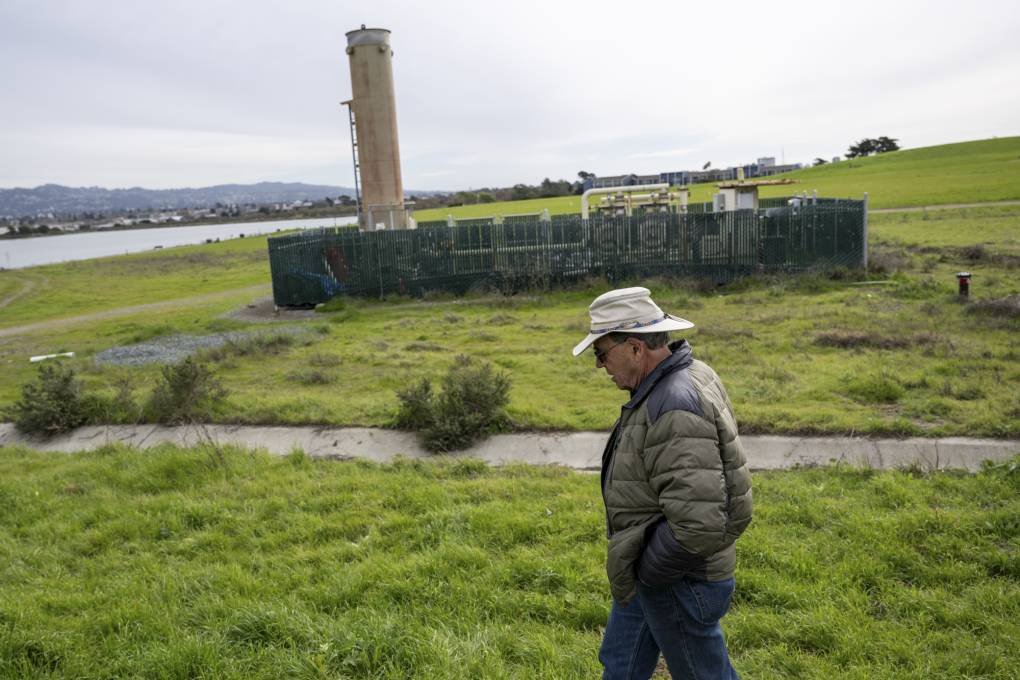
"caption": "John Roberts, a landscape architect, walks near a flare station in César Chávez Park, a 90-acre park in Berkeley with panoramic views of the San Francisco Bay, on Feb. 11, 2025. Built on a former landfill that operated until the 1980s, the park has a flare station that burns methane from decomposing organic material underground to help control emissions.",
"credit": "Beth LaBerge/KQED",
"altTag": null,
"description": null,
"imgSizes": {
"medium": {
"file": "https://cdn.kqed.org/wp-content/uploads/sites/10/2025/02/250211-BERKELEYDUMP-05-BL-KQED-800x533.jpg",
"width": 800,
"height": 533,
"mimeType": "image/jpeg"
},
"large": {
"file": "https://cdn.kqed.org/wp-content/uploads/sites/10/2025/02/250211-BERKELEYDUMP-05-BL-KQED-1020x680.jpg",
"width": 1020,
"height": 680,
"mimeType": "image/jpeg"
},
"thumbnail": {
"file": "https://cdn.kqed.org/wp-content/uploads/sites/10/2025/02/250211-BERKELEYDUMP-05-BL-KQED-160x107.jpg",
"width": 160,
"height": 107,
"mimeType": "image/jpeg"
},
"1536x1536": {
"file": "https://cdn.kqed.org/wp-content/uploads/sites/10/2025/02/250211-BERKELEYDUMP-05-BL-KQED-1536x1024.jpg",
"width": 1536,
"height": 1024,
"mimeType": "image/jpeg"
},
"post-thumbnail": {
"file": "https://cdn.kqed.org/wp-content/uploads/sites/10/2025/02/250211-BERKELEYDUMP-05-BL-KQED-672x372.jpg",
"width": 672,
"height": 372,
"mimeType": "image/jpeg"
},
"twentyfourteen-full-width": {
"file": "https://cdn.kqed.org/wp-content/uploads/sites/10/2025/02/250211-BERKELEYDUMP-05-BL-KQED-1038x576.jpg",
"width": 1038,
"height": 576,
"mimeType": "image/jpeg"
},
"full-width": {
"file": "https://cdn.kqed.org/wp-content/uploads/sites/10/2025/02/250211-BERKELEYDUMP-05-BL-KQED-1920x1280.jpg",
"width": 1920,
"height": 1280,
"mimeType": "image/jpeg"
},
"kqedFullSize": {
"file": "https://cdn.kqed.org/wp-content/uploads/sites/10/2025/02/250211-BERKELEYDUMP-05-BL-KQED.jpg",
"width": 2000,
"height": 1333
}
},
"isLoading": false,
"fetchFailed": false
},
"news_11957605": {
"type": "attachments",
"id": "news_11957605",
"meta": {
"index": "attachments_1716263798",
"site": "news",
"id": "11957605",
"found": true
},
"parent": 0,
"imgSizes": {
"twentyfourteen-full-width": {
"file": "https://ww2.kqed.org/app/uploads/sites/10/2023/08/RS51745_RichmondSanRafaelBridge-13-KQED-1038x576.jpg",
"width": 1038,
"mimeType": "image/jpeg",
"height": 576
},
"thumbnail": {
"file": "https://ww2.kqed.org/app/uploads/sites/10/2023/08/RS51745_RichmondSanRafaelBridge-13-KQED-160x107.jpg",
"width": 160,
"mimeType": "image/jpeg",
"height": 107
},
"post-thumbnail": {
"file": "https://ww2.kqed.org/app/uploads/sites/10/2023/08/RS51745_RichmondSanRafaelBridge-13-KQED-672x372.jpg",
"width": 672,
"mimeType": "image/jpeg",
"height": 372
},
"kqedFullSize": {
"file": "https://ww2.kqed.org/app/uploads/sites/10/2023/08/RS51745_RichmondSanRafaelBridge-13-KQED.jpg",
"width": 2000,
"height": 1333
},
"large": {
"file": "https://ww2.kqed.org/app/uploads/sites/10/2023/08/RS51745_RichmondSanRafaelBridge-13-KQED-1020x680.jpg",
"width": 1020,
"mimeType": "image/jpeg",
"height": 680
},
"1536x1536": {
"file": "https://ww2.kqed.org/app/uploads/sites/10/2023/08/RS51745_RichmondSanRafaelBridge-13-KQED-1536x1024.jpg",
"width": 1536,
"mimeType": "image/jpeg",
"height": 1024
},
"full-width": {
"file": "https://ww2.kqed.org/app/uploads/sites/10/2023/08/RS51745_RichmondSanRafaelBridge-13-KQED-1920x1280.jpg",
"width": 1920,
"mimeType": "image/jpeg",
"height": 1280
},
"medium": {
"file": "https://ww2.kqed.org/app/uploads/sites/10/2023/08/RS51745_RichmondSanRafaelBridge-13-KQED-800x533.jpg",
"width": 800,
"mimeType": "image/jpeg",
"height": 533
}
},
"publishDate": 1691444004,
"modified": 1691444195,
"caption": "The Richmond-San Rafael Bridge stretches across the San Francisco Bay, as seen from northern Point San Quentin, in San Quentin on Sept. 23, 2021.",
"description": null,
"title": "Richmond-San Rafael Bridge",
"credit": "Joyce Tsai/KQED",
"status": "inherit",
"altTag": "A large elevated bridge crosses a body of water.",
"isLoading": false,
"fetchFailed": false
},
"news_12029885": {
"type": "attachments",
"id": "news_12029885",
"meta": {
"index": "attachments_1716263798",
"site": "news",
"id": "12029885",
"found": true
},
"title": "IMG_0072",
"publishDate": 1741214889,
"status": "inherit",
"parent": 12029872,
"modified": 1741215023,
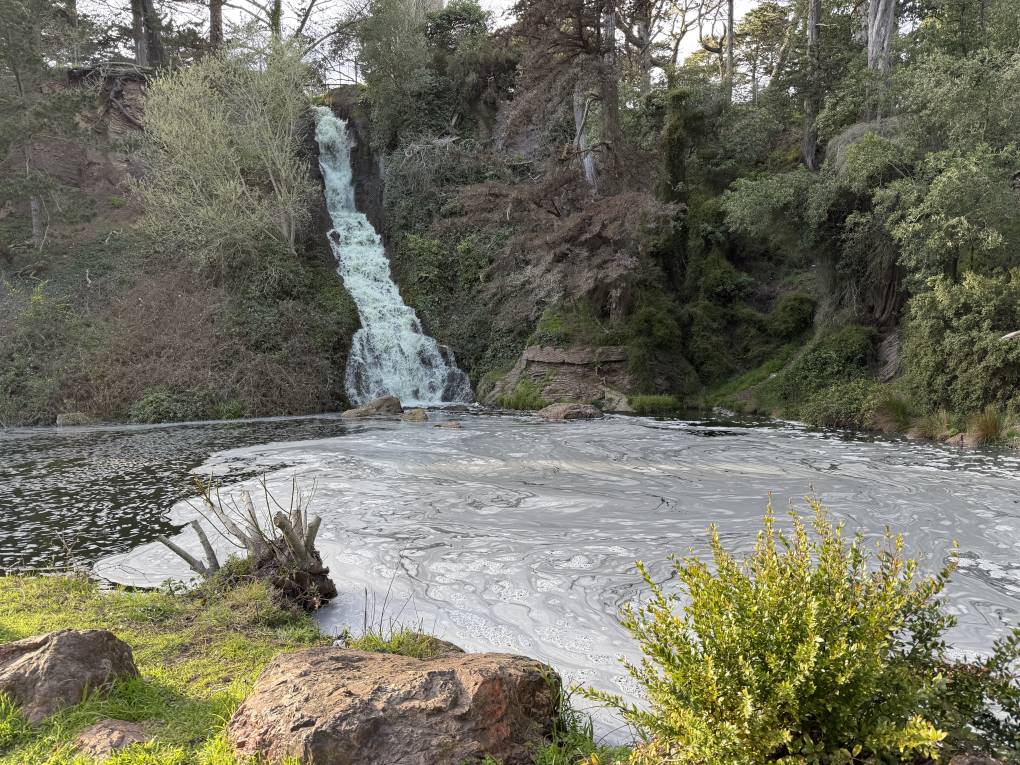
"caption": "Golden Gate Park's Rainbow Falls, San Francisco, 2025.",
"credit": "Katrina Schwartz/KQED",
"altTag": null,
"description": null,
"imgSizes": {
"medium": {
"file": "https://cdn.kqed.org/wp-content/uploads/sites/10/2025/03/IMG_0072-800x600.jpg",
"width": 800,
"height": 600,
"mimeType": "image/jpeg"
},
"large": {
"file": "https://cdn.kqed.org/wp-content/uploads/sites/10/2025/03/IMG_0072-1020x765.jpg",
"width": 1020,
"height": 765,
"mimeType": "image/jpeg"
},
"thumbnail": {
"file": "https://cdn.kqed.org/wp-content/uploads/sites/10/2025/03/IMG_0072-160x120.jpg",
"width": 160,
"height": 120,
"mimeType": "image/jpeg"
},
"1536x1536": {
"file": "https://cdn.kqed.org/wp-content/uploads/sites/10/2025/03/IMG_0072-1536x1152.jpg",
"width": 1536,
"height": 1152,
"mimeType": "image/jpeg"
},
"2048x2048": {
"file": "https://cdn.kqed.org/wp-content/uploads/sites/10/2025/03/IMG_0072-2048x1536.jpg",
"width": 2048,
"height": 1536,
"mimeType": "image/jpeg"
},
"post-thumbnail": {
"file": "https://cdn.kqed.org/wp-content/uploads/sites/10/2025/03/IMG_0072-672x372.jpg",
"width": 672,
"height": 372,
"mimeType": "image/jpeg"
},
"twentyfourteen-full-width": {
"file": "https://cdn.kqed.org/wp-content/uploads/sites/10/2025/03/IMG_0072-1038x576.jpg",
"width": 1038,
"height": 576,
"mimeType": "image/jpeg"
},
"full-width": {
"file": "https://cdn.kqed.org/wp-content/uploads/sites/10/2025/03/IMG_0072-1920x1440.jpg",
"width": 1920,
"height": 1440,
"mimeType": "image/jpeg"
},
"kqedFullSize": {
"file": "https://cdn.kqed.org/wp-content/uploads/sites/10/2025/03/IMG_0072-scaled.jpg",
"width": 2560,
"height": 1920
}
},
"isLoading": false,
"fetchFailed": false
},
"news_12028909": {
"type": "attachments",
"id": "news_12028909",
"meta": {
"index": "attachments_1716263798",
"site": "news",
"id": "12028909",
"found": true
},
"title": "20250220_PtRichmondFairyHouses_GC-39",
"publishDate": 1740648643,
"status": "inherit",
"parent": 0,
"modified": 1740648710,
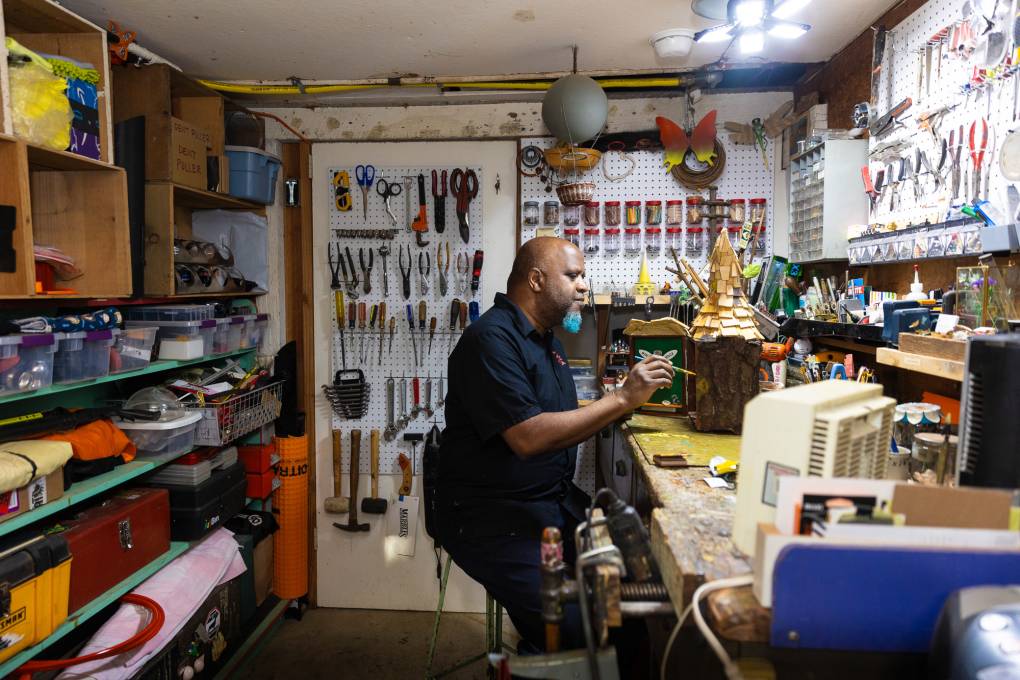
"caption": "Jimmie Robinson works on a fairy house in his workshop in Richmond on Feb. 20, 2025. He has built over 30 houses for his neighbors along the street.",
"credit": "Gina Castro/KQED",
"altTag": null,
"description": null,
"imgSizes": {
"medium": {
"file": "https://cdn.kqed.org/wp-content/uploads/sites/10/2025/02/20250220_PtRichmondFairyHouses_GC-39-800x533.jpg",
"width": 800,
"height": 533,
"mimeType": "image/jpeg"
},
"large": {
"file": "https://cdn.kqed.org/wp-content/uploads/sites/10/2025/02/20250220_PtRichmondFairyHouses_GC-39-1020x680.jpg",
"width": 1020,
"height": 680,
"mimeType": "image/jpeg"
},
"thumbnail": {
"file": "https://cdn.kqed.org/wp-content/uploads/sites/10/2025/02/20250220_PtRichmondFairyHouses_GC-39-160x107.jpg",
"width": 160,
"height": 107,
"mimeType": "image/jpeg"
},
"1536x1536": {
"file": "https://cdn.kqed.org/wp-content/uploads/sites/10/2025/02/20250220_PtRichmondFairyHouses_GC-39-1536x1024.jpg",
"width": 1536,
"height": 1024,
"mimeType": "image/jpeg"
},
"post-thumbnail": {
"file": "https://cdn.kqed.org/wp-content/uploads/sites/10/2025/02/20250220_PtRichmondFairyHouses_GC-39-672x372.jpg",
"width": 672,
"height": 372,
"mimeType": "image/jpeg"
},
"twentyfourteen-full-width": {
"file": "https://cdn.kqed.org/wp-content/uploads/sites/10/2025/02/20250220_PtRichmondFairyHouses_GC-39-1038x576.jpg",
"width": 1038,
"height": 576,
"mimeType": "image/jpeg"
},
"full-width": {
"file": "https://cdn.kqed.org/wp-content/uploads/sites/10/2025/02/20250220_PtRichmondFairyHouses_GC-39-1920x1280.jpg",
"width": 1920,
"height": 1280,
"mimeType": "image/jpeg"
},
"kqedFullSize": {
"file": "https://cdn.kqed.org/wp-content/uploads/sites/10/2025/02/20250220_PtRichmondFairyHouses_GC-39.jpg",
"width": 2000,
"height": 1333
}
},
"isLoading": false,
"fetchFailed": false
},
"news_12029577": {
"type": "attachments",
"id": "news_12029577",
"meta": {
"index": "attachments_1716263798",
"site": "news",
"id": "12029577",
"found": true
},
"title": "250205-WildSideWest-21-BL_qed",
"publishDate": 1741112042,
"status": "inherit",
"parent": 12029551,
"modified": 1741112085,
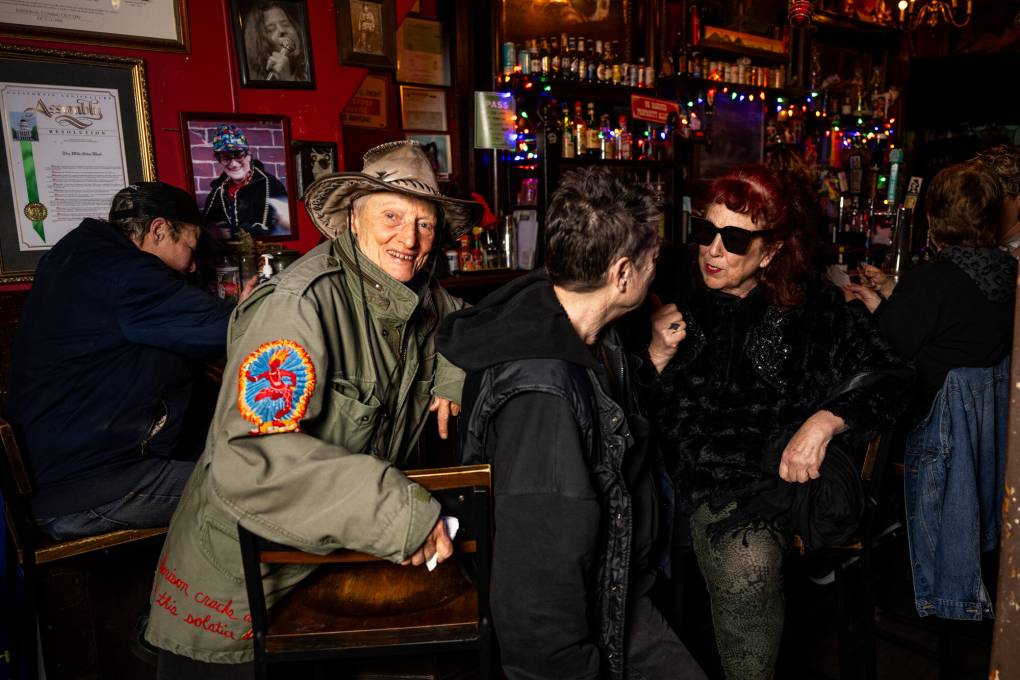
"caption": "(From left) Timotha Doane, Beth Stephens, and Annie Sprinkle sit at the bar at Wild Side West in San Francisco’s Bernal Heights neighborhood on Feb. 6, 2025. Founded in 1962, Wild Side West is a historic lesbian bar that began in Oakland before relocating to San Francisco, where it became a gathering space known for its eclectic decor, lush garden, and deep roots in the LGBTQ+ community.",
"credit": "Beth LaBerge/KQED",
"altTag": null,
"description": null,
"imgSizes": {
"medium": {
"file": "https://cdn.kqed.org/wp-content/uploads/sites/10/2025/03/250205-WildSideWest-21-BL_qed-800x533.jpg",
"width": 800,
"height": 533,
"mimeType": "image/jpeg"
},
"large": {
"file": "https://cdn.kqed.org/wp-content/uploads/sites/10/2025/03/250205-WildSideWest-21-BL_qed-1020x680.jpg",
"width": 1020,
"height": 680,
"mimeType": "image/jpeg"
},
"thumbnail": {
"file": "https://cdn.kqed.org/wp-content/uploads/sites/10/2025/03/250205-WildSideWest-21-BL_qed-160x107.jpg",
"width": 160,
"height": 107,
"mimeType": "image/jpeg"
},
"1536x1536": {
"file": "https://cdn.kqed.org/wp-content/uploads/sites/10/2025/03/250205-WildSideWest-21-BL_qed-1536x1024.jpg",
"width": 1536,
"height": 1024,
"mimeType": "image/jpeg"
},
"post-thumbnail": {
"file": "https://cdn.kqed.org/wp-content/uploads/sites/10/2025/03/250205-WildSideWest-21-BL_qed-672x372.jpg",
"width": 672,
"height": 372,
"mimeType": "image/jpeg"
},
"twentyfourteen-full-width": {
"file": "https://cdn.kqed.org/wp-content/uploads/sites/10/2025/03/250205-WildSideWest-21-BL_qed-1038x576.jpg",
"width": 1038,
"height": 576,
"mimeType": "image/jpeg"
},
"full-width": {
"file": "https://cdn.kqed.org/wp-content/uploads/sites/10/2025/03/250205-WildSideWest-21-BL_qed-1920x1280.jpg",
"width": 1920,
"height": 1280,
"mimeType": "image/jpeg"
},
"kqedFullSize": {
"file": "https://cdn.kqed.org/wp-content/uploads/sites/10/2025/03/250205-WildSideWest-21-BL_qed.jpg",
"width": 2000,
"height": 1333
}
},
"isLoading": false,
"fetchFailed": false
},
"news_12024362": {
"type": "attachments",
"id": "news_12024362",
"meta": {
"index": "attachments_1716263798",
"site": "news",
"id": "12024362",
"found": true
},
"title": "250127-BrooksIsland-38-BL",
"publishDate": 1738090707,
"status": "inherit",
"parent": 0,
"modified": 1738175463,
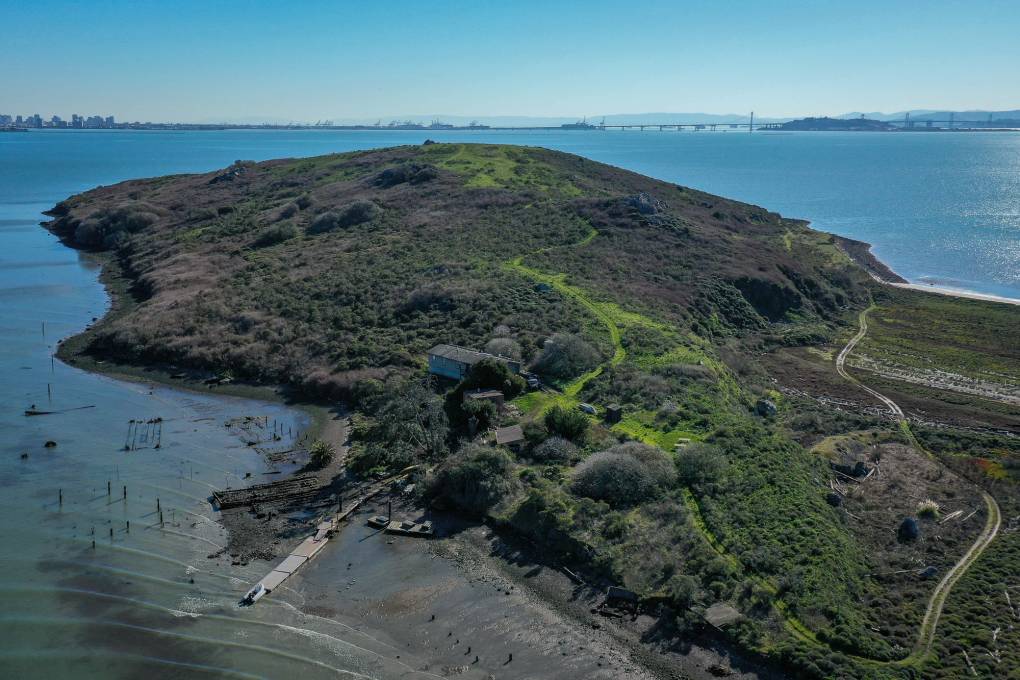
"caption": "An aerial view of Brooks Island Regional Preserve, a 373-acre bird sanctuary and habitat for native plants and wildlife in San Francisco Bay near Richmond, on Jan. 27, 2025.",
"credit": "Beth LaBerge/KQED",
"altTag": null,
"description": null,
"imgSizes": {
"medium": {
"file": "https://cdn.kqed.org/wp-content/uploads/sites/10/2025/01/250127-BrooksIsland-38-BL-800x533.jpg",
"width": 800,
"height": 533,
"mimeType": "image/jpeg"
},
"large": {
"file": "https://cdn.kqed.org/wp-content/uploads/sites/10/2025/01/250127-BrooksIsland-38-BL-1020x680.jpg",
"width": 1020,
"height": 680,
"mimeType": "image/jpeg"
},
"thumbnail": {
"file": "https://cdn.kqed.org/wp-content/uploads/sites/10/2025/01/250127-BrooksIsland-38-BL-160x107.jpg",
"width": 160,
"height": 107,
"mimeType": "image/jpeg"
},
"1536x1536": {
"file": "https://cdn.kqed.org/wp-content/uploads/sites/10/2025/01/250127-BrooksIsland-38-BL-1536x1024.jpg",
"width": 1536,
"height": 1024,
"mimeType": "image/jpeg"
},
"post-thumbnail": {
"file": "https://cdn.kqed.org/wp-content/uploads/sites/10/2025/01/250127-BrooksIsland-38-BL-672x372.jpg",
"width": 672,
"height": 372,
"mimeType": "image/jpeg"
},
"twentyfourteen-full-width": {
"file": "https://cdn.kqed.org/wp-content/uploads/sites/10/2025/01/250127-BrooksIsland-38-BL-1038x576.jpg",
"width": 1038,
"height": 576,
"mimeType": "image/jpeg"
},
"full-width": {
"file": "https://cdn.kqed.org/wp-content/uploads/sites/10/2025/01/250127-BrooksIsland-38-BL-1920x1280.jpg",
"width": 1920,
"height": 1280,
"mimeType": "image/jpeg"
},
"kqedFullSize": {
"file": "https://cdn.kqed.org/wp-content/uploads/sites/10/2025/01/250127-BrooksIsland-38-BL.jpg",
"width": 2000,
"height": 1333
}
},
"isLoading": false,
"fetchFailed": false
},
"news_12023512": {
"type": "attachments",
"id": "news_12023512",
"meta": {
"index": "attachments_1716263798",
"site": "news",
"id": "12023512",
"found": true
},
"title": "20250114_Mare-Island_DMB_00190",
"publishDate": 1737577232,
"status": "inherit",
"parent": 12069959,
"modified": 1768525535,
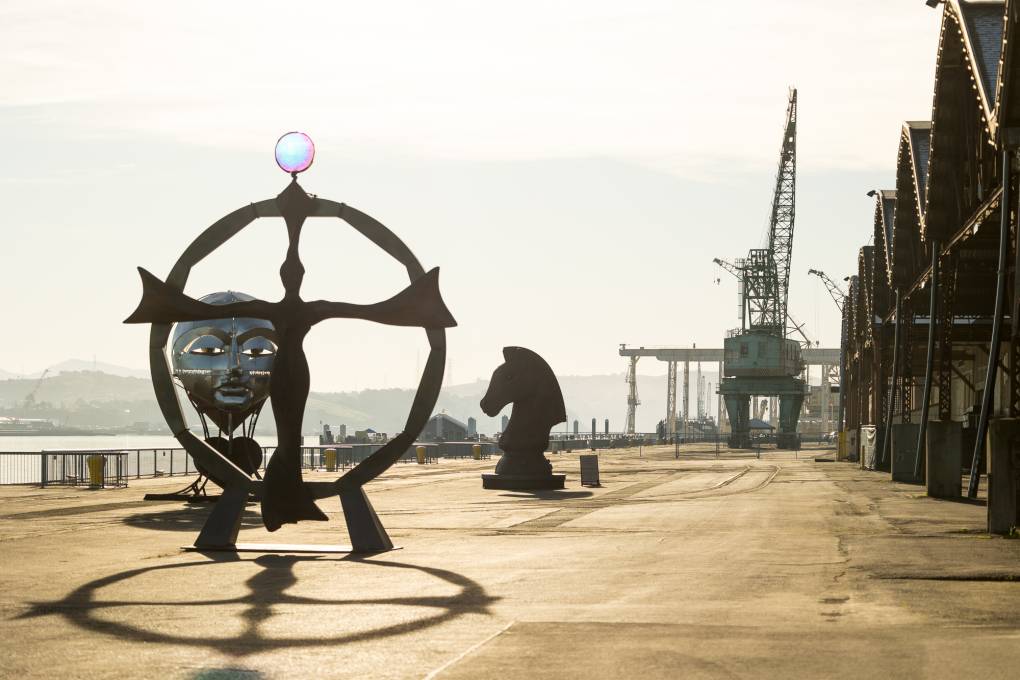
"caption": "Sculptures and defunct cranes occupy the waterfront facing the Napa River on Mare Island in the city of Vallejo, Tuesday, Jan. 14, 2025.",
"credit": "David M. Barreda/KQED",
"altTag": null,
"description": null,
"imgSizes": {
"medium": {
"file": "https://cdn.kqed.org/wp-content/uploads/sites/10/2025/01/20250114_Mare-Island_DMB_00190-800x533.jpg",
"width": 800,
"height": 533,
"mimeType": "image/jpeg"
},
"large": {
"file": "https://cdn.kqed.org/wp-content/uploads/sites/10/2025/01/20250114_Mare-Island_DMB_00190-1020x680.jpg",
"width": 1020,
"height": 680,
"mimeType": "image/jpeg"
},
"thumbnail": {
"file": "https://cdn.kqed.org/wp-content/uploads/sites/10/2025/01/20250114_Mare-Island_DMB_00190-160x107.jpg",
"width": 160,
"height": 107,
"mimeType": "image/jpeg"
},
"1536x1536": {
"file": "https://cdn.kqed.org/wp-content/uploads/sites/10/2025/01/20250114_Mare-Island_DMB_00190-1536x1024.jpg",
"width": 1536,
"height": 1024,
"mimeType": "image/jpeg"
},
"post-thumbnail": {
"file": "https://cdn.kqed.org/wp-content/uploads/sites/10/2025/01/20250114_Mare-Island_DMB_00190-672x372.jpg",
"width": 672,
"height": 372,
"mimeType": "image/jpeg"
},
"twentyfourteen-full-width": {
"file": "https://cdn.kqed.org/wp-content/uploads/sites/10/2025/01/20250114_Mare-Island_DMB_00190-1038x576.jpg",
"width": 1038,
"height": 576,
"mimeType": "image/jpeg"
},
"full-width": {
"file": "https://cdn.kqed.org/wp-content/uploads/sites/10/2025/01/20250114_Mare-Island_DMB_00190-1920x1280.jpg",
"width": 1920,
"height": 1280,
"mimeType": "image/jpeg"
},
"kqedFullSize": {
"file": "https://cdn.kqed.org/wp-content/uploads/sites/10/2025/01/20250114_Mare-Island_DMB_00190.jpg",
"width": 2000,
"height": 1333
}
},
"isLoading": false,
"fetchFailed": false
},
"news_12023514": {
"type": "attachments",
"id": "news_12023514",
"meta": {
"index": "attachments_1716263798",
"site": "news",
"id": "12023514",
"found": true
},
"title": "20250114_Mare-Island_DMB_00333",
"publishDate": 1737577243,
"status": "inherit",
"parent": 12082668,
"modified": 1778174427,
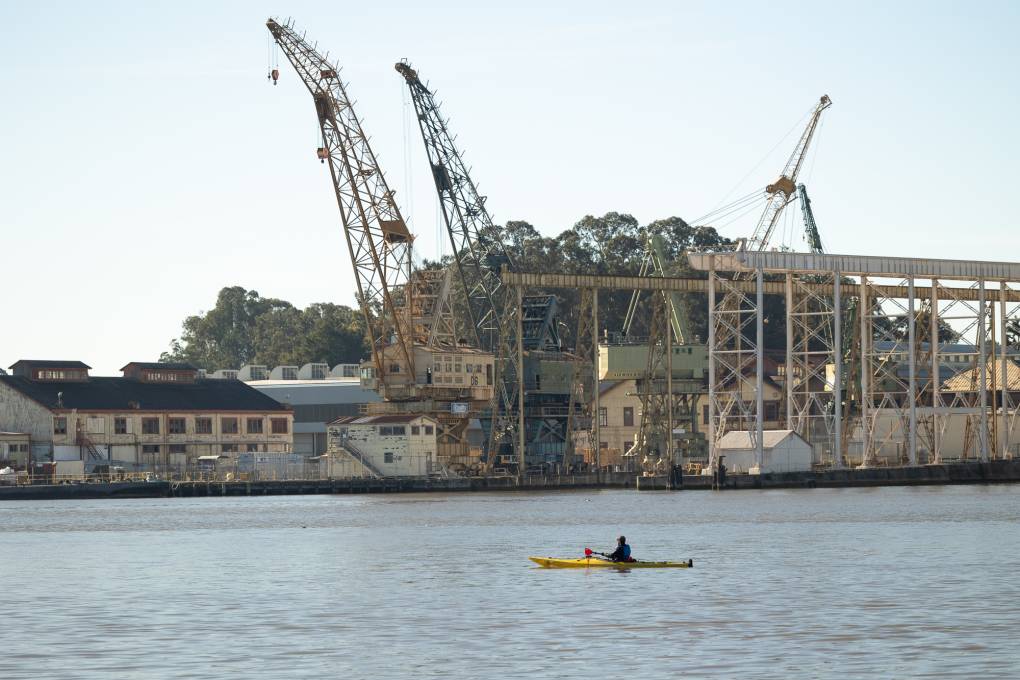
"caption": "A kayaker floats down the Napa River past the Navy Yard of Mare Island in the city of Vallejo, Tuesday, Jan. 14, 2025.",
"credit": "David M. Barreda/KQED",
"altTag": null,
"description": null,
"imgSizes": {
"medium": {
"file": "https://cdn.kqed.org/wp-content/uploads/sites/10/2025/01/20250114_Mare-Island_DMB_00333-800x533.jpg",
"width": 800,
"height": 533,
"mimeType": "image/jpeg"
},
"large": {
"file": "https://cdn.kqed.org/wp-content/uploads/sites/10/2025/01/20250114_Mare-Island_DMB_00333-1020x680.jpg",
"width": 1020,
"height": 680,
"mimeType": "image/jpeg"
},
"thumbnail": {
"file": "https://cdn.kqed.org/wp-content/uploads/sites/10/2025/01/20250114_Mare-Island_DMB_00333-160x107.jpg",
"width": 160,
"height": 107,
"mimeType": "image/jpeg"
},
"1536x1536": {
"file": "https://cdn.kqed.org/wp-content/uploads/sites/10/2025/01/20250114_Mare-Island_DMB_00333-1536x1024.jpg",
"width": 1536,
"height": 1024,
"mimeType": "image/jpeg"
},
"post-thumbnail": {
"file": "https://cdn.kqed.org/wp-content/uploads/sites/10/2025/01/20250114_Mare-Island_DMB_00333-672x372.jpg",
"width": 672,
"height": 372,
"mimeType": "image/jpeg"
},
"twentyfourteen-full-width": {
"file": "https://cdn.kqed.org/wp-content/uploads/sites/10/2025/01/20250114_Mare-Island_DMB_00333-1038x576.jpg",
"width": 1038,
"height": 576,
"mimeType": "image/jpeg"
},
"full-width": {
"file": "https://cdn.kqed.org/wp-content/uploads/sites/10/2025/01/20250114_Mare-Island_DMB_00333-1920x1280.jpg",
"width": 1920,
"height": 1280,
"mimeType": "image/jpeg"
},
"kqedFullSize": {
"file": "https://cdn.kqed.org/wp-content/uploads/sites/10/2025/01/20250114_Mare-Island_DMB_00333.jpg",
"width": 2000,
"height": 1333
}
},
"isLoading": false,
"fetchFailed": false
}
},
"audioPlayerReducer": {
"postId": "stream_live",
"isPaused": true,
"isPlaying": false,
"pfsActive": false,
"pledgeModalIsOpen": true,
"playerDrawerIsOpen": false,
"liveAudioPlayStartedAt": 0,
"liveAudioPlayContext": ""
},
"authorsReducer": {
"byline_news_12029872": {
"type": "authors",
"id": "byline_news_12029872",
"meta": {
"override": true
},
"slug": "byline_news_12029872",
"name": "Chris Hambrick and \u003ca href=\"https://www.kqed.org/author/katrinaschwartz\">Katrina Schwartz\u003c/a>",
"isLoading": false
},
"danbrekke": {
"type": "authors",
"id": "222",
"meta": {
"index": "authors_1716337520",
"id": "222",
"found": true
},
"name": "Dan Brekke",
"firstName": "Dan",
"lastName": "Brekke",
"slug": "danbrekke",
"email": "dbrekke@kqed.org",
"display_author_email": true,
"staff_mastheads": [
"news",
"science"
],
"title": "KQED Editor and Reporter",
"bio": "Dan Brekke is a reporter and editor for KQED News, responsible for coverage of topics ranging from California water issues to the Bay Area's transportation challenges. In a newsroom career that began in Chicago in 1972, Dan has worked for \u003cem>The San Francisco Examiner,\u003c/em> Wired and TechTV and has been published in The New York Times, The New York Times Magazine, Business 2.0, Salon and elsewhere.\r\n\r\nSince joining KQED in 2007, Dan has reported, edited and produced both radio and online features and breaking news pieces. He has shared as both editor and reporter in four Society of Professional Journalists Norcal Excellence in Journalism awards and one Edward R. Murrow regional award. He was chosen for a spring 2017 residency at the Mesa Refuge to advance his research on California salmon.\r\n\r\nEmail Dan at: \u003ca href=\"mailto:dbrekke@kqed.org\">dbrekke@kqed.org\u003c/a>\r\n\r\n\u003cstrong>Twitter:\u003c/strong> \u003ca href=\"https://twitter.com/danbrekke\" rel=\"noopener noreferrer\">twitter.com/danbrekke\u003c/a>\r\n\u003cstrong>Facebook:\u003c/strong> \u003ca href=\"https://www.facebook.com/danbrekke\" rel=\"noopener noreferrer\">www.facebook.com/danbrekke\u003c/a>\r\n\u003cstrong>LinkedIn:\u003c/strong> \u003ca href=\"https://www.linkedin.com/in/danbrekke\" rel=\"noopener noreferrer\">www.linkedin.com/in/danbrekke\u003c/a>",
"avatar": "https://secure.gravatar.com/avatar/c8126230345efca3f7aa89b1a402be45?s=600&d=mm&r=g",
"twitter": "danbrekke",
"facebook": null,
"instagram": "https://www.instagram.com/dan.brekke/",
"linkedin": "https://www.linkedin.com/in/danbrekke/",
"sites": [
{
"site": "news",
"roles": [
"administrator",
"create_posts"
]
},
{
"site": "stateofhealth",
"roles": [
"editor"
]
},
{
"site": "science",
"roles": [
"editor"
]
},
{
"site": "quest",
"roles": [
"contributor"
]
},
{
"site": "food",
"roles": [
"contributor"
]
},
{
"site": "forum",
"roles": [
"contributor"
]
},
{
"site": "liveblog",
"roles": [
"editor"
]
}
],
"headData": {
"title": "Dan Brekke | KQED",
"description": "KQED Editor and Reporter",
"ogImgSrc": "https://secure.gravatar.com/avatar/c8126230345efca3f7aa89b1a402be45?s=600&d=mm&r=g",
"twImgSrc": "https://secure.gravatar.com/avatar/c8126230345efca3f7aa89b1a402be45?s=600&d=mm&r=g"
},
"isLoading": false,
"link": "/author/danbrekke"
},
"katrinaschwartz": {
"type": "authors",
"id": "234",
"meta": {
"index": "authors_1716337520",
"id": "234",
"found": true
},
"name": "Katrina Schwartz",
"firstName": "Katrina",
"lastName": "Schwartz",
"slug": "katrinaschwartz",
"email": "kschwartz@kqed.org",
"display_author_email": false,
"staff_mastheads": [
"news"
],
"title": "Producer",
"bio": "Katrina Schwartz is a journalist based in San Francisco. She's worked at KPCC public radio in LA and has reported on air and online for KQED since 2010. She covered how teaching and learning is changing for MindShift between 2012 and 2020. She is the co-host of the MindShift podcast and now produces KQED's Bay Curious podcast.",
"avatar": "https://secure.gravatar.com/avatar/edb4ee79070447a018538c9aae6eeecf28786515b8a0c30e43b6b7dce5aa44c8?s=600&d=blank&r=g",
"twitter": "kschwart",
"bluesky": null,
"facebook": null,
"instagram": null,
"linkedin": null,
"sites": [
{
"site": "",
"roles": [
"editor"
]
},
{
"site": "news",
"roles": [
"editor"
]
},
{
"site": "mindshift",
"roles": [
"administrator"
]
},
{
"site": "stateofhealth",
"roles": [
"author"
]
},
{
"site": "science",
"roles": [
"editor"
]
}
],
"headData": {
"title": "Katrina Schwartz | KQED",
"description": "Producer",
"ogImgSrc": "https://secure.gravatar.com/avatar/edb4ee79070447a018538c9aae6eeecf28786515b8a0c30e43b6b7dce5aa44c8?s=600&d=blank&r=g",
"twImgSrc": "https://secure.gravatar.com/avatar/edb4ee79070447a018538c9aae6eeecf28786515b8a0c30e43b6b7dce5aa44c8?s=600&d=blank&r=g"
},
"isLoading": false,
"link": "/author/katrinaschwartz"
},
"rachael-myrow": {
"type": "authors",
"id": "251",
"meta": {
"index": "authors_1716337520",
"id": "251",
"found": true
},
"name": "Rachael Myrow",
"firstName": "Rachael",
"lastName": "Myrow",
"slug": "rachael-myrow",
"email": "rmyrow@kqed.org",
"display_author_email": true,
"staff_mastheads": [
"news"
],
"title": "Senior Editor of KQED's Silicon Valley News Desk",
"bio": "• I write and edit stories about how Silicon Valley power and policies shape everyday life in California. I’m also passionate about making Bay Area history and culture more accessible to a broad public. • I’ve been a journalist for most of my life, starting in high school with The Franklin Press in Los Angeles, where I grew up. While earning my first degree in English at UC Berkeley, I got my start in public radio at KALX-FM. After completing a second degree in journalism at Cal, I landed my first professional job at Marketplace, then moved on to KPCC (now LAist), and then KQED, where I hosted The California Report for more than seven years. • My reporting has appeared on NPR, The World, WBUR’s \u003ci>Here & Now\u003c/i>, and the BBC. I also guest host for KQED’s \u003ci>Forum\u003c/i>, as well as the Commonwealth Club in San Francisco. • I speak periodically on media, democracy and technology issues, and do voiceover work for documentaries and educational video projects. • Outside of the studio, you'll find me hiking Bay Area trails and whipping up Insta-ready meals in my kitchen. • I do not accept gifts, money, or favors from anyone connected to my reporting, I don't pay people for information, and I do not support or donate to political causes. • I strive to treat the people I report on with fairness, honesty, and respect. I also recognize there are often multiple sides to a story and work to verify information through multiple sources and documentation. If I get something wrong, I correct it.",
"avatar": "https://secure.gravatar.com/avatar/3ed8a3c5f26025e4a805ba634cda8cd764906b97438a6d9ce216b044e340da4e?s=600&d=blank&r=g",
"twitter": "rachaelmyrow",
"bluesky": null,
"facebook": null,
"instagram": null,
"linkedin": "https://www.linkedin.com/in/rachaelmyrow/",
"sites": [
{
"site": "arts",
"roles": [
"administrator"
]
},
{
"site": "news",
"roles": [
"edit_others_posts",
"editor"
]
},
{
"site": "futureofyou",
"roles": [
"editor"
]
},
{
"site": "bayareabites",
"roles": [
"editor"
]
},
{
"site": "stateofhealth",
"roles": [
"editor"
]
},
{
"site": "science",
"roles": [
"editor"
]
},
{
"site": "food",
"roles": [
"editor"
]
},
{
"site": "forum",
"roles": [
"editor"
]
},
{
"site": "liveblog",
"roles": [
"author"
]
}
],
"headData": {
"title": "Rachael Myrow | KQED",
"description": "Senior Editor of KQED's Silicon Valley News Desk",
"ogImgSrc": "https://secure.gravatar.com/avatar/3ed8a3c5f26025e4a805ba634cda8cd764906b97438a6d9ce216b044e340da4e?s=600&d=blank&r=g",
"twImgSrc": "https://secure.gravatar.com/avatar/3ed8a3c5f26025e4a805ba634cda8cd764906b97438a6d9ce216b044e340da4e?s=600&d=blank&r=g"
},
"isLoading": false,
"link": "/author/rachael-myrow"
},
"dcronin": {
"type": "authors",
"id": "11362",
"meta": {
"index": "authors_1716337520",
"id": "11362",
"found": true
},
"name": "Dana Cronin",
"firstName": "Dana",
"lastName": "Cronin",
"slug": "dcronin",
"email": "dcronin@KQED.org",
"display_author_email": true,
"staff_mastheads": [],
"title": "KQED Contributor",
"bio": "Dana Cronin is a reporter for KQED News. She loves writing stories about climate change, environmental issues, food and agriculture. She's reported across the country, from Colorado to Washington D.C. to Illinois, and has won numerous awards for her coverage. Her work is regularly featured on national broadcasts, including NPR’s Morning Edition, All Things Considered, PBS Newshour and Science Friday. She lives in Oakland and has an avocado tree in her back yard.",
"avatar": "https://secure.gravatar.com/avatar/bcf89e3455ff7235f96ab6fa7258dd95?s=600&d=blank&r=g",
"twitter": "DanaHCronin",
"facebook": null,
"instagram": null,
"linkedin": null,
"sites": [
{
"site": "arts",
"roles": [
"author"
]
},
{
"site": "news",
"roles": [
"editor"
]
},
{
"site": "science",
"roles": [
"author"
]
},
{
"site": "liveblog",
"roles": [
"author"
]
}
],
"headData": {
"title": "Dana Cronin | KQED",
"description": "KQED Contributor",
"ogImgSrc": "https://secure.gravatar.com/avatar/bcf89e3455ff7235f96ab6fa7258dd95?s=600&d=blank&r=g",
"twImgSrc": "https://secure.gravatar.com/avatar/bcf89e3455ff7235f96ab6fa7258dd95?s=600&d=blank&r=g"
},
"isLoading": false,
"link": "/author/dcronin"
},
"kmonahan": {
"type": "authors",
"id": "11842",
"meta": {
"index": "authors_1716337520",
"id": "11842",
"found": true
},
"name": "Katherine Monahan",
"firstName": "Katherine",
"lastName": "Monahan",
"slug": "kmonahan",
"email": "kmonahan@kqed.org",
"display_author_email": true,
"staff_mastheads": [],
"title": "Reporter / Sound Engineer",
"bio": "I cover state and local news. I’m also a sound engineer at the station, mixing stories and running live broadcasts. I link to source materials so that readers can draw their own conclusions, and seek comment from a range of perspectives, including from people directly affected by events. Awards received include from the Society of Professional Journalists, Northern California chapter and the Alaska Press Club. I speak multiple languages and have reported and engineered in the Bay Area, Alaska, West Africa and Latin America.",
"avatar": "https://secure.gravatar.com/avatar/ff257b3a5da88893781a3d3266904b2d2f91c7f0e1bbf728f61f5fb81b74a669?s=600&d=blank&r=g",
"twitter": null,
"bluesky": null,
"facebook": null,
"instagram": null,
"linkedin": null,
"sites": [
{
"site": "news",
"roles": [
"editor"
]
},
{
"site": "science",
"roles": [
"contributor"
]
}
],
"headData": {
"title": "Katherine Monahan | KQED",
"description": "Reporter / Sound Engineer",
"ogImgSrc": "https://secure.gravatar.com/avatar/ff257b3a5da88893781a3d3266904b2d2f91c7f0e1bbf728f61f5fb81b74a669?s=600&d=blank&r=g",
"twImgSrc": "https://secure.gravatar.com/avatar/ff257b3a5da88893781a3d3266904b2d2f91c7f0e1bbf728f61f5fb81b74a669?s=600&d=blank&r=g"
},
"isLoading": false,
"link": "/author/kmonahan"
},
"pbartolone": {
"type": "authors",
"id": "11879",
"meta": {
"index": "authors_1716337520",
"id": "11879",
"found": true
},
"name": "Pauline Bartolone",
"firstName": "Pauline",
"lastName": "Bartolone",
"slug": "pbartolone",
"email": "pbartolone@kqed.org",
"display_author_email": false,
"staff_mastheads": [],
"title": "KQED Contributor",
"bio": "Pauline Bartolone has been a journalist for two decades, specializing in longform audio storytelling. Before editing and producing for podcasts like Bay Curious, she was a health care journalist for public radio and print outlets such as CalMatters and Kaiser Health News. Her reporting has won several regional Edward R. Murrow awards, national recognition from the Society of Professional Journalists and a first-place prize from the Association of Health Care Journalists.\r\n\r\nPauline’s work has aired frequently on National Public Radio, and bylines have appeared in The Los Angeles Times, CNN.com, Washingtonpost.com, USA Today and Scientific American.\r\n\r\nPauline has lived in Northern California for 20 years. Her other passions are crafts (now done in collaboration with her daughter) and the Brazilian martial art of capoeira.",
"avatar": "https://secure.gravatar.com/avatar/95001c30374b0d3878007af9cf1e120a?s=600&d=blank&r=g",
"twitter": "pbartolone",
"facebook": null,
"instagram": null,
"linkedin": null,
"sites": [
{
"site": "news",
"roles": [
"editor"
]
},
{
"site": "podcasts",
"roles": [
"subscriber"
]
}
],
"headData": {
"title": "Pauline Bartolone | KQED",
"description": "KQED Contributor",
"ogImgSrc": "https://secure.gravatar.com/avatar/95001c30374b0d3878007af9cf1e120a?s=600&d=blank&r=g",
"twImgSrc": "https://secure.gravatar.com/avatar/95001c30374b0d3878007af9cf1e120a?s=600&d=blank&r=g"
},
"isLoading": false,
"link": "/author/pbartolone"
},
"aamaral": {
"type": "authors",
"id": "11947",
"meta": {
"index": "authors_1716337520",
"id": "11947",
"found": true
},
"name": "Ana De Almeida Amaral",
"firstName": "Ana",
"lastName": "De Almeida Amaral",
"slug": "aamaral",
"email": "aamaral@kqed.org",
"display_author_email": false,
"staff_mastheads": [],
"title": "KQED Contributor",
"bio": null,
"avatar": "https://secure.gravatar.com/avatar/eb08e0e3effedf89fc5153d5f7416228a3359f82750571d5de728615b88e8c32?s=600&d=blank&r=g",
"twitter": null,
"bluesky": null,
"facebook": null,
"instagram": null,
"linkedin": null,
"sites": [
{
"site": "arts",
"roles": [
"editor"
]
},
{
"site": "news",
"roles": [
"editor"
]
},
{
"site": "forum",
"roles": [
"editor"
]
}
],
"headData": {
"title": "Ana De Almeida Amaral | KQED",
"description": "KQED Contributor",
"ogImgSrc": "https://secure.gravatar.com/avatar/eb08e0e3effedf89fc5153d5f7416228a3359f82750571d5de728615b88e8c32?s=600&d=blank&r=g",
"twImgSrc": "https://secure.gravatar.com/avatar/eb08e0e3effedf89fc5153d5f7416228a3359f82750571d5de728615b88e8c32?s=600&d=blank&r=g"
},
"isLoading": false,
"link": "/author/aamaral"
}
},
"pagesReducer": {
"news_tag_bay-curious": {
"type": "terms",
"id": "news_18426",
"meta": {
"index": "terms_1716263798",
"site": "news",
"id": "18426",
"score": 9.104131
},
"featImg": null,
"name": "Bay Curious",
"description": null,
"taxonomy": "tag",
"headData": {
"twImgId": null,
"twTitle": null,
"ogTitle": null,
"ogImgId": null,
"twDescription": null,
"description": null,
"title": "Bay Curious Archives | KQED News",
"ogDescription": null
},
"ttid": 18460,
"slug": "bay-curious",
"isLoading": false,
"title": "Bay Curious",
"pageMeta": {
"site": "news",
"WpPageTemplate": "page-topic-editorial",
"currentPage": 5
},
"blocks": [
{
"blockName": "kqed/post-list",
"attrs": {
"layout": "cardArticle2",
"query": "posts/news?tag=bay-curious",
"seeMore": false,
"paginated": true,
"page": 5
}
},
{
"blockName": "kqed/ad"
}
]
}
},
"pfsSessionReducer": {},
"postsReducer": {
"stream_live": {
"type": "live",
"id": "stream_live",
"audioUrl": "https://streams.kqed.org/kqedradio",
"title": "Live Stream",
"excerpt": "Live Stream information currently unavailable.",
"link": "/radio",
"featImg": "",
"label": {
"name": "KQED Live",
"link": "/"
}
},
"stream_kqedNewscast": {
"type": "posts",
"id": "stream_kqedNewscast",
"audioUrl": "https://www.kqed.org/.stream/anon/radio/RDnews/newscast.mp3?_=1",
"title": "KQED Newscast",
"featImg": "",
"label": {
"name": "88.5 FM",
"link": "/"
}
},
"news_12039171": {
"type": "posts",
"id": "news_12039171",
"meta": {
"index": "posts_1716263798",
"site": "news",
"id": "12039171",
"score": null,
"sort": [
1746698441000
]
},
"guestAuthors": [],
"slug": "built-to-last-some-san-francisco-businesses-date-back-to-the-gold-rush",
"title": "Built to Last: Some San Francisco Businesses Date Back to the Gold Rush",
"publishDate": 1746698441,
"format": "standard",
"headTitle": "Built to Last: Some San Francisco Businesses Date Back to the Gold Rush | KQED",
"labelTerm": {
"term": 33523,
"site": "news"
},
"content": "\u003cp>\u003cem>\u003ca href=\"#A\">View the full episode transcript.\u003c/a>\u003c/em>\u003c/p>\n\u003cp>The age of a place is a relative concept. To somebody from Asia or Europe, the city of San Francisco can seem almost amusingly young, and \u003ca href=\"https://www.kqed.org/news/11621844/the-true-history-of-irish-coffee-and-its-san-francisco-origins\">its cherished establishments\u003c/a> like they’re just getting started. But to Bay Curious listener Scott Brenner — who’s about 30 years old — some Bay Area businesses seem almost ancient.\u003c/p>\n\u003cp>[baycuriousbug]\u003c/p>\n\u003cp>Sometimes his parents would take him to a restaurant, and tell him they’d been coming there since before he was born. “ And of course that’s a long time for me,” Brenner said, “but I know that there’s much more history in this area.” So it got him wondering: “What are the oldest businesses in the Bay Area?”\u003c/p>\n\u003cp>It turns out there are a lot of businesses that have been around for a really long time. There’s \u003ca href=\"https://www.normandinchryslerjeep.net/\">Normandin’s car dealership in San José\u003c/a>, which started out selling horses and buggies in 1875. And KCBS is understood to be one of the first radio stations in the world, getting its start around 1909.\u003c/p>\n\u003cp>And one of the very oldest local businesses is now known all over the world — Levi Strauss & Co., of blue jean fame.\u003c/p>\n\u003ch2>\u003cstrong>A Gold Rush startup\u003c/strong>\u003c/h2>\n\u003cfigure id=\"attachment_12039212\" class=\"wp-caption aligncenter\" style=\"max-width: 1024px\">\u003cimg loading=\"lazy\" decoding=\"async\" class=\"size-full wp-image-12039212\" src=\"https://cdn.kqed.org/wp-content/uploads/sites/10/2025/05/GettyImages-2208524376.jpg\" alt=\"\" width=\"1024\" height=\"768\" srcset=\"https://cdn.kqed.org/wp-content/uploads/sites/10/2025/05/GettyImages-2208524376.jpg 1024w, https://cdn.kqed.org/wp-content/uploads/sites/10/2025/05/GettyImages-2208524376-800x600.jpg 800w, https://cdn.kqed.org/wp-content/uploads/sites/10/2025/05/GettyImages-2208524376-1020x765.jpg 1020w, https://cdn.kqed.org/wp-content/uploads/sites/10/2025/05/GettyImages-2208524376-160x120.jpg 160w\" sizes=\"auto, (max-width: 1024px) 100vw, 1024px\">\u003cfigcaption class=\"wp-caption-text\">The Levi’s brand logo stands in front of the headquarters of manufacturer Levi Strauss in San Francisco on March 23, 2025. \u003ccite>(Andrej Sokolow/picture alliance via Getty Images)\u003c/cite>\u003c/figcaption>\u003c/figure>\n\u003cp>Levi Strauss was a young Bavarian man who came to San Francisco in 1852 or ’53 to open a branch of his family’s dry goods business, which was already operating in New York. The California Gold Rush was in full swing, and Strauss got a warehouse downtown and started selling supplies, including canvas, bedding materials, and an especially sturdy cotton fabric called denim.\u003c/p>\n\u003cp>Business went well. Even after the Gold Rush tapered off, there were still plenty of people doing tough outdoor work. In the early 1870s, Strauss started manufacturing a new product — one that would make his fortune.\u003c/p>\n\u003cp>It started with a letter from a customer, a tailor in Reno named Jacob Davis. He told Strauss about an unusual idea he had for making tough work pants last longer.\u003c/p>\n\u003cp>\u003cimg loading=\"lazy\" decoding=\"async\" class=\"aligncenter size-full wp-image-12039203\" src=\"https://cdn.kqed.org/wp-content/uploads/sites/10/2025/05/early-20th-century-billboard-barn-copy.jpg\" alt=\"\" width=\"720\" height=\"686\" srcset=\"https://cdn.kqed.org/wp-content/uploads/sites/10/2025/05/early-20th-century-billboard-barn-copy.jpg 720w, https://cdn.kqed.org/wp-content/uploads/sites/10/2025/05/early-20th-century-billboard-barn-copy-160x152.jpg 160w\" sizes=\"auto, (max-width: 720px) 100vw, 720px\">\u003c/p>\n\u003cp>“He took little pieces of metal and added them to the pockets and the stress points,” explained Tracey Panek, Levi’s historian and director of archives. “And it made them tougher because if you have someone putting their hands in their pockets, it’s not going to tear.”\u003c/p>\n\u003cp>Davis told Strauss the pants were selling like hotcakes and he couldn’t keep up with the demand. He wanted a business partner. Strauss agreed, and in 1873, they received a \u003ca href=\"https://i.ebayimg.com/images/g/D44AAOSwttRfnjpD/s-l1600.webp\">U.S. patent\u003c/a> for an improvement in fastening pocket openings.\u003c/p>\n\u003cp>The Levi Strauss archives are in a climate-controlled room on the top floor of the company’s headquarters at the base of Telegraph Hill. Hanging from the walls are bits of history: Albert Einstein’s jean jacket from the 1930s, a fluffy suede coat from when Levi’s outfitted the U.S. Olympic team.\u003c/p>\n\u003cp>“The important things we keep in a fireproof safe,” Panek said.\u003c/p>\n\u003cp>Carefully, she pulled out the oldest known pair of jeans in the world, made in 1873 or ’74.\u003c/p>\n\u003cfigure id=\"attachment_12039202\" class=\"wp-caption aligncenter\" style=\"max-width: 1920px\">\u003cimg loading=\"lazy\" decoding=\"async\" class=\"size-full wp-image-12039202\" src=\"https://cdn.kqed.org/wp-content/uploads/sites/10/2025/05/IMG_3541-scaled.jpg\" alt=\"\" width=\"1920\" height=\"2560\" srcset=\"https://cdn.kqed.org/wp-content/uploads/sites/10/2025/05/IMG_3541-scaled.jpg 1920w, https://cdn.kqed.org/wp-content/uploads/sites/10/2025/05/IMG_3541-800x1067.jpg 800w, https://cdn.kqed.org/wp-content/uploads/sites/10/2025/05/IMG_3541-1020x1360.jpg 1020w, https://cdn.kqed.org/wp-content/uploads/sites/10/2025/05/IMG_3541-160x213.jpg 160w, https://cdn.kqed.org/wp-content/uploads/sites/10/2025/05/IMG_3541-1152x1536.jpg 1152w, https://cdn.kqed.org/wp-content/uploads/sites/10/2025/05/IMG_3541-1536x2048.jpg 1536w\" sizes=\"auto, (max-width: 1920px) 100vw, 1920px\">\u003cfigcaption class=\"wp-caption-text\">Tracey Panek, Levi’s historian and director of the archives, with the oldest known pair of jeans in the world. \u003ccite>(Katherine Monahan/KQED)\u003c/cite>\u003c/figcaption>\u003c/figure>\n\u003cp>Most of the indigo dye that made them blue is faded now, and they’re a mottled grayish brown color. The crotch is completely worn through, most of the metal is gone, and what’s left of the denim has been stitched to an inner layer to stabilize it.\u003c/p>\n\u003cp>“It was difficult to put the needle through because the denim was still really tough,” Panek said.\u003c/p>\n\u003cp>The original Levi’s, known as “501 waist overalls,” were serious work pants, basically personal protective gear to be worn on top of your other clothes. They had buttons for suspenders and a buckle on the back, so that the size was adjustable. Mining companies would purchase multiple pairs in large sizes so that workers could share them.\u003c/p>\n\u003cp>[ad fullwidth]\u003c/p>\n\u003cp>By 1879, the 501s were selling for $1.46 a pair, close to $50 in today’s money. And the demand kept growing. Levi’s opened a factory and made jeans in San Francisco for well over a century.\u003c/p>\n\u003cp>The company introduced “Lady Levi’s” in 1934. They were high-waisted and loose, with a more feminine cut. During World War II, the U.S. government declared jeans an essential commodity, available only to defense workers. Soldiers wore them while serving overseas, which helped introduce them to Europe and Japan.\u003c/p>\n\u003cp>In the 1950s, Marlon Brando wore them with his leather jacket and his motorcycle when he played Johnny in \u003cem>The Wild One\u003c/em>. Jeans became the official uniform of cool. By the 1970s, everybody was wearing them.\u003c/p>\n\u003cp>https://www.youtube.com/watch?v=Iyq4HZZ4H50\u003c/p>\n\u003cp>Panek pointed out that the jeans haven’t changed much in over 150 years. “I showed you the very oldest pair of blue jeans that we have in the collection,” she said. “They don’t look a lot different to the Levi’s that we wear today.”\u003c/p>\n\u003ch2>\u003cstrong>Feeding hungry sailors\u003c/strong>\u003c/h2>\n\u003cp>Levi Strauss capitalized on one of the main needs for people coming to San Francisco in its early years — clothing and supplies. But around the same time, there was another type of business catering to newcomers that was even more fundamental — food vendors.\u003c/p>\n\u003cp>Tadich Grill, a seafood restaurant in San Francisco’s financial district, is older than the state of California itself.\u003c/p>\n\u003cfigure id=\"attachment_12039210\" class=\"wp-caption aligncenter\" style=\"max-width: 988px\">\u003cimg loading=\"lazy\" decoding=\"async\" class=\"size-full wp-image-12039210\" src=\"https://cdn.kqed.org/wp-content/uploads/sites/10/2025/05/GettyImages-1298895241.jpg\" alt=\"\" width=\"988\" height=\"623\" srcset=\"https://cdn.kqed.org/wp-content/uploads/sites/10/2025/05/GettyImages-1298895241.jpg 988w, https://cdn.kqed.org/wp-content/uploads/sites/10/2025/05/GettyImages-1298895241-800x504.jpg 800w, https://cdn.kqed.org/wp-content/uploads/sites/10/2025/05/GettyImages-1298895241-160x101.jpg 160w\" sizes=\"auto, (max-width: 988px) 100vw, 988px\">\u003cfigcaption class=\"wp-caption-text\">Tadich Grill interior photos from 1974. \u003ccite>(Larry Tiscornia/San Francisco Chronicle via Getty Images)\u003c/cite>\u003c/figcaption>\u003c/figure>\n\u003cp>It got its start in 1849 in a tent on an almost mile-long wharf jutting out from San Francisco’s main harbor. Three Croatian immigrants, Nikola Budrovich, Frano Kosta, and Antonio Gasparich, served food and coffee to merchants and sailors. They called their little spot Coffee Stand.\u003c/p>\n\u003cp>Since then, the restaurant has passed through just a handful of Croatian owners, including one John Tadich, who renamed it after himself in 1912. Since 1928, it’s been in the Buich family. It has never closed, and while it’s moved around a little bit, it’s still in the same neighborhood.\u003c/p>\n\u003cp>Bartender Jose Maximilian Paredes showed me around the restaurant as the staff got ready to open for lunch. With its dark wood paneled walls and white linen tablecloths, it feels a little like someplace out of \u003cem>The Godfather\u003c/em> movies. Along one wall are private booths with wooden dividers.\u003c/p>\n\u003cp>In the kitchen, the chefs were prepping the charcoal grill, used to cook seafood in the traditional Croatian style.\u003c/p>\n\u003cp>“Great food. Really good food. I’ll tell you,” said Paredes, who has worked here for 25 years. His favorite dish? The cioppino, a seafood stew that originated here in San Francisco. “I’d eat it every day if I could,” he said.\u003c/p>\n\u003cfigure id=\"attachment_12039199\" class=\"wp-caption alignright\" style=\"max-width: 800px\">\u003cimg loading=\"lazy\" decoding=\"async\" class=\"size-medium wp-image-12039199\" src=\"https://cdn.kqed.org/wp-content/uploads/sites/10/2025/05/IMG_3515-scaled-e1746651588573-800x1062.jpg\" alt=\"\" width=\"800\" height=\"1062\" srcset=\"https://cdn.kqed.org/wp-content/uploads/sites/10/2025/05/IMG_3515-scaled-e1746651588573-800x1062.jpg 800w, https://cdn.kqed.org/wp-content/uploads/sites/10/2025/05/IMG_3515-scaled-e1746651588573-1020x1354.jpg 1020w, https://cdn.kqed.org/wp-content/uploads/sites/10/2025/05/IMG_3515-scaled-e1746651588573-160x212.jpg 160w, https://cdn.kqed.org/wp-content/uploads/sites/10/2025/05/IMG_3515-scaled-e1746651588573-1157x1536.jpg 1157w, https://cdn.kqed.org/wp-content/uploads/sites/10/2025/05/IMG_3515-scaled-e1746651588573-1542x2048.jpg 1542w, https://cdn.kqed.org/wp-content/uploads/sites/10/2025/05/IMG_3515-scaled-e1746651588573.jpg 1562w\" sizes=\"auto, (max-width: 800px) 100vw, 800px\">\u003cfigcaption class=\"wp-caption-text\">Tadich Grill bartender Jose Maximilian Paredes. \u003ccite>(Katherine Monahan/KQED)\u003c/cite>\u003c/figcaption>\u003c/figure>\n\u003cp>Over the years, many famous people have dined here. Paredes brought out a well-worn guestbook with yellowed pages and set it on a table.\u003c/p>\n\u003cp>Inside are page after page of loopy signatures. Actors like Jack Nicholson and Carrie Grant. Singers like Linda Ronstadt and David Bowie. Politicians, sports stars.\u003c/p>\n\u003cp>Some of them wrote little comments about the food or the hospitality. Matt Groening, the creator of the Simpsons, drew a cartoon of Homer Simpson saying, “Mmmm . . . Tadich Grill.”\u003c/p>\n\u003cp>It turns out a lot of San Francisco’s mayors have been regulars. According to \u003cem>Tadich Grill, the History of San Francisco’s Oldest Restaurant, With Recipes\u003c/em> by John Briscoe, Willie Brown said that when he really wanted to show people the flavor of San Francisco, he would bring them here. Several Kennedys have dined here, as have George and Barbara Bush.\u003c/p>\n\u003cp>Paredes said it’s the people who come in that make him love working here.\u003c/p>\n\u003cp>“When you engage with customers and then you laugh and you smile,” he said, “and then you talk to ’em like you know them for a hundred years.”\u003c/p>\n\u003cfigure id=\"attachment_12039197\" class=\"wp-caption aligncenter\" style=\"max-width: 2560px\">\u003cimg loading=\"lazy\" decoding=\"async\" class=\"size-full wp-image-12039197\" src=\"https://cdn.kqed.org/wp-content/uploads/sites/10/2025/05/IMG_3525-scaled-e1746651497961.jpg\" alt=\"\" width=\"2560\" height=\"1920\" srcset=\"https://cdn.kqed.org/wp-content/uploads/sites/10/2025/05/IMG_3525-scaled-e1746651497961.jpg 2560w, https://cdn.kqed.org/wp-content/uploads/sites/10/2025/05/IMG_3525-scaled-e1746651497961-800x600.jpg 800w, https://cdn.kqed.org/wp-content/uploads/sites/10/2025/05/IMG_3525-scaled-e1746651497961-1020x765.jpg 1020w, https://cdn.kqed.org/wp-content/uploads/sites/10/2025/05/IMG_3525-scaled-e1746651497961-160x120.jpg 160w, https://cdn.kqed.org/wp-content/uploads/sites/10/2025/05/IMG_3525-scaled-e1746651497961-1536x1152.jpg 1536w, https://cdn.kqed.org/wp-content/uploads/sites/10/2025/05/IMG_3525-scaled-e1746651497961-2048x1536.jpg 2048w, https://cdn.kqed.org/wp-content/uploads/sites/10/2025/05/IMG_3525-scaled-e1746651497961-1920x1440.jpg 1920w\" sizes=\"auto, (max-width: 2560px) 100vw, 2560px\">\u003cfigcaption class=\"wp-caption-text\">The Tadich Grill guestbook. \u003ccite>(Katherine Monahan/KQED)\u003c/cite>\u003c/figcaption>\u003c/figure>\n\u003cp>As the restaurant opened, families and groups of colleagues filed inside. Some had made reservations for the booths. Others headed to the wraparound bar.\u003c/p>\n\u003cp>Tadich Grill regular Matt Ricci sat down to his usual martini. He said he’s been coming here for almost 30 years. He likes to get some lunch or a drink and shoot the breeze with the staff.\u003c/p>\n\u003cp>In all these years, he said, it hasn’t really changed.\u003c/p>\n\u003cp>“It’s like a treat for a lot of people to come here,” Ricci said. “It’s that old school goodness that people love.”\u003c/p>\n\u003cp>I asked our question asker, Scott Brenner, to stop by for a bite. We ordered the cioppino as Paredes recommended. The waiter brought us bibs so we didn’t get it all over our clothes.\u003c/p>\n\u003cp>It was warm and garlicky … and fun to imagine diners enjoying this same dish some 150 years ago. Maybe even while wearing a pair of Levi’s.\u003c/p>\n\u003cp>[baycuriousquestion]\u003c/p>\n\u003ch2>\u003ca id=\"A\">\u003c/a>Episode Transcript\u003c/h2>\n\u003cp>\u003cem>This is a computer-generated transcript. While our team has reviewed it, there may be errors.\u003c/em>\u003c/p>\n\u003cp>\u003cstrong>Katrina Schwartz:\u003c/strong> Hey everyone, I’m Katrina Schwartz and you’re listening to Bay Curious, the podcast that answers listener questions about the Bay Area.\u003c/p>\n\u003cp>Today’s question comes from listener Scott Brenner in San Francisco. He grew up around here and knows a lot of the local establishments.\u003c/p>\n\u003cp>\u003cstrong>Scott Brenner:\u003c/strong> There are a few restaurants that I know my parents have been to since before I was born. And of course that’s a long time for me, but I know that there’s much more history in this area, so it’s got me wondering: what are the oldest businesses in the Bay Area?\u003c/p>\n\u003cp>\u003cstrong>Katrina Schwartz: \u003c/strong>It turns out there are a lot of businesses that have been doing their thing for a really long time. There’s a car dealership in San José, Normandin’s, that started out selling horses and buggies in 1875. And KCBS is understood to be one of the oldest radio stations in the world, getting its start around 1909.\u003c/p>\n\u003cp>\u003cstrong>Scott Brenner: \u003c/strong>I did have a couple guesses.\u003c/p>\n\u003cp>\u003cstrong>Katrina Schwartz: \u003c/strong>Scott considered Ghirardelli chocolates, It’s-It ice cream sandwiches, but then he settled on one.\u003c/p>\n\u003cp>\u003cstrong>Scott Brenner: \u003c/strong>What I’m imagining is like Levi Strauss, like the apparel company would probably be number one.\u003c/p>\n\u003cp>\u003cstrong>Katrina Schwartz: \u003c/strong>Levi Strauss of blue jean fame is in fact one of the oldest businesses in the Bay Area. So today on the show, we’re going to learn more about those blue jeans and Levi’s. And then we’ll grab a bite at the oldest restaurant in California. Stay with us.\u003c/p>\n\u003cp>Today we’re visiting two of the Bay Area’s oldest businesses. To start us off, reporter Katherine Monahan takes us to where they both began in downtown San Francisco.\u003c/p>\n\u003cp>\u003cstrong>Katherine Monahan: \u003c/strong>Levi Strauss world headquarters takes up a whole city block at the foot of Telegraph Hill. There’s a landscaped plaza out front, where dozens of employees are getting lunch from food trucks and chatting by giant water fountains. These days, Levi’s is a massive enterprise, operating in over 120 countries.\u003c/p>\n\u003cp>But it started much more humbly.\u003c/p>\n\u003cp>\u003cstrong>Tracey Panek:\u003c/strong> Levi Strauss and Company was born on the foundations of the Gold Rush.\u003c/p>\n\u003cp>\u003cstrong>Katherine Monahan: \u003c/strong>Tracey Panek is Levi’s historian and director of archives, and she means that literally.\u003c/p>\n\u003cp>\u003cstrong>Tracey Panek: \u003c/strong>When I come to work in the morning, I literally am walking over the remains of a Gold Rush-era ship.\u003c/p>\n\u003cp>\u003cstrong>Katherine Monahan: \u003c/strong>Yeah, we’re standing on top of it right now. In fact, much of San Francisco’s financial district is built on landfill that includes old ships — abandoned when their sailors ran east to look for gold.\u003c/p>\n\u003cp>\u003cstrong>Tracey Panek: \u003c/strong>From 1849 up until the mid-1850s there were thousands of people coming in, and there were hundreds of ships that were coming in.\u003c/p>\n\u003cp>\u003cstrong>Katherine Monahan: \u003c/strong>On one of them was a young Bavarian man called Levi Strauss. He came in 1852 or 53 to open a branch of his family’s dry goods business — which was already operating in New York. He got a warehouse here in San Francisco and started selling supplies — including canvas, bedding materials, and an especially sturdy cotton fabric called denim.\u003c/p>\n\u003cp>And business went well! Even after the gold rush tapered off, there was still plenty of demand.\u003c/p>\n\u003cp>\u003cstrong>Tracey Panek: \u003c/strong>There’s lots of men who are doing tough outdoor work.\u003c/p>\n\u003cp>\u003cstrong>Katherine Monahan: \u003c/strong>And in the early 1870s Strauss started making a new product, one that would make his fortune. It started with a letter from a customer, a tailor in Reno called Jacob Davis.\u003c/p>\n\u003cp>\u003cstrong>Tracey Panek: \u003c/strong>He also tells Levi about an unusual idea he had for making tough work pants. And it comes down to … here we go ’cause I have some of these — a little tiny piece of metal.\u003c/p>\n\u003cp>\u003cstrong>Katherine Monahan: \u003c/strong>Davis had started putting copper rivets onto the stress points on work pants — just like you still see on your jeans’ pockets today. He told Levi Strauss the pants were selling like hotcakes and he couldn’t keep up. He wanted a business partner.\u003c/p>\n\u003cp>\u003cstrong>Tracey Panek: \u003c/strong>So Levi and the company agree, and on May 20th, 1873, they receive a U.S. patent. For an improvement in fastening pocket openings. We refer to it here at Levi Strauss as the birth of the modern blue jean, or 501 as it would be called.\u003c/p>\n\u003cp>\u003cstrong>Katherine Monahan: \u003c/strong>For a closer look, Tracey takes me up to the top floor — and into the Levi’s archives room.\u003c/p>\n\u003cp>\u003cstrong>Katherine Monahan (in scene): \u003c/strong>And I noticed you put on your white gloves just now.\u003c/p>\n\u003cp>\u003cstrong>Tracey Panek: \u003c/strong>I did put on my white gloves. Most of the collection in the archives is garments and we handle them in a way that’s gonna make them last for another 150 plus years.\u003c/p>\n\u003cp>\u003cstrong>Katherine Monahan: \u003c/strong>It’s a climate controlled room, and hanging from the walls are bits of history. Albert Einstein’s jean jacket from the 1930s. A fluffy suede coat from when Levi’s outfitted the U.S. Olympic team.\u003c/p>\n\u003cp>\u003cstrong>Tracey Panek: \u003c/strong>The important things we keep in a fireproof safe, which I’m happy to show you.\u003c/p>\n\u003cp>\u003cstrong>Katherine Monahan (in scene): \u003c/strong>Yeah, let’s check it out.\u003c/p>\n\u003cp>\u003cstrong>Tracey Panek: \u003c/strong>Alright. So. I’m gonna pull out the very earliest.\u003c/p>\n\u003cp>\u003cstrong>Katherine Monahan: \u003c/strong>Carefully, Tracey carries a bundle over to a table and unwraps the oldest known pair of jeans in the world.\u003c/p>\n\u003cp>\u003cstrong>Katherine Monahan (in scene): \u003c/strong>Whoa.\u003c/p>\n\u003cp>\u003cstrong>Tracey Panek: \u003c/strong>This pair has been through the ringer, and has lost a lot of the blue indigo that makes them the blue jeans that we know of. There’s lots of speckles and dirt.\u003c/p>\n\u003cp>\u003cstrong>Katherine Monahan: \u003c/strong>These are from 1873 or ’74. They’re a mottled greyish brown, and the crotch is completely worn through. Most of the metal is gone. What’s left of the denim has been stitched to an inner layer to stabilize it.\u003c/p>\n\u003cp>\u003cstrong>Tracey Panek: \u003c/strong>We worked with a conservator creating kind of an inner ghost pair of blue jeans, to then sew all of the parts that may have been just hanging.\u003c/p>\n\u003cp>\u003cstrong>Katherine Monahan (in scene):\u003c/strong> I’m just thinking how meticulous … like it’s making me think of archeologists who recreate the face of a Neanderthal woman or something like that.\u003c/p>\n\u003cp>\u003cstrong>Tracey Panek: \u003c/strong>Oh no, it is. It was stitch by stitch. And look at them, it was difficult to put the needle through because the denim was still really tough.\u003c/p>\n\u003cp>\u003cstrong>Katherine Monahan: \u003c/strong>The original Levi’s were serious work pants, basically personal protective gear to be worn on top of your other clothes. They had buttons for suspenders and a buckle on the back, so that the size was adjustable.\u003c/p>\n\u003cp>\u003cstrong> Tracey Panek: \u003c/strong>You could get a large pair. Especially if you were like a mining company and you would just get several sizes, kind of big, and then more than one worker could wear them.\u003c/p>\n\u003cp>\u003cstrong>Katherine Monahan: \u003c/strong>The 501 waist overalls, as they were called, were a hit. By 1879 they were selling for $1.46 a pair! Levi’s opened a factory and made jeans here in San Francisco for well over a century.\u003c/p>\n\u003cp>And the demand kept growing. One old advertisement quotes the 1926 world champion rodeo rider Lawton Champie:\u003c/p>\n\u003cp>\u003cstrong>Voice Reading Lawton Champie Quote: \u003c/strong>I have worn Levi Strauss overalls ever since I was a small boy. I am over 23 years old. The Levi Strauss are the only clothes that will really stand the hard, rough brush work of a cowboy on the range, and they also are neat to wear.\u003c/p>\n\u003cp>\u003cstrong>Katherine Monahan: \u003c/strong>In World War II the U.S. government declared jeans an essential commodity, available only to defense workers. Soldiers wore them while serving overseas, which helped introduce them to Europe and Japan. In the ’50s Marlon Brando wore them with his leather jacket and his motorcycle when he played Johnny in \u003cem>The Wild One\u003c/em>.\u003c/p>\n\u003cp>\u003cstrong>Movie Clip: \u003c/strong>Johnny what are you rebelling against? Whaddaya got?\u003c/p>\n\u003cp>\u003cstrong>Katherine Monahan: \u003c/strong>Jeans became the official uniform of cool. By the 1970s, everybody was wearing them.\u003c/p>\n\u003cp>\u003cstrong>\u003cem>Jefferson Airplane commercial: \u003c/em>\u003c/strong>\u003cem>Right now, with your white Levi’s, white Levi’s come in black …\u003c/em>\u003c/p>\n\u003cp>\u003cstrong>Katherine Monahan: \u003c/strong>The company is still going strong, and still based in San Francisco, though these days the jeans are made mostly overseas.\u003c/p>\n\u003cp>\u003cstrong>Katherine Monahan (in scene): \u003c/strong>What has made Levi’s carry on for so long?\u003cstrong> \u003c/strong>\u003c/p>\n\u003cp>\u003cstrong>Tracey Panek: \u003c/strong>So I showed you the very oldest pair of blue jeans that we have in the collection dating to the 1870s. They don’t look a lot different to the Levi’s that we wear today.\u003c/p>\n\u003cp>\u003cstrong>Katherine Monahan (in scene): \u003c/strong>So you think it’s really kind of about the jeans themselves?\u003c/p>\n\u003cp>\u003cstrong> Tracey Panek:\u003c/strong> I think it’s about the jeans themselves.\u003c/p>\n\u003cp>\u003cstrong>Katherine Monahan: \u003c/strong>Levi Strauss capitalized on one of the main needs for people coming to San Francisco in its early years — clothing and supplies. Now let’s go a few blocks down the street to a business that addressed an even more fundamental need –- food. And this business is even older.\u003c/p>\n\u003cp>\u003cstrong>Jose Maximilian Paredes:\u003c/strong> As a matter of fact, it’s older than California state itself.\u003c/p>\n\u003cp>\u003cstrong>Katherine Monahan: \u003c/strong>Jose Maximilian Paredes is a bartender at Tadich Grill in San Francisco’s financial district.\u003c/p>\n\u003cp>\u003cstrong>Jose Maximilian Paredes: \u003c/strong>‘Cause, uh, California became union in 1850. So Tadich Grill, it was a year before.\u003c/p>\n\u003cp>\u003cstrong>Katherine Monahan (in scene): \u003c/strong>So what you’re saying is this restaurant is older than the state of California.\u003c/p>\n\u003cp>\u003cstrong>Jose Maximilian Paredes: \u003c/strong>It is.\u003c/p>\n\u003cp>\u003cstrong>Katherine Monahan: \u003c/strong>He’s worked here for 25 years and he’s showing me around the place before it opens for the day. It’s classy but comfortable. It feels a little like someplace out of \u003cem>The Godfather\u003c/em>, with dark wood paneled walls and white linen table cloths. Along one wall are private booths with wooden dividers.\u003c/p>\n\u003cp>\u003cstrong>Jose Maximilian Paredes: \u003c/strong>It’s like a little small room and you and your guests, you know, nobody bother you.\u003c/p>\n\u003cp>\u003cstrong>Katherine Monahan: \u003c/strong>Tadich Grill got its start in 1849 in a tent on an almost mile-long wharf jutting out from San Francisco’s main harbor, where three Croatian immigrants served food and coffee to merchants and sailors. Their names were Nikola Budrovich, Frano Kosta, and Antonio Gasparich, and they called their little spot Coffee Stand.\u003c/p>\n\u003cp>\u003cem>Sounds of the kitchen\u003c/em>\u003c/p>\n\u003cp>\u003cstrong>Katherine Monahan: \u003c/strong>Over the next 175 years the restaurant passed through just a handful of Croatian owners, including one John Tadich who renamed it after himself in 1912. Since 1928 it’s been in the Buich family. It has never closed, and while it’s moved around a little bit, it’s still in the same neighborhood. And once again getting ready to open for lunch.\u003c/p>\n\u003cp>\u003cstrong>Jose Maximilian Paredes: \u003c/strong>This is our kitchen. This is our chef Jeff Rodriguez. How you doing? Our kitchen, based on three cooks, is serving 400 customers a day.\u003c/p>\n\u003cp>\u003cstrong>Katherine Monahan: \u003c/strong>Before COVID, he says it was more like 700.\u003c/p>\n\u003cp>\u003cstrong>Jose Maximilian Paredes: \u003c/strong>That’s for three people. That’s impressive. So you have the broiler on the side here. This is a charcoal wood mesquite.\u003c/p>\n\u003cp>\u003cstrong>Katherine Monahan: \u003c/strong>Tadich Grill cooks fish over wood coals — in the Croatian style. seafood has always been a specialty here. It was a working class food in San Francisco’s early days. Cracked crab was on the menu in 1916 for 35 cents.\u003c/p>\n\u003cp>\u003cstrong>Jose Maximilian Paredes: \u003c/strong>Really good food. I’ll tell you.\u003c/p>\n\u003cp>\u003cstrong>Katherine Monahan (in scene): \u003c/strong>What’s your favorite?\u003c/p>\n\u003cp>\u003cstrong>Jose Maximilian Paredes: \u003c/strong>Cioppino. Have you ever had cioppino before?\u003c/p>\n\u003cp>\u003cstrong>Katherine Monahan (in scene): \u003c/strong>No.\u003cstrong> \u003c/strong>\u003c/p>\n\u003cp>\u003cstrong>Jose Maximilian Paredes: \u003c/strong>Cioppino is like a seafood stew, like a … it is like clams, mussels, prawns…\u003c/p>\n\u003cp>\u003cstrong>Katherine Monahan: \u003c/strong>Jose says he would eat it every day if he could. And he’s clearly not the only one who appreciates the food. Over the years, many famous people have dined here.\u003c/p>\n\u003cp>\u003cstrong>Jose Maximilian Paredes: \u003c/strong>This is our guestbook. It’s not everybody will have the pleasure to see it.\u003c/p>\n\u003cp>\u003cstrong>Katherine Monahan: \u003c/strong>He sets a well-worn book with yellowed pages onto the table.\u003c/p>\n\u003cp>\u003cstrong>Jose Maximilian Paredes: \u003c/strong>Go ahead. Just go little by little.\u003c/p>\n\u003cp>\u003cstrong>Katherine Monahan: \u003c/strong>There’s page after page of loopy signatures … sometimes with little comments about the food or the hospitality.\u003c/p>\n\u003cp>\u003cstrong>Katherine Monahan (in scene): \u003c/strong>Jack Nicholson. Johnny Carson. Linda Ronstadt.\u003c/p>\n\u003cp>\u003cstrong>Jose Maximilian Paredes: \u003c/strong>Yeah. They all were here.\u003c/p>\n\u003cp>\u003cstrong>Katherine Monahan (in scene): \u003c/strong>Carrie Grant. Doris Day …\u003c/p>\n\u003cp>\u003cstrong>Katherine Monahan: \u003c/strong>Matt Groening, the creator of the Simpsons, drew a cartoon of Homer Simpson saying “Mmmm … Tadich Grill.”\u003c/p>\n\u003cp>It turns out a lot of San Francisco’s mayors have been regulars. Willie Brown said when he really wanted to show people the flavor of San Francisco, he would bring them here. Several Kennedys have dined here, and George and Barbara Bush.\u003c/p>\n\u003cp>\u003cstrong>Katherine Monahan (in scene): \u003c/strong>Huey Lewis …\u003c/p>\n\u003cp>\u003cstrong>Jose Maximilian Paredes: \u003c/strong>Oh, I remember I waited on Huey Lewis. I have pictures with him. He was sitting right there in that corner right there.\u003c/p>\n\u003cp>\u003cstrong>Katherine Monahan (in scene): \u003c/strong>David Bowie.\u003cstrong> \u003c/strong>\u003c/p>\n\u003cp>\u003cstrong>Katherine Monahan (in scene): \u003c/strong>What fun. What a fun place to work.\u003c/p>\n\u003cp>\u003cstrong>Jose Maximilian Paredes:\u003c/strong> It is.\u003c/p>\n\u003cp>\u003cstrong>Katherine Monahan (in scene): \u003c/strong>I remember when I started working here and I said, you know what, I’m just gonna stick around for a few years. I’m gonna make a few dollars and I’m gonna move on. But then for some reason I started liking it, loving it with passion, you know. When you engage with customers and then you laugh and you smile, and then you talk to ’em like you know them for a hundred years.\u003c/p>\n\u003cp>\u003cstrong>Katherine Monahan: \u003c/strong>And now the grandfather clock shows it’s almost 11 a.m. — opening time. Customers are starting to line up outside. Jose turns on the light for the neon Tadich Grill sign out front.\u003c/p>\n\u003cp>\u003cstrong>Jose Maximilian Paredes: \u003c/strong>Here we go. Alright. Yeah. Ready? We’ll find out. \u003cstrong> \u003c/strong>\u003c/p>\n\u003cp>\u003cstrong>Katherine Monahan: \u003c/strong>As he opens the doors, families and groups of colleagues step inside.\u003c/p>\n\u003cp>\u003cstrong>Jose Maximilian Paredes: \u003c/strong>Morning. Welcome. Hi there. How are you?\u003c/p>\n\u003cp>\u003cstrong>Katherine Monahan: \u003c/strong>One guy comes in, sits at the bar, and starts folding silverware into napkins. He doesn’t work here though; he just feels really comfortable.\u003c/p>\n\u003cp>\u003cstrong>Katherine Monahan (in scene):\u003c/strong> What you doing?\u003c/p>\n\u003cp>\u003cstrong>Matt Ricci: \u003c/strong>I’m helping out, like I usually do.\u003c/p>\n\u003cp>\u003cstrong>Katherine Monahan: \u003c/strong>His name is Matt Ricci. He likes to get some lunch or a drink and shoot the breeze with the staff. But when he first came in here, almost 30 years ago, it was to work.\u003c/p>\n\u003cp>\u003cstrong>Matt Ricci: \u003c/strong>When I moved here from New York, the guy that I worked for did maintenance at night. And I used to come here and actually clean the kitchen.\u003c/p>\n\u003cp>\u003cstrong>Katherine Monahan: \u003c/strong>That didn’t really pay enough for him to be able to dine here. But then …\u003c/p>\n\u003cp>\u003cstrong>Matt Ricci: \u003c/strong>I started working in finance and then when I could afford to eat lunch every once in a while, that’s, uh, that’s what I did. \u003cstrong> \u003c/strong>\u003c/p>\n\u003cp>\u003cstrong>Katherine Monahan (in scene):\u003c/strong> So first you were cleaning the kitchen at night and then next thing you knew, you were like in a suit and tie having a nice white wine.\u003c/p>\n\u003cp>\u003cstrong>Matt Ricci: \u003c/strong>Yep. Yep. Martini’s my choice though.\u003cstrong> \u003c/strong>\u003c/p>\n\u003cp>\u003cstrong>Katherine Monahan (in scene):\u003c/strong> How’s the martini here?\u003c/p>\n\u003cp>\u003cstrong>Matt Ricci: \u003c/strong>Ah, it’s the best.\u003c/p>\n\u003cp>\u003cstrong>Katherine Monahan: \u003c/strong>Now he’s here two or three times a week.\u003c/p>\n\u003cp>Matt says overall it’s the consistency of this place that he loves. That in all these years, it hasn’t really changed.\u003c/p>\n\u003cp>\u003cstrong>Matt Ricci: \u003c/strong>It’s like a treat for a lot of people to come here. It’s that old school goodness that, you know, that people love.\u003c/p>\n\u003cp>\u003cstrong>Katherine Monahan: \u003c/strong>I asked our question asker, Scott Brenner to stop by for a bite and shared all that I found with him. Like how this place has been in business since before California was a state.\u003c/p>\n\u003cp>\u003cstrong>Scott Brenner: \u003c/strong>That’s really quite impressive. I had no idea.\u003c/p>\n\u003cp>\u003cstrong>Katherine Monahan: \u003c/strong>We order the cioppino as Jose recommended — a San Francisco dish that’s almost as old as the restaurant itself. The waiter brings us bibs so we don’t get it all over our clothes.\u003c/p>\n\u003cp>\u003cstrong>Scott Brenner: \u003c/strong>I have to say I’m normally not the biggest seafood person, but at a place like this, it works for sure.\u003c/p>\n\u003cp>\u003cstrong>Katherine Monahan: \u003c/strong>It’s warm and garlicky and fun to imagine diners enjoying this same dish some 150 years ago. Maybe even while wearing a pair of Levi’s.\u003c/p>\n\u003cp>\u003cstrong>Katrina Schwartz: \u003c/strong>That was reporter Katherine Monahan.\u003c/p>\n\u003cp>Thanks to Scott Brenner for asking today’s question, which actually won a Bay Curious voting round. We’ve got three new questions for you to vote on in May:\u003c/p>\n\u003cp>\u003cstrong>Voice 1: \u003c/strong>There is a placard in Alviso describing how in 1890, P.H. Wheeler wanted to turn the salt marsh into a development called “New Chicago” but that fortune’s tide turned against him. Who was P.H. Wheeler and what happened?\u003c/p>\n\u003cp>\u003cstrong>Voice 2: \u003c/strong>What is the longest stairway in San Francisco? What is the shortest? What is the steepest?\u003c/p>\n\u003cp>\u003cstrong>Voice 3: \u003c/strong>Who funds those positive billboards in Oakland along 880? They went up right after the election and they l say things like “yesterday’s tomorrow is here today” or “what if that thing were a good thing.” They’re positive.\u003c/p>\n\u003cp>\u003cstrong>Katrina Schwartz: \u003c/strong>Head on over to \u003ca href=\"http://kqed.org/baycurious\">kqed.org/baycurious\u003c/a> to cast your vote. And if you’ve been wondering about some aspect of life in the Bay Area, you can submit your question there too.\u003c/p>\n\u003cp>Bay Curious is made in San Francisco at member-supported KQED.\u003c/p>\n\u003cp>Our show is produced by: Gabriela Glueck, Christopher Beale, and me, Katrina Schwartz.\u003c/p>\n\u003cp>With extra support from Alana Walker, Maha Sanad, Katie Springer, Jen Chien, Holly Kernan, and everyone on team KQED.\u003c/p>\n\u003cp>Some members of the KQED podcast team are represented by The Screen Actors Guild — American Federation of Television and Radio Artists San Francisco-Northern California Local.\u003c/p>\n\u003cp>See ya next week!\u003c/p>\n\u003cp>[ad floatright]\u003c/p>\n",
"blocks": [],
"excerpt": "Levi Strauss and Tadich Grill are two San Francisco businesses that have been around as long as the city. Here’s their history.",
"status": "publish",
"parent": 0,
"modified": 1746666398,
"stats": {
"hasAudio": false,
"hasVideo": true,
"hasChartOrMap": false,
"iframeSrcs": [],
"hasGoogleForm": false,
"hasGallery": false,
"hasHearkenModule": true,
"hasPolis": false,
"paragraphCount": 166,
"wordCount": 4781
},
"headData": {
"title": "Built to Last: Some San Francisco Businesses Date Back to the Gold Rush | KQED",
"description": "Levi Strauss and Tadich Grill are two San Francisco businesses that have been around as long as the city. Here’s their history.",
"ogTitle": "",
"ogDescription": "",
"ogImgId": "",
"twTitle": "",
"twDescription": "",
"twImgId": "",
"schema": {
"@context": "https://schema.org",
"@type": "NewsArticle",
"headline": "Built to Last: Some San Francisco Businesses Date Back to the Gold Rush",
"datePublished": "2025-05-08T03:00:41-07:00",
"dateModified": "2025-05-07T18:06:38-07:00",
"image": "https://cdn.kqed.org/wp-content/uploads/2020/02/KQED-OG-Image@1x.png",
"isAccessibleForFree": "True",
"publisher": {
"@type": "NewsMediaOrganization",
"@id": "https://www.kqed.org/#organization",
"name": "KQED",
"logo": "https://cdn.kqed.org/wp-content/uploads/2020/02/KQED-OG-Image@1x.png",
"url": "https://www.kqed.org",
"sameAs": [
"https://www.facebook.com/KQED",
"https://twitter.com/KQED",
"https://www.instagram.com/kqed/",
"https://www.tiktok.com/@kqedofficial",
"https://www.linkedin.com/company/kqed",
"https://www.youtube.com/channel/UCeC0IOo7i1P_61zVUWbJ4nw"
]
}
}
},
"audioUrl": "https://cdn.kqed.org/wp-content/uploads/sites/10/2025/05/KQINC1010184104.mp3",
"sticky": false,
"templateType": "standard",
"featuredImageType": "standard",
"excludeFromSiteSearch": "Include",
"articleAge": "0",
"path": "/news/12039171/built-to-last-some-san-francisco-businesses-date-back-to-the-gold-rush",
"audioTrackLength": null,
"parsedContent": [
{
"type": "contentString",
"content": "\u003cdiv class=\"post-body\">\u003cp>\u003cp>\u003cem>\u003ca href=\"#A\">View the full episode transcript.\u003c/a>\u003c/em>\u003c/p>\n\u003cp>The age of a place is a relative concept. To somebody from Asia or Europe, the city of San Francisco can seem almost amusingly young, and \u003ca href=\"https://www.kqed.org/news/11621844/the-true-history-of-irish-coffee-and-its-san-francisco-origins\">its cherished establishments\u003c/a> like they’re just getting started. But to Bay Curious listener Scott Brenner — who’s about 30 years old — some Bay Area businesses seem almost ancient.\u003c/p>\n\u003cp>\u003c/p>\u003cp>\u003caside class=\"alignleft utils-parseShortcode-shortcodes-__bayCuriousPodcastShortcode__bayCurious\">\u003cimg src=https://cdn.kqed.org/wp-content/uploads/2023/02/bayCuriousLogo.png alt=\"Bay Curious Podcast\" loading=\"lazy\" />\n What do you wonder about the Bay Area, its culture or people that you want KQED to investigate?\n \u003ca href=\"/news/series/baycurious\">Ask Bay Curious.\u003c/a>\u003c/aside>\u003c/p>\u003cp>\u003c/p>\n\u003cp>Sometimes his parents would take him to a restaurant, and tell him they’d been coming there since before he was born. “ And of course that’s a long time for me,” Brenner said, “but I know that there’s much more history in this area.” So it got him wondering: “What are the oldest businesses in the Bay Area?”\u003c/p>\n\u003cp>It turns out there are a lot of businesses that have been around for a really long time. There’s \u003ca href=\"https://www.normandinchryslerjeep.net/\">Normandin’s car dealership in San José\u003c/a>, which started out selling horses and buggies in 1875. And KCBS is understood to be one of the first radio stations in the world, getting its start around 1909.\u003c/p>\n\u003cp>And one of the very oldest local businesses is now known all over the world — Levi Strauss & Co., of blue jean fame.\u003c/p>\n\u003ch2>\u003cstrong>A Gold Rush startup\u003c/strong>\u003c/h2>\n\u003cfigure id=\"attachment_12039212\" class=\"wp-caption aligncenter\" style=\"max-width: 1024px\">\u003cimg loading=\"lazy\" decoding=\"async\" class=\"size-full wp-image-12039212\" src=\"https://cdn.kqed.org/wp-content/uploads/sites/10/2025/05/GettyImages-2208524376.jpg\" alt=\"\" width=\"1024\" height=\"768\" srcset=\"https://cdn.kqed.org/wp-content/uploads/sites/10/2025/05/GettyImages-2208524376.jpg 1024w, https://cdn.kqed.org/wp-content/uploads/sites/10/2025/05/GettyImages-2208524376-800x600.jpg 800w, https://cdn.kqed.org/wp-content/uploads/sites/10/2025/05/GettyImages-2208524376-1020x765.jpg 1020w, https://cdn.kqed.org/wp-content/uploads/sites/10/2025/05/GettyImages-2208524376-160x120.jpg 160w\" sizes=\"auto, (max-width: 1024px) 100vw, 1024px\">\u003cfigcaption class=\"wp-caption-text\">The Levi’s brand logo stands in front of the headquarters of manufacturer Levi Strauss in San Francisco on March 23, 2025. \u003ccite>(Andrej Sokolow/picture alliance via Getty Images)\u003c/cite>\u003c/figcaption>\u003c/figure>\n\u003cp>Levi Strauss was a young Bavarian man who came to San Francisco in 1852 or ’53 to open a branch of his family’s dry goods business, which was already operating in New York. The California Gold Rush was in full swing, and Strauss got a warehouse downtown and started selling supplies, including canvas, bedding materials, and an especially sturdy cotton fabric called denim.\u003c/p>\n\u003cp>Business went well. Even after the Gold Rush tapered off, there were still plenty of people doing tough outdoor work. In the early 1870s, Strauss started manufacturing a new product — one that would make his fortune.\u003c/p>\n\u003cp>It started with a letter from a customer, a tailor in Reno named Jacob Davis. He told Strauss about an unusual idea he had for making tough work pants last longer.\u003c/p>\n\u003cp>\u003cimg loading=\"lazy\" decoding=\"async\" class=\"aligncenter size-full wp-image-12039203\" src=\"https://cdn.kqed.org/wp-content/uploads/sites/10/2025/05/early-20th-century-billboard-barn-copy.jpg\" alt=\"\" width=\"720\" height=\"686\" srcset=\"https://cdn.kqed.org/wp-content/uploads/sites/10/2025/05/early-20th-century-billboard-barn-copy.jpg 720w, https://cdn.kqed.org/wp-content/uploads/sites/10/2025/05/early-20th-century-billboard-barn-copy-160x152.jpg 160w\" sizes=\"auto, (max-width: 720px) 100vw, 720px\">\u003c/p>\n\u003cp>“He took little pieces of metal and added them to the pockets and the stress points,” explained Tracey Panek, Levi’s historian and director of archives. “And it made them tougher because if you have someone putting their hands in their pockets, it’s not going to tear.”\u003c/p>\n\u003cp>Davis told Strauss the pants were selling like hotcakes and he couldn’t keep up with the demand. He wanted a business partner. Strauss agreed, and in 1873, they received a \u003ca href=\"https://i.ebayimg.com/images/g/D44AAOSwttRfnjpD/s-l1600.webp\">U.S. patent\u003c/a> for an improvement in fastening pocket openings.\u003c/p>\n\u003cp>The Levi Strauss archives are in a climate-controlled room on the top floor of the company’s headquarters at the base of Telegraph Hill. Hanging from the walls are bits of history: Albert Einstein’s jean jacket from the 1930s, a fluffy suede coat from when Levi’s outfitted the U.S. Olympic team.\u003c/p>\n\u003cp>“The important things we keep in a fireproof safe,” Panek said.\u003c/p>\n\u003cp>Carefully, she pulled out the oldest known pair of jeans in the world, made in 1873 or ’74.\u003c/p>\n\u003cfigure id=\"attachment_12039202\" class=\"wp-caption aligncenter\" style=\"max-width: 1920px\">\u003cimg loading=\"lazy\" decoding=\"async\" class=\"size-full wp-image-12039202\" src=\"https://cdn.kqed.org/wp-content/uploads/sites/10/2025/05/IMG_3541-scaled.jpg\" alt=\"\" width=\"1920\" height=\"2560\" srcset=\"https://cdn.kqed.org/wp-content/uploads/sites/10/2025/05/IMG_3541-scaled.jpg 1920w, https://cdn.kqed.org/wp-content/uploads/sites/10/2025/05/IMG_3541-800x1067.jpg 800w, https://cdn.kqed.org/wp-content/uploads/sites/10/2025/05/IMG_3541-1020x1360.jpg 1020w, https://cdn.kqed.org/wp-content/uploads/sites/10/2025/05/IMG_3541-160x213.jpg 160w, https://cdn.kqed.org/wp-content/uploads/sites/10/2025/05/IMG_3541-1152x1536.jpg 1152w, https://cdn.kqed.org/wp-content/uploads/sites/10/2025/05/IMG_3541-1536x2048.jpg 1536w\" sizes=\"auto, (max-width: 1920px) 100vw, 1920px\">\u003cfigcaption class=\"wp-caption-text\">Tracey Panek, Levi’s historian and director of the archives, with the oldest known pair of jeans in the world. \u003ccite>(Katherine Monahan/KQED)\u003c/cite>\u003c/figcaption>\u003c/figure>\n\u003cp>Most of the indigo dye that made them blue is faded now, and they’re a mottled grayish brown color. The crotch is completely worn through, most of the metal is gone, and what’s left of the denim has been stitched to an inner layer to stabilize it.\u003c/p>\n\u003cp>“It was difficult to put the needle through because the denim was still really tough,” Panek said.\u003c/p>\n\u003cp>The original Levi’s, known as “501 waist overalls,” were serious work pants, basically personal protective gear to be worn on top of your other clothes. They had buttons for suspenders and a buckle on the back, so that the size was adjustable. Mining companies would purchase multiple pairs in large sizes so that workers could share them.\u003c/p>\n\u003cp>\u003c/p>\u003c/div>",
"attributes": {
"named": {},
"numeric": []
}
},
{
"type": "component",
"content": "",
"name": "ad",
"attributes": {
"named": {
"label": "fullwidth"
},
"numeric": [
"fullwidth"
]
}
},
{
"type": "contentString",
"content": "\u003cdiv class=\"post-body\">\u003cp>\u003c/p>\n\u003cp>By 1879, the 501s were selling for $1.46 a pair, close to $50 in today’s money. And the demand kept growing. Levi’s opened a factory and made jeans in San Francisco for well over a century.\u003c/p>\n\u003cp>The company introduced “Lady Levi’s” in 1934. They were high-waisted and loose, with a more feminine cut. During World War II, the U.S. government declared jeans an essential commodity, available only to defense workers. Soldiers wore them while serving overseas, which helped introduce them to Europe and Japan.\u003c/p>\n\u003cp>In the 1950s, Marlon Brando wore them with his leather jacket and his motorcycle when he played Johnny in \u003cem>The Wild One\u003c/em>. Jeans became the official uniform of cool. By the 1970s, everybody was wearing them.\u003c/p>\u003c/p>\u003cp>\u003cspan class='utils-parseShortcode-shortcodes-__youtubeShortcode__embedYoutube'>\n \u003cspan class='utils-parseShortcode-shortcodes-__youtubeShortcode__embedYoutubeInside'>\n \u003ciframe\n loading='lazy'\n class='utils-parseShortcode-shortcodes-__youtubeShortcode__youtubePlayer'\n type='text/html'\n src='//www.youtube.com/embed/Iyq4HZZ4H50'\n title='//www.youtube.com/embed/Iyq4HZZ4H50'\n allowfullscreen='true'\n style='border:0;'>\u003c/iframe>\n \u003c/span>\n \u003c/span>\u003c/p>\u003cp>\u003cp>Panek pointed out that the jeans haven’t changed much in over 150 years. “I showed you the very oldest pair of blue jeans that we have in the collection,” she said. “They don’t look a lot different to the Levi’s that we wear today.”\u003c/p>\n\u003ch2>\u003cstrong>Feeding hungry sailors\u003c/strong>\u003c/h2>\n\u003cp>Levi Strauss capitalized on one of the main needs for people coming to San Francisco in its early years — clothing and supplies. But around the same time, there was another type of business catering to newcomers that was even more fundamental — food vendors.\u003c/p>\n\u003cp>Tadich Grill, a seafood restaurant in San Francisco’s financial district, is older than the state of California itself.\u003c/p>\n\u003cfigure id=\"attachment_12039210\" class=\"wp-caption aligncenter\" style=\"max-width: 988px\">\u003cimg loading=\"lazy\" decoding=\"async\" class=\"size-full wp-image-12039210\" src=\"https://cdn.kqed.org/wp-content/uploads/sites/10/2025/05/GettyImages-1298895241.jpg\" alt=\"\" width=\"988\" height=\"623\" srcset=\"https://cdn.kqed.org/wp-content/uploads/sites/10/2025/05/GettyImages-1298895241.jpg 988w, https://cdn.kqed.org/wp-content/uploads/sites/10/2025/05/GettyImages-1298895241-800x504.jpg 800w, https://cdn.kqed.org/wp-content/uploads/sites/10/2025/05/GettyImages-1298895241-160x101.jpg 160w\" sizes=\"auto, (max-width: 988px) 100vw, 988px\">\u003cfigcaption class=\"wp-caption-text\">Tadich Grill interior photos from 1974. \u003ccite>(Larry Tiscornia/San Francisco Chronicle via Getty Images)\u003c/cite>\u003c/figcaption>\u003c/figure>\n\u003cp>It got its start in 1849 in a tent on an almost mile-long wharf jutting out from San Francisco’s main harbor. Three Croatian immigrants, Nikola Budrovich, Frano Kosta, and Antonio Gasparich, served food and coffee to merchants and sailors. They called their little spot Coffee Stand.\u003c/p>\n\u003cp>Since then, the restaurant has passed through just a handful of Croatian owners, including one John Tadich, who renamed it after himself in 1912. Since 1928, it’s been in the Buich family. It has never closed, and while it’s moved around a little bit, it’s still in the same neighborhood.\u003c/p>\n\u003cp>Bartender Jose Maximilian Paredes showed me around the restaurant as the staff got ready to open for lunch. With its dark wood paneled walls and white linen tablecloths, it feels a little like someplace out of \u003cem>The Godfather\u003c/em> movies. Along one wall are private booths with wooden dividers.\u003c/p>\n\u003cp>In the kitchen, the chefs were prepping the charcoal grill, used to cook seafood in the traditional Croatian style.\u003c/p>\n\u003cp>“Great food. Really good food. I’ll tell you,” said Paredes, who has worked here for 25 years. His favorite dish? The cioppino, a seafood stew that originated here in San Francisco. “I’d eat it every day if I could,” he said.\u003c/p>\n\u003cfigure id=\"attachment_12039199\" class=\"wp-caption alignright\" style=\"max-width: 800px\">\u003cimg loading=\"lazy\" decoding=\"async\" class=\"size-medium wp-image-12039199\" src=\"https://cdn.kqed.org/wp-content/uploads/sites/10/2025/05/IMG_3515-scaled-e1746651588573-800x1062.jpg\" alt=\"\" width=\"800\" height=\"1062\" srcset=\"https://cdn.kqed.org/wp-content/uploads/sites/10/2025/05/IMG_3515-scaled-e1746651588573-800x1062.jpg 800w, https://cdn.kqed.org/wp-content/uploads/sites/10/2025/05/IMG_3515-scaled-e1746651588573-1020x1354.jpg 1020w, https://cdn.kqed.org/wp-content/uploads/sites/10/2025/05/IMG_3515-scaled-e1746651588573-160x212.jpg 160w, https://cdn.kqed.org/wp-content/uploads/sites/10/2025/05/IMG_3515-scaled-e1746651588573-1157x1536.jpg 1157w, https://cdn.kqed.org/wp-content/uploads/sites/10/2025/05/IMG_3515-scaled-e1746651588573-1542x2048.jpg 1542w, https://cdn.kqed.org/wp-content/uploads/sites/10/2025/05/IMG_3515-scaled-e1746651588573.jpg 1562w\" sizes=\"auto, (max-width: 800px) 100vw, 800px\">\u003cfigcaption class=\"wp-caption-text\">Tadich Grill bartender Jose Maximilian Paredes. \u003ccite>(Katherine Monahan/KQED)\u003c/cite>\u003c/figcaption>\u003c/figure>\n\u003cp>Over the years, many famous people have dined here. Paredes brought out a well-worn guestbook with yellowed pages and set it on a table.\u003c/p>\n\u003cp>Inside are page after page of loopy signatures. Actors like Jack Nicholson and Carrie Grant. Singers like Linda Ronstadt and David Bowie. Politicians, sports stars.\u003c/p>\n\u003cp>Some of them wrote little comments about the food or the hospitality. Matt Groening, the creator of the Simpsons, drew a cartoon of Homer Simpson saying, “Mmmm . . . Tadich Grill.”\u003c/p>\n\u003cp>It turns out a lot of San Francisco’s mayors have been regulars. According to \u003cem>Tadich Grill, the History of San Francisco’s Oldest Restaurant, With Recipes\u003c/em> by John Briscoe, Willie Brown said that when he really wanted to show people the flavor of San Francisco, he would bring them here. Several Kennedys have dined here, as have George and Barbara Bush.\u003c/p>\n\u003cp>Paredes said it’s the people who come in that make him love working here.\u003c/p>\n\u003cp>“When you engage with customers and then you laugh and you smile,” he said, “and then you talk to ’em like you know them for a hundred years.”\u003c/p>\n\u003cfigure id=\"attachment_12039197\" class=\"wp-caption aligncenter\" style=\"max-width: 2560px\">\u003cimg loading=\"lazy\" decoding=\"async\" class=\"size-full wp-image-12039197\" src=\"https://cdn.kqed.org/wp-content/uploads/sites/10/2025/05/IMG_3525-scaled-e1746651497961.jpg\" alt=\"\" width=\"2560\" height=\"1920\" srcset=\"https://cdn.kqed.org/wp-content/uploads/sites/10/2025/05/IMG_3525-scaled-e1746651497961.jpg 2560w, https://cdn.kqed.org/wp-content/uploads/sites/10/2025/05/IMG_3525-scaled-e1746651497961-800x600.jpg 800w, https://cdn.kqed.org/wp-content/uploads/sites/10/2025/05/IMG_3525-scaled-e1746651497961-1020x765.jpg 1020w, https://cdn.kqed.org/wp-content/uploads/sites/10/2025/05/IMG_3525-scaled-e1746651497961-160x120.jpg 160w, https://cdn.kqed.org/wp-content/uploads/sites/10/2025/05/IMG_3525-scaled-e1746651497961-1536x1152.jpg 1536w, https://cdn.kqed.org/wp-content/uploads/sites/10/2025/05/IMG_3525-scaled-e1746651497961-2048x1536.jpg 2048w, https://cdn.kqed.org/wp-content/uploads/sites/10/2025/05/IMG_3525-scaled-e1746651497961-1920x1440.jpg 1920w\" sizes=\"auto, (max-width: 2560px) 100vw, 2560px\">\u003cfigcaption class=\"wp-caption-text\">The Tadich Grill guestbook. \u003ccite>(Katherine Monahan/KQED)\u003c/cite>\u003c/figcaption>\u003c/figure>\n\u003cp>As the restaurant opened, families and groups of colleagues filed inside. Some had made reservations for the booths. Others headed to the wraparound bar.\u003c/p>\n\u003cp>Tadich Grill regular Matt Ricci sat down to his usual martini. He said he’s been coming here for almost 30 years. He likes to get some lunch or a drink and shoot the breeze with the staff.\u003c/p>\n\u003cp>In all these years, he said, it hasn’t really changed.\u003c/p>\n\u003cp>“It’s like a treat for a lot of people to come here,” Ricci said. “It’s that old school goodness that people love.”\u003c/p>\n\u003cp>I asked our question asker, Scott Brenner, to stop by for a bite. We ordered the cioppino as Paredes recommended. The waiter brought us bibs so we didn’t get it all over our clothes.\u003c/p>\n\u003cp>It was warm and garlicky … and fun to imagine diners enjoying this same dish some 150 years ago. Maybe even while wearing a pair of Levi’s.\u003c/p>\n\u003cp>\u003c/p>\u003c/div>",
"attributes": {
"named": {},
"numeric": []
}
},
{
"type": "component",
"content": "",
"name": "baycuriousquestion",
"attributes": {
"named": {
"label": ""
},
"numeric": []
}
},
{
"type": "contentString",
"content": "\u003cdiv class=\"post-body\">\u003cp>\u003c/p>\n\u003ch2>\u003ca id=\"A\">\u003c/a>Episode Transcript\u003c/h2>\n\u003cp>\u003cem>This is a computer-generated transcript. While our team has reviewed it, there may be errors.\u003c/em>\u003c/p>\n\u003cp>\u003cstrong>Katrina Schwartz:\u003c/strong> Hey everyone, I’m Katrina Schwartz and you’re listening to Bay Curious, the podcast that answers listener questions about the Bay Area.\u003c/p>\n\u003cp>Today’s question comes from listener Scott Brenner in San Francisco. He grew up around here and knows a lot of the local establishments.\u003c/p>\n\u003cp>\u003cstrong>Scott Brenner:\u003c/strong> There are a few restaurants that I know my parents have been to since before I was born. And of course that’s a long time for me, but I know that there’s much more history in this area, so it’s got me wondering: what are the oldest businesses in the Bay Area?\u003c/p>\n\u003cp>\u003cstrong>Katrina Schwartz: \u003c/strong>It turns out there are a lot of businesses that have been doing their thing for a really long time. There’s a car dealership in San José, Normandin’s, that started out selling horses and buggies in 1875. And KCBS is understood to be one of the oldest radio stations in the world, getting its start around 1909.\u003c/p>\n\u003cp>\u003cstrong>Scott Brenner: \u003c/strong>I did have a couple guesses.\u003c/p>\n\u003cp>\u003cstrong>Katrina Schwartz: \u003c/strong>Scott considered Ghirardelli chocolates, It’s-It ice cream sandwiches, but then he settled on one.\u003c/p>\n\u003cp>\u003cstrong>Scott Brenner: \u003c/strong>What I’m imagining is like Levi Strauss, like the apparel company would probably be number one.\u003c/p>\n\u003cp>\u003cstrong>Katrina Schwartz: \u003c/strong>Levi Strauss of blue jean fame is in fact one of the oldest businesses in the Bay Area. So today on the show, we’re going to learn more about those blue jeans and Levi’s. And then we’ll grab a bite at the oldest restaurant in California. Stay with us.\u003c/p>\n\u003cp>Today we’re visiting two of the Bay Area’s oldest businesses. To start us off, reporter Katherine Monahan takes us to where they both began in downtown San Francisco.\u003c/p>\n\u003cp>\u003cstrong>Katherine Monahan: \u003c/strong>Levi Strauss world headquarters takes up a whole city block at the foot of Telegraph Hill. There’s a landscaped plaza out front, where dozens of employees are getting lunch from food trucks and chatting by giant water fountains. These days, Levi’s is a massive enterprise, operating in over 120 countries.\u003c/p>\n\u003cp>But it started much more humbly.\u003c/p>\n\u003cp>\u003cstrong>Tracey Panek:\u003c/strong> Levi Strauss and Company was born on the foundations of the Gold Rush.\u003c/p>\n\u003cp>\u003cstrong>Katherine Monahan: \u003c/strong>Tracey Panek is Levi’s historian and director of archives, and she means that literally.\u003c/p>\n\u003cp>\u003cstrong>Tracey Panek: \u003c/strong>When I come to work in the morning, I literally am walking over the remains of a Gold Rush-era ship.\u003c/p>\n\u003cp>\u003cstrong>Katherine Monahan: \u003c/strong>Yeah, we’re standing on top of it right now. In fact, much of San Francisco’s financial district is built on landfill that includes old ships — abandoned when their sailors ran east to look for gold.\u003c/p>\n\u003cp>\u003cstrong>Tracey Panek: \u003c/strong>From 1849 up until the mid-1850s there were thousands of people coming in, and there were hundreds of ships that were coming in.\u003c/p>\n\u003cp>\u003cstrong>Katherine Monahan: \u003c/strong>On one of them was a young Bavarian man called Levi Strauss. He came in 1852 or 53 to open a branch of his family’s dry goods business — which was already operating in New York. He got a warehouse here in San Francisco and started selling supplies — including canvas, bedding materials, and an especially sturdy cotton fabric called denim.\u003c/p>\n\u003cp>And business went well! Even after the gold rush tapered off, there was still plenty of demand.\u003c/p>\n\u003cp>\u003cstrong>Tracey Panek: \u003c/strong>There’s lots of men who are doing tough outdoor work.\u003c/p>\n\u003cp>\u003cstrong>Katherine Monahan: \u003c/strong>And in the early 1870s Strauss started making a new product, one that would make his fortune. It started with a letter from a customer, a tailor in Reno called Jacob Davis.\u003c/p>\n\u003cp>\u003cstrong>Tracey Panek: \u003c/strong>He also tells Levi about an unusual idea he had for making tough work pants. And it comes down to … here we go ’cause I have some of these — a little tiny piece of metal.\u003c/p>\n\u003cp>\u003cstrong>Katherine Monahan: \u003c/strong>Davis had started putting copper rivets onto the stress points on work pants — just like you still see on your jeans’ pockets today. He told Levi Strauss the pants were selling like hotcakes and he couldn’t keep up. He wanted a business partner.\u003c/p>\n\u003cp>\u003cstrong>Tracey Panek: \u003c/strong>So Levi and the company agree, and on May 20th, 1873, they receive a U.S. patent. For an improvement in fastening pocket openings. We refer to it here at Levi Strauss as the birth of the modern blue jean, or 501 as it would be called.\u003c/p>\n\u003cp>\u003cstrong>Katherine Monahan: \u003c/strong>For a closer look, Tracey takes me up to the top floor — and into the Levi’s archives room.\u003c/p>\n\u003cp>\u003cstrong>Katherine Monahan (in scene): \u003c/strong>And I noticed you put on your white gloves just now.\u003c/p>\n\u003cp>\u003cstrong>Tracey Panek: \u003c/strong>I did put on my white gloves. Most of the collection in the archives is garments and we handle them in a way that’s gonna make them last for another 150 plus years.\u003c/p>\n\u003cp>\u003cstrong>Katherine Monahan: \u003c/strong>It’s a climate controlled room, and hanging from the walls are bits of history. Albert Einstein’s jean jacket from the 1930s. A fluffy suede coat from when Levi’s outfitted the U.S. Olympic team.\u003c/p>\n\u003cp>\u003cstrong>Tracey Panek: \u003c/strong>The important things we keep in a fireproof safe, which I’m happy to show you.\u003c/p>\n\u003cp>\u003cstrong>Katherine Monahan (in scene): \u003c/strong>Yeah, let’s check it out.\u003c/p>\n\u003cp>\u003cstrong>Tracey Panek: \u003c/strong>Alright. So. I’m gonna pull out the very earliest.\u003c/p>\n\u003cp>\u003cstrong>Katherine Monahan: \u003c/strong>Carefully, Tracey carries a bundle over to a table and unwraps the oldest known pair of jeans in the world.\u003c/p>\n\u003cp>\u003cstrong>Katherine Monahan (in scene): \u003c/strong>Whoa.\u003c/p>\n\u003cp>\u003cstrong>Tracey Panek: \u003c/strong>This pair has been through the ringer, and has lost a lot of the blue indigo that makes them the blue jeans that we know of. There’s lots of speckles and dirt.\u003c/p>\n\u003cp>\u003cstrong>Katherine Monahan: \u003c/strong>These are from 1873 or ’74. They’re a mottled greyish brown, and the crotch is completely worn through. Most of the metal is gone. What’s left of the denim has been stitched to an inner layer to stabilize it.\u003c/p>\n\u003cp>\u003cstrong>Tracey Panek: \u003c/strong>We worked with a conservator creating kind of an inner ghost pair of blue jeans, to then sew all of the parts that may have been just hanging.\u003c/p>\n\u003cp>\u003cstrong>Katherine Monahan (in scene):\u003c/strong> I’m just thinking how meticulous … like it’s making me think of archeologists who recreate the face of a Neanderthal woman or something like that.\u003c/p>\n\u003cp>\u003cstrong>Tracey Panek: \u003c/strong>Oh no, it is. It was stitch by stitch. And look at them, it was difficult to put the needle through because the denim was still really tough.\u003c/p>\n\u003cp>\u003cstrong>Katherine Monahan: \u003c/strong>The original Levi’s were serious work pants, basically personal protective gear to be worn on top of your other clothes. They had buttons for suspenders and a buckle on the back, so that the size was adjustable.\u003c/p>\n\u003cp>\u003cstrong> Tracey Panek: \u003c/strong>You could get a large pair. Especially if you were like a mining company and you would just get several sizes, kind of big, and then more than one worker could wear them.\u003c/p>\n\u003cp>\u003cstrong>Katherine Monahan: \u003c/strong>The 501 waist overalls, as they were called, were a hit. By 1879 they were selling for $1.46 a pair! Levi’s opened a factory and made jeans here in San Francisco for well over a century.\u003c/p>\n\u003cp>And the demand kept growing. One old advertisement quotes the 1926 world champion rodeo rider Lawton Champie:\u003c/p>\n\u003cp>\u003cstrong>Voice Reading Lawton Champie Quote: \u003c/strong>I have worn Levi Strauss overalls ever since I was a small boy. I am over 23 years old. The Levi Strauss are the only clothes that will really stand the hard, rough brush work of a cowboy on the range, and they also are neat to wear.\u003c/p>\n\u003cp>\u003cstrong>Katherine Monahan: \u003c/strong>In World War II the U.S. government declared jeans an essential commodity, available only to defense workers. Soldiers wore them while serving overseas, which helped introduce them to Europe and Japan. In the ’50s Marlon Brando wore them with his leather jacket and his motorcycle when he played Johnny in \u003cem>The Wild One\u003c/em>.\u003c/p>\n\u003cp>\u003cstrong>Movie Clip: \u003c/strong>Johnny what are you rebelling against? Whaddaya got?\u003c/p>\n\u003cp>\u003cstrong>Katherine Monahan: \u003c/strong>Jeans became the official uniform of cool. By the 1970s, everybody was wearing them.\u003c/p>\n\u003cp>\u003cstrong>\u003cem>Jefferson Airplane commercial: \u003c/em>\u003c/strong>\u003cem>Right now, with your white Levi’s, white Levi’s come in black …\u003c/em>\u003c/p>\n\u003cp>\u003cstrong>Katherine Monahan: \u003c/strong>The company is still going strong, and still based in San Francisco, though these days the jeans are made mostly overseas.\u003c/p>\n\u003cp>\u003cstrong>Katherine Monahan (in scene): \u003c/strong>What has made Levi’s carry on for so long?\u003cstrong> \u003c/strong>\u003c/p>\n\u003cp>\u003cstrong>Tracey Panek: \u003c/strong>So I showed you the very oldest pair of blue jeans that we have in the collection dating to the 1870s. They don’t look a lot different to the Levi’s that we wear today.\u003c/p>\n\u003cp>\u003cstrong>Katherine Monahan (in scene): \u003c/strong>So you think it’s really kind of about the jeans themselves?\u003c/p>\n\u003cp>\u003cstrong> Tracey Panek:\u003c/strong> I think it’s about the jeans themselves.\u003c/p>\n\u003cp>\u003cstrong>Katherine Monahan: \u003c/strong>Levi Strauss capitalized on one of the main needs for people coming to San Francisco in its early years — clothing and supplies. Now let’s go a few blocks down the street to a business that addressed an even more fundamental need –- food. And this business is even older.\u003c/p>\n\u003cp>\u003cstrong>Jose Maximilian Paredes:\u003c/strong> As a matter of fact, it’s older than California state itself.\u003c/p>\n\u003cp>\u003cstrong>Katherine Monahan: \u003c/strong>Jose Maximilian Paredes is a bartender at Tadich Grill in San Francisco’s financial district.\u003c/p>\n\u003cp>\u003cstrong>Jose Maximilian Paredes: \u003c/strong>‘Cause, uh, California became union in 1850. So Tadich Grill, it was a year before.\u003c/p>\n\u003cp>\u003cstrong>Katherine Monahan (in scene): \u003c/strong>So what you’re saying is this restaurant is older than the state of California.\u003c/p>\n\u003cp>\u003cstrong>Jose Maximilian Paredes: \u003c/strong>It is.\u003c/p>\n\u003cp>\u003cstrong>Katherine Monahan: \u003c/strong>He’s worked here for 25 years and he’s showing me around the place before it opens for the day. It’s classy but comfortable. It feels a little like someplace out of \u003cem>The Godfather\u003c/em>, with dark wood paneled walls and white linen table cloths. Along one wall are private booths with wooden dividers.\u003c/p>\n\u003cp>\u003cstrong>Jose Maximilian Paredes: \u003c/strong>It’s like a little small room and you and your guests, you know, nobody bother you.\u003c/p>\n\u003cp>\u003cstrong>Katherine Monahan: \u003c/strong>Tadich Grill got its start in 1849 in a tent on an almost mile-long wharf jutting out from San Francisco’s main harbor, where three Croatian immigrants served food and coffee to merchants and sailors. Their names were Nikola Budrovich, Frano Kosta, and Antonio Gasparich, and they called their little spot Coffee Stand.\u003c/p>\n\u003cp>\u003cem>Sounds of the kitchen\u003c/em>\u003c/p>\n\u003cp>\u003cstrong>Katherine Monahan: \u003c/strong>Over the next 175 years the restaurant passed through just a handful of Croatian owners, including one John Tadich who renamed it after himself in 1912. Since 1928 it’s been in the Buich family. It has never closed, and while it’s moved around a little bit, it’s still in the same neighborhood. And once again getting ready to open for lunch.\u003c/p>\n\u003cp>\u003cstrong>Jose Maximilian Paredes: \u003c/strong>This is our kitchen. This is our chef Jeff Rodriguez. How you doing? Our kitchen, based on three cooks, is serving 400 customers a day.\u003c/p>\n\u003cp>\u003cstrong>Katherine Monahan: \u003c/strong>Before COVID, he says it was more like 700.\u003c/p>\n\u003cp>\u003cstrong>Jose Maximilian Paredes: \u003c/strong>That’s for three people. That’s impressive. So you have the broiler on the side here. This is a charcoal wood mesquite.\u003c/p>\n\u003cp>\u003cstrong>Katherine Monahan: \u003c/strong>Tadich Grill cooks fish over wood coals — in the Croatian style. seafood has always been a specialty here. It was a working class food in San Francisco’s early days. Cracked crab was on the menu in 1916 for 35 cents.\u003c/p>\n\u003cp>\u003cstrong>Jose Maximilian Paredes: \u003c/strong>Really good food. I’ll tell you.\u003c/p>\n\u003cp>\u003cstrong>Katherine Monahan (in scene): \u003c/strong>What’s your favorite?\u003c/p>\n\u003cp>\u003cstrong>Jose Maximilian Paredes: \u003c/strong>Cioppino. Have you ever had cioppino before?\u003c/p>\n\u003cp>\u003cstrong>Katherine Monahan (in scene): \u003c/strong>No.\u003cstrong> \u003c/strong>\u003c/p>\n\u003cp>\u003cstrong>Jose Maximilian Paredes: \u003c/strong>Cioppino is like a seafood stew, like a … it is like clams, mussels, prawns…\u003c/p>\n\u003cp>\u003cstrong>Katherine Monahan: \u003c/strong>Jose says he would eat it every day if he could. And he’s clearly not the only one who appreciates the food. Over the years, many famous people have dined here.\u003c/p>\n\u003cp>\u003cstrong>Jose Maximilian Paredes: \u003c/strong>This is our guestbook. It’s not everybody will have the pleasure to see it.\u003c/p>\n\u003cp>\u003cstrong>Katherine Monahan: \u003c/strong>He sets a well-worn book with yellowed pages onto the table.\u003c/p>\n\u003cp>\u003cstrong>Jose Maximilian Paredes: \u003c/strong>Go ahead. Just go little by little.\u003c/p>\n\u003cp>\u003cstrong>Katherine Monahan: \u003c/strong>There’s page after page of loopy signatures … sometimes with little comments about the food or the hospitality.\u003c/p>\n\u003cp>\u003cstrong>Katherine Monahan (in scene): \u003c/strong>Jack Nicholson. Johnny Carson. Linda Ronstadt.\u003c/p>\n\u003cp>\u003cstrong>Jose Maximilian Paredes: \u003c/strong>Yeah. They all were here.\u003c/p>\n\u003cp>\u003cstrong>Katherine Monahan (in scene): \u003c/strong>Carrie Grant. Doris Day …\u003c/p>\n\u003cp>\u003cstrong>Katherine Monahan: \u003c/strong>Matt Groening, the creator of the Simpsons, drew a cartoon of Homer Simpson saying “Mmmm … Tadich Grill.”\u003c/p>\n\u003cp>It turns out a lot of San Francisco’s mayors have been regulars. Willie Brown said when he really wanted to show people the flavor of San Francisco, he would bring them here. Several Kennedys have dined here, and George and Barbara Bush.\u003c/p>\n\u003cp>\u003cstrong>Katherine Monahan (in scene): \u003c/strong>Huey Lewis …\u003c/p>\n\u003cp>\u003cstrong>Jose Maximilian Paredes: \u003c/strong>Oh, I remember I waited on Huey Lewis. I have pictures with him. He was sitting right there in that corner right there.\u003c/p>\n\u003cp>\u003cstrong>Katherine Monahan (in scene): \u003c/strong>David Bowie.\u003cstrong> \u003c/strong>\u003c/p>\n\u003cp>\u003cstrong>Katherine Monahan (in scene): \u003c/strong>What fun. What a fun place to work.\u003c/p>\n\u003cp>\u003cstrong>Jose Maximilian Paredes:\u003c/strong> It is.\u003c/p>\n\u003cp>\u003cstrong>Katherine Monahan (in scene): \u003c/strong>I remember when I started working here and I said, you know what, I’m just gonna stick around for a few years. I’m gonna make a few dollars and I’m gonna move on. But then for some reason I started liking it, loving it with passion, you know. When you engage with customers and then you laugh and you smile, and then you talk to ’em like you know them for a hundred years.\u003c/p>\n\u003cp>\u003cstrong>Katherine Monahan: \u003c/strong>And now the grandfather clock shows it’s almost 11 a.m. — opening time. Customers are starting to line up outside. Jose turns on the light for the neon Tadich Grill sign out front.\u003c/p>\n\u003cp>\u003cstrong>Jose Maximilian Paredes: \u003c/strong>Here we go. Alright. Yeah. Ready? We’ll find out. \u003cstrong> \u003c/strong>\u003c/p>\n\u003cp>\u003cstrong>Katherine Monahan: \u003c/strong>As he opens the doors, families and groups of colleagues step inside.\u003c/p>\n\u003cp>\u003cstrong>Jose Maximilian Paredes: \u003c/strong>Morning. Welcome. Hi there. How are you?\u003c/p>\n\u003cp>\u003cstrong>Katherine Monahan: \u003c/strong>One guy comes in, sits at the bar, and starts folding silverware into napkins. He doesn’t work here though; he just feels really comfortable.\u003c/p>\n\u003cp>\u003cstrong>Katherine Monahan (in scene):\u003c/strong> What you doing?\u003c/p>\n\u003cp>\u003cstrong>Matt Ricci: \u003c/strong>I’m helping out, like I usually do.\u003c/p>\n\u003cp>\u003cstrong>Katherine Monahan: \u003c/strong>His name is Matt Ricci. He likes to get some lunch or a drink and shoot the breeze with the staff. But when he first came in here, almost 30 years ago, it was to work.\u003c/p>\n\u003cp>\u003cstrong>Matt Ricci: \u003c/strong>When I moved here from New York, the guy that I worked for did maintenance at night. And I used to come here and actually clean the kitchen.\u003c/p>\n\u003cp>\u003cstrong>Katherine Monahan: \u003c/strong>That didn’t really pay enough for him to be able to dine here. But then …\u003c/p>\n\u003cp>\u003cstrong>Matt Ricci: \u003c/strong>I started working in finance and then when I could afford to eat lunch every once in a while, that’s, uh, that’s what I did. \u003cstrong> \u003c/strong>\u003c/p>\n\u003cp>\u003cstrong>Katherine Monahan (in scene):\u003c/strong> So first you were cleaning the kitchen at night and then next thing you knew, you were like in a suit and tie having a nice white wine.\u003c/p>\n\u003cp>\u003cstrong>Matt Ricci: \u003c/strong>Yep. Yep. Martini’s my choice though.\u003cstrong> \u003c/strong>\u003c/p>\n\u003cp>\u003cstrong>Katherine Monahan (in scene):\u003c/strong> How’s the martini here?\u003c/p>\n\u003cp>\u003cstrong>Matt Ricci: \u003c/strong>Ah, it’s the best.\u003c/p>\n\u003cp>\u003cstrong>Katherine Monahan: \u003c/strong>Now he’s here two or three times a week.\u003c/p>\n\u003cp>Matt says overall it’s the consistency of this place that he loves. That in all these years, it hasn’t really changed.\u003c/p>\n\u003cp>\u003cstrong>Matt Ricci: \u003c/strong>It’s like a treat for a lot of people to come here. It’s that old school goodness that, you know, that people love.\u003c/p>\n\u003cp>\u003cstrong>Katherine Monahan: \u003c/strong>I asked our question asker, Scott Brenner to stop by for a bite and shared all that I found with him. Like how this place has been in business since before California was a state.\u003c/p>\n\u003cp>\u003cstrong>Scott Brenner: \u003c/strong>That’s really quite impressive. I had no idea.\u003c/p>\n\u003cp>\u003cstrong>Katherine Monahan: \u003c/strong>We order the cioppino as Jose recommended — a San Francisco dish that’s almost as old as the restaurant itself. The waiter brings us bibs so we don’t get it all over our clothes.\u003c/p>\n\u003cp>\u003cstrong>Scott Brenner: \u003c/strong>I have to say I’m normally not the biggest seafood person, but at a place like this, it works for sure.\u003c/p>\n\u003cp>\u003cstrong>Katherine Monahan: \u003c/strong>It’s warm and garlicky and fun to imagine diners enjoying this same dish some 150 years ago. Maybe even while wearing a pair of Levi’s.\u003c/p>\n\u003cp>\u003cstrong>Katrina Schwartz: \u003c/strong>That was reporter Katherine Monahan.\u003c/p>\n\u003cp>Thanks to Scott Brenner for asking today’s question, which actually won a Bay Curious voting round. We’ve got three new questions for you to vote on in May:\u003c/p>\n\u003cp>\u003cstrong>Voice 1: \u003c/strong>There is a placard in Alviso describing how in 1890, P.H. Wheeler wanted to turn the salt marsh into a development called “New Chicago” but that fortune’s tide turned against him. Who was P.H. Wheeler and what happened?\u003c/p>\n\u003cp>\u003cstrong>Voice 2: \u003c/strong>What is the longest stairway in San Francisco? What is the shortest? What is the steepest?\u003c/p>\n\u003cp>\u003cstrong>Voice 3: \u003c/strong>Who funds those positive billboards in Oakland along 880? They went up right after the election and they l say things like “yesterday’s tomorrow is here today” or “what if that thing were a good thing.” They’re positive.\u003c/p>\n\u003cp>\u003cstrong>Katrina Schwartz: \u003c/strong>Head on over to \u003ca href=\"http://kqed.org/baycurious\">kqed.org/baycurious\u003c/a> to cast your vote. And if you’ve been wondering about some aspect of life in the Bay Area, you can submit your question there too.\u003c/p>\n\u003cp>Bay Curious is made in San Francisco at member-supported KQED.\u003c/p>\n\u003cp>Our show is produced by: Gabriela Glueck, Christopher Beale, and me, Katrina Schwartz.\u003c/p>\n\u003cp>With extra support from Alana Walker, Maha Sanad, Katie Springer, Jen Chien, Holly Kernan, and everyone on team KQED.\u003c/p>\n\u003cp>Some members of the KQED podcast team are represented by The Screen Actors Guild — American Federation of Television and Radio Artists San Francisco-Northern California Local.\u003c/p>\n\u003cp>See ya next week!\u003c/p>\n\u003cp>\u003c/p>\u003c/div>",
"attributes": {
"named": {},
"numeric": []
}
},
{
"type": "component",
"content": "",
"name": "ad",
"attributes": {
"named": {
"label": "floatright"
},
"numeric": [
"floatright"
]
}
},
{
"type": "contentString",
"content": "\u003cdiv class=\"post-body\">\u003cp>\u003c/p>\n\u003c/div>\u003c/p>",
"attributes": {
"named": {},
"numeric": []
}
}
],
"link": "/news/12039171/built-to-last-some-san-francisco-businesses-date-back-to-the-gold-rush",
"authors": [
"11842"
],
"programs": [
"news_33523"
],
"series": [
"news_17986"
],
"categories": [
"news_31795",
"news_8"
],
"tags": [
"news_18426",
"news_17611",
"news_27626",
"news_26943",
"news_38"
],
"featImg": "news_12039215",
"label": "news_33523"
},
"news_12037206": {
"type": "posts",
"id": "news_12037206",
"meta": {
"index": "posts_1716263798",
"site": "news",
"id": "12037206",
"score": null,
"sort": [
1746216036000
]
},
"guestAuthors": [],
"slug": "why-is-private-schooling-so-popular-in-the-san-francisco-bay-area",
"title": "Why Is Private Schooling So Popular in the San Francisco Bay Area?",
"publishDate": 1746216036,
"format": "standard",
"headTitle": "Why Is Private Schooling So Popular in the San Francisco Bay Area? | KQED",
"labelTerm": {
"term": 33523,
"site": "news"
},
"content": "\u003cp>\u003cem>\u003ca href=\"#A\">View the full episode transcript.\u003c/a>\u003c/em>\u003c/p>\n\u003cp>When Aaron Rothman and his wife decided to stay in San Francisco to raise their child, the cost of private school was part of their financial equation. That was the way most of their friends with two working parents did school in San Francisco.\u003c/p>\n\u003cp>“It’s no secret, right? Public schools are not well funded in California, and that story isn’t getting any better,” said Rothman, who lives in Miraloma Park and works as a recruiter in the tech industry.\u003c/p>\n\u003cp>[baycuriousbug]\u003c/p>\n\u003cp>Rothman’s son had a great experience at their local public elementary school. But when high school was around the corner, Rothman said he felt public schools were a better fit for high achievers or kids with a lot of needs. He worried his son would fall through the cracks.\u003c/p>\n\u003cp>“The student population that sort of fell in the middle of the bell curve, we felt, was oftentimes just shuffled through in a way. And we were looking for something a little bit different,” he said.\u003c/p>\n\u003cp>Rothman’s son goes to a local Catholic high school now — even though they’re not religious — and the family pays roughly $30,000 a year for their son’s tuition. Rothman said they make sacrifices, but it’s worth it.\u003c/p>\n\u003cp>“He’s thriving,” Rothman said. “He’s got straight As.”\u003c/p>\n\u003cp>[ad fullwidth]\u003c/p>\n\u003ch2>The Bay Area does have high private school rates\u003c/h2>\n\u003cp>A staggering 30% of kindergarten through 12th graders in San Francisco went to private schools during the 2023–24 school year. That’s more than triple California’s statewide average of 8% among kids who aren’t homeschooled.\u003c/p>\n\u003cp>In fact, most of the nine Bay Area counties are higher than the state average when it comes to private schooling, with the exception of Sonoma and Solano. Three Bay Area counties’ private schooling rates are double the statewide average — Santa Clara (16%), San Mateo (17%) and Marin (19%).\u003c/p>\n\u003cp>\u003c!-- iframe plugin v.4.3 wordpress.org/plugins/iframe/ -->\u003cbr>\n\u003ciframe loading=\"lazy\" title=\"Percentage of K-12 students attending private schools (2023-24)\" aria-label=\"Map\" id=\"datawrapper-chart-NUfF7\" src=\"https://datawrapper.dwcdn.net/NUfF7/5/\" scrolling=\"no\" frameborder=\"0\" style=\"border: none;\" width=\"800\" height=\"687\" data-external=\"1\" class=\"iframe-class\">\u003c/iframe>\u003c/p>\n\u003cp>The Bay Area’s private schooling prevalence is notable compared to other large counties in California. Los Angeles’s private schooling rate is 10.4%, Sacramento nearly 7.5%, and Fresno, less than 3%.\u003c/p>\n\u003cp>There are roughly 115 private schools in the city of San Francisco alone, and annual tuition can cost anywhere from $10,000 to $65,000.\u003c/p>\n\u003cp>Stanford education economist Tom Dee said there could be many reasons why the private schooling rate in San Francisco is so high, including the city’s pockets of affluence, and “concerns about the quality and stability” of public schools.\u003c/p>\n\u003cp>Dee said San Francisco has historically had a robust Catholic schooling system — there are now 34 Catholic schools in the city — which provide families with a parallel schooling track.[aside postID=mindshift_51909 hero='https://ww2.kqed.org/app/uploads/sites/23/2018/08/Horizons1-1180x664.jpg']While San Francisco Unified did lose 4,000 students over the past seven years, the high private schooling rate in the city has persisted for decades. According to California Department of Education data, private schooling in San Francisco was 30% dating all the way back to the 1998–99 school year, and roughly that rate in many of the years since.\u003c/p>\n\u003cp>“The large share of private school enrollment in [San Francisco] has been true ever since I started teaching in SFUSD in the mid-1990s,” Commissioner Alexander shared with KQED in an email, adding that he believed the trend started when the district began racially integrating schools back in the early 1970s.\u003c/p>\n\u003cp>“That’s when the big declines in SFUSD enrollment began,” Alexander wrote, “due to wealthier, mostly white families leaving SFUSD to avoid integrated public schools.”\u003c/p>\n\u003ch2>\u003cstrong>Desegregation prompts demand for more private options\u003c/strong>\u003c/h2>\n\u003cp>Alexander’s hunch about the origins of private schooling in the Bay Area is supported by research.\u003c/p>\n\u003cp>In \u003ca href=\"https://www.amazon.com/Class-Action-Desegregation-Diversity-Francisco/dp/1517904765\">\u003cem>Class Action: Desegregation and Diversity in San Francisco Schools\u003c/em>\u003c/a>, University of Pennsylvania professor Rand Quinn recounts the history of San Francisco’s efforts to mix up racial diversity in public schools by busing kids out of their neighborhoods.\u003c/p>\n\u003cp>“Private school enrollment surged,” said Quinn, about the desegregation era in the 1970s. “This surge essentially created a permanent shift away from public education that we see today.”\u003c/p>\n\u003cp>Busing wasn’t popular among any ethnic group, according to Quinn, but white and Asian families were the most dissatisfied. Some parents believed that racial integration would lower educational standards, and there were robust private schooling options for them.\u003c/p>\n\u003cp>\u003c!-- iframe plugin v.4.3 wordpress.org/plugins/iframe/ -->\u003cbr>\n\u003ciframe loading=\"lazy\" title=\"Private grade schools in San Francisco \" aria-label=\"Map\" id=\"datawrapper-chart-P50qB\" src=\"https://datawrapper.dwcdn.net/P50qB/1/\" scrolling=\"no\" frameborder=\"0\" style=\"border: none;\" width=\"800\" height=\"682\" data-external=\"1\" class=\"iframe-class\">\u003c/iframe>\u003c/p>\n\u003cp>“White flight in San Francisco was among the worst in the country — more than 20,000 white students left SFUSD” after the busing program was implemented, \u003ca href=\"https://www.sfusd.edu/facing-our-past-changing-our-future-part-ii-five-decades-desegregation-sfusd-1971-today#:~:text=The%20Plan,for%20students%20across%20the%20country.\">reads a district blog post. \u003c/a>\u003c/p>\n\u003ch2>\u003cstrong>Why do many local parents choose private school?\u003c/strong>\u003c/h2>\n\u003cp>Nowadays, the reasons parents choose private schools are complex and highly individual.\u003c/p>\n\u003cp>\u003ca href=\"https://sso.nais.org/sso/login?appCode=NAIS&returnUrl=https:%2F%2Fwww.nais.org:443%2Faccount%2Fssosignin\">National surveys\u003c/a> suggest that parents go private because they believe it will give their kids a safe learning environment, nurture their child’s intellectual, social, and emotional skills, and give them a boost in college applications.\u003c/p>\n\u003cp>For example, at Alta Vista, a K–8 private school in San Francisco’s Portola neighborhood, kids benefit from small class sizes.\u003c/p>\n\u003cp>Each first-grade class has two teachers attending to 16 students. In comparison, at a nearby public school, a first-grade class could be 22 students with one teacher, per the teacher’s union agreement.\u003c/p>\n\u003cp>During a recent Friday morning math lesson, Alta Vista first graders spread out in small groups all around their classroom. Some played with plastic learning toys while sitting on a carpeted floor with a teacher. Others stood next to each other at a long table, using playing cards and rolling dice with another teacher.\u003c/p>\n\u003cfigure id=\"attachment_12032350\" class=\"wp-caption aligncenter\" style=\"max-width: 2000px\">\u003cimg loading=\"lazy\" decoding=\"async\" class=\"size-full wp-image-12032350\" src=\"https://cdn.kqed.org/wp-content/uploads/sites/10/2025/03/250318-PRIVATESCHOOLRATES-11-BL-KQED.jpg\" alt=\"\" width=\"2000\" height=\"1333\" srcset=\"https://cdn.kqed.org/wp-content/uploads/sites/10/2025/03/250318-PRIVATESCHOOLRATES-11-BL-KQED.jpg 2000w, https://cdn.kqed.org/wp-content/uploads/sites/10/2025/03/250318-PRIVATESCHOOLRATES-11-BL-KQED-800x533.jpg 800w, https://cdn.kqed.org/wp-content/uploads/sites/10/2025/03/250318-PRIVATESCHOOLRATES-11-BL-KQED-1020x680.jpg 1020w, https://cdn.kqed.org/wp-content/uploads/sites/10/2025/03/250318-PRIVATESCHOOLRATES-11-BL-KQED-160x107.jpg 160w, https://cdn.kqed.org/wp-content/uploads/sites/10/2025/03/250318-PRIVATESCHOOLRATES-11-BL-KQED-1536x1024.jpg 1536w, https://cdn.kqed.org/wp-content/uploads/sites/10/2025/03/250318-PRIVATESCHOOLRATES-11-BL-KQED-1920x1280.jpg 1920w\" sizes=\"auto, (max-width: 2000px) 100vw, 2000px\">\u003cfigcaption class=\"wp-caption-text\">Mamie Pepper teaches a kindergarten class at Alta Vista School in San Francisco on March 18, 2025. \u003ccite>(Beth LaBerge/KQED)\u003c/cite>\u003c/figcaption>\u003c/figure>\n\u003cfigure id=\"attachment_12037216\" class=\"wp-caption aligncenter\" style=\"max-width: 2500px\">\u003cimg loading=\"lazy\" decoding=\"async\" class=\"size-full wp-image-12037216\" src=\"https://cdn.kqed.org/wp-content/uploads/sites/10/2025/05/Copy-of-KQED-side-by-side-downpage-image-1.jpg\" alt=\"\" width=\"2500\" height=\"833\" srcset=\"https://cdn.kqed.org/wp-content/uploads/sites/10/2025/05/Copy-of-KQED-side-by-side-downpage-image-1.jpg 2500w, https://cdn.kqed.org/wp-content/uploads/sites/10/2025/05/Copy-of-KQED-side-by-side-downpage-image-1-800x267.jpg 800w, https://cdn.kqed.org/wp-content/uploads/sites/10/2025/05/Copy-of-KQED-side-by-side-downpage-image-1-1020x340.jpg 1020w, https://cdn.kqed.org/wp-content/uploads/sites/10/2025/05/Copy-of-KQED-side-by-side-downpage-image-1-160x53.jpg 160w, https://cdn.kqed.org/wp-content/uploads/sites/10/2025/05/Copy-of-KQED-side-by-side-downpage-image-1-1536x512.jpg 1536w, https://cdn.kqed.org/wp-content/uploads/sites/10/2025/05/Copy-of-KQED-side-by-side-downpage-image-1-2048x682.jpg 2048w, https://cdn.kqed.org/wp-content/uploads/sites/10/2025/05/Copy-of-KQED-side-by-side-downpage-image-1-1920x640.jpg 1920w\" sizes=\"auto, (max-width: 2500px) 100vw, 2500px\">\u003cfigcaption class=\"wp-caption-text\">Left: Alta Vista School in San Francisco on March 18, 2025. Right: Students in Mamie Pepper’s kindergarten work on a lesson at Alta Vista School.\u003c/figcaption>\u003c/figure>\n\u003cp>But the hands-on learning environment comes with a hefty price tag. Tuition here is more than $41,000 a year, although some kids receive financial aid. And Alta Vista, along with other private schools, accepts less than two-thirds of the kids who apply.\u003c/p>\n\u003cp>Parents are willing to jump through the hoops and pony up the cash to get specialized education and attention for their kids, according to USF researcher Julia Roehl. \u003ca href=\"https://repository.usfca.edu/cgi/viewcontent.cgi?article=2677&context=capstone\">San Francisco private school parents gave Roehl many reasons \u003c/a>for keeping their kids out of the public system, including the desire for the “network effect” private school brings, which they believed can set their children up with opportunities for life.\u003c/p>\n\u003cp>But Roehl said some parents send their kids to private school for much simpler reasons, like proximity or a desire for community. One parent she interviewed wanted her child to be able to walk to class and have neighbors help with pick-ups.\u003c/p>\n\u003cfigure id=\"attachment_12032354\" class=\"wp-caption aligncenter\" style=\"max-width: 2000px\">\u003cimg loading=\"lazy\" decoding=\"async\" class=\"size-full wp-image-12032354\" src=\"https://cdn.kqed.org/wp-content/uploads/sites/10/2025/03/250318-PRIVATESCHOOLRATES-29-BL-KQED.jpg\" alt=\"\" width=\"2000\" height=\"1333\" srcset=\"https://cdn.kqed.org/wp-content/uploads/sites/10/2025/03/250318-PRIVATESCHOOLRATES-29-BL-KQED.jpg 2000w, https://cdn.kqed.org/wp-content/uploads/sites/10/2025/03/250318-PRIVATESCHOOLRATES-29-BL-KQED-800x533.jpg 800w, https://cdn.kqed.org/wp-content/uploads/sites/10/2025/03/250318-PRIVATESCHOOLRATES-29-BL-KQED-1020x680.jpg 1020w, https://cdn.kqed.org/wp-content/uploads/sites/10/2025/03/250318-PRIVATESCHOOLRATES-29-BL-KQED-160x107.jpg 160w, https://cdn.kqed.org/wp-content/uploads/sites/10/2025/03/250318-PRIVATESCHOOLRATES-29-BL-KQED-1536x1024.jpg 1536w, https://cdn.kqed.org/wp-content/uploads/sites/10/2025/03/250318-PRIVATESCHOOLRATES-29-BL-KQED-1920x1280.jpg 1920w\" sizes=\"auto, (max-width: 2000px) 100vw, 2000px\">\u003cfigcaption class=\"wp-caption-text\">Second-grade teacher Sarah Jashington works with students during class at Alta Vista School in San Francisco on March 18, 2025. \u003ccite>(Beth LaBerge/KQED)\u003c/cite>\u003c/figcaption>\u003c/figure>\n\u003cp>“It was a very case-by-case basis on what worked best,” Roehl said.\u003c/p>\n\u003cp>For other parents, private school is about faith and morals. In the Bay Area, there are dozens of \u003ca href=\"https://schools.sfarch.org/schools\">religious schools,\u003c/a> and they tend to be less expensive than other private options.\u003c/p>\n\u003cp>“My husband and I still go to church,” said Ada Bajada, a nurse practitioner in South San Francisco who has three kids in Christian schools. Her youngest two attend the same school that Bajada went to as a child. She and her husband, who is an electrician, pay a total of $33,000 a year in school tuition for all three of her kids.\u003c/p>\n\u003cp>“We can’t take back the years,” Bajada said. “Whatever we can invest in them to help develop them, secure them as a person inside … is a positive investment.”\u003c/p>\n\u003cfigure id=\"attachment_12032348\" class=\"wp-caption aligncenter\" style=\"max-width: 2000px\">\u003cimg loading=\"lazy\" decoding=\"async\" class=\"size-full wp-image-12032348\" src=\"https://cdn.kqed.org/wp-content/uploads/sites/10/2025/03/250317-PRIVATESCHOOLRATES-01-BL-KQED.jpg\" alt=\"\" width=\"2000\" height=\"1333\" srcset=\"https://cdn.kqed.org/wp-content/uploads/sites/10/2025/03/250317-PRIVATESCHOOLRATES-01-BL-KQED.jpg 2000w, https://cdn.kqed.org/wp-content/uploads/sites/10/2025/03/250317-PRIVATESCHOOLRATES-01-BL-KQED-800x533.jpg 800w, https://cdn.kqed.org/wp-content/uploads/sites/10/2025/03/250317-PRIVATESCHOOLRATES-01-BL-KQED-1020x680.jpg 1020w, https://cdn.kqed.org/wp-content/uploads/sites/10/2025/03/250317-PRIVATESCHOOLRATES-01-BL-KQED-160x107.jpg 160w, https://cdn.kqed.org/wp-content/uploads/sites/10/2025/03/250317-PRIVATESCHOOLRATES-01-BL-KQED-1536x1024.jpg 1536w, https://cdn.kqed.org/wp-content/uploads/sites/10/2025/03/250317-PRIVATESCHOOLRATES-01-BL-KQED-1920x1280.jpg 1920w\" sizes=\"auto, (max-width: 2000px) 100vw, 2000px\">\u003cfigcaption class=\"wp-caption-text\">Ada Bajada at her home in South San Francisco on March 17, 2025. \u003ccite>(Beth LaBerge/KQED)\u003c/cite>\u003c/figcaption>\u003c/figure>\n\u003ch2>\u003cstrong>How the private school system affects public schools\u003c/strong>\u003c/h2>\n\u003cp>Economists say there are real consequences of siphoning students away from the public system.\u003c/p>\n\u003cp>“If you have fewer kids, you expect to get less money,” Tom Dee said.\u003c/p>\n\u003cp>Public school districts receive state money based on how many kids are enrolled. So when parents choose to pull their kids out of public schools, the district loses out on funding.[aside postID=mindshift_47765 hero='https://ww2.kqed.org/app/uploads/sites/23/2017/03/integration_slide-73a0e20c5d0a2f5a4039222add76a0fc10921e1c-1180x787.jpg']For example, SFUSD said the 4,000 kids who left San Francisco public schools over the past seven years represent $80 million in per-pupil funding. On average, that’s a loss of $20,000 per kid.\u003c/p>\n\u003cp>And San Francisco is not the only public school system grappling with “gut-wrenching decisions” about cuts because of COVID-era enrollment decline, Dee said. Even if there are fewer kids using resources, districts still have fixed costs of running buildings and maintaining staff.\u003c/p>\n\u003cp>“The lights still have to be on, the building still has to be heated,” Dee said.\u003c/p>\n\u003cp>When families flood out of a public school system, it can kick off a negative cycle of enrollment decline that’s hard to reverse, said Rand Quinn. When funding dwindles, the district may be compelled to close school buildings or end programs. And when cuts make big news, the community’s confidence in the school system erodes.\u003c/p>\n\u003cp>“Even more families may opt out of the district and send their kids to private schools, especially middle-class families with the means to leave,” Quinn said. “So the burden of under-resourced schools falls disproportionately on working-class and poor families.”\u003c/p>\n\u003ch2>\u003cstrong>Public schools don’t get the ‘credit [they] deserve’\u003c/strong>\u003c/h2>\n\u003cp>Today, more than half of the students at San Francisco public schools are considered lower-income or otherwise at-risk. And total enrollment in the district is about half of what it was in the late 1960s.\u003c/p>\n\u003cp>Still, public school advocates say there’s a lot to brag about at San Francisco Unified. Students benefit from a number of language programs, from \u003ca href=\"https://www.sfusd.edu/learning/language-pathways-language\">Spanish to Arabic and Vietnamese\u003c/a>, and high schoolers can get ahead \u003ca href=\"https://www.sfusd.edu/learning/curriculum/high-school-curriculum-assessments/dual-enrollment?search_api_fulltext=dual%20enrollment\">by enrolling in college courses\u003c/a>.\u003c/p>\n\u003cp>Vanessa Marerro with Parents for Public Schools of San Francisco said some of the negativity about public schools is more rumor than fact. If parents saw classrooms in action, they’d see all the merits.\u003c/p>\n\u003cp>“Ask for a tour. You can see what the students are doing. You can see how teachers are attending to them,” she said.\u003c/p>\n\u003cp>Kendall Fleming agrees. She has two kids at a public elementary school in the Sunset, and she’s been “wowed” by the teachers, who have shown deep knowledge, versatility and responsiveness.\u003c/p>\n\u003cp>Fleming said she feels her kids’ teachers are invested in them. During a recent parent-teacher conference about her kindergartner, the teacher recounted her child’s facial expressions while she was learning to read.\u003c/p>\n\u003cp>“That’s exciting as a parent to know that someone not only sees your child … but is rooting for them and guiding them,” she said.\u003c/p>\n\u003ch2>\u003cstrong>What do we collectively value?\u003c/strong>\u003c/h2>\n\u003cp>The choice to leave — or to stay — in the public school system is complex and so different parent to parent. But economist Tom Dee said if fewer and fewer people are choosing public schools, over time, the trend can change basic notions about what we collectively value — and are willing to pay for — as a society.[aside postID=mindshift_50777 hero='https://ww2.kqed.org/app/uploads/sites/23/2018/03/navigating-public-school-for-creativity_slide-1c13e7cd9067d550921287d4d2f5f0c26475577a-1180x787.jpg']The people who don’t use public schools may say, “This is not a public good that matters to me. Why should I look fondly on income and sales taxes and property taxes that fund it?” Dee said.\u003c/p>\n\u003cp>However, \u003ca href=\"https://www.kqed.org/mindshift/44078/research-shows-diverse-classrooms-improve-learning-for-everyone\">psychology research\u003c/a> suggests that being exposed to racial and economic diversity at school is linked to a number of benefits, including development of critical thinking, building self-confidence and combating bias.\u003c/p>\n\u003cp>“Just having intergroup contact is really important because when you just engage with people, you’re more likely to see them as individualized humans,” Dee said.\u003c/p>\n\u003cp>Marrero said parents can witness these social bridges in many SFUSD classrooms. “The science said it all, but the heart said more,” she said. “When you get learners in the same classroom that have different backgrounds, it’s just like, no walls at all.”\u003c/p>\n\u003cp>[baycuriousquestion]\u003c/p>\n\u003ch2>\u003ca id=\"A\">\u003c/a>Episode Transcript\u003c/h2>\n\u003cp>\u003cem>This is a computer-generated transcript. While our team has reviewed it, there may be errors.\u003c/em>\u003c/p>\n\u003cp>\u003cb>Katrina Schwartz:\u003c/b> I’m Katrina Schwartz filling in for Olivia Allen-Price. Today on Bay Curious, we’re going to school.\u003c/p>\n\u003cp>\u003cb>Abby Gudich: \u003c/b>So we’re out here on the schoolyard and we’re lining up for snack. It’s a beautiful San Francisco day.\u003c/p>\n\u003cp>\u003cb>Katrina Schwartz:\u003c/b> To private school, Alta Vista, a K-8 school in the Portola neighborhood. Enrollment director Abby Gudich is showing us around.\u003c/p>\n\u003cp>\u003cb>Abby Gudich: \u003c/b>So we have life size legos. We have an awesome play structure.\u003c/p>\n\u003cp>\u003cb>Katrina Schwartz: \u003c/b>There’s a basketball court that’s been covered with soil and transformed into a garden.\u003c/p>\n\u003cp>\u003cb>Abby Gudich: \u003c/b>See the kids back here picking herbs and making garden tacos.\u003c/p>\n\u003cp>\u003cb>Katrina Schwartz:\u003c/b> Math and science are the focus here, through hands-on project based learning.\u003c/p>\n\u003cp>\u003cb>Abby Gudich:\u003c/b> These are our engineering challenge projects and they had to design a tower to withstand wind. And they could only use recycled materials.\u003c/p>\n\u003cp>\u003cb>Katrina Schwartz: \u003c/b>Private schools like this one are a popular option in San Francisco. Almost a third of K-12 kids go the private route even though it can cost anywhere from $10,000 to $65,000.\u003c/p>\n\u003cp>\u003cb>Michelle Boire:\u003c/b> I just remember thinking this is so many schools, like there are so many schools here\u003ci>.\u003c/i>\u003c/p>\n\u003cp>\u003cb>Katrina Schwartz: \u003c/b>Bay Curious listener Michelle Boire was surprised when she saw a list of all the private schools in the Bay Area. She grew up on the peninsula in the early 2000s and says she remembers a few big college prep or Catholic schools. But now she says it seems like there are a lot more independent schools.\u003c/p>\n\u003cp>\u003cb>Michelle Boire:\u003c/b> My question is, why are there so many private and independent schools in the Bay Area? And I guess I’m curious about the good, the bad, and the ugly. I’m very curious about all sides of why these exist.\u003c/p>\n\u003cp>\u003cb>Katrina Schwartz: \u003c/b>Today on Bay Curious, we’re on a mission to unravel the complex and personal question of why families choose the schools they do. We’ll talk to private school parents, learn when the shift to private schools started and hear about some of the consequences for public schools and families. Stay with us.\u003c/p>\n\u003cp>\u003cb>Katrina Schwartz:\u003c/b> To figure out why there are so many independent schools in the San Francisco Bay Area, we need to understand why so many parents choose to send their children to private school. Reporter Pauline Bartolone zeroed in on San Francisco where the numbers are highest to find out.\u003c/p>\n\u003cp>\u003cb>Pauline Bartolone:\u003c/b> Michelle, our question asker, seems to be on to something. When I looked at the state data on enrollment at private schools many Bay Area counties are higher than the state average of 8%. Santa Clara, San Mateo and Marin counties are all at least double. But if you look at San Francisco, the private school numbers are staggering. Thirty percent of K-12 kids go to private school. Thirty percent. So, why are there so many private schools here? Well, because parents want them and there are enough people who can pay for what is often pricey tuition.\u003c/p>\n\u003cp>\u003cb>Aaron Rothman:\u003c/b> I mean, it’s no secret, right? Public schools are not well funded in California, and that story isn’t getting any better.\u003c/p>\n\u003cp>\u003cb>Pauline Bartolone: \u003c/b>Aaron Rothman and his wife have a teenage son, and they live in the Miraloma Park neighborhood of San Francisco. Aaron’s a recruiter in tech, and his wife is in the art business. When they decided to stay in the city to raise their child, Aaron says, they just factored in the cost of private school.\u003c/p>\n\u003cp>\u003cb>Aaron Rothman: \u003c/b>We knew that probably fifth grade, you know, towards the end of elementary school, that we’re going to have to be thinking about this.\u003c/p>\n\u003cp>\u003cb>Pauline Bartolone:\u003c/b> For elementary school, Aaron’s son went to his neighborhood public school, and had a great experience. But when it came to high school, Aaron says public schools may be good for high achievers or maybe kids with a lot of needs. But he worried his son would fall through the cracks.\u003c/p>\n\u003cp>\u003cb>Aaron Rothman: \u003c/b>A large amount of the student population that sort of fell in the middle of the bell curve we felt was oftentimes just shuffled through in a way. And we were looking for something a little bit different.\u003c/p>\n\u003cp>\u003cb>Pauline Bartolone: \u003c/b>So Aaron and his wife looked for a private high school where their son could get a little more attention and learning support. They chose a private Catholic school near them, even though they’re not religious. Aaron says he likes the variety of classes there, and the college guidance. And the school has so many ways to support students to get good grades.\u003c/p>\n\u003cp>\u003cb>Aaron Rothman:\u003c/b> They almost sort of demand it in a way, whether it’s office hours in the morning, whether it was the opportunity to retake tests, whether it was the opportunity of having upperclassmen that were tutors.\u003c/p>\n\u003cp>\u003cb>Pauline Bartolone: \u003c/b>The tuition is about thirty thousand a year, so Aaron says they make sacrifices. But he says it’s worth it. Their son, who is a junior now, is getting terrific grades.\u003c/p>\n\u003cp>\u003cb>Aaron Rothman:\u003c/b> He’s thriving. He’s got straight A’s.\u003c/p>\n\u003cp>\u003cb>Pauline Bartolone: \u003c/b>If you zoom out and look at the bigger picture of how schools are funded, the private school trend is more troubling. Economists say there are real consequences of siphoning students away from the public system. \u003cb>Tom Dee:\u003c/b> There’s little doubt that if you have fewer kids, you expect to get less money.\u003c/p>\n\u003cp>\u003cb>Pauline Bartolone: \u003c/b>Stanford education professor Tom Dee says public school districts receive state money based on how many kids are enrolled. So when parents choose to pull their kids out of public schools, the district loses out on funding. He says he saw the consequences of this when kids fled public schools during COVID.\u003c/p>\n\u003cp>\u003cb>Tom Dee:\u003c/b> Many districts and I know San Francisco is among them are struggling with gut-wrenching decisions about which schools to close.\u003c/p>\n\u003cp>\u003cb>Pauline Bartolone: \u003c/b>Tom says school buildings alone cost a lot to run.\u003c/p>\n\u003cp>\u003cb>Tom Dee: \u003c/b>The lights still have to be on, the building still has to be heated. Also there’s certain staffing you might want in that school in terms of counselors and nurses and administration, etc., that are comparatively fixed even in the face of enrollment decline.\u003c/p>\n\u003cp>\u003cb>Pauline Bartolone: \u003c/b>Thousands of kids did leave San Francisco schools in the past few years. The district says it gets $80 million less a year now because of it. On average that’s a loss of about twenty thousand per kid. But this private school trend in the city, it’s not a new phenomenon. Private school attendance in San Francisco has been very high for a long time.\u003c/p>\n\u003cp>\u003cb>Rand Quinn:\u003c/b> It most certainly has roots in the desegregation process.\u003c/p>\n\u003cp>\u003cb>Pauline Bartolone: \u003c/b>Rand Quinn once worked in San Francisco public schools. That experience inspired him to get a doctorate in education, and to write a book on the history of racial integration in the city during the late 1960s and 70s. In the beginning, kids were bussed out of their neighborhoods as a way to mix up each school’s student population.\u003c/p>\n\u003cp>\u003cb>Rand Quinn:\u003c/b> When the courts demanded that San Francisco Unified School District desegregate, private school enrollment surged. And that this surge essentially created a permanent shift away from public education that we see today.\u003c/p>\n\u003cp>\u003cb>Pauline Bartolone: \u003c/b>Busing wasn’t popular among any ethnic group, but research shows, white and Asian families were the most dissatisfied. Some parents believed that racial integration would lower educational standards. Tens of thousands of kids left San Francisco public schools over the next couple of decades.\u003c/p>\n\u003cp>\u003cb>Rand Quinn:\u003c/b> There were robust options both in terms of Catholic schools and private independent schools for San Francisco families.\u003c/p>\n\u003cp>\u003cb>Pauline Bartolone: \u003c/b>The flood of families opting out of the public system was the beginning of a negative cycle that’s been hard to reverse, Rand says. Kids leave, funding dwindles. The district responds by closing school buildings, maybe ending programs. Then, perhaps, cuts to staff make big news. The thinner the resources are at public schools, the more the community’s confidence in them erodes.\u003c/p>\n\u003cp>\u003cb>Rand Quinn:\u003c/b> So even more families may opt out of the district and send their kids to private schools, especially middle class families with the means to leave. And so the burden of under-resourced schools falls disproportionately on working class and poor families.\u003c/p>\n\u003cp>\u003cb>Pauline Bartolone:\u003c/b> Today, more than half of the students at San Francisco public schools are considered low-income or otherwise at risk. And total enrollment in the district is about half of what it was in the late 1960s.\u003c/p>\n\u003cp>\u003cb>Kendall Fleming:\u003c/b> When people enter the public school system, I think they’re worried. I think they’re worried about the size of schools, the size of classrooms. They’re curious if the leadership can handle it. And our experience has just been a definitive yes.\u003c/p>\n\u003cp>\u003cb>Pauline Bartolone: \u003c/b>Kendall Fleming lives in the Sunset neighborhood of San Francisco, and has two kids in the public elementary school there. She raves about their experience.\u003c/p>\n\u003cp>\u003cb>Kendall Fleming:\u003c/b> We’ve been totally wowed by the teaching staff, the depth of knowledge, the comfort with the material.\u003c/p>\n\u003cp>\u003cb>Pauline Bartolone: \u003c/b>She says her kids’ teachers are super invested. During a recent parent-teacher conference about her kindergartner, the teacher — who has a class of 22 students — talked about the facial expression of Kendall’s kid while she was learning to read.\u003c/p>\n\u003cp>\u003cb>Kendall Fleming:\u003c/b> Teaching reading is very hard. They’re all different levels. They’re slightly different ages. And she knows enough about our child to know when our child is nervous and faking it, and then conquering it.\u003c/p>\n\u003cp>\u003cb>Pauline Bartolone: \u003c/b>Kendall says she knows her experience may be different from other public school parents. The local school her kids attend has had a good reputation for a long time. Her kids feel safe there, and they’re proud to go to their school.\u003c/p>\n\u003cp>\u003cb>Kendall Fleming:\u003c/b> There is so much to San Francisco schools that I think people may just not know about. And that’s a shame. I’m not sure it gets the credit it deserves.\u003c/p>\n\u003cp>\u003cb>Pauline Bartolone:\u003c/b> But still, there are over a hundred private schools in San Francisco alone. At Alta Vista, for example, the K-8 private school you heard in the beginning of the show, they have small class sizes. This first grade class has 16 students, and two teachers. A public school nearby may have 22 kids, and one teacher.\u003c/p>\n\u003cp>These Alta Vista first graders are learning math but they’re not sitting stiffly in desks. They’re spread out in groups all around the room, learning addition using playing cards, rolling dice, and plastic toys. It may seem like an ideal learning environment. But the trade off is tuition here is more than $41,000 a year. And more than a third of the kids who apply here each year are rejected altogether. For some parents, choosing a school isn’t just about the teaching, it’s also about faith and morals. In the Bay Area, there are dozens of religious schools, and they tend to be less expensive than other private schools.\u003c/p>\n\u003cp>\u003ci>Sounds of Ada Bajada picking up her kid in the car\u003c/i>\u003c/p>\n\u003cp>\u003cb>Pauline Bartolone:\u003c/b> Ada Bajada has three kids in Christian schools. I went with her to pick up her youngest, at the same school Ada attended as a child.\u003c/p>\n\u003cp>\u003cb>Ada Bajada:\u003c/b> I grew up in a Christian home, so my husband and I still go to church. We’re still practicing our faith. And so we wanted just that additional support with good fundamentals, morals, and just kind of raising our kids along the same ways that we were raised.\u003c/p>\n\u003cp>\u003cb>Pauline Bartolone:\u003c/b> Ada grew up in the outer Mission District in the 80s and 90s where the threat of gang violence was real. She says her parents didn’t have a lot of money. Her mom worked at an insurance agency and her dad made pasta at a restaurant. But they found a way to pay.\u003c/p>\n\u003cp>\u003cb>Ada Bajada:\u003c/b> My parents came from El Salvador during the war and so it was different. It was more about keeping us protected, like ultra protected.\u003c/p>\n\u003cp>\u003cb>Pauline Bartolone: \u003c/b>Ada lives in South San Francisco now. There was a stabbing at the local high school recently. Like her parents, she’s worried about school safety, so she and her husband pay a total of $33,000 a year in school tuition for all three of her kids. She’s a nurse, and her husband is an electrician. And she says it’s 100% worth the money.\u003c/p>\n\u003cp>\u003cb>Ada Bajada: \u003c/b>This is we consider an investment for them. It’s not something that we’ll be able to ever redo, no matter if we’re rich down the line or poor. So whatever we can invest in them to help develop them, secure them as a person inside and just help them so that their adulthood can be fruitful, then I think it’s a positive investment.\u003c/p>\n\u003cp>\u003cb>Pauline Bartolone: \u003c/b>The choice to leave — or to stay — in the public school system is complex and so different parent to parent. To answer our question asker, Michelle, there are a lot of private schools in the Bay Area because there’s demand for them, and people here can afford to pay. But economist Tom Dee says, over time the trend can change basic notions about what we collectively pay for as a society.\u003c/p>\n\u003cp>\u003cb>Tom Dee:\u003c/b> If fewer and fewer people are using public schools, they’re saying this is not a public good that matters to me. Why should I look fondly on income and sales taxes and property taxes that fund it.\u003c/p>\n\u003cp>\u003cb>Pauline Bartolone: \u003c/b>Tom says, the school a kid goes to also affects how many opportunities they have to connect with people who are different from them.\u003c/p>\n\u003cp>\u003cb>Tom Dee:\u003c/b> Just having intergroup contact is really important because when you just engage with people you’re more likely to see them as individualized humans and not through some kind of racialized stereotype.\u003c/p>\n\u003cp>\u003cb>Pauline Bartolone: \u003c/b>Parents don’t have control over who their child sits next to at the school lunch table. But their decisions do have an impact on what schooling will look like in the future.\u003c/p>\n\u003cp>\u003cb>Katrina Schwartz:\u003c/b> That was KQED reporter Pauline Bartolone. If you want to see the private schooling rate in your county, check out our website to see some maps and graphics we’ve put together. That’s at kqed.org. And while you’re there, sign up for our newsletter. In it we answer even more of your questions. Find it at \u003ca href=\"http://kqed.org/baycurious\">kqed.org/baycurious\u003c/a>.\u003c/p>\n\u003cp>Bay Curious is made in San Francisco at member-supported KQED. Our show is produced by Gabriela Glueck, Christopher Beale, and me, Katrina Schwartz. Extra support from Alana Walker, Maha Sanad, Katie Sprenger, Jen Chien, Holly Kernan and everyone on Team KQED. Some members of the KQED podcast team are represented by The Screen Actors Guild, American Federation of Television and Radio Artists, San Francisco Northern California Local. Have a great week!\u003c/p>\n\u003cp>[ad floatright]\u003c/p>\n",
"blocks": [],
"excerpt": "Santa Clara, San Mateo and Marin counties all have private school attendance rates that double the state average. But San Francisco has by far the highest rate.",
"status": "publish",
"parent": 0,
"modified": 1747334812,
"stats": {
"hasAudio": false,
"hasVideo": false,
"hasChartOrMap": true,
"iframeSrcs": [
"https://datawrapper.dwcdn.net/NUfF7/5/",
"https://datawrapper.dwcdn.net/P50qB/1/"
],
"hasGoogleForm": false,
"hasGallery": false,
"hasHearkenModule": true,
"hasPolis": false,
"paragraphCount": 118,
"wordCount": 4785
},
"headData": {
"title": "Why Is Private Schooling So Popular in the San Francisco Bay Area? | KQED",
"description": "Santa Clara, San Mateo and Marin counties all have private school attendance rates that double the state average. But San Francisco has by far the highest rate.",
"ogTitle": "",
"ogDescription": "",
"ogImgId": "",
"twTitle": "",
"twDescription": "",
"twImgId": "",
"schema": {
"@context": "https://schema.org",
"@type": "NewsArticle",
"headline": "Why Is Private Schooling So Popular in the San Francisco Bay Area?",
"datePublished": "2025-05-02T13:00:36-07:00",
"dateModified": "2025-05-15T11:46:52-07:00",
"image": "https://cdn.kqed.org/wp-content/uploads/2020/02/KQED-OG-Image@1x.png",
"isAccessibleForFree": "True",
"publisher": {
"@type": "NewsMediaOrganization",
"@id": "https://www.kqed.org/#organization",
"name": "KQED",
"logo": "https://cdn.kqed.org/wp-content/uploads/2020/02/KQED-OG-Image@1x.png",
"url": "https://www.kqed.org",
"sameAs": [
"https://www.facebook.com/KQED",
"https://twitter.com/KQED",
"https://www.instagram.com/kqed/",
"https://www.tiktok.com/@kqedofficial",
"https://www.linkedin.com/company/kqed",
"https://www.youtube.com/channel/UCeC0IOo7i1P_61zVUWbJ4nw"
]
}
}
},
"audioUrl": "https://www.podtrac.com/pts/redirect.mp3/pdst.fm/e/chrt.fm/track/G6C7C3/traffic.megaphone.fm/KQINC8582900232.mp3?updated=1746032005",
"sticky": false,
"nprStoryId": "kqed-12037206",
"templateType": "standard",
"featuredImageType": "standard",
"excludeFromSiteSearch": "Include",
"articleAge": "0",
"path": "/news/12037206/why-is-private-schooling-so-popular-in-the-san-francisco-bay-area",
"audioTrackLength": null,
"parsedContent": [
{
"type": "contentString",
"content": "\u003cdiv class=\"post-body\">\u003cp>\u003cp>\u003cem>\u003ca href=\"#A\">View the full episode transcript.\u003c/a>\u003c/em>\u003c/p>\n\u003cp>When Aaron Rothman and his wife decided to stay in San Francisco to raise their child, the cost of private school was part of their financial equation. That was the way most of their friends with two working parents did school in San Francisco.\u003c/p>\n\u003cp>“It’s no secret, right? Public schools are not well funded in California, and that story isn’t getting any better,” said Rothman, who lives in Miraloma Park and works as a recruiter in the tech industry.\u003c/p>\n\u003cp>\u003c/p>\u003cp>\u003caside class=\"alignleft utils-parseShortcode-shortcodes-__bayCuriousPodcastShortcode__bayCurious\">\u003cimg src=https://cdn.kqed.org/wp-content/uploads/2023/02/bayCuriousLogo.png alt=\"Bay Curious Podcast\" loading=\"lazy\" />\n What do you wonder about the Bay Area, its culture or people that you want KQED to investigate?\n \u003ca href=\"/news/series/baycurious\">Ask Bay Curious.\u003c/a>\u003c/aside>\u003c/p>\u003cp>\u003c/p>\n\u003cp>Rothman’s son had a great experience at their local public elementary school. But when high school was around the corner, Rothman said he felt public schools were a better fit for high achievers or kids with a lot of needs. He worried his son would fall through the cracks.\u003c/p>\n\u003cp>“The student population that sort of fell in the middle of the bell curve, we felt, was oftentimes just shuffled through in a way. And we were looking for something a little bit different,” he said.\u003c/p>\n\u003cp>Rothman’s son goes to a local Catholic high school now — even though they’re not religious — and the family pays roughly $30,000 a year for their son’s tuition. Rothman said they make sacrifices, but it’s worth it.\u003c/p>\n\u003cp>“He’s thriving,” Rothman said. “He’s got straight As.”\u003c/p>\n\u003cp>\u003c/p>\u003c/div>",
"attributes": {
"named": {},
"numeric": []
}
},
{
"type": "component",
"content": "",
"name": "ad",
"attributes": {
"named": {
"label": "fullwidth"
},
"numeric": [
"fullwidth"
]
}
},
{
"type": "contentString",
"content": "\u003cdiv class=\"post-body\">\u003cp>\u003c/p>\n\u003ch2>The Bay Area does have high private school rates\u003c/h2>\n\u003cp>A staggering 30% of kindergarten through 12th graders in San Francisco went to private schools during the 2023–24 school year. That’s more than triple California’s statewide average of 8% among kids who aren’t homeschooled.\u003c/p>\n\u003cp>In fact, most of the nine Bay Area counties are higher than the state average when it comes to private schooling, with the exception of Sonoma and Solano. Three Bay Area counties’ private schooling rates are double the statewide average — Santa Clara (16%), San Mateo (17%) and Marin (19%).\u003c/p>\n\u003cp>\u003c!-- iframe plugin v.4.3 wordpress.org/plugins/iframe/ -->\u003cbr>\n\u003ciframe loading=\"lazy\" title=\"Percentage of K-12 students attending private schools (2023-24)\" aria-label=\"Map\" id=\"datawrapper-chart-NUfF7\" src=\"https://datawrapper.dwcdn.net/NUfF7/5/\" scrolling=\"no\" frameborder=\"0\" style=\"border: none;\" width=\"800\" height=\"687\" data-external=\"1\" class=\"iframe-class\">\u003c/iframe>\u003c/p>\n\u003cp>The Bay Area’s private schooling prevalence is notable compared to other large counties in California. Los Angeles’s private schooling rate is 10.4%, Sacramento nearly 7.5%, and Fresno, less than 3%.\u003c/p>\n\u003cp>There are roughly 115 private schools in the city of San Francisco alone, and annual tuition can cost anywhere from $10,000 to $65,000.\u003c/p>\n\u003cp>Stanford education economist Tom Dee said there could be many reasons why the private schooling rate in San Francisco is so high, including the city’s pockets of affluence, and “concerns about the quality and stability” of public schools.\u003c/p>\n\u003cp>Dee said San Francisco has historically had a robust Catholic schooling system — there are now 34 Catholic schools in the city — which provide families with a parallel schooling track.\u003c/p>\u003c/div>",
"attributes": {
"named": {},
"numeric": []
}
},
{
"type": "component",
"content": "",
"name": "aside",
"attributes": {
"named": {
"postid": "mindshift_51909",
"hero": "https://ww2.kqed.org/app/uploads/sites/23/2018/08/Horizons1-1180x664.jpg",
"label": ""
},
"numeric": []
}
},
{
"type": "contentString",
"content": "\u003cdiv class=\"post-body\">\u003cp>While San Francisco Unified did lose 4,000 students over the past seven years, the high private schooling rate in the city has persisted for decades. According to California Department of Education data, private schooling in San Francisco was 30% dating all the way back to the 1998–99 school year, and roughly that rate in many of the years since.\u003c/p>\n\u003cp>“The large share of private school enrollment in [San Francisco] has been true ever since I started teaching in SFUSD in the mid-1990s,” Commissioner Alexander shared with KQED in an email, adding that he believed the trend started when the district began racially integrating schools back in the early 1970s.\u003c/p>\n\u003cp>“That’s when the big declines in SFUSD enrollment began,” Alexander wrote, “due to wealthier, mostly white families leaving SFUSD to avoid integrated public schools.”\u003c/p>\n\u003ch2>\u003cstrong>Desegregation prompts demand for more private options\u003c/strong>\u003c/h2>\n\u003cp>Alexander’s hunch about the origins of private schooling in the Bay Area is supported by research.\u003c/p>\n\u003cp>In \u003ca href=\"https://www.amazon.com/Class-Action-Desegregation-Diversity-Francisco/dp/1517904765\">\u003cem>Class Action: Desegregation and Diversity in San Francisco Schools\u003c/em>\u003c/a>, University of Pennsylvania professor Rand Quinn recounts the history of San Francisco’s efforts to mix up racial diversity in public schools by busing kids out of their neighborhoods.\u003c/p>\n\u003cp>“Private school enrollment surged,” said Quinn, about the desegregation era in the 1970s. “This surge essentially created a permanent shift away from public education that we see today.”\u003c/p>\n\u003cp>Busing wasn’t popular among any ethnic group, according to Quinn, but white and Asian families were the most dissatisfied. Some parents believed that racial integration would lower educational standards, and there were robust private schooling options for them.\u003c/p>\n\u003cp>\u003c!-- iframe plugin v.4.3 wordpress.org/plugins/iframe/ -->\u003cbr>\n\u003ciframe loading=\"lazy\" title=\"Private grade schools in San Francisco \" aria-label=\"Map\" id=\"datawrapper-chart-P50qB\" src=\"https://datawrapper.dwcdn.net/P50qB/1/\" scrolling=\"no\" frameborder=\"0\" style=\"border: none;\" width=\"800\" height=\"682\" data-external=\"1\" class=\"iframe-class\">\u003c/iframe>\u003c/p>\n\u003cp>“White flight in San Francisco was among the worst in the country — more than 20,000 white students left SFUSD” after the busing program was implemented, \u003ca href=\"https://www.sfusd.edu/facing-our-past-changing-our-future-part-ii-five-decades-desegregation-sfusd-1971-today#:~:text=The%20Plan,for%20students%20across%20the%20country.\">reads a district blog post. \u003c/a>\u003c/p>\n\u003ch2>\u003cstrong>Why do many local parents choose private school?\u003c/strong>\u003c/h2>\n\u003cp>Nowadays, the reasons parents choose private schools are complex and highly individual.\u003c/p>\n\u003cp>\u003ca href=\"https://sso.nais.org/sso/login?appCode=NAIS&returnUrl=https:%2F%2Fwww.nais.org:443%2Faccount%2Fssosignin\">National surveys\u003c/a> suggest that parents go private because they believe it will give their kids a safe learning environment, nurture their child’s intellectual, social, and emotional skills, and give them a boost in college applications.\u003c/p>\n\u003cp>For example, at Alta Vista, a K–8 private school in San Francisco’s Portola neighborhood, kids benefit from small class sizes.\u003c/p>\n\u003cp>Each first-grade class has two teachers attending to 16 students. In comparison, at a nearby public school, a first-grade class could be 22 students with one teacher, per the teacher’s union agreement.\u003c/p>\n\u003cp>During a recent Friday morning math lesson, Alta Vista first graders spread out in small groups all around their classroom. Some played with plastic learning toys while sitting on a carpeted floor with a teacher. Others stood next to each other at a long table, using playing cards and rolling dice with another teacher.\u003c/p>\n\u003cfigure id=\"attachment_12032350\" class=\"wp-caption aligncenter\" style=\"max-width: 2000px\">\u003cimg loading=\"lazy\" decoding=\"async\" class=\"size-full wp-image-12032350\" src=\"https://cdn.kqed.org/wp-content/uploads/sites/10/2025/03/250318-PRIVATESCHOOLRATES-11-BL-KQED.jpg\" alt=\"\" width=\"2000\" height=\"1333\" srcset=\"https://cdn.kqed.org/wp-content/uploads/sites/10/2025/03/250318-PRIVATESCHOOLRATES-11-BL-KQED.jpg 2000w, https://cdn.kqed.org/wp-content/uploads/sites/10/2025/03/250318-PRIVATESCHOOLRATES-11-BL-KQED-800x533.jpg 800w, https://cdn.kqed.org/wp-content/uploads/sites/10/2025/03/250318-PRIVATESCHOOLRATES-11-BL-KQED-1020x680.jpg 1020w, https://cdn.kqed.org/wp-content/uploads/sites/10/2025/03/250318-PRIVATESCHOOLRATES-11-BL-KQED-160x107.jpg 160w, https://cdn.kqed.org/wp-content/uploads/sites/10/2025/03/250318-PRIVATESCHOOLRATES-11-BL-KQED-1536x1024.jpg 1536w, https://cdn.kqed.org/wp-content/uploads/sites/10/2025/03/250318-PRIVATESCHOOLRATES-11-BL-KQED-1920x1280.jpg 1920w\" sizes=\"auto, (max-width: 2000px) 100vw, 2000px\">\u003cfigcaption class=\"wp-caption-text\">Mamie Pepper teaches a kindergarten class at Alta Vista School in San Francisco on March 18, 2025. \u003ccite>(Beth LaBerge/KQED)\u003c/cite>\u003c/figcaption>\u003c/figure>\n\u003cfigure id=\"attachment_12037216\" class=\"wp-caption aligncenter\" style=\"max-width: 2500px\">\u003cimg loading=\"lazy\" decoding=\"async\" class=\"size-full wp-image-12037216\" src=\"https://cdn.kqed.org/wp-content/uploads/sites/10/2025/05/Copy-of-KQED-side-by-side-downpage-image-1.jpg\" alt=\"\" width=\"2500\" height=\"833\" srcset=\"https://cdn.kqed.org/wp-content/uploads/sites/10/2025/05/Copy-of-KQED-side-by-side-downpage-image-1.jpg 2500w, https://cdn.kqed.org/wp-content/uploads/sites/10/2025/05/Copy-of-KQED-side-by-side-downpage-image-1-800x267.jpg 800w, https://cdn.kqed.org/wp-content/uploads/sites/10/2025/05/Copy-of-KQED-side-by-side-downpage-image-1-1020x340.jpg 1020w, https://cdn.kqed.org/wp-content/uploads/sites/10/2025/05/Copy-of-KQED-side-by-side-downpage-image-1-160x53.jpg 160w, https://cdn.kqed.org/wp-content/uploads/sites/10/2025/05/Copy-of-KQED-side-by-side-downpage-image-1-1536x512.jpg 1536w, https://cdn.kqed.org/wp-content/uploads/sites/10/2025/05/Copy-of-KQED-side-by-side-downpage-image-1-2048x682.jpg 2048w, https://cdn.kqed.org/wp-content/uploads/sites/10/2025/05/Copy-of-KQED-side-by-side-downpage-image-1-1920x640.jpg 1920w\" sizes=\"auto, (max-width: 2500px) 100vw, 2500px\">\u003cfigcaption class=\"wp-caption-text\">Left: Alta Vista School in San Francisco on March 18, 2025. Right: Students in Mamie Pepper’s kindergarten work on a lesson at Alta Vista School.\u003c/figcaption>\u003c/figure>\n\u003cp>But the hands-on learning environment comes with a hefty price tag. Tuition here is more than $41,000 a year, although some kids receive financial aid. And Alta Vista, along with other private schools, accepts less than two-thirds of the kids who apply.\u003c/p>\n\u003cp>Parents are willing to jump through the hoops and pony up the cash to get specialized education and attention for their kids, according to USF researcher Julia Roehl. \u003ca href=\"https://repository.usfca.edu/cgi/viewcontent.cgi?article=2677&context=capstone\">San Francisco private school parents gave Roehl many reasons \u003c/a>for keeping their kids out of the public system, including the desire for the “network effect” private school brings, which they believed can set their children up with opportunities for life.\u003c/p>\n\u003cp>But Roehl said some parents send their kids to private school for much simpler reasons, like proximity or a desire for community. One parent she interviewed wanted her child to be able to walk to class and have neighbors help with pick-ups.\u003c/p>\n\u003cfigure id=\"attachment_12032354\" class=\"wp-caption aligncenter\" style=\"max-width: 2000px\">\u003cimg loading=\"lazy\" decoding=\"async\" class=\"size-full wp-image-12032354\" src=\"https://cdn.kqed.org/wp-content/uploads/sites/10/2025/03/250318-PRIVATESCHOOLRATES-29-BL-KQED.jpg\" alt=\"\" width=\"2000\" height=\"1333\" srcset=\"https://cdn.kqed.org/wp-content/uploads/sites/10/2025/03/250318-PRIVATESCHOOLRATES-29-BL-KQED.jpg 2000w, https://cdn.kqed.org/wp-content/uploads/sites/10/2025/03/250318-PRIVATESCHOOLRATES-29-BL-KQED-800x533.jpg 800w, https://cdn.kqed.org/wp-content/uploads/sites/10/2025/03/250318-PRIVATESCHOOLRATES-29-BL-KQED-1020x680.jpg 1020w, https://cdn.kqed.org/wp-content/uploads/sites/10/2025/03/250318-PRIVATESCHOOLRATES-29-BL-KQED-160x107.jpg 160w, https://cdn.kqed.org/wp-content/uploads/sites/10/2025/03/250318-PRIVATESCHOOLRATES-29-BL-KQED-1536x1024.jpg 1536w, https://cdn.kqed.org/wp-content/uploads/sites/10/2025/03/250318-PRIVATESCHOOLRATES-29-BL-KQED-1920x1280.jpg 1920w\" sizes=\"auto, (max-width: 2000px) 100vw, 2000px\">\u003cfigcaption class=\"wp-caption-text\">Second-grade teacher Sarah Jashington works with students during class at Alta Vista School in San Francisco on March 18, 2025. \u003ccite>(Beth LaBerge/KQED)\u003c/cite>\u003c/figcaption>\u003c/figure>\n\u003cp>“It was a very case-by-case basis on what worked best,” Roehl said.\u003c/p>\n\u003cp>For other parents, private school is about faith and morals. In the Bay Area, there are dozens of \u003ca href=\"https://schools.sfarch.org/schools\">religious schools,\u003c/a> and they tend to be less expensive than other private options.\u003c/p>\n\u003cp>“My husband and I still go to church,” said Ada Bajada, a nurse practitioner in South San Francisco who has three kids in Christian schools. Her youngest two attend the same school that Bajada went to as a child. She and her husband, who is an electrician, pay a total of $33,000 a year in school tuition for all three of her kids.\u003c/p>\n\u003cp>“We can’t take back the years,” Bajada said. “Whatever we can invest in them to help develop them, secure them as a person inside … is a positive investment.”\u003c/p>\n\u003cfigure id=\"attachment_12032348\" class=\"wp-caption aligncenter\" style=\"max-width: 2000px\">\u003cimg loading=\"lazy\" decoding=\"async\" class=\"size-full wp-image-12032348\" src=\"https://cdn.kqed.org/wp-content/uploads/sites/10/2025/03/250317-PRIVATESCHOOLRATES-01-BL-KQED.jpg\" alt=\"\" width=\"2000\" height=\"1333\" srcset=\"https://cdn.kqed.org/wp-content/uploads/sites/10/2025/03/250317-PRIVATESCHOOLRATES-01-BL-KQED.jpg 2000w, https://cdn.kqed.org/wp-content/uploads/sites/10/2025/03/250317-PRIVATESCHOOLRATES-01-BL-KQED-800x533.jpg 800w, https://cdn.kqed.org/wp-content/uploads/sites/10/2025/03/250317-PRIVATESCHOOLRATES-01-BL-KQED-1020x680.jpg 1020w, https://cdn.kqed.org/wp-content/uploads/sites/10/2025/03/250317-PRIVATESCHOOLRATES-01-BL-KQED-160x107.jpg 160w, https://cdn.kqed.org/wp-content/uploads/sites/10/2025/03/250317-PRIVATESCHOOLRATES-01-BL-KQED-1536x1024.jpg 1536w, https://cdn.kqed.org/wp-content/uploads/sites/10/2025/03/250317-PRIVATESCHOOLRATES-01-BL-KQED-1920x1280.jpg 1920w\" sizes=\"auto, (max-width: 2000px) 100vw, 2000px\">\u003cfigcaption class=\"wp-caption-text\">Ada Bajada at her home in South San Francisco on March 17, 2025. \u003ccite>(Beth LaBerge/KQED)\u003c/cite>\u003c/figcaption>\u003c/figure>\n\u003ch2>\u003cstrong>How the private school system affects public schools\u003c/strong>\u003c/h2>\n\u003cp>Economists say there are real consequences of siphoning students away from the public system.\u003c/p>\n\u003cp>“If you have fewer kids, you expect to get less money,” Tom Dee said.\u003c/p>\n\u003cp>Public school districts receive state money based on how many kids are enrolled. So when parents choose to pull their kids out of public schools, the district loses out on funding.\u003c/p>\u003c/div>",
"attributes": {
"named": {},
"numeric": []
}
},
{
"type": "component",
"content": "",
"name": "aside",
"attributes": {
"named": {
"postid": "mindshift_47765",
"hero": "https://ww2.kqed.org/app/uploads/sites/23/2017/03/integration_slide-73a0e20c5d0a2f5a4039222add76a0fc10921e1c-1180x787.jpg",
"label": ""
},
"numeric": []
}
},
{
"type": "contentString",
"content": "\u003cdiv class=\"post-body\">\u003cp>For example, SFUSD said the 4,000 kids who left San Francisco public schools over the past seven years represent $80 million in per-pupil funding. On average, that’s a loss of $20,000 per kid.\u003c/p>\n\u003cp>And San Francisco is not the only public school system grappling with “gut-wrenching decisions” about cuts because of COVID-era enrollment decline, Dee said. Even if there are fewer kids using resources, districts still have fixed costs of running buildings and maintaining staff.\u003c/p>\n\u003cp>“The lights still have to be on, the building still has to be heated,” Dee said.\u003c/p>\n\u003cp>When families flood out of a public school system, it can kick off a negative cycle of enrollment decline that’s hard to reverse, said Rand Quinn. When funding dwindles, the district may be compelled to close school buildings or end programs. And when cuts make big news, the community’s confidence in the school system erodes.\u003c/p>\n\u003cp>“Even more families may opt out of the district and send their kids to private schools, especially middle-class families with the means to leave,” Quinn said. “So the burden of under-resourced schools falls disproportionately on working-class and poor families.”\u003c/p>\n\u003ch2>\u003cstrong>Public schools don’t get the ‘credit [they] deserve’\u003c/strong>\u003c/h2>\n\u003cp>Today, more than half of the students at San Francisco public schools are considered lower-income or otherwise at-risk. And total enrollment in the district is about half of what it was in the late 1960s.\u003c/p>\n\u003cp>Still, public school advocates say there’s a lot to brag about at San Francisco Unified. Students benefit from a number of language programs, from \u003ca href=\"https://www.sfusd.edu/learning/language-pathways-language\">Spanish to Arabic and Vietnamese\u003c/a>, and high schoolers can get ahead \u003ca href=\"https://www.sfusd.edu/learning/curriculum/high-school-curriculum-assessments/dual-enrollment?search_api_fulltext=dual%20enrollment\">by enrolling in college courses\u003c/a>.\u003c/p>\n\u003cp>Vanessa Marerro with Parents for Public Schools of San Francisco said some of the negativity about public schools is more rumor than fact. If parents saw classrooms in action, they’d see all the merits.\u003c/p>\n\u003cp>“Ask for a tour. You can see what the students are doing. You can see how teachers are attending to them,” she said.\u003c/p>\n\u003cp>Kendall Fleming agrees. She has two kids at a public elementary school in the Sunset, and she’s been “wowed” by the teachers, who have shown deep knowledge, versatility and responsiveness.\u003c/p>\n\u003cp>Fleming said she feels her kids’ teachers are invested in them. During a recent parent-teacher conference about her kindergartner, the teacher recounted her child’s facial expressions while she was learning to read.\u003c/p>\n\u003cp>“That’s exciting as a parent to know that someone not only sees your child … but is rooting for them and guiding them,” she said.\u003c/p>\n\u003ch2>\u003cstrong>What do we collectively value?\u003c/strong>\u003c/h2>\n\u003cp>The choice to leave — or to stay — in the public school system is complex and so different parent to parent. But economist Tom Dee said if fewer and fewer people are choosing public schools, over time, the trend can change basic notions about what we collectively value — and are willing to pay for — as a society.\u003c/p>\u003c/div>",
"attributes": {
"named": {},
"numeric": []
}
},
{
"type": "component",
"content": "",
"name": "aside",
"attributes": {
"named": {
"postid": "mindshift_50777",
"hero": "https://ww2.kqed.org/app/uploads/sites/23/2018/03/navigating-public-school-for-creativity_slide-1c13e7cd9067d550921287d4d2f5f0c26475577a-1180x787.jpg",
"label": ""
},
"numeric": []
}
},
{
"type": "contentString",
"content": "\u003cdiv class=\"post-body\">\u003cp>The people who don’t use public schools may say, “This is not a public good that matters to me. Why should I look fondly on income and sales taxes and property taxes that fund it?” Dee said.\u003c/p>\n\u003cp>However, \u003ca href=\"https://www.kqed.org/mindshift/44078/research-shows-diverse-classrooms-improve-learning-for-everyone\">psychology research\u003c/a> suggests that being exposed to racial and economic diversity at school is linked to a number of benefits, including development of critical thinking, building self-confidence and combating bias.\u003c/p>\n\u003cp>“Just having intergroup contact is really important because when you just engage with people, you’re more likely to see them as individualized humans,” Dee said.\u003c/p>\n\u003cp>Marrero said parents can witness these social bridges in many SFUSD classrooms. “The science said it all, but the heart said more,” she said. “When you get learners in the same classroom that have different backgrounds, it’s just like, no walls at all.”\u003c/p>\n\u003cp>\u003c/p>\u003c/div>",
"attributes": {
"named": {},
"numeric": []
}
},
{
"type": "component",
"content": "",
"name": "baycuriousquestion",
"attributes": {
"named": {
"label": ""
},
"numeric": []
}
},
{
"type": "contentString",
"content": "\u003cdiv class=\"post-body\">\u003cp>\u003c/p>\n\u003ch2>\u003ca id=\"A\">\u003c/a>Episode Transcript\u003c/h2>\n\u003cp>\u003cem>This is a computer-generated transcript. While our team has reviewed it, there may be errors.\u003c/em>\u003c/p>\n\u003cp>\u003cb>Katrina Schwartz:\u003c/b> I’m Katrina Schwartz filling in for Olivia Allen-Price. Today on Bay Curious, we’re going to school.\u003c/p>\n\u003cp>\u003cb>Abby Gudich: \u003c/b>So we’re out here on the schoolyard and we’re lining up for snack. It’s a beautiful San Francisco day.\u003c/p>\n\u003cp>\u003cb>Katrina Schwartz:\u003c/b> To private school, Alta Vista, a K-8 school in the Portola neighborhood. Enrollment director Abby Gudich is showing us around.\u003c/p>\n\u003cp>\u003cb>Abby Gudich: \u003c/b>So we have life size legos. We have an awesome play structure.\u003c/p>\n\u003cp>\u003cb>Katrina Schwartz: \u003c/b>There’s a basketball court that’s been covered with soil and transformed into a garden.\u003c/p>\n\u003cp>\u003cb>Abby Gudich: \u003c/b>See the kids back here picking herbs and making garden tacos.\u003c/p>\n\u003cp>\u003cb>Katrina Schwartz:\u003c/b> Math and science are the focus here, through hands-on project based learning.\u003c/p>\n\u003cp>\u003cb>Abby Gudich:\u003c/b> These are our engineering challenge projects and they had to design a tower to withstand wind. And they could only use recycled materials.\u003c/p>\n\u003cp>\u003cb>Katrina Schwartz: \u003c/b>Private schools like this one are a popular option in San Francisco. Almost a third of K-12 kids go the private route even though it can cost anywhere from $10,000 to $65,000.\u003c/p>\n\u003cp>\u003cb>Michelle Boire:\u003c/b> I just remember thinking this is so many schools, like there are so many schools here\u003ci>.\u003c/i>\u003c/p>\n\u003cp>\u003cb>Katrina Schwartz: \u003c/b>Bay Curious listener Michelle Boire was surprised when she saw a list of all the private schools in the Bay Area. She grew up on the peninsula in the early 2000s and says she remembers a few big college prep or Catholic schools. But now she says it seems like there are a lot more independent schools.\u003c/p>\n\u003cp>\u003cb>Michelle Boire:\u003c/b> My question is, why are there so many private and independent schools in the Bay Area? And I guess I’m curious about the good, the bad, and the ugly. I’m very curious about all sides of why these exist.\u003c/p>\n\u003cp>\u003cb>Katrina Schwartz: \u003c/b>Today on Bay Curious, we’re on a mission to unravel the complex and personal question of why families choose the schools they do. We’ll talk to private school parents, learn when the shift to private schools started and hear about some of the consequences for public schools and families. Stay with us.\u003c/p>\n\u003cp>\u003cb>Katrina Schwartz:\u003c/b> To figure out why there are so many independent schools in the San Francisco Bay Area, we need to understand why so many parents choose to send their children to private school. Reporter Pauline Bartolone zeroed in on San Francisco where the numbers are highest to find out.\u003c/p>\n\u003cp>\u003cb>Pauline Bartolone:\u003c/b> Michelle, our question asker, seems to be on to something. When I looked at the state data on enrollment at private schools many Bay Area counties are higher than the state average of 8%. Santa Clara, San Mateo and Marin counties are all at least double. But if you look at San Francisco, the private school numbers are staggering. Thirty percent of K-12 kids go to private school. Thirty percent. So, why are there so many private schools here? Well, because parents want them and there are enough people who can pay for what is often pricey tuition.\u003c/p>\n\u003cp>\u003cb>Aaron Rothman:\u003c/b> I mean, it’s no secret, right? Public schools are not well funded in California, and that story isn’t getting any better.\u003c/p>\n\u003cp>\u003cb>Pauline Bartolone: \u003c/b>Aaron Rothman and his wife have a teenage son, and they live in the Miraloma Park neighborhood of San Francisco. Aaron’s a recruiter in tech, and his wife is in the art business. When they decided to stay in the city to raise their child, Aaron says, they just factored in the cost of private school.\u003c/p>\n\u003cp>\u003cb>Aaron Rothman: \u003c/b>We knew that probably fifth grade, you know, towards the end of elementary school, that we’re going to have to be thinking about this.\u003c/p>\n\u003cp>\u003cb>Pauline Bartolone:\u003c/b> For elementary school, Aaron’s son went to his neighborhood public school, and had a great experience. But when it came to high school, Aaron says public schools may be good for high achievers or maybe kids with a lot of needs. But he worried his son would fall through the cracks.\u003c/p>\n\u003cp>\u003cb>Aaron Rothman: \u003c/b>A large amount of the student population that sort of fell in the middle of the bell curve we felt was oftentimes just shuffled through in a way. And we were looking for something a little bit different.\u003c/p>\n\u003cp>\u003cb>Pauline Bartolone: \u003c/b>So Aaron and his wife looked for a private high school where their son could get a little more attention and learning support. They chose a private Catholic school near them, even though they’re not religious. Aaron says he likes the variety of classes there, and the college guidance. And the school has so many ways to support students to get good grades.\u003c/p>\n\u003cp>\u003cb>Aaron Rothman:\u003c/b> They almost sort of demand it in a way, whether it’s office hours in the morning, whether it was the opportunity to retake tests, whether it was the opportunity of having upperclassmen that were tutors.\u003c/p>\n\u003cp>\u003cb>Pauline Bartolone: \u003c/b>The tuition is about thirty thousand a year, so Aaron says they make sacrifices. But he says it’s worth it. Their son, who is a junior now, is getting terrific grades.\u003c/p>\n\u003cp>\u003cb>Aaron Rothman:\u003c/b> He’s thriving. He’s got straight A’s.\u003c/p>\n\u003cp>\u003cb>Pauline Bartolone: \u003c/b>If you zoom out and look at the bigger picture of how schools are funded, the private school trend is more troubling. Economists say there are real consequences of siphoning students away from the public system. \u003cb>Tom Dee:\u003c/b> There’s little doubt that if you have fewer kids, you expect to get less money.\u003c/p>\n\u003cp>\u003cb>Pauline Bartolone: \u003c/b>Stanford education professor Tom Dee says public school districts receive state money based on how many kids are enrolled. So when parents choose to pull their kids out of public schools, the district loses out on funding. He says he saw the consequences of this when kids fled public schools during COVID.\u003c/p>\n\u003cp>\u003cb>Tom Dee:\u003c/b> Many districts and I know San Francisco is among them are struggling with gut-wrenching decisions about which schools to close.\u003c/p>\n\u003cp>\u003cb>Pauline Bartolone: \u003c/b>Tom says school buildings alone cost a lot to run.\u003c/p>\n\u003cp>\u003cb>Tom Dee: \u003c/b>The lights still have to be on, the building still has to be heated. Also there’s certain staffing you might want in that school in terms of counselors and nurses and administration, etc., that are comparatively fixed even in the face of enrollment decline.\u003c/p>\n\u003cp>\u003cb>Pauline Bartolone: \u003c/b>Thousands of kids did leave San Francisco schools in the past few years. The district says it gets $80 million less a year now because of it. On average that’s a loss of about twenty thousand per kid. But this private school trend in the city, it’s not a new phenomenon. Private school attendance in San Francisco has been very high for a long time.\u003c/p>\n\u003cp>\u003cb>Rand Quinn:\u003c/b> It most certainly has roots in the desegregation process.\u003c/p>\n\u003cp>\u003cb>Pauline Bartolone: \u003c/b>Rand Quinn once worked in San Francisco public schools. That experience inspired him to get a doctorate in education, and to write a book on the history of racial integration in the city during the late 1960s and 70s. In the beginning, kids were bussed out of their neighborhoods as a way to mix up each school’s student population.\u003c/p>\n\u003cp>\u003cb>Rand Quinn:\u003c/b> When the courts demanded that San Francisco Unified School District desegregate, private school enrollment surged. And that this surge essentially created a permanent shift away from public education that we see today.\u003c/p>\n\u003cp>\u003cb>Pauline Bartolone: \u003c/b>Busing wasn’t popular among any ethnic group, but research shows, white and Asian families were the most dissatisfied. Some parents believed that racial integration would lower educational standards. Tens of thousands of kids left San Francisco public schools over the next couple of decades.\u003c/p>\n\u003cp>\u003cb>Rand Quinn:\u003c/b> There were robust options both in terms of Catholic schools and private independent schools for San Francisco families.\u003c/p>\n\u003cp>\u003cb>Pauline Bartolone: \u003c/b>The flood of families opting out of the public system was the beginning of a negative cycle that’s been hard to reverse, Rand says. Kids leave, funding dwindles. The district responds by closing school buildings, maybe ending programs. Then, perhaps, cuts to staff make big news. The thinner the resources are at public schools, the more the community’s confidence in them erodes.\u003c/p>\n\u003cp>\u003cb>Rand Quinn:\u003c/b> So even more families may opt out of the district and send their kids to private schools, especially middle class families with the means to leave. And so the burden of under-resourced schools falls disproportionately on working class and poor families.\u003c/p>\n\u003cp>\u003cb>Pauline Bartolone:\u003c/b> Today, more than half of the students at San Francisco public schools are considered low-income or otherwise at risk. And total enrollment in the district is about half of what it was in the late 1960s.\u003c/p>\n\u003cp>\u003cb>Kendall Fleming:\u003c/b> When people enter the public school system, I think they’re worried. I think they’re worried about the size of schools, the size of classrooms. They’re curious if the leadership can handle it. And our experience has just been a definitive yes.\u003c/p>\n\u003cp>\u003cb>Pauline Bartolone: \u003c/b>Kendall Fleming lives in the Sunset neighborhood of San Francisco, and has two kids in the public elementary school there. She raves about their experience.\u003c/p>\n\u003cp>\u003cb>Kendall Fleming:\u003c/b> We’ve been totally wowed by the teaching staff, the depth of knowledge, the comfort with the material.\u003c/p>\n\u003cp>\u003cb>Pauline Bartolone: \u003c/b>She says her kids’ teachers are super invested. During a recent parent-teacher conference about her kindergartner, the teacher — who has a class of 22 students — talked about the facial expression of Kendall’s kid while she was learning to read.\u003c/p>\n\u003cp>\u003cb>Kendall Fleming:\u003c/b> Teaching reading is very hard. They’re all different levels. They’re slightly different ages. And she knows enough about our child to know when our child is nervous and faking it, and then conquering it.\u003c/p>\n\u003cp>\u003cb>Pauline Bartolone: \u003c/b>Kendall says she knows her experience may be different from other public school parents. The local school her kids attend has had a good reputation for a long time. Her kids feel safe there, and they’re proud to go to their school.\u003c/p>\n\u003cp>\u003cb>Kendall Fleming:\u003c/b> There is so much to San Francisco schools that I think people may just not know about. And that’s a shame. I’m not sure it gets the credit it deserves.\u003c/p>\n\u003cp>\u003cb>Pauline Bartolone:\u003c/b> But still, there are over a hundred private schools in San Francisco alone. At Alta Vista, for example, the K-8 private school you heard in the beginning of the show, they have small class sizes. This first grade class has 16 students, and two teachers. A public school nearby may have 22 kids, and one teacher.\u003c/p>\n\u003cp>These Alta Vista first graders are learning math but they’re not sitting stiffly in desks. They’re spread out in groups all around the room, learning addition using playing cards, rolling dice, and plastic toys. It may seem like an ideal learning environment. But the trade off is tuition here is more than $41,000 a year. And more than a third of the kids who apply here each year are rejected altogether. For some parents, choosing a school isn’t just about the teaching, it’s also about faith and morals. In the Bay Area, there are dozens of religious schools, and they tend to be less expensive than other private schools.\u003c/p>\n\u003cp>\u003ci>Sounds of Ada Bajada picking up her kid in the car\u003c/i>\u003c/p>\n\u003cp>\u003cb>Pauline Bartolone:\u003c/b> Ada Bajada has three kids in Christian schools. I went with her to pick up her youngest, at the same school Ada attended as a child.\u003c/p>\n\u003cp>\u003cb>Ada Bajada:\u003c/b> I grew up in a Christian home, so my husband and I still go to church. We’re still practicing our faith. And so we wanted just that additional support with good fundamentals, morals, and just kind of raising our kids along the same ways that we were raised.\u003c/p>\n\u003cp>\u003cb>Pauline Bartolone:\u003c/b> Ada grew up in the outer Mission District in the 80s and 90s where the threat of gang violence was real. She says her parents didn’t have a lot of money. Her mom worked at an insurance agency and her dad made pasta at a restaurant. But they found a way to pay.\u003c/p>\n\u003cp>\u003cb>Ada Bajada:\u003c/b> My parents came from El Salvador during the war and so it was different. It was more about keeping us protected, like ultra protected.\u003c/p>\n\u003cp>\u003cb>Pauline Bartolone: \u003c/b>Ada lives in South San Francisco now. There was a stabbing at the local high school recently. Like her parents, she’s worried about school safety, so she and her husband pay a total of $33,000 a year in school tuition for all three of her kids. She’s a nurse, and her husband is an electrician. And she says it’s 100% worth the money.\u003c/p>\n\u003cp>\u003cb>Ada Bajada: \u003c/b>This is we consider an investment for them. It’s not something that we’ll be able to ever redo, no matter if we’re rich down the line or poor. So whatever we can invest in them to help develop them, secure them as a person inside and just help them so that their adulthood can be fruitful, then I think it’s a positive investment.\u003c/p>\n\u003cp>\u003cb>Pauline Bartolone: \u003c/b>The choice to leave — or to stay — in the public school system is complex and so different parent to parent. To answer our question asker, Michelle, there are a lot of private schools in the Bay Area because there’s demand for them, and people here can afford to pay. But economist Tom Dee says, over time the trend can change basic notions about what we collectively pay for as a society.\u003c/p>\n\u003cp>\u003cb>Tom Dee:\u003c/b> If fewer and fewer people are using public schools, they’re saying this is not a public good that matters to me. Why should I look fondly on income and sales taxes and property taxes that fund it.\u003c/p>\n\u003cp>\u003cb>Pauline Bartolone: \u003c/b>Tom says, the school a kid goes to also affects how many opportunities they have to connect with people who are different from them.\u003c/p>\n\u003cp>\u003cb>Tom Dee:\u003c/b> Just having intergroup contact is really important because when you just engage with people you’re more likely to see them as individualized humans and not through some kind of racialized stereotype.\u003c/p>\n\u003cp>\u003cb>Pauline Bartolone: \u003c/b>Parents don’t have control over who their child sits next to at the school lunch table. But their decisions do have an impact on what schooling will look like in the future.\u003c/p>\n\u003cp>\u003cb>Katrina Schwartz:\u003c/b> That was KQED reporter Pauline Bartolone. If you want to see the private schooling rate in your county, check out our website to see some maps and graphics we’ve put together. That’s at kqed.org. And while you’re there, sign up for our newsletter. In it we answer even more of your questions. Find it at \u003ca href=\"http://kqed.org/baycurious\">kqed.org/baycurious\u003c/a>.\u003c/p>\n\u003cp>Bay Curious is made in San Francisco at member-supported KQED. Our show is produced by Gabriela Glueck, Christopher Beale, and me, Katrina Schwartz. Extra support from Alana Walker, Maha Sanad, Katie Sprenger, Jen Chien, Holly Kernan and everyone on Team KQED. Some members of the KQED podcast team are represented by The Screen Actors Guild, American Federation of Television and Radio Artists, San Francisco Northern California Local. Have a great week!\u003c/p>\n\u003cp>\u003c/p>\u003c/div>",
"attributes": {
"named": {},
"numeric": []
}
},
{
"type": "component",
"content": "",
"name": "ad",
"attributes": {
"named": {
"label": "floatright"
},
"numeric": [
"floatright"
]
}
},
{
"type": "contentString",
"content": "\u003cdiv class=\"post-body\">\u003cp>\u003c/p>\n\u003c/div>\u003c/p>",
"attributes": {
"named": {},
"numeric": []
}
}
],
"link": "/news/12037206/why-is-private-schooling-so-popular-in-the-san-francisco-bay-area",
"authors": [
"11879"
],
"programs": [
"news_33523"
],
"series": [
"news_17986"
],
"categories": [
"news_18540",
"news_8"
],
"tags": [
"news_18426",
"news_20013",
"news_38"
],
"featImg": "news_12032353",
"label": "news_33523"
},
"news_12035207": {
"type": "posts",
"id": "news_12035207",
"meta": {
"index": "posts_1716263798",
"site": "news",
"id": "12035207",
"score": null,
"sort": [
1744884012000
]
},
"guestAuthors": [],
"slug": "the-south-bay-is-all-stevens-creek-this-and-stevens-creek-that-so-who-is-this-stevens-anyway",
"title": "The South Bay Is All 'Stevens Creek' This and 'Stevens Creek' That. So Who Is This Stevens Anyway?",
"publishDate": 1744884012,
"format": "standard",
"headTitle": "The South Bay Is All ‘Stevens Creek’ This and ‘Stevens Creek’ That. So Who Is This Stevens Anyway? | KQED",
"labelTerm": {
"term": 34552,
"site": "news"
},
"content": "\u003cp>\u003cem>\u003ca href=\"#A\">View the full episode transcript.\u003c/a>\u003c/em>\u003c/p>\n\u003cp>Pete Smoot’s driven along Stevens Creek Boulevard. He’s hiked in the \u003ca href=\"https://mghydro.com/watersheds/shared/2F3905.html\">Stevens Creek watershed\u003c/a>, which tumbles down from the Santa Cruz Mountains to the San Francisco Bay. Smoot used to ride his bike around the Stevens Creek Reservoir. And he couldn’t help but notice a lot of things in the South Bay named after somebody named \u003cem>Stevens\u003c/em>.\u003c/p>\n\u003cp>[baycuriousbug]\u003c/p>\n\u003cp>“Who is Stevens, and why is Stevens Creek Boulevard in San José and in Cupertino named after him or her?” he asked Bay Curious. “The whole reason to name something after someone is to memorialize them, and we’re failing.”\u003c/p>\n\u003ch2>\u003cstrong>The man behind the name\u003c/strong>\u003c/h2>\n\u003cp>To start with, the Stevens of Stevens Creek et al, spelled his name thusly: “Elisha Stephens\u003cem>,\u003c/em> spelled E-L-I-S-H-A, last name Stephens, S-T-E-P-H-E-N-S,” said Dan White, whose book \u003ca href=\"https://www.amazon.com/Cactus-Eaters-Almost-Myself-Pacific/dp/0061376930/ref=sr_1_1?dib=eyJ2IjoiMSJ9.wrqoBTLcmOIKou_MuTbqEn6TBcBxgx4WyhiI5olXcUA.ceIYpRu8lYS1_frb3-X8DlVzP90YD1QD5ClCfdjoy9c&dib_tag=se&keywords=the+cactus+eaters+dan+white&qid=1743802935&sr=8-1\">\u003cem>The Cactus Eaters\u003c/em>\u003c/a> includes a passage on Stephens.\u003c/p>\n\u003cp>“He’s commemorated, but misspelled egregiously, in so many landmarks around Silicon Valley,” White told me while walking through Stevens Creek County Park in Cupertino, along with Smoot, our question asker.\u003c/p>\n\u003cfigure id=\"attachment_12035351\" class=\"wp-caption aligncenter\" style=\"max-width: 2000px\">\u003cimg loading=\"lazy\" decoding=\"async\" class=\"size-full wp-image-12035351\" src=\"https://cdn.kqed.org/wp-content/uploads/sites/10/2025/04/250410-ELISHA-STEPHENS-01-KQED.jpg\" alt=\"\" width=\"2000\" height=\"1333\" srcset=\"https://cdn.kqed.org/wp-content/uploads/sites/10/2025/04/250410-ELISHA-STEPHENS-01-KQED.jpg 2000w, https://cdn.kqed.org/wp-content/uploads/sites/10/2025/04/250410-ELISHA-STEPHENS-01-KQED-800x533.jpg 800w, https://cdn.kqed.org/wp-content/uploads/sites/10/2025/04/250410-ELISHA-STEPHENS-01-KQED-1020x680.jpg 1020w, https://cdn.kqed.org/wp-content/uploads/sites/10/2025/04/250410-ELISHA-STEPHENS-01-KQED-160x107.jpg 160w, https://cdn.kqed.org/wp-content/uploads/sites/10/2025/04/250410-ELISHA-STEPHENS-01-KQED-1536x1024.jpg 1536w, https://cdn.kqed.org/wp-content/uploads/sites/10/2025/04/250410-ELISHA-STEPHENS-01-KQED-1920x1280.jpg 1920w\" sizes=\"auto, (max-width: 2000px) 100vw, 2000px\">\u003cfigcaption class=\"wp-caption-text\">Longtime Bay Curious fan Pete Smoot — pictured here at the Stevens Creek County Park in Cupertino — grew up in Massachusetts but has lived in South San José for over 30 years, working as a software developer. \u003ccite>(Rachael Myrow/KQED)\u003c/cite>\u003c/figcaption>\u003c/figure>\n\u003cp>So who was Elisha Stephens, and what was his proudest accomplishment, the one that got so many local place names named after him?\u003c/p>\n\u003cp>He was captain of a party of pioneers that opened up what is now known as Donner Pass. Yes, \u003ca href=\"https://www.kqed.org/news/11940118/the-real-story-of-the-donner-party\">THAT Donner Pass\u003c/a>, nine miles west of Truckee, where desperate pioneers ATE each other.\u003c/p>\n\u003cp>The Donner Party, it turns out, was not the first group in a wagon train to cross this particular mountain pass. The \u003ca href=\"https://www.youtube.com/watch?v=u4yztTzfLpE\">Stephens-Townsend-Murphy Party was\u003c/a>. They started with 50 people in eleven wagons and arrived in California with two more people, thanks to childbirths along the way.\u003c/p>\n\u003cp>“This entire overland party did not lose a single man, woman or child at all,” White said. “In fact, it increased by two because of procreation. They came down from the mountain with more people than they started out with, and yet, who is the pass named after? The Donners, who made a colossal mess of it.”\u003c/p>\n\u003cp>That’s not to say the Stephens Party had an easy time of it when they crossed the pass in 1844. Enough beaver trappers and such had made the journey to California that people back East knew going in that \u003ca href=\"https://www.nps.gov/articles/000/young-man-alone-snowbound-in-the-sierra-nevada-1844.htm\">the hardest part\u003c/a> of the journey would be at the end of it.\u003c/p>\n\u003cp>A Northern Paiute tribal leader who helped thousands of white people in the 1840s and ’50s cross the barren Great Basin of Nevada suggested the party follow a river up to its source in the Sierra Nevada mountains. (The guide would often shout, “Tro-kay!” meaning “Everything is alright!” and that’s how a number of things, including the river, were later named “Truckee.”)\u003c/p>\n\u003cfigure id=\"attachment_12035352\" class=\"wp-caption aligncenter\" style=\"max-width: 2000px\">\u003cimg loading=\"lazy\" decoding=\"async\" class=\"size-full wp-image-12035352\" src=\"https://cdn.kqed.org/wp-content/uploads/sites/10/2025/04/250410-ELISHA-STEPHENS-02-KQED.jpg\" alt=\"\" width=\"2000\" height=\"1333\" srcset=\"https://cdn.kqed.org/wp-content/uploads/sites/10/2025/04/250410-ELISHA-STEPHENS-02-KQED.jpg 2000w, https://cdn.kqed.org/wp-content/uploads/sites/10/2025/04/250410-ELISHA-STEPHENS-02-KQED-800x533.jpg 800w, https://cdn.kqed.org/wp-content/uploads/sites/10/2025/04/250410-ELISHA-STEPHENS-02-KQED-1020x680.jpg 1020w, https://cdn.kqed.org/wp-content/uploads/sites/10/2025/04/250410-ELISHA-STEPHENS-02-KQED-160x107.jpg 160w, https://cdn.kqed.org/wp-content/uploads/sites/10/2025/04/250410-ELISHA-STEPHENS-02-KQED-1536x1024.jpg 1536w, https://cdn.kqed.org/wp-content/uploads/sites/10/2025/04/250410-ELISHA-STEPHENS-02-KQED-1920x1280.jpg 1920w\" sizes=\"auto, (max-width: 2000px) 100vw, 2000px\">\u003cfigcaption class=\"wp-caption-text\">Author and amateur historian Dan White — pictured here at the Stevens Creek County Park in Cupertino — has written about Elisha Stephens. \u003ccite>(Rachael Myrow/KQED)\u003c/cite>\u003c/figcaption>\u003c/figure>\n\u003cp>In any case, it was a \u003ca href=\"https://www.youtube.com/watch?v=QodvJY8hC-c\">miserable, hard slog\u003c/a>, especially for the pregnant women and the oxen.\u003c/p>\n\u003cp>“At one point, there was a granite ledge, a 10-foot rocky barrier blocking the way. Instead of giving up, they unpacked everything from the wagons, and they hoisted each one up that ledge, and they used a rope pulley chained to the backs of the oxen,” White said.\u003c/p>\n\u003cp>According to the most detailed account — the party was careful about sticking together in one big group until mid-November, when they were knee-deep in snow in the mountains. The leadership of the party — so presumably, Stephens — decided to split up the group. This would leave three young men behind and have them guard the wagons in the same rough location where the Donner Party met their fateful end. The rest of the group, including all the women and children, continued westward.\u003c/p>\n\u003cp>No diaries of the Stephens Party journey west are known to survive, but a couple of participants dictated their memories of what happened decades later, including one account published in 1888, \u003cem>The Diary of Moses Schallenberger. \u003c/em>Schallenberger was among the men that stayed behind. He was 17 at the time, and he barely survived that winter in a cabin he helped build himself.\u003c/p>\n\u003cp>[ad fullwidth]\u003c/p>\n\u003cp>At first, “We thought the snow would soon melt, but we were doomed to disappointment. A week passed, and instead of any snow going off, more came. At last, we were compelled to kill our cows, for the snow was so deep that they could not get around to eat. They were nothing but skin and bones, but we killed the poor things to keep them from starving to death.”\u003c/p>\n\u003cp>Schallenberger nearly starved to death. When a member of the advance party was sent back on snowshoes with provisions, Schallenberger was found trying to eat boiled leather.\u003c/p>\n\u003ch2>\u003cstrong>The promised land of California\u003c/strong>\u003c/h2>\n\u003cp>Once Stephens and the rest of the party made it down to the promised land of California, easy living lay ahead. As a young man, Stephens was a blacksmith and trapper. Now in his 40s, he settled in what we call Cupertino, buying 160 acres of land originally part of the Spanish/Mexican land grant known as Rancho San Antonio. Stephens named his patch of paradise Blackberry Farm. A decade later, he essentially doubled his land holdings with more acres in Mountain View.\u003c/p>\n\u003cfigure id=\"attachment_12035361\" class=\"wp-caption aligncenter\" style=\"max-width: 1587px\">\u003cimg loading=\"lazy\" decoding=\"async\" class=\"size-full wp-image-12035361\" src=\"https://cdn.kqed.org/wp-content/uploads/sites/10/2025/04/250410-ELISHA-STEPHENS-05-KQED-2.jpg\" alt=\"\" width=\"1587\" height=\"2000\" srcset=\"https://cdn.kqed.org/wp-content/uploads/sites/10/2025/04/250410-ELISHA-STEPHENS-05-KQED-2.jpg 1587w, https://cdn.kqed.org/wp-content/uploads/sites/10/2025/04/250410-ELISHA-STEPHENS-05-KQED-2-800x1008.jpg 800w, https://cdn.kqed.org/wp-content/uploads/sites/10/2025/04/250410-ELISHA-STEPHENS-05-KQED-2-1020x1285.jpg 1020w, https://cdn.kqed.org/wp-content/uploads/sites/10/2025/04/250410-ELISHA-STEPHENS-05-KQED-2-160x202.jpg 160w, https://cdn.kqed.org/wp-content/uploads/sites/10/2025/04/250410-ELISHA-STEPHENS-05-KQED-2-1219x1536.jpg 1219w\" sizes=\"auto, (max-width: 1587px) 100vw, 1587px\">\u003cfigcaption class=\"wp-caption-text\">This is the only known photo of Elisha Stephens, believed to have been taken in San José in 1860. \u003ccite>(Source unknown)\u003c/cite>\u003c/figcaption>\u003c/figure>\n\u003cp>He bought the land through legal means, but the broader context of land ownership in California during the mid-19th century is complicated, given that Americans took California from Mexico, which took it from indigenous peoples.\u003c/p>\n\u003cp>Possibly because nobody in the Stephens party died, White surmises, major newspapers of the day didn’t cover its arrival. Which might explain why Stephens felt he had to toot his own horn to South Bay neighbors, often with a fair bit of bitterness involved. So, locals did know of his exploits but largely tried to steer clear of a dinner invite from Stephens.\u003c/p>\n\u003cp>“He was well-known for making an exceptional ragout that was made out of the fat and juicy rattlesnakes that he caught in the brush around Cupertino. And some people avoided his house because they knew that if we went to see him, \u003ca href=\"https://www.youtube.com/watch?v=t3umO6_D8cg\">rattlesnake was on the menu\u003c/a>,” White said.\u003c/p>\n\u003cp>Elisha Stephens became a beekeeper and a chicken farmer, and also “a real grump,” White said. Never married. Never had any kids that we know about. In 1862, he moved to Bakersfield, complaining that the South Bay had become “too durn civilized” — and this was before the sun-baked suburbia we’re all familiar with today.\u003c/p>\n\u003cp>“Very tellingly, in the late 1860s, after the Central Pacific Railroad route across the mountain pass was finished, I think it would have been classy for somebody to invite him to the ribbon cutting ceremony, but they didn’t. Nobody thought to invite him,” said White.\u003c/p>\n\u003cp>It gets worse.\u003c/p>\n\u003cp>“One day he ends up with a stroke. He’s paralyzed in the local hospital. This is when he’s living in Kern County. Then he drops dead. He was initially in a potter’s field in Bakersfield,” said White. A potter’s field is a burial ground for poor, unidentified or unclaimed individuals.\u003c/p>\n\u003cfigure id=\"attachment_12035353\" class=\"wp-caption aligncenter\" style=\"max-width: 1334px\">\u003cimg loading=\"lazy\" decoding=\"async\" class=\"size-full wp-image-12035353\" src=\"https://cdn.kqed.org/wp-content/uploads/sites/10/2025/04/250410-ELISHA-STEPHENS-03-KQED.jpg\" alt=\"\" width=\"1334\" height=\"2000\" srcset=\"https://cdn.kqed.org/wp-content/uploads/sites/10/2025/04/250410-ELISHA-STEPHENS-03-KQED.jpg 1334w, https://cdn.kqed.org/wp-content/uploads/sites/10/2025/04/250410-ELISHA-STEPHENS-03-KQED-800x1199.jpg 800w, https://cdn.kqed.org/wp-content/uploads/sites/10/2025/04/250410-ELISHA-STEPHENS-03-KQED-1020x1529.jpg 1020w, https://cdn.kqed.org/wp-content/uploads/sites/10/2025/04/250410-ELISHA-STEPHENS-03-KQED-160x240.jpg 160w, https://cdn.kqed.org/wp-content/uploads/sites/10/2025/04/250410-ELISHA-STEPHENS-03-KQED-1025x1536.jpg 1025w\" sizes=\"auto, (max-width: 1334px) 100vw, 1334px\">\u003cfigcaption class=\"wp-caption-text\">This plaque dedicated to Elisha Stevens by the California-Nevada chapter of the Oregon California Trail Association, Cupertino Historical Society, City of Cupertino, and the Mountain Charlie Chapter 1850 E Clampus Vitus, sits embedded in an unassuming concrete and stone pedestal located in the parking lot of the Blackberry Farm golf course. \u003ccite>(Rachael Myrow/KQED)\u003c/cite>\u003c/figcaption>\u003c/figure>\n\u003cp>“The \u003ca href=\"https://www.unioncemeterybakersfield.com/services/elisha-stevens-blazed-the-trail-to-california/\">cemetery\u003c/a> even lost his internment records,” White continued. “But in 2009, somehow, some historical minded people found his grave. So at least they found his grave. But I mean that’s a lot of forgetting, and a lot of obscurity, even during one’s lifetime, let alone afterwards.”\u003c/p>\n\u003ch2>\u003cstrong>And what accounts for\u003c/strong>\u003cstrong> the \u003c/strong>\u003cstrong>misspelling of ‘Stevens Creek’? \u003c/strong>\u003c/h2>\n\u003cp>“This is just my pet theory, okay?” White said. “Now, there is an author named George R. Stewart, who wrote some really popular books about the Donners, about Donner Summit, about all those explorers, and over and over again, he misspelled Stephens’ last name S-T-E-V-E-N-S. I mean, this stings me on a personal level because I can also tell you from first-hand experience that a one-time bureaucratic error can be sustained over time in the most egregious ways. For example, my name — my byline — is Dan White, W-H-I-T-E, which is a horrific misspelling.”\u003c/p>\n\u003cp>Because many people, especially locally, would think of the \u003ca href=\"https://www.kqed.org/news/11706248/40-years-after-assassinations-assessing-the-legacies-of-harvey-milk-and-george-moscone\">Dan White infamous for killing\u003c/a> San Francisco Supervisor Harvey Milk and Mayor George Moscone in 1978.\u003c/p>\n\u003cfigure id=\"attachment_12035354\" class=\"wp-caption aligncenter\" style=\"max-width: 2000px\">\u003cimg loading=\"lazy\" decoding=\"async\" class=\"size-full wp-image-12035354\" src=\"https://cdn.kqed.org/wp-content/uploads/sites/10/2025/04/250410-ELISHA-STEPHENS-04-KQED.jpg\" alt=\"\" width=\"2000\" height=\"1333\" srcset=\"https://cdn.kqed.org/wp-content/uploads/sites/10/2025/04/250410-ELISHA-STEPHENS-04-KQED.jpg 2000w, https://cdn.kqed.org/wp-content/uploads/sites/10/2025/04/250410-ELISHA-STEPHENS-04-KQED-800x533.jpg 800w, https://cdn.kqed.org/wp-content/uploads/sites/10/2025/04/250410-ELISHA-STEPHENS-04-KQED-1020x680.jpg 1020w, https://cdn.kqed.org/wp-content/uploads/sites/10/2025/04/250410-ELISHA-STEPHENS-04-KQED-160x107.jpg 160w, https://cdn.kqed.org/wp-content/uploads/sites/10/2025/04/250410-ELISHA-STEPHENS-04-KQED-1536x1024.jpg 1536w, https://cdn.kqed.org/wp-content/uploads/sites/10/2025/04/250410-ELISHA-STEPHENS-04-KQED-1920x1280.jpg 1920w\" sizes=\"auto, (max-width: 2000px) 100vw, 2000px\">\u003cfigcaption class=\"wp-caption-text\">The Stevens Creek Dam and Reservoir, located about 2 miles southwest of Cupertino. \u003ccite>(Rachael Myrow/KQED)\u003c/cite>\u003c/figcaption>\u003c/figure>\n\u003cp>“I descend from Ukrainian and Russian and German Jews, and the last name should be spelled as it was spelled for hundreds and hundreds of years, W-E-I-T. It’s a mistake on my father’s birth certificate that was never corrected. So I’ve got that in common with Stephens. Our last names are butchered, and also with consequences, right? I think what people often say is say whatever you want about me, but spell my name right,” White said.\u003c/p>\n\u003cp>That got a rise out of our question-asker, Pete Smoot. “My family name was a misspelling from about 400 years ago. It gave us a very unique last name. So now, when I see someone with the same name, I can assume that they’re related to me. But yeah, I’m with Dan. Call me anything you want, but at least get my name right,” Smoot said.\u003c/p>\n\u003cp>Much of the terrain that attracted Stephens to settle here during the 1840s is still parkland, full of oak trees, wild turkeys, bobcats, burrowing owls — and in the springtime, dotted with periwinkle and Indian paintbrush flowers.\u003c/p>\n\u003cp>“The valley floor itself is all suburbia and companies. Yeah, but get up into the hills, and the hills are beautiful. They’re filled with trees and wildlife and babbling brooks,” said Smoot.\u003c/p>\n\u003cfigure id=\"attachment_12032757\" class=\"wp-caption aligncenter\" style=\"max-width: 2000px\">\u003cimg loading=\"lazy\" decoding=\"async\" class=\"size-full wp-image-12032757\" src=\"https://cdn.kqed.org/wp-content/uploads/sites/10/2025/03/250324-ELISHA-STEPHENS-MD-02-KQED.jpg\" alt=\"\" width=\"2000\" height=\"1333\" srcset=\"https://cdn.kqed.org/wp-content/uploads/sites/10/2025/03/250324-ELISHA-STEPHENS-MD-02-KQED.jpg 2000w, https://cdn.kqed.org/wp-content/uploads/sites/10/2025/03/250324-ELISHA-STEPHENS-MD-02-KQED-800x533.jpg 800w, https://cdn.kqed.org/wp-content/uploads/sites/10/2025/03/250324-ELISHA-STEPHENS-MD-02-KQED-1020x680.jpg 1020w, https://cdn.kqed.org/wp-content/uploads/sites/10/2025/03/250324-ELISHA-STEPHENS-MD-02-KQED-160x107.jpg 160w, https://cdn.kqed.org/wp-content/uploads/sites/10/2025/03/250324-ELISHA-STEPHENS-MD-02-KQED-1536x1024.jpg 1536w, https://cdn.kqed.org/wp-content/uploads/sites/10/2025/03/250324-ELISHA-STEPHENS-MD-02-KQED-1920x1280.jpg 1920w\" sizes=\"auto, (max-width: 2000px) 100vw, 2000px\">\u003cfigcaption class=\"wp-caption-text\">The gravestone for Elisha Stephens in the Historic Union Cemetery in Bakersfield on March 23, 2025. \u003ccite>(Martin do Nascimento/KQED)\u003c/cite>\u003c/figcaption>\u003c/figure>\n\u003cp>Was Smoot surprised to learn of the real man behind all things named “Stevens Creek” in the South Bay? Not really. “This area was filled with people who migrated from the East Coast. I’m one of them. When there was a land rush in the 1840s, people would have grabbed chunks of land. Some people would have risen to prominence, and they get a bunch of stuff named after them,” Smoot said.\u003c/p>\n\u003cp>Not to get too philosophical on you, but it does seem like Elisha Stephens’ story is emblematic of so much of California history writ large. There are these layers and layers of human stories of travail and triumph that just get paved over as new generations come through and forge their own paths in the Golden State.\u003c/p>\n\u003cp>[baycuriousquestion]\u003c/p>\n\u003ch2>\u003ca id=\"A\">\u003c/a>Episode Transcript\u003c/h2>\n\u003cp>\u003cem>This is a computer-generated transcript. While our team has reviewed it, there may be errors.\u003c/em>\u003c/p>\n\u003cp>\u003cstrong>Olivia Allen-Price: \u003c/strong>The naming of things is a serious matter, something we’ve all been paying a bit more attention to in recent years. Who do we memorialize and why? If the honorees don’t merit a mention in school books, who even remembers them after the last living person to know them dies? I’ve been thinking about this a lot ever since we got this question from longtime listener Pete Smoot.\u003c/p>\n\u003cp>\u003cstrong>Pete Smoot: \u003c/strong>Who is Stevens, and why is Stevens Creek Boulevard in San José and in Cupertino named after him or her? \u003cstrong>\u003cbr>\n\u003c/strong>\u003cbr>\n\u003cstrong>Olivia Allen-Price: \u003c/strong>Pete’s driven along Stevens Creek Boulevard. He’s hiked in the Stevens Creek watershed, which tumbles down from the Santa Cruz Mountains to the San Francisco Bay. He used to ride his bike around the Stevens Creek Reservoir. And he couldn’t help but notice a lot of things in the South Bay named after somebody named Stevens.\u003c/p>\n\u003cp>\u003cstrong>Pete Smoot: \u003c/strong>The whole reason to name something after someone is to memorialize them. And we’re failing.\u003c/p>\n\u003cp>\u003cstrong>Olivia Allen-Price: \u003c/strong>This week, we’re digging into the all-but-forgotten history of Elisha Stephens. It’s a tale full of adventure that will take us over the high Sierra a few years before gold was found in this state. I’m Olivia Allen-Price. This is Bay Curious. Stay with us.\u003c/p>\n\u003cp>\u003cem>Sponsor message\u003c/em>\u003c/p>\n\u003cp>\u003cstrong>Olivia Allen-Price: \u003c/strong>OK, so Pete wants to know why so many things in Cupertino, Mountain View and Sunnyvale are called “Stevens Creek.” KQED’s Rachael Myrow did some digging, and here’s what she found …\u003c/p>\n\u003cp>\u003cstrong>Rachael Myrow: \u003c/strong>You know how most searches start on the Internet? Well, the first thing I realized upon looking for Elisha Stephens was there are a lot of different spellings of his name. And the right one is not the one that’s on all the place names and street signs. Author Dan White — whose book “The Cactus Eaters” includes a passage on Stephens — explains.\u003c/p>\n\u003cp>\u003cstrong>Dan White: \u003c/strong>Elisha Stephens\u003cem>,\u003c/em> spelled E-L-I-S-H-A, last name Stephens, S-T-E-P-H-E-N-S. He’s commemorated, but misspelled egregiously, in so many landmarks around Silicon Valley, which is kind of bizarre.\u003c/p>\n\u003cp>\u003cstrong>Rachael Myrow: \u003c/strong>I met Dan, along with Pete, our question asker, at Stevens Creek County Park in Cupertino to discuss the story of a South Carolina born man who was, by his own account, under-appreciated during his lifetime — and also, by a lot of other accounts, deserved to be remembered better than he has been.\u003c/p>\n\u003cp>\u003cem>Music\u003c/em>\u003cstrong>\u003cbr>\n\u003c/strong>\u003cbr>\n\u003cstrong>Dan White:\u003c/strong> Essentially, he was a part of an immigrant party that opened up what is now known as Donner Pass.\u003c/p>\n\u003cp>\u003cstrong>Rachael Myrow: \u003c/strong>That Donner Pass? The one 9 miles west of Truckee, where desperate pioneers ate each other? Yes. Fun fact: The Donner Party was not the first wagon train to cross this particular mountain pass. The Stephens-Townsend-Murphy Party was! They began in what was then the Iowa Territory. Stephens joined when they stopped in St. Joseph, Missouri. Reflecting their collective respect for his leadership skills, the 50 people in eleven wagons elected him captain.\u003c/p>\n\u003cp>\u003cstrong>Dan White:\u003c/strong> The rub is that this entire overland party did not lose a single man, woman or child at all. In fact, it increased by two because of procreation. They came down from the mountain with more people than they started out with, and and yet, who is the pass named after? The Donners, who made a colossal mess of it.\u003c/p>\n\u003cp>\u003cstrong>Rachael Myrow: \u003c/strong>Which is not to say that the Stephens Party had an easy time of it when they crossed the pass in 1844. Enough beaver trappers and such had made the journey to California that people back East knew going in the hardest part of the journey would be at the end of it.\u003c/p>\n\u003cp>\u003cem>Music\u003c/em>\u003c/p>\n\u003cp>\u003cstrong>Rachael Myrow: \u003c/strong>A Northern Paiute tribal leader who helped thousands of white people in the 1840s and ’50s cross the barren Great Basin of Nevada suggested the party follow a river up to its source in the Sierra Nevada mountains. The guide would often shout, “Tro-kay!” meaning “Everything is alright!” and that’s how a number of things, including the river, were later named “Truckee.” In any case, it was a miserable, hard slog, especially for the pregnant women and the oxen.\u003c/p>\n\u003cp>\u003cstrong>Dan White:\u003c/strong> At one point, there was a granite ledge that they got towards, and there was a 10-foot rocky barrier blocking the way. And instead of giving up, what they did was they unpacked everything from the wagons, and they hoisted each one up that ledge, and they used a rope pulley chained to the backs of the oxen.\u003c/p>\n\u003cp>\u003cem>Music\u003c/em>\u003c/p>\n\u003cp>\u003cstrong>Rachael Myrow: \u003c/strong>Once Stephens and the rest of the party made it down to the promised land of California, easy living lay ahead. As a young man, Stephens was a blacksmith and trapper. Now in his 40s, he settled in what we call Cupertino, buying 160 acres of land originally part of the Spanish/Mexican land grant known as Rancho San Antonio. Stephens named his patch of paradise Blackberry Farm. And a decade later, he essentially doubled his land holdings with more acres in Mountain View.\u003c/p>\n\u003cp>Through legal means at the time, but the broader context of land ownership in California during the mid-19th century is … complicated, given that Americans took California from Mexico, which took it from indigenous peoples.\u003c/p>\n\u003cp>But back to opening that mountain path to the Pacific …\u003c/p>\n\u003cp>\u003cstrong>Dan White:\u003c/strong> It became a huge, big deal. It was part of the incursion into California. The 49ers used it, other immigrants used it, and a railroad and a freeway would both breach that same pass. Millions more people going from that same mountain notch.\u003c/p>\n\u003cp>\u003cstrong>Rachael Myrow: \u003c/strong>Possibly because nobody in the Stephens party died, White surmises major newspapers of the day didn’t cover its arrival. That might explain why Stephens felt he had to toot his own horn to South Bay neighbors. They knew about his most famous exploit. But at the time, he was most famous or infamous, for his favorite dish.\u003c/p>\n\u003cp>\u003cstrong>Dan White:\u003c/strong> He was well-known for making an exceptional ragout that was made out of the fat and juicy rattlesnakes that he caught in the brush around Cupertino. And some people avoided his house because they knew that if we went to see him, rattlesnake was on the menu.\u003c/p>\n\u003cp>\u003cstrong>Rachael Myrow: \u003c/strong>Elisha Stephens became a beekeeper and a chicken farmer. There’s only one known photo of him, and he looks like what you’d expect a 19th-century pioneer to look like: from his hat to his utility knife hanging from his big, big belt. He was tall and skinny, with deep, sunken eyes and cheekbones, a scraggly, snow white beard that extended down to his rough and ready Western cravat, and a piercing, direct stare that was common in studio photos of the time, because if you smiled the whole thing was likely to come out blurry.\u003c/p>\n\u003cp>\u003cstrong>Dan White: \u003c/strong>He became a real grump.\u003c/p>\n\u003cp>\u003cstrong>Rachael Myrow: \u003c/strong>Never married. Never had any kids that we know about. In 1862, he moved to Bakersfield, complaining that the South Bay had become “too durn civilized.” And this was before the sun-baked suburbia we’re all familiar with today.\u003c/p>\n\u003cp>\u003cem>Music\u003c/em>\u003c/p>\n\u003cp>\u003cstrong>Dan White:\u003c/strong> Very tellingly, in the late 1860s, after the Central Pacific Railroad uh route across the mountain pass was finished, I think it would have been classy for somebody to invite him to the ribbon cutting ceremony, but they didn’t. Nobody thought to invite him.\u003c/p>\n\u003cp>\u003cstrong>Rachael Myrow: \u003c/strong>Awwww. It gets worse.\u003c/p>\n\u003cp>\u003cstrong>Dan White:\u003c/strong> One day, he ends up with a stroke. He’s paralyzed in the local hospital. This is when he’s living in Kern County. Then he drops dead. He was initially in a potter’s field in Bakersfield.\u003c/p>\n\u003cp>\u003cstrong>Rachael Myrow: \u003c/strong>A potter’s field is a burial ground for poor, unidentified or unclaimed individuals.\u003c/p>\n\u003cp>\u003cstrong>Dan White:\u003c/strong> The cemetery even lost his internment records. But in 2009, somehow, some historical-minded people found his grave. So at least they found his grave. But I mean, that’s a lot of forgetting and a lot of obscurity, even during one’s lifetime, let alone afterwards.\u003c/p>\n\u003cp>\u003cstrong>Rachael Myrow: \u003c/strong>So how did a guy most everyone forgot get so many South Bay place names named after him? We’ll never know for sure, but Stephens wouldn’t be the only faded-glory pioneer with big land holdings to get memorialized in this particular way in California. What is unusual is the misspelling.\u003c/p>\n\u003cp>\u003cstrong>Dan White:\u003c/strong> This is just my pet theory, okay? Now, there is an author named George R. Stewart, who wrote some really popular books about the Donners, about Donner Summit, about all those explorers, and over and over again, he misspelled Stephens’ last name S-T-E-V-E-N-S. I mean, this stings me on a personal level because I can also tell you from first-hand experience, that a one-time bureaucratic error, can be sustained over time in the most egregious ways. For example, my name — my byline — is Dan White, W-H-I-T-E, which is a horrific misspelling.\u003c/p>\n\u003cp>\u003cstrong>Rachael Myrow: \u003c/strong>Because many people, especially locally, would think of the Dan White infamous for killing San Francisco Supervisor Harvey Milk and Mayor George Moscone in 1978.\u003c/p>\n\u003cp>\u003cstrong>Dan White:\u003c/strong> I descend from Ukrainian and Russian and German Jews, and the last name should be spelled as it was spelled for hundreds and hundreds of years, W-E-I-T. It’s a mistake on my father’s birth certificate that was never corrected. So I’ve got that in common with Stephens. Our last names are butchered, and also with consequences, right? I think what people often say is say whatever you want about me, but spell my name right.\u003c/p>\n\u003cp>\u003cstrong>Rachael Myrow: \u003c/strong>That gets a rise out of our question asker, Pete Smoot.\u003c/p>\n\u003cp>\u003cstrong>Pete Smoot:\u003c/strong> My family name was a misspelling from about 400 years ago. It gave us a very unique last name. So now, when I see someone with the same name, I can assume that they’re related to me. But yeah, I’m with Dan. Call me anything you want, but at least get my name right.\u003c/p>\n\u003cp>\u003cstrong>Rachael Myrow: \u003c/strong>Much of the terrain that attracted Stephens to settle here during the 1840s is still parkland, full of oak trees, wild turkeys, bobcats, burrowing owls — and in the springtime, dotted with periwinkle and Indian paintbrush flowers.\u003c/p>\n\u003cp>\u003cstrong>Pete Smoot:\u003c/strong> The valley floor itself is all suburbia and companies. Yeah, but get up into the hills, and the hills are beautiful. They’re filled with trees and wildlife and babbling brooks.\u003c/p>\n\u003cp>\u003cstrong>Rachael Myrow: \u003c/strong>Is this story that you’re hearing, is it what you expected to hear? Are there surprises in it for you?\u003c/p>\n\u003cp>\u003cstrong>Pete Smoot:\u003c/strong> I didn’t really have an expectation. It makes perfect sense, and I’m not surprised to hear it. I mean, this area was filled with people who migrated from the East Coast. I’m one of them. When there was a land rush in the 1840s, people would have grabbed chunks of land. Some people would have risen to prominence, and they get a bunch of stuff named after them.\u003c/p>\n\u003cp>\u003cstrong>Rachael Myrow: \u003c/strong>Not to get too philosophical on you, but it does seem like Elisha Stephens’ story is emblematic of so much of California history writ large. There are these layers and layers of human stories of travail and triumph that just get paved over, as new generations come through and forge their own paths in the Golden State.\u003c/p>\n\u003cp>\u003cstrong>Olivia Allen-Price: \u003c/strong>That was Rachael Myrow, Senior Editor of KQED’s Silicon Valley Desk.\u003c/p>\n\u003cp>Thanks to Pete Smoot for asking the question this week. It was chosen by you in a public voting round at BayCuriuos.org. There’s a new voting round up now, and we’re asking you to consider questions about tree frogs, metal music in the Bay Area, and “the San Francisco Twins” … a well-known pair of actresses. Head to BayCurious.org and cast your vote for which story you’d like to hear on this podcast next.\u003c/p>\n\u003cp>Bay Curious is made in San Francisco at member-supported KQED. As you may have heard, funding for public media is at risk right now. You can help KQED continue to offer high-quality, fact-checked news and information by becoming a member today. Learn more at \u003ca href=\"http://kqed.org/donate\">KQED.org/donate\u003c/a>. And thanks!\u003c/p>\n\u003cp>Bay Curious is made by Katrina Schwartz, Christopher Beale and me, Olivia Allen-Price.\u003c/p>\n\u003cp>Extra support from Katie Sprenger, Jen Chien, Alana Walker, Maha Sanad, Holly Kernan and everyone on Team KQED.\u003c/p>\n\u003cp>I’m Olivia Allen-Price. Have a great week!\u003c/p>\n\u003cp>[ad floatright]\u003c/p>\n",
"blocks": [],
"excerpt": "A lot of things in the South Bay are named after somebody called Stevens. There’s Stevens Creek Boulevard, the Stevens Creek watershed, and Stevens Creek Reservoir, to name a few. Who exactly was Stevens, anyway?",
"status": "publish",
"parent": 0,
"modified": 1744325078,
"stats": {
"hasAudio": false,
"hasVideo": false,
"hasChartOrMap": false,
"iframeSrcs": [],
"hasGoogleForm": false,
"hasGallery": false,
"hasHearkenModule": true,
"hasPolis": false,
"paragraphCount": 88,
"wordCount": 4214
},
"headData": {
"title": "The South Bay Is All 'Stevens Creek' This and 'Stevens Creek' That. So Who Is This Stevens Anyway? | KQED",
"description": "A lot of things in the South Bay are named after somebody called Stevens. There’s Stevens Creek Boulevard, the Stevens Creek watershed, and Stevens Creek Reservoir, to name a few. Who exactly was Stevens, anyway?",
"ogTitle": "",
"ogDescription": "",
"ogImgId": "",
"twTitle": "",
"twDescription": "",
"twImgId": "",
"schema": {
"@context": "https://schema.org",
"@type": "NewsArticle",
"headline": "The South Bay Is All 'Stevens Creek' This and 'Stevens Creek' That. So Who Is This Stevens Anyway?",
"datePublished": "2025-04-17T03:00:12-07:00",
"dateModified": "2025-04-10T15:44:38-07:00",
"image": "https://cdn.kqed.org/wp-content/uploads/2020/02/KQED-OG-Image@1x.png",
"isAccessibleForFree": "True",
"publisher": {
"@type": "NewsMediaOrganization",
"@id": "https://www.kqed.org/#organization",
"name": "KQED",
"logo": "https://cdn.kqed.org/wp-content/uploads/2020/02/KQED-OG-Image@1x.png",
"url": "https://www.kqed.org",
"sameAs": [
"https://www.facebook.com/KQED",
"https://twitter.com/KQED",
"https://www.instagram.com/kqed/",
"https://www.tiktok.com/@kqedofficial",
"https://www.linkedin.com/company/kqed",
"https://www.youtube.com/channel/UCeC0IOo7i1P_61zVUWbJ4nw"
]
}
}
},
"audioUrl": "https://cdn.kqed.org/wp-content/uploads/sites/10/2025/04/KQINC1318966714.mp3",
"sticky": false,
"templateType": "standard",
"featuredImageType": "standard",
"excludeFromSiteSearch": "Include",
"articleAge": "0",
"path": "/news/12035207/the-south-bay-is-all-stevens-creek-this-and-stevens-creek-that-so-who-is-this-stevens-anyway",
"audioTrackLength": null,
"parsedContent": [
{
"type": "contentString",
"content": "\u003cdiv class=\"post-body\">\u003cp>\u003cp>\u003cem>\u003ca href=\"#A\">View the full episode transcript.\u003c/a>\u003c/em>\u003c/p>\n\u003cp>Pete Smoot’s driven along Stevens Creek Boulevard. He’s hiked in the \u003ca href=\"https://mghydro.com/watersheds/shared/2F3905.html\">Stevens Creek watershed\u003c/a>, which tumbles down from the Santa Cruz Mountains to the San Francisco Bay. Smoot used to ride his bike around the Stevens Creek Reservoir. And he couldn’t help but notice a lot of things in the South Bay named after somebody named \u003cem>Stevens\u003c/em>.\u003c/p>\n\u003cp>\u003c/p>\u003cp>\u003caside class=\"alignleft utils-parseShortcode-shortcodes-__bayCuriousPodcastShortcode__bayCurious\">\u003cimg src=https://cdn.kqed.org/wp-content/uploads/2023/02/bayCuriousLogo.png alt=\"Bay Curious Podcast\" loading=\"lazy\" />\n What do you wonder about the Bay Area, its culture or people that you want KQED to investigate?\n \u003ca href=\"/news/series/baycurious\">Ask Bay Curious.\u003c/a>\u003c/aside>\u003c/p>\u003cp>\u003c/p>\n\u003cp>“Who is Stevens, and why is Stevens Creek Boulevard in San José and in Cupertino named after him or her?” he asked Bay Curious. “The whole reason to name something after someone is to memorialize them, and we’re failing.”\u003c/p>\n\u003ch2>\u003cstrong>The man behind the name\u003c/strong>\u003c/h2>\n\u003cp>To start with, the Stevens of Stevens Creek et al, spelled his name thusly: “Elisha Stephens\u003cem>,\u003c/em> spelled E-L-I-S-H-A, last name Stephens, S-T-E-P-H-E-N-S,” said Dan White, whose book \u003ca href=\"https://www.amazon.com/Cactus-Eaters-Almost-Myself-Pacific/dp/0061376930/ref=sr_1_1?dib=eyJ2IjoiMSJ9.wrqoBTLcmOIKou_MuTbqEn6TBcBxgx4WyhiI5olXcUA.ceIYpRu8lYS1_frb3-X8DlVzP90YD1QD5ClCfdjoy9c&dib_tag=se&keywords=the+cactus+eaters+dan+white&qid=1743802935&sr=8-1\">\u003cem>The Cactus Eaters\u003c/em>\u003c/a> includes a passage on Stephens.\u003c/p>\n\u003cp>“He’s commemorated, but misspelled egregiously, in so many landmarks around Silicon Valley,” White told me while walking through Stevens Creek County Park in Cupertino, along with Smoot, our question asker.\u003c/p>\n\u003cfigure id=\"attachment_12035351\" class=\"wp-caption aligncenter\" style=\"max-width: 2000px\">\u003cimg loading=\"lazy\" decoding=\"async\" class=\"size-full wp-image-12035351\" src=\"https://cdn.kqed.org/wp-content/uploads/sites/10/2025/04/250410-ELISHA-STEPHENS-01-KQED.jpg\" alt=\"\" width=\"2000\" height=\"1333\" srcset=\"https://cdn.kqed.org/wp-content/uploads/sites/10/2025/04/250410-ELISHA-STEPHENS-01-KQED.jpg 2000w, https://cdn.kqed.org/wp-content/uploads/sites/10/2025/04/250410-ELISHA-STEPHENS-01-KQED-800x533.jpg 800w, https://cdn.kqed.org/wp-content/uploads/sites/10/2025/04/250410-ELISHA-STEPHENS-01-KQED-1020x680.jpg 1020w, https://cdn.kqed.org/wp-content/uploads/sites/10/2025/04/250410-ELISHA-STEPHENS-01-KQED-160x107.jpg 160w, https://cdn.kqed.org/wp-content/uploads/sites/10/2025/04/250410-ELISHA-STEPHENS-01-KQED-1536x1024.jpg 1536w, https://cdn.kqed.org/wp-content/uploads/sites/10/2025/04/250410-ELISHA-STEPHENS-01-KQED-1920x1280.jpg 1920w\" sizes=\"auto, (max-width: 2000px) 100vw, 2000px\">\u003cfigcaption class=\"wp-caption-text\">Longtime Bay Curious fan Pete Smoot — pictured here at the Stevens Creek County Park in Cupertino — grew up in Massachusetts but has lived in South San José for over 30 years, working as a software developer. \u003ccite>(Rachael Myrow/KQED)\u003c/cite>\u003c/figcaption>\u003c/figure>\n\u003cp>So who was Elisha Stephens, and what was his proudest accomplishment, the one that got so many local place names named after him?\u003c/p>\n\u003cp>He was captain of a party of pioneers that opened up what is now known as Donner Pass. Yes, \u003ca href=\"https://www.kqed.org/news/11940118/the-real-story-of-the-donner-party\">THAT Donner Pass\u003c/a>, nine miles west of Truckee, where desperate pioneers ATE each other.\u003c/p>\n\u003cp>The Donner Party, it turns out, was not the first group in a wagon train to cross this particular mountain pass. The \u003ca href=\"https://www.youtube.com/watch?v=u4yztTzfLpE\">Stephens-Townsend-Murphy Party was\u003c/a>. They started with 50 people in eleven wagons and arrived in California with two more people, thanks to childbirths along the way.\u003c/p>\n\u003cp>“This entire overland party did not lose a single man, woman or child at all,” White said. “In fact, it increased by two because of procreation. They came down from the mountain with more people than they started out with, and yet, who is the pass named after? The Donners, who made a colossal mess of it.”\u003c/p>\n\u003cp>That’s not to say the Stephens Party had an easy time of it when they crossed the pass in 1844. Enough beaver trappers and such had made the journey to California that people back East knew going in that \u003ca href=\"https://www.nps.gov/articles/000/young-man-alone-snowbound-in-the-sierra-nevada-1844.htm\">the hardest part\u003c/a> of the journey would be at the end of it.\u003c/p>\n\u003cp>A Northern Paiute tribal leader who helped thousands of white people in the 1840s and ’50s cross the barren Great Basin of Nevada suggested the party follow a river up to its source in the Sierra Nevada mountains. (The guide would often shout, “Tro-kay!” meaning “Everything is alright!” and that’s how a number of things, including the river, were later named “Truckee.”)\u003c/p>\n\u003cfigure id=\"attachment_12035352\" class=\"wp-caption aligncenter\" style=\"max-width: 2000px\">\u003cimg loading=\"lazy\" decoding=\"async\" class=\"size-full wp-image-12035352\" src=\"https://cdn.kqed.org/wp-content/uploads/sites/10/2025/04/250410-ELISHA-STEPHENS-02-KQED.jpg\" alt=\"\" width=\"2000\" height=\"1333\" srcset=\"https://cdn.kqed.org/wp-content/uploads/sites/10/2025/04/250410-ELISHA-STEPHENS-02-KQED.jpg 2000w, https://cdn.kqed.org/wp-content/uploads/sites/10/2025/04/250410-ELISHA-STEPHENS-02-KQED-800x533.jpg 800w, https://cdn.kqed.org/wp-content/uploads/sites/10/2025/04/250410-ELISHA-STEPHENS-02-KQED-1020x680.jpg 1020w, https://cdn.kqed.org/wp-content/uploads/sites/10/2025/04/250410-ELISHA-STEPHENS-02-KQED-160x107.jpg 160w, https://cdn.kqed.org/wp-content/uploads/sites/10/2025/04/250410-ELISHA-STEPHENS-02-KQED-1536x1024.jpg 1536w, https://cdn.kqed.org/wp-content/uploads/sites/10/2025/04/250410-ELISHA-STEPHENS-02-KQED-1920x1280.jpg 1920w\" sizes=\"auto, (max-width: 2000px) 100vw, 2000px\">\u003cfigcaption class=\"wp-caption-text\">Author and amateur historian Dan White — pictured here at the Stevens Creek County Park in Cupertino — has written about Elisha Stephens. \u003ccite>(Rachael Myrow/KQED)\u003c/cite>\u003c/figcaption>\u003c/figure>\n\u003cp>In any case, it was a \u003ca href=\"https://www.youtube.com/watch?v=QodvJY8hC-c\">miserable, hard slog\u003c/a>, especially for the pregnant women and the oxen.\u003c/p>\n\u003cp>“At one point, there was a granite ledge, a 10-foot rocky barrier blocking the way. Instead of giving up, they unpacked everything from the wagons, and they hoisted each one up that ledge, and they used a rope pulley chained to the backs of the oxen,” White said.\u003c/p>\n\u003cp>According to the most detailed account — the party was careful about sticking together in one big group until mid-November, when they were knee-deep in snow in the mountains. The leadership of the party — so presumably, Stephens — decided to split up the group. This would leave three young men behind and have them guard the wagons in the same rough location where the Donner Party met their fateful end. The rest of the group, including all the women and children, continued westward.\u003c/p>\n\u003cp>No diaries of the Stephens Party journey west are known to survive, but a couple of participants dictated their memories of what happened decades later, including one account published in 1888, \u003cem>The Diary of Moses Schallenberger. \u003c/em>Schallenberger was among the men that stayed behind. He was 17 at the time, and he barely survived that winter in a cabin he helped build himself.\u003c/p>\n\u003cp>\u003c/p>\u003c/div>",
"attributes": {
"named": {},
"numeric": []
}
},
{
"type": "component",
"content": "",
"name": "ad",
"attributes": {
"named": {
"label": "fullwidth"
},
"numeric": [
"fullwidth"
]
}
},
{
"type": "contentString",
"content": "\u003cdiv class=\"post-body\">\u003cp>\u003c/p>\n\u003cp>At first, “We thought the snow would soon melt, but we were doomed to disappointment. A week passed, and instead of any snow going off, more came. At last, we were compelled to kill our cows, for the snow was so deep that they could not get around to eat. They were nothing but skin and bones, but we killed the poor things to keep them from starving to death.”\u003c/p>\n\u003cp>Schallenberger nearly starved to death. When a member of the advance party was sent back on snowshoes with provisions, Schallenberger was found trying to eat boiled leather.\u003c/p>\n\u003ch2>\u003cstrong>The promised land of California\u003c/strong>\u003c/h2>\n\u003cp>Once Stephens and the rest of the party made it down to the promised land of California, easy living lay ahead. As a young man, Stephens was a blacksmith and trapper. Now in his 40s, he settled in what we call Cupertino, buying 160 acres of land originally part of the Spanish/Mexican land grant known as Rancho San Antonio. Stephens named his patch of paradise Blackberry Farm. A decade later, he essentially doubled his land holdings with more acres in Mountain View.\u003c/p>\n\u003cfigure id=\"attachment_12035361\" class=\"wp-caption aligncenter\" style=\"max-width: 1587px\">\u003cimg loading=\"lazy\" decoding=\"async\" class=\"size-full wp-image-12035361\" src=\"https://cdn.kqed.org/wp-content/uploads/sites/10/2025/04/250410-ELISHA-STEPHENS-05-KQED-2.jpg\" alt=\"\" width=\"1587\" height=\"2000\" srcset=\"https://cdn.kqed.org/wp-content/uploads/sites/10/2025/04/250410-ELISHA-STEPHENS-05-KQED-2.jpg 1587w, https://cdn.kqed.org/wp-content/uploads/sites/10/2025/04/250410-ELISHA-STEPHENS-05-KQED-2-800x1008.jpg 800w, https://cdn.kqed.org/wp-content/uploads/sites/10/2025/04/250410-ELISHA-STEPHENS-05-KQED-2-1020x1285.jpg 1020w, https://cdn.kqed.org/wp-content/uploads/sites/10/2025/04/250410-ELISHA-STEPHENS-05-KQED-2-160x202.jpg 160w, https://cdn.kqed.org/wp-content/uploads/sites/10/2025/04/250410-ELISHA-STEPHENS-05-KQED-2-1219x1536.jpg 1219w\" sizes=\"auto, (max-width: 1587px) 100vw, 1587px\">\u003cfigcaption class=\"wp-caption-text\">This is the only known photo of Elisha Stephens, believed to have been taken in San José in 1860. \u003ccite>(Source unknown)\u003c/cite>\u003c/figcaption>\u003c/figure>\n\u003cp>He bought the land through legal means, but the broader context of land ownership in California during the mid-19th century is complicated, given that Americans took California from Mexico, which took it from indigenous peoples.\u003c/p>\n\u003cp>Possibly because nobody in the Stephens party died, White surmises, major newspapers of the day didn’t cover its arrival. Which might explain why Stephens felt he had to toot his own horn to South Bay neighbors, often with a fair bit of bitterness involved. So, locals did know of his exploits but largely tried to steer clear of a dinner invite from Stephens.\u003c/p>\n\u003cp>“He was well-known for making an exceptional ragout that was made out of the fat and juicy rattlesnakes that he caught in the brush around Cupertino. And some people avoided his house because they knew that if we went to see him, \u003ca href=\"https://www.youtube.com/watch?v=t3umO6_D8cg\">rattlesnake was on the menu\u003c/a>,” White said.\u003c/p>\n\u003cp>Elisha Stephens became a beekeeper and a chicken farmer, and also “a real grump,” White said. Never married. Never had any kids that we know about. In 1862, he moved to Bakersfield, complaining that the South Bay had become “too durn civilized” — and this was before the sun-baked suburbia we’re all familiar with today.\u003c/p>\n\u003cp>“Very tellingly, in the late 1860s, after the Central Pacific Railroad route across the mountain pass was finished, I think it would have been classy for somebody to invite him to the ribbon cutting ceremony, but they didn’t. Nobody thought to invite him,” said White.\u003c/p>\n\u003cp>It gets worse.\u003c/p>\n\u003cp>“One day he ends up with a stroke. He’s paralyzed in the local hospital. This is when he’s living in Kern County. Then he drops dead. He was initially in a potter’s field in Bakersfield,” said White. A potter’s field is a burial ground for poor, unidentified or unclaimed individuals.\u003c/p>\n\u003cfigure id=\"attachment_12035353\" class=\"wp-caption aligncenter\" style=\"max-width: 1334px\">\u003cimg loading=\"lazy\" decoding=\"async\" class=\"size-full wp-image-12035353\" src=\"https://cdn.kqed.org/wp-content/uploads/sites/10/2025/04/250410-ELISHA-STEPHENS-03-KQED.jpg\" alt=\"\" width=\"1334\" height=\"2000\" srcset=\"https://cdn.kqed.org/wp-content/uploads/sites/10/2025/04/250410-ELISHA-STEPHENS-03-KQED.jpg 1334w, https://cdn.kqed.org/wp-content/uploads/sites/10/2025/04/250410-ELISHA-STEPHENS-03-KQED-800x1199.jpg 800w, https://cdn.kqed.org/wp-content/uploads/sites/10/2025/04/250410-ELISHA-STEPHENS-03-KQED-1020x1529.jpg 1020w, https://cdn.kqed.org/wp-content/uploads/sites/10/2025/04/250410-ELISHA-STEPHENS-03-KQED-160x240.jpg 160w, https://cdn.kqed.org/wp-content/uploads/sites/10/2025/04/250410-ELISHA-STEPHENS-03-KQED-1025x1536.jpg 1025w\" sizes=\"auto, (max-width: 1334px) 100vw, 1334px\">\u003cfigcaption class=\"wp-caption-text\">This plaque dedicated to Elisha Stevens by the California-Nevada chapter of the Oregon California Trail Association, Cupertino Historical Society, City of Cupertino, and the Mountain Charlie Chapter 1850 E Clampus Vitus, sits embedded in an unassuming concrete and stone pedestal located in the parking lot of the Blackberry Farm golf course. \u003ccite>(Rachael Myrow/KQED)\u003c/cite>\u003c/figcaption>\u003c/figure>\n\u003cp>“The \u003ca href=\"https://www.unioncemeterybakersfield.com/services/elisha-stevens-blazed-the-trail-to-california/\">cemetery\u003c/a> even lost his internment records,” White continued. “But in 2009, somehow, some historical minded people found his grave. So at least they found his grave. But I mean that’s a lot of forgetting, and a lot of obscurity, even during one’s lifetime, let alone afterwards.”\u003c/p>\n\u003ch2>\u003cstrong>And what accounts for\u003c/strong>\u003cstrong> the \u003c/strong>\u003cstrong>misspelling of ‘Stevens Creek’? \u003c/strong>\u003c/h2>\n\u003cp>“This is just my pet theory, okay?” White said. “Now, there is an author named George R. Stewart, who wrote some really popular books about the Donners, about Donner Summit, about all those explorers, and over and over again, he misspelled Stephens’ last name S-T-E-V-E-N-S. I mean, this stings me on a personal level because I can also tell you from first-hand experience that a one-time bureaucratic error can be sustained over time in the most egregious ways. For example, my name — my byline — is Dan White, W-H-I-T-E, which is a horrific misspelling.”\u003c/p>\n\u003cp>Because many people, especially locally, would think of the \u003ca href=\"https://www.kqed.org/news/11706248/40-years-after-assassinations-assessing-the-legacies-of-harvey-milk-and-george-moscone\">Dan White infamous for killing\u003c/a> San Francisco Supervisor Harvey Milk and Mayor George Moscone in 1978.\u003c/p>\n\u003cfigure id=\"attachment_12035354\" class=\"wp-caption aligncenter\" style=\"max-width: 2000px\">\u003cimg loading=\"lazy\" decoding=\"async\" class=\"size-full wp-image-12035354\" src=\"https://cdn.kqed.org/wp-content/uploads/sites/10/2025/04/250410-ELISHA-STEPHENS-04-KQED.jpg\" alt=\"\" width=\"2000\" height=\"1333\" srcset=\"https://cdn.kqed.org/wp-content/uploads/sites/10/2025/04/250410-ELISHA-STEPHENS-04-KQED.jpg 2000w, https://cdn.kqed.org/wp-content/uploads/sites/10/2025/04/250410-ELISHA-STEPHENS-04-KQED-800x533.jpg 800w, https://cdn.kqed.org/wp-content/uploads/sites/10/2025/04/250410-ELISHA-STEPHENS-04-KQED-1020x680.jpg 1020w, https://cdn.kqed.org/wp-content/uploads/sites/10/2025/04/250410-ELISHA-STEPHENS-04-KQED-160x107.jpg 160w, https://cdn.kqed.org/wp-content/uploads/sites/10/2025/04/250410-ELISHA-STEPHENS-04-KQED-1536x1024.jpg 1536w, https://cdn.kqed.org/wp-content/uploads/sites/10/2025/04/250410-ELISHA-STEPHENS-04-KQED-1920x1280.jpg 1920w\" sizes=\"auto, (max-width: 2000px) 100vw, 2000px\">\u003cfigcaption class=\"wp-caption-text\">The Stevens Creek Dam and Reservoir, located about 2 miles southwest of Cupertino. \u003ccite>(Rachael Myrow/KQED)\u003c/cite>\u003c/figcaption>\u003c/figure>\n\u003cp>“I descend from Ukrainian and Russian and German Jews, and the last name should be spelled as it was spelled for hundreds and hundreds of years, W-E-I-T. It’s a mistake on my father’s birth certificate that was never corrected. So I’ve got that in common with Stephens. Our last names are butchered, and also with consequences, right? I think what people often say is say whatever you want about me, but spell my name right,” White said.\u003c/p>\n\u003cp>That got a rise out of our question-asker, Pete Smoot. “My family name was a misspelling from about 400 years ago. It gave us a very unique last name. So now, when I see someone with the same name, I can assume that they’re related to me. But yeah, I’m with Dan. Call me anything you want, but at least get my name right,” Smoot said.\u003c/p>\n\u003cp>Much of the terrain that attracted Stephens to settle here during the 1840s is still parkland, full of oak trees, wild turkeys, bobcats, burrowing owls — and in the springtime, dotted with periwinkle and Indian paintbrush flowers.\u003c/p>\n\u003cp>“The valley floor itself is all suburbia and companies. Yeah, but get up into the hills, and the hills are beautiful. They’re filled with trees and wildlife and babbling brooks,” said Smoot.\u003c/p>\n\u003cfigure id=\"attachment_12032757\" class=\"wp-caption aligncenter\" style=\"max-width: 2000px\">\u003cimg loading=\"lazy\" decoding=\"async\" class=\"size-full wp-image-12032757\" src=\"https://cdn.kqed.org/wp-content/uploads/sites/10/2025/03/250324-ELISHA-STEPHENS-MD-02-KQED.jpg\" alt=\"\" width=\"2000\" height=\"1333\" srcset=\"https://cdn.kqed.org/wp-content/uploads/sites/10/2025/03/250324-ELISHA-STEPHENS-MD-02-KQED.jpg 2000w, https://cdn.kqed.org/wp-content/uploads/sites/10/2025/03/250324-ELISHA-STEPHENS-MD-02-KQED-800x533.jpg 800w, https://cdn.kqed.org/wp-content/uploads/sites/10/2025/03/250324-ELISHA-STEPHENS-MD-02-KQED-1020x680.jpg 1020w, https://cdn.kqed.org/wp-content/uploads/sites/10/2025/03/250324-ELISHA-STEPHENS-MD-02-KQED-160x107.jpg 160w, https://cdn.kqed.org/wp-content/uploads/sites/10/2025/03/250324-ELISHA-STEPHENS-MD-02-KQED-1536x1024.jpg 1536w, https://cdn.kqed.org/wp-content/uploads/sites/10/2025/03/250324-ELISHA-STEPHENS-MD-02-KQED-1920x1280.jpg 1920w\" sizes=\"auto, (max-width: 2000px) 100vw, 2000px\">\u003cfigcaption class=\"wp-caption-text\">The gravestone for Elisha Stephens in the Historic Union Cemetery in Bakersfield on March 23, 2025. \u003ccite>(Martin do Nascimento/KQED)\u003c/cite>\u003c/figcaption>\u003c/figure>\n\u003cp>Was Smoot surprised to learn of the real man behind all things named “Stevens Creek” in the South Bay? Not really. “This area was filled with people who migrated from the East Coast. I’m one of them. When there was a land rush in the 1840s, people would have grabbed chunks of land. Some people would have risen to prominence, and they get a bunch of stuff named after them,” Smoot said.\u003c/p>\n\u003cp>Not to get too philosophical on you, but it does seem like Elisha Stephens’ story is emblematic of so much of California history writ large. There are these layers and layers of human stories of travail and triumph that just get paved over as new generations come through and forge their own paths in the Golden State.\u003c/p>\n\u003cp>\u003c/p>\u003c/div>",
"attributes": {
"named": {},
"numeric": []
}
},
{
"type": "component",
"content": "",
"name": "baycuriousquestion",
"attributes": {
"named": {
"label": ""
},
"numeric": []
}
},
{
"type": "contentString",
"content": "\u003cdiv class=\"post-body\">\u003cp>\u003c/p>\n\u003ch2>\u003ca id=\"A\">\u003c/a>Episode Transcript\u003c/h2>\n\u003cp>\u003cem>This is a computer-generated transcript. While our team has reviewed it, there may be errors.\u003c/em>\u003c/p>\n\u003cp>\u003cstrong>Olivia Allen-Price: \u003c/strong>The naming of things is a serious matter, something we’ve all been paying a bit more attention to in recent years. Who do we memorialize and why? If the honorees don’t merit a mention in school books, who even remembers them after the last living person to know them dies? I’ve been thinking about this a lot ever since we got this question from longtime listener Pete Smoot.\u003c/p>\n\u003cp>\u003cstrong>Pete Smoot: \u003c/strong>Who is Stevens, and why is Stevens Creek Boulevard in San José and in Cupertino named after him or her? \u003cstrong>\u003cbr>\n\u003c/strong>\u003cbr>\n\u003cstrong>Olivia Allen-Price: \u003c/strong>Pete’s driven along Stevens Creek Boulevard. He’s hiked in the Stevens Creek watershed, which tumbles down from the Santa Cruz Mountains to the San Francisco Bay. He used to ride his bike around the Stevens Creek Reservoir. And he couldn’t help but notice a lot of things in the South Bay named after somebody named Stevens.\u003c/p>\n\u003cp>\u003cstrong>Pete Smoot: \u003c/strong>The whole reason to name something after someone is to memorialize them. And we’re failing.\u003c/p>\n\u003cp>\u003cstrong>Olivia Allen-Price: \u003c/strong>This week, we’re digging into the all-but-forgotten history of Elisha Stephens. It’s a tale full of adventure that will take us over the high Sierra a few years before gold was found in this state. I’m Olivia Allen-Price. This is Bay Curious. Stay with us.\u003c/p>\n\u003cp>\u003cem>Sponsor message\u003c/em>\u003c/p>\n\u003cp>\u003cstrong>Olivia Allen-Price: \u003c/strong>OK, so Pete wants to know why so many things in Cupertino, Mountain View and Sunnyvale are called “Stevens Creek.” KQED’s Rachael Myrow did some digging, and here’s what she found …\u003c/p>\n\u003cp>\u003cstrong>Rachael Myrow: \u003c/strong>You know how most searches start on the Internet? Well, the first thing I realized upon looking for Elisha Stephens was there are a lot of different spellings of his name. And the right one is not the one that’s on all the place names and street signs. Author Dan White — whose book “The Cactus Eaters” includes a passage on Stephens — explains.\u003c/p>\n\u003cp>\u003cstrong>Dan White: \u003c/strong>Elisha Stephens\u003cem>,\u003c/em> spelled E-L-I-S-H-A, last name Stephens, S-T-E-P-H-E-N-S. He’s commemorated, but misspelled egregiously, in so many landmarks around Silicon Valley, which is kind of bizarre.\u003c/p>\n\u003cp>\u003cstrong>Rachael Myrow: \u003c/strong>I met Dan, along with Pete, our question asker, at Stevens Creek County Park in Cupertino to discuss the story of a South Carolina born man who was, by his own account, under-appreciated during his lifetime — and also, by a lot of other accounts, deserved to be remembered better than he has been.\u003c/p>\n\u003cp>\u003cem>Music\u003c/em>\u003cstrong>\u003cbr>\n\u003c/strong>\u003cbr>\n\u003cstrong>Dan White:\u003c/strong> Essentially, he was a part of an immigrant party that opened up what is now known as Donner Pass.\u003c/p>\n\u003cp>\u003cstrong>Rachael Myrow: \u003c/strong>That Donner Pass? The one 9 miles west of Truckee, where desperate pioneers ate each other? Yes. Fun fact: The Donner Party was not the first wagon train to cross this particular mountain pass. The Stephens-Townsend-Murphy Party was! They began in what was then the Iowa Territory. Stephens joined when they stopped in St. Joseph, Missouri. Reflecting their collective respect for his leadership skills, the 50 people in eleven wagons elected him captain.\u003c/p>\n\u003cp>\u003cstrong>Dan White:\u003c/strong> The rub is that this entire overland party did not lose a single man, woman or child at all. In fact, it increased by two because of procreation. They came down from the mountain with more people than they started out with, and and yet, who is the pass named after? The Donners, who made a colossal mess of it.\u003c/p>\n\u003cp>\u003cstrong>Rachael Myrow: \u003c/strong>Which is not to say that the Stephens Party had an easy time of it when they crossed the pass in 1844. Enough beaver trappers and such had made the journey to California that people back East knew going in the hardest part of the journey would be at the end of it.\u003c/p>\n\u003cp>\u003cem>Music\u003c/em>\u003c/p>\n\u003cp>\u003cstrong>Rachael Myrow: \u003c/strong>A Northern Paiute tribal leader who helped thousands of white people in the 1840s and ’50s cross the barren Great Basin of Nevada suggested the party follow a river up to its source in the Sierra Nevada mountains. The guide would often shout, “Tro-kay!” meaning “Everything is alright!” and that’s how a number of things, including the river, were later named “Truckee.” In any case, it was a miserable, hard slog, especially for the pregnant women and the oxen.\u003c/p>\n\u003cp>\u003cstrong>Dan White:\u003c/strong> At one point, there was a granite ledge that they got towards, and there was a 10-foot rocky barrier blocking the way. And instead of giving up, what they did was they unpacked everything from the wagons, and they hoisted each one up that ledge, and they used a rope pulley chained to the backs of the oxen.\u003c/p>\n\u003cp>\u003cem>Music\u003c/em>\u003c/p>\n\u003cp>\u003cstrong>Rachael Myrow: \u003c/strong>Once Stephens and the rest of the party made it down to the promised land of California, easy living lay ahead. As a young man, Stephens was a blacksmith and trapper. Now in his 40s, he settled in what we call Cupertino, buying 160 acres of land originally part of the Spanish/Mexican land grant known as Rancho San Antonio. Stephens named his patch of paradise Blackberry Farm. And a decade later, he essentially doubled his land holdings with more acres in Mountain View.\u003c/p>\n\u003cp>Through legal means at the time, but the broader context of land ownership in California during the mid-19th century is … complicated, given that Americans took California from Mexico, which took it from indigenous peoples.\u003c/p>\n\u003cp>But back to opening that mountain path to the Pacific …\u003c/p>\n\u003cp>\u003cstrong>Dan White:\u003c/strong> It became a huge, big deal. It was part of the incursion into California. The 49ers used it, other immigrants used it, and a railroad and a freeway would both breach that same pass. Millions more people going from that same mountain notch.\u003c/p>\n\u003cp>\u003cstrong>Rachael Myrow: \u003c/strong>Possibly because nobody in the Stephens party died, White surmises major newspapers of the day didn’t cover its arrival. That might explain why Stephens felt he had to toot his own horn to South Bay neighbors. They knew about his most famous exploit. But at the time, he was most famous or infamous, for his favorite dish.\u003c/p>\n\u003cp>\u003cstrong>Dan White:\u003c/strong> He was well-known for making an exceptional ragout that was made out of the fat and juicy rattlesnakes that he caught in the brush around Cupertino. And some people avoided his house because they knew that if we went to see him, rattlesnake was on the menu.\u003c/p>\n\u003cp>\u003cstrong>Rachael Myrow: \u003c/strong>Elisha Stephens became a beekeeper and a chicken farmer. There’s only one known photo of him, and he looks like what you’d expect a 19th-century pioneer to look like: from his hat to his utility knife hanging from his big, big belt. He was tall and skinny, with deep, sunken eyes and cheekbones, a scraggly, snow white beard that extended down to his rough and ready Western cravat, and a piercing, direct stare that was common in studio photos of the time, because if you smiled the whole thing was likely to come out blurry.\u003c/p>\n\u003cp>\u003cstrong>Dan White: \u003c/strong>He became a real grump.\u003c/p>\n\u003cp>\u003cstrong>Rachael Myrow: \u003c/strong>Never married. Never had any kids that we know about. In 1862, he moved to Bakersfield, complaining that the South Bay had become “too durn civilized.” And this was before the sun-baked suburbia we’re all familiar with today.\u003c/p>\n\u003cp>\u003cem>Music\u003c/em>\u003c/p>\n\u003cp>\u003cstrong>Dan White:\u003c/strong> Very tellingly, in the late 1860s, after the Central Pacific Railroad uh route across the mountain pass was finished, I think it would have been classy for somebody to invite him to the ribbon cutting ceremony, but they didn’t. Nobody thought to invite him.\u003c/p>\n\u003cp>\u003cstrong>Rachael Myrow: \u003c/strong>Awwww. It gets worse.\u003c/p>\n\u003cp>\u003cstrong>Dan White:\u003c/strong> One day, he ends up with a stroke. He’s paralyzed in the local hospital. This is when he’s living in Kern County. Then he drops dead. He was initially in a potter’s field in Bakersfield.\u003c/p>\n\u003cp>\u003cstrong>Rachael Myrow: \u003c/strong>A potter’s field is a burial ground for poor, unidentified or unclaimed individuals.\u003c/p>\n\u003cp>\u003cstrong>Dan White:\u003c/strong> The cemetery even lost his internment records. But in 2009, somehow, some historical-minded people found his grave. So at least they found his grave. But I mean, that’s a lot of forgetting and a lot of obscurity, even during one’s lifetime, let alone afterwards.\u003c/p>\n\u003cp>\u003cstrong>Rachael Myrow: \u003c/strong>So how did a guy most everyone forgot get so many South Bay place names named after him? We’ll never know for sure, but Stephens wouldn’t be the only faded-glory pioneer with big land holdings to get memorialized in this particular way in California. What is unusual is the misspelling.\u003c/p>\n\u003cp>\u003cstrong>Dan White:\u003c/strong> This is just my pet theory, okay? Now, there is an author named George R. Stewart, who wrote some really popular books about the Donners, about Donner Summit, about all those explorers, and over and over again, he misspelled Stephens’ last name S-T-E-V-E-N-S. I mean, this stings me on a personal level because I can also tell you from first-hand experience, that a one-time bureaucratic error, can be sustained over time in the most egregious ways. For example, my name — my byline — is Dan White, W-H-I-T-E, which is a horrific misspelling.\u003c/p>\n\u003cp>\u003cstrong>Rachael Myrow: \u003c/strong>Because many people, especially locally, would think of the Dan White infamous for killing San Francisco Supervisor Harvey Milk and Mayor George Moscone in 1978.\u003c/p>\n\u003cp>\u003cstrong>Dan White:\u003c/strong> I descend from Ukrainian and Russian and German Jews, and the last name should be spelled as it was spelled for hundreds and hundreds of years, W-E-I-T. It’s a mistake on my father’s birth certificate that was never corrected. So I’ve got that in common with Stephens. Our last names are butchered, and also with consequences, right? I think what people often say is say whatever you want about me, but spell my name right.\u003c/p>\n\u003cp>\u003cstrong>Rachael Myrow: \u003c/strong>That gets a rise out of our question asker, Pete Smoot.\u003c/p>\n\u003cp>\u003cstrong>Pete Smoot:\u003c/strong> My family name was a misspelling from about 400 years ago. It gave us a very unique last name. So now, when I see someone with the same name, I can assume that they’re related to me. But yeah, I’m with Dan. Call me anything you want, but at least get my name right.\u003c/p>\n\u003cp>\u003cstrong>Rachael Myrow: \u003c/strong>Much of the terrain that attracted Stephens to settle here during the 1840s is still parkland, full of oak trees, wild turkeys, bobcats, burrowing owls — and in the springtime, dotted with periwinkle and Indian paintbrush flowers.\u003c/p>\n\u003cp>\u003cstrong>Pete Smoot:\u003c/strong> The valley floor itself is all suburbia and companies. Yeah, but get up into the hills, and the hills are beautiful. They’re filled with trees and wildlife and babbling brooks.\u003c/p>\n\u003cp>\u003cstrong>Rachael Myrow: \u003c/strong>Is this story that you’re hearing, is it what you expected to hear? Are there surprises in it for you?\u003c/p>\n\u003cp>\u003cstrong>Pete Smoot:\u003c/strong> I didn’t really have an expectation. It makes perfect sense, and I’m not surprised to hear it. I mean, this area was filled with people who migrated from the East Coast. I’m one of them. When there was a land rush in the 1840s, people would have grabbed chunks of land. Some people would have risen to prominence, and they get a bunch of stuff named after them.\u003c/p>\n\u003cp>\u003cstrong>Rachael Myrow: \u003c/strong>Not to get too philosophical on you, but it does seem like Elisha Stephens’ story is emblematic of so much of California history writ large. There are these layers and layers of human stories of travail and triumph that just get paved over, as new generations come through and forge their own paths in the Golden State.\u003c/p>\n\u003cp>\u003cstrong>Olivia Allen-Price: \u003c/strong>That was Rachael Myrow, Senior Editor of KQED’s Silicon Valley Desk.\u003c/p>\n\u003cp>Thanks to Pete Smoot for asking the question this week. It was chosen by you in a public voting round at BayCuriuos.org. There’s a new voting round up now, and we’re asking you to consider questions about tree frogs, metal music in the Bay Area, and “the San Francisco Twins” … a well-known pair of actresses. Head to BayCurious.org and cast your vote for which story you’d like to hear on this podcast next.\u003c/p>\n\u003cp>Bay Curious is made in San Francisco at member-supported KQED. As you may have heard, funding for public media is at risk right now. You can help KQED continue to offer high-quality, fact-checked news and information by becoming a member today. Learn more at \u003ca href=\"http://kqed.org/donate\">KQED.org/donate\u003c/a>. And thanks!\u003c/p>\n\u003cp>Bay Curious is made by Katrina Schwartz, Christopher Beale and me, Olivia Allen-Price.\u003c/p>\n\u003cp>Extra support from Katie Sprenger, Jen Chien, Alana Walker, Maha Sanad, Holly Kernan and everyone on Team KQED.\u003c/p>\n\u003cp>I’m Olivia Allen-Price. Have a great week!\u003c/p>\n\u003cp>\u003c/p>\u003c/div>",
"attributes": {
"named": {},
"numeric": []
}
},
{
"type": "component",
"content": "",
"name": "ad",
"attributes": {
"named": {
"label": "floatright"
},
"numeric": [
"floatright"
]
}
},
{
"type": "contentString",
"content": "\u003cdiv class=\"post-body\">\u003cp>\u003c/p>\n\u003c/div>\u003c/p>",
"attributes": {
"named": {},
"numeric": []
}
}
],
"link": "/news/12035207/the-south-bay-is-all-stevens-creek-this-and-stevens-creek-that-so-who-is-this-stevens-anyway",
"authors": [
"251"
],
"programs": [
"news_33523",
"news_34552"
],
"series": [
"news_17986"
],
"categories": [
"news_223",
"news_8"
],
"tags": [
"news_18426",
"news_160",
"news_21285"
],
"featImg": "news_12032758",
"label": "news_34552"
},
"news_12034966": {
"type": "posts",
"id": "news_12034966",
"meta": {
"index": "posts_1716263798",
"site": "news",
"id": "12034966",
"score": null,
"sort": [
1744279215000
]
},
"guestAuthors": [],
"slug": "inside-the-sailing-ships-that-carried-thousands-of-san-francisco-workers-to-alaska",
"title": "How Canned Salmon Became Big Business in Gold Rush San Francisco",
"publishDate": 1744279215,
"format": "standard",
"headTitle": "How Canned Salmon Became Big Business in Gold Rush San Francisco | KQED",
"labelTerm": {
"term": 33523,
"site": "news"
},
"content": "\u003cp>\u003ci>\u003ca href=\"#A\">View the full episode transcript.\u003c/a>\u003c/i>\u003c/p>\n\u003cp>Walk along San Francisco Bay near Ghirardelli Square, and it’s hard not to be intrigued by the three masts jutting into the sky at Hyde Street Pier. It looks like a pirate ship straight out of \u003cem>Pirates of the Caribbean\u003c/em>. But the 301-foot-long square-sailed ship isn’t a Hollywood prop, it’s a piece of history from a time when San Francisco was the largest and most consequential seaport on the West Coast.\u003c/p>\n\u003cp>[baycuriousbug]\u003c/p>\n\u003cp>Known as the \u003cem>Balclutha/Star of Alaska\u003c/em>, the ship is part of the \u003ca href=\"https://www.nps.gov/safr/index.htm\">San Francisco Maritime National Historical Park, \u003c/a>and it’s one of the best physical reminders of a once-booming San Francisco industry — salmon canning. In the early 20th century, the \u003cem>Star of Alaska\u003c/em> was part of the Alaska Packers’ Association fleet. It was the salmon canning industry’s largest and most influential company, and their headquarters were in San Francisco.\u003c/p>\n\u003cp>Every summer, ships like the \u003cem>Star of Alaska\u003c/em> sailed to remote, wild southeastern Alaska, full of all the gear, material, food and people required to run a salmon cannery.\u003c/p>\n\u003cp>[ad fullwidth]\u003c/p>\n\u003ch2>\u003cstrong>The start of fish canning in California\u003c/strong>\u003c/h2>\n\u003cp>Two brothers, William and George Hume, moved out to California in the 1850s to seek their Gold Rush fortunes. They were from a fishing family in Maine and put those skills to good use when they arrived in the Golden State. They caught salmon in the Sacramento River. This was before widespread access to electric refrigeration, so the brothers sold the salmon either fresh or preserved in salt.\u003c/p>\n\u003cfigure id=\"attachment_12034261\" class=\"wp-caption alignright\" style=\"max-width: 800px\">\u003cimg loading=\"lazy\" decoding=\"async\" class=\"size-medium wp-image-12034261\" src=\"https://cdn.kqed.org/wp-content/uploads/sites/10/2025/04/20250321_Balclutha_DMB_00013-800x1200.jpg\" alt=\"\" width=\"800\" height=\"1200\" srcset=\"https://cdn.kqed.org/wp-content/uploads/sites/10/2025/04/20250321_Balclutha_DMB_00013-800x1200.jpg 800w, https://cdn.kqed.org/wp-content/uploads/sites/10/2025/04/20250321_Balclutha_DMB_00013-1020x1530.jpg 1020w, https://cdn.kqed.org/wp-content/uploads/sites/10/2025/04/20250321_Balclutha_DMB_00013-160x240.jpg 160w, https://cdn.kqed.org/wp-content/uploads/sites/10/2025/04/20250321_Balclutha_DMB_00013-1024x1536.jpg 1024w, https://cdn.kqed.org/wp-content/uploads/sites/10/2025/04/20250321_Balclutha_DMB_00013.jpg 1333w\" sizes=\"auto, (max-width: 800px) 100vw, 800px\">\u003cfigcaption class=\"wp-caption-text\">The Balclutha/Star of Alaska in the San Francisco port on March 21, 2025. \u003ccite>(David M. Barreda/KQED)\u003c/cite>\u003c/figcaption>\u003c/figure>\n\u003cp>Their friend, Andrew Hapgood, was a tinsmith and had experimented with canning oysters back in Maine. When he followed the Humes out to California, the three men joined forces to open the \u003ca href=\"https://www.nps.gov/subjects/nationalhistoriclandmarks/first-pacific-coast-salmon-cannery-site.htm\">first West Coast salmon cannery\u003c/a> in 1864.\u003c/p>\n\u003cp>“After two years, they decided to move the cannery north to the Columbia River,” said James Chiao, an amateur historian who has spent years researching the \u003ca href=\"https://chinesecannerylaborers.home.blog/\">history of salmon canning\u003c/a>. Originally from Taiwan, Chiao worked in the Alaska canneries in the 1970s to earn money to pay his college tuition.\u003c/p>\n\u003cp>Chiao said that back in the 1860s, the fishing was good in Oregon. Each of the three business partners soon opened his own cannery along the Columbia. In 1970, George Hume, who was white, hired 12 Chinese laborers to work in his cannery.\u003c/p>\n\u003cp>“[Hume] found their work satisfactory, better than his other workers,” Chiao said. “It became the success formula. If you want to be successful, you need to have the capital. You need to have the technology — how to make the cans. And number three, you need Chinese workers.”\u003c/p>\n\u003cp>By 1874, there were 13 canneries along the Columbia River and 95% of the cannery workers were Chinese, Chiao said.\u003c/p>\n\u003cp>But the rapid growth of the salmon canning industry was hard on the salmon populations in Oregon. Soon, the cannery operators had their sights set on \u003ca href=\"https://www.nps.gov/articles/alaska-cannery-cultural-landscapes.htm\">even bigger fishing grounds — Alaska\u003c/a>. *The Humes and several other big canning companies banded together to form the Alaska Packers’ Association, which operated out of San Francisco.\u003c/p>\n\u003cfigure id=\"attachment_12035022\" class=\"wp-caption aligncenter\" style=\"max-width: 1300px\">\u003cimg loading=\"lazy\" decoding=\"async\" class=\"size-full wp-image-12035022\" src=\"https://cdn.kqed.org/wp-content/uploads/sites/10/2025/04/Cannery-Project-map.jpg\" alt=\"\" width=\"1300\" height=\"814\" srcset=\"https://cdn.kqed.org/wp-content/uploads/sites/10/2025/04/Cannery-Project-map.jpg 1300w, https://cdn.kqed.org/wp-content/uploads/sites/10/2025/04/Cannery-Project-map-800x501.jpg 800w, https://cdn.kqed.org/wp-content/uploads/sites/10/2025/04/Cannery-Project-map-1020x639.jpg 1020w, https://cdn.kqed.org/wp-content/uploads/sites/10/2025/04/Cannery-Project-map-160x100.jpg 160w\" sizes=\"auto, (max-width: 1300px) 100vw, 1300px\">\u003cfigcaption class=\"wp-caption-text\">General locations of past and present canneries, based on descriptions provided in ‘Alaska Salmon Cannery Chronology, 1878 to 1950’ by Lewis MacDonald. \u003ccite>(National Park Service)\u003c/cite>\u003c/figcaption>\u003c/figure>\n\u003ch2>\u003cstrong>Immigrant workforce suffers poor conditions\u003c/strong>\u003c/h2>\n\u003cp>The salmon canning industry exploded once it moved to Alaska. \u003ca href=\"https://alaskahistoricalsociety.org/history-in-a-can-2/\">According to the Alaska Historic Society\u003c/a>, Alaskan canneries shipped 36,000 cases of canned salmon in 1883. Just eight years later, that number had increased to 789,347 cases. It was one of the largest industries in Alaska at the time and had a huge economic and political impact on the region.\u003c/p>\n\u003cp>To produce that much salmon, the companies had to ship thousands of workers to Alaska and haul all the tin, machinery, food and other goods required to sustain a workforce in a remote location for several months. San Francisco was the first big shipping hub for the industry and later, Portland and Seattle would also become important departure points.\u003c/p>\n\u003cp>The \u003cem>Star of Alaska\u003c/em>, the sailing ship anchored in San Francisco Bay, is set up as a museum to showcase what the conditions would have been like for cannery workers traveling to the salmon fields. The boat was strictly divided based on class and occupation. The captain’s quarters were at the back of the ship to limit the rock and sway. His quarters had sumptuous furnishings designed specifically for a ship, made of exotic woods and decked out with plush cushions. He had his own kitchen pantry, bedroom, bathroom and sitting room.\u003c/p>\n\u003cfigure id=\"attachment_12034996\" class=\"wp-caption aligncenter\" style=\"max-width: 2500px\">\u003cimg loading=\"lazy\" decoding=\"async\" class=\"size-full wp-image-12034996\" src=\"https://cdn.kqed.org/wp-content/uploads/sites/10/2025/04/Copy-of-KQED-side-by-side-downpage-image-4.jpg\" alt=\"\" width=\"2500\" height=\"833\" srcset=\"https://cdn.kqed.org/wp-content/uploads/sites/10/2025/04/Copy-of-KQED-side-by-side-downpage-image-4.jpg 2500w, https://cdn.kqed.org/wp-content/uploads/sites/10/2025/04/Copy-of-KQED-side-by-side-downpage-image-4-800x267.jpg 800w, https://cdn.kqed.org/wp-content/uploads/sites/10/2025/04/Copy-of-KQED-side-by-side-downpage-image-4-1020x340.jpg 1020w, https://cdn.kqed.org/wp-content/uploads/sites/10/2025/04/Copy-of-KQED-side-by-side-downpage-image-4-160x53.jpg 160w, https://cdn.kqed.org/wp-content/uploads/sites/10/2025/04/Copy-of-KQED-side-by-side-downpage-image-4-1536x512.jpg 1536w, https://cdn.kqed.org/wp-content/uploads/sites/10/2025/04/Copy-of-KQED-side-by-side-downpage-image-4-2048x682.jpg 2048w, https://cdn.kqed.org/wp-content/uploads/sites/10/2025/04/Copy-of-KQED-side-by-side-downpage-image-4-1920x640.jpg 1920w\" sizes=\"auto, (max-width: 2500px) 100vw, 2500px\">\u003cfigcaption class=\"wp-caption-text\">Left: Decorative woodwork in the captain’s quarters on board the Balclutha/Star of Alaska. Right: A portrait of Inda Francis Durkee, the daughter of a captain of the Balclutha/Star of Alaska, who was born aboard the ship in 1899 on a voyage from India to San Francisco. \u003ccite>(David M. Barreda/KQED)\u003c/cite>\u003c/figcaption>\u003c/figure>\n\u003cp>On the same level, but closer to the middle of the ship, were the sleeping quarters of the fishermen. The space is fairly large, with portholes that let in light and air along the sides.\u003c/p>\n\u003cp>“The fishermen for \u003cem>Star of Alaska\u003c/em> would have mostly been Italian or Scandinavian men living and working in the Bay Area,” said Sabrina Oliveros, a park ranger at the San Francisco Maritime National Historic Park.\u003c/p>\n\u003cp>She said there were about 80 of them, and they were unionized workers employed directly by the Alaska Packers Association. They also doubled as sailors on the ship for the voyage.\u003c/p>\n\u003cp>Down below, on the tween deck and accessible by a narrow ladder, were the sleeping quarters for the cannery workers, commonly known as the “Chinese Gang” because in the early days of the industry, almost all the workers were Chinese.\u003c/p>\n\u003cp>“There would have been anywhere from 100 to 300 cannery workers who were transported on ships like this going up to Alaska,” Oliveros said. “And they came back down on the same ship.”\u003c/p>\n\u003cfigure id=\"attachment_12034271\" class=\"wp-caption aligncenter\" style=\"max-width: 2000px\">\u003cimg loading=\"lazy\" decoding=\"async\" class=\"size-full wp-image-12034271\" src=\"https://cdn.kqed.org/wp-content/uploads/sites/10/2025/04/20250321_Balclutha_DMB_00175.jpg\" alt=\"\" width=\"2000\" height=\"1334\" srcset=\"https://cdn.kqed.org/wp-content/uploads/sites/10/2025/04/20250321_Balclutha_DMB_00175.jpg 2000w, https://cdn.kqed.org/wp-content/uploads/sites/10/2025/04/20250321_Balclutha_DMB_00175-800x534.jpg 800w, https://cdn.kqed.org/wp-content/uploads/sites/10/2025/04/20250321_Balclutha_DMB_00175-1020x680.jpg 1020w, https://cdn.kqed.org/wp-content/uploads/sites/10/2025/04/20250321_Balclutha_DMB_00175-160x107.jpg 160w, https://cdn.kqed.org/wp-content/uploads/sites/10/2025/04/20250321_Balclutha_DMB_00175-1536x1025.jpg 1536w, https://cdn.kqed.org/wp-content/uploads/sites/10/2025/04/20250321_Balclutha_DMB_00175-1920x1281.jpg 1920w\" sizes=\"auto, (max-width: 2000px) 100vw, 2000px\">\u003cfigcaption class=\"wp-caption-text\">National Park Service ranger Sabrina Oliveros poses for a portrait on board the Balclutha/Star of Alaska. \u003ccite>(David M. Barreda/KQED)\u003c/cite>\u003c/figcaption>\u003c/figure>\n\u003cfigure id=\"attachment_12034985\" class=\"wp-caption aligncenter\" style=\"max-width: 2500px\">\u003cimg loading=\"lazy\" decoding=\"async\" class=\"size-full wp-image-12034985\" src=\"https://cdn.kqed.org/wp-content/uploads/sites/10/2025/04/Copy-of-KQED-side-by-side-downpage-image-3.jpg\" alt=\"\" width=\"2500\" height=\"833\" srcset=\"https://cdn.kqed.org/wp-content/uploads/sites/10/2025/04/Copy-of-KQED-side-by-side-downpage-image-3.jpg 2500w, https://cdn.kqed.org/wp-content/uploads/sites/10/2025/04/Copy-of-KQED-side-by-side-downpage-image-3-800x267.jpg 800w, https://cdn.kqed.org/wp-content/uploads/sites/10/2025/04/Copy-of-KQED-side-by-side-downpage-image-3-1020x340.jpg 1020w, https://cdn.kqed.org/wp-content/uploads/sites/10/2025/04/Copy-of-KQED-side-by-side-downpage-image-3-160x53.jpg 160w, https://cdn.kqed.org/wp-content/uploads/sites/10/2025/04/Copy-of-KQED-side-by-side-downpage-image-3-1536x512.jpg 1536w, https://cdn.kqed.org/wp-content/uploads/sites/10/2025/04/Copy-of-KQED-side-by-side-downpage-image-3-2048x682.jpg 2048w, https://cdn.kqed.org/wp-content/uploads/sites/10/2025/04/Copy-of-KQED-side-by-side-downpage-image-3-1920x640.jpg 1920w\" sizes=\"auto, (max-width: 2500px) 100vw, 2500px\">\u003cfigcaption class=\"wp-caption-text\">Part of the ‘Big Cargo’ exhibition on board the Balclutha/Star of Alaska. \u003ccite>(David M. Barreda/KQED)\u003c/cite>\u003c/figcaption>\u003c/figure>\n\u003cp>Their quarters were small and cramped. Bunks were stacked three high, each without enough room to sit up. There was no natural light or fresh air. Men would smoke and gamble by lamplight.\u003c/p>\n\u003cp>“I was sweating from the heat of my companions, I was seasick, I was vermin-covered, and I must admit, I was downright homesick,” wrote Max Stern in a serialized account of going undercover as a cannery worker in 1922.\u003c/p>\n\u003cp>Stern was a white newspaper reporter who had heard of the squalid conditions for cannery workers and set out to shine a light on them. He describes buying himself a job by promising to purchase a prescribed set of exorbitantly priced goods from an outfitter, most of which were subpar or nonexistent. His account is riddled with the many ways that labor contractors and cannery owners took advantage of the cannery workers.\u003c/p>\n\u003cfigure id=\"attachment_12034267\" class=\"wp-caption aligncenter\" style=\"max-width: 2000px\">\u003cimg loading=\"lazy\" decoding=\"async\" class=\"size-full wp-image-12034267\" src=\"https://cdn.kqed.org/wp-content/uploads/sites/10/2025/04/20250321_Balclutha_DMB_00128.jpg\" alt=\"\" width=\"2000\" height=\"1334\" srcset=\"https://cdn.kqed.org/wp-content/uploads/sites/10/2025/04/20250321_Balclutha_DMB_00128.jpg 2000w, https://cdn.kqed.org/wp-content/uploads/sites/10/2025/04/20250321_Balclutha_DMB_00128-800x534.jpg 800w, https://cdn.kqed.org/wp-content/uploads/sites/10/2025/04/20250321_Balclutha_DMB_00128-1020x680.jpg 1020w, https://cdn.kqed.org/wp-content/uploads/sites/10/2025/04/20250321_Balclutha_DMB_00128-160x107.jpg 160w, https://cdn.kqed.org/wp-content/uploads/sites/10/2025/04/20250321_Balclutha_DMB_00128-1536x1025.jpg 1536w, https://cdn.kqed.org/wp-content/uploads/sites/10/2025/04/20250321_Balclutha_DMB_00128-1920x1281.jpg 1920w\" sizes=\"auto, (max-width: 2000px) 100vw, 2000px\">\u003cfigcaption class=\"wp-caption-text\">An illustration of life for Chinese workers from the 19th Century on board the Balclutha/Star of Alaska. \u003ccite>(David M. Barreda/KQED)\u003c/cite>\u003c/figcaption>\u003c/figure>\n\u003cfigure id=\"attachment_12034268\" class=\"wp-caption aligncenter\" style=\"max-width: 2000px\">\u003cimg loading=\"lazy\" decoding=\"async\" class=\"size-full wp-image-12034268\" src=\"https://cdn.kqed.org/wp-content/uploads/sites/10/2025/04/20250321_Balclutha_DMB_00130.jpg\" alt=\"\" width=\"2000\" height=\"1333\" srcset=\"https://cdn.kqed.org/wp-content/uploads/sites/10/2025/04/20250321_Balclutha_DMB_00130.jpg 2000w, https://cdn.kqed.org/wp-content/uploads/sites/10/2025/04/20250321_Balclutha_DMB_00130-800x533.jpg 800w, https://cdn.kqed.org/wp-content/uploads/sites/10/2025/04/20250321_Balclutha_DMB_00130-1020x680.jpg 1020w, https://cdn.kqed.org/wp-content/uploads/sites/10/2025/04/20250321_Balclutha_DMB_00130-160x107.jpg 160w, https://cdn.kqed.org/wp-content/uploads/sites/10/2025/04/20250321_Balclutha_DMB_00130-1536x1024.jpg 1536w, https://cdn.kqed.org/wp-content/uploads/sites/10/2025/04/20250321_Balclutha_DMB_00130-1920x1280.jpg 1920w\" sizes=\"auto, (max-width: 2000px) 100vw, 2000px\">\u003cfigcaption class=\"wp-caption-text\">James Chiao, of Fremont, poses for a portrait on board the Balclutha/Star of Alaska. Chiao, originally from Taiwan, worked in a salmon cannery in the 1970s. \u003ccite>(David M. Barreda/KQED)\u003c/cite>\u003c/figcaption>\u003c/figure>\n\u003cp>When the \u003cem>Star of Alaska\u003c/em> was sailing, it was not uncommon for the journey north to take close to 40 days. And when they arrived, Stern writes the conditions on land weren’t much better than those he experienced on the ship. He describes bunkhouses with walls so thin that an icy wind whipped through the boards while water lapped the floor.\u003c/p>\n\u003cp>He and the rest of the cannery workers first made the wooden crates and tin cans that the fish would be stored in. Then, when the fishermen started bringing in large quantities of fish, they worked long hours butchering, cleaning, chopping and canning the salmon.\u003c/p>\n\u003cp>For the first 40 years of the industry, all this work was done manually and the Chinese workers gained a reputation for their fast and skilled butchering. The best could clean and butcher three fish per minute. But in 1903, things started to change.\u003c/p>\n\u003cfigure id=\"attachment_12035023\" class=\"wp-caption aligncenter\" style=\"max-width: 1111px\">\u003cimg loading=\"lazy\" decoding=\"async\" class=\"size-full wp-image-12035023\" src=\"https://cdn.kqed.org/wp-content/uploads/sites/10/2025/04/Butchering_salmon_cropped.png\" alt=\"\" width=\"1111\" height=\"818\" srcset=\"https://cdn.kqed.org/wp-content/uploads/sites/10/2025/04/Butchering_salmon_cropped.png 1111w, https://cdn.kqed.org/wp-content/uploads/sites/10/2025/04/Butchering_salmon_cropped-800x589.png 800w, https://cdn.kqed.org/wp-content/uploads/sites/10/2025/04/Butchering_salmon_cropped-1020x751.png 1020w, https://cdn.kqed.org/wp-content/uploads/sites/10/2025/04/Butchering_salmon_cropped-160x118.png 160w\" sizes=\"auto, (max-width: 1111px) 100vw, 1111px\">\u003cfigcaption class=\"wp-caption-text\">Butchering salmon in a canning establishment in Astoria, Oregon. \u003ccite>(Robert N. Dennis collection via Wikipedia)\u003c/cite>\u003c/figcaption>\u003c/figure>\n\u003cfigure id=\"attachment_12035024\" class=\"wp-caption aligncenter\" style=\"max-width: 2500px\">\u003cimg loading=\"lazy\" decoding=\"async\" class=\"size-full wp-image-12035024\" src=\"https://cdn.kqed.org/wp-content/uploads/sites/10/2025/04/Copy-of-KQED-side-by-side-downpage-image-5.jpg\" alt=\"\" width=\"2500\" height=\"833\" srcset=\"https://cdn.kqed.org/wp-content/uploads/sites/10/2025/04/Copy-of-KQED-side-by-side-downpage-image-5.jpg 2500w, https://cdn.kqed.org/wp-content/uploads/sites/10/2025/04/Copy-of-KQED-side-by-side-downpage-image-5-800x267.jpg 800w, https://cdn.kqed.org/wp-content/uploads/sites/10/2025/04/Copy-of-KQED-side-by-side-downpage-image-5-1020x340.jpg 1020w, https://cdn.kqed.org/wp-content/uploads/sites/10/2025/04/Copy-of-KQED-side-by-side-downpage-image-5-160x53.jpg 160w, https://cdn.kqed.org/wp-content/uploads/sites/10/2025/04/Copy-of-KQED-side-by-side-downpage-image-5-1536x512.jpg 1536w, https://cdn.kqed.org/wp-content/uploads/sites/10/2025/04/Copy-of-KQED-side-by-side-downpage-image-5-2048x682.jpg 2048w, https://cdn.kqed.org/wp-content/uploads/sites/10/2025/04/Copy-of-KQED-side-by-side-downpage-image-5-1920x640.jpg 1920w\" sizes=\"auto, (max-width: 2500px) 100vw, 2500px\">\u003cfigcaption class=\"wp-caption-text\">Left: Salmon catch on the floor of an unidentified cannery, Alaska. Right: Sailing vessel ‘Star of Greenland’ at the dock of the Alaska Packers’ Association cannery, Wrangell, Alaska, in August 1918. \u003ccite>(John Nathan Cobb via Wikipedia)\u003c/cite>\u003c/figcaption>\u003c/figure>\n\u003cp>“This machine is a central artifact of this exhibit,” Park Ranger Oliveros said while gesturing at an\u003ca href=\"https://mohai.org/collections-and-research/collections-search/?primaryKey=1970.4992&moduleName=collections&recordId=1226\"> 8-foot-tall iron contraption\u003c/a> on board the \u003cem>Star of Alaska\u003c/em>. “It was designed to start replacing human labor. The earliest versions of the salmon butchering machine could have done like 50, 60 fish in a minute.”\u003c/p>\n\u003cp>The advent of mechanization coincided with a shortage of Chinese workers due to the \u003ca href=\"https://history.state.gov/milestones/1866-1898/chinese-immigration\">Chinese Exclusion Act, which was passed in 1882\u003c/a>. Already, \u003ca href=\"https://www.nps.gov/safr/learn/historyculture/asiancanneryworkers.htm\">canneries had been hiring more Japanese and Filipino workers\u003c/a>, but the salmon butchering machine signaled the end of a majority-Chinese cannery workforce. By the 1920s and ’30s, there were very few left.\u003c/p>\n\u003ch2>\u003cstrong>Decline of the salmon canning industry\u003c/strong>\u003c/h2>\n\u003cp>Cannery workers fought for and won the right to unionize in the 1930s. With unionization, there were fewer opportunities for labor contractors and other middlemen to take advantage of workers. Wages and conditions improved, but decades of overfishing meant salmon populations were on the decline. The peak of the Alaska salmon canning industry was in 1936.\u003c/p>\n\u003cp>Canned salmon was an important provision for soldiers during World War II, but after the war, consumer tastes started to shift towards canned tuna and frozen fish. \u003ca href=\"https://www.conservationgateway.org/ConservationByGeography/NorthAmerica/UnitedStates/alaska/seak/era/cfm/Documents/9.5_SalmonIndustry.pdf\" target=\"_blank\" rel=\"noopener noreferrer\">Native Alaskans were fighting for more sovereignty and better fishery protections (PDF)\u003c/a>, making it more difficult for canneries to operate with impunity as they had done for much of the industry’s early history.\u003c/p>\n\u003cp>Canneries still exist in Alaska today, and much of the salmon we eat is still caught in Alaskan waters. However, it’s far more common now for the fish to be flash-frozen and shipped around the world to be eaten fresh.\u003c/p>\n\u003cp>The cannery workers who pioneered the salmon canning industry have been largely forgotten, but historians like James Chiao and park rangers like Sabrina Oliveros at the San Francisco Maritime National Historical Park are working to preserve their legacy.\u003c/p>\n\u003cfigure id=\"attachment_12034263\" class=\"wp-caption aligncenter\" style=\"max-width: 2000px\">\u003cimg loading=\"lazy\" decoding=\"async\" class=\"size-full wp-image-12034263\" src=\"https://cdn.kqed.org/wp-content/uploads/sites/10/2025/04/20250321_Balclutha_DMB_00039.jpg\" alt=\"\" width=\"2000\" height=\"1334\" srcset=\"https://cdn.kqed.org/wp-content/uploads/sites/10/2025/04/20250321_Balclutha_DMB_00039.jpg 2000w, https://cdn.kqed.org/wp-content/uploads/sites/10/2025/04/20250321_Balclutha_DMB_00039-800x534.jpg 800w, https://cdn.kqed.org/wp-content/uploads/sites/10/2025/04/20250321_Balclutha_DMB_00039-1020x680.jpg 1020w, https://cdn.kqed.org/wp-content/uploads/sites/10/2025/04/20250321_Balclutha_DMB_00039-160x107.jpg 160w, https://cdn.kqed.org/wp-content/uploads/sites/10/2025/04/20250321_Balclutha_DMB_00039-1536x1025.jpg 1536w, https://cdn.kqed.org/wp-content/uploads/sites/10/2025/04/20250321_Balclutha_DMB_00039-1920x1281.jpg 1920w\" sizes=\"auto, (max-width: 2000px) 100vw, 2000px\">\u003cfigcaption class=\"wp-caption-text\">Downtown San Francisco, seen from on board the Balclutha/Star of Alaska. \u003ccite>(David M. Barreda/KQED)\u003c/cite>\u003c/figcaption>\u003c/figure>\n\u003cp>\u003cem>*A prior version of this story stated that Andrew Hapgood was part of forming the Alaska Packers Association. He was not. We regret this error.\u003c/em>\u003c/p>\n\u003cp>[baycuriousquestion]\u003c/p>\n\u003ch2>Episode Transcript\u003c/h2>\n\u003cp>\u003ci>\u003ca id=\"A\">\u003c/a>This is a computer-generated transcript. While our team has reviewed it, there may be errors.\u003c/i>\u003c/p>\n\u003cp>\u003cstrong>Olivia Allen-Price: \u003c/strong>I’m Olivia Allen-Price. And you’re listening to Bay Curious. Nowadays, if you’re eating fish out of a can, it’s likely tuna. But in the early 20th century, canned salmon was far more popular.\u003c/p>\n\u003cp>\u003cstrong>Advertisement Sound: \u003c/strong>Whitneys the quality canned salmon from Alaska’s world famous waters. Serve Whitney’s salmon in baked seafood salad, salmon loaf, or molded salmon ring.\u003c/p>\n\u003cp>\u003cstrong>Olivia Allen-Price: \u003c/strong>This advertisement for Alaskan canned salmon is from the 1950s, but the salmon canning industry has roots in California, starting in the mid-1800s.\u003c/p>\n\u003cp>\u003cstrong>Advertisement Sound:\u003c/strong> Whitneys, whitneys, whitneys … For a tasty dish with zing, a can of whitneys is the thing.\u003c/p>\n\u003cp>\u003cstrong>Olivia Allen-Price: \u003c/strong>The biggest canning companies were headquartered in San Francisco. And seasonal workers boarded ships in San Francisco to get to those Alaskan waters. There’s even a piece of this history still floating out in the San Francisco Bay!\u003c/p>\n\u003cp>\u003cstrong>Sabrina Oliveras:\u003c/strong> It’s not exactly a pirate ship, but if you let us tell you the story, there were some pretty nefarious things going on.\u003c/p>\n\u003cp>\u003cstrong>Olivia Allen-Price: \u003c/strong>Today on Bay Curious, we trace the salmon connections between San Francisco and Alaska … and learn about the early workers who made the industry possible. Batten down the hatches; there are rough seas ahead! Stay with us.\u003c/p>\n\u003cp>Sponsor message\u003c/p>\n\u003cp>\u003cstrong>Olivia Allen-Price: \u003c/strong>Starting in the mid-1800s, Salmon canneries were big business along the West Coast, stretching all the way up to Alaska. San Francisco played an outsized role in the industry — and especially in providing the workers who did the tough, dirty, low-paid work in the canneries. Bay Curious editor and producer Katrina Schwartz starts us off in Bristol Bay, Alaska, in the 1970s.\u003c/p>\n\u003cp>\u003cstrong>Katrina Schwartz:\u003c/strong> Imagine a stretch of marshy ground in an isolated bay. A nondescript factory built on a pier hunkers near the shore surrounded by a few low bunkhouses and a smattering of cabins. Patches of melting snow dot the ground. It’s austere. Lonely. Beautiful.\u003c/p>\n\u003cp>\u003cstrong>James Chiao: \u003c/strong>Such a remote place. No radio. No newspaper, no TV. So you’re totally cut off from the outside world. My name is James Chiao, and I am an immigrant. I was born in Taiwan.\u003c/p>\n\u003cp>\u003cstrong>Katrina Schwartz:\u003c/strong> James and his brother Philip worked at the salmon canneries in Alaska in the 1970s for several summers during college. James stood next to a machine that gutted and cleaned the salmon. A more seasoned co-worker stood next to him, pulling the eggs out of the fish. James took care of any that slipped by.\u003c/p>\n\u003cp>\u003cstrong>James Chiao: T\u003c/strong>he salmon, the fish would come in on a conveyor belt passing, I’d say maybe 60 to 80 fish per minute. So they were flying by.\u003c/p>\n\u003cp>\u003cstrong>Katrina Schwartz:\u003c/strong> James would stand there clad in tall rubber boots and full rain gear, water flushing the fish carcasses down a conveyor belt, sometimes working a 16- or 18-hour shift.\u003c/p>\n\u003cp>\u003cstrong>James Chiao: \u003c/strong>It was noisy. There’s water and blood everywhere.\u003c/p>\n\u003cp>\u003cstrong>Katrina Schwartz:\u003c/strong> He says it was mind-numbing, repetitive work, but he didn’t mind. It was a nice change of pace from studying. The scenery in Alaska was fantastic. And the money was good.\u003c/p>\n\u003cp>\u003cstrong>James Chiao: \u003c/strong>When I was attending University of Washington, the tuition was probably over $1,000 a year. And I was able to make in two months enough money to pay my tuition.\u003c/p>\n\u003cp>\u003cstrong>Katrina Schwartz:\u003c/strong> James remembers that time fondly. It was a unique experience, but not his real life. He went on to become an electrical engineer. And when he retired a few years ago, he began reflecting on his life, thinking back to those summers in Alaska in the ’70s. And he started to do a little research about the salmon canning industry, which dates back to the 1860s. He was interested to learn he wasn’t the only immigrant to find themselves canning salmon in Alaska. Far from it.\u003c/p>\n\u003cp>\u003cem>Music\u003c/em>\u003c/p>\n\u003cp>\u003cstrong>James Chiao: \u003c/strong>I think we should go back, you know, to the Hume brothers.\u003c/p>\n\u003cp>\u003cstrong>Katrina Schwartz:\u003c/strong> Brothers William and George Hume were fishermen originally from Maine. They moved to California, like so many others, to seek their fortune. When they arrived, they started catching and selling salmon. Now, these were the days before electric refrigeration was widely available … so they sold the salmon either fresh caught or preserved in salt. So when their buddy from Maine, Andrew Hapgood, moved out to California and brought materials to can and preserve fish with him, they knew they had a good business idea.\u003c/p>\n\u003cp>\u003cstrong>James Chiao: \u003c/strong>In 1864, they founded the first salmon cannery in on the Sacramento River.\u003c/p>\n\u003cp>\u003cstrong>Katrina Schwartz:\u003c/strong> It didn’t take them long to realize runoff from mining was killing the salmon. So they moved their operations to the Columbia River in Oregon. The Humes, who were white, hired 12 Chinese workers to do the canning.\u003c/p>\n\u003cp>\u003cstrong>James Chiao: \u003c/strong>He found their work satisfactory. Better than his other workers.\u003c/p>\n\u003cp>\u003cstrong>Katrina Schwartz:\u003c/strong> The Transcontinental Railroad was almost complete, and Chinese laborers who had immigrated to the U.S. were looking for more work. The Hume brothers hired them through the same contractors who found workers for the railroads and paid them a similarly low wage. Other salmon cannery owners along the Columbia copied the Humes business model.\u003c/p>\n\u003cp>\u003cstrong>James Chiao:\u003c/strong> Almost like it become the success formula. Look, if you want to be successful, you need to have the capital. You need to have the technology. How to make the cans. And number three, you need Chinese workers.\u003c/p>\n\u003cp>\u003cstrong>Katrina Schwartz:\u003c/strong> James says by 1874, there were 13 canneries along the Columbia River and 95% of the cannery workers were Chinese. Pretty soon, the Humes, and most of the other cannery owners, moved their operations to Alaska, where the really big salmon runs were. San Francisco was the biggest city on the West Coast. Everything flowed in and out of its seaport.\u003c/p>\n\u003cp>\u003cstrong>James Chiao:\u003c/strong> The components are all in San Francisco.\u003c/p>\n\u003cp>\u003cstrong>Katrina Schwartz:\u003c/strong> The fishermen and cannery workers. All the supplies and provisions needed for the trip. And, of course, the vessels that carried it all to Alaskan waters. The Hume brothers’ company joined up with several other big canneries to form the largest salmon canning company, the Alaska Packers Association. It was headquartered in San Francisco and shipped canned salmon all over the world.\u003c/p>\n\u003cp>\u003cem>Sound of creaking of ship\u003c/em>\u003c/p>\n\u003cp>\u003cstrong>Sabrina Oliveras:\u003c/strong> We are we are right now around the main deck of the \u003cem>Balclutha/Star of Alaska\u003c/em>, right under the main mast. My name is Sabrina Oliveras, my title is Park Ranger Interpretation Exhibits and I work at San Francisco Maritime National Historical Park.\u003c/p>\n\u003cp>\u003cstrong>Katrina Schwartz:\u003c/strong> James and I meet Sabrina on board the Balclutha … a sailing ship built in 1886 … and known as the \u003cem>Star of Alaska\u003c/em> when it sailed as a cannery vessel. It’s one of the best physical reminders of the salmon canning trade still floating in the Bay. It was on a ship like this that salmon cannery workers would begin their long journeys. The \u003cem>Star of Alaska\u003c/em> was strictly divided based on social class and occupation.\u003c/p>\n\u003cp>\u003cstrong>Sabrina Oliveras (giving tour): \u003c/strong>So right now, we are where we call the Captain’s Saloon.\u003c/p>\n\u003cp>\u003cstrong>Katrina Schwartz:\u003c/strong> The captain’s quarters are at the far back of the ship, where the rock and sway of the ocean is less noticeable. He would have had a private bedroom, bathroom, pantry and sitting room.\u003c/p>\n\u003cp>\u003cstrong>Sabrina Oliveras: \u003c/strong>This also was where a captain would hold office while in port. So you know he’d have to like entertain other merchants or captains or ship owners and all that, which is why it’s nice, and it has a skylight, detailed glasswork.\u003c/p>\n\u003cp>\u003cstrong>Katrina Schwartz:\u003c/strong> Beautiful hardwood floors, plush seats.\u003c/p>\n\u003cp>\u003cstrong>Sabrina Oliveras: \u003c/strong>Yeah, plush seats.\u003c/p>\n\u003cp>\u003cstrong>Katrina Schwartz:\u003c/strong> Towards the middle of the ship, but still on the same level, were the fisherman’s quarters.\u003c/p>\n\u003cp>\u003cstrong>Sabrina Oliveras: \u003c/strong>The fishermen for \u003cem>Star of Alaska\u003c/em> would have mostly been Italian or Scandinavian men, you know, living and working in the Bay Area.\u003c/p>\n\u003cp>\u003cstrong>Katrina Schwartz:\u003c/strong> There were about 80 of them, and they were unionized workers for the Alaska Packers’ Association. They also acted as the sailors on the month-long journey up to Alaska.\u003c/p>\n\u003cp>\u003cstrong>Sabrina Oliveras: \u003c/strong>There’s probably like over 10 portholes that you can open.\u003c/p>\n\u003cp>\u003cstrong>Katrina Schwartz:\u003c/strong> Portholes mean there was sunlight and fresh air. Once the ship arrived in Alaska, the fishermen would be in charge of catching the salmon. But the canneries also needed people to butcher, chop and can the fish.\u003c/p>\n\u003cp>\u003cstrong>Sabrina Oliveras: \u003c/strong>There would have been anywhere from 100 to 300 cannery workers who were transported on ships like this going up to Alaska, and they came back down on the same ship. They would have lived below decks in the area. We now call the tween deck\u003c/p>\n\u003cp>\u003cem>Walking downstairs\u003c/em>\u003c/p>\n\u003cp>\u003cstrong>Katrina Schwartz:\u003c/strong> To get there, we take the stairs, thoughtfully installed by the park for visitors. Back in the day, the cannery workers would have used a ladder only about a foot-and-a-half wide.\u003c/p>\n\u003cp>\u003cstrong>Sabrina Oliveras: \u003c/strong>We are looking into an area where on either side of us, there are three levels of bunks. This is a representation of what they called at the time the Oriental Quarters or in some sources they call it Chinatown.\u003c/p>\n\u003cp>\u003cstrong>Katrina Schwartz:\u003c/strong> The space is cramped. The bunks short, with not even enough room to sit up.\u003c/p>\n\u003cp>\u003cstrong>James Chiao:\u003c/strong> To me, this is amazing. I’ve never thought of someone stay here in this kind of condition for over four weeks, right? Takes about 30 days, 33 days to travel from San Francisco to Bristol Bay.\u003c/p>\n\u003cp>\u003cstrong>Katrina Schwartz:\u003c/strong> James says when he went to work in the Alaska canneries, he could travel there in one day.\u003c/p>\n\u003cp>\u003cstrong>James Chiao: \u003c/strong>This place is so hot. And also, there’s no ventilation. And there’s no electricity. OK, we have a light here. So it was lit by candles or lamps. It’s just totally, you know, it’s not a very good experience.\u003c/p>\n\u003cp>\u003cstrong>Katrina Schwartz:\u003c/strong> Unlike the fishermen, who were mostly white, the cannery workers were not employed directly by the Alaska Packers Association. Instead, they were hired by independent labor contractors.\u003c/p>\n\u003cp>\u003cstrong>Sabrina Oliveras: \u003c/strong>The APA really just let the labor contractors do what they want, essentially, which is why they had so much power and there was so much opportunity to exploit. Because the APA would just say, you set the terms, we just want so-and-so amount of crates delivered at the end of it all.\u003c/p>\n\u003cp>\u003cstrong>Katrina Schwartz:\u003c/strong> At least two primary sources describe being forced to pay for passage on the ship, for specific clothes that often weren’t necessary, and for bedding as a condition of employment.\u003c/p>\n\u003cp>\u003cstrong>James Chiao: \u003c/strong>A lot of them were, you know, they spent so much money on their clothing, on outfit, and then there’s also gambling, and also they have to pay some of the canned food. So, usually, by the time they come back to San Francisco, all those money were subtracted off of their wages. So they have very little left.\u003c/p>\n\u003cp>\u003cstrong>Katrina Schwartz:\u003c/strong> Sometimes, workers would end the season in debt to the labor contractor, ensuring they’d come back for the following year.\u003c/p>\n\u003cp>\u003cem>Music \u003c/em>\u003c/p>\n\u003cp>\u003cstrong>Katrina Schwartz:\u003c/strong> And so these ships, laden with men and supplies, would sail out from San Francisco and make their way to remote, wild southwestern Alaska every summer. One of the most detailed first-person narratives comes from Max Stern, a white newspaperman who went undercover on assignment as part of the so-called “Chinese Gang” in 1922. It didn’t take long for him to feel the pain of being in the lowest social class on the ship.\u003c/p>\n\u003cp>\u003cstrong>Voice reading the writings of Max Stern:\u003c/strong> I was sweating from the heat of my companions, I was seasick, I was vermin-covered, and I must admit, I was downright homesick.\u003c/p>\n\u003cp>\u003cstrong>Katrina Schwartz:\u003c/strong> After arriving in Bristol Bay, the first task in the cannery was to turn the metal they brought with them into cans.\u003c/p>\n\u003cp>\u003cstrong>Voice reading the writings of Max Stern: \u003c/strong>My job was testing cans. I would stand over a little tank of hot water, place a finished can into the basket, and with a foot lever immerse it. If there were any leaks, bubbles would appear.\u003c/p>\n\u003cp>\u003cstrong>Katrina Schwartz:\u003c/strong> In the late 1800s, decades before Stern was on his undercover mission, skilled Chinese butchers would spend long hours butchering, cleaning, cutting and processing the fish. Sabrina says a skilled worker could remove the fins, head, tail and entrails of three fish per minute. But around 1903, times were beginning to change.\u003c/p>\n\u003cp>\u003cem>Music\u003c/em>\u003c/p>\n\u003cp>\u003cstrong>Sabrina Oliveras: \u003c/strong>This machine, it is a central artifact of this exhibit.\u003c/p>\n\u003cp>\u003cstrong>Katrina Schwartz:\u003c/strong> Back on the \u003cem>Star of Alaska\u003c/em>, Park Ranger Sabrina shows us an\u003ca href=\"https://www.loc.gov/resource/hhh.ak0330.sheet/?sp=5\"> 8-foot tall\u003c/a>, massive \u003ca href=\"https://mohai.org/collections-and-research/collections-search/?primaryKey=1970.4992&moduleName=collections&recordId=1226&searchQuery=Alaska&Stevens&Lumber_Co_&Puget_Sound_Navigation_Co_&modules%5B0%5D=item&modules%5B1%5D=collections&modules%5B2%5D=library&pageNum=5\">iron contraption\u003c/a>. Now called a “salmon butchering machine,” it was known by a more racist name when it was invented.\u003c/p>\n\u003cp>\u003cstrong>Sabrina Oliveras: \u003c/strong>It was designed to start replacing human labor. The earliest versions of the salmon butchering machine could have done like 50, 60 fish in a minute. So as you can imagine, like this machine was welcomed by the industry for a variety of reasons, one of which was, you know, he needed to keep producing more and more.\u003c/p>\n\u003cp>\u003cstrong>Katrina Schwartz:\u003c/strong> Cannery owners were eager to replace the workers who had made the industry possible. James Chiao again.\u003c/p>\n\u003cp>\u003cstrong>Jim Chiao\u003c/strong>: Even in their advertisements, they said they wanted to replace all the Chinese Butchers. And by the 1920s and ’30s, it did.\u003c/p>\n\u003cp>\u003cem>Music ends\u003c/em>\u003c/p>\n\u003cp>\u003cstrong>Katrina Schwartz:\u003c/strong> By this time, the industry was feeling the effects of the Chinese Exclusion Act. Chinese labor was harder to find, and many roles were replaced by other Asian immigrants. First, Japanese … and later Filipino folks. Farmworkers in California would finish up the spring harvest and head to San Francisco to hop on a salmon boat bound for Alaska. When the summer fishing season was over, they’d return to California for the fall harvest.\u003c/p>\n\u003cp>\u003cstrong>Sabrina Oliveras: \u003c/strong>Which is why eventually, in the 1930s, when they started unionizing, it wasn’t just a cannery workers union; it was a canary workers and farm laborers union.\u003c/p>\n\u003cp>\u003cstrong>Katrina Schwartz (during interview): \u003c/strong>Wow, because it was the same folks.\u003c/p>\n\u003cp>\u003cstrong>Katrina Schwartz:\u003c/strong> Once the union came in, there was less opportunity for labor contractors to exploit workers, and conditions at the canneries improved. James Chiao says he benefited from those changes by the time he arrived in Alaska in the ’70s.\u003c/p>\n\u003cp>\u003cstrong>James Chiao:\u003c/strong> In general, I thought it was it was okay. It was decent.\u003c/p>\n\u003cp>\u003cem>Music\u003c/em>\u003c/p>\n\u003cp>\u003cstrong>Katrina Schwartz:\u003c/strong> Much of the salmon we eat is still caught in Alaska, but canning isn’t the big business it used to be. The Alaska Packers Association eventually became part of the Del Monte conglomerate, which sold its last canneries in the early 1980s.\u003c/p>\n\u003cp>\u003cstrong>James Chiao:\u003c/strong> Oh yeah, there’s a huge change in how they process the salmon, how they just freeze the salmon and ship it to the supermarkets directly. So now, the canned salmon is no longer really something that we are familiar or used to. That’s a big change.\u003c/p>\n\u003cp>\u003cstrong>Katrina Schwartz:\u003c/strong> James says even in the ’70s, when he was working in Alaska, cannery workers rarely tried the product.\u003c/p>\n\u003cp>\u003cstrong>James Chiao: \u003c/strong>In the mess hall, we never got to eat salmon. So, many years later, I went to the grocery store and tried canned salmon. My goodness, it was no good! (laughs)\u003c/p>\n\u003cp>\u003cstrong>Katrina Schwartz:\u003c/strong> These days — few signs remain of the once booming salmon canning industry in San Francisco. Most of the companies have been sold off or moved elsewhere. But for James and the National Park Staff overseeing the \u003cem>Star of Alaska\u003c/em> — the hard work and sacrifice of the workers who once kept them running hasn’t been forgotten.\u003c/p>\n\u003cp>\u003cem>Music end\u003c/em>\u003c/p>\n\u003cp>\u003cstrong>Olivia Allen-Price: \u003c/strong>That was Bay Curious editor and producer Katrina Schwartz. Head to BayCurious.org to see photos from our trip to the \u003cem>Star of Alaska\u003c/em>, plus archival photos from San Francisco’s salmon canning history. We’ll drop a link in our show notes, too.\u003c/p>\n\u003cp>I love episodes like this one … they open my eyes to something about the Bay Area that … frankly, I had no idea about. That’s one of our big goals here at Bay Curious, actually. And if you think we’re the mark, please consider leaving us a rating or a review on Apple Podcasts, Spotify, or wherever else you might listen. Kind words keep us going and help other potential listeners find our program. It only takes moment, and we really appreciate it. Thanks!\u003c/p>\n\u003cp>Bay Curious is made in San Francisco at member-supported KQED. Our show is produced by Katrina Schwartz, Christopher Beale and me, Olivia Allen-Price. Extra support from Katie Sprenger, Maha Sanad, Alana Walker, Jen Chien, Holly Kernan and the whole KQED Family.\u003c/p>\n\u003cp>Some members of the KQED podcast team are represented by The Screen Actors Guild, American Federation of Television and Radio Artists. San Francisco Northern California Local.\u003c/p>\n\u003cp>I hope you have a wonderful week.\u003c/p>\n\u003cp>[ad floatright]\u003c/p>\n",
"blocks": [],
"excerpt": "Salmon canning was big business in San Francisco for a long time. In the early 20th century, sailing ships would head for Alaska each summer, carrying all the men, supplies and machinery needed for several months of remote work.",
"status": "publish",
"parent": 0,
"modified": 1745261734,
"stats": {
"hasAudio": false,
"hasVideo": false,
"hasChartOrMap": false,
"iframeSrcs": [],
"hasGoogleForm": false,
"hasGallery": false,
"hasHearkenModule": true,
"hasPolis": false,
"paragraphCount": 122,
"wordCount": 4781
},
"headData": {
"title": "How Canned Salmon Became Big Business in Gold Rush San Francisco | KQED",
"description": "Salmon canning was big business in San Francisco for a long time. In the early 20th century, sailing ships would head for Alaska each summer, carrying all the men, supplies and machinery needed for several months of remote work.",
"ogTitle": "",
"ogDescription": "",
"ogImgId": "",
"twTitle": "",
"twDescription": "",
"twImgId": "",
"schema": {
"@context": "https://schema.org",
"@type": "NewsArticle",
"headline": "How Canned Salmon Became Big Business in Gold Rush San Francisco",
"datePublished": "2025-04-10T03:00:15-07:00",
"dateModified": "2025-04-21T11:55:34-07:00",
"image": "https://cdn.kqed.org/wp-content/uploads/2020/02/KQED-OG-Image@1x.png",
"isAccessibleForFree": "True",
"publisher": {
"@type": "NewsMediaOrganization",
"@id": "https://www.kqed.org/#organization",
"name": "KQED",
"logo": "https://cdn.kqed.org/wp-content/uploads/2020/02/KQED-OG-Image@1x.png",
"url": "https://www.kqed.org",
"sameAs": [
"https://www.facebook.com/KQED",
"https://twitter.com/KQED",
"https://www.instagram.com/kqed/",
"https://www.tiktok.com/@kqedofficial",
"https://www.linkedin.com/company/kqed",
"https://www.youtube.com/channel/UCeC0IOo7i1P_61zVUWbJ4nw"
]
}
}
},
"audioUrl": "https://www.podtrac.com/pts/redirect.mp3/pdst.fm/e/chrt.fm/track/G6C7C3/traffic.megaphone.fm/KQINC9469980541.mp3?updated=1744232300",
"sticky": false,
"nprStoryId": "kqed-12034966",
"templateType": "standard",
"featuredImageType": "standard",
"excludeFromSiteSearch": "Include",
"articleAge": "0",
"path": "/news/12034966/inside-the-sailing-ships-that-carried-thousands-of-san-francisco-workers-to-alaska",
"audioTrackLength": null,
"parsedContent": [
{
"type": "contentString",
"content": "\u003cdiv class=\"post-body\">\u003cp>\u003cp>\u003ci>\u003ca href=\"#A\">View the full episode transcript.\u003c/a>\u003c/i>\u003c/p>\n\u003cp>Walk along San Francisco Bay near Ghirardelli Square, and it’s hard not to be intrigued by the three masts jutting into the sky at Hyde Street Pier. It looks like a pirate ship straight out of \u003cem>Pirates of the Caribbean\u003c/em>. But the 301-foot-long square-sailed ship isn’t a Hollywood prop, it’s a piece of history from a time when San Francisco was the largest and most consequential seaport on the West Coast.\u003c/p>\n\u003cp>\u003c/p>\u003cp>\u003caside class=\"alignleft utils-parseShortcode-shortcodes-__bayCuriousPodcastShortcode__bayCurious\">\u003cimg src=https://cdn.kqed.org/wp-content/uploads/2023/02/bayCuriousLogo.png alt=\"Bay Curious Podcast\" loading=\"lazy\" />\n What do you wonder about the Bay Area, its culture or people that you want KQED to investigate?\n \u003ca href=\"/news/series/baycurious\">Ask Bay Curious.\u003c/a>\u003c/aside>\u003c/p>\u003cp>\u003c/p>\n\u003cp>Known as the \u003cem>Balclutha/Star of Alaska\u003c/em>, the ship is part of the \u003ca href=\"https://www.nps.gov/safr/index.htm\">San Francisco Maritime National Historical Park, \u003c/a>and it’s one of the best physical reminders of a once-booming San Francisco industry — salmon canning. In the early 20th century, the \u003cem>Star of Alaska\u003c/em> was part of the Alaska Packers’ Association fleet. It was the salmon canning industry’s largest and most influential company, and their headquarters were in San Francisco.\u003c/p>\n\u003cp>Every summer, ships like the \u003cem>Star of Alaska\u003c/em> sailed to remote, wild southeastern Alaska, full of all the gear, material, food and people required to run a salmon cannery.\u003c/p>\n\u003cp>\u003c/p>\u003c/div>",
"attributes": {
"named": {},
"numeric": []
}
},
{
"type": "component",
"content": "",
"name": "ad",
"attributes": {
"named": {
"label": "fullwidth"
},
"numeric": [
"fullwidth"
]
}
},
{
"type": "contentString",
"content": "\u003cdiv class=\"post-body\">\u003cp>\u003c/p>\n\u003ch2>\u003cstrong>The start of fish canning in California\u003c/strong>\u003c/h2>\n\u003cp>Two brothers, William and George Hume, moved out to California in the 1850s to seek their Gold Rush fortunes. They were from a fishing family in Maine and put those skills to good use when they arrived in the Golden State. They caught salmon in the Sacramento River. This was before widespread access to electric refrigeration, so the brothers sold the salmon either fresh or preserved in salt.\u003c/p>\n\u003cfigure id=\"attachment_12034261\" class=\"wp-caption alignright\" style=\"max-width: 800px\">\u003cimg loading=\"lazy\" decoding=\"async\" class=\"size-medium wp-image-12034261\" src=\"https://cdn.kqed.org/wp-content/uploads/sites/10/2025/04/20250321_Balclutha_DMB_00013-800x1200.jpg\" alt=\"\" width=\"800\" height=\"1200\" srcset=\"https://cdn.kqed.org/wp-content/uploads/sites/10/2025/04/20250321_Balclutha_DMB_00013-800x1200.jpg 800w, https://cdn.kqed.org/wp-content/uploads/sites/10/2025/04/20250321_Balclutha_DMB_00013-1020x1530.jpg 1020w, https://cdn.kqed.org/wp-content/uploads/sites/10/2025/04/20250321_Balclutha_DMB_00013-160x240.jpg 160w, https://cdn.kqed.org/wp-content/uploads/sites/10/2025/04/20250321_Balclutha_DMB_00013-1024x1536.jpg 1024w, https://cdn.kqed.org/wp-content/uploads/sites/10/2025/04/20250321_Balclutha_DMB_00013.jpg 1333w\" sizes=\"auto, (max-width: 800px) 100vw, 800px\">\u003cfigcaption class=\"wp-caption-text\">The Balclutha/Star of Alaska in the San Francisco port on March 21, 2025. \u003ccite>(David M. Barreda/KQED)\u003c/cite>\u003c/figcaption>\u003c/figure>\n\u003cp>Their friend, Andrew Hapgood, was a tinsmith and had experimented with canning oysters back in Maine. When he followed the Humes out to California, the three men joined forces to open the \u003ca href=\"https://www.nps.gov/subjects/nationalhistoriclandmarks/first-pacific-coast-salmon-cannery-site.htm\">first West Coast salmon cannery\u003c/a> in 1864.\u003c/p>\n\u003cp>“After two years, they decided to move the cannery north to the Columbia River,” said James Chiao, an amateur historian who has spent years researching the \u003ca href=\"https://chinesecannerylaborers.home.blog/\">history of salmon canning\u003c/a>. Originally from Taiwan, Chiao worked in the Alaska canneries in the 1970s to earn money to pay his college tuition.\u003c/p>\n\u003cp>Chiao said that back in the 1860s, the fishing was good in Oregon. Each of the three business partners soon opened his own cannery along the Columbia. In 1970, George Hume, who was white, hired 12 Chinese laborers to work in his cannery.\u003c/p>\n\u003cp>“[Hume] found their work satisfactory, better than his other workers,” Chiao said. “It became the success formula. If you want to be successful, you need to have the capital. You need to have the technology — how to make the cans. And number three, you need Chinese workers.”\u003c/p>\n\u003cp>By 1874, there were 13 canneries along the Columbia River and 95% of the cannery workers were Chinese, Chiao said.\u003c/p>\n\u003cp>But the rapid growth of the salmon canning industry was hard on the salmon populations in Oregon. Soon, the cannery operators had their sights set on \u003ca href=\"https://www.nps.gov/articles/alaska-cannery-cultural-landscapes.htm\">even bigger fishing grounds — Alaska\u003c/a>. *The Humes and several other big canning companies banded together to form the Alaska Packers’ Association, which operated out of San Francisco.\u003c/p>\n\u003cfigure id=\"attachment_12035022\" class=\"wp-caption aligncenter\" style=\"max-width: 1300px\">\u003cimg loading=\"lazy\" decoding=\"async\" class=\"size-full wp-image-12035022\" src=\"https://cdn.kqed.org/wp-content/uploads/sites/10/2025/04/Cannery-Project-map.jpg\" alt=\"\" width=\"1300\" height=\"814\" srcset=\"https://cdn.kqed.org/wp-content/uploads/sites/10/2025/04/Cannery-Project-map.jpg 1300w, https://cdn.kqed.org/wp-content/uploads/sites/10/2025/04/Cannery-Project-map-800x501.jpg 800w, https://cdn.kqed.org/wp-content/uploads/sites/10/2025/04/Cannery-Project-map-1020x639.jpg 1020w, https://cdn.kqed.org/wp-content/uploads/sites/10/2025/04/Cannery-Project-map-160x100.jpg 160w\" sizes=\"auto, (max-width: 1300px) 100vw, 1300px\">\u003cfigcaption class=\"wp-caption-text\">General locations of past and present canneries, based on descriptions provided in ‘Alaska Salmon Cannery Chronology, 1878 to 1950’ by Lewis MacDonald. \u003ccite>(National Park Service)\u003c/cite>\u003c/figcaption>\u003c/figure>\n\u003ch2>\u003cstrong>Immigrant workforce suffers poor conditions\u003c/strong>\u003c/h2>\n\u003cp>The salmon canning industry exploded once it moved to Alaska. \u003ca href=\"https://alaskahistoricalsociety.org/history-in-a-can-2/\">According to the Alaska Historic Society\u003c/a>, Alaskan canneries shipped 36,000 cases of canned salmon in 1883. Just eight years later, that number had increased to 789,347 cases. It was one of the largest industries in Alaska at the time and had a huge economic and political impact on the region.\u003c/p>\n\u003cp>To produce that much salmon, the companies had to ship thousands of workers to Alaska and haul all the tin, machinery, food and other goods required to sustain a workforce in a remote location for several months. San Francisco was the first big shipping hub for the industry and later, Portland and Seattle would also become important departure points.\u003c/p>\n\u003cp>The \u003cem>Star of Alaska\u003c/em>, the sailing ship anchored in San Francisco Bay, is set up as a museum to showcase what the conditions would have been like for cannery workers traveling to the salmon fields. The boat was strictly divided based on class and occupation. The captain’s quarters were at the back of the ship to limit the rock and sway. His quarters had sumptuous furnishings designed specifically for a ship, made of exotic woods and decked out with plush cushions. He had his own kitchen pantry, bedroom, bathroom and sitting room.\u003c/p>\n\u003cfigure id=\"attachment_12034996\" class=\"wp-caption aligncenter\" style=\"max-width: 2500px\">\u003cimg loading=\"lazy\" decoding=\"async\" class=\"size-full wp-image-12034996\" src=\"https://cdn.kqed.org/wp-content/uploads/sites/10/2025/04/Copy-of-KQED-side-by-side-downpage-image-4.jpg\" alt=\"\" width=\"2500\" height=\"833\" srcset=\"https://cdn.kqed.org/wp-content/uploads/sites/10/2025/04/Copy-of-KQED-side-by-side-downpage-image-4.jpg 2500w, https://cdn.kqed.org/wp-content/uploads/sites/10/2025/04/Copy-of-KQED-side-by-side-downpage-image-4-800x267.jpg 800w, https://cdn.kqed.org/wp-content/uploads/sites/10/2025/04/Copy-of-KQED-side-by-side-downpage-image-4-1020x340.jpg 1020w, https://cdn.kqed.org/wp-content/uploads/sites/10/2025/04/Copy-of-KQED-side-by-side-downpage-image-4-160x53.jpg 160w, https://cdn.kqed.org/wp-content/uploads/sites/10/2025/04/Copy-of-KQED-side-by-side-downpage-image-4-1536x512.jpg 1536w, https://cdn.kqed.org/wp-content/uploads/sites/10/2025/04/Copy-of-KQED-side-by-side-downpage-image-4-2048x682.jpg 2048w, https://cdn.kqed.org/wp-content/uploads/sites/10/2025/04/Copy-of-KQED-side-by-side-downpage-image-4-1920x640.jpg 1920w\" sizes=\"auto, (max-width: 2500px) 100vw, 2500px\">\u003cfigcaption class=\"wp-caption-text\">Left: Decorative woodwork in the captain’s quarters on board the Balclutha/Star of Alaska. Right: A portrait of Inda Francis Durkee, the daughter of a captain of the Balclutha/Star of Alaska, who was born aboard the ship in 1899 on a voyage from India to San Francisco. \u003ccite>(David M. Barreda/KQED)\u003c/cite>\u003c/figcaption>\u003c/figure>\n\u003cp>On the same level, but closer to the middle of the ship, were the sleeping quarters of the fishermen. The space is fairly large, with portholes that let in light and air along the sides.\u003c/p>\n\u003cp>“The fishermen for \u003cem>Star of Alaska\u003c/em> would have mostly been Italian or Scandinavian men living and working in the Bay Area,” said Sabrina Oliveros, a park ranger at the San Francisco Maritime National Historic Park.\u003c/p>\n\u003cp>She said there were about 80 of them, and they were unionized workers employed directly by the Alaska Packers Association. They also doubled as sailors on the ship for the voyage.\u003c/p>\n\u003cp>Down below, on the tween deck and accessible by a narrow ladder, were the sleeping quarters for the cannery workers, commonly known as the “Chinese Gang” because in the early days of the industry, almost all the workers were Chinese.\u003c/p>\n\u003cp>“There would have been anywhere from 100 to 300 cannery workers who were transported on ships like this going up to Alaska,” Oliveros said. “And they came back down on the same ship.”\u003c/p>\n\u003cfigure id=\"attachment_12034271\" class=\"wp-caption aligncenter\" style=\"max-width: 2000px\">\u003cimg loading=\"lazy\" decoding=\"async\" class=\"size-full wp-image-12034271\" src=\"https://cdn.kqed.org/wp-content/uploads/sites/10/2025/04/20250321_Balclutha_DMB_00175.jpg\" alt=\"\" width=\"2000\" height=\"1334\" srcset=\"https://cdn.kqed.org/wp-content/uploads/sites/10/2025/04/20250321_Balclutha_DMB_00175.jpg 2000w, https://cdn.kqed.org/wp-content/uploads/sites/10/2025/04/20250321_Balclutha_DMB_00175-800x534.jpg 800w, https://cdn.kqed.org/wp-content/uploads/sites/10/2025/04/20250321_Balclutha_DMB_00175-1020x680.jpg 1020w, https://cdn.kqed.org/wp-content/uploads/sites/10/2025/04/20250321_Balclutha_DMB_00175-160x107.jpg 160w, https://cdn.kqed.org/wp-content/uploads/sites/10/2025/04/20250321_Balclutha_DMB_00175-1536x1025.jpg 1536w, https://cdn.kqed.org/wp-content/uploads/sites/10/2025/04/20250321_Balclutha_DMB_00175-1920x1281.jpg 1920w\" sizes=\"auto, (max-width: 2000px) 100vw, 2000px\">\u003cfigcaption class=\"wp-caption-text\">National Park Service ranger Sabrina Oliveros poses for a portrait on board the Balclutha/Star of Alaska. \u003ccite>(David M. Barreda/KQED)\u003c/cite>\u003c/figcaption>\u003c/figure>\n\u003cfigure id=\"attachment_12034985\" class=\"wp-caption aligncenter\" style=\"max-width: 2500px\">\u003cimg loading=\"lazy\" decoding=\"async\" class=\"size-full wp-image-12034985\" src=\"https://cdn.kqed.org/wp-content/uploads/sites/10/2025/04/Copy-of-KQED-side-by-side-downpage-image-3.jpg\" alt=\"\" width=\"2500\" height=\"833\" srcset=\"https://cdn.kqed.org/wp-content/uploads/sites/10/2025/04/Copy-of-KQED-side-by-side-downpage-image-3.jpg 2500w, https://cdn.kqed.org/wp-content/uploads/sites/10/2025/04/Copy-of-KQED-side-by-side-downpage-image-3-800x267.jpg 800w, https://cdn.kqed.org/wp-content/uploads/sites/10/2025/04/Copy-of-KQED-side-by-side-downpage-image-3-1020x340.jpg 1020w, https://cdn.kqed.org/wp-content/uploads/sites/10/2025/04/Copy-of-KQED-side-by-side-downpage-image-3-160x53.jpg 160w, https://cdn.kqed.org/wp-content/uploads/sites/10/2025/04/Copy-of-KQED-side-by-side-downpage-image-3-1536x512.jpg 1536w, https://cdn.kqed.org/wp-content/uploads/sites/10/2025/04/Copy-of-KQED-side-by-side-downpage-image-3-2048x682.jpg 2048w, https://cdn.kqed.org/wp-content/uploads/sites/10/2025/04/Copy-of-KQED-side-by-side-downpage-image-3-1920x640.jpg 1920w\" sizes=\"auto, (max-width: 2500px) 100vw, 2500px\">\u003cfigcaption class=\"wp-caption-text\">Part of the ‘Big Cargo’ exhibition on board the Balclutha/Star of Alaska. \u003ccite>(David M. Barreda/KQED)\u003c/cite>\u003c/figcaption>\u003c/figure>\n\u003cp>Their quarters were small and cramped. Bunks were stacked three high, each without enough room to sit up. There was no natural light or fresh air. Men would smoke and gamble by lamplight.\u003c/p>\n\u003cp>“I was sweating from the heat of my companions, I was seasick, I was vermin-covered, and I must admit, I was downright homesick,” wrote Max Stern in a serialized account of going undercover as a cannery worker in 1922.\u003c/p>\n\u003cp>Stern was a white newspaper reporter who had heard of the squalid conditions for cannery workers and set out to shine a light on them. He describes buying himself a job by promising to purchase a prescribed set of exorbitantly priced goods from an outfitter, most of which were subpar or nonexistent. His account is riddled with the many ways that labor contractors and cannery owners took advantage of the cannery workers.\u003c/p>\n\u003cfigure id=\"attachment_12034267\" class=\"wp-caption aligncenter\" style=\"max-width: 2000px\">\u003cimg loading=\"lazy\" decoding=\"async\" class=\"size-full wp-image-12034267\" src=\"https://cdn.kqed.org/wp-content/uploads/sites/10/2025/04/20250321_Balclutha_DMB_00128.jpg\" alt=\"\" width=\"2000\" height=\"1334\" srcset=\"https://cdn.kqed.org/wp-content/uploads/sites/10/2025/04/20250321_Balclutha_DMB_00128.jpg 2000w, https://cdn.kqed.org/wp-content/uploads/sites/10/2025/04/20250321_Balclutha_DMB_00128-800x534.jpg 800w, https://cdn.kqed.org/wp-content/uploads/sites/10/2025/04/20250321_Balclutha_DMB_00128-1020x680.jpg 1020w, https://cdn.kqed.org/wp-content/uploads/sites/10/2025/04/20250321_Balclutha_DMB_00128-160x107.jpg 160w, https://cdn.kqed.org/wp-content/uploads/sites/10/2025/04/20250321_Balclutha_DMB_00128-1536x1025.jpg 1536w, https://cdn.kqed.org/wp-content/uploads/sites/10/2025/04/20250321_Balclutha_DMB_00128-1920x1281.jpg 1920w\" sizes=\"auto, (max-width: 2000px) 100vw, 2000px\">\u003cfigcaption class=\"wp-caption-text\">An illustration of life for Chinese workers from the 19th Century on board the Balclutha/Star of Alaska. \u003ccite>(David M. Barreda/KQED)\u003c/cite>\u003c/figcaption>\u003c/figure>\n\u003cfigure id=\"attachment_12034268\" class=\"wp-caption aligncenter\" style=\"max-width: 2000px\">\u003cimg loading=\"lazy\" decoding=\"async\" class=\"size-full wp-image-12034268\" src=\"https://cdn.kqed.org/wp-content/uploads/sites/10/2025/04/20250321_Balclutha_DMB_00130.jpg\" alt=\"\" width=\"2000\" height=\"1333\" srcset=\"https://cdn.kqed.org/wp-content/uploads/sites/10/2025/04/20250321_Balclutha_DMB_00130.jpg 2000w, https://cdn.kqed.org/wp-content/uploads/sites/10/2025/04/20250321_Balclutha_DMB_00130-800x533.jpg 800w, https://cdn.kqed.org/wp-content/uploads/sites/10/2025/04/20250321_Balclutha_DMB_00130-1020x680.jpg 1020w, https://cdn.kqed.org/wp-content/uploads/sites/10/2025/04/20250321_Balclutha_DMB_00130-160x107.jpg 160w, https://cdn.kqed.org/wp-content/uploads/sites/10/2025/04/20250321_Balclutha_DMB_00130-1536x1024.jpg 1536w, https://cdn.kqed.org/wp-content/uploads/sites/10/2025/04/20250321_Balclutha_DMB_00130-1920x1280.jpg 1920w\" sizes=\"auto, (max-width: 2000px) 100vw, 2000px\">\u003cfigcaption class=\"wp-caption-text\">James Chiao, of Fremont, poses for a portrait on board the Balclutha/Star of Alaska. Chiao, originally from Taiwan, worked in a salmon cannery in the 1970s. \u003ccite>(David M. Barreda/KQED)\u003c/cite>\u003c/figcaption>\u003c/figure>\n\u003cp>When the \u003cem>Star of Alaska\u003c/em> was sailing, it was not uncommon for the journey north to take close to 40 days. And when they arrived, Stern writes the conditions on land weren’t much better than those he experienced on the ship. He describes bunkhouses with walls so thin that an icy wind whipped through the boards while water lapped the floor.\u003c/p>\n\u003cp>He and the rest of the cannery workers first made the wooden crates and tin cans that the fish would be stored in. Then, when the fishermen started bringing in large quantities of fish, they worked long hours butchering, cleaning, chopping and canning the salmon.\u003c/p>\n\u003cp>For the first 40 years of the industry, all this work was done manually and the Chinese workers gained a reputation for their fast and skilled butchering. The best could clean and butcher three fish per minute. But in 1903, things started to change.\u003c/p>\n\u003cfigure id=\"attachment_12035023\" class=\"wp-caption aligncenter\" style=\"max-width: 1111px\">\u003cimg loading=\"lazy\" decoding=\"async\" class=\"size-full wp-image-12035023\" src=\"https://cdn.kqed.org/wp-content/uploads/sites/10/2025/04/Butchering_salmon_cropped.png\" alt=\"\" width=\"1111\" height=\"818\" srcset=\"https://cdn.kqed.org/wp-content/uploads/sites/10/2025/04/Butchering_salmon_cropped.png 1111w, https://cdn.kqed.org/wp-content/uploads/sites/10/2025/04/Butchering_salmon_cropped-800x589.png 800w, https://cdn.kqed.org/wp-content/uploads/sites/10/2025/04/Butchering_salmon_cropped-1020x751.png 1020w, https://cdn.kqed.org/wp-content/uploads/sites/10/2025/04/Butchering_salmon_cropped-160x118.png 160w\" sizes=\"auto, (max-width: 1111px) 100vw, 1111px\">\u003cfigcaption class=\"wp-caption-text\">Butchering salmon in a canning establishment in Astoria, Oregon. \u003ccite>(Robert N. Dennis collection via Wikipedia)\u003c/cite>\u003c/figcaption>\u003c/figure>\n\u003cfigure id=\"attachment_12035024\" class=\"wp-caption aligncenter\" style=\"max-width: 2500px\">\u003cimg loading=\"lazy\" decoding=\"async\" class=\"size-full wp-image-12035024\" src=\"https://cdn.kqed.org/wp-content/uploads/sites/10/2025/04/Copy-of-KQED-side-by-side-downpage-image-5.jpg\" alt=\"\" width=\"2500\" height=\"833\" srcset=\"https://cdn.kqed.org/wp-content/uploads/sites/10/2025/04/Copy-of-KQED-side-by-side-downpage-image-5.jpg 2500w, https://cdn.kqed.org/wp-content/uploads/sites/10/2025/04/Copy-of-KQED-side-by-side-downpage-image-5-800x267.jpg 800w, https://cdn.kqed.org/wp-content/uploads/sites/10/2025/04/Copy-of-KQED-side-by-side-downpage-image-5-1020x340.jpg 1020w, https://cdn.kqed.org/wp-content/uploads/sites/10/2025/04/Copy-of-KQED-side-by-side-downpage-image-5-160x53.jpg 160w, https://cdn.kqed.org/wp-content/uploads/sites/10/2025/04/Copy-of-KQED-side-by-side-downpage-image-5-1536x512.jpg 1536w, https://cdn.kqed.org/wp-content/uploads/sites/10/2025/04/Copy-of-KQED-side-by-side-downpage-image-5-2048x682.jpg 2048w, https://cdn.kqed.org/wp-content/uploads/sites/10/2025/04/Copy-of-KQED-side-by-side-downpage-image-5-1920x640.jpg 1920w\" sizes=\"auto, (max-width: 2500px) 100vw, 2500px\">\u003cfigcaption class=\"wp-caption-text\">Left: Salmon catch on the floor of an unidentified cannery, Alaska. Right: Sailing vessel ‘Star of Greenland’ at the dock of the Alaska Packers’ Association cannery, Wrangell, Alaska, in August 1918. \u003ccite>(John Nathan Cobb via Wikipedia)\u003c/cite>\u003c/figcaption>\u003c/figure>\n\u003cp>“This machine is a central artifact of this exhibit,” Park Ranger Oliveros said while gesturing at an\u003ca href=\"https://mohai.org/collections-and-research/collections-search/?primaryKey=1970.4992&moduleName=collections&recordId=1226\"> 8-foot-tall iron contraption\u003c/a> on board the \u003cem>Star of Alaska\u003c/em>. “It was designed to start replacing human labor. The earliest versions of the salmon butchering machine could have done like 50, 60 fish in a minute.”\u003c/p>\n\u003cp>The advent of mechanization coincided with a shortage of Chinese workers due to the \u003ca href=\"https://history.state.gov/milestones/1866-1898/chinese-immigration\">Chinese Exclusion Act, which was passed in 1882\u003c/a>. Already, \u003ca href=\"https://www.nps.gov/safr/learn/historyculture/asiancanneryworkers.htm\">canneries had been hiring more Japanese and Filipino workers\u003c/a>, but the salmon butchering machine signaled the end of a majority-Chinese cannery workforce. By the 1920s and ’30s, there were very few left.\u003c/p>\n\u003ch2>\u003cstrong>Decline of the salmon canning industry\u003c/strong>\u003c/h2>\n\u003cp>Cannery workers fought for and won the right to unionize in the 1930s. With unionization, there were fewer opportunities for labor contractors and other middlemen to take advantage of workers. Wages and conditions improved, but decades of overfishing meant salmon populations were on the decline. The peak of the Alaska salmon canning industry was in 1936.\u003c/p>\n\u003cp>Canned salmon was an important provision for soldiers during World War II, but after the war, consumer tastes started to shift towards canned tuna and frozen fish. \u003ca href=\"https://www.conservationgateway.org/ConservationByGeography/NorthAmerica/UnitedStates/alaska/seak/era/cfm/Documents/9.5_SalmonIndustry.pdf\" target=\"_blank\" rel=\"noopener noreferrer\">Native Alaskans were fighting for more sovereignty and better fishery protections (PDF)\u003c/a>, making it more difficult for canneries to operate with impunity as they had done for much of the industry’s early history.\u003c/p>\n\u003cp>Canneries still exist in Alaska today, and much of the salmon we eat is still caught in Alaskan waters. However, it’s far more common now for the fish to be flash-frozen and shipped around the world to be eaten fresh.\u003c/p>\n\u003cp>The cannery workers who pioneered the salmon canning industry have been largely forgotten, but historians like James Chiao and park rangers like Sabrina Oliveros at the San Francisco Maritime National Historical Park are working to preserve their legacy.\u003c/p>\n\u003cfigure id=\"attachment_12034263\" class=\"wp-caption aligncenter\" style=\"max-width: 2000px\">\u003cimg loading=\"lazy\" decoding=\"async\" class=\"size-full wp-image-12034263\" src=\"https://cdn.kqed.org/wp-content/uploads/sites/10/2025/04/20250321_Balclutha_DMB_00039.jpg\" alt=\"\" width=\"2000\" height=\"1334\" srcset=\"https://cdn.kqed.org/wp-content/uploads/sites/10/2025/04/20250321_Balclutha_DMB_00039.jpg 2000w, https://cdn.kqed.org/wp-content/uploads/sites/10/2025/04/20250321_Balclutha_DMB_00039-800x534.jpg 800w, https://cdn.kqed.org/wp-content/uploads/sites/10/2025/04/20250321_Balclutha_DMB_00039-1020x680.jpg 1020w, https://cdn.kqed.org/wp-content/uploads/sites/10/2025/04/20250321_Balclutha_DMB_00039-160x107.jpg 160w, https://cdn.kqed.org/wp-content/uploads/sites/10/2025/04/20250321_Balclutha_DMB_00039-1536x1025.jpg 1536w, https://cdn.kqed.org/wp-content/uploads/sites/10/2025/04/20250321_Balclutha_DMB_00039-1920x1281.jpg 1920w\" sizes=\"auto, (max-width: 2000px) 100vw, 2000px\">\u003cfigcaption class=\"wp-caption-text\">Downtown San Francisco, seen from on board the Balclutha/Star of Alaska. \u003ccite>(David M. Barreda/KQED)\u003c/cite>\u003c/figcaption>\u003c/figure>\n\u003cp>\u003cem>*A prior version of this story stated that Andrew Hapgood was part of forming the Alaska Packers Association. He was not. We regret this error.\u003c/em>\u003c/p>\n\u003cp>\u003c/p>\u003c/div>",
"attributes": {
"named": {},
"numeric": []
}
},
{
"type": "component",
"content": "",
"name": "baycuriousquestion",
"attributes": {
"named": {
"label": ""
},
"numeric": []
}
},
{
"type": "contentString",
"content": "\u003cdiv class=\"post-body\">\u003cp>\u003c/p>\n\u003ch2>Episode Transcript\u003c/h2>\n\u003cp>\u003ci>\u003ca id=\"A\">\u003c/a>This is a computer-generated transcript. While our team has reviewed it, there may be errors.\u003c/i>\u003c/p>\n\u003cp>\u003cstrong>Olivia Allen-Price: \u003c/strong>I’m Olivia Allen-Price. And you’re listening to Bay Curious. Nowadays, if you’re eating fish out of a can, it’s likely tuna. But in the early 20th century, canned salmon was far more popular.\u003c/p>\n\u003cp>\u003cstrong>Advertisement Sound: \u003c/strong>Whitneys the quality canned salmon from Alaska’s world famous waters. Serve Whitney’s salmon in baked seafood salad, salmon loaf, or molded salmon ring.\u003c/p>\n\u003cp>\u003cstrong>Olivia Allen-Price: \u003c/strong>This advertisement for Alaskan canned salmon is from the 1950s, but the salmon canning industry has roots in California, starting in the mid-1800s.\u003c/p>\n\u003cp>\u003cstrong>Advertisement Sound:\u003c/strong> Whitneys, whitneys, whitneys … For a tasty dish with zing, a can of whitneys is the thing.\u003c/p>\n\u003cp>\u003cstrong>Olivia Allen-Price: \u003c/strong>The biggest canning companies were headquartered in San Francisco. And seasonal workers boarded ships in San Francisco to get to those Alaskan waters. There’s even a piece of this history still floating out in the San Francisco Bay!\u003c/p>\n\u003cp>\u003cstrong>Sabrina Oliveras:\u003c/strong> It’s not exactly a pirate ship, but if you let us tell you the story, there were some pretty nefarious things going on.\u003c/p>\n\u003cp>\u003cstrong>Olivia Allen-Price: \u003c/strong>Today on Bay Curious, we trace the salmon connections between San Francisco and Alaska … and learn about the early workers who made the industry possible. Batten down the hatches; there are rough seas ahead! Stay with us.\u003c/p>\n\u003cp>Sponsor message\u003c/p>\n\u003cp>\u003cstrong>Olivia Allen-Price: \u003c/strong>Starting in the mid-1800s, Salmon canneries were big business along the West Coast, stretching all the way up to Alaska. San Francisco played an outsized role in the industry — and especially in providing the workers who did the tough, dirty, low-paid work in the canneries. Bay Curious editor and producer Katrina Schwartz starts us off in Bristol Bay, Alaska, in the 1970s.\u003c/p>\n\u003cp>\u003cstrong>Katrina Schwartz:\u003c/strong> Imagine a stretch of marshy ground in an isolated bay. A nondescript factory built on a pier hunkers near the shore surrounded by a few low bunkhouses and a smattering of cabins. Patches of melting snow dot the ground. It’s austere. Lonely. Beautiful.\u003c/p>\n\u003cp>\u003cstrong>James Chiao: \u003c/strong>Such a remote place. No radio. No newspaper, no TV. So you’re totally cut off from the outside world. My name is James Chiao, and I am an immigrant. I was born in Taiwan.\u003c/p>\n\u003cp>\u003cstrong>Katrina Schwartz:\u003c/strong> James and his brother Philip worked at the salmon canneries in Alaska in the 1970s for several summers during college. James stood next to a machine that gutted and cleaned the salmon. A more seasoned co-worker stood next to him, pulling the eggs out of the fish. James took care of any that slipped by.\u003c/p>\n\u003cp>\u003cstrong>James Chiao: T\u003c/strong>he salmon, the fish would come in on a conveyor belt passing, I’d say maybe 60 to 80 fish per minute. So they were flying by.\u003c/p>\n\u003cp>\u003cstrong>Katrina Schwartz:\u003c/strong> James would stand there clad in tall rubber boots and full rain gear, water flushing the fish carcasses down a conveyor belt, sometimes working a 16- or 18-hour shift.\u003c/p>\n\u003cp>\u003cstrong>James Chiao: \u003c/strong>It was noisy. There’s water and blood everywhere.\u003c/p>\n\u003cp>\u003cstrong>Katrina Schwartz:\u003c/strong> He says it was mind-numbing, repetitive work, but he didn’t mind. It was a nice change of pace from studying. The scenery in Alaska was fantastic. And the money was good.\u003c/p>\n\u003cp>\u003cstrong>James Chiao: \u003c/strong>When I was attending University of Washington, the tuition was probably over $1,000 a year. And I was able to make in two months enough money to pay my tuition.\u003c/p>\n\u003cp>\u003cstrong>Katrina Schwartz:\u003c/strong> James remembers that time fondly. It was a unique experience, but not his real life. He went on to become an electrical engineer. And when he retired a few years ago, he began reflecting on his life, thinking back to those summers in Alaska in the ’70s. And he started to do a little research about the salmon canning industry, which dates back to the 1860s. He was interested to learn he wasn’t the only immigrant to find themselves canning salmon in Alaska. Far from it.\u003c/p>\n\u003cp>\u003cem>Music\u003c/em>\u003c/p>\n\u003cp>\u003cstrong>James Chiao: \u003c/strong>I think we should go back, you know, to the Hume brothers.\u003c/p>\n\u003cp>\u003cstrong>Katrina Schwartz:\u003c/strong> Brothers William and George Hume were fishermen originally from Maine. They moved to California, like so many others, to seek their fortune. When they arrived, they started catching and selling salmon. Now, these were the days before electric refrigeration was widely available … so they sold the salmon either fresh caught or preserved in salt. So when their buddy from Maine, Andrew Hapgood, moved out to California and brought materials to can and preserve fish with him, they knew they had a good business idea.\u003c/p>\n\u003cp>\u003cstrong>James Chiao: \u003c/strong>In 1864, they founded the first salmon cannery in on the Sacramento River.\u003c/p>\n\u003cp>\u003cstrong>Katrina Schwartz:\u003c/strong> It didn’t take them long to realize runoff from mining was killing the salmon. So they moved their operations to the Columbia River in Oregon. The Humes, who were white, hired 12 Chinese workers to do the canning.\u003c/p>\n\u003cp>\u003cstrong>James Chiao: \u003c/strong>He found their work satisfactory. Better than his other workers.\u003c/p>\n\u003cp>\u003cstrong>Katrina Schwartz:\u003c/strong> The Transcontinental Railroad was almost complete, and Chinese laborers who had immigrated to the U.S. were looking for more work. The Hume brothers hired them through the same contractors who found workers for the railroads and paid them a similarly low wage. Other salmon cannery owners along the Columbia copied the Humes business model.\u003c/p>\n\u003cp>\u003cstrong>James Chiao:\u003c/strong> Almost like it become the success formula. Look, if you want to be successful, you need to have the capital. You need to have the technology. How to make the cans. And number three, you need Chinese workers.\u003c/p>\n\u003cp>\u003cstrong>Katrina Schwartz:\u003c/strong> James says by 1874, there were 13 canneries along the Columbia River and 95% of the cannery workers were Chinese. Pretty soon, the Humes, and most of the other cannery owners, moved their operations to Alaska, where the really big salmon runs were. San Francisco was the biggest city on the West Coast. Everything flowed in and out of its seaport.\u003c/p>\n\u003cp>\u003cstrong>James Chiao:\u003c/strong> The components are all in San Francisco.\u003c/p>\n\u003cp>\u003cstrong>Katrina Schwartz:\u003c/strong> The fishermen and cannery workers. All the supplies and provisions needed for the trip. And, of course, the vessels that carried it all to Alaskan waters. The Hume brothers’ company joined up with several other big canneries to form the largest salmon canning company, the Alaska Packers Association. It was headquartered in San Francisco and shipped canned salmon all over the world.\u003c/p>\n\u003cp>\u003cem>Sound of creaking of ship\u003c/em>\u003c/p>\n\u003cp>\u003cstrong>Sabrina Oliveras:\u003c/strong> We are we are right now around the main deck of the \u003cem>Balclutha/Star of Alaska\u003c/em>, right under the main mast. My name is Sabrina Oliveras, my title is Park Ranger Interpretation Exhibits and I work at San Francisco Maritime National Historical Park.\u003c/p>\n\u003cp>\u003cstrong>Katrina Schwartz:\u003c/strong> James and I meet Sabrina on board the Balclutha … a sailing ship built in 1886 … and known as the \u003cem>Star of Alaska\u003c/em> when it sailed as a cannery vessel. It’s one of the best physical reminders of the salmon canning trade still floating in the Bay. It was on a ship like this that salmon cannery workers would begin their long journeys. The \u003cem>Star of Alaska\u003c/em> was strictly divided based on social class and occupation.\u003c/p>\n\u003cp>\u003cstrong>Sabrina Oliveras (giving tour): \u003c/strong>So right now, we are where we call the Captain’s Saloon.\u003c/p>\n\u003cp>\u003cstrong>Katrina Schwartz:\u003c/strong> The captain’s quarters are at the far back of the ship, where the rock and sway of the ocean is less noticeable. He would have had a private bedroom, bathroom, pantry and sitting room.\u003c/p>\n\u003cp>\u003cstrong>Sabrina Oliveras: \u003c/strong>This also was where a captain would hold office while in port. So you know he’d have to like entertain other merchants or captains or ship owners and all that, which is why it’s nice, and it has a skylight, detailed glasswork.\u003c/p>\n\u003cp>\u003cstrong>Katrina Schwartz:\u003c/strong> Beautiful hardwood floors, plush seats.\u003c/p>\n\u003cp>\u003cstrong>Sabrina Oliveras: \u003c/strong>Yeah, plush seats.\u003c/p>\n\u003cp>\u003cstrong>Katrina Schwartz:\u003c/strong> Towards the middle of the ship, but still on the same level, were the fisherman’s quarters.\u003c/p>\n\u003cp>\u003cstrong>Sabrina Oliveras: \u003c/strong>The fishermen for \u003cem>Star of Alaska\u003c/em> would have mostly been Italian or Scandinavian men, you know, living and working in the Bay Area.\u003c/p>\n\u003cp>\u003cstrong>Katrina Schwartz:\u003c/strong> There were about 80 of them, and they were unionized workers for the Alaska Packers’ Association. They also acted as the sailors on the month-long journey up to Alaska.\u003c/p>\n\u003cp>\u003cstrong>Sabrina Oliveras: \u003c/strong>There’s probably like over 10 portholes that you can open.\u003c/p>\n\u003cp>\u003cstrong>Katrina Schwartz:\u003c/strong> Portholes mean there was sunlight and fresh air. Once the ship arrived in Alaska, the fishermen would be in charge of catching the salmon. But the canneries also needed people to butcher, chop and can the fish.\u003c/p>\n\u003cp>\u003cstrong>Sabrina Oliveras: \u003c/strong>There would have been anywhere from 100 to 300 cannery workers who were transported on ships like this going up to Alaska, and they came back down on the same ship. They would have lived below decks in the area. We now call the tween deck\u003c/p>\n\u003cp>\u003cem>Walking downstairs\u003c/em>\u003c/p>\n\u003cp>\u003cstrong>Katrina Schwartz:\u003c/strong> To get there, we take the stairs, thoughtfully installed by the park for visitors. Back in the day, the cannery workers would have used a ladder only about a foot-and-a-half wide.\u003c/p>\n\u003cp>\u003cstrong>Sabrina Oliveras: \u003c/strong>We are looking into an area where on either side of us, there are three levels of bunks. This is a representation of what they called at the time the Oriental Quarters or in some sources they call it Chinatown.\u003c/p>\n\u003cp>\u003cstrong>Katrina Schwartz:\u003c/strong> The space is cramped. The bunks short, with not even enough room to sit up.\u003c/p>\n\u003cp>\u003cstrong>James Chiao:\u003c/strong> To me, this is amazing. I’ve never thought of someone stay here in this kind of condition for over four weeks, right? Takes about 30 days, 33 days to travel from San Francisco to Bristol Bay.\u003c/p>\n\u003cp>\u003cstrong>Katrina Schwartz:\u003c/strong> James says when he went to work in the Alaska canneries, he could travel there in one day.\u003c/p>\n\u003cp>\u003cstrong>James Chiao: \u003c/strong>This place is so hot. And also, there’s no ventilation. And there’s no electricity. OK, we have a light here. So it was lit by candles or lamps. It’s just totally, you know, it’s not a very good experience.\u003c/p>\n\u003cp>\u003cstrong>Katrina Schwartz:\u003c/strong> Unlike the fishermen, who were mostly white, the cannery workers were not employed directly by the Alaska Packers Association. Instead, they were hired by independent labor contractors.\u003c/p>\n\u003cp>\u003cstrong>Sabrina Oliveras: \u003c/strong>The APA really just let the labor contractors do what they want, essentially, which is why they had so much power and there was so much opportunity to exploit. Because the APA would just say, you set the terms, we just want so-and-so amount of crates delivered at the end of it all.\u003c/p>\n\u003cp>\u003cstrong>Katrina Schwartz:\u003c/strong> At least two primary sources describe being forced to pay for passage on the ship, for specific clothes that often weren’t necessary, and for bedding as a condition of employment.\u003c/p>\n\u003cp>\u003cstrong>James Chiao: \u003c/strong>A lot of them were, you know, they spent so much money on their clothing, on outfit, and then there’s also gambling, and also they have to pay some of the canned food. So, usually, by the time they come back to San Francisco, all those money were subtracted off of their wages. So they have very little left.\u003c/p>\n\u003cp>\u003cstrong>Katrina Schwartz:\u003c/strong> Sometimes, workers would end the season in debt to the labor contractor, ensuring they’d come back for the following year.\u003c/p>\n\u003cp>\u003cem>Music \u003c/em>\u003c/p>\n\u003cp>\u003cstrong>Katrina Schwartz:\u003c/strong> And so these ships, laden with men and supplies, would sail out from San Francisco and make their way to remote, wild southwestern Alaska every summer. One of the most detailed first-person narratives comes from Max Stern, a white newspaperman who went undercover on assignment as part of the so-called “Chinese Gang” in 1922. It didn’t take long for him to feel the pain of being in the lowest social class on the ship.\u003c/p>\n\u003cp>\u003cstrong>Voice reading the writings of Max Stern:\u003c/strong> I was sweating from the heat of my companions, I was seasick, I was vermin-covered, and I must admit, I was downright homesick.\u003c/p>\n\u003cp>\u003cstrong>Katrina Schwartz:\u003c/strong> After arriving in Bristol Bay, the first task in the cannery was to turn the metal they brought with them into cans.\u003c/p>\n\u003cp>\u003cstrong>Voice reading the writings of Max Stern: \u003c/strong>My job was testing cans. I would stand over a little tank of hot water, place a finished can into the basket, and with a foot lever immerse it. If there were any leaks, bubbles would appear.\u003c/p>\n\u003cp>\u003cstrong>Katrina Schwartz:\u003c/strong> In the late 1800s, decades before Stern was on his undercover mission, skilled Chinese butchers would spend long hours butchering, cleaning, cutting and processing the fish. Sabrina says a skilled worker could remove the fins, head, tail and entrails of three fish per minute. But around 1903, times were beginning to change.\u003c/p>\n\u003cp>\u003cem>Music\u003c/em>\u003c/p>\n\u003cp>\u003cstrong>Sabrina Oliveras: \u003c/strong>This machine, it is a central artifact of this exhibit.\u003c/p>\n\u003cp>\u003cstrong>Katrina Schwartz:\u003c/strong> Back on the \u003cem>Star of Alaska\u003c/em>, Park Ranger Sabrina shows us an\u003ca href=\"https://www.loc.gov/resource/hhh.ak0330.sheet/?sp=5\"> 8-foot tall\u003c/a>, massive \u003ca href=\"https://mohai.org/collections-and-research/collections-search/?primaryKey=1970.4992&moduleName=collections&recordId=1226&searchQuery=Alaska&Stevens&Lumber_Co_&Puget_Sound_Navigation_Co_&modules%5B0%5D=item&modules%5B1%5D=collections&modules%5B2%5D=library&pageNum=5\">iron contraption\u003c/a>. Now called a “salmon butchering machine,” it was known by a more racist name when it was invented.\u003c/p>\n\u003cp>\u003cstrong>Sabrina Oliveras: \u003c/strong>It was designed to start replacing human labor. The earliest versions of the salmon butchering machine could have done like 50, 60 fish in a minute. So as you can imagine, like this machine was welcomed by the industry for a variety of reasons, one of which was, you know, he needed to keep producing more and more.\u003c/p>\n\u003cp>\u003cstrong>Katrina Schwartz:\u003c/strong> Cannery owners were eager to replace the workers who had made the industry possible. James Chiao again.\u003c/p>\n\u003cp>\u003cstrong>Jim Chiao\u003c/strong>: Even in their advertisements, they said they wanted to replace all the Chinese Butchers. And by the 1920s and ’30s, it did.\u003c/p>\n\u003cp>\u003cem>Music ends\u003c/em>\u003c/p>\n\u003cp>\u003cstrong>Katrina Schwartz:\u003c/strong> By this time, the industry was feeling the effects of the Chinese Exclusion Act. Chinese labor was harder to find, and many roles were replaced by other Asian immigrants. First, Japanese … and later Filipino folks. Farmworkers in California would finish up the spring harvest and head to San Francisco to hop on a salmon boat bound for Alaska. When the summer fishing season was over, they’d return to California for the fall harvest.\u003c/p>\n\u003cp>\u003cstrong>Sabrina Oliveras: \u003c/strong>Which is why eventually, in the 1930s, when they started unionizing, it wasn’t just a cannery workers union; it was a canary workers and farm laborers union.\u003c/p>\n\u003cp>\u003cstrong>Katrina Schwartz (during interview): \u003c/strong>Wow, because it was the same folks.\u003c/p>\n\u003cp>\u003cstrong>Katrina Schwartz:\u003c/strong> Once the union came in, there was less opportunity for labor contractors to exploit workers, and conditions at the canneries improved. James Chiao says he benefited from those changes by the time he arrived in Alaska in the ’70s.\u003c/p>\n\u003cp>\u003cstrong>James Chiao:\u003c/strong> In general, I thought it was it was okay. It was decent.\u003c/p>\n\u003cp>\u003cem>Music\u003c/em>\u003c/p>\n\u003cp>\u003cstrong>Katrina Schwartz:\u003c/strong> Much of the salmon we eat is still caught in Alaska, but canning isn’t the big business it used to be. The Alaska Packers Association eventually became part of the Del Monte conglomerate, which sold its last canneries in the early 1980s.\u003c/p>\n\u003cp>\u003cstrong>James Chiao:\u003c/strong> Oh yeah, there’s a huge change in how they process the salmon, how they just freeze the salmon and ship it to the supermarkets directly. So now, the canned salmon is no longer really something that we are familiar or used to. That’s a big change.\u003c/p>\n\u003cp>\u003cstrong>Katrina Schwartz:\u003c/strong> James says even in the ’70s, when he was working in Alaska, cannery workers rarely tried the product.\u003c/p>\n\u003cp>\u003cstrong>James Chiao: \u003c/strong>In the mess hall, we never got to eat salmon. So, many years later, I went to the grocery store and tried canned salmon. My goodness, it was no good! (laughs)\u003c/p>\n\u003cp>\u003cstrong>Katrina Schwartz:\u003c/strong> These days — few signs remain of the once booming salmon canning industry in San Francisco. Most of the companies have been sold off or moved elsewhere. But for James and the National Park Staff overseeing the \u003cem>Star of Alaska\u003c/em> — the hard work and sacrifice of the workers who once kept them running hasn’t been forgotten.\u003c/p>\n\u003cp>\u003cem>Music end\u003c/em>\u003c/p>\n\u003cp>\u003cstrong>Olivia Allen-Price: \u003c/strong>That was Bay Curious editor and producer Katrina Schwartz. Head to BayCurious.org to see photos from our trip to the \u003cem>Star of Alaska\u003c/em>, plus archival photos from San Francisco’s salmon canning history. We’ll drop a link in our show notes, too.\u003c/p>\n\u003cp>I love episodes like this one … they open my eyes to something about the Bay Area that … frankly, I had no idea about. That’s one of our big goals here at Bay Curious, actually. And if you think we’re the mark, please consider leaving us a rating or a review on Apple Podcasts, Spotify, or wherever else you might listen. Kind words keep us going and help other potential listeners find our program. It only takes moment, and we really appreciate it. Thanks!\u003c/p>\n\u003cp>Bay Curious is made in San Francisco at member-supported KQED. Our show is produced by Katrina Schwartz, Christopher Beale and me, Olivia Allen-Price. Extra support from Katie Sprenger, Maha Sanad, Alana Walker, Jen Chien, Holly Kernan and the whole KQED Family.\u003c/p>\n\u003cp>Some members of the KQED podcast team are represented by The Screen Actors Guild, American Federation of Television and Radio Artists. San Francisco Northern California Local.\u003c/p>\n\u003cp>I hope you have a wonderful week.\u003c/p>\n\u003cp>\u003c/p>\u003c/div>",
"attributes": {
"named": {},
"numeric": []
}
},
{
"type": "component",
"content": "",
"name": "ad",
"attributes": {
"named": {
"label": "floatright"
},
"numeric": [
"floatright"
]
}
},
{
"type": "contentString",
"content": "\u003cdiv class=\"post-body\">\u003cp>\u003c/p>\n\u003c/div>\u003c/p>",
"attributes": {
"named": {},
"numeric": []
}
}
],
"link": "/news/12034966/inside-the-sailing-ships-that-carried-thousands-of-san-francisco-workers-to-alaska",
"authors": [
"234"
],
"programs": [
"news_33523"
],
"series": [
"news_17986"
],
"categories": [
"news_223",
"news_8"
],
"tags": [
"news_18426",
"news_160",
"news_3531",
"news_38",
"news_6627"
],
"featImg": "news_12034262",
"label": "news_33523"
},
"news_12034143": {
"type": "posts",
"id": "news_12034143",
"meta": {
"index": "posts_1716263798",
"site": "news",
"id": "12034143",
"score": null,
"sort": [
1743674459000
]
},
"guestAuthors": [],
"slug": "the-trashy-history-of-berkeleys-cesar-chavez-park",
"title": "The 'Trashy' History of Berkeley’s César Chávez Park",
"publishDate": 1743674459,
"format": "standard",
"headTitle": "The ‘Trashy’ History of Berkeley’s César Chávez Park | KQED",
"labelTerm": {
"term": 33523,
"site": "news"
},
"content": "\u003cp>\u003cem>\u003ca href=\"#A\">View the full episode transcript.\u003c/a>\u003c/em>\u003c/p>\n\u003cp>Bay Curious listener Tom Rauch grew up in Berkeley in the 1960s. Some of his most vivid memories from that time are of the old Berkeley dump.\u003c/p>\n\u003cp>“It really was just this big, giant pit where you backed up your car, opened up your trunk and just shoveled whatever you had into this open pit,” he said.\u003c/p>\n\u003cp>[baycuriousbug]\u003c/p>\n\u003cp>The dump was located on Berkeley’s waterfront. Rauch remembers it as the Wild West. It smelled rank and was loud, with big bulldozers constantly shifting and compacting the garbage. Seagulls were ever-present, squawking above the roar of the machinery.\u003c/p>\n\u003cp>“As a little kid, of course, I was fascinated by this because there were all manner of things,” Rauch said. “There [were] refrigerators and lumber and whatever people didn’t want. It was just sitting right there, and the bulldozers would come and push it over.”\u003c/p>\n\u003cp>Fast forward to today, and the dump is long gone. In its place is César Chávez Park, a big grassy expanse with sweeping views of the entire bay.\u003c/p>\n\u003cp>Rauch visits the park from time to time, and he recently started to wonder about the old dump. How did it go from a squalid mass of junk to a beautiful shoreline park where people go to walk their dogs, fly kites and have picnics?\u003c/p>\n\u003cp>[ad fullwidth]\u003c/p>\n\u003ch2>\u003cstrong>Transition from dump to park\u003c/strong>\u003c/h2>\n\u003cp>The city of Berkeley operated the 90-acre landfill site from the mid-1950s until 1983, when it stopped receiving waste.\u003c/p>\n\u003cp>The site, like much of the bay’s shoreline, was \u003ca href=\"https://baynature.org/article/east-bay-shoreline-became-park-people/\">saved from development\u003c/a> thanks in large part to environmental activists like Sylvia McLaughlin, \u003ca href=\"https://www.kqed.org/news/11991017/transcript-how-environmental-activism-that-saved-the-bay\">co-founder of what’s now known as Save the Bay.\u003c/a>\u003c/p>\n\u003cp>City officials decided to turn the spit of land into a park. But to do that, they had to seal off the garbage to ensure nothing would leak out and contaminate the environment. They capped the landfill with soil and clay.\u003c/p>\n\u003cfigure id=\"attachment_12034169\" class=\"wp-caption alignright\" style=\"max-width: 800px\">\u003ca href=\"https://cdn.kqed.org/wp-content/uploads/sites/10/2025/04/1975-1988-Berkeley-Landfill-Records_Page_08-800x1035.jpg\">\u003cimg loading=\"lazy\" decoding=\"async\" class=\"size-medium wp-image-12034169\" src=\"https://cdn.kqed.org/wp-content/uploads/sites/10/2025/04/1975-1988-Berkeley-Landfill-Records_Page_08-800x1035.jpg\" alt=\"\" width=\"800\" height=\"1035\" srcset=\"https://cdn.kqed.org/wp-content/uploads/sites/10/2025/04/1975-1988-Berkeley-Landfill-Records_Page_08-800x1035.jpg 800w, https://cdn.kqed.org/wp-content/uploads/sites/10/2025/04/1975-1988-Berkeley-Landfill-Records_Page_08-1020x1320.jpg 1020w, https://cdn.kqed.org/wp-content/uploads/sites/10/2025/04/1975-1988-Berkeley-Landfill-Records_Page_08-160x207.jpg 160w, https://cdn.kqed.org/wp-content/uploads/sites/10/2025/04/1975-1988-Berkeley-Landfill-Records_Page_08-1187x1536.jpg 1187w, https://cdn.kqed.org/wp-content/uploads/sites/10/2025/04/1975-1988-Berkeley-Landfill-Records_Page_08-1583x2048.jpg 1583w, https://cdn.kqed.org/wp-content/uploads/sites/10/2025/04/1975-1988-Berkeley-Landfill-Records_Page_08.jpg 1700w\" sizes=\"auto, (max-width: 800px) 100vw, 800px\">\u003c/a>\u003cfigcaption class=\"wp-caption-text\">Berkeley Landfill on May 3, 1979. \u003ccite>(Berkeley Landfill Records)\u003c/cite>\u003c/figcaption>\u003c/figure>\n\u003cp>If you take a cross section of the park’s underground, you’d see a layer cake of soil and garbage: starting from the bottom, about four feet of garbage, two feet of clean soil, two feet of compacted clay and about a foot of topsoil on top of that, all capped with grass.\u003c/p>\n\u003cp>This means the garbage remains to this day. Those grassy, green hills you see when you visit the park? It’s just grass-covered garbage.\u003c/p>\n\u003cp>But that wasn’t always the plan for the park.\u003c/p>\n\u003cp>After it capped the dump, city officials started to think about how to landscape and develop the open space. Should it have tennis courts, a redwood tree grove, a playground?\u003c/p>\n\u003cp>They decided to solicit design proposals from landscape architects and eventually settled on a local designer named John Roberts. Roberts studied landscape architecture at UC Berkeley, where he graduated in 1974. \u003ca href=\"https://johnnorthmoreroberts.com/\">His firm focuses\u003c/a> on ecological and socially conscious landscape design. And he had all kinds of ideas for the park.\u003c/p>\n\u003cp>He was collaborating with another consultant based in Seattle \u003ca href=\"https://www.tclf.org/pioneer/richard-haag\">named Richard Haag\u003c/a>, who had worked on landfill conversions before.\u003c/p>\n\u003cp>“What was revelatory to me was what Rich Haag had done in Seattle, which was to treat the landfill as a giant compost pile,” Roberts said.\u003c/p>\n\u003cp>In other words, instead of capping and forgetting about the garbage, they proposed digging it up, cleaning it up and encouraging it to break down naturally, with the help of the already-existing bacteria and microbes.\u003c/p>\n\u003cfigure id=\"attachment_12027171\" class=\"wp-caption aligncenter\" style=\"max-width: 2000px\">\u003cimg loading=\"lazy\" decoding=\"async\" class=\"size-full wp-image-12027171\" src=\"https://cdn.kqed.org/wp-content/uploads/sites/10/2025/02/250211-BERKELEYDUMP-06-BL-KQED.jpg\" alt=\"\" width=\"2000\" height=\"1333\" srcset=\"https://cdn.kqed.org/wp-content/uploads/sites/10/2025/02/250211-BERKELEYDUMP-06-BL-KQED.jpg 2000w, https://cdn.kqed.org/wp-content/uploads/sites/10/2025/02/250211-BERKELEYDUMP-06-BL-KQED-800x533.jpg 800w, https://cdn.kqed.org/wp-content/uploads/sites/10/2025/02/250211-BERKELEYDUMP-06-BL-KQED-1020x680.jpg 1020w, https://cdn.kqed.org/wp-content/uploads/sites/10/2025/02/250211-BERKELEYDUMP-06-BL-KQED-160x107.jpg 160w, https://cdn.kqed.org/wp-content/uploads/sites/10/2025/02/250211-BERKELEYDUMP-06-BL-KQED-1536x1024.jpg 1536w, https://cdn.kqed.org/wp-content/uploads/sites/10/2025/02/250211-BERKELEYDUMP-06-BL-KQED-1920x1280.jpg 1920w\" sizes=\"auto, (max-width: 2000px) 100vw, 2000px\">\u003cfigcaption class=\"wp-caption-text\">John Roberts, a landscape architect, walks through César Chávez Park on Feb. 11, 2025. \u003ccite>(Beth LaBerge/KQED)\u003c/cite>\u003c/figcaption>\u003c/figure>\n\u003cp>“The garbage is being cleaned up by the bugs that are here, and we could use that to our advantage,” he said.\u003c/p>\n\u003cp>Roberts and his collaborators wanted to return the land to as close to its original form as they could before it was inundated with garbage. Their proposal included things like cultivating native plant species, dedicating space to wetland habitat and even building a beach where humans and animals could access the bay more easily.[aside postID=news_11799297 hero='https://ww2.kqed.org/app/uploads/sites/10/2020/01/GettyImages-1583045-1020x687.jpg']Roberts spent seven years on the project. However, when it came time for approval, the city decided not to move forward with the proposal.\u003c/p>\n\u003cp>“They had a 57-word phrase that said how much they liked the plan and how it reflected all their values, but they couldn’t approve it,” Roberts said.\u003c/p>\n\u003cp>The proposal was bold and broke a lot of norms for landfill restoration. Roberts suspects it was too much of a hassle for the city and that money was probably a factor, too.\u003c/p>\n\u003cp>He was extremely disappointed.\u003c/p>\n\u003cp>“I didn’t come out here for 15 years,” he said. “I could see what it could have been. It could have been something so much different.”\u003c/p>\n\u003cfigure id=\"attachment_12027173\" class=\"wp-caption aligncenter\" style=\"max-width: 2000px\">\u003cimg loading=\"lazy\" decoding=\"async\" class=\"size-full wp-image-12027173\" src=\"https://cdn.kqed.org/wp-content/uploads/sites/10/2025/02/250211-BERKELEYDUMP-11-BL-KQED.jpg\" alt=\"\" width=\"2000\" height=\"1333\" srcset=\"https://cdn.kqed.org/wp-content/uploads/sites/10/2025/02/250211-BERKELEYDUMP-11-BL-KQED.jpg 2000w, https://cdn.kqed.org/wp-content/uploads/sites/10/2025/02/250211-BERKELEYDUMP-11-BL-KQED-800x533.jpg 800w, https://cdn.kqed.org/wp-content/uploads/sites/10/2025/02/250211-BERKELEYDUMP-11-BL-KQED-1020x680.jpg 1020w, https://cdn.kqed.org/wp-content/uploads/sites/10/2025/02/250211-BERKELEYDUMP-11-BL-KQED-160x107.jpg 160w, https://cdn.kqed.org/wp-content/uploads/sites/10/2025/02/250211-BERKELEYDUMP-11-BL-KQED-1536x1024.jpg 1536w, https://cdn.kqed.org/wp-content/uploads/sites/10/2025/02/250211-BERKELEYDUMP-11-BL-KQED-1920x1280.jpg 1920w\" sizes=\"auto, (max-width: 2000px) 100vw, 2000px\">\u003cfigcaption class=\"wp-caption-text\">People walk through César Chávez Park on Feb. 11, 2025. \u003ccite>(Beth LaBerge/KQED)\u003c/cite>\u003c/figcaption>\u003c/figure>\n\u003ch2>\u003cstrong>Bumps in the road\u003c/strong>\u003c/h2>\n\u003cp>Leaving all that trash underground has led to some complications for the city of Berkeley.\u003c/p>\n\u003cp>As it breaks down, the garbage produces methane, which is a combustible gas. Leaving it there is dangerous, so instead, the city installed a series of underground pipes to collect the gas and send it to a flaring station, where it burns off.\u003c/p>\n\u003cp>The flaring station is located on the east side of the park, near the dog area. It’s a bit of an eyesore — and it can also be dangerous.\u003c/p>\n\u003cp>The Bay Area Air District has issued numerous notices of violation to the city of Berkeley over its management of the landfill flaring. Violations include missing gas collection wells, severe methane leaks and failure to continuously operate the system during power outages.\u003c/p>\n\u003cfigure id=\"attachment_12027175\" class=\"wp-caption aligncenter\" style=\"max-width: 2000px\">\u003cimg loading=\"lazy\" decoding=\"async\" class=\"size-full wp-image-12027175\" src=\"https://cdn.kqed.org/wp-content/uploads/sites/10/2025/02/250211-BERKELEYDUMP-16-BL-KQED.jpg\" alt=\"\" width=\"2000\" height=\"1333\" srcset=\"https://cdn.kqed.org/wp-content/uploads/sites/10/2025/02/250211-BERKELEYDUMP-16-BL-KQED.jpg 2000w, https://cdn.kqed.org/wp-content/uploads/sites/10/2025/02/250211-BERKELEYDUMP-16-BL-KQED-800x533.jpg 800w, https://cdn.kqed.org/wp-content/uploads/sites/10/2025/02/250211-BERKELEYDUMP-16-BL-KQED-1020x680.jpg 1020w, https://cdn.kqed.org/wp-content/uploads/sites/10/2025/02/250211-BERKELEYDUMP-16-BL-KQED-160x107.jpg 160w, https://cdn.kqed.org/wp-content/uploads/sites/10/2025/02/250211-BERKELEYDUMP-16-BL-KQED-1536x1024.jpg 1536w, https://cdn.kqed.org/wp-content/uploads/sites/10/2025/02/250211-BERKELEYDUMP-16-BL-KQED-1920x1280.jpg 1920w\" sizes=\"auto, (max-width: 2000px) 100vw, 2000px\">\u003cfigcaption class=\"wp-caption-text\">Information about the former landfill at what is now César Chávez Park on Feb. 11, 2025.\u003c/figcaption>\u003c/figure>\n\u003cp>Last year, the air district \u003ca href=\"https://www.berkeleyside.org/2024/04/04/cesar-chavez-park-methane-gas-bay-area-air-quality-management-district\">fined the city $130,000\u003c/a> for air quality violations at César Chávez Park.\u003c/p>\n\u003cp>Berkeley city officials declined a request for an interview for this story.\u003c/p>\n\u003cp>In addition to air regulators, water regulators have also kept close tabs on the park. That’s after \u003ca href=\"https://documents.geotracker.waterboards.ca.gov/regulators/deliverable_documents/9874448478/Berkeley%20Landfill%2013267%20Letter%201-18-2024.pdf\">archival documents emerged (PDF)\u003c/a> showing that more than 11,000 tons of industrial waste believed to contain radioactive material was disposed of at the Berkeley dump in the 1960s and ’70s.[aside postID=news_11868474 hero='https://ww2.kqed.org/app/uploads/sites/10/2021/04/Recology-bins-1020x574.jpg']It all started in May 2023, when Keith Roberson, who oversees landfills for the San Francisco Bay Regional Water Quality Control Board, was talking on the phone with a colleague at the EPA’s Department of Toxic Substances Control (DTSC), which oversees hazardous waste sites.\u003c/p>\n\u003cp>“My counterpart at DTSC mentioned, you know, ‘By the way, I have run across a document that I want to share with you that indicates that the Berkeley landfill apparently had accepted some material from a chemical plant in Richmond that was known as Stauffer Chemical,’” Roberson said.\u003c/p>\n\u003cp>The water board immediately sent a letter to the city of Berkeley asking them to conduct radiation testing at the park, \u003ca href=\"https://www.berkeleyside.org/2024/09/11/radiation-testing-to-start-this-month-at-cesar-chavez-park\">which they did late last year\u003c/a>. With the help of UC Berkeley experts, the city attached a highly sensitive radiation sensor to a drone and flew it over the park.\u003c/p>\n\u003cp>“There’s really no indication from the Gamma survey that there are any places on the surface of the Berkeley landfill that pose a threat to human health,” Roberson said.\u003c/p>\n\u003cp>However, the city also collected water samples during its survey, and those results showed elevated concentrations of radium-226 — a radioactive compound.\u003c/p>\n\u003cp>“Whether or not that poses any threat to humans above the surface, we don’t think so,” Roberson said. “Does it pose a threat to water quality in the bay? We don’t think so. But we’re still in the process of analyzing that.”\u003c/p>\n\u003cfigure id=\"attachment_12027174\" class=\"wp-caption aligncenter\" style=\"max-width: 2000px\">\u003cimg loading=\"lazy\" decoding=\"async\" class=\"size-full wp-image-12027174\" src=\"https://cdn.kqed.org/wp-content/uploads/sites/10/2025/02/250211-BERKELEYDUMP-13-BL-KQED.jpg\" alt=\"\" width=\"2000\" height=\"1333\" srcset=\"https://cdn.kqed.org/wp-content/uploads/sites/10/2025/02/250211-BERKELEYDUMP-13-BL-KQED.jpg 2000w, https://cdn.kqed.org/wp-content/uploads/sites/10/2025/02/250211-BERKELEYDUMP-13-BL-KQED-800x533.jpg 800w, https://cdn.kqed.org/wp-content/uploads/sites/10/2025/02/250211-BERKELEYDUMP-13-BL-KQED-1020x680.jpg 1020w, https://cdn.kqed.org/wp-content/uploads/sites/10/2025/02/250211-BERKELEYDUMP-13-BL-KQED-160x107.jpg 160w, https://cdn.kqed.org/wp-content/uploads/sites/10/2025/02/250211-BERKELEYDUMP-13-BL-KQED-1536x1024.jpg 1536w, https://cdn.kqed.org/wp-content/uploads/sites/10/2025/02/250211-BERKELEYDUMP-13-BL-KQED-1920x1280.jpg 1920w\" sizes=\"auto, (max-width: 2000px) 100vw, 2000px\">\u003cfigcaption class=\"wp-caption-text\">A dog walker gives treats to a group of dogs at César Chávez Park on Feb. 11, 2025. \u003ccite>(Beth LaBerge/KQED)\u003c/cite>\u003c/figcaption>\u003c/figure>\n\u003ch2>\u003cstrong>Alternate uses for shuttered landfills\u003c/strong>\u003c/h2>\n\u003cp>César Chávez Park isn’t the only former landfill-turned-beautiful park in the Bay Area.\u003c/p>\n\u003cp>The Albany Bulb, for example, used to be a dumping ground for construction debris. The Bulb was also recently tested for radiation, and levels there were also not dangerous to human health.\u003c/p>\n\u003cp>The \u003ca href=\"https://www.petaluma360.com/article/news/where-the-tails-are-wagging/\">Petaluma dog park\u003c/a>, \u003ca href=\"https://www.cityofpaloalto.org/Departments/Public-Works/Engineering-Services/Engineering-Projects/Byxbee-Park\">Byxbee Park\u003c/a> in Palo Alto, are also former dumps!\u003c/p>\n\u003cp>“From the water board’s perspective, that’s probably our preferred usage,” Roberson said.[aside postID=news_11991017 hero='https://cdn.kqed.org/wp-content/uploads/sites/10/2024/06/GettyImages-492064784_qut-1020x665.jpg']Turning former landfills into open space is generally a low-risk use, said Roberson, especially compared to something like commercial development.\u003c/p>\n\u003cp>However, due to the high cost of land in the Bay Area, some cities are doing just that.\u003c/p>\n\u003cp>The city of Santa Clara, for example, \u003ca href=\"https://www.kqed.org/news/12016083/santa-clara-approves-major-housing-and-office-development-could-take-25-years-to-build\">approved a plan late last year\u003c/a> to put a shopping center, office space and even condominiums on a former landfill site near Levi’s Stadium.\u003c/p>\n\u003cp>That’s more concerning, Roberson said.\u003c/p>\n\u003cp>“Landfills contain organic material that’s decomposing,” he said. “So the landfill surface is subsiding, and it doesn’t subside evenly. Some parts may drop four feet, some parts may drop 12 feet. So you get this very uneven hummocky surface.”\u003c/p>\n\u003cp>It takes a lot of additional planning to safely put a building on top of a former landfill, and even then, it’s risky — especially for the groundwater.\u003c/p>\n\u003cp>Not to mention, many former landfill sites in the Bay Area are located directly on the water line, which poses a risk as the climate changes and \u003ca href=\"https://www.kqed.org/news/12027540/land-sinking-fast-around-bay-area-worsening-effects-sea-level-rise\">sea levels rise\u003c/a>.\u003c/p>\n\u003cfigure id=\"attachment_12027172\" class=\"wp-caption aligncenter\" style=\"max-width: 2000px\">\u003cimg loading=\"lazy\" decoding=\"async\" class=\"size-full wp-image-12027172\" src=\"https://cdn.kqed.org/wp-content/uploads/sites/10/2025/02/250211-BERKELEYDUMP-07-BL-KQED.jpg\" alt=\"\" width=\"2000\" height=\"1333\" srcset=\"https://cdn.kqed.org/wp-content/uploads/sites/10/2025/02/250211-BERKELEYDUMP-07-BL-KQED.jpg 2000w, https://cdn.kqed.org/wp-content/uploads/sites/10/2025/02/250211-BERKELEYDUMP-07-BL-KQED-800x533.jpg 800w, https://cdn.kqed.org/wp-content/uploads/sites/10/2025/02/250211-BERKELEYDUMP-07-BL-KQED-1020x680.jpg 1020w, https://cdn.kqed.org/wp-content/uploads/sites/10/2025/02/250211-BERKELEYDUMP-07-BL-KQED-160x107.jpg 160w, https://cdn.kqed.org/wp-content/uploads/sites/10/2025/02/250211-BERKELEYDUMP-07-BL-KQED-1536x1024.jpg 1536w, https://cdn.kqed.org/wp-content/uploads/sites/10/2025/02/250211-BERKELEYDUMP-07-BL-KQED-1920x1280.jpg 1920w\" sizes=\"auto, (max-width: 2000px) 100vw, 2000px\">\u003cfigcaption class=\"wp-caption-text\">A flare station in César Chávez Park on Feb. 11, 2025. \u003ccite>(Beth LaBerge/KQED)\u003c/cite>\u003c/figcaption>\u003c/figure>\n\u003ch2>\u003cstrong>A nostalgic place\u003c/strong>\u003c/h2>\n\u003cp>Tom Rauch, our question-asker, went on a walk at César Chávez Park recently. He wanted to refresh his memory of the place. It was a cold, rainy day. He said he was struck by how beautiful it looked and at the outstanding views of the San Francisco Bay.\u003c/p>\n\u003cp>But there was something tugging at him.\u003c/p>\n\u003cp>“I know we shouldn’t have this, but it would be so much fun if you could still drive your car to the mouth of this pit and just shovel away and have the seagulls and the bulldozers keeping you company.”\u003c/p>\n\u003cp>A landfill right on the water isn’t a great idea these days, he gets that. But Rauch said he’s glad his memories remain.\u003c/p>\n\u003cp>“There are a lot of us who grew up in that Berkeley experience that are starting to remember fondly those kinds of Berkeley days.”\u003c/p>\n\u003cp>[baycuriousquestion]\u003c/p>\n\u003ch2>\u003ca id=\"A\">\u003c/a>Episode Transcript\u003c/h2>\n\u003cp>\u003cem>This is a computer-generated transcript. While our team has reviewed it, there may be errors.\u003c/em>\u003c/p>\n\u003cp>\u003cstrong>Olivia Allen-Price: \u003c/strong>Tom Rauch grew up in Berkeley in the 1960s.\u003c/p>\n\u003cp>He has vivid memories of that time. His mom worked at UC Berkeley and his dad was a grad student there, so he and his brother spent many days riding their bikes around campus.\u003c/p>\n\u003cp>Another memory he still thinks about to this day… one of his most vivid… is going to the Berkeley dump.\u003c/p>\n\u003cp>\u003cstrong>Tom Rauch: \u003c/strong>It really was just this big, giant pit where you backed up your car. You know, you turned around, you backed up your car, opened up your trunk and just shoveled whatever you had into this open pit.\u003c/p>\n\u003cp>\u003cstrong>Olivia Allen-Price: \u003c/strong>It was on the west side of Berkeley, right on the water. It was like the Wild West. It smelled rank. It was loud, with big bull dozers shifting and compacting the garbage. And then there were the birds! Hundreds of sea gulls squawking above the roar of the machinery…\u003c/p>\n\u003cp>Tom says back then, it seemed like the dump stretched for miles.\u003c/p>\n\u003cp>\u003cstrong>Tom Rauch: \u003c/strong>And as a little kid, of course, I was fascinated by this because there was all manner of things. You know, there’s refrigerators and lumber and whatever people didn’t want. It was just sitting right there and the bulldozers would come and, of course, you know, push it over.\u003c/p>\n\u003cp>\u003cstrong>Olivia Allen-Price: \u003c/strong>Now… fast forward to today… and the dump is long gone. In its place is Cesar Chavez park… a big grassy expanse with sweeping views of the entire bay. And Tom still visits! He goes once a month or so with his family… to walk around and take in the views. But he recently started to wonder about the old dump. Was it really the way he remembers it? How could it go from a squalid mass of junk… to this beautiful shoreline park, where people go to walk their dogs, fly kites and have picnics? So, he did some research. Or, he tried.\u003c/p>\n\u003cp>\u003cstrong>Tom Rauch: \u003c/strong>There is a surprisingly almost nonexistent amount of information about it there. Really. I couldn’t, maybe there are, but I couldn’t find any images of it. I couldn’t find any kind of recollections of it, any historical documents associated with it.\u003c/p>\n\u003cp>\u003cstrong>Olivia Allen-Price: \u003c/strong>So, he did what any Bay Area resident does when they have questions they can’t find the answers to: He reached out to Bay Curious.\u003c/p>\n\u003cp>\u003cem>Theme music\u003c/em>\u003c/p>\n\u003cp>\u003cstrong>Olivia Allen-Price: \u003c/strong>I’m Olivia Allen-Price and on today’s episode of Bay Curious… how did Berkeley’s former landfill site become one of its most popular public parks? And what are some of the challenges of turning a big pile of trash into a recreational space? All that, after this break.\u003c/p>\n\u003cp>\u003cem>Sponsor message\u003c/em>\u003c/p>\n\u003cp>\u003cstrong>Olivia Allen-Price: \u003c/strong>To uncover the mystery of the Berkeley dump we asked reporter Dana Cronin to see what she could dig up.\u003c/p>\n\u003cp>\u003cstrong>Dana Cronin:\u003c/strong> As a frequent visitor to Cesar Chavez park… I was excited about this one. I love taking my dog there to run the perimeter of the park. On a clear day, I don’t think there’s a better view of the Golden Gate Bridge. But… I was not around in the 1960s, and had no idea about the park’s former life as a landfill.\u003c/p>\n\u003cp>So, I called someone who does.\u003c/p>\n\u003cp>\u003cstrong>John Roberts:\u003c/strong> It was pretty thrilling to come down and just dump stuff out. And I don’t. You didn’t do it. I guess you were it before your time.\u003c/p>\n\u003cp>\u003cstrong>Dana\u003c/strong> \u003cstrong>(laughing)\u003c/strong>: Yes.\u003c/p>\n\u003cp>\u003cstrong>Dana Cronin:\u003c/strong> This is John Roberts. He’s a landscape architect here in Berkeley. I meet him … surprise surprise… at Cesar Chavez park.\u003c/p>\n\u003cp>\u003cem>Park sounds\u003c/em>\u003c/p>\n\u003cp>\u003cstrong>Dana Cronin:\u003c/strong> It’s a slightly cool and breezy morning, and we’re sitting on a park bench overlooking the bay. Ground squirrels dart around us, birds fly overhead, and a sea lion pops its head out of the water. It’s beautiful out here. But, as John likes to remind me…\u003c/p>\n\u003cp>\u003cstrong>John Roberts:\u003c/strong> This is garbage. We’re on our garbage.\u003c/p>\n\u003cp>\u003cstrong>Dana Cronin:\u003c/strong> And let me just say, talking with John has totally changed how I think about this park. Before I met him, I thought of it as a beautiful green park with great views. But John still sees it as a big pile of trash, covered in grass. He says it could have been so much more.\u003c/p>\n\u003cp>\u003ci>Music\u003c/i>\u003c/p>\n\u003cp>\u003cstrong>Dana Cronin:\u003c/strong> The Berkeley dump stopped receiving waste in the mid-80’s, and the city decided to landscape it and turn it into a park.\u003c/p>\n\u003cp>To do that, they had to seal off the garbage… to prevent leakage and contamination. So, they trucked in a whole lot of soil.\u003c/p>\n\u003cp>\u003cstrong>John Roberts:\u003c/strong> There’s a four foot cross section of garbage. Then there’s two feet of clean soil and two feet of compacted clay and a foot of a foot of topsoil on top of that.\u003c/p>\n\u003cp>\u003cstrong>Dana Cronin:\u003c/strong> This layer cake of garbage and soil was capped with grass. And that’s pretty much how it looks to this day. Those rolling, green grassy hills? It’s all just grass-covered garbage.\u003c/p>\n\u003cp>But this wasn’t always the plan. After it capped the pile of trash, the city started to think about how to develop the space. Should it have tennis courts, a redwood tree grove, a playground?\u003c/p>\n\u003cp>The city put out a call to landscape architects for design proposals.\u003c/p>\n\u003cp>That’s where John comes in.\u003c/p>\n\u003cp>\u003cstrong>John Roberts:\u003c/strong> 1986 or ’87, something like that, there was a call for proposals and I was selected as the prime consultant\u003cem>.\u003c/em>\u003c/p>\n\u003cp>\u003cstrong>Dana Cronin:\u003c/strong> He had all kinds of ideas. He was working with another consultant based in Seattle, who had worked on landfills before. And he had the idea to treat this site like a big compost pile.\u003c/p>\n\u003cp>In other words, instead of capping and forgetting about the garbage… they would dig it up, clean it up, and encourage it to break down naturally… with the help of the already-existing bacteria and microbes.\u003c/p>\n\u003cp>\u003cstrong>John Roberts:\u003c/strong> The garbage is being cleaned up by the bugs that are here. And we could use that to our advantage.\u003c/p>\n\u003cp>\u003cstrong>Dana Cronin:\u003c/strong> Ultimately, John wanted to return this spit of land to its original form — before all the garbage. Or at least, as close as he could get.\u003c/p>\n\u003cp>The area used to be all marsh so John wanted to cultivate native plant species… dedicate space to wetland habitat… maybe even build a beach where humans and animals could access the bay more easily.\u003c/p>\n\u003cp>But… as you may have guessed by now… none of that stuff happened.\u003c/p>\n\u003cp>After spending about seven years on this project, the city of Berkeley decided NOT to move forward with John’s proposal.\u003c/p>\n\u003cp>\u003cstrong>John Roberts:\u003c/strong> They found a 57-word phrase that said how much they liked the plan and how it reflected all their values, but they couldn’t approve it.\u003cem> \u003c/em>\u003c/p>\n\u003cp>\u003cstrong>Dana Cronin:\u003c/strong> The proposal was bold and broke a lot of norms for landfill restoration. John says he thinks it was just too complicated and too much of a hassle for the city. He says money was probably a factor too.\u003c/p>\n\u003cp>\u003cstrong>Dana Cronin (to John in tape):\u003c/strong> How did it feel at that final vote when they endorsed but, you know, chose not to move forward with the project. How did you feel after having worked on it for so long?\u003c/p>\n\u003cp>\u003cstrong>John Roberts:\u003c/strong> Disappointed. I didn’t come out here for 15 years, I could see what it could have been. It could have been something so much different.\u003c/p>\n\u003cp>\u003cem>Music\u003c/em>\u003c/p>\n\u003cp>\u003cstrong>Dana Cronin: \u003c/strong>Had the city moved forward with John’s proposal, the park would look much different than it does today.\u003c/p>\n\u003cp>It also potentially could have saved the city of Berkeley from a lot of maintenance issues that have cropped up over the last several years.\u003c/p>\n\u003cp>Because, as it turns out, that decision to keep the garbage underground has led to some complications.\u003c/p>\n\u003cp>First of all as it breaks down the garbage is producing methane. Methane is a combustible gas, so they can’t just leave it there.\u003c/p>\n\u003cp>Instead, they’ve put in a series of pipes underground to collect it. If you visit and look for them, you can see white access pipes sticking out of the ground every 200 feet or so throughout the park.\u003c/p>\n\u003cp>\u003cstrong>John Roberts:\u003c/strong> So here we are. There’s a white pipe there. You see another white pipe over there, the white pipe sticking up all over the place.\u003c/p>\n\u003cp>\u003cstrong>Dana Cronin: \u003c/strong>All that methane is sent to a flaring station on the east side of the park, near the dog area, where it burns off.\u003c/p>\n\u003cp>\u003cem>Flaring station ambi\u003c/em>\u003c/p>\n\u003cp>\u003cstrong>Dana Cronin: \u003c/strong>The flaring station is a bit of an eyesore. And it can also be dangerous. Air regulators have issued numerous notices of violation to the city of Berkeley over its management of the landfill flaring. Violations include missing gas collection wells, severe methane leaks, and failure to continuously operate the system during power outages.\u003c/p>\n\u003cp>Last year the air district fined the city 130-thousand dollars for air quality violations. I did reach out to Berkeley city officials for this story. They declined my request for an interview.\u003c/p>\n\u003cp>\u003cem>Music\u003c/em>\u003c/p>\n\u003cp>\u003cstrong>Dana Cronin: \u003c/strong>Now, it’s not just air regulators that have been keeping a close eye on the park. Water regulators are too. Specifically this guy…\u003c/p>\n\u003cp>\u003cstrong>Keith Roberson: \u003c/strong>Hi, my name is Keith Roberson.\u003c/p>\n\u003cp>\u003cstrong>Dana Cronin: \u003c/strong>Keith works for the San Francisco Bay Regional Water Quality Control Board. He’s responsible for overseeing landfills — both active and closed — to ensure they’re not contaminating the bay. Two years ago, he started to worry about the old Berkeley dump.\u003c/p>\n\u003cp>\u003cstrong>Keith Roberson: \u003c/strong>In May of 2023, I was having a phone conversation with one of my colleagues at the DTSC.\u003c/p>\n\u003cp>\u003cstrong>Dana Cronin: \u003c/strong>DTSC is the Department of Toxic Substances Control. It’s a part of the EPA, and it’s in charge of landfills that house hazardous waste.\u003c/p>\n\u003cp>\u003cstrong>Keith Roberson: \u003c/strong>My counterpart at DTSC mentioned, you know, by the way, I have run across a document that I want to share with you that indicates that the Berkeley landfill and the Albany landfill as well apparently had accepted some material from a chemical plant in Richmond that was known as Stauffer Chemical.\u003c/p>\n\u003cp>\u003cstrong>Dana Cronin: \u003c/strong>Hazardous material, that is. This letter was from the 1980’s, from the Stauffer Chemical company… and indicated that waste from one of their pesticide manufacturing facilities had likely ended up at the Berkeley landfill.\u003c/p>\n\u003cp>\u003cstrong>Keith Roberson: \u003c/strong>That’s when we first learned that, you know, there was a possibility or a likelihood that the Berkeley and Albany landfills had accepted some radioactive material\u003cem>.\u003c/em>\u003c/p>\n\u003cp>\u003cstrong>Dana Cronin: \u003c/strong>Stauffer processed aluminum ore in their pesticide production, and the type of ore they used contains some naturally occurring radioactive elements. And this changed everything. Prior to this letter, there hadn’t been any indication that the Berkeley landfill contained any hazardous material. This was a matter of public safety.\u003c/p>\n\u003cp>So, Keith sent letters to both cities, asking them to do some radiation testing at their respective parks.\u003c/p>\n\u003cp>And late last year, Berkeley did just that. With the help of UC Berkeley experts, the city attached a highly sensitive radiation sensor to a drone, and flew it over the park.\u003c/p>\n\u003cp>And then, the results were in.\u003c/p>\n\u003cp>\u003cstrong>Keith Roberson: \u003c/strong>They did not find any spectral variation in the gamma signal.\u003c/p>\n\u003cp>\u003cstrong>Dana Cronin: \u003c/strong>In other words…\u003c/p>\n\u003cp>\u003cstrong>Keith Roberson: \u003c/strong>There’s really no indication from the Gamma survey that there are any places on the surface of the Berkeley landfill that pose a threat to human health.\u003cem> \u003c/em>\u003c/p>\n\u003cp>\u003cstrong>Dana Cronin: \u003c/strong>So, that’s obviously a relief. But, the city also took some water samples during this survey. And Keith says, those results were a bit more concerning.\u003c/p>\n\u003cp>\u003cstrong>Keith Roberson: \u003c/strong>They did find elevated concentrations of radium 226 in their water samples.\u003c/p>\n\u003cp>\u003cstrong>Dana Cronin: \u003c/strong>Radium 226 is a radioactive compound, which, with enough exposure, can cause cancer and even death in humans. But Keith says they didn’t detect concentrations that high at the park.\u003c/p>\n\u003cp>\u003cstrong>Keith Roberson: \u003c/strong>Now, whether or not that poses any threat to humans above the surface, we don’t think so. Does it pose a threat to water quality in the bay? We don’t think so. But we’re still in the process of analyzing that.\u003c/p>\n\u003cp>\u003cstrong>Dana Cronin: \u003c/strong>But, Keith says, clearly there’s something buried in that pile of trash that’s starting to leak out.\u003c/p>\n\u003cp>\u003cem>Music\u003c/em>\u003c/p>\n\u003cp>\u003cstrong>Dana Cronin: \u003c/strong>Now, Cesar Chavez park isn’t the only former landfill site-turned beautiful park in the Bay Area. The Albany Bulb — for example — used to be a landfill for construction debris. And, as Keith mentioned earlier, the Bulb was also tested for radiation. Luckily, levels there were also not dangerous to human health.\u003c/p>\n\u003cp>The Petaluma dog park… Byxbee Park in Palo Alto… all former dumps!\u003c/p>\n\u003cp>Keith says yes, there are risks with turning a landfill into open space, but…\u003c/p>\n\u003cp>\u003cstrong>Keith Roberson: \u003c/strong>From the water board’s perspective, that’s probably our preferred usage.\u003c/p>\n\u003cp>\u003cstrong>Dana Cronin: \u003c/strong>What’s more risky, he says, is trying to convert a former landfill site into, say, a commercial space. But, given the high value of land here in the Bay Area, some cities are doing just that.\u003c/p>\n\u003cp>The city of Santa Clara, for example, recently decided to move forward with a proposal to put a shopping center, office space and even condominiums on a former landfill site, near Levi’s Stadium.\u003c/p>\n\u003cp>That’s a little more concerning, Keith says.\u003c/p>\n\u003cp>\u003cstrong>Keith Roberson: \u003c/strong>Landfills contain organic material that’s decomposing. So the landfill surface is subsiding and it doesn’t subside evenly. You know, some parts may drop four feet, some parts may drop 12ft. So you get this very uneven hummocky surface.\u003c/p>\n\u003cp>\u003cstrong>Dana Cronin: \u003c/strong>He says it takes a lot of planning to put a building on top of a former landfill and, even then, it’s risky — especially for the groundwater. Also, a lot of these former landfill sites lie right on the water line, which poses a real risk with climate change and sea level rise.\u003c/p>\n\u003cp>\u003cem>Music\u003c/em>\u003c/p>\n\u003cp>\u003cstrong>Dana Cronin: \u003c/strong>Tom, our question-asker, went on a walk in Cesar Chavez park recently. He says he wanted to refresh his memory of the place.\u003c/p>\n\u003cp>It was a cold and rainy day. He says he was struck by how beautiful it looked… and at the outstanding views of the San Francisco Bay.\u003c/p>\n\u003cp>\u003cstrong>Tom Rauch:\u003c/strong> And at the same time, there was that little tug about, well, you know, I know we shouldn’t have this, but it would be so much fun if you could still drive your car to the mouth of this pit and just shovel away and have the seagulls and the bulldozers keeping you company.\u003c/p>\n\u003cp>\u003cstrong>Dana Cronin: \u003c/strong>Tom says he gets that these days a landfill right on the water isn’t a great idea. And even though the Berkeley dump is long gone… his vivid memories of the smells, the sounds, the whole experience of the place… remain.\u003c/p>\n\u003cp>\u003cem>Music\u003c/em>\u003c/p>\n\u003cp>\u003cstrong>Olivia Allen-Price: \u003c/strong>That was KQED’s Dana Cronin. Thanks to Tom Rauch for asking this week’s question. You can check out what the old Berkeley dump used to look like by heading over to Baycurious.org. We’ve got archival photos and new ones too! And while you’re there, why not sign up for the Bay Curious newsletter? We answer even more of your questions there and it only comes once a month, so it won’t clog your inbox.\u003c/p>\n\u003cp>Bay Curious is made in San Francisco at member-supported KQED.\u003c/p>\n\u003cp>Our show is produced by Katrina Schwartz, Christopher Beale and me, Olivia Allen-Price. Extra support from Jen Chien, Katie Sprenger, Alana Walker, Maha Sanad, Holly Kernan and the whole KQED Family.\u003c/p>\n\u003cp>Some members of the KQED podcast team are represented by The Screen Actors Guild, American Federation of Television and Radio Artists. San Francisco Northern California Local.\u003c/p>\n\u003cp>Have a great week.\u003c/p>\n\u003cp>[ad floatright]\u003c/p>\n",
"blocks": [],
"excerpt": "Sitting on Berkeley’s beautiful waterfront, César Chávez Park offers visitors sweeping vistas and rolling green hills. The site used to be the city’s dumping ground.",
"status": "publish",
"parent": 0,
"modified": 1743711761,
"stats": {
"hasAudio": false,
"hasVideo": false,
"hasChartOrMap": false,
"iframeSrcs": [],
"hasGoogleForm": false,
"hasGallery": false,
"hasHearkenModule": true,
"hasPolis": false,
"paragraphCount": 152,
"wordCount": 4679
},
"headData": {
"title": "The 'Trashy' History of Berkeley’s César Chávez Park | KQED",
"description": "Sitting on Berkeley’s beautiful waterfront, César Chávez Park offers visitors sweeping vistas and rolling green hills. The site used to be the city’s dumping ground.",
"ogTitle": "",
"ogDescription": "",
"ogImgId": "",
"twTitle": "",
"twDescription": "",
"twImgId": "",
"schema": {
"@context": "https://schema.org",
"@type": "NewsArticle",
"headline": "The 'Trashy' History of Berkeley’s César Chávez Park",
"datePublished": "2025-04-03T03:00:59-07:00",
"dateModified": "2025-04-03T13:22:41-07:00",
"image": "https://cdn.kqed.org/wp-content/uploads/2020/02/KQED-OG-Image@1x.png",
"isAccessibleForFree": "True",
"publisher": {
"@type": "NewsMediaOrganization",
"@id": "https://www.kqed.org/#organization",
"name": "KQED",
"logo": "https://cdn.kqed.org/wp-content/uploads/2020/02/KQED-OG-Image@1x.png",
"url": "https://www.kqed.org",
"sameAs": [
"https://www.facebook.com/KQED",
"https://twitter.com/KQED",
"https://www.instagram.com/kqed/",
"https://www.tiktok.com/@kqedofficial",
"https://www.linkedin.com/company/kqed",
"https://www.youtube.com/channel/UCeC0IOo7i1P_61zVUWbJ4nw"
]
}
}
},
"audioUrl": "https://cdn.kqed.org/wp-content/uploads/sites/10/2025/04/KQINC8852020015.mp3",
"sticky": false,
"nprStoryId": "kqed-12034143",
"templateType": "standard",
"featuredImageType": "standard",
"excludeFromSiteSearch": "Include",
"articleAge": "0",
"path": "/news/12034143/the-trashy-history-of-berkeleys-cesar-chavez-park",
"audioTrackLength": null,
"parsedContent": [
{
"type": "contentString",
"content": "\u003cdiv class=\"post-body\">\u003cp>\u003cp>\u003cem>\u003ca href=\"#A\">View the full episode transcript.\u003c/a>\u003c/em>\u003c/p>\n\u003cp>Bay Curious listener Tom Rauch grew up in Berkeley in the 1960s. Some of his most vivid memories from that time are of the old Berkeley dump.\u003c/p>\n\u003cp>“It really was just this big, giant pit where you backed up your car, opened up your trunk and just shoveled whatever you had into this open pit,” he said.\u003c/p>\n\u003cp>\u003c/p>\u003cp>\u003caside class=\"alignleft utils-parseShortcode-shortcodes-__bayCuriousPodcastShortcode__bayCurious\">\u003cimg src=https://cdn.kqed.org/wp-content/uploads/2023/02/bayCuriousLogo.png alt=\"Bay Curious Podcast\" loading=\"lazy\" />\n What do you wonder about the Bay Area, its culture or people that you want KQED to investigate?\n \u003ca href=\"/news/series/baycurious\">Ask Bay Curious.\u003c/a>\u003c/aside>\u003c/p>\u003cp>\u003c/p>\n\u003cp>The dump was located on Berkeley’s waterfront. Rauch remembers it as the Wild West. It smelled rank and was loud, with big bulldozers constantly shifting and compacting the garbage. Seagulls were ever-present, squawking above the roar of the machinery.\u003c/p>\n\u003cp>“As a little kid, of course, I was fascinated by this because there were all manner of things,” Rauch said. “There [were] refrigerators and lumber and whatever people didn’t want. It was just sitting right there, and the bulldozers would come and push it over.”\u003c/p>\n\u003cp>Fast forward to today, and the dump is long gone. In its place is César Chávez Park, a big grassy expanse with sweeping views of the entire bay.\u003c/p>\n\u003cp>Rauch visits the park from time to time, and he recently started to wonder about the old dump. How did it go from a squalid mass of junk to a beautiful shoreline park where people go to walk their dogs, fly kites and have picnics?\u003c/p>\n\u003cp>\u003c/p>\u003c/div>",
"attributes": {
"named": {},
"numeric": []
}
},
{
"type": "component",
"content": "",
"name": "ad",
"attributes": {
"named": {
"label": "fullwidth"
},
"numeric": [
"fullwidth"
]
}
},
{
"type": "contentString",
"content": "\u003cdiv class=\"post-body\">\u003cp>\u003c/p>\n\u003ch2>\u003cstrong>Transition from dump to park\u003c/strong>\u003c/h2>\n\u003cp>The city of Berkeley operated the 90-acre landfill site from the mid-1950s until 1983, when it stopped receiving waste.\u003c/p>\n\u003cp>The site, like much of the bay’s shoreline, was \u003ca href=\"https://baynature.org/article/east-bay-shoreline-became-park-people/\">saved from development\u003c/a> thanks in large part to environmental activists like Sylvia McLaughlin, \u003ca href=\"https://www.kqed.org/news/11991017/transcript-how-environmental-activism-that-saved-the-bay\">co-founder of what’s now known as Save the Bay.\u003c/a>\u003c/p>\n\u003cp>City officials decided to turn the spit of land into a park. But to do that, they had to seal off the garbage to ensure nothing would leak out and contaminate the environment. They capped the landfill with soil and clay.\u003c/p>\n\u003cfigure id=\"attachment_12034169\" class=\"wp-caption alignright\" style=\"max-width: 800px\">\u003ca href=\"https://cdn.kqed.org/wp-content/uploads/sites/10/2025/04/1975-1988-Berkeley-Landfill-Records_Page_08-800x1035.jpg\">\u003cimg loading=\"lazy\" decoding=\"async\" class=\"size-medium wp-image-12034169\" src=\"https://cdn.kqed.org/wp-content/uploads/sites/10/2025/04/1975-1988-Berkeley-Landfill-Records_Page_08-800x1035.jpg\" alt=\"\" width=\"800\" height=\"1035\" srcset=\"https://cdn.kqed.org/wp-content/uploads/sites/10/2025/04/1975-1988-Berkeley-Landfill-Records_Page_08-800x1035.jpg 800w, https://cdn.kqed.org/wp-content/uploads/sites/10/2025/04/1975-1988-Berkeley-Landfill-Records_Page_08-1020x1320.jpg 1020w, https://cdn.kqed.org/wp-content/uploads/sites/10/2025/04/1975-1988-Berkeley-Landfill-Records_Page_08-160x207.jpg 160w, https://cdn.kqed.org/wp-content/uploads/sites/10/2025/04/1975-1988-Berkeley-Landfill-Records_Page_08-1187x1536.jpg 1187w, https://cdn.kqed.org/wp-content/uploads/sites/10/2025/04/1975-1988-Berkeley-Landfill-Records_Page_08-1583x2048.jpg 1583w, https://cdn.kqed.org/wp-content/uploads/sites/10/2025/04/1975-1988-Berkeley-Landfill-Records_Page_08.jpg 1700w\" sizes=\"auto, (max-width: 800px) 100vw, 800px\">\u003c/a>\u003cfigcaption class=\"wp-caption-text\">Berkeley Landfill on May 3, 1979. \u003ccite>(Berkeley Landfill Records)\u003c/cite>\u003c/figcaption>\u003c/figure>\n\u003cp>If you take a cross section of the park’s underground, you’d see a layer cake of soil and garbage: starting from the bottom, about four feet of garbage, two feet of clean soil, two feet of compacted clay and about a foot of topsoil on top of that, all capped with grass.\u003c/p>\n\u003cp>This means the garbage remains to this day. Those grassy, green hills you see when you visit the park? It’s just grass-covered garbage.\u003c/p>\n\u003cp>But that wasn’t always the plan for the park.\u003c/p>\n\u003cp>After it capped the dump, city officials started to think about how to landscape and develop the open space. Should it have tennis courts, a redwood tree grove, a playground?\u003c/p>\n\u003cp>They decided to solicit design proposals from landscape architects and eventually settled on a local designer named John Roberts. Roberts studied landscape architecture at UC Berkeley, where he graduated in 1974. \u003ca href=\"https://johnnorthmoreroberts.com/\">His firm focuses\u003c/a> on ecological and socially conscious landscape design. And he had all kinds of ideas for the park.\u003c/p>\n\u003cp>He was collaborating with another consultant based in Seattle \u003ca href=\"https://www.tclf.org/pioneer/richard-haag\">named Richard Haag\u003c/a>, who had worked on landfill conversions before.\u003c/p>\n\u003cp>“What was revelatory to me was what Rich Haag had done in Seattle, which was to treat the landfill as a giant compost pile,” Roberts said.\u003c/p>\n\u003cp>In other words, instead of capping and forgetting about the garbage, they proposed digging it up, cleaning it up and encouraging it to break down naturally, with the help of the already-existing bacteria and microbes.\u003c/p>\n\u003cfigure id=\"attachment_12027171\" class=\"wp-caption aligncenter\" style=\"max-width: 2000px\">\u003cimg loading=\"lazy\" decoding=\"async\" class=\"size-full wp-image-12027171\" src=\"https://cdn.kqed.org/wp-content/uploads/sites/10/2025/02/250211-BERKELEYDUMP-06-BL-KQED.jpg\" alt=\"\" width=\"2000\" height=\"1333\" srcset=\"https://cdn.kqed.org/wp-content/uploads/sites/10/2025/02/250211-BERKELEYDUMP-06-BL-KQED.jpg 2000w, https://cdn.kqed.org/wp-content/uploads/sites/10/2025/02/250211-BERKELEYDUMP-06-BL-KQED-800x533.jpg 800w, https://cdn.kqed.org/wp-content/uploads/sites/10/2025/02/250211-BERKELEYDUMP-06-BL-KQED-1020x680.jpg 1020w, https://cdn.kqed.org/wp-content/uploads/sites/10/2025/02/250211-BERKELEYDUMP-06-BL-KQED-160x107.jpg 160w, https://cdn.kqed.org/wp-content/uploads/sites/10/2025/02/250211-BERKELEYDUMP-06-BL-KQED-1536x1024.jpg 1536w, https://cdn.kqed.org/wp-content/uploads/sites/10/2025/02/250211-BERKELEYDUMP-06-BL-KQED-1920x1280.jpg 1920w\" sizes=\"auto, (max-width: 2000px) 100vw, 2000px\">\u003cfigcaption class=\"wp-caption-text\">John Roberts, a landscape architect, walks through César Chávez Park on Feb. 11, 2025. \u003ccite>(Beth LaBerge/KQED)\u003c/cite>\u003c/figcaption>\u003c/figure>\n\u003cp>“The garbage is being cleaned up by the bugs that are here, and we could use that to our advantage,” he said.\u003c/p>\n\u003cp>Roberts and his collaborators wanted to return the land to as close to its original form as they could before it was inundated with garbage. Their proposal included things like cultivating native plant species, dedicating space to wetland habitat and even building a beach where humans and animals could access the bay more easily.\u003c/p>\u003c/div>",
"attributes": {
"named": {},
"numeric": []
}
},
{
"type": "component",
"content": "",
"name": "aside",
"attributes": {
"named": {
"postid": "news_11799297",
"hero": "https://ww2.kqed.org/app/uploads/sites/10/2020/01/GettyImages-1583045-1020x687.jpg",
"label": ""
},
"numeric": []
}
},
{
"type": "contentString",
"content": "\u003cdiv class=\"post-body\">\u003cp>Roberts spent seven years on the project. However, when it came time for approval, the city decided not to move forward with the proposal.\u003c/p>\n\u003cp>“They had a 57-word phrase that said how much they liked the plan and how it reflected all their values, but they couldn’t approve it,” Roberts said.\u003c/p>\n\u003cp>The proposal was bold and broke a lot of norms for landfill restoration. Roberts suspects it was too much of a hassle for the city and that money was probably a factor, too.\u003c/p>\n\u003cp>He was extremely disappointed.\u003c/p>\n\u003cp>“I didn’t come out here for 15 years,” he said. “I could see what it could have been. It could have been something so much different.”\u003c/p>\n\u003cfigure id=\"attachment_12027173\" class=\"wp-caption aligncenter\" style=\"max-width: 2000px\">\u003cimg loading=\"lazy\" decoding=\"async\" class=\"size-full wp-image-12027173\" src=\"https://cdn.kqed.org/wp-content/uploads/sites/10/2025/02/250211-BERKELEYDUMP-11-BL-KQED.jpg\" alt=\"\" width=\"2000\" height=\"1333\" srcset=\"https://cdn.kqed.org/wp-content/uploads/sites/10/2025/02/250211-BERKELEYDUMP-11-BL-KQED.jpg 2000w, https://cdn.kqed.org/wp-content/uploads/sites/10/2025/02/250211-BERKELEYDUMP-11-BL-KQED-800x533.jpg 800w, https://cdn.kqed.org/wp-content/uploads/sites/10/2025/02/250211-BERKELEYDUMP-11-BL-KQED-1020x680.jpg 1020w, https://cdn.kqed.org/wp-content/uploads/sites/10/2025/02/250211-BERKELEYDUMP-11-BL-KQED-160x107.jpg 160w, https://cdn.kqed.org/wp-content/uploads/sites/10/2025/02/250211-BERKELEYDUMP-11-BL-KQED-1536x1024.jpg 1536w, https://cdn.kqed.org/wp-content/uploads/sites/10/2025/02/250211-BERKELEYDUMP-11-BL-KQED-1920x1280.jpg 1920w\" sizes=\"auto, (max-width: 2000px) 100vw, 2000px\">\u003cfigcaption class=\"wp-caption-text\">People walk through César Chávez Park on Feb. 11, 2025. \u003ccite>(Beth LaBerge/KQED)\u003c/cite>\u003c/figcaption>\u003c/figure>\n\u003ch2>\u003cstrong>Bumps in the road\u003c/strong>\u003c/h2>\n\u003cp>Leaving all that trash underground has led to some complications for the city of Berkeley.\u003c/p>\n\u003cp>As it breaks down, the garbage produces methane, which is a combustible gas. Leaving it there is dangerous, so instead, the city installed a series of underground pipes to collect the gas and send it to a flaring station, where it burns off.\u003c/p>\n\u003cp>The flaring station is located on the east side of the park, near the dog area. It’s a bit of an eyesore — and it can also be dangerous.\u003c/p>\n\u003cp>The Bay Area Air District has issued numerous notices of violation to the city of Berkeley over its management of the landfill flaring. Violations include missing gas collection wells, severe methane leaks and failure to continuously operate the system during power outages.\u003c/p>\n\u003cfigure id=\"attachment_12027175\" class=\"wp-caption aligncenter\" style=\"max-width: 2000px\">\u003cimg loading=\"lazy\" decoding=\"async\" class=\"size-full wp-image-12027175\" src=\"https://cdn.kqed.org/wp-content/uploads/sites/10/2025/02/250211-BERKELEYDUMP-16-BL-KQED.jpg\" alt=\"\" width=\"2000\" height=\"1333\" srcset=\"https://cdn.kqed.org/wp-content/uploads/sites/10/2025/02/250211-BERKELEYDUMP-16-BL-KQED.jpg 2000w, https://cdn.kqed.org/wp-content/uploads/sites/10/2025/02/250211-BERKELEYDUMP-16-BL-KQED-800x533.jpg 800w, https://cdn.kqed.org/wp-content/uploads/sites/10/2025/02/250211-BERKELEYDUMP-16-BL-KQED-1020x680.jpg 1020w, https://cdn.kqed.org/wp-content/uploads/sites/10/2025/02/250211-BERKELEYDUMP-16-BL-KQED-160x107.jpg 160w, https://cdn.kqed.org/wp-content/uploads/sites/10/2025/02/250211-BERKELEYDUMP-16-BL-KQED-1536x1024.jpg 1536w, https://cdn.kqed.org/wp-content/uploads/sites/10/2025/02/250211-BERKELEYDUMP-16-BL-KQED-1920x1280.jpg 1920w\" sizes=\"auto, (max-width: 2000px) 100vw, 2000px\">\u003cfigcaption class=\"wp-caption-text\">Information about the former landfill at what is now César Chávez Park on Feb. 11, 2025.\u003c/figcaption>\u003c/figure>\n\u003cp>Last year, the air district \u003ca href=\"https://www.berkeleyside.org/2024/04/04/cesar-chavez-park-methane-gas-bay-area-air-quality-management-district\">fined the city $130,000\u003c/a> for air quality violations at César Chávez Park.\u003c/p>\n\u003cp>Berkeley city officials declined a request for an interview for this story.\u003c/p>\n\u003cp>In addition to air regulators, water regulators have also kept close tabs on the park. That’s after \u003ca href=\"https://documents.geotracker.waterboards.ca.gov/regulators/deliverable_documents/9874448478/Berkeley%20Landfill%2013267%20Letter%201-18-2024.pdf\">archival documents emerged (PDF)\u003c/a> showing that more than 11,000 tons of industrial waste believed to contain radioactive material was disposed of at the Berkeley dump in the 1960s and ’70s.\u003c/p>\u003c/div>",
"attributes": {
"named": {},
"numeric": []
}
},
{
"type": "component",
"content": "",
"name": "aside",
"attributes": {
"named": {
"postid": "news_11868474",
"hero": "https://ww2.kqed.org/app/uploads/sites/10/2021/04/Recology-bins-1020x574.jpg",
"label": ""
},
"numeric": []
}
},
{
"type": "contentString",
"content": "\u003cdiv class=\"post-body\">\u003cp>It all started in May 2023, when Keith Roberson, who oversees landfills for the San Francisco Bay Regional Water Quality Control Board, was talking on the phone with a colleague at the EPA’s Department of Toxic Substances Control (DTSC), which oversees hazardous waste sites.\u003c/p>\n\u003cp>“My counterpart at DTSC mentioned, you know, ‘By the way, I have run across a document that I want to share with you that indicates that the Berkeley landfill apparently had accepted some material from a chemical plant in Richmond that was known as Stauffer Chemical,’” Roberson said.\u003c/p>\n\u003cp>The water board immediately sent a letter to the city of Berkeley asking them to conduct radiation testing at the park, \u003ca href=\"https://www.berkeleyside.org/2024/09/11/radiation-testing-to-start-this-month-at-cesar-chavez-park\">which they did late last year\u003c/a>. With the help of UC Berkeley experts, the city attached a highly sensitive radiation sensor to a drone and flew it over the park.\u003c/p>\n\u003cp>“There’s really no indication from the Gamma survey that there are any places on the surface of the Berkeley landfill that pose a threat to human health,” Roberson said.\u003c/p>\n\u003cp>However, the city also collected water samples during its survey, and those results showed elevated concentrations of radium-226 — a radioactive compound.\u003c/p>\n\u003cp>“Whether or not that poses any threat to humans above the surface, we don’t think so,” Roberson said. “Does it pose a threat to water quality in the bay? We don’t think so. But we’re still in the process of analyzing that.”\u003c/p>\n\u003cfigure id=\"attachment_12027174\" class=\"wp-caption aligncenter\" style=\"max-width: 2000px\">\u003cimg loading=\"lazy\" decoding=\"async\" class=\"size-full wp-image-12027174\" src=\"https://cdn.kqed.org/wp-content/uploads/sites/10/2025/02/250211-BERKELEYDUMP-13-BL-KQED.jpg\" alt=\"\" width=\"2000\" height=\"1333\" srcset=\"https://cdn.kqed.org/wp-content/uploads/sites/10/2025/02/250211-BERKELEYDUMP-13-BL-KQED.jpg 2000w, https://cdn.kqed.org/wp-content/uploads/sites/10/2025/02/250211-BERKELEYDUMP-13-BL-KQED-800x533.jpg 800w, https://cdn.kqed.org/wp-content/uploads/sites/10/2025/02/250211-BERKELEYDUMP-13-BL-KQED-1020x680.jpg 1020w, https://cdn.kqed.org/wp-content/uploads/sites/10/2025/02/250211-BERKELEYDUMP-13-BL-KQED-160x107.jpg 160w, https://cdn.kqed.org/wp-content/uploads/sites/10/2025/02/250211-BERKELEYDUMP-13-BL-KQED-1536x1024.jpg 1536w, https://cdn.kqed.org/wp-content/uploads/sites/10/2025/02/250211-BERKELEYDUMP-13-BL-KQED-1920x1280.jpg 1920w\" sizes=\"auto, (max-width: 2000px) 100vw, 2000px\">\u003cfigcaption class=\"wp-caption-text\">A dog walker gives treats to a group of dogs at César Chávez Park on Feb. 11, 2025. \u003ccite>(Beth LaBerge/KQED)\u003c/cite>\u003c/figcaption>\u003c/figure>\n\u003ch2>\u003cstrong>Alternate uses for shuttered landfills\u003c/strong>\u003c/h2>\n\u003cp>César Chávez Park isn’t the only former landfill-turned-beautiful park in the Bay Area.\u003c/p>\n\u003cp>The Albany Bulb, for example, used to be a dumping ground for construction debris. The Bulb was also recently tested for radiation, and levels there were also not dangerous to human health.\u003c/p>\n\u003cp>The \u003ca href=\"https://www.petaluma360.com/article/news/where-the-tails-are-wagging/\">Petaluma dog park\u003c/a>, \u003ca href=\"https://www.cityofpaloalto.org/Departments/Public-Works/Engineering-Services/Engineering-Projects/Byxbee-Park\">Byxbee Park\u003c/a> in Palo Alto, are also former dumps!\u003c/p>\n\u003cp>“From the water board’s perspective, that’s probably our preferred usage,” Roberson said.\u003c/p>\u003c/div>",
"attributes": {
"named": {},
"numeric": []
}
},
{
"type": "component",
"content": "",
"name": "aside",
"attributes": {
"named": {
"postid": "news_11991017",
"hero": "https://cdn.kqed.org/wp-content/uploads/sites/10/2024/06/GettyImages-492064784_qut-1020x665.jpg",
"label": ""
},
"numeric": []
}
},
{
"type": "contentString",
"content": "\u003cdiv class=\"post-body\">\u003cp>Turning former landfills into open space is generally a low-risk use, said Roberson, especially compared to something like commercial development.\u003c/p>\n\u003cp>However, due to the high cost of land in the Bay Area, some cities are doing just that.\u003c/p>\n\u003cp>The city of Santa Clara, for example, \u003ca href=\"https://www.kqed.org/news/12016083/santa-clara-approves-major-housing-and-office-development-could-take-25-years-to-build\">approved a plan late last year\u003c/a> to put a shopping center, office space and even condominiums on a former landfill site near Levi’s Stadium.\u003c/p>\n\u003cp>That’s more concerning, Roberson said.\u003c/p>\n\u003cp>“Landfills contain organic material that’s decomposing,” he said. “So the landfill surface is subsiding, and it doesn’t subside evenly. Some parts may drop four feet, some parts may drop 12 feet. So you get this very uneven hummocky surface.”\u003c/p>\n\u003cp>It takes a lot of additional planning to safely put a building on top of a former landfill, and even then, it’s risky — especially for the groundwater.\u003c/p>\n\u003cp>Not to mention, many former landfill sites in the Bay Area are located directly on the water line, which poses a risk as the climate changes and \u003ca href=\"https://www.kqed.org/news/12027540/land-sinking-fast-around-bay-area-worsening-effects-sea-level-rise\">sea levels rise\u003c/a>.\u003c/p>\n\u003cfigure id=\"attachment_12027172\" class=\"wp-caption aligncenter\" style=\"max-width: 2000px\">\u003cimg loading=\"lazy\" decoding=\"async\" class=\"size-full wp-image-12027172\" src=\"https://cdn.kqed.org/wp-content/uploads/sites/10/2025/02/250211-BERKELEYDUMP-07-BL-KQED.jpg\" alt=\"\" width=\"2000\" height=\"1333\" srcset=\"https://cdn.kqed.org/wp-content/uploads/sites/10/2025/02/250211-BERKELEYDUMP-07-BL-KQED.jpg 2000w, https://cdn.kqed.org/wp-content/uploads/sites/10/2025/02/250211-BERKELEYDUMP-07-BL-KQED-800x533.jpg 800w, https://cdn.kqed.org/wp-content/uploads/sites/10/2025/02/250211-BERKELEYDUMP-07-BL-KQED-1020x680.jpg 1020w, https://cdn.kqed.org/wp-content/uploads/sites/10/2025/02/250211-BERKELEYDUMP-07-BL-KQED-160x107.jpg 160w, https://cdn.kqed.org/wp-content/uploads/sites/10/2025/02/250211-BERKELEYDUMP-07-BL-KQED-1536x1024.jpg 1536w, https://cdn.kqed.org/wp-content/uploads/sites/10/2025/02/250211-BERKELEYDUMP-07-BL-KQED-1920x1280.jpg 1920w\" sizes=\"auto, (max-width: 2000px) 100vw, 2000px\">\u003cfigcaption class=\"wp-caption-text\">A flare station in César Chávez Park on Feb. 11, 2025. \u003ccite>(Beth LaBerge/KQED)\u003c/cite>\u003c/figcaption>\u003c/figure>\n\u003ch2>\u003cstrong>A nostalgic place\u003c/strong>\u003c/h2>\n\u003cp>Tom Rauch, our question-asker, went on a walk at César Chávez Park recently. He wanted to refresh his memory of the place. It was a cold, rainy day. He said he was struck by how beautiful it looked and at the outstanding views of the San Francisco Bay.\u003c/p>\n\u003cp>But there was something tugging at him.\u003c/p>\n\u003cp>“I know we shouldn’t have this, but it would be so much fun if you could still drive your car to the mouth of this pit and just shovel away and have the seagulls and the bulldozers keeping you company.”\u003c/p>\n\u003cp>A landfill right on the water isn’t a great idea these days, he gets that. But Rauch said he’s glad his memories remain.\u003c/p>\n\u003cp>“There are a lot of us who grew up in that Berkeley experience that are starting to remember fondly those kinds of Berkeley days.”\u003c/p>\n\u003cp>\u003c/p>\u003c/div>",
"attributes": {
"named": {},
"numeric": []
}
},
{
"type": "component",
"content": "",
"name": "baycuriousquestion",
"attributes": {
"named": {
"label": ""
},
"numeric": []
}
},
{
"type": "contentString",
"content": "\u003cdiv class=\"post-body\">\u003cp>\u003c/p>\n\u003ch2>\u003ca id=\"A\">\u003c/a>Episode Transcript\u003c/h2>\n\u003cp>\u003cem>This is a computer-generated transcript. While our team has reviewed it, there may be errors.\u003c/em>\u003c/p>\n\u003cp>\u003cstrong>Olivia Allen-Price: \u003c/strong>Tom Rauch grew up in Berkeley in the 1960s.\u003c/p>\n\u003cp>He has vivid memories of that time. His mom worked at UC Berkeley and his dad was a grad student there, so he and his brother spent many days riding their bikes around campus.\u003c/p>\n\u003cp>Another memory he still thinks about to this day… one of his most vivid… is going to the Berkeley dump.\u003c/p>\n\u003cp>\u003cstrong>Tom Rauch: \u003c/strong>It really was just this big, giant pit where you backed up your car. You know, you turned around, you backed up your car, opened up your trunk and just shoveled whatever you had into this open pit.\u003c/p>\n\u003cp>\u003cstrong>Olivia Allen-Price: \u003c/strong>It was on the west side of Berkeley, right on the water. It was like the Wild West. It smelled rank. It was loud, with big bull dozers shifting and compacting the garbage. And then there were the birds! Hundreds of sea gulls squawking above the roar of the machinery…\u003c/p>\n\u003cp>Tom says back then, it seemed like the dump stretched for miles.\u003c/p>\n\u003cp>\u003cstrong>Tom Rauch: \u003c/strong>And as a little kid, of course, I was fascinated by this because there was all manner of things. You know, there’s refrigerators and lumber and whatever people didn’t want. It was just sitting right there and the bulldozers would come and, of course, you know, push it over.\u003c/p>\n\u003cp>\u003cstrong>Olivia Allen-Price: \u003c/strong>Now… fast forward to today… and the dump is long gone. In its place is Cesar Chavez park… a big grassy expanse with sweeping views of the entire bay. And Tom still visits! He goes once a month or so with his family… to walk around and take in the views. But he recently started to wonder about the old dump. Was it really the way he remembers it? How could it go from a squalid mass of junk… to this beautiful shoreline park, where people go to walk their dogs, fly kites and have picnics? So, he did some research. Or, he tried.\u003c/p>\n\u003cp>\u003cstrong>Tom Rauch: \u003c/strong>There is a surprisingly almost nonexistent amount of information about it there. Really. I couldn’t, maybe there are, but I couldn’t find any images of it. I couldn’t find any kind of recollections of it, any historical documents associated with it.\u003c/p>\n\u003cp>\u003cstrong>Olivia Allen-Price: \u003c/strong>So, he did what any Bay Area resident does when they have questions they can’t find the answers to: He reached out to Bay Curious.\u003c/p>\n\u003cp>\u003cem>Theme music\u003c/em>\u003c/p>\n\u003cp>\u003cstrong>Olivia Allen-Price: \u003c/strong>I’m Olivia Allen-Price and on today’s episode of Bay Curious… how did Berkeley’s former landfill site become one of its most popular public parks? And what are some of the challenges of turning a big pile of trash into a recreational space? All that, after this break.\u003c/p>\n\u003cp>\u003cem>Sponsor message\u003c/em>\u003c/p>\n\u003cp>\u003cstrong>Olivia Allen-Price: \u003c/strong>To uncover the mystery of the Berkeley dump we asked reporter Dana Cronin to see what she could dig up.\u003c/p>\n\u003cp>\u003cstrong>Dana Cronin:\u003c/strong> As a frequent visitor to Cesar Chavez park… I was excited about this one. I love taking my dog there to run the perimeter of the park. On a clear day, I don’t think there’s a better view of the Golden Gate Bridge. But… I was not around in the 1960s, and had no idea about the park’s former life as a landfill.\u003c/p>\n\u003cp>So, I called someone who does.\u003c/p>\n\u003cp>\u003cstrong>John Roberts:\u003c/strong> It was pretty thrilling to come down and just dump stuff out. And I don’t. You didn’t do it. I guess you were it before your time.\u003c/p>\n\u003cp>\u003cstrong>Dana\u003c/strong> \u003cstrong>(laughing)\u003c/strong>: Yes.\u003c/p>\n\u003cp>\u003cstrong>Dana Cronin:\u003c/strong> This is John Roberts. He’s a landscape architect here in Berkeley. I meet him … surprise surprise… at Cesar Chavez park.\u003c/p>\n\u003cp>\u003cem>Park sounds\u003c/em>\u003c/p>\n\u003cp>\u003cstrong>Dana Cronin:\u003c/strong> It’s a slightly cool and breezy morning, and we’re sitting on a park bench overlooking the bay. Ground squirrels dart around us, birds fly overhead, and a sea lion pops its head out of the water. It’s beautiful out here. But, as John likes to remind me…\u003c/p>\n\u003cp>\u003cstrong>John Roberts:\u003c/strong> This is garbage. We’re on our garbage.\u003c/p>\n\u003cp>\u003cstrong>Dana Cronin:\u003c/strong> And let me just say, talking with John has totally changed how I think about this park. Before I met him, I thought of it as a beautiful green park with great views. But John still sees it as a big pile of trash, covered in grass. He says it could have been so much more.\u003c/p>\n\u003cp>\u003ci>Music\u003c/i>\u003c/p>\n\u003cp>\u003cstrong>Dana Cronin:\u003c/strong> The Berkeley dump stopped receiving waste in the mid-80’s, and the city decided to landscape it and turn it into a park.\u003c/p>\n\u003cp>To do that, they had to seal off the garbage… to prevent leakage and contamination. So, they trucked in a whole lot of soil.\u003c/p>\n\u003cp>\u003cstrong>John Roberts:\u003c/strong> There’s a four foot cross section of garbage. Then there’s two feet of clean soil and two feet of compacted clay and a foot of a foot of topsoil on top of that.\u003c/p>\n\u003cp>\u003cstrong>Dana Cronin:\u003c/strong> This layer cake of garbage and soil was capped with grass. And that’s pretty much how it looks to this day. Those rolling, green grassy hills? It’s all just grass-covered garbage.\u003c/p>\n\u003cp>But this wasn’t always the plan. After it capped the pile of trash, the city started to think about how to develop the space. Should it have tennis courts, a redwood tree grove, a playground?\u003c/p>\n\u003cp>The city put out a call to landscape architects for design proposals.\u003c/p>\n\u003cp>That’s where John comes in.\u003c/p>\n\u003cp>\u003cstrong>John Roberts:\u003c/strong> 1986 or ’87, something like that, there was a call for proposals and I was selected as the prime consultant\u003cem>.\u003c/em>\u003c/p>\n\u003cp>\u003cstrong>Dana Cronin:\u003c/strong> He had all kinds of ideas. He was working with another consultant based in Seattle, who had worked on landfills before. And he had the idea to treat this site like a big compost pile.\u003c/p>\n\u003cp>In other words, instead of capping and forgetting about the garbage… they would dig it up, clean it up, and encourage it to break down naturally… with the help of the already-existing bacteria and microbes.\u003c/p>\n\u003cp>\u003cstrong>John Roberts:\u003c/strong> The garbage is being cleaned up by the bugs that are here. And we could use that to our advantage.\u003c/p>\n\u003cp>\u003cstrong>Dana Cronin:\u003c/strong> Ultimately, John wanted to return this spit of land to its original form — before all the garbage. Or at least, as close as he could get.\u003c/p>\n\u003cp>The area used to be all marsh so John wanted to cultivate native plant species… dedicate space to wetland habitat… maybe even build a beach where humans and animals could access the bay more easily.\u003c/p>\n\u003cp>But… as you may have guessed by now… none of that stuff happened.\u003c/p>\n\u003cp>After spending about seven years on this project, the city of Berkeley decided NOT to move forward with John’s proposal.\u003c/p>\n\u003cp>\u003cstrong>John Roberts:\u003c/strong> They found a 57-word phrase that said how much they liked the plan and how it reflected all their values, but they couldn’t approve it.\u003cem> \u003c/em>\u003c/p>\n\u003cp>\u003cstrong>Dana Cronin:\u003c/strong> The proposal was bold and broke a lot of norms for landfill restoration. John says he thinks it was just too complicated and too much of a hassle for the city. He says money was probably a factor too.\u003c/p>\n\u003cp>\u003cstrong>Dana Cronin (to John in tape):\u003c/strong> How did it feel at that final vote when they endorsed but, you know, chose not to move forward with the project. How did you feel after having worked on it for so long?\u003c/p>\n\u003cp>\u003cstrong>John Roberts:\u003c/strong> Disappointed. I didn’t come out here for 15 years, I could see what it could have been. It could have been something so much different.\u003c/p>\n\u003cp>\u003cem>Music\u003c/em>\u003c/p>\n\u003cp>\u003cstrong>Dana Cronin: \u003c/strong>Had the city moved forward with John’s proposal, the park would look much different than it does today.\u003c/p>\n\u003cp>It also potentially could have saved the city of Berkeley from a lot of maintenance issues that have cropped up over the last several years.\u003c/p>\n\u003cp>Because, as it turns out, that decision to keep the garbage underground has led to some complications.\u003c/p>\n\u003cp>First of all as it breaks down the garbage is producing methane. Methane is a combustible gas, so they can’t just leave it there.\u003c/p>\n\u003cp>Instead, they’ve put in a series of pipes underground to collect it. If you visit and look for them, you can see white access pipes sticking out of the ground every 200 feet or so throughout the park.\u003c/p>\n\u003cp>\u003cstrong>John Roberts:\u003c/strong> So here we are. There’s a white pipe there. You see another white pipe over there, the white pipe sticking up all over the place.\u003c/p>\n\u003cp>\u003cstrong>Dana Cronin: \u003c/strong>All that methane is sent to a flaring station on the east side of the park, near the dog area, where it burns off.\u003c/p>\n\u003cp>\u003cem>Flaring station ambi\u003c/em>\u003c/p>\n\u003cp>\u003cstrong>Dana Cronin: \u003c/strong>The flaring station is a bit of an eyesore. And it can also be dangerous. Air regulators have issued numerous notices of violation to the city of Berkeley over its management of the landfill flaring. Violations include missing gas collection wells, severe methane leaks, and failure to continuously operate the system during power outages.\u003c/p>\n\u003cp>Last year the air district fined the city 130-thousand dollars for air quality violations. I did reach out to Berkeley city officials for this story. They declined my request for an interview.\u003c/p>\n\u003cp>\u003cem>Music\u003c/em>\u003c/p>\n\u003cp>\u003cstrong>Dana Cronin: \u003c/strong>Now, it’s not just air regulators that have been keeping a close eye on the park. Water regulators are too. Specifically this guy…\u003c/p>\n\u003cp>\u003cstrong>Keith Roberson: \u003c/strong>Hi, my name is Keith Roberson.\u003c/p>\n\u003cp>\u003cstrong>Dana Cronin: \u003c/strong>Keith works for the San Francisco Bay Regional Water Quality Control Board. He’s responsible for overseeing landfills — both active and closed — to ensure they’re not contaminating the bay. Two years ago, he started to worry about the old Berkeley dump.\u003c/p>\n\u003cp>\u003cstrong>Keith Roberson: \u003c/strong>In May of 2023, I was having a phone conversation with one of my colleagues at the DTSC.\u003c/p>\n\u003cp>\u003cstrong>Dana Cronin: \u003c/strong>DTSC is the Department of Toxic Substances Control. It’s a part of the EPA, and it’s in charge of landfills that house hazardous waste.\u003c/p>\n\u003cp>\u003cstrong>Keith Roberson: \u003c/strong>My counterpart at DTSC mentioned, you know, by the way, I have run across a document that I want to share with you that indicates that the Berkeley landfill and the Albany landfill as well apparently had accepted some material from a chemical plant in Richmond that was known as Stauffer Chemical.\u003c/p>\n\u003cp>\u003cstrong>Dana Cronin: \u003c/strong>Hazardous material, that is. This letter was from the 1980’s, from the Stauffer Chemical company… and indicated that waste from one of their pesticide manufacturing facilities had likely ended up at the Berkeley landfill.\u003c/p>\n\u003cp>\u003cstrong>Keith Roberson: \u003c/strong>That’s when we first learned that, you know, there was a possibility or a likelihood that the Berkeley and Albany landfills had accepted some radioactive material\u003cem>.\u003c/em>\u003c/p>\n\u003cp>\u003cstrong>Dana Cronin: \u003c/strong>Stauffer processed aluminum ore in their pesticide production, and the type of ore they used contains some naturally occurring radioactive elements. And this changed everything. Prior to this letter, there hadn’t been any indication that the Berkeley landfill contained any hazardous material. This was a matter of public safety.\u003c/p>\n\u003cp>So, Keith sent letters to both cities, asking them to do some radiation testing at their respective parks.\u003c/p>\n\u003cp>And late last year, Berkeley did just that. With the help of UC Berkeley experts, the city attached a highly sensitive radiation sensor to a drone, and flew it over the park.\u003c/p>\n\u003cp>And then, the results were in.\u003c/p>\n\u003cp>\u003cstrong>Keith Roberson: \u003c/strong>They did not find any spectral variation in the gamma signal.\u003c/p>\n\u003cp>\u003cstrong>Dana Cronin: \u003c/strong>In other words…\u003c/p>\n\u003cp>\u003cstrong>Keith Roberson: \u003c/strong>There’s really no indication from the Gamma survey that there are any places on the surface of the Berkeley landfill that pose a threat to human health.\u003cem> \u003c/em>\u003c/p>\n\u003cp>\u003cstrong>Dana Cronin: \u003c/strong>So, that’s obviously a relief. But, the city also took some water samples during this survey. And Keith says, those results were a bit more concerning.\u003c/p>\n\u003cp>\u003cstrong>Keith Roberson: \u003c/strong>They did find elevated concentrations of radium 226 in their water samples.\u003c/p>\n\u003cp>\u003cstrong>Dana Cronin: \u003c/strong>Radium 226 is a radioactive compound, which, with enough exposure, can cause cancer and even death in humans. But Keith says they didn’t detect concentrations that high at the park.\u003c/p>\n\u003cp>\u003cstrong>Keith Roberson: \u003c/strong>Now, whether or not that poses any threat to humans above the surface, we don’t think so. Does it pose a threat to water quality in the bay? We don’t think so. But we’re still in the process of analyzing that.\u003c/p>\n\u003cp>\u003cstrong>Dana Cronin: \u003c/strong>But, Keith says, clearly there’s something buried in that pile of trash that’s starting to leak out.\u003c/p>\n\u003cp>\u003cem>Music\u003c/em>\u003c/p>\n\u003cp>\u003cstrong>Dana Cronin: \u003c/strong>Now, Cesar Chavez park isn’t the only former landfill site-turned beautiful park in the Bay Area. The Albany Bulb — for example — used to be a landfill for construction debris. And, as Keith mentioned earlier, the Bulb was also tested for radiation. Luckily, levels there were also not dangerous to human health.\u003c/p>\n\u003cp>The Petaluma dog park… Byxbee Park in Palo Alto… all former dumps!\u003c/p>\n\u003cp>Keith says yes, there are risks with turning a landfill into open space, but…\u003c/p>\n\u003cp>\u003cstrong>Keith Roberson: \u003c/strong>From the water board’s perspective, that’s probably our preferred usage.\u003c/p>\n\u003cp>\u003cstrong>Dana Cronin: \u003c/strong>What’s more risky, he says, is trying to convert a former landfill site into, say, a commercial space. But, given the high value of land here in the Bay Area, some cities are doing just that.\u003c/p>\n\u003cp>The city of Santa Clara, for example, recently decided to move forward with a proposal to put a shopping center, office space and even condominiums on a former landfill site, near Levi’s Stadium.\u003c/p>\n\u003cp>That’s a little more concerning, Keith says.\u003c/p>\n\u003cp>\u003cstrong>Keith Roberson: \u003c/strong>Landfills contain organic material that’s decomposing. So the landfill surface is subsiding and it doesn’t subside evenly. You know, some parts may drop four feet, some parts may drop 12ft. So you get this very uneven hummocky surface.\u003c/p>\n\u003cp>\u003cstrong>Dana Cronin: \u003c/strong>He says it takes a lot of planning to put a building on top of a former landfill and, even then, it’s risky — especially for the groundwater. Also, a lot of these former landfill sites lie right on the water line, which poses a real risk with climate change and sea level rise.\u003c/p>\n\u003cp>\u003cem>Music\u003c/em>\u003c/p>\n\u003cp>\u003cstrong>Dana Cronin: \u003c/strong>Tom, our question-asker, went on a walk in Cesar Chavez park recently. He says he wanted to refresh his memory of the place.\u003c/p>\n\u003cp>It was a cold and rainy day. He says he was struck by how beautiful it looked… and at the outstanding views of the San Francisco Bay.\u003c/p>\n\u003cp>\u003cstrong>Tom Rauch:\u003c/strong> And at the same time, there was that little tug about, well, you know, I know we shouldn’t have this, but it would be so much fun if you could still drive your car to the mouth of this pit and just shovel away and have the seagulls and the bulldozers keeping you company.\u003c/p>\n\u003cp>\u003cstrong>Dana Cronin: \u003c/strong>Tom says he gets that these days a landfill right on the water isn’t a great idea. And even though the Berkeley dump is long gone… his vivid memories of the smells, the sounds, the whole experience of the place… remain.\u003c/p>\n\u003cp>\u003cem>Music\u003c/em>\u003c/p>\n\u003cp>\u003cstrong>Olivia Allen-Price: \u003c/strong>That was KQED’s Dana Cronin. Thanks to Tom Rauch for asking this week’s question. You can check out what the old Berkeley dump used to look like by heading over to Baycurious.org. We’ve got archival photos and new ones too! And while you’re there, why not sign up for the Bay Curious newsletter? We answer even more of your questions there and it only comes once a month, so it won’t clog your inbox.\u003c/p>\n\u003cp>Bay Curious is made in San Francisco at member-supported KQED.\u003c/p>\n\u003cp>Our show is produced by Katrina Schwartz, Christopher Beale and me, Olivia Allen-Price. Extra support from Jen Chien, Katie Sprenger, Alana Walker, Maha Sanad, Holly Kernan and the whole KQED Family.\u003c/p>\n\u003cp>Some members of the KQED podcast team are represented by The Screen Actors Guild, American Federation of Television and Radio Artists. San Francisco Northern California Local.\u003c/p>\n\u003cp>Have a great week.\u003c/p>\n\u003cp>\u003c/p>\u003c/div>",
"attributes": {
"named": {},
"numeric": []
}
},
{
"type": "component",
"content": "",
"name": "ad",
"attributes": {
"named": {
"label": "floatright"
},
"numeric": [
"floatright"
]
}
},
{
"type": "contentString",
"content": "\u003cdiv class=\"post-body\">\u003cp>\u003c/p>\n\u003c/div>\u003c/p>",
"attributes": {
"named": {},
"numeric": []
}
}
],
"link": "/news/12034143/the-trashy-history-of-berkeleys-cesar-chavez-park",
"authors": [
"11362"
],
"programs": [
"news_33523"
],
"series": [
"news_17986"
],
"categories": [
"news_223",
"news_8"
],
"tags": [
"news_18426",
"news_129",
"news_5796",
"news_4265",
"news_1568"
],
"featImg": "news_12027170",
"label": "news_33523"
},
"news_12032150": {
"type": "posts",
"id": "news_12032150",
"meta": {
"index": "posts_1716263798",
"site": "news",
"id": "12032150",
"score": null,
"sort": [
1742464829000
]
},
"guestAuthors": [],
"slug": "bridge-tolls-lane-closures-and-vanity-plates-your-bay-area-transit-questions-answered",
"title": "Bridge Tolls, Lane Closures and Vanity Plates: Your Bay Area Transit Questions Answered",
"publishDate": 1742464829,
"format": "standard",
"headTitle": "Bridge Tolls, Lane Closures and Vanity Plates: Your Bay Area Transit Questions Answered | KQED",
"labelTerm": {
"term": 33523,
"site": "news"
},
"content": "\u003cp>\u003cem>\u003ca href=\"#Transcript\">View the full episode transcript.\u003c/a>\u003c/em>\u003c/p>\n\u003cp>One thing we know for sure about the Bay Curious audience is that you have lots of questions about how we get around the Bay Area. From the very start of the podcast 10 years ago next month, transportation has been one of the topics that surface again and again and again.\u003c/p>\n\u003cp>We’ve received a lot of \u003ca href=\"https://www.kqed.org/news/11798346/why-are-bart-escalators-nearly-always-broken-and-how-did-they-build-those-tunnels\">questions\u003c/a> about BART, including \u003ca href=\"https://www.kqed.org/news/11932690/why-doesnt-bart-go-more-places\">why it doesn’t go more places\u003c/a> and how the process of \u003ca href=\"https://www.kqed.org/news/11986396/when-bart-was-built-people-and-houses-had-to-go\">clearing businesses and homes from its route\u003c/a> worked when the system was built.\u003c/p>\n\u003cp>[baycuriousbug]\u003c/p>\n\u003cp>We’ve received questions about \u003ca href=\"https://www.kqed.org/news/11892152/the-tale-of-the-bay-bridge-troll\">the Bay Bridge troll(s)\u003c/a>. And about \u003ca href=\"https://www.kqed.org/news/11864205/is-that-a-ghost-freeway-on-the-peninsula-and-are-our-highways-filthier-than-ever\">why there’s so much trash\u003c/a> on Bay Area freeways.\u003c/p>\n\u003cp>So now, after 10 years and a total of 10,000 questions from you, our loyal audience, we’re returning to the transportation theme by answering a bunch of bridge-related questions and one inquiry that touches on how Bay Area residents express their personalities on our license plates. Here goes:\u003c/p>\n\u003cp>\u003cstrong>Jump straight to:\u003c/strong>\u003c/p>\n\u003cul>\n\u003cli>\u003cstrong>\u003ca href=\"#A\">Where does the toll money from Bay Area Bridges go?\u003c/a>\u003c/strong>\u003c/li>\n\u003cli>\u003cstrong>\u003ca href=\"#B\">Why is there a closed toll lane on the Bay Bridge?\u003c/a>\u003c/strong>\u003c/li>\n\u003cli>\u003cstrong>\u003ca href=\"#C\">Is the \u003c/a>\u003ca href=\"#C\">westbound\u003c/a>\u003ca href=\"#C\"> right carpool lane onto the Bay Bridge really ‘buses only’?\u003c/a>\u003c/strong>\u003c/li>\n\u003cli>\u003cstrong>\u003ca href=\"#D\">Why do so many Bay Area freeway names end in ‘80’?\u003c/a>\u003c/strong>\u003c/li>\n\u003cli>\u003cstrong>\u003ca href=\"#E\">What’s with the third lanes on the Richmond-San Rafael Bridge?\u003c/a>\u003c/strong>\u003c/li>\n\u003cli>\u003cstrong>\u003ca href=\"#F\">Why are there so many vanity license plates?\u003c/a>\u003c/strong>\u003c/li>\n\u003c/ul>\n\u003cp>[ad fullwidth]\u003c/p>\n\u003ch2>\u003cstrong>\u003ca id=\"A\">\u003c/a>Where does all that toll money from Bay Area bridges go?\u003c/strong>\u003c/h2>\n\u003cfigure id=\"attachment_11958608\" class=\"wp-caption aligncenter\" style=\"max-width: 2560px\">\u003cimg loading=\"lazy\" decoding=\"async\" class=\"size-full wp-image-11958608\" src=\"https://cdn.kqed.org/wp-content/uploads/sites/10/2023/08/GettyImages-1528848239-scaled.jpg\" alt=\"Aerial shot of cars at a series of toll booths on a bridge, with a $7 toll fee in a digital sign above the booths.\" width=\"2560\" height=\"1634\" srcset=\"https://cdn.kqed.org/wp-content/uploads/sites/10/2023/08/GettyImages-1528848239-scaled.jpg 2560w, https://cdn.kqed.org/wp-content/uploads/sites/10/2023/08/GettyImages-1528848239-800x511.jpg 800w, https://cdn.kqed.org/wp-content/uploads/sites/10/2023/08/GettyImages-1528848239-1020x651.jpg 1020w, https://cdn.kqed.org/wp-content/uploads/sites/10/2023/08/GettyImages-1528848239-160x102.jpg 160w, https://cdn.kqed.org/wp-content/uploads/sites/10/2023/08/GettyImages-1528848239-1536x980.jpg 1536w, https://cdn.kqed.org/wp-content/uploads/sites/10/2023/08/GettyImages-1528848239-2048x1307.jpg 2048w, https://cdn.kqed.org/wp-content/uploads/sites/10/2023/08/GettyImages-1528848239-1920x1225.jpg 1920w\" sizes=\"auto, (max-width: 2560px) 100vw, 2560px\">\u003cfigcaption class=\"wp-caption-text\">Vehicles cross the toll plaza on the Bay Bridge during the afternoon commute in Oakland on June 26, 2023. \u003ccite>(Jane Tyska/Digital First Media/East Bay Times via Getty Images)\u003c/cite>\u003c/figcaption>\u003c/figure>\n\u003cp>First up, Dani Robillard has this question about the money we shell out when we drive across bridges in our region: \u003cem>Where does all that toll money from Bay Area bridges go? It’s got to be over $20 million a week, right?\u003c/em>\u003cbr>\nYour guess of $20 million a week isn’t too far off, Dani. The tolls across the seven state-owned bridges in the Bay Area will bring in about $880 million in the current fiscal year, and that comes out to about $17 million a week.\u003c/p>\n\u003cp>I think the natural inclination is to think that the money collected when you drive through a toll plaza is going to be spent on the bridge you’re crossing, end of story. But the reality is more complicated and involves decisions transportation officials and Bay Area voters have made over the last half-century or so. The tolls we pay go to operating and maintaining the bridges — and to lots of other transportation-related things.\u003c/p>\n\u003cp>Seven of the eight toll bridges in the Bay Area — the Bay Bridge, Antioch, Benicia, Carquinez, Richmond-San Rafael, San Mateo and Dumbarton spans — are owned by the state of California. The money drivers pay is collected by an agency called \u003ca href=\"https://mtc.ca.gov/about-mtc/authorities/bay-area-toll-authority-bata\">the Bay Area Toll Authority\u003c/a>, or BATA, which also makes decisions about how to spend the revenue.\u003c/p>\n\u003cp>In making its spending decisions, BATA has numerous obligations. Those include paying for ongoing maintenance and upkeep of the bridges, long-term rehabilitation projects, and \u003ca href=\"https://www.fitchratings.com/research/infrastructure-project-finance/fitch-rates-bata-series-2025-sr-toll-revs-aa-subrevs-aa-affirms-outstanding-rev-bonds-07-02-2025#:~:text=Fitch%20has%20affirmed%20BATA's%20%246.3,and%20all%20bonds%20is%20Stable.https://www.fitchratings.com/research/infrastructure-project-finance/fitch-rates-bata-series-2025-sr-toll-revs-aa-subrevs-aa-affirms-outstanding-rev-bonds-07-02-2025#:~:text=Fitch%20has%20affirmed%20BATA's%20%246.3,and%20all%20bonds%20is%20Stable.\">paying off bonds\u003c/a> floated to finance past projects like the $6.4 billion eastern span of the Bay Bridge. Last year, when tolls on the state-owned bridges were $7, BATA estimated that $4 of that charge was being spent in one way or another on the bridges.\u003c/p>\n\u003cp>But how about the other $3? That portion of your toll payment is going in all sorts of different directions due to a series of ballot measures that transportation officials and the Legislature have put before voters since the late 1980s.\u003c/p>\n\u003cp>\u003ca href=\"https://mtc.ca.gov/funding/regional-funding/regional-measure-1-rm-1\">Regional Measure 1\u003c/a>, passed in 1988, created a uniform $1 toll for all seven state-owned bridges. (Before Measure 1, tolls on the bridges ranged from 40 cents to $1.) The new funding was used for several bridge improvements but also for several major street and highway improvements, including the Richmond Parkway in Contra Costa County.\u003c/p>\n\u003cp>\u003ca href=\"https://mtc.ca.gov/funding/regional-funding/regional-measure-2\">Regional Measure 2\u003c/a>, passed in 2004, raised tolls again by $1 (bringing them to $3 because of a 1998 increase imposed to help pay for the eastern span of the Bay Bridge). The proceeds from RM2 helped pay for the fourth bore of the Caldecott Tunnel, the new Transbay (now Salesforce) Transit Center and other big capital projects. The measure continues to provide day-to-day operating funds for AC Transit’s 1T bus rapid transit line on International Boulevard and San Francisco Muni’s T-Third light rail line and other services. Some RM2 funds also help pay for pedestrian and bike projects near the bridges.\u003c/p>\n\u003cp>\u003ca href=\"https://www.kqed.org/news/11671240/10-things-to-know-regional-measure-3-the-proposed-bay-area-bridge-toll-increase\">Regional Measure 3\u003c/a>, passed in 2018, included $3 in toll increases that, as of Jan. 1 this year, brings the basic charge for crossing the state bridges to $8. RM3 is helping fund nearly three dozen projects and services around the region, including BART’s extension through downtown San José (coming in 2037, by current estimates), some of BART’s new train cars, improved ferry service, and freeway express lanes (toll lanes) in six different counties.\u003c/p>\n\u003cp>We’ll mention in closing that the Golden Gate Bridge is owned and operated by a separate agency that has its own toll and budget policies and priorities, the \u003ca href=\"https://www.goldengate.org/\">Golden Gate Bridge, Highway and Transportation District\u003c/a>. According to the district’s fiscal 2024–25 budget, tolls make up about half of its $320 million of its revenue this year. It’s spending about one-third of that — $108 million — on bridge operations. Most of the rest of the budget, $166 million, is going to pay for the district’s bus and ferry service.\u003c/p>\n\u003ch2>\u003cstrong>\u003ca id=\"B\">\u003c/a>That closed toll lane on the Bay Bridge\u003c/strong>\u003c/h2>\n\u003cfigure id=\"attachment_11635414\" class=\"wp-caption aligncenter\" style=\"max-width: 1920px\">\u003cimg loading=\"lazy\" decoding=\"async\" class=\"size-full wp-image-11635414\" src=\"https://cdn.kqed.org/wp-content/uploads/sites/10/2017/12/RS28347_IMG_1202-qut.jpg\" alt=\"\" width=\"1920\" height=\"1280\" srcset=\"https://cdn.kqed.org/wp-content/uploads/sites/10/2017/12/RS28347_IMG_1202-qut.jpg 1920w, https://cdn.kqed.org/wp-content/uploads/sites/10/2017/12/RS28347_IMG_1202-qut-160x107.jpg 160w, https://cdn.kqed.org/wp-content/uploads/sites/10/2017/12/RS28347_IMG_1202-qut-800x533.jpg 800w, https://cdn.kqed.org/wp-content/uploads/sites/10/2017/12/RS28347_IMG_1202-qut-1020x680.jpg 1020w, https://cdn.kqed.org/wp-content/uploads/sites/10/2017/12/RS28347_IMG_1202-qut-1180x787.jpg 1180w, https://cdn.kqed.org/wp-content/uploads/sites/10/2017/12/RS28347_IMG_1202-qut-960x640.jpg 960w, https://cdn.kqed.org/wp-content/uploads/sites/10/2017/12/RS28347_IMG_1202-qut-240x160.jpg 240w, https://cdn.kqed.org/wp-content/uploads/sites/10/2017/12/RS28347_IMG_1202-qut-375x250.jpg 375w, https://cdn.kqed.org/wp-content/uploads/sites/10/2017/12/RS28347_IMG_1202-qut-520x347.jpg 520w\" sizes=\"auto, (max-width: 1920px) 100vw, 1920px\">\u003cfigcaption class=\"wp-caption-text\">Vehicles approach the Bay Bridge Toll Plaza in Oakland on Dec. 5, 2017. Days before, a truck crashed into toll booth number 14 and killed worker Si Si Han. \u003ccite>(Farida Jhabvala Romero/KQED)\u003c/cite>\u003c/figcaption>\u003c/figure>\n\u003cp>The next question comes from Andres Barraza: \u003cem>Why has that single lane at the toll plaza for the Bay Bridge been closed for years, and why won’t they reopen it again? Every time I’m passing, somebody’s always making a last second swerve to avoid the closed lane. \u003c/em>\u003c/p>\n\u003cp>The closure of that lane at the Bay Bridge toll plaza — Lane 14, to be exact — is a tragic story that goes back more than seven years. In the early morning of Dec. 2, 2017, a box truck slammed into the toll booth and killed \u003ca href=\"https://www.kqed.org/news/11635239/tollbooth-worker-killed-in-bay-bridge-crash-remembered-as-kind-generous\">the veteran toll taker there, 46-year-old Si Si Han\u003c/a>. The fact that the toll booth has never been rebuilt or the lane opened is due to a combination of circumstances.\u003c/p>\n\u003cp>Bay Area bridge officials and Caltrans reportedly determined that the loss of the lane did not have a major impact on traffic flow through the toll plaza. That was especially true after the onset of the pandemic and the dramatic drop in traffic on the bridge. More recently, the rationale for leaving the lane as it is has shifted: The entire toll plaza will be phased out at some point in the next few years with the introduction of “\u003ca href=\"https://mtc.ca.gov/operations/programs-projects/bridges/open-road-tolling\">open-road tolling\u003c/a>.” That’s a system that uses an overhead structure, called a gantry, equipped with cameras and tag-reading equipment that can record vehicles passing at highway speeds.\u003c/p>\n\u003cp>You can get a little preview of how the system works on the two high-occupancy vehicle lanes on the north side of the Bay Area toll plaza, where carpool (and other) drivers currently zip beneath an overhead gantry equipped with cameras and tag readers.\u003c/p>\n\u003ch2>\u003cstrong>\u003ca id=\"C\">\u003c/a>And speaking of that high-occupancy vehicle lane… How legit is ‘buses only’?\u003c/strong>\u003c/h2>\n\u003cfigure id=\"attachment_12032187\" class=\"wp-caption aligncenter\" style=\"max-width: 1024px\">\u003cimg loading=\"lazy\" decoding=\"async\" class=\"size-full wp-image-12032187\" src=\"https://cdn.kqed.org/wp-content/uploads/sites/10/2025/03/GettyImages-1408768939.jpg\" alt=\"\" width=\"1024\" height=\"656\" srcset=\"https://cdn.kqed.org/wp-content/uploads/sites/10/2025/03/GettyImages-1408768939.jpg 1024w, https://cdn.kqed.org/wp-content/uploads/sites/10/2025/03/GettyImages-1408768939-800x513.jpg 800w, https://cdn.kqed.org/wp-content/uploads/sites/10/2025/03/GettyImages-1408768939-1020x653.jpg 1020w, https://cdn.kqed.org/wp-content/uploads/sites/10/2025/03/GettyImages-1408768939-160x103.jpg 160w\" sizes=\"auto, (max-width: 1024px) 100vw, 1024px\">\u003cfigcaption class=\"wp-caption-text\">AC Transit buses roll toward the Bay Bridge in the carpool lane of the Eastshore Freeway in Berkeley on Thursday, May 10, 2018. \u003ccite>(Paul Chinn/The San Francisco Chronicle via Getty Images)\u003c/cite>\u003c/figcaption>\u003c/figure>\n\u003cp>Listener Sam wrote this: \u003cem>Outside rush hour, the right carpool lane westbound onto the Bay Bridge is labeled buses only, but there’s always a constant stream of cars. Do they not enforce that at all, even with photo tolls? Can I use it too? \u003c/em>\u003c/p>\n\u003cp>We’ve wondered what’s going on with this lane, too, and when we got Sam’s question, we asked John Goodwin from the Metropolitan Transportation Commission (MTC) what the story is: The brief answer is that during weekday commute hours — between 5 a.m. and 10 a.m. and 3 p.m. to 7 p.m. — buses, carpools with three or more people, motorcycles and, for now, cars with valid DMV clean-air stickers — are all permitted to use the lane. Outside of those hours, \u003cem>only buses can lawfully use that lane.\u003c/em>\u003c/p>\n\u003cp>As for enforcement, the MTC contracts with the California Highway Patrol to enforce high-occupancy vehicle lanes. If you’re caught using that Bay Bridge lane outside the legal hours, you’ll be subject to a fine of $490 or more. (The same goes for violating carpool hours or passenger and decal requirements on any California HOV lane.)\u003c/p>\n\u003cp>Sam also mentions the photo toll equipment on that Bay Bridge carpool lane. Two things about that:\u003c/p>\n\u003cp>First, drivers using the HOV lanes are supposed to have FasTrak tags, which are necessary to get the 50% discount that carpoolers get during weekday commute hours. Outside the designated carpool hours, when you’re violating the law by using the carpool lane, FasTrak will charge you a non-discounted toll for passing through the toll plaza.\u003c/p>\n\u003cp>Second, the photo equipment Sam mentions is used for toll collection, not carpool enforcement. The cameras, which are deployed on all the toll lanes at the Bay Bridge, serve as a sort of backup system for Fastrak. They capture license plate images for each passing vehicle and ensure that drivers who don’t have toll tags are charged for crossing the bridges like everyone else.\u003c/p>\n\u003ch2>\u003cstrong>\u003ca id=\"D\">\u003c/a>Eighty! Eighty! Eighty!\u003c/strong>\u003c/h2>\n\u003cfigure id=\"attachment_12003260\" class=\"wp-caption aligncenter\" style=\"max-width: 1920px\">\u003cimg loading=\"lazy\" decoding=\"async\" class=\"size-full wp-image-12003260\" src=\"https://cdn.kqed.org/wp-content/uploads/sites/10/2024/09/GettyImages-1938578486.jpg\" alt=\"\" width=\"1920\" height=\"1298\" srcset=\"https://cdn.kqed.org/wp-content/uploads/sites/10/2024/09/GettyImages-1938578486.jpg 1920w, https://cdn.kqed.org/wp-content/uploads/sites/10/2024/09/GettyImages-1938578486-800x541.jpg 800w, https://cdn.kqed.org/wp-content/uploads/sites/10/2024/09/GettyImages-1938578486-1020x690.jpg 1020w, https://cdn.kqed.org/wp-content/uploads/sites/10/2024/09/GettyImages-1938578486-160x108.jpg 160w, https://cdn.kqed.org/wp-content/uploads/sites/10/2024/09/GettyImages-1938578486-1536x1038.jpg 1536w\" sizes=\"auto, (max-width: 1920px) 100vw, 1920px\">\u003cfigcaption class=\"wp-caption-text\">An aerial view, cars travel along Interstate 80 on Jan. 16, 2024, in Berkeley. \u003ccite>(Justin Sullivan/Getty Images)\u003c/cite>\u003c/figcaption>\u003c/figure>\n\u003cp>Our next question comes from Martin Aguilera, and he wants to know: \u003cem>Why do so many Bay Area freeways end with “80”? For instance, 880, 680, 280, 580. \u003c/em>\u003c/p>\n\u003cp>The simple explanation for this numbering system is that all those three-digit routes are considered to be branches of Interstate 80 in the Bay Area. I-80 stretches from the George Washington Bridge in New York City to San Francisco, where it connects to U.S. 101 and heads south.\u003c/p>\n\u003cp>Under the federal government’s \u003ca href=\"https://www.fhwa.dot.gov/programadmin/interstate.cfm\">Interstate highway numbering system\u003c/a>, there are two kinds of these branch routes, each designated with the three-digit numbers Martin mentions.\u003c/p>\n\u003cp>The routes that begin with even numbers. like 280, 680, and 880 in the Bay Area, are rather arbitrarily considered to be full or partial belt routes. Those are highways that traditionally run around the circumference of a region. The best example I know of, a true belt route, is Interstate 495 around Washington, D.C. Arguably, Interstates 680 and 280 in our region are peripheral routes, but there’s no way in the world you could put Interstate 880, from Oakland to San José, in that category. At least in our learned opinion.\u003c/p>\n\u003cp>The routes that begin with odd numbers are considered to be spur or radial routes and they connect other major routes. And so we have 380, 580, 780 and 980. Most of these routes are very short. I-980, just west of downtown Oakland, is just 2 miles long; 380, which connects 280 with U.S. 101 at San Francisco International Airport, measures a little over 3 miles, and 780, between 80 and 680 in Solano County, is 6.5 miles. But sometimes these routes are really, really long: Interstate 580 runs 75 miles from Interstate 5 in San Joaquin County all the way to U.S. 101 in Marin.\u003c/p>\n\u003ch2>\u003cstrong>\u003ca id=\"E\">\u003c/a>The saga of the third lanes on the Richmond-San Rafael Bridge\u003c/strong>\u003c/h2>\n\u003cfigure id=\"attachment_11971910\" class=\"wp-caption aligncenter\" style=\"max-width: 2000px\">\u003cimg loading=\"lazy\" decoding=\"async\" class=\"size-full wp-image-11971910\" src=\"https://cdn.kqed.org/wp-content/uploads/sites/10/2024/01/240108-RSR-BIKE-LANE-MD-08-KQED.jpg\" alt=\"\" width=\"2000\" height=\"1333\" srcset=\"https://cdn.kqed.org/wp-content/uploads/sites/10/2024/01/240108-RSR-BIKE-LANE-MD-08-KQED.jpg 2000w, https://cdn.kqed.org/wp-content/uploads/sites/10/2024/01/240108-RSR-BIKE-LANE-MD-08-KQED-800x533.jpg 800w, https://cdn.kqed.org/wp-content/uploads/sites/10/2024/01/240108-RSR-BIKE-LANE-MD-08-KQED-1020x680.jpg 1020w, https://cdn.kqed.org/wp-content/uploads/sites/10/2024/01/240108-RSR-BIKE-LANE-MD-08-KQED-160x107.jpg 160w, https://cdn.kqed.org/wp-content/uploads/sites/10/2024/01/240108-RSR-BIKE-LANE-MD-08-KQED-1536x1024.jpg 1536w, https://cdn.kqed.org/wp-content/uploads/sites/10/2024/01/240108-RSR-BIKE-LANE-MD-08-KQED-1920x1280.jpg 1920w\" sizes=\"auto, (max-width: 2000px) 100vw, 2000px\">\u003cfigcaption class=\"wp-caption-text\">Traffic on the Richmond-San Rafael Bridge on Jan. 8, 2024. \u003ccite>(Martin do Nascimento/KQED)\u003c/cite>\u003c/figcaption>\u003c/figure>\n\u003cp>Listener Phil Narodick asks: \u003cem>There’s a third lane on the lower deck of the Richmond Bridge that’s seemingly opened and closed based on the vibes. No rhyme or reason provided. What’s going on and why do they sometimes not want you to drive in it?\u003c/em>\u003c/p>\n\u003cp>To answer that, maybe a little bridge history is in order.\u003c/p>\n\u003cp>When the Richmond-San Rafael Bridge opened in 1956, both its upper, westbound deck and lower, eastbound deck were configured with three lanes of traffic. Twenty years later, nature intervened.\u003c/p>\n\u003cp>California suffered through one of its worst droughts in 1976 and 1977. It was so dry for so long that Marin County’s reservoirs threatened to dry up. To respond to that crisis, water officials worked out an agreement to build a water pipeline across the upper deck of the Richmond-San Rafael Bridge to help relieve Marin’s shortage. That arrangement took the right lane on the westbound desk out of service. As it turned out, the pipeline was used for less than a year because the rains returned in the fall of 1977. A few years later, the pipeline was removed. But the space it occupied was turned into a lane for breakdowns and maintenance crews.\u003c/p>\n\u003cp>OK — that was the upper deck, and we’ll have more to say about that in a moment.\u003c/p>\n\u003cp>On the lower deck that Phil is asking about, something similar happened, only without the pipeline. In 1980, Caltrans decided to reduce traffic from three lanes to two and use the right lane for motorist emergencies and bridge maintenance.\u003c/p>\n\u003cp>And there things stood until about a decade ago when Caltrans and other agencies came up with a proposal to restore that third lane of traffic on the lower, eastbound deck. The reason: Afternoon commute congestion had grown so acute that traffic was backing up not only across the bridge but back along Interstate 580 to U.S. 101 and to surface streets in San Rafael. By \u003ca href=\"https://www.kqed.org/news/11648255/san-rafael-richmond-bridge-eastbound-lane\">opening up a third lane\u003c/a>, traffic engineers reasoned, congestion could be reduced. The plan was adopted, and the restored third lane opened in 2018. It turned out the traffic engineers were right: Opening that lane during the afternoon commute resulted in a dramatic reduction in congestion for the corridor, one that continues today in part because of reduced traffic in the wake of the pandemic.\u003c/p>\n\u003cp>As to the operating hours for that third lane: The Metropolitan Transportation Commission’s John Goodwin said Caltrans opens the lane from 2 p.m. to 7 p.m. seven days a week. He adds that Caltrans can adjust third-lane operations based on real-time conditions, but said that has seldom happened.\u003c/p>\n\u003cp>Now let’s revisit the upper deck: As part of the same four-year pilot project proposal that restored the eastbound third lane, transportation agencies \u003ca href=\"https://www.kqed.org/news/11786768/richmond-san-rafael-bridge-bike-walking-path\">installed a bike and pedestrian pathway\u003c/a> on the old right lane of the westbound upper deck. The upper deck path opened in 2019. With the exception of the Golden Gate Bridge, which is extremely popular with bike riders, the Richmond-San Rafael path has become the most used bridge crossing for cyclists.\u003c/p>\n\u003cp>But it’s also become \u003ca href=\"https://www.kqed.org/news/11971935/richmond-bridge-bike-path-has-an-amazing-view-and-an-uncertain-future\">an object of controversy\u003c/a>. Critics of the lane contend that it’s the main culprit in the long backups that form most weekday mornings as westbound traffic makes its way through Richmond to the bridge. At the same time, \u003ca href=\"https://www.bcdc.ca.gov/wp-content/uploads/sites/354/2024/12/2025-03-20-Richmond-San-Rafael-Bridge-PATH-Study-Phase-II-Attachment-A.pdf\">a study by UC Berkeley researchers (PDF)\u003c/a> hired to analyze the path’s effect on traffic found it hasn’t had a major impact on congestion.\u003c/p>\n\u003cp>The critics, including the Bay Area Council business group and the Marin County Board of Supervisors, have urged Caltrans and the Metropolitan Transportation Commission to take action to relieve the congestion. The resulting MTC plan would close the path four days a week and use it as a breakdown lane. Bike riders and pedestrians would get to use it from Friday through Sunday, the path’s most popular days.\u003c/p>\n\u003cp>The ultimate decision on whether that plan will go forward rests with the Bay Conservation and Development Commission, which will consider the issue on April 3.\u003c/p>\n\u003ch2>\u003cstrong>\u003ca id=\"F\">\u003c/a>Why so many vanity license plates?\u003c/strong>\u003c/h2>\n\u003cfigure id=\"attachment_12032191\" class=\"wp-caption aligncenter\" style=\"max-width: 2000px\">\u003cimg loading=\"lazy\" decoding=\"async\" class=\"size-full wp-image-12032191\" src=\"https://cdn.kqed.org/wp-content/uploads/sites/10/2025/03/240128-49ersFans-07-BL_qed.jpg\" alt=\"\" width=\"2000\" height=\"1333\" srcset=\"https://cdn.kqed.org/wp-content/uploads/sites/10/2025/03/240128-49ersFans-07-BL_qed.jpg 2000w, https://cdn.kqed.org/wp-content/uploads/sites/10/2025/03/240128-49ersFans-07-BL_qed-800x533.jpg 800w, https://cdn.kqed.org/wp-content/uploads/sites/10/2025/03/240128-49ersFans-07-BL_qed-1020x680.jpg 1020w, https://cdn.kqed.org/wp-content/uploads/sites/10/2025/03/240128-49ersFans-07-BL_qed-160x107.jpg 160w, https://cdn.kqed.org/wp-content/uploads/sites/10/2025/03/240128-49ersFans-07-BL_qed-1536x1024.jpg 1536w, https://cdn.kqed.org/wp-content/uploads/sites/10/2025/03/240128-49ersFans-07-BL_qed-1920x1280.jpg 1920w\" sizes=\"auto, (max-width: 2000px) 100vw, 2000px\">\u003cfigcaption class=\"wp-caption-text\">49ers fan Bobbie Lince holds her license plate at a tailgate party outside Levi’s Stadium in Santa Clara on Jan. 28, 2024, before an NFC Championship Game between the San Francisco 49ers and the Detroit Lions. \u003ccite>(Beth LaBerge/KQED)\u003c/cite>\u003c/figcaption>\u003c/figure>\n\u003cp>\u003cem>And one final question for this episode, from Marissa in Oakland. She asks: Why are there so many vanity license plates in the Bay Area? I grew up in Connecticut and remember going on road trips hoping to find some on our route and never really saw any. But now that I’ve been in California for about 8 years, they’re literally everywhere I look.\u003c/em>\u003c/p>\n\u003cp>To our surprise, someone actually did a national survey on this. That’s very helpful in terms of giving Marissa what looks and feels like a solid answer. However, the study, carried out by the American Association of Motor Vehicle Administrators and a vanity license plate site called LCNS2ROM.com, was done in 2007. So does it reflect \u003cem>current\u003c/em> reality? We can’t swear that it does.\u003c/p>\n\u003cp>But what we can say is back then, one state stood out above all others for the popularity of personalized license plates: Virginia. \u003ca href=\"https://web.archive.org/web/20080727002335/http:/www.lcns2rom.com/vanityplatesurvey.htm\">The survey\u003c/a>, which we tracked down on the Internet Archive’s Wayback Machine, found that 16.19% of all plates issued there, one in six, were personalized. Virginia was followed by New Hampshire, Illinois, Nevada, Montana, Maine, Connecticut, New Jersey, North Dakota and Vermont. That’s your top ten for vanity license plates.\u003c/p>\n\u003cp>Where did California come in? Twenty-second, with about 3.5% of all plates issued.\u003c/p>\n\u003cp>We can offer at least a partial update for those California numbers. As of 2007, the old survey said, the state had issued about 1.1 million personalized license plates. The Department of Motor Vehicles said that number is now 1,650,184, a 50% increase over the last 18 years. With about 32 million vehicles on the road, that would mean about 5% are carrying personalized plates. What we don’t know is where California ranks now among the other 49 states.\u003c/p>\n\u003cp>[baycuriousquestion]\u003c/p>\n\u003ch2>\u003ca id=\"Transcript\">\u003c/a>Episode Transcript\u003c/h2>\n\u003cp>\u003ci>This is a computer-generated transcript. While our team has reviewed it, there may be errors.\u003c/i>\u003c/p>\n\u003cp>\u003cstrong>Olivia Allen-Price: \u003c/strong>Hey everyone, Olivia Allen-Price here. And I want to take you back for a moment to April 2015, when you could have been scanning the radio …\u003c/p>\n\u003cp>\u003cem>(sounds of switching through the radio dial)\u003c/em>\u003c/p>\n\u003cp>\u003cstrong>Olivia Allen-Price: \u003c/strong>And settled on 88.5 KQED to hear the very first airing of a Bay Curious story.\u003c/p>\n\u003cp>\u003cstrong>\u003cem>Archival Tape of KQED’s Joshua Johnson: \u003c/em>\u003c/strong>\u003cem>OK, time for something fun. Today, we’re launching a special series about local oddities, mysterious and curiosities. We’re calling it Bay Curious.\u003c/em>\u003c/p>\n\u003cp>\u003cstrong>Olivia Allen-Price: \u003c/strong>It was about this old wrecked car that hikers pass often on Mount Tamalpais. Reporter/Producer, Katrina Schwartz, and I hiked out to the wreck to check it out.\u003c/p>\n\u003cp>\u003cstrong>\u003cem>Olivia and Katrina in archival tape: \u003c/em>\u003c/strong>\u003cem>Holy cow that’s it! What a piece of junk. That is really unexpected…\u003c/em>\u003c/p>\n\u003cp>\u003cstrong>Olivia Allen-Price: \u003c/strong>In some ways, that was the perfect story to kick off what is now nearly a 10-year-old journalism experiment. It took us through some Bay Area history. We learned about car manufacturing in the 1940s. We talked to some fascinating people. It was a story that had all the elements that I hope Bay Curious has come to be known for. And … it was about a \u003cem>car\u003c/em>. Which, really, isn’t that surprising. Because, over the years, more than 10,000 questions have poured in from you, our dear audience, and \u003cem>transportation\u003c/em> is one of the topics that we get the most questions about. Maybe it’s because getting around our region … has some pain points? I dunno.\u003c/p>\n\u003cp>\u003cstrong>Olivia Allen-Price: \u003c/strong>Today, as we barrel toward our 10-year anniversary, we thought we’d answer a bunch of your transit questions that have been lingering in the Bay Curious inbox. Like “how much toll money gets collected on our bridges, and where does it go?” “Why has one toll booth been closed on the Bay Bridge for years?” And “Are there more vanity license plates in California than in other places?” It’s a transit lighting round, so hold on tight, and we will get going to pick up some answers.\u003c/p>\n\u003cp>\u003cem>(Start and rev engine in background)\u003c/em>\u003c/p>\n\u003cp>\u003cstrong>Olivia Allen-Price: \u003c/strong>When a transit question strikes, KQED editor and reporter Dan Brekke is the person that I always go to to ask. He’s been covering transportation in the Bay Area for more than 20 years, and he’s, I think it’s fair to say, an OG transit nerd. Welcome, Dan.\u003c/p>\n\u003cp>\u003cstrong>Dan Brekke: \u003c/strong>Hi Olivia\u003c/p>\n\u003cp>\u003cstrong>Olivia Allen-Price: \u003c/strong>So we have a pile of questions to get through this morning, but more than half of them have to do with our bridges. So I want to start there. Now, every time you cross one of our major bridges, you should probably hear a little ka-ching sound go off because they all come with a toll, usually somewhere in the vicinity of $8 to $10 … less if you’ve been smart enough to carpool. Now, multiply that by thousands of motorists crossing those bridges every hour, and a listener and longtime San Francisco resident, named Dani Robillard, has been seeing dollar signs.\u003c/p>\n\u003cp>\u003cstrong>Dani Robillard: \u003c/strong>Where does all that toll money from Bay Area bridges go? It’s got to be over $20 million a week, right?\u003c/p>\n\u003cp>\u003cstrong>Olivia Allen-Price: \u003c/strong>What do you know, Dan?\u003c/p>\n\u003cp>\u003cstrong>Dan Brekke: \u003c/strong>So that money goes to maintaining the bridges and to lots of other things. Your guess of $20 million a week isn’t too far off. There’s an organization called the Bay Area Toll Authority. And that’s an agency that was created to collect all the revenue from all the bridges — the seven state-owned bridges — and then to allocate it for various projects that we’ve agreed to as a region over the years. So they say that they bring in about $880 million in the current fiscal year, and that comes out to about $17 million a week.\u003c/p>\n\u003cp>\u003cstrong>Olivia Allen-Price: \u003c/strong>Can we dig in a little bit deeper because Dani wants us to break it down further…\u003c/p>\n\u003cp>\u003cstrong>Dani Robillard: \u003c/strong>We have so many bridges and prices are increasing at an alarming rate. And I just really question, when I see the roads, and at times the conditions of our cities, where does all that money go?\u003c/p>\n\u003cp>\u003cstrong>Olivia Allen-Price: \u003c/strong>I always thought the toll was to pay for the bridge. And once the bridge was paid off, the toll maybe go away. But that’s clearly not the case because some of these bridges have been around for decades and I imagine some of these bridges are paid off by now.\u003c/p>\n\u003cp>\u003cstrong>Dan Brekke: \u003c/strong>Well, the bridges themselves might be paid off. You know, the Bay Bridge opened nearly 90 years ago. Next year will be the 90th anniversary. But, you know, there are ongoing costs, right? You build something that big and complex, and you have many needs over the years just to keep it up, to pave it, to reconfigure it if you need to. And so when you look at the toll dollars we spend going into this fiscal year, the Bay Area Toll Authority said about 60% of the toll funds were going into bridge stuff, right, all the things that I was just talking about, but the other 40% goes to a bunch of things that have, on the surface may be little to do with the bridges themselves but are all very important to the Bay Area’s transportation network. And those are things that range from BART’s brand new fleet of cars, to bike and pedestrian paths around the Bay Area and everything in between. So how did we decide to apportion 40% of those funds that we’re paying at the toll booth for these other things that you don’t see on the bridge? Well, there have been a series of regional measures called, cleverly enough, regional measures one, two, and three that we passed in 1988, 2004, and 2018. Those measures did two things. They raised tolls over time, and they apportioned the money from the new tolls to all these other projects.\u003c/p>\n\u003cp>\u003cem>Music\u003c/em>\u003c/p>\n\u003cp>\u003cstrong>Olivia Allen-Price: \u003c/strong>All right, so let’s move on to our next question. And we have a few about the San Francisco-Oakland Bay Bridge specifically, which, again, not surprising, because, according to the Metropolitan Transportation Commission, the Bay Bridge carries more than a third of all the state-owned bridge traffic, something like 42 million cars or so crossed in 2022–2023 fiscal year. Let’s hear our first question about it!\u003c/p>\n\u003cp>\u003cstrong>Andrés: \u003c/strong>Hi my name is Andrés and I live in San Francisco. My question is why has that single lane at the toll plaza for the Bay Bridge been closed for years, and why won’t they open it again? Every time I’m passing, somebody’s always making a last second swerve to avoid the closed lane.\u003c/p>\n\u003cp>\u003cstrong>Dan Brekke: \u003c/strong>Well, that’s a tragic story, actually. But first, I want to say I know exactly what he’s talking about. When you’re approaching the Bay Bridge toll plaza, especially if it’s not super crowded, right? You’re approaching at some speed, and you’re kind of lining up what lane you’re in. And then all of a sudden, there’s this one lane that’s closed, and you might have to change out of that lane to get into one of the other ones. So what happened there was that toll booth was wrecked, and the toll taker inside was killed when a truck smashed into it in December 2017. And Caltrans afterward decided not to rebuild immediately. The damage was really extreme. And a construction project in the toll plaza brings a lot of complications with it. The toll booth was still not fixed at the beginning of the pandemic in early 2020. And there was a big change in how tolls were collected at that point. All the toll takers were removed from the plaza, as well as all the other toll bridges around the region, and toll collection became automated. So there was little need to replace that lane at that point, right? You still have 16 plus other lanes that drivers can use. And, you know, the pandemic started five years ago, and you would think, well, maybe there’s time to go in and do that work. Well, there’s actually a plan to replace the entire toll plaza. So that’s why it’s not getting done now. And what’s going to replace the toll plaza? Something called open road tolling. You can see how that’s going to work if you go to the north side of the toll plaza, where there are a couple of carpool lanes. They’re actually called high occupancy vehicle lanes for buses and carpools. And they’ve got overhead toll tag readers that you can drive through going 60 miles an hour, and your toll tags will be read automatically. And so this technology is going to come to the Bay Bridge and other Bay Area bridges in the next two or three years.\u003c/p>\n\u003cp>\u003cstrong>Olivia Allen-Price: \u003c/strong>All right, let’s move on to our next question, which also has to do with a lane on the Bay Bridge, not too far away from the one we’ve been talking about. Listener Sam wrote in with this: “Outside rush hour, the right carpool lane westbound onto the Bay Bridge is labeled busses only, but there’s always a constant stream of cars. Do they not enforce that at all, even with photo tolls? Can I use it too?” Dan, what have you got on this?\u003c/p>\n\u003cp>\u003cstrong>Dan Brekke: \u003c/strong>So there are a couple parts to this question. I asked John Goodwin from the MTC what the story is with this lane, and he answered with a delightful email. I’m going to read from that. “Outside of weekday commute hours, that right-hand carpool lane can be lawfully used only by buses.” So, let’s stop there. Only by busses. Everybody else is not legal. So if you see cars over there, they’re actually breaking the law. He goes on to say, “Every one of the drivers in that constant stream of cars you cite is a scofflaw, a miscreant, and a scoundrel.”\u003c/p>\n\u003cp>\u003cstrong>Olivia Allen-Price:\u003c/strong> Burn.\u003c/p>\n\u003cp>\u003cstrong>Dan Brekke: \u003c/strong>OK burn, exactly. So it’s a little judgmental, but it is very clear. You can only use that lane during carpool hours. That’s part one of the answer. But Sam is also asking, is there any enforcement there? And the answer is yes. The CHP is under contract with the Metropolitan Transportation Commission to pull drivers over when they’re violating the toll pool regulations. If the CHP is there and they pull you over, yes, you’re gonna get a ticket and you’re gonna get hit with a several hundred dollar fine. So essentially you’re taking your chances if you do that. Sam asked about the photo enforcement that’s there. Well, the photo equipment that’s there is not there for any kind of enforcement. It’s there to collect your toll. So if you drive through there in a non-carpool hour, that equipment will see you, it will record your license plate and you will be charged a toll. That’s all that will happen there. But remember, once you get through that point, sure, you’ve paid your $8 toll on the Bay Bridge, watch out for the CHP just waiting for you down the road.\u003c/p>\n\u003cp>\u003cem>Music transition\u003c/em>\u003c/p>\n\u003cp>\u003cstrong>Olivia Allen-Price: \u003c/strong>This next question takes us across the bridge to the San Francisco side of things now, still on the Bay Bridge, though, and still in the westbound direction. On the upper deck, there are structures on both sides of the roadway, and they kind of look like shelters of some sort. They have sort of openings the size of garage doors. And we’ve had a few listeners write in asking what they were. Now, I actually dug into this question a few years ago and Caltrans told me that they were once bus stops back from the era when buses could stop on the bridge, and they haven’t been used since probably about the 1960s. Dan, I was hoping you could kind of take us back to this era of bus stops on the bridge and even commuter trains on the Bay Bridge. Just what did the Bay Bridge look like in the ’60s?\u003c/p>\n\u003cp>\u003cstrong>Dan Brekke: \u003c/strong>So to begin with, the bridge was configured to have two-way traffic on the top deck, three lanes going in each direction. You also had to pay a toll each way. So you’d pay a toll coming into San Francisco and you’d pay a toll when you got back to the East Bay. That sounds like a treat, doesn’t it? And on the lower deck, there were train tracks for commuter train: The Key System, the Sacramento Northern, and the interurban electric railways all ran into the old Transbay Terminal across those tracks. There were also lanes set aside for truck traffic. No truck traffic was allowed on the upper deck. When the Key System abandoned service in the late 1950s, 1958 to be exact, a big project was undertaken to reconfigure how the bridge worked. So those train tracks were removed from the lower deck, and the two decks were made one way. Westbound traffic on the upper deck, eastbound traffic on the lower deck, just the way we see it today. And there were all sorts of little differences to the way the bridge worked. So as you said, yes, there were bus stops at the beginning of the bridge, on both sides actually and those were done away with when the bridge was reconfigured in October 1963.\u003c/p>\n\u003cp>\u003cem>Music transition\u003c/em>\u003c/p>\n\u003cp>\u003cstrong>Olivia Allen-Price: \u003c/strong>Our next question comes from Martin Aguilera, and he wants to know: “Why do so many Bay Area freeways end with 80, i.e., 880, 680, 280, 580?” And I have to admit, as somebody who, you know, gets around our region by car quite a bit, all those 80s can be sort of confusing. It makes me think of how Olympian boxer George Foreman famously named all five of his sons George, and I’ve always wondered what it’s like to live in a house with five Georges, six Georges. So Dan, why all these 80s?\u003c/p>\n\u003cp>\u003cstrong>Dan Brekke: \u003c/strong>So, you know, we actually have encountered this topic before in the Bay Curious newsletter.\u003c/p>\n\u003cp>\u003cstrong>Olivia Allen-Price: \u003c/strong>Which I’ll gently remind listeners they can subscribe to at BayCurious.org. Halfway down the page, just look for the big pink box!\u003c/p>\n\u003cp>\u003cstrong>Dan Brekke: \u003c/strong>The simple explanation for this numbering system, all those three-digit routes are considered to be branches of Interstate 80 in the Bay Area. So Interstate 80 is the main drag, right? That’s the one that goes all the way across the country to the George Washington Bridge in New York City. And it ends right there in San Francisco where U.S. 101 comes in and heads south. And all these other 80s, the 580, the 680, the 280, 780 in the North Bay, those are all considered to be branches of one type or another of Interstate 80. There are two kinds of these branch routes. The ones that begin with even numbers, like 280, 680, and 880, are considered to be loop routes that provide a way around the periphery of the region. And I’ll observe while I say those numbers that none of those are really loop routes in and of themselves. Although 280 and 680 kind of make a loop. 880 is really a straight shot from Oakland down to State Highway 17 and San José.\u003c/p>\n\u003cp>The ones that begin with odd numbers are considered to be spur or radial routes and they’re basically to connect busy routes. And so we have 380, 580, 780 and 980.\u003c/p>\n\u003cp>\u003cem>Music\u003c/em>\u003c/p>\n\u003cp>\u003cstrong>Olivia Allen-Price: \u003c/strong>OK, so we’re moving a bit north of the Bay Bridge now, on 580 I will add, to answer this question about the Richmond-San Rafael Bridge.\u003c/p>\n\u003cp>\u003cstrong>Phil Narodick: \u003c/strong>Hi my name is Phil Narodick. I live in Berkeley and here’s my question: There’s a third lane on the eastbound span of the Richmond Bridge that’s seemingly opened and closed based on the vibes. No rhyme or reason provided. What’s going on and why do they sometimes not want you to drive in it?\u003c/p>\n\u003cp>\u003cstrong>Olivia Allen-Price:\u003c/strong> Now Dan, the answer for this one might benefit from a little bridge history first — because the third lane in both directions on that bridge has had a number of uses over the years. Can you take us back?\u003c/p>\n\u003cp>\u003cstrong>Dan Brekke: \u003c/strong>This bridge opened in 1956 with three lanes in each direction, right? Upper deck, westbound, lower deck, eastbound. We had a really bad drought in 1976 and 1977. Marin was out of water. So where was it going to get water? An agreement was made for East Bay MUD to build a pipeline across the Richmond-San Rafael Bridge. Where did they put it? They put it in the right-hand lane of the upper deck. So, that lane was taken away, and it went from a three-lane to a two-lane bridge right there. Now, the pipeline was sort of a desperation measure and was very useful, but it was only needed for less than a year. And then it was taken out five years later, but traffic was never restored to that right-hand lane on the upper deck. It just became kind of a breakdown lane. And then a few years after that, on the lower deck, for no reason that I can actually determine, Caltrans decided to close the right-hand lane on the lower deck as well. There’s no reason given for it, except for the fact there wasn’t enough traffic to justify it.\u003c/p>\n\u003cp>That changed a few years ago when Caltrans and other agencies started a pilot project to restore a third lane of traffic on the lower deck, the eastbound deck that Phil is talking about. And the reasons for doing that were that there’s enough congestion in the afternoon commute headed back to Contra Costa County from the North Bay, that something had to be done about it and restoring that lane seemed to be a possible answer. So, there is a project to get that done. The lane opened, as I say, a few years ago. And the simple answer from the Metropolitan Transportation Commission is Caltrans operates that lane and they open it from 2 to 7 every day, including weekends. Those are the operational hours, period.\u003c/p>\n\u003cp>\u003cstrong>Olivia Allen-Price:\u003c/strong> Why would you have a lane closed at other times of the day?\u003c/p>\n\u003cp>\u003cstrong>Dan Brekke: \u003c/strong>Oh yeah, well, the reason you would see the lane closed at some times of day is because that third lane could still be used for construction activities, right? There’s lots of maintenance that happens on the Richmond-San Rafael bridge, and so there are other things that that lane can be used for.\u003c/p>\n\u003cp>\u003cstrong>Olivia Allen-Price: \u003c/strong>Now while we’re talking about this, the third lane on the upper deck has been in the news a lot lately, can you give us a quick update on what’s going on up there?\u003c/p>\n\u003cp>\u003cstrong>Dan Brekke: \u003c/strong>The upper deck is a focus of attention right now because there’s a bike and pedestrian path in that right-hand lane now that went into service in 2019 as part of a pilot project. And it’s proven to be, I mean, it depends on who you ask. Cyclists absolutely love it. It’s gotten more use than any of the other bridge bike paths in the Bay Area. But there are questions about whether it’s making congestion worse in the morning hours going from Contra Costa County into Marin. There’s a proposal that would actually remove that bike lane four days of the week and restore it as a breakdown lane so that if somebody has a problem up there they get flat tire, run out of gas, have a little collision, they can pull over to the side, and they don’t impede traffic in the other two lanes. That’s been a big problem up there. And I want to say, this is a hugely fraught topic. I mean, there have been studies done about whether that bike lane has affected traffic and the delay getting onto the bridge in the morning. And the conclusion is, it hasn’t made a lot of difference. But there are people who feel passionately that it is really screwing with their lives and they wanna see it change. So that’s what’s going on up there.\u003c/p>\n\u003cp>\u003cem>Music Cue\u003c/em>\u003c/p>\n\u003cp>\u003cstrong>Olivia Allen-Price: \u003c/strong>And we’ve reached the final question of this transit lightning round, and it’s about license plates. Now I’ve always had sort of the boring numbers and letters assembly that is randomly assigned, but all over our state, you will find vanity plates where people have paid a little extra to be able to choose what their license plate says. And one listener feels like they’re seeing more of these plates in California…\u003c/p>\n\u003cp>\u003cstrong>Marissa: \u003c/strong>This is Marissa from Oakland, and I’m wondering why there are so many vanity license plates in the Bay Area? I grew up in Connecticut and remember going on road trips hoping to find some on our route and never really saw any. Living in Massachusetts for years after that, I didn’t see very many either. But now that I’ve been in California for about 8 years, they’re literally everywhere I look. If I’m walking down the street, if I’m in a car, and I was just wondering why that is.\u003c/p>\n\u003cp>\u003cstrong>Dan Brekke: \u003c/strong>Well there was actually a study about this. Done a while ago. It’s the only study I can find — a survey actually, let’s call it a survey. And it was done in 2007 and what it found was California at that time ranked 22nd of the 50 states in the number of personalized or vanity plates. The number one state was Virginia. 16% of the plates in Virginia were personalized plates. And then given Marissa’s question and her regional roots, this is kind of interesting because the top 10 includes several states in the Northeast. Including New Hampshire, Maine, Connecticut, I think she said that’s her home state. And New Jersey. So, they’re out there somewhere. Maybe they were all parked up when you were looking. Of course, this was a survey done a long time ago and we did reach out to the Department of Motor Vehicles to see if there were some updated statistics. And one thing they could tell us for sure is that there are more personalized plates on the road than there used to be. So, in 2007, California had 1.1 million personalized plates, it now has about 1.6 million, so that’s quite a bit more.\u003c/p>\n\u003cp>\u003cstrong>Olivia Allen-Price:\u003c/strong> But it’s interesting if California’s vanity license plate incidence has grown since the study was done, that’s kind of a trend happening across the country. So it could just be that as time has gone on, more people are choosing to do vanity plates, maybe they’re just more fun. There’s more interest in customizing your vehicle or something along those lines.\u003c/p>\n\u003cp>\u003cstrong>Dan Brekke: \u003c/strong>Well I think that’s possible. I think something that you and I were talking about in casual conversation is how much people have to pay. Virginia is famous for charging very little for a personalized plate, I think they charge only $10. And in California to get one of those basic plates, it costs $53 to have it personalized. And then you have to pay $43 each year on an ongoing basis. If you want to get one of those specialized plates, like the ones for Yosemite National Park, it costs $103 and $83 on an ongoing basis, so you know that’s kind of steep for a lot people.\u003c/p>\n\u003cp>\u003cstrong>Olivia Allen-Price: \u003c/strong>Have you thought about what your vanity plate would be if you were to get one?\u003c/p>\n\u003cp>\u003cstrong>Dan Brekke: \u003c/strong>Um…\u003c/p>\n\u003cp>\u003cstrong>Olivia Allen-Price: \u003c/strong>TRNSIT NRD\u003c/p>\n\u003cp>\u003cstrong>Dan Brekke: \u003c/strong>TRNSIT NRD!\u003c/p>\n\u003cp>\u003cstrong>Olivia Allen-Price: \u003c/strong>TRNSIT NRD!\u003c/p>\n\u003cp>\u003cstrong>Dan Brekke: \u003c/strong>I think that’s too many letters, actually.\u003c/p>\n\u003cp>\u003cstrong>Olivia Allen-Price: \u003c/strong>Well, Dan Brekke, thank you so much for joining us today. I really appreciate you sharing all your knowledge with us.\u003c/p>\n\u003cp>\u003cstrong>Dan Brekke: \u003c/strong>Well, thanks for having me, you know, I really love being here.\u003c/p>\n\u003cp>\u003cem>Music\u003c/em>\u003c/p>\n\u003cp>\u003cstrong>Olivia Allen-Price: \u003c/strong>Two reminders on the way out — first, we have a Bay Curious Trivia night coming up on April 1, so be sure to round up a date or a few friends, and grab your tickets for that. That can be done at \u003ca href=\"http://kqed.org/live\">KQED.org/live\u003c/a>.\u003c/p>\n\u003cp>Also, we are working on an episode about the best places to take kids in the Bay Area and we would love your help! Do you have a favorite playground? Or a restaurant that’s sneakily kid-friendly? Or maybe that business where you can take your kiddos to burn off some energy? If so, share the knowledge! Send a voice memo to \u003ca href=\"mailto:baycurious@kqed.org\">baycurious@kqed.org\u003c/a> and tell us — your name, the city where you live, and your tip! You can also call our hotline and leave a message… how retro! … the number is 415-553-3334.\u003c/p>\n\u003cp>\u003cstrong>Andrés:\u003c/strong> Bay Curious is made in San Francisco at member-supported KQED.\u003c/p>\n\u003cp>\u003cstrong>Marissa: \u003c/strong>The show is produced by …\u003c/p>\n\u003cp>\u003cstrong>Christopher Beale:\u003c/strong> Christopher Beale\u003c/p>\n\u003cp>\u003cstrong>Katrina Schwartz:\u003c/strong> Katrina Schwartz\u003c/p>\n\u003cp>\u003cstrong>Olivia Allen-Price:\u003c/strong> and me, Olivia Allen-Price. Additional support from\u003c/p>\n\u003cp>\u003cstrong>Maha Sanad:\u003c/strong> Maha Sanad\u003c/p>\n\u003cp>\u003cstrong>Katie Sprenger: \u003c/strong>Katie Sprenger\u003c/p>\n\u003cp>\u003cstrong>Jen Chien: \u003c/strong>Jen Chien\u003c/p>\n\u003cp>\u003cstrong>Alana Walker:\u003c/strong> Alana Walker\u003c/p>\n\u003cp>\u003cstrong>Holly Kernan: \u003c/strong>Holly Kernan\u003c/p>\n\u003cp>\u003cstrong>Phil: \u003c/strong>And everyone at Team KQED.\u003c/p>\n\u003cp>\u003cstrong>Olivia Allen-Price:\u003c/strong> I’m your host Olivia Allen-Price. Be well, my friends.\u003c/p>\n\u003cp>[ad floatright]\u003c/p>\n",
"blocks": [],
"excerpt": "From tolls on the Bay Bridge to the third lane on the Richmond-San Rafael bridge and freeway names, we answer some of the most puzzling Bay Area transit questions.",
"status": "publish",
"parent": 0,
"modified": 1742495740,
"stats": {
"hasAudio": false,
"hasVideo": false,
"hasChartOrMap": false,
"iframeSrcs": [],
"hasGoogleForm": false,
"hasGallery": false,
"hasHearkenModule": true,
"hasPolis": false,
"paragraphCount": 127,
"wordCount": 7708
},
"headData": {
"title": "Bridge Tolls, Lane Closures and Vanity Plates: Your Bay Area Transit Questions Answered | KQED",
"description": "From tolls on the Bay Bridge to the third lane on the Richmond-San Rafael bridge and freeway names, we answer some of the most puzzling Bay Area transit questions.",
"ogTitle": "",
"ogDescription": "",
"ogImgId": "",
"twTitle": "",
"twDescription": "",
"twImgId": "",
"schema": {
"@context": "https://schema.org",
"@type": "NewsArticle",
"headline": "Bridge Tolls, Lane Closures and Vanity Plates: Your Bay Area Transit Questions Answered",
"datePublished": "2025-03-20T03:00:29-07:00",
"dateModified": "2025-03-20T11:35:40-07:00",
"image": "https://cdn.kqed.org/wp-content/uploads/2020/02/KQED-OG-Image@1x.png",
"isAccessibleForFree": "True",
"publisher": {
"@type": "NewsMediaOrganization",
"@id": "https://www.kqed.org/#organization",
"name": "KQED",
"logo": "https://cdn.kqed.org/wp-content/uploads/2020/02/KQED-OG-Image@1x.png",
"url": "https://www.kqed.org",
"sameAs": [
"https://www.facebook.com/KQED",
"https://twitter.com/KQED",
"https://www.instagram.com/kqed/",
"https://www.tiktok.com/@kqedofficial",
"https://www.linkedin.com/company/kqed",
"https://www.youtube.com/channel/UCeC0IOo7i1P_61zVUWbJ4nw"
]
}
}
},
"audioUrl": "https://www.podtrac.com/pts/redirect.mp3/pdst.fm/e/chrt.fm/track/G6C7C3/traffic.megaphone.fm/KQINC9050316283.mp3?updated=1742429431",
"sticky": false,
"nprStoryId": "kqed-12032150",
"templateType": "standard",
"featuredImageType": "standard",
"excludeFromSiteSearch": "Include",
"articleAge": "0",
"path": "/news/12032150/bridge-tolls-lane-closures-and-vanity-plates-your-bay-area-transit-questions-answered",
"audioTrackLength": null,
"parsedContent": [
{
"type": "contentString",
"content": "\u003cdiv class=\"post-body\">\u003cp>\u003cp>\u003cem>\u003ca href=\"#Transcript\">View the full episode transcript.\u003c/a>\u003c/em>\u003c/p>\n\u003cp>One thing we know for sure about the Bay Curious audience is that you have lots of questions about how we get around the Bay Area. From the very start of the podcast 10 years ago next month, transportation has been one of the topics that surface again and again and again.\u003c/p>\n\u003cp>We’ve received a lot of \u003ca href=\"https://www.kqed.org/news/11798346/why-are-bart-escalators-nearly-always-broken-and-how-did-they-build-those-tunnels\">questions\u003c/a> about BART, including \u003ca href=\"https://www.kqed.org/news/11932690/why-doesnt-bart-go-more-places\">why it doesn’t go more places\u003c/a> and how the process of \u003ca href=\"https://www.kqed.org/news/11986396/when-bart-was-built-people-and-houses-had-to-go\">clearing businesses and homes from its route\u003c/a> worked when the system was built.\u003c/p>\n\u003cp>\u003c/p>\u003cp>\u003caside class=\"alignleft utils-parseShortcode-shortcodes-__bayCuriousPodcastShortcode__bayCurious\">\u003cimg src=https://cdn.kqed.org/wp-content/uploads/2023/02/bayCuriousLogo.png alt=\"Bay Curious Podcast\" loading=\"lazy\" />\n What do you wonder about the Bay Area, its culture or people that you want KQED to investigate?\n \u003ca href=\"/news/series/baycurious\">Ask Bay Curious.\u003c/a>\u003c/aside>\u003c/p>\u003cp>\u003c/p>\n\u003cp>We’ve received questions about \u003ca href=\"https://www.kqed.org/news/11892152/the-tale-of-the-bay-bridge-troll\">the Bay Bridge troll(s)\u003c/a>. And about \u003ca href=\"https://www.kqed.org/news/11864205/is-that-a-ghost-freeway-on-the-peninsula-and-are-our-highways-filthier-than-ever\">why there’s so much trash\u003c/a> on Bay Area freeways.\u003c/p>\n\u003cp>So now, after 10 years and a total of 10,000 questions from you, our loyal audience, we’re returning to the transportation theme by answering a bunch of bridge-related questions and one inquiry that touches on how Bay Area residents express their personalities on our license plates. Here goes:\u003c/p>\n\u003cp>\u003cstrong>Jump straight to:\u003c/strong>\u003c/p>\n\u003cul>\n\u003cli>\u003cstrong>\u003ca href=\"#A\">Where does the toll money from Bay Area Bridges go?\u003c/a>\u003c/strong>\u003c/li>\n\u003cli>\u003cstrong>\u003ca href=\"#B\">Why is there a closed toll lane on the Bay Bridge?\u003c/a>\u003c/strong>\u003c/li>\n\u003cli>\u003cstrong>\u003ca href=\"#C\">Is the \u003c/a>\u003ca href=\"#C\">westbound\u003c/a>\u003ca href=\"#C\"> right carpool lane onto the Bay Bridge really ‘buses only’?\u003c/a>\u003c/strong>\u003c/li>\n\u003cli>\u003cstrong>\u003ca href=\"#D\">Why do so many Bay Area freeway names end in ‘80’?\u003c/a>\u003c/strong>\u003c/li>\n\u003cli>\u003cstrong>\u003ca href=\"#E\">What’s with the third lanes on the Richmond-San Rafael Bridge?\u003c/a>\u003c/strong>\u003c/li>\n\u003cli>\u003cstrong>\u003ca href=\"#F\">Why are there so many vanity license plates?\u003c/a>\u003c/strong>\u003c/li>\n\u003c/ul>\n\u003cp>\u003c/p>\u003c/div>",
"attributes": {
"named": {},
"numeric": []
}
},
{
"type": "component",
"content": "",
"name": "ad",
"attributes": {
"named": {
"label": "fullwidth"
},
"numeric": [
"fullwidth"
]
}
},
{
"type": "contentString",
"content": "\u003cdiv class=\"post-body\">\u003cp>\u003c/p>\n\u003ch2>\u003cstrong>\u003ca id=\"A\">\u003c/a>Where does all that toll money from Bay Area bridges go?\u003c/strong>\u003c/h2>\n\u003cfigure id=\"attachment_11958608\" class=\"wp-caption aligncenter\" style=\"max-width: 2560px\">\u003cimg loading=\"lazy\" decoding=\"async\" class=\"size-full wp-image-11958608\" src=\"https://cdn.kqed.org/wp-content/uploads/sites/10/2023/08/GettyImages-1528848239-scaled.jpg\" alt=\"Aerial shot of cars at a series of toll booths on a bridge, with a $7 toll fee in a digital sign above the booths.\" width=\"2560\" height=\"1634\" srcset=\"https://cdn.kqed.org/wp-content/uploads/sites/10/2023/08/GettyImages-1528848239-scaled.jpg 2560w, https://cdn.kqed.org/wp-content/uploads/sites/10/2023/08/GettyImages-1528848239-800x511.jpg 800w, https://cdn.kqed.org/wp-content/uploads/sites/10/2023/08/GettyImages-1528848239-1020x651.jpg 1020w, https://cdn.kqed.org/wp-content/uploads/sites/10/2023/08/GettyImages-1528848239-160x102.jpg 160w, https://cdn.kqed.org/wp-content/uploads/sites/10/2023/08/GettyImages-1528848239-1536x980.jpg 1536w, https://cdn.kqed.org/wp-content/uploads/sites/10/2023/08/GettyImages-1528848239-2048x1307.jpg 2048w, https://cdn.kqed.org/wp-content/uploads/sites/10/2023/08/GettyImages-1528848239-1920x1225.jpg 1920w\" sizes=\"auto, (max-width: 2560px) 100vw, 2560px\">\u003cfigcaption class=\"wp-caption-text\">Vehicles cross the toll plaza on the Bay Bridge during the afternoon commute in Oakland on June 26, 2023. \u003ccite>(Jane Tyska/Digital First Media/East Bay Times via Getty Images)\u003c/cite>\u003c/figcaption>\u003c/figure>\n\u003cp>First up, Dani Robillard has this question about the money we shell out when we drive across bridges in our region: \u003cem>Where does all that toll money from Bay Area bridges go? It’s got to be over $20 million a week, right?\u003c/em>\u003cbr>\nYour guess of $20 million a week isn’t too far off, Dani. The tolls across the seven state-owned bridges in the Bay Area will bring in about $880 million in the current fiscal year, and that comes out to about $17 million a week.\u003c/p>\n\u003cp>I think the natural inclination is to think that the money collected when you drive through a toll plaza is going to be spent on the bridge you’re crossing, end of story. But the reality is more complicated and involves decisions transportation officials and Bay Area voters have made over the last half-century or so. The tolls we pay go to operating and maintaining the bridges — and to lots of other transportation-related things.\u003c/p>\n\u003cp>Seven of the eight toll bridges in the Bay Area — the Bay Bridge, Antioch, Benicia, Carquinez, Richmond-San Rafael, San Mateo and Dumbarton spans — are owned by the state of California. The money drivers pay is collected by an agency called \u003ca href=\"https://mtc.ca.gov/about-mtc/authorities/bay-area-toll-authority-bata\">the Bay Area Toll Authority\u003c/a>, or BATA, which also makes decisions about how to spend the revenue.\u003c/p>\n\u003cp>In making its spending decisions, BATA has numerous obligations. Those include paying for ongoing maintenance and upkeep of the bridges, long-term rehabilitation projects, and \u003ca href=\"https://www.fitchratings.com/research/infrastructure-project-finance/fitch-rates-bata-series-2025-sr-toll-revs-aa-subrevs-aa-affirms-outstanding-rev-bonds-07-02-2025#:~:text=Fitch%20has%20affirmed%20BATA's%20%246.3,and%20all%20bonds%20is%20Stable.https://www.fitchratings.com/research/infrastructure-project-finance/fitch-rates-bata-series-2025-sr-toll-revs-aa-subrevs-aa-affirms-outstanding-rev-bonds-07-02-2025#:~:text=Fitch%20has%20affirmed%20BATA's%20%246.3,and%20all%20bonds%20is%20Stable.\">paying off bonds\u003c/a> floated to finance past projects like the $6.4 billion eastern span of the Bay Bridge. Last year, when tolls on the state-owned bridges were $7, BATA estimated that $4 of that charge was being spent in one way or another on the bridges.\u003c/p>\n\u003cp>But how about the other $3? That portion of your toll payment is going in all sorts of different directions due to a series of ballot measures that transportation officials and the Legislature have put before voters since the late 1980s.\u003c/p>\n\u003cp>\u003ca href=\"https://mtc.ca.gov/funding/regional-funding/regional-measure-1-rm-1\">Regional Measure 1\u003c/a>, passed in 1988, created a uniform $1 toll for all seven state-owned bridges. (Before Measure 1, tolls on the bridges ranged from 40 cents to $1.) The new funding was used for several bridge improvements but also for several major street and highway improvements, including the Richmond Parkway in Contra Costa County.\u003c/p>\n\u003cp>\u003ca href=\"https://mtc.ca.gov/funding/regional-funding/regional-measure-2\">Regional Measure 2\u003c/a>, passed in 2004, raised tolls again by $1 (bringing them to $3 because of a 1998 increase imposed to help pay for the eastern span of the Bay Bridge). The proceeds from RM2 helped pay for the fourth bore of the Caldecott Tunnel, the new Transbay (now Salesforce) Transit Center and other big capital projects. The measure continues to provide day-to-day operating funds for AC Transit’s 1T bus rapid transit line on International Boulevard and San Francisco Muni’s T-Third light rail line and other services. Some RM2 funds also help pay for pedestrian and bike projects near the bridges.\u003c/p>\n\u003cp>\u003ca href=\"https://www.kqed.org/news/11671240/10-things-to-know-regional-measure-3-the-proposed-bay-area-bridge-toll-increase\">Regional Measure 3\u003c/a>, passed in 2018, included $3 in toll increases that, as of Jan. 1 this year, brings the basic charge for crossing the state bridges to $8. RM3 is helping fund nearly three dozen projects and services around the region, including BART’s extension through downtown San José (coming in 2037, by current estimates), some of BART’s new train cars, improved ferry service, and freeway express lanes (toll lanes) in six different counties.\u003c/p>\n\u003cp>We’ll mention in closing that the Golden Gate Bridge is owned and operated by a separate agency that has its own toll and budget policies and priorities, the \u003ca href=\"https://www.goldengate.org/\">Golden Gate Bridge, Highway and Transportation District\u003c/a>. According to the district’s fiscal 2024–25 budget, tolls make up about half of its $320 million of its revenue this year. It’s spending about one-third of that — $108 million — on bridge operations. Most of the rest of the budget, $166 million, is going to pay for the district’s bus and ferry service.\u003c/p>\n\u003ch2>\u003cstrong>\u003ca id=\"B\">\u003c/a>That closed toll lane on the Bay Bridge\u003c/strong>\u003c/h2>\n\u003cfigure id=\"attachment_11635414\" class=\"wp-caption aligncenter\" style=\"max-width: 1920px\">\u003cimg loading=\"lazy\" decoding=\"async\" class=\"size-full wp-image-11635414\" src=\"https://cdn.kqed.org/wp-content/uploads/sites/10/2017/12/RS28347_IMG_1202-qut.jpg\" alt=\"\" width=\"1920\" height=\"1280\" srcset=\"https://cdn.kqed.org/wp-content/uploads/sites/10/2017/12/RS28347_IMG_1202-qut.jpg 1920w, https://cdn.kqed.org/wp-content/uploads/sites/10/2017/12/RS28347_IMG_1202-qut-160x107.jpg 160w, https://cdn.kqed.org/wp-content/uploads/sites/10/2017/12/RS28347_IMG_1202-qut-800x533.jpg 800w, https://cdn.kqed.org/wp-content/uploads/sites/10/2017/12/RS28347_IMG_1202-qut-1020x680.jpg 1020w, https://cdn.kqed.org/wp-content/uploads/sites/10/2017/12/RS28347_IMG_1202-qut-1180x787.jpg 1180w, https://cdn.kqed.org/wp-content/uploads/sites/10/2017/12/RS28347_IMG_1202-qut-960x640.jpg 960w, https://cdn.kqed.org/wp-content/uploads/sites/10/2017/12/RS28347_IMG_1202-qut-240x160.jpg 240w, https://cdn.kqed.org/wp-content/uploads/sites/10/2017/12/RS28347_IMG_1202-qut-375x250.jpg 375w, https://cdn.kqed.org/wp-content/uploads/sites/10/2017/12/RS28347_IMG_1202-qut-520x347.jpg 520w\" sizes=\"auto, (max-width: 1920px) 100vw, 1920px\">\u003cfigcaption class=\"wp-caption-text\">Vehicles approach the Bay Bridge Toll Plaza in Oakland on Dec. 5, 2017. Days before, a truck crashed into toll booth number 14 and killed worker Si Si Han. \u003ccite>(Farida Jhabvala Romero/KQED)\u003c/cite>\u003c/figcaption>\u003c/figure>\n\u003cp>The next question comes from Andres Barraza: \u003cem>Why has that single lane at the toll plaza for the Bay Bridge been closed for years, and why won’t they reopen it again? Every time I’m passing, somebody’s always making a last second swerve to avoid the closed lane. \u003c/em>\u003c/p>\n\u003cp>The closure of that lane at the Bay Bridge toll plaza — Lane 14, to be exact — is a tragic story that goes back more than seven years. In the early morning of Dec. 2, 2017, a box truck slammed into the toll booth and killed \u003ca href=\"https://www.kqed.org/news/11635239/tollbooth-worker-killed-in-bay-bridge-crash-remembered-as-kind-generous\">the veteran toll taker there, 46-year-old Si Si Han\u003c/a>. The fact that the toll booth has never been rebuilt or the lane opened is due to a combination of circumstances.\u003c/p>\n\u003cp>Bay Area bridge officials and Caltrans reportedly determined that the loss of the lane did not have a major impact on traffic flow through the toll plaza. That was especially true after the onset of the pandemic and the dramatic drop in traffic on the bridge. More recently, the rationale for leaving the lane as it is has shifted: The entire toll plaza will be phased out at some point in the next few years with the introduction of “\u003ca href=\"https://mtc.ca.gov/operations/programs-projects/bridges/open-road-tolling\">open-road tolling\u003c/a>.” That’s a system that uses an overhead structure, called a gantry, equipped with cameras and tag-reading equipment that can record vehicles passing at highway speeds.\u003c/p>\n\u003cp>You can get a little preview of how the system works on the two high-occupancy vehicle lanes on the north side of the Bay Area toll plaza, where carpool (and other) drivers currently zip beneath an overhead gantry equipped with cameras and tag readers.\u003c/p>\n\u003ch2>\u003cstrong>\u003ca id=\"C\">\u003c/a>And speaking of that high-occupancy vehicle lane… How legit is ‘buses only’?\u003c/strong>\u003c/h2>\n\u003cfigure id=\"attachment_12032187\" class=\"wp-caption aligncenter\" style=\"max-width: 1024px\">\u003cimg loading=\"lazy\" decoding=\"async\" class=\"size-full wp-image-12032187\" src=\"https://cdn.kqed.org/wp-content/uploads/sites/10/2025/03/GettyImages-1408768939.jpg\" alt=\"\" width=\"1024\" height=\"656\" srcset=\"https://cdn.kqed.org/wp-content/uploads/sites/10/2025/03/GettyImages-1408768939.jpg 1024w, https://cdn.kqed.org/wp-content/uploads/sites/10/2025/03/GettyImages-1408768939-800x513.jpg 800w, https://cdn.kqed.org/wp-content/uploads/sites/10/2025/03/GettyImages-1408768939-1020x653.jpg 1020w, https://cdn.kqed.org/wp-content/uploads/sites/10/2025/03/GettyImages-1408768939-160x103.jpg 160w\" sizes=\"auto, (max-width: 1024px) 100vw, 1024px\">\u003cfigcaption class=\"wp-caption-text\">AC Transit buses roll toward the Bay Bridge in the carpool lane of the Eastshore Freeway in Berkeley on Thursday, May 10, 2018. \u003ccite>(Paul Chinn/The San Francisco Chronicle via Getty Images)\u003c/cite>\u003c/figcaption>\u003c/figure>\n\u003cp>Listener Sam wrote this: \u003cem>Outside rush hour, the right carpool lane westbound onto the Bay Bridge is labeled buses only, but there’s always a constant stream of cars. Do they not enforce that at all, even with photo tolls? Can I use it too? \u003c/em>\u003c/p>\n\u003cp>We’ve wondered what’s going on with this lane, too, and when we got Sam’s question, we asked John Goodwin from the Metropolitan Transportation Commission (MTC) what the story is: The brief answer is that during weekday commute hours — between 5 a.m. and 10 a.m. and 3 p.m. to 7 p.m. — buses, carpools with three or more people, motorcycles and, for now, cars with valid DMV clean-air stickers — are all permitted to use the lane. Outside of those hours, \u003cem>only buses can lawfully use that lane.\u003c/em>\u003c/p>\n\u003cp>As for enforcement, the MTC contracts with the California Highway Patrol to enforce high-occupancy vehicle lanes. If you’re caught using that Bay Bridge lane outside the legal hours, you’ll be subject to a fine of $490 or more. (The same goes for violating carpool hours or passenger and decal requirements on any California HOV lane.)\u003c/p>\n\u003cp>Sam also mentions the photo toll equipment on that Bay Bridge carpool lane. Two things about that:\u003c/p>\n\u003cp>First, drivers using the HOV lanes are supposed to have FasTrak tags, which are necessary to get the 50% discount that carpoolers get during weekday commute hours. Outside the designated carpool hours, when you’re violating the law by using the carpool lane, FasTrak will charge you a non-discounted toll for passing through the toll plaza.\u003c/p>\n\u003cp>Second, the photo equipment Sam mentions is used for toll collection, not carpool enforcement. The cameras, which are deployed on all the toll lanes at the Bay Bridge, serve as a sort of backup system for Fastrak. They capture license plate images for each passing vehicle and ensure that drivers who don’t have toll tags are charged for crossing the bridges like everyone else.\u003c/p>\n\u003ch2>\u003cstrong>\u003ca id=\"D\">\u003c/a>Eighty! Eighty! Eighty!\u003c/strong>\u003c/h2>\n\u003cfigure id=\"attachment_12003260\" class=\"wp-caption aligncenter\" style=\"max-width: 1920px\">\u003cimg loading=\"lazy\" decoding=\"async\" class=\"size-full wp-image-12003260\" src=\"https://cdn.kqed.org/wp-content/uploads/sites/10/2024/09/GettyImages-1938578486.jpg\" alt=\"\" width=\"1920\" height=\"1298\" srcset=\"https://cdn.kqed.org/wp-content/uploads/sites/10/2024/09/GettyImages-1938578486.jpg 1920w, https://cdn.kqed.org/wp-content/uploads/sites/10/2024/09/GettyImages-1938578486-800x541.jpg 800w, https://cdn.kqed.org/wp-content/uploads/sites/10/2024/09/GettyImages-1938578486-1020x690.jpg 1020w, https://cdn.kqed.org/wp-content/uploads/sites/10/2024/09/GettyImages-1938578486-160x108.jpg 160w, https://cdn.kqed.org/wp-content/uploads/sites/10/2024/09/GettyImages-1938578486-1536x1038.jpg 1536w\" sizes=\"auto, (max-width: 1920px) 100vw, 1920px\">\u003cfigcaption class=\"wp-caption-text\">An aerial view, cars travel along Interstate 80 on Jan. 16, 2024, in Berkeley. \u003ccite>(Justin Sullivan/Getty Images)\u003c/cite>\u003c/figcaption>\u003c/figure>\n\u003cp>Our next question comes from Martin Aguilera, and he wants to know: \u003cem>Why do so many Bay Area freeways end with “80”? For instance, 880, 680, 280, 580. \u003c/em>\u003c/p>\n\u003cp>The simple explanation for this numbering system is that all those three-digit routes are considered to be branches of Interstate 80 in the Bay Area. I-80 stretches from the George Washington Bridge in New York City to San Francisco, where it connects to U.S. 101 and heads south.\u003c/p>\n\u003cp>Under the federal government’s \u003ca href=\"https://www.fhwa.dot.gov/programadmin/interstate.cfm\">Interstate highway numbering system\u003c/a>, there are two kinds of these branch routes, each designated with the three-digit numbers Martin mentions.\u003c/p>\n\u003cp>The routes that begin with even numbers. like 280, 680, and 880 in the Bay Area, are rather arbitrarily considered to be full or partial belt routes. Those are highways that traditionally run around the circumference of a region. The best example I know of, a true belt route, is Interstate 495 around Washington, D.C. Arguably, Interstates 680 and 280 in our region are peripheral routes, but there’s no way in the world you could put Interstate 880, from Oakland to San José, in that category. At least in our learned opinion.\u003c/p>\n\u003cp>The routes that begin with odd numbers are considered to be spur or radial routes and they connect other major routes. And so we have 380, 580, 780 and 980. Most of these routes are very short. I-980, just west of downtown Oakland, is just 2 miles long; 380, which connects 280 with U.S. 101 at San Francisco International Airport, measures a little over 3 miles, and 780, between 80 and 680 in Solano County, is 6.5 miles. But sometimes these routes are really, really long: Interstate 580 runs 75 miles from Interstate 5 in San Joaquin County all the way to U.S. 101 in Marin.\u003c/p>\n\u003ch2>\u003cstrong>\u003ca id=\"E\">\u003c/a>The saga of the third lanes on the Richmond-San Rafael Bridge\u003c/strong>\u003c/h2>\n\u003cfigure id=\"attachment_11971910\" class=\"wp-caption aligncenter\" style=\"max-width: 2000px\">\u003cimg loading=\"lazy\" decoding=\"async\" class=\"size-full wp-image-11971910\" src=\"https://cdn.kqed.org/wp-content/uploads/sites/10/2024/01/240108-RSR-BIKE-LANE-MD-08-KQED.jpg\" alt=\"\" width=\"2000\" height=\"1333\" srcset=\"https://cdn.kqed.org/wp-content/uploads/sites/10/2024/01/240108-RSR-BIKE-LANE-MD-08-KQED.jpg 2000w, https://cdn.kqed.org/wp-content/uploads/sites/10/2024/01/240108-RSR-BIKE-LANE-MD-08-KQED-800x533.jpg 800w, https://cdn.kqed.org/wp-content/uploads/sites/10/2024/01/240108-RSR-BIKE-LANE-MD-08-KQED-1020x680.jpg 1020w, https://cdn.kqed.org/wp-content/uploads/sites/10/2024/01/240108-RSR-BIKE-LANE-MD-08-KQED-160x107.jpg 160w, https://cdn.kqed.org/wp-content/uploads/sites/10/2024/01/240108-RSR-BIKE-LANE-MD-08-KQED-1536x1024.jpg 1536w, https://cdn.kqed.org/wp-content/uploads/sites/10/2024/01/240108-RSR-BIKE-LANE-MD-08-KQED-1920x1280.jpg 1920w\" sizes=\"auto, (max-width: 2000px) 100vw, 2000px\">\u003cfigcaption class=\"wp-caption-text\">Traffic on the Richmond-San Rafael Bridge on Jan. 8, 2024. \u003ccite>(Martin do Nascimento/KQED)\u003c/cite>\u003c/figcaption>\u003c/figure>\n\u003cp>Listener Phil Narodick asks: \u003cem>There’s a third lane on the lower deck of the Richmond Bridge that’s seemingly opened and closed based on the vibes. No rhyme or reason provided. What’s going on and why do they sometimes not want you to drive in it?\u003c/em>\u003c/p>\n\u003cp>To answer that, maybe a little bridge history is in order.\u003c/p>\n\u003cp>When the Richmond-San Rafael Bridge opened in 1956, both its upper, westbound deck and lower, eastbound deck were configured with three lanes of traffic. Twenty years later, nature intervened.\u003c/p>\n\u003cp>California suffered through one of its worst droughts in 1976 and 1977. It was so dry for so long that Marin County’s reservoirs threatened to dry up. To respond to that crisis, water officials worked out an agreement to build a water pipeline across the upper deck of the Richmond-San Rafael Bridge to help relieve Marin’s shortage. That arrangement took the right lane on the westbound desk out of service. As it turned out, the pipeline was used for less than a year because the rains returned in the fall of 1977. A few years later, the pipeline was removed. But the space it occupied was turned into a lane for breakdowns and maintenance crews.\u003c/p>\n\u003cp>OK — that was the upper deck, and we’ll have more to say about that in a moment.\u003c/p>\n\u003cp>On the lower deck that Phil is asking about, something similar happened, only without the pipeline. In 1980, Caltrans decided to reduce traffic from three lanes to two and use the right lane for motorist emergencies and bridge maintenance.\u003c/p>\n\u003cp>And there things stood until about a decade ago when Caltrans and other agencies came up with a proposal to restore that third lane of traffic on the lower, eastbound deck. The reason: Afternoon commute congestion had grown so acute that traffic was backing up not only across the bridge but back along Interstate 580 to U.S. 101 and to surface streets in San Rafael. By \u003ca href=\"https://www.kqed.org/news/11648255/san-rafael-richmond-bridge-eastbound-lane\">opening up a third lane\u003c/a>, traffic engineers reasoned, congestion could be reduced. The plan was adopted, and the restored third lane opened in 2018. It turned out the traffic engineers were right: Opening that lane during the afternoon commute resulted in a dramatic reduction in congestion for the corridor, one that continues today in part because of reduced traffic in the wake of the pandemic.\u003c/p>\n\u003cp>As to the operating hours for that third lane: The Metropolitan Transportation Commission’s John Goodwin said Caltrans opens the lane from 2 p.m. to 7 p.m. seven days a week. He adds that Caltrans can adjust third-lane operations based on real-time conditions, but said that has seldom happened.\u003c/p>\n\u003cp>Now let’s revisit the upper deck: As part of the same four-year pilot project proposal that restored the eastbound third lane, transportation agencies \u003ca href=\"https://www.kqed.org/news/11786768/richmond-san-rafael-bridge-bike-walking-path\">installed a bike and pedestrian pathway\u003c/a> on the old right lane of the westbound upper deck. The upper deck path opened in 2019. With the exception of the Golden Gate Bridge, which is extremely popular with bike riders, the Richmond-San Rafael path has become the most used bridge crossing for cyclists.\u003c/p>\n\u003cp>But it’s also become \u003ca href=\"https://www.kqed.org/news/11971935/richmond-bridge-bike-path-has-an-amazing-view-and-an-uncertain-future\">an object of controversy\u003c/a>. Critics of the lane contend that it’s the main culprit in the long backups that form most weekday mornings as westbound traffic makes its way through Richmond to the bridge. At the same time, \u003ca href=\"https://www.bcdc.ca.gov/wp-content/uploads/sites/354/2024/12/2025-03-20-Richmond-San-Rafael-Bridge-PATH-Study-Phase-II-Attachment-A.pdf\">a study by UC Berkeley researchers (PDF)\u003c/a> hired to analyze the path’s effect on traffic found it hasn’t had a major impact on congestion.\u003c/p>\n\u003cp>The critics, including the Bay Area Council business group and the Marin County Board of Supervisors, have urged Caltrans and the Metropolitan Transportation Commission to take action to relieve the congestion. The resulting MTC plan would close the path four days a week and use it as a breakdown lane. Bike riders and pedestrians would get to use it from Friday through Sunday, the path’s most popular days.\u003c/p>\n\u003cp>The ultimate decision on whether that plan will go forward rests with the Bay Conservation and Development Commission, which will consider the issue on April 3.\u003c/p>\n\u003ch2>\u003cstrong>\u003ca id=\"F\">\u003c/a>Why so many vanity license plates?\u003c/strong>\u003c/h2>\n\u003cfigure id=\"attachment_12032191\" class=\"wp-caption aligncenter\" style=\"max-width: 2000px\">\u003cimg loading=\"lazy\" decoding=\"async\" class=\"size-full wp-image-12032191\" src=\"https://cdn.kqed.org/wp-content/uploads/sites/10/2025/03/240128-49ersFans-07-BL_qed.jpg\" alt=\"\" width=\"2000\" height=\"1333\" srcset=\"https://cdn.kqed.org/wp-content/uploads/sites/10/2025/03/240128-49ersFans-07-BL_qed.jpg 2000w, https://cdn.kqed.org/wp-content/uploads/sites/10/2025/03/240128-49ersFans-07-BL_qed-800x533.jpg 800w, https://cdn.kqed.org/wp-content/uploads/sites/10/2025/03/240128-49ersFans-07-BL_qed-1020x680.jpg 1020w, https://cdn.kqed.org/wp-content/uploads/sites/10/2025/03/240128-49ersFans-07-BL_qed-160x107.jpg 160w, https://cdn.kqed.org/wp-content/uploads/sites/10/2025/03/240128-49ersFans-07-BL_qed-1536x1024.jpg 1536w, https://cdn.kqed.org/wp-content/uploads/sites/10/2025/03/240128-49ersFans-07-BL_qed-1920x1280.jpg 1920w\" sizes=\"auto, (max-width: 2000px) 100vw, 2000px\">\u003cfigcaption class=\"wp-caption-text\">49ers fan Bobbie Lince holds her license plate at a tailgate party outside Levi’s Stadium in Santa Clara on Jan. 28, 2024, before an NFC Championship Game between the San Francisco 49ers and the Detroit Lions. \u003ccite>(Beth LaBerge/KQED)\u003c/cite>\u003c/figcaption>\u003c/figure>\n\u003cp>\u003cem>And one final question for this episode, from Marissa in Oakland. She asks: Why are there so many vanity license plates in the Bay Area? I grew up in Connecticut and remember going on road trips hoping to find some on our route and never really saw any. But now that I’ve been in California for about 8 years, they’re literally everywhere I look.\u003c/em>\u003c/p>\n\u003cp>To our surprise, someone actually did a national survey on this. That’s very helpful in terms of giving Marissa what looks and feels like a solid answer. However, the study, carried out by the American Association of Motor Vehicle Administrators and a vanity license plate site called LCNS2ROM.com, was done in 2007. So does it reflect \u003cem>current\u003c/em> reality? We can’t swear that it does.\u003c/p>\n\u003cp>But what we can say is back then, one state stood out above all others for the popularity of personalized license plates: Virginia. \u003ca href=\"https://web.archive.org/web/20080727002335/http:/www.lcns2rom.com/vanityplatesurvey.htm\">The survey\u003c/a>, which we tracked down on the Internet Archive’s Wayback Machine, found that 16.19% of all plates issued there, one in six, were personalized. Virginia was followed by New Hampshire, Illinois, Nevada, Montana, Maine, Connecticut, New Jersey, North Dakota and Vermont. That’s your top ten for vanity license plates.\u003c/p>\n\u003cp>Where did California come in? Twenty-second, with about 3.5% of all plates issued.\u003c/p>\n\u003cp>We can offer at least a partial update for those California numbers. As of 2007, the old survey said, the state had issued about 1.1 million personalized license plates. The Department of Motor Vehicles said that number is now 1,650,184, a 50% increase over the last 18 years. With about 32 million vehicles on the road, that would mean about 5% are carrying personalized plates. What we don’t know is where California ranks now among the other 49 states.\u003c/p>\n\u003cp>\u003c/p>\u003c/div>",
"attributes": {
"named": {},
"numeric": []
}
},
{
"type": "component",
"content": "",
"name": "baycuriousquestion",
"attributes": {
"named": {
"label": ""
},
"numeric": []
}
},
{
"type": "contentString",
"content": "\u003cdiv class=\"post-body\">\u003cp>\u003c/p>\n\u003ch2>\u003ca id=\"Transcript\">\u003c/a>Episode Transcript\u003c/h2>\n\u003cp>\u003ci>This is a computer-generated transcript. While our team has reviewed it, there may be errors.\u003c/i>\u003c/p>\n\u003cp>\u003cstrong>Olivia Allen-Price: \u003c/strong>Hey everyone, Olivia Allen-Price here. And I want to take you back for a moment to April 2015, when you could have been scanning the radio …\u003c/p>\n\u003cp>\u003cem>(sounds of switching through the radio dial)\u003c/em>\u003c/p>\n\u003cp>\u003cstrong>Olivia Allen-Price: \u003c/strong>And settled on 88.5 KQED to hear the very first airing of a Bay Curious story.\u003c/p>\n\u003cp>\u003cstrong>\u003cem>Archival Tape of KQED’s Joshua Johnson: \u003c/em>\u003c/strong>\u003cem>OK, time for something fun. Today, we’re launching a special series about local oddities, mysterious and curiosities. We’re calling it Bay Curious.\u003c/em>\u003c/p>\n\u003cp>\u003cstrong>Olivia Allen-Price: \u003c/strong>It was about this old wrecked car that hikers pass often on Mount Tamalpais. Reporter/Producer, Katrina Schwartz, and I hiked out to the wreck to check it out.\u003c/p>\n\u003cp>\u003cstrong>\u003cem>Olivia and Katrina in archival tape: \u003c/em>\u003c/strong>\u003cem>Holy cow that’s it! What a piece of junk. That is really unexpected…\u003c/em>\u003c/p>\n\u003cp>\u003cstrong>Olivia Allen-Price: \u003c/strong>In some ways, that was the perfect story to kick off what is now nearly a 10-year-old journalism experiment. It took us through some Bay Area history. We learned about car manufacturing in the 1940s. We talked to some fascinating people. It was a story that had all the elements that I hope Bay Curious has come to be known for. And … it was about a \u003cem>car\u003c/em>. Which, really, isn’t that surprising. Because, over the years, more than 10,000 questions have poured in from you, our dear audience, and \u003cem>transportation\u003c/em> is one of the topics that we get the most questions about. Maybe it’s because getting around our region … has some pain points? I dunno.\u003c/p>\n\u003cp>\u003cstrong>Olivia Allen-Price: \u003c/strong>Today, as we barrel toward our 10-year anniversary, we thought we’d answer a bunch of your transit questions that have been lingering in the Bay Curious inbox. Like “how much toll money gets collected on our bridges, and where does it go?” “Why has one toll booth been closed on the Bay Bridge for years?” And “Are there more vanity license plates in California than in other places?” It’s a transit lighting round, so hold on tight, and we will get going to pick up some answers.\u003c/p>\n\u003cp>\u003cem>(Start and rev engine in background)\u003c/em>\u003c/p>\n\u003cp>\u003cstrong>Olivia Allen-Price: \u003c/strong>When a transit question strikes, KQED editor and reporter Dan Brekke is the person that I always go to to ask. He’s been covering transportation in the Bay Area for more than 20 years, and he’s, I think it’s fair to say, an OG transit nerd. Welcome, Dan.\u003c/p>\n\u003cp>\u003cstrong>Dan Brekke: \u003c/strong>Hi Olivia\u003c/p>\n\u003cp>\u003cstrong>Olivia Allen-Price: \u003c/strong>So we have a pile of questions to get through this morning, but more than half of them have to do with our bridges. So I want to start there. Now, every time you cross one of our major bridges, you should probably hear a little ka-ching sound go off because they all come with a toll, usually somewhere in the vicinity of $8 to $10 … less if you’ve been smart enough to carpool. Now, multiply that by thousands of motorists crossing those bridges every hour, and a listener and longtime San Francisco resident, named Dani Robillard, has been seeing dollar signs.\u003c/p>\n\u003cp>\u003cstrong>Dani Robillard: \u003c/strong>Where does all that toll money from Bay Area bridges go? It’s got to be over $20 million a week, right?\u003c/p>\n\u003cp>\u003cstrong>Olivia Allen-Price: \u003c/strong>What do you know, Dan?\u003c/p>\n\u003cp>\u003cstrong>Dan Brekke: \u003c/strong>So that money goes to maintaining the bridges and to lots of other things. Your guess of $20 million a week isn’t too far off. There’s an organization called the Bay Area Toll Authority. And that’s an agency that was created to collect all the revenue from all the bridges — the seven state-owned bridges — and then to allocate it for various projects that we’ve agreed to as a region over the years. So they say that they bring in about $880 million in the current fiscal year, and that comes out to about $17 million a week.\u003c/p>\n\u003cp>\u003cstrong>Olivia Allen-Price: \u003c/strong>Can we dig in a little bit deeper because Dani wants us to break it down further…\u003c/p>\n\u003cp>\u003cstrong>Dani Robillard: \u003c/strong>We have so many bridges and prices are increasing at an alarming rate. And I just really question, when I see the roads, and at times the conditions of our cities, where does all that money go?\u003c/p>\n\u003cp>\u003cstrong>Olivia Allen-Price: \u003c/strong>I always thought the toll was to pay for the bridge. And once the bridge was paid off, the toll maybe go away. But that’s clearly not the case because some of these bridges have been around for decades and I imagine some of these bridges are paid off by now.\u003c/p>\n\u003cp>\u003cstrong>Dan Brekke: \u003c/strong>Well, the bridges themselves might be paid off. You know, the Bay Bridge opened nearly 90 years ago. Next year will be the 90th anniversary. But, you know, there are ongoing costs, right? You build something that big and complex, and you have many needs over the years just to keep it up, to pave it, to reconfigure it if you need to. And so when you look at the toll dollars we spend going into this fiscal year, the Bay Area Toll Authority said about 60% of the toll funds were going into bridge stuff, right, all the things that I was just talking about, but the other 40% goes to a bunch of things that have, on the surface may be little to do with the bridges themselves but are all very important to the Bay Area’s transportation network. And those are things that range from BART’s brand new fleet of cars, to bike and pedestrian paths around the Bay Area and everything in between. So how did we decide to apportion 40% of those funds that we’re paying at the toll booth for these other things that you don’t see on the bridge? Well, there have been a series of regional measures called, cleverly enough, regional measures one, two, and three that we passed in 1988, 2004, and 2018. Those measures did two things. They raised tolls over time, and they apportioned the money from the new tolls to all these other projects.\u003c/p>\n\u003cp>\u003cem>Music\u003c/em>\u003c/p>\n\u003cp>\u003cstrong>Olivia Allen-Price: \u003c/strong>All right, so let’s move on to our next question. And we have a few about the San Francisco-Oakland Bay Bridge specifically, which, again, not surprising, because, according to the Metropolitan Transportation Commission, the Bay Bridge carries more than a third of all the state-owned bridge traffic, something like 42 million cars or so crossed in 2022–2023 fiscal year. Let’s hear our first question about it!\u003c/p>\n\u003cp>\u003cstrong>Andrés: \u003c/strong>Hi my name is Andrés and I live in San Francisco. My question is why has that single lane at the toll plaza for the Bay Bridge been closed for years, and why won’t they open it again? Every time I’m passing, somebody’s always making a last second swerve to avoid the closed lane.\u003c/p>\n\u003cp>\u003cstrong>Dan Brekke: \u003c/strong>Well, that’s a tragic story, actually. But first, I want to say I know exactly what he’s talking about. When you’re approaching the Bay Bridge toll plaza, especially if it’s not super crowded, right? You’re approaching at some speed, and you’re kind of lining up what lane you’re in. And then all of a sudden, there’s this one lane that’s closed, and you might have to change out of that lane to get into one of the other ones. So what happened there was that toll booth was wrecked, and the toll taker inside was killed when a truck smashed into it in December 2017. And Caltrans afterward decided not to rebuild immediately. The damage was really extreme. And a construction project in the toll plaza brings a lot of complications with it. The toll booth was still not fixed at the beginning of the pandemic in early 2020. And there was a big change in how tolls were collected at that point. All the toll takers were removed from the plaza, as well as all the other toll bridges around the region, and toll collection became automated. So there was little need to replace that lane at that point, right? You still have 16 plus other lanes that drivers can use. And, you know, the pandemic started five years ago, and you would think, well, maybe there’s time to go in and do that work. Well, there’s actually a plan to replace the entire toll plaza. So that’s why it’s not getting done now. And what’s going to replace the toll plaza? Something called open road tolling. You can see how that’s going to work if you go to the north side of the toll plaza, where there are a couple of carpool lanes. They’re actually called high occupancy vehicle lanes for buses and carpools. And they’ve got overhead toll tag readers that you can drive through going 60 miles an hour, and your toll tags will be read automatically. And so this technology is going to come to the Bay Bridge and other Bay Area bridges in the next two or three years.\u003c/p>\n\u003cp>\u003cstrong>Olivia Allen-Price: \u003c/strong>All right, let’s move on to our next question, which also has to do with a lane on the Bay Bridge, not too far away from the one we’ve been talking about. Listener Sam wrote in with this: “Outside rush hour, the right carpool lane westbound onto the Bay Bridge is labeled busses only, but there’s always a constant stream of cars. Do they not enforce that at all, even with photo tolls? Can I use it too?” Dan, what have you got on this?\u003c/p>\n\u003cp>\u003cstrong>Dan Brekke: \u003c/strong>So there are a couple parts to this question. I asked John Goodwin from the MTC what the story is with this lane, and he answered with a delightful email. I’m going to read from that. “Outside of weekday commute hours, that right-hand carpool lane can be lawfully used only by buses.” So, let’s stop there. Only by busses. Everybody else is not legal. So if you see cars over there, they’re actually breaking the law. He goes on to say, “Every one of the drivers in that constant stream of cars you cite is a scofflaw, a miscreant, and a scoundrel.”\u003c/p>\n\u003cp>\u003cstrong>Olivia Allen-Price:\u003c/strong> Burn.\u003c/p>\n\u003cp>\u003cstrong>Dan Brekke: \u003c/strong>OK burn, exactly. So it’s a little judgmental, but it is very clear. You can only use that lane during carpool hours. That’s part one of the answer. But Sam is also asking, is there any enforcement there? And the answer is yes. The CHP is under contract with the Metropolitan Transportation Commission to pull drivers over when they’re violating the toll pool regulations. If the CHP is there and they pull you over, yes, you’re gonna get a ticket and you’re gonna get hit with a several hundred dollar fine. So essentially you’re taking your chances if you do that. Sam asked about the photo enforcement that’s there. Well, the photo equipment that’s there is not there for any kind of enforcement. It’s there to collect your toll. So if you drive through there in a non-carpool hour, that equipment will see you, it will record your license plate and you will be charged a toll. That’s all that will happen there. But remember, once you get through that point, sure, you’ve paid your $8 toll on the Bay Bridge, watch out for the CHP just waiting for you down the road.\u003c/p>\n\u003cp>\u003cem>Music transition\u003c/em>\u003c/p>\n\u003cp>\u003cstrong>Olivia Allen-Price: \u003c/strong>This next question takes us across the bridge to the San Francisco side of things now, still on the Bay Bridge, though, and still in the westbound direction. On the upper deck, there are structures on both sides of the roadway, and they kind of look like shelters of some sort. They have sort of openings the size of garage doors. And we’ve had a few listeners write in asking what they were. Now, I actually dug into this question a few years ago and Caltrans told me that they were once bus stops back from the era when buses could stop on the bridge, and they haven’t been used since probably about the 1960s. Dan, I was hoping you could kind of take us back to this era of bus stops on the bridge and even commuter trains on the Bay Bridge. Just what did the Bay Bridge look like in the ’60s?\u003c/p>\n\u003cp>\u003cstrong>Dan Brekke: \u003c/strong>So to begin with, the bridge was configured to have two-way traffic on the top deck, three lanes going in each direction. You also had to pay a toll each way. So you’d pay a toll coming into San Francisco and you’d pay a toll when you got back to the East Bay. That sounds like a treat, doesn’t it? And on the lower deck, there were train tracks for commuter train: The Key System, the Sacramento Northern, and the interurban electric railways all ran into the old Transbay Terminal across those tracks. There were also lanes set aside for truck traffic. No truck traffic was allowed on the upper deck. When the Key System abandoned service in the late 1950s, 1958 to be exact, a big project was undertaken to reconfigure how the bridge worked. So those train tracks were removed from the lower deck, and the two decks were made one way. Westbound traffic on the upper deck, eastbound traffic on the lower deck, just the way we see it today. And there were all sorts of little differences to the way the bridge worked. So as you said, yes, there were bus stops at the beginning of the bridge, on both sides actually and those were done away with when the bridge was reconfigured in October 1963.\u003c/p>\n\u003cp>\u003cem>Music transition\u003c/em>\u003c/p>\n\u003cp>\u003cstrong>Olivia Allen-Price: \u003c/strong>Our next question comes from Martin Aguilera, and he wants to know: “Why do so many Bay Area freeways end with 80, i.e., 880, 680, 280, 580?” And I have to admit, as somebody who, you know, gets around our region by car quite a bit, all those 80s can be sort of confusing. It makes me think of how Olympian boxer George Foreman famously named all five of his sons George, and I’ve always wondered what it’s like to live in a house with five Georges, six Georges. So Dan, why all these 80s?\u003c/p>\n\u003cp>\u003cstrong>Dan Brekke: \u003c/strong>So, you know, we actually have encountered this topic before in the Bay Curious newsletter.\u003c/p>\n\u003cp>\u003cstrong>Olivia Allen-Price: \u003c/strong>Which I’ll gently remind listeners they can subscribe to at BayCurious.org. Halfway down the page, just look for the big pink box!\u003c/p>\n\u003cp>\u003cstrong>Dan Brekke: \u003c/strong>The simple explanation for this numbering system, all those three-digit routes are considered to be branches of Interstate 80 in the Bay Area. So Interstate 80 is the main drag, right? That’s the one that goes all the way across the country to the George Washington Bridge in New York City. And it ends right there in San Francisco where U.S. 101 comes in and heads south. And all these other 80s, the 580, the 680, the 280, 780 in the North Bay, those are all considered to be branches of one type or another of Interstate 80. There are two kinds of these branch routes. The ones that begin with even numbers, like 280, 680, and 880, are considered to be loop routes that provide a way around the periphery of the region. And I’ll observe while I say those numbers that none of those are really loop routes in and of themselves. Although 280 and 680 kind of make a loop. 880 is really a straight shot from Oakland down to State Highway 17 and San José.\u003c/p>\n\u003cp>The ones that begin with odd numbers are considered to be spur or radial routes and they’re basically to connect busy routes. And so we have 380, 580, 780 and 980.\u003c/p>\n\u003cp>\u003cem>Music\u003c/em>\u003c/p>\n\u003cp>\u003cstrong>Olivia Allen-Price: \u003c/strong>OK, so we’re moving a bit north of the Bay Bridge now, on 580 I will add, to answer this question about the Richmond-San Rafael Bridge.\u003c/p>\n\u003cp>\u003cstrong>Phil Narodick: \u003c/strong>Hi my name is Phil Narodick. I live in Berkeley and here’s my question: There’s a third lane on the eastbound span of the Richmond Bridge that’s seemingly opened and closed based on the vibes. No rhyme or reason provided. What’s going on and why do they sometimes not want you to drive in it?\u003c/p>\n\u003cp>\u003cstrong>Olivia Allen-Price:\u003c/strong> Now Dan, the answer for this one might benefit from a little bridge history first — because the third lane in both directions on that bridge has had a number of uses over the years. Can you take us back?\u003c/p>\n\u003cp>\u003cstrong>Dan Brekke: \u003c/strong>This bridge opened in 1956 with three lanes in each direction, right? Upper deck, westbound, lower deck, eastbound. We had a really bad drought in 1976 and 1977. Marin was out of water. So where was it going to get water? An agreement was made for East Bay MUD to build a pipeline across the Richmond-San Rafael Bridge. Where did they put it? They put it in the right-hand lane of the upper deck. So, that lane was taken away, and it went from a three-lane to a two-lane bridge right there. Now, the pipeline was sort of a desperation measure and was very useful, but it was only needed for less than a year. And then it was taken out five years later, but traffic was never restored to that right-hand lane on the upper deck. It just became kind of a breakdown lane. And then a few years after that, on the lower deck, for no reason that I can actually determine, Caltrans decided to close the right-hand lane on the lower deck as well. There’s no reason given for it, except for the fact there wasn’t enough traffic to justify it.\u003c/p>\n\u003cp>That changed a few years ago when Caltrans and other agencies started a pilot project to restore a third lane of traffic on the lower deck, the eastbound deck that Phil is talking about. And the reasons for doing that were that there’s enough congestion in the afternoon commute headed back to Contra Costa County from the North Bay, that something had to be done about it and restoring that lane seemed to be a possible answer. So, there is a project to get that done. The lane opened, as I say, a few years ago. And the simple answer from the Metropolitan Transportation Commission is Caltrans operates that lane and they open it from 2 to 7 every day, including weekends. Those are the operational hours, period.\u003c/p>\n\u003cp>\u003cstrong>Olivia Allen-Price:\u003c/strong> Why would you have a lane closed at other times of the day?\u003c/p>\n\u003cp>\u003cstrong>Dan Brekke: \u003c/strong>Oh yeah, well, the reason you would see the lane closed at some times of day is because that third lane could still be used for construction activities, right? There’s lots of maintenance that happens on the Richmond-San Rafael bridge, and so there are other things that that lane can be used for.\u003c/p>\n\u003cp>\u003cstrong>Olivia Allen-Price: \u003c/strong>Now while we’re talking about this, the third lane on the upper deck has been in the news a lot lately, can you give us a quick update on what’s going on up there?\u003c/p>\n\u003cp>\u003cstrong>Dan Brekke: \u003c/strong>The upper deck is a focus of attention right now because there’s a bike and pedestrian path in that right-hand lane now that went into service in 2019 as part of a pilot project. And it’s proven to be, I mean, it depends on who you ask. Cyclists absolutely love it. It’s gotten more use than any of the other bridge bike paths in the Bay Area. But there are questions about whether it’s making congestion worse in the morning hours going from Contra Costa County into Marin. There’s a proposal that would actually remove that bike lane four days of the week and restore it as a breakdown lane so that if somebody has a problem up there they get flat tire, run out of gas, have a little collision, they can pull over to the side, and they don’t impede traffic in the other two lanes. That’s been a big problem up there. And I want to say, this is a hugely fraught topic. I mean, there have been studies done about whether that bike lane has affected traffic and the delay getting onto the bridge in the morning. And the conclusion is, it hasn’t made a lot of difference. But there are people who feel passionately that it is really screwing with their lives and they wanna see it change. So that’s what’s going on up there.\u003c/p>\n\u003cp>\u003cem>Music Cue\u003c/em>\u003c/p>\n\u003cp>\u003cstrong>Olivia Allen-Price: \u003c/strong>And we’ve reached the final question of this transit lightning round, and it’s about license plates. Now I’ve always had sort of the boring numbers and letters assembly that is randomly assigned, but all over our state, you will find vanity plates where people have paid a little extra to be able to choose what their license plate says. And one listener feels like they’re seeing more of these plates in California…\u003c/p>\n\u003cp>\u003cstrong>Marissa: \u003c/strong>This is Marissa from Oakland, and I’m wondering why there are so many vanity license plates in the Bay Area? I grew up in Connecticut and remember going on road trips hoping to find some on our route and never really saw any. Living in Massachusetts for years after that, I didn’t see very many either. But now that I’ve been in California for about 8 years, they’re literally everywhere I look. If I’m walking down the street, if I’m in a car, and I was just wondering why that is.\u003c/p>\n\u003cp>\u003cstrong>Dan Brekke: \u003c/strong>Well there was actually a study about this. Done a while ago. It’s the only study I can find — a survey actually, let’s call it a survey. And it was done in 2007 and what it found was California at that time ranked 22nd of the 50 states in the number of personalized or vanity plates. The number one state was Virginia. 16% of the plates in Virginia were personalized plates. And then given Marissa’s question and her regional roots, this is kind of interesting because the top 10 includes several states in the Northeast. Including New Hampshire, Maine, Connecticut, I think she said that’s her home state. And New Jersey. So, they’re out there somewhere. Maybe they were all parked up when you were looking. Of course, this was a survey done a long time ago and we did reach out to the Department of Motor Vehicles to see if there were some updated statistics. And one thing they could tell us for sure is that there are more personalized plates on the road than there used to be. So, in 2007, California had 1.1 million personalized plates, it now has about 1.6 million, so that’s quite a bit more.\u003c/p>\n\u003cp>\u003cstrong>Olivia Allen-Price:\u003c/strong> But it’s interesting if California’s vanity license plate incidence has grown since the study was done, that’s kind of a trend happening across the country. So it could just be that as time has gone on, more people are choosing to do vanity plates, maybe they’re just more fun. There’s more interest in customizing your vehicle or something along those lines.\u003c/p>\n\u003cp>\u003cstrong>Dan Brekke: \u003c/strong>Well I think that’s possible. I think something that you and I were talking about in casual conversation is how much people have to pay. Virginia is famous for charging very little for a personalized plate, I think they charge only $10. And in California to get one of those basic plates, it costs $53 to have it personalized. And then you have to pay $43 each year on an ongoing basis. If you want to get one of those specialized plates, like the ones for Yosemite National Park, it costs $103 and $83 on an ongoing basis, so you know that’s kind of steep for a lot people.\u003c/p>\n\u003cp>\u003cstrong>Olivia Allen-Price: \u003c/strong>Have you thought about what your vanity plate would be if you were to get one?\u003c/p>\n\u003cp>\u003cstrong>Dan Brekke: \u003c/strong>Um…\u003c/p>\n\u003cp>\u003cstrong>Olivia Allen-Price: \u003c/strong>TRNSIT NRD\u003c/p>\n\u003cp>\u003cstrong>Dan Brekke: \u003c/strong>TRNSIT NRD!\u003c/p>\n\u003cp>\u003cstrong>Olivia Allen-Price: \u003c/strong>TRNSIT NRD!\u003c/p>\n\u003cp>\u003cstrong>Dan Brekke: \u003c/strong>I think that’s too many letters, actually.\u003c/p>\n\u003cp>\u003cstrong>Olivia Allen-Price: \u003c/strong>Well, Dan Brekke, thank you so much for joining us today. I really appreciate you sharing all your knowledge with us.\u003c/p>\n\u003cp>\u003cstrong>Dan Brekke: \u003c/strong>Well, thanks for having me, you know, I really love being here.\u003c/p>\n\u003cp>\u003cem>Music\u003c/em>\u003c/p>\n\u003cp>\u003cstrong>Olivia Allen-Price: \u003c/strong>Two reminders on the way out — first, we have a Bay Curious Trivia night coming up on April 1, so be sure to round up a date or a few friends, and grab your tickets for that. That can be done at \u003ca href=\"http://kqed.org/live\">KQED.org/live\u003c/a>.\u003c/p>\n\u003cp>Also, we are working on an episode about the best places to take kids in the Bay Area and we would love your help! Do you have a favorite playground? Or a restaurant that’s sneakily kid-friendly? Or maybe that business where you can take your kiddos to burn off some energy? If so, share the knowledge! Send a voice memo to \u003ca href=\"mailto:baycurious@kqed.org\">baycurious@kqed.org\u003c/a> and tell us — your name, the city where you live, and your tip! You can also call our hotline and leave a message… how retro! … the number is 415-553-3334.\u003c/p>\n\u003cp>\u003cstrong>Andrés:\u003c/strong> Bay Curious is made in San Francisco at member-supported KQED.\u003c/p>\n\u003cp>\u003cstrong>Marissa: \u003c/strong>The show is produced by …\u003c/p>\n\u003cp>\u003cstrong>Christopher Beale:\u003c/strong> Christopher Beale\u003c/p>\n\u003cp>\u003cstrong>Katrina Schwartz:\u003c/strong> Katrina Schwartz\u003c/p>\n\u003cp>\u003cstrong>Olivia Allen-Price:\u003c/strong> and me, Olivia Allen-Price. Additional support from\u003c/p>\n\u003cp>\u003cstrong>Maha Sanad:\u003c/strong> Maha Sanad\u003c/p>\n\u003cp>\u003cstrong>Katie Sprenger: \u003c/strong>Katie Sprenger\u003c/p>\n\u003cp>\u003cstrong>Jen Chien: \u003c/strong>Jen Chien\u003c/p>\n\u003cp>\u003cstrong>Alana Walker:\u003c/strong> Alana Walker\u003c/p>\n\u003cp>\u003cstrong>Holly Kernan: \u003c/strong>Holly Kernan\u003c/p>\n\u003cp>\u003cstrong>Phil: \u003c/strong>And everyone at Team KQED.\u003c/p>\n\u003cp>\u003cstrong>Olivia Allen-Price:\u003c/strong> I’m your host Olivia Allen-Price. Be well, my friends.\u003c/p>\n\u003cp>\u003c/p>\u003c/div>",
"attributes": {
"named": {},
"numeric": []
}
},
{
"type": "component",
"content": "",
"name": "ad",
"attributes": {
"named": {
"label": "floatright"
},
"numeric": [
"floatright"
]
}
},
{
"type": "contentString",
"content": "\u003cdiv class=\"post-body\">\u003cp>\u003c/p>\n\u003c/div>\u003c/p>",
"attributes": {
"named": {},
"numeric": []
}
}
],
"link": "/news/12032150/bridge-tolls-lane-closures-and-vanity-plates-your-bay-area-transit-questions-answered",
"authors": [
"222"
],
"programs": [
"news_33523"
],
"series": [
"news_17986"
],
"categories": [
"news_34168",
"news_8",
"news_1397"
],
"tags": [
"news_18426",
"news_23281",
"news_1764",
"news_1533",
"news_20517"
],
"featImg": "news_11957605",
"label": "news_33523"
},
"news_12029872": {
"type": "posts",
"id": "news_12029872",
"meta": {
"index": "posts_1716263798",
"site": "news",
"id": "12029872",
"score": null,
"sort": [
1741861805000
]
},
"guestAuthors": [],
"slug": "ever-wonder-why-the-water-at-golden-gate-parks-rainbow-falls-is-bright-green",
"title": "Why Is the Water at Golden Gate Park’s Rainbow Falls Bright Green?",
"publishDate": 1741861805,
"format": "standard",
"headTitle": "Why Is the Water at Golden Gate Park’s Rainbow Falls Bright Green? | KQED",
"labelTerm": {
"term": 33523,
"site": "news"
},
"content": "\u003cp>\u003cem>\u003ca href=\"#A\">View the full episode transcript.\u003c/a>\u003c/em>\u003c/p>\n\u003cp>Golden Gate Park is one of those magical places where \u003ca href=\"https://www.kqed.org/news/11915065/take-a-very-curious-golden-gate-park-walking-tour\">it’s possible to stumble upon something new\u003c/a>, even after visiting hundreds of times. \u003ca href=\"https://www.kqed.org/news/11915008/golden-gate-park-was-once-miles-and-miles-of-sand-dunes\">It’s full of hidden trails\u003c/a>, tucked-away lakes and \u003ca href=\"https://www.kqed.org/news/11915788/healing-in-nature-at-the-aids-memorial-grove\">private dells\u003c/a>. And then, there are park features that are smack dab in the middle of everything but somehow become almost invisible in their ubiquity. That’s the case for a waterfall along John F Kennedy Promenade, just east of Crossover Drive. Hundreds of people jog, bike or stroll past Rainbow Falls daily, but few stop.\u003c/p>\n\u003cp>[baycuriousbug]\u003c/p>\n\u003cp>The spot where the falls sit today used to be a small quarry, used to supply stone for a number of park projects. Many of the early roads in the park were made with stone from here. Later, it became a public dumping ground, so neighbors called on the city to build something beautiful. \u003ca href=\"https://www.tclf.org/pioneer/john-mclaren\">The superintendent at the time, John McLaren\u003c/a>, listened and oversaw the creation of the waterfall we see today. The falls opened in 1930 with a spectacular evening dedication that featured a multi-hued light display shining on the waterfall. That’s how the falls got their name — Rainbow Falls. No lights can be seen now, but look closely, and you can see the bronze light fixtures from near the top of the falls.\u003c/p>\n\u003cp>[ad fullwidth]\u003c/p>\n\u003cp>Bay Curious listener Persie Nakonechny has definitely noticed this waterfall, but mostly because there’s something not quite right about it.\u003c/p>\n\u003cp>“The water at Rainbow Falls and the creek that runs from it into Lloyd Lake is sometimes an alarming shade of green,” Nakonechny said. “I’m not sure if it’s algae or an attempt to stop people from being tempted to drink it or something else.”\u003c/p>\n\u003cp>What’s going on with the almost fluorescent green hue the water takes on sometimes?\u003c/p>\n\u003cfigure id=\"attachment_12030785\" class=\"wp-caption aligncenter\" style=\"max-width: 2560px\">\u003cimg loading=\"lazy\" decoding=\"async\" class=\"size-full wp-image-12030785\" src=\"https://cdn.kqed.org/wp-content/uploads/sites/10/2025/03/rainbow-falls-in-golden-gate-park-v0-o57ezz7t1cc91-copy-scaled.jpg\" alt=\"\" width=\"2560\" height=\"1920\" srcset=\"https://cdn.kqed.org/wp-content/uploads/sites/10/2025/03/rainbow-falls-in-golden-gate-park-v0-o57ezz7t1cc91-copy-scaled.jpg 2560w, https://cdn.kqed.org/wp-content/uploads/sites/10/2025/03/rainbow-falls-in-golden-gate-park-v0-o57ezz7t1cc91-copy-800x600.jpg 800w, https://cdn.kqed.org/wp-content/uploads/sites/10/2025/03/rainbow-falls-in-golden-gate-park-v0-o57ezz7t1cc91-copy-1020x765.jpg 1020w, https://cdn.kqed.org/wp-content/uploads/sites/10/2025/03/rainbow-falls-in-golden-gate-park-v0-o57ezz7t1cc91-copy-160x120.jpg 160w, https://cdn.kqed.org/wp-content/uploads/sites/10/2025/03/rainbow-falls-in-golden-gate-park-v0-o57ezz7t1cc91-copy-1536x1152.jpg 1536w, https://cdn.kqed.org/wp-content/uploads/sites/10/2025/03/rainbow-falls-in-golden-gate-park-v0-o57ezz7t1cc91-copy-2048x1536.jpg 2048w, https://cdn.kqed.org/wp-content/uploads/sites/10/2025/03/rainbow-falls-in-golden-gate-park-v0-o57ezz7t1cc91-copy-1920x1440.jpg 1920w\" sizes=\"auto, (max-width: 2560px) 100vw, 2560px\">\u003cfigcaption class=\"wp-caption-text\">The ‘greenness’ of the waterfall fluctuates with the seasons, but Reddit user wopwopdoowop captured a particularly green moment. \u003ccite>(wopwopdoowop/Reddit)\u003c/cite>\u003c/figcaption>\u003c/figure>\n\u003cp>The answer is actually fairly simple — it’s an algae bloom, said Dave Iribarne, superintendent of Golden Gate Park for the San Francisco Recreation and Parks Department. He describes the color as “neon green with a hint of lime.”\u003c/p>\n\u003cp>“It’s just an alarming shade,” he said. “So it kind of freaks people out, but there’s really nothing harmful about it.”\u003c/p>\n\u003cp>The color changes throughout the year, he explained, depending on what’s going on with the algae and various efforts by San Francisco Recreation & Parks Department to control its growth. The water from the falls drops into a pool, then runs downhill next to the JFK promenade for several hundred feet until it drains into Lloyd Lake. From there, it is pumped back up to the top of the falls.\u003c/p>\n\u003cp>To keep the algae at bay, Rec and Park has installed aeration in Lloyd Lake, and they add a powder to the water, called flocculant, that sticks to the algae and weighs it down to the bottom. On top of all that, they also introduce microbiotics to the water that eat the algae. Still, at certain times of year, the water is unmistakably green.\u003c/p>\n\u003cp>“It’s so funny to me that it’s a natural substance,” question asker Persie Nakonechny said. “Nature’s weird.”\u003c/p>\n\u003cfigure id=\"attachment_12029892\" class=\"wp-caption aligncenter\" style=\"max-width: 958px\">\u003cimg loading=\"lazy\" decoding=\"async\" class=\"size-full wp-image-12029892\" src=\"https://cdn.kqed.org/wp-content/uploads/sites/10/2025/03/opensfhistory_wnp37.01750-e1741215795356.jpg\" alt=\"\" width=\"958\" height=\"738\" srcset=\"https://cdn.kqed.org/wp-content/uploads/sites/10/2025/03/opensfhistory_wnp37.01750-e1741215795356.jpg 958w, https://cdn.kqed.org/wp-content/uploads/sites/10/2025/03/opensfhistory_wnp37.01750-e1741215795356-800x616.jpg 800w, https://cdn.kqed.org/wp-content/uploads/sites/10/2025/03/opensfhistory_wnp37.01750-e1741215795356-160x123.jpg 160w\" sizes=\"auto, (max-width: 958px) 100vw, 958px\">\u003cfigcaption class=\"wp-caption-text\">Golden Gate Park’s \u003ca href=\"https://opensfhistory.org/Display/wnp37.01750.jpg\">Rainbow Falls, San Francisco,\u003c/a> circa 1933. \u003ccite>(OpenSFHistory/wnp37.01750)\u003c/cite>\u003c/figcaption>\u003c/figure>\n\u003cp>[baycuriousquestion]\u003c/p>\n\u003ch2>\u003ca id=\"A\">\u003c/a>Episode Transcript\u003c/h2>\n\u003cp>\u003cem>This is a computer-generated transcript. While our team has reviewed it, there may be errors. \u003c/em>\u003c/p>\n\u003cp>\u003cstrong>Olivia Allen-Price: \u003c/strong>Hey everyone, I’m Olivia Allen-Price. And this is Bay Curious, the show that answers listener questions about the San Francisco Bay Area.\u003c/p>\n\u003cp>Today’s show takes us to the city of Richmond where something magical is happening within the small bayside neighborhood of Point Richmond. That’s where a Bay Curious listener, who also happens to be a KQED employee, Laura Benitez lives. She was on a stroll with her toddler, passing the local fire station when…\u003c/p>\n\u003cp>\u003cstrong>Laura Benitez:\u003c/strong> Next to the fire station, there was a tiny fairy house fire station. And it was just the cutest thing. And she played with it for like half an hour. And I then kind of heard from other people in the neighborhood that there was a whole series of fairy houses.\u003c/p>\n\u003cp>\u003cstrong>Olivia Allen-Price: \u003c/strong>Sprinkled all up and down Washington Street you’ll find more miniature homes and the public services to support them. They’re all brimming with the personality of their imaginary fairy inhabitants and highly detailed.\u003c/p>\n\u003cp>The wee buildings have been dubbed “Little Point Richmond” and Laura loves them.\u003c/p>\n\u003cp>\u003cstrong>Laura Benitez:\u003c/strong> I appreciate all things whimsical and artistic and those little things that make life more meaningful.\u003c/p>\n\u003cp>\u003cstrong>Olivia Allen-Price: \u003c/strong>But she wants to know: where did this little fairy amusement park come from? Who is behind it?\u003c/p>\n\u003cp>Today on the show we explore some of the hidden treasures you’ve been wondering about as you explore your neighborhoods. We’ll start in the tucked away community of Point Richmond in the East Bay and then make our way to Golden Gate Park in San Francisco to visit a very green waterfall. Stay with us.\u003c/p>\n\u003cp>Sponsor break\u003c/p>\n\u003cp>\u003cstrong>Laura Benitez:\u003c/strong> Scattered across the Point Richmond neighborhood are dozens of intricate fairy houses. KQED reporter Pauline Bartolone set out to discover who is behind them all.\u003c/p>\n\u003cp>\u003cem>Sounds of kids running\u003c/em>\u003c/p>\n\u003cp>\u003cstrong>Kid 1:\u003c/strong> “Oh I found something!”\u003c/p>\n\u003cp>\u003cstrong>Pauline Bartolone:\u003c/strong> Every time my five year old daughter and I go to Little Point Richmond, there’s something new to explore. On a recent Saturday with one of her buddies it felt like we were on an easter egg hunt.\u003c/p>\n\u003cp>\u003cstrong>Kid 2:\u003c/strong> Over here!\u003c/p>\n\u003cp>\u003cstrong>Pauline Bartolone:\u003c/strong> At least thirty magical creations, in all shapes and colors, flank the sidewalks. Some are hidden under branches, others are on the ground in plain sight.\u003c/p>\n\u003cp>\u003cstrong>Kid 1: \u003c/strong>Ahhh! Fairyhouse…\u003c/p>\n\u003cp>\u003cstrong>Kid 2: \u003c/strong>Ah… there’s too many of them…\u003c/p>\n\u003cp>\u003cstrong>Pauline Bartolone: \u003c/strong>They jut out from tree trunks, or perched on stumps and concrete walls. When found, they’re a total delight.\u003c/p>\n\u003cp>\u003cstrong>Kid 1:\u003c/strong> Another fairyhouse… Pretty…\u003c/p>\n\u003cp>\u003cstrong>Kid 2:\u003c/strong> Let’s go!\u003c/p>\n\u003cp>\u003cstrong>Pauline Bartolone: \u003c/strong>They’re like tiny dollhouses made of gourds, popsicle sticks, or sawed-off baskets. Each has their own theme.\u003c/p>\n\u003cp>\u003cstrong>Kid 2:\u003c/strong> We gotta ring the bell!\u003c/p>\n\u003cp>\u003cstrong>Pauline Bartolone: \u003c/strong>And there’s plenty to interact with… windchimes, marble slides…\u003c/p>\n\u003cp>\u003cstrong>Kid 2:\u003c/strong> See how it goes?\u003c/p>\n\u003cp>\u003cem>Sounds of a bell ringing and a marble rolling down a shoot.\u003c/em>\u003c/p>\n\u003cp>\u003cstrong>Pauline Bartolone: \u003c/strong>Open up a tiny door and you’ll peak into a miniature world of whimsy. Furniture crafted with found things, like a stool made with a bottle cap. You’ll find a one inch salmon dinner and thumbnail-sized mailboxes. The scenes make these preschoolers bust out into song.\u003c/p>\n\u003cp>\u003cstrong>Kid 1 singing: \u003c/strong>Go on the bench and go in your cozy fairy house and sit on your little chair. Close the fairy house house and you’re all ready now.\u003c/p>\n\u003cp>\u003cstrong>Pauline Bartolone: \u003c/strong>Just a few minutes of playing with the wee dwellings inspire deep questions:\u003c/p>\n\u003cp>\u003cstrong>Kid 2:\u003c/strong> Who made these?\u003c/p>\n\u003cp>\u003cstrong>Pauline Bartolone: \u003c/strong>Neighbors say the fairy houses just pop up like mushrooms after a good rain. But there is indeed one artist behind them, who so far has been pretty elusive.\u003c/p>\n\u003cp>\u003cstrong>Jimmie Robinson:\u003c/strong> I’ve been hiding for so long \u003cem>(laughs)\u003c/em>\u003c/p>\n\u003cp>\u003cstrong>Pauline Bartolone:\u003c/strong> Jimmie Robinson. He’s a professional illustrator and successful comic book artist. He lives on the street with all the fairy houses, but he doesn’t sign his works. And this is the first time he’s publicly spoken about being the fairy house creator.\u003c/p>\n\u003cp>\u003cstrong>Jimmie Robinson:\u003c/strong> Just here in the basement is my little workshop of sorts.\u003c/p>\n\u003cp>\u003cstrong>Pauline Bartolone:\u003c/strong> Call it social anxiety, or maybe humility, Jimmie prefers the work space underneath his house over being seen outside with his creations.\u003c/p>\n\u003cp>\u003cstrong>Jimmie Robinson:\u003c/strong> I do not want the spotlight. This is true. I wanted people to see the fairy houses, but not see me.\u003c/p>\n\u003cp>\u003cstrong>Pauline Bartolone:\u003c/strong> Jimmie says this public art project, it all started about eight years ago. On a wall outside his own house. All the flowers had died in one of his planter boxes.\u003c/p>\n\u003cp>\u003cstrong>Jimmie Robinson: \u003c/strong>I put this little tiny garden shed, like a gnome garden shed there as if, you know, “Hey, I’m working on new flowers. Don’t worry.” And the flowers never came back, but I just kept building off of the garden shed. So made a little pathway for it. And then a house for the garden shed. People would stop and look at it and it was funny. That’s where it all started.\u003c/p>\n\u003cp>\u003cstrong>Pauline Bartolone:\u003c/strong> Then he built one for his neighbor. And then another one. He’s friendly with people on the block so he knew enough about them to cater his creations to their specific jobs and interests.\u003c/p>\n\u003cp>\u003cstrong>Jimmie Robinson:\u003c/strong> So I already knew that Rosa was a librarian, that, you know, that Aveline was from France.\u003c/p>\n\u003cp>\u003cstrong>Pauline Bartolone:\u003c/strong> He says some of his neighbors are touched when fairy houses pop up in their yards.\u003c/p>\n\u003cp>\u003cstrong>Jimmie Robinson: \u003c/strong>You know, Tien, she’s from Laos, she’s Laotian and when I did the Laotian flag and I researched how to make the numbers. And so I did them in their native language and they were just like, they’re bringing all their friends and neighbors and family over to see it.\u003c/p>\n\u003cp>\u003cstrong>Pauline Bartolone:\u003c/strong> But most of the time, he doesn’t see their reactions. Because he’s often putting the houses up at night, when no one is looking.\u003c/p>\n\u003cp>\u003cstrong>Jimmie Robinson:\u003c/strong> I do get notes. I get letters. I get stuff left in the mailbox.\u003c/p>\n\u003cp>\u003cstrong>Pauline Bartolone:\u003c/strong> Little Point Richmond became more of a town for fairies a few years ago when Jimmie started crafting mini public services. There’s now a fire station, a post office, a school and a little library, with yes, miniature books and pages to turn.\u003c/p>\n\u003cp>It takes Jimmie about a month to craft a fairy dwelling. But each project is different.\u003c/p>\n\u003cp>\u003cstrong>Jimmie Robinson: \u003c/strong>And I’ll be down here six hours a day, all day, or barely at all.\u003c/p>\n\u003cp>\u003cstrong>Pauline Bartolone:\u003c/strong> Jimmie says he’s always been a tinkerer, back to when he was growing up in Oakland.\u003c/p>\n\u003cp>\u003cstrong>Jimmie Robinson: \u003c/strong>I’m an only child. My mom’s very creative herself as a seamstress and so I didn’t have brothers and sisters to play with. I had to create worlds. I had to imagine my own places, uh, or build things that had a story as well.\u003c/p>\n\u003cp>\u003cstrong>Pauline Bartolone: \u003c/strong>He says building fairy houses is different from his two-dimensional work as an illustrator. With comic books, he completes the story for the reader. But fairy houses invite people to imagine their own stories.\u003c/p>\n\u003cp>\u003cstrong>Jimmie Robinson: \u003c/strong>Fairy houses are open ended. They’re, you know, open for interpretation and all that. There’s no figures. There’s just the house. You don’t know what it does, what lives there, how it lives, what it eats, what it does.\u003c/p>\n\u003cp>\u003cstrong>Jimmie Robinson:\u003c/strong> Ooh, this one’s going to need some work.\u003c/p>\n\u003cp>\u003cstrong>Pauline Bartolone: \u003c/strong>On a walk down the fairy house street, Jimmie shows me all the things people add to the houses.\u003c/p>\n\u003cp>\u003cstrong>Jimmie Robinson: \u003c/strong>Oh, yeah. See somebody’s added a bunch of stuff here.\u003c/p>\n\u003cp>\u003cstrong>Pauline Bartolone: \u003c/strong>People leave a lot of fairy figurines, of course, but unexpected treasures show up too.\u003c/p>\n\u003cp>\u003cstrong>Jimmie Robinson:\u003c/strong> Yeah, there’s salamanders and little glass rocks and pebbles and a candy wrapper. There’s a little nut back there.\u003c/p>\n\u003cp>\u003cstrong>Pauline Bartolone: \u003c/strong>Jimmie has to make a lot of repairs to these little worlds…he checks on them once a week. But the way visitors interact with them gives him new ideas, too. …Like the marble slide.\u003c/p>\n\u003cp>\u003cstrong>Jimmie Robinson:\u003c/strong> I was finding marbles, they were part of this little landscape and the thing was the kids would mess with them and the marbles would roll down the hill. And so that’s when I came up with making my own marble run.\u003c/p>\n\u003cp>\u003cstrong>Pauline Bartolone: \u003c/strong>Jimmie says, Little Point Richmond is all about inclusivity.\u003c/p>\n\u003cp>\u003cstrong>Jimmie Robinson: \u003c/strong>The houses aren’t just for fairies — gnomes and insects can live here too.\u003c/p>\n\u003cp>And to be a fairy tourist, you don’t have to be a kid. In fact, lately, people of all ages come by the bus load. It’s on Google Maps.\u003c/p>\n\u003cp>\u003cstrong>Jimmie Robinson:\u003c/strong> My intention with the fairy houses is to make an environment that you can walk into an interactive experience. That’s what I want. I don’t care if it’s a kid or adult or whatever or my neighbors. It is you’re walking into an area that’s now Little Point Richmond.\u003c/p>\n\u003cp>\u003cstrong>Pauline Bartolone: \u003c/strong>The latest addition to the neighborhood? A mini Louvre, as in the French national art museum, where visitors can contribute bite-sized works of art.\u003c/p>\n\u003cp>\u003cstrong>Olivia Allen-Price: \u003c/strong>That was KQED reporter Pauline Bartalone. She first reported on the fairy houses for Craftsmanship Magazine. Thanks also to Eli Rosenberg.\u003c/p>\n\u003cp>Those fairy homes are quite the draw for kids. We’re currently working on an episode about other kid-friendly places and activities in the Bay Area and we want to hear from you. If you have kids in your life, what are some of your favorite places to have fun? Whether it’s a business, outdoor space, cultural center or an offbeat hidden gem — we want to hear about it and why you love it. Use your phone to send a voice memo to \u003ca href=\"mailto:baycurious@kqed.org\">baycurious@kqed.org\u003c/a> or leave us a voicemail. Just call 415-553-3334.\u003c/p>\n\u003cp>Next up we’re heading across the Bay Bridge to San Francisco’s Golden Gate Park where another listener question is waiting for us.\u003c/p>\n\u003cp>\u003cstrong>Persie Nakonechny:\u003c/strong> I’ve lived in San Francisco for over 30 years but my husband and I moved to the Richmond district a couple of years ago and during COVID, it was awesome to get out into the park and be around other people, but at a distance.\u003c/p>\n\u003cp>\u003cstrong>Olivia Allen-Price: \u003c/strong>This is Persie Nakonechny.\u003c/p>\n\u003cp>\u003cstrong>Persie Nakonechny:\u003c/strong> That’s when we really took a closer look at a lot of the little hollows, the museums, the little areas that are made, you know, just for people to enjoy and hang out.\u003c/p>\n\u003cp>\u003cstrong>Olivia Allen-Price: \u003c/strong>There’s one particular feature in Golden Gate Park that Persie has wondered about whenever she passes it. Rainbow Falls… a man-made waterfall on John F. Kennedy Promenade near Crossover Drive.\u003c/p>\n\u003cp>\u003cstrong>Persie Nakonechny:\u003c/strong> the water at Rainbow Falls and the creek that runs from it into Lloyd Lake is sometimes an alarming shade of green. with a weird foam. I’m not sure if it’s algae or an attempt to stop people from being tempted to drink it or something else.\u003c/p>\n\u003cp>\u003cstrong>Olivia Allen-Price: \u003c/strong>We passed this one along to KQED editor Chris Hambrick.\u003c/p>\n\u003cp>\u003cem>Sounds of a stream gurgling, birds singing, wind\u003c/em>\u003c/p>\n\u003cp>\u003cstrong>Chris Hambrick:\u003c/strong> I had to see this green waterfall for myself. Even though it’s man-made, the area is serene with trees, tall grasses and bushes bordering the lake. I even saw a few ducks.\u003c/p>\n\u003cp>\u003cstrong>Chris Hambrick in tape: \u003c/strong>Time to hang out with the ducks. \u003cem>(Sounds of wings flapping) \u003c/em>\u003c/p>\n\u003cp>\u003cstrong>Chris Hambrick: \u003c/strong>This spot used to be a quarry. Many of the original roads in Golden Gate Park were built with rock from here. When the quarry closed, neighbors wanted something beautiful and Park Superintendent John McLaren listened. The Falls opened in 1930. General Electric lit up the water with multicolored lights for the dedication, thus the name “Rainbow Falls.”\u003c/p>\n\u003cp>The lights don’t work nowadays, but both the waterfall and the pool below it are green, bright green. I talked to someone who can tell me why.\u003c/p>\n\u003cp>\u003cstrong>Dave Iribarne: \u003c/strong>My name is Dave Iribarne. I’m the superintendent of Golden Gate Park for the San Francisco Recreation and Parks Department.\u003c/p>\n\u003cp>\u003cstrong>Chris Hambrick in tape:\u003c/strong> What color would you call this green?\u003c/p>\n\u003cp>\u003cstrong>Dave Iribarne: \u003c/strong>I would say it’s definitely neon green with a hint of lime.\u003c/p>\n\u003cp>\u003cstrong>Chris Hambrick in tape: \u003c/strong>What causes water in this lake and the corresponding falls to be this shade of green?\u003c/p>\n\u003cp>\u003cstrong>Dave Iribarne:\u003c/strong> Basically, it’s just a natural algae bloom. it’s just an alarming shade. So it kind of freaks people out, but there’s really nothing harmful about it.\u003c/p>\n\u003cp>\u003cstrong>Chris Hambrick: \u003c/strong>Dave tells me that the shade of green changes depending on what’s going on with the algae, and today when I arrive, I see that he and his crew are draining the falls for maintenance.\u003c/p>\n\u003cp>\u003cstrong>Dave Iribarne:\u003c/strong> We’re right now in the process of, uh, installing aeration in Lloyd Lake, which feeds Rainbow Falls. And then we’re going to put some flocculant. It’s like a powder that gets poured in, and it actually grabs onto the algae and weighs it down and sinks it down to the bottom so that it can’t keep reproducing.\u003c/p>\n\u003cp>\u003cstrong>Chris Hambrick:\u003c/strong> To help control algae growth, they also add in some microbiotics, which are living organisms that actually feed on the algae.\u003c/p>\n\u003cp>\u003cstrong>Dave Iribarne:\u003c/strong> And then we put in a dye, like a green dye. It’s pretty unnatural looking. We have it in many of our lakes in the park. But the dye prevents the sunlight from feeding the algae.\u003c/p>\n\u003cp>\u003cstrong>Chris Hambrick in tape: \u003c/strong>Okay, but it is like for sure for sure it’s the algae that causes this color.\u003c/p>\n\u003cp>\u003cstrong>Dave Iribarne:\u003c/strong> 100 percent it’s the algae that causes the color.\u003c/p>\n\u003cp>\u003cstrong>Chris Hambrick in tape:\u003c/strong> That’s so interesting.\u003c/p>\n\u003cp>\u003cstrong>Dave Iribarne: \u003c/strong>Yeah, we’re actually getting ready for St. Patrick’s Day. So, you know, we just dye it green. Just kidding.\u003c/p>\n\u003cp>\u003cstrong>Chris Hambrick:\u003c/strong> I take all this info back to Persie to see what she thinks.\u003c/p>\n\u003cp>\u003cstrong>Persie Nakonechny:\u003c/strong> So that’s natural. And maybe the change in the color would make sense to that, like in the summer, when there’s more sunlight that it’s growing more, and that’s why it turns that fluorescent green. It’s so funny to me that it’s a natural substance. But nature’s weird.\u003c/p>\n\u003cp>\u003cstrong>Chris Hambrick: \u003c/strong>Indeed, it is.\u003c/p>\n\u003cp>\u003cstrong>Olivia Allen-Price:\u003c/strong> That was KQED editor Chris Hambrick.\u003c/p>\n\u003cp>Bay Curious is made in San Francisco at member-supported KQED.\u003c/p>\n\u003cp>Our show is produced by Katrina Schwartz, Christopher Beale, and me, Olivia Allen-Price.\u003c/p>\n\u003cp>Extra support from Jen Chien, Katie Sprenger, Maha Senad, Alana Walker, Holly Kernan and everyone at team KQED.\u003c/p>\n\u003cp>I’m Olivia Allen-Price, have a great week.\u003c/p>\n\u003cp>[ad floatright]\u003c/p>\n",
"blocks": [],
"excerpt": "San Francisco’s Golden Gate Park has some seriously weird water sometimes. Rainbow Falls, off of JFK Promenade, often has neon green-colored water. Here’s why.",
"status": "publish",
"parent": 0,
"modified": 1741875075,
"stats": {
"hasAudio": false,
"hasVideo": false,
"hasChartOrMap": false,
"iframeSrcs": [],
"hasGoogleForm": false,
"hasGallery": false,
"hasHearkenModule": true,
"hasPolis": false,
"paragraphCount": 113,
"wordCount": 3245
},
"headData": {
"title": "Why Is the Water at Golden Gate Park’s Rainbow Falls Bright Green? | KQED",
"description": "San Francisco’s Golden Gate Park has some seriously weird water sometimes. Rainbow Falls, off of JFK Promenade, often has neon green-colored water. Here’s why.",
"ogTitle": "",
"ogDescription": "",
"ogImgId": "",
"twTitle": "",
"twDescription": "",
"twImgId": "",
"schema": {
"@context": "https://schema.org",
"@type": "NewsArticle",
"headline": "Why Is the Water at Golden Gate Park’s Rainbow Falls Bright Green?",
"datePublished": "2025-03-13T03:30:05-07:00",
"dateModified": "2025-03-13T07:11:15-07:00",
"image": "https://cdn.kqed.org/wp-content/uploads/2020/02/KQED-OG-Image@1x.png",
"isAccessibleForFree": "True",
"publisher": {
"@type": "NewsMediaOrganization",
"@id": "https://www.kqed.org/#organization",
"name": "KQED",
"logo": "https://cdn.kqed.org/wp-content/uploads/2020/02/KQED-OG-Image@1x.png",
"url": "https://www.kqed.org",
"sameAs": [
"https://www.facebook.com/KQED",
"https://twitter.com/KQED",
"https://www.instagram.com/kqed/",
"https://www.tiktok.com/@kqedofficial",
"https://www.linkedin.com/company/kqed",
"https://www.youtube.com/channel/UCeC0IOo7i1P_61zVUWbJ4nw"
]
}
}
},
"audioUrl": "https://dcs-spotify.megaphone.fm/KQINC5463046254.mp3?key=c5753897de712162910a0c1037283662&request_event_id=ab650031-c112-4d73-8824-f4a822cf025e&timetoken=1741823550_26999BC15B699F280D4DB9683400A936",
"sticky": false,
"nprByline": "Chris Hambrick and \u003ca href=\"https://www.kqed.org/author/katrinaschwartz\">Katrina Schwartz\u003c/a>",
"nprStoryId": "kqed-12029872",
"templateType": "standard",
"featuredImageType": "standard",
"excludeFromSiteSearch": "Include",
"showOnAuthorArchivePages": "No",
"articleAge": "0",
"path": "/news/12029872/ever-wonder-why-the-water-at-golden-gate-parks-rainbow-falls-is-bright-green",
"audioTrackLength": null,
"parsedContent": [
{
"type": "contentString",
"content": "\u003cdiv class=\"post-body\">\u003cp>\u003cp>\u003cem>\u003ca href=\"#A\">View the full episode transcript.\u003c/a>\u003c/em>\u003c/p>\n\u003cp>Golden Gate Park is one of those magical places where \u003ca href=\"https://www.kqed.org/news/11915065/take-a-very-curious-golden-gate-park-walking-tour\">it’s possible to stumble upon something new\u003c/a>, even after visiting hundreds of times. \u003ca href=\"https://www.kqed.org/news/11915008/golden-gate-park-was-once-miles-and-miles-of-sand-dunes\">It’s full of hidden trails\u003c/a>, tucked-away lakes and \u003ca href=\"https://www.kqed.org/news/11915788/healing-in-nature-at-the-aids-memorial-grove\">private dells\u003c/a>. And then, there are park features that are smack dab in the middle of everything but somehow become almost invisible in their ubiquity. That’s the case for a waterfall along John F Kennedy Promenade, just east of Crossover Drive. Hundreds of people jog, bike or stroll past Rainbow Falls daily, but few stop.\u003c/p>\n\u003cp>\u003c/p>\u003cp>\u003caside class=\"alignleft utils-parseShortcode-shortcodes-__bayCuriousPodcastShortcode__bayCurious\">\u003cimg src=https://cdn.kqed.org/wp-content/uploads/2023/02/bayCuriousLogo.png alt=\"Bay Curious Podcast\" loading=\"lazy\" />\n What do you wonder about the Bay Area, its culture or people that you want KQED to investigate?\n \u003ca href=\"/news/series/baycurious\">Ask Bay Curious.\u003c/a>\u003c/aside>\u003c/p>\u003cp>\u003c/p>\n\u003cp>The spot where the falls sit today used to be a small quarry, used to supply stone for a number of park projects. Many of the early roads in the park were made with stone from here. Later, it became a public dumping ground, so neighbors called on the city to build something beautiful. \u003ca href=\"https://www.tclf.org/pioneer/john-mclaren\">The superintendent at the time, John McLaren\u003c/a>, listened and oversaw the creation of the waterfall we see today. The falls opened in 1930 with a spectacular evening dedication that featured a multi-hued light display shining on the waterfall. That’s how the falls got their name — Rainbow Falls. No lights can be seen now, but look closely, and you can see the bronze light fixtures from near the top of the falls.\u003c/p>\n\u003cp>\u003c/p>\u003c/div>",
"attributes": {
"named": {},
"numeric": []
}
},
{
"type": "component",
"content": "",
"name": "ad",
"attributes": {
"named": {
"label": "fullwidth"
},
"numeric": [
"fullwidth"
]
}
},
{
"type": "contentString",
"content": "\u003cdiv class=\"post-body\">\u003cp>\u003c/p>\n\u003cp>Bay Curious listener Persie Nakonechny has definitely noticed this waterfall, but mostly because there’s something not quite right about it.\u003c/p>\n\u003cp>“The water at Rainbow Falls and the creek that runs from it into Lloyd Lake is sometimes an alarming shade of green,” Nakonechny said. “I’m not sure if it’s algae or an attempt to stop people from being tempted to drink it or something else.”\u003c/p>\n\u003cp>What’s going on with the almost fluorescent green hue the water takes on sometimes?\u003c/p>\n\u003cfigure id=\"attachment_12030785\" class=\"wp-caption aligncenter\" style=\"max-width: 2560px\">\u003cimg loading=\"lazy\" decoding=\"async\" class=\"size-full wp-image-12030785\" src=\"https://cdn.kqed.org/wp-content/uploads/sites/10/2025/03/rainbow-falls-in-golden-gate-park-v0-o57ezz7t1cc91-copy-scaled.jpg\" alt=\"\" width=\"2560\" height=\"1920\" srcset=\"https://cdn.kqed.org/wp-content/uploads/sites/10/2025/03/rainbow-falls-in-golden-gate-park-v0-o57ezz7t1cc91-copy-scaled.jpg 2560w, https://cdn.kqed.org/wp-content/uploads/sites/10/2025/03/rainbow-falls-in-golden-gate-park-v0-o57ezz7t1cc91-copy-800x600.jpg 800w, https://cdn.kqed.org/wp-content/uploads/sites/10/2025/03/rainbow-falls-in-golden-gate-park-v0-o57ezz7t1cc91-copy-1020x765.jpg 1020w, https://cdn.kqed.org/wp-content/uploads/sites/10/2025/03/rainbow-falls-in-golden-gate-park-v0-o57ezz7t1cc91-copy-160x120.jpg 160w, https://cdn.kqed.org/wp-content/uploads/sites/10/2025/03/rainbow-falls-in-golden-gate-park-v0-o57ezz7t1cc91-copy-1536x1152.jpg 1536w, https://cdn.kqed.org/wp-content/uploads/sites/10/2025/03/rainbow-falls-in-golden-gate-park-v0-o57ezz7t1cc91-copy-2048x1536.jpg 2048w, https://cdn.kqed.org/wp-content/uploads/sites/10/2025/03/rainbow-falls-in-golden-gate-park-v0-o57ezz7t1cc91-copy-1920x1440.jpg 1920w\" sizes=\"auto, (max-width: 2560px) 100vw, 2560px\">\u003cfigcaption class=\"wp-caption-text\">The ‘greenness’ of the waterfall fluctuates with the seasons, but Reddit user wopwopdoowop captured a particularly green moment. \u003ccite>(wopwopdoowop/Reddit)\u003c/cite>\u003c/figcaption>\u003c/figure>\n\u003cp>The answer is actually fairly simple — it’s an algae bloom, said Dave Iribarne, superintendent of Golden Gate Park for the San Francisco Recreation and Parks Department. He describes the color as “neon green with a hint of lime.”\u003c/p>\n\u003cp>“It’s just an alarming shade,” he said. “So it kind of freaks people out, but there’s really nothing harmful about it.”\u003c/p>\n\u003cp>The color changes throughout the year, he explained, depending on what’s going on with the algae and various efforts by San Francisco Recreation & Parks Department to control its growth. The water from the falls drops into a pool, then runs downhill next to the JFK promenade for several hundred feet until it drains into Lloyd Lake. From there, it is pumped back up to the top of the falls.\u003c/p>\n\u003cp>To keep the algae at bay, Rec and Park has installed aeration in Lloyd Lake, and they add a powder to the water, called flocculant, that sticks to the algae and weighs it down to the bottom. On top of all that, they also introduce microbiotics to the water that eat the algae. Still, at certain times of year, the water is unmistakably green.\u003c/p>\n\u003cp>“It’s so funny to me that it’s a natural substance,” question asker Persie Nakonechny said. “Nature’s weird.”\u003c/p>\n\u003cfigure id=\"attachment_12029892\" class=\"wp-caption aligncenter\" style=\"max-width: 958px\">\u003cimg loading=\"lazy\" decoding=\"async\" class=\"size-full wp-image-12029892\" src=\"https://cdn.kqed.org/wp-content/uploads/sites/10/2025/03/opensfhistory_wnp37.01750-e1741215795356.jpg\" alt=\"\" width=\"958\" height=\"738\" srcset=\"https://cdn.kqed.org/wp-content/uploads/sites/10/2025/03/opensfhistory_wnp37.01750-e1741215795356.jpg 958w, https://cdn.kqed.org/wp-content/uploads/sites/10/2025/03/opensfhistory_wnp37.01750-e1741215795356-800x616.jpg 800w, https://cdn.kqed.org/wp-content/uploads/sites/10/2025/03/opensfhistory_wnp37.01750-e1741215795356-160x123.jpg 160w\" sizes=\"auto, (max-width: 958px) 100vw, 958px\">\u003cfigcaption class=\"wp-caption-text\">Golden Gate Park’s \u003ca href=\"https://opensfhistory.org/Display/wnp37.01750.jpg\">Rainbow Falls, San Francisco,\u003c/a> circa 1933. \u003ccite>(OpenSFHistory/wnp37.01750)\u003c/cite>\u003c/figcaption>\u003c/figure>\n\u003cp>\u003c/p>\u003c/div>",
"attributes": {
"named": {},
"numeric": []
}
},
{
"type": "component",
"content": "",
"name": "baycuriousquestion",
"attributes": {
"named": {
"label": ""
},
"numeric": []
}
},
{
"type": "contentString",
"content": "\u003cdiv class=\"post-body\">\u003cp>\u003c/p>\n\u003ch2>\u003ca id=\"A\">\u003c/a>Episode Transcript\u003c/h2>\n\u003cp>\u003cem>This is a computer-generated transcript. While our team has reviewed it, there may be errors. \u003c/em>\u003c/p>\n\u003cp>\u003cstrong>Olivia Allen-Price: \u003c/strong>Hey everyone, I’m Olivia Allen-Price. And this is Bay Curious, the show that answers listener questions about the San Francisco Bay Area.\u003c/p>\n\u003cp>Today’s show takes us to the city of Richmond where something magical is happening within the small bayside neighborhood of Point Richmond. That’s where a Bay Curious listener, who also happens to be a KQED employee, Laura Benitez lives. She was on a stroll with her toddler, passing the local fire station when…\u003c/p>\n\u003cp>\u003cstrong>Laura Benitez:\u003c/strong> Next to the fire station, there was a tiny fairy house fire station. And it was just the cutest thing. And she played with it for like half an hour. And I then kind of heard from other people in the neighborhood that there was a whole series of fairy houses.\u003c/p>\n\u003cp>\u003cstrong>Olivia Allen-Price: \u003c/strong>Sprinkled all up and down Washington Street you’ll find more miniature homes and the public services to support them. They’re all brimming with the personality of their imaginary fairy inhabitants and highly detailed.\u003c/p>\n\u003cp>The wee buildings have been dubbed “Little Point Richmond” and Laura loves them.\u003c/p>\n\u003cp>\u003cstrong>Laura Benitez:\u003c/strong> I appreciate all things whimsical and artistic and those little things that make life more meaningful.\u003c/p>\n\u003cp>\u003cstrong>Olivia Allen-Price: \u003c/strong>But she wants to know: where did this little fairy amusement park come from? Who is behind it?\u003c/p>\n\u003cp>Today on the show we explore some of the hidden treasures you’ve been wondering about as you explore your neighborhoods. We’ll start in the tucked away community of Point Richmond in the East Bay and then make our way to Golden Gate Park in San Francisco to visit a very green waterfall. Stay with us.\u003c/p>\n\u003cp>Sponsor break\u003c/p>\n\u003cp>\u003cstrong>Laura Benitez:\u003c/strong> Scattered across the Point Richmond neighborhood are dozens of intricate fairy houses. KQED reporter Pauline Bartolone set out to discover who is behind them all.\u003c/p>\n\u003cp>\u003cem>Sounds of kids running\u003c/em>\u003c/p>\n\u003cp>\u003cstrong>Kid 1:\u003c/strong> “Oh I found something!”\u003c/p>\n\u003cp>\u003cstrong>Pauline Bartolone:\u003c/strong> Every time my five year old daughter and I go to Little Point Richmond, there’s something new to explore. On a recent Saturday with one of her buddies it felt like we were on an easter egg hunt.\u003c/p>\n\u003cp>\u003cstrong>Kid 2:\u003c/strong> Over here!\u003c/p>\n\u003cp>\u003cstrong>Pauline Bartolone:\u003c/strong> At least thirty magical creations, in all shapes and colors, flank the sidewalks. Some are hidden under branches, others are on the ground in plain sight.\u003c/p>\n\u003cp>\u003cstrong>Kid 1: \u003c/strong>Ahhh! Fairyhouse…\u003c/p>\n\u003cp>\u003cstrong>Kid 2: \u003c/strong>Ah… there’s too many of them…\u003c/p>\n\u003cp>\u003cstrong>Pauline Bartolone: \u003c/strong>They jut out from tree trunks, or perched on stumps and concrete walls. When found, they’re a total delight.\u003c/p>\n\u003cp>\u003cstrong>Kid 1:\u003c/strong> Another fairyhouse… Pretty…\u003c/p>\n\u003cp>\u003cstrong>Kid 2:\u003c/strong> Let’s go!\u003c/p>\n\u003cp>\u003cstrong>Pauline Bartolone: \u003c/strong>They’re like tiny dollhouses made of gourds, popsicle sticks, or sawed-off baskets. Each has their own theme.\u003c/p>\n\u003cp>\u003cstrong>Kid 2:\u003c/strong> We gotta ring the bell!\u003c/p>\n\u003cp>\u003cstrong>Pauline Bartolone: \u003c/strong>And there’s plenty to interact with… windchimes, marble slides…\u003c/p>\n\u003cp>\u003cstrong>Kid 2:\u003c/strong> See how it goes?\u003c/p>\n\u003cp>\u003cem>Sounds of a bell ringing and a marble rolling down a shoot.\u003c/em>\u003c/p>\n\u003cp>\u003cstrong>Pauline Bartolone: \u003c/strong>Open up a tiny door and you’ll peak into a miniature world of whimsy. Furniture crafted with found things, like a stool made with a bottle cap. You’ll find a one inch salmon dinner and thumbnail-sized mailboxes. The scenes make these preschoolers bust out into song.\u003c/p>\n\u003cp>\u003cstrong>Kid 1 singing: \u003c/strong>Go on the bench and go in your cozy fairy house and sit on your little chair. Close the fairy house house and you’re all ready now.\u003c/p>\n\u003cp>\u003cstrong>Pauline Bartolone: \u003c/strong>Just a few minutes of playing with the wee dwellings inspire deep questions:\u003c/p>\n\u003cp>\u003cstrong>Kid 2:\u003c/strong> Who made these?\u003c/p>\n\u003cp>\u003cstrong>Pauline Bartolone: \u003c/strong>Neighbors say the fairy houses just pop up like mushrooms after a good rain. But there is indeed one artist behind them, who so far has been pretty elusive.\u003c/p>\n\u003cp>\u003cstrong>Jimmie Robinson:\u003c/strong> I’ve been hiding for so long \u003cem>(laughs)\u003c/em>\u003c/p>\n\u003cp>\u003cstrong>Pauline Bartolone:\u003c/strong> Jimmie Robinson. He’s a professional illustrator and successful comic book artist. He lives on the street with all the fairy houses, but he doesn’t sign his works. And this is the first time he’s publicly spoken about being the fairy house creator.\u003c/p>\n\u003cp>\u003cstrong>Jimmie Robinson:\u003c/strong> Just here in the basement is my little workshop of sorts.\u003c/p>\n\u003cp>\u003cstrong>Pauline Bartolone:\u003c/strong> Call it social anxiety, or maybe humility, Jimmie prefers the work space underneath his house over being seen outside with his creations.\u003c/p>\n\u003cp>\u003cstrong>Jimmie Robinson:\u003c/strong> I do not want the spotlight. This is true. I wanted people to see the fairy houses, but not see me.\u003c/p>\n\u003cp>\u003cstrong>Pauline Bartolone:\u003c/strong> Jimmie says this public art project, it all started about eight years ago. On a wall outside his own house. All the flowers had died in one of his planter boxes.\u003c/p>\n\u003cp>\u003cstrong>Jimmie Robinson: \u003c/strong>I put this little tiny garden shed, like a gnome garden shed there as if, you know, “Hey, I’m working on new flowers. Don’t worry.” And the flowers never came back, but I just kept building off of the garden shed. So made a little pathway for it. And then a house for the garden shed. People would stop and look at it and it was funny. That’s where it all started.\u003c/p>\n\u003cp>\u003cstrong>Pauline Bartolone:\u003c/strong> Then he built one for his neighbor. And then another one. He’s friendly with people on the block so he knew enough about them to cater his creations to their specific jobs and interests.\u003c/p>\n\u003cp>\u003cstrong>Jimmie Robinson:\u003c/strong> So I already knew that Rosa was a librarian, that, you know, that Aveline was from France.\u003c/p>\n\u003cp>\u003cstrong>Pauline Bartolone:\u003c/strong> He says some of his neighbors are touched when fairy houses pop up in their yards.\u003c/p>\n\u003cp>\u003cstrong>Jimmie Robinson: \u003c/strong>You know, Tien, she’s from Laos, she’s Laotian and when I did the Laotian flag and I researched how to make the numbers. And so I did them in their native language and they were just like, they’re bringing all their friends and neighbors and family over to see it.\u003c/p>\n\u003cp>\u003cstrong>Pauline Bartolone:\u003c/strong> But most of the time, he doesn’t see their reactions. Because he’s often putting the houses up at night, when no one is looking.\u003c/p>\n\u003cp>\u003cstrong>Jimmie Robinson:\u003c/strong> I do get notes. I get letters. I get stuff left in the mailbox.\u003c/p>\n\u003cp>\u003cstrong>Pauline Bartolone:\u003c/strong> Little Point Richmond became more of a town for fairies a few years ago when Jimmie started crafting mini public services. There’s now a fire station, a post office, a school and a little library, with yes, miniature books and pages to turn.\u003c/p>\n\u003cp>It takes Jimmie about a month to craft a fairy dwelling. But each project is different.\u003c/p>\n\u003cp>\u003cstrong>Jimmie Robinson: \u003c/strong>And I’ll be down here six hours a day, all day, or barely at all.\u003c/p>\n\u003cp>\u003cstrong>Pauline Bartolone:\u003c/strong> Jimmie says he’s always been a tinkerer, back to when he was growing up in Oakland.\u003c/p>\n\u003cp>\u003cstrong>Jimmie Robinson: \u003c/strong>I’m an only child. My mom’s very creative herself as a seamstress and so I didn’t have brothers and sisters to play with. I had to create worlds. I had to imagine my own places, uh, or build things that had a story as well.\u003c/p>\n\u003cp>\u003cstrong>Pauline Bartolone: \u003c/strong>He says building fairy houses is different from his two-dimensional work as an illustrator. With comic books, he completes the story for the reader. But fairy houses invite people to imagine their own stories.\u003c/p>\n\u003cp>\u003cstrong>Jimmie Robinson: \u003c/strong>Fairy houses are open ended. They’re, you know, open for interpretation and all that. There’s no figures. There’s just the house. You don’t know what it does, what lives there, how it lives, what it eats, what it does.\u003c/p>\n\u003cp>\u003cstrong>Jimmie Robinson:\u003c/strong> Ooh, this one’s going to need some work.\u003c/p>\n\u003cp>\u003cstrong>Pauline Bartolone: \u003c/strong>On a walk down the fairy house street, Jimmie shows me all the things people add to the houses.\u003c/p>\n\u003cp>\u003cstrong>Jimmie Robinson: \u003c/strong>Oh, yeah. See somebody’s added a bunch of stuff here.\u003c/p>\n\u003cp>\u003cstrong>Pauline Bartolone: \u003c/strong>People leave a lot of fairy figurines, of course, but unexpected treasures show up too.\u003c/p>\n\u003cp>\u003cstrong>Jimmie Robinson:\u003c/strong> Yeah, there’s salamanders and little glass rocks and pebbles and a candy wrapper. There’s a little nut back there.\u003c/p>\n\u003cp>\u003cstrong>Pauline Bartolone: \u003c/strong>Jimmie has to make a lot of repairs to these little worlds…he checks on them once a week. But the way visitors interact with them gives him new ideas, too. …Like the marble slide.\u003c/p>\n\u003cp>\u003cstrong>Jimmie Robinson:\u003c/strong> I was finding marbles, they were part of this little landscape and the thing was the kids would mess with them and the marbles would roll down the hill. And so that’s when I came up with making my own marble run.\u003c/p>\n\u003cp>\u003cstrong>Pauline Bartolone: \u003c/strong>Jimmie says, Little Point Richmond is all about inclusivity.\u003c/p>\n\u003cp>\u003cstrong>Jimmie Robinson: \u003c/strong>The houses aren’t just for fairies — gnomes and insects can live here too.\u003c/p>\n\u003cp>And to be a fairy tourist, you don’t have to be a kid. In fact, lately, people of all ages come by the bus load. It’s on Google Maps.\u003c/p>\n\u003cp>\u003cstrong>Jimmie Robinson:\u003c/strong> My intention with the fairy houses is to make an environment that you can walk into an interactive experience. That’s what I want. I don’t care if it’s a kid or adult or whatever or my neighbors. It is you’re walking into an area that’s now Little Point Richmond.\u003c/p>\n\u003cp>\u003cstrong>Pauline Bartolone: \u003c/strong>The latest addition to the neighborhood? A mini Louvre, as in the French national art museum, where visitors can contribute bite-sized works of art.\u003c/p>\n\u003cp>\u003cstrong>Olivia Allen-Price: \u003c/strong>That was KQED reporter Pauline Bartalone. She first reported on the fairy houses for Craftsmanship Magazine. Thanks also to Eli Rosenberg.\u003c/p>\n\u003cp>Those fairy homes are quite the draw for kids. We’re currently working on an episode about other kid-friendly places and activities in the Bay Area and we want to hear from you. If you have kids in your life, what are some of your favorite places to have fun? Whether it’s a business, outdoor space, cultural center or an offbeat hidden gem — we want to hear about it and why you love it. Use your phone to send a voice memo to \u003ca href=\"mailto:baycurious@kqed.org\">baycurious@kqed.org\u003c/a> or leave us a voicemail. Just call 415-553-3334.\u003c/p>\n\u003cp>Next up we’re heading across the Bay Bridge to San Francisco’s Golden Gate Park where another listener question is waiting for us.\u003c/p>\n\u003cp>\u003cstrong>Persie Nakonechny:\u003c/strong> I’ve lived in San Francisco for over 30 years but my husband and I moved to the Richmond district a couple of years ago and during COVID, it was awesome to get out into the park and be around other people, but at a distance.\u003c/p>\n\u003cp>\u003cstrong>Olivia Allen-Price: \u003c/strong>This is Persie Nakonechny.\u003c/p>\n\u003cp>\u003cstrong>Persie Nakonechny:\u003c/strong> That’s when we really took a closer look at a lot of the little hollows, the museums, the little areas that are made, you know, just for people to enjoy and hang out.\u003c/p>\n\u003cp>\u003cstrong>Olivia Allen-Price: \u003c/strong>There’s one particular feature in Golden Gate Park that Persie has wondered about whenever she passes it. Rainbow Falls… a man-made waterfall on John F. Kennedy Promenade near Crossover Drive.\u003c/p>\n\u003cp>\u003cstrong>Persie Nakonechny:\u003c/strong> the water at Rainbow Falls and the creek that runs from it into Lloyd Lake is sometimes an alarming shade of green. with a weird foam. I’m not sure if it’s algae or an attempt to stop people from being tempted to drink it or something else.\u003c/p>\n\u003cp>\u003cstrong>Olivia Allen-Price: \u003c/strong>We passed this one along to KQED editor Chris Hambrick.\u003c/p>\n\u003cp>\u003cem>Sounds of a stream gurgling, birds singing, wind\u003c/em>\u003c/p>\n\u003cp>\u003cstrong>Chris Hambrick:\u003c/strong> I had to see this green waterfall for myself. Even though it’s man-made, the area is serene with trees, tall grasses and bushes bordering the lake. I even saw a few ducks.\u003c/p>\n\u003cp>\u003cstrong>Chris Hambrick in tape: \u003c/strong>Time to hang out with the ducks. \u003cem>(Sounds of wings flapping) \u003c/em>\u003c/p>\n\u003cp>\u003cstrong>Chris Hambrick: \u003c/strong>This spot used to be a quarry. Many of the original roads in Golden Gate Park were built with rock from here. When the quarry closed, neighbors wanted something beautiful and Park Superintendent John McLaren listened. The Falls opened in 1930. General Electric lit up the water with multicolored lights for the dedication, thus the name “Rainbow Falls.”\u003c/p>\n\u003cp>The lights don’t work nowadays, but both the waterfall and the pool below it are green, bright green. I talked to someone who can tell me why.\u003c/p>\n\u003cp>\u003cstrong>Dave Iribarne: \u003c/strong>My name is Dave Iribarne. I’m the superintendent of Golden Gate Park for the San Francisco Recreation and Parks Department.\u003c/p>\n\u003cp>\u003cstrong>Chris Hambrick in tape:\u003c/strong> What color would you call this green?\u003c/p>\n\u003cp>\u003cstrong>Dave Iribarne: \u003c/strong>I would say it’s definitely neon green with a hint of lime.\u003c/p>\n\u003cp>\u003cstrong>Chris Hambrick in tape: \u003c/strong>What causes water in this lake and the corresponding falls to be this shade of green?\u003c/p>\n\u003cp>\u003cstrong>Dave Iribarne:\u003c/strong> Basically, it’s just a natural algae bloom. it’s just an alarming shade. So it kind of freaks people out, but there’s really nothing harmful about it.\u003c/p>\n\u003cp>\u003cstrong>Chris Hambrick: \u003c/strong>Dave tells me that the shade of green changes depending on what’s going on with the algae, and today when I arrive, I see that he and his crew are draining the falls for maintenance.\u003c/p>\n\u003cp>\u003cstrong>Dave Iribarne:\u003c/strong> We’re right now in the process of, uh, installing aeration in Lloyd Lake, which feeds Rainbow Falls. And then we’re going to put some flocculant. It’s like a powder that gets poured in, and it actually grabs onto the algae and weighs it down and sinks it down to the bottom so that it can’t keep reproducing.\u003c/p>\n\u003cp>\u003cstrong>Chris Hambrick:\u003c/strong> To help control algae growth, they also add in some microbiotics, which are living organisms that actually feed on the algae.\u003c/p>\n\u003cp>\u003cstrong>Dave Iribarne:\u003c/strong> And then we put in a dye, like a green dye. It’s pretty unnatural looking. We have it in many of our lakes in the park. But the dye prevents the sunlight from feeding the algae.\u003c/p>\n\u003cp>\u003cstrong>Chris Hambrick in tape: \u003c/strong>Okay, but it is like for sure for sure it’s the algae that causes this color.\u003c/p>\n\u003cp>\u003cstrong>Dave Iribarne:\u003c/strong> 100 percent it’s the algae that causes the color.\u003c/p>\n\u003cp>\u003cstrong>Chris Hambrick in tape:\u003c/strong> That’s so interesting.\u003c/p>\n\u003cp>\u003cstrong>Dave Iribarne: \u003c/strong>Yeah, we’re actually getting ready for St. Patrick’s Day. So, you know, we just dye it green. Just kidding.\u003c/p>\n\u003cp>\u003cstrong>Chris Hambrick:\u003c/strong> I take all this info back to Persie to see what she thinks.\u003c/p>\n\u003cp>\u003cstrong>Persie Nakonechny:\u003c/strong> So that’s natural. And maybe the change in the color would make sense to that, like in the summer, when there’s more sunlight that it’s growing more, and that’s why it turns that fluorescent green. It’s so funny to me that it’s a natural substance. But nature’s weird.\u003c/p>\n\u003cp>\u003cstrong>Chris Hambrick: \u003c/strong>Indeed, it is.\u003c/p>\n\u003cp>\u003cstrong>Olivia Allen-Price:\u003c/strong> That was KQED editor Chris Hambrick.\u003c/p>\n\u003cp>Bay Curious is made in San Francisco at member-supported KQED.\u003c/p>\n\u003cp>Our show is produced by Katrina Schwartz, Christopher Beale, and me, Olivia Allen-Price.\u003c/p>\n\u003cp>Extra support from Jen Chien, Katie Sprenger, Maha Senad, Alana Walker, Holly Kernan and everyone at team KQED.\u003c/p>\n\u003cp>I’m Olivia Allen-Price, have a great week.\u003c/p>\n\u003cp>\u003c/p>\u003c/div>",
"attributes": {
"named": {},
"numeric": []
}
},
{
"type": "component",
"content": "",
"name": "ad",
"attributes": {
"named": {
"label": "floatright"
},
"numeric": [
"floatright"
]
}
},
{
"type": "contentString",
"content": "\u003cdiv class=\"post-body\">\u003cp>\u003c/p>\n\u003c/div>\u003c/p>",
"attributes": {
"named": {},
"numeric": []
}
}
],
"link": "/news/12029872/ever-wonder-why-the-water-at-golden-gate-parks-rainbow-falls-is-bright-green",
"authors": [
"byline_news_12029872"
],
"programs": [
"news_33523"
],
"series": [
"news_17986"
],
"categories": [
"news_8"
],
"tags": [
"news_18426",
"news_823"
],
"featImg": "news_12029885",
"label": "news_33523"
},
"news_12030231": {
"type": "posts",
"id": "news_12030231",
"meta": {
"index": "posts_1716263798",
"site": "news",
"id": "12030231",
"score": null,
"sort": [
1741860002000
]
},
"guestAuthors": [],
"slug": "point-richmonds-fairy-houses-miniature-worlds-of-whimsy",
"title": "Fairy Houses Enchant Point Richmond With Miniature Worlds of Whimsy",
"publishDate": 1741860002,
"format": "standard",
"headTitle": "Fairy Houses Enchant Point Richmond With Miniature Worlds of Whimsy | KQED",
"labelTerm": {
"term": 33523,
"site": "news"
},
"content": "\u003cp>\u003ci>\u003ca href=\"#A\">View the full episode transcript.\u003c/a>\u003c/i>\u003c/p>\n\u003cp>Residents of the artsy East Bay neighborhood of Point Richmond have at least 30 fun reasons to take a walk around their neighborhood.\u003c/p>\n\u003cp>[baycuriousbug]\u003c/p>\n\u003cp>Dozens of little fairy dwellings are scattered along three blocks of Washington Avenue, inviting pedestrians to delight in their magical worlds.\u003c/p>\n\u003cp>Bay Curious listener Laura Benitez’s toddler spotted one right after they moved to the area a few years ago. During a stroll downtown, her daughter noticed a wee fire station right outside the building for human firefighters.\u003c/p>\n\u003cp>“It was just the cutest thing,” Benitez said. “She played with it for like half an hour.”\u003c/p>\n\u003cp>[ad fullwidth]\u003c/p>\n\u003cfigure id=\"attachment_12028902\" class=\"wp-caption aligncenter\" style=\"max-width: 2000px\">\u003cimg loading=\"lazy\" decoding=\"async\" class=\"size-full wp-image-12028902\" src=\"https://cdn.kqed.org/wp-content/uploads/sites/10/2025/02/20250220_PtRichmondFairyHouses_GC-15.jpg\" alt=\"\" width=\"2000\" height=\"1333\" srcset=\"https://cdn.kqed.org/wp-content/uploads/sites/10/2025/02/20250220_PtRichmondFairyHouses_GC-15.jpg 2000w, https://cdn.kqed.org/wp-content/uploads/sites/10/2025/02/20250220_PtRichmondFairyHouses_GC-15-800x533.jpg 800w, https://cdn.kqed.org/wp-content/uploads/sites/10/2025/02/20250220_PtRichmondFairyHouses_GC-15-1020x680.jpg 1020w, https://cdn.kqed.org/wp-content/uploads/sites/10/2025/02/20250220_PtRichmondFairyHouses_GC-15-160x107.jpg 160w, https://cdn.kqed.org/wp-content/uploads/sites/10/2025/02/20250220_PtRichmondFairyHouses_GC-15-1536x1024.jpg 1536w, https://cdn.kqed.org/wp-content/uploads/sites/10/2025/02/20250220_PtRichmondFairyHouses_GC-15-1920x1280.jpg 1920w\" sizes=\"auto, (max-width: 2000px) 100vw, 2000px\">\u003cfigcaption class=\"wp-caption-text\">The Fairy Fire Department fairy installation on Washington Avenue, on Feb. 20, 2025. \u003ccite>(Gina Castro/KQED)\u003c/cite>\u003c/figcaption>\u003c/figure>\n\u003cfigure id=\"attachment_12030373\" class=\"wp-caption aligncenter\" style=\"max-width: 2500px\">\u003cimg loading=\"lazy\" decoding=\"async\" class=\"size-full wp-image-12030373\" src=\"https://cdn.kqed.org/wp-content/uploads/sites/10/2025/03/Copy-of-KQED-side-by-side-downpage-image-6.jpg\" alt=\"\" width=\"2500\" height=\"833\" srcset=\"https://cdn.kqed.org/wp-content/uploads/sites/10/2025/03/Copy-of-KQED-side-by-side-downpage-image-6.jpg 2500w, https://cdn.kqed.org/wp-content/uploads/sites/10/2025/03/Copy-of-KQED-side-by-side-downpage-image-6-800x267.jpg 800w, https://cdn.kqed.org/wp-content/uploads/sites/10/2025/03/Copy-of-KQED-side-by-side-downpage-image-6-1020x340.jpg 1020w, https://cdn.kqed.org/wp-content/uploads/sites/10/2025/03/Copy-of-KQED-side-by-side-downpage-image-6-160x53.jpg 160w, https://cdn.kqed.org/wp-content/uploads/sites/10/2025/03/Copy-of-KQED-side-by-side-downpage-image-6-1536x512.jpg 1536w, https://cdn.kqed.org/wp-content/uploads/sites/10/2025/03/Copy-of-KQED-side-by-side-downpage-image-6-2048x682.jpg 2048w, https://cdn.kqed.org/wp-content/uploads/sites/10/2025/03/Copy-of-KQED-side-by-side-downpage-image-6-1920x640.jpg 1920w\" sizes=\"auto, (max-width: 2500px) 100vw, 2500px\">\u003cfigcaption class=\"wp-caption-text\">Left: Marc’s Arts fairy house on Washington Avenue. Right: The ‘Little Louvre,’ a newly built fairy museum, also on Washington Avenue. \u003ccite>(Gina Castro/KQED)\u003c/cite>\u003c/figcaption>\u003c/figure>\n\u003cp>Benitez soon learned that the fire station was part of an entire village of miniature fairy houses nearby. Ever since, she’s been taking her daughter to “Little Point Richmond,” the stretch of small dollhouse-like dwellings made of gourds, popsicle sticks and sawed-off baskets.\u003c/p>\n\u003cp>Benitez was curious about this fairy amusement park that had been such a treat to her and her daughter.\u003c/p>\n\u003cp>“I would love to know where the idea came from\u003cem>,” \u003c/em>Benitez said. “I appreciate all things whimsical and artistic.”\u003c/p>\n\u003cfigure id=\"attachment_12030372\" class=\"wp-caption aligncenter\" style=\"max-width: 2560px\">\u003cimg loading=\"lazy\" decoding=\"async\" class=\"size-full wp-image-12030372\" src=\"https://cdn.kqed.org/wp-content/uploads/sites/10/2025/03/LittlePointRichmond-scaled.jpg\" alt=\"\" width=\"2560\" height=\"1920\" srcset=\"https://cdn.kqed.org/wp-content/uploads/sites/10/2025/03/LittlePointRichmond-scaled.jpg 2560w, https://cdn.kqed.org/wp-content/uploads/sites/10/2025/03/LittlePointRichmond-800x600.jpg 800w, https://cdn.kqed.org/wp-content/uploads/sites/10/2025/03/LittlePointRichmond-1020x765.jpg 1020w, https://cdn.kqed.org/wp-content/uploads/sites/10/2025/03/LittlePointRichmond-160x120.jpg 160w, https://cdn.kqed.org/wp-content/uploads/sites/10/2025/03/LittlePointRichmond-1536x1152.jpg 1536w, https://cdn.kqed.org/wp-content/uploads/sites/10/2025/03/LittlePointRichmond-2048x1536.jpg 2048w, https://cdn.kqed.org/wp-content/uploads/sites/10/2025/03/LittlePointRichmond-1920x1440.jpg 1920w\" sizes=\"auto, (max-width: 2560px) 100vw, 2560px\">\u003cfigcaption class=\"wp-caption-text\">A fairy installation with a ‘Little Point Richmond’ welcome billboard. \u003ccite>(Pauline Bartolone/KQED)\u003c/cite>\u003c/figcaption>\u003c/figure>\n\u003ch2>\u003cstrong>Popping up like mushrooms after a good rain\u003c/strong>\u003c/h2>\n\u003cp>Taking a stroll down Washington Street feels like going on an easter egg hunt. Foot-high fairy dwellings flank the sidewalk. Some are hidden under branches, others are in plain sight, resting on a tree stump or a concrete wall.\u003c/p>\n\u003cp>Each house opens up into a miniature world of whimsy. There’s a 1-inch salmon dinner, a stool made out of a bottle cap, and thumbnail-sized mailboxes.\u003c/p>\n\u003cp>Neighbors say the magical dwellings just appear like mushrooms after a good rain. But there is indeed one artist behind them who often works when no one is looking.\u003c/p>\n\u003cfigure id=\"attachment_12028904\" class=\"wp-caption aligncenter\" style=\"max-width: 2000px\">\u003cimg loading=\"lazy\" decoding=\"async\" class=\"size-full wp-image-12028904\" src=\"https://cdn.kqed.org/wp-content/uploads/sites/10/2025/02/20250220_PtRichmondFairyHouses_GC-18.jpg\" alt=\"\" width=\"2000\" height=\"1333\" srcset=\"https://cdn.kqed.org/wp-content/uploads/sites/10/2025/02/20250220_PtRichmondFairyHouses_GC-18.jpg 2000w, https://cdn.kqed.org/wp-content/uploads/sites/10/2025/02/20250220_PtRichmondFairyHouses_GC-18-800x533.jpg 800w, https://cdn.kqed.org/wp-content/uploads/sites/10/2025/02/20250220_PtRichmondFairyHouses_GC-18-1020x680.jpg 1020w, https://cdn.kqed.org/wp-content/uploads/sites/10/2025/02/20250220_PtRichmondFairyHouses_GC-18-160x107.jpg 160w, https://cdn.kqed.org/wp-content/uploads/sites/10/2025/02/20250220_PtRichmondFairyHouses_GC-18-1536x1024.jpg 1536w, https://cdn.kqed.org/wp-content/uploads/sites/10/2025/02/20250220_PtRichmondFairyHouses_GC-18-1920x1280.jpg 1920w\" sizes=\"auto, (max-width: 2000px) 100vw, 2000px\">\u003cfigcaption class=\"wp-caption-text\">Jimmie Robinson installs the ‘Little Louvre’ at a neighbor’s house on Washington Avenue in Richmond on Feb. 20, 2025. \u003ccite>(Gina Castro/KQED)\u003c/cite>\u003c/figcaption>\u003c/figure>\n\u003cp>His name is Jimmie Robinson. He’s a professional illustrator and \u003ca href=\"https://imagecomics.com/creators/jimmie-robinson\">comic book artist\u003c/a> who lives with the humans in “Little Point Richmond.” And he’s been making the houses for about eight years now.\u003c/p>\n\u003cp>“I’ve been hiding for so long,” Robinson said with a laugh.\u003c/p>\n\u003cp>Due to some social anxiety, and a little humility, Jimmie hasn’t wanted attention for his creations. He likes surprising his neighbors with each new addition to the neighborhood. He puts the houses up at night or in the early hours of the morning so people don’t see him.\u003c/p>\n\u003cp>“I do not want the spotlight,” Jimmie said. “I wanted people to see the fairy houses but not see me.”\u003c/p>\n\u003cfigure id=\"attachment_12028907\" class=\"wp-caption aligncenter\" style=\"max-width: 2000px\">\u003ca href=\"https://cdn.kqed.org/wp-content/uploads/sites/10/2025/02/20250220_PtRichmondFairyHouses_GC-33.jpg\">\u003cimg loading=\"lazy\" decoding=\"async\" class=\"size-full wp-image-12028907\" src=\"https://cdn.kqed.org/wp-content/uploads/sites/10/2025/02/20250220_PtRichmondFairyHouses_GC-33.jpg\" alt=\"\" width=\"2000\" height=\"1333\" srcset=\"https://cdn.kqed.org/wp-content/uploads/sites/10/2025/02/20250220_PtRichmondFairyHouses_GC-33.jpg 2000w, https://cdn.kqed.org/wp-content/uploads/sites/10/2025/02/20250220_PtRichmondFairyHouses_GC-33-800x533.jpg 800w, https://cdn.kqed.org/wp-content/uploads/sites/10/2025/02/20250220_PtRichmondFairyHouses_GC-33-1020x680.jpg 1020w, https://cdn.kqed.org/wp-content/uploads/sites/10/2025/02/20250220_PtRichmondFairyHouses_GC-33-160x107.jpg 160w, https://cdn.kqed.org/wp-content/uploads/sites/10/2025/02/20250220_PtRichmondFairyHouses_GC-33-1536x1024.jpg 1536w, https://cdn.kqed.org/wp-content/uploads/sites/10/2025/02/20250220_PtRichmondFairyHouses_GC-33-1920x1280.jpg 1920w\" sizes=\"auto, (max-width: 2000px) 100vw, 2000px\">\u003c/a>\u003cfigcaption class=\"wp-caption-text\">Jimmie Robinson poses for a photo at his home in Richmond on Feb. 20, 2025. \u003ccite>(Gina Castro/KQED)\u003c/cite>\u003c/figcaption>\u003c/figure>\n\u003cfigure id=\"attachment_12030722\" class=\"wp-caption aligncenter\" style=\"max-width: 2500px\">\u003ca href=\"https://cdn.kqed.org/wp-content/uploads/sites/10/2025/03/Copy-of-KQED-side-by-side-downpage-image-9.jpg\">\u003cimg loading=\"lazy\" decoding=\"async\" class=\"size-full wp-image-12030722\" src=\"https://cdn.kqed.org/wp-content/uploads/sites/10/2025/03/Copy-of-KQED-side-by-side-downpage-image-9.jpg\" alt=\"\" width=\"2500\" height=\"833\" srcset=\"https://cdn.kqed.org/wp-content/uploads/sites/10/2025/03/Copy-of-KQED-side-by-side-downpage-image-9.jpg 2500w, https://cdn.kqed.org/wp-content/uploads/sites/10/2025/03/Copy-of-KQED-side-by-side-downpage-image-9-800x267.jpg 800w, https://cdn.kqed.org/wp-content/uploads/sites/10/2025/03/Copy-of-KQED-side-by-side-downpage-image-9-1020x340.jpg 1020w, https://cdn.kqed.org/wp-content/uploads/sites/10/2025/03/Copy-of-KQED-side-by-side-downpage-image-9-160x53.jpg 160w, https://cdn.kqed.org/wp-content/uploads/sites/10/2025/03/Copy-of-KQED-side-by-side-downpage-image-9-1536x512.jpg 1536w, https://cdn.kqed.org/wp-content/uploads/sites/10/2025/03/Copy-of-KQED-side-by-side-downpage-image-9-2048x682.jpg 2048w, https://cdn.kqed.org/wp-content/uploads/sites/10/2025/03/Copy-of-KQED-side-by-side-downpage-image-9-1920x640.jpg 1920w\" sizes=\"auto, (max-width: 2500px) 100vw, 2500px\">\u003c/a>\u003cfigcaption class=\"wp-caption-text\">Left: Robinson works on a fairy house in his workshop. Right: Robinson looks at the site where he installed fairy houses on Washington Avenue. \u003ccite>(Gina Castro/KQED)\u003c/cite>\u003c/figcaption>\u003c/figure>\n\u003cp>The public art project started on a whim, he said, when all the flowers had died in one of the planter boxes outside his home. To temporarily fill the void, Robinson put a tiny gnome-sized garden shed there.\u003c/p>\n\u003cp>“The flowers never came back, but I just kept building off of the garden shed,” Jimmie said. He added a pathway for the shed that connects to a house — the inaugural fairy house. “People would stop and look at it, and it was funny,” Robinson said.\u003c/p>\n\u003cp>Soon after that, he built a tiny house for his neighbor. And then another neighbor. He’s friendly with people on his block, so he caters his creations to their specific jobs and interests.\u003c/p>\n\u003cp>“I already knew that Rosa was a librarian, that Eveline was from France,” he said. “It just kept going and going.”\u003c/p>\n\u003cfigure id=\"attachment_12030439\" class=\"wp-caption aligncenter\" style=\"max-width: 2000px\">\u003cimg loading=\"lazy\" decoding=\"async\" class=\"size-full wp-image-12030439\" src=\"https://cdn.kqed.org/wp-content/uploads/sites/10/2025/03/20250220_PtRichmondFairyHouses_GC-32_qed.jpg\" alt=\"\" width=\"2000\" height=\"1333\" srcset=\"https://cdn.kqed.org/wp-content/uploads/sites/10/2025/03/20250220_PtRichmondFairyHouses_GC-32_qed.jpg 2000w, https://cdn.kqed.org/wp-content/uploads/sites/10/2025/03/20250220_PtRichmondFairyHouses_GC-32_qed-800x533.jpg 800w, https://cdn.kqed.org/wp-content/uploads/sites/10/2025/03/20250220_PtRichmondFairyHouses_GC-32_qed-1020x680.jpg 1020w, https://cdn.kqed.org/wp-content/uploads/sites/10/2025/03/20250220_PtRichmondFairyHouses_GC-32_qed-160x107.jpg 160w, https://cdn.kqed.org/wp-content/uploads/sites/10/2025/03/20250220_PtRichmondFairyHouses_GC-32_qed-1536x1024.jpg 1536w, https://cdn.kqed.org/wp-content/uploads/sites/10/2025/03/20250220_PtRichmondFairyHouses_GC-32_qed-1920x1280.jpg 1920w\" sizes=\"auto, (max-width: 2000px) 100vw, 2000px\">\u003cfigcaption class=\"wp-caption-text\">The inside of Robinson’s Little Point School of Magic. \u003ccite>(Gina Castro/KQED)\u003c/cite>\u003c/figcaption>\u003c/figure>\n\u003cp>When the daughter of a neighbor joined the Air Force, Jimmie installed a hanging toy helicopter outside their house. The real estate agents on the block got a modern tiny — tiny — home with a realtor sign. And when he included a sign in Lao script for his Laotian neighbor, she was so excited that she brought all her friends and neighbors over to see it.\u003c/p>\n\u003cp>It takes Jimmie about a month to craft each structure. He often works late into the night when he’s especially into a project.\u003c/p>\n\u003cp>Little Point Richmond became more of a \u003cem>fairy village\u003c/em> when Jimmie started crafting mini-public services. There’s now a fire station, a post office, a school and a little library with, yes, miniature books and pages to turn.\u003c/p>\n\u003cfigure id=\"attachment_12030436\" class=\"wp-caption aligncenter\" style=\"max-width: 2560px\">\u003cimg loading=\"lazy\" decoding=\"async\" class=\"size-full wp-image-12030436\" src=\"https://cdn.kqed.org/wp-content/uploads/sites/10/2025/03/IMG_1842-scaled.jpg\" alt=\"\" width=\"2560\" height=\"1920\" srcset=\"https://cdn.kqed.org/wp-content/uploads/sites/10/2025/03/IMG_1842-scaled.jpg 2560w, https://cdn.kqed.org/wp-content/uploads/sites/10/2025/03/IMG_1842-800x600.jpg 800w, https://cdn.kqed.org/wp-content/uploads/sites/10/2025/03/IMG_1842-1020x765.jpg 1020w, https://cdn.kqed.org/wp-content/uploads/sites/10/2025/03/IMG_1842-160x120.jpg 160w, https://cdn.kqed.org/wp-content/uploads/sites/10/2025/03/IMG_1842-1536x1152.jpg 1536w, https://cdn.kqed.org/wp-content/uploads/sites/10/2025/03/IMG_1842-2048x1536.jpg 2048w, https://cdn.kqed.org/wp-content/uploads/sites/10/2025/03/IMG_1842-1920x1440.jpg 1920w\" sizes=\"auto, (max-width: 2560px) 100vw, 2560px\">\u003cfigcaption class=\"wp-caption-text\">The miniature fairy book created by Robinson. \u003ccite>(Pauline Bartolone/KQED)\u003c/cite>\u003c/figcaption>\u003c/figure>\n\u003cfigure id=\"attachment_12030739\" class=\"wp-caption aligncenter\" style=\"max-width: 2000px\">\u003cimg loading=\"lazy\" decoding=\"async\" class=\"size-full wp-image-12030739\" src=\"https://cdn.kqed.org/wp-content/uploads/sites/10/2025/03/20250220_PtRichmondFairyHouses_GC-29_qed.jpg\" alt=\"\" width=\"2000\" height=\"1234\" srcset=\"https://cdn.kqed.org/wp-content/uploads/sites/10/2025/03/20250220_PtRichmondFairyHouses_GC-29_qed.jpg 2000w, https://cdn.kqed.org/wp-content/uploads/sites/10/2025/03/20250220_PtRichmondFairyHouses_GC-29_qed-800x494.jpg 800w, https://cdn.kqed.org/wp-content/uploads/sites/10/2025/03/20250220_PtRichmondFairyHouses_GC-29_qed-1020x629.jpg 1020w, https://cdn.kqed.org/wp-content/uploads/sites/10/2025/03/20250220_PtRichmondFairyHouses_GC-29_qed-160x99.jpg 160w, https://cdn.kqed.org/wp-content/uploads/sites/10/2025/03/20250220_PtRichmondFairyHouses_GC-29_qed-1536x948.jpg 1536w, https://cdn.kqed.org/wp-content/uploads/sites/10/2025/03/20250220_PtRichmondFairyHouses_GC-29_qed-1920x1185.jpg 1920w\" sizes=\"auto, (max-width: 2000px) 100vw, 2000px\">\u003cfigcaption class=\"wp-caption-text\">A fairy clothesline built by Robinson on Washington Avenue. \u003ccite>(Gina Castro/KQED)\u003c/cite>\u003c/figcaption>\u003c/figure>\n\u003ch2>\u003cstrong>A different type of creative work\u003c/strong>\u003c/h2>\n\u003cp>Robinson grew up in Oakland. His mother was a seamstress and infused creativity into his life. He said, growing up, he was always tinkering with something. And as an only child, his imagination was everything.\u003c/p>\n\u003cp>“I didn’t have brothers and sisters to play with. I had to create worlds,” he said.\u003c/p>\n\u003cp>Building fairy houses is different from his two-dimensional illustration work, he said. With comic books, he completes the story for the reader. But fairy houses invite people to create their own stories.\u003c/p>\n\u003cp>“Fairy houses are open-ended,” he said. “There’s no figures. There’s just the house. You don’t know what it does; what lives there, how it lives, what it eats.”\u003c/p>\n\u003cfigure id=\"attachment_12030440\" class=\"wp-caption aligncenter\" style=\"max-width: 2500px\">\u003cimg loading=\"lazy\" decoding=\"async\" class=\"size-full wp-image-12030440\" src=\"https://cdn.kqed.org/wp-content/uploads/sites/10/2025/03/Copy-of-KQED-side-by-side-downpage-image-8.jpg\" alt=\"\" width=\"2500\" height=\"833\" srcset=\"https://cdn.kqed.org/wp-content/uploads/sites/10/2025/03/Copy-of-KQED-side-by-side-downpage-image-8.jpg 2500w, https://cdn.kqed.org/wp-content/uploads/sites/10/2025/03/Copy-of-KQED-side-by-side-downpage-image-8-800x267.jpg 800w, https://cdn.kqed.org/wp-content/uploads/sites/10/2025/03/Copy-of-KQED-side-by-side-downpage-image-8-1020x340.jpg 1020w, https://cdn.kqed.org/wp-content/uploads/sites/10/2025/03/Copy-of-KQED-side-by-side-downpage-image-8-160x53.jpg 160w, https://cdn.kqed.org/wp-content/uploads/sites/10/2025/03/Copy-of-KQED-side-by-side-downpage-image-8-1536x512.jpg 1536w, https://cdn.kqed.org/wp-content/uploads/sites/10/2025/03/Copy-of-KQED-side-by-side-downpage-image-8-2048x682.jpg 2048w, https://cdn.kqed.org/wp-content/uploads/sites/10/2025/03/Copy-of-KQED-side-by-side-downpage-image-8-1920x640.jpg 1920w\" sizes=\"auto, (max-width: 2500px) 100vw, 2500px\">\u003cfigcaption class=\"wp-caption-text\">Left: The Little Point School of Magic. Right: A fairy house under repair. \u003ccite>(Gina Castro/KQED)\u003c/cite>\u003c/figcaption>\u003c/figure>\n\u003ch2>\u003cstrong>Repairing little worlds \u003c/strong>\u003c/h2>\n\u003cp>About once a week, Jimmie checks on the houses to make repairs. Weather and grabby hands cause wear and tear. So sometimes, he needs to glue a sign back on, refasten a door, or fix a broken ladder.\u003c/p>\n\u003cp>“It’s public art … these things happen,” he said.\u003c/p>\n\u003cp>Sometimes, his creations are dismantled or stolen. But people contribute as well, leaving offerings of fairy figurines and less desirable pebbles and candy wrappers. Other times, he finds a stranger has added a whole other structure to a cluster of fairy houses.\u003c/p>\n\u003cfigure id=\"attachment_12030442\" class=\"wp-caption aligncenter\" style=\"max-width: 2560px\">\u003cimg loading=\"lazy\" decoding=\"async\" class=\"size-full wp-image-12030442\" src=\"https://cdn.kqed.org/wp-content/uploads/sites/10/2025/03/IMG_1853-scaled.jpg\" alt=\"\" width=\"2560\" height=\"1920\" srcset=\"https://cdn.kqed.org/wp-content/uploads/sites/10/2025/03/IMG_1853-scaled.jpg 2560w, https://cdn.kqed.org/wp-content/uploads/sites/10/2025/03/IMG_1853-800x600.jpg 800w, https://cdn.kqed.org/wp-content/uploads/sites/10/2025/03/IMG_1853-1020x765.jpg 1020w, https://cdn.kqed.org/wp-content/uploads/sites/10/2025/03/IMG_1853-160x120.jpg 160w, https://cdn.kqed.org/wp-content/uploads/sites/10/2025/03/IMG_1853-1536x1152.jpg 1536w, https://cdn.kqed.org/wp-content/uploads/sites/10/2025/03/IMG_1853-2048x1536.jpg 2048w, https://cdn.kqed.org/wp-content/uploads/sites/10/2025/03/IMG_1853-1920x1440.jpg 1920w\" sizes=\"auto, (max-width: 2560px) 100vw, 2560px\">\u003cfigcaption class=\"wp-caption-text\">A miniature map to Little Point Richmond. \u003ccite>(Pauline Bartolone/KQED)\u003c/cite>\u003c/figcaption>\u003c/figure>\n\u003cp>The way people interact with the art inspires Jimmie, too. He created a marble slide when he learned that glass balls were rolling down the sidewalk when kids played with one of his toy landscapes.\u003c/p>\n\u003cp>But Jimmie’s world isn’t just for children. He wants everyone to feel they’re walking into an “interactive experience.” And busloads of fairy tourists are coming for it. The Little Point Richmond fairy houses are on Google Maps now.\u003c/p>\n\u003cfigure id=\"attachment_12028910\" class=\"wp-caption aligncenter\" style=\"max-width: 2000px\">\u003cimg loading=\"lazy\" decoding=\"async\" class=\"size-full wp-image-12028910\" src=\"https://cdn.kqed.org/wp-content/uploads/sites/10/2025/02/20250220_PtRichmondFairyHouses_GC-41.jpg\" alt=\"\" width=\"2000\" height=\"1333\" srcset=\"https://cdn.kqed.org/wp-content/uploads/sites/10/2025/02/20250220_PtRichmondFairyHouses_GC-41.jpg 2000w, https://cdn.kqed.org/wp-content/uploads/sites/10/2025/02/20250220_PtRichmondFairyHouses_GC-41-800x533.jpg 800w, https://cdn.kqed.org/wp-content/uploads/sites/10/2025/02/20250220_PtRichmondFairyHouses_GC-41-1020x680.jpg 1020w, https://cdn.kqed.org/wp-content/uploads/sites/10/2025/02/20250220_PtRichmondFairyHouses_GC-41-160x107.jpg 160w, https://cdn.kqed.org/wp-content/uploads/sites/10/2025/02/20250220_PtRichmondFairyHouses_GC-41-1536x1024.jpg 1536w, https://cdn.kqed.org/wp-content/uploads/sites/10/2025/02/20250220_PtRichmondFairyHouses_GC-41-1920x1280.jpg 1920w\" sizes=\"auto, (max-width: 2000px) 100vw, 2000px\">\u003cfigcaption class=\"wp-caption-text\">Fairy houses that Robinson built and installed on a tree on Washington Avenue on Feb. 20, 2025. \u003ccite>(Gina Castro/KQED)\u003c/cite>\u003c/figcaption>\u003c/figure>\n\u003cfigure id=\"attachment_12030730\" class=\"wp-caption aligncenter\" style=\"max-width: 2500px\">\u003cimg loading=\"lazy\" decoding=\"async\" class=\"size-full wp-image-12030730\" src=\"https://cdn.kqed.org/wp-content/uploads/sites/10/2025/03/Copy-of-KQED-side-by-side-downpage-image-10.jpg\" alt=\"\" width=\"2500\" height=\"833\" srcset=\"https://cdn.kqed.org/wp-content/uploads/sites/10/2025/03/Copy-of-KQED-side-by-side-downpage-image-10.jpg 2500w, https://cdn.kqed.org/wp-content/uploads/sites/10/2025/03/Copy-of-KQED-side-by-side-downpage-image-10-800x267.jpg 800w, https://cdn.kqed.org/wp-content/uploads/sites/10/2025/03/Copy-of-KQED-side-by-side-downpage-image-10-1020x340.jpg 1020w, https://cdn.kqed.org/wp-content/uploads/sites/10/2025/03/Copy-of-KQED-side-by-side-downpage-image-10-160x53.jpg 160w, https://cdn.kqed.org/wp-content/uploads/sites/10/2025/03/Copy-of-KQED-side-by-side-downpage-image-10-1536x512.jpg 1536w, https://cdn.kqed.org/wp-content/uploads/sites/10/2025/03/Copy-of-KQED-side-by-side-downpage-image-10-2048x682.jpg 2048w, https://cdn.kqed.org/wp-content/uploads/sites/10/2025/03/Copy-of-KQED-side-by-side-downpage-image-10-1920x640.jpg 1920w\" sizes=\"auto, (max-width: 2500px) 100vw, 2500px\">\u003cfigcaption class=\"wp-caption-text\">Fairy houses by Robinson along Washington Avenue on Feb. 20, 2025. \u003ccite>(Gina Castro/KQED)\u003c/cite>\u003c/figcaption>\u003c/figure>\n\u003cp>\u003cem>Pauline Bartolone first reported on the Point Richmond fairy houses for Craftsmanship Magazine.\u003c/em>\u003c/p>\n\u003cp>[baycuriousquestion]\u003c/p>\n\u003ch2>\u003ca id=\"A\">\u003c/a>Episode Transcript\u003c/h2>\n\u003cp>\u003cem>This is a computer-generated transcript. While our team has reviewed it, there may be errors. \u003c/em>\u003c/p>\n\u003cp>\u003cstrong>Olivia Allen-Price: \u003c/strong>Hey everyone, I’m Olivia Allen-Price. And this is Bay Curious, the show that answers listener questions about the San Francisco Bay Area.\u003c/p>\n\u003cp>Today’s show takes us to the city of Richmond where something magical is happening within the small bayside neighborhood of Point Richmond. That’s where a Bay Curious listener, who also happens to be a KQED employee, Laura Benitez lives. She was on a stroll with her toddler, passing the local fire station when…\u003c/p>\n\u003cp>\u003cstrong>Laura Benitez:\u003c/strong> Next to the fire station, there was a tiny fairy house fire station. And it was just the cutest thing. And she played with it for like half an hour. And I then kind of heard from other people in the neighborhood that there was a whole series of fairy houses.\u003c/p>\n\u003cp>\u003cstrong>Olivia Allen-Price: \u003c/strong>Sprinkled all up and down Washington Street you’ll find more miniature homes and the public services to support them. They’re all brimming with the personality of their imaginary fairy inhabitants and highly detailed.\u003c/p>\n\u003cp>The wee buildings have been dubbed “Little Point Richmond” and Laura loves them.\u003c/p>\n\u003cp>\u003cstrong>Laura Benitez:\u003c/strong> I appreciate all things whimsical and artistic and those little things that make life more meaningful.\u003c/p>\n\u003cp>\u003cstrong>Olivia Allen-Price: \u003c/strong>But she wants to know: where did this little fairy amusement park come from? Who is behind it?\u003c/p>\n\u003cp>Today on the show we explore some of the hidden treasures you’ve been wondering about as you explore your neighborhoods. We’ll start in the tucked away community of Point Richmond in the East Bay and then make our way to Golden Gate Park in San Francisco to visit a very green waterfall. Stay with us.\u003c/p>\n\u003cp>Sponsor break\u003c/p>\n\u003cp>\u003cstrong>Laura Benitez:\u003c/strong> Scattered across the Point Richmond neighborhood are dozens of intricate fairy houses. KQED reporter Pauline Bartolone set out to discover who is behind them all.\u003c/p>\n\u003cp>\u003cem>Sounds of kids running\u003c/em>\u003c/p>\n\u003cp>\u003cstrong>Kid 1:\u003c/strong> “Oh I found something!”\u003c/p>\n\u003cp>\u003cstrong>Pauline Bartolone:\u003c/strong> Every time my five year old daughter and I go to Little Point Richmond, there’s something new to explore. On a recent Saturday with one of her buddies it felt like we were on an easter egg hunt.\u003c/p>\n\u003cp>\u003cstrong>Kid 2:\u003c/strong> Over here!\u003c/p>\n\u003cp>\u003cstrong>Pauline Bartolone:\u003c/strong> At least thirty magical creations, in all shapes and colors, flank the sidewalks. Some are hidden under branches, others are on the ground in plain sight.\u003c/p>\n\u003cp>\u003cstrong>Kid 1: \u003c/strong>Ahhh! Fairyhouse…\u003c/p>\n\u003cp>\u003cstrong>Kid 2: \u003c/strong>Ah… there’s too many of them…\u003c/p>\n\u003cp>\u003cstrong>Pauline Bartolone: \u003c/strong>They jut out from tree trunks, or perched on stumps and concrete walls. When found, they’re a total delight.\u003c/p>\n\u003cp>\u003cstrong>Kid 1:\u003c/strong> Another fairyhouse… Pretty…\u003c/p>\n\u003cp>\u003cstrong>Kid 2:\u003c/strong> Let’s go!\u003c/p>\n\u003cp>\u003cstrong>Pauline Bartolone: \u003c/strong>They’re like tiny dollhouses made of gourds, popsicle sticks, or sawed-off baskets. Each has their own theme.\u003c/p>\n\u003cp>\u003cstrong>Kid 2:\u003c/strong> We gotta ring the bell!\u003c/p>\n\u003cp>\u003cstrong>Pauline Bartolone: \u003c/strong>And there’s plenty to interact with… windchimes, marble slides…\u003c/p>\n\u003cp>\u003cstrong>Kid 2:\u003c/strong> See how it goes?\u003c/p>\n\u003cp>\u003cem>Sounds of a bell ringing and a marble rolling down a shoot.\u003c/em>\u003c/p>\n\u003cp>\u003cstrong>Pauline Bartolone: \u003c/strong>Open up a tiny door and you’ll peak into a miniature world of whimsy. Furniture crafted with found things, like a stool made with a bottle cap. You’ll find a one inch salmon dinner and thumbnail-sized mailboxes. The scenes make these preschoolers bust out into song.\u003c/p>\n\u003cp>\u003cstrong>Kid 1 singing: \u003c/strong>Go on the bench and go in your cozy fairy house and sit on your little chair. Close the fairy house house and you’re all ready now.\u003c/p>\n\u003cp>\u003cstrong>Pauline Bartolone: \u003c/strong>Just a few minutes of playing with the wee dwellings inspire deep questions:\u003c/p>\n\u003cp>\u003cstrong>Kid 2:\u003c/strong> Who made these?\u003c/p>\n\u003cp>\u003cstrong>Pauline Bartolone: \u003c/strong>Neighbors say the fairy houses just pop up like mushrooms after a good rain. But there is indeed one artist behind them, who so far has been pretty elusive.\u003c/p>\n\u003cp>\u003cstrong>Jimmie Robinson:\u003c/strong> I’ve been hiding for so long \u003cem>(laughs)\u003c/em>\u003c/p>\n\u003cp>\u003cstrong>Pauline Bartolone:\u003c/strong> Jimmie Robinson. He’s a professional illustrator and successful comic book artist. He lives on the street with all the fairy houses, but he doesn’t sign his works. And this is the first time he’s publicly spoken about being the fairy house creator.\u003c/p>\n\u003cp>\u003cstrong>Jimmie Robinson:\u003c/strong> Just here in the basement is my little workshop of sorts.\u003c/p>\n\u003cp>\u003cstrong>Pauline Bartolone:\u003c/strong> Call it social anxiety, or maybe humility, Jimmie prefers the work space underneath his house over being seen outside with his creations.\u003c/p>\n\u003cp>\u003cstrong>Jimmie Robinson:\u003c/strong> I do not want the spotlight. This is true. I wanted people to see the fairy houses, but not see me.\u003c/p>\n\u003cp>\u003cstrong>Pauline Bartolone:\u003c/strong> Jimmie says this public art project, it all started about eight years ago. On a wall outside his own house. All the flowers had died in one of his planter boxes.\u003c/p>\n\u003cp>\u003cstrong>Jimmie Robinson: \u003c/strong>I put this little tiny garden shed, like a gnome garden shed there as if, you know, “Hey, I’m working on new flowers. Don’t worry.” And the flowers never came back, but I just kept building off of the garden shed. So made a little pathway for it. And then a house for the garden shed. People would stop and look at it and it was funny. That’s where it all started.\u003c/p>\n\u003cp>\u003cstrong>Pauline Bartolone:\u003c/strong> Then he built one for his neighbor. And then another one. He’s friendly with people on the block so he knew enough about them to cater his creations to their specific jobs and interests.\u003c/p>\n\u003cp>\u003cstrong>Jimmie Robinson:\u003c/strong> So I already knew that Rosa was a librarian, that, you know, that Aveline was from France.\u003c/p>\n\u003cp>\u003cstrong>Pauline Bartolone:\u003c/strong> He says some of his neighbors are touched when fairy houses pop up in their yards.\u003c/p>\n\u003cp>\u003cstrong>Jimmie Robinson: \u003c/strong>You know, Tien, she’s from Laos, she’s Laotian and when I did the Laotian flag and I researched how to make the numbers. And so I did them in their native language and they were just like, they’re bringing all their friends and neighbors and family over to see it.\u003c/p>\n\u003cp>\u003cstrong>Pauline Bartolone:\u003c/strong> But most of the time, he doesn’t see their reactions. Because he’s often putting the houses up at night, when no one is looking.\u003c/p>\n\u003cp>\u003cstrong>Jimmie Robinson:\u003c/strong> I do get notes. I get letters. I get stuff left in the mailbox.\u003c/p>\n\u003cp>\u003cstrong>Pauline Bartolone:\u003c/strong> Little Point Richmond became more of a town for fairies a few years ago when Jimmie started crafting mini public services. There’s now a fire station, a post office, a school and a little library, with yes, miniature books and pages to turn.\u003c/p>\n\u003cp>It takes Jimmie about a month to craft a fairy dwelling. But each project is different.\u003c/p>\n\u003cp>\u003cstrong>Jimmie Robinson: \u003c/strong>And I’ll be down here six hours a day, all day, or barely at all.\u003c/p>\n\u003cp>\u003cstrong>Pauline Bartolone:\u003c/strong> Jimmie says he’s always been a tinkerer, back to when he was growing up in Oakland.\u003c/p>\n\u003cp>\u003cstrong>Jimmie Robinson: \u003c/strong>I’m an only child. My mom’s very creative herself as a seamstress and so I didn’t have brothers and sisters to play with. I had to create worlds. I had to imagine my own places, uh, or build things that had a story as well.\u003c/p>\n\u003cp>\u003cstrong>Pauline Bartolone: \u003c/strong>He says building fairy houses is different from his two-dimensional work as an illustrator. With comic books, he completes the story for the reader. But fairy houses invite people to imagine their own stories.\u003c/p>\n\u003cp>\u003cstrong>Jimmie Robinson: \u003c/strong>Fairy houses are open ended. They’re, you know, open for interpretation and all that. There’s no figures. There’s just the house. You don’t know what it does, what lives there, how it lives, what it eats, what it does.\u003c/p>\n\u003cp>\u003cstrong>Jimmie Robinson:\u003c/strong> Ooh, this one’s going to need some work.\u003c/p>\n\u003cp>\u003cstrong>Pauline Bartolone: \u003c/strong>On a walk down the fairy house street, Jimmie shows me all the things people add to the houses.\u003c/p>\n\u003cp>\u003cstrong>Jimmie Robinson: \u003c/strong>Oh, yeah. See somebody’s added a bunch of stuff here.\u003c/p>\n\u003cp>\u003cstrong>Pauline Bartolone: \u003c/strong>People leave a lot of fairy figurines, of course, but unexpected treasures show up too.\u003c/p>\n\u003cp>\u003cstrong>Jimmie Robinson:\u003c/strong> Yeah, there’s salamanders and little glass rocks and pebbles and a candy wrapper. There’s a little nut back there.\u003c/p>\n\u003cp>\u003cstrong>Pauline Bartolone: \u003c/strong>Jimmie has to make a lot of repairs to these little worlds…he checks on them once a week. But the way visitors interact with them gives him new ideas, too. …Like the marble slide.\u003c/p>\n\u003cp>\u003cstrong>Jimmie Robinson:\u003c/strong> I was finding marbles, they were part of this little landscape and the thing was the kids would mess with them and the marbles would roll down the hill. And so that’s when I came up with making my own marble run.\u003c/p>\n\u003cp>\u003cstrong>Pauline Bartolone: \u003c/strong>Jimmie says, Little Point Richmond is all about inclusivity.\u003c/p>\n\u003cp>\u003cstrong>Jimmie Robinson: \u003c/strong>The houses aren’t just for fairies — gnomes and insects can live here too.\u003c/p>\n\u003cp>And to be a fairy tourist, you don’t have to be a kid. In fact, lately, people of all ages come by the bus load. It’s on Google Maps.\u003c/p>\n\u003cp>\u003cstrong>Jimmie Robinson:\u003c/strong> My intention with the fairy houses is to make an environment that you can walk into an interactive experience. That’s what I want. I don’t care if it’s a kid or adult or whatever or my neighbors. It is you’re walking into an area that’s now Little Point Richmond.\u003c/p>\n\u003cp>\u003cstrong>Pauline Bartolone: \u003c/strong>The latest addition to the neighborhood? A mini Louvre, as in the French national art museum, where visitors can contribute bite-sized works of art.\u003c/p>\n\u003cp>\u003cstrong>Olivia Allen-Price: \u003c/strong>That was KQED reporter Pauline Bartalone. She first reported on the fairy houses for Craftsmanship Magazine. Thanks also to Eli Rosenberg.\u003c/p>\n\u003cp>Those fairy homes are quite the draw for kids. We’re currently working on an episode about other kid-friendly places and activities in the Bay Area and we want to hear from you. If you have kids in your life, what are some of your favorite places to have fun? Whether it’s a business, outdoor space, cultural center or an offbeat hidden gem — we want to hear about it and why you love it. Use your phone to send a voice memo to \u003ca href=\"mailto:baycurious@kqed.org\">baycurious@kqed.org\u003c/a> or leave us a voicemail. Just call 415-553-3334.\u003c/p>\n\u003cp>Next up we’re heading across the Bay Bridge to San Francisco’s Golden Gate Park where another listener question is waiting for us.\u003c/p>\n\u003cp>\u003cstrong>Persie Nakonechny:\u003c/strong> I’ve lived in San Francisco for over 30 years but my husband and I moved to the Richmond district a couple of years ago and during COVID, it was awesome to get out into the park and be around other people, but at a distance.\u003c/p>\n\u003cp>\u003cstrong>Olivia Allen-Price: \u003c/strong>This is Persie Nakonechny.\u003c/p>\n\u003cp>\u003cstrong>Persie Nakonechny:\u003c/strong> That’s when we really took a closer look at a lot of the little hollows, the museums, the little areas that are made, you know, just for people to enjoy and hang out.\u003c/p>\n\u003cp>\u003cstrong>Olivia Allen-Price: \u003c/strong>There’s one particular feature in Golden Gate Park that Persie has wondered about whenever she passes it. Rainbow Falls… a man-made waterfall on John F. Kennedy Promenade near Crossover Drive.\u003c/p>\n\u003cp>\u003cstrong>Persie Nakonechny:\u003c/strong> the water at Rainbow Falls and the creek that runs from it into Lloyd Lake is sometimes an alarming shade of green. with a weird foam. I’m not sure if it’s algae or an attempt to stop people from being tempted to drink it or something else.\u003c/p>\n\u003cp>\u003cstrong>Olivia Allen-Price: \u003c/strong>We passed this one along to KQED editor Chris Hambrick.\u003c/p>\n\u003cp>\u003cem>Sounds of a stream gurgling, birds singing, wind\u003c/em>\u003c/p>\n\u003cp>\u003cstrong>Chris Hambrick:\u003c/strong> I had to see this green waterfall for myself. Even though it’s man-made, the area is serene with trees, tall grasses and bushes bordering the lake. I even saw a few ducks.\u003c/p>\n\u003cp>\u003cstrong>Chris Hambrick in tape: \u003c/strong>Time to hang out with the ducks. \u003cem>(Sounds of wings flapping) \u003c/em>\u003c/p>\n\u003cp>\u003cstrong>Chris Hambrick: \u003c/strong>This spot used to be a quarry. Many of the original roads in Golden Gate Park were built with rock from here. When the quarry closed, neighbors wanted something beautiful and Park Superintendent John McLaren listened. The Falls opened in 1930. General Electric lit up the water with multicolored lights for the dedication, thus the name “Rainbow Falls.”\u003c/p>\n\u003cp>The lights don’t work nowadays, but both the waterfall and the pool below it are green, bright green. I talked to someone who can tell me why.\u003c/p>\n\u003cp>\u003cstrong>Dave Iribarne: \u003c/strong>My name is Dave Iribarne. I’m the superintendent of Golden Gate Park for the San Francisco Recreation and Parks Department.\u003c/p>\n\u003cp>\u003cstrong>Chris Hambrick in tape:\u003c/strong> What color would you call this green?\u003c/p>\n\u003cp>\u003cstrong>Dave Iribarne: \u003c/strong>I would say it’s definitely neon green with a hint of lime.\u003c/p>\n\u003cp>\u003cstrong>Chris Hambrick in tape: \u003c/strong>What causes water in this lake and the corresponding falls to be this shade of green?\u003c/p>\n\u003cp>\u003cstrong>Dave Iribarne:\u003c/strong> Basically, it’s just a natural algae bloom. it’s just an alarming shade. So it kind of freaks people out, but there’s really nothing harmful about it.\u003c/p>\n\u003cp>\u003cstrong>Chris Hambrick: \u003c/strong>Dave tells me that the shade of green changes depending on what’s going on with the algae, and today when I arrive, I see that he and his crew are draining the falls for maintenance.\u003c/p>\n\u003cp>\u003cstrong>Dave Iribarne:\u003c/strong> We’re right now in the process of, uh, installing aeration in Lloyd Lake, which feeds Rainbow Falls. And then we’re going to put some flocculant. It’s like a powder that gets poured in, and it actually grabs onto the algae and weighs it down and sinks it down to the bottom so that it can’t keep reproducing.\u003c/p>\n\u003cp>\u003cstrong>Chris Hambrick:\u003c/strong> To help control algae growth, they also add in some microbiotics, which are living organisms that actually feed on the algae.\u003c/p>\n\u003cp>\u003cstrong>Dave Iribarne:\u003c/strong> And then we put in a dye, like a green dye. It’s pretty unnatural looking. We have it in many of our lakes in the park. But the dye prevents the sunlight from feeding the algae.\u003c/p>\n\u003cp>\u003cstrong>Chris Hambrick in tape: \u003c/strong>Okay, but it is like for sure for sure it’s the algae that causes this color.\u003c/p>\n\u003cp>\u003cstrong>Dave Iribarne:\u003c/strong> 100 percent it’s the algae that causes the color.\u003c/p>\n\u003cp>\u003cstrong>Chris Hambrick in tape:\u003c/strong> That’s so interesting.\u003c/p>\n\u003cp>\u003cstrong>Dave Iribarne: \u003c/strong>Yeah, we’re actually getting ready for St. Patrick’s Day. So, you know, we just dye it green. Just kidding.\u003c/p>\n\u003cp>\u003cstrong>Chris Hambrick:\u003c/strong> I take all this info back to Persie to see what she thinks.\u003c/p>\n\u003cp>\u003cstrong>Persie Nakonechny:\u003c/strong> So that’s natural. And maybe the change in the color would make sense to that, like in the summer, when there’s more sunlight that it’s growing more, and that’s why it turns that fluorescent green. It’s so funny to me that it’s a natural substance. But nature’s weird.\u003c/p>\n\u003cp>\u003cstrong>Chris Hambrick: \u003c/strong>Indeed, it is.\u003c/p>\n\u003cp>\u003cstrong>Olivia Allen-Price:\u003c/strong> That was KQED editor Chris Hambrick.\u003c/p>\n\u003cp>Bay Curious is made in San Francisco at member-supported KQED.\u003c/p>\n\u003cp>Our show is produced by Katrina Schwartz, Christopher Beale, and me, Olivia Allen-Price.\u003c/p>\n\u003cp>Extra support from Jen Chien, Katie Sprenger, Maha Senad, Alana Walker, Holly Kernan and everyone at team KQED.\u003c/p>\n\u003cp>I’m Olivia Allen-Price, have a great week.\u003c/p>\n\u003cp>[ad floatright]\u003c/p>\n",
"blocks": [],
"excerpt": "A Bay Area artist in Richmond has been stealthily building and placing fairy houses around his neighborhood. His creations bring 'endless fun and fascination' to the East Bay town.",
"status": "publish",
"parent": 0,
"modified": 1741885598,
"stats": {
"hasAudio": false,
"hasVideo": false,
"hasChartOrMap": false,
"iframeSrcs": [],
"hasGoogleForm": false,
"hasGallery": false,
"hasHearkenModule": true,
"hasPolis": false,
"paragraphCount": 134,
"wordCount": 3925
},
"headData": {
"title": "Fairy Houses Enchant Point Richmond With Miniature Worlds of Whimsy | KQED",
"description": "A Bay Area artist in Richmond has been stealthily building and placing fairy houses around his neighborhood. His creations bring 'endless fun and fascination' to the East Bay town.",
"ogTitle": "",
"ogDescription": "",
"ogImgId": "",
"twTitle": "",
"twDescription": "",
"twImgId": "",
"schema": {
"@context": "https://schema.org",
"@type": "NewsArticle",
"headline": "Fairy Houses Enchant Point Richmond With Miniature Worlds of Whimsy",
"datePublished": "2025-03-13T03:00:02-07:00",
"dateModified": "2025-03-13T10:06:38-07:00",
"image": "https://cdn.kqed.org/wp-content/uploads/2020/02/KQED-OG-Image@1x.png",
"isAccessibleForFree": "True",
"publisher": {
"@type": "NewsMediaOrganization",
"@id": "https://www.kqed.org/#organization",
"name": "KQED",
"logo": "https://cdn.kqed.org/wp-content/uploads/2020/02/KQED-OG-Image@1x.png",
"url": "https://www.kqed.org",
"sameAs": [
"https://www.facebook.com/KQED",
"https://twitter.com/KQED",
"https://www.instagram.com/kqed/",
"https://www.tiktok.com/@kqedofficial",
"https://www.linkedin.com/company/kqed",
"https://www.youtube.com/channel/UCeC0IOo7i1P_61zVUWbJ4nw"
]
}
}
},
"audioUrl": "https://dcs-spotify.megaphone.fm/KQINC5463046254.mp3?key=c5753897de712162910a0c1037283662&request_event_id=ab650031-c112-4d73-8824-f4a822cf025e&timetoken=1741823550_26999BC15B699F280D4DB9683400A936",
"sticky": false,
"nprStoryId": "kqed-12030231",
"templateType": "standard",
"featuredImageType": "standard",
"excludeFromSiteSearch": "Include",
"articleAge": "0",
"path": "/news/12030231/point-richmonds-fairy-houses-miniature-worlds-of-whimsy",
"audioTrackLength": null,
"parsedContent": [
{
"type": "contentString",
"content": "\u003cdiv class=\"post-body\">\u003cp>\u003cp>\u003ci>\u003ca href=\"#A\">View the full episode transcript.\u003c/a>\u003c/i>\u003c/p>\n\u003cp>Residents of the artsy East Bay neighborhood of Point Richmond have at least 30 fun reasons to take a walk around their neighborhood.\u003c/p>\n\u003cp>\u003c/p>\u003cp>\u003caside class=\"alignleft utils-parseShortcode-shortcodes-__bayCuriousPodcastShortcode__bayCurious\">\u003cimg src=https://cdn.kqed.org/wp-content/uploads/2023/02/bayCuriousLogo.png alt=\"Bay Curious Podcast\" loading=\"lazy\" />\n What do you wonder about the Bay Area, its culture or people that you want KQED to investigate?\n \u003ca href=\"/news/series/baycurious\">Ask Bay Curious.\u003c/a>\u003c/aside>\u003c/p>\u003cp>\u003c/p>\n\u003cp>Dozens of little fairy dwellings are scattered along three blocks of Washington Avenue, inviting pedestrians to delight in their magical worlds.\u003c/p>\n\u003cp>Bay Curious listener Laura Benitez’s toddler spotted one right after they moved to the area a few years ago. During a stroll downtown, her daughter noticed a wee fire station right outside the building for human firefighters.\u003c/p>\n\u003cp>“It was just the cutest thing,” Benitez said. “She played with it for like half an hour.”\u003c/p>\n\u003cp>\u003c/p>\u003c/div>",
"attributes": {
"named": {},
"numeric": []
}
},
{
"type": "component",
"content": "",
"name": "ad",
"attributes": {
"named": {
"label": "fullwidth"
},
"numeric": [
"fullwidth"
]
}
},
{
"type": "contentString",
"content": "\u003cdiv class=\"post-body\">\u003cp>\u003c/p>\n\u003cfigure id=\"attachment_12028902\" class=\"wp-caption aligncenter\" style=\"max-width: 2000px\">\u003cimg loading=\"lazy\" decoding=\"async\" class=\"size-full wp-image-12028902\" src=\"https://cdn.kqed.org/wp-content/uploads/sites/10/2025/02/20250220_PtRichmondFairyHouses_GC-15.jpg\" alt=\"\" width=\"2000\" height=\"1333\" srcset=\"https://cdn.kqed.org/wp-content/uploads/sites/10/2025/02/20250220_PtRichmondFairyHouses_GC-15.jpg 2000w, https://cdn.kqed.org/wp-content/uploads/sites/10/2025/02/20250220_PtRichmondFairyHouses_GC-15-800x533.jpg 800w, https://cdn.kqed.org/wp-content/uploads/sites/10/2025/02/20250220_PtRichmondFairyHouses_GC-15-1020x680.jpg 1020w, https://cdn.kqed.org/wp-content/uploads/sites/10/2025/02/20250220_PtRichmondFairyHouses_GC-15-160x107.jpg 160w, https://cdn.kqed.org/wp-content/uploads/sites/10/2025/02/20250220_PtRichmondFairyHouses_GC-15-1536x1024.jpg 1536w, https://cdn.kqed.org/wp-content/uploads/sites/10/2025/02/20250220_PtRichmondFairyHouses_GC-15-1920x1280.jpg 1920w\" sizes=\"auto, (max-width: 2000px) 100vw, 2000px\">\u003cfigcaption class=\"wp-caption-text\">The Fairy Fire Department fairy installation on Washington Avenue, on Feb. 20, 2025. \u003ccite>(Gina Castro/KQED)\u003c/cite>\u003c/figcaption>\u003c/figure>\n\u003cfigure id=\"attachment_12030373\" class=\"wp-caption aligncenter\" style=\"max-width: 2500px\">\u003cimg loading=\"lazy\" decoding=\"async\" class=\"size-full wp-image-12030373\" src=\"https://cdn.kqed.org/wp-content/uploads/sites/10/2025/03/Copy-of-KQED-side-by-side-downpage-image-6.jpg\" alt=\"\" width=\"2500\" height=\"833\" srcset=\"https://cdn.kqed.org/wp-content/uploads/sites/10/2025/03/Copy-of-KQED-side-by-side-downpage-image-6.jpg 2500w, https://cdn.kqed.org/wp-content/uploads/sites/10/2025/03/Copy-of-KQED-side-by-side-downpage-image-6-800x267.jpg 800w, https://cdn.kqed.org/wp-content/uploads/sites/10/2025/03/Copy-of-KQED-side-by-side-downpage-image-6-1020x340.jpg 1020w, https://cdn.kqed.org/wp-content/uploads/sites/10/2025/03/Copy-of-KQED-side-by-side-downpage-image-6-160x53.jpg 160w, https://cdn.kqed.org/wp-content/uploads/sites/10/2025/03/Copy-of-KQED-side-by-side-downpage-image-6-1536x512.jpg 1536w, https://cdn.kqed.org/wp-content/uploads/sites/10/2025/03/Copy-of-KQED-side-by-side-downpage-image-6-2048x682.jpg 2048w, https://cdn.kqed.org/wp-content/uploads/sites/10/2025/03/Copy-of-KQED-side-by-side-downpage-image-6-1920x640.jpg 1920w\" sizes=\"auto, (max-width: 2500px) 100vw, 2500px\">\u003cfigcaption class=\"wp-caption-text\">Left: Marc’s Arts fairy house on Washington Avenue. Right: The ‘Little Louvre,’ a newly built fairy museum, also on Washington Avenue. \u003ccite>(Gina Castro/KQED)\u003c/cite>\u003c/figcaption>\u003c/figure>\n\u003cp>Benitez soon learned that the fire station was part of an entire village of miniature fairy houses nearby. Ever since, she’s been taking her daughter to “Little Point Richmond,” the stretch of small dollhouse-like dwellings made of gourds, popsicle sticks and sawed-off baskets.\u003c/p>\n\u003cp>Benitez was curious about this fairy amusement park that had been such a treat to her and her daughter.\u003c/p>\n\u003cp>“I would love to know where the idea came from\u003cem>,” \u003c/em>Benitez said. “I appreciate all things whimsical and artistic.”\u003c/p>\n\u003cfigure id=\"attachment_12030372\" class=\"wp-caption aligncenter\" style=\"max-width: 2560px\">\u003cimg loading=\"lazy\" decoding=\"async\" class=\"size-full wp-image-12030372\" src=\"https://cdn.kqed.org/wp-content/uploads/sites/10/2025/03/LittlePointRichmond-scaled.jpg\" alt=\"\" width=\"2560\" height=\"1920\" srcset=\"https://cdn.kqed.org/wp-content/uploads/sites/10/2025/03/LittlePointRichmond-scaled.jpg 2560w, https://cdn.kqed.org/wp-content/uploads/sites/10/2025/03/LittlePointRichmond-800x600.jpg 800w, https://cdn.kqed.org/wp-content/uploads/sites/10/2025/03/LittlePointRichmond-1020x765.jpg 1020w, https://cdn.kqed.org/wp-content/uploads/sites/10/2025/03/LittlePointRichmond-160x120.jpg 160w, https://cdn.kqed.org/wp-content/uploads/sites/10/2025/03/LittlePointRichmond-1536x1152.jpg 1536w, https://cdn.kqed.org/wp-content/uploads/sites/10/2025/03/LittlePointRichmond-2048x1536.jpg 2048w, https://cdn.kqed.org/wp-content/uploads/sites/10/2025/03/LittlePointRichmond-1920x1440.jpg 1920w\" sizes=\"auto, (max-width: 2560px) 100vw, 2560px\">\u003cfigcaption class=\"wp-caption-text\">A fairy installation with a ‘Little Point Richmond’ welcome billboard. \u003ccite>(Pauline Bartolone/KQED)\u003c/cite>\u003c/figcaption>\u003c/figure>\n\u003ch2>\u003cstrong>Popping up like mushrooms after a good rain\u003c/strong>\u003c/h2>\n\u003cp>Taking a stroll down Washington Street feels like going on an easter egg hunt. Foot-high fairy dwellings flank the sidewalk. Some are hidden under branches, others are in plain sight, resting on a tree stump or a concrete wall.\u003c/p>\n\u003cp>Each house opens up into a miniature world of whimsy. There’s a 1-inch salmon dinner, a stool made out of a bottle cap, and thumbnail-sized mailboxes.\u003c/p>\n\u003cp>Neighbors say the magical dwellings just appear like mushrooms after a good rain. But there is indeed one artist behind them who often works when no one is looking.\u003c/p>\n\u003cfigure id=\"attachment_12028904\" class=\"wp-caption aligncenter\" style=\"max-width: 2000px\">\u003cimg loading=\"lazy\" decoding=\"async\" class=\"size-full wp-image-12028904\" src=\"https://cdn.kqed.org/wp-content/uploads/sites/10/2025/02/20250220_PtRichmondFairyHouses_GC-18.jpg\" alt=\"\" width=\"2000\" height=\"1333\" srcset=\"https://cdn.kqed.org/wp-content/uploads/sites/10/2025/02/20250220_PtRichmondFairyHouses_GC-18.jpg 2000w, https://cdn.kqed.org/wp-content/uploads/sites/10/2025/02/20250220_PtRichmondFairyHouses_GC-18-800x533.jpg 800w, https://cdn.kqed.org/wp-content/uploads/sites/10/2025/02/20250220_PtRichmondFairyHouses_GC-18-1020x680.jpg 1020w, https://cdn.kqed.org/wp-content/uploads/sites/10/2025/02/20250220_PtRichmondFairyHouses_GC-18-160x107.jpg 160w, https://cdn.kqed.org/wp-content/uploads/sites/10/2025/02/20250220_PtRichmondFairyHouses_GC-18-1536x1024.jpg 1536w, https://cdn.kqed.org/wp-content/uploads/sites/10/2025/02/20250220_PtRichmondFairyHouses_GC-18-1920x1280.jpg 1920w\" sizes=\"auto, (max-width: 2000px) 100vw, 2000px\">\u003cfigcaption class=\"wp-caption-text\">Jimmie Robinson installs the ‘Little Louvre’ at a neighbor’s house on Washington Avenue in Richmond on Feb. 20, 2025. \u003ccite>(Gina Castro/KQED)\u003c/cite>\u003c/figcaption>\u003c/figure>\n\u003cp>His name is Jimmie Robinson. He’s a professional illustrator and \u003ca href=\"https://imagecomics.com/creators/jimmie-robinson\">comic book artist\u003c/a> who lives with the humans in “Little Point Richmond.” And he’s been making the houses for about eight years now.\u003c/p>\n\u003cp>“I’ve been hiding for so long,” Robinson said with a laugh.\u003c/p>\n\u003cp>Due to some social anxiety, and a little humility, Jimmie hasn’t wanted attention for his creations. He likes surprising his neighbors with each new addition to the neighborhood. He puts the houses up at night or in the early hours of the morning so people don’t see him.\u003c/p>\n\u003cp>“I do not want the spotlight,” Jimmie said. “I wanted people to see the fairy houses but not see me.”\u003c/p>\n\u003cfigure id=\"attachment_12028907\" class=\"wp-caption aligncenter\" style=\"max-width: 2000px\">\u003ca href=\"https://cdn.kqed.org/wp-content/uploads/sites/10/2025/02/20250220_PtRichmondFairyHouses_GC-33.jpg\">\u003cimg loading=\"lazy\" decoding=\"async\" class=\"size-full wp-image-12028907\" src=\"https://cdn.kqed.org/wp-content/uploads/sites/10/2025/02/20250220_PtRichmondFairyHouses_GC-33.jpg\" alt=\"\" width=\"2000\" height=\"1333\" srcset=\"https://cdn.kqed.org/wp-content/uploads/sites/10/2025/02/20250220_PtRichmondFairyHouses_GC-33.jpg 2000w, https://cdn.kqed.org/wp-content/uploads/sites/10/2025/02/20250220_PtRichmondFairyHouses_GC-33-800x533.jpg 800w, https://cdn.kqed.org/wp-content/uploads/sites/10/2025/02/20250220_PtRichmondFairyHouses_GC-33-1020x680.jpg 1020w, https://cdn.kqed.org/wp-content/uploads/sites/10/2025/02/20250220_PtRichmondFairyHouses_GC-33-160x107.jpg 160w, https://cdn.kqed.org/wp-content/uploads/sites/10/2025/02/20250220_PtRichmondFairyHouses_GC-33-1536x1024.jpg 1536w, https://cdn.kqed.org/wp-content/uploads/sites/10/2025/02/20250220_PtRichmondFairyHouses_GC-33-1920x1280.jpg 1920w\" sizes=\"auto, (max-width: 2000px) 100vw, 2000px\">\u003c/a>\u003cfigcaption class=\"wp-caption-text\">Jimmie Robinson poses for a photo at his home in Richmond on Feb. 20, 2025. \u003ccite>(Gina Castro/KQED)\u003c/cite>\u003c/figcaption>\u003c/figure>\n\u003cfigure id=\"attachment_12030722\" class=\"wp-caption aligncenter\" style=\"max-width: 2500px\">\u003ca href=\"https://cdn.kqed.org/wp-content/uploads/sites/10/2025/03/Copy-of-KQED-side-by-side-downpage-image-9.jpg\">\u003cimg loading=\"lazy\" decoding=\"async\" class=\"size-full wp-image-12030722\" src=\"https://cdn.kqed.org/wp-content/uploads/sites/10/2025/03/Copy-of-KQED-side-by-side-downpage-image-9.jpg\" alt=\"\" width=\"2500\" height=\"833\" srcset=\"https://cdn.kqed.org/wp-content/uploads/sites/10/2025/03/Copy-of-KQED-side-by-side-downpage-image-9.jpg 2500w, https://cdn.kqed.org/wp-content/uploads/sites/10/2025/03/Copy-of-KQED-side-by-side-downpage-image-9-800x267.jpg 800w, https://cdn.kqed.org/wp-content/uploads/sites/10/2025/03/Copy-of-KQED-side-by-side-downpage-image-9-1020x340.jpg 1020w, https://cdn.kqed.org/wp-content/uploads/sites/10/2025/03/Copy-of-KQED-side-by-side-downpage-image-9-160x53.jpg 160w, https://cdn.kqed.org/wp-content/uploads/sites/10/2025/03/Copy-of-KQED-side-by-side-downpage-image-9-1536x512.jpg 1536w, https://cdn.kqed.org/wp-content/uploads/sites/10/2025/03/Copy-of-KQED-side-by-side-downpage-image-9-2048x682.jpg 2048w, https://cdn.kqed.org/wp-content/uploads/sites/10/2025/03/Copy-of-KQED-side-by-side-downpage-image-9-1920x640.jpg 1920w\" sizes=\"auto, (max-width: 2500px) 100vw, 2500px\">\u003c/a>\u003cfigcaption class=\"wp-caption-text\">Left: Robinson works on a fairy house in his workshop. Right: Robinson looks at the site where he installed fairy houses on Washington Avenue. \u003ccite>(Gina Castro/KQED)\u003c/cite>\u003c/figcaption>\u003c/figure>\n\u003cp>The public art project started on a whim, he said, when all the flowers had died in one of the planter boxes outside his home. To temporarily fill the void, Robinson put a tiny gnome-sized garden shed there.\u003c/p>\n\u003cp>“The flowers never came back, but I just kept building off of the garden shed,” Jimmie said. He added a pathway for the shed that connects to a house — the inaugural fairy house. “People would stop and look at it, and it was funny,” Robinson said.\u003c/p>\n\u003cp>Soon after that, he built a tiny house for his neighbor. And then another neighbor. He’s friendly with people on his block, so he caters his creations to their specific jobs and interests.\u003c/p>\n\u003cp>“I already knew that Rosa was a librarian, that Eveline was from France,” he said. “It just kept going and going.”\u003c/p>\n\u003cfigure id=\"attachment_12030439\" class=\"wp-caption aligncenter\" style=\"max-width: 2000px\">\u003cimg loading=\"lazy\" decoding=\"async\" class=\"size-full wp-image-12030439\" src=\"https://cdn.kqed.org/wp-content/uploads/sites/10/2025/03/20250220_PtRichmondFairyHouses_GC-32_qed.jpg\" alt=\"\" width=\"2000\" height=\"1333\" srcset=\"https://cdn.kqed.org/wp-content/uploads/sites/10/2025/03/20250220_PtRichmondFairyHouses_GC-32_qed.jpg 2000w, https://cdn.kqed.org/wp-content/uploads/sites/10/2025/03/20250220_PtRichmondFairyHouses_GC-32_qed-800x533.jpg 800w, https://cdn.kqed.org/wp-content/uploads/sites/10/2025/03/20250220_PtRichmondFairyHouses_GC-32_qed-1020x680.jpg 1020w, https://cdn.kqed.org/wp-content/uploads/sites/10/2025/03/20250220_PtRichmondFairyHouses_GC-32_qed-160x107.jpg 160w, https://cdn.kqed.org/wp-content/uploads/sites/10/2025/03/20250220_PtRichmondFairyHouses_GC-32_qed-1536x1024.jpg 1536w, https://cdn.kqed.org/wp-content/uploads/sites/10/2025/03/20250220_PtRichmondFairyHouses_GC-32_qed-1920x1280.jpg 1920w\" sizes=\"auto, (max-width: 2000px) 100vw, 2000px\">\u003cfigcaption class=\"wp-caption-text\">The inside of Robinson’s Little Point School of Magic. \u003ccite>(Gina Castro/KQED)\u003c/cite>\u003c/figcaption>\u003c/figure>\n\u003cp>When the daughter of a neighbor joined the Air Force, Jimmie installed a hanging toy helicopter outside their house. The real estate agents on the block got a modern tiny — tiny — home with a realtor sign. And when he included a sign in Lao script for his Laotian neighbor, she was so excited that she brought all her friends and neighbors over to see it.\u003c/p>\n\u003cp>It takes Jimmie about a month to craft each structure. He often works late into the night when he’s especially into a project.\u003c/p>\n\u003cp>Little Point Richmond became more of a \u003cem>fairy village\u003c/em> when Jimmie started crafting mini-public services. There’s now a fire station, a post office, a school and a little library with, yes, miniature books and pages to turn.\u003c/p>\n\u003cfigure id=\"attachment_12030436\" class=\"wp-caption aligncenter\" style=\"max-width: 2560px\">\u003cimg loading=\"lazy\" decoding=\"async\" class=\"size-full wp-image-12030436\" src=\"https://cdn.kqed.org/wp-content/uploads/sites/10/2025/03/IMG_1842-scaled.jpg\" alt=\"\" width=\"2560\" height=\"1920\" srcset=\"https://cdn.kqed.org/wp-content/uploads/sites/10/2025/03/IMG_1842-scaled.jpg 2560w, https://cdn.kqed.org/wp-content/uploads/sites/10/2025/03/IMG_1842-800x600.jpg 800w, https://cdn.kqed.org/wp-content/uploads/sites/10/2025/03/IMG_1842-1020x765.jpg 1020w, https://cdn.kqed.org/wp-content/uploads/sites/10/2025/03/IMG_1842-160x120.jpg 160w, https://cdn.kqed.org/wp-content/uploads/sites/10/2025/03/IMG_1842-1536x1152.jpg 1536w, https://cdn.kqed.org/wp-content/uploads/sites/10/2025/03/IMG_1842-2048x1536.jpg 2048w, https://cdn.kqed.org/wp-content/uploads/sites/10/2025/03/IMG_1842-1920x1440.jpg 1920w\" sizes=\"auto, (max-width: 2560px) 100vw, 2560px\">\u003cfigcaption class=\"wp-caption-text\">The miniature fairy book created by Robinson. \u003ccite>(Pauline Bartolone/KQED)\u003c/cite>\u003c/figcaption>\u003c/figure>\n\u003cfigure id=\"attachment_12030739\" class=\"wp-caption aligncenter\" style=\"max-width: 2000px\">\u003cimg loading=\"lazy\" decoding=\"async\" class=\"size-full wp-image-12030739\" src=\"https://cdn.kqed.org/wp-content/uploads/sites/10/2025/03/20250220_PtRichmondFairyHouses_GC-29_qed.jpg\" alt=\"\" width=\"2000\" height=\"1234\" srcset=\"https://cdn.kqed.org/wp-content/uploads/sites/10/2025/03/20250220_PtRichmondFairyHouses_GC-29_qed.jpg 2000w, https://cdn.kqed.org/wp-content/uploads/sites/10/2025/03/20250220_PtRichmondFairyHouses_GC-29_qed-800x494.jpg 800w, https://cdn.kqed.org/wp-content/uploads/sites/10/2025/03/20250220_PtRichmondFairyHouses_GC-29_qed-1020x629.jpg 1020w, https://cdn.kqed.org/wp-content/uploads/sites/10/2025/03/20250220_PtRichmondFairyHouses_GC-29_qed-160x99.jpg 160w, https://cdn.kqed.org/wp-content/uploads/sites/10/2025/03/20250220_PtRichmondFairyHouses_GC-29_qed-1536x948.jpg 1536w, https://cdn.kqed.org/wp-content/uploads/sites/10/2025/03/20250220_PtRichmondFairyHouses_GC-29_qed-1920x1185.jpg 1920w\" sizes=\"auto, (max-width: 2000px) 100vw, 2000px\">\u003cfigcaption class=\"wp-caption-text\">A fairy clothesline built by Robinson on Washington Avenue. \u003ccite>(Gina Castro/KQED)\u003c/cite>\u003c/figcaption>\u003c/figure>\n\u003ch2>\u003cstrong>A different type of creative work\u003c/strong>\u003c/h2>\n\u003cp>Robinson grew up in Oakland. His mother was a seamstress and infused creativity into his life. He said, growing up, he was always tinkering with something. And as an only child, his imagination was everything.\u003c/p>\n\u003cp>“I didn’t have brothers and sisters to play with. I had to create worlds,” he said.\u003c/p>\n\u003cp>Building fairy houses is different from his two-dimensional illustration work, he said. With comic books, he completes the story for the reader. But fairy houses invite people to create their own stories.\u003c/p>\n\u003cp>“Fairy houses are open-ended,” he said. “There’s no figures. There’s just the house. You don’t know what it does; what lives there, how it lives, what it eats.”\u003c/p>\n\u003cfigure id=\"attachment_12030440\" class=\"wp-caption aligncenter\" style=\"max-width: 2500px\">\u003cimg loading=\"lazy\" decoding=\"async\" class=\"size-full wp-image-12030440\" src=\"https://cdn.kqed.org/wp-content/uploads/sites/10/2025/03/Copy-of-KQED-side-by-side-downpage-image-8.jpg\" alt=\"\" width=\"2500\" height=\"833\" srcset=\"https://cdn.kqed.org/wp-content/uploads/sites/10/2025/03/Copy-of-KQED-side-by-side-downpage-image-8.jpg 2500w, https://cdn.kqed.org/wp-content/uploads/sites/10/2025/03/Copy-of-KQED-side-by-side-downpage-image-8-800x267.jpg 800w, https://cdn.kqed.org/wp-content/uploads/sites/10/2025/03/Copy-of-KQED-side-by-side-downpage-image-8-1020x340.jpg 1020w, https://cdn.kqed.org/wp-content/uploads/sites/10/2025/03/Copy-of-KQED-side-by-side-downpage-image-8-160x53.jpg 160w, https://cdn.kqed.org/wp-content/uploads/sites/10/2025/03/Copy-of-KQED-side-by-side-downpage-image-8-1536x512.jpg 1536w, https://cdn.kqed.org/wp-content/uploads/sites/10/2025/03/Copy-of-KQED-side-by-side-downpage-image-8-2048x682.jpg 2048w, https://cdn.kqed.org/wp-content/uploads/sites/10/2025/03/Copy-of-KQED-side-by-side-downpage-image-8-1920x640.jpg 1920w\" sizes=\"auto, (max-width: 2500px) 100vw, 2500px\">\u003cfigcaption class=\"wp-caption-text\">Left: The Little Point School of Magic. Right: A fairy house under repair. \u003ccite>(Gina Castro/KQED)\u003c/cite>\u003c/figcaption>\u003c/figure>\n\u003ch2>\u003cstrong>Repairing little worlds \u003c/strong>\u003c/h2>\n\u003cp>About once a week, Jimmie checks on the houses to make repairs. Weather and grabby hands cause wear and tear. So sometimes, he needs to glue a sign back on, refasten a door, or fix a broken ladder.\u003c/p>\n\u003cp>“It’s public art … these things happen,” he said.\u003c/p>\n\u003cp>Sometimes, his creations are dismantled or stolen. But people contribute as well, leaving offerings of fairy figurines and less desirable pebbles and candy wrappers. Other times, he finds a stranger has added a whole other structure to a cluster of fairy houses.\u003c/p>\n\u003cfigure id=\"attachment_12030442\" class=\"wp-caption aligncenter\" style=\"max-width: 2560px\">\u003cimg loading=\"lazy\" decoding=\"async\" class=\"size-full wp-image-12030442\" src=\"https://cdn.kqed.org/wp-content/uploads/sites/10/2025/03/IMG_1853-scaled.jpg\" alt=\"\" width=\"2560\" height=\"1920\" srcset=\"https://cdn.kqed.org/wp-content/uploads/sites/10/2025/03/IMG_1853-scaled.jpg 2560w, https://cdn.kqed.org/wp-content/uploads/sites/10/2025/03/IMG_1853-800x600.jpg 800w, https://cdn.kqed.org/wp-content/uploads/sites/10/2025/03/IMG_1853-1020x765.jpg 1020w, https://cdn.kqed.org/wp-content/uploads/sites/10/2025/03/IMG_1853-160x120.jpg 160w, https://cdn.kqed.org/wp-content/uploads/sites/10/2025/03/IMG_1853-1536x1152.jpg 1536w, https://cdn.kqed.org/wp-content/uploads/sites/10/2025/03/IMG_1853-2048x1536.jpg 2048w, https://cdn.kqed.org/wp-content/uploads/sites/10/2025/03/IMG_1853-1920x1440.jpg 1920w\" sizes=\"auto, (max-width: 2560px) 100vw, 2560px\">\u003cfigcaption class=\"wp-caption-text\">A miniature map to Little Point Richmond. \u003ccite>(Pauline Bartolone/KQED)\u003c/cite>\u003c/figcaption>\u003c/figure>\n\u003cp>The way people interact with the art inspires Jimmie, too. He created a marble slide when he learned that glass balls were rolling down the sidewalk when kids played with one of his toy landscapes.\u003c/p>\n\u003cp>But Jimmie’s world isn’t just for children. He wants everyone to feel they’re walking into an “interactive experience.” And busloads of fairy tourists are coming for it. The Little Point Richmond fairy houses are on Google Maps now.\u003c/p>\n\u003cfigure id=\"attachment_12028910\" class=\"wp-caption aligncenter\" style=\"max-width: 2000px\">\u003cimg loading=\"lazy\" decoding=\"async\" class=\"size-full wp-image-12028910\" src=\"https://cdn.kqed.org/wp-content/uploads/sites/10/2025/02/20250220_PtRichmondFairyHouses_GC-41.jpg\" alt=\"\" width=\"2000\" height=\"1333\" srcset=\"https://cdn.kqed.org/wp-content/uploads/sites/10/2025/02/20250220_PtRichmondFairyHouses_GC-41.jpg 2000w, https://cdn.kqed.org/wp-content/uploads/sites/10/2025/02/20250220_PtRichmondFairyHouses_GC-41-800x533.jpg 800w, https://cdn.kqed.org/wp-content/uploads/sites/10/2025/02/20250220_PtRichmondFairyHouses_GC-41-1020x680.jpg 1020w, https://cdn.kqed.org/wp-content/uploads/sites/10/2025/02/20250220_PtRichmondFairyHouses_GC-41-160x107.jpg 160w, https://cdn.kqed.org/wp-content/uploads/sites/10/2025/02/20250220_PtRichmondFairyHouses_GC-41-1536x1024.jpg 1536w, https://cdn.kqed.org/wp-content/uploads/sites/10/2025/02/20250220_PtRichmondFairyHouses_GC-41-1920x1280.jpg 1920w\" sizes=\"auto, (max-width: 2000px) 100vw, 2000px\">\u003cfigcaption class=\"wp-caption-text\">Fairy houses that Robinson built and installed on a tree on Washington Avenue on Feb. 20, 2025. \u003ccite>(Gina Castro/KQED)\u003c/cite>\u003c/figcaption>\u003c/figure>\n\u003cfigure id=\"attachment_12030730\" class=\"wp-caption aligncenter\" style=\"max-width: 2500px\">\u003cimg loading=\"lazy\" decoding=\"async\" class=\"size-full wp-image-12030730\" src=\"https://cdn.kqed.org/wp-content/uploads/sites/10/2025/03/Copy-of-KQED-side-by-side-downpage-image-10.jpg\" alt=\"\" width=\"2500\" height=\"833\" srcset=\"https://cdn.kqed.org/wp-content/uploads/sites/10/2025/03/Copy-of-KQED-side-by-side-downpage-image-10.jpg 2500w, https://cdn.kqed.org/wp-content/uploads/sites/10/2025/03/Copy-of-KQED-side-by-side-downpage-image-10-800x267.jpg 800w, https://cdn.kqed.org/wp-content/uploads/sites/10/2025/03/Copy-of-KQED-side-by-side-downpage-image-10-1020x340.jpg 1020w, https://cdn.kqed.org/wp-content/uploads/sites/10/2025/03/Copy-of-KQED-side-by-side-downpage-image-10-160x53.jpg 160w, https://cdn.kqed.org/wp-content/uploads/sites/10/2025/03/Copy-of-KQED-side-by-side-downpage-image-10-1536x512.jpg 1536w, https://cdn.kqed.org/wp-content/uploads/sites/10/2025/03/Copy-of-KQED-side-by-side-downpage-image-10-2048x682.jpg 2048w, https://cdn.kqed.org/wp-content/uploads/sites/10/2025/03/Copy-of-KQED-side-by-side-downpage-image-10-1920x640.jpg 1920w\" sizes=\"auto, (max-width: 2500px) 100vw, 2500px\">\u003cfigcaption class=\"wp-caption-text\">Fairy houses by Robinson along Washington Avenue on Feb. 20, 2025. \u003ccite>(Gina Castro/KQED)\u003c/cite>\u003c/figcaption>\u003c/figure>\n\u003cp>\u003cem>Pauline Bartolone first reported on the Point Richmond fairy houses for Craftsmanship Magazine.\u003c/em>\u003c/p>\n\u003cp>\u003c/p>\u003c/div>",
"attributes": {
"named": {},
"numeric": []
}
},
{
"type": "component",
"content": "",
"name": "baycuriousquestion",
"attributes": {
"named": {
"label": ""
},
"numeric": []
}
},
{
"type": "contentString",
"content": "\u003cdiv class=\"post-body\">\u003cp>\u003c/p>\n\u003ch2>\u003ca id=\"A\">\u003c/a>Episode Transcript\u003c/h2>\n\u003cp>\u003cem>This is a computer-generated transcript. While our team has reviewed it, there may be errors. \u003c/em>\u003c/p>\n\u003cp>\u003cstrong>Olivia Allen-Price: \u003c/strong>Hey everyone, I’m Olivia Allen-Price. And this is Bay Curious, the show that answers listener questions about the San Francisco Bay Area.\u003c/p>\n\u003cp>Today’s show takes us to the city of Richmond where something magical is happening within the small bayside neighborhood of Point Richmond. That’s where a Bay Curious listener, who also happens to be a KQED employee, Laura Benitez lives. She was on a stroll with her toddler, passing the local fire station when…\u003c/p>\n\u003cp>\u003cstrong>Laura Benitez:\u003c/strong> Next to the fire station, there was a tiny fairy house fire station. And it was just the cutest thing. And she played with it for like half an hour. And I then kind of heard from other people in the neighborhood that there was a whole series of fairy houses.\u003c/p>\n\u003cp>\u003cstrong>Olivia Allen-Price: \u003c/strong>Sprinkled all up and down Washington Street you’ll find more miniature homes and the public services to support them. They’re all brimming with the personality of their imaginary fairy inhabitants and highly detailed.\u003c/p>\n\u003cp>The wee buildings have been dubbed “Little Point Richmond” and Laura loves them.\u003c/p>\n\u003cp>\u003cstrong>Laura Benitez:\u003c/strong> I appreciate all things whimsical and artistic and those little things that make life more meaningful.\u003c/p>\n\u003cp>\u003cstrong>Olivia Allen-Price: \u003c/strong>But she wants to know: where did this little fairy amusement park come from? Who is behind it?\u003c/p>\n\u003cp>Today on the show we explore some of the hidden treasures you’ve been wondering about as you explore your neighborhoods. We’ll start in the tucked away community of Point Richmond in the East Bay and then make our way to Golden Gate Park in San Francisco to visit a very green waterfall. Stay with us.\u003c/p>\n\u003cp>Sponsor break\u003c/p>\n\u003cp>\u003cstrong>Laura Benitez:\u003c/strong> Scattered across the Point Richmond neighborhood are dozens of intricate fairy houses. KQED reporter Pauline Bartolone set out to discover who is behind them all.\u003c/p>\n\u003cp>\u003cem>Sounds of kids running\u003c/em>\u003c/p>\n\u003cp>\u003cstrong>Kid 1:\u003c/strong> “Oh I found something!”\u003c/p>\n\u003cp>\u003cstrong>Pauline Bartolone:\u003c/strong> Every time my five year old daughter and I go to Little Point Richmond, there’s something new to explore. On a recent Saturday with one of her buddies it felt like we were on an easter egg hunt.\u003c/p>\n\u003cp>\u003cstrong>Kid 2:\u003c/strong> Over here!\u003c/p>\n\u003cp>\u003cstrong>Pauline Bartolone:\u003c/strong> At least thirty magical creations, in all shapes and colors, flank the sidewalks. Some are hidden under branches, others are on the ground in plain sight.\u003c/p>\n\u003cp>\u003cstrong>Kid 1: \u003c/strong>Ahhh! Fairyhouse…\u003c/p>\n\u003cp>\u003cstrong>Kid 2: \u003c/strong>Ah… there’s too many of them…\u003c/p>\n\u003cp>\u003cstrong>Pauline Bartolone: \u003c/strong>They jut out from tree trunks, or perched on stumps and concrete walls. When found, they’re a total delight.\u003c/p>\n\u003cp>\u003cstrong>Kid 1:\u003c/strong> Another fairyhouse… Pretty…\u003c/p>\n\u003cp>\u003cstrong>Kid 2:\u003c/strong> Let’s go!\u003c/p>\n\u003cp>\u003cstrong>Pauline Bartolone: \u003c/strong>They’re like tiny dollhouses made of gourds, popsicle sticks, or sawed-off baskets. Each has their own theme.\u003c/p>\n\u003cp>\u003cstrong>Kid 2:\u003c/strong> We gotta ring the bell!\u003c/p>\n\u003cp>\u003cstrong>Pauline Bartolone: \u003c/strong>And there’s plenty to interact with… windchimes, marble slides…\u003c/p>\n\u003cp>\u003cstrong>Kid 2:\u003c/strong> See how it goes?\u003c/p>\n\u003cp>\u003cem>Sounds of a bell ringing and a marble rolling down a shoot.\u003c/em>\u003c/p>\n\u003cp>\u003cstrong>Pauline Bartolone: \u003c/strong>Open up a tiny door and you’ll peak into a miniature world of whimsy. Furniture crafted with found things, like a stool made with a bottle cap. You’ll find a one inch salmon dinner and thumbnail-sized mailboxes. The scenes make these preschoolers bust out into song.\u003c/p>\n\u003cp>\u003cstrong>Kid 1 singing: \u003c/strong>Go on the bench and go in your cozy fairy house and sit on your little chair. Close the fairy house house and you’re all ready now.\u003c/p>\n\u003cp>\u003cstrong>Pauline Bartolone: \u003c/strong>Just a few minutes of playing with the wee dwellings inspire deep questions:\u003c/p>\n\u003cp>\u003cstrong>Kid 2:\u003c/strong> Who made these?\u003c/p>\n\u003cp>\u003cstrong>Pauline Bartolone: \u003c/strong>Neighbors say the fairy houses just pop up like mushrooms after a good rain. But there is indeed one artist behind them, who so far has been pretty elusive.\u003c/p>\n\u003cp>\u003cstrong>Jimmie Robinson:\u003c/strong> I’ve been hiding for so long \u003cem>(laughs)\u003c/em>\u003c/p>\n\u003cp>\u003cstrong>Pauline Bartolone:\u003c/strong> Jimmie Robinson. He’s a professional illustrator and successful comic book artist. He lives on the street with all the fairy houses, but he doesn’t sign his works. And this is the first time he’s publicly spoken about being the fairy house creator.\u003c/p>\n\u003cp>\u003cstrong>Jimmie Robinson:\u003c/strong> Just here in the basement is my little workshop of sorts.\u003c/p>\n\u003cp>\u003cstrong>Pauline Bartolone:\u003c/strong> Call it social anxiety, or maybe humility, Jimmie prefers the work space underneath his house over being seen outside with his creations.\u003c/p>\n\u003cp>\u003cstrong>Jimmie Robinson:\u003c/strong> I do not want the spotlight. This is true. I wanted people to see the fairy houses, but not see me.\u003c/p>\n\u003cp>\u003cstrong>Pauline Bartolone:\u003c/strong> Jimmie says this public art project, it all started about eight years ago. On a wall outside his own house. All the flowers had died in one of his planter boxes.\u003c/p>\n\u003cp>\u003cstrong>Jimmie Robinson: \u003c/strong>I put this little tiny garden shed, like a gnome garden shed there as if, you know, “Hey, I’m working on new flowers. Don’t worry.” And the flowers never came back, but I just kept building off of the garden shed. So made a little pathway for it. And then a house for the garden shed. People would stop and look at it and it was funny. That’s where it all started.\u003c/p>\n\u003cp>\u003cstrong>Pauline Bartolone:\u003c/strong> Then he built one for his neighbor. And then another one. He’s friendly with people on the block so he knew enough about them to cater his creations to their specific jobs and interests.\u003c/p>\n\u003cp>\u003cstrong>Jimmie Robinson:\u003c/strong> So I already knew that Rosa was a librarian, that, you know, that Aveline was from France.\u003c/p>\n\u003cp>\u003cstrong>Pauline Bartolone:\u003c/strong> He says some of his neighbors are touched when fairy houses pop up in their yards.\u003c/p>\n\u003cp>\u003cstrong>Jimmie Robinson: \u003c/strong>You know, Tien, she’s from Laos, she’s Laotian and when I did the Laotian flag and I researched how to make the numbers. And so I did them in their native language and they were just like, they’re bringing all their friends and neighbors and family over to see it.\u003c/p>\n\u003cp>\u003cstrong>Pauline Bartolone:\u003c/strong> But most of the time, he doesn’t see their reactions. Because he’s often putting the houses up at night, when no one is looking.\u003c/p>\n\u003cp>\u003cstrong>Jimmie Robinson:\u003c/strong> I do get notes. I get letters. I get stuff left in the mailbox.\u003c/p>\n\u003cp>\u003cstrong>Pauline Bartolone:\u003c/strong> Little Point Richmond became more of a town for fairies a few years ago when Jimmie started crafting mini public services. There’s now a fire station, a post office, a school and a little library, with yes, miniature books and pages to turn.\u003c/p>\n\u003cp>It takes Jimmie about a month to craft a fairy dwelling. But each project is different.\u003c/p>\n\u003cp>\u003cstrong>Jimmie Robinson: \u003c/strong>And I’ll be down here six hours a day, all day, or barely at all.\u003c/p>\n\u003cp>\u003cstrong>Pauline Bartolone:\u003c/strong> Jimmie says he’s always been a tinkerer, back to when he was growing up in Oakland.\u003c/p>\n\u003cp>\u003cstrong>Jimmie Robinson: \u003c/strong>I’m an only child. My mom’s very creative herself as a seamstress and so I didn’t have brothers and sisters to play with. I had to create worlds. I had to imagine my own places, uh, or build things that had a story as well.\u003c/p>\n\u003cp>\u003cstrong>Pauline Bartolone: \u003c/strong>He says building fairy houses is different from his two-dimensional work as an illustrator. With comic books, he completes the story for the reader. But fairy houses invite people to imagine their own stories.\u003c/p>\n\u003cp>\u003cstrong>Jimmie Robinson: \u003c/strong>Fairy houses are open ended. They’re, you know, open for interpretation and all that. There’s no figures. There’s just the house. You don’t know what it does, what lives there, how it lives, what it eats, what it does.\u003c/p>\n\u003cp>\u003cstrong>Jimmie Robinson:\u003c/strong> Ooh, this one’s going to need some work.\u003c/p>\n\u003cp>\u003cstrong>Pauline Bartolone: \u003c/strong>On a walk down the fairy house street, Jimmie shows me all the things people add to the houses.\u003c/p>\n\u003cp>\u003cstrong>Jimmie Robinson: \u003c/strong>Oh, yeah. See somebody’s added a bunch of stuff here.\u003c/p>\n\u003cp>\u003cstrong>Pauline Bartolone: \u003c/strong>People leave a lot of fairy figurines, of course, but unexpected treasures show up too.\u003c/p>\n\u003cp>\u003cstrong>Jimmie Robinson:\u003c/strong> Yeah, there’s salamanders and little glass rocks and pebbles and a candy wrapper. There’s a little nut back there.\u003c/p>\n\u003cp>\u003cstrong>Pauline Bartolone: \u003c/strong>Jimmie has to make a lot of repairs to these little worlds…he checks on them once a week. But the way visitors interact with them gives him new ideas, too. …Like the marble slide.\u003c/p>\n\u003cp>\u003cstrong>Jimmie Robinson:\u003c/strong> I was finding marbles, they were part of this little landscape and the thing was the kids would mess with them and the marbles would roll down the hill. And so that’s when I came up with making my own marble run.\u003c/p>\n\u003cp>\u003cstrong>Pauline Bartolone: \u003c/strong>Jimmie says, Little Point Richmond is all about inclusivity.\u003c/p>\n\u003cp>\u003cstrong>Jimmie Robinson: \u003c/strong>The houses aren’t just for fairies — gnomes and insects can live here too.\u003c/p>\n\u003cp>And to be a fairy tourist, you don’t have to be a kid. In fact, lately, people of all ages come by the bus load. It’s on Google Maps.\u003c/p>\n\u003cp>\u003cstrong>Jimmie Robinson:\u003c/strong> My intention with the fairy houses is to make an environment that you can walk into an interactive experience. That’s what I want. I don’t care if it’s a kid or adult or whatever or my neighbors. It is you’re walking into an area that’s now Little Point Richmond.\u003c/p>\n\u003cp>\u003cstrong>Pauline Bartolone: \u003c/strong>The latest addition to the neighborhood? A mini Louvre, as in the French national art museum, where visitors can contribute bite-sized works of art.\u003c/p>\n\u003cp>\u003cstrong>Olivia Allen-Price: \u003c/strong>That was KQED reporter Pauline Bartalone. She first reported on the fairy houses for Craftsmanship Magazine. Thanks also to Eli Rosenberg.\u003c/p>\n\u003cp>Those fairy homes are quite the draw for kids. We’re currently working on an episode about other kid-friendly places and activities in the Bay Area and we want to hear from you. If you have kids in your life, what are some of your favorite places to have fun? Whether it’s a business, outdoor space, cultural center or an offbeat hidden gem — we want to hear about it and why you love it. Use your phone to send a voice memo to \u003ca href=\"mailto:baycurious@kqed.org\">baycurious@kqed.org\u003c/a> or leave us a voicemail. Just call 415-553-3334.\u003c/p>\n\u003cp>Next up we’re heading across the Bay Bridge to San Francisco’s Golden Gate Park where another listener question is waiting for us.\u003c/p>\n\u003cp>\u003cstrong>Persie Nakonechny:\u003c/strong> I’ve lived in San Francisco for over 30 years but my husband and I moved to the Richmond district a couple of years ago and during COVID, it was awesome to get out into the park and be around other people, but at a distance.\u003c/p>\n\u003cp>\u003cstrong>Olivia Allen-Price: \u003c/strong>This is Persie Nakonechny.\u003c/p>\n\u003cp>\u003cstrong>Persie Nakonechny:\u003c/strong> That’s when we really took a closer look at a lot of the little hollows, the museums, the little areas that are made, you know, just for people to enjoy and hang out.\u003c/p>\n\u003cp>\u003cstrong>Olivia Allen-Price: \u003c/strong>There’s one particular feature in Golden Gate Park that Persie has wondered about whenever she passes it. Rainbow Falls… a man-made waterfall on John F. Kennedy Promenade near Crossover Drive.\u003c/p>\n\u003cp>\u003cstrong>Persie Nakonechny:\u003c/strong> the water at Rainbow Falls and the creek that runs from it into Lloyd Lake is sometimes an alarming shade of green. with a weird foam. I’m not sure if it’s algae or an attempt to stop people from being tempted to drink it or something else.\u003c/p>\n\u003cp>\u003cstrong>Olivia Allen-Price: \u003c/strong>We passed this one along to KQED editor Chris Hambrick.\u003c/p>\n\u003cp>\u003cem>Sounds of a stream gurgling, birds singing, wind\u003c/em>\u003c/p>\n\u003cp>\u003cstrong>Chris Hambrick:\u003c/strong> I had to see this green waterfall for myself. Even though it’s man-made, the area is serene with trees, tall grasses and bushes bordering the lake. I even saw a few ducks.\u003c/p>\n\u003cp>\u003cstrong>Chris Hambrick in tape: \u003c/strong>Time to hang out with the ducks. \u003cem>(Sounds of wings flapping) \u003c/em>\u003c/p>\n\u003cp>\u003cstrong>Chris Hambrick: \u003c/strong>This spot used to be a quarry. Many of the original roads in Golden Gate Park were built with rock from here. When the quarry closed, neighbors wanted something beautiful and Park Superintendent John McLaren listened. The Falls opened in 1930. General Electric lit up the water with multicolored lights for the dedication, thus the name “Rainbow Falls.”\u003c/p>\n\u003cp>The lights don’t work nowadays, but both the waterfall and the pool below it are green, bright green. I talked to someone who can tell me why.\u003c/p>\n\u003cp>\u003cstrong>Dave Iribarne: \u003c/strong>My name is Dave Iribarne. I’m the superintendent of Golden Gate Park for the San Francisco Recreation and Parks Department.\u003c/p>\n\u003cp>\u003cstrong>Chris Hambrick in tape:\u003c/strong> What color would you call this green?\u003c/p>\n\u003cp>\u003cstrong>Dave Iribarne: \u003c/strong>I would say it’s definitely neon green with a hint of lime.\u003c/p>\n\u003cp>\u003cstrong>Chris Hambrick in tape: \u003c/strong>What causes water in this lake and the corresponding falls to be this shade of green?\u003c/p>\n\u003cp>\u003cstrong>Dave Iribarne:\u003c/strong> Basically, it’s just a natural algae bloom. it’s just an alarming shade. So it kind of freaks people out, but there’s really nothing harmful about it.\u003c/p>\n\u003cp>\u003cstrong>Chris Hambrick: \u003c/strong>Dave tells me that the shade of green changes depending on what’s going on with the algae, and today when I arrive, I see that he and his crew are draining the falls for maintenance.\u003c/p>\n\u003cp>\u003cstrong>Dave Iribarne:\u003c/strong> We’re right now in the process of, uh, installing aeration in Lloyd Lake, which feeds Rainbow Falls. And then we’re going to put some flocculant. It’s like a powder that gets poured in, and it actually grabs onto the algae and weighs it down and sinks it down to the bottom so that it can’t keep reproducing.\u003c/p>\n\u003cp>\u003cstrong>Chris Hambrick:\u003c/strong> To help control algae growth, they also add in some microbiotics, which are living organisms that actually feed on the algae.\u003c/p>\n\u003cp>\u003cstrong>Dave Iribarne:\u003c/strong> And then we put in a dye, like a green dye. It’s pretty unnatural looking. We have it in many of our lakes in the park. But the dye prevents the sunlight from feeding the algae.\u003c/p>\n\u003cp>\u003cstrong>Chris Hambrick in tape: \u003c/strong>Okay, but it is like for sure for sure it’s the algae that causes this color.\u003c/p>\n\u003cp>\u003cstrong>Dave Iribarne:\u003c/strong> 100 percent it’s the algae that causes the color.\u003c/p>\n\u003cp>\u003cstrong>Chris Hambrick in tape:\u003c/strong> That’s so interesting.\u003c/p>\n\u003cp>\u003cstrong>Dave Iribarne: \u003c/strong>Yeah, we’re actually getting ready for St. Patrick’s Day. So, you know, we just dye it green. Just kidding.\u003c/p>\n\u003cp>\u003cstrong>Chris Hambrick:\u003c/strong> I take all this info back to Persie to see what she thinks.\u003c/p>\n\u003cp>\u003cstrong>Persie Nakonechny:\u003c/strong> So that’s natural. And maybe the change in the color would make sense to that, like in the summer, when there’s more sunlight that it’s growing more, and that’s why it turns that fluorescent green. It’s so funny to me that it’s a natural substance. But nature’s weird.\u003c/p>\n\u003cp>\u003cstrong>Chris Hambrick: \u003c/strong>Indeed, it is.\u003c/p>\n\u003cp>\u003cstrong>Olivia Allen-Price:\u003c/strong> That was KQED editor Chris Hambrick.\u003c/p>\n\u003cp>Bay Curious is made in San Francisco at member-supported KQED.\u003c/p>\n\u003cp>Our show is produced by Katrina Schwartz, Christopher Beale, and me, Olivia Allen-Price.\u003c/p>\n\u003cp>Extra support from Jen Chien, Katie Sprenger, Maha Senad, Alana Walker, Holly Kernan and everyone at team KQED.\u003c/p>\n\u003cp>I’m Olivia Allen-Price, have a great week.\u003c/p>\n\u003cp>\u003c/p>\u003c/div>",
"attributes": {
"named": {},
"numeric": []
}
},
{
"type": "component",
"content": "",
"name": "ad",
"attributes": {
"named": {
"label": "floatright"
},
"numeric": [
"floatright"
]
}
},
{
"type": "contentString",
"content": "\u003cdiv class=\"post-body\">\u003cp>\u003c/p>\n\u003c/div>\u003c/p>",
"attributes": {
"named": {},
"numeric": []
}
}
],
"link": "/news/12030231/point-richmonds-fairy-houses-miniature-worlds-of-whimsy",
"authors": [
"11879"
],
"programs": [
"news_33523"
],
"series": [
"news_17986"
],
"categories": [
"news_29992",
"news_223",
"news_28250",
"news_8"
],
"tags": [
"news_19133",
"news_32662",
"news_18426",
"news_579"
],
"featImg": "news_12028909",
"label": "news_33523"
},
"news_12029551": {
"type": "posts",
"id": "news_12029551",
"meta": {
"index": "posts_1716263798",
"site": "news",
"id": "12029551",
"score": null,
"sort": [
1741258826000
]
},
"guestAuthors": [],
"slug": "san-franciscos-oldest-lesbian-bar-has-been-a-safe-space-for-more-than-60-years",
"title": "San Francisco’s Oldest Lesbian Bar Has Been a Safe Space for More Than 60 Years",
"publishDate": 1741258826,
"format": "standard",
"headTitle": "San Francisco’s Oldest Lesbian Bar Has Been a Safe Space for More Than 60 Years | KQED",
"labelTerm": {
"term": 33523,
"site": "news"
},
"content": "\u003cp>\u003cem>\u003ca href=\"#A\">View the full episode transcript.\u003c/a>\u003c/em>\u003c/p>\n\u003cp>San Francisco has long been an epicenter for lesbian life and culture. Even back in the 1930s, spots like Mona’s 440 Club were known as hubs for lesbians to enjoy drag king performances and socialize. But in the past 30 years, the number of lesbian bars all over the country has seen \u003ca href=\"https://www.kqed.org/forum/2010101895055/why-are-there-so-few-lesbian-bars\">a steep decline\u003c/a>.\u003c/p>\n\u003cp>[baycuriouspodcastinfo]\u003c/p>\n\u003cp>Of the few remaining lesbian bars in San Francisco, there’s one spot that stands out for its longevity. The Wild Side West has been a staple of lesbian culture in the city for the past 63 years.\u003c/p>\n\u003cp>Located in the Bernal Heights neighborhood of San Francisco, The Wild Side West is an iconic spot. Inside, the bar feels like it’s always been this way, with women playing pool, kegs lining the walls, and paintings of nude women hanging from the ceiling.\u003c/p>\n\u003cp>And if there is one person who knows this bar well, it’s Timotha Doane, an 80-year-old lesbian who has been a regular at the bar since she was 24. When she walks into the bar, everyone seems to know her.\u003c/p>\n\u003cfigure id=\"attachment_12029582\" class=\"wp-caption aligncenter\" style=\"max-width: 2000px\">\u003ca href=\"https://cdn.kqed.org/wp-content/uploads/sites/10/2025/03/250205-WildSideWest-15-BL_qed.jpg\">\u003cimg loading=\"lazy\" decoding=\"async\" class=\"size-full wp-image-12029582\" src=\"https://cdn.kqed.org/wp-content/uploads/sites/10/2025/03/250205-WildSideWest-15-BL_qed.jpg\" alt=\"\" width=\"2000\" height=\"1333\" srcset=\"https://cdn.kqed.org/wp-content/uploads/sites/10/2025/03/250205-WildSideWest-15-BL_qed.jpg 2000w, https://cdn.kqed.org/wp-content/uploads/sites/10/2025/03/250205-WildSideWest-15-BL_qed-800x533.jpg 800w, https://cdn.kqed.org/wp-content/uploads/sites/10/2025/03/250205-WildSideWest-15-BL_qed-1020x680.jpg 1020w, https://cdn.kqed.org/wp-content/uploads/sites/10/2025/03/250205-WildSideWest-15-BL_qed-160x107.jpg 160w, https://cdn.kqed.org/wp-content/uploads/sites/10/2025/03/250205-WildSideWest-15-BL_qed-1536x1024.jpg 1536w, https://cdn.kqed.org/wp-content/uploads/sites/10/2025/03/250205-WildSideWest-15-BL_qed-1920x1280.jpg 1920w\" sizes=\"auto, (max-width: 2000px) 100vw, 2000px\">\u003c/a>\u003cfigcaption class=\"wp-caption-text\">Bartender Heather Dunham works at the Wild Side West on Feb. 6, 2025. \u003ccite>(Beth LaBerge/KQED)\u003c/cite>\u003c/figcaption>\u003c/figure>\n\u003cfigure id=\"attachment_12029585\" class=\"wp-caption aligncenter\" style=\"max-width: 2500px\">\u003ca href=\"https://cdn.kqed.org/wp-content/uploads/sites/10/2025/03/Copy-of-KQED-side-by-side-downpage-image-2.jpg\">\u003cimg loading=\"lazy\" decoding=\"async\" class=\"size-full wp-image-12029585\" src=\"https://cdn.kqed.org/wp-content/uploads/sites/10/2025/03/Copy-of-KQED-side-by-side-downpage-image-2.jpg\" alt=\"\" width=\"2500\" height=\"833\" srcset=\"https://cdn.kqed.org/wp-content/uploads/sites/10/2025/03/Copy-of-KQED-side-by-side-downpage-image-2.jpg 2500w, https://cdn.kqed.org/wp-content/uploads/sites/10/2025/03/Copy-of-KQED-side-by-side-downpage-image-2-800x267.jpg 800w, https://cdn.kqed.org/wp-content/uploads/sites/10/2025/03/Copy-of-KQED-side-by-side-downpage-image-2-1020x340.jpg 1020w, https://cdn.kqed.org/wp-content/uploads/sites/10/2025/03/Copy-of-KQED-side-by-side-downpage-image-2-160x53.jpg 160w, https://cdn.kqed.org/wp-content/uploads/sites/10/2025/03/Copy-of-KQED-side-by-side-downpage-image-2-1536x512.jpg 1536w, https://cdn.kqed.org/wp-content/uploads/sites/10/2025/03/Copy-of-KQED-side-by-side-downpage-image-2-2048x682.jpg 2048w, https://cdn.kqed.org/wp-content/uploads/sites/10/2025/03/Copy-of-KQED-side-by-side-downpage-image-2-1920x640.jpg 1920w\" sizes=\"auto, (max-width: 2500px) 100vw, 2500px\">\u003c/a>\u003cfigcaption class=\"wp-caption-text\">Left: The exterior of The Wild Side West. Right: Timotha Doane talks with fellow patrons at the Wild Side West on Jan. 28, 2025. \u003ccite>(Beth LaBerge/KQED)\u003c/cite>\u003c/figcaption>\u003c/figure>\n\u003cp>“I come here almost every day,” Doane said with a laugh. “Sometimes I take a break. I don’t want to encourage too much drinking.”\u003c/p>\n\u003cp>Doane said she’s had some wild nights here over the decades. She remembers when Janis Joplin was a regular and had stories to tell about many past girlfriends.\u003c/p>\n\u003cp>“There’s just so much history [here],” she said.\u003c/p>\n\u003cp>Originally called The Wild Side, Pat Ramseyer and Nancy White were lesbian partners who founded this bar in North Oakland in 1962. Shortly after opening, they relocated the business to San Francisco and became The Wild Side \u003cem>West\u003c/em>, laying down roots in the North Beach neighborhood on Broadway.\u003c/p>\n\u003cfigure id=\"attachment_12029588\" class=\"wp-caption aligncenter\" style=\"max-width: 2000px\">\u003ca href=\"https://cdn.kqed.org/wp-content/uploads/sites/10/2025/03/250205-WildSideWest-01-BL_qed.jpg\">\u003cimg loading=\"lazy\" decoding=\"async\" class=\"size-full wp-image-12029588\" src=\"https://cdn.kqed.org/wp-content/uploads/sites/10/2025/03/250205-WildSideWest-01-BL_qed.jpg\" alt=\"\" width=\"2000\" height=\"1333\" srcset=\"https://cdn.kqed.org/wp-content/uploads/sites/10/2025/03/250205-WildSideWest-01-BL_qed.jpg 2000w, https://cdn.kqed.org/wp-content/uploads/sites/10/2025/03/250205-WildSideWest-01-BL_qed-800x533.jpg 800w, https://cdn.kqed.org/wp-content/uploads/sites/10/2025/03/250205-WildSideWest-01-BL_qed-1020x680.jpg 1020w, https://cdn.kqed.org/wp-content/uploads/sites/10/2025/03/250205-WildSideWest-01-BL_qed-160x107.jpg 160w, https://cdn.kqed.org/wp-content/uploads/sites/10/2025/03/250205-WildSideWest-01-BL_qed-1536x1024.jpg 1536w, https://cdn.kqed.org/wp-content/uploads/sites/10/2025/03/250205-WildSideWest-01-BL_qed-1920x1280.jpg 1920w\" sizes=\"auto, (max-width: 2000px) 100vw, 2000px\">\u003c/a>\u003cfigcaption class=\"wp-caption-text\">Paintings hang on the wall at The Wild Side West. \u003ccite>(Beth LaBerge/KQED)\u003c/cite>\u003c/figcaption>\u003c/figure>\n\u003cp>While San Francisco at the time was already becoming a cultural hub for the LGBTQ community, queerness during the early 1960s was still marked by policing, discrimination and violence.\u003c/p>\n\u003cp>Even in the most progressive cities, the dominant narrative around LGBTQ was that homosexuality was a sickness, a problem that needed to be handled. Doane remembers one time in New York City in the ’60s when she was targeted for her lesbian identity and masculine presentation. Several young men beat her up in broad daylight.\u003c/p>\n\u003cp>At the time The Wild Side West opened, consensual acts between same-sex individuals were still criminalized in California, and it was illegal to employ women bartenders. In San Francisco, well-known gay and lesbian watering holes were often raided by police. Officers would arrest patrons and were known to extort money from bar and club owners.\u003c/p>\n\u003cfigure id=\"attachment_12029589\" class=\"wp-caption aligncenter\" style=\"max-width: 2500px\">\u003ca href=\"https://cdn.kqed.org/wp-content/uploads/sites/10/2025/03/Copy-of-KQED-side-by-side-downpage-image-3.jpg\">\u003cimg loading=\"lazy\" decoding=\"async\" class=\"size-full wp-image-12029589\" src=\"https://cdn.kqed.org/wp-content/uploads/sites/10/2025/03/Copy-of-KQED-side-by-side-downpage-image-3.jpg\" alt=\"\" width=\"2500\" height=\"833\" srcset=\"https://cdn.kqed.org/wp-content/uploads/sites/10/2025/03/Copy-of-KQED-side-by-side-downpage-image-3.jpg 2500w, https://cdn.kqed.org/wp-content/uploads/sites/10/2025/03/Copy-of-KQED-side-by-side-downpage-image-3-800x267.jpg 800w, https://cdn.kqed.org/wp-content/uploads/sites/10/2025/03/Copy-of-KQED-side-by-side-downpage-image-3-1020x340.jpg 1020w, https://cdn.kqed.org/wp-content/uploads/sites/10/2025/03/Copy-of-KQED-side-by-side-downpage-image-3-160x53.jpg 160w, https://cdn.kqed.org/wp-content/uploads/sites/10/2025/03/Copy-of-KQED-side-by-side-downpage-image-3-1536x512.jpg 1536w, https://cdn.kqed.org/wp-content/uploads/sites/10/2025/03/Copy-of-KQED-side-by-side-downpage-image-3-2048x682.jpg 2048w, https://cdn.kqed.org/wp-content/uploads/sites/10/2025/03/Copy-of-KQED-side-by-side-downpage-image-3-1920x640.jpg 1920w\" sizes=\"auto, (max-width: 2500px) 100vw, 2500px\">\u003c/a>\u003cfigcaption class=\"wp-caption-text\">Left: Patrons play pool at Wild Side West on Jan. 28, 2025. Right: The wall behind a pool table is filled with posters and photos at The Wild Side West. \u003ccite>(Beth LaBerge/KQED)\u003c/cite>\u003c/figcaption>\u003c/figure>\n\u003cp>In this climate, a bar owned by lesbians, catering to the lesbian community, was bold.\u003c/p>\n\u003cp>The Wild Side West quickly became a space of joy and community for many women. It was a place where dancers from the nearby strip clubs gathered, where lesbians could find safety, and where an eccentric crowd of artists drank.\u003c/p>\n\u003cp>[ad fullwidth]\u003c/p>\n\u003cp>“It’s hard to express what it means to find a refuge and respect,” Doane said. “A place where you can have fun and not worry about being attacked.”\u003c/p>\n\u003cp>But anti-gay sentiment was still alive in San Francisco just outside the doors of the bar.[aside postID=forum_2010101906556 hero='https://cdn.kqed.org/wp-content/uploads/sites/43/2024/07/M6A1369_qed-1020x680.jpg']When The Wild Side West moved to its current Bernal Heights location in 1976, some neighbors weren’t happy about it. It was not uncommon for trash, broken toilets, and bathtubs to be dumped against the door of the bar.\u003c/p>\n\u003cp>“On a very, very regular basis, [Pat and Nancy] would have to move all of those things in order to get the bar open,” said long-time regular Mimi Caesar.\u003c/p>\n\u003cp>Pat Ramseyer and Nancy White would drag the broken sinks and bathtubs to the back of the bar and turn them into art pieces or planters. Decades later, those pieces make unique seating areas for patrons, adorned with vines and surrounded by eclectic statues.\u003c/p>\n\u003cfigure id=\"attachment_12029593\" class=\"wp-caption aligncenter\" style=\"max-width: 2000px\">\u003ca href=\"https://cdn.kqed.org/wp-content/uploads/sites/10/2025/03/250128-WildSideWest-09-BL_qed.jpg\">\u003cimg loading=\"lazy\" decoding=\"async\" class=\"size-full wp-image-12029593\" src=\"https://cdn.kqed.org/wp-content/uploads/sites/10/2025/03/250128-WildSideWest-09-BL_qed.jpg\" alt=\"\" width=\"2000\" height=\"1333\" srcset=\"https://cdn.kqed.org/wp-content/uploads/sites/10/2025/03/250128-WildSideWest-09-BL_qed.jpg 2000w, https://cdn.kqed.org/wp-content/uploads/sites/10/2025/03/250128-WildSideWest-09-BL_qed-800x533.jpg 800w, https://cdn.kqed.org/wp-content/uploads/sites/10/2025/03/250128-WildSideWest-09-BL_qed-1020x680.jpg 1020w, https://cdn.kqed.org/wp-content/uploads/sites/10/2025/03/250128-WildSideWest-09-BL_qed-160x107.jpg 160w, https://cdn.kqed.org/wp-content/uploads/sites/10/2025/03/250128-WildSideWest-09-BL_qed-1536x1024.jpg 1536w, https://cdn.kqed.org/wp-content/uploads/sites/10/2025/03/250128-WildSideWest-09-BL_qed-1920x1280.jpg 1920w\" sizes=\"auto, (max-width: 2000px) 100vw, 2000px\">\u003c/a>\u003cfigcaption class=\"wp-caption-text\">The bar opens to a sculpture-filled garden at The Wild Side West. \u003ccite>(Beth LaBerge/KQED)\u003c/cite>\u003c/figcaption>\u003c/figure>\n\u003cp>In recent years, many lesbian establishments across San Francisco\u003ca href=\"https://www.kqed.org/arts/13929998/historic-lesbian-bars-san-francisco-mauds-pegs-front-anns-monas-440-tommy-vasu\"> have closed\u003c/a>, but it’s hard to know exactly why. Some people think that the rise of dating apps has made it easier to meet romantic partners, rendering physical lesbian bars less necessary. Some former lesbian bar owners cite gentrification as a root cause. Or, it could be that in a city as expensive as San Francisco, it’s hard for bars to stay afloat if they cater exclusively to women — especially gay women, many of whom have\u003ca href=\"https://www.kqed.org/forum/2010101895055/why-are-there-so-few-lesbian-bars\"> faced discrimination in the workplace \u003c/a>for both gender and sexuality, which can lower earnings and limit spending power.\u003c/p>\n\u003cp>But The Wild Side West has managed to stay open. One reason it has survived is the committed clientele. Some people have been consistently coming to the bar for 10, 20, or even 50 years, like Timotha Doane. It might also be that in recent years, more men have started going to the bar. Either way, The Wild Side West has continued to be a refuge for lesbians in a time where the LGBTQ community faces a new wave of attacks.\u003c/p>\n\u003cp>“Women come here, and they feel safe to be whoever they are, however they want to be,” Doane said. “And to me, that is a treasure that cannot be praised highly enough.”\u003c/p>\n\u003cp>[baycuriousquestion]\u003c/p>\n\u003ch2>\u003ca id=\"A\">\u003c/a>Episode Transcript\u003c/h2>\n\u003cp>\u003cem>This is a computer-generated transcript. While our team has reviewed it, there may be errors.\u003c/em>\u003c/p>\n\u003cp>\u003cstrong>Olivia Allen-Price:\u003c/strong> Maybe you’ve seen this iconic picture of San Francisco history — two women, walking proudly in San Francisco’s gay freedom parade in 1979.\u003c/p>\n\u003cp>\u003cem>Sounds of a parade\u003c/em>\u003c/p>\n\u003cp>\u003cstrong>Olivia Allen-Price: \u003c/strong>They’re holding up a huge banner that says: “A day without lesbians is like a day without sunshine.”\u003c/p>\n\u003cp>The Bay Area has long been known as an epicenter for queer life — and queer women have been building community in San Francisco for almost \u003cem>100 years\u003c/em>.\u003c/p>\n\u003cp>\u003cem>1930s era music starts playing\u003c/em>\u003c/p>\n\u003cp>Even way back in the 1930’s San Francisco already had places like Mona’s 440 Club.\u003c/p>\n\u003cp>\u003cstrong>Olivia Allen-Price:\u003c/strong> It was known as the first lesbian night club in San Francisco and it was \u003cem>the \u003c/em>destination for genderfluid lesbians. At Mona’s, drag king performances were front and center, and the club was advertised as a place “Where girls can be boys.”\u003c/p>\n\u003cp>Since then, San Francisco has seen a lot of lesbian establishments come and go. But, there is one spot that has survived the longest — The Wild Side West.\u003c/p>\n\u003cp>This week on Bay Curious, we’re heading to the Bernal Heights bar that has been serving lesbians since 1962. We meet a longtime patron who has seen the culture of the city and the lesbian community transform over the decades.\u003c/p>\n\u003cp>I’m Olivia Allen-Price, stay with us.\u003c/p>\n\u003cp>\u003cem>Music ends\u003c/em>\u003c/p>\n\u003cp>\u003cem>[SPONSOR MESSAGE]\u003c/em>\u003c/p>\n\u003cp>\u003cstrong>Olivia Allen-Price: \u003c/strong>To tell us about lesbian history in San Francisco, we’re passing it to our very own queer reporter Ana De Almeida Amaral.\u003c/p>\n\u003cp>\u003cstrong>Ana De Almeida Amaral: \u003c/strong>The Wild Side West has been around for over 60 years. And while so much has changed in the decades since it opened, the inside of the bar feels like it’s always been this way. Kegs lined up against the wall, old portraits of nude women hanging from the ceiling. But the\u003cem> defining\u003c/em> characteristic of the Wild Side West is the garden. To get there you walk through the bar, out the back door and down a steep flight of wooden stairs.\u003c/p>\n\u003cp>\u003cstrong>Ana De Almeida Amaral in tape: \u003c/strong>So there’s a sign that says Pat’s magical garden. And there is just already so many really odd pieces of art. A lot of frog statues … quite a few mannequin limbs. And then over here, there’s like an old bathtub that has been turned into a planter and it has a bunch of plants growing out of it.\u003c/p>\n\u003cp>\u003cstrong>Ana De Almeida Amaral: \u003c/strong>People sit and chat among a maze of greenery and statues. The space feels whimsical and intimate.\u003c/p>\n\u003cp>The Wild Side West is located in the Bernal Heights neighborhood of San Francisco, which for a while was known as a lesbian enclave. And while today, some may consider it to be a neighborhood dive bar, the identity of this place and the commitment of its patrons make it an institution.\u003c/p>\n\u003cp>And if there is anyone who can tell us about the history and spirit of this bar, it is Timotha Doane.\u003c/p>\n\u003cp>\u003cstrong>Timotha Doane: \u003c/strong>I am talking to you in the oldest lesbian bar in San Francisco, and I’m the oldest lesbian in it \u003cem>(laughs)\u003c/em>.\u003c/p>\n\u003cp>\u003cstrong>Ana De Almeida Amaral: \u003c/strong>Timotha is 80 years old and has been coming to this bar for 57 years. The original owners of The Wild Side West have passed away, so Timotha is one of few people who have been coming here since its very early days. She’s someone who can talk about what it was like to be a lesbian at the time this bar was founded.\u003c/p>\n\u003cp>I met Timotha at the bar on a weekday afternoon.\u003c/p>\n\u003cp>\u003cem>Music and sounds of the bar start \u003c/em>\u003c/p>\n\u003cp>\u003cstrong>Timotha Doane: \u003c/strong>I come here almost every day. Sometimes I take a break. I don’t want to encourage too much drinking \u003cem>(laughs)\u003c/em>.\u003c/p>\n\u003cp>\u003cstrong>Ana De Almeida Amaral: \u003c/strong>We sit down next to a painting of a topless woman and she starts telling me about herself.\u003c/p>\n\u003cp>\u003cstrong>Timotha Doane: \u003c/strong>I came out when I was 18, in 1962.\u003c/p>\n\u003cp>\u003cstrong>Ana De Almeida Amaral: \u003c/strong>She says there were moments when being as open as she is made her a target for violence\u003cem>. \u003c/em>She told me about one instance in New York City, when she was in college in the 60’s, just a short time after she came out.\u003c/p>\n\u003cp>\u003cstrong>Timotha Doane:\u003c/strong> I don’t know why this is coming up in my mind right now, but it is — walking down MacDougal Street and me and my butch self, I’ve got two women, one on each arm. On the other side of the street is a group of men my same age, 18, 19 years old. And they came across the street, got in my face. You think you don’t need a man, bitch? And beat the shit out of me.\u003c/p>\n\u003cp>\u003cstrong>Ana De Almeida Amaral: \u003c/strong>Timotha says this was a pivotal moment of awakening for her.\u003c/p>\n\u003cp>\u003cstrong>Timotha Doane: \u003c/strong>So that was the beginning of it. And I just felt like I need to make being a lesbian a safe, reasonable, honest thing to do.\u003c/p>\n\u003cp>\u003cem>Sounds of the bar fade out\u003c/em>\u003c/p>\n\u003cp>\u003cstrong>Ana De Almeida Amaral: \u003c/strong>Being openly lesbian, like Timotha, was still a radical act in the 1960s. And even in the most progressive cities like New York and San Francisco, queer people faced discrimination and violence.\u003c/p>\n\u003cp>\u003cem>Cascade of archival news tape\u003c/em>\u003c/p>\n\u003cp>\u003cstrong>Clip 1: \u003c/strong>During the year 1964, we arrested 3,000 homosexuals. Don’t think you won’t get caught because this is one thing you will not get away with. And the rest of your life will be a living hell.\u003c/p>\n\u003cp>\u003cstrong>Clip 2: \u003c/strong>The problem of homosexuality …\u003c/p>\n\u003cp>\u003cstrong>Clip 3: \u003c/strong>We do not employ homosexuals and if we discover homosexuals in our department, we discharge them.\u003c/p>\n\u003cp>\u003cem>Music starts\u003c/em>\u003c/p>\n\u003cp>\u003cstrong>Ana De Almeida Amaral: \u003c/strong>The dominant narrative around gay people was that they were sick or a problem to be dealt with. And it was in this climate, in 1962, that Pat Ramseyer and Nancy White opened The Wild Side in North Oakland.\u003c/p>\n\u003cp>A few years later it moved to San Francisco and became the Wild Side West. Pat and Nancy were lesbians and life partners who managed to open the bar during a time when it was still illegal to employ women as bartenders in California. They’ve both since passed away, but Timotha remembers them fondly.\u003c/p>\n\u003cp>\u003cstrong>Timotha Doane: \u003c/strong>They were wild women, but they were also good business women. And we respected them for that. And at the time, having places for women only took courage.\u003c/p>\n\u003cp>\u003cem>Music fades out\u003c/em>\u003c/p>\n\u003cp>\u003cstrong>Ana De Almeida Amaral: \u003c/strong>When the bar set up shop on Broadway in North Beach, the relationship between the LGBT community and the city was … complicated. On one hand, San Francisco had already been established as a capital for gay life. But even here, the policing of queer life was pervasive and consensual acts between same-sex adults were criminalized. The police were known to extort money from gay and lesbian establishments and often raided them to arrest patrons. All of this was part of a playbook to keep queer people from freely socializing. So a bar owned by lesbians, catering to lesbians was bold.\u003c/p>\n\u003cp>\u003cem>Music starts\u003c/em>\u003c/p>\n\u003cp>During this era, Timotha moved to SF and found The Wild Side West.\u003c/p>\n\u003cp>\u003cstrong>Timotha Doane: \u003c/strong>And I started coming to this bar when I was 24 years old. I was working as a stripper on Broadway. Just two doors up the street. So on my breaks, I would put a trench coat on over my G-string and trot on up the street.\u003c/p>\n\u003cp>\u003cstrong>Ana De Almeida Amaral: \u003c/strong>Since then, Wild Side West has been a place of joy and community for her. It’s where dancers gathered, where lesbians could flirt and hang out, and where an eccentric crowd of artists drank with friends.\u003c/p>\n\u003cp>\u003cem>Music posts\u003c/em>\u003c/p>\n\u003cp>\u003cstrong>Timotha Doane:\u003c/strong> It’s hard to express what it means to find a refuge. And respect and a place where you can have fun and not worry about being attacked.\u003c/p>\n\u003cp>\u003cstrong>Ana De Almeida Amaral: \u003c/strong>But anti-gay sentiment was still-alive just outside the doors of the bar.\u003c/p>\n\u003cp>\u003cem>Music starts\u003c/em>\u003c/p>\n\u003cp>\u003cstrong>Ana De Almeida Amaral: \u003c/strong>In 1976, the bar moved to its current Bernal Heights location and some neighbors weren’t happy about it. Mimi, a long-time regular, remembers this era.\u003c/p>\n\u003cp>\u003cstrong>Mimi: \u003c/strong>The folks up there who did not want a lesbian bar, would pretty much show up every morning before opening and put toilet bowls and bathtubs and sinks up against the door so that they couldn’t open it. And on a very, very regular basis, they would have to move all of those things in order to get the bar open.\u003c/p>\n\u003cp>\u003cstrong>Ana De Almeida Amaral: \u003c/strong>Nancy and Pat would lug the toilets and broken sinks to the backyard and transform them into planters, becoming the first pieces in their eccentric backyard collection.\u003c/p>\n\u003cp>Today, The Wild Side West is one of three dedicated lesbian bars in San Francisco. But there used to be many more.\u003c/p>\n\u003cp>Here’s Mimi again:\u003c/p>\n\u003cp>\u003cstrong>Mimi: \u003c/strong>When I first got here, there were 10 or 11, seven-day-a-week lesbian bars. And one by one by one drifted. But almost every neighborhood in this city had them, and they all had a different flavor. But that did change.\u003c/p>\n\u003cp>\u003cstrong>Ana De Almeida Amaral: \u003c/strong>It’s hard to know why lesbian bars have been going out of business over the last 20 years.\u003c/p>\n\u003cp>\u003cem>Music starts\u003c/em>\u003c/p>\n\u003cp>Some people think dating apps have made it easier to meet romantic partners, making physical lesbian bars less necessary. Others say our culture has changed and lots of spaces now feel safe to queer folks. Or, it could be that in a city as expensive as San Francisco, it’s hard for bars to stay afloat if they cater exclusively to women.\u003c/p>\n\u003cp>But the Wild Side West has endured despite the odds. One obvious explanation is the committed clientele. I mean, there are regulars who’ve been coming here 10, 20 … even 50 years … like Timotha. And in more recent years, it’s also not uncommon to see men here.\u003c/p>\n\u003cp>\u003cem>Music fades out\u003c/em>\u003c/p>\n\u003cp>\u003cstrong>Timotha Doane: \u003c/strong>At the time I started coming here there weren’t any men. But economically, the dyke community couldn’t have supported it to become what it is now.\u003c/p>\n\u003cp>\u003cstrong>Ana De Almeida Amaral: \u003c/strong>Either way, the gritty and tough spirit of this bar perseveres.\u003c/p>\n\u003cp>\u003cem>Music starts\u003c/em>\u003c/p>\n\u003cp>The Wild Side West is a staple of lesbian history in San Francisco and it’s the oldest, still standing lesbian bar in the city. Lesbians have gathered here for decades. It’s always been a refuge from the violence and discrimination of the outside world.\u003c/p>\n\u003cp>\u003cstrong>Timotha Doane: \u003c/strong>Women come here and they feel safe. And to me, that is a treasure that cannot be praised highly enough.\u003c/p>\n\u003cp>\u003cstrong>Ana De Almeida Amaral: \u003c/strong>As the LGBT community faces a new wave of attacks, regulars like Timotha are once again reminded of how powerful a sanctuary like this can be. They hope the Wild Side West remains a safe place for generations of lesbians to come.\u003c/p>\n\u003cp>\u003cstrong>Olivia Allen-Price: \u003c/strong>That was KQED’s Ana De Almeida Amaral.\u003c/p>\n\u003cp>\u003cem>Music ends\u003c/em>\u003c/p>\n\u003cp>Special thanks to Caroline Smith, who collected tape for this episode.\u003c/p>\n\u003cp>Bay Curious is made in San Francisco at member-supported KQED. Individual support from our audience means more than ever right now. If you’d like to help keep shows like Bay Curious going, head to \u003ca href=\"http://kqed.org/donate\">KQED.org/donate\u003c/a>. Every bit does help. Thanks!\u003c/p>\n\u003cp>Our show is made by: Katrina Schwartz, Christopher Beale, and me, Olivia Allen-Price.\u003c/p>\n\u003cp>Additional engineering this week by Brian Douglas.\u003c/p>\n\u003cp>Special thanks to those in the KQED podcasting department: Maha Sanad, Katie Springer, Alana Wilson, Jen Chien, Holly Kernan, and everyone on Team KQED.\u003c/p>\n\u003cp>Some members of the KQED podcast team are represented by The Screen Actors Guild, American Federation of Television and Radio Artists. San Francisco Northern California Local.\u003c/p>\n\u003cp>I’m Olivia Allen-Price. Have a great week!\u003c/p>\n\u003cp>[ad floatright]\u003c/p>\n",
"blocks": [],
"excerpt": "How The Wild Side West continues to be a mainstay — while many lesbian bars in the city are closing.",
"status": "publish",
"parent": 0,
"modified": 1758150843,
"stats": {
"hasAudio": false,
"hasVideo": false,
"hasChartOrMap": false,
"iframeSrcs": [],
"hasGoogleForm": false,
"hasGallery": false,
"hasHearkenModule": true,
"hasPolis": false,
"paragraphCount": 101,
"wordCount": 3095
},
"headData": {
"title": "San Francisco’s Oldest Lesbian Bar Has Been a Safe Space for More Than 60 Years | KQED",
"description": "How The Wild Side West continues to be a mainstay — while many lesbian bars in the city are closing.",
"ogTitle": "",
"ogDescription": "",
"ogImgId": "",
"twTitle": "",
"twDescription": "",
"twImgId": "",
"schema": {
"@context": "https://schema.org",
"@type": "NewsArticle",
"headline": "San Francisco’s Oldest Lesbian Bar Has Been a Safe Space for More Than 60 Years",
"datePublished": "2025-03-06T03:00:26-08:00",
"dateModified": "2025-09-17T16:14:03-07:00",
"image": "https://cdn.kqed.org/wp-content/uploads/2020/02/KQED-OG-Image@1x.png",
"isAccessibleForFree": "True",
"publisher": {
"@type": "NewsMediaOrganization",
"@id": "https://www.kqed.org/#organization",
"name": "KQED",
"logo": "https://cdn.kqed.org/wp-content/uploads/2020/02/KQED-OG-Image@1x.png",
"url": "https://www.kqed.org",
"sameAs": [
"https://www.facebook.com/KQED",
"https://twitter.com/KQED",
"https://www.instagram.com/kqed/",
"https://www.tiktok.com/@kqedofficial",
"https://www.linkedin.com/company/kqed",
"https://www.youtube.com/channel/UCeC0IOo7i1P_61zVUWbJ4nw"
]
}
}
},
"primaryCategory": {
"termId": 223,
"slug": "arts-and-culture",
"name": "Arts and Culture"
},
"audioUrl": "https://dcs-spotify.megaphone.fm/KQINC1610734152.mp3?key=d9b84d5296135d56b38ca88e57fb29f1&request_event_id=65dbf155-2105-4f27-ae60-7f201a572be1&timetoken=1741230334_8A7696EA77224CFCFB8F60B89C1B635E",
"sticky": false,
"nprStoryId": "kqed-12029551",
"templateType": "standard",
"featuredImageType": "standard",
"excludeFromSiteSearch": "Include",
"showOnAuthorArchivePages": "No",
"articleAge": "0",
"path": "/news/12029551/san-franciscos-oldest-lesbian-bar-has-been-a-safe-space-for-more-than-60-years",
"audioTrackLength": null,
"parsedContent": [
{
"type": "contentString",
"content": "\u003cdiv class=\"post-body\">\u003cp>\u003cp>\u003cem>\u003ca href=\"#A\">View the full episode transcript.\u003c/a>\u003c/em>\u003c/p>\n\u003cp>San Francisco has long been an epicenter for lesbian life and culture. Even back in the 1930s, spots like Mona’s 440 Club were known as hubs for lesbians to enjoy drag king performances and socialize. But in the past 30 years, the number of lesbian bars all over the country has seen \u003ca href=\"https://www.kqed.org/forum/2010101895055/why-are-there-so-few-lesbian-bars\">a steep decline\u003c/a>.\u003c/p>\n\u003cp>\u003c/p>\u003cp>\u003caside class=\"alignleft utils-parseShortcode-shortcodes-__bayCuriousPodcastShortcode__bayCurious\">\u003cimg src=https://cdn.kqed.org/wp-content/uploads/2023/02/bayCuriousLogo.png alt=\"Bay Curious Podcast\" loading=\"lazy\" />\n \u003ca href=\"/news/series/baycurious\">Bay Curious\u003c/a> is a podcast that answers your questions about the Bay Area.\n Subscribe on \u003ca href=\"https://itunes.apple.com/us/podcast/bay-curious/id1172473406\" target=\"_blank\" rel=\"noopener noreferrer\">Apple Podcasts\u003c/a>,\n \u003ca href=\"http://www.npr.org/podcasts/500557090/bay-curious\" target=\"_blank\" rel=\"noopener noreferrer\">NPR One\u003c/a> or your favorite podcast platform.\u003c/aside>\u003c/p>\u003cp>\u003c/p>\n\u003cp>Of the few remaining lesbian bars in San Francisco, there’s one spot that stands out for its longevity. The Wild Side West has been a staple of lesbian culture in the city for the past 63 years.\u003c/p>\n\u003cp>Located in the Bernal Heights neighborhood of San Francisco, The Wild Side West is an iconic spot. Inside, the bar feels like it’s always been this way, with women playing pool, kegs lining the walls, and paintings of nude women hanging from the ceiling.\u003c/p>\n\u003cp>And if there is one person who knows this bar well, it’s Timotha Doane, an 80-year-old lesbian who has been a regular at the bar since she was 24. When she walks into the bar, everyone seems to know her.\u003c/p>\n\u003cfigure id=\"attachment_12029582\" class=\"wp-caption aligncenter\" style=\"max-width: 2000px\">\u003ca href=\"https://cdn.kqed.org/wp-content/uploads/sites/10/2025/03/250205-WildSideWest-15-BL_qed.jpg\">\u003cimg loading=\"lazy\" decoding=\"async\" class=\"size-full wp-image-12029582\" src=\"https://cdn.kqed.org/wp-content/uploads/sites/10/2025/03/250205-WildSideWest-15-BL_qed.jpg\" alt=\"\" width=\"2000\" height=\"1333\" srcset=\"https://cdn.kqed.org/wp-content/uploads/sites/10/2025/03/250205-WildSideWest-15-BL_qed.jpg 2000w, https://cdn.kqed.org/wp-content/uploads/sites/10/2025/03/250205-WildSideWest-15-BL_qed-800x533.jpg 800w, https://cdn.kqed.org/wp-content/uploads/sites/10/2025/03/250205-WildSideWest-15-BL_qed-1020x680.jpg 1020w, https://cdn.kqed.org/wp-content/uploads/sites/10/2025/03/250205-WildSideWest-15-BL_qed-160x107.jpg 160w, https://cdn.kqed.org/wp-content/uploads/sites/10/2025/03/250205-WildSideWest-15-BL_qed-1536x1024.jpg 1536w, https://cdn.kqed.org/wp-content/uploads/sites/10/2025/03/250205-WildSideWest-15-BL_qed-1920x1280.jpg 1920w\" sizes=\"auto, (max-width: 2000px) 100vw, 2000px\">\u003c/a>\u003cfigcaption class=\"wp-caption-text\">Bartender Heather Dunham works at the Wild Side West on Feb. 6, 2025. \u003ccite>(Beth LaBerge/KQED)\u003c/cite>\u003c/figcaption>\u003c/figure>\n\u003cfigure id=\"attachment_12029585\" class=\"wp-caption aligncenter\" style=\"max-width: 2500px\">\u003ca href=\"https://cdn.kqed.org/wp-content/uploads/sites/10/2025/03/Copy-of-KQED-side-by-side-downpage-image-2.jpg\">\u003cimg loading=\"lazy\" decoding=\"async\" class=\"size-full wp-image-12029585\" src=\"https://cdn.kqed.org/wp-content/uploads/sites/10/2025/03/Copy-of-KQED-side-by-side-downpage-image-2.jpg\" alt=\"\" width=\"2500\" height=\"833\" srcset=\"https://cdn.kqed.org/wp-content/uploads/sites/10/2025/03/Copy-of-KQED-side-by-side-downpage-image-2.jpg 2500w, https://cdn.kqed.org/wp-content/uploads/sites/10/2025/03/Copy-of-KQED-side-by-side-downpage-image-2-800x267.jpg 800w, https://cdn.kqed.org/wp-content/uploads/sites/10/2025/03/Copy-of-KQED-side-by-side-downpage-image-2-1020x340.jpg 1020w, https://cdn.kqed.org/wp-content/uploads/sites/10/2025/03/Copy-of-KQED-side-by-side-downpage-image-2-160x53.jpg 160w, https://cdn.kqed.org/wp-content/uploads/sites/10/2025/03/Copy-of-KQED-side-by-side-downpage-image-2-1536x512.jpg 1536w, https://cdn.kqed.org/wp-content/uploads/sites/10/2025/03/Copy-of-KQED-side-by-side-downpage-image-2-2048x682.jpg 2048w, https://cdn.kqed.org/wp-content/uploads/sites/10/2025/03/Copy-of-KQED-side-by-side-downpage-image-2-1920x640.jpg 1920w\" sizes=\"auto, (max-width: 2500px) 100vw, 2500px\">\u003c/a>\u003cfigcaption class=\"wp-caption-text\">Left: The exterior of The Wild Side West. Right: Timotha Doane talks with fellow patrons at the Wild Side West on Jan. 28, 2025. \u003ccite>(Beth LaBerge/KQED)\u003c/cite>\u003c/figcaption>\u003c/figure>\n\u003cp>“I come here almost every day,” Doane said with a laugh. “Sometimes I take a break. I don’t want to encourage too much drinking.”\u003c/p>\n\u003cp>Doane said she’s had some wild nights here over the decades. She remembers when Janis Joplin was a regular and had stories to tell about many past girlfriends.\u003c/p>\n\u003cp>“There’s just so much history [here],” she said.\u003c/p>\n\u003cp>Originally called The Wild Side, Pat Ramseyer and Nancy White were lesbian partners who founded this bar in North Oakland in 1962. Shortly after opening, they relocated the business to San Francisco and became The Wild Side \u003cem>West\u003c/em>, laying down roots in the North Beach neighborhood on Broadway.\u003c/p>\n\u003cfigure id=\"attachment_12029588\" class=\"wp-caption aligncenter\" style=\"max-width: 2000px\">\u003ca href=\"https://cdn.kqed.org/wp-content/uploads/sites/10/2025/03/250205-WildSideWest-01-BL_qed.jpg\">\u003cimg loading=\"lazy\" decoding=\"async\" class=\"size-full wp-image-12029588\" src=\"https://cdn.kqed.org/wp-content/uploads/sites/10/2025/03/250205-WildSideWest-01-BL_qed.jpg\" alt=\"\" width=\"2000\" height=\"1333\" srcset=\"https://cdn.kqed.org/wp-content/uploads/sites/10/2025/03/250205-WildSideWest-01-BL_qed.jpg 2000w, https://cdn.kqed.org/wp-content/uploads/sites/10/2025/03/250205-WildSideWest-01-BL_qed-800x533.jpg 800w, https://cdn.kqed.org/wp-content/uploads/sites/10/2025/03/250205-WildSideWest-01-BL_qed-1020x680.jpg 1020w, https://cdn.kqed.org/wp-content/uploads/sites/10/2025/03/250205-WildSideWest-01-BL_qed-160x107.jpg 160w, https://cdn.kqed.org/wp-content/uploads/sites/10/2025/03/250205-WildSideWest-01-BL_qed-1536x1024.jpg 1536w, https://cdn.kqed.org/wp-content/uploads/sites/10/2025/03/250205-WildSideWest-01-BL_qed-1920x1280.jpg 1920w\" sizes=\"auto, (max-width: 2000px) 100vw, 2000px\">\u003c/a>\u003cfigcaption class=\"wp-caption-text\">Paintings hang on the wall at The Wild Side West. \u003ccite>(Beth LaBerge/KQED)\u003c/cite>\u003c/figcaption>\u003c/figure>\n\u003cp>While San Francisco at the time was already becoming a cultural hub for the LGBTQ community, queerness during the early 1960s was still marked by policing, discrimination and violence.\u003c/p>\n\u003cp>Even in the most progressive cities, the dominant narrative around LGBTQ was that homosexuality was a sickness, a problem that needed to be handled. Doane remembers one time in New York City in the ’60s when she was targeted for her lesbian identity and masculine presentation. Several young men beat her up in broad daylight.\u003c/p>\n\u003cp>At the time The Wild Side West opened, consensual acts between same-sex individuals were still criminalized in California, and it was illegal to employ women bartenders. In San Francisco, well-known gay and lesbian watering holes were often raided by police. Officers would arrest patrons and were known to extort money from bar and club owners.\u003c/p>\n\u003cfigure id=\"attachment_12029589\" class=\"wp-caption aligncenter\" style=\"max-width: 2500px\">\u003ca href=\"https://cdn.kqed.org/wp-content/uploads/sites/10/2025/03/Copy-of-KQED-side-by-side-downpage-image-3.jpg\">\u003cimg loading=\"lazy\" decoding=\"async\" class=\"size-full wp-image-12029589\" src=\"https://cdn.kqed.org/wp-content/uploads/sites/10/2025/03/Copy-of-KQED-side-by-side-downpage-image-3.jpg\" alt=\"\" width=\"2500\" height=\"833\" srcset=\"https://cdn.kqed.org/wp-content/uploads/sites/10/2025/03/Copy-of-KQED-side-by-side-downpage-image-3.jpg 2500w, https://cdn.kqed.org/wp-content/uploads/sites/10/2025/03/Copy-of-KQED-side-by-side-downpage-image-3-800x267.jpg 800w, https://cdn.kqed.org/wp-content/uploads/sites/10/2025/03/Copy-of-KQED-side-by-side-downpage-image-3-1020x340.jpg 1020w, https://cdn.kqed.org/wp-content/uploads/sites/10/2025/03/Copy-of-KQED-side-by-side-downpage-image-3-160x53.jpg 160w, https://cdn.kqed.org/wp-content/uploads/sites/10/2025/03/Copy-of-KQED-side-by-side-downpage-image-3-1536x512.jpg 1536w, https://cdn.kqed.org/wp-content/uploads/sites/10/2025/03/Copy-of-KQED-side-by-side-downpage-image-3-2048x682.jpg 2048w, https://cdn.kqed.org/wp-content/uploads/sites/10/2025/03/Copy-of-KQED-side-by-side-downpage-image-3-1920x640.jpg 1920w\" sizes=\"auto, (max-width: 2500px) 100vw, 2500px\">\u003c/a>\u003cfigcaption class=\"wp-caption-text\">Left: Patrons play pool at Wild Side West on Jan. 28, 2025. Right: The wall behind a pool table is filled with posters and photos at The Wild Side West. \u003ccite>(Beth LaBerge/KQED)\u003c/cite>\u003c/figcaption>\u003c/figure>\n\u003cp>In this climate, a bar owned by lesbians, catering to the lesbian community, was bold.\u003c/p>\n\u003cp>The Wild Side West quickly became a space of joy and community for many women. It was a place where dancers from the nearby strip clubs gathered, where lesbians could find safety, and where an eccentric crowd of artists drank.\u003c/p>\n\u003cp>\u003c/p>\u003c/div>",
"attributes": {
"named": {},
"numeric": []
}
},
{
"type": "component",
"content": "",
"name": "ad",
"attributes": {
"named": {
"label": "fullwidth"
},
"numeric": [
"fullwidth"
]
}
},
{
"type": "contentString",
"content": "\u003cdiv class=\"post-body\">\u003cp>\u003c/p>\n\u003cp>“It’s hard to express what it means to find a refuge and respect,” Doane said. “A place where you can have fun and not worry about being attacked.”\u003c/p>\n\u003cp>But anti-gay sentiment was still alive in San Francisco just outside the doors of the bar.\u003c/p>\u003c/div>",
"attributes": {
"named": {},
"numeric": []
}
},
{
"type": "component",
"content": "",
"name": "aside",
"attributes": {
"named": {
"postid": "forum_2010101906556",
"hero": "https://cdn.kqed.org/wp-content/uploads/sites/43/2024/07/M6A1369_qed-1020x680.jpg",
"label": ""
},
"numeric": []
}
},
{
"type": "contentString",
"content": "\u003cdiv class=\"post-body\">\u003cp>When The Wild Side West moved to its current Bernal Heights location in 1976, some neighbors weren’t happy about it. It was not uncommon for trash, broken toilets, and bathtubs to be dumped against the door of the bar.\u003c/p>\n\u003cp>“On a very, very regular basis, [Pat and Nancy] would have to move all of those things in order to get the bar open,” said long-time regular Mimi Caesar.\u003c/p>\n\u003cp>Pat Ramseyer and Nancy White would drag the broken sinks and bathtubs to the back of the bar and turn them into art pieces or planters. Decades later, those pieces make unique seating areas for patrons, adorned with vines and surrounded by eclectic statues.\u003c/p>\n\u003cfigure id=\"attachment_12029593\" class=\"wp-caption aligncenter\" style=\"max-width: 2000px\">\u003ca href=\"https://cdn.kqed.org/wp-content/uploads/sites/10/2025/03/250128-WildSideWest-09-BL_qed.jpg\">\u003cimg loading=\"lazy\" decoding=\"async\" class=\"size-full wp-image-12029593\" src=\"https://cdn.kqed.org/wp-content/uploads/sites/10/2025/03/250128-WildSideWest-09-BL_qed.jpg\" alt=\"\" width=\"2000\" height=\"1333\" srcset=\"https://cdn.kqed.org/wp-content/uploads/sites/10/2025/03/250128-WildSideWest-09-BL_qed.jpg 2000w, https://cdn.kqed.org/wp-content/uploads/sites/10/2025/03/250128-WildSideWest-09-BL_qed-800x533.jpg 800w, https://cdn.kqed.org/wp-content/uploads/sites/10/2025/03/250128-WildSideWest-09-BL_qed-1020x680.jpg 1020w, https://cdn.kqed.org/wp-content/uploads/sites/10/2025/03/250128-WildSideWest-09-BL_qed-160x107.jpg 160w, https://cdn.kqed.org/wp-content/uploads/sites/10/2025/03/250128-WildSideWest-09-BL_qed-1536x1024.jpg 1536w, https://cdn.kqed.org/wp-content/uploads/sites/10/2025/03/250128-WildSideWest-09-BL_qed-1920x1280.jpg 1920w\" sizes=\"auto, (max-width: 2000px) 100vw, 2000px\">\u003c/a>\u003cfigcaption class=\"wp-caption-text\">The bar opens to a sculpture-filled garden at The Wild Side West. \u003ccite>(Beth LaBerge/KQED)\u003c/cite>\u003c/figcaption>\u003c/figure>\n\u003cp>In recent years, many lesbian establishments across San Francisco\u003ca href=\"https://www.kqed.org/arts/13929998/historic-lesbian-bars-san-francisco-mauds-pegs-front-anns-monas-440-tommy-vasu\"> have closed\u003c/a>, but it’s hard to know exactly why. Some people think that the rise of dating apps has made it easier to meet romantic partners, rendering physical lesbian bars less necessary. Some former lesbian bar owners cite gentrification as a root cause. Or, it could be that in a city as expensive as San Francisco, it’s hard for bars to stay afloat if they cater exclusively to women — especially gay women, many of whom have\u003ca href=\"https://www.kqed.org/forum/2010101895055/why-are-there-so-few-lesbian-bars\"> faced discrimination in the workplace \u003c/a>for both gender and sexuality, which can lower earnings and limit spending power.\u003c/p>\n\u003cp>But The Wild Side West has managed to stay open. One reason it has survived is the committed clientele. Some people have been consistently coming to the bar for 10, 20, or even 50 years, like Timotha Doane. It might also be that in recent years, more men have started going to the bar. Either way, The Wild Side West has continued to be a refuge for lesbians in a time where the LGBTQ community faces a new wave of attacks.\u003c/p>\n\u003cp>“Women come here, and they feel safe to be whoever they are, however they want to be,” Doane said. “And to me, that is a treasure that cannot be praised highly enough.”\u003c/p>\n\u003cp>\u003c/p>\u003c/div>",
"attributes": {
"named": {},
"numeric": []
}
},
{
"type": "component",
"content": "",
"name": "baycuriousquestion",
"attributes": {
"named": {
"label": ""
},
"numeric": []
}
},
{
"type": "contentString",
"content": "\u003cdiv class=\"post-body\">\u003cp>\u003c/p>\n\u003ch2>\u003ca id=\"A\">\u003c/a>Episode Transcript\u003c/h2>\n\u003cp>\u003cem>This is a computer-generated transcript. While our team has reviewed it, there may be errors.\u003c/em>\u003c/p>\n\u003cp>\u003cstrong>Olivia Allen-Price:\u003c/strong> Maybe you’ve seen this iconic picture of San Francisco history — two women, walking proudly in San Francisco’s gay freedom parade in 1979.\u003c/p>\n\u003cp>\u003cem>Sounds of a parade\u003c/em>\u003c/p>\n\u003cp>\u003cstrong>Olivia Allen-Price: \u003c/strong>They’re holding up a huge banner that says: “A day without lesbians is like a day without sunshine.”\u003c/p>\n\u003cp>The Bay Area has long been known as an epicenter for queer life — and queer women have been building community in San Francisco for almost \u003cem>100 years\u003c/em>.\u003c/p>\n\u003cp>\u003cem>1930s era music starts playing\u003c/em>\u003c/p>\n\u003cp>Even way back in the 1930’s San Francisco already had places like Mona’s 440 Club.\u003c/p>\n\u003cp>\u003cstrong>Olivia Allen-Price:\u003c/strong> It was known as the first lesbian night club in San Francisco and it was \u003cem>the \u003c/em>destination for genderfluid lesbians. At Mona’s, drag king performances were front and center, and the club was advertised as a place “Where girls can be boys.”\u003c/p>\n\u003cp>Since then, San Francisco has seen a lot of lesbian establishments come and go. But, there is one spot that has survived the longest — The Wild Side West.\u003c/p>\n\u003cp>This week on Bay Curious, we’re heading to the Bernal Heights bar that has been serving lesbians since 1962. We meet a longtime patron who has seen the culture of the city and the lesbian community transform over the decades.\u003c/p>\n\u003cp>I’m Olivia Allen-Price, stay with us.\u003c/p>\n\u003cp>\u003cem>Music ends\u003c/em>\u003c/p>\n\u003cp>\u003cem>[SPONSOR MESSAGE]\u003c/em>\u003c/p>\n\u003cp>\u003cstrong>Olivia Allen-Price: \u003c/strong>To tell us about lesbian history in San Francisco, we’re passing it to our very own queer reporter Ana De Almeida Amaral.\u003c/p>\n\u003cp>\u003cstrong>Ana De Almeida Amaral: \u003c/strong>The Wild Side West has been around for over 60 years. And while so much has changed in the decades since it opened, the inside of the bar feels like it’s always been this way. Kegs lined up against the wall, old portraits of nude women hanging from the ceiling. But the\u003cem> defining\u003c/em> characteristic of the Wild Side West is the garden. To get there you walk through the bar, out the back door and down a steep flight of wooden stairs.\u003c/p>\n\u003cp>\u003cstrong>Ana De Almeida Amaral in tape: \u003c/strong>So there’s a sign that says Pat’s magical garden. And there is just already so many really odd pieces of art. A lot of frog statues … quite a few mannequin limbs. And then over here, there’s like an old bathtub that has been turned into a planter and it has a bunch of plants growing out of it.\u003c/p>\n\u003cp>\u003cstrong>Ana De Almeida Amaral: \u003c/strong>People sit and chat among a maze of greenery and statues. The space feels whimsical and intimate.\u003c/p>\n\u003cp>The Wild Side West is located in the Bernal Heights neighborhood of San Francisco, which for a while was known as a lesbian enclave. And while today, some may consider it to be a neighborhood dive bar, the identity of this place and the commitment of its patrons make it an institution.\u003c/p>\n\u003cp>And if there is anyone who can tell us about the history and spirit of this bar, it is Timotha Doane.\u003c/p>\n\u003cp>\u003cstrong>Timotha Doane: \u003c/strong>I am talking to you in the oldest lesbian bar in San Francisco, and I’m the oldest lesbian in it \u003cem>(laughs)\u003c/em>.\u003c/p>\n\u003cp>\u003cstrong>Ana De Almeida Amaral: \u003c/strong>Timotha is 80 years old and has been coming to this bar for 57 years. The original owners of The Wild Side West have passed away, so Timotha is one of few people who have been coming here since its very early days. She’s someone who can talk about what it was like to be a lesbian at the time this bar was founded.\u003c/p>\n\u003cp>I met Timotha at the bar on a weekday afternoon.\u003c/p>\n\u003cp>\u003cem>Music and sounds of the bar start \u003c/em>\u003c/p>\n\u003cp>\u003cstrong>Timotha Doane: \u003c/strong>I come here almost every day. Sometimes I take a break. I don’t want to encourage too much drinking \u003cem>(laughs)\u003c/em>.\u003c/p>\n\u003cp>\u003cstrong>Ana De Almeida Amaral: \u003c/strong>We sit down next to a painting of a topless woman and she starts telling me about herself.\u003c/p>\n\u003cp>\u003cstrong>Timotha Doane: \u003c/strong>I came out when I was 18, in 1962.\u003c/p>\n\u003cp>\u003cstrong>Ana De Almeida Amaral: \u003c/strong>She says there were moments when being as open as she is made her a target for violence\u003cem>. \u003c/em>She told me about one instance in New York City, when she was in college in the 60’s, just a short time after she came out.\u003c/p>\n\u003cp>\u003cstrong>Timotha Doane:\u003c/strong> I don’t know why this is coming up in my mind right now, but it is — walking down MacDougal Street and me and my butch self, I’ve got two women, one on each arm. On the other side of the street is a group of men my same age, 18, 19 years old. And they came across the street, got in my face. You think you don’t need a man, bitch? And beat the shit out of me.\u003c/p>\n\u003cp>\u003cstrong>Ana De Almeida Amaral: \u003c/strong>Timotha says this was a pivotal moment of awakening for her.\u003c/p>\n\u003cp>\u003cstrong>Timotha Doane: \u003c/strong>So that was the beginning of it. And I just felt like I need to make being a lesbian a safe, reasonable, honest thing to do.\u003c/p>\n\u003cp>\u003cem>Sounds of the bar fade out\u003c/em>\u003c/p>\n\u003cp>\u003cstrong>Ana De Almeida Amaral: \u003c/strong>Being openly lesbian, like Timotha, was still a radical act in the 1960s. And even in the most progressive cities like New York and San Francisco, queer people faced discrimination and violence.\u003c/p>\n\u003cp>\u003cem>Cascade of archival news tape\u003c/em>\u003c/p>\n\u003cp>\u003cstrong>Clip 1: \u003c/strong>During the year 1964, we arrested 3,000 homosexuals. Don’t think you won’t get caught because this is one thing you will not get away with. And the rest of your life will be a living hell.\u003c/p>\n\u003cp>\u003cstrong>Clip 2: \u003c/strong>The problem of homosexuality …\u003c/p>\n\u003cp>\u003cstrong>Clip 3: \u003c/strong>We do not employ homosexuals and if we discover homosexuals in our department, we discharge them.\u003c/p>\n\u003cp>\u003cem>Music starts\u003c/em>\u003c/p>\n\u003cp>\u003cstrong>Ana De Almeida Amaral: \u003c/strong>The dominant narrative around gay people was that they were sick or a problem to be dealt with. And it was in this climate, in 1962, that Pat Ramseyer and Nancy White opened The Wild Side in North Oakland.\u003c/p>\n\u003cp>A few years later it moved to San Francisco and became the Wild Side West. Pat and Nancy were lesbians and life partners who managed to open the bar during a time when it was still illegal to employ women as bartenders in California. They’ve both since passed away, but Timotha remembers them fondly.\u003c/p>\n\u003cp>\u003cstrong>Timotha Doane: \u003c/strong>They were wild women, but they were also good business women. And we respected them for that. And at the time, having places for women only took courage.\u003c/p>\n\u003cp>\u003cem>Music fades out\u003c/em>\u003c/p>\n\u003cp>\u003cstrong>Ana De Almeida Amaral: \u003c/strong>When the bar set up shop on Broadway in North Beach, the relationship between the LGBT community and the city was … complicated. On one hand, San Francisco had already been established as a capital for gay life. But even here, the policing of queer life was pervasive and consensual acts between same-sex adults were criminalized. The police were known to extort money from gay and lesbian establishments and often raided them to arrest patrons. All of this was part of a playbook to keep queer people from freely socializing. So a bar owned by lesbians, catering to lesbians was bold.\u003c/p>\n\u003cp>\u003cem>Music starts\u003c/em>\u003c/p>\n\u003cp>During this era, Timotha moved to SF and found The Wild Side West.\u003c/p>\n\u003cp>\u003cstrong>Timotha Doane: \u003c/strong>And I started coming to this bar when I was 24 years old. I was working as a stripper on Broadway. Just two doors up the street. So on my breaks, I would put a trench coat on over my G-string and trot on up the street.\u003c/p>\n\u003cp>\u003cstrong>Ana De Almeida Amaral: \u003c/strong>Since then, Wild Side West has been a place of joy and community for her. It’s where dancers gathered, where lesbians could flirt and hang out, and where an eccentric crowd of artists drank with friends.\u003c/p>\n\u003cp>\u003cem>Music posts\u003c/em>\u003c/p>\n\u003cp>\u003cstrong>Timotha Doane:\u003c/strong> It’s hard to express what it means to find a refuge. And respect and a place where you can have fun and not worry about being attacked.\u003c/p>\n\u003cp>\u003cstrong>Ana De Almeida Amaral: \u003c/strong>But anti-gay sentiment was still-alive just outside the doors of the bar.\u003c/p>\n\u003cp>\u003cem>Music starts\u003c/em>\u003c/p>\n\u003cp>\u003cstrong>Ana De Almeida Amaral: \u003c/strong>In 1976, the bar moved to its current Bernal Heights location and some neighbors weren’t happy about it. Mimi, a long-time regular, remembers this era.\u003c/p>\n\u003cp>\u003cstrong>Mimi: \u003c/strong>The folks up there who did not want a lesbian bar, would pretty much show up every morning before opening and put toilet bowls and bathtubs and sinks up against the door so that they couldn’t open it. And on a very, very regular basis, they would have to move all of those things in order to get the bar open.\u003c/p>\n\u003cp>\u003cstrong>Ana De Almeida Amaral: \u003c/strong>Nancy and Pat would lug the toilets and broken sinks to the backyard and transform them into planters, becoming the first pieces in their eccentric backyard collection.\u003c/p>\n\u003cp>Today, The Wild Side West is one of three dedicated lesbian bars in San Francisco. But there used to be many more.\u003c/p>\n\u003cp>Here’s Mimi again:\u003c/p>\n\u003cp>\u003cstrong>Mimi: \u003c/strong>When I first got here, there were 10 or 11, seven-day-a-week lesbian bars. And one by one by one drifted. But almost every neighborhood in this city had them, and they all had a different flavor. But that did change.\u003c/p>\n\u003cp>\u003cstrong>Ana De Almeida Amaral: \u003c/strong>It’s hard to know why lesbian bars have been going out of business over the last 20 years.\u003c/p>\n\u003cp>\u003cem>Music starts\u003c/em>\u003c/p>\n\u003cp>Some people think dating apps have made it easier to meet romantic partners, making physical lesbian bars less necessary. Others say our culture has changed and lots of spaces now feel safe to queer folks. Or, it could be that in a city as expensive as San Francisco, it’s hard for bars to stay afloat if they cater exclusively to women.\u003c/p>\n\u003cp>But the Wild Side West has endured despite the odds. One obvious explanation is the committed clientele. I mean, there are regulars who’ve been coming here 10, 20 … even 50 years … like Timotha. And in more recent years, it’s also not uncommon to see men here.\u003c/p>\n\u003cp>\u003cem>Music fades out\u003c/em>\u003c/p>\n\u003cp>\u003cstrong>Timotha Doane: \u003c/strong>At the time I started coming here there weren’t any men. But economically, the dyke community couldn’t have supported it to become what it is now.\u003c/p>\n\u003cp>\u003cstrong>Ana De Almeida Amaral: \u003c/strong>Either way, the gritty and tough spirit of this bar perseveres.\u003c/p>\n\u003cp>\u003cem>Music starts\u003c/em>\u003c/p>\n\u003cp>The Wild Side West is a staple of lesbian history in San Francisco and it’s the oldest, still standing lesbian bar in the city. Lesbians have gathered here for decades. It’s always been a refuge from the violence and discrimination of the outside world.\u003c/p>\n\u003cp>\u003cstrong>Timotha Doane: \u003c/strong>Women come here and they feel safe. And to me, that is a treasure that cannot be praised highly enough.\u003c/p>\n\u003cp>\u003cstrong>Ana De Almeida Amaral: \u003c/strong>As the LGBT community faces a new wave of attacks, regulars like Timotha are once again reminded of how powerful a sanctuary like this can be. They hope the Wild Side West remains a safe place for generations of lesbians to come.\u003c/p>\n\u003cp>\u003cstrong>Olivia Allen-Price: \u003c/strong>That was KQED’s Ana De Almeida Amaral.\u003c/p>\n\u003cp>\u003cem>Music ends\u003c/em>\u003c/p>\n\u003cp>Special thanks to Caroline Smith, who collected tape for this episode.\u003c/p>\n\u003cp>Bay Curious is made in San Francisco at member-supported KQED. Individual support from our audience means more than ever right now. If you’d like to help keep shows like Bay Curious going, head to \u003ca href=\"http://kqed.org/donate\">KQED.org/donate\u003c/a>. Every bit does help. Thanks!\u003c/p>\n\u003cp>Our show is made by: Katrina Schwartz, Christopher Beale, and me, Olivia Allen-Price.\u003c/p>\n\u003cp>Additional engineering this week by Brian Douglas.\u003c/p>\n\u003cp>Special thanks to those in the KQED podcasting department: Maha Sanad, Katie Springer, Alana Wilson, Jen Chien, Holly Kernan, and everyone on Team KQED.\u003c/p>\n\u003cp>Some members of the KQED podcast team are represented by The Screen Actors Guild, American Federation of Television and Radio Artists. San Francisco Northern California Local.\u003c/p>\n\u003cp>I’m Olivia Allen-Price. Have a great week!\u003c/p>\n\u003cp>\u003c/p>\u003c/div>",
"attributes": {
"named": {},
"numeric": []
}
},
{
"type": "component",
"content": "",
"name": "ad",
"attributes": {
"named": {
"label": "floatright"
},
"numeric": [
"floatright"
]
}
},
{
"type": "contentString",
"content": "\u003cdiv class=\"post-body\">\u003cp>\u003c/p>\n\u003c/div>\u003c/p>",
"attributes": {
"named": {},
"numeric": []
}
}
],
"link": "/news/12029551/san-franciscos-oldest-lesbian-bar-has-been-a-safe-space-for-more-than-60-years",
"authors": [
"11947"
],
"programs": [
"news_33523"
],
"series": [
"news_17986"
],
"categories": [
"news_223",
"news_34169",
"news_8"
],
"tags": [
"news_24050",
"news_18426",
"news_20004",
"news_20003",
"news_38"
],
"featImg": "news_12029577",
"label": "news_33523"
},
"news_12024562": {
"type": "posts",
"id": "news_12024562",
"meta": {
"index": "posts_1716263798",
"site": "news",
"id": "12024562",
"score": null,
"sort": [
1738234846000
]
},
"guestAuthors": [],
"slug": "brooks-island-a-scenic-surprise-in-san-francisco-bay",
"title": "Discovering Brooks Island, a Scenic Surprise in San Francisco Bay",
"publishDate": 1738234846,
"format": "standard",
"headTitle": "Discovering Brooks Island, a Scenic Surprise in San Francisco Bay | KQED",
"labelTerm": {
"term": 33523,
"site": "news"
},
"content": "\u003cp>\u003cem>\u003ca href=\"#A\">View the full episode transcript.\u003c/a>\u003c/em>\u003c/p>\n\u003cp>As we cross the Bay Area’s bridges and stroll along its shoreline, we pass many islands. In fact there are more than 15 of them within 20 miles of San Francisco. Some are big or famous, like Alcatraz or Alameda, but others are uninhabited and bare, and as we go about our lives they fade into the backdrop.\u003c/p>\n\u003cp>[baycuriouspodcastinfo]\u003c/p>\n\u003cp>For Bay Curious listener David Stein, one lesser-known island kept grabbing his attention. During his daily walk along the Bay Trail in Richmond he kept noticing a smallish island that rose to a low peak, about half a mile offshore — Brooks Island.\u003c/p>\n\u003cp>“How do you get out there?” Stein wondered. “Could I paddle out there in a kayak maybe? Would I get turned away?”\u003c/p>\n\u003cp>He’s also noticed a small house on the island and is curious if anybody lives there — like a caretaker.\u003c/p>\n\u003cp>“It’s got to be one of the loneliest jobs in the city,” he said.\u003c/p>\n\u003ch2>A journey to the island\u003c/h2>\n\u003cfigure id=\"attachment_12024363\" class=\"wp-caption aligncenter\" style=\"max-width: 2000px\">\u003cimg loading=\"lazy\" decoding=\"async\" class=\"size-full wp-image-12024363\" src=\"https://cdn.kqed.org/wp-content/uploads/sites/10/2025/01/250127-BrooksIsland-42-BL.jpg\" alt=\"\" width=\"2000\" height=\"1333\" srcset=\"https://cdn.kqed.org/wp-content/uploads/sites/10/2025/01/250127-BrooksIsland-42-BL.jpg 2000w, https://cdn.kqed.org/wp-content/uploads/sites/10/2025/01/250127-BrooksIsland-42-BL-800x533.jpg 800w, https://cdn.kqed.org/wp-content/uploads/sites/10/2025/01/250127-BrooksIsland-42-BL-1020x680.jpg 1020w, https://cdn.kqed.org/wp-content/uploads/sites/10/2025/01/250127-BrooksIsland-42-BL-160x107.jpg 160w, https://cdn.kqed.org/wp-content/uploads/sites/10/2025/01/250127-BrooksIsland-42-BL-1536x1024.jpg 1536w, https://cdn.kqed.org/wp-content/uploads/sites/10/2025/01/250127-BrooksIsland-42-BL-1920x1280.jpg 1920w\" sizes=\"auto, (max-width: 2000px) 100vw, 2000px\">\u003cfigcaption class=\"wp-caption-text\">A boat sails near Brooks Island Regional Preserve, a 373-acre bird sanctuary and habitat for native plants and wildlife in San Francisco Bay near Richmond, on Jan. 27, 2025, with the San Francisco skyline in the background. \u003ccite>(Beth LaBerge/KQED)\u003c/cite>\u003c/figcaption>\u003c/figure>\n\u003cp>It turns out you \u003cem>can\u003c/em> visit, but only on a guided tour with the East Bay Regional Parks District. The boat and kayak tours are infrequent, and get canceled often due to bad weather, so it can take a couple of tries to get out there. But it’s worth it. The seemingly quiet little scrap of land has an active series of past lives and is home to hundreds of species of native plants and birds.\u003c/p>\n\u003cp>The kayak tour starts at the Richmond Marina and after about half an hour of paddling, nears the island’s shore. Rotting pilings and bits of rebar jut up from the bay floor.\u003c/p>\n\u003cp>“There’s a lot of debris in the water that’ll slice a boat open,” said Brooks Island caretaker Matthew Steven Allen.\u003c/p>\n\u003cfigure id=\"attachment_12024632\" class=\"wp-caption aligncenter\" style=\"max-width: 1575px\">\u003cimg loading=\"lazy\" decoding=\"async\" class=\"size-full wp-image-12024632\" src=\"https://cdn.kqed.org/wp-content/uploads/sites/10/2025/01/IMG_1915-e1738182588726.jpg\" alt=\"\" width=\"1575\" height=\"976\" srcset=\"https://cdn.kqed.org/wp-content/uploads/sites/10/2025/01/IMG_1915-e1738182588726.jpg 1575w, https://cdn.kqed.org/wp-content/uploads/sites/10/2025/01/IMG_1915-e1738182588726-800x496.jpg 800w, https://cdn.kqed.org/wp-content/uploads/sites/10/2025/01/IMG_1915-e1738182588726-1020x632.jpg 1020w, https://cdn.kqed.org/wp-content/uploads/sites/10/2025/01/IMG_1915-e1738182588726-160x99.jpg 160w, https://cdn.kqed.org/wp-content/uploads/sites/10/2025/01/IMG_1915-e1738182588726-1536x952.jpg 1536w\" sizes=\"auto, (max-width: 1575px) 100vw, 1575px\">\u003cfigcaption class=\"wp-caption-text\">A kayak tour to Brooks Island is about to set off from Richmond Marina. \u003ccite>(Courtesy of Toby Fray)\u003c/cite>\u003c/figcaption>\u003c/figure>\n\u003cp>Allen is the island’s sole resident. A Navy veteran and former motorcycle mechanic, he lives with his pitbull Honey in the tan, rectangular house just above the landing area. It has solar power, a compost toilet and well water.\u003c/p>\n\u003cp>Allen regularly turns away kayakers and boaters who try to come to the island on their own. He said the tides and the debris make it dangerous to land.\u003c/p>\n\u003cp>“My job is to make sure people are protected and safe,” said Allen, “and keep the island as rural as possible so that it stays the way it was 4,000 years ago.”\u003c/p>\n\u003cp>Indigenous Ohlone people lived here first, at least seasonally. They fished, gathered shellfish and hunted birds. Along a 2-mile loop that wraps around Brooks Island, you can spot many of the native plants the Ohlone used, like buckeye and soap root.\u003c/p>\n\u003cp>Reaching the island’s 160-foot rocky peak, you’ll find a 360-degree view of the bay.\u003c/p>\n\u003cfigure id=\"attachment_12024361\" class=\"wp-caption aligncenter\" style=\"max-width: 2000px\">\u003cimg loading=\"lazy\" decoding=\"async\" class=\"size-full wp-image-12024361\" src=\"https://cdn.kqed.org/wp-content/uploads/sites/10/2025/01/250127-BrooksIsland-33-BL.jpg\" alt=\"\" width=\"2000\" height=\"1333\" srcset=\"https://cdn.kqed.org/wp-content/uploads/sites/10/2025/01/250127-BrooksIsland-33-BL.jpg 2000w, https://cdn.kqed.org/wp-content/uploads/sites/10/2025/01/250127-BrooksIsland-33-BL-800x533.jpg 800w, https://cdn.kqed.org/wp-content/uploads/sites/10/2025/01/250127-BrooksIsland-33-BL-1020x680.jpg 1020w, https://cdn.kqed.org/wp-content/uploads/sites/10/2025/01/250127-BrooksIsland-33-BL-160x107.jpg 160w, https://cdn.kqed.org/wp-content/uploads/sites/10/2025/01/250127-BrooksIsland-33-BL-1536x1024.jpg 1536w, https://cdn.kqed.org/wp-content/uploads/sites/10/2025/01/250127-BrooksIsland-33-BL-1920x1280.jpg 1920w\" sizes=\"auto, (max-width: 2000px) 100vw, 2000px\">\u003cfigcaption class=\"wp-caption-text\">An aerial view of Brooks Island Regional Preserve, a 373-acre bird sanctuary and habitat for native plants and wildlife in San Francisco Bay near Richmond, on Jan. 27, 2025. \u003ccite>(Beth LaBerge/KQED)\u003c/cite>\u003c/figcaption>\u003c/figure>\n\u003cp>\u003c!-- iframe plugin v.4.3 wordpress.org/plugins/iframe/ -->\u003cbr>\n\u003ciframe loading=\"lazy\" frameborder=\"0\" height=\"200\" scrolling=\"no\" src=\"https://playlist.megaphone.fm?e=KQINC4382592108\" width=\"100%\" class=\"iframe-class\">\u003c/iframe>\u003c/p>\n\u003ch2>\u003cstrong>The former lives of Brooks Island\u003c/strong>\u003c/h2>\n\u003cp>When the Spanish mapped the region in the 1700s, they called the island “Isla de Carmen.” By 1850 (by which time California was American territory), it was called Brooks Island on maps, but no record of who Brooks was remains.\u003c/p>\n\u003cp>In the late 1800s, a Croatian man called Luccas Gargurevich settled on the island with his wife and raised 10 children. They grew grapes and raised goats. In something of an inside joke, Gargurevich called the place Sheep Island because somebody was raising sheep on Treasure Island at the time and calling it Goat Island.\u003c/p>\n\u003cp>On the back side of the island there’s a rocky beach where strange objects wash ashore from all over the Pacific. There’s an entire gray whale skeleton — baleen and all — and all manner of garbage, from plastic dinosaurs to coolers.\u003c/p>\n\u003cp>“Anything that floats will show up here,” said East Bay Regional Parks District recreation leader Tony Mistretta. “It just collects.”\u003c/p>\n\u003cfigure id=\"attachment_12024627\" class=\"wp-caption aligncenter\" style=\"max-width: 2560px\">\u003cimg loading=\"lazy\" decoding=\"async\" class=\"size-full wp-image-12024627\" src=\"https://cdn.kqed.org/wp-content/uploads/sites/10/2025/01/IMG_7244-scaled.jpeg\" alt=\"\" width=\"2560\" height=\"1920\" srcset=\"https://cdn.kqed.org/wp-content/uploads/sites/10/2025/01/IMG_7244-scaled.jpeg 2560w, https://cdn.kqed.org/wp-content/uploads/sites/10/2025/01/IMG_7244-800x600.jpeg 800w, https://cdn.kqed.org/wp-content/uploads/sites/10/2025/01/IMG_7244-1020x765.jpeg 1020w, https://cdn.kqed.org/wp-content/uploads/sites/10/2025/01/IMG_7244-160x120.jpeg 160w, https://cdn.kqed.org/wp-content/uploads/sites/10/2025/01/IMG_7244-1536x1152.jpeg 1536w, https://cdn.kqed.org/wp-content/uploads/sites/10/2025/01/IMG_7244-2048x1536.jpeg 2048w, https://cdn.kqed.org/wp-content/uploads/sites/10/2025/01/IMG_7244-1920x1440.jpeg 1920w\" sizes=\"auto, (max-width: 2560px) 100vw, 2560px\">\u003cfigcaption class=\"wp-caption-text\">The skeleton of a gray whale that has washed ashore on Brooks Island. \u003ccite>(Courtesy of John Sappington)\u003c/cite>\u003c/figcaption>\u003c/figure>\n\u003cfigure id=\"attachment_12024650\" class=\"wp-caption aligncenter\" style=\"max-width: 2500px\">\u003cimg loading=\"lazy\" decoding=\"async\" class=\"size-full wp-image-12024650\" src=\"https://cdn.kqed.org/wp-content/uploads/sites/10/2025/01/Copy-of-KQED-side-by-side-downpage-image-4.jpg\" alt=\"\" width=\"2500\" height=\"833\" srcset=\"https://cdn.kqed.org/wp-content/uploads/sites/10/2025/01/Copy-of-KQED-side-by-side-downpage-image-4.jpg 2500w, https://cdn.kqed.org/wp-content/uploads/sites/10/2025/01/Copy-of-KQED-side-by-side-downpage-image-4-800x267.jpg 800w, https://cdn.kqed.org/wp-content/uploads/sites/10/2025/01/Copy-of-KQED-side-by-side-downpage-image-4-1020x340.jpg 1020w, https://cdn.kqed.org/wp-content/uploads/sites/10/2025/01/Copy-of-KQED-side-by-side-downpage-image-4-160x53.jpg 160w, https://cdn.kqed.org/wp-content/uploads/sites/10/2025/01/Copy-of-KQED-side-by-side-downpage-image-4-1536x512.jpg 1536w, https://cdn.kqed.org/wp-content/uploads/sites/10/2025/01/Copy-of-KQED-side-by-side-downpage-image-4-2048x682.jpg 2048w, https://cdn.kqed.org/wp-content/uploads/sites/10/2025/01/Copy-of-KQED-side-by-side-downpage-image-4-1920x640.jpg 1920w\" sizes=\"auto, (max-width: 2500px) 100vw, 2500px\">\u003cfigcaption class=\"wp-caption-text\">A tour group led by East Bay Recreation and Parks Department naturalist Erin Blackwell (left) explores Brooks Island. \u003ccite>(Courtesy of Toby Fray)\u003c/cite>\u003c/figcaption>\u003c/figure>\n\u003cp>But Brooks Island wasn’t always this deserted and quiet. Continuing along the hiking loop, you’ll see a massive crescent-shaped scar on the south face of the island. It’s an old rock quarry where workers blasted out stone and hauled it off to build San Francisco’s great seawall around the Embarcadero, and later the Carquinez Bridge, Bay Bridge toll plaza, and the Berkeley Marina.\u003c/p>\n\u003cp>During World War I there were plans to connect the island to Point Isabel, to make a battleship harbor, but the Navy chose Hunter’s Point instead.\u003c/p>\n\u003cp>And in the 1960s some famous people turned this island into a private bird hunting reserve.\u003c/p>\n\u003cp>Singer Bing Crosby was one of the members of the exclusive Sheep Island Gun Club, and so was Trader Vic — the self-proclaimed inventor of the mai tai. They kept a houseboat docked here. They’d boat over from Richmond, release pheasants and other exotic birds, and shoot them.\u003c/p>\n\u003cfigure id=\"attachment_12024358\" class=\"wp-caption aligncenter\" style=\"max-width: 2000px\">\u003cimg loading=\"lazy\" decoding=\"async\" class=\"size-full wp-image-12024358\" src=\"https://cdn.kqed.org/wp-content/uploads/sites/10/2025/01/250127-BrooksIsland-13-BL.jpg\" alt=\"\" width=\"2000\" height=\"1333\" srcset=\"https://cdn.kqed.org/wp-content/uploads/sites/10/2025/01/250127-BrooksIsland-13-BL.jpg 2000w, https://cdn.kqed.org/wp-content/uploads/sites/10/2025/01/250127-BrooksIsland-13-BL-800x533.jpg 800w, https://cdn.kqed.org/wp-content/uploads/sites/10/2025/01/250127-BrooksIsland-13-BL-1020x680.jpg 1020w, https://cdn.kqed.org/wp-content/uploads/sites/10/2025/01/250127-BrooksIsland-13-BL-160x107.jpg 160w, https://cdn.kqed.org/wp-content/uploads/sites/10/2025/01/250127-BrooksIsland-13-BL-1536x1024.jpg 1536w, https://cdn.kqed.org/wp-content/uploads/sites/10/2025/01/250127-BrooksIsland-13-BL-1920x1280.jpg 1920w\" sizes=\"auto, (max-width: 2000px) 100vw, 2000px\">\u003cfigcaption class=\"wp-caption-text\">An aerial view of Brooks Island Regional Preserve, a 373-acre bird sanctuary and habitat for native plants and wildlife in San Francisco Bay near Richmond, on Jan. 27, 2025. \u003ccite>(Beth LaBerge/KQED)\u003c/cite>\u003c/figcaption>\u003c/figure>\n\u003cp>“They probably cooked them right up right there,” said EBRPD naturalist Erin Blackwell, pointing at an old barbecue grill tucked behind one of Brooks Island’s freshwater ponds.\u003c/p>\n\u003cp>The island’s current incarnation kicked off in 1968 when the East Bay Regional Parks District bought it, promising residents a new public park with swimming and boating and camping facilities. But the district kept leasing the island to the gun club for another 20 years. Finally, in 1988, it bowed to public pressure and told the rich and famous hunters it was time to go.\u003c/p>\n\u003cp>Two years later this became Brooks Island Regional Preserve: a sanctuary for birds and native plants. Nowhere is that more visible than at the last stop on the tour, a sandspit that extends from the island’s northern tip. It’s a nesting site for the Caspian tern, a mostly white bird with a bright orange beak.\u003c/p>\n\u003cp>“These are birds that were eating a lot of salmon up in Oregon and Washington,” said Blackwell.\u003c/p>\n\u003cfigure id=\"attachment_12024357\" class=\"wp-caption aligncenter\" style=\"max-width: 2000px\">\u003cimg loading=\"lazy\" decoding=\"async\" class=\"size-full wp-image-12024357\" src=\"https://cdn.kqed.org/wp-content/uploads/sites/10/2025/01/250127-BrooksIsland-08-BL.jpg\" alt=\"\" width=\"2000\" height=\"1333\" srcset=\"https://cdn.kqed.org/wp-content/uploads/sites/10/2025/01/250127-BrooksIsland-08-BL.jpg 2000w, https://cdn.kqed.org/wp-content/uploads/sites/10/2025/01/250127-BrooksIsland-08-BL-800x533.jpg 800w, https://cdn.kqed.org/wp-content/uploads/sites/10/2025/01/250127-BrooksIsland-08-BL-1020x680.jpg 1020w, https://cdn.kqed.org/wp-content/uploads/sites/10/2025/01/250127-BrooksIsland-08-BL-160x107.jpg 160w, https://cdn.kqed.org/wp-content/uploads/sites/10/2025/01/250127-BrooksIsland-08-BL-1536x1024.jpg 1536w, https://cdn.kqed.org/wp-content/uploads/sites/10/2025/01/250127-BrooksIsland-08-BL-1920x1280.jpg 1920w\" sizes=\"auto, (max-width: 2000px) 100vw, 2000px\">\u003cfigcaption class=\"wp-caption-text\">An aerial view of Brooks Island Regional Preserve, a 373-acre bird sanctuary and habitat for native plants and wildlife in San Francisco Bay near Richmond, on Jan. 27, 2025. \u003ccite>(Beth LaBerge/KQED)\u003c/cite>\u003c/figcaption>\u003c/figure>\n\u003cp>To protect the salmon, wildlife officials up there slowly chased off the terns. The birds eventually made their way here, where they started eating local salmon but still enjoyed some protections. They’re one of the many species that find a home on Brooks Island.\u003c/p>\n\u003cp>For Allen, the sole human inhabitant, the island’s natural beauty and timeless feeling make living there well worth the isolation.\u003c/p>\n\u003cp>“Everything is a little different and it’s just a little special,” he said. “And so I like protecting it. So I’ll be there for a while.”\u003c/p>\n\u003cp>[baycuriousquestion]\u003c/p>\n\u003ch2>\u003ca id=\"A\">\u003c/a>Episode Transcript\u003c/h2>\n\u003cp>\u003ci>This is a computer-generated transcript. While our team has reviewed it, there may be errors.\u003c/i>\u003c/p>\n\u003cp>\u003cstrong>Olivia Allen-Price:\u003c/strong> Let’s start today’s episode in the East Bay with our question-asker…\u003c/p>\n\u003cp>\u003cstrong>David Stein:\u003c/strong> My name is David Stein and I live in Richmond, California.\u003c/p>\n\u003cp>\u003cstrong>Olivia Allen-Price:\u003c/strong> David loves spending time along the Richmond shoreline, overlooking the San Francisco Bay.\u003c/p>\n\u003cp>\u003cstrong>David Stein:\u003c/strong> I do a daily walk along the Bay Trail, and every day, sometimes twice a day, I always see this island that’s right offshore.\u003c/p>\n\u003cp>\u003cstrong>Olivia Allen-Price:\u003c/strong> The island is wide — more than a mile from end to end at low tide. But it’s low, reaching a little more than 100 feet tall.\u003c/p>\n\u003cp>\u003cstrong>David Stein:\u003c/strong> And there’s one house on it. I never see any people out there. Maybe there’s a caretaker. It’s got to be like one of the loneliest jobs in the city.\u003c/p>\n\u003cp>\u003cstrong>Olivia Allen-Price:\u003c/strong> This island, the little house — It’s all got David wondering…\u003c/p>\n\u003cp>\u003cstrong>David Stein:\u003c/strong> How do you get out there? Are people allowed to go out there? Could I paddle out there in a kayak maybe? [Laughs] Would I get turned away?\u003c/p>\n\u003cp>[ad fullwidth]\u003c/p>\n\u003cp>\u003cstrong>Olivia Allen-Price:\u003c/strong> This is Bay Curious, the podcast that answers listener questions about the San Francisco Bay Area. I’m Olivia Allen-Price. Today we’ll find out about how this seemingly quiet little scrap of land has an active series of past lives. And we’ll meet the guy with one of the loneliest jobs in the Bay Area. Stick with us…\u003c/p>\n\u003cp>[Sponsor message]\u003c/p>\n\u003cp>\u003cstrong>Olivia Allen-Price:\u003c/strong> So, spoiler alert — you can paddle to Brooks Island. But it has to be on a guided tour with the East Bay Regional Parks District. The tours get canceled a lot due to bad weather, so it took a couple of tries for us to get out there. But finally, a calm, sunny day came along, and Bay Curious reporter Katherine Monahan put her microphone in a dry bag and climbed into a kayak.\u003c/p>\n\u003cp>\u003cem>[Sounds of paddling kayaks on the water “Yeah, it’s a little tippy right now. There you go.”] \u003c/em>\u003c/p>\n\u003cp>\u003cstrong>Katherine Monahan:\u003c/strong> About 20 of us are launching out from the Richmond Marina towards this long, low island. It’s beautiful. Just a strip of grey and green against a fresh blue sky. After paddling about half a mile, we’re close to the shore where some wicked rotting pilings and bits of rebar are jutting out of the bay bottom.\u003c/p>\n\u003cp>\u003cem>[Paddling continues, “I see how it is. Oh!”]\u003c/em>\u003c/p>\n\u003cp>\u003cstrong>Katherine Monahan:\u003c/strong> We steer carefully through them, into the narrow landing area, and climb onto Brooks Island.\u003c/p>\n\u003cp>\u003cem>[People walking on shore, birds chirping]\u003c/em>\u003c/p>\n\u003cp>\u003cstrong>Katherine Monahan:\u003c/strong> Above us is a rectangular, tan-colored house — the one our question-asker David has spotted from shore. It’s the only home on the island, which has a population of one: caretaker Matthew Steven Allen. He says those pilings we just passed are dangerous.\u003c/p>\n\u003cp>\u003cstrong>Matthew Steven Allen:\u003c/strong> There’s a lot of debris in the water that’ll slice a boat open, slice your leg open, that you can run your boat into and then crash your boat.\u003c/p>\n\u003cp>\u003cstrong>Katherine Monahan:\u003c/strong> So, part of his job is to turn away kayakers who try to come on their own.\u003c/p>\n\u003cp>\u003cstrong>Matthew Steven Allen:\u003c/strong> COVID was bad. Every single group of people I talked to: “I just got this three days ago. I didn’t know.” Well, that’s why I’m here. My job is to make sure people are protected and safe and keep the island as rural as possible so that it stays the way it was 4,000 years ago.\u003c/p>\n\u003cp>\u003cstrong>Katherine Monahan:\u003c/strong> Allen likes it like that. He says he applied for this job with the East Bay Regional Parks District in 2011 after a motorcycle accident left him too injured to continue working as a mechanic.\u003c/p>\n\u003cp>\u003cstrong>Matthew Steven Allen:\u003c/strong> They came out and showed me the island and the house. And the only question they asked me was, uh, ‘Have we scared you off yet?’ And I said, nope.\u003c/p>\n\u003cp>\u003cstrong>Katherine Monahan:\u003c/strong> [Laughing] That sounds like a great job interview.\u003c/p>\n\u003cp>\u003cstrong>Matthew Steven Allen:\u003c/strong> Yeah\u003c/p>\n\u003cp>\u003cstrong>Katherine Monahan:\u003c/strong> He was told that the previous caretakers had had mental health issues — presumably made worse by the isolation.\u003c/p>\n\u003cp>\u003cstrong>Matthew Steven Allen:\u003c/strong> When I got the job, like everybody all the way up to the board members, “You’re doing great. Don’t go crazy,” Verbatim. “Don’t go crazy.” I’m like, OK.\u003c/p>\n\u003cp>\u003cstrong>Katherine Monahan:\u003c/strong> And so far so good. He lives out here with his pit bull Honey. He’s got well water and solar power and a compost toilet. He boats over to Richmond when it’s time for groceries, and he finds all kinds of strange objects on the shores.\u003c/p>\n\u003cp>To kick off our tour, naturalist Erin Blackwood with the East Bay Regional Parks District leads us to where Allen has laid out some of those curiosities — on a picnic table next to a big buckeye tree.\u003c/p>\n\u003cp>\u003cstrong>Erin Blackwood:\u003c/strong> Including this message in the bottle, which, who knows where this came from.\u003c/p>\n\u003cp>\u003cstrong>Katherine Monahan:\u003c/strong> She pulls out a mildewed sheet of paper and starts to read.\u003c/p>\n\u003cp>\u003cstrong>Erin Blackwood:\u003c/strong> [Reading letter] “To the seeker. Love is like a UFO traveling faster than the speed of light. Don’t hide in the shadows.”\u003c/p>\n\u003cp>\u003cstrong>Katherine Monahan:\u003c/strong> …OK. There’s also buoys on the table and bones.\u003c/p>\n\u003cp>\u003cstrong>Erin Blackwood:\u003c/strong> This is a harbor seal skull. This one, however, is a California sea lion skull, male.\u003c/p>\n\u003cp>\u003cstrong>Katherine Monahan:\u003c/strong> There’s the skull of a young deer — one of three that swam out to the island together a few years ago. Raccoons sometimes swim ashore, and there’s a resident population of voles — basically field mice — that escaped from a scientific study. And that’s about it for land mammals on the island.\u003c/p>\n\u003cp>But there are over a hundred different species of birds that come through. And while Blackwood talks, a swallowtail butterfly flutters down and lands on her.\u003c/p>\n\u003cp>\u003cstrong>Erin Blackwood:\u003c/strong> Oh, look at that iridescence on the back.\u003c/p>\n\u003cp>\u003cstrong>Katherine Monahan:\u003c/strong> …And then takes off.\u003c/p>\n\u003cp>\u003cstrong>Erin Blackwood:\u003c/strong> There she goes! Alright, we’ll follow her.\u003c/p>\n\u003cp>\u003cstrong>Katherine Monahan:\u003c/strong> We set off on the hike — a 2-mile loop to the top of the island and then down the other side and back around. It’s a narrow, rocky trail, and Blackwood points out the native plants around us.\u003c/p>\n\u003cp>\u003cstrong>Erin Blackwood:\u003c/strong> Oh, here’s a soap root. And there’s another buckeye.\u003c/p>\n\u003cp>\u003cstrong>Katherine Monahan:\u003c/strong> The indigenous Ohlone people used these plants while living here, at least seasonally, for thousands of years. Fishing, gathering shellfish, and hunting birds. The top, when we reach it, is about 160 feet above sea level.\u003c/p>\n\u003cp>\u003cstrong>Erin Blackwood:\u003c/strong> Oh man, another great view! Look at this.\u003c/p>\n\u003cp>\u003cstrong>Katherine Monahan:\u003c/strong> There are no trees up here, so you can see 360 degrees.\u003c/p>\n\u003cp>\u003cstrong>Erin Blackwood:\u003c/strong> Golden Gate Bridge, Angel Island, Marin Headlands…\u003c/p>\n\u003cp>\u003cstrong>Katherine Monahan:\u003c/strong> This island has had different names over the years. When the Spanish arrived in the 1700s, they called it Isla de Carmen. By 1850, it was called Brooks Island on the maps, but…\u003c/p>\n\u003cp>\u003cstrong>Erin Blackwood:\u003c/strong> I still haven’t found any information about why it was called Brooks Island. Who’s Brooks?\u003c/p>\n\u003cp>\u003cstrong>Katherine Monahan:\u003c/strong> And as we look out at Yerba Buena Island, Blackwell tells us about another old name — kind of a weird historical inside joke.\u003c/p>\n\u003cp>\u003cstrong>Erin Blackwood:\u003c/strong> In the 1800s, there were sheep on Yerba Buena Island and it was called Goat Island.\u003c/p>\n\u003cp>\u003cstrong>Katherine Monahan:\u003c/strong> Around then a Croatian man called Luccas Gargurevich settled here and raised 10 children with his wife.\u003c/p>\n\u003cp>\u003cstrong>Erin Blackwood:\u003c/strong> And he had goats on this island. What do you think he called this island? \u003cem>[“Sheep Island?”]\u003c/em> Sheep Island. See?\u003c/p>\n\u003cp>\u003cem>[Music]\u003c/em>\u003c/p>\n\u003cp>\u003cstrong>Erin Blackwood:\u003c/strong> OK, it’s a little steep right here, watch your step.\u003c/p>\n\u003cp>\u003cstrong>Katherine Monahan:\u003c/strong> We head down the other side, to where the trail levels out and runs along the south shore. And as we walk, we see, right next to us in the grass … an entire whale skeleton.\u003c/p>\n\u003cp>\u003cstrong>Erin Blackwood:\u003c/strong> This was from 2020. This is recent. Yeah. So it’s been, it’s been, it’s decayed, decayed quite well. Oh, there’s a little bit. You can see there’s a little bit of stuff on that rib right there.\u003c/p>\n\u003cp>\u003cstrong>Katherine Monahan:\u003c/strong> It’s over 30 feet long with a full chain of vertebrae.\u003c/p>\n\u003cp>\u003cem>[Sounds of people examining the skeleton, “These fissures are so beautiful.”]\u003c/em>\u003c/p>\n\u003cp>\u003cstrong>Katherine Monahan:\u003c/strong> We find a piece of baleen — the whale’s equivalent of teeth — it looks kind of like a comb, but as big as your arm.\u003c/p>\n\u003cp>\u003cstrong>Erin Blackwood:\u003c/strong> Oh, there’s a little bit of baleen! Oh! Wow! [People ooh and ahh]\u003c/p>\n\u003cp>\u003cstrong>Katherine Monahan:\u003c/strong> Recreation coordinator Stuart Reed remembers when the whale first washed ashore.\u003c/p>\n\u003cp>\u003cstrong>Stuart Reed:\u003c/strong> The smell was just horrible. But when you paddled to the other side, you could, like, get a great view of it and not smell any of it because the wind was coming from your back. So every week I was like seeing it decay and it was just, like, really cool.\u003c/p>\n\u003cp>\u003cstrong>Katherine Monahan:\u003c/strong> Nowadays, that’s about as big as the action gets here on Brooks Island.\u003c/p>\n\u003cp>\u003cem>[Sound of waves crashing on the shore] \u003c/em>\u003c/p>\n\u003cp>\u003cstrong>Katherine Monahan:\u003c/strong> That and the weird garbage that washes up. We head out on the rocky beach to take a look.\u003c/p>\n\u003cp>\u003cstrong>Katherine Monahan:\u003c/strong> What you got? \u003cem>[“Something gooey.”] \u003c/em>Gooey? Yeah.\u003c/p>\n\u003cp>\u003cstrong>Tony Mistretta:\u003c/strong> Anything that floats will show up here. Yeah. Because there’s nobody here to pick it up. It just collects\u003c/p>\n\u003cp>\u003cstrong>Katherine Monahan:\u003c/strong> Recreation leader Tony Mistretta points at one of those playmate coolers — the ones with the rotating top. And as we amble down the beach we find a plastic triceratops … a needle … plenty of trash.\u003c/p>\n\u003cp>\u003cstrong>Tony Mistretta:\u003c/strong> Like normally, there would be people on the other shores, and they pick up, you know, like all the cool shells and all the cool stuff, or they’re doing a cleanup. But because there’s no one on the island, it just collects unless Matt’s picking it up.\u003c/p>\n\u003cp>\u003cstrong>Katherine Monahan:\u003c/strong> But Brooks Island wasn’t always this deserted and quiet. As we continue our loop, naturalist Erin Blackwell points out a massive crescent-shaped scar in the south face of the island. It’s an old rock quarry — mostly grown over now with coyote brush and fennel, but greywacke boulders are still scattered around.\u003c/p>\n\u003cp>\u003cstrong>Erin Blackwell:\u003c/strong> Looks like a lot of the quarried rocks were just like, left behind.\u003c/p>\n\u003cp>\u003cstrong>Katherine Monahan:\u003c/strong> In the late 1800s this was a major industrial operation. Workers blasted out stone and hauled it off to build San Francisco’s great seawall around the Embarcadero, and later the Carquinez Bridge and the Bay Bridge toll plaza and the Berkeley Marina.\u003c/p>\n\u003cp>\u003cstrong>Erin Blackwell:\u003c/strong> Also a part of San Quentin was used, uh, from this rock.\u003c/p>\n\u003cp>\u003cstrong>Katherine Monahan:\u003c/strong> There was also an oyster farm out here.\u003c/p>\n\u003cp>\u003cstrong>Erin Blackwell:\u003c/strong> They imported oysters from Washington State. So it was not the native oysters, it was the larger oysters that most people are familiar with eating.\u003c/p>\n\u003cp>\u003cstrong>Katherine Monahan:\u003c/strong> That lasted until the early 1900s when the bay got too dirty. And then the world wars began.\u003c/p>\n\u003cp>\u003cstrong>Erin Blackwell:\u003c/strong> There were plans to make this into a naval base. And so they were basically going to level the island.\u003c/p>\n\u003cp>The idea was to connect it to Point Isabel to make a battleship harbor. But the Navy chose Hunter’s Point instead. And then things took a recreational turn in the 1960s, when some famous people turned this island into a private bird hunting reserve.\u003c/p>\n\u003cp>\u003cem>[Bing Crosby’s “Mr. Meadowlark” plays: “I’m out in the country but I don’t know why. Cause I’m strictly a city-lovin’ guy. Just sittin’ there when a little bird flies my way…]\u003c/em>\u003c/p>\n\u003cp>\u003cstrong>Katherine Monahan:\u003c/strong> Singer Bing Crosby was one of the members of the exclusive Sheep Island Gun Club. and so was Trader Vic — the self-proclaimed inventor of the mai tai. They kept a houseboat on the island, and they’d boat over from Richmond, release pheasants and other exotic birds, and shoot them.\u003c/p>\n\u003cp>\u003cstrong>Erin Blackwell:\u003c/strong> I don’t know, you might see some shotgun shells around, so keep your eye out.\u003c/p>\n\u003cp>\u003cstrong>Katherine Monahan:\u003c/strong> Blackwell shows us what looks kind of like a Boy Scouts fire ring, with an old barbecue grill, tucked behind one of Brooks Island’s freshwater ponds.\u003c/p>\n\u003cp>\u003cstrong>Erin Blackwell:\u003c/strong> They probably, you know, cooked them right up right there.\u003c/p>\n\u003cp>\u003cstrong>Katherine Monahan:\u003c/strong> And then Bing Crosby usually wanted to go get a drink at the Hotel Mac in Point Richmond around 2 p.m. Apparently, they tried to stock the island with deer as well, but the deer kept swimming back to shore.\u003c/p>\n\u003cp>\u003cem>[Bing Crosby’s “Mr. Meadowlark” plays:\u003c/em> \u003cem>“(whistling) That’s where you come in. Mr. Meadowlark, now you should cop a gander when I’m kissing my chick”]\u003c/em>\u003c/p>\n\u003cp>\u003cstrong>Katherine Monahan:\u003c/strong> The island’s current incarnation kicked off in 1968 when the East Bay Regional Parks District bought it, promising residents a new public park with swimming and boating and camping facilities. But the district kept leasing the island to the gun club for another 20 years. Finally, it bowed to public pressure and told the rich and famous hunters it was time to go.\u003c/p>\n\u003cp>\u003cstrong>Erin Blackwell:\u003c/strong> They were finally evicted in 1988.\u003c/p>\n\u003cp>\u003cstrong>Katherine Monahan:\u003c/strong> And in 1990, Brooks Island became a public park. By then, the parks district had changed the vision from recreation to conservation: The island would be a bird sanctuary and a place for native plants to thrive.\u003c/p>\n\u003cp>Which brings us to our final stop on the tour — a long sand spit that extends out from the northwest tip of the island. It’s a nesting site for the Caspian tern — a mostly white bird with a bright orange beak.\u003c/p>\n\u003cp>\u003cstrong>Erin Blackwell:\u003c/strong> These are birds that were eating a lot of salmon up in Oregon and Washington.\u003c/p>\n\u003cp>\u003cstrong>Katherine Monahan:\u003c/strong> So to protect the salmon, wildlife officials slowly chased off the terns.\u003c/p>\n\u003cp>\u003cstrong>Erin Blackwell:\u003c/strong> And then they eventually made their way here.\u003c/p>\n\u003cp>\u003cstrong>Katherine Monahan:\u003c/strong> Where they started eating the local salmon. But they still enjoy some protection. Matthew Steven Allen, the caretaker, says the tip of the spit is the one part of the island where people are allowed to come ashore on their own. But only in the winter, when the Caspian terns aren’t nesting there. And even then, he says, it’s really not a good idea.\u003c/p>\n\u003cp>\u003cstrong>Matthew Steven Allen:\u003c/strong> The silt has no bottom. So if you get out of your boat and say the water line’s like a hundred feet away, that hundred foot of silt is quicksand and it’ll just take you, until your waist.\u003c/p>\n\u003cp>\u003cstrong>Katherine Monahan:\u003c/strong> As we reach the end of our tour and paddle back toward the mainland, we pass a flock of pelicans and a seal. And it feels right that Brooks Island stays pretty untouched by humans.\u003c/p>\n\u003cp>\u003cstrong>Matthew Steven Allen:\u003c/strong> Everything is a little different, and it’s just a little special, and so I like, I like protecting it. So I’ll be there for a while.\u003c/p>\n\u003cp>\u003cem>[Sounds of water flowing, gentle music] \u003c/em>\u003c/p>\n\u003cp>\u003cstrong>Olivia Allen-Price:\u003c/strong> That story was reported by KQED’s Katherine Monahan.\u003c/p>\n\u003cp>If you want to take a boat or kayak tour out to Brooks Island, head to the Brooks Island page on the East Bay Parks website for details. We’ll put a link in our show notes too.\u003c/p>\n\u003cp>Our colleagues at The Bay are working on a podcast episode about dating in the Bay Area — the good, the bad, and everything in between — and we’d love to hear from you. What’s your experience been like? What’s dating like in your city? Do you have a wild story? Leave a voicemail at 415-710-9223, or send a voice memo to thebay@kqed.org. Tell them your name, your city, and your story.\u003c/p>\n\u003cp>\u003cstrong>David Stein:\u003c/strong> Bay Curious is made in San Francisco at member-supported KQED.\u003c/p>\n\u003cp>\u003cstrong>Olivia Allen-Price:\u003c/strong> Our show is produced by Amanda Font, Katrina Schwartz, Christopher Beale and me, Olivia Allen-Price.\u003c/p>\n\u003cp>Extra Support From Jen Chien, Katie Sprenger, Maha Senad, Holly Kernan, Alana Walker and everyone at Team KQED.\u003c/p>\n\u003cp>I’m Olivia Allen-Price. Have a great week.\u003c/p>\n\u003cp>[ad floatright]\u003c/p>\n",
"blocks": [],
"excerpt": "One of San Francisco’s lesser-known islands has a regional preserve, a lone inhabitant and incredible 360-degree views of the Bay.",
"status": "publish",
"parent": 0,
"modified": 1738259449,
"stats": {
"hasAudio": true,
"hasVideo": false,
"hasChartOrMap": false,
"iframeSrcs": [],
"hasGoogleForm": false,
"hasGallery": false,
"hasHearkenModule": true,
"hasPolis": false,
"paragraphCount": 137,
"wordCount": 4180
},
"headData": {
"title": "Discovering Brooks Island, a Scenic Surprise in San Francisco Bay | KQED",
"description": "One of San Francisco’s lesser-known islands has a regional preserve, a lone inhabitant and incredible 360-degree views of the Bay.",
"ogTitle": "",
"ogDescription": "",
"ogImgId": "",
"twTitle": "",
"twDescription": "",
"twImgId": "",
"schema": {
"@context": "https://schema.org",
"@type": "NewsArticle",
"headline": "Discovering Brooks Island, a Scenic Surprise in San Francisco Bay",
"datePublished": "2025-01-30T03:00:46-08:00",
"dateModified": "2025-01-30T09:50:49-08:00",
"image": "https://cdn.kqed.org/wp-content/uploads/2020/02/KQED-OG-Image@1x.png",
"isAccessibleForFree": "True",
"publisher": {
"@type": "NewsMediaOrganization",
"@id": "https://www.kqed.org/#organization",
"name": "KQED",
"logo": "https://cdn.kqed.org/wp-content/uploads/2020/02/KQED-OG-Image@1x.png",
"url": "https://www.kqed.org",
"sameAs": [
"https://www.facebook.com/KQED",
"https://twitter.com/KQED",
"https://www.instagram.com/kqed/",
"https://www.tiktok.com/@kqedofficial",
"https://www.linkedin.com/company/kqed",
"https://www.youtube.com/channel/UCeC0IOo7i1P_61zVUWbJ4nw"
]
}
}
},
"audioUrl": "https://cdn.kqed.org/wp-content/uploads/sites/10/2025/01/KQINC4382592108.mp3",
"sticky": false,
"nprStoryId": "kqed-12024562",
"excludeFromSiteSearch": "Include",
"articleAge": "0",
"path": "/news/12024562/brooks-island-a-scenic-surprise-in-san-francisco-bay",
"audioTrackLength": null,
"parsedContent": [
{
"type": "contentString",
"content": "\u003cdiv class=\"post-body\">\u003cp>\u003cp>\u003cem>\u003ca href=\"#A\">View the full episode transcript.\u003c/a>\u003c/em>\u003c/p>\n\u003cp>As we cross the Bay Area’s bridges and stroll along its shoreline, we pass many islands. In fact there are more than 15 of them within 20 miles of San Francisco. Some are big or famous, like Alcatraz or Alameda, but others are uninhabited and bare, and as we go about our lives they fade into the backdrop.\u003c/p>\n\u003cp>\u003c/p>\u003cp>\u003caside class=\"alignleft utils-parseShortcode-shortcodes-__bayCuriousPodcastShortcode__bayCurious\">\u003cimg src=https://cdn.kqed.org/wp-content/uploads/2023/02/bayCuriousLogo.png alt=\"Bay Curious Podcast\" loading=\"lazy\" />\n \u003ca href=\"/news/series/baycurious\">Bay Curious\u003c/a> is a podcast that answers your questions about the Bay Area.\n Subscribe on \u003ca href=\"https://itunes.apple.com/us/podcast/bay-curious/id1172473406\" target=\"_blank\" rel=\"noopener noreferrer\">Apple Podcasts\u003c/a>,\n \u003ca href=\"http://www.npr.org/podcasts/500557090/bay-curious\" target=\"_blank\" rel=\"noopener noreferrer\">NPR One\u003c/a> or your favorite podcast platform.\u003c/aside>\u003c/p>\u003cp>\u003c/p>\n\u003cp>For Bay Curious listener David Stein, one lesser-known island kept grabbing his attention. During his daily walk along the Bay Trail in Richmond he kept noticing a smallish island that rose to a low peak, about half a mile offshore — Brooks Island.\u003c/p>\n\u003cp>“How do you get out there?” Stein wondered. “Could I paddle out there in a kayak maybe? Would I get turned away?”\u003c/p>\n\u003cp>He’s also noticed a small house on the island and is curious if anybody lives there — like a caretaker.\u003c/p>\n\u003cp>“It’s got to be one of the loneliest jobs in the city,” he said.\u003c/p>\n\u003ch2>A journey to the island\u003c/h2>\n\u003cfigure id=\"attachment_12024363\" class=\"wp-caption aligncenter\" style=\"max-width: 2000px\">\u003cimg loading=\"lazy\" decoding=\"async\" class=\"size-full wp-image-12024363\" src=\"https://cdn.kqed.org/wp-content/uploads/sites/10/2025/01/250127-BrooksIsland-42-BL.jpg\" alt=\"\" width=\"2000\" height=\"1333\" srcset=\"https://cdn.kqed.org/wp-content/uploads/sites/10/2025/01/250127-BrooksIsland-42-BL.jpg 2000w, https://cdn.kqed.org/wp-content/uploads/sites/10/2025/01/250127-BrooksIsland-42-BL-800x533.jpg 800w, https://cdn.kqed.org/wp-content/uploads/sites/10/2025/01/250127-BrooksIsland-42-BL-1020x680.jpg 1020w, https://cdn.kqed.org/wp-content/uploads/sites/10/2025/01/250127-BrooksIsland-42-BL-160x107.jpg 160w, https://cdn.kqed.org/wp-content/uploads/sites/10/2025/01/250127-BrooksIsland-42-BL-1536x1024.jpg 1536w, https://cdn.kqed.org/wp-content/uploads/sites/10/2025/01/250127-BrooksIsland-42-BL-1920x1280.jpg 1920w\" sizes=\"auto, (max-width: 2000px) 100vw, 2000px\">\u003cfigcaption class=\"wp-caption-text\">A boat sails near Brooks Island Regional Preserve, a 373-acre bird sanctuary and habitat for native plants and wildlife in San Francisco Bay near Richmond, on Jan. 27, 2025, with the San Francisco skyline in the background. \u003ccite>(Beth LaBerge/KQED)\u003c/cite>\u003c/figcaption>\u003c/figure>\n\u003cp>It turns out you \u003cem>can\u003c/em> visit, but only on a guided tour with the East Bay Regional Parks District. The boat and kayak tours are infrequent, and get canceled often due to bad weather, so it can take a couple of tries to get out there. But it’s worth it. The seemingly quiet little scrap of land has an active series of past lives and is home to hundreds of species of native plants and birds.\u003c/p>\n\u003cp>The kayak tour starts at the Richmond Marina and after about half an hour of paddling, nears the island’s shore. Rotting pilings and bits of rebar jut up from the bay floor.\u003c/p>\n\u003cp>“There’s a lot of debris in the water that’ll slice a boat open,” said Brooks Island caretaker Matthew Steven Allen.\u003c/p>\n\u003cfigure id=\"attachment_12024632\" class=\"wp-caption aligncenter\" style=\"max-width: 1575px\">\u003cimg loading=\"lazy\" decoding=\"async\" class=\"size-full wp-image-12024632\" src=\"https://cdn.kqed.org/wp-content/uploads/sites/10/2025/01/IMG_1915-e1738182588726.jpg\" alt=\"\" width=\"1575\" height=\"976\" srcset=\"https://cdn.kqed.org/wp-content/uploads/sites/10/2025/01/IMG_1915-e1738182588726.jpg 1575w, https://cdn.kqed.org/wp-content/uploads/sites/10/2025/01/IMG_1915-e1738182588726-800x496.jpg 800w, https://cdn.kqed.org/wp-content/uploads/sites/10/2025/01/IMG_1915-e1738182588726-1020x632.jpg 1020w, https://cdn.kqed.org/wp-content/uploads/sites/10/2025/01/IMG_1915-e1738182588726-160x99.jpg 160w, https://cdn.kqed.org/wp-content/uploads/sites/10/2025/01/IMG_1915-e1738182588726-1536x952.jpg 1536w\" sizes=\"auto, (max-width: 1575px) 100vw, 1575px\">\u003cfigcaption class=\"wp-caption-text\">A kayak tour to Brooks Island is about to set off from Richmond Marina. \u003ccite>(Courtesy of Toby Fray)\u003c/cite>\u003c/figcaption>\u003c/figure>\n\u003cp>Allen is the island’s sole resident. A Navy veteran and former motorcycle mechanic, he lives with his pitbull Honey in the tan, rectangular house just above the landing area. It has solar power, a compost toilet and well water.\u003c/p>\n\u003cp>Allen regularly turns away kayakers and boaters who try to come to the island on their own. He said the tides and the debris make it dangerous to land.\u003c/p>\n\u003cp>“My job is to make sure people are protected and safe,” said Allen, “and keep the island as rural as possible so that it stays the way it was 4,000 years ago.”\u003c/p>\n\u003cp>Indigenous Ohlone people lived here first, at least seasonally. They fished, gathered shellfish and hunted birds. Along a 2-mile loop that wraps around Brooks Island, you can spot many of the native plants the Ohlone used, like buckeye and soap root.\u003c/p>\n\u003cp>Reaching the island’s 160-foot rocky peak, you’ll find a 360-degree view of the bay.\u003c/p>\n\u003cfigure id=\"attachment_12024361\" class=\"wp-caption aligncenter\" style=\"max-width: 2000px\">\u003cimg loading=\"lazy\" decoding=\"async\" class=\"size-full wp-image-12024361\" src=\"https://cdn.kqed.org/wp-content/uploads/sites/10/2025/01/250127-BrooksIsland-33-BL.jpg\" alt=\"\" width=\"2000\" height=\"1333\" srcset=\"https://cdn.kqed.org/wp-content/uploads/sites/10/2025/01/250127-BrooksIsland-33-BL.jpg 2000w, https://cdn.kqed.org/wp-content/uploads/sites/10/2025/01/250127-BrooksIsland-33-BL-800x533.jpg 800w, https://cdn.kqed.org/wp-content/uploads/sites/10/2025/01/250127-BrooksIsland-33-BL-1020x680.jpg 1020w, https://cdn.kqed.org/wp-content/uploads/sites/10/2025/01/250127-BrooksIsland-33-BL-160x107.jpg 160w, https://cdn.kqed.org/wp-content/uploads/sites/10/2025/01/250127-BrooksIsland-33-BL-1536x1024.jpg 1536w, https://cdn.kqed.org/wp-content/uploads/sites/10/2025/01/250127-BrooksIsland-33-BL-1920x1280.jpg 1920w\" sizes=\"auto, (max-width: 2000px) 100vw, 2000px\">\u003cfigcaption class=\"wp-caption-text\">An aerial view of Brooks Island Regional Preserve, a 373-acre bird sanctuary and habitat for native plants and wildlife in San Francisco Bay near Richmond, on Jan. 27, 2025. \u003ccite>(Beth LaBerge/KQED)\u003c/cite>\u003c/figcaption>\u003c/figure>\n\u003cp>\u003c!-- iframe plugin v.4.3 wordpress.org/plugins/iframe/ -->\u003cbr>\n\u003ciframe loading=\"lazy\" frameborder=\"0\" height=\"200\" scrolling=\"no\" src=\"https://playlist.megaphone.fm?e=KQINC4382592108\" width=\"100%\" class=\"iframe-class\">\u003c/iframe>\u003c/p>\n\u003ch2>\u003cstrong>The former lives of Brooks Island\u003c/strong>\u003c/h2>\n\u003cp>When the Spanish mapped the region in the 1700s, they called the island “Isla de Carmen.” By 1850 (by which time California was American territory), it was called Brooks Island on maps, but no record of who Brooks was remains.\u003c/p>\n\u003cp>In the late 1800s, a Croatian man called Luccas Gargurevich settled on the island with his wife and raised 10 children. They grew grapes and raised goats. In something of an inside joke, Gargurevich called the place Sheep Island because somebody was raising sheep on Treasure Island at the time and calling it Goat Island.\u003c/p>\n\u003cp>On the back side of the island there’s a rocky beach where strange objects wash ashore from all over the Pacific. There’s an entire gray whale skeleton — baleen and all — and all manner of garbage, from plastic dinosaurs to coolers.\u003c/p>\n\u003cp>“Anything that floats will show up here,” said East Bay Regional Parks District recreation leader Tony Mistretta. “It just collects.”\u003c/p>\n\u003cfigure id=\"attachment_12024627\" class=\"wp-caption aligncenter\" style=\"max-width: 2560px\">\u003cimg loading=\"lazy\" decoding=\"async\" class=\"size-full wp-image-12024627\" src=\"https://cdn.kqed.org/wp-content/uploads/sites/10/2025/01/IMG_7244-scaled.jpeg\" alt=\"\" width=\"2560\" height=\"1920\" srcset=\"https://cdn.kqed.org/wp-content/uploads/sites/10/2025/01/IMG_7244-scaled.jpeg 2560w, https://cdn.kqed.org/wp-content/uploads/sites/10/2025/01/IMG_7244-800x600.jpeg 800w, https://cdn.kqed.org/wp-content/uploads/sites/10/2025/01/IMG_7244-1020x765.jpeg 1020w, https://cdn.kqed.org/wp-content/uploads/sites/10/2025/01/IMG_7244-160x120.jpeg 160w, https://cdn.kqed.org/wp-content/uploads/sites/10/2025/01/IMG_7244-1536x1152.jpeg 1536w, https://cdn.kqed.org/wp-content/uploads/sites/10/2025/01/IMG_7244-2048x1536.jpeg 2048w, https://cdn.kqed.org/wp-content/uploads/sites/10/2025/01/IMG_7244-1920x1440.jpeg 1920w\" sizes=\"auto, (max-width: 2560px) 100vw, 2560px\">\u003cfigcaption class=\"wp-caption-text\">The skeleton of a gray whale that has washed ashore on Brooks Island. \u003ccite>(Courtesy of John Sappington)\u003c/cite>\u003c/figcaption>\u003c/figure>\n\u003cfigure id=\"attachment_12024650\" class=\"wp-caption aligncenter\" style=\"max-width: 2500px\">\u003cimg loading=\"lazy\" decoding=\"async\" class=\"size-full wp-image-12024650\" src=\"https://cdn.kqed.org/wp-content/uploads/sites/10/2025/01/Copy-of-KQED-side-by-side-downpage-image-4.jpg\" alt=\"\" width=\"2500\" height=\"833\" srcset=\"https://cdn.kqed.org/wp-content/uploads/sites/10/2025/01/Copy-of-KQED-side-by-side-downpage-image-4.jpg 2500w, https://cdn.kqed.org/wp-content/uploads/sites/10/2025/01/Copy-of-KQED-side-by-side-downpage-image-4-800x267.jpg 800w, https://cdn.kqed.org/wp-content/uploads/sites/10/2025/01/Copy-of-KQED-side-by-side-downpage-image-4-1020x340.jpg 1020w, https://cdn.kqed.org/wp-content/uploads/sites/10/2025/01/Copy-of-KQED-side-by-side-downpage-image-4-160x53.jpg 160w, https://cdn.kqed.org/wp-content/uploads/sites/10/2025/01/Copy-of-KQED-side-by-side-downpage-image-4-1536x512.jpg 1536w, https://cdn.kqed.org/wp-content/uploads/sites/10/2025/01/Copy-of-KQED-side-by-side-downpage-image-4-2048x682.jpg 2048w, https://cdn.kqed.org/wp-content/uploads/sites/10/2025/01/Copy-of-KQED-side-by-side-downpage-image-4-1920x640.jpg 1920w\" sizes=\"auto, (max-width: 2500px) 100vw, 2500px\">\u003cfigcaption class=\"wp-caption-text\">A tour group led by East Bay Recreation and Parks Department naturalist Erin Blackwell (left) explores Brooks Island. \u003ccite>(Courtesy of Toby Fray)\u003c/cite>\u003c/figcaption>\u003c/figure>\n\u003cp>But Brooks Island wasn’t always this deserted and quiet. Continuing along the hiking loop, you’ll see a massive crescent-shaped scar on the south face of the island. It’s an old rock quarry where workers blasted out stone and hauled it off to build San Francisco’s great seawall around the Embarcadero, and later the Carquinez Bridge, Bay Bridge toll plaza, and the Berkeley Marina.\u003c/p>\n\u003cp>During World War I there were plans to connect the island to Point Isabel, to make a battleship harbor, but the Navy chose Hunter’s Point instead.\u003c/p>\n\u003cp>And in the 1960s some famous people turned this island into a private bird hunting reserve.\u003c/p>\n\u003cp>Singer Bing Crosby was one of the members of the exclusive Sheep Island Gun Club, and so was Trader Vic — the self-proclaimed inventor of the mai tai. They kept a houseboat docked here. They’d boat over from Richmond, release pheasants and other exotic birds, and shoot them.\u003c/p>\n\u003cfigure id=\"attachment_12024358\" class=\"wp-caption aligncenter\" style=\"max-width: 2000px\">\u003cimg loading=\"lazy\" decoding=\"async\" class=\"size-full wp-image-12024358\" src=\"https://cdn.kqed.org/wp-content/uploads/sites/10/2025/01/250127-BrooksIsland-13-BL.jpg\" alt=\"\" width=\"2000\" height=\"1333\" srcset=\"https://cdn.kqed.org/wp-content/uploads/sites/10/2025/01/250127-BrooksIsland-13-BL.jpg 2000w, https://cdn.kqed.org/wp-content/uploads/sites/10/2025/01/250127-BrooksIsland-13-BL-800x533.jpg 800w, https://cdn.kqed.org/wp-content/uploads/sites/10/2025/01/250127-BrooksIsland-13-BL-1020x680.jpg 1020w, https://cdn.kqed.org/wp-content/uploads/sites/10/2025/01/250127-BrooksIsland-13-BL-160x107.jpg 160w, https://cdn.kqed.org/wp-content/uploads/sites/10/2025/01/250127-BrooksIsland-13-BL-1536x1024.jpg 1536w, https://cdn.kqed.org/wp-content/uploads/sites/10/2025/01/250127-BrooksIsland-13-BL-1920x1280.jpg 1920w\" sizes=\"auto, (max-width: 2000px) 100vw, 2000px\">\u003cfigcaption class=\"wp-caption-text\">An aerial view of Brooks Island Regional Preserve, a 373-acre bird sanctuary and habitat for native plants and wildlife in San Francisco Bay near Richmond, on Jan. 27, 2025. \u003ccite>(Beth LaBerge/KQED)\u003c/cite>\u003c/figcaption>\u003c/figure>\n\u003cp>“They probably cooked them right up right there,” said EBRPD naturalist Erin Blackwell, pointing at an old barbecue grill tucked behind one of Brooks Island’s freshwater ponds.\u003c/p>\n\u003cp>The island’s current incarnation kicked off in 1968 when the East Bay Regional Parks District bought it, promising residents a new public park with swimming and boating and camping facilities. But the district kept leasing the island to the gun club for another 20 years. Finally, in 1988, it bowed to public pressure and told the rich and famous hunters it was time to go.\u003c/p>\n\u003cp>Two years later this became Brooks Island Regional Preserve: a sanctuary for birds and native plants. Nowhere is that more visible than at the last stop on the tour, a sandspit that extends from the island’s northern tip. It’s a nesting site for the Caspian tern, a mostly white bird with a bright orange beak.\u003c/p>\n\u003cp>“These are birds that were eating a lot of salmon up in Oregon and Washington,” said Blackwell.\u003c/p>\n\u003cfigure id=\"attachment_12024357\" class=\"wp-caption aligncenter\" style=\"max-width: 2000px\">\u003cimg loading=\"lazy\" decoding=\"async\" class=\"size-full wp-image-12024357\" src=\"https://cdn.kqed.org/wp-content/uploads/sites/10/2025/01/250127-BrooksIsland-08-BL.jpg\" alt=\"\" width=\"2000\" height=\"1333\" srcset=\"https://cdn.kqed.org/wp-content/uploads/sites/10/2025/01/250127-BrooksIsland-08-BL.jpg 2000w, https://cdn.kqed.org/wp-content/uploads/sites/10/2025/01/250127-BrooksIsland-08-BL-800x533.jpg 800w, https://cdn.kqed.org/wp-content/uploads/sites/10/2025/01/250127-BrooksIsland-08-BL-1020x680.jpg 1020w, https://cdn.kqed.org/wp-content/uploads/sites/10/2025/01/250127-BrooksIsland-08-BL-160x107.jpg 160w, https://cdn.kqed.org/wp-content/uploads/sites/10/2025/01/250127-BrooksIsland-08-BL-1536x1024.jpg 1536w, https://cdn.kqed.org/wp-content/uploads/sites/10/2025/01/250127-BrooksIsland-08-BL-1920x1280.jpg 1920w\" sizes=\"auto, (max-width: 2000px) 100vw, 2000px\">\u003cfigcaption class=\"wp-caption-text\">An aerial view of Brooks Island Regional Preserve, a 373-acre bird sanctuary and habitat for native plants and wildlife in San Francisco Bay near Richmond, on Jan. 27, 2025. \u003ccite>(Beth LaBerge/KQED)\u003c/cite>\u003c/figcaption>\u003c/figure>\n\u003cp>To protect the salmon, wildlife officials up there slowly chased off the terns. The birds eventually made their way here, where they started eating local salmon but still enjoyed some protections. They’re one of the many species that find a home on Brooks Island.\u003c/p>\n\u003cp>For Allen, the sole human inhabitant, the island’s natural beauty and timeless feeling make living there well worth the isolation.\u003c/p>\n\u003cp>“Everything is a little different and it’s just a little special,” he said. “And so I like protecting it. So I’ll be there for a while.”\u003c/p>\n\u003cp>\u003c/p>\u003c/div>",
"attributes": {
"named": {},
"numeric": []
}
},
{
"type": "component",
"content": "",
"name": "baycuriousquestion",
"attributes": {
"named": {
"label": ""
},
"numeric": []
}
},
{
"type": "contentString",
"content": "\u003cdiv class=\"post-body\">\u003cp>\u003c/p>\n\u003ch2>\u003ca id=\"A\">\u003c/a>Episode Transcript\u003c/h2>\n\u003cp>\u003ci>This is a computer-generated transcript. While our team has reviewed it, there may be errors.\u003c/i>\u003c/p>\n\u003cp>\u003cstrong>Olivia Allen-Price:\u003c/strong> Let’s start today’s episode in the East Bay with our question-asker…\u003c/p>\n\u003cp>\u003cstrong>David Stein:\u003c/strong> My name is David Stein and I live in Richmond, California.\u003c/p>\n\u003cp>\u003cstrong>Olivia Allen-Price:\u003c/strong> David loves spending time along the Richmond shoreline, overlooking the San Francisco Bay.\u003c/p>\n\u003cp>\u003cstrong>David Stein:\u003c/strong> I do a daily walk along the Bay Trail, and every day, sometimes twice a day, I always see this island that’s right offshore.\u003c/p>\n\u003cp>\u003cstrong>Olivia Allen-Price:\u003c/strong> The island is wide — more than a mile from end to end at low tide. But it’s low, reaching a little more than 100 feet tall.\u003c/p>\n\u003cp>\u003cstrong>David Stein:\u003c/strong> And there’s one house on it. I never see any people out there. Maybe there’s a caretaker. It’s got to be like one of the loneliest jobs in the city.\u003c/p>\n\u003cp>\u003cstrong>Olivia Allen-Price:\u003c/strong> This island, the little house — It’s all got David wondering…\u003c/p>\n\u003cp>\u003cstrong>David Stein:\u003c/strong> How do you get out there? Are people allowed to go out there? Could I paddle out there in a kayak maybe? [Laughs] Would I get turned away?\u003c/p>\n\u003cp>\u003c/p>\u003c/div>",
"attributes": {
"named": {},
"numeric": []
}
},
{
"type": "component",
"content": "",
"name": "ad",
"attributes": {
"named": {
"label": "fullwidth"
},
"numeric": [
"fullwidth"
]
}
},
{
"type": "contentString",
"content": "\u003cdiv class=\"post-body\">\u003cp>\u003c/p>\n\u003cp>\u003cstrong>Olivia Allen-Price:\u003c/strong> This is Bay Curious, the podcast that answers listener questions about the San Francisco Bay Area. I’m Olivia Allen-Price. Today we’ll find out about how this seemingly quiet little scrap of land has an active series of past lives. And we’ll meet the guy with one of the loneliest jobs in the Bay Area. Stick with us…\u003c/p>\n\u003cp>[Sponsor message]\u003c/p>\n\u003cp>\u003cstrong>Olivia Allen-Price:\u003c/strong> So, spoiler alert — you can paddle to Brooks Island. But it has to be on a guided tour with the East Bay Regional Parks District. The tours get canceled a lot due to bad weather, so it took a couple of tries for us to get out there. But finally, a calm, sunny day came along, and Bay Curious reporter Katherine Monahan put her microphone in a dry bag and climbed into a kayak.\u003c/p>\n\u003cp>\u003cem>[Sounds of paddling kayaks on the water “Yeah, it’s a little tippy right now. There you go.”] \u003c/em>\u003c/p>\n\u003cp>\u003cstrong>Katherine Monahan:\u003c/strong> About 20 of us are launching out from the Richmond Marina towards this long, low island. It’s beautiful. Just a strip of grey and green against a fresh blue sky. After paddling about half a mile, we’re close to the shore where some wicked rotting pilings and bits of rebar are jutting out of the bay bottom.\u003c/p>\n\u003cp>\u003cem>[Paddling continues, “I see how it is. Oh!”]\u003c/em>\u003c/p>\n\u003cp>\u003cstrong>Katherine Monahan:\u003c/strong> We steer carefully through them, into the narrow landing area, and climb onto Brooks Island.\u003c/p>\n\u003cp>\u003cem>[People walking on shore, birds chirping]\u003c/em>\u003c/p>\n\u003cp>\u003cstrong>Katherine Monahan:\u003c/strong> Above us is a rectangular, tan-colored house — the one our question-asker David has spotted from shore. It’s the only home on the island, which has a population of one: caretaker Matthew Steven Allen. He says those pilings we just passed are dangerous.\u003c/p>\n\u003cp>\u003cstrong>Matthew Steven Allen:\u003c/strong> There’s a lot of debris in the water that’ll slice a boat open, slice your leg open, that you can run your boat into and then crash your boat.\u003c/p>\n\u003cp>\u003cstrong>Katherine Monahan:\u003c/strong> So, part of his job is to turn away kayakers who try to come on their own.\u003c/p>\n\u003cp>\u003cstrong>Matthew Steven Allen:\u003c/strong> COVID was bad. Every single group of people I talked to: “I just got this three days ago. I didn’t know.” Well, that’s why I’m here. My job is to make sure people are protected and safe and keep the island as rural as possible so that it stays the way it was 4,000 years ago.\u003c/p>\n\u003cp>\u003cstrong>Katherine Monahan:\u003c/strong> Allen likes it like that. He says he applied for this job with the East Bay Regional Parks District in 2011 after a motorcycle accident left him too injured to continue working as a mechanic.\u003c/p>\n\u003cp>\u003cstrong>Matthew Steven Allen:\u003c/strong> They came out and showed me the island and the house. And the only question they asked me was, uh, ‘Have we scared you off yet?’ And I said, nope.\u003c/p>\n\u003cp>\u003cstrong>Katherine Monahan:\u003c/strong> [Laughing] That sounds like a great job interview.\u003c/p>\n\u003cp>\u003cstrong>Matthew Steven Allen:\u003c/strong> Yeah\u003c/p>\n\u003cp>\u003cstrong>Katherine Monahan:\u003c/strong> He was told that the previous caretakers had had mental health issues — presumably made worse by the isolation.\u003c/p>\n\u003cp>\u003cstrong>Matthew Steven Allen:\u003c/strong> When I got the job, like everybody all the way up to the board members, “You’re doing great. Don’t go crazy,” Verbatim. “Don’t go crazy.” I’m like, OK.\u003c/p>\n\u003cp>\u003cstrong>Katherine Monahan:\u003c/strong> And so far so good. He lives out here with his pit bull Honey. He’s got well water and solar power and a compost toilet. He boats over to Richmond when it’s time for groceries, and he finds all kinds of strange objects on the shores.\u003c/p>\n\u003cp>To kick off our tour, naturalist Erin Blackwood with the East Bay Regional Parks District leads us to where Allen has laid out some of those curiosities — on a picnic table next to a big buckeye tree.\u003c/p>\n\u003cp>\u003cstrong>Erin Blackwood:\u003c/strong> Including this message in the bottle, which, who knows where this came from.\u003c/p>\n\u003cp>\u003cstrong>Katherine Monahan:\u003c/strong> She pulls out a mildewed sheet of paper and starts to read.\u003c/p>\n\u003cp>\u003cstrong>Erin Blackwood:\u003c/strong> [Reading letter] “To the seeker. Love is like a UFO traveling faster than the speed of light. Don’t hide in the shadows.”\u003c/p>\n\u003cp>\u003cstrong>Katherine Monahan:\u003c/strong> …OK. There’s also buoys on the table and bones.\u003c/p>\n\u003cp>\u003cstrong>Erin Blackwood:\u003c/strong> This is a harbor seal skull. This one, however, is a California sea lion skull, male.\u003c/p>\n\u003cp>\u003cstrong>Katherine Monahan:\u003c/strong> There’s the skull of a young deer — one of three that swam out to the island together a few years ago. Raccoons sometimes swim ashore, and there’s a resident population of voles — basically field mice — that escaped from a scientific study. And that’s about it for land mammals on the island.\u003c/p>\n\u003cp>But there are over a hundred different species of birds that come through. And while Blackwood talks, a swallowtail butterfly flutters down and lands on her.\u003c/p>\n\u003cp>\u003cstrong>Erin Blackwood:\u003c/strong> Oh, look at that iridescence on the back.\u003c/p>\n\u003cp>\u003cstrong>Katherine Monahan:\u003c/strong> …And then takes off.\u003c/p>\n\u003cp>\u003cstrong>Erin Blackwood:\u003c/strong> There she goes! Alright, we’ll follow her.\u003c/p>\n\u003cp>\u003cstrong>Katherine Monahan:\u003c/strong> We set off on the hike — a 2-mile loop to the top of the island and then down the other side and back around. It’s a narrow, rocky trail, and Blackwood points out the native plants around us.\u003c/p>\n\u003cp>\u003cstrong>Erin Blackwood:\u003c/strong> Oh, here’s a soap root. And there’s another buckeye.\u003c/p>\n\u003cp>\u003cstrong>Katherine Monahan:\u003c/strong> The indigenous Ohlone people used these plants while living here, at least seasonally, for thousands of years. Fishing, gathering shellfish, and hunting birds. The top, when we reach it, is about 160 feet above sea level.\u003c/p>\n\u003cp>\u003cstrong>Erin Blackwood:\u003c/strong> Oh man, another great view! Look at this.\u003c/p>\n\u003cp>\u003cstrong>Katherine Monahan:\u003c/strong> There are no trees up here, so you can see 360 degrees.\u003c/p>\n\u003cp>\u003cstrong>Erin Blackwood:\u003c/strong> Golden Gate Bridge, Angel Island, Marin Headlands…\u003c/p>\n\u003cp>\u003cstrong>Katherine Monahan:\u003c/strong> This island has had different names over the years. When the Spanish arrived in the 1700s, they called it Isla de Carmen. By 1850, it was called Brooks Island on the maps, but…\u003c/p>\n\u003cp>\u003cstrong>Erin Blackwood:\u003c/strong> I still haven’t found any information about why it was called Brooks Island. Who’s Brooks?\u003c/p>\n\u003cp>\u003cstrong>Katherine Monahan:\u003c/strong> And as we look out at Yerba Buena Island, Blackwell tells us about another old name — kind of a weird historical inside joke.\u003c/p>\n\u003cp>\u003cstrong>Erin Blackwood:\u003c/strong> In the 1800s, there were sheep on Yerba Buena Island and it was called Goat Island.\u003c/p>\n\u003cp>\u003cstrong>Katherine Monahan:\u003c/strong> Around then a Croatian man called Luccas Gargurevich settled here and raised 10 children with his wife.\u003c/p>\n\u003cp>\u003cstrong>Erin Blackwood:\u003c/strong> And he had goats on this island. What do you think he called this island? \u003cem>[“Sheep Island?”]\u003c/em> Sheep Island. See?\u003c/p>\n\u003cp>\u003cem>[Music]\u003c/em>\u003c/p>\n\u003cp>\u003cstrong>Erin Blackwood:\u003c/strong> OK, it’s a little steep right here, watch your step.\u003c/p>\n\u003cp>\u003cstrong>Katherine Monahan:\u003c/strong> We head down the other side, to where the trail levels out and runs along the south shore. And as we walk, we see, right next to us in the grass … an entire whale skeleton.\u003c/p>\n\u003cp>\u003cstrong>Erin Blackwood:\u003c/strong> This was from 2020. This is recent. Yeah. So it’s been, it’s been, it’s decayed, decayed quite well. Oh, there’s a little bit. You can see there’s a little bit of stuff on that rib right there.\u003c/p>\n\u003cp>\u003cstrong>Katherine Monahan:\u003c/strong> It’s over 30 feet long with a full chain of vertebrae.\u003c/p>\n\u003cp>\u003cem>[Sounds of people examining the skeleton, “These fissures are so beautiful.”]\u003c/em>\u003c/p>\n\u003cp>\u003cstrong>Katherine Monahan:\u003c/strong> We find a piece of baleen — the whale’s equivalent of teeth — it looks kind of like a comb, but as big as your arm.\u003c/p>\n\u003cp>\u003cstrong>Erin Blackwood:\u003c/strong> Oh, there’s a little bit of baleen! Oh! Wow! [People ooh and ahh]\u003c/p>\n\u003cp>\u003cstrong>Katherine Monahan:\u003c/strong> Recreation coordinator Stuart Reed remembers when the whale first washed ashore.\u003c/p>\n\u003cp>\u003cstrong>Stuart Reed:\u003c/strong> The smell was just horrible. But when you paddled to the other side, you could, like, get a great view of it and not smell any of it because the wind was coming from your back. So every week I was like seeing it decay and it was just, like, really cool.\u003c/p>\n\u003cp>\u003cstrong>Katherine Monahan:\u003c/strong> Nowadays, that’s about as big as the action gets here on Brooks Island.\u003c/p>\n\u003cp>\u003cem>[Sound of waves crashing on the shore] \u003c/em>\u003c/p>\n\u003cp>\u003cstrong>Katherine Monahan:\u003c/strong> That and the weird garbage that washes up. We head out on the rocky beach to take a look.\u003c/p>\n\u003cp>\u003cstrong>Katherine Monahan:\u003c/strong> What you got? \u003cem>[“Something gooey.”] \u003c/em>Gooey? Yeah.\u003c/p>\n\u003cp>\u003cstrong>Tony Mistretta:\u003c/strong> Anything that floats will show up here. Yeah. Because there’s nobody here to pick it up. It just collects\u003c/p>\n\u003cp>\u003cstrong>Katherine Monahan:\u003c/strong> Recreation leader Tony Mistretta points at one of those playmate coolers — the ones with the rotating top. And as we amble down the beach we find a plastic triceratops … a needle … plenty of trash.\u003c/p>\n\u003cp>\u003cstrong>Tony Mistretta:\u003c/strong> Like normally, there would be people on the other shores, and they pick up, you know, like all the cool shells and all the cool stuff, or they’re doing a cleanup. But because there’s no one on the island, it just collects unless Matt’s picking it up.\u003c/p>\n\u003cp>\u003cstrong>Katherine Monahan:\u003c/strong> But Brooks Island wasn’t always this deserted and quiet. As we continue our loop, naturalist Erin Blackwell points out a massive crescent-shaped scar in the south face of the island. It’s an old rock quarry — mostly grown over now with coyote brush and fennel, but greywacke boulders are still scattered around.\u003c/p>\n\u003cp>\u003cstrong>Erin Blackwell:\u003c/strong> Looks like a lot of the quarried rocks were just like, left behind.\u003c/p>\n\u003cp>\u003cstrong>Katherine Monahan:\u003c/strong> In the late 1800s this was a major industrial operation. Workers blasted out stone and hauled it off to build San Francisco’s great seawall around the Embarcadero, and later the Carquinez Bridge and the Bay Bridge toll plaza and the Berkeley Marina.\u003c/p>\n\u003cp>\u003cstrong>Erin Blackwell:\u003c/strong> Also a part of San Quentin was used, uh, from this rock.\u003c/p>\n\u003cp>\u003cstrong>Katherine Monahan:\u003c/strong> There was also an oyster farm out here.\u003c/p>\n\u003cp>\u003cstrong>Erin Blackwell:\u003c/strong> They imported oysters from Washington State. So it was not the native oysters, it was the larger oysters that most people are familiar with eating.\u003c/p>\n\u003cp>\u003cstrong>Katherine Monahan:\u003c/strong> That lasted until the early 1900s when the bay got too dirty. And then the world wars began.\u003c/p>\n\u003cp>\u003cstrong>Erin Blackwell:\u003c/strong> There were plans to make this into a naval base. And so they were basically going to level the island.\u003c/p>\n\u003cp>The idea was to connect it to Point Isabel to make a battleship harbor. But the Navy chose Hunter’s Point instead. And then things took a recreational turn in the 1960s, when some famous people turned this island into a private bird hunting reserve.\u003c/p>\n\u003cp>\u003cem>[Bing Crosby’s “Mr. Meadowlark” plays: “I’m out in the country but I don’t know why. Cause I’m strictly a city-lovin’ guy. Just sittin’ there when a little bird flies my way…]\u003c/em>\u003c/p>\n\u003cp>\u003cstrong>Katherine Monahan:\u003c/strong> Singer Bing Crosby was one of the members of the exclusive Sheep Island Gun Club. and so was Trader Vic — the self-proclaimed inventor of the mai tai. They kept a houseboat on the island, and they’d boat over from Richmond, release pheasants and other exotic birds, and shoot them.\u003c/p>\n\u003cp>\u003cstrong>Erin Blackwell:\u003c/strong> I don’t know, you might see some shotgun shells around, so keep your eye out.\u003c/p>\n\u003cp>\u003cstrong>Katherine Monahan:\u003c/strong> Blackwell shows us what looks kind of like a Boy Scouts fire ring, with an old barbecue grill, tucked behind one of Brooks Island’s freshwater ponds.\u003c/p>\n\u003cp>\u003cstrong>Erin Blackwell:\u003c/strong> They probably, you know, cooked them right up right there.\u003c/p>\n\u003cp>\u003cstrong>Katherine Monahan:\u003c/strong> And then Bing Crosby usually wanted to go get a drink at the Hotel Mac in Point Richmond around 2 p.m. Apparently, they tried to stock the island with deer as well, but the deer kept swimming back to shore.\u003c/p>\n\u003cp>\u003cem>[Bing Crosby’s “Mr. Meadowlark” plays:\u003c/em> \u003cem>“(whistling) That’s where you come in. Mr. Meadowlark, now you should cop a gander when I’m kissing my chick”]\u003c/em>\u003c/p>\n\u003cp>\u003cstrong>Katherine Monahan:\u003c/strong> The island’s current incarnation kicked off in 1968 when the East Bay Regional Parks District bought it, promising residents a new public park with swimming and boating and camping facilities. But the district kept leasing the island to the gun club for another 20 years. Finally, it bowed to public pressure and told the rich and famous hunters it was time to go.\u003c/p>\n\u003cp>\u003cstrong>Erin Blackwell:\u003c/strong> They were finally evicted in 1988.\u003c/p>\n\u003cp>\u003cstrong>Katherine Monahan:\u003c/strong> And in 1990, Brooks Island became a public park. By then, the parks district had changed the vision from recreation to conservation: The island would be a bird sanctuary and a place for native plants to thrive.\u003c/p>\n\u003cp>Which brings us to our final stop on the tour — a long sand spit that extends out from the northwest tip of the island. It’s a nesting site for the Caspian tern — a mostly white bird with a bright orange beak.\u003c/p>\n\u003cp>\u003cstrong>Erin Blackwell:\u003c/strong> These are birds that were eating a lot of salmon up in Oregon and Washington.\u003c/p>\n\u003cp>\u003cstrong>Katherine Monahan:\u003c/strong> So to protect the salmon, wildlife officials slowly chased off the terns.\u003c/p>\n\u003cp>\u003cstrong>Erin Blackwell:\u003c/strong> And then they eventually made their way here.\u003c/p>\n\u003cp>\u003cstrong>Katherine Monahan:\u003c/strong> Where they started eating the local salmon. But they still enjoy some protection. Matthew Steven Allen, the caretaker, says the tip of the spit is the one part of the island where people are allowed to come ashore on their own. But only in the winter, when the Caspian terns aren’t nesting there. And even then, he says, it’s really not a good idea.\u003c/p>\n\u003cp>\u003cstrong>Matthew Steven Allen:\u003c/strong> The silt has no bottom. So if you get out of your boat and say the water line’s like a hundred feet away, that hundred foot of silt is quicksand and it’ll just take you, until your waist.\u003c/p>\n\u003cp>\u003cstrong>Katherine Monahan:\u003c/strong> As we reach the end of our tour and paddle back toward the mainland, we pass a flock of pelicans and a seal. And it feels right that Brooks Island stays pretty untouched by humans.\u003c/p>\n\u003cp>\u003cstrong>Matthew Steven Allen:\u003c/strong> Everything is a little different, and it’s just a little special, and so I like, I like protecting it. So I’ll be there for a while.\u003c/p>\n\u003cp>\u003cem>[Sounds of water flowing, gentle music] \u003c/em>\u003c/p>\n\u003cp>\u003cstrong>Olivia Allen-Price:\u003c/strong> That story was reported by KQED’s Katherine Monahan.\u003c/p>\n\u003cp>If you want to take a boat or kayak tour out to Brooks Island, head to the Brooks Island page on the East Bay Parks website for details. We’ll put a link in our show notes too.\u003c/p>\n\u003cp>Our colleagues at The Bay are working on a podcast episode about dating in the Bay Area — the good, the bad, and everything in between — and we’d love to hear from you. What’s your experience been like? What’s dating like in your city? Do you have a wild story? Leave a voicemail at 415-710-9223, or send a voice memo to thebay@kqed.org. Tell them your name, your city, and your story.\u003c/p>\n\u003cp>\u003cstrong>David Stein:\u003c/strong> Bay Curious is made in San Francisco at member-supported KQED.\u003c/p>\n\u003cp>\u003cstrong>Olivia Allen-Price:\u003c/strong> Our show is produced by Amanda Font, Katrina Schwartz, Christopher Beale and me, Olivia Allen-Price.\u003c/p>\n\u003cp>Extra Support From Jen Chien, Katie Sprenger, Maha Senad, Holly Kernan, Alana Walker and everyone at Team KQED.\u003c/p>\n\u003cp>I’m Olivia Allen-Price. Have a great week.\u003c/p>\n\u003cp>\u003c/p>\u003c/div>",
"attributes": {
"named": {},
"numeric": []
}
},
{
"type": "component",
"content": "",
"name": "ad",
"attributes": {
"named": {
"label": "floatright"
},
"numeric": [
"floatright"
]
}
},
{
"type": "contentString",
"content": "\u003cdiv class=\"post-body\">\u003cp>\u003c/p>\n\u003c/div>\u003c/p>",
"attributes": {
"named": {},
"numeric": []
}
}
],
"link": "/news/12024562/brooks-island-a-scenic-surprise-in-san-francisco-bay",
"authors": [
"11842"
],
"programs": [
"news_33523"
],
"series": [
"news_17986"
],
"categories": [
"news_8"
],
"tags": [
"news_18426",
"news_20023",
"news_579",
"news_1861"
],
"featImg": "news_12024362",
"label": "news_33523"
},
"news_12023708": {
"type": "posts",
"id": "news_12023708",
"meta": {
"index": "posts_1716263798",
"site": "news",
"id": "12023708",
"score": null,
"sort": [
1737658855000
]
},
"guestAuthors": [],
"slug": "surprising-ways-former-bay-area-military-bases-are-transforming-and-why-it-takes-so-long",
"title": "Surprising Ways Former Bay Area Military Bases Are Transforming (and Why It Takes So Long)",
"publishDate": 1737658855,
"format": "standard",
"headTitle": "Surprising Ways Former Bay Area Military Bases Are Transforming (and Why It Takes So Long) | KQED",
"labelTerm": {
"term": 33523,
"site": "news"
},
"content": "\u003cp>\u003ci>\u003ca href=\"#A\">View the full episode transcript.\u003c/a>\u003c/i>\u003c/p>\n\u003cp>If you live in the Bay Area — or even just visited — chances are you’ve set foot on a former military base.\u003c/p>\n\u003cp>Most people know the Presidio, which dates back to the Spanish, and Fort Mason, which launched over a million troops into the Pacific during World War II. The sites are now a mix of commerce, open space, and homes.\u003c/p>\n\u003cp>Then there are other popular places — that you may not have known used to be old military stomping grounds — like the Bay Area Discovery Museum in Sausalito.\u003c/p>\n\u003cp>[baycuriouspodcastinfo]\u003c/p>\n\u003cp>Other military sites have been collecting dust for decades, like Point Molate in Richmond, which is vacant and closed off to the public.\u003c/p>\n\u003cp>Bay Curious listener Cameron Tobey wanted to know why there are so many abandoned military bases in the Bay Area, and what is being done with them now (check out our other story about \u003ca href=\"https://www.kqed.org/news/12022479/why-are-there-so-many-abandoned-military-bases-in-the-bay-area\">the rise and fall of the military in the Bay Area\u003c/a>).\u003c/p>\n\u003cp>Decades after the military shuttered operations, many of these sites are mired in the drawn out process of being repurposed, redeveloped, razed and re-envisioned.\u003c/p>\n\u003cp>\u003c!-- iframe plugin v.4.3 wordpress.org/plugins/iframe/ -->\u003cbr>\n\u003ciframe loading=\"lazy\" frameborder=\"0\" height=\"200\" scrolling=\"no\" src=\"https://playlist.megaphone.fm?e=KQINC8389321979\" width=\"100%\" class=\"iframe-class\">\u003c/iframe>\u003c/p>\n\u003ch2>The case of Mare Island\u003c/h2>\n\u003cp>There are dozens of former military sites around the Bay Area — according to author and historian \u003ca href=\"http://drelouise.com\">Elouise Epstein\u003c/a> — and they all have their own redevelopment story.\u003c/p>\n\u003cp>The former Mare Island Naval Shipyard in Vallejo is one of several former military sites that’s still in some stage of transition. \u003ca href=\"https://www.history.navy.mil/browse-by-topic/organization-and-administration/historic-bases/mare-island.html\">Opened back in 1854\u003c/a>, it was one of the most active navy yards in the world during World War II. But in 1996, the base was closed, along with many other Bay Area sites, \u003ca href=\"https://www.kqed.org/news/12022479/why-are-there-so-many-abandoned-military-bases-in-the-bay-area\">during the Base Realignment and Closure (BRAC) process\u003c/a>.\u003c/p>\n\u003cfigure id=\"attachment_12023596\" class=\"wp-caption aligncenter\" style=\"max-width: 1148px\">\u003ca href=\"https://cdn.kqed.org/wp-content/uploads/sites/10/2025/01/Pie-Wagon.jpg\">\u003cimg loading=\"lazy\" decoding=\"async\" class=\"size-full wp-image-12023596\" src=\"https://cdn.kqed.org/wp-content/uploads/sites/10/2025/01/Pie-Wagon.jpg\" alt=\"\" width=\"1148\" height=\"717\" srcset=\"https://cdn.kqed.org/wp-content/uploads/sites/10/2025/01/Pie-Wagon.jpg 1148w, https://cdn.kqed.org/wp-content/uploads/sites/10/2025/01/Pie-Wagon-800x500.jpg 800w, https://cdn.kqed.org/wp-content/uploads/sites/10/2025/01/Pie-Wagon-1020x637.jpg 1020w, https://cdn.kqed.org/wp-content/uploads/sites/10/2025/01/Pie-Wagon-160x100.jpg 160w\" sizes=\"auto, (max-width: 1148px) 100vw, 1148px\">\u003c/a>\u003cfigcaption class=\"wp-caption-text\">A US Navy vehicle tows ‘pie wagons’ that carried food from the cafeterias to the individual shops to feed the workers during WW2 on Mare Island. This photograph is dated April 3, 1944. \u003ccite>(Courtesy of Mare Island Historic Park Foundation)\u003c/cite>\u003c/figcaption>\u003c/figure>\n\u003cp>Now, Mare Island (which is actually a peninsula) is open to the public, and spans 5,000 acres. It’s a combination of vast open space, a few hundred homes tucked away in clusters, and a handful of retail businesses. The most active area is in the warehouse district, which hosts manufacturers like high-end furniture makers and modular home builders.\u003c/p>\n\u003cp>Visitors to the island will see a post-industrial landscape with some intriguing charm. There are beautifully restored historic buildings right next to abandoned lots and randomly placed palm trees.\u003c/p>\n\u003cfigure id=\"attachment_12023741\" class=\"wp-caption aligncenter\" style=\"max-width: 2500px\">\u003ca href=\"https://cdn.kqed.org/wp-content/uploads/sites/10/2025/01/Copy-of-KQED-side-by-side-downpage-image-2.jpg\">\u003cimg loading=\"lazy\" decoding=\"async\" class=\"size-full wp-image-12023741\" src=\"https://cdn.kqed.org/wp-content/uploads/sites/10/2025/01/Copy-of-KQED-side-by-side-downpage-image-2.jpg\" alt=\"\" width=\"2500\" height=\"833\" srcset=\"https://cdn.kqed.org/wp-content/uploads/sites/10/2025/01/Copy-of-KQED-side-by-side-downpage-image-2.jpg 2500w, https://cdn.kqed.org/wp-content/uploads/sites/10/2025/01/Copy-of-KQED-side-by-side-downpage-image-2-800x267.jpg 800w, https://cdn.kqed.org/wp-content/uploads/sites/10/2025/01/Copy-of-KQED-side-by-side-downpage-image-2-1020x340.jpg 1020w, https://cdn.kqed.org/wp-content/uploads/sites/10/2025/01/Copy-of-KQED-side-by-side-downpage-image-2-160x53.jpg 160w, https://cdn.kqed.org/wp-content/uploads/sites/10/2025/01/Copy-of-KQED-side-by-side-downpage-image-2-1536x512.jpg 1536w, https://cdn.kqed.org/wp-content/uploads/sites/10/2025/01/Copy-of-KQED-side-by-side-downpage-image-2-2048x682.jpg 2048w, https://cdn.kqed.org/wp-content/uploads/sites/10/2025/01/Copy-of-KQED-side-by-side-downpage-image-2-1920x640.jpg 1920w\" sizes=\"auto, (max-width: 2500px) 100vw, 2500px\">\u003c/a>\u003cfigcaption class=\"wp-caption-text\">Left: The main door on Building 85 on Mare Island was expanded to remove a piece of machinery built inside in this undated archival image. Right: Inside Building 85, an old warehouse where submarines and other machines were made, sits empty on Mare Island, Vallejo, Tuesday, Jan. 14, 2025. \u003ccite>(Left: Courtesy of Mare Island Historic Park Foundation Right: David M. Barreda/KQED)\u003c/cite>\u003c/figcaption>\u003c/figure>\n\u003cp>“It’s been this sort of hidden thing for a long, long time,” \u003cem>s\u003c/em>ays Kent Fortner, a resident, founder of the Mare Island Brewing Company, and board president of the \u003ca href=\"https://www.mihpf.org/\">Mare Island Historic Park Foundation\u003c/a>.\u003c/p>\n\u003cp>“If you have any desire to know Naval history from particularly World War I and World War II, this place makes your hair stand on end,” he said.\u003c/p>\n\u003cp>On a tour of the island, Fortner pointed out the signs of Navy life all over the place — cannons\u003cem>, \u003c/em>a giant metal anchor hidden in the bushes, an ammunition bunker and a firing range. The most impressive remnants are the huge rusty metal cranes on the main historic wharf that were used to repair and build large warships.\u003c/p>\n\u003cp>“It’s mind-boggling how large these ships were,” Fortner said.\u003c/p>\n\u003cfigure id=\"attachment_12023733\" class=\"wp-caption aligncenter\" style=\"max-width: 558px\">\u003ca href=\"https://cdn.kqed.org/wp-content/uploads/sites/10/2025/01/Launch-of-Ship-e1737657619989.jpg\">\u003cimg loading=\"lazy\" decoding=\"async\" class=\"size-full wp-image-12023733\" src=\"https://cdn.kqed.org/wp-content/uploads/sites/10/2025/01/Launch-of-Ship-e1737657619989.jpg\" alt=\"\" width=\"558\" height=\"630\" srcset=\"https://cdn.kqed.org/wp-content/uploads/sites/10/2025/01/Launch-of-Ship-e1737657619989.jpg 558w, https://cdn.kqed.org/wp-content/uploads/sites/10/2025/01/Launch-of-Ship-e1737657619989-160x181.jpg 160w\" sizes=\"auto, (max-width: 558px) 100vw, 558px\">\u003c/a>\u003cfigcaption class=\"wp-caption-text\">The USS Chicago being prepared for launching at Mare Island, Vallejo, April 8, 1930. \u003ccite>(Courtesy of Mare Island Historic Park Foundation)\u003c/cite>\u003c/figcaption>\u003c/figure>\n\u003cp>Even though Navy contamination has mostly been cleaned up, and Hollywood regularly drops in (see TV shows \u003ca href=\"https://www.imdb.com/title/tt0383126/\">\u003cem>Mythbusters\u003c/em>\u003c/a>, \u003ca href=\"https://www.imdb.com/title/tt1837492/\">\u003cem>13 Reasons Why\u003c/em>\u003c/a>, and the movie \u003ca href=\"https://www.imdb.com/title/tt4701182/\">\u003cem>Bumblebee\u003c/em>\u003c/a>), the former Navy base still doesn’t have enough amenities to make it a big residential draw.\u003c/p>\n\u003cp>“I can’t say that it’s thriving right now,” said Fortner about the lack of retail businesses, modern parks and walkable neighborhoods. “I mean, converting these naval bases is so complex.”\u003c/p>\n\u003ch2>Why does it take so long to redevelop military sites?\u003c/h2>\n\u003cp>Navy shipyards like the ones on Mare Island, Hunters Point and in Concord closed decades ago. So why is it taking so long to reinvent them?\u003c/p>\n\u003cp>Regional planners and developers agree the environmental clean up from the military can take decades.\u003c/p>\n\u003cp>“The military have never been famous for their environmental stewardship,” said Matt Regan, senior vice president for public policy at the Bay Area Council. “So there’s definitely cleanup challenges, which is expensive.\u003cem>”\u003cbr>\n\u003c/em>\u003c/p>\n\u003cp>[ad fullwidth]\u003c/p>\n\u003cp>After the Navy left, Mare Island grappled with mercury and PCB contamination, petroleum in the soil, and underground fuel tanks.\u003c/p>\n\u003cp>The Hunters Point Naval Shipyard in San Francisco’s Bayview was declared one of the nation’s most contaminated sites in 1989. The city wants to put 10,000 homes there, but it’s been mired in a host of cleanup controversies. The Navy has spent decades cleaning there, but the work isn’t done (\u003ca href=\"https://www.kqed.org/news/12005257/the-hunters-point-cranes-legacy-is-both-majestic-and-troubling\">check out the Bay Curious episode on this\u003c/a>).\u003c/p>\n\u003cp>Soliciting public input on plans for redevelopment is another process that takes a long time. In the former Concord Naval Weapons Station’s case, that took seven years.[aside postID=news_12022479 hero='https://cdn.kqed.org/wp-content/uploads/sites/10/2025/01/20250114_Mare-Island_DMB_00333-1020x680.jpg']“We had a whole series of options and there were eight alternatives,” said Guy Bjerke, who is directing the base reuse project for the city of Concord. “So the process of developing community consensus is a challenge.”\u003c/p>\n\u003cp>A third major factor complicating the reinvention of these spaces is keeping private developers onboard.\u003c/p>\n\u003cp>Private developers assume a lot of financial risk when they take on massive naval base reuse projects, according to Mark Shorett, a principal regional planner with the Association of Bay Area Governments and Metropolitan Transportation Commission (ABAG/MTC).\u003c/p>\n\u003cp>Developers often pay for and install basic infrastructure like sewer, water and electricity for these sites, before they even start building “vertical” infrastructure like buildings. Because the environmental cleanup, community input process and regulatory processes take many years, developers may decide it doesn’t “pencil out” — and then walk away.\u003c/p>\n\u003cp>“They’re trying to create a profitable project and in some cases it’s very challenging for them to do that in the context of a long-range plan,” Shorett said.\u003c/p>\n\u003cp>And he points out that in other countries private developers don’t typically get involved in the creation of infrastructure.\u003c/p>\n\u003cfigure id=\"attachment_12023761\" class=\"wp-caption aligncenter\" style=\"max-width: 2000px\">\u003ca href=\"https://cdn.kqed.org/wp-content/uploads/sites/10/2025/01/038_KQED_BaykeeperBayviewHuntersPoint_03082022_qed.jpg\">\u003cimg loading=\"lazy\" decoding=\"async\" class=\"size-full wp-image-12023761\" src=\"https://cdn.kqed.org/wp-content/uploads/sites/10/2025/01/038_KQED_BaykeeperBayviewHuntersPoint_03082022_qed.jpg\" alt=\"\" width=\"2000\" height=\"1331\" srcset=\"https://cdn.kqed.org/wp-content/uploads/sites/10/2025/01/038_KQED_BaykeeperBayviewHuntersPoint_03082022_qed.jpg 2000w, https://cdn.kqed.org/wp-content/uploads/sites/10/2025/01/038_KQED_BaykeeperBayviewHuntersPoint_03082022_qed-800x532.jpg 800w, https://cdn.kqed.org/wp-content/uploads/sites/10/2025/01/038_KQED_BaykeeperBayviewHuntersPoint_03082022_qed-1020x679.jpg 1020w, https://cdn.kqed.org/wp-content/uploads/sites/10/2025/01/038_KQED_BaykeeperBayviewHuntersPoint_03082022_qed-160x106.jpg 160w, https://cdn.kqed.org/wp-content/uploads/sites/10/2025/01/038_KQED_BaykeeperBayviewHuntersPoint_03082022_qed-1536x1022.jpg 1536w, https://cdn.kqed.org/wp-content/uploads/sites/10/2025/01/038_KQED_BaykeeperBayviewHuntersPoint_03082022_qed-1920x1278.jpg 1920w\" sizes=\"auto, (max-width: 2000px) 100vw, 2000px\">\u003c/a>\u003cfigcaption class=\"wp-caption-text\">Abandoned buildings at the Hunters Point Naval Shipyard in San Francisco on March 8, 2022. \u003ccite>(Beth LaBerge/KQED)\u003c/cite>\u003c/figcaption>\u003c/figure>\n\u003cfigure id=\"attachment_12023764\" class=\"wp-caption aligncenter\" style=\"max-width: 2500px\">\u003ca href=\"https://cdn.kqed.org/wp-content/uploads/sites/10/2025/01/Copy-of-KQED-side-by-side-downpage-image-3.jpg\">\u003cimg loading=\"lazy\" decoding=\"async\" class=\"size-full wp-image-12023764\" src=\"https://cdn.kqed.org/wp-content/uploads/sites/10/2025/01/Copy-of-KQED-side-by-side-downpage-image-3.jpg\" alt=\"\" width=\"2500\" height=\"833\" srcset=\"https://cdn.kqed.org/wp-content/uploads/sites/10/2025/01/Copy-of-KQED-side-by-side-downpage-image-3.jpg 2500w, https://cdn.kqed.org/wp-content/uploads/sites/10/2025/01/Copy-of-KQED-side-by-side-downpage-image-3-800x267.jpg 800w, https://cdn.kqed.org/wp-content/uploads/sites/10/2025/01/Copy-of-KQED-side-by-side-downpage-image-3-1020x340.jpg 1020w, https://cdn.kqed.org/wp-content/uploads/sites/10/2025/01/Copy-of-KQED-side-by-side-downpage-image-3-160x53.jpg 160w, https://cdn.kqed.org/wp-content/uploads/sites/10/2025/01/Copy-of-KQED-side-by-side-downpage-image-3-1536x512.jpg 1536w, https://cdn.kqed.org/wp-content/uploads/sites/10/2025/01/Copy-of-KQED-side-by-side-downpage-image-3-2048x682.jpg 2048w, https://cdn.kqed.org/wp-content/uploads/sites/10/2025/01/Copy-of-KQED-side-by-side-downpage-image-3-1920x640.jpg 1920w\" sizes=\"auto, (max-width: 2500px) 100vw, 2500px\">\u003c/a>\u003cfigcaption class=\"wp-caption-text\">Left: An abandoned building at the Hunters Point Naval Shipyard in San Francisco on March 8, 2022. Right: Apartment buildings in the Bayview sit behind the Hunters Point Naval Shipyard in San Francisco on March 8, 2022. \u003ccite>(Beth LaBerge/KQED)\u003c/cite>\u003c/figcaption>\u003c/figure>\n\u003cp>The Concord base reuse project is, again, an example of incurring delays because of trouble with developers.\u003c/p>\n\u003cp>Their base closed in 2005, and the site is now working with its third developer. The first company left after labor disputes. The second one was essentially dismissed by the city council. The current reuse plan includes 12,000 housing units, a sports complex and a college campus.\u003c/p>\n\u003cp>“Finding a master developer who is willing to meet community expectations around how the project should develop [has] been a complicated process,” said Bjerke, adding that it will probably be another four to six years before anything is built above ground in Concord.\u003c/p>\n\u003ch2>Is there a larger vision connecting different military sites?\u003c/h2>\n\u003cp>There’s a strong desire to create new housing on the Bay Area’s former military sites, especially the Navy bases, according to Shorett with ABAG/MTC, the planning agency for the Bay Area’s 101 cities. Not only are these sites valuable because of their sheer size, but because they’re transit friendly. They can help meet the area’s affordable housing and climate goals by keeping people where they work.\u003c/p>\n\u003cp>Housing has already successfully been built on former bases. Treasure Island was once Navy stomping grounds and now has a lot of apartments, with more on the way.\u003c/p>\n\u003cp>The \u003ca href=\"https://www.novato.org/our-town/hamilton-field#:~:text=Constructed%20in%20the%20early%201930's,open%20space%2C%20and%20civic%20uses.\">new residential community on the former Hamilton Air Force Base in Novato\u003c/a> is another example.\u003c/p>\n\u003cp>Shorett said the redevelopment success at the Presidio and Fort Mason have no doubt been related to the fact that they’re on national park land.\u003c/p>\n\u003cp>“The federal government is able to continue to be involved over the long term with less constraints around needing to make a profit,” said Shorett.\u003c/p>\n\u003cp>He said one way to speed up development on some of these naval sites is to divide up big parcels of land so all the financial risk doesn’t fall on one developer. That way, multiple agencies can move forward with different projects at the same time.\u003c/p>\n\u003cp>\u003c!-- iframe plugin v.4.3 wordpress.org/plugins/iframe/ -->\u003cbr>\n\u003ciframe loading=\"lazy\" frameborder=\"0\" height=\"200\" scrolling=\"no\" src=\"https://playlist.megaphone.fm?e=KQINC1512985227\" width=\"100%\" class=\"iframe-class\">\u003c/iframe>\u003c/p>\n\u003ch2>Artists are using the abandoned spaces\u003c/h2>\n\u003cp>While regional planners are eyeing the former military sites for housing, other people like them just how they are. History buffs, artists and makers like them raw, industrial, with lots of open space to create.\u003c/p>\n\u003cp>“We find ourselves pretty at home here,” said Kevin Corcoran, one of the founders of \u003ca href=\"https://www.re-sound.net/new-events-1\">Re: Sound\u003cem>, \u003c/em>a group of experimental sound artists\u003c/a> that have been holding performances at Mare Island for 10 years.\u003c/p>\n\u003cp>Recently, a cellist from Seattle, Lori Goldston, played in an empty metal storage shed right on the historic dock, surrounded by giant rusty cranes.\u003c/p>\n\u003cp>She is just one of many people here who have found a new purpose for the historic navy architecture.\u003c/p>\n\u003cp>“It’s nice to see all this infrastructure being put to good use,” she said. “I’ve seen a lot of empty space and wonder why there aren’t more things happening here\u003cem>.\u003c/em>”\u003c/p>\n\u003cp>While it might seem like the sprawling military bases found throughout the Bay Area are just sitting, in reality many of them are making their way through some kind of redevelopment process. But cleaning up after the military takes time. We’ll likely see more built on these sites — probably housing — but it’s going to take a while.\u003c/p>\n\u003cp>[baycuriousquestion]\u003c/p>\n\u003ch2>\u003ca id=\"A\">\u003c/a>Episode Transcript:\u003c/h2>\n\u003cp>\u003ci>\u003cspan style=\"font-weight: 400;\">This is a computer-generated transcript. While our team has reviewed it, there may be errors.\u003c/span>\u003c/i>\u003c/p>\n\u003cp>\u003cstrong>Olivia Allen-Price:\u003c/strong> Hey everyone. This is Olivia Allen-Price. And last week on Bay Curious, we heard all about how the Bay Area went from military powerhouse to being left with dozens of vacant facilities. All to answer this question from listener Cameron Tobey…\u003c/p>\n\u003cp>\u003cstrong>Cameron Tobey: \u003c/strong>Why are there so many abandoned military bases around the Bay Area? And what’s the future plans for these bases?\u003c/p>\n\u003cp>\u003cstrong>Olivia Allen-Price:\u003c/strong> If you didn’t hear the episode, go give it a listen. It gets into the rise and fall of the military presence here. Today, we’re focusing on the future — what’s next for these spaces? Cameron is especially interested in if they can be used for housing.\u003c/p>\n\u003cp>\u003cstrong>Cameron Toby: \u003c/strong>You have a lot of abandoned homes in these. Do they plan on redeveloping those homes? Cuz we’re in desperate need of housing here in the Bay Area.\u003c/p>\n\u003cp>\u003cstrong>Olivia Allen-Price:\u003c/strong> Today we’ll see how some old military sites are being repurposed, redeveloped, razed and re-envisioned. Sometimes in really creative ways.\u003c/p>\n\u003cp>\u003cstrong>Pauline Bartolone speaking on site during a musical performance at Mare Island: \u003c/strong>Here we go, we’re going to walk inside this warehouse where the performance is going to be…\u003c/p>\n\u003cp>\u003cem>Sound of cello music reverberating in an old military building made of metal\u003c/em>\u003c/p>\n\u003cp>\u003cstrong>Olivia Allen-Price: \u003c/strong>We’re also going to delve into why decades after the armed forces left, many of these spaces are still stuck in the long process of reinventing themselves.\u003c/p>\n\u003cp>\u003cstrong>Kent Fortner: \u003c/strong>I don’t think anybody has a playbook for this. I mean, converting these naval bases is so complex…\u003c/p>\n\u003cp>\u003cstrong>Olivia Allen-Price: \u003c/strong>That’s all ahead on Bay Curious. Just after the break.\u003c/p>\n\u003cp>\u003cem>Sponsor Message Break\u003c/em>\u003c/p>\n\u003cp>\u003cstrong>Olivia Allen-Price: \u003c/strong>Here to help us look at what is happening at the decommissioned military sites around the Bay Area is Pauline Bartolone. Welcome, Pauline!\u003c/p>\n\u003cp>\u003cstrong>Pauline Bartolone:\u003c/strong> Hey Olivia. Great to be here!\u003c/p>\n\u003cp>\u003cstrong>Olivia Allen-Price: \u003c/strong>So, before we dive in, let’s acknowledge that there are dozens of former military sites around the Bay Area, and they all have their own story in terms of being redeveloped. So we’re going to talk about a few of them specifically, and then also broader trends.\u003c/p>\n\u003cp>\u003cstrong>Pauline Bartolone: \u003c/strong>Right! Some of these military sites are relatively small, like a swath of World War II barracks, and others are huge Navy bases covering several square miles. Chances are you’ve probably set foot on one without even realizing it.\u003c/p>\n\u003cp>Many people know the Presidio, and Fort Mason in San Francisco, which is now a mix of commercial, open space, and homes. There are other popular places like the Bay Area Discovery Museum in Sausalito, which is on a former army site. But then places mostly closed off to the public, like Point Molate in Richmond, which looks like it’s been collecting dust for decades.\u003c/p>\n\u003cp>\u003cstrong>Olivia Allen-Price: \u003c/strong>So some of these sites have been successfully redeveloped?\u003c/p>\n\u003cp>\u003cstrong>Pauline Bartolone: \u003c/strong>Yeah. Another would be Treasure Island. It was once Navy stomping grounds and now has a lot of apartments, with more on the way. Way more. But a lot of the spots I learned about were very much in some stage of transition. Especially the former big Navy bases, like Mare Island in Vallejo.\u003c/p>\n\u003cp>You heard a lot about the Mare Island Naval Shipyard on the last episode. It opened more than 150 years ago, just after the Gold Rush, and was one of the most active Navy yards in the world during World War II. But 30 years ago, the Navy stopped maintaining ships and submarines there.\u003c/p>\n\u003cp>The contamination from the Navy has mostly been cleaned up, but it hasn’t really taken shape as a new viable, residential community. The whole swath of land, which by the way is actually a peninsula … long story … is about 5000 acres.\u003c/p>\n\u003cp>\u003cem>Ambiance from the base fades up\u003c/em>\u003c/p>\n\u003cp>Right now, there are just a few hundred homes there, a handful of retail businesses and a pretty active industrial sector. Anyone who takes a tour of it — which I did, it’s open to the public — will see it’s an eclectic mix of revitalization, and decay. But it has an intriguing charm. It’s a vast post-industrial landscape with beautifully restored historic buildings, right next to abandoned lots and warehouses.\u003c/p>\n\u003cp>\u003cstrong>Kent Fortner: \u003c/strong>It’s been this sort of hidden thing for a long, long time.\u003c/p>\n\u003cp>\u003cstrong>Pauline Bartolone: \u003c/strong>Kent Fortner is a perfect person to show me around. He’s a resident, and a business owner here. He converted an old Navy coal shed and turned it into the Mare Island Brewing Company. When he’s not brewing beer, he’s researching the area’s history through the local historic association.\u003c/p>\n\u003cp>\u003cstrong>Kent Fortner: \u003c/strong>if you have any desire to know naval history from particularly World War I and World War II, this place makes your hair stand on end…\u003c/p>\n\u003cp>\u003cem>Sound of car door slamming\u003c/em>\u003c/p>\n\u003cp>\u003cstrong>Kent Fortner: \u003c/strong>So we’ll drive through the old officers road down here…\u003c/p>\n\u003cp>\u003cstrong>Pauline Bartolone: \u003c/strong>The residential neighborhoods are mostly tucked away in a couple of clusters. So you can drive for a block or two and see nothing but pavement on each side, then, a randomly placed palm tree. Actually, the trees here are a sight to see. Apparently the Navy collected saplings from all over the world.\u003c/p>\n\u003cp>\u003cstrong>Kent Fortner: \u003c/strong>Arborists from all over come to look at all of this.\u003c/p>\n\u003cp>\u003cstrong>Pauline Bartolone: \u003c/strong>There are more signs of Navy life all over the place. Kent pointed a lot of them out during our drive. Like cannons…\u003c/p>\n\u003cp>\u003cstrong>Kent Fortner: \u003c/strong>The cannons you see over here…\u003c/p>\n\u003cp>\u003cstrong>Pauline Bartolone: \u003c/strong>And giant metal anchors taller than most of us.\u003c/p>\n\u003cp>\u003cstrong>Kent Fortner: \u003c/strong>…Hidden in the bushes over here.\u003c/p>\n\u003cp>\u003cstrong>Pauline Bartolone: \u003c/strong>An ammunition bunker and a firing range…\u003c/p>\n\u003cp>\u003cstrong>Kent Fortner: \u003c/strong>There’s still bullet casings and potentially unexploded bullets in the soil. So that needs to be cleaned up.\u003c/p>\n\u003cp>\u003cstrong>Pauline Bartolone: \u003c/strong>Then, an old Navy hospital that specialized in lost limbs.\u003c/p>\n\u003cp>\u003cstrong>Kent Fortner: \u003c/strong>This is where you came to get your prosthetic fixed.\u003c/p>\n\u003cp>\u003cstrong>Pauline Bartolone: \u003c/strong>But the most glaring remnants of the Navy are the huge rusty metal cranes on the main historic wharf. There’s a row of them — towering several stories high, with massive empty concrete dry dock for the ships below.\u003c/p>\n\u003cp>\u003cstrong>Kent Fortner: \u003c/strong>Those are cranes that can lift incredible amounts of weight and that’s how they would assemble the ships back in the day … it’s mind boggling how large these ships were.\u003c/p>\n\u003cp>\u003cstrong>Pauline Bartolone: \u003c/strong>A number of Hollywood producers have been drawn in by the patchwork of landscapes here, using Mare Island as a backdrop for movies and TV shows.\u003c/p>\n\u003cp>\u003cem>Movie sound effect of robot transforming\u003c/em>\u003c/p>\n\u003cp>\u003cstrong>Pauline Bartolone: \u003c/strong>Like \u003cem>Bumblebee\u003c/em>, the transformer movie.\u003c/p>\n\u003cp>\u003cem>Clip from \u003c/em>13 Reasons Why\u003cem>: “Omg … What are you?”\u003c/em>\u003c/p>\n\u003cp>And the more quiet teenage thriller, \u003cem>13 Reasons Why\u003c/em> on Netflix.\u003c/p>\n\u003cp>\u003cem>Clip from \u003c/em>13 Reasons Why\u003cem>: Voice 1 “I’m not going, not now, not ever.” Voice 2: “Why didn’t you say this to me when I was alive?”\u003c/em>\u003c/p>\n\u003cp>\u003cstrong>Pauline Bartolone: \u003c/strong>But it’s not all military ruins. There are signs of rebirth too. Touro University bought the Navy hospital and holds classes there. Dozens of manufacturing-type businesses have set up here — high end furniture makers, modular home builders, and alcohol entrepreneurs, like Kent. But in terms of amenities for everyday living, like stores, modern parks and walkable neighborhoods … the former military base is not there.\u003c/p>\n\u003cp>\u003cstrong>Kent Fortner: \u003c/strong>I can’t say that it’s thriving right now. But we’re in this weird seam between when all the cleanup had to get done and when the new stuff is all going to start getting developed.\u003c/p>\n\u003cp>\u003cem>Music\u003c/em>\u003c/p>\n\u003cp>\u003cstrong>Olivia Allen-Price: \u003c/strong>So Pauline … the Mare Island Navy Shipyard closed back in the mid 1990s. Other bases also closed decades ago. Why does it take so long to reinvent them?\u003c/p>\n\u003cp>\u003cstrong>Pauline Bartolone: \u003c/strong>Well I talked to regional planners, developers and city officials and heard some common things.\u003c/p>\n\u003cp>Number one is there is just a lot of environmental clean up to do on military sites. In Mare Island’s case, things like mercury, petroleum, underground fuel tanks, PCBs (those are chemicals in electrical equipment that were banned in the ’70s.) And this clean up takes a really long time. Like decades. Mare island’s not fully done with it.\u003c/p>\n\u003cp>Another process that takes a long time is public input to come up with a new plan for the site. In one case I heard, that took 7 years.\u003c/p>\n\u003cp>And a third factor is, it’s hard to keep private developers in the game. The developers are for-profit, and they assume a lot of risk and front-end costs in these massive projects. They take on basic infrastructure like sewer, water and electricity for these sites. They have to prove to their shareholders that the project will “pencil out” over a long period. One regional planner I talked to says the amount of investment private developers take on in these projects is pretty unique to the U.S. — he says in other countries the private sector wouldn’t be as involved at the infrastructure stage.\u003c/p>\n\u003cp>\u003cstrong>Olivia Allen-Price: \u003c/strong>That’s interesting. Can you tell me more about this problem keeping private developers engaged?\u003c/p>\n\u003cp>\u003cstrong>Pauline Bartolone: \u003c/strong>Yeah, the former Concord Naval Weapons Station is a perfect example of this. Their base closed in 2005, and they’re on their third private developer. The first developer left after labor disputes. The second developer was essentially booted by the city council. Now they have an ambitious plan for 12,000 housing units, a sports complex, even a college campus on the former site.\u003c/p>\n\u003cp>I talked to Guy Bjerke with the City of Concord about their drawn out process, and he says there are many regulatory steps they have to wait out.\u003c/p>\n\u003cp>\u003cstrong>Guy Bjerke: \u003c/strong>The need to get all of the resource permitting for wetlands and endangered species, and cultural sites right and the burial grounds. and those sorts of things. The need to work with the Navy to both monitor and facilitate how they’re cleaning up the sites so it can be turned into housing. So these are all complicated issues.\u003c/p>\n\u003cp>\u003cstrong>Pauline Bartolone: \u003c/strong>Bjerke says it’s probably going to be another 4–6 years before people see anything built above ground on the former Concord base. And again it closed 20 years ago.\u003c/p>\n\u003cp>\u003cstrong>Olivia Allen-Price: \u003c/strong>As for some of the other military sites … what are some of the plans for development there?\u003c/p>\n\u003cp>\u003cstrong>Pauline Bartolone: \u003c/strong>Well in general there’s a strong desire to create new housing on these sites, especially on the five major Navy bases like Mare Island, Alameda and Concord. Not only do these sites have a lot of acreage, but they’re also transit friendly, so they can help meet the area’s affordable housing and climate goals by keeping people where they work as opposed to commuting from Tracy.\u003c/p>\n\u003cp>There are examples of housing built on military sites. The former Hamilton Air Force Base in Novato, in Marin County, is just one example, and of course, Treasure Island.\u003c/p>\n\u003cp>\u003cstrong>Olivia Allen-Price: \u003c/strong>One note here — We’ve done some reporting on the redevelopment of the Hunters Point Naval Shipyard in San Francisco’s Bayview, another massive project in the works. The base was declared one of the nation’s most contaminated sites in 1989. The city wants to put 10,000 homes on the land … but it’s been mired in a host of cleanup controversies. The Navy has spent decades cleaning there, but the work isn’t done. There are major concerns about contaminants they may have missed, and how sea-level rise could cause deeply buried toxins to resurface. Additional clean up is planned. There’s a lot to that story, more than we can get into right now, but we’ll link to some resources in our show notes.\u003c/p>\n\u003cp>Pauline, What can we learn from the sites that have been successfully redeveloped?\u003c/p>\n\u003cp>\u003cstrong>Pauline Bartolone: \u003c/strong>Well I’m told places like the Presidio and Fort Mason have really benefited from being on national park land. They’ve had one consistent owner with steady revenue — the federal government — which can see through a long term vision for the place. For the other spaces, one proposal I heard for speeding up the development is to essentially divide the projects up so a collection of groups can move things along at the same time.\u003c/p>\n\u003cp>\u003cstrong>Olivia Allen-Price: \u003c/strong>Sounds like reinventing these sites is very complicated and involves a lot of different players, but perhaps that’s not surprising.\u003c/p>\n\u003cp>\u003cstrong>Pauline Bartolone: \u003c/strong>Right … I do want to say that some people like the bases just how they are: raw, industrial, with lots of open space. History buffs for sure, and artists and makers. There’s plenty of space to create. In fact, a group of sound artists have been holding performances regularly at Mare Island for 10 years.\u003c/p>\n\u003cp>\u003cem>Sound of a crowd gathering in a big room. A voice says “Hello everybody”\u003c/em>\u003c/p>\n\u003cp>\u003cstrong>Pauline Bartolone: \u003c/strong>They call the series Re:Sound … And it’s pretty experimental.\u003c/p>\n\u003cp>\u003cem>Music played with a cello\u003c/em>\u003c/p>\n\u003cp>\u003cstrong>Pauline Bartolone: \u003c/strong>The day I went, a cellist named Lori Goldston from Seattle was playing … improvising of course.\u003c/p>\n\u003cp>\u003cem>Music played with a cello\u003c/em>\u003c/p>\n\u003cp>\u003cstrong>Pauline Bartolone: \u003c/strong>She performed in an empty metal storage shed right on the historic dock. The giant rusty cranes were all around us. The Navy architecture was part of the show … the metal walls creaked with the breeze. The audience sat on the concrete floor, which was once covered with military supplies.\u003c/p>\n\u003cp>\u003cem>Distant birds with cello music\u003c/em>\u003c/p>\n\u003cp>\u003cstrong>Pauline Bartolone: \u003c/strong>Many listened with their eyes closed, almost in a trance, taking in the string music and the birds in the distance.\u003c/p>\n\u003cp>Artists like Lori Goldston are among many people here who are working with the island’s rich history just as it is, while finding a new purpose for it at the same time.\u003c/p>\n\u003cp>\u003cstrong>Lori Goldston: \u003c/strong>It’s nice to see all this infrastructure being put to good use. I’ve seen a lot of empty space and wonder why there aren’t more things happening here.\u003c/p>\n\u003cp>\u003cstrong>Pauline Bartolone: \u003c/strong>We’ll see more built on these military bases. Probably housing. But it’s going to take a while.\u003c/p>\n\u003cp>\u003cstrong>Olivia Allen-Price: \u003c/strong>Pauline Bartolone, thank you!\u003c/p>\n\u003cp>\u003cstrong>Pauline Bartolone: \u003c/strong>My pleasure.\u003c/p>\n\u003cp>\u003cstrong>Olivia Allen-Price: \u003c/strong>Thanks to listener Cameron Tobey for asking the question that sparked this two-part story. And a special thanks to Matt Regan of the Bay Area Council and Mark Shorett of the Association of Bay Area Governments for their expertise.\u003c/p>\n\u003cp>Bay Curious is made in SF at member-supported KQED. Find out more about becoming a member, and supported the work of Bay Curious, at \u003ca href=\"http://kqed.org/donate\">KQED.org/donate\u003c/a>.\u003c/p>\n\u003cp>Bay Curious is made by Amanda Font, Katrina Schwartz, Christopher Beale, and me, Olivia Allen-Price.\u003c/p>\n\u003cp>Additional Support from Jen Chien, Katie Sprenger, Maha Sanad, Holly Kernan and everyone on Team KQED. Thanks for listening!\u003c/p>\n\u003cp>[ad floatright]\u003c/p>\n",
"blocks": [],
"excerpt": "Why are there so many abandoned military bases in the Bay Area, and what is being done with them now?",
"status": "publish",
"parent": 0,
"modified": 1738005891,
"stats": {
"hasAudio": true,
"hasVideo": false,
"hasChartOrMap": false,
"iframeSrcs": [],
"hasGoogleForm": false,
"hasGallery": false,
"hasHearkenModule": true,
"hasPolis": false,
"paragraphCount": 133,
"wordCount": 4421
},
"headData": {
"title": "Surprising Ways Former Bay Area Military Bases Are Transforming (and Why It Takes So Long) | KQED",
"description": "Why are there so many abandoned military bases in the Bay Area, and what is being done with them now?",
"ogTitle": "",
"ogDescription": "",
"ogImgId": "",
"twTitle": "",
"twDescription": "",
"twImgId": "",
"schema": {
"@context": "https://schema.org",
"@type": "NewsArticle",
"headline": "Surprising Ways Former Bay Area Military Bases Are Transforming (and Why It Takes So Long)",
"datePublished": "2025-01-23T11:00:55-08:00",
"dateModified": "2025-01-27T11:24:51-08:00",
"image": "https://cdn.kqed.org/wp-content/uploads/2020/02/KQED-OG-Image@1x.png",
"isAccessibleForFree": "True",
"publisher": {
"@type": "NewsMediaOrganization",
"@id": "https://www.kqed.org/#organization",
"name": "KQED",
"logo": "https://cdn.kqed.org/wp-content/uploads/2020/02/KQED-OG-Image@1x.png",
"url": "https://www.kqed.org",
"sameAs": [
"https://www.facebook.com/KQED",
"https://twitter.com/KQED",
"https://www.instagram.com/kqed/",
"https://www.tiktok.com/@kqedofficial",
"https://www.linkedin.com/company/kqed",
"https://www.youtube.com/channel/UCeC0IOo7i1P_61zVUWbJ4nw"
]
}
}
},
"audioUrl": "https://www.podtrac.com/pts/redirect.mp3/pdst.fm/e/chrt.fm/track/G6C7C3/traffic.megaphone.fm/KQINC8389321979.mp3?updated=1737662452",
"sticky": false,
"nprStoryId": "kqed-12023708",
"excludeFromSiteSearch": "Include",
"articleAge": "0",
"path": "/news/12023708/surprising-ways-former-bay-area-military-bases-are-transforming-and-why-it-takes-so-long",
"audioTrackLength": null,
"parsedContent": [
{
"type": "contentString",
"content": "\u003cdiv class=\"post-body\">\u003cp>\u003cp>\u003ci>\u003ca href=\"#A\">View the full episode transcript.\u003c/a>\u003c/i>\u003c/p>\n\u003cp>If you live in the Bay Area — or even just visited — chances are you’ve set foot on a former military base.\u003c/p>\n\u003cp>Most people know the Presidio, which dates back to the Spanish, and Fort Mason, which launched over a million troops into the Pacific during World War II. The sites are now a mix of commerce, open space, and homes.\u003c/p>\n\u003cp>Then there are other popular places — that you may not have known used to be old military stomping grounds — like the Bay Area Discovery Museum in Sausalito.\u003c/p>\n\u003cp>\u003c/p>\u003cp>\u003caside class=\"alignleft utils-parseShortcode-shortcodes-__bayCuriousPodcastShortcode__bayCurious\">\u003cimg src=https://cdn.kqed.org/wp-content/uploads/2023/02/bayCuriousLogo.png alt=\"Bay Curious Podcast\" loading=\"lazy\" />\n \u003ca href=\"/news/series/baycurious\">Bay Curious\u003c/a> is a podcast that answers your questions about the Bay Area.\n Subscribe on \u003ca href=\"https://itunes.apple.com/us/podcast/bay-curious/id1172473406\" target=\"_blank\" rel=\"noopener noreferrer\">Apple Podcasts\u003c/a>,\n \u003ca href=\"http://www.npr.org/podcasts/500557090/bay-curious\" target=\"_blank\" rel=\"noopener noreferrer\">NPR One\u003c/a> or your favorite podcast platform.\u003c/aside>\u003c/p>\u003cp>\u003c/p>\n\u003cp>Other military sites have been collecting dust for decades, like Point Molate in Richmond, which is vacant and closed off to the public.\u003c/p>\n\u003cp>Bay Curious listener Cameron Tobey wanted to know why there are so many abandoned military bases in the Bay Area, and what is being done with them now (check out our other story about \u003ca href=\"https://www.kqed.org/news/12022479/why-are-there-so-many-abandoned-military-bases-in-the-bay-area\">the rise and fall of the military in the Bay Area\u003c/a>).\u003c/p>\n\u003cp>Decades after the military shuttered operations, many of these sites are mired in the drawn out process of being repurposed, redeveloped, razed and re-envisioned.\u003c/p>\n\u003cp>\u003c!-- iframe plugin v.4.3 wordpress.org/plugins/iframe/ -->\u003cbr>\n\u003ciframe loading=\"lazy\" frameborder=\"0\" height=\"200\" scrolling=\"no\" src=\"https://playlist.megaphone.fm?e=KQINC8389321979\" width=\"100%\" class=\"iframe-class\">\u003c/iframe>\u003c/p>\n\u003ch2>The case of Mare Island\u003c/h2>\n\u003cp>There are dozens of former military sites around the Bay Area — according to author and historian \u003ca href=\"http://drelouise.com\">Elouise Epstein\u003c/a> — and they all have their own redevelopment story.\u003c/p>\n\u003cp>The former Mare Island Naval Shipyard in Vallejo is one of several former military sites that’s still in some stage of transition. \u003ca href=\"https://www.history.navy.mil/browse-by-topic/organization-and-administration/historic-bases/mare-island.html\">Opened back in 1854\u003c/a>, it was one of the most active navy yards in the world during World War II. But in 1996, the base was closed, along with many other Bay Area sites, \u003ca href=\"https://www.kqed.org/news/12022479/why-are-there-so-many-abandoned-military-bases-in-the-bay-area\">during the Base Realignment and Closure (BRAC) process\u003c/a>.\u003c/p>\n\u003cfigure id=\"attachment_12023596\" class=\"wp-caption aligncenter\" style=\"max-width: 1148px\">\u003ca href=\"https://cdn.kqed.org/wp-content/uploads/sites/10/2025/01/Pie-Wagon.jpg\">\u003cimg loading=\"lazy\" decoding=\"async\" class=\"size-full wp-image-12023596\" src=\"https://cdn.kqed.org/wp-content/uploads/sites/10/2025/01/Pie-Wagon.jpg\" alt=\"\" width=\"1148\" height=\"717\" srcset=\"https://cdn.kqed.org/wp-content/uploads/sites/10/2025/01/Pie-Wagon.jpg 1148w, https://cdn.kqed.org/wp-content/uploads/sites/10/2025/01/Pie-Wagon-800x500.jpg 800w, https://cdn.kqed.org/wp-content/uploads/sites/10/2025/01/Pie-Wagon-1020x637.jpg 1020w, https://cdn.kqed.org/wp-content/uploads/sites/10/2025/01/Pie-Wagon-160x100.jpg 160w\" sizes=\"auto, (max-width: 1148px) 100vw, 1148px\">\u003c/a>\u003cfigcaption class=\"wp-caption-text\">A US Navy vehicle tows ‘pie wagons’ that carried food from the cafeterias to the individual shops to feed the workers during WW2 on Mare Island. This photograph is dated April 3, 1944. \u003ccite>(Courtesy of Mare Island Historic Park Foundation)\u003c/cite>\u003c/figcaption>\u003c/figure>\n\u003cp>Now, Mare Island (which is actually a peninsula) is open to the public, and spans 5,000 acres. It’s a combination of vast open space, a few hundred homes tucked away in clusters, and a handful of retail businesses. The most active area is in the warehouse district, which hosts manufacturers like high-end furniture makers and modular home builders.\u003c/p>\n\u003cp>Visitors to the island will see a post-industrial landscape with some intriguing charm. There are beautifully restored historic buildings right next to abandoned lots and randomly placed palm trees.\u003c/p>\n\u003cfigure id=\"attachment_12023741\" class=\"wp-caption aligncenter\" style=\"max-width: 2500px\">\u003ca href=\"https://cdn.kqed.org/wp-content/uploads/sites/10/2025/01/Copy-of-KQED-side-by-side-downpage-image-2.jpg\">\u003cimg loading=\"lazy\" decoding=\"async\" class=\"size-full wp-image-12023741\" src=\"https://cdn.kqed.org/wp-content/uploads/sites/10/2025/01/Copy-of-KQED-side-by-side-downpage-image-2.jpg\" alt=\"\" width=\"2500\" height=\"833\" srcset=\"https://cdn.kqed.org/wp-content/uploads/sites/10/2025/01/Copy-of-KQED-side-by-side-downpage-image-2.jpg 2500w, https://cdn.kqed.org/wp-content/uploads/sites/10/2025/01/Copy-of-KQED-side-by-side-downpage-image-2-800x267.jpg 800w, https://cdn.kqed.org/wp-content/uploads/sites/10/2025/01/Copy-of-KQED-side-by-side-downpage-image-2-1020x340.jpg 1020w, https://cdn.kqed.org/wp-content/uploads/sites/10/2025/01/Copy-of-KQED-side-by-side-downpage-image-2-160x53.jpg 160w, https://cdn.kqed.org/wp-content/uploads/sites/10/2025/01/Copy-of-KQED-side-by-side-downpage-image-2-1536x512.jpg 1536w, https://cdn.kqed.org/wp-content/uploads/sites/10/2025/01/Copy-of-KQED-side-by-side-downpage-image-2-2048x682.jpg 2048w, https://cdn.kqed.org/wp-content/uploads/sites/10/2025/01/Copy-of-KQED-side-by-side-downpage-image-2-1920x640.jpg 1920w\" sizes=\"auto, (max-width: 2500px) 100vw, 2500px\">\u003c/a>\u003cfigcaption class=\"wp-caption-text\">Left: The main door on Building 85 on Mare Island was expanded to remove a piece of machinery built inside in this undated archival image. Right: Inside Building 85, an old warehouse where submarines and other machines were made, sits empty on Mare Island, Vallejo, Tuesday, Jan. 14, 2025. \u003ccite>(Left: Courtesy of Mare Island Historic Park Foundation Right: David M. Barreda/KQED)\u003c/cite>\u003c/figcaption>\u003c/figure>\n\u003cp>“It’s been this sort of hidden thing for a long, long time,” \u003cem>s\u003c/em>ays Kent Fortner, a resident, founder of the Mare Island Brewing Company, and board president of the \u003ca href=\"https://www.mihpf.org/\">Mare Island Historic Park Foundation\u003c/a>.\u003c/p>\n\u003cp>“If you have any desire to know Naval history from particularly World War I and World War II, this place makes your hair stand on end,” he said.\u003c/p>\n\u003cp>On a tour of the island, Fortner pointed out the signs of Navy life all over the place — cannons\u003cem>, \u003c/em>a giant metal anchor hidden in the bushes, an ammunition bunker and a firing range. The most impressive remnants are the huge rusty metal cranes on the main historic wharf that were used to repair and build large warships.\u003c/p>\n\u003cp>“It’s mind-boggling how large these ships were,” Fortner said.\u003c/p>\n\u003cfigure id=\"attachment_12023733\" class=\"wp-caption aligncenter\" style=\"max-width: 558px\">\u003ca href=\"https://cdn.kqed.org/wp-content/uploads/sites/10/2025/01/Launch-of-Ship-e1737657619989.jpg\">\u003cimg loading=\"lazy\" decoding=\"async\" class=\"size-full wp-image-12023733\" src=\"https://cdn.kqed.org/wp-content/uploads/sites/10/2025/01/Launch-of-Ship-e1737657619989.jpg\" alt=\"\" width=\"558\" height=\"630\" srcset=\"https://cdn.kqed.org/wp-content/uploads/sites/10/2025/01/Launch-of-Ship-e1737657619989.jpg 558w, https://cdn.kqed.org/wp-content/uploads/sites/10/2025/01/Launch-of-Ship-e1737657619989-160x181.jpg 160w\" sizes=\"auto, (max-width: 558px) 100vw, 558px\">\u003c/a>\u003cfigcaption class=\"wp-caption-text\">The USS Chicago being prepared for launching at Mare Island, Vallejo, April 8, 1930. \u003ccite>(Courtesy of Mare Island Historic Park Foundation)\u003c/cite>\u003c/figcaption>\u003c/figure>\n\u003cp>Even though Navy contamination has mostly been cleaned up, and Hollywood regularly drops in (see TV shows \u003ca href=\"https://www.imdb.com/title/tt0383126/\">\u003cem>Mythbusters\u003c/em>\u003c/a>, \u003ca href=\"https://www.imdb.com/title/tt1837492/\">\u003cem>13 Reasons Why\u003c/em>\u003c/a>, and the movie \u003ca href=\"https://www.imdb.com/title/tt4701182/\">\u003cem>Bumblebee\u003c/em>\u003c/a>), the former Navy base still doesn’t have enough amenities to make it a big residential draw.\u003c/p>\n\u003cp>“I can’t say that it’s thriving right now,” said Fortner about the lack of retail businesses, modern parks and walkable neighborhoods. “I mean, converting these naval bases is so complex.”\u003c/p>\n\u003ch2>Why does it take so long to redevelop military sites?\u003c/h2>\n\u003cp>Navy shipyards like the ones on Mare Island, Hunters Point and in Concord closed decades ago. So why is it taking so long to reinvent them?\u003c/p>\n\u003cp>Regional planners and developers agree the environmental clean up from the military can take decades.\u003c/p>\n\u003cp>“The military have never been famous for their environmental stewardship,” said Matt Regan, senior vice president for public policy at the Bay Area Council. “So there’s definitely cleanup challenges, which is expensive.\u003cem>”\u003cbr>\n\u003c/em>\u003c/p>\n\u003cp>\u003c/p>\u003c/div>",
"attributes": {
"named": {},
"numeric": []
}
},
{
"type": "component",
"content": "",
"name": "ad",
"attributes": {
"named": {
"label": "fullwidth"
},
"numeric": [
"fullwidth"
]
}
},
{
"type": "contentString",
"content": "\u003cdiv class=\"post-body\">\u003cp>\u003c/p>\n\u003cp>After the Navy left, Mare Island grappled with mercury and PCB contamination, petroleum in the soil, and underground fuel tanks.\u003c/p>\n\u003cp>The Hunters Point Naval Shipyard in San Francisco’s Bayview was declared one of the nation’s most contaminated sites in 1989. The city wants to put 10,000 homes there, but it’s been mired in a host of cleanup controversies. The Navy has spent decades cleaning there, but the work isn’t done (\u003ca href=\"https://www.kqed.org/news/12005257/the-hunters-point-cranes-legacy-is-both-majestic-and-troubling\">check out the Bay Curious episode on this\u003c/a>).\u003c/p>\n\u003cp>Soliciting public input on plans for redevelopment is another process that takes a long time. In the former Concord Naval Weapons Station’s case, that took seven years.\u003c/p>\u003c/div>",
"attributes": {
"named": {},
"numeric": []
}
},
{
"type": "component",
"content": "",
"name": "aside",
"attributes": {
"named": {
"postid": "news_12022479",
"hero": "https://cdn.kqed.org/wp-content/uploads/sites/10/2025/01/20250114_Mare-Island_DMB_00333-1020x680.jpg",
"label": ""
},
"numeric": []
}
},
{
"type": "contentString",
"content": "\u003cdiv class=\"post-body\">\u003cp>“We had a whole series of options and there were eight alternatives,” said Guy Bjerke, who is directing the base reuse project for the city of Concord. “So the process of developing community consensus is a challenge.”\u003c/p>\n\u003cp>A third major factor complicating the reinvention of these spaces is keeping private developers onboard.\u003c/p>\n\u003cp>Private developers assume a lot of financial risk when they take on massive naval base reuse projects, according to Mark Shorett, a principal regional planner with the Association of Bay Area Governments and Metropolitan Transportation Commission (ABAG/MTC).\u003c/p>\n\u003cp>Developers often pay for and install basic infrastructure like sewer, water and electricity for these sites, before they even start building “vertical” infrastructure like buildings. Because the environmental cleanup, community input process and regulatory processes take many years, developers may decide it doesn’t “pencil out” — and then walk away.\u003c/p>\n\u003cp>“They’re trying to create a profitable project and in some cases it’s very challenging for them to do that in the context of a long-range plan,” Shorett said.\u003c/p>\n\u003cp>And he points out that in other countries private developers don’t typically get involved in the creation of infrastructure.\u003c/p>\n\u003cfigure id=\"attachment_12023761\" class=\"wp-caption aligncenter\" style=\"max-width: 2000px\">\u003ca href=\"https://cdn.kqed.org/wp-content/uploads/sites/10/2025/01/038_KQED_BaykeeperBayviewHuntersPoint_03082022_qed.jpg\">\u003cimg loading=\"lazy\" decoding=\"async\" class=\"size-full wp-image-12023761\" src=\"https://cdn.kqed.org/wp-content/uploads/sites/10/2025/01/038_KQED_BaykeeperBayviewHuntersPoint_03082022_qed.jpg\" alt=\"\" width=\"2000\" height=\"1331\" srcset=\"https://cdn.kqed.org/wp-content/uploads/sites/10/2025/01/038_KQED_BaykeeperBayviewHuntersPoint_03082022_qed.jpg 2000w, https://cdn.kqed.org/wp-content/uploads/sites/10/2025/01/038_KQED_BaykeeperBayviewHuntersPoint_03082022_qed-800x532.jpg 800w, https://cdn.kqed.org/wp-content/uploads/sites/10/2025/01/038_KQED_BaykeeperBayviewHuntersPoint_03082022_qed-1020x679.jpg 1020w, https://cdn.kqed.org/wp-content/uploads/sites/10/2025/01/038_KQED_BaykeeperBayviewHuntersPoint_03082022_qed-160x106.jpg 160w, https://cdn.kqed.org/wp-content/uploads/sites/10/2025/01/038_KQED_BaykeeperBayviewHuntersPoint_03082022_qed-1536x1022.jpg 1536w, https://cdn.kqed.org/wp-content/uploads/sites/10/2025/01/038_KQED_BaykeeperBayviewHuntersPoint_03082022_qed-1920x1278.jpg 1920w\" sizes=\"auto, (max-width: 2000px) 100vw, 2000px\">\u003c/a>\u003cfigcaption class=\"wp-caption-text\">Abandoned buildings at the Hunters Point Naval Shipyard in San Francisco on March 8, 2022. \u003ccite>(Beth LaBerge/KQED)\u003c/cite>\u003c/figcaption>\u003c/figure>\n\u003cfigure id=\"attachment_12023764\" class=\"wp-caption aligncenter\" style=\"max-width: 2500px\">\u003ca href=\"https://cdn.kqed.org/wp-content/uploads/sites/10/2025/01/Copy-of-KQED-side-by-side-downpage-image-3.jpg\">\u003cimg loading=\"lazy\" decoding=\"async\" class=\"size-full wp-image-12023764\" src=\"https://cdn.kqed.org/wp-content/uploads/sites/10/2025/01/Copy-of-KQED-side-by-side-downpage-image-3.jpg\" alt=\"\" width=\"2500\" height=\"833\" srcset=\"https://cdn.kqed.org/wp-content/uploads/sites/10/2025/01/Copy-of-KQED-side-by-side-downpage-image-3.jpg 2500w, https://cdn.kqed.org/wp-content/uploads/sites/10/2025/01/Copy-of-KQED-side-by-side-downpage-image-3-800x267.jpg 800w, https://cdn.kqed.org/wp-content/uploads/sites/10/2025/01/Copy-of-KQED-side-by-side-downpage-image-3-1020x340.jpg 1020w, https://cdn.kqed.org/wp-content/uploads/sites/10/2025/01/Copy-of-KQED-side-by-side-downpage-image-3-160x53.jpg 160w, https://cdn.kqed.org/wp-content/uploads/sites/10/2025/01/Copy-of-KQED-side-by-side-downpage-image-3-1536x512.jpg 1536w, https://cdn.kqed.org/wp-content/uploads/sites/10/2025/01/Copy-of-KQED-side-by-side-downpage-image-3-2048x682.jpg 2048w, https://cdn.kqed.org/wp-content/uploads/sites/10/2025/01/Copy-of-KQED-side-by-side-downpage-image-3-1920x640.jpg 1920w\" sizes=\"auto, (max-width: 2500px) 100vw, 2500px\">\u003c/a>\u003cfigcaption class=\"wp-caption-text\">Left: An abandoned building at the Hunters Point Naval Shipyard in San Francisco on March 8, 2022. Right: Apartment buildings in the Bayview sit behind the Hunters Point Naval Shipyard in San Francisco on March 8, 2022. \u003ccite>(Beth LaBerge/KQED)\u003c/cite>\u003c/figcaption>\u003c/figure>\n\u003cp>The Concord base reuse project is, again, an example of incurring delays because of trouble with developers.\u003c/p>\n\u003cp>Their base closed in 2005, and the site is now working with its third developer. The first company left after labor disputes. The second one was essentially dismissed by the city council. The current reuse plan includes 12,000 housing units, a sports complex and a college campus.\u003c/p>\n\u003cp>“Finding a master developer who is willing to meet community expectations around how the project should develop [has] been a complicated process,” said Bjerke, adding that it will probably be another four to six years before anything is built above ground in Concord.\u003c/p>\n\u003ch2>Is there a larger vision connecting different military sites?\u003c/h2>\n\u003cp>There’s a strong desire to create new housing on the Bay Area’s former military sites, especially the Navy bases, according to Shorett with ABAG/MTC, the planning agency for the Bay Area’s 101 cities. Not only are these sites valuable because of their sheer size, but because they’re transit friendly. They can help meet the area’s affordable housing and climate goals by keeping people where they work.\u003c/p>\n\u003cp>Housing has already successfully been built on former bases. Treasure Island was once Navy stomping grounds and now has a lot of apartments, with more on the way.\u003c/p>\n\u003cp>The \u003ca href=\"https://www.novato.org/our-town/hamilton-field#:~:text=Constructed%20in%20the%20early%201930's,open%20space%2C%20and%20civic%20uses.\">new residential community on the former Hamilton Air Force Base in Novato\u003c/a> is another example.\u003c/p>\n\u003cp>Shorett said the redevelopment success at the Presidio and Fort Mason have no doubt been related to the fact that they’re on national park land.\u003c/p>\n\u003cp>“The federal government is able to continue to be involved over the long term with less constraints around needing to make a profit,” said Shorett.\u003c/p>\n\u003cp>He said one way to speed up development on some of these naval sites is to divide up big parcels of land so all the financial risk doesn’t fall on one developer. That way, multiple agencies can move forward with different projects at the same time.\u003c/p>\n\u003cp>\u003c!-- iframe plugin v.4.3 wordpress.org/plugins/iframe/ -->\u003cbr>\n\u003ciframe loading=\"lazy\" frameborder=\"0\" height=\"200\" scrolling=\"no\" src=\"https://playlist.megaphone.fm?e=KQINC1512985227\" width=\"100%\" class=\"iframe-class\">\u003c/iframe>\u003c/p>\n\u003ch2>Artists are using the abandoned spaces\u003c/h2>\n\u003cp>While regional planners are eyeing the former military sites for housing, other people like them just how they are. History buffs, artists and makers like them raw, industrial, with lots of open space to create.\u003c/p>\n\u003cp>“We find ourselves pretty at home here,” said Kevin Corcoran, one of the founders of \u003ca href=\"https://www.re-sound.net/new-events-1\">Re: Sound\u003cem>, \u003c/em>a group of experimental sound artists\u003c/a> that have been holding performances at Mare Island for 10 years.\u003c/p>\n\u003cp>Recently, a cellist from Seattle, Lori Goldston, played in an empty metal storage shed right on the historic dock, surrounded by giant rusty cranes.\u003c/p>\n\u003cp>She is just one of many people here who have found a new purpose for the historic navy architecture.\u003c/p>\n\u003cp>“It’s nice to see all this infrastructure being put to good use,” she said. “I’ve seen a lot of empty space and wonder why there aren’t more things happening here\u003cem>.\u003c/em>”\u003c/p>\n\u003cp>While it might seem like the sprawling military bases found throughout the Bay Area are just sitting, in reality many of them are making their way through some kind of redevelopment process. But cleaning up after the military takes time. We’ll likely see more built on these sites — probably housing — but it’s going to take a while.\u003c/p>\n\u003cp>\u003c/p>\u003c/div>",
"attributes": {
"named": {},
"numeric": []
}
},
{
"type": "component",
"content": "",
"name": "baycuriousquestion",
"attributes": {
"named": {
"label": ""
},
"numeric": []
}
},
{
"type": "contentString",
"content": "\u003cdiv class=\"post-body\">\u003cp>\u003c/p>\n\u003ch2>\u003ca id=\"A\">\u003c/a>Episode Transcript:\u003c/h2>\n\u003cp>\u003ci>\u003cspan style=\"font-weight: 400;\">This is a computer-generated transcript. While our team has reviewed it, there may be errors.\u003c/span>\u003c/i>\u003c/p>\n\u003cp>\u003cstrong>Olivia Allen-Price:\u003c/strong> Hey everyone. This is Olivia Allen-Price. And last week on Bay Curious, we heard all about how the Bay Area went from military powerhouse to being left with dozens of vacant facilities. All to answer this question from listener Cameron Tobey…\u003c/p>\n\u003cp>\u003cstrong>Cameron Tobey: \u003c/strong>Why are there so many abandoned military bases around the Bay Area? And what’s the future plans for these bases?\u003c/p>\n\u003cp>\u003cstrong>Olivia Allen-Price:\u003c/strong> If you didn’t hear the episode, go give it a listen. It gets into the rise and fall of the military presence here. Today, we’re focusing on the future — what’s next for these spaces? Cameron is especially interested in if they can be used for housing.\u003c/p>\n\u003cp>\u003cstrong>Cameron Toby: \u003c/strong>You have a lot of abandoned homes in these. Do they plan on redeveloping those homes? Cuz we’re in desperate need of housing here in the Bay Area.\u003c/p>\n\u003cp>\u003cstrong>Olivia Allen-Price:\u003c/strong> Today we’ll see how some old military sites are being repurposed, redeveloped, razed and re-envisioned. Sometimes in really creative ways.\u003c/p>\n\u003cp>\u003cstrong>Pauline Bartolone speaking on site during a musical performance at Mare Island: \u003c/strong>Here we go, we’re going to walk inside this warehouse where the performance is going to be…\u003c/p>\n\u003cp>\u003cem>Sound of cello music reverberating in an old military building made of metal\u003c/em>\u003c/p>\n\u003cp>\u003cstrong>Olivia Allen-Price: \u003c/strong>We’re also going to delve into why decades after the armed forces left, many of these spaces are still stuck in the long process of reinventing themselves.\u003c/p>\n\u003cp>\u003cstrong>Kent Fortner: \u003c/strong>I don’t think anybody has a playbook for this. I mean, converting these naval bases is so complex…\u003c/p>\n\u003cp>\u003cstrong>Olivia Allen-Price: \u003c/strong>That’s all ahead on Bay Curious. Just after the break.\u003c/p>\n\u003cp>\u003cem>Sponsor Message Break\u003c/em>\u003c/p>\n\u003cp>\u003cstrong>Olivia Allen-Price: \u003c/strong>Here to help us look at what is happening at the decommissioned military sites around the Bay Area is Pauline Bartolone. Welcome, Pauline!\u003c/p>\n\u003cp>\u003cstrong>Pauline Bartolone:\u003c/strong> Hey Olivia. Great to be here!\u003c/p>\n\u003cp>\u003cstrong>Olivia Allen-Price: \u003c/strong>So, before we dive in, let’s acknowledge that there are dozens of former military sites around the Bay Area, and they all have their own story in terms of being redeveloped. So we’re going to talk about a few of them specifically, and then also broader trends.\u003c/p>\n\u003cp>\u003cstrong>Pauline Bartolone: \u003c/strong>Right! Some of these military sites are relatively small, like a swath of World War II barracks, and others are huge Navy bases covering several square miles. Chances are you’ve probably set foot on one without even realizing it.\u003c/p>\n\u003cp>Many people know the Presidio, and Fort Mason in San Francisco, which is now a mix of commercial, open space, and homes. There are other popular places like the Bay Area Discovery Museum in Sausalito, which is on a former army site. But then places mostly closed off to the public, like Point Molate in Richmond, which looks like it’s been collecting dust for decades.\u003c/p>\n\u003cp>\u003cstrong>Olivia Allen-Price: \u003c/strong>So some of these sites have been successfully redeveloped?\u003c/p>\n\u003cp>\u003cstrong>Pauline Bartolone: \u003c/strong>Yeah. Another would be Treasure Island. It was once Navy stomping grounds and now has a lot of apartments, with more on the way. Way more. But a lot of the spots I learned about were very much in some stage of transition. Especially the former big Navy bases, like Mare Island in Vallejo.\u003c/p>\n\u003cp>You heard a lot about the Mare Island Naval Shipyard on the last episode. It opened more than 150 years ago, just after the Gold Rush, and was one of the most active Navy yards in the world during World War II. But 30 years ago, the Navy stopped maintaining ships and submarines there.\u003c/p>\n\u003cp>The contamination from the Navy has mostly been cleaned up, but it hasn’t really taken shape as a new viable, residential community. The whole swath of land, which by the way is actually a peninsula … long story … is about 5000 acres.\u003c/p>\n\u003cp>\u003cem>Ambiance from the base fades up\u003c/em>\u003c/p>\n\u003cp>Right now, there are just a few hundred homes there, a handful of retail businesses and a pretty active industrial sector. Anyone who takes a tour of it — which I did, it’s open to the public — will see it’s an eclectic mix of revitalization, and decay. But it has an intriguing charm. It’s a vast post-industrial landscape with beautifully restored historic buildings, right next to abandoned lots and warehouses.\u003c/p>\n\u003cp>\u003cstrong>Kent Fortner: \u003c/strong>It’s been this sort of hidden thing for a long, long time.\u003c/p>\n\u003cp>\u003cstrong>Pauline Bartolone: \u003c/strong>Kent Fortner is a perfect person to show me around. He’s a resident, and a business owner here. He converted an old Navy coal shed and turned it into the Mare Island Brewing Company. When he’s not brewing beer, he’s researching the area’s history through the local historic association.\u003c/p>\n\u003cp>\u003cstrong>Kent Fortner: \u003c/strong>if you have any desire to know naval history from particularly World War I and World War II, this place makes your hair stand on end…\u003c/p>\n\u003cp>\u003cem>Sound of car door slamming\u003c/em>\u003c/p>\n\u003cp>\u003cstrong>Kent Fortner: \u003c/strong>So we’ll drive through the old officers road down here…\u003c/p>\n\u003cp>\u003cstrong>Pauline Bartolone: \u003c/strong>The residential neighborhoods are mostly tucked away in a couple of clusters. So you can drive for a block or two and see nothing but pavement on each side, then, a randomly placed palm tree. Actually, the trees here are a sight to see. Apparently the Navy collected saplings from all over the world.\u003c/p>\n\u003cp>\u003cstrong>Kent Fortner: \u003c/strong>Arborists from all over come to look at all of this.\u003c/p>\n\u003cp>\u003cstrong>Pauline Bartolone: \u003c/strong>There are more signs of Navy life all over the place. Kent pointed a lot of them out during our drive. Like cannons…\u003c/p>\n\u003cp>\u003cstrong>Kent Fortner: \u003c/strong>The cannons you see over here…\u003c/p>\n\u003cp>\u003cstrong>Pauline Bartolone: \u003c/strong>And giant metal anchors taller than most of us.\u003c/p>\n\u003cp>\u003cstrong>Kent Fortner: \u003c/strong>…Hidden in the bushes over here.\u003c/p>\n\u003cp>\u003cstrong>Pauline Bartolone: \u003c/strong>An ammunition bunker and a firing range…\u003c/p>\n\u003cp>\u003cstrong>Kent Fortner: \u003c/strong>There’s still bullet casings and potentially unexploded bullets in the soil. So that needs to be cleaned up.\u003c/p>\n\u003cp>\u003cstrong>Pauline Bartolone: \u003c/strong>Then, an old Navy hospital that specialized in lost limbs.\u003c/p>\n\u003cp>\u003cstrong>Kent Fortner: \u003c/strong>This is where you came to get your prosthetic fixed.\u003c/p>\n\u003cp>\u003cstrong>Pauline Bartolone: \u003c/strong>But the most glaring remnants of the Navy are the huge rusty metal cranes on the main historic wharf. There’s a row of them — towering several stories high, with massive empty concrete dry dock for the ships below.\u003c/p>\n\u003cp>\u003cstrong>Kent Fortner: \u003c/strong>Those are cranes that can lift incredible amounts of weight and that’s how they would assemble the ships back in the day … it’s mind boggling how large these ships were.\u003c/p>\n\u003cp>\u003cstrong>Pauline Bartolone: \u003c/strong>A number of Hollywood producers have been drawn in by the patchwork of landscapes here, using Mare Island as a backdrop for movies and TV shows.\u003c/p>\n\u003cp>\u003cem>Movie sound effect of robot transforming\u003c/em>\u003c/p>\n\u003cp>\u003cstrong>Pauline Bartolone: \u003c/strong>Like \u003cem>Bumblebee\u003c/em>, the transformer movie.\u003c/p>\n\u003cp>\u003cem>Clip from \u003c/em>13 Reasons Why\u003cem>: “Omg … What are you?”\u003c/em>\u003c/p>\n\u003cp>And the more quiet teenage thriller, \u003cem>13 Reasons Why\u003c/em> on Netflix.\u003c/p>\n\u003cp>\u003cem>Clip from \u003c/em>13 Reasons Why\u003cem>: Voice 1 “I’m not going, not now, not ever.” Voice 2: “Why didn’t you say this to me when I was alive?”\u003c/em>\u003c/p>\n\u003cp>\u003cstrong>Pauline Bartolone: \u003c/strong>But it’s not all military ruins. There are signs of rebirth too. Touro University bought the Navy hospital and holds classes there. Dozens of manufacturing-type businesses have set up here — high end furniture makers, modular home builders, and alcohol entrepreneurs, like Kent. But in terms of amenities for everyday living, like stores, modern parks and walkable neighborhoods … the former military base is not there.\u003c/p>\n\u003cp>\u003cstrong>Kent Fortner: \u003c/strong>I can’t say that it’s thriving right now. But we’re in this weird seam between when all the cleanup had to get done and when the new stuff is all going to start getting developed.\u003c/p>\n\u003cp>\u003cem>Music\u003c/em>\u003c/p>\n\u003cp>\u003cstrong>Olivia Allen-Price: \u003c/strong>So Pauline … the Mare Island Navy Shipyard closed back in the mid 1990s. Other bases also closed decades ago. Why does it take so long to reinvent them?\u003c/p>\n\u003cp>\u003cstrong>Pauline Bartolone: \u003c/strong>Well I talked to regional planners, developers and city officials and heard some common things.\u003c/p>\n\u003cp>Number one is there is just a lot of environmental clean up to do on military sites. In Mare Island’s case, things like mercury, petroleum, underground fuel tanks, PCBs (those are chemicals in electrical equipment that were banned in the ’70s.) And this clean up takes a really long time. Like decades. Mare island’s not fully done with it.\u003c/p>\n\u003cp>Another process that takes a long time is public input to come up with a new plan for the site. In one case I heard, that took 7 years.\u003c/p>\n\u003cp>And a third factor is, it’s hard to keep private developers in the game. The developers are for-profit, and they assume a lot of risk and front-end costs in these massive projects. They take on basic infrastructure like sewer, water and electricity for these sites. They have to prove to their shareholders that the project will “pencil out” over a long period. One regional planner I talked to says the amount of investment private developers take on in these projects is pretty unique to the U.S. — he says in other countries the private sector wouldn’t be as involved at the infrastructure stage.\u003c/p>\n\u003cp>\u003cstrong>Olivia Allen-Price: \u003c/strong>That’s interesting. Can you tell me more about this problem keeping private developers engaged?\u003c/p>\n\u003cp>\u003cstrong>Pauline Bartolone: \u003c/strong>Yeah, the former Concord Naval Weapons Station is a perfect example of this. Their base closed in 2005, and they’re on their third private developer. The first developer left after labor disputes. The second developer was essentially booted by the city council. Now they have an ambitious plan for 12,000 housing units, a sports complex, even a college campus on the former site.\u003c/p>\n\u003cp>I talked to Guy Bjerke with the City of Concord about their drawn out process, and he says there are many regulatory steps they have to wait out.\u003c/p>\n\u003cp>\u003cstrong>Guy Bjerke: \u003c/strong>The need to get all of the resource permitting for wetlands and endangered species, and cultural sites right and the burial grounds. and those sorts of things. The need to work with the Navy to both monitor and facilitate how they’re cleaning up the sites so it can be turned into housing. So these are all complicated issues.\u003c/p>\n\u003cp>\u003cstrong>Pauline Bartolone: \u003c/strong>Bjerke says it’s probably going to be another 4–6 years before people see anything built above ground on the former Concord base. And again it closed 20 years ago.\u003c/p>\n\u003cp>\u003cstrong>Olivia Allen-Price: \u003c/strong>As for some of the other military sites … what are some of the plans for development there?\u003c/p>\n\u003cp>\u003cstrong>Pauline Bartolone: \u003c/strong>Well in general there’s a strong desire to create new housing on these sites, especially on the five major Navy bases like Mare Island, Alameda and Concord. Not only do these sites have a lot of acreage, but they’re also transit friendly, so they can help meet the area’s affordable housing and climate goals by keeping people where they work as opposed to commuting from Tracy.\u003c/p>\n\u003cp>There are examples of housing built on military sites. The former Hamilton Air Force Base in Novato, in Marin County, is just one example, and of course, Treasure Island.\u003c/p>\n\u003cp>\u003cstrong>Olivia Allen-Price: \u003c/strong>One note here — We’ve done some reporting on the redevelopment of the Hunters Point Naval Shipyard in San Francisco’s Bayview, another massive project in the works. The base was declared one of the nation’s most contaminated sites in 1989. The city wants to put 10,000 homes on the land … but it’s been mired in a host of cleanup controversies. The Navy has spent decades cleaning there, but the work isn’t done. There are major concerns about contaminants they may have missed, and how sea-level rise could cause deeply buried toxins to resurface. Additional clean up is planned. There’s a lot to that story, more than we can get into right now, but we’ll link to some resources in our show notes.\u003c/p>\n\u003cp>Pauline, What can we learn from the sites that have been successfully redeveloped?\u003c/p>\n\u003cp>\u003cstrong>Pauline Bartolone: \u003c/strong>Well I’m told places like the Presidio and Fort Mason have really benefited from being on national park land. They’ve had one consistent owner with steady revenue — the federal government — which can see through a long term vision for the place. For the other spaces, one proposal I heard for speeding up the development is to essentially divide the projects up so a collection of groups can move things along at the same time.\u003c/p>\n\u003cp>\u003cstrong>Olivia Allen-Price: \u003c/strong>Sounds like reinventing these sites is very complicated and involves a lot of different players, but perhaps that’s not surprising.\u003c/p>\n\u003cp>\u003cstrong>Pauline Bartolone: \u003c/strong>Right … I do want to say that some people like the bases just how they are: raw, industrial, with lots of open space. History buffs for sure, and artists and makers. There’s plenty of space to create. In fact, a group of sound artists have been holding performances regularly at Mare Island for 10 years.\u003c/p>\n\u003cp>\u003cem>Sound of a crowd gathering in a big room. A voice says “Hello everybody”\u003c/em>\u003c/p>\n\u003cp>\u003cstrong>Pauline Bartolone: \u003c/strong>They call the series Re:Sound … And it’s pretty experimental.\u003c/p>\n\u003cp>\u003cem>Music played with a cello\u003c/em>\u003c/p>\n\u003cp>\u003cstrong>Pauline Bartolone: \u003c/strong>The day I went, a cellist named Lori Goldston from Seattle was playing … improvising of course.\u003c/p>\n\u003cp>\u003cem>Music played with a cello\u003c/em>\u003c/p>\n\u003cp>\u003cstrong>Pauline Bartolone: \u003c/strong>She performed in an empty metal storage shed right on the historic dock. The giant rusty cranes were all around us. The Navy architecture was part of the show … the metal walls creaked with the breeze. The audience sat on the concrete floor, which was once covered with military supplies.\u003c/p>\n\u003cp>\u003cem>Distant birds with cello music\u003c/em>\u003c/p>\n\u003cp>\u003cstrong>Pauline Bartolone: \u003c/strong>Many listened with their eyes closed, almost in a trance, taking in the string music and the birds in the distance.\u003c/p>\n\u003cp>Artists like Lori Goldston are among many people here who are working with the island’s rich history just as it is, while finding a new purpose for it at the same time.\u003c/p>\n\u003cp>\u003cstrong>Lori Goldston: \u003c/strong>It’s nice to see all this infrastructure being put to good use. I’ve seen a lot of empty space and wonder why there aren’t more things happening here.\u003c/p>\n\u003cp>\u003cstrong>Pauline Bartolone: \u003c/strong>We’ll see more built on these military bases. Probably housing. But it’s going to take a while.\u003c/p>\n\u003cp>\u003cstrong>Olivia Allen-Price: \u003c/strong>Pauline Bartolone, thank you!\u003c/p>\n\u003cp>\u003cstrong>Pauline Bartolone: \u003c/strong>My pleasure.\u003c/p>\n\u003cp>\u003cstrong>Olivia Allen-Price: \u003c/strong>Thanks to listener Cameron Tobey for asking the question that sparked this two-part story. And a special thanks to Matt Regan of the Bay Area Council and Mark Shorett of the Association of Bay Area Governments for their expertise.\u003c/p>\n\u003cp>Bay Curious is made in SF at member-supported KQED. Find out more about becoming a member, and supported the work of Bay Curious, at \u003ca href=\"http://kqed.org/donate\">KQED.org/donate\u003c/a>.\u003c/p>\n\u003cp>Bay Curious is made by Amanda Font, Katrina Schwartz, Christopher Beale, and me, Olivia Allen-Price.\u003c/p>\n\u003cp>Additional Support from Jen Chien, Katie Sprenger, Maha Sanad, Holly Kernan and everyone on Team KQED. Thanks for listening!\u003c/p>\n\u003cp>\u003c/p>\u003c/div>",
"attributes": {
"named": {},
"numeric": []
}
},
{
"type": "component",
"content": "",
"name": "ad",
"attributes": {
"named": {
"label": "floatright"
},
"numeric": [
"floatright"
]
}
},
{
"type": "contentString",
"content": "\u003cdiv class=\"post-body\">\u003cp>\u003c/p>\n\u003c/div>\u003c/p>",
"attributes": {
"named": {},
"numeric": []
}
}
],
"link": "/news/12023708/surprising-ways-former-bay-area-military-bases-are-transforming-and-why-it-takes-so-long",
"authors": [
"11879"
],
"programs": [
"news_33523"
],
"series": [
"news_17986"
],
"categories": [
"news_223",
"news_8"
],
"tags": [
"news_18426",
"news_27626",
"news_160"
],
"featImg": "news_12023512",
"label": "news_33523"
},
"news_12022479": {
"type": "posts",
"id": "news_12022479",
"meta": {
"index": "posts_1716263798",
"site": "news",
"id": "12022479",
"score": null,
"sort": [
1737594915000
]
},
"guestAuthors": [],
"slug": "why-are-there-so-many-abandoned-military-bases-in-the-bay-area",
"title": "Why Are There So Many Abandoned Military Bases in the Bay Area?",
"publishDate": 1737594915,
"format": "standard",
"headTitle": "Why Are There So Many Abandoned Military Bases in the Bay Area? | KQED",
"labelTerm": {
"term": 33523,
"site": "news"
},
"content": "\u003cp>\u003ci>\u003ca href=\"#A\">View the full episode transcript.\u003c/a>\u003c/i>\u003c/p>\n\u003cp>Every October, navy planes rip through San Francisco skies, giant warships barrel through the Bay, and hundreds of uniformed officers fill Marina Green. Then, a week later, they’re all gone. It’s all part of \u003ca href=\"https://fleetweeksf.org/bay-area-military-history/\">Fleet Week, a 40-year-old military tradition in San Francisco.\u003c/a>\u003c/p>\n\u003cp>These days, Fleet Week is likely the only time Bay Area residents see armed forces in uniform. Although the military’s presence in the Bay Area was once huge, the Department of Defense began a national effort to downsize in the late 1980s, leaving many former military sites vacant and in need of cleanup.\u003c/p>\n\u003cp>[baycuriouspodcastinfo]\u003c/p>\n\u003cp>Bay Curious listener Cameron Tobey wondered about this history while exploring the former Mare Island Naval Shipyard in Vallejo.\u003c/p>\n\u003cp>“It seems at one point that every branch of the military had a base here, and now they’re all sitting empty,” Tobey said. “So what happened to them, and what’s the future plans for these bases?”\u003c/p>\n\u003ch2>\u003cstrong>The Bay Area was once a military powerhouse\u003c/strong>\u003c/h2>\n\u003cp>Dating back all the way to Spanish colonizers who built the Presidio, San Francisco was a strategic place for military defense. When the United States took over, it grew into one of the biggest military centers in the world.\u003c/p>\n\u003cp>“San Francisco was the overwhelming center of U.S. settlement, economy and power in the western U.S. in the 19th century,” said Dick Walker, professor emeritus in geography at UC Berkeley and author of several books on California history.\u003c/p>\n\u003cp>By the end of World War II, the U.S. military had established dozens of sites, everything from shipyards and air stations to barracks and weapons stations.\u003c/p>\n\u003cfigure id=\"attachment_12023512\" class=\"wp-caption aligncenter\" style=\"max-width: 2000px\">\u003ca href=\"https://cdn.kqed.org/wp-content/uploads/sites/10/2025/01/20250114_Mare-Island_DMB_00190.jpg\">\u003cimg loading=\"lazy\" decoding=\"async\" class=\"size-full wp-image-12023512\" src=\"https://cdn.kqed.org/wp-content/uploads/sites/10/2025/01/20250114_Mare-Island_DMB_00190.jpg\" alt=\"\" width=\"2000\" height=\"1333\" srcset=\"https://cdn.kqed.org/wp-content/uploads/sites/10/2025/01/20250114_Mare-Island_DMB_00190.jpg 2000w, https://cdn.kqed.org/wp-content/uploads/sites/10/2025/01/20250114_Mare-Island_DMB_00190-800x533.jpg 800w, https://cdn.kqed.org/wp-content/uploads/sites/10/2025/01/20250114_Mare-Island_DMB_00190-1020x680.jpg 1020w, https://cdn.kqed.org/wp-content/uploads/sites/10/2025/01/20250114_Mare-Island_DMB_00190-160x107.jpg 160w, https://cdn.kqed.org/wp-content/uploads/sites/10/2025/01/20250114_Mare-Island_DMB_00190-1536x1024.jpg 1536w, https://cdn.kqed.org/wp-content/uploads/sites/10/2025/01/20250114_Mare-Island_DMB_00190-1920x1280.jpg 1920w\" sizes=\"auto, (max-width: 2000px) 100vw, 2000px\">\u003c/a>\u003cfigcaption class=\"wp-caption-text\">Sculptures and defunct cranes occupy the waterfront facing the Napa River on Mare Island in the city of Vallejo on Tuesday, Jan. 14, 2025. \u003ccite>(David M. Barreda/KQED)\u003c/cite>\u003c/figcaption>\u003c/figure>\n\u003cp>Many former military sites have become iconic Bay Area landmarks. Alcatraz was once a \u003ca href=\"https://www.bop.gov/about/history/alcatraz.jsp\">military prison\u003c/a>; Treasure Island housed Navy bunkers and San Francisco’s Fort Mason was a launching point for over a million soldiers heading to the Pacific.\u003c/p>\n\u003cp>But the military presence reaches far beyond these well-known places. During World War II, the Hunters Point Naval Shipyard repaired warships. In the Marin headlands, soldiers lived at \u003ca href=\"https://www.nps.gov/goga/learn/historyculture/fort-baker.htm\">Fort Baker\u003c/a> and\u003ca href=\"https://www.nps.gov/goga/planyourvisit/focr.htm\"> Fort Cronkhite\u003c/a>, and the \u003ca href=\"https://www.nps.gov/goga/learn/historyculture/cold-war.htm\">Nike Missile Site\u003c/a> was ready to strike down Russian H-bombs during the Cold War.\u003c/p>\n\u003cp>In the East Bay, \u003ca href=\"https://www.lib.berkeley.edu/visit/bancroft/oral-history-center/projects/oakland-army-base\">Oakland’s Army Base\u003c/a> sent soldiers and supplies overseas. And Camp Parks in Dublin was a home base for the Seabees, the navy’s construction crew. At the \u003ca href=\"https://www.bracpmo.navy.mil/BRAC-Bases/California/Former-Naval-Weapons-Station-Seal-Beach-Detachment-Concord/\">Concord Naval Weapons Station\u003c/a> crews loaded and shipped massive quantities of explosives. And Alameda’s Naval Air Station was called the Navy’s “aviation gateway to the Pacific.”\u003c/p>\n\u003cp>In the South Bay, the \u003ca href=\"https://historicproperties.arc.nasa.gov/h3historysite/six/\">Naval Air Station at Moffett Field\u003c/a> specialized in anti-submarine warfare. And in addition to all the military personnel stationed at these sites, far more Bay Area residents were involved with producing the materials and supplies they needed.\u003c/p>\n\u003cfigure id=\"attachment_12023509\" class=\"wp-caption aligncenter\" style=\"max-width: 2000px\">\u003ca href=\"https://cdn.kqed.org/wp-content/uploads/sites/10/2025/01/20250114_Mare-Island_DMB_00028.jpg\">\u003cimg loading=\"lazy\" decoding=\"async\" class=\"size-full wp-image-12023509\" src=\"https://cdn.kqed.org/wp-content/uploads/sites/10/2025/01/20250114_Mare-Island_DMB_00028.jpg\" alt=\"\" width=\"2000\" height=\"1333\" srcset=\"https://cdn.kqed.org/wp-content/uploads/sites/10/2025/01/20250114_Mare-Island_DMB_00028.jpg 2000w, https://cdn.kqed.org/wp-content/uploads/sites/10/2025/01/20250114_Mare-Island_DMB_00028-800x533.jpg 800w, https://cdn.kqed.org/wp-content/uploads/sites/10/2025/01/20250114_Mare-Island_DMB_00028-1020x680.jpg 1020w, https://cdn.kqed.org/wp-content/uploads/sites/10/2025/01/20250114_Mare-Island_DMB_00028-160x107.jpg 160w, https://cdn.kqed.org/wp-content/uploads/sites/10/2025/01/20250114_Mare-Island_DMB_00028-1536x1024.jpg 1536w, https://cdn.kqed.org/wp-content/uploads/sites/10/2025/01/20250114_Mare-Island_DMB_00028-1920x1280.jpg 1920w\" sizes=\"auto, (max-width: 2000px) 100vw, 2000px\">\u003c/a>\u003cfigcaption class=\"wp-caption-text\">The defunct Naval shipyard seen at dawn on Mare Island in the city of Vallejo on Tuesday, Jan. 14, 2025. \u003ccite>(David M. Barreda/KQED)\u003c/cite>\u003c/figcaption>\u003c/figure>\n\u003ch2>\u003cstrong>World War II transformed the Bay Area \u003c/strong>\u003c/h2>\n\u003cp>World War II was the heyday for the military in the Bay Area. Shipbuilding was a major industry and people migrated here from all over the country to take wartime jobs. The population ballooned and became more diverse. \u003ca href=\"https://www.nps.gov/safr/learn/historyculture/africanamericanhistory.htm?_hsenc=p2ANqtz-9wkqUSY91EVWSCV7eso2X2Z3N55ygMphCrdnyKNRxxXrcErKDI6ghZerUSnkX9mpCNK6Fs\">The Black population tripled in just a few years as African Americans from the South\u003c/a> moved to the area to work for the war effort.\u003c/p>\n\u003cp>The Henry J. Kaiser shipyards fueled the growth of Richmond, which went from a small industrial city to more than 100,000 people, Walker said. “It just grew like a mushroom.”\u003c/p>\n\u003cp>And Bay Area shipyards were some of the biggest employers of \u003ca href=\"https://www.nps.gov/articles/000/tending-the-homefront.htm#:~:text=The%20Bay%20Area's%20numerous%20shipyards,the%20Moore%20shipyard%20in%20Oakland.\">women defense workers\u003c/a> in the U.S. More than a quarter of Richmond’s shipyard workers were women.\u003c/p>\n\u003cp>\u003ca href=\"https://www.history.navy.mil/browse-by-topic/organization-and-administration/historic-bases/mare-island.html\">Mare Island\u003c/a> in Vallejo was once one of the largest Navy sites in the world — more than 100,000 people built and repaired ships there in the 1940s.\u003c/p>\n\u003cfigure id=\"attachment_12023592\" class=\"wp-caption aligncenter\" style=\"max-width: 740px\">\u003ca href=\"https://cdn.kqed.org/wp-content/uploads/sites/10/2025/01/011419.jpg\">\u003cimg loading=\"lazy\" decoding=\"async\" class=\"size-full wp-image-12023592\" src=\"https://cdn.kqed.org/wp-content/uploads/sites/10/2025/01/011419.jpg\" alt=\"\" width=\"740\" height=\"520\" srcset=\"https://cdn.kqed.org/wp-content/uploads/sites/10/2025/01/011419.jpg 740w, https://cdn.kqed.org/wp-content/uploads/sites/10/2025/01/011419-160x112.jpg 160w\" sizes=\"auto, (max-width: 740px) 100vw, 740px\">\u003c/a>\u003cfigcaption class=\"wp-caption-text\">Six destroyers from the 36th Division docked in Dry Dock No. 2 at Mare Island Navy Yards, circa 1920s. \u003ccite>(Courtesy of Mare Island Historic Park Foundation)\u003c/cite>\u003c/figcaption>\u003c/figure>\n\u003cfigure id=\"attachment_12023630\" class=\"wp-caption aligncenter\" style=\"max-width: 2500px\">\u003ca href=\"https://cdn.kqed.org/wp-content/uploads/sites/10/3000/01/Copy-of-KQED-side-by-side-downpage-image.jpg\">\u003cimg loading=\"lazy\" decoding=\"async\" class=\"size-full wp-image-12023630\" src=\"https://cdn.kqed.org/wp-content/uploads/sites/10/3000/01/Copy-of-KQED-side-by-side-downpage-image.jpg\" alt=\"\" width=\"2500\" height=\"833\" srcset=\"https://cdn.kqed.org/wp-content/uploads/sites/10/3000/01/Copy-of-KQED-side-by-side-downpage-image.jpg 2500w, https://cdn.kqed.org/wp-content/uploads/sites/10/3000/01/Copy-of-KQED-side-by-side-downpage-image-800x267.jpg 800w, https://cdn.kqed.org/wp-content/uploads/sites/10/3000/01/Copy-of-KQED-side-by-side-downpage-image-1020x340.jpg 1020w, https://cdn.kqed.org/wp-content/uploads/sites/10/3000/01/Copy-of-KQED-side-by-side-downpage-image-160x53.jpg 160w, https://cdn.kqed.org/wp-content/uploads/sites/10/3000/01/Copy-of-KQED-side-by-side-downpage-image-1536x512.jpg 1536w, https://cdn.kqed.org/wp-content/uploads/sites/10/3000/01/Copy-of-KQED-side-by-side-downpage-image-2048x682.jpg 2048w, https://cdn.kqed.org/wp-content/uploads/sites/10/3000/01/Copy-of-KQED-side-by-side-downpage-image-1920x640.jpg 1920w\" sizes=\"auto, (max-width: 2500px) 100vw, 2500px\">\u003c/a>\u003cfigcaption class=\"wp-caption-text\">Left: The USS CHicaco being launched on April 10, 1930 at Mare Island. Right: The current Coal Shed parking lot with B85 in the background, was known as ‘Gun Park’ in maps of the time as seen in this post-Civil War photograph. \u003ccite>(Courtesy of Mare Island Historic Park Foundation)\u003c/cite>\u003c/figcaption>\u003c/figure>\n\u003cp>In the decades after World War II, Bay Area bases supported two more Pacific wars — the Korean War and the Vietnam War.\u003c/p>\n\u003cp>“I still remember my first day [on Mare Island] because I came from a small town in Michigan,” said Dennis Kelly, who started working at the shipyard in 1974. “You walked down to the waterfront and there were just people going everywhere on bicycles, cars, trucks, cranes.”\u003c/p>\n\u003cp>Kelly was a nuclear engineer on the base, helping to refuel nuclear-powered submarines.\u003c/p>\n\u003cp>“I liked the complexity of the ships,” he said. “They were probably some of the most complex things ever built by man.”\u003c/p>\n\u003cp>But in the 1980s, the nature of international conflict was changing. The Cold War with Russia was ending. The federal government wanted to shrink its defense budget and restructure the armed forces. That meant closing many bases nationwide — a thorny political issue. Closing any given base would mean laying off a sizable portion of a community and cutting off stable federal funding.\u003c/p>\n\u003cfigure id=\"attachment_12023511\" class=\"wp-caption aligncenter\" style=\"max-width: 2000px\">\u003ca href=\"https://cdn.kqed.org/wp-content/uploads/sites/10/2025/01/20250114_Mare-Island_DMB_00147.jpg\">\u003cimg loading=\"lazy\" decoding=\"async\" class=\"size-full wp-image-12023511\" src=\"https://cdn.kqed.org/wp-content/uploads/sites/10/2025/01/20250114_Mare-Island_DMB_00147.jpg\" alt=\"\" width=\"2000\" height=\"1333\" srcset=\"https://cdn.kqed.org/wp-content/uploads/sites/10/2025/01/20250114_Mare-Island_DMB_00147.jpg 2000w, https://cdn.kqed.org/wp-content/uploads/sites/10/2025/01/20250114_Mare-Island_DMB_00147-800x533.jpg 800w, https://cdn.kqed.org/wp-content/uploads/sites/10/2025/01/20250114_Mare-Island_DMB_00147-1020x680.jpg 1020w, https://cdn.kqed.org/wp-content/uploads/sites/10/2025/01/20250114_Mare-Island_DMB_00147-160x107.jpg 160w, https://cdn.kqed.org/wp-content/uploads/sites/10/2025/01/20250114_Mare-Island_DMB_00147-1536x1024.jpg 1536w, https://cdn.kqed.org/wp-content/uploads/sites/10/2025/01/20250114_Mare-Island_DMB_00147-1920x1280.jpg 1920w\" sizes=\"auto, (max-width: 2000px) 100vw, 2000px\">\u003c/a>\u003cfigcaption class=\"wp-caption-text\">Newer homes built in the last two decades along Flagship Drive on Mare Island in the city of Vallejo on Tuesday, Jan. 14, 2025. \u003ccite>(David M. Barreda/KQED)\u003c/cite>\u003c/figcaption>\u003c/figure>\n\u003cp>Federal officials created the \u003ca href=\"https://comptroller.defense.gov/Portals/45/Documents/defbudget/fy2023/budget_justification/pdfs/05_BRAC/FY2023_BRAC_Overview.pdf\">Base Realignment and Closure Commission\u003c/a> (BRAC), an \u003ca href=\"https://www.af.mil/News/Article-Display/Article/134487/brac-recommendations-follow-lengthy-process/\">independent body of experts\u003c/a> tasked with determining which bases should close.\u003c/p>\n\u003cp>There were several waves of BRAC closure decisions between 1988 and 1995. As a result, \u003ca href=\"https://www.calinst.org/files/defense/base1a.pdf\">30 major California bases closed\u003c/a>, accounting for more than half of the laid-off military personnel nationwide. To many, it seemed \u003ca href=\"https://www.rand.org/pubs/research_briefs/RB7511.html\">California was dealt a heavier hand\u003c/a> than the rest of the states.\u003c/p>\n\u003cp>By the mid-1990s, the Bay Area military base presence was \u003ca href=\"https://www.calinst.org/files/defense/base1a.pdf\">nearly wiped out entirely\u003c/a>.\u003c/p>\n\u003cp>\u003c!-- iframe plugin v.4.3 wordpress.org/plugins/iframe/ -->\u003cbr>\n\u003ciframe loading=\"lazy\" frameborder=\"0\" height=\"200\" scrolling=\"no\" src=\"https://playlist.megaphone.fm?e=KQINC1512985227\" width=\"100%\" class=\"iframe-class\">\u003c/iframe>\u003c/p>\n\u003ch2>\u003cstrong>Punishment for left-wing politics? \u003c/strong>\u003c/h2>\n\u003cp>Mare Island, which had been building and fixing warships for 150 years, was one of the Bay Area bases closed in 1996 as part of the BRAC process. Its closure had wide-reaching economic impacts on Vallejo that are still felt today. And more broadly, \u003ca href=\"https://www.calinst.org/files/defense/base1a.pdf\">the base closures meant about 45,000 people in the Bay Area lost their jobs\u003c/a>.\u003c/p>\n\u003cp>“Why did the Bay Area get targeted? It’s clearly political,” said Kelly, who said the BRAC process was just for show. “The analyses were cooked up to support the decision and that was the end of it.”\u003c/p>\n\u003cp>Kelly and others said congresspeople at the time — Diane Feinstein, Barbara Boxer and Ron Dellums — didn’t fight to keep bases in the Bay Area.\u003c/p>\n\u003cfigure id=\"attachment_12023520\" class=\"wp-caption aligncenter\" style=\"max-width: 2000px\">\u003ca href=\"https://cdn.kqed.org/wp-content/uploads/sites/10/2025/01/20250114_Mare-Island2_DMB_01294.jpg\">\u003cimg loading=\"lazy\" decoding=\"async\" class=\"size-full wp-image-12023520\" src=\"https://cdn.kqed.org/wp-content/uploads/sites/10/2025/01/20250114_Mare-Island2_DMB_01294.jpg\" alt=\"\" width=\"2000\" height=\"1333\" srcset=\"https://cdn.kqed.org/wp-content/uploads/sites/10/2025/01/20250114_Mare-Island2_DMB_01294.jpg 2000w, https://cdn.kqed.org/wp-content/uploads/sites/10/2025/01/20250114_Mare-Island2_DMB_01294-800x533.jpg 800w, https://cdn.kqed.org/wp-content/uploads/sites/10/2025/01/20250114_Mare-Island2_DMB_01294-1020x680.jpg 1020w, https://cdn.kqed.org/wp-content/uploads/sites/10/2025/01/20250114_Mare-Island2_DMB_01294-160x107.jpg 160w, https://cdn.kqed.org/wp-content/uploads/sites/10/2025/01/20250114_Mare-Island2_DMB_01294-1536x1024.jpg 1536w, https://cdn.kqed.org/wp-content/uploads/sites/10/2025/01/20250114_Mare-Island2_DMB_01294-1920x1280.jpg 1920w\" sizes=\"auto, (max-width: 2000px) 100vw, 2000px\">\u003c/a>\u003cfigcaption class=\"wp-caption-text\">The Admiral’s Mansion on Mare Island in the city of Vallejo on Tuesday, Jan. 14, 2025. \u003ccite>(David M. Barreda/KQED)\u003c/cite>\u003c/figcaption>\u003c/figure>\n\u003cp>But people often cite another reason for the closures — that San Francisco was being punished for its left-wing, anti-military politics.\u003c/p>\n\u003cp>In the 1980s, there was a high-profile, ongoing political dispute after San Francisco officials voted not to homeport a massive battleship called the USS Missouri in the Bay.\u003c/p>\n\u003cp>“It was a very clear message back to Washington, ‘no, we don’t want your battleship; we don’t need the military,’” said \u003ca href=\"https://www.drelouise.com\">author and historian Elouise Epstein\u003c/a>, who did her doctoral research about the Bay Area base closures.\u003c/p>\n\u003cp>But Epstein said it’s too simplistic to pin all the military closures on politics.\u003c/p>\n\u003cp>“The bases were closed because they were out of date,” she said. “They had fundamental issues. There [were] economic problems, environmental problems and so forth.”\u003c/p>\n\u003cfigure id=\"attachment_12023519\" class=\"wp-caption aligncenter\" style=\"max-width: 2000px\">\u003ca href=\"https://cdn.kqed.org/wp-content/uploads/sites/10/2025/01/20250114_Mare-Island2_DMB_00817.jpg\">\u003cimg loading=\"lazy\" decoding=\"async\" class=\"size-full wp-image-12023519\" src=\"https://cdn.kqed.org/wp-content/uploads/sites/10/2025/01/20250114_Mare-Island2_DMB_00817.jpg\" alt=\"\" width=\"2000\" height=\"1333\" srcset=\"https://cdn.kqed.org/wp-content/uploads/sites/10/2025/01/20250114_Mare-Island2_DMB_00817.jpg 2000w, https://cdn.kqed.org/wp-content/uploads/sites/10/2025/01/20250114_Mare-Island2_DMB_00817-800x533.jpg 800w, https://cdn.kqed.org/wp-content/uploads/sites/10/2025/01/20250114_Mare-Island2_DMB_00817-1020x680.jpg 1020w, https://cdn.kqed.org/wp-content/uploads/sites/10/2025/01/20250114_Mare-Island2_DMB_00817-160x107.jpg 160w, https://cdn.kqed.org/wp-content/uploads/sites/10/2025/01/20250114_Mare-Island2_DMB_00817-1536x1024.jpg 1536w, https://cdn.kqed.org/wp-content/uploads/sites/10/2025/01/20250114_Mare-Island2_DMB_00817-1920x1280.jpg 1920w\" sizes=\"auto, (max-width: 2000px) 100vw, 2000px\">\u003c/a>\u003cfigcaption class=\"wp-caption-text\">One of the defunct dry docks on Mare Island in the city of Vallejo on Tuesday, Jan. 14, 2025. Part of ‘Bumblebee’ from the Transformers series was filmed here. \u003ccite>(David M. Barreda/KQED)\u003c/cite>\u003c/figcaption>\u003c/figure>\n\u003cp>As the population of the Bay Area expanded, housing was scarce and expensive for soldiers. And military operations caused tensions with civilians. Alameda residents complained about the noise at the neighboring Naval Air Station. The Oakland airport was expanding and adding flights to serve the growing city. It became harder and harder for military planes coming in and out of the East Bay.\u003c/p>\n\u003cp>Also in the ’70s and ’80s, state and local governments started requiring the military to follow environmental protection laws, making it more costly and difficult to operate bases in the Bay Area.\u003c/p>\n\u003cp>“The Navy was by far the biggest polluter in the Bay Area,” Epstein said. “Civic activism really took on the military and pushed them to do the right thing, which then, of course, created more cost and more complexity, which made it harder to run these bases.”\u003c/p>\n\u003cp>Also, military technology was evolving, transforming the very nature of war. Maybe at the turn of the 19th century, physical forts — with cannons pointed at the bay — were best practice, but after World War II, the military used radar, satellite and thermonuclear weapons to protect the coastline.\u003c/p>\n\u003cfigure id=\"attachment_12023647\" class=\"wp-caption aligncenter\" style=\"max-width: 2000px\">\u003ca href=\"https://cdn.kqed.org/wp-content/uploads/sites/10/2025/01/20250114_Mare-Island_DMB_00211.jpg\">\u003cimg loading=\"lazy\" decoding=\"async\" class=\"size-full wp-image-12023647\" src=\"https://cdn.kqed.org/wp-content/uploads/sites/10/3000/01/20250114_Mare-Island_DMB_00211.jpg\" alt=\"\" width=\"2000\" height=\"1333\" srcset=\"https://cdn.kqed.org/wp-content/uploads/sites/10/3000/01/20250114_Mare-Island_DMB_00211.jpg 2000w, https://cdn.kqed.org/wp-content/uploads/sites/10/3000/01/20250114_Mare-Island_DMB_00211-800x533.jpg 800w, https://cdn.kqed.org/wp-content/uploads/sites/10/3000/01/20250114_Mare-Island_DMB_00211-1020x680.jpg 1020w, https://cdn.kqed.org/wp-content/uploads/sites/10/3000/01/20250114_Mare-Island_DMB_00211-160x107.jpg 160w, https://cdn.kqed.org/wp-content/uploads/sites/10/3000/01/20250114_Mare-Island_DMB_00211-1536x1024.jpg 1536w, https://cdn.kqed.org/wp-content/uploads/sites/10/3000/01/20250114_Mare-Island_DMB_00211-1920x1280.jpg 1920w\" sizes=\"auto, (max-width: 2000px) 100vw, 2000px\">\u003c/a>\u003cfigcaption class=\"wp-caption-text\">A line of old factory buildings on Mare Island in the city of Vallejo on Tuesday, Jan. 14, 2025. \u003ccite>(David M. Barreda/KQED)\u003c/cite>\u003c/figcaption>\u003c/figure>\n\u003cfigure id=\"attachment_12023516\" class=\"wp-caption aligncenter\" style=\"max-width: 2000px\">\u003ca href=\"https://cdn.kqed.org/wp-content/uploads/sites/10/2025/01/20250114_Mare-Island_DMB_00099.jpg\">\u003cimg loading=\"lazy\" decoding=\"async\" class=\"size-full wp-image-12023516\" src=\"https://cdn.kqed.org/wp-content/uploads/sites/10/2025/01/20250114_Mare-Island2_DMB_00205.jpg\" alt=\"\" width=\"2000\" height=\"1333\" srcset=\"https://cdn.kqed.org/wp-content/uploads/sites/10/2025/01/20250114_Mare-Island2_DMB_00205.jpg 2000w, https://cdn.kqed.org/wp-content/uploads/sites/10/2025/01/20250114_Mare-Island2_DMB_00205-800x533.jpg 800w, https://cdn.kqed.org/wp-content/uploads/sites/10/2025/01/20250114_Mare-Island2_DMB_00205-1020x680.jpg 1020w, https://cdn.kqed.org/wp-content/uploads/sites/10/2025/01/20250114_Mare-Island2_DMB_00205-160x107.jpg 160w, https://cdn.kqed.org/wp-content/uploads/sites/10/2025/01/20250114_Mare-Island2_DMB_00205-1536x1024.jpg 1536w, https://cdn.kqed.org/wp-content/uploads/sites/10/2025/01/20250114_Mare-Island2_DMB_00205-1920x1280.jpg 1920w\" sizes=\"auto, (max-width: 2000px) 100vw, 2000px\">\u003c/a>\u003cfigcaption class=\"wp-caption-text\">The Mare Island Naval Cemetery looks out over the former Naval grounds in the city of Vallejo on Tuesday, Jan. 14, 2025. \u003ccite>(David M. Barreda/KQED)\u003c/cite>\u003c/figcaption>\u003c/figure>\n\u003cp>“[The military doesn’t] want to maintain old weapons,” Epstein said. “You don’t want to maintain a tank from 30 or 40 or 50 years ago.”\u003c/p>\n\u003cp>Lastly, in the 1980s, the computer age began to take off and Silicon Valley was at the center. With new jobs and industry springing up, the Bay Area wasn’t as reliant on the federal government for jobs.\u003c/p>\n\u003cp>“In aggregate, there’s not a huge political or an economic need for the bases anymore,” Epstein said.\u003c/p>\n\u003cp>However, not all communities were able to bounce back after the closures. Black residents of Hunters Point protested in 1973 when their shipyard was slated for closure. \u003ca href=\"https://antievictionmap.com/bayview-hunters-point\">Most of the people who lost jobs\u003c/a> there were African American. Vallejo was also hit hard when Mare Island closed. “Vallejo basically grew up around the shipyard,” Dennis Kelly said. “Vallejo ultimately went bankrupt and it still struggles today.”\u003c/p>\n\u003cp>Almost 30 years later, Mare Island is starting to develop a new identity with new homes and businesses opening. It has taken many decades, but the former military base may one day be a different kind of economic boon to the local community.\u003c/p>\n\u003cp>For more on the opportunities and challenges of redeveloping former military sites, \u003ca href=\"https://www.kqed.org/news/12023708/surprising-ways-former-bay-area-military-bases-are-transforming-and-why-it-takes-so-long\">read part two of this series\u003c/a>.\u003c/p>\n\u003cp>[baycuriousquestion]\u003c/p>\n\u003ch2>\u003ca id=\"A\">\u003c/a>Episode Transcript:\u003c/h2>\n\u003cp>\u003cem>This is a computer-generated transcript. While our team has reviewed it, there may be errors.\u003c/em>\u003c/p>\n\u003cp>\u003cstrong>Olivia Allen-Price:\u003c/strong> It’s hard to imagine now, but during World War II, the Bay Area was a major center of military activity in the United States … with dozens of military installations all over the region.\u003c/p>\n\u003cp>\u003cstrong>Archival tape:\u003c/strong> “The United States becomes at least a two-ocean naval power as this mighty fleet takes its station in the mightiest of oceans.”\u003c/p>\n\u003cp>\u003cstrong>Olivia Allen-Price:\u003c/strong> Hundreds of thousands of people here worked in the armed forces at the time — building ships, manufacturing supplies, training soldiers, and so much more.\u003c/p>\n\u003cp>But today that robust military presence is largely gone, and what’s left behind is mostly … real estate and wide open space.\u003c/p>\n\u003cp>Back when he was in college, Bay Curious listener Cameron Tobey liked to explore one of those spaces — Mare Island, the huge abandoned navy shipyard near Vallejo.\u003c/p>\n\u003cp>\u003cstrong>Cameron Tobey:\u003c/strong> My friends and I used to go out there, check out the abandoned buildings … there used to be these warehouses with, like, submarine silhouettes painted on the side. And there was this huge tower with a radar dish on it.\u003c/p>\n\u003cp>[ad fullwidth]\u003c/p>\n\u003cp>\u003cstrong>Olivia Allen-Price:\u003c/strong> Tobey says all that time on Mare Island got him thinking…\u003c/p>\n\u003cp>Cameron Tobey: Why are there so many abandoned military bases around the Bay Area? It seems at one point that every branch of the military had a base here and now they’re all sitting empty. So what happened to them, and what’s the future plans for these bases?\u003c/p>\n\u003cp>\u003cem>[Theme song]\u003c/em>\u003c/p>\n\u003cp>Olivia Allen-Price: I’m Olivia Allen-Price and this is Bay Curious, the podcast that answers listener questions about the San Francisco Bay Area. This week: How did the military go from boom to bust in the Bay Area? Stay with us.\u003c/p>\n\u003cp>\u003cem>[BREAK]\u003c/em>\u003c/p>\n\u003cp>\u003cstrong>Olivia Allen-Price:\u003c/strong> Our listener Cameron Tobey wants to know how so many military bases came to be in the San Francisco Bay Area at one time. And why were they abandoned decades ago? KQED’s Pauline Bartolone found out.\u003c/p>\n\u003cp>\u003cstrong>Pauline Bartolone:\u003c/strong> If you’ve ever been in San Francisco during one of the first weekends of October, you may have covered your ears at the sound of this…\u003c/p>\n\u003cp>\u003cem>[Sound of blue angels flying]\u003c/em>\u003c/p>\n\u003cp>\u003cstrong>Pauline Bartolone:\u003c/strong> Navy planes, the Blue Angels, flying past so fast in the sky you may want to run the other way. Every year in San Francisco they show up during Fleet Week. That’s the way it’s been for over 40 years.\u003c/p>\n\u003cp>\u003cem>[sounds of people milling around outdoors]\u003c/em>\u003c/p>\n\u003cp>\u003cstrong>Pauline Bartolone:\u003c/strong> On San Francisco’s Marina Green, dozens of uniformed officers have set up tents. The Navy, Coast Guard, Marines… They’re mingling with dog walkers and kids.\u003c/p>\n\u003cp>\u003cem>Pauline (outside): It’s a really beautiful day. Kind of feels like a cross between a county fair. And a recruitment event.\u003c/em>\u003c/p>\n\u003cp>\u003cem>[a band plays the Star Spangled Banner]\u003c/em>\u003c/p>\n\u003cp>\u003cstrong>Pauline Bartolone:\u003c/strong> Lt. Cmdr. Chloe Morgan.\u003c/p>\n\u003cp>\u003cstrong>Chloe Morgan:\u003c/strong> So the purpose of Fleet Week is really to let you know. … Americans meet their military, see us come on our ship, see the equipment, meet our people.\u003c/p>\n\u003cp>\u003cstrong>Pauline Bartolone:\u003c/strong> Meet our people. Fleet Week may literally be the only time people in the Bay Area actually see uniformed officers or hear those jets. But decades ago, it was another story. Dating back all the way to Spanish colonizers who built the Presidio, San Francisco was a strategic place for military defense. Then after the United States took over, it kept growing as a major center for armed forces.\u003c/p>\n\u003cp>\u003cstrong>Dick Walker:\u003c/strong> This becomes one of the biggest military centers in the world.\u003c/p>\n\u003cp>\u003cstrong>Pauline Bartolone:\u003c/strong> Dick Walker would know. He’s the author of several books about California history.\u003c/p>\n\u003cp>\u003cstrong>Dick Walker:\u003c/strong> San Francisco was the center, the overwhelming center of U.S. settlement, economy and power in the western U. S. in the 19th century. So from the gold rush on. So it made sense that very early that the American government put military installations in San Francisco and around the bay.\u003c/p>\n\u003cp>\u003cem>[military drumming music]\u003c/em>\u003c/p>\n\u003cp>\u003cstrong>Pauline Bartolone:\u003c/strong> The U.S. built dozens of military sites from the mid-late 1800s through the Second World War. Shipyards, air stations, bunkers, barracks, weapons stations, there are too many to list. But there are a few notables.\u003c/p>\n\u003cp>\u003cstrong>Voice 1:\u003c/strong> Alcatraz, a military prison\u003cbr>\n\u003cstrong>Voice 2:\u003c/strong> Treasure Island — Navy bunkers…\u003cbr>\n\u003cstrong>Voice 3:\u003c/strong> San Francisco’s Fort Mason … where over a million soldiers embarked for the Pacific War.\u003cbr>\n\u003cstrong>Voice 1:\u003c/strong> Hunters Point Naval Shipyard … ship repair during WW2.\u003cbr>\n\u003cstrong>Voice 2:\u003c/strong> In the Marin headlands: Fort Baker, permanent housing for army soldiers…\u003cbr>\n\u003cstrong>Dick Walker:\u003c/strong> Hamilton Air Force Base … smallish base..interior coast of Marin.\u003cbr>\n\u003cstrong>Voice 1:\u003c/strong> Fort Cronkhite, military housing during the Pacific War…\u003cbr>\n\u003cstrong>Voice 3:\u003c/strong> … and Nike Missile Sites, to strike down Russian H-bombs during the Cold War.\u003cbr>\n\u003cstrong>Voice 1: \u003c/strong>Oakland Army Base … sent soldiers and supplies overseas.\u003cbr>\n\u003cstrong>Voice 2:\u003c/strong> In Dublin, Camp Parks … Home base for the ‘Seabees’, the navy’s construction crew.\u003cbr>\n\u003cstrong>Voice 3:\u003c/strong> Concord Naval Weapons station — maneuvered massive quantities of explosives.\u003cbr>\n\u003cstrong>Voice 1:\u003c/strong> Alameda’s Naval Air station, called the Navy’s “Aviation Gateway to the Pacific.”\u003c/p>\n\u003cp>\u003cstrong>Dick Walker:\u003c/strong> Then in the South Bay, there’s Moffett Field, which was very specialized around anti-submarine warfare.\u003c/p>\n\u003cp>\u003cem>[military music out]\u003c/em>\u003c/p>\n\u003cp>\u003cstrong>Pauline Bartolone:\u003c/strong> You get the picture. The Bay Area became a depot not just for warships and marine training, but all the personnel and materials that support them.\u003c/p>\n\u003cp>\u003cstrong>Dick Walker:\u003c/strong> Logistics. You have to supply those ships. You have to supply the men. You have to supply the ammunition. And that everything from, production of explosives and ammunition and projectiles to food, blankets, clothing, uniforms and so on.\u003c/p>\n\u003cp>\u003cem>[Instrumental music]\u003c/em>\u003c/p>\n\u003cp>\u003cstrong>Pauline Bartolone:\u003c/strong> By World War II, when the U.S. was at war with Japan, the San Francisco Bay Area was the staging area for soldiers going off to war.\u003c/p>\n\u003cp>\u003cem>[Mare Island Centennial film: “No Navy anytime anywhere, has ever been stronger than its supports. The kind of support given by Navy yards…(fades out)”\u003c/em> \u003cstrong>Pauline Bartolone:\u003c/strong> Shipbuilding for the Navy during the war was a huge economic boon for the Bay Area. The region became a national hotspot for people looking for wartime jobs, like African Americans from the South. The Black population tripled in the Bay Area in just a few years, largely because of that shipbuilding work. Mare Island in Vallejo was one of the largest Navy sites in the world — more than 100,000 people built and repaired ships there in the 1940s. \u003cem>[Mare Island Centennial film: “Mare Island is well situated. Located in the North East of San Francisco Bay … One of the finest Naval anchorages in the world.”]\u003c/em>\u003c/p>\n\u003cp>\u003cstrong>Pauline Bartolone:\u003c/strong> Shipbuilding was also happening on private yards, like Kaiser in Richmond … This was the Rosie the Riveter era. The Bay Area shipyards were some of the biggest employers of women defense workers in the U.S. More than a quarter of Richmond’s shipyard workers were women.\u003c/p>\n\u003cp>[Rosie the Riveter Song: \u003cem>“All the day long, whether rain or shine,\u003c/em> \u003cem>She’s a part of the assembly line.\u003c/em> \u003cem>She’s making history, working for victory\u003c/em> \u003cem>Rosie the Riveter”\u003c/em>]\u003c/p>\n\u003cp>\u003cstrong>Dick Walker:\u003c/strong> Richmond became quite a went from a pretty small industrial city to a bigger … to like 100,000 people during World War II. It just grew like a mushroom. It changed the racial makeup. A lot of Filipinos in the American Navy. You had a lot of African Americans come in to work, not just in the shipyards, although that was a major source because Henry Kaiser, who ran the shipyards, was a very open-minded capitalist who recognized good, cheap labor when he saw it.\u003c/p>\n\u003cp>\u003cem>[Song of the Victory Fleet (1945)]\u003c/em>\u003c/p>\n\u003cp>\u003cstrong>Pauline Bartolone:\u003c/strong> By many accounts, World War II was the Heyday for the military in the Bay Area. But in the decades that followed, Bay Area bases supported two more Pacific Wars, the Korean War and Vietnam. In 1974, when Dennis Kelley first started working on Mare Island, he said it was still a bustling place.\u003c/p>\n\u003cp>\u003cstrong>Dennis Kelley:\u003c/strong> I still remember my first day because I came from a small town in Michigan. And you walked down to the waterfront and there were just people going everywhere on bicycles, cars, trucks, cranes. You know there was 10,000 people working here.\u003c/p>\n\u003cp>\u003cstrong>Pauline Bartolone:\u003c/strong> Kelley was a nuclear engineer on the base, helping with the refueling of nuclear-powered submarines. He loved working on that massive base … Shipbuilding cranes as high as city office buildings, and berths as long as a stadium.\u003c/p>\n\u003cp>\u003cstrong>Dennis Kelley:\u003c/strong> I like the complexity of the ships. You know, they were probably some of the most complex things, you know, things ever built by man. I mean, it was fun, you know. And at the end of the day, we were basically fielding these weapons of war at a time, you know, when the Cold War was going on.\u003c/p>\n\u003cp>\u003cstrong>Pauline Bartolone:\u003c/strong> But by the 1980s, the specter of war waned. The Cold War with Russia was ending. The federal government wanted to shrink its defense budget and restructure the armed forces. That meant closing many bases nationwide … a thorny political issue for politicians. Closing any given base would mean laying off a sizable portion of a community and cutting off stable federal funding.\u003c/p>\n\u003cp>So federal officials created BRAC — the Base Realignment and Closure Commission — an independent body of experts, which met over several rounds in the late ’80s and ’90s.\u003c/p>\n\u003cp>[Video of 1995 BRAC hearings: \u003cem>“As most of you know, this commission is heading into its final three weeks of its difficult task of recommending to the president which domestic bases should be closed or realigned…”\u003c/em>]\u003c/p>\n\u003cp>\u003cstrong>Pauline Bartolone:\u003c/strong> Chairman Alan Dixon held countless hearings about the base closures, to deliberate cuts recommended by the Department of Defense.\u003c/p>\n\u003cp>[Video of 1995 BRAC hearings:\u003cem> “The commissioners have held 10 hearings here in Washington, 16 hearings across the country, and have made 200 visits…”\u003c/em>]\u003c/p>\n\u003cp>\u003cstrong>Pauline Bartolone:\u003c/strong> Because of the BRAC decisions between 1988 and 1995, 30 major California bases closed, accounting for more than half of the laid-off military personnel nationwide. By many accounts, California was dealt a heavier hand than the rest of the states. President Bill Clinton visited the Alameda Naval Air Station in 1993 just before it closed as if to soften the blow.\u003c/p>\n\u003cp>[Pres. Clinton speech:\u003cem> “Thank you for helping to win the Cold War.\u003c/em>”]\u003c/p>\n\u003cp>\u003cstrong>Pauline Bartolone:\u003c/strong> With a massive ship as his backdrop, Clinton spoke to dozens of uniformed navy seamen wearing white hats.\u003c/p>\n\u003cp>[Pres. Clinton speech:\u003cem> “You have done the right thing by your country as a result of that it has become possible indeed it has become necessary to downsize the defense establishment of the United States to more importantly reorganize it so it can maintain its dominance in a world …\u003c/em>(fades under)”]\u003c/p>\n\u003cp>\u003cstrong>Pauline Bartolone:\u003c/strong> By the mid-1990s, the Bay Area military base presence was nearly wiped out entirely. Many other areas of California lost their military might, too, like L.A. But as the armed forces were forced to downsize and consolidate, San Diego emerged as California’s new navy city on the coast.\u003c/p>\n\u003cp>\u003cem>[Music break]\u003c/em>\u003c/p>\n\u003cp>\u003cstrong>Pauline Bartolone\u003c/strong>: The Bay Area’s Mare Island, which had been building and fixing warships for 150 years, closed. Dennis Kelley said even though the BRAC process was meant to take politics out of the decision-making, it was basically for show.\u003c/p>\n\u003cp>\u003cstrong>Dennis Kelley:\u003c/strong> Now, why did the Bay Area get targeted? It’s clearly political.\u003c/p>\n\u003cp>\u003cstrong>Pauline Bartolone:\u003c/strong> To this day, the popular story about the Bay Area base closures — what led to a loss of at least 45,000 jobs locally — was that San Francisco was being punished for its left-wing, anti-military politics.\u003c/p>\n\u003cp>\u003cstrong>Dennis Kelley:\u003c/strong> I think the decision was made. The analyses were cooked up to support the decision, and that was the end of it. It’s crying over spilt milk now.\u003c/p>\n\u003cp>\u003cstrong>Eloise Epstein:\u003c/strong> There is this narrative that the military have had it in for the quote-unquote, liberal Bay area and punish them. But I found no evidence of that, even though that’s a very great story.\u003c/p>\n\u003cp>\u003cstrong>Pauline Bartolone\u003c/strong>: Eloise Epstein did her doctoral research on the Bay Area base closures. She said the reasons for the closures here were actually more practical and complicated.\u003c/p>\n\u003cp>\u003cstrong>Eloise Epstein:\u003c/strong> Predominantly the bases were closed because they were out of date. They had fundamental issues. There were economic problems, environmental problems and so forth.\u003c/p>\n\u003cp>\u003cstrong>Pauline Bartolone:\u003c/strong> The Bay Area was getting bigger. So the military was grappling with more and more urban problems. Even back then, housing was scarce and expensive for soldiers. Alameda residents complained about the noise at the neighboring Naval Air station. Oakland had big urban development plans, and commercial flight traffic was picking up. So it got harder and harder for military planes coming in and out of the East Bay.\u003c/p>\n\u003cp>\u003cstrong>Eloise Epstein:\u003c/strong> SFO goes through a massive number of passenger increases during that time, and Oakland airport same thing, and you have San Jose that’s getting popular too at the time. And so you have these air constraints. So you can’t just like fly in.\u003c/p>\n\u003cp>\u003cstrong>Pauline Bartolone:\u003c/strong> Also, in the ’70s and ’80s, state and local governments started to assert environmental protections on federal lands. Making it more costly and difficult to operate bases in the Bay Area.\u003c/p>\n\u003cp>\u003cstrong>Eloise Epstein:\u003c/strong> Here in the Bay Area, we very much value our clean air and clean water. It’s part of our identity here. And so the Navy was by far the biggest polluter in the Bay Area and for decades. And so that’s where civic activism really took on the military and pushed them to do the right thing, which then, of course, created more cost and more complexity, which made it harder to run these bases.\u003c/p>\n\u003cp>\u003cstrong>Pauline Bartolone:\u003c/strong> Then, you have changing military technology transforming the very nature of war. Epstein says, maybe at the turn of the 19th century, you needed physical forts, with cannons pointed at the Bay, perhaps to protect the shore from invading ships. But not now.\u003c/p>\n\u003cp>\u003cstrong>Eloise Epstein:\u003c/strong> After World War II, you get the emergence of radar. Shortly thereafter, in the ’50s, you get satellites, and of course, you have the emergence of thermonuclear weapons.\u003c/p>\n\u003cp>\u003cstrong>Pauline Bartolone:\u003c/strong> And Epstein says, military planners want these new cool weapons.\u003c/p>\n\u003cp>\u003cstrong>Eloise Epstein:\u003c/strong> They don’t want to maintain old weapons … You want the super radar and computers and hacking and all the stuff that we think about today. You don’t want to maintain a tank from 30 or 40 or 50 years ago.\u003c/p>\n\u003cp>\u003cstrong>Pauline Bartolone:\u003c/strong> Finally, the Bay Area just wasn’t as reliant on steady federal revenue and government jobs as it was before.\u003c/p>\n\u003cp>\u003cstrong>Eloise Epstein:\u003c/strong> The Bay Area was booming. It was booming in the ’80s … you have this first generation of Silicon Valley just bringing massive prosperity … And so what you end up with is … There’s not a huge political or an economic need for the bases anymore.\u003c/p>\n\u003cp>\u003cstrong>Pauline Bartolone:\u003c/strong> So when the Oakland Army Base closed, Oakland city planners were at the ready to find a new use for it. Treasure Island’s navy bunkers eventually became luxury housing.\u003c/p>\n\u003cp>\u003cem>[Recording of Hunters Point closure protests]\u003c/em>\u003c/p>\n\u003cp>\u003cstrong>Pauline Bartolone:\u003c/strong> But not all communities were able to bounce back after the closures. Black residents of Hunters Point protested in 1973 when their shipyard was slated for closure. Most of the people who lost jobs there were African American. On Mare Island, Dennis Kelley says that closure was particularly challenging because of its massive size.\u003c/p>\n\u003cp>\u003cstrong>Dennis Kelley:\u003c/strong> Vallejo basically grew up around the shipyard. And so it was a huge hit when the shipyard closed. And as you probably know, Vallejo ultimately went bankrupt. But 10 years after the shipyard closed, and it still struggles today.\u003c/p>\n\u003cp>\u003cstrong>Pauline Bartolone:\u003c/strong> So if you live here in the Bay Area, chances are good you’ve driven past or walked through a former military site — even if you didn’t realize it. Some have been redeveloped into public parks. Businesses have moved in, or housing has been built. But some areas are still sitting empty … waiting for cleanup, caught in red tape…\u003c/p>\n\u003cp>\u003cstrong>Olivia Allen-Price:\u003c/strong> On next week’s episode of Bay Curious — what has become of the spaces once occupied by the military in the Bay Area? Make sure you’re subscribed so you don’t miss it.\u003c/p>\n\u003cp>Today’s story was reported by Pauline Bartolone. Thanks to UC Davis Geographer Javier Arbona for his insights. Bay Curious is made in San Francisco at member-supported KQED.\u003c/p>\n\u003cp>Our show is produced by Katrina Schwartz, Amanda Font, Christopher Beale and Olivia Allen-Price. Extra support from Paul Lancour, Jen Chien, Katie Sprenger, Maha Senad, Holly Kernan and the whole KQED family.\u003c/p>\n\u003cp>I’m Olivia Allen-Price. Have a good week!\u003c/p>\n\u003cp>[ad floatright]\u003c/p>\n",
"blocks": [],
"excerpt": "Treasure Island, Fort Mason, Mare Island, the Presidio — all former military bases. This two-part series looks at the rise and fall of the Bay Area’s military bases and the challenges of redeveloping them.",
"status": "publish",
"parent": 0,
"modified": 1737664760,
"stats": {
"hasAudio": true,
"hasVideo": false,
"hasChartOrMap": false,
"iframeSrcs": [],
"hasGoogleForm": false,
"hasGallery": false,
"hasHearkenModule": true,
"hasPolis": false,
"paragraphCount": 128,
"wordCount": 4817
},
"headData": {
"title": "Why Are There So Many Abandoned Military Bases in the Bay Area? | KQED",
"description": "Treasure Island, Fort Mason, Mare Island, the Presidio — all former military bases. This two-part series looks at the rise and fall of the Bay Area’s military bases and the challenges of redeveloping them.",
"ogTitle": "",
"ogDescription": "",
"ogImgId": "",
"twTitle": "",
"twDescription": "",
"twImgId": "",
"schema": {
"@context": "https://schema.org",
"@type": "NewsArticle",
"headline": "Why Are There So Many Abandoned Military Bases in the Bay Area?",
"datePublished": "2025-01-22T17:15:15-08:00",
"dateModified": "2025-01-23T12:39:20-08:00",
"image": "https://cdn.kqed.org/wp-content/uploads/2020/02/KQED-OG-Image@1x.png",
"isAccessibleForFree": "True",
"publisher": {
"@type": "NewsMediaOrganization",
"@id": "https://www.kqed.org/#organization",
"name": "KQED",
"logo": "https://cdn.kqed.org/wp-content/uploads/2020/02/KQED-OG-Image@1x.png",
"url": "https://www.kqed.org",
"sameAs": [
"https://www.facebook.com/KQED",
"https://twitter.com/KQED",
"https://www.instagram.com/kqed/",
"https://www.tiktok.com/@kqedofficial",
"https://www.linkedin.com/company/kqed",
"https://www.youtube.com/channel/UCeC0IOo7i1P_61zVUWbJ4nw"
]
}
}
},
"audioUrl": "https://www.podtrac.com/pts/redirect.mp3/pdst.fm/e/chrt.fm/track/G6C7C3/traffic.megaphone.fm/KQINC1512985227.mp3?updated=1736989031",
"sticky": false,
"nprStoryId": "kqed-12022479",
"excludeFromSiteSearch": "Include",
"articleAge": "0",
"path": "/news/12022479/why-are-there-so-many-abandoned-military-bases-in-the-bay-area",
"audioTrackLength": null,
"parsedContent": [
{
"type": "contentString",
"content": "\u003cdiv class=\"post-body\">\u003cp>\u003cp>\u003ci>\u003ca href=\"#A\">View the full episode transcript.\u003c/a>\u003c/i>\u003c/p>\n\u003cp>Every October, navy planes rip through San Francisco skies, giant warships barrel through the Bay, and hundreds of uniformed officers fill Marina Green. Then, a week later, they’re all gone. It’s all part of \u003ca href=\"https://fleetweeksf.org/bay-area-military-history/\">Fleet Week, a 40-year-old military tradition in San Francisco.\u003c/a>\u003c/p>\n\u003cp>These days, Fleet Week is likely the only time Bay Area residents see armed forces in uniform. Although the military’s presence in the Bay Area was once huge, the Department of Defense began a national effort to downsize in the late 1980s, leaving many former military sites vacant and in need of cleanup.\u003c/p>\n\u003cp>\u003c/p>\u003cp>\u003caside class=\"alignleft utils-parseShortcode-shortcodes-__bayCuriousPodcastShortcode__bayCurious\">\u003cimg src=https://cdn.kqed.org/wp-content/uploads/2023/02/bayCuriousLogo.png alt=\"Bay Curious Podcast\" loading=\"lazy\" />\n \u003ca href=\"/news/series/baycurious\">Bay Curious\u003c/a> is a podcast that answers your questions about the Bay Area.\n Subscribe on \u003ca href=\"https://itunes.apple.com/us/podcast/bay-curious/id1172473406\" target=\"_blank\" rel=\"noopener noreferrer\">Apple Podcasts\u003c/a>,\n \u003ca href=\"http://www.npr.org/podcasts/500557090/bay-curious\" target=\"_blank\" rel=\"noopener noreferrer\">NPR One\u003c/a> or your favorite podcast platform.\u003c/aside>\u003c/p>\u003cp>\u003c/p>\n\u003cp>Bay Curious listener Cameron Tobey wondered about this history while exploring the former Mare Island Naval Shipyard in Vallejo.\u003c/p>\n\u003cp>“It seems at one point that every branch of the military had a base here, and now they’re all sitting empty,” Tobey said. “So what happened to them, and what’s the future plans for these bases?”\u003c/p>\n\u003ch2>\u003cstrong>The Bay Area was once a military powerhouse\u003c/strong>\u003c/h2>\n\u003cp>Dating back all the way to Spanish colonizers who built the Presidio, San Francisco was a strategic place for military defense. When the United States took over, it grew into one of the biggest military centers in the world.\u003c/p>\n\u003cp>“San Francisco was the overwhelming center of U.S. settlement, economy and power in the western U.S. in the 19th century,” said Dick Walker, professor emeritus in geography at UC Berkeley and author of several books on California history.\u003c/p>\n\u003cp>By the end of World War II, the U.S. military had established dozens of sites, everything from shipyards and air stations to barracks and weapons stations.\u003c/p>\n\u003cfigure id=\"attachment_12023512\" class=\"wp-caption aligncenter\" style=\"max-width: 2000px\">\u003ca href=\"https://cdn.kqed.org/wp-content/uploads/sites/10/2025/01/20250114_Mare-Island_DMB_00190.jpg\">\u003cimg loading=\"lazy\" decoding=\"async\" class=\"size-full wp-image-12023512\" src=\"https://cdn.kqed.org/wp-content/uploads/sites/10/2025/01/20250114_Mare-Island_DMB_00190.jpg\" alt=\"\" width=\"2000\" height=\"1333\" srcset=\"https://cdn.kqed.org/wp-content/uploads/sites/10/2025/01/20250114_Mare-Island_DMB_00190.jpg 2000w, https://cdn.kqed.org/wp-content/uploads/sites/10/2025/01/20250114_Mare-Island_DMB_00190-800x533.jpg 800w, https://cdn.kqed.org/wp-content/uploads/sites/10/2025/01/20250114_Mare-Island_DMB_00190-1020x680.jpg 1020w, https://cdn.kqed.org/wp-content/uploads/sites/10/2025/01/20250114_Mare-Island_DMB_00190-160x107.jpg 160w, https://cdn.kqed.org/wp-content/uploads/sites/10/2025/01/20250114_Mare-Island_DMB_00190-1536x1024.jpg 1536w, https://cdn.kqed.org/wp-content/uploads/sites/10/2025/01/20250114_Mare-Island_DMB_00190-1920x1280.jpg 1920w\" sizes=\"auto, (max-width: 2000px) 100vw, 2000px\">\u003c/a>\u003cfigcaption class=\"wp-caption-text\">Sculptures and defunct cranes occupy the waterfront facing the Napa River on Mare Island in the city of Vallejo on Tuesday, Jan. 14, 2025. \u003ccite>(David M. Barreda/KQED)\u003c/cite>\u003c/figcaption>\u003c/figure>\n\u003cp>Many former military sites have become iconic Bay Area landmarks. Alcatraz was once a \u003ca href=\"https://www.bop.gov/about/history/alcatraz.jsp\">military prison\u003c/a>; Treasure Island housed Navy bunkers and San Francisco’s Fort Mason was a launching point for over a million soldiers heading to the Pacific.\u003c/p>\n\u003cp>But the military presence reaches far beyond these well-known places. During World War II, the Hunters Point Naval Shipyard repaired warships. In the Marin headlands, soldiers lived at \u003ca href=\"https://www.nps.gov/goga/learn/historyculture/fort-baker.htm\">Fort Baker\u003c/a> and\u003ca href=\"https://www.nps.gov/goga/planyourvisit/focr.htm\"> Fort Cronkhite\u003c/a>, and the \u003ca href=\"https://www.nps.gov/goga/learn/historyculture/cold-war.htm\">Nike Missile Site\u003c/a> was ready to strike down Russian H-bombs during the Cold War.\u003c/p>\n\u003cp>In the East Bay, \u003ca href=\"https://www.lib.berkeley.edu/visit/bancroft/oral-history-center/projects/oakland-army-base\">Oakland’s Army Base\u003c/a> sent soldiers and supplies overseas. And Camp Parks in Dublin was a home base for the Seabees, the navy’s construction crew. At the \u003ca href=\"https://www.bracpmo.navy.mil/BRAC-Bases/California/Former-Naval-Weapons-Station-Seal-Beach-Detachment-Concord/\">Concord Naval Weapons Station\u003c/a> crews loaded and shipped massive quantities of explosives. And Alameda’s Naval Air Station was called the Navy’s “aviation gateway to the Pacific.”\u003c/p>\n\u003cp>In the South Bay, the \u003ca href=\"https://historicproperties.arc.nasa.gov/h3historysite/six/\">Naval Air Station at Moffett Field\u003c/a> specialized in anti-submarine warfare. And in addition to all the military personnel stationed at these sites, far more Bay Area residents were involved with producing the materials and supplies they needed.\u003c/p>\n\u003cfigure id=\"attachment_12023509\" class=\"wp-caption aligncenter\" style=\"max-width: 2000px\">\u003ca href=\"https://cdn.kqed.org/wp-content/uploads/sites/10/2025/01/20250114_Mare-Island_DMB_00028.jpg\">\u003cimg loading=\"lazy\" decoding=\"async\" class=\"size-full wp-image-12023509\" src=\"https://cdn.kqed.org/wp-content/uploads/sites/10/2025/01/20250114_Mare-Island_DMB_00028.jpg\" alt=\"\" width=\"2000\" height=\"1333\" srcset=\"https://cdn.kqed.org/wp-content/uploads/sites/10/2025/01/20250114_Mare-Island_DMB_00028.jpg 2000w, https://cdn.kqed.org/wp-content/uploads/sites/10/2025/01/20250114_Mare-Island_DMB_00028-800x533.jpg 800w, https://cdn.kqed.org/wp-content/uploads/sites/10/2025/01/20250114_Mare-Island_DMB_00028-1020x680.jpg 1020w, https://cdn.kqed.org/wp-content/uploads/sites/10/2025/01/20250114_Mare-Island_DMB_00028-160x107.jpg 160w, https://cdn.kqed.org/wp-content/uploads/sites/10/2025/01/20250114_Mare-Island_DMB_00028-1536x1024.jpg 1536w, https://cdn.kqed.org/wp-content/uploads/sites/10/2025/01/20250114_Mare-Island_DMB_00028-1920x1280.jpg 1920w\" sizes=\"auto, (max-width: 2000px) 100vw, 2000px\">\u003c/a>\u003cfigcaption class=\"wp-caption-text\">The defunct Naval shipyard seen at dawn on Mare Island in the city of Vallejo on Tuesday, Jan. 14, 2025. \u003ccite>(David M. Barreda/KQED)\u003c/cite>\u003c/figcaption>\u003c/figure>\n\u003ch2>\u003cstrong>World War II transformed the Bay Area \u003c/strong>\u003c/h2>\n\u003cp>World War II was the heyday for the military in the Bay Area. Shipbuilding was a major industry and people migrated here from all over the country to take wartime jobs. The population ballooned and became more diverse. \u003ca href=\"https://www.nps.gov/safr/learn/historyculture/africanamericanhistory.htm?_hsenc=p2ANqtz-9wkqUSY91EVWSCV7eso2X2Z3N55ygMphCrdnyKNRxxXrcErKDI6ghZerUSnkX9mpCNK6Fs\">The Black population tripled in just a few years as African Americans from the South\u003c/a> moved to the area to work for the war effort.\u003c/p>\n\u003cp>The Henry J. Kaiser shipyards fueled the growth of Richmond, which went from a small industrial city to more than 100,000 people, Walker said. “It just grew like a mushroom.”\u003c/p>\n\u003cp>And Bay Area shipyards were some of the biggest employers of \u003ca href=\"https://www.nps.gov/articles/000/tending-the-homefront.htm#:~:text=The%20Bay%20Area's%20numerous%20shipyards,the%20Moore%20shipyard%20in%20Oakland.\">women defense workers\u003c/a> in the U.S. More than a quarter of Richmond’s shipyard workers were women.\u003c/p>\n\u003cp>\u003ca href=\"https://www.history.navy.mil/browse-by-topic/organization-and-administration/historic-bases/mare-island.html\">Mare Island\u003c/a> in Vallejo was once one of the largest Navy sites in the world — more than 100,000 people built and repaired ships there in the 1940s.\u003c/p>\n\u003cfigure id=\"attachment_12023592\" class=\"wp-caption aligncenter\" style=\"max-width: 740px\">\u003ca href=\"https://cdn.kqed.org/wp-content/uploads/sites/10/2025/01/011419.jpg\">\u003cimg loading=\"lazy\" decoding=\"async\" class=\"size-full wp-image-12023592\" src=\"https://cdn.kqed.org/wp-content/uploads/sites/10/2025/01/011419.jpg\" alt=\"\" width=\"740\" height=\"520\" srcset=\"https://cdn.kqed.org/wp-content/uploads/sites/10/2025/01/011419.jpg 740w, https://cdn.kqed.org/wp-content/uploads/sites/10/2025/01/011419-160x112.jpg 160w\" sizes=\"auto, (max-width: 740px) 100vw, 740px\">\u003c/a>\u003cfigcaption class=\"wp-caption-text\">Six destroyers from the 36th Division docked in Dry Dock No. 2 at Mare Island Navy Yards, circa 1920s. \u003ccite>(Courtesy of Mare Island Historic Park Foundation)\u003c/cite>\u003c/figcaption>\u003c/figure>\n\u003cfigure id=\"attachment_12023630\" class=\"wp-caption aligncenter\" style=\"max-width: 2500px\">\u003ca href=\"https://cdn.kqed.org/wp-content/uploads/sites/10/3000/01/Copy-of-KQED-side-by-side-downpage-image.jpg\">\u003cimg loading=\"lazy\" decoding=\"async\" class=\"size-full wp-image-12023630\" src=\"https://cdn.kqed.org/wp-content/uploads/sites/10/3000/01/Copy-of-KQED-side-by-side-downpage-image.jpg\" alt=\"\" width=\"2500\" height=\"833\" srcset=\"https://cdn.kqed.org/wp-content/uploads/sites/10/3000/01/Copy-of-KQED-side-by-side-downpage-image.jpg 2500w, https://cdn.kqed.org/wp-content/uploads/sites/10/3000/01/Copy-of-KQED-side-by-side-downpage-image-800x267.jpg 800w, https://cdn.kqed.org/wp-content/uploads/sites/10/3000/01/Copy-of-KQED-side-by-side-downpage-image-1020x340.jpg 1020w, https://cdn.kqed.org/wp-content/uploads/sites/10/3000/01/Copy-of-KQED-side-by-side-downpage-image-160x53.jpg 160w, https://cdn.kqed.org/wp-content/uploads/sites/10/3000/01/Copy-of-KQED-side-by-side-downpage-image-1536x512.jpg 1536w, https://cdn.kqed.org/wp-content/uploads/sites/10/3000/01/Copy-of-KQED-side-by-side-downpage-image-2048x682.jpg 2048w, https://cdn.kqed.org/wp-content/uploads/sites/10/3000/01/Copy-of-KQED-side-by-side-downpage-image-1920x640.jpg 1920w\" sizes=\"auto, (max-width: 2500px) 100vw, 2500px\">\u003c/a>\u003cfigcaption class=\"wp-caption-text\">Left: The USS CHicaco being launched on April 10, 1930 at Mare Island. Right: The current Coal Shed parking lot with B85 in the background, was known as ‘Gun Park’ in maps of the time as seen in this post-Civil War photograph. \u003ccite>(Courtesy of Mare Island Historic Park Foundation)\u003c/cite>\u003c/figcaption>\u003c/figure>\n\u003cp>In the decades after World War II, Bay Area bases supported two more Pacific wars — the Korean War and the Vietnam War.\u003c/p>\n\u003cp>“I still remember my first day [on Mare Island] because I came from a small town in Michigan,” said Dennis Kelly, who started working at the shipyard in 1974. “You walked down to the waterfront and there were just people going everywhere on bicycles, cars, trucks, cranes.”\u003c/p>\n\u003cp>Kelly was a nuclear engineer on the base, helping to refuel nuclear-powered submarines.\u003c/p>\n\u003cp>“I liked the complexity of the ships,” he said. “They were probably some of the most complex things ever built by man.”\u003c/p>\n\u003cp>But in the 1980s, the nature of international conflict was changing. The Cold War with Russia was ending. The federal government wanted to shrink its defense budget and restructure the armed forces. That meant closing many bases nationwide — a thorny political issue. Closing any given base would mean laying off a sizable portion of a community and cutting off stable federal funding.\u003c/p>\n\u003cfigure id=\"attachment_12023511\" class=\"wp-caption aligncenter\" style=\"max-width: 2000px\">\u003ca href=\"https://cdn.kqed.org/wp-content/uploads/sites/10/2025/01/20250114_Mare-Island_DMB_00147.jpg\">\u003cimg loading=\"lazy\" decoding=\"async\" class=\"size-full wp-image-12023511\" src=\"https://cdn.kqed.org/wp-content/uploads/sites/10/2025/01/20250114_Mare-Island_DMB_00147.jpg\" alt=\"\" width=\"2000\" height=\"1333\" srcset=\"https://cdn.kqed.org/wp-content/uploads/sites/10/2025/01/20250114_Mare-Island_DMB_00147.jpg 2000w, https://cdn.kqed.org/wp-content/uploads/sites/10/2025/01/20250114_Mare-Island_DMB_00147-800x533.jpg 800w, https://cdn.kqed.org/wp-content/uploads/sites/10/2025/01/20250114_Mare-Island_DMB_00147-1020x680.jpg 1020w, https://cdn.kqed.org/wp-content/uploads/sites/10/2025/01/20250114_Mare-Island_DMB_00147-160x107.jpg 160w, https://cdn.kqed.org/wp-content/uploads/sites/10/2025/01/20250114_Mare-Island_DMB_00147-1536x1024.jpg 1536w, https://cdn.kqed.org/wp-content/uploads/sites/10/2025/01/20250114_Mare-Island_DMB_00147-1920x1280.jpg 1920w\" sizes=\"auto, (max-width: 2000px) 100vw, 2000px\">\u003c/a>\u003cfigcaption class=\"wp-caption-text\">Newer homes built in the last two decades along Flagship Drive on Mare Island in the city of Vallejo on Tuesday, Jan. 14, 2025. \u003ccite>(David M. Barreda/KQED)\u003c/cite>\u003c/figcaption>\u003c/figure>\n\u003cp>Federal officials created the \u003ca href=\"https://comptroller.defense.gov/Portals/45/Documents/defbudget/fy2023/budget_justification/pdfs/05_BRAC/FY2023_BRAC_Overview.pdf\">Base Realignment and Closure Commission\u003c/a> (BRAC), an \u003ca href=\"https://www.af.mil/News/Article-Display/Article/134487/brac-recommendations-follow-lengthy-process/\">independent body of experts\u003c/a> tasked with determining which bases should close.\u003c/p>\n\u003cp>There were several waves of BRAC closure decisions between 1988 and 1995. As a result, \u003ca href=\"https://www.calinst.org/files/defense/base1a.pdf\">30 major California bases closed\u003c/a>, accounting for more than half of the laid-off military personnel nationwide. To many, it seemed \u003ca href=\"https://www.rand.org/pubs/research_briefs/RB7511.html\">California was dealt a heavier hand\u003c/a> than the rest of the states.\u003c/p>\n\u003cp>By the mid-1990s, the Bay Area military base presence was \u003ca href=\"https://www.calinst.org/files/defense/base1a.pdf\">nearly wiped out entirely\u003c/a>.\u003c/p>\n\u003cp>\u003c!-- iframe plugin v.4.3 wordpress.org/plugins/iframe/ -->\u003cbr>\n\u003ciframe loading=\"lazy\" frameborder=\"0\" height=\"200\" scrolling=\"no\" src=\"https://playlist.megaphone.fm?e=KQINC1512985227\" width=\"100%\" class=\"iframe-class\">\u003c/iframe>\u003c/p>\n\u003ch2>\u003cstrong>Punishment for left-wing politics? \u003c/strong>\u003c/h2>\n\u003cp>Mare Island, which had been building and fixing warships for 150 years, was one of the Bay Area bases closed in 1996 as part of the BRAC process. Its closure had wide-reaching economic impacts on Vallejo that are still felt today. And more broadly, \u003ca href=\"https://www.calinst.org/files/defense/base1a.pdf\">the base closures meant about 45,000 people in the Bay Area lost their jobs\u003c/a>.\u003c/p>\n\u003cp>“Why did the Bay Area get targeted? It’s clearly political,” said Kelly, who said the BRAC process was just for show. “The analyses were cooked up to support the decision and that was the end of it.”\u003c/p>\n\u003cp>Kelly and others said congresspeople at the time — Diane Feinstein, Barbara Boxer and Ron Dellums — didn’t fight to keep bases in the Bay Area.\u003c/p>\n\u003cfigure id=\"attachment_12023520\" class=\"wp-caption aligncenter\" style=\"max-width: 2000px\">\u003ca href=\"https://cdn.kqed.org/wp-content/uploads/sites/10/2025/01/20250114_Mare-Island2_DMB_01294.jpg\">\u003cimg loading=\"lazy\" decoding=\"async\" class=\"size-full wp-image-12023520\" src=\"https://cdn.kqed.org/wp-content/uploads/sites/10/2025/01/20250114_Mare-Island2_DMB_01294.jpg\" alt=\"\" width=\"2000\" height=\"1333\" srcset=\"https://cdn.kqed.org/wp-content/uploads/sites/10/2025/01/20250114_Mare-Island2_DMB_01294.jpg 2000w, https://cdn.kqed.org/wp-content/uploads/sites/10/2025/01/20250114_Mare-Island2_DMB_01294-800x533.jpg 800w, https://cdn.kqed.org/wp-content/uploads/sites/10/2025/01/20250114_Mare-Island2_DMB_01294-1020x680.jpg 1020w, https://cdn.kqed.org/wp-content/uploads/sites/10/2025/01/20250114_Mare-Island2_DMB_01294-160x107.jpg 160w, https://cdn.kqed.org/wp-content/uploads/sites/10/2025/01/20250114_Mare-Island2_DMB_01294-1536x1024.jpg 1536w, https://cdn.kqed.org/wp-content/uploads/sites/10/2025/01/20250114_Mare-Island2_DMB_01294-1920x1280.jpg 1920w\" sizes=\"auto, (max-width: 2000px) 100vw, 2000px\">\u003c/a>\u003cfigcaption class=\"wp-caption-text\">The Admiral’s Mansion on Mare Island in the city of Vallejo on Tuesday, Jan. 14, 2025. \u003ccite>(David M. Barreda/KQED)\u003c/cite>\u003c/figcaption>\u003c/figure>\n\u003cp>But people often cite another reason for the closures — that San Francisco was being punished for its left-wing, anti-military politics.\u003c/p>\n\u003cp>In the 1980s, there was a high-profile, ongoing political dispute after San Francisco officials voted not to homeport a massive battleship called the USS Missouri in the Bay.\u003c/p>\n\u003cp>“It was a very clear message back to Washington, ‘no, we don’t want your battleship; we don’t need the military,’” said \u003ca href=\"https://www.drelouise.com\">author and historian Elouise Epstein\u003c/a>, who did her doctoral research about the Bay Area base closures.\u003c/p>\n\u003cp>But Epstein said it’s too simplistic to pin all the military closures on politics.\u003c/p>\n\u003cp>“The bases were closed because they were out of date,” she said. “They had fundamental issues. There [were] economic problems, environmental problems and so forth.”\u003c/p>\n\u003cfigure id=\"attachment_12023519\" class=\"wp-caption aligncenter\" style=\"max-width: 2000px\">\u003ca href=\"https://cdn.kqed.org/wp-content/uploads/sites/10/2025/01/20250114_Mare-Island2_DMB_00817.jpg\">\u003cimg loading=\"lazy\" decoding=\"async\" class=\"size-full wp-image-12023519\" src=\"https://cdn.kqed.org/wp-content/uploads/sites/10/2025/01/20250114_Mare-Island2_DMB_00817.jpg\" alt=\"\" width=\"2000\" height=\"1333\" srcset=\"https://cdn.kqed.org/wp-content/uploads/sites/10/2025/01/20250114_Mare-Island2_DMB_00817.jpg 2000w, https://cdn.kqed.org/wp-content/uploads/sites/10/2025/01/20250114_Mare-Island2_DMB_00817-800x533.jpg 800w, https://cdn.kqed.org/wp-content/uploads/sites/10/2025/01/20250114_Mare-Island2_DMB_00817-1020x680.jpg 1020w, https://cdn.kqed.org/wp-content/uploads/sites/10/2025/01/20250114_Mare-Island2_DMB_00817-160x107.jpg 160w, https://cdn.kqed.org/wp-content/uploads/sites/10/2025/01/20250114_Mare-Island2_DMB_00817-1536x1024.jpg 1536w, https://cdn.kqed.org/wp-content/uploads/sites/10/2025/01/20250114_Mare-Island2_DMB_00817-1920x1280.jpg 1920w\" sizes=\"auto, (max-width: 2000px) 100vw, 2000px\">\u003c/a>\u003cfigcaption class=\"wp-caption-text\">One of the defunct dry docks on Mare Island in the city of Vallejo on Tuesday, Jan. 14, 2025. Part of ‘Bumblebee’ from the Transformers series was filmed here. \u003ccite>(David M. Barreda/KQED)\u003c/cite>\u003c/figcaption>\u003c/figure>\n\u003cp>As the population of the Bay Area expanded, housing was scarce and expensive for soldiers. And military operations caused tensions with civilians. Alameda residents complained about the noise at the neighboring Naval Air Station. The Oakland airport was expanding and adding flights to serve the growing city. It became harder and harder for military planes coming in and out of the East Bay.\u003c/p>\n\u003cp>Also in the ’70s and ’80s, state and local governments started requiring the military to follow environmental protection laws, making it more costly and difficult to operate bases in the Bay Area.\u003c/p>\n\u003cp>“The Navy was by far the biggest polluter in the Bay Area,” Epstein said. “Civic activism really took on the military and pushed them to do the right thing, which then, of course, created more cost and more complexity, which made it harder to run these bases.”\u003c/p>\n\u003cp>Also, military technology was evolving, transforming the very nature of war. Maybe at the turn of the 19th century, physical forts — with cannons pointed at the bay — were best practice, but after World War II, the military used radar, satellite and thermonuclear weapons to protect the coastline.\u003c/p>\n\u003cfigure id=\"attachment_12023647\" class=\"wp-caption aligncenter\" style=\"max-width: 2000px\">\u003ca href=\"https://cdn.kqed.org/wp-content/uploads/sites/10/2025/01/20250114_Mare-Island_DMB_00211.jpg\">\u003cimg loading=\"lazy\" decoding=\"async\" class=\"size-full wp-image-12023647\" src=\"https://cdn.kqed.org/wp-content/uploads/sites/10/3000/01/20250114_Mare-Island_DMB_00211.jpg\" alt=\"\" width=\"2000\" height=\"1333\" srcset=\"https://cdn.kqed.org/wp-content/uploads/sites/10/3000/01/20250114_Mare-Island_DMB_00211.jpg 2000w, https://cdn.kqed.org/wp-content/uploads/sites/10/3000/01/20250114_Mare-Island_DMB_00211-800x533.jpg 800w, https://cdn.kqed.org/wp-content/uploads/sites/10/3000/01/20250114_Mare-Island_DMB_00211-1020x680.jpg 1020w, https://cdn.kqed.org/wp-content/uploads/sites/10/3000/01/20250114_Mare-Island_DMB_00211-160x107.jpg 160w, https://cdn.kqed.org/wp-content/uploads/sites/10/3000/01/20250114_Mare-Island_DMB_00211-1536x1024.jpg 1536w, https://cdn.kqed.org/wp-content/uploads/sites/10/3000/01/20250114_Mare-Island_DMB_00211-1920x1280.jpg 1920w\" sizes=\"auto, (max-width: 2000px) 100vw, 2000px\">\u003c/a>\u003cfigcaption class=\"wp-caption-text\">A line of old factory buildings on Mare Island in the city of Vallejo on Tuesday, Jan. 14, 2025. \u003ccite>(David M. Barreda/KQED)\u003c/cite>\u003c/figcaption>\u003c/figure>\n\u003cfigure id=\"attachment_12023516\" class=\"wp-caption aligncenter\" style=\"max-width: 2000px\">\u003ca href=\"https://cdn.kqed.org/wp-content/uploads/sites/10/2025/01/20250114_Mare-Island_DMB_00099.jpg\">\u003cimg loading=\"lazy\" decoding=\"async\" class=\"size-full wp-image-12023516\" src=\"https://cdn.kqed.org/wp-content/uploads/sites/10/2025/01/20250114_Mare-Island2_DMB_00205.jpg\" alt=\"\" width=\"2000\" height=\"1333\" srcset=\"https://cdn.kqed.org/wp-content/uploads/sites/10/2025/01/20250114_Mare-Island2_DMB_00205.jpg 2000w, https://cdn.kqed.org/wp-content/uploads/sites/10/2025/01/20250114_Mare-Island2_DMB_00205-800x533.jpg 800w, https://cdn.kqed.org/wp-content/uploads/sites/10/2025/01/20250114_Mare-Island2_DMB_00205-1020x680.jpg 1020w, https://cdn.kqed.org/wp-content/uploads/sites/10/2025/01/20250114_Mare-Island2_DMB_00205-160x107.jpg 160w, https://cdn.kqed.org/wp-content/uploads/sites/10/2025/01/20250114_Mare-Island2_DMB_00205-1536x1024.jpg 1536w, https://cdn.kqed.org/wp-content/uploads/sites/10/2025/01/20250114_Mare-Island2_DMB_00205-1920x1280.jpg 1920w\" sizes=\"auto, (max-width: 2000px) 100vw, 2000px\">\u003c/a>\u003cfigcaption class=\"wp-caption-text\">The Mare Island Naval Cemetery looks out over the former Naval grounds in the city of Vallejo on Tuesday, Jan. 14, 2025. \u003ccite>(David M. Barreda/KQED)\u003c/cite>\u003c/figcaption>\u003c/figure>\n\u003cp>“[The military doesn’t] want to maintain old weapons,” Epstein said. “You don’t want to maintain a tank from 30 or 40 or 50 years ago.”\u003c/p>\n\u003cp>Lastly, in the 1980s, the computer age began to take off and Silicon Valley was at the center. With new jobs and industry springing up, the Bay Area wasn’t as reliant on the federal government for jobs.\u003c/p>\n\u003cp>“In aggregate, there’s not a huge political or an economic need for the bases anymore,” Epstein said.\u003c/p>\n\u003cp>However, not all communities were able to bounce back after the closures. Black residents of Hunters Point protested in 1973 when their shipyard was slated for closure. \u003ca href=\"https://antievictionmap.com/bayview-hunters-point\">Most of the people who lost jobs\u003c/a> there were African American. Vallejo was also hit hard when Mare Island closed. “Vallejo basically grew up around the shipyard,” Dennis Kelly said. “Vallejo ultimately went bankrupt and it still struggles today.”\u003c/p>\n\u003cp>Almost 30 years later, Mare Island is starting to develop a new identity with new homes and businesses opening. It has taken many decades, but the former military base may one day be a different kind of economic boon to the local community.\u003c/p>\n\u003cp>For more on the opportunities and challenges of redeveloping former military sites, \u003ca href=\"https://www.kqed.org/news/12023708/surprising-ways-former-bay-area-military-bases-are-transforming-and-why-it-takes-so-long\">read part two of this series\u003c/a>.\u003c/p>\n\u003cp>\u003c/p>\u003c/div>",
"attributes": {
"named": {},
"numeric": []
}
},
{
"type": "component",
"content": "",
"name": "baycuriousquestion",
"attributes": {
"named": {
"label": ""
},
"numeric": []
}
},
{
"type": "contentString",
"content": "\u003cdiv class=\"post-body\">\u003cp>\u003c/p>\n\u003ch2>\u003ca id=\"A\">\u003c/a>Episode Transcript:\u003c/h2>\n\u003cp>\u003cem>This is a computer-generated transcript. While our team has reviewed it, there may be errors.\u003c/em>\u003c/p>\n\u003cp>\u003cstrong>Olivia Allen-Price:\u003c/strong> It’s hard to imagine now, but during World War II, the Bay Area was a major center of military activity in the United States … with dozens of military installations all over the region.\u003c/p>\n\u003cp>\u003cstrong>Archival tape:\u003c/strong> “The United States becomes at least a two-ocean naval power as this mighty fleet takes its station in the mightiest of oceans.”\u003c/p>\n\u003cp>\u003cstrong>Olivia Allen-Price:\u003c/strong> Hundreds of thousands of people here worked in the armed forces at the time — building ships, manufacturing supplies, training soldiers, and so much more.\u003c/p>\n\u003cp>But today that robust military presence is largely gone, and what’s left behind is mostly … real estate and wide open space.\u003c/p>\n\u003cp>Back when he was in college, Bay Curious listener Cameron Tobey liked to explore one of those spaces — Mare Island, the huge abandoned navy shipyard near Vallejo.\u003c/p>\n\u003cp>\u003cstrong>Cameron Tobey:\u003c/strong> My friends and I used to go out there, check out the abandoned buildings … there used to be these warehouses with, like, submarine silhouettes painted on the side. And there was this huge tower with a radar dish on it.\u003c/p>\n\u003cp>\u003c/p>\u003c/div>",
"attributes": {
"named": {},
"numeric": []
}
},
{
"type": "component",
"content": "",
"name": "ad",
"attributes": {
"named": {
"label": "fullwidth"
},
"numeric": [
"fullwidth"
]
}
},
{
"type": "contentString",
"content": "\u003cdiv class=\"post-body\">\u003cp>\u003c/p>\n\u003cp>\u003cstrong>Olivia Allen-Price:\u003c/strong> Tobey says all that time on Mare Island got him thinking…\u003c/p>\n\u003cp>Cameron Tobey: Why are there so many abandoned military bases around the Bay Area? It seems at one point that every branch of the military had a base here and now they’re all sitting empty. So what happened to them, and what’s the future plans for these bases?\u003c/p>\n\u003cp>\u003cem>[Theme song]\u003c/em>\u003c/p>\n\u003cp>Olivia Allen-Price: I’m Olivia Allen-Price and this is Bay Curious, the podcast that answers listener questions about the San Francisco Bay Area. This week: How did the military go from boom to bust in the Bay Area? Stay with us.\u003c/p>\n\u003cp>\u003cem>[BREAK]\u003c/em>\u003c/p>\n\u003cp>\u003cstrong>Olivia Allen-Price:\u003c/strong> Our listener Cameron Tobey wants to know how so many military bases came to be in the San Francisco Bay Area at one time. And why were they abandoned decades ago? KQED’s Pauline Bartolone found out.\u003c/p>\n\u003cp>\u003cstrong>Pauline Bartolone:\u003c/strong> If you’ve ever been in San Francisco during one of the first weekends of October, you may have covered your ears at the sound of this…\u003c/p>\n\u003cp>\u003cem>[Sound of blue angels flying]\u003c/em>\u003c/p>\n\u003cp>\u003cstrong>Pauline Bartolone:\u003c/strong> Navy planes, the Blue Angels, flying past so fast in the sky you may want to run the other way. Every year in San Francisco they show up during Fleet Week. That’s the way it’s been for over 40 years.\u003c/p>\n\u003cp>\u003cem>[sounds of people milling around outdoors]\u003c/em>\u003c/p>\n\u003cp>\u003cstrong>Pauline Bartolone:\u003c/strong> On San Francisco’s Marina Green, dozens of uniformed officers have set up tents. The Navy, Coast Guard, Marines… They’re mingling with dog walkers and kids.\u003c/p>\n\u003cp>\u003cem>Pauline (outside): It’s a really beautiful day. Kind of feels like a cross between a county fair. And a recruitment event.\u003c/em>\u003c/p>\n\u003cp>\u003cem>[a band plays the Star Spangled Banner]\u003c/em>\u003c/p>\n\u003cp>\u003cstrong>Pauline Bartolone:\u003c/strong> Lt. Cmdr. Chloe Morgan.\u003c/p>\n\u003cp>\u003cstrong>Chloe Morgan:\u003c/strong> So the purpose of Fleet Week is really to let you know. … Americans meet their military, see us come on our ship, see the equipment, meet our people.\u003c/p>\n\u003cp>\u003cstrong>Pauline Bartolone:\u003c/strong> Meet our people. Fleet Week may literally be the only time people in the Bay Area actually see uniformed officers or hear those jets. But decades ago, it was another story. Dating back all the way to Spanish colonizers who built the Presidio, San Francisco was a strategic place for military defense. Then after the United States took over, it kept growing as a major center for armed forces.\u003c/p>\n\u003cp>\u003cstrong>Dick Walker:\u003c/strong> This becomes one of the biggest military centers in the world.\u003c/p>\n\u003cp>\u003cstrong>Pauline Bartolone:\u003c/strong> Dick Walker would know. He’s the author of several books about California history.\u003c/p>\n\u003cp>\u003cstrong>Dick Walker:\u003c/strong> San Francisco was the center, the overwhelming center of U.S. settlement, economy and power in the western U. S. in the 19th century. So from the gold rush on. So it made sense that very early that the American government put military installations in San Francisco and around the bay.\u003c/p>\n\u003cp>\u003cem>[military drumming music]\u003c/em>\u003c/p>\n\u003cp>\u003cstrong>Pauline Bartolone:\u003c/strong> The U.S. built dozens of military sites from the mid-late 1800s through the Second World War. Shipyards, air stations, bunkers, barracks, weapons stations, there are too many to list. But there are a few notables.\u003c/p>\n\u003cp>\u003cstrong>Voice 1:\u003c/strong> Alcatraz, a military prison\u003cbr>\n\u003cstrong>Voice 2:\u003c/strong> Treasure Island — Navy bunkers…\u003cbr>\n\u003cstrong>Voice 3:\u003c/strong> San Francisco’s Fort Mason … where over a million soldiers embarked for the Pacific War.\u003cbr>\n\u003cstrong>Voice 1:\u003c/strong> Hunters Point Naval Shipyard … ship repair during WW2.\u003cbr>\n\u003cstrong>Voice 2:\u003c/strong> In the Marin headlands: Fort Baker, permanent housing for army soldiers…\u003cbr>\n\u003cstrong>Dick Walker:\u003c/strong> Hamilton Air Force Base … smallish base..interior coast of Marin.\u003cbr>\n\u003cstrong>Voice 1:\u003c/strong> Fort Cronkhite, military housing during the Pacific War…\u003cbr>\n\u003cstrong>Voice 3:\u003c/strong> … and Nike Missile Sites, to strike down Russian H-bombs during the Cold War.\u003cbr>\n\u003cstrong>Voice 1: \u003c/strong>Oakland Army Base … sent soldiers and supplies overseas.\u003cbr>\n\u003cstrong>Voice 2:\u003c/strong> In Dublin, Camp Parks … Home base for the ‘Seabees’, the navy’s construction crew.\u003cbr>\n\u003cstrong>Voice 3:\u003c/strong> Concord Naval Weapons station — maneuvered massive quantities of explosives.\u003cbr>\n\u003cstrong>Voice 1:\u003c/strong> Alameda’s Naval Air station, called the Navy’s “Aviation Gateway to the Pacific.”\u003c/p>\n\u003cp>\u003cstrong>Dick Walker:\u003c/strong> Then in the South Bay, there’s Moffett Field, which was very specialized around anti-submarine warfare.\u003c/p>\n\u003cp>\u003cem>[military music out]\u003c/em>\u003c/p>\n\u003cp>\u003cstrong>Pauline Bartolone:\u003c/strong> You get the picture. The Bay Area became a depot not just for warships and marine training, but all the personnel and materials that support them.\u003c/p>\n\u003cp>\u003cstrong>Dick Walker:\u003c/strong> Logistics. You have to supply those ships. You have to supply the men. You have to supply the ammunition. And that everything from, production of explosives and ammunition and projectiles to food, blankets, clothing, uniforms and so on.\u003c/p>\n\u003cp>\u003cem>[Instrumental music]\u003c/em>\u003c/p>\n\u003cp>\u003cstrong>Pauline Bartolone:\u003c/strong> By World War II, when the U.S. was at war with Japan, the San Francisco Bay Area was the staging area for soldiers going off to war.\u003c/p>\n\u003cp>\u003cem>[Mare Island Centennial film: “No Navy anytime anywhere, has ever been stronger than its supports. The kind of support given by Navy yards…(fades out)”\u003c/em> \u003cstrong>Pauline Bartolone:\u003c/strong> Shipbuilding for the Navy during the war was a huge economic boon for the Bay Area. The region became a national hotspot for people looking for wartime jobs, like African Americans from the South. The Black population tripled in the Bay Area in just a few years, largely because of that shipbuilding work. Mare Island in Vallejo was one of the largest Navy sites in the world — more than 100,000 people built and repaired ships there in the 1940s. \u003cem>[Mare Island Centennial film: “Mare Island is well situated. Located in the North East of San Francisco Bay … One of the finest Naval anchorages in the world.”]\u003c/em>\u003c/p>\n\u003cp>\u003cstrong>Pauline Bartolone:\u003c/strong> Shipbuilding was also happening on private yards, like Kaiser in Richmond … This was the Rosie the Riveter era. The Bay Area shipyards were some of the biggest employers of women defense workers in the U.S. More than a quarter of Richmond’s shipyard workers were women.\u003c/p>\n\u003cp>[Rosie the Riveter Song: \u003cem>“All the day long, whether rain or shine,\u003c/em> \u003cem>She’s a part of the assembly line.\u003c/em> \u003cem>She’s making history, working for victory\u003c/em> \u003cem>Rosie the Riveter”\u003c/em>]\u003c/p>\n\u003cp>\u003cstrong>Dick Walker:\u003c/strong> Richmond became quite a went from a pretty small industrial city to a bigger … to like 100,000 people during World War II. It just grew like a mushroom. It changed the racial makeup. A lot of Filipinos in the American Navy. You had a lot of African Americans come in to work, not just in the shipyards, although that was a major source because Henry Kaiser, who ran the shipyards, was a very open-minded capitalist who recognized good, cheap labor when he saw it.\u003c/p>\n\u003cp>\u003cem>[Song of the Victory Fleet (1945)]\u003c/em>\u003c/p>\n\u003cp>\u003cstrong>Pauline Bartolone:\u003c/strong> By many accounts, World War II was the Heyday for the military in the Bay Area. But in the decades that followed, Bay Area bases supported two more Pacific Wars, the Korean War and Vietnam. In 1974, when Dennis Kelley first started working on Mare Island, he said it was still a bustling place.\u003c/p>\n\u003cp>\u003cstrong>Dennis Kelley:\u003c/strong> I still remember my first day because I came from a small town in Michigan. And you walked down to the waterfront and there were just people going everywhere on bicycles, cars, trucks, cranes. You know there was 10,000 people working here.\u003c/p>\n\u003cp>\u003cstrong>Pauline Bartolone:\u003c/strong> Kelley was a nuclear engineer on the base, helping with the refueling of nuclear-powered submarines. He loved working on that massive base … Shipbuilding cranes as high as city office buildings, and berths as long as a stadium.\u003c/p>\n\u003cp>\u003cstrong>Dennis Kelley:\u003c/strong> I like the complexity of the ships. You know, they were probably some of the most complex things, you know, things ever built by man. I mean, it was fun, you know. And at the end of the day, we were basically fielding these weapons of war at a time, you know, when the Cold War was going on.\u003c/p>\n\u003cp>\u003cstrong>Pauline Bartolone:\u003c/strong> But by the 1980s, the specter of war waned. The Cold War with Russia was ending. The federal government wanted to shrink its defense budget and restructure the armed forces. That meant closing many bases nationwide … a thorny political issue for politicians. Closing any given base would mean laying off a sizable portion of a community and cutting off stable federal funding.\u003c/p>\n\u003cp>So federal officials created BRAC — the Base Realignment and Closure Commission — an independent body of experts, which met over several rounds in the late ’80s and ’90s.\u003c/p>\n\u003cp>[Video of 1995 BRAC hearings: \u003cem>“As most of you know, this commission is heading into its final three weeks of its difficult task of recommending to the president which domestic bases should be closed or realigned…”\u003c/em>]\u003c/p>\n\u003cp>\u003cstrong>Pauline Bartolone:\u003c/strong> Chairman Alan Dixon held countless hearings about the base closures, to deliberate cuts recommended by the Department of Defense.\u003c/p>\n\u003cp>[Video of 1995 BRAC hearings:\u003cem> “The commissioners have held 10 hearings here in Washington, 16 hearings across the country, and have made 200 visits…”\u003c/em>]\u003c/p>\n\u003cp>\u003cstrong>Pauline Bartolone:\u003c/strong> Because of the BRAC decisions between 1988 and 1995, 30 major California bases closed, accounting for more than half of the laid-off military personnel nationwide. By many accounts, California was dealt a heavier hand than the rest of the states. President Bill Clinton visited the Alameda Naval Air Station in 1993 just before it closed as if to soften the blow.\u003c/p>\n\u003cp>[Pres. Clinton speech:\u003cem> “Thank you for helping to win the Cold War.\u003c/em>”]\u003c/p>\n\u003cp>\u003cstrong>Pauline Bartolone:\u003c/strong> With a massive ship as his backdrop, Clinton spoke to dozens of uniformed navy seamen wearing white hats.\u003c/p>\n\u003cp>[Pres. Clinton speech:\u003cem> “You have done the right thing by your country as a result of that it has become possible indeed it has become necessary to downsize the defense establishment of the United States to more importantly reorganize it so it can maintain its dominance in a world …\u003c/em>(fades under)”]\u003c/p>\n\u003cp>\u003cstrong>Pauline Bartolone:\u003c/strong> By the mid-1990s, the Bay Area military base presence was nearly wiped out entirely. Many other areas of California lost their military might, too, like L.A. But as the armed forces were forced to downsize and consolidate, San Diego emerged as California’s new navy city on the coast.\u003c/p>\n\u003cp>\u003cem>[Music break]\u003c/em>\u003c/p>\n\u003cp>\u003cstrong>Pauline Bartolone\u003c/strong>: The Bay Area’s Mare Island, which had been building and fixing warships for 150 years, closed. Dennis Kelley said even though the BRAC process was meant to take politics out of the decision-making, it was basically for show.\u003c/p>\n\u003cp>\u003cstrong>Dennis Kelley:\u003c/strong> Now, why did the Bay Area get targeted? It’s clearly political.\u003c/p>\n\u003cp>\u003cstrong>Pauline Bartolone:\u003c/strong> To this day, the popular story about the Bay Area base closures — what led to a loss of at least 45,000 jobs locally — was that San Francisco was being punished for its left-wing, anti-military politics.\u003c/p>\n\u003cp>\u003cstrong>Dennis Kelley:\u003c/strong> I think the decision was made. The analyses were cooked up to support the decision, and that was the end of it. It’s crying over spilt milk now.\u003c/p>\n\u003cp>\u003cstrong>Eloise Epstein:\u003c/strong> There is this narrative that the military have had it in for the quote-unquote, liberal Bay area and punish them. But I found no evidence of that, even though that’s a very great story.\u003c/p>\n\u003cp>\u003cstrong>Pauline Bartolone\u003c/strong>: Eloise Epstein did her doctoral research on the Bay Area base closures. She said the reasons for the closures here were actually more practical and complicated.\u003c/p>\n\u003cp>\u003cstrong>Eloise Epstein:\u003c/strong> Predominantly the bases were closed because they were out of date. They had fundamental issues. There were economic problems, environmental problems and so forth.\u003c/p>\n\u003cp>\u003cstrong>Pauline Bartolone:\u003c/strong> The Bay Area was getting bigger. So the military was grappling with more and more urban problems. Even back then, housing was scarce and expensive for soldiers. Alameda residents complained about the noise at the neighboring Naval Air station. Oakland had big urban development plans, and commercial flight traffic was picking up. So it got harder and harder for military planes coming in and out of the East Bay.\u003c/p>\n\u003cp>\u003cstrong>Eloise Epstein:\u003c/strong> SFO goes through a massive number of passenger increases during that time, and Oakland airport same thing, and you have San Jose that’s getting popular too at the time. And so you have these air constraints. So you can’t just like fly in.\u003c/p>\n\u003cp>\u003cstrong>Pauline Bartolone:\u003c/strong> Also, in the ’70s and ’80s, state and local governments started to assert environmental protections on federal lands. Making it more costly and difficult to operate bases in the Bay Area.\u003c/p>\n\u003cp>\u003cstrong>Eloise Epstein:\u003c/strong> Here in the Bay Area, we very much value our clean air and clean water. It’s part of our identity here. And so the Navy was by far the biggest polluter in the Bay Area and for decades. And so that’s where civic activism really took on the military and pushed them to do the right thing, which then, of course, created more cost and more complexity, which made it harder to run these bases.\u003c/p>\n\u003cp>\u003cstrong>Pauline Bartolone:\u003c/strong> Then, you have changing military technology transforming the very nature of war. Epstein says, maybe at the turn of the 19th century, you needed physical forts, with cannons pointed at the Bay, perhaps to protect the shore from invading ships. But not now.\u003c/p>\n\u003cp>\u003cstrong>Eloise Epstein:\u003c/strong> After World War II, you get the emergence of radar. Shortly thereafter, in the ’50s, you get satellites, and of course, you have the emergence of thermonuclear weapons.\u003c/p>\n\u003cp>\u003cstrong>Pauline Bartolone:\u003c/strong> And Epstein says, military planners want these new cool weapons.\u003c/p>\n\u003cp>\u003cstrong>Eloise Epstein:\u003c/strong> They don’t want to maintain old weapons … You want the super radar and computers and hacking and all the stuff that we think about today. You don’t want to maintain a tank from 30 or 40 or 50 years ago.\u003c/p>\n\u003cp>\u003cstrong>Pauline Bartolone:\u003c/strong> Finally, the Bay Area just wasn’t as reliant on steady federal revenue and government jobs as it was before.\u003c/p>\n\u003cp>\u003cstrong>Eloise Epstein:\u003c/strong> The Bay Area was booming. It was booming in the ’80s … you have this first generation of Silicon Valley just bringing massive prosperity … And so what you end up with is … There’s not a huge political or an economic need for the bases anymore.\u003c/p>\n\u003cp>\u003cstrong>Pauline Bartolone:\u003c/strong> So when the Oakland Army Base closed, Oakland city planners were at the ready to find a new use for it. Treasure Island’s navy bunkers eventually became luxury housing.\u003c/p>\n\u003cp>\u003cem>[Recording of Hunters Point closure protests]\u003c/em>\u003c/p>\n\u003cp>\u003cstrong>Pauline Bartolone:\u003c/strong> But not all communities were able to bounce back after the closures. Black residents of Hunters Point protested in 1973 when their shipyard was slated for closure. Most of the people who lost jobs there were African American. On Mare Island, Dennis Kelley says that closure was particularly challenging because of its massive size.\u003c/p>\n\u003cp>\u003cstrong>Dennis Kelley:\u003c/strong> Vallejo basically grew up around the shipyard. And so it was a huge hit when the shipyard closed. And as you probably know, Vallejo ultimately went bankrupt. But 10 years after the shipyard closed, and it still struggles today.\u003c/p>\n\u003cp>\u003cstrong>Pauline Bartolone:\u003c/strong> So if you live here in the Bay Area, chances are good you’ve driven past or walked through a former military site — even if you didn’t realize it. Some have been redeveloped into public parks. Businesses have moved in, or housing has been built. But some areas are still sitting empty … waiting for cleanup, caught in red tape…\u003c/p>\n\u003cp>\u003cstrong>Olivia Allen-Price:\u003c/strong> On next week’s episode of Bay Curious — what has become of the spaces once occupied by the military in the Bay Area? Make sure you’re subscribed so you don’t miss it.\u003c/p>\n\u003cp>Today’s story was reported by Pauline Bartolone. Thanks to UC Davis Geographer Javier Arbona for his insights. Bay Curious is made in San Francisco at member-supported KQED.\u003c/p>\n\u003cp>Our show is produced by Katrina Schwartz, Amanda Font, Christopher Beale and Olivia Allen-Price. Extra support from Paul Lancour, Jen Chien, Katie Sprenger, Maha Senad, Holly Kernan and the whole KQED family.\u003c/p>\n\u003cp>I’m Olivia Allen-Price. Have a good week!\u003c/p>\n\u003cp>\u003c/p>\u003c/div>",
"attributes": {
"named": {},
"numeric": []
}
},
{
"type": "component",
"content": "",
"name": "ad",
"attributes": {
"named": {
"label": "floatright"
},
"numeric": [
"floatright"
]
}
},
{
"type": "contentString",
"content": "\u003cdiv class=\"post-body\">\u003cp>\u003c/p>\n\u003c/div>\u003c/p>",
"attributes": {
"named": {},
"numeric": []
}
}
],
"link": "/news/12022479/why-are-there-so-many-abandoned-military-bases-in-the-bay-area",
"authors": [
"11879"
],
"programs": [
"news_33523"
],
"series": [
"news_17986"
],
"categories": [
"news_8"
],
"tags": [
"news_18426",
"news_160"
],
"featImg": "news_12023514",
"label": "news_33523"
}
},
"podcastsReducer": {
"isFetching": false,
"fetchFailed": false,
"hasFetched": false,
"podcasts": {}
},
"radioProgramsReducer": {
"isFetching": false,
"fetchFailed": false,
"hasFetched": false,
"radioPrograms": {}
},
"radioSearchSegmentsReducer": {},
"programsReducer": {
"all-things-considered": {
"id": "all-things-considered",
"title": "All Things Considered",
"info": "Every weekday, \u003cem>All Things Considered\u003c/em> hosts Robert Siegel, Audie Cornish, Ari Shapiro, and Kelly McEvers present the program's trademark mix of news, interviews, commentaries, reviews, and offbeat features. Michel Martin hosts on the weekends.",
"airtime": "MON-FRI 1pm-2pm, 4:30pm-6:30pm\u003cbr />SAT-SUN 5pm-6pm",
"imageSrc": "https://cdn.kqed.org/wp-content/uploads/2024/04/All-Things-Considered-Podcast-Tile-360x360-1.jpg",
"officialWebsiteLink": "https://www.npr.org/programs/all-things-considered/",
"meta": {
"site": "news",
"source": "npr"
},
"link": "/radio/program/all-things-considered"
},
"american-suburb-podcast": {
"id": "american-suburb-podcast",
"title": "American Suburb: The Podcast",
"tagline": "The flip side of gentrification, told through one town",
"info": "Gentrification is changing cities across America, forcing people from neighborhoods they have long called home. Call them the displaced. Now those priced out of the Bay Area are looking for a better life in an unlikely place. American Suburb follows this migration to one California town along the Delta, 45 miles from San Francisco. But is this once sleepy suburb ready for them?",
"imageSrc": "https://cdn.kqed.org/wp-content/uploads/2024/04/American-Suburb-Podcast-Tile-703x703-1.jpg",
"officialWebsiteLink": "/news/series/american-suburb-podcast",
"meta": {
"site": "news",
"source": "kqed",
"order": 19
},
"link": "/news/series/american-suburb-podcast/",
"subscribe": {
"npr": "https://rpb3r.app.goo.gl/RBrW",
"apple": "https://itunes.apple.com/WebObjects/MZStore.woa/wa/viewPodcast?mt=2&id=1287748328",
"tuneIn": "https://tunein.com/radio/American-Suburb-p1086805/",
"rss": "https://ww2.kqed.org/news/series/american-suburb-podcast/feed/podcast",
"google": "https://podcasts.google.com/feed/aHR0cHM6Ly9mZWVkcy5tZWdhcGhvbmUuZm0vS1FJTkMzMDExODgxNjA5"
}
},
"baycurious": {
"id": "baycurious",
"title": "Bay Curious",
"tagline": "Exploring the Bay Area, one question at a time",
"info": "KQED’s new podcast, Bay Curious, gets to the bottom of the mysteries — both profound and peculiar — that give the Bay Area its unique identity. And we’ll do it with your help! You ask the questions. You decide what Bay Curious investigates. And you join us on the journey to find the answers.",
"imageSrc": "https://cdn.kqed.org/wp-content/uploads/2024/04/Bay-Curious-Podcast-Tile-703x703-1.jpg",
"imageAlt": "KQED Bay Curious",
"officialWebsiteLink": "/news/series/baycurious",
"meta": {
"site": "news",
"source": "kqed",
"order": 3
},
"link": "/podcasts/baycurious",
"subscribe": {
"apple": "https://podcasts.apple.com/us/podcast/bay-curious/id1172473406",
"npr": "https://www.npr.org/podcasts/500557090/bay-curious",
"rss": "https://ww2.kqed.org/news/category/bay-curious-podcast/feed/podcast",
"amazon": "https://music.amazon.com/podcasts/9a90d476-aa04-455d-9a4c-0871ed6216d4/bay-curious",
"stitcher": "https://www.stitcher.com/podcast/kqed/bay-curious",
"spotify": "https://open.spotify.com/show/6O76IdmhixfijmhTZLIJ8k"
}
},
"bbc-world-service": {
"id": "bbc-world-service",
"title": "BBC World Service",
"info": "The day's top stories from BBC News compiled twice daily in the week, once at weekends.",
"airtime": "MON-FRI 9pm-10pm, TUE-FRI 1am-2am",
"imageSrc": "https://cdn.kqed.org/wp-content/uploads/2024/04/BBC-World-Service-Podcast-Tile-360x360-1.jpg",
"officialWebsiteLink": "https://www.bbc.co.uk/sounds/play/live:bbc_world_service",
"meta": {
"site": "news",
"source": "BBC World Service"
},
"link": "/radio/program/bbc-world-service",
"subscribe": {
"apple": "https://itunes.apple.com/us/podcast/global-news-podcast/id135067274?mt=2",
"tuneIn": "https://tunein.com/radio/BBC-World-Service-p455581/",
"rss": "https://podcasts.files.bbci.co.uk/p02nq0gn.rss"
}
},
"californiareport": {
"id": "californiareport",
"title": "The California Report",
"tagline": "California, day by day",
"info": "KQED’s statewide radio news program providing daily coverage of issues, trends and public policy decisions.",
"imageSrc": "https://cdn.kqed.org/wp-content/uploads/2024/04/The-California-Report-Podcast-Tile-703x703-1.jpg",
"imageAlt": "KQED The California Report",
"officialWebsiteLink": "/californiareport",
"meta": {
"site": "news",
"source": "kqed",
"order": 8
},
"link": "/californiareport",
"subscribe": {
"apple": "https://podcasts.apple.com/us/podcast/kqeds-the-california-report/id79681292",
"amazon": "https://music.amazon.com/podcasts/26099305-72af-4542-9dde-ac1807fe36d5/kqed-s-the-california-report",
"npr": "https://www.npr.org/podcasts/432285393/the-california-report",
"stitcher": "https://www.stitcher.com/podcast/kqedfm-kqeds-the-california-report-podcast-8838",
"rss": "https://ww2.kqed.org/news/tag/tcram/feed/podcast"
}
},
"californiareportmagazine": {
"id": "californiareportmagazine",
"title": "The California Report Magazine",
"tagline": "Your state, your stories",
"info": "Every week, The California Report Magazine takes you on a road trip for the ears: to visit the places and meet the people who make California unique. The in-depth storytelling podcast from the California Report.",
"airtime": "FRI 4:30pm-5pm, 6:30pm-7pm, 11pm-11:30pm",
"imageSrc": "https://cdn.kqed.org/wp-content/uploads/2024/04/The-California-Report-Magazine-Podcast-Tile-703x703-1.jpg",
"imageAlt": "KQED The California Report Magazine",
"officialWebsiteLink": "/californiareportmagazine",
"meta": {
"site": "news",
"source": "kqed",
"order": 10
},
"link": "/californiareportmagazine",
"subscribe": {
"apple": "https://podcasts.apple.com/us/podcast/the-california-report-magazine/id1314750545",
"google": "https://podcasts.google.com/feed/aHR0cHM6Ly9mZWVkcy5tZWdhcGhvbmUuZm0vS1FJTkM3NjkwNjk1OTAz",
"npr": "https://www.npr.org/podcasts/564733126/the-california-report-magazine",
"stitcher": "https://www.stitcher.com/podcast/kqed/the-california-report-magazine",
"rss": "https://ww2.kqed.org/news/tag/tcrmag/feed/podcast"
}
},
"city-arts": {
"id": "city-arts",
"title": "City Arts & Lectures",
"info": "A one-hour radio program to hear celebrated writers, artists and thinkers address contemporary ideas and values, often discussing the creative process. Please note: tapes or transcripts are not available",
"imageSrc": "https://ww2.kqed.org/radio/wp-content/uploads/sites/50/2018/05/cityartsandlecture-300x300.jpg",
"officialWebsiteLink": "https://www.cityarts.net/",
"airtime": "SUN 1pm-2pm, TUE 10pm, WED 1am",
"meta": {
"site": "news",
"source": "City Arts & Lectures"
},
"link": "https://www.cityarts.net",
"subscribe": {
"tuneIn": "https://tunein.com/radio/City-Arts-and-Lectures-p692/",
"rss": "https://www.cityarts.net/feed/"
}
},
"closealltabs": {
"id": "closealltabs",
"title": "Close All Tabs",
"tagline": "Your irreverent guide to the trends redefining our world",
"info": "Close All Tabs breaks down how digital culture shapes our world through thoughtful insights and irreverent humor.",
"imageSrc": "https://cdn.kqed.org/wp-content/uploads/2025/02/CAT_2_Tile-scaled.jpg",
"imageAlt": "KQED Close All Tabs",
"officialWebsiteLink": "/podcasts/closealltabs",
"meta": {
"site": "news",
"source": "kqed",
"order": 1
},
"link": "/podcasts/closealltabs",
"subscribe": {
"apple": "https://podcasts.apple.com/us/podcast/close-all-tabs/id214663465",
"rss": "https://feeds.megaphone.fm/KQINC6993880386",
"amazon": "https://music.amazon.com/podcasts/92d9d4ac-67a3-4eed-b10a-fb45d45b1ef2/close-all-tabs",
"spotify": "https://open.spotify.com/show/6LAJFHnGK1pYXYzv6SIol6?si=deb0cae19813417c"
}
},
"code-switch-life-kit": {
"id": "code-switch-life-kit",
"title": "Code Switch / Life Kit",
"info": "\u003cem>Code Switch\u003c/em>, which listeners will hear in the first part of the hour, has fearless and much-needed conversations about race. Hosted by journalists of color, the show tackles the subject of race head-on, exploring how it impacts every part of society — from politics and pop culture to history, sports and more.\u003cbr />\u003cbr />\u003cem>Life Kit\u003c/em>, which will be in the second part of the hour, guides you through spaces and feelings no one prepares you for — from finances to mental health, from workplace microaggressions to imposter syndrome, from relationships to parenting. The show features experts with real world experience and shares their knowledge. Because everyone needs a little help being human.\u003cbr />\u003cbr />\u003ca href=\"https://www.npr.org/podcasts/510312/codeswitch\">\u003cem>Code Switch\u003c/em> offical site and podcast\u003c/a>\u003cbr />\u003ca href=\"https://www.npr.org/lifekit\">\u003cem>Life Kit\u003c/em> offical site and podcast\u003c/a>\u003cbr />",
"airtime": "SUN 9pm-10pm",
"imageSrc": "https://cdn.kqed.org/wp-content/uploads/2024/04/Code-Switch-Life-Kit-Podcast-Tile-360x360-1.jpg",
"meta": {
"site": "radio",
"source": "npr"
},
"link": "/radio/program/code-switch-life-kit",
"subscribe": {
"apple": "https://podcasts.apple.com/podcast/1112190608?mt=2&at=11l79Y&ct=nprdirectory",
"google": "https://podcasts.google.com/feed/aHR0cHM6Ly93d3cubnByLm9yZy9yc3MvcG9kY2FzdC5waHA_aWQ9NTEwMzEy",
"spotify": "https://open.spotify.com/show/3bExJ9JQpkwNhoHvaIIuyV",
"rss": "https://feeds.npr.org/510312/podcast.xml"
}
},
"commonwealth-club": {
"id": "commonwealth-club",
"title": "Commonwealth Club of California Podcast",
"info": "The Commonwealth Club of California is the nation's oldest and largest public affairs forum. As a non-partisan forum, The Club brings to the public airwaves diverse viewpoints on important topics. The Club's weekly radio broadcast - the oldest in the U.S., dating back to 1924 - is carried across the nation on public radio stations and is now podcasting. Our website archive features audio of our recent programs, as well as selected speeches from our long and distinguished history. This podcast feed is usually updated twice a week and is always un-edited.",
"airtime": "THU 10pm, FRI 1am",
"imageSrc": "https://cdn.kqed.org/wp-content/uploads/2024/04/Commonwealth-Club-Podcast-Tile-360x360-1.jpg",
"officialWebsiteLink": "https://www.commonwealthclub.org/podcasts",
"meta": {
"site": "news",
"source": "Commonwealth Club of California"
},
"link": "/radio/program/commonwealth-club",
"subscribe": {
"apple": "https://itunes.apple.com/us/podcast/commonwealth-club-of-california-podcast/id976334034?mt=2",
"google": "https://podcasts.google.com/feed/aHR0cDovL3d3dy5jb21tb253ZWFsdGhjbHViLm9yZy9hdWRpby9wb2RjYXN0L3dlZWtseS54bWw",
"tuneIn": "https://tunein.com/radio/Commonwealth-Club-of-California-p1060/"
}
},
"forum": {
"id": "forum",
"title": "Forum",
"tagline": "The conversation starts here",
"info": "KQED’s live call-in program discussing local, state, national and international issues, as well as in-depth interviews.",
"airtime": "MON-FRI 9am-11am, 10pm-11pm",
"imageSrc": "https://cdn.kqed.org/wp-content/uploads/2024/04/Forum-Podcast-Tile-703x703-1.jpg",
"imageAlt": "KQED Forum with Mina Kim and Alexis Madrigal",
"officialWebsiteLink": "/forum",
"meta": {
"site": "news",
"source": "kqed",
"order": 9
},
"link": "/forum",
"subscribe": {
"apple": "https://podcasts.apple.com/us/podcast/kqeds-forum/id73329719",
"google": "https://podcasts.google.com/feed/aHR0cHM6Ly9mZWVkcy5tZWdhcGhvbmUuZm0vS1FJTkM5NTU3MzgxNjMz",
"npr": "https://www.npr.org/podcasts/432307980/forum",
"stitcher": "https://www.stitcher.com/podcast/kqedfm-kqeds-forum-podcast",
"rss": "https://feeds.megaphone.fm/KQINC9557381633"
}
},
"freakonomics-radio": {
"id": "freakonomics-radio",
"title": "Freakonomics Radio",
"info": "Freakonomics Radio is a one-hour award-winning podcast and public-radio project hosted by Stephen Dubner, with co-author Steve Levitt as a regular guest. It is produced in partnership with WNYC.",
"imageSrc": "https://ww2.kqed.org/news/wp-content/uploads/sites/10/2018/05/freakonomicsRadio.png",
"officialWebsiteLink": "http://freakonomics.com/",
"airtime": "SUN 1am-2am, SAT 3pm-4pm",
"meta": {
"site": "radio",
"source": "WNYC"
},
"link": "/radio/program/freakonomics-radio",
"subscribe": {
"npr": "https://rpb3r.app.goo.gl/4s8b",
"apple": "https://itunes.apple.com/us/podcast/freakonomics-radio/id354668519",
"tuneIn": "https://tunein.com/podcasts/WNYC-Podcasts/Freakonomics-Radio-p272293/",
"rss": "https://feeds.feedburner.com/freakonomicsradio"
}
},
"fresh-air": {
"id": "fresh-air",
"title": "Fresh Air",
"info": "Hosted by Terry Gross, \u003cem>Fresh Air from WHYY\u003c/em> is the Peabody Award-winning weekday magazine of contemporary arts and issues. One of public radio's most popular programs, Fresh Air features intimate conversations with today's biggest luminaries.",
"airtime": "MON-FRI 7pm-8pm",
"imageSrc": "https://cdn.kqed.org/wp-content/uploads/2024/04/Fresh-Air-Podcast-Tile-360x360-1.jpg",
"officialWebsiteLink": "https://www.npr.org/programs/fresh-air/",
"meta": {
"site": "radio",
"source": "npr"
},
"link": "/radio/program/fresh-air",
"subscribe": {
"npr": "https://rpb3r.app.goo.gl/4s8b",
"apple": "https://itunes.apple.com/WebObjects/MZStore.woa/wa/viewPodcast?s=143441&mt=2&id=214089682&at=11l79Y&ct=nprdirectory",
"tuneIn": "https://tunein.com/radio/Fresh-Air-p17/",
"rss": "https://feeds.npr.org/381444908/podcast.xml"
}
},
"here-and-now": {
"id": "here-and-now",
"title": "Here & Now",
"info": "A live production of NPR and WBUR Boston, in collaboration with stations across the country, Here & Now reflects the fluid world of news as it's happening in the middle of the day, with timely, in-depth news, interviews and conversation. Hosted by Robin Young, Jeremy Hobson and Tonya Mosley.",
"airtime": "MON-THU 11am-12pm",
"imageSrc": "https://cdn.kqed.org/wp-content/uploads/2024/04/Here-And-Now-Podcast-Tile-360x360-1.jpg",
"officialWebsiteLink": "http://www.wbur.org/hereandnow",
"meta": {
"site": "news",
"source": "npr"
},
"link": "/radio/program/here-and-now",
"subsdcribe": {
"apple": "https://itunes.apple.com/WebObjects/MZStore.woa/wa/viewPodcast?mt=2&id=426698661",
"tuneIn": "https://tunein.com/radio/Here--Now-p211/",
"rss": "https://feeds.npr.org/510051/podcast.xml"
}
},
"hidden-brain": {
"id": "hidden-brain",
"title": "Hidden Brain",
"info": "Shankar Vedantam uses science and storytelling to reveal the unconscious patterns that drive human behavior, shape our choices and direct our relationships.",
"imageSrc": "https://ww2.kqed.org/radio/wp-content/uploads/sites/50/2018/05/hiddenbrain.jpg",
"officialWebsiteLink": "https://www.npr.org/series/423302056/hidden-brain",
"airtime": "SUN 7pm-8pm",
"meta": {
"site": "news",
"source": "NPR"
},
"link": "/radio/program/hidden-brain",
"subscribe": {
"apple": "https://itunes.apple.com/us/podcast/hidden-brain/id1028908750?mt=2",
"tuneIn": "https://tunein.com/podcasts/Science-Podcasts/Hidden-Brain-p787503/",
"rss": "https://feeds.npr.org/510308/podcast.xml"
}
},
"how-i-built-this": {
"id": "how-i-built-this",
"title": "How I Built This with Guy Raz",
"info": "Guy Raz dives into the stories behind some of the world's best known companies. How I Built This weaves a narrative journey about innovators, entrepreneurs and idealists—and the movements they built.",
"imageSrc": "https://ww2.kqed.org/news/wp-content/uploads/sites/10/2018/05/howIBuiltThis.png",
"officialWebsiteLink": "https://www.npr.org/podcasts/510313/how-i-built-this",
"airtime": "SUN 7:30pm-8pm",
"meta": {
"site": "news",
"source": "npr"
},
"link": "/radio/program/how-i-built-this",
"subscribe": {
"npr": "https://rpb3r.app.goo.gl/3zxy",
"apple": "https://itunes.apple.com/us/podcast/how-i-built-this-with-guy-raz/id1150510297?mt=2",
"tuneIn": "https://tunein.com/podcasts/Arts--Culture-Podcasts/How-I-Built-This-p910896/",
"rss": "https://feeds.npr.org/510313/podcast.xml"
}
},
"hyphenacion": {
"id": "hyphenacion",
"title": "Hyphenación",
"tagline": "Where conversation and cultura meet",
"info": "What kind of no sabo word is Hyphenación? For us, it’s about living within a hyphenation. Like being a third-gen Mexican-American from the Texas border now living that Bay Area Chicano life. Like Xorje! Each week we bring together a couple of hyphenated Latinos to talk all about personal life choices: family, careers, relationships, belonging … everything is on the table. ",
"imageSrc": "https://cdn.kqed.org/wp-content/uploads/2025/03/Hyphenacion_FinalAssets_PodcastTile.png",
"imageAlt": "KQED Hyphenación",
"officialWebsiteLink": "/podcasts/hyphenacion",
"meta": {
"site": "news",
"source": "kqed",
"order": 15
},
"link": "/podcasts/hyphenacion",
"subscribe": {
"apple": "https://podcasts.apple.com/us/podcast/hyphenaci%C3%B3n/id1191591838",
"spotify": "https://open.spotify.com/show/2p3Fifq96nw9BPcmFdIq0o?si=39209f7b25774f38",
"youtube": "https://www.youtube.com/c/kqedarts",
"amazon": "https://music.amazon.com/podcasts/6c3dd23c-93fb-4aab-97ba-1725fa6315f1/hyphenaci%C3%B3n",
"rss": "https://feeds.megaphone.fm/KQINC2275451163"
}
},
"jerrybrown": {
"id": "jerrybrown",
"title": "The Political Mind of Jerry Brown",
"tagline": "Lessons from a lifetime in politics",
"info": "The Political Mind of Jerry Brown brings listeners the wisdom of the former Governor, Mayor, and presidential candidate. Scott Shafer interviewed Brown for more than 40 hours, covering the former governor's life and half-century in the political game – and Brown has some lessons he'd like to share. ",
"imageSrc": "https://cdn.kqed.org/wp-content/uploads/2024/04/The-Political-Mind-of-Jerry-Brown-Podcast-Tile-703x703-1.jpg",
"imageAlt": "KQED The Political Mind of Jerry Brown",
"officialWebsiteLink": "/podcasts/jerrybrown",
"meta": {
"site": "news",
"source": "kqed",
"order": 18
},
"link": "/podcasts/jerrybrown",
"subscribe": {
"npr": "https://www.npr.org/podcasts/790253322/the-political-mind-of-jerry-brown",
"apple": "https://itunes.apple.com/us/podcast/id1492194549",
"rss": "https://ww2.kqed.org/news/series/jerrybrown/feed/podcast/",
"tuneIn": "http://tun.in/pjGcK",
"stitcher": "https://www.stitcher.com/podcast/kqed/the-political-mind-of-jerry-brown",
"spotify": "https://open.spotify.com/show/54C1dmuyFyKMFttY6X2j6r?si=K8SgRCoISNK6ZbjpXrX5-w",
"amazon": "https://music.amazon.com/podcasts/44420f75-3b0e-4301-ab3b-16da6b09e543/the-political-mind-of-jerry-brown"
}
},
"latino-usa": {
"id": "latino-usa",
"title": "Latino USA",
"airtime": "MON 1am-2am, SUN 6pm-7pm",
"info": "Latino USA, the radio journal of news and culture, is the only national, English-language radio program produced from a Latino perspective.",
"imageSrc": "https://ww2.kqed.org/radio/wp-content/uploads/sites/50/2018/04/latinoUsa.jpg",
"officialWebsiteLink": "http://latinousa.org/",
"meta": {
"site": "news",
"source": "npr"
},
"link": "/radio/program/latino-usa",
"subscribe": {
"npr": "https://rpb3r.app.goo.gl/xtTd",
"apple": "https://itunes.apple.com/WebObjects/MZStore.woa/wa/viewPodcast?s=143441&mt=2&id=79681317&at=11l79Y&ct=nprdirectory",
"tuneIn": "https://tunein.com/radio/Latino-USA-p621/",
"rss": "https://feeds.npr.org/510016/podcast.xml"
}
},
"marketplace": {
"id": "marketplace",
"title": "Marketplace",
"info": "Our flagship program, helmed by Kai Ryssdal, examines what the day in money delivered, through stories, conversations, newsworthy numbers and more. Updated Monday through Friday at about 3:30 p.m. PT.",
"airtime": "MON-FRI 4pm-4:30pm, MON-WED 6:30pm-7pm",
"imageSrc": "https://cdn.kqed.org/wp-content/uploads/2024/04/Marketplace-Podcast-Tile-360x360-1.jpg",
"officialWebsiteLink": "https://www.marketplace.org/",
"meta": {
"site": "news",
"source": "American Public Media"
},
"link": "/radio/program/marketplace",
"subscribe": {
"apple": "https://itunes.apple.com/WebObjects/MZStore.woa/wa/viewPodcast?s=143441&mt=2&id=201853034&at=11l79Y&ct=nprdirectory",
"tuneIn": "https://tunein.com/radio/APM-Marketplace-p88/",
"rss": "https://feeds.publicradio.org/public_feeds/marketplace-pm/rss/rss"
}
},
"masters-of-scale": {
"id": "masters-of-scale",
"title": "Masters of Scale",
"info": "Masters of Scale is an original podcast in which LinkedIn co-founder and Greylock Partner Reid Hoffman sets out to describe and prove theories that explain how great entrepreneurs take their companies from zero to a gazillion in ingenious fashion.",
"airtime": "Every other Wednesday June 12 through October 16 at 8pm (repeats Thursdays at 2am)",
"imageSrc": "https://cdn.kqed.org/wp-content/uploads/2024/04/Masters-of-Scale-Podcast-Tile-360x360-1.jpg",
"officialWebsiteLink": "https://mastersofscale.com/",
"meta": {
"site": "radio",
"source": "WaitWhat"
},
"link": "/radio/program/masters-of-scale",
"subscribe": {
"apple": "http://mastersofscale.app.link/",
"rss": "https://rss.art19.com/masters-of-scale"
}
},
"mindshift": {
"id": "mindshift",
"title": "MindShift",
"tagline": "A podcast about the future of learning and how we raise our kids",
"info": "The MindShift podcast explores the innovations in education that are shaping how kids learn. Hosts Ki Sung and Katrina Schwartz introduce listeners to educators, researchers, parents and students who are developing effective ways to improve how kids learn. We cover topics like how fed-up administrators are developing surprising tactics to deal with classroom disruptions; how listening to podcasts are helping kids develop reading skills; the consequences of overparenting; and why interdisciplinary learning can engage students on all ends of the traditional achievement spectrum. This podcast is part of the MindShift education site, a division of KQED News. KQED is an NPR/PBS member station based in San Francisco. You can also visit the MindShift website for episodes and supplemental blog posts or tweet us \u003ca href=\"https://twitter.com/MindShiftKQED\">@MindShiftKQED\u003c/a> or visit us at \u003ca href=\"/mindshift\">MindShift.KQED.org\u003c/a>",
"imageSrc": "https://cdn.kqed.org/wp-content/uploads/2024/04/Mindshift-Podcast-Tile-703x703-1.jpg",
"imageAlt": "KQED MindShift: How We Will Learn",
"officialWebsiteLink": "/mindshift/",
"meta": {
"site": "news",
"source": "kqed",
"order": 12
},
"link": "/podcasts/mindshift",
"subscribe": {
"apple": "https://podcasts.apple.com/us/podcast/mindshift-podcast/id1078765985",
"google": "https://podcasts.google.com/feed/aHR0cHM6Ly9mZWVkcy5tZWdhcGhvbmUuZm0vS1FJTkM1NzY0NjAwNDI5",
"npr": "https://www.npr.org/podcasts/464615685/mind-shift-podcast",
"stitcher": "https://www.stitcher.com/podcast/kqed/stories-teachers-share",
"spotify": "https://open.spotify.com/show/0MxSpNYZKNprFLCl7eEtyx"
}
},
"morning-edition": {
"id": "morning-edition",
"title": "Morning Edition",
"info": "\u003cem>Morning Edition\u003c/em> takes listeners around the country and the world with multi-faceted stories and commentaries every weekday. Hosts Steve Inskeep, David Greene and Rachel Martin bring you the latest breaking news and features to prepare you for the day.",
"airtime": "MON-FRI 3am-9am",
"imageSrc": "https://cdn.kqed.org/wp-content/uploads/2024/04/Morning-Edition-Podcast-Tile-360x360-1.jpg",
"officialWebsiteLink": "https://www.npr.org/programs/morning-edition/",
"meta": {
"site": "news",
"source": "npr"
},
"link": "/radio/program/morning-edition"
},
"onourwatch": {
"id": "onourwatch",
"title": "On Our Watch",
"tagline": "Deeply-reported investigative journalism",
"info": "For decades, the process for how police police themselves has been inconsistent – if not opaque. In some states, like California, these proceedings were completely hidden. After a new police transparency law unsealed scores of internal affairs files, our reporters set out to examine these cases and the shadow world of police discipline. On Our Watch brings listeners into the rooms where officers are questioned and witnesses are interrogated to find out who this system is really protecting. Is it the officers, or the public they've sworn to serve?",
"imageSrc": "https://cdn.kqed.org/wp-content/uploads/2024/04/On-Our-Watch-Podcast-Tile-703x703-1.jpg",
"imageAlt": "On Our Watch from NPR and KQED",
"officialWebsiteLink": "/podcasts/onourwatch",
"meta": {
"site": "news",
"source": "kqed",
"order": 11
},
"link": "/podcasts/onourwatch",
"subscribe": {
"apple": "https://podcasts.apple.com/podcast/id1567098962",
"google": "https://podcasts.google.com/feed/aHR0cHM6Ly9mZWVkcy5ucHIub3JnLzUxMDM2MC9wb2RjYXN0LnhtbD9zYz1nb29nbGVwb2RjYXN0cw",
"npr": "https://rpb3r.app.goo.gl/onourwatch",
"spotify": "https://open.spotify.com/show/0OLWoyizopu6tY1XiuX70x",
"tuneIn": "https://tunein.com/radio/On-Our-Watch-p1436229/",
"stitcher": "https://www.stitcher.com/show/on-our-watch",
"rss": "https://feeds.npr.org/510360/podcast.xml"
}
},
"on-the-media": {
"id": "on-the-media",
"title": "On The Media",
"info": "Our weekly podcast explores how the media 'sausage' is made, casts an incisive eye on fluctuations in the marketplace of ideas, and examines threats to the freedom of information and expression in America and abroad. For one hour a week, the show tries to lift the veil from the process of \"making media,\" especially news media, because it's through that lens that we see the world and the world sees us",
"airtime": "SUN 2pm-3pm, MON 12am-1am",
"imageSrc": "https://ww2.kqed.org/radio/wp-content/uploads/sites/50/2018/04/onTheMedia.png",
"officialWebsiteLink": "https://www.wnycstudios.org/shows/otm",
"meta": {
"site": "news",
"source": "wnyc"
},
"link": "/radio/program/on-the-media",
"subscribe": {
"apple": "https://itunes.apple.com/us/podcast/on-the-media/id73330715?mt=2",
"tuneIn": "https://tunein.com/radio/On-the-Media-p69/",
"rss": "http://feeds.wnyc.org/onthemedia"
}
},
"pbs-newshour": {
"id": "pbs-newshour",
"title": "PBS NewsHour",
"info": "Analysis, background reports and updates from the PBS NewsHour putting today's news in context.",
"airtime": "MON-FRI 3pm-4pm",
"imageSrc": "https://cdn.kqed.org/wp-content/uploads/2024/04/PBS-News-Hour-Podcast-Tile-360x360-1.jpg",
"officialWebsiteLink": "https://www.pbs.org/newshour/",
"meta": {
"site": "news",
"source": "pbs"
},
"link": "/radio/program/pbs-newshour",
"subscribe": {
"apple": "https://itunes.apple.com/us/podcast/pbs-newshour-full-show/id394432287?mt=2",
"tuneIn": "https://tunein.com/radio/PBS-NewsHour---Full-Show-p425698/",
"rss": "https://www.pbs.org/newshour/feeds/rss/podcasts/show"
}
},
"perspectives": {
"id": "perspectives",
"title": "Perspectives",
"tagline": "KQED's series of daily listener commentaries since 1991",
"info": "KQED's series of daily listener commentaries since 1991.",
"imageSrc": "https://cdn.kqed.org/wp-content/uploads/2025/01/Perspectives_Tile_Final.jpg",
"imageAlt": "KQED Perspectives",
"officialWebsiteLink": "/perspectives/",
"meta": {
"site": "radio",
"source": "kqed",
"order": 14
},
"link": "/perspectives",
"subscribe": {
"apple": "https://podcasts.apple.com/us/podcast/id73801135",
"npr": "https://www.npr.org/podcasts/432309616/perspectives",
"rss": "https://ww2.kqed.org/perspectives/category/perspectives/feed/",
"google": "https://podcasts.google.com/feed/aHR0cHM6Ly93dzIua3FlZC5vcmcvcGVyc3BlY3RpdmVzL2NhdGVnb3J5L3BlcnNwZWN0aXZlcy9mZWVkLw"
}
},
"planet-money": {
"id": "planet-money",
"title": "Planet Money",
"info": "The economy explained. Imagine you could call up a friend and say, Meet me at the bar and tell me what's going on with the economy. Now imagine that's actually a fun evening.",
"airtime": "SUN 3pm-4pm",
"imageSrc": "https://ww2.kqed.org/radio/wp-content/uploads/sites/50/2018/04/planetmoney.jpg",
"officialWebsiteLink": "https://www.npr.org/sections/money/",
"meta": {
"site": "news",
"source": "npr"
},
"link": "/radio/program/planet-money",
"subscribe": {
"npr": "https://rpb3r.app.goo.gl/M4f5",
"apple": "https://itunes.apple.com/us/podcast/planet-money/id290783428?mt=2",
"tuneIn": "https://tunein.com/podcasts/Business--Economics-Podcasts/Planet-Money-p164680/",
"rss": "https://feeds.npr.org/510289/podcast.xml"
}
},
"politicalbreakdown": {
"id": "politicalbreakdown",
"title": "Political Breakdown",
"tagline": "Politics from a personal perspective",
"info": "Political Breakdown is a new series that explores the political intersection of California and the nation. Each week hosts Scott Shafer and Marisa Lagos are joined with a new special guest to unpack politics -- with personality — and offer an insider’s glimpse at how politics happens.",
"airtime": "THU 6:30pm-7pm",
"imageSrc": "https://cdn.kqed.org/wp-content/uploads/2024/04/Political-Breakdown-2024-Podcast-Tile-703x703-1.jpg",
"imageAlt": "KQED Political Breakdown",
"officialWebsiteLink": "/podcasts/politicalbreakdown",
"meta": {
"site": "radio",
"source": "kqed",
"order": 5
},
"link": "/podcasts/politicalbreakdown",
"subscribe": {
"apple": "https://podcasts.apple.com/us/podcast/political-breakdown/id1327641087",
"amazon": "https://music.amazon.com/podcasts/e0c2d153-ad36-4c8d-901d-f1da6a724824/political-breakdown",
"npr": "https://www.npr.org/podcasts/572155894/political-breakdown",
"stitcher": "https://www.stitcher.com/podcast/kqed/political-breakdown",
"spotify": "https://open.spotify.com/show/07RVyIjIdk2WDuVehvBMoN",
"rss": "https://ww2.kqed.org/news/tag/political-breakdown/feed/podcast"
}
},
"possible": {
"id": "possible",
"title": "Possible",
"info": "Possible is hosted by entrepreneur Reid Hoffman and writer Aria Finger. Together in Possible, Hoffman and Finger lead enlightening discussions about building a brighter collective future. The show features interviews with visionary guests like Trevor Noah, Sam Altman and Janette Sadik-Khan. Possible paints an optimistic portrait of the world we can create through science, policy, business, art and our shared humanity. It asks: What if everything goes right for once? How can we get there? Each episode also includes a short fiction story generated by advanced AI GPT-4, serving as a thought-provoking springboard to speculate how humanity could leverage technology for good.",
"airtime": "SUN 2pm",
"imageSrc": "https://cdn.kqed.org/wp-content/uploads/2024/04/Possible-Podcast-Tile-360x360-1.jpg",
"officialWebsiteLink": "https://www.possible.fm/",
"meta": {
"site": "news",
"source": "Possible"
},
"link": "/radio/program/possible",
"subscribe": {
"apple": "https://podcasts.apple.com/us/podcast/possible/id1677184070",
"spotify": "https://open.spotify.com/show/730YpdUSNlMyPQwNnyjp4k"
}
},
"pri-the-world": {
"id": "pri-the-world",
"title": "PRI's The World: Latest Edition",
"info": "Each weekday, host Marco Werman and his team of producers bring you the world's most interesting stories in an hour of radio that reminds us just how small our planet really is.",
"airtime": "MON-FRI 2pm-3pm",
"imageSrc": "https://cdn.kqed.org/wp-content/uploads/2024/04/The-World-Podcast-Tile-360x360-1.jpg",
"officialWebsiteLink": "https://www.pri.org/programs/the-world",
"meta": {
"site": "news",
"source": "PRI"
},
"link": "/radio/program/pri-the-world",
"subscribe": {
"apple": "https://itunes.apple.com/us/podcast/pris-the-world-latest-edition/id278196007?mt=2",
"tuneIn": "https://tunein.com/podcasts/News--Politics-Podcasts/PRIs-The-World-p24/",
"rss": "http://feeds.feedburner.com/pri/theworld"
}
},
"radiolab": {
"id": "radiolab",
"title": "Radiolab",
"info": "A two-time Peabody Award-winner, Radiolab is an investigation told through sounds and stories, and centered around one big idea. In the Radiolab world, information sounds like music and science and culture collide. Hosted by Jad Abumrad and Robert Krulwich, the show is designed for listeners who demand skepticism, but appreciate wonder. WNYC Studios is the producer of other leading podcasts including Freakonomics Radio, Death, Sex & Money, On the Media and many more.",
"airtime": "SUN 12am-1am, SAT 2pm-3pm",
"imageSrc": "https://ww2.kqed.org/radio/wp-content/uploads/sites/50/2018/04/radiolab1400.png",
"officialWebsiteLink": "https://www.wnycstudios.org/shows/radiolab/",
"meta": {
"site": "science",
"source": "WNYC"
},
"link": "/radio/program/radiolab",
"subscribe": {
"apple": "https://itunes.apple.com/us/podcast/radiolab/id152249110?mt=2",
"tuneIn": "https://tunein.com/radio/RadioLab-p68032/",
"rss": "https://feeds.wnyc.org/radiolab"
}
},
"reveal": {
"id": "reveal",
"title": "Reveal",
"info": "Created by The Center for Investigative Reporting and PRX, Reveal is public radios first one-hour weekly radio show and podcast dedicated to investigative reporting. Credible, fact based and without a partisan agenda, Reveal combines the power and artistry of driveway moment storytelling with data-rich reporting on critically important issues. The result is stories that inform and inspire, arming our listeners with information to right injustices, hold the powerful accountable and improve lives.Reveal is hosted by Al Letson and showcases the award-winning work of CIR and newsrooms large and small across the nation. In a radio and podcast market crowded with choices, Reveal focuses on important and often surprising stories that illuminate the world for our listeners.",
"airtime": "SAT 4pm-5pm",
"imageSrc": "https://ww2.kqed.org/radio/wp-content/uploads/sites/50/2018/04/reveal300px.png",
"officialWebsiteLink": "https://www.revealnews.org/episodes/",
"meta": {
"site": "news",
"source": "npr"
},
"link": "/radio/program/reveal",
"subscribe": {
"apple": "https://itunes.apple.com/us/podcast/reveal/id886009669",
"tuneIn": "https://tunein.com/radio/Reveal-p679597/",
"rss": "http://feeds.revealradio.org/revealpodcast"
}
},
"rightnowish": {
"id": "rightnowish",
"title": "Rightnowish",
"tagline": "Art is where you find it",
"info": "Rightnowish digs into life in the Bay Area right now… ish. Journalist Pendarvis Harshaw takes us to galleries painted on the sides of liquor stores in West Oakland. We'll dance in warehouses in the Bayview, make smoothies with kids in South Berkeley, and listen to classical music in a 1984 Cutlass Supreme in Richmond. Every week, Pen talks to movers and shakers about how the Bay Area shapes what they create, and how they shape the place we call home.",
"imageSrc": "https://cdn.kqed.org/wp-content/uploads/2024/04/Rightnowish-Podcast-Tile-500x500-1.jpg",
"imageAlt": "KQED Rightnowish with Pendarvis Harshaw",
"officialWebsiteLink": "/podcasts/rightnowish",
"meta": {
"site": "arts",
"source": "kqed",
"order": 16
},
"link": "/podcasts/rightnowish",
"subscribe": {
"npr": "https://www.npr.org/podcasts/721590300/rightnowish",
"rss": "https://ww2.kqed.org/arts/programs/rightnowish/feed/podcast",
"apple": "https://podcasts.apple.com/us/podcast/rightnowish/id1482187648",
"stitcher": "https://www.stitcher.com/podcast/kqed/rightnowish",
"google": "https://podcasts.google.com/feed/aHR0cHM6Ly9mZWVkcy5tZWdhcGhvbmUuZm0vS1FJTkMxMjU5MTY3NDc4",
"spotify": "https://open.spotify.com/show/7kEJuafTzTVan7B78ttz1I"
}
},
"science-friday": {
"id": "science-friday",
"title": "Science Friday",
"info": "Science Friday is a weekly science talk show, broadcast live over public radio stations nationwide. Each week, the show focuses on science topics that are in the news and tries to bring an educated, balanced discussion to bear on the scientific issues at hand. Panels of expert guests join host Ira Flatow, a veteran science journalist, to discuss science and to take questions from listeners during the call-in portion of the program.",
"airtime": "FRI 11am-1pm",
"imageSrc": "https://cdn.kqed.org/wp-content/uploads/2024/04/Science-Friday-Podcast-Tile-360x360-1.jpg",
"officialWebsiteLink": "https://www.wnycstudios.org/shows/science-friday",
"meta": {
"site": "news",
"source": "npr"
},
"link": "/radio/program/science-friday",
"subscribe": {
"apple": "https://itunes.apple.com/WebObjects/MZStore.woa/wa/viewPodcast?s=143441&mt=2&id=73329284&at=11l79Y&ct=nprdirectory",
"tuneIn": "https://tunein.com/radio/Science-Friday-p394/",
"rss": "http://feeds.wnyc.org/science-friday"
}
},
"snap-judgment": {
"id": "snap-judgment",
"title": "Snap Judgment",
"tagline": "Real stories with killer beats",
"info": "The Snap Judgment radio show and podcast mixes real stories with killer beats to produce cinematic, dramatic radio. Snap's musical brand of storytelling dares listeners to see the world through the eyes of another. This is storytelling... with a BEAT!! Snap first aired on public radio stations nationwide in July 2010. Today, Snap Judgment airs on over 450 public radio stations and is brought to the airwaves by KQED & PRX.",
"airtime": "SAT 1pm-2pm, 9pm-10pm",
"imageSrc": "https://cdn.kqed.org/wp-content/uploads/2024/05/Snap-Judgment-Podcast-Tile-703x703-1.jpg",
"imageAlt": "KQED Snap Judgment",
"officialWebsiteLink": "https://snapjudgment.org",
"meta": {
"site": "arts",
"source": "kqed",
"order": 4
},
"link": "https://snapjudgment.org",
"subscribe": {
"apple": "https://podcasts.apple.com/us/podcast/snap-judgment/id283657561",
"npr": "https://www.npr.org/podcasts/449018144/snap-judgment",
"stitcher": "https://www.pandora.com/podcast/snap-judgment/PC:241?source=stitcher-sunset",
"spotify": "https://open.spotify.com/show/3Cct7ZWmxHNAtLgBTqjC5v",
"rss": "https://snap.feed.snapjudgment.org/"
}
},
"soldout": {
"id": "soldout",
"title": "SOLD OUT: Rethinking Housing in America",
"tagline": "A new future for housing",
"info": "Sold Out: Rethinking Housing in America",
"imageSrc": "https://cdn.kqed.org/wp-content/uploads/2024/04/Sold-Out-Podcast-Tile-703x703-1.jpg",
"imageAlt": "KQED Sold Out: Rethinking Housing in America",
"officialWebsiteLink": "/podcasts/soldout",
"meta": {
"site": "news",
"source": "kqed",
"order": 13
},
"link": "/podcasts/soldout",
"subscribe": {
"npr": "https://www.npr.org/podcasts/911586047/s-o-l-d-o-u-t-a-new-future-for-housing",
"apple": "https://podcasts.apple.com/us/podcast/introducing-sold-out-rethinking-housing-in-america/id1531354937",
"rss": "https://feeds.megaphone.fm/soldout",
"spotify": "https://open.spotify.com/show/38dTBSk2ISFoPiyYNoKn1X",
"stitcher": "https://www.stitcher.com/podcast/kqed/sold-out-rethinking-housing-in-america",
"tunein": "https://tunein.com/radio/SOLD-OUT-Rethinking-Housing-in-America-p1365871/"
}
},
"spooked": {
"id": "spooked",
"title": "Spooked",
"tagline": "True-life supernatural stories",
"info": "",
"imageSrc": "https://cdn.kqed.org/wp-content/uploads/2024/10/Spooked-Podcast-Tile-703x703-1.jpg",
"imageAlt": "KQED Spooked",
"officialWebsiteLink": "https://spookedpodcast.org/",
"meta": {
"site": "news",
"source": "kqed",
"order": 7
},
"link": "https://spookedpodcast.org/",
"subscribe": {
"apple": "https://podcasts.apple.com/us/podcast/spooked/id1279361017",
"npr": "https://www.npr.org/podcasts/549547848/snap-judgment-presents-spooked",
"spotify": "https://open.spotify.com/show/76571Rfl3m7PLJQZKQIGCT",
"rss": "https://feeds.simplecast.com/TBotaapn"
}
},
"tech-nation": {
"id": "tech-nation",
"title": "Tech Nation Radio Podcast",
"info": "Tech Nation is a weekly public radio program, hosted by Dr. Moira Gunn. Founded in 1993, it has grown from a simple interview show to a multi-faceted production, featuring conversations with noted technology and science leaders, and a weekly science and technology-related commentary.",
"airtime": "FRI 10pm",
"imageSrc": "https://cdn.kqed.org/wp-content/uploads/2024/04/Tech-Nation-Radio-Podcast-Tile-360x360-1.jpg",
"officialWebsiteLink": "http://technation.podomatic.com/",
"meta": {
"site": "science",
"source": "Tech Nation Media"
},
"link": "/radio/program/tech-nation",
"subscribe": {
"rss": "https://technation.podomatic.com/rss2.xml"
}
},
"ted-radio-hour": {
"id": "ted-radio-hour",
"title": "TED Radio Hour",
"info": "The TED Radio Hour is a journey through fascinating ideas, astonishing inventions, fresh approaches to old problems, and new ways to think and create.",
"airtime": "SUN 3pm-4pm, SAT 10pm-11pm",
"imageSrc": "https://ww2.kqed.org/radio/wp-content/uploads/sites/50/2018/04/tedRadioHour.jpg",
"officialWebsiteLink": "https://www.npr.org/programs/ted-radio-hour/?showDate=2018-06-22",
"meta": {
"site": "news",
"source": "npr"
},
"link": "/radio/program/ted-radio-hour",
"subscribe": {
"npr": "https://rpb3r.app.goo.gl/8vsS",
"apple": "https://itunes.apple.com/WebObjects/MZStore.woa/wa/viewPodcast?s=143441&mt=2&id=523121474&at=11l79Y&ct=nprdirectory",
"tuneIn": "https://tunein.com/radio/TED-Radio-Hour-p418021/",
"rss": "https://feeds.npr.org/510298/podcast.xml"
}
},
"thebay": {
"id": "thebay",
"title": "The Bay",
"tagline": "Local news to keep you rooted",
"info": "Host Devin Katayama walks you through the biggest story of the day with reporters and newsmakers.",
"imageSrc": "https://cdn.kqed.org/wp-content/uploads/2024/04/The-Bay-Podcast-Tile-703x703-1.jpg",
"imageAlt": "KQED The Bay",
"officialWebsiteLink": "/podcasts/thebay",
"meta": {
"site": "radio",
"source": "kqed",
"order": 2
},
"link": "/podcasts/thebay",
"subscribe": {
"apple": "https://podcasts.apple.com/us/podcast/the-bay/id1350043452",
"amazon": "https://music.amazon.com/podcasts/d800ea4c-7a2c-42f2-b861-edaf78a5db0b/the-bay",
"npr": "https://www.npr.org/podcasts/586725995/the-bay",
"stitcher": "https://www.stitcher.com/podcast/kqed/the-bay",
"spotify": "https://open.spotify.com/show/4BIKBKIujizLHlIlBNaAqQ",
"rss": "https://feeds.megaphone.fm/KQINC8259786327"
}
},
"thelatest": {
"id": "thelatest",
"title": "The Latest",
"tagline": "Trusted local news in real time",
"info": "",
"imageSrc": "https://cdn.kqed.org/wp-content/uploads/2025/05/The-Latest-2025-Podcast-Tile-703x703-1.jpg",
"imageAlt": "KQED The Latest",
"officialWebsiteLink": "/thelatest",
"meta": {
"site": "news",
"source": "kqed",
"order": 6
},
"link": "/thelatest",
"subscribe": {
"apple": "https://podcasts.apple.com/us/podcast/the-latest-from-kqed/id1197721799",
"npr": "https://www.npr.org/podcasts/1257949365/the-latest-from-k-q-e-d",
"spotify": "https://open.spotify.com/show/5KIIXMgM9GTi5AepwOYvIZ?si=bd3053fec7244dba",
"rss": "https://feeds.megaphone.fm/KQINC9137121918"
}
},
"theleap": {
"id": "theleap",
"title": "The Leap",
"tagline": "What if you closed your eyes, and jumped?",
"info": "Stories about people making dramatic, risky changes, told by award-winning public radio reporter Judy Campbell.",
"imageSrc": "https://cdn.kqed.org/wp-content/uploads/2024/04/The-Leap-Podcast-Tile-703x703-1.jpg",
"imageAlt": "KQED The Leap",
"officialWebsiteLink": "/podcasts/theleap",
"meta": {
"site": "news",
"source": "kqed",
"order": 17
},
"link": "/podcasts/theleap",
"subscribe": {
"apple": "https://podcasts.apple.com/us/podcast/the-leap/id1046668171",
"npr": "https://www.npr.org/podcasts/447248267/the-leap",
"stitcher": "https://www.stitcher.com/podcast/kqed/the-leap",
"spotify": "https://open.spotify.com/show/3sSlVHHzU0ytLwuGs1SD1U",
"rss": "https://ww2.kqed.org/news/programs/the-leap/feed/podcast"
}
},
"the-moth-radio-hour": {
"id": "the-moth-radio-hour",
"title": "The Moth Radio Hour",
"info": "Since its launch in 1997, The Moth has presented thousands of true stories, told live and without notes, to standing-room-only crowds worldwide. Moth storytellers stand alone, under a spotlight, with only a microphone and a roomful of strangers. The storyteller and the audience embark on a high-wire act of shared experience which is both terrifying and exhilarating. Since 2008, The Moth podcast has featured many of our favorite stories told live on Moth stages around the country. For information on all of our programs and live events, visit themoth.org.",
"airtime": "SAT 8pm-9pm and SUN 11am-12pm",
"imageSrc": "https://ww2.kqed.org/radio/wp-content/uploads/sites/50/2018/04/theMoth.jpg",
"officialWebsiteLink": "https://themoth.org/",
"meta": {
"site": "arts",
"source": "prx"
},
"link": "/radio/program/the-moth-radio-hour",
"subscribe": {
"apple": "https://itunes.apple.com/us/podcast/the-moth-podcast/id275699983?mt=2",
"tuneIn": "https://tunein.com/radio/The-Moth-p273888/",
"rss": "http://feeds.themoth.org/themothpodcast"
}
},
"the-new-yorker-radio-hour": {
"id": "the-new-yorker-radio-hour",
"title": "The New Yorker Radio Hour",
"info": "The New Yorker Radio Hour is a weekly program presented by the magazine's editor, David Remnick, and produced by WNYC Studios and The New Yorker. Each episode features a diverse mix of interviews, profiles, storytelling, and an occasional burst of humor inspired by the magazine, and shaped by its writers, artists, and editors. This isn't a radio version of a magazine, but something all its own, reflecting the rich possibilities of audio storytelling and conversation. Theme music for the show was composed and performed by Merrill Garbus of tUnE-YArDs.",
"airtime": "SAT 10am-11am",
"imageSrc": "https://cdn.kqed.org/wp-content/uploads/2024/04/The-New-Yorker-Podcast-Tile-360x360-1.jpg",
"officialWebsiteLink": "https://www.wnycstudios.org/shows/tnyradiohour",
"meta": {
"site": "arts",
"source": "WNYC"
},
"link": "/radio/program/the-new-yorker-radio-hour",
"subscribe": {
"apple": "https://itunes.apple.com/us/podcast/id1050430296",
"tuneIn": "https://tunein.com/podcasts/WNYC-Podcasts/New-Yorker-Radio-Hour-p803804/",
"rss": "https://feeds.feedburner.com/newyorkerradiohour"
}
},
"the-sam-sanders-show": {
"id": "the-sam-sanders-show",
"title": "The Sam Sanders Show",
"info": "One of public radio's most dynamic voices, Sam Sanders helped launch The NPR Politics Podcast and hosted NPR's hit show It's Been A Minute. Now, the award-winning host returns with something brand new, The Sam Sanders Show. Every week, Sam Sanders and friends dig into the culture that shapes our lives: what's driving the biggest trends, how artists really think, and even the memes you can't stop scrolling past. Sam is beloved for his way of unpacking the world and bringing you up close to fresh currents and engaging conversations. The Sam Sanders Show is smart, funny and always a good time.",
"airtime": "FRI 12-1pm AND SAT 11am-12pm",
"imageSrc": "https://cdn.kqed.org/wp-content/uploads/2025/11/The-Sam-Sanders-Show-Podcast-Tile-400x400-1.jpg",
"officialWebsiteLink": "https://www.kcrw.com/shows/the-sam-sanders-show/latest",
"meta": {
"site": "arts",
"source": "KCRW"
},
"link": "https://www.kcrw.com/shows/the-sam-sanders-show/latest",
"subscribe": {
"rss": "https://feed.cdnstream1.com/zjb/feed/download/ac/28/59/ac28594c-e1d0-4231-8728-61865cdc80e8.xml"
}
},
"the-splendid-table": {
"id": "the-splendid-table",
"title": "The Splendid Table",
"info": "\u003cem>The Splendid Table\u003c/em> hosts our nation's conversations about cooking, sustainability and food culture.",
"imageSrc": "https://cdn.kqed.org/wp-content/uploads/2024/04/The-Splendid-Table-Podcast-Tile-360x360-1.jpg",
"officialWebsiteLink": "https://www.splendidtable.org/",
"airtime": "SUN 10-11 pm",
"meta": {
"site": "radio",
"source": "npr"
},
"link": "/radio/program/the-splendid-table"
},
"this-american-life": {
"id": "this-american-life",
"title": "This American Life",
"info": "This American Life is a weekly public radio show, heard by 2.2 million people on more than 500 stations. Another 2.5 million people download the weekly podcast. It is hosted by Ira Glass, produced in collaboration with Chicago Public Media, delivered to stations by PRX The Public Radio Exchange, and has won all of the major broadcasting awards.",
"airtime": "SAT 12pm-1pm, 7pm-8pm",
"imageSrc": "https://ww2.kqed.org/radio/wp-content/uploads/sites/50/2018/04/thisAmericanLife.png",
"officialWebsiteLink": "https://www.thisamericanlife.org/",
"meta": {
"site": "news",
"source": "wbez"
},
"link": "/radio/program/this-american-life",
"subscribe": {
"apple": "https://itunes.apple.com/WebObjects/MZStore.woa/wa/viewPodcast?s=143441&mt=2&id=201671138&at=11l79Y&ct=nprdirectory",
"rss": "https://www.thisamericanlife.org/podcast/rss.xml"
}
},
"tinydeskradio": {
"id": "tinydeskradio",
"title": "Tiny Desk Radio",
"info": "We're bringing the best of Tiny Desk to the airwaves, only on public radio.",
"airtime": "SUN 8pm and SAT 9pm",
"imageSrc": "https://cdn.kqed.org/wp-content/uploads/2025/04/300x300-For-Member-Station-Logo-Tiny-Desk-Radio-@2x.png",
"officialWebsiteLink": "https://www.npr.org/series/g-s1-52030/tiny-desk-radio",
"meta": {
"site": "news",
"source": "npr"
},
"link": "/radio/program/tinydeskradio",
"subscribe": {
"rss": "https://feeds.npr.org/g-s1-52030/rss.xml"
}
},
"wait-wait-dont-tell-me": {
"id": "wait-wait-dont-tell-me",
"title": "Wait Wait... Don't Tell Me!",
"info": "Peter Sagal and Bill Kurtis host the weekly NPR News quiz show alongside some of the best and brightest news and entertainment personalities.",
"airtime": "SUN 10am-11am, SAT 11am-12pm, SAT 6pm-7pm",
"imageSrc": "https://cdn.kqed.org/wp-content/uploads/2024/04/Wait-Wait-Podcast-Tile-300x300-1.jpg",
"officialWebsiteLink": "https://www.npr.org/programs/wait-wait-dont-tell-me/",
"meta": {
"site": "news",
"source": "npr"
},
"link": "/radio/program/wait-wait-dont-tell-me",
"subscribe": {
"npr": "https://rpb3r.app.goo.gl/Xogv",
"apple": "https://itunes.apple.com/WebObjects/MZStore.woa/wa/viewPodcast?s=143441&mt=2&id=121493804&at=11l79Y&ct=nprdirectory",
"tuneIn": "https://tunein.com/radio/Wait-Wait-Dont-Tell-Me-p46/",
"rss": "https://feeds.npr.org/344098539/podcast.xml"
}
},
"weekend-edition-saturday": {
"id": "weekend-edition-saturday",
"title": "Weekend Edition Saturday",
"info": "Weekend Edition Saturday wraps up the week's news and offers a mix of analysis and features on a wide range of topics, including arts, sports, entertainment, and human interest stories. The two-hour program is hosted by NPR's Peabody Award-winning Scott Simon.",
"airtime": "SAT 5am-10am",
"imageSrc": "https://cdn.kqed.org/wp-content/uploads/2024/04/Weekend-Edition-Podcast-Tile-360x360-1.jpg",
"officialWebsiteLink": "https://www.npr.org/programs/weekend-edition-saturday/",
"meta": {
"site": "news",
"source": "npr"
},
"link": "/radio/program/weekend-edition-saturday"
},
"weekend-edition-sunday": {
"id": "weekend-edition-sunday",
"title": "Weekend Edition Sunday",
"info": "Weekend Edition Sunday features interviews with newsmakers, artists, scientists, politicians, musicians, writers, theologians and historians. The program has covered news events from Nelson Mandela's 1990 release from a South African prison to the capture of Saddam Hussein.",
"airtime": "SUN 5am-10am",
"imageSrc": "https://cdn.kqed.org/wp-content/uploads/2024/04/Weekend-Edition-Podcast-Tile-360x360-1.jpg",
"officialWebsiteLink": "https://www.npr.org/programs/weekend-edition-sunday/",
"meta": {
"site": "news",
"source": "npr"
},
"link": "/radio/program/weekend-edition-sunday"
}
},
"racesReducer": {},
"racesGenElectionReducer": {},
"racesGenElection2026Reducer": {},
"radioSchedulesReducer": {},
"listsReducer": {
"posts/news?tag=bay-curious": {
"isFetching": false,
"latestQuery": {
"from": 48,
"size": 12
},
"vitalsOnly": false,
"totalRequested": 12,
"isLoading": false,
"isLoadingMore": true,
"total": {
"value": 198,
"relation": "eq"
},
"items": [
"news_12039171",
"news_12037206",
"news_12035207",
"news_12034966",
"news_12034143",
"news_12032150",
"news_12029872",
"news_12030231",
"news_12029551",
"news_12024562",
"news_12023708",
"news_12022479"
],
"complete": true
}
},
"recallGuideReducer": {
"intros": {},
"policy": {},
"candidates": {}
},
"savedArticleReducer": {
"articles": [],
"status": {}
},
"newslettersReducer": {
"isFetching": false,
"fetchFailed": false,
"hasFetched": false,
"newsletters": {},
"isSubscribing": false,
"isUnsubscribing": false,
"subscribedNewsletters": {}
},
"termsReducer": {
"about": {
"name": "About",
"type": "terms",
"id": "about",
"slug": "about",
"link": "/about",
"taxonomy": "site"
},
"arts": {
"name": "Arts & Culture",
"grouping": [
"arts",
"pop",
"trulyca"
],
"description": "KQED Arts provides daily in-depth coverage of the Bay Area's music, art, film, performing arts, literature and arts news, as well as cultural commentary and criticism.",
"type": "terms",
"id": "arts",
"slug": "arts",
"link": "/arts",
"taxonomy": "site"
},
"artschool": {
"name": "Art School",
"parent": "arts",
"type": "terms",
"id": "artschool",
"slug": "artschool",
"link": "/artschool",
"taxonomy": "site"
},
"bayareabites": {
"name": "KQED food",
"grouping": [
"food",
"bayareabites",
"checkplease"
],
"parent": "food",
"type": "terms",
"id": "bayareabites",
"slug": "bayareabites",
"link": "/food",
"taxonomy": "site"
},
"bayareahiphop": {
"name": "Bay Area Hiphop",
"type": "terms",
"id": "bayareahiphop",
"slug": "bayareahiphop",
"link": "/bayareahiphop",
"taxonomy": "site"
},
"campaign21": {
"name": "Campaign 21",
"type": "terms",
"id": "campaign21",
"slug": "campaign21",
"link": "/campaign21",
"taxonomy": "site"
},
"careers": {
"name": "Careers",
"type": "terms",
"id": "careers",
"slug": "careers",
"link": "/careers",
"taxonomy": "site"
},
"checkplease": {
"name": "KQED food",
"grouping": [
"food",
"bayareabites",
"checkplease"
],
"parent": "food",
"type": "terms",
"id": "checkplease",
"slug": "checkplease",
"link": "/food",
"taxonomy": "site"
},
"education": {
"name": "Education",
"grouping": [
"education"
],
"type": "terms",
"id": "education",
"slug": "education",
"link": "/education",
"taxonomy": "site"
},
"elections": {
"name": "Elections",
"type": "terms",
"id": "elections",
"slug": "elections",
"link": "/elections",
"taxonomy": "site"
},
"events": {
"name": "Events",
"type": "terms",
"id": "events",
"slug": "events",
"link": "/events",
"taxonomy": "site"
},
"event": {
"name": "Event",
"alias": "events",
"type": "terms",
"id": "event",
"slug": "event",
"link": "/event",
"taxonomy": "site"
},
"filmschoolshorts": {
"name": "Film School Shorts",
"type": "terms",
"id": "filmschoolshorts",
"slug": "filmschoolshorts",
"link": "/filmschoolshorts",
"taxonomy": "site"
},
"food": {
"name": "KQED food",
"grouping": [
"food",
"bayareabites",
"checkplease"
],
"type": "terms",
"id": "food",
"slug": "food",
"link": "/food",
"taxonomy": "site"
},
"forum": {
"name": "Forum",
"relatedContentQuery": "posts/forum?",
"parent": "news",
"type": "terms",
"id": "forum",
"slug": "forum",
"link": "/forum",
"taxonomy": "site"
},
"futureofyou": {
"name": "Future of You",
"grouping": [
"science",
"futureofyou"
],
"parent": "science",
"type": "terms",
"id": "futureofyou",
"slug": "futureofyou",
"link": "/futureofyou",
"taxonomy": "site"
},
"jpepinheart": {
"name": "KQED food",
"relatedContentQuery": "posts/food,bayareabites,checkplease",
"parent": "food",
"type": "terms",
"id": "jpepinheart",
"slug": "jpepinheart",
"link": "/food",
"taxonomy": "site"
},
"liveblog": {
"name": "Live Blog",
"type": "terms",
"id": "liveblog",
"slug": "liveblog",
"link": "/liveblog",
"taxonomy": "site"
},
"livetv": {
"name": "Live TV",
"parent": "tv",
"type": "terms",
"id": "livetv",
"slug": "livetv",
"link": "/livetv",
"taxonomy": "site"
},
"lowdown": {
"name": "The Lowdown",
"relatedContentQuery": "posts/lowdown?",
"parent": "news",
"type": "terms",
"id": "lowdown",
"slug": "lowdown",
"link": "/lowdown",
"taxonomy": "site"
},
"mindshift": {
"name": "Mindshift",
"parent": "news",
"description": "MindShift explores the future of education by highlighting the innovative – and sometimes counterintuitive – ways educators and parents are helping all children succeed.",
"type": "terms",
"id": "mindshift",
"slug": "mindshift",
"link": "/mindshift",
"taxonomy": "site"
},
"news": {
"name": "News",
"grouping": [
"news",
"forum"
],
"type": "terms",
"id": "news",
"slug": "news",
"link": "/news",
"taxonomy": "site"
},
"newsletters": {
"name": "newsletters",
"type": "terms",
"id": "newsletters",
"slug": "newsletters",
"link": "/newsletters",
"taxonomy": "site"
},
"perspectives": {
"name": "Perspectives",
"parent": "radio",
"type": "terms",
"id": "perspectives",
"slug": "perspectives",
"link": "/perspectives",
"taxonomy": "site"
},
"podcasts": {
"name": "Podcasts",
"type": "terms",
"id": "podcasts",
"slug": "podcasts",
"link": "/podcasts",
"taxonomy": "site"
},
"pop": {
"name": "Pop",
"parent": "arts",
"type": "terms",
"id": "pop",
"slug": "pop",
"link": "/pop",
"taxonomy": "site"
},
"pressroom": {
"name": "Pressroom",
"type": "terms",
"id": "pressroom",
"slug": "pressroom",
"link": "/pressroom",
"taxonomy": "site"
},
"quest": {
"name": "Quest",
"parent": "science",
"type": "terms",
"id": "quest",
"slug": "quest",
"link": "/quest",
"taxonomy": "site"
},
"radio": {
"name": "Radio",
"grouping": [
"forum",
"perspectives"
],
"description": "Listen to KQED Public Radio – home of Forum and The California Report – on 88.5 FM in San Francisco, 89.3 FM in Sacramento, 88.3 FM in Santa Rosa and 88.1 FM in Martinez.",
"type": "terms",
"id": "radio",
"slug": "radio",
"link": "/radio",
"taxonomy": "site"
},
"root": {
"name": "KQED",
"image": "https://ww2.kqed.org/app/uploads/2020/02/KQED-OG-Image@1x.png",
"imageWidth": 1200,
"imageHeight": 630,
"headData": {
"title": "KQED | News, Radio, Podcasts, TV | Public Media for Northern California",
"description": "KQED provides public radio, television, and independent reporting on issues that matter to the Bay Area. We’re the NPR and PBS member station for Northern California."
},
"type": "terms",
"id": "root",
"slug": "root",
"link": "/root",
"taxonomy": "site"
},
"science": {
"name": "Science",
"grouping": [
"science",
"futureofyou"
],
"description": "KQED Science brings you award-winning science and environment coverage from the Bay Area and beyond.",
"type": "terms",
"id": "science",
"slug": "science",
"link": "/science",
"taxonomy": "site"
},
"stateofhealth": {
"name": "State of Health",
"parent": "science",
"type": "terms",
"id": "stateofhealth",
"slug": "stateofhealth",
"link": "/stateofhealth",
"taxonomy": "site"
},
"support": {
"name": "Support",
"type": "terms",
"id": "support",
"slug": "support",
"link": "/support",
"taxonomy": "site"
},
"thedolist": {
"name": "The Do List",
"parent": "arts",
"type": "terms",
"id": "thedolist",
"slug": "thedolist",
"link": "/thedolist",
"taxonomy": "site"
},
"trulyca": {
"name": "Truly CA",
"grouping": [
"arts",
"pop",
"trulyca"
],
"parent": "arts",
"type": "terms",
"id": "trulyca",
"slug": "trulyca",
"link": "/trulyca",
"taxonomy": "site"
},
"tv": {
"name": "TV",
"type": "terms",
"id": "tv",
"slug": "tv",
"link": "/tv",
"taxonomy": "site"
},
"voterguide": {
"name": "Voter Guide",
"parent": "elections",
"alias": "elections",
"type": "terms",
"id": "voterguide",
"slug": "voterguide",
"link": "/voterguide",
"taxonomy": "site"
},
"guiaelectoral": {
"name": "Guia Electoral",
"parent": "elections",
"alias": "elections",
"type": "terms",
"id": "guiaelectoral",
"slug": "guiaelectoral",
"link": "/guiaelectoral",
"taxonomy": "site"
},
"news_tag_bay-curious": {
"isLoading": true
},
"news_18426": {
"type": "terms",
"id": "news_18426",
"meta": {
"index": "terms_1716263798",
"site": "news",
"id": "18426",
"found": true
},
"relationships": {},
"featImg": null,
"name": "Bay Curious",
"description": null,
"taxonomy": "tag",
"headData": {
"twImgId": null,
"twTitle": null,
"ogTitle": null,
"ogImgId": null,
"twDescription": null,
"description": null,
"title": "Bay Curious Archives | KQED News",
"ogDescription": null
},
"ttid": 18460,
"slug": "bay-curious",
"isLoading": false,
"link": "/news/tag/bay-curious"
},
"news_33523": {
"type": "terms",
"id": "news_33523",
"meta": {
"index": "terms_1716263798",
"site": "news",
"id": "33523",
"found": true
},
"relationships": {},
"featImg": null,
"name": "Bay Curious",
"description": null,
"taxonomy": "program",
"headData": {
"twImgId": null,
"twTitle": null,
"ogTitle": null,
"ogImgId": null,
"twDescription": null,
"description": null,
"title": "Bay Curious Archives | KQED News",
"ogDescription": null
},
"ttid": 33540,
"slug": "bay-curious",
"isLoading": false,
"link": "/news/program/bay-curious"
},
"news_17986": {
"type": "terms",
"id": "news_17986",
"meta": {
"index": "terms_1716263798",
"site": "news",
"id": "17986",
"found": true
},
"relationships": {},
"featImg": "https://ww2.kqed.org/app/uploads/sites/10/2016/11/BayCuriousLogoFinal01-e1493662037229.png",
"name": "Bay Curious",
"description": "\u003ch2>A podcast exploring the Bay Area one question at a time\u003c/h2>\r\n\r\n\u003caside>\r\n\u003cdiv style=\"width: 100%; padding-right: 20px;\">\r\n\r\nKQED’s \u003cstrong>Bay Curious\u003c/strong> gets to the bottom of the mysteries — both profound and peculiar — that give the Bay Area its unique identity. And we’ll do it with your help! You ask the questions. You decide what Bay Curious investigates. And you join us on the journey to find the answers.\r\n\u003cbr />\r\n\u003cspan class=\"alignleft\">\u003ca href=\"https://itunes.apple.com/us/podcast/id1172473406\">\u003cimg width=\"75px\" src=\"https://ww2.kqed.org/news/wp-content/uploads/sites/10/2016/11/DownloadOniTunes_100x100.png\">\u003c/a> \u003ca href=\"https://goo.gl/app/playmusic?ibi=com.google.PlayMusic&isi=691797987&ius=googleplaymusic&link=https://play.google.com/music/m/Ipi2mc5aqfen4nr2daayiziiyuy?t%3DBay_Curious\">\u003cimg width=\"75px\" src=\"https://ww2.kqed.org/news/wp-content/uploads/sites/10/2016/11/Google_Play_100x100.png\">\u003c/a>\u003c/span>\u003c/div>\r\n\u003c/aside> \r\n\u003ch2>What's your question?\u003c/h2>\r\n\u003cdiv id=\"huxq6\" class=\"curiosity-module\" data-pym-src=\"//modules.wearehearken.com/kqed/curiosity_modules/133\">\u003c/div>\r\n\u003cscript src=\"//assets.wearehearken.com/production/thirdparty/p.m.js\">\u003c/script>\r\n\u003ch2>Bay Curious monthly newsletter\u003c/h2>\r\nWe're launching it soon! \u003ca href=\"https://docs.google.com/forms/d/e/1FAIpQLSdEtzbyNbSQkRHCCAkKhoGiAl3Bd0zWxhk0ZseJ1KH_o_ZDjQ/viewform\" target=\"_blank\">Sign up\u003c/a> so you don't miss it when it drops.\r\n",
"taxonomy": "series",
"headData": {
"twImgId": null,
"twTitle": null,
"ogTitle": null,
"ogImgId": null,
"twDescription": null,
"description": "A podcast exploring the Bay Area one question at a time KQED’s Bay Curious gets to the bottom of the mysteries — both profound and peculiar — that give the Bay Area its unique identity. And we’ll do it with your help! You ask the questions. You decide what Bay Curious investigates. And you join us on the journey to find the answers. What's your question? Bay Curious monthly newsletter We're launching it soon! Sign up so you don't miss it when it drops.",
"title": "Bay Curious Archives | KQED News",
"ogDescription": null
},
"ttid": 18020,
"slug": "baycurious",
"isLoading": false,
"link": "/news/series/baycurious"
},
"news_31795": {
"type": "terms",
"id": "news_31795",
"meta": {
"index": "terms_1716263798",
"site": "news",
"id": "31795",
"found": true
},
"relationships": {},
"featImg": null,
"name": "California",
"description": null,
"taxonomy": "category",
"headData": {
"twImgId": null,
"twTitle": null,
"ogTitle": null,
"ogImgId": null,
"twDescription": null,
"description": null,
"title": "California Archives | KQED News",
"ogDescription": null
},
"ttid": 31812,
"slug": "california",
"isLoading": false,
"link": "/news/category/california"
},
"news_8": {
"type": "terms",
"id": "news_8",
"meta": {
"index": "terms_1716263798",
"site": "news",
"id": "8",
"found": true
},
"relationships": {},
"featImg": null,
"name": "News",
"description": null,
"taxonomy": "category",
"headData": {
"twImgId": null,
"twTitle": null,
"ogTitle": null,
"ogImgId": null,
"twDescription": null,
"description": null,
"title": "News Archives | KQED News",
"ogDescription": null
},
"ttid": 8,
"slug": "news",
"isLoading": false,
"link": "/news/category/news"
},
"news_17611": {
"type": "terms",
"id": "news_17611",
"meta": {
"index": "terms_1716263798",
"site": "news",
"id": "17611",
"found": true
},
"relationships": {},
"featImg": null,
"name": "business",
"description": null,
"taxonomy": "tag",
"headData": {
"twImgId": null,
"twTitle": null,
"ogTitle": null,
"ogImgId": null,
"twDescription": null,
"description": null,
"title": "business Archives | KQED News",
"ogDescription": null
},
"ttid": 17645,
"slug": "business",
"isLoading": false,
"link": "/news/tag/business"
},
"news_27626": {
"type": "terms",
"id": "news_27626",
"meta": {
"index": "terms_1716263798",
"site": "news",
"id": "27626",
"found": true
},
"relationships": {},
"featImg": null,
"name": "featured-news",
"description": null,
"taxonomy": "tag",
"headData": {
"twImgId": null,
"twTitle": null,
"ogTitle": null,
"ogImgId": null,
"twDescription": null,
"description": null,
"title": "featured-news Archives | KQED News",
"ogDescription": null
},
"ttid": 27643,
"slug": "featured-news",
"isLoading": false,
"link": "/news/tag/featured-news"
},
"news_26943": {
"type": "terms",
"id": "news_26943",
"meta": {
"index": "terms_1716263798",
"site": "news",
"id": "26943",
"found": true
},
"relationships": {},
"featImg": null,
"name": "restaurant",
"description": null,
"taxonomy": "tag",
"headData": {
"twImgId": null,
"twTitle": null,
"ogTitle": null,
"ogImgId": null,
"twDescription": null,
"description": null,
"title": "restaurant Archives | KQED News",
"ogDescription": null
},
"ttid": 26960,
"slug": "restaurant",
"isLoading": false,
"link": "/news/tag/restaurant"
},
"news_38": {
"type": "terms",
"id": "news_38",
"meta": {
"index": "terms_1716263798",
"site": "news",
"id": "38",
"found": true
},
"relationships": {},
"featImg": null,
"name": "San Francisco",
"description": null,
"taxonomy": "tag",
"headData": {
"twImgId": null,
"twTitle": null,
"ogTitle": null,
"ogImgId": null,
"twDescription": null,
"description": null,
"title": "San Francisco Archives | KQED News",
"ogDescription": null
},
"ttid": 58,
"slug": "san-francisco",
"isLoading": false,
"link": "/news/tag/san-francisco"
},
"news_33738": {
"type": "terms",
"id": "news_33738",
"meta": {
"index": "terms_1716263798",
"site": "news",
"id": "33738",
"found": true
},
"relationships": {},
"featImg": null,
"name": "California",
"description": null,
"taxonomy": "interest",
"headData": {
"twImgId": null,
"twTitle": null,
"ogTitle": null,
"ogImgId": null,
"twDescription": null,
"description": null,
"title": "California Archives | KQED News",
"ogDescription": null
},
"ttid": 33755,
"slug": "california",
"isLoading": false,
"link": "/news/interest/california"
},
"news_33733": {
"type": "terms",
"id": "news_33733",
"meta": {
"index": "terms_1716263798",
"site": "news",
"id": "33733",
"found": true
},
"relationships": {},
"featImg": null,
"name": "News",
"description": null,
"taxonomy": "interest",
"headData": {
"twImgId": null,
"twTitle": null,
"ogTitle": null,
"ogImgId": null,
"twDescription": null,
"description": null,
"title": "News Archives | KQED News",
"ogDescription": null
},
"ttid": 33750,
"slug": "news",
"isLoading": false,
"link": "/news/interest/news"
},
"news_33729": {
"type": "terms",
"id": "news_33729",
"meta": {
"index": "terms_1716263798",
"site": "news",
"id": "33729",
"found": true
},
"relationships": {},
"featImg": null,
"name": "San Francisco",
"description": null,
"taxonomy": "interest",
"headData": {
"twImgId": null,
"twTitle": null,
"ogTitle": null,
"ogImgId": null,
"twDescription": null,
"description": null,
"title": "San Francisco Archives | KQED News",
"ogDescription": null
},
"ttid": 33746,
"slug": "san-francisco",
"isLoading": false,
"link": "/news/interest/san-francisco"
},
"news_18540": {
"type": "terms",
"id": "news_18540",
"meta": {
"index": "terms_1716263798",
"site": "news",
"id": "18540",
"found": true
},
"relationships": {},
"featImg": null,
"name": "Education",
"description": null,
"taxonomy": "category",
"headData": {
"twImgId": null,
"twTitle": null,
"ogTitle": null,
"ogImgId": null,
"twDescription": null,
"description": null,
"title": "Education Archives | KQED News",
"ogDescription": null
},
"ttid": 2595,
"slug": "education",
"isLoading": false,
"link": "/news/category/education"
},
"news_20013": {
"type": "terms",
"id": "news_20013",
"meta": {
"index": "terms_1716263798",
"site": "news",
"id": "20013",
"found": true
},
"relationships": {},
"featImg": null,
"name": "education",
"description": null,
"taxonomy": "tag",
"headData": {
"twImgId": null,
"twTitle": null,
"ogTitle": null,
"ogImgId": null,
"twDescription": null,
"description": null,
"title": "education Archives | KQED News",
"ogDescription": null
},
"ttid": 20030,
"slug": "education",
"isLoading": false,
"link": "/news/tag/education"
},
"news_33746": {
"type": "terms",
"id": "news_33746",
"meta": {
"index": "terms_1716263798",
"site": "news",
"id": "33746",
"found": true
},
"relationships": {},
"featImg": null,
"name": "Education",
"description": null,
"taxonomy": "interest",
"headData": {
"twImgId": null,
"twTitle": null,
"ogTitle": null,
"ogImgId": null,
"twDescription": null,
"description": null,
"title": "Education Archives | KQED News",
"ogDescription": null
},
"ttid": 33763,
"slug": "education",
"isLoading": false,
"link": "/news/interest/education"
},
"news_34552": {
"type": "terms",
"id": "news_34552",
"meta": {
"index": "terms_1716263798",
"site": "news",
"id": "34552",
"found": true
},
"relationships": {},
"name": "baycurious",
"slug": "baycurious",
"taxonomy": "program",
"description": null,
"featImg": null,
"headData": {
"title": "baycurious | KQED News",
"description": null,
"ogTitle": null,
"ogDescription": null,
"ogImgId": null,
"twTitle": null,
"twDescription": null,
"twImgId": null
},
"ttid": 34569,
"isLoading": false,
"link": "/news/program/baycurious"
},
"news_223": {
"type": "terms",
"id": "news_223",
"meta": {
"index": "terms_1716263798",
"site": "news",
"id": "223",
"found": true
},
"relationships": {},
"featImg": null,
"name": "Arts and Culture",
"description": null,
"taxonomy": "category",
"headData": {
"twImgId": null,
"twTitle": null,
"ogTitle": null,
"ogImgId": null,
"twDescription": null,
"description": null,
"title": "Arts and Culture Archives | KQED News",
"ogDescription": null
},
"ttid": 231,
"slug": "arts-and-culture",
"isLoading": false,
"link": "/news/category/arts-and-culture"
},
"news_160": {
"type": "terms",
"id": "news_160",
"meta": {
"index": "terms_1716263798",
"site": "news",
"id": "160",
"found": true
},
"relationships": {},
"featImg": null,
"name": "history",
"description": null,
"taxonomy": "tag",
"headData": {
"twImgId": null,
"twTitle": null,
"ogTitle": null,
"ogImgId": null,
"twDescription": null,
"description": null,
"title": "history Archives | KQED News",
"ogDescription": null
},
"ttid": 167,
"slug": "history",
"isLoading": false,
"link": "/news/tag/history"
},
"news_21285": {
"type": "terms",
"id": "news_21285",
"meta": {
"index": "terms_1716263798",
"site": "news",
"id": "21285",
"found": true
},
"relationships": {},
"featImg": null,
"name": "South Bay",
"description": null,
"taxonomy": "tag",
"headData": {
"twImgId": null,
"twTitle": null,
"ogTitle": null,
"ogImgId": null,
"twDescription": null,
"description": null,
"title": "South Bay Archives | KQED News",
"ogDescription": null
},
"ttid": 21302,
"slug": "south-bay",
"isLoading": false,
"link": "/news/tag/south-bay"
},
"news_33736": {
"type": "terms",
"id": "news_33736",
"meta": {
"index": "terms_1716263798",
"site": "news",
"id": "33736",
"found": true
},
"relationships": {},
"featImg": null,
"name": "Arts and Culture",
"description": null,
"taxonomy": "interest",
"headData": {
"twImgId": null,
"twTitle": null,
"ogTitle": null,
"ogImgId": null,
"twDescription": null,
"description": null,
"title": "Arts and Culture Archives | KQED News",
"ogDescription": null
},
"ttid": 33753,
"slug": "arts-and-culture",
"isLoading": false,
"link": "/news/interest/arts-and-culture"
},
"news_33731": {
"type": "terms",
"id": "news_33731",
"meta": {
"index": "terms_1716263798",
"site": "news",
"id": "33731",
"found": true
},
"relationships": {},
"featImg": null,
"name": "South Bay",
"description": null,
"taxonomy": "interest",
"headData": {
"twImgId": null,
"twTitle": null,
"ogTitle": null,
"ogImgId": null,
"twDescription": null,
"description": null,
"title": "South Bay Archives | KQED News",
"ogDescription": null
},
"ttid": 33748,
"slug": "south-bay",
"isLoading": false,
"link": "/news/interest/south-bay"
},
"news_3531": {
"type": "terms",
"id": "news_3531",
"meta": {
"index": "terms_1716263798",
"site": "news",
"id": "3531",
"found": true
},
"relationships": {},
"featImg": null,
"name": "salmon",
"description": null,
"taxonomy": "tag",
"headData": {
"twImgId": null,
"twTitle": null,
"ogTitle": null,
"ogImgId": null,
"twDescription": null,
"description": null,
"title": "salmon Archives | KQED News",
"ogDescription": null
},
"ttid": 3549,
"slug": "salmon",
"isLoading": false,
"link": "/news/tag/salmon"
},
"news_6627": {
"type": "terms",
"id": "news_6627",
"meta": {
"index": "terms_1716263798",
"site": "news",
"id": "6627",
"found": true
},
"relationships": {},
"featImg": null,
"name": "San Francisco history",
"description": null,
"taxonomy": "tag",
"headData": {
"twImgId": null,
"twTitle": null,
"ogTitle": null,
"ogImgId": null,
"twDescription": null,
"description": null,
"title": "San Francisco history Archives | KQED News",
"ogDescription": null
},
"ttid": 6651,
"slug": "san-francisco-history",
"isLoading": false,
"link": "/news/tag/san-francisco-history"
},
"news_129": {
"type": "terms",
"id": "news_129",
"meta": {
"index": "terms_1716263798",
"site": "news",
"id": "129",
"found": true
},
"relationships": {},
"featImg": null,
"name": "Berkeley",
"description": null,
"taxonomy": "tag",
"headData": {
"twImgId": null,
"twTitle": null,
"ogTitle": null,
"ogImgId": null,
"twDescription": null,
"description": null,
"title": "Berkeley Archives | KQED News",
"ogDescription": null
},
"ttid": 133,
"slug": "berkeley",
"isLoading": false,
"link": "/news/tag/berkeley"
},
"news_5796": {
"type": "terms",
"id": "news_5796",
"meta": {
"index": "terms_1716263798",
"site": "news",
"id": "5796",
"found": true
},
"relationships": {},
"featImg": null,
"name": "Cesar Chavez Park",
"description": null,
"taxonomy": "tag",
"headData": {
"twImgId": null,
"twTitle": null,
"ogTitle": null,
"ogImgId": null,
"twDescription": null,
"description": null,
"title": "Cesar Chavez Park Archives | KQED News",
"ogDescription": null
},
"ttid": 5820,
"slug": "cesar-chavez-park",
"isLoading": false,
"link": "/news/tag/cesar-chavez-park"
},
"news_4265": {
"type": "terms",
"id": "news_4265",
"meta": {
"index": "terms_1716263798",
"site": "news",
"id": "4265",
"found": true
},
"relationships": {},
"featImg": null,
"name": "garbage",
"description": null,
"taxonomy": "tag",
"headData": {
"twImgId": null,
"twTitle": null,
"ogTitle": null,
"ogImgId": null,
"twDescription": null,
"description": null,
"title": "garbage Archives | KQED News",
"ogDescription": null
},
"ttid": 4284,
"slug": "garbage",
"isLoading": false,
"link": "/news/tag/garbage"
},
"news_1568": {
"type": "terms",
"id": "news_1568",
"meta": {
"index": "terms_1716263798",
"site": "news",
"id": "1568",
"found": true
},
"relationships": {},
"featImg": null,
"name": "trash",
"description": null,
"taxonomy": "tag",
"headData": {
"twImgId": null,
"twTitle": null,
"ogTitle": null,
"ogImgId": null,
"twDescription": null,
"description": null,
"title": "trash Archives | KQED News",
"ogDescription": null
},
"ttid": 1580,
"slug": "trash",
"isLoading": false,
"link": "/news/tag/trash"
},
"news_33742": {
"type": "terms",
"id": "news_33742",
"meta": {
"index": "terms_1716263798",
"site": "news",
"id": "33742",
"found": true
},
"relationships": {},
"featImg": null,
"name": "Berkeley",
"description": null,
"taxonomy": "interest",
"headData": {
"twImgId": null,
"twTitle": null,
"ogTitle": null,
"ogImgId": null,
"twDescription": null,
"description": null,
"title": "Berkeley Archives | KQED News",
"ogDescription": null
},
"ttid": 33759,
"slug": "berkeley",
"isLoading": false,
"link": "/news/interest/berkeley"
},
"news_34168": {
"type": "terms",
"id": "news_34168",
"meta": {
"index": "terms_1716263798",
"site": "news",
"id": "34168",
"found": true
},
"relationships": {},
"name": "Guides and Explainers",
"slug": "guides-and-explainers",
"taxonomy": "category",
"description": null,
"featImg": null,
"headData": {
"title": "Guides and Explainers Archives | KQED News",
"description": null,
"ogTitle": null,
"ogDescription": null,
"ogImgId": null,
"twTitle": null,
"twDescription": null,
"twImgId": null
},
"ttid": 34185,
"isLoading": false,
"link": "/news/category/guides-and-explainers"
},
"news_1397": {
"type": "terms",
"id": "news_1397",
"meta": {
"index": "terms_1716263798",
"site": "news",
"id": "1397",
"found": true
},
"relationships": {},
"featImg": null,
"name": "Transportation",
"description": null,
"taxonomy": "category",
"headData": {
"twImgId": null,
"twTitle": null,
"ogTitle": null,
"ogImgId": null,
"twDescription": null,
"description": null,
"title": "Transportation Archives | KQED News",
"ogDescription": null
},
"ttid": 1409,
"slug": "transportation",
"isLoading": false,
"link": "/news/category/transportation"
},
"news_23281": {
"type": "terms",
"id": "news_23281",
"meta": {
"index": "terms_1716263798",
"site": "news",
"id": "23281",
"found": true
},
"relationships": {},
"featImg": null,
"name": "mass transit",
"description": null,
"taxonomy": "tag",
"headData": {
"twImgId": null,
"twTitle": null,
"ogTitle": null,
"ogImgId": null,
"twDescription": null,
"description": null,
"title": "mass transit Archives | KQED News",
"ogDescription": null
},
"ttid": 23298,
"slug": "mass-transit",
"isLoading": false,
"link": "/news/tag/mass-transit"
},
"news_1764": {
"type": "terms",
"id": "news_1764",
"meta": {
"index": "terms_1716263798",
"site": "news",
"id": "1764",
"found": true
},
"relationships": {},
"featImg": null,
"name": "public transit",
"description": null,
"taxonomy": "tag",
"headData": {
"twImgId": null,
"twTitle": null,
"ogTitle": null,
"ogImgId": null,
"twDescription": null,
"description": null,
"title": "public transit Archives | KQED News",
"ogDescription": null
},
"ttid": 1777,
"slug": "public-transit",
"isLoading": false,
"link": "/news/tag/public-transit"
},
"news_1533": {
"type": "terms",
"id": "news_1533",
"meta": {
"index": "terms_1716263798",
"site": "news",
"id": "1533",
"found": true
},
"relationships": {},
"featImg": null,
"name": "public transportation",
"description": null,
"taxonomy": "tag",
"headData": {
"twImgId": null,
"twTitle": null,
"ogTitle": null,
"ogImgId": null,
"twDescription": null,
"description": null,
"title": "public transportation Archives | KQED News",
"ogDescription": null
},
"ttid": 1545,
"slug": "public-transportation",
"isLoading": false,
"link": "/news/tag/public-transportation"
},
"news_20517": {
"type": "terms",
"id": "news_20517",
"meta": {
"index": "terms_1716263798",
"site": "news",
"id": "20517",
"found": true
},
"relationships": {},
"featImg": null,
"name": "transportation",
"description": null,
"taxonomy": "tag",
"headData": {
"twImgId": null,
"twTitle": null,
"ogTitle": null,
"ogImgId": null,
"twDescription": null,
"description": null,
"title": "transportation Archives | KQED News",
"ogDescription": null
},
"ttid": 20534,
"slug": "transportation",
"isLoading": false,
"link": "/news/tag/transportation"
},
"news_823": {
"type": "terms",
"id": "news_823",
"meta": {
"index": "terms_1716263798",
"site": "news",
"id": "823",
"found": true
},
"relationships": {},
"featImg": null,
"name": "Golden Gate Park",
"description": null,
"taxonomy": "tag",
"headData": {
"twImgId": null,
"twTitle": null,
"ogTitle": null,
"ogImgId": null,
"twDescription": null,
"description": null,
"title": "Golden Gate Park Archives | KQED News",
"ogDescription": null
},
"ttid": 833,
"slug": "golden-gate-park",
"isLoading": false,
"link": "/news/tag/golden-gate-park"
},
"news_33737": {
"type": "terms",
"id": "news_33737",
"meta": {
"index": "terms_1716263798",
"site": "news",
"id": "33737",
"found": true
},
"relationships": {},
"featImg": null,
"name": "Science",
"description": null,
"taxonomy": "interest",
"headData": {
"twImgId": null,
"twTitle": null,
"ogTitle": null,
"ogImgId": null,
"twDescription": null,
"description": null,
"title": "Science Archives | KQED News",
"ogDescription": null
},
"ttid": 33754,
"slug": "science",
"isLoading": false,
"link": "/news/interest/science"
},
"news_29992": {
"type": "terms",
"id": "news_29992",
"meta": {
"index": "terms_1716263798",
"site": "news",
"id": "29992",
"found": true
},
"relationships": {},
"featImg": null,
"name": "Arts",
"description": null,
"taxonomy": "category",
"headData": {
"twImgId": null,
"twTitle": null,
"ogTitle": null,
"ogImgId": null,
"twDescription": null,
"description": null,
"title": "Arts Archives | KQED News",
"ogDescription": null
},
"ttid": 30009,
"slug": "arts",
"isLoading": false,
"link": "/news/category/arts"
},
"news_28250": {
"type": "terms",
"id": "news_28250",
"meta": {
"index": "terms_1716263798",
"site": "news",
"id": "28250",
"found": true
},
"relationships": {},
"featImg": null,
"name": "Local",
"description": null,
"taxonomy": "category",
"headData": {
"twImgId": null,
"twTitle": null,
"ogTitle": null,
"ogImgId": null,
"twDescription": null,
"description": null,
"title": "Local Archives | KQED News",
"ogDescription": null
},
"ttid": 28267,
"slug": "local",
"isLoading": false,
"link": "/news/category/local"
},
"news_19133": {
"type": "terms",
"id": "news_19133",
"meta": {
"index": "terms_1716263798",
"site": "news",
"id": "19133",
"found": true
},
"relationships": {},
"featImg": null,
"name": "Arts",
"description": null,
"taxonomy": "tag",
"headData": {
"twImgId": null,
"twTitle": null,
"ogTitle": null,
"ogImgId": null,
"twDescription": null,
"description": null,
"title": "Arts Archives | KQED News",
"ogDescription": null
},
"ttid": 19150,
"slug": "arts",
"isLoading": false,
"link": "/news/tag/arts"
},
"news_32662": {
"type": "terms",
"id": "news_32662",
"meta": {
"index": "terms_1716263798",
"site": "news",
"id": "32662",
"found": true
},
"relationships": {},
"featImg": null,
"name": "arts and culture",
"description": null,
"taxonomy": "tag",
"headData": {
"twImgId": null,
"twTitle": null,
"ogTitle": null,
"ogImgId": null,
"twDescription": null,
"description": null,
"title": "arts and culture Archives | KQED News",
"ogDescription": null
},
"ttid": 32679,
"slug": "arts-and-culture",
"isLoading": false,
"link": "/news/tag/arts-and-culture"
},
"news_579": {
"type": "terms",
"id": "news_579",
"meta": {
"index": "terms_1716263798",
"site": "news",
"id": "579",
"found": true
},
"relationships": {},
"featImg": null,
"name": "Richmond",
"description": null,
"taxonomy": "tag",
"headData": {
"twImgId": null,
"twTitle": null,
"ogTitle": null,
"ogImgId": null,
"twDescription": null,
"description": null,
"title": "Richmond Archives | KQED News",
"ogDescription": null
},
"ttid": 2717,
"slug": "richmond",
"isLoading": false,
"link": "/news/tag/richmond"
},
"news_34169": {
"type": "terms",
"id": "news_34169",
"meta": {
"index": "terms_1716263798",
"site": "news",
"id": "34169",
"found": true
},
"relationships": {},
"name": "Cultural Commentary",
"slug": "cultural-commentary",
"taxonomy": "category",
"description": null,
"featImg": null,
"headData": {
"title": "Cultural Commentary Archives | KQED News",
"description": null,
"ogTitle": null,
"ogDescription": null,
"ogImgId": null,
"twTitle": null,
"twDescription": null,
"twImgId": null
},
"ttid": 34186,
"isLoading": false,
"link": "/news/category/cultural-commentary"
},
"news_24050": {
"type": "terms",
"id": "news_24050",
"meta": {
"index": "terms_1716263798",
"site": "news",
"id": "24050",
"found": true
},
"relationships": {},
"featImg": null,
"name": "bars",
"description": null,
"taxonomy": "tag",
"headData": {
"twImgId": null,
"twTitle": null,
"ogTitle": null,
"ogImgId": null,
"twDescription": null,
"description": null,
"title": "bars Archives | KQED News",
"ogDescription": null
},
"ttid": 24067,
"slug": "bars",
"isLoading": false,
"link": "/news/tag/bars"
},
"news_20004": {
"type": "terms",
"id": "news_20004",
"meta": {
"index": "terms_1716263798",
"site": "news",
"id": "20004",
"found": true
},
"relationships": {},
"featImg": null,
"name": "LGBTQ",
"description": null,
"taxonomy": "tag",
"headData": {
"twImgId": null,
"twTitle": null,
"ogTitle": null,
"ogImgId": null,
"twDescription": null,
"description": null,
"title": "LGBTQ Archives | KQED News",
"ogDescription": null
},
"ttid": 20021,
"slug": "lgbtq",
"isLoading": false,
"link": "/news/tag/lgbtq"
},
"news_20003": {
"type": "terms",
"id": "news_20003",
"meta": {
"index": "terms_1716263798",
"site": "news",
"id": "20003",
"found": true
},
"relationships": {},
"featImg": null,
"name": "LGBTQ community",
"description": null,
"taxonomy": "tag",
"headData": {
"twImgId": null,
"twTitle": null,
"ogTitle": null,
"ogImgId": null,
"twDescription": null,
"description": null,
"title": "LGBTQ community Archives | KQED News",
"ogDescription": null
},
"ttid": 20020,
"slug": "lgbtq-community",
"isLoading": false,
"link": "/news/tag/lgbtq-community"
},
"news_33749": {
"type": "terms",
"id": "news_33749",
"meta": {
"index": "terms_1716263798",
"site": "news",
"id": "33749",
"found": true
},
"relationships": {},
"featImg": null,
"name": "Entertainment",
"description": null,
"taxonomy": "interest",
"headData": {
"twImgId": null,
"twTitle": null,
"ogTitle": null,
"ogImgId": null,
"twDescription": null,
"description": null,
"title": "Entertainment Archives | KQED News",
"ogDescription": null
},
"ttid": 33766,
"slug": "entertainment",
"isLoading": false,
"link": "/news/interest/entertainment"
},
"news_33735": {
"type": "terms",
"id": "news_33735",
"meta": {
"index": "terms_1716263798",
"site": "news",
"id": "33735",
"found": true
},
"relationships": {},
"featImg": null,
"name": "Food and Drink",
"description": null,
"taxonomy": "interest",
"headData": {
"twImgId": null,
"twTitle": null,
"ogTitle": null,
"ogImgId": null,
"twDescription": null,
"description": null,
"title": "Food and Drink Archives | KQED News",
"ogDescription": null
},
"ttid": 33752,
"slug": "food-and-drink",
"isLoading": false,
"link": "/news/interest/food-and-drink"
},
"news_20023": {
"type": "terms",
"id": "news_20023",
"meta": {
"index": "terms_1716263798",
"site": "news",
"id": "20023",
"found": true
},
"relationships": {},
"featImg": null,
"name": "environment",
"description": null,
"taxonomy": "tag",
"headData": {
"twImgId": null,
"twTitle": null,
"ogTitle": null,
"ogImgId": null,
"twDescription": null,
"description": null,
"title": "environment Archives | KQED News",
"ogDescription": null
},
"ttid": 20040,
"slug": "environment",
"isLoading": false,
"link": "/news/tag/environment"
},
"news_1861": {
"type": "terms",
"id": "news_1861",
"meta": {
"index": "terms_1716263798",
"site": "news",
"id": "1861",
"found": true
},
"relationships": {},
"featImg": null,
"name": "San Francisco Bay",
"description": null,
"taxonomy": "tag",
"headData": {
"twImgId": null,
"twTitle": null,
"ogTitle": null,
"ogImgId": null,
"twDescription": null,
"description": null,
"title": "San Francisco Bay Archives | KQED News",
"ogDescription": null
},
"ttid": 1876,
"slug": "san-francisco-bay",
"isLoading": false,
"link": "/news/tag/san-francisco-bay"
},
"news_33741": {
"type": "terms",
"id": "news_33741",
"meta": {
"index": "terms_1716263798",
"site": "news",
"id": "33741",
"found": true
},
"relationships": {},
"featImg": null,
"name": "East Bay",
"description": null,
"taxonomy": "interest",
"headData": {
"twImgId": null,
"twTitle": null,
"ogTitle": null,
"ogImgId": null,
"twDescription": null,
"description": null,
"title": "East Bay Archives | KQED News",
"ogDescription": null
},
"ttid": 33758,
"slug": "east-bay",
"isLoading": false,
"link": "/news/interest/east-bay"
},
"news_33743": {
"type": "terms",
"id": "news_33743",
"meta": {
"index": "terms_1716263798",
"site": "news",
"id": "33743",
"found": true
},
"relationships": {},
"featImg": null,
"name": "North Bay",
"description": null,
"taxonomy": "interest",
"headData": {
"twImgId": null,
"twTitle": null,
"ogTitle": null,
"ogImgId": null,
"twDescription": null,
"description": null,
"title": "North Bay Archives | KQED News",
"ogDescription": null
},
"ttid": 33760,
"slug": "north-bay",
"isLoading": false,
"link": "/news/interest/north-bay"
},
"news_33730": {
"type": "terms",
"id": "news_33730",
"meta": {
"index": "terms_1716263798",
"site": "news",
"id": "33730",
"found": true
},
"relationships": {},
"featImg": null,
"name": "Oakland",
"description": null,
"taxonomy": "interest",
"headData": {
"twImgId": null,
"twTitle": null,
"ogTitle": null,
"ogImgId": null,
"twDescription": null,
"description": null,
"title": "Oakland Archives | KQED News",
"ogDescription": null
},
"ttid": 33747,
"slug": "oakland",
"isLoading": false,
"link": "/news/interest/oakland"
}
},
"userPermissionsReducer": {
"wpLoggedIn": false
},
"eventsReducer": {},
"fssReducer": {},
"tvDailyScheduleReducer": {},
"tvWeeklyScheduleReducer": {},
"tvPrimetimeScheduleReducer": {},
"tvMonthlyScheduleReducer": {},
"userAccountReducer": {
"user": {
"email": null,
"emailStatus": "EMAIL_UNVALIDATED",
"loggedStatus": "LOGGED_OUT",
"loggingChecked": false,
"articles": [],
"firstName": null,
"lastName": null,
"phoneNumber": null,
"fetchingMembership": false,
"membershipError": false,
"memberships": [
{
"id": null,
"startDate": null,
"firstName": null,
"lastName": null,
"familyNumber": null,
"memberNumber": null,
"memberSince": null,
"expirationDate": null,
"pfsEligible": false,
"isSustaining": false,
"membershipLevel": "Prospect",
"membershipStatus": "Non Member",
"lastGiftDate": null,
"renewalDate": null,
"lastDonationAmount": null
}
]
},
"authModal": {
"isOpen": false,
"view": "LANDING_VIEW"
},
"error": null
},
"youthMediaReducer": {},
"checkPleaseReducer": {
"filterData": {
"region": {
"key": "Restaurant Region",
"filters": [
"Any Region"
]
},
"cuisine": {
"key": "Restaurant Cuisine",
"filters": [
"Any Cuisine"
]
}
},
"restaurantDataById": {},
"restaurantIdsSorted": [],
"error": null
},
"userAgentReducer": {
"userAgent": "Mozilla/5.0 AppleWebKit/537.36 (KHTML, like Gecko; compatible; ClaudeBot/1.0; +claudebot@anthropic.com)",
"isBot": true
},
"requestOutcomesReducer": {
"notFound": []
}
}