window.__IS_SSR__=true
window.__INITIAL_STATE__={
"attachmentsReducer": {
"audio_0": {
"type": "attachments",
"id": "audio_0",
"imgSizes": {
"kqedFullSize": {
"file": "https://ww2.kqed.org/news/wp-content/themes/KQED-unified/img/audio_bgs/background0.jpg"
}
}
},
"audio_1": {
"type": "attachments",
"id": "audio_1",
"imgSizes": {
"kqedFullSize": {
"file": "https://ww2.kqed.org/news/wp-content/themes/KQED-unified/img/audio_bgs/background1.jpg"
}
}
},
"audio_2": {
"type": "attachments",
"id": "audio_2",
"imgSizes": {
"kqedFullSize": {
"file": "https://ww2.kqed.org/news/wp-content/themes/KQED-unified/img/audio_bgs/background2.jpg"
}
}
},
"audio_3": {
"type": "attachments",
"id": "audio_3",
"imgSizes": {
"kqedFullSize": {
"file": "https://ww2.kqed.org/news/wp-content/themes/KQED-unified/img/audio_bgs/background3.jpg"
}
}
},
"audio_4": {
"type": "attachments",
"id": "audio_4",
"imgSizes": {
"kqedFullSize": {
"file": "https://ww2.kqed.org/news/wp-content/themes/KQED-unified/img/audio_bgs/background4.jpg"
}
}
},
"placeholder": {
"type": "attachments",
"id": "placeholder",
"imgSizes": {
"thumbnail": {
"file": "https://cdn.kqed.org/wp-content/uploads/2024/12/KQED-Default-Image-816638274-2000x1333-1-160x107.jpg",
"width": 160,
"height": 107,
"mimeType": "image/jpeg"
},
"medium": {
"file": "https://cdn.kqed.org/wp-content/uploads/2024/12/KQED-Default-Image-816638274-2000x1333-1-800x533.jpg",
"width": 800,
"height": 533,
"mimeType": "image/jpeg"
},
"medium_large": {
"file": "https://cdn.kqed.org/wp-content/uploads/2024/12/KQED-Default-Image-816638274-2000x1333-1-768x512.jpg",
"width": 768,
"height": 512,
"mimeType": "image/jpeg"
},
"large": {
"file": "https://cdn.kqed.org/wp-content/uploads/2024/12/KQED-Default-Image-816638274-2000x1333-1-1020x680.jpg",
"width": 1020,
"height": 680,
"mimeType": "image/jpeg"
},
"1536x1536": {
"file": "https://cdn.kqed.org/wp-content/uploads/2024/12/KQED-Default-Image-816638274-2000x1333-1-1536x1024.jpg",
"width": 1536,
"height": 1024,
"mimeType": "image/jpeg"
},
"fd-lrg": {
"file": "https://cdn.kqed.org/wp-content/uploads/2024/12/KQED-Default-Image-816638274-2000x1333-1-1536x1024.jpg",
"width": 1536,
"height": 1024,
"mimeType": "image/jpeg"
},
"fd-med": {
"file": "https://cdn.kqed.org/wp-content/uploads/2024/12/KQED-Default-Image-816638274-2000x1333-1-1020x680.jpg",
"width": 1020,
"height": 680,
"mimeType": "image/jpeg"
},
"fd-sm": {
"file": "https://cdn.kqed.org/wp-content/uploads/2024/12/KQED-Default-Image-816638274-2000x1333-1-800x533.jpg",
"width": 800,
"height": 533,
"mimeType": "image/jpeg"
},
"post-thumbnail": {
"file": "https://cdn.kqed.org/wp-content/uploads/2024/12/KQED-Default-Image-816638274-2000x1333-1-672x372.jpg",
"width": 672,
"height": 372,
"mimeType": "image/jpeg"
},
"twentyfourteen-full-width": {
"file": "https://cdn.kqed.org/wp-content/uploads/2024/12/KQED-Default-Image-816638274-2000x1333-1-1038x576.jpg",
"width": 1038,
"height": 576,
"mimeType": "image/jpeg"
},
"xxsmall": {
"file": "https://cdn.kqed.org/wp-content/uploads/2024/12/KQED-Default-Image-816638274-2000x1333-1-160x107.jpg",
"width": 160,
"height": 107,
"mimeType": "image/jpeg"
},
"xsmall": {
"file": "https://cdn.kqed.org/wp-content/uploads/2024/12/KQED-Default-Image-816638274-2000x1333-1-672x372.jpg",
"width": 672,
"height": 372,
"mimeType": "image/jpeg"
},
"small": {
"file": "https://cdn.kqed.org/wp-content/uploads/2024/12/KQED-Default-Image-816638274-2000x1333-1-672x372.jpg",
"width": 672,
"height": 372,
"mimeType": "image/jpeg"
},
"xlarge": {
"file": "https://cdn.kqed.org/wp-content/uploads/2024/12/KQED-Default-Image-816638274-2000x1333-1-1020x680.jpg",
"width": 1020,
"height": 680,
"mimeType": "image/jpeg"
},
"full-width": {
"file": "https://cdn.kqed.org/wp-content/uploads/2024/12/KQED-Default-Image-816638274-2000x1333-1-1920x1280.jpg",
"width": 1920,
"height": 1280,
"mimeType": "image/jpeg"
},
"guest-author-32": {
"file": "https://cdn.kqed.org/wp-content/uploads/2025/01/KQED-Default-Image-816638274-1333x1333-1-160x160.jpg",
"width": 32,
"height": 32,
"mimeType": "image/jpeg"
},
"guest-author-50": {
"file": "https://cdn.kqed.org/wp-content/uploads/2025/01/KQED-Default-Image-816638274-1333x1333-1-160x160.jpg",
"width": 50,
"height": 50,
"mimeType": "image/jpeg"
},
"guest-author-64": {
"file": "https://cdn.kqed.org/wp-content/uploads/2025/01/KQED-Default-Image-816638274-1333x1333-1-160x160.jpg",
"width": 64,
"height": 64,
"mimeType": "image/jpeg"
},
"guest-author-96": {
"file": "https://cdn.kqed.org/wp-content/uploads/2025/01/KQED-Default-Image-816638274-1333x1333-1-160x160.jpg",
"width": 96,
"height": 96,
"mimeType": "image/jpeg"
},
"guest-author-128": {
"file": "https://cdn.kqed.org/wp-content/uploads/2025/01/KQED-Default-Image-816638274-1333x1333-1-160x160.jpg",
"width": 128,
"height": 128,
"mimeType": "image/jpeg"
},
"detail": {
"file": "https://cdn.kqed.org/wp-content/uploads/2025/01/KQED-Default-Image-816638274-1333x1333-1-160x160.jpg",
"width": 160,
"height": 160,
"mimeType": "image/jpeg"
},
"kqedFullSize": {
"file": "https://cdn.kqed.org/wp-content/uploads/2024/12/KQED-Default-Image-816638274-2000x1333-1.jpg",
"width": 2000,
"height": 1333
}
}
},
"news_12081258": {
"type": "attachments",
"id": "news_12081258",
"meta": {
"index": "attachments_1716263798",
"site": "news",
"id": "12081258",
"found": true
},
"title": "260423-CONCORD MOUNDS-MD-08-KQED-3",
"publishDate": 1777036174,
"status": "inherit",
"parent": 0,
"modified": 1777036330,
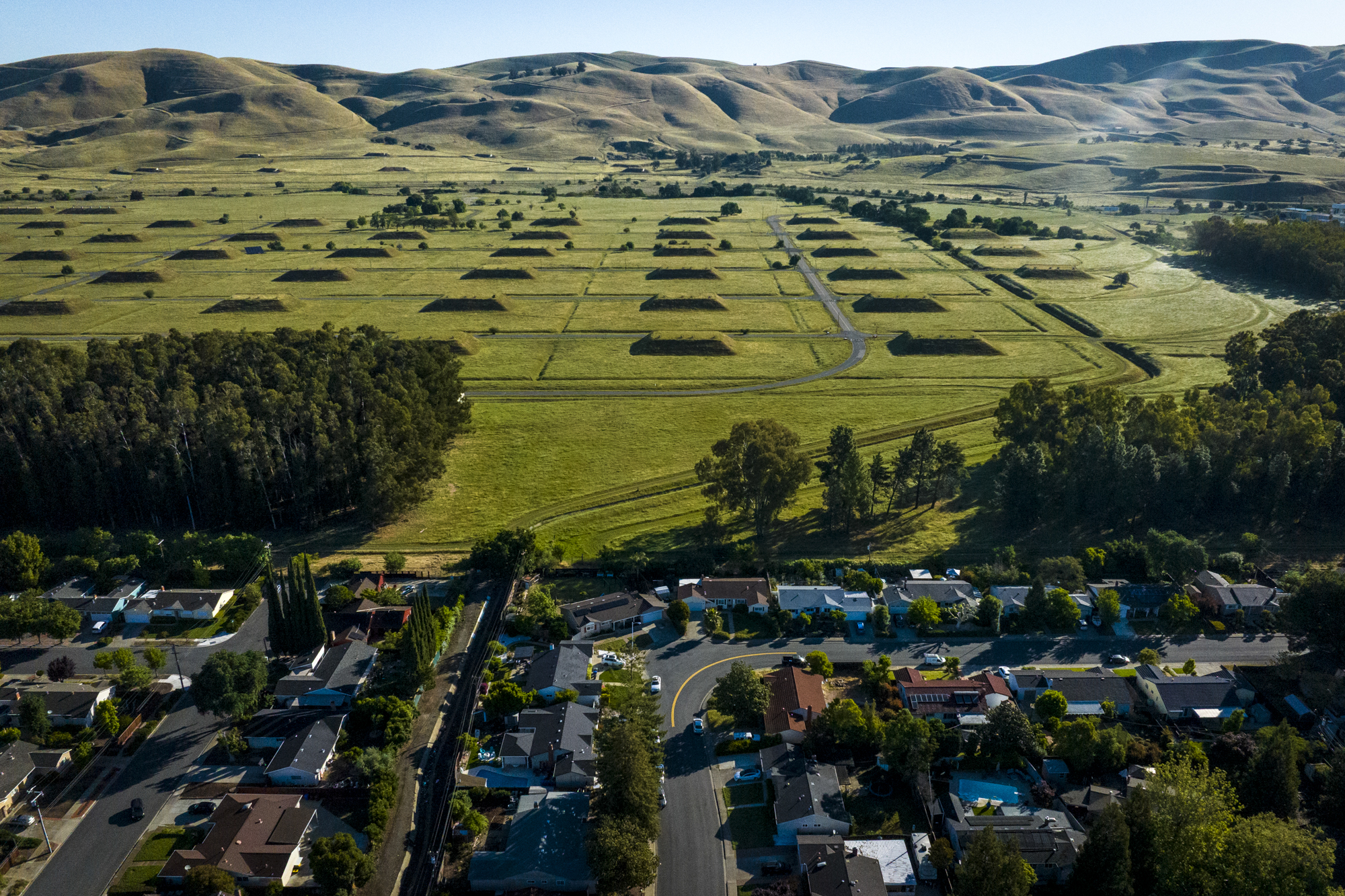
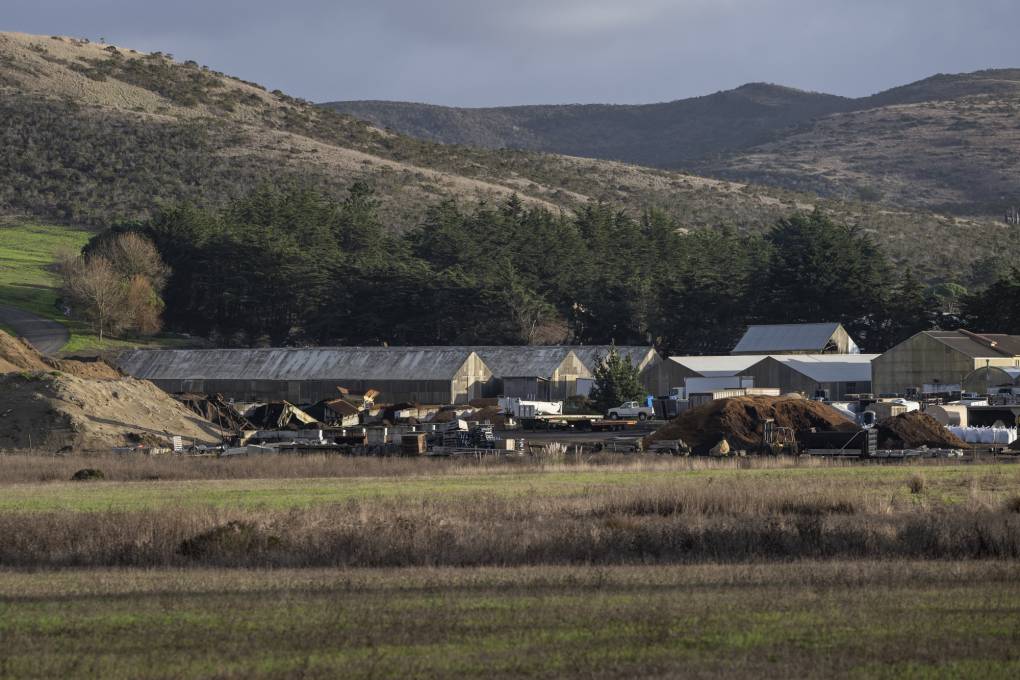
"caption": "Bunkers previously used for storing ammunition at the former Concord Naval Weapons Station abut a residential neighborhood in Concord on April 23, 2026.",
"credit": "Martin do Nascimento/KQED",
"altTag": null,
"description": null,
"imgSizes": {
"thumbnail": {
"file": "https://cdn.kqed.org/wp-content/uploads/sites/10/2026/04/260423-CONCORD-MOUNDS-MD-08-KQED-3-160x107.jpg",
"width": 160,
"height": 107,
"mimeType": "image/jpeg"
},
"1536x1536": {
"file": "https://cdn.kqed.org/wp-content/uploads/sites/10/2026/04/260423-CONCORD-MOUNDS-MD-08-KQED-3-1536x1024.jpg",
"width": 1536,
"height": 1024,
"mimeType": "image/jpeg"
},
"post-thumbnail": {
"file": "https://cdn.kqed.org/wp-content/uploads/sites/10/2026/04/260423-CONCORD-MOUNDS-MD-08-KQED-3-672x372.jpg",
"width": 672,
"height": 372,
"mimeType": "image/jpeg"
},
"twentyfourteen-full-width": {
"file": "https://cdn.kqed.org/wp-content/uploads/sites/10/2026/04/260423-CONCORD-MOUNDS-MD-08-KQED-3-1038x576.jpg",
"width": 1038,
"height": 576,
"mimeType": "image/jpeg"
},
"npr-cds-wide": {
"file": "https://cdn.kqed.org/wp-content/uploads/sites/10/2026/04/260423-CONCORD-MOUNDS-MD-08-KQED-3-1200x675.jpg",
"width": 1200,
"height": 675,
"mimeType": "image/jpeg"
},
"npr-cds-square": {
"file": "https://cdn.kqed.org/wp-content/uploads/sites/10/2026/04/260423-CONCORD-MOUNDS-MD-08-KQED-3-600x600.jpg",
"width": 600,
"height": 600,
"mimeType": "image/jpeg"
},
"kqedFullSize": {
"file": "https://cdn.kqed.org/wp-content/uploads/sites/10/2026/04/260423-CONCORD-MOUNDS-MD-08-KQED-3.jpg",
"width": 2000,
"height": 1333
}
},
"isLoading": false,
"fetchFailed": false
},
"news_12081306": {
"type": "attachments",
"id": "news_12081306",
"meta": {
"index": "attachments_1716263798",
"site": "news",
"id": "12081306",
"found": true
},
"title": "Photo Illustration - Anthropic Launches Project Glasswing",
"publishDate": 1777053839,
"status": "inherit",
"parent": 12081279,
"modified": 1777053863,
"caption": "A smartphone displays the Anthropic logo with the Project Glasswing webpage in the background, in Creteil, France, on April 8, 2026. Anthropic announces the launch of Project Glasswing, a cybersecurity initiative based on the Claude Mythos model to detect and remediate vulnerabilities in critical open-source software. (Photo by Samuel Boivin/NurPhoto via Getty Images)",
"credit": "Samuel Boivin/NurPhoto via Getty Images",
"altTag": null,
"description": null,
"imgSizes": {
"thumbnail": {
"file": "https://cdn.kqed.org/wp-content/uploads/sites/10/2026/04/AnthropicGetty-160x106.jpg",
"width": 160,
"height": 106,
"mimeType": "image/jpeg"
},
"1536x1536": {
"file": "https://cdn.kqed.org/wp-content/uploads/sites/10/2026/04/AnthropicGetty-1536x1021.jpg",
"width": 1536,
"height": 1021,
"mimeType": "image/jpeg"
},
"post-thumbnail": {
"file": "https://cdn.kqed.org/wp-content/uploads/sites/10/2026/04/AnthropicGetty-672x372.jpg",
"width": 672,
"height": 372,
"mimeType": "image/jpeg"
},
"twentyfourteen-full-width": {
"file": "https://cdn.kqed.org/wp-content/uploads/sites/10/2026/04/AnthropicGetty-1038x576.jpg",
"width": 1038,
"height": 576,
"mimeType": "image/jpeg"
},
"npr-cds-wide": {
"file": "https://cdn.kqed.org/wp-content/uploads/sites/10/2026/04/AnthropicGetty-1200x675.jpg",
"width": 1200,
"height": 675,
"mimeType": "image/jpeg"
},
"npr-cds-square": {
"file": "https://cdn.kqed.org/wp-content/uploads/sites/10/2026/04/AnthropicGetty-600x600.jpg",
"width": 600,
"height": 600,
"mimeType": "image/jpeg"
},
"kqedFullSize": {
"file": "https://cdn.kqed.org/wp-content/uploads/sites/10/2026/04/AnthropicGetty.jpg",
"width": 2000,
"height": 1330
}
},
"isLoading": false,
"fetchFailed": false
},
"news_12060987": {
"type": "attachments",
"id": "news_12060987",
"meta": {
"index": "attachments_1716263798",
"site": "news",
"id": "12060987",
"found": true
},
"title": "ICE at Court",
"publishDate": 1761141188,
"status": "inherit",
"parent": 12060986,
"modified": 1776991855,
"caption": "The rule being considered on Friday comes as immigration arrests rise at state courts, discouraging victims, witnesses, and others from showing up, according to lawyers and advocates.",
"credit": "Carlin Stiehl/Los Angeles Times via Getty Images",
"altTag": null,
"description": null,
"imgSizes": {
"medium": {
"file": "https://cdn.kqed.org/wp-content/uploads/sites/10/2025/10/GettyImages-2216992312-2000x1334.jpg",
"width": 2000,
"height": 1334,
"mimeType": "image/jpeg"
},
"large": {
"file": "https://cdn.kqed.org/wp-content/uploads/sites/10/2025/10/GettyImages-2216992312-2000x1334.jpg",
"width": 2000,
"height": 1334,
"mimeType": "image/jpeg"
},
"thumbnail": {
"file": "https://cdn.kqed.org/wp-content/uploads/sites/10/2025/10/GettyImages-2216992312-160x107.jpg",
"width": 160,
"height": 107,
"mimeType": "image/jpeg"
},
"1536x1536": {
"file": "https://cdn.kqed.org/wp-content/uploads/sites/10/2025/10/GettyImages-2216992312-1536x1025.jpg",
"width": 1536,
"height": 1025,
"mimeType": "image/jpeg"
},
"2048x2048": {
"file": "https://cdn.kqed.org/wp-content/uploads/sites/10/2025/10/GettyImages-2216992312-2048x1366.jpg",
"width": 2048,
"height": 1366,
"mimeType": "image/jpeg"
},
"post-thumbnail": {
"file": "https://cdn.kqed.org/wp-content/uploads/sites/10/2025/10/GettyImages-2216992312-672x372.jpg",
"width": 672,
"height": 372,
"mimeType": "image/jpeg"
},
"twentyfourteen-full-width": {
"file": "https://cdn.kqed.org/wp-content/uploads/sites/10/2025/10/GettyImages-2216992312-1038x576.jpg",
"width": 1038,
"height": 576,
"mimeType": "image/jpeg"
},
"full-width": {
"file": "https://cdn.kqed.org/wp-content/uploads/sites/10/2025/10/GettyImages-2216992312-2000x1334.jpg",
"width": 2000,
"height": 1334,
"mimeType": "image/jpeg"
},
"kqedFullSize": {
"file": "https://cdn.kqed.org/wp-content/uploads/sites/10/2025/10/GettyImages-2216992312-scaled-e1761161311555.jpg",
"width": 2000,
"height": 1334
}
},
"isLoading": false,
"fetchFailed": false
},
"news_12081129": {
"type": "attachments",
"id": "news_12081129",
"meta": {
"index": "attachments_1716263798",
"site": "news",
"id": "12081129",
"found": true
},
"title": "Literary-Dates-Hangouts",
"publishDate": 1776968430,
"status": "inherit",
"parent": 12081122,
"modified": 1776972240,
"caption": "There are many places for book lovers to get together around the Bay Area — and we’ve rounded them up.",
"credit": "Darren Tu/KQED",
"altTag": null,
"description": null,
"imgSizes": {
"thumbnail": {
"file": "https://cdn.kqed.org/wp-content/uploads/sites/10/2026/04/Literary-Dates-Hangouts-160x103.jpg",
"width": 160,
"height": 103,
"mimeType": "image/jpeg"
},
"1536x1536": {
"file": "https://cdn.kqed.org/wp-content/uploads/sites/10/2026/04/Literary-Dates-Hangouts-1536x992.jpg",
"width": 1536,
"height": 992,
"mimeType": "image/jpeg"
},
"post-thumbnail": {
"file": "https://cdn.kqed.org/wp-content/uploads/sites/10/2026/04/Literary-Dates-Hangouts-672x372.jpg",
"width": 672,
"height": 372,
"mimeType": "image/jpeg"
},
"twentyfourteen-full-width": {
"file": "https://cdn.kqed.org/wp-content/uploads/sites/10/2026/04/Literary-Dates-Hangouts-1038x576.jpg",
"width": 1038,
"height": 576,
"mimeType": "image/jpeg"
},
"npr-cds-wide": {
"file": "https://cdn.kqed.org/wp-content/uploads/sites/10/2026/04/Literary-Dates-Hangouts-1200x675.jpg",
"width": 1200,
"height": 675,
"mimeType": "image/jpeg"
},
"npr-cds-square": {
"file": "https://cdn.kqed.org/wp-content/uploads/sites/10/2026/04/Literary-Dates-Hangouts-600x600.jpg",
"width": 600,
"height": 600,
"mimeType": "image/jpeg"
},
"kqedFullSize": {
"file": "https://cdn.kqed.org/wp-content/uploads/sites/10/2026/04/Literary-Dates-Hangouts.jpg",
"width": 1920,
"height": 1240
}
},
"isLoading": false,
"fetchFailed": false
},
"news_12080617": {
"type": "attachments",
"id": "news_12080617",
"meta": {
"index": "attachments_1716263798",
"site": "news",
"id": "12080617",
"found": true
},
"title": "260420-SCCDAANNOUNCEMENT-23-BL-KQED",
"publishDate": 1776712337,
"status": "inherit",
"parent": 12080584,
"modified": 1776716645,
"caption": "A sign says, \"Justice for Jaxon\" outside the Santa Clara County Juvenile Court in San José on April 20, 2026, where prosecutors announced charges against a San José teen accused of killing his 2-year-old foster brother, Jaxon Juarez.",
"credit": "Beth LaBerge/KQED",
"altTag": null,
"description": null,
"imgSizes": {
"thumbnail": {
"file": "https://cdn.kqed.org/wp-content/uploads/sites/10/2026/04/260420-SCCDAANNOUNCEMENT-23-BL-KQED-160x107.jpg",
"width": 160,
"height": 107,
"mimeType": "image/jpeg"
},
"1536x1536": {
"file": "https://cdn.kqed.org/wp-content/uploads/sites/10/2026/04/260420-SCCDAANNOUNCEMENT-23-BL-KQED-1536x1024.jpg",
"width": 1536,
"height": 1024,
"mimeType": "image/jpeg"
},
"post-thumbnail": {
"file": "https://cdn.kqed.org/wp-content/uploads/sites/10/2026/04/260420-SCCDAANNOUNCEMENT-23-BL-KQED-672x372.jpg",
"width": 672,
"height": 372,
"mimeType": "image/jpeg"
},
"twentyfourteen-full-width": {
"file": "https://cdn.kqed.org/wp-content/uploads/sites/10/2026/04/260420-SCCDAANNOUNCEMENT-23-BL-KQED-1038x576.jpg",
"width": 1038,
"height": 576,
"mimeType": "image/jpeg"
},
"npr-cds-wide": {
"file": "https://cdn.kqed.org/wp-content/uploads/sites/10/2026/04/260420-SCCDAANNOUNCEMENT-23-BL-KQED-1200x675.jpg",
"width": 1200,
"height": 675,
"mimeType": "image/jpeg"
},
"npr-cds-square": {
"file": "https://cdn.kqed.org/wp-content/uploads/sites/10/2026/04/260420-SCCDAANNOUNCEMENT-23-BL-KQED-600x600.jpg",
"width": 600,
"height": 600,
"mimeType": "image/jpeg"
},
"kqedFullSize": {
"file": "https://cdn.kqed.org/wp-content/uploads/sites/10/2026/04/260420-SCCDAANNOUNCEMENT-23-BL-KQED.jpg",
"width": 2000,
"height": 1333
}
},
"isLoading": false,
"fetchFailed": false
},
"news_12080846": {
"type": "attachments",
"id": "news_12080846",
"meta": {
"index": "attachments_1716263798",
"site": "news",
"id": "12080846",
"found": true
},
"title": "260120-HarmonySanPablo-03-BL",
"publishDate": 1776875278,
"status": "inherit",
"parent": 0,
"modified": 1776878151,
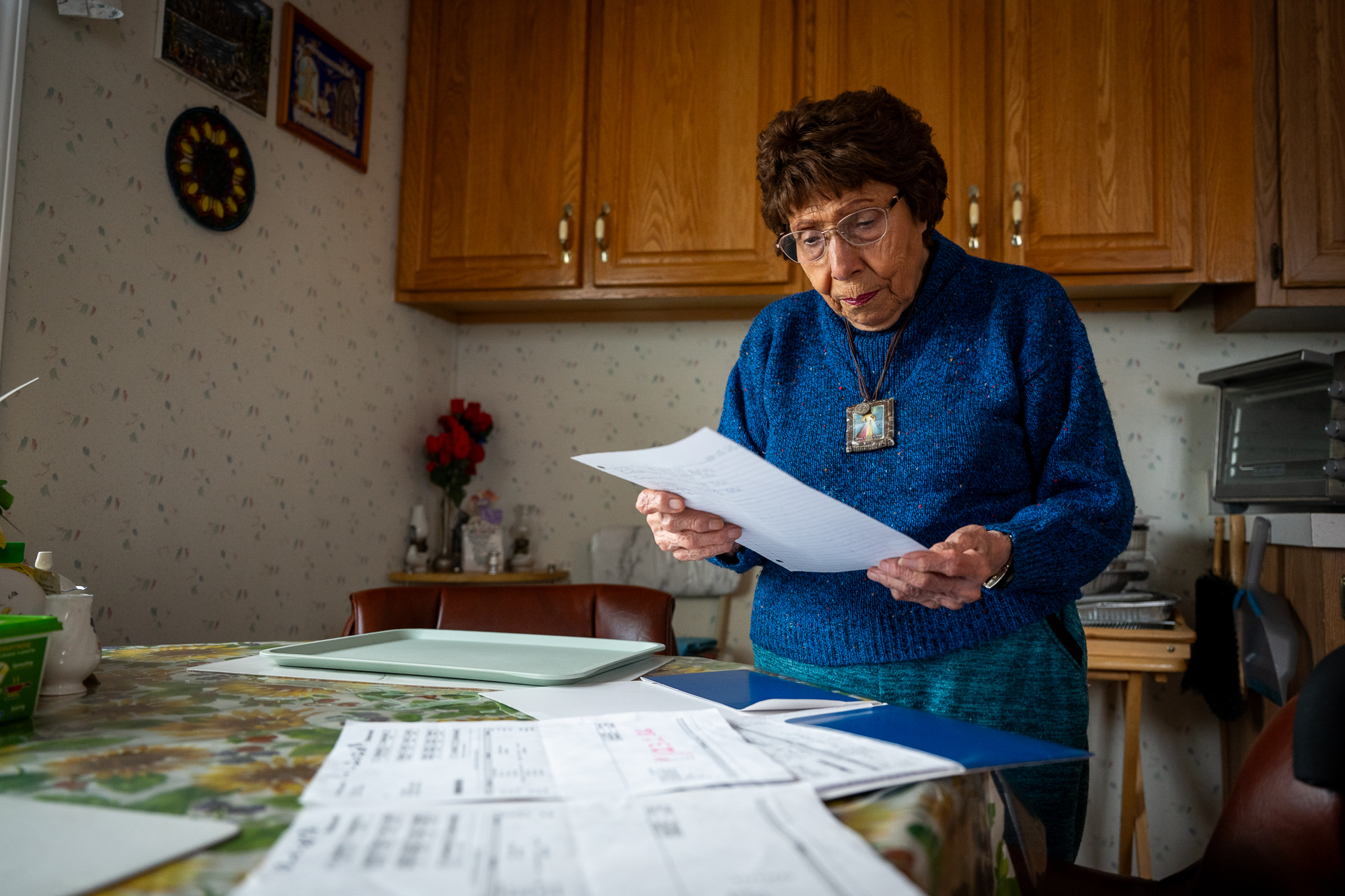
"caption": "Clara Faria, 91, looks through paperwork and notices documenting rent increases for the lot where her mobile home sits at Willow Mobile Home Park in San Pablo on Jan. 20, 2026, ahead of a San Pablo City Council meeting where she plans to give public comment about potential rent control measures.",
"credit": "Beth LaBerge/KQED",
"altTag": null,
"description": null,
"imgSizes": {
"thumbnail": {
"file": "https://cdn.kqed.org/wp-content/uploads/sites/10/2026/04/260120-HarmonySanPablo-03-BL-160x107.jpg",
"width": 160,
"height": 107,
"mimeType": "image/jpeg"
},
"1536x1536": {
"file": "https://cdn.kqed.org/wp-content/uploads/sites/10/2026/04/260120-HarmonySanPablo-03-BL-1536x1024.jpg",
"width": 1536,
"height": 1024,
"mimeType": "image/jpeg"
},
"post-thumbnail": {
"file": "https://cdn.kqed.org/wp-content/uploads/sites/10/2026/04/260120-HarmonySanPablo-03-BL-672x372.jpg",
"width": 672,
"height": 372,
"mimeType": "image/jpeg"
},
"twentyfourteen-full-width": {
"file": "https://cdn.kqed.org/wp-content/uploads/sites/10/2026/04/260120-HarmonySanPablo-03-BL-1038x576.jpg",
"width": 1038,
"height": 576,
"mimeType": "image/jpeg"
},
"npr-cds-wide": {
"file": "https://cdn.kqed.org/wp-content/uploads/sites/10/2026/04/260120-HarmonySanPablo-03-BL-1200x675.jpg",
"width": 1200,
"height": 675,
"mimeType": "image/jpeg"
},
"npr-cds-square": {
"file": "https://cdn.kqed.org/wp-content/uploads/sites/10/2026/04/260120-HarmonySanPablo-03-BL-600x600.jpg",
"width": 600,
"height": 600,
"mimeType": "image/jpeg"
},
"kqedFullSize": {
"file": "https://cdn.kqed.org/wp-content/uploads/sites/10/2026/04/260120-HarmonySanPablo-03-BL.jpg",
"width": 2000,
"height": 1333
}
},
"isLoading": false,
"fetchFailed": false
},
"news_12079605": {
"type": "attachments",
"id": "news_12079605",
"meta": {
"index": "attachments_1716263798",
"site": "news",
"id": "12079605",
"found": true
},
"title": "260408-baycurioustacobell01913_TV",
"publishDate": 1776042722,
"status": "inherit",
"parent": 0,
"modified": 1776889503,
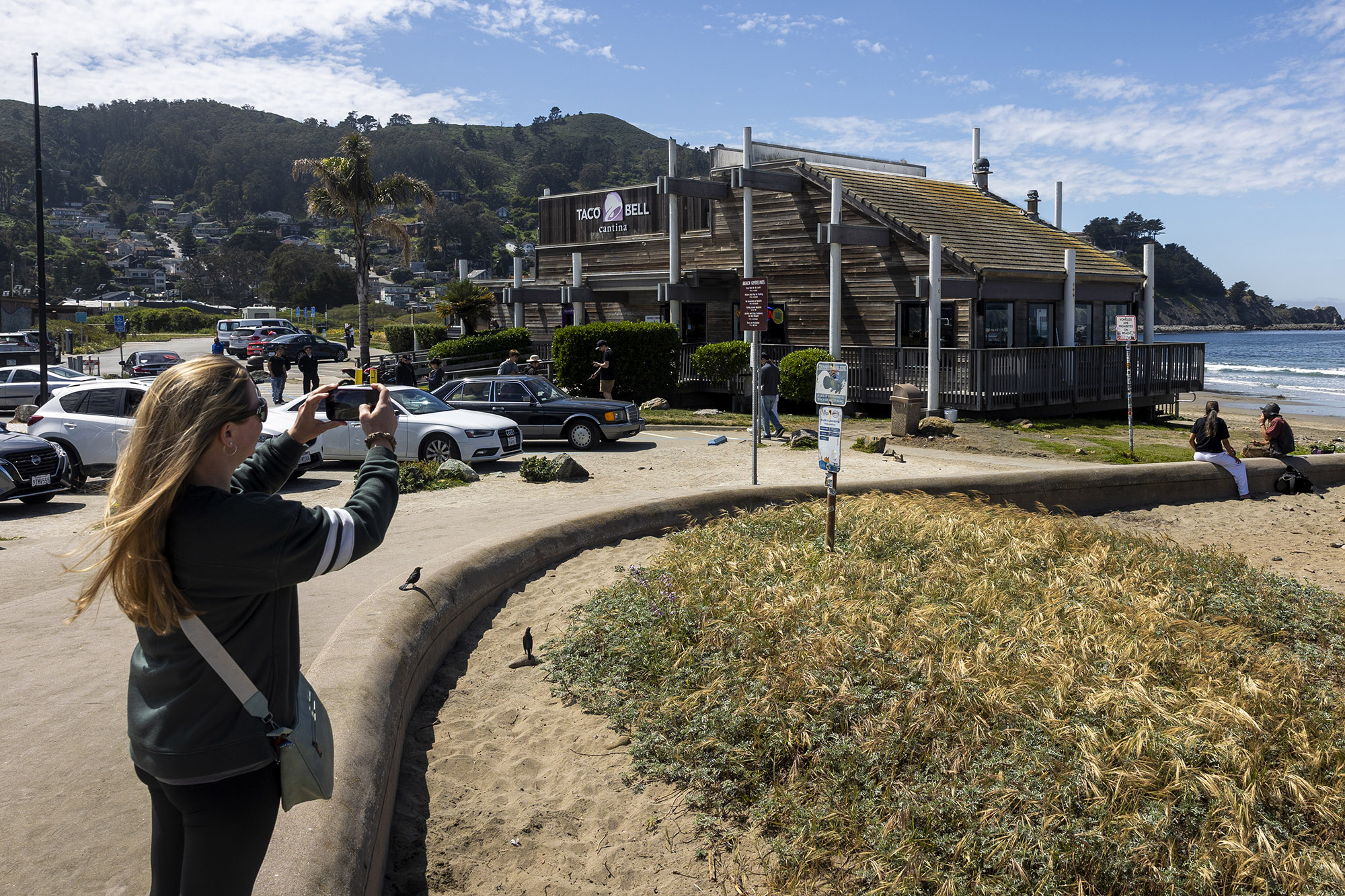
"caption": "A person takes a photo of Pacifica State Beach outside the Taco Bell Cantina in Pacifica, California, on April 8, 2026. The Pacifica Taco Bell, just outside of San Francisco, is legendary for its beachfront views and retro architecture. How did a fast food chain end up with such prime real estate? ",
"credit": "Tâm Vũ/KQED",
"altTag": null,
"description": null,
"imgSizes": {
"thumbnail": {
"file": "https://cdn.kqed.org/wp-content/uploads/sites/10/2026/04/260408-baycurioustacobell01913_TV-160x107.jpg",
"width": 160,
"height": 107,
"mimeType": "image/jpeg"
},
"1536x1536": {
"file": "https://cdn.kqed.org/wp-content/uploads/sites/10/2026/04/260408-baycurioustacobell01913_TV-1536x1024.jpg",
"width": 1536,
"height": 1024,
"mimeType": "image/jpeg"
},
"post-thumbnail": {
"file": "https://cdn.kqed.org/wp-content/uploads/sites/10/2026/04/260408-baycurioustacobell01913_TV-672x372.jpg",
"width": 672,
"height": 372,
"mimeType": "image/jpeg"
},
"twentyfourteen-full-width": {
"file": "https://cdn.kqed.org/wp-content/uploads/sites/10/2026/04/260408-baycurioustacobell01913_TV-1038x576.jpg",
"width": 1038,
"height": 576,
"mimeType": "image/jpeg"
},
"npr-cds-wide": {
"file": "https://cdn.kqed.org/wp-content/uploads/sites/10/2026/04/260408-baycurioustacobell01913_TV-1200x675.jpg",
"width": 1200,
"height": 675,
"mimeType": "image/jpeg"
},
"npr-cds-square": {
"file": "https://cdn.kqed.org/wp-content/uploads/sites/10/2026/04/260408-baycurioustacobell01913_TV-600x600.jpg",
"width": 600,
"height": 600,
"mimeType": "image/jpeg"
},
"kqedFullSize": {
"file": "https://cdn.kqed.org/wp-content/uploads/sites/10/2026/04/260408-baycurioustacobell01913_TV.jpg",
"width": 2000,
"height": 1333
}
},
"isLoading": false,
"fetchFailed": false
},
"news_11971712": {
"type": "attachments",
"id": "news_11971712",
"meta": {
"index": "attachments_1716263798",
"site": "news",
"id": "11971712",
"found": true
},
"parent": 11973071,
"imgSizes": {
"twentyfourteen-full-width": {
"file": "https://cdn.kqed.org/wp-content/uploads/sites/10/2024/01/240103-HMBFARMS-10-BL-KQED-1038x576.jpg",
"width": 1038,
"mimeType": "image/jpeg",
"height": 576
},
"thumbnail": {
"file": "https://cdn.kqed.org/wp-content/uploads/sites/10/2024/01/240103-HMBFARMS-10-BL-KQED-160x107.jpg",
"width": 160,
"mimeType": "image/jpeg",
"height": 107
},
"post-thumbnail": {
"file": "https://cdn.kqed.org/wp-content/uploads/sites/10/2024/01/240103-HMBFARMS-10-BL-KQED-672x372.jpg",
"width": 672,
"mimeType": "image/jpeg",
"height": 372
},
"kqedFullSize": {
"file": "https://cdn.kqed.org/wp-content/uploads/sites/10/2024/01/240103-HMBFARMS-10-BL-KQED.jpg",
"width": 2000,
"height": 1333
},
"large": {
"file": "https://cdn.kqed.org/wp-content/uploads/sites/10/2024/01/240103-HMBFARMS-10-BL-KQED-1020x680.jpg",
"width": 1020,
"mimeType": "image/jpeg",
"height": 680
},
"1536x1536": {
"file": "https://cdn.kqed.org/wp-content/uploads/sites/10/2024/01/240103-HMBFARMS-10-BL-KQED-1536x1024.jpg",
"width": 1536,
"mimeType": "image/jpeg",
"height": 1024
},
"full-width": {
"file": "https://cdn.kqed.org/wp-content/uploads/sites/10/2024/01/240103-HMBFARMS-10-BL-KQED-1920x1280.jpg",
"width": 1920,
"mimeType": "image/jpeg",
"height": 1280
},
"medium": {
"file": "https://cdn.kqed.org/wp-content/uploads/sites/10/2024/01/240103-HMBFARMS-10-BL-KQED-800x533.jpg",
"width": 800,
"mimeType": "image/jpeg",
"height": 533
}
},
"publishDate": 1704414534,
"modified": 1716251525,
"caption": "Concord Farms can be seen in the distance in Half Moon Bay on Jan. 3, 2024.",
"description": null,
"title": "Concord Farms can be seen in the distance in Half Moon Bay on Jan. 3, 2024.",
"credit": "Beth LaBerge/KQED",
"status": "inherit",
"altTag": "a farm seen from the road",
"isLoading": false,
"fetchFailed": false
},
"news_12080748": {
"type": "attachments",
"id": "news_12080748",
"meta": {
"index": "attachments_1716263798",
"site": "news",
"id": "12080748",
"found": true
},
"title": "FRANCE-LITERATURE-CULTURE-FESTIVAL",
"publishDate": 1776804085,
"status": "inherit",
"parent": 12080674,
"modified": 1776808194,
"caption": "This photograph, taken on Sept. 20, 2023, shows a bookshelf set up in the street during the 25th edition of the \"Les Correspondances\" literary festival in Manosque, southern France. ",
"credit": "Joel Saget/AFP via Getty Images",
"altTag": null,
"description": null,
"imgSizes": {
"thumbnail": {
"file": "https://cdn.kqed.org/wp-content/uploads/sites/10/2026/04/BooksGetty-160x107.jpg",
"width": 160,
"height": 107,
"mimeType": "image/jpeg"
},
"1536x1536": {
"file": "https://cdn.kqed.org/wp-content/uploads/sites/10/2026/04/BooksGetty-1536x1024.jpg",
"width": 1536,
"height": 1024,
"mimeType": "image/jpeg"
},
"post-thumbnail": {
"file": "https://cdn.kqed.org/wp-content/uploads/sites/10/2026/04/BooksGetty-672x372.jpg",
"width": 672,
"height": 372,
"mimeType": "image/jpeg"
},
"twentyfourteen-full-width": {
"file": "https://cdn.kqed.org/wp-content/uploads/sites/10/2026/04/BooksGetty-1038x576.jpg",
"width": 1038,
"height": 576,
"mimeType": "image/jpeg"
},
"npr-cds-wide": {
"file": "https://cdn.kqed.org/wp-content/uploads/sites/10/2026/04/BooksGetty-1200x675.jpg",
"width": 1200,
"height": 675,
"mimeType": "image/jpeg"
},
"npr-cds-square": {
"file": "https://cdn.kqed.org/wp-content/uploads/sites/10/2026/04/BooksGetty-600x600.jpg",
"width": 600,
"height": 600,
"mimeType": "image/jpeg"
},
"kqedFullSize": {
"file": "https://cdn.kqed.org/wp-content/uploads/sites/10/2026/04/BooksGetty.jpg",
"width": 2000,
"height": 1333
}
},
"isLoading": false,
"fetchFailed": false
},
"news_12080314": {
"type": "attachments",
"id": "news_12080314",
"meta": {
"index": "attachments_1716263798",
"site": "news",
"id": "12080314",
"found": true
},
"title": "041526_CHADASHBY_9485-KQED",
"publishDate": 1776372204,
"status": "inherit",
"parent": 0,
"modified": 1776375714,
"caption": "Chad Ashby at his home in Topanga on April 15, 2026. Ashby will be working on a support boat as part of the Global Samud flotilla, an effort to deliver aid to Gaza. ",
"credit": "Lauren Justice for KQED",
"altTag": null,
"description": null,
"imgSizes": {
"thumbnail": {
"file": "https://cdn.kqed.org/wp-content/uploads/sites/10/2026/04/041526_CHADASHBY_9485-KQED-160x107.jpg",
"width": 160,
"height": 107,
"mimeType": "image/jpeg"
},
"1536x1536": {
"file": "https://cdn.kqed.org/wp-content/uploads/sites/10/2026/04/041526_CHADASHBY_9485-KQED-1536x1024.jpg",
"width": 1536,
"height": 1024,
"mimeType": "image/jpeg"
},
"post-thumbnail": {
"file": "https://cdn.kqed.org/wp-content/uploads/sites/10/2026/04/041526_CHADASHBY_9485-KQED-672x372.jpg",
"width": 672,
"height": 372,
"mimeType": "image/jpeg"
},
"twentyfourteen-full-width": {
"file": "https://cdn.kqed.org/wp-content/uploads/sites/10/2026/04/041526_CHADASHBY_9485-KQED-1038x576.jpg",
"width": 1038,
"height": 576,
"mimeType": "image/jpeg"
},
"npr-cds-wide": {
"file": "https://cdn.kqed.org/wp-content/uploads/sites/10/2026/04/041526_CHADASHBY_9485-KQED-1200x675.jpg",
"width": 1200,
"height": 675,
"mimeType": "image/jpeg"
},
"npr-cds-square": {
"file": "https://cdn.kqed.org/wp-content/uploads/sites/10/2026/04/041526_CHADASHBY_9485-KQED-600x600.jpg",
"width": 600,
"height": 600,
"mimeType": "image/jpeg"
},
"kqedFullSize": {
"file": "https://cdn.kqed.org/wp-content/uploads/sites/10/2026/04/041526_CHADASHBY_9485-KQED.jpg",
"width": 2000,
"height": 1333
}
},
"isLoading": false,
"fetchFailed": false
},
"news_12033651": {
"type": "attachments",
"id": "news_12033651",
"meta": {
"index": "attachments_1716263798",
"site": "news",
"id": "12033651",
"found": true
},
"title": "240625-UBERSANJOSE-JG-1 (1)",
"publishDate": 1743204895,
"status": "inherit",
"parent": 12033648,
"modified": 1743204956,
"caption": "Uber drivers and advocates rally outside the company's driver support center in South San José on June 25, 2024.",
"credit": "Joseph Geha/KQED",
"altTag": null,
"description": null,
"imgSizes": {
"medium": {
"file": "https://cdn.kqed.org/wp-content/uploads/sites/10/2025/03/240625-UBERSANJOSE-JG-1-1-800x533.jpg",
"width": 800,
"height": 533,
"mimeType": "image/jpeg"
},
"large": {
"file": "https://cdn.kqed.org/wp-content/uploads/sites/10/2025/03/240625-UBERSANJOSE-JG-1-1-1020x680.jpg",
"width": 1020,
"height": 680,
"mimeType": "image/jpeg"
},
"thumbnail": {
"file": "https://cdn.kqed.org/wp-content/uploads/sites/10/2025/03/240625-UBERSANJOSE-JG-1-1-160x107.jpg",
"width": 160,
"height": 107,
"mimeType": "image/jpeg"
},
"1536x1536": {
"file": "https://cdn.kqed.org/wp-content/uploads/sites/10/2025/03/240625-UBERSANJOSE-JG-1-1-1536x1024.jpg",
"width": 1536,
"height": 1024,
"mimeType": "image/jpeg"
},
"post-thumbnail": {
"file": "https://cdn.kqed.org/wp-content/uploads/sites/10/2025/03/240625-UBERSANJOSE-JG-1-1-672x372.jpg",
"width": 672,
"height": 372,
"mimeType": "image/jpeg"
},
"twentyfourteen-full-width": {
"file": "https://cdn.kqed.org/wp-content/uploads/sites/10/2025/03/240625-UBERSANJOSE-JG-1-1-1038x576.jpg",
"width": 1038,
"height": 576,
"mimeType": "image/jpeg"
},
"full-width": {
"file": "https://cdn.kqed.org/wp-content/uploads/sites/10/2025/03/240625-UBERSANJOSE-JG-1-1-1920x1280.jpg",
"width": 1920,
"height": 1280,
"mimeType": "image/jpeg"
},
"kqedFullSize": {
"file": "https://cdn.kqed.org/wp-content/uploads/sites/10/2025/03/240625-UBERSANJOSE-JG-1-1.jpg",
"width": 2000,
"height": 1333
}
},
"isLoading": false,
"fetchFailed": false
},
"news_12080645": {
"type": "attachments",
"id": "news_12080645",
"meta": {
"index": "attachments_1716263798",
"site": "news",
"id": "12080645",
"found": true
},
"title": "260420-SLEEP PODS-MD-01-KQED_1",
"publishDate": 1776722847,
"status": "inherit",
"parent": 0,
"modified": 1776775510,
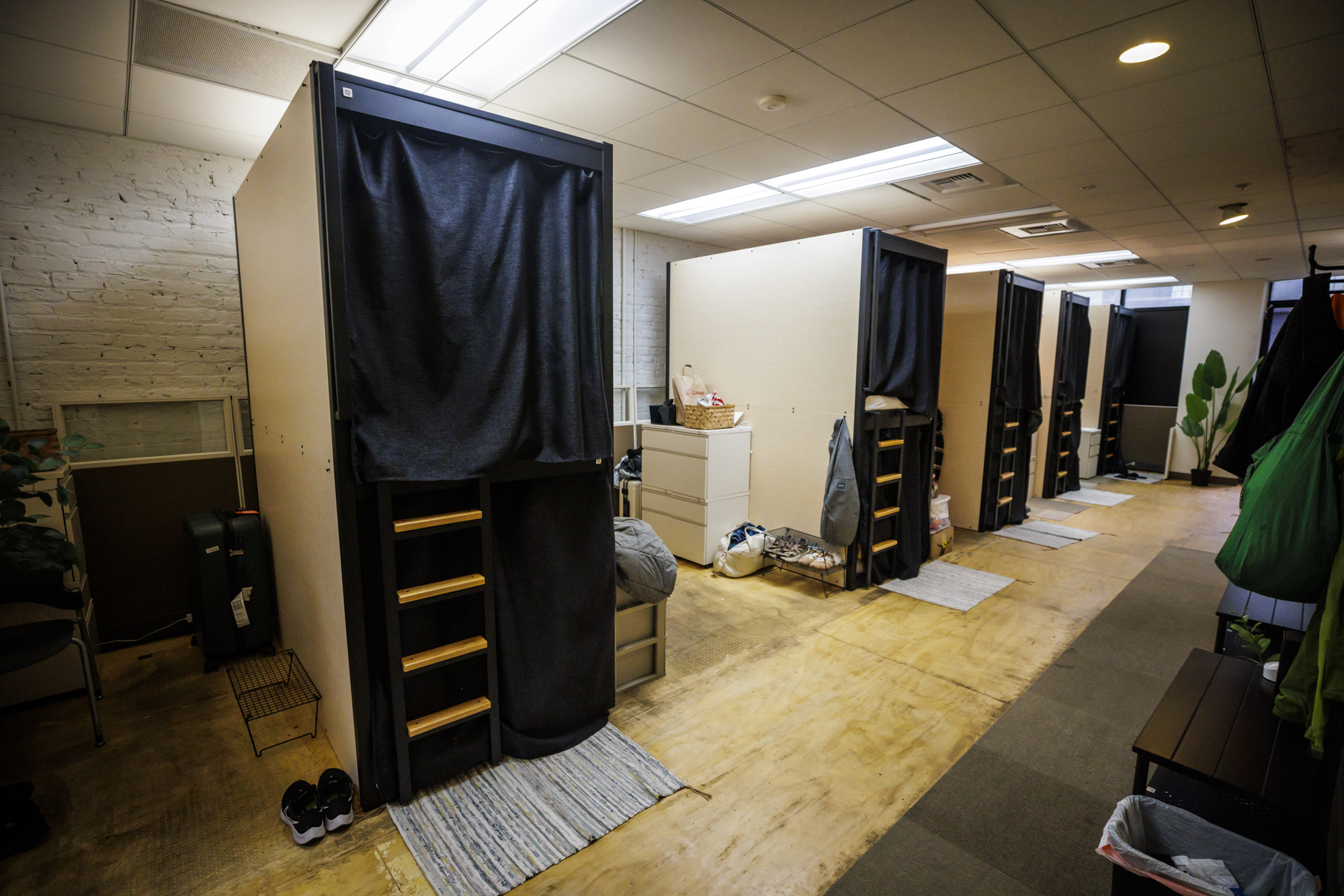
"caption": "Sleeping pods at the Brownstone Shared Housing co-living space in San Francisco on April 20, 2026.",
"credit": "Martin do Nascimento/KQED",
"altTag": null,
"description": null,
"imgSizes": {
"thumbnail": {
"file": "https://cdn.kqed.org/wp-content/uploads/sites/10/2026/04/260420-SLEEP-PODS-MD-01-KQED_1-160x107.jpg",
"width": 160,
"height": 107,
"mimeType": "image/jpeg"
},
"1536x1536": {
"file": "https://cdn.kqed.org/wp-content/uploads/sites/10/2026/04/260420-SLEEP-PODS-MD-01-KQED_1-1536x1025.jpg",
"width": 1536,
"height": 1025,
"mimeType": "image/jpeg"
},
"post-thumbnail": {
"file": "https://cdn.kqed.org/wp-content/uploads/sites/10/2026/04/260420-SLEEP-PODS-MD-01-KQED_1-672x372.jpg",
"width": 672,
"height": 372,
"mimeType": "image/jpeg"
},
"twentyfourteen-full-width": {
"file": "https://cdn.kqed.org/wp-content/uploads/sites/10/2026/04/260420-SLEEP-PODS-MD-01-KQED_1-1038x576.jpg",
"width": 1038,
"height": 576,
"mimeType": "image/jpeg"
},
"npr-cds-wide": {
"file": "https://cdn.kqed.org/wp-content/uploads/sites/10/2026/04/260420-SLEEP-PODS-MD-01-KQED_1-1200x675.jpg",
"width": 1200,
"height": 675,
"mimeType": "image/jpeg"
},
"npr-cds-square": {
"file": "https://cdn.kqed.org/wp-content/uploads/sites/10/2026/04/260420-SLEEP-PODS-MD-01-KQED_1-600x600.jpg",
"width": 600,
"height": 600,
"mimeType": "image/jpeg"
},
"kqedFullSize": {
"file": "https://cdn.kqed.org/wp-content/uploads/sites/10/2026/04/260420-SLEEP-PODS-MD-01-KQED_1.jpg",
"width": 2000,
"height": 1334
}
},
"isLoading": false,
"fetchFailed": false
}
},
"audioPlayerReducer": {
"postId": "stream_live",
"isPaused": true,
"isPlaying": false,
"pfsActive": false,
"pledgeModalIsOpen": true,
"playerDrawerIsOpen": false,
"liveAudioPlayStartedAt": 0,
"liveAudioPlayContext": ""
},
"authorsReducer": {
"minakim": {
"type": "authors",
"id": "243",
"meta": {
"index": "authors_1716337520",
"id": "243",
"found": true
},
"name": "Mina Kim",
"firstName": "Mina",
"lastName": "Kim",
"slug": "minakim",
"email": "mkim@kqed.org",
"display_author_email": false,
"staff_mastheads": [
"news"
],
"title": "Host, Forum",
"bio": "Mina Kim is host of the 10 a.m. statewide hour of Forum; a live daily talk show for curious Californians on issues that matter to the state and nation, with a particular emphasis on race and equity.\r\n\r\nBefore joining the Forum team, Mina was KQED’s evening news anchor, and health reporter for The California Report. Her award-winning work has included natural disasters in Napa and gun violence in Oakland. Mina grew up in St. John’s, Newfoundland.",
"avatar": "https://secure.gravatar.com/avatar/145ce657a2d08cb86d93686beb958982?s=600&d=blank&r=g",
"twitter": "mkimreporter",
"facebook": null,
"instagram": null,
"linkedin": null,
"sites": [
{
"site": "news",
"roles": [
"contributor"
]
},
{
"site": "stateofhealth",
"roles": [
"author"
]
},
{
"site": "forum",
"roles": [
"editor"
]
}
],
"headData": {
"title": "Mina Kim | KQED",
"description": "Host, Forum",
"ogImgSrc": "https://secure.gravatar.com/avatar/145ce657a2d08cb86d93686beb958982?s=600&d=blank&r=g",
"twImgSrc": "https://secure.gravatar.com/avatar/145ce657a2d08cb86d93686beb958982?s=600&d=blank&r=g"
},
"isLoading": false,
"link": "/author/minakim"
},
"lakshmi": {
"type": "authors",
"id": "3245",
"meta": {
"index": "authors_1716337520",
"id": "3245",
"found": true
},
"name": "Lakshmi Sarah",
"firstName": "Lakshmi",
"lastName": "Sarah",
"slug": "lakshmi",
"email": "lakisarah@gmail.com",
"display_author_email": false,
"staff_mastheads": [],
"title": null,
"bio": "Born and raised in California, Lakshmi is an educator and journalist with a focus on South Asia, gender, race and the arts. Over the past few years, she has worked with newspapers, radio and magazines from Botswana to Los Angeles. She has written and produced for various audiences, including Mic, Global Voices, Al Jazeera Online, AJ+ and KQED Arts. Lakshmi is a graduate of Pitzer College where she studied Global Communications and Studio Arts.",
"avatar": "https://secure.gravatar.com/avatar/30f520a9238d29ba9187c2a405e0f85d?s=600&d=blank&r=g",
"twitter": "lakitalki",
"facebook": null,
"instagram": null,
"linkedin": null,
"sites": [
{
"site": "arts",
"roles": [
"editor"
]
},
{
"site": "pop",
"roles": [
"contributor"
]
},
{
"site": "science",
"roles": [
"editor"
]
}
],
"headData": {
"title": "Lakshmi Sarah | KQED",
"description": null,
"ogImgSrc": "https://secure.gravatar.com/avatar/30f520a9238d29ba9187c2a405e0f85d?s=600&d=blank&r=g",
"twImgSrc": "https://secure.gravatar.com/avatar/30f520a9238d29ba9187c2a405e0f85d?s=600&d=blank&r=g"
},
"isLoading": false,
"link": "/author/lakshmi"
},
"fjhabvala": {
"type": "authors",
"id": "8659",
"meta": {
"index": "authors_1716337520",
"id": "8659",
"found": true
},
"name": "Farida Jhabvala Romero",
"firstName": "Farida",
"lastName": "Jhabvala Romero",
"slug": "fjhabvala",
"email": "fjhabvala@kqed.org",
"display_author_email": true,
"staff_mastheads": [
"news"
],
"title": "KQED Contributor",
"bio": "Farida Jhabvala Romero is a Labor Correspondent for KQED. She previously covered immigration. Farida was \u003ca href=\"https://www.ccnma.org/2022-most-influential-latina-journalists\">named\u003c/a> one of the 10 Most Influential Latina Journalists in California in 2022 by the California Chicano News Media Association. Her work has won awards from the Society of Professional Journalists (Northern California), as well as a national and regional Edward M. Murrow Award for the collaborative reporting projects “Dangerous Air” and “Graying California.” Before joining KQED, Farida worked as a producer at Radio Bilingüe, a national public radio network. Farida earned her master’s degree in journalism from Stanford University.",
"avatar": "https://secure.gravatar.com/avatar/f9f022d4e2609741874222a1e9d41f48fea74011aa7c615eef91d9a50c944ebe?s=600&d=blank&r=g",
"twitter": "FaridaJhabvala",
"bluesky": null,
"facebook": null,
"instagram": null,
"linkedin": "https://www.linkedin.com/in/faridajhabvala/",
"sites": [
{
"site": "news",
"roles": [
"editor"
]
},
{
"site": "stateofhealth",
"roles": [
"author"
]
},
{
"site": "liveblog",
"roles": [
"author"
]
}
],
"headData": {
"title": "Farida Jhabvala Romero | KQED",
"description": "KQED Contributor",
"ogImgSrc": "https://secure.gravatar.com/avatar/f9f022d4e2609741874222a1e9d41f48fea74011aa7c615eef91d9a50c944ebe?s=600&d=blank&r=g",
"twImgSrc": "https://secure.gravatar.com/avatar/f9f022d4e2609741874222a1e9d41f48fea74011aa7c615eef91d9a50c944ebe?s=600&d=blank&r=g"
},
"isLoading": false,
"link": "/author/fjhabvala"
},
"abandlamudi": {
"type": "authors",
"id": "11672",
"meta": {
"index": "authors_1716337520",
"id": "11672",
"found": true
},
"name": "Adhiti Bandlamudi",
"firstName": "Adhiti",
"lastName": "Bandlamudi",
"slug": "abandlamudi",
"email": "abandlamudi@kqed.org",
"display_author_email": false,
"staff_mastheads": [
"news"
],
"title": "KQED Housing Reporter",
"bio": "Adhiti Bandlamudi reports for KQED's Housing desk. She focuses on how housing gets built across the Bay Area. Before joining KQED in 2020, she reported for WUNC in Durham, North Carolina, WABE in Atlanta, Georgia and Capital Public Radio in Sacramento. In 2017, she was awarded a Kroc Fellowship at NPR where she reported on everything from sprinkles to the Golden State Killer's arrest. When she's not reporting, she's baking new recipes in her kitchen or watching movies with friends and family. She's originally from Georgia and has strong opinions about Great British Bake Off.",
"avatar": "https://secure.gravatar.com/avatar/868129c8b257bb99a3500e2c86a65400?s=600&d=mm&r=g",
"twitter": "oddity_adhiti",
"facebook": null,
"instagram": null,
"linkedin": null,
"sites": [
{
"site": "arts",
"roles": [
"author"
]
},
{
"site": "news",
"roles": [
"editor"
]
},
{
"site": "liveblog",
"roles": [
"author"
]
}
],
"headData": {
"title": "Adhiti Bandlamudi | KQED",
"description": "KQED Housing Reporter",
"ogImgSrc": "https://secure.gravatar.com/avatar/868129c8b257bb99a3500e2c86a65400?s=600&d=mm&r=g",
"twImgSrc": "https://secure.gravatar.com/avatar/868129c8b257bb99a3500e2c86a65400?s=600&d=mm&r=g"
},
"isLoading": false,
"link": "/author/abandlamudi"
},
"ccabreralomeli": {
"type": "authors",
"id": "11708",
"meta": {
"index": "authors_1716337520",
"id": "11708",
"found": true
},
"name": "Carlos Cabrera-Lomelí",
"firstName": "Carlos",
"lastName": "Cabrera-Lomelí",
"slug": "ccabreralomeli",
"email": "ccabreralomeli@KQED.org",
"display_author_email": true,
"staff_mastheads": [
"news"
],
"title": "Community Reporter",
"bio": "Carlos Cabrera-Lomelí is a community reporter with KQED's digital engagement team. He also reports and co-produces for KQED's bilingual news hub KQED en Español. He grew up in San Francisco's Mission District and has previously worked with Univision, 48 Hills and REFORMA in Mexico City.",
"avatar": "https://secure.gravatar.com/avatar/c309be9665e484f887b818c89e273ecc673004f426f36b24d00a4d813a2e0518?s=600&d=blank&r=g",
"twitter": "@LomeliCabrera",
"bluesky": null,
"facebook": null,
"instagram": null,
"linkedin": null,
"sites": [
{
"site": "arts",
"roles": [
"editor"
]
},
{
"site": "news",
"roles": [
"editor"
]
},
{
"site": "about",
"roles": [
"editor"
]
},
{
"site": "science",
"roles": [
"editor"
]
},
{
"site": "perspectives",
"roles": [
"editor"
]
},
{
"site": "elections",
"roles": [
"editor"
]
},
{
"site": "liveblog",
"roles": [
"contributor"
]
}
],
"headData": {
"title": "Carlos Cabrera-Lomelí | KQED",
"description": "Community Reporter",
"ogImgSrc": "https://secure.gravatar.com/avatar/c309be9665e484f887b818c89e273ecc673004f426f36b24d00a4d813a2e0518?s=600&d=blank&r=g",
"twImgSrc": "https://secure.gravatar.com/avatar/c309be9665e484f887b818c89e273ecc673004f426f36b24d00a4d813a2e0518?s=600&d=blank&r=g"
},
"isLoading": false,
"link": "/author/ccabreralomeli"
},
"sjohnson": {
"type": "authors",
"id": "11840",
"meta": {
"index": "authors_1716337520",
"id": "11840",
"found": true
},
"name": "Sydney Johnson",
"firstName": "Sydney",
"lastName": "Johnson",
"slug": "sjohnson",
"email": "sjohnson@kqed.org",
"display_author_email": false,
"staff_mastheads": [
"news"
],
"title": "KQED Reporter",
"bio": "Sydney Johnson is a general assignment reporter at KQED. She previously reported on public health and city government at the San Francisco Examiner, and before that, she covered statewide education policy for EdSource. Her reporting has won multiple local, state and national awards. Sydney is a graduate of the University of California, Berkeley and lives in San Francisco.",
"avatar": "https://secure.gravatar.com/avatar/97855f2719b72ad6190b7c535fe642c8?s=600&d=blank&r=g",
"twitter": "sydneyfjohnson",
"facebook": null,
"instagram": null,
"linkedin": null,
"sites": [
{
"site": "news",
"roles": [
"editor"
]
}
],
"headData": {
"title": "Sydney Johnson | KQED",
"description": "KQED Reporter",
"ogImgSrc": "https://secure.gravatar.com/avatar/97855f2719b72ad6190b7c535fe642c8?s=600&d=blank&r=g",
"twImgSrc": "https://secure.gravatar.com/avatar/97855f2719b72ad6190b7c535fe642c8?s=600&d=blank&r=g"
},
"isLoading": false,
"link": "/author/sjohnson"
},
"nkhan": {
"type": "authors",
"id": "11867",
"meta": {
"index": "authors_1716337520",
"id": "11867",
"found": true
},
"name": "Nisa Khan",
"firstName": "Nisa",
"lastName": "Khan",
"slug": "nkhan",
"email": "nkhan@kqed.org",
"display_author_email": false,
"staff_mastheads": [],
"title": "KQED Contributor",
"bio": "Nisa Khan is a reporter for KQED's Audience News Desk. She was formerly a data reporter at Michigan Radio. She earned a Bachelor of Science in Information from the University of Michigan and a Master of Arts in Communication from Stanford University.",
"avatar": "https://secure.gravatar.com/avatar/8720459eef081ff64582b3506b124d58523e80e120704a0cbd9892533c914991?s=600&d=blank&r=g",
"twitter": "mnisakhan",
"bluesky": null,
"facebook": null,
"instagram": null,
"linkedin": null,
"sites": [
{
"site": "arts",
"roles": [
"editor"
]
},
{
"site": "news",
"roles": [
"editor"
]
},
{
"site": "science",
"roles": [
"editor",
"author"
]
},
{
"site": "forum",
"roles": [
"editor"
]
},
{
"site": "liveblog",
"roles": [
"contributor"
]
}
],
"headData": {
"title": "Nisa Khan | KQED",
"description": "KQED Contributor",
"ogImgSrc": "https://secure.gravatar.com/avatar/8720459eef081ff64582b3506b124d58523e80e120704a0cbd9892533c914991?s=600&d=blank&r=g",
"twImgSrc": "https://secure.gravatar.com/avatar/8720459eef081ff64582b3506b124d58523e80e120704a0cbd9892533c914991?s=600&d=blank&r=g"
},
"isLoading": false,
"link": "/author/nkhan"
},
"pbartolone": {
"type": "authors",
"id": "11879",
"meta": {
"index": "authors_1716337520",
"id": "11879",
"found": true
},
"name": "Pauline Bartolone",
"firstName": "Pauline",
"lastName": "Bartolone",
"slug": "pbartolone",
"email": "pbartolone@kqed.org",
"display_author_email": false,
"staff_mastheads": [],
"title": "KQED Contributor",
"bio": "Pauline Bartolone has been a journalist for two decades, specializing in longform audio storytelling. Before editing and producing for podcasts like Bay Curious, she was a health care journalist for public radio and print outlets such as CalMatters and Kaiser Health News. Her reporting has won several regional Edward R. Murrow awards, national recognition from the Society of Professional Journalists and a first-place prize from the Association of Health Care Journalists.\r\n\r\nPauline’s work has aired frequently on National Public Radio, and bylines have appeared in The Los Angeles Times, CNN.com, Washingtonpost.com, USA Today and Scientific American.\r\n\r\nPauline has lived in Northern California for 20 years. Her other passions are crafts (now done in collaboration with her daughter) and the Brazilian martial art of capoeira.",
"avatar": "https://secure.gravatar.com/avatar/95001c30374b0d3878007af9cf1e120a?s=600&d=blank&r=g",
"twitter": "pbartolone",
"facebook": null,
"instagram": null,
"linkedin": null,
"sites": [
{
"site": "news",
"roles": [
"editor"
]
},
{
"site": "podcasts",
"roles": [
"subscriber"
]
}
],
"headData": {
"title": "Pauline Bartolone | KQED",
"description": "KQED Contributor",
"ogImgSrc": "https://secure.gravatar.com/avatar/95001c30374b0d3878007af9cf1e120a?s=600&d=blank&r=g",
"twImgSrc": "https://secure.gravatar.com/avatar/95001c30374b0d3878007af9cf1e120a?s=600&d=blank&r=g"
},
"isLoading": false,
"link": "/author/pbartolone"
},
"mbolanos": {
"type": "authors",
"id": "11895",
"meta": {
"index": "authors_1716337520",
"id": "11895",
"found": true
},
"name": "Madi Bolaños",
"firstName": "Madi",
"lastName": "Bolaños",
"slug": "mbolanos",
"email": "mbolanos@kqed.org",
"display_author_email": false,
"staff_mastheads": [],
"title": "KQED Contributor",
"bio": null,
"avatar": "https://secure.gravatar.com/avatar/e6df5601c1f2d951e46a3fb42764330f?s=600&d=blank&r=g",
"twitter": null,
"bluesky": null,
"facebook": null,
"instagram": null,
"linkedin": null,
"sites": [
{
"site": "news",
"roles": [
"author"
]
}
],
"headData": {
"title": "Madi Bolaños | KQED",
"description": "KQED Contributor",
"ogImgSrc": "https://secure.gravatar.com/avatar/e6df5601c1f2d951e46a3fb42764330f?s=600&d=blank&r=g",
"twImgSrc": "https://secure.gravatar.com/avatar/e6df5601c1f2d951e46a3fb42764330f?s=600&d=blank&r=g"
},
"isLoading": false,
"link": "/author/mbolanos"
},
"jgeha": {
"type": "authors",
"id": "11906",
"meta": {
"index": "authors_1716337520",
"id": "11906",
"found": true
},
"name": "Joseph Geha",
"firstName": "Joseph",
"lastName": "Geha",
"slug": "jgeha",
"email": "jgeha@kqed.org",
"display_author_email": false,
"staff_mastheads": [
"news",
"science"
],
"title": "KQED Contributor",
"bio": null,
"avatar": "https://secure.gravatar.com/avatar/ea84d2b6dd93d6369d453edf19dd583f117cd1759d2d9c9c92f9de77017354fe?s=600&d=blank&r=g",
"twitter": null,
"bluesky": null,
"facebook": null,
"instagram": null,
"linkedin": null,
"sites": [
{
"site": "news",
"roles": [
"editor"
]
},
{
"site": "liveblog",
"roles": [
"author"
]
}
],
"headData": {
"title": "Joseph Geha | KQED",
"description": "KQED Contributor",
"ogImgSrc": "https://secure.gravatar.com/avatar/ea84d2b6dd93d6369d453edf19dd583f117cd1759d2d9c9c92f9de77017354fe?s=600&d=blank&r=g",
"twImgSrc": "https://secure.gravatar.com/avatar/ea84d2b6dd93d6369d453edf19dd583f117cd1759d2d9c9c92f9de77017354fe?s=600&d=blank&r=g"
},
"isLoading": false,
"link": "/author/jgeha"
},
"emanoukian": {
"type": "authors",
"id": "11925",
"meta": {
"index": "authors_1716337520",
"id": "11925",
"found": true
},
"name": "Elize Manoukian",
"firstName": "Elize",
"lastName": "Manoukian",
"slug": "emanoukian",
"email": "emanoukian@KQED.org",
"display_author_email": false,
"staff_mastheads": [
"news"
],
"title": "Digital News Editor",
"bio": "Elize Manoukian is an award-winning audio producer and Senior Editor on the Express Desk, KQED's digital news platform. Her work has appeared on KPFA, Interlochen Public Radio, Oregon Public Broadcast, the New York Daily News, LA Times and the San Diego Union-Tribune.",
"avatar": "https://secure.gravatar.com/avatar/4525f1a8e46ccb30933b32653d9772064cfefe3fa655eb45b3b3a80341f6bdad?s=600&d=blank&r=g",
"twitter": null,
"bluesky": null,
"facebook": null,
"instagram": null,
"linkedin": null,
"sites": [
{
"site": "arts",
"roles": [
"editor"
]
},
{
"site": "news",
"roles": [
"editor"
]
},
{
"site": "science",
"roles": [
"editor"
]
}
],
"headData": {
"title": "Elize Manoukian | KQED",
"description": "Digital News Editor",
"ogImgSrc": "https://secure.gravatar.com/avatar/4525f1a8e46ccb30933b32653d9772064cfefe3fa655eb45b3b3a80341f6bdad?s=600&d=blank&r=g",
"twImgSrc": "https://secure.gravatar.com/avatar/4525f1a8e46ccb30933b32653d9772064cfefe3fa655eb45b3b3a80341f6bdad?s=600&d=blank&r=g"
},
"isLoading": false,
"link": "/author/emanoukian"
},
"gglueck": {
"type": "authors",
"id": "11946",
"meta": {
"index": "authors_1716337520",
"id": "11946",
"found": true
},
"name": "Gabriela Glueck",
"firstName": "Gabriela",
"lastName": "Glueck",
"slug": "gglueck",
"email": "gglueck@kqed.org",
"display_author_email": false,
"staff_mastheads": [
"news"
],
"title": "KQED Contributor",
"bio": null,
"avatar": "https://secure.gravatar.com/avatar/ec62b7e3f7727ce1070cc7046dde80271d1e63cf2178d6194f68bb8d1440f841?s=600&d=blank&r=g",
"twitter": null,
"bluesky": null,
"facebook": null,
"instagram": null,
"linkedin": null,
"sites": [
{
"site": "news",
"roles": [
"editor"
]
}
],
"headData": {
"title": "Gabriela Glueck | KQED",
"description": "KQED Contributor",
"ogImgSrc": "https://secure.gravatar.com/avatar/ec62b7e3f7727ce1070cc7046dde80271d1e63cf2178d6194f68bb8d1440f841?s=600&d=blank&r=g",
"twImgSrc": "https://secure.gravatar.com/avatar/ec62b7e3f7727ce1070cc7046dde80271d1e63cf2178d6194f68bb8d1440f841?s=600&d=blank&r=g"
},
"isLoading": false,
"link": "/author/gglueck"
}
},
"pagesReducer": {
"news_tag_bay-area": {
"type": "terms",
"id": "news_1386",
"meta": {
"index": "terms_1716263798",
"site": "news",
"id": "1386",
"score": 7.788433
},
"featImg": null,
"name": "Bay Area",
"description": null,
"taxonomy": "tag",
"headData": {
"twImgId": null,
"twTitle": null,
"ogTitle": null,
"ogImgId": null,
"twDescription": null,
"description": null,
"title": "Bay Area Archives | KQED News",
"ogDescription": null
},
"ttid": 1398,
"slug": "bay-area",
"isLoading": false,
"title": "Bay Area",
"pageMeta": {
"site": "news",
"WpPageTemplate": "page-topic-editorial",
"currentPage": 25
},
"blocks": [
{
"blockName": "kqed/post-list",
"attrs": {
"layout": "cardArticle2",
"query": "posts/news?tag=bay-area",
"seeMore": false,
"paginated": true,
"page": 25
}
},
{
"blockName": "kqed/ad"
}
]
}
},
"pfsSessionReducer": {},
"postsReducer": {
"stream_live": {
"type": "live",
"id": "stream_live",
"audioUrl": "https://streams.kqed.org/kqedradio",
"title": "Live Stream",
"excerpt": "Live Stream information currently unavailable.",
"link": "/radio",
"featImg": "",
"label": {
"name": "KQED Live",
"link": "/"
}
},
"stream_kqedNewscast": {
"type": "posts",
"id": "stream_kqedNewscast",
"audioUrl": "https://www.kqed.org/.stream/anon/radio/RDnews/newscast.mp3?_=1",
"title": "KQED Newscast",
"featImg": "",
"label": {
"name": "88.5 FM",
"link": "/"
}
},
"news_12081386": {
"type": "posts",
"id": "news_12081386",
"meta": {
"index": "posts_1716263798",
"site": "news",
"id": "12081386",
"score": null,
"sort": [
1777284037000
]
},
"guestAuthors": [],
"slug": "why-its-taken-concord-40-years-to-turn-a-former-bomb-site-into-a-neighborhood",
"title": "Why It’s Taking Concord Decades to Turn a Former Bomb Site into a Neighborhood",
"publishDate": 1777284037,
"format": "audio",
"headTitle": "Why It’s Taking Concord Decades to Turn a Former Bomb Site into a Neighborhood | KQED",
"labelTerm": {},
"content": "\u003cp>\u003cem>\u003ca href=\"#Viewthefullepisodetranscript\">View the full episode transcript.\u003c/a>\u003c/em>\u003c/p>\n\u003cp>Suzanne Howard loves living in \u003ca href=\"https://www.kqed.org/news/tag/east-bay\">Walnut Creek\u003c/a>. She said it’s safe, walkable and she bikes everywhere. The only downside? She lives right next to a 12-lane freeway.\u003c/p>\n\u003cp>“[I’m] super thankful to have a house, but… noise pollution is a little much,” she said.\u003c/p>\n\u003cp>One day, Howard was daydreaming about living near open space and started looking around online for places that fit the bill. Is it even possible to buy a house in the East Bay next to undeveloped land?\u003c/p>\n\u003cp>[ad fullwidth]\u003c/p>\n\u003cp>And there, in Concord, behind a local high school, was a swath of green rolling hills big enough to accommodate a new airport. When she zoomed in, she saw puzzling features, grass mounds in a grid pattern.\u003c/p>\n\u003cp>“What is this?” she wondered to herself. “Could we build housing there? It’s prime real estate, why not?”\u003c/p>\n\u003cp>Those grassy mounds in a grid pattern are huge concrete bunkers, wider than a train car, used by the Navy for more than 60 years to store weapons, bombs and ammunition.\u003c/p>\n\u003ch2>\u003cstrong>What happened at the former Concord Naval Weapons Station\u003c/strong>\u003c/h2>\n\u003cp>Dozens of these ammunition bunkers, grass-covered trapezoids poking up from the landscape, are what’s known as “bunker city,” just one part of a 5,000-acre inland section of a military base called the Concord Naval Weapons Station. The storage units are empty now, but they once stored the weapons of war that the Navy needed to fight wars from the 1940s all the way through the \u003ca href=\"https://www.history.com/articles/persian-gulf-war\">1991 Gulf War\u003c/a>.\u003c/p>\n\u003cp>Railroads connected this inland base to the bay where artillery was loaded onto warships.\u003c/p>\n\u003cfigure id=\"attachment_12081249\" class=\"wp-caption aligncenter\" style=\"max-width: 2000px\">\u003ca href=\"https://cdn.kqed.org/wp-content/uploads/sites/10/2026/04/260423-CONCORD-MOUNDS-MD-07-KQED-2.jpg\">\u003cimg loading=\"lazy\" decoding=\"async\" class=\"size-full wp-image-12081249\" src=\"https://cdn.kqed.org/wp-content/uploads/sites/10/2026/04/260423-CONCORD-MOUNDS-MD-07-KQED-2.jpg\" alt=\"\" width=\"2000\" height=\"1334\" srcset=\"https://cdn.kqed.org/wp-content/uploads/sites/10/2026/04/260423-CONCORD-MOUNDS-MD-07-KQED-2.jpg 2000w, https://cdn.kqed.org/wp-content/uploads/sites/10/2026/04/260423-CONCORD-MOUNDS-MD-07-KQED-2-160x107.jpg 160w, https://cdn.kqed.org/wp-content/uploads/sites/10/2026/04/260423-CONCORD-MOUNDS-MD-07-KQED-2-1536x1025.jpg 1536w\" sizes=\"auto, (max-width: 2000px) 100vw, 2000px\">\u003c/a>\u003cfigcaption class=\"wp-caption-text\">Kathy Gleason looks through her back fence at the former Concord Naval Weapons Station in Concord on April 23, 2026. \u003ccite>(Martin do Nascimento/KQED)\u003c/cite>\u003c/figcaption>\u003c/figure>\n\u003cp>“In years gone by, we could hear trains moving at night out there,” said Kathy Gleason, who moved next to the Naval base back in 1974. “They were moving munitions.”\u003c/p>\n\u003cp>Even though Kathy’s backyard is separated from bunker city by just two fences, you can’t tell she lives next to a military site. By design, the mounds blend into the lush green landscape to camouflage them from enemies coming by air or by foot. Besides the mounds, there aren’t many buildings. And it has always been relatively quiet here, with vistas of sheep and cattle grazing. That’s what drew her here in the first place, 50 years ago.\u003c/p>\n\u003cp>“We used to see tule elk roaming around,” Gleason said. “Now we see turkeys, we hear coyotes, we’ll see deer every now and then. It’s pretty peaceful.”\u003c/p>\n\u003cp>Then in 2005, everything changed. The Concord Naval Weapons Station closed, as part of a federal initiative — the Base Realignment and Closure process (BRAC) — to cut military costs and adapt to new systems of warfare. Through BRAC, hundreds of military sites shuttered nationwide, including \u003ca href=\"https://www.kqed.org/news/12022479/why-are-there-so-many-abandoned-military-bases-in-the-bay-area\">dozens in the Bay Area\u003c/a>.\u003c/p>\n\u003cp>[aside postID=news_12080794 hero='https://cdn.kqed.org/wp-content/uploads/sites/10/2026/04/260408-baycurioustacobell01913_TV.jpg']\u003c/p>\n\u003cp>Immediately, the city of Concord started making plans for redevelopment. The 5,200 acres behind Gleason’s house would change hands. She feared a big developer would swoop in to turn it into a metropolis, and before that, a big, noisy construction zone.\u003c/p>\n\u003cp>“We all kind of panicked,” Gleason said. “We wanted our peace and quiet, and we were concerned about what’s in the soil. What’s going to happen with that when they develop?”\u003c/p>\n\u003cp>Gleason became a key organizer in the Concord Naval Weapons Station Neighborhood Alliance, which tabled at farmers markets, knocked on doors, and showed up at city planning meetings advocating to keep the weapons station land untouched and open.\u003c/p>\n\u003cp>“We were like the old town people that went down Main Street with pitchforks and torches. We were so angry,” Gleason said about their organizing efforts back in 2006.\u003c/p>\n\u003cp>“We told them, we are not going away. We want this preserved.”\u003c/p>\n\u003ch2>\u003cstrong>Reenvisioning ‘Bunker City’ \u003c/strong>\u003c/h2>\n\u003cp>Twenty years later, all the peace and quiet that the Concord Neighborhood Alliance wanted is still there. Not a single permanent structure has been built on the former weapons base yet. What’s the holdup?\u003c/p>\n\u003cp>First, the city went through a seven-year process of engaging residents to come up with a master vision for the site. It culminated in \u003ca href=\"https://concordreuseproject.org/152/The-Area-Plan\">the 2012 area plan\u003c/a>.\u003c/p>\n\u003cfigure id=\"attachment_12081257\" class=\"wp-caption aligncenter\" style=\"max-width: 2000px\">\u003ca href=\"https://cdn.kqed.org/wp-content/uploads/sites/10/2026/04/260423-CONCORD-MOUNDS-MD-12-KQED-1.jpg\">\u003cimg loading=\"lazy\" decoding=\"async\" class=\"size-full wp-image-12081257\" src=\"https://cdn.kqed.org/wp-content/uploads/sites/10/2026/04/260423-CONCORD-MOUNDS-MD-12-KQED-1.jpg\" alt=\"\" width=\"2000\" height=\"1334\" srcset=\"https://cdn.kqed.org/wp-content/uploads/sites/10/2026/04/260423-CONCORD-MOUNDS-MD-12-KQED-1.jpg 2000w, https://cdn.kqed.org/wp-content/uploads/sites/10/2026/04/260423-CONCORD-MOUNDS-MD-12-KQED-1-160x107.jpg 160w, https://cdn.kqed.org/wp-content/uploads/sites/10/2026/04/260423-CONCORD-MOUNDS-MD-12-KQED-1-1536x1025.jpg 1536w\" sizes=\"auto, (max-width: 2000px) 100vw, 2000px\">\u003c/a>\u003cfigcaption class=\"wp-caption-text\">Josh Roden, a developer at Brookfield Residential working with the city of Concord to redevelop the Concord Naval Weapons Station, stands on a hillside overlooking the former naval base in Concord on April 23, 2026. \u003ccite>(Martin do Nascimento/KQED)\u003c/cite>\u003c/figcaption>\u003c/figure>\n\u003cp>All the while, there was a lot of cleanup and bureaucracy. The Navy had to remove \u003ca href=\"https://cumulis.epa.gov/supercpad/SiteProfiles/index.cfm?fuseaction=second.cleanup&id=0902778\">arsenic and lead\u003c/a> from the soil and groundwater. The city had contracts with two developers before the current one. One \u003ca href=\"https://www.nbcbayarea.com/news/local/labor-dispute-stalls-redevelopment-of-concord-naval-weapons-station/2210946/\">jumped ship,\u003c/a> and \u003ca href=\"https://www.cbsnews.com/sanfrancisco/news/deal-for-planned-development-at-concord-naval-weapons-station-collapses/\">one was booted\u003c/a>.\u003c/p>\n\u003cp>But the slow and deliberate pace the Navy and city have been on is not necessarily a bad thing, the current master developer said.\u003c/p>\n\u003cp>“Concord did a really good job of engaging the entire community,” said Josh Roden, president of Brookfield Northern California, which is \u003ca href=\"https://concordreuseproject.org/\">managing the redevelopment of the site\u003c/a>. “It’s a lot of work and effort, and it can be a little painful to manage.”\u003c/p>\n\u003cp>Roden’s team is now tasked with implementing the specifics of the 2012 general plan.\u003c/p>\n\u003cp>“It’s like building a small city,” he said.\u003c/p>\n\u003cp>Concord residents expect 12,000 residential units, which is roughly equivalent to the nearby town of Pleasant Hill, home to 34,000 people.\u003c/p>\n\u003cp>Six million square feet are earmarked for retail, office and institutional space, and businesses such as hotels and restaurants, which will be most dense near the North Concord Bart Station. That’s more space than the footprint of Disneyland.\u003c/p>\n\u003cp>There will be a sports complex and city park, stretching over 175 acres, and a higher education campus, like a college or technical school, along with elementary and middle schools. Fire and police stations will be built, as well as a food bank, and a pedestrian path along Mount Diablo Creek.\u003c/p>\n\u003cp>The plans are grand and exciting, but Concord residents will have to wait a long time.\u003c/p>\n\u003cp>Roden said construction won’t break ground until 2030, and it will probably be “a 40-year build out.”\u003c/p>\n\u003cp>The first phase includes housing near the North Concord BART station. Residents can expect more electric vehicle infrastructure, denser housing, and retail space blended with other leisure activities. How quickly it all moves along depends on the health of the economy, Roden said.\u003c/p>\n\u003cfigure id=\"attachment_12081248\" class=\"wp-caption aligncenter\" style=\"max-width: 2000px\">\u003ca href=\"https://cdn.kqed.org/wp-content/uploads/sites/10/2026/04/260423-CONCORD-MOUNDS-MD-06-KQED-2.jpg\">\u003cimg loading=\"lazy\" decoding=\"async\" class=\"size-full wp-image-12081248\" src=\"https://cdn.kqed.org/wp-content/uploads/sites/10/2026/04/260423-CONCORD-MOUNDS-MD-06-KQED-2.jpg\" alt=\"\" width=\"2000\" height=\"1334\" srcset=\"https://cdn.kqed.org/wp-content/uploads/sites/10/2026/04/260423-CONCORD-MOUNDS-MD-06-KQED-2.jpg 2000w, https://cdn.kqed.org/wp-content/uploads/sites/10/2026/04/260423-CONCORD-MOUNDS-MD-06-KQED-2-160x107.jpg 160w, https://cdn.kqed.org/wp-content/uploads/sites/10/2026/04/260423-CONCORD-MOUNDS-MD-06-KQED-2-1536x1025.jpg 1536w\" sizes=\"auto, (max-width: 2000px) 100vw, 2000px\">\u003c/a>\u003cfigcaption class=\"wp-caption-text\">Kathy Gleason’s home abuts the former Concord Naval Weapons Station in Concord on April 23, 2026. \u003ccite>(Martin do Nascimento/KQED)\u003c/cite>\u003c/figcaption>\u003c/figure>\n\u003cp>Open space advocates like Kathy Gleason have already had a notable win. Half of the inland naval base — roughly 2,500 acres, has already been handed over to East Bay Regional Parks. \u003ca href=\"https://www.ebparks.org/parks/thurgood-marshall-regional-park-home-port-chicago-50\">Thurgood Marshall Regional Park\u003c/a> is not yet open to the public, but when it does, visitors will be able to see the ammunition bunkers during historic tours.\u003c/p>\n\u003cp>“We put years of our time into preserving what we can out here,” said Gleason, who also said she now understands that housing is a critical need in the Bay Area.\u003c/p>\n\u003cp>“Let’s make it as good as we can for future generations. And that’s the best we can do,” she said.\u003c/p>\n\u003cp>Suzanne Howard of Walnut Creek said she’s glad the Concord housing development will be near open space. She just hopes she’s alive when it all comes to fruition.\u003c/p>\n\u003cp>“That’s kind of scary how long it takes,” she said. But sometimes, “good things take time.”\u003c/p>\n\u003cp>[baycuriousquestion]\u003c/p>\n\u003ch2>\u003ca id=\"Viewthefullepisodetranscript\">\u003c/a>Episode transcript\u003c/h2>\n\u003cp>\u003cb>Olivia Allen-Price: \u003c/b>\u003cspan style=\"font-weight: 400\">Hey everyone! This is Bay Curious — the podcast that answers listener questions about the San Francisco Bay Area.\u003c/span>\u003cspan style=\"font-weight: 400\">\u003cbr>\n\u003c/span>\u003cspan style=\"font-weight: 400\">\u003cbr>\n\u003c/span>\u003cspan style=\"font-weight: 400\">We recently got a question from a woman named Suzanne Howard. \u003c/span>\u003cspan style=\"font-weight: 400\">\u003cbr>\n\u003c/span>\u003cspan style=\"font-weight: 400\">\u003cbr>\n\u003c/span>\u003cspan style=\"font-weight: 400\">She bought a house with her husband in Walnut Creek two years ago and she loves the place. How it feels safe and walkable to lots of shops. They bike everywhere. But one thing gives Suzanne a little buyer’s remorse.\u003c/span>\u003c/p>\n\u003cp>\u003cb>Suzanne Howard:\u003c/b>\u003cspan style=\"font-weight: 400\"> It’s right next to the 12 lane freeway. It’s super noisy, super thankful to have a house, but like quality of life noise pollution is a little much.\u003c/span>\u003c/p>\n\u003cp>\u003cb>Olivia Allen-Price:\u003c/b>\u003cspan style=\"font-weight: 400\"> One day, Suzanne was feeling curious, and she started studying online maps, looking for open space in the East Bay. Where could more housing be built near her that might offer a little more peace and quiet?\u003c/span>\u003c/p>\n\u003cp>\u003cb>Suzanne Howard: \u003c/b>\u003cspan style=\"font-weight: 400\">And I found as I zoomed out, I saw east of Concord High School green open fields, gorgeous greenery hillside, some streets. And then little mounds, little grass mounds which, all in a grid pattern. What is this thing? \u003c/span>\u003c/p>\n\u003cp>\u003cb>Olivia Allen-Price:\u003c/b>\u003cspan style=\"font-weight: 400\"> Five thousand acres of open space with seemingly nothing going on. It wasn’t a park or anything. Just a big open area and those mounds. \u003c/span>\u003c/p>\n\u003cp>\u003cb>Suzanne Howard: \u003c/b>\u003cspan style=\"font-weight: 400\">Could we build housing there? It’s prime real estate, why not? \u003c/span>\u003c/p>\n\u003cp>\u003cb>Olivia Allen-Price:\u003c/b>\u003cspan style=\"font-weight: 400\"> I’m Olivia Allen-Price. On today’s episode, we asked KQED’s Pauline Bartolone to scout out that area behind Concord High School. What are those grassy mounds in a grid pattern? \u003c/span>\u003c/p>\n\u003cp>\u003cb>Pauline Bartolone:\u003c/b>\u003cspan style=\"font-weight: 400\"> I’ll give you a hint, it’s not a cemetery. \u003c/span>\u003c/p>\n\u003cp>\u003cb>Olivia Allen-Price:\u003c/b>\u003cspan style=\"font-weight: 400\"> Ok. Is it open to the public? Can I go on a walk there? \u003c/span>\u003c/p>\n\u003cp>\u003cb>Pauline Bartolone:\u003c/b>\u003cspan style=\"font-weight: 400\"> Well, right now, no. In a few years, probably.\u003c/span>\u003c/p>\n\u003cp>\u003cb>Olivia Allen-Price: \u003c/b>\u003cspan style=\"font-weight: 400\">What about Suzanne’s question, could housing be built there?\u003c/span>\u003c/p>\n\u003cp>\u003cb>Pauline Bartolone:\u003c/b>\u003cspan style=\"font-weight: 400\"> Yes, actually that’s in the works, we’ll get to more on that in a minute. \u003c/span>\u003c/p>\n\u003cp>\u003cb>Olivia Allen-Price:\u003c/b>\u003cspan style=\"font-weight: 400\"> Ok, so tell me what you saw when you went out there? \u003c/span>\u003c/p>\n\u003cp>\u003cb>Pauline Bartolone: \u003c/b>\u003cspan style=\"font-weight: 400\">Well I found someone who lives right near Concord High School, and those 5,000 acres of rolling hills are right behind her house. \u003c/span>\u003c/p>\n\u003cp>\u003cb>Kathy Gleason:\u003c/b>\u003cspan style=\"font-weight: 400\"> My name is Kathy Gleason. We’re in Concord in my backyard, and looking at the Concord Naval Weapons Station. \u003c/span>\u003c/p>\n\u003cp>\u003cb>Pauline Bartolone: \u003c/b>\u003cspan style=\"font-weight: 400\">The Concord Naval Weapons Station. That property our listener Suzanne saw on the map, belongs to the Navy. \u003c/span>\u003c/p>\n\u003cp>\u003cb>Pauline Bartolone: \u003c/b>\u003cspan style=\"font-weight: 400\">During World War 2, the navy stored tons of explosives here in huge concrete bunkers camouflaged with earth to look like grassy hills. Those are the mounds Suzanne saw on the map. \u003c/span>\u003c/p>\n\u003cp>\u003cb>Kathy Gleason: \u003c/b>\u003cspan style=\"font-weight: 400\">Go ahead. You can see the bunkers back there. \u003c/span>\u003c/p>\n\u003cp>\u003cb>Pauline Bartolone: \u003c/b>\u003cspan style=\"font-weight: 400\">Over a hundred concrete weapons storage units here supplied bullets, missiles, bombs, anything the military needed for combat all the way up to the first Gulf War. Railroads connected this inland base to the Bay where artillery was loaded onto warships. When Kathy moved here in 1974, it was active.\u003c/span>\u003c/p>\n\u003cp>\u003cb>Kathy Gleason:\u003c/b>\u003cspan style=\"font-weight: 400\"> In years gone by, we could hear trains moving at night out there. So they were moving munitions. \u003c/span>\u003c/p>\n\u003cp>\u003cb>Pauline Bartolone: \u003c/b>\u003cspan style=\"font-weight: 400\">Kathy says she loves living next to a weapons base… because.. it’s quiet. Those ammo bunker mounds…. they’re empty now… and they blend into the lush green landscape… And there aren’t many other buildings there. She says it’s always been pretty calm, part of what drew her here in the first place 50 years ago. \u003c/span>\u003c/p>\n\u003cp>\u003cb>Kathy Gleason:\u003c/b>\u003cspan style=\"font-weight: 400\"> Who wouldn’t like this in their backyard? You can hear that plane, but other than that it’s pretty quiet. When we first moved in, there were a lot of sheep out there. There’s still a lot of cattle out there grazing. So we used to see tule elk roaming around, now we see turkeys, we hear coyotes, we’ll see deer every now and then. It’s pretty peaceful.\u003c/span>\u003c/p>\n\u003cp>\u003cb>Pauline Bartolone:\u003c/b>\u003cspan style=\"font-weight: 400\"> Then Concord residents got news that could change everything. The weapons station would close in 2005. This huge swath of open land, roughly the size of San Francisco International airport, was going to change hands. \u003c/span>\u003c/p>\n\u003cp>\u003cb>Kathy Gleason: \u003c/b>\u003cspan style=\"font-weight: 400\">We all kind of panicked. All the neighbors along here kind of panic.\u003c/span>\u003c/p>\n\u003cp>\u003cb>Pauline Bartolone: \u003c/b>\u003cspan style=\"font-weight: 400\">They worried a developer would swoop in and build a metropolis, a big noisy construction project.\u003c/span>\u003c/p>\n\u003cp>\u003cb>Kathy Gleason: \u003c/b>\u003cspan style=\"font-weight: 400\">We wanted our peace and quiet, and we were concerned about what’s in the soil. What’s going to happen with that when they develop? And the noise and everything that would go with developing a project this big, this is huge.\u003c/span>\u003c/p>\n\u003cp>\u003cb>Pauline Bartolone: \u003c/b>\u003cspan style=\"font-weight: 400\">The Concord Naval Weapons Station closure was part of a federal project to cut military costs. It was called BRAC, the Base Realignment and Closure process. Hundreds of military sites shuttered nationwide. Immediately, the city of Concord started making plans for redevelopment.\u003c/span>\u003c/p>\n\u003cp>\u003cb>Kathy Gleason: \u003c/b>\u003cspan style=\"font-weight: 400\">We were so angry.\u003c/span>\u003c/p>\n\u003cp>\u003cb>Pauline Bartolone: \u003c/b>\u003cspan style=\"font-weight: 400\">Locally, Kathy quickly became a key organizer among neighbors pushing to keep the weapons station land untouched and open.\u003c/span>\u003c/p>\n\u003cp>\u003cb>Kathy Gleason: \u003c/b>\u003cspan style=\"font-weight: 400\">We quickly got a group together, went down the City Hall. Surprised the hell out of the city council members because we were like the old town people that went down Main Street with pitchforks and torches. \u003c/span>\u003c/p>\n\u003cp>\u003cb>Pauline Bartolone:\u003c/b>\u003cspan style=\"font-weight: 400\"> For years, they tabled at farmers markets and knocked on people’s doors to educate Concord residents about the potential for development. And of course, they were squeaky wheels at city council meetings and planning commission hearings.\u003c/span>\u003c/p>\n\u003cp>\u003cb>Kathy Gleason:\u003c/b>\u003cspan style=\"font-weight: 400\"> We told them, we are not going away, you know, listen to us, we’re not going away, we want this preserved.\u003c/span>\u003c/p>\n\u003cp>\u003cb>Pauline Bartolone: \u003c/b>\u003cspan style=\"font-weight: 400\">And they got their wish, in part. Half of the area behind Kathy’s house has been handed over to east bay regional parks. The old ammo bunkers there will become part of historic tours. And when it opens, locals can hike, camp or have a picnic next to protected wildlife areas. \u003c/span>\u003c/p>\n\u003cp>\u003cb>Kathy Gleason: \u003c/b>\u003cspan style=\"font-weight: 400\">We put years of our time into preserving what we can out here. We hope that it works. We slowed down after we got the park. \u003c/span>\u003c/p>\n\u003cp>\u003cb>Olivia Allen-Price: \u003c/b>\u003cspan style=\"font-weight: 400\">Coming up, we’ll learn how the other half of the land will be used. That’s after this quick break. Stay with us.\u003c/span>\u003c/p>\n\u003cp>\u003ci>\u003cspan style=\"font-weight: 400\">Sponsor message\u003c/span>\u003c/i>\u003c/p>\n\u003cp>\u003cb>Olivia Allen-Price:\u003c/b>\u003cspan style=\"font-weight: 400\"> KQED’s Pauline Bartolone takes us back to the Concord mounds, to find out what’s planned here. But this time, from a different vantage point. \u003c/span>\u003c/p>\n\u003cp>\u003cb>Pauline Bartolone: \u003c/b>\u003cspan style=\"font-weight: 400\">Kathy and her neighbors were up in arms about plans to build on the military site next to their homes. That was two decades ago, and all that peace and quiet? It’s still there. \u003c/span>\u003c/p>\n\u003cp>\u003cb>Josh Roden:\u003c/b>\u003cspan style=\"font-weight: 400\"> We are looking out over the valley or floor area of old bunker city.\u003c/span>\u003c/p>\n\u003cp>\u003cb>Pauline Bartolone: \u003c/b>\u003cspan style=\"font-weight: 400\">Josh Roden is a private developer, and he took me onto the old Concord Naval Weapons station. From our vantage point you can see the former weapons storage clearly… dozens of massive trapezoids poking up from the soil. \u003c/span>\u003c/p>\n\u003cp>\u003cb>Josh Roden:\u003c/b>\u003cspan style=\"font-weight: 400\"> They’re mostly concrete bunkers with earth over them.\u003c/span>\u003c/p>\n\u003cp>\u003cb>Pauline Bartolone: \u003c/b>\u003cspan style=\"font-weight: 400\">Josh heads up Brookfield Residential in Northern California, which is working with the city of Concord to redevelop the navy base based on a roadmap Concord residents like Kathy helped create. When it’s done, the site will have housing, businesses, schools and parks. \u003c/span>\u003c/p>\n\u003cp>\u003cb>Josh Roden: \u003c/b>\u003cspan style=\"font-weight: 400\">Concord did a really good job of engaging the entire community, getting a whole bunch of feedback. It’s a lot of work and effort, and it can be a little painful to manage through that, because it’s a lot of opinions. \u003c/span>\u003c/p>\n\u003cp>\u003cb>Pauline Bartolone: \u003c/b>\u003cspan style=\"font-weight: 400\">But so far, it’s been a lot of discussion, 20 years worth. And not a single permanent structure has been built here. \u003c/span>\u003c/p>\n\u003cp>\u003cb>Josh Roden:\u003c/b>\u003cspan style=\"font-weight: 400\"> One of the most important parts is the first, being able to flush a toilet and turn a light on. So we really do have to go bring power. We have to bring potable water, we have to bring storm drains.\u003c/span>\u003c/p>\n\u003cp>\u003cb>Pauline Bartolone: \u003c/b>\u003cspan style=\"font-weight: 400\">So, what’s the hold up? Well, there’s been a lot of clean up and bureaucracy. The Navy had to remove \u003c/span>\u003ca href=\"https://cumulis.epa.gov/supercpad/SiteProfiles/index.cfm?fuseaction=second.cleanup&id=0902778\">\u003cspan style=\"font-weight: 400\">arsenic and lead\u003c/span>\u003c/a>\u003cspan style=\"font-weight: 400\"> from the soil and groundwater. The city had contracts with two developers before the current one. One jumped ship and one was booted. And before all that, Concord spent seven years coming up with a master plan with residents. A vision for the site.\u003c/span>\u003c/p>\n\u003cp>\u003cb>Josh Roden: \u003c/b>\u003cspan style=\"font-weight: 400\">So they ended up coming up with what we think is a very reasonable and good area plan, but it did take some time.\u003c/span>\u003c/p>\n\u003cp>\u003cb>Pauline Bartolone: \u003c/b>\u003cspan style=\"font-weight: 400\">And their plans are grand… just down the hill from where Josh and I are standing, will be some of the 12,000 residential homes. \u003c/span>\u003c/p>\n\u003cp>\u003cb>Josh Roden: \u003c/b>\u003cspan style=\"font-weight: 400\">The number of units, the size of it is similar to Pleasant Hill. So for context the population that it would generate. It’s similar to Pleasant Hill.\u003c/span>\u003c/p>\n\u003cp>\u003cb>Pauline Bartolone: \u003c/b>\u003cspan style=\"font-weight: 400\">That’d be housing for something like 34-thousand people. Also in the plan are retail and office space, most dense near the North Concord Bart Station.\u003c/span>\u003c/p>\n\u003cp>\u003cb>Josh Roden:\u003c/b>\u003cspan style=\"font-weight: 400\"> Hotels and maybe more restaurants and a place people go leisure. \u003c/span>\u003c/p>\n\u003cp>\u003cb>Pauline Bartolone: \u003c/b>\u003cspan style=\"font-weight: 400\">Then there’s the outline for a sports park – stretching over 175 acres – and a higher education campus, like a college or technical school.\u003c/span>\u003c/p>\n\u003cp>\u003cb>Josh Roden: \u003c/b>\u003cspan style=\"font-weight: 400\">We are also coordinating some of the elementary school, middle school potentially to be in that vicinity. \u003c/span>\u003c/p>\n\u003cp>\u003cb>Pauline Bartolone: \u003c/b>\u003cspan style=\"font-weight: 400\">Fire stations, police stations. A food bank and a pedestrian path along Mt Diablo creek, All the amenities of a town.\u003c/span>\u003c/p>\n\u003cp>\u003cb>Josh Roden:\u003c/b>\u003cspan style=\"font-weight: 400\"> It’s like building a small city.\u003c/span>\u003c/p>\n\u003cp>\u003cb>Pauline Bartolone: \u003c/b>\u003cspan style=\"font-weight: 400\">That may sound exciting but it will all take a looong time. Like decades. \u003c/span>\u003c/p>\n\u003cp>\u003cb>Josh Roden:\u003c/b>\u003cspan style=\"font-weight: 400\"> Currently, it’s planned out for probably a 40 year build out.\u003c/span>\u003c/p>\n\u003cp>\u003cb>Pauline Bartolone: \u003c/b>\u003cspan style=\"font-weight: 400\">They won’t even break ground until 2031, and there’s still some bureaucratic hurdles. Ultimately, Josh says how quickly it gets built depends on the health of the economy, Housing is what pays off for the developer, so the the first to go up will be homes close to the North Concord BART station. \u003c/span>\u003c/p>\n\u003cp>\u003cspan style=\"font-weight: 400\">Despite her early reservations about building on the site, Kathy has had a bit of a change of heart about new housing. She says the Bay Area needs it.\u003c/span>\u003c/p>\n\u003cp>\u003cb>Kathy Gleason: \u003c/b>\u003cspan style=\"font-weight: 400\">We were not as panicked as we were. I think I do understand. Let’s do it. Let’s make it as good as we can for future generations. And that’s the best we can do.\u003c/span>\u003c/p>\n\u003cp>\u003cb>Suzanne Howard: \u003c/b>\u003cspan style=\"font-weight: 400\">It’s a long time. Geez. \u003c/span>\u003c/p>\n\u003cp>\u003cb>Pauline Bartolone: \u003c/b>\u003cspan style=\"font-weight: 400\">I took all this back to Suzanne Howard, our question asker. She likes that the Concord development will have open space near it, not a 12 lane highway like the one next to her house. As far as taking more than half a century to finish the new housing? \u003c/span>\u003c/p>\n\u003cp>\u003cb>Suzanne Howard: \u003c/b>\u003cspan style=\"font-weight: 400\">That’s kind of scary how long it takes. But hopefully, you know, assuming positive intent and the cleanup hopefully is being very thorough and good things take time. \u003c/span>\u003c/p>\n\u003cp>\u003cb>Pauline Bartolone: \u003c/b>\u003cspan style=\"font-weight: 400\">She just hopes she’s alive to see it come to fruition. \u003c/span>\u003c/p>\n\u003cp>\u003cb>Olivia Allen-Price:\u003c/b>\u003cspan style=\"font-weight: 400\"> That was KQED’s Pauline Bartolone.\u003c/span>\u003cspan style=\"font-weight: 400\">\u003cbr>\n\u003c/span>\u003cspan style=\"font-weight: 400\">\u003cbr>\n\u003c/span>\u003cspan style=\"font-weight: 400\">Thanks to our question asker this week, Suzanne. \u003c/span>\u003c/p>\n\u003cp>\u003cspan style=\"font-weight: 400\">Did you know that we send a little thank you gift to each question asker? Just one more reason to take a few minutes and send your burning question our way! Ask at \u003c/span>\u003ca href=\"http://baycurious.org\">\u003cspan style=\"font-weight: 400\">BayCurious.org\u003c/span>\u003c/a>\u003cspan style=\"font-weight: 400\">, or shoot us an email at \u003c/span>\u003ca href=\"mailto:baycurious@kqed.org\">\u003cspan style=\"font-weight: 400\">baycurious@kqed.org\u003c/span>\u003c/a>\u003cspan style=\"font-weight: 400\">.\u003c/span>\u003c/p>\n\u003cp>\u003cspan style=\"font-weight: 400\">This is our last Monday episode during our experimental period of dropping two episodes a week. We’ve learned so much — and had a lot of fun answering twice as many of your questions these past few months. We always planned this to be a limited-term trial — so we’re back to our once a week publishing schedule next week. If you have thoughts or feedback for us as we take stock and move forward, email us at \u003c/span>\u003ca href=\"mailto:baycurious@kqed.org\">\u003cspan style=\"font-weight: 400\">baycurious@kqed.org\u003c/span>\u003c/a>\u003cspan style=\"font-weight: 400\">.\u003c/span>\u003c/p>\n\u003cp>\u003cspan style=\"font-weight: 400\">Bay Curious is made in San Francisco at member-supported KQED. Our show is produced by me, Olivia Allen Price, Katrina Schwartz, Christopher Beale and you! Yes you are a producer on this show if you are a member of KQED. Your financial support makes everything possible. \u003c/span>\u003c/p>\n\u003cp>\u003cspan style=\"font-weight: 400\">Deep gratitude to all the KQED members out there, and if you aren’t one yet, join us! Give at \u003c/span>\u003ca href=\"http://kqed.org/donate\">\u003cspan style=\"font-weight: 400\">KQED.org/donate\u003c/span>\u003c/a>\u003cspan style=\"font-weight: 400\">.\u003c/span>\u003c/p>\n\u003cp>\u003cspan style=\"font-weight: 400\">I’m Olivia Allen-Price. Have a great week!\u003c/span>\u003c/p>\n\u003cp>[ad floatright]\u003c/p>\n",
"blocks": [],
"excerpt": "The Concord Naval Weapons Station closed in 2005, but converting the more than 5,000-acre property into housing has been a decadeslong battle.\r\n",
"status": "publish",
"parent": 0,
"modified": 1778619273,
"stats": {
"hasAudio": false,
"hasVideo": false,
"hasChartOrMap": false,
"iframeSrcs": [],
"hasGoogleForm": false,
"hasGallery": false,
"hasHearkenModule": true,
"hasPolis": false,
"paragraphCount": 110,
"wordCount": 3570
},
"headData": {
"title": "Why It’s Taking Concord Decades to Turn a Former Bomb Site into a Neighborhood | KQED",
"description": "The Concord Naval Weapons Station closed in 2005, but converting the more than 5,000-acre property into housing has been a decadeslong battle.\r\n",
"ogTitle": "",
"ogDescription": "",
"ogImgId": "",
"twTitle": "",
"twDescription": "",
"twImgId": "",
"schema": {
"@context": "https://schema.org",
"@type": "NewsArticle",
"headline": "Why It’s Taking Concord Decades to Turn a Former Bomb Site into a Neighborhood",
"datePublished": "2026-04-27T03:00:37-07:00",
"dateModified": "2026-05-12T13:54:33-07:00",
"image": "https://cdn.kqed.org/wp-content/uploads/2020/02/KQED-OG-Image@1x.png",
"isAccessibleForFree": "True",
"publisher": {
"@type": "NewsMediaOrganization",
"@id": "https://www.kqed.org/#organization",
"name": "KQED",
"logo": "https://cdn.kqed.org/wp-content/uploads/2020/02/KQED-OG-Image@1x.png",
"url": "https://www.kqed.org",
"sameAs": [
"https://www.facebook.com/KQED",
"https://twitter.com/KQED",
"https://www.instagram.com/kqed/",
"https://www.tiktok.com/@kqedofficial",
"https://www.linkedin.com/company/kqed",
"https://www.youtube.com/channel/UCeC0IOo7i1P_61zVUWbJ4nw"
]
}
}
},
"primaryCategory": {
"termId": 33520,
"slug": "podcast",
"name": "Podcast"
},
"source": "Bay Curious",
"sourceUrl": "https://www.kqed.org/podcasts/baycurious",
"audioUrl": "https://dcs-cached.megaphone.fm/KQINC1675962083.mp3?key=fd069e87fe5f1237bcc126eacba447f8&request_event_id=593bf0e5-6776-4b59-8438-988b48d12e28&session_id=593bf0e5-6776-4b59-8438-988b48d12e28&timetoken=1776976031_251CB3FD38D44FB08630912EACEC3C89",
"sticky": false,
"templateType": "standard",
"featuredImageType": "standard",
"excludeFromSiteSearch": "Include",
"articleAge": "0",
"path": "/news/12081386/why-its-taken-concord-40-years-to-turn-a-former-bomb-site-into-a-neighborhood",
"audioTrackLength": null,
"parsedContent": [
{
"type": "contentString",
"content": "\u003cdiv class=\"post-body\">\u003cp>\u003cp>\u003cem>\u003ca href=\"#Viewthefullepisodetranscript\">View the full episode transcript.\u003c/a>\u003c/em>\u003c/p>\n\u003cp>Suzanne Howard loves living in \u003ca href=\"https://www.kqed.org/news/tag/east-bay\">Walnut Creek\u003c/a>. She said it’s safe, walkable and she bikes everywhere. The only downside? She lives right next to a 12-lane freeway.\u003c/p>\n\u003cp>“[I’m] super thankful to have a house, but… noise pollution is a little much,” she said.\u003c/p>\n\u003cp>One day, Howard was daydreaming about living near open space and started looking around online for places that fit the bill. Is it even possible to buy a house in the East Bay next to undeveloped land?\u003c/p>\n\u003cp>\u003c/p>\u003c/div>",
"attributes": {
"named": {},
"numeric": []
}
},
{
"type": "component",
"content": "",
"name": "ad",
"attributes": {
"named": {
"label": "fullwidth"
},
"numeric": [
"fullwidth"
]
}
},
{
"type": "contentString",
"content": "\u003cdiv class=\"post-body\">\u003cp>\u003c/p>\n\u003cp>And there, in Concord, behind a local high school, was a swath of green rolling hills big enough to accommodate a new airport. When she zoomed in, she saw puzzling features, grass mounds in a grid pattern.\u003c/p>\n\u003cp>“What is this?” she wondered to herself. “Could we build housing there? It’s prime real estate, why not?”\u003c/p>\n\u003cp>Those grassy mounds in a grid pattern are huge concrete bunkers, wider than a train car, used by the Navy for more than 60 years to store weapons, bombs and ammunition.\u003c/p>\n\u003ch2>\u003cstrong>What happened at the former Concord Naval Weapons Station\u003c/strong>\u003c/h2>\n\u003cp>Dozens of these ammunition bunkers, grass-covered trapezoids poking up from the landscape, are what’s known as “bunker city,” just one part of a 5,000-acre inland section of a military base called the Concord Naval Weapons Station. The storage units are empty now, but they once stored the weapons of war that the Navy needed to fight wars from the 1940s all the way through the \u003ca href=\"https://www.history.com/articles/persian-gulf-war\">1991 Gulf War\u003c/a>.\u003c/p>\n\u003cp>Railroads connected this inland base to the bay where artillery was loaded onto warships.\u003c/p>\n\u003cfigure id=\"attachment_12081249\" class=\"wp-caption aligncenter\" style=\"max-width: 2000px\">\u003ca href=\"https://cdn.kqed.org/wp-content/uploads/sites/10/2026/04/260423-CONCORD-MOUNDS-MD-07-KQED-2.jpg\">\u003cimg loading=\"lazy\" decoding=\"async\" class=\"size-full wp-image-12081249\" src=\"https://cdn.kqed.org/wp-content/uploads/sites/10/2026/04/260423-CONCORD-MOUNDS-MD-07-KQED-2.jpg\" alt=\"\" width=\"2000\" height=\"1334\" srcset=\"https://cdn.kqed.org/wp-content/uploads/sites/10/2026/04/260423-CONCORD-MOUNDS-MD-07-KQED-2.jpg 2000w, https://cdn.kqed.org/wp-content/uploads/sites/10/2026/04/260423-CONCORD-MOUNDS-MD-07-KQED-2-160x107.jpg 160w, https://cdn.kqed.org/wp-content/uploads/sites/10/2026/04/260423-CONCORD-MOUNDS-MD-07-KQED-2-1536x1025.jpg 1536w\" sizes=\"auto, (max-width: 2000px) 100vw, 2000px\">\u003c/a>\u003cfigcaption class=\"wp-caption-text\">Kathy Gleason looks through her back fence at the former Concord Naval Weapons Station in Concord on April 23, 2026. \u003ccite>(Martin do Nascimento/KQED)\u003c/cite>\u003c/figcaption>\u003c/figure>\n\u003cp>“In years gone by, we could hear trains moving at night out there,” said Kathy Gleason, who moved next to the Naval base back in 1974. “They were moving munitions.”\u003c/p>\n\u003cp>Even though Kathy’s backyard is separated from bunker city by just two fences, you can’t tell she lives next to a military site. By design, the mounds blend into the lush green landscape to camouflage them from enemies coming by air or by foot. Besides the mounds, there aren’t many buildings. And it has always been relatively quiet here, with vistas of sheep and cattle grazing. That’s what drew her here in the first place, 50 years ago.\u003c/p>\n\u003cp>“We used to see tule elk roaming around,” Gleason said. “Now we see turkeys, we hear coyotes, we’ll see deer every now and then. It’s pretty peaceful.”\u003c/p>\n\u003cp>Then in 2005, everything changed. The Concord Naval Weapons Station closed, as part of a federal initiative — the Base Realignment and Closure process (BRAC) — to cut military costs and adapt to new systems of warfare. Through BRAC, hundreds of military sites shuttered nationwide, including \u003ca href=\"https://www.kqed.org/news/12022479/why-are-there-so-many-abandoned-military-bases-in-the-bay-area\">dozens in the Bay Area\u003c/a>.\u003c/p>\n\u003cp>\u003c/p>\u003c/div>",
"attributes": {
"named": {},
"numeric": []
}
},
{
"type": "component",
"content": "",
"name": "aside",
"attributes": {
"named": {
"postid": "news_12080794",
"hero": "https://cdn.kqed.org/wp-content/uploads/sites/10/2026/04/260408-baycurioustacobell01913_TV.jpg",
"label": ""
},
"numeric": []
}
},
{
"type": "contentString",
"content": "\u003cdiv class=\"post-body\">\u003cp>\u003c/p>\n\u003cp>Immediately, the city of Concord started making plans for redevelopment. The 5,200 acres behind Gleason’s house would change hands. She feared a big developer would swoop in to turn it into a metropolis, and before that, a big, noisy construction zone.\u003c/p>\n\u003cp>“We all kind of panicked,” Gleason said. “We wanted our peace and quiet, and we were concerned about what’s in the soil. What’s going to happen with that when they develop?”\u003c/p>\n\u003cp>Gleason became a key organizer in the Concord Naval Weapons Station Neighborhood Alliance, which tabled at farmers markets, knocked on doors, and showed up at city planning meetings advocating to keep the weapons station land untouched and open.\u003c/p>\n\u003cp>“We were like the old town people that went down Main Street with pitchforks and torches. We were so angry,” Gleason said about their organizing efforts back in 2006.\u003c/p>\n\u003cp>“We told them, we are not going away. We want this preserved.”\u003c/p>\n\u003ch2>\u003cstrong>Reenvisioning ‘Bunker City’ \u003c/strong>\u003c/h2>\n\u003cp>Twenty years later, all the peace and quiet that the Concord Neighborhood Alliance wanted is still there. Not a single permanent structure has been built on the former weapons base yet. What’s the holdup?\u003c/p>\n\u003cp>First, the city went through a seven-year process of engaging residents to come up with a master vision for the site. It culminated in \u003ca href=\"https://concordreuseproject.org/152/The-Area-Plan\">the 2012 area plan\u003c/a>.\u003c/p>\n\u003cfigure id=\"attachment_12081257\" class=\"wp-caption aligncenter\" style=\"max-width: 2000px\">\u003ca href=\"https://cdn.kqed.org/wp-content/uploads/sites/10/2026/04/260423-CONCORD-MOUNDS-MD-12-KQED-1.jpg\">\u003cimg loading=\"lazy\" decoding=\"async\" class=\"size-full wp-image-12081257\" src=\"https://cdn.kqed.org/wp-content/uploads/sites/10/2026/04/260423-CONCORD-MOUNDS-MD-12-KQED-1.jpg\" alt=\"\" width=\"2000\" height=\"1334\" srcset=\"https://cdn.kqed.org/wp-content/uploads/sites/10/2026/04/260423-CONCORD-MOUNDS-MD-12-KQED-1.jpg 2000w, https://cdn.kqed.org/wp-content/uploads/sites/10/2026/04/260423-CONCORD-MOUNDS-MD-12-KQED-1-160x107.jpg 160w, https://cdn.kqed.org/wp-content/uploads/sites/10/2026/04/260423-CONCORD-MOUNDS-MD-12-KQED-1-1536x1025.jpg 1536w\" sizes=\"auto, (max-width: 2000px) 100vw, 2000px\">\u003c/a>\u003cfigcaption class=\"wp-caption-text\">Josh Roden, a developer at Brookfield Residential working with the city of Concord to redevelop the Concord Naval Weapons Station, stands on a hillside overlooking the former naval base in Concord on April 23, 2026. \u003ccite>(Martin do Nascimento/KQED)\u003c/cite>\u003c/figcaption>\u003c/figure>\n\u003cp>All the while, there was a lot of cleanup and bureaucracy. The Navy had to remove \u003ca href=\"https://cumulis.epa.gov/supercpad/SiteProfiles/index.cfm?fuseaction=second.cleanup&id=0902778\">arsenic and lead\u003c/a> from the soil and groundwater. The city had contracts with two developers before the current one. One \u003ca href=\"https://www.nbcbayarea.com/news/local/labor-dispute-stalls-redevelopment-of-concord-naval-weapons-station/2210946/\">jumped ship,\u003c/a> and \u003ca href=\"https://www.cbsnews.com/sanfrancisco/news/deal-for-planned-development-at-concord-naval-weapons-station-collapses/\">one was booted\u003c/a>.\u003c/p>\n\u003cp>But the slow and deliberate pace the Navy and city have been on is not necessarily a bad thing, the current master developer said.\u003c/p>\n\u003cp>“Concord did a really good job of engaging the entire community,” said Josh Roden, president of Brookfield Northern California, which is \u003ca href=\"https://concordreuseproject.org/\">managing the redevelopment of the site\u003c/a>. “It’s a lot of work and effort, and it can be a little painful to manage.”\u003c/p>\n\u003cp>Roden’s team is now tasked with implementing the specifics of the 2012 general plan.\u003c/p>\n\u003cp>“It’s like building a small city,” he said.\u003c/p>\n\u003cp>Concord residents expect 12,000 residential units, which is roughly equivalent to the nearby town of Pleasant Hill, home to 34,000 people.\u003c/p>\n\u003cp>Six million square feet are earmarked for retail, office and institutional space, and businesses such as hotels and restaurants, which will be most dense near the North Concord Bart Station. That’s more space than the footprint of Disneyland.\u003c/p>\n\u003cp>There will be a sports complex and city park, stretching over 175 acres, and a higher education campus, like a college or technical school, along with elementary and middle schools. Fire and police stations will be built, as well as a food bank, and a pedestrian path along Mount Diablo Creek.\u003c/p>\n\u003cp>The plans are grand and exciting, but Concord residents will have to wait a long time.\u003c/p>\n\u003cp>Roden said construction won’t break ground until 2030, and it will probably be “a 40-year build out.”\u003c/p>\n\u003cp>The first phase includes housing near the North Concord BART station. Residents can expect more electric vehicle infrastructure, denser housing, and retail space blended with other leisure activities. How quickly it all moves along depends on the health of the economy, Roden said.\u003c/p>\n\u003cfigure id=\"attachment_12081248\" class=\"wp-caption aligncenter\" style=\"max-width: 2000px\">\u003ca href=\"https://cdn.kqed.org/wp-content/uploads/sites/10/2026/04/260423-CONCORD-MOUNDS-MD-06-KQED-2.jpg\">\u003cimg loading=\"lazy\" decoding=\"async\" class=\"size-full wp-image-12081248\" src=\"https://cdn.kqed.org/wp-content/uploads/sites/10/2026/04/260423-CONCORD-MOUNDS-MD-06-KQED-2.jpg\" alt=\"\" width=\"2000\" height=\"1334\" srcset=\"https://cdn.kqed.org/wp-content/uploads/sites/10/2026/04/260423-CONCORD-MOUNDS-MD-06-KQED-2.jpg 2000w, https://cdn.kqed.org/wp-content/uploads/sites/10/2026/04/260423-CONCORD-MOUNDS-MD-06-KQED-2-160x107.jpg 160w, https://cdn.kqed.org/wp-content/uploads/sites/10/2026/04/260423-CONCORD-MOUNDS-MD-06-KQED-2-1536x1025.jpg 1536w\" sizes=\"auto, (max-width: 2000px) 100vw, 2000px\">\u003c/a>\u003cfigcaption class=\"wp-caption-text\">Kathy Gleason’s home abuts the former Concord Naval Weapons Station in Concord on April 23, 2026. \u003ccite>(Martin do Nascimento/KQED)\u003c/cite>\u003c/figcaption>\u003c/figure>\n\u003cp>Open space advocates like Kathy Gleason have already had a notable win. Half of the inland naval base — roughly 2,500 acres, has already been handed over to East Bay Regional Parks. \u003ca href=\"https://www.ebparks.org/parks/thurgood-marshall-regional-park-home-port-chicago-50\">Thurgood Marshall Regional Park\u003c/a> is not yet open to the public, but when it does, visitors will be able to see the ammunition bunkers during historic tours.\u003c/p>\n\u003cp>“We put years of our time into preserving what we can out here,” said Gleason, who also said she now understands that housing is a critical need in the Bay Area.\u003c/p>\n\u003cp>“Let’s make it as good as we can for future generations. And that’s the best we can do,” she said.\u003c/p>\n\u003cp>Suzanne Howard of Walnut Creek said she’s glad the Concord housing development will be near open space. She just hopes she’s alive when it all comes to fruition.\u003c/p>\n\u003cp>“That’s kind of scary how long it takes,” she said. But sometimes, “good things take time.”\u003c/p>\n\u003cp>\u003c/p>\u003c/div>",
"attributes": {
"named": {},
"numeric": []
}
},
{
"type": "component",
"content": "",
"name": "baycuriousquestion",
"attributes": {
"named": {
"label": ""
},
"numeric": []
}
},
{
"type": "contentString",
"content": "\u003cdiv class=\"post-body\">\u003cp>\u003c/p>\n\u003ch2>\u003ca id=\"Viewthefullepisodetranscript\">\u003c/a>Episode transcript\u003c/h2>\n\u003cp>\u003cb>Olivia Allen-Price: \u003c/b>\u003cspan style=\"font-weight: 400\">Hey everyone! This is Bay Curious — the podcast that answers listener questions about the San Francisco Bay Area.\u003c/span>\u003cspan style=\"font-weight: 400\">\u003cbr>\n\u003c/span>\u003cspan style=\"font-weight: 400\">\u003cbr>\n\u003c/span>\u003cspan style=\"font-weight: 400\">We recently got a question from a woman named Suzanne Howard. \u003c/span>\u003cspan style=\"font-weight: 400\">\u003cbr>\n\u003c/span>\u003cspan style=\"font-weight: 400\">\u003cbr>\n\u003c/span>\u003cspan style=\"font-weight: 400\">She bought a house with her husband in Walnut Creek two years ago and she loves the place. How it feels safe and walkable to lots of shops. They bike everywhere. But one thing gives Suzanne a little buyer’s remorse.\u003c/span>\u003c/p>\n\u003cp>\u003cb>Suzanne Howard:\u003c/b>\u003cspan style=\"font-weight: 400\"> It’s right next to the 12 lane freeway. It’s super noisy, super thankful to have a house, but like quality of life noise pollution is a little much.\u003c/span>\u003c/p>\n\u003cp>\u003cb>Olivia Allen-Price:\u003c/b>\u003cspan style=\"font-weight: 400\"> One day, Suzanne was feeling curious, and she started studying online maps, looking for open space in the East Bay. Where could more housing be built near her that might offer a little more peace and quiet?\u003c/span>\u003c/p>\n\u003cp>\u003cb>Suzanne Howard: \u003c/b>\u003cspan style=\"font-weight: 400\">And I found as I zoomed out, I saw east of Concord High School green open fields, gorgeous greenery hillside, some streets. And then little mounds, little grass mounds which, all in a grid pattern. What is this thing? \u003c/span>\u003c/p>\n\u003cp>\u003cb>Olivia Allen-Price:\u003c/b>\u003cspan style=\"font-weight: 400\"> Five thousand acres of open space with seemingly nothing going on. It wasn’t a park or anything. Just a big open area and those mounds. \u003c/span>\u003c/p>\n\u003cp>\u003cb>Suzanne Howard: \u003c/b>\u003cspan style=\"font-weight: 400\">Could we build housing there? It’s prime real estate, why not? \u003c/span>\u003c/p>\n\u003cp>\u003cb>Olivia Allen-Price:\u003c/b>\u003cspan style=\"font-weight: 400\"> I’m Olivia Allen-Price. On today’s episode, we asked KQED’s Pauline Bartolone to scout out that area behind Concord High School. What are those grassy mounds in a grid pattern? \u003c/span>\u003c/p>\n\u003cp>\u003cb>Pauline Bartolone:\u003c/b>\u003cspan style=\"font-weight: 400\"> I’ll give you a hint, it’s not a cemetery. \u003c/span>\u003c/p>\n\u003cp>\u003cb>Olivia Allen-Price:\u003c/b>\u003cspan style=\"font-weight: 400\"> Ok. Is it open to the public? Can I go on a walk there? \u003c/span>\u003c/p>\n\u003cp>\u003cb>Pauline Bartolone:\u003c/b>\u003cspan style=\"font-weight: 400\"> Well, right now, no. In a few years, probably.\u003c/span>\u003c/p>\n\u003cp>\u003cb>Olivia Allen-Price: \u003c/b>\u003cspan style=\"font-weight: 400\">What about Suzanne’s question, could housing be built there?\u003c/span>\u003c/p>\n\u003cp>\u003cb>Pauline Bartolone:\u003c/b>\u003cspan style=\"font-weight: 400\"> Yes, actually that’s in the works, we’ll get to more on that in a minute. \u003c/span>\u003c/p>\n\u003cp>\u003cb>Olivia Allen-Price:\u003c/b>\u003cspan style=\"font-weight: 400\"> Ok, so tell me what you saw when you went out there? \u003c/span>\u003c/p>\n\u003cp>\u003cb>Pauline Bartolone: \u003c/b>\u003cspan style=\"font-weight: 400\">Well I found someone who lives right near Concord High School, and those 5,000 acres of rolling hills are right behind her house. \u003c/span>\u003c/p>\n\u003cp>\u003cb>Kathy Gleason:\u003c/b>\u003cspan style=\"font-weight: 400\"> My name is Kathy Gleason. We’re in Concord in my backyard, and looking at the Concord Naval Weapons Station. \u003c/span>\u003c/p>\n\u003cp>\u003cb>Pauline Bartolone: \u003c/b>\u003cspan style=\"font-weight: 400\">The Concord Naval Weapons Station. That property our listener Suzanne saw on the map, belongs to the Navy. \u003c/span>\u003c/p>\n\u003cp>\u003cb>Pauline Bartolone: \u003c/b>\u003cspan style=\"font-weight: 400\">During World War 2, the navy stored tons of explosives here in huge concrete bunkers camouflaged with earth to look like grassy hills. Those are the mounds Suzanne saw on the map. \u003c/span>\u003c/p>\n\u003cp>\u003cb>Kathy Gleason: \u003c/b>\u003cspan style=\"font-weight: 400\">Go ahead. You can see the bunkers back there. \u003c/span>\u003c/p>\n\u003cp>\u003cb>Pauline Bartolone: \u003c/b>\u003cspan style=\"font-weight: 400\">Over a hundred concrete weapons storage units here supplied bullets, missiles, bombs, anything the military needed for combat all the way up to the first Gulf War. Railroads connected this inland base to the Bay where artillery was loaded onto warships. When Kathy moved here in 1974, it was active.\u003c/span>\u003c/p>\n\u003cp>\u003cb>Kathy Gleason:\u003c/b>\u003cspan style=\"font-weight: 400\"> In years gone by, we could hear trains moving at night out there. So they were moving munitions. \u003c/span>\u003c/p>\n\u003cp>\u003cb>Pauline Bartolone: \u003c/b>\u003cspan style=\"font-weight: 400\">Kathy says she loves living next to a weapons base… because.. it’s quiet. Those ammo bunker mounds…. they’re empty now… and they blend into the lush green landscape… And there aren’t many other buildings there. She says it’s always been pretty calm, part of what drew her here in the first place 50 years ago. \u003c/span>\u003c/p>\n\u003cp>\u003cb>Kathy Gleason:\u003c/b>\u003cspan style=\"font-weight: 400\"> Who wouldn’t like this in their backyard? You can hear that plane, but other than that it’s pretty quiet. When we first moved in, there were a lot of sheep out there. There’s still a lot of cattle out there grazing. So we used to see tule elk roaming around, now we see turkeys, we hear coyotes, we’ll see deer every now and then. It’s pretty peaceful.\u003c/span>\u003c/p>\n\u003cp>\u003cb>Pauline Bartolone:\u003c/b>\u003cspan style=\"font-weight: 400\"> Then Concord residents got news that could change everything. The weapons station would close in 2005. This huge swath of open land, roughly the size of San Francisco International airport, was going to change hands. \u003c/span>\u003c/p>\n\u003cp>\u003cb>Kathy Gleason: \u003c/b>\u003cspan style=\"font-weight: 400\">We all kind of panicked. All the neighbors along here kind of panic.\u003c/span>\u003c/p>\n\u003cp>\u003cb>Pauline Bartolone: \u003c/b>\u003cspan style=\"font-weight: 400\">They worried a developer would swoop in and build a metropolis, a big noisy construction project.\u003c/span>\u003c/p>\n\u003cp>\u003cb>Kathy Gleason: \u003c/b>\u003cspan style=\"font-weight: 400\">We wanted our peace and quiet, and we were concerned about what’s in the soil. What’s going to happen with that when they develop? And the noise and everything that would go with developing a project this big, this is huge.\u003c/span>\u003c/p>\n\u003cp>\u003cb>Pauline Bartolone: \u003c/b>\u003cspan style=\"font-weight: 400\">The Concord Naval Weapons Station closure was part of a federal project to cut military costs. It was called BRAC, the Base Realignment and Closure process. Hundreds of military sites shuttered nationwide. Immediately, the city of Concord started making plans for redevelopment.\u003c/span>\u003c/p>\n\u003cp>\u003cb>Kathy Gleason: \u003c/b>\u003cspan style=\"font-weight: 400\">We were so angry.\u003c/span>\u003c/p>\n\u003cp>\u003cb>Pauline Bartolone: \u003c/b>\u003cspan style=\"font-weight: 400\">Locally, Kathy quickly became a key organizer among neighbors pushing to keep the weapons station land untouched and open.\u003c/span>\u003c/p>\n\u003cp>\u003cb>Kathy Gleason: \u003c/b>\u003cspan style=\"font-weight: 400\">We quickly got a group together, went down the City Hall. Surprised the hell out of the city council members because we were like the old town people that went down Main Street with pitchforks and torches. \u003c/span>\u003c/p>\n\u003cp>\u003cb>Pauline Bartolone:\u003c/b>\u003cspan style=\"font-weight: 400\"> For years, they tabled at farmers markets and knocked on people’s doors to educate Concord residents about the potential for development. And of course, they were squeaky wheels at city council meetings and planning commission hearings.\u003c/span>\u003c/p>\n\u003cp>\u003cb>Kathy Gleason:\u003c/b>\u003cspan style=\"font-weight: 400\"> We told them, we are not going away, you know, listen to us, we’re not going away, we want this preserved.\u003c/span>\u003c/p>\n\u003cp>\u003cb>Pauline Bartolone: \u003c/b>\u003cspan style=\"font-weight: 400\">And they got their wish, in part. Half of the area behind Kathy’s house has been handed over to east bay regional parks. The old ammo bunkers there will become part of historic tours. And when it opens, locals can hike, camp or have a picnic next to protected wildlife areas. \u003c/span>\u003c/p>\n\u003cp>\u003cb>Kathy Gleason: \u003c/b>\u003cspan style=\"font-weight: 400\">We put years of our time into preserving what we can out here. We hope that it works. We slowed down after we got the park. \u003c/span>\u003c/p>\n\u003cp>\u003cb>Olivia Allen-Price: \u003c/b>\u003cspan style=\"font-weight: 400\">Coming up, we’ll learn how the other half of the land will be used. That’s after this quick break. Stay with us.\u003c/span>\u003c/p>\n\u003cp>\u003ci>\u003cspan style=\"font-weight: 400\">Sponsor message\u003c/span>\u003c/i>\u003c/p>\n\u003cp>\u003cb>Olivia Allen-Price:\u003c/b>\u003cspan style=\"font-weight: 400\"> KQED’s Pauline Bartolone takes us back to the Concord mounds, to find out what’s planned here. But this time, from a different vantage point. \u003c/span>\u003c/p>\n\u003cp>\u003cb>Pauline Bartolone: \u003c/b>\u003cspan style=\"font-weight: 400\">Kathy and her neighbors were up in arms about plans to build on the military site next to their homes. That was two decades ago, and all that peace and quiet? It’s still there. \u003c/span>\u003c/p>\n\u003cp>\u003cb>Josh Roden:\u003c/b>\u003cspan style=\"font-weight: 400\"> We are looking out over the valley or floor area of old bunker city.\u003c/span>\u003c/p>\n\u003cp>\u003cb>Pauline Bartolone: \u003c/b>\u003cspan style=\"font-weight: 400\">Josh Roden is a private developer, and he took me onto the old Concord Naval Weapons station. From our vantage point you can see the former weapons storage clearly… dozens of massive trapezoids poking up from the soil. \u003c/span>\u003c/p>\n\u003cp>\u003cb>Josh Roden:\u003c/b>\u003cspan style=\"font-weight: 400\"> They’re mostly concrete bunkers with earth over them.\u003c/span>\u003c/p>\n\u003cp>\u003cb>Pauline Bartolone: \u003c/b>\u003cspan style=\"font-weight: 400\">Josh heads up Brookfield Residential in Northern California, which is working with the city of Concord to redevelop the navy base based on a roadmap Concord residents like Kathy helped create. When it’s done, the site will have housing, businesses, schools and parks. \u003c/span>\u003c/p>\n\u003cp>\u003cb>Josh Roden: \u003c/b>\u003cspan style=\"font-weight: 400\">Concord did a really good job of engaging the entire community, getting a whole bunch of feedback. It’s a lot of work and effort, and it can be a little painful to manage through that, because it’s a lot of opinions. \u003c/span>\u003c/p>\n\u003cp>\u003cb>Pauline Bartolone: \u003c/b>\u003cspan style=\"font-weight: 400\">But so far, it’s been a lot of discussion, 20 years worth. And not a single permanent structure has been built here. \u003c/span>\u003c/p>\n\u003cp>\u003cb>Josh Roden:\u003c/b>\u003cspan style=\"font-weight: 400\"> One of the most important parts is the first, being able to flush a toilet and turn a light on. So we really do have to go bring power. We have to bring potable water, we have to bring storm drains.\u003c/span>\u003c/p>\n\u003cp>\u003cb>Pauline Bartolone: \u003c/b>\u003cspan style=\"font-weight: 400\">So, what’s the hold up? Well, there’s been a lot of clean up and bureaucracy. The Navy had to remove \u003c/span>\u003ca href=\"https://cumulis.epa.gov/supercpad/SiteProfiles/index.cfm?fuseaction=second.cleanup&id=0902778\">\u003cspan style=\"font-weight: 400\">arsenic and lead\u003c/span>\u003c/a>\u003cspan style=\"font-weight: 400\"> from the soil and groundwater. The city had contracts with two developers before the current one. One jumped ship and one was booted. And before all that, Concord spent seven years coming up with a master plan with residents. A vision for the site.\u003c/span>\u003c/p>\n\u003cp>\u003cb>Josh Roden: \u003c/b>\u003cspan style=\"font-weight: 400\">So they ended up coming up with what we think is a very reasonable and good area plan, but it did take some time.\u003c/span>\u003c/p>\n\u003cp>\u003cb>Pauline Bartolone: \u003c/b>\u003cspan style=\"font-weight: 400\">And their plans are grand… just down the hill from where Josh and I are standing, will be some of the 12,000 residential homes. \u003c/span>\u003c/p>\n\u003cp>\u003cb>Josh Roden: \u003c/b>\u003cspan style=\"font-weight: 400\">The number of units, the size of it is similar to Pleasant Hill. So for context the population that it would generate. It’s similar to Pleasant Hill.\u003c/span>\u003c/p>\n\u003cp>\u003cb>Pauline Bartolone: \u003c/b>\u003cspan style=\"font-weight: 400\">That’d be housing for something like 34-thousand people. Also in the plan are retail and office space, most dense near the North Concord Bart Station.\u003c/span>\u003c/p>\n\u003cp>\u003cb>Josh Roden:\u003c/b>\u003cspan style=\"font-weight: 400\"> Hotels and maybe more restaurants and a place people go leisure. \u003c/span>\u003c/p>\n\u003cp>\u003cb>Pauline Bartolone: \u003c/b>\u003cspan style=\"font-weight: 400\">Then there’s the outline for a sports park – stretching over 175 acres – and a higher education campus, like a college or technical school.\u003c/span>\u003c/p>\n\u003cp>\u003cb>Josh Roden: \u003c/b>\u003cspan style=\"font-weight: 400\">We are also coordinating some of the elementary school, middle school potentially to be in that vicinity. \u003c/span>\u003c/p>\n\u003cp>\u003cb>Pauline Bartolone: \u003c/b>\u003cspan style=\"font-weight: 400\">Fire stations, police stations. A food bank and a pedestrian path along Mt Diablo creek, All the amenities of a town.\u003c/span>\u003c/p>\n\u003cp>\u003cb>Josh Roden:\u003c/b>\u003cspan style=\"font-weight: 400\"> It’s like building a small city.\u003c/span>\u003c/p>\n\u003cp>\u003cb>Pauline Bartolone: \u003c/b>\u003cspan style=\"font-weight: 400\">That may sound exciting but it will all take a looong time. Like decades. \u003c/span>\u003c/p>\n\u003cp>\u003cb>Josh Roden:\u003c/b>\u003cspan style=\"font-weight: 400\"> Currently, it’s planned out for probably a 40 year build out.\u003c/span>\u003c/p>\n\u003cp>\u003cb>Pauline Bartolone: \u003c/b>\u003cspan style=\"font-weight: 400\">They won’t even break ground until 2031, and there’s still some bureaucratic hurdles. Ultimately, Josh says how quickly it gets built depends on the health of the economy, Housing is what pays off for the developer, so the the first to go up will be homes close to the North Concord BART station. \u003c/span>\u003c/p>\n\u003cp>\u003cspan style=\"font-weight: 400\">Despite her early reservations about building on the site, Kathy has had a bit of a change of heart about new housing. She says the Bay Area needs it.\u003c/span>\u003c/p>\n\u003cp>\u003cb>Kathy Gleason: \u003c/b>\u003cspan style=\"font-weight: 400\">We were not as panicked as we were. I think I do understand. Let’s do it. Let’s make it as good as we can for future generations. And that’s the best we can do.\u003c/span>\u003c/p>\n\u003cp>\u003cb>Suzanne Howard: \u003c/b>\u003cspan style=\"font-weight: 400\">It’s a long time. Geez. \u003c/span>\u003c/p>\n\u003cp>\u003cb>Pauline Bartolone: \u003c/b>\u003cspan style=\"font-weight: 400\">I took all this back to Suzanne Howard, our question asker. She likes that the Concord development will have open space near it, not a 12 lane highway like the one next to her house. As far as taking more than half a century to finish the new housing? \u003c/span>\u003c/p>\n\u003cp>\u003cb>Suzanne Howard: \u003c/b>\u003cspan style=\"font-weight: 400\">That’s kind of scary how long it takes. But hopefully, you know, assuming positive intent and the cleanup hopefully is being very thorough and good things take time. \u003c/span>\u003c/p>\n\u003cp>\u003cb>Pauline Bartolone: \u003c/b>\u003cspan style=\"font-weight: 400\">She just hopes she’s alive to see it come to fruition. \u003c/span>\u003c/p>\n\u003cp>\u003cb>Olivia Allen-Price:\u003c/b>\u003cspan style=\"font-weight: 400\"> That was KQED’s Pauline Bartolone.\u003c/span>\u003cspan style=\"font-weight: 400\">\u003cbr>\n\u003c/span>\u003cspan style=\"font-weight: 400\">\u003cbr>\n\u003c/span>\u003cspan style=\"font-weight: 400\">Thanks to our question asker this week, Suzanne. \u003c/span>\u003c/p>\n\u003cp>\u003cspan style=\"font-weight: 400\">Did you know that we send a little thank you gift to each question asker? Just one more reason to take a few minutes and send your burning question our way! Ask at \u003c/span>\u003ca href=\"http://baycurious.org\">\u003cspan style=\"font-weight: 400\">BayCurious.org\u003c/span>\u003c/a>\u003cspan style=\"font-weight: 400\">, or shoot us an email at \u003c/span>\u003ca href=\"mailto:baycurious@kqed.org\">\u003cspan style=\"font-weight: 400\">baycurious@kqed.org\u003c/span>\u003c/a>\u003cspan style=\"font-weight: 400\">.\u003c/span>\u003c/p>\n\u003cp>\u003cspan style=\"font-weight: 400\">This is our last Monday episode during our experimental period of dropping two episodes a week. We’ve learned so much — and had a lot of fun answering twice as many of your questions these past few months. We always planned this to be a limited-term trial — so we’re back to our once a week publishing schedule next week. If you have thoughts or feedback for us as we take stock and move forward, email us at \u003c/span>\u003ca href=\"mailto:baycurious@kqed.org\">\u003cspan style=\"font-weight: 400\">baycurious@kqed.org\u003c/span>\u003c/a>\u003cspan style=\"font-weight: 400\">.\u003c/span>\u003c/p>\n\u003cp>\u003cspan style=\"font-weight: 400\">Bay Curious is made in San Francisco at member-supported KQED. Our show is produced by me, Olivia Allen Price, Katrina Schwartz, Christopher Beale and you! Yes you are a producer on this show if you are a member of KQED. Your financial support makes everything possible. \u003c/span>\u003c/p>\n\u003cp>\u003cspan style=\"font-weight: 400\">Deep gratitude to all the KQED members out there, and if you aren’t one yet, join us! Give at \u003c/span>\u003ca href=\"http://kqed.org/donate\">\u003cspan style=\"font-weight: 400\">KQED.org/donate\u003c/span>\u003c/a>\u003cspan style=\"font-weight: 400\">.\u003c/span>\u003c/p>\n\u003cp>\u003cspan style=\"font-weight: 400\">I’m Olivia Allen-Price. Have a great week!\u003c/span>\u003c/p>\n\u003cp>\u003c/p>\u003c/div>",
"attributes": {
"named": {},
"numeric": []
}
},
{
"type": "component",
"content": "",
"name": "ad",
"attributes": {
"named": {
"label": "floatright"
},
"numeric": [
"floatright"
]
}
},
{
"type": "contentString",
"content": "\u003cdiv class=\"post-body\">\u003cp>\u003c/p>\n\u003c/div>\u003c/p>",
"attributes": {
"named": {},
"numeric": []
}
}
],
"link": "/news/12081386/why-its-taken-concord-40-years-to-turn-a-former-bomb-site-into-a-neighborhood",
"authors": [
"11879"
],
"programs": [
"news_33523",
"news_34552",
"news_28779"
],
"series": [
"news_17986"
],
"categories": [
"news_31795",
"news_8",
"news_33520"
],
"tags": [
"news_1386",
"news_18426",
"news_18538",
"news_18053",
"news_18352",
"news_27626"
],
"featImg": "news_12081258",
"label": "source_news_12081386"
},
"news_12081279": {
"type": "posts",
"id": "news_12081279",
"meta": {
"index": "posts_1716263798",
"site": "news",
"id": "12081279",
"score": null,
"sort": [
1777055475000
]
},
"guestAuthors": [],
"slug": "anthropic-mythos-claude-unauthorized-breach-investigation-cybersecurity",
"title": "After a Potential Mythos Breach, Why Do Developers Use Such Powerful AI Models?",
"publishDate": 1777055475,
"format": "standard",
"headTitle": "After a Potential Mythos Breach, Why Do Developers Use Such Powerful AI Models? | KQED",
"labelTerm": {
"site": "news"
},
"content": "\u003cp>\u003ca href=\"https://www.kqed.org/news/tag/ai\">Artificial intelligence\u003c/a> is making life easier for some — and a lot harder for others. San Francisco-based AI firm Anthropic — which also developed the chatbot Claude — earlier this month released Mythos, a powerful model \u003ca href=\"https://red.anthropic.com/2026/mythos-preview/\">developers claim\u003c/a> can identify and exploit “vulnerabilities in every major operating system and every major web browser when directed by a user to do so.”\u003c/p>\n\u003cp>Anthropic has only given a few companies — among them JPMorgan Chase, cybersecurity giant CrowdStrike and fellow AI developers Google and Amazon — access to Mythos as part of what it’s calling “Project Glasswing.” The goal of this partnership, Anthropic \u003ca href=\"https://www.anthropic.com/glasswing\">said\u003c/a>, is to use Mythos to prevent hackers (who \u003ca href=\"https://www.axios.com/2025/11/13/anthropic-china-claude-code-cyberattack\">are using\u003c/a> their own powerful AI models) from targeting the weak spots in the software that helps these massive corporations run.\u003c/p>\n\u003cp>But despite the high level of secrecy surrounding its model, Anthropic confirmed to KQED on Thursday that it is currently investigating a report of “unauthorized access” to Mythos through one of the third-party vendors helping develop the software. The company has not found any evidence yet that Anthropic systems have been affected or that the reported activity extends beyond the third-party vendor environment.\u003c/p>\n\u003cp>[ad fullwidth]\u003c/p>\n\u003cp>Even before this latest incident, \u003ca href=\"https://www.cbc.ca/news/business/mythos-anthropic-ai-explainer-9.7171597\">multiple cybersecurity experts\u003c/a> and \u003ca href=\"https://www.reuters.com/business/finance/bessent-powell-warn-bank-ceos-about-anthropic-model-risks-bloomberg-news-reports-2026-04-10/\">global leaders\u003c/a> raised concerns about the power of Mythos and the potential consequences if this software fell into the wrong hands.\u003c/p>\n\u003cp>Earlier this week, KQED’s Forum \u003ca href=\"https://www.kqed.org/forum/2010101913607/anthropics-new-ai-mythos-is-a-cybersecurity-game-changer\">spoke with\u003c/a> Alex Stamos, computer science lecturer at Stanford University and chief product officer for San Francisco-based AI firm Corridor, to understand why developers still move forward with creating such powerful technology despite the potential risks.\u003c/p>\n\u003cp>Keep reading for the takeaways from his conversation with KQED’s Mina Kim, including insights on how folks who are not software engineers can sift through all the buzz surrounding this quickly evolving technology.\u003c/p>\n\u003cp>\u003cstrong>Skip ahead to:\u003c/strong>\u003c/p>\n\u003cul>\n\u003cli>\u003ca href=\"#WhyarecybersecurityexpertssoworriedaboutMythos\">Why are cybersecurity experts so worried about Mythos?\u003c/a>\u003c/li>\n\u003cli>\u003ca href=\"#WhywouldAnthropiclimitwhocanusethistechnology\">Why would Anthropic limit who can use this technology?\u003c/a>\u003c/li>\n\u003cli>\u003ca href=\"#IsthefederalgovernmentalsousingMythos\">Is the federal government also using Mythos?\u003c/a>\u003c/li>\n\u003cli>\u003ca href=\"#Whyusesuchapowerfulbutunpredictabletechnologyatall\">Why use such a powerful — but unpredictable — technology at all?\u003c/a>\u003c/li>\n\u003c/ul>\n\u003cp>\u003cem>This conversation has been edited for length and clarity.\u003c/em>\u003c/p>\n\u003cp>\u003cstrong>Mina Kim: What is Mythos capable of?\u003c/strong>\u003c/p>\n\u003cp>\u003cstrong>Alex Stamos:\u003c/strong> Mythos is a model that Anthropic has not released publicly. They’ve provided it to a very small number of large companies to use privately, as well as to some very important open-source projects to use.\u003c/p>\n\u003cp>Anthropic believes Mythos marks a large-scale change from the AI capabilities that have existed in the past. They’ve now been able to find thousands of vulnerabilities instead of just dozens or hundreds.\u003c/p>\n\u003cp>What we’ve seen in the past is that these things are really good at finding bugs, and they’re much faster than humans. But now Mythos is even better than the best human security consultants and security engineers.\u003c/p>\n\u003cfigure id=\"attachment_12081283\" class=\"wp-caption aligncenter\" style=\"max-width: 2000px\">\u003cimg loading=\"lazy\" decoding=\"async\" class=\"size-full wp-image-12081283\" src=\"https://cdn.kqed.org/wp-content/uploads/sites/10/2026/04/AnthropicAP.jpg\" alt=\"\" width=\"2000\" height=\"1333\" srcset=\"https://cdn.kqed.org/wp-content/uploads/sites/10/2026/04/AnthropicAP.jpg 2000w, https://cdn.kqed.org/wp-content/uploads/sites/10/2026/04/AnthropicAP-160x107.jpg 160w, https://cdn.kqed.org/wp-content/uploads/sites/10/2026/04/AnthropicAP-1536x1024.jpg 1536w\" sizes=\"auto, (max-width: 2000px) 100vw, 2000px\">\u003cfigcaption class=\"wp-caption-text\">The Anthropic website and the company’s logo are displayed on a computer screen in New York on Feb. 26, 2026. \u003ccite>(Patrick Sison/AP Photo)\u003c/cite>\u003c/figcaption>\u003c/figure>\n\u003cp>\u003cstrong>\u003ca id=\"WhyarecybersecurityexpertssoworriedaboutMythos\">\u003c/a>You’re describing an incredible tool to find bugs, holes and issues that we have not seen before so that we can defend against them. So why is it scaring people so much?\u003c/strong>\u003c/p>\n\u003cp>It’s scaring people because the first step in attacking a system is finding flaws in that system. In the cybersecurity world, we use a term called the kill chain. This is a term we borrowed from the military.\u003c/p>\n\u003cp>When the military uses it, it refers to discovering an asset, doing reconnaissance, and figuring out how to deliver a weapon on a target.\u003c/p>\n\u003cp>In the cyber world, the kill chain involves reconnaissance, finding a flaw in a system used by a target, weaponizing that flaw, delivering the exploit, establishing command and control of the system, exploring the network, moving through it, and then doing whatever you want — whether that’s stealing data, shutting down a system, or encrypting it for ransom.\u003c/p>\n\u003cp>Major AI companies, like Anthropic and OpenAI, have released threat reports — building on earlier efforts from companies like Facebook and Google— that show how people use these platforms for malicious activity.\u003c/p>\n\u003cp>Those reports show that advanced threat actors are using AI to automate other parts of the attack process, like exploring networks, breaking in and establishing control channels.[aside postID=news_12076608 hero='https://cdn.kqed.org/wp-content/uploads/sites/10/2026/03/Billboard-AI-Illustration_6.jpg']What we’re seeing is attackers taking tasks that used to require human effort — and therefore had limits — and using AI to make them faster and cheaper.\u003c/p>\n\u003cp>\u003cstrong>And I imagine that our ability to patch or defend against these activities pales in comparison, or am I wrong? Do the patches exist, and are they easy to implement?\u003c/strong>\u003c/p>\n\u003cp>This is where AI can help. AI can find flaws, and it can also write patches. That’s the good news. That’s why Anthropic is providing Mythos to companies and open-source maintainers — not just to find bugs, but to fix them.\u003c/p>\n\u003cp>What we’re trying to do as an industry right now is fix vulnerabilities before adversaries can exploit them. There’s a race underway. The most advanced models — what we call foundation models, like those from Anthropic, OpenAI and Google — are currently ahead of open-weight models, many of which are developed by Chinese companies.\u003c/p>\n\u003cp>\u003cstrong>A listener writes: ‘Anthropic is releasing their models as a warning, but there’s no federal or state guidelines on this. Are we close to government regulatory action at all?’\u003c/strong>\u003c/p>\n\u003cp>The current administration \u003ca href=\"https://www.politico.com/news/2026/04/23/trump-picked-a-fight-with-anthropic-now-the-administration-is-backing-off-00889241\">came down on Anthropic\u003c/a> because they thought they were too ethical … Of the major AI labs, I think Anthropic is the one with the most deep-seated ethical frameworks. I think we’re fortunate that they have the models that are the best at bug-finding, and they’re setting a good standard here.\u003c/p>\n\u003cp>\u003cstrong>\u003ca id=\"IsthefederalgovernmentalsousingMythos\">\u003c/a>Do you know the extent to which the federal government is also using Mythos to search for and patch its own security vulnerabilities?\u003c/strong>\u003c/p>\n\u003cp>My understanding is that U.S. Cyber Command has been testing Mythos. Now the fascinating question is: How is the U.S. government going to use it?\u003c/p>\n\u003cp>In the National Security Agency, after the \u003ca href=\"https://www.theguardian.com/world/interactive/2013/nov/01/snowden-nsa-files-surveillance-revelations-decoded#section/1\">Snowden disclosures\u003c/a>, there is the creation of this thing called the \u003ca href=\"https://trumpwhitehouse.archives.gov/sites/whitehouse.gov/files/images/External%20-%20Unclassified%20VEP%20Charter%20FINAL.PDF\">Vulnerabilities Equities Process\u003c/a>, which is the process by which NSA and U.S.\u003c/p>\n\u003cfigure id=\"attachment_12079281\" class=\"wp-caption aligncenter\" style=\"max-width: 1980px\">\u003cimg loading=\"lazy\" decoding=\"async\" class=\"size-full wp-image-12079281\" src=\"https://cdn.kqed.org/wp-content/uploads/sites/10/2026/04/Hegseth-Side-by-Side-c.jpg\" alt=\"\" width=\"1980\" height=\"1460\" srcset=\"https://cdn.kqed.org/wp-content/uploads/sites/10/2026/04/Hegseth-Side-by-Side-c.jpg 1980w, https://cdn.kqed.org/wp-content/uploads/sites/10/2026/04/Hegseth-Side-by-Side-c-160x118.jpg 160w, https://cdn.kqed.org/wp-content/uploads/sites/10/2026/04/Hegseth-Side-by-Side-c-1536x1133.jpg 1536w\" sizes=\"auto, (max-width: 1980px) 100vw, 1980px\">\u003cfigcaption class=\"wp-caption-text\">Left: Anthropic co-founder and CEO Dario Amodei speaks at INBOUND 2025 on Sept. 4, 2025, in San Francisco, California. Right: Defense Secretary Pete Hegseth listens during a Pentagon briefing on April 8, 2026, in Arlington, Virginia. \u003ccite>(Chance Yeh/Getty Images for HubSpot; Andrew Harnik/Getty Images)\u003c/cite>\u003c/figcaption>\u003c/figure>\n\u003cp>Cyber Command — which have both a defensive responsibility and an offensive responsibility — are supposed to think about if we know of a bug, do we use it against America’s enemies, or do we get it fixed to defend America?\u003c/p>\n\u003cp>Are they only gonna use Mythos to find bugs to be used against America’s enemies, or are they going to use it for defensive purposes? And what is Anthropic’s response going to be?\u003c/p>\n\u003cp>Will Anthropic put restrictions so you can only use Mythos for defensive purposes —or will they allow Mythos to be used for offensive purposes?\u003c/p>\n\u003cp>\u003cstrong>Can they even control that once they let them have access to it?\u003c/strong>\u003c/p>\n\u003cp>I don’t know. I don’t think so. For the most part, my understanding is Anthropic’s models that the NSA is using and Cyber Command are probably running in \u003ca href=\"https://aws.amazon.com/bedrock/\">Amazon Bedrock\u003c/a> … what’s called Amazon’s top secret cloud, which means that Anthropic’s employees — at least those without top secret clearance — will not have access to any of the logs there.\u003c/p>\n\u003cp>\u003cstrong>\u003ca id=\"WhywouldAnthropiclimitwhocanusethistechnology\">\u003c/a>A listener writes: ‘If Anthropic lacks capacity to handle Mythos right now, why release it at all? If they want big companies to evaluate it, why publicize it? Seems fishy.’\u003c/strong>\u003c/p>\n\u003cp>I don’t think it’s fishy. This is a normal part of any release process is that you have a small set of testers. They’re also improving it by doing this. Anthropic gets feedback on this.\u003c/p>\n\u003cp>These people find bugs. They also find false positives. If Mythos finds a bug and JPMorgan Chase says, ‘This isn’t a real bug,’ then that goes back into the training set for the next build of Mythos. Anthropic, I think, truly believes they’re doing the right thing here by getting these bugs fixed.\u003c/p>\n\u003cp>\u003cstrong>\u003ca id=\"Whyusesuchapowerfulbutunpredictabletechnologyatall\">\u003c/a>There’s really no going back once this tool is out there, right? But I can hear people asking, why even build these tools in the first place? Why are they even free to do this in the first place if they’re so dangerous and can create such havoc? Is it just inevitable?\u003c/strong>\u003c/p>\n\u003cp>We’re getting philosophical. This is the core conflict at the heart of Anthropic, but also other AI companies’ reason for existence … Part of the argument here is it’s just math. Once these ideas were released, it was inevitable people would have this progress.[aside postID=forum_2010101913607 hero='https://cdn.kqed.org/wp-content/uploads/sites/43/2026/04/GettyImages-2269887514-2000x1331.jpg']It’s not like the atomic bomb, where you have to have uranium and a huge industrial base. This just requires laptops and graphics cards. Other countries, other people, other companies will be doing it.\u003c/p>\n\u003cp>If you believe that you can build an ethical framework to do it well, then you believe that you should do it first and do it correctly. In this case, you could try to mitigate the harm by finding all these bugs and getting them fixed or fixing the software first before other people do it and actually do it harmfully.\u003c/p>\n\u003cp>\u003cstrong>A listener writes: ‘You’re talking about cyberattacks on a large scale with large companies or countries. But what about me? Should I be worried about people hacking into my personal computer or phone or something?’ What can we do?\u003c/strong>\u003c/p>\n\u003cp>About Mythos, nothing. That’s not something that individual people should be dealing with. The way normal people are hacked in 2026 is the same way normal people were hacked in 2016, 2006 and maybe even 1996. The number one way normal people are hacked is they use the same password in every single website all day.\u003c/p>\n\u003cp>Get a password manager and put all your passwords in there. Have it generate random passwords and then have one really good password, and then you can write it down. I know people say don’t write down passwords, but that’s really stupid because nobody can steal the password in your pocket from Russia. If it’s in your wallet or your purse, they can’t reach from five thousand miles away and take it out of your wallet or purse. Nobody mugs you for your password.\u003c/p>\n\u003cp>\u003cstrong>What are we likely to see in the next couple of years with these models rolling out? What should we be prepared for in this sort of initial period?\u003c/strong>\u003c/p>\n\u003cp>Our product road map at Corridor is three months long right now. Because if you plan beyond three months, everything has changed in our industry. For the first time ever, technology is building technology. From a security perspective, a lot depends on which of two futures we’re living in.\u003c/p>\n\u003cp>In the optimistic future, the bug curve flattens out. The superhuman capabilities end up not inventing entirely new classes of vulnerabilities. At least the types of bugs are the kinds we’ve seen before. There’s a finite number of them, and we’re just draining the swamp.\u003c/p>\n\u003cp>The pessimistic future is that these new things invent things that I don’t know exist. The hard part is, I can’t really guess because I am predicting superhuman capabilities here. For superhuman models that are gonna be invented by the models that exist right now. In the pessimistic view, we are going to have to work with AI to rebuild the systems that our lives rely upon, using memory-safe and type-safe languages, using formal models.\u003c/p>\n\u003cp>[ad floatright]\u003c/p>\n",
"blocks": [],
"excerpt": "AI firm Anthropic is investigating a potential breach of its new model, Mythos. But developers say that developing such powerful AI technology is necessary to prevent future — and potentially more dangerous — cyberattacks.",
"status": "publish",
"parent": 0,
"modified": 1777059958,
"stats": {
"hasAudio": false,
"hasVideo": false,
"hasChartOrMap": false,
"iframeSrcs": [],
"hasGoogleForm": false,
"hasGallery": false,
"hasHearkenModule": false,
"hasPolis": false,
"paragraphCount": 46,
"wordCount": 2087
},
"headData": {
"title": "After a Potential Mythos Breach, Why Do Developers Use Such Powerful AI Models? | KQED",
"description": "AI firm Anthropic is investigating a potential breach of its new model, Mythos. But developers say that developing such powerful AI technology is necessary to prevent future — and potentially more dangerous — cyberattacks.",
"ogTitle": "",
"ogDescription": "",
"ogImgId": "",
"twTitle": "",
"twDescription": "",
"twImgId": "",
"schema": {
"@context": "https://schema.org",
"@type": "NewsArticle",
"headline": "After a Potential Mythos Breach, Why Do Developers Use Such Powerful AI Models?",
"datePublished": "2026-04-24T11:31:15-07:00",
"dateModified": "2026-04-24T12:45:58-07:00",
"image": "https://cdn.kqed.org/wp-content/uploads/2020/02/KQED-OG-Image@1x.png",
"isAccessibleForFree": "True",
"publisher": {
"@type": "NewsMediaOrganization",
"@id": "https://www.kqed.org/#organization",
"name": "KQED",
"logo": "https://cdn.kqed.org/wp-content/uploads/2020/02/KQED-OG-Image@1x.png",
"url": "https://www.kqed.org",
"sameAs": [
"https://www.facebook.com/KQED",
"https://twitter.com/KQED",
"https://www.instagram.com/kqed/",
"https://www.tiktok.com/@kqedofficial",
"https://www.linkedin.com/company/kqed",
"https://www.youtube.com/channel/UCeC0IOo7i1P_61zVUWbJ4nw"
]
}
}
},
"primaryCategory": {
"termId": 248,
"slug": "technology",
"name": "Technology"
},
"sticky": false,
"nprStoryId": "kqed-12081279",
"templateType": "standard",
"featuredImageType": "standard",
"excludeFromSiteSearch": "Include",
"articleAge": "0",
"path": "/news/12081279/anthropic-mythos-claude-unauthorized-breach-investigation-cybersecurity",
"audioTrackLength": null,
"parsedContent": [
{
"type": "contentString",
"content": "\u003cdiv class=\"post-body\">\u003cp>\u003cp>\u003ca href=\"https://www.kqed.org/news/tag/ai\">Artificial intelligence\u003c/a> is making life easier for some — and a lot harder for others. San Francisco-based AI firm Anthropic — which also developed the chatbot Claude — earlier this month released Mythos, a powerful model \u003ca href=\"https://red.anthropic.com/2026/mythos-preview/\">developers claim\u003c/a> can identify and exploit “vulnerabilities in every major operating system and every major web browser when directed by a user to do so.”\u003c/p>\n\u003cp>Anthropic has only given a few companies — among them JPMorgan Chase, cybersecurity giant CrowdStrike and fellow AI developers Google and Amazon — access to Mythos as part of what it’s calling “Project Glasswing.” The goal of this partnership, Anthropic \u003ca href=\"https://www.anthropic.com/glasswing\">said\u003c/a>, is to use Mythos to prevent hackers (who \u003ca href=\"https://www.axios.com/2025/11/13/anthropic-china-claude-code-cyberattack\">are using\u003c/a> their own powerful AI models) from targeting the weak spots in the software that helps these massive corporations run.\u003c/p>\n\u003cp>But despite the high level of secrecy surrounding its model, Anthropic confirmed to KQED on Thursday that it is currently investigating a report of “unauthorized access” to Mythos through one of the third-party vendors helping develop the software. The company has not found any evidence yet that Anthropic systems have been affected or that the reported activity extends beyond the third-party vendor environment.\u003c/p>\n\u003cp>\u003c/p>\u003c/div>",
"attributes": {
"named": {},
"numeric": []
}
},
{
"type": "component",
"content": "",
"name": "ad",
"attributes": {
"named": {
"label": "fullwidth"
},
"numeric": [
"fullwidth"
]
}
},
{
"type": "contentString",
"content": "\u003cdiv class=\"post-body\">\u003cp>\u003c/p>\n\u003cp>Even before this latest incident, \u003ca href=\"https://www.cbc.ca/news/business/mythos-anthropic-ai-explainer-9.7171597\">multiple cybersecurity experts\u003c/a> and \u003ca href=\"https://www.reuters.com/business/finance/bessent-powell-warn-bank-ceos-about-anthropic-model-risks-bloomberg-news-reports-2026-04-10/\">global leaders\u003c/a> raised concerns about the power of Mythos and the potential consequences if this software fell into the wrong hands.\u003c/p>\n\u003cp>Earlier this week, KQED’s Forum \u003ca href=\"https://www.kqed.org/forum/2010101913607/anthropics-new-ai-mythos-is-a-cybersecurity-game-changer\">spoke with\u003c/a> Alex Stamos, computer science lecturer at Stanford University and chief product officer for San Francisco-based AI firm Corridor, to understand why developers still move forward with creating such powerful technology despite the potential risks.\u003c/p>\n\u003cp>Keep reading for the takeaways from his conversation with KQED’s Mina Kim, including insights on how folks who are not software engineers can sift through all the buzz surrounding this quickly evolving technology.\u003c/p>\n\u003cp>\u003cstrong>Skip ahead to:\u003c/strong>\u003c/p>\n\u003cul>\n\u003cli>\u003ca href=\"#WhyarecybersecurityexpertssoworriedaboutMythos\">Why are cybersecurity experts so worried about Mythos?\u003c/a>\u003c/li>\n\u003cli>\u003ca href=\"#WhywouldAnthropiclimitwhocanusethistechnology\">Why would Anthropic limit who can use this technology?\u003c/a>\u003c/li>\n\u003cli>\u003ca href=\"#IsthefederalgovernmentalsousingMythos\">Is the federal government also using Mythos?\u003c/a>\u003c/li>\n\u003cli>\u003ca href=\"#Whyusesuchapowerfulbutunpredictabletechnologyatall\">Why use such a powerful — but unpredictable — technology at all?\u003c/a>\u003c/li>\n\u003c/ul>\n\u003cp>\u003cem>This conversation has been edited for length and clarity.\u003c/em>\u003c/p>\n\u003cp>\u003cstrong>Mina Kim: What is Mythos capable of?\u003c/strong>\u003c/p>\n\u003cp>\u003cstrong>Alex Stamos:\u003c/strong> Mythos is a model that Anthropic has not released publicly. They’ve provided it to a very small number of large companies to use privately, as well as to some very important open-source projects to use.\u003c/p>\n\u003cp>Anthropic believes Mythos marks a large-scale change from the AI capabilities that have existed in the past. They’ve now been able to find thousands of vulnerabilities instead of just dozens or hundreds.\u003c/p>\n\u003cp>What we’ve seen in the past is that these things are really good at finding bugs, and they’re much faster than humans. But now Mythos is even better than the best human security consultants and security engineers.\u003c/p>\n\u003cfigure id=\"attachment_12081283\" class=\"wp-caption aligncenter\" style=\"max-width: 2000px\">\u003cimg loading=\"lazy\" decoding=\"async\" class=\"size-full wp-image-12081283\" src=\"https://cdn.kqed.org/wp-content/uploads/sites/10/2026/04/AnthropicAP.jpg\" alt=\"\" width=\"2000\" height=\"1333\" srcset=\"https://cdn.kqed.org/wp-content/uploads/sites/10/2026/04/AnthropicAP.jpg 2000w, https://cdn.kqed.org/wp-content/uploads/sites/10/2026/04/AnthropicAP-160x107.jpg 160w, https://cdn.kqed.org/wp-content/uploads/sites/10/2026/04/AnthropicAP-1536x1024.jpg 1536w\" sizes=\"auto, (max-width: 2000px) 100vw, 2000px\">\u003cfigcaption class=\"wp-caption-text\">The Anthropic website and the company’s logo are displayed on a computer screen in New York on Feb. 26, 2026. \u003ccite>(Patrick Sison/AP Photo)\u003c/cite>\u003c/figcaption>\u003c/figure>\n\u003cp>\u003cstrong>\u003ca id=\"WhyarecybersecurityexpertssoworriedaboutMythos\">\u003c/a>You’re describing an incredible tool to find bugs, holes and issues that we have not seen before so that we can defend against them. So why is it scaring people so much?\u003c/strong>\u003c/p>\n\u003cp>It’s scaring people because the first step in attacking a system is finding flaws in that system. In the cybersecurity world, we use a term called the kill chain. This is a term we borrowed from the military.\u003c/p>\n\u003cp>When the military uses it, it refers to discovering an asset, doing reconnaissance, and figuring out how to deliver a weapon on a target.\u003c/p>\n\u003cp>In the cyber world, the kill chain involves reconnaissance, finding a flaw in a system used by a target, weaponizing that flaw, delivering the exploit, establishing command and control of the system, exploring the network, moving through it, and then doing whatever you want — whether that’s stealing data, shutting down a system, or encrypting it for ransom.\u003c/p>\n\u003cp>Major AI companies, like Anthropic and OpenAI, have released threat reports — building on earlier efforts from companies like Facebook and Google— that show how people use these platforms for malicious activity.\u003c/p>\n\u003cp>Those reports show that advanced threat actors are using AI to automate other parts of the attack process, like exploring networks, breaking in and establishing control channels.\u003c/p>\u003c/div>",
"attributes": {
"named": {},
"numeric": []
}
},
{
"type": "component",
"content": "",
"name": "aside",
"attributes": {
"named": {
"postid": "news_12076608",
"hero": "https://cdn.kqed.org/wp-content/uploads/sites/10/2026/03/Billboard-AI-Illustration_6.jpg",
"label": ""
},
"numeric": []
}
},
{
"type": "contentString",
"content": "\u003cdiv class=\"post-body\">\u003cp>What we’re seeing is attackers taking tasks that used to require human effort — and therefore had limits — and using AI to make them faster and cheaper.\u003c/p>\n\u003cp>\u003cstrong>And I imagine that our ability to patch or defend against these activities pales in comparison, or am I wrong? Do the patches exist, and are they easy to implement?\u003c/strong>\u003c/p>\n\u003cp>This is where AI can help. AI can find flaws, and it can also write patches. That’s the good news. That’s why Anthropic is providing Mythos to companies and open-source maintainers — not just to find bugs, but to fix them.\u003c/p>\n\u003cp>What we’re trying to do as an industry right now is fix vulnerabilities before adversaries can exploit them. There’s a race underway. The most advanced models — what we call foundation models, like those from Anthropic, OpenAI and Google — are currently ahead of open-weight models, many of which are developed by Chinese companies.\u003c/p>\n\u003cp>\u003cstrong>A listener writes: ‘Anthropic is releasing their models as a warning, but there’s no federal or state guidelines on this. Are we close to government regulatory action at all?’\u003c/strong>\u003c/p>\n\u003cp>The current administration \u003ca href=\"https://www.politico.com/news/2026/04/23/trump-picked-a-fight-with-anthropic-now-the-administration-is-backing-off-00889241\">came down on Anthropic\u003c/a> because they thought they were too ethical … Of the major AI labs, I think Anthropic is the one with the most deep-seated ethical frameworks. I think we’re fortunate that they have the models that are the best at bug-finding, and they’re setting a good standard here.\u003c/p>\n\u003cp>\u003cstrong>\u003ca id=\"IsthefederalgovernmentalsousingMythos\">\u003c/a>Do you know the extent to which the federal government is also using Mythos to search for and patch its own security vulnerabilities?\u003c/strong>\u003c/p>\n\u003cp>My understanding is that U.S. Cyber Command has been testing Mythos. Now the fascinating question is: How is the U.S. government going to use it?\u003c/p>\n\u003cp>In the National Security Agency, after the \u003ca href=\"https://www.theguardian.com/world/interactive/2013/nov/01/snowden-nsa-files-surveillance-revelations-decoded#section/1\">Snowden disclosures\u003c/a>, there is the creation of this thing called the \u003ca href=\"https://trumpwhitehouse.archives.gov/sites/whitehouse.gov/files/images/External%20-%20Unclassified%20VEP%20Charter%20FINAL.PDF\">Vulnerabilities Equities Process\u003c/a>, which is the process by which NSA and U.S.\u003c/p>\n\u003cfigure id=\"attachment_12079281\" class=\"wp-caption aligncenter\" style=\"max-width: 1980px\">\u003cimg loading=\"lazy\" decoding=\"async\" class=\"size-full wp-image-12079281\" src=\"https://cdn.kqed.org/wp-content/uploads/sites/10/2026/04/Hegseth-Side-by-Side-c.jpg\" alt=\"\" width=\"1980\" height=\"1460\" srcset=\"https://cdn.kqed.org/wp-content/uploads/sites/10/2026/04/Hegseth-Side-by-Side-c.jpg 1980w, https://cdn.kqed.org/wp-content/uploads/sites/10/2026/04/Hegseth-Side-by-Side-c-160x118.jpg 160w, https://cdn.kqed.org/wp-content/uploads/sites/10/2026/04/Hegseth-Side-by-Side-c-1536x1133.jpg 1536w\" sizes=\"auto, (max-width: 1980px) 100vw, 1980px\">\u003cfigcaption class=\"wp-caption-text\">Left: Anthropic co-founder and CEO Dario Amodei speaks at INBOUND 2025 on Sept. 4, 2025, in San Francisco, California. Right: Defense Secretary Pete Hegseth listens during a Pentagon briefing on April 8, 2026, in Arlington, Virginia. \u003ccite>(Chance Yeh/Getty Images for HubSpot; Andrew Harnik/Getty Images)\u003c/cite>\u003c/figcaption>\u003c/figure>\n\u003cp>Cyber Command — which have both a defensive responsibility and an offensive responsibility — are supposed to think about if we know of a bug, do we use it against America’s enemies, or do we get it fixed to defend America?\u003c/p>\n\u003cp>Are they only gonna use Mythos to find bugs to be used against America’s enemies, or are they going to use it for defensive purposes? And what is Anthropic’s response going to be?\u003c/p>\n\u003cp>Will Anthropic put restrictions so you can only use Mythos for defensive purposes —or will they allow Mythos to be used for offensive purposes?\u003c/p>\n\u003cp>\u003cstrong>Can they even control that once they let them have access to it?\u003c/strong>\u003c/p>\n\u003cp>I don’t know. I don’t think so. For the most part, my understanding is Anthropic’s models that the NSA is using and Cyber Command are probably running in \u003ca href=\"https://aws.amazon.com/bedrock/\">Amazon Bedrock\u003c/a> … what’s called Amazon’s top secret cloud, which means that Anthropic’s employees — at least those without top secret clearance — will not have access to any of the logs there.\u003c/p>\n\u003cp>\u003cstrong>\u003ca id=\"WhywouldAnthropiclimitwhocanusethistechnology\">\u003c/a>A listener writes: ‘If Anthropic lacks capacity to handle Mythos right now, why release it at all? If they want big companies to evaluate it, why publicize it? Seems fishy.’\u003c/strong>\u003c/p>\n\u003cp>I don’t think it’s fishy. This is a normal part of any release process is that you have a small set of testers. They’re also improving it by doing this. Anthropic gets feedback on this.\u003c/p>\n\u003cp>These people find bugs. They also find false positives. If Mythos finds a bug and JPMorgan Chase says, ‘This isn’t a real bug,’ then that goes back into the training set for the next build of Mythos. Anthropic, I think, truly believes they’re doing the right thing here by getting these bugs fixed.\u003c/p>\n\u003cp>\u003cstrong>\u003ca id=\"Whyusesuchapowerfulbutunpredictabletechnologyatall\">\u003c/a>There’s really no going back once this tool is out there, right? But I can hear people asking, why even build these tools in the first place? Why are they even free to do this in the first place if they’re so dangerous and can create such havoc? Is it just inevitable?\u003c/strong>\u003c/p>\n\u003cp>We’re getting philosophical. This is the core conflict at the heart of Anthropic, but also other AI companies’ reason for existence … Part of the argument here is it’s just math. Once these ideas were released, it was inevitable people would have this progress.\u003c/p>\u003c/div>",
"attributes": {
"named": {},
"numeric": []
}
},
{
"type": "component",
"content": "",
"name": "aside",
"attributes": {
"named": {
"postid": "forum_2010101913607",
"hero": "https://cdn.kqed.org/wp-content/uploads/sites/43/2026/04/GettyImages-2269887514-2000x1331.jpg",
"label": ""
},
"numeric": []
}
},
{
"type": "contentString",
"content": "\u003cdiv class=\"post-body\">\u003cp>It’s not like the atomic bomb, where you have to have uranium and a huge industrial base. This just requires laptops and graphics cards. Other countries, other people, other companies will be doing it.\u003c/p>\n\u003cp>If you believe that you can build an ethical framework to do it well, then you believe that you should do it first and do it correctly. In this case, you could try to mitigate the harm by finding all these bugs and getting them fixed or fixing the software first before other people do it and actually do it harmfully.\u003c/p>\n\u003cp>\u003cstrong>A listener writes: ‘You’re talking about cyberattacks on a large scale with large companies or countries. But what about me? Should I be worried about people hacking into my personal computer or phone or something?’ What can we do?\u003c/strong>\u003c/p>\n\u003cp>About Mythos, nothing. That’s not something that individual people should be dealing with. The way normal people are hacked in 2026 is the same way normal people were hacked in 2016, 2006 and maybe even 1996. The number one way normal people are hacked is they use the same password in every single website all day.\u003c/p>\n\u003cp>Get a password manager and put all your passwords in there. Have it generate random passwords and then have one really good password, and then you can write it down. I know people say don’t write down passwords, but that’s really stupid because nobody can steal the password in your pocket from Russia. If it’s in your wallet or your purse, they can’t reach from five thousand miles away and take it out of your wallet or purse. Nobody mugs you for your password.\u003c/p>\n\u003cp>\u003cstrong>What are we likely to see in the next couple of years with these models rolling out? What should we be prepared for in this sort of initial period?\u003c/strong>\u003c/p>\n\u003cp>Our product road map at Corridor is three months long right now. Because if you plan beyond three months, everything has changed in our industry. For the first time ever, technology is building technology. From a security perspective, a lot depends on which of two futures we’re living in.\u003c/p>\n\u003cp>In the optimistic future, the bug curve flattens out. The superhuman capabilities end up not inventing entirely new classes of vulnerabilities. At least the types of bugs are the kinds we’ve seen before. There’s a finite number of them, and we’re just draining the swamp.\u003c/p>\n\u003cp>The pessimistic future is that these new things invent things that I don’t know exist. The hard part is, I can’t really guess because I am predicting superhuman capabilities here. For superhuman models that are gonna be invented by the models that exist right now. In the pessimistic view, we are going to have to work with AI to rebuild the systems that our lives rely upon, using memory-safe and type-safe languages, using formal models.\u003c/p>\n\u003cp>\u003c/p>\u003c/div>",
"attributes": {
"named": {},
"numeric": []
}
},
{
"type": "component",
"content": "",
"name": "ad",
"attributes": {
"named": {
"label": "floatright"
},
"numeric": [
"floatright"
]
}
},
{
"type": "contentString",
"content": "\u003cdiv class=\"post-body\">\u003cp>\u003c/p>\n\u003c/div>\u003c/p>",
"attributes": {
"named": {},
"numeric": []
}
}
],
"link": "/news/12081279/anthropic-mythos-claude-unauthorized-breach-investigation-cybersecurity",
"authors": [
"11708",
"243"
],
"categories": [
"news_28250",
"news_8",
"news_248"
],
"tags": [
"news_25184",
"news_32664",
"news_34755",
"news_1386",
"news_17619",
"news_1323",
"news_15",
"news_34586",
"news_1631",
"news_20058",
"news_21417"
],
"featImg": "news_12081306",
"label": "news"
},
"news_12081173": {
"type": "posts",
"id": "news_12081173",
"meta": {
"index": "posts_1716263798",
"site": "news",
"id": "12081173",
"score": null,
"sort": [
1777035644000
]
},
"guestAuthors": [],
"slug": "california-courts-could-soon-begin-tracking-ice-arrests-at-their-facilities",
"title": "California Courts Will Begin Tracking ICE Arrests at Their Facilities",
"publishDate": 1777035644,
"format": "standard",
"headTitle": "California Courts Will Begin Tracking ICE Arrests at Their Facilities | KQED",
"labelTerm": {
"site": "news"
},
"content": "\u003cp>California’s trial courts will have to collect and report data on civil arrests at their facilities, including those by federal immigration agents, under \u003ca href=\"https://www.kqed.org/news/12080832/tracking-ice-arrests-inside-california-courts\">a rule approved Friday\u003c/a> by the state’s judicial policymaking body.\u003c/p>\n\u003cp>The new requirement by the Judicial Council of California comes in response to an unprecedented rise in detentions by U.S. Immigration and Customs Enforcement officers \u003ca href=\"https://www.kqed.org/news/12071732/california-chief-justice-steps-up-monitoring-of-immigration-arrests-at-courthouses\">at superior courts across California’s judicial system\u003c/a>, the nation’s largest. Attorneys, judges and public safety advocates have criticized the practice.\u003c/p>\n\u003cp>“Our court users have expressed concern and hesitation about coming to court. That concern has been amplified by additional visits to the Oroville courthouse by federal officers,” Sharif Elmallah, the court executive officer of the Superior Court of Butte County, told the council of mostly judges and attorneys Friday. “We know that when individuals fear potential arrest and enforcement actions, many will choose not to appear, even when required to by court order.”\u003c/p>\n\u003cp>[ad fullwidth]\u003c/p>\n\u003cp>Elmallah said immigration enforcement officers apprehended several people who had cases before the court in Oroville on a single day in July. The agents have kept operating at the court, he added, including as recently as Wednesday of this week.\u003c/p>\n\u003cp>Victims of crimes such as domestic violence, sexual abuse and wage theft, advocates say, are declining to seek relief in court out of fear of encountering immigration enforcement there, hurting people’s access to justice.\u003c/p>\n\u003cp>“Making courthouses a focus of immigration enforcement hinders, rather than helps, the administration of justice by deterring witnesses and victims from coming forward and discouraging individuals from asserting their rights,” California Supreme Court Chief Justice Patricia Guerrero said in earlier \u003ca href=\"https://newsroom.courts.ca.gov/news/california-chief-justice-issues-statement-immigration-enforcement-california-courthouses\">statements\u003c/a>.\u003c/p>\n\u003cfigure id=\"attachment_11737489\" class=\"wp-caption aligncenter\" style=\"max-width: 1920px\">\u003cimg loading=\"lazy\" decoding=\"async\" class=\"size-full wp-image-11737489\" src=\"https://cdn.kqed.org/wp-content/uploads/sites/10/2019/04/ghost-ship-trial-2.jpg\" alt=\"The Alameda County Superior Courthouse, pictured on April 2, 2019.\" width=\"1920\" height=\"1281\" srcset=\"https://cdn.kqed.org/wp-content/uploads/sites/10/2019/04/ghost-ship-trial-2.jpg 1920w, https://cdn.kqed.org/wp-content/uploads/sites/10/2019/04/ghost-ship-trial-2-160x107.jpg 160w, https://cdn.kqed.org/wp-content/uploads/sites/10/2019/04/ghost-ship-trial-2-800x534.jpg 800w, https://cdn.kqed.org/wp-content/uploads/sites/10/2019/04/ghost-ship-trial-2-1020x681.jpg 1020w, https://cdn.kqed.org/wp-content/uploads/sites/10/2019/04/ghost-ship-trial-2-1200x801.jpg 1200w\" sizes=\"auto, (max-width: 1920px) 100vw, 1920px\">\u003cfigcaption class=\"wp-caption-text\">The Alameda County Superior Courthouse in Oakland, seen on April 2, 2019. \u003ccite>(Stephanie Lister/KQED)\u003c/cite>\u003c/figcaption>\u003c/figure>\n\u003cp>California \u003ca href=\"https://leginfo.legislature.ca.gov/faces/billTextClient.xhtml?bill_id=201920200AB668\">already prohibits\u003c/a> arrests related to immigration offenses and other civil law violations at court buildings, except when the enforcement agency has a written order signed by a judge, known as a judicial warrant. But immigrant advocates, public defenders and others say the state law lacks teeth, arguing that ICE has flouted it without any repercussions so far.\u003c/p>\n\u003cp>Meanwhile, a bill working its way through the state Legislature aims to strengthen the ban on courthouse civil arrests and expand protections for people going to and from courts.\u003c/p>\n\u003cp>Under the Judicial Council’s separate new rule, the state’s 58 trial courts starting in June will be required to track and report whether officers identified themselves, presented a warrant or took an individual into custody, as well as the date and location of each incident.\u003c/p>\n\u003cp>While the move will help state officials understand the scope of the issue, it won’t protect people’s fundamental right to access the courts, said Tina Rosales-Torres, a policy advocate with the Western Center on Law and Poverty who estimates that ICE has conducted hundreds of arrests at California courts since January 2025, when President Donald Trump took office.\u003c/p>\n\u003cp>“That’s a good first step. It is good to have data. I do not think it is sufficient to meet the crisis that we are in,” she said.\u003c/p>\n\u003cp>“So it is going to be helpful to kind of see at least a snippet of what is happening,” Rosales-Torres added. “But then what? The Judicial Council hasn’t proposed a solution, and data is only as effective as we use it.”\u003c/p>\n\u003cp>Immigration arrests at California courthouses used to be rare, reserved for cases involving national security or other significant threats. As recently as 2021, during the first year of the Biden administration, top ICE officials \u003ca href=\"https://www.ice.gov/sites/default/files/documents/ciEnforcementActionsCourthouses.pdf\">recognized\u003c/a> that routinely apprehending people in or near courts would spread fear and hurt the fair administration of justice.[aside postID=news_12080871 hero='https://cdn.kqed.org/wp-content/uploads/sites/10/2026/04/20251028_Immigrant-Mass-_Hernandez-7_qed.jpg']Since last year, as authorities moved to fulfill Trump’s mass deportation promises, federal officers have approached and handcuffed at least dozens of people at court hallways, exits and parking lots in Alameda, Fresno, Los Angeles, Sacramento and other counties. In San Bernardino, \u003ca href=\"https://abc7.com/post/advocates-raise-alarm-federal-arrests-rancho-cucamonga-courthouse/18863326/\">TV cameras filmed\u003c/a> agents in black vests restraining several men at the Rancho Cucamonga court parking lot in a single day this month.\u003c/p>\n\u003cp>Some attorneys now warn clients they could see immigration enforcement in court.\u003c/p>\n\u003cp>Witnesses are failing to show up, and others are opting out of fighting legitimate cases, said Kate Chatfield, executive director of the California Public Defenders Association. She and Alameda County Public Defender Brendon Woods wrote an \u003ca href=\"https://capitolweekly.net/ice-raids-in-our-courts-must-stop-now/\">opinion piece\u003c/a> condemning ICE’s presence in state courts after the agency \u003ca href=\"https://www.kqed.org/news/12057368/unprecedented-ice-arrest-inside-oakland-courthouse-draws-backlash\">arrested a man\u003c/a> leaving a court hearing in Oakland in September.\u003c/p>\n\u003cp>“It’s a foundational element of democracy to have a functioning court system,” Chatfield said. “And when people are afraid to go to court for whatever reason, you’ve really denied justice to an entire segment of our residents.”\u003c/p>\n\u003cp>SB 873, the bill that would strengthen California’s ban on civil arrests at courthouses, would also authorize the attorney general and those who are arrested to sue over violations. People would be entitled to damages of $10,000. The bill, by state Sen. Eloise Gómez Reyes, D–San Bernardino, is supported by the California Public Defenders Association, the Western Center on Law and Poverty and other groups.\u003c/p>\n\u003cp>It is part of a larger pushback in California against a surge in immigration enforcement netting more people without criminal convictions in cities’ public areas, parking lots of stores like Home Depot and at routine immigration check-ins. \u003ca href=\"https://leginfo.legislature.ca.gov/faces/billNavClient.xhtml?bill_id=202520260SB1103\">SB 1103\u003c/a>, for instance, would require big-box home improvement retailers to report ICE enforcement activity at their facilities.\u003c/p>\n\u003cp>Other states, such as New York, also prohibit the civil arrests of people at courthouses or those traveling to and from such facilities unless an officer has a judicial warrant. The Trump administration challenged New York’s law last year, but a federal judge dismissed the lawsuit.\u003c/p>\n\u003cp>\u003c/p>\n",
"blocks": [],
"excerpt": "The rule approved Friday comes as immigration arrests have risen at state courts, discouraging victims, witnesses and others from showing up, according to lawyers and advocates.",
"status": "publish",
"parent": 0,
"modified": 1777062314,
"stats": {
"hasAudio": false,
"hasVideo": false,
"hasChartOrMap": false,
"iframeSrcs": [],
"hasGoogleForm": false,
"hasGallery": false,
"hasHearkenModule": false,
"hasPolis": false,
"paragraphCount": 21,
"wordCount": 1014
},
"headData": {
"title": "California Courts Will Begin Tracking ICE Arrests at Their Facilities | KQED",
"description": "The rule approved Friday comes as immigration arrests have risen at state courts, discouraging victims, witnesses and others from showing up, according to lawyers and advocates.",
"ogTitle": "",
"ogDescription": "",
"ogImgId": "",
"twTitle": "",
"twDescription": "",
"twImgId": "",
"schema": {
"@context": "https://schema.org",
"@type": "NewsArticle",
"headline": "California Courts Will Begin Tracking ICE Arrests at Their Facilities",
"datePublished": "2026-04-24T06:00:44-07:00",
"dateModified": "2026-04-24T13:25:14-07:00",
"image": "https://cdn.kqed.org/wp-content/uploads/2020/02/KQED-OG-Image@1x.png",
"isAccessibleForFree": "True",
"publisher": {
"@type": "NewsMediaOrganization",
"@id": "https://www.kqed.org/#organization",
"name": "KQED",
"logo": "https://cdn.kqed.org/wp-content/uploads/2020/02/KQED-OG-Image@1x.png",
"url": "https://www.kqed.org",
"sameAs": [
"https://www.facebook.com/KQED",
"https://twitter.com/KQED",
"https://www.instagram.com/kqed/",
"https://www.tiktok.com/@kqedofficial",
"https://www.linkedin.com/company/kqed",
"https://www.youtube.com/channel/UCeC0IOo7i1P_61zVUWbJ4nw"
]
}
}
},
"primaryCategory": {
"termId": 1169,
"slug": "immigration",
"name": "Immigration"
},
"sticky": false,
"nprStoryId": "kqed-12081173",
"templateType": "standard",
"featuredImageType": "standard",
"excludeFromSiteSearch": "Include",
"articleAge": "0",
"path": "/news/12081173/california-courts-could-soon-begin-tracking-ice-arrests-at-their-facilities",
"audioTrackLength": null,
"parsedContent": [
{
"type": "contentString",
"content": "\u003cdiv class=\"post-body\">\u003cp>\u003cp>California’s trial courts will have to collect and report data on civil arrests at their facilities, including those by federal immigration agents, under \u003ca href=\"https://www.kqed.org/news/12080832/tracking-ice-arrests-inside-california-courts\">a rule approved Friday\u003c/a> by the state’s judicial policymaking body.\u003c/p>\n\u003cp>The new requirement by the Judicial Council of California comes in response to an unprecedented rise in detentions by U.S. Immigration and Customs Enforcement officers \u003ca href=\"https://www.kqed.org/news/12071732/california-chief-justice-steps-up-monitoring-of-immigration-arrests-at-courthouses\">at superior courts across California’s judicial system\u003c/a>, the nation’s largest. Attorneys, judges and public safety advocates have criticized the practice.\u003c/p>\n\u003cp>“Our court users have expressed concern and hesitation about coming to court. That concern has been amplified by additional visits to the Oroville courthouse by federal officers,” Sharif Elmallah, the court executive officer of the Superior Court of Butte County, told the council of mostly judges and attorneys Friday. “We know that when individuals fear potential arrest and enforcement actions, many will choose not to appear, even when required to by court order.”\u003c/p>\n\u003cp>\u003c/p>\u003c/div>",
"attributes": {
"named": {},
"numeric": []
}
},
{
"type": "component",
"content": "",
"name": "ad",
"attributes": {
"named": {
"label": "fullwidth"
},
"numeric": [
"fullwidth"
]
}
},
{
"type": "contentString",
"content": "\u003cdiv class=\"post-body\">\u003cp>\u003c/p>\n\u003cp>Elmallah said immigration enforcement officers apprehended several people who had cases before the court in Oroville on a single day in July. The agents have kept operating at the court, he added, including as recently as Wednesday of this week.\u003c/p>\n\u003cp>Victims of crimes such as domestic violence, sexual abuse and wage theft, advocates say, are declining to seek relief in court out of fear of encountering immigration enforcement there, hurting people’s access to justice.\u003c/p>\n\u003cp>“Making courthouses a focus of immigration enforcement hinders, rather than helps, the administration of justice by deterring witnesses and victims from coming forward and discouraging individuals from asserting their rights,” California Supreme Court Chief Justice Patricia Guerrero said in earlier \u003ca href=\"https://newsroom.courts.ca.gov/news/california-chief-justice-issues-statement-immigration-enforcement-california-courthouses\">statements\u003c/a>.\u003c/p>\n\u003cfigure id=\"attachment_11737489\" class=\"wp-caption aligncenter\" style=\"max-width: 1920px\">\u003cimg loading=\"lazy\" decoding=\"async\" class=\"size-full wp-image-11737489\" src=\"https://cdn.kqed.org/wp-content/uploads/sites/10/2019/04/ghost-ship-trial-2.jpg\" alt=\"The Alameda County Superior Courthouse, pictured on April 2, 2019.\" width=\"1920\" height=\"1281\" srcset=\"https://cdn.kqed.org/wp-content/uploads/sites/10/2019/04/ghost-ship-trial-2.jpg 1920w, https://cdn.kqed.org/wp-content/uploads/sites/10/2019/04/ghost-ship-trial-2-160x107.jpg 160w, https://cdn.kqed.org/wp-content/uploads/sites/10/2019/04/ghost-ship-trial-2-800x534.jpg 800w, https://cdn.kqed.org/wp-content/uploads/sites/10/2019/04/ghost-ship-trial-2-1020x681.jpg 1020w, https://cdn.kqed.org/wp-content/uploads/sites/10/2019/04/ghost-ship-trial-2-1200x801.jpg 1200w\" sizes=\"auto, (max-width: 1920px) 100vw, 1920px\">\u003cfigcaption class=\"wp-caption-text\">The Alameda County Superior Courthouse in Oakland, seen on April 2, 2019. \u003ccite>(Stephanie Lister/KQED)\u003c/cite>\u003c/figcaption>\u003c/figure>\n\u003cp>California \u003ca href=\"https://leginfo.legislature.ca.gov/faces/billTextClient.xhtml?bill_id=201920200AB668\">already prohibits\u003c/a> arrests related to immigration offenses and other civil law violations at court buildings, except when the enforcement agency has a written order signed by a judge, known as a judicial warrant. But immigrant advocates, public defenders and others say the state law lacks teeth, arguing that ICE has flouted it without any repercussions so far.\u003c/p>\n\u003cp>Meanwhile, a bill working its way through the state Legislature aims to strengthen the ban on courthouse civil arrests and expand protections for people going to and from courts.\u003c/p>\n\u003cp>Under the Judicial Council’s separate new rule, the state’s 58 trial courts starting in June will be required to track and report whether officers identified themselves, presented a warrant or took an individual into custody, as well as the date and location of each incident.\u003c/p>\n\u003cp>While the move will help state officials understand the scope of the issue, it won’t protect people’s fundamental right to access the courts, said Tina Rosales-Torres, a policy advocate with the Western Center on Law and Poverty who estimates that ICE has conducted hundreds of arrests at California courts since January 2025, when President Donald Trump took office.\u003c/p>\n\u003cp>“That’s a good first step. It is good to have data. I do not think it is sufficient to meet the crisis that we are in,” she said.\u003c/p>\n\u003cp>“So it is going to be helpful to kind of see at least a snippet of what is happening,” Rosales-Torres added. “But then what? The Judicial Council hasn’t proposed a solution, and data is only as effective as we use it.”\u003c/p>\n\u003cp>Immigration arrests at California courthouses used to be rare, reserved for cases involving national security or other significant threats. As recently as 2021, during the first year of the Biden administration, top ICE officials \u003ca href=\"https://www.ice.gov/sites/default/files/documents/ciEnforcementActionsCourthouses.pdf\">recognized\u003c/a> that routinely apprehending people in or near courts would spread fear and hurt the fair administration of justice.\u003c/p>\u003c/div>",
"attributes": {
"named": {},
"numeric": []
}
},
{
"type": "component",
"content": "",
"name": "aside",
"attributes": {
"named": {
"postid": "news_12080871",
"hero": "https://cdn.kqed.org/wp-content/uploads/sites/10/2026/04/20251028_Immigrant-Mass-_Hernandez-7_qed.jpg",
"label": ""
},
"numeric": []
}
},
{
"type": "contentString",
"content": "\u003cdiv class=\"post-body\">\u003cp>Since last year, as authorities moved to fulfill Trump’s mass deportation promises, federal officers have approached and handcuffed at least dozens of people at court hallways, exits and parking lots in Alameda, Fresno, Los Angeles, Sacramento and other counties. In San Bernardino, \u003ca href=\"https://abc7.com/post/advocates-raise-alarm-federal-arrests-rancho-cucamonga-courthouse/18863326/\">TV cameras filmed\u003c/a> agents in black vests restraining several men at the Rancho Cucamonga court parking lot in a single day this month.\u003c/p>\n\u003cp>Some attorneys now warn clients they could see immigration enforcement in court.\u003c/p>\n\u003cp>Witnesses are failing to show up, and others are opting out of fighting legitimate cases, said Kate Chatfield, executive director of the California Public Defenders Association. She and Alameda County Public Defender Brendon Woods wrote an \u003ca href=\"https://capitolweekly.net/ice-raids-in-our-courts-must-stop-now/\">opinion piece\u003c/a> condemning ICE’s presence in state courts after the agency \u003ca href=\"https://www.kqed.org/news/12057368/unprecedented-ice-arrest-inside-oakland-courthouse-draws-backlash\">arrested a man\u003c/a> leaving a court hearing in Oakland in September.\u003c/p>\n\u003cp>“It’s a foundational element of democracy to have a functioning court system,” Chatfield said. “And when people are afraid to go to court for whatever reason, you’ve really denied justice to an entire segment of our residents.”\u003c/p>\n\u003cp>SB 873, the bill that would strengthen California’s ban on civil arrests at courthouses, would also authorize the attorney general and those who are arrested to sue over violations. People would be entitled to damages of $10,000. The bill, by state Sen. Eloise Gómez Reyes, D–San Bernardino, is supported by the California Public Defenders Association, the Western Center on Law and Poverty and other groups.\u003c/p>\n\u003cp>It is part of a larger pushback in California against a surge in immigration enforcement netting more people without criminal convictions in cities’ public areas, parking lots of stores like Home Depot and at routine immigration check-ins. \u003ca href=\"https://leginfo.legislature.ca.gov/faces/billNavClient.xhtml?bill_id=202520260SB1103\">SB 1103\u003c/a>, for instance, would require big-box home improvement retailers to report ICE enforcement activity at their facilities.\u003c/p>\n\u003cp>Other states, such as New York, also prohibit the civil arrests of people at courthouses or those traveling to and from such facilities unless an officer has a judicial warrant. The Trump administration challenged New York’s law last year, but a federal judge dismissed the lawsuit.\u003c/p>\n\u003cp>\u003c/p>\n\u003c/div>\u003c/p>",
"attributes": {
"named": {},
"numeric": []
}
}
],
"link": "/news/12081173/california-courts-could-soon-begin-tracking-ice-arrests-at-their-facilities",
"authors": [
"8659"
],
"categories": [
"news_31795",
"news_1169",
"news_6188",
"news_8"
],
"tags": [
"news_1386",
"news_18538",
"news_4750",
"news_36299",
"news_36298",
"news_20579",
"news_20202",
"news_6883",
"news_19954",
"news_20529"
],
"featImg": "news_12060987",
"label": "news"
},
"news_12081122": {
"type": "posts",
"id": "news_12081122",
"meta": {
"index": "posts_1716263798",
"site": "news",
"id": "12081122",
"score": null,
"sort": [
1777028440000
]
},
"guestAuthors": [],
"slug": "bay-area-book-lovers-we-have-highly-literary-date-or-friend-hang-ideas-for-your-weekend",
"title": "Bay Area Book Lovers: We Have Highly Literary Date (or Friend Hang) Ideas for Your Weekend",
"publishDate": 1777028440,
"format": "standard",
"headTitle": "Bay Area Book Lovers: We Have Highly Literary Date (or Friend Hang) Ideas for Your Weekend | KQED",
"labelTerm": {
"site": "news"
},
"content": "\u003cp>“May you strive all your lives to meet this commitment, with the same love and devotion that you now possess. And may you always promise to abide by all library rules.”\u003c/p>\n\u003cp>As wedding vows go, Annie Pho and Damian Elias’ weren’t the kind you always hear. But then, not everyone’s wedding takes place at the San Francisco Public Library.\u003c/p>\n\u003cp>“Strive to keep your library cards active,” continued their officiant, Per Sia, San Francisco’s own Drag Laureate. “And promise to always help each other return your borrowed books and materials on time.”\u003c/p>\n\u003cp>[ad fullwidth]\u003c/p>\n\u003cp>These words couldn’t have been more fitting for literature lovers Pho and Elias for their ceremony at the SFPL’s main branch in Civic Center.\u003c/p>\n\u003cp>The two are avid readers and collectors of books, said Pho, who’s also a librarian at the University of San Francisco. “Libraries seem to be an apt place to start this new phase of our lives together,” Elias said, with a grin.\u003c/p>\n\u003cfigure id=\"attachment_12078850\" class=\"wp-caption aligncenter\" style=\"max-width: 1999px\">\u003cimg loading=\"lazy\" decoding=\"async\" class=\"size-full wp-image-12078850\" src=\"https://cdn.kqed.org/wp-content/uploads/sites/10/2026/04/260403-SFLibraryWeddings-15-BL_qed.jpg\" alt=\"\" width=\"1999\" height=\"1333\" srcset=\"https://cdn.kqed.org/wp-content/uploads/sites/10/2026/04/260403-SFLibraryWeddings-15-BL_qed.jpg 1999w, https://cdn.kqed.org/wp-content/uploads/sites/10/2026/04/260403-SFLibraryWeddings-15-BL_qed-160x107.jpg 160w, https://cdn.kqed.org/wp-content/uploads/sites/10/2026/04/260403-SFLibraryWeddings-15-BL_qed-1536x1024.jpg 1536w\" sizes=\"auto, (max-width: 1999px) 100vw, 1999px\">\u003cfigcaption class=\"wp-caption-text\">Annie Pho and Damian Elias say their vows during a wedding ceremony officiated by Per Sia at the San Francisco Public Library Main Library on April 3, 2026. The ceremony was part of a limited series of weddings hosted during the library’s 30th anniversary celebration, offering couples a chance to marry in a unique civic space. \u003ccite>(Beth LaBerge/KQED)\u003c/cite>\u003c/figcaption>\u003c/figure>\n\u003cp>Pho and Elias were one of the lucky few couples selected to get married at the library this month, as part of SFPL’s 30th anniversary celebrations.\u003c/p>\n\u003cp>Small, intimate ceremonies were held throughout the main branch before the library officially opened to the public, allowing couples and their families to gather and pose for photos among the bookshelves.\u003c/p>\n\u003cul>\n\u003cli>\u003cstrong>Jump straight to: \u003ca href=\"#LiterarythemeddateideasaroundtheBayArea\">Literary-themed date ideas around the Bay Area\u003c/a>\u003c/strong>\u003c/li>\n\u003c/ul>\n\u003cp>“It’s such an amazing place to get married,” Pho said. “I feel on top of the world.”\u003c/p>\n\u003cp>Sadly, if you’re dreaming of your own SFPL wedding amid the bookstacks one day, the library doesn’t regularly offer these ceremonies, although they hope to make it an annual tradition.\u003c/p>\n\u003cfigure id=\"attachment_12078852\" class=\"wp-caption aligncenter\" style=\"max-width: 1465px\">\u003cimg loading=\"lazy\" decoding=\"async\" class=\"size-full wp-image-12078852\" src=\"https://cdn.kqed.org/wp-content/uploads/sites/10/2026/04/260403-SFLibraryWeddings-05a-BL_qed.jpg\" alt=\"\" width=\"1465\" height=\"975\" srcset=\"https://cdn.kqed.org/wp-content/uploads/sites/10/2026/04/260403-SFLibraryWeddings-05a-BL_qed.jpg 1465w, https://cdn.kqed.org/wp-content/uploads/sites/10/2026/04/260403-SFLibraryWeddings-05a-BL_qed-160x106.jpg 160w\" sizes=\"auto, (max-width: 1465px) 100vw, 1465px\">\u003cfigcaption class=\"wp-caption-text\">EmmaLou Moore and Matthew Triska say their vows during a wedding ceremony at the San Francisco Public Library Main Library on April 3, 2026. The ceremony was part of a limited series of weddings hosted during the library’s 30th anniversary celebration, offering couples a chance to marry in a unique civic space. \u003ccite>(Beth LaBerge/KQED)\u003c/cite>\u003c/figcaption>\u003c/figure>\n\u003cp>But since countless couples (and friends) connect through a shared love of reading, books can be a truly excellent way to get to know someone — and even plan a date around.\u003c/p>\n\u003cp>So to celebrate National Library Week this week, we’ve drawn together some of the best literary date ideas around the Bay Area as recommended by the book lovers of KQED. (Which, by the way, could all work equally well as a friend date or a blissful solo outing.)\u003c/p>\n\u003ch2>\u003ca id=\"LiterarythemeddateideasaroundtheBayArea\">\u003c/a>Browse a San Francisco bookstore together — then take your books to the park\u003c/h2>\n\u003cp>While people might make fun of San Francisco residents for \u003ca href=\"https://www.instagram.com/reel/DWsI1ubDayz/?igsh=NTc4MTIwNjQ2YQ==\">always hanging out on that one hill\u003c/a>, setting up a picnic with a newly purchased book \u003cem>is\u003c/em> an excellent first, second, and — if things are going well — third date.\u003c/p>\n\u003cp>Here are just some bookstores within walking distance of San Francisco’s beautiful parks:\u003c/p>\n\u003cp>\u003cstrong>Bookstores near Golden Gate Park\u003c/strong>\u003c/p>\n\u003cul>\n\u003cli>\u003ca href=\"https://gggp.org/shop/\">Gardens of Golden Gate Park\u003c/a> has its own bookstore \u003cem>in\u003c/em> the park, near Lincoln Way and Ninth Avenue. \u003ca href=\"https://gggp.org/learn/library-collection/\">The Helen Crocker Russell Library of Horticulture\u003c/a> is also nearby.\u003c/li>\n\u003cli>\u003ca href=\"https://greenapplebooks.com/\">Green Apple Books on the Park\u003c/a> is around a minute walk from the Ninth Street entrance to Golden Gate Park.\u003c/li>\n\u003cli>\u003ca href=\"https://borderlands-books.com/v2/index.html\">Borderlands Books\u003c/a> (science fiction and fantasy focused) is around a 3-minute walk from the Stanyan Street entrance to Golden Gate Park.\u003c/li>\n\u003cli>\u003ca href=\"https://blackbirdsf.com/\">Blackbird Bookstore and Cafe\u003c/a> is around a 6-minute walk from the closest entrance on Lincoln Way to Golden Gate Park.\u003c/li>\n\u003cli>\u003ca href=\"https://booksmith.com/\">The Booksmith\u003c/a> is around a 7-minute walk away from the closest entrance on Stanyan Street to Golden Gate Park.\u003c/li>\n\u003cli>\u003ca href=\"https://www.globusbooks.com/\">Globus Books\u003c/a> is around a 7-minute walk away from the closest entrance on Fulton Street to Golden Gate Park.\u003c/li>\n\u003cli>\u003ca href=\"https://boundtogether.org/\">Bound Together Bookstore\u003c/a> is around an 11-minute walk from the closest entrance on Stanyan Street to Golden Gate Park — but is just around the corner from Buena Vista Park, too.\u003c/li>\n\u003c/ul>\n\u003cfigure id=\"attachment_11636883\" class=\"wp-caption aligncenter\" style=\"max-width: 1920px\">\u003cimg loading=\"lazy\" decoding=\"async\" class=\"size-full wp-image-11636883\" src=\"https://cdn.kqed.org/wp-content/uploads/sites/10/2017/12/RS28550_P1050829-qut.jpg\" alt=\"\" width=\"1920\" height=\"1440\" srcset=\"https://cdn.kqed.org/wp-content/uploads/sites/10/2017/12/RS28550_P1050829-qut.jpg 1920w, https://cdn.kqed.org/wp-content/uploads/sites/10/2017/12/RS28550_P1050829-qut-160x120.jpg 160w, https://cdn.kqed.org/wp-content/uploads/sites/10/2017/12/RS28550_P1050829-qut-800x600.jpg 800w, https://cdn.kqed.org/wp-content/uploads/sites/10/2017/12/RS28550_P1050829-qut-1020x765.jpg 1020w, https://cdn.kqed.org/wp-content/uploads/sites/10/2017/12/RS28550_P1050829-qut-1180x885.jpg 1180w, https://cdn.kqed.org/wp-content/uploads/sites/10/2017/12/RS28550_P1050829-qut-960x720.jpg 960w, https://cdn.kqed.org/wp-content/uploads/sites/10/2017/12/RS28550_P1050829-qut-240x180.jpg 240w, https://cdn.kqed.org/wp-content/uploads/sites/10/2017/12/RS28550_P1050829-qut-375x281.jpg 375w, https://cdn.kqed.org/wp-content/uploads/sites/10/2017/12/RS28550_P1050829-qut-520x390.jpg 520w\" sizes=\"auto, (max-width: 1920px) 100vw, 1920px\">\u003cfigcaption class=\"wp-caption-text\">Omnivore packs thousands of books into a tiny room that used to be a butcher shop. \u003ccite>(Suzie Racho/KQED)\u003c/cite>\u003c/figcaption>\u003c/figure>\n\u003cp>\u003cstrong>Bookstores near Dolores Park \u003c/strong>\u003c/p>\n\u003cul>\n\u003cli>\u003ca href=\"https://www.dogearedbooks.com/\">Dog Eared Books\u003c/a> is around a 6-minute walk away from the closest entrance to Dolores Park.\u003c/li>\n\u003cli>\u003ca href=\"http://fabulosabooks.com\">Fabulosa Books\u003c/a> is around a 10-minute walk away from the closest entrance to Dolores Park.\u003c/li>\n\u003cli>\u003ca href=\"https://www.theinternationallibraryofyoungauthors.org/\">The International Library of Young Authors\u003c/a>, which also houses copies of literature magazines like \u003ca href=\"https://www.mcsweeneys.net/\">McSweeney’s\u003c/a> (founded by \u003ca href=\"https://www.kqed.org/arts/13969159/dave-eggers-international-youth-library-san-francisco\">the Bay Area’s Dave Eggers\u003c/a>) and the \u003ca href=\"https://www.thebeliever.net/\">\u003cem>Believer\u003c/em>\u003c/a>, is around a 7-minute walk away from the closest entrance to Dolores Park.\u003c/li>\n\u003c/ul>\n\u003cp>\u003cstrong>Other notable ‘bookstore and park’ combos in San Francisco\u003c/strong>\u003c/p>\n\u003cp>A special mention must go to Ina Coolbrith Park, a small space with beautiful city views named after \u003ca href=\"https://www.youtube.com/watch?v=vlfR1eeDoME\">the state’s first poet laureate\u003c/a>, with North Beach’s \u003ca href=\"https://citylights.com/\">City Lights Bookstore\u003c/a> only 12 minutes away.\u003c/p>\n\u003cp>Alternatively, you could take your City Lights haul to Washington Square Park, a little way up Columbus Avenue. Afterward, you can hit \u003ca href=\"https://www.instagram.com/vesuviobarsf/\">Vesuvio Cafe\u003c/a>, a spot frequented by figures like \u003ca href=\"https://www.timeout.com/san-francisco/bars/vesuvio\">Jack Kerouac and Allen Ginsberg\u003c/a>, right next door.\u003c/p>\n\u003cfigure id=\"attachment_12081136\" class=\"wp-caption aligncenter\" style=\"max-width: 2000px\">\u003cimg loading=\"lazy\" decoding=\"async\" class=\"size-full wp-image-12081136\" src=\"https://cdn.kqed.org/wp-content/uploads/sites/10/2026/04/RomanceGetty.jpg\" alt=\"\" width=\"2000\" height=\"1293\" srcset=\"https://cdn.kqed.org/wp-content/uploads/sites/10/2026/04/RomanceGetty.jpg 2000w, https://cdn.kqed.org/wp-content/uploads/sites/10/2026/04/RomanceGetty-160x103.jpg 160w, https://cdn.kqed.org/wp-content/uploads/sites/10/2026/04/RomanceGetty-1536x993.jpg 1536w\" sizes=\"auto, (max-width: 2000px) 100vw, 2000px\">\u003cfigcaption class=\"wp-caption-text\">People relaxing in the grass at Dolores Park in San Francisco. \u003ccite>(Lonely Planet/Getty Images)\u003c/cite>\u003c/figcaption>\u003c/figure>\n\u003cp>\u003ca href=\"https://greenapplebooks.com/welcome-browser-books\">Browser Books\u003c/a> is a few blocks from Alta Plaza Park and Lafayette Park, and around a 20-minute walk from the Presidio. (And for a book without the price tag, the \u003ca href=\"https://sfpl.org/locations/presidio\">Presidio branch of the library\u003c/a> is around an 8-minute walk from the Presidio, too.)\u003c/p>\n\u003cp>\u003ca href=\"https://christophersbooks.com/\">Christopher’s Books\u003c/a> in Potrero Hill is around a 17-minute walk away from \u003ca href=\"https://sfrecpark.org/Facilities/Facility/Details/McKinley-Square-352\">McKinley Square\u003c/a>.\u003c/p>\n\u003cp>In Glen Park, \u003ca href=\"https://birdbeckett.com/\">Bird & Beckett Books & Records\u003c/a> is around a 3-minute walk away from the Glen Park Greenway. And if your date runs really long, you can return to \u003ca href=\"https://birdbeckett.com/events/\">the storefront for their evening jazz shows\u003c/a>.\u003c/p>\n\u003ch2>Go to a book-themed bar\u003c/h2>\n\u003cp>Books and coffee are undoubtedly a classic date combo. But if you’re hoping for more of an evening out, KQED staffers recommend several fancy bars in the Bay Area that either double as a bookstore or are decked out to resemble one, including:\u003c/p>\n\u003cfigure id=\"attachment_12081140\" class=\"wp-caption aligncenter\" style=\"max-width: 2000px\">\u003cimg loading=\"lazy\" decoding=\"async\" class=\"size-full wp-image-12081140\" src=\"https://cdn.kqed.org/wp-content/uploads/sites/10/2026/04/BookSociety_Jan2025_001.jpg\" alt=\"\" width=\"2000\" height=\"1333\" srcset=\"https://cdn.kqed.org/wp-content/uploads/sites/10/2026/04/BookSociety_Jan2025_001.jpg 2000w, https://cdn.kqed.org/wp-content/uploads/sites/10/2026/04/BookSociety_Jan2025_001-160x107.jpg 160w, https://cdn.kqed.org/wp-content/uploads/sites/10/2026/04/BookSociety_Jan2025_001-1536x1024.jpg 1536w\" sizes=\"auto, (max-width: 2000px) 100vw, 2000px\">\u003cfigcaption class=\"wp-caption-text\">Book Society is a wine lounge based in Berkeley. \u003ccite>(Courtesy of Kara Brodgesell via Book Society. )\u003c/cite>\u003c/figcaption>\u003c/figure>\n\u003cul>\n\u003cli>\u003ca href=\"https://www.booksociety.social/\">Book Society\u003c/a> in Berkeley\u003c/li>\n\u003cli>\u003ca href=\"https://www.cliosbooks.com/\">Clio’s\u003c/a> in Oakland\u003c/li>\n\u003cli>\u003ca href=\"https://www.depotcafeandbookstore.com/\">Mill Valley Depot Café & Bookstore\u003c/a> in Mill Valley (where you can also swing by one of the prettiest libraries in the Bay, \u003ca href=\"https://www.millvalleylibrary.org/\">the Mill Valley Public Library\u003c/a>, which is\u003ca href=\"https://www.cityofmillvalley.gov/430/Library-Hours-and-Location\"> open until 8 p.m.\u003c/a> most weekdays)\u003c/li>\n\u003cli>\u003ca href=\"https://www.bourbonandbranch.com/library\">Bourbon & Branch’s\u003c/a> \u003ca href=\"https://www.thrillist.com/drink/san-francisco/the-tenderloin/how-to-get-into-bourbon-and-branch-main-bar-library-russels-room-ipswitch-wilson\">secret library\u003c/a> in San Francisco\u003c/li>\n\u003cli>\u003ca href=\"https://www.novelasf.com/\">Novela\u003c/a> in San Francisco\u003c/li>\n\u003cli>\u003ca href=\"https://www.localeditionsf.com/\">Local Edition\u003c/a> in San Francisco (although admittedly more journalism-themed than book-themed)\u003c/li>\n\u003cli>\u003ca href=\"https://www.badanimalbooks.com/\">Bad Animal\u003c/a> in Santa Cruz\u003c/li>\n\u003c/ul>\n\u003ch2>Browse for a cookbook, then put it to use\u003c/h2>\n\u003cp>\u003ca href=\"https://omnivorebooks.myshopify.com/\">Omnivore Books on Food\u003c/a>, located in San Francisco, has an entire itinerary dedicated to cookbooks from all different types of styles, cuisines and cultures.\u003c/p>\n\u003cp>Here, you can really hit the romance jackpot by going to a bookstore together \u003cem>and \u003c/em>cooking a fancy (or even not-so-fancy) dinner.\u003c/p>\n\u003ch2>Go on a self-guided writers’ houses tour\u003c/h2>\n\u003cp>Take \u003ca href=\"https://www.youtube.com/watch?v=KWoTyfPsqbE\">Sabrina Carpenter’s suggestion\u003c/a> (kind of) and retrace literary history by visiting the former Bay Area houses of famed writers. Just remember: Someone new is almost certainly now living in these houses, so urge your date to be cool while you peer together at these places from a respectful, sizable distance.\u003c/p>\n\u003cp>For example, there’s famed author and poet Maya Angelou, who \u003ca href=\"https://electricliterature.com/walking-the-east-bay-in-the-footsteps-of-maya-angelou-june-jordan-pat-parker/#:~:text=Maya%20Angelou%20lived%20in%20Berkeley%20in%20the,your%20spirits%20*%20She%20made%20things%20identifiable\">lived in Berkeley\u003c/a> at \u003ca href=\"https://www.zillow.com/homedetails/620-Colusa-Ave-Berkeley-CA-94707/24846626_zpid/\">620 Colusa Ave\u003c/a>. (Angelou also has \u003ca href=\"https://www.sfartscommission.org/content/dr-maya-angelou-monument\">a monument\u003c/a> dedicated to her in front of the SFPL main branch.)\u003c/p>\n\u003cp>\u003cem>Electric Literature \u003c/em>also has a thorough essay walking through \u003ca href=\"https://electricliterature.com/walking-the-east-bay-in-the-footsteps-of-maya-angelou-june-jordan-pat-parker/#:~:text=Maya%20Angelou%20lived%20in%20Berkeley%20in%20the,your%20spirits%20*%20She%20made%20things%20identifiable\">Angelou’s East Bay haunts\u003c/a>, which similarly delves into the lives of beloved Bay Area-based poets June Jordan and Pat Parker.[aside postID=arts_13985233 hero='https://cdn.kqed.org/wp-content/uploads/sites/2/2026/01/new-2026-books.png']Other notable literary figures you could “tour” locally include:\u003c/p>\n\u003cul>\n\u003cli>Alice Walker of \u003cem>The Color Purple\u003c/em> lived on \u003ca href=\"https://www.sfgate.com/realestate/article/Author-s-sanctuary-in-the-Berkeley-hills-6922876.php\">670 San Luis Road\u003c/a> in North Berkeley.\u003c/li>\n\u003cli>Chilean author Isabel Allende \u003ca href=\"https://www.wsj.com/articles/author-isabel-allende-lists-her-own-house-of-the-spirits-1468508052\">named her San Rafael house\u003c/a> after her first, best-selling novel, \u003cem>The House of the Spirits\u003c/em>, located on \u003ca href=\"https://www.marinij.com/2016/07/12/isabel-allendes-marin-home-up-for-sale/\">92 Fernwood Drive\u003c/a>.\u003c/li>\n\u003cli>\u003ca href=\"https://steinbeckhouse.com/\">John Steinbeck’s birthplace and childhood hom\u003c/a>e are now a restaurant, located on 132 Central Ave., in Salinas.\u003c/li>\n\u003c/ul>\n\u003cp>And if you’re a fan of science fiction and fantasy, you’re especially spoiled in the Bay when it comes to the homes of literary figures.\u003c/p>\n\u003cp>Some of these houses include:\u003c/p>\n\u003cul>\n\u003cli>\u003ca href=\"https://lithub.com/take-a-virtual-tour-through-ursula-k-le-guins-gorgeous-california-home/\">Ursula K. Le Guin’s childhood home\u003c/a> on 1325 Arch St., in Berkeley. You can take a peek inside the house on \u003ca href=\"https://lithub.com/take-a-virtual-tour-through-ursula-k-le-guins-gorgeous-california-home/\">a virtual tour\u003c/a>.\u003c/li>\n\u003cli>\u003ca href=\"https://www.facebook.com/annericefanpage/photos/dearest-people-of-the-page-this-is-christopher-sharing-with-you-some-artwork-ass/1111251843703584/\">3887 17th St., in the Castro District\u003c/a>, where horror queen Anne Rice lived. The house at the beginning of the \u003cem>Interview with the Vampire \u003c/em>is also located on \u003ca href=\"http://www.historyshomes.com/detail.cfm?id=555\">Divisadero Street\u003c/a>.\u003c/li>\n\u003cli>Frank Herbert began his epic science fiction series \u003cem>Dune \u003c/em>in \u003ca href=\"https://www.sfgate.com/books/article/house-where-Frank-Herbert-wrote-Dune-for-sale-16473392.php\">San Francisco’s Potrero Hill on 412 Mississippi\u003c/a>.\u003c/li>\n\u003cli>Philip K. Dick lived on \u003ca href=\"https://jamesholmes.org/part-1-philip-k-dick-1971-interview/\">707 Hacienda Way\u003c/a> in Santa Venetia — the same home that was \u003ca href=\"https://www.dispatchesmag.com/stories/reappraisal-philip-k-dick\">infamously broken into in 1971\u003c/a>.\u003c/li>\n\u003c/ul>\n\u003cp>Top off your tour with a visit to a sci-fi themed bookstore like \u003ca href=\"https://www.borderlands-books.com/\">Borderlands\u003c/a> in San Francisco, where you could grab a copy of \u003cem>Project Hail Mary\u003c/em>, written by \u003ca href=\"https://www.diablomag.com/people-style/andy-weirs-journey-from-east-bay-to-bestseller-list/article_6d44785b-62cc-460e-a596-84f545652c0f.html\">Livermore-raised author Andy Weir,\u003c/a> which inspired \u003ca href=\"https://www.npr.org/2026/03/20/nx-s1-5753061/project-hail-mary-is-a-space-comedy-that-comes-off-as-glib-and-earthbound\">the current hit movie adaptation starring Ryan Gosling\u003c/a>.\u003c/p>\n\u003cp>Speaking of sci-fi, if you are feeling particularly ambitious, you could also try to map out the journey in Octavia Butler’s \u003ca href=\"https://dn790003.ca.archive.org/0/items/Black-History-Month-Library-20210825/Butler%2C%20Octavia%20-%20Parable%20of%20the%20Sower.pdf\">\u003cem>Parable of the Sower\u003c/em>\u003c/a>, which ends in the Bay Area.\u003c/p>\n\u003cp>Want even more ideas? Some further-afield literary homes:\u003c/p>\n\u003cul>\n\u003cli>Essential Californian essayist Joan Didion grew up in Sacramento on \u003ca href=\"https://www.sacbee.com/news/local/history/article217929745.html\">2000 22nd St\u003c/a>.\u003c/li>\n\u003cli>\u003ca href=\"https://www.torhouse.org/\">The Tor House\u003c/a>, home of poet Robinson Jeffers, is in Carmel\u003c/li>\n\u003cli>Not really a house by any means, but the stunning, otherworldly\u003ca href=\"https://hearstcastle.org/\"> Hearst Castle\u003c/a>, a museum in San Simeon.\u003c/li>\n\u003c/ul>\n\u003ch2>Pretend to be in Austenland\u003c/h2>\n\u003cp>As an expert in all things romance novels, A Novel Affair’s Le said she also “always” recommends customers visit the scenic \u003ca href=\"https://filoli.org/\">Fioli Estate.\u003c/a>\u003c/p>\n\u003cp>It’s around a 20-minute drive away from the bookstore — an historic estate with sprawling landscape gardens that brings pure \u003ca href=\"https://en.wikipedia.org/wiki/Pemberley\">Pemberley\u003c/a> vibes to the Peninsula.\u003c/p>\n\u003cfigure id=\"attachment_12081141\" class=\"wp-caption aligncenter\" style=\"max-width: 2000px\">\u003cimg loading=\"lazy\" decoding=\"async\" class=\"size-full wp-image-12081141\" src=\"https://cdn.kqed.org/wp-content/uploads/sites/10/2026/04/Filoli-AlbertDros-9.jpg\" alt=\"\" width=\"2000\" height=\"1333\" srcset=\"https://cdn.kqed.org/wp-content/uploads/sites/10/2026/04/Filoli-AlbertDros-9.jpg 2000w, https://cdn.kqed.org/wp-content/uploads/sites/10/2026/04/Filoli-AlbertDros-9-160x107.jpg 160w, https://cdn.kqed.org/wp-content/uploads/sites/10/2026/04/Filoli-AlbertDros-9-1536x1024.jpg 1536w\" sizes=\"auto, (max-width: 2000px) 100vw, 2000px\">\u003cfigcaption class=\"wp-caption-text\">Fioli, in Woodside, is an historic estate with landscape gardens that brings pure Pemberley vibes to the Peninsula. \u003ccite>(Courtesy of Albert Dros via Fioli)\u003c/cite>\u003c/figcaption>\u003c/figure>\n\u003cp>“You cannot beat the Fioli gardens during this time of the year,” she said. “I love recommending it to my customers to go on a bookish date there.”\u003c/p>\n\u003cp>At \u003ca href=\"https://51772.blackbaudhosting.com/51772/tickets?tab=2&txobjid=85164de0-552f-49c6-8ba5-ce4be2af4d14\">around $45 for adults\u003c/a>, Filoli is a slightly pricier option for a date, making it perhaps more suitable for a fourth or fifth date with someone you’re sure you actually like. But people with a SNAP (CalFresh) \u003ca href=\"https://filoli.org/visit/#!\">EBT card or a Discover and Go pass from the library\u003c/a> can get free and reduced admission.\u003c/p>\n\u003ch2>Cut to the chase and visit a romance-themed bookstore\u003c/h2>\n\u003cp>\u003ca href=\"https://www.instagram.com/anovelaffairbookcafe/\">A Novel Affair\u003c/a> in Los Altos is a new storefront dedicated only to romance novels that co-founder Yung Le called “a love letter to the bookish community.”\u003c/p>\n\u003cp>The bookstore also hosts \u003ca href=\"https://www.instagram.com/anovelaffairbookcafe/\">events\u003c/a>, like its \u003cem>Bridgerton\u003c/em>-themed afternoon tea, DJ sets, book swaps and silent readings. But on an average day, Lee said it’s common to see couples frequent the space.\u003c/p>\n\u003cp>“It’s so cute,” Le said to KQED. “I have seen couples come by to take their significant others on a bookish date” and “make a day out of it” by visiting small businesses in a “cozy town like Los Altos.”\u003c/p>\n\u003cp>“And obviously, a romance bookshop is the perfect date,” she added.\u003c/p>\n\u003cp>Over in Petaluma, you’ll find \u003ca href=\"https://www.instagram.com/thevelvetchapterbookshop/\">The Velvet Chapter\u003c/a>, a storefront specifically dedicated to the \u003ca href=\"https://www.goodreads.com/shelf/show/romantasy\">popular romantasy genre\u003c/a>.\u003c/p>\n\u003cp>And there’ll be a new romance bookstore opening in San Francisco’s Castro District in late April, called \u003ca href=\"https://www.instagram.com/p/DXK94ZwmTAY/?img_index=2&igsh=NTc4MTIwNjQ2YQ%3D%3D\">The Love Potion Library\u003c/a>.\u003c/p>\n\u003ch2>Plan a North Bay day at the \u003cem>Peanuts \u003c/em>museum\u003c/h2>\n\u003cp>It’s a comic book, so it counts! \u003cem>Peanuts\u003c/em> lovers can head to the Charles M. Schulz Museum and Research Center in Santa Rosa, which has a lovely exhibit and statues of the comic’s cast of characters. Best of all, there’s a super cute \u003ca href=\"https://www.kqed.org/news/12018736/snoopys-home-ice-a-santa-rosa-holiday-tradition\">ice skating rink\u003c/a> with a restaurant right next door. This reporter recommends a delicious combo of grilled cheese and tomato soup, and hot chocolate right after.\u003c/p>\n\u003cp>Just be wary that you may lose your prospective partner to \u003ca href=\"https://www.youtube.com/watch?v=vm53CzqgWow&list=RDvm53CzqgWow&start_radio=1\">the irresistible charms of Joe Cool\u003c/a>.\u003c/p>\n\u003ch2>Take in the sea breeze at the Cliff House\u003c/h2>\n\u003cp>San Francisco’s Cliff House, perched on \u003ca href=\"https://www.nps.gov/goga/planyourvisit/landsend.htm\">Lands End,\u003c/a> has worn many faces — and why not make the journey to see how it currently looks?\u003c/p>\n\u003cp>While the Cliff House was an exclusive gathering spot for \u003ca href=\"https://www.nps.gov/goga/learn/historyculture/vestiges-cliff-house.htm\">many wealthy and notable figures\u003c/a>, the house also served as inspiration for writers like Mark Twain, who, according to \u003ca href=\"https://www.nps.gov/goga/learn/historyculture/vestiges-cliff-house.htm\">the National Park Service,\u003c/a> wrote one of his first articles about visiting the spot.\u003c/p>\n\u003cfigure id=\"attachment_12081143\" class=\"wp-caption aligncenter\" style=\"max-width: 2000px\">\u003cimg loading=\"lazy\" decoding=\"async\" class=\"size-full wp-image-12081143\" src=\"https://cdn.kqed.org/wp-content/uploads/sites/10/2026/04/San_Francisco_-_The_New_Cliff_House._On_the_Road_of_a_Thousand_Wonders_pcard-print-pub-pc-71a.jpg\" alt=\"\" width=\"2000\" height=\"1278\" srcset=\"https://cdn.kqed.org/wp-content/uploads/sites/10/2026/04/San_Francisco_-_The_New_Cliff_House._On_the_Road_of_a_Thousand_Wonders_pcard-print-pub-pc-71a.jpg 2000w, https://cdn.kqed.org/wp-content/uploads/sites/10/2026/04/San_Francisco_-_The_New_Cliff_House._On_the_Road_of_a_Thousand_Wonders_pcard-print-pub-pc-71a-160x102.jpg 160w, https://cdn.kqed.org/wp-content/uploads/sites/10/2026/04/San_Francisco_-_The_New_Cliff_House._On_the_Road_of_a_Thousand_Wonders_pcard-print-pub-pc-71a-1536x982.jpg 1536w\" sizes=\"auto, (max-width: 2000px) 100vw, 2000px\">\u003cfigcaption class=\"wp-caption-text\">The Cliff House in San Francisco pictured on a postcard in 1909. \u003ccite>(Wikimedia Commons)\u003c/cite>\u003c/figcaption>\u003c/figure>\n\u003cp>In \u003ca href=\"https://www.nps.gov/goga/learn/historyculture/vestiges-cliff-house.htm\">1864\u003c/a>, he wrote, “If one tire of the drudgeries and scenes of the city, and would breathe the fresh air of the sea, let him take the cars and omnibuses, or, better still, a buggy and pleasant steed, and, ere the sea breeze sets in, glide out to the Cliff House.”\u003c/p>\n\u003cp>Keep in mind that as of 2020, the building isn’t actually\u003ca href=\"https://sfstandard.com/2025/09/20/future-cliff-house-precipice/\"> open to visitors and is currently vacant\u003c/a>. But since it’s surrounded by some of the best views of the Pacific Ocean around, it’s probably still worth the (fun) trek.\u003c/p>\n\u003ch2>Visit the Mechanics’ Institute\u003c/h2>\n\u003cp>If \u003cem>A Series of Unfortunate Events\u003c/em> by Lemony Snicket — a.k.a \u003ca href=\"https://www.kqed.org/forum/410221000/daniel-handler\">Daniel Handler\u003c/a> of San Francisco — was as much of a cultural touchstone for you growing up as it was for this reporter, this pick’s for you.\u003c/p>\n\u003cp>The historic \u003ca href=\"https://www.milibrary.org/\">Mechanics’ Institute\u003c/a> in San Francisco captures some of the ornate, gothic-meets-noir vibes in the series. Along with taking a stroll through the gorgeous building with its spiral staircase, you and your date can also check out the events hosted at the Mechanics’ Institute, including \u003ca href=\"https://www.milibrary.org/chess/\">chess matches\u003c/a> and \u003ca href=\"https://www.milibrary.org/cultural-programs/movies/\">movie nights\u003c/a>.\u003c/p>\n\u003ch2>Retrace characters’ locations in Bay Area scenes\u003c/h2>\n\u003cp>If you and your partner want to follow in the footsteps of your favorite characters, trekking through Bay Area locations in your favorite books can be a major adventure.\u003c/p>\n\u003cp>You might consider:\u003c/p>\n\u003cul>\n\u003cli>Dining at \u003ca href=\"https://sfbaytimes.com/historic-johns-grill-115-years-and-counting/\">John’s Grill\u003c/a> in San Francisco, featured in Dashiell Hammett’s \u003cem>The Maltese Falcon, \u003c/em>as protagonist Sam Spade’s go-to watering hole.\u003cem> \u003c/em>\u003c/li>\n\u003cli>Walking down \u003ca href=\"https://voicemap.me/tour/san-francisco/san-francisco-s-chinatown-a-food-culture-and-history-walk/sites/right-on-waverly-place\">Waverly Place\u003c/a> in the city’s Chinatown, the street featured in Amy Tan’s \u003cem>The Joy Luck Club \u003c/em>(in which one of \u003ca href=\"https://lifeinmyyears.com/2019/05/25/my-san-francisco-chinatown-joy-luck-bruce-lee-and-a-rickshaw/\">the characters\u003c/a> is even named after the street).\u003c/li>\n\u003cli>The International Hotel in San Francisco, the \u003ca href=\"https://www.ihotel-sf.org/\">heart of the Asian American activist movement\u003c/a> and \u003ca href=\"https://www.goodreads.com/book/show/7084002-i-hotel\">the setting for the novel \u003cem>I Hotel\u003c/em>\u003c/a> by Karen Tei Yamashita.\u003c/li>\n\u003cli>Strolling down \u003ca href=\"https://canneryrow.com/experience/where-is-cannery-row-located/\">Cannery Row\u003c/a> in Monterey, named after John Steinbeck’s novel set on the city’s waterfront.\u003c/li>\n\u003cli>A \u003ca href=\"https://tomineguide.weebly.com/california-locations.html\">thorough rundown\u003c/a> of East Bay cafes and local businesses that served as settings in Adrian Tomine’s graphic novel, \u003cem>Shortcomings.\u003c/em>\u003c/li>\n\u003c/ul>\n\u003ch2>Take your date to a literary festival\u003c/h2>\n\u003cp>The Bay Area hosts a wide variety of lit and zine festivals, which are packed with retailers, writers and artists. Mark these dates on your calendar:\u003c/p>\n\u003cul>\n\u003cli>The \u003cstrong>\u003ca href=\"https://www.baybookfest.org/\">Bay Area Book Festival\u003c/a>\u003c/strong> from May 29 to 31\u003c/li>\n\u003cli>\u003cstrong>\u003ca href=\"https://sfartbookfair.com/\">San Francisco Art Book Fair\u003c/a>\u003c/strong> from July 23 to 26\u003c/li>\n\u003cli>\u003ca href=\"https://www.sfzinefest.org/\">SF Zine Fest\u003c/a> on Sept. 6\u003c/li>\n\u003cli>\u003ca href=\"https://filbookfestival.org/\">Filipino American International Book Festival\u003c/a> from Oct. 17 to 18\u003c/li>\n\u003cli>\u003ca href=\"https://www.litquake.org/upcoming-events\">Litquake\u003c/a> with dates to be announced\u003c/li>\n\u003c/ul>\n\u003cp>The Jack London State Historic Park will also be celebrating the author’s birthday with \u003ca href=\"https://jacklondonpark.com/150th-birthday/\">a festival on May 17\u003c/a>.\u003c/p>\n\u003cp>\u003cem>KQED’s Sonja Pasch, Josh Decolongon, Beth Huizenga, Lori Halloran, Aileen Tat, Sara Gaiser and Carly Severn contributed to this report. \u003c/em>\u003c/p>\n\u003cp>[ad floatright]\u003c/p>\n",
"blocks": [],
"excerpt": "KQED staffers share some of the best literary spots in the Bay Area for dates of all kinds: romantic, friend or solo.",
"status": "publish",
"parent": 0,
"modified": 1776975230,
"stats": {
"hasAudio": false,
"hasVideo": false,
"hasChartOrMap": false,
"iframeSrcs": [],
"hasGoogleForm": false,
"hasGallery": false,
"hasHearkenModule": false,
"hasPolis": false,
"paragraphCount": 57,
"wordCount": 2772
},
"headData": {
"title": "Bay Area Book Lovers: We Have Highly Literary Date (or Friend Hang) Ideas for Your Weekend | KQED",
"description": "KQED staffers share some of the best literary spots in the Bay Area for dates of all kinds: romantic, friend or solo.",
"ogTitle": "",
"ogDescription": "",
"ogImgId": "",
"twTitle": "",
"twDescription": "",
"twImgId": "",
"schema": {
"@context": "https://schema.org",
"@type": "NewsArticle",
"headline": "Bay Area Book Lovers: We Have Highly Literary Date (or Friend Hang) Ideas for Your Weekend",
"datePublished": "2026-04-24T04:00:40-07:00",
"dateModified": "2026-04-23T13:13:50-07:00",
"image": "https://cdn.kqed.org/wp-content/uploads/2020/02/KQED-OG-Image@1x.png",
"isAccessibleForFree": "True",
"publisher": {
"@type": "NewsMediaOrganization",
"@id": "https://www.kqed.org/#organization",
"name": "KQED",
"logo": "https://cdn.kqed.org/wp-content/uploads/2020/02/KQED-OG-Image@1x.png",
"url": "https://www.kqed.org",
"sameAs": [
"https://www.facebook.com/KQED",
"https://twitter.com/KQED",
"https://www.instagram.com/kqed/",
"https://www.tiktok.com/@kqedofficial",
"https://www.linkedin.com/company/kqed",
"https://www.youtube.com/channel/UCeC0IOo7i1P_61zVUWbJ4nw"
]
}
}
},
"primaryCategory": {
"termId": 34168,
"slug": "guides-and-explainers",
"name": "Guides and Explainers"
},
"audioUrl": "https://traffic.omny.fm/d/clips/0af137ef-751e-4b19-a055-aaef00d2d578/ffca7e9f-6831-41c5-bcaf-aaef00f5a073/b6cddc82-ae04-478c-9e83-b4350116baaa/audio.mp3",
"sticky": false,
"templateType": "standard",
"featuredImageType": "standard",
"excludeFromSiteSearch": "Include",
"articleAge": "0",
"path": "/news/12081122/bay-area-book-lovers-we-have-highly-literary-date-or-friend-hang-ideas-for-your-weekend",
"audioTrackLength": null,
"parsedContent": [
{
"type": "contentString",
"content": "\u003cdiv class=\"post-body\">\u003cp>\u003cp>“May you strive all your lives to meet this commitment, with the same love and devotion that you now possess. And may you always promise to abide by all library rules.”\u003c/p>\n\u003cp>As wedding vows go, Annie Pho and Damian Elias’ weren’t the kind you always hear. But then, not everyone’s wedding takes place at the San Francisco Public Library.\u003c/p>\n\u003cp>“Strive to keep your library cards active,” continued their officiant, Per Sia, San Francisco’s own Drag Laureate. “And promise to always help each other return your borrowed books and materials on time.”\u003c/p>\n\u003cp>\u003c/p>\u003c/div>",
"attributes": {
"named": {},
"numeric": []
}
},
{
"type": "component",
"content": "",
"name": "ad",
"attributes": {
"named": {
"label": "fullwidth"
},
"numeric": [
"fullwidth"
]
}
},
{
"type": "contentString",
"content": "\u003cdiv class=\"post-body\">\u003cp>\u003c/p>\n\u003cp>These words couldn’t have been more fitting for literature lovers Pho and Elias for their ceremony at the SFPL’s main branch in Civic Center.\u003c/p>\n\u003cp>The two are avid readers and collectors of books, said Pho, who’s also a librarian at the University of San Francisco. “Libraries seem to be an apt place to start this new phase of our lives together,” Elias said, with a grin.\u003c/p>\n\u003cfigure id=\"attachment_12078850\" class=\"wp-caption aligncenter\" style=\"max-width: 1999px\">\u003cimg loading=\"lazy\" decoding=\"async\" class=\"size-full wp-image-12078850\" src=\"https://cdn.kqed.org/wp-content/uploads/sites/10/2026/04/260403-SFLibraryWeddings-15-BL_qed.jpg\" alt=\"\" width=\"1999\" height=\"1333\" srcset=\"https://cdn.kqed.org/wp-content/uploads/sites/10/2026/04/260403-SFLibraryWeddings-15-BL_qed.jpg 1999w, https://cdn.kqed.org/wp-content/uploads/sites/10/2026/04/260403-SFLibraryWeddings-15-BL_qed-160x107.jpg 160w, https://cdn.kqed.org/wp-content/uploads/sites/10/2026/04/260403-SFLibraryWeddings-15-BL_qed-1536x1024.jpg 1536w\" sizes=\"auto, (max-width: 1999px) 100vw, 1999px\">\u003cfigcaption class=\"wp-caption-text\">Annie Pho and Damian Elias say their vows during a wedding ceremony officiated by Per Sia at the San Francisco Public Library Main Library on April 3, 2026. The ceremony was part of a limited series of weddings hosted during the library’s 30th anniversary celebration, offering couples a chance to marry in a unique civic space. \u003ccite>(Beth LaBerge/KQED)\u003c/cite>\u003c/figcaption>\u003c/figure>\n\u003cp>Pho and Elias were one of the lucky few couples selected to get married at the library this month, as part of SFPL’s 30th anniversary celebrations.\u003c/p>\n\u003cp>Small, intimate ceremonies were held throughout the main branch before the library officially opened to the public, allowing couples and their families to gather and pose for photos among the bookshelves.\u003c/p>\n\u003cul>\n\u003cli>\u003cstrong>Jump straight to: \u003ca href=\"#LiterarythemeddateideasaroundtheBayArea\">Literary-themed date ideas around the Bay Area\u003c/a>\u003c/strong>\u003c/li>\n\u003c/ul>\n\u003cp>“It’s such an amazing place to get married,” Pho said. “I feel on top of the world.”\u003c/p>\n\u003cp>Sadly, if you’re dreaming of your own SFPL wedding amid the bookstacks one day, the library doesn’t regularly offer these ceremonies, although they hope to make it an annual tradition.\u003c/p>\n\u003cfigure id=\"attachment_12078852\" class=\"wp-caption aligncenter\" style=\"max-width: 1465px\">\u003cimg loading=\"lazy\" decoding=\"async\" class=\"size-full wp-image-12078852\" src=\"https://cdn.kqed.org/wp-content/uploads/sites/10/2026/04/260403-SFLibraryWeddings-05a-BL_qed.jpg\" alt=\"\" width=\"1465\" height=\"975\" srcset=\"https://cdn.kqed.org/wp-content/uploads/sites/10/2026/04/260403-SFLibraryWeddings-05a-BL_qed.jpg 1465w, https://cdn.kqed.org/wp-content/uploads/sites/10/2026/04/260403-SFLibraryWeddings-05a-BL_qed-160x106.jpg 160w\" sizes=\"auto, (max-width: 1465px) 100vw, 1465px\">\u003cfigcaption class=\"wp-caption-text\">EmmaLou Moore and Matthew Triska say their vows during a wedding ceremony at the San Francisco Public Library Main Library on April 3, 2026. The ceremony was part of a limited series of weddings hosted during the library’s 30th anniversary celebration, offering couples a chance to marry in a unique civic space. \u003ccite>(Beth LaBerge/KQED)\u003c/cite>\u003c/figcaption>\u003c/figure>\n\u003cp>But since countless couples (and friends) connect through a shared love of reading, books can be a truly excellent way to get to know someone — and even plan a date around.\u003c/p>\n\u003cp>So to celebrate National Library Week this week, we’ve drawn together some of the best literary date ideas around the Bay Area as recommended by the book lovers of KQED. (Which, by the way, could all work equally well as a friend date or a blissful solo outing.)\u003c/p>\n\u003ch2>\u003ca id=\"LiterarythemeddateideasaroundtheBayArea\">\u003c/a>Browse a San Francisco bookstore together — then take your books to the park\u003c/h2>\n\u003cp>While people might make fun of San Francisco residents for \u003ca href=\"https://www.instagram.com/reel/DWsI1ubDayz/?igsh=NTc4MTIwNjQ2YQ==\">always hanging out on that one hill\u003c/a>, setting up a picnic with a newly purchased book \u003cem>is\u003c/em> an excellent first, second, and — if things are going well — third date.\u003c/p>\n\u003cp>Here are just some bookstores within walking distance of San Francisco’s beautiful parks:\u003c/p>\n\u003cp>\u003cstrong>Bookstores near Golden Gate Park\u003c/strong>\u003c/p>\n\u003cul>\n\u003cli>\u003ca href=\"https://gggp.org/shop/\">Gardens of Golden Gate Park\u003c/a> has its own bookstore \u003cem>in\u003c/em> the park, near Lincoln Way and Ninth Avenue. \u003ca href=\"https://gggp.org/learn/library-collection/\">The Helen Crocker Russell Library of Horticulture\u003c/a> is also nearby.\u003c/li>\n\u003cli>\u003ca href=\"https://greenapplebooks.com/\">Green Apple Books on the Park\u003c/a> is around a minute walk from the Ninth Street entrance to Golden Gate Park.\u003c/li>\n\u003cli>\u003ca href=\"https://borderlands-books.com/v2/index.html\">Borderlands Books\u003c/a> (science fiction and fantasy focused) is around a 3-minute walk from the Stanyan Street entrance to Golden Gate Park.\u003c/li>\n\u003cli>\u003ca href=\"https://blackbirdsf.com/\">Blackbird Bookstore and Cafe\u003c/a> is around a 6-minute walk from the closest entrance on Lincoln Way to Golden Gate Park.\u003c/li>\n\u003cli>\u003ca href=\"https://booksmith.com/\">The Booksmith\u003c/a> is around a 7-minute walk away from the closest entrance on Stanyan Street to Golden Gate Park.\u003c/li>\n\u003cli>\u003ca href=\"https://www.globusbooks.com/\">Globus Books\u003c/a> is around a 7-minute walk away from the closest entrance on Fulton Street to Golden Gate Park.\u003c/li>\n\u003cli>\u003ca href=\"https://boundtogether.org/\">Bound Together Bookstore\u003c/a> is around an 11-minute walk from the closest entrance on Stanyan Street to Golden Gate Park — but is just around the corner from Buena Vista Park, too.\u003c/li>\n\u003c/ul>\n\u003cfigure id=\"attachment_11636883\" class=\"wp-caption aligncenter\" style=\"max-width: 1920px\">\u003cimg loading=\"lazy\" decoding=\"async\" class=\"size-full wp-image-11636883\" src=\"https://cdn.kqed.org/wp-content/uploads/sites/10/2017/12/RS28550_P1050829-qut.jpg\" alt=\"\" width=\"1920\" height=\"1440\" srcset=\"https://cdn.kqed.org/wp-content/uploads/sites/10/2017/12/RS28550_P1050829-qut.jpg 1920w, https://cdn.kqed.org/wp-content/uploads/sites/10/2017/12/RS28550_P1050829-qut-160x120.jpg 160w, https://cdn.kqed.org/wp-content/uploads/sites/10/2017/12/RS28550_P1050829-qut-800x600.jpg 800w, https://cdn.kqed.org/wp-content/uploads/sites/10/2017/12/RS28550_P1050829-qut-1020x765.jpg 1020w, https://cdn.kqed.org/wp-content/uploads/sites/10/2017/12/RS28550_P1050829-qut-1180x885.jpg 1180w, https://cdn.kqed.org/wp-content/uploads/sites/10/2017/12/RS28550_P1050829-qut-960x720.jpg 960w, https://cdn.kqed.org/wp-content/uploads/sites/10/2017/12/RS28550_P1050829-qut-240x180.jpg 240w, https://cdn.kqed.org/wp-content/uploads/sites/10/2017/12/RS28550_P1050829-qut-375x281.jpg 375w, https://cdn.kqed.org/wp-content/uploads/sites/10/2017/12/RS28550_P1050829-qut-520x390.jpg 520w\" sizes=\"auto, (max-width: 1920px) 100vw, 1920px\">\u003cfigcaption class=\"wp-caption-text\">Omnivore packs thousands of books into a tiny room that used to be a butcher shop. \u003ccite>(Suzie Racho/KQED)\u003c/cite>\u003c/figcaption>\u003c/figure>\n\u003cp>\u003cstrong>Bookstores near Dolores Park \u003c/strong>\u003c/p>\n\u003cul>\n\u003cli>\u003ca href=\"https://www.dogearedbooks.com/\">Dog Eared Books\u003c/a> is around a 6-minute walk away from the closest entrance to Dolores Park.\u003c/li>\n\u003cli>\u003ca href=\"http://fabulosabooks.com\">Fabulosa Books\u003c/a> is around a 10-minute walk away from the closest entrance to Dolores Park.\u003c/li>\n\u003cli>\u003ca href=\"https://www.theinternationallibraryofyoungauthors.org/\">The International Library of Young Authors\u003c/a>, which also houses copies of literature magazines like \u003ca href=\"https://www.mcsweeneys.net/\">McSweeney’s\u003c/a> (founded by \u003ca href=\"https://www.kqed.org/arts/13969159/dave-eggers-international-youth-library-san-francisco\">the Bay Area’s Dave Eggers\u003c/a>) and the \u003ca href=\"https://www.thebeliever.net/\">\u003cem>Believer\u003c/em>\u003c/a>, is around a 7-minute walk away from the closest entrance to Dolores Park.\u003c/li>\n\u003c/ul>\n\u003cp>\u003cstrong>Other notable ‘bookstore and park’ combos in San Francisco\u003c/strong>\u003c/p>\n\u003cp>A special mention must go to Ina Coolbrith Park, a small space with beautiful city views named after \u003ca href=\"https://www.youtube.com/watch?v=vlfR1eeDoME\">the state’s first poet laureate\u003c/a>, with North Beach’s \u003ca href=\"https://citylights.com/\">City Lights Bookstore\u003c/a> only 12 minutes away.\u003c/p>\n\u003cp>Alternatively, you could take your City Lights haul to Washington Square Park, a little way up Columbus Avenue. Afterward, you can hit \u003ca href=\"https://www.instagram.com/vesuviobarsf/\">Vesuvio Cafe\u003c/a>, a spot frequented by figures like \u003ca href=\"https://www.timeout.com/san-francisco/bars/vesuvio\">Jack Kerouac and Allen Ginsberg\u003c/a>, right next door.\u003c/p>\n\u003cfigure id=\"attachment_12081136\" class=\"wp-caption aligncenter\" style=\"max-width: 2000px\">\u003cimg loading=\"lazy\" decoding=\"async\" class=\"size-full wp-image-12081136\" src=\"https://cdn.kqed.org/wp-content/uploads/sites/10/2026/04/RomanceGetty.jpg\" alt=\"\" width=\"2000\" height=\"1293\" srcset=\"https://cdn.kqed.org/wp-content/uploads/sites/10/2026/04/RomanceGetty.jpg 2000w, https://cdn.kqed.org/wp-content/uploads/sites/10/2026/04/RomanceGetty-160x103.jpg 160w, https://cdn.kqed.org/wp-content/uploads/sites/10/2026/04/RomanceGetty-1536x993.jpg 1536w\" sizes=\"auto, (max-width: 2000px) 100vw, 2000px\">\u003cfigcaption class=\"wp-caption-text\">People relaxing in the grass at Dolores Park in San Francisco. \u003ccite>(Lonely Planet/Getty Images)\u003c/cite>\u003c/figcaption>\u003c/figure>\n\u003cp>\u003ca href=\"https://greenapplebooks.com/welcome-browser-books\">Browser Books\u003c/a> is a few blocks from Alta Plaza Park and Lafayette Park, and around a 20-minute walk from the Presidio. (And for a book without the price tag, the \u003ca href=\"https://sfpl.org/locations/presidio\">Presidio branch of the library\u003c/a> is around an 8-minute walk from the Presidio, too.)\u003c/p>\n\u003cp>\u003ca href=\"https://christophersbooks.com/\">Christopher’s Books\u003c/a> in Potrero Hill is around a 17-minute walk away from \u003ca href=\"https://sfrecpark.org/Facilities/Facility/Details/McKinley-Square-352\">McKinley Square\u003c/a>.\u003c/p>\n\u003cp>In Glen Park, \u003ca href=\"https://birdbeckett.com/\">Bird & Beckett Books & Records\u003c/a> is around a 3-minute walk away from the Glen Park Greenway. And if your date runs really long, you can return to \u003ca href=\"https://birdbeckett.com/events/\">the storefront for their evening jazz shows\u003c/a>.\u003c/p>\n\u003ch2>Go to a book-themed bar\u003c/h2>\n\u003cp>Books and coffee are undoubtedly a classic date combo. But if you’re hoping for more of an evening out, KQED staffers recommend several fancy bars in the Bay Area that either double as a bookstore or are decked out to resemble one, including:\u003c/p>\n\u003cfigure id=\"attachment_12081140\" class=\"wp-caption aligncenter\" style=\"max-width: 2000px\">\u003cimg loading=\"lazy\" decoding=\"async\" class=\"size-full wp-image-12081140\" src=\"https://cdn.kqed.org/wp-content/uploads/sites/10/2026/04/BookSociety_Jan2025_001.jpg\" alt=\"\" width=\"2000\" height=\"1333\" srcset=\"https://cdn.kqed.org/wp-content/uploads/sites/10/2026/04/BookSociety_Jan2025_001.jpg 2000w, https://cdn.kqed.org/wp-content/uploads/sites/10/2026/04/BookSociety_Jan2025_001-160x107.jpg 160w, https://cdn.kqed.org/wp-content/uploads/sites/10/2026/04/BookSociety_Jan2025_001-1536x1024.jpg 1536w\" sizes=\"auto, (max-width: 2000px) 100vw, 2000px\">\u003cfigcaption class=\"wp-caption-text\">Book Society is a wine lounge based in Berkeley. \u003ccite>(Courtesy of Kara Brodgesell via Book Society. )\u003c/cite>\u003c/figcaption>\u003c/figure>\n\u003cul>\n\u003cli>\u003ca href=\"https://www.booksociety.social/\">Book Society\u003c/a> in Berkeley\u003c/li>\n\u003cli>\u003ca href=\"https://www.cliosbooks.com/\">Clio’s\u003c/a> in Oakland\u003c/li>\n\u003cli>\u003ca href=\"https://www.depotcafeandbookstore.com/\">Mill Valley Depot Café & Bookstore\u003c/a> in Mill Valley (where you can also swing by one of the prettiest libraries in the Bay, \u003ca href=\"https://www.millvalleylibrary.org/\">the Mill Valley Public Library\u003c/a>, which is\u003ca href=\"https://www.cityofmillvalley.gov/430/Library-Hours-and-Location\"> open until 8 p.m.\u003c/a> most weekdays)\u003c/li>\n\u003cli>\u003ca href=\"https://www.bourbonandbranch.com/library\">Bourbon & Branch’s\u003c/a> \u003ca href=\"https://www.thrillist.com/drink/san-francisco/the-tenderloin/how-to-get-into-bourbon-and-branch-main-bar-library-russels-room-ipswitch-wilson\">secret library\u003c/a> in San Francisco\u003c/li>\n\u003cli>\u003ca href=\"https://www.novelasf.com/\">Novela\u003c/a> in San Francisco\u003c/li>\n\u003cli>\u003ca href=\"https://www.localeditionsf.com/\">Local Edition\u003c/a> in San Francisco (although admittedly more journalism-themed than book-themed)\u003c/li>\n\u003cli>\u003ca href=\"https://www.badanimalbooks.com/\">Bad Animal\u003c/a> in Santa Cruz\u003c/li>\n\u003c/ul>\n\u003ch2>Browse for a cookbook, then put it to use\u003c/h2>\n\u003cp>\u003ca href=\"https://omnivorebooks.myshopify.com/\">Omnivore Books on Food\u003c/a>, located in San Francisco, has an entire itinerary dedicated to cookbooks from all different types of styles, cuisines and cultures.\u003c/p>\n\u003cp>Here, you can really hit the romance jackpot by going to a bookstore together \u003cem>and \u003c/em>cooking a fancy (or even not-so-fancy) dinner.\u003c/p>\n\u003ch2>Go on a self-guided writers’ houses tour\u003c/h2>\n\u003cp>Take \u003ca href=\"https://www.youtube.com/watch?v=KWoTyfPsqbE\">Sabrina Carpenter’s suggestion\u003c/a> (kind of) and retrace literary history by visiting the former Bay Area houses of famed writers. Just remember: Someone new is almost certainly now living in these houses, so urge your date to be cool while you peer together at these places from a respectful, sizable distance.\u003c/p>\n\u003cp>For example, there’s famed author and poet Maya Angelou, who \u003ca href=\"https://electricliterature.com/walking-the-east-bay-in-the-footsteps-of-maya-angelou-june-jordan-pat-parker/#:~:text=Maya%20Angelou%20lived%20in%20Berkeley%20in%20the,your%20spirits%20*%20She%20made%20things%20identifiable\">lived in Berkeley\u003c/a> at \u003ca href=\"https://www.zillow.com/homedetails/620-Colusa-Ave-Berkeley-CA-94707/24846626_zpid/\">620 Colusa Ave\u003c/a>. (Angelou also has \u003ca href=\"https://www.sfartscommission.org/content/dr-maya-angelou-monument\">a monument\u003c/a> dedicated to her in front of the SFPL main branch.)\u003c/p>\n\u003cp>\u003cem>Electric Literature \u003c/em>also has a thorough essay walking through \u003ca href=\"https://electricliterature.com/walking-the-east-bay-in-the-footsteps-of-maya-angelou-june-jordan-pat-parker/#:~:text=Maya%20Angelou%20lived%20in%20Berkeley%20in%20the,your%20spirits%20*%20She%20made%20things%20identifiable\">Angelou’s East Bay haunts\u003c/a>, which similarly delves into the lives of beloved Bay Area-based poets June Jordan and Pat Parker.\u003c/p>\u003c/div>",
"attributes": {
"named": {},
"numeric": []
}
},
{
"type": "component",
"content": "",
"name": "aside",
"attributes": {
"named": {
"postid": "arts_13985233",
"hero": "https://cdn.kqed.org/wp-content/uploads/sites/2/2026/01/new-2026-books.png",
"label": ""
},
"numeric": []
}
},
{
"type": "contentString",
"content": "\u003cdiv class=\"post-body\">\u003cp>Other notable literary figures you could “tour” locally include:\u003c/p>\n\u003cul>\n\u003cli>Alice Walker of \u003cem>The Color Purple\u003c/em> lived on \u003ca href=\"https://www.sfgate.com/realestate/article/Author-s-sanctuary-in-the-Berkeley-hills-6922876.php\">670 San Luis Road\u003c/a> in North Berkeley.\u003c/li>\n\u003cli>Chilean author Isabel Allende \u003ca href=\"https://www.wsj.com/articles/author-isabel-allende-lists-her-own-house-of-the-spirits-1468508052\">named her San Rafael house\u003c/a> after her first, best-selling novel, \u003cem>The House of the Spirits\u003c/em>, located on \u003ca href=\"https://www.marinij.com/2016/07/12/isabel-allendes-marin-home-up-for-sale/\">92 Fernwood Drive\u003c/a>.\u003c/li>\n\u003cli>\u003ca href=\"https://steinbeckhouse.com/\">John Steinbeck’s birthplace and childhood hom\u003c/a>e are now a restaurant, located on 132 Central Ave., in Salinas.\u003c/li>\n\u003c/ul>\n\u003cp>And if you’re a fan of science fiction and fantasy, you’re especially spoiled in the Bay when it comes to the homes of literary figures.\u003c/p>\n\u003cp>Some of these houses include:\u003c/p>\n\u003cul>\n\u003cli>\u003ca href=\"https://lithub.com/take-a-virtual-tour-through-ursula-k-le-guins-gorgeous-california-home/\">Ursula K. Le Guin’s childhood home\u003c/a> on 1325 Arch St., in Berkeley. You can take a peek inside the house on \u003ca href=\"https://lithub.com/take-a-virtual-tour-through-ursula-k-le-guins-gorgeous-california-home/\">a virtual tour\u003c/a>.\u003c/li>\n\u003cli>\u003ca href=\"https://www.facebook.com/annericefanpage/photos/dearest-people-of-the-page-this-is-christopher-sharing-with-you-some-artwork-ass/1111251843703584/\">3887 17th St., in the Castro District\u003c/a>, where horror queen Anne Rice lived. The house at the beginning of the \u003cem>Interview with the Vampire \u003c/em>is also located on \u003ca href=\"http://www.historyshomes.com/detail.cfm?id=555\">Divisadero Street\u003c/a>.\u003c/li>\n\u003cli>Frank Herbert began his epic science fiction series \u003cem>Dune \u003c/em>in \u003ca href=\"https://www.sfgate.com/books/article/house-where-Frank-Herbert-wrote-Dune-for-sale-16473392.php\">San Francisco’s Potrero Hill on 412 Mississippi\u003c/a>.\u003c/li>\n\u003cli>Philip K. Dick lived on \u003ca href=\"https://jamesholmes.org/part-1-philip-k-dick-1971-interview/\">707 Hacienda Way\u003c/a> in Santa Venetia — the same home that was \u003ca href=\"https://www.dispatchesmag.com/stories/reappraisal-philip-k-dick\">infamously broken into in 1971\u003c/a>.\u003c/li>\n\u003c/ul>\n\u003cp>Top off your tour with a visit to a sci-fi themed bookstore like \u003ca href=\"https://www.borderlands-books.com/\">Borderlands\u003c/a> in San Francisco, where you could grab a copy of \u003cem>Project Hail Mary\u003c/em>, written by \u003ca href=\"https://www.diablomag.com/people-style/andy-weirs-journey-from-east-bay-to-bestseller-list/article_6d44785b-62cc-460e-a596-84f545652c0f.html\">Livermore-raised author Andy Weir,\u003c/a> which inspired \u003ca href=\"https://www.npr.org/2026/03/20/nx-s1-5753061/project-hail-mary-is-a-space-comedy-that-comes-off-as-glib-and-earthbound\">the current hit movie adaptation starring Ryan Gosling\u003c/a>.\u003c/p>\n\u003cp>Speaking of sci-fi, if you are feeling particularly ambitious, you could also try to map out the journey in Octavia Butler’s \u003ca href=\"https://dn790003.ca.archive.org/0/items/Black-History-Month-Library-20210825/Butler%2C%20Octavia%20-%20Parable%20of%20the%20Sower.pdf\">\u003cem>Parable of the Sower\u003c/em>\u003c/a>, which ends in the Bay Area.\u003c/p>\n\u003cp>Want even more ideas? Some further-afield literary homes:\u003c/p>\n\u003cul>\n\u003cli>Essential Californian essayist Joan Didion grew up in Sacramento on \u003ca href=\"https://www.sacbee.com/news/local/history/article217929745.html\">2000 22nd St\u003c/a>.\u003c/li>\n\u003cli>\u003ca href=\"https://www.torhouse.org/\">The Tor House\u003c/a>, home of poet Robinson Jeffers, is in Carmel\u003c/li>\n\u003cli>Not really a house by any means, but the stunning, otherworldly\u003ca href=\"https://hearstcastle.org/\"> Hearst Castle\u003c/a>, a museum in San Simeon.\u003c/li>\n\u003c/ul>\n\u003ch2>Pretend to be in Austenland\u003c/h2>\n\u003cp>As an expert in all things romance novels, A Novel Affair’s Le said she also “always” recommends customers visit the scenic \u003ca href=\"https://filoli.org/\">Fioli Estate.\u003c/a>\u003c/p>\n\u003cp>It’s around a 20-minute drive away from the bookstore — an historic estate with sprawling landscape gardens that brings pure \u003ca href=\"https://en.wikipedia.org/wiki/Pemberley\">Pemberley\u003c/a> vibes to the Peninsula.\u003c/p>\n\u003cfigure id=\"attachment_12081141\" class=\"wp-caption aligncenter\" style=\"max-width: 2000px\">\u003cimg loading=\"lazy\" decoding=\"async\" class=\"size-full wp-image-12081141\" src=\"https://cdn.kqed.org/wp-content/uploads/sites/10/2026/04/Filoli-AlbertDros-9.jpg\" alt=\"\" width=\"2000\" height=\"1333\" srcset=\"https://cdn.kqed.org/wp-content/uploads/sites/10/2026/04/Filoli-AlbertDros-9.jpg 2000w, https://cdn.kqed.org/wp-content/uploads/sites/10/2026/04/Filoli-AlbertDros-9-160x107.jpg 160w, https://cdn.kqed.org/wp-content/uploads/sites/10/2026/04/Filoli-AlbertDros-9-1536x1024.jpg 1536w\" sizes=\"auto, (max-width: 2000px) 100vw, 2000px\">\u003cfigcaption class=\"wp-caption-text\">Fioli, in Woodside, is an historic estate with landscape gardens that brings pure Pemberley vibes to the Peninsula. \u003ccite>(Courtesy of Albert Dros via Fioli)\u003c/cite>\u003c/figcaption>\u003c/figure>\n\u003cp>“You cannot beat the Fioli gardens during this time of the year,” she said. “I love recommending it to my customers to go on a bookish date there.”\u003c/p>\n\u003cp>At \u003ca href=\"https://51772.blackbaudhosting.com/51772/tickets?tab=2&txobjid=85164de0-552f-49c6-8ba5-ce4be2af4d14\">around $45 for adults\u003c/a>, Filoli is a slightly pricier option for a date, making it perhaps more suitable for a fourth or fifth date with someone you’re sure you actually like. But people with a SNAP (CalFresh) \u003ca href=\"https://filoli.org/visit/#!\">EBT card or a Discover and Go pass from the library\u003c/a> can get free and reduced admission.\u003c/p>\n\u003ch2>Cut to the chase and visit a romance-themed bookstore\u003c/h2>\n\u003cp>\u003ca href=\"https://www.instagram.com/anovelaffairbookcafe/\">A Novel Affair\u003c/a> in Los Altos is a new storefront dedicated only to romance novels that co-founder Yung Le called “a love letter to the bookish community.”\u003c/p>\n\u003cp>The bookstore also hosts \u003ca href=\"https://www.instagram.com/anovelaffairbookcafe/\">events\u003c/a>, like its \u003cem>Bridgerton\u003c/em>-themed afternoon tea, DJ sets, book swaps and silent readings. But on an average day, Lee said it’s common to see couples frequent the space.\u003c/p>\n\u003cp>“It’s so cute,” Le said to KQED. “I have seen couples come by to take their significant others on a bookish date” and “make a day out of it” by visiting small businesses in a “cozy town like Los Altos.”\u003c/p>\n\u003cp>“And obviously, a romance bookshop is the perfect date,” she added.\u003c/p>\n\u003cp>Over in Petaluma, you’ll find \u003ca href=\"https://www.instagram.com/thevelvetchapterbookshop/\">The Velvet Chapter\u003c/a>, a storefront specifically dedicated to the \u003ca href=\"https://www.goodreads.com/shelf/show/romantasy\">popular romantasy genre\u003c/a>.\u003c/p>\n\u003cp>And there’ll be a new romance bookstore opening in San Francisco’s Castro District in late April, called \u003ca href=\"https://www.instagram.com/p/DXK94ZwmTAY/?img_index=2&igsh=NTc4MTIwNjQ2YQ%3D%3D\">The Love Potion Library\u003c/a>.\u003c/p>\n\u003ch2>Plan a North Bay day at the \u003cem>Peanuts \u003c/em>museum\u003c/h2>\n\u003cp>It’s a comic book, so it counts! \u003cem>Peanuts\u003c/em> lovers can head to the Charles M. Schulz Museum and Research Center in Santa Rosa, which has a lovely exhibit and statues of the comic’s cast of characters. Best of all, there’s a super cute \u003ca href=\"https://www.kqed.org/news/12018736/snoopys-home-ice-a-santa-rosa-holiday-tradition\">ice skating rink\u003c/a> with a restaurant right next door. This reporter recommends a delicious combo of grilled cheese and tomato soup, and hot chocolate right after.\u003c/p>\n\u003cp>Just be wary that you may lose your prospective partner to \u003ca href=\"https://www.youtube.com/watch?v=vm53CzqgWow&list=RDvm53CzqgWow&start_radio=1\">the irresistible charms of Joe Cool\u003c/a>.\u003c/p>\n\u003ch2>Take in the sea breeze at the Cliff House\u003c/h2>\n\u003cp>San Francisco’s Cliff House, perched on \u003ca href=\"https://www.nps.gov/goga/planyourvisit/landsend.htm\">Lands End,\u003c/a> has worn many faces — and why not make the journey to see how it currently looks?\u003c/p>\n\u003cp>While the Cliff House was an exclusive gathering spot for \u003ca href=\"https://www.nps.gov/goga/learn/historyculture/vestiges-cliff-house.htm\">many wealthy and notable figures\u003c/a>, the house also served as inspiration for writers like Mark Twain, who, according to \u003ca href=\"https://www.nps.gov/goga/learn/historyculture/vestiges-cliff-house.htm\">the National Park Service,\u003c/a> wrote one of his first articles about visiting the spot.\u003c/p>\n\u003cfigure id=\"attachment_12081143\" class=\"wp-caption aligncenter\" style=\"max-width: 2000px\">\u003cimg loading=\"lazy\" decoding=\"async\" class=\"size-full wp-image-12081143\" src=\"https://cdn.kqed.org/wp-content/uploads/sites/10/2026/04/San_Francisco_-_The_New_Cliff_House._On_the_Road_of_a_Thousand_Wonders_pcard-print-pub-pc-71a.jpg\" alt=\"\" width=\"2000\" height=\"1278\" srcset=\"https://cdn.kqed.org/wp-content/uploads/sites/10/2026/04/San_Francisco_-_The_New_Cliff_House._On_the_Road_of_a_Thousand_Wonders_pcard-print-pub-pc-71a.jpg 2000w, https://cdn.kqed.org/wp-content/uploads/sites/10/2026/04/San_Francisco_-_The_New_Cliff_House._On_the_Road_of_a_Thousand_Wonders_pcard-print-pub-pc-71a-160x102.jpg 160w, https://cdn.kqed.org/wp-content/uploads/sites/10/2026/04/San_Francisco_-_The_New_Cliff_House._On_the_Road_of_a_Thousand_Wonders_pcard-print-pub-pc-71a-1536x982.jpg 1536w\" sizes=\"auto, (max-width: 2000px) 100vw, 2000px\">\u003cfigcaption class=\"wp-caption-text\">The Cliff House in San Francisco pictured on a postcard in 1909. \u003ccite>(Wikimedia Commons)\u003c/cite>\u003c/figcaption>\u003c/figure>\n\u003cp>In \u003ca href=\"https://www.nps.gov/goga/learn/historyculture/vestiges-cliff-house.htm\">1864\u003c/a>, he wrote, “If one tire of the drudgeries and scenes of the city, and would breathe the fresh air of the sea, let him take the cars and omnibuses, or, better still, a buggy and pleasant steed, and, ere the sea breeze sets in, glide out to the Cliff House.”\u003c/p>\n\u003cp>Keep in mind that as of 2020, the building isn’t actually\u003ca href=\"https://sfstandard.com/2025/09/20/future-cliff-house-precipice/\"> open to visitors and is currently vacant\u003c/a>. But since it’s surrounded by some of the best views of the Pacific Ocean around, it’s probably still worth the (fun) trek.\u003c/p>\n\u003ch2>Visit the Mechanics’ Institute\u003c/h2>\n\u003cp>If \u003cem>A Series of Unfortunate Events\u003c/em> by Lemony Snicket — a.k.a \u003ca href=\"https://www.kqed.org/forum/410221000/daniel-handler\">Daniel Handler\u003c/a> of San Francisco — was as much of a cultural touchstone for you growing up as it was for this reporter, this pick’s for you.\u003c/p>\n\u003cp>The historic \u003ca href=\"https://www.milibrary.org/\">Mechanics’ Institute\u003c/a> in San Francisco captures some of the ornate, gothic-meets-noir vibes in the series. Along with taking a stroll through the gorgeous building with its spiral staircase, you and your date can also check out the events hosted at the Mechanics’ Institute, including \u003ca href=\"https://www.milibrary.org/chess/\">chess matches\u003c/a> and \u003ca href=\"https://www.milibrary.org/cultural-programs/movies/\">movie nights\u003c/a>.\u003c/p>\n\u003ch2>Retrace characters’ locations in Bay Area scenes\u003c/h2>\n\u003cp>If you and your partner want to follow in the footsteps of your favorite characters, trekking through Bay Area locations in your favorite books can be a major adventure.\u003c/p>\n\u003cp>You might consider:\u003c/p>\n\u003cul>\n\u003cli>Dining at \u003ca href=\"https://sfbaytimes.com/historic-johns-grill-115-years-and-counting/\">John’s Grill\u003c/a> in San Francisco, featured in Dashiell Hammett’s \u003cem>The Maltese Falcon, \u003c/em>as protagonist Sam Spade’s go-to watering hole.\u003cem> \u003c/em>\u003c/li>\n\u003cli>Walking down \u003ca href=\"https://voicemap.me/tour/san-francisco/san-francisco-s-chinatown-a-food-culture-and-history-walk/sites/right-on-waverly-place\">Waverly Place\u003c/a> in the city’s Chinatown, the street featured in Amy Tan’s \u003cem>The Joy Luck Club \u003c/em>(in which one of \u003ca href=\"https://lifeinmyyears.com/2019/05/25/my-san-francisco-chinatown-joy-luck-bruce-lee-and-a-rickshaw/\">the characters\u003c/a> is even named after the street).\u003c/li>\n\u003cli>The International Hotel in San Francisco, the \u003ca href=\"https://www.ihotel-sf.org/\">heart of the Asian American activist movement\u003c/a> and \u003ca href=\"https://www.goodreads.com/book/show/7084002-i-hotel\">the setting for the novel \u003cem>I Hotel\u003c/em>\u003c/a> by Karen Tei Yamashita.\u003c/li>\n\u003cli>Strolling down \u003ca href=\"https://canneryrow.com/experience/where-is-cannery-row-located/\">Cannery Row\u003c/a> in Monterey, named after John Steinbeck’s novel set on the city’s waterfront.\u003c/li>\n\u003cli>A \u003ca href=\"https://tomineguide.weebly.com/california-locations.html\">thorough rundown\u003c/a> of East Bay cafes and local businesses that served as settings in Adrian Tomine’s graphic novel, \u003cem>Shortcomings.\u003c/em>\u003c/li>\n\u003c/ul>\n\u003ch2>Take your date to a literary festival\u003c/h2>\n\u003cp>The Bay Area hosts a wide variety of lit and zine festivals, which are packed with retailers, writers and artists. Mark these dates on your calendar:\u003c/p>\n\u003cul>\n\u003cli>The \u003cstrong>\u003ca href=\"https://www.baybookfest.org/\">Bay Area Book Festival\u003c/a>\u003c/strong> from May 29 to 31\u003c/li>\n\u003cli>\u003cstrong>\u003ca href=\"https://sfartbookfair.com/\">San Francisco Art Book Fair\u003c/a>\u003c/strong> from July 23 to 26\u003c/li>\n\u003cli>\u003ca href=\"https://www.sfzinefest.org/\">SF Zine Fest\u003c/a> on Sept. 6\u003c/li>\n\u003cli>\u003ca href=\"https://filbookfestival.org/\">Filipino American International Book Festival\u003c/a> from Oct. 17 to 18\u003c/li>\n\u003cli>\u003ca href=\"https://www.litquake.org/upcoming-events\">Litquake\u003c/a> with dates to be announced\u003c/li>\n\u003c/ul>\n\u003cp>The Jack London State Historic Park will also be celebrating the author’s birthday with \u003ca href=\"https://jacklondonpark.com/150th-birthday/\">a festival on May 17\u003c/a>.\u003c/p>\n\u003cp>\u003cem>KQED’s Sonja Pasch, Josh Decolongon, Beth Huizenga, Lori Halloran, Aileen Tat, Sara Gaiser and Carly Severn contributed to this report. \u003c/em>\u003c/p>\n\u003cp>\u003c/p>\u003c/div>",
"attributes": {
"named": {},
"numeric": []
}
},
{
"type": "component",
"content": "",
"name": "ad",
"attributes": {
"named": {
"label": "floatright"
},
"numeric": [
"floatright"
]
}
},
{
"type": "contentString",
"content": "\u003cdiv class=\"post-body\">\u003cp>\u003c/p>\n\u003c/div>\u003c/p>",
"attributes": {
"named": {},
"numeric": []
}
}
],
"link": "/news/12081122/bay-area-book-lovers-we-have-highly-literary-date-or-friend-hang-ideas-for-your-weekend",
"authors": [
"11867",
"3245"
],
"categories": [
"news_34168",
"news_28250",
"news_8"
],
"tags": [
"news_32707",
"news_1386",
"news_18880",
"news_34081",
"news_35888",
"news_27626",
"news_22557"
],
"featImg": "news_12081129",
"label": "news"
},
"news_12081114": {
"type": "posts",
"id": "news_12081114",
"meta": {
"index": "posts_1716263798",
"site": "news",
"id": "12081114",
"score": null,
"sort": [
1776988733000
]
},
"guestAuthors": [],
"slug": "state-oversight-expanded-for-child-welfare-agency-after-toddler-death",
"title": "State Oversight Expanded for Child Welfare Agency After Toddler Death",
"publishDate": 1776988733,
"format": "standard",
"headTitle": "State Oversight Expanded for Child Welfare Agency After Toddler Death | KQED",
"labelTerm": {
"site": "news"
},
"content": "\u003cp>State officials will extend their oversight of \u003ca href=\"https://www.kqed.org/news/tag/santa-clara-county\">Santa Clara County\u003c/a>’s beleaguered child welfare agency in the wake of a 2-year-old’s tragic death in foster care, as local leaders expressed outrage and called for further changes to protect kids.\u003c/p>\n\u003cp>The county’s Department of Family and Children’s Services is also beefing up guardrails around where children can be placed, even in emergencies, requiring high-level staff to approve such placements.\u003c/p>\n\u003cp>“Children should not be dying under the care and custody of a system that exists to protect them. It is unacceptable,” County Supervisor Sylvia Arenas said Thursday during a news conference. “This level of system failure demands immediate action, course correction and accountability in a way that we haven’t done before.”\u003c/p>\n\u003cp>Following the April 9 death of Jaxon Juarez, the county’s Department of Family and Children’s Services said in a report on Thursday that it’s working with the California Department of Social Services to “extend and update” an existing oversight agreement in place since late 2024.\u003c/p>\n\u003cp>[ad fullwidth]\u003c/p>\n\u003cp>In addition to the expanded state oversight, Arenas called for an “independent entity to take on episodic review” of the Department of Family and Children’s Services’ case files.\u003c/p>\n\u003cp>“This is something that has helped other counties before, and I believe could support and be the transformative change that is needed here,” Arenas said.\u003c/p>\n\u003cp>Arenas is the chair of the Board of Supervisors’ Children, Seniors, and Families Committee, and has been vocal in raising alarms about the outcomes in the county’s child welfare system.\u003c/p>\n\u003cfigure id=\"attachment_12080614\" class=\"wp-caption aligncenter\" style=\"max-width: 2000px\">\u003cimg loading=\"lazy\" decoding=\"async\" class=\"size-full wp-image-12080614\" src=\"https://cdn.kqed.org/wp-content/uploads/sites/10/2026/04/260420-SCCDAANNOUNCEMENT-09-BL-KQED.jpg\" alt=\"\" width=\"2000\" height=\"1333\" srcset=\"https://cdn.kqed.org/wp-content/uploads/sites/10/2026/04/260420-SCCDAANNOUNCEMENT-09-BL-KQED.jpg 2000w, https://cdn.kqed.org/wp-content/uploads/sites/10/2026/04/260420-SCCDAANNOUNCEMENT-09-BL-KQED-160x107.jpg 160w, https://cdn.kqed.org/wp-content/uploads/sites/10/2026/04/260420-SCCDAANNOUNCEMENT-09-BL-KQED-1536x1024.jpg 1536w\" sizes=\"auto, (max-width: 2000px) 100vw, 2000px\">\u003cfigcaption class=\"wp-caption-text\">District Attorney Jeff Rosen speaks outside the Santa Clara County Juvenile Court in San José on April 20, 2026, where prosecutors announced charges against a San José teen accused of killing his 2-year-old foster brother, Jaxon Juarez. \u003ccite>(Beth LaBerge/KQED)\u003c/cite>\u003c/figcaption>\u003c/figure>\n\u003cp>The prior oversight effort, which included a “corrective action plan,” was prompted by the deaths of two other children in foster care in 2023, including the fentanyl poisoning of 3-month-old Phoenix Castro and the stabbing death of 6-year-old Jordan Walker.\u003c/p>\n\u003cp>Those deaths occurred, Arenas and critics said, while the agency pursued policies focused on keeping children with their families, even in the face of safety concerns.\u003c/p>\n\u003cp>The corrective action plan, which the agency was making progress on and was set to conclude in June, was aimed in part at rebalancing the priorities of family reunification and child safety.\u003c/p>\n\u003cp>“When it comes to the child welfare system in this county, the pendulum swung too far. We were prioritizing family preservation over child safety,” Arenas said.\u003c/p>\n\u003cp>“While being considerate of family connections and unity remains a valuable part of the child welfare system, those considerations should never overshadow our assessment of whether a home or an environment is safe for a child,” she said.[aside postID=news_12080838 hero='https://cdn.kqed.org/wp-content/uploads/sites/10/2026/04/260420-SCCDAANNOUNCEMENT-20-BL-KQED-1536x1024.jpg']But Richard Wexler, the executive director of the National Coalition for Child Protection Reform, said in the wake of Castro’s death, the county sharply increased removals of children from homes into the foster care system and that had unintended consequences.\u003c/p>\n\u003cp>“That did enormous harm to hundreds of children needlessly taken. It also so overwhelmed workers that they had even less time to investigate any case, or any potential caretaker, carefully,” Wexler said. “That made it more likely that more children in real danger would be missed. So the horrible irony here is that the failed response to the death of Phoenix Castro may well have contributed to the death of Jaxon Juarez.”\u003c/p>\n\u003cp>Unionized workers employed at the agency have raised alarms about overwhelm, describing chronic understaffing, unsustainable caseloads and burnout, which they say jeopardize the safety of children in the county’s systems.\u003c/p>\n\u003cp>Jaxon, a special needs child, was placed by the county agency into the care of a relative of his father’s, Bridget Michelle Martinez, in late February. He died on April 9 after authorities said he was repeatedly sexually and physically assaulted by Martinez’s 17-year-old son. The son, who has since turned 18, is facing murder and assault charges in juvenile court.\u003c/p>\n\u003cp>Family members of Jaxon have lambasted the agency for ever placing him with Martinez, who court records show was previously convicted of felony child endangerment tied to a DUI in 2014.\u003c/p>\n\u003cp>County officials previously said that such a conviction would bar child welfare workers from placing a child in Martinez’s care, even in extenuating circumstances. It’s not clear how Jaxon ended up in the home, and the county has not explained.\u003c/p>\n\u003cp>Wendy Kinnear-Rausch, the head of the Department of Family and Children’s Services, said effective immediately, reviews of emergency placements of children with relatives will need to be approved by senior managers.\u003c/p>\n\u003cfigure id=\"attachment_12080419\" class=\"wp-caption aligncenter\" style=\"max-width: 2000px\">\u003cimg loading=\"lazy\" decoding=\"async\" class=\"size-full wp-image-12080419\" src=\"https://cdn.kqed.org/wp-content/uploads/sites/10/2026/04/260416-Jaxon-Folo-04-KQED.jpg\" alt=\"\" width=\"2000\" height=\"1334\" srcset=\"https://cdn.kqed.org/wp-content/uploads/sites/10/2026/04/260416-Jaxon-Folo-04-KQED.jpg 2000w, https://cdn.kqed.org/wp-content/uploads/sites/10/2026/04/260416-Jaxon-Folo-04-KQED-160x107.jpg 160w, https://cdn.kqed.org/wp-content/uploads/sites/10/2026/04/260416-Jaxon-Folo-04-KQED-1536x1025.jpg 1536w\" sizes=\"auto, (max-width: 2000px) 100vw, 2000px\">\u003cfigcaption class=\"wp-caption-text\">Jaxon, a 2-year-old South Bay boy who died while in Santa Clara County’s foster care system after allegedly being sexually assaulted, is seen in this photo provided by his aunt. \u003ccite>(Courtesy of Riley Wallace)\u003c/cite>\u003c/figcaption>\u003c/figure>\n\u003cp>Any child welfare history or criminal record history will need to be signed off on by executives, she said during the meeting of the Children, Seniors, and Families Committee on Thursday.\u003c/p>\n\u003cp>She also said the agency is doing a “deeper dive” review of the caseloads of the staff who were connected to Jaxon’s case, “to make sure there are no safety concerns.”\u003c/p>\n\u003cp>As of Thursday, County Executive James Williams said in a memo that 10 staff members of the agency have been placed on paid administrative leave in connection with Jaxon’s case while local investigations and a separate state investigation of the case continue.\u003c/p>\n\u003cp>“Depending on the findings of our investigation, staff may face disciplinary action up to and including termination,” Williams said.\u003c/p>\n\u003cp>Williams also supported the creation of an independent auditing and oversight body for the agency.[aside postID=news_12080584 hero='https://cdn.kqed.org/wp-content/uploads/sites/10/2026/04/260420-SCCDAANNOUNCEMENT-17-BL-KQED.jpg']“Throughout these reform efforts, the clear and unwavering focus of DFCS leadership and staff has been on child safety and taking all reasonable actions to ensure the safety of each child over whom DFCS has responsibility. Yet it is also clear that much more must be done, and as quickly as possible,” Williams said.\u003c/p>\n\u003cp>He also acknowledged the grief and concern of child welfare staff in the county, and thanked them for doing “incredibly difficult, heart-wrenching work, day in and day out, as\u003c/p>\n\u003cp>our system appropriately faces calls to do more and do better.”\u003c/p>\n\u003cp>Arenas, during the tense committee meeting, became emotional when talking about the deaths of children in the county’s care, and said everyone should be angry about it.\u003c/p>\n\u003cp>In response to assurances from Williams about the work the county is doing, she openly questioned the leaders of the county agencies sitting to her sides on the dais in the county board chambers.\u003c/p>\n\u003cp>“I’m doubting the leadership that is currently in place. I’m not making any bones about it,” she said, looking at Kinnear-Rausch, Department of Social Services Director Daniel Little and others.\u003c/p>\n\u003cp>“You all tell me how many children could die under your leadership and you still have a job. If they’re Brown, maybe five, like what is it? If they are white, none?” she said. “You all seem to think that you’re going to give your sorrow to the families and the relatives and the community. But where is your responsibility and your accountability?”\u003c/p>\n\u003cp>[ad floatright]\u003c/p>\n",
"blocks": [],
"excerpt": "Santa Clara County’s child welfare agency will be under extended state oversight following the death of Jaxon Juarez in foster care this month. \r\n",
"status": "publish",
"parent": 0,
"modified": 1777503601,
"stats": {
"hasAudio": false,
"hasVideo": false,
"hasChartOrMap": false,
"iframeSrcs": [],
"hasGoogleForm": false,
"hasGallery": false,
"hasHearkenModule": false,
"hasPolis": false,
"paragraphCount": 31,
"wordCount": 1326
},
"headData": {
"title": "State Oversight Expanded for Child Welfare Agency After Toddler Death | KQED",
"description": "Santa Clara County’s child welfare agency will be under extended state oversight following the death of Jaxon Juarez in foster care this month. \r\n",
"ogTitle": "",
"ogDescription": "",
"ogImgId": "",
"twTitle": "",
"twDescription": "",
"twImgId": "",
"schema": {
"@context": "https://schema.org",
"@type": "NewsArticle",
"headline": "State Oversight Expanded for Child Welfare Agency After Toddler Death",
"datePublished": "2026-04-23T16:58:53-07:00",
"dateModified": "2026-04-29T16:00:01-07:00",
"image": "https://cdn.kqed.org/wp-content/uploads/2020/02/KQED-OG-Image@1x.png",
"isAccessibleForFree": "True",
"publisher": {
"@type": "NewsMediaOrganization",
"@id": "https://www.kqed.org/#organization",
"name": "KQED",
"logo": "https://cdn.kqed.org/wp-content/uploads/2020/02/KQED-OG-Image@1x.png",
"url": "https://www.kqed.org",
"sameAs": [
"https://www.facebook.com/KQED",
"https://twitter.com/KQED",
"https://www.instagram.com/kqed/",
"https://www.tiktok.com/@kqedofficial",
"https://www.linkedin.com/company/kqed",
"https://www.youtube.com/channel/UCeC0IOo7i1P_61zVUWbJ4nw"
]
}
}
},
"primaryCategory": {
"termId": 34167,
"slug": "criminal-justice",
"name": "Criminal Justice"
},
"audioUrl": "https://traffic.omny.fm/d/clips/0af137ef-751e-4b19-a055-aaef00d2d578/ffca7e9f-6831-41c5-bcaf-aaef00f5a073/58a7b8be-85b0-4dd7-bb4a-b43b01105b0b/audio.mp3",
"sticky": false,
"nprStoryId": "kqed-12081114",
"templateType": "standard",
"featuredImageType": "standard",
"excludeFromSiteSearch": "Include",
"articleAge": "0",
"path": "/news/12081114/state-oversight-expanded-for-child-welfare-agency-after-toddler-death",
"audioTrackLength": null,
"parsedContent": [
{
"type": "contentString",
"content": "\u003cdiv class=\"post-body\">\u003cp>\u003cp>State officials will extend their oversight of \u003ca href=\"https://www.kqed.org/news/tag/santa-clara-county\">Santa Clara County\u003c/a>’s beleaguered child welfare agency in the wake of a 2-year-old’s tragic death in foster care, as local leaders expressed outrage and called for further changes to protect kids.\u003c/p>\n\u003cp>The county’s Department of Family and Children’s Services is also beefing up guardrails around where children can be placed, even in emergencies, requiring high-level staff to approve such placements.\u003c/p>\n\u003cp>“Children should not be dying under the care and custody of a system that exists to protect them. It is unacceptable,” County Supervisor Sylvia Arenas said Thursday during a news conference. “This level of system failure demands immediate action, course correction and accountability in a way that we haven’t done before.”\u003c/p>\n\u003cp>Following the April 9 death of Jaxon Juarez, the county’s Department of Family and Children’s Services said in a report on Thursday that it’s working with the California Department of Social Services to “extend and update” an existing oversight agreement in place since late 2024.\u003c/p>\n\u003cp>\u003c/p>\u003c/div>",
"attributes": {
"named": {},
"numeric": []
}
},
{
"type": "component",
"content": "",
"name": "ad",
"attributes": {
"named": {
"label": "fullwidth"
},
"numeric": [
"fullwidth"
]
}
},
{
"type": "contentString",
"content": "\u003cdiv class=\"post-body\">\u003cp>\u003c/p>\n\u003cp>In addition to the expanded state oversight, Arenas called for an “independent entity to take on episodic review” of the Department of Family and Children’s Services’ case files.\u003c/p>\n\u003cp>“This is something that has helped other counties before, and I believe could support and be the transformative change that is needed here,” Arenas said.\u003c/p>\n\u003cp>Arenas is the chair of the Board of Supervisors’ Children, Seniors, and Families Committee, and has been vocal in raising alarms about the outcomes in the county’s child welfare system.\u003c/p>\n\u003cfigure id=\"attachment_12080614\" class=\"wp-caption aligncenter\" style=\"max-width: 2000px\">\u003cimg loading=\"lazy\" decoding=\"async\" class=\"size-full wp-image-12080614\" src=\"https://cdn.kqed.org/wp-content/uploads/sites/10/2026/04/260420-SCCDAANNOUNCEMENT-09-BL-KQED.jpg\" alt=\"\" width=\"2000\" height=\"1333\" srcset=\"https://cdn.kqed.org/wp-content/uploads/sites/10/2026/04/260420-SCCDAANNOUNCEMENT-09-BL-KQED.jpg 2000w, https://cdn.kqed.org/wp-content/uploads/sites/10/2026/04/260420-SCCDAANNOUNCEMENT-09-BL-KQED-160x107.jpg 160w, https://cdn.kqed.org/wp-content/uploads/sites/10/2026/04/260420-SCCDAANNOUNCEMENT-09-BL-KQED-1536x1024.jpg 1536w\" sizes=\"auto, (max-width: 2000px) 100vw, 2000px\">\u003cfigcaption class=\"wp-caption-text\">District Attorney Jeff Rosen speaks outside the Santa Clara County Juvenile Court in San José on April 20, 2026, where prosecutors announced charges against a San José teen accused of killing his 2-year-old foster brother, Jaxon Juarez. \u003ccite>(Beth LaBerge/KQED)\u003c/cite>\u003c/figcaption>\u003c/figure>\n\u003cp>The prior oversight effort, which included a “corrective action plan,” was prompted by the deaths of two other children in foster care in 2023, including the fentanyl poisoning of 3-month-old Phoenix Castro and the stabbing death of 6-year-old Jordan Walker.\u003c/p>\n\u003cp>Those deaths occurred, Arenas and critics said, while the agency pursued policies focused on keeping children with their families, even in the face of safety concerns.\u003c/p>\n\u003cp>The corrective action plan, which the agency was making progress on and was set to conclude in June, was aimed in part at rebalancing the priorities of family reunification and child safety.\u003c/p>\n\u003cp>“When it comes to the child welfare system in this county, the pendulum swung too far. We were prioritizing family preservation over child safety,” Arenas said.\u003c/p>\n\u003cp>“While being considerate of family connections and unity remains a valuable part of the child welfare system, those considerations should never overshadow our assessment of whether a home or an environment is safe for a child,” she said.\u003c/p>\u003c/div>",
"attributes": {
"named": {},
"numeric": []
}
},
{
"type": "component",
"content": "",
"name": "aside",
"attributes": {
"named": {
"postid": "news_12080838",
"hero": "https://cdn.kqed.org/wp-content/uploads/sites/10/2026/04/260420-SCCDAANNOUNCEMENT-20-BL-KQED-1536x1024.jpg",
"label": ""
},
"numeric": []
}
},
{
"type": "contentString",
"content": "\u003cdiv class=\"post-body\">\u003cp>But Richard Wexler, the executive director of the National Coalition for Child Protection Reform, said in the wake of Castro’s death, the county sharply increased removals of children from homes into the foster care system and that had unintended consequences.\u003c/p>\n\u003cp>“That did enormous harm to hundreds of children needlessly taken. It also so overwhelmed workers that they had even less time to investigate any case, or any potential caretaker, carefully,” Wexler said. “That made it more likely that more children in real danger would be missed. So the horrible irony here is that the failed response to the death of Phoenix Castro may well have contributed to the death of Jaxon Juarez.”\u003c/p>\n\u003cp>Unionized workers employed at the agency have raised alarms about overwhelm, describing chronic understaffing, unsustainable caseloads and burnout, which they say jeopardize the safety of children in the county’s systems.\u003c/p>\n\u003cp>Jaxon, a special needs child, was placed by the county agency into the care of a relative of his father’s, Bridget Michelle Martinez, in late February. He died on April 9 after authorities said he was repeatedly sexually and physically assaulted by Martinez’s 17-year-old son. The son, who has since turned 18, is facing murder and assault charges in juvenile court.\u003c/p>\n\u003cp>Family members of Jaxon have lambasted the agency for ever placing him with Martinez, who court records show was previously convicted of felony child endangerment tied to a DUI in 2014.\u003c/p>\n\u003cp>County officials previously said that such a conviction would bar child welfare workers from placing a child in Martinez’s care, even in extenuating circumstances. It’s not clear how Jaxon ended up in the home, and the county has not explained.\u003c/p>\n\u003cp>Wendy Kinnear-Rausch, the head of the Department of Family and Children’s Services, said effective immediately, reviews of emergency placements of children with relatives will need to be approved by senior managers.\u003c/p>\n\u003cfigure id=\"attachment_12080419\" class=\"wp-caption aligncenter\" style=\"max-width: 2000px\">\u003cimg loading=\"lazy\" decoding=\"async\" class=\"size-full wp-image-12080419\" src=\"https://cdn.kqed.org/wp-content/uploads/sites/10/2026/04/260416-Jaxon-Folo-04-KQED.jpg\" alt=\"\" width=\"2000\" height=\"1334\" srcset=\"https://cdn.kqed.org/wp-content/uploads/sites/10/2026/04/260416-Jaxon-Folo-04-KQED.jpg 2000w, https://cdn.kqed.org/wp-content/uploads/sites/10/2026/04/260416-Jaxon-Folo-04-KQED-160x107.jpg 160w, https://cdn.kqed.org/wp-content/uploads/sites/10/2026/04/260416-Jaxon-Folo-04-KQED-1536x1025.jpg 1536w\" sizes=\"auto, (max-width: 2000px) 100vw, 2000px\">\u003cfigcaption class=\"wp-caption-text\">Jaxon, a 2-year-old South Bay boy who died while in Santa Clara County’s foster care system after allegedly being sexually assaulted, is seen in this photo provided by his aunt. \u003ccite>(Courtesy of Riley Wallace)\u003c/cite>\u003c/figcaption>\u003c/figure>\n\u003cp>Any child welfare history or criminal record history will need to be signed off on by executives, she said during the meeting of the Children, Seniors, and Families Committee on Thursday.\u003c/p>\n\u003cp>She also said the agency is doing a “deeper dive” review of the caseloads of the staff who were connected to Jaxon’s case, “to make sure there are no safety concerns.”\u003c/p>\n\u003cp>As of Thursday, County Executive James Williams said in a memo that 10 staff members of the agency have been placed on paid administrative leave in connection with Jaxon’s case while local investigations and a separate state investigation of the case continue.\u003c/p>\n\u003cp>“Depending on the findings of our investigation, staff may face disciplinary action up to and including termination,” Williams said.\u003c/p>\n\u003cp>Williams also supported the creation of an independent auditing and oversight body for the agency.\u003c/p>\u003c/div>",
"attributes": {
"named": {},
"numeric": []
}
},
{
"type": "component",
"content": "",
"name": "aside",
"attributes": {
"named": {
"postid": "news_12080584",
"hero": "https://cdn.kqed.org/wp-content/uploads/sites/10/2026/04/260420-SCCDAANNOUNCEMENT-17-BL-KQED.jpg",
"label": ""
},
"numeric": []
}
},
{
"type": "contentString",
"content": "\u003cdiv class=\"post-body\">\u003cp>“Throughout these reform efforts, the clear and unwavering focus of DFCS leadership and staff has been on child safety and taking all reasonable actions to ensure the safety of each child over whom DFCS has responsibility. Yet it is also clear that much more must be done, and as quickly as possible,” Williams said.\u003c/p>\n\u003cp>He also acknowledged the grief and concern of child welfare staff in the county, and thanked them for doing “incredibly difficult, heart-wrenching work, day in and day out, as\u003c/p>\n\u003cp>our system appropriately faces calls to do more and do better.”\u003c/p>\n\u003cp>Arenas, during the tense committee meeting, became emotional when talking about the deaths of children in the county’s care, and said everyone should be angry about it.\u003c/p>\n\u003cp>In response to assurances from Williams about the work the county is doing, she openly questioned the leaders of the county agencies sitting to her sides on the dais in the county board chambers.\u003c/p>\n\u003cp>“I’m doubting the leadership that is currently in place. I’m not making any bones about it,” she said, looking at Kinnear-Rausch, Department of Social Services Director Daniel Little and others.\u003c/p>\n\u003cp>“You all tell me how many children could die under your leadership and you still have a job. If they’re Brown, maybe five, like what is it? If they are white, none?” she said. “You all seem to think that you’re going to give your sorrow to the families and the relatives and the community. But where is your responsibility and your accountability?”\u003c/p>\n\u003cp>\u003c/p>\u003c/div>",
"attributes": {
"named": {},
"numeric": []
}
},
{
"type": "component",
"content": "",
"name": "ad",
"attributes": {
"named": {
"label": "floatright"
},
"numeric": [
"floatright"
]
}
},
{
"type": "contentString",
"content": "\u003cdiv class=\"post-body\">\u003cp>\u003c/p>\n\u003c/div>\u003c/p>",
"attributes": {
"named": {},
"numeric": []
}
}
],
"link": "/news/12081114/state-oversight-expanded-for-child-welfare-agency-after-toddler-death",
"authors": [
"11906"
],
"categories": [
"news_34167",
"news_8"
],
"tags": [
"news_1386",
"news_17725",
"news_22434",
"news_4035",
"news_17629",
"news_33718",
"news_3574",
"news_18541",
"news_18188",
"news_21285"
],
"featImg": "news_12080617",
"label": "news"
},
"news_12079706": {
"type": "posts",
"id": "news_12079706",
"meta": {
"index": "posts_1716263798",
"site": "news",
"id": "12079706",
"score": null,
"sort": [
1776942037000
]
},
"guestAuthors": [],
"slug": "theyre-bleeding-us-dry-seniors-struggle-with-rent-hikes-evictions-in-california-mobile-home-parks",
"title": "‘They’re Bleeding Us Dry’: Rent Hikes, Evictions in California Mobile Home Parks",
"publishDate": 1776942037,
"format": "standard",
"headTitle": "‘They’re Bleeding Us Dry’: Rent Hikes, Evictions in California Mobile Home Parks | KQED",
"labelTerm": {
"site": "news"
},
"content": "\u003cp>\u003cem>This story is part of \u003c/em>\u003ca href=\"https://www.kqed.org/affordability\">\u003cem>How We Get By\u003c/em>\u003c/a>\u003cem>, a KQED series exploring how people are coping with rising costs in the Bay Area and California. Find the \u003c/em>\u003ca href=\"https://www.kqed.org/affordability\">\u003cem>full series here\u003c/em>\u003c/a>\u003cem>.\u003c/em>\u003c/p>\n\u003cp>When Clara Faria read her \u003ca href=\"https://www.kqed.org/news/tag/rent\">rent\u003c/a> statement, her heart stopped. Her monthly payment would more than triple, rising from $297 per month to $995. She had four days to make the payment or be charged a $50 late fee.\u003c/p>\n\u003cp>She sank into the brown leather chair next to her formica-coated kitchen table, where she’d opened her mail for decades. She had heard neighbors were getting rent increases, but said she hadn’t received a notice herself. She had hoped she would be spared, but the reality was worse than she had imagined.\u003c/p>\n\u003cp>“I thought ‘I don’t have the money,’” Faria said of the statement, issued on Dec. 31, 2024, and due by Jan. 5, 2025. “I figured by the end of the year, I’m going to be homeless.”\u003c/p>\n\u003cp>[ad fullwidth]\u003c/p>\n\u003cp>Faria, 91, lives alone on a fixed income in a one-bedroom manufactured home at the Willow Mobile Home Park in the East Bay town of San Pablo. Old family photos, crucifixes and saints adorn her living room walls. An oversized photo of an American flag peaks out from the hallway, declaring, “The lord is my strength and my shield; my heart trusts him, and I am helped.”\u003c/p>\n\u003cp>Faria’s experience is part of a growing pattern across California, where mobile home residents — many of whom own their homes but rent the land beneath them — are increasingly vulnerable to steep and repeated rent hikes. Harmony Communities, which manages her park in San Pablo, has faced criticism from residents, advocates and local officials for aggressive rent increases and opaque ownership structures.\u003c/p>\n\u003cfigure id=\"attachment_12080893\" class=\"wp-caption aligncenter\" style=\"max-width: 2000px\">\u003cimg loading=\"lazy\" decoding=\"async\" class=\"size-full wp-image-12080893\" src=\"https://cdn.kqed.org/wp-content/uploads/sites/10/2026/04/260120-HarmonySanPablo-11-BL.jpg\" alt=\"\" width=\"2000\" height=\"1333\" srcset=\"https://cdn.kqed.org/wp-content/uploads/sites/10/2026/04/260120-HarmonySanPablo-11-BL.jpg 2000w, https://cdn.kqed.org/wp-content/uploads/sites/10/2026/04/260120-HarmonySanPablo-11-BL-160x107.jpg 160w, https://cdn.kqed.org/wp-content/uploads/sites/10/2026/04/260120-HarmonySanPablo-11-BL-1536x1024.jpg 1536w\" sizes=\"auto, (max-width: 2000px) 100vw, 2000px\">\u003cfigcaption class=\"wp-caption-text\">Clara Faria, 91, gets help putting on her coat from a home health aid at her home in Willow Mobile Home Park in San Pablo on Jan. 20, 2026. \u003ccite>(Beth LaBerge/KQED)\u003c/cite>\u003c/figcaption>\u003c/figure>\n\u003cfigure id=\"attachment_12080847\" class=\"wp-caption aligncenter\" style=\"max-width: 2560px\">\u003cimg loading=\"lazy\" decoding=\"async\" class=\"size-full wp-image-12080847\" src=\"https://cdn.kqed.org/wp-content/uploads/sites/10/2026/04/260120-HarmonySanPablo-01-BL-scaled.jpg\" alt=\"\" width=\"2560\" height=\"848\" srcset=\"https://cdn.kqed.org/wp-content/uploads/sites/10/2026/04/260120-HarmonySanPablo-01-BL-scaled.jpg 2560w, https://cdn.kqed.org/wp-content/uploads/sites/10/2026/04/260120-HarmonySanPablo-01-BL-2000x663.jpg 2000w, https://cdn.kqed.org/wp-content/uploads/sites/10/2026/04/260120-HarmonySanPablo-01-BL-160x53.jpg 160w, https://cdn.kqed.org/wp-content/uploads/sites/10/2026/04/260120-HarmonySanPablo-01-BL-1536x509.jpg 1536w, https://cdn.kqed.org/wp-content/uploads/sites/10/2026/04/260120-HarmonySanPablo-01-BL-2048x678.jpg 2048w\" sizes=\"auto, (max-width: 2560px) 100vw, 2560px\">\u003cfigcaption class=\"wp-caption-text\">Left: Clara Faria’s kitchen at her home in Willow Mobile Home Park. Right: Photos of family fill the walls of Clara Faria’s home. \u003ccite>(Beth LaBerge/KQED)\u003c/cite>\u003c/figcaption>\u003c/figure>\n\u003cp>In a state where just \u003ca href=\"https://www.car.org/marketdata/data/haitraditional\">18% \u003c/a>of people can afford to own their homes, mobile home parks offer a rare bastion of affordable ownership. But advocates say people living in these communities have become more exposed as investors seek higher returns.\u003c/p>\n\u003cp>Faria said she moved into her home in 1997 using an insurance payout after a previous mobile home burned down, drawn by the park’s affordability and its designation for seniors.\u003c/p>\n\u003cp>That changed when the rent increase notice from Stockton-based Harmony Communities arrived. It was the first signal that more aggressive tactics were replacing the quiet stability of Willow Mobile Home Park.\u003c/p>\n\u003cp>A KQED analysis of property records reveals Harmony Communities has grown into a major player in the industry. The property-management company has managed operations of around 100 parks since 2004, and as of 2025, was actively managing roughly 80 parks statewide.\u003c/p>\n\u003cp>\u003c!-- iframe plugin v.4.3 wordpress.org/plugins/iframe/ -->\u003cbr>\n\u003ciframe loading=\"lazy\" width=\"900\" height=\"600\" frameborder=\"0\" src=\"https://arcg.is/vTef9\" scrolling=\"yes\" class=\"iframe-class\">\u003c/iframe>\u003c/p>\n\u003cp>While the company claims its practices ensure “long-term viability,” interviews with nearly two dozen residents and lawyers point to a recurring pattern: Harmony assumes control, substantially raises rents, and in some cases, employs tactics residents and advocates describe as aggressive, leaving low-income tenants susceptible to displacement.\u003c/p>\n\u003cp>While a representative from Harmony said the company sent a notice of the rent increase to Faria in September 2024, Faria maintains she did not receive it until just a few days before the rent was due.\u003c/p>\n\u003cp>Then, about nine months later, in September 2025, Harmony sent a new notice informing residents their rent would again \u003ca href=\"https://docs.google.com/spreadsheets/d/1vN9w8VJB3FWsQJavcTXiCqeBxPELlL68jzc4ME3Rsa4/edit?usp=sharing\">increase\u003c/a> in January 2026 — this time by an average of 30%, according to rent statements reviewed by KQED. Harmony said credits, in some cases, reduced the amount residents ultimately paid.\u003c/p>\n\u003cp>For Faria, the repeated increases were crippling. For residents interviewed by KQED, it was a pattern.[aside postID=news_12058015 hero='https://cdn.kqed.org/wp-content/uploads/sites/10/2025/09/250926-HARMONYSANRAFAEL00417_TV-KQED.jpg']The company disputes that these cases reflect a broader pattern and described Faria’s example as unique, adding that each case is fact-specific and shaped by complex local regulations. In an email response to KQED, company representative Nick Ubaldi said Harmony is “committed to providing safe, clean, and affordable housing that remains sustainable for the long term.”\u003c/p>\n\u003cp>“Achieving this mission requires carefully balancing all relevant factors for success,” he said. “This includes respecting tenants’ strong preference for the lowest possible rents while also ensuring property owners receive a fair and reasonable return on their investment, allowing the business to succeed.”\u003c/p>\n\u003cp>When rent increases do come, the mobile home ownership structure makes relocating extremely expensive for residents and, in some cases, impossible, said Teri Williams, a mobile home resident in southern California who leads the nonprofit Mobile Home Resident Coalition.\u003c/p>\n\u003cp>“These residents are captive,” Williams said. “We’re at the mercy of park owners, and they know it.”\u003c/p>\n\u003cp>Meanwhile, Ubaldi said park operating costs are rising rapidly, with significant increases in insurance premiums and labor, while rental income is lagging behind.\u003c/p>\n\u003cp>“California is one of the most expensive states in which to live and operate a business,” he said. “While no one wants to see residents displaced from their homes, the financial burden of addressing affordability challenges should not fall solely on individual property owners.”\u003c/p>\n\u003cfigure id=\"attachment_12080859\" class=\"wp-caption aligncenter\" style=\"max-width: 1999px\">\u003cimg loading=\"lazy\" decoding=\"async\" class=\"size-full wp-image-12080859\" src=\"https://cdn.kqed.org/wp-content/uploads/sites/10/2026/04/260117-HarmonySanPablo-09-BL_qed.jpg\" alt=\"\" width=\"1999\" height=\"1333\" srcset=\"https://cdn.kqed.org/wp-content/uploads/sites/10/2026/04/260117-HarmonySanPablo-09-BL_qed.jpg 1999w, https://cdn.kqed.org/wp-content/uploads/sites/10/2026/04/260117-HarmonySanPablo-09-BL_qed-160x107.jpg 160w, https://cdn.kqed.org/wp-content/uploads/sites/10/2026/04/260117-HarmonySanPablo-09-BL_qed-1536x1024.jpg 1536w\" sizes=\"auto, (max-width: 1999px) 100vw, 1999px\">\u003cfigcaption class=\"wp-caption-text\">Residents of Willow Mobile Home Park and the neighboring Creekside Village Mobile Home Park to discuss rent increases at the parks. Residents are calling on the city to adopt rent protections as they face rising and unpredictable rent hikes. \u003ccite>(Beth LaBerge/KQED)\u003c/cite>\u003c/figcaption>\u003c/figure>\n\u003cp>Lawmakers in Sacramento, however, are considering several proposals this year to strengthen protections for mobile home residents, including \u003ca href=\"http://billtrack50.com/billdetail/1921239\">limits on rent increases\u003c/a>. Some cities have adopted local rent caps, while residents themselves have organized tenant associations to fight rent hikes and, in some cases, are negotiating to buy the parks Harmony manages.\u003c/p>\n\u003cp>Willow residents said the second rent increase in two years was distressing, and that anxiety was compounded by confusing and conflicting messaging from Harmony.\u003c/p>\n\u003cp>Shortly after the company announced the second increase, Willow residents received \u003ca href=\"https://drive.google.com/drive/folders/1DT336OGQUmqFT1TEAPWJDBd1by8ClUSn\" target=\"_blank\" rel=\"noopener\">a new document\u003c/a> that appeared to contradict the first: “At the same time the rent increase becomes effective, the park will be issuing you a rent credit that is equal to the rent increase amount.”\u003c/p>\n\u003cp>Faria was baffled. She was initially told her rent would increase by $300. Now, it seemed her rent would stay the same. While Harmony said they had no plans to rescind the credit, it also described it as “discretionary” and said it could be “revoked or modified” with no apparent safeguards.\u003c/p>\n\u003cfigure id=\"attachment_12080856\" class=\"wp-caption aligncenter\" style=\"max-width: 2000px\">\u003cimg loading=\"lazy\" decoding=\"async\" class=\"size-full wp-image-12080856\" src=\"https://cdn.kqed.org/wp-content/uploads/sites/10/2026/04/260120-HarmonySanPablo-02-BL.jpg\" alt=\"\" width=\"2000\" height=\"1333\" srcset=\"https://cdn.kqed.org/wp-content/uploads/sites/10/2026/04/260120-HarmonySanPablo-02-BL.jpg 2000w, https://cdn.kqed.org/wp-content/uploads/sites/10/2026/04/260120-HarmonySanPablo-02-BL-160x107.jpg 160w, https://cdn.kqed.org/wp-content/uploads/sites/10/2026/04/260120-HarmonySanPablo-02-BL-1536x1024.jpg 1536w\" sizes=\"auto, (max-width: 2000px) 100vw, 2000px\">\u003cfigcaption class=\"wp-caption-text\">Clara Faria holds a note she wrote about rent increases for the lot where her mobile home sits. \u003ccite>(Beth LaBerge/KQED)\u003c/cite>\u003c/figcaption>\u003c/figure>\n\u003cp>In an emailed response to questions from KQED, Harmony Communities said some rent increases cited in notices were offset by credits or arbitration processes, resulting in lower effective rents paid by residents. The company provided tenant ledgers, which it said reflect the reduced amounts.\u003c/p>\n\u003cp>Ubaldi acknowledged the conflicting messages and said the first notice was sent in error.\u003c/p>\n\u003cp>“When we identified the issue, we promptly sent a corrected letter that clearly outlined each resident’s credit amount and net increase,” he wrote in an email to KQED. “Any confusion was not intended, and the second letter was sent to resolve it.”\u003c/p>\n\u003cp>Matthew Davies, \u003ca href=\"https://www.linkedin.com/in/matthew-davies-stockton/\">co-founder\u003c/a> of Harmony Communities, said the company purchased Willow nearly a decade ago and agreed to provide “rent subsidies” to residents for five years and has since invested “hundreds of thousands of dollars” into improvements at the park.[aside postID=news_11977464 hero='https://cdn.kqed.org/wp-content/uploads/sites/10/2024/02/IMG_2976-1020x765.jpg']Faria said that when she called Harmony about the first rent increase, she was told she’d have to pay or face eviction, an account the company did not directly address in its response to KQED’s questions. By the time the second notice arrived, followed by the mixed messaging, she felt helpless and afraid.\u003c/p>\n\u003cp>“Those people are completely bleeding us,” she said. “And they don’t care.”\u003c/p>\n\u003cp>A week later, she got a new letter in the mail.\u003c/p>\n\u003cp>This one told her that despite the credit, her rent would still increase by $100, bringing her total rent up from $995 to $1,095.\u003c/p>\n\u003cp>The letterhead listed Creekside Village MHC LLC, while contact information directed residents to Harmony Communities, reflecting a centralized management structure. Madeline Bankson, a housing researcher with the Private Equity Stakeholder Project, said this type of ownership is part of a broader industry pattern.\u003c/p>\n\u003cp>“The LLC does three things,” Bankson said. “It reduces liability, adds tax benefits under the tax code; the sort of secret added bonus is obscuring ownership.”\u003c/p>\n\u003cp>Davies started investing in mobile home parks in 2004 with his father, Bruce Davies, according to Ubaldi and a \u003ca href=\"https://www.youtube.com/watch?v=PCYLvB6HxhQ\">2024 interview\u003c/a> Matthew Davies conducted with a YouTube vlogger. Davies said Harmony had amassed a nearly $700 million portfolio in its first 20 years of operations.\u003c/p>\n\u003cp>In a 2021 interview with Multi-Housing News, Davies \u003ca href=\"https://www.multihousingnews.com/improving-manufactured-housing-communities-with-purpose/\">described \u003c/a>Harmony’s approach as improving communities while keeping housing attainable.\u003c/p>\n\u003cfigure id=\"attachment_12080872\" class=\"wp-caption aligncenter\" style=\"max-width: 2000px\">\u003cimg loading=\"lazy\" decoding=\"async\" class=\"size-full wp-image-12080872\" src=\"https://cdn.kqed.org/wp-content/uploads/sites/10/2026/04/260120-HarmonySanPablo-09-BL_qed.jpg\" alt=\"\" width=\"2000\" height=\"1333\" srcset=\"https://cdn.kqed.org/wp-content/uploads/sites/10/2026/04/260120-HarmonySanPablo-09-BL_qed.jpg 2000w, https://cdn.kqed.org/wp-content/uploads/sites/10/2026/04/260120-HarmonySanPablo-09-BL_qed-160x107.jpg 160w, https://cdn.kqed.org/wp-content/uploads/sites/10/2026/04/260120-HarmonySanPablo-09-BL_qed-1536x1024.jpg 1536w\" sizes=\"auto, (max-width: 2000px) 100vw, 2000px\">\u003cfigcaption class=\"wp-caption-text\">Clara Faria puts on makeup in her bathroom. \u003ccite>(Beth LaBerge/KQED)\u003c/cite>\u003c/figcaption>\u003c/figure>\n\u003cp>“We look for communities we think will have long-term stability in areas where there’s a strong need for affordable housing and where we believe the local jurisdictions will be supportive of our efforts,” Davies told the trade publication.\u003c/p>\n\u003cp>Harmony operates dozens of mobile home parks across California, but individual LLCs and family trusts own the parks themselves. Documents filed with the California Secretary of State show the managers and members controlling the LLCs are often family members, relatives and Harmony employees.\u003c/p>\n\u003cp>[ad fullwidth]\u003c/p>\n\u003cp>As of November 2025, Harmony listed 29 mobile home parks it manages on its website. That list has since been removed. A broader search of property records identified about 100 parks associated with the company. Those include properties that had previously been listed on its website and where the owners’ principal address matched Harmony’s Stockton headquarters.\u003c/p>\n\u003cp>An analysis of business filings with the California Secretary of State found employees and family members tied to Harmony have an ownership stake in at least 84 of those parks. That includes parks owned or co-owned by members of the Ubaldi family and the Ubaldi Living Trust, whose successor trustee is Harmony spokesperson Nick Ubaldi.\u003c/p>\n\u003cfigure id=\"attachment_12080873\" class=\"wp-caption aligncenter\" style=\"max-width: 2000px\">\u003cimg loading=\"lazy\" decoding=\"async\" class=\"size-full wp-image-12080873\" src=\"https://cdn.kqed.org/wp-content/uploads/sites/10/2026/04/260120-HarmonySanPablo-12-BL_qed.jpg\" alt=\"\" width=\"2000\" height=\"1333\" srcset=\"https://cdn.kqed.org/wp-content/uploads/sites/10/2026/04/260120-HarmonySanPablo-12-BL_qed.jpg 2000w, https://cdn.kqed.org/wp-content/uploads/sites/10/2026/04/260120-HarmonySanPablo-12-BL_qed-160x107.jpg 160w, https://cdn.kqed.org/wp-content/uploads/sites/10/2026/04/260120-HarmonySanPablo-12-BL_qed-1536x1024.jpg 1536w\" sizes=\"auto, (max-width: 2000px) 100vw, 2000px\">\u003cfigcaption class=\"wp-caption-text\">Clara Faria rearranges photos of family and friends on her refrigerator. \u003ccite>(Beth LaBerge/KQED)\u003c/cite>\u003c/figcaption>\u003c/figure>\n\u003cp>“As an employee of Harmony Communities, and as a park owner myself, I manage the day-to-day operations of these parks,” Ubaldi said. “Our involvement in the industry dates back to the early 1980s, long before Harmony existed.”\u003c/p>\n\u003cp>According to Ubaldi, Harmony is responsible for day-to-day operations, including setting rents, managing leases, maintaining properties and handling tenant issues. For many residents, the company serves as the primary point of contact.\u003c/p>\n\u003cp>Records show at least 10 LLCs managed by Molly Thompson, Davies’ ex-wife. Bruce Davies shows up as the manager for 41 LLCs.\u003c/p>\n\u003cp>Bankson said that the lack of transparency can make it harder for residents like Faria to challenge decisions or for regulators to step in, especially when ownership and management are intertwined.\u003c/p>\n\u003cfigure id=\"attachment_12080877\" class=\"wp-caption aligncenter\" style=\"max-width: 1999px\">\u003cimg loading=\"lazy\" decoding=\"async\" class=\"size-full wp-image-12080877\" src=\"https://cdn.kqed.org/wp-content/uploads/sites/10/2026/04/260120-HarmonySanPablo-15-BL_qed.jpg\" alt=\"\" width=\"1999\" height=\"1333\" srcset=\"https://cdn.kqed.org/wp-content/uploads/sites/10/2026/04/260120-HarmonySanPablo-15-BL_qed.jpg 1999w, https://cdn.kqed.org/wp-content/uploads/sites/10/2026/04/260120-HarmonySanPablo-15-BL_qed-160x107.jpg 160w, https://cdn.kqed.org/wp-content/uploads/sites/10/2026/04/260120-HarmonySanPablo-15-BL_qed-1536x1024.jpg 1536w\" sizes=\"auto, (max-width: 1999px) 100vw, 1999px\">\u003cfigcaption class=\"wp-caption-text\">Willow Mobile Home Park in San Pablo on Jan. 20, 2026. \u003ccite>(Beth LaBerge/KQED)\u003c/cite>\u003c/figcaption>\u003c/figure>\n\u003cp>Harmony said its ownership structure is standard and publicly disclosed. Willow reflects the same pattern. Creekside Village Mobile Home Park LLC owns the park. Business filings name Bruce Davies as the LLC’s manager and list the owner’s mailing address as Harmony’s headquarters.\u003c/p>\n\u003cp>As Harmony grew its portfolio, it continued to raise rents on mobile home park residents — or facilitate the sale of their parks. Meanwhile, residents and local officials from Santa Barbara to \u003ca href=\"https://www.pressdemocrat.com/2025/11/06/windsor-extends-rent-freeze-for-mobile-home-residents-facing-125-hike-as-park-owner-files-federal-lawsuit/\">Sonoma County\u003c/a> have pushed back against proposed rent increases and park closures.\u003c/p>\n\u003cp>Ubaldi said these measures often have the opposite of their intended effect: By limiting rent increases, he said, the underlying land becomes more valuable as vacant property than it is as a park. He pointed to a property in Thousand Oaks, which he said has an estimated land value of $20 million if it were cleared for redevelopment, but only $4 million as an occupied mobile home park.\u003c/p>\n\u003cp>“This dramatic disparity illustrates how such policies can incentivize park closures, sales to developers, or conversions, ultimately reducing the stock of affordable housing rather than expanding it,” he said.\u003c/p>\n\u003cfigure id=\"attachment_12080879\" class=\"wp-caption aligncenter\" style=\"max-width: 2000px\">\u003cimg loading=\"lazy\" decoding=\"async\" class=\"size-full wp-image-12080879\" src=\"https://cdn.kqed.org/wp-content/uploads/sites/10/2026/04/260117-HarmonySanPablo-07-BL_qed.jpg\" alt=\"\" width=\"2000\" height=\"1333\" srcset=\"https://cdn.kqed.org/wp-content/uploads/sites/10/2026/04/260117-HarmonySanPablo-07-BL_qed.jpg 2000w, https://cdn.kqed.org/wp-content/uploads/sites/10/2026/04/260117-HarmonySanPablo-07-BL_qed-160x107.jpg 160w, https://cdn.kqed.org/wp-content/uploads/sites/10/2026/04/260117-HarmonySanPablo-07-BL_qed-1536x1024.jpg 1536w\" sizes=\"auto, (max-width: 2000px) 100vw, 2000px\">\u003cfigcaption class=\"wp-caption-text\">Willow Mobile Home Park in San Pablo on Jan. 17, 2026. The park is a privately owned 55-and-older community owned by Harmony Communities. \u003ccite>(Beth LaBerge/KQED)\u003c/cite>\u003c/figcaption>\u003c/figure>\n\u003cp>Officials in several cities haven’t seen it that way. In San Luis Obispo County, supervisors \u003ca href=\"https://www.newtimesslo.com/slo-county-supervisors-reject-rent-increase-for-harmony-managed-mobile-home-parks/?utm_source=chatgpt.com\">unanimously rejected\u003c/a> a hardship petition filed on behalf of two Harmony-managed parks, concluding the company did not meet the standard needed to justify higher rents.\u003c/p>\n\u003cp>San José housing officials similarly \u003ca href=\"https://sanjosespotlight.com/san-jose-says-mobile-home-park-owner-cant-raise-rent/\">denied a proposed rent increase\u003c/a> at the Golden Wheel Mobile Home Park — another park owned by the Ubaldi family and managed by Harmony Communities — saying the owner failed to justify raising rents by about 10% for some of the park’s lowest-income tenants.\u003c/p>\n\u003cp>“They are a very well-known park owner, and these tactics, or this behavior, is pretty typical for them across the state,” Emily Hislop, rent stabilization and eviction prevention manager for the city, said at a \u003ca href=\"https://sanjose.legistar.com/View.ashx?M=A&ID=1281814&GUID=AA407BB7-8FAE-4DD2-9A07-07D3A2CAEDC5\">Housing and Community Development Commission\u003c/a> meeting in February 2025.\u003c/p>\n\u003cp>At Willow, Ubaldi said the two increases were intended to “bring rents to market.”\u003c/p>\n\u003cfigure id=\"attachment_12080896\" class=\"wp-caption aligncenter\" style=\"max-width: 2000px\">\u003cimg loading=\"lazy\" decoding=\"async\" class=\"wp-image-12080896 size-full\" src=\"https://cdn.kqed.org/wp-content/uploads/sites/10/2026/04/260120-HarmonySanPablo-22-BL_qed.jpg\" alt=\"\" width=\"2000\" height=\"1333\" srcset=\"https://cdn.kqed.org/wp-content/uploads/sites/10/2026/04/260120-HarmonySanPablo-22-BL_qed.jpg 2000w, https://cdn.kqed.org/wp-content/uploads/sites/10/2026/04/260120-HarmonySanPablo-22-BL_qed-160x107.jpg 160w, https://cdn.kqed.org/wp-content/uploads/sites/10/2026/04/260120-HarmonySanPablo-22-BL_qed-1536x1024.jpg 1536w\" sizes=\"auto, (max-width: 2000px) 100vw, 2000px\">\u003cfigcaption class=\"wp-caption-text\">A spokesperson for Harmony Communities gives public comment at San Pablo City Hall on Jan. 20, 2026, during a city council meeting about potential rent control measures. \u003ccite>(Beth LaBerge/KQED)\u003c/cite>\u003c/figcaption>\u003c/figure>\n\u003cp>“We do our best to review all available data and metrics, including comparable properties, occupancy rates, local economic conditions, and recent leasing and sales activity, to arrive at a fair and competitive market rent for Willow,” he said.\u003c/p>\n\u003cp>Faria and her neighbors were fed up with the higher charges and confusing messaging. They began to organize.\u003c/p>\n\u003cp>Linda Jackson, another senior at the park, was the spearhead. She learned that Creekside Mobile Home Park, another Harmony-managed property in San Pablo, was also facing increases.\u003c/p>\n\u003cp>Jackson spread the word: “I said, ‘I need five people to stand with me so that we can get [Harmony] off our backs and make it so that we can live more comfortably.’ I swear to God, the next day, I had 35 people.”\u003c/p>\n\u003cfigure id=\"attachment_12080857\" class=\"wp-caption aligncenter\" style=\"max-width: 2000px\">\u003cimg loading=\"lazy\" decoding=\"async\" class=\"size-full wp-image-12080857\" src=\"https://cdn.kqed.org/wp-content/uploads/sites/10/2026/04/260120-HarmonySanPablo-30-BL_qed.jpg\" alt=\"\" width=\"2000\" height=\"1333\" srcset=\"https://cdn.kqed.org/wp-content/uploads/sites/10/2026/04/260120-HarmonySanPablo-30-BL_qed.jpg 2000w, https://cdn.kqed.org/wp-content/uploads/sites/10/2026/04/260120-HarmonySanPablo-30-BL_qed-160x107.jpg 160w, https://cdn.kqed.org/wp-content/uploads/sites/10/2026/04/260120-HarmonySanPablo-30-BL_qed-1536x1024.jpg 1536w\" sizes=\"auto, (max-width: 2000px) 100vw, 2000px\">\u003cfigcaption class=\"wp-caption-text\">Linda Jackson (right) helps Clara Faria, 91, get back to her seat after giving public comment at San Pablo City Hall on Jan. 20, 2026, during a city council meeting about potential rent control measures. \u003ccite>(Beth LaBerge/KQED)\u003c/cite>\u003c/figcaption>\u003c/figure>\n\u003cfigure id=\"attachment_12080863\" class=\"wp-caption aligncenter\" style=\"max-width: 2560px\">\u003cimg loading=\"lazy\" decoding=\"async\" class=\"size-full wp-image-12080863\" src=\"https://cdn.kqed.org/wp-content/uploads/sites/10/2026/04/260120-HarmonySanPablo-28-BL-scaled.jpg\" alt=\"\" width=\"2560\" height=\"847\" srcset=\"https://cdn.kqed.org/wp-content/uploads/sites/10/2026/04/260120-HarmonySanPablo-28-BL-scaled.jpg 2560w, https://cdn.kqed.org/wp-content/uploads/sites/10/2026/04/260120-HarmonySanPablo-28-BL-2000x661.jpg 2000w, https://cdn.kqed.org/wp-content/uploads/sites/10/2026/04/260120-HarmonySanPablo-28-BL-160x53.jpg 160w, https://cdn.kqed.org/wp-content/uploads/sites/10/2026/04/260120-HarmonySanPablo-28-BL-1536x508.jpg 1536w, https://cdn.kqed.org/wp-content/uploads/sites/10/2026/04/260120-HarmonySanPablo-28-BL-2048x677.jpg 2048w\" sizes=\"auto, (max-width: 2560px) 100vw, 2560px\">\u003cfigcaption class=\"wp-caption-text\">Left: Linda Jackson (right) sits with Clara Faria and fellow residents of Willow Mobile Home Park and Creekside Village Mobile Home Park at San Pablo City Hall on Jan. 20, 2026, for a city council meeting where they plan to give public comment about potential rent control measures. Right: Councilmember Arturo Cruz and San Pablo mayor Elizabeth Pabon-Alvarado listen to public comment from Clara Faria. \u003ccite>(Beth LaBerge/KQED)\u003c/cite>\u003c/figcaption>\u003c/figure>\n\u003cp>Faria was one of them. She quickly became a leading voice at San Pablo City Council meetings, where residents urged local leaders to adopt a measure that would limit rent increases for mobile home park tenants.\u003c/p>\n\u003cp>“I never imagined at my age I would be choosing between paying rent, buying food and getting my medication,” Faria told council members on Dec. 1. “I cut back everything I can, but these rent hikes are more than I can bear.”\u003c/p>\n\u003cp>At the following meeting on Dec. 15, the council approved a \u003ca href=\"https://www.sanpabloca.gov/DocumentCenter/View/18565/Mobile-Home-Assistance-Guidelines\">Mobile Home Assistance Program,\u003c/a> offering a one-time, $1,000 grant to help offset rent hikes. But residents said the relief, while welcome, fell short.\u003c/p>\n\u003cp>\u003cstrong>“\u003c/strong>This Band-Aid is giving us more stress,” Jackson said.\u003c/p>\n\u003cp>With only short-term help on the horizon, Faria said it’s difficult to plan for the future.\u003c/p>\n\u003cfigure id=\"attachment_12080867\" class=\"wp-caption aligncenter\" style=\"max-width: 2000px\">\u003cimg loading=\"lazy\" decoding=\"async\" class=\"size-full wp-image-12080867\" src=\"https://cdn.kqed.org/wp-content/uploads/sites/10/2026/04/260120-HarmonySanPablo-41-BL.jpg\" alt=\"\" width=\"2000\" height=\"1333\" srcset=\"https://cdn.kqed.org/wp-content/uploads/sites/10/2026/04/260120-HarmonySanPablo-41-BL.jpg 2000w, https://cdn.kqed.org/wp-content/uploads/sites/10/2026/04/260120-HarmonySanPablo-41-BL-160x107.jpg 160w, https://cdn.kqed.org/wp-content/uploads/sites/10/2026/04/260120-HarmonySanPablo-41-BL-1536x1024.jpg 1536w\" sizes=\"auto, (max-width: 2000px) 100vw, 2000px\">\u003cfigcaption class=\"wp-caption-text\">Clara Faria stands in her home at Willow Mobile Home Park. \u003ccite>(Beth LaBerge/KQED)\u003c/cite>\u003c/figcaption>\u003c/figure>\n\u003cp>\u003cstrong>“\u003c/strong>I live on Social Security alone,” she said. “I just can’t pay that extra money.”\u003c/p>\n\u003cp>As disputes like the one at Willow unfold across California, it is drawing attention to the vulnerability of mobile home park residents and the patchwork of local protections. Some state lawmakers are working to bolster protections, even as industry groups challenge some efforts in court.\u003c/p>\n\u003cp>“It has shined an unfortunate light on the fact that the whole layer of rental opportunity has sort of gone without heightened scrutiny or a lot of targeted political action,” said Tyler Pullen with UC Berkeley’s Terner Labs.\u003c/p>\n\u003cp>Unlike most apartment renters who have a statewide rent cap and standard protections, mobile home park residents are only protected by \u003ca href=\"https://mhphoa.com/ca/rso/\">local ordinances\u003c/a> that vary widely from city to city. Some communities cap rent increases or require park owners to justify higher rents. Others have few protections, leaving residents subject to large increases.[aside postID=news_12078480 hero='https://cdn.kqed.org/wp-content/uploads/sites/10/2026/04/AffordabilitySeriesIntro_Lede.jpg']In January, state Assemblymember Sharon Quirk-Silva, D-Fullerton, introduced \u003ca href=\"https://leginfo.legislature.ca.gov/faces/billHistoryClient.xhtml?bill_id=202520260AB1543\">AB 1543\u003c/a>, a bill that would impose a statewide rent cap on all mobile home parks, limiting annual increases to the lower of 3% plus inflation or 5%.\u003c/p>\n\u003cp>\u003cstrong>“\u003c/strong>It’s designed to help the owners of these mobile homes who make that initial investment and then their rents are increased substantially more than other renters across California,” Quirk-Silva said.\u003c/p>\n\u003cp>It’s the second time she’s tried to pass such legislation. The first was \u003ca href=\"https://leginfo.legislature.ca.gov/faces/billNavClient.xhtml?bill_id=202120220AB978\">AB 978\u003c/a> in 2021, which got whittled down during committee hearings to narrowly apply to mobile home parks that straddle two jurisdictions. Only a handful exist across the state.\u003c/p>\n\u003cp>Ubaldi said rent caps are not the solution, maintaining that they discourage investment and reduce housing supply over time.\u003c/p>\n\u003cp>He recognized that tenants might see things differently and argued it should be up to local governments to fill the gap between the rising costs that park owners face and the plight of low-income tenants who can’t afford rent increases.\u003c/p>\n\u003cp>Many mobile home residents — including Faria and her neighbors — aren’t waiting for state legislation. Where local ordinances and state legislation fall short, they’re building tenant associations, challenging Harmony Communities in court, and, in at least one case, buying their park.\u003c/p>\n\u003cp>In Petaluma, residents at a mobile home park managed by Harmony faced proposed \u003ca href=\"https://www.ktvu.com/news/petaluma-mobile-home-park-residents-facing-300-rent-increase\">rent hikes\u003c/a> of up to 300% in a single year, prompting city-mandated arbitration and ongoing \u003ca href=\"https://drive.google.com/file/d/1O4xRTe48fFLb2-EmM7_fV6DvTpTgBhgd/view?usp=sharing\">legal disputes\u003c/a> involving the city, park owners and residents.\u003c/p>\n\u003cfigure id=\"attachment_12080892\" class=\"wp-caption aligncenter\" style=\"max-width: 1570px\">\u003cimg loading=\"lazy\" decoding=\"async\" class=\"size-full wp-image-12080892\" src=\"https://cdn.kqed.org/wp-content/uploads/sites/10/2026/04/260120-HarmonySanPablo-08-BL.jpg\" alt=\"\" width=\"1570\" height=\"1047\" srcset=\"https://cdn.kqed.org/wp-content/uploads/sites/10/2026/04/260120-HarmonySanPablo-08-BL.jpg 1570w, https://cdn.kqed.org/wp-content/uploads/sites/10/2026/04/260120-HarmonySanPablo-08-BL-160x107.jpg 160w, https://cdn.kqed.org/wp-content/uploads/sites/10/2026/04/260120-HarmonySanPablo-08-BL-1536x1024.jpg 1536w\" sizes=\"auto, (max-width: 1570px) 100vw, 1570px\">\u003cfigcaption class=\"wp-caption-text\">Clara Faria, 91, looks through paperwork and notices documenting rent increases for the lot where her mobile home sits at Willow Mobile Home Park in San Pablo on Jan. 20, 2026. \u003ccite>(Beth LaBerge/KQED)\u003c/cite>\u003c/figcaption>\u003c/figure>\n\u003cp>At the San Rafael RV park, owned by Harmony, residents organized a tenants union and \u003ca href=\"https://www.kqed.org/news/12058015/in-san-rafael-residents-of-a-mobile-home-park-are-fighting-to-keep-their-homes\">filed a lawsuit\u003c/a> in late 2025 alleging unlawful rent increases, harassment and retaliatory behavior.\u003c/p>\n\u003cp>At a park in Fresno County, residents took a different approach. After five years of organizing and fighting rising rents, a group of mostly Oaxacan farmworkers \u003ca href=\"https://www.kqed.org/news/11977464/to-fight-rising-rents-these-fresno-county-residents-bought-their-mobile-home-park\">purchased\u003c/a> the park from Harmony and converted it into a limited-equity housing cooperative. Harmony said the Fresno property had longstanding safety and infrastructure issues before its involvement, citing fires, code violations and government intervention.\u003c/p>\n\u003cp>In San Pablo, residents at Willow and Creekside mobile home parks are weighing their own options, including forming a formal tenants’ association. Jackson said the group is also working with the local nonprofit Rising Juntos to place a measure limiting rent increases at mobile home parks on San Pablo’s November ballot.\u003c/p>\n\u003cp>The $1,095 Faria now pays for rent, along with other fees, including sewer, trash and drainage, amounts to about 55% of her Social Security income. She considered cutting her cable TV to save money.\u003c/p>\n\u003cp>At her age, she thought she’d be settled. Instead, she said, she feels like she’s bracing for the worst.\u003c/p>\n\u003cp>In February, she wrote a letter to Harmony: “I ask God to please let me die before you evict me.”\u003c/p>\n\u003cp>As of mid-April, Faria is still waiting for a response.\u003c/p>\n\u003cp>[ad floatright]\u003c/p>\n",
"blocks": [],
"excerpt": "A KQED investigation finds California mobile home park residents — including seniors in San Pablo — face steep rent hikes from Stockton-based Harmony Communities, which has consolidated dozens of parks, forcing residents to navigate a patchwork of legal protections amid statewide affordability challenges.",
"status": "publish",
"parent": 0,
"modified": 1776970910,
"stats": {
"hasAudio": false,
"hasVideo": false,
"hasChartOrMap": true,
"iframeSrcs": [
"https://arcg.is/vTef9"
],
"hasGoogleForm": false,
"hasGallery": false,
"hasHearkenModule": false,
"hasPolis": false,
"paragraphCount": 80,
"wordCount": 3494
},
"headData": {
"title": "‘They’re Bleeding Us Dry’: Rent Hikes, Evictions in California Mobile Home Parks | KQED",
"description": "A KQED investigation finds California mobile home park residents — including seniors in San Pablo — face steep rent hikes from Stockton-based Harmony Communities, which has consolidated dozens of parks, forcing residents to navigate a patchwork of legal protections amid statewide affordability challenges.",
"ogTitle": "",
"ogDescription": "",
"ogImgId": "",
"twTitle": "",
"twDescription": "",
"twImgId": "",
"schema": {
"@context": "https://schema.org",
"@type": "NewsArticle",
"headline": "‘They’re Bleeding Us Dry’: Rent Hikes, Evictions in California Mobile Home Parks",
"datePublished": "2026-04-23T04:00:37-07:00",
"dateModified": "2026-04-23T12:01:50-07:00",
"image": "https://cdn.kqed.org/wp-content/uploads/2020/02/KQED-OG-Image@1x.png",
"isAccessibleForFree": "True",
"publisher": {
"@type": "NewsMediaOrganization",
"@id": "https://www.kqed.org/#organization",
"name": "KQED",
"logo": "https://cdn.kqed.org/wp-content/uploads/2020/02/KQED-OG-Image@1x.png",
"url": "https://www.kqed.org",
"sameAs": [
"https://www.facebook.com/KQED",
"https://twitter.com/KQED",
"https://www.instagram.com/kqed/",
"https://www.tiktok.com/@kqedofficial",
"https://www.linkedin.com/company/kqed",
"https://www.youtube.com/channel/UCeC0IOo7i1P_61zVUWbJ4nw"
]
}
}
},
"primaryCategory": {
"termId": 6266,
"slug": "housing",
"name": "Housing"
},
"audioUrl": "https://traffic.omny.fm/d/clips/0af137ef-751e-4b19-a055-aaef00d2d578/ffca7e9f-6831-41c5-bcaf-aaef00f5a073/1fded9aa-173e-4201-8abe-b4350116baa6/audio.mp3",
"sticky": false,
"nprStoryId": "kqed-12079706",
"templateType": "standard",
"featuredImageType": "standard",
"excludeFromSiteSearch": "Include",
"articleAge": "0",
"path": "/news/12079706/theyre-bleeding-us-dry-seniors-struggle-with-rent-hikes-evictions-in-california-mobile-home-parks",
"audioTrackLength": null,
"parsedContent": [
{
"type": "contentString",
"content": "\u003cdiv class=\"post-body\">\u003cp>\u003cp>\u003cem>This story is part of \u003c/em>\u003ca href=\"https://www.kqed.org/affordability\">\u003cem>How We Get By\u003c/em>\u003c/a>\u003cem>, a KQED series exploring how people are coping with rising costs in the Bay Area and California. Find the \u003c/em>\u003ca href=\"https://www.kqed.org/affordability\">\u003cem>full series here\u003c/em>\u003c/a>\u003cem>.\u003c/em>\u003c/p>\n\u003cp>When Clara Faria read her \u003ca href=\"https://www.kqed.org/news/tag/rent\">rent\u003c/a> statement, her heart stopped. Her monthly payment would more than triple, rising from $297 per month to $995. She had four days to make the payment or be charged a $50 late fee.\u003c/p>\n\u003cp>She sank into the brown leather chair next to her formica-coated kitchen table, where she’d opened her mail for decades. She had heard neighbors were getting rent increases, but said she hadn’t received a notice herself. She had hoped she would be spared, but the reality was worse than she had imagined.\u003c/p>\n\u003cp>“I thought ‘I don’t have the money,’” Faria said of the statement, issued on Dec. 31, 2024, and due by Jan. 5, 2025. “I figured by the end of the year, I’m going to be homeless.”\u003c/p>\n\u003cp>\u003c/p>\u003c/div>",
"attributes": {
"named": {},
"numeric": []
}
},
{
"type": "component",
"content": "",
"name": "ad",
"attributes": {
"named": {
"label": "fullwidth"
},
"numeric": [
"fullwidth"
]
}
},
{
"type": "contentString",
"content": "\u003cdiv class=\"post-body\">\u003cp>\u003c/p>\n\u003cp>Faria, 91, lives alone on a fixed income in a one-bedroom manufactured home at the Willow Mobile Home Park in the East Bay town of San Pablo. Old family photos, crucifixes and saints adorn her living room walls. An oversized photo of an American flag peaks out from the hallway, declaring, “The lord is my strength and my shield; my heart trusts him, and I am helped.”\u003c/p>\n\u003cp>Faria’s experience is part of a growing pattern across California, where mobile home residents — many of whom own their homes but rent the land beneath them — are increasingly vulnerable to steep and repeated rent hikes. Harmony Communities, which manages her park in San Pablo, has faced criticism from residents, advocates and local officials for aggressive rent increases and opaque ownership structures.\u003c/p>\n\u003cfigure id=\"attachment_12080893\" class=\"wp-caption aligncenter\" style=\"max-width: 2000px\">\u003cimg loading=\"lazy\" decoding=\"async\" class=\"size-full wp-image-12080893\" src=\"https://cdn.kqed.org/wp-content/uploads/sites/10/2026/04/260120-HarmonySanPablo-11-BL.jpg\" alt=\"\" width=\"2000\" height=\"1333\" srcset=\"https://cdn.kqed.org/wp-content/uploads/sites/10/2026/04/260120-HarmonySanPablo-11-BL.jpg 2000w, https://cdn.kqed.org/wp-content/uploads/sites/10/2026/04/260120-HarmonySanPablo-11-BL-160x107.jpg 160w, https://cdn.kqed.org/wp-content/uploads/sites/10/2026/04/260120-HarmonySanPablo-11-BL-1536x1024.jpg 1536w\" sizes=\"auto, (max-width: 2000px) 100vw, 2000px\">\u003cfigcaption class=\"wp-caption-text\">Clara Faria, 91, gets help putting on her coat from a home health aid at her home in Willow Mobile Home Park in San Pablo on Jan. 20, 2026. \u003ccite>(Beth LaBerge/KQED)\u003c/cite>\u003c/figcaption>\u003c/figure>\n\u003cfigure id=\"attachment_12080847\" class=\"wp-caption aligncenter\" style=\"max-width: 2560px\">\u003cimg loading=\"lazy\" decoding=\"async\" class=\"size-full wp-image-12080847\" src=\"https://cdn.kqed.org/wp-content/uploads/sites/10/2026/04/260120-HarmonySanPablo-01-BL-scaled.jpg\" alt=\"\" width=\"2560\" height=\"848\" srcset=\"https://cdn.kqed.org/wp-content/uploads/sites/10/2026/04/260120-HarmonySanPablo-01-BL-scaled.jpg 2560w, https://cdn.kqed.org/wp-content/uploads/sites/10/2026/04/260120-HarmonySanPablo-01-BL-2000x663.jpg 2000w, https://cdn.kqed.org/wp-content/uploads/sites/10/2026/04/260120-HarmonySanPablo-01-BL-160x53.jpg 160w, https://cdn.kqed.org/wp-content/uploads/sites/10/2026/04/260120-HarmonySanPablo-01-BL-1536x509.jpg 1536w, https://cdn.kqed.org/wp-content/uploads/sites/10/2026/04/260120-HarmonySanPablo-01-BL-2048x678.jpg 2048w\" sizes=\"auto, (max-width: 2560px) 100vw, 2560px\">\u003cfigcaption class=\"wp-caption-text\">Left: Clara Faria’s kitchen at her home in Willow Mobile Home Park. Right: Photos of family fill the walls of Clara Faria’s home. \u003ccite>(Beth LaBerge/KQED)\u003c/cite>\u003c/figcaption>\u003c/figure>\n\u003cp>In a state where just \u003ca href=\"https://www.car.org/marketdata/data/haitraditional\">18% \u003c/a>of people can afford to own their homes, mobile home parks offer a rare bastion of affordable ownership. But advocates say people living in these communities have become more exposed as investors seek higher returns.\u003c/p>\n\u003cp>Faria said she moved into her home in 1997 using an insurance payout after a previous mobile home burned down, drawn by the park’s affordability and its designation for seniors.\u003c/p>\n\u003cp>That changed when the rent increase notice from Stockton-based Harmony Communities arrived. It was the first signal that more aggressive tactics were replacing the quiet stability of Willow Mobile Home Park.\u003c/p>\n\u003cp>A KQED analysis of property records reveals Harmony Communities has grown into a major player in the industry. The property-management company has managed operations of around 100 parks since 2004, and as of 2025, was actively managing roughly 80 parks statewide.\u003c/p>\n\u003cp>\u003c!-- iframe plugin v.4.3 wordpress.org/plugins/iframe/ -->\u003cbr>\n\u003ciframe loading=\"lazy\" width=\"900\" height=\"600\" frameborder=\"0\" src=\"https://arcg.is/vTef9\" scrolling=\"yes\" class=\"iframe-class\">\u003c/iframe>\u003c/p>\n\u003cp>While the company claims its practices ensure “long-term viability,” interviews with nearly two dozen residents and lawyers point to a recurring pattern: Harmony assumes control, substantially raises rents, and in some cases, employs tactics residents and advocates describe as aggressive, leaving low-income tenants susceptible to displacement.\u003c/p>\n\u003cp>While a representative from Harmony said the company sent a notice of the rent increase to Faria in September 2024, Faria maintains she did not receive it until just a few days before the rent was due.\u003c/p>\n\u003cp>Then, about nine months later, in September 2025, Harmony sent a new notice informing residents their rent would again \u003ca href=\"https://docs.google.com/spreadsheets/d/1vN9w8VJB3FWsQJavcTXiCqeBxPELlL68jzc4ME3Rsa4/edit?usp=sharing\">increase\u003c/a> in January 2026 — this time by an average of 30%, according to rent statements reviewed by KQED. Harmony said credits, in some cases, reduced the amount residents ultimately paid.\u003c/p>\n\u003cp>For Faria, the repeated increases were crippling. For residents interviewed by KQED, it was a pattern.\u003c/p>\u003c/div>",
"attributes": {
"named": {},
"numeric": []
}
},
{
"type": "component",
"content": "",
"name": "aside",
"attributes": {
"named": {
"postid": "news_12058015",
"hero": "https://cdn.kqed.org/wp-content/uploads/sites/10/2025/09/250926-HARMONYSANRAFAEL00417_TV-KQED.jpg",
"label": ""
},
"numeric": []
}
},
{
"type": "contentString",
"content": "\u003cdiv class=\"post-body\">\u003cp>The company disputes that these cases reflect a broader pattern and described Faria’s example as unique, adding that each case is fact-specific and shaped by complex local regulations. In an email response to KQED, company representative Nick Ubaldi said Harmony is “committed to providing safe, clean, and affordable housing that remains sustainable for the long term.”\u003c/p>\n\u003cp>“Achieving this mission requires carefully balancing all relevant factors for success,” he said. “This includes respecting tenants’ strong preference for the lowest possible rents while also ensuring property owners receive a fair and reasonable return on their investment, allowing the business to succeed.”\u003c/p>\n\u003cp>When rent increases do come, the mobile home ownership structure makes relocating extremely expensive for residents and, in some cases, impossible, said Teri Williams, a mobile home resident in southern California who leads the nonprofit Mobile Home Resident Coalition.\u003c/p>\n\u003cp>“These residents are captive,” Williams said. “We’re at the mercy of park owners, and they know it.”\u003c/p>\n\u003cp>Meanwhile, Ubaldi said park operating costs are rising rapidly, with significant increases in insurance premiums and labor, while rental income is lagging behind.\u003c/p>\n\u003cp>“California is one of the most expensive states in which to live and operate a business,” he said. “While no one wants to see residents displaced from their homes, the financial burden of addressing affordability challenges should not fall solely on individual property owners.”\u003c/p>\n\u003cfigure id=\"attachment_12080859\" class=\"wp-caption aligncenter\" style=\"max-width: 1999px\">\u003cimg loading=\"lazy\" decoding=\"async\" class=\"size-full wp-image-12080859\" src=\"https://cdn.kqed.org/wp-content/uploads/sites/10/2026/04/260117-HarmonySanPablo-09-BL_qed.jpg\" alt=\"\" width=\"1999\" height=\"1333\" srcset=\"https://cdn.kqed.org/wp-content/uploads/sites/10/2026/04/260117-HarmonySanPablo-09-BL_qed.jpg 1999w, https://cdn.kqed.org/wp-content/uploads/sites/10/2026/04/260117-HarmonySanPablo-09-BL_qed-160x107.jpg 160w, https://cdn.kqed.org/wp-content/uploads/sites/10/2026/04/260117-HarmonySanPablo-09-BL_qed-1536x1024.jpg 1536w\" sizes=\"auto, (max-width: 1999px) 100vw, 1999px\">\u003cfigcaption class=\"wp-caption-text\">Residents of Willow Mobile Home Park and the neighboring Creekside Village Mobile Home Park to discuss rent increases at the parks. Residents are calling on the city to adopt rent protections as they face rising and unpredictable rent hikes. \u003ccite>(Beth LaBerge/KQED)\u003c/cite>\u003c/figcaption>\u003c/figure>\n\u003cp>Lawmakers in Sacramento, however, are considering several proposals this year to strengthen protections for mobile home residents, including \u003ca href=\"http://billtrack50.com/billdetail/1921239\">limits on rent increases\u003c/a>. Some cities have adopted local rent caps, while residents themselves have organized tenant associations to fight rent hikes and, in some cases, are negotiating to buy the parks Harmony manages.\u003c/p>\n\u003cp>Willow residents said the second rent increase in two years was distressing, and that anxiety was compounded by confusing and conflicting messaging from Harmony.\u003c/p>\n\u003cp>Shortly after the company announced the second increase, Willow residents received \u003ca href=\"https://drive.google.com/drive/folders/1DT336OGQUmqFT1TEAPWJDBd1by8ClUSn\" target=\"_blank\" rel=\"noopener\">a new document\u003c/a> that appeared to contradict the first: “At the same time the rent increase becomes effective, the park will be issuing you a rent credit that is equal to the rent increase amount.”\u003c/p>\n\u003cp>Faria was baffled. She was initially told her rent would increase by $300. Now, it seemed her rent would stay the same. While Harmony said they had no plans to rescind the credit, it also described it as “discretionary” and said it could be “revoked or modified” with no apparent safeguards.\u003c/p>\n\u003cfigure id=\"attachment_12080856\" class=\"wp-caption aligncenter\" style=\"max-width: 2000px\">\u003cimg loading=\"lazy\" decoding=\"async\" class=\"size-full wp-image-12080856\" src=\"https://cdn.kqed.org/wp-content/uploads/sites/10/2026/04/260120-HarmonySanPablo-02-BL.jpg\" alt=\"\" width=\"2000\" height=\"1333\" srcset=\"https://cdn.kqed.org/wp-content/uploads/sites/10/2026/04/260120-HarmonySanPablo-02-BL.jpg 2000w, https://cdn.kqed.org/wp-content/uploads/sites/10/2026/04/260120-HarmonySanPablo-02-BL-160x107.jpg 160w, https://cdn.kqed.org/wp-content/uploads/sites/10/2026/04/260120-HarmonySanPablo-02-BL-1536x1024.jpg 1536w\" sizes=\"auto, (max-width: 2000px) 100vw, 2000px\">\u003cfigcaption class=\"wp-caption-text\">Clara Faria holds a note she wrote about rent increases for the lot where her mobile home sits. \u003ccite>(Beth LaBerge/KQED)\u003c/cite>\u003c/figcaption>\u003c/figure>\n\u003cp>In an emailed response to questions from KQED, Harmony Communities said some rent increases cited in notices were offset by credits or arbitration processes, resulting in lower effective rents paid by residents. The company provided tenant ledgers, which it said reflect the reduced amounts.\u003c/p>\n\u003cp>Ubaldi acknowledged the conflicting messages and said the first notice was sent in error.\u003c/p>\n\u003cp>“When we identified the issue, we promptly sent a corrected letter that clearly outlined each resident’s credit amount and net increase,” he wrote in an email to KQED. “Any confusion was not intended, and the second letter was sent to resolve it.”\u003c/p>\n\u003cp>Matthew Davies, \u003ca href=\"https://www.linkedin.com/in/matthew-davies-stockton/\">co-founder\u003c/a> of Harmony Communities, said the company purchased Willow nearly a decade ago and agreed to provide “rent subsidies” to residents for five years and has since invested “hundreds of thousands of dollars” into improvements at the park.\u003c/p>\u003c/div>",
"attributes": {
"named": {},
"numeric": []
}
},
{
"type": "component",
"content": "",
"name": "aside",
"attributes": {
"named": {
"postid": "news_11977464",
"hero": "https://cdn.kqed.org/wp-content/uploads/sites/10/2024/02/IMG_2976-1020x765.jpg",
"label": ""
},
"numeric": []
}
},
{
"type": "contentString",
"content": "\u003cdiv class=\"post-body\">\u003cp>Faria said that when she called Harmony about the first rent increase, she was told she’d have to pay or face eviction, an account the company did not directly address in its response to KQED’s questions. By the time the second notice arrived, followed by the mixed messaging, she felt helpless and afraid.\u003c/p>\n\u003cp>“Those people are completely bleeding us,” she said. “And they don’t care.”\u003c/p>\n\u003cp>A week later, she got a new letter in the mail.\u003c/p>\n\u003cp>This one told her that despite the credit, her rent would still increase by $100, bringing her total rent up from $995 to $1,095.\u003c/p>\n\u003cp>The letterhead listed Creekside Village MHC LLC, while contact information directed residents to Harmony Communities, reflecting a centralized management structure. Madeline Bankson, a housing researcher with the Private Equity Stakeholder Project, said this type of ownership is part of a broader industry pattern.\u003c/p>\n\u003cp>“The LLC does three things,” Bankson said. “It reduces liability, adds tax benefits under the tax code; the sort of secret added bonus is obscuring ownership.”\u003c/p>\n\u003cp>Davies started investing in mobile home parks in 2004 with his father, Bruce Davies, according to Ubaldi and a \u003ca href=\"https://www.youtube.com/watch?v=PCYLvB6HxhQ\">2024 interview\u003c/a> Matthew Davies conducted with a YouTube vlogger. Davies said Harmony had amassed a nearly $700 million portfolio in its first 20 years of operations.\u003c/p>\n\u003cp>In a 2021 interview with Multi-Housing News, Davies \u003ca href=\"https://www.multihousingnews.com/improving-manufactured-housing-communities-with-purpose/\">described \u003c/a>Harmony’s approach as improving communities while keeping housing attainable.\u003c/p>\n\u003cfigure id=\"attachment_12080872\" class=\"wp-caption aligncenter\" style=\"max-width: 2000px\">\u003cimg loading=\"lazy\" decoding=\"async\" class=\"size-full wp-image-12080872\" src=\"https://cdn.kqed.org/wp-content/uploads/sites/10/2026/04/260120-HarmonySanPablo-09-BL_qed.jpg\" alt=\"\" width=\"2000\" height=\"1333\" srcset=\"https://cdn.kqed.org/wp-content/uploads/sites/10/2026/04/260120-HarmonySanPablo-09-BL_qed.jpg 2000w, https://cdn.kqed.org/wp-content/uploads/sites/10/2026/04/260120-HarmonySanPablo-09-BL_qed-160x107.jpg 160w, https://cdn.kqed.org/wp-content/uploads/sites/10/2026/04/260120-HarmonySanPablo-09-BL_qed-1536x1024.jpg 1536w\" sizes=\"auto, (max-width: 2000px) 100vw, 2000px\">\u003cfigcaption class=\"wp-caption-text\">Clara Faria puts on makeup in her bathroom. \u003ccite>(Beth LaBerge/KQED)\u003c/cite>\u003c/figcaption>\u003c/figure>\n\u003cp>“We look for communities we think will have long-term stability in areas where there’s a strong need for affordable housing and where we believe the local jurisdictions will be supportive of our efforts,” Davies told the trade publication.\u003c/p>\n\u003cp>Harmony operates dozens of mobile home parks across California, but individual LLCs and family trusts own the parks themselves. Documents filed with the California Secretary of State show the managers and members controlling the LLCs are often family members, relatives and Harmony employees.\u003c/p>\n\u003cp>\u003c/p>\u003c/div>",
"attributes": {
"named": {},
"numeric": []
}
},
{
"type": "component",
"content": "",
"name": "ad",
"attributes": {
"named": {
"label": "fullwidth"
},
"numeric": [
"fullwidth"
]
}
},
{
"type": "contentString",
"content": "\u003cdiv class=\"post-body\">\u003cp>\u003c/p>\n\u003cp>As of November 2025, Harmony listed 29 mobile home parks it manages on its website. That list has since been removed. A broader search of property records identified about 100 parks associated with the company. Those include properties that had previously been listed on its website and where the owners’ principal address matched Harmony’s Stockton headquarters.\u003c/p>\n\u003cp>An analysis of business filings with the California Secretary of State found employees and family members tied to Harmony have an ownership stake in at least 84 of those parks. That includes parks owned or co-owned by members of the Ubaldi family and the Ubaldi Living Trust, whose successor trustee is Harmony spokesperson Nick Ubaldi.\u003c/p>\n\u003cfigure id=\"attachment_12080873\" class=\"wp-caption aligncenter\" style=\"max-width: 2000px\">\u003cimg loading=\"lazy\" decoding=\"async\" class=\"size-full wp-image-12080873\" src=\"https://cdn.kqed.org/wp-content/uploads/sites/10/2026/04/260120-HarmonySanPablo-12-BL_qed.jpg\" alt=\"\" width=\"2000\" height=\"1333\" srcset=\"https://cdn.kqed.org/wp-content/uploads/sites/10/2026/04/260120-HarmonySanPablo-12-BL_qed.jpg 2000w, https://cdn.kqed.org/wp-content/uploads/sites/10/2026/04/260120-HarmonySanPablo-12-BL_qed-160x107.jpg 160w, https://cdn.kqed.org/wp-content/uploads/sites/10/2026/04/260120-HarmonySanPablo-12-BL_qed-1536x1024.jpg 1536w\" sizes=\"auto, (max-width: 2000px) 100vw, 2000px\">\u003cfigcaption class=\"wp-caption-text\">Clara Faria rearranges photos of family and friends on her refrigerator. \u003ccite>(Beth LaBerge/KQED)\u003c/cite>\u003c/figcaption>\u003c/figure>\n\u003cp>“As an employee of Harmony Communities, and as a park owner myself, I manage the day-to-day operations of these parks,” Ubaldi said. “Our involvement in the industry dates back to the early 1980s, long before Harmony existed.”\u003c/p>\n\u003cp>According to Ubaldi, Harmony is responsible for day-to-day operations, including setting rents, managing leases, maintaining properties and handling tenant issues. For many residents, the company serves as the primary point of contact.\u003c/p>\n\u003cp>Records show at least 10 LLCs managed by Molly Thompson, Davies’ ex-wife. Bruce Davies shows up as the manager for 41 LLCs.\u003c/p>\n\u003cp>Bankson said that the lack of transparency can make it harder for residents like Faria to challenge decisions or for regulators to step in, especially when ownership and management are intertwined.\u003c/p>\n\u003cfigure id=\"attachment_12080877\" class=\"wp-caption aligncenter\" style=\"max-width: 1999px\">\u003cimg loading=\"lazy\" decoding=\"async\" class=\"size-full wp-image-12080877\" src=\"https://cdn.kqed.org/wp-content/uploads/sites/10/2026/04/260120-HarmonySanPablo-15-BL_qed.jpg\" alt=\"\" width=\"1999\" height=\"1333\" srcset=\"https://cdn.kqed.org/wp-content/uploads/sites/10/2026/04/260120-HarmonySanPablo-15-BL_qed.jpg 1999w, https://cdn.kqed.org/wp-content/uploads/sites/10/2026/04/260120-HarmonySanPablo-15-BL_qed-160x107.jpg 160w, https://cdn.kqed.org/wp-content/uploads/sites/10/2026/04/260120-HarmonySanPablo-15-BL_qed-1536x1024.jpg 1536w\" sizes=\"auto, (max-width: 1999px) 100vw, 1999px\">\u003cfigcaption class=\"wp-caption-text\">Willow Mobile Home Park in San Pablo on Jan. 20, 2026. \u003ccite>(Beth LaBerge/KQED)\u003c/cite>\u003c/figcaption>\u003c/figure>\n\u003cp>Harmony said its ownership structure is standard and publicly disclosed. Willow reflects the same pattern. Creekside Village Mobile Home Park LLC owns the park. Business filings name Bruce Davies as the LLC’s manager and list the owner’s mailing address as Harmony’s headquarters.\u003c/p>\n\u003cp>As Harmony grew its portfolio, it continued to raise rents on mobile home park residents — or facilitate the sale of their parks. Meanwhile, residents and local officials from Santa Barbara to \u003ca href=\"https://www.pressdemocrat.com/2025/11/06/windsor-extends-rent-freeze-for-mobile-home-residents-facing-125-hike-as-park-owner-files-federal-lawsuit/\">Sonoma County\u003c/a> have pushed back against proposed rent increases and park closures.\u003c/p>\n\u003cp>Ubaldi said these measures often have the opposite of their intended effect: By limiting rent increases, he said, the underlying land becomes more valuable as vacant property than it is as a park. He pointed to a property in Thousand Oaks, which he said has an estimated land value of $20 million if it were cleared for redevelopment, but only $4 million as an occupied mobile home park.\u003c/p>\n\u003cp>“This dramatic disparity illustrates how such policies can incentivize park closures, sales to developers, or conversions, ultimately reducing the stock of affordable housing rather than expanding it,” he said.\u003c/p>\n\u003cfigure id=\"attachment_12080879\" class=\"wp-caption aligncenter\" style=\"max-width: 2000px\">\u003cimg loading=\"lazy\" decoding=\"async\" class=\"size-full wp-image-12080879\" src=\"https://cdn.kqed.org/wp-content/uploads/sites/10/2026/04/260117-HarmonySanPablo-07-BL_qed.jpg\" alt=\"\" width=\"2000\" height=\"1333\" srcset=\"https://cdn.kqed.org/wp-content/uploads/sites/10/2026/04/260117-HarmonySanPablo-07-BL_qed.jpg 2000w, https://cdn.kqed.org/wp-content/uploads/sites/10/2026/04/260117-HarmonySanPablo-07-BL_qed-160x107.jpg 160w, https://cdn.kqed.org/wp-content/uploads/sites/10/2026/04/260117-HarmonySanPablo-07-BL_qed-1536x1024.jpg 1536w\" sizes=\"auto, (max-width: 2000px) 100vw, 2000px\">\u003cfigcaption class=\"wp-caption-text\">Willow Mobile Home Park in San Pablo on Jan. 17, 2026. The park is a privately owned 55-and-older community owned by Harmony Communities. \u003ccite>(Beth LaBerge/KQED)\u003c/cite>\u003c/figcaption>\u003c/figure>\n\u003cp>Officials in several cities haven’t seen it that way. In San Luis Obispo County, supervisors \u003ca href=\"https://www.newtimesslo.com/slo-county-supervisors-reject-rent-increase-for-harmony-managed-mobile-home-parks/?utm_source=chatgpt.com\">unanimously rejected\u003c/a> a hardship petition filed on behalf of two Harmony-managed parks, concluding the company did not meet the standard needed to justify higher rents.\u003c/p>\n\u003cp>San José housing officials similarly \u003ca href=\"https://sanjosespotlight.com/san-jose-says-mobile-home-park-owner-cant-raise-rent/\">denied a proposed rent increase\u003c/a> at the Golden Wheel Mobile Home Park — another park owned by the Ubaldi family and managed by Harmony Communities — saying the owner failed to justify raising rents by about 10% for some of the park’s lowest-income tenants.\u003c/p>\n\u003cp>“They are a very well-known park owner, and these tactics, or this behavior, is pretty typical for them across the state,” Emily Hislop, rent stabilization and eviction prevention manager for the city, said at a \u003ca href=\"https://sanjose.legistar.com/View.ashx?M=A&ID=1281814&GUID=AA407BB7-8FAE-4DD2-9A07-07D3A2CAEDC5\">Housing and Community Development Commission\u003c/a> meeting in February 2025.\u003c/p>\n\u003cp>At Willow, Ubaldi said the two increases were intended to “bring rents to market.”\u003c/p>\n\u003cfigure id=\"attachment_12080896\" class=\"wp-caption aligncenter\" style=\"max-width: 2000px\">\u003cimg loading=\"lazy\" decoding=\"async\" class=\"wp-image-12080896 size-full\" src=\"https://cdn.kqed.org/wp-content/uploads/sites/10/2026/04/260120-HarmonySanPablo-22-BL_qed.jpg\" alt=\"\" width=\"2000\" height=\"1333\" srcset=\"https://cdn.kqed.org/wp-content/uploads/sites/10/2026/04/260120-HarmonySanPablo-22-BL_qed.jpg 2000w, https://cdn.kqed.org/wp-content/uploads/sites/10/2026/04/260120-HarmonySanPablo-22-BL_qed-160x107.jpg 160w, https://cdn.kqed.org/wp-content/uploads/sites/10/2026/04/260120-HarmonySanPablo-22-BL_qed-1536x1024.jpg 1536w\" sizes=\"auto, (max-width: 2000px) 100vw, 2000px\">\u003cfigcaption class=\"wp-caption-text\">A spokesperson for Harmony Communities gives public comment at San Pablo City Hall on Jan. 20, 2026, during a city council meeting about potential rent control measures. \u003ccite>(Beth LaBerge/KQED)\u003c/cite>\u003c/figcaption>\u003c/figure>\n\u003cp>“We do our best to review all available data and metrics, including comparable properties, occupancy rates, local economic conditions, and recent leasing and sales activity, to arrive at a fair and competitive market rent for Willow,” he said.\u003c/p>\n\u003cp>Faria and her neighbors were fed up with the higher charges and confusing messaging. They began to organize.\u003c/p>\n\u003cp>Linda Jackson, another senior at the park, was the spearhead. She learned that Creekside Mobile Home Park, another Harmony-managed property in San Pablo, was also facing increases.\u003c/p>\n\u003cp>Jackson spread the word: “I said, ‘I need five people to stand with me so that we can get [Harmony] off our backs and make it so that we can live more comfortably.’ I swear to God, the next day, I had 35 people.”\u003c/p>\n\u003cfigure id=\"attachment_12080857\" class=\"wp-caption aligncenter\" style=\"max-width: 2000px\">\u003cimg loading=\"lazy\" decoding=\"async\" class=\"size-full wp-image-12080857\" src=\"https://cdn.kqed.org/wp-content/uploads/sites/10/2026/04/260120-HarmonySanPablo-30-BL_qed.jpg\" alt=\"\" width=\"2000\" height=\"1333\" srcset=\"https://cdn.kqed.org/wp-content/uploads/sites/10/2026/04/260120-HarmonySanPablo-30-BL_qed.jpg 2000w, https://cdn.kqed.org/wp-content/uploads/sites/10/2026/04/260120-HarmonySanPablo-30-BL_qed-160x107.jpg 160w, https://cdn.kqed.org/wp-content/uploads/sites/10/2026/04/260120-HarmonySanPablo-30-BL_qed-1536x1024.jpg 1536w\" sizes=\"auto, (max-width: 2000px) 100vw, 2000px\">\u003cfigcaption class=\"wp-caption-text\">Linda Jackson (right) helps Clara Faria, 91, get back to her seat after giving public comment at San Pablo City Hall on Jan. 20, 2026, during a city council meeting about potential rent control measures. \u003ccite>(Beth LaBerge/KQED)\u003c/cite>\u003c/figcaption>\u003c/figure>\n\u003cfigure id=\"attachment_12080863\" class=\"wp-caption aligncenter\" style=\"max-width: 2560px\">\u003cimg loading=\"lazy\" decoding=\"async\" class=\"size-full wp-image-12080863\" src=\"https://cdn.kqed.org/wp-content/uploads/sites/10/2026/04/260120-HarmonySanPablo-28-BL-scaled.jpg\" alt=\"\" width=\"2560\" height=\"847\" srcset=\"https://cdn.kqed.org/wp-content/uploads/sites/10/2026/04/260120-HarmonySanPablo-28-BL-scaled.jpg 2560w, https://cdn.kqed.org/wp-content/uploads/sites/10/2026/04/260120-HarmonySanPablo-28-BL-2000x661.jpg 2000w, https://cdn.kqed.org/wp-content/uploads/sites/10/2026/04/260120-HarmonySanPablo-28-BL-160x53.jpg 160w, https://cdn.kqed.org/wp-content/uploads/sites/10/2026/04/260120-HarmonySanPablo-28-BL-1536x508.jpg 1536w, https://cdn.kqed.org/wp-content/uploads/sites/10/2026/04/260120-HarmonySanPablo-28-BL-2048x677.jpg 2048w\" sizes=\"auto, (max-width: 2560px) 100vw, 2560px\">\u003cfigcaption class=\"wp-caption-text\">Left: Linda Jackson (right) sits with Clara Faria and fellow residents of Willow Mobile Home Park and Creekside Village Mobile Home Park at San Pablo City Hall on Jan. 20, 2026, for a city council meeting where they plan to give public comment about potential rent control measures. Right: Councilmember Arturo Cruz and San Pablo mayor Elizabeth Pabon-Alvarado listen to public comment from Clara Faria. \u003ccite>(Beth LaBerge/KQED)\u003c/cite>\u003c/figcaption>\u003c/figure>\n\u003cp>Faria was one of them. She quickly became a leading voice at San Pablo City Council meetings, where residents urged local leaders to adopt a measure that would limit rent increases for mobile home park tenants.\u003c/p>\n\u003cp>“I never imagined at my age I would be choosing between paying rent, buying food and getting my medication,” Faria told council members on Dec. 1. “I cut back everything I can, but these rent hikes are more than I can bear.”\u003c/p>\n\u003cp>At the following meeting on Dec. 15, the council approved a \u003ca href=\"https://www.sanpabloca.gov/DocumentCenter/View/18565/Mobile-Home-Assistance-Guidelines\">Mobile Home Assistance Program,\u003c/a> offering a one-time, $1,000 grant to help offset rent hikes. But residents said the relief, while welcome, fell short.\u003c/p>\n\u003cp>\u003cstrong>“\u003c/strong>This Band-Aid is giving us more stress,” Jackson said.\u003c/p>\n\u003cp>With only short-term help on the horizon, Faria said it’s difficult to plan for the future.\u003c/p>\n\u003cfigure id=\"attachment_12080867\" class=\"wp-caption aligncenter\" style=\"max-width: 2000px\">\u003cimg loading=\"lazy\" decoding=\"async\" class=\"size-full wp-image-12080867\" src=\"https://cdn.kqed.org/wp-content/uploads/sites/10/2026/04/260120-HarmonySanPablo-41-BL.jpg\" alt=\"\" width=\"2000\" height=\"1333\" srcset=\"https://cdn.kqed.org/wp-content/uploads/sites/10/2026/04/260120-HarmonySanPablo-41-BL.jpg 2000w, https://cdn.kqed.org/wp-content/uploads/sites/10/2026/04/260120-HarmonySanPablo-41-BL-160x107.jpg 160w, https://cdn.kqed.org/wp-content/uploads/sites/10/2026/04/260120-HarmonySanPablo-41-BL-1536x1024.jpg 1536w\" sizes=\"auto, (max-width: 2000px) 100vw, 2000px\">\u003cfigcaption class=\"wp-caption-text\">Clara Faria stands in her home at Willow Mobile Home Park. \u003ccite>(Beth LaBerge/KQED)\u003c/cite>\u003c/figcaption>\u003c/figure>\n\u003cp>\u003cstrong>“\u003c/strong>I live on Social Security alone,” she said. “I just can’t pay that extra money.”\u003c/p>\n\u003cp>As disputes like the one at Willow unfold across California, it is drawing attention to the vulnerability of mobile home park residents and the patchwork of local protections. Some state lawmakers are working to bolster protections, even as industry groups challenge some efforts in court.\u003c/p>\n\u003cp>“It has shined an unfortunate light on the fact that the whole layer of rental opportunity has sort of gone without heightened scrutiny or a lot of targeted political action,” said Tyler Pullen with UC Berkeley’s Terner Labs.\u003c/p>\n\u003cp>Unlike most apartment renters who have a statewide rent cap and standard protections, mobile home park residents are only protected by \u003ca href=\"https://mhphoa.com/ca/rso/\">local ordinances\u003c/a> that vary widely from city to city. Some communities cap rent increases or require park owners to justify higher rents. Others have few protections, leaving residents subject to large increases.\u003c/p>\u003c/div>",
"attributes": {
"named": {},
"numeric": []
}
},
{
"type": "component",
"content": "",
"name": "aside",
"attributes": {
"named": {
"postid": "news_12078480",
"hero": "https://cdn.kqed.org/wp-content/uploads/sites/10/2026/04/AffordabilitySeriesIntro_Lede.jpg",
"label": ""
},
"numeric": []
}
},
{
"type": "contentString",
"content": "\u003cdiv class=\"post-body\">\u003cp>In January, state Assemblymember Sharon Quirk-Silva, D-Fullerton, introduced \u003ca href=\"https://leginfo.legislature.ca.gov/faces/billHistoryClient.xhtml?bill_id=202520260AB1543\">AB 1543\u003c/a>, a bill that would impose a statewide rent cap on all mobile home parks, limiting annual increases to the lower of 3% plus inflation or 5%.\u003c/p>\n\u003cp>\u003cstrong>“\u003c/strong>It’s designed to help the owners of these mobile homes who make that initial investment and then their rents are increased substantially more than other renters across California,” Quirk-Silva said.\u003c/p>\n\u003cp>It’s the second time she’s tried to pass such legislation. The first was \u003ca href=\"https://leginfo.legislature.ca.gov/faces/billNavClient.xhtml?bill_id=202120220AB978\">AB 978\u003c/a> in 2021, which got whittled down during committee hearings to narrowly apply to mobile home parks that straddle two jurisdictions. Only a handful exist across the state.\u003c/p>\n\u003cp>Ubaldi said rent caps are not the solution, maintaining that they discourage investment and reduce housing supply over time.\u003c/p>\n\u003cp>He recognized that tenants might see things differently and argued it should be up to local governments to fill the gap between the rising costs that park owners face and the plight of low-income tenants who can’t afford rent increases.\u003c/p>\n\u003cp>Many mobile home residents — including Faria and her neighbors — aren’t waiting for state legislation. Where local ordinances and state legislation fall short, they’re building tenant associations, challenging Harmony Communities in court, and, in at least one case, buying their park.\u003c/p>\n\u003cp>In Petaluma, residents at a mobile home park managed by Harmony faced proposed \u003ca href=\"https://www.ktvu.com/news/petaluma-mobile-home-park-residents-facing-300-rent-increase\">rent hikes\u003c/a> of up to 300% in a single year, prompting city-mandated arbitration and ongoing \u003ca href=\"https://drive.google.com/file/d/1O4xRTe48fFLb2-EmM7_fV6DvTpTgBhgd/view?usp=sharing\">legal disputes\u003c/a> involving the city, park owners and residents.\u003c/p>\n\u003cfigure id=\"attachment_12080892\" class=\"wp-caption aligncenter\" style=\"max-width: 1570px\">\u003cimg loading=\"lazy\" decoding=\"async\" class=\"size-full wp-image-12080892\" src=\"https://cdn.kqed.org/wp-content/uploads/sites/10/2026/04/260120-HarmonySanPablo-08-BL.jpg\" alt=\"\" width=\"1570\" height=\"1047\" srcset=\"https://cdn.kqed.org/wp-content/uploads/sites/10/2026/04/260120-HarmonySanPablo-08-BL.jpg 1570w, https://cdn.kqed.org/wp-content/uploads/sites/10/2026/04/260120-HarmonySanPablo-08-BL-160x107.jpg 160w, https://cdn.kqed.org/wp-content/uploads/sites/10/2026/04/260120-HarmonySanPablo-08-BL-1536x1024.jpg 1536w\" sizes=\"auto, (max-width: 1570px) 100vw, 1570px\">\u003cfigcaption class=\"wp-caption-text\">Clara Faria, 91, looks through paperwork and notices documenting rent increases for the lot where her mobile home sits at Willow Mobile Home Park in San Pablo on Jan. 20, 2026. \u003ccite>(Beth LaBerge/KQED)\u003c/cite>\u003c/figcaption>\u003c/figure>\n\u003cp>At the San Rafael RV park, owned by Harmony, residents organized a tenants union and \u003ca href=\"https://www.kqed.org/news/12058015/in-san-rafael-residents-of-a-mobile-home-park-are-fighting-to-keep-their-homes\">filed a lawsuit\u003c/a> in late 2025 alleging unlawful rent increases, harassment and retaliatory behavior.\u003c/p>\n\u003cp>At a park in Fresno County, residents took a different approach. After five years of organizing and fighting rising rents, a group of mostly Oaxacan farmworkers \u003ca href=\"https://www.kqed.org/news/11977464/to-fight-rising-rents-these-fresno-county-residents-bought-their-mobile-home-park\">purchased\u003c/a> the park from Harmony and converted it into a limited-equity housing cooperative. Harmony said the Fresno property had longstanding safety and infrastructure issues before its involvement, citing fires, code violations and government intervention.\u003c/p>\n\u003cp>In San Pablo, residents at Willow and Creekside mobile home parks are weighing their own options, including forming a formal tenants’ association. Jackson said the group is also working with the local nonprofit Rising Juntos to place a measure limiting rent increases at mobile home parks on San Pablo’s November ballot.\u003c/p>\n\u003cp>The $1,095 Faria now pays for rent, along with other fees, including sewer, trash and drainage, amounts to about 55% of her Social Security income. She considered cutting her cable TV to save money.\u003c/p>\n\u003cp>At her age, she thought she’d be settled. Instead, she said, she feels like she’s bracing for the worst.\u003c/p>\n\u003cp>In February, she wrote a letter to Harmony: “I ask God to please let me die before you evict me.”\u003c/p>\n\u003cp>As of mid-April, Faria is still waiting for a response.\u003c/p>\n\u003cp>\u003c/p>\u003c/div>",
"attributes": {
"named": {},
"numeric": []
}
},
{
"type": "component",
"content": "",
"name": "ad",
"attributes": {
"named": {
"label": "floatright"
},
"numeric": [
"floatright"
]
}
},
{
"type": "contentString",
"content": "\u003cdiv class=\"post-body\">\u003cp>\u003c/p>\n\u003c/div>\u003c/p>",
"attributes": {
"named": {},
"numeric": []
}
}
],
"link": "/news/12079706/theyre-bleeding-us-dry-seniors-struggle-with-rent-hikes-evictions-in-california-mobile-home-parks",
"authors": [
"11895"
],
"categories": [
"news_31795",
"news_6266",
"news_8"
],
"tags": [
"news_26598",
"news_3921",
"news_1386",
"news_18538",
"news_22072",
"news_36350",
"news_27626",
"news_1775",
"news_35920",
"news_4652",
"news_20967"
],
"featImg": "news_12080846",
"label": "news"
},
"news_12080794": {
"type": "posts",
"id": "news_12080794",
"meta": {
"index": "posts_1716263798",
"site": "news",
"id": "12080794",
"score": null,
"sort": [
1776938407000
]
},
"guestAuthors": [],
"slug": "its-the-most-beautiful-taco-bell-in-the-world-heres-why-it-could-never-be-built-today",
"title": "It’s the Most Beautiful Taco Bell in the World. Here’s Why It Could Never Be Built Today",
"publishDate": 1776938407,
"format": "audio",
"headTitle": "It’s the Most Beautiful Taco Bell in the World. Here’s Why It Could Never Be Built Today | KQED",
"labelTerm": {},
"content": "\u003cp>\u003cem>\u003ca href=\"#Viewthefullepisodetranscript\">View the full episode transcript.\u003c/a>\u003c/em>\u003c/p>\n\u003cp>If you’ve ever driven south from\u003ca href=\"https://www.kqed.org/news/tag/san-francisco\"> San Francisco\u003c/a> on California Highway 1 towards Pacifica, you know that moment.\u003c/p>\n\u003cp>You round a curve, and there it is all of a sudden: the glorious Pacific Ocean. Five minutes ago, you could have been on any highway in America. But now, it’s clear. You’re in California.\u003c/p>\n\u003cp>“You’re seeing the ocean to your right, and all these little hamlets located in these small, little valleys on your left,” said Henry Lie, who was born and raised in Pacifica. “And that’s all Pacifica, just a stringlet of various neighborhoods [tucked] into smaller valleys.”\u003c/p>\n\u003cp>[ad fullwidth]\u003c/p>\n\u003cp>Soon enough, you’ll see Pacifica State Beach stretching out before you. Locals call it Linda Mar beach, but back in the day, it was San Pedro Beach.\u003c/p>\n\u003cp>“It’s very picturesque, and it just so happens, at the very center is a Taco Bell,” Lie said. “But it’s not a standard Taco Bell. It’s different.”\u003c/p>\n\u003cfigure id=\"attachment_12079611\" class=\"wp-caption aligncenter\" style=\"max-width: 1999px\">\u003ca href=\"https://cdn.kqed.org/wp-content/uploads/sites/10/2026/04/260408-baycurioustacobell02363_TV_qed.jpg\">\u003cimg loading=\"lazy\" decoding=\"async\" class=\"size-full wp-image-12079611\" src=\"https://cdn.kqed.org/wp-content/uploads/sites/10/2026/04/260408-baycurioustacobell02363_TV_qed.jpg\" alt=\"\" width=\"1999\" height=\"1333\" srcset=\"https://cdn.kqed.org/wp-content/uploads/sites/10/2026/04/260408-baycurioustacobell02363_TV_qed.jpg 1999w, https://cdn.kqed.org/wp-content/uploads/sites/10/2026/04/260408-baycurioustacobell02363_TV_qed-160x107.jpg 160w, https://cdn.kqed.org/wp-content/uploads/sites/10/2026/04/260408-baycurioustacobell02363_TV_qed-1536x1024.jpg 1536w\" sizes=\"auto, (max-width: 1999px) 100vw, 1999px\">\u003c/a>\u003cfigcaption class=\"wp-caption-text\">People enter the Taco Bell Cantina in Pacifica, California, on April 8, 2026. \u003ccite>(Tâm Vũ/KQED)\u003c/cite>\u003c/figcaption>\u003c/figure>\n\u003cp>Sitting in a prime location nearly touching the sand, this Taco Bell is a little more stately than the average fast-food restaurant. It’s got dark brown wood siding, a deck looking out over the Pacific Ocean and a lot of history.\u003c/p>\n\u003cp>Lie has always wondered how this Taco Bell ended up with such an incredible spot on the beach.\u003c/p>\n\u003ch2>\u003cstrong>A restaurant on the beach\u003c/strong>\u003c/h2>\n\u003cp>The town we now know as Pacifica was incorporated in 1957, but back in the day, it used to be a collection of distinct coastal communities — places like Sharp Park, Rockaway Beach, and Vallemar. After World War II, the new city served as a bedroom community for San Francisco, home to families and a slower pace of life.\u003c/p>\n\u003cp>Local historian Deb Wong said that baby boomers in Pacifica were craving something more than what the sleepy town had to offer. So, in the 1960s, a real estate agent named Bud Wiechers offered up a possible solution: a beachside restaurant.\u003c/p>\n\u003cp>[aside postID=news_11983182 hero='https://cdn.kqed.org/wp-content/uploads/sites/10/2024/04/Crowds-flee.jpg']\u003c/p>\n\u003cp>Back then, Linda Mar beach was a quiet, sandy strip. “Just a really nice beach with a few structures on it,” Wong said. To Pacifica locals, the Wander Inn was the mainstay — its motto says it all: “Wander Inn, Stagger Out.”\u003c/p>\n\u003cp>Wiechers planned to turn a small lot he owned nearby on Linda Mar beach into an A&W franchise.\u003c/p>\n\u003cp>But not everyone was excited by the prospect.\u003c/p>\n\u003cp>“The A&W attracted a lot of attention,” Wong said. “And it gave people ideas about businesses that they could build on the beach.”\u003c/p>\n\u003cp>That made the Pacifica planning commission wary of the idea.\u003c/p>\n\u003cp>“They were uneasy about private property on the beach and too much building on the beach,” Wong said.\u003c/p>\n\u003cp>Despite their reservations, the city did eventually grant Wiechers permission to build his restaurant, on the condition that he deed some land to the public to ensure access.\u003c/p>\n\u003cp>The beachside establishment \u003ca href=\"https://www.newspapers.com/image/744727110/?match=1&terms=A%26W\">opened\u003c/a> in the spring of 1972. And late in April, the restaurant held an official grand opening celebration. Miss Pacifica even made an appearance to help cut the ribbon.\u003c/p>\n\u003cp>Former A&W employee Nancy Cook Long said the building had a “rustic-looking kind of design.” The exterior was covered in wood siding. A local paper described the intention: “blend with its marine location.”\u003c/p>\n\u003cp>Inside the restaurant, though, \u003cem>different\u003c/em> aesthetic choices had been made.\u003c/p>\n\u003cp>“It was totally 70s; it was orange and brown,” Pacifica local Kelly Rose said. As a teen, Rose worked at the A&W.\u003c/p>\n\u003cp>“It had a brown shag carpet, dark wood paneling; it had a fireplace. The tables were dark wood, and they had a very thick layer of varithane on them.”\u003c/p>\n\u003cfigure id=\"attachment_12079602\" class=\"wp-caption aligncenter\" style=\"max-width: 1913px\">\u003ca href=\"https://cdn.kqed.org/wp-content/uploads/sites/10/2026/04/260408-baycurioustacobell01610_TV_qed.jpg\">\u003cimg loading=\"lazy\" decoding=\"async\" class=\"size-full wp-image-12079602\" src=\"https://cdn.kqed.org/wp-content/uploads/sites/10/2026/04/260408-baycurioustacobell01610_TV_qed.jpg\" alt=\"\" width=\"1913\" height=\"1275\" srcset=\"https://cdn.kqed.org/wp-content/uploads/sites/10/2026/04/260408-baycurioustacobell01610_TV_qed.jpg 1913w, https://cdn.kqed.org/wp-content/uploads/sites/10/2026/04/260408-baycurioustacobell01610_TV_qed-160x107.jpg 160w, https://cdn.kqed.org/wp-content/uploads/sites/10/2026/04/260408-baycurioustacobell01610_TV_qed-1536x1024.jpg 1536w\" sizes=\"auto, (max-width: 1913px) 100vw, 1913px\">\u003c/a>\u003cfigcaption class=\"wp-caption-text\">Customers walk out of Taco Bell Cantina with their orders in Pacifica, California, on April 8, 2026. \u003ccite>(Tâm Vũ/KQED)\u003c/cite>\u003c/figcaption>\u003c/figure>\n\u003cp>Rose remembered a long counter — typical of a fast food restaurant — and then two sets of doors. One leads to the parking lot, the other to the beach. The back patio was built on stilts.\u003c/p>\n\u003cp>“They told us it was built on stilts, because twice a year the water would come up and go under it,” Cook Long said. ”And that was absolutely unbelievable to a lot of us, like, are you kidding?”\u003c/p>\n\u003cp>Even back then — before Taco Bell and internet fame — the restaurant managed to achieve its own version of virality.\u003c/p>\n\u003cp>“It received recognition in a surfing magazine as the best located fast food restaurant in California,” Wong said.\u003c/p>\n\u003cp>But the A&W wouldn’t last forever. In 1985, it closed its doors. The reasons for the closure, as reported in a local newspaper at the time, included the owner-operator’s scheduling constraints and plans for the opening of Wendy’s restaurant nearby.\u003c/p>\n\u003ch2>\u003cstrong>What’s next for the primo locale?\u003c/strong>\u003c/h2>\n\u003cp>For decades, locals had lined up at the beachside A&W — but a new chapter was about to begin.\u003c/p>\n\u003cp>“The owner of the San Pedro Beach land on which the A&W Restaurant has stood for many years has bought out the lease and is completing negotiations with another firm which contemplates replacing it with a Taco Bell restaurant,” the \u003cem>Pacifica Tribune\u003c/em> said on July 31, 1985.\u003c/p>\n\u003cp>[aside postID=news_12079104 hero='https://cdn.kqed.org/wp-content/uploads/sites/10/2026/04/040726Bay-Curious_Cambrian-Plaza_GH_019_qed.jpg']\u003c/p>\n\u003cp>That year, the restaurant transitioned to a Taco Bell. For locals who grew up with the A&W, the change was bittersweet.\u003c/p>\n\u003cp>“I was really sad about it,” Long said. “Because A&W [was] unique. It was just not like every other fast food place. It was an institution for a long time.”\u003c/p>\n\u003cp>For the past 40 years, the Taco Bell here has thrived. Dubbed by news outlets and influencers alike as “‘the world’s most beautiful Taco Bell,”’ it has attracted visitors from around the globe. Taco Bell even lists it on their \u003ca href=\"https://www.tacobell.com/stories/Coolesttacobells\">website\u003c/a> as the number one most beautiful Taco Bell you never knew existed. American surfer Kai Lenny said that every time he surfs at nearby Mavericks, he stops by the \u003ca href=\"https://www.youtube.com/watch?v=3Hl2M9BpEdg\">Taco Bell for a burrito.\u003c/a>\u003c/p>\n\u003cp>And then, in 2019, the Taco Bell became a Cantina, an establishment that can legally sell alcohol. The change has only helped make it more popular.\u003c/p>\n\u003cp>Lie, our question-asker, said it’s one of his go-to spots when friends visit the Bay Area. “I feel like it’s a Bay Area landmark that really only locals know,” Lie said. “It is fun because it’s an interesting quirk of our hometown, and it’s something that makes Pacifica unique.”\u003c/p>\n\u003cp>At the end of the day, it’s the location that does the heavy lifting. You can get a spicy potato soft taco anywhere — but how often can you eat it while watching surfers take on the rolling waves of the Pacific?\u003c/p>\n\u003cp>Not very often. The reason? California’s Coastal Commission.\u003c/p>\n\u003ch2>\u003cstrong>The Coastal Act and the Taco Bell\u003c/strong>\u003c/h2>\n\u003cp>Charles Lester is a coastal policy expert. And when he looks at the Taco Bell, he sees evidence of a very different time in California.\u003c/p>\n\u003cp>“When I see it, I go, oh, that must be from the ‘60s or the ‘70s, without knowing for sure,” Lester said. “It looks like a lot of other developments in different places in California that were some of the reasons why we have a Coastal Act and why we decided to protect the coasts.”\u003c/p>\n\u003cfigure id=\"attachment_12079609\" class=\"wp-caption aligncenter\" style=\"max-width: 2000px\">\u003ca href=\"https://cdn.kqed.org/wp-content/uploads/sites/10/2026/04/260408-baycurioustacobell02215_TV_qed.jpg\">\u003cimg loading=\"lazy\" decoding=\"async\" class=\"size-full wp-image-12079609\" src=\"https://cdn.kqed.org/wp-content/uploads/sites/10/2026/04/260408-baycurioustacobell02215_TV_qed.jpg\" alt=\"\" width=\"2000\" height=\"1333\" srcset=\"https://cdn.kqed.org/wp-content/uploads/sites/10/2026/04/260408-baycurioustacobell02215_TV_qed.jpg 2000w, https://cdn.kqed.org/wp-content/uploads/sites/10/2026/04/260408-baycurioustacobell02215_TV_qed-160x107.jpg 160w, https://cdn.kqed.org/wp-content/uploads/sites/10/2026/04/260408-baycurioustacobell02215_TV_qed-1536x1024.jpg 1536w\" sizes=\"auto, (max-width: 2000px) 100vw, 2000px\">\u003c/a>\u003cfigcaption class=\"wp-caption-text\">Informational signs at Pacifica State Beach in Pacifica, California, on April 8, 2026. \u003ccite>(Tâm Vũ/KQED)\u003c/cite>\u003c/figcaption>\u003c/figure>\n\u003cp>Around the same time Pacifica locals were raising their concerns about private businesses on public beaches, similar battles were playing out up and down California’s coast. Reactions to the Sea Ranch development and a proposed nuclear plant at Bodega Head, both in Sonoma County, are just two examples.\u003c/p>\n\u003cp>“Places like Malibu were already starting to see this cheek-to-jowl residential development along the beach,” Lester said. “People were getting concerned about not being able to get to the beach or see it from Highway 1 the way they used to.”\u003c/p>\n\u003cp>Citizens took their concerns to local and state officials, but Sacramento was slow to respond. The growing unease spurred a grassroots movement that would come to impact California forever. In 1972 — the same year the A&W opened its doors — California voters passed Proposition 20. It established the California Coastal Commission, a body whose mandate is to regulate development and protect public access along the coastline.\u003c/p>\n\u003cp>California now has one of the most protected coastlines in the world.\u003c/p>\n\u003cp>The A&W — and by extension the Taco Bell — snuck in before regulations went into effect.\u003c/p>\n\u003ch2>\u003cstrong>A future hanging in balance\u003c/strong>\u003c/h2>\n\u003cp>For Lester, the bigger question now is of the building’s future. When I met up with him at his home, he’d come prepared. His 40-inch television screen turned monitor showed an aerial view of Linda Mar beach.\u003c/p>\n\u003cp>“I wanted to look at this 2023 photo because it shows you where the wave run-up was at the time,” Lester points to a line in the sand. “You can see that at some point, right before this photo was taken, the waves were coming up right to the toe of that structure.”\u003c/p>\n\u003cfigure id=\"attachment_12079612\" class=\"wp-caption aligncenter\" style=\"max-width: 2000px\">\u003ca href=\"https://cdn.kqed.org/wp-content/uploads/sites/10/2026/04/260408-baycurioustacobell02401_TV_qed.jpg\">\u003cimg loading=\"lazy\" decoding=\"async\" class=\"size-full wp-image-12079612\" src=\"https://cdn.kqed.org/wp-content/uploads/sites/10/2026/04/260408-baycurioustacobell02401_TV_qed.jpg\" alt=\"\" width=\"2000\" height=\"1333\" srcset=\"https://cdn.kqed.org/wp-content/uploads/sites/10/2026/04/260408-baycurioustacobell02401_TV_qed.jpg 2000w, https://cdn.kqed.org/wp-content/uploads/sites/10/2026/04/260408-baycurioustacobell02401_TV_qed-160x107.jpg 160w, https://cdn.kqed.org/wp-content/uploads/sites/10/2026/04/260408-baycurioustacobell02401_TV_qed-1536x1024.jpg 1536w\" sizes=\"auto, (max-width: 2000px) 100vw, 2000px\">\u003c/a>\u003cfigcaption class=\"wp-caption-text\">Families and individuals enjoy a day at Pacifica State Beach in Pacifica, California, on April 8, 2026. \u003ccite>(Tâm Vũ/KQED)\u003c/cite>\u003c/figcaption>\u003c/figure>\n\u003cp>With just two meters of sea level rise, he said, the ocean could push right up against the restaurant regularly. Throw in a storm, and the waves could inundate it. \u003cem>When\u003c/em> that will happen is still unclear — some extreme estimates say in\u003ca href=\"https://scripps.ucsd.edu/research/climate-change-resources/faq-sea-level-rise-and-california\"> 75 years, \u003c/a>but most projections put it 100 to 200 years away, depending on emissions.”\u003c/p>\n\u003cp>“In my mind, it’s inevitable that at some point you’ll be spending so much time responding to the wave attack and the wave damage and the storms that it won’t make any more sense economically,” Lester said.\u003c/p>\n\u003cp>The Taco Bell might qualify as an ‘existing structure’ under the Coastal Act, Lester said, potentially entitling it to some form of protection. If he could, though, he’d pick it up and move it inland. This form of managed retreat, he said, is our best option.\u003c/p>\n\u003cp>“A lot of people are thinking, given the inevitability of sea level rise and the immense energy we’re talking about in the ocean, that it’s going to be retreat, planned or unplanned, in a lot of places,” he said.\u003c/p>\n\u003cp>Right now, the Pacifica Taco Bell exists as an anomaly. It was built before modern rules, giving it a prime spot on the sand and very little competition.\u003c/p>\n\u003cp>“Whatever you put there is going to be popular,” Wong said. “But the thing is, you can’t put anything else there, and Taco Bell isn’t giving it up, and they are famous now.”\u003c/p>\n\u003cp>[baycuriousquestion]\u003c/p>\n\u003ch2>\u003ca id=\"Viewthefullepisodetranscript\">\u003c/a>Episode transcript\u003c/h2>\n\u003cp>\u003cstrong>Olivia Allen-Price in tape: \u003c/strong>We are on Highway One, officially coming off 280 onto Highway One. And oh my gosh, there she is, the mighty Pacific.\u003c/p>\n\u003cp>\u003cstrong>Henry Lie in tape: \u003c/strong>And you’re seeing, like the ocean to your right, and all these little like hamlets on your left and and that whole that’s all Pacifica, just a stringlet of various neighborhoods nooked into smaller valleys.\u003c/p>\n\u003cp>\u003cstrong>Olivia Allen-Price in studio:\u003c/strong> Bay Curious reporter Gabriela Glueck and I are following directions from question asker Henry Lie.\u003c/p>\n\u003cp>\u003cstrong>Gabriela Glueck: \u003c/strong>We pass neighborhoods like Sharp Park and Rockaway Beach on our way to an iconic Pacifica landmark.\u003c/p>\n\u003cp>\u003cstrong>Olivia Allen-Price in tape:\u003c/strong> I love this drive in…. I mean, right now, it’s like, sun soaked, which is actually rare. Usually, I feel like, as you come to Pacifica, you’re like stepping into the fog.\u003c/p>\n\u003cp>\u003cstrong>Henry Lie in tape:\u003c/strong> And so you get further south, and you come across this crest.\u003c/p>\n\u003cp>\u003cstrong>Olivia Allen-Price in tape: \u003c/strong>Wow! Okay, so we’re passing over where the pier juts out into the ocean, seeing some jagged rocks on the horizon as we make our way toward the beach. Which beach are we going to?\u003c/p>\n\u003cp>\u003cstrong>Henry Lie in tape:\u003c/strong> I think it’s technically called Pacifica State Beach, but everyone calls it Linda Mar. And then you notice this one big brown building…and all of a sudden you see that it’s a Taco Bell, on the beach!\u003c/p>\n\u003cp>\u003cstrong>Gabriela Glueck: \u003c/strong>This Taco Bell is legendary. Tiktokers can’t resist it, and Bay Area locals are no different. It’s a fast food restaurant like any other… but the views! The weathered wood exterior has an organic feel, blending in with the natural beauty around it. There’s a palm tree right next to the parking lot and the back porch of the restaurant is built on stilts right on the sand.\u003c/p>\n\u003cp>\u003cstrong>Olivia Allen-Price in studio: \u003c/strong>Henry wanted to know more about this Taco Bell. How did it end up on the beach like this? And what’s gonna happen to it in the future? It’s a story that goes beyond Pacifica and asks who are California beaches for? Who gets to use them and how.\u003c/p>\n\u003cp>\u003cstrong>Gabriela Glueck: \u003c/strong>Even though the Taco Bell parking lot is packed today, back in the 1960s and 70s Pacifica was pretty quiet.\u003c/p>\n\u003cp>\u003cstrong>Nancy Cook Long: \u003c/strong>I’d say it was mostly middle-class families who were just starting out post war.\u003c/p>\n\u003cp>\u003cstrong>Gabriela Glueck: \u003c/strong>Nancy Cook Long grew up here back when it was not a place on most people’s radar.\u003c/p>\n\u003cp>\u003cstrong>Nancy Cook Long: \u003c/strong>Everybody knew everybody. You played outside, kick the can and freeze tag, and you rode cardboard boxes down the sides of hills. …it was just a little hometown.\u003c/p>\n\u003cp>\u003cstrong>Gabriela Glueck: \u003c/strong>The beach at Linda Mar, known back in the day as San Pedro beach – was pretty bare.\u003c/p>\n\u003cp>\u003cstrong>Nancy Cook Long: \u003c/strong>Certainly in high school, people would go hang out at the beach. But before that, it was just, I’m going to say, almost something we took for granted and I don’t think it had anywhere near the popularity for surfing that it does now.\u003c/p>\n\u003cp>\u003cstrong>Gabriela Glueck: \u003c/strong>There were a few small buildings, but all in all, mostly a stretch of sand. Until that is, a man by the name of “Bud” Wikers got an idea to turn a small oceanside lot he owned into a restaurant.\u003c/p>\n\u003cp>\u003cstrong>Deb Wong: \u003c/strong>He knew that with the baby boomers out there who were demanding something more than what we had in Pacifica at the time, he thought it would be a great idea.\u003c/p>\n\u003cp>\u003cstrong>Gabriela Glueck: \u003c/strong>As local historian Deb Wong tells it, Bud got in touch with A&W, the root beer company, to set up a franchise. Back in the day their restaurants were really popular.\u003c/p>\n\u003cp>\u003cem>A&W Advertising Song\u003c/em>\u003c/p>\n\u003cp>\u003cstrong>Gabriela Glueck: \u003c/strong>But not everyone in Pacifica was totally into the idea of a restaurant on the beach. Weicher’s plan to build so close to the water sparked a big debate in the community. Who are the beaches for?\u003c/p>\n\u003cp>\u003cstrong>Deb Wong:\u003c/strong> The restaurant was like an open invitation for others who wish to park their businesses on the beach. So you know, let one build there, and others will follow.\u003c/p>\n\u003cp>\u003cstrong>Gabriela Glueck: \u003c/strong>The Pacifica planning commission wasn’t that jazzed about people building commercial structures on the beach at all, Deb says.\u003c/p>\n\u003cp>\u003cstrong>Deb Wong:\u003c/strong> The A&W on the beach was the main example of what could happen if beach property were privately owned.\u003c/p>\n\u003cp>\u003cstrong>Gabriela Glueck: \u003c/strong>Despite concerns, the commission approved the plan, but required Weichers to deed some strips of land near the building to the public to ensure access and public use.\u003c/p>\n\u003cp>The beachside establishment opened in the spring of 1972. And late in April, the restaurant held an official grand opening celebration. Miss Pacifica even made an appearance to help cut the ribbon.\u003c/p>\n\u003cp>\u003cem>Music\u003c/em>\u003c/p>\n\u003cp>\u003cstrong>Gabriela Glueck: \u003c/strong>The outside may have been meant to blend in with the dunes, but the inside made no such concessions.\u003c/p>\n\u003cp>\u003cstrong>Kelly Rose: \u003c/strong>It was totally 70s. It was orange and brown.\u003c/p>\n\u003cp>\u003cstrong>Gabriela Glueck: \u003c/strong>Pacifica local Kelly Rose worked at the restaurant.\u003c/p>\n\u003cp>\u003cstrong>Kelly Rose: \u003c/strong>Oh my gosh, I can remember it so well. The image of it is burned into my memory banks. It had a shag a brown shag carpet., dark wood paneling. It had a fireplace. The tables were dark wood and they had a very thick layer of varathane on them.\u003c/p>\n\u003cp>\u003cstrong>Gabriela Glueck: \u003c/strong>Kelly remembers a long counter and two sets of glass doors. One led to the parking lot, the other, to the beach. She says the counter was staffed mostly by high school girls, also donning the orange and brown. Slip over aprons paired with triangular head scarves.\u003c/p>\n\u003cp>\u003cstrong>Kelly Rose: \u003c/strong>When the weather was nice, which wasn’t often, there would be times when every cashier would be working, taking orders. So I imagine it was probably grossing a lot for them.\u003c/p>\n\u003cp>\u003cstrong>Gabriela Glueck: \u003c/strong>The beachside location was a big draw.\u003c/p>\n\u003cp>\u003cstrong>Nancy Cook Long: \u003c/strong>They told us it was built on stilts, because twice a year the water would come up and go under it. And I worked there one night and you could see it come out onto the parking lot, out in front. It was crazy. We just couldn’t believe it.\u003c/p>\n\u003cp>\u003cstrong>Gabriela Glueck: \u003c/strong>Even in those pre-internet days, the A&W achieved its own version of virality.\u003c/p>\n\u003cp>\u003cstrong>Deb Wong: \u003c/strong>It received recognition in a surfing magazine as the best located fast food restaurant in California.\u003c/p>\n\u003cp>\u003cstrong>Gabriela Glueck: \u003c/strong>But the A&W didn’t last forever…\u003c/p>\n\u003cp>\u003cstrong>Voiceover: \u003c/strong>Pacifica Tribune, July 1985 – Beachfront A&W to be replaced by a Taco Bell.\u003c/p>\n\u003cp>\u003cstrong>Deb Wong: \u003c/strong>Well, you know what it is, location, location, location, and that’s it. Whatever you put there is going to be popular.\u003c/p>\n\u003cp>\u003cstrong>Gabriela Glueck: \u003c/strong>For locals like Nancy who grew up with the burger joint, the shift to a Taco Bell was bittersweet.\u003c/p>\n\u003cp>\u003cstrong>Nancy Cook Long:\u003c/strong> I was really sad about it, because A&W is unique. It was just not like every other fast food place. It was there for a long time. It was an institution for a long time.\u003c/p>\n\u003cp>\u003cstrong>Gabriela Glueck: \u003c/strong>In 2019, the Taco Bell became a “cantina” and now serves alcohol. When Olivia and I visit, we put that part of the menu to the test.\u003c/p>\n\u003cp>\u003cstrong>Olivia Allen-Price in scene: \u003c/strong>OK, so we went with the frozen margarita with premium tequila, because that’s how we roll on Bay Curious. We have two potato …\u003c/p>\n\u003cp>\u003cstrong>Gabriela Glueck in scene: \u003c/strong>spicy potato soft tacos…\u003c/p>\n\u003cp>\u003cstrong>Gabriela Glueck: \u003c/strong>Even on a weekday afternoon, the Taco Bell is packed. There are people waiting to place their orders on the self-service tablets, kids munching tacos and groups hanging out on the back deck enjoying 32 ounce slushy margaritas out of novelty cups.\u003c/p>\n\u003cp>\u003cstrong>Olivia Allen-Price in scene:\u003c/strong> A yard, 32 ounces? Oh my god, no. Thank you. Regular! (laughs)\u003c/p>\n\u003cp>\u003cstrong>Olivia Allen-Price in studio:\u003c/strong> We’re going to take a quick break, but when we come back we’ll learn why you don’t see many other restaurants on beaches in California. And what sea level rise could mean for this beachside spot.\u003c/p>\n\u003cp>Oh, and while we’re on break, maybe take a moment to donate to KQED? It takes just a few minutes and helps keep shows ours running. \u003ca href=\"http://kqed.org/donate\">KQED.org/donate\u003c/a> is the place to do it.\u003c/p>\n\u003cp>\u003cem>Sponsor Message\u003c/em>\u003c/p>\n\u003cp>\u003cstrong>Olivia Allen-Price: \u003c/strong>We’re talking about *THAT* Taco Bell in Pacifica – a cantina that’s literally right on the beach. Some people love it, but others have fought hard to prevent places like it from popping up along the California coast. Reporter Gabriela Glueck takes it from here.\u003c/p>\n\u003cp>\u003cstrong>Gabriela Glueck: \u003c/strong>Around the same time Pacificans were raising concerns about the A&W, similar battles were playing out up and down the coast.\u003c/p>\n\u003cp>\u003cstrong>Charles Lester: \u003c/strong>People were getting concerned about not being able to get to the beach or see it from Highway One, the way they used to.\u003c/p>\n\u003cp>\u003cstrong>Gabriela Glueck: \u003c/strong>This is Charles Lester. He worked for the State of California and the California Coastal Commission for twenty years.\u003c/p>\n\u003cp>\u003cstrong>Charles Lester: \u003c/strong>And places like Malibu were already starting to see kind of this cheek to jowl residential development along the beach.\u003c/p>\n\u003cp>\u003cstrong>Gabriela Glueck: \u003c/strong>Efforts to rein in coastal developments were slow going. But out of these local fights, a broader grassroots response was taking shape: the “save our coast” movement. Californians put an initiative on the ballot, and it passed.\u003c/p>\n\u003cp>\u003cstrong>Newsclip: \u003c/strong>The passage of Proposition 20 on November the 8th has signaled the beginning of the most ambitious and comprehensive effort ever mounted in this nation and perhaps the world. For the purpose of developing a process for managing coastal zone resources.\u003c/p>\n\u003cp>\u003cstrong>Charles Lester: \u003c/strong>The reason why we have an initiative is because there was failed efforts in the legislature to do anything about it.\u003c/p>\n\u003cp>\u003cstrong>Gabriela Glueck: \u003c/strong>Proposition 20 established the California Coastal Commission to regulate development and protect public access along the coastline. California now has one of the most protected coastlines in the world.\u003c/p>\n\u003cp>\u003cstrong>Newsclip:\u003c/strong> It has taken many hard lessons for us here in California to begin to understand the need for land and marine resource conversation.\u003c/p>\n\u003cp>\u003cstrong>Gabriela Glueck: \u003c/strong>Approved by voters in 1972, the proposition didn’t go into effect until 1973. That’s a year after the A&W opened.\u003c/p>\n\u003cp>\u003cstrong>Charles Lester: \u003c/strong>When I see it I go, oh, that must be from the 60s or the 70s, it looks like a lot of other developments in different places in California that were some of the reasons why we have a Coastal Act and why we decided to protect the coast.\u003c/p>\n\u003cp>\u003cstrong>Gabriela Glueck: \u003c/strong>That old A&W made it onto the beach in the nick of time. The building that would later become the Taco Bell, was grandfathered in. And thanks to prop 20, competition in the beachside fast food scene is scarce.\u003c/p>\n\u003cp>\u003cstrong>Gabriela Glueck: \u003c/strong>For Charles, the bigger question now is of the building’s future.\u003c/p>\n\u003cp>\u003cstrong>Charles Lester: \u003c/strong>It’s a challenging location when you’re that close to the surf zone and you get big storms, the waves are going to come up, and eventually, with sea level rise, you’re going to have some serious issues.\u003c/p>\n\u003cp>\u003cstrong>Gabriela Glueck: \u003c/strong>With just two meters of sea level rise, he says, the ocean would push right up against the restaurant. \u003cem>When\u003c/em> that will happen is still unclear—but some estimates put that at 75 years from now, but most projections put it 100 to 200 years away, depending on emissions.\u003c/p>\n\u003cp>\u003cstrong>Charles Lester: \u003c/strong>In my mind, yeah, it’s inevitable that at some point you’ll be spending so much time, you know, responding to the wave attack and the wave damage and the storms that it won’t make any more sense economically.\u003c/p>\n\u003cp>\u003cstrong>Gabriela Glueck: \u003c/strong>Charles says the Taco Bell would likely qualify as an ‘existing structure’ under the Coastal Act. That could make it eligible for a protective structure. Think sea wall or some other form of shoreline protection. But…\u003c/p>\n\u003cp>\u003cstrong>Charles Lester:\u003c/strong> …. a lot of people are thinking given the inevitability of sea level rise and the immense energy we’re talking about in the ocean, that it’s going to be retreat, planned or unplanned in a lot of places.\u003c/p>\n\u003cp>\u003cem>Ambi of inside the Taco Bell\u003c/em>\u003c/p>\n\u003cp>\u003cstrong>Olivia Allen-Price and Gabriela Glueck in scene: \u003c/strong>Mmm. It’s like a lighter churro. It tastes like Cinnamon Toast Crunch.\u003cbr>\n\u003cstrong>\u003cbr>\nGabriela Glueck: \u003c/strong>Back at the Taco Bell, on this gloriously sunny day, it’s hard to imagine this place not being here. For now though, for as long as it lasts, it’s safe to say it will remain iconic.\u003c/p>\n\u003cp>\u003cstrong>Olivia Allen-Price: \u003c/strong>That was Bay Curious reporter Gabriela Glueck.\u003c/p>\n\u003cp>Bay Curious is made in San Francisco at member-supported KQED.\u003c/p>\n\u003cp>Our show is produced by Katrina Schwartz, Christopher Beale and me, Olivia Allen-Price. Additional support from Maha Sanad, Jen Chien, Ethan Toven-Lindsey, Katie Sprenger, and everyone on Team KQED.\u003c/p>\n\u003cp>Some members of the KQED podcast team are represented by The Screen Actors Guild, American Federation of Television and Radio Artists, San Francisco Northern California Local.\u003c/p>\n\u003cp>I’m Olivia Allen-Price. Have a great week!\u003c/p>\n\u003cp>[ad floatright]\u003c/p>\n",
"blocks": [],
"excerpt": "The Pacifica Taco Bell, just outside of San Francisco, is legendary for its beachfront views and retro architecture. How did a fast food chain end up with such prime real estate? ",
"status": "publish",
"parent": 0,
"modified": 1776891148,
"stats": {
"hasAudio": false,
"hasVideo": false,
"hasChartOrMap": false,
"iframeSrcs": [],
"hasGoogleForm": false,
"hasGallery": false,
"hasHearkenModule": true,
"hasPolis": false,
"paragraphCount": 132,
"wordCount": 4270
},
"headData": {
"title": "It’s the Most Beautiful Taco Bell in the World. Here’s Why It Could Never Be Built Today | KQED",
"description": "The Pacifica Taco Bell, just outside of San Francisco, is legendary for its beachfront views and retro architecture. How did a fast food chain end up with such prime real estate? ",
"ogTitle": "",
"ogDescription": "",
"ogImgId": "",
"twTitle": "",
"twDescription": "",
"twImgId": "",
"schema": {
"@context": "https://schema.org",
"@type": "NewsArticle",
"headline": "It’s the Most Beautiful Taco Bell in the World. Here’s Why It Could Never Be Built Today",
"datePublished": "2026-04-23T03:00:07-07:00",
"dateModified": "2026-04-22T13:52:28-07:00",
"image": "https://cdn.kqed.org/wp-content/uploads/2020/02/KQED-OG-Image@1x.png",
"isAccessibleForFree": "True",
"publisher": {
"@type": "NewsMediaOrganization",
"@id": "https://www.kqed.org/#organization",
"name": "KQED",
"logo": "https://cdn.kqed.org/wp-content/uploads/2020/02/KQED-OG-Image@1x.png",
"url": "https://www.kqed.org",
"sameAs": [
"https://www.facebook.com/KQED",
"https://twitter.com/KQED",
"https://www.instagram.com/kqed/",
"https://www.tiktok.com/@kqedofficial",
"https://www.linkedin.com/company/kqed",
"https://www.youtube.com/channel/UCeC0IOo7i1P_61zVUWbJ4nw"
]
}
}
},
"primaryCategory": {
"termId": 19906,
"slug": "environment",
"name": "Environment"
},
"source": "Bay Curious",
"sourceUrl": "https://www.kqed.org/podcasts/baycurious",
"audioUrl": "https://www.podtrac.com/pts/redirect.mp3/pdst.fm/e/traffic.megaphone.fm/KQINC1842051924.mp3?updated=1776880378",
"sticky": false,
"templateType": "standard",
"featuredImageType": "standard",
"excludeFromSiteSearch": "Include",
"articleAge": "0",
"path": "/news/12080794/its-the-most-beautiful-taco-bell-in-the-world-heres-why-it-could-never-be-built-today",
"audioTrackLength": null,
"parsedContent": [
{
"type": "contentString",
"content": "\u003cdiv class=\"post-body\">\u003cp>\u003cp>\u003cem>\u003ca href=\"#Viewthefullepisodetranscript\">View the full episode transcript.\u003c/a>\u003c/em>\u003c/p>\n\u003cp>If you’ve ever driven south from\u003ca href=\"https://www.kqed.org/news/tag/san-francisco\"> San Francisco\u003c/a> on California Highway 1 towards Pacifica, you know that moment.\u003c/p>\n\u003cp>You round a curve, and there it is all of a sudden: the glorious Pacific Ocean. Five minutes ago, you could have been on any highway in America. But now, it’s clear. You’re in California.\u003c/p>\n\u003cp>“You’re seeing the ocean to your right, and all these little hamlets located in these small, little valleys on your left,” said Henry Lie, who was born and raised in Pacifica. “And that’s all Pacifica, just a stringlet of various neighborhoods [tucked] into smaller valleys.”\u003c/p>\n\u003cp>\u003c/p>\u003c/div>",
"attributes": {
"named": {},
"numeric": []
}
},
{
"type": "component",
"content": "",
"name": "ad",
"attributes": {
"named": {
"label": "fullwidth"
},
"numeric": [
"fullwidth"
]
}
},
{
"type": "contentString",
"content": "\u003cdiv class=\"post-body\">\u003cp>\u003c/p>\n\u003cp>Soon enough, you’ll see Pacifica State Beach stretching out before you. Locals call it Linda Mar beach, but back in the day, it was San Pedro Beach.\u003c/p>\n\u003cp>“It’s very picturesque, and it just so happens, at the very center is a Taco Bell,” Lie said. “But it’s not a standard Taco Bell. It’s different.”\u003c/p>\n\u003cfigure id=\"attachment_12079611\" class=\"wp-caption aligncenter\" style=\"max-width: 1999px\">\u003ca href=\"https://cdn.kqed.org/wp-content/uploads/sites/10/2026/04/260408-baycurioustacobell02363_TV_qed.jpg\">\u003cimg loading=\"lazy\" decoding=\"async\" class=\"size-full wp-image-12079611\" src=\"https://cdn.kqed.org/wp-content/uploads/sites/10/2026/04/260408-baycurioustacobell02363_TV_qed.jpg\" alt=\"\" width=\"1999\" height=\"1333\" srcset=\"https://cdn.kqed.org/wp-content/uploads/sites/10/2026/04/260408-baycurioustacobell02363_TV_qed.jpg 1999w, https://cdn.kqed.org/wp-content/uploads/sites/10/2026/04/260408-baycurioustacobell02363_TV_qed-160x107.jpg 160w, https://cdn.kqed.org/wp-content/uploads/sites/10/2026/04/260408-baycurioustacobell02363_TV_qed-1536x1024.jpg 1536w\" sizes=\"auto, (max-width: 1999px) 100vw, 1999px\">\u003c/a>\u003cfigcaption class=\"wp-caption-text\">People enter the Taco Bell Cantina in Pacifica, California, on April 8, 2026. \u003ccite>(Tâm Vũ/KQED)\u003c/cite>\u003c/figcaption>\u003c/figure>\n\u003cp>Sitting in a prime location nearly touching the sand, this Taco Bell is a little more stately than the average fast-food restaurant. It’s got dark brown wood siding, a deck looking out over the Pacific Ocean and a lot of history.\u003c/p>\n\u003cp>Lie has always wondered how this Taco Bell ended up with such an incredible spot on the beach.\u003c/p>\n\u003ch2>\u003cstrong>A restaurant on the beach\u003c/strong>\u003c/h2>\n\u003cp>The town we now know as Pacifica was incorporated in 1957, but back in the day, it used to be a collection of distinct coastal communities — places like Sharp Park, Rockaway Beach, and Vallemar. After World War II, the new city served as a bedroom community for San Francisco, home to families and a slower pace of life.\u003c/p>\n\u003cp>Local historian Deb Wong said that baby boomers in Pacifica were craving something more than what the sleepy town had to offer. So, in the 1960s, a real estate agent named Bud Wiechers offered up a possible solution: a beachside restaurant.\u003c/p>\n\u003cp>\u003c/p>\u003c/div>",
"attributes": {
"named": {},
"numeric": []
}
},
{
"type": "component",
"content": "",
"name": "aside",
"attributes": {
"named": {
"postid": "news_11983182",
"hero": "https://cdn.kqed.org/wp-content/uploads/sites/10/2024/04/Crowds-flee.jpg",
"label": ""
},
"numeric": []
}
},
{
"type": "contentString",
"content": "\u003cdiv class=\"post-body\">\u003cp>\u003c/p>\n\u003cp>Back then, Linda Mar beach was a quiet, sandy strip. “Just a really nice beach with a few structures on it,” Wong said. To Pacifica locals, the Wander Inn was the mainstay — its motto says it all: “Wander Inn, Stagger Out.”\u003c/p>\n\u003cp>Wiechers planned to turn a small lot he owned nearby on Linda Mar beach into an A&W franchise.\u003c/p>\n\u003cp>But not everyone was excited by the prospect.\u003c/p>\n\u003cp>“The A&W attracted a lot of attention,” Wong said. “And it gave people ideas about businesses that they could build on the beach.”\u003c/p>\n\u003cp>That made the Pacifica planning commission wary of the idea.\u003c/p>\n\u003cp>“They were uneasy about private property on the beach and too much building on the beach,” Wong said.\u003c/p>\n\u003cp>Despite their reservations, the city did eventually grant Wiechers permission to build his restaurant, on the condition that he deed some land to the public to ensure access.\u003c/p>\n\u003cp>The beachside establishment \u003ca href=\"https://www.newspapers.com/image/744727110/?match=1&terms=A%26W\">opened\u003c/a> in the spring of 1972. And late in April, the restaurant held an official grand opening celebration. Miss Pacifica even made an appearance to help cut the ribbon.\u003c/p>\n\u003cp>Former A&W employee Nancy Cook Long said the building had a “rustic-looking kind of design.” The exterior was covered in wood siding. A local paper described the intention: “blend with its marine location.”\u003c/p>\n\u003cp>Inside the restaurant, though, \u003cem>different\u003c/em> aesthetic choices had been made.\u003c/p>\n\u003cp>“It was totally 70s; it was orange and brown,” Pacifica local Kelly Rose said. As a teen, Rose worked at the A&W.\u003c/p>\n\u003cp>“It had a brown shag carpet, dark wood paneling; it had a fireplace. The tables were dark wood, and they had a very thick layer of varithane on them.”\u003c/p>\n\u003cfigure id=\"attachment_12079602\" class=\"wp-caption aligncenter\" style=\"max-width: 1913px\">\u003ca href=\"https://cdn.kqed.org/wp-content/uploads/sites/10/2026/04/260408-baycurioustacobell01610_TV_qed.jpg\">\u003cimg loading=\"lazy\" decoding=\"async\" class=\"size-full wp-image-12079602\" src=\"https://cdn.kqed.org/wp-content/uploads/sites/10/2026/04/260408-baycurioustacobell01610_TV_qed.jpg\" alt=\"\" width=\"1913\" height=\"1275\" srcset=\"https://cdn.kqed.org/wp-content/uploads/sites/10/2026/04/260408-baycurioustacobell01610_TV_qed.jpg 1913w, https://cdn.kqed.org/wp-content/uploads/sites/10/2026/04/260408-baycurioustacobell01610_TV_qed-160x107.jpg 160w, https://cdn.kqed.org/wp-content/uploads/sites/10/2026/04/260408-baycurioustacobell01610_TV_qed-1536x1024.jpg 1536w\" sizes=\"auto, (max-width: 1913px) 100vw, 1913px\">\u003c/a>\u003cfigcaption class=\"wp-caption-text\">Customers walk out of Taco Bell Cantina with their orders in Pacifica, California, on April 8, 2026. \u003ccite>(Tâm Vũ/KQED)\u003c/cite>\u003c/figcaption>\u003c/figure>\n\u003cp>Rose remembered a long counter — typical of a fast food restaurant — and then two sets of doors. One leads to the parking lot, the other to the beach. The back patio was built on stilts.\u003c/p>\n\u003cp>“They told us it was built on stilts, because twice a year the water would come up and go under it,” Cook Long said. ”And that was absolutely unbelievable to a lot of us, like, are you kidding?”\u003c/p>\n\u003cp>Even back then — before Taco Bell and internet fame — the restaurant managed to achieve its own version of virality.\u003c/p>\n\u003cp>“It received recognition in a surfing magazine as the best located fast food restaurant in California,” Wong said.\u003c/p>\n\u003cp>But the A&W wouldn’t last forever. In 1985, it closed its doors. The reasons for the closure, as reported in a local newspaper at the time, included the owner-operator’s scheduling constraints and plans for the opening of Wendy’s restaurant nearby.\u003c/p>\n\u003ch2>\u003cstrong>What’s next for the primo locale?\u003c/strong>\u003c/h2>\n\u003cp>For decades, locals had lined up at the beachside A&W — but a new chapter was about to begin.\u003c/p>\n\u003cp>“The owner of the San Pedro Beach land on which the A&W Restaurant has stood for many years has bought out the lease and is completing negotiations with another firm which contemplates replacing it with a Taco Bell restaurant,” the \u003cem>Pacifica Tribune\u003c/em> said on July 31, 1985.\u003c/p>\n\u003cp>\u003c/p>\u003c/div>",
"attributes": {
"named": {},
"numeric": []
}
},
{
"type": "component",
"content": "",
"name": "aside",
"attributes": {
"named": {
"postid": "news_12079104",
"hero": "https://cdn.kqed.org/wp-content/uploads/sites/10/2026/04/040726Bay-Curious_Cambrian-Plaza_GH_019_qed.jpg",
"label": ""
},
"numeric": []
}
},
{
"type": "contentString",
"content": "\u003cdiv class=\"post-body\">\u003cp>\u003c/p>\n\u003cp>That year, the restaurant transitioned to a Taco Bell. For locals who grew up with the A&W, the change was bittersweet.\u003c/p>\n\u003cp>“I was really sad about it,” Long said. “Because A&W [was] unique. It was just not like every other fast food place. It was an institution for a long time.”\u003c/p>\n\u003cp>For the past 40 years, the Taco Bell here has thrived. Dubbed by news outlets and influencers alike as “‘the world’s most beautiful Taco Bell,”’ it has attracted visitors from around the globe. Taco Bell even lists it on their \u003ca href=\"https://www.tacobell.com/stories/Coolesttacobells\">website\u003c/a> as the number one most beautiful Taco Bell you never knew existed. American surfer Kai Lenny said that every time he surfs at nearby Mavericks, he stops by the \u003ca href=\"https://www.youtube.com/watch?v=3Hl2M9BpEdg\">Taco Bell for a burrito.\u003c/a>\u003c/p>\n\u003cp>And then, in 2019, the Taco Bell became a Cantina, an establishment that can legally sell alcohol. The change has only helped make it more popular.\u003c/p>\n\u003cp>Lie, our question-asker, said it’s one of his go-to spots when friends visit the Bay Area. “I feel like it’s a Bay Area landmark that really only locals know,” Lie said. “It is fun because it’s an interesting quirk of our hometown, and it’s something that makes Pacifica unique.”\u003c/p>\n\u003cp>At the end of the day, it’s the location that does the heavy lifting. You can get a spicy potato soft taco anywhere — but how often can you eat it while watching surfers take on the rolling waves of the Pacific?\u003c/p>\n\u003cp>Not very often. The reason? California’s Coastal Commission.\u003c/p>\n\u003ch2>\u003cstrong>The Coastal Act and the Taco Bell\u003c/strong>\u003c/h2>\n\u003cp>Charles Lester is a coastal policy expert. And when he looks at the Taco Bell, he sees evidence of a very different time in California.\u003c/p>\n\u003cp>“When I see it, I go, oh, that must be from the ‘60s or the ‘70s, without knowing for sure,” Lester said. “It looks like a lot of other developments in different places in California that were some of the reasons why we have a Coastal Act and why we decided to protect the coasts.”\u003c/p>\n\u003cfigure id=\"attachment_12079609\" class=\"wp-caption aligncenter\" style=\"max-width: 2000px\">\u003ca href=\"https://cdn.kqed.org/wp-content/uploads/sites/10/2026/04/260408-baycurioustacobell02215_TV_qed.jpg\">\u003cimg loading=\"lazy\" decoding=\"async\" class=\"size-full wp-image-12079609\" src=\"https://cdn.kqed.org/wp-content/uploads/sites/10/2026/04/260408-baycurioustacobell02215_TV_qed.jpg\" alt=\"\" width=\"2000\" height=\"1333\" srcset=\"https://cdn.kqed.org/wp-content/uploads/sites/10/2026/04/260408-baycurioustacobell02215_TV_qed.jpg 2000w, https://cdn.kqed.org/wp-content/uploads/sites/10/2026/04/260408-baycurioustacobell02215_TV_qed-160x107.jpg 160w, https://cdn.kqed.org/wp-content/uploads/sites/10/2026/04/260408-baycurioustacobell02215_TV_qed-1536x1024.jpg 1536w\" sizes=\"auto, (max-width: 2000px) 100vw, 2000px\">\u003c/a>\u003cfigcaption class=\"wp-caption-text\">Informational signs at Pacifica State Beach in Pacifica, California, on April 8, 2026. \u003ccite>(Tâm Vũ/KQED)\u003c/cite>\u003c/figcaption>\u003c/figure>\n\u003cp>Around the same time Pacifica locals were raising their concerns about private businesses on public beaches, similar battles were playing out up and down California’s coast. Reactions to the Sea Ranch development and a proposed nuclear plant at Bodega Head, both in Sonoma County, are just two examples.\u003c/p>\n\u003cp>“Places like Malibu were already starting to see this cheek-to-jowl residential development along the beach,” Lester said. “People were getting concerned about not being able to get to the beach or see it from Highway 1 the way they used to.”\u003c/p>\n\u003cp>Citizens took their concerns to local and state officials, but Sacramento was slow to respond. The growing unease spurred a grassroots movement that would come to impact California forever. In 1972 — the same year the A&W opened its doors — California voters passed Proposition 20. It established the California Coastal Commission, a body whose mandate is to regulate development and protect public access along the coastline.\u003c/p>\n\u003cp>California now has one of the most protected coastlines in the world.\u003c/p>\n\u003cp>The A&W — and by extension the Taco Bell — snuck in before regulations went into effect.\u003c/p>\n\u003ch2>\u003cstrong>A future hanging in balance\u003c/strong>\u003c/h2>\n\u003cp>For Lester, the bigger question now is of the building’s future. When I met up with him at his home, he’d come prepared. His 40-inch television screen turned monitor showed an aerial view of Linda Mar beach.\u003c/p>\n\u003cp>“I wanted to look at this 2023 photo because it shows you where the wave run-up was at the time,” Lester points to a line in the sand. “You can see that at some point, right before this photo was taken, the waves were coming up right to the toe of that structure.”\u003c/p>\n\u003cfigure id=\"attachment_12079612\" class=\"wp-caption aligncenter\" style=\"max-width: 2000px\">\u003ca href=\"https://cdn.kqed.org/wp-content/uploads/sites/10/2026/04/260408-baycurioustacobell02401_TV_qed.jpg\">\u003cimg loading=\"lazy\" decoding=\"async\" class=\"size-full wp-image-12079612\" src=\"https://cdn.kqed.org/wp-content/uploads/sites/10/2026/04/260408-baycurioustacobell02401_TV_qed.jpg\" alt=\"\" width=\"2000\" height=\"1333\" srcset=\"https://cdn.kqed.org/wp-content/uploads/sites/10/2026/04/260408-baycurioustacobell02401_TV_qed.jpg 2000w, https://cdn.kqed.org/wp-content/uploads/sites/10/2026/04/260408-baycurioustacobell02401_TV_qed-160x107.jpg 160w, https://cdn.kqed.org/wp-content/uploads/sites/10/2026/04/260408-baycurioustacobell02401_TV_qed-1536x1024.jpg 1536w\" sizes=\"auto, (max-width: 2000px) 100vw, 2000px\">\u003c/a>\u003cfigcaption class=\"wp-caption-text\">Families and individuals enjoy a day at Pacifica State Beach in Pacifica, California, on April 8, 2026. \u003ccite>(Tâm Vũ/KQED)\u003c/cite>\u003c/figcaption>\u003c/figure>\n\u003cp>With just two meters of sea level rise, he said, the ocean could push right up against the restaurant regularly. Throw in a storm, and the waves could inundate it. \u003cem>When\u003c/em> that will happen is still unclear — some extreme estimates say in\u003ca href=\"https://scripps.ucsd.edu/research/climate-change-resources/faq-sea-level-rise-and-california\"> 75 years, \u003c/a>but most projections put it 100 to 200 years away, depending on emissions.”\u003c/p>\n\u003cp>“In my mind, it’s inevitable that at some point you’ll be spending so much time responding to the wave attack and the wave damage and the storms that it won’t make any more sense economically,” Lester said.\u003c/p>\n\u003cp>The Taco Bell might qualify as an ‘existing structure’ under the Coastal Act, Lester said, potentially entitling it to some form of protection. If he could, though, he’d pick it up and move it inland. This form of managed retreat, he said, is our best option.\u003c/p>\n\u003cp>“A lot of people are thinking, given the inevitability of sea level rise and the immense energy we’re talking about in the ocean, that it’s going to be retreat, planned or unplanned, in a lot of places,” he said.\u003c/p>\n\u003cp>Right now, the Pacifica Taco Bell exists as an anomaly. It was built before modern rules, giving it a prime spot on the sand and very little competition.\u003c/p>\n\u003cp>“Whatever you put there is going to be popular,” Wong said. “But the thing is, you can’t put anything else there, and Taco Bell isn’t giving it up, and they are famous now.”\u003c/p>\n\u003cp>\u003c/p>\u003c/div>",
"attributes": {
"named": {},
"numeric": []
}
},
{
"type": "component",
"content": "",
"name": "baycuriousquestion",
"attributes": {
"named": {
"label": ""
},
"numeric": []
}
},
{
"type": "contentString",
"content": "\u003cdiv class=\"post-body\">\u003cp>\u003c/p>\n\u003ch2>\u003ca id=\"Viewthefullepisodetranscript\">\u003c/a>Episode transcript\u003c/h2>\n\u003cp>\u003cstrong>Olivia Allen-Price in tape: \u003c/strong>We are on Highway One, officially coming off 280 onto Highway One. And oh my gosh, there she is, the mighty Pacific.\u003c/p>\n\u003cp>\u003cstrong>Henry Lie in tape: \u003c/strong>And you’re seeing, like the ocean to your right, and all these little like hamlets on your left and and that whole that’s all Pacifica, just a stringlet of various neighborhoods nooked into smaller valleys.\u003c/p>\n\u003cp>\u003cstrong>Olivia Allen-Price in studio:\u003c/strong> Bay Curious reporter Gabriela Glueck and I are following directions from question asker Henry Lie.\u003c/p>\n\u003cp>\u003cstrong>Gabriela Glueck: \u003c/strong>We pass neighborhoods like Sharp Park and Rockaway Beach on our way to an iconic Pacifica landmark.\u003c/p>\n\u003cp>\u003cstrong>Olivia Allen-Price in tape:\u003c/strong> I love this drive in…. I mean, right now, it’s like, sun soaked, which is actually rare. Usually, I feel like, as you come to Pacifica, you’re like stepping into the fog.\u003c/p>\n\u003cp>\u003cstrong>Henry Lie in tape:\u003c/strong> And so you get further south, and you come across this crest.\u003c/p>\n\u003cp>\u003cstrong>Olivia Allen-Price in tape: \u003c/strong>Wow! Okay, so we’re passing over where the pier juts out into the ocean, seeing some jagged rocks on the horizon as we make our way toward the beach. Which beach are we going to?\u003c/p>\n\u003cp>\u003cstrong>Henry Lie in tape:\u003c/strong> I think it’s technically called Pacifica State Beach, but everyone calls it Linda Mar. And then you notice this one big brown building…and all of a sudden you see that it’s a Taco Bell, on the beach!\u003c/p>\n\u003cp>\u003cstrong>Gabriela Glueck: \u003c/strong>This Taco Bell is legendary. Tiktokers can’t resist it, and Bay Area locals are no different. It’s a fast food restaurant like any other… but the views! The weathered wood exterior has an organic feel, blending in with the natural beauty around it. There’s a palm tree right next to the parking lot and the back porch of the restaurant is built on stilts right on the sand.\u003c/p>\n\u003cp>\u003cstrong>Olivia Allen-Price in studio: \u003c/strong>Henry wanted to know more about this Taco Bell. How did it end up on the beach like this? And what’s gonna happen to it in the future? It’s a story that goes beyond Pacifica and asks who are California beaches for? Who gets to use them and how.\u003c/p>\n\u003cp>\u003cstrong>Gabriela Glueck: \u003c/strong>Even though the Taco Bell parking lot is packed today, back in the 1960s and 70s Pacifica was pretty quiet.\u003c/p>\n\u003cp>\u003cstrong>Nancy Cook Long: \u003c/strong>I’d say it was mostly middle-class families who were just starting out post war.\u003c/p>\n\u003cp>\u003cstrong>Gabriela Glueck: \u003c/strong>Nancy Cook Long grew up here back when it was not a place on most people’s radar.\u003c/p>\n\u003cp>\u003cstrong>Nancy Cook Long: \u003c/strong>Everybody knew everybody. You played outside, kick the can and freeze tag, and you rode cardboard boxes down the sides of hills. …it was just a little hometown.\u003c/p>\n\u003cp>\u003cstrong>Gabriela Glueck: \u003c/strong>The beach at Linda Mar, known back in the day as San Pedro beach – was pretty bare.\u003c/p>\n\u003cp>\u003cstrong>Nancy Cook Long: \u003c/strong>Certainly in high school, people would go hang out at the beach. But before that, it was just, I’m going to say, almost something we took for granted and I don’t think it had anywhere near the popularity for surfing that it does now.\u003c/p>\n\u003cp>\u003cstrong>Gabriela Glueck: \u003c/strong>There were a few small buildings, but all in all, mostly a stretch of sand. Until that is, a man by the name of “Bud” Wikers got an idea to turn a small oceanside lot he owned into a restaurant.\u003c/p>\n\u003cp>\u003cstrong>Deb Wong: \u003c/strong>He knew that with the baby boomers out there who were demanding something more than what we had in Pacifica at the time, he thought it would be a great idea.\u003c/p>\n\u003cp>\u003cstrong>Gabriela Glueck: \u003c/strong>As local historian Deb Wong tells it, Bud got in touch with A&W, the root beer company, to set up a franchise. Back in the day their restaurants were really popular.\u003c/p>\n\u003cp>\u003cem>A&W Advertising Song\u003c/em>\u003c/p>\n\u003cp>\u003cstrong>Gabriela Glueck: \u003c/strong>But not everyone in Pacifica was totally into the idea of a restaurant on the beach. Weicher’s plan to build so close to the water sparked a big debate in the community. Who are the beaches for?\u003c/p>\n\u003cp>\u003cstrong>Deb Wong:\u003c/strong> The restaurant was like an open invitation for others who wish to park their businesses on the beach. So you know, let one build there, and others will follow.\u003c/p>\n\u003cp>\u003cstrong>Gabriela Glueck: \u003c/strong>The Pacifica planning commission wasn’t that jazzed about people building commercial structures on the beach at all, Deb says.\u003c/p>\n\u003cp>\u003cstrong>Deb Wong:\u003c/strong> The A&W on the beach was the main example of what could happen if beach property were privately owned.\u003c/p>\n\u003cp>\u003cstrong>Gabriela Glueck: \u003c/strong>Despite concerns, the commission approved the plan, but required Weichers to deed some strips of land near the building to the public to ensure access and public use.\u003c/p>\n\u003cp>The beachside establishment opened in the spring of 1972. And late in April, the restaurant held an official grand opening celebration. Miss Pacifica even made an appearance to help cut the ribbon.\u003c/p>\n\u003cp>\u003cem>Music\u003c/em>\u003c/p>\n\u003cp>\u003cstrong>Gabriela Glueck: \u003c/strong>The outside may have been meant to blend in with the dunes, but the inside made no such concessions.\u003c/p>\n\u003cp>\u003cstrong>Kelly Rose: \u003c/strong>It was totally 70s. It was orange and brown.\u003c/p>\n\u003cp>\u003cstrong>Gabriela Glueck: \u003c/strong>Pacifica local Kelly Rose worked at the restaurant.\u003c/p>\n\u003cp>\u003cstrong>Kelly Rose: \u003c/strong>Oh my gosh, I can remember it so well. The image of it is burned into my memory banks. It had a shag a brown shag carpet., dark wood paneling. It had a fireplace. The tables were dark wood and they had a very thick layer of varathane on them.\u003c/p>\n\u003cp>\u003cstrong>Gabriela Glueck: \u003c/strong>Kelly remembers a long counter and two sets of glass doors. One led to the parking lot, the other, to the beach. She says the counter was staffed mostly by high school girls, also donning the orange and brown. Slip over aprons paired with triangular head scarves.\u003c/p>\n\u003cp>\u003cstrong>Kelly Rose: \u003c/strong>When the weather was nice, which wasn’t often, there would be times when every cashier would be working, taking orders. So I imagine it was probably grossing a lot for them.\u003c/p>\n\u003cp>\u003cstrong>Gabriela Glueck: \u003c/strong>The beachside location was a big draw.\u003c/p>\n\u003cp>\u003cstrong>Nancy Cook Long: \u003c/strong>They told us it was built on stilts, because twice a year the water would come up and go under it. And I worked there one night and you could see it come out onto the parking lot, out in front. It was crazy. We just couldn’t believe it.\u003c/p>\n\u003cp>\u003cstrong>Gabriela Glueck: \u003c/strong>Even in those pre-internet days, the A&W achieved its own version of virality.\u003c/p>\n\u003cp>\u003cstrong>Deb Wong: \u003c/strong>It received recognition in a surfing magazine as the best located fast food restaurant in California.\u003c/p>\n\u003cp>\u003cstrong>Gabriela Glueck: \u003c/strong>But the A&W didn’t last forever…\u003c/p>\n\u003cp>\u003cstrong>Voiceover: \u003c/strong>Pacifica Tribune, July 1985 – Beachfront A&W to be replaced by a Taco Bell.\u003c/p>\n\u003cp>\u003cstrong>Deb Wong: \u003c/strong>Well, you know what it is, location, location, location, and that’s it. Whatever you put there is going to be popular.\u003c/p>\n\u003cp>\u003cstrong>Gabriela Glueck: \u003c/strong>For locals like Nancy who grew up with the burger joint, the shift to a Taco Bell was bittersweet.\u003c/p>\n\u003cp>\u003cstrong>Nancy Cook Long:\u003c/strong> I was really sad about it, because A&W is unique. It was just not like every other fast food place. It was there for a long time. It was an institution for a long time.\u003c/p>\n\u003cp>\u003cstrong>Gabriela Glueck: \u003c/strong>In 2019, the Taco Bell became a “cantina” and now serves alcohol. When Olivia and I visit, we put that part of the menu to the test.\u003c/p>\n\u003cp>\u003cstrong>Olivia Allen-Price in scene: \u003c/strong>OK, so we went with the frozen margarita with premium tequila, because that’s how we roll on Bay Curious. We have two potato …\u003c/p>\n\u003cp>\u003cstrong>Gabriela Glueck in scene: \u003c/strong>spicy potato soft tacos…\u003c/p>\n\u003cp>\u003cstrong>Gabriela Glueck: \u003c/strong>Even on a weekday afternoon, the Taco Bell is packed. There are people waiting to place their orders on the self-service tablets, kids munching tacos and groups hanging out on the back deck enjoying 32 ounce slushy margaritas out of novelty cups.\u003c/p>\n\u003cp>\u003cstrong>Olivia Allen-Price in scene:\u003c/strong> A yard, 32 ounces? Oh my god, no. Thank you. Regular! (laughs)\u003c/p>\n\u003cp>\u003cstrong>Olivia Allen-Price in studio:\u003c/strong> We’re going to take a quick break, but when we come back we’ll learn why you don’t see many other restaurants on beaches in California. And what sea level rise could mean for this beachside spot.\u003c/p>\n\u003cp>Oh, and while we’re on break, maybe take a moment to donate to KQED? It takes just a few minutes and helps keep shows ours running. \u003ca href=\"http://kqed.org/donate\">KQED.org/donate\u003c/a> is the place to do it.\u003c/p>\n\u003cp>\u003cem>Sponsor Message\u003c/em>\u003c/p>\n\u003cp>\u003cstrong>Olivia Allen-Price: \u003c/strong>We’re talking about *THAT* Taco Bell in Pacifica – a cantina that’s literally right on the beach. Some people love it, but others have fought hard to prevent places like it from popping up along the California coast. Reporter Gabriela Glueck takes it from here.\u003c/p>\n\u003cp>\u003cstrong>Gabriela Glueck: \u003c/strong>Around the same time Pacificans were raising concerns about the A&W, similar battles were playing out up and down the coast.\u003c/p>\n\u003cp>\u003cstrong>Charles Lester: \u003c/strong>People were getting concerned about not being able to get to the beach or see it from Highway One, the way they used to.\u003c/p>\n\u003cp>\u003cstrong>Gabriela Glueck: \u003c/strong>This is Charles Lester. He worked for the State of California and the California Coastal Commission for twenty years.\u003c/p>\n\u003cp>\u003cstrong>Charles Lester: \u003c/strong>And places like Malibu were already starting to see kind of this cheek to jowl residential development along the beach.\u003c/p>\n\u003cp>\u003cstrong>Gabriela Glueck: \u003c/strong>Efforts to rein in coastal developments were slow going. But out of these local fights, a broader grassroots response was taking shape: the “save our coast” movement. Californians put an initiative on the ballot, and it passed.\u003c/p>\n\u003cp>\u003cstrong>Newsclip: \u003c/strong>The passage of Proposition 20 on November the 8th has signaled the beginning of the most ambitious and comprehensive effort ever mounted in this nation and perhaps the world. For the purpose of developing a process for managing coastal zone resources.\u003c/p>\n\u003cp>\u003cstrong>Charles Lester: \u003c/strong>The reason why we have an initiative is because there was failed efforts in the legislature to do anything about it.\u003c/p>\n\u003cp>\u003cstrong>Gabriela Glueck: \u003c/strong>Proposition 20 established the California Coastal Commission to regulate development and protect public access along the coastline. California now has one of the most protected coastlines in the world.\u003c/p>\n\u003cp>\u003cstrong>Newsclip:\u003c/strong> It has taken many hard lessons for us here in California to begin to understand the need for land and marine resource conversation.\u003c/p>\n\u003cp>\u003cstrong>Gabriela Glueck: \u003c/strong>Approved by voters in 1972, the proposition didn’t go into effect until 1973. That’s a year after the A&W opened.\u003c/p>\n\u003cp>\u003cstrong>Charles Lester: \u003c/strong>When I see it I go, oh, that must be from the 60s or the 70s, it looks like a lot of other developments in different places in California that were some of the reasons why we have a Coastal Act and why we decided to protect the coast.\u003c/p>\n\u003cp>\u003cstrong>Gabriela Glueck: \u003c/strong>That old A&W made it onto the beach in the nick of time. The building that would later become the Taco Bell, was grandfathered in. And thanks to prop 20, competition in the beachside fast food scene is scarce.\u003c/p>\n\u003cp>\u003cstrong>Gabriela Glueck: \u003c/strong>For Charles, the bigger question now is of the building’s future.\u003c/p>\n\u003cp>\u003cstrong>Charles Lester: \u003c/strong>It’s a challenging location when you’re that close to the surf zone and you get big storms, the waves are going to come up, and eventually, with sea level rise, you’re going to have some serious issues.\u003c/p>\n\u003cp>\u003cstrong>Gabriela Glueck: \u003c/strong>With just two meters of sea level rise, he says, the ocean would push right up against the restaurant. \u003cem>When\u003c/em> that will happen is still unclear—but some estimates put that at 75 years from now, but most projections put it 100 to 200 years away, depending on emissions.\u003c/p>\n\u003cp>\u003cstrong>Charles Lester: \u003c/strong>In my mind, yeah, it’s inevitable that at some point you’ll be spending so much time, you know, responding to the wave attack and the wave damage and the storms that it won’t make any more sense economically.\u003c/p>\n\u003cp>\u003cstrong>Gabriela Glueck: \u003c/strong>Charles says the Taco Bell would likely qualify as an ‘existing structure’ under the Coastal Act. That could make it eligible for a protective structure. Think sea wall or some other form of shoreline protection. But…\u003c/p>\n\u003cp>\u003cstrong>Charles Lester:\u003c/strong> …. a lot of people are thinking given the inevitability of sea level rise and the immense energy we’re talking about in the ocean, that it’s going to be retreat, planned or unplanned in a lot of places.\u003c/p>\n\u003cp>\u003cem>Ambi of inside the Taco Bell\u003c/em>\u003c/p>\n\u003cp>\u003cstrong>Olivia Allen-Price and Gabriela Glueck in scene: \u003c/strong>Mmm. It’s like a lighter churro. It tastes like Cinnamon Toast Crunch.\u003cbr>\n\u003cstrong>\u003cbr>\nGabriela Glueck: \u003c/strong>Back at the Taco Bell, on this gloriously sunny day, it’s hard to imagine this place not being here. For now though, for as long as it lasts, it’s safe to say it will remain iconic.\u003c/p>\n\u003cp>\u003cstrong>Olivia Allen-Price: \u003c/strong>That was Bay Curious reporter Gabriela Glueck.\u003c/p>\n\u003cp>Bay Curious is made in San Francisco at member-supported KQED.\u003c/p>\n\u003cp>Our show is produced by Katrina Schwartz, Christopher Beale and me, Olivia Allen-Price. Additional support from Maha Sanad, Jen Chien, Ethan Toven-Lindsey, Katie Sprenger, and everyone on Team KQED.\u003c/p>\n\u003cp>Some members of the KQED podcast team are represented by The Screen Actors Guild, American Federation of Television and Radio Artists, San Francisco Northern California Local.\u003c/p>\n\u003cp>I’m Olivia Allen-Price. Have a great week!\u003c/p>\n\u003cp>\u003c/p>\u003c/div>",
"attributes": {
"named": {},
"numeric": []
}
},
{
"type": "component",
"content": "",
"name": "ad",
"attributes": {
"named": {
"label": "floatright"
},
"numeric": [
"floatright"
]
}
},
{
"type": "contentString",
"content": "\u003cdiv class=\"post-body\">\u003cp>\u003c/p>\n\u003c/div>\u003c/p>",
"attributes": {
"named": {},
"numeric": []
}
}
],
"link": "/news/12080794/its-the-most-beautiful-taco-bell-in-the-world-heres-why-it-could-never-be-built-today",
"authors": [
"11946"
],
"programs": [
"news_33523",
"news_34552",
"news_28779"
],
"series": [
"news_17986"
],
"categories": [
"news_19906",
"news_8",
"news_33520"
],
"tags": [
"news_1386",
"news_24312",
"news_18426",
"news_18538",
"news_6301",
"news_31573",
"news_27626",
"news_5521"
],
"featImg": "news_12079605",
"label": "source_news_12080794"
},
"news_12080678": {
"type": "posts",
"id": "news_12080678",
"meta": {
"index": "posts_1716263798",
"site": "news",
"id": "12080678",
"score": null,
"sort": [
1776870015000
]
},
"guestAuthors": [],
"slug": "california-escalates-pressure-on-half-moon-bay-to-approve-farmworker-housing",
"title": "California Escalates Pressure on Half Moon Bay to Approve Farmworker Housing",
"publishDate": 1776870015,
"format": "standard",
"headTitle": "California Escalates Pressure on Half Moon Bay to Approve Farmworker Housing | KQED",
"labelTerm": {
"site": "news"
},
"content": "\u003cp>State officials are escalating pressure against \u003ca href=\"https://www.kqed.org/news/tag/half-moon-bay\">Half Moon Bay\u003c/a> to approve a long-delayed affordable farmworker \u003ca href=\"https://www.kqed.org/housing\">housing\u003c/a> project there.\u003c/p>\n\u003cp>The five-story, 40-unit building for seniors aging out of farm work received a boost of support following the 2023 mass shooting at a mushroom farm in the city, which spotlighted the substandard living conditions many farmworkers face.\u003c/p>\n\u003cp>But three years later, the project has yet to receive a final green light. That prompted the Housing Accountability Unit — the enforcement arm of the California Department of Housing and Community Development (HCD) — to send a \u003ca href=\"https://cdn.kqed.org/wp-content/uploads/sites/10/2026/04/Half-Moon-Bay-LOS-TA-040926-1-2.pdf\" target=\"_blank\" rel=\"noopener\">sharply toned letter\u003c/a> earlier this month to Half Moon Bay city officials with a clear message: approve the project quickly or face fines, a loss in state funding, and potential legal action.\u003c/p>\n\u003cp>[ad fullwidth]\u003c/p>\n\u003cp>“HCD strongly encourages the city to expeditiously approve the agreements necessary to facilitate the project,” the letter read. Further down, it warned officials: “If HCD finds that a city’s actions do not comply with state law, HCD may notify the California Office of the Attorney General that the local government is in violation of state law.”\u003c/p>\n\u003cp>City Manager Matthew Chidester said the city is taking the letter seriously and the city council plans to vote on the project next week. He said he felt the tone of the April 9 letter implied the city was “thumbing our nose at the state and its requirements.”\u003c/p>\n\u003cp>“We’re not indignant or not prioritizing affordable housing, but the opposite,” he said. “This project … just had more complexity [for the council] and caused a longer timeline.”\u003c/p>\n\u003cfigure id=\"attachment_12080755\" class=\"wp-caption aligncenter\" style=\"max-width: 2000px\">\u003cimg loading=\"lazy\" decoding=\"async\" class=\"size-full wp-image-12080755\" src=\"https://cdn.kqed.org/wp-content/uploads/sites/10/2026/04/HMBRendering2.jpg\" alt=\"\" width=\"2000\" height=\"1125\" srcset=\"https://cdn.kqed.org/wp-content/uploads/sites/10/2026/04/HMBRendering2.jpg 2000w, https://cdn.kqed.org/wp-content/uploads/sites/10/2026/04/HMBRendering2-160x90.jpg 160w, https://cdn.kqed.org/wp-content/uploads/sites/10/2026/04/HMBRendering2-1536x864.jpg 1536w, https://cdn.kqed.org/wp-content/uploads/sites/10/2026/04/HMBRendering2-1200x675.jpg 1200w\" sizes=\"auto, (max-width: 2000px) 100vw, 2000px\">\u003cfigcaption class=\"wp-caption-text\">The project, located at 555 Kelly Ave in Half Moon Bay, would provide 40 affordable homes for retired and current farmworkers age 55 and older. When it was initially introduced in 2022, the project received support from state and local officials. Three years later, it is stuck behind city approvals. \u003ccite>(Courtesy of Van Meter William Pollock, LLP)\u003c/cite>\u003c/figcaption>\u003c/figure>\n\u003cp>Colloquially called 555 Kelly, the project faced initial support soon after it was introduced in 2022. That support grew the following year after the city experienced the worst mass shooting in San Mateo County history, which took place at a mushroom farm and killed seven people. The shooting exposed the \u003ca href=\"https://www.kqed.org/news/11987049/half-moon-bay-farm-where-mass-shooting-took-place-settles-workplace-violations-for-nearly-400000\">substandard living conditions\u003c/a> of many farmworkers there and became a \u003ca href=\"https://www.kqed.org/news/11981087/progress-being-made-on-providing-housing-for-farmworkers-in-half-moon-bay\">call-to-action\u003c/a> for state and city leaders to make way for more affordable housing for farmworkers in particular.\u003c/p>\n\u003cp>The city’s planning commission approved the project in May 2024, but appeals were subsequently filed against the project. A month later, the City Council denied the appeals and upheld the planning commission’s approval. But since then, the project has been stuck behind negotiations surrounding its land-lease agreement. As the state faces an increasingly dire housing crisis, officials are using whatever tools they can to push cities towards approving more housing.\u003c/p>\n\u003cp>The state knows Half Moon Bay can move quickly to approve projects. A year after the mass shooting, city and county officials approved a different affordable housing development for farmworkers called \u003ca href=\"https://www.kqed.org/news/12037511/2-years-after-the-half-moon-bay-shooting-new-housing-for-farmers-starts-to-take-shape\">Stone Pine Cove\u003c/a>. That development included 47 affordable factory-built homes, and residents moved in last year.[aside postID=news_12037511 hero='https://cdn.kqed.org/wp-content/uploads/sites/10/2023/01/GettyImages-1246581187-1020x765.jpg']But Jeremy Levine, policy manager for the local pro-housing group, Housing Leadership Council of San Mateo, said that project and 555 Kelly are very different. Stone Pine Cove is located on the east side of the city. It’s directly across from the California Terra Garden, \u003ca href=\"https://www.kqed.org/news/11983338/more-than-a-year-after-shooting-half-moon-bay-is-making-progress-on-farmworker-housing\">where the mass shooting happened\u003c/a>.\u003c/p>\n\u003cp>“555 Kelly is closer to the commercial part of Half Moon Bay,” he said. “It’s more walkable, it’s more integrated into the community writ large, rather than being sort of to the side, in a corner.”\u003c/p>\n\u003cp>Its location is intentional. The development will include a community resource center, where residents can receive mental health care, case management and other services. Chidester said the project is centrally located so that residents can take advantage of the fact that the development is on a main artery leading into the city’s downtown and is across from a health clinic and a farmers market.\u003c/p>\n\u003cp>But during public meetings about the project, its location has proved controversial among some neighbors who worry that traffic and parking could be impacted by additional residents. And at five stories, it would be the tallest building in Half Moon Bay.\u003c/p>\n\u003cp>Chidester said, as city council members negotiate the land-lease agreement, which would be valid for 99 years, they want to make sure neighbors’ concerns don’t go unnoticed.\u003c/p>\n\u003cp>“The council wants to just make sure that the terms of the agreements really protect the city in the long run,” he said.\u003c/p>\n\u003cfigure id=\"attachment_11982571\" class=\"wp-caption aligncenter\" style=\"max-width: 2000px\">\u003cimg loading=\"lazy\" decoding=\"async\" class=\"size-full wp-image-11982571\" src=\"https://cdn.kqed.org/wp-content/uploads/sites/10/2024/04/240410-HMB-Farmworkers-TH-02-KQED.jpg\" alt=\"\" width=\"2000\" height=\"1333\" srcset=\"https://cdn.kqed.org/wp-content/uploads/sites/10/2024/04/240410-HMB-Farmworkers-TH-02-KQED.jpg 2000w, https://cdn.kqed.org/wp-content/uploads/sites/10/2024/04/240410-HMB-Farmworkers-TH-02-KQED-800x533.jpg 800w, https://cdn.kqed.org/wp-content/uploads/sites/10/2024/04/240410-HMB-Farmworkers-TH-02-KQED-1020x680.jpg 1020w, https://cdn.kqed.org/wp-content/uploads/sites/10/2024/04/240410-HMB-Farmworkers-TH-02-KQED-160x107.jpg 160w, https://cdn.kqed.org/wp-content/uploads/sites/10/2024/04/240410-HMB-Farmworkers-TH-02-KQED-1536x1024.jpg 1536w, https://cdn.kqed.org/wp-content/uploads/sites/10/2024/04/240410-HMB-Farmworkers-TH-02-KQED-1920x1280.jpg 1920w\" sizes=\"auto, (max-width: 2000px) 100vw, 2000px\">\u003cfigcaption class=\"wp-caption-text\">At a Half Moon Bay City Council meeting on March 14, 2024, Mayor Joaquín Jiménez speaks about the urgency of building affordable housing for farmworkers and other essential workers with low incomes. \u003ccite>(Tyche Hendricks/KQED)\u003c/cite>\u003c/figcaption>\u003c/figure>\n\u003cp>State officials are watching these negotiations play out and want to see a decision soon, but their hands are somewhat tied because the development is on city-owned land. Chris Elmendorf, a land use law professor at the University of California, Davis, said he has seen cities delay approvals on projects built on private land, but this case is different.\u003c/p>\n\u003cp>“State law doesn’t provide nearly as strong legal hooks for controlling cities’ disapproval of projects on land that they own than it does for controlling city’s disapproval of projects on privately owned land,” he said.\u003c/p>\n\u003cp>So, the state pulled the only lever it could pull: warning the city that it could be violating state housing law by delaying action on a project it promised it would build. In 2024, the city adopted a state-mandated plan to allow for more homes to compensate for growing demand. It included Stone Pine Cove and 555 Kelly Ave. as projects that would help it achieve that goal.\u003c/p>\n\u003cp>“They made some progress, but you don’t get to claim that you’re getting an A-plus because you complete half of the assignment,” Levine said. “I think we can celebrate [Stone Pine Cove] and the city’s success, while still recognizing that there are farm workers who need housing, who are living in terrible conditions, and it is the city’s responsibility to meet those needs.”\u003c/p>\n\u003cp>[ad floatright]\u003c/p>\n",
"blocks": [],
"excerpt": "Following the 2023 mass shooting at a mushroom farm in Half Moon Bay, city officials rallied around housing projects that served local farmworkers. Three years later, one project is still stuck behind city approvals.",
"status": "publish",
"parent": 0,
"modified": 1777309848,
"stats": {
"hasAudio": false,
"hasVideo": false,
"hasChartOrMap": false,
"iframeSrcs": [],
"hasGoogleForm": false,
"hasGallery": false,
"hasHearkenModule": false,
"hasPolis": false,
"paragraphCount": 20,
"wordCount": 1102
},
"headData": {
"title": "California Escalates Pressure on Half Moon Bay to Approve Farmworker Housing | KQED",
"description": "Following the 2023 mass shooting at a mushroom farm in Half Moon Bay, city officials rallied around housing projects that served local farmworkers. Three years later, one project is still stuck behind city approvals.",
"ogTitle": "",
"ogDescription": "",
"ogImgId": "",
"twTitle": "",
"twDescription": "",
"twImgId": "",
"schema": {
"@context": "https://schema.org",
"@type": "NewsArticle",
"headline": "California Escalates Pressure on Half Moon Bay to Approve Farmworker Housing",
"datePublished": "2026-04-22T08:00:15-07:00",
"dateModified": "2026-04-27T10:10:48-07:00",
"image": "https://cdn.kqed.org/wp-content/uploads/2020/02/KQED-OG-Image@1x.png",
"isAccessibleForFree": "True",
"publisher": {
"@type": "NewsMediaOrganization",
"@id": "https://www.kqed.org/#organization",
"name": "KQED",
"logo": "https://cdn.kqed.org/wp-content/uploads/2020/02/KQED-OG-Image@1x.png",
"url": "https://www.kqed.org",
"sameAs": [
"https://www.facebook.com/KQED",
"https://twitter.com/KQED",
"https://www.instagram.com/kqed/",
"https://www.tiktok.com/@kqedofficial",
"https://www.linkedin.com/company/kqed",
"https://www.youtube.com/channel/UCeC0IOo7i1P_61zVUWbJ4nw"
]
}
}
},
"primaryCategory": {
"termId": 6266,
"slug": "housing",
"name": "Housing"
},
"audioUrl": "https://traffic.omny.fm/d/clips/0af137ef-751e-4b19-a055-aaef00d2d578/ffca7e9f-6831-41c5-bcaf-aaef00f5a073/7e187060-af2f-4ab4-85ca-b439011129f7/audio.mp3",
"sticky": false,
"nprStoryId": "kqed-12080678",
"templateType": "standard",
"featuredImageType": "standard",
"excludeFromSiteSearch": "Include",
"articleAge": "0",
"path": "/news/12080678/california-escalates-pressure-on-half-moon-bay-to-approve-farmworker-housing",
"audioTrackLength": null,
"parsedContent": [
{
"type": "contentString",
"content": "\u003cdiv class=\"post-body\">\u003cp>\u003cp>State officials are escalating pressure against \u003ca href=\"https://www.kqed.org/news/tag/half-moon-bay\">Half Moon Bay\u003c/a> to approve a long-delayed affordable farmworker \u003ca href=\"https://www.kqed.org/housing\">housing\u003c/a> project there.\u003c/p>\n\u003cp>The five-story, 40-unit building for seniors aging out of farm work received a boost of support following the 2023 mass shooting at a mushroom farm in the city, which spotlighted the substandard living conditions many farmworkers face.\u003c/p>\n\u003cp>But three years later, the project has yet to receive a final green light. That prompted the Housing Accountability Unit — the enforcement arm of the California Department of Housing and Community Development (HCD) — to send a \u003ca href=\"https://cdn.kqed.org/wp-content/uploads/sites/10/2026/04/Half-Moon-Bay-LOS-TA-040926-1-2.pdf\" target=\"_blank\" rel=\"noopener\">sharply toned letter\u003c/a> earlier this month to Half Moon Bay city officials with a clear message: approve the project quickly or face fines, a loss in state funding, and potential legal action.\u003c/p>\n\u003cp>\u003c/p>\u003c/div>",
"attributes": {
"named": {},
"numeric": []
}
},
{
"type": "component",
"content": "",
"name": "ad",
"attributes": {
"named": {
"label": "fullwidth"
},
"numeric": [
"fullwidth"
]
}
},
{
"type": "contentString",
"content": "\u003cdiv class=\"post-body\">\u003cp>\u003c/p>\n\u003cp>“HCD strongly encourages the city to expeditiously approve the agreements necessary to facilitate the project,” the letter read. Further down, it warned officials: “If HCD finds that a city’s actions do not comply with state law, HCD may notify the California Office of the Attorney General that the local government is in violation of state law.”\u003c/p>\n\u003cp>City Manager Matthew Chidester said the city is taking the letter seriously and the city council plans to vote on the project next week. He said he felt the tone of the April 9 letter implied the city was “thumbing our nose at the state and its requirements.”\u003c/p>\n\u003cp>“We’re not indignant or not prioritizing affordable housing, but the opposite,” he said. “This project … just had more complexity [for the council] and caused a longer timeline.”\u003c/p>\n\u003cfigure id=\"attachment_12080755\" class=\"wp-caption aligncenter\" style=\"max-width: 2000px\">\u003cimg loading=\"lazy\" decoding=\"async\" class=\"size-full wp-image-12080755\" src=\"https://cdn.kqed.org/wp-content/uploads/sites/10/2026/04/HMBRendering2.jpg\" alt=\"\" width=\"2000\" height=\"1125\" srcset=\"https://cdn.kqed.org/wp-content/uploads/sites/10/2026/04/HMBRendering2.jpg 2000w, https://cdn.kqed.org/wp-content/uploads/sites/10/2026/04/HMBRendering2-160x90.jpg 160w, https://cdn.kqed.org/wp-content/uploads/sites/10/2026/04/HMBRendering2-1536x864.jpg 1536w, https://cdn.kqed.org/wp-content/uploads/sites/10/2026/04/HMBRendering2-1200x675.jpg 1200w\" sizes=\"auto, (max-width: 2000px) 100vw, 2000px\">\u003cfigcaption class=\"wp-caption-text\">The project, located at 555 Kelly Ave in Half Moon Bay, would provide 40 affordable homes for retired and current farmworkers age 55 and older. When it was initially introduced in 2022, the project received support from state and local officials. Three years later, it is stuck behind city approvals. \u003ccite>(Courtesy of Van Meter William Pollock, LLP)\u003c/cite>\u003c/figcaption>\u003c/figure>\n\u003cp>Colloquially called 555 Kelly, the project faced initial support soon after it was introduced in 2022. That support grew the following year after the city experienced the worst mass shooting in San Mateo County history, which took place at a mushroom farm and killed seven people. The shooting exposed the \u003ca href=\"https://www.kqed.org/news/11987049/half-moon-bay-farm-where-mass-shooting-took-place-settles-workplace-violations-for-nearly-400000\">substandard living conditions\u003c/a> of many farmworkers there and became a \u003ca href=\"https://www.kqed.org/news/11981087/progress-being-made-on-providing-housing-for-farmworkers-in-half-moon-bay\">call-to-action\u003c/a> for state and city leaders to make way for more affordable housing for farmworkers in particular.\u003c/p>\n\u003cp>The city’s planning commission approved the project in May 2024, but appeals were subsequently filed against the project. A month later, the City Council denied the appeals and upheld the planning commission’s approval. But since then, the project has been stuck behind negotiations surrounding its land-lease agreement. As the state faces an increasingly dire housing crisis, officials are using whatever tools they can to push cities towards approving more housing.\u003c/p>\n\u003cp>The state knows Half Moon Bay can move quickly to approve projects. A year after the mass shooting, city and county officials approved a different affordable housing development for farmworkers called \u003ca href=\"https://www.kqed.org/news/12037511/2-years-after-the-half-moon-bay-shooting-new-housing-for-farmers-starts-to-take-shape\">Stone Pine Cove\u003c/a>. That development included 47 affordable factory-built homes, and residents moved in last year.\u003c/p>\u003c/div>",
"attributes": {
"named": {},
"numeric": []
}
},
{
"type": "component",
"content": "",
"name": "aside",
"attributes": {
"named": {
"postid": "news_12037511",
"hero": "https://cdn.kqed.org/wp-content/uploads/sites/10/2023/01/GettyImages-1246581187-1020x765.jpg",
"label": ""
},
"numeric": []
}
},
{
"type": "contentString",
"content": "\u003cdiv class=\"post-body\">\u003cp>But Jeremy Levine, policy manager for the local pro-housing group, Housing Leadership Council of San Mateo, said that project and 555 Kelly are very different. Stone Pine Cove is located on the east side of the city. It’s directly across from the California Terra Garden, \u003ca href=\"https://www.kqed.org/news/11983338/more-than-a-year-after-shooting-half-moon-bay-is-making-progress-on-farmworker-housing\">where the mass shooting happened\u003c/a>.\u003c/p>\n\u003cp>“555 Kelly is closer to the commercial part of Half Moon Bay,” he said. “It’s more walkable, it’s more integrated into the community writ large, rather than being sort of to the side, in a corner.”\u003c/p>\n\u003cp>Its location is intentional. The development will include a community resource center, where residents can receive mental health care, case management and other services. Chidester said the project is centrally located so that residents can take advantage of the fact that the development is on a main artery leading into the city’s downtown and is across from a health clinic and a farmers market.\u003c/p>\n\u003cp>But during public meetings about the project, its location has proved controversial among some neighbors who worry that traffic and parking could be impacted by additional residents. And at five stories, it would be the tallest building in Half Moon Bay.\u003c/p>\n\u003cp>Chidester said, as city council members negotiate the land-lease agreement, which would be valid for 99 years, they want to make sure neighbors’ concerns don’t go unnoticed.\u003c/p>\n\u003cp>“The council wants to just make sure that the terms of the agreements really protect the city in the long run,” he said.\u003c/p>\n\u003cfigure id=\"attachment_11982571\" class=\"wp-caption aligncenter\" style=\"max-width: 2000px\">\u003cimg loading=\"lazy\" decoding=\"async\" class=\"size-full wp-image-11982571\" src=\"https://cdn.kqed.org/wp-content/uploads/sites/10/2024/04/240410-HMB-Farmworkers-TH-02-KQED.jpg\" alt=\"\" width=\"2000\" height=\"1333\" srcset=\"https://cdn.kqed.org/wp-content/uploads/sites/10/2024/04/240410-HMB-Farmworkers-TH-02-KQED.jpg 2000w, https://cdn.kqed.org/wp-content/uploads/sites/10/2024/04/240410-HMB-Farmworkers-TH-02-KQED-800x533.jpg 800w, https://cdn.kqed.org/wp-content/uploads/sites/10/2024/04/240410-HMB-Farmworkers-TH-02-KQED-1020x680.jpg 1020w, https://cdn.kqed.org/wp-content/uploads/sites/10/2024/04/240410-HMB-Farmworkers-TH-02-KQED-160x107.jpg 160w, https://cdn.kqed.org/wp-content/uploads/sites/10/2024/04/240410-HMB-Farmworkers-TH-02-KQED-1536x1024.jpg 1536w, https://cdn.kqed.org/wp-content/uploads/sites/10/2024/04/240410-HMB-Farmworkers-TH-02-KQED-1920x1280.jpg 1920w\" sizes=\"auto, (max-width: 2000px) 100vw, 2000px\">\u003cfigcaption class=\"wp-caption-text\">At a Half Moon Bay City Council meeting on March 14, 2024, Mayor Joaquín Jiménez speaks about the urgency of building affordable housing for farmworkers and other essential workers with low incomes. \u003ccite>(Tyche Hendricks/KQED)\u003c/cite>\u003c/figcaption>\u003c/figure>\n\u003cp>State officials are watching these negotiations play out and want to see a decision soon, but their hands are somewhat tied because the development is on city-owned land. Chris Elmendorf, a land use law professor at the University of California, Davis, said he has seen cities delay approvals on projects built on private land, but this case is different.\u003c/p>\n\u003cp>“State law doesn’t provide nearly as strong legal hooks for controlling cities’ disapproval of projects on land that they own than it does for controlling city’s disapproval of projects on privately owned land,” he said.\u003c/p>\n\u003cp>So, the state pulled the only lever it could pull: warning the city that it could be violating state housing law by delaying action on a project it promised it would build. In 2024, the city adopted a state-mandated plan to allow for more homes to compensate for growing demand. It included Stone Pine Cove and 555 Kelly Ave. as projects that would help it achieve that goal.\u003c/p>\n\u003cp>“They made some progress, but you don’t get to claim that you’re getting an A-plus because you complete half of the assignment,” Levine said. “I think we can celebrate [Stone Pine Cove] and the city’s success, while still recognizing that there are farm workers who need housing, who are living in terrible conditions, and it is the city’s responsibility to meet those needs.”\u003c/p>\n\u003cp>\u003c/p>\u003c/div>",
"attributes": {
"named": {},
"numeric": []
}
},
{
"type": "component",
"content": "",
"name": "ad",
"attributes": {
"named": {
"label": "floatright"
},
"numeric": [
"floatright"
]
}
},
{
"type": "contentString",
"content": "\u003cdiv class=\"post-body\">\u003cp>\u003c/p>\n\u003c/div>\u003c/p>",
"attributes": {
"named": {},
"numeric": []
}
}
],
"link": "/news/12080678/california-escalates-pressure-on-half-moon-bay-to-approve-farmworker-housing",
"authors": [
"11672"
],
"categories": [
"news_31795",
"news_6266",
"news_8"
],
"tags": [
"news_3921",
"news_1386",
"news_18269",
"news_1164",
"news_1775",
"news_32889"
],
"featImg": "news_11971712",
"label": "news"
},
"news_12080674": {
"type": "posts",
"id": "news_12080674",
"meta": {
"index": "posts_1716263798",
"site": "news",
"id": "12080674",
"score": null,
"sort": [
1776866419000
]
},
"guestAuthors": [],
"slug": "want-to-spring-clean-your-bookshelf-where-to-sell-or-donate-used-books-in-the-bay-area",
"title": "Want to Spring Clean Your Bookshelf? Where to Sell or Donate Used Books in the Bay Area",
"publishDate": 1776866419,
"format": "standard",
"headTitle": "Want to Spring Clean Your Bookshelf? Where to Sell or Donate Used Books in the Bay Area | KQED",
"labelTerm": {
"site": "news"
},
"content": "\u003cp>With the hope of creating my own \u003ca href=\"https://youtu.be/U1Kf2EqZm5k?si=n5pyftpuUBaHP_WL&t=81\">personal version of Belle’s dreamy library\u003c/a>, I tend to hold onto every book I buy.\u003c/p>\n\u003cp>But a small space and a quickly buckling shelf (and a loved one pointing out that I was hoarding some books even I agreed were particularly bad) have finally convinced me to start letting things go.\u003c/p>\n\u003cp>I decided to start purging the shelf little by little, so as not to overwhelm myself. But it was embarrassing to admit to myself how \u003cem>hard\u003c/em> the process turned out to be.\u003c/p>\n\u003cp>Traci Mitchell, a branch librarian for Butte County in Northern California and the host of \u003ca href=\"https://www.buttecounty.net/2085/Library-ish-the-Butte-County-Library-Pod\">the podcast Libraryish\u003c/a>, reassured me that this was a common problem among readers.\u003c/p>\n\u003cp>[ad fullwidth]\u003c/p>\n\u003cp>“We’re all a little guilty of taking inanimate objects and applying feelings and animism,” she said. “That they’re real things, that they have thoughts, feelings, etc.”\u003c/p>\n\u003cp>And for books, especially, she added, “people put so much of their personal identity into” what they read.\u003c/p>\n\u003cp>But luckily, the process did become a bit easier when I learned that the Bay Area has a host of ways to donate, trade and sell your books — whether through Buy Nothing channels, local book stores or donating to libraries.\u003c/p>\n\u003cp>Keep reading to learn some of the ways to declutter your bookshelf and donate your books in the best, guilt-free way — just in time for the spring cleaning season.\u003c/p>\n\u003ch2>Why you may want to declutter your bookshelf\u003c/h2>\n\u003cp>There are many reasons someone would have a hard time letting go of items in their collection: a personal connection to a story, an appreciation for the ideas \u003cem>in\u003c/em> a book or the fact that the book may have cost a lot of money.\u003c/p>\n\u003cp>All of those “little factors in your subconscious layer up” and make it difficult to clear out the shelf, Mitchell explained.\u003c/p>\n\u003cp>But she emphasized that “a book you donate isn’t going to be torn up. People really respect books. And books change people’s lives. So if you’re not connecting to a book that you have, you shouldn’t feel guilty about letting that book go.”\u003c/p>\n\u003cfigure id=\"attachment_12033581\" class=\"wp-caption aligncenter\" style=\"max-width: 2000px\">\u003cimg loading=\"lazy\" decoding=\"async\" class=\"wp-image-12033581 size-full\" src=\"https://cdn.kqed.org/wp-content/uploads/sites/10/2025/03/250328-REI-LABOR-DISPUTE-MD-08-KQED.jpg\" alt=\"\" width=\"2000\" height=\"1333\" srcset=\"https://cdn.kqed.org/wp-content/uploads/sites/10/2025/03/250328-REI-LABOR-DISPUTE-MD-08-KQED.jpg 2000w, https://cdn.kqed.org/wp-content/uploads/sites/10/2025/03/250328-REI-LABOR-DISPUTE-MD-08-KQED-800x533.jpg 800w, https://cdn.kqed.org/wp-content/uploads/sites/10/2025/03/250328-REI-LABOR-DISPUTE-MD-08-KQED-1020x680.jpg 1020w, https://cdn.kqed.org/wp-content/uploads/sites/10/2025/03/250328-REI-LABOR-DISPUTE-MD-08-KQED-160x107.jpg 160w, https://cdn.kqed.org/wp-content/uploads/sites/10/2025/03/250328-REI-LABOR-DISPUTE-MD-08-KQED-1536x1024.jpg 1536w, https://cdn.kqed.org/wp-content/uploads/sites/10/2025/03/250328-REI-LABOR-DISPUTE-MD-08-KQED-1920x1280.jpg 1920w\" sizes=\"auto, (max-width: 2000px) 100vw, 2000px\">\u003cfigcaption class=\"wp-caption-text\">Hiking and camping books in an Oakland home on March 28, 2025. \u003ccite>(Martin do Nascimento/KQED)\u003c/cite>\u003c/figcaption>\u003c/figure>\n\u003cp>Decluttering also helps with creating more space for books you \u003cem>do \u003c/em>enjoy — or for other items to fit in your home. And if you are sharing a space with someone, it gives you and your housemates — friends, roommates, partners, family — the opportunity to both be reflected in the space, Mitchell said.\u003c/p>\n\u003cp>Another benefit decluttering offers is the chance to let go of old ideas and find some closure.\u003c/p>\n\u003cp>“Sometimes people have books that reflect themselves in the past. And maybe it’s time to let those ideas and those things go,” Mitchell said.\u003c/p>\n\u003cp>For example, “a lot of people get self-help books to get themselves through a very difficult time … Maybe you’ve gotten through that time, and you don’t need to carry those books anymore. It’s kind of like carrying the old baggage with you.”\u003c/p>\n\u003cp>The piece of guidance that hit closest to home for \u003cem>me\u003c/em>, however, was Mitchell explaining that bookshelves \u003cem>can\u003c/em> be a dynamic piece of your home.\u003c/p>\n\u003cp>“Your collection can grow with you, and change with you as you grow and change,” she said. “And it doesn’t have to reflect \u003cem>all \u003c/em>of who you’ve ever been throughout time. It can be you right now.”\u003c/p>\n\u003ch2>How to figure out which books to take out\u003c/h2>\n\u003cp>If you are convinced it’s time to declutter the shelf, Mitchell provided the following five quick tips on where to start:\u003c/p>\n\u003cp>\u003cstrong>The books you didn’t pick personally\u003c/strong>\u003c/p>\n\u003cp>“The best places to start really are sort of those books that wound up in your possession that you didn’t choose,” she said.\u003c/p>\n\u003cp>These can be books you got as gifts, or novels you picked up randomly, without a lot of intention. They are the books a reader is least invested in, especially when they haven’t read them, she said.\u003c/p>\n\u003cp>“There is probably someone out there that would appreciate that book and would find value in that book more than you do,” Mitchell said.\u003c/p>\n\u003cfigure id=\"attachment_12068073\" class=\"wp-caption aligncenter\" style=\"max-width: 2000px\">\u003cimg loading=\"lazy\" decoding=\"async\" class=\"size-full wp-image-12068073\" src=\"https://cdn.kqed.org/wp-content/uploads/sites/10/2025/12/251217-sfstateofdowntown00096seqn_TV_qed.jpg\" alt=\"\" width=\"2000\" height=\"1333\" srcset=\"https://cdn.kqed.org/wp-content/uploads/sites/10/2025/12/251217-sfstateofdowntown00096seqn_TV_qed.jpg 2000w, https://cdn.kqed.org/wp-content/uploads/sites/10/2025/12/251217-sfstateofdowntown00096seqn_TV_qed-160x107.jpg 160w, https://cdn.kqed.org/wp-content/uploads/sites/10/2025/12/251217-sfstateofdowntown00096seqn_TV_qed-1536x1024.jpg 1536w\" sizes=\"auto, (max-width: 2000px) 100vw, 2000px\">\u003cfigcaption class=\"wp-caption-text\">A vacant to vibrant business, The Best Bookstore, stands on Powell Street in San Francisco on Dec. 17, 2025. \u003ccite>(Tâm Vũ/KQED)\u003c/cite>\u003c/figcaption>\u003c/figure>\n\u003cp>\u003cstrong>Hobby and guidebooks\u003c/strong>\u003c/p>\n\u003cp>Maybe cleaning out your shelf is a good time to think about all of those new skills you didn’t pick up.\u003c/p>\n\u003cp>“Look at those books that you bought thinking, ‘I’m \u003cem>definitely \u003c/em>going to learn to knit this year.’” Mitchell suggested. “Think about a time limit. Have you had that book for three months? For six months? For a year? Longer?”\u003c/p>\n\u003cp>If you don’t see yourself getting around to that hobby in the foreseeable future, it could be time to let go.\u003c/p>\n\u003cp>\u003cstrong>Duplicates\u003c/strong>\u003c/p>\n\u003cp>This may feel like an obvious option, but it’s worth doing a little audit of your shelf for titles that appear more than once.\u003c/p>\n\u003cp>“It’s surprising how many times people have duplicates in their collections because you didn’t recognize the title or the cover,’ Mitchell said.\u003c/p>\n\u003cp>\u003cstrong>Damaged books \u003c/strong>\u003c/p>\n\u003cp>Mitchell said another option to clear out the shelf is going through the books that “aren’t in the best shape, that you think might be falling apart, or that are due for a replacement.”[aside postID=news_12070692 hero='https://cdn.kqed.org/wp-content/uploads/sites/10/2026/01/01112026_BAY-AREA-PUBLIC-LIBRARY-SALES-_GH_010-KQED.jpg']“When a book is left in a garage or an attic, they get moist, and the pages start to wrinkle, or they get infested with bugs — which happens very easily — or they’re even just dusty or smelly,” Mitchell explained.\u003c/p>\n\u003cp>But those may be best for \u003cem>recycling \u003c/em>versus donating.\u003c/p>\n\u003cp>“My director has a great guideline for measuring the condition of a book: Would you take that book into bed with you to read it?” she said. “If you would not take the book into bed with you to read it, then maybe it’s time to recycle that book.”\u003c/p>\n\u003cp>According to \u003ca href=\"https://www.recology.com/faq/sf-recycling/?cookie-consent-set=true\">Recology in San Francisco\u003c/a>, soft cover books, phone books and notebooks can be recycled.\u003c/p>\n\u003cp>(This scenario reminded me of an episode in the rebooted season of “King of the Hill,” where everyone’s favorite Texan mom Peggy Hill sets up\u003ca href=\"https://www.youtube.com/watch?v=U8IhAWlIBao\"> a little free library outside her home\u003c/a> that inadvertently starts \u003ca href=\"https://www.youtube.com/watch?v=EdfYYBUIpeo\">a neighborhood-wide bed bug infestation.\u003c/a> This made me so paranoid that I thought I needed to \u003ca href=\"https://www.countryliving.com/shopping/antiques/a65821700/freezing-thrifted-books-bug-hack/\">start freezing books to kill potential bugs\u003c/a>.)\u003c/p>\n\u003cp>\u003cstrong>To-be-read pile\u003c/strong>\u003c/p>\n\u003cp>Perhaps one of the harder decisions to make, alas.\u003c/p>\n\u003cp>But Mitchell also suggested sifting through your to-be-read pile and asking yourself if you really \u003cem>are\u003c/em> going to read those books. Hard questions!\u003c/p>\n\u003cp>And now: the ways to get rid of said books:\u003c/p>\n\u003ch2>Option 1: Go to a book swap\u003c/h2>\n\u003cp>In the pursuit of clearing out \u003cem>my\u003c/em> shelf, I found out about book swaps — and they quickly became my favorite way of parting with (and acquiring) books.\u003c/p>\n\u003cp>I went to my first book swap in San Francisco’s Dolores Park, hosted by Oakland resident and children’s author Karina Zhou, who was lounging on a picnic blanket with a display of books, graphic novels and magazines.\u003c/p>\n\u003cp>It was also Zhou’s first book swap, and most of the visiting readers were strangers, she said.\u003c/p>\n\u003cfigure id=\"attachment_12080767\" class=\"wp-caption aligncenter\" style=\"max-width: 2000px\">\u003cimg loading=\"lazy\" decoding=\"async\" class=\"size-full wp-image-12080767\" src=\"https://cdn.kqed.org/wp-content/uploads/sites/10/2026/04/005_KQED_Weather_DoloresPark_02262020_4360_qed-1.jpg\" alt=\"\" width=\"2000\" height=\"1333\" srcset=\"https://cdn.kqed.org/wp-content/uploads/sites/10/2026/04/005_KQED_Weather_DoloresPark_02262020_4360_qed-1.jpg 2000w, https://cdn.kqed.org/wp-content/uploads/sites/10/2026/04/005_KQED_Weather_DoloresPark_02262020_4360_qed-1-160x107.jpg 160w, https://cdn.kqed.org/wp-content/uploads/sites/10/2026/04/005_KQED_Weather_DoloresPark_02262020_4360_qed-1-1536x1024.jpg 1536w\" sizes=\"auto, (max-width: 2000px) 100vw, 2000px\">\u003cfigcaption class=\"wp-caption-text\">People dot the hills of Dolores Park on a 70-degree afternoon in San Francisco’s Mission District on Feb. 26, 2020. \u003ccite>(Beth LaBerge/KQED)\u003c/cite>\u003c/figcaption>\u003c/figure>\n\u003cp>“I wanted to find ways to expand my book taste,” she said. “I thought this was a great way to just bring friends and strangers together, get a personal recommendation.”\u003c/p>\n\u003cp>In hopes of impressing other readers, I actually traded in a book I \u003cem>liked\u003c/em> (“Kids Run the Show,” by Delphine de Vigan), and, in return, picked up a copy of McSweeney’s literary magazine.\u003c/p>\n\u003cp>I found the event through \u003ca href=\"https://www.kqed.org/news/12074872/tips-for-hosting-parties-san-francisco-bay-area-making-friends-party-food-decorations-music\">Partiful\u003c/a>, which has an explore page that points to similar local events. Other ways to find book swaps include Facebook, Instagram and Eventbrite.\u003c/p>\n\u003cp>Local bookstores and libraries, including \u003ca href=\"https://www.anovelaffairbookcafe.com/\">A Novel Affair\u003c/a> in Los Altos and \u003ca href=\"https://www.facebook.com/480Primrose/photos/were-doing-11-swaps-this-year-one-each-month-except-for-december-we-added-two-ne/1322323483261537/\">the Burlingame Public Library\u003c/a>, also host their own book swaps.\u003c/p>\n\u003ch2>Option 2: Sell or trade at your local bookstore\u003c/h2>\n\u003cp>Many local bookstores in the Bay Area will let you sell your used books or trade them for store credit.\u003c/p>\n\u003cp>Keep in mind that each bookstore will have its own specific policies on how to hand in your items. For example, some may want you to call ahead; some are okay with drop-ins. Some want you to pack the books in a bag or a box; some will only accept one or two books at a time.\u003c/p>\n\u003cp>It is best to check on the store’s website ahead of time and see what their expectations are for selling books.\u003c/p>\n\u003cp>It’s worth noting that it is important to go into selling your books with tempered expectations. Bookstores across the country are feeling the financial strain of a rapidly changing industry, and may not have \u003ca href=\"https://ptreyesbooks.com/used-books\">the ability to buy anything at all\u003c/a>.\u003c/p>\n\u003cfigure id=\"attachment_12083703\" class=\"wp-caption aligncenter\" style=\"max-width: 1980px\">\u003cimg loading=\"lazy\" decoding=\"async\" class=\"size-full wp-image-12083703\" src=\"https://cdn.kqed.org/wp-content/uploads/sites/10/2026/04/GettyImages-2235813137.jpg\" alt=\"\" width=\"1980\" height=\"1321\" srcset=\"https://cdn.kqed.org/wp-content/uploads/sites/10/2026/04/GettyImages-2235813137.jpg 1980w, https://cdn.kqed.org/wp-content/uploads/sites/10/2026/04/GettyImages-2235813137-160x107.jpg 160w, https://cdn.kqed.org/wp-content/uploads/sites/10/2026/04/GettyImages-2235813137-1536x1025.jpg 1536w\" sizes=\"auto, (max-width: 1980px) 100vw, 1980px\">\u003cfigcaption class=\"wp-caption-text\">Hanging sign for Dog Eared Books bookstore with black dog graphic and security camera on teal-trimmed facade, in the Mission District, San Francisco, California, Sept. 11, 2025. \u003ccite>(Smith Collection/Gado via Getty Images)\u003c/cite>\u003c/figcaption>\u003c/figure>\n\u003cdiv class=\"mceTemp\">\u003c/div>\n\u003cp>\u003cspan style=\"font-weight: 400;\">For reference, when I brought 11 of my books to Scott Soriano, a bookseller with \u003c/span>\u003ca href=\"https://www.dogearedbooks.com/\">\u003cspan style=\"font-weight: 400;\">Dog Eared Books\u003c/span>\u003c/a>\u003cspan style=\"font-weight: 400;\"> on San Francisco’s Valencia Street, he took three of them. \u003c/span>\u003cspan style=\"font-weight: 400;\">I was offered $11 in cash or $16 in trade. Soriano also went through my books very \u003c/span>\u003ci>\u003cspan style=\"font-weight: 400;\">quickly,\u003c/span>\u003c/i>\u003cspan style=\"font-weight: 400;\"> probably less than five minutes, thanks to instincts he has picked up from working in the industry for decades.\u003c/span>\u003c/p>\n\u003cp>\u003cspan style=\"font-weight: 400;\">“It’s very rare that we pick up every single book,” he said. “We get offered so many books every day.”\u003c/span>\u003c/p>\n\u003cp>\u003cspan style=\"font-weight: 400;\">In a city like San Francisco, where storefronts are relatively small, booksellers need to be “pretty picky about what we pick up,” he said. He also tries to monitor the pulse of the literary scene.\u003c/span>\u003c/p>\n\u003cp>\u003cspan style=\"font-weight: 400;\">“We generally don’t pick up books that we already have copies of,” he said. “There are exceptions like Toni Morrison’s \u003c/span>\u003ci>\u003cspan style=\"font-weight: 400;\">Beloved\u003c/span>\u003c/i>\u003cspan style=\"font-weight: 400;\">, which we could sell all day long. Or Murakami.”\u003c/span>\u003c/p>\n\u003cp>\u003cspan style=\"font-weight: 400;\">Other books that sellers like Soriano may not pick up include books that were recently released as paperbacks, books that “kind of had their day,” like \u003c/span>\u003ca href=\"https://www.dummies.com/\">\u003cspan style=\"font-weight: 400;\">the \u003c/span>\u003ci>\u003cspan style=\"font-weight: 400;\">For Dummies\u003c/span>\u003c/i>\u003cspan style=\"font-weight: 400;\"> series\u003c/span>\u003c/a>\u003cspan style=\"font-weight: 400;\"> or authors with recent controversies, like \u003c/span>\u003ca href=\"https://www.vulture.com/article/neil-gaiman-allegations-controversy-amanda-palmer-sandman-madoc.html\">\u003cspan style=\"font-weight: 400;\">Neil Gaiman\u003c/span>\u003c/a>\u003cspan style=\"font-weight: 400;\">. \u003c/span>\u003c/p>\n\u003cp>\u003cspan style=\"font-weight: 400;\">“There’s a little bit of magic, but there’s some art, and there’s some quote-unquote science behind it,” he said. “There’s a lot of trial and error and stuff like that. That’s if you wanna have a good bookstore.” \u003c/span>\u003c/p>\n\u003cp>Here are just \u003cem>some \u003c/em>of the stores in the Bay Area that accept books:\u003c/p>\n\u003cp>\u003cstrong>San Francisco\u003c/strong>\u003c/p>\n\u003cul>\n\u003cli>\u003ca href=\"https://greenapplebooks.com/sell-us-your-books\">Green Apple\u003c/a>, specifically the 506 Clement St. location. Green Apple only buys books and does \u003cem>not\u003c/em> accept donations.\u003c/li>\n\u003cli>\u003ca href=\"https://www.dogearedbooks.com/we-buy-books\">Dog Eared Books Valencia\u003c/a>. If they do not opt to buy your books, you can drop them off for free in a box located outside the bookstore.\u003c/li>\n\u003cli>\u003ca href=\"https://borderlands-books.com/v2/sell-books/\">Borderland Books\u003c/a>, for cash or store credit, and specifically science fiction, fantasy, mystery and horror books.\u003c/li>\n\u003cli>\u003ca href=\"https://noevalleybooks.com/annex-bernies-nvb-collab\">Noe Valley Books and Bernie’s Coffee Shop\u003c/a> accept donations for their shared cafe space, The Annex.\u003c/li>\n\u003cli>\u003ca href=\"https://www.fabulosabooks.com/selltrade.html#/\">Fabulosa Books\u003c/a>, usually for store credit, but may pay for special books. If they do not opt to buy your books, you can drop them off for free in a box located outside the store.\u003c/li>\n\u003cli>\u003ca href=\"https://www.russianhillbookstore.com/selling-your-books\">Russian Hill Bookstore\u003c/a>, for cash or store credit.\u003c/li>\n\u003c/ul>\n\u003cfigure id=\"attachment_11666707\" class=\"wp-caption aligncenter\" style=\"max-width: 1920px\">\u003cimg loading=\"lazy\" decoding=\"async\" class=\"size-full wp-image-11666707\" src=\"https://cdn.kqed.org/wp-content/uploads/sites/10/2018/05/RS30673_Image-uploaded-from-iOS-qut-2.jpg\" alt=\"Zachary Schwerin-Dari and his dad Aman Daro look at comics at The Escapist Comic Bookstore. Every year Zachary and his dad go to Free Comic Book Day and then to the library afterwards.\" width=\"1920\" height=\"1440\" srcset=\"https://cdn.kqed.org/wp-content/uploads/sites/10/2018/05/RS30673_Image-uploaded-from-iOS-qut-2.jpg 1920w, https://cdn.kqed.org/wp-content/uploads/sites/10/2018/05/RS30673_Image-uploaded-from-iOS-qut-2-160x120.jpg 160w, https://cdn.kqed.org/wp-content/uploads/sites/10/2018/05/RS30673_Image-uploaded-from-iOS-qut-2-800x600.jpg 800w, https://cdn.kqed.org/wp-content/uploads/sites/10/2018/05/RS30673_Image-uploaded-from-iOS-qut-2-1020x765.jpg 1020w, https://cdn.kqed.org/wp-content/uploads/sites/10/2018/05/RS30673_Image-uploaded-from-iOS-qut-2-1200x900.jpg 1200w, https://cdn.kqed.org/wp-content/uploads/sites/10/2018/05/RS30673_Image-uploaded-from-iOS-qut-2-1180x885.jpg 1180w, https://cdn.kqed.org/wp-content/uploads/sites/10/2018/05/RS30673_Image-uploaded-from-iOS-qut-2-960x720.jpg 960w, https://cdn.kqed.org/wp-content/uploads/sites/10/2018/05/RS30673_Image-uploaded-from-iOS-qut-2-240x180.jpg 240w, https://cdn.kqed.org/wp-content/uploads/sites/10/2018/05/RS30673_Image-uploaded-from-iOS-qut-2-375x281.jpg 375w, https://cdn.kqed.org/wp-content/uploads/sites/10/2018/05/RS30673_Image-uploaded-from-iOS-qut-2-520x390.jpg 520w\" sizes=\"auto, (max-width: 1920px) 100vw, 1920px\">\u003cfigcaption class=\"wp-caption-text\">Zachary Schwerin-Dari and his dad, Aman Daro, look at comics at The Escapist Comic Bookstore. Every year, Zachary and his dad go to Free Comic Book Day and then to the library afterward. \u003ccite>(Caroline Champlin/KQED)\u003c/cite>\u003c/figcaption>\u003c/figure>\n\u003cp>\u003cstrong>East Bay\u003c/strong>\u003c/p>\n\u003cul>\n\u003cli>\u003ca href=\"https://www.waldenpondbooks.com/buying.html\">Walden Pond Books\u003c/a> in Oakland, for cash or store credit.\u003c/li>\n\u003cli>\u003ca href=\"https://pegasusbookstore.com/we-trade-books\">Pegasus Books\u003c/a> in Berkeley and Oakland, for store credit.\u003c/li>\n\u003cli>\u003ca href=\"https://www.tallyhobookstore.com/sell-your-books\">Tally Ho! Books\u003c/a> in Oakland, usually for store credit, but may buy desirable titles.\u003c/li>\n\u003cli>\u003ca href=\"https://booksonb.com/tradesell-used-books\">Books on B\u003c/a> in Hayward, for cash or store credit. Be sure to monitor the Instagram page for what type of books they are seeking. For example, earlier this month, the store was \u003ca href=\"https://www.instagram.com/booksonb/p/DVSQBzDkW9B/\">seeking children’s picture books\u003c/a>, specifically.\u003c/li>\n\u003cli>\u003ca href=\"http://www.escapistcomics.com/\">The Escapist\u003c/a>, for cash, in Berkeley, specifically for vintage comics and graphic novels.\u003c/li>\n\u003cli>\u003ca href=\"https://www.hpb.com/stuff-we-buy.html\">Half Price Books\u003c/a>, for cash, in Fremont and Dublin.\u003c/li>\n\u003c/ul>\n\u003cp>\u003cstrong>Peninsula/South Bay\u003c/strong>\u003c/p>\n\u003cul>\n\u003cli>\u003ca href=\"https://peninsulabooks.org/donate-books/\">Peninsula Books\u003c/a> in Daly City, which only accepts donations.\u003c/li>\n\u003cli>\u003ca href=\"https://www.bstreetbooks.com/sell-your-books.php\">B Street Books\u003c/a>, for cash or store credit, in Burlingame.\u003c/li>\n\u003cli>\u003ca href=\"https://www.bellsbooks.com/home/contact\">Bell’s Books\u003c/a> buys specifically \u003ca href=\"https://www.bellsbooks.com/home/contact\">“fine books and collections”\u003c/a> in Palo Alto.\u003c/li>\n\u003cli>\u003ca href=\"https://www.leighsbooks.com/TradeYourBooks\">Leigh’s Favorite Books\u003c/a>, for store credit, in Sunnyvale.\u003c/li>\n\u003cli>\u003ca href=\"https://www.recyclebookstore.com/\">Recycle Bookstore\u003c/a>, which buys and trades books, in Campbell.\u003c/li>\n\u003c/ul>\n\u003cp>\u003cstrong>North Bay\u003c/strong>\u003c/p>\n\u003cul>\n\u003cli>\u003ca href=\"https://www.treehorn.com/\">Treehorn Books\u003c/a>, for cash, in Santa Rosa.\u003c/li>\n\u003cli>\u003ca href=\"https://www.paperbacksunlimited.net/policies.html\">Paperbacks Unlimited\u003c/a>, for store credit, in Santa Rosa.\u003c/li>\n\u003cli>\u003ca href=\"https://www.2ndchancesusedbooks.com/\">Second Chances Used Book\u003c/a>, for cash, in Sebastopol.\u003c/li>\n\u003cli>\u003ca href=\"https://readersbooks.com/used-book-policy\">Readers’ Books\u003c/a>, for store credit, in Sonoma.\u003c/li>\n\u003c/ul>\n\u003ch2>Option 3: Going through online retailers and Buy Nothing channels\u003c/h2>\n\u003cp>Perhaps the easiest way to sell or donate your used books is by posting them online.\u003c/p>\n\u003cp>In this reporter’s experience, selling books online isn’t \u003cem>super \u003c/em>lucrative — you definitely won’t be making your hardcover’s money back — and you will likely have to offer some deals so people will bite. But the more exclusive or special the book, the more likely someone will be willing to pay a bit more for a special cover or a signed copy.\u003c/p>\n\u003cp>There are online retailers and websites you can use. But keep in mind, you will likely be responsible for shipping and \u003ca href=\"https://www.youtube.com/watch?v=_eHk1M-Y5CM\">packing costs\u003c/a>.\u003c/p>\n\u003cfigure id=\"attachment_11666705\" class=\"wp-caption aligncenter\" style=\"max-width: 1920px\">\u003cimg loading=\"lazy\" decoding=\"async\" class=\"size-full wp-image-11666705\" src=\"https://cdn.kqed.org/wp-content/uploads/sites/10/2018/05/RS30678_Image-uploaded-from-iOS-4-qut.jpg\" alt=\"Comics ranging from Star Wars to The Only Living Boy are free to pick up at the Escapist Comic Bookstore in Berkeley.\" width=\"1920\" height=\"1440\" srcset=\"https://cdn.kqed.org/wp-content/uploads/sites/10/2018/05/RS30678_Image-uploaded-from-iOS-4-qut.jpg 1920w, https://cdn.kqed.org/wp-content/uploads/sites/10/2018/05/RS30678_Image-uploaded-from-iOS-4-qut-160x120.jpg 160w, https://cdn.kqed.org/wp-content/uploads/sites/10/2018/05/RS30678_Image-uploaded-from-iOS-4-qut-800x600.jpg 800w, https://cdn.kqed.org/wp-content/uploads/sites/10/2018/05/RS30678_Image-uploaded-from-iOS-4-qut-1020x765.jpg 1020w, https://cdn.kqed.org/wp-content/uploads/sites/10/2018/05/RS30678_Image-uploaded-from-iOS-4-qut-1200x900.jpg 1200w, https://cdn.kqed.org/wp-content/uploads/sites/10/2018/05/RS30678_Image-uploaded-from-iOS-4-qut-1180x885.jpg 1180w, https://cdn.kqed.org/wp-content/uploads/sites/10/2018/05/RS30678_Image-uploaded-from-iOS-4-qut-960x720.jpg 960w, https://cdn.kqed.org/wp-content/uploads/sites/10/2018/05/RS30678_Image-uploaded-from-iOS-4-qut-240x180.jpg 240w, https://cdn.kqed.org/wp-content/uploads/sites/10/2018/05/RS30678_Image-uploaded-from-iOS-4-qut-375x281.jpg 375w, https://cdn.kqed.org/wp-content/uploads/sites/10/2018/05/RS30678_Image-uploaded-from-iOS-4-qut-520x390.jpg 520w\" sizes=\"auto, (max-width: 1920px) 100vw, 1920px\">\u003cfigcaption class=\"wp-caption-text\">Comics ranging from Star Wars to The Only Living Boy are free to pick up at the Escapist Comic Bookstore in Berkeley. \u003ccite>(Caroline Champlin/KQED)\u003c/cite>\u003c/figcaption>\u003c/figure>\n\u003cp>Websites (with links to their selling guides) where you can sell your books include:\u003c/p>\n\u003cul>\n\u003cli>\u003ca href=\"https://bookscouter.com/faq\">BookScouter\u003c/a>\u003c/li>\n\u003cli>\u003ca href=\"https://www.hpb.com/\">Half Price Books\u003c/a>\u003c/li>\n\u003cli>\u003ca href=\"https://www.worldofbooks.com/\">World of Books\u003c/a>\u003c/li>\n\u003cli>\u003ca href=\"https://www.powells.com/sell-books\">Powell’s Books\u003c/a>\u003c/li>\n\u003cli>\u003ca href=\"https://pangobooks.com/?srsltid=AfmBOoruM50Lae3EqRqYqcnVnae6rBDgvrLuvsRESWP4CPiyO1RzUW5a\">Pangobooks\u003c/a>\u003c/li>\n\u003cli>\u003ca href=\"https://bookscouter.com/blog/how-to-sell-books-on-ebay/\">eBay\u003c/a>\u003c/li>\n\u003cli>\u003ca href=\"https://sell.amazon.com/learn/how-to-sell-books\">Amazon\u003c/a>\u003c/li>\n\u003c/ul>\n\u003cp>This reporter has a lot of experience going through local Facebook groups and marketplaces to list and hand off books. In my experience, it is best to have a \u003cem>lot\u003c/em> of books available to give away, so potential buyers have a wide variety to choose from and bulk-buy. (If you meet in person for any hand-offs, make sure you do it in a public place!)\u003c/p>\n\u003cp>Facebook and other online groups, like Discord channels and \u003ca href=\"https://buynothingproject.org/\">apps\u003c/a>, will also likely have \u003ca href=\"https://www.facebook.com/groups/buynothingsanfranciscosf/\">“Buy Nothing” channels,\u003c/a> where you can put your things up for grabs, for free.\u003c/p>\n\u003cp>Your own circles may also be a great space to reach out and see who is interested. For example, a workspace may have a Buy Nothing channel where you can hand your things off to a coworker.\u003c/p>\n\u003ch2>Option 4: Donate to libraries\u003c/h2>\n\u003cp>If you are comfortable parting with your books strictly as a donation, your local library is a great spot to hand off used books.\u003c/p>\n\u003cp>Most libraries will have an associated volunteer-led organization, usually with the name “Friends of,” that handles donations and fundraising for its local branch, Mitchell said.\u003c/p>\n\u003cfigure id=\"attachment_12069406\" class=\"wp-caption aligncenter\" style=\"max-width: 2000px\">\u003cimg loading=\"lazy\" decoding=\"async\" class=\"size-full wp-image-12069406\" src=\"https://cdn.kqed.org/wp-content/uploads/sites/10/2026/01/01112026_BAY-AREA-PUBLIC-LIBRARY-SALES-_GH_014-KQED.jpg\" alt=\"\" width=\"2000\" height=\"1333\" srcset=\"https://cdn.kqed.org/wp-content/uploads/sites/10/2026/01/01112026_BAY-AREA-PUBLIC-LIBRARY-SALES-_GH_014-KQED.jpg 2000w, https://cdn.kqed.org/wp-content/uploads/sites/10/2026/01/01112026_BAY-AREA-PUBLIC-LIBRARY-SALES-_GH_014-KQED-160x107.jpg 160w, https://cdn.kqed.org/wp-content/uploads/sites/10/2026/01/01112026_BAY-AREA-PUBLIC-LIBRARY-SALES-_GH_014-KQED-1536x1024.jpg 1536w\" sizes=\"auto, (max-width: 2000px) 100vw, 2000px\">\u003cfigcaption class=\"wp-caption-text\">A hand-painted sign directs visitors to the Friends of the Palo Alto Library book sale on Jan. 11, 2026, in Palo Alto. \u003ccite>(Gustavo Hernandez/KQED)\u003c/cite>\u003c/figcaption>\u003c/figure>\n\u003cp>For example, you can donate your books through the \u003ca href=\"https://www.friendssfpl.org/donatebooks.html\">Friends of the San Francisco Public Library System\u003c/a>, the \u003ca href=\"https://www.fopl.org/donation-guidelines\">Friends of the Oakland Public Library\u003c/a>, or \u003ca href=\"https://www.marinlibraryfriends.org/book-donations\">The Book Place\u003c/a> on behalf of the Friends of Marin County Free Library. But other libraries, like \u003ca href=\"https://www.fslonline.org/donate-books\">the Saratoga Library\u003c/a>, may accept them directly.\u003c/p>\n\u003cp>Mitchell said it is a good idea to reach out to your library to see what they may be able to accept.\u003c/p>\n\u003cp>Many libraries, she explained, see “a lot of genre fiction” donated to their collections. Some may seek cookbooks and textbooks.\u003c/p>\n\u003cfigure id=\"attachment_12080765\" class=\"wp-caption aligncenter\" style=\"max-width: 1777px\">\u003cimg loading=\"lazy\" decoding=\"async\" class=\"size-full wp-image-12080765\" src=\"https://cdn.kqed.org/wp-content/uploads/sites/10/2026/04/paleterolibrary4_qed.jpg\" alt=\"\" width=\"1777\" height=\"1333\" srcset=\"https://cdn.kqed.org/wp-content/uploads/sites/10/2026/04/paleterolibrary4_qed.jpg 1777w, https://cdn.kqed.org/wp-content/uploads/sites/10/2026/04/paleterolibrary4_qed-160x120.jpg 160w, https://cdn.kqed.org/wp-content/uploads/sites/10/2026/04/paleterolibrary4_qed-1536x1152.jpg 1536w\" sizes=\"auto, (max-width: 1777px) 100vw, 1777px\">\u003cfigcaption class=\"wp-caption-text\">Kids browse the books in the Salinas Public Library’s Paletero cart. \u003ccite>(Krista Almanzan for KQED)\u003c/cite>\u003c/figcaption>\u003c/figure>\n\u003cp>But “often people make the mistake that a library is an archive — so that we’re interested in old books and bringing them in and adding them.”\u003c/p>\n\u003cp>“And that’s not really what public libraries do,” she said. “We’re serving the public that wants things for the moment and right now. And so certain older items, there’s no archival space.”\u003c/p>\n\u003ch2>Option 5: Reach out to schools and young readers\u003c/h2>\n\u003cp>There are also many Bay Area nonprofits with a mission to provide more books to children, teens and students to close \u003ca href=\"https://edsource.org/2025/californias-chronic-literacy-crisis-requires-solutions-drawn-from-research/730278\">the literacy gap\u003c/a>.\u003c/p>\n\u003cp>According to Access Books Bay Area in San Francisco, the state \u003ca href=\"https://www.accessbooksbayarea.org/donate\">“provides no dedicated funding for school libraries,”\u003c/a> which are \u003ca href=\"https://ed100.org/blog/school-libraries\">funded mostly by local governments\u003c/a>, and “out-of-date library materials often do not reflect the cultures of the students attending schools today.”\u003c/p>\n\u003cfigure id=\"attachment_12080761\" class=\"wp-caption aligncenter\" style=\"max-width: 2000px\">\u003cimg loading=\"lazy\" decoding=\"async\" class=\"size-full wp-image-12080761\" src=\"https://cdn.kqed.org/wp-content/uploads/sites/10/2026/04/028_KQED_Berkeley_JeffersonElementarySchool_02282020_4690_qed.jpg\" alt=\"\" width=\"2000\" height=\"1333\" srcset=\"https://cdn.kqed.org/wp-content/uploads/sites/10/2026/04/028_KQED_Berkeley_JeffersonElementarySchool_02282020_4690_qed.jpg 2000w, https://cdn.kqed.org/wp-content/uploads/sites/10/2026/04/028_KQED_Berkeley_JeffersonElementarySchool_02282020_4690_qed-160x107.jpg 160w, https://cdn.kqed.org/wp-content/uploads/sites/10/2026/04/028_KQED_Berkeley_JeffersonElementarySchool_02282020_4690_qed-1536x1024.jpg 1536w\" sizes=\"auto, (max-width: 2000px) 100vw, 2000px\">\u003cfigcaption class=\"wp-caption-text\">The library at Jefferson Elementary School in Berkeley on Feb. 28, 2020. \u003ccite>(Beth LaBerge/KQED)\u003c/cite>\u003c/figcaption>\u003c/figure>\n\u003cp>Organizations for young readers include:\u003c/p>\n\u003cul>\n\u003cli>\u003ca href=\"https://www.bookwagonsf.org/\">The Book Wagon\u003c/a> for San Francisco elementary schools\u003c/li>\n\u003cli>\u003ca href=\"https://www.childrensbookproject.org/give-books/\">Children’s Book Project\u003c/a>, which has a location for drop off at 2166 Palou Avenue in San Francisco\u003c/li>\n\u003cli>\u003ca href=\"https://www.accessbooksbayarea.org/events/donate-books\">Access Books Bay Area\u003c/a>\u003c/li>\n\u003cli>\u003ca href=\"https://www.eastbaychildrensbookproject.org/donate-now/donate-books/\">East Bay Children’s Book Project\u003c/a>\u003c/li>\n\u003cli>\u003ca href=\"https://www.projectcicerobayarea.org/\">Project Cicero Bay Area\u003c/a>\u003c/li>\n\u003cli>\u003ca href=\"https://med.stanford.edu/childhealthequity/engagement/earlyeducation/kinder-ready-clinics.html\">Stanford Medicine’s library\u003c/a>, which provides materials to health centers in the area\u003c/li>\n\u003cli>\u003ca href=\"https://scvmc.scvh.org/healthcare-services/pediatrics/child-life-inpatient-services/wish-list-donations\">Santa Clara Valley Medical Center\u003c/a>\u003c/li>\n\u003c/ul>\n\u003ch2>Option 6: Find a little library\u003c/h2>\n\u003cp>You probably have seen these very quaint little pop-ups in Bay Area neighborhoods — often looking like a birdhouse for books.\u003c/p>\n\u003cp>There can be a great opportunity to load off one or two books to your neighborhood, but probably not more than that, considering how compact the libraries are.\u003c/p>\n\u003cp>You can use \u003ca href=\"https://littlefreelibrary.org/map/\">this map online to find a little library near you\u003c/a>.\u003c/p>\n\u003ch2>Option 7: Donate to incarcerated people\u003c/h2>\n\u003cp>The \u003ca href=\"https://www.prisonlit.org/donate/\">Prisoners Literature Project\u003c/a>, based in the San Francisco Bay Area, also accepts book donations for incarcerated people and has \u003ca href=\"https://www.prisonlit.org/donate/\">a short guide\u003c/a> on how people can reach out to the organization with offers.\u003c/p>\n\u003cp>Keep in mind that any books you consider giving to prisons would need to be of \u003cem>very \u003c/em>good quality. According to the nonprofit’s website, “prisons are increasingly restrictive about book quality, with many accepting only new books in paperback.”\u003c/p>\n\u003cp>Genres requested the most by individuals include cookbooks, fitness, fantasy, science fiction, graphic novels, spirituality, self-help books, how-to manuals, business and meditation.\u003c/p>\n\u003cp>Other organizations that serve incarcerated individuals in California and across the country include:\u003c/p>\n\u003cul>\n\u003cli>\u003ca href=\"https://freedomreads.org/\">Freedom Reads\u003c/a>\u003c/li>\n\u003cli>\u003ca href=\"https://www.bookstoprisoners.net/donate-books\">Books to Prisoners\u003c/a>\u003c/li>\n\u003cli>\u003ca href=\"http://dcbookstoprisoners.org/donate-books/\">DC Books to Prisons\u003c/a>\u003c/li>\n\u003cli>\u003ca href=\"https://wpbp.org/donate_books/\">Women’s Prison Book Project\u003c/a>\u003c/li>\n\u003cli>\u003ca href=\"https://prisonbookprogram.org/donate-books/\">Prison Book Program\u003c/a>\u003c/li>\n\u003cli>\u003ca href=\"https://lgbtbookstoprisoners.org/donate/\">LGBT Books to Prisoners\u003c/a>\u003c/li>\n\u003c/ul>\n\u003cp>[ad floatright]\u003c/p>\n",
"blocks": [],
"excerpt": "If you are ready to let go of your precious (or not-so-precious) books, the Bay Area has plenty of opportunities to give them a new home.",
"status": "publish",
"parent": 0,
"modified": 1779224919,
"stats": {
"hasAudio": false,
"hasVideo": false,
"hasChartOrMap": false,
"iframeSrcs": [],
"hasGoogleForm": false,
"hasGallery": false,
"hasHearkenModule": false,
"hasPolis": false,
"paragraphCount": 87,
"wordCount": 3220
},
"headData": {
"title": "Want to Spring Clean Your Bookshelf? Where to Sell or Donate Used Books in the Bay Area | KQED",
"description": "If you are ready to let go of your precious (or not-so-precious) books, the Bay Area has plenty of opportunities to give them a new home.",
"ogTitle": "",
"ogDescription": "",
"ogImgId": "",
"twTitle": "",
"twDescription": "",
"twImgId": "",
"schema": {
"@context": "https://schema.org",
"@type": "NewsArticle",
"headline": "Want to Spring Clean Your Bookshelf? Where to Sell or Donate Used Books in the Bay Area",
"datePublished": "2026-04-22T07:00:19-07:00",
"dateModified": "2026-05-19T14:08:39-07:00",
"image": "https://cdn.kqed.org/wp-content/uploads/2020/02/KQED-OG-Image@1x.png",
"isAccessibleForFree": "True",
"publisher": {
"@type": "NewsMediaOrganization",
"@id": "https://www.kqed.org/#organization",
"name": "KQED",
"logo": "https://cdn.kqed.org/wp-content/uploads/2020/02/KQED-OG-Image@1x.png",
"url": "https://www.kqed.org",
"sameAs": [
"https://www.facebook.com/KQED",
"https://twitter.com/KQED",
"https://www.instagram.com/kqed/",
"https://www.tiktok.com/@kqedofficial",
"https://www.linkedin.com/company/kqed",
"https://www.youtube.com/channel/UCeC0IOo7i1P_61zVUWbJ4nw"
]
}
}
},
"primaryCategory": {
"termId": 34168,
"slug": "guides-and-explainers",
"name": "Guides and Explainers"
},
"audioUrl": "https://traffic.omny.fm/d/clips/0af137ef-751e-4b19-a055-aaef00d2d578/ffca7e9f-6831-41c5-bcaf-aaef00f5a073/d19a26c5-bf7f-46c5-9c14-b44e0113fe0a/audio.mp3",
"sticky": false,
"nprStoryId": "kqed-12080674",
"templateType": "standard",
"featuredImageType": "standard",
"excludeFromSiteSearch": "Include",
"articleAge": "0",
"path": "/news/12080674/want-to-spring-clean-your-bookshelf-where-to-sell-or-donate-used-books-in-the-bay-area",
"audioTrackLength": null,
"parsedContent": [
{
"type": "contentString",
"content": "\u003cdiv class=\"post-body\">\u003cp>\u003cp>With the hope of creating my own \u003ca href=\"https://youtu.be/U1Kf2EqZm5k?si=n5pyftpuUBaHP_WL&t=81\">personal version of Belle’s dreamy library\u003c/a>, I tend to hold onto every book I buy.\u003c/p>\n\u003cp>But a small space and a quickly buckling shelf (and a loved one pointing out that I was hoarding some books even I agreed were particularly bad) have finally convinced me to start letting things go.\u003c/p>\n\u003cp>I decided to start purging the shelf little by little, so as not to overwhelm myself. But it was embarrassing to admit to myself how \u003cem>hard\u003c/em> the process turned out to be.\u003c/p>\n\u003cp>Traci Mitchell, a branch librarian for Butte County in Northern California and the host of \u003ca href=\"https://www.buttecounty.net/2085/Library-ish-the-Butte-County-Library-Pod\">the podcast Libraryish\u003c/a>, reassured me that this was a common problem among readers.\u003c/p>\n\u003cp>\u003c/p>\u003c/div>",
"attributes": {
"named": {},
"numeric": []
}
},
{
"type": "component",
"content": "",
"name": "ad",
"attributes": {
"named": {
"label": "fullwidth"
},
"numeric": [
"fullwidth"
]
}
},
{
"type": "contentString",
"content": "\u003cdiv class=\"post-body\">\u003cp>\u003c/p>\n\u003cp>“We’re all a little guilty of taking inanimate objects and applying feelings and animism,” she said. “That they’re real things, that they have thoughts, feelings, etc.”\u003c/p>\n\u003cp>And for books, especially, she added, “people put so much of their personal identity into” what they read.\u003c/p>\n\u003cp>But luckily, the process did become a bit easier when I learned that the Bay Area has a host of ways to donate, trade and sell your books — whether through Buy Nothing channels, local book stores or donating to libraries.\u003c/p>\n\u003cp>Keep reading to learn some of the ways to declutter your bookshelf and donate your books in the best, guilt-free way — just in time for the spring cleaning season.\u003c/p>\n\u003ch2>Why you may want to declutter your bookshelf\u003c/h2>\n\u003cp>There are many reasons someone would have a hard time letting go of items in their collection: a personal connection to a story, an appreciation for the ideas \u003cem>in\u003c/em> a book or the fact that the book may have cost a lot of money.\u003c/p>\n\u003cp>All of those “little factors in your subconscious layer up” and make it difficult to clear out the shelf, Mitchell explained.\u003c/p>\n\u003cp>But she emphasized that “a book you donate isn’t going to be torn up. People really respect books. And books change people’s lives. So if you’re not connecting to a book that you have, you shouldn’t feel guilty about letting that book go.”\u003c/p>\n\u003cfigure id=\"attachment_12033581\" class=\"wp-caption aligncenter\" style=\"max-width: 2000px\">\u003cimg loading=\"lazy\" decoding=\"async\" class=\"wp-image-12033581 size-full\" src=\"https://cdn.kqed.org/wp-content/uploads/sites/10/2025/03/250328-REI-LABOR-DISPUTE-MD-08-KQED.jpg\" alt=\"\" width=\"2000\" height=\"1333\" srcset=\"https://cdn.kqed.org/wp-content/uploads/sites/10/2025/03/250328-REI-LABOR-DISPUTE-MD-08-KQED.jpg 2000w, https://cdn.kqed.org/wp-content/uploads/sites/10/2025/03/250328-REI-LABOR-DISPUTE-MD-08-KQED-800x533.jpg 800w, https://cdn.kqed.org/wp-content/uploads/sites/10/2025/03/250328-REI-LABOR-DISPUTE-MD-08-KQED-1020x680.jpg 1020w, https://cdn.kqed.org/wp-content/uploads/sites/10/2025/03/250328-REI-LABOR-DISPUTE-MD-08-KQED-160x107.jpg 160w, https://cdn.kqed.org/wp-content/uploads/sites/10/2025/03/250328-REI-LABOR-DISPUTE-MD-08-KQED-1536x1024.jpg 1536w, https://cdn.kqed.org/wp-content/uploads/sites/10/2025/03/250328-REI-LABOR-DISPUTE-MD-08-KQED-1920x1280.jpg 1920w\" sizes=\"auto, (max-width: 2000px) 100vw, 2000px\">\u003cfigcaption class=\"wp-caption-text\">Hiking and camping books in an Oakland home on March 28, 2025. \u003ccite>(Martin do Nascimento/KQED)\u003c/cite>\u003c/figcaption>\u003c/figure>\n\u003cp>Decluttering also helps with creating more space for books you \u003cem>do \u003c/em>enjoy — or for other items to fit in your home. And if you are sharing a space with someone, it gives you and your housemates — friends, roommates, partners, family — the opportunity to both be reflected in the space, Mitchell said.\u003c/p>\n\u003cp>Another benefit decluttering offers is the chance to let go of old ideas and find some closure.\u003c/p>\n\u003cp>“Sometimes people have books that reflect themselves in the past. And maybe it’s time to let those ideas and those things go,” Mitchell said.\u003c/p>\n\u003cp>For example, “a lot of people get self-help books to get themselves through a very difficult time … Maybe you’ve gotten through that time, and you don’t need to carry those books anymore. It’s kind of like carrying the old baggage with you.”\u003c/p>\n\u003cp>The piece of guidance that hit closest to home for \u003cem>me\u003c/em>, however, was Mitchell explaining that bookshelves \u003cem>can\u003c/em> be a dynamic piece of your home.\u003c/p>\n\u003cp>“Your collection can grow with you, and change with you as you grow and change,” she said. “And it doesn’t have to reflect \u003cem>all \u003c/em>of who you’ve ever been throughout time. It can be you right now.”\u003c/p>\n\u003ch2>How to figure out which books to take out\u003c/h2>\n\u003cp>If you are convinced it’s time to declutter the shelf, Mitchell provided the following five quick tips on where to start:\u003c/p>\n\u003cp>\u003cstrong>The books you didn’t pick personally\u003c/strong>\u003c/p>\n\u003cp>“The best places to start really are sort of those books that wound up in your possession that you didn’t choose,” she said.\u003c/p>\n\u003cp>These can be books you got as gifts, or novels you picked up randomly, without a lot of intention. They are the books a reader is least invested in, especially when they haven’t read them, she said.\u003c/p>\n\u003cp>“There is probably someone out there that would appreciate that book and would find value in that book more than you do,” Mitchell said.\u003c/p>\n\u003cfigure id=\"attachment_12068073\" class=\"wp-caption aligncenter\" style=\"max-width: 2000px\">\u003cimg loading=\"lazy\" decoding=\"async\" class=\"size-full wp-image-12068073\" src=\"https://cdn.kqed.org/wp-content/uploads/sites/10/2025/12/251217-sfstateofdowntown00096seqn_TV_qed.jpg\" alt=\"\" width=\"2000\" height=\"1333\" srcset=\"https://cdn.kqed.org/wp-content/uploads/sites/10/2025/12/251217-sfstateofdowntown00096seqn_TV_qed.jpg 2000w, https://cdn.kqed.org/wp-content/uploads/sites/10/2025/12/251217-sfstateofdowntown00096seqn_TV_qed-160x107.jpg 160w, https://cdn.kqed.org/wp-content/uploads/sites/10/2025/12/251217-sfstateofdowntown00096seqn_TV_qed-1536x1024.jpg 1536w\" sizes=\"auto, (max-width: 2000px) 100vw, 2000px\">\u003cfigcaption class=\"wp-caption-text\">A vacant to vibrant business, The Best Bookstore, stands on Powell Street in San Francisco on Dec. 17, 2025. \u003ccite>(Tâm Vũ/KQED)\u003c/cite>\u003c/figcaption>\u003c/figure>\n\u003cp>\u003cstrong>Hobby and guidebooks\u003c/strong>\u003c/p>\n\u003cp>Maybe cleaning out your shelf is a good time to think about all of those new skills you didn’t pick up.\u003c/p>\n\u003cp>“Look at those books that you bought thinking, ‘I’m \u003cem>definitely \u003c/em>going to learn to knit this year.’” Mitchell suggested. “Think about a time limit. Have you had that book for three months? For six months? For a year? Longer?”\u003c/p>\n\u003cp>If you don’t see yourself getting around to that hobby in the foreseeable future, it could be time to let go.\u003c/p>\n\u003cp>\u003cstrong>Duplicates\u003c/strong>\u003c/p>\n\u003cp>This may feel like an obvious option, but it’s worth doing a little audit of your shelf for titles that appear more than once.\u003c/p>\n\u003cp>“It’s surprising how many times people have duplicates in their collections because you didn’t recognize the title or the cover,’ Mitchell said.\u003c/p>\n\u003cp>\u003cstrong>Damaged books \u003c/strong>\u003c/p>\n\u003cp>Mitchell said another option to clear out the shelf is going through the books that “aren’t in the best shape, that you think might be falling apart, or that are due for a replacement.”\u003c/p>\u003c/div>",
"attributes": {
"named": {},
"numeric": []
}
},
{
"type": "component",
"content": "",
"name": "aside",
"attributes": {
"named": {
"postid": "news_12070692",
"hero": "https://cdn.kqed.org/wp-content/uploads/sites/10/2026/01/01112026_BAY-AREA-PUBLIC-LIBRARY-SALES-_GH_010-KQED.jpg",
"label": ""
},
"numeric": []
}
},
{
"type": "contentString",
"content": "\u003cdiv class=\"post-body\">\u003cp>“When a book is left in a garage or an attic, they get moist, and the pages start to wrinkle, or they get infested with bugs — which happens very easily — or they’re even just dusty or smelly,” Mitchell explained.\u003c/p>\n\u003cp>But those may be best for \u003cem>recycling \u003c/em>versus donating.\u003c/p>\n\u003cp>“My director has a great guideline for measuring the condition of a book: Would you take that book into bed with you to read it?” she said. “If you would not take the book into bed with you to read it, then maybe it’s time to recycle that book.”\u003c/p>\n\u003cp>According to \u003ca href=\"https://www.recology.com/faq/sf-recycling/?cookie-consent-set=true\">Recology in San Francisco\u003c/a>, soft cover books, phone books and notebooks can be recycled.\u003c/p>\n\u003cp>(This scenario reminded me of an episode in the rebooted season of “King of the Hill,” where everyone’s favorite Texan mom Peggy Hill sets up\u003ca href=\"https://www.youtube.com/watch?v=U8IhAWlIBao\"> a little free library outside her home\u003c/a> that inadvertently starts \u003ca href=\"https://www.youtube.com/watch?v=EdfYYBUIpeo\">a neighborhood-wide bed bug infestation.\u003c/a> This made me so paranoid that I thought I needed to \u003ca href=\"https://www.countryliving.com/shopping/antiques/a65821700/freezing-thrifted-books-bug-hack/\">start freezing books to kill potential bugs\u003c/a>.)\u003c/p>\n\u003cp>\u003cstrong>To-be-read pile\u003c/strong>\u003c/p>\n\u003cp>Perhaps one of the harder decisions to make, alas.\u003c/p>\n\u003cp>But Mitchell also suggested sifting through your to-be-read pile and asking yourself if you really \u003cem>are\u003c/em> going to read those books. Hard questions!\u003c/p>\n\u003cp>And now: the ways to get rid of said books:\u003c/p>\n\u003ch2>Option 1: Go to a book swap\u003c/h2>\n\u003cp>In the pursuit of clearing out \u003cem>my\u003c/em> shelf, I found out about book swaps — and they quickly became my favorite way of parting with (and acquiring) books.\u003c/p>\n\u003cp>I went to my first book swap in San Francisco’s Dolores Park, hosted by Oakland resident and children’s author Karina Zhou, who was lounging on a picnic blanket with a display of books, graphic novels and magazines.\u003c/p>\n\u003cp>It was also Zhou’s first book swap, and most of the visiting readers were strangers, she said.\u003c/p>\n\u003cfigure id=\"attachment_12080767\" class=\"wp-caption aligncenter\" style=\"max-width: 2000px\">\u003cimg loading=\"lazy\" decoding=\"async\" class=\"size-full wp-image-12080767\" src=\"https://cdn.kqed.org/wp-content/uploads/sites/10/2026/04/005_KQED_Weather_DoloresPark_02262020_4360_qed-1.jpg\" alt=\"\" width=\"2000\" height=\"1333\" srcset=\"https://cdn.kqed.org/wp-content/uploads/sites/10/2026/04/005_KQED_Weather_DoloresPark_02262020_4360_qed-1.jpg 2000w, https://cdn.kqed.org/wp-content/uploads/sites/10/2026/04/005_KQED_Weather_DoloresPark_02262020_4360_qed-1-160x107.jpg 160w, https://cdn.kqed.org/wp-content/uploads/sites/10/2026/04/005_KQED_Weather_DoloresPark_02262020_4360_qed-1-1536x1024.jpg 1536w\" sizes=\"auto, (max-width: 2000px) 100vw, 2000px\">\u003cfigcaption class=\"wp-caption-text\">People dot the hills of Dolores Park on a 70-degree afternoon in San Francisco’s Mission District on Feb. 26, 2020. \u003ccite>(Beth LaBerge/KQED)\u003c/cite>\u003c/figcaption>\u003c/figure>\n\u003cp>“I wanted to find ways to expand my book taste,” she said. “I thought this was a great way to just bring friends and strangers together, get a personal recommendation.”\u003c/p>\n\u003cp>In hopes of impressing other readers, I actually traded in a book I \u003cem>liked\u003c/em> (“Kids Run the Show,” by Delphine de Vigan), and, in return, picked up a copy of McSweeney’s literary magazine.\u003c/p>\n\u003cp>I found the event through \u003ca href=\"https://www.kqed.org/news/12074872/tips-for-hosting-parties-san-francisco-bay-area-making-friends-party-food-decorations-music\">Partiful\u003c/a>, which has an explore page that points to similar local events. Other ways to find book swaps include Facebook, Instagram and Eventbrite.\u003c/p>\n\u003cp>Local bookstores and libraries, including \u003ca href=\"https://www.anovelaffairbookcafe.com/\">A Novel Affair\u003c/a> in Los Altos and \u003ca href=\"https://www.facebook.com/480Primrose/photos/were-doing-11-swaps-this-year-one-each-month-except-for-december-we-added-two-ne/1322323483261537/\">the Burlingame Public Library\u003c/a>, also host their own book swaps.\u003c/p>\n\u003ch2>Option 2: Sell or trade at your local bookstore\u003c/h2>\n\u003cp>Many local bookstores in the Bay Area will let you sell your used books or trade them for store credit.\u003c/p>\n\u003cp>Keep in mind that each bookstore will have its own specific policies on how to hand in your items. For example, some may want you to call ahead; some are okay with drop-ins. Some want you to pack the books in a bag or a box; some will only accept one or two books at a time.\u003c/p>\n\u003cp>It is best to check on the store’s website ahead of time and see what their expectations are for selling books.\u003c/p>\n\u003cp>It’s worth noting that it is important to go into selling your books with tempered expectations. Bookstores across the country are feeling the financial strain of a rapidly changing industry, and may not have \u003ca href=\"https://ptreyesbooks.com/used-books\">the ability to buy anything at all\u003c/a>.\u003c/p>\n\u003cfigure id=\"attachment_12083703\" class=\"wp-caption aligncenter\" style=\"max-width: 1980px\">\u003cimg loading=\"lazy\" decoding=\"async\" class=\"size-full wp-image-12083703\" src=\"https://cdn.kqed.org/wp-content/uploads/sites/10/2026/04/GettyImages-2235813137.jpg\" alt=\"\" width=\"1980\" height=\"1321\" srcset=\"https://cdn.kqed.org/wp-content/uploads/sites/10/2026/04/GettyImages-2235813137.jpg 1980w, https://cdn.kqed.org/wp-content/uploads/sites/10/2026/04/GettyImages-2235813137-160x107.jpg 160w, https://cdn.kqed.org/wp-content/uploads/sites/10/2026/04/GettyImages-2235813137-1536x1025.jpg 1536w\" sizes=\"auto, (max-width: 1980px) 100vw, 1980px\">\u003cfigcaption class=\"wp-caption-text\">Hanging sign for Dog Eared Books bookstore with black dog graphic and security camera on teal-trimmed facade, in the Mission District, San Francisco, California, Sept. 11, 2025. \u003ccite>(Smith Collection/Gado via Getty Images)\u003c/cite>\u003c/figcaption>\u003c/figure>\n\u003cdiv class=\"mceTemp\">\u003c/div>\n\u003cp>\u003cspan style=\"font-weight: 400;\">For reference, when I brought 11 of my books to Scott Soriano, a bookseller with \u003c/span>\u003ca href=\"https://www.dogearedbooks.com/\">\u003cspan style=\"font-weight: 400;\">Dog Eared Books\u003c/span>\u003c/a>\u003cspan style=\"font-weight: 400;\"> on San Francisco’s Valencia Street, he took three of them. \u003c/span>\u003cspan style=\"font-weight: 400;\">I was offered $11 in cash or $16 in trade. Soriano also went through my books very \u003c/span>\u003ci>\u003cspan style=\"font-weight: 400;\">quickly,\u003c/span>\u003c/i>\u003cspan style=\"font-weight: 400;\"> probably less than five minutes, thanks to instincts he has picked up from working in the industry for decades.\u003c/span>\u003c/p>\n\u003cp>\u003cspan style=\"font-weight: 400;\">“It’s very rare that we pick up every single book,” he said. “We get offered so many books every day.”\u003c/span>\u003c/p>\n\u003cp>\u003cspan style=\"font-weight: 400;\">In a city like San Francisco, where storefronts are relatively small, booksellers need to be “pretty picky about what we pick up,” he said. He also tries to monitor the pulse of the literary scene.\u003c/span>\u003c/p>\n\u003cp>\u003cspan style=\"font-weight: 400;\">“We generally don’t pick up books that we already have copies of,” he said. “There are exceptions like Toni Morrison’s \u003c/span>\u003ci>\u003cspan style=\"font-weight: 400;\">Beloved\u003c/span>\u003c/i>\u003cspan style=\"font-weight: 400;\">, which we could sell all day long. Or Murakami.”\u003c/span>\u003c/p>\n\u003cp>\u003cspan style=\"font-weight: 400;\">Other books that sellers like Soriano may not pick up include books that were recently released as paperbacks, books that “kind of had their day,” like \u003c/span>\u003ca href=\"https://www.dummies.com/\">\u003cspan style=\"font-weight: 400;\">the \u003c/span>\u003ci>\u003cspan style=\"font-weight: 400;\">For Dummies\u003c/span>\u003c/i>\u003cspan style=\"font-weight: 400;\"> series\u003c/span>\u003c/a>\u003cspan style=\"font-weight: 400;\"> or authors with recent controversies, like \u003c/span>\u003ca href=\"https://www.vulture.com/article/neil-gaiman-allegations-controversy-amanda-palmer-sandman-madoc.html\">\u003cspan style=\"font-weight: 400;\">Neil Gaiman\u003c/span>\u003c/a>\u003cspan style=\"font-weight: 400;\">. \u003c/span>\u003c/p>\n\u003cp>\u003cspan style=\"font-weight: 400;\">“There’s a little bit of magic, but there’s some art, and there’s some quote-unquote science behind it,” he said. “There’s a lot of trial and error and stuff like that. That’s if you wanna have a good bookstore.” \u003c/span>\u003c/p>\n\u003cp>Here are just \u003cem>some \u003c/em>of the stores in the Bay Area that accept books:\u003c/p>\n\u003cp>\u003cstrong>San Francisco\u003c/strong>\u003c/p>\n\u003cul>\n\u003cli>\u003ca href=\"https://greenapplebooks.com/sell-us-your-books\">Green Apple\u003c/a>, specifically the 506 Clement St. location. Green Apple only buys books and does \u003cem>not\u003c/em> accept donations.\u003c/li>\n\u003cli>\u003ca href=\"https://www.dogearedbooks.com/we-buy-books\">Dog Eared Books Valencia\u003c/a>. If they do not opt to buy your books, you can drop them off for free in a box located outside the bookstore.\u003c/li>\n\u003cli>\u003ca href=\"https://borderlands-books.com/v2/sell-books/\">Borderland Books\u003c/a>, for cash or store credit, and specifically science fiction, fantasy, mystery and horror books.\u003c/li>\n\u003cli>\u003ca href=\"https://noevalleybooks.com/annex-bernies-nvb-collab\">Noe Valley Books and Bernie’s Coffee Shop\u003c/a> accept donations for their shared cafe space, The Annex.\u003c/li>\n\u003cli>\u003ca href=\"https://www.fabulosabooks.com/selltrade.html#/\">Fabulosa Books\u003c/a>, usually for store credit, but may pay for special books. If they do not opt to buy your books, you can drop them off for free in a box located outside the store.\u003c/li>\n\u003cli>\u003ca href=\"https://www.russianhillbookstore.com/selling-your-books\">Russian Hill Bookstore\u003c/a>, for cash or store credit.\u003c/li>\n\u003c/ul>\n\u003cfigure id=\"attachment_11666707\" class=\"wp-caption aligncenter\" style=\"max-width: 1920px\">\u003cimg loading=\"lazy\" decoding=\"async\" class=\"size-full wp-image-11666707\" src=\"https://cdn.kqed.org/wp-content/uploads/sites/10/2018/05/RS30673_Image-uploaded-from-iOS-qut-2.jpg\" alt=\"Zachary Schwerin-Dari and his dad Aman Daro look at comics at The Escapist Comic Bookstore. Every year Zachary and his dad go to Free Comic Book Day and then to the library afterwards.\" width=\"1920\" height=\"1440\" srcset=\"https://cdn.kqed.org/wp-content/uploads/sites/10/2018/05/RS30673_Image-uploaded-from-iOS-qut-2.jpg 1920w, https://cdn.kqed.org/wp-content/uploads/sites/10/2018/05/RS30673_Image-uploaded-from-iOS-qut-2-160x120.jpg 160w, https://cdn.kqed.org/wp-content/uploads/sites/10/2018/05/RS30673_Image-uploaded-from-iOS-qut-2-800x600.jpg 800w, https://cdn.kqed.org/wp-content/uploads/sites/10/2018/05/RS30673_Image-uploaded-from-iOS-qut-2-1020x765.jpg 1020w, https://cdn.kqed.org/wp-content/uploads/sites/10/2018/05/RS30673_Image-uploaded-from-iOS-qut-2-1200x900.jpg 1200w, https://cdn.kqed.org/wp-content/uploads/sites/10/2018/05/RS30673_Image-uploaded-from-iOS-qut-2-1180x885.jpg 1180w, https://cdn.kqed.org/wp-content/uploads/sites/10/2018/05/RS30673_Image-uploaded-from-iOS-qut-2-960x720.jpg 960w, https://cdn.kqed.org/wp-content/uploads/sites/10/2018/05/RS30673_Image-uploaded-from-iOS-qut-2-240x180.jpg 240w, https://cdn.kqed.org/wp-content/uploads/sites/10/2018/05/RS30673_Image-uploaded-from-iOS-qut-2-375x281.jpg 375w, https://cdn.kqed.org/wp-content/uploads/sites/10/2018/05/RS30673_Image-uploaded-from-iOS-qut-2-520x390.jpg 520w\" sizes=\"auto, (max-width: 1920px) 100vw, 1920px\">\u003cfigcaption class=\"wp-caption-text\">Zachary Schwerin-Dari and his dad, Aman Daro, look at comics at The Escapist Comic Bookstore. Every year, Zachary and his dad go to Free Comic Book Day and then to the library afterward. \u003ccite>(Caroline Champlin/KQED)\u003c/cite>\u003c/figcaption>\u003c/figure>\n\u003cp>\u003cstrong>East Bay\u003c/strong>\u003c/p>\n\u003cul>\n\u003cli>\u003ca href=\"https://www.waldenpondbooks.com/buying.html\">Walden Pond Books\u003c/a> in Oakland, for cash or store credit.\u003c/li>\n\u003cli>\u003ca href=\"https://pegasusbookstore.com/we-trade-books\">Pegasus Books\u003c/a> in Berkeley and Oakland, for store credit.\u003c/li>\n\u003cli>\u003ca href=\"https://www.tallyhobookstore.com/sell-your-books\">Tally Ho! Books\u003c/a> in Oakland, usually for store credit, but may buy desirable titles.\u003c/li>\n\u003cli>\u003ca href=\"https://booksonb.com/tradesell-used-books\">Books on B\u003c/a> in Hayward, for cash or store credit. Be sure to monitor the Instagram page for what type of books they are seeking. For example, earlier this month, the store was \u003ca href=\"https://www.instagram.com/booksonb/p/DVSQBzDkW9B/\">seeking children’s picture books\u003c/a>, specifically.\u003c/li>\n\u003cli>\u003ca href=\"http://www.escapistcomics.com/\">The Escapist\u003c/a>, for cash, in Berkeley, specifically for vintage comics and graphic novels.\u003c/li>\n\u003cli>\u003ca href=\"https://www.hpb.com/stuff-we-buy.html\">Half Price Books\u003c/a>, for cash, in Fremont and Dublin.\u003c/li>\n\u003c/ul>\n\u003cp>\u003cstrong>Peninsula/South Bay\u003c/strong>\u003c/p>\n\u003cul>\n\u003cli>\u003ca href=\"https://peninsulabooks.org/donate-books/\">Peninsula Books\u003c/a> in Daly City, which only accepts donations.\u003c/li>\n\u003cli>\u003ca href=\"https://www.bstreetbooks.com/sell-your-books.php\">B Street Books\u003c/a>, for cash or store credit, in Burlingame.\u003c/li>\n\u003cli>\u003ca href=\"https://www.bellsbooks.com/home/contact\">Bell’s Books\u003c/a> buys specifically \u003ca href=\"https://www.bellsbooks.com/home/contact\">“fine books and collections”\u003c/a> in Palo Alto.\u003c/li>\n\u003cli>\u003ca href=\"https://www.leighsbooks.com/TradeYourBooks\">Leigh’s Favorite Books\u003c/a>, for store credit, in Sunnyvale.\u003c/li>\n\u003cli>\u003ca href=\"https://www.recyclebookstore.com/\">Recycle Bookstore\u003c/a>, which buys and trades books, in Campbell.\u003c/li>\n\u003c/ul>\n\u003cp>\u003cstrong>North Bay\u003c/strong>\u003c/p>\n\u003cul>\n\u003cli>\u003ca href=\"https://www.treehorn.com/\">Treehorn Books\u003c/a>, for cash, in Santa Rosa.\u003c/li>\n\u003cli>\u003ca href=\"https://www.paperbacksunlimited.net/policies.html\">Paperbacks Unlimited\u003c/a>, for store credit, in Santa Rosa.\u003c/li>\n\u003cli>\u003ca href=\"https://www.2ndchancesusedbooks.com/\">Second Chances Used Book\u003c/a>, for cash, in Sebastopol.\u003c/li>\n\u003cli>\u003ca href=\"https://readersbooks.com/used-book-policy\">Readers’ Books\u003c/a>, for store credit, in Sonoma.\u003c/li>\n\u003c/ul>\n\u003ch2>Option 3: Going through online retailers and Buy Nothing channels\u003c/h2>\n\u003cp>Perhaps the easiest way to sell or donate your used books is by posting them online.\u003c/p>\n\u003cp>In this reporter’s experience, selling books online isn’t \u003cem>super \u003c/em>lucrative — you definitely won’t be making your hardcover’s money back — and you will likely have to offer some deals so people will bite. But the more exclusive or special the book, the more likely someone will be willing to pay a bit more for a special cover or a signed copy.\u003c/p>\n\u003cp>There are online retailers and websites you can use. But keep in mind, you will likely be responsible for shipping and \u003ca href=\"https://www.youtube.com/watch?v=_eHk1M-Y5CM\">packing costs\u003c/a>.\u003c/p>\n\u003cfigure id=\"attachment_11666705\" class=\"wp-caption aligncenter\" style=\"max-width: 1920px\">\u003cimg loading=\"lazy\" decoding=\"async\" class=\"size-full wp-image-11666705\" src=\"https://cdn.kqed.org/wp-content/uploads/sites/10/2018/05/RS30678_Image-uploaded-from-iOS-4-qut.jpg\" alt=\"Comics ranging from Star Wars to The Only Living Boy are free to pick up at the Escapist Comic Bookstore in Berkeley.\" width=\"1920\" height=\"1440\" srcset=\"https://cdn.kqed.org/wp-content/uploads/sites/10/2018/05/RS30678_Image-uploaded-from-iOS-4-qut.jpg 1920w, https://cdn.kqed.org/wp-content/uploads/sites/10/2018/05/RS30678_Image-uploaded-from-iOS-4-qut-160x120.jpg 160w, https://cdn.kqed.org/wp-content/uploads/sites/10/2018/05/RS30678_Image-uploaded-from-iOS-4-qut-800x600.jpg 800w, https://cdn.kqed.org/wp-content/uploads/sites/10/2018/05/RS30678_Image-uploaded-from-iOS-4-qut-1020x765.jpg 1020w, https://cdn.kqed.org/wp-content/uploads/sites/10/2018/05/RS30678_Image-uploaded-from-iOS-4-qut-1200x900.jpg 1200w, https://cdn.kqed.org/wp-content/uploads/sites/10/2018/05/RS30678_Image-uploaded-from-iOS-4-qut-1180x885.jpg 1180w, https://cdn.kqed.org/wp-content/uploads/sites/10/2018/05/RS30678_Image-uploaded-from-iOS-4-qut-960x720.jpg 960w, https://cdn.kqed.org/wp-content/uploads/sites/10/2018/05/RS30678_Image-uploaded-from-iOS-4-qut-240x180.jpg 240w, https://cdn.kqed.org/wp-content/uploads/sites/10/2018/05/RS30678_Image-uploaded-from-iOS-4-qut-375x281.jpg 375w, https://cdn.kqed.org/wp-content/uploads/sites/10/2018/05/RS30678_Image-uploaded-from-iOS-4-qut-520x390.jpg 520w\" sizes=\"auto, (max-width: 1920px) 100vw, 1920px\">\u003cfigcaption class=\"wp-caption-text\">Comics ranging from Star Wars to The Only Living Boy are free to pick up at the Escapist Comic Bookstore in Berkeley. \u003ccite>(Caroline Champlin/KQED)\u003c/cite>\u003c/figcaption>\u003c/figure>\n\u003cp>Websites (with links to their selling guides) where you can sell your books include:\u003c/p>\n\u003cul>\n\u003cli>\u003ca href=\"https://bookscouter.com/faq\">BookScouter\u003c/a>\u003c/li>\n\u003cli>\u003ca href=\"https://www.hpb.com/\">Half Price Books\u003c/a>\u003c/li>\n\u003cli>\u003ca href=\"https://www.worldofbooks.com/\">World of Books\u003c/a>\u003c/li>\n\u003cli>\u003ca href=\"https://www.powells.com/sell-books\">Powell’s Books\u003c/a>\u003c/li>\n\u003cli>\u003ca href=\"https://pangobooks.com/?srsltid=AfmBOoruM50Lae3EqRqYqcnVnae6rBDgvrLuvsRESWP4CPiyO1RzUW5a\">Pangobooks\u003c/a>\u003c/li>\n\u003cli>\u003ca href=\"https://bookscouter.com/blog/how-to-sell-books-on-ebay/\">eBay\u003c/a>\u003c/li>\n\u003cli>\u003ca href=\"https://sell.amazon.com/learn/how-to-sell-books\">Amazon\u003c/a>\u003c/li>\n\u003c/ul>\n\u003cp>This reporter has a lot of experience going through local Facebook groups and marketplaces to list and hand off books. In my experience, it is best to have a \u003cem>lot\u003c/em> of books available to give away, so potential buyers have a wide variety to choose from and bulk-buy. (If you meet in person for any hand-offs, make sure you do it in a public place!)\u003c/p>\n\u003cp>Facebook and other online groups, like Discord channels and \u003ca href=\"https://buynothingproject.org/\">apps\u003c/a>, will also likely have \u003ca href=\"https://www.facebook.com/groups/buynothingsanfranciscosf/\">“Buy Nothing” channels,\u003c/a> where you can put your things up for grabs, for free.\u003c/p>\n\u003cp>Your own circles may also be a great space to reach out and see who is interested. For example, a workspace may have a Buy Nothing channel where you can hand your things off to a coworker.\u003c/p>\n\u003ch2>Option 4: Donate to libraries\u003c/h2>\n\u003cp>If you are comfortable parting with your books strictly as a donation, your local library is a great spot to hand off used books.\u003c/p>\n\u003cp>Most libraries will have an associated volunteer-led organization, usually with the name “Friends of,” that handles donations and fundraising for its local branch, Mitchell said.\u003c/p>\n\u003cfigure id=\"attachment_12069406\" class=\"wp-caption aligncenter\" style=\"max-width: 2000px\">\u003cimg loading=\"lazy\" decoding=\"async\" class=\"size-full wp-image-12069406\" src=\"https://cdn.kqed.org/wp-content/uploads/sites/10/2026/01/01112026_BAY-AREA-PUBLIC-LIBRARY-SALES-_GH_014-KQED.jpg\" alt=\"\" width=\"2000\" height=\"1333\" srcset=\"https://cdn.kqed.org/wp-content/uploads/sites/10/2026/01/01112026_BAY-AREA-PUBLIC-LIBRARY-SALES-_GH_014-KQED.jpg 2000w, https://cdn.kqed.org/wp-content/uploads/sites/10/2026/01/01112026_BAY-AREA-PUBLIC-LIBRARY-SALES-_GH_014-KQED-160x107.jpg 160w, https://cdn.kqed.org/wp-content/uploads/sites/10/2026/01/01112026_BAY-AREA-PUBLIC-LIBRARY-SALES-_GH_014-KQED-1536x1024.jpg 1536w\" sizes=\"auto, (max-width: 2000px) 100vw, 2000px\">\u003cfigcaption class=\"wp-caption-text\">A hand-painted sign directs visitors to the Friends of the Palo Alto Library book sale on Jan. 11, 2026, in Palo Alto. \u003ccite>(Gustavo Hernandez/KQED)\u003c/cite>\u003c/figcaption>\u003c/figure>\n\u003cp>For example, you can donate your books through the \u003ca href=\"https://www.friendssfpl.org/donatebooks.html\">Friends of the San Francisco Public Library System\u003c/a>, the \u003ca href=\"https://www.fopl.org/donation-guidelines\">Friends of the Oakland Public Library\u003c/a>, or \u003ca href=\"https://www.marinlibraryfriends.org/book-donations\">The Book Place\u003c/a> on behalf of the Friends of Marin County Free Library. But other libraries, like \u003ca href=\"https://www.fslonline.org/donate-books\">the Saratoga Library\u003c/a>, may accept them directly.\u003c/p>\n\u003cp>Mitchell said it is a good idea to reach out to your library to see what they may be able to accept.\u003c/p>\n\u003cp>Many libraries, she explained, see “a lot of genre fiction” donated to their collections. Some may seek cookbooks and textbooks.\u003c/p>\n\u003cfigure id=\"attachment_12080765\" class=\"wp-caption aligncenter\" style=\"max-width: 1777px\">\u003cimg loading=\"lazy\" decoding=\"async\" class=\"size-full wp-image-12080765\" src=\"https://cdn.kqed.org/wp-content/uploads/sites/10/2026/04/paleterolibrary4_qed.jpg\" alt=\"\" width=\"1777\" height=\"1333\" srcset=\"https://cdn.kqed.org/wp-content/uploads/sites/10/2026/04/paleterolibrary4_qed.jpg 1777w, https://cdn.kqed.org/wp-content/uploads/sites/10/2026/04/paleterolibrary4_qed-160x120.jpg 160w, https://cdn.kqed.org/wp-content/uploads/sites/10/2026/04/paleterolibrary4_qed-1536x1152.jpg 1536w\" sizes=\"auto, (max-width: 1777px) 100vw, 1777px\">\u003cfigcaption class=\"wp-caption-text\">Kids browse the books in the Salinas Public Library’s Paletero cart. \u003ccite>(Krista Almanzan for KQED)\u003c/cite>\u003c/figcaption>\u003c/figure>\n\u003cp>But “often people make the mistake that a library is an archive — so that we’re interested in old books and bringing them in and adding them.”\u003c/p>\n\u003cp>“And that’s not really what public libraries do,” she said. “We’re serving the public that wants things for the moment and right now. And so certain older items, there’s no archival space.”\u003c/p>\n\u003ch2>Option 5: Reach out to schools and young readers\u003c/h2>\n\u003cp>There are also many Bay Area nonprofits with a mission to provide more books to children, teens and students to close \u003ca href=\"https://edsource.org/2025/californias-chronic-literacy-crisis-requires-solutions-drawn-from-research/730278\">the literacy gap\u003c/a>.\u003c/p>\n\u003cp>According to Access Books Bay Area in San Francisco, the state \u003ca href=\"https://www.accessbooksbayarea.org/donate\">“provides no dedicated funding for school libraries,”\u003c/a> which are \u003ca href=\"https://ed100.org/blog/school-libraries\">funded mostly by local governments\u003c/a>, and “out-of-date library materials often do not reflect the cultures of the students attending schools today.”\u003c/p>\n\u003cfigure id=\"attachment_12080761\" class=\"wp-caption aligncenter\" style=\"max-width: 2000px\">\u003cimg loading=\"lazy\" decoding=\"async\" class=\"size-full wp-image-12080761\" src=\"https://cdn.kqed.org/wp-content/uploads/sites/10/2026/04/028_KQED_Berkeley_JeffersonElementarySchool_02282020_4690_qed.jpg\" alt=\"\" width=\"2000\" height=\"1333\" srcset=\"https://cdn.kqed.org/wp-content/uploads/sites/10/2026/04/028_KQED_Berkeley_JeffersonElementarySchool_02282020_4690_qed.jpg 2000w, https://cdn.kqed.org/wp-content/uploads/sites/10/2026/04/028_KQED_Berkeley_JeffersonElementarySchool_02282020_4690_qed-160x107.jpg 160w, https://cdn.kqed.org/wp-content/uploads/sites/10/2026/04/028_KQED_Berkeley_JeffersonElementarySchool_02282020_4690_qed-1536x1024.jpg 1536w\" sizes=\"auto, (max-width: 2000px) 100vw, 2000px\">\u003cfigcaption class=\"wp-caption-text\">The library at Jefferson Elementary School in Berkeley on Feb. 28, 2020. \u003ccite>(Beth LaBerge/KQED)\u003c/cite>\u003c/figcaption>\u003c/figure>\n\u003cp>Organizations for young readers include:\u003c/p>\n\u003cul>\n\u003cli>\u003ca href=\"https://www.bookwagonsf.org/\">The Book Wagon\u003c/a> for San Francisco elementary schools\u003c/li>\n\u003cli>\u003ca href=\"https://www.childrensbookproject.org/give-books/\">Children’s Book Project\u003c/a>, which has a location for drop off at 2166 Palou Avenue in San Francisco\u003c/li>\n\u003cli>\u003ca href=\"https://www.accessbooksbayarea.org/events/donate-books\">Access Books Bay Area\u003c/a>\u003c/li>\n\u003cli>\u003ca href=\"https://www.eastbaychildrensbookproject.org/donate-now/donate-books/\">East Bay Children’s Book Project\u003c/a>\u003c/li>\n\u003cli>\u003ca href=\"https://www.projectcicerobayarea.org/\">Project Cicero Bay Area\u003c/a>\u003c/li>\n\u003cli>\u003ca href=\"https://med.stanford.edu/childhealthequity/engagement/earlyeducation/kinder-ready-clinics.html\">Stanford Medicine’s library\u003c/a>, which provides materials to health centers in the area\u003c/li>\n\u003cli>\u003ca href=\"https://scvmc.scvh.org/healthcare-services/pediatrics/child-life-inpatient-services/wish-list-donations\">Santa Clara Valley Medical Center\u003c/a>\u003c/li>\n\u003c/ul>\n\u003ch2>Option 6: Find a little library\u003c/h2>\n\u003cp>You probably have seen these very quaint little pop-ups in Bay Area neighborhoods — often looking like a birdhouse for books.\u003c/p>\n\u003cp>There can be a great opportunity to load off one or two books to your neighborhood, but probably not more than that, considering how compact the libraries are.\u003c/p>\n\u003cp>You can use \u003ca href=\"https://littlefreelibrary.org/map/\">this map online to find a little library near you\u003c/a>.\u003c/p>\n\u003ch2>Option 7: Donate to incarcerated people\u003c/h2>\n\u003cp>The \u003ca href=\"https://www.prisonlit.org/donate/\">Prisoners Literature Project\u003c/a>, based in the San Francisco Bay Area, also accepts book donations for incarcerated people and has \u003ca href=\"https://www.prisonlit.org/donate/\">a short guide\u003c/a> on how people can reach out to the organization with offers.\u003c/p>\n\u003cp>Keep in mind that any books you consider giving to prisons would need to be of \u003cem>very \u003c/em>good quality. According to the nonprofit’s website, “prisons are increasingly restrictive about book quality, with many accepting only new books in paperback.”\u003c/p>\n\u003cp>Genres requested the most by individuals include cookbooks, fitness, fantasy, science fiction, graphic novels, spirituality, self-help books, how-to manuals, business and meditation.\u003c/p>\n\u003cp>Other organizations that serve incarcerated individuals in California and across the country include:\u003c/p>\n\u003cul>\n\u003cli>\u003ca href=\"https://freedomreads.org/\">Freedom Reads\u003c/a>\u003c/li>\n\u003cli>\u003ca href=\"https://www.bookstoprisoners.net/donate-books\">Books to Prisoners\u003c/a>\u003c/li>\n\u003cli>\u003ca href=\"http://dcbookstoprisoners.org/donate-books/\">DC Books to Prisons\u003c/a>\u003c/li>\n\u003cli>\u003ca href=\"https://wpbp.org/donate_books/\">Women’s Prison Book Project\u003c/a>\u003c/li>\n\u003cli>\u003ca href=\"https://prisonbookprogram.org/donate-books/\">Prison Book Program\u003c/a>\u003c/li>\n\u003cli>\u003ca href=\"https://lgbtbookstoprisoners.org/donate/\">LGBT Books to Prisoners\u003c/a>\u003c/li>\n\u003c/ul>\n\u003cp>\u003c/p>\u003c/div>",
"attributes": {
"named": {},
"numeric": []
}
},
{
"type": "component",
"content": "",
"name": "ad",
"attributes": {
"named": {
"label": "floatright"
},
"numeric": [
"floatright"
]
}
},
{
"type": "contentString",
"content": "\u003cdiv class=\"post-body\">\u003cp>\u003c/p>\n\u003c/div>\u003c/p>",
"attributes": {
"named": {},
"numeric": []
}
}
],
"link": "/news/12080674/want-to-spring-clean-your-bookshelf-where-to-sell-or-donate-used-books-in-the-bay-area",
"authors": [
"11867"
],
"categories": [
"news_34168",
"news_28250",
"news_8"
],
"tags": [
"news_32707",
"news_1386",
"news_18880",
"news_36313",
"news_21777",
"news_35888",
"news_18179",
"news_382"
],
"featImg": "news_12080748",
"label": "news"
},
"news_12080402": {
"type": "posts",
"id": "news_12080402",
"meta": {
"index": "posts_1716263798",
"site": "news",
"id": "12080402",
"score": null,
"sort": [
1776862827000
]
},
"guestAuthors": [],
"slug": "these-californians-are-setting-sail-for-gaza-to-show-theyre-anything-but-powerless",
"title": "These Californians Are Setting Sail for Gaza to Show They’re Anything but Powerless",
"publishDate": 1776862827,
"format": "standard",
"headTitle": "These Californians Are Setting Sail for Gaza to Show They’re Anything but Powerless | KQED",
"labelTerm": {
"site": "news"
},
"content": "\u003cp>Early last Wednesday, it was Gabriel Korty’s turn to take watch while \u003ca href=\"https://www.kqed.org/news/12059265/california-journalist-others-on-2nd-gaza-aid-flotilla-released-from-israeli-captivity\">sailing\u003c/a> across the Balearic Sea.\u003c/p>\n\u003cp>He rose at dawn to look out from the deck of an eight-person wooden \u003ca href=\"https://www.vesselfinder.com/?mmsi=224114520\">sailboat\u003c/a> named Al Quds, an Arabic name for Jerusalem, as part of the Global Sumud Flotilla, a civilian aid fleet destined for Gaza.\u003c/p>\n\u003cp>Back home,\u003ca href=\"https://www.instagram.com/gabekorty/\"> the Point Reyes artist\u003c/a> said he often struggled to discuss the \u003ca href=\"https://www.kqed.org/news/12051743/bay-area-rabbis-jewish-leaders-demand-israel-let-aid-into-gaza-as-crisis-persists\">humanitarian crisis in Gaza\u003c/a> with those around him.\u003c/p>\n\u003cp>“Some people just don’t have the capacity to talk about it,” Korty, 36, said of his community in the foggy, rural beach town an hour north of San Francisco. “I think maybe because they feel that they can’t do anything about it.”\u003c/p>\n\u003cp>[ad fullwidth]\u003c/p>\n\u003cp>So, he set out to prove that regular people can do something. Today, he’s cruising around the coast of Sicily along with a fleet carrying over 1,000 people from more than 100 countries, and at least six people with ties to California.\u003c/p>\n\u003cp>It’s significantly larger than a previous mission in September 2025, which included 42 boats and 462 participants, but has the same aim: to deliver humanitarian aid to Palestinians in Gaza and remind the world of the enclave’s plight, Korty said.\u003c/p>\n\u003cp>“It really feels like people were forgetting that this genocide was still happening,” Korty said. “I wanted to be here so people in my community had some sort of connection to this flotilla and maybe would pay Gaza the attention it deserves.”\u003c/p>\n\u003cfigure id=\"attachment_12080589\" class=\"wp-caption alignleft\" style=\"max-width: 960px\">\u003cimg loading=\"lazy\" decoding=\"async\" class=\"size-full wp-image-12080589\" src=\"https://cdn.kqed.org/wp-content/uploads/sites/10/2026/04/260420-GAZA-FOLITTLA-02-KQED.jpg\" alt=\"\" width=\"960\" height=\"1280\" srcset=\"https://cdn.kqed.org/wp-content/uploads/sites/10/2026/04/260420-GAZA-FOLITTLA-02-KQED.jpg 960w, https://cdn.kqed.org/wp-content/uploads/sites/10/2026/04/260420-GAZA-FOLITTLA-02-KQED-160x213.jpg 160w\" sizes=\"auto, (max-width: 960px) 100vw, 960px\">\u003cfigcaption class=\"wp-caption-text\">A portrait of Gabriel Korty, an artist, woodworker and event producer from Point Reyes. Korty is crewing on Al Quds, a sailboat with Spanish flags, headed to Gaza as part of the Global Sumud Flotilla. \u003ccite>(Courtesy of Gabriel Korty)\u003c/cite>\u003c/figcaption>\u003c/figure>\n\u003cp>The Gaza Strip is one of the most densely populated places on Earth. It is around two-thirds the size of San José, with twice the population. More than half of its residents are children.\u003c/p>\n\u003cp>In 2007, after Hamas took control of Gaza’s governance from the Palestinian Authority, Israel began a blockade of the strip by air, land and sea, effectively caging in its 2 million Palestinians. Following Hamas’ Oct. 7, 2023, attacks on Israel and the start of an Israeli military campaign that leveled entire cities and killed, by some estimates, around \u003ca href=\"https://www.thelancet.com/journals/langlo/article/PIIS2214-109X(25)00522-4/fulltext\">75,000 \u003c/a>Palestinians, the stranglehold on humanitarian food, medicine and aid intensified. By April 2025, the blockade pushed \u003ca href=\"https://www.ohchr.org/en/press-releases/2025/09/gaza-un-experts-urge-general-assembly-respond-famine-and-genocide\">parts of Gaza into famine\u003c/a>, according to the United Nations.\u003c/p>\n\u003cp>As part of a ceasefire declared Oct. 10, 2025, Israel promised to freely allow aid to pass into Gaza. However, \u003ca href=\"https://www.aljazeera.com/news/2025/11/11/how-many-times-has-israel-violated-the-gaza-ceasefire-here-are-the-numbers#:~:text=Israel%20still%20choking%20aid,%2C%20crisps%2C%20and%20soft%20drinks.\">analysis by Al Jazeera\u003c/a> found that aid deliveries in the weeks that followed faced major delays, if allowed in at all. Israel’s military and Hamas, meanwhile, have continued to trade attacks.\u003c/p>\n\u003cp>“Israel controls all inflow and outflow of personnel and aid on the borders of Gaza,” said Dr. Mohammad Subeh, an emergency room physician based in Saratoga. “Anything that is going to enter, whether it be on trucks or otherwise, has to be vetted.”\u003c/p>\n\u003cp>Subeh, who is assisting the flotilla as part of the medical coordination team before heading to Lebanon for an aid mission, has \u003ca href=\"https://www.kqed.org/news/11981941/hopeandlossingaza\">traveled to Gaza multiple times\u003c/a>, mainly to set up American-style field hospitals to evaluate and treat civilians.\u003c/p>\n\u003cp>There, he experienced firsthand the challenges of providing lifesaving medical care under siege.\u003c/p>\n\u003cp>Medications that contain ingredients like glycerin, which can be found in Children’s Tylenol, are rejected by the Israeli authorities as “dual-use” because they could be used for military purposes, Subeh said. Physicians have also \u003ca href=\"https://www.cbc.ca/news/canada/kitchener-waterloo/guelph-doctor-denied-gaza-entry-9.7080727\">reported\u003c/a> that Israel has limited the bringing in of \u003ca href=\"https://peaceandjustice.org/to-get-a-stethoscope-into-gaza-you-needed-to-buy-a-tv/\">stethoscopes\u003c/a>, a tool that is practically synonymous with the practice of medicine.\u003c/p>\n\u003cp>“You’re going through this constant struggle to try to justify all the things that you are bringing in to treat patients,” said Subeh, 41.\u003c/p>\n\u003cfigure id=\"attachment_12007717\" class=\"wp-caption aligncenter\" style=\"max-width: 2000px\">\u003cimg loading=\"lazy\" decoding=\"async\" class=\"size-full wp-image-12007717\" src=\"https://cdn.kqed.org/wp-content/uploads/sites/10/2024/10/240403-DRSUBEH-005-BL-KQED.jpg\" alt=\"\" width=\"2000\" height=\"1333\" srcset=\"https://cdn.kqed.org/wp-content/uploads/sites/10/2024/10/240403-DRSUBEH-005-BL-KQED.jpg 2000w, https://cdn.kqed.org/wp-content/uploads/sites/10/2024/10/240403-DRSUBEH-005-BL-KQED-800x533.jpg 800w, https://cdn.kqed.org/wp-content/uploads/sites/10/2024/10/240403-DRSUBEH-005-BL-KQED-1020x680.jpg 1020w, https://cdn.kqed.org/wp-content/uploads/sites/10/2024/10/240403-DRSUBEH-005-BL-KQED-160x107.jpg 160w, https://cdn.kqed.org/wp-content/uploads/sites/10/2024/10/240403-DRSUBEH-005-BL-KQED-1536x1024.jpg 1536w, https://cdn.kqed.org/wp-content/uploads/sites/10/2024/10/240403-DRSUBEH-005-BL-KQED-1920x1280.jpg 1920w\" sizes=\"auto, (max-width: 2000px) 100vw, 2000px\">\u003cfigcaption class=\"wp-caption-text\">Dr. Mohammad Subeh poses for a portrait in San Francisco on April 3, 2024, after a medical mission in Gaza. \u003ccite>(Beth LaBerge/KQED)\u003c/cite>\u003c/figcaption>\u003c/figure>\n\u003cp>Subeh traveled to Sicily to help train boat medics before another round of ships departs Saturday for the journey across the Mediterranean. Medics will also train in how to provide care in detention, in case the fleet is intercepted.\u003c/p>\n\u003cp>International activists \u003ca href=\"https://www.kqed.org/news/11983361/bay-area-residents-to-join-gaza-aid-flotilla\">have tried to reach Gaza’s shores\u003c/a> multiple times since Israel’s blockade started. None of the attempts has made it past the naval blockade, which has \u003ca href=\"https://casebook.icrc.org/case-study/israel-blockade-gaza-and-flotilla-incident\">closed\u003c/a> Gaza’s coast to maritime traffic.\u003c/p>\n\u003cp>While no international law prohibits civilian vessels from reaching Gaza by boat, Israel said its naval blockade is legal and necessary for self-defense, as an attempt to stop the illegal transport of weapons.\u003c/p>\n\u003cp>Many flotilla participants, deemed a security threat, are banned for life from entering Palestinian territories. But Subeh said that’s a risk faced by anyone who provides aid. After being denied entry to Gaza twice, Subeh said he took his \u003ca href=\"https://www.washingtonpost.com/world/2025/12/08/israel-gaza-doctors-denied-entry/\">case\u003c/a> to an Israeli high court.[aside postID=news_12079164 hero='https://cdn.kqed.org/wp-content/uploads/sites/10/2026/04/260408-SFSUNegotiations-21-BL_qed.jpg']“The question we should be asking is, what right does the state of Israel have of banning folks from going to Palestine?” said Subeh, who is Palestinian and grew up in Kuwait and Los Angeles as a refugee. “Everybody’s silence plays a huge role.”\u003c/p>\n\u003cp>Chad Ashby, a ship electrician from Los Angeles, considered joining the Freedom Flotilla, a precursor to the Global Sumud Flotilla, last year and interviewed with organizers at the time. A longtime activist who lived on boats in Bay Area marinas for a decade, Ashby said he’s made more than a dozen humanitarian trips to the Mediterranean with Sea-Watch, a German organization that rescues refugees off the Libyan coast and ferries them to boats bound for Europe.\u003c/p>\n\u003cp>With Sea-Watch, Ashby, 41, has come face to face with Libyan Coast Guard vessels, with machine guns mounted on their bows, as his crew worked to rescue people from sinking rubber boats and life rafts. He said he still remembers how his heart pounded for hours after his first encounter with Libya’s fleet, which is known for firing on migrants and activists.\u003c/p>\n\u003cp>“Doing this type of work, your comfort level starts to change, and you just start to become more comfortable with doing things that seem a bit more risky,” Ashby said.\u003c/p>\n\u003cp>Last year, though, Ashby backed out of joining the Freedom Flotilla. In his research, he learned about an Israeli \u003ca href=\"https://www.pbs.org/newshour/world/activist-flotilla-seeking-to-break-the-israeli-blockade-of-gaza-says-drones-attacked-its-boats\">raid\u003c/a> on the Mavi Marmara, a passenger ferry headed to Gaza in 2010, that killed nine Turkish activists, including one Turkish American. The attack was condemned globally, and Israel eventually agreed to pay Turkey $20 million in compensation.\u003c/p>\n\u003cp>“Hearing that story gave me great hesitation,” Ashby said. “It made me [think] I’m not sure if I’m really willing to die for this right now.”\u003c/p>\n\u003cfigure id=\"attachment_12080620\" class=\"wp-caption aligncenter\" style=\"max-width: 2000px\">\u003cimg loading=\"lazy\" decoding=\"async\" class=\"size-full wp-image-12080620\" src=\"https://cdn.kqed.org/wp-content/uploads/sites/10/2026/04/260420-GAZA-FLOTILLA-03-KQED.jpg\" alt=\"\" width=\"2000\" height=\"1333\" srcset=\"https://cdn.kqed.org/wp-content/uploads/sites/10/2026/04/260420-GAZA-FLOTILLA-03-KQED.jpg 2000w, https://cdn.kqed.org/wp-content/uploads/sites/10/2026/04/260420-GAZA-FLOTILLA-03-KQED-160x107.jpg 160w, https://cdn.kqed.org/wp-content/uploads/sites/10/2026/04/260420-GAZA-FLOTILLA-03-KQED-1536x1024.jpg 1536w\" sizes=\"auto, (max-width: 2000px) 100vw, 2000px\">\u003cfigcaption class=\"wp-caption-text\">Members of the crew of the Shireen, a legal support boat, look out from the port of Augusta, Sicily, on April 18, 2026. The Global Sumud Flotilla includes around 70 vessels and nearly 1,000 participants from 70 countries, making it significantly larger than a previous mission in September 2025, which included 42 boats and 462 participants.\u003c/figcaption>\u003c/figure>\n\u003cp>Some of Ashby’s friends from the Sea-Watch community were on a Freedom Flotilla ship called the \u003ca href=\"https://www.thenation.com/article/activism/conscience-drone-strike-gaza-flotilla-aftermath/\">Conscience\u003c/a> that was anchored off the coast of Malta last May when it was hit twice by drones in the middle of the night, ripping open the ship’s hull. No one claimed responsibility for the attack.\u003c/p>\n\u003cp>In the months after, \u003ca href=\"https://www.kqed.org/news/12058820/ca-families-officials-call-for-release-of-us-citizens-detained-with-gaza-aid-flotilla\">more ships embarked for Gaza\u003c/a>, carrying activists including Greta Thunberg and Amazon labor organizer Chris Smalls. That voyage made international news when Israel detained more than \u003ca href=\"https://www.bbc.com/news/articles/c0lk292jww4o\">400\u003c/a> participants 70 nautical miles off Gaza’s coast. \u003ca href=\"https://www.kqed.org/news/12058820/ca-families-officials-call-for-release-of-us-citizens-detained-with-gaza-aid-flotilla\">California lawmakers and people around the world\u003c/a> called for the immediate release of the detained activists.\u003c/p>\n\u003cp>“Hearing about that mission changed a lot of minds for activists, because people before that thought that this is like a death sentence,” Ashby said. “Even though they were not able to deliver the aid, they were able to get the message out.”\u003c/p>\n\u003cp>Last week, Ashby packed a small bag, including his electrical equipment and his documents. He also brought his violin, he said, not only to keep up his daily practice but also as a form of meditation.\u003c/p>\n\u003cfigure id=\"attachment_12080315\" class=\"wp-caption aligncenter\" style=\"max-width: 2000px\">\u003cimg loading=\"lazy\" decoding=\"async\" class=\"size-full wp-image-12080315\" src=\"https://cdn.kqed.org/wp-content/uploads/sites/10/2026/04/041526_CHADASHBY_9530-KQED.jpg\" alt=\"\" width=\"2000\" height=\"1333\" srcset=\"https://cdn.kqed.org/wp-content/uploads/sites/10/2026/04/041526_CHADASHBY_9530-KQED.jpg 2000w, https://cdn.kqed.org/wp-content/uploads/sites/10/2026/04/041526_CHADASHBY_9530-KQED-160x107.jpg 160w, https://cdn.kqed.org/wp-content/uploads/sites/10/2026/04/041526_CHADASHBY_9530-KQED-1536x1024.jpg 1536w\" sizes=\"auto, (max-width: 2000px) 100vw, 2000px\">\u003cfigcaption class=\"wp-caption-text\">Chad Ashby plays violin at his home in Topanga on April 15, 2026. \u003ccite>(Lauren Justice for KQED)\u003c/cite>\u003c/figcaption>\u003c/figure>\n\u003cp>Then, he traveled to Sicily’s eastern coast to join the crew of the Shireen, a sailboat named for Palestinian American journalist Shireen Abu Akleh, who was killed by Israeli forces in the occupied West Bank while reporting in 2022.\u003c/p>\n\u003cp>Immediately, the crew got to work on a list of maintenance tasks needed before the boat could leave port. In the evenings, after working, the crew and others in the marina joined together to play music and \u003ca href=\"https://wavezero.world/?podcast=1f13347d-8921-68d2-8710-b31fe50b6f8e\">livestreamed\u003c/a> it as a radio show.\u003c/p>\n\u003cp>“It’s impressive how many people have come together to try to make an effort to put a stop to the genocide,” Ashby said. “I love to see all of the organization and the passion.”\u003c/p>\n\u003cp>The Shireen doesn’t plan to reach Gaza and will stay in international waters for the duration of the voyage. As a legal support boat, it carries a handful of legal observers as well as a small group of people with the skills to fix other ships’ broken navigational systems, lights and whatever else they need to make it across the sea.\u003c/p>\n\u003cp>“We’re just inundated with this horrible information and feeling so bad for what was happening and feeling very powerless,” Ashby said. “And it seemed like a way that I could use my skill to be able to help out.”\u003c/p>\n\u003cp>[ad floatright]\u003c/p>\n",
"blocks": [],
"excerpt": "A handful of activists from the Bay Area and Los Angeles have joined a fleet of over 1,000 volunteers on another civilian flotilla that aims to deliver lifesaving aid to Palestinians.",
"status": "publish",
"parent": 0,
"modified": 1777395891,
"stats": {
"hasAudio": false,
"hasVideo": false,
"hasChartOrMap": false,
"iframeSrcs": [],
"hasGoogleForm": false,
"hasGallery": false,
"hasHearkenModule": false,
"hasPolis": false,
"paragraphCount": 35,
"wordCount": 1694
},
"headData": {
"title": "These Californians Are Setting Sail for Gaza to Show They’re Anything but Powerless | KQED",
"description": "A handful of activists from the Bay Area and Los Angeles have joined a fleet of over 1,000 volunteers on another civilian flotilla that aims to deliver lifesaving aid to Palestinians.",
"ogTitle": "",
"ogDescription": "",
"ogImgId": "",
"twTitle": "",
"twDescription": "",
"twImgId": "",
"schema": {
"@context": "https://schema.org",
"@type": "NewsArticle",
"headline": "These Californians Are Setting Sail for Gaza to Show They’re Anything but Powerless",
"datePublished": "2026-04-22T06:00:27-07:00",
"dateModified": "2026-04-28T10:04:51-07:00",
"image": "https://cdn.kqed.org/wp-content/uploads/2020/02/KQED-OG-Image@1x.png",
"isAccessibleForFree": "True",
"publisher": {
"@type": "NewsMediaOrganization",
"@id": "https://www.kqed.org/#organization",
"name": "KQED",
"logo": "https://cdn.kqed.org/wp-content/uploads/2020/02/KQED-OG-Image@1x.png",
"url": "https://www.kqed.org",
"sameAs": [
"https://www.facebook.com/KQED",
"https://twitter.com/KQED",
"https://www.instagram.com/kqed/",
"https://www.tiktok.com/@kqedofficial",
"https://www.linkedin.com/company/kqed",
"https://www.youtube.com/channel/UCeC0IOo7i1P_61zVUWbJ4nw"
]
}
}
},
"primaryCategory": {
"termId": 13,
"slug": "politics",
"name": "Politics"
},
"audioUrl": "https://traffic.omny.fm/d/clips/0af137ef-751e-4b19-a055-aaef00d2d578/ffca7e9f-6831-41c5-bcaf-aaef00f5a073/ee06921e-38c4-4293-98e5-b43a010fea35/audio.mp3",
"sticky": false,
"nprStoryId": "kqed-12080402",
"templateType": "standard",
"featuredImageType": "standard",
"excludeFromSiteSearch": "Include",
"articleAge": "0",
"path": "/news/12080402/these-californians-are-setting-sail-for-gaza-to-show-theyre-anything-but-powerless",
"audioTrackLength": null,
"parsedContent": [
{
"type": "contentString",
"content": "\u003cdiv class=\"post-body\">\u003cp>\u003cp>Early last Wednesday, it was Gabriel Korty’s turn to take watch while \u003ca href=\"https://www.kqed.org/news/12059265/california-journalist-others-on-2nd-gaza-aid-flotilla-released-from-israeli-captivity\">sailing\u003c/a> across the Balearic Sea.\u003c/p>\n\u003cp>He rose at dawn to look out from the deck of an eight-person wooden \u003ca href=\"https://www.vesselfinder.com/?mmsi=224114520\">sailboat\u003c/a> named Al Quds, an Arabic name for Jerusalem, as part of the Global Sumud Flotilla, a civilian aid fleet destined for Gaza.\u003c/p>\n\u003cp>Back home,\u003ca href=\"https://www.instagram.com/gabekorty/\"> the Point Reyes artist\u003c/a> said he often struggled to discuss the \u003ca href=\"https://www.kqed.org/news/12051743/bay-area-rabbis-jewish-leaders-demand-israel-let-aid-into-gaza-as-crisis-persists\">humanitarian crisis in Gaza\u003c/a> with those around him.\u003c/p>\n\u003cp>“Some people just don’t have the capacity to talk about it,” Korty, 36, said of his community in the foggy, rural beach town an hour north of San Francisco. “I think maybe because they feel that they can’t do anything about it.”\u003c/p>\n\u003cp>\u003c/p>\u003c/div>",
"attributes": {
"named": {},
"numeric": []
}
},
{
"type": "component",
"content": "",
"name": "ad",
"attributes": {
"named": {
"label": "fullwidth"
},
"numeric": [
"fullwidth"
]
}
},
{
"type": "contentString",
"content": "\u003cdiv class=\"post-body\">\u003cp>\u003c/p>\n\u003cp>So, he set out to prove that regular people can do something. Today, he’s cruising around the coast of Sicily along with a fleet carrying over 1,000 people from more than 100 countries, and at least six people with ties to California.\u003c/p>\n\u003cp>It’s significantly larger than a previous mission in September 2025, which included 42 boats and 462 participants, but has the same aim: to deliver humanitarian aid to Palestinians in Gaza and remind the world of the enclave’s plight, Korty said.\u003c/p>\n\u003cp>“It really feels like people were forgetting that this genocide was still happening,” Korty said. “I wanted to be here so people in my community had some sort of connection to this flotilla and maybe would pay Gaza the attention it deserves.”\u003c/p>\n\u003cfigure id=\"attachment_12080589\" class=\"wp-caption alignleft\" style=\"max-width: 960px\">\u003cimg loading=\"lazy\" decoding=\"async\" class=\"size-full wp-image-12080589\" src=\"https://cdn.kqed.org/wp-content/uploads/sites/10/2026/04/260420-GAZA-FOLITTLA-02-KQED.jpg\" alt=\"\" width=\"960\" height=\"1280\" srcset=\"https://cdn.kqed.org/wp-content/uploads/sites/10/2026/04/260420-GAZA-FOLITTLA-02-KQED.jpg 960w, https://cdn.kqed.org/wp-content/uploads/sites/10/2026/04/260420-GAZA-FOLITTLA-02-KQED-160x213.jpg 160w\" sizes=\"auto, (max-width: 960px) 100vw, 960px\">\u003cfigcaption class=\"wp-caption-text\">A portrait of Gabriel Korty, an artist, woodworker and event producer from Point Reyes. Korty is crewing on Al Quds, a sailboat with Spanish flags, headed to Gaza as part of the Global Sumud Flotilla. \u003ccite>(Courtesy of Gabriel Korty)\u003c/cite>\u003c/figcaption>\u003c/figure>\n\u003cp>The Gaza Strip is one of the most densely populated places on Earth. It is around two-thirds the size of San José, with twice the population. More than half of its residents are children.\u003c/p>\n\u003cp>In 2007, after Hamas took control of Gaza’s governance from the Palestinian Authority, Israel began a blockade of the strip by air, land and sea, effectively caging in its 2 million Palestinians. Following Hamas’ Oct. 7, 2023, attacks on Israel and the start of an Israeli military campaign that leveled entire cities and killed, by some estimates, around \u003ca href=\"https://www.thelancet.com/journals/langlo/article/PIIS2214-109X(25)00522-4/fulltext\">75,000 \u003c/a>Palestinians, the stranglehold on humanitarian food, medicine and aid intensified. By April 2025, the blockade pushed \u003ca href=\"https://www.ohchr.org/en/press-releases/2025/09/gaza-un-experts-urge-general-assembly-respond-famine-and-genocide\">parts of Gaza into famine\u003c/a>, according to the United Nations.\u003c/p>\n\u003cp>As part of a ceasefire declared Oct. 10, 2025, Israel promised to freely allow aid to pass into Gaza. However, \u003ca href=\"https://www.aljazeera.com/news/2025/11/11/how-many-times-has-israel-violated-the-gaza-ceasefire-here-are-the-numbers#:~:text=Israel%20still%20choking%20aid,%2C%20crisps%2C%20and%20soft%20drinks.\">analysis by Al Jazeera\u003c/a> found that aid deliveries in the weeks that followed faced major delays, if allowed in at all. Israel’s military and Hamas, meanwhile, have continued to trade attacks.\u003c/p>\n\u003cp>“Israel controls all inflow and outflow of personnel and aid on the borders of Gaza,” said Dr. Mohammad Subeh, an emergency room physician based in Saratoga. “Anything that is going to enter, whether it be on trucks or otherwise, has to be vetted.”\u003c/p>\n\u003cp>Subeh, who is assisting the flotilla as part of the medical coordination team before heading to Lebanon for an aid mission, has \u003ca href=\"https://www.kqed.org/news/11981941/hopeandlossingaza\">traveled to Gaza multiple times\u003c/a>, mainly to set up American-style field hospitals to evaluate and treat civilians.\u003c/p>\n\u003cp>There, he experienced firsthand the challenges of providing lifesaving medical care under siege.\u003c/p>\n\u003cp>Medications that contain ingredients like glycerin, which can be found in Children’s Tylenol, are rejected by the Israeli authorities as “dual-use” because they could be used for military purposes, Subeh said. Physicians have also \u003ca href=\"https://www.cbc.ca/news/canada/kitchener-waterloo/guelph-doctor-denied-gaza-entry-9.7080727\">reported\u003c/a> that Israel has limited the bringing in of \u003ca href=\"https://peaceandjustice.org/to-get-a-stethoscope-into-gaza-you-needed-to-buy-a-tv/\">stethoscopes\u003c/a>, a tool that is practically synonymous with the practice of medicine.\u003c/p>\n\u003cp>“You’re going through this constant struggle to try to justify all the things that you are bringing in to treat patients,” said Subeh, 41.\u003c/p>\n\u003cfigure id=\"attachment_12007717\" class=\"wp-caption aligncenter\" style=\"max-width: 2000px\">\u003cimg loading=\"lazy\" decoding=\"async\" class=\"size-full wp-image-12007717\" src=\"https://cdn.kqed.org/wp-content/uploads/sites/10/2024/10/240403-DRSUBEH-005-BL-KQED.jpg\" alt=\"\" width=\"2000\" height=\"1333\" srcset=\"https://cdn.kqed.org/wp-content/uploads/sites/10/2024/10/240403-DRSUBEH-005-BL-KQED.jpg 2000w, https://cdn.kqed.org/wp-content/uploads/sites/10/2024/10/240403-DRSUBEH-005-BL-KQED-800x533.jpg 800w, https://cdn.kqed.org/wp-content/uploads/sites/10/2024/10/240403-DRSUBEH-005-BL-KQED-1020x680.jpg 1020w, https://cdn.kqed.org/wp-content/uploads/sites/10/2024/10/240403-DRSUBEH-005-BL-KQED-160x107.jpg 160w, https://cdn.kqed.org/wp-content/uploads/sites/10/2024/10/240403-DRSUBEH-005-BL-KQED-1536x1024.jpg 1536w, https://cdn.kqed.org/wp-content/uploads/sites/10/2024/10/240403-DRSUBEH-005-BL-KQED-1920x1280.jpg 1920w\" sizes=\"auto, (max-width: 2000px) 100vw, 2000px\">\u003cfigcaption class=\"wp-caption-text\">Dr. Mohammad Subeh poses for a portrait in San Francisco on April 3, 2024, after a medical mission in Gaza. \u003ccite>(Beth LaBerge/KQED)\u003c/cite>\u003c/figcaption>\u003c/figure>\n\u003cp>Subeh traveled to Sicily to help train boat medics before another round of ships departs Saturday for the journey across the Mediterranean. Medics will also train in how to provide care in detention, in case the fleet is intercepted.\u003c/p>\n\u003cp>International activists \u003ca href=\"https://www.kqed.org/news/11983361/bay-area-residents-to-join-gaza-aid-flotilla\">have tried to reach Gaza’s shores\u003c/a> multiple times since Israel’s blockade started. None of the attempts has made it past the naval blockade, which has \u003ca href=\"https://casebook.icrc.org/case-study/israel-blockade-gaza-and-flotilla-incident\">closed\u003c/a> Gaza’s coast to maritime traffic.\u003c/p>\n\u003cp>While no international law prohibits civilian vessels from reaching Gaza by boat, Israel said its naval blockade is legal and necessary for self-defense, as an attempt to stop the illegal transport of weapons.\u003c/p>\n\u003cp>Many flotilla participants, deemed a security threat, are banned for life from entering Palestinian territories. But Subeh said that’s a risk faced by anyone who provides aid. After being denied entry to Gaza twice, Subeh said he took his \u003ca href=\"https://www.washingtonpost.com/world/2025/12/08/israel-gaza-doctors-denied-entry/\">case\u003c/a> to an Israeli high court.\u003c/p>\u003c/div>",
"attributes": {
"named": {},
"numeric": []
}
},
{
"type": "component",
"content": "",
"name": "aside",
"attributes": {
"named": {
"postid": "news_12079164",
"hero": "https://cdn.kqed.org/wp-content/uploads/sites/10/2026/04/260408-SFSUNegotiations-21-BL_qed.jpg",
"label": ""
},
"numeric": []
}
},
{
"type": "contentString",
"content": "\u003cdiv class=\"post-body\">\u003cp>“The question we should be asking is, what right does the state of Israel have of banning folks from going to Palestine?” said Subeh, who is Palestinian and grew up in Kuwait and Los Angeles as a refugee. “Everybody’s silence plays a huge role.”\u003c/p>\n\u003cp>Chad Ashby, a ship electrician from Los Angeles, considered joining the Freedom Flotilla, a precursor to the Global Sumud Flotilla, last year and interviewed with organizers at the time. A longtime activist who lived on boats in Bay Area marinas for a decade, Ashby said he’s made more than a dozen humanitarian trips to the Mediterranean with Sea-Watch, a German organization that rescues refugees off the Libyan coast and ferries them to boats bound for Europe.\u003c/p>\n\u003cp>With Sea-Watch, Ashby, 41, has come face to face with Libyan Coast Guard vessels, with machine guns mounted on their bows, as his crew worked to rescue people from sinking rubber boats and life rafts. He said he still remembers how his heart pounded for hours after his first encounter with Libya’s fleet, which is known for firing on migrants and activists.\u003c/p>\n\u003cp>“Doing this type of work, your comfort level starts to change, and you just start to become more comfortable with doing things that seem a bit more risky,” Ashby said.\u003c/p>\n\u003cp>Last year, though, Ashby backed out of joining the Freedom Flotilla. In his research, he learned about an Israeli \u003ca href=\"https://www.pbs.org/newshour/world/activist-flotilla-seeking-to-break-the-israeli-blockade-of-gaza-says-drones-attacked-its-boats\">raid\u003c/a> on the Mavi Marmara, a passenger ferry headed to Gaza in 2010, that killed nine Turkish activists, including one Turkish American. The attack was condemned globally, and Israel eventually agreed to pay Turkey $20 million in compensation.\u003c/p>\n\u003cp>“Hearing that story gave me great hesitation,” Ashby said. “It made me [think] I’m not sure if I’m really willing to die for this right now.”\u003c/p>\n\u003cfigure id=\"attachment_12080620\" class=\"wp-caption aligncenter\" style=\"max-width: 2000px\">\u003cimg loading=\"lazy\" decoding=\"async\" class=\"size-full wp-image-12080620\" src=\"https://cdn.kqed.org/wp-content/uploads/sites/10/2026/04/260420-GAZA-FLOTILLA-03-KQED.jpg\" alt=\"\" width=\"2000\" height=\"1333\" srcset=\"https://cdn.kqed.org/wp-content/uploads/sites/10/2026/04/260420-GAZA-FLOTILLA-03-KQED.jpg 2000w, https://cdn.kqed.org/wp-content/uploads/sites/10/2026/04/260420-GAZA-FLOTILLA-03-KQED-160x107.jpg 160w, https://cdn.kqed.org/wp-content/uploads/sites/10/2026/04/260420-GAZA-FLOTILLA-03-KQED-1536x1024.jpg 1536w\" sizes=\"auto, (max-width: 2000px) 100vw, 2000px\">\u003cfigcaption class=\"wp-caption-text\">Members of the crew of the Shireen, a legal support boat, look out from the port of Augusta, Sicily, on April 18, 2026. The Global Sumud Flotilla includes around 70 vessels and nearly 1,000 participants from 70 countries, making it significantly larger than a previous mission in September 2025, which included 42 boats and 462 participants.\u003c/figcaption>\u003c/figure>\n\u003cp>Some of Ashby’s friends from the Sea-Watch community were on a Freedom Flotilla ship called the \u003ca href=\"https://www.thenation.com/article/activism/conscience-drone-strike-gaza-flotilla-aftermath/\">Conscience\u003c/a> that was anchored off the coast of Malta last May when it was hit twice by drones in the middle of the night, ripping open the ship’s hull. No one claimed responsibility for the attack.\u003c/p>\n\u003cp>In the months after, \u003ca href=\"https://www.kqed.org/news/12058820/ca-families-officials-call-for-release-of-us-citizens-detained-with-gaza-aid-flotilla\">more ships embarked for Gaza\u003c/a>, carrying activists including Greta Thunberg and Amazon labor organizer Chris Smalls. That voyage made international news when Israel detained more than \u003ca href=\"https://www.bbc.com/news/articles/c0lk292jww4o\">400\u003c/a> participants 70 nautical miles off Gaza’s coast. \u003ca href=\"https://www.kqed.org/news/12058820/ca-families-officials-call-for-release-of-us-citizens-detained-with-gaza-aid-flotilla\">California lawmakers and people around the world\u003c/a> called for the immediate release of the detained activists.\u003c/p>\n\u003cp>“Hearing about that mission changed a lot of minds for activists, because people before that thought that this is like a death sentence,” Ashby said. “Even though they were not able to deliver the aid, they were able to get the message out.”\u003c/p>\n\u003cp>Last week, Ashby packed a small bag, including his electrical equipment and his documents. He also brought his violin, he said, not only to keep up his daily practice but also as a form of meditation.\u003c/p>\n\u003cfigure id=\"attachment_12080315\" class=\"wp-caption aligncenter\" style=\"max-width: 2000px\">\u003cimg loading=\"lazy\" decoding=\"async\" class=\"size-full wp-image-12080315\" src=\"https://cdn.kqed.org/wp-content/uploads/sites/10/2026/04/041526_CHADASHBY_9530-KQED.jpg\" alt=\"\" width=\"2000\" height=\"1333\" srcset=\"https://cdn.kqed.org/wp-content/uploads/sites/10/2026/04/041526_CHADASHBY_9530-KQED.jpg 2000w, https://cdn.kqed.org/wp-content/uploads/sites/10/2026/04/041526_CHADASHBY_9530-KQED-160x107.jpg 160w, https://cdn.kqed.org/wp-content/uploads/sites/10/2026/04/041526_CHADASHBY_9530-KQED-1536x1024.jpg 1536w\" sizes=\"auto, (max-width: 2000px) 100vw, 2000px\">\u003cfigcaption class=\"wp-caption-text\">Chad Ashby plays violin at his home in Topanga on April 15, 2026. \u003ccite>(Lauren Justice for KQED)\u003c/cite>\u003c/figcaption>\u003c/figure>\n\u003cp>Then, he traveled to Sicily’s eastern coast to join the crew of the Shireen, a sailboat named for Palestinian American journalist Shireen Abu Akleh, who was killed by Israeli forces in the occupied West Bank while reporting in 2022.\u003c/p>\n\u003cp>Immediately, the crew got to work on a list of maintenance tasks needed before the boat could leave port. In the evenings, after working, the crew and others in the marina joined together to play music and \u003ca href=\"https://wavezero.world/?podcast=1f13347d-8921-68d2-8710-b31fe50b6f8e\">livestreamed\u003c/a> it as a radio show.\u003c/p>\n\u003cp>“It’s impressive how many people have come together to try to make an effort to put a stop to the genocide,” Ashby said. “I love to see all of the organization and the passion.”\u003c/p>\n\u003cp>The Shireen doesn’t plan to reach Gaza and will stay in international waters for the duration of the voyage. As a legal support boat, it carries a handful of legal observers as well as a small group of people with the skills to fix other ships’ broken navigational systems, lights and whatever else they need to make it across the sea.\u003c/p>\n\u003cp>“We’re just inundated with this horrible information and feeling so bad for what was happening and feeling very powerless,” Ashby said. “And it seemed like a way that I could use my skill to be able to help out.”\u003c/p>\n\u003cp>\u003c/p>\u003c/div>",
"attributes": {
"named": {},
"numeric": []
}
},
{
"type": "component",
"content": "",
"name": "ad",
"attributes": {
"named": {
"label": "floatright"
},
"numeric": [
"floatright"
]
}
},
{
"type": "contentString",
"content": "\u003cdiv class=\"post-body\">\u003cp>\u003c/p>\n\u003c/div>\u003c/p>",
"attributes": {
"named": {},
"numeric": []
}
}
],
"link": "/news/12080402/these-californians-are-setting-sail-for-gaza-to-show-theyre-anything-but-powerless",
"authors": [
"11925"
],
"categories": [
"news_28250",
"news_8",
"news_13"
],
"tags": [
"news_1386",
"news_27626",
"news_6631",
"news_32406",
"news_1741",
"news_33333",
"news_29475",
"news_33440",
"news_33647"
],
"featImg": "news_12080314",
"label": "news"
},
"news_12080636": {
"type": "posts",
"id": "news_12080636",
"meta": {
"index": "posts_1716263798",
"site": "news",
"id": "12080636",
"score": null,
"sort": [
1776791941000
]
},
"guestAuthors": [],
"slug": "uber-violated-california-gig-worker-law-rideshare-drivers-group-says-in-new-lawsuit",
"title": "Uber Violated California Gig-Worker Law, Rideshare Drivers Group Says in New Lawsuit",
"publishDate": 1776791941,
"format": "standard",
"headTitle": "Uber Violated California Gig-Worker Law, Rideshare Drivers Group Says in New Lawsuit | KQED",
"labelTerm": {
"site": "news"
},
"content": "\u003cp>A ride-hail driver organization alleged \u003ca href=\"https://www.kqed.org/news/tag/uber\">Uber\u003c/a> broke a California gig-worker law by failing to provide terminated drivers enough of a recourse to challenge account deactivations, according to a lawsuit filed Monday in San Francisco. If successful, the complaint could open a way for workers in the industry to claim additional rights.\u003c/p>\n\u003cp>Approved by voters in 2020, \u003ca href=\"https://www.kqed.org/news/11843123/prop-22-explained-why-gig-companies-are-spending-huge-money-on-an-unprecedented-measure\">Proposition 22\u003c/a> gave Uber a big win, allowing the company to classify its drivers as independent contractors — who are often cheaper to hire and easier to fire than employees. But attorneys for Rideshare Drivers United, which represents about 20,000 app-based drivers statewide, contend Uber terminated thousands of them without an appeals process required by that law.\u003c/p>\n\u003cp>“Uber has not held up its end of the bargain,” said Shannon Liss-Riordan, an attorney for the group. “It has not complied with Prop. 22, and as a result, it should not get the benefit of Prop. 22, meaning that Uber should not be able to claim that the drivers are independent contractors.”\u003c/p>\n\u003cp>[ad fullwidth]\u003c/p>\n\u003cp>An Uber spokesperson rejected the allegations, slamming the lawsuit as a “publicity stunt” that the company will fight in court.\u003c/p>\n\u003cp>The legal challenge represents the latest attempt in a years-long battle by gig workers to gain more labor protections. Independent contractors have more flexibility on the job, but lack employee rights such as overtime pay, unemployment insurance benefits and expense reimbursements. If the state court grants Rideshare Drivers United’s request to bar Uber from treating its drivers as independent contractors, they could then be entitled to employee protections, Liss-Riordan said.\u003c/p>\n\u003cfigure id=\"attachment_11910763\" class=\"wp-caption aligncenter\" style=\"max-width: 2000px\">\u003cimg loading=\"lazy\" decoding=\"async\" class=\"size-full wp-image-11910763\" src=\"https://cdn.kqed.org/wp-content/uploads/sites/10/2022/04/yes2-scaled-e1776791757748.jpg\" alt='A woman wearing sunglasses drives a car while holding a sign that says: \"Lyft and Uber we see you profiting off our back!\"' width=\"2000\" height=\"1334\">\u003cfigcaption class=\"wp-caption-text\">Rideshare drivers protest outside Uber’s former headquarters on Market Street in downtown San Francisco on Aug. 27, 2019. \u003ccite>(Courtesy of Gig Workers Rising)\u003c/cite>\u003c/figcaption>\u003c/figure>\n\u003cp>The most \u003ca href=\"https://www.uber.com/us/en/drive/driver-app/deactivation-review/\">common reasons\u003c/a> drivers lose access to their accounts are an expired document or a background check issue, according to Uber. The company said it provides drivers with multiple channels to raise concerns, request reviews of deactivations, and provide evidence to support their case.\u003c/p>\n\u003cp>“This is a baseless lawsuit by an opportunistic trial lawyer seeking to overturn Proposition 22 and the will of California voters,” an Uber spokesperson said in a statement. “Uber complies with Prop 22, including providing drivers with clear processes to appeal deactivations, raise concerns and request reviews, while delivering guaranteed earnings, healthcare support, and the flexibility drivers value.”\u003c/p>\n\u003cp>At a press conference on the steps of the California Supreme Court building near Civic Center Plaza, several terminated drivers said Uber unfairly cut them off the platform, without sufficient explanation or a meaningful way to challenge the decision. They said they tried calling the company and interacting with its chatbots, to no avail.[aside postID=news_12057798 hero='https://cdn.kqed.org/wp-content/uploads/sites/10/2024/07/GettyImages-2003719181-1020x680.jpg']“It seems like it was nothing but a copy and paste response,” said Devins Baker, 36, who said he was deactivated the week before Christmas in 2024 after driving for Uber for years. “No matter what I sent, even going in person, just seems like they had already made a decision even prior to my appeal.”\u003c/p>\n\u003cp>Baker, an Oakland resident, said suddenly losing his Uber driver job left him scrambling to find another way to make money, so he could keep his housing.\u003c/p>\n\u003cp>“The process actually has been very much of a headache,” he said.\u003c/p>\n\u003cp>Other Bay Area drivers with high ratings and years of experience said Uber account deactivations left them struggling to make ends meet. Mirwais Noory, a father of four living in Antioch, said he moved his family from one house to another because they couldn’t afford the rent.\u003c/p>\n\u003cp>Since his termination in November 2024, he has worked as a security guard and part-time rideshare driver for Lyft, he said, but still owes thousands of dollars in credit card debt.\u003c/p>\n\u003cp>“It affected me hugely because I’m the only one making money in my family,” said Noory, 38. “It just turned my situation upside down … and basically, there was no accountability from Uber.”\u003c/p>\n\u003cp>\u003c/p>\n",
"blocks": [],
"excerpt": "Rideshare Drivers United asked a state court in San Francisco to bar Uber from reaping the benefits of a 2020 gig-worker law. The company called the lawsuit “baseless.”",
"status": "publish",
"parent": 0,
"modified": 1776798389,
"stats": {
"hasAudio": false,
"hasVideo": false,
"hasChartOrMap": false,
"iframeSrcs": [],
"hasGoogleForm": false,
"hasGallery": false,
"hasHearkenModule": false,
"hasPolis": false,
"paragraphCount": 15,
"wordCount": 699
},
"headData": {
"title": "Uber Violated California Gig-Worker Law, Rideshare Drivers Group Says in New Lawsuit | KQED",
"description": "Rideshare Drivers United asked a state court in San Francisco to bar Uber from reaping the benefits of a 2020 gig-worker law. The company called the lawsuit “baseless.”",
"ogTitle": "",
"ogDescription": "",
"ogImgId": "",
"twTitle": "",
"twDescription": "",
"twImgId": "",
"schema": {
"@context": "https://schema.org",
"@type": "NewsArticle",
"headline": "Uber Violated California Gig-Worker Law, Rideshare Drivers Group Says in New Lawsuit",
"datePublished": "2026-04-21T10:19:01-07:00",
"dateModified": "2026-04-21T12:06:29-07:00",
"image": "https://cdn.kqed.org/wp-content/uploads/2020/02/KQED-OG-Image@1x.png",
"isAccessibleForFree": "True",
"publisher": {
"@type": "NewsMediaOrganization",
"@id": "https://www.kqed.org/#organization",
"name": "KQED",
"logo": "https://cdn.kqed.org/wp-content/uploads/2020/02/KQED-OG-Image@1x.png",
"url": "https://www.kqed.org",
"sameAs": [
"https://www.facebook.com/KQED",
"https://twitter.com/KQED",
"https://www.instagram.com/kqed/",
"https://www.tiktok.com/@kqedofficial",
"https://www.linkedin.com/company/kqed",
"https://www.youtube.com/channel/UCeC0IOo7i1P_61zVUWbJ4nw"
]
}
}
},
"primaryCategory": {
"termId": 34551,
"slug": "labor",
"name": "Labor"
},
"sticky": false,
"nprStoryId": "kqed-12080636",
"templateType": "standard",
"featuredImageType": "standard",
"excludeFromSiteSearch": "Include",
"articleAge": "0",
"path": "/news/12080636/uber-violated-california-gig-worker-law-rideshare-drivers-group-says-in-new-lawsuit",
"audioTrackLength": null,
"parsedContent": [
{
"type": "contentString",
"content": "\u003cdiv class=\"post-body\">\u003cp>\u003cp>A ride-hail driver organization alleged \u003ca href=\"https://www.kqed.org/news/tag/uber\">Uber\u003c/a> broke a California gig-worker law by failing to provide terminated drivers enough of a recourse to challenge account deactivations, according to a lawsuit filed Monday in San Francisco. If successful, the complaint could open a way for workers in the industry to claim additional rights.\u003c/p>\n\u003cp>Approved by voters in 2020, \u003ca href=\"https://www.kqed.org/news/11843123/prop-22-explained-why-gig-companies-are-spending-huge-money-on-an-unprecedented-measure\">Proposition 22\u003c/a> gave Uber a big win, allowing the company to classify its drivers as independent contractors — who are often cheaper to hire and easier to fire than employees. But attorneys for Rideshare Drivers United, which represents about 20,000 app-based drivers statewide, contend Uber terminated thousands of them without an appeals process required by that law.\u003c/p>\n\u003cp>“Uber has not held up its end of the bargain,” said Shannon Liss-Riordan, an attorney for the group. “It has not complied with Prop. 22, and as a result, it should not get the benefit of Prop. 22, meaning that Uber should not be able to claim that the drivers are independent contractors.”\u003c/p>\n\u003cp>\u003c/p>\u003c/div>",
"attributes": {
"named": {},
"numeric": []
}
},
{
"type": "component",
"content": "",
"name": "ad",
"attributes": {
"named": {
"label": "fullwidth"
},
"numeric": [
"fullwidth"
]
}
},
{
"type": "contentString",
"content": "\u003cdiv class=\"post-body\">\u003cp>\u003c/p>\n\u003cp>An Uber spokesperson rejected the allegations, slamming the lawsuit as a “publicity stunt” that the company will fight in court.\u003c/p>\n\u003cp>The legal challenge represents the latest attempt in a years-long battle by gig workers to gain more labor protections. Independent contractors have more flexibility on the job, but lack employee rights such as overtime pay, unemployment insurance benefits and expense reimbursements. If the state court grants Rideshare Drivers United’s request to bar Uber from treating its drivers as independent contractors, they could then be entitled to employee protections, Liss-Riordan said.\u003c/p>\n\u003cfigure id=\"attachment_11910763\" class=\"wp-caption aligncenter\" style=\"max-width: 2000px\">\u003cimg loading=\"lazy\" decoding=\"async\" class=\"size-full wp-image-11910763\" src=\"https://cdn.kqed.org/wp-content/uploads/sites/10/2022/04/yes2-scaled-e1776791757748.jpg\" alt='A woman wearing sunglasses drives a car while holding a sign that says: \"Lyft and Uber we see you profiting off our back!\"' width=\"2000\" height=\"1334\">\u003cfigcaption class=\"wp-caption-text\">Rideshare drivers protest outside Uber’s former headquarters on Market Street in downtown San Francisco on Aug. 27, 2019. \u003ccite>(Courtesy of Gig Workers Rising)\u003c/cite>\u003c/figcaption>\u003c/figure>\n\u003cp>The most \u003ca href=\"https://www.uber.com/us/en/drive/driver-app/deactivation-review/\">common reasons\u003c/a> drivers lose access to their accounts are an expired document or a background check issue, according to Uber. The company said it provides drivers with multiple channels to raise concerns, request reviews of deactivations, and provide evidence to support their case.\u003c/p>\n\u003cp>“This is a baseless lawsuit by an opportunistic trial lawyer seeking to overturn Proposition 22 and the will of California voters,” an Uber spokesperson said in a statement. “Uber complies with Prop 22, including providing drivers with clear processes to appeal deactivations, raise concerns and request reviews, while delivering guaranteed earnings, healthcare support, and the flexibility drivers value.”\u003c/p>\n\u003cp>At a press conference on the steps of the California Supreme Court building near Civic Center Plaza, several terminated drivers said Uber unfairly cut them off the platform, without sufficient explanation or a meaningful way to challenge the decision. They said they tried calling the company and interacting with its chatbots, to no avail.\u003c/p>\u003c/div>",
"attributes": {
"named": {},
"numeric": []
}
},
{
"type": "component",
"content": "",
"name": "aside",
"attributes": {
"named": {
"postid": "news_12057798",
"hero": "https://cdn.kqed.org/wp-content/uploads/sites/10/2024/07/GettyImages-2003719181-1020x680.jpg",
"label": ""
},
"numeric": []
}
},
{
"type": "contentString",
"content": "\u003cdiv class=\"post-body\">\u003cp>“It seems like it was nothing but a copy and paste response,” said Devins Baker, 36, who said he was deactivated the week before Christmas in 2024 after driving for Uber for years. “No matter what I sent, even going in person, just seems like they had already made a decision even prior to my appeal.”\u003c/p>\n\u003cp>Baker, an Oakland resident, said suddenly losing his Uber driver job left him scrambling to find another way to make money, so he could keep his housing.\u003c/p>\n\u003cp>“The process actually has been very much of a headache,” he said.\u003c/p>\n\u003cp>Other Bay Area drivers with high ratings and years of experience said Uber account deactivations left them struggling to make ends meet. Mirwais Noory, a father of four living in Antioch, said he moved his family from one house to another because they couldn’t afford the rent.\u003c/p>\n\u003cp>Since his termination in November 2024, he has worked as a security guard and part-time rideshare driver for Lyft, he said, but still owes thousands of dollars in credit card debt.\u003c/p>\n\u003cp>“It affected me hugely because I’m the only one making money in my family,” said Noory, 38. “It just turned my situation upside down … and basically, there was no accountability from Uber.”\u003c/p>\n\u003cp>\u003c/p>\n\u003c/div>\u003c/p>",
"attributes": {
"named": {},
"numeric": []
}
}
],
"link": "/news/12080636/uber-violated-california-gig-worker-law-rideshare-drivers-group-says-in-new-lawsuit",
"authors": [
"8659"
],
"categories": [
"news_31795",
"news_34551",
"news_8",
"news_1397"
],
"tags": [
"news_1386",
"news_18538",
"news_24862",
"news_19904",
"news_21891",
"news_35207",
"news_25675",
"news_38",
"news_20517",
"news_4523"
],
"featImg": "news_12033651",
"label": "news"
},
"news_12080289": {
"type": "posts",
"id": "news_12080289",
"meta": {
"index": "posts_1716263798",
"site": "news",
"id": "12080289",
"score": null,
"sort": [
1776789649000
]
},
"guestAuthors": [],
"slug": "700-a-month-sleeping-pods-make-sf-more-affordable-but-at-what-cost",
"title": "For $700 a Month, Sleeping Pods Make SF More Affordable, but at What Cost?",
"publishDate": 1776789649,
"format": "standard",
"headTitle": "For $700 a Month, Sleeping Pods Make SF More Affordable, but at What Cost? | KQED",
"labelTerm": {
"site": "news"
},
"content": "\u003cp>\u003cem>This story is part of \u003c/em>\u003ca href=\"https://www.kqed.org/affordability\">\u003cstrong>\u003cem>How We Get By\u003c/em>\u003c/strong>\u003c/a>\u003cem>, a KQED series exploring how people are coping with rising costs in the Bay Area and California. Find the \u003c/em>\u003ca href=\"https://www.kqed.org/affordability\">\u003cem>full series here\u003c/em>\u003c/a>\u003cem>.\u003c/em>\u003c/p>\n\u003cp>For some San Franciscans, giving up space and privacy is a worthwhile trade for affordable rent. At Brownstone Shared \u003ca href=\"https://www.kqed.org/news/tag/housing\">Housing\u003c/a>, residents take that tradeoff to the extreme, paying $700 per month for a bunk bed in a room with 30 other adults in the heart of downtown.\u003c/p>\n\u003cp>Brownstone is a sleeping pod company. Pods have been around San Francisco for over a decade, but they are having a moment as droves of tech workers flock to one of the world’s most expensive cities, chasing AI fortunes. They have been characterized as everything from \u003ca href=\"https://www.independent.co.uk/news/world/americas/san-francisco-brownstone-sleeping-pods-b2885522.html\">dystopian\u003c/a> and \u003ca href=\"https://www.deanprestonsf.com/blog/are-sleeping-pods-even-legal\">potentially illegal\u003c/a> to an \u003ca href=\"https://www.cbsnews.com/sanfrancisco/news/start-up-sets-up-sleeping-pods-at-site-of-former-bank-in-san-francisco/\">affordable\u003c/a> housing solution — and they have proven popular among some young professionals, who say pods offer them an efficient, simple housing option.\u003c/p>\n\u003cp>Some housing experts are skeptical that sleeping pods can provide anything more than a short-term stopgap for a narrow group of residents navigating the housing crisis in San Francisco.\u003c/p>\n\u003cp>[ad fullwidth]\u003c/p>\n\u003cp>“It’s kind of silly to think we’re going to need a single-family home at every point of our life, from birth ‘til death,” Brownstone CEO James Stallworth said. “So that’s how I see the pods, more as a utility to fill in the gaps in life, understanding that we’ll always need shelter.”\u003c/p>\n\u003cp>At his company’s Mint Plaza location, people are sold on the simple offer. For $700, each resident is guaranteed a twin-sized sleeping pod with a privacy curtain, a thermostat and a light, as well as access to a central common area with a small kitchen, workspaces and bathrooms split between roughly 30 roommates. No deposit. No one-year lease. No background checks or proof of income.\u003c/p>\n\u003cp>The city has long been known for a variety of group living quarters, from hacker houses to hippie communes to residential hotels. But as the cost of living and a tech-fueled economy have drawn young people from all over to San Francisco in more recent years, various models of dormitory-style housing have entered a new iteration.\u003c/p>\n\u003cfigure id=\"attachment_12080130\" class=\"wp-caption aligncenter\" style=\"max-width: 2000px\">\u003cimg loading=\"lazy\" decoding=\"async\" class=\"size-full wp-image-12080130\" src=\"https://cdn.kqed.org/wp-content/uploads/sites/10/2026/04/041026AFFORDABILITY_-SLEEPING-PODS_GH_017-KQED.jpg\" alt=\"\" width=\"2000\" height=\"1333\" srcset=\"https://cdn.kqed.org/wp-content/uploads/sites/10/2026/04/041026AFFORDABILITY_-SLEEPING-PODS_GH_017-KQED.jpg 2000w, https://cdn.kqed.org/wp-content/uploads/sites/10/2026/04/041026AFFORDABILITY_-SLEEPING-PODS_GH_017-KQED-160x107.jpg 160w, https://cdn.kqed.org/wp-content/uploads/sites/10/2026/04/041026AFFORDABILITY_-SLEEPING-PODS_GH_017-KQED-1536x1024.jpg 1536w\" sizes=\"auto, (max-width: 2000px) 100vw, 2000px\">\u003cfigcaption class=\"wp-caption-text\">The exterior of Brownstone Shared Housing in San Francisco on April 10, 2026. \u003ccite>(Gustavo Hernandez/KQED)\u003c/cite>\u003c/figcaption>\u003c/figure>\n\u003cp>One of the earliest pod sites to arrive on the scene was PodShare, a co-living company founded in 2012 that has properties in San Francisco, Los Angeles and San Diego.\u003c/p>\n\u003cp>Other companies attempting something similar, like \u003ca href=\"https://www.instagram.com/haasliving/\">Haas Living\u003c/a>, have come and gone. But Brownstone is the only one looking to dramatically expand into the market with a massive 400-bed super dorm downtown. Stallworth sees the current AI boom as a potential funnel of new residents for whom pod living might be ideal.\u003c/p>\n\u003cp>“Our goal is still thousands of spots in the city, and potentially hundreds of thousands in the nation,” Stallworth said.\u003c/p>\n\u003cp>Tech workers embarking on their careers, and especially students, say they’re feeling the squeeze and looking for creative housing options.\u003c/p>\n\u003ch2>Life inside the pods\u003c/h2>\n\u003cp>Haseab Ullah first tucked his tall, broad frame into one of Brownstone’s sleeping pods, located in a former bank building in Mint Plaza, while participating in a tech incubator program in 2023. After bouncing between San Francisco and Toronto, his hometown, he’s spent about two years living in the pods and is still there.\u003c/p>\n\u003cp>He said he’s stayed because he has an “aversion” to spending the money he earns inefficiently.\u003c/p>\n\u003cp>“When I first came to San Francisco, I wasn’t ready to stay. I just came for the incubator. I didn’t feel ready, and I didn’t think I had enough money,” he said recently, in a conference room in the back of Brownstone’s main common area, a modern space with exposed brick walls, a projector screen and large cushioned chairs. Elements of the building’s former bank still remain, such as a teller counter that now functions as a row of stations where residents can work remotely.\u003c/p>\n\u003cfigure id=\"attachment_12080128\" class=\"wp-caption aligncenter\" style=\"max-width: 2000px\">\u003cimg loading=\"lazy\" decoding=\"async\" class=\"size-full wp-image-12080128\" src=\"https://cdn.kqed.org/wp-content/uploads/sites/10/2026/04/041026AFFORDABILITY_-SLEEPING-PODS_GH_012-KQED.jpg\" alt=\"\" width=\"2000\" height=\"1333\" srcset=\"https://cdn.kqed.org/wp-content/uploads/sites/10/2026/04/041026AFFORDABILITY_-SLEEPING-PODS_GH_012-KQED.jpg 2000w, https://cdn.kqed.org/wp-content/uploads/sites/10/2026/04/041026AFFORDABILITY_-SLEEPING-PODS_GH_012-KQED-160x107.jpg 160w, https://cdn.kqed.org/wp-content/uploads/sites/10/2026/04/041026AFFORDABILITY_-SLEEPING-PODS_GH_012-KQED-1536x1024.jpg 1536w\" sizes=\"auto, (max-width: 2000px) 100vw, 2000px\">\u003cfigcaption class=\"wp-caption-text\">Haseab Ullah, a resident, uses his laptop in the common area at Brownstone Shared Housing on April 10, 2026. \u003ccite>(Gustavo Hernandez/KQED)\u003c/cite>\u003c/figcaption>\u003c/figure>\n\u003cp>After seeing Brownstone online, he said he messaged the owner on several different platforms, including Facebook, Twitter and Craigslist to lock in a bed.\u003c/p>\n\u003cp>This reporter spent several nights and days living the pod life at Mint Plaza and met several residents who told KQED they arrived at Brownstone for reasons similar to Ullah’s. They were moving to the city from out of town, or out of the country, either to start or find a job, and needed a cheap place to get their footing.\u003c/p>\n\u003cp>For the most part, residents go about their days quietly and IRL interactions are friendly but brief, while the house WhatsApp group buzzes with recommendations for local tech events or occasional complaints about missing food or clothing. From what this reporter observed, the common areas were sparsely populated, with the exception of one or two people clicking away at their laptops.[aside postID=news_12079098 hero='https://cdn.kqed.org/wp-content/uploads/sites/10/2026/04/041226Affordability-series-teacher-housing_GH_002_qed.jpg']“Of course, you do have people who only need a month, and then they’re out. And then you have some who are more social and interact with people, and then you have people who just kind of keep to themselves and you never really hear from them,” Stallworth said.\u003c/p>\n\u003cp>Personal space is hard to come by. The bunk curtains offer some semblance of privacy, and first-come, first-served unlocked storage cubbies give the illusion of security, while a small room in the common space can be reserved for calls or meetings. But other private needs, like changing clothes, take place either in the pod, a restroom or between the bunk beds — a practice that quickly became uncomfortable.\u003c/p>\n\u003cp>It’s also not an ideal home for someone who enjoys cooking. A small kitchenette offers a sink, a countertop burner, a toaster oven and an air fryer. The fridge and cabinets operate on an honor system and a “use the space you can find” approach. While the lack of rules and boundaries gives people freedom to do as they please, it also means pantry items go missing on occasion.\u003c/p>\n\u003cp>Stolen leftovers are not unique to Brownstone, of course. But what sets it and other sleeping pods apart from other group living setups like co-ops or hacker houses is not only the extremely tight living quarters but their very solitary, often transient nature.\u003c/p>\n\u003cp>The average apartment in San Francisco is 716 square feet, about 8% larger than a decade ago, according to a 2025 study from \u003ca href=\"https://www.rentcafe.com/blog/rental-market/market-snapshots/national-average-apartment-size/\">RentCafe\u003c/a>, while rent on average in the city is currently at $3,650 per month, according to Zillow. Meanwhile, the pods at Brownstone in Mint Plaza have just enough space to lie down and sit up, but not fully extend both arms.\u003c/p>\n\u003cfigure id=\"attachment_12080485\" class=\"wp-caption aligncenter\" style=\"max-width: 2000px\">\u003cimg loading=\"lazy\" decoding=\"async\" class=\"size-full wp-image-12080485\" src=\"https://cdn.kqed.org/wp-content/uploads/sites/10/2026/04/260416-Sleeping-Pod-SJ-01-KQED.jpg\" alt=\"\" width=\"2000\" height=\"1500\" srcset=\"https://cdn.kqed.org/wp-content/uploads/sites/10/2026/04/260416-Sleeping-Pod-SJ-01-KQED.jpg 2000w, https://cdn.kqed.org/wp-content/uploads/sites/10/2026/04/260416-Sleeping-Pod-SJ-01-KQED-160x120.jpg 160w, https://cdn.kqed.org/wp-content/uploads/sites/10/2026/04/260416-Sleeping-Pod-SJ-01-KQED-1536x1152.jpg 1536w\" sizes=\"auto, (max-width: 2000px) 100vw, 2000px\">\u003cfigcaption class=\"wp-caption-text\">The inside of a sleeping pod at Brownstone Shared Housing on March 16, 2026. \u003ccite>(Sydney Johnson/KQED)\u003c/cite>\u003c/figcaption>\u003c/figure>\n\u003cp>Pods clearly appeal to some people; they are often near capacity at Mint Plaza with guests moving in and out. But pod life was certainly not for this 32-year-old woman, who is candidly skeptical of AI and missed sleeping with her dog.\u003c/p>\n\u003cp>And it certainly would not be suitable for all kinds of people, like those with certain disabilities or who want to live with a partner. (One Brownstone resident said he books a hotel when his girlfriend is in town, which is starting to outweigh the savings from staying in a pod.)\u003c/p>\n\u003cp>“It’s certainly not a permanent home in the sense that you expect to come and stay here for the rest of your natural life. We see it as a utility to satisfy that need at different points in life that currently aren’t served by the existing housing stock,” Stallworth said. “We have had older people use the pods if they are traveling for long-term work assignments or they got their visa, and their family isn’t here yet, so there’s all sorts of different points in life where you might need a pod.”\u003c/p>\n\u003ch2>Rebranding an old concept\u003c/h2>\n\u003cp>Fernando Martí, a housing activist who teaches at Cal Poly San Luis Obispo and the University of San Francisco, thinks pods are merely a rebranding of a centuries-old concept.\u003c/p>\n\u003cp>“Big cities have always had residential hotels. That’s where workers first came to the city and needed a place to stay,” Martí said. “I don’t think it’s anything new, other than the branding and the cost.”\u003c/p>\n\u003cfigure id=\"attachment_12080125\" class=\"wp-caption aligncenter\" style=\"max-width: 2000px\">\u003cimg loading=\"lazy\" decoding=\"async\" class=\"size-full wp-image-12080125\" src=\"https://cdn.kqed.org/wp-content/uploads/sites/10/2026/04/041026AFFORDABILITY_-SLEEPING-PODS_GH_006-KQED.jpg\" alt=\"\" width=\"2000\" height=\"1333\" srcset=\"https://cdn.kqed.org/wp-content/uploads/sites/10/2026/04/041026AFFORDABILITY_-SLEEPING-PODS_GH_006-KQED.jpg 2000w, https://cdn.kqed.org/wp-content/uploads/sites/10/2026/04/041026AFFORDABILITY_-SLEEPING-PODS_GH_006-KQED-160x107.jpg 160w, https://cdn.kqed.org/wp-content/uploads/sites/10/2026/04/041026AFFORDABILITY_-SLEEPING-PODS_GH_006-KQED-1536x1024.jpg 1536w\" sizes=\"auto, (max-width: 2000px) 100vw, 2000px\">\u003cfigcaption class=\"wp-caption-text\">James Stallworth walks toward the sleeping pod area of Brownstone Shared Housing on April 10, 2026. \u003ccite>(Gustavo Hernandez/KQED)\u003c/cite>\u003c/figcaption>\u003c/figure>\n\u003cp>Sleeping pods are not a new concept outside of California, but are often geared toward travelers looking for cheap short-term accommodations. Stallworth is trying to cultivate a longer-term clientele, whether it’s a few months or even a few years.\u003c/p>\n\u003cp>But while pods aren’t set up for seniors on fixed incomes and families with children, who bear the brunt of the housing crisis, according to Carolina Reid, a professor in affordable housing and urban policy at the University of California, Berkeley, single-room occupancy (SRO) hotels continue to serve them.[aside postID=news_12078480 hero='https://cdn.kqed.org/wp-content/uploads/sites/10/2026/04/AffordabilitySeriesIntro_Lede.jpg']These short-term micro-housing units with shared bathrooms and kitchen spaces have been a common source of affordable housing for generations of newcomers to San Francisco, and, according to a \u003ca href=\"https://www.pew.org/en/research-and-analysis/issue-briefs/2025/07/how-states-and-cities-decimated-americans-lowest-cost-housing-option\">Pew Charitable Trusts report\u003c/a>, were used to rent for as low as $100 to $300 per month in 2025 dollars. Today, monthly rent in an SRO in San Francisco costs, on \u003ca href=\"https://projects.sfplanning.org/community-stabilization/sro-hotel-protections.htm#:~:text=The%20total%20average%20rent%20for,neighborhoods%20for%20renting%20SRO%20units\">average, around $900\u003c/a>, according to the San Francisco Planning Department.\u003c/p>\n\u003cp>In stark contrast to the pods, SROs in San Francisco’s most densely packed neighborhoods have become de facto permanent housing for the city’s lowest-income residents, as the stock of extremely affordable housing has diminished.\u003c/p>\n\u003cp>“To me, there’s this question of, is [a sleeping pod] a primary residence?” said Malcolm Yeung, CEO of Chinatown Community Development Center, which manages a portfolio of SROs in San Francisco.\u003c/p>\n\u003cp>While SROs went from primarily serving as stopgap housing to a permanent place to live, Charlotte Sarfati didn’t think she could do the same in a sleeping pod. She reached her personal limit at nine months after staying in different pod buildings, like Haas Living, before moving to a one-bedroom apartment in Oakland.\u003c/p>\n\u003cp>“Especially with having a full-time job, it starts kind of getting to you just being around people and wanting privacy,” the nurse-turned-tech worker said. “Once you feel the drain of working a 9-to-5, it became a little too much for me.”\u003c/p>\n\u003ch2>Riding the AI wave\u003c/h2>\n\u003cp>With its minimalistic \u003ca href=\"https://www.theverge.com/2016/8/3/12325104/airbnb-aesthetic-global-minimalism-startup-gentrification\">AirSpace\u003c/a> aesthetic, Brownstone is actively catering to Safrati’s demographic: residents in their 20s to early 40s, with many current residents telling KQED they work in tech.\u003c/p>\n\u003cp>At the 400-pod megadorm that Brownstone is trying to launch, the same twin-sized pods would go for $1,200 per month, about $500 more than the Mint Plaza location. Stallworth said that’s simply a reflection of the market, which has seen rents go up this year in San Francisco.\u003c/p>\n\u003cp>“They’re making a lot more money per square foot than a studio would be,” Martí said. “And that’s always been the case, right? Developers make more money on studios than they do on two-bedrooms because if you can cram more little studios, you can earn a lot more.”\u003c/p>\n\u003cfigure id=\"attachment_12080129\" class=\"wp-caption aligncenter\" style=\"max-width: 2000px\">\u003cimg loading=\"lazy\" decoding=\"async\" class=\"size-full wp-image-12080129\" src=\"https://cdn.kqed.org/wp-content/uploads/sites/10/2026/04/041026AFFORDABILITY_-SLEEPING-PODS_GH_014-KQED.jpg\" alt=\"\" width=\"2000\" height=\"1333\" srcset=\"https://cdn.kqed.org/wp-content/uploads/sites/10/2026/04/041026AFFORDABILITY_-SLEEPING-PODS_GH_014-KQED.jpg 2000w, https://cdn.kqed.org/wp-content/uploads/sites/10/2026/04/041026AFFORDABILITY_-SLEEPING-PODS_GH_014-KQED-160x107.jpg 160w, https://cdn.kqed.org/wp-content/uploads/sites/10/2026/04/041026AFFORDABILITY_-SLEEPING-PODS_GH_014-KQED-1536x1024.jpg 1536w\" sizes=\"auto, (max-width: 2000px) 100vw, 2000px\">\u003cfigcaption class=\"wp-caption-text\">A common area with seating and a projector screen is seen inside Brownstone Shared Housing on April 10, 2026. \u003ccite>(Gustavo Hernandez/KQED)\u003c/cite>\u003c/figcaption>\u003c/figure>\n\u003cp>In other words, cramming more people into smaller spaces is a simple way to squeeze money out of more renters. The market for sleeping pods, currently valued at around $2.7 billion in 2026, is growing globally, according to \u003ca href=\"https://www.businessresearchinsights.com/market-reports/sleeping-pod-market-104352\">Business Research Insights\u003c/a>.\u003c/p>\n\u003cp>House prices have nearly tripled in San Francisco in the recovery following the Great Recession, according to Reid. As a result, households that are cost burdened have gone from those making under $50,000 per year to now close to $100,000.\u003c/p>\n\u003cp>“This is really making San Francisco a place that only the extremely rich can afford,” Reid said. “It means affordability pressures are moving up the income ladder, just because of the lack of both rental and affordable home ownership opportunities.”\u003c/p>\n\u003cp>Stallworth, 34, got the idea for Brownstone while he was a student at Stanford University, facing his own housing struggles in the 2010s.\u003c/p>\n\u003cfigure id=\"attachment_12080447\" class=\"wp-caption aligncenter\" style=\"max-width: 1999px\">\u003cimg loading=\"lazy\" decoding=\"async\" class=\"size-full wp-image-12080447\" src=\"https://cdn.kqed.org/wp-content/uploads/sites/10/2026/04/041026Affordability_-Sleeping-Pods_GH_002_qed.jpg\" alt=\"\" width=\"1999\" height=\"1333\" srcset=\"https://cdn.kqed.org/wp-content/uploads/sites/10/2026/04/041026Affordability_-Sleeping-Pods_GH_002_qed.jpg 1999w, https://cdn.kqed.org/wp-content/uploads/sites/10/2026/04/041026Affordability_-Sleeping-Pods_GH_002_qed-160x107.jpg 160w, https://cdn.kqed.org/wp-content/uploads/sites/10/2026/04/041026Affordability_-Sleeping-Pods_GH_002_qed-1536x1024.jpg 1536w\" sizes=\"auto, (max-width: 1999px) 100vw, 1999px\">\u003cfigcaption class=\"wp-caption-text\">James Stallworth, co-founder of Brownstone Shared Housing, on April 10, 2026. \u003ccite>(Gustavo Hernandez/KQED)\u003c/cite>\u003c/figcaption>\u003c/figure>\n\u003cp>“I was crashing on couches and trying to make it work, but it was extremely difficult,” he said.\u003c/p>\n\u003cp>Stallworth ended up living for free in the basement of a hacker house stacked with Ikea bunk beds in exchange for helping run the booking system. He met his co-founder, Christina Lennox, while working as an auditor for the state. She had experience as a landlord, and the two wanted to create an alternative to what they saw on the housing market.\u003c/p>\n\u003cp>“Housing is a barrier to opportunities,” Stallworth said. “In Silicon Valley, we like to pretend that it’s a meritocracy, but access to housing is mostly determined by money.”\u003c/p>\n\u003cp>Business hasn’t all been smooth, and the company’s relationship with the city has been rocky.[aside postID=news_12078615 hero='https://cdn.kqed.org/wp-content/uploads/sites/10/2026/04/260320-KOGURACOMPANY00242_TV-KQED.jpg']Last year, Brownstone was hit with an eviction notice after landlords of the Mint Plaza location said the startup failed to pay rent and allegedly owed more than $150,000. The case was later dismissed, and the company said it would pivot to a franchise model.\u003c/p>\n\u003cp>And, Brownstone is not officially approved to operate the 30-pod building in Mint Plaza, according to Dan Sider, chief of staff for the San Francisco Planning Department.\u003c/p>\n\u003cp>It’s now attempting to move forward with its 400-pod facility along mid-Market. \u003ca href=\"https://brownstone.live/market-street\">Video renderings\u003c/a> show rows of dozens of rectangular bunk beds in a cavernous office-like space. Sider said no permits have been sought or granted for the proposed new space, which has already faced criticism for serving more as a warehouse than housing and has raised questions about how such a site could safely and legally house so many people under one roof.\u003c/p>\n\u003cp>Still, Sider said the city is open to working with Brownstone on the project.\u003c/p>\n\u003cp>“At the end of the day, Brownstone is building new places for people to live. We support that wholeheartedly. Especially so in these cases because their projects would activate underused buildings,” Sider said. “It’s also worth noting that, regarding their Mid-Market proposal, we’ve had encouraging preliminary conversations with Brownstone that suggest a departure from the ‘ask for forgiveness rather than permission’ approach they used at Mint Plaza.”\u003c/p>\n\u003cp>New legislation that took effect last year in San Francisco waived impact fees for residential adaptive reuse projects like Brownstone’s buildings, meaning it does not have to contribute funding to the city’s overall affordable housing goals.\u003c/p>\n\u003cp>Whether Brownstone can scale up remains to be seen. One day in the Mint Plaza location, Stallworth himself was taking out trash.\u003c/p>\n\u003cfigure id=\"attachment_12080126\" class=\"wp-caption aligncenter\" style=\"max-width: 2000px\">\u003cimg loading=\"lazy\" decoding=\"async\" class=\"size-full wp-image-12080126\" src=\"https://cdn.kqed.org/wp-content/uploads/sites/10/2026/04/041026AFFORDABILITY_-SLEEPING-PODS_GH_007-KQED.jpg\" alt=\"\" width=\"2000\" height=\"1333\" srcset=\"https://cdn.kqed.org/wp-content/uploads/sites/10/2026/04/041026AFFORDABILITY_-SLEEPING-PODS_GH_007-KQED.jpg 2000w, https://cdn.kqed.org/wp-content/uploads/sites/10/2026/04/041026AFFORDABILITY_-SLEEPING-PODS_GH_007-KQED-160x107.jpg 160w, https://cdn.kqed.org/wp-content/uploads/sites/10/2026/04/041026AFFORDABILITY_-SLEEPING-PODS_GH_007-KQED-1536x1024.jpg 1536w\" sizes=\"auto, (max-width: 2000px) 100vw, 2000px\">\u003cfigcaption class=\"wp-caption-text\">A dry-erase board displaying house rules is posted near the sleeping pod area at Brownstone Shared Housing on April 10, 2026. \u003ccite>(Gustavo Hernandez/KQED)\u003c/cite>\u003c/figcaption>\u003c/figure>\n\u003cp>Another key question: Is there enough of a market for the pods, especially at a steeper price, to sustain an enterprise like Brownstone long term? While the swelling AI industry has drawn workers to San Francisco, the current bubble could just as quickly pop.\u003c/p>\n\u003cp>“The housing crisis is so severe that we need to be experimenting with lots of different models,” Reid said. “But I’m not sure that it is a long-term solution to San Francisco’s housing crisis, just because my hunch is that nobody wants to stay in a pod permanently.”\u003c/p>\n\u003cp>For residents like Ullah, who spends much of his time working on the various tech projects he has brewing, saving money is worth giving up some space. He’s not actively looking to move right now, as rents have only gone up in San Francisco in recent months. But in theory, he said, he’d take a better option if something came along.\u003c/p>\n\u003cp>“Of course, if there was a better option, if the housing situation in San Francisco was better, I would pick that option,” he said. “But I thought about it like, will I compromise on my housing right now, temporarily, in order to be successful in the future? Absolutely.”\u003c/p>\n\u003cp>[ad floatright]\u003c/p>\n",
"blocks": [],
"excerpt": "As one sleeping pod company looks to build a massive 400-bed super dorm, experts are skeptical it will provide a real solution for most residents struggling to afford housing in San Francisco. ",
"status": "publish",
"parent": 0,
"modified": 1777309634,
"stats": {
"hasAudio": false,
"hasVideo": false,
"hasChartOrMap": false,
"iframeSrcs": [],
"hasGoogleForm": false,
"hasGallery": false,
"hasHearkenModule": false,
"hasPolis": false,
"paragraphCount": 55,
"wordCount": 2923
},
"headData": {
"title": "For $700 a Month, Sleeping Pods Make SF More Affordable, but at What Cost? | KQED",
"description": "As one sleeping pod company looks to build a massive 400-bed super dorm, experts are skeptical it will provide a real solution for most residents struggling to afford housing in San Francisco. ",
"ogTitle": "",
"ogDescription": "",
"ogImgId": "",
"twTitle": "",
"twDescription": "",
"twImgId": "",
"schema": {
"@context": "https://schema.org",
"@type": "NewsArticle",
"headline": "For $700 a Month, Sleeping Pods Make SF More Affordable, but at What Cost?",
"datePublished": "2026-04-21T09:40:49-07:00",
"dateModified": "2026-04-27T10:07:14-07:00",
"image": "https://cdn.kqed.org/wp-content/uploads/2020/02/KQED-OG-Image@1x.png",
"isAccessibleForFree": "True",
"publisher": {
"@type": "NewsMediaOrganization",
"@id": "https://www.kqed.org/#organization",
"name": "KQED",
"logo": "https://cdn.kqed.org/wp-content/uploads/2020/02/KQED-OG-Image@1x.png",
"url": "https://www.kqed.org",
"sameAs": [
"https://www.facebook.com/KQED",
"https://twitter.com/KQED",
"https://www.instagram.com/kqed/",
"https://www.tiktok.com/@kqedofficial",
"https://www.linkedin.com/company/kqed",
"https://www.youtube.com/channel/UCeC0IOo7i1P_61zVUWbJ4nw"
]
}
}
},
"primaryCategory": {
"termId": 6266,
"slug": "housing",
"name": "Housing"
},
"audioUrl": "https://traffic.omny.fm/d/clips/0af137ef-751e-4b19-a055-aaef00d2d578/ffca7e9f-6831-41c5-bcaf-aaef00f5a073/ac2211ec-0d17-4a2c-8967-b439011129fe/audio.mp3",
"sticky": false,
"nprStoryId": "kqed-12080289",
"templateType": "standard",
"featuredImageType": "standard",
"excludeFromSiteSearch": "Include",
"articleAge": "0",
"path": "/news/12080289/700-a-month-sleeping-pods-make-sf-more-affordable-but-at-what-cost",
"audioTrackLength": null,
"parsedContent": [
{
"type": "contentString",
"content": "\u003cdiv class=\"post-body\">\u003cp>\u003cp>\u003cem>This story is part of \u003c/em>\u003ca href=\"https://www.kqed.org/affordability\">\u003cstrong>\u003cem>How We Get By\u003c/em>\u003c/strong>\u003c/a>\u003cem>, a KQED series exploring how people are coping with rising costs in the Bay Area and California. Find the \u003c/em>\u003ca href=\"https://www.kqed.org/affordability\">\u003cem>full series here\u003c/em>\u003c/a>\u003cem>.\u003c/em>\u003c/p>\n\u003cp>For some San Franciscans, giving up space and privacy is a worthwhile trade for affordable rent. At Brownstone Shared \u003ca href=\"https://www.kqed.org/news/tag/housing\">Housing\u003c/a>, residents take that tradeoff to the extreme, paying $700 per month for a bunk bed in a room with 30 other adults in the heart of downtown.\u003c/p>\n\u003cp>Brownstone is a sleeping pod company. Pods have been around San Francisco for over a decade, but they are having a moment as droves of tech workers flock to one of the world’s most expensive cities, chasing AI fortunes. They have been characterized as everything from \u003ca href=\"https://www.independent.co.uk/news/world/americas/san-francisco-brownstone-sleeping-pods-b2885522.html\">dystopian\u003c/a> and \u003ca href=\"https://www.deanprestonsf.com/blog/are-sleeping-pods-even-legal\">potentially illegal\u003c/a> to an \u003ca href=\"https://www.cbsnews.com/sanfrancisco/news/start-up-sets-up-sleeping-pods-at-site-of-former-bank-in-san-francisco/\">affordable\u003c/a> housing solution — and they have proven popular among some young professionals, who say pods offer them an efficient, simple housing option.\u003c/p>\n\u003cp>Some housing experts are skeptical that sleeping pods can provide anything more than a short-term stopgap for a narrow group of residents navigating the housing crisis in San Francisco.\u003c/p>\n\u003cp>\u003c/p>\u003c/div>",
"attributes": {
"named": {},
"numeric": []
}
},
{
"type": "component",
"content": "",
"name": "ad",
"attributes": {
"named": {
"label": "fullwidth"
},
"numeric": [
"fullwidth"
]
}
},
{
"type": "contentString",
"content": "\u003cdiv class=\"post-body\">\u003cp>\u003c/p>\n\u003cp>“It’s kind of silly to think we’re going to need a single-family home at every point of our life, from birth ‘til death,” Brownstone CEO James Stallworth said. “So that’s how I see the pods, more as a utility to fill in the gaps in life, understanding that we’ll always need shelter.”\u003c/p>\n\u003cp>At his company’s Mint Plaza location, people are sold on the simple offer. For $700, each resident is guaranteed a twin-sized sleeping pod with a privacy curtain, a thermostat and a light, as well as access to a central common area with a small kitchen, workspaces and bathrooms split between roughly 30 roommates. No deposit. No one-year lease. No background checks or proof of income.\u003c/p>\n\u003cp>The city has long been known for a variety of group living quarters, from hacker houses to hippie communes to residential hotels. But as the cost of living and a tech-fueled economy have drawn young people from all over to San Francisco in more recent years, various models of dormitory-style housing have entered a new iteration.\u003c/p>\n\u003cfigure id=\"attachment_12080130\" class=\"wp-caption aligncenter\" style=\"max-width: 2000px\">\u003cimg loading=\"lazy\" decoding=\"async\" class=\"size-full wp-image-12080130\" src=\"https://cdn.kqed.org/wp-content/uploads/sites/10/2026/04/041026AFFORDABILITY_-SLEEPING-PODS_GH_017-KQED.jpg\" alt=\"\" width=\"2000\" height=\"1333\" srcset=\"https://cdn.kqed.org/wp-content/uploads/sites/10/2026/04/041026AFFORDABILITY_-SLEEPING-PODS_GH_017-KQED.jpg 2000w, https://cdn.kqed.org/wp-content/uploads/sites/10/2026/04/041026AFFORDABILITY_-SLEEPING-PODS_GH_017-KQED-160x107.jpg 160w, https://cdn.kqed.org/wp-content/uploads/sites/10/2026/04/041026AFFORDABILITY_-SLEEPING-PODS_GH_017-KQED-1536x1024.jpg 1536w\" sizes=\"auto, (max-width: 2000px) 100vw, 2000px\">\u003cfigcaption class=\"wp-caption-text\">The exterior of Brownstone Shared Housing in San Francisco on April 10, 2026. \u003ccite>(Gustavo Hernandez/KQED)\u003c/cite>\u003c/figcaption>\u003c/figure>\n\u003cp>One of the earliest pod sites to arrive on the scene was PodShare, a co-living company founded in 2012 that has properties in San Francisco, Los Angeles and San Diego.\u003c/p>\n\u003cp>Other companies attempting something similar, like \u003ca href=\"https://www.instagram.com/haasliving/\">Haas Living\u003c/a>, have come and gone. But Brownstone is the only one looking to dramatically expand into the market with a massive 400-bed super dorm downtown. Stallworth sees the current AI boom as a potential funnel of new residents for whom pod living might be ideal.\u003c/p>\n\u003cp>“Our goal is still thousands of spots in the city, and potentially hundreds of thousands in the nation,” Stallworth said.\u003c/p>\n\u003cp>Tech workers embarking on their careers, and especially students, say they’re feeling the squeeze and looking for creative housing options.\u003c/p>\n\u003ch2>Life inside the pods\u003c/h2>\n\u003cp>Haseab Ullah first tucked his tall, broad frame into one of Brownstone’s sleeping pods, located in a former bank building in Mint Plaza, while participating in a tech incubator program in 2023. After bouncing between San Francisco and Toronto, his hometown, he’s spent about two years living in the pods and is still there.\u003c/p>\n\u003cp>He said he’s stayed because he has an “aversion” to spending the money he earns inefficiently.\u003c/p>\n\u003cp>“When I first came to San Francisco, I wasn’t ready to stay. I just came for the incubator. I didn’t feel ready, and I didn’t think I had enough money,” he said recently, in a conference room in the back of Brownstone’s main common area, a modern space with exposed brick walls, a projector screen and large cushioned chairs. Elements of the building’s former bank still remain, such as a teller counter that now functions as a row of stations where residents can work remotely.\u003c/p>\n\u003cfigure id=\"attachment_12080128\" class=\"wp-caption aligncenter\" style=\"max-width: 2000px\">\u003cimg loading=\"lazy\" decoding=\"async\" class=\"size-full wp-image-12080128\" src=\"https://cdn.kqed.org/wp-content/uploads/sites/10/2026/04/041026AFFORDABILITY_-SLEEPING-PODS_GH_012-KQED.jpg\" alt=\"\" width=\"2000\" height=\"1333\" srcset=\"https://cdn.kqed.org/wp-content/uploads/sites/10/2026/04/041026AFFORDABILITY_-SLEEPING-PODS_GH_012-KQED.jpg 2000w, https://cdn.kqed.org/wp-content/uploads/sites/10/2026/04/041026AFFORDABILITY_-SLEEPING-PODS_GH_012-KQED-160x107.jpg 160w, https://cdn.kqed.org/wp-content/uploads/sites/10/2026/04/041026AFFORDABILITY_-SLEEPING-PODS_GH_012-KQED-1536x1024.jpg 1536w\" sizes=\"auto, (max-width: 2000px) 100vw, 2000px\">\u003cfigcaption class=\"wp-caption-text\">Haseab Ullah, a resident, uses his laptop in the common area at Brownstone Shared Housing on April 10, 2026. \u003ccite>(Gustavo Hernandez/KQED)\u003c/cite>\u003c/figcaption>\u003c/figure>\n\u003cp>After seeing Brownstone online, he said he messaged the owner on several different platforms, including Facebook, Twitter and Craigslist to lock in a bed.\u003c/p>\n\u003cp>This reporter spent several nights and days living the pod life at Mint Plaza and met several residents who told KQED they arrived at Brownstone for reasons similar to Ullah’s. They were moving to the city from out of town, or out of the country, either to start or find a job, and needed a cheap place to get their footing.\u003c/p>\n\u003cp>For the most part, residents go about their days quietly and IRL interactions are friendly but brief, while the house WhatsApp group buzzes with recommendations for local tech events or occasional complaints about missing food or clothing. From what this reporter observed, the common areas were sparsely populated, with the exception of one or two people clicking away at their laptops.\u003c/p>\u003c/div>",
"attributes": {
"named": {},
"numeric": []
}
},
{
"type": "component",
"content": "",
"name": "aside",
"attributes": {
"named": {
"postid": "news_12079098",
"hero": "https://cdn.kqed.org/wp-content/uploads/sites/10/2026/04/041226Affordability-series-teacher-housing_GH_002_qed.jpg",
"label": ""
},
"numeric": []
}
},
{
"type": "contentString",
"content": "\u003cdiv class=\"post-body\">\u003cp>“Of course, you do have people who only need a month, and then they’re out. And then you have some who are more social and interact with people, and then you have people who just kind of keep to themselves and you never really hear from them,” Stallworth said.\u003c/p>\n\u003cp>Personal space is hard to come by. The bunk curtains offer some semblance of privacy, and first-come, first-served unlocked storage cubbies give the illusion of security, while a small room in the common space can be reserved for calls or meetings. But other private needs, like changing clothes, take place either in the pod, a restroom or between the bunk beds — a practice that quickly became uncomfortable.\u003c/p>\n\u003cp>It’s also not an ideal home for someone who enjoys cooking. A small kitchenette offers a sink, a countertop burner, a toaster oven and an air fryer. The fridge and cabinets operate on an honor system and a “use the space you can find” approach. While the lack of rules and boundaries gives people freedom to do as they please, it also means pantry items go missing on occasion.\u003c/p>\n\u003cp>Stolen leftovers are not unique to Brownstone, of course. But what sets it and other sleeping pods apart from other group living setups like co-ops or hacker houses is not only the extremely tight living quarters but their very solitary, often transient nature.\u003c/p>\n\u003cp>The average apartment in San Francisco is 716 square feet, about 8% larger than a decade ago, according to a 2025 study from \u003ca href=\"https://www.rentcafe.com/blog/rental-market/market-snapshots/national-average-apartment-size/\">RentCafe\u003c/a>, while rent on average in the city is currently at $3,650 per month, according to Zillow. Meanwhile, the pods at Brownstone in Mint Plaza have just enough space to lie down and sit up, but not fully extend both arms.\u003c/p>\n\u003cfigure id=\"attachment_12080485\" class=\"wp-caption aligncenter\" style=\"max-width: 2000px\">\u003cimg loading=\"lazy\" decoding=\"async\" class=\"size-full wp-image-12080485\" src=\"https://cdn.kqed.org/wp-content/uploads/sites/10/2026/04/260416-Sleeping-Pod-SJ-01-KQED.jpg\" alt=\"\" width=\"2000\" height=\"1500\" srcset=\"https://cdn.kqed.org/wp-content/uploads/sites/10/2026/04/260416-Sleeping-Pod-SJ-01-KQED.jpg 2000w, https://cdn.kqed.org/wp-content/uploads/sites/10/2026/04/260416-Sleeping-Pod-SJ-01-KQED-160x120.jpg 160w, https://cdn.kqed.org/wp-content/uploads/sites/10/2026/04/260416-Sleeping-Pod-SJ-01-KQED-1536x1152.jpg 1536w\" sizes=\"auto, (max-width: 2000px) 100vw, 2000px\">\u003cfigcaption class=\"wp-caption-text\">The inside of a sleeping pod at Brownstone Shared Housing on March 16, 2026. \u003ccite>(Sydney Johnson/KQED)\u003c/cite>\u003c/figcaption>\u003c/figure>\n\u003cp>Pods clearly appeal to some people; they are often near capacity at Mint Plaza with guests moving in and out. But pod life was certainly not for this 32-year-old woman, who is candidly skeptical of AI and missed sleeping with her dog.\u003c/p>\n\u003cp>And it certainly would not be suitable for all kinds of people, like those with certain disabilities or who want to live with a partner. (One Brownstone resident said he books a hotel when his girlfriend is in town, which is starting to outweigh the savings from staying in a pod.)\u003c/p>\n\u003cp>“It’s certainly not a permanent home in the sense that you expect to come and stay here for the rest of your natural life. We see it as a utility to satisfy that need at different points in life that currently aren’t served by the existing housing stock,” Stallworth said. “We have had older people use the pods if they are traveling for long-term work assignments or they got their visa, and their family isn’t here yet, so there’s all sorts of different points in life where you might need a pod.”\u003c/p>\n\u003ch2>Rebranding an old concept\u003c/h2>\n\u003cp>Fernando Martí, a housing activist who teaches at Cal Poly San Luis Obispo and the University of San Francisco, thinks pods are merely a rebranding of a centuries-old concept.\u003c/p>\n\u003cp>“Big cities have always had residential hotels. That’s where workers first came to the city and needed a place to stay,” Martí said. “I don’t think it’s anything new, other than the branding and the cost.”\u003c/p>\n\u003cfigure id=\"attachment_12080125\" class=\"wp-caption aligncenter\" style=\"max-width: 2000px\">\u003cimg loading=\"lazy\" decoding=\"async\" class=\"size-full wp-image-12080125\" src=\"https://cdn.kqed.org/wp-content/uploads/sites/10/2026/04/041026AFFORDABILITY_-SLEEPING-PODS_GH_006-KQED.jpg\" alt=\"\" width=\"2000\" height=\"1333\" srcset=\"https://cdn.kqed.org/wp-content/uploads/sites/10/2026/04/041026AFFORDABILITY_-SLEEPING-PODS_GH_006-KQED.jpg 2000w, https://cdn.kqed.org/wp-content/uploads/sites/10/2026/04/041026AFFORDABILITY_-SLEEPING-PODS_GH_006-KQED-160x107.jpg 160w, https://cdn.kqed.org/wp-content/uploads/sites/10/2026/04/041026AFFORDABILITY_-SLEEPING-PODS_GH_006-KQED-1536x1024.jpg 1536w\" sizes=\"auto, (max-width: 2000px) 100vw, 2000px\">\u003cfigcaption class=\"wp-caption-text\">James Stallworth walks toward the sleeping pod area of Brownstone Shared Housing on April 10, 2026. \u003ccite>(Gustavo Hernandez/KQED)\u003c/cite>\u003c/figcaption>\u003c/figure>\n\u003cp>Sleeping pods are not a new concept outside of California, but are often geared toward travelers looking for cheap short-term accommodations. Stallworth is trying to cultivate a longer-term clientele, whether it’s a few months or even a few years.\u003c/p>\n\u003cp>But while pods aren’t set up for seniors on fixed incomes and families with children, who bear the brunt of the housing crisis, according to Carolina Reid, a professor in affordable housing and urban policy at the University of California, Berkeley, single-room occupancy (SRO) hotels continue to serve them.\u003c/p>\u003c/div>",
"attributes": {
"named": {},
"numeric": []
}
},
{
"type": "component",
"content": "",
"name": "aside",
"attributes": {
"named": {
"postid": "news_12078480",
"hero": "https://cdn.kqed.org/wp-content/uploads/sites/10/2026/04/AffordabilitySeriesIntro_Lede.jpg",
"label": ""
},
"numeric": []
}
},
{
"type": "contentString",
"content": "\u003cdiv class=\"post-body\">\u003cp>These short-term micro-housing units with shared bathrooms and kitchen spaces have been a common source of affordable housing for generations of newcomers to San Francisco, and, according to a \u003ca href=\"https://www.pew.org/en/research-and-analysis/issue-briefs/2025/07/how-states-and-cities-decimated-americans-lowest-cost-housing-option\">Pew Charitable Trusts report\u003c/a>, were used to rent for as low as $100 to $300 per month in 2025 dollars. Today, monthly rent in an SRO in San Francisco costs, on \u003ca href=\"https://projects.sfplanning.org/community-stabilization/sro-hotel-protections.htm#:~:text=The%20total%20average%20rent%20for,neighborhoods%20for%20renting%20SRO%20units\">average, around $900\u003c/a>, according to the San Francisco Planning Department.\u003c/p>\n\u003cp>In stark contrast to the pods, SROs in San Francisco’s most densely packed neighborhoods have become de facto permanent housing for the city’s lowest-income residents, as the stock of extremely affordable housing has diminished.\u003c/p>\n\u003cp>“To me, there’s this question of, is [a sleeping pod] a primary residence?” said Malcolm Yeung, CEO of Chinatown Community Development Center, which manages a portfolio of SROs in San Francisco.\u003c/p>\n\u003cp>While SROs went from primarily serving as stopgap housing to a permanent place to live, Charlotte Sarfati didn’t think she could do the same in a sleeping pod. She reached her personal limit at nine months after staying in different pod buildings, like Haas Living, before moving to a one-bedroom apartment in Oakland.\u003c/p>\n\u003cp>“Especially with having a full-time job, it starts kind of getting to you just being around people and wanting privacy,” the nurse-turned-tech worker said. “Once you feel the drain of working a 9-to-5, it became a little too much for me.”\u003c/p>\n\u003ch2>Riding the AI wave\u003c/h2>\n\u003cp>With its minimalistic \u003ca href=\"https://www.theverge.com/2016/8/3/12325104/airbnb-aesthetic-global-minimalism-startup-gentrification\">AirSpace\u003c/a> aesthetic, Brownstone is actively catering to Safrati’s demographic: residents in their 20s to early 40s, with many current residents telling KQED they work in tech.\u003c/p>\n\u003cp>At the 400-pod megadorm that Brownstone is trying to launch, the same twin-sized pods would go for $1,200 per month, about $500 more than the Mint Plaza location. Stallworth said that’s simply a reflection of the market, which has seen rents go up this year in San Francisco.\u003c/p>\n\u003cp>“They’re making a lot more money per square foot than a studio would be,” Martí said. “And that’s always been the case, right? Developers make more money on studios than they do on two-bedrooms because if you can cram more little studios, you can earn a lot more.”\u003c/p>\n\u003cfigure id=\"attachment_12080129\" class=\"wp-caption aligncenter\" style=\"max-width: 2000px\">\u003cimg loading=\"lazy\" decoding=\"async\" class=\"size-full wp-image-12080129\" src=\"https://cdn.kqed.org/wp-content/uploads/sites/10/2026/04/041026AFFORDABILITY_-SLEEPING-PODS_GH_014-KQED.jpg\" alt=\"\" width=\"2000\" height=\"1333\" srcset=\"https://cdn.kqed.org/wp-content/uploads/sites/10/2026/04/041026AFFORDABILITY_-SLEEPING-PODS_GH_014-KQED.jpg 2000w, https://cdn.kqed.org/wp-content/uploads/sites/10/2026/04/041026AFFORDABILITY_-SLEEPING-PODS_GH_014-KQED-160x107.jpg 160w, https://cdn.kqed.org/wp-content/uploads/sites/10/2026/04/041026AFFORDABILITY_-SLEEPING-PODS_GH_014-KQED-1536x1024.jpg 1536w\" sizes=\"auto, (max-width: 2000px) 100vw, 2000px\">\u003cfigcaption class=\"wp-caption-text\">A common area with seating and a projector screen is seen inside Brownstone Shared Housing on April 10, 2026. \u003ccite>(Gustavo Hernandez/KQED)\u003c/cite>\u003c/figcaption>\u003c/figure>\n\u003cp>In other words, cramming more people into smaller spaces is a simple way to squeeze money out of more renters. The market for sleeping pods, currently valued at around $2.7 billion in 2026, is growing globally, according to \u003ca href=\"https://www.businessresearchinsights.com/market-reports/sleeping-pod-market-104352\">Business Research Insights\u003c/a>.\u003c/p>\n\u003cp>House prices have nearly tripled in San Francisco in the recovery following the Great Recession, according to Reid. As a result, households that are cost burdened have gone from those making under $50,000 per year to now close to $100,000.\u003c/p>\n\u003cp>“This is really making San Francisco a place that only the extremely rich can afford,” Reid said. “It means affordability pressures are moving up the income ladder, just because of the lack of both rental and affordable home ownership opportunities.”\u003c/p>\n\u003cp>Stallworth, 34, got the idea for Brownstone while he was a student at Stanford University, facing his own housing struggles in the 2010s.\u003c/p>\n\u003cfigure id=\"attachment_12080447\" class=\"wp-caption aligncenter\" style=\"max-width: 1999px\">\u003cimg loading=\"lazy\" decoding=\"async\" class=\"size-full wp-image-12080447\" src=\"https://cdn.kqed.org/wp-content/uploads/sites/10/2026/04/041026Affordability_-Sleeping-Pods_GH_002_qed.jpg\" alt=\"\" width=\"1999\" height=\"1333\" srcset=\"https://cdn.kqed.org/wp-content/uploads/sites/10/2026/04/041026Affordability_-Sleeping-Pods_GH_002_qed.jpg 1999w, https://cdn.kqed.org/wp-content/uploads/sites/10/2026/04/041026Affordability_-Sleeping-Pods_GH_002_qed-160x107.jpg 160w, https://cdn.kqed.org/wp-content/uploads/sites/10/2026/04/041026Affordability_-Sleeping-Pods_GH_002_qed-1536x1024.jpg 1536w\" sizes=\"auto, (max-width: 1999px) 100vw, 1999px\">\u003cfigcaption class=\"wp-caption-text\">James Stallworth, co-founder of Brownstone Shared Housing, on April 10, 2026. \u003ccite>(Gustavo Hernandez/KQED)\u003c/cite>\u003c/figcaption>\u003c/figure>\n\u003cp>“I was crashing on couches and trying to make it work, but it was extremely difficult,” he said.\u003c/p>\n\u003cp>Stallworth ended up living for free in the basement of a hacker house stacked with Ikea bunk beds in exchange for helping run the booking system. He met his co-founder, Christina Lennox, while working as an auditor for the state. She had experience as a landlord, and the two wanted to create an alternative to what they saw on the housing market.\u003c/p>\n\u003cp>“Housing is a barrier to opportunities,” Stallworth said. “In Silicon Valley, we like to pretend that it’s a meritocracy, but access to housing is mostly determined by money.”\u003c/p>\n\u003cp>Business hasn’t all been smooth, and the company’s relationship with the city has been rocky.\u003c/p>\u003c/div>",
"attributes": {
"named": {},
"numeric": []
}
},
{
"type": "component",
"content": "",
"name": "aside",
"attributes": {
"named": {
"postid": "news_12078615",
"hero": "https://cdn.kqed.org/wp-content/uploads/sites/10/2026/04/260320-KOGURACOMPANY00242_TV-KQED.jpg",
"label": ""
},
"numeric": []
}
},
{
"type": "contentString",
"content": "\u003cdiv class=\"post-body\">\u003cp>Last year, Brownstone was hit with an eviction notice after landlords of the Mint Plaza location said the startup failed to pay rent and allegedly owed more than $150,000. The case was later dismissed, and the company said it would pivot to a franchise model.\u003c/p>\n\u003cp>And, Brownstone is not officially approved to operate the 30-pod building in Mint Plaza, according to Dan Sider, chief of staff for the San Francisco Planning Department.\u003c/p>\n\u003cp>It’s now attempting to move forward with its 400-pod facility along mid-Market. \u003ca href=\"https://brownstone.live/market-street\">Video renderings\u003c/a> show rows of dozens of rectangular bunk beds in a cavernous office-like space. Sider said no permits have been sought or granted for the proposed new space, which has already faced criticism for serving more as a warehouse than housing and has raised questions about how such a site could safely and legally house so many people under one roof.\u003c/p>\n\u003cp>Still, Sider said the city is open to working with Brownstone on the project.\u003c/p>\n\u003cp>“At the end of the day, Brownstone is building new places for people to live. We support that wholeheartedly. Especially so in these cases because their projects would activate underused buildings,” Sider said. “It’s also worth noting that, regarding their Mid-Market proposal, we’ve had encouraging preliminary conversations with Brownstone that suggest a departure from the ‘ask for forgiveness rather than permission’ approach they used at Mint Plaza.”\u003c/p>\n\u003cp>New legislation that took effect last year in San Francisco waived impact fees for residential adaptive reuse projects like Brownstone’s buildings, meaning it does not have to contribute funding to the city’s overall affordable housing goals.\u003c/p>\n\u003cp>Whether Brownstone can scale up remains to be seen. One day in the Mint Plaza location, Stallworth himself was taking out trash.\u003c/p>\n\u003cfigure id=\"attachment_12080126\" class=\"wp-caption aligncenter\" style=\"max-width: 2000px\">\u003cimg loading=\"lazy\" decoding=\"async\" class=\"size-full wp-image-12080126\" src=\"https://cdn.kqed.org/wp-content/uploads/sites/10/2026/04/041026AFFORDABILITY_-SLEEPING-PODS_GH_007-KQED.jpg\" alt=\"\" width=\"2000\" height=\"1333\" srcset=\"https://cdn.kqed.org/wp-content/uploads/sites/10/2026/04/041026AFFORDABILITY_-SLEEPING-PODS_GH_007-KQED.jpg 2000w, https://cdn.kqed.org/wp-content/uploads/sites/10/2026/04/041026AFFORDABILITY_-SLEEPING-PODS_GH_007-KQED-160x107.jpg 160w, https://cdn.kqed.org/wp-content/uploads/sites/10/2026/04/041026AFFORDABILITY_-SLEEPING-PODS_GH_007-KQED-1536x1024.jpg 1536w\" sizes=\"auto, (max-width: 2000px) 100vw, 2000px\">\u003cfigcaption class=\"wp-caption-text\">A dry-erase board displaying house rules is posted near the sleeping pod area at Brownstone Shared Housing on April 10, 2026. \u003ccite>(Gustavo Hernandez/KQED)\u003c/cite>\u003c/figcaption>\u003c/figure>\n\u003cp>Another key question: Is there enough of a market for the pods, especially at a steeper price, to sustain an enterprise like Brownstone long term? While the swelling AI industry has drawn workers to San Francisco, the current bubble could just as quickly pop.\u003c/p>\n\u003cp>“The housing crisis is so severe that we need to be experimenting with lots of different models,” Reid said. “But I’m not sure that it is a long-term solution to San Francisco’s housing crisis, just because my hunch is that nobody wants to stay in a pod permanently.”\u003c/p>\n\u003cp>For residents like Ullah, who spends much of his time working on the various tech projects he has brewing, saving money is worth giving up some space. He’s not actively looking to move right now, as rents have only gone up in San Francisco in recent months. But in theory, he said, he’d take a better option if something came along.\u003c/p>\n\u003cp>“Of course, if there was a better option, if the housing situation in San Francisco was better, I would pick that option,” he said. “But I thought about it like, will I compromise on my housing right now, temporarily, in order to be successful in the future? Absolutely.”\u003c/p>\n\u003cp>\u003c/p>\u003c/div>",
"attributes": {
"named": {},
"numeric": []
}
},
{
"type": "component",
"content": "",
"name": "ad",
"attributes": {
"named": {
"label": "floatright"
},
"numeric": [
"floatright"
]
}
},
{
"type": "contentString",
"content": "\u003cdiv class=\"post-body\">\u003cp>\u003c/p>\n\u003c/div>\u003c/p>",
"attributes": {
"named": {},
"numeric": []
}
}
],
"link": "/news/12080289/700-a-month-sleeping-pods-make-sf-more-affordable-but-at-what-cost",
"authors": [
"11840"
],
"categories": [
"news_6266",
"news_28250",
"news_8"
],
"tags": [
"news_26598",
"news_3921",
"news_1386",
"news_18538",
"news_36350",
"news_27626",
"news_1775",
"news_38"
],
"featImg": "news_12080645",
"label": "news"
}
},
"podcastsReducer": {
"isFetching": false,
"fetchFailed": false,
"hasFetched": false,
"podcasts": {}
},
"radioProgramsReducer": {
"isFetching": false,
"fetchFailed": false,
"hasFetched": false,
"radioPrograms": {}
},
"radioSearchSegmentsReducer": {},
"programsReducer": {
"all-things-considered": {
"id": "all-things-considered",
"title": "All Things Considered",
"info": "Every weekday, \u003cem>All Things Considered\u003c/em> hosts Robert Siegel, Audie Cornish, Ari Shapiro, and Kelly McEvers present the program's trademark mix of news, interviews, commentaries, reviews, and offbeat features. Michel Martin hosts on the weekends.",
"airtime": "MON-FRI 1pm-2pm, 4:30pm-6:30pm\u003cbr />SAT-SUN 5pm-6pm",
"imageSrc": "https://cdn.kqed.org/wp-content/uploads/2024/04/All-Things-Considered-Podcast-Tile-360x360-1.jpg",
"officialWebsiteLink": "https://www.npr.org/programs/all-things-considered/",
"meta": {
"site": "news",
"source": "npr"
},
"link": "/radio/program/all-things-considered"
},
"american-suburb-podcast": {
"id": "american-suburb-podcast",
"title": "American Suburb: The Podcast",
"tagline": "The flip side of gentrification, told through one town",
"info": "Gentrification is changing cities across America, forcing people from neighborhoods they have long called home. Call them the displaced. Now those priced out of the Bay Area are looking for a better life in an unlikely place. American Suburb follows this migration to one California town along the Delta, 45 miles from San Francisco. But is this once sleepy suburb ready for them?",
"imageSrc": "https://cdn.kqed.org/wp-content/uploads/2024/04/American-Suburb-Podcast-Tile-703x703-1.jpg",
"officialWebsiteLink": "/news/series/american-suburb-podcast",
"meta": {
"site": "news",
"source": "kqed",
"order": 19
},
"link": "/news/series/american-suburb-podcast/",
"subscribe": {
"npr": "https://rpb3r.app.goo.gl/RBrW",
"apple": "https://itunes.apple.com/WebObjects/MZStore.woa/wa/viewPodcast?mt=2&id=1287748328",
"tuneIn": "https://tunein.com/radio/American-Suburb-p1086805/",
"rss": "https://ww2.kqed.org/news/series/american-suburb-podcast/feed/podcast",
"google": "https://podcasts.google.com/feed/aHR0cHM6Ly9mZWVkcy5tZWdhcGhvbmUuZm0vS1FJTkMzMDExODgxNjA5"
}
},
"baycurious": {
"id": "baycurious",
"title": "Bay Curious",
"tagline": "Exploring the Bay Area, one question at a time",
"info": "KQED’s new podcast, Bay Curious, gets to the bottom of the mysteries — both profound and peculiar — that give the Bay Area its unique identity. And we’ll do it with your help! You ask the questions. You decide what Bay Curious investigates. And you join us on the journey to find the answers.",
"imageSrc": "https://cdn.kqed.org/wp-content/uploads/2024/04/Bay-Curious-Podcast-Tile-703x703-1.jpg",
"imageAlt": "KQED Bay Curious",
"officialWebsiteLink": "/news/series/baycurious",
"meta": {
"site": "news",
"source": "kqed",
"order": 3
},
"link": "/podcasts/baycurious",
"subscribe": {
"apple": "https://podcasts.apple.com/us/podcast/bay-curious/id1172473406",
"npr": "https://www.npr.org/podcasts/500557090/bay-curious",
"rss": "https://ww2.kqed.org/news/category/bay-curious-podcast/feed/podcast",
"amazon": "https://music.amazon.com/podcasts/9a90d476-aa04-455d-9a4c-0871ed6216d4/bay-curious",
"stitcher": "https://www.stitcher.com/podcast/kqed/bay-curious",
"spotify": "https://open.spotify.com/show/6O76IdmhixfijmhTZLIJ8k"
}
},
"bbc-world-service": {
"id": "bbc-world-service",
"title": "BBC World Service",
"info": "The day's top stories from BBC News compiled twice daily in the week, once at weekends.",
"airtime": "MON-FRI 9pm-10pm, TUE-FRI 1am-2am",
"imageSrc": "https://cdn.kqed.org/wp-content/uploads/2024/04/BBC-World-Service-Podcast-Tile-360x360-1.jpg",
"officialWebsiteLink": "https://www.bbc.co.uk/sounds/play/live:bbc_world_service",
"meta": {
"site": "news",
"source": "BBC World Service"
},
"link": "/radio/program/bbc-world-service",
"subscribe": {
"apple": "https://itunes.apple.com/us/podcast/global-news-podcast/id135067274?mt=2",
"tuneIn": "https://tunein.com/radio/BBC-World-Service-p455581/",
"rss": "https://podcasts.files.bbci.co.uk/p02nq0gn.rss"
}
},
"californiareport": {
"id": "californiareport",
"title": "The California Report",
"tagline": "California, day by day",
"info": "KQED’s statewide radio news program providing daily coverage of issues, trends and public policy decisions.",
"imageSrc": "https://cdn.kqed.org/wp-content/uploads/2024/04/The-California-Report-Podcast-Tile-703x703-1.jpg",
"imageAlt": "KQED The California Report",
"officialWebsiteLink": "/californiareport",
"meta": {
"site": "news",
"source": "kqed",
"order": 8
},
"link": "/californiareport",
"subscribe": {
"apple": "https://podcasts.apple.com/us/podcast/kqeds-the-california-report/id79681292",
"amazon": "https://music.amazon.com/podcasts/26099305-72af-4542-9dde-ac1807fe36d5/kqed-s-the-california-report",
"npr": "https://www.npr.org/podcasts/432285393/the-california-report",
"stitcher": "https://www.stitcher.com/podcast/kqedfm-kqeds-the-california-report-podcast-8838",
"rss": "https://ww2.kqed.org/news/tag/tcram/feed/podcast"
}
},
"californiareportmagazine": {
"id": "californiareportmagazine",
"title": "The California Report Magazine",
"tagline": "Your state, your stories",
"info": "Every week, The California Report Magazine takes you on a road trip for the ears: to visit the places and meet the people who make California unique. The in-depth storytelling podcast from the California Report.",
"airtime": "FRI 4:30pm-5pm, 6:30pm-7pm, 11pm-11:30pm",
"imageSrc": "https://cdn.kqed.org/wp-content/uploads/2024/04/The-California-Report-Magazine-Podcast-Tile-703x703-1.jpg",
"imageAlt": "KQED The California Report Magazine",
"officialWebsiteLink": "/californiareportmagazine",
"meta": {
"site": "news",
"source": "kqed",
"order": 10
},
"link": "/californiareportmagazine",
"subscribe": {
"apple": "https://podcasts.apple.com/us/podcast/the-california-report-magazine/id1314750545",
"google": "https://podcasts.google.com/feed/aHR0cHM6Ly9mZWVkcy5tZWdhcGhvbmUuZm0vS1FJTkM3NjkwNjk1OTAz",
"npr": "https://www.npr.org/podcasts/564733126/the-california-report-magazine",
"stitcher": "https://www.stitcher.com/podcast/kqed/the-california-report-magazine",
"rss": "https://ww2.kqed.org/news/tag/tcrmag/feed/podcast"
}
},
"city-arts": {
"id": "city-arts",
"title": "City Arts & Lectures",
"info": "A one-hour radio program to hear celebrated writers, artists and thinkers address contemporary ideas and values, often discussing the creative process. Please note: tapes or transcripts are not available",
"imageSrc": "https://ww2.kqed.org/radio/wp-content/uploads/sites/50/2018/05/cityartsandlecture-300x300.jpg",
"officialWebsiteLink": "https://www.cityarts.net/",
"airtime": "SUN 1pm-2pm, TUE 10pm, WED 1am",
"meta": {
"site": "news",
"source": "City Arts & Lectures"
},
"link": "https://www.cityarts.net",
"subscribe": {
"tuneIn": "https://tunein.com/radio/City-Arts-and-Lectures-p692/",
"rss": "https://www.cityarts.net/feed/"
}
},
"closealltabs": {
"id": "closealltabs",
"title": "Close All Tabs",
"tagline": "Your irreverent guide to the trends redefining our world",
"info": "Close All Tabs breaks down how digital culture shapes our world through thoughtful insights and irreverent humor.",
"imageSrc": "https://cdn.kqed.org/wp-content/uploads/2025/02/CAT_2_Tile-scaled.jpg",
"imageAlt": "KQED Close All Tabs",
"officialWebsiteLink": "/podcasts/closealltabs",
"meta": {
"site": "news",
"source": "kqed",
"order": 1
},
"link": "/podcasts/closealltabs",
"subscribe": {
"apple": "https://podcasts.apple.com/us/podcast/close-all-tabs/id214663465",
"rss": "https://feeds.megaphone.fm/KQINC6993880386",
"amazon": "https://music.amazon.com/podcasts/92d9d4ac-67a3-4eed-b10a-fb45d45b1ef2/close-all-tabs",
"spotify": "https://open.spotify.com/show/6LAJFHnGK1pYXYzv6SIol6?si=deb0cae19813417c"
}
},
"code-switch-life-kit": {
"id": "code-switch-life-kit",
"title": "Code Switch / Life Kit",
"info": "\u003cem>Code Switch\u003c/em>, which listeners will hear in the first part of the hour, has fearless and much-needed conversations about race. Hosted by journalists of color, the show tackles the subject of race head-on, exploring how it impacts every part of society — from politics and pop culture to history, sports and more.\u003cbr />\u003cbr />\u003cem>Life Kit\u003c/em>, which will be in the second part of the hour, guides you through spaces and feelings no one prepares you for — from finances to mental health, from workplace microaggressions to imposter syndrome, from relationships to parenting. The show features experts with real world experience and shares their knowledge. Because everyone needs a little help being human.\u003cbr />\u003cbr />\u003ca href=\"https://www.npr.org/podcasts/510312/codeswitch\">\u003cem>Code Switch\u003c/em> offical site and podcast\u003c/a>\u003cbr />\u003ca href=\"https://www.npr.org/lifekit\">\u003cem>Life Kit\u003c/em> offical site and podcast\u003c/a>\u003cbr />",
"airtime": "SUN 9pm-10pm",
"imageSrc": "https://cdn.kqed.org/wp-content/uploads/2024/04/Code-Switch-Life-Kit-Podcast-Tile-360x360-1.jpg",
"meta": {
"site": "radio",
"source": "npr"
},
"link": "/radio/program/code-switch-life-kit",
"subscribe": {
"apple": "https://podcasts.apple.com/podcast/1112190608?mt=2&at=11l79Y&ct=nprdirectory",
"google": "https://podcasts.google.com/feed/aHR0cHM6Ly93d3cubnByLm9yZy9yc3MvcG9kY2FzdC5waHA_aWQ9NTEwMzEy",
"spotify": "https://open.spotify.com/show/3bExJ9JQpkwNhoHvaIIuyV",
"rss": "https://feeds.npr.org/510312/podcast.xml"
}
},
"commonwealth-club": {
"id": "commonwealth-club",
"title": "Commonwealth Club of California Podcast",
"info": "The Commonwealth Club of California is the nation's oldest and largest public affairs forum. As a non-partisan forum, The Club brings to the public airwaves diverse viewpoints on important topics. The Club's weekly radio broadcast - the oldest in the U.S., dating back to 1924 - is carried across the nation on public radio stations and is now podcasting. Our website archive features audio of our recent programs, as well as selected speeches from our long and distinguished history. This podcast feed is usually updated twice a week and is always un-edited.",
"airtime": "THU 10pm, FRI 1am",
"imageSrc": "https://cdn.kqed.org/wp-content/uploads/2024/04/Commonwealth-Club-Podcast-Tile-360x360-1.jpg",
"officialWebsiteLink": "https://www.commonwealthclub.org/podcasts",
"meta": {
"site": "news",
"source": "Commonwealth Club of California"
},
"link": "/radio/program/commonwealth-club",
"subscribe": {
"apple": "https://itunes.apple.com/us/podcast/commonwealth-club-of-california-podcast/id976334034?mt=2",
"google": "https://podcasts.google.com/feed/aHR0cDovL3d3dy5jb21tb253ZWFsdGhjbHViLm9yZy9hdWRpby9wb2RjYXN0L3dlZWtseS54bWw",
"tuneIn": "https://tunein.com/radio/Commonwealth-Club-of-California-p1060/"
}
},
"forum": {
"id": "forum",
"title": "Forum",
"tagline": "The conversation starts here",
"info": "KQED’s live call-in program discussing local, state, national and international issues, as well as in-depth interviews.",
"airtime": "MON-FRI 9am-11am, 10pm-11pm",
"imageSrc": "https://cdn.kqed.org/wp-content/uploads/2024/04/Forum-Podcast-Tile-703x703-1.jpg",
"imageAlt": "KQED Forum with Mina Kim and Alexis Madrigal",
"officialWebsiteLink": "/forum",
"meta": {
"site": "news",
"source": "kqed",
"order": 9
},
"link": "/forum",
"subscribe": {
"apple": "https://podcasts.apple.com/us/podcast/kqeds-forum/id73329719",
"google": "https://podcasts.google.com/feed/aHR0cHM6Ly9mZWVkcy5tZWdhcGhvbmUuZm0vS1FJTkM5NTU3MzgxNjMz",
"npr": "https://www.npr.org/podcasts/432307980/forum",
"stitcher": "https://www.stitcher.com/podcast/kqedfm-kqeds-forum-podcast",
"rss": "https://feeds.megaphone.fm/KQINC9557381633"
}
},
"freakonomics-radio": {
"id": "freakonomics-radio",
"title": "Freakonomics Radio",
"info": "Freakonomics Radio is a one-hour award-winning podcast and public-radio project hosted by Stephen Dubner, with co-author Steve Levitt as a regular guest. It is produced in partnership with WNYC.",
"imageSrc": "https://ww2.kqed.org/news/wp-content/uploads/sites/10/2018/05/freakonomicsRadio.png",
"officialWebsiteLink": "http://freakonomics.com/",
"airtime": "SUN 1am-2am, SAT 3pm-4pm",
"meta": {
"site": "radio",
"source": "WNYC"
},
"link": "/radio/program/freakonomics-radio",
"subscribe": {
"npr": "https://rpb3r.app.goo.gl/4s8b",
"apple": "https://itunes.apple.com/us/podcast/freakonomics-radio/id354668519",
"tuneIn": "https://tunein.com/podcasts/WNYC-Podcasts/Freakonomics-Radio-p272293/",
"rss": "https://feeds.feedburner.com/freakonomicsradio"
}
},
"fresh-air": {
"id": "fresh-air",
"title": "Fresh Air",
"info": "Hosted by Terry Gross, \u003cem>Fresh Air from WHYY\u003c/em> is the Peabody Award-winning weekday magazine of contemporary arts and issues. One of public radio's most popular programs, Fresh Air features intimate conversations with today's biggest luminaries.",
"airtime": "MON-FRI 7pm-8pm",
"imageSrc": "https://cdn.kqed.org/wp-content/uploads/2024/04/Fresh-Air-Podcast-Tile-360x360-1.jpg",
"officialWebsiteLink": "https://www.npr.org/programs/fresh-air/",
"meta": {
"site": "radio",
"source": "npr"
},
"link": "/radio/program/fresh-air",
"subscribe": {
"npr": "https://rpb3r.app.goo.gl/4s8b",
"apple": "https://itunes.apple.com/WebObjects/MZStore.woa/wa/viewPodcast?s=143441&mt=2&id=214089682&at=11l79Y&ct=nprdirectory",
"tuneIn": "https://tunein.com/radio/Fresh-Air-p17/",
"rss": "https://feeds.npr.org/381444908/podcast.xml"
}
},
"here-and-now": {
"id": "here-and-now",
"title": "Here & Now",
"info": "A live production of NPR and WBUR Boston, in collaboration with stations across the country, Here & Now reflects the fluid world of news as it's happening in the middle of the day, with timely, in-depth news, interviews and conversation. Hosted by Robin Young, Jeremy Hobson and Tonya Mosley.",
"airtime": "MON-THU 11am-12pm",
"imageSrc": "https://cdn.kqed.org/wp-content/uploads/2024/04/Here-And-Now-Podcast-Tile-360x360-1.jpg",
"officialWebsiteLink": "http://www.wbur.org/hereandnow",
"meta": {
"site": "news",
"source": "npr"
},
"link": "/radio/program/here-and-now",
"subsdcribe": {
"apple": "https://itunes.apple.com/WebObjects/MZStore.woa/wa/viewPodcast?mt=2&id=426698661",
"tuneIn": "https://tunein.com/radio/Here--Now-p211/",
"rss": "https://feeds.npr.org/510051/podcast.xml"
}
},
"hidden-brain": {
"id": "hidden-brain",
"title": "Hidden Brain",
"info": "Shankar Vedantam uses science and storytelling to reveal the unconscious patterns that drive human behavior, shape our choices and direct our relationships.",
"imageSrc": "https://ww2.kqed.org/radio/wp-content/uploads/sites/50/2018/05/hiddenbrain.jpg",
"officialWebsiteLink": "https://www.npr.org/series/423302056/hidden-brain",
"airtime": "SUN 7pm-8pm",
"meta": {
"site": "news",
"source": "NPR"
},
"link": "/radio/program/hidden-brain",
"subscribe": {
"apple": "https://itunes.apple.com/us/podcast/hidden-brain/id1028908750?mt=2",
"tuneIn": "https://tunein.com/podcasts/Science-Podcasts/Hidden-Brain-p787503/",
"rss": "https://feeds.npr.org/510308/podcast.xml"
}
},
"how-i-built-this": {
"id": "how-i-built-this",
"title": "How I Built This with Guy Raz",
"info": "Guy Raz dives into the stories behind some of the world's best known companies. How I Built This weaves a narrative journey about innovators, entrepreneurs and idealists—and the movements they built.",
"imageSrc": "https://ww2.kqed.org/news/wp-content/uploads/sites/10/2018/05/howIBuiltThis.png",
"officialWebsiteLink": "https://www.npr.org/podcasts/510313/how-i-built-this",
"airtime": "SUN 7:30pm-8pm",
"meta": {
"site": "news",
"source": "npr"
},
"link": "/radio/program/how-i-built-this",
"subscribe": {
"npr": "https://rpb3r.app.goo.gl/3zxy",
"apple": "https://itunes.apple.com/us/podcast/how-i-built-this-with-guy-raz/id1150510297?mt=2",
"tuneIn": "https://tunein.com/podcasts/Arts--Culture-Podcasts/How-I-Built-This-p910896/",
"rss": "https://feeds.npr.org/510313/podcast.xml"
}
},
"hyphenacion": {
"id": "hyphenacion",
"title": "Hyphenación",
"tagline": "Where conversation and cultura meet",
"info": "What kind of no sabo word is Hyphenación? For us, it’s about living within a hyphenation. Like being a third-gen Mexican-American from the Texas border now living that Bay Area Chicano life. Like Xorje! Each week we bring together a couple of hyphenated Latinos to talk all about personal life choices: family, careers, relationships, belonging … everything is on the table. ",
"imageSrc": "https://cdn.kqed.org/wp-content/uploads/2025/03/Hyphenacion_FinalAssets_PodcastTile.png",
"imageAlt": "KQED Hyphenación",
"officialWebsiteLink": "/podcasts/hyphenacion",
"meta": {
"site": "news",
"source": "kqed",
"order": 15
},
"link": "/podcasts/hyphenacion",
"subscribe": {
"apple": "https://podcasts.apple.com/us/podcast/hyphenaci%C3%B3n/id1191591838",
"spotify": "https://open.spotify.com/show/2p3Fifq96nw9BPcmFdIq0o?si=39209f7b25774f38",
"youtube": "https://www.youtube.com/c/kqedarts",
"amazon": "https://music.amazon.com/podcasts/6c3dd23c-93fb-4aab-97ba-1725fa6315f1/hyphenaci%C3%B3n",
"rss": "https://feeds.megaphone.fm/KQINC2275451163"
}
},
"jerrybrown": {
"id": "jerrybrown",
"title": "The Political Mind of Jerry Brown",
"tagline": "Lessons from a lifetime in politics",
"info": "The Political Mind of Jerry Brown brings listeners the wisdom of the former Governor, Mayor, and presidential candidate. Scott Shafer interviewed Brown for more than 40 hours, covering the former governor's life and half-century in the political game – and Brown has some lessons he'd like to share. ",
"imageSrc": "https://cdn.kqed.org/wp-content/uploads/2024/04/The-Political-Mind-of-Jerry-Brown-Podcast-Tile-703x703-1.jpg",
"imageAlt": "KQED The Political Mind of Jerry Brown",
"officialWebsiteLink": "/podcasts/jerrybrown",
"meta": {
"site": "news",
"source": "kqed",
"order": 18
},
"link": "/podcasts/jerrybrown",
"subscribe": {
"npr": "https://www.npr.org/podcasts/790253322/the-political-mind-of-jerry-brown",
"apple": "https://itunes.apple.com/us/podcast/id1492194549",
"rss": "https://ww2.kqed.org/news/series/jerrybrown/feed/podcast/",
"tuneIn": "http://tun.in/pjGcK",
"stitcher": "https://www.stitcher.com/podcast/kqed/the-political-mind-of-jerry-brown",
"spotify": "https://open.spotify.com/show/54C1dmuyFyKMFttY6X2j6r?si=K8SgRCoISNK6ZbjpXrX5-w",
"amazon": "https://music.amazon.com/podcasts/44420f75-3b0e-4301-ab3b-16da6b09e543/the-political-mind-of-jerry-brown"
}
},
"latino-usa": {
"id": "latino-usa",
"title": "Latino USA",
"airtime": "MON 1am-2am, SUN 6pm-7pm",
"info": "Latino USA, the radio journal of news and culture, is the only national, English-language radio program produced from a Latino perspective.",
"imageSrc": "https://ww2.kqed.org/radio/wp-content/uploads/sites/50/2018/04/latinoUsa.jpg",
"officialWebsiteLink": "http://latinousa.org/",
"meta": {
"site": "news",
"source": "npr"
},
"link": "/radio/program/latino-usa",
"subscribe": {
"npr": "https://rpb3r.app.goo.gl/xtTd",
"apple": "https://itunes.apple.com/WebObjects/MZStore.woa/wa/viewPodcast?s=143441&mt=2&id=79681317&at=11l79Y&ct=nprdirectory",
"tuneIn": "https://tunein.com/radio/Latino-USA-p621/",
"rss": "https://feeds.npr.org/510016/podcast.xml"
}
},
"marketplace": {
"id": "marketplace",
"title": "Marketplace",
"info": "Our flagship program, helmed by Kai Ryssdal, examines what the day in money delivered, through stories, conversations, newsworthy numbers and more. Updated Monday through Friday at about 3:30 p.m. PT.",
"airtime": "MON-FRI 4pm-4:30pm, MON-WED 6:30pm-7pm",
"imageSrc": "https://cdn.kqed.org/wp-content/uploads/2024/04/Marketplace-Podcast-Tile-360x360-1.jpg",
"officialWebsiteLink": "https://www.marketplace.org/",
"meta": {
"site": "news",
"source": "American Public Media"
},
"link": "/radio/program/marketplace",
"subscribe": {
"apple": "https://itunes.apple.com/WebObjects/MZStore.woa/wa/viewPodcast?s=143441&mt=2&id=201853034&at=11l79Y&ct=nprdirectory",
"tuneIn": "https://tunein.com/radio/APM-Marketplace-p88/",
"rss": "https://feeds.publicradio.org/public_feeds/marketplace-pm/rss/rss"
}
},
"masters-of-scale": {
"id": "masters-of-scale",
"title": "Masters of Scale",
"info": "Masters of Scale is an original podcast in which LinkedIn co-founder and Greylock Partner Reid Hoffman sets out to describe and prove theories that explain how great entrepreneurs take their companies from zero to a gazillion in ingenious fashion.",
"airtime": "Every other Wednesday June 12 through October 16 at 8pm (repeats Thursdays at 2am)",
"imageSrc": "https://cdn.kqed.org/wp-content/uploads/2024/04/Masters-of-Scale-Podcast-Tile-360x360-1.jpg",
"officialWebsiteLink": "https://mastersofscale.com/",
"meta": {
"site": "radio",
"source": "WaitWhat"
},
"link": "/radio/program/masters-of-scale",
"subscribe": {
"apple": "http://mastersofscale.app.link/",
"rss": "https://rss.art19.com/masters-of-scale"
}
},
"mindshift": {
"id": "mindshift",
"title": "MindShift",
"tagline": "A podcast about the future of learning and how we raise our kids",
"info": "The MindShift podcast explores the innovations in education that are shaping how kids learn. Hosts Ki Sung and Katrina Schwartz introduce listeners to educators, researchers, parents and students who are developing effective ways to improve how kids learn. We cover topics like how fed-up administrators are developing surprising tactics to deal with classroom disruptions; how listening to podcasts are helping kids develop reading skills; the consequences of overparenting; and why interdisciplinary learning can engage students on all ends of the traditional achievement spectrum. This podcast is part of the MindShift education site, a division of KQED News. KQED is an NPR/PBS member station based in San Francisco. You can also visit the MindShift website for episodes and supplemental blog posts or tweet us \u003ca href=\"https://twitter.com/MindShiftKQED\">@MindShiftKQED\u003c/a> or visit us at \u003ca href=\"/mindshift\">MindShift.KQED.org\u003c/a>",
"imageSrc": "https://cdn.kqed.org/wp-content/uploads/2024/04/Mindshift-Podcast-Tile-703x703-1.jpg",
"imageAlt": "KQED MindShift: How We Will Learn",
"officialWebsiteLink": "/mindshift/",
"meta": {
"site": "news",
"source": "kqed",
"order": 12
},
"link": "/podcasts/mindshift",
"subscribe": {
"apple": "https://podcasts.apple.com/us/podcast/mindshift-podcast/id1078765985",
"google": "https://podcasts.google.com/feed/aHR0cHM6Ly9mZWVkcy5tZWdhcGhvbmUuZm0vS1FJTkM1NzY0NjAwNDI5",
"npr": "https://www.npr.org/podcasts/464615685/mind-shift-podcast",
"stitcher": "https://www.stitcher.com/podcast/kqed/stories-teachers-share",
"spotify": "https://open.spotify.com/show/0MxSpNYZKNprFLCl7eEtyx"
}
},
"morning-edition": {
"id": "morning-edition",
"title": "Morning Edition",
"info": "\u003cem>Morning Edition\u003c/em> takes listeners around the country and the world with multi-faceted stories and commentaries every weekday. Hosts Steve Inskeep, David Greene and Rachel Martin bring you the latest breaking news and features to prepare you for the day.",
"airtime": "MON-FRI 3am-9am",
"imageSrc": "https://cdn.kqed.org/wp-content/uploads/2024/04/Morning-Edition-Podcast-Tile-360x360-1.jpg",
"officialWebsiteLink": "https://www.npr.org/programs/morning-edition/",
"meta": {
"site": "news",
"source": "npr"
},
"link": "/radio/program/morning-edition"
},
"onourwatch": {
"id": "onourwatch",
"title": "On Our Watch",
"tagline": "Deeply-reported investigative journalism",
"info": "For decades, the process for how police police themselves has been inconsistent – if not opaque. In some states, like California, these proceedings were completely hidden. After a new police transparency law unsealed scores of internal affairs files, our reporters set out to examine these cases and the shadow world of police discipline. On Our Watch brings listeners into the rooms where officers are questioned and witnesses are interrogated to find out who this system is really protecting. Is it the officers, or the public they've sworn to serve?",
"imageSrc": "https://cdn.kqed.org/wp-content/uploads/2024/04/On-Our-Watch-Podcast-Tile-703x703-1.jpg",
"imageAlt": "On Our Watch from NPR and KQED",
"officialWebsiteLink": "/podcasts/onourwatch",
"meta": {
"site": "news",
"source": "kqed",
"order": 11
},
"link": "/podcasts/onourwatch",
"subscribe": {
"apple": "https://podcasts.apple.com/podcast/id1567098962",
"google": "https://podcasts.google.com/feed/aHR0cHM6Ly9mZWVkcy5ucHIub3JnLzUxMDM2MC9wb2RjYXN0LnhtbD9zYz1nb29nbGVwb2RjYXN0cw",
"npr": "https://rpb3r.app.goo.gl/onourwatch",
"spotify": "https://open.spotify.com/show/0OLWoyizopu6tY1XiuX70x",
"tuneIn": "https://tunein.com/radio/On-Our-Watch-p1436229/",
"stitcher": "https://www.stitcher.com/show/on-our-watch",
"rss": "https://feeds.npr.org/510360/podcast.xml"
}
},
"on-the-media": {
"id": "on-the-media",
"title": "On The Media",
"info": "Our weekly podcast explores how the media 'sausage' is made, casts an incisive eye on fluctuations in the marketplace of ideas, and examines threats to the freedom of information and expression in America and abroad. For one hour a week, the show tries to lift the veil from the process of \"making media,\" especially news media, because it's through that lens that we see the world and the world sees us",
"airtime": "SUN 2pm-3pm, MON 12am-1am",
"imageSrc": "https://ww2.kqed.org/radio/wp-content/uploads/sites/50/2018/04/onTheMedia.png",
"officialWebsiteLink": "https://www.wnycstudios.org/shows/otm",
"meta": {
"site": "news",
"source": "wnyc"
},
"link": "/radio/program/on-the-media",
"subscribe": {
"apple": "https://itunes.apple.com/us/podcast/on-the-media/id73330715?mt=2",
"tuneIn": "https://tunein.com/radio/On-the-Media-p69/",
"rss": "http://feeds.wnyc.org/onthemedia"
}
},
"pbs-newshour": {
"id": "pbs-newshour",
"title": "PBS NewsHour",
"info": "Analysis, background reports and updates from the PBS NewsHour putting today's news in context.",
"airtime": "MON-FRI 3pm-4pm",
"imageSrc": "https://cdn.kqed.org/wp-content/uploads/2024/04/PBS-News-Hour-Podcast-Tile-360x360-1.jpg",
"officialWebsiteLink": "https://www.pbs.org/newshour/",
"meta": {
"site": "news",
"source": "pbs"
},
"link": "/radio/program/pbs-newshour",
"subscribe": {
"apple": "https://itunes.apple.com/us/podcast/pbs-newshour-full-show/id394432287?mt=2",
"tuneIn": "https://tunein.com/radio/PBS-NewsHour---Full-Show-p425698/",
"rss": "https://www.pbs.org/newshour/feeds/rss/podcasts/show"
}
},
"perspectives": {
"id": "perspectives",
"title": "Perspectives",
"tagline": "KQED's series of daily listener commentaries since 1991",
"info": "KQED's series of daily listener commentaries since 1991.",
"imageSrc": "https://cdn.kqed.org/wp-content/uploads/2025/01/Perspectives_Tile_Final.jpg",
"imageAlt": "KQED Perspectives",
"officialWebsiteLink": "/perspectives/",
"meta": {
"site": "radio",
"source": "kqed",
"order": 14
},
"link": "/perspectives",
"subscribe": {
"apple": "https://podcasts.apple.com/us/podcast/id73801135",
"npr": "https://www.npr.org/podcasts/432309616/perspectives",
"rss": "https://ww2.kqed.org/perspectives/category/perspectives/feed/",
"google": "https://podcasts.google.com/feed/aHR0cHM6Ly93dzIua3FlZC5vcmcvcGVyc3BlY3RpdmVzL2NhdGVnb3J5L3BlcnNwZWN0aXZlcy9mZWVkLw"
}
},
"planet-money": {
"id": "planet-money",
"title": "Planet Money",
"info": "The economy explained. Imagine you could call up a friend and say, Meet me at the bar and tell me what's going on with the economy. Now imagine that's actually a fun evening.",
"airtime": "SUN 3pm-4pm",
"imageSrc": "https://ww2.kqed.org/radio/wp-content/uploads/sites/50/2018/04/planetmoney.jpg",
"officialWebsiteLink": "https://www.npr.org/sections/money/",
"meta": {
"site": "news",
"source": "npr"
},
"link": "/radio/program/planet-money",
"subscribe": {
"npr": "https://rpb3r.app.goo.gl/M4f5",
"apple": "https://itunes.apple.com/us/podcast/planet-money/id290783428?mt=2",
"tuneIn": "https://tunein.com/podcasts/Business--Economics-Podcasts/Planet-Money-p164680/",
"rss": "https://feeds.npr.org/510289/podcast.xml"
}
},
"politicalbreakdown": {
"id": "politicalbreakdown",
"title": "Political Breakdown",
"tagline": "Politics from a personal perspective",
"info": "Political Breakdown is a new series that explores the political intersection of California and the nation. Each week hosts Scott Shafer and Marisa Lagos are joined with a new special guest to unpack politics -- with personality — and offer an insider’s glimpse at how politics happens.",
"airtime": "THU 6:30pm-7pm",
"imageSrc": "https://cdn.kqed.org/wp-content/uploads/2024/04/Political-Breakdown-2024-Podcast-Tile-703x703-1.jpg",
"imageAlt": "KQED Political Breakdown",
"officialWebsiteLink": "/podcasts/politicalbreakdown",
"meta": {
"site": "radio",
"source": "kqed",
"order": 5
},
"link": "/podcasts/politicalbreakdown",
"subscribe": {
"apple": "https://podcasts.apple.com/us/podcast/political-breakdown/id1327641087",
"amazon": "https://music.amazon.com/podcasts/e0c2d153-ad36-4c8d-901d-f1da6a724824/political-breakdown",
"npr": "https://www.npr.org/podcasts/572155894/political-breakdown",
"stitcher": "https://www.stitcher.com/podcast/kqed/political-breakdown",
"spotify": "https://open.spotify.com/show/07RVyIjIdk2WDuVehvBMoN",
"rss": "https://ww2.kqed.org/news/tag/political-breakdown/feed/podcast"
}
},
"possible": {
"id": "possible",
"title": "Possible",
"info": "Possible is hosted by entrepreneur Reid Hoffman and writer Aria Finger. Together in Possible, Hoffman and Finger lead enlightening discussions about building a brighter collective future. The show features interviews with visionary guests like Trevor Noah, Sam Altman and Janette Sadik-Khan. Possible paints an optimistic portrait of the world we can create through science, policy, business, art and our shared humanity. It asks: What if everything goes right for once? How can we get there? Each episode also includes a short fiction story generated by advanced AI GPT-4, serving as a thought-provoking springboard to speculate how humanity could leverage technology for good.",
"airtime": "SUN 2pm",
"imageSrc": "https://cdn.kqed.org/wp-content/uploads/2024/04/Possible-Podcast-Tile-360x360-1.jpg",
"officialWebsiteLink": "https://www.possible.fm/",
"meta": {
"site": "news",
"source": "Possible"
},
"link": "/radio/program/possible",
"subscribe": {
"apple": "https://podcasts.apple.com/us/podcast/possible/id1677184070",
"spotify": "https://open.spotify.com/show/730YpdUSNlMyPQwNnyjp4k"
}
},
"pri-the-world": {
"id": "pri-the-world",
"title": "PRI's The World: Latest Edition",
"info": "Each weekday, host Marco Werman and his team of producers bring you the world's most interesting stories in an hour of radio that reminds us just how small our planet really is.",
"airtime": "MON-FRI 2pm-3pm",
"imageSrc": "https://cdn.kqed.org/wp-content/uploads/2024/04/The-World-Podcast-Tile-360x360-1.jpg",
"officialWebsiteLink": "https://www.pri.org/programs/the-world",
"meta": {
"site": "news",
"source": "PRI"
},
"link": "/radio/program/pri-the-world",
"subscribe": {
"apple": "https://itunes.apple.com/us/podcast/pris-the-world-latest-edition/id278196007?mt=2",
"tuneIn": "https://tunein.com/podcasts/News--Politics-Podcasts/PRIs-The-World-p24/",
"rss": "http://feeds.feedburner.com/pri/theworld"
}
},
"radiolab": {
"id": "radiolab",
"title": "Radiolab",
"info": "A two-time Peabody Award-winner, Radiolab is an investigation told through sounds and stories, and centered around one big idea. In the Radiolab world, information sounds like music and science and culture collide. Hosted by Jad Abumrad and Robert Krulwich, the show is designed for listeners who demand skepticism, but appreciate wonder. WNYC Studios is the producer of other leading podcasts including Freakonomics Radio, Death, Sex & Money, On the Media and many more.",
"airtime": "SUN 12am-1am, SAT 2pm-3pm",
"imageSrc": "https://ww2.kqed.org/radio/wp-content/uploads/sites/50/2018/04/radiolab1400.png",
"officialWebsiteLink": "https://www.wnycstudios.org/shows/radiolab/",
"meta": {
"site": "science",
"source": "WNYC"
},
"link": "/radio/program/radiolab",
"subscribe": {
"apple": "https://itunes.apple.com/us/podcast/radiolab/id152249110?mt=2",
"tuneIn": "https://tunein.com/radio/RadioLab-p68032/",
"rss": "https://feeds.wnyc.org/radiolab"
}
},
"reveal": {
"id": "reveal",
"title": "Reveal",
"info": "Created by The Center for Investigative Reporting and PRX, Reveal is public radios first one-hour weekly radio show and podcast dedicated to investigative reporting. Credible, fact based and without a partisan agenda, Reveal combines the power and artistry of driveway moment storytelling with data-rich reporting on critically important issues. The result is stories that inform and inspire, arming our listeners with information to right injustices, hold the powerful accountable and improve lives.Reveal is hosted by Al Letson and showcases the award-winning work of CIR and newsrooms large and small across the nation. In a radio and podcast market crowded with choices, Reveal focuses on important and often surprising stories that illuminate the world for our listeners.",
"airtime": "SAT 4pm-5pm",
"imageSrc": "https://ww2.kqed.org/radio/wp-content/uploads/sites/50/2018/04/reveal300px.png",
"officialWebsiteLink": "https://www.revealnews.org/episodes/",
"meta": {
"site": "news",
"source": "npr"
},
"link": "/radio/program/reveal",
"subscribe": {
"apple": "https://itunes.apple.com/us/podcast/reveal/id886009669",
"tuneIn": "https://tunein.com/radio/Reveal-p679597/",
"rss": "http://feeds.revealradio.org/revealpodcast"
}
},
"rightnowish": {
"id": "rightnowish",
"title": "Rightnowish",
"tagline": "Art is where you find it",
"info": "Rightnowish digs into life in the Bay Area right now… ish. Journalist Pendarvis Harshaw takes us to galleries painted on the sides of liquor stores in West Oakland. We'll dance in warehouses in the Bayview, make smoothies with kids in South Berkeley, and listen to classical music in a 1984 Cutlass Supreme in Richmond. Every week, Pen talks to movers and shakers about how the Bay Area shapes what they create, and how they shape the place we call home.",
"imageSrc": "https://cdn.kqed.org/wp-content/uploads/2024/04/Rightnowish-Podcast-Tile-500x500-1.jpg",
"imageAlt": "KQED Rightnowish with Pendarvis Harshaw",
"officialWebsiteLink": "/podcasts/rightnowish",
"meta": {
"site": "arts",
"source": "kqed",
"order": 16
},
"link": "/podcasts/rightnowish",
"subscribe": {
"npr": "https://www.npr.org/podcasts/721590300/rightnowish",
"rss": "https://ww2.kqed.org/arts/programs/rightnowish/feed/podcast",
"apple": "https://podcasts.apple.com/us/podcast/rightnowish/id1482187648",
"stitcher": "https://www.stitcher.com/podcast/kqed/rightnowish",
"google": "https://podcasts.google.com/feed/aHR0cHM6Ly9mZWVkcy5tZWdhcGhvbmUuZm0vS1FJTkMxMjU5MTY3NDc4",
"spotify": "https://open.spotify.com/show/7kEJuafTzTVan7B78ttz1I"
}
},
"science-friday": {
"id": "science-friday",
"title": "Science Friday",
"info": "Science Friday is a weekly science talk show, broadcast live over public radio stations nationwide. Each week, the show focuses on science topics that are in the news and tries to bring an educated, balanced discussion to bear on the scientific issues at hand. Panels of expert guests join host Ira Flatow, a veteran science journalist, to discuss science and to take questions from listeners during the call-in portion of the program.",
"airtime": "FRI 11am-1pm",
"imageSrc": "https://cdn.kqed.org/wp-content/uploads/2024/04/Science-Friday-Podcast-Tile-360x360-1.jpg",
"officialWebsiteLink": "https://www.wnycstudios.org/shows/science-friday",
"meta": {
"site": "news",
"source": "npr"
},
"link": "/radio/program/science-friday",
"subscribe": {
"apple": "https://itunes.apple.com/WebObjects/MZStore.woa/wa/viewPodcast?s=143441&mt=2&id=73329284&at=11l79Y&ct=nprdirectory",
"tuneIn": "https://tunein.com/radio/Science-Friday-p394/",
"rss": "http://feeds.wnyc.org/science-friday"
}
},
"snap-judgment": {
"id": "snap-judgment",
"title": "Snap Judgment",
"tagline": "Real stories with killer beats",
"info": "The Snap Judgment radio show and podcast mixes real stories with killer beats to produce cinematic, dramatic radio. Snap's musical brand of storytelling dares listeners to see the world through the eyes of another. This is storytelling... with a BEAT!! Snap first aired on public radio stations nationwide in July 2010. Today, Snap Judgment airs on over 450 public radio stations and is brought to the airwaves by KQED & PRX.",
"airtime": "SAT 1pm-2pm, 9pm-10pm",
"imageSrc": "https://cdn.kqed.org/wp-content/uploads/2024/05/Snap-Judgment-Podcast-Tile-703x703-1.jpg",
"imageAlt": "KQED Snap Judgment",
"officialWebsiteLink": "https://snapjudgment.org",
"meta": {
"site": "arts",
"source": "kqed",
"order": 4
},
"link": "https://snapjudgment.org",
"subscribe": {
"apple": "https://podcasts.apple.com/us/podcast/snap-judgment/id283657561",
"npr": "https://www.npr.org/podcasts/449018144/snap-judgment",
"stitcher": "https://www.pandora.com/podcast/snap-judgment/PC:241?source=stitcher-sunset",
"spotify": "https://open.spotify.com/show/3Cct7ZWmxHNAtLgBTqjC5v",
"rss": "https://snap.feed.snapjudgment.org/"
}
},
"soldout": {
"id": "soldout",
"title": "SOLD OUT: Rethinking Housing in America",
"tagline": "A new future for housing",
"info": "Sold Out: Rethinking Housing in America",
"imageSrc": "https://cdn.kqed.org/wp-content/uploads/2024/04/Sold-Out-Podcast-Tile-703x703-1.jpg",
"imageAlt": "KQED Sold Out: Rethinking Housing in America",
"officialWebsiteLink": "/podcasts/soldout",
"meta": {
"site": "news",
"source": "kqed",
"order": 13
},
"link": "/podcasts/soldout",
"subscribe": {
"npr": "https://www.npr.org/podcasts/911586047/s-o-l-d-o-u-t-a-new-future-for-housing",
"apple": "https://podcasts.apple.com/us/podcast/introducing-sold-out-rethinking-housing-in-america/id1531354937",
"rss": "https://feeds.megaphone.fm/soldout",
"spotify": "https://open.spotify.com/show/38dTBSk2ISFoPiyYNoKn1X",
"stitcher": "https://www.stitcher.com/podcast/kqed/sold-out-rethinking-housing-in-america",
"tunein": "https://tunein.com/radio/SOLD-OUT-Rethinking-Housing-in-America-p1365871/"
}
},
"spooked": {
"id": "spooked",
"title": "Spooked",
"tagline": "True-life supernatural stories",
"info": "",
"imageSrc": "https://cdn.kqed.org/wp-content/uploads/2024/10/Spooked-Podcast-Tile-703x703-1.jpg",
"imageAlt": "KQED Spooked",
"officialWebsiteLink": "https://spookedpodcast.org/",
"meta": {
"site": "news",
"source": "kqed",
"order": 7
},
"link": "https://spookedpodcast.org/",
"subscribe": {
"apple": "https://podcasts.apple.com/us/podcast/spooked/id1279361017",
"npr": "https://www.npr.org/podcasts/549547848/snap-judgment-presents-spooked",
"spotify": "https://open.spotify.com/show/76571Rfl3m7PLJQZKQIGCT",
"rss": "https://feeds.simplecast.com/TBotaapn"
}
},
"tech-nation": {
"id": "tech-nation",
"title": "Tech Nation Radio Podcast",
"info": "Tech Nation is a weekly public radio program, hosted by Dr. Moira Gunn. Founded in 1993, it has grown from a simple interview show to a multi-faceted production, featuring conversations with noted technology and science leaders, and a weekly science and technology-related commentary.",
"airtime": "FRI 10pm",
"imageSrc": "https://cdn.kqed.org/wp-content/uploads/2024/04/Tech-Nation-Radio-Podcast-Tile-360x360-1.jpg",
"officialWebsiteLink": "http://technation.podomatic.com/",
"meta": {
"site": "science",
"source": "Tech Nation Media"
},
"link": "/radio/program/tech-nation",
"subscribe": {
"rss": "https://technation.podomatic.com/rss2.xml"
}
},
"ted-radio-hour": {
"id": "ted-radio-hour",
"title": "TED Radio Hour",
"info": "The TED Radio Hour is a journey through fascinating ideas, astonishing inventions, fresh approaches to old problems, and new ways to think and create.",
"airtime": "SUN 3pm-4pm, SAT 10pm-11pm",
"imageSrc": "https://ww2.kqed.org/radio/wp-content/uploads/sites/50/2018/04/tedRadioHour.jpg",
"officialWebsiteLink": "https://www.npr.org/programs/ted-radio-hour/?showDate=2018-06-22",
"meta": {
"site": "news",
"source": "npr"
},
"link": "/radio/program/ted-radio-hour",
"subscribe": {
"npr": "https://rpb3r.app.goo.gl/8vsS",
"apple": "https://itunes.apple.com/WebObjects/MZStore.woa/wa/viewPodcast?s=143441&mt=2&id=523121474&at=11l79Y&ct=nprdirectory",
"tuneIn": "https://tunein.com/radio/TED-Radio-Hour-p418021/",
"rss": "https://feeds.npr.org/510298/podcast.xml"
}
},
"thebay": {
"id": "thebay",
"title": "The Bay",
"tagline": "Local news to keep you rooted",
"info": "Host Devin Katayama walks you through the biggest story of the day with reporters and newsmakers.",
"imageSrc": "https://cdn.kqed.org/wp-content/uploads/2024/04/The-Bay-Podcast-Tile-703x703-1.jpg",
"imageAlt": "KQED The Bay",
"officialWebsiteLink": "/podcasts/thebay",
"meta": {
"site": "radio",
"source": "kqed",
"order": 2
},
"link": "/podcasts/thebay",
"subscribe": {
"apple": "https://podcasts.apple.com/us/podcast/the-bay/id1350043452",
"amazon": "https://music.amazon.com/podcasts/d800ea4c-7a2c-42f2-b861-edaf78a5db0b/the-bay",
"npr": "https://www.npr.org/podcasts/586725995/the-bay",
"stitcher": "https://www.stitcher.com/podcast/kqed/the-bay",
"spotify": "https://open.spotify.com/show/4BIKBKIujizLHlIlBNaAqQ",
"rss": "https://feeds.megaphone.fm/KQINC8259786327"
}
},
"thelatest": {
"id": "thelatest",
"title": "The Latest",
"tagline": "Trusted local news in real time",
"info": "",
"imageSrc": "https://cdn.kqed.org/wp-content/uploads/2025/05/The-Latest-2025-Podcast-Tile-703x703-1.jpg",
"imageAlt": "KQED The Latest",
"officialWebsiteLink": "/thelatest",
"meta": {
"site": "news",
"source": "kqed",
"order": 6
},
"link": "/thelatest",
"subscribe": {
"apple": "https://podcasts.apple.com/us/podcast/the-latest-from-kqed/id1197721799",
"npr": "https://www.npr.org/podcasts/1257949365/the-latest-from-k-q-e-d",
"spotify": "https://open.spotify.com/show/5KIIXMgM9GTi5AepwOYvIZ?si=bd3053fec7244dba",
"rss": "https://feeds.megaphone.fm/KQINC9137121918"
}
},
"theleap": {
"id": "theleap",
"title": "The Leap",
"tagline": "What if you closed your eyes, and jumped?",
"info": "Stories about people making dramatic, risky changes, told by award-winning public radio reporter Judy Campbell.",
"imageSrc": "https://cdn.kqed.org/wp-content/uploads/2024/04/The-Leap-Podcast-Tile-703x703-1.jpg",
"imageAlt": "KQED The Leap",
"officialWebsiteLink": "/podcasts/theleap",
"meta": {
"site": "news",
"source": "kqed",
"order": 17
},
"link": "/podcasts/theleap",
"subscribe": {
"apple": "https://podcasts.apple.com/us/podcast/the-leap/id1046668171",
"npr": "https://www.npr.org/podcasts/447248267/the-leap",
"stitcher": "https://www.stitcher.com/podcast/kqed/the-leap",
"spotify": "https://open.spotify.com/show/3sSlVHHzU0ytLwuGs1SD1U",
"rss": "https://ww2.kqed.org/news/programs/the-leap/feed/podcast"
}
},
"the-moth-radio-hour": {
"id": "the-moth-radio-hour",
"title": "The Moth Radio Hour",
"info": "Since its launch in 1997, The Moth has presented thousands of true stories, told live and without notes, to standing-room-only crowds worldwide. Moth storytellers stand alone, under a spotlight, with only a microphone and a roomful of strangers. The storyteller and the audience embark on a high-wire act of shared experience which is both terrifying and exhilarating. Since 2008, The Moth podcast has featured many of our favorite stories told live on Moth stages around the country. For information on all of our programs and live events, visit themoth.org.",
"airtime": "SAT 8pm-9pm and SUN 11am-12pm",
"imageSrc": "https://ww2.kqed.org/radio/wp-content/uploads/sites/50/2018/04/theMoth.jpg",
"officialWebsiteLink": "https://themoth.org/",
"meta": {
"site": "arts",
"source": "prx"
},
"link": "/radio/program/the-moth-radio-hour",
"subscribe": {
"apple": "https://itunes.apple.com/us/podcast/the-moth-podcast/id275699983?mt=2",
"tuneIn": "https://tunein.com/radio/The-Moth-p273888/",
"rss": "http://feeds.themoth.org/themothpodcast"
}
},
"the-new-yorker-radio-hour": {
"id": "the-new-yorker-radio-hour",
"title": "The New Yorker Radio Hour",
"info": "The New Yorker Radio Hour is a weekly program presented by the magazine's editor, David Remnick, and produced by WNYC Studios and The New Yorker. Each episode features a diverse mix of interviews, profiles, storytelling, and an occasional burst of humor inspired by the magazine, and shaped by its writers, artists, and editors. This isn't a radio version of a magazine, but something all its own, reflecting the rich possibilities of audio storytelling and conversation. Theme music for the show was composed and performed by Merrill Garbus of tUnE-YArDs.",
"airtime": "SAT 10am-11am",
"imageSrc": "https://cdn.kqed.org/wp-content/uploads/2024/04/The-New-Yorker-Podcast-Tile-360x360-1.jpg",
"officialWebsiteLink": "https://www.wnycstudios.org/shows/tnyradiohour",
"meta": {
"site": "arts",
"source": "WNYC"
},
"link": "/radio/program/the-new-yorker-radio-hour",
"subscribe": {
"apple": "https://itunes.apple.com/us/podcast/id1050430296",
"tuneIn": "https://tunein.com/podcasts/WNYC-Podcasts/New-Yorker-Radio-Hour-p803804/",
"rss": "https://feeds.feedburner.com/newyorkerradiohour"
}
},
"the-sam-sanders-show": {
"id": "the-sam-sanders-show",
"title": "The Sam Sanders Show",
"info": "One of public radio's most dynamic voices, Sam Sanders helped launch The NPR Politics Podcast and hosted NPR's hit show It's Been A Minute. Now, the award-winning host returns with something brand new, The Sam Sanders Show. Every week, Sam Sanders and friends dig into the culture that shapes our lives: what's driving the biggest trends, how artists really think, and even the memes you can't stop scrolling past. Sam is beloved for his way of unpacking the world and bringing you up close to fresh currents and engaging conversations. The Sam Sanders Show is smart, funny and always a good time.",
"airtime": "FRI 12-1pm AND SAT 11am-12pm",
"imageSrc": "https://cdn.kqed.org/wp-content/uploads/2025/11/The-Sam-Sanders-Show-Podcast-Tile-400x400-1.jpg",
"officialWebsiteLink": "https://www.kcrw.com/shows/the-sam-sanders-show/latest",
"meta": {
"site": "arts",
"source": "KCRW"
},
"link": "https://www.kcrw.com/shows/the-sam-sanders-show/latest",
"subscribe": {
"rss": "https://feed.cdnstream1.com/zjb/feed/download/ac/28/59/ac28594c-e1d0-4231-8728-61865cdc80e8.xml"
}
},
"the-splendid-table": {
"id": "the-splendid-table",
"title": "The Splendid Table",
"info": "\u003cem>The Splendid Table\u003c/em> hosts our nation's conversations about cooking, sustainability and food culture.",
"imageSrc": "https://cdn.kqed.org/wp-content/uploads/2024/04/The-Splendid-Table-Podcast-Tile-360x360-1.jpg",
"officialWebsiteLink": "https://www.splendidtable.org/",
"airtime": "SUN 10-11 pm",
"meta": {
"site": "radio",
"source": "npr"
},
"link": "/radio/program/the-splendid-table"
},
"this-american-life": {
"id": "this-american-life",
"title": "This American Life",
"info": "This American Life is a weekly public radio show, heard by 2.2 million people on more than 500 stations. Another 2.5 million people download the weekly podcast. It is hosted by Ira Glass, produced in collaboration with Chicago Public Media, delivered to stations by PRX The Public Radio Exchange, and has won all of the major broadcasting awards.",
"airtime": "SAT 12pm-1pm, 7pm-8pm",
"imageSrc": "https://ww2.kqed.org/radio/wp-content/uploads/sites/50/2018/04/thisAmericanLife.png",
"officialWebsiteLink": "https://www.thisamericanlife.org/",
"meta": {
"site": "news",
"source": "wbez"
},
"link": "/radio/program/this-american-life",
"subscribe": {
"apple": "https://itunes.apple.com/WebObjects/MZStore.woa/wa/viewPodcast?s=143441&mt=2&id=201671138&at=11l79Y&ct=nprdirectory",
"rss": "https://www.thisamericanlife.org/podcast/rss.xml"
}
},
"tinydeskradio": {
"id": "tinydeskradio",
"title": "Tiny Desk Radio",
"info": "We're bringing the best of Tiny Desk to the airwaves, only on public radio.",
"airtime": "SUN 8pm and SAT 9pm",
"imageSrc": "https://cdn.kqed.org/wp-content/uploads/2025/04/300x300-For-Member-Station-Logo-Tiny-Desk-Radio-@2x.png",
"officialWebsiteLink": "https://www.npr.org/series/g-s1-52030/tiny-desk-radio",
"meta": {
"site": "news",
"source": "npr"
},
"link": "/radio/program/tinydeskradio",
"subscribe": {
"rss": "https://feeds.npr.org/g-s1-52030/rss.xml"
}
},
"wait-wait-dont-tell-me": {
"id": "wait-wait-dont-tell-me",
"title": "Wait Wait... Don't Tell Me!",
"info": "Peter Sagal and Bill Kurtis host the weekly NPR News quiz show alongside some of the best and brightest news and entertainment personalities.",
"airtime": "SUN 10am-11am, SAT 11am-12pm, SAT 6pm-7pm",
"imageSrc": "https://cdn.kqed.org/wp-content/uploads/2024/04/Wait-Wait-Podcast-Tile-300x300-1.jpg",
"officialWebsiteLink": "https://www.npr.org/programs/wait-wait-dont-tell-me/",
"meta": {
"site": "news",
"source": "npr"
},
"link": "/radio/program/wait-wait-dont-tell-me",
"subscribe": {
"npr": "https://rpb3r.app.goo.gl/Xogv",
"apple": "https://itunes.apple.com/WebObjects/MZStore.woa/wa/viewPodcast?s=143441&mt=2&id=121493804&at=11l79Y&ct=nprdirectory",
"tuneIn": "https://tunein.com/radio/Wait-Wait-Dont-Tell-Me-p46/",
"rss": "https://feeds.npr.org/344098539/podcast.xml"
}
},
"weekend-edition-saturday": {
"id": "weekend-edition-saturday",
"title": "Weekend Edition Saturday",
"info": "Weekend Edition Saturday wraps up the week's news and offers a mix of analysis and features on a wide range of topics, including arts, sports, entertainment, and human interest stories. The two-hour program is hosted by NPR's Peabody Award-winning Scott Simon.",
"airtime": "SAT 5am-10am",
"imageSrc": "https://cdn.kqed.org/wp-content/uploads/2024/04/Weekend-Edition-Podcast-Tile-360x360-1.jpg",
"officialWebsiteLink": "https://www.npr.org/programs/weekend-edition-saturday/",
"meta": {
"site": "news",
"source": "npr"
},
"link": "/radio/program/weekend-edition-saturday"
},
"weekend-edition-sunday": {
"id": "weekend-edition-sunday",
"title": "Weekend Edition Sunday",
"info": "Weekend Edition Sunday features interviews with newsmakers, artists, scientists, politicians, musicians, writers, theologians and historians. The program has covered news events from Nelson Mandela's 1990 release from a South African prison to the capture of Saddam Hussein.",
"airtime": "SUN 5am-10am",
"imageSrc": "https://cdn.kqed.org/wp-content/uploads/2024/04/Weekend-Edition-Podcast-Tile-360x360-1.jpg",
"officialWebsiteLink": "https://www.npr.org/programs/weekend-edition-sunday/",
"meta": {
"site": "news",
"source": "npr"
},
"link": "/radio/program/weekend-edition-sunday"
}
},
"racesReducer": {},
"racesGenElectionReducer": {},
"racesGenElection2026Reducer": {},
"radioSchedulesReducer": {},
"listsReducer": {
"posts/news?tag=bay-area": {
"isFetching": false,
"latestQuery": {
"from": 288,
"size": 12
},
"vitalsOnly": false,
"totalRequested": 12,
"isLoading": false,
"isLoadingMore": true,
"total": {
"value": 1215,
"relation": "eq"
},
"items": [
"news_12081386",
"news_12081279",
"news_12081173",
"news_12081122",
"news_12081114",
"news_12079706",
"news_12080794",
"news_12080678",
"news_12080674",
"news_12080402",
"news_12080636",
"news_12080289"
],
"complete": true
}
},
"recallGuideReducer": {
"intros": {},
"policy": {},
"candidates": {}
},
"savedArticleReducer": {
"articles": [],
"status": {}
},
"newslettersReducer": {
"isFetching": false,
"fetchFailed": false,
"hasFetched": false,
"newsletters": {},
"isSubscribing": false,
"isUnsubscribing": false,
"subscribedNewsletters": {}
},
"termsReducer": {
"about": {
"name": "About",
"type": "terms",
"id": "about",
"slug": "about",
"link": "/about",
"taxonomy": "site"
},
"arts": {
"name": "Arts & Culture",
"grouping": [
"arts",
"pop",
"trulyca"
],
"description": "KQED Arts provides daily in-depth coverage of the Bay Area's music, art, film, performing arts, literature and arts news, as well as cultural commentary and criticism.",
"type": "terms",
"id": "arts",
"slug": "arts",
"link": "/arts",
"taxonomy": "site"
},
"artschool": {
"name": "Art School",
"parent": "arts",
"type": "terms",
"id": "artschool",
"slug": "artschool",
"link": "/artschool",
"taxonomy": "site"
},
"bayareabites": {
"name": "KQED food",
"grouping": [
"food",
"bayareabites",
"checkplease"
],
"parent": "food",
"type": "terms",
"id": "bayareabites",
"slug": "bayareabites",
"link": "/food",
"taxonomy": "site"
},
"bayareahiphop": {
"name": "Bay Area Hiphop",
"type": "terms",
"id": "bayareahiphop",
"slug": "bayareahiphop",
"link": "/bayareahiphop",
"taxonomy": "site"
},
"campaign21": {
"name": "Campaign 21",
"type": "terms",
"id": "campaign21",
"slug": "campaign21",
"link": "/campaign21",
"taxonomy": "site"
},
"careers": {
"name": "Careers",
"type": "terms",
"id": "careers",
"slug": "careers",
"link": "/careers",
"taxonomy": "site"
},
"checkplease": {
"name": "KQED food",
"grouping": [
"food",
"bayareabites",
"checkplease"
],
"parent": "food",
"type": "terms",
"id": "checkplease",
"slug": "checkplease",
"link": "/food",
"taxonomy": "site"
},
"education": {
"name": "Education",
"grouping": [
"education"
],
"type": "terms",
"id": "education",
"slug": "education",
"link": "/education",
"taxonomy": "site"
},
"elections": {
"name": "Elections",
"type": "terms",
"id": "elections",
"slug": "elections",
"link": "/elections",
"taxonomy": "site"
},
"events": {
"name": "Events",
"type": "terms",
"id": "events",
"slug": "events",
"link": "/events",
"taxonomy": "site"
},
"event": {
"name": "Event",
"alias": "events",
"type": "terms",
"id": "event",
"slug": "event",
"link": "/event",
"taxonomy": "site"
},
"filmschoolshorts": {
"name": "Film School Shorts",
"type": "terms",
"id": "filmschoolshorts",
"slug": "filmschoolshorts",
"link": "/filmschoolshorts",
"taxonomy": "site"
},
"food": {
"name": "KQED food",
"grouping": [
"food",
"bayareabites",
"checkplease"
],
"type": "terms",
"id": "food",
"slug": "food",
"link": "/food",
"taxonomy": "site"
},
"forum": {
"name": "Forum",
"relatedContentQuery": "posts/forum?",
"parent": "news",
"type": "terms",
"id": "forum",
"slug": "forum",
"link": "/forum",
"taxonomy": "site"
},
"futureofyou": {
"name": "Future of You",
"grouping": [
"science",
"futureofyou"
],
"parent": "science",
"type": "terms",
"id": "futureofyou",
"slug": "futureofyou",
"link": "/futureofyou",
"taxonomy": "site"
},
"jpepinheart": {
"name": "KQED food",
"relatedContentQuery": "posts/food,bayareabites,checkplease",
"parent": "food",
"type": "terms",
"id": "jpepinheart",
"slug": "jpepinheart",
"link": "/food",
"taxonomy": "site"
},
"liveblog": {
"name": "Live Blog",
"type": "terms",
"id": "liveblog",
"slug": "liveblog",
"link": "/liveblog",
"taxonomy": "site"
},
"livetv": {
"name": "Live TV",
"parent": "tv",
"type": "terms",
"id": "livetv",
"slug": "livetv",
"link": "/livetv",
"taxonomy": "site"
},
"lowdown": {
"name": "The Lowdown",
"relatedContentQuery": "posts/lowdown?",
"parent": "news",
"type": "terms",
"id": "lowdown",
"slug": "lowdown",
"link": "/lowdown",
"taxonomy": "site"
},
"mindshift": {
"name": "Mindshift",
"parent": "news",
"description": "MindShift explores the future of education by highlighting the innovative – and sometimes counterintuitive – ways educators and parents are helping all children succeed.",
"type": "terms",
"id": "mindshift",
"slug": "mindshift",
"link": "/mindshift",
"taxonomy": "site"
},
"news": {
"name": "News",
"grouping": [
"news",
"forum"
],
"type": "terms",
"id": "news",
"slug": "news",
"link": "/news",
"taxonomy": "site"
},
"newsletters": {
"name": "newsletters",
"type": "terms",
"id": "newsletters",
"slug": "newsletters",
"link": "/newsletters",
"taxonomy": "site"
},
"perspectives": {
"name": "Perspectives",
"parent": "radio",
"type": "terms",
"id": "perspectives",
"slug": "perspectives",
"link": "/perspectives",
"taxonomy": "site"
},
"podcasts": {
"name": "Podcasts",
"type": "terms",
"id": "podcasts",
"slug": "podcasts",
"link": "/podcasts",
"taxonomy": "site"
},
"pop": {
"name": "Pop",
"parent": "arts",
"type": "terms",
"id": "pop",
"slug": "pop",
"link": "/pop",
"taxonomy": "site"
},
"pressroom": {
"name": "Pressroom",
"type": "terms",
"id": "pressroom",
"slug": "pressroom",
"link": "/pressroom",
"taxonomy": "site"
},
"quest": {
"name": "Quest",
"parent": "science",
"type": "terms",
"id": "quest",
"slug": "quest",
"link": "/quest",
"taxonomy": "site"
},
"radio": {
"name": "Radio",
"grouping": [
"forum",
"perspectives"
],
"description": "Listen to KQED Public Radio – home of Forum and The California Report – on 88.5 FM in San Francisco, 89.3 FM in Sacramento, 88.3 FM in Santa Rosa and 88.1 FM in Martinez.",
"type": "terms",
"id": "radio",
"slug": "radio",
"link": "/radio",
"taxonomy": "site"
},
"root": {
"name": "KQED",
"image": "https://ww2.kqed.org/app/uploads/2020/02/KQED-OG-Image@1x.png",
"imageWidth": 1200,
"imageHeight": 630,
"headData": {
"title": "KQED | News, Radio, Podcasts, TV | Public Media for Northern California",
"description": "KQED provides public radio, television, and independent reporting on issues that matter to the Bay Area. We’re the NPR and PBS member station for Northern California."
},
"type": "terms",
"id": "root",
"slug": "root",
"link": "/root",
"taxonomy": "site"
},
"science": {
"name": "Science",
"grouping": [
"science",
"futureofyou"
],
"description": "KQED Science brings you award-winning science and environment coverage from the Bay Area and beyond.",
"type": "terms",
"id": "science",
"slug": "science",
"link": "/science",
"taxonomy": "site"
},
"stateofhealth": {
"name": "State of Health",
"parent": "science",
"type": "terms",
"id": "stateofhealth",
"slug": "stateofhealth",
"link": "/stateofhealth",
"taxonomy": "site"
},
"support": {
"name": "Support",
"type": "terms",
"id": "support",
"slug": "support",
"link": "/support",
"taxonomy": "site"
},
"thedolist": {
"name": "The Do List",
"parent": "arts",
"type": "terms",
"id": "thedolist",
"slug": "thedolist",
"link": "/thedolist",
"taxonomy": "site"
},
"trulyca": {
"name": "Truly CA",
"grouping": [
"arts",
"pop",
"trulyca"
],
"parent": "arts",
"type": "terms",
"id": "trulyca",
"slug": "trulyca",
"link": "/trulyca",
"taxonomy": "site"
},
"tv": {
"name": "TV",
"type": "terms",
"id": "tv",
"slug": "tv",
"link": "/tv",
"taxonomy": "site"
},
"voterguide": {
"name": "Voter Guide",
"parent": "elections",
"alias": "elections",
"type": "terms",
"id": "voterguide",
"slug": "voterguide",
"link": "/voterguide",
"taxonomy": "site"
},
"guiaelectoral": {
"name": "Guia Electoral",
"parent": "elections",
"alias": "elections",
"type": "terms",
"id": "guiaelectoral",
"slug": "guiaelectoral",
"link": "/guiaelectoral",
"taxonomy": "site"
},
"news_tag_bay-area": {
"isLoading": true
},
"news_1386": {
"type": "terms",
"id": "news_1386",
"meta": {
"index": "terms_1716263798",
"site": "news",
"id": "1386",
"found": true
},
"relationships": {},
"featImg": null,
"name": "Bay Area",
"description": null,
"taxonomy": "tag",
"headData": {
"twImgId": null,
"twTitle": null,
"ogTitle": null,
"ogImgId": null,
"twDescription": null,
"description": null,
"title": "Bay Area Archives | KQED News",
"ogDescription": null
},
"ttid": 1398,
"slug": "bay-area",
"isLoading": false,
"link": "/news/tag/bay-area"
},
"source_news_12081386": {
"type": "terms",
"id": "source_news_12081386",
"meta": {
"override": true
},
"name": "Bay Curious",
"link": "https://www.kqed.org/podcasts/baycurious",
"isLoading": false
},
"source_news_12080794": {
"type": "terms",
"id": "source_news_12080794",
"meta": {
"override": true
},
"name": "Bay Curious",
"link": "https://www.kqed.org/podcasts/baycurious",
"isLoading": false
},
"news_33523": {
"type": "terms",
"id": "news_33523",
"meta": {
"index": "terms_1716263798",
"site": "news",
"id": "33523",
"found": true
},
"relationships": {},
"featImg": null,
"name": "Bay Curious",
"description": null,
"taxonomy": "program",
"headData": {
"twImgId": null,
"twTitle": null,
"ogTitle": null,
"ogImgId": null,
"twDescription": null,
"description": null,
"title": "Bay Curious Archives | KQED News",
"ogDescription": null
},
"ttid": 33540,
"slug": "bay-curious",
"isLoading": false,
"link": "/news/program/bay-curious"
},
"news_34552": {
"type": "terms",
"id": "news_34552",
"meta": {
"index": "terms_1716263798",
"site": "news",
"id": "34552",
"found": true
},
"relationships": {},
"name": "baycurious",
"slug": "baycurious",
"taxonomy": "program",
"description": null,
"featImg": null,
"headData": {
"title": "baycurious | KQED News",
"description": null,
"ogTitle": null,
"ogDescription": null,
"ogImgId": null,
"twTitle": null,
"twDescription": null,
"twImgId": null
},
"ttid": 34569,
"isLoading": false,
"link": "/news/program/baycurious"
},
"news_28779": {
"type": "terms",
"id": "news_28779",
"meta": {
"index": "terms_1716263798",
"site": "news",
"id": "28779",
"found": true
},
"relationships": {},
"featImg": null,
"name": "The Bay",
"description": null,
"taxonomy": "program",
"headData": {
"twImgId": null,
"twTitle": null,
"ogTitle": null,
"ogImgId": null,
"twDescription": null,
"description": "The Bay is a daily news and culture program from KQED that covers the latest headlines, trends, and stories that matter to the Bay Area.",
"title": "The Bay Area Archives | KQED",
"ogDescription": null
},
"ttid": 28796,
"slug": "the-bay",
"isLoading": false,
"link": "/news/program/the-bay"
},
"news_17986": {
"type": "terms",
"id": "news_17986",
"meta": {
"index": "terms_1716263798",
"site": "news",
"id": "17986",
"found": true
},
"relationships": {},
"featImg": "https://ww2.kqed.org/app/uploads/sites/10/2016/11/BayCuriousLogoFinal01-e1493662037229.png",
"name": "Bay Curious",
"description": "\u003ch2>A podcast exploring the Bay Area one question at a time\u003c/h2>\r\n\r\n\u003caside>\r\n\u003cdiv style=\"width: 100%; padding-right: 20px;\">\r\n\r\nKQED’s \u003cstrong>Bay Curious\u003c/strong> gets to the bottom of the mysteries — both profound and peculiar — that give the Bay Area its unique identity. And we’ll do it with your help! You ask the questions. You decide what Bay Curious investigates. And you join us on the journey to find the answers.\r\n\u003cbr />\r\n\u003cspan class=\"alignleft\">\u003ca href=\"https://itunes.apple.com/us/podcast/id1172473406\">\u003cimg width=\"75px\" src=\"https://ww2.kqed.org/news/wp-content/uploads/sites/10/2016/11/DownloadOniTunes_100x100.png\">\u003c/a> \u003ca href=\"https://goo.gl/app/playmusic?ibi=com.google.PlayMusic&isi=691797987&ius=googleplaymusic&link=https://play.google.com/music/m/Ipi2mc5aqfen4nr2daayiziiyuy?t%3DBay_Curious\">\u003cimg width=\"75px\" src=\"https://ww2.kqed.org/news/wp-content/uploads/sites/10/2016/11/Google_Play_100x100.png\">\u003c/a>\u003c/span>\u003c/div>\r\n\u003c/aside> \r\n\u003ch2>What's your question?\u003c/h2>\r\n\u003cdiv id=\"huxq6\" class=\"curiosity-module\" data-pym-src=\"//modules.wearehearken.com/kqed/curiosity_modules/133\">\u003c/div>\r\n\u003cscript src=\"//assets.wearehearken.com/production/thirdparty/p.m.js\">\u003c/script>\r\n\u003ch2>Bay Curious monthly newsletter\u003c/h2>\r\nWe're launching it soon! \u003ca href=\"https://docs.google.com/forms/d/e/1FAIpQLSdEtzbyNbSQkRHCCAkKhoGiAl3Bd0zWxhk0ZseJ1KH_o_ZDjQ/viewform\" target=\"_blank\">Sign up\u003c/a> so you don't miss it when it drops.\r\n",
"taxonomy": "series",
"headData": {
"twImgId": null,
"twTitle": null,
"ogTitle": null,
"ogImgId": null,
"twDescription": null,
"description": "A podcast exploring the Bay Area one question at a time KQED’s Bay Curious gets to the bottom of the mysteries — both profound and peculiar — that give the Bay Area its unique identity. And we’ll do it with your help! You ask the questions. You decide what Bay Curious investigates. And you join us on the journey to find the answers. What's your question? Bay Curious monthly newsletter We're launching it soon! Sign up so you don't miss it when it drops.",
"title": "Bay Curious Archives | KQED News",
"ogDescription": null
},
"ttid": 18020,
"slug": "baycurious",
"isLoading": false,
"link": "/news/series/baycurious"
},
"news_31795": {
"type": "terms",
"id": "news_31795",
"meta": {
"index": "terms_1716263798",
"site": "news",
"id": "31795",
"found": true
},
"relationships": {},
"featImg": null,
"name": "California",
"description": null,
"taxonomy": "category",
"headData": {
"twImgId": null,
"twTitle": null,
"ogTitle": null,
"ogImgId": null,
"twDescription": null,
"description": null,
"title": "California Archives | KQED News",
"ogDescription": null
},
"ttid": 31812,
"slug": "california",
"isLoading": false,
"link": "/news/category/california"
},
"news_8": {
"type": "terms",
"id": "news_8",
"meta": {
"index": "terms_1716263798",
"site": "news",
"id": "8",
"found": true
},
"relationships": {},
"featImg": null,
"name": "News",
"description": null,
"taxonomy": "category",
"headData": {
"twImgId": null,
"twTitle": null,
"ogTitle": null,
"ogImgId": null,
"twDescription": null,
"description": null,
"title": "News Archives | KQED News",
"ogDescription": null
},
"ttid": 8,
"slug": "news",
"isLoading": false,
"link": "/news/category/news"
},
"news_33520": {
"type": "terms",
"id": "news_33520",
"meta": {
"index": "terms_1716263798",
"site": "news",
"id": "33520",
"found": true
},
"relationships": {},
"featImg": null,
"name": "Podcast",
"description": null,
"taxonomy": "category",
"headData": {
"twImgId": null,
"twTitle": null,
"ogTitle": null,
"ogImgId": null,
"twDescription": null,
"description": null,
"title": "Podcast Archives | KQED News",
"ogDescription": null
},
"ttid": 33537,
"slug": "podcast",
"isLoading": false,
"link": "/news/category/podcast"
},
"news_18426": {
"type": "terms",
"id": "news_18426",
"meta": {
"index": "terms_1716263798",
"site": "news",
"id": "18426",
"found": true
},
"relationships": {},
"featImg": null,
"name": "Bay Curious",
"description": null,
"taxonomy": "tag",
"headData": {
"twImgId": null,
"twTitle": null,
"ogTitle": null,
"ogImgId": null,
"twDescription": null,
"description": null,
"title": "Bay Curious Archives | KQED News",
"ogDescription": null
},
"ttid": 18460,
"slug": "bay-curious",
"isLoading": false,
"link": "/news/tag/bay-curious"
},
"news_18538": {
"type": "terms",
"id": "news_18538",
"meta": {
"index": "terms_1716263798",
"site": "news",
"id": "18538",
"found": true
},
"relationships": {},
"featImg": null,
"name": "California",
"description": null,
"taxonomy": "tag",
"headData": {
"twImgId": null,
"twTitle": null,
"ogTitle": null,
"ogImgId": null,
"twDescription": null,
"description": null,
"title": "California Archives | KQED News",
"ogDescription": null
},
"ttid": 31,
"slug": "california",
"isLoading": false,
"link": "/news/tag/california"
},
"news_18053": {
"type": "terms",
"id": "news_18053",
"meta": {
"index": "terms_1716263798",
"site": "news",
"id": "18053",
"found": true
},
"relationships": {},
"featImg": null,
"name": "Concord",
"description": null,
"taxonomy": "tag",
"headData": {
"twImgId": null,
"twTitle": null,
"ogTitle": null,
"ogImgId": null,
"twDescription": null,
"description": null,
"title": "Concord Archives | KQED News",
"ogDescription": null
},
"ttid": 18087,
"slug": "concord",
"isLoading": false,
"link": "/news/tag/concord"
},
"news_18352": {
"type": "terms",
"id": "news_18352",
"meta": {
"index": "terms_1716263798",
"site": "news",
"id": "18352",
"found": true
},
"relationships": {},
"featImg": null,
"name": "East Bay",
"description": null,
"taxonomy": "tag",
"headData": {
"twImgId": null,
"twTitle": null,
"ogTitle": null,
"ogImgId": null,
"twDescription": null,
"description": null,
"title": "East Bay Archives | KQED News",
"ogDescription": null
},
"ttid": 18386,
"slug": "east-bay",
"isLoading": false,
"link": "/news/tag/east-bay"
},
"news_27626": {
"type": "terms",
"id": "news_27626",
"meta": {
"index": "terms_1716263798",
"site": "news",
"id": "27626",
"found": true
},
"relationships": {},
"featImg": null,
"name": "featured-news",
"description": null,
"taxonomy": "tag",
"headData": {
"twImgId": null,
"twTitle": null,
"ogTitle": null,
"ogImgId": null,
"twDescription": null,
"description": null,
"title": "featured-news Archives | KQED News",
"ogDescription": null
},
"ttid": 27643,
"slug": "featured-news",
"isLoading": false,
"link": "/news/tag/featured-news"
},
"news_33738": {
"type": "terms",
"id": "news_33738",
"meta": {
"index": "terms_1716263798",
"site": "news",
"id": "33738",
"found": true
},
"relationships": {},
"featImg": null,
"name": "California",
"description": null,
"taxonomy": "interest",
"headData": {
"twImgId": null,
"twTitle": null,
"ogTitle": null,
"ogImgId": null,
"twDescription": null,
"description": null,
"title": "California Archives | KQED News",
"ogDescription": null
},
"ttid": 33755,
"slug": "california",
"isLoading": false,
"link": "/news/interest/california"
},
"news_33741": {
"type": "terms",
"id": "news_33741",
"meta": {
"index": "terms_1716263798",
"site": "news",
"id": "33741",
"found": true
},
"relationships": {},
"featImg": null,
"name": "East Bay",
"description": null,
"taxonomy": "interest",
"headData": {
"twImgId": null,
"twTitle": null,
"ogTitle": null,
"ogImgId": null,
"twDescription": null,
"description": null,
"title": "East Bay Archives | KQED News",
"ogDescription": null
},
"ttid": 33758,
"slug": "east-bay",
"isLoading": false,
"link": "/news/interest/east-bay"
},
"news_33733": {
"type": "terms",
"id": "news_33733",
"meta": {
"index": "terms_1716263798",
"site": "news",
"id": "33733",
"found": true
},
"relationships": {},
"featImg": null,
"name": "News",
"description": null,
"taxonomy": "interest",
"headData": {
"twImgId": null,
"twTitle": null,
"ogTitle": null,
"ogImgId": null,
"twDescription": null,
"description": null,
"title": "News Archives | KQED News",
"ogDescription": null
},
"ttid": 33750,
"slug": "news",
"isLoading": false,
"link": "/news/interest/news"
},
"news_28250": {
"type": "terms",
"id": "news_28250",
"meta": {
"index": "terms_1716263798",
"site": "news",
"id": "28250",
"found": true
},
"relationships": {},
"featImg": null,
"name": "Local",
"description": null,
"taxonomy": "category",
"headData": {
"twImgId": null,
"twTitle": null,
"ogTitle": null,
"ogImgId": null,
"twDescription": null,
"description": null,
"title": "Local Archives | KQED News",
"ogDescription": null
},
"ttid": 28267,
"slug": "local",
"isLoading": false,
"link": "/news/category/local"
},
"news_248": {
"type": "terms",
"id": "news_248",
"meta": {
"index": "terms_1716263798",
"site": "news",
"id": "248",
"found": true
},
"relationships": {},
"featImg": null,
"name": "Technology",
"description": null,
"taxonomy": "category",
"headData": {
"twImgId": null,
"twTitle": null,
"ogTitle": null,
"ogImgId": null,
"twDescription": null,
"description": null,
"title": "Technology Archives | KQED News",
"ogDescription": null
},
"ttid": 256,
"slug": "technology",
"isLoading": false,
"link": "/news/category/technology"
},
"news_25184": {
"type": "terms",
"id": "news_25184",
"meta": {
"index": "terms_1716263798",
"site": "news",
"id": "25184",
"found": true
},
"relationships": {},
"featImg": null,
"name": "AI",
"description": null,
"taxonomy": "tag",
"headData": {
"twImgId": null,
"twTitle": null,
"ogTitle": null,
"ogImgId": null,
"twDescription": null,
"description": null,
"title": "AI Archives | KQED News",
"ogDescription": null
},
"ttid": 25201,
"slug": "ai",
"isLoading": false,
"link": "/news/tag/ai"
},
"news_32664": {
"type": "terms",
"id": "news_32664",
"meta": {
"index": "terms_1716263798",
"site": "news",
"id": "32664",
"found": true
},
"relationships": {},
"name": "AI software",
"slug": "ai-software",
"taxonomy": "tag",
"description": null,
"featImg": null,
"headData": {
"title": "AI software | KQED News",
"description": null,
"ogTitle": null,
"ogDescription": null,
"ogImgId": null,
"twTitle": null,
"twDescription": null,
"twImgId": null
},
"ttid": 32681,
"isLoading": false,
"link": "/news/tag/ai-software"
},
"news_34755": {
"type": "terms",
"id": "news_34755",
"meta": {
"index": "terms_1716263798",
"site": "news",
"id": "34755",
"found": true
},
"relationships": {},
"name": "artificial intelligence",
"slug": "artificial-intelligence",
"taxonomy": "tag",
"description": null,
"featImg": null,
"headData": {
"title": "artificial intelligence | KQED News",
"description": null,
"ogTitle": null,
"ogDescription": null,
"ogImgId": null,
"twTitle": null,
"twDescription": null,
"twImgId": null
},
"ttid": 34772,
"isLoading": false,
"link": "/news/tag/artificial-intelligence"
},
"news_17619": {
"type": "terms",
"id": "news_17619",
"meta": {
"index": "terms_1716263798",
"site": "news",
"id": "17619",
"found": true
},
"relationships": {},
"featImg": null,
"name": "cybersecurity",
"description": null,
"taxonomy": "tag",
"headData": {
"twImgId": null,
"twTitle": null,
"ogTitle": null,
"ogImgId": null,
"twDescription": null,
"description": null,
"title": "cybersecurity Archives | KQED News",
"ogDescription": null
},
"ttid": 17653,
"slug": "cybersecurity",
"isLoading": false,
"link": "/news/tag/cybersecurity"
},
"news_1323": {
"type": "terms",
"id": "news_1323",
"meta": {
"index": "terms_1716263798",
"site": "news",
"id": "1323",
"found": true
},
"relationships": {},
"featImg": null,
"name": "Donald Trump",
"description": null,
"taxonomy": "tag",
"headData": {
"twImgId": null,
"twTitle": null,
"ogTitle": null,
"ogImgId": null,
"twDescription": null,
"description": null,
"title": "Donald Trump Archives | KQED News",
"ogDescription": null
},
"ttid": 1335,
"slug": "donald-trump",
"isLoading": false,
"link": "/news/tag/donald-trump"
},
"news_15": {
"type": "terms",
"id": "news_15",
"meta": {
"index": "terms_1716263798",
"site": "news",
"id": "15",
"found": true
},
"relationships": {},
"featImg": null,
"name": "Forum",
"description": null,
"taxonomy": "tag",
"headData": {
"twImgId": null,
"twTitle": null,
"ogTitle": null,
"ogImgId": null,
"twDescription": null,
"description": null,
"title": "Forum Archives | KQED News",
"ogDescription": null
},
"ttid": 15,
"slug": "forum",
"isLoading": false,
"link": "/news/tag/forum"
},
"news_34586": {
"type": "terms",
"id": "news_34586",
"meta": {
"index": "terms_1716263798",
"site": "news",
"id": "34586",
"found": true
},
"relationships": {},
"name": "Silicon Valley",
"slug": "silicon-valley",
"taxonomy": "tag",
"description": null,
"featImg": null,
"headData": {
"title": "Silicon Valley | KQED News",
"description": null,
"ogTitle": null,
"ogDescription": null,
"ogImgId": null,
"twTitle": null,
"twDescription": null,
"twImgId": null
},
"ttid": 34603,
"isLoading": false,
"link": "/news/tag/silicon-valley"
},
"news_1631": {
"type": "terms",
"id": "news_1631",
"meta": {
"index": "terms_1716263798",
"site": "news",
"id": "1631",
"found": true
},
"relationships": {},
"name": "Technology",
"slug": "technology",
"taxonomy": "tag",
"description": null,
"featImg": null,
"headData": {
"title": "Technology | KQED News",
"description": null,
"ogTitle": null,
"ogDescription": null,
"ogImgId": null,
"twTitle": null,
"twDescription": null,
"twImgId": null
},
"ttid": 1643,
"isLoading": false,
"link": "/news/tag/technology"
},
"news_20058": {
"type": "terms",
"id": "news_20058",
"meta": {
"index": "terms_1716263798",
"site": "news",
"id": "20058",
"found": true
},
"relationships": {},
"featImg": null,
"name": "U.S. Department of Justice",
"description": null,
"taxonomy": "tag",
"headData": {
"twImgId": null,
"twTitle": null,
"ogTitle": null,
"ogImgId": null,
"twDescription": null,
"description": null,
"title": "U.S. Department of Justice Archives | KQED News",
"ogDescription": null
},
"ttid": 20075,
"slug": "u-s-department-of-justice",
"isLoading": false,
"link": "/news/tag/u-s-department-of-justice"
},
"news_21417": {
"type": "terms",
"id": "news_21417",
"meta": {
"index": "terms_1716263798",
"site": "news",
"id": "21417",
"found": true
},
"relationships": {},
"featImg": null,
"name": "U.S. Military",
"description": null,
"taxonomy": "tag",
"headData": {
"twImgId": null,
"twTitle": null,
"ogTitle": null,
"ogImgId": null,
"twDescription": null,
"description": null,
"title": "U.S. Military Archives | KQED News",
"ogDescription": null
},
"ttid": 21434,
"slug": "u-s-military",
"isLoading": false,
"link": "/news/tag/u-s-military"
},
"news_33732": {
"type": "terms",
"id": "news_33732",
"meta": {
"index": "terms_1716263798",
"site": "news",
"id": "33732",
"found": true
},
"relationships": {},
"featImg": null,
"name": "Technology",
"description": null,
"taxonomy": "interest",
"headData": {
"twImgId": null,
"twTitle": null,
"ogTitle": null,
"ogImgId": null,
"twDescription": null,
"description": null,
"title": "Technology Archives | KQED News",
"ogDescription": null
},
"ttid": 33749,
"slug": "technology",
"isLoading": false,
"link": "/news/interest/technology"
},
"news_1169": {
"type": "terms",
"id": "news_1169",
"meta": {
"index": "terms_1716263798",
"site": "news",
"id": "1169",
"found": true
},
"relationships": {},
"featImg": null,
"name": "Immigration",
"description": null,
"taxonomy": "category",
"headData": {
"twImgId": null,
"twTitle": null,
"ogTitle": null,
"ogImgId": null,
"twDescription": null,
"description": null,
"title": "Immigration Archives | KQED News",
"ogDescription": null
},
"ttid": 1180,
"slug": "immigration",
"isLoading": false,
"link": "/news/category/immigration"
},
"news_6188": {
"type": "terms",
"id": "news_6188",
"meta": {
"index": "terms_1716263798",
"site": "news",
"id": "6188",
"found": true
},
"relationships": {},
"featImg": null,
"name": "Law and Justice",
"description": null,
"taxonomy": "category",
"headData": {
"twImgId": null,
"twTitle": null,
"ogTitle": null,
"ogImgId": null,
"twDescription": null,
"description": null,
"title": "Law and Justice Archives | KQED News",
"ogDescription": null
},
"ttid": 6212,
"slug": "law-and-justice",
"isLoading": false,
"link": "/news/category/law-and-justice"
},
"news_4750": {
"type": "terms",
"id": "news_4750",
"meta": {
"index": "terms_1716263798",
"site": "news",
"id": "4750",
"found": true
},
"relationships": {},
"featImg": null,
"name": "civil rights",
"description": null,
"taxonomy": "tag",
"headData": {
"twImgId": null,
"twTitle": null,
"ogTitle": null,
"ogImgId": null,
"twDescription": null,
"description": null,
"title": "civil rights Archives | KQED News",
"ogDescription": null
},
"ttid": 4769,
"slug": "civil-rights",
"isLoading": false,
"link": "/news/tag/civil-rights"
},
"news_36299": {
"type": "terms",
"id": "news_36299",
"meta": {
"index": "terms_1716263798",
"site": "news",
"id": "36299",
"found": true
},
"relationships": {},
"name": "courthouse arrests",
"slug": "courthouse-arrests",
"taxonomy": "tag",
"description": null,
"featImg": null,
"headData": {
"title": "courthouse arrests | KQED News",
"description": null,
"ogTitle": null,
"ogDescription": null,
"ogImgId": null,
"twTitle": null,
"twDescription": null,
"twImgId": null
},
"ttid": 36316,
"isLoading": false,
"link": "/news/tag/courthouse-arrests"
},
"news_36298": {
"type": "terms",
"id": "news_36298",
"meta": {
"index": "terms_1716263798",
"site": "news",
"id": "36298",
"found": true
},
"relationships": {},
"name": "ICE arrests",
"slug": "ice-arrests",
"taxonomy": "tag",
"description": null,
"featImg": null,
"headData": {
"title": "ICE arrests | KQED News",
"description": null,
"ogTitle": null,
"ogDescription": null,
"ogImgId": null,
"twTitle": null,
"twDescription": null,
"twImgId": null
},
"ttid": 36315,
"isLoading": false,
"link": "/news/tag/ice-arrests"
},
"news_20579": {
"type": "terms",
"id": "news_20579",
"meta": {
"index": "terms_1716263798",
"site": "news",
"id": "20579",
"found": true
},
"relationships": {},
"featImg": null,
"name": "immigrant rights",
"description": null,
"taxonomy": "tag",
"headData": {
"twImgId": null,
"twTitle": null,
"ogTitle": null,
"ogImgId": null,
"twDescription": null,
"description": null,
"title": "immigrant rights Archives | KQED News",
"ogDescription": null
},
"ttid": 20596,
"slug": "immigrant-rights",
"isLoading": false,
"link": "/news/tag/immigrant-rights"
},
"news_20202": {
"type": "terms",
"id": "news_20202",
"meta": {
"index": "terms_1716263798",
"site": "news",
"id": "20202",
"found": true
},
"relationships": {},
"featImg": null,
"name": "immigration",
"description": null,
"taxonomy": "tag",
"headData": {
"twImgId": null,
"twTitle": null,
"ogTitle": null,
"ogImgId": null,
"twDescription": null,
"description": null,
"title": "immigration Archives | KQED News",
"ogDescription": null
},
"ttid": 20219,
"slug": "immigration",
"isLoading": false,
"link": "/news/tag/immigration"
},
"news_6883": {
"type": "terms",
"id": "news_6883",
"meta": {
"index": "terms_1716263798",
"site": "news",
"id": "6883",
"found": true
},
"relationships": {},
"featImg": null,
"name": "immigration courts",
"description": null,
"taxonomy": "tag",
"headData": {
"twImgId": null,
"twTitle": null,
"ogTitle": null,
"ogImgId": null,
"twDescription": null,
"description": null,
"title": "immigration courts Archives | KQED News",
"ogDescription": null
},
"ttid": 6907,
"slug": "immigration-courts",
"isLoading": false,
"link": "/news/tag/immigration-courts"
},
"news_19954": {
"type": "terms",
"id": "news_19954",
"meta": {
"index": "terms_1716263798",
"site": "news",
"id": "19954",
"found": true
},
"relationships": {},
"featImg": null,
"name": "Law and Justice",
"description": null,
"taxonomy": "tag",
"headData": {
"twImgId": null,
"twTitle": null,
"ogTitle": null,
"ogImgId": null,
"twDescription": null,
"description": null,
"title": "Law and Justice Archives | KQED News",
"ogDescription": null
},
"ttid": 19971,
"slug": "law-and-justice",
"isLoading": false,
"link": "/news/tag/law-and-justice"
},
"news_20529": {
"type": "terms",
"id": "news_20529",
"meta": {
"index": "terms_1716263798",
"site": "news",
"id": "20529",
"found": true
},
"relationships": {},
"featImg": null,
"name": "U.S. Immigration and Customs Enforcement",
"description": null,
"taxonomy": "tag",
"headData": {
"twImgId": null,
"twTitle": null,
"ogTitle": null,
"ogImgId": null,
"twDescription": null,
"description": null,
"title": "U.S. Immigration and Customs Enforcement Archives | KQED News",
"ogDescription": null
},
"ttid": 20546,
"slug": "u-s-immigration-and-customs-enforcement",
"isLoading": false,
"link": "/news/tag/u-s-immigration-and-customs-enforcement"
},
"news_33748": {
"type": "terms",
"id": "news_33748",
"meta": {
"index": "terms_1716263798",
"site": "news",
"id": "33748",
"found": true
},
"relationships": {},
"featImg": null,
"name": "Immigration",
"description": null,
"taxonomy": "interest",
"headData": {
"twImgId": null,
"twTitle": null,
"ogTitle": null,
"ogImgId": null,
"twDescription": null,
"description": null,
"title": "Immigration Archives | KQED News",
"ogDescription": null
},
"ttid": 33765,
"slug": "immigration",
"isLoading": false,
"link": "/news/interest/immigration"
},
"news_34168": {
"type": "terms",
"id": "news_34168",
"meta": {
"index": "terms_1716263798",
"site": "news",
"id": "34168",
"found": true
},
"relationships": {},
"name": "Guides and Explainers",
"slug": "guides-and-explainers",
"taxonomy": "category",
"description": null,
"featImg": null,
"headData": {
"title": "Guides and Explainers Archives | KQED News",
"description": null,
"ogTitle": null,
"ogDescription": null,
"ogImgId": null,
"twTitle": null,
"twDescription": null,
"twImgId": null
},
"ttid": 34185,
"isLoading": false,
"link": "/news/category/guides-and-explainers"
},
"news_32707": {
"type": "terms",
"id": "news_32707",
"meta": {
"index": "terms_1716263798",
"site": "news",
"id": "32707",
"found": true
},
"relationships": {},
"featImg": null,
"name": "audience-news",
"description": null,
"taxonomy": "tag",
"headData": {
"twImgId": null,
"twTitle": null,
"ogTitle": null,
"ogImgId": null,
"twDescription": null,
"description": null,
"title": "audience-news Archives | KQED News",
"ogDescription": null
},
"ttid": 32724,
"slug": "audience-news",
"isLoading": false,
"link": "/news/tag/audience-news"
},
"news_18880": {
"type": "terms",
"id": "news_18880",
"meta": {
"index": "terms_1716263798",
"site": "news",
"id": "18880",
"found": true
},
"relationships": {},
"featImg": null,
"name": "books",
"description": null,
"taxonomy": "tag",
"headData": {
"twImgId": null,
"twTitle": null,
"ogTitle": null,
"ogImgId": null,
"twDescription": null,
"description": null,
"title": "books Archives | KQED News",
"ogDescription": null
},
"ttid": 18897,
"slug": "books",
"isLoading": false,
"link": "/news/tag/books"
},
"news_34081": {
"type": "terms",
"id": "news_34081",
"meta": {
"index": "terms_1716263798",
"site": "news",
"id": "34081",
"found": true
},
"relationships": {},
"featImg": null,
"name": "events",
"description": null,
"taxonomy": "tag",
"headData": {
"twImgId": null,
"twTitle": null,
"ogTitle": null,
"ogImgId": null,
"twDescription": null,
"description": null,
"title": "events Archives | KQED News",
"ogDescription": null
},
"ttid": 34098,
"slug": "events",
"isLoading": false,
"link": "/news/tag/events"
},
"news_35888": {
"type": "terms",
"id": "news_35888",
"meta": {
"index": "terms_1716263798",
"site": "news",
"id": "35888",
"found": true
},
"relationships": {},
"name": "featured-audience-news",
"slug": "featured-audience-news",
"taxonomy": "tag",
"description": null,
"featImg": null,
"headData": {
"title": "featured-audience-news | KQED News",
"description": null,
"ogTitle": null,
"ogDescription": null,
"ogImgId": null,
"twTitle": null,
"twDescription": null,
"twImgId": null
},
"ttid": 35905,
"isLoading": false,
"link": "/news/tag/featured-audience-news"
},
"news_22557": {
"type": "terms",
"id": "news_22557",
"meta": {
"index": "terms_1716263798",
"site": "news",
"id": "22557",
"found": true
},
"relationships": {},
"featImg": null,
"name": "Literature",
"description": null,
"taxonomy": "tag",
"headData": {
"twImgId": null,
"twTitle": null,
"ogTitle": null,
"ogImgId": null,
"twDescription": null,
"description": null,
"title": "Literature Archives | KQED News",
"ogDescription": null
},
"ttid": 22574,
"slug": "literature",
"isLoading": false,
"link": "/news/tag/literature"
},
"news_33740": {
"type": "terms",
"id": "news_33740",
"meta": {
"index": "terms_1716263798",
"site": "news",
"id": "33740",
"found": true
},
"relationships": {},
"featImg": null,
"name": "Events",
"description": null,
"taxonomy": "interest",
"headData": {
"twImgId": null,
"twTitle": null,
"ogTitle": null,
"ogImgId": null,
"twDescription": null,
"description": null,
"title": "Events Archives | KQED News",
"ogDescription": null
},
"ttid": 33757,
"slug": "events",
"isLoading": false,
"link": "/news/interest/events"
},
"news_33729": {
"type": "terms",
"id": "news_33729",
"meta": {
"index": "terms_1716263798",
"site": "news",
"id": "33729",
"found": true
},
"relationships": {},
"featImg": null,
"name": "San Francisco",
"description": null,
"taxonomy": "interest",
"headData": {
"twImgId": null,
"twTitle": null,
"ogTitle": null,
"ogImgId": null,
"twDescription": null,
"description": null,
"title": "San Francisco Archives | KQED News",
"ogDescription": null
},
"ttid": 33746,
"slug": "san-francisco",
"isLoading": false,
"link": "/news/interest/san-francisco"
},
"news_34167": {
"type": "terms",
"id": "news_34167",
"meta": {
"index": "terms_1716263798",
"site": "news",
"id": "34167",
"found": true
},
"relationships": {},
"name": "Criminal Justice",
"slug": "criminal-justice",
"taxonomy": "category",
"description": null,
"featImg": null,
"headData": {
"title": "Criminal Justice Archives | KQED News",
"description": null,
"ogTitle": null,
"ogDescription": null,
"ogImgId": null,
"twTitle": null,
"twDescription": null,
"twImgId": null
},
"ttid": 34184,
"isLoading": false,
"link": "/news/category/criminal-justice"
},
"news_17725": {
"type": "terms",
"id": "news_17725",
"meta": {
"index": "terms_1716263798",
"site": "news",
"id": "17725",
"found": true
},
"relationships": {},
"featImg": null,
"name": "criminal justice",
"description": null,
"taxonomy": "tag",
"headData": {
"twImgId": null,
"twTitle": null,
"ogTitle": null,
"ogImgId": null,
"twDescription": null,
"description": null,
"title": "criminal justice Archives | KQED News",
"ogDescription": null
},
"ttid": 17759,
"slug": "criminal-justice",
"isLoading": false,
"link": "/news/tag/criminal-justice"
},
"news_22434": {
"type": "terms",
"id": "news_22434",
"meta": {
"index": "terms_1716263798",
"site": "news",
"id": "22434",
"found": true
},
"relationships": {},
"featImg": null,
"name": "death",
"description": null,
"taxonomy": "tag",
"headData": {
"twImgId": null,
"twTitle": null,
"ogTitle": null,
"ogImgId": null,
"twDescription": null,
"description": null,
"title": "death Archives | KQED News",
"ogDescription": null
},
"ttid": 22451,
"slug": "death",
"isLoading": false,
"link": "/news/tag/death"
},
"news_4035": {
"type": "terms",
"id": "news_4035",
"meta": {
"index": "terms_1716263798",
"site": "news",
"id": "4035",
"found": true
},
"relationships": {},
"featImg": null,
"name": "foster care",
"description": null,
"taxonomy": "tag",
"headData": {
"twImgId": null,
"twTitle": null,
"ogTitle": null,
"ogImgId": null,
"twDescription": null,
"description": null,
"title": "foster care Archives | KQED News",
"ogDescription": null
},
"ttid": 4054,
"slug": "foster-care",
"isLoading": false,
"link": "/news/tag/foster-care"
},
"news_17629": {
"type": "terms",
"id": "news_17629",
"meta": {
"index": "terms_1716263798",
"site": "news",
"id": "17629",
"found": true
},
"relationships": {},
"featImg": null,
"name": "foster kids",
"description": null,
"taxonomy": "tag",
"headData": {
"twImgId": null,
"twTitle": null,
"ogTitle": null,
"ogImgId": null,
"twDescription": null,
"description": null,
"title": "foster kids Archives | KQED News",
"ogDescription": null
},
"ttid": 17663,
"slug": "foster-kids",
"isLoading": false,
"link": "/news/tag/foster-kids"
},
"news_33718": {
"type": "terms",
"id": "news_33718",
"meta": {
"index": "terms_1716263798",
"site": "news",
"id": "33718",
"found": true
},
"relationships": {},
"name": "foster youth",
"slug": "foster-youth",
"taxonomy": "tag",
"description": null,
"featImg": null,
"headData": {
"title": "foster youth | KQED News",
"description": null,
"ogTitle": null,
"ogDescription": null,
"ogImgId": null,
"twTitle": null,
"twDescription": null,
"twImgId": null,
"metaRobotsNoIndex": "noindex"
},
"ttid": 33735,
"isLoading": false,
"link": "/news/tag/foster-youth"
},
"news_3574": {
"type": "terms",
"id": "news_3574",
"meta": {
"index": "terms_1716263798",
"site": "news",
"id": "3574",
"found": true
},
"relationships": {},
"featImg": null,
"name": "murder",
"description": null,
"taxonomy": "tag",
"headData": {
"twImgId": null,
"twTitle": null,
"ogTitle": null,
"ogImgId": null,
"twDescription": null,
"description": null,
"title": "murder Archives | KQED News",
"ogDescription": null
},
"ttid": 3592,
"slug": "murder",
"isLoading": false,
"link": "/news/tag/murder"
},
"news_18541": {
"type": "terms",
"id": "news_18541",
"meta": {
"index": "terms_1716263798",
"site": "news",
"id": "18541",
"found": true
},
"relationships": {},
"featImg": null,
"name": "San Jose",
"description": null,
"taxonomy": "tag",
"headData": {
"twImgId": null,
"twTitle": null,
"ogTitle": null,
"ogImgId": null,
"twDescription": null,
"description": null,
"title": "San Jose Archives | KQED News",
"ogDescription": null
},
"ttid": 91,
"slug": "san-jose",
"isLoading": false,
"link": "/news/tag/san-jose"
},
"news_18188": {
"type": "terms",
"id": "news_18188",
"meta": {
"index": "terms_1716263798",
"site": "news",
"id": "18188",
"found": true
},
"relationships": {},
"featImg": null,
"name": "Santa Clara County",
"description": null,
"taxonomy": "tag",
"headData": {
"twImgId": null,
"twTitle": null,
"ogTitle": null,
"ogImgId": null,
"twDescription": null,
"description": null,
"title": "Santa Clara County Archives | KQED News",
"ogDescription": null
},
"ttid": 18222,
"slug": "santa-clara-county",
"isLoading": false,
"link": "/news/tag/santa-clara-county"
},
"news_21285": {
"type": "terms",
"id": "news_21285",
"meta": {
"index": "terms_1716263798",
"site": "news",
"id": "21285",
"found": true
},
"relationships": {},
"featImg": null,
"name": "South Bay",
"description": null,
"taxonomy": "tag",
"headData": {
"twImgId": null,
"twTitle": null,
"ogTitle": null,
"ogImgId": null,
"twDescription": null,
"description": null,
"title": "South Bay Archives | KQED News",
"ogDescription": null
},
"ttid": 21302,
"slug": "south-bay",
"isLoading": false,
"link": "/news/tag/south-bay"
},
"news_33745": {
"type": "terms",
"id": "news_33745",
"meta": {
"index": "terms_1716263798",
"site": "news",
"id": "33745",
"found": true
},
"relationships": {},
"featImg": null,
"name": "Criminal Justice",
"description": null,
"taxonomy": "interest",
"headData": {
"twImgId": null,
"twTitle": null,
"ogTitle": null,
"ogImgId": null,
"twDescription": null,
"description": null,
"title": "Criminal Justice Archives | KQED News",
"ogDescription": null
},
"ttid": 33762,
"slug": "criminal-justice",
"isLoading": false,
"link": "/news/interest/criminal-justice"
},
"news_33731": {
"type": "terms",
"id": "news_33731",
"meta": {
"index": "terms_1716263798",
"site": "news",
"id": "33731",
"found": true
},
"relationships": {},
"featImg": null,
"name": "South Bay",
"description": null,
"taxonomy": "interest",
"headData": {
"twImgId": null,
"twTitle": null,
"ogTitle": null,
"ogImgId": null,
"twDescription": null,
"description": null,
"title": "South Bay Archives | KQED News",
"ogDescription": null
},
"ttid": 33748,
"slug": "south-bay",
"isLoading": false,
"link": "/news/interest/south-bay"
},
"news_6266": {
"type": "terms",
"id": "news_6266",
"meta": {
"index": "terms_1716263798",
"site": "news",
"id": "6266",
"found": true
},
"relationships": {},
"featImg": null,
"name": "Housing",
"description": null,
"taxonomy": "category",
"headData": {
"twImgId": null,
"twTitle": null,
"ogTitle": null,
"ogImgId": null,
"twDescription": null,
"description": null,
"title": "Housing Archives | KQED News",
"ogDescription": null
},
"ttid": 6290,
"slug": "housing",
"isLoading": false,
"link": "/news/category/housing"
},
"news_26598": {
"type": "terms",
"id": "news_26598",
"meta": {
"index": "terms_1716263798",
"site": "news",
"id": "26598",
"found": true
},
"relationships": {},
"name": "affordability",
"slug": "affordability",
"taxonomy": "tag",
"description": null,
"featImg": null,
"headData": {
"title": "affordability | KQED News",
"description": null,
"ogTitle": null,
"ogDescription": null,
"ogImgId": null,
"twTitle": null,
"twDescription": null,
"twImgId": null,
"metaRobotsNoIndex": "noindex"
},
"ttid": 26615,
"isLoading": false,
"link": "/news/tag/affordability"
},
"news_3921": {
"type": "terms",
"id": "news_3921",
"meta": {
"index": "terms_1716263798",
"site": "news",
"id": "3921",
"found": true
},
"relationships": {},
"featImg": null,
"name": "affordable housing",
"description": null,
"taxonomy": "tag",
"headData": {
"twImgId": null,
"twTitle": null,
"ogTitle": null,
"ogImgId": null,
"twDescription": null,
"description": null,
"title": "affordable housing Archives | KQED News",
"ogDescription": null
},
"ttid": 3940,
"slug": "affordable-housing",
"isLoading": false,
"link": "/news/tag/affordable-housing"
},
"news_22072": {
"type": "terms",
"id": "news_22072",
"meta": {
"index": "terms_1716263798",
"site": "news",
"id": "22072",
"found": true
},
"relationships": {},
"featImg": null,
"name": "elderly",
"description": null,
"taxonomy": "tag",
"headData": {
"twImgId": null,
"twTitle": null,
"ogTitle": null,
"ogImgId": null,
"twDescription": null,
"description": null,
"title": "elderly Archives | KQED News",
"ogDescription": null
},
"ttid": 22089,
"slug": "elderly",
"isLoading": false,
"link": "/news/tag/elderly"
},
"news_36350": {
"type": "terms",
"id": "news_36350",
"meta": {
"index": "terms_1716263798",
"site": "news",
"id": "36350",
"found": true
},
"relationships": {},
"name": "featured-affordability",
"slug": "featured-affordability",
"taxonomy": "tag",
"description": null,
"featImg": null,
"headData": {
"title": "featured-affordability | KQED News",
"description": null,
"ogTitle": null,
"ogDescription": null,
"ogImgId": null,
"twTitle": null,
"twDescription": null,
"twImgId": null
},
"ttid": 36367,
"isLoading": false,
"link": "/news/tag/featured-affordability"
},
"news_1775": {
"type": "terms",
"id": "news_1775",
"meta": {
"index": "terms_1716263798",
"site": "news",
"id": "1775",
"found": true
},
"relationships": {},
"featImg": null,
"name": "housing",
"description": null,
"taxonomy": "tag",
"headData": {
"twImgId": null,
"twTitle": null,
"ogTitle": null,
"ogImgId": null,
"twDescription": null,
"description": null,
"title": "housing Archives | KQED News",
"ogDescription": null
},
"ttid": 1790,
"slug": "housing",
"isLoading": false,
"link": "/news/tag/housing"
},
"news_35920": {
"type": "terms",
"id": "news_35920",
"meta": {
"index": "terms_1716263798",
"site": "news",
"id": "35920",
"found": true
},
"relationships": {},
"name": "mobile home park",
"slug": "mobile-home-park",
"taxonomy": "tag",
"description": null,
"featImg": null,
"headData": {
"title": "mobile home park | KQED News",
"description": null,
"ogTitle": null,
"ogDescription": null,
"ogImgId": null,
"twTitle": null,
"twDescription": null,
"twImgId": null
},
"ttid": 35937,
"isLoading": false,
"link": "/news/tag/mobile-home-park"
},
"news_4652": {
"type": "terms",
"id": "news_4652",
"meta": {
"index": "terms_1716263798",
"site": "news",
"id": "4652",
"found": true
},
"relationships": {},
"featImg": null,
"name": "mobile homes",
"description": null,
"taxonomy": "tag",
"headData": {
"twImgId": null,
"twTitle": null,
"ogTitle": null,
"ogImgId": null,
"twDescription": null,
"description": null,
"title": "mobile homes Archives | KQED News",
"ogDescription": null
},
"ttid": 4671,
"slug": "mobile-homes",
"isLoading": false,
"link": "/news/tag/mobile-homes"
},
"news_20967": {
"type": "terms",
"id": "news_20967",
"meta": {
"index": "terms_1716263798",
"site": "news",
"id": "20967",
"found": true
},
"relationships": {},
"featImg": null,
"name": "Rent",
"description": null,
"taxonomy": "tag",
"headData": {
"twImgId": null,
"twTitle": null,
"ogTitle": null,
"ogImgId": null,
"twDescription": null,
"description": null,
"title": "Rent Archives | KQED News",
"ogDescription": null
},
"ttid": 20984,
"slug": "rent",
"isLoading": false,
"link": "/news/tag/rent"
},
"news_33739": {
"type": "terms",
"id": "news_33739",
"meta": {
"index": "terms_1716263798",
"site": "news",
"id": "33739",
"found": true
},
"relationships": {},
"featImg": null,
"name": "Housing",
"description": null,
"taxonomy": "interest",
"headData": {
"twImgId": null,
"twTitle": null,
"ogTitle": null,
"ogImgId": null,
"twDescription": null,
"description": null,
"title": "Housing Archives | KQED News",
"ogDescription": null
},
"ttid": 33756,
"slug": "housing",
"isLoading": false,
"link": "/news/interest/housing"
},
"news_19906": {
"type": "terms",
"id": "news_19906",
"meta": {
"index": "terms_1716263798",
"site": "news",
"id": "19906",
"found": true
},
"relationships": {},
"featImg": null,
"name": "Environment",
"description": null,
"taxonomy": "category",
"headData": {
"twImgId": null,
"twTitle": null,
"ogTitle": null,
"ogImgId": null,
"twDescription": null,
"description": null,
"title": "Environment Archives | KQED News",
"ogDescription": null
},
"ttid": 19923,
"slug": "environment",
"isLoading": false,
"link": "/news/category/environment"
},
"news_24312": {
"type": "terms",
"id": "news_24312",
"meta": {
"index": "terms_1716263798",
"site": "news",
"id": "24312",
"found": true
},
"relationships": {},
"featImg": null,
"name": "Bay Area Food",
"description": null,
"taxonomy": "tag",
"headData": {
"twImgId": null,
"twTitle": null,
"ogTitle": null,
"ogImgId": null,
"twDescription": null,
"description": null,
"title": "Bay Area Food Archives | KQED News",
"ogDescription": null
},
"ttid": 24329,
"slug": "bay-area-food",
"isLoading": false,
"link": "/news/tag/bay-area-food"
},
"news_6301": {
"type": "terms",
"id": "news_6301",
"meta": {
"index": "terms_1716263798",
"site": "news",
"id": "6301",
"found": true
},
"relationships": {},
"featImg": null,
"name": "California Coastal Commission",
"description": null,
"taxonomy": "tag",
"headData": {
"twImgId": null,
"twTitle": null,
"ogTitle": null,
"ogImgId": null,
"twDescription": null,
"description": null,
"title": "California Coastal Commission Archives | KQED News",
"ogDescription": null
},
"ttid": 6325,
"slug": "california-coastal-commission",
"isLoading": false,
"link": "/news/tag/california-coastal-commission"
},
"news_31573": {
"type": "terms",
"id": "news_31573",
"meta": {
"index": "terms_1716263798",
"site": "news",
"id": "31573",
"found": true
},
"relationships": {},
"featImg": null,
"name": "fast food",
"description": null,
"taxonomy": "tag",
"headData": {
"twImgId": null,
"twTitle": null,
"ogTitle": null,
"ogImgId": null,
"twDescription": null,
"description": null,
"title": "fast food Archives | KQED News",
"ogDescription": null
},
"ttid": 31590,
"slug": "fast-food",
"isLoading": false,
"link": "/news/tag/fast-food"
},
"news_5521": {
"type": "terms",
"id": "news_5521",
"meta": {
"index": "terms_1716263798",
"site": "news",
"id": "5521",
"found": true
},
"relationships": {},
"featImg": null,
"name": "Pacifica",
"description": null,
"taxonomy": "tag",
"headData": {
"twImgId": null,
"twTitle": null,
"ogTitle": null,
"ogImgId": null,
"twDescription": null,
"description": null,
"title": "Pacifica Archives | KQED News",
"ogDescription": null
},
"ttid": 5544,
"slug": "pacifica",
"isLoading": false,
"link": "/news/tag/pacifica"
},
"news_33750": {
"type": "terms",
"id": "news_33750",
"meta": {
"index": "terms_1716263798",
"site": "news",
"id": "33750",
"found": true
},
"relationships": {},
"featImg": null,
"name": "Climate",
"description": null,
"taxonomy": "interest",
"headData": {
"twImgId": null,
"twTitle": null,
"ogTitle": null,
"ogImgId": null,
"twDescription": null,
"description": null,
"title": "Climate Archives | KQED News",
"ogDescription": null
},
"ttid": 33767,
"slug": "climate",
"isLoading": false,
"link": "/news/interest/climate"
},
"news_18269": {
"type": "terms",
"id": "news_18269",
"meta": {
"index": "terms_1716263798",
"site": "news",
"id": "18269",
"found": true
},
"relationships": {},
"featImg": null,
"name": "farmworkers",
"description": null,
"taxonomy": "tag",
"headData": {
"twImgId": null,
"twTitle": null,
"ogTitle": null,
"ogImgId": null,
"twDescription": null,
"description": null,
"title": "farmworkers Archives | KQED News",
"ogDescription": null
},
"ttid": 18303,
"slug": "farmworkers",
"isLoading": false,
"link": "/news/tag/farmworkers"
},
"news_1164": {
"type": "terms",
"id": "news_1164",
"meta": {
"index": "terms_1716263798",
"site": "news",
"id": "1164",
"found": true
},
"relationships": {},
"featImg": null,
"name": "Half Moon Bay",
"description": null,
"taxonomy": "tag",
"headData": {
"twImgId": null,
"twTitle": null,
"ogTitle": null,
"ogImgId": null,
"twDescription": null,
"description": null,
"title": "Half Moon Bay Archives | KQED News",
"ogDescription": null
},
"ttid": 1175,
"slug": "half-moon-bay",
"isLoading": false,
"link": "/news/tag/half-moon-bay"
},
"news_32889": {
"type": "terms",
"id": "news_32889",
"meta": {
"index": "terms_1716263798",
"site": "news",
"id": "32889",
"found": true
},
"relationships": {},
"featImg": null,
"name": "immigrant farmworkers",
"description": null,
"taxonomy": "tag",
"headData": {
"twImgId": null,
"twTitle": null,
"ogTitle": null,
"ogImgId": null,
"twDescription": null,
"description": null,
"title": "immigrant farmworkers Archives | KQED News",
"ogDescription": null
},
"ttid": 32906,
"slug": "immigrant-farmworkers",
"isLoading": false,
"link": "/news/tag/immigrant-farmworkers"
},
"news_36313": {
"type": "terms",
"id": "news_36313",
"meta": {
"index": "terms_1716263798",
"site": "news",
"id": "36313",
"found": true
},
"relationships": {},
"name": "children's books",
"slug": "childrens-books",
"taxonomy": "tag",
"description": null,
"featImg": null,
"headData": {
"title": "children's books | KQED News",
"description": null,
"ogTitle": null,
"ogDescription": null,
"ogImgId": null,
"twTitle": null,
"twDescription": null,
"twImgId": null
},
"ttid": 36330,
"isLoading": false,
"link": "/news/tag/childrens-books"
},
"news_21777": {
"type": "terms",
"id": "news_21777",
"meta": {
"index": "terms_1716263798",
"site": "news",
"id": "21777",
"found": true
},
"relationships": {},
"featImg": null,
"name": "donations",
"description": null,
"taxonomy": "tag",
"headData": {
"twImgId": null,
"twTitle": null,
"ogTitle": null,
"ogImgId": null,
"twDescription": null,
"description": null,
"title": "donations Archives | KQED News",
"ogDescription": null
},
"ttid": 21794,
"slug": "donations",
"isLoading": false,
"link": "/news/tag/donations"
},
"news_18179": {
"type": "terms",
"id": "news_18179",
"meta": {
"index": "terms_1716263798",
"site": "news",
"id": "18179",
"found": true
},
"relationships": {},
"featImg": null,
"name": "libraries",
"description": null,
"taxonomy": "tag",
"headData": {
"twImgId": null,
"twTitle": null,
"ogTitle": null,
"ogImgId": null,
"twDescription": null,
"description": null,
"title": "libraries Archives | KQED News",
"ogDescription": null
},
"ttid": 18213,
"slug": "libraries",
"isLoading": false,
"link": "/news/tag/libraries"
},
"news_382": {
"type": "terms",
"id": "news_382",
"meta": {
"index": "terms_1716263798",
"site": "news",
"id": "382",
"found": true
},
"relationships": {},
"featImg": null,
"name": "recycling",
"description": null,
"taxonomy": "tag",
"headData": {
"twImgId": null,
"twTitle": null,
"ogTitle": null,
"ogImgId": null,
"twDescription": null,
"description": null,
"title": "recycling Archives | KQED News",
"ogDescription": null
},
"ttid": 390,
"slug": "recycling",
"isLoading": false,
"link": "/news/tag/recycling"
},
"news_33742": {
"type": "terms",
"id": "news_33742",
"meta": {
"index": "terms_1716263798",
"site": "news",
"id": "33742",
"found": true
},
"relationships": {},
"featImg": null,
"name": "Berkeley",
"description": null,
"taxonomy": "interest",
"headData": {
"twImgId": null,
"twTitle": null,
"ogTitle": null,
"ogImgId": null,
"twDescription": null,
"description": null,
"title": "Berkeley Archives | KQED News",
"ogDescription": null
},
"ttid": 33759,
"slug": "berkeley",
"isLoading": false,
"link": "/news/interest/berkeley"
},
"news_13": {
"type": "terms",
"id": "news_13",
"meta": {
"index": "terms_1716263798",
"site": "news",
"id": "13",
"found": true
},
"relationships": {},
"name": "Politics",
"slug": "politics",
"taxonomy": "category",
"description": null,
"featImg": null,
"headData": {
"title": "Politics | KQED News",
"description": null,
"ogTitle": null,
"ogDescription": null,
"ogImgId": null,
"twTitle": null,
"twDescription": null,
"twImgId": null
},
"ttid": 13,
"isLoading": false,
"link": "/news/category/politics"
},
"news_6631": {
"type": "terms",
"id": "news_6631",
"meta": {
"index": "terms_1716263798",
"site": "news",
"id": "6631",
"found": true
},
"relationships": {},
"featImg": null,
"name": "Gaza",
"description": null,
"taxonomy": "tag",
"headData": {
"twImgId": null,
"twTitle": null,
"ogTitle": null,
"ogImgId": null,
"twDescription": null,
"description": null,
"title": "Gaza Archives | KQED News",
"ogDescription": null
},
"ttid": 6655,
"slug": "gaza",
"isLoading": false,
"link": "/news/tag/gaza"
},
"news_32406": {
"type": "terms",
"id": "news_32406",
"meta": {
"index": "terms_1716263798",
"site": "news",
"id": "32406",
"found": true
},
"relationships": {},
"featImg": null,
"name": "humanitarian aid",
"description": null,
"taxonomy": "tag",
"headData": {
"twImgId": null,
"twTitle": null,
"ogTitle": null,
"ogImgId": null,
"twDescription": null,
"description": null,
"title": "humanitarian aid Archives | KQED News",
"ogDescription": null
},
"ttid": 32423,
"slug": "humanitarian-aid",
"isLoading": false,
"link": "/news/tag/humanitarian-aid"
},
"news_1741": {
"type": "terms",
"id": "news_1741",
"meta": {
"index": "terms_1716263798",
"site": "news",
"id": "1741",
"found": true
},
"relationships": {},
"featImg": null,
"name": "Israel",
"description": null,
"taxonomy": "tag",
"headData": {
"twImgId": null,
"twTitle": null,
"ogTitle": null,
"ogImgId": null,
"twDescription": null,
"description": null,
"title": "Israel Archives | KQED News",
"ogDescription": null
},
"ttid": 1753,
"slug": "israel",
"isLoading": false,
"link": "/news/tag/israel"
},
"news_33333": {
"type": "terms",
"id": "news_33333",
"meta": {
"index": "terms_1716263798",
"site": "news",
"id": "33333",
"found": true
},
"relationships": {},
"featImg": null,
"name": "Israel-Hamas War",
"description": null,
"taxonomy": "tag",
"headData": {
"twImgId": null,
"twTitle": null,
"ogTitle": null,
"ogImgId": null,
"twDescription": null,
"description": null,
"title": "Israel-Hamas War Archives | KQED News",
"ogDescription": null
},
"ttid": 33350,
"slug": "israel-hamas-war",
"isLoading": false,
"link": "/news/tag/israel-hamas-war"
},
"news_29475": {
"type": "terms",
"id": "news_29475",
"meta": {
"index": "terms_1716263798",
"site": "news",
"id": "29475",
"found": true
},
"relationships": {},
"featImg": null,
"name": "palestine",
"description": null,
"taxonomy": "tag",
"headData": {
"twImgId": null,
"twTitle": null,
"ogTitle": null,
"ogImgId": null,
"twDescription": null,
"description": null,
"title": "palestine Archives | KQED News",
"ogDescription": null
},
"ttid": 29492,
"slug": "palestine",
"isLoading": false,
"link": "/news/tag/palestine"
},
"news_33440": {
"type": "terms",
"id": "news_33440",
"meta": {
"index": "terms_1716263798",
"site": "news",
"id": "33440",
"found": true
},
"relationships": {},
"featImg": null,
"name": "Palestinians",
"description": null,
"taxonomy": "tag",
"headData": {
"twImgId": null,
"twTitle": null,
"ogTitle": null,
"ogImgId": null,
"twDescription": null,
"description": null,
"title": "Palestinians Archives | KQED News",
"ogDescription": null
},
"ttid": 33457,
"slug": "palestinians",
"isLoading": false,
"link": "/news/tag/palestinians"
},
"news_33647": {
"type": "terms",
"id": "news_33647",
"meta": {
"index": "terms_1716263798",
"site": "news",
"id": "33647",
"found": true
},
"relationships": {},
"featImg": null,
"name": "pro-palestinian protest",
"description": null,
"taxonomy": "tag",
"headData": {
"twImgId": null,
"twTitle": null,
"ogTitle": null,
"ogImgId": null,
"twDescription": null,
"description": null,
"title": "pro-palestinian protest Archives | KQED News",
"ogDescription": null
},
"ttid": 33664,
"slug": "pro-palestinian-protest",
"isLoading": false,
"link": "/news/tag/pro-palestinian-protest"
},
"news_33734": {
"type": "terms",
"id": "news_33734",
"meta": {
"index": "terms_1716263798",
"site": "news",
"id": "33734",
"found": true
},
"relationships": {},
"featImg": null,
"name": "Local Politics",
"description": null,
"taxonomy": "interest",
"headData": {
"twImgId": null,
"twTitle": null,
"ogTitle": null,
"ogImgId": null,
"twDescription": null,
"description": null,
"title": "Local Politics Archives | KQED News",
"ogDescription": null
},
"ttid": 33751,
"slug": "local-politics",
"isLoading": false,
"link": "/news/interest/local-politics"
},
"news_34551": {
"type": "terms",
"id": "news_34551",
"meta": {
"index": "terms_1716263798",
"site": "news",
"id": "34551",
"found": true
},
"relationships": {},
"name": "Labor",
"slug": "labor",
"taxonomy": "category",
"description": "We examine worker safety, workplace regulation, employment trends and union organizing.",
"featImg": null,
"headData": {
"title": "Labor | KQED News",
"description": "We examine worker safety, workplace regulation, employment trends and union organizing.",
"ogTitle": null,
"ogDescription": null,
"ogImgId": null,
"twTitle": null,
"twDescription": null,
"twImgId": null
},
"ttid": 34568,
"isLoading": false,
"link": "/news/category/labor"
},
"news_1397": {
"type": "terms",
"id": "news_1397",
"meta": {
"index": "terms_1716263798",
"site": "news",
"id": "1397",
"found": true
},
"relationships": {},
"featImg": null,
"name": "Transportation",
"description": null,
"taxonomy": "category",
"headData": {
"twImgId": null,
"twTitle": null,
"ogTitle": null,
"ogImgId": null,
"twDescription": null,
"description": null,
"title": "Transportation Archives | KQED News",
"ogDescription": null
},
"ttid": 1409,
"slug": "transportation",
"isLoading": false,
"link": "/news/category/transportation"
},
"news_24862": {
"type": "terms",
"id": "news_24862",
"meta": {
"index": "terms_1716263798",
"site": "news",
"id": "24862",
"found": true
},
"relationships": {},
"featImg": null,
"name": "independent contractors",
"description": null,
"taxonomy": "tag",
"headData": {
"twImgId": null,
"twTitle": null,
"ogTitle": null,
"ogImgId": null,
"twDescription": null,
"description": null,
"title": "independent contractors Archives | KQED News",
"ogDescription": null
},
"ttid": 24879,
"slug": "independent-contractors",
"isLoading": false,
"link": "/news/tag/independent-contractors"
},
"news_19904": {
"type": "terms",
"id": "news_19904",
"meta": {
"index": "terms_1716263798",
"site": "news",
"id": "19904",
"found": true
},
"relationships": {},
"name": "Labor",
"slug": "labor",
"taxonomy": "tag",
"description": null,
"featImg": null,
"headData": {
"title": "Labor | KQED News",
"description": null,
"ogTitle": null,
"ogDescription": null,
"ogImgId": null,
"twTitle": null,
"twDescription": null,
"twImgId": null
},
"ttid": 19921,
"isLoading": false,
"link": "/news/tag/labor"
},
"news_21891": {
"type": "terms",
"id": "news_21891",
"meta": {
"index": "terms_1716263798",
"site": "news",
"id": "21891",
"found": true
},
"relationships": {},
"featImg": null,
"name": "lawsuits",
"description": null,
"taxonomy": "tag",
"headData": {
"twImgId": null,
"twTitle": null,
"ogTitle": null,
"ogImgId": null,
"twDescription": null,
"description": null,
"title": "lawsuits Archives | KQED News",
"ogDescription": null
},
"ttid": 21908,
"slug": "lawsuits",
"isLoading": false,
"link": "/news/tag/lawsuits"
},
"news_35207": {
"type": "terms",
"id": "news_35207",
"meta": {
"index": "terms_1716263798",
"site": "news",
"id": "35207",
"found": true
},
"relationships": {},
"name": "ride hail drivers",
"slug": "ride-hail-drivers",
"taxonomy": "tag",
"description": null,
"featImg": null,
"headData": {
"title": "ride hail drivers | KQED News",
"description": null,
"ogTitle": null,
"ogDescription": null,
"ogImgId": null,
"twTitle": null,
"twDescription": null,
"twImgId": null
},
"ttid": 35224,
"isLoading": false,
"link": "/news/tag/ride-hail-drivers"
},
"news_25675": {
"type": "terms",
"id": "news_25675",
"meta": {
"index": "terms_1716263798",
"site": "news",
"id": "25675",
"found": true
},
"relationships": {},
"featImg": null,
"name": "rideshare",
"description": null,
"taxonomy": "tag",
"headData": {
"twImgId": null,
"twTitle": null,
"ogTitle": null,
"ogImgId": null,
"twDescription": null,
"description": null,
"title": "rideshare Archives | KQED News",
"ogDescription": null
},
"ttid": 25692,
"slug": "rideshare",
"isLoading": false,
"link": "/news/tag/rideshare"
},
"news_38": {
"type": "terms",
"id": "news_38",
"meta": {
"index": "terms_1716263798",
"site": "news",
"id": "38",
"found": true
},
"relationships": {},
"featImg": null,
"name": "San Francisco",
"description": null,
"taxonomy": "tag",
"headData": {
"twImgId": null,
"twTitle": null,
"ogTitle": null,
"ogImgId": null,
"twDescription": null,
"description": null,
"title": "San Francisco Archives | KQED News",
"ogDescription": null
},
"ttid": 58,
"slug": "san-francisco",
"isLoading": false,
"link": "/news/tag/san-francisco"
},
"news_20517": {
"type": "terms",
"id": "news_20517",
"meta": {
"index": "terms_1716263798",
"site": "news",
"id": "20517",
"found": true
},
"relationships": {},
"featImg": null,
"name": "transportation",
"description": null,
"taxonomy": "tag",
"headData": {
"twImgId": null,
"twTitle": null,
"ogTitle": null,
"ogImgId": null,
"twDescription": null,
"description": null,
"title": "transportation Archives | KQED News",
"ogDescription": null
},
"ttid": 20534,
"slug": "transportation",
"isLoading": false,
"link": "/news/tag/transportation"
},
"news_4523": {
"type": "terms",
"id": "news_4523",
"meta": {
"index": "terms_1716263798",
"site": "news",
"id": "4523",
"found": true
},
"relationships": {},
"featImg": null,
"name": "Uber",
"description": null,
"taxonomy": "tag",
"headData": {
"twImgId": null,
"twTitle": null,
"ogTitle": null,
"ogImgId": null,
"twDescription": null,
"description": null,
"title": "Uber Archives | KQED News",
"ogDescription": null
},
"ttid": 4542,
"slug": "uber",
"isLoading": false,
"link": "/news/tag/uber"
}
},
"userPermissionsReducer": {
"wpLoggedIn": false
},
"eventsReducer": {},
"fssReducer": {},
"tvDailyScheduleReducer": {},
"tvWeeklyScheduleReducer": {},
"tvPrimetimeScheduleReducer": {},
"tvMonthlyScheduleReducer": {},
"userAccountReducer": {
"user": {
"email": null,
"emailStatus": "EMAIL_UNVALIDATED",
"loggedStatus": "LOGGED_OUT",
"loggingChecked": false,
"articles": [],
"firstName": null,
"lastName": null,
"phoneNumber": null,
"fetchingMembership": false,
"membershipError": false,
"memberships": [
{
"id": null,
"startDate": null,
"firstName": null,
"lastName": null,
"familyNumber": null,
"memberNumber": null,
"memberSince": null,
"expirationDate": null,
"pfsEligible": false,
"isSustaining": false,
"membershipLevel": "Prospect",
"membershipStatus": "Non Member",
"lastGiftDate": null,
"renewalDate": null,
"lastDonationAmount": null
}
]
},
"authModal": {
"isOpen": false,
"view": "LANDING_VIEW"
},
"error": null
},
"youthMediaReducer": {},
"checkPleaseReducer": {
"filterData": {
"region": {
"key": "Restaurant Region",
"filters": [
"Any Region"
]
},
"cuisine": {
"key": "Restaurant Cuisine",
"filters": [
"Any Cuisine"
]
}
},
"restaurantDataById": {},
"restaurantIdsSorted": [],
"error": null
},
"userAgentReducer": {
"userAgent": "Mozilla/5.0 AppleWebKit/537.36 (KHTML, like Gecko; compatible; ClaudeBot/1.0; +claudebot@anthropic.com)",
"isBot": true
},
"requestOutcomesReducer": {
"notFound": []
}
}