Maleda — Where San José’s Brightest Soccer Stars Get Started
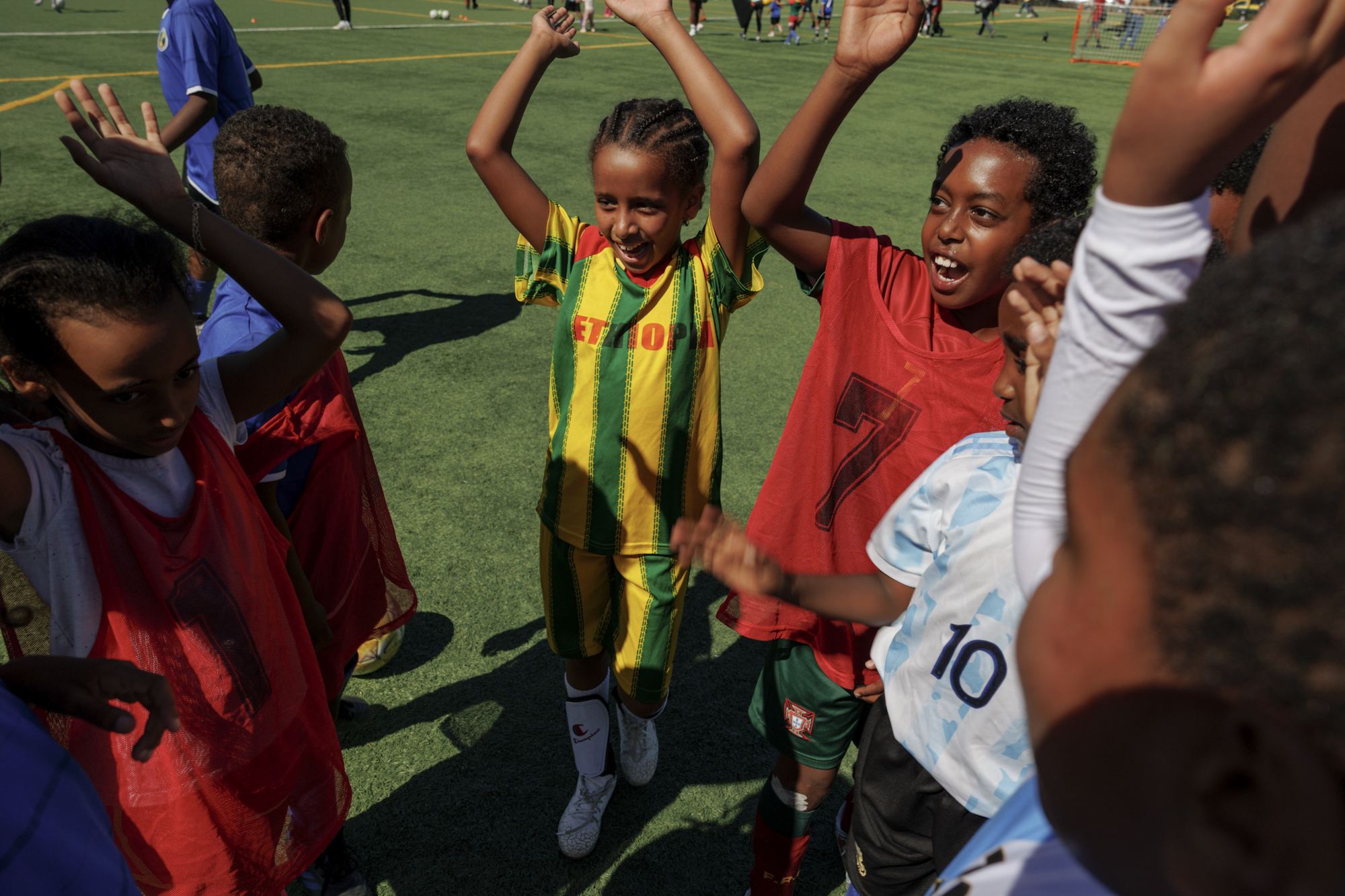
Cristiano Ronaldo takes the ball and pushes toward the opponent’s goal. He keeps it close and weaves past Lionel Messi. A few steps later, Messi again — in fact, there are quite a few Messis on this field. And even a couple of Lamine Yamals running around, too.
It’s Saturday morning at Del Monte Park in San José, and hundreds of kids have come out for practice with Maleda Youth Soccer Club. Inspired by this summer’s World Cup, many wear the jerseys of their favorite players.
“Siuuu!” Christian Brook, 10, shouted after practice, emulating Ronaldo’s iconic celebration. His team may have lost its scrimmage, but that doesn’t dim his smile.
Brook usually plays right wing and said that’s one of the reasons he likes Ronaldo, who excels in attacking positions. But when he plays defense, Brook thinks of another player — Naomi Girma, currently center back for England’s Women’s Super League club Chelsea FC and one of the most talented defenders for the U.S. Women’s National Soccer Team.
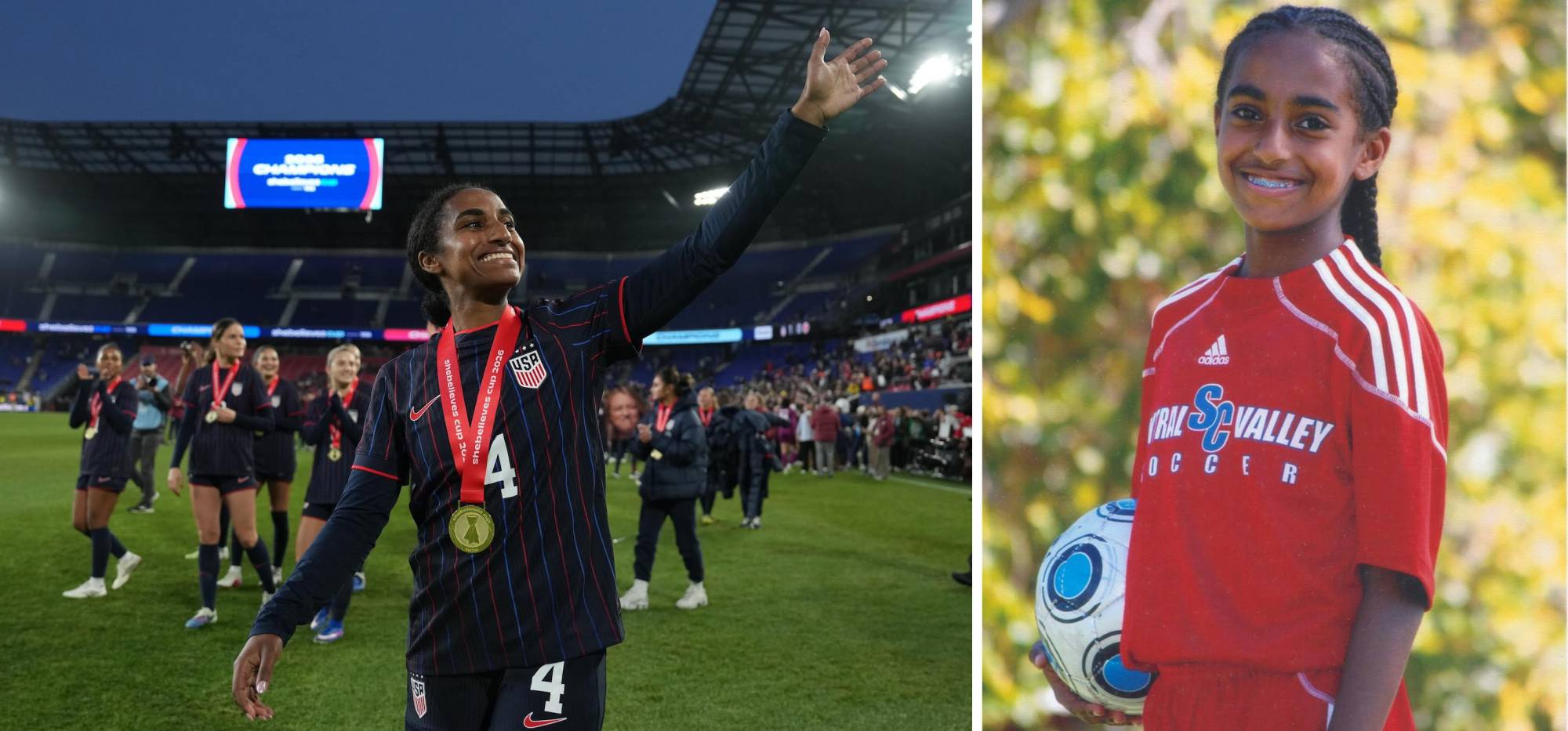
“She played here, just like us,” he said, adding that her family is Ethiopian, just like his. Dozens of other kids at practice immediately recognized Girma’s name and shouted with pride that the soccer superstar also hails from San José.
“I started playing with Maleda,” Girma — who was unavailable for an interview for this story — told KQED a few months ago.
Girma’s father was one of the handful of South Bay immigrant parents who came together in 2004 to help start the club. “It was just for Ethiopian families to come together,” Girma said. “But I also had a lot of fun.”
As the 2026 Men’s World Cup takes its place in history, soccer fans now prepare for next year’s Women’s World Cup in Brazil. The U.S. has won the tournament four times — the most of any nation — and Girma is a strong contender for the squad after a stellar performance in the last World Cup. In Maleda, families that saw her score her first goals are excited to cheer her on. And for some, Girma’s journey affirms one of the missions of the club: to help kids build a stronger sense of self through playing soccer and at the same time, learn more about their Ethiopian heritage.
“When our kids go to school, they are surrounded by many different cultures,” said Selome Alemayehu, the mother of two boys playing in Maleda. “But when they come here, they get the taste of Ethiopia. It’s important for them to also know where they came from, what their culture is, because they don’t see all these people Monday through Friday.”
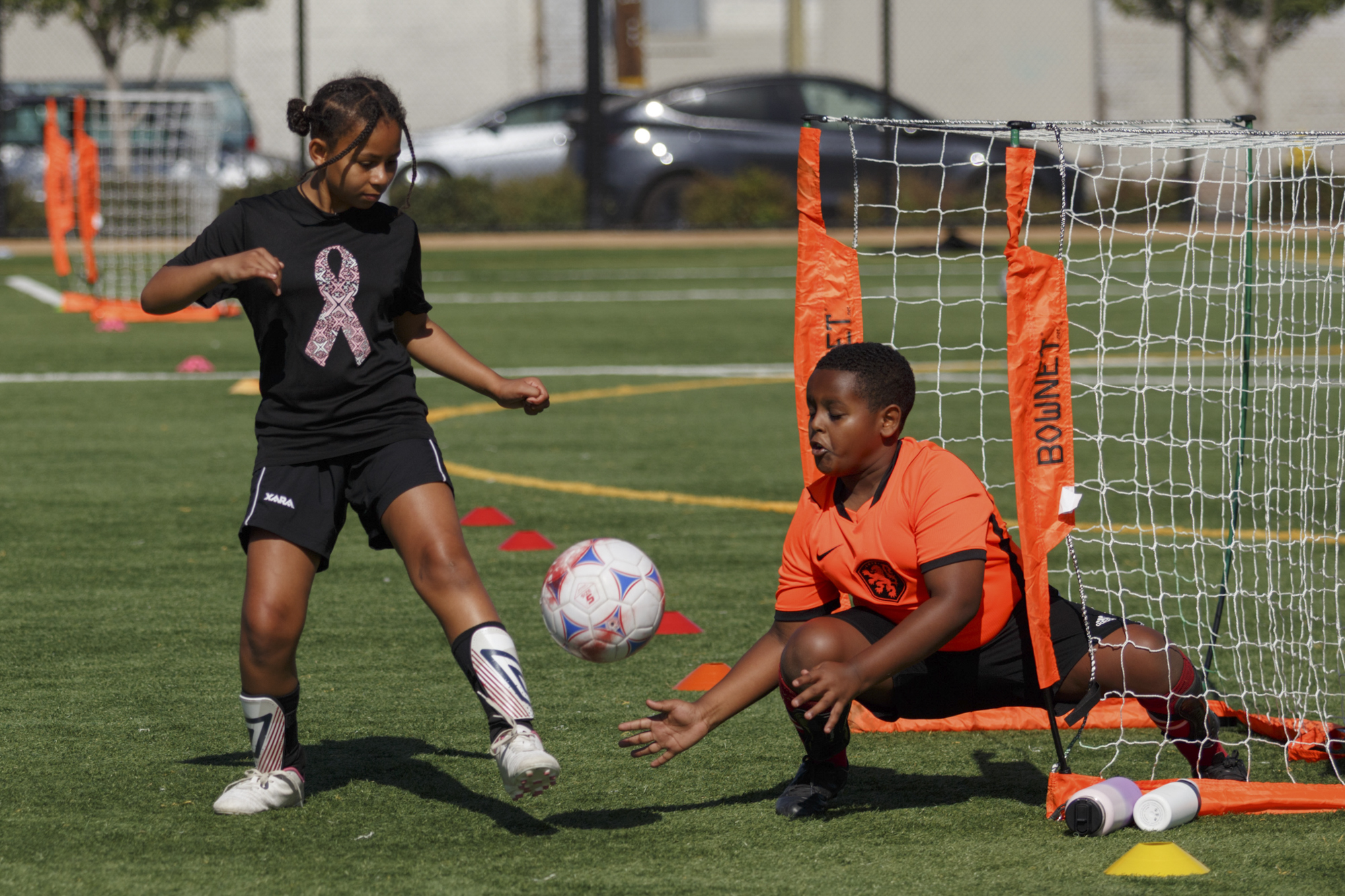
Powered by the volunteer efforts of dozens of parents like Alemayehu, Maleda — which translates to “early morning” in Amharic — also provides an affordable entry to soccer, something experts say is necessary to help both women’s and men’s soccer in the U.S. grow stronger and develop the next generation of the sport’s superstars.
According to research from the Sports and Fitness Industry Association, soccer is more popular than ever, with more than 25 million Americans playing the sport this year. But data from the U.S. Soccer Federation shows that among kids, participation drops dramatically by the time they become teenagers. Around 70% of children quit by age 14.
“Even though it’s hard for my kids to wake up for school, they’re the first ones waking up on Saturday morning,” Alemayehu said. “They rush me, instead of me rushing them.
“Especially my little one. He’s only 7, but he’s always saying he will be the next Maleda soccer player that’s going to be just like Naomi.”
‘Being one’
It’s been more than 20 years since Maleda head coach Solomon Wolday came to California from Ethiopia, where he first fell in love with soccer as a boy, playing with other kids on his street.
“It doesn’t take too much to get kids to get out and play,” he said. Like many of the other coaches on the field Saturday, Wolday is a volunteer and also a parent. All three of his daughters honed their soccer skills at Maleda.
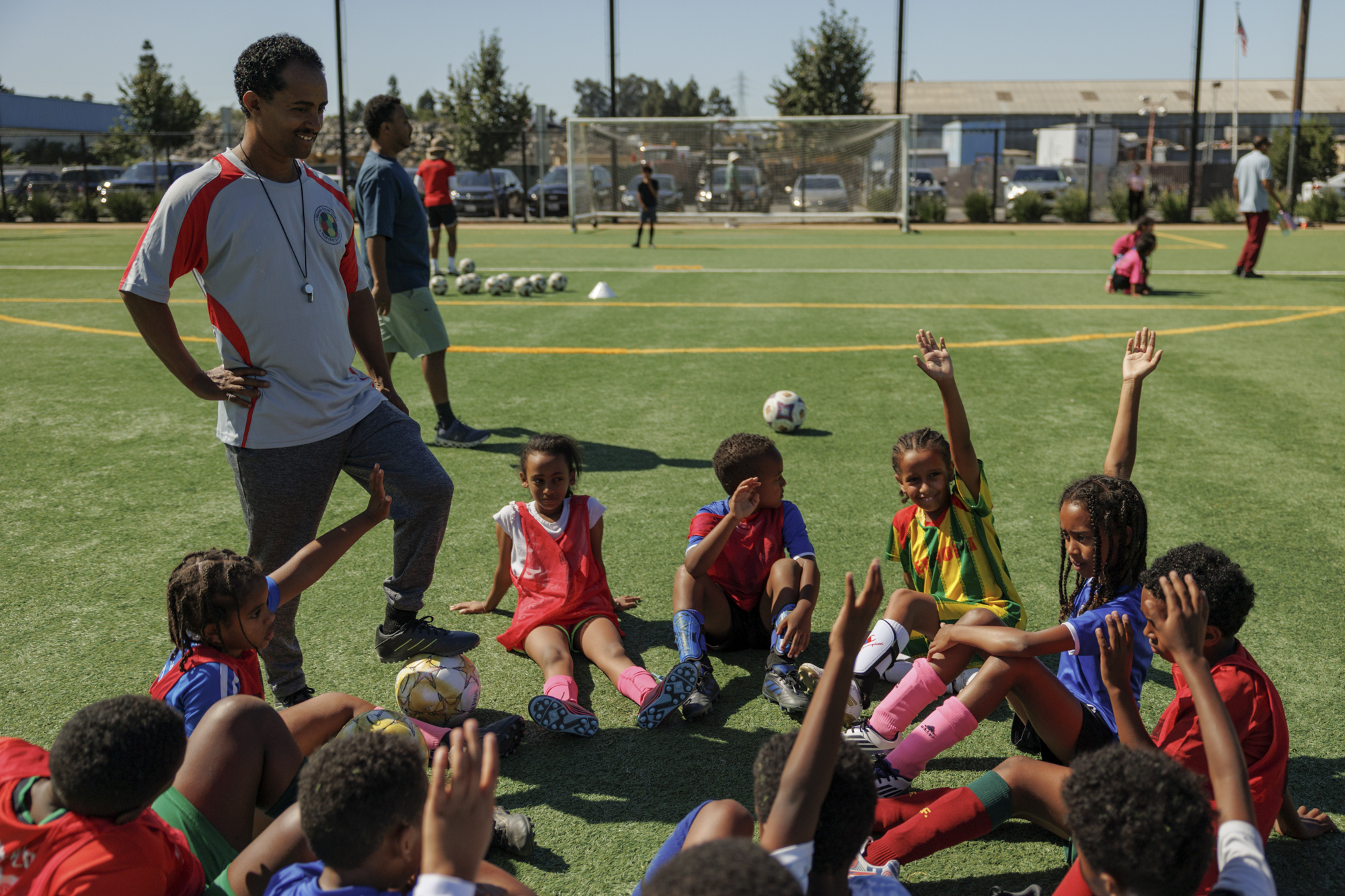
Children can join the club as soon as they turn 5 and learn the basics — dribbling, passes, different formations. “It’s not very competitive at that level,” Wolday said, adding that the main objective is to help kids learn about the values that come with soccer.
“They learn the value of hard work and teamwork,” he said. “It also shows them how to cope with losing.”
Maleda only practices on Saturdays from March to August and charges families a $200 registration fee per season, regardless of how many kids a family has playing in the club.
Travel and academy clubs in the Bay Area, which usually have a more rigorous practice schedule and travel across the state to play in different tournaments, often charge thousands of dollars per player each season.

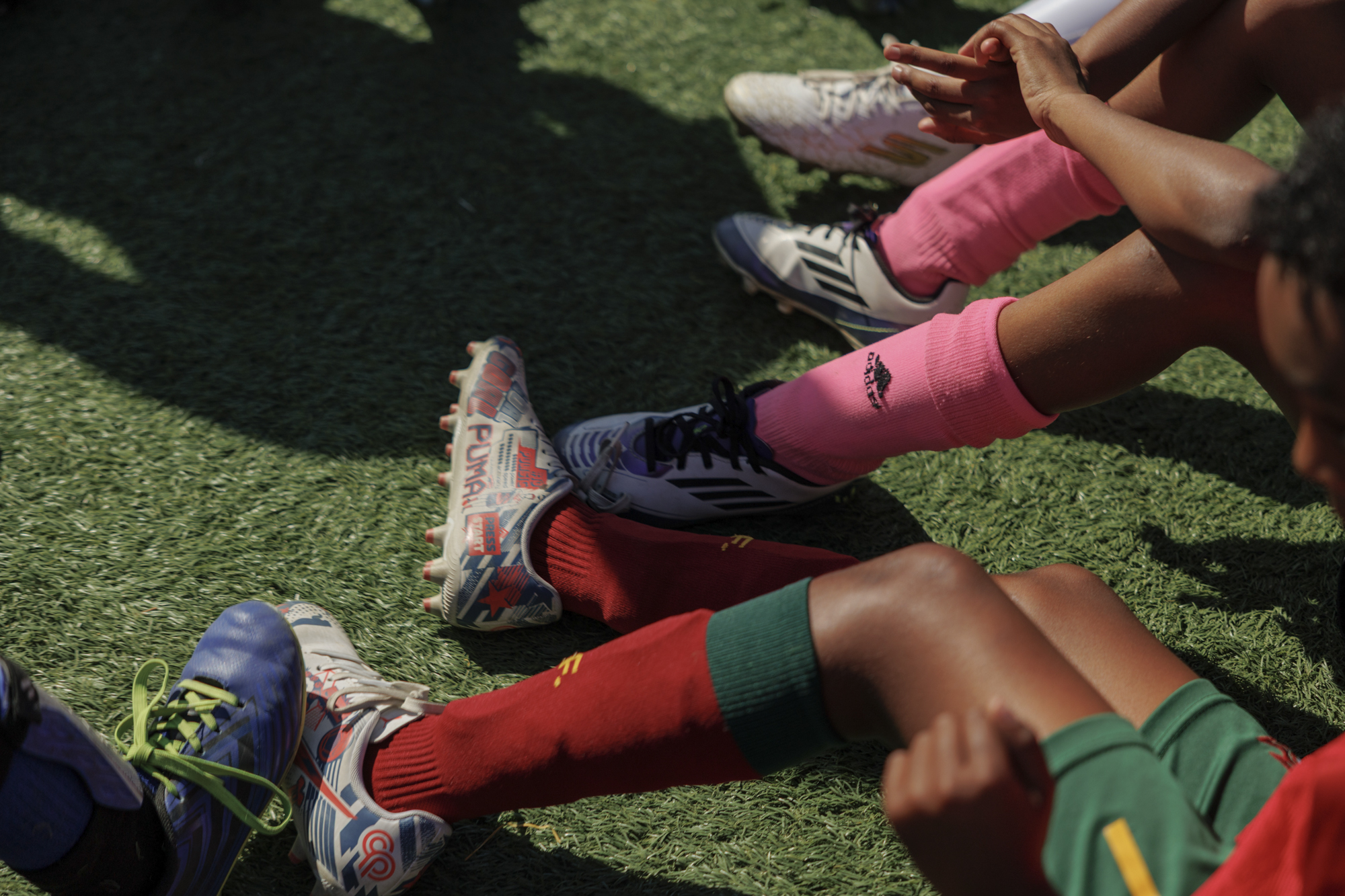
The club’s accessibility helps families get and stay involved, said Meseret Gualle, who forms part of Maleda’s leadership team and first joined when her daughter started playing four years ago.
Anyone can join the team, but most families trace their roots to Ethiopia. “We Ethiopians have a lot of different ethnicities, languages, tribes,” she said. “This program brings all of that together.”
The Bay Area has been home to a thriving Ethiopian community for more than 40 years. Many families who first moved to the region in the ’80s and ’90s were fleeing Ethiopia’s civil war and found economic opportunities in Silicon Valley building the electronic components for personal computers during the first dot-com boom. Thousands of Ethiopian families now help shape the identity of cities like San José and Oakland. And Meseret pointed out that it’s here in the Bay Area where Ethiopia’s vast cultural diversity meets in one place.
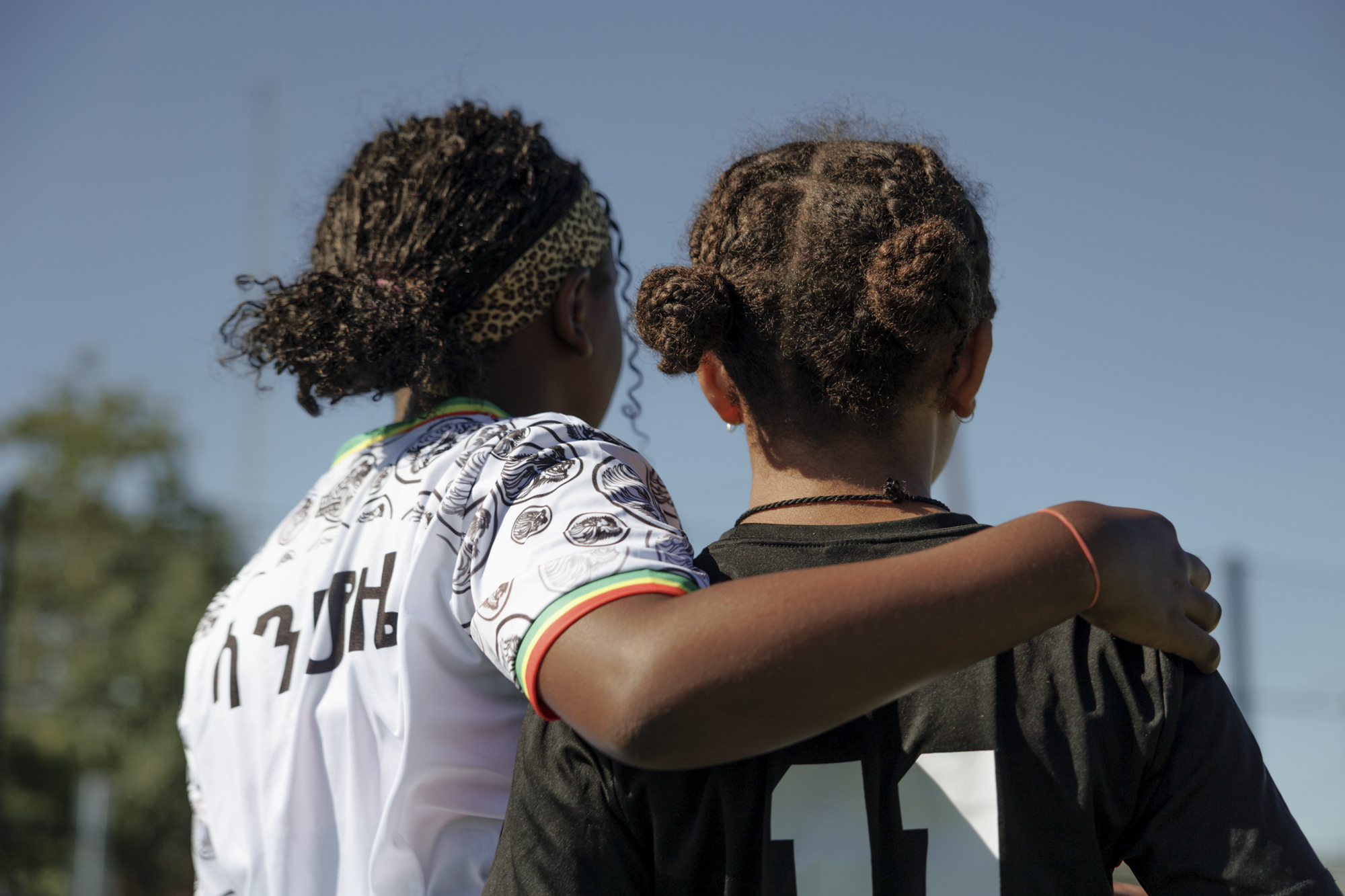
“Outside of what region you’re from, your religion or what language you speak, Maleda focuses on our kids,” she said.
There are coaches who can talk to families in the language they’re most comfortable in, including Amharic, Oromo and Tigrinya. “We’re here for our heritage, culture, history and just being one,” Meseret said.
What began as a community effort to provide a safe space for kids to play soccer and learn more about Ethiopian culture has become part of a bigger, cross-cultural push in the Bay Area to make soccer more accessible.
The region’s first National Women’s Soccer League team was founded in 2023 by four legends of the sport — Brandi Chastain, Leslie Osborne, Danielle Slaton and Aly Wagner — who were either born in San José or played in the South Bay.
And as the U.S. prepares to both host and compete in the 2028 Summer Olympics and the 2031 Women’s World Cup, the country is looking for new ways to boost talent that’s historically been forced out of the sport because it’s too expensive.
Getting everybody on the field
After the U.S. men’s national team was eliminated from the World Cup with a 4-1 loss against Belgium, fans began debating what’s holding American soccer back from its full potential. Some pointed to the very high cost of joining youth teams — called “pay-to-play.”
Young talented players whose families cannot pay thousands of dollars a year are left out of competitive clubs. The price of developing young soccer talent in many Latin American and European countries is a fraction of what it costs in the U.S.
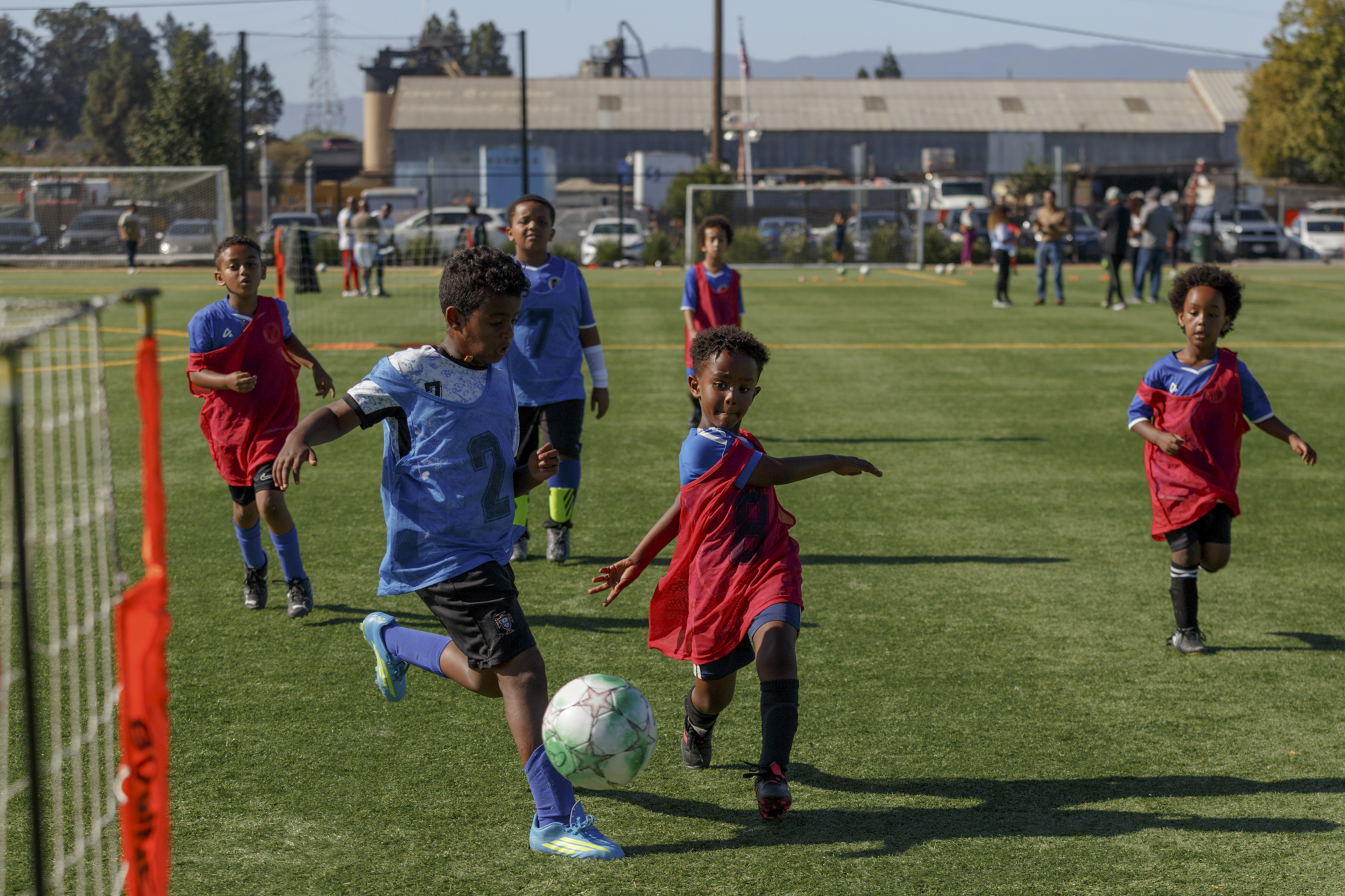
Pay-to-play is part of the problem — but not the full picture, said Simon Tobin, head coach of men’s soccer at San José State University. “How can we make a sport that doesn’t cost a lot to play more cost-effective?” he said. “You shouldn’t have under 10s and under 11s traveling a couple hundred miles to go play a game.”
But spaces to play soccer at a competitive level in the Bay Area are limited.
In San Francisco, when officials announced that the city’s historic Kezar Stadium will be the home field next season for the new Major League Soccer Next Pro team Golden City FC, that got pushback from San Francisco City FC — the oldest supporter-owned soccer club in the country.
San Francisco City FC fans argued their team was being pushed out from where they’ve hosted games for the past decade. Tensions over who gets access to soccer fields come up decade after decade and are likely to become even more fraught as interest in the sport grows.

Ahead of the Women’s World Cup in Brazil next year, the U.S. can maintain its historic dominance of the sport by ensuring female players from low-income backgrounds have access to the sport, Tobis said, adding that if more facilities become available, there will be more opportunities for women and co-ed teams to develop across all competition levels.
The U.S. Soccer Federation has also unveiled its own plan to prevent young players from leaving the sport, which includes millions of dollars in grants to youth leagues nationwide, training more referees and promoting the game beyond the competitive club environment.
“The next stage for soccer is to embrace everybody that can play. Get to those that have been put off in the past by the sheer cost of it,” Tobis said.
At Del Monte Park in San José, Maleda only has two hours available on Saturdays for youth practice. Coach Semert Haile knows time is limited and keeps her players, kids ages 7 and 8, moving. She said she started playing at the same age when she was living in Ethiopia.
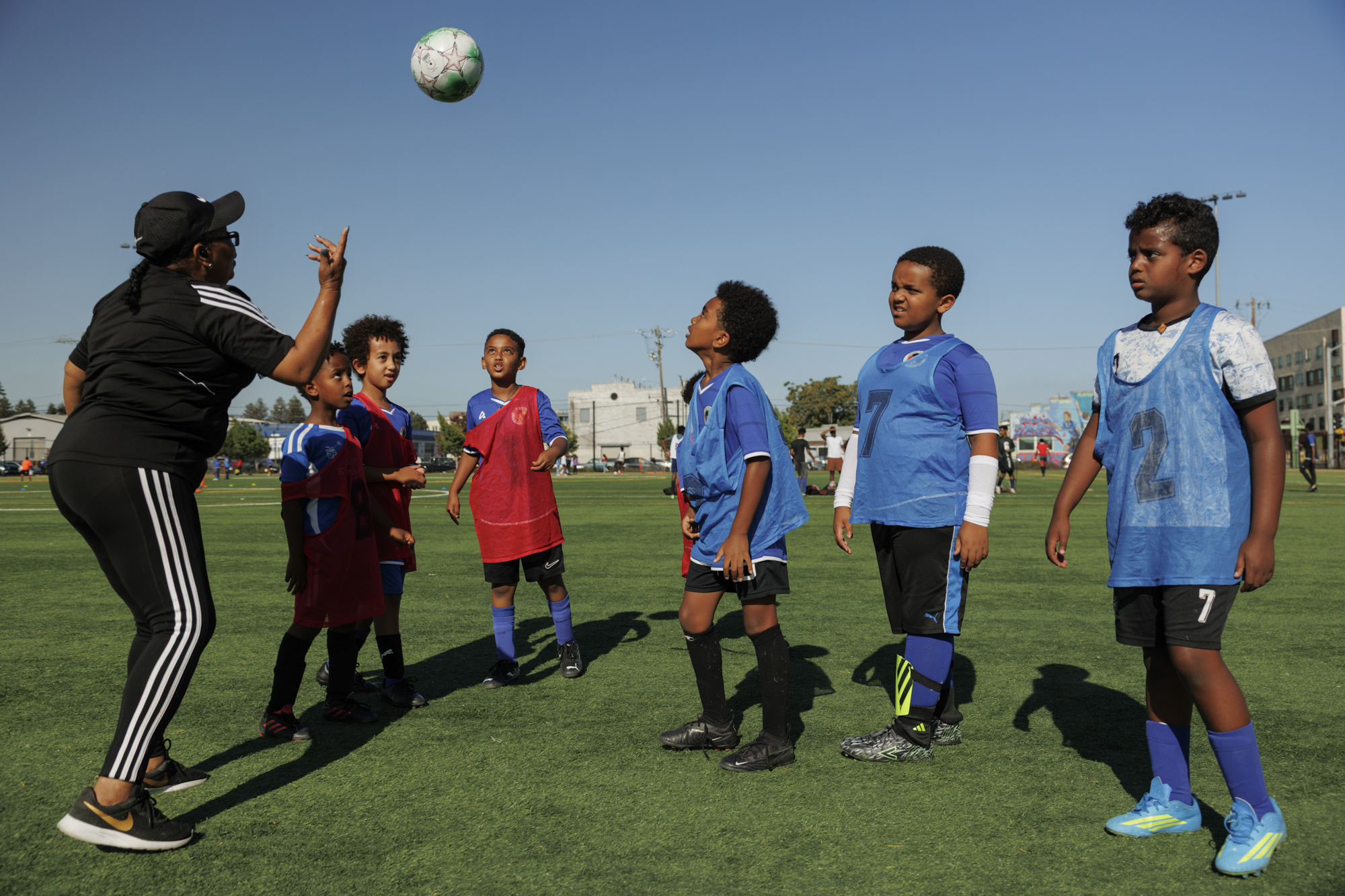
And now as an adult living in San José, she’s always bringing new families into Maleda, so their kids can play soccer without blowing the budget.
“It’s fun to play and learn with them. They have a pure heart,” she said between drills.
The blazing San José sun doesn’t slow her down. She’s been coaching for more than a decade with Maleda and remembers when Girma and her family would come to practice.
“Look where Naomi is now,” she said. “I have a vision that many of these girls and boys will be even better than Naomi. That’s my hope. That’s my dream.”
This story includes reporting from KQED’s Pendarvis Harshaw.