window.__IS_SSR__=true
window.__INITIAL_STATE__={
"attachmentsReducer": {
"audio_0": {
"type": "attachments",
"id": "audio_0",
"imgSizes": {
"kqedFullSize": {
"file": "https://ww2.kqed.org/news/wp-content/themes/KQED-unified/img/audio_bgs/background0.jpg"
}
}
},
"audio_1": {
"type": "attachments",
"id": "audio_1",
"imgSizes": {
"kqedFullSize": {
"file": "https://ww2.kqed.org/news/wp-content/themes/KQED-unified/img/audio_bgs/background1.jpg"
}
}
},
"audio_2": {
"type": "attachments",
"id": "audio_2",
"imgSizes": {
"kqedFullSize": {
"file": "https://ww2.kqed.org/news/wp-content/themes/KQED-unified/img/audio_bgs/background2.jpg"
}
}
},
"audio_3": {
"type": "attachments",
"id": "audio_3",
"imgSizes": {
"kqedFullSize": {
"file": "https://ww2.kqed.org/news/wp-content/themes/KQED-unified/img/audio_bgs/background3.jpg"
}
}
},
"audio_4": {
"type": "attachments",
"id": "audio_4",
"imgSizes": {
"kqedFullSize": {
"file": "https://ww2.kqed.org/news/wp-content/themes/KQED-unified/img/audio_bgs/background4.jpg"
}
}
},
"placeholder": {
"type": "attachments",
"id": "placeholder",
"imgSizes": {
"thumbnail": {
"file": "https://cdn.kqed.org/wp-content/uploads/2024/12/KQED-Default-Image-816638274-2000x1333-1-160x107.jpg",
"width": 160,
"height": 107,
"mimeType": "image/jpeg"
},
"medium": {
"file": "https://cdn.kqed.org/wp-content/uploads/2024/12/KQED-Default-Image-816638274-2000x1333-1-800x533.jpg",
"width": 800,
"height": 533,
"mimeType": "image/jpeg"
},
"medium_large": {
"file": "https://cdn.kqed.org/wp-content/uploads/2024/12/KQED-Default-Image-816638274-2000x1333-1-768x512.jpg",
"width": 768,
"height": 512,
"mimeType": "image/jpeg"
},
"large": {
"file": "https://cdn.kqed.org/wp-content/uploads/2024/12/KQED-Default-Image-816638274-2000x1333-1-1020x680.jpg",
"width": 1020,
"height": 680,
"mimeType": "image/jpeg"
},
"1536x1536": {
"file": "https://cdn.kqed.org/wp-content/uploads/2024/12/KQED-Default-Image-816638274-2000x1333-1-1536x1024.jpg",
"width": 1536,
"height": 1024,
"mimeType": "image/jpeg"
},
"fd-lrg": {
"file": "https://cdn.kqed.org/wp-content/uploads/2024/12/KQED-Default-Image-816638274-2000x1333-1-1536x1024.jpg",
"width": 1536,
"height": 1024,
"mimeType": "image/jpeg"
},
"fd-med": {
"file": "https://cdn.kqed.org/wp-content/uploads/2024/12/KQED-Default-Image-816638274-2000x1333-1-1020x680.jpg",
"width": 1020,
"height": 680,
"mimeType": "image/jpeg"
},
"fd-sm": {
"file": "https://cdn.kqed.org/wp-content/uploads/2024/12/KQED-Default-Image-816638274-2000x1333-1-800x533.jpg",
"width": 800,
"height": 533,
"mimeType": "image/jpeg"
},
"post-thumbnail": {
"file": "https://cdn.kqed.org/wp-content/uploads/2024/12/KQED-Default-Image-816638274-2000x1333-1-672x372.jpg",
"width": 672,
"height": 372,
"mimeType": "image/jpeg"
},
"twentyfourteen-full-width": {
"file": "https://cdn.kqed.org/wp-content/uploads/2024/12/KQED-Default-Image-816638274-2000x1333-1-1038x576.jpg",
"width": 1038,
"height": 576,
"mimeType": "image/jpeg"
},
"xxsmall": {
"file": "https://cdn.kqed.org/wp-content/uploads/2024/12/KQED-Default-Image-816638274-2000x1333-1-160x107.jpg",
"width": 160,
"height": 107,
"mimeType": "image/jpeg"
},
"xsmall": {
"file": "https://cdn.kqed.org/wp-content/uploads/2024/12/KQED-Default-Image-816638274-2000x1333-1-672x372.jpg",
"width": 672,
"height": 372,
"mimeType": "image/jpeg"
},
"small": {
"file": "https://cdn.kqed.org/wp-content/uploads/2024/12/KQED-Default-Image-816638274-2000x1333-1-672x372.jpg",
"width": 672,
"height": 372,
"mimeType": "image/jpeg"
},
"xlarge": {
"file": "https://cdn.kqed.org/wp-content/uploads/2024/12/KQED-Default-Image-816638274-2000x1333-1-1020x680.jpg",
"width": 1020,
"height": 680,
"mimeType": "image/jpeg"
},
"full-width": {
"file": "https://cdn.kqed.org/wp-content/uploads/2024/12/KQED-Default-Image-816638274-2000x1333-1-1920x1280.jpg",
"width": 1920,
"height": 1280,
"mimeType": "image/jpeg"
},
"guest-author-32": {
"file": "https://cdn.kqed.org/wp-content/uploads/2025/01/KQED-Default-Image-816638274-1333x1333-1-160x160.jpg",
"width": 32,
"height": 32,
"mimeType": "image/jpeg"
},
"guest-author-50": {
"file": "https://cdn.kqed.org/wp-content/uploads/2025/01/KQED-Default-Image-816638274-1333x1333-1-160x160.jpg",
"width": 50,
"height": 50,
"mimeType": "image/jpeg"
},
"guest-author-64": {
"file": "https://cdn.kqed.org/wp-content/uploads/2025/01/KQED-Default-Image-816638274-1333x1333-1-160x160.jpg",
"width": 64,
"height": 64,
"mimeType": "image/jpeg"
},
"guest-author-96": {
"file": "https://cdn.kqed.org/wp-content/uploads/2025/01/KQED-Default-Image-816638274-1333x1333-1-160x160.jpg",
"width": 96,
"height": 96,
"mimeType": "image/jpeg"
},
"guest-author-128": {
"file": "https://cdn.kqed.org/wp-content/uploads/2025/01/KQED-Default-Image-816638274-1333x1333-1-160x160.jpg",
"width": 128,
"height": 128,
"mimeType": "image/jpeg"
},
"detail": {
"file": "https://cdn.kqed.org/wp-content/uploads/2025/01/KQED-Default-Image-816638274-1333x1333-1-160x160.jpg",
"width": 160,
"height": 160,
"mimeType": "image/jpeg"
},
"kqedFullSize": {
"file": "https://cdn.kqed.org/wp-content/uploads/2024/12/KQED-Default-Image-816638274-2000x1333-1.jpg",
"width": 2000,
"height": 1333
}
}
},
"news_11847170": {
"type": "attachments",
"id": "news_11847170",
"meta": {
"index": "attachments_1716263798",
"site": "news",
"id": "11847170",
"found": true
},
"parent": 11847064,
"imgSizes": {
"apple_news_ca_landscape_5_5": {
"file": "https://ww2.kqed.org/app/uploads/sites/10/2020/11/RS45375_017_KQED_SanMateo_ElectionsOffice_10212020-qut-1044x783.jpg",
"width": 1044,
"mimeType": "image/jpeg",
"height": 783
},
"apple_news_ca_square_4_0": {
"file": "https://ww2.kqed.org/app/uploads/sites/10/2020/11/RS45375_017_KQED_SanMateo_ElectionsOffice_10212020-qut-470x470.jpg",
"width": 470,
"mimeType": "image/jpeg",
"height": 470
},
"twentyfourteen-full-width": {
"file": "https://ww2.kqed.org/app/uploads/sites/10/2020/11/RS45375_017_KQED_SanMateo_ElectionsOffice_10212020-qut-1038x576.jpg",
"width": 1038,
"mimeType": "image/jpeg",
"height": 576
},
"thumbnail": {
"file": "https://ww2.kqed.org/app/uploads/sites/10/2020/11/RS45375_017_KQED_SanMateo_ElectionsOffice_10212020-qut-160x107.jpg",
"width": 160,
"mimeType": "image/jpeg",
"height": 107
},
"post-thumbnail": {
"file": "https://ww2.kqed.org/app/uploads/sites/10/2020/11/RS45375_017_KQED_SanMateo_ElectionsOffice_10212020-qut-672x372.jpg",
"width": 672,
"mimeType": "image/jpeg",
"height": 372
},
"kqedFullSize": {
"file": "https://ww2.kqed.org/app/uploads/sites/10/2020/11/RS45375_017_KQED_SanMateo_ElectionsOffice_10212020-qut.jpg",
"width": 1920,
"height": 1278
},
"apple_news_ca_landscape_4_7": {
"file": "https://ww2.kqed.org/app/uploads/sites/10/2020/11/RS45375_017_KQED_SanMateo_ElectionsOffice_10212020-qut-632x474.jpg",
"width": 632,
"mimeType": "image/jpeg",
"height": 474
},
"large": {
"file": "https://ww2.kqed.org/app/uploads/sites/10/2020/11/RS45375_017_KQED_SanMateo_ElectionsOffice_10212020-qut-1020x679.jpg",
"width": 1020,
"mimeType": "image/jpeg",
"height": 679
},
"apple_news_ca_landscape_4_0": {
"file": "https://ww2.kqed.org/app/uploads/sites/10/2020/11/RS45375_017_KQED_SanMateo_ElectionsOffice_10212020-qut-536x402.jpg",
"width": 536,
"mimeType": "image/jpeg",
"height": 402
},
"apple_news_ca_portrait_12_9": {
"file": "https://ww2.kqed.org/app/uploads/sites/10/2020/11/RS45375_017_KQED_SanMateo_ElectionsOffice_10212020-qut-1122x1278.jpg",
"width": 1122,
"mimeType": "image/jpeg",
"height": 1278
},
"medium": {
"file": "https://ww2.kqed.org/app/uploads/sites/10/2020/11/RS45375_017_KQED_SanMateo_ElectionsOffice_10212020-qut-800x533.jpg",
"width": 800,
"mimeType": "image/jpeg",
"height": 533
},
"apple_news_ca_portrait_4_0": {
"file": "https://ww2.kqed.org/app/uploads/sites/10/2020/11/RS45375_017_KQED_SanMateo_ElectionsOffice_10212020-qut-354x472.jpg",
"width": 354,
"mimeType": "image/jpeg",
"height": 472
},
"apple_news_ca_portrait_9_7": {
"file": "https://ww2.kqed.org/app/uploads/sites/10/2020/11/RS45375_017_KQED_SanMateo_ElectionsOffice_10212020-qut-840x1120.jpg",
"width": 840,
"mimeType": "image/jpeg",
"height": 1120
},
"apple_news_ca_landscape_12_9": {
"file": "https://ww2.kqed.org/app/uploads/sites/10/2020/11/RS45375_017_KQED_SanMateo_ElectionsOffice_10212020-qut-1832x1278.jpg",
"width": 1832,
"mimeType": "image/jpeg",
"height": 1278
},
"apple_news_ca_square_9_7": {
"file": "https://ww2.kqed.org/app/uploads/sites/10/2020/11/RS45375_017_KQED_SanMateo_ElectionsOffice_10212020-qut-1104x1104.jpg",
"width": 1104,
"mimeType": "image/jpeg",
"height": 1104
},
"1536x1536": {
"file": "https://ww2.kqed.org/app/uploads/sites/10/2020/11/RS45375_017_KQED_SanMateo_ElectionsOffice_10212020-qut-1536x1022.jpg",
"width": 1536,
"mimeType": "image/jpeg",
"height": 1022
},
"apple_news_ca_portrait_4_7": {
"file": "https://ww2.kqed.org/app/uploads/sites/10/2020/11/RS45375_017_KQED_SanMateo_ElectionsOffice_10212020-qut-414x552.jpg",
"width": 414,
"mimeType": "image/jpeg",
"height": 552
},
"apple_news_ca_square_12_9": {
"file": "https://ww2.kqed.org/app/uploads/sites/10/2020/11/RS45375_017_KQED_SanMateo_ElectionsOffice_10212020-qut-1472x1278.jpg",
"width": 1472,
"mimeType": "image/jpeg",
"height": 1278
},
"apple_news_ca_portrait_5_5": {
"file": "https://ww2.kqed.org/app/uploads/sites/10/2020/11/RS45375_017_KQED_SanMateo_ElectionsOffice_10212020-qut-687x916.jpg",
"width": 687,
"mimeType": "image/jpeg",
"height": 916
},
"apple_news_ca_square_4_7": {
"file": "https://ww2.kqed.org/app/uploads/sites/10/2020/11/RS45375_017_KQED_SanMateo_ElectionsOffice_10212020-qut-550x550.jpg",
"width": 550,
"mimeType": "image/jpeg",
"height": 550
},
"apple_news_ca_landscape_9_7": {
"file": "https://ww2.kqed.org/app/uploads/sites/10/2020/11/RS45375_017_KQED_SanMateo_ElectionsOffice_10212020-qut-1376x1032.jpg",
"width": 1376,
"mimeType": "image/jpeg",
"height": 1032
},
"apple_news_ca_square_5_5": {
"file": "https://ww2.kqed.org/app/uploads/sites/10/2020/11/RS45375_017_KQED_SanMateo_ElectionsOffice_10212020-qut-912x912.jpg",
"width": 912,
"mimeType": "image/jpeg",
"height": 912
}
},
"publishDate": 1605195774,
"modified": 1631575737,
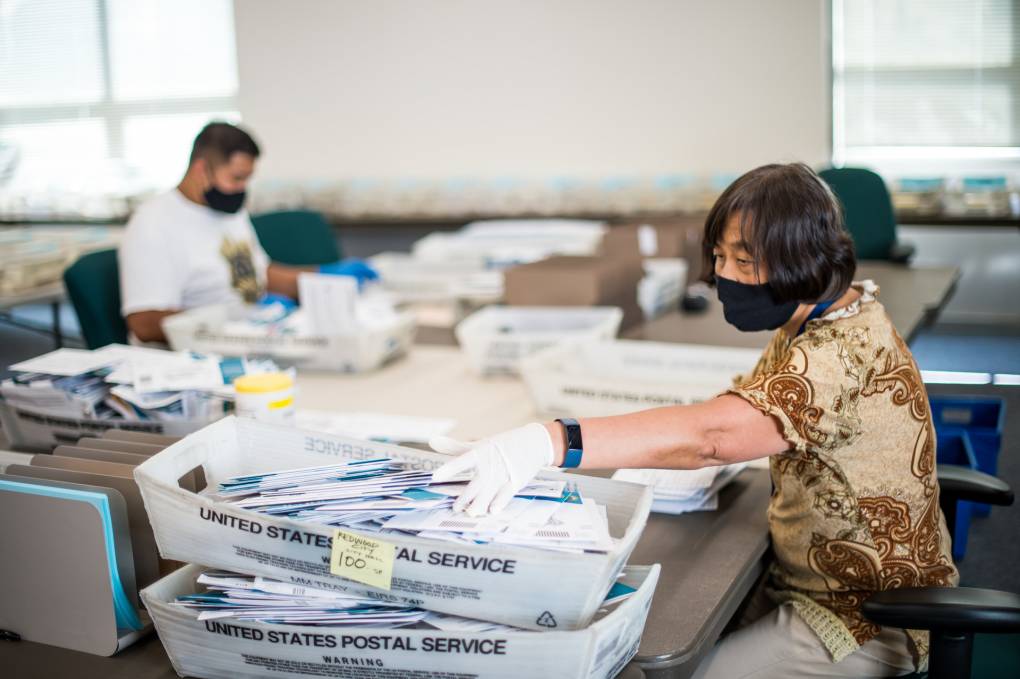
"caption": "An election employee works in the mail cleaning section, which includes arranging the ballots with their barcodes facing in one direction, at the San Mateo County Elections Office on Oct. 21, 2020.",
"description": "An election employee works in the mail cleaning section, which includes arranging the ballots with their barcodes facing in one direction, at the San Mateo County Elections Office on Oct. 21, 2020.",
"title": "RS45375_017_KQED_SanMateo_ElectionsOffice_10212020-qut",
"credit": "Beth LaBerge/KQED",
"status": "inherit",
"altTag": "A woman in short sleeves and a mask sits at a fold-out table in front of baskets of mail.",
"isLoading": false,
"fetchFailed": false
},
"news_11842142": {
"type": "attachments",
"id": "news_11842142",
"meta": {
"index": "attachments_1716263798",
"site": "news",
"id": "11842142",
"found": true
},
"parent": 11842137,
"imgSizes": {
"apple_news_ca_landscape_5_5": {
"file": "https://ww2.kqed.org/app/uploads/sites/10/2020/10/promise_101320_final-1044x783.png",
"width": 1044,
"mimeType": "image/png",
"height": 783
},
"apple_news_ca_square_4_0": {
"file": "https://ww2.kqed.org/app/uploads/sites/10/2020/10/promise_101320_final-470x470.png",
"width": 470,
"mimeType": "image/png",
"height": 470
},
"twentyfourteen-full-width": {
"file": "https://ww2.kqed.org/app/uploads/sites/10/2020/10/promise_101320_final-1038x576.png",
"width": 1038,
"mimeType": "image/png",
"height": 576
},
"thumbnail": {
"file": "https://ww2.kqed.org/app/uploads/sites/10/2020/10/promise_101320_final-160x105.png",
"width": 160,
"mimeType": "image/png",
"height": 105
},
"post-thumbnail": {
"file": "https://ww2.kqed.org/app/uploads/sites/10/2020/10/promise_101320_final-672x372.png",
"width": 672,
"mimeType": "image/png",
"height": 372
},
"kqedFullSize": {
"file": "https://ww2.kqed.org/app/uploads/sites/10/2020/10/promise_101320_final.png",
"width": 1920,
"height": 1265
},
"apple_news_ca_landscape_4_7": {
"file": "https://ww2.kqed.org/app/uploads/sites/10/2020/10/promise_101320_final-632x474.png",
"width": 632,
"mimeType": "image/png",
"height": 474
},
"large": {
"file": "https://ww2.kqed.org/app/uploads/sites/10/2020/10/promise_101320_final-1020x672.png",
"width": 1020,
"mimeType": "image/png",
"height": 672
},
"apple_news_ca_landscape_4_0": {
"file": "https://ww2.kqed.org/app/uploads/sites/10/2020/10/promise_101320_final-536x402.png",
"width": 536,
"mimeType": "image/png",
"height": 402
},
"apple_news_ca_portrait_12_9": {
"file": "https://ww2.kqed.org/app/uploads/sites/10/2020/10/promise_101320_final-1122x1265.png",
"width": 1122,
"mimeType": "image/png",
"height": 1265
},
"medium": {
"file": "https://ww2.kqed.org/app/uploads/sites/10/2020/10/promise_101320_final-800x527.png",
"width": 800,
"mimeType": "image/png",
"height": 527
},
"apple_news_ca_portrait_4_0": {
"file": "https://ww2.kqed.org/app/uploads/sites/10/2020/10/promise_101320_final-354x472.png",
"width": 354,
"mimeType": "image/png",
"height": 472
},
"apple_news_ca_portrait_9_7": {
"file": "https://ww2.kqed.org/app/uploads/sites/10/2020/10/promise_101320_final-840x1120.png",
"width": 840,
"mimeType": "image/png",
"height": 1120
},
"apple_news_ca_landscape_12_9": {
"file": "https://ww2.kqed.org/app/uploads/sites/10/2020/10/promise_101320_final-1832x1265.png",
"width": 1832,
"mimeType": "image/png",
"height": 1265
},
"apple_news_ca_square_9_7": {
"file": "https://ww2.kqed.org/app/uploads/sites/10/2020/10/promise_101320_final-1104x1104.png",
"width": 1104,
"mimeType": "image/png",
"height": 1104
},
"1536x1536": {
"file": "https://ww2.kqed.org/app/uploads/sites/10/2020/10/promise_101320_final-1536x1012.png",
"width": 1536,
"mimeType": "image/png",
"height": 1012
},
"apple_news_ca_portrait_4_7": {
"file": "https://ww2.kqed.org/app/uploads/sites/10/2020/10/promise_101320_final-414x552.png",
"width": 414,
"mimeType": "image/png",
"height": 552
},
"apple_news_ca_square_12_9": {
"file": "https://ww2.kqed.org/app/uploads/sites/10/2020/10/promise_101320_final-1472x1265.png",
"width": 1472,
"mimeType": "image/png",
"height": 1265
},
"apple_news_ca_portrait_5_5": {
"file": "https://ww2.kqed.org/app/uploads/sites/10/2020/10/promise_101320_final-687x916.png",
"width": 687,
"mimeType": "image/png",
"height": 916
},
"apple_news_ca_square_4_7": {
"file": "https://ww2.kqed.org/app/uploads/sites/10/2020/10/promise_101320_final-550x550.png",
"width": 550,
"mimeType": "image/png",
"height": 550
},
"apple_news_ca_landscape_9_7": {
"file": "https://ww2.kqed.org/app/uploads/sites/10/2020/10/promise_101320_final-1376x1032.png",
"width": 1376,
"mimeType": "image/png",
"height": 1032
},
"apple_news_ca_square_5_5": {
"file": "https://ww2.kqed.org/app/uploads/sites/10/2020/10/promise_101320_final-912x912.png",
"width": 912,
"mimeType": "image/png",
"height": 912
}
},
"publishDate": 1602624479,
"modified": 1602624522,
"caption": null,
"description": null,
"title": "promise_101320_final",
"credit": null,
"status": "inherit",
"isLoading": false,
"fetchFailed": false
},
"news_11842076": {
"type": "attachments",
"id": "news_11842076",
"meta": {
"index": "attachments_1716263798",
"site": "news",
"id": "11842076",
"found": true
},
"parent": 11842066,
"imgSizes": {
"apple_news_ca_landscape_5_5": {
"file": "https://ww2.kqed.org/app/uploads/sites/10/2020/10/RS45325_GettyImages-1229035665-qut-1044x783.jpg",
"width": 1044,
"mimeType": "image/jpeg",
"height": 783
},
"apple_news_ca_square_4_0": {
"file": "https://ww2.kqed.org/app/uploads/sites/10/2020/10/RS45325_GettyImages-1229035665-qut-470x470.jpg",
"width": 470,
"mimeType": "image/jpeg",
"height": 470
},
"twentyfourteen-full-width": {
"file": "https://ww2.kqed.org/app/uploads/sites/10/2020/10/RS45325_GettyImages-1229035665-qut-1038x576.jpg",
"width": 1038,
"mimeType": "image/jpeg",
"height": 576
},
"thumbnail": {
"file": "https://ww2.kqed.org/app/uploads/sites/10/2020/10/RS45325_GettyImages-1229035665-qut-160x92.jpg",
"width": 160,
"mimeType": "image/jpeg",
"height": 92
},
"post-thumbnail": {
"file": "https://ww2.kqed.org/app/uploads/sites/10/2020/10/RS45325_GettyImages-1229035665-qut-672x372.jpg",
"width": 672,
"mimeType": "image/jpeg",
"height": 372
},
"kqedFullSize": {
"file": "https://ww2.kqed.org/app/uploads/sites/10/2020/10/RS45325_GettyImages-1229035665-qut.jpg",
"width": 1920,
"height": 1102
},
"apple_news_ca_landscape_4_7": {
"file": "https://ww2.kqed.org/app/uploads/sites/10/2020/10/RS45325_GettyImages-1229035665-qut-632x474.jpg",
"width": 632,
"mimeType": "image/jpeg",
"height": 474
},
"large": {
"file": "https://ww2.kqed.org/app/uploads/sites/10/2020/10/RS45325_GettyImages-1229035665-qut-1020x585.jpg",
"width": 1020,
"mimeType": "image/jpeg",
"height": 585
},
"apple_news_ca_landscape_4_0": {
"file": "https://ww2.kqed.org/app/uploads/sites/10/2020/10/RS45325_GettyImages-1229035665-qut-536x402.jpg",
"width": 536,
"mimeType": "image/jpeg",
"height": 402
},
"apple_news_ca_portrait_12_9": {
"file": "https://ww2.kqed.org/app/uploads/sites/10/2020/10/RS45325_GettyImages-1229035665-qut-1122x1102.jpg",
"width": 1122,
"mimeType": "image/jpeg",
"height": 1102
},
"medium": {
"file": "https://ww2.kqed.org/app/uploads/sites/10/2020/10/RS45325_GettyImages-1229035665-qut-800x459.jpg",
"width": 800,
"mimeType": "image/jpeg",
"height": 459
},
"apple_news_ca_portrait_4_0": {
"file": "https://ww2.kqed.org/app/uploads/sites/10/2020/10/RS45325_GettyImages-1229035665-qut-354x472.jpg",
"width": 354,
"mimeType": "image/jpeg",
"height": 472
},
"apple_news_ca_portrait_9_7": {
"file": "https://ww2.kqed.org/app/uploads/sites/10/2020/10/RS45325_GettyImages-1229035665-qut-840x1102.jpg",
"width": 840,
"mimeType": "image/jpeg",
"height": 1102
},
"apple_news_ca_landscape_12_9": {
"file": "https://ww2.kqed.org/app/uploads/sites/10/2020/10/RS45325_GettyImages-1229035665-qut-1832x1102.jpg",
"width": 1832,
"mimeType": "image/jpeg",
"height": 1102
},
"apple_news_ca_square_9_7": {
"file": "https://ww2.kqed.org/app/uploads/sites/10/2020/10/RS45325_GettyImages-1229035665-qut-1104x1102.jpg",
"width": 1104,
"mimeType": "image/jpeg",
"height": 1102
},
"1536x1536": {
"file": "https://ww2.kqed.org/app/uploads/sites/10/2020/10/RS45325_GettyImages-1229035665-qut-1536x882.jpg",
"width": 1536,
"mimeType": "image/jpeg",
"height": 882
},
"apple_news_ca_portrait_4_7": {
"file": "https://ww2.kqed.org/app/uploads/sites/10/2020/10/RS45325_GettyImages-1229035665-qut-414x552.jpg",
"width": 414,
"mimeType": "image/jpeg",
"height": 552
},
"apple_news_ca_square_12_9": {
"file": "https://ww2.kqed.org/app/uploads/sites/10/2020/10/RS45325_GettyImages-1229035665-qut-1472x1102.jpg",
"width": 1472,
"mimeType": "image/jpeg",
"height": 1102
},
"apple_news_ca_portrait_5_5": {
"file": "https://ww2.kqed.org/app/uploads/sites/10/2020/10/RS45325_GettyImages-1229035665-qut-687x916.jpg",
"width": 687,
"mimeType": "image/jpeg",
"height": 916
},
"apple_news_ca_square_4_7": {
"file": "https://ww2.kqed.org/app/uploads/sites/10/2020/10/RS45325_GettyImages-1229035665-qut-550x550.jpg",
"width": 550,
"mimeType": "image/jpeg",
"height": 550
},
"apple_news_ca_landscape_9_7": {
"file": "https://ww2.kqed.org/app/uploads/sites/10/2020/10/RS45325_GettyImages-1229035665-qut-1376x1032.jpg",
"width": 1376,
"mimeType": "image/jpeg",
"height": 1032
},
"apple_news_ca_square_5_5": {
"file": "https://ww2.kqed.org/app/uploads/sites/10/2020/10/RS45325_GettyImages-1229035665-qut-912x912.jpg",
"width": 912,
"mimeType": "image/jpeg",
"height": 912
}
},
"publishDate": 1602608180,
"modified": 1610595209,
"caption": "A man walks past an official ballot drop box in Los Angeles on Oct. 12, 2020. Republicans have set up unofficial drop boxes at churches, gas stations and gun shops in at least three California counties. ",
"description": "A man walks past an official ballot drop box in Los Angeles on Oct. 12, 2020. Republicans have set up unofficial drop boxes at churches, gas stations and gun shops in at least three California counties. ",
"title": "US-VOTE-CALIFORNIA",
"credit": "Frederic J. Brown/AFP via Getty Images",
"status": "inherit",
"altTag": "An official ballot drop box",
"isLoading": false,
"fetchFailed": false
},
"news_11841933": {
"type": "attachments",
"id": "news_11841933",
"meta": {
"index": "attachments_1716263798",
"site": "news",
"id": "11841933",
"found": true
},
"parent": 11841574,
"imgSizes": {
"apple_news_ca_landscape_5_5": {
"file": "https://ww2.kqed.org/app/uploads/sites/10/2020/10/RS26038_GettyImages-818802824-qut-1044x783.jpg",
"width": 1044,
"mimeType": "image/jpeg",
"height": 783
},
"apple_news_ca_square_4_0": {
"file": "https://ww2.kqed.org/app/uploads/sites/10/2020/10/RS26038_GettyImages-818802824-qut-470x470.jpg",
"width": 470,
"mimeType": "image/jpeg",
"height": 470
},
"twentyfourteen-full-width": {
"file": "https://ww2.kqed.org/app/uploads/sites/10/2020/10/RS26038_GettyImages-818802824-qut-1038x576.jpg",
"width": 1038,
"mimeType": "image/jpeg",
"height": 576
},
"thumbnail": {
"file": "https://ww2.kqed.org/app/uploads/sites/10/2020/10/RS26038_GettyImages-818802824-qut-160x107.jpg",
"width": 160,
"mimeType": "image/jpeg",
"height": 107
},
"post-thumbnail": {
"file": "https://ww2.kqed.org/app/uploads/sites/10/2020/10/RS26038_GettyImages-818802824-qut-672x372.jpg",
"width": 672,
"mimeType": "image/jpeg",
"height": 372
},
"kqedFullSize": {
"file": "https://ww2.kqed.org/app/uploads/sites/10/2020/10/RS26038_GettyImages-818802824-qut.jpg",
"width": 1920,
"height": 1280
},
"apple_news_ca_landscape_4_7": {
"file": "https://ww2.kqed.org/app/uploads/sites/10/2020/10/RS26038_GettyImages-818802824-qut-632x474.jpg",
"width": 632,
"mimeType": "image/jpeg",
"height": 474
},
"large": {
"file": "https://ww2.kqed.org/app/uploads/sites/10/2020/10/RS26038_GettyImages-818802824-qut-1020x680.jpg",
"width": 1020,
"mimeType": "image/jpeg",
"height": 680
},
"apple_news_ca_landscape_4_0": {
"file": "https://ww2.kqed.org/app/uploads/sites/10/2020/10/RS26038_GettyImages-818802824-qut-536x402.jpg",
"width": 536,
"mimeType": "image/jpeg",
"height": 402
},
"apple_news_ca_portrait_12_9": {
"file": "https://ww2.kqed.org/app/uploads/sites/10/2020/10/RS26038_GettyImages-818802824-qut-1122x1280.jpg",
"width": 1122,
"mimeType": "image/jpeg",
"height": 1280
},
"medium": {
"file": "https://ww2.kqed.org/app/uploads/sites/10/2020/10/RS26038_GettyImages-818802824-qut-800x533.jpg",
"width": 800,
"mimeType": "image/jpeg",
"height": 533
},
"apple_news_ca_portrait_4_0": {
"file": "https://ww2.kqed.org/app/uploads/sites/10/2020/10/RS26038_GettyImages-818802824-qut-354x472.jpg",
"width": 354,
"mimeType": "image/jpeg",
"height": 472
},
"apple_news_ca_portrait_9_7": {
"file": "https://ww2.kqed.org/app/uploads/sites/10/2020/10/RS26038_GettyImages-818802824-qut-840x1120.jpg",
"width": 840,
"mimeType": "image/jpeg",
"height": 1120
},
"apple_news_ca_landscape_12_9": {
"file": "https://ww2.kqed.org/app/uploads/sites/10/2020/10/RS26038_GettyImages-818802824-qut-1832x1280.jpg",
"width": 1832,
"mimeType": "image/jpeg",
"height": 1280
},
"apple_news_ca_square_9_7": {
"file": "https://ww2.kqed.org/app/uploads/sites/10/2020/10/RS26038_GettyImages-818802824-qut-1104x1104.jpg",
"width": 1104,
"mimeType": "image/jpeg",
"height": 1104
},
"1536x1536": {
"file": "https://ww2.kqed.org/app/uploads/sites/10/2020/10/RS26038_GettyImages-818802824-qut-1536x1024.jpg",
"width": 1536,
"mimeType": "image/jpeg",
"height": 1024
},
"apple_news_ca_portrait_4_7": {
"file": "https://ww2.kqed.org/app/uploads/sites/10/2020/10/RS26038_GettyImages-818802824-qut-414x552.jpg",
"width": 414,
"mimeType": "image/jpeg",
"height": 552
},
"apple_news_ca_square_12_9": {
"file": "https://ww2.kqed.org/app/uploads/sites/10/2020/10/RS26038_GettyImages-818802824-qut-1472x1280.jpg",
"width": 1472,
"mimeType": "image/jpeg",
"height": 1280
},
"apple_news_ca_portrait_5_5": {
"file": "https://ww2.kqed.org/app/uploads/sites/10/2020/10/RS26038_GettyImages-818802824-qut-687x916.jpg",
"width": 687,
"mimeType": "image/jpeg",
"height": 916
},
"apple_news_ca_square_4_7": {
"file": "https://ww2.kqed.org/app/uploads/sites/10/2020/10/RS26038_GettyImages-818802824-qut-550x550.jpg",
"width": 550,
"mimeType": "image/jpeg",
"height": 550
},
"apple_news_ca_landscape_9_7": {
"file": "https://ww2.kqed.org/app/uploads/sites/10/2020/10/RS26038_GettyImages-818802824-qut-1376x1032.jpg",
"width": 1376,
"mimeType": "image/jpeg",
"height": 1032
},
"apple_news_ca_square_5_5": {
"file": "https://ww2.kqed.org/app/uploads/sites/10/2020/10/RS26038_GettyImages-818802824-qut-912x912.jpg",
"width": 912,
"mimeType": "image/jpeg",
"height": 912
}
},
"publishDate": 1602521904,
"modified": 1602521964,
"caption": "California Secretary of State Alex Padilla speaks during a press conference in 2017.",
"description": "California Secretary of State Alex Padilla speaks during a press conference in 2017.",
"title": "The DNC's Commission To Protect American Democracy From The Trump Administration Holds News Conference",
"credit": "Joe Raedle/Getty Images",
"status": "inherit",
"isLoading": false,
"fetchFailed": false
},
"news_11835502": {
"type": "attachments",
"id": "news_11835502",
"meta": {
"index": "attachments_1716263798",
"site": "news",
"id": "11835502",
"found": true
},
"parent": 11835370,
"imgSizes": {
"apple_news_ca_landscape_5_5": {
"file": "https://ww2.kqed.org/app/uploads/sites/10/2020/08/GettyImages-1227912465-1044x783.jpg",
"width": 1044,
"mimeType": "image/jpeg",
"height": 783
},
"apple_news_ca_square_4_0": {
"file": "https://ww2.kqed.org/app/uploads/sites/10/2020/08/GettyImages-1227912465-470x470.jpg",
"width": 470,
"mimeType": "image/jpeg",
"height": 470
},
"twentyfourteen-full-width": {
"file": "https://ww2.kqed.org/app/uploads/sites/10/2020/08/GettyImages-1227912465-1038x576.jpg",
"width": 1038,
"mimeType": "image/jpeg",
"height": 576
},
"thumbnail": {
"file": "https://ww2.kqed.org/app/uploads/sites/10/2020/08/GettyImages-1227912465-160x107.jpg",
"width": 160,
"mimeType": "image/jpeg",
"height": 107
},
"post-thumbnail": {
"file": "https://ww2.kqed.org/app/uploads/sites/10/2020/08/GettyImages-1227912465-672x372.jpg",
"width": 672,
"mimeType": "image/jpeg",
"height": 372
},
"kqedFullSize": {
"file": "https://ww2.kqed.org/app/uploads/sites/10/2020/08/GettyImages-1227912465-scaled.jpg",
"width": 2560,
"height": 1707
},
"2048x2048": {
"file": "https://ww2.kqed.org/app/uploads/sites/10/2020/08/GettyImages-1227912465-2048x1365.jpg",
"width": 2048,
"mimeType": "image/jpeg",
"height": 1365
},
"apple_news_ca_landscape_4_7": {
"file": "https://ww2.kqed.org/app/uploads/sites/10/2020/08/GettyImages-1227912465-632x474.jpg",
"width": 632,
"mimeType": "image/jpeg",
"height": 474
},
"large": {
"file": "https://ww2.kqed.org/app/uploads/sites/10/2020/08/GettyImages-1227912465-1020x680.jpg",
"width": 1020,
"mimeType": "image/jpeg",
"height": 680
},
"apple_news_ca_landscape_4_0": {
"file": "https://ww2.kqed.org/app/uploads/sites/10/2020/08/GettyImages-1227912465-536x402.jpg",
"width": 536,
"mimeType": "image/jpeg",
"height": 402
},
"apple_news_ca_portrait_12_9": {
"file": "https://ww2.kqed.org/app/uploads/sites/10/2020/08/GettyImages-1227912465-1122x1496.jpg",
"width": 1122,
"mimeType": "image/jpeg",
"height": 1496
},
"medium": {
"file": "https://ww2.kqed.org/app/uploads/sites/10/2020/08/GettyImages-1227912465-800x533.jpg",
"width": 800,
"mimeType": "image/jpeg",
"height": 533
},
"apple_news_ca_portrait_4_0": {
"file": "https://ww2.kqed.org/app/uploads/sites/10/2020/08/GettyImages-1227912465-354x472.jpg",
"width": 354,
"mimeType": "image/jpeg",
"height": 472
},
"apple_news_ca_portrait_9_7": {
"file": "https://ww2.kqed.org/app/uploads/sites/10/2020/08/GettyImages-1227912465-840x1120.jpg",
"width": 840,
"mimeType": "image/jpeg",
"height": 1120
},
"apple_news_ca_landscape_12_9": {
"file": "https://ww2.kqed.org/app/uploads/sites/10/2020/08/GettyImages-1227912465-1832x1374.jpg",
"width": 1832,
"mimeType": "image/jpeg",
"height": 1374
},
"apple_news_ca_square_9_7": {
"file": "https://ww2.kqed.org/app/uploads/sites/10/2020/08/GettyImages-1227912465-1104x1104.jpg",
"width": 1104,
"mimeType": "image/jpeg",
"height": 1104
},
"1536x1536": {
"file": "https://ww2.kqed.org/app/uploads/sites/10/2020/08/GettyImages-1227912465-1536x1024.jpg",
"width": 1536,
"mimeType": "image/jpeg",
"height": 1024
},
"apple_news_ca_portrait_4_7": {
"file": "https://ww2.kqed.org/app/uploads/sites/10/2020/08/GettyImages-1227912465-414x552.jpg",
"width": 414,
"mimeType": "image/jpeg",
"height": 552
},
"apple_news_ca_square_12_9": {
"file": "https://ww2.kqed.org/app/uploads/sites/10/2020/08/GettyImages-1227912465-1472x1472.jpg",
"width": 1472,
"mimeType": "image/jpeg",
"height": 1472
},
"apple_news_ca_portrait_5_5": {
"file": "https://ww2.kqed.org/app/uploads/sites/10/2020/08/GettyImages-1227912465-687x916.jpg",
"width": 687,
"mimeType": "image/jpeg",
"height": 916
},
"full-width": {
"file": "https://ww2.kqed.org/app/uploads/sites/10/2020/08/GettyImages-1227912465-1920x1280.jpg",
"width": 1920,
"mimeType": "image/jpeg",
"height": 1280
},
"apple_news_ca_square_4_7": {
"file": "https://ww2.kqed.org/app/uploads/sites/10/2020/08/GettyImages-1227912465-550x550.jpg",
"width": 550,
"mimeType": "image/jpeg",
"height": 550
},
"apple_news_ca_landscape_9_7": {
"file": "https://ww2.kqed.org/app/uploads/sites/10/2020/08/GettyImages-1227912465-1376x1032.jpg",
"width": 1376,
"mimeType": "image/jpeg",
"height": 1032
},
"apple_news_ca_square_5_5": {
"file": "https://ww2.kqed.org/app/uploads/sites/10/2020/08/GettyImages-1227912465-912x912.jpg",
"width": 912,
"mimeType": "image/jpeg",
"height": 912
}
},
"publishDate": 1598554729,
"modified": 1604500070,
"caption": null,
"description": null,
"title": "mailinballot",
"credit": "David Ryder/Getty Images",
"status": "inherit",
"isLoading": false,
"fetchFailed": false
},
"news_11812712": {
"type": "attachments",
"id": "news_11812712",
"meta": {
"index": "attachments_1716263798",
"site": "news",
"id": "11812712",
"found": true
},
"parent": 11812695,
"imgSizes": {
"apple_news_ca_landscape_5_5": {
"file": "https://ww2.kqed.org/app/uploads/sites/10/2020/04/RS42800_IMG_2156-qut-1044x783.jpg",
"width": 1044,
"mimeType": "image/jpeg",
"height": 783
},
"apple_news_ca_square_4_0": {
"file": "https://ww2.kqed.org/app/uploads/sites/10/2020/04/RS42800_IMG_2156-qut-470x470.jpg",
"width": 470,
"mimeType": "image/jpeg",
"height": 470
},
"twentyfourteen-full-width": {
"file": "https://ww2.kqed.org/app/uploads/sites/10/2020/04/RS42800_IMG_2156-qut-1038x576.jpg",
"width": 1038,
"mimeType": "image/jpeg",
"height": 576
},
"thumbnail": {
"file": "https://ww2.kqed.org/app/uploads/sites/10/2020/04/RS42800_IMG_2156-qut-160x116.jpg",
"width": 160,
"mimeType": "image/jpeg",
"height": 116
},
"post-thumbnail": {
"file": "https://ww2.kqed.org/app/uploads/sites/10/2020/04/RS42800_IMG_2156-qut-672x372.jpg",
"width": 672,
"mimeType": "image/jpeg",
"height": 372
},
"kqedFullSize": {
"file": "https://ww2.kqed.org/app/uploads/sites/10/2020/04/RS42800_IMG_2156-qut.jpg",
"width": 1920,
"height": 1392
},
"apple_news_ca_landscape_4_7": {
"file": "https://ww2.kqed.org/app/uploads/sites/10/2020/04/RS42800_IMG_2156-qut-632x474.jpg",
"width": 632,
"mimeType": "image/jpeg",
"height": 474
},
"large": {
"file": "https://ww2.kqed.org/app/uploads/sites/10/2020/04/RS42800_IMG_2156-qut-1020x740.jpg",
"width": 1020,
"mimeType": "image/jpeg",
"height": 740
},
"apple_news_ca_landscape_4_0": {
"file": "https://ww2.kqed.org/app/uploads/sites/10/2020/04/RS42800_IMG_2156-qut-536x402.jpg",
"width": 536,
"mimeType": "image/jpeg",
"height": 402
},
"apple_news_ca_portrait_12_9": {
"file": "https://ww2.kqed.org/app/uploads/sites/10/2020/04/RS42800_IMG_2156-qut-1122x1392.jpg",
"width": 1122,
"mimeType": "image/jpeg",
"height": 1392
},
"medium": {
"file": "https://ww2.kqed.org/app/uploads/sites/10/2020/04/RS42800_IMG_2156-qut-800x580.jpg",
"width": 800,
"mimeType": "image/jpeg",
"height": 580
},
"apple_news_ca_portrait_4_0": {
"file": "https://ww2.kqed.org/app/uploads/sites/10/2020/04/RS42800_IMG_2156-qut-354x472.jpg",
"width": 354,
"mimeType": "image/jpeg",
"height": 472
},
"apple_news_ca_portrait_9_7": {
"file": "https://ww2.kqed.org/app/uploads/sites/10/2020/04/RS42800_IMG_2156-qut-840x1120.jpg",
"width": 840,
"mimeType": "image/jpeg",
"height": 1120
},
"apple_news_ca_landscape_12_9": {
"file": "https://ww2.kqed.org/app/uploads/sites/10/2020/04/RS42800_IMG_2156-qut-1832x1374.jpg",
"width": 1832,
"mimeType": "image/jpeg",
"height": 1374
},
"apple_news_ca_square_9_7": {
"file": "https://ww2.kqed.org/app/uploads/sites/10/2020/04/RS42800_IMG_2156-qut-1104x1104.jpg",
"width": 1104,
"mimeType": "image/jpeg",
"height": 1104
},
"apple_news_ca_portrait_4_7": {
"file": "https://ww2.kqed.org/app/uploads/sites/10/2020/04/RS42800_IMG_2156-qut-414x552.jpg",
"width": 414,
"mimeType": "image/jpeg",
"height": 552
},
"apple_news_ca_square_12_9": {
"file": "https://ww2.kqed.org/app/uploads/sites/10/2020/04/RS42800_IMG_2156-qut-1472x1392.jpg",
"width": 1472,
"mimeType": "image/jpeg",
"height": 1392
},
"apple_news_ca_portrait_5_5": {
"file": "https://ww2.kqed.org/app/uploads/sites/10/2020/04/RS42800_IMG_2156-qut-687x916.jpg",
"width": 687,
"mimeType": "image/jpeg",
"height": 916
},
"full-width": {
"file": "https://ww2.kqed.org/app/uploads/sites/10/2020/04/RS42800_IMG_2156-qut-1920x1392.jpg",
"width": 1920,
"mimeType": "image/jpeg",
"height": 1392
},
"apple_news_ca_square_4_7": {
"file": "https://ww2.kqed.org/app/uploads/sites/10/2020/04/RS42800_IMG_2156-qut-550x550.jpg",
"width": 550,
"mimeType": "image/jpeg",
"height": 550
},
"apple_news_ca_landscape_9_7": {
"file": "https://ww2.kqed.org/app/uploads/sites/10/2020/04/RS42800_IMG_2156-qut-1376x1032.jpg",
"width": 1376,
"mimeType": "image/jpeg",
"height": 1032
},
"apple_news_ca_square_5_5": {
"file": "https://ww2.kqed.org/app/uploads/sites/10/2020/04/RS42800_IMG_2156-qut-912x912.jpg",
"width": 912,
"mimeType": "image/jpeg",
"height": 912
}
},
"publishDate": 1587081134,
"modified": 1587081557,
"caption": "California Secretary of State Alex Padilla joins Political Breakdown on April 16, 2020. ",
"description": null,
"title": "RS42800_IMG_2156-qut",
"credit": null,
"status": "inherit",
"isLoading": false,
"fetchFailed": false
},
"news_11703737": {
"type": "attachments",
"id": "news_11703737",
"meta": {
"index": "attachments_1716263798",
"site": "news",
"id": "11703737",
"found": true
},
"parent": 11703631,
"imgSizes": {
"small": {
"file": "https://ww2.kqed.org/app/uploads/sites/10/2018/11/ballotdropoff-qut-520x347.jpg",
"width": 520,
"mimeType": "image/jpeg",
"height": 347
},
"twentyfourteen-full-width": {
"file": "https://ww2.kqed.org/app/uploads/sites/10/2018/11/ballotdropoff-qut-1038x576.jpg",
"width": 1038,
"mimeType": "image/jpeg",
"height": 576
},
"thumbnail": {
"file": "https://ww2.kqed.org/app/uploads/sites/10/2018/11/ballotdropoff-qut-160x107.jpg",
"width": 160,
"mimeType": "image/jpeg",
"height": 107
},
"fd-sm": {
"file": "https://ww2.kqed.org/app/uploads/sites/10/2018/11/ballotdropoff-qut-960x640.jpg",
"width": 960,
"mimeType": "image/jpeg",
"height": 640
},
"post-thumbnail": {
"file": "https://ww2.kqed.org/app/uploads/sites/10/2018/11/ballotdropoff-qut-672x372.jpg",
"width": 672,
"mimeType": "image/jpeg",
"height": 372
},
"xsmall": {
"file": "https://ww2.kqed.org/app/uploads/sites/10/2018/11/ballotdropoff-qut-375x250.jpg",
"width": 375,
"mimeType": "image/jpeg",
"height": 250
},
"kqedFullSize": {
"file": "https://ww2.kqed.org/app/uploads/sites/10/2018/11/ballotdropoff-qut.jpg",
"width": 1920,
"height": 1280
},
"large": {
"file": "https://ww2.kqed.org/app/uploads/sites/10/2018/11/ballotdropoff-qut-1020x680.jpg",
"width": 1020,
"mimeType": "image/jpeg",
"height": 680
},
"xlarge": {
"file": "https://ww2.kqed.org/app/uploads/sites/10/2018/11/ballotdropoff-qut-1180x787.jpg",
"width": 1180,
"mimeType": "image/jpeg",
"height": 787
},
"complete_open_graph": {
"file": "https://ww2.kqed.org/app/uploads/sites/10/2018/11/ballotdropoff-qut-1200x800.jpg",
"width": 1200,
"mimeType": "image/jpeg",
"height": 800
},
"guest-author-50": {
"file": "https://ww2.kqed.org/app/uploads/sites/10/2018/11/ballotdropoff-qut-50x50.jpg",
"width": 50,
"mimeType": "image/jpeg",
"height": 50
},
"guest-author-96": {
"file": "https://ww2.kqed.org/app/uploads/sites/10/2018/11/ballotdropoff-qut-96x96.jpg",
"width": 96,
"mimeType": "image/jpeg",
"height": 96
},
"medium": {
"file": "https://ww2.kqed.org/app/uploads/sites/10/2018/11/ballotdropoff-qut-800x533.jpg",
"width": 800,
"mimeType": "image/jpeg",
"height": 533
},
"guest-author-64": {
"file": "https://ww2.kqed.org/app/uploads/sites/10/2018/11/ballotdropoff-qut-64x64.jpg",
"width": 64,
"mimeType": "image/jpeg",
"height": 64
},
"guest-author-32": {
"file": "https://ww2.kqed.org/app/uploads/sites/10/2018/11/ballotdropoff-qut-32x32.jpg",
"width": 32,
"mimeType": "image/jpeg",
"height": 32
},
"fd-lrg": {
"file": "https://ww2.kqed.org/app/uploads/sites/10/2018/11/ballotdropoff-qut-1920x1280.jpg",
"width": 1920,
"mimeType": "image/jpeg",
"height": 1280
},
"fd-med": {
"file": "https://ww2.kqed.org/app/uploads/sites/10/2018/11/ballotdropoff-qut-1180x787.jpg",
"width": 1180,
"mimeType": "image/jpeg",
"height": 787
},
"full-width": {
"file": "https://ww2.kqed.org/app/uploads/sites/10/2018/11/ballotdropoff-qut-1920x1280.jpg",
"width": 1920,
"mimeType": "image/jpeg",
"height": 1280
},
"detail": {
"file": "https://ww2.kqed.org/app/uploads/sites/10/2018/11/ballotdropoff-qut-150x150.jpg",
"width": 150,
"mimeType": "image/jpeg",
"height": 150
},
"guest-author-128": {
"file": "https://ww2.kqed.org/app/uploads/sites/10/2018/11/ballotdropoff-qut-128x128.jpg",
"width": 128,
"mimeType": "image/jpeg",
"height": 128
},
"xxsmall": {
"file": "https://ww2.kqed.org/app/uploads/sites/10/2018/11/ballotdropoff-qut-240x160.jpg",
"width": 240,
"mimeType": "image/jpeg",
"height": 160
}
},
"publishDate": 1541447191,
"modified": 1566603017,
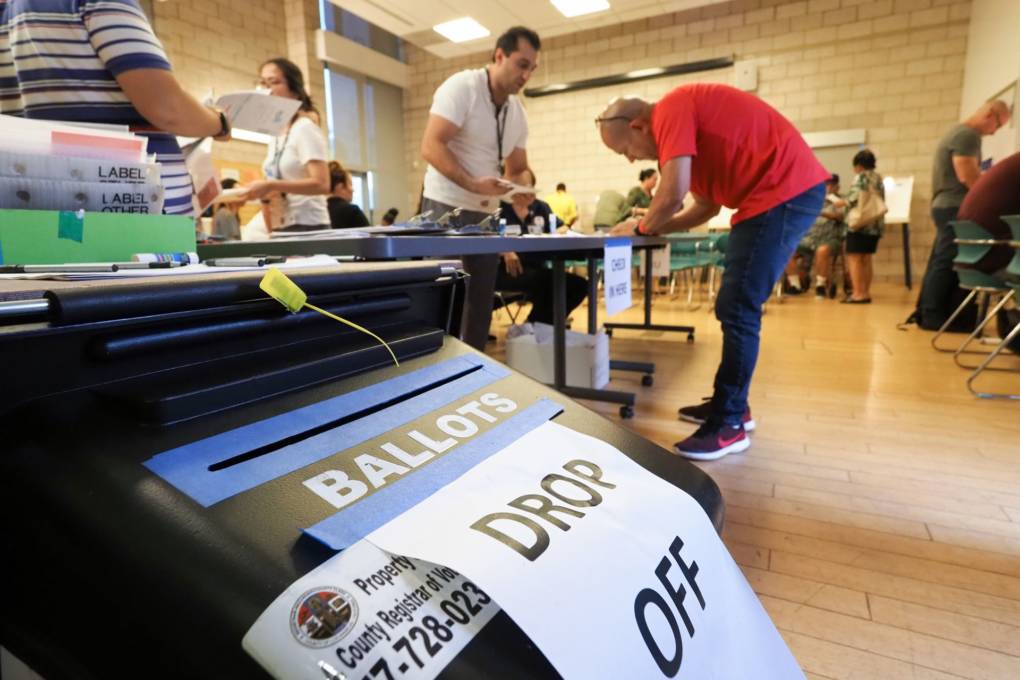
"caption": "A man checks in for early voting in the midterm elections at a polling station in a public library in the Lake View Terrace neighborhood of Los Angeles on Nov. 4, 2018.",
"description": null,
"title": "US-POLITICS-ELECTION-VOTE",
"credit": "Robyn Beck/AFP/Getty Images",
"status": "inherit",
"isLoading": false,
"fetchFailed": false
},
"news_11804817": {
"type": "attachments",
"id": "news_11804817",
"meta": {
"index": "attachments_1716263798",
"site": "news",
"id": "11804817",
"found": true
},
"parent": 11804804,
"imgSizes": {
"apple_news_ca_landscape_5_5": {
"file": "https://ww2.kqed.org/app/uploads/sites/10/2020/03/RS41731_Oakland-residents-cast-votes-at-the-Asian-Resource-Center-in-Oakland-Chinatown-on-Super-Tuesday-1044x783.jpg",
"width": 1044,
"mimeType": "image/jpeg",
"height": 783
},
"apple_news_ca_square_4_0": {
"file": "https://ww2.kqed.org/app/uploads/sites/10/2020/03/RS41731_Oakland-residents-cast-votes-at-the-Asian-Resource-Center-in-Oakland-Chinatown-on-Super-Tuesday-470x470.jpg",
"width": 470,
"mimeType": "image/jpeg",
"height": 470
},
"twentyfourteen-full-width": {
"file": "https://ww2.kqed.org/app/uploads/sites/10/2020/03/RS41731_Oakland-residents-cast-votes-at-the-Asian-Resource-Center-in-Oakland-Chinatown-on-Super-Tuesday-1038x576.jpg",
"width": 1038,
"mimeType": "image/jpeg",
"height": 576
},
"thumbnail": {
"file": "https://ww2.kqed.org/app/uploads/sites/10/2020/03/RS41731_Oakland-residents-cast-votes-at-the-Asian-Resource-Center-in-Oakland-Chinatown-on-Super-Tuesday-160x90.jpg",
"width": 160,
"mimeType": "image/jpeg",
"height": 90
},
"post-thumbnail": {
"file": "https://ww2.kqed.org/app/uploads/sites/10/2020/03/RS41731_Oakland-residents-cast-votes-at-the-Asian-Resource-Center-in-Oakland-Chinatown-on-Super-Tuesday-672x372.jpg",
"width": 672,
"mimeType": "image/jpeg",
"height": 372
},
"kqedFullSize": {
"file": "https://ww2.kqed.org/app/uploads/sites/10/2020/03/RS41731_Oakland-residents-cast-votes-at-the-Asian-Resource-Center-in-Oakland-Chinatown-on-Super-Tuesday.jpg",
"width": 1920,
"height": 1080
},
"apple_news_ca_landscape_4_7": {
"file": "https://ww2.kqed.org/app/uploads/sites/10/2020/03/RS41731_Oakland-residents-cast-votes-at-the-Asian-Resource-Center-in-Oakland-Chinatown-on-Super-Tuesday-632x474.jpg",
"width": 632,
"mimeType": "image/jpeg",
"height": 474
},
"large": {
"file": "https://ww2.kqed.org/app/uploads/sites/10/2020/03/RS41731_Oakland-residents-cast-votes-at-the-Asian-Resource-Center-in-Oakland-Chinatown-on-Super-Tuesday-1020x574.jpg",
"width": 1020,
"mimeType": "image/jpeg",
"height": 574
},
"apple_news_ca_landscape_4_0": {
"file": "https://ww2.kqed.org/app/uploads/sites/10/2020/03/RS41731_Oakland-residents-cast-votes-at-the-Asian-Resource-Center-in-Oakland-Chinatown-on-Super-Tuesday-536x402.jpg",
"width": 536,
"mimeType": "image/jpeg",
"height": 402
},
"apple_news_ca_portrait_12_9": {
"file": "https://ww2.kqed.org/app/uploads/sites/10/2020/03/RS41731_Oakland-residents-cast-votes-at-the-Asian-Resource-Center-in-Oakland-Chinatown-on-Super-Tuesday-1122x1080.jpg",
"width": 1122,
"mimeType": "image/jpeg",
"height": 1080
},
"medium": {
"file": "https://ww2.kqed.org/app/uploads/sites/10/2020/03/RS41731_Oakland-residents-cast-votes-at-the-Asian-Resource-Center-in-Oakland-Chinatown-on-Super-Tuesday-800x450.jpg",
"width": 800,
"mimeType": "image/jpeg",
"height": 450
},
"apple_news_ca_portrait_4_0": {
"file": "https://ww2.kqed.org/app/uploads/sites/10/2020/03/RS41731_Oakland-residents-cast-votes-at-the-Asian-Resource-Center-in-Oakland-Chinatown-on-Super-Tuesday-354x472.jpg",
"width": 354,
"mimeType": "image/jpeg",
"height": 472
},
"apple_news_ca_portrait_9_7": {
"file": "https://ww2.kqed.org/app/uploads/sites/10/2020/03/RS41731_Oakland-residents-cast-votes-at-the-Asian-Resource-Center-in-Oakland-Chinatown-on-Super-Tuesday-840x1080.jpg",
"width": 840,
"mimeType": "image/jpeg",
"height": 1080
},
"apple_news_ca_landscape_12_9": {
"file": "https://ww2.kqed.org/app/uploads/sites/10/2020/03/RS41731_Oakland-residents-cast-votes-at-the-Asian-Resource-Center-in-Oakland-Chinatown-on-Super-Tuesday-1832x1080.jpg",
"width": 1832,
"mimeType": "image/jpeg",
"height": 1080
},
"apple_news_ca_square_9_7": {
"file": "https://ww2.kqed.org/app/uploads/sites/10/2020/03/RS41731_Oakland-residents-cast-votes-at-the-Asian-Resource-Center-in-Oakland-Chinatown-on-Super-Tuesday-1104x1080.jpg",
"width": 1104,
"mimeType": "image/jpeg",
"height": 1080
},
"apple_news_ca_portrait_4_7": {
"file": "https://ww2.kqed.org/app/uploads/sites/10/2020/03/RS41731_Oakland-residents-cast-votes-at-the-Asian-Resource-Center-in-Oakland-Chinatown-on-Super-Tuesday-414x552.jpg",
"width": 414,
"mimeType": "image/jpeg",
"height": 552
},
"apple_news_ca_square_12_9": {
"file": "https://ww2.kqed.org/app/uploads/sites/10/2020/03/RS41731_Oakland-residents-cast-votes-at-the-Asian-Resource-Center-in-Oakland-Chinatown-on-Super-Tuesday-1472x1080.jpg",
"width": 1472,
"mimeType": "image/jpeg",
"height": 1080
},
"apple_news_ca_portrait_5_5": {
"file": "https://ww2.kqed.org/app/uploads/sites/10/2020/03/RS41731_Oakland-residents-cast-votes-at-the-Asian-Resource-Center-in-Oakland-Chinatown-on-Super-Tuesday-687x916.jpg",
"width": 687,
"mimeType": "image/jpeg",
"height": 916
},
"full-width": {
"file": "https://ww2.kqed.org/app/uploads/sites/10/2020/03/RS41731_Oakland-residents-cast-votes-at-the-Asian-Resource-Center-in-Oakland-Chinatown-on-Super-Tuesday-1920x1080.jpg",
"width": 1920,
"mimeType": "image/jpeg",
"height": 1080
},
"apple_news_ca_square_4_7": {
"file": "https://ww2.kqed.org/app/uploads/sites/10/2020/03/RS41731_Oakland-residents-cast-votes-at-the-Asian-Resource-Center-in-Oakland-Chinatown-on-Super-Tuesday-550x550.jpg",
"width": 550,
"mimeType": "image/jpeg",
"height": 550
},
"apple_news_ca_landscape_9_7": {
"file": "https://ww2.kqed.org/app/uploads/sites/10/2020/03/RS41731_Oakland-residents-cast-votes-at-the-Asian-Resource-Center-in-Oakland-Chinatown-on-Super-Tuesday-1376x1032.jpg",
"width": 1376,
"mimeType": "image/jpeg",
"height": 1032
},
"apple_news_ca_square_5_5": {
"file": "https://ww2.kqed.org/app/uploads/sites/10/2020/03/RS41731_Oakland-residents-cast-votes-at-the-Asian-Resource-Center-in-Oakland-Chinatown-on-Super-Tuesday-912x912.jpg",
"width": 912,
"mimeType": "image/jpeg",
"height": 912
}
},
"publishDate": 1583279606,
"modified": 1583280101,
"caption": "Oakland residents cast votes at the Asian Resource Center in Oakland Chinatown on Super Tuesday, March 3, 2020.",
"description": null,
"title": "RS41731_Oakland residents cast votes at the Asian Resource Center in Oakland Chinatown on Super Tuesday",
"credit": "Sam Lefebvre/KQED",
"status": "inherit",
"isLoading": false,
"fetchFailed": false
},
"news_11763401": {
"type": "attachments",
"id": "news_11763401",
"meta": {
"index": "attachments_1716263798",
"site": "news",
"id": "11763401",
"found": true
},
"parent": 11763398,
"imgSizes": {
"apple_news_ca_landscape_5_5": {
"file": "https://ww2.kqed.org/app/uploads/sites/10/2019/07/lawsuit_california_independent_voter_political-1044x783.jpg",
"width": 1044,
"mimeType": "image/jpeg",
"height": 783
},
"apple_news_ca_square_4_0": {
"file": "https://ww2.kqed.org/app/uploads/sites/10/2019/07/lawsuit_california_independent_voter_political-470x470.jpg",
"width": 470,
"mimeType": "image/jpeg",
"height": 470
},
"twentyfourteen-full-width": {
"file": "https://ww2.kqed.org/app/uploads/sites/10/2019/07/lawsuit_california_independent_voter_political-1038x576.jpg",
"width": 1038,
"mimeType": "image/jpeg",
"height": 576
},
"thumbnail": {
"file": "https://ww2.kqed.org/app/uploads/sites/10/2019/07/lawsuit_california_independent_voter_political-160x107.jpg",
"width": 160,
"mimeType": "image/jpeg",
"height": 107
},
"post-thumbnail": {
"file": "https://ww2.kqed.org/app/uploads/sites/10/2019/07/lawsuit_california_independent_voter_political-672x372.jpg",
"width": 672,
"mimeType": "image/jpeg",
"height": 372
},
"kqedFullSize": {
"file": "https://ww2.kqed.org/app/uploads/sites/10/2019/07/lawsuit_california_independent_voter_political-e1564077108653.jpg",
"width": 800,
"height": 533
},
"apple_news_ca_landscape_4_7": {
"file": "https://ww2.kqed.org/app/uploads/sites/10/2019/07/lawsuit_california_independent_voter_political-632x474.jpg",
"width": 632,
"mimeType": "image/jpeg",
"height": 474
},
"large": {
"file": "https://ww2.kqed.org/app/uploads/sites/10/2019/07/lawsuit_california_independent_voter_political-1020x680.jpg",
"width": 1020,
"mimeType": "image/jpeg",
"height": 680
},
"complete_open_graph": {
"file": "https://ww2.kqed.org/app/uploads/sites/10/2019/07/lawsuit_california_independent_voter_political-1200x800.jpg",
"width": 1200,
"mimeType": "image/jpeg",
"height": 800
},
"apple_news_ca_landscape_4_0": {
"file": "https://ww2.kqed.org/app/uploads/sites/10/2019/07/lawsuit_california_independent_voter_political-536x402.jpg",
"width": 536,
"mimeType": "image/jpeg",
"height": 402
},
"apple_news_ca_portrait_12_9": {
"file": "https://ww2.kqed.org/app/uploads/sites/10/2019/07/lawsuit_california_independent_voter_political-1122x836.jpg",
"width": 1122,
"mimeType": "image/jpeg",
"height": 836
},
"medium": {
"file": "https://ww2.kqed.org/app/uploads/sites/10/2019/07/lawsuit_california_independent_voter_political-800x533.jpg",
"width": 800,
"mimeType": "image/jpeg",
"height": 533
},
"apple_news_ca_portrait_4_0": {
"file": "https://ww2.kqed.org/app/uploads/sites/10/2019/07/lawsuit_california_independent_voter_political-354x472.jpg",
"width": 354,
"mimeType": "image/jpeg",
"height": 472
},
"apple_news_ca_portrait_9_7": {
"file": "https://ww2.kqed.org/app/uploads/sites/10/2019/07/lawsuit_california_independent_voter_political-840x836.jpg",
"width": 840,
"mimeType": "image/jpeg",
"height": 836
},
"apple_news_ca_square_9_7": {
"file": "https://ww2.kqed.org/app/uploads/sites/10/2019/07/lawsuit_california_independent_voter_political-1104x836.jpg",
"width": 1104,
"mimeType": "image/jpeg",
"height": 836
},
"apple_news_ca_portrait_4_7": {
"file": "https://ww2.kqed.org/app/uploads/sites/10/2019/07/lawsuit_california_independent_voter_political-414x552.jpg",
"width": 414,
"mimeType": "image/jpeg",
"height": 552
},
"apple_news_ca_portrait_5_5": {
"file": "https://ww2.kqed.org/app/uploads/sites/10/2019/07/lawsuit_california_independent_voter_political-687x836.jpg",
"width": 687,
"mimeType": "image/jpeg",
"height": 836
},
"apple_news_ca_square_4_7": {
"file": "https://ww2.kqed.org/app/uploads/sites/10/2019/07/lawsuit_california_independent_voter_political-550x550.jpg",
"width": 550,
"mimeType": "image/jpeg",
"height": 550
},
"apple_news_ca_square_5_5": {
"file": "https://ww2.kqed.org/app/uploads/sites/10/2019/07/lawsuit_california_independent_voter_political-912x836.jpg",
"width": 912,
"mimeType": "image/jpeg",
"height": 836
}
},
"publishDate": 1564077071,
"modified": 1564080162,
"caption": null,
"description": null,
"title": "Close Up Of Blindfolded Lady Of Justice",
"credit": null,
"status": "inherit",
"isLoading": false,
"fetchFailed": false
},
"news_11675509": {
"type": "attachments",
"id": "news_11675509",
"meta": {
"index": "attachments_1716263798",
"site": "news",
"id": "11675509",
"found": true
},
"parent": 11675508,
"imgSizes": {
"small": {
"file": "https://ww2.kqed.org/app/uploads/sites/10/2018/06/voting-in-Maine_wide-c95e76f3e1cada72138ed31d3ed229e573c9bc31-520x292.jpg",
"width": 520,
"mimeType": "image/jpeg",
"height": 292
},
"twentyfourteen-full-width": {
"file": "https://ww2.kqed.org/app/uploads/sites/10/2018/06/voting-in-Maine_wide-c95e76f3e1cada72138ed31d3ed229e573c9bc31-1038x576.jpg",
"width": 1038,
"mimeType": "image/jpeg",
"height": 576
},
"thumbnail": {
"file": "https://ww2.kqed.org/app/uploads/sites/10/2018/06/voting-in-Maine_wide-c95e76f3e1cada72138ed31d3ed229e573c9bc31-160x90.jpg",
"width": 160,
"mimeType": "image/jpeg",
"height": 90
},
"fd-sm": {
"file": "https://ww2.kqed.org/app/uploads/sites/10/2018/06/voting-in-Maine_wide-c95e76f3e1cada72138ed31d3ed229e573c9bc31-960x540.jpg",
"width": 960,
"mimeType": "image/jpeg",
"height": 540
},
"post-thumbnail": {
"file": "https://ww2.kqed.org/app/uploads/sites/10/2018/06/voting-in-Maine_wide-c95e76f3e1cada72138ed31d3ed229e573c9bc31-672x372.jpg",
"width": 672,
"mimeType": "image/jpeg",
"height": 372
},
"xsmall": {
"file": "https://ww2.kqed.org/app/uploads/sites/10/2018/06/voting-in-Maine_wide-c95e76f3e1cada72138ed31d3ed229e573c9bc31-375x211.jpg",
"width": 375,
"mimeType": "image/jpeg",
"height": 211
},
"kqedFullSize": {
"file": "https://ww2.kqed.org/app/uploads/sites/10/2018/06/voting-in-Maine_wide-c95e76f3e1cada72138ed31d3ed229e573c9bc31.jpg",
"width": 4058,
"height": 2282
},
"large": {
"file": "https://ww2.kqed.org/app/uploads/sites/10/2018/06/voting-in-Maine_wide-c95e76f3e1cada72138ed31d3ed229e573c9bc31-1020x574.jpg",
"width": 1020,
"mimeType": "image/jpeg",
"height": 574
},
"xlarge": {
"file": "https://ww2.kqed.org/app/uploads/sites/10/2018/06/voting-in-Maine_wide-c95e76f3e1cada72138ed31d3ed229e573c9bc31-1180x664.jpg",
"width": 1180,
"mimeType": "image/jpeg",
"height": 664
},
"complete_open_graph": {
"file": "https://ww2.kqed.org/app/uploads/sites/10/2018/06/voting-in-Maine_wide-c95e76f3e1cada72138ed31d3ed229e573c9bc31-1200x675.jpg",
"width": 1200,
"mimeType": "image/jpeg",
"height": 675
},
"guest-author-50": {
"file": "https://ww2.kqed.org/app/uploads/sites/10/2018/06/voting-in-Maine_wide-c95e76f3e1cada72138ed31d3ed229e573c9bc31-50x50.jpg",
"width": 50,
"mimeType": "image/jpeg",
"height": 50
},
"guest-author-96": {
"file": "https://ww2.kqed.org/app/uploads/sites/10/2018/06/voting-in-Maine_wide-c95e76f3e1cada72138ed31d3ed229e573c9bc31-96x96.jpg",
"width": 96,
"mimeType": "image/jpeg",
"height": 96
},
"medium": {
"file": "https://ww2.kqed.org/app/uploads/sites/10/2018/06/voting-in-Maine_wide-c95e76f3e1cada72138ed31d3ed229e573c9bc31-800x450.jpg",
"width": 800,
"mimeType": "image/jpeg",
"height": 450
},
"guest-author-64": {
"file": "https://ww2.kqed.org/app/uploads/sites/10/2018/06/voting-in-Maine_wide-c95e76f3e1cada72138ed31d3ed229e573c9bc31-64x64.jpg",
"width": 64,
"mimeType": "image/jpeg",
"height": 64
},
"guest-author-32": {
"file": "https://ww2.kqed.org/app/uploads/sites/10/2018/06/voting-in-Maine_wide-c95e76f3e1cada72138ed31d3ed229e573c9bc31-32x32.jpg",
"width": 32,
"mimeType": "image/jpeg",
"height": 32
},
"fd-lrg": {
"file": "https://ww2.kqed.org/app/uploads/sites/10/2018/06/voting-in-Maine_wide-c95e76f3e1cada72138ed31d3ed229e573c9bc31-1920x1080.jpg",
"width": 1920,
"mimeType": "image/jpeg",
"height": 1080
},
"fd-med": {
"file": "https://ww2.kqed.org/app/uploads/sites/10/2018/06/voting-in-Maine_wide-c95e76f3e1cada72138ed31d3ed229e573c9bc31-1180x664.jpg",
"width": 1180,
"mimeType": "image/jpeg",
"height": 664
},
"full-width": {
"file": "https://ww2.kqed.org/app/uploads/sites/10/2018/06/voting-in-Maine_wide-c95e76f3e1cada72138ed31d3ed229e573c9bc31-1920x1080.jpg",
"width": 1920,
"mimeType": "image/jpeg",
"height": 1080
},
"detail": {
"file": "https://ww2.kqed.org/app/uploads/sites/10/2018/06/voting-in-Maine_wide-c95e76f3e1cada72138ed31d3ed229e573c9bc31-150x150.jpg",
"width": 150,
"mimeType": "image/jpeg",
"height": 150
},
"guest-author-128": {
"file": "https://ww2.kqed.org/app/uploads/sites/10/2018/06/voting-in-Maine_wide-c95e76f3e1cada72138ed31d3ed229e573c9bc31-128x128.jpg",
"width": 128,
"mimeType": "image/jpeg",
"height": 128
},
"xxsmall": {
"file": "https://ww2.kqed.org/app/uploads/sites/10/2018/06/voting-in-Maine_wide-c95e76f3e1cada72138ed31d3ed229e573c9bc31-240x135.jpg",
"width": 240,
"mimeType": "image/jpeg",
"height": 135
}
},
"publishDate": 1529338336,
"modified": 1529339634,
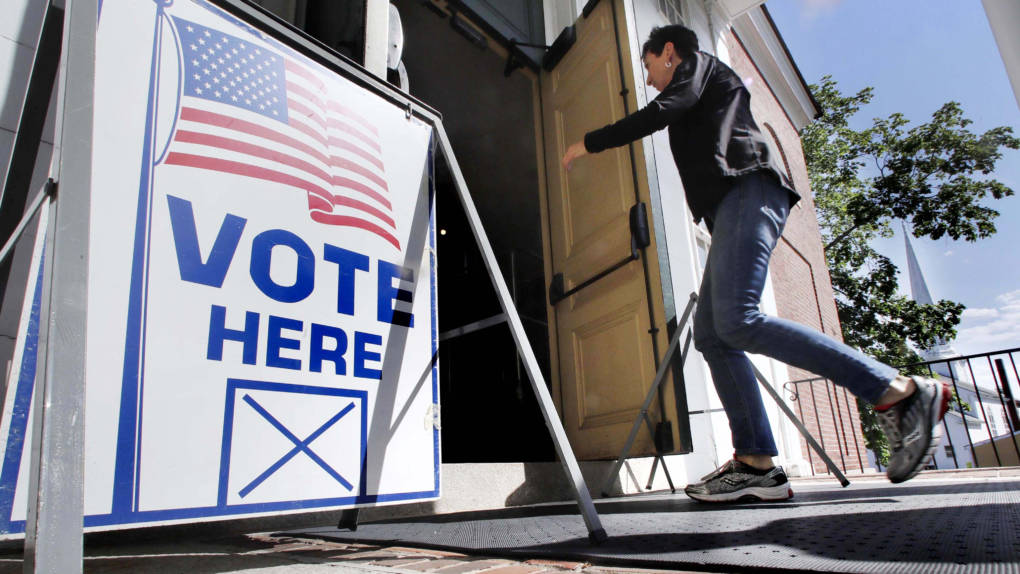
"caption": "A resident walks in to cast her vote at a polling station in Maine on June 12, in the state's primary elections. Maine is one of 17 states that has yet to apply for election security money allocated this year by congress.",
"description": "A resident walks in to cast her vote at a polling station in Maine on June 12, in the state's primary elections. Maine is one of 17 states that has yet to apply for election security money allocated this year by congress.",
"title": "A resident walks in to cast her vote at a polling station in Maine on June 12, in the state's primary elections. Maine is one of 17 states that has yet to apply for election security money allocated this year by congress.",
"credit": "Charles Krupa/AP",
"status": "inherit",
"isLoading": false,
"fetchFailed": false
},
"news_11576371": {
"type": "attachments",
"id": "news_11576371",
"meta": {
"index": "attachments_1716263798",
"site": "news",
"id": "11576371",
"found": true
},
"parent": 11576323,
"imgSizes": {
"small": {
"file": "https://ww2.kqed.org/app/uploads/sites/10/2017/07/AlexPadilla-520x320.jpg",
"width": 520,
"mimeType": "image/jpeg",
"height": 320
},
"twentyfourteen-full-width": {
"file": "https://ww2.kqed.org/app/uploads/sites/10/2017/07/AlexPadilla-1038x576.jpg",
"width": 1038,
"mimeType": "image/jpeg",
"height": 576
},
"thumbnail": {
"file": "https://ww2.kqed.org/app/uploads/sites/10/2017/07/AlexPadilla-160x98.jpg",
"width": 160,
"mimeType": "image/jpeg",
"height": 98
},
"fd-sm": {
"file": "https://ww2.kqed.org/app/uploads/sites/10/2017/07/AlexPadilla-960x591.jpg",
"width": 960,
"mimeType": "image/jpeg",
"height": 591
},
"post-thumbnail": {
"file": "https://ww2.kqed.org/app/uploads/sites/10/2017/07/AlexPadilla-672x372.jpg",
"width": 672,
"mimeType": "image/jpeg",
"height": 372
},
"xsmall": {
"file": "https://ww2.kqed.org/app/uploads/sites/10/2017/07/AlexPadilla-375x231.jpg",
"width": 375,
"mimeType": "image/jpeg",
"height": 231
},
"kqedFullSize": {
"file": "https://ww2.kqed.org/app/uploads/sites/10/2017/07/AlexPadilla.jpg",
"width": 1920,
"height": 1181
},
"large": {
"file": "https://ww2.kqed.org/app/uploads/sites/10/2017/07/AlexPadilla-1020x627.jpg",
"width": 1020,
"mimeType": "image/jpeg",
"height": 627
},
"xlarge": {
"file": "https://ww2.kqed.org/app/uploads/sites/10/2017/07/AlexPadilla-1180x726.jpg",
"width": 1180,
"mimeType": "image/jpeg",
"height": 726
},
"guest-author-50": {
"file": "https://ww2.kqed.org/app/uploads/sites/10/2017/07/AlexPadilla-50x50.jpg",
"width": 50,
"mimeType": "image/jpeg",
"height": 50
},
"guest-author-96": {
"file": "https://ww2.kqed.org/app/uploads/sites/10/2017/07/AlexPadilla-96x96.jpg",
"width": 96,
"mimeType": "image/jpeg",
"height": 96
},
"medium": {
"file": "https://ww2.kqed.org/app/uploads/sites/10/2017/07/AlexPadilla-800x492.jpg",
"width": 800,
"mimeType": "image/jpeg",
"height": 492
},
"guest-author-64": {
"file": "https://ww2.kqed.org/app/uploads/sites/10/2017/07/AlexPadilla-64x64.jpg",
"width": 64,
"mimeType": "image/jpeg",
"height": 64
},
"guest-author-32": {
"file": "https://ww2.kqed.org/app/uploads/sites/10/2017/07/AlexPadilla-32x32.jpg",
"width": 32,
"mimeType": "image/jpeg",
"height": 32
},
"fd-lrg": {
"file": "https://ww2.kqed.org/app/uploads/sites/10/2017/07/AlexPadilla-1920x1181.jpg",
"width": 1920,
"mimeType": "image/jpeg",
"height": 1181
},
"fd-med": {
"file": "https://ww2.kqed.org/app/uploads/sites/10/2017/07/AlexPadilla-1180x726.jpg",
"width": 1180,
"mimeType": "image/jpeg",
"height": 726
},
"full-width": {
"file": "https://ww2.kqed.org/app/uploads/sites/10/2017/07/AlexPadilla-1920x1181.jpg",
"width": 1920,
"mimeType": "image/jpeg",
"height": 1181
},
"detail": {
"file": "https://ww2.kqed.org/app/uploads/sites/10/2017/07/AlexPadilla-150x150.jpg",
"width": 150,
"mimeType": "image/jpeg",
"height": 150
},
"guest-author-128": {
"file": "https://ww2.kqed.org/app/uploads/sites/10/2017/07/AlexPadilla-128x128.jpg",
"width": 128,
"mimeType": "image/jpeg",
"height": 128
},
"xxsmall": {
"file": "https://ww2.kqed.org/app/uploads/sites/10/2017/07/AlexPadilla-240x148.jpg",
"width": 240,
"mimeType": "image/jpeg",
"height": 148
}
},
"publishDate": 1500505060,
"modified": 1500506835,
"caption": "California Secretary of State Alex Padilla speaks at a press conference on July 19, 2017, in Washington, D.C.",
"description": "California Secretary of State Alex Padilla speaks at a press conference on July 19, 2017 in Washington, DC.",
"title": "AlexPadilla",
"credit": "Joe Raedle/Getty Images",
"status": "inherit",
"isLoading": false,
"fetchFailed": false
}
},
"audioPlayerReducer": {
"postId": "stream_live",
"isPaused": true,
"isPlaying": false,
"pfsActive": false,
"pledgeModalIsOpen": true,
"playerDrawerIsOpen": false,
"liveAudioPlayStartedAt": 0,
"liveAudioPlayContext": ""
},
"authorsReducer": {
"byline_news_11842066": {
"type": "authors",
"id": "byline_news_11842066",
"meta": {
"override": true
},
"slug": "byline_news_11842066",
"name": "Amy Taxin and Adam Beam\u003cbr>Associated Press",
"isLoading": false
},
"byline_news_11804804": {
"type": "authors",
"id": "byline_news_11804804",
"meta": {
"override": true
},
"slug": "byline_news_11804804",
"name": "Janie Har \u003cbr> Associated Press",
"isLoading": false
},
"byline_news_11763398": {
"type": "authors",
"id": "byline_news_11763398",
"meta": {
"override": true
},
"slug": "byline_news_11763398",
"name": "\u003cstrong>\u003ca href=\"https://calmatters.org/author/ben-christopher/\">Ben Christopher\u003cbr />CalMatters\u003c/strong>",
"isLoading": false
},
"byline_news_11675508": {
"type": "authors",
"id": "byline_news_11675508",
"meta": {
"override": true
},
"slug": "byline_news_11675508",
"name": "Miles Parks\u003cbr>\u003cstrong>\u003ca href=\"https://www.npr.org/people/395772167/miles-parks\">NPR\u003c/a>\u003c/strong>",
"isLoading": false
},
"gmarzorati": {
"type": "authors",
"id": "227",
"meta": {
"index": "authors_1716337520",
"id": "227",
"found": true
},
"name": "Guy Marzorati",
"firstName": "Guy",
"lastName": "Marzorati",
"slug": "gmarzorati",
"email": "gmarzorati@KQED.org",
"display_author_email": true,
"staff_mastheads": [
"news"
],
"title": "Correspondent",
"bio": "Guy Marzorati is a correspondent on KQED's California Politics and Government Desk, based in San Jose. A graduate of Santa Clara University, Guy joined KQED in 2013. He reports on state and local politics and produces KQED's digital voter guide.",
"avatar": "https://secure.gravatar.com/avatar/e7038b8dbfd55b104369b76b1cd0b9de?s=600&d=blank&r=g",
"twitter": "guymarzorati",
"facebook": null,
"instagram": null,
"linkedin": null,
"sites": [
{
"site": "",
"roles": [
"editor"
]
},
{
"site": "news",
"roles": [
"editor"
]
},
{
"site": "science",
"roles": [
"editor"
]
},
{
"site": "forum",
"roles": [
"editor"
]
},
{
"site": "elections",
"roles": [
"editor"
]
},
{
"site": "liveblog",
"roles": [
"editor"
]
}
],
"headData": {
"title": "Guy Marzorati | KQED",
"description": "Correspondent",
"ogImgSrc": "https://secure.gravatar.com/avatar/e7038b8dbfd55b104369b76b1cd0b9de?s=600&d=blank&r=g",
"twImgSrc": "https://secure.gravatar.com/avatar/e7038b8dbfd55b104369b76b1cd0b9de?s=600&d=blank&r=g"
},
"isLoading": false,
"link": "/author/gmarzorati"
},
"scottshafer": {
"type": "authors",
"id": "255",
"meta": {
"index": "authors_1716337520",
"id": "255",
"found": true
},
"name": "Scott Shafer",
"firstName": "Scott",
"lastName": "Shafer",
"slug": "scottshafer",
"email": "sshafer@kqed.org",
"display_author_email": false,
"staff_mastheads": [
"news"
],
"title": "KQED Contributor",
"bio": "Scott Shafer is a senior editor with the KQED Politics and Government desk. He is co-host of Political Breakdown, the award-winning radio show and podcast with a personal take on the world of politics. Scott came to KQED in 1998 to host the statewide\u003cem> California Report\u003c/em>. Prior to that he had extended stints in politics and government\u003cem>.\u003c/em> He uses that inside experience at KQED in his, reporting, hosting and analysis for the politics desk. Scott collaborated \u003cem>Political Breakdown a\u003c/em>nd on \u003cem>The Political Mind of Jerry Brown, \u003c/em>an eight-part series about the life and extraordinary political career of the former governor. For fun, he plays water polo with the San Francisco Tsunami.",
"avatar": "https://secure.gravatar.com/avatar/a62ebae45b79d7aed1a39a0e3bf68104?s=600&d=blank&r=g",
"twitter": "scottshafer",
"bluesky": null,
"facebook": null,
"instagram": null,
"linkedin": null,
"sites": [
{
"site": "news",
"roles": [
"editor"
]
},
{
"site": "stateofhealth",
"roles": [
"author"
]
},
{
"site": "science",
"roles": [
"author"
]
},
{
"site": "forum",
"roles": [
"subscriber"
]
},
{
"site": "liveblog",
"roles": [
"author"
]
}
],
"headData": {
"title": "Scott Shafer | KQED",
"description": "KQED Contributor",
"ogImgSrc": "https://secure.gravatar.com/avatar/a62ebae45b79d7aed1a39a0e3bf68104?s=600&d=blank&r=g",
"twImgSrc": "https://secure.gravatar.com/avatar/a62ebae45b79d7aed1a39a0e3bf68104?s=600&d=blank&r=g"
},
"isLoading": false,
"link": "/author/scottshafer"
},
"matthewgreen": {
"type": "authors",
"id": "1263",
"meta": {
"index": "authors_1716337520",
"id": "1263",
"found": true
},
"name": "Matthew Green",
"firstName": "Matthew",
"lastName": "Green",
"slug": "matthewgreen",
"email": "mgreen@kqed.org",
"display_author_email": false,
"staff_mastheads": [],
"title": "KQED Editor/Reporter",
"bio": "Matthew Green is a digital media producer for KQED News. He previously produced \u003ca href=\"http://www.kqed.org/lowdown\">The Lowdown\u003c/a>, KQED’s multimedia news education blog. Matthew's written for numerous Bay Area publications, including the Oakland Tribune and San Francisco Chronicle. He also taught journalism classes at Fremont High School in East Oakland.\r\n\r\nEmail: mgreen@kqed.org; Twitter: @MGreenKQED",
"avatar": "https://secure.gravatar.com/avatar/3bf498d1267ca02c8494f33d8cfc575e?s=600&d=blank&r=g",
"twitter": "MGreenKQED",
"facebook": null,
"instagram": null,
"linkedin": null,
"sites": [
{
"site": "news",
"roles": []
},
{
"site": "lowdown",
"roles": []
},
{
"site": "science",
"roles": []
},
{
"site": "education",
"roles": []
},
{
"site": "quest",
"roles": []
},
{
"site": "liveblog",
"roles": []
}
],
"headData": {
"title": "Matthew Green | KQED",
"description": "KQED Editor/Reporter",
"ogImgSrc": "https://secure.gravatar.com/avatar/3bf498d1267ca02c8494f33d8cfc575e?s=600&d=blank&r=g",
"twImgSrc": "https://secure.gravatar.com/avatar/3bf498d1267ca02c8494f33d8cfc575e?s=600&d=blank&r=g"
},
"isLoading": false,
"link": "/author/matthewgreen"
},
"markfiore": {
"type": "authors",
"id": "3236",
"meta": {
"index": "authors_1716337520",
"id": "3236",
"found": true
},
"name": "Mark Fiore",
"firstName": "Mark",
"lastName": "Fiore",
"slug": "markfiore",
"email": "mark@markfiore.com",
"display_author_email": false,
"staff_mastheads": [
"news"
],
"title": "KQED News Cartoonist",
"bio": "\u003ca href=\"http://www.MarkFiore.com\">MarkFiore.com\u003c/a> | \u003ca href=\"https://twitter.com/markfiore\">Follow on Twitter\u003c/a> | \u003ca href=\"https://www.facebook.com/pages/Mark-Fiore-Animated-Political-Cartoons/94451707396?ref=bookmarks\">Facebook\u003c/a> | \u003ca href=\"mailto:mark@markfiore.com\">email\u003c/a>\r\n\r\nPulitzer Prize-winner, Mark Fiore, who the Wall Street Journal has called “the undisputed guru of the form,” creates animated political cartoons in San Francisco, where his work has been featured regularly on the San Francisco Chronicle’s web site, SFGate.com. His work has appeared on Newsweek.com, Slate.com, CBSNews.com, MotherJones.com, DailyKos.com and NPR’s web site. Fiore’s political animation has appeared on CNN, Frontline, Bill Moyers Journal, Salon.com and cable and broadcast outlets across the globe.\r\n\r\nBeginning his professional life by drawing traditional political cartoons for newspapers, Fiore’s work appeared in publications ranging from the Washington Post to the Los Angeles Times. In the late 1990s, he began to experiment with animating political cartoons and, after a short stint at the San Jose Mercury News as their staff cartoonist, Fiore devoted all his energies to animation.\r\nGrowing up in California, Fiore also spent a good portion of his life in the backwoods of Idaho. It was this combination that shaped him politically. Mark majored in political science at Colorado College, where, in a perfect send-off for a cartoonist, he received his diploma in 1991 as commencement speaker Dick Cheney smiled approvingly.\r\nMark Fiore was awarded the Pulitzer Prize for political cartooning in 2010, a Robert F. Kennedy Journalism Award in 2004 and has twice received an Online Journalism Award for commentary from the Online News Association (2002, 2008). Fiore has received two awards for his work in new media from the National Cartoonists Society (2001, 2002), and in 2006 received The James Madison Freedom of Information Award from The Society of Professional Journalists.",
"avatar": "https://secure.gravatar.com/avatar/fc4e2a612b15b67bad0c6f0e1db4ca9b?s=600&d=blank&r=g",
"twitter": "MarkFiore",
"facebook": null,
"instagram": "https://www.instagram.com/markfiore/?hl=en",
"linkedin": null,
"sites": [
{
"site": "arts",
"roles": [
"contributor"
]
},
{
"site": "news",
"roles": [
"editor"
]
},
{
"site": "futureofyou",
"roles": [
"editor"
]
},
{
"site": "science",
"roles": [
"editor"
]
}
],
"headData": {
"title": "Mark Fiore | KQED",
"description": "KQED News Cartoonist",
"ogImgSrc": "https://secure.gravatar.com/avatar/fc4e2a612b15b67bad0c6f0e1db4ca9b?s=600&d=blank&r=g",
"twImgSrc": "https://secure.gravatar.com/avatar/fc4e2a612b15b67bad0c6f0e1db4ca9b?s=600&d=blank&r=g"
},
"isLoading": false,
"link": "/author/markfiore"
},
"mlagos": {
"type": "authors",
"id": "3239",
"meta": {
"index": "authors_1716337520",
"id": "3239",
"found": true
},
"name": "Marisa Lagos",
"firstName": "Marisa",
"lastName": "Lagos",
"slug": "mlagos",
"email": "mlagos@kqed.org",
"display_author_email": false,
"staff_mastheads": [
"news"
],
"title": "KQED Contributor",
"bio": "Marisa Lagos is a correspondent for KQED’s California Politics and Government Desk and co-hosts the award-winning show and podcast, Political Breakdown. At KQED, Lagos also conducts reporting, analysis and investigations into state, local and national politics for radio, TV, online and onstage. In 2022, she and co-host, Scott Shafer, moderated the only gubernatorial debate in California. In 2020, the \u003ci>Washington Post\u003c/i> named her one of the top political journalists in California; she was nominated for a Peabody and won several other awards for her work investigating the 2017 California wildfires. She has worked at the \u003ci>San Francisco Chronicle\u003c/i>, \u003ci>San Francisco Examiner\u003c/i> and \u003ci>Los Angeles Times\u003c/i>. A UC Santa Barbara graduate, she lives in San Francisco with her two sons and husband.",
"avatar": "https://secure.gravatar.com/avatar/a261a0d3696fc066871ef96b85b5e7d2?s=600&d=blank&r=g",
"twitter": "@mlagos",
"facebook": null,
"instagram": null,
"linkedin": null,
"sites": [
{
"site": "arts",
"roles": [
"author"
]
},
{
"site": "news",
"roles": [
"editor"
]
},
{
"site": "science",
"roles": [
"editor"
]
},
{
"site": "forum",
"roles": [
"author"
]
},
{
"site": "liveblog",
"roles": [
"author"
]
}
],
"headData": {
"title": "Marisa Lagos | KQED",
"description": "KQED Contributor",
"ogImgSrc": "https://secure.gravatar.com/avatar/a261a0d3696fc066871ef96b85b5e7d2?s=600&d=blank&r=g",
"twImgSrc": "https://secure.gravatar.com/avatar/a261a0d3696fc066871ef96b85b5e7d2?s=600&d=blank&r=g"
},
"isLoading": false,
"link": "/author/mlagos"
}
},
"pagesReducer": {
"news_tag_alex-padilla": {
"type": "terms",
"id": "news_19112",
"meta": {
"index": "terms_1716263798",
"site": "news",
"id": "19112",
"score": 9.890152
},
"featImg": null,
"name": "Alex Padilla",
"description": null,
"taxonomy": "tag",
"headData": {
"twImgId": null,
"twTitle": null,
"ogTitle": null,
"ogImgId": null,
"twDescription": null,
"description": null,
"title": "Alex Padilla Archives | KQED News",
"ogDescription": null
},
"ttid": 19129,
"slug": "alex-padilla",
"isLoading": false,
"title": "Alex Padilla",
"pageMeta": {
"site": "news",
"WpPageTemplate": "page-topic-editorial",
"currentPage": 5
},
"blocks": [
{
"blockName": "kqed/post-list",
"attrs": {
"layout": "cardArticle2",
"query": "posts/news?tag=alex-padilla",
"seeMore": false,
"paginated": true,
"page": 5
}
},
{
"blockName": "kqed/ad"
}
]
}
},
"pfsSessionReducer": {},
"postsReducer": {
"stream_live": {
"type": "live",
"id": "stream_live",
"audioUrl": "https://streams.kqed.org/kqedradio",
"title": "Live Stream",
"excerpt": "Live Stream information currently unavailable.",
"link": "/radio",
"featImg": "",
"label": {
"name": "KQED Live",
"link": "/"
}
},
"stream_kqedNewscast": {
"type": "posts",
"id": "stream_kqedNewscast",
"audioUrl": "https://www.kqed.org/.stream/anon/radio/RDnews/newscast.mp3?_=1",
"title": "KQED Newscast",
"featImg": "",
"label": {
"name": "88.5 FM",
"link": "/"
}
},
"news_11847064": {
"type": "posts",
"id": "news_11847064",
"meta": {
"index": "posts_1716263798",
"site": "news",
"id": "11847064",
"score": null,
"sort": [
1605258041000
]
},
"guestAuthors": [],
"slug": "inside-californias-pandemic-election-how-covid-19-changes-could-shape-the-future-of-voting",
"title": "Inside California's Pandemic Election: How COVID-19 Changes Could Shape the Future of Voting",
"publishDate": 1605258041,
"format": "standard",
"headTitle": "Inside California’s Pandemic Election: How COVID-19 Changes Could Shape the Future of Voting | KQED",
"labelTerm": {
"site": "news"
},
"content": "\u003cp>Election officials across California are breathing a sigh of relief: An election that combined unprecedented changes and unmatched scrutiny amid a global pandemic resulted in historic levels of participation and few widespread issues.\u003c/p>\n\u003cp>Some features of this year’s vote will hopefully go down as historical aberrations, like poll workers in protective gear and masked voters physically distanced in voting locations stocked with hand sanitizer.\u003c/p>\n\u003cp>Other alterations brought on by the coronavirus — such as the expansion of voting by mail and the shift away from assigned polling places — could spur long lasting changes to the way in which Californians cast their ballots.\u003c/p>\n\u003cp>In interviews with KQED, more than a dozen election officials and voting advocates agreed that California’s recent election in the midst of a pandemic was a success, despite a tight timeline for changes and a few hiccups.\u003c/p>\n\u003cp>\u003cspan style=\"font-weight: 400\">“This is one of the smoothest elections that I’ve had,” said Neal Kelley, registrar of voters for Orange County. “I really believe we were as best prepared for a pandemic as we could ever be.” \u003c/span>\u003c/p>\n\u003ch3>\u003cstrong>‘Perfect Storm’ Ends With Record Participation\u003c/strong>\u003c/h3>\n\u003cp>In some ways, the pandemic merely accelerated voting changes already in the works under Secretary of State Alex Padilla, a Democrat.\u003c/p>\n\u003cp>Roughly three-quarters of voters received vote-by-mail ballots even before the pandemic. And 15 counties had previously abandoned precinct polling locations in favor of the Voters Choice Act model — sending a ballot to every voter and opening county-wide vote centers where any voter could cast a ballot.\u003c/p>\n\u003cp>But election officials faced unprecedented pressures in 2020: The logistical issues brought on by the virus were combined with attacks on the voting process by national Republicans.\u003c/p>\n\u003cp>“It was a perfect storm,” said Padilla, who added that the increased focus on election administration did have a positive effect: It sharpened the public’s attention to voting rules and deadlines.\u003c/p>\n\u003cp>\u003cspan style=\"font-weight: 400\">“If it helped increase registration and turnout as a result, then I think that is great for democracy at the end of the day,” he said. \u003c/span>\u003c/p>\n\u003cp>\u003cspan style=\"font-weight: 400\">[pullquote size=\"medium\" align=\"right\" citation=\"Alex Padilla, California Secretary of State\"]‘Despite the pandemic, this turned out to be a very successful election year and could very well serve as a model, not just for statewide adoption going forward, but for states across the country.’[/pullquote]\u003c/span>\u003c/p>\n\u003cp>In addition, counties finally had the money they needed to conduct elections, through funding from the federal CARES Act, said Kim Alexander, president of the California Voter Foundation.\u003c/p>\n\u003cp>And expanding vote-by-mail to every voter allowed advocates to broadcast one set of instructions across the entire state.\u003c/p>\n\u003cp>\u003cspan style=\"font-weight: 400\">“We never had the ability before this election to provide that kind of uniform message to all voters,” Alexander said. \u003c/span>\u003c/p>\n\u003cp>The result was record participation: More than 16 million Californians cast ballots, with three-quarters of votes cast before Election Day.\u003c/p>\n\u003cp>State lawmakers are already eyeing the possibility of making some of the pandemic-related changes permanent.\u003c/p>\n\u003cp>But voting experts caution that there is still work to do to reduce roadblocks to voting, like lines, confusion and language barriers. They hope the state Legislature, freed from election-year deadlines, can carefully consider any consequences for\u003cb>\u003c/b> voters with limited English proficiency, infrequent voters and others at risk of disenfranchisement.\u003c/p>\n\u003cp>\u003cspan style=\"font-weight: 400\">“If we are going to continue to make changes to electoral models, we should not do it in a rushed way as we were forced to do this year,” said Julia Marks, voting rights attorney at \u003c/span>Asian Americans Advancing Justice-Asian Law Caucus.\u003c/p>\n\u003cfigure id=\"attachment_11847168\" class=\"wp-caption alignnone\" style=\"max-width: 800px\">\u003cimg loading=\"lazy\" decoding=\"async\" class=\"size-medium wp-image-11847168\" src=\"https://ww2.kqed.org/app/uploads/sites/10/2020/11/RS45623_026_KQED_SanFrancisco_BallotDropOff_10312020-qut-800x533.jpg\" alt=\"Voters drop off their mail-in ballots at the Chase Center official ballot drop-off location on Oct. 31, 2020.\" width=\"800\" height=\"533\" srcset=\"https://cdn.kqed.org/wp-content/uploads/sites/10/2020/11/RS45623_026_KQED_SanFrancisco_BallotDropOff_10312020-qut-800x533.jpg 800w, https://cdn.kqed.org/wp-content/uploads/sites/10/2020/11/RS45623_026_KQED_SanFrancisco_BallotDropOff_10312020-qut-1020x680.jpg 1020w, https://cdn.kqed.org/wp-content/uploads/sites/10/2020/11/RS45623_026_KQED_SanFrancisco_BallotDropOff_10312020-qut-160x107.jpg 160w, https://cdn.kqed.org/wp-content/uploads/sites/10/2020/11/RS45623_026_KQED_SanFrancisco_BallotDropOff_10312020-qut-1536x1024.jpg 1536w, https://cdn.kqed.org/wp-content/uploads/sites/10/2020/11/RS45623_026_KQED_SanFrancisco_BallotDropOff_10312020-qut.jpg 1920w\" sizes=\"(max-width: 800px) 100vw, 800px\">\u003cfigcaption class=\"wp-caption-text\">Voters drop off their mail-in ballots at the Chase Center official ballot drop-off location on Oct. 31, 2020. \u003ccite>(Beth LaBerge/KQED)\u003c/cite>\u003c/figcaption>\u003c/figure>\n\u003ch3>\u003cstrong>Changing Approaches With ‘Clock Ticking’ \u003c/strong>\u003c/h3>\n\u003cp>California’s March 3 primary was largely unaffected by the spread of COVID-19, but weeks later, the state was in lockdown.\u003c/p>\n\u003cp>In early April, Assemblyman Marc Berman, D-Menlo Park, introduced legislation to mail every registered voter a ballot, and subsequent legislation allowed California counties to consolidate voting locations, if they agreed to offer three days of early voting.\u003c/p>\n\u003cp>Nationally, voting by mail became a political lightening rod, as President Donald Trump blasted the practice with unsubstantiated claims of widespread fraud.\u003c/p>\n\u003cp>But in California, the bill expanding mail voting \u003ca href=\"https://www.kqed.org/news/11825137/state-legislature-approves-bill-to-mail-all-california-voters-a-ballot\" target=\"_blank\" rel=\"noopener noreferrer\">received bipartisan support\u003c/a>. In recent years, California voters of both parties have embraced voting by mail.\u003cstrong> \u003c/strong>\u003c/p>\n\u003cp>\u003cspan style=\"font-weight: 400\">“I think the transition to sending every voter a ballot wasn’t as big a challenge as it was in some other states,” said Raúl Macías, counsel at the Brennan Center for Justice.\u003c/span>\u003c/p>\n\u003cp>[ad fullwidth]\u003c/p>\n\u003cp>The process still required delicate coordination between state officials and county registrars, who are ultimately in charge of local elections. Roughly two dozen counties decided to cut down on voting locations, with 17 jettisoning assigned polling places for the first time in favor of countywide voting hubs.\u003c/p>\n\u003cp>County registrars described weekly meetings with Padilla’s staff, along with l\u003cspan style=\"font-weight: 400\">ate night and weekend conversations to ensure a smooth transition.\u003c/span>\u003c/p>\n\u003cp>Meanwhile, nonprofits and labor groups successfully pressured lawmakers to maintain a baseline requirement for in-person voting. They argued that Black and Latino Californians are less likely to vote by mail than white Californians, and that in-person voting is crucial for voters with disabilities or language access needs.\u003c/p>\n\u003cp>\u003cb>\u003c/b>“I think Secretary Padilla deserves a lot of credit for the leadership he showed to bring folks together to try to come up with a model for November,” said \u003cspan style=\"font-weight: 400\">Macías\u003c/span>, who was \u003ca href=\"https://www.mercurynews.com/2020/05/21/opinion-california-needs-safe-in-person-voting-during-covid-19/\" target=\"_blank\" rel=\"noopener noreferrer\">among the voices calling\u003c/a> for the state to maintain in-person voting.\u003c/p>\n\u003cp>In August, Newsom \u003ca href=\"https://www.kqed.org/news/11832331/newsom-signs-plan-for-polling-place-changes-in-face-of-pandemic\" target=\"_blank\" rel=\"noopener noreferrer\">signed off on new regulations\u003c/a> setting minimum requirements for in-person voting, as counties scrambled to \u003ca href=\"https://www.kqed.org/news/11831335/all-hands-on-deck-as-california-election-officials-struggle-to-find-pandemic-safe-polling-places\" target=\"_blank\" rel=\"noopener noreferrer\">find voting locations\u003c/a> and \u003ca href=\"https://www.kqed.org/news/11833846/bay-areas-faithful-election-poll-workers-sidelined-by-pandemic\" target=\"_blank\" rel=\"noopener noreferrer\">recruit poll workers\u003c/a>.\u003c/p>\n\u003cp>“The clock was ticking so fast to November,” said John Arntz, director of San Francisco’s Department of Elections, who said local officials are typically “\u003cspan style=\"font-weight: 400\">planning six, seven, eight months before an election.” \u003c/span>\u003c/p>\n\u003cfigure id=\"attachment_11847171\" class=\"wp-caption alignnone\" style=\"max-width: 800px\">\u003cimg loading=\"lazy\" decoding=\"async\" class=\"size-medium wp-image-11847171\" src=\"https://ww2.kqed.org/app/uploads/sites/10/2020/11/RS45359_001_KQED_SanMateo_ElectionsOffice_10212020-qut-800x533.jpg\" alt=\"\" width=\"800\" height=\"533\" srcset=\"https://cdn.kqed.org/wp-content/uploads/sites/10/2020/11/RS45359_001_KQED_SanMateo_ElectionsOffice_10212020-qut-800x533.jpg 800w, https://cdn.kqed.org/wp-content/uploads/sites/10/2020/11/RS45359_001_KQED_SanMateo_ElectionsOffice_10212020-qut-1020x679.jpg 1020w, https://cdn.kqed.org/wp-content/uploads/sites/10/2020/11/RS45359_001_KQED_SanMateo_ElectionsOffice_10212020-qut-160x107.jpg 160w, https://cdn.kqed.org/wp-content/uploads/sites/10/2020/11/RS45359_001_KQED_SanMateo_ElectionsOffice_10212020-qut-1536x1022.jpg 1536w, https://cdn.kqed.org/wp-content/uploads/sites/10/2020/11/RS45359_001_KQED_SanMateo_ElectionsOffice_10212020-qut.jpg 1920w\" sizes=\"(max-width: 800px) 100vw, 800px\">\u003cfigcaption class=\"wp-caption-text\">Election staff are trained at the San Mateo County Elections Office on Oct. 21, 2020. \u003ccite>(Beth LaBerge/KQED)\u003c/cite>\u003c/figcaption>\u003c/figure>\n\u003ch3>\u003cstrong>Californians Embrace Expanded Voting by Mail and Early Voting\u003c/strong>\u003c/h3>\n\u003cp>Election officials feared that many longtime poll workers, traditionally retirees, would stay home during the pandemic. And many houses of worship and schools were reluctant to open their doors to voters when their own operations were in flux because of COVID-19 restrictions.\u003c/p>\n\u003cp>But the extra funding from Congress, \u003ca href=\"https://apnews.com/article/virus-outbreak-election-2020-lebron-james-elections-michelle-obama-7bb8edd08e32a77b350d5cfc5512b3b5\" target=\"_blank\" rel=\"noopener noreferrer\">partnerships with professional sports venues \u003c/a>and statewide poll worker recruitment drives left \u003ca href=\"https://elections.cdn.sos.ca.gov/statewide-elections/2020-general/butte-county-waiver.pdf\" target=\"_blank\" rel=\"noopener noreferrer\">only one county\u003c/a>, Butte, unable to meet the state’s requirements for in-person voting services.\u003c/p>\n\u003cp>\u003cspan style=\"font-weight: 400\">“We had thousands more people volunteer to be poll workers than we could actually assign,” Arntz said. “It was amazing.” \u003c/span>\u003c/p>\n\u003cp>Perhaps the most important factor in the smooth election was that Californians bought into voting by mail and early voting at record levels, easing the burden on Election Day staff.\u003c/p>\n\u003cp>According to the \u003ca href=\"https://electproject.github.io/Early-Vote-2020G/index.html\" target=\"_blank\" rel=\"noopener noreferrer\">U.S. Elections Project\u003c/a>, more than 12 million Californians voted before Election Day, with upwards of 80% using their mail-in ballot.\u003c/p>\n\u003cp>In Alameda, Contra Costa and San Francisco counties, just 6-7% of voters opted to cast a ballot in person.\u003c/p>\n\u003cp>And as ballots arrived, election workers were able to immediately prepare them for counting and avoid a backlog of ballots, thanks to a new state law permitting early ballot processing.\u003c/p>\n\u003cp>“That took that pressure off,” said Kelley, who said despite “massive” last minute poll worker cancellations in Orange County, “we were still able to handle that volume without any issues really at all.”\u003c/p>\n\u003cfigure id=\"attachment_11847169\" class=\"wp-caption aligncenter\" style=\"max-width: 1920px\">\u003cimg loading=\"lazy\" decoding=\"async\" class=\"size-full wp-image-11847169\" src=\"https://ww2.kqed.org/app/uploads/sites/10/2020/11/RS45583_026_KQED_SanFrancisco_VotingCenter_10302020-qut.jpg\" alt=\"\" width=\"1920\" height=\"1280\" srcset=\"https://cdn.kqed.org/wp-content/uploads/sites/10/2020/11/RS45583_026_KQED_SanFrancisco_VotingCenter_10302020-qut.jpg 1920w, https://cdn.kqed.org/wp-content/uploads/sites/10/2020/11/RS45583_026_KQED_SanFrancisco_VotingCenter_10302020-qut-800x533.jpg 800w, https://cdn.kqed.org/wp-content/uploads/sites/10/2020/11/RS45583_026_KQED_SanFrancisco_VotingCenter_10302020-qut-1020x680.jpg 1020w, https://cdn.kqed.org/wp-content/uploads/sites/10/2020/11/RS45583_026_KQED_SanFrancisco_VotingCenter_10302020-qut-160x107.jpg 160w, https://cdn.kqed.org/wp-content/uploads/sites/10/2020/11/RS45583_026_KQED_SanFrancisco_VotingCenter_10302020-qut-1536x1024.jpg 1536w\" sizes=\"(max-width: 1920px) 100vw, 1920px\">\u003cfigcaption class=\"wp-caption-text\">Mail-in ballots go through a machine that photographs the back of each envelope at San Francisco City Hall on Oct. 30, 2020. \u003ccite>(Beth LaBerge/KQED)\u003c/cite>\u003c/figcaption>\u003c/figure>\n\u003ch3>\u003cstrong>Voters Still Faced Issues in Some Counties\u003c/strong>\u003c/h3>\n\u003cp>That’s not to say problems were entirely avoided at the polls. Election officials and voting advocates reported long lines in Fresno, Merced, Riverside, Sacramento, San Joaquin and Santa Clara counties. Spacing was to blame in many locations, as social distancing requirements limited the number of voters who could enter the facilities and cast ballots.\u003c/p>\n\u003cp>\u003cspan style=\"font-weight: 400\">“That’s really what caused the lines,” said Brandi Orth, Fresno County clerk and registrar of voters and president of the California Association of Clerks and Election Officials. “We just couldn’t get as many people physically in the locations as we could in March.” \u003c/span>\u003c/p>\n\u003cp>And in Imperial and Kern counties, voters who arrived at polling places without their vote-by-mail ballots, expecting to vote in-person, were forced to cast provisional ballots, said Julia Gomez, attorney at the ACLU of Southern California.\u003c/p>\n\u003cp>That’s because the counties lacked the ability to check in real time if a voter’s mail-in ballot had already been cast.\u003c/p>\n\u003cp>\u003cspan style=\"font-weight: 400\">“Going forward we could avoid this problem with more public education and making sure that these counties have the technology,” Gomez said. \u003c/span>\u003c/p>\n\u003ch3>\u003cstrong>What’s Next for Voting\u003c/strong>\u003c/h3>\n\u003cp>In future elections, the state could also do more to expand language assistance for voters who lack English proficiency, such as Somali speakers in San Diego, Gomez said. A 2019 lawsuit forced the state to provide election materials in 14 additional languages this year.\u003c/p>\n\u003cp>On the wish list of some county officials: A revision of the state’s ballot collection laws, a hotbed of partisan debate. In October, state and local Republican parties \u003ca href=\"https://www.kqed.org/news/11842237/battle-heats-up-over-legal-challenge-to-unofficial-gop-drop-boxes\" target=\"_blank\" rel=\"noopener noreferrer\">created controversial private drop boxes\u003c/a> — some labeled “official” — that they argued followed state law allowing a designated person to deliver a voter’s ballot.\u003c/p>\n\u003cp>[aside tag=\"election-2020\" label=\"related coverage\"]\u003c/p>\n\u003cp>States including Minnesota and New Jersey have limits on the number of ballots a single person can collect, while Oregon requires that all private drop boxes be clearly labeled as unofficial.\u003c/p>\n\u003cp>And as more voters choose to vote by mail, counties will have to find solutions for the \u003ca href=\"https://www.kqed.org/news/11837810/study-finds-young-voters-more-likely-to-have-mail-ballots-rejected\" target=\"_blank\" rel=\"noopener noreferrer\">growing number of ballots that are rejected, \u003c/a>often because of an issue with the voter’s signature. One solution could be to scan and process a voter’s ballot while they are present, as Shasta County did this year.\u003c/p>\n\u003cp>Beyond addressing the issues that voters faced this year, lawmakers and election officials anticipate that many of the changes to voting brought on by COVID-19 could become permanent.\u003c/p>\n\u003cp>\u003cspan style=\"font-weight: 400\">“Despite the pandemic, this turned out to be a very successful election year and could very well serve as a model, not just for statewide adoption going forward, but for states across the country,” Padilla said. \u003c/span>\u003c/p>\n\u003cp>This week, Assemblyman Berman \u003ca href=\"https://www.kqed.org/news/11846789/who-should-get-the-coronavirus-vaccine-first\" target=\"_blank\" rel=\"noopener noreferrer\">announced that he will introduce legislation\u003c/a> to mail every registered voter a ballot in all future elections.\u003c/p>\n\u003cp>\u003cspan style=\"font-weight: 400\">“I think it is important to move in the direction of making this permanent because more and more voters are getting used to the convenience of voting by mail,” Berman said. \u003c/span>\u003c/p>\n\u003cp>Many counties, including Alameda, San Francisco and Sonoma, may opt in to the Voters Choice Act in future elections and leave neighborhood polling places in the past.\u003c/p>\n\u003cp>Still, the biggest hurdle is the current requirement to open vote centers for 11 days before the election which many registrars see as a waste of money for the amount of foot traffic they anticipate that far in advance of Election Day. This year, that requirement was reduced to three days of early voting.\u003c/p>\n\u003cp>More broadly, election officials in California disagree over the future need for in-person voting, given voters’ increasing preference for voting by mail.\u003c/p>\n\u003cp>\u003cspan style=\"font-weight: 400\">Berman said he opposes eliminating in-person voting in California, and advocates argue that voting locations are essential for voters who aren’t comfortable with mail-in voting, along with those who require language assistance at the polls. \u003c/span>\u003c/p>\n\u003cp>But under the hybrid system used this fall, counties are “doing two elections in parallel,” said Scott Konopasek, assistant registrar of voters in Contra Costa County. He said voting by mail cost his county nearly twice as much as in-person voting.\u003c/p>\n\u003cp>\u003cspan style=\"font-weight: 400\">“You’re doing an in-person election as if everyone’s going to show up in-person, and then you’re doing a vote-by-mail election as if everyone is going to vote by mail,” he said.\u003c/span>\u003c/p>\n\u003cp>In 2020, counties could tap the extra funding made available by Congress for pandemic-related election preparations. But as they prepare for 2022, local officials could be forced to reckon with tighter state budgets.\u003c/p>\n\u003cp>\u003cspan style=\"font-weight: 400\">“If you want to keep that [voter turnout] increase then you need to be looking hard and fast at providing the options for counties to successfully implement some version of this process that we just did,” said Joe Holland, registrar of voters in Santa Barbara County.\u003c/span>\u003c/p>\n\u003cp>\u003cspan style=\"font-weight: 400\">“Sure elections are expensive, but how darn important is it?” he added. “What’s a more important government function than securing our democracy?”\u003c/span>\u003c/p>\n\u003cp>[ad floatright]\u003c/p>\n",
"blocks": [],
"excerpt": "After a successful election in the midst of the COVID-19 pandemic, the state's expansion of voting by mail could be here to stay. ",
"status": "publish",
"parent": 0,
"modified": 1728430500,
"stats": {
"hasAudio": false,
"hasVideo": false,
"hasChartOrMap": false,
"iframeSrcs": [],
"hasGoogleForm": false,
"hasGallery": false,
"hasHearkenModule": false,
"hasPolis": false,
"paragraphCount": 62,
"wordCount": 2202
},
"headData": {
"title": "Inside California's Pandemic Election: How COVID-19 Changes Could Shape the Future of Voting | KQED",
"description": "After a successful election in the midst of the COVID-19 pandemic, the state's expansion of voting by mail could be here to stay. ",
"ogTitle": "",
"ogDescription": "",
"ogImgId": "",
"twTitle": "",
"twDescription": "",
"twImgId": "",
"schema": {
"@context": "https://schema.org",
"@type": "NewsArticle",
"headline": "Inside California's Pandemic Election: How COVID-19 Changes Could Shape the Future of Voting",
"datePublished": "2020-11-13T01:00:41-08:00",
"dateModified": "2024-10-08T16:35:00-07:00",
"image": "https://cdn.kqed.org/wp-content/uploads/2020/02/KQED-OG-Image@1x.png",
"isAccessibleForFree": "True",
"publisher": {
"@type": "NewsMediaOrganization",
"@id": "https://www.kqed.org/#organization",
"name": "KQED",
"logo": "https://cdn.kqed.org/wp-content/uploads/2020/02/KQED-OG-Image@1x.png",
"url": "https://www.kqed.org",
"sameAs": [
"https://www.facebook.com/KQED",
"https://twitter.com/KQED",
"https://www.instagram.com/kqed/",
"https://www.tiktok.com/@kqedofficial",
"https://www.linkedin.com/company/kqed",
"https://www.youtube.com/channel/UCeC0IOo7i1P_61zVUWbJ4nw"
]
}
}
},
"sticky": false,
"path": "/news/11847064/inside-californias-pandemic-election-how-covid-19-changes-could-shape-the-future-of-voting",
"audioTrackLength": null,
"parsedContent": [
{
"type": "contentString",
"content": "\u003cdiv class=\"post-body\">\u003cp>\u003cp>Election officials across California are breathing a sigh of relief: An election that combined unprecedented changes and unmatched scrutiny amid a global pandemic resulted in historic levels of participation and few widespread issues.\u003c/p>\n\u003cp>Some features of this year’s vote will hopefully go down as historical aberrations, like poll workers in protective gear and masked voters physically distanced in voting locations stocked with hand sanitizer.\u003c/p>\n\u003cp>Other alterations brought on by the coronavirus — such as the expansion of voting by mail and the shift away from assigned polling places — could spur long lasting changes to the way in which Californians cast their ballots.\u003c/p>\n\u003cp>In interviews with KQED, more than a dozen election officials and voting advocates agreed that California’s recent election in the midst of a pandemic was a success, despite a tight timeline for changes and a few hiccups.\u003c/p>\n\u003cp>\u003cspan style=\"font-weight: 400\">“This is one of the smoothest elections that I’ve had,” said Neal Kelley, registrar of voters for Orange County. “I really believe we were as best prepared for a pandemic as we could ever be.” \u003c/span>\u003c/p>\n\u003ch3>\u003cstrong>‘Perfect Storm’ Ends With Record Participation\u003c/strong>\u003c/h3>\n\u003cp>In some ways, the pandemic merely accelerated voting changes already in the works under Secretary of State Alex Padilla, a Democrat.\u003c/p>\n\u003cp>Roughly three-quarters of voters received vote-by-mail ballots even before the pandemic. And 15 counties had previously abandoned precinct polling locations in favor of the Voters Choice Act model — sending a ballot to every voter and opening county-wide vote centers where any voter could cast a ballot.\u003c/p>\n\u003cp>But election officials faced unprecedented pressures in 2020: The logistical issues brought on by the virus were combined with attacks on the voting process by national Republicans.\u003c/p>\n\u003cp>“It was a perfect storm,” said Padilla, who added that the increased focus on election administration did have a positive effect: It sharpened the public’s attention to voting rules and deadlines.\u003c/p>\n\u003cp>\u003cspan style=\"font-weight: 400\">“If it helped increase registration and turnout as a result, then I think that is great for democracy at the end of the day,” he said. \u003c/span>\u003c/p>\n\u003cp>\u003cspan style=\"font-weight: 400\">\u003c/p>\u003c/div>",
"attributes": {
"named": {},
"numeric": []
}
},
{
"type": "component",
"content": "‘Despite the pandemic, this turned out to be a very successful election year and could very well serve as a model, not just for statewide adoption going forward, but for states across the country.’",
"name": "pullquote",
"attributes": {
"named": {
"size": "medium",
"align": "right",
"citation": "Alex Padilla, California Secretary of State",
"label": ""
},
"numeric": []
}
},
{
"type": "contentString",
"content": "\u003cdiv class=\"post-body\">\u003cp>\u003c/span>\u003c/p>\n\u003cp>In addition, counties finally had the money they needed to conduct elections, through funding from the federal CARES Act, said Kim Alexander, president of the California Voter Foundation.\u003c/p>\n\u003cp>And expanding vote-by-mail to every voter allowed advocates to broadcast one set of instructions across the entire state.\u003c/p>\n\u003cp>\u003cspan style=\"font-weight: 400\">“We never had the ability before this election to provide that kind of uniform message to all voters,” Alexander said. \u003c/span>\u003c/p>\n\u003cp>The result was record participation: More than 16 million Californians cast ballots, with three-quarters of votes cast before Election Day.\u003c/p>\n\u003cp>State lawmakers are already eyeing the possibility of making some of the pandemic-related changes permanent.\u003c/p>\n\u003cp>But voting experts caution that there is still work to do to reduce roadblocks to voting, like lines, confusion and language barriers. They hope the state Legislature, freed from election-year deadlines, can carefully consider any consequences for\u003cb>\u003c/b> voters with limited English proficiency, infrequent voters and others at risk of disenfranchisement.\u003c/p>\n\u003cp>\u003cspan style=\"font-weight: 400\">“If we are going to continue to make changes to electoral models, we should not do it in a rushed way as we were forced to do this year,” said Julia Marks, voting rights attorney at \u003c/span>Asian Americans Advancing Justice-Asian Law Caucus.\u003c/p>\n\u003cfigure id=\"attachment_11847168\" class=\"wp-caption alignnone\" style=\"max-width: 800px\">\u003cimg loading=\"lazy\" decoding=\"async\" class=\"size-medium wp-image-11847168\" src=\"https://ww2.kqed.org/app/uploads/sites/10/2020/11/RS45623_026_KQED_SanFrancisco_BallotDropOff_10312020-qut-800x533.jpg\" alt=\"Voters drop off their mail-in ballots at the Chase Center official ballot drop-off location on Oct. 31, 2020.\" width=\"800\" height=\"533\" srcset=\"https://cdn.kqed.org/wp-content/uploads/sites/10/2020/11/RS45623_026_KQED_SanFrancisco_BallotDropOff_10312020-qut-800x533.jpg 800w, https://cdn.kqed.org/wp-content/uploads/sites/10/2020/11/RS45623_026_KQED_SanFrancisco_BallotDropOff_10312020-qut-1020x680.jpg 1020w, https://cdn.kqed.org/wp-content/uploads/sites/10/2020/11/RS45623_026_KQED_SanFrancisco_BallotDropOff_10312020-qut-160x107.jpg 160w, https://cdn.kqed.org/wp-content/uploads/sites/10/2020/11/RS45623_026_KQED_SanFrancisco_BallotDropOff_10312020-qut-1536x1024.jpg 1536w, https://cdn.kqed.org/wp-content/uploads/sites/10/2020/11/RS45623_026_KQED_SanFrancisco_BallotDropOff_10312020-qut.jpg 1920w\" sizes=\"(max-width: 800px) 100vw, 800px\">\u003cfigcaption class=\"wp-caption-text\">Voters drop off their mail-in ballots at the Chase Center official ballot drop-off location on Oct. 31, 2020. \u003ccite>(Beth LaBerge/KQED)\u003c/cite>\u003c/figcaption>\u003c/figure>\n\u003ch3>\u003cstrong>Changing Approaches With ‘Clock Ticking’ \u003c/strong>\u003c/h3>\n\u003cp>California’s March 3 primary was largely unaffected by the spread of COVID-19, but weeks later, the state was in lockdown.\u003c/p>\n\u003cp>In early April, Assemblyman Marc Berman, D-Menlo Park, introduced legislation to mail every registered voter a ballot, and subsequent legislation allowed California counties to consolidate voting locations, if they agreed to offer three days of early voting.\u003c/p>\n\u003cp>Nationally, voting by mail became a political lightening rod, as President Donald Trump blasted the practice with unsubstantiated claims of widespread fraud.\u003c/p>\n\u003cp>But in California, the bill expanding mail voting \u003ca href=\"https://www.kqed.org/news/11825137/state-legislature-approves-bill-to-mail-all-california-voters-a-ballot\" target=\"_blank\" rel=\"noopener noreferrer\">received bipartisan support\u003c/a>. In recent years, California voters of both parties have embraced voting by mail.\u003cstrong> \u003c/strong>\u003c/p>\n\u003cp>\u003cspan style=\"font-weight: 400\">“I think the transition to sending every voter a ballot wasn’t as big a challenge as it was in some other states,” said Raúl Macías, counsel at the Brennan Center for Justice.\u003c/span>\u003c/p>\n\u003cp>\u003c/p>\u003c/div>",
"attributes": {
"named": {},
"numeric": []
}
},
{
"type": "component",
"content": "",
"name": "ad",
"attributes": {
"named": {
"label": "fullwidth"
},
"numeric": [
"fullwidth"
]
}
},
{
"type": "contentString",
"content": "\u003cdiv class=\"post-body\">\u003cp>\u003c/p>\n\u003cp>The process still required delicate coordination between state officials and county registrars, who are ultimately in charge of local elections. Roughly two dozen counties decided to cut down on voting locations, with 17 jettisoning assigned polling places for the first time in favor of countywide voting hubs.\u003c/p>\n\u003cp>County registrars described weekly meetings with Padilla’s staff, along with l\u003cspan style=\"font-weight: 400\">ate night and weekend conversations to ensure a smooth transition.\u003c/span>\u003c/p>\n\u003cp>Meanwhile, nonprofits and labor groups successfully pressured lawmakers to maintain a baseline requirement for in-person voting. They argued that Black and Latino Californians are less likely to vote by mail than white Californians, and that in-person voting is crucial for voters with disabilities or language access needs.\u003c/p>\n\u003cp>\u003cb>\u003c/b>“I think Secretary Padilla deserves a lot of credit for the leadership he showed to bring folks together to try to come up with a model for November,” said \u003cspan style=\"font-weight: 400\">Macías\u003c/span>, who was \u003ca href=\"https://www.mercurynews.com/2020/05/21/opinion-california-needs-safe-in-person-voting-during-covid-19/\" target=\"_blank\" rel=\"noopener noreferrer\">among the voices calling\u003c/a> for the state to maintain in-person voting.\u003c/p>\n\u003cp>In August, Newsom \u003ca href=\"https://www.kqed.org/news/11832331/newsom-signs-plan-for-polling-place-changes-in-face-of-pandemic\" target=\"_blank\" rel=\"noopener noreferrer\">signed off on new regulations\u003c/a> setting minimum requirements for in-person voting, as counties scrambled to \u003ca href=\"https://www.kqed.org/news/11831335/all-hands-on-deck-as-california-election-officials-struggle-to-find-pandemic-safe-polling-places\" target=\"_blank\" rel=\"noopener noreferrer\">find voting locations\u003c/a> and \u003ca href=\"https://www.kqed.org/news/11833846/bay-areas-faithful-election-poll-workers-sidelined-by-pandemic\" target=\"_blank\" rel=\"noopener noreferrer\">recruit poll workers\u003c/a>.\u003c/p>\n\u003cp>“The clock was ticking so fast to November,” said John Arntz, director of San Francisco’s Department of Elections, who said local officials are typically “\u003cspan style=\"font-weight: 400\">planning six, seven, eight months before an election.” \u003c/span>\u003c/p>\n\u003cfigure id=\"attachment_11847171\" class=\"wp-caption alignnone\" style=\"max-width: 800px\">\u003cimg loading=\"lazy\" decoding=\"async\" class=\"size-medium wp-image-11847171\" src=\"https://ww2.kqed.org/app/uploads/sites/10/2020/11/RS45359_001_KQED_SanMateo_ElectionsOffice_10212020-qut-800x533.jpg\" alt=\"\" width=\"800\" height=\"533\" srcset=\"https://cdn.kqed.org/wp-content/uploads/sites/10/2020/11/RS45359_001_KQED_SanMateo_ElectionsOffice_10212020-qut-800x533.jpg 800w, https://cdn.kqed.org/wp-content/uploads/sites/10/2020/11/RS45359_001_KQED_SanMateo_ElectionsOffice_10212020-qut-1020x679.jpg 1020w, https://cdn.kqed.org/wp-content/uploads/sites/10/2020/11/RS45359_001_KQED_SanMateo_ElectionsOffice_10212020-qut-160x107.jpg 160w, https://cdn.kqed.org/wp-content/uploads/sites/10/2020/11/RS45359_001_KQED_SanMateo_ElectionsOffice_10212020-qut-1536x1022.jpg 1536w, https://cdn.kqed.org/wp-content/uploads/sites/10/2020/11/RS45359_001_KQED_SanMateo_ElectionsOffice_10212020-qut.jpg 1920w\" sizes=\"(max-width: 800px) 100vw, 800px\">\u003cfigcaption class=\"wp-caption-text\">Election staff are trained at the San Mateo County Elections Office on Oct. 21, 2020. \u003ccite>(Beth LaBerge/KQED)\u003c/cite>\u003c/figcaption>\u003c/figure>\n\u003ch3>\u003cstrong>Californians Embrace Expanded Voting by Mail and Early Voting\u003c/strong>\u003c/h3>\n\u003cp>Election officials feared that many longtime poll workers, traditionally retirees, would stay home during the pandemic. And many houses of worship and schools were reluctant to open their doors to voters when their own operations were in flux because of COVID-19 restrictions.\u003c/p>\n\u003cp>But the extra funding from Congress, \u003ca href=\"https://apnews.com/article/virus-outbreak-election-2020-lebron-james-elections-michelle-obama-7bb8edd08e32a77b350d5cfc5512b3b5\" target=\"_blank\" rel=\"noopener noreferrer\">partnerships with professional sports venues \u003c/a>and statewide poll worker recruitment drives left \u003ca href=\"https://elections.cdn.sos.ca.gov/statewide-elections/2020-general/butte-county-waiver.pdf\" target=\"_blank\" rel=\"noopener noreferrer\">only one county\u003c/a>, Butte, unable to meet the state’s requirements for in-person voting services.\u003c/p>\n\u003cp>\u003cspan style=\"font-weight: 400\">“We had thousands more people volunteer to be poll workers than we could actually assign,” Arntz said. “It was amazing.” \u003c/span>\u003c/p>\n\u003cp>Perhaps the most important factor in the smooth election was that Californians bought into voting by mail and early voting at record levels, easing the burden on Election Day staff.\u003c/p>\n\u003cp>According to the \u003ca href=\"https://electproject.github.io/Early-Vote-2020G/index.html\" target=\"_blank\" rel=\"noopener noreferrer\">U.S. Elections Project\u003c/a>, more than 12 million Californians voted before Election Day, with upwards of 80% using their mail-in ballot.\u003c/p>\n\u003cp>In Alameda, Contra Costa and San Francisco counties, just 6-7% of voters opted to cast a ballot in person.\u003c/p>\n\u003cp>And as ballots arrived, election workers were able to immediately prepare them for counting and avoid a backlog of ballots, thanks to a new state law permitting early ballot processing.\u003c/p>\n\u003cp>“That took that pressure off,” said Kelley, who said despite “massive” last minute poll worker cancellations in Orange County, “we were still able to handle that volume without any issues really at all.”\u003c/p>\n\u003cfigure id=\"attachment_11847169\" class=\"wp-caption aligncenter\" style=\"max-width: 1920px\">\u003cimg loading=\"lazy\" decoding=\"async\" class=\"size-full wp-image-11847169\" src=\"https://ww2.kqed.org/app/uploads/sites/10/2020/11/RS45583_026_KQED_SanFrancisco_VotingCenter_10302020-qut.jpg\" alt=\"\" width=\"1920\" height=\"1280\" srcset=\"https://cdn.kqed.org/wp-content/uploads/sites/10/2020/11/RS45583_026_KQED_SanFrancisco_VotingCenter_10302020-qut.jpg 1920w, https://cdn.kqed.org/wp-content/uploads/sites/10/2020/11/RS45583_026_KQED_SanFrancisco_VotingCenter_10302020-qut-800x533.jpg 800w, https://cdn.kqed.org/wp-content/uploads/sites/10/2020/11/RS45583_026_KQED_SanFrancisco_VotingCenter_10302020-qut-1020x680.jpg 1020w, https://cdn.kqed.org/wp-content/uploads/sites/10/2020/11/RS45583_026_KQED_SanFrancisco_VotingCenter_10302020-qut-160x107.jpg 160w, https://cdn.kqed.org/wp-content/uploads/sites/10/2020/11/RS45583_026_KQED_SanFrancisco_VotingCenter_10302020-qut-1536x1024.jpg 1536w\" sizes=\"(max-width: 1920px) 100vw, 1920px\">\u003cfigcaption class=\"wp-caption-text\">Mail-in ballots go through a machine that photographs the back of each envelope at San Francisco City Hall on Oct. 30, 2020. \u003ccite>(Beth LaBerge/KQED)\u003c/cite>\u003c/figcaption>\u003c/figure>\n\u003ch3>\u003cstrong>Voters Still Faced Issues in Some Counties\u003c/strong>\u003c/h3>\n\u003cp>That’s not to say problems were entirely avoided at the polls. Election officials and voting advocates reported long lines in Fresno, Merced, Riverside, Sacramento, San Joaquin and Santa Clara counties. Spacing was to blame in many locations, as social distancing requirements limited the number of voters who could enter the facilities and cast ballots.\u003c/p>\n\u003cp>\u003cspan style=\"font-weight: 400\">“That’s really what caused the lines,” said Brandi Orth, Fresno County clerk and registrar of voters and president of the California Association of Clerks and Election Officials. “We just couldn’t get as many people physically in the locations as we could in March.” \u003c/span>\u003c/p>\n\u003cp>And in Imperial and Kern counties, voters who arrived at polling places without their vote-by-mail ballots, expecting to vote in-person, were forced to cast provisional ballots, said Julia Gomez, attorney at the ACLU of Southern California.\u003c/p>\n\u003cp>That’s because the counties lacked the ability to check in real time if a voter’s mail-in ballot had already been cast.\u003c/p>\n\u003cp>\u003cspan style=\"font-weight: 400\">“Going forward we could avoid this problem with more public education and making sure that these counties have the technology,” Gomez said. \u003c/span>\u003c/p>\n\u003ch3>\u003cstrong>What’s Next for Voting\u003c/strong>\u003c/h3>\n\u003cp>In future elections, the state could also do more to expand language assistance for voters who lack English proficiency, such as Somali speakers in San Diego, Gomez said. A 2019 lawsuit forced the state to provide election materials in 14 additional languages this year.\u003c/p>\n\u003cp>On the wish list of some county officials: A revision of the state’s ballot collection laws, a hotbed of partisan debate. In October, state and local Republican parties \u003ca href=\"https://www.kqed.org/news/11842237/battle-heats-up-over-legal-challenge-to-unofficial-gop-drop-boxes\" target=\"_blank\" rel=\"noopener noreferrer\">created controversial private drop boxes\u003c/a> — some labeled “official” — that they argued followed state law allowing a designated person to deliver a voter’s ballot.\u003c/p>\n\u003cp>\u003c/p>\u003c/div>",
"attributes": {
"named": {},
"numeric": []
}
},
{
"type": "component",
"content": "",
"name": "aside",
"attributes": {
"named": {
"tag": "election-2020",
"label": "related coverage "
},
"numeric": []
}
},
{
"type": "contentString",
"content": "\u003cdiv class=\"post-body\">\u003cp>\u003c/p>\n\u003cp>States including Minnesota and New Jersey have limits on the number of ballots a single person can collect, while Oregon requires that all private drop boxes be clearly labeled as unofficial.\u003c/p>\n\u003cp>And as more voters choose to vote by mail, counties will have to find solutions for the \u003ca href=\"https://www.kqed.org/news/11837810/study-finds-young-voters-more-likely-to-have-mail-ballots-rejected\" target=\"_blank\" rel=\"noopener noreferrer\">growing number of ballots that are rejected, \u003c/a>often because of an issue with the voter’s signature. One solution could be to scan and process a voter’s ballot while they are present, as Shasta County did this year.\u003c/p>\n\u003cp>Beyond addressing the issues that voters faced this year, lawmakers and election officials anticipate that many of the changes to voting brought on by COVID-19 could become permanent.\u003c/p>\n\u003cp>\u003cspan style=\"font-weight: 400\">“Despite the pandemic, this turned out to be a very successful election year and could very well serve as a model, not just for statewide adoption going forward, but for states across the country,” Padilla said. \u003c/span>\u003c/p>\n\u003cp>This week, Assemblyman Berman \u003ca href=\"https://www.kqed.org/news/11846789/who-should-get-the-coronavirus-vaccine-first\" target=\"_blank\" rel=\"noopener noreferrer\">announced that he will introduce legislation\u003c/a> to mail every registered voter a ballot in all future elections.\u003c/p>\n\u003cp>\u003cspan style=\"font-weight: 400\">“I think it is important to move in the direction of making this permanent because more and more voters are getting used to the convenience of voting by mail,” Berman said. \u003c/span>\u003c/p>\n\u003cp>Many counties, including Alameda, San Francisco and Sonoma, may opt in to the Voters Choice Act in future elections and leave neighborhood polling places in the past.\u003c/p>\n\u003cp>Still, the biggest hurdle is the current requirement to open vote centers for 11 days before the election which many registrars see as a waste of money for the amount of foot traffic they anticipate that far in advance of Election Day. This year, that requirement was reduced to three days of early voting.\u003c/p>\n\u003cp>More broadly, election officials in California disagree over the future need for in-person voting, given voters’ increasing preference for voting by mail.\u003c/p>\n\u003cp>\u003cspan style=\"font-weight: 400\">Berman said he opposes eliminating in-person voting in California, and advocates argue that voting locations are essential for voters who aren’t comfortable with mail-in voting, along with those who require language assistance at the polls. \u003c/span>\u003c/p>\n\u003cp>But under the hybrid system used this fall, counties are “doing two elections in parallel,” said Scott Konopasek, assistant registrar of voters in Contra Costa County. He said voting by mail cost his county nearly twice as much as in-person voting.\u003c/p>\n\u003cp>\u003cspan style=\"font-weight: 400\">“You’re doing an in-person election as if everyone’s going to show up in-person, and then you’re doing a vote-by-mail election as if everyone is going to vote by mail,” he said.\u003c/span>\u003c/p>\n\u003cp>In 2020, counties could tap the extra funding made available by Congress for pandemic-related election preparations. But as they prepare for 2022, local officials could be forced to reckon with tighter state budgets.\u003c/p>\n\u003cp>\u003cspan style=\"font-weight: 400\">“If you want to keep that [voter turnout] increase then you need to be looking hard and fast at providing the options for counties to successfully implement some version of this process that we just did,” said Joe Holland, registrar of voters in Santa Barbara County.\u003c/span>\u003c/p>\n\u003cp>\u003cspan style=\"font-weight: 400\">“Sure elections are expensive, but how darn important is it?” he added. “What’s a more important government function than securing our democracy?”\u003c/span>\u003c/p>\n\u003cp>\u003c/p>\u003c/div>",
"attributes": {
"named": {},
"numeric": []
}
},
{
"type": "component",
"content": "",
"name": "ad",
"attributes": {
"named": {
"label": "floatright"
},
"numeric": [
"floatright"
]
}
},
{
"type": "contentString",
"content": "\u003cdiv class=\"post-body\">\u003cp>\u003c/p>\n\u003c/div>\u003c/p>",
"attributes": {
"named": {},
"numeric": []
}
}
],
"link": "/news/11847064/inside-californias-pandemic-election-how-covid-19-changes-could-shape-the-future-of-voting",
"authors": [
"227"
],
"categories": [
"news_8",
"news_13"
],
"tags": [
"news_19112",
"news_28756",
"news_28404",
"news_28403",
"news_17968",
"news_19319",
"news_2027"
],
"featImg": "news_11847170",
"label": "news"
},
"news_11842137": {
"type": "posts",
"id": "news_11842137",
"meta": {
"index": "posts_1716263798",
"site": "news",
"id": "11842137",
"score": null,
"sort": [
1602625692000
]
},
"guestAuthors": [],
"slug": "about-those-unofficial-official-ballot-drop-boxes",
"title": "About Those Unofficial 'Official' Ballot Drop Boxes",
"publishDate": 1602625692,
"format": "standard",
"headTitle": "About Those Unofficial ‘Official’ Ballot Drop Boxes | KQED",
"labelTerm": {
"term": 18515,
"site": "news"
},
"content": "\u003cp>California’s attorney general ordered state Republicans to remove unofficial ballot drop boxes that had been placed at churches, gun shops and other locations and \u003ca href=\"http://bit.ly/fioregopballotboxes\">warned against “vote tampering.”\u003c/a>\u003c/p>\n\u003cp>State GOP leaders claimed perfect innocence and said they are just trying to get out the vote, while pinning blame on Democrats for expanding voting access.\u003c/p>\n\u003cp>No matter what you think about “ballot harvesting,” competing ballot boxes from counties and rival political parties is definitely not the way to go.\u003c/p>\n\u003cp>[ad fullwidth]\u003c/p>\n\u003cp>\u003c/p>\n",
"blocks": [],
"excerpt": "California's attorney general ordered state Republicans to remove unofficial ballot drop boxes that had been placed at churches, gun shops and other locations and warned against 'vote tampering.'",
"status": "publish",
"parent": 0,
"modified": 1728430652,
"stats": {
"hasAudio": false,
"hasVideo": false,
"hasChartOrMap": false,
"iframeSrcs": [],
"hasGoogleForm": false,
"hasGallery": false,
"hasHearkenModule": false,
"hasPolis": false,
"paragraphCount": 5,
"wordCount": 86
},
"headData": {
"title": "About Those Unofficial 'Official' Ballot Drop Boxes | KQED",
"description": "California's attorney general ordered state Republicans to remove unofficial ballot drop boxes that had been placed at churches, gun shops and other locations and warned against 'vote tampering.'",
"ogTitle": "",
"ogDescription": "",
"ogImgId": "",
"twTitle": "",
"twDescription": "",
"twImgId": "",
"schema": {
"@context": "https://schema.org",
"@type": "NewsArticle",
"headline": "About Those Unofficial 'Official' Ballot Drop Boxes",
"datePublished": "2020-10-13T14:48:12-07:00",
"dateModified": "2024-10-08T16:37:32-07:00",
"image": "https://cdn.kqed.org/wp-content/uploads/2020/02/KQED-OG-Image@1x.png",
"isAccessibleForFree": "True",
"publisher": {
"@type": "NewsMediaOrganization",
"@id": "https://www.kqed.org/#organization",
"name": "KQED",
"logo": "https://cdn.kqed.org/wp-content/uploads/2020/02/KQED-OG-Image@1x.png",
"url": "https://www.kqed.org",
"sameAs": [
"https://www.facebook.com/KQED",
"https://twitter.com/KQED",
"https://www.instagram.com/kqed/",
"https://www.tiktok.com/@kqedofficial",
"https://www.linkedin.com/company/kqed",
"https://www.youtube.com/channel/UCeC0IOo7i1P_61zVUWbJ4nw"
]
}
}
},
"sticky": false,
"path": "/news/11842137/about-those-unofficial-official-ballot-drop-boxes",
"audioTrackLength": null,
"parsedContent": [
{
"type": "contentString",
"content": "\u003cdiv class=\"post-body\">\u003cp>\u003cp>California’s attorney general ordered state Republicans to remove unofficial ballot drop boxes that had been placed at churches, gun shops and other locations and \u003ca href=\"http://bit.ly/fioregopballotboxes\">warned against “vote tampering.”\u003c/a>\u003c/p>\n\u003cp>State GOP leaders claimed perfect innocence and said they are just trying to get out the vote, while pinning blame on Democrats for expanding voting access.\u003c/p>\n\u003cp>No matter what you think about “ballot harvesting,” competing ballot boxes from counties and rival political parties is definitely not the way to go.\u003c/p>\n\u003cp>\u003c/p>\u003c/div>",
"attributes": {
"named": {},
"numeric": []
}
},
{
"type": "component",
"content": "",
"name": "ad",
"attributes": {
"named": {
"label": "fullwidth"
},
"numeric": [
"fullwidth"
]
}
},
{
"type": "contentString",
"content": "\u003cdiv class=\"post-body\">\u003cp>\u003c/p>\n\u003cp>\u003c/p>\n\u003c/div>\u003c/p>",
"attributes": {
"named": {},
"numeric": []
}
}
],
"link": "/news/11842137/about-those-unofficial-official-ballot-drop-boxes",
"authors": [
"3236"
],
"series": [
"news_18515"
],
"categories": [
"news_6188",
"news_13"
],
"tags": [
"news_19112",
"news_23177",
"news_28756",
"news_28404",
"news_20949",
"news_17968",
"news_20378"
],
"featImg": "news_11842142",
"label": "news_18515"
},
"news_11842066": {
"type": "posts",
"id": "news_11842066",
"meta": {
"index": "posts_1716263798",
"site": "news",
"id": "11842066",
"score": null,
"sort": [
1602606941000
]
},
"guestAuthors": [],
"slug": "california-orders-gop-to-remove-unofficial-ballot-boxes",
"title": "California Orders GOP to Remove Unofficial Ballot Boxes",
"publishDate": 1602606941,
"format": "standard",
"headTitle": "California Orders GOP to Remove Unofficial Ballot Boxes | KQED",
"labelTerm": {
"site": "news"
},
"content": "\u003cp>California’s chief elections official on Monday ordered Republicans to remove unofficial ballot drop boxes from churches, gun shops and other locations, and Attorney General Xavier Becerra warned those behind the “vote tampering” could face prosecution.\u003c/p>\n\u003cp>Republicans refused, saying they are taking advantage of California’s liberal ballot collection law that allows anyone to collect ballots from voters and deliver them to county election offices.\u003c/p>\n\u003cp>“As of right now, we’re going to continue our ballot harvesting program,” California Republican Party spokesman Hector Barajas said.\u003c/p>\n\u003cp>[aside label=\"More Ballot Coverage\" postID=news_11841201,news_11841547,news_11841059]Due to the coronavirus and concerns about health safety at polling places, California \u003ca href=\"https://www.kqed.org/news/11839465/whats-different-about-voting-in-california-this-year\">for the first time\u003c/a> mailed ballots for the Nov. 3 election to all active registered voters — more than 21 million people. The ballots come with prepaid envelopes for voters to mail back, free of charge.\u003c/p>\n\u003cp>State law also allows county election officers to set up drop boxes throughout the county where people can drop off their ballots in person. The secure boxes can sometimes weigh more than 600 pounds and are monitored frequently by local election officials.\u003c/p>\n\u003cp>Republicans have set up their drop boxes at churches, gas stations and gun shops in at least three California counties. Some are identified as “secure ballot dropoff location,” while others say “approved and bought by the GOP.”\u003c/p>\n\u003cp>The party declined to say precisely how many boxes have been distributed and where they all have been placed.\u003c/p>\n\u003cp>Secretary of State Alex Padilla, a Democrat, said state law only allows county election officials to set up official ballot drop boxes, with rules for how often the ballots are retrieved. He said these unofficial drop boxes lack those protections, making them vulnerable to tampering.\u003c/p>\n\u003cp>Padilla had his chief legal counsel send Republicans a letter on Monday ordering them to remove those boxes by Thursday. He also ordered them to provide the state with the names, addresses and birthdays of all voters who have already dropped off ballots.\u003c/p>\n\u003cp>Becerra, also a Democrat, went further, threatening to prosecute “anyone who knowingly engages in the tampering or misuse of a vote.”\u003c/p>\n\u003cp>https://twitter.com/scottshafer/status/1315834726721024000\u003c/p>\n\u003cp>“We hope that the message goes out loud and clear to anyone who is trying to improperly solicit, obtain, and manage a citizen’s vote that they are subject to prosecution,” Becerra said. “I’m trying to be careful with how I say this, but the reports we are hearing are disturbing.”\u003c/p>\n\u003cp>Padilla declined to speculate on why Republicans would be collecting votes via unofficial drop boxes.\u003c/p>\n\u003cp>“Our interest is in protecting the integrity of this election,” he said.\u003c/p>\n\u003cp>Barajas said the party’s drop boxes just provide voters with “another opportunity” to cast their ballots.\u003c/p>\n\u003cp>In a news release, the California Republican Party said state law does not specifically ban them from collecting ballots in a box. They say the law only prevents tampering or forging ballots and that people collecting the ballots cannot be paid for doing it.\u003c/p>\n\u003cp>“It appears Republicans are well within their right to collect ballots in this manner. It’s just that Democrats don’t like it,” Republican state Sen. Melissa Melendez, R-Lake Elsinore, posted to her official Twitter account.\u003c/p>\n\u003cp>https://twitter.com/senatormelendez/status/1315787775090720768\u003c/p>\n\u003cp>The controversy surfaced during the weekend after state election officials received reports of the boxes in Fresno, Los Angeles and Orange counties, all areas with highly competitive U.S. House races. Democrats have blasted the use of the unofficial boxes and say they fear Republicans could use them to gather and discard ballots.\u003c/p>\n\u003cp>Officials in Ventura County also said Monday that they had received reports of groups promoting unofficial ballot drop boxes.\u003c/p>\n\u003cp>In California, state law says voters who can’t return their ballots themselves can ask anyone else to do it for them. Previously, people who returned a ballot for someone else also had to sign it and list their relationship to the voter. But a separate law passed in 2018 eliminated that requirement.\u003c/p>\n\u003cp>[pullquote align=\"right\" size=\"medium\" citation=\"California Attorney General Xavier Becerra\"]‘We hope that the message goes out loud and clear to anyone who is trying to improperly solicit, obtain, and manage a citizen’s vote that they are subject to prosecution.’[/pullquote]In Orange County, which is home to 3 million people, a regional field director for the state GOP posed for a photo with one of the boxes. \u003ca href=\"https://www.ocregister.com/2020/10/11/unofficial-ballot-drop-boxes-popping-up-throughout-the-state-worry-elections-officials/\">The image\u003c/a> posted to social media showed him wearing a face covering supporting the congressional campaign of Michelle Steel, a Republican county supervisor.\u003c/p>\n\u003cp>Steel is challenging Democratic U.S. Rep. Harley Rouda for his seat representing a coastal district. Rouda flipped the seat two years ago from longtime Republican Rep. Dana Rohrabacher.\u003c/p>\n\u003cp>Orange County Registrar of Voters Neal Kelley said official drop boxes are clearly recognizable and carry the official county elections logo. He said it wasn’t clear how many voters had used unofficial boxes but after receiving reports about them, he notified the state and district attorney’s office, which is investigating.\u003c/p>\n\u003cp>[ad fullwidth]Rachel Potucek, a spokeswoman for the Democratic Party of Orange County, said she didn’t know what Republicans planned to do with the ballots they collected and worried they could target Democratic areas with boxes to suppress votes.\u003c/p>\n\u003cp>There also were reports of GOP drop boxes at a church in the Los Angeles County community of Castaic and at various locations in Fresno County in California’s farm-rich Central Valley.\u003c/p>\n\u003cp>Fresno County Republicans said they will remove the boxes and ballots will be turned in to county election officials, which was always the plan, the \u003ca href=\"https://www.sacbee.com/news/california/article246396930.html?ac_cid=DM300252&ac_bid=-1787897526\">Sacramento Bee\u003c/a> reported.\u003c/p>\n\u003cp>\u003c/p>\n",
"blocks": [],
"excerpt": "California’s chief elections official ordered Republicans to remove unofficial ballot drop boxes from churches, gun shops and other locations, with the state attorney general threatening prosecution.",
"status": "publish",
"parent": 0,
"modified": 1722891753,
"stats": {
"hasAudio": false,
"hasVideo": false,
"hasChartOrMap": false,
"iframeSrcs": [],
"hasGoogleForm": false,
"hasGallery": false,
"hasHearkenModule": false,
"hasPolis": false,
"paragraphCount": 26,
"wordCount": 975
},
"headData": {
"title": "California Orders GOP to Remove Unofficial Ballot Boxes | KQED",
"description": "California’s chief elections official ordered Republicans to remove unofficial ballot drop boxes from churches, gun shops and other locations, with the state attorney general threatening prosecution.",
"ogTitle": "",
"ogDescription": "",
"ogImgId": "",
"twTitle": "",
"twDescription": "",
"twImgId": "",
"schema": {
"@context": "https://schema.org",
"@type": "NewsArticle",
"headline": "California Orders GOP to Remove Unofficial Ballot Boxes",
"datePublished": "2020-10-13T09:35:41-07:00",
"dateModified": "2024-08-05T14:02:33-07:00",
"image": "https://cdn.kqed.org/wp-content/uploads/2020/02/KQED-OG-Image@1x.png",
"isAccessibleForFree": "True",
"publisher": {
"@type": "NewsMediaOrganization",
"@id": "https://www.kqed.org/#organization",
"name": "KQED",
"logo": "https://cdn.kqed.org/wp-content/uploads/2020/02/KQED-OG-Image@1x.png",
"url": "https://www.kqed.org",
"sameAs": [
"https://www.facebook.com/KQED",
"https://twitter.com/KQED",
"https://www.instagram.com/kqed/",
"https://www.tiktok.com/@kqedofficial",
"https://www.linkedin.com/company/kqed",
"https://www.youtube.com/channel/UCeC0IOo7i1P_61zVUWbJ4nw"
]
}
}
},
"sticky": false,
"nprByline": "Amy Taxin and Adam Beam\u003cbr>Associated Press",
"path": "/news/11842066/california-orders-gop-to-remove-unofficial-ballot-boxes",
"audioTrackLength": null,
"parsedContent": [
{
"type": "contentString",
"content": "\u003cdiv class=\"post-body\">\u003cp>\u003cp>California’s chief elections official on Monday ordered Republicans to remove unofficial ballot drop boxes from churches, gun shops and other locations, and Attorney General Xavier Becerra warned those behind the “vote tampering” could face prosecution.\u003c/p>\n\u003cp>Republicans refused, saying they are taking advantage of California’s liberal ballot collection law that allows anyone to collect ballots from voters and deliver them to county election offices.\u003c/p>\n\u003cp>“As of right now, we’re going to continue our ballot harvesting program,” California Republican Party spokesman Hector Barajas said.\u003c/p>\n\u003cp>\u003c/p>\u003c/div>",
"attributes": {
"named": {},
"numeric": []
}
},
{
"type": "component",
"content": "",
"name": "aside",
"attributes": {
"named": {
"label": "More Ballot Coverage ",
"postid": "news_11841201,news_11841547,news_11841059"
},
"numeric": []
}
},
{
"type": "contentString",
"content": "\u003cdiv class=\"post-body\">\u003cp>Due to the coronavirus and concerns about health safety at polling places, California \u003ca href=\"https://www.kqed.org/news/11839465/whats-different-about-voting-in-california-this-year\">for the first time\u003c/a> mailed ballots for the Nov. 3 election to all active registered voters — more than 21 million people. The ballots come with prepaid envelopes for voters to mail back, free of charge.\u003c/p>\n\u003cp>State law also allows county election officers to set up drop boxes throughout the county where people can drop off their ballots in person. The secure boxes can sometimes weigh more than 600 pounds and are monitored frequently by local election officials.\u003c/p>\n\u003cp>Republicans have set up their drop boxes at churches, gas stations and gun shops in at least three California counties. Some are identified as “secure ballot dropoff location,” while others say “approved and bought by the GOP.”\u003c/p>\n\u003cp>The party declined to say precisely how many boxes have been distributed and where they all have been placed.\u003c/p>\n\u003cp>Secretary of State Alex Padilla, a Democrat, said state law only allows county election officials to set up official ballot drop boxes, with rules for how often the ballots are retrieved. He said these unofficial drop boxes lack those protections, making them vulnerable to tampering.\u003c/p>\n\u003cp>Padilla had his chief legal counsel send Republicans a letter on Monday ordering them to remove those boxes by Thursday. He also ordered them to provide the state with the names, addresses and birthdays of all voters who have already dropped off ballots.\u003c/p>\n\u003cp>Becerra, also a Democrat, went further, threatening to prosecute “anyone who knowingly engages in the tampering or misuse of a vote.”\u003c/p>\u003c/p>\u003c/div>",
"attributes": {
"named": {},
"numeric": []
}
},
{
"type": "component",
"content": "",
"name": "singleTwitterStatus",
"attributes": {
"named": {
"id": "1315834726721024000"
},
"numeric": []
}
},
{
"type": "contentString",
"content": "\u003cdiv class=\"post-body\">\u003cp>\n\u003cp>“We hope that the message goes out loud and clear to anyone who is trying to improperly solicit, obtain, and manage a citizen’s vote that they are subject to prosecution,” Becerra said. “I’m trying to be careful with how I say this, but the reports we are hearing are disturbing.”\u003c/p>\n\u003cp>Padilla declined to speculate on why Republicans would be collecting votes via unofficial drop boxes.\u003c/p>\n\u003cp>“Our interest is in protecting the integrity of this election,” he said.\u003c/p>\n\u003cp>Barajas said the party’s drop boxes just provide voters with “another opportunity” to cast their ballots.\u003c/p>\n\u003cp>In a news release, the California Republican Party said state law does not specifically ban them from collecting ballots in a box. They say the law only prevents tampering or forging ballots and that people collecting the ballots cannot be paid for doing it.\u003c/p>\n\u003cp>“It appears Republicans are well within their right to collect ballots in this manner. It’s just that Democrats don’t like it,” Republican state Sen. Melissa Melendez, R-Lake Elsinore, posted to her official Twitter account.\u003c/p>\u003c/p>\u003c/div>",
"attributes": {
"named": {},
"numeric": []
}
},
{
"type": "component",
"content": "",
"name": "singleTwitterStatus",
"attributes": {
"named": {
"id": "1315787775090720768"
},
"numeric": []
}
},
{
"type": "contentString",
"content": "\u003cdiv class=\"post-body\">\u003cp>\n\u003cp>The controversy surfaced during the weekend after state election officials received reports of the boxes in Fresno, Los Angeles and Orange counties, all areas with highly competitive U.S. House races. Democrats have blasted the use of the unofficial boxes and say they fear Republicans could use them to gather and discard ballots.\u003c/p>\n\u003cp>Officials in Ventura County also said Monday that they had received reports of groups promoting unofficial ballot drop boxes.\u003c/p>\n\u003cp>In California, state law says voters who can’t return their ballots themselves can ask anyone else to do it for them. Previously, people who returned a ballot for someone else also had to sign it and list their relationship to the voter. But a separate law passed in 2018 eliminated that requirement.\u003c/p>\n\u003cp>\u003c/p>\u003c/div>",
"attributes": {
"named": {},
"numeric": []
}
},
{
"type": "component",
"content": "‘We hope that the message goes out loud and clear to anyone who is trying to improperly solicit, obtain, and manage a citizen’s vote that they are subject to prosecution.’",
"name": "pullquote",
"attributes": {
"named": {
"align": "right",
"size": "medium",
"citation": "California Attorney General Xavier Becerra",
"label": ""
},
"numeric": []
}
},
{
"type": "contentString",
"content": "\u003cdiv class=\"post-body\">\u003cp>In Orange County, which is home to 3 million people, a regional field director for the state GOP posed for a photo with one of the boxes. \u003ca href=\"https://www.ocregister.com/2020/10/11/unofficial-ballot-drop-boxes-popping-up-throughout-the-state-worry-elections-officials/\">The image\u003c/a> posted to social media showed him wearing a face covering supporting the congressional campaign of Michelle Steel, a Republican county supervisor.\u003c/p>\n\u003cp>Steel is challenging Democratic U.S. Rep. Harley Rouda for his seat representing a coastal district. Rouda flipped the seat two years ago from longtime Republican Rep. Dana Rohrabacher.\u003c/p>\n\u003cp>Orange County Registrar of Voters Neal Kelley said official drop boxes are clearly recognizable and carry the official county elections logo. He said it wasn’t clear how many voters had used unofficial boxes but after receiving reports about them, he notified the state and district attorney’s office, which is investigating.\u003c/p>\n\u003cp>\u003c/p>\u003c/div>",
"attributes": {
"named": {},
"numeric": []
}
},
{
"type": "component",
"content": "",
"name": "ad",
"attributes": {
"named": {
"label": "fullwidth"
},
"numeric": [
"fullwidth"
]
}
},
{
"type": "contentString",
"content": "\u003cdiv class=\"post-body\">\u003cp>Rachel Potucek, a spokeswoman for the Democratic Party of Orange County, said she didn’t know what Republicans planned to do with the ballots they collected and worried they could target Democratic areas with boxes to suppress votes.\u003c/p>\n\u003cp>There also were reports of GOP drop boxes at a church in the Los Angeles County community of Castaic and at various locations in Fresno County in California’s farm-rich Central Valley.\u003c/p>\n\u003cp>Fresno County Republicans said they will remove the boxes and ballots will be turned in to county election officials, which was always the plan, the \u003ca href=\"https://www.sacbee.com/news/california/article246396930.html?ac_cid=DM300252&ac_bid=-1787897526\">Sacramento Bee\u003c/a> reported.\u003c/p>\n\u003cp>\u003c/p>\n\u003c/div>\u003c/p>",
"attributes": {
"named": {},
"numeric": []
}
}
],
"link": "/news/11842066/california-orders-gop-to-remove-unofficial-ballot-boxes",
"authors": [
"byline_news_11842066"
],
"categories": [
"news_8",
"news_13"
],
"tags": [
"news_19112",
"news_18538",
"news_28756",
"news_23394",
"news_27626",
"news_28404"
],
"featImg": "news_11842076",
"label": "news"
},
"news_11841574": {
"type": "posts",
"id": "news_11841574",
"meta": {
"index": "posts_1716263798",
"site": "news",
"id": "11841574",
"score": null,
"sort": [
1602507637000
]
},
"guestAuthors": [],
"slug": "some-wonder-if-californias-election-chief-is-too-partisan",
"title": "Some Wonder If California's Election Chief Is Too Partisan",
"publishDate": 1602507637,
"format": "standard",
"headTitle": "Some Wonder If California’s Election Chief Is Too Partisan | KQED",
"labelTerm": {
"site": "news"
},
"content": "\u003cp>As the man overseeing a crucial presidential election in the middle of a pandemic that has necessitated sending every active voter in the state a mail-in ballot, Secretary of State Alex Padilla has a lot of responsibility on his plate.\u003c/p>\n\u003cp>Voters elected Democrat Padilla in 2014 and re-elected him four years later. Termed out in 2022, Padilla, like any career politician, is no doubt thinking about his next political move and is widely thought to be eyeing a U.S. Senate seat, like the one which would become available if Kamala Harris becomes vice president, earning her a spot in history in Washington, D.C.\u003c/p>\n\u003cp>While Padilla is widely considered to be pondering his climb up the political ladder, some are focusing on how that ambition may influence the job he’s doing now.\u003c/p>\n\u003cp>Some election watchdogs wonder if California would be better served by having a nonpartisan or appointed Secretary of State to remove any questions about partisan leanings or political decisions in what is fundamentally supposed to be a job free of politicking.\u003c/p>\n\u003cp>“We want a Secretary of State in a way to be more like a judge, to make decisions based on the law and the facts, to make decisions a little bit removed from political pressure,” said Loyola Law School professor Jessica Levinson.\u003c/p>\n\u003cp>[ad fullwidth]\u003c/p>\n\u003cp>She once chaired the Los Angeles Ethics Commission, and said it’s important for election officials to be one step removed from politics whenever possible “so that we know if there is a tough election-related call that it’s not made because of partisan affiliation.”\u003c/p>\n\u003cp>For decades the Secretary of State position was a sleepy job, largely beyond public scrutiny. That changed in 1970, when Jerry Brown won the office and used it as a platform to strengthen campaign finance disclosure and increase transparency in the electoral process.\u003c/p>\n\u003cp>[pullquote size=\"medium\" align=\"right\" citation=\" U.C. Irvine Law Professor Rick Hasen\"]‘If I had a few million dollars, I would try to qualify a measure for the California ballot that would make the Secretary of State’s position a nonpartisan office.’[/pullquote]Four years later, Brown rode the position into the governor’s office, winning the job at the age of 36. Ever since then politicians have seen the office as a potential launching pad to higher office.\u003c/p>\n\u003cp>“When the Secretary State’s office becomes a stepping stone to other office, it’s inevitable that it’s going to serve a kind of partisan purpose. And I think that that disserves the voters,” said U.C. Irvine Law Professor Rick Hasen, one of the nation’s leading election law experts. Hasen said the job should be above politics.\u003c/p>\n\u003cp>That does not describe the current Secretary of State. Padilla regularly endorses candidates for office and this year he has campaign committees to raise money for three statewide propositions, including ones to end the ban on affirmative action (Prop. 16) and another (Prop. 18) to allow 17-year-olds to vote in primary elections.\u003c/p>\n\u003cp>“[The Secretary of State] should be someone whose allegiance is first and foremost to the integrity of the election system. I certainly shouldn’t be endorsing candidates or serving on their committees,” Hasen said.\u003c/p>\n\u003cp>Indeed, Padilla has focused on lowering barriers to voting in California and has had to help implement a raft of new state laws doing just that. In the process, he’s been sued by Republicans who say he’s failed to rid voter rolls of dead or duplicated voters.\u003c/p>\n\u003cp>“So if you’re a Republican, you probably see Alex Padilla as really supporting Democratic causes. If you’re a Democrat, you probably see Alex Padilla is doing what he should be doing, which is expanding the ability of people to easily vote to make sure that the barriers to vote are very low,” said Loyola Law School’s Jessica Levinson.\u003c/p>\n\u003cp>In 2016 Padilla endorsed Hillary Clinton for president which she won over Sen. Bernie Sanders. At the Democratic National Convention in Philadelphia that year, supporters of Sanders were furious at Padilla — shouting him down at a delegation breakfast — and claimed he had disadvantaged Sanders in the California primary.[aside tag=\"politics\" label=\"More political coverage\"]\u003c/p>\n\u003cp>It is episodes like that one that make Hasen, the law professor, say he would like to see the Secretary of State nominated by the governor, rather than be elected on their own.\u003c/p>\n\u003cp>“If I had a few million dollars, I would try to qualify a measure for the California ballot that would make the Secretary of State’s position a nonpartisan office,” Hasen said.\u003c/p>\n\u003cp>“What I’d like to see is have the governor nominate someone who is above politics to run the election system and have that person confirmed by a two-thirds vote of the Senate and the Assembly. That way you would have bipartisan buy-in on that person.”\u003c/p>\n\u003cp>Kim Alexander, founder and president of the nonpartisan California Voter Foundation, has worked with Secretaries of State for more than 25 years. She says one thing, in particular, distinguishes the current office-holder from the rest.\u003c/p>\n\u003cp>“Most Secretaries of State that I’ve worked with have been and have operated in a rather nonpartisan way. And that’s changed under the current administration,” Alexander said.\u003c/p>\n\u003cp>We asked the Secretary of State’s Office to comment for this story, but they declined.\u003c/p>\n\u003cp>https://twitter.com/alexpadilla4ca/status/923620071162880000\u003c/p>\n\u003cp>Among the people Padilla has endorsed over the years is Gavin Newsom, who the Secretary of State supported in 2017, more than a year before the primary election for governor. And if things turn out as Democrats hope, Gov. Newsom will soon be choosing someone to serve out the remainder of Kamala Harris’s term in the U.S. Senate.\u003c/p>\n\u003cp>\u003c/p>\n\u003cp>Padilla says he’s honored to be mentioned as a possible U.S. Senator but he’s just focusing on overseeing the November election.\u003c/p>\n\n",
"blocks": [],
"excerpt": "Some election watchdogs say the secretary of state's job should be nonpartisan and above politics.",
"status": "publish",
"parent": 0,
"modified": 1722891817,
"stats": {
"hasAudio": false,
"hasVideo": false,
"hasChartOrMap": false,
"iframeSrcs": [],
"hasGoogleForm": false,
"hasGallery": false,
"hasHearkenModule": false,
"hasPolis": false,
"paragraphCount": 24,
"wordCount": 1030
},
"headData": {
"title": "Some Wonder If California's Election Chief Is Too Partisan | KQED",
"description": "Some election watchdogs say the secretary of state's job should be nonpartisan and above politics.",
"ogTitle": "",
"ogDescription": "",
"ogImgId": "",
"twTitle": "",
"twDescription": "",
"twImgId": "",
"schema": {
"@context": "https://schema.org",
"@type": "NewsArticle",
"headline": "Some Wonder If California's Election Chief Is Too Partisan",
"datePublished": "2020-10-12T06:00:37-07:00",
"dateModified": "2024-08-05T14:03:37-07:00",
"image": "https://cdn.kqed.org/wp-content/uploads/2020/02/KQED-OG-Image@1x.png",
"isAccessibleForFree": "True",
"publisher": {
"@type": "NewsMediaOrganization",
"@id": "https://www.kqed.org/#organization",
"name": "KQED",
"logo": "https://cdn.kqed.org/wp-content/uploads/2020/02/KQED-OG-Image@1x.png",
"url": "https://www.kqed.org",
"sameAs": [
"https://www.facebook.com/KQED",
"https://twitter.com/KQED",
"https://www.instagram.com/kqed/",
"https://www.tiktok.com/@kqedofficial",
"https://www.linkedin.com/company/kqed",
"https://www.youtube.com/channel/UCeC0IOo7i1P_61zVUWbJ4nw"
]
}
}
},
"sticky": false,
"path": "/news/11841574/some-wonder-if-californias-election-chief-is-too-partisan",
"audioTrackLength": null,
"parsedContent": [
{
"type": "contentString",
"content": "\u003cdiv class=\"post-body\">\u003cp>\u003cp>As the man overseeing a crucial presidential election in the middle of a pandemic that has necessitated sending every active voter in the state a mail-in ballot, Secretary of State Alex Padilla has a lot of responsibility on his plate.\u003c/p>\n\u003cp>Voters elected Democrat Padilla in 2014 and re-elected him four years later. Termed out in 2022, Padilla, like any career politician, is no doubt thinking about his next political move and is widely thought to be eyeing a U.S. Senate seat, like the one which would become available if Kamala Harris becomes vice president, earning her a spot in history in Washington, D.C.\u003c/p>\n\u003cp>While Padilla is widely considered to be pondering his climb up the political ladder, some are focusing on how that ambition may influence the job he’s doing now.\u003c/p>\n\u003cp>Some election watchdogs wonder if California would be better served by having a nonpartisan or appointed Secretary of State to remove any questions about partisan leanings or political decisions in what is fundamentally supposed to be a job free of politicking.\u003c/p>\n\u003cp>“We want a Secretary of State in a way to be more like a judge, to make decisions based on the law and the facts, to make decisions a little bit removed from political pressure,” said Loyola Law School professor Jessica Levinson.\u003c/p>\n\u003cp>\u003c/p>\u003c/div>",
"attributes": {
"named": {},
"numeric": []
}
},
{
"type": "component",
"content": "",
"name": "ad",
"attributes": {
"named": {
"label": "fullwidth"
},
"numeric": [
"fullwidth"
]
}
},
{
"type": "contentString",
"content": "\u003cdiv class=\"post-body\">\u003cp>\u003c/p>\n\u003cp>She once chaired the Los Angeles Ethics Commission, and said it’s important for election officials to be one step removed from politics whenever possible “so that we know if there is a tough election-related call that it’s not made because of partisan affiliation.”\u003c/p>\n\u003cp>For decades the Secretary of State position was a sleepy job, largely beyond public scrutiny. That changed in 1970, when Jerry Brown won the office and used it as a platform to strengthen campaign finance disclosure and increase transparency in the electoral process.\u003c/p>\n\u003cp>\u003c/p>\u003c/div>",
"attributes": {
"named": {},
"numeric": []
}
},
{
"type": "component",
"content": "‘If I had a few million dollars, I would try to qualify a measure for the California ballot that would make the Secretary of State’s position a nonpartisan office.’",
"name": "pullquote",
"attributes": {
"named": {
"size": "medium",
"align": "right",
"citation": " U.C. Irvine Law Professor Rick Hasen",
"label": ""
},
"numeric": []
}
},
{
"type": "contentString",
"content": "\u003cdiv class=\"post-body\">\u003cp>Four years later, Brown rode the position into the governor’s office, winning the job at the age of 36. Ever since then politicians have seen the office as a potential launching pad to higher office.\u003c/p>\n\u003cp>“When the Secretary State’s office becomes a stepping stone to other office, it’s inevitable that it’s going to serve a kind of partisan purpose. And I think that that disserves the voters,” said U.C. Irvine Law Professor Rick Hasen, one of the nation’s leading election law experts. Hasen said the job should be above politics.\u003c/p>\n\u003cp>That does not describe the current Secretary of State. Padilla regularly endorses candidates for office and this year he has campaign committees to raise money for three statewide propositions, including ones to end the ban on affirmative action (Prop. 16) and another (Prop. 18) to allow 17-year-olds to vote in primary elections.\u003c/p>\n\u003cp>“[The Secretary of State] should be someone whose allegiance is first and foremost to the integrity of the election system. I certainly shouldn’t be endorsing candidates or serving on their committees,” Hasen said.\u003c/p>\n\u003cp>Indeed, Padilla has focused on lowering barriers to voting in California and has had to help implement a raft of new state laws doing just that. In the process, he’s been sued by Republicans who say he’s failed to rid voter rolls of dead or duplicated voters.\u003c/p>\n\u003cp>“So if you’re a Republican, you probably see Alex Padilla as really supporting Democratic causes. If you’re a Democrat, you probably see Alex Padilla is doing what he should be doing, which is expanding the ability of people to easily vote to make sure that the barriers to vote are very low,” said Loyola Law School’s Jessica Levinson.\u003c/p>\n\u003cp>In 2016 Padilla endorsed Hillary Clinton for president which she won over Sen. Bernie Sanders. At the Democratic National Convention in Philadelphia that year, supporters of Sanders were furious at Padilla — shouting him down at a delegation breakfast — and claimed he had disadvantaged Sanders in the California primary.\u003c/p>\u003c/div>",
"attributes": {
"named": {},
"numeric": []
}
},
{
"type": "component",
"content": "",
"name": "aside",
"attributes": {
"named": {
"tag": "politics",
"label": "More political coverage "
},
"numeric": []
}
},
{
"type": "contentString",
"content": "\u003cdiv class=\"post-body\">\u003cp>\u003c/p>\n\u003cp>It is episodes like that one that make Hasen, the law professor, say he would like to see the Secretary of State nominated by the governor, rather than be elected on their own.\u003c/p>\n\u003cp>“If I had a few million dollars, I would try to qualify a measure for the California ballot that would make the Secretary of State’s position a nonpartisan office,” Hasen said.\u003c/p>\n\u003cp>“What I’d like to see is have the governor nominate someone who is above politics to run the election system and have that person confirmed by a two-thirds vote of the Senate and the Assembly. That way you would have bipartisan buy-in on that person.”\u003c/p>\n\u003cp>Kim Alexander, founder and president of the nonpartisan California Voter Foundation, has worked with Secretaries of State for more than 25 years. She says one thing, in particular, distinguishes the current office-holder from the rest.\u003c/p>\n\u003cp>“Most Secretaries of State that I’ve worked with have been and have operated in a rather nonpartisan way. And that’s changed under the current administration,” Alexander said.\u003c/p>\n\u003cp>We asked the Secretary of State’s Office to comment for this story, but they declined.\u003c/p>\u003c/p>\u003c/div>",
"attributes": {
"named": {},
"numeric": []
}
},
{
"type": "component",
"content": "",
"name": "singleTwitterStatus",
"attributes": {
"named": {
"id": "923620071162880000"
},
"numeric": []
}
},
{
"type": "contentString",
"content": "\u003cdiv class=\"post-body\">\u003cp>\n\u003cp>Among the people Padilla has endorsed over the years is Gavin Newsom, who the Secretary of State supported in 2017, more than a year before the primary election for governor. And if things turn out as Democrats hope, Gov. Newsom will soon be choosing someone to serve out the remainder of Kamala Harris’s term in the U.S. Senate.\u003c/p>\n\u003cp>\u003c/p>\n\u003cp>Padilla says he’s honored to be mentioned as a possible U.S. Senator but he’s just focusing on overseeing the November election.\u003c/p>\n\n\u003c/div>\u003c/p>",
"attributes": {
"named": {},
"numeric": []
}
}
],
"link": "/news/11841574/some-wonder-if-californias-election-chief-is-too-partisan",
"authors": [
"255"
],
"categories": [
"news_8",
"news_13"
],
"tags": [
"news_19112",
"news_28756",
"news_17968"
],
"featImg": "news_11841933",
"label": "news"
},
"news_11835370": {
"type": "posts",
"id": "news_11835370",
"meta": {
"index": "posts_1716263798",
"site": "news",
"id": "11835370",
"score": null,
"sort": [
1598555062000
]
},
"guestAuthors": [],
"slug": "wheres-my-ballot-track-your-mail-in-vote-with-new-tool",
"title": "Where's My Ballot? Track Your Mail-In Vote With New Tool",
"publishDate": 1598555062,
"format": "standard",
"headTitle": "Where’s My Ballot? Track Your Mail-In Vote With New Tool | KQED",
"labelTerm": {
"site": "news"
},
"content": "\u003cp>\u003cstrong>\u003ca href=\"https://voterstatus.sos.ca.gov/\">Check if your ballot will be sent to the correct address\u003c/a>\u003c/strong>\u003cbr>\n\u003ca href=\"https://www.kqed.org/news/11835620/donde-esta-mi-boleta-electoral-monitoree-su-voto-por-correo-con-este-nuevo-programa\">\u003cem>Leer en español\u003c/em>\u003c/a>\u003c/p>\n\u003cp>All registered voters in California can now sign up for a new online tool to track the status of their mail-in ballots for the November general election, the California Secretary of State’s office announced this week.\u003c/p>\n\u003cp>[aside label=\"related coverage\" tag=\"election-explainers\"]Voters who sign up for the “\u003ca href=\"https://california.ballottrax.net/voter/\">Where’s My Ballot?\u003c/a>” system can receive automated notifications via email, text or phone when their county elections offices have mailed out their ballots — and when completed ballots have been received and processed.\u003c/p>\n\u003cp>Alerts will also be sent to voters whose returned ballots have any issues that could prevent them from being processed.\u003c/p>\n\u003cp>“Signing up for ‘Where’s My Ballot?’ is one of the best steps voters can take to prepare for the General Election,” Secretary of State Alex Padilla said in a statement. “With every active, registered voter receiving a vote-by-mail ballot this fall, ballot tracking will be a critical part of our election planning as we continue to confront the COVID-19 pandemic.”\u003c/p>\n\u003ch3>How ‘Where’s My Ballot?’ Works\u003c/h3>\n\u003cp>First introduced ahead of the state primary in March, the tool was only initially available to voters in the 25 counties that had opted to participate. It has since been expanded to all 58 counties under \u003ca href=\"https://leginfo.legislature.ca.gov/faces/billTextClient.xhtml?bill_id=201920200AB860\">AB 860\u003c/a>, a statewide measure passed in June requiring local elections officials to mail ballots to every registered voter and adopt a ballot tracking system.\u003c/p>\n\u003cp>The tool is developed by \u003ca href=\"https://ballottrax.com/\">BallotTrax\u003c/a>, a Denver-based software company contracted by the Secretary of State’s office. It tracks the status of each ballot based on a unique barcode, officials say, emphasizing that a person’s actual \u003cem>vote\u003c/em> is completely confidential.\u003c/p>\n\u003cp>[aside postID=\"news_11832224\" label=\"Deadlines to know\"]\u003c/p>\n\u003ch3>Changes and Deadlines\u003c/h3>\n\u003cp>Absentee voting has become increasingly popular in California. In the March primary, a record \u003ca href=\"https://www.sos.ca.gov/elections/historical-absentee/\">72% of ballots\u003c/a> were received by mail. And that figure is only expected to jump in the upcoming general election, with more voters likely to stay home because of the coronavirus pandemic.\u003c/p>\n\u003cp>\u003ca href=\"https://www.sos.ca.gov/elections/voter-registration/\">\u003cstrong>Not registered to vote yet? Do it here before October 19\u003c/strong>\u003c/a>\u003c/p>\n\u003cp>The expansion of the tracking tool also comes amid \u003ca href=\"https://www.npr.org/2020/08/14/902456159/trumps-comments-on-usps-funding-has-voters-worried\">ongoing threats\u003c/a> by the Trump administration to significantly shrink funding for the U.S. Postal Service, sparking concerns among absentee voters that their ballots might not be received on time.\u003c/p>\n\u003cp>In light of delivery concerns, AB 860 requires county election officials to \u003ca href=\"https://www.kqed.org/news/11832224/election-2020-from-mail-in-voting-to-crucial-dates-heres-what-to-know-early\">accept mail-in ballots for 17 days\u003c/a> after the Nov. 3 election — up from the previous requirement of three days — as long as they’re postmarked by Election Day.\u003c/p>\n\u003cp>The measure also allows counties to begin counting ballots 29 days before Election Day, up from 10 days.\u003c/p>\n\u003cp>\u003cspan style=\"font-weight: 400;\">[ad fullwidth]\u003c/span>\u003c/p>\n\u003cp>\u003c/p>\n",
"blocks": [],
"excerpt": "The tracking tool, now available statewide, allows voters to receive alerts when county elections offices have mailed out their ballots and when completed ballots have been received and processed.",
"status": "publish",
"parent": 0,
"modified": 1728430719,
"stats": {
"hasAudio": false,
"hasVideo": false,
"hasChartOrMap": false,
"iframeSrcs": [],
"hasGoogleForm": false,
"hasGallery": false,
"hasHearkenModule": false,
"hasPolis": false,
"paragraphCount": 15,
"wordCount": 481
},
"headData": {
"title": "Where's My Ballot? Track Your Mail-In Vote With New Tool | KQED",
"description": "You can now track your mail-in ballot using the 'Where's My Ballot?' tool, available statewide.",
"ogTitle": "",
"ogDescription": "",
"ogImgId": "",
"twTitle": "",
"twDescription": "",
"twImgId": "",
"socialDescription": "You can now track your mail-in ballot using the 'Where's My Ballot?' tool, available statewide.",
"schema": {
"@context": "https://schema.org",
"@type": "NewsArticle",
"headline": "Where's My Ballot? Track Your Mail-In Vote With New Tool",
"datePublished": "2020-08-27T12:04:22-07:00",
"dateModified": "2024-10-08T16:38:39-07:00",
"image": "https://cdn.kqed.org/wp-content/uploads/2020/02/KQED-OG-Image@1x.png",
"isAccessibleForFree": "True",
"publisher": {
"@type": "NewsMediaOrganization",
"@id": "https://www.kqed.org/#organization",
"name": "KQED",
"logo": "https://cdn.kqed.org/wp-content/uploads/2020/02/KQED-OG-Image@1x.png",
"url": "https://www.kqed.org",
"sameAs": [
"https://www.facebook.com/KQED",
"https://twitter.com/KQED",
"https://www.instagram.com/kqed/",
"https://www.tiktok.com/@kqedofficial",
"https://www.linkedin.com/company/kqed",
"https://www.youtube.com/channel/UCeC0IOo7i1P_61zVUWbJ4nw"
]
}
}
},
"sticky": false,
"path": "/news/11835370/wheres-my-ballot-track-your-mail-in-vote-with-new-tool",
"audioTrackLength": null,
"parsedContent": [
{
"type": "contentString",
"content": "\u003cdiv class=\"post-body\">\u003cp>\u003cp>\u003cstrong>\u003ca href=\"https://voterstatus.sos.ca.gov/\">Check if your ballot will be sent to the correct address\u003c/a>\u003c/strong>\u003cbr>\n\u003ca href=\"https://www.kqed.org/news/11835620/donde-esta-mi-boleta-electoral-monitoree-su-voto-por-correo-con-este-nuevo-programa\">\u003cem>Leer en español\u003c/em>\u003c/a>\u003c/p>\n\u003cp>All registered voters in California can now sign up for a new online tool to track the status of their mail-in ballots for the November general election, the California Secretary of State’s office announced this week.\u003c/p>\n\u003cp>\u003c/p>\u003c/div>",
"attributes": {
"named": {},
"numeric": []
}
},
{
"type": "component",
"content": "",
"name": "aside",
"attributes": {
"named": {
"label": "related coverage ",
"tag": "election-explainers"
},
"numeric": []
}
},
{
"type": "contentString",
"content": "\u003cdiv class=\"post-body\">\u003cp>Voters who sign up for the “\u003ca href=\"https://california.ballottrax.net/voter/\">Where’s My Ballot?\u003c/a>” system can receive automated notifications via email, text or phone when their county elections offices have mailed out their ballots — and when completed ballots have been received and processed.\u003c/p>\n\u003cp>Alerts will also be sent to voters whose returned ballots have any issues that could prevent them from being processed.\u003c/p>\n\u003cp>“Signing up for ‘Where’s My Ballot?’ is one of the best steps voters can take to prepare for the General Election,” Secretary of State Alex Padilla said in a statement. “With every active, registered voter receiving a vote-by-mail ballot this fall, ballot tracking will be a critical part of our election planning as we continue to confront the COVID-19 pandemic.”\u003c/p>\n\u003ch3>How ‘Where’s My Ballot?’ Works\u003c/h3>\n\u003cp>First introduced ahead of the state primary in March, the tool was only initially available to voters in the 25 counties that had opted to participate. It has since been expanded to all 58 counties under \u003ca href=\"https://leginfo.legislature.ca.gov/faces/billTextClient.xhtml?bill_id=201920200AB860\">AB 860\u003c/a>, a statewide measure passed in June requiring local elections officials to mail ballots to every registered voter and adopt a ballot tracking system.\u003c/p>\n\u003cp>The tool is developed by \u003ca href=\"https://ballottrax.com/\">BallotTrax\u003c/a>, a Denver-based software company contracted by the Secretary of State’s office. It tracks the status of each ballot based on a unique barcode, officials say, emphasizing that a person’s actual \u003cem>vote\u003c/em> is completely confidential.\u003c/p>\n\u003cp>\u003c/p>\u003c/div>",
"attributes": {
"named": {},
"numeric": []
}
},
{
"type": "component",
"content": "",
"name": "aside",
"attributes": {
"named": {
"postid": "news_11832224",
"label": "Deadlines to know "
},
"numeric": []
}
},
{
"type": "contentString",
"content": "\u003cdiv class=\"post-body\">\u003cp>\u003c/p>\n\u003ch3>Changes and Deadlines\u003c/h3>\n\u003cp>Absentee voting has become increasingly popular in California. In the March primary, a record \u003ca href=\"https://www.sos.ca.gov/elections/historical-absentee/\">72% of ballots\u003c/a> were received by mail. And that figure is only expected to jump in the upcoming general election, with more voters likely to stay home because of the coronavirus pandemic.\u003c/p>\n\u003cp>\u003ca href=\"https://www.sos.ca.gov/elections/voter-registration/\">\u003cstrong>Not registered to vote yet? Do it here before October 19\u003c/strong>\u003c/a>\u003c/p>\n\u003cp>The expansion of the tracking tool also comes amid \u003ca href=\"https://www.npr.org/2020/08/14/902456159/trumps-comments-on-usps-funding-has-voters-worried\">ongoing threats\u003c/a> by the Trump administration to significantly shrink funding for the U.S. Postal Service, sparking concerns among absentee voters that their ballots might not be received on time.\u003c/p>\n\u003cp>In light of delivery concerns, AB 860 requires county election officials to \u003ca href=\"https://www.kqed.org/news/11832224/election-2020-from-mail-in-voting-to-crucial-dates-heres-what-to-know-early\">accept mail-in ballots for 17 days\u003c/a> after the Nov. 3 election — up from the previous requirement of three days — as long as they’re postmarked by Election Day.\u003c/p>\n\u003cp>The measure also allows counties to begin counting ballots 29 days before Election Day, up from 10 days.\u003c/p>\n\u003cp>\u003cspan style=\"font-weight: 400;\">\u003c/p>\u003c/div>",
"attributes": {
"named": {},
"numeric": []
}
},
{
"type": "component",
"content": "",
"name": "ad",
"attributes": {
"named": {
"label": "fullwidth"
},
"numeric": [
"fullwidth"
]
}
},
{
"type": "contentString",
"content": "\u003cdiv class=\"post-body\">\u003cp>\u003c/span>\u003c/p>\n\u003cp>\u003c/p>\n\u003c/div>\u003c/p>",
"attributes": {
"named": {},
"numeric": []
}
}
],
"link": "/news/11835370/wheres-my-ballot-track-your-mail-in-vote-with-new-tool",
"authors": [
"1263"
],
"categories": [
"news_8",
"news_13"
],
"tags": [
"news_5915",
"news_19112",
"news_28756",
"news_28404",
"news_28403",
"news_17968",
"news_2027"
],
"featImg": "news_11835502",
"label": "news"
},
"news_11812695": {
"type": "posts",
"id": "news_11812695",
"meta": {
"index": "posts_1716263798",
"site": "news",
"id": "11812695",
"score": null,
"sort": [
1587085459000
]
},
"parent": 0,
"labelTerm": {},
"blocks": [],
"publishDate": 1587085459,
"format": "audio",
"title": "Alex Padilla on Preparing for the November Vote and His Stint as Mayor of L.A. on 9/11",
"headTitle": "Alex Padilla on Preparing for the November Vote and His Stint as Mayor of L.A. on 9/11 | KQED",
"content": "\u003cp>As the country braces for the potential of a general election impacted by the coronavirus outbreak, Scott and Marisa are joined by California Secretary of State Alex Padilla to get an update on how California is preparing to carry out the vote, and how Los Angeles County can improve voter experience in November. Padilla also shares stories from his childhood in Pacoima, his early pursuit of a career in rocket science, and how ended up as mayor of Los Angeles on September 11th, 2001.\u003c/p>\n\u003cp>[ad fullwidth]\u003c/p>\u003cp>\u003c/p>\n",
"stats": {
"hasVideo": false,
"hasChartOrMap": false,
"hasAudio": false,
"hasPolis": false,
"wordCount": 86,
"hasGoogleForm": false,
"hasGallery": false,
"hasHearkenModule": false,
"iframeSrcs": [],
"paragraphCount": 3
},
"modified": 1700875756,
"excerpt": null,
"headData": {
"twImgId": "",
"twTitle": "",
"ogTitle": "",
"ogImgId": "",
"twDescription": "",
"description": "As the country braces for the potential of a general election impacted by the coronavirus outbreak, Scott and Marisa are joined by California Secretary of State Alex Padilla to get an update on how California is preparing to carry out the vote, and how Los Angeles County can improve voter experience in November. Padilla also",
"title": "Alex Padilla on Preparing for the November Vote and His Stint as Mayor of L.A. on 9/11 | KQED",
"ogDescription": "",
"schema": {
"@context": "https://schema.org",
"@type": "NewsArticle",
"headline": "Alex Padilla on Preparing for the November Vote and His Stint as Mayor of L.A. on 9/11",
"datePublished": "2020-04-16T18:04:19-07:00",
"dateModified": "2023-11-24T17:29:16-08:00",
"image": "https://cdn.kqed.org/wp-content/uploads/2020/02/KQED-OG-Image@1x.png",
"isAccessibleForFree": "True",
"publisher": {
"@type": "NewsMediaOrganization",
"@id": "https://www.kqed.org/#organization",
"name": "KQED",
"logo": "https://cdn.kqed.org/wp-content/uploads/2020/02/KQED-OG-Image@1x.png",
"url": "https://www.kqed.org",
"sameAs": [
"https://www.facebook.com/KQED",
"https://twitter.com/KQED",
"https://www.instagram.com/kqed/",
"https://www.tiktok.com/@kqedofficial",
"https://www.linkedin.com/company/kqed",
"https://www.youtube.com/channel/UCeC0IOo7i1P_61zVUWbJ4nw"
]
}
}
},
"guestAuthors": [],
"slug": "alex-padilla-on-preparing-for-the-november-vote-and-his-stint-as-mayor-of-l-a-on-9-11",
"status": "publish",
"audioUrl": "https://www.kqed.org/.stream/anon/radio/politicalbreakdown/2020/04/PoliticalBreakdown0416.mp3",
"source": "Political Breakdown ",
"path": "/news/11812695/alex-padilla-on-preparing-for-the-november-vote-and-his-stint-as-mayor-of-l-a-on-9-11",
"audioDuration": 1758000,
"audioTrackLength": null,
"parsedContent": [
{
"type": "contentString",
"content": "\u003cdiv class=\"post-body\">\u003cp>\u003cp>As the country braces for the potential of a general election impacted by the coronavirus outbreak, Scott and Marisa are joined by California Secretary of State Alex Padilla to get an update on how California is preparing to carry out the vote, and how Los Angeles County can improve voter experience in November. Padilla also shares stories from his childhood in Pacoima, his early pursuit of a career in rocket science, and how ended up as mayor of Los Angeles on September 11th, 2001.\u003c/p>\n\u003cp>\u003c/p>\u003c/div>",
"attributes": {
"named": {},
"numeric": []
}
},
{
"type": "component",
"content": "",
"name": "ad",
"attributes": {
"named": {
"label": "fullwidth"
},
"numeric": [
"fullwidth"
]
}
},
{
"type": "contentString",
"content": "\u003cdiv class=\"post-body\">\u003cp>\u003c/p>\u003cp>\u003c/p>\n\u003c/div>\u003c/p>",
"attributes": {
"named": {},
"numeric": []
}
}
],
"link": "/news/11812695/alex-padilla-on-preparing-for-the-november-vote-and-his-stint-as-mayor-of-l-a-on-9-11",
"authors": [
"255",
"3239"
],
"programs": [
"news_33544"
],
"categories": [
"news_8",
"news_33520"
],
"tags": [
"news_19112",
"news_28035",
"news_22235"
],
"featImg": "news_11812712",
"label": "source_news_11812695"
},
"news_11809281": {
"type": "posts",
"id": "news_11809281",
"meta": {
"index": "posts_1716263798",
"site": "news",
"id": "11809281",
"score": null,
"sort": [
1585357239000
]
},
"guestAuthors": [],
"slug": "california-officials-say-theyll-be-ready-for-november-election",
"title": "California Officials Say They'll Be Ready For November Election",
"publishDate": 1585357239,
"format": "standard",
"headTitle": "California Officials Say They’ll Be Ready For November Election | KQED",
"labelTerm": {
"site": "news"
},
"content": "\u003cp>California officials say the state will be ready for the November general election, despite the coronavirus pandemic. But questions remain about key issues, including whether groups pushing ballot measures will be able to collect signatures before the June deadline given current social distancing requirements.\u003c/p>\n\u003cp>It also remains unclear whether traditional polling places will be up and running by the fall, given concerns about the virus. In the March 3 primary election, 75 percent of registered voters in California received a vote-by-mail ballot — and Secretary of State Alex Padilla said he is confident that counties can expand that number to all voters by the fall.\u003c/p>\n\u003cp>Padilla said his office is working with counties to ensure that by November, anyone who wants a ballot in the mail gets one — and safe opportunities will be available for people to vote in person if they prefer.\u003c/p>\n\u003cp>[pullquote size=\"medium\" align=\"right\" citation=\"California Secretary of State Alex Padilla\"]‘It’s important to recognize that throughout our nation’s history, voters have gone to the polls in times of peace, in times of war, in good economic times, during economic recessions, including the Great Depression and even during the 1918 Spanish flu pandemic.’[/pullquote]\u003c/p>\n\u003cp>“It’s important to recognize that throughout our nation’s history, voters have gone to the polls in times of peace, in times of war, in good economic times, during economic recessions, including the Great Depression and even during the 1918 Spanish flu pandemic,” Padilla told KQED on Thursday. “We’ve had our share of challenges over the years, but our democracy has proven to be resilient. And I think it’s with that spirit that we look at how to best prepare for this November’s election.”\u003c/p>\n\u003cp>Padilla said many policies embraced in recent years by the state, including online voter registration and increasing the ease of using vote-by-mail ballots, “will serve us well in terms of keeping our democracy going during this public health crisis.”\u003c/p>\n\u003cp>Kim Alexander, president of the California Voter Foundation — a nonpartisan group dedicated to ensuring access to voting — said it’s true that California is in a good spot compared to many other states, given its commitment to voting access. But she noted that Los Angeles County saw big problems during the March primary, when it moved to a new voting system and eliminated hundreds of polling places in favor of voting centers, resulting in hours-long lines on Election Day.\u003c/p>\n\u003cp>“So there already was a discussion going on — and there is a discussion going on — among lawmakers, the secretary of state and the LA County Board of Supervisors about the feasibility of expanding vote-by-mail ballot distribution in Los Angeles County to all 5.5 million registered voters there,” she said.\u003c/p>\n\u003cp>And even if counties can get all voters a ballot in the mail, another challenge remains, noted Alexander: making sure voters know they have them.\u003c/p>\n\u003cp>“When voters don’t connect with their ballots, they end up showing up at polling places on Election Day asking to vote, and then they’re stuck voting with a provisional ballot. … That creates a lot of unhappy voters because they don’t want to cast provisional ballots and it makes more work for election officials,” she said.\u003c/p>\n\u003cp>Padilla said counties will get some practice in the coming weeks, and the state will learn some lessons, when three separate jurisdictions — Riverside County, portions of Los Angeles and Ventura counties and the city of Westminster in Orange County — hold separate special elections in April and May.\u003c/p>\n\u003cp>Last week, Gov. Gavin Newsom signed an\u003ca href=\"https://www.gov.ca.gov/wp-content/uploads/2020/03/3.20.20-N-34-20.pdf\">\u003cspan style=\"font-weight: 400\"> executive order\u003c/span>\u003c/a>\u003cspan style=\"font-weight: 400\"> making all three of those elections vote-by-mail ballot only. \u003c/span>\u003c/p>\n\u003cp>And broadly speaking, Padilla added, voting by mail “has been gaining in popularity,” in California.\u003c/p>\n\u003cp>“You know, in some counties maybe 50% or slightly higher vote by mail. Other counties have been north of 70% for some time,” he said. “So moving to a model that calls for every voter being mailed a ballot automatically shouldn’t be as big of a shift for counties in California as for jurisdictions in other parts of the country.”\u003c/p>\n\u003cp>Orange County Registrar of Voters Neal Kelley will oversee the \u003ca href=\"https://www.ocregister.com/2020/02/20/emotions-and-campaign-signs-flare-up-before-westminster-recall-vote/\">April 7 election in Westminster\u003c/a>, a vote to recall the mayor and two city council members. Since about 80 percent of voters in the county are already used to voting by mail, he doesn’t think the switch to an entirely vote-by-mail election will be all that difficult.\u003c/p>\n\u003cp>[ad fullwidth]\u003c/p>\n\u003cp>“What we’ve done for Westminster is we’ve actually sent out a communication to every single voter in that jurisdiction,” he said. “We would do the same thing for any upcoming election as well, to let them know, ‘Hey, here’s the options for you’.”\u003c/p>\n\u003cp>In the March primary, Kelley said, Orange County for the first time allowed disabled and overseas voters to electronically mark a ballot online and then mail it in — and that option is being expanded in the upcoming election to anyone affected by the coronavirus.\u003c/p>\n\u003cp>“To the credit of the state, and particularly the secretary of state, they’ve already put together a working group looking forward to November, how we’re gonna meet those challenges. So those discussions are just now starting to take place,” he said.\u003c/p>\n\u003cp>[aside label=\"Election 2020\" tag=\"election-2020\"]Padilla, however, said that other states may not be in as good shape as California, and he slammed Congress for not putting more than $400 million in the $2 trillion stimulus legislation signed by President Trump on Friday. California is expected to get $36.2 million from that allocation of federal funds to address voting.\u003c/p>\n\u003cp>“We think the model is very clear in terms of how to best serve the voters across the country as we prepare for the November general election: vastly increased vote by mail, vastly increased early voting opportunities, vastly expanded online registration in states that don’t have it already,” Padilla said. “Unfortunately, it was a missed opportunity by Congress to do exactly that. The stimulus package does include $400 million dollars for states to invest in elections, but no requirement that they do what California’s already doing, frankly.”\u003c/p>\n\u003cp>Alexander, of the California Voter Foundation, agreed. Across the nation, elections have historically been underfunded by state and federal officials, she said, leaving counties scrambling to pick up the pieces.\u003c/p>\n\u003cp>And in California, the biggest unknown is the fate of the reams of statewide and local ballot measures that haven’t yet collected enough signatures to qualify for the November ballot. Currently, those signatures are constitutionally required to be turned in by June 20 — and supporters of the initiatives are getting nervous.\u003c/p>\n\u003cp>In the Bay Area city of Richmond, conservationists pushing a local open space measure sent a \u003ca href=\"https://www.dropbox.com/s/1ps8gjt6hjxdlsx/letter%20to%20governor%20and%20SOS.pdf?dl=0\">\u003cspan style=\"font-weight: 400\">letter\u003c/span>\u003c/a>\u003cspan style=\"font-weight: 400\"> to the governor last week, noting that they are legally prevented from collecting signatures, given the statewide shelter-in-place order. \u003c/span>\u003c/p>\n\u003cp>\u003cspan style=\"font-weight: 400\">Stuart Flashman, an attorney representing the measure’s backers, asked for several remedies: a delay of the signature-gathering deadline; the opportunity to collect signatures electronically and the possibility of a special election in 2021 for ballot measures that don’t meet the signature requirements in time.\u003c/span>\u003c/p>\n\u003cp>Newsom said this week that he hasn’t decided whether to delay that constitutional deadline.\u003c/p>\n\u003cp>But Padilla said doing so could be difficult given how early ballots and election materials have to be printed.\u003c/p>\n\u003cp>“We’re gonna be limited in terms of what we can do, given some practical deadlines, as we prepare for the November election,” he said. “And frankly, as we focus on November, first and foremost, we have to make sure we maintain free, fair, safe and healthy elections, and we’ll do our best to accommodate anything else.”\u003c/p>\n\u003cp>\u003cem>KQED’s Scott Shafer contributed to this report.\u003c/em>\u003c/p>\n\u003cp>[ad floatright]\u003c/p>\n",
"blocks": [],
"excerpt": "Despite the coronavirus pandemic, Secretary of State Alex Padilla expressed confidence that California will be ready for the November election. But some big questions remain, including whether groups pushing ballot measures will be able to collect enough signatures before the June deadline, given current social distancing requirements.",
"status": "publish",
"parent": 0,
"modified": 1728430784,
"stats": {
"hasAudio": false,
"hasVideo": false,
"hasChartOrMap": false,
"iframeSrcs": [],
"hasGoogleForm": false,
"hasGallery": false,
"hasHearkenModule": false,
"hasPolis": false,
"paragraphCount": 30,
"wordCount": 1376
},
"headData": {
"title": "California Officials Say They'll Be Ready For November Election | KQED",
"description": "Despite the coronavirus pandemic, Secretary of State Alex Padilla expressed confidence that California will be ready for the November election. But some big questions remain, including whether groups pushing ballot measures will be able to collect enough signatures before the June deadline, given current social distancing requirements.",
"ogTitle": "",
"ogDescription": "",
"ogImgId": "",
"twTitle": "",
"twDescription": "",
"twImgId": "",
"schema": {
"@context": "https://schema.org",
"@type": "NewsArticle",
"headline": "California Officials Say They'll Be Ready For November Election",
"datePublished": "2020-03-27T18:00:39-07:00",
"dateModified": "2024-10-08T16:39:44-07:00",
"image": "https://cdn.kqed.org/wp-content/uploads/2020/02/KQED-OG-Image@1x.png",
"isAccessibleForFree": "True",
"publisher": {
"@type": "NewsMediaOrganization",
"@id": "https://www.kqed.org/#organization",
"name": "KQED",
"logo": "https://cdn.kqed.org/wp-content/uploads/2020/02/KQED-OG-Image@1x.png",
"url": "https://www.kqed.org",
"sameAs": [
"https://www.facebook.com/KQED",
"https://twitter.com/KQED",
"https://www.instagram.com/kqed/",
"https://www.tiktok.com/@kqedofficial",
"https://www.linkedin.com/company/kqed",
"https://www.youtube.com/channel/UCeC0IOo7i1P_61zVUWbJ4nw"
]
}
}
},
"audioUrl": "https://www.kqed.org/.stream/anon/radio/RDnews/2020/03/LagosSiler2WayPandemicElectionPrep.mp3",
"sticky": false,
"path": "/news/11809281/california-officials-say-theyll-be-ready-for-november-election",
"audioTrackLength": null,
"parsedContent": [
{
"type": "contentString",
"content": "\u003cdiv class=\"post-body\">\u003cp>\u003cp>California officials say the state will be ready for the November general election, despite the coronavirus pandemic. But questions remain about key issues, including whether groups pushing ballot measures will be able to collect signatures before the June deadline given current social distancing requirements.\u003c/p>\n\u003cp>It also remains unclear whether traditional polling places will be up and running by the fall, given concerns about the virus. In the March 3 primary election, 75 percent of registered voters in California received a vote-by-mail ballot — and Secretary of State Alex Padilla said he is confident that counties can expand that number to all voters by the fall.\u003c/p>\n\u003cp>Padilla said his office is working with counties to ensure that by November, anyone who wants a ballot in the mail gets one — and safe opportunities will be available for people to vote in person if they prefer.\u003c/p>\n\u003cp>\u003c/p>\u003c/div>",
"attributes": {
"named": {},
"numeric": []
}
},
{
"type": "component",
"content": "‘It’s important to recognize that throughout our nation’s history, voters have gone to the polls in times of peace, in times of war, in good economic times, during economic recessions, including the Great Depression and even during the 1918 Spanish flu pandemic.’",
"name": "pullquote",
"attributes": {
"named": {
"size": "medium",
"align": "right",
"citation": "California Secretary of State Alex Padilla",
"label": ""
},
"numeric": []
}
},
{
"type": "contentString",
"content": "\u003cdiv class=\"post-body\">\u003cp>\u003c/p>\n\u003cp>“It’s important to recognize that throughout our nation’s history, voters have gone to the polls in times of peace, in times of war, in good economic times, during economic recessions, including the Great Depression and even during the 1918 Spanish flu pandemic,” Padilla told KQED on Thursday. “We’ve had our share of challenges over the years, but our democracy has proven to be resilient. And I think it’s with that spirit that we look at how to best prepare for this November’s election.”\u003c/p>\n\u003cp>Padilla said many policies embraced in recent years by the state, including online voter registration and increasing the ease of using vote-by-mail ballots, “will serve us well in terms of keeping our democracy going during this public health crisis.”\u003c/p>\n\u003cp>Kim Alexander, president of the California Voter Foundation — a nonpartisan group dedicated to ensuring access to voting — said it’s true that California is in a good spot compared to many other states, given its commitment to voting access. But she noted that Los Angeles County saw big problems during the March primary, when it moved to a new voting system and eliminated hundreds of polling places in favor of voting centers, resulting in hours-long lines on Election Day.\u003c/p>\n\u003cp>“So there already was a discussion going on — and there is a discussion going on — among lawmakers, the secretary of state and the LA County Board of Supervisors about the feasibility of expanding vote-by-mail ballot distribution in Los Angeles County to all 5.5 million registered voters there,” she said.\u003c/p>\n\u003cp>And even if counties can get all voters a ballot in the mail, another challenge remains, noted Alexander: making sure voters know they have them.\u003c/p>\n\u003cp>“When voters don’t connect with their ballots, they end up showing up at polling places on Election Day asking to vote, and then they’re stuck voting with a provisional ballot. … That creates a lot of unhappy voters because they don’t want to cast provisional ballots and it makes more work for election officials,” she said.\u003c/p>\n\u003cp>Padilla said counties will get some practice in the coming weeks, and the state will learn some lessons, when three separate jurisdictions — Riverside County, portions of Los Angeles and Ventura counties and the city of Westminster in Orange County — hold separate special elections in April and May.\u003c/p>\n\u003cp>Last week, Gov. Gavin Newsom signed an\u003ca href=\"https://www.gov.ca.gov/wp-content/uploads/2020/03/3.20.20-N-34-20.pdf\">\u003cspan style=\"font-weight: 400\"> executive order\u003c/span>\u003c/a>\u003cspan style=\"font-weight: 400\"> making all three of those elections vote-by-mail ballot only. \u003c/span>\u003c/p>\n\u003cp>And broadly speaking, Padilla added, voting by mail “has been gaining in popularity,” in California.\u003c/p>\n\u003cp>“You know, in some counties maybe 50% or slightly higher vote by mail. Other counties have been north of 70% for some time,” he said. “So moving to a model that calls for every voter being mailed a ballot automatically shouldn’t be as big of a shift for counties in California as for jurisdictions in other parts of the country.”\u003c/p>\n\u003cp>Orange County Registrar of Voters Neal Kelley will oversee the \u003ca href=\"https://www.ocregister.com/2020/02/20/emotions-and-campaign-signs-flare-up-before-westminster-recall-vote/\">April 7 election in Westminster\u003c/a>, a vote to recall the mayor and two city council members. Since about 80 percent of voters in the county are already used to voting by mail, he doesn’t think the switch to an entirely vote-by-mail election will be all that difficult.\u003c/p>\n\u003cp>\u003c/p>\u003c/div>",
"attributes": {
"named": {},
"numeric": []
}
},
{
"type": "component",
"content": "",
"name": "ad",
"attributes": {
"named": {
"label": "fullwidth"
},
"numeric": [
"fullwidth"
]
}
},
{
"type": "contentString",
"content": "\u003cdiv class=\"post-body\">\u003cp>\u003c/p>\n\u003cp>“What we’ve done for Westminster is we’ve actually sent out a communication to every single voter in that jurisdiction,” he said. “We would do the same thing for any upcoming election as well, to let them know, ‘Hey, here’s the options for you’.”\u003c/p>\n\u003cp>In the March primary, Kelley said, Orange County for the first time allowed disabled and overseas voters to electronically mark a ballot online and then mail it in — and that option is being expanded in the upcoming election to anyone affected by the coronavirus.\u003c/p>\n\u003cp>“To the credit of the state, and particularly the secretary of state, they’ve already put together a working group looking forward to November, how we’re gonna meet those challenges. So those discussions are just now starting to take place,” he said.\u003c/p>\n\u003cp>\u003c/p>\u003c/div>",
"attributes": {
"named": {},
"numeric": []
}
},
{
"type": "component",
"content": "",
"name": "aside",
"attributes": {
"named": {
"label": "Election 2020 ",
"tag": "election-2020"
},
"numeric": []
}
},
{
"type": "contentString",
"content": "\u003cdiv class=\"post-body\">\u003cp>Padilla, however, said that other states may not be in as good shape as California, and he slammed Congress for not putting more than $400 million in the $2 trillion stimulus legislation signed by President Trump on Friday. California is expected to get $36.2 million from that allocation of federal funds to address voting.\u003c/p>\n\u003cp>“We think the model is very clear in terms of how to best serve the voters across the country as we prepare for the November general election: vastly increased vote by mail, vastly increased early voting opportunities, vastly expanded online registration in states that don’t have it already,” Padilla said. “Unfortunately, it was a missed opportunity by Congress to do exactly that. The stimulus package does include $400 million dollars for states to invest in elections, but no requirement that they do what California’s already doing, frankly.”\u003c/p>\n\u003cp>Alexander, of the California Voter Foundation, agreed. Across the nation, elections have historically been underfunded by state and federal officials, she said, leaving counties scrambling to pick up the pieces.\u003c/p>\n\u003cp>And in California, the biggest unknown is the fate of the reams of statewide and local ballot measures that haven’t yet collected enough signatures to qualify for the November ballot. Currently, those signatures are constitutionally required to be turned in by June 20 — and supporters of the initiatives are getting nervous.\u003c/p>\n\u003cp>In the Bay Area city of Richmond, conservationists pushing a local open space measure sent a \u003ca href=\"https://www.dropbox.com/s/1ps8gjt6hjxdlsx/letter%20to%20governor%20and%20SOS.pdf?dl=0\">\u003cspan style=\"font-weight: 400\">letter\u003c/span>\u003c/a>\u003cspan style=\"font-weight: 400\"> to the governor last week, noting that they are legally prevented from collecting signatures, given the statewide shelter-in-place order. \u003c/span>\u003c/p>\n\u003cp>\u003cspan style=\"font-weight: 400\">Stuart Flashman, an attorney representing the measure’s backers, asked for several remedies: a delay of the signature-gathering deadline; the opportunity to collect signatures electronically and the possibility of a special election in 2021 for ballot measures that don’t meet the signature requirements in time.\u003c/span>\u003c/p>\n\u003cp>Newsom said this week that he hasn’t decided whether to delay that constitutional deadline.\u003c/p>\n\u003cp>But Padilla said doing so could be difficult given how early ballots and election materials have to be printed.\u003c/p>\n\u003cp>“We’re gonna be limited in terms of what we can do, given some practical deadlines, as we prepare for the November election,” he said. “And frankly, as we focus on November, first and foremost, we have to make sure we maintain free, fair, safe and healthy elections, and we’ll do our best to accommodate anything else.”\u003c/p>\n\u003cp>\u003cem>KQED’s Scott Shafer contributed to this report.\u003c/em>\u003c/p>\n\u003cp>\u003c/p>\u003c/div>",
"attributes": {
"named": {},
"numeric": []
}
},
{
"type": "component",
"content": "",
"name": "ad",
"attributes": {
"named": {
"label": "floatright"
},
"numeric": [
"floatright"
]
}
},
{
"type": "contentString",
"content": "\u003cdiv class=\"post-body\">\u003cp>\u003c/p>\n\u003c/div>\u003c/p>",
"attributes": {
"named": {},
"numeric": []
}
}
],
"link": "/news/11809281/california-officials-say-theyll-be-ready-for-november-election",
"authors": [
"3239"
],
"categories": [
"news_8",
"news_13"
],
"tags": [
"news_19112",
"news_27350",
"news_27504",
"news_28756",
"news_18371"
],
"featImg": "news_11703737",
"label": "news"
},
"news_11804804": {
"type": "posts",
"id": "news_11804804",
"meta": {
"index": "posts_1716263798",
"site": "news",
"id": "11804804",
"score": null,
"sort": [
1583287228000
]
},
"guestAuthors": [],
"slug": "california-braces-for-long-lines-at-super-tuesday-primary",
"title": "Long Lines in Los Angeles County Prompt Sanders Complaint",
"publishDate": 1583287228,
"format": "standard",
"headTitle": "Long Lines in Los Angeles County Prompt Sanders Complaint | KQED",
"labelTerm": {},
"content": "\u003cp>Technical issues plagued voting sites throughout California on Tuesday, including in the nation’s most populous county, where long lines and an overloaded new voting system prompted a legal complaint from Democratic presidential candidate Bernie Sanders.\u003c/p>\n\u003cp>Los Angeles County rolled out a $300 million election system that raised concerns about technical and security defects even before glitches caused frustration and confusion at polling places. Sanders asked for voting centers to stay open an extra two hours, saying voters were denied their constitutional right to vote.\u003c/p>\n\u003cp>[aside label=\"Related Coverage\" link1=\"https://www.kqed.org/news/11804553/we-get-it-we-want-election-results-too-but-its-going-to-be-awhile,Don't expect a definitive presidential primary winner tonight\" link2=\"https://www.kqed.org/news/11804529/help-my-candidate-dropped-out-all-your-super-tuesday-voting-questions-answered,Help! My Candidate Dropped Out: All Your Super Tuesday Voting Questions, Answered\" hero=\"https://cdn.kqed.org/wp-content/uploads/sites/10/2020/03/GettyImages-1204945352-1020x683.jpg\"]\u003c/p>\n\u003cp>In California, whose primary Sanders went on to win, anyone in line by 8 p.m. can cast a ballot.\u003c/p>\n\u003cp>Separately, election workers in 15 counties, including Fresno, Napa and Sacramento, faced technical problems connecting to the statewide voter registration database, said Sam Mahood, spokesman for the secretary of state’s office.\u003c/p>\n\u003cp>He said there was no evidence of malicious activity but did not explain what caused the failure. Mahood also said the secretary of state’s website experienced intermittent outages due to higher-than-normal traffic and that technicians added server capacity.\u003c/p>\n\u003cp>California is among 14 states that held presidential primary contests on Super Tuesday, and voters in the most populous state also weighed in on congressional races, legislative seats and a statewide school bond.\u003c/p>\n\u003cp>In Los Angeles County, which has more than a quarter of the state’s 20 million registered voters, electronic pollbooks operated slowly because so many voters were trying to use them at the same time, said Mike Sanchez, a spokesman for the county registrar.\u003c/p>\n\u003cp>Some locations saw delays of two hours or more, including at the University of Southern California and in Beverly Hills.\u003c/p>\n\u003cp>The complaint from the Sanders campaign reported a wait exceeding four hours in one location and check-in stations and voting machines that were not working. It requested vote centers stay open until 10 p.m.\u003c/p>\n\u003cp>Terina Keresoma, a spokeswoman for the registrar’s office, said she could not comment on the complaint other than to say people in line by 8 p.m. would be allowed to vote.\u003c/p>\n\u003cp>Technicians added more devices in some polling places to speed up lines, the registrar’s office said earlier. There was no indication of security breaches with the pollbooks, which are hooked up to the state’s voter database.\u003c/p>\n\u003cp>[ad fullwidth]\u003c/p>\n\u003cp>Long lines in Los Angeles County prompt Sanders complaint\u003cbr>\nBy JANIE HAR\u003cbr>\n57 minutes ago\u003c/p>\n\u003cp>1 of 11\u003cbr>\nVoters wait on line at a polling station at the University of Southern California on Tuesday, March 3, 2020. Some California voters are waiting in long lines because of technical glitches connecting to the statewide voter database or too many users trying to cast ballots at once. The secretary of state’s office said election workers in 15 counties could not connect to the statewide voter registration database on Super Tuesday but that the issues have been resolved. (AP Photo/Stefanie Dazio)\u003cbr>\nSAN FRANCISCO (AP) — Technical issues plagued voting sites throughout California on Tuesday, including in the nation’s most populous county, where long lines and an overloaded new voting system prompted a legal complaint from Democratic presidential candidate Bernie Sanders.\u003c/p>\n\u003cp>Los Angeles County rolled out a $300 million election system that raised concerns about technical and security defects even before glitches caused frustration and confusion at polling places. Sanders asked for voting centers to stay open an extra two hours, saying voters were denied their constitutional right to vote.\u003c/p>\n\u003cp>In California, whose primary Sanders went on to win, anyone in line by 8 p.m. can cast a ballot.\u003c/p>\n\u003cp>Separately, election workers in 15 counties, including Fresno, Napa and Sacramento, faced technical problems connecting to the statewide voter registration database, said Sam Mahood, spokesman for the secretary of state’s office.\u003c/p>\n\u003cp>He said there was no evidence of malicious activity but did not explain what caused the failure. Mahood also said the secretary of state’s website experienced intermittent outages due to higher-than-normal traffic and that technicians added server capacity.\u003c/p>\n\u003cp>California is among 14 states that held presidential primary contests on Super Tuesday, and voters in the most populous state also weighed in on congressional races, legislative seats and a statewide school bond.\u003c/p>\n\u003cp>In Los Angeles County, which has more than a quarter of the state’s 20 million registered voters, electronic pollbooks operated slowly because so many voters were trying to use them at the same time, said Mike Sanchez, a spokesman for the county registrar.\u003c/p>\n\u003cp>Some locations saw delays of two hours or more, including at the University of Southern California and in Beverly Hills.\u003c/p>\n\u003cp>The complaint from the Sanders campaign reported a wait exceeding four hours in one location and check-in stations and voting machines that were not working. It requested vote centers stay open until 10 p.m.\u003c/p>\n\u003cp>Terina Keresoma, a spokeswoman for the registrar’s office, said she could not comment on the complaint other than to say people in line by 8 p.m. would be allowed to vote.\u003c/p>\n\u003cp>Technicians added more devices in some polling places to speed up lines, the registrar’s office said earlier. There was no indication of security breaches with the pollbooks, which are hooked up to the state’s voter database.\u003c/p>\n\u003cp>USC students said the delays appeared to be at check-in, where voters either needed to register for the first time or get a provisional ballot because they live outside Los Angeles County.\u003c/p>\n\u003cp>Jimmy Huber, 22, of Whittier in LA County, said there weren’t enough workers checking in voters. He waited about 90 minutes.\u003c/p>\n\u003cp>“After that, you could go straight to any of the machines,” he said. “It goes quickly once the human part’s done.”\u003c/p>\n\u003cp>Richard Gonzalez, 20, of Tracy in San Joaquin County, said poll workers began handing out pink provisional ballot forms while he was in line, which sped up the process once he got inside.\u003c/p>\n\u003cp>The state certified Los Angeles County’s new elections system despite serious technical and security defects identified in testing. That includes the ability of an attacker to bypass seals, locks and sensors and boot from a USB port, which could allow election data to be modified. Testers also found the machines were susceptible to paper jams at five times the acceptable rate.\u003c/p>\n\u003cp>Election integrity activists had warned that the system was bound to experience serious failures and should never have been certified for use. The conditional certification was contingent on several defects being remedied — after Tuesday’s primary.\u003c/p>\n\u003cp>In Beverly Hills, city spokesman Keith Sterling estimated people were waiting two hours or more. The city of 35,000 has sued LA County over the new voting system’s user interface, calling it severely flawed.\u003c/p>\n\u003cp>One possible explanation for long lines at some places is that the new system allows people, for the first time, to vote wherever they like in Los Angeles County.\u003c/p>\n\u003cp>“There’s a lot of frustration, (and) people walk away. I don’t know if they’ll come back. I hope they do,” Beverly Hills City Council member Julian Gold said.\u003c/p>\n\u003cp>The issues with the secretary of state’s office slowed down operations at Contra Costa County near San Francisco into the evening, said Scott Konopasek, assistant registrar of voters. The slow connection to the state database added an extra five to 10 minutes to each transaction.\u003c/p>\n\u003cp>“Nobody’s leaving,” he said. “It’s more of an annoyance and an inconvenience for everybody.”\u003c/p>\n\u003cp>Officials believe the problems could be tied to a number of changes aimed at expanding voter participation. The state also moved up its primary from June to March so voters could weigh in earlier.\u003c/p>\n\u003cp>New this year, Californians were able to register to vote through 8 p.m. Tuesday at any location where ballots are accepted, which could tie up lines as people fill out paperwork. Results may be delayed because provisional ballots take longer to count.\u003c/p>\n\u003cp>Also, 15 counties representing more than half the state’s voters replaced traditional neighborhood polling places with a smaller number of multipurpose vote centers where people can register and vote.\u003c/p>\n\u003cp>Konopasek of Contra Costa County suspects the massive increase in vote centers is slowing the system.\u003c/p>\n\u003cp>Common Cause, a nonpartisan voting advocacy group, said vote centers in Fresno County were shut down and in some cases voters were told to leave because of problems with the secretary of state’s office. The county has a large Latino population, and Fresno mayoral candidate Andrew Janz, a Democrat, has called for an extra hour to vote.\u003c/p>\n\u003cp>County registrar Brandi Orth did not return calls seeking comment.\u003c/p>\n\u003cp>Sacramento County, one of the 15 that uses vote centers, was among those affected by the voter registration database issue for about an hour mid-morning.\u003c/p>\n\u003cp>Officials treated everyone as a new voter and had them fill out a conditional voter registration form, spokeswoman Janna Haynes said. Then poll workers called their main office with the person’s address to determine which precinct’s ballot each voter needed and printed it out.\u003c/p>\n\u003cp>“Fortunately, it was short-lived and didn’t impact us all day,” Haynes said.\u003c/p>\n\u003cp>In Santa Clara County, about a quarter of the mail-in ballots that were issued had been received, Evelyn Mendez of the registrar’s office said.\u003c/p>\n\u003cp>“People tell us they were waiting to the last minute to see if candidates dropped out,” Mendez said.\u003c/p>\n\u003cp>But in Berkeley, some poll workers observed lower turnout than in previous elections. \u003c/p>\n\u003cp>“Maybe it’s because we moved,” said Deserae Guerrero, 33, a poll worker at the Ed Roberts Campus.\u003c/p>\n\u003cp>Three Berkeley polling stations consolidated at the Ed Roberts site near Ashby BART Station this election. \u003c/p>\n\u003cp>“People have been complaining about parking, or saying they weren’t notified of the change,” said Scott Barney, 52, another poll worker. \u003c/p>\n\u003cp>Jordan Place, 29, of Berkeley, cast his ballot at the Ed Roberts Campus after volunteering as a poll worker at another site in the city. \u003c/p>\n\u003cp>“The most interesting thing was the vote-by-mail people who’d never voted in person and don’t understand they’re assigned a single place,” he said. \u003c/p>\n\u003cp>At the Harriet Tubman Apartments, another polling place in Berkeley, Bill Klinke, 66, a poll worker, said he’d seen an uptick in conditional or provisional ballots, counting at least 75 by the early afternoon. Klinke said there also seemed to be more no party preference voters requesting Democrat ballots than usual. \u003c/p>\n\u003cp>\u003cem>Associated Press writers Stefanie Dazio and Justin Pritchard in Los Angeles, Frank Bajak in Lima, Peru, Olga R. Rodriguez and Jocelyn Gecker in San Francisco, and Amy Taxin in Tustin contributed to this report. KQED’s Sam Lefebvre also contributed to this report.\u003c/em>\u003c/p>\n\u003cp>[ad floatright]\u003c/p>\n",
"blocks": [],
"excerpt": "California’s primary also coincides with a number of changes aimed at expanding voter participation. Those changes may end up confusing voters or contributing to longer lines.",
"status": "publish",
"parent": 0,
"modified": 1721110895,
"stats": {
"hasAudio": false,
"hasVideo": false,
"hasChartOrMap": false,
"iframeSrcs": [],
"hasGoogleForm": false,
"hasGallery": false,
"hasHearkenModule": false,
"hasPolis": false,
"paragraphCount": 56,
"wordCount": 1917
},
"headData": {
"title": "Long Lines in Los Angeles County Prompt Sanders Complaint | KQED",
"description": "California’s primary also coincides with a number of changes aimed at expanding voter participation. Those changes may end up confusing voters or contributing to longer lines.",
"ogTitle": "",
"ogDescription": "",
"ogImgId": "",
"twTitle": "",
"twDescription": "",
"twImgId": "",
"schema": {
"@context": "https://schema.org",
"@type": "NewsArticle",
"headline": "Long Lines in Los Angeles County Prompt Sanders Complaint",
"datePublished": "2020-03-03T18:00:28-08:00",
"dateModified": "2024-07-15T23:21:35-07:00",
"image": "https://cdn.kqed.org/wp-content/uploads/2020/02/KQED-OG-Image@1x.png",
"isAccessibleForFree": "True",
"publisher": {
"@type": "NewsMediaOrganization",
"@id": "https://www.kqed.org/#organization",
"name": "KQED",
"logo": "https://cdn.kqed.org/wp-content/uploads/2020/02/KQED-OG-Image@1x.png",
"url": "https://www.kqed.org",
"sameAs": [
"https://www.facebook.com/KQED",
"https://twitter.com/KQED",
"https://www.instagram.com/kqed/",
"https://www.tiktok.com/@kqedofficial",
"https://www.linkedin.com/company/kqed",
"https://www.youtube.com/channel/UCeC0IOo7i1P_61zVUWbJ4nw"
]
}
}
},
"source": "Election 2020",
"sourceUrl": "https://www.kqed.org/elections",
"sticky": false,
"nprByline": "Janie Har \u003cbr> Associated Press",
"justInHeadline": "Technical issues reported in California during Super Tuesday",
"justInDateAndTime": 1583287200,
"path": "/news/11804804/california-braces-for-long-lines-at-super-tuesday-primary",
"audioTrackLength": null,
"parsedContent": [
{
"type": "contentString",
"content": "\u003cdiv class=\"post-body\">\u003cp>\u003cp>Technical issues plagued voting sites throughout California on Tuesday, including in the nation’s most populous county, where long lines and an overloaded new voting system prompted a legal complaint from Democratic presidential candidate Bernie Sanders.\u003c/p>\n\u003cp>Los Angeles County rolled out a $300 million election system that raised concerns about technical and security defects even before glitches caused frustration and confusion at polling places. Sanders asked for voting centers to stay open an extra two hours, saying voters were denied their constitutional right to vote.\u003c/p>\n\u003cp>\u003c/p>\u003c/div>",
"attributes": {
"named": {},
"numeric": []
}
},
{
"type": "component",
"content": "",
"name": "aside",
"attributes": {
"named": {
"label": "Related Coverage ",
"link1": "https://www.kqed.org/news/11804553/we-get-it-we-want-election-results-too-but-its-going-to-be-awhile,Don't expect a definitive presidential primary winner tonight",
"link2": "https://www.kqed.org/news/11804529/help-my-candidate-dropped-out-all-your-super-tuesday-voting-questions-answered,Help! My Candidate Dropped Out: All Your Super Tuesday Voting Questions, Answered",
"hero": "https://cdn.kqed.org/wp-content/uploads/sites/10/2020/03/GettyImages-1204945352-1020x683.jpg"
},
"numeric": []
}
},
{
"type": "contentString",
"content": "\u003cdiv class=\"post-body\">\u003cp>\u003c/p>\n\u003cp>In California, whose primary Sanders went on to win, anyone in line by 8 p.m. can cast a ballot.\u003c/p>\n\u003cp>Separately, election workers in 15 counties, including Fresno, Napa and Sacramento, faced technical problems connecting to the statewide voter registration database, said Sam Mahood, spokesman for the secretary of state’s office.\u003c/p>\n\u003cp>He said there was no evidence of malicious activity but did not explain what caused the failure. Mahood also said the secretary of state’s website experienced intermittent outages due to higher-than-normal traffic and that technicians added server capacity.\u003c/p>\n\u003cp>California is among 14 states that held presidential primary contests on Super Tuesday, and voters in the most populous state also weighed in on congressional races, legislative seats and a statewide school bond.\u003c/p>\n\u003cp>In Los Angeles County, which has more than a quarter of the state’s 20 million registered voters, electronic pollbooks operated slowly because so many voters were trying to use them at the same time, said Mike Sanchez, a spokesman for the county registrar.\u003c/p>\n\u003cp>Some locations saw delays of two hours or more, including at the University of Southern California and in Beverly Hills.\u003c/p>\n\u003cp>The complaint from the Sanders campaign reported a wait exceeding four hours in one location and check-in stations and voting machines that were not working. It requested vote centers stay open until 10 p.m.\u003c/p>\n\u003cp>Terina Keresoma, a spokeswoman for the registrar’s office, said she could not comment on the complaint other than to say people in line by 8 p.m. would be allowed to vote.\u003c/p>\n\u003cp>Technicians added more devices in some polling places to speed up lines, the registrar’s office said earlier. There was no indication of security breaches with the pollbooks, which are hooked up to the state’s voter database.\u003c/p>\n\u003cp>\u003c/p>\u003c/div>",
"attributes": {
"named": {},
"numeric": []
}
},
{
"type": "component",
"content": "",
"name": "ad",
"attributes": {
"named": {
"label": "fullwidth"
},
"numeric": [
"fullwidth"
]
}
},
{
"type": "contentString",
"content": "\u003cdiv class=\"post-body\">\u003cp>\u003c/p>\n\u003cp>Long lines in Los Angeles County prompt Sanders complaint\u003cbr>\nBy JANIE HAR\u003cbr>\n57 minutes ago\u003c/p>\n\u003cp>1 of 11\u003cbr>\nVoters wait on line at a polling station at the University of Southern California on Tuesday, March 3, 2020. Some California voters are waiting in long lines because of technical glitches connecting to the statewide voter database or too many users trying to cast ballots at once. The secretary of state’s office said election workers in 15 counties could not connect to the statewide voter registration database on Super Tuesday but that the issues have been resolved. (AP Photo/Stefanie Dazio)\u003cbr>\nSAN FRANCISCO (AP) — Technical issues plagued voting sites throughout California on Tuesday, including in the nation’s most populous county, where long lines and an overloaded new voting system prompted a legal complaint from Democratic presidential candidate Bernie Sanders.\u003c/p>\n\u003cp>Los Angeles County rolled out a $300 million election system that raised concerns about technical and security defects even before glitches caused frustration and confusion at polling places. Sanders asked for voting centers to stay open an extra two hours, saying voters were denied their constitutional right to vote.\u003c/p>\n\u003cp>In California, whose primary Sanders went on to win, anyone in line by 8 p.m. can cast a ballot.\u003c/p>\n\u003cp>Separately, election workers in 15 counties, including Fresno, Napa and Sacramento, faced technical problems connecting to the statewide voter registration database, said Sam Mahood, spokesman for the secretary of state’s office.\u003c/p>\n\u003cp>He said there was no evidence of malicious activity but did not explain what caused the failure. Mahood also said the secretary of state’s website experienced intermittent outages due to higher-than-normal traffic and that technicians added server capacity.\u003c/p>\n\u003cp>California is among 14 states that held presidential primary contests on Super Tuesday, and voters in the most populous state also weighed in on congressional races, legislative seats and a statewide school bond.\u003c/p>\n\u003cp>In Los Angeles County, which has more than a quarter of the state’s 20 million registered voters, electronic pollbooks operated slowly because so many voters were trying to use them at the same time, said Mike Sanchez, a spokesman for the county registrar.\u003c/p>\n\u003cp>Some locations saw delays of two hours or more, including at the University of Southern California and in Beverly Hills.\u003c/p>\n\u003cp>The complaint from the Sanders campaign reported a wait exceeding four hours in one location and check-in stations and voting machines that were not working. It requested vote centers stay open until 10 p.m.\u003c/p>\n\u003cp>Terina Keresoma, a spokeswoman for the registrar’s office, said she could not comment on the complaint other than to say people in line by 8 p.m. would be allowed to vote.\u003c/p>\n\u003cp>Technicians added more devices in some polling places to speed up lines, the registrar’s office said earlier. There was no indication of security breaches with the pollbooks, which are hooked up to the state’s voter database.\u003c/p>\n\u003cp>USC students said the delays appeared to be at check-in, where voters either needed to register for the first time or get a provisional ballot because they live outside Los Angeles County.\u003c/p>\n\u003cp>Jimmy Huber, 22, of Whittier in LA County, said there weren’t enough workers checking in voters. He waited about 90 minutes.\u003c/p>\n\u003cp>“After that, you could go straight to any of the machines,” he said. “It goes quickly once the human part’s done.”\u003c/p>\n\u003cp>Richard Gonzalez, 20, of Tracy in San Joaquin County, said poll workers began handing out pink provisional ballot forms while he was in line, which sped up the process once he got inside.\u003c/p>\n\u003cp>The state certified Los Angeles County’s new elections system despite serious technical and security defects identified in testing. That includes the ability of an attacker to bypass seals, locks and sensors and boot from a USB port, which could allow election data to be modified. Testers also found the machines were susceptible to paper jams at five times the acceptable rate.\u003c/p>\n\u003cp>Election integrity activists had warned that the system was bound to experience serious failures and should never have been certified for use. The conditional certification was contingent on several defects being remedied — after Tuesday’s primary.\u003c/p>\n\u003cp>In Beverly Hills, city spokesman Keith Sterling estimated people were waiting two hours or more. The city of 35,000 has sued LA County over the new voting system’s user interface, calling it severely flawed.\u003c/p>\n\u003cp>One possible explanation for long lines at some places is that the new system allows people, for the first time, to vote wherever they like in Los Angeles County.\u003c/p>\n\u003cp>“There’s a lot of frustration, (and) people walk away. I don’t know if they’ll come back. I hope they do,” Beverly Hills City Council member Julian Gold said.\u003c/p>\n\u003cp>The issues with the secretary of state’s office slowed down operations at Contra Costa County near San Francisco into the evening, said Scott Konopasek, assistant registrar of voters. The slow connection to the state database added an extra five to 10 minutes to each transaction.\u003c/p>\n\u003cp>“Nobody’s leaving,” he said. “It’s more of an annoyance and an inconvenience for everybody.”\u003c/p>\n\u003cp>Officials believe the problems could be tied to a number of changes aimed at expanding voter participation. The state also moved up its primary from June to March so voters could weigh in earlier.\u003c/p>\n\u003cp>New this year, Californians were able to register to vote through 8 p.m. Tuesday at any location where ballots are accepted, which could tie up lines as people fill out paperwork. Results may be delayed because provisional ballots take longer to count.\u003c/p>\n\u003cp>Also, 15 counties representing more than half the state’s voters replaced traditional neighborhood polling places with a smaller number of multipurpose vote centers where people can register and vote.\u003c/p>\n\u003cp>Konopasek of Contra Costa County suspects the massive increase in vote centers is slowing the system.\u003c/p>\n\u003cp>Common Cause, a nonpartisan voting advocacy group, said vote centers in Fresno County were shut down and in some cases voters were told to leave because of problems with the secretary of state’s office. The county has a large Latino population, and Fresno mayoral candidate Andrew Janz, a Democrat, has called for an extra hour to vote.\u003c/p>\n\u003cp>County registrar Brandi Orth did not return calls seeking comment.\u003c/p>\n\u003cp>Sacramento County, one of the 15 that uses vote centers, was among those affected by the voter registration database issue for about an hour mid-morning.\u003c/p>\n\u003cp>Officials treated everyone as a new voter and had them fill out a conditional voter registration form, spokeswoman Janna Haynes said. Then poll workers called their main office with the person’s address to determine which precinct’s ballot each voter needed and printed it out.\u003c/p>\n\u003cp>“Fortunately, it was short-lived and didn’t impact us all day,” Haynes said.\u003c/p>\n\u003cp>In Santa Clara County, about a quarter of the mail-in ballots that were issued had been received, Evelyn Mendez of the registrar’s office said.\u003c/p>\n\u003cp>“People tell us they were waiting to the last minute to see if candidates dropped out,” Mendez said.\u003c/p>\n\u003cp>But in Berkeley, some poll workers observed lower turnout than in previous elections. \u003c/p>\n\u003cp>“Maybe it’s because we moved,” said Deserae Guerrero, 33, a poll worker at the Ed Roberts Campus.\u003c/p>\n\u003cp>Three Berkeley polling stations consolidated at the Ed Roberts site near Ashby BART Station this election. \u003c/p>\n\u003cp>“People have been complaining about parking, or saying they weren’t notified of the change,” said Scott Barney, 52, another poll worker. \u003c/p>\n\u003cp>Jordan Place, 29, of Berkeley, cast his ballot at the Ed Roberts Campus after volunteering as a poll worker at another site in the city. \u003c/p>\n\u003cp>“The most interesting thing was the vote-by-mail people who’d never voted in person and don’t understand they’re assigned a single place,” he said. \u003c/p>\n\u003cp>At the Harriet Tubman Apartments, another polling place in Berkeley, Bill Klinke, 66, a poll worker, said he’d seen an uptick in conditional or provisional ballots, counting at least 75 by the early afternoon. Klinke said there also seemed to be more no party preference voters requesting Democrat ballots than usual. \u003c/p>\n\u003cp>\u003cem>Associated Press writers Stefanie Dazio and Justin Pritchard in Los Angeles, Frank Bajak in Lima, Peru, Olga R. Rodriguez and Jocelyn Gecker in San Francisco, and Amy Taxin in Tustin contributed to this report. KQED’s Sam Lefebvre also contributed to this report.\u003c/em>\u003c/p>\n\u003cp>\u003c/p>\u003c/div>",
"attributes": {
"named": {},
"numeric": []
}
},
{
"type": "component",
"content": "",
"name": "ad",
"attributes": {
"named": {
"label": "floatright"
},
"numeric": [
"floatright"
]
}
},
{
"type": "contentString",
"content": "\u003cdiv class=\"post-body\">\u003cp>\u003c/p>\n\u003c/div>\u003c/p>",
"attributes": {
"named": {},
"numeric": []
}
}
],
"link": "/news/11804804/california-braces-for-long-lines-at-super-tuesday-primary",
"authors": [
"byline_news_11804804"
],
"programs": [
"news_72"
],
"categories": [
"news_8",
"news_13"
],
"tags": [
"news_19112",
"news_18538",
"news_28756",
"news_17968"
],
"featImg": "news_11804817",
"label": "source_news_11804804"
},
"news_11799938": {
"type": "posts",
"id": "news_11799938",
"meta": {
"index": "posts_1716263798",
"site": "news",
"id": "11799938",
"score": null,
"sort": [
1580862190000
]
},
"parent": 0,
"labelTerm": {
"site": "news",
"term": 72
},
"blocks": [],
"publishDate": 1580862190,
"format": "standard",
"disqusTitle": "No, California Isn't Iowa — But Don't Expect Definitive Results on Election Night, Either",
"title": "No, California Isn't Iowa — But Don't Expect Definitive Results on Election Night, Either",
"headTitle": "The California Report | KQED News",
"content": "\u003cp>California voters can breathe a sigh of relief — the Democratic debacle in Iowa will probably NOT be repeated here come Super Tuesday.\u003c/p>\n\u003cp>But that doesn't mean we'll know who won the most delegates in the Golden State on March 3 — that answer could take weeks after Election Day to sort out.\u003c/p>\n\u003cp>How can both be true?\u003c/p>\n\u003cp>[pullquote size=\"medium\" align=\"right\" citation=\"Rusty Hicks, California Democratic Party chairman\"]'Everyone has to walk into Election Day understanding that there will be a significant portion of the vote that is not available, that is not accessible, that cannot be counted on election night.'[/pullquote]\u003c/p>\n\u003cp>Put simply: We're a big state that lets people register and vote both early and late. And since it's a primary, the outcome will be determined by the number of delegates each candidate secures, which is essentially the result of a complicated math equation that can't be completed until all the votes are counted.\u003c/p>\n\u003cp>\"There's a couple of important distinctions between Iowa and California,\" said California Secretary of State Alex Padilla. \"Aside from the size of our state and our population, the first thing to remember is Iowa had a caucus yesterday. California is having a primary election. So the way elections work and the caucuses work are very, very different. Unlike caucuses, which are led by political parties and volunteers, elections in California are administered by elections professionals.\"\u003c/p>\n\u003cp>And unlike caucuses — where eligible voters gather in one specific place for a few hours to show their support for a candidate — there are many different ways, and places, that California's 20.3 million registered voters can vote over the next four weeks.\u003c/p>\n\u003cp>All of them involve a paper ballot, Padilla said, which allow elections officials to go back and audit the results.\u003c/p>\n\u003cp>\"Fifteen million ballots have already been sent out\" through the mail, Padilla said, noting that voters in all 58 counties can vote early by mail, or in person, at their county elections office. In 15 of those counties, he added, there are also early voting centers in additional locations; and people can register to vote up to and through Election Day at any polling location.\u003c/p>\n\u003cp>That means once the polls close at the end of the day on March 3, all those votes have to be verified as legitimate and then be counted — which can take awhile in any race. (Counties have up to four weeks to audit and officially certify election results.)\u003c/p>\n\u003cp>[aside label=\"California Voter Resources\" link1=\"https://voterstatus.sos.ca.gov/,Check Your Voter Registration Status\" link2=\"https://www.sos.ca.gov/elections/ballot-status/,Check Your Ballot Status\" hero=\"https://ww2.kqed.org/app/uploads/sites/10/2018/11/SFVoter.jpg\"]\"Everyone has to walk into Election Day understanding that there will be a significant portion of the vote that is not available, that is not accessible, that cannot be counted on election night,\" said California Democratic Party Chairman Rusty Hicks.\u003c/p>\n\u003cp>And that's where things get complicated. March 3 isn't just any election — it's a presidential primary. That adds another wrinkle: delegate math.\u003c/p>\n\u003cp>Here's how it works in California: Most of the state's 495 delegates are apportioned by congressional district. In order to get any delegates, a candidate must win at least 15% of the votes cast in that congressional district. But we won't know for sure who reached that 15% threshold until all the votes in each district are fully counted and verified.\u003c/p>\n\u003cp>\"We won't know the exact delegate allocation for probably three, four weeks after the election,\" said Paul Mitchell, a consultant who advises campaigns on voter data and trends.\u003c/p>\n\u003cp>But, he added, we will know more broadly who did well in the Golden State based on the initial tallies — and that could create momentum for a candidate in other states with primaries later in March.\u003c/p>\n\u003cp>So California won't be Iowa — even if the counting takes even longer than the Hawkeye State.\u003cbr>\n[ad fullwidth]\u003c/p>\n\u003cp>\u003c/p>\n",
"disqusIdentifier": "11799938 https://ww2.kqed.org/news/?p=11799938",
"disqusUrl": "https://ww2.kqed.org/news/2020/02/04/no-california-isnt-iowa-but-dont-expect-definitive-results-on-election-night-either/",
"stats": {
"hasVideo": false,
"hasChartOrMap": false,
"hasAudio": false,
"hasPolis": false,
"wordCount": 678,
"hasGoogleForm": false,
"hasGallery": false,
"hasHearkenModule": false,
"iframeSrcs": [],
"paragraphCount": 17
},
"modified": 1580927674,
"excerpt": "California's size and voting rules mean it could take weeks to get final results of the March 3 primary.",
"headData": {
"twImgId": "",
"twTitle": "",
"ogTitle": "",
"ogImgId": "",
"twDescription": "",
"description": "California's size and voting rules mean it could take weeks to get final results of the March 3 primary.",
"title": "No, California Isn't Iowa — But Don't Expect Definitive Results on Election Night, Either | KQED",
"ogDescription": "",
"schema": {
"@context": "https://schema.org",
"@type": "NewsArticle",
"headline": "No, California Isn't Iowa — But Don't Expect Definitive Results on Election Night, Either",
"datePublished": "2020-02-04T16:23:10-08:00",
"dateModified": "2020-02-05T10:34:34-08:00",
"image": "https://cdn.kqed.org/wp-content/uploads/2020/02/KQED-OG-Image@1x.png",
"isAccessibleForFree": "True",
"publisher": {
"@type": "NewsMediaOrganization",
"@id": "https://www.kqed.org/#organization",
"name": "KQED",
"logo": "https://cdn.kqed.org/wp-content/uploads/2020/02/KQED-OG-Image@1x.png",
"url": "https://www.kqed.org",
"sameAs": [
"https://www.facebook.com/KQED",
"https://twitter.com/KQED",
"https://www.instagram.com/kqed/",
"https://www.tiktok.com/@kqedofficial",
"https://www.linkedin.com/company/kqed",
"https://www.youtube.com/channel/UCeC0IOo7i1P_61zVUWbJ4nw"
]
}
}
},
"guestAuthors": [],
"slug": "no-california-isnt-iowa-but-dont-expect-definitive-results-on-election-night-either",
"status": "publish",
"audioTrackLength": 100,
"path": "/news/11799938/no-california-isnt-iowa-but-dont-expect-definitive-results-on-election-night-either",
"audioUrl": "https://traffic.omny.fm/d/clips/0af137ef-751e-4b19-a055-aaef00d2d578/ffca7e9f-6831-41c5-bcaf-aaef00f5a073/6ba97ca7-8303-4414-9f80-ab5801307a04/audio.mp3",
"audioDuration": 100000,
"parsedContent": [
{
"type": "contentString",
"content": "\u003cdiv class=\"post-body\">\u003cp>\u003cp>California voters can breathe a sigh of relief — the Democratic debacle in Iowa will probably NOT be repeated here come Super Tuesday.\u003c/p>\n\u003cp>But that doesn't mean we'll know who won the most delegates in the Golden State on March 3 — that answer could take weeks after Election Day to sort out.\u003c/p>\n\u003cp>How can both be true?\u003c/p>\n\u003cp>\u003c/p>\u003c/div>",
"attributes": {
"named": {},
"numeric": []
}
},
{
"type": "component",
"content": "'Everyone has to walk into Election Day understanding that there will be a significant portion of the vote that is not available, that is not accessible, that cannot be counted on election night.'",
"name": "pullquote",
"attributes": {
"named": {
"size": "medium",
"align": "right",
"citation": "Rusty Hicks, California Democratic Party chairman",
"label": ""
},
"numeric": []
}
},
{
"type": "contentString",
"content": "\u003cdiv class=\"post-body\">\u003cp>\u003c/p>\n\u003cp>Put simply: We're a big state that lets people register and vote both early and late. And since it's a primary, the outcome will be determined by the number of delegates each candidate secures, which is essentially the result of a complicated math equation that can't be completed until all the votes are counted.\u003c/p>\n\u003cp>\"There's a couple of important distinctions between Iowa and California,\" said California Secretary of State Alex Padilla. \"Aside from the size of our state and our population, the first thing to remember is Iowa had a caucus yesterday. California is having a primary election. So the way elections work and the caucuses work are very, very different. Unlike caucuses, which are led by political parties and volunteers, elections in California are administered by elections professionals.\"\u003c/p>\n\u003cp>And unlike caucuses — where eligible voters gather in one specific place for a few hours to show their support for a candidate — there are many different ways, and places, that California's 20.3 million registered voters can vote over the next four weeks.\u003c/p>\n\u003cp>All of them involve a paper ballot, Padilla said, which allow elections officials to go back and audit the results.\u003c/p>\n\u003cp>\"Fifteen million ballots have already been sent out\" through the mail, Padilla said, noting that voters in all 58 counties can vote early by mail, or in person, at their county elections office. In 15 of those counties, he added, there are also early voting centers in additional locations; and people can register to vote up to and through Election Day at any polling location.\u003c/p>\n\u003cp>That means once the polls close at the end of the day on March 3, all those votes have to be verified as legitimate and then be counted — which can take awhile in any race. (Counties have up to four weeks to audit and officially certify election results.)\u003c/p>\n\u003cp>\u003c/p>\u003c/div>",
"attributes": {
"named": {},
"numeric": []
}
},
{
"type": "component",
"content": "",
"name": "aside",
"attributes": {
"named": {
"label": "California Voter Resources ",
"link1": "https://voterstatus.sos.ca.gov/,Check Your Voter Registration Status",
"link2": "https://www.sos.ca.gov/elections/ballot-status/,Check Your Ballot Status",
"hero": "https://ww2.kqed.org/app/uploads/sites/10/2018/11/SFVoter.jpg"
},
"numeric": []
}
},
{
"type": "contentString",
"content": "\u003cdiv class=\"post-body\">\u003cp>\"Everyone has to walk into Election Day understanding that there will be a significant portion of the vote that is not available, that is not accessible, that cannot be counted on election night,\" said California Democratic Party Chairman Rusty Hicks.\u003c/p>\n\u003cp>And that's where things get complicated. March 3 isn't just any election — it's a presidential primary. That adds another wrinkle: delegate math.\u003c/p>\n\u003cp>Here's how it works in California: Most of the state's 495 delegates are apportioned by congressional district. In order to get any delegates, a candidate must win at least 15% of the votes cast in that congressional district. But we won't know for sure who reached that 15% threshold until all the votes in each district are fully counted and verified.\u003c/p>\n\u003cp>\"We won't know the exact delegate allocation for probably three, four weeks after the election,\" said Paul Mitchell, a consultant who advises campaigns on voter data and trends.\u003c/p>\n\u003cp>But, he added, we will know more broadly who did well in the Golden State based on the initial tallies — and that could create momentum for a candidate in other states with primaries later in March.\u003c/p>\n\u003cp>So California won't be Iowa — even if the counting takes even longer than the Hawkeye State.\u003cbr>\n\u003c/p>\u003c/div>",
"attributes": {
"named": {},
"numeric": []
}
},
{
"type": "component",
"content": "",
"name": "ad",
"attributes": {
"named": {
"label": "fullwidth"
},
"numeric": [
"fullwidth"
]
}
},
{
"type": "contentString",
"content": "\u003cdiv class=\"post-body\">\u003cp>\u003c/p>\n\u003cp>\u003c/p>\n\u003c/div>\u003c/p>",
"attributes": {
"named": {},
"numeric": []
}
}
],
"link": "/news/11799938/no-california-isnt-iowa-but-dont-expect-definitive-results-on-election-night-either",
"authors": [
"3239"
],
"programs": [
"news_72"
],
"categories": [
"news_8",
"news_13"
],
"tags": [
"news_19112",
"news_6317",
"news_27370",
"news_27419",
"news_19542",
"news_27440",
"news_17041",
"news_2027"
],
"featImg": "news_11703737",
"label": "news_72"
},
"news_11763398": {
"type": "posts",
"id": "news_11763398",
"meta": {
"index": "posts_1716263798",
"site": "news",
"id": "11763398",
"score": null,
"sort": [
1564080176000
]
},
"guestAuthors": [],
"slug": "lawsuit-california-should-open-its-presidential-primary-to-independents",
"title": "Lawsuit: California Should Open Its Presidential Primary to Independents",
"publishDate": 1564080176,
"format": "standard",
"headTitle": "Lawsuit: California Should Open Its Presidential Primary to Independents | KQED",
"labelTerm": {},
"content": "\u003cp>The way California holds its presidential primary violates the constitutional rights of political independents and misuses taxpayer dollars to “benefit wholly private political parties,” a nonpartisan election group argues in a lawsuit it filed against the state this week.\u003c/p>\n\u003cp>A \u003ca href=\"https://www.documentcloud.org/documents/6213217-Lawsuit-California-Independent-Voter-Political.html\" target=\"_blank\" rel=\"noopener noreferrer\">filing by the Independent Voter Project\u003c/a> argues that Secretary of State Alex Padilla, who administers elections, is ignoring a state constitutional requirement to hold an “open” presidential primary, in which anyone — regardless of political party — can participate.\u003c/p>\n\u003cp>Currently, each political party decides who gets to vote in its primary, forcing political independents who want to participate to jump through additional administrative hoops, or to join a party outright.\u003c/p>\n\u003cp>“The State of California can’t create a process that includes some voters and excludes others,” said Chad Peace, the Independent Voter Project’s legal counsel.\u003c/p>\n\u003cp>A spokesperson for the Secretary of State’s Office declined to comment.\u003c/p>\n\u003cp>[ad fullwidth]\u003c/p>\n\u003cp>In the past, the Democratic Party has allowed political independents without a party preference to cast a vote in its primary — but those voting by mail have been forced to request the ballot ahead of time. That rule isn’t likely to change in 2020.\u003c/p>\n\u003cp>Right-leaning independents have had an even tougher time of it. State GOP rules typically require voters to re-register as Republicans if they want to vote in the party’s primary.\u003c/p>\n\u003cp>But independents and absentee voters — who also are disproportionately young and people of color — make up a growing share of the California electorate. As we reported last month, the current system could confuse a large portion of would-be voters, perhaps as many as a million Californians, and lock them out of the process.\u003c/p>\n\u003cp>Plaintiffs in the suit will include six political independents in California, including the Independent Voter Project’s executive director, Dan Howle.\u003c/p>\n\u003cp>The filing, slated for state Superior Court in San Bernardino County, argues that the state’s current primary process violates the California constitution, which requires the state to hold an “open primary.” That term isn’t precisely defined in state law, but Peace argues that it means “open to voters without conditions.”\u003c/p>\n\u003cp>This may be the first time this argument will be presented in a California court, but federal judges have weighed in elsewhere — and they have not been convinced, said Christopher Elmendorf, a law professor at UC Davis.\u003c/p>\n\u003cp>“The federal courts have said that parties have the right to keep non-members from voting for their candidates, as a general rule,” he said. “This sounds like an effort to relitigate under the state constitution a type of claim that the federal courts have not simply just rejected, but have said itself is violative of the rights of the party.”\u003c/p>\n\u003cp>In its filing, the Independent Voter Project also argues:\u003c/p>\n\u003cul>\n\u003cli>State spending on a process that benefits private political parties violates the California constitution\u003c/li>\n\u003cli>Putting additional restrictions on the electoral choices of political independents violates their due process and equal protection rights as guaranteed by both state and federal constitution\u003c/li>\n\u003cli>Requiring a political independent to register with a particular party or request its ballot as a condition to vote for a specific candidate violates their right of association (or, in this case, non-association), which is guaranteed by the First Amendment of the U.S. Constitution\u003c/li>\n\u003c/ul>\n\u003cp>Among the plaintiffs are both Democratic- and Republican-leaning voters who, the filing states, would like to vote for a presidential candidate running in the primaries of those two parties “without being forced to associate” with that party.\u003c/p>\n\u003cp>“Would you say to somebody, ‘Well, you have the freedom of religion, but you have to go to a Catholic Church in order to practice it?’ ” Peace said. “Then you also can’t say, ‘You have freedom of political expression and the freedom of vote, but you have to go to the Democratic Party’s private nomination process in order to exercise it.’ It’s the same argument.”\u003c/p>\n\u003cp>The Independent Voter Project has advocated for a “public ballot” for nonpartisan voters, allowing them to pick from a list of all the major party candidates — though parties would not be obligated to count those votes.\u003c/p>\n\u003cp>The group has lobbied state legislators to create such a ballot in the past, unsuccessfully.\u003c/p>\n\u003cp>\u003c/p>\n\u003cp>[documentcloud url=\"https://www.documentcloud.org/documents/6213217-Lawsuit-California-Independent-Voter-Political\" notes=\"true\" text=\"true\" search=\"true\" sidebar=\"true\" pdf=\"true\" responsive=\"true\" page=\"1\"]\u003c/p>\n\n",
"blocks": [],
"excerpt": "California independent voters can't always vote for the presidential candidate of their choice. Is that merely annoying for nonpartisan voters? Or, as a new lawsuit argues, is it unconstitutional?",
"status": "publish",
"parent": 0,
"modified": 1721110905,
"stats": {
"hasAudio": false,
"hasVideo": false,
"hasChartOrMap": false,
"iframeSrcs": [],
"hasGoogleForm": false,
"hasGallery": false,
"hasHearkenModule": false,
"hasPolis": false,
"paragraphCount": 20,
"wordCount": 773
},
"headData": {
"title": "Lawsuit: California Should Open Its Presidential Primary to Independents | KQED",
"description": "California independent voters can't always vote for the presidential candidate of their choice. Is that merely annoying for nonpartisan voters? Or, as a new lawsuit argues, is it unconstitutional?",
"ogTitle": "",
"ogDescription": "",
"ogImgId": "",
"twTitle": "",
"twDescription": "",
"twImgId": "",
"schema": {
"@context": "https://schema.org",
"@type": "NewsArticle",
"headline": "Lawsuit: California Should Open Its Presidential Primary to Independents",
"datePublished": "2019-07-25T11:42:56-07:00",
"dateModified": "2024-07-15T23:21:45-07:00",
"image": "https://cdn.kqed.org/wp-content/uploads/2020/02/KQED-OG-Image@1x.png",
"isAccessibleForFree": "True",
"publisher": {
"@type": "NewsMediaOrganization",
"@id": "https://www.kqed.org/#organization",
"name": "KQED",
"logo": "https://cdn.kqed.org/wp-content/uploads/2020/02/KQED-OG-Image@1x.png",
"url": "https://www.kqed.org",
"sameAs": [
"https://www.facebook.com/KQED",
"https://twitter.com/KQED",
"https://www.instagram.com/kqed/",
"https://www.tiktok.com/@kqedofficial",
"https://www.linkedin.com/company/kqed",
"https://www.youtube.com/channel/UCeC0IOo7i1P_61zVUWbJ4nw"
]
}
}
},
"source": "CalMatters",
"sourceUrl": "https://calmatters.org/",
"sticky": false,
"nprByline": "\u003cstrong>\u003ca href=\"https://calmatters.org/author/ben-christopher/\">Ben Christopher\u003cbr />CalMatters\u003c/strong>",
"templateType": "standard",
"featuredImageType": "standard",
"path": "/news/11763398/lawsuit-california-should-open-its-presidential-primary-to-independents",
"audioTrackLength": null,
"parsedContent": [
{
"type": "contentString",
"content": "\u003cdiv class=\"post-body\">\u003cp>\u003cp>The way California holds its presidential primary violates the constitutional rights of political independents and misuses taxpayer dollars to “benefit wholly private political parties,” a nonpartisan election group argues in a lawsuit it filed against the state this week.\u003c/p>\n\u003cp>A \u003ca href=\"https://www.documentcloud.org/documents/6213217-Lawsuit-California-Independent-Voter-Political.html\" target=\"_blank\" rel=\"noopener noreferrer\">filing by the Independent Voter Project\u003c/a> argues that Secretary of State Alex Padilla, who administers elections, is ignoring a state constitutional requirement to hold an “open” presidential primary, in which anyone — regardless of political party — can participate.\u003c/p>\n\u003cp>Currently, each political party decides who gets to vote in its primary, forcing political independents who want to participate to jump through additional administrative hoops, or to join a party outright.\u003c/p>\n\u003cp>“The State of California can’t create a process that includes some voters and excludes others,” said Chad Peace, the Independent Voter Project’s legal counsel.\u003c/p>\n\u003cp>A spokesperson for the Secretary of State’s Office declined to comment.\u003c/p>\n\u003cp>\u003c/p>\u003c/div>",
"attributes": {
"named": {},
"numeric": []
}
},
{
"type": "component",
"content": "",
"name": "ad",
"attributes": {
"named": {
"label": "fullwidth"
},
"numeric": [
"fullwidth"
]
}
},
{
"type": "contentString",
"content": "\u003cdiv class=\"post-body\">\u003cp>\u003c/p>\n\u003cp>In the past, the Democratic Party has allowed political independents without a party preference to cast a vote in its primary — but those voting by mail have been forced to request the ballot ahead of time. That rule isn’t likely to change in 2020.\u003c/p>\n\u003cp>Right-leaning independents have had an even tougher time of it. State GOP rules typically require voters to re-register as Republicans if they want to vote in the party’s primary.\u003c/p>\n\u003cp>But independents and absentee voters — who also are disproportionately young and people of color — make up a growing share of the California electorate. As we reported last month, the current system could confuse a large portion of would-be voters, perhaps as many as a million Californians, and lock them out of the process.\u003c/p>\n\u003cp>Plaintiffs in the suit will include six political independents in California, including the Independent Voter Project’s executive director, Dan Howle.\u003c/p>\n\u003cp>The filing, slated for state Superior Court in San Bernardino County, argues that the state’s current primary process violates the California constitution, which requires the state to hold an “open primary.” That term isn’t precisely defined in state law, but Peace argues that it means “open to voters without conditions.”\u003c/p>\n\u003cp>This may be the first time this argument will be presented in a California court, but federal judges have weighed in elsewhere — and they have not been convinced, said Christopher Elmendorf, a law professor at UC Davis.\u003c/p>\n\u003cp>“The federal courts have said that parties have the right to keep non-members from voting for their candidates, as a general rule,” he said. “This sounds like an effort to relitigate under the state constitution a type of claim that the federal courts have not simply just rejected, but have said itself is violative of the rights of the party.”\u003c/p>\n\u003cp>In its filing, the Independent Voter Project also argues:\u003c/p>\n\u003cul>\n\u003cli>State spending on a process that benefits private political parties violates the California constitution\u003c/li>\n\u003cli>Putting additional restrictions on the electoral choices of political independents violates their due process and equal protection rights as guaranteed by both state and federal constitution\u003c/li>\n\u003cli>Requiring a political independent to register with a particular party or request its ballot as a condition to vote for a specific candidate violates their right of association (or, in this case, non-association), which is guaranteed by the First Amendment of the U.S. Constitution\u003c/li>\n\u003c/ul>\n\u003cp>Among the plaintiffs are both Democratic- and Republican-leaning voters who, the filing states, would like to vote for a presidential candidate running in the primaries of those two parties “without being forced to associate” with that party.\u003c/p>\n\u003cp>“Would you say to somebody, ‘Well, you have the freedom of religion, but you have to go to a Catholic Church in order to practice it?’ ” Peace said. “Then you also can’t say, ‘You have freedom of political expression and the freedom of vote, but you have to go to the Democratic Party’s private nomination process in order to exercise it.’ It’s the same argument.”\u003c/p>\n\u003cp>The Independent Voter Project has advocated for a “public ballot” for nonpartisan voters, allowing them to pick from a list of all the major party candidates — though parties would not be obligated to count those votes.\u003c/p>\n\u003cp>The group has lobbied state legislators to create such a ballot in the past, unsuccessfully.\u003c/p>\n\u003cp>\u003c/p>\n\u003cp>\u003c/p>\u003c/div>",
"attributes": {
"named": {},
"numeric": []
}
},
{
"type": "component",
"content": "",
"name": "documentcloud",
"attributes": {
"named": {
"url": "https://www.documentcloud.org/documents/6213217-Lawsuit-California-Independent-Voter-Political",
"notes": "true",
"text": "true",
"search": "true",
"sidebar": "true",
"pdf": "true",
"responsive": "true",
"page": "1",
"label": ""
},
"numeric": []
}
},
{
"type": "contentString",
"content": "\u003cdiv class=\"post-body\">\u003cp>\u003c/p>\n\n\u003c/div>\u003c/p>",
"attributes": {
"named": {},
"numeric": []
}
}
],
"link": "/news/11763398/lawsuit-california-should-open-its-presidential-primary-to-independents",
"authors": [
"byline_news_11763398"
],
"categories": [
"news_8",
"news_13"
],
"tags": [
"news_19112",
"news_23394",
"news_17968"
],
"affiliates": [
"news_18481"
],
"featImg": "news_11763401",
"label": "source_news_11763398"
},
"news_11675508": {
"type": "posts",
"id": "news_11675508",
"meta": {
"index": "posts_1716263798",
"site": "news",
"id": "11675508",
"score": null,
"sort": [
1529340154000
]
},
"guestAuthors": [],
"slug": "bureaucracy-and-politics-slow-election-security-funding-to-states",
"title": "Bureaucracy and Politics Slow Election Security Funding to States",
"publishDate": 1529340154,
"format": "standard",
"headTitle": "Bureaucracy and Politics Slow Election Security Funding to States | KQED",
"labelTerm": {},
"content": "\u003cp>When Congress approved giving $380 million to states to bolster the security of their elections, state officials were caught off guard but extremely grateful. Elections are notoriously underfunded and haven’t seen a windfall like this from the federal government in more than a decade.\u003c/p>\n\u003cp>But getting that money out to all the states, and then into the hands of localities that run the elections, with enough time to have a meaningful effect on the 2018 midterm elections is a difficult proposition.\u003c/p>\n\u003cp>Three months after \u003ca href=\"https://www.npr.org/2018/03/21/595305722/senators-hold-election-security-hearing-after-releasing-recommendations-for-2018\">receiving congressional approval\u003c/a>, and now less than five months from November’s midterm elections, 33 states have filed the necessary paperwork to begin receiving money.\u003c/p>\n\u003cp>\u003ca href=\"https://ww2.kqed.org/news/wp-content/uploads/sites/10/2018/06/HAVAgrants-2018.pdf\">\u003cimg loading=\"lazy\" decoding=\"async\" class=\"aligncenter size-full wp-image-11675516\" src=\"https://ww2.kqed.org/news/wp-content/uploads/sites/10/2018/06/Screen-Shot-2018-06-18-at-9.39.36-AM.png\" alt=\"\" width=\"1404\" height=\"936\" srcset=\"https://cdn.kqed.org/wp-content/uploads/sites/10/2018/06/Screen-Shot-2018-06-18-at-9.39.36-AM.png 1404w, https://cdn.kqed.org/wp-content/uploads/sites/10/2018/06/Screen-Shot-2018-06-18-at-9.39.36-AM-160x107.png 160w, https://cdn.kqed.org/wp-content/uploads/sites/10/2018/06/Screen-Shot-2018-06-18-at-9.39.36-AM-800x533.png 800w, https://cdn.kqed.org/wp-content/uploads/sites/10/2018/06/Screen-Shot-2018-06-18-at-9.39.36-AM-1020x680.png 1020w, https://cdn.kqed.org/wp-content/uploads/sites/10/2018/06/Screen-Shot-2018-06-18-at-9.39.36-AM-1200x800.png 1200w, https://cdn.kqed.org/wp-content/uploads/sites/10/2018/06/Screen-Shot-2018-06-18-at-9.39.36-AM-1180x787.png 1180w, https://cdn.kqed.org/wp-content/uploads/sites/10/2018/06/Screen-Shot-2018-06-18-at-9.39.36-AM-960x640.png 960w, https://cdn.kqed.org/wp-content/uploads/sites/10/2018/06/Screen-Shot-2018-06-18-at-9.39.36-AM-240x160.png 240w, https://cdn.kqed.org/wp-content/uploads/sites/10/2018/06/Screen-Shot-2018-06-18-at-9.39.36-AM-375x250.png 375w, https://cdn.kqed.org/wp-content/uploads/sites/10/2018/06/Screen-Shot-2018-06-18-at-9.39.36-AM-520x347.png 520w\" sizes=\"(max-width: 1404px) 100vw, 1404px\">\u003c/a>\u003c/p>\n\u003cp>That number may seem “disconcertingly low” \u003ca href=\"https://www.politico.com/newsletters/morning-cybersecurity/2018/05/17/few-states-seek-election-security-funds-221527\">to some\u003c/a>, especially when it was just 11 in mid-May, but there is mixed consensus on what it actually says about the country’s seriousness when it comes to handling threats leading up to the 2018 election.\u003c/p>\n\u003caside class=\"alignright\">\n\u003ch3>Read More From KQED’s Election Coverage\u003c/h3>\n\u003cul>\n\u003cli>\u003ca href=\"https://www.kqed.org/elections\" target=\"_blank\" rel=\"noopener\">Elections 2018 Guide and Results\u003c/a>\u003c/li>\n\u003c/ul>\n\u003c/aside>\n\u003cp>“Judging a state’s preparedness and dedication to securing the vote based on this measure alone is a careless oversimplification,” said Thomas Hicks, the chairman of the Election Assistance Commission, which is in charge of distributing the money. He \u003ca href=\"https://www.eac.gov/news/2018/05/21/us-election-assistance-commission-chairman-thomas-hicks-on-states-efforts-to-boost-election-security-and-resiliency/\">penned a letter\u003c/a> in response to a Politico article published last month about the low number of states that had applied for the funding.\u003c/p>\n\u003cp>[ad fullwidth]\u003c/p>\n\u003cp>“The states want the money, and we want to give the money out,” Hicks told NPR in an interview. “It’s mostly that they have to deal with their legislatures, and things like that. They have to jump through some hoops back at home before they can come to us.\u003c/p>\n\u003cp>“It’s not as if states are delaying in doing this — there are just steps they need to go through.”\u003c/p>\n\u003cp>But also, just because a state \u003cem>has\u003c/em> applied for the money doesn’t mean everything is swell.\u003c/p>\n\u003cp>There are, after all, \u003ca href=\"https://www.npr.org/2018/05/08/599452050/the-u-s-voting-system-remains-vulnerable-6-months-before-election-day-what-now\">valid security questions\u003c/a> for election officials across the country: from the fact that 13 states still use electronic voting machines that don’t provide an auditable paper trail, to the \u003ca href=\"https://www.npr.org/2018/05/17/611869599/not-just-ballots-tennessee-hack-shows-election-websites-are-vulnerable-too\">security of local election websites\u003c/a> that have often never seen a major test.\u003c/p>\n\u003cp>Even if every state did prioritize its own issues, bureaucracy has slowed the process. With midterms nearing, and the \u003ca href=\"https://www.npr.org/2018/02/13/584672450/intelligence-leaders-testify-about-global-threats-in-senate-hearing\">intelligence community warning\u003c/a> about impending interference from Russia, that could be a problem.\u003c/p>\n\u003cp>Each state has a completely separate set of variables to deal with in shoring up its systems, from different attitudes about election security within their respective state governments to the disparate nature of voting methods and infrastructure across the country.\u003c/p>\n\u003cfigure id=\"attachment_11675521\" class=\"wp-caption aligncenter\" style=\"max-width: 1582px\">\u003ca href=\"https://ww2.kqed.org/news/wp-content/uploads/sites/10/2018/06/Screen-Shot-2018-06-18-at-9.44.00-AM.png\">\u003cimg loading=\"lazy\" decoding=\"async\" class=\"size-full wp-image-11675521\" src=\"https://ww2.kqed.org/news/wp-content/uploads/sites/10/2018/06/Screen-Shot-2018-06-18-at-9.44.00-AM.png\" alt=\"\" width=\"1582\" height=\"1152\" srcset=\"https://cdn.kqed.org/wp-content/uploads/sites/10/2018/06/Screen-Shot-2018-06-18-at-9.44.00-AM.png 1582w, https://cdn.kqed.org/wp-content/uploads/sites/10/2018/06/Screen-Shot-2018-06-18-at-9.44.00-AM-160x117.png 160w, https://cdn.kqed.org/wp-content/uploads/sites/10/2018/06/Screen-Shot-2018-06-18-at-9.44.00-AM-800x583.png 800w, https://cdn.kqed.org/wp-content/uploads/sites/10/2018/06/Screen-Shot-2018-06-18-at-9.44.00-AM-1020x743.png 1020w, https://cdn.kqed.org/wp-content/uploads/sites/10/2018/06/Screen-Shot-2018-06-18-at-9.44.00-AM-1200x874.png 1200w, https://cdn.kqed.org/wp-content/uploads/sites/10/2018/06/Screen-Shot-2018-06-18-at-9.44.00-AM-1180x859.png 1180w, https://cdn.kqed.org/wp-content/uploads/sites/10/2018/06/Screen-Shot-2018-06-18-at-9.44.00-AM-960x699.png 960w, https://cdn.kqed.org/wp-content/uploads/sites/10/2018/06/Screen-Shot-2018-06-18-at-9.44.00-AM-240x175.png 240w, https://cdn.kqed.org/wp-content/uploads/sites/10/2018/06/Screen-Shot-2018-06-18-at-9.44.00-AM-375x273.png 375w, https://cdn.kqed.org/wp-content/uploads/sites/10/2018/06/Screen-Shot-2018-06-18-at-9.44.00-AM-520x379.png 520w\" sizes=\"(max-width: 1582px) 100vw, 1582px\">\u003c/a>\u003cfigcaption class=\"wp-caption-text\">Source: \u003ca href=\"https://www.verifiedvoting.org/verifier/\">Verified Voting\u003c/a> \u003ccite>(Renee Klahr and Brittany Mayes/NPR)\u003c/cite>\u003c/figcaption>\u003c/figure>\n\u003cp>“The number [of states that have applied] in the abstract doesn’t worry me,” said Larry Norden, a voting expert at NYU’s Brennan Center for Justice, who has authored a \u003ca href=\"https://www.brennancenter.org/analysis/americas-voting-machines-risk-an-update\">number of articles\u003c/a> warning about outdated voting equipment in the U.S. “But there are specifics that bother me.”\u003c/p>\n\u003cp>Norden mentioned Nevada as one example; the website \u003ca href=\"https://fivethirtyeight.com/features/state-websites-are-hackable-and-that-could-compromise-election-security/?ex_cid=538twitter\">FiveThirtyEight recently published\u003c/a> an article outlining vulnerabilities with parts of the state’s website (though none were related to elections). In the story, Wayne Thorley, the state’s deputy secretary for elections, said they had not yet fixed one issue because they work “in a resource-constrained world in government.” But Nevada has yet to apply for the $4.3 million it has been allocated.\u003c/p>\n\u003cp>In an interview with NPR, Thorley explained that the delay in drawing down the federal funds is not by choice. To receive the money, the state needs approval from the governor’s finance office, as well as the Nevada legislature, which currently isn’t in session. There’s a special finance committee meeting at the end of the month, where Thorley is expecting to get approval to start spending the money by July 1.\u003c/p>\n\u003cp>The state is planning to spend the money on cybersecurity improvements and training as well as improving its auditing capabilities.\u003c/p>\n\u003cp>Hicks, the chairman of the EAC, said he expects every state to have turned in the necessary 2-3 page narrative application by the end of July. The amount each state receives is \u003ca href=\"https://www.npr.org/2018/03/27/597077701/despite-cash-from-congress-key-election-security-issue-may-not-get-fixed\">based on population\u003c/a>, and not on any metric based on that state’s level of security or need.\u003c/p>\n\u003cp>But just because a state has turned in its application doesn’t indicate election security bliss.\u003c/p>\n\u003cp>Minnesota, for instance, is one of the 33 states that has turned in the necessary paperwork to receive their portion of the money. But a \u003ca href=\"https://www.twincities.com/2018/05/18/gov-mark-dayton-lawmakers-have-117-paths-to-failure-can-they-work-them-out/\">disagreement\u003c/a> between Gov. Mark Dayton, a Democrat, and the Republican-controlled legislature over a proposed budget bill means the state won’t be able to access the $6.6 million it is due until after November’s elections.\u003c/p>\n\u003cp>“There soon will be a $6.6 million account with our name on it,” Minnesota Secretary of State Steve Simon told NPR. “Earmarked for precisely the purpose we need: election security. And we can’t touch it.”\u003c/p>\n\u003cp>Simon said his office was hoping to use a portion of the money, about $1.5 million, to hire coders for the next four years to modernize and secure the state’s voter registration system, which was built in 2004.\u003c/p>\n\u003cp>He says he “testified before legislators six different times, made numerous phone calls and held countless in-person meetings with legislators and staff” to try to convince them to separate approval for use of the election security funds from the larger budget bill, knowing that Dayton had issues with other aspects of the bill. He compared attaching approval for use of the funds to attaching the money to the Titanic.\u003c/p>\n\u003cp>“It hit an iceberg and did not come to pass,” Simon said. “It ended up a bad result, and the worst part is, a totally avoidable result.”\u003c/p>\n\u003cp>Simon, and voting officials nationwide, know ensuring voter confidence is a key task of election officials. Despite the setback on getting funding, Simon remains confident Minnesota’s elections will be secure in November. The intelligence community says despite Russian hackers targeting voter registration systems in a number of states, there’s no evidence any votes were changed.\u003c/p>\n\u003cp>California, the state set to receive the largest chunk of federal money, also has yet to apply for its share. But California Secretary of State Alex Padilla says the state was busy preparing for its June 5 primary, and he wanted to wait until afterward to release its plan for the money. The exact spending details are still being finalized, but Padilla expects the state to spend about $20 million of its $34.5 million on equipment improvements.\u003c/p>\n\u003cp>While the money is welcome for election officials, Padilla said it’s also important to put the amount in perspective. It won’t be a silver bullet. His state alone received \u003ca href=\"https://ballotpedia.org/Help_America_Vote_Act_(HAVA)_of_2002#cite_note-payments-7\">more money\u003c/a> as part of 2002’s Help America Vote Act than the entire country is receiving this year from Congress.\u003c/p>\n\u003cp>“It will put more of a dink than a dent” in the broader effort to improve election security nationwide, he said.\u003c/p>\n\u003cp>[ad floatright]\u003c/p>\n\u003cp>\u003cem>Copyright 2018 NPR. To see more, visit \u003ca href=\"http://www.npr.org/\" target=\"_blank\" rel=\"noopener\">www.npr.org\u003c/a>.\u003c/em>\u003c/p>\n\n",
"blocks": [],
"excerpt": "Congress is giving states $380 million to bolster the security of the 2018 elections. But getting that money out to local election officials has been a slow and laborious process.",
"status": "publish",
"parent": 0,
"modified": 1721105614,
"stats": {
"hasAudio": false,
"hasVideo": false,
"hasChartOrMap": false,
"iframeSrcs": [],
"hasGoogleForm": false,
"hasGallery": false,
"hasHearkenModule": false,
"hasPolis": false,
"paragraphCount": 30,
"wordCount": 1242
},
"headData": {
"title": "Bureaucracy and Politics Slow Election Security Funding to States | KQED",
"description": "Congress is giving states $380 million to bolster the security of the 2018 elections. But getting that money out to local election officials has been a slow and laborious process.",
"ogTitle": "",
"ogDescription": "",
"ogImgId": "",
"twTitle": "",
"twDescription": "",
"twImgId": "",
"schema": {
"@context": "https://schema.org",
"@type": "NewsArticle",
"headline": "Bureaucracy and Politics Slow Election Security Funding to States",
"datePublished": "2018-06-18T09:42:34-07:00",
"dateModified": "2024-07-15T21:53:34-07:00",
"image": "https://cdn.kqed.org/wp-content/uploads/2020/02/KQED-OG-Image@1x.png",
"isAccessibleForFree": "True",
"publisher": {
"@type": "NewsMediaOrganization",
"@id": "https://www.kqed.org/#organization",
"name": "KQED",
"logo": "https://cdn.kqed.org/wp-content/uploads/2020/02/KQED-OG-Image@1x.png",
"url": "https://www.kqed.org",
"sameAs": [
"https://www.facebook.com/KQED",
"https://twitter.com/KQED",
"https://www.instagram.com/kqed/",
"https://www.tiktok.com/@kqedofficial",
"https://www.linkedin.com/company/kqed",
"https://www.youtube.com/channel/UCeC0IOo7i1P_61zVUWbJ4nw"
]
}
}
},
"source": "NPR",
"sourceUrl": "https://www.npr.org/2018/06/18/617874348/bureaucracy-and-politics-slow-election-security-funding-to-states",
"sticky": false,
"nprImageCredit": "Charles Krupa",
"nprByline": "Miles Parks\u003cbr>\u003cstrong>\u003ca href=\"https://www.npr.org/people/395772167/miles-parks\">NPR\u003c/a>\u003c/strong>",
"nprImageAgency": "AP",
"nprStoryId": "617874348",
"nprApiLink": "http://api.npr.org/query?id=617874348&apiKey=MDAxOTAwOTE4MDEyMTkxMDAzNjczZDljZA004",
"nprHtmlLink": "https://www.npr.org/2018/06/18/617874348/bureaucracy-and-politics-slow-election-security-funding-to-states?ft=nprml&f=617874348",
"nprRetrievedStory": "1",
"nprPubDate": "Mon, 18 Jun 2018 08:15:00 -0400",
"nprStoryDate": "Mon, 18 Jun 2018 07:28:00 -0400",
"nprLastModifiedDate": "Mon, 18 Jun 2018 08:15:27 -0400",
"path": "/news/11675508/bureaucracy-and-politics-slow-election-security-funding-to-states",
"audioTrackLength": null,
"parsedContent": [
{
"type": "contentString",
"content": "\u003cdiv class=\"post-body\">\u003cp>\u003cp>When Congress approved giving $380 million to states to bolster the security of their elections, state officials were caught off guard but extremely grateful. Elections are notoriously underfunded and haven’t seen a windfall like this from the federal government in more than a decade.\u003c/p>\n\u003cp>But getting that money out to all the states, and then into the hands of localities that run the elections, with enough time to have a meaningful effect on the 2018 midterm elections is a difficult proposition.\u003c/p>\n\u003cp>Three months after \u003ca href=\"https://www.npr.org/2018/03/21/595305722/senators-hold-election-security-hearing-after-releasing-recommendations-for-2018\">receiving congressional approval\u003c/a>, and now less than five months from November’s midterm elections, 33 states have filed the necessary paperwork to begin receiving money.\u003c/p>\n\u003cp>\u003ca href=\"https://ww2.kqed.org/news/wp-content/uploads/sites/10/2018/06/HAVAgrants-2018.pdf\">\u003cimg loading=\"lazy\" decoding=\"async\" class=\"aligncenter size-full wp-image-11675516\" src=\"https://ww2.kqed.org/news/wp-content/uploads/sites/10/2018/06/Screen-Shot-2018-06-18-at-9.39.36-AM.png\" alt=\"\" width=\"1404\" height=\"936\" srcset=\"https://cdn.kqed.org/wp-content/uploads/sites/10/2018/06/Screen-Shot-2018-06-18-at-9.39.36-AM.png 1404w, https://cdn.kqed.org/wp-content/uploads/sites/10/2018/06/Screen-Shot-2018-06-18-at-9.39.36-AM-160x107.png 160w, https://cdn.kqed.org/wp-content/uploads/sites/10/2018/06/Screen-Shot-2018-06-18-at-9.39.36-AM-800x533.png 800w, https://cdn.kqed.org/wp-content/uploads/sites/10/2018/06/Screen-Shot-2018-06-18-at-9.39.36-AM-1020x680.png 1020w, https://cdn.kqed.org/wp-content/uploads/sites/10/2018/06/Screen-Shot-2018-06-18-at-9.39.36-AM-1200x800.png 1200w, https://cdn.kqed.org/wp-content/uploads/sites/10/2018/06/Screen-Shot-2018-06-18-at-9.39.36-AM-1180x787.png 1180w, https://cdn.kqed.org/wp-content/uploads/sites/10/2018/06/Screen-Shot-2018-06-18-at-9.39.36-AM-960x640.png 960w, https://cdn.kqed.org/wp-content/uploads/sites/10/2018/06/Screen-Shot-2018-06-18-at-9.39.36-AM-240x160.png 240w, https://cdn.kqed.org/wp-content/uploads/sites/10/2018/06/Screen-Shot-2018-06-18-at-9.39.36-AM-375x250.png 375w, https://cdn.kqed.org/wp-content/uploads/sites/10/2018/06/Screen-Shot-2018-06-18-at-9.39.36-AM-520x347.png 520w\" sizes=\"(max-width: 1404px) 100vw, 1404px\">\u003c/a>\u003c/p>\n\u003cp>That number may seem “disconcertingly low” \u003ca href=\"https://www.politico.com/newsletters/morning-cybersecurity/2018/05/17/few-states-seek-election-security-funds-221527\">to some\u003c/a>, especially when it was just 11 in mid-May, but there is mixed consensus on what it actually says about the country’s seriousness when it comes to handling threats leading up to the 2018 election.\u003c/p>\n\u003caside class=\"alignright\">\n\u003ch3>Read More From KQED’s Election Coverage\u003c/h3>\n\u003cul>\n\u003cli>\u003ca href=\"https://www.kqed.org/elections\" target=\"_blank\" rel=\"noopener\">Elections 2018 Guide and Results\u003c/a>\u003c/li>\n\u003c/ul>\n\u003c/aside>\n\u003cp>“Judging a state’s preparedness and dedication to securing the vote based on this measure alone is a careless oversimplification,” said Thomas Hicks, the chairman of the Election Assistance Commission, which is in charge of distributing the money. He \u003ca href=\"https://www.eac.gov/news/2018/05/21/us-election-assistance-commission-chairman-thomas-hicks-on-states-efforts-to-boost-election-security-and-resiliency/\">penned a letter\u003c/a> in response to a Politico article published last month about the low number of states that had applied for the funding.\u003c/p>\n\u003cp>\u003c/p>\u003c/div>",
"attributes": {
"named": {},
"numeric": []
}
},
{
"type": "component",
"content": "",
"name": "ad",
"attributes": {
"named": {
"label": "fullwidth"
},
"numeric": [
"fullwidth"
]
}
},
{
"type": "contentString",
"content": "\u003cdiv class=\"post-body\">\u003cp>\u003c/p>\n\u003cp>“The states want the money, and we want to give the money out,” Hicks told NPR in an interview. “It’s mostly that they have to deal with their legislatures, and things like that. They have to jump through some hoops back at home before they can come to us.\u003c/p>\n\u003cp>“It’s not as if states are delaying in doing this — there are just steps they need to go through.”\u003c/p>\n\u003cp>But also, just because a state \u003cem>has\u003c/em> applied for the money doesn’t mean everything is swell.\u003c/p>\n\u003cp>There are, after all, \u003ca href=\"https://www.npr.org/2018/05/08/599452050/the-u-s-voting-system-remains-vulnerable-6-months-before-election-day-what-now\">valid security questions\u003c/a> for election officials across the country: from the fact that 13 states still use electronic voting machines that don’t provide an auditable paper trail, to the \u003ca href=\"https://www.npr.org/2018/05/17/611869599/not-just-ballots-tennessee-hack-shows-election-websites-are-vulnerable-too\">security of local election websites\u003c/a> that have often never seen a major test.\u003c/p>\n\u003cp>Even if every state did prioritize its own issues, bureaucracy has slowed the process. With midterms nearing, and the \u003ca href=\"https://www.npr.org/2018/02/13/584672450/intelligence-leaders-testify-about-global-threats-in-senate-hearing\">intelligence community warning\u003c/a> about impending interference from Russia, that could be a problem.\u003c/p>\n\u003cp>Each state has a completely separate set of variables to deal with in shoring up its systems, from different attitudes about election security within their respective state governments to the disparate nature of voting methods and infrastructure across the country.\u003c/p>\n\u003cfigure id=\"attachment_11675521\" class=\"wp-caption aligncenter\" style=\"max-width: 1582px\">\u003ca href=\"https://ww2.kqed.org/news/wp-content/uploads/sites/10/2018/06/Screen-Shot-2018-06-18-at-9.44.00-AM.png\">\u003cimg loading=\"lazy\" decoding=\"async\" class=\"size-full wp-image-11675521\" src=\"https://ww2.kqed.org/news/wp-content/uploads/sites/10/2018/06/Screen-Shot-2018-06-18-at-9.44.00-AM.png\" alt=\"\" width=\"1582\" height=\"1152\" srcset=\"https://cdn.kqed.org/wp-content/uploads/sites/10/2018/06/Screen-Shot-2018-06-18-at-9.44.00-AM.png 1582w, https://cdn.kqed.org/wp-content/uploads/sites/10/2018/06/Screen-Shot-2018-06-18-at-9.44.00-AM-160x117.png 160w, https://cdn.kqed.org/wp-content/uploads/sites/10/2018/06/Screen-Shot-2018-06-18-at-9.44.00-AM-800x583.png 800w, https://cdn.kqed.org/wp-content/uploads/sites/10/2018/06/Screen-Shot-2018-06-18-at-9.44.00-AM-1020x743.png 1020w, https://cdn.kqed.org/wp-content/uploads/sites/10/2018/06/Screen-Shot-2018-06-18-at-9.44.00-AM-1200x874.png 1200w, https://cdn.kqed.org/wp-content/uploads/sites/10/2018/06/Screen-Shot-2018-06-18-at-9.44.00-AM-1180x859.png 1180w, https://cdn.kqed.org/wp-content/uploads/sites/10/2018/06/Screen-Shot-2018-06-18-at-9.44.00-AM-960x699.png 960w, https://cdn.kqed.org/wp-content/uploads/sites/10/2018/06/Screen-Shot-2018-06-18-at-9.44.00-AM-240x175.png 240w, https://cdn.kqed.org/wp-content/uploads/sites/10/2018/06/Screen-Shot-2018-06-18-at-9.44.00-AM-375x273.png 375w, https://cdn.kqed.org/wp-content/uploads/sites/10/2018/06/Screen-Shot-2018-06-18-at-9.44.00-AM-520x379.png 520w\" sizes=\"(max-width: 1582px) 100vw, 1582px\">\u003c/a>\u003cfigcaption class=\"wp-caption-text\">Source: \u003ca href=\"https://www.verifiedvoting.org/verifier/\">Verified Voting\u003c/a> \u003ccite>(Renee Klahr and Brittany Mayes/NPR)\u003c/cite>\u003c/figcaption>\u003c/figure>\n\u003cp>“The number [of states that have applied] in the abstract doesn’t worry me,” said Larry Norden, a voting expert at NYU’s Brennan Center for Justice, who has authored a \u003ca href=\"https://www.brennancenter.org/analysis/americas-voting-machines-risk-an-update\">number of articles\u003c/a> warning about outdated voting equipment in the U.S. “But there are specifics that bother me.”\u003c/p>\n\u003cp>Norden mentioned Nevada as one example; the website \u003ca href=\"https://fivethirtyeight.com/features/state-websites-are-hackable-and-that-could-compromise-election-security/?ex_cid=538twitter\">FiveThirtyEight recently published\u003c/a> an article outlining vulnerabilities with parts of the state’s website (though none were related to elections). In the story, Wayne Thorley, the state’s deputy secretary for elections, said they had not yet fixed one issue because they work “in a resource-constrained world in government.” But Nevada has yet to apply for the $4.3 million it has been allocated.\u003c/p>\n\u003cp>In an interview with NPR, Thorley explained that the delay in drawing down the federal funds is not by choice. To receive the money, the state needs approval from the governor’s finance office, as well as the Nevada legislature, which currently isn’t in session. There’s a special finance committee meeting at the end of the month, where Thorley is expecting to get approval to start spending the money by July 1.\u003c/p>\n\u003cp>The state is planning to spend the money on cybersecurity improvements and training as well as improving its auditing capabilities.\u003c/p>\n\u003cp>Hicks, the chairman of the EAC, said he expects every state to have turned in the necessary 2-3 page narrative application by the end of July. The amount each state receives is \u003ca href=\"https://www.npr.org/2018/03/27/597077701/despite-cash-from-congress-key-election-security-issue-may-not-get-fixed\">based on population\u003c/a>, and not on any metric based on that state’s level of security or need.\u003c/p>\n\u003cp>But just because a state has turned in its application doesn’t indicate election security bliss.\u003c/p>\n\u003cp>Minnesota, for instance, is one of the 33 states that has turned in the necessary paperwork to receive their portion of the money. But a \u003ca href=\"https://www.twincities.com/2018/05/18/gov-mark-dayton-lawmakers-have-117-paths-to-failure-can-they-work-them-out/\">disagreement\u003c/a> between Gov. Mark Dayton, a Democrat, and the Republican-controlled legislature over a proposed budget bill means the state won’t be able to access the $6.6 million it is due until after November’s elections.\u003c/p>\n\u003cp>“There soon will be a $6.6 million account with our name on it,” Minnesota Secretary of State Steve Simon told NPR. “Earmarked for precisely the purpose we need: election security. And we can’t touch it.”\u003c/p>\n\u003cp>Simon said his office was hoping to use a portion of the money, about $1.5 million, to hire coders for the next four years to modernize and secure the state’s voter registration system, which was built in 2004.\u003c/p>\n\u003cp>He says he “testified before legislators six different times, made numerous phone calls and held countless in-person meetings with legislators and staff” to try to convince them to separate approval for use of the election security funds from the larger budget bill, knowing that Dayton had issues with other aspects of the bill. He compared attaching approval for use of the funds to attaching the money to the Titanic.\u003c/p>\n\u003cp>“It hit an iceberg and did not come to pass,” Simon said. “It ended up a bad result, and the worst part is, a totally avoidable result.”\u003c/p>\n\u003cp>Simon, and voting officials nationwide, know ensuring voter confidence is a key task of election officials. Despite the setback on getting funding, Simon remains confident Minnesota’s elections will be secure in November. The intelligence community says despite Russian hackers targeting voter registration systems in a number of states, there’s no evidence any votes were changed.\u003c/p>\n\u003cp>California, the state set to receive the largest chunk of federal money, also has yet to apply for its share. But California Secretary of State Alex Padilla says the state was busy preparing for its June 5 primary, and he wanted to wait until afterward to release its plan for the money. The exact spending details are still being finalized, but Padilla expects the state to spend about $20 million of its $34.5 million on equipment improvements.\u003c/p>\n\u003cp>While the money is welcome for election officials, Padilla said it’s also important to put the amount in perspective. It won’t be a silver bullet. His state alone received \u003ca href=\"https://ballotpedia.org/Help_America_Vote_Act_(HAVA)_of_2002#cite_note-payments-7\">more money\u003c/a> as part of 2002’s Help America Vote Act than the entire country is receiving this year from Congress.\u003c/p>\n\u003cp>“It will put more of a dink than a dent” in the broader effort to improve election security nationwide, he said.\u003c/p>\n\u003cp>\u003c/p>\u003c/div>",
"attributes": {
"named": {},
"numeric": []
}
},
{
"type": "component",
"content": "",
"name": "ad",
"attributes": {
"named": {
"label": "floatright"
},
"numeric": [
"floatright"
]
}
},
{
"type": "contentString",
"content": "\u003cdiv class=\"post-body\">\u003cp>\u003c/p>\n\u003cp>\u003cem>Copyright 2018 NPR. To see more, visit \u003ca href=\"http://www.npr.org/\" target=\"_blank\" rel=\"noopener\">www.npr.org\u003c/a>.\u003c/em>\u003c/p>\n\n\u003c/div>\u003c/p>",
"attributes": {
"named": {},
"numeric": []
}
}
],
"link": "/news/11675508/bureaucracy-and-politics-slow-election-security-funding-to-states",
"authors": [
"byline_news_11675508"
],
"programs": [
"news_72"
],
"categories": [
"news_8",
"news_13",
"news_248"
],
"tags": [
"news_19112",
"news_23394",
"news_20469",
"news_2027"
],
"affiliates": [
"news_253"
],
"featImg": "news_11675509",
"label": "source_news_11675508"
},
"news_11576323": {
"type": "posts",
"id": "news_11576323",
"meta": {
"index": "posts_1716263798",
"site": "news",
"id": "11576323",
"score": null,
"sort": [
1500506412000
]
},
"parent": 0,
"labelTerm": {
"site": "news",
"term": 72
},
"blocks": [],
"publishDate": 1500506412,
"format": "audio",
"disqusTitle": "Trump Election Commission Should Focus on Russian Meddling, California Democrats Say",
"title": "Trump Election Commission Should Focus on Russian Meddling, California Democrats Say",
"headTitle": "The California Report | KQED News",
"content": "\u003cp>As President Trump’s \u003ca href=\"https://www.nytimes.com/2017/07/09/us/voter-fraud-secretary-of-state.html\">controversial election commission\u003c/a> held its first meeting in Washington, D.C., on Wednesday, California Democrats were also in the nation’s capital -- denouncing the group’s work.\u003c/p>\n\u003cp>California Secretary of State Alex Padilla has been among the\u003ca href=\"http://www.sos.ca.gov/administration/news-releases-and-advisories/2017-news-releases-and-advisories/secretary-state-alex-padilla-responds-presidential-election-commission-request-personal-data-california-voters/\"> most outspoken critics \u003c/a>of the \u003ca href=\"https://www.whitehouse.gov/blog/2017/07/13/presidential-advisory-commission-election-integrity\">Presidential Advisory Commission on Election Integrity\u003c/a>, created by Trump after his repeated unsubstantiated claims that millions of illegal votes were cast in last year’s presidential election -- many in California.\u003c/p>\n\u003cp>The commission raised the hackles of both Republican and Democratic state officials last month when it sent a letter to all 50 states, asking for detailed personal information of all registered voters -- including things like party affiliation, birthdates, partial Social Security numbers and voting history. The commission ended up \u003ca href=\"http://www.reuters.com/article/us-usa-trump-vote-idUSKBN19V29W\">putting that request on hold\u003c/a> after seven lawsuits were filed, challenging the group's conduct and legality.\u003c/p>\n\u003cp>[contextly_sidebar id=\"6Yr56dcU39NkglSnOaZUyvMHa15PHM41\"]\u003c/p>\n\u003cp>But before the request was paused, \u003ca href=\"https://www.washingtonpost.com/news/post-nation/wp/2017/07/05/most-states-are-now-partially-or-fully-refusing-to-hand-over-data-to-trumps-voter-fraud-commission/?utm_term=.8c7f35858cdc\">officials from 44 states said they would not or could not hand over some or all of the desired voter data\u003c/a>, many citing state laws.\u003c/p>\n\u003cp>[ad fullwidth]\u003c/p>\n\u003cp>Padilla said Wednesday that if Trump was serious about making U.S. elections more secure, he’d be focused outside the country’s borders.\u003c/p>\n\u003cp>\"I mean, it's baffling. ... The intelligence community is unanimous in its conclusion there was Russian interference with our elections, but instead of accepting that finding and acting on it, the president has chosen to ignore it, and investigate American citizens instead,\" Padilla said.\u003c/p>\n\u003cp>\"Every day that goes by that the president continues to ignore or deny the Russian interference of our elections, is a day less we have to prepare for the 2018 elections and making sure that they are safe and secure as possible.\"\u003c/p>\n\u003cp>Padilla, California's top election official, was in Washington, D.C., meeting with voting rights groups and Silicon Valley congresswoman Anna Eshoo, a Democrat who \u003ca href=\"http://eshoo.house.gov/wp-content/uploads/2017/07/7.18.17-Letter-to-Election-Integrity-Commission-re-voter-data-request.pdf\">penned a letter this week\u003c/a> asking the commission to permanently withdraw the voter information request.\u003c/p>\n\u003caside class=\"pullquote alignright\">'Housing all of our country’s voter reg information in one single place makes it vulnerable to identity thieves and foreign actors who want to influence our elections.'\u003ccite>Congresswoman Anna Eshoo\u003c/cite>\u003c/aside>\n\u003cp>The letter was \u003ca href=\"http://www.latimes.com/politics/essential/la-pol-ca-essential-politics-updates-rep-anna-eshoo-asks-trump-s-election-1500403020-htmlstory.html\">signed by 72 other Democratic lawmakers\u003c/a> -- and Eshoo said Republicans have also, privately, expressed their concerns.\u003c/p>\n\u003cp>Eshoo praised Padilla’s refusal to cooperate with the commission's request for personal information. She thinks the commission will be used as a pretense to push laws that make it harder for Americans to vote, noting that its vice chair, Kansas Secretary of State Kris Kobach, is well known for his dubious claims of widespread illegal voting.\u003c/p>\n\u003cp>\"According to the FBI, names, birthdates, Social Security numbers are among most critical pieces of information that criminals need to commit identity theft,\" Eshoo said, adding that the commission is proposing to store all this private information in a single, centralized federal database.\u003c/p>\n\u003cp>\u003c/p>\n\u003cp>\"Housing all of our country's voter reg information in one single place makes it vulnerable to identity thieves and foreign actors who want to influence our elections,\" Eshoo said. \"This request for sensitive voter data represents, I think, an appalling threat to the privacy of hundreds of millions of Americans.\"\u003c/p>\n\n",
"disqusIdentifier": "11576323 https://ww2.kqed.org/news/?p=11576323",
"disqusUrl": "https://ww2.kqed.org/news/2017/07/19/trump-election-commission-should-focus-on-russian-meddling-california-democrats-say/",
"stats": {
"hasVideo": false,
"hasChartOrMap": false,
"hasAudio": false,
"hasPolis": false,
"wordCount": 545,
"hasGoogleForm": false,
"hasGallery": false,
"hasHearkenModule": false,
"iframeSrcs": [],
"paragraphCount": 15
},
"modified": 1500573576,
"excerpt": "California’s top election official is ‘baffled’ by the Trump administration’s prioritization of looking into domestic voter fraud.",
"headData": {
"twImgId": "",
"twTitle": "",
"ogTitle": "",
"ogImgId": "",
"twDescription": "",
"description": "California’s top election official is ‘baffled’ by the Trump administration’s prioritization of looking into domestic voter fraud.",
"title": "Trump Election Commission Should Focus on Russian Meddling, California Democrats Say | KQED",
"ogDescription": "",
"schema": {
"@context": "https://schema.org",
"@type": "NewsArticle",
"headline": "Trump Election Commission Should Focus on Russian Meddling, California Democrats Say",
"datePublished": "2017-07-19T16:20:12-07:00",
"dateModified": "2017-07-20T10:59:36-07:00",
"image": "https://cdn.kqed.org/wp-content/uploads/2020/02/KQED-OG-Image@1x.png",
"isAccessibleForFree": "True",
"publisher": {
"@type": "NewsMediaOrganization",
"@id": "https://www.kqed.org/#organization",
"name": "KQED",
"logo": "https://cdn.kqed.org/wp-content/uploads/2020/02/KQED-OG-Image@1x.png",
"url": "https://www.kqed.org",
"sameAs": [
"https://www.facebook.com/KQED",
"https://twitter.com/KQED",
"https://www.instagram.com/kqed/",
"https://www.tiktok.com/@kqedofficial",
"https://www.linkedin.com/company/kqed",
"https://www.youtube.com/channel/UCeC0IOo7i1P_61zVUWbJ4nw"
]
}
}
},
"guestAuthors": [],
"slug": "trump-election-commission-should-focus-on-russian-meddling-california-democrats-say",
"status": "publish",
"audioUrl": "http://www.kqed.org/.stream/anon/radio/tcr/2017/07/2017-07-20b-tcr.mp3",
"guestFields": "0",
"path": "/news/11576323/trump-election-commission-should-focus-on-russian-meddling-california-democrats-say",
"audioTrackLength": null,
"parsedContent": [
{
"type": "contentString",
"content": "\u003cdiv class=\"post-body\">\u003cp>\u003cp>As President Trump’s \u003ca href=\"https://www.nytimes.com/2017/07/09/us/voter-fraud-secretary-of-state.html\">controversial election commission\u003c/a> held its first meeting in Washington, D.C., on Wednesday, California Democrats were also in the nation’s capital -- denouncing the group’s work.\u003c/p>\n\u003cp>California Secretary of State Alex Padilla has been among the\u003ca href=\"http://www.sos.ca.gov/administration/news-releases-and-advisories/2017-news-releases-and-advisories/secretary-state-alex-padilla-responds-presidential-election-commission-request-personal-data-california-voters/\"> most outspoken critics \u003c/a>of the \u003ca href=\"https://www.whitehouse.gov/blog/2017/07/13/presidential-advisory-commission-election-integrity\">Presidential Advisory Commission on Election Integrity\u003c/a>, created by Trump after his repeated unsubstantiated claims that millions of illegal votes were cast in last year’s presidential election -- many in California.\u003c/p>\n\u003cp>The commission raised the hackles of both Republican and Democratic state officials last month when it sent a letter to all 50 states, asking for detailed personal information of all registered voters -- including things like party affiliation, birthdates, partial Social Security numbers and voting history. The commission ended up \u003ca href=\"http://www.reuters.com/article/us-usa-trump-vote-idUSKBN19V29W\">putting that request on hold\u003c/a> after seven lawsuits were filed, challenging the group's conduct and legality.\u003c/p>\n\u003cp>\u003c/p>\u003cp>\u003c/p>\u003cp>\u003c/p>\n\u003cp>But before the request was paused, \u003ca href=\"https://www.washingtonpost.com/news/post-nation/wp/2017/07/05/most-states-are-now-partially-or-fully-refusing-to-hand-over-data-to-trumps-voter-fraud-commission/?utm_term=.8c7f35858cdc\">officials from 44 states said they would not or could not hand over some or all of the desired voter data\u003c/a>, many citing state laws.\u003c/p>\n\u003cp>\u003c/p>\u003c/div>",
"attributes": {
"named": {},
"numeric": []
}
},
{
"type": "component",
"content": "",
"name": "ad",
"attributes": {
"named": {
"label": "fullwidth"
},
"numeric": [
"fullwidth"
]
}
},
{
"type": "contentString",
"content": "\u003cdiv class=\"post-body\">\u003cp>\u003c/p>\n\u003cp>Padilla said Wednesday that if Trump was serious about making U.S. elections more secure, he’d be focused outside the country’s borders.\u003c/p>\n\u003cp>\"I mean, it's baffling. ... The intelligence community is unanimous in its conclusion there was Russian interference with our elections, but instead of accepting that finding and acting on it, the president has chosen to ignore it, and investigate American citizens instead,\" Padilla said.\u003c/p>\n\u003cp>\"Every day that goes by that the president continues to ignore or deny the Russian interference of our elections, is a day less we have to prepare for the 2018 elections and making sure that they are safe and secure as possible.\"\u003c/p>\n\u003cp>Padilla, California's top election official, was in Washington, D.C., meeting with voting rights groups and Silicon Valley congresswoman Anna Eshoo, a Democrat who \u003ca href=\"http://eshoo.house.gov/wp-content/uploads/2017/07/7.18.17-Letter-to-Election-Integrity-Commission-re-voter-data-request.pdf\">penned a letter this week\u003c/a> asking the commission to permanently withdraw the voter information request.\u003c/p>\n\u003caside class=\"pullquote alignright\">'Housing all of our country’s voter reg information in one single place makes it vulnerable to identity thieves and foreign actors who want to influence our elections.'\u003ccite>Congresswoman Anna Eshoo\u003c/cite>\u003c/aside>\n\u003cp>The letter was \u003ca href=\"http://www.latimes.com/politics/essential/la-pol-ca-essential-politics-updates-rep-anna-eshoo-asks-trump-s-election-1500403020-htmlstory.html\">signed by 72 other Democratic lawmakers\u003c/a> -- and Eshoo said Republicans have also, privately, expressed their concerns.\u003c/p>\n\u003cp>Eshoo praised Padilla’s refusal to cooperate with the commission's request for personal information. She thinks the commission will be used as a pretense to push laws that make it harder for Americans to vote, noting that its vice chair, Kansas Secretary of State Kris Kobach, is well known for his dubious claims of widespread illegal voting.\u003c/p>\n\u003cp>\"According to the FBI, names, birthdates, Social Security numbers are among most critical pieces of information that criminals need to commit identity theft,\" Eshoo said, adding that the commission is proposing to store all this private information in a single, centralized federal database.\u003c/p>\n\u003cp>\u003c/p>\n\u003cp>\"Housing all of our country's voter reg information in one single place makes it vulnerable to identity thieves and foreign actors who want to influence our elections,\" Eshoo said. \"This request for sensitive voter data represents, I think, an appalling threat to the privacy of hundreds of millions of Americans.\"\u003c/p>\n\n\u003c/div>\u003c/p>",
"attributes": {
"named": {},
"numeric": []
}
}
],
"link": "/news/11576323/trump-election-commission-should-focus-on-russian-meddling-california-democrats-say",
"authors": [
"3239"
],
"programs": [
"news_6944",
"news_72"
],
"categories": [
"news_6188",
"news_8",
"news_13"
],
"tags": [
"news_19112",
"news_21275",
"news_1323",
"news_17286",
"news_20469",
"news_20572",
"news_2027"
],
"featImg": "news_11576371",
"label": "news_72"
}
},
"podcastsReducer": {
"isFetching": false,
"fetchFailed": false,
"hasFetched": false,
"podcasts": {}
},
"radioProgramsReducer": {
"isFetching": false,
"fetchFailed": false,
"hasFetched": false,
"radioPrograms": {}
},
"programsReducer": {
"all-things-considered": {
"id": "all-things-considered",
"title": "All Things Considered",
"info": "Every weekday, \u003cem>All Things Considered\u003c/em> hosts Robert Siegel, Audie Cornish, Ari Shapiro, and Kelly McEvers present the program's trademark mix of news, interviews, commentaries, reviews, and offbeat features. Michel Martin hosts on the weekends.",
"airtime": "MON-FRI 1pm-2pm, 4:30pm-6:30pm\u003cbr />SAT-SUN 5pm-6pm",
"imageSrc": "https://cdn.kqed.org/wp-content/uploads/2024/04/All-Things-Considered-Podcast-Tile-360x360-1.jpg",
"officialWebsiteLink": "https://www.npr.org/programs/all-things-considered/",
"meta": {
"site": "news",
"source": "npr"
},
"link": "/radio/program/all-things-considered"
},
"american-suburb-podcast": {
"id": "american-suburb-podcast",
"title": "American Suburb: The Podcast",
"tagline": "The flip side of gentrification, told through one town",
"info": "Gentrification is changing cities across America, forcing people from neighborhoods they have long called home. Call them the displaced. Now those priced out of the Bay Area are looking for a better life in an unlikely place. American Suburb follows this migration to one California town along the Delta, 45 miles from San Francisco. But is this once sleepy suburb ready for them?",
"imageSrc": "https://cdn.kqed.org/wp-content/uploads/2024/04/American-Suburb-Podcast-Tile-703x703-1.jpg",
"officialWebsiteLink": "/news/series/american-suburb-podcast",
"meta": {
"site": "news",
"source": "kqed",
"order": 19
},
"link": "/news/series/american-suburb-podcast/",
"subscribe": {
"npr": "https://rpb3r.app.goo.gl/RBrW",
"apple": "https://itunes.apple.com/WebObjects/MZStore.woa/wa/viewPodcast?mt=2&id=1287748328",
"tuneIn": "https://tunein.com/radio/American-Suburb-p1086805/",
"rss": "https://ww2.kqed.org/news/series/american-suburb-podcast/feed/podcast",
"google": "https://podcasts.google.com/feed/aHR0cHM6Ly9mZWVkcy5tZWdhcGhvbmUuZm0vS1FJTkMzMDExODgxNjA5"
}
},
"baycurious": {
"id": "baycurious",
"title": "Bay Curious",
"tagline": "Exploring the Bay Area, one question at a time",
"info": "KQED’s new podcast, Bay Curious, gets to the bottom of the mysteries — both profound and peculiar — that give the Bay Area its unique identity. And we’ll do it with your help! You ask the questions. You decide what Bay Curious investigates. And you join us on the journey to find the answers.",
"imageSrc": "https://cdn.kqed.org/wp-content/uploads/2024/04/Bay-Curious-Podcast-Tile-703x703-1.jpg",
"imageAlt": "KQED Bay Curious",
"officialWebsiteLink": "/news/series/baycurious",
"meta": {
"site": "news",
"source": "kqed",
"order": 3
},
"link": "/podcasts/baycurious",
"subscribe": {
"apple": "https://podcasts.apple.com/us/podcast/bay-curious/id1172473406",
"npr": "https://www.npr.org/podcasts/500557090/bay-curious",
"rss": "https://ww2.kqed.org/news/category/bay-curious-podcast/feed/podcast",
"amazon": "https://music.amazon.com/podcasts/9a90d476-aa04-455d-9a4c-0871ed6216d4/bay-curious",
"stitcher": "https://www.stitcher.com/podcast/kqed/bay-curious",
"spotify": "https://open.spotify.com/show/6O76IdmhixfijmhTZLIJ8k"
}
},
"bbc-world-service": {
"id": "bbc-world-service",
"title": "BBC World Service",
"info": "The day's top stories from BBC News compiled twice daily in the week, once at weekends.",
"airtime": "MON-FRI 9pm-10pm, TUE-FRI 1am-2am",
"imageSrc": "https://cdn.kqed.org/wp-content/uploads/2024/04/BBC-World-Service-Podcast-Tile-360x360-1.jpg",
"officialWebsiteLink": "https://www.bbc.co.uk/sounds/play/live:bbc_world_service",
"meta": {
"site": "news",
"source": "BBC World Service"
},
"link": "/radio/program/bbc-world-service",
"subscribe": {
"apple": "https://itunes.apple.com/us/podcast/global-news-podcast/id135067274?mt=2",
"tuneIn": "https://tunein.com/radio/BBC-World-Service-p455581/",
"rss": "https://podcasts.files.bbci.co.uk/p02nq0gn.rss"
}
},
"californiareport": {
"id": "californiareport",
"title": "The California Report",
"tagline": "California, day by day",
"info": "KQED’s statewide radio news program providing daily coverage of issues, trends and public policy decisions.",
"imageSrc": "https://cdn.kqed.org/wp-content/uploads/2024/04/The-California-Report-Podcast-Tile-703x703-1.jpg",
"imageAlt": "KQED The California Report",
"officialWebsiteLink": "/californiareport",
"meta": {
"site": "news",
"source": "kqed",
"order": 8
},
"link": "/californiareport",
"subscribe": {
"apple": "https://podcasts.apple.com/us/podcast/kqeds-the-california-report/id79681292",
"amazon": "https://music.amazon.com/podcasts/26099305-72af-4542-9dde-ac1807fe36d5/kqed-s-the-california-report",
"npr": "https://www.npr.org/podcasts/432285393/the-california-report",
"stitcher": "https://www.stitcher.com/podcast/kqedfm-kqeds-the-california-report-podcast-8838",
"rss": "https://ww2.kqed.org/news/tag/tcram/feed/podcast"
}
},
"californiareportmagazine": {
"id": "californiareportmagazine",
"title": "The California Report Magazine",
"tagline": "Your state, your stories",
"info": "Every week, The California Report Magazine takes you on a road trip for the ears: to visit the places and meet the people who make California unique. The in-depth storytelling podcast from the California Report.",
"airtime": "FRI 4:30pm-5pm, 6:30pm-7pm, 11pm-11:30pm",
"imageSrc": "https://cdn.kqed.org/wp-content/uploads/2024/04/The-California-Report-Magazine-Podcast-Tile-703x703-1.jpg",
"imageAlt": "KQED The California Report Magazine",
"officialWebsiteLink": "/californiareportmagazine",
"meta": {
"site": "news",
"source": "kqed",
"order": 10
},
"link": "/californiareportmagazine",
"subscribe": {
"apple": "https://podcasts.apple.com/us/podcast/the-california-report-magazine/id1314750545",
"google": "https://podcasts.google.com/feed/aHR0cHM6Ly9mZWVkcy5tZWdhcGhvbmUuZm0vS1FJTkM3NjkwNjk1OTAz",
"npr": "https://www.npr.org/podcasts/564733126/the-california-report-magazine",
"stitcher": "https://www.stitcher.com/podcast/kqed/the-california-report-magazine",
"rss": "https://ww2.kqed.org/news/tag/tcrmag/feed/podcast"
}
},
"city-arts": {
"id": "city-arts",
"title": "City Arts & Lectures",
"info": "A one-hour radio program to hear celebrated writers, artists and thinkers address contemporary ideas and values, often discussing the creative process. Please note: tapes or transcripts are not available",
"imageSrc": "https://ww2.kqed.org/radio/wp-content/uploads/sites/50/2018/05/cityartsandlecture-300x300.jpg",
"officialWebsiteLink": "https://www.cityarts.net/",
"airtime": "SUN 1pm-2pm, TUE 10pm, WED 1am",
"meta": {
"site": "news",
"source": "City Arts & Lectures"
},
"link": "https://www.cityarts.net",
"subscribe": {
"tuneIn": "https://tunein.com/radio/City-Arts-and-Lectures-p692/",
"rss": "https://www.cityarts.net/feed/"
}
},
"closealltabs": {
"id": "closealltabs",
"title": "Close All Tabs",
"tagline": "Your irreverent guide to the trends redefining our world",
"info": "Close All Tabs breaks down how digital culture shapes our world through thoughtful insights and irreverent humor.",
"imageSrc": "https://cdn.kqed.org/wp-content/uploads/2025/02/CAT_2_Tile-scaled.jpg",
"imageAlt": "KQED Close All Tabs",
"officialWebsiteLink": "/podcasts/closealltabs",
"meta": {
"site": "news",
"source": "kqed",
"order": 1
},
"link": "/podcasts/closealltabs",
"subscribe": {
"apple": "https://podcasts.apple.com/us/podcast/close-all-tabs/id214663465",
"rss": "https://feeds.megaphone.fm/KQINC6993880386",
"amazon": "https://music.amazon.com/podcasts/92d9d4ac-67a3-4eed-b10a-fb45d45b1ef2/close-all-tabs",
"spotify": "https://open.spotify.com/show/6LAJFHnGK1pYXYzv6SIol6?si=deb0cae19813417c"
}
},
"code-switch-life-kit": {
"id": "code-switch-life-kit",
"title": "Code Switch / Life Kit",
"info": "\u003cem>Code Switch\u003c/em>, which listeners will hear in the first part of the hour, has fearless and much-needed conversations about race. Hosted by journalists of color, the show tackles the subject of race head-on, exploring how it impacts every part of society — from politics and pop culture to history, sports and more.\u003cbr />\u003cbr />\u003cem>Life Kit\u003c/em>, which will be in the second part of the hour, guides you through spaces and feelings no one prepares you for — from finances to mental health, from workplace microaggressions to imposter syndrome, from relationships to parenting. The show features experts with real world experience and shares their knowledge. Because everyone needs a little help being human.\u003cbr />\u003cbr />\u003ca href=\"https://www.npr.org/podcasts/510312/codeswitch\">\u003cem>Code Switch\u003c/em> offical site and podcast\u003c/a>\u003cbr />\u003ca href=\"https://www.npr.org/lifekit\">\u003cem>Life Kit\u003c/em> offical site and podcast\u003c/a>\u003cbr />",
"airtime": "SUN 9pm-10pm",
"imageSrc": "https://cdn.kqed.org/wp-content/uploads/2024/04/Code-Switch-Life-Kit-Podcast-Tile-360x360-1.jpg",
"meta": {
"site": "radio",
"source": "npr"
},
"link": "/radio/program/code-switch-life-kit",
"subscribe": {
"apple": "https://podcasts.apple.com/podcast/1112190608?mt=2&at=11l79Y&ct=nprdirectory",
"google": "https://podcasts.google.com/feed/aHR0cHM6Ly93d3cubnByLm9yZy9yc3MvcG9kY2FzdC5waHA_aWQ9NTEwMzEy",
"spotify": "https://open.spotify.com/show/3bExJ9JQpkwNhoHvaIIuyV",
"rss": "https://feeds.npr.org/510312/podcast.xml"
}
},
"commonwealth-club": {
"id": "commonwealth-club",
"title": "Commonwealth Club of California Podcast",
"info": "The Commonwealth Club of California is the nation's oldest and largest public affairs forum. As a non-partisan forum, The Club brings to the public airwaves diverse viewpoints on important topics. The Club's weekly radio broadcast - the oldest in the U.S., dating back to 1924 - is carried across the nation on public radio stations and is now podcasting. Our website archive features audio of our recent programs, as well as selected speeches from our long and distinguished history. This podcast feed is usually updated twice a week and is always un-edited.",
"airtime": "THU 10pm, FRI 1am",
"imageSrc": "https://cdn.kqed.org/wp-content/uploads/2024/04/Commonwealth-Club-Podcast-Tile-360x360-1.jpg",
"officialWebsiteLink": "https://www.commonwealthclub.org/podcasts",
"meta": {
"site": "news",
"source": "Commonwealth Club of California"
},
"link": "/radio/program/commonwealth-club",
"subscribe": {
"apple": "https://itunes.apple.com/us/podcast/commonwealth-club-of-california-podcast/id976334034?mt=2",
"google": "https://podcasts.google.com/feed/aHR0cDovL3d3dy5jb21tb253ZWFsdGhjbHViLm9yZy9hdWRpby9wb2RjYXN0L3dlZWtseS54bWw",
"tuneIn": "https://tunein.com/radio/Commonwealth-Club-of-California-p1060/"
}
},
"forum": {
"id": "forum",
"title": "Forum",
"tagline": "The conversation starts here",
"info": "KQED’s live call-in program discussing local, state, national and international issues, as well as in-depth interviews.",
"airtime": "MON-FRI 9am-11am, 10pm-11pm",
"imageSrc": "https://cdn.kqed.org/wp-content/uploads/2024/04/Forum-Podcast-Tile-703x703-1.jpg",
"imageAlt": "KQED Forum with Mina Kim and Alexis Madrigal",
"officialWebsiteLink": "/forum",
"meta": {
"site": "news",
"source": "kqed",
"order": 9
},
"link": "/forum",
"subscribe": {
"apple": "https://podcasts.apple.com/us/podcast/kqeds-forum/id73329719",
"google": "https://podcasts.google.com/feed/aHR0cHM6Ly9mZWVkcy5tZWdhcGhvbmUuZm0vS1FJTkM5NTU3MzgxNjMz",
"npr": "https://www.npr.org/podcasts/432307980/forum",
"stitcher": "https://www.stitcher.com/podcast/kqedfm-kqeds-forum-podcast",
"rss": "https://feeds.megaphone.fm/KQINC9557381633"
}
},
"freakonomics-radio": {
"id": "freakonomics-radio",
"title": "Freakonomics Radio",
"info": "Freakonomics Radio is a one-hour award-winning podcast and public-radio project hosted by Stephen Dubner, with co-author Steve Levitt as a regular guest. It is produced in partnership with WNYC.",
"imageSrc": "https://ww2.kqed.org/news/wp-content/uploads/sites/10/2018/05/freakonomicsRadio.png",
"officialWebsiteLink": "http://freakonomics.com/",
"airtime": "SUN 1am-2am, SAT 3pm-4pm",
"meta": {
"site": "radio",
"source": "WNYC"
},
"link": "/radio/program/freakonomics-radio",
"subscribe": {
"npr": "https://rpb3r.app.goo.gl/4s8b",
"apple": "https://itunes.apple.com/us/podcast/freakonomics-radio/id354668519",
"tuneIn": "https://tunein.com/podcasts/WNYC-Podcasts/Freakonomics-Radio-p272293/",
"rss": "https://feeds.feedburner.com/freakonomicsradio"
}
},
"fresh-air": {
"id": "fresh-air",
"title": "Fresh Air",
"info": "Hosted by Terry Gross, \u003cem>Fresh Air from WHYY\u003c/em> is the Peabody Award-winning weekday magazine of contemporary arts and issues. One of public radio's most popular programs, Fresh Air features intimate conversations with today's biggest luminaries.",
"airtime": "MON-FRI 7pm-8pm",
"imageSrc": "https://cdn.kqed.org/wp-content/uploads/2024/04/Fresh-Air-Podcast-Tile-360x360-1.jpg",
"officialWebsiteLink": "https://www.npr.org/programs/fresh-air/",
"meta": {
"site": "radio",
"source": "npr"
},
"link": "/radio/program/fresh-air",
"subscribe": {
"npr": "https://rpb3r.app.goo.gl/4s8b",
"apple": "https://itunes.apple.com/WebObjects/MZStore.woa/wa/viewPodcast?s=143441&mt=2&id=214089682&at=11l79Y&ct=nprdirectory",
"tuneIn": "https://tunein.com/radio/Fresh-Air-p17/",
"rss": "https://feeds.npr.org/381444908/podcast.xml"
}
},
"here-and-now": {
"id": "here-and-now",
"title": "Here & Now",
"info": "A live production of NPR and WBUR Boston, in collaboration with stations across the country, Here & Now reflects the fluid world of news as it's happening in the middle of the day, with timely, in-depth news, interviews and conversation. Hosted by Robin Young, Jeremy Hobson and Tonya Mosley.",
"airtime": "MON-THU 11am-12pm",
"imageSrc": "https://cdn.kqed.org/wp-content/uploads/2024/04/Here-And-Now-Podcast-Tile-360x360-1.jpg",
"officialWebsiteLink": "http://www.wbur.org/hereandnow",
"meta": {
"site": "news",
"source": "npr"
},
"link": "/radio/program/here-and-now",
"subsdcribe": {
"apple": "https://itunes.apple.com/WebObjects/MZStore.woa/wa/viewPodcast?mt=2&id=426698661",
"tuneIn": "https://tunein.com/radio/Here--Now-p211/",
"rss": "https://feeds.npr.org/510051/podcast.xml"
}
},
"hidden-brain": {
"id": "hidden-brain",
"title": "Hidden Brain",
"info": "Shankar Vedantam uses science and storytelling to reveal the unconscious patterns that drive human behavior, shape our choices and direct our relationships.",
"imageSrc": "https://ww2.kqed.org/radio/wp-content/uploads/sites/50/2018/05/hiddenbrain.jpg",
"officialWebsiteLink": "https://www.npr.org/series/423302056/hidden-brain",
"airtime": "SUN 7pm-8pm",
"meta": {
"site": "news",
"source": "NPR"
},
"link": "/radio/program/hidden-brain",
"subscribe": {
"apple": "https://itunes.apple.com/us/podcast/hidden-brain/id1028908750?mt=2",
"tuneIn": "https://tunein.com/podcasts/Science-Podcasts/Hidden-Brain-p787503/",
"rss": "https://feeds.npr.org/510308/podcast.xml"
}
},
"how-i-built-this": {
"id": "how-i-built-this",
"title": "How I Built This with Guy Raz",
"info": "Guy Raz dives into the stories behind some of the world's best known companies. How I Built This weaves a narrative journey about innovators, entrepreneurs and idealists—and the movements they built.",
"imageSrc": "https://ww2.kqed.org/news/wp-content/uploads/sites/10/2018/05/howIBuiltThis.png",
"officialWebsiteLink": "https://www.npr.org/podcasts/510313/how-i-built-this",
"airtime": "SUN 7:30pm-8pm",
"meta": {
"site": "news",
"source": "npr"
},
"link": "/radio/program/how-i-built-this",
"subscribe": {
"npr": "https://rpb3r.app.goo.gl/3zxy",
"apple": "https://itunes.apple.com/us/podcast/how-i-built-this-with-guy-raz/id1150510297?mt=2",
"tuneIn": "https://tunein.com/podcasts/Arts--Culture-Podcasts/How-I-Built-This-p910896/",
"rss": "https://feeds.npr.org/510313/podcast.xml"
}
},
"hyphenacion": {
"id": "hyphenacion",
"title": "Hyphenación",
"tagline": "Where conversation and cultura meet",
"info": "What kind of no sabo word is Hyphenación? For us, it’s about living within a hyphenation. Like being a third-gen Mexican-American from the Texas border now living that Bay Area Chicano life. Like Xorje! Each week we bring together a couple of hyphenated Latinos to talk all about personal life choices: family, careers, relationships, belonging … everything is on the table. ",
"imageSrc": "https://cdn.kqed.org/wp-content/uploads/2025/03/Hyphenacion_FinalAssets_PodcastTile.png",
"imageAlt": "KQED Hyphenación",
"officialWebsiteLink": "/podcasts/hyphenacion",
"meta": {
"site": "news",
"source": "kqed",
"order": 15
},
"link": "/podcasts/hyphenacion",
"subscribe": {
"apple": "https://podcasts.apple.com/us/podcast/hyphenaci%C3%B3n/id1191591838",
"spotify": "https://open.spotify.com/show/2p3Fifq96nw9BPcmFdIq0o?si=39209f7b25774f38",
"youtube": "https://www.youtube.com/c/kqedarts",
"amazon": "https://music.amazon.com/podcasts/6c3dd23c-93fb-4aab-97ba-1725fa6315f1/hyphenaci%C3%B3n",
"rss": "https://feeds.megaphone.fm/KQINC2275451163"
}
},
"jerrybrown": {
"id": "jerrybrown",
"title": "The Political Mind of Jerry Brown",
"tagline": "Lessons from a lifetime in politics",
"info": "The Political Mind of Jerry Brown brings listeners the wisdom of the former Governor, Mayor, and presidential candidate. Scott Shafer interviewed Brown for more than 40 hours, covering the former governor's life and half-century in the political game – and Brown has some lessons he'd like to share. ",
"imageSrc": "https://cdn.kqed.org/wp-content/uploads/2024/04/The-Political-Mind-of-Jerry-Brown-Podcast-Tile-703x703-1.jpg",
"imageAlt": "KQED The Political Mind of Jerry Brown",
"officialWebsiteLink": "/podcasts/jerrybrown",
"meta": {
"site": "news",
"source": "kqed",
"order": 18
},
"link": "/podcasts/jerrybrown",
"subscribe": {
"npr": "https://www.npr.org/podcasts/790253322/the-political-mind-of-jerry-brown",
"apple": "https://itunes.apple.com/us/podcast/id1492194549",
"rss": "https://ww2.kqed.org/news/series/jerrybrown/feed/podcast/",
"tuneIn": "http://tun.in/pjGcK",
"stitcher": "https://www.stitcher.com/podcast/kqed/the-political-mind-of-jerry-brown",
"spotify": "https://open.spotify.com/show/54C1dmuyFyKMFttY6X2j6r?si=K8SgRCoISNK6ZbjpXrX5-w",
"amazon": "https://music.amazon.com/podcasts/44420f75-3b0e-4301-ab3b-16da6b09e543/the-political-mind-of-jerry-brown"
}
},
"latino-usa": {
"id": "latino-usa",
"title": "Latino USA",
"airtime": "MON 1am-2am, SUN 6pm-7pm",
"info": "Latino USA, the radio journal of news and culture, is the only national, English-language radio program produced from a Latino perspective.",
"imageSrc": "https://ww2.kqed.org/radio/wp-content/uploads/sites/50/2018/04/latinoUsa.jpg",
"officialWebsiteLink": "http://latinousa.org/",
"meta": {
"site": "news",
"source": "npr"
},
"link": "/radio/program/latino-usa",
"subscribe": {
"npr": "https://rpb3r.app.goo.gl/xtTd",
"apple": "https://itunes.apple.com/WebObjects/MZStore.woa/wa/viewPodcast?s=143441&mt=2&id=79681317&at=11l79Y&ct=nprdirectory",
"tuneIn": "https://tunein.com/radio/Latino-USA-p621/",
"rss": "https://feeds.npr.org/510016/podcast.xml"
}
},
"marketplace": {
"id": "marketplace",
"title": "Marketplace",
"info": "Our flagship program, helmed by Kai Ryssdal, examines what the day in money delivered, through stories, conversations, newsworthy numbers and more. Updated Monday through Friday at about 3:30 p.m. PT.",
"airtime": "MON-FRI 4pm-4:30pm, MON-WED 6:30pm-7pm",
"imageSrc": "https://cdn.kqed.org/wp-content/uploads/2024/04/Marketplace-Podcast-Tile-360x360-1.jpg",
"officialWebsiteLink": "https://www.marketplace.org/",
"meta": {
"site": "news",
"source": "American Public Media"
},
"link": "/radio/program/marketplace",
"subscribe": {
"apple": "https://itunes.apple.com/WebObjects/MZStore.woa/wa/viewPodcast?s=143441&mt=2&id=201853034&at=11l79Y&ct=nprdirectory",
"tuneIn": "https://tunein.com/radio/APM-Marketplace-p88/",
"rss": "https://feeds.publicradio.org/public_feeds/marketplace-pm/rss/rss"
}
},
"masters-of-scale": {
"id": "masters-of-scale",
"title": "Masters of Scale",
"info": "Masters of Scale is an original podcast in which LinkedIn co-founder and Greylock Partner Reid Hoffman sets out to describe and prove theories that explain how great entrepreneurs take their companies from zero to a gazillion in ingenious fashion.",
"airtime": "Every other Wednesday June 12 through October 16 at 8pm (repeats Thursdays at 2am)",
"imageSrc": "https://cdn.kqed.org/wp-content/uploads/2024/04/Masters-of-Scale-Podcast-Tile-360x360-1.jpg",
"officialWebsiteLink": "https://mastersofscale.com/",
"meta": {
"site": "radio",
"source": "WaitWhat"
},
"link": "/radio/program/masters-of-scale",
"subscribe": {
"apple": "http://mastersofscale.app.link/",
"rss": "https://rss.art19.com/masters-of-scale"
}
},
"mindshift": {
"id": "mindshift",
"title": "MindShift",
"tagline": "A podcast about the future of learning and how we raise our kids",
"info": "The MindShift podcast explores the innovations in education that are shaping how kids learn. Hosts Ki Sung and Katrina Schwartz introduce listeners to educators, researchers, parents and students who are developing effective ways to improve how kids learn. We cover topics like how fed-up administrators are developing surprising tactics to deal with classroom disruptions; how listening to podcasts are helping kids develop reading skills; the consequences of overparenting; and why interdisciplinary learning can engage students on all ends of the traditional achievement spectrum. This podcast is part of the MindShift education site, a division of KQED News. KQED is an NPR/PBS member station based in San Francisco. You can also visit the MindShift website for episodes and supplemental blog posts or tweet us \u003ca href=\"https://twitter.com/MindShiftKQED\">@MindShiftKQED\u003c/a> or visit us at \u003ca href=\"/mindshift\">MindShift.KQED.org\u003c/a>",
"imageSrc": "https://cdn.kqed.org/wp-content/uploads/2024/04/Mindshift-Podcast-Tile-703x703-1.jpg",
"imageAlt": "KQED MindShift: How We Will Learn",
"officialWebsiteLink": "/mindshift/",
"meta": {
"site": "news",
"source": "kqed",
"order": 12
},
"link": "/podcasts/mindshift",
"subscribe": {
"apple": "https://podcasts.apple.com/us/podcast/mindshift-podcast/id1078765985",
"google": "https://podcasts.google.com/feed/aHR0cHM6Ly9mZWVkcy5tZWdhcGhvbmUuZm0vS1FJTkM1NzY0NjAwNDI5",
"npr": "https://www.npr.org/podcasts/464615685/mind-shift-podcast",
"stitcher": "https://www.stitcher.com/podcast/kqed/stories-teachers-share",
"spotify": "https://open.spotify.com/show/0MxSpNYZKNprFLCl7eEtyx"
}
},
"morning-edition": {
"id": "morning-edition",
"title": "Morning Edition",
"info": "\u003cem>Morning Edition\u003c/em> takes listeners around the country and the world with multi-faceted stories and commentaries every weekday. Hosts Steve Inskeep, David Greene and Rachel Martin bring you the latest breaking news and features to prepare you for the day.",
"airtime": "MON-FRI 3am-9am",
"imageSrc": "https://cdn.kqed.org/wp-content/uploads/2024/04/Morning-Edition-Podcast-Tile-360x360-1.jpg",
"officialWebsiteLink": "https://www.npr.org/programs/morning-edition/",
"meta": {
"site": "news",
"source": "npr"
},
"link": "/radio/program/morning-edition"
},
"onourwatch": {
"id": "onourwatch",
"title": "On Our Watch",
"tagline": "Deeply-reported investigative journalism",
"info": "For decades, the process for how police police themselves has been inconsistent – if not opaque. In some states, like California, these proceedings were completely hidden. After a new police transparency law unsealed scores of internal affairs files, our reporters set out to examine these cases and the shadow world of police discipline. On Our Watch brings listeners into the rooms where officers are questioned and witnesses are interrogated to find out who this system is really protecting. Is it the officers, or the public they've sworn to serve?",
"imageSrc": "https://cdn.kqed.org/wp-content/uploads/2024/04/On-Our-Watch-Podcast-Tile-703x703-1.jpg",
"imageAlt": "On Our Watch from NPR and KQED",
"officialWebsiteLink": "/podcasts/onourwatch",
"meta": {
"site": "news",
"source": "kqed",
"order": 11
},
"link": "/podcasts/onourwatch",
"subscribe": {
"apple": "https://podcasts.apple.com/podcast/id1567098962",
"google": "https://podcasts.google.com/feed/aHR0cHM6Ly9mZWVkcy5ucHIub3JnLzUxMDM2MC9wb2RjYXN0LnhtbD9zYz1nb29nbGVwb2RjYXN0cw",
"npr": "https://rpb3r.app.goo.gl/onourwatch",
"spotify": "https://open.spotify.com/show/0OLWoyizopu6tY1XiuX70x",
"tuneIn": "https://tunein.com/radio/On-Our-Watch-p1436229/",
"stitcher": "https://www.stitcher.com/show/on-our-watch",
"rss": "https://feeds.npr.org/510360/podcast.xml"
}
},
"on-the-media": {
"id": "on-the-media",
"title": "On The Media",
"info": "Our weekly podcast explores how the media 'sausage' is made, casts an incisive eye on fluctuations in the marketplace of ideas, and examines threats to the freedom of information and expression in America and abroad. For one hour a week, the show tries to lift the veil from the process of \"making media,\" especially news media, because it's through that lens that we see the world and the world sees us",
"airtime": "SUN 2pm-3pm, MON 12am-1am",
"imageSrc": "https://ww2.kqed.org/radio/wp-content/uploads/sites/50/2018/04/onTheMedia.png",
"officialWebsiteLink": "https://www.wnycstudios.org/shows/otm",
"meta": {
"site": "news",
"source": "wnyc"
},
"link": "/radio/program/on-the-media",
"subscribe": {
"apple": "https://itunes.apple.com/us/podcast/on-the-media/id73330715?mt=2",
"tuneIn": "https://tunein.com/radio/On-the-Media-p69/",
"rss": "http://feeds.wnyc.org/onthemedia"
}
},
"pbs-newshour": {
"id": "pbs-newshour",
"title": "PBS NewsHour",
"info": "Analysis, background reports and updates from the PBS NewsHour putting today's news in context.",
"airtime": "MON-FRI 3pm-4pm",
"imageSrc": "https://cdn.kqed.org/wp-content/uploads/2024/04/PBS-News-Hour-Podcast-Tile-360x360-1.jpg",
"officialWebsiteLink": "https://www.pbs.org/newshour/",
"meta": {
"site": "news",
"source": "pbs"
},
"link": "/radio/program/pbs-newshour",
"subscribe": {
"apple": "https://itunes.apple.com/us/podcast/pbs-newshour-full-show/id394432287?mt=2",
"tuneIn": "https://tunein.com/radio/PBS-NewsHour---Full-Show-p425698/",
"rss": "https://www.pbs.org/newshour/feeds/rss/podcasts/show"
}
},
"perspectives": {
"id": "perspectives",
"title": "Perspectives",
"tagline": "KQED's series of daily listener commentaries since 1991",
"info": "KQED's series of daily listener commentaries since 1991.",
"imageSrc": "https://cdn.kqed.org/wp-content/uploads/2025/01/Perspectives_Tile_Final.jpg",
"imageAlt": "KQED Perspectives",
"officialWebsiteLink": "/perspectives/",
"meta": {
"site": "radio",
"source": "kqed",
"order": 14
},
"link": "/perspectives",
"subscribe": {
"apple": "https://podcasts.apple.com/us/podcast/id73801135",
"npr": "https://www.npr.org/podcasts/432309616/perspectives",
"rss": "https://ww2.kqed.org/perspectives/category/perspectives/feed/",
"google": "https://podcasts.google.com/feed/aHR0cHM6Ly93dzIua3FlZC5vcmcvcGVyc3BlY3RpdmVzL2NhdGVnb3J5L3BlcnNwZWN0aXZlcy9mZWVkLw"
}
},
"planet-money": {
"id": "planet-money",
"title": "Planet Money",
"info": "The economy explained. Imagine you could call up a friend and say, Meet me at the bar and tell me what's going on with the economy. Now imagine that's actually a fun evening.",
"airtime": "SUN 3pm-4pm",
"imageSrc": "https://ww2.kqed.org/radio/wp-content/uploads/sites/50/2018/04/planetmoney.jpg",
"officialWebsiteLink": "https://www.npr.org/sections/money/",
"meta": {
"site": "news",
"source": "npr"
},
"link": "/radio/program/planet-money",
"subscribe": {
"npr": "https://rpb3r.app.goo.gl/M4f5",
"apple": "https://itunes.apple.com/us/podcast/planet-money/id290783428?mt=2",
"tuneIn": "https://tunein.com/podcasts/Business--Economics-Podcasts/Planet-Money-p164680/",
"rss": "https://feeds.npr.org/510289/podcast.xml"
}
},
"politicalbreakdown": {
"id": "politicalbreakdown",
"title": "Political Breakdown",
"tagline": "Politics from a personal perspective",
"info": "Political Breakdown is a new series that explores the political intersection of California and the nation. Each week hosts Scott Shafer and Marisa Lagos are joined with a new special guest to unpack politics -- with personality — and offer an insider’s glimpse at how politics happens.",
"airtime": "THU 6:30pm-7pm",
"imageSrc": "https://cdn.kqed.org/wp-content/uploads/2024/04/Political-Breakdown-2024-Podcast-Tile-703x703-1.jpg",
"imageAlt": "KQED Political Breakdown",
"officialWebsiteLink": "/podcasts/politicalbreakdown",
"meta": {
"site": "radio",
"source": "kqed",
"order": 5
},
"link": "/podcasts/politicalbreakdown",
"subscribe": {
"apple": "https://podcasts.apple.com/us/podcast/political-breakdown/id1327641087",
"amazon": "https://music.amazon.com/podcasts/e0c2d153-ad36-4c8d-901d-f1da6a724824/political-breakdown",
"npr": "https://www.npr.org/podcasts/572155894/political-breakdown",
"stitcher": "https://www.stitcher.com/podcast/kqed/political-breakdown",
"spotify": "https://open.spotify.com/show/07RVyIjIdk2WDuVehvBMoN",
"rss": "https://ww2.kqed.org/news/tag/political-breakdown/feed/podcast"
}
},
"possible": {
"id": "possible",
"title": "Possible",
"info": "Possible is hosted by entrepreneur Reid Hoffman and writer Aria Finger. Together in Possible, Hoffman and Finger lead enlightening discussions about building a brighter collective future. The show features interviews with visionary guests like Trevor Noah, Sam Altman and Janette Sadik-Khan. Possible paints an optimistic portrait of the world we can create through science, policy, business, art and our shared humanity. It asks: What if everything goes right for once? How can we get there? Each episode also includes a short fiction story generated by advanced AI GPT-4, serving as a thought-provoking springboard to speculate how humanity could leverage technology for good.",
"airtime": "SUN 2pm",
"imageSrc": "https://cdn.kqed.org/wp-content/uploads/2024/04/Possible-Podcast-Tile-360x360-1.jpg",
"officialWebsiteLink": "https://www.possible.fm/",
"meta": {
"site": "news",
"source": "Possible"
},
"link": "/radio/program/possible",
"subscribe": {
"apple": "https://podcasts.apple.com/us/podcast/possible/id1677184070",
"spotify": "https://open.spotify.com/show/730YpdUSNlMyPQwNnyjp4k"
}
},
"pri-the-world": {
"id": "pri-the-world",
"title": "PRI's The World: Latest Edition",
"info": "Each weekday, host Marco Werman and his team of producers bring you the world's most interesting stories in an hour of radio that reminds us just how small our planet really is.",
"airtime": "MON-FRI 2pm-3pm",
"imageSrc": "https://cdn.kqed.org/wp-content/uploads/2024/04/The-World-Podcast-Tile-360x360-1.jpg",
"officialWebsiteLink": "https://www.pri.org/programs/the-world",
"meta": {
"site": "news",
"source": "PRI"
},
"link": "/radio/program/pri-the-world",
"subscribe": {
"apple": "https://itunes.apple.com/us/podcast/pris-the-world-latest-edition/id278196007?mt=2",
"tuneIn": "https://tunein.com/podcasts/News--Politics-Podcasts/PRIs-The-World-p24/",
"rss": "http://feeds.feedburner.com/pri/theworld"
}
},
"radiolab": {
"id": "radiolab",
"title": "Radiolab",
"info": "A two-time Peabody Award-winner, Radiolab is an investigation told through sounds and stories, and centered around one big idea. In the Radiolab world, information sounds like music and science and culture collide. Hosted by Jad Abumrad and Robert Krulwich, the show is designed for listeners who demand skepticism, but appreciate wonder. WNYC Studios is the producer of other leading podcasts including Freakonomics Radio, Death, Sex & Money, On the Media and many more.",
"airtime": "SUN 12am-1am, SAT 2pm-3pm",
"imageSrc": "https://ww2.kqed.org/radio/wp-content/uploads/sites/50/2018/04/radiolab1400.png",
"officialWebsiteLink": "https://www.wnycstudios.org/shows/radiolab/",
"meta": {
"site": "science",
"source": "WNYC"
},
"link": "/radio/program/radiolab",
"subscribe": {
"apple": "https://itunes.apple.com/us/podcast/radiolab/id152249110?mt=2",
"tuneIn": "https://tunein.com/radio/RadioLab-p68032/",
"rss": "https://feeds.wnyc.org/radiolab"
}
},
"reveal": {
"id": "reveal",
"title": "Reveal",
"info": "Created by The Center for Investigative Reporting and PRX, Reveal is public radios first one-hour weekly radio show and podcast dedicated to investigative reporting. Credible, fact based and without a partisan agenda, Reveal combines the power and artistry of driveway moment storytelling with data-rich reporting on critically important issues. The result is stories that inform and inspire, arming our listeners with information to right injustices, hold the powerful accountable and improve lives.Reveal is hosted by Al Letson and showcases the award-winning work of CIR and newsrooms large and small across the nation. In a radio and podcast market crowded with choices, Reveal focuses on important and often surprising stories that illuminate the world for our listeners.",
"airtime": "SAT 4pm-5pm",
"imageSrc": "https://ww2.kqed.org/radio/wp-content/uploads/sites/50/2018/04/reveal300px.png",
"officialWebsiteLink": "https://www.revealnews.org/episodes/",
"meta": {
"site": "news",
"source": "npr"
},
"link": "/radio/program/reveal",
"subscribe": {
"apple": "https://itunes.apple.com/us/podcast/reveal/id886009669",
"tuneIn": "https://tunein.com/radio/Reveal-p679597/",
"rss": "http://feeds.revealradio.org/revealpodcast"
}
},
"rightnowish": {
"id": "rightnowish",
"title": "Rightnowish",
"tagline": "Art is where you find it",
"info": "Rightnowish digs into life in the Bay Area right now… ish. Journalist Pendarvis Harshaw takes us to galleries painted on the sides of liquor stores in West Oakland. We'll dance in warehouses in the Bayview, make smoothies with kids in South Berkeley, and listen to classical music in a 1984 Cutlass Supreme in Richmond. Every week, Pen talks to movers and shakers about how the Bay Area shapes what they create, and how they shape the place we call home.",
"imageSrc": "https://cdn.kqed.org/wp-content/uploads/2024/04/Rightnowish-Podcast-Tile-500x500-1.jpg",
"imageAlt": "KQED Rightnowish with Pendarvis Harshaw",
"officialWebsiteLink": "/podcasts/rightnowish",
"meta": {
"site": "arts",
"source": "kqed",
"order": 16
},
"link": "/podcasts/rightnowish",
"subscribe": {
"npr": "https://www.npr.org/podcasts/721590300/rightnowish",
"rss": "https://ww2.kqed.org/arts/programs/rightnowish/feed/podcast",
"apple": "https://podcasts.apple.com/us/podcast/rightnowish/id1482187648",
"stitcher": "https://www.stitcher.com/podcast/kqed/rightnowish",
"google": "https://podcasts.google.com/feed/aHR0cHM6Ly9mZWVkcy5tZWdhcGhvbmUuZm0vS1FJTkMxMjU5MTY3NDc4",
"spotify": "https://open.spotify.com/show/7kEJuafTzTVan7B78ttz1I"
}
},
"science-friday": {
"id": "science-friday",
"title": "Science Friday",
"info": "Science Friday is a weekly science talk show, broadcast live over public radio stations nationwide. Each week, the show focuses on science topics that are in the news and tries to bring an educated, balanced discussion to bear on the scientific issues at hand. Panels of expert guests join host Ira Flatow, a veteran science journalist, to discuss science and to take questions from listeners during the call-in portion of the program.",
"airtime": "FRI 11am-1pm",
"imageSrc": "https://cdn.kqed.org/wp-content/uploads/2024/04/Science-Friday-Podcast-Tile-360x360-1.jpg",
"officialWebsiteLink": "https://www.wnycstudios.org/shows/science-friday",
"meta": {
"site": "news",
"source": "npr"
},
"link": "/radio/program/science-friday",
"subscribe": {
"apple": "https://itunes.apple.com/WebObjects/MZStore.woa/wa/viewPodcast?s=143441&mt=2&id=73329284&at=11l79Y&ct=nprdirectory",
"tuneIn": "https://tunein.com/radio/Science-Friday-p394/",
"rss": "http://feeds.wnyc.org/science-friday"
}
},
"snap-judgment": {
"id": "snap-judgment",
"title": "Snap Judgment",
"tagline": "Real stories with killer beats",
"info": "The Snap Judgment radio show and podcast mixes real stories with killer beats to produce cinematic, dramatic radio. Snap's musical brand of storytelling dares listeners to see the world through the eyes of another. This is storytelling... with a BEAT!! Snap first aired on public radio stations nationwide in July 2010. Today, Snap Judgment airs on over 450 public radio stations and is brought to the airwaves by KQED & PRX.",
"airtime": "SAT 1pm-2pm, 9pm-10pm",
"imageSrc": "https://cdn.kqed.org/wp-content/uploads/2024/05/Snap-Judgment-Podcast-Tile-703x703-1.jpg",
"imageAlt": "KQED Snap Judgment",
"officialWebsiteLink": "https://snapjudgment.org",
"meta": {
"site": "arts",
"source": "kqed",
"order": 4
},
"link": "https://snapjudgment.org",
"subscribe": {
"apple": "https://podcasts.apple.com/us/podcast/snap-judgment/id283657561",
"npr": "https://www.npr.org/podcasts/449018144/snap-judgment",
"stitcher": "https://www.pandora.com/podcast/snap-judgment/PC:241?source=stitcher-sunset",
"spotify": "https://open.spotify.com/show/3Cct7ZWmxHNAtLgBTqjC5v",
"rss": "https://snap.feed.snapjudgment.org/"
}
},
"soldout": {
"id": "soldout",
"title": "SOLD OUT: Rethinking Housing in America",
"tagline": "A new future for housing",
"info": "Sold Out: Rethinking Housing in America",
"imageSrc": "https://cdn.kqed.org/wp-content/uploads/2024/04/Sold-Out-Podcast-Tile-703x703-1.jpg",
"imageAlt": "KQED Sold Out: Rethinking Housing in America",
"officialWebsiteLink": "/podcasts/soldout",
"meta": {
"site": "news",
"source": "kqed",
"order": 13
},
"link": "/podcasts/soldout",
"subscribe": {
"npr": "https://www.npr.org/podcasts/911586047/s-o-l-d-o-u-t-a-new-future-for-housing",
"apple": "https://podcasts.apple.com/us/podcast/introducing-sold-out-rethinking-housing-in-america/id1531354937",
"rss": "https://feeds.megaphone.fm/soldout",
"spotify": "https://open.spotify.com/show/38dTBSk2ISFoPiyYNoKn1X",
"stitcher": "https://www.stitcher.com/podcast/kqed/sold-out-rethinking-housing-in-america",
"tunein": "https://tunein.com/radio/SOLD-OUT-Rethinking-Housing-in-America-p1365871/"
}
},
"spooked": {
"id": "spooked",
"title": "Spooked",
"tagline": "True-life supernatural stories",
"info": "",
"imageSrc": "https://cdn.kqed.org/wp-content/uploads/2024/10/Spooked-Podcast-Tile-703x703-1.jpg",
"imageAlt": "KQED Spooked",
"officialWebsiteLink": "https://spookedpodcast.org/",
"meta": {
"site": "news",
"source": "kqed",
"order": 7
},
"link": "https://spookedpodcast.org/",
"subscribe": {
"apple": "https://podcasts.apple.com/us/podcast/spooked/id1279361017",
"npr": "https://www.npr.org/podcasts/549547848/snap-judgment-presents-spooked",
"spotify": "https://open.spotify.com/show/76571Rfl3m7PLJQZKQIGCT",
"rss": "https://feeds.simplecast.com/TBotaapn"
}
},
"tech-nation": {
"id": "tech-nation",
"title": "Tech Nation Radio Podcast",
"info": "Tech Nation is a weekly public radio program, hosted by Dr. Moira Gunn. Founded in 1993, it has grown from a simple interview show to a multi-faceted production, featuring conversations with noted technology and science leaders, and a weekly science and technology-related commentary.",
"airtime": "FRI 10pm",
"imageSrc": "https://cdn.kqed.org/wp-content/uploads/2024/04/Tech-Nation-Radio-Podcast-Tile-360x360-1.jpg",
"officialWebsiteLink": "http://technation.podomatic.com/",
"meta": {
"site": "science",
"source": "Tech Nation Media"
},
"link": "/radio/program/tech-nation",
"subscribe": {
"rss": "https://technation.podomatic.com/rss2.xml"
}
},
"ted-radio-hour": {
"id": "ted-radio-hour",
"title": "TED Radio Hour",
"info": "The TED Radio Hour is a journey through fascinating ideas, astonishing inventions, fresh approaches to old problems, and new ways to think and create.",
"airtime": "SUN 3pm-4pm, SAT 10pm-11pm",
"imageSrc": "https://ww2.kqed.org/radio/wp-content/uploads/sites/50/2018/04/tedRadioHour.jpg",
"officialWebsiteLink": "https://www.npr.org/programs/ted-radio-hour/?showDate=2018-06-22",
"meta": {
"site": "news",
"source": "npr"
},
"link": "/radio/program/ted-radio-hour",
"subscribe": {
"npr": "https://rpb3r.app.goo.gl/8vsS",
"apple": "https://itunes.apple.com/WebObjects/MZStore.woa/wa/viewPodcast?s=143441&mt=2&id=523121474&at=11l79Y&ct=nprdirectory",
"tuneIn": "https://tunein.com/radio/TED-Radio-Hour-p418021/",
"rss": "https://feeds.npr.org/510298/podcast.xml"
}
},
"thebay": {
"id": "thebay",
"title": "The Bay",
"tagline": "Local news to keep you rooted",
"info": "Host Devin Katayama walks you through the biggest story of the day with reporters and newsmakers.",
"imageSrc": "https://cdn.kqed.org/wp-content/uploads/2024/04/The-Bay-Podcast-Tile-703x703-1.jpg",
"imageAlt": "KQED The Bay",
"officialWebsiteLink": "/podcasts/thebay",
"meta": {
"site": "radio",
"source": "kqed",
"order": 2
},
"link": "/podcasts/thebay",
"subscribe": {
"apple": "https://podcasts.apple.com/us/podcast/the-bay/id1350043452",
"amazon": "https://music.amazon.com/podcasts/d800ea4c-7a2c-42f2-b861-edaf78a5db0b/the-bay",
"npr": "https://www.npr.org/podcasts/586725995/the-bay",
"stitcher": "https://www.stitcher.com/podcast/kqed/the-bay",
"spotify": "https://open.spotify.com/show/4BIKBKIujizLHlIlBNaAqQ",
"rss": "https://feeds.megaphone.fm/KQINC8259786327"
}
},
"thelatest": {
"id": "thelatest",
"title": "The Latest",
"tagline": "Trusted local news in real time",
"info": "",
"imageSrc": "https://cdn.kqed.org/wp-content/uploads/2025/05/The-Latest-2025-Podcast-Tile-703x703-1.jpg",
"imageAlt": "KQED The Latest",
"officialWebsiteLink": "/thelatest",
"meta": {
"site": "news",
"source": "kqed",
"order": 6
},
"link": "/thelatest",
"subscribe": {
"apple": "https://podcasts.apple.com/us/podcast/the-latest-from-kqed/id1197721799",
"npr": "https://www.npr.org/podcasts/1257949365/the-latest-from-k-q-e-d",
"spotify": "https://open.spotify.com/show/5KIIXMgM9GTi5AepwOYvIZ?si=bd3053fec7244dba",
"rss": "https://feeds.megaphone.fm/KQINC9137121918"
}
},
"theleap": {
"id": "theleap",
"title": "The Leap",
"tagline": "What if you closed your eyes, and jumped?",
"info": "Stories about people making dramatic, risky changes, told by award-winning public radio reporter Judy Campbell.",
"imageSrc": "https://cdn.kqed.org/wp-content/uploads/2024/04/The-Leap-Podcast-Tile-703x703-1.jpg",
"imageAlt": "KQED The Leap",
"officialWebsiteLink": "/podcasts/theleap",
"meta": {
"site": "news",
"source": "kqed",
"order": 17
},
"link": "/podcasts/theleap",
"subscribe": {
"apple": "https://podcasts.apple.com/us/podcast/the-leap/id1046668171",
"npr": "https://www.npr.org/podcasts/447248267/the-leap",
"stitcher": "https://www.stitcher.com/podcast/kqed/the-leap",
"spotify": "https://open.spotify.com/show/3sSlVHHzU0ytLwuGs1SD1U",
"rss": "https://ww2.kqed.org/news/programs/the-leap/feed/podcast"
}
},
"the-moth-radio-hour": {
"id": "the-moth-radio-hour",
"title": "The Moth Radio Hour",
"info": "Since its launch in 1997, The Moth has presented thousands of true stories, told live and without notes, to standing-room-only crowds worldwide. Moth storytellers stand alone, under a spotlight, with only a microphone and a roomful of strangers. The storyteller and the audience embark on a high-wire act of shared experience which is both terrifying and exhilarating. Since 2008, The Moth podcast has featured many of our favorite stories told live on Moth stages around the country. For information on all of our programs and live events, visit themoth.org.",
"airtime": "SAT 8pm-9pm and SUN 11am-12pm",
"imageSrc": "https://ww2.kqed.org/radio/wp-content/uploads/sites/50/2018/04/theMoth.jpg",
"officialWebsiteLink": "https://themoth.org/",
"meta": {
"site": "arts",
"source": "prx"
},
"link": "/radio/program/the-moth-radio-hour",
"subscribe": {
"apple": "https://itunes.apple.com/us/podcast/the-moth-podcast/id275699983?mt=2",
"tuneIn": "https://tunein.com/radio/The-Moth-p273888/",
"rss": "http://feeds.themoth.org/themothpodcast"
}
},
"the-new-yorker-radio-hour": {
"id": "the-new-yorker-radio-hour",
"title": "The New Yorker Radio Hour",
"info": "The New Yorker Radio Hour is a weekly program presented by the magazine's editor, David Remnick, and produced by WNYC Studios and The New Yorker. Each episode features a diverse mix of interviews, profiles, storytelling, and an occasional burst of humor inspired by the magazine, and shaped by its writers, artists, and editors. This isn't a radio version of a magazine, but something all its own, reflecting the rich possibilities of audio storytelling and conversation. Theme music for the show was composed and performed by Merrill Garbus of tUnE-YArDs.",
"airtime": "SAT 10am-11am",
"imageSrc": "https://cdn.kqed.org/wp-content/uploads/2024/04/The-New-Yorker-Podcast-Tile-360x360-1.jpg",
"officialWebsiteLink": "https://www.wnycstudios.org/shows/tnyradiohour",
"meta": {
"site": "arts",
"source": "WNYC"
},
"link": "/radio/program/the-new-yorker-radio-hour",
"subscribe": {
"apple": "https://itunes.apple.com/us/podcast/id1050430296",
"tuneIn": "https://tunein.com/podcasts/WNYC-Podcasts/New-Yorker-Radio-Hour-p803804/",
"rss": "https://feeds.feedburner.com/newyorkerradiohour"
}
},
"the-sam-sanders-show": {
"id": "the-sam-sanders-show",
"title": "The Sam Sanders Show",
"info": "One of public radio's most dynamic voices, Sam Sanders helped launch The NPR Politics Podcast and hosted NPR's hit show It's Been A Minute. Now, the award-winning host returns with something brand new, The Sam Sanders Show. Every week, Sam Sanders and friends dig into the culture that shapes our lives: what's driving the biggest trends, how artists really think, and even the memes you can't stop scrolling past. Sam is beloved for his way of unpacking the world and bringing you up close to fresh currents and engaging conversations. The Sam Sanders Show is smart, funny and always a good time.",
"airtime": "FRI 12-1pm AND SAT 11am-12pm",
"imageSrc": "https://cdn.kqed.org/wp-content/uploads/2025/11/The-Sam-Sanders-Show-Podcast-Tile-400x400-1.jpg",
"officialWebsiteLink": "https://www.kcrw.com/shows/the-sam-sanders-show/latest",
"meta": {
"site": "arts",
"source": "KCRW"
},
"link": "https://www.kcrw.com/shows/the-sam-sanders-show/latest",
"subscribe": {
"rss": "https://feed.cdnstream1.com/zjb/feed/download/ac/28/59/ac28594c-e1d0-4231-8728-61865cdc80e8.xml"
}
},
"the-splendid-table": {
"id": "the-splendid-table",
"title": "The Splendid Table",
"info": "\u003cem>The Splendid Table\u003c/em> hosts our nation's conversations about cooking, sustainability and food culture.",
"imageSrc": "https://cdn.kqed.org/wp-content/uploads/2024/04/The-Splendid-Table-Podcast-Tile-360x360-1.jpg",
"officialWebsiteLink": "https://www.splendidtable.org/",
"airtime": "SUN 10-11 pm",
"meta": {
"site": "radio",
"source": "npr"
},
"link": "/radio/program/the-splendid-table"
},
"this-american-life": {
"id": "this-american-life",
"title": "This American Life",
"info": "This American Life is a weekly public radio show, heard by 2.2 million people on more than 500 stations. Another 2.5 million people download the weekly podcast. It is hosted by Ira Glass, produced in collaboration with Chicago Public Media, delivered to stations by PRX The Public Radio Exchange, and has won all of the major broadcasting awards.",
"airtime": "SAT 12pm-1pm, 7pm-8pm",
"imageSrc": "https://ww2.kqed.org/radio/wp-content/uploads/sites/50/2018/04/thisAmericanLife.png",
"officialWebsiteLink": "https://www.thisamericanlife.org/",
"meta": {
"site": "news",
"source": "wbez"
},
"link": "/radio/program/this-american-life",
"subscribe": {
"apple": "https://itunes.apple.com/WebObjects/MZStore.woa/wa/viewPodcast?s=143441&mt=2&id=201671138&at=11l79Y&ct=nprdirectory",
"rss": "https://www.thisamericanlife.org/podcast/rss.xml"
}
},
"tinydeskradio": {
"id": "tinydeskradio",
"title": "Tiny Desk Radio",
"info": "We're bringing the best of Tiny Desk to the airwaves, only on public radio.",
"airtime": "SUN 8pm and SAT 9pm",
"imageSrc": "https://cdn.kqed.org/wp-content/uploads/2025/04/300x300-For-Member-Station-Logo-Tiny-Desk-Radio-@2x.png",
"officialWebsiteLink": "https://www.npr.org/series/g-s1-52030/tiny-desk-radio",
"meta": {
"site": "news",
"source": "npr"
},
"link": "/radio/program/tinydeskradio",
"subscribe": {
"rss": "https://feeds.npr.org/g-s1-52030/rss.xml"
}
},
"wait-wait-dont-tell-me": {
"id": "wait-wait-dont-tell-me",
"title": "Wait Wait... Don't Tell Me!",
"info": "Peter Sagal and Bill Kurtis host the weekly NPR News quiz show alongside some of the best and brightest news and entertainment personalities.",
"airtime": "SUN 10am-11am, SAT 11am-12pm, SAT 6pm-7pm",
"imageSrc": "https://cdn.kqed.org/wp-content/uploads/2024/04/Wait-Wait-Podcast-Tile-300x300-1.jpg",
"officialWebsiteLink": "https://www.npr.org/programs/wait-wait-dont-tell-me/",
"meta": {
"site": "news",
"source": "npr"
},
"link": "/radio/program/wait-wait-dont-tell-me",
"subscribe": {
"npr": "https://rpb3r.app.goo.gl/Xogv",
"apple": "https://itunes.apple.com/WebObjects/MZStore.woa/wa/viewPodcast?s=143441&mt=2&id=121493804&at=11l79Y&ct=nprdirectory",
"tuneIn": "https://tunein.com/radio/Wait-Wait-Dont-Tell-Me-p46/",
"rss": "https://feeds.npr.org/344098539/podcast.xml"
}
},
"weekend-edition-saturday": {
"id": "weekend-edition-saturday",
"title": "Weekend Edition Saturday",
"info": "Weekend Edition Saturday wraps up the week's news and offers a mix of analysis and features on a wide range of topics, including arts, sports, entertainment, and human interest stories. The two-hour program is hosted by NPR's Peabody Award-winning Scott Simon.",
"airtime": "SAT 5am-10am",
"imageSrc": "https://cdn.kqed.org/wp-content/uploads/2024/04/Weekend-Edition-Podcast-Tile-360x360-1.jpg",
"officialWebsiteLink": "https://www.npr.org/programs/weekend-edition-saturday/",
"meta": {
"site": "news",
"source": "npr"
},
"link": "/radio/program/weekend-edition-saturday"
},
"weekend-edition-sunday": {
"id": "weekend-edition-sunday",
"title": "Weekend Edition Sunday",
"info": "Weekend Edition Sunday features interviews with newsmakers, artists, scientists, politicians, musicians, writers, theologians and historians. The program has covered news events from Nelson Mandela's 1990 release from a South African prison to the capture of Saddam Hussein.",
"airtime": "SUN 5am-10am",
"imageSrc": "https://cdn.kqed.org/wp-content/uploads/2024/04/Weekend-Edition-Podcast-Tile-360x360-1.jpg",
"officialWebsiteLink": "https://www.npr.org/programs/weekend-edition-sunday/",
"meta": {
"site": "news",
"source": "npr"
},
"link": "/radio/program/weekend-edition-sunday"
}
},
"racesReducer": {},
"racesGenElectionReducer": {},
"racesGenElection2026Reducer": {},
"radioSchedulesReducer": {},
"listsReducer": {
"posts/news?tag=alex-padilla": {
"isFetching": false,
"latestQuery": {
"from": 48,
"size": 12
},
"vitalsOnly": false,
"totalRequested": 12,
"isLoading": false,
"isLoadingMore": true,
"total": {
"value": 63,
"relation": "eq"
},
"items": [
"news_11847064",
"news_11842137",
"news_11842066",
"news_11841574",
"news_11835370",
"news_11812695",
"news_11809281",
"news_11804804",
"news_11799938",
"news_11763398",
"news_11675508",
"news_11576323"
],
"complete": true
}
},
"recallGuideReducer": {
"intros": {},
"policy": {},
"candidates": {}
},
"savedArticleReducer": {
"articles": [],
"status": {}
},
"newslettersReducer": {
"isFetching": false,
"fetchFailed": false,
"hasFetched": false,
"newsletters": {},
"isSubscribing": false,
"isUnsubscribing": false,
"subscribedNewsletters": {}
},
"termsReducer": {
"about": {
"name": "About",
"type": "terms",
"id": "about",
"slug": "about",
"link": "/about",
"taxonomy": "site"
},
"arts": {
"name": "Arts & Culture",
"grouping": [
"arts",
"pop",
"trulyca"
],
"description": "KQED Arts provides daily in-depth coverage of the Bay Area's music, art, film, performing arts, literature and arts news, as well as cultural commentary and criticism.",
"type": "terms",
"id": "arts",
"slug": "arts",
"link": "/arts",
"taxonomy": "site"
},
"artschool": {
"name": "Art School",
"parent": "arts",
"type": "terms",
"id": "artschool",
"slug": "artschool",
"link": "/artschool",
"taxonomy": "site"
},
"bayareabites": {
"name": "KQED food",
"grouping": [
"food",
"bayareabites",
"checkplease"
],
"parent": "food",
"type": "terms",
"id": "bayareabites",
"slug": "bayareabites",
"link": "/food",
"taxonomy": "site"
},
"bayareahiphop": {
"name": "Bay Area Hiphop",
"type": "terms",
"id": "bayareahiphop",
"slug": "bayareahiphop",
"link": "/bayareahiphop",
"taxonomy": "site"
},
"campaign21": {
"name": "Campaign 21",
"type": "terms",
"id": "campaign21",
"slug": "campaign21",
"link": "/campaign21",
"taxonomy": "site"
},
"careers": {
"name": "Careers",
"type": "terms",
"id": "careers",
"slug": "careers",
"link": "/careers",
"taxonomy": "site"
},
"checkplease": {
"name": "KQED food",
"grouping": [
"food",
"bayareabites",
"checkplease"
],
"parent": "food",
"type": "terms",
"id": "checkplease",
"slug": "checkplease",
"link": "/food",
"taxonomy": "site"
},
"education": {
"name": "Education",
"grouping": [
"education"
],
"type": "terms",
"id": "education",
"slug": "education",
"link": "/education",
"taxonomy": "site"
},
"elections": {
"name": "Elections",
"type": "terms",
"id": "elections",
"slug": "elections",
"link": "/elections",
"taxonomy": "site"
},
"events": {
"name": "Events",
"type": "terms",
"id": "events",
"slug": "events",
"link": "/events",
"taxonomy": "site"
},
"event": {
"name": "Event",
"alias": "events",
"type": "terms",
"id": "event",
"slug": "event",
"link": "/event",
"taxonomy": "site"
},
"filmschoolshorts": {
"name": "Film School Shorts",
"type": "terms",
"id": "filmschoolshorts",
"slug": "filmschoolshorts",
"link": "/filmschoolshorts",
"taxonomy": "site"
},
"food": {
"name": "KQED food",
"grouping": [
"food",
"bayareabites",
"checkplease"
],
"type": "terms",
"id": "food",
"slug": "food",
"link": "/food",
"taxonomy": "site"
},
"forum": {
"name": "Forum",
"relatedContentQuery": "posts/forum?",
"parent": "news",
"type": "terms",
"id": "forum",
"slug": "forum",
"link": "/forum",
"taxonomy": "site"
},
"futureofyou": {
"name": "Future of You",
"grouping": [
"science",
"futureofyou"
],
"parent": "science",
"type": "terms",
"id": "futureofyou",
"slug": "futureofyou",
"link": "/futureofyou",
"taxonomy": "site"
},
"jpepinheart": {
"name": "KQED food",
"relatedContentQuery": "posts/food,bayareabites,checkplease",
"parent": "food",
"type": "terms",
"id": "jpepinheart",
"slug": "jpepinheart",
"link": "/food",
"taxonomy": "site"
},
"liveblog": {
"name": "Live Blog",
"type": "terms",
"id": "liveblog",
"slug": "liveblog",
"link": "/liveblog",
"taxonomy": "site"
},
"livetv": {
"name": "Live TV",
"parent": "tv",
"type": "terms",
"id": "livetv",
"slug": "livetv",
"link": "/livetv",
"taxonomy": "site"
},
"lowdown": {
"name": "The Lowdown",
"relatedContentQuery": "posts/lowdown?",
"parent": "news",
"type": "terms",
"id": "lowdown",
"slug": "lowdown",
"link": "/lowdown",
"taxonomy": "site"
},
"mindshift": {
"name": "Mindshift",
"parent": "news",
"description": "MindShift explores the future of education by highlighting the innovative – and sometimes counterintuitive – ways educators and parents are helping all children succeed.",
"type": "terms",
"id": "mindshift",
"slug": "mindshift",
"link": "/mindshift",
"taxonomy": "site"
},
"news": {
"name": "News",
"grouping": [
"news",
"forum"
],
"type": "terms",
"id": "news",
"slug": "news",
"link": "/news",
"taxonomy": "site"
},
"newsletters": {
"name": "newsletters",
"type": "terms",
"id": "newsletters",
"slug": "newsletters",
"link": "/newsletters",
"taxonomy": "site"
},
"perspectives": {
"name": "Perspectives",
"parent": "radio",
"type": "terms",
"id": "perspectives",
"slug": "perspectives",
"link": "/perspectives",
"taxonomy": "site"
},
"podcasts": {
"name": "Podcasts",
"type": "terms",
"id": "podcasts",
"slug": "podcasts",
"link": "/podcasts",
"taxonomy": "site"
},
"pop": {
"name": "Pop",
"parent": "arts",
"type": "terms",
"id": "pop",
"slug": "pop",
"link": "/pop",
"taxonomy": "site"
},
"pressroom": {
"name": "Pressroom",
"type": "terms",
"id": "pressroom",
"slug": "pressroom",
"link": "/pressroom",
"taxonomy": "site"
},
"quest": {
"name": "Quest",
"parent": "science",
"type": "terms",
"id": "quest",
"slug": "quest",
"link": "/quest",
"taxonomy": "site"
},
"radio": {
"name": "Radio",
"grouping": [
"forum",
"perspectives"
],
"description": "Listen to KQED Public Radio – home of Forum and The California Report – on 88.5 FM in San Francisco, 89.3 FM in Sacramento, 88.3 FM in Santa Rosa and 88.1 FM in Martinez.",
"type": "terms",
"id": "radio",
"slug": "radio",
"link": "/radio",
"taxonomy": "site"
},
"root": {
"name": "KQED",
"image": "https://ww2.kqed.org/app/uploads/2020/02/KQED-OG-Image@1x.png",
"imageWidth": 1200,
"imageHeight": 630,
"headData": {
"title": "KQED | News, Radio, Podcasts, TV | Public Media for Northern California",
"description": "KQED provides public radio, television, and independent reporting on issues that matter to the Bay Area. We’re the NPR and PBS member station for Northern California."
},
"type": "terms",
"id": "root",
"slug": "root",
"link": "/root",
"taxonomy": "site"
},
"science": {
"name": "Science",
"grouping": [
"science",
"futureofyou"
],
"description": "KQED Science brings you award-winning science and environment coverage from the Bay Area and beyond.",
"type": "terms",
"id": "science",
"slug": "science",
"link": "/science",
"taxonomy": "site"
},
"stateofhealth": {
"name": "State of Health",
"parent": "science",
"type": "terms",
"id": "stateofhealth",
"slug": "stateofhealth",
"link": "/stateofhealth",
"taxonomy": "site"
},
"support": {
"name": "Support",
"type": "terms",
"id": "support",
"slug": "support",
"link": "/support",
"taxonomy": "site"
},
"thedolist": {
"name": "The Do List",
"parent": "arts",
"type": "terms",
"id": "thedolist",
"slug": "thedolist",
"link": "/thedolist",
"taxonomy": "site"
},
"trulyca": {
"name": "Truly CA",
"grouping": [
"arts",
"pop",
"trulyca"
],
"parent": "arts",
"type": "terms",
"id": "trulyca",
"slug": "trulyca",
"link": "/trulyca",
"taxonomy": "site"
},
"tv": {
"name": "TV",
"type": "terms",
"id": "tv",
"slug": "tv",
"link": "/tv",
"taxonomy": "site"
},
"voterguide": {
"name": "Voter Guide",
"parent": "elections",
"alias": "elections",
"type": "terms",
"id": "voterguide",
"slug": "voterguide",
"link": "/voterguide",
"taxonomy": "site"
},
"guiaelectoral": {
"name": "Guia Electoral",
"parent": "elections",
"alias": "elections",
"type": "terms",
"id": "guiaelectoral",
"slug": "guiaelectoral",
"link": "/guiaelectoral",
"taxonomy": "site"
},
"news_tag_alex-padilla": {
"isLoading": true
},
"news_19112": {
"type": "terms",
"id": "news_19112",
"meta": {
"index": "terms_1716263798",
"site": "news",
"id": "19112",
"found": true
},
"relationships": {},
"featImg": null,
"name": "Alex Padilla",
"description": null,
"taxonomy": "tag",
"headData": {
"twImgId": null,
"twTitle": null,
"ogTitle": null,
"ogImgId": null,
"twDescription": null,
"description": null,
"title": "Alex Padilla Archives | KQED News",
"ogDescription": null
},
"ttid": 19129,
"slug": "alex-padilla",
"isLoading": false,
"link": "/news/tag/alex-padilla"
},
"source_news_11812695": {
"type": "terms",
"id": "source_news_11812695",
"meta": {
"override": true
},
"name": "Political Breakdown ",
"isLoading": false
},
"source_news_11804804": {
"type": "terms",
"id": "source_news_11804804",
"meta": {
"override": true
},
"name": "Election 2020",
"link": "https://www.kqed.org/elections",
"isLoading": false
},
"source_news_11763398": {
"type": "terms",
"id": "source_news_11763398",
"meta": {
"override": true
},
"name": "CalMatters",
"link": "https://calmatters.org/",
"isLoading": false
},
"source_news_11675508": {
"type": "terms",
"id": "source_news_11675508",
"meta": {
"override": true
},
"name": "NPR",
"link": "https://www.npr.org/2018/06/18/617874348/bureaucracy-and-politics-slow-election-security-funding-to-states",
"isLoading": false
},
"news_8": {
"type": "terms",
"id": "news_8",
"meta": {
"index": "terms_1716263798",
"site": "news",
"id": "8",
"found": true
},
"relationships": {},
"featImg": null,
"name": "News",
"description": null,
"taxonomy": "category",
"headData": {
"twImgId": null,
"twTitle": null,
"ogTitle": null,
"ogImgId": null,
"twDescription": null,
"description": null,
"title": "News Archives | KQED News",
"ogDescription": null
},
"ttid": 8,
"slug": "news",
"isLoading": false,
"link": "/news/category/news"
},
"news_13": {
"type": "terms",
"id": "news_13",
"meta": {
"index": "terms_1716263798",
"site": "news",
"id": "13",
"found": true
},
"relationships": {},
"name": "Politics",
"slug": "politics",
"taxonomy": "category",
"description": null,
"featImg": null,
"headData": {
"title": "Politics | KQED News",
"description": null,
"ogTitle": null,
"ogDescription": null,
"ogImgId": null,
"twTitle": null,
"twDescription": null,
"twImgId": null
},
"ttid": 13,
"isLoading": false,
"link": "/news/category/politics"
},
"news_28756": {
"type": "terms",
"id": "news_28756",
"meta": {
"index": "terms_1716263798",
"site": "news",
"id": "28756",
"found": true
},
"relationships": {},
"name": "Election 2020",
"slug": "election-2020",
"taxonomy": "tag",
"description": null,
"featImg": null,
"headData": {
"title": "Election 2020 | KQED News",
"description": null,
"ogTitle": null,
"ogDescription": null,
"ogImgId": null,
"twTitle": null,
"twDescription": null,
"twImgId": null
},
"ttid": 28773,
"isLoading": false,
"link": "/news/tag/election-2020"
},
"news_28404": {
"type": "terms",
"id": "news_28404",
"meta": {
"index": "terms_1716263798",
"site": "news",
"id": "28404",
"found": true
},
"relationships": {},
"featImg": null,
"name": "mail-in ballots",
"description": null,
"taxonomy": "tag",
"headData": {
"twImgId": null,
"twTitle": null,
"ogTitle": null,
"ogImgId": null,
"twDescription": null,
"description": null,
"title": "mail-in ballots Archives | KQED News",
"ogDescription": null
},
"ttid": 28421,
"slug": "mail-in-ballots",
"isLoading": false,
"link": "/news/tag/mail-in-ballots"
},
"news_28403": {
"type": "terms",
"id": "news_28403",
"meta": {
"index": "terms_1716263798",
"site": "news",
"id": "28403",
"found": true
},
"relationships": {},
"featImg": null,
"name": "mail-in voting",
"description": null,
"taxonomy": "tag",
"headData": {
"twImgId": null,
"twTitle": null,
"ogTitle": null,
"ogImgId": null,
"twDescription": null,
"description": null,
"title": "mail-in voting Archives | KQED News",
"ogDescription": null
},
"ttid": 28420,
"slug": "mail-in-voting",
"isLoading": false,
"link": "/news/tag/mail-in-voting"
},
"news_17968": {
"type": "terms",
"id": "news_17968",
"meta": {
"index": "terms_1716263798",
"site": "news",
"id": "17968",
"found": true
},
"relationships": {},
"name": "Politics",
"slug": "politics",
"taxonomy": "tag",
"description": null,
"featImg": null,
"headData": {
"title": "Politics | KQED News",
"description": null,
"ogTitle": null,
"ogDescription": null,
"ogImgId": null,
"twTitle": null,
"twDescription": null,
"twImgId": null
},
"ttid": 18002,
"isLoading": false,
"link": "/news/tag/politics"
},
"news_19319": {
"type": "terms",
"id": "news_19319",
"meta": {
"index": "terms_1716263798",
"site": "news",
"id": "19319",
"found": true
},
"relationships": {},
"featImg": null,
"name": "vote-by-mail",
"description": null,
"taxonomy": "tag",
"headData": {
"twImgId": null,
"twTitle": null,
"ogTitle": null,
"ogImgId": null,
"twDescription": null,
"description": null,
"title": "vote-by-mail Archives | KQED News",
"ogDescription": null
},
"ttid": 19336,
"slug": "vote-by-mail",
"isLoading": false,
"link": "/news/tag/vote-by-mail"
},
"news_2027": {
"type": "terms",
"id": "news_2027",
"meta": {
"index": "terms_1716263798",
"site": "news",
"id": "2027",
"found": true
},
"relationships": {},
"featImg": null,
"name": "voting",
"description": null,
"taxonomy": "tag",
"headData": {
"twImgId": null,
"twTitle": null,
"ogTitle": null,
"ogImgId": null,
"twDescription": null,
"description": null,
"title": "voting Archives | KQED News",
"ogDescription": null
},
"ttid": 2042,
"slug": "voting",
"isLoading": false,
"link": "/news/tag/voting"
},
"news_18515": {
"type": "terms",
"id": "news_18515",
"meta": {
"index": "terms_1716263798",
"site": "news",
"id": "18515",
"found": true
},
"relationships": {},
"featImg": "https://ww2.kqed.org/app/uploads/sites/10/2015/09/DrawnBayHeader.jpg",
"name": "Mark Fiore: Drawn to the Bay",
"description": "\"Mark Fiore: Drawn to the Bay\" is a look at the Bay Area through the eyes of a longtime local cartoonist. Sometimes current, sometimes quirky, always interesting and engaging, you can find Drawn to the Bay here and on KQED’s Facebook, Twitter and Instagram feeds Monday through Friday. Mark Fiore is a Pulitzer Prize-winning political animator and cartoonist who hatched in California before the Intertubes were even invented.\r\n",
"taxonomy": "series",
"headData": {
"twImgId": null,
"twTitle": null,
"ogTitle": null,
"ogImgId": null,
"twDescription": null,
"description": "\"Mark Fiore: Drawn to the Bay\" is a look at the Bay Area through the eyes of a longtime local cartoonist. Sometimes current, sometimes quirky, always interesting and engaging, you can find Drawn to the Bay here and on KQED’s Facebook, Twitter and Instagram feeds Monday through Friday. Mark Fiore is a Pulitzer Prize-winning political animator and cartoonist who hatched in California before the Intertubes were even invented.",
"title": "Mark Fiore: Drawn to the Bay Archives | KQED News",
"ogDescription": null
},
"ttid": 18549,
"slug": "mark-fiore-drawn-to-the-bay",
"isLoading": false,
"link": "/news/series/mark-fiore-drawn-to-the-bay"
},
"news_6188": {
"type": "terms",
"id": "news_6188",
"meta": {
"index": "terms_1716263798",
"site": "news",
"id": "6188",
"found": true
},
"relationships": {},
"featImg": null,
"name": "Law and Justice",
"description": null,
"taxonomy": "category",
"headData": {
"twImgId": null,
"twTitle": null,
"ogTitle": null,
"ogImgId": null,
"twDescription": null,
"description": null,
"title": "Law and Justice Archives | KQED News",
"ogDescription": null
},
"ttid": 6212,
"slug": "law-and-justice",
"isLoading": false,
"link": "/news/category/law-and-justice"
},
"news_23177": {
"type": "terms",
"id": "news_23177",
"meta": {
"index": "terms_1716263798",
"site": "news",
"id": "23177",
"found": true
},
"relationships": {},
"featImg": null,
"name": "California Republican Party",
"description": null,
"taxonomy": "tag",
"headData": {
"twImgId": null,
"twTitle": null,
"ogTitle": null,
"ogImgId": null,
"twDescription": null,
"description": null,
"title": "California Republican Party Archives | KQED News",
"ogDescription": null
},
"ttid": 23194,
"slug": "california-republican-party",
"isLoading": false,
"link": "/news/tag/california-republican-party"
},
"news_20949": {
"type": "terms",
"id": "news_20949",
"meta": {
"index": "terms_1716263798",
"site": "news",
"id": "20949",
"found": true
},
"relationships": {},
"featImg": null,
"name": "mark-fiore-drawn-to-the-bay-featured",
"description": null,
"taxonomy": "tag",
"headData": {
"twImgId": null,
"twTitle": null,
"ogTitle": null,
"ogImgId": null,
"twDescription": null,
"description": null,
"title": "mark-fiore-drawn-to-the-bay-featured Archives | KQED News",
"ogDescription": null
},
"ttid": 20966,
"slug": "mark-fiore-drawn-to-the-bay-featured",
"isLoading": false,
"link": "/news/tag/mark-fiore-drawn-to-the-bay-featured"
},
"news_20378": {
"type": "terms",
"id": "news_20378",
"meta": {
"index": "terms_1716263798",
"site": "news",
"id": "20378",
"found": true
},
"relationships": {},
"featImg": null,
"name": "Xavier Becerra",
"description": null,
"taxonomy": "tag",
"headData": {
"twImgId": null,
"twTitle": null,
"ogTitle": null,
"ogImgId": null,
"twDescription": null,
"description": null,
"title": "Xavier Becerra Archives | KQED News",
"ogDescription": null
},
"ttid": 20395,
"slug": "xavier-becerra",
"isLoading": false,
"link": "/news/tag/xavier-becerra"
},
"news_18538": {
"type": "terms",
"id": "news_18538",
"meta": {
"index": "terms_1716263798",
"site": "news",
"id": "18538",
"found": true
},
"relationships": {},
"featImg": null,
"name": "California",
"description": null,
"taxonomy": "tag",
"headData": {
"twImgId": null,
"twTitle": null,
"ogTitle": null,
"ogImgId": null,
"twDescription": null,
"description": null,
"title": "California Archives | KQED News",
"ogDescription": null
},
"ttid": 31,
"slug": "california",
"isLoading": false,
"link": "/news/tag/california"
},
"news_23394": {
"type": "terms",
"id": "news_23394",
"meta": {
"index": "terms_1716263798",
"site": "news",
"id": "23394",
"found": true
},
"relationships": {},
"featImg": null,
"name": "elections",
"description": null,
"taxonomy": "tag",
"headData": {
"twImgId": null,
"twTitle": null,
"ogTitle": null,
"ogImgId": null,
"twDescription": null,
"description": null,
"title": "elections Archives | KQED News",
"ogDescription": null
},
"ttid": 23411,
"slug": "elections",
"isLoading": false,
"link": "/news/tag/elections"
},
"news_27626": {
"type": "terms",
"id": "news_27626",
"meta": {
"index": "terms_1716263798",
"site": "news",
"id": "27626",
"found": true
},
"relationships": {},
"featImg": null,
"name": "featured-news",
"description": null,
"taxonomy": "tag",
"headData": {
"twImgId": null,
"twTitle": null,
"ogTitle": null,
"ogImgId": null,
"twDescription": null,
"description": null,
"title": "featured-news Archives | KQED News",
"ogDescription": null
},
"ttid": 27643,
"slug": "featured-news",
"isLoading": false,
"link": "/news/tag/featured-news"
},
"news_5915": {
"type": "terms",
"id": "news_5915",
"meta": {
"index": "terms_1716263798",
"site": "news",
"id": "5915",
"found": true
},
"relationships": {},
"name": "Absentee voting",
"slug": "absentee-voting",
"taxonomy": "tag",
"description": null,
"featImg": null,
"headData": {
"title": "Absentee voting | KQED News",
"description": null,
"ogTitle": null,
"ogDescription": null,
"ogImgId": null,
"twTitle": null,
"twDescription": null,
"twImgId": null,
"metaRobotsNoIndex": "noindex"
},
"ttid": 5939,
"isLoading": false,
"link": "/news/tag/absentee-voting"
},
"news_33544": {
"type": "terms",
"id": "news_33544",
"meta": {
"index": "terms_1716263798",
"site": "news",
"id": "33544",
"found": true
},
"relationships": {},
"featImg": null,
"name": "Political Breakdown",
"description": null,
"taxonomy": "program",
"headData": {
"twImgId": null,
"twTitle": null,
"ogTitle": null,
"ogImgId": null,
"twDescription": null,
"description": null,
"title": "Political Breakdown Archives | KQED News",
"ogDescription": null
},
"ttid": 33561,
"slug": "political-breakdown",
"isLoading": false,
"link": "/news/program/political-breakdown"
},
"news_33520": {
"type": "terms",
"id": "news_33520",
"meta": {
"index": "terms_1716263798",
"site": "news",
"id": "33520",
"found": true
},
"relationships": {},
"featImg": null,
"name": "Podcast",
"description": null,
"taxonomy": "category",
"headData": {
"twImgId": null,
"twTitle": null,
"ogTitle": null,
"ogImgId": null,
"twDescription": null,
"description": null,
"title": "Podcast Archives | KQED News",
"ogDescription": null
},
"ttid": 33537,
"slug": "podcast",
"isLoading": false,
"link": "/news/category/podcast"
},
"news_28035": {
"type": "terms",
"id": "news_28035",
"meta": {
"index": "terms_1716263798",
"site": "news",
"id": "28035",
"found": true
},
"relationships": {},
"featImg": null,
"name": "pb4",
"description": null,
"taxonomy": "tag",
"headData": {
"twImgId": null,
"twTitle": null,
"ogTitle": null,
"ogImgId": null,
"twDescription": null,
"description": null,
"title": "pb4 Archives | KQED News",
"ogDescription": null
},
"ttid": 28052,
"slug": "pb4",
"isLoading": false,
"link": "/news/tag/pb4"
},
"news_22235": {
"type": "terms",
"id": "news_22235",
"meta": {
"index": "terms_1716263798",
"site": "news",
"id": "22235",
"found": true
},
"relationships": {},
"featImg": null,
"name": "Political Breakdown",
"description": "\u003cimg class=\"alignnone size-medium wp-image-11638190\" src=\"https://ww2.kqed.org/news/wp-content/uploads/sites/10/2018/01/PB-for-FB-links.png\" alt=\"\" />\r\n\r\nJoin hosts\u003cstrong> Scott Shafer\u003c/strong> and \u003cstrong>Marisa Lagos\u003c/strong> as they unpack the week in politics with a California perspective. Featuring interviews with reporters and other insiders involved in the craft of politics—including elected officials, candidates, pollsters, campaign managers, fundraisers, and other political players—\u003ci>Political Breakdown \u003c/i>pulls back the curtain to offer an insider’s glimpse at how politics works today.\r\n\r\n\u003ca href=\"https://itunes.apple.com/us/podcast/political-breakdown/id1327641087?mt=2\">\u003cimg src=\"https://ww2.kqed.org/news/wp-content/uploads/sites/10/2018/01/Listen_on_Apple_Podcasts_sRGB_US-e1515635079510.png\" />\u003c/a>",
"taxonomy": "tag",
"headData": {
"twImgId": null,
"twTitle": null,
"ogTitle": null,
"ogImgId": null,
"twDescription": null,
"description": "Join hosts Scott Shafer and Marisa Lagos as they unpack the week in politics with a California perspective. Featuring interviews with reporters and other insiders involved in the craft of politics—including elected officials, candidates, pollsters, campaign managers, fundraisers, and other political players—Political Breakdown pulls back the curtain to offer an insider’s glimpse at how politics works today.",
"title": "Political Breakdown Archives | KQED News",
"ogDescription": null
},
"ttid": 22252,
"slug": "political-breakdown",
"isLoading": false,
"link": "/news/tag/political-breakdown"
},
"news_27350": {
"type": "terms",
"id": "news_27350",
"meta": {
"index": "terms_1716263798",
"site": "news",
"id": "27350",
"found": true
},
"relationships": {},
"featImg": null,
"name": "coronavirus",
"description": null,
"taxonomy": "tag",
"headData": {
"twImgId": null,
"twTitle": null,
"ogTitle": null,
"ogImgId": null,
"twDescription": null,
"description": null,
"title": "coronavirus Archives | KQED News",
"ogDescription": null
},
"ttid": 27367,
"slug": "coronavirus",
"isLoading": false,
"link": "/news/tag/coronavirus"
},
"news_27504": {
"type": "terms",
"id": "news_27504",
"meta": {
"index": "terms_1716263798",
"site": "news",
"id": "27504",
"found": true
},
"relationships": {},
"featImg": null,
"name": "covid-19",
"description": null,
"taxonomy": "tag",
"headData": {
"twImgId": null,
"twTitle": null,
"ogTitle": null,
"ogImgId": null,
"twDescription": null,
"description": null,
"title": "covid-19 Archives | KQED News",
"ogDescription": null
},
"ttid": 27521,
"slug": "covid-19",
"isLoading": false,
"link": "/news/tag/covid-19"
},
"news_18371": {
"type": "terms",
"id": "news_18371",
"meta": {
"index": "terms_1716263798",
"site": "news",
"id": "18371",
"found": true
},
"relationships": {},
"featImg": null,
"name": "orange county",
"description": null,
"taxonomy": "tag",
"headData": {
"twImgId": null,
"twTitle": null,
"ogTitle": null,
"ogImgId": null,
"twDescription": null,
"description": null,
"title": "orange county Archives | KQED News",
"ogDescription": null
},
"ttid": 18405,
"slug": "orange-county",
"isLoading": false,
"link": "/news/tag/orange-county"
},
"news_72": {
"type": "terms",
"id": "news_72",
"meta": {
"index": "terms_1716263798",
"site": "news",
"id": "72",
"found": true
},
"relationships": {},
"featImg": "https://ww2.kqed.org/app/uploads/sites/10/2014/10/TCR-2-Logo-Web-Banners-03.png",
"name": "The California Report",
"description": null,
"taxonomy": "program",
"headData": {
"twImgId": null,
"twTitle": null,
"ogTitle": null,
"ogImgId": null,
"twDescription": null,
"description": null,
"title": "The California Report Archives | KQED News",
"ogDescription": null
},
"ttid": 6969,
"slug": "the-california-report",
"isLoading": false,
"link": "/news/program/the-california-report"
},
"news_6317": {
"type": "terms",
"id": "news_6317",
"meta": {
"index": "terms_1716263798",
"site": "news",
"id": "6317",
"found": true
},
"relationships": {},
"featImg": null,
"name": "California primary",
"description": null,
"taxonomy": "tag",
"headData": {
"twImgId": null,
"twTitle": null,
"ogTitle": null,
"ogImgId": null,
"twDescription": null,
"description": null,
"title": "California primary Archives | KQED News",
"ogDescription": null
},
"ttid": 6341,
"slug": "california-primary",
"isLoading": false,
"link": "/news/tag/california-primary"
},
"news_27370": {
"type": "terms",
"id": "news_27370",
"meta": {
"index": "terms_1716263798",
"site": "news",
"id": "27370",
"found": true
},
"relationships": {},
"name": "Election2020",
"slug": "election2020",
"taxonomy": "tag",
"description": null,
"featImg": null,
"headData": {
"title": "Election2020 | KQED News",
"description": null,
"ogTitle": null,
"ogDescription": null,
"ogImgId": null,
"twTitle": null,
"twDescription": null,
"twImgId": null
},
"ttid": 27387,
"isLoading": false,
"link": "/news/tag/election2020"
},
"news_27419": {
"type": "terms",
"id": "news_27419",
"meta": {
"index": "terms_1716263798",
"site": "news",
"id": "27419",
"found": true
},
"relationships": {},
"featImg": null,
"name": "election2020-featured",
"description": null,
"taxonomy": "tag",
"headData": {
"twImgId": null,
"twTitle": null,
"ogTitle": null,
"ogImgId": null,
"twDescription": null,
"description": null,
"title": "election2020-featured Archives | KQED News",
"ogDescription": null
},
"ttid": 27436,
"slug": "election2020-featured",
"isLoading": false,
"link": "/news/tag/election2020-featured"
},
"news_19542": {
"type": "terms",
"id": "news_19542",
"meta": {
"index": "terms_1716263798",
"site": "news",
"id": "19542",
"found": true
},
"relationships": {},
"featImg": null,
"name": "featured",
"description": null,
"taxonomy": "tag",
"headData": {
"twImgId": null,
"twTitle": null,
"ogTitle": null,
"ogImgId": null,
"twDescription": null,
"description": null,
"title": "featured Archives | KQED News",
"ogDescription": null
},
"ttid": 19559,
"slug": "featured",
"isLoading": false,
"link": "/news/tag/featured"
},
"news_27440": {
"type": "terms",
"id": "news_27440",
"meta": {
"index": "terms_1716263798",
"site": "news",
"id": "27440",
"found": true
},
"relationships": {},
"featImg": null,
"name": "Super Tuesday",
"description": null,
"taxonomy": "tag",
"headData": {
"twImgId": null,
"twTitle": null,
"ogTitle": null,
"ogImgId": null,
"twDescription": null,
"description": null,
"title": "Super Tuesday Archives | KQED News",
"ogDescription": null
},
"ttid": 27457,
"slug": "super-tuesday",
"isLoading": false,
"link": "/news/tag/super-tuesday"
},
"news_17041": {
"type": "terms",
"id": "news_17041",
"meta": {
"index": "terms_1716263798",
"site": "news",
"id": "17041",
"found": true
},
"relationships": {},
"featImg": null,
"name": "the-california-report-featured",
"description": null,
"taxonomy": "tag",
"headData": {
"twImgId": null,
"twTitle": null,
"ogTitle": null,
"ogImgId": null,
"twDescription": null,
"description": null,
"title": "the-california-report-featured Archives | KQED News",
"ogDescription": null
},
"ttid": 17067,
"slug": "the-california-report-featured",
"isLoading": false,
"link": "/news/tag/the-california-report-featured"
},
"news_18481": {
"type": "terms",
"id": "news_18481",
"meta": {
"index": "terms_1716263798",
"site": "news",
"id": "18481",
"found": true
},
"relationships": {},
"featImg": null,
"name": "CALmatters",
"description": null,
"taxonomy": "affiliate",
"headData": {
"twImgId": null,
"twTitle": null,
"ogTitle": null,
"ogImgId": null,
"twDescription": null,
"description": null,
"title": "CALmatters Archives | KQED Arts",
"ogDescription": null
},
"ttid": 18515,
"slug": "calmatters",
"isLoading": false,
"link": "/news/affiliate/calmatters"
},
"news_248": {
"type": "terms",
"id": "news_248",
"meta": {
"index": "terms_1716263798",
"site": "news",
"id": "248",
"found": true
},
"relationships": {},
"featImg": null,
"name": "Technology",
"description": null,
"taxonomy": "category",
"headData": {
"twImgId": null,
"twTitle": null,
"ogTitle": null,
"ogImgId": null,
"twDescription": null,
"description": null,
"title": "Technology Archives | KQED News",
"ogDescription": null
},
"ttid": 256,
"slug": "technology",
"isLoading": false,
"link": "/news/category/technology"
},
"news_20469": {
"type": "terms",
"id": "news_20469",
"meta": {
"index": "terms_1716263798",
"site": "news",
"id": "20469",
"found": true
},
"relationships": {},
"featImg": null,
"name": "Voter Fraud",
"description": null,
"taxonomy": "tag",
"headData": {
"twImgId": null,
"twTitle": null,
"ogTitle": null,
"ogImgId": null,
"twDescription": null,
"description": null,
"title": "Voter Fraud Archives | KQED News",
"ogDescription": null
},
"ttid": 20486,
"slug": "voter-fraud",
"isLoading": false,
"link": "/news/tag/voter-fraud"
},
"news_253": {
"type": "terms",
"id": "news_253",
"meta": {
"index": "terms_1716263798",
"site": "news",
"id": "253",
"found": true
},
"relationships": {},
"featImg": null,
"name": "NPR",
"description": null,
"taxonomy": "affiliate",
"headData": {
"twImgId": null,
"twTitle": null,
"ogTitle": null,
"ogImgId": null,
"twDescription": null,
"description": "KQED is the NPR station for the Bay Area, providing award-winning news, programming, and community engagement.",
"title": "NPR Archives - Get the Latest News and Reports from California | KQED",
"ogDescription": null
},
"ttid": 7083,
"slug": "npr",
"isLoading": false,
"link": "/news/affiliate/npr"
},
"news_6944": {
"type": "terms",
"id": "news_6944",
"meta": {
"index": "terms_1716263798",
"site": "news",
"id": "6944",
"found": true
},
"relationships": {},
"featImg": "https://ww2.kqed.org/app/uploads/sites/10/2014/10/News-Fix-Logo-Web-Banners-04.png",
"name": "News Fix",
"description": null,
"taxonomy": "program",
"headData": {
"twImgId": null,
"twTitle": null,
"ogTitle": null,
"ogImgId": null,
"twDescription": null,
"description": "The News Fix is a daily news podcast from KQED that breaks down the latest headlines and provides in-depth analysis of the stories that matter to the Bay Area.",
"title": "News Fix - Daily Dose of Bay Area News | KQED",
"ogDescription": null
},
"ttid": 6968,
"slug": "news-fix",
"isLoading": false,
"link": "/news/program/news-fix"
},
"news_21275": {
"type": "terms",
"id": "news_21275",
"meta": {
"index": "terms_1716263798",
"site": "news",
"id": "21275",
"found": true
},
"relationships": {},
"featImg": null,
"name": "anna eshoo",
"description": null,
"taxonomy": "tag",
"headData": {
"twImgId": null,
"twTitle": null,
"ogTitle": null,
"ogImgId": null,
"twDescription": null,
"description": null,
"title": "anna eshoo Archives | KQED News",
"ogDescription": null
},
"ttid": 21292,
"slug": "anna-eshoo",
"isLoading": false,
"link": "/news/tag/anna-eshoo"
},
"news_1323": {
"type": "terms",
"id": "news_1323",
"meta": {
"index": "terms_1716263798",
"site": "news",
"id": "1323",
"found": true
},
"relationships": {},
"featImg": null,
"name": "Donald Trump",
"description": null,
"taxonomy": "tag",
"headData": {
"twImgId": null,
"twTitle": null,
"ogTitle": null,
"ogImgId": null,
"twDescription": null,
"description": null,
"title": "Donald Trump Archives | KQED News",
"ogDescription": null
},
"ttid": 1335,
"slug": "donald-trump",
"isLoading": false,
"link": "/news/tag/donald-trump"
},
"news_17286": {
"type": "terms",
"id": "news_17286",
"meta": {
"index": "terms_1716263798",
"site": "news",
"id": "17286",
"found": true
},
"relationships": {},
"featImg": null,
"name": "tcr",
"description": null,
"taxonomy": "tag",
"headData": {
"twImgId": null,
"twTitle": null,
"ogTitle": null,
"ogImgId": null,
"twDescription": null,
"description": null,
"title": "tcr Archives | KQED News",
"ogDescription": null
},
"ttid": 17318,
"slug": "tcr",
"isLoading": false,
"link": "/news/tag/tcr"
},
"news_20572": {
"type": "terms",
"id": "news_20572",
"meta": {
"index": "terms_1716263798",
"site": "news",
"id": "20572",
"found": true
},
"relationships": {},
"featImg": null,
"name": "voter registration",
"description": null,
"taxonomy": "tag",
"headData": {
"twImgId": null,
"twTitle": null,
"ogTitle": null,
"ogImgId": null,
"twDescription": null,
"description": null,
"title": "voter registration Archives | KQED News",
"ogDescription": null
},
"ttid": 20589,
"slug": "voter-registration",
"isLoading": false,
"link": "/news/tag/voter-registration"
}
},
"userPermissionsReducer": {
"wpLoggedIn": false
},
"eventsReducer": {},
"fssReducer": {},
"tvDailyScheduleReducer": {},
"tvWeeklyScheduleReducer": {},
"tvPrimetimeScheduleReducer": {},
"tvMonthlyScheduleReducer": {},
"userAccountReducer": {
"user": {
"email": null,
"emailStatus": "EMAIL_UNVALIDATED",
"loggedStatus": "LOGGED_OUT",
"loggingChecked": false,
"articles": [],
"firstName": null,
"lastName": null,
"phoneNumber": null,
"fetchingMembership": false,
"membershipError": false,
"memberships": [
{
"id": null,
"startDate": null,
"firstName": null,
"lastName": null,
"familyNumber": null,
"memberNumber": null,
"memberSince": null,
"expirationDate": null,
"pfsEligible": false,
"isSustaining": false,
"membershipLevel": "Prospect",
"membershipStatus": "Non Member",
"lastGiftDate": null,
"renewalDate": null,
"lastDonationAmount": null
}
]
},
"authModal": {
"isOpen": false,
"view": "LANDING_VIEW"
},
"error": null
},
"youthMediaReducer": {},
"checkPleaseReducer": {
"filterData": {
"region": {
"key": "Restaurant Region",
"filters": [
"Any Region"
]
},
"cuisine": {
"key": "Restaurant Cuisine",
"filters": [
"Any Cuisine"
]
}
},
"restaurantDataById": {},
"restaurantIdsSorted": [],
"error": null
},
"userAgentReducer": {
"userAgent": "Mozilla/5.0 AppleWebKit/537.36 (KHTML, like Gecko; compatible; ClaudeBot/1.0; +claudebot@anthropic.com)",
"isBot": true
}
}